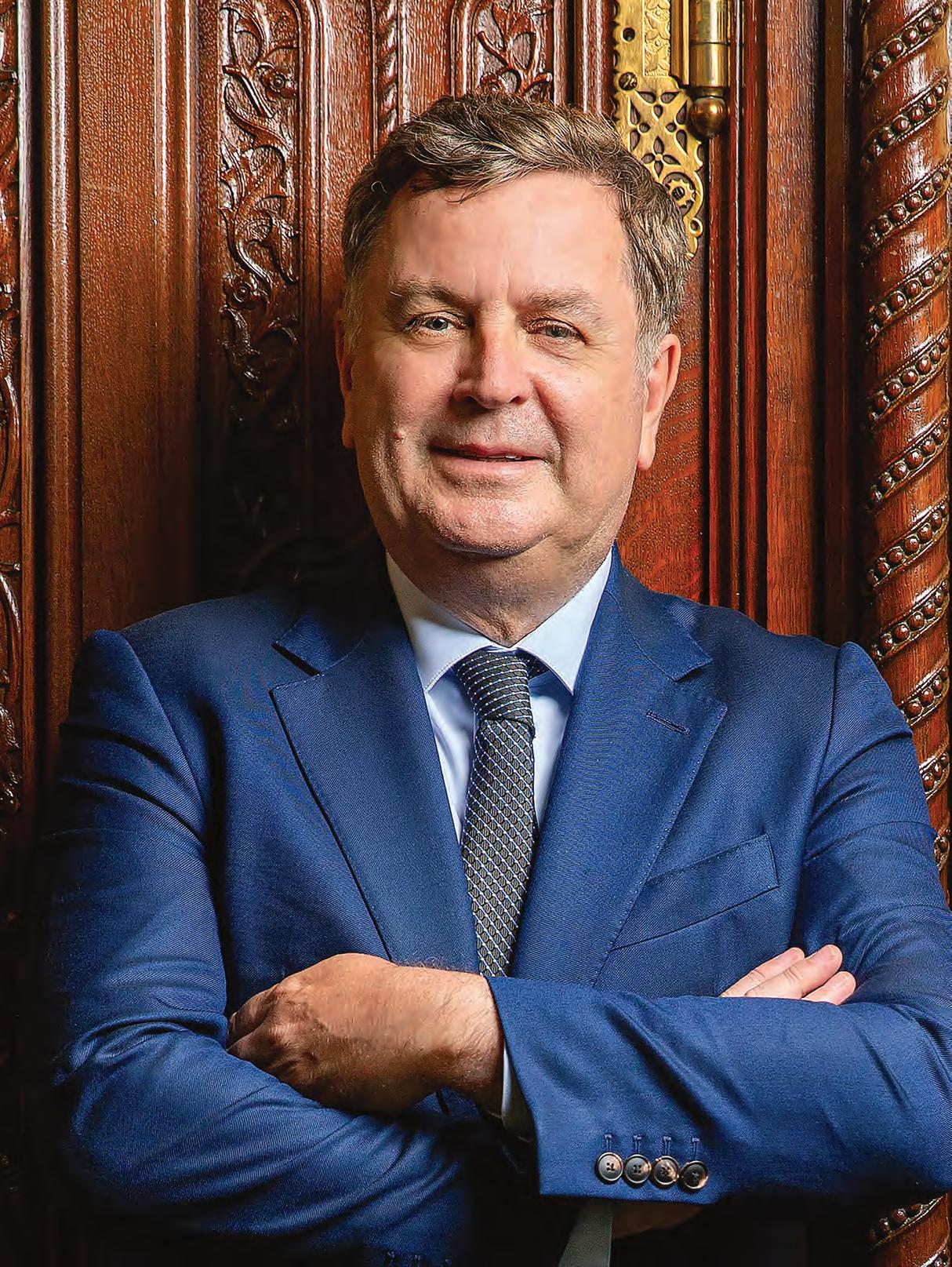
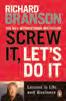
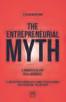
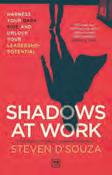
Mel Stride on boosting business ~ Sally Percy on flaky Fridays ~ Stefan Stern on critical collapse
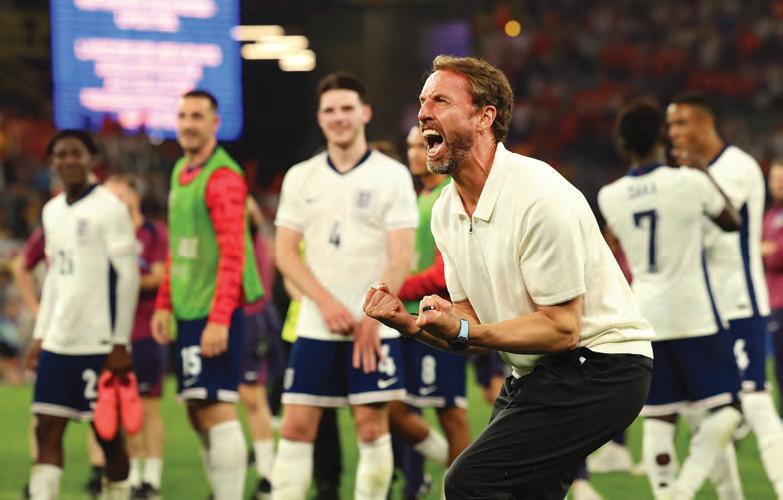
Santiago Iñiguez on deadly sins ~ Mihir Bose on Gareth Southgate ~ Tom Peck on repellent firms
MaryLou Costa on the flexibility problem ~ Vicky Pryce on the Starmer-Trump bromance
Better directors for a better world
6years
Age at which late Coscharis Group founder Cosmas Maduka left school to become an entrepreneur. Seamus Gillen p16
1%
Total English whisky volumes as a proportion of those of its Scottish neighbour. Ben Walker p34
500%
Boost to share price enjoyed by mining company Bluebird Mining Ventures after it invested in bitcoin. Roger Barker p44
4.2million
Number of UK employees who have flexitime written into their contracts. MaryLou Costa p52
93%
Proportion of directors who want at least one member of their board replaced. Katie Jacobs p40
Letter from the Editor
W hen John Browett explored the enterprise mindset, he reached a remarkable conclusion: entrepreneurs are rarely competent at running businesses.
Many entrepreneurs are too easily frustrated by the reality of managing firms. Good company direction is critical to business and society. Yet few innovators make good candidates to steer their own inventions. Expert administration turns great ideas into successful companies. Thus, the best entrepreneurs often recruit talented others as chief executives: the ship, once launched, is better sailed by another.
The investigations of Browett, the IoD chair, found a handful of exceptions that prove the rule (page 12) Some entrepreneurs enjoy a dual mindset. They are adept at both the innovation and the administration. But such people are uncommon: entrepreneurialism and managerialism are usually mutually exclusive.
research that shows several entrepreneurial traits are inheritable. Seamus Gillen (page 16) finds that an appetite for creative destruction – typical of the entrepreneur – is mostly instinctive, but can be nourished. Where the exact boundary lies between nature and nurture is uncertain. Yet, what seems unquestionable is that intervention – training, development, mentorship – can turn promising entrepreneurial minds into prodigious ones. Raw diamonds are found in the wild. It is skilled craftwork that turns them into jewels.
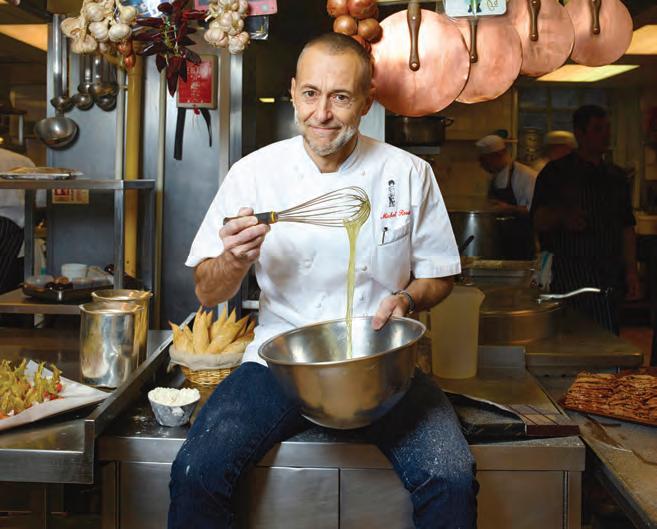
The role of nurture doesn’t end there. Despite their general reluctance, some entrepreneurs benefit from managerial training, especially in the early years – where it may be impractical or unaffordable to recruit their way to administrative salvation. When the multiple Michelin-starred chef Michel Roux Jr set out in business, his father, Albert, sent him on an accountancy course (page 24) The younger Roux thought the idea ridiculous. Yet, today, he is grateful for the dose of realism the training conferred.
The evidence suggests that such interventions can make entrepreneurs better at managing – and identify the skills they need to have others transform their ideas into viable businesses.
And yet, ultimately, the lesson is that the entrepreneurial mindset is precious – and exceptional. Investors and governments must realise that entrepreneurs are extraordinary. They should be wary of asking them to comply with corporate norms. There is no sense in trying to turn the entrepreneurial mind into a managerial one. If someone has good ideas, let them unleash them.
There is some evidence that a predisposition to entrepreneurialism is genetic. Liz Barclay, IoD’s small business and entrepreneurship adviser (page 10), cites Ben Walker is editor of Director
In this issue Autumn 2025
Seamus
Neds in the dark
non-executive directorships
a rethink
Cautionary tales with Roger Barker Companies’ bizarre bitcoin investment craze
Debate Is the Starmer-Trump bromance good for business? 48 Marketing mytholo with Chris Daly No – ROI is not the best way to measure e ectiveness
TRENDS
52 The vex of ex
MaryLou Costa on why nine-to-five working is unfairly maligned
56 The seven deadly sins
Santiago Iñiguez on why the wisdom of Dante lives on in today’s workplace
60 How to say it with Anthony ‘Tas’ Tasgal
60 How to say it with Behavioural and the
Behavioural psycholo and the tyranny of attention spam
64 Handba ed!
Morag Cuddeford-Jones on Hermès, healthcare –and why the truth matters
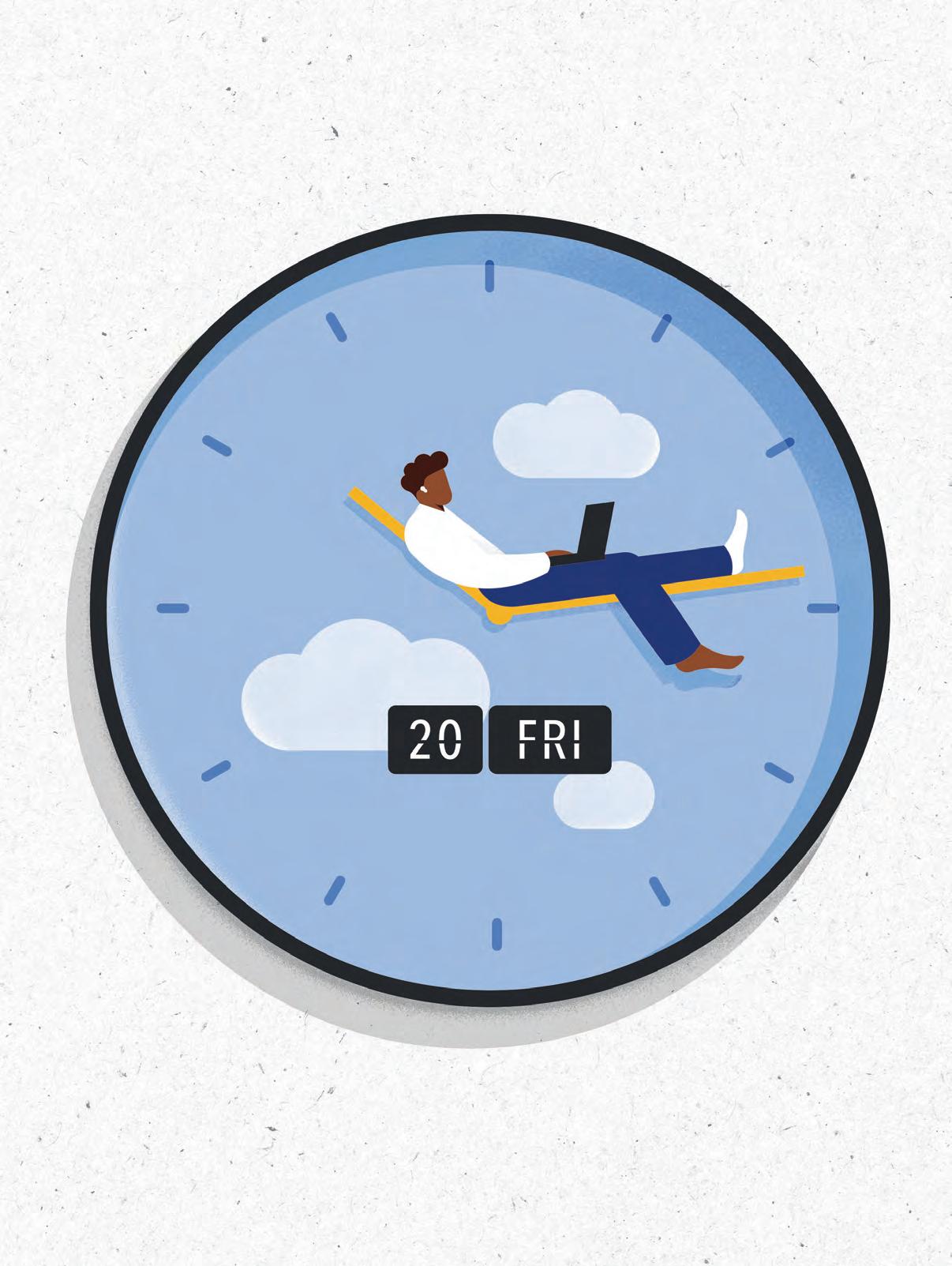
68 Freaky Friday
Sally Percy on why the final workday is very di erent to the others
72 The strange death of critical thinking
Stefan Stern on why artificial intelligence is making us stupid
78 autumn
78 Book club Director’s recommended business reads this autumn
82 The corporate philosopher with Roger Steare Why the idiocracy exists –and how it can be overcome
82 The corporate the exists –HR honcho Zaveri
84 Tomorrow’s director HR honcho Kunjan Zaveri turns people problems into people power
Viewpoints
Our guest writers this autumn
MaryLou Costa
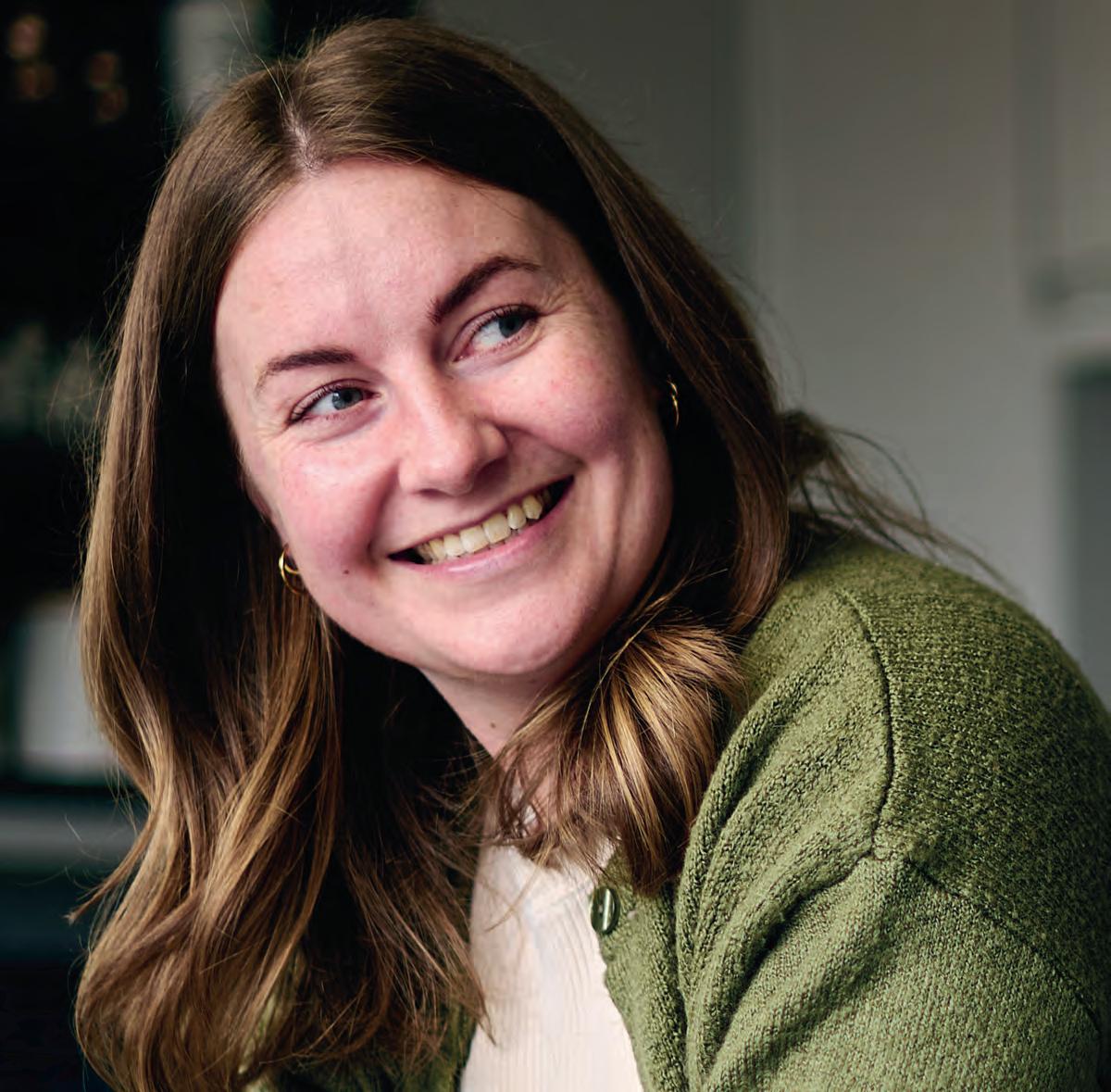
MaryLou Costa’s claim to fame is winning an award for her reporting on the sugarcane farming industry in her native Australia – at a local paper that has now closed. She has since built a career around writing about work and careers, for the BBC, CNBC, Business Insider, Fast Company, the Daily Telegraph, the i Paper, Sifted, Stylist and more. She also writes about marketing, sustainability, AI and business innovation. Today you can find her in Leigh-onSea – if you squint, it’s just like Bondi. Trends p52
Morag Cuddeford-Jones
The name may be a mouthful, but Morag Cuddeford-Jones tries to keep it simple when it comes to writing. The world is complicated enough. Writing for Marketing Week, the Times, Econsultancy and Google, she is also editor of the Chartered Institute of Marketing’s quarterly magazine, Catalyst Covering topics from AI to Zapier, there are few topics on which Cuddeford-Jones has neither written nor spoken. Yet her devotion to her allotment and chickens, Mavis, Mabel and Daphne, means it must be only a matter of days before she’s snapped up by Gardeners’ World Outlook p64
Katie Jacobs
Katie Jacobs is a business journalist specialising in management and the world of work. She has edited business magazines including HR and written for the Financial Times, the Times and Management Today. She is a senior research fellow of The Conference Board. In her public speaking work, she has interviewed everyone from comedians Katherine Ryan and Sue Perkins to FTSE100 chief executives and chairs. When not exploring big ideas with leaders, she can be found wrangling her two young children – who are usually much less interested in what she has to say.
Perspective p40
Michael Martins
Michael Martins is the founder of Overton Advisory and a former US diplomat. He previously wrote for the Economist and advised the US, UK and Canadian governments. At Overton, he supports companies in defence, dual-use technology and regulated industries, helping them navigate procurement, policy and geopolitical risk across Nato-aligned markets. Martins is known as Matthew by Alastair Campbell, but only when they appear together on television.
Perspective p46
EDITORIAL
Elwes
ABOUT DIRECTOR
Director is published in the United Kingdom
Material may not be reproduced without permission of the
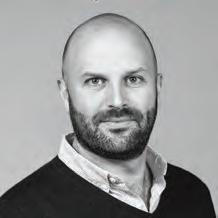
Tom Peck
Tom Peck is parliamentary sketch writer at the Times, and before that parliamentary sketch writer at the Independent He’s also been known to write a bit about sport, especially the business and governance side of the sports industry. He once briefly worked as a business intelligence analyst for a huge US investment bank but, just between us, he didn’t really have a clue what he was doing. He’s spent the last ten years sitting in the same seat, just above the Speaker’s chair in the House of Commons. Without actually going anywhere, he’s absolutely seen it all.
Spotlight p20
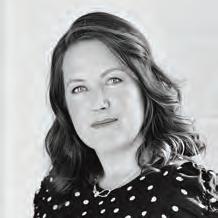
Sally Percy
Sally Percy launched her journalistic career writing about Highland cattle and Kunekune pigs in New Zealand. Today she specialises in writing about business, leadership and management and contributes to Forbes.com. Percy has edited several business magazines and has written for publications including the Daily Telegraph, Management Today and Elite Business She is also the author of three books, including The Disruptors – a WHSmith Travel business book of the month. She hasn’t won an award just yet, but she’s working on it.
Outlook p68
Vicky Pryce
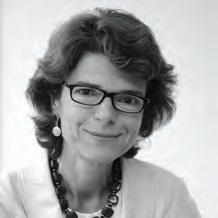
Vicky Pryce is a visiting professor at King’s College London, and chief economic adviser at the Centre for Economics and Business Research. She is a former joint head of the UK Government Economic Service; a fellow of the UK Academy for Social Sciences, the Royal Economic Society and the Society of Professional Economists; and chair of the economic advisory group of the British Chambers of Commerce. And she has written extensively on gender equality. With whatever free time she has left, she spends it watching football as a Chelsea season-ticket holder.
Debate p46
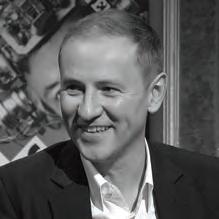
Stefan Stern
If you want to read some comforting thoughts about the AI-driven future maybe try a sycophantic large language model (LLM). For some slightly harderedged and realistic analysis read Stefan Stern’s feature on the future of critical thinking. Financial Times and Guardian columnist Stern is quite the fan of human critical-thinking. “I hope it catches on,” he says. His latest book is Fair or Foul: The Lady Macbeth Guide to Ambition – which he swears he wrote all by himself without using AI.
Outlook p72
DISCLAIMER While we take care to ensure that editorial is accurate, independent, objective and relevant for readers, Director accepts no liability for reader dissatisfaction rising from the content of the magazine, podcast, blogs or any associated editorial material. The opinions expressed or advice given are the personal views of individual contributors and do not necessarily represent the views of Director the Institute of Directors or LID Business Media Ltd. Director is editorially independent. Display advertisers have no input in editorial content or tone. Where sponsored articles are featured, they will be clearly labelled as such. Director magazine is printed on FSC-approved paper from responsible sources. Director takes every effort to credit photographers, but we cannot guarantee every published use of an image will have the contributor’s name. If you believe we have omitted a credit for your image, please email the editor Ben Walker on ben.walker@lidbusinessmedia.com. Additional images throughout: Shutterstock; Getty; Unsplash.
Risks and rules are vital foes
Trade-offs are essential at the top of firms
Just about managing with Stefan Stern
I n August, after a short illness, Andrew Kakabadse died. The sad news came as a shock in the middle of a hot summer. Many company directors will have been familiar with his work. Professor Kakabadse’s four decades of writing (270 scholarly articles, 48 books) and teaching (thousands of MBA graduates from Cranfield School of Management, Henley Business School and beyond) had huge influence on the world of corporate governance. Yet even those unaware of the extent of his vast portfolio will have come into contact with his ideas somehow. Kakabadse was everywhere – internationally and intellectually.
There was never a dull moment when he was in the room. As a host over lunch at the Athenaeum Club, he could be mischievous – and, occasionally, even scandalous. He spoke plainly about the realities of leadership, management and business life. He was a wonderful source of ideas and stories for any journalist.
Corporate governance was where my journalistic career began. The first significant press conference I attended as a young hack was when Sir Adrian Cadbury launched his report on the ‘financial aspects of corporate governance’ in 1992. Corporate disasters at Polly Peck, the Bank of Credit and Commerce International, and Robert Maxwell’s Mirror Group formed the backdrop to this important moment in governance reform. But few would have guessed that Cadbury would be the start of an extended programme of reports and regulatory change that would stretch beyond the subsequent three decades.
Cadbury was followed by Greenbury, Hampel and Higgs, among others. A ‘combined code’ of corporate governance was established (now called the UK Corporate Governance Code). It
was overseen by the Financial Reporting Council (FRC), with the ‘comply or explain’ principle at its heart. Meanwhile, the FRC has (theoretically) been on borrowed time since 2019, when the then government agreed to replace it with a revised Audit, Reporting and Governance Authority (Arga), as recommended by another grandee name – Sir John Kingman. But there has been a bit of aggro about Arga, or at least confusion and delay: an Arga saga, if you will. The new government remains committed to launching it. Eventually.
Why does the issue of corporate governance still cause so much angst, so much dither and disarray? There is a huge paradox in all this. On the one hand, nothing could be more important than how our companies are led, managed and run. Everyone agrees that this stuff matters. And yet (misguided?) good intentions and unintended consequences characterise what remains a suboptimal situation.
The pendulum swings back and forth. Crises and scandals lead to calls for crisper, more effective regulation. But businesspeople quite reasonably baulk at unnecessary red tape and the tyranny of ‘box ticking’. We say there is a crisis of trust, but then insist on increased scrutiny of the boardroom. And all the time, auditors fail to notice governance failures, such as those at Carillion, BHS and Patisserie Valerie. The public sector has seen more than its fair share of governance scandals too: subpostmasters and the Post Office/Fujitsu/ Horizon disaster; and crazily expensive (and flawed) ‘track and trace’ systems during the Covid pandemic come to mind.
A recent report from the Board Intelligence consultancy, called The Board Value Index, found that almost 50% of directors felt their boards were
not adding enough value. Only 23% said their boards were operating at their full potential (see Katie Jacobs, page 40). Necessary governance, compliance and risk management may take energy and focus away from more forward-looking discussions about value creation. “The outcome of a high-performance board is reflected in the success and prosperity of the business itself,” according to Pippa Begg, cofounder and chief executive of Board Intelligence.
A frivolous thought comes to mind. Maybe part of the problem with governance is the word itself. It just sounds so heavy and drab, rather like a synonym for ‘fun police’. We want entrepreneurial boards to encourage judicious risk-taking and wealth creation. But we also want to avoid having tyrannical bosses, greed and scandals. We hate box-ticking, but we need some rules. People are flawed and will sometimes get things wrong. How can we control that? This is a tough nut to crack. In a letter written not long before he died, Sir Adrian
The word governance is heavy and drab – a synonym for ‘fun police ’
told Bob Garratt – an admired governance expert – that the drive to improve corporate governance (launched by his own report) had all got a bit too involved and burdensome.
Two new books make a strong and practical case for better governance. The Purpose-Driven Organisation in Times of Climate Crisis, coedited by Katie Bailey and Katie Manning, and Beyond Pro�it: Purpose-Driven Leadership for a Wellbeing Economy, by Victoria Hurth, Ben Renshaw and Lorenzo Fioramonti, both make it plain that competent and effective governance is a non-negotiable. It really matters how businesses operate. It is neither optional nor trivial.
None of this would have come as a surprise to Kakabadse. He knew better than anyone about the trade-offs that necessarily exist at the top of organisations. He would have known that the work on improving governance would have to go on long after he did. A brief message on LinkedIn announcing his death, posted by his wife (and academic partner) Nada, was met with an overwhelming global response. Hundreds of messages of sympathy and gratitude were posted. Corporate governance remains incredibly important. As Kakabadse might have said, we just have to keep trying to get better at it.
Stefan Stern is a business journalist
Entrepreneurs: born or made?
Genetics matter. Experience matters more
WORDS Liz Barclay
A
s early as 17,000 BC, there was trade. In the Stone Age, merchants exchanged obsidian with locals for essential goods. They were the world’s first entrepreneurs.
Fast-forward tens of thousands of years, and it was Marco Polo – who helped establish trade routes between Europe and Asia in the 13th century – whom most historians consider the world’s first global entrepreneur. Later, in the 1910s, economist Joseph Schumpeter (1883-1950) earned the enviable moniker ‘the father of entrepreneurship’.
Entrepreneurial ventures span everything from small businesses in the garden shed to multinational companies. Anyone with the will and determination to start something new –and take the risks – can call themselves an entrepreneur. Entrepreneurs make ideas happen, bring them to market, replace old with new inventions. Are these masters of enterprise born that way? Or are they made?
People who run businesses that fulfil needs and are tried and tested,
are businesspeople. They may – or may not – have an entrepreneurial mindset. Entrepreneurs accept there is risk in the new and di erent. They also accept there is risk in avoiding risk.
Nature vs nurture
I asked Matt Dowling, founder of the Freelancer Club, whether this entrepreneurial appetite for risk, for invention, is innate.
“A er a decade learning from street-savvy kids in Brazil, business minds in Mumbai, and training aspiring freelancers, I see traits like resilience and resourcefulness everywhere,” Dowling tells me. “Entrepreneurs aren’t born; they’re built. Anyone, regardless of personality or background, can design a business model that plays to their strengths.”
I have entrepreneurial parents, grandfather, great aunt and uncle. I assumed entrepreneurship was in my blood. Yet, maybe it was growing up surrounded by the entrepreneurial mindset that made me an entrepreneur, freelancing and running production
companies, o en simultaneously? Perhaps I was nurtured into enterprise, rather than born naturally that way?
“We’re all born with a purpose to fulfil,” says Scott Ohene-Nyako, founder of branding agency 478 Studios.
“Entrepreneurship comes out of a need, lived experience or circumstance that has forced or inspired us to help create a better solution. We’re born with a purpose – and entrepreneurs are made.”
Heroes of entrepreneurialism
It was Scottish economist Adam Smith who first described capitalism and profit motives in his 1776 seminal tome The Wealth of Nations, but the term entrepreneur was coined later by French economic philosopher JeanBaptiste Say in the early 1800s. It comes from the French verb entreprendre, meaning ‘to undertake’.
Say agreed with many of Smith’s theories, but was concerned that enterprising businesspeople were omitted from Smith’s magnum opus. Say felt entrepreneurs spotted inefficient uses of resources and capital,
With the right education, could anyone turn their hand to enterprise?
and refocused them into productive areas, creating new markets, fresh opportunities and diverse ‘stu ’ that kept consumers consuming and producers producing.
Schumpeter may have championed ‘creative disruption’ – where the new replaces the old – but it wasn’t until the middle of the 20th century that economists attempted to understand the wider impact of entrepreneurship.
We know now that entrepreneurial vision – defined by discovery and risktaking – is indispensable to business success and vital for economic growth. Yet, says founder of The Entrepreneurs Network, Philip Salter, too o en this fact is overlooked.
“Entrepreneurs play a disproportionately important role in our economy,” he says, “although still too o en their voices go unheard by the people designing the policies that impact their business.”
Whether they are changing the world and putting purpose before profit, or creating innovative products for new customers, entrepreneurs usually possess clear vision and display smart leadership. They are courageous and open-minded. They see opportunity, not insurmountable challenges. They are exible and embrace changing markets.
Experience vs predisposition
Given that entrepreneurship generates employment, innovation, ventures, markets, technolo – all of which improve living standards, communities and wider society – it would be useful to know whether entrepreneurs can be fashioned from ordinary folk.
Can entrepreneurialism be taught with training and experience, I wonder? If so, is only a certain ‘type’ predisposed to learn? Or, with the right education, could anyone turn their hand to enterprise?
Studies support both arguments. Professor Scott Shane at Case Western Reserve University looked at entrepreneurial tendencies in twins. Identical twins had much higher rates of ‘shared entrepreneurial tendencies’ than their fraternal counterparts or the control group.
Further analysis of data – including the research of molecular genetics – traced this genetic heritability to several traits, all of which are heritable and increase the likelihood of becoming an entrepreneur. These included the ability to identify business opportunities; the tendency to become self-employed; and extroversion.
Yet, while these studies and surveys show genes play a role in your likelihood of starting a business, they do
not indicate whether or not it will be successful.
Having a lower genetic likelihood of starting a business doesn’t mean you can’t, or won’t, succeed. For example, you might be more successful than someone more genetically predisposed to entrepreneurship who nevertheless lacks your experience.
When Professor Kathryn Shaw of Stanford Graduate School of Business examined data from 2.8 million small businesses, she found success rates were dramatically higher for entrepreneurs with previous business experience.
If entrepreneurship runs in your family, you’re more likely to start a business. If you have a burning desire to be self-employed, entrepreneurship may be innate. Yet, even the least genetically likely entrepreneurs can succeed if they improve their skills, develop professionally and garner experience.
That’s good news for the 84% of Gen Zs who dream of starting their own companies. Born or made, be entrepreneurial. Run a business that fulfils a need. You’re vital to our economy and society.
Liz Barclay is special adviser for small business and entrepreneurship at the Institute of Directors
Entrepreneurial cortex
WORDS John Browett
“ The secret of business,” the shipping magnate Aristotle Onassis once said, “is to know something that nobody else knows.”
The entrepreneurial mindset can be hard to define. Yet Onassis’s famous mantra holds. “You have to be able to think di erently,” one entrepreneur tells me, “see what is wrong with how things are done – and then work out how you can make a better business by fixing problems.”
So, what causes this di erence of thought; this distinct mindset that sets the entrepreneur apart from others? The surprising news is that entrepreneurs are defined as much by what they are not as what they are.
Through my own experiences working in and with businesses at home and abroad; personal conversations with colleagues and peers; and the rich testimonies of entrepreneurs in interviews I conducted for the But Tell Me How podcast series, I identified eight key traits that – in their presence or absence – characterise the entrepreneurial mindset. Five qualities exist in most entrepreneurs. Three behaviours are notably missing.
PensionBee founder Romi Savova featured on But Tell Me How. Savova was born in Bulgaria as communism was falling apart. She emigrated to South Africa at just six years of age, as her parents – both medical doctors –sought work abroad. She moved again, to Atlanta, Georgia, as a teenager, to study. “I always knew that I wanted to do something, to get out there, to have an impact and to make change,” she tells the podcast. “I’d always been a bit of an entrepreneurial child.”
They are iconoclastic thinkers
Entrepreneurs are independent in the way they analyse and evaluate problems and opportunities.
Entrepreneurs are de ned as much by what they are not as what they are
What entrepreneurs are
What entrepreneurs are are from all
They are from all backgrounds Two classic myths of the entrepreneurial upbringing endure. The first is that entrepreneurs are mostly graduates of the School of Hard Knocks, brought up in poverty or from broken families, playing a terrible hand skilfully. The second myth is the opposite: that entrepreneurs are born into comfort and privilege, and that the mental space this a ords is conducive to imagination and ideas. Neither legend is true.
Background and schooling are irrelevant. Entrepreneurs hail from all walks of life; from council estates to Eton. This reality contains an important lesson: there are no excuses – neither a tough background nor a privileged one should preclude anyone from becoming an entrepreneur. There is, however, some evidence that an unusual background – financial, familial or locational – might enhance drive and hunger for success.
Capital Xtra is a London-based radio station featuring urban music such as hip-hop and R&B. When Dr Yvonne Thompson, who founded the station as Choice FM, asked for investment into the nascent channel she was told “black music will never happen”. Dr Thompson be ed to di er. Entrepreneurs rarely follow the crowd: they like to stand out. “Of course it worked,” Thompson tells But Tell Me How “Everything shi ed. The charts eventually shi ed from rock ‘n’ roll to pop music, then from pop music to blue-eyed soul, then from blue-eyed soul to black soul, and every other kind of genre of black music, which we can still witness now. Choice FM filled the need for the black community to hear the kind of music that they wanted to hear, because you could not hear black music on mainstream radio stations at the time.”
Thompson eventually sold the station to Capital Media – the idea that would “never work” was purchased by a major brand. “Almost everyone will tell you that your business will not work,” says Simon Rogerson, chief executive and founder of the Octopus Group. “But entrepreneurs are optimistic and feel there will always be a way.”
This optimism bias is a classic trait of the enterprising mind: entrepreneurs have a conviction that they will –eventually – succeed. “Being optimistic has great business benefits,” says Rogerson. “It is easier to generate new ideas and solve problems when we are optimistic. Our brains are freer. We are more inclined to see solutions rather than problems.”
They are dogged Entrepreneurs never quit. They have a clear idea of what they want to achieve. They are exible and adaptable: they twist, turn and pivot until they achieve it. “Don’t be afraid to fail!” says Rogerson. This is an area where the entrepreneurial cortex di ers from its managerial cousin. “Most people in an organisation spend their time trying to limit, control or stop risk from happening,” Rogerson adds. “They see failure as exactly that – rather than the natural path to building something successful.”
It is this do edness, this instinctive tendency to use mistakes as building blocks to reconfigure and reframe, that gives the entrepreneurial mind its distinctive resilience. “It always takes more time than you can imagine,” an entrepreneur reports. “The critical thing is to keep going. There is no such thing as an overnight success. It usually takes years of patient e ort.”
Trial and error – test and learn – are principles hardwired into the entrepreneurial mind. When I ask Savova about her bi est failure, her answer is instructive: “Yeah, entrepreneurs don’t do that,” she laughs. “It’s not that you don’t fail – of course you do. But you don’t see it as failure. You frame almost everything as learning – because that is what gives you the mentality to do better.”
They are great innovators
Too many associate entrepreneurialism with the pursuit of riches. This is wrong. The entrepreneurial mind is rewarded not by money, but by solving problems.
Rather than wealth, entrepreneurs seek instead to remove customer pain points – making life better for people. They have an unshakable belief that they must solve the key problem that they set out to address. “I didn’t want to just sit on the money – that has no meaning,” one successful entrepreneur, who invested most of the returns from his first big exit on a new venture, tells me. “I just wanted to make this new business work.”
They are inspirational
“The facts are boring,” says Rogerson. “Humans only remember 5% of the facts we are told, ten minutes a er hearing them.”
Entrepreneurs know this, hence why they seek to enthuse their teams with the power of storytelling. “People remember 65% of stories,” Rogerson says. “Stories make us feel things. Emotions are far more powerful than logic. Entrepreneurs tell good stories about their business.”
Rogerson’s testimony reveals an important truth. Entrepreneurs are inspirational – they are expert at garnering others’ buy-in for their ideas. This is a crucial quality: for businesses
to be a success, entrepreneurs must motivate their teams to share their goals.
This talent for storytelling is in part born from entrepreneurs’ distinct ability to separate the signal from the noise. They are adept at identifying the essentials that lead to success and communicating them clearly, eliminating the mind-fog that can otherwise muddle others’ comprehension of complex projects.
It is this ability to foster belief and clarity in colleagues that helps create a collective will. “You need to find people who believe in the same things that you believe in,” Savova tells But Tell Me How “You have a responsibility to make sure that you’re doing the right thing for your customers from that position of knowledge – so find individuals who believe in that as passionately as you do – and therefore bring with them similar values to building the business.”
What entrepreneurs are not
They are not good at running businesses
Do not adjust your magazine. The strapline is correct: entrepreneurs are rarely good at running businesses. They typically make poor senior managers. Much of this is born of their predilections – the enterprising mind
As soon as you get into cocreation, it’s going to be a disaster... the holistic idea starts to fall apart…
has a bias for ideas; it finds day-to-day management boring.
Shop. “Don’t always follow the crowd. It’s what makes you unique — and o en unpopular — that makes the di erence.”
to But I love to get started and prove we have made a sustainable company.”
Great entrepreneurs recognise this. They find people who like – and are skilled at – the everyday administration of organisations. “The best thing I did was to hire a CEO,” a serial entrepreneur says. “I don’t like running the business day to day. But I love to get things started and prove we have made a sustainable company.”
They
are not compliant
“Tell HMRC to e o ,” says the founder of a creative agency. His financial director knows this would be unwise – and tells him so. Yet this founder’s attitude – while rarely as starkly expressed – is common among entrepreneurs. They seldom contemplate key compliance matters such as audits or tax regimes. They believe that breaking things is necessary to make their ideas work.
This suspicion of popularity is not callous – rather it is born from a recognition that any idea seems crazy until it works. The entrepreneurial mind is avowedly nonconformist –comfortable consensus is anathema. Thus, many entrepreneurs court unpopularity – even tolerate mockery – until their idea succeeds. Thankfully, most are thick-skinned. “The di erence between successful people and others,” the US investor and business commentator Barbara Corcoran once said, “is how long they spend feeling sorry for themselves.”
Working with entrepreneurs
The enterprising mind is critical to starting up and developing businesses. Yet it requires managerial minds around it to maintain them and help them grow.
It is the combination of both skillsets – the creative brain and the supervisory one – which lead to great businesses. It is true that some entrepreneurs can make the transition to the managerial mindset – Greg Jackson, Bill Gates and Steve Jobs are outstanding examples. They can morph between the two mindsets, applying each as appropriate. Yet, such double psychologies are unusual. Most have only one.
The distinction between the entrepreneur and the manager is an important one. It is an essential di erence which all directors should identify and act upon.
This entrepreneurial reluctance to comply can cause problems when liaising with those who hold the purse strings. Yet it also brings benefits: protecting the purity of ideas is essential. “It’s really important for entrepreneurs to remember that investors are backing them and their ideas,” Greg Jackson, chief executive of Octopus Ener tells But Tell Me How “As soon as you get into cocreation, it’s going to be a disaster... If people start tinkering, the holistic idea starts to fall apart… In the short term, you may all good. In the medium term, it’s far likely to be successful.”
apart… In the short term, you may all feel In the medium term, it’s far less to be successful.”
They are not It is nature to is
Yet entrepreneurs are di erent. They care little about the affirmation of others. are out of step with – and to be so.
“If you do well, do them your way,” said Anita Roddick, the late founder of chain The Body
are not popularity-hungry is human nature to seek approval. Popularity is popular. Yet entrepreneurs are di erent. care little about the affirmation others. They are out of step with general opinion – and happy to be so. do things well, do them your said Anita Roddick, the late founder of beauty chain The Body
The entrepreneurial mind is precious. But it is not omniscient. Great ideas need support. As one venture capitalist says: “It is not the best idea that always wins. It is usually the most persistent and exible teams who just make it happen.”
John Browett is chair of the Institute of Directors
GO DEEPER But Tell Me How Watch the But Tell Me How podcast series here
Blow your mind
Blow your mind
Creative destruction is instinctive – but can be nourished
WORDS Seamus Gillen ILLUSTRATION Tom Peake
“ Each morning, I wake up, look around me and think – what can I kill today?” These are not the words of an axe murderer, but of an entrepreneur.
The striking comment came on a business panel in which I participated in Kuala Lumpur, Malaysia. We were discussing the conventional issues of the day. There was the usual consensus. Panellists focused on the need for firms to handle risk and uncertainty. They urged companies to identify, and seize, opportunities.
Yet the axeman was uninterested in helping existing businesses improve. His motivation lay in destroying those businesses and starting again. His passion was breaking things and reconfiguring them, creating a new approach which generated more value.
Creative destruction
Not all billionaires make money by breaking things. Not all billionaires are entrepreneurs – some are simply commercial. And, not all entrepreneurs are billionaires – some merely see the scope for creating greater value by radically disrupting existing business models.
Our mercy killer epitomises an abiding attribute of the entrepreneur –a refusal to accept the status quo. This is born of a deeply driven insight that life
could be immeasurably better if it were organised differently.
Ordinary folk fear that radically changing current approaches will destroy value. The entrepreneur sees little but upside. This remains true even to their occasional detriment, when their ventures fail.
From where does this penchant for creative destruction arise? Is it innate, or can it be cultivated? Does development – formal education and training – play any part in the evolution
worldwide. And, because these people are high profile, we have the data of how many of these billionaires failed to make it through early education.
Those who dropped out at school (their age in brackets) include: Hutchison Whampoa founder Li Ka-shing (15), who started out by selling watch bands; Sir Richard Branson (16), to start his first successful business venture Student Magazine; Ingvar Kamprad (17), founder of Ikea, now the largest home furniture retailer in the
Ordinary folk fear radical change. Entrepreneurs see little but upside
of the entrepreneur? Why even ask? Why not let entrepreneurs just get on with it, while the rest of us trail in their wake, creating value in a way that simply cannot compare?
The education effect
Generalising about what education entrepreneurs received, and the role of business education in their later lives, is difficult. Yet, an analysis of global billionaire entrepreneurs offers some insight. According to Forbes, as of mid-2025, there were 2,850 billionaires
world; Simon Cowell (16), famed as a judge on American Idol, who started his own record label Fanfare at the age of 23; Asa Candler (10), founder of Coca-Cola; Cosmas Maduka (6), founder of the Coscharis Group; and Dhirubhai Ambani (16) founder of Reliance Industries.
At the next level of education, Coco Chanel and Ralph Lauren are two of the many billionaire entrepreneurs who failed to graduate from college. So, too, their fellow fashion designer Giorgio Armani, who dropped out
of medical school at the University of Bologna because he couldn’t stand the sight of blood.
Then there are those who started college, but never completed their studies because they realised the opportunity in front of them. Examples include Bill Gates, Paul Allen and Mark Zuckerberg.
they need to. They take matters into their own hands. They look at what has come before, and decide there has to be a better way.
Sometimes from institutions, where
Yet, while the history of entrepreneurialism is storied with tales of the undereducated, many rich entrepreneurs enjoyed high levels of top-quality schooling. Sometimes from their country’s most elite institutions, where they developed the ideas, networks and friendships that led to some of the most innovative business breakthroughs ever known. Education, and ongoing learning and development, might play a role in someone becoming an entrepreneur. But it is by no means a prerequisite. And, for some, it wasn’t necessary at all.
Bricklin explored an entrepreneur’s conflicting feelings of freedom and responsibility when running their own business. Entrepreneurs, he said, do not expect a job for life from a careerinstitution – however that steady income might be. They are prepared take risks, and are able to accept that some may end failure – possibly posing existential threat to their and personal life.
Critically, Bricklin felt that an entrepreneur’s ventures must be based on expertise. This means that someone who wishes to ‘break things’ in the world of finance needs to understand finance; to innovate in the world of engineering, they need a cutting-edge knowledge of engineering; and so on.
not expect a for life from a careerproviding institution – however reliable that income be. are to take and are able to accept that some may end in failure –an to business and life. Entrepreneurs, therefore, must be undereducated, many rich
Entrepreneurs, therefore, must be comfortable with both having control and lacking it. And they must be an active participant in making the world a better place, rather than just a passive observer of life.
An entrepreneur, Bricklin added, requires the ability to analyse complex – ‘wicked’ – problems. They must
Education might play a role in someone becoming an entrepreneur. But it is not a prerequisite
If not education, then what?
Let us leave the billionaires and enter the world of mere mortals. There have been several analyses asking what it takes to become an entrepreneur. One of the best empirical case studies comes from the reflections of Dan Bricklin. Bricklin is known as the father of the electronic spreadsheet. Invented in 1979, it was described as the first killer app of the PC industry.
In 2001, Bricklin wrote in Harvard Business Review about the attributes of the successful entrepreneur. His reflections still ring true today. He saw entrepreneurialism as rooted in the creation of goods or services that address people’s everyday challenges, such as serving a need or solving a practical problem. The entrepreneur, meanwhile, must be passionate about what they are doing. And, in pursuing that passion, find their true vocation: entrepreneurs don’t just want to achieve their goal,
be determined to see
have vision, able to imagine how the world might look were such obstacles overcome. They must be motivated to apply the necessary solutions, and be determined to see change through when it matters.
People count for entrepreneurs, too. It was Steve Jobs who pointed out the importance of hiring individuals better than himself. “It doesn’t make sense to hire smart people and tell them what to do,” he said. “We hire smart people so they can tell us what to do.”
Yet, here the reflections of Branson are instructive. “I wanted to be an editor or journalist,” he said. “I wasn’t really interested in becoming an entrepreneur, but I soon found I had to become an entrepreneur in order to keep my magazine going.” The man would then apply these skills successfully to other business areas in which he had little or no experience –planes, trains and, if not automobiles, several other sectors, including mobile telephony and broadband.
Ultimately, the entrepreneur needs to follow their instinct, while being ideally – and at least initially – in an environment that cultivates and directs their talents. They need learning and development to begin their journey, and learning and development to continue their journey. But, ultimately, they must go solo to complete it.
Bricklin’s observations confirm that entrepreneurialism is as much about mindset as a willingness to challenge conventional norms. Entrepreneurs are able to see value interpreted in its myriad ways – including social, political and environmental.
Schools of startups
Bricklin was clear that the entrepreneur embraces a project for love – and not just for the money. They should nevertheless keep an eye on costs and be prepared to sacrifice aspects of their life – including standard of living – when necessary. A strong support network is also a must.
Bricklin identified and as –programmes which
Bricklin identified training and talent as critical. Business schools – and all institutions concerned with developing business leaders – have decided that it is possible to develop entrepreneurship: that natural instinct should be supplemented by programmes which nurture entrepreneurial thinking.
The concept of effectuation –whereby an entrepreneur acts based on the resources at their disposal (leveraging what they know, who they know and who they are) – is requiring business schools to offer alternative methods of teaching. They are rethinking their methods, rather than simply relying on standard and formulaic approaches.
Some courses now offer forms of experiential learning. Students work on analysing startups, helping them to hone the intuition associated with entrepreneurial activity. And they develop experience by simulating reallife business challenges.
Others provide startup competitions, incubator labs and many innovations to bring entrepreneurial minds together – developing the penchant for imagination, disruption and counterintuitive action.
Institutions promote the development of an action mindset. This is counter to the traditional business school approach of ‘analysis paralysis’. It rewires away from, ‘What if it all goes wrong?’ to, ‘What will it look like if it all goes right?’. It develops a healthy approach to risk, rather than seeking to minimise it.
Mind over matter
These are well-intentioned attempts by business schools to mimic, or replicate,
entrepreneurial conditions. Yet they cannot take away from the fact that – whatever learning opportunities are offered – it remains the mindset of the entrepreneur that is the most important component in the whole affair. The mindset which contemplates breaking things – upsetting the established order – is one that merits further investigation.
Neurodiversity – natural variations in the human brain which manifest in conditions such as autism, ADHD, dyslexia and others – affects how individuals process information, learn and interact with the world.
Neurodivergent individuals often possess unique talents and perspectives that can be advantageous in entrepreneurship, such as developing unique perspectives, creativity, problem-solving skills, innovative thinking and hyperfocus. Several successful entrepreneurs have been open about their neurodivergent conditions, including Branson and
Kamprad (ADHD and dyslexia), Barbara Corcoran (dyslexia) and Elon Musk (autism).
What if the ability to think differently is as much due to neural pathways as it is to education or other processes? Gabor Maté, the eminent Hungarian-born Canadian physician, has written extensively on how childhood development and trauma have potential lifelong impacts on an individual’s physical and mental health (‘genes load the gun, the environment pulls the trigger’). Musk, as an example, has spoken openly about how his early life experiences, though difficult and sometimes damaging, have helped him become a successful entrepreneur.
Think-tank The Entrepreneurs Network’s groundbreaking report on neurodiversity found that twothirds of neurodiverse founders thought their neurodiversity made them a better businessperson; that their neurodiversity made a range of tasks easier. Nearly two-thirds of neurodiverse founders felt that starting a business of their own was the only way they could make a living.
Food for thought
While entrepreneurship appears to be open to instruction – education, ongoing guided learning and development – an appetite for creative destruction is likely instinctual.
Entrepreneurs are unusual. They see the world differently. They cannot rest easy unless they can interpret the world in a way that makes sense for them.
Working in a supportive environment helps them, at least in the early years. In their formative years, these curious men and women are nourished with creative ideas. And then, like our Malaysian panellist, they are ready to decide what they are going to kill.
DIRECTOR DISTILLED
Entrepreneurs see the world differently
Education might help guide entrepreneurs
But their appetite for creative destruction is likely instinctual
Seamus Gillen is founding director of Value Alpha
How to lose sales &
Too many firms are lousy entrepreneurs
alienate customers
words Tom Peck
Would you like to read this article? For yes, press 1 or, after the tone, just say the word “yes”. For no, press 2 or, after the tone, just say the word “no”. I heard “yes”. Thanks. So that I can put you through to the right article, after the tone please state your reasons for wanting to read this article, followed by the hash key. Sorry, I didn’t quite catch that. So that I can put you through to the right article, after the tone please state your reasons for wanting to read this article, followed by the hash key. Okay, great. Now let’s start by taking some of your de…
couldn’t be done, boss – well, here it is! Truly I am a genius. Now then, about my bonus. It all seems pretty daft doesn’t it? Yet so many large companies operate in precisely this way. The whole point of the enterprise is sacrificed upon the altar of internal targets and processes. Middle managers of hermetically sealed departments become accidentally incentivised to drive away sales and make their businesses ever more dysfunctional. Who cares about the customer?
The KPI is king. More to the point, the KPI is often wrong.
Who cares about the customer? The KPI
is king. More to the point, the KPI is often wrong
And click. You’ve gone. I imagine you, a Director reader, might be annoyed that I, Director magazine, have treated you, in this way. You offer your custom – and what you get in return is this artful labyrinth of nothing, deliberately designed to keep you away from the product you seek.
So why have I done it? Well, if I’m being completely honest, proper magazine articles are a bit of a pain. They cost money. Someone must sit down and do the research, put the calls in and then write the thing. Or, here’s an idea, if I can string you along for 1,500 words or so with this infuriating Kafkaesque rubbish, I won’t have to bother, and who’s the winner there? Me, obviously. My costs have been cut to almost nothing. I’ve got my appraisal next week and, between you and me, I’m confident I’m going to absolutely smash it. You should see my spreadsheets! Behold my costcutting! A magazine with no articles! People said it
One of the main reasons Octopus Energy –which didn’t exist ten years ago – is now the UK’s largest energy provider, is by coming along and deliberately looking at the whole industry in the opposite way to the virtual oligopoly of giant companies who had controlled it for decades.
“There’s a KPI for most companies in a sector like energy, which is called call-deflection,” says Octopus Energy chief executive Greg Jackson. “That is, how do you avoid speaking to your customers and deflect the call elsewhere? Whereas we said, ‘Well, hang on, if we talk to customers, we can build a relationship with them, we can learn more about them and give them a better product and service.’
“Most companies have an ACH, an average call-handling target, which is how quickly can you get a customer off the phone. So teams are targeting getting customers off the phone
– which means you get compounding issues, because you’ve got them off the phone before you’ve found out what the real issue even is.”
It wasn’t always this way. For the most part, huge companies, once upon a time, were small companies. They met a need, they solved a problem. They were, in most cases, driven by the ferocious ambition and clear goals of a tiny number of people. Keeping hold of that mentality, which once the joyous burden of scale is reached, is a serious challenge. The business writer and investor Paul Graham has called it ‘founder mode’, in which every part of a company keeps hold of the clear focus on their original goals, rather than slipping into ‘black-box mode’, where different departments do their own thing, often unknowingly in conflict with each other.
Startups must take risks. Their entire existence is a risk. Once companies become larger, risks become real. There are downsides to risk. Startups have nothing to lose, big companies have plenty. If a fintech startup and a big bank both reckon they know who’s going to win the Grand National, they can both have a punt. But while the startups place their stakes and ride the risk, the big boys find that compliance, legal, finance, IT, security, HR and everybody else wants to have their say. Thus, they end up backing every horse in the race. Even when it turns out they called it right, there’s nothing left to celebrate.
Large companies can, occasionally, become scared of their own innovations. A commonly cited example is the Kodak engineer, Steven Sasson,
Companies cared far too much about things that customers didn’t know about or care about
who invented a prototype for a digital camera in 1975. His bosses, who made a lot of money from selling film, were unimpressed. Netflix, on the other hand, was making a lot of money from renting film, specifically DVDs by post, but it still had the courage to destroy its own business model by aggressively embracing digital streaming. “We knew if we didn’t disrupt ourselves, someone else would,” wrote the company’s cofounder Marc Randolph in his 2019 book, It’ll Never Work. So, how does a large company keep hold of its startup mentality? “It’s a like a tree,” says Jackson. “Think of how a tree grows. It has a central trunk, and then it has branches and twigs, and at the end of the twigs you’ve got leaves and buds. It’s the leaves and the buds that are the point of growth. And it’s the same way in an organisation. Innovation happens at the edge, not at the centre.
The ideas for new products, new services, new processes, come when you’re dealing with an issue, out at the edge.
“In traditional corporate innovation, the team spends forever trying to get approval – round after round of pitching. By the end, everyone’s bought into it, and no one can afford for it to fail. So more and more resources get thrown at it, even when it doesn’t work.”
Consider this. Twenty years ago Billy Boyle was cofounding the nanotech company Owlstone. The idea was to build microchips that could detect explosives and other harmful substances – sniffer dogs, essentially, but tiny and cheap, which could conceivably find their way into every office building or underground train carriage. Nine years later, Boyle’s wife died from bowel cancer, which might have been prevented with earlier detection, and he realised the same technology might be used to do precisely that. Now he is the chief executive of Owlstone Medical, having expanded the company in a whole new direction.
“The one constant is change, and companies that are not prepared to embrace this and adapt are far more likely to fail,” says Boyle. “It can be painful, but we’ve always tried to be brutally honest and have had to pivot the business several times. We listen to everyone. We understand that great ideas can come from anywhere. No one has a private office. Anyone across the business can, and actively do, ask questions and challenge the leadership team.”
Crucially, not all innovation is the same. When Octopus arrived on the energy scene a decade ago, whatever innovation it found was happening at the backend of the sector, not the customer-facing end. Companies cared far too much about things that customers didn’t know about or care about.
“The big job, in the old energy world, was to run the big generating plants, and the grid, and the networks. Innovation was about moving from one type of gas turbine to another, from coal to wind. Consumers were just an off-taker really,” says Jackson. “An energy company didn’t think of itself as having ten million customers, it had ten million meters. That was the data atom, a meter. No one could see that you could actually innovate with customers as well. That there was a point in having customer service. We could see that Amazon wasn’t built to get the most out of its warehouses, it was built to deliver better products and services for customers. And that was the insight we had to build at Octopus Energy.”
One way to ensure innovation happens at the edge, is for senior leaders to spend time at the edge. On the morning I spoke to him, Jackson had returned from one of his surprise visits to a customer’s solar panel installation. It was only onsite that they became aware that they could
easily fit four panels, not the planned two. Jackson made some calls and it was done, and he is already working on how to improve the processes and systems to make such a thing routine. “As you get bigger,” he says, “it should be easier to solve customers’ issues, not harder.”
Octopus Energy is now valued at around £7.2 billion, so it’s fair to say that Jackson is on the money. According to the 2020 PwC Future of Customer Experience Report, 32% of customers will walk away from a brand they love after just one bad experience. Some 60% would leave after several. And every customer that leaves goes somewhere else. There is no easier way to service your rivals than to alienate your own customers.
On the upside, customer problem-solving pays dividends. Big companies can capitalise on innovation in ways that startups can only dream. A recent article published by McKinsey –‘Committed innovators: How masters of essentials outperform’ – looked at how, among other things, the Covid pandemic forced all kinds of businesses to rapidly reinvent themselves, in several cases generating enormous returns.
The easy, corporate-speak answers are obvious. You must flatten the hierarchy, you must create safe spaces for risk-reward experimentation – not just efficiency. But you must also see the value in investing time and money where rivals do not. “If it costs us five quid to handle a phone call, but
There is no easier way to service your rivals than to alienate your own customers
you’re paying us nearly two grand a year, I think we should spend the five quid on the phone call, rather than trying to avoid you,” says Jackson. “We should turn it into a positive experience, not a shit one. And I do hear from customers [that] they dread phoning up companies. But I actually look forward to them giving us a call.”
Thank you for reading. You may now hang up.
DIRECTOR DISTILLED
Many established firms exhibit anticustomer behaviour
Conventional KPIs risk incentivising poor practice
Firms value too many things that customers are uninterested in
Tom Peck is parliamentary sketch writer for The Times
Recipe for success
The greatest chefs are exceptional entrepreneurs
The restaurant business is unlike any other. Whether a high street café or a Michelin-starred restaurant, it creates an immediate level of emotional and sensory engagement with its customers in a primordial element of life: food and drink.
Restaurant entrepreneurs orchestrate an incredibly complex architecture daily. They face perishable inventories, labour intensity and regulatory complexity. They are on the economic frontline. They are exposed to policy shifts – even seemingly minor changes to taxation, for example, can have profound impacts on their budgets.
The sector remains of crucial importance to UK plc. A nation once derided worldwide for its food is now a culinary innovator and pioneer. The British learned to cook, and to eat out. There are more than 210,000 restaurants and food outlets in the UK, which directly employ some 468,000 people. A further 300,000 indirect jobs are dependent on the sector. The restaurant and takeaway industry is worth around £54 billion a year – accounting for almost 2% of the economy.
Director consulted a brains trust of five of the world’s finest restaurateurs to identify the key principles of culinary success. The gastronomic quintet comprises:
Dominique Crenn, the first female chef in the United States to compile three Michelin stars
Alain Ducasse, global chef and restaurateur, who has accumulated 21 Michelin stars
Julian Metcalfe, founder of Pret a Manger and Itsu
Michel Roux Jr, one of the UK’s most celebrated chefrestaurateurs, with two Michelin stars
Ron Shaich, the billionaire founder of Panera Bread, one of the largest restaurant chains in the United States
Interviews revealed five key ingredients that, when combined, create the rare combination of commercial and creative achievement.
The origin ingredient
World gastronomes share a connection with nature. They are fascinated by the provenance of food. Many were raised in agricultural areas, surrounded by the things they would later learn to cook. “I grew up on a farm, in the southwest of France,” recalls Ducasse. “My grandmother was cooking for the whole family. I still remember the smell and flavour of the chicken she prepared for Sunday lunches. She is the one who gave me the passion for cooking. To prepare the meals, my grandmother would send me to the kitchen
Before cooking, there is nature
garden to pick up the ripe vegetables. It means that, from an early age, I understood something then that I have never forgotten: before cooking, there is nature.”
Restaurateurs are businesspeople, but their upbringing often leads them to combine commerciality with culinary creativity. “I grew up in a beautiful part of France where gastronomy and the culinary world were part of our DNA,” says Crenn. “I studied business, and when I came to San Francisco I realised that I needed to find a way to express myself and my understanding. Food was a kind of language for me.”
words Vikas Shah
Alain Ducasse
For Roux Jr, the connection between his home life and his eventual career came literally from birth. “From day one of my life, I was in a kitchen,” he says. “My mother went into labour as she was helping my father cook professionally… I was very nearly born in a kitchen! So, from babyhood I was in a professional kitchen; imbued with the sounds of cooking and the smells of food. Being brought up as a French child in rural Kent, it was perhaps perfect that I would become a chef. Food was our life. Not always expensive, extravagant food, but food we would forage and cook.” It was a farm-tofork existence. “My dad raised chickens, pigeons and rabbits for the table,” says Roux Jr. “Food has always been my life.”
The excellence ingredient
Successful chefs pursue quality relentlessly. As with any business, there can be a temptation to accept lower-quality supplies to improve profitmargins and bolster stocks. Yet elite restaurateurs prioritise quality in every aspect of their business. “Not everything is perfect in any business you build, even years later,” says Metcalfe. He recalls a recent visit to Pret a Manger in Victoria, London. “The feeling I got from the customer experience in that place was magnificent. The display, the confidence, the quality of the food – everything about the way it expressed itself felt like a dream for a customer. It was just spot on. And like any business, it’s unique – it’s got its own character, its own vision. That vision was expressed very well.
“A pursuit of excellence becoming real and the way it touches people, touches consumers – it’s a magnificent and wonderful thing,” he adds. It is that pursuit of excellence – rather than immediate superiority – that is common to all great restaurateurs. Most restaurant entrepreneurs accept that instant perfection is rarely possible. Yet all continue to strive for it. “You can make a vision for a product; or for an experience,” says Metcalfe. “Pret is a place where, on the whole, you can get good food, quickly, made by people who really care. The vision isn’t perfect, but it became real. And it’s the pursuit of that vision. So, anyone thinking about starting a business and wondering what the secret sauce is – well, there isn’t one. But it is vital that you never stop pursuing excellence. And that is elusive. It calls for a lot of honesty.”
The realism ingredient
Too few would be able to enjoy the creativity and craftwork of great chefs unless restaurants are run in a businesslike manner. Careful budgeting is crucial. “A lot of restaurants go bust because they can’t make ends meet,” says Roux Jr. “They’re mismanaged, and chefs are notoriously bad businessmen… they need help! I needed help at the beginning, so did my father when he started his business.” Commercial acumen can be brought in – or learned. “You need to get the right people around you and never be afraid to ask questions – you can’t do everything,” says Roux Jr. “My father sent me on a course in accounting. Initially I was very dismissive, I didn’t want to learn accounting, I thought it was a ridiculous waste of time, I wanted to be a chef! It was actually a really good move. I now know the language of accounting, I can understand accounting statements, make budgets and run a business.”
This workmanlike approach to the craft is echoed by Crenn. Great chefs work hard in the limelight. They know that industry is as crucial as inspiration. “We don’t wake up in the morning to get awards,” the Frenchwoman says. “We wake up in the morning to treat our craft with respect, to be better than we were yesterday, and to give the customer the best experience. We are blessed and grateful to have received the awards we have, but they do not define us.”
I thought accounting was a ridiculous waste of time
Michel Roux Jr
Not everything is perfect in any business you build
Julian Metcalfe
The culture ingredient
Chefs are the spearheads of restaurant empires. But, as their businesses grow, they become increasingly less likely to deliver the food to their customers. Common to all elite restaurateurs is an ability to imbue a collective culture in their teams.
“If I could personally serve every guest, I’d be happy to, but I can’t,” says Shaich. “When you’re handling 10-12 million transactions a week, serving one out of every 30 Americans, it’s impossible to do it all yourself. So, how do I get over 100,000 team
I can’t make people do anything
Ron
Shaich
members to embody the essence of the brand? I begin with the understanding that I can’t make people do anything. What I can do is find the right people – those who fit the culture – and let their humanity shine. Then, I need to create the support and mechanisms for that to happen.
“As a leader, I’m always trying to connect with people in a way that excites them about our mission. I view my team members as a constituency that I need to align with. Sometimes, this means having direct and honest conversations. It’s about creating an environment where people feel pride, excitement and a strong sense of affiliation with what we’re doing.”
Restaurateurs are expert at cultivating environments where people buy into the vision, developing a powerful culture. “Being an entrepreneur, or even running a large organisation, is like being a society builder,” says Shaich. “The system is bigger than any individual. You can take the same person, place them in different environments and get completely different outcomes. It’s about the system.
“I’m not a politician, but I see the incentive system as akin to tax policy. What you reward and expect shapes behaviour. If food companies only reward cost-cutting, they’ll end up with good margins but poor operations. If you focus on the harder work – like running great restaurants – the margins will take care of themselves.”
Creative memories you have come out through your food
Dominique Crenn
The artistic ingredient
Gastronomy is a global business. Yet at its heart, it remains an art. Somehow, amid the commercial pressure, the relentless exertion, great culinary entrepreneurs remain artists to their core. “When you are creating something, through food… through a painting… through anything… that is a meaningful process,” says Crenn. “The creative memories you have come out through your food, and what you cook really contains that expression of who you are. You don’t even have to say anything. If people eat it and they’re just blown away by it, you know that it succeeded.” This aspiration to high art is philosophical, not transactional, she adds. “If you want to come to a restaurant, get fed and leave… that’s fine!” Crenn says. “I’m not here to push my philosophy on anyone… If people want to come and try it? That’s amazing.”
Ducasse compares restaurateurs with novelists, playwrights or cinemaphotographers. “A restaurant must tell a story to the patrons,” he says. “To have a soul, a reason of being. Every tiny detail is important to express it: cooking, of course, yet also tableware, uniforms, lighting and sound design.” In any successful recipe, the details matter.
Dr
Vikas Shah MBE DL is an entrepreneur and investor
Tour of duty
Shadow
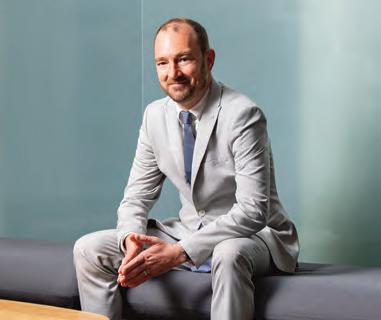
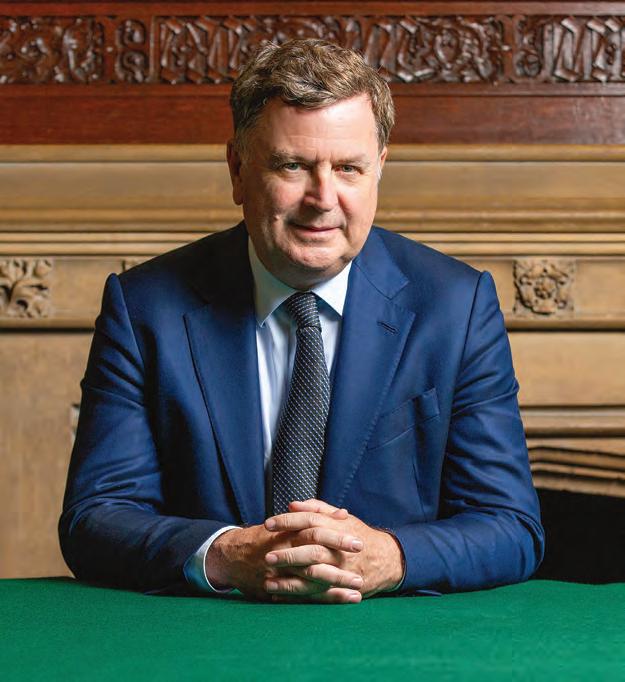
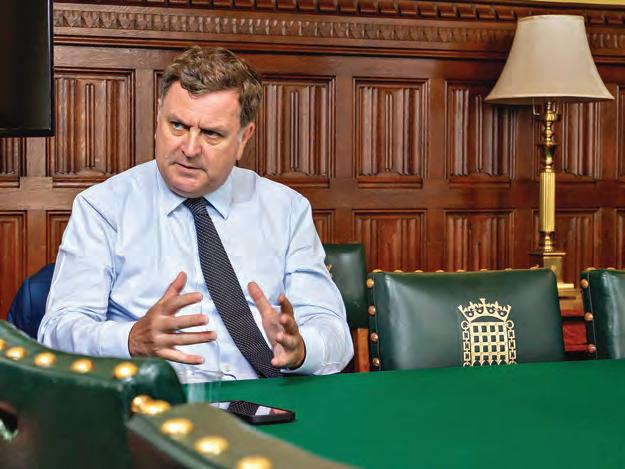
chancellor Sir Mel Stride seeks responsible radicalism
S ir Mel Stride rises early. Very early. While others schlep to the coffee wagon, wait for their flat white and croissant, Sir Mel makes a splash. “I swim,” he says. “I wild swim when I can.”
Stride learned long ago that dawn starts bring dividends. By 25, he was troubled that so few graduates were entering industry – preferring the bright lights of the City or the professions. He surmised that industry had fashioned neither the right image nor achieved a sufficient profile to attract them – and hatched a plan to help.
This fan of bracing dips made cold calls, hammering the phones of industrialists until someone picked up. The strategy eventually bore fruit – the hour was too early for their personal assistants to be in the office to screen Stride’s calls. “I figured if I phoned early, the secretary – the gatekeeper – wouldn’t be in,” he told The Rest is Money podcast. One day, the then Shell chairman Sir Peter Holmes picked up the phone. The young Stride told him about his idea to launch an exhibition to attract talented youngsters into
industry – and a fascinated Sir Peter invited him to share his thoughts over lunch. Shell backed him, and soon other major firms signed up. His exhibition idea became a reality.
Honest history
Stride’s inquisitive nature has led him down several paths. He has been a tour guide, regaling visitors with the storied histories of the British Museum, the Tower of London and Westminster Abbey. A favourite pastime is genning up: “I like sitting in the corner of a room, in a nice, comfy chair, reading something,” he tells Director “I find that kind of relaxing… but I suppose a lot of it is political.”
These extracurricular hobbies might offer a temporary diversion from the gravity of the challenge ahead.
“We’re at a debt level approaching 100% of GDP,” he says. “We’ve got ourselves into a position through this government that the servicing cost of that debt is about £100 billion a year, more than twice what we spend on defence. We’ve got an ageing
How do you go from this anaemic growth to ticking along at the levels that you need?
population, greater demands on health, pensions. We’ve got a welfare bill that’s spiralling ever upwards. There needs to be an honest conversation with the public about the fact that we are not living within our means, and therefore there will need to be some tough choices around getting on top of that debt.”
The fiscal challenge is not one that will be solved by tinkering, he argues. He is an advocate of what he calls “responsible radicalism”– the conviction that only a fundamental shift in the way the economy is run will deliver the growth and productivity enhancement Britain needs to escape the vortex. “How do you go from this anaemic growth to ticking along at the levels that you need?” he asks. “You need to get out of a kind of managerial, incrementalist mindset and into a truly radical mindset – that is still responsible. So, I coined that expression – ‘responsible radicalism’.”
He is starkly honest that such responsibility was lacking in a Tory Party that, for several years, had become intoxicated by a malign cocktail of populism and profligacy. “The responsibility bit is that you have to do it with the numbers adding up,” says Stride. “You can’t slash taxes left, right and centre just to try and generate growth without explaining where the money is coming from – which is what we saw in the back end of 2022.”
words Ben Walker photography Mark Weeks
It remains rare to hear a senior politician criticise their own party. Yet honest appraisal is the father of renewal. “You cannot have tens of billions of pounds worth of unfunded tax cuts sent into a fairly inflationary environment and tight labour markets, and expect to have anything other than an adverse bond market reaction and all the things that followed from that,” he says. He has been consistent, he adds, whether analysing from the stage or the stalls. “When I was chair of the Treasury Select Committee at the time of the Mini Budget, I said before it happened, when it happened, and after it happened, that this was a big mistake,” he says. “I was something of a lone voice in certain quarters. We will never, ever as a party, do that ever again. We have to regain that sense of trust with the electorate on the economy.”
It is that responsibility that will set his party apart, he says, from its rivals on the right of British politics – a Reform Party that has surged in the opinion polls to lead both the Tories and Labour. “There’s a very clear reason for that, which is also an explanation as to why I don’t think it will persist,” says Stride. “They’re doing well because you’ve got a Labour Party that is doing badly. You’ve got a Conservative Party that got eviscerated at the election. And then you’ve got a vacuum in the middle. The None Of The Above Party, who have no track record to criticise, can run around saying, ‘We will take everybody earning up to £20,000 out of income tax altogether.’ That will cost £80 billion or upwards – about half what we spend on the National Health Service – which has one and a half million employees. When they are asked where they will get it from it’s, ‘Well, there’s lots of waste everywhere, isn’t there?’ I’m sorry, but that’s just not good enough. That positioning will become more difficult. Our mission is to gain fiscal responsibility, get a hearing, get some trust, be an effective opposition… building a serious, sensible plan while Reform carry on with this populist plate-spinning – this glittery firework display – which they’ve got to keep up for four years.”
Volatile future
Stride’s fusion of realism and responsibility offers a foundation
for a rebuild. If a week is a long time in politics, four years is an eternity. “Nobody can predict the future,” he says. “That’s the only thing you can say with certainty: it’s highly volatile. It could be any one of up to five parties that could win the next election.”
Does he still expect his main opponent at the next election to be Labour? “I don’t know,” he says. “If this were 2019 and I was the Labour shadow chancellor, you’d be saying to me, ‘Mel, Labour Party, biggest defeat since the 1930s. You’re going to be out of power for a generation, aren’t you? How on earth are you going to come back?’ And yet, look what happened just five short years later.”
He looks across the Atlantic to Canada, where the cast-iron favourite Conservatives lost to a Liberal Party led by former Bank of England governor Mark Carney. “[Then Conservative leader] Pierre Poilievre was a shoo-in, wasn’t he? Twenty-three points ahead! He didn’t just lose the election – he lost his own seat. That’s the world we’re in now. Populists thrive on that kind of froth. But it’s down to us to try and triangulate that sense of being serious and the grown-ups in the room. The fiscal responsibility. But – equally –
cutting through and getting our vision out there.”
Stride’s Responsibility Test is just one part of that vision. He is sensibly inscrutable on specific fiscal policies so far out from a general election, but he offers prisms through which those policies will be defined. He proposes a Growth Test as his second criteria. “We have to get the tax burden down,” he says. “We have to ask a fundamental question of each tax to what degree does it lean into growth, wealth creation, job creation and so on.
“That goes into simplification of tax too,” he adds. “There are many anomalies within the tax landscape where you get very high marginal tax rates, typically around the interplay of benefits.”
The prohibitive marginal income rates imposed on parents who are on the cusp of £100,000 in annual earnings is a clear example: “If you have three children, across that tapering, you are facing [up to] 76% tax,” he notes.
Stride has recently returned from a trip to the United States, where he met Dr Arthur Laffer, he of the eponymous curve, familiar to economics students the world over. Laffer believes that the UK’s tax landscape has reached
the apex of his curve; that further tax rises will reduce the tax yield because they act as a powerful disincentive to enterprise. “You certainly want to be looking for those taxes which are on that point on the Laffer Curve where actually you could reduce the rate and increase the yield,” Stride says.
Stride will apply his three tests – the Responsibility Test, the Growth Test and the Laffer Test – as he crafts his policies ahead of facing the electorate in 2029. Yet there is a role for chancellors beyond fiscal policy – by championing enterprise, making entrepreneurialism attractive, inspiring the young into starting businesses. Stride suggests that the talk can be almost as important as the walk. “I look back to my story,” he says. “I started in 1986 – and that was when the Conservatives were beginning to cut taxes and removing red tape. But they also did something else. The zeitgeist then was very different to what it is now. It was summed up by that photograph of Margaret Thatcher and Richard Branson on the boat going up the Thames. Sun playing on the water. The dream of opportunity. It was cool to set up businesses. And that’s what we’ve got to get back to.”
Inclusive capitalism
Stride advocates what he calls “inclusive capitalism” – part of which is the dream of a share-owning democracy where stock ownership is incentivised, and equities are common gossip in the Dog & Duck. “But some of it is about the mood music and talking about it as a government,” says Stride, “encouraging people to get out there and showing them that you’re going to give a bit of assistance on the way. We want to celebrate those people.”
Inclusive capitalism might be the dream. Exclusive capitalism is the reality. Stride worries that an everincreasing number are excluded from enterprise, employment and economic contribution by a state that has an unsophisticated, binary approach to workability. People can either work or cannot; are either fit or sick. “There’s 400,000 people leaving the workforce every year who go on this journey and end up on benefits,” he says. “And at some point along the way, they go to their doctor, and their doctor signs them off sick. And in 94% of occasions
You can’t slash taxes left, right and centre just to try and generate
growth without explaining where the money is coming from
– after a six-minute interaction – ticks a box that says, ‘Couldn’t possibly work under any circumstances.’”
Stride envisages a more proactive state, where welfare focuses on keeping people in work rather than signing them off it. “If you can’t cope with the stairs, we’ll talk to your employer,” he says. “We’ll get your desk down on the ground floor. We’ll even sort a taxi. We’re going to keep you in work – that’s the important thing.”
The march of technology, too, will undermine the promise of an inclusive economy – if we let it. Stride takes aim at the higher education sector which, he argues, continues to offer courses that are unfit for a transforming world. “You may have been studying coding at Oxford one minute,” he says, “thinking that you’re set up for the rest of your life, and suddenly finding you’re entirely redundant, because AI will do all that much better than you ever will.”
How interventionist is he willing to be? Does he envisage a state that tells universities which courses to supply? “Could you design a system in which the university themselves is incentivised to make sure that they’re providing courses that lead to wellremunerated employment?” he asks. I point out that he is answering my
question with a question. “I am, yes,” he says. “Because we are doing the work to come to the answer. I don’t have all the answers yet.”
He might find some. His background is varied, his experiences wide. I wonder whether this inquisitive knight of the realm, wild swimmer, exhibition impresario, tour guide, businessman, is ever frustrated by the constraints of Westminster. “Most people, say, ‘We want people in parliament that have done something,’” he says. “I had done something. I built companies. And I thought that was something that I could bring to political life.”
Has he ever regretted it? “No, not at all,” he says. “That’s not the same thing as saying there haven’t been times when it’s been frustrating and difficult. But it’s the most wonderful privilege. And I wouldn’t have missed it for the world.”
Ben
Walker is editor of Director
DIRECTOR DISTILLED
Honest dialogue required with the public over debt
Economic inefficiencies in the tax system targeted Incentives mooted for public share-ownership
The state we’re in
Is entrepreneurialism any of the government’s business?
Under the spotlight with Emma Rowland
What is an entrepreneur? Sounds suspiciously French. ‘Entrepreneur’ derives from the French ‘entreprendre’: to undertake or do something. Napoleon arguably embodied the enterprise principle (although his miscalibrated risk-to-reward meter did land him in exile). He supposedly referred dismissively to England as “a nation of shopkeepers”. Today, we are a nation of shopfronts. Many empty ones. A good dose of entrepreneurialism might help.
Entrepreneurialism – aside from being a word with far too many letters – is the act of setting up a business and taking on financial risk. It’s a mindset, about always looking for the gap in the market. It’s about being resilient, adaptable, competitive. It will manifest in someone who will likely tell you they can spell entrepreneurialism better than you, then flog you an autocorrect tool.
Early on, ‘entrepreneur’ was a term used to describe those who managed theatre productions. So, if we are talking about farces we need to consider the question at hand: is entrepreneurialism any of the government’s business? Well, in theory, the entrepreneur should have much in common with a government. They both run things: the former a business; the latter a country round the bend. The former is constantly providing ideas that are new; the latter is constantly providing ideas for the newspapers. But the key difference is that government doesn’t go out and play. Rather, it should be like a great head coach – creating an environment where the flair players can flourish and thrive.
Entrepreneurs and government are a double act – or should be. The legendary football manager Brian Clough, never lost for words, once analysed a defeat thus: “We had a good team on paper, unfortunately the game was played on grass.” In that vein, the government should create a business landscape in which the entrepreneur can go out and score goals, hit sixes, make tries.
Government should provide the tools which individuals can seize – so they can get building.
Well, it’s lucky the PM has toolmaking in his family tree then. Did you know Starmer’s father was a toolmaker? He should be well-equipped already. If I had a sickle for every time he has hammered home that message. Sorry, did I say sickle? I meant nickel. Must have been something about the plight of the working person that has burrowed into my subconscious lately…
Before we deviate into dangerous territory, I realise I’ve gone five paragraphs without mention of the word growth. Either I got too distracted or there is none to speak of… you decide. But in fact, the government did give us numerous strategies over the summer to sink our teeth into, all with the best intentions of driving growth.
Entrepreneurs and governments both run things. The latter a country round the bend
Cue strategy bingo: the Small Business Strategy is about bringing those right players with flair, inspiration and skill into the pro-team mix. The Industrial Strategy is there to ensure those players play to their strengths and form a competitive side. The Trade Strategy will propel the club to international tournaments so they can compete on the global stage. The Infrastructure Strategy is there to make sure the grass is lusciously green on the outfield, that Hawkeye doesn’t malfunction, that the balls are inflated to just the right pressure, that the team can arrive at training on time without having to slum it on the rail replacement service. No, you’re right, that last one is pushing it. Plus, what would the Brits find to complain about if the trains suddenly started working?
Well, the gameplan sounds well-oiled machine. The UK should be entrepreneurs in no time! But what if the manager of the team has never actually team before? What if they have never or defended a net? What if, despite well-oiled game plan and endless strategy the rest of their agenda negates to flourish? What if, after everything, stopped to remove the ‘keep off the grass’ sign on the local field? Not only the government can’t provide the but can’t create that business landscape the team can go out and hit sixes. much catch them out.
Well, the sounds like a well-oiled machine. The UK should be mass-producing entrepreneurs in no time! But what if the manager of the team has never played in a team before? What if have never bowled a ball or defended a net? What if, the well-oiled game plan and endless strategy formation, the rest of their negates the team’s ability to flourish? What if, after they never to remove the off the on the local field? Not does that mean the government can’t the right training, but it can’t create that business in which the team can go out and hit sixes. There’s too much to
Cover your eyes now if you’re squeamish… increased taxes, red tape, cuts, U-turns, cancelled projects. There’s jump scares at every turn! Around the next corner, the main opposition is as not-so-fledglinganymore party are conjuring support left, and centre. And, speaking of our teeth into over in the next the Tories are chainsaw bills not to their liking, starting with the Bill! It’s a on Street. The well-oiled machine is like it has a few wrenches stuck in there somewhere. The can’t be a driver of if fiscal is there to hammer business. And the may be the final nail in the coffin.
That even if the business environment is less and more obstacle course, there are brave individuals willing to risk total wipeout. moments strike for a reason – to up the darkness. There will be in dorm rooms, Curies in Berners-Lees in Archimedes (Archimedei?) in bathtubs. Ideas are free and they are to the world forwards.
Cover your eyes now if increased taxes, red tape, spending employment regulation, U-turns, projects. There’s jump scares Around the next corner, the is reforming, as Nigel’s not-so-fl anymore fledgling party are support left, right and centre. of sinking our teeth into things, in the next wing, the Tories are massacring bills not to their with the Employment Rights nightmare on Downing Street. The well-oiled sounding like it has a few wrenches there somewhere. The strategies growth if fiscal policy is there business. And the Budget may be the coffin. That said, even if the business environment less greased lightning and more course, there are always brave individuals risk total wipeout. Lightbulb moments reason – to brighten up the will always be Zuckerbergs in dorm in labs, Berners-Lees in CERNs, (Archimedei?) in bathtubs. are important to keep the world moving forwards. The very definition of an entrepreneurial mindset is surely one that craves something of an
course.
entrepreneurialism any government’s Well, can alternatively, game grinds to a halt.
obstacle course. So, back to the question: is any of a government’s business? Well, it can certainly lay the turf so that innovators can showcase their skills. Or, penalise the players such that the game to a halt.
Emma Rowland is policy advisor at the Institute of Directors
Fighting spirit
A furious cross-border battle shows why geographical certification can be worth the scrap
words Ben Walker photography Chris Reeve
I t wasn’t always like this. When Andrew Nelstrop launched The English Distillery two decades ago, Scotland’s whisky makers extended the warmest of Highland welcomes. “In the early days when we needed some help or advice, they were always incredibly helpful, forthcoming and open,” Nelstrop, the founding chairman of the English Whisky Guild tells Director
But that was then, and this is now. Where once they extended hands across the border, now they shoulder arms. The Scotch Whisky Association (SWA) is attacking the Guild’s application to create a legal geographical indication (GI) for its products. The Scots argue that the certification south of the border will undermine the reputation of the spirit made north of it. “It would be very damaging
for the reputation of single malt whisky from the UK – and by extension single malt Scotch whisky – if English whiskies were allowed to describe spirit as ‘single malt’ despite being produced in a different manner to the established process and longstanding traditions of the Scotch whisky industry,” an SWA spokeswoman says in a statement.
Scottish hostility towards the English GI application is because, under the proposed regulations, English distillers would be able to mash and ferment the base liquid for the whisky – known as wort – on a different site to that where it is distilled. “The proposal to define ‘single malt’ English whisky only requires distillation at the single distillery location and not the creation
of the spirit from malted barley at a single site,” the SWA spokesperson adds. “This is entirely inconsistent with the reputation of single malt whisky, which is famous for its integral connection to place, and would undermine the single malt Scotch whisky category.” The SWA declined all requests for interview.
The English are less taciturn. Nelstrop remains adamant that the Scots’ argument is based on a false premise. “Their belief that spirit for maturing into whisky has to be made at a single site in order to have some undefined level of quality is complete nonsense,” he tells Director “We have members who have breweries on their family estates that have been running for a very long time. They are absolute experts at making beer – which is the first part of the distilling process. The idea that taking the beer and moving it – be it one field or five fields – to where they have their distillery would create a lesser product than if it was all done in the same yard or site is daft.”
Opposing forces
The Scots are joined in their opposition to the English GI by the Welsh Whisky Association (WWA) and the Irish Whiskey Association – with whom they have released a joint statement outlining their concerns. Yet the Welsh GI does allow the wort to be produced on a separate site. “For the Welsh to be joining in on their argument is nonsense,” says Nelstrop. “Because Penderyn, which is about 95% of the entire Welsh production, for the first years of their life had their wort made by a brewery down the road – Brains Brewery. So, it’s ridiculous that they’re arguing this.”
WWA director and Penderyn chief executive Stephen Davies agrees to speak to Director “I wouldn’t ever stop anybody doing what we did,” he says. “But my genuine experience is that 15 years ago when we moved it all on to one site and did it ourselves and didn’t go to a brewery, the quality difference was staggering. And the reason is basically because brewers brew and distillers distil. A bit like jazz musicians and rock musicians – they are all playing the same instruments – but they’re doing it very differently.”
Davies adds that all the WWA’s members now mash and distil on a single site. The WWA is willing to change the Welsh GI accordingly. “In discussions with our Irish and Scottish friends we have been asked about that,” he says. “Our group is of the same mind because we all do it the same way. I’m happy to fall in line with the definition of single malt whisky… The Scots have every right to say this is the way single malt whisky is made. If you want to make whisky [the English] way, fine, but call it something else – because otherwise it is dreadfully confusing for the customer.”
The whisky row is particularly fiery. But it is far from unique. Bids for GIs are rarely
The Scots’ belief that the spirit must be made at a single site to have some undefined level of quality is complete nonsense
straightforward, often prolonged, sometimes acrimonious (see panels). Given the likely legal, commercial and regulatory tussles businesses face – and the associated time and expense – why should UK producers bother? The University of Oxford’s Professor Dev Gangjee says that, historically, GIs have been rarer in the constituent nations of the UK than in countries like France, where certifications such as Appellation d’Origine Contrôlée for wine are common practice. “But we do have products like Stilton and the Melton
Balsamic bash
Vinegar producers in Modena, Italy, have long railed against cheap versions of balsamic vinegar which fail to meet production and maturation standards of the GI product. Aceto Balsamico di Modena requires a minimum 60 days in wooden casks. A Court of Justice of the EU ruling means that there is no automatic ban on generic vinegar producers using the descriptive term ‘balsamic’ – but it remains illegal to use the GI-registered name Aceto Balsamico di Modena unless the GI criteria are met.
Mowbray pork pie,” says Professor Gangjee, an expert on intellectual property and GIs. “There is a collective reputation at the heart of those products – and the next step is to look at common commitment to quality standards to help preserve that reputation.”
Gangjee warns that with a GI, free-riders can become a clear and present threat to the reputation of a product and, as such, a commercial menace. As Nelstrop himself says: “There was nothing – apart from a Trading Standards person
– to stop you importing whisky from anywhere in the world, be it Canada or Ireland or Timbuktu, bringing it here, putting it in a bottle in your shed, and writing ‘English whisky’ on it.”
This logic is applicable worldwide, says Gangjee. “Over time, people within a region start making a product, it then gets a local, national and – if you’re lucky – an international reputation. Then you start looking at what you can do to preserve it, because you don’t want free-riders undercutting you with shoddy materials and practices.”
Left The English Distillery Below English whisky maturing in the cask Opposite Andrew Nelstrop, founding chairman of the English Whisky Guild
If our GI lapses, then we’re back to the Wild West
Tagore Ramoutar is an entrepreneurial director and advisor specialising in new business startups. In 2015, he cofounded The Oxford Artisan Distillery. Today, he is responsible for drafting the English whisky GI application and liaising with Defra and HMRC through the consultation period. Regions hostile to another’s GI application must prove that it will be commercially detrimental to their own products for their opposition to be considered by government, Ramoutar points out. Yet English whisky – according to the Scots’ own testimony – produces less than 1% of Scottish volumes. “You’re only meant to have a position of opposition if you have a reputational or economic material impact,” says Ramoutar. “So there is an argument that says it doesn’t really matter what we do. We’re a small industry – we’re not claiming the word Scotch or Irish or Welsh. Therefore, we do not have an impact on them.”
Cru cut
The wine industry is heavily protected in France through the world-renowned Appellation d’Origine Contrôlée (AOC) protocol, which certifies wines’ origin. Yet, terms associated with the production method of the wines have been a grey area that international competitors have sometimes tried to exploit. French terms like château, grand cru and premier cru are traditional descriptors tied to French appellations. In the past, New World producers have attempted to use the terms – and often encountered import barriers when attempting to sell their products into the European market. Today, such behaviour is rarer worldwide – the Australians, South Africans and Californians have coined their own expressions of quality.
Yet the Scots have clout. Scotch whisky is the UK’s single biggest food and drink export, accounting for £7 billion in annual sales and almost £4 billion in duty for HMRC. “Now, obviously, Defra has to support and nurture all these industries,” says Ramoutar. “But the industry has changed from 20 years ago. There are a lot of new whisky regions all doing interesting things. And it’s stronger if people explore the whole category – rather than just buy one bottle. There’s a delicate balance here for Scotland of supporting other regions to raise the awareness of all whiskies, versus wanting everyone to comply [with them].”
The English are unwilling to change their GI so fundamentally that England effectively becomes the 34th Scottish county. “We don’t want to just be a Scottish region,” Ramoutar says. “We don’t want
to make Scotch whisky. We want to make English whisky that people explore for different reasons – we have some wonderful innovative whiskies. And our GI was built to support that… The Scotch Whisky Association have taken a position where they can’t change us through debate. Therefore, they’re going to make it politically difficult for people to accept our GI.”
Should the Celtic opposition be victorious, the consequences for their English neighbours will be grave, warns Ramoutar. “If our GI lapses, then we’re back to the Wild West,” he says. “There will be no legislation to stop anyone doing anything they like.”
Nelstrop concurs. “The SWA are perpetuating the potential for single malt whisky to have its reputation ruined,” he says. “They are leaving the door open to single malt being bastardised by the unscrupulous.”
A Defra spokeswoman declines to be drawn directly on the row but says: “Our GI schemes help UK food and drink businesses grow, by protecting the reputation of regional products, promoting traditional and agricultural activity while boosting growth in local economies.”
The department will “provide an update on the English whisky GI application process in due course”, she adds.
Yet, back at Oxford University, Gangjee is upbeat that this is one border skirmish in which the English might have the edge.
“I do see the SWA’s point that by using single malt you are diluting a common term,” he says. But, he adds, single malt is a traditional expression that is a “rider to a GI” – rather than the GI itself. “Quality is a sliding scale,” says Gangjee. “You can
Ham-fisted
Asda sparked a row in Italy when it attempted to slice its Parma ham outside the region in a bid to save costs. After a six-year legal battle, European judges in 2003 ruled against the chain after it offshored the slicing to a site in Wiltshire. “The court has been duped by the Parma producers’ ham-fisted attempt to push up the price of their products,” Asda told the BBC at the time. Subsequent courtroom dramas followed and – today – much Parma ham is sliced outside the region.
have quality that is good enough, and quality that is slightly, incrementally, better. For the Scots to say ‘tighter localisation is a guarantee of much better quality’ is a very hard argument to run. Their argument, saying that the stricter definition of single malt is absolutely that positive for quality, is going to be very difficult for them to prove.”
Ben Walker is editor of Director
DIRECTOR DISTILLED
Celtic nations oppose English whisky’s bid for geographical indication Row over use of ‘single malt’ term GIs can be valuable, but are often controversial
Above English Distillery head distiller Chris Waters Opposite (clockwise from top left) Scottish still, English spirit; Ready to drink; The English Distillery’s Norfolk home
Neds in the dark
Non-executive directorships need a rethink
93% of directors want at least one member of their board replaced
46% of directors feel that their board is adding insufficient value
31% of directors think their board is adding no value at all
Sources: PwC; Board Intelligence
words Katie Jacobs
In 2003, the iPhone hadn’t been invented, Netflix was posting DVDs to subscribers – and Amazon was an online bookstore. More than 20 years on, the world we live and work in has transformed dramatically. Little wonder that the role of the non-executive director (Ned) – last seriously examined in 2003 with the publication of the Higgs Review – would change too. Several corporate scandals, including the Post Office, Carillion and HBOS suggest – at best – that some boards were asleep at the wheel. The question must be asked: how effective are Neds, really?
An IoD commission is investigating whether Neds are delivering the anticipated benefits – and asking how they can better contribute to value creation. “Although heralded as the underpinning of best-practice governance, the reality for Neds and boards is often different,” says Irene-marié Esser, professor of corporate law and governance at the University of Glasgow, and author of the commission’s forthcoming report. “Boards have changed since the Higgs Review, along with the role of the Ned.”
“The business environment is complex and the role of a Ned is growing in complexity too,” adds commission chair Baroness Evans. “We need to make sure companies are using them to their full advantage, and that the right sorts of people are thinking about becoming a Ned, really understanding what it involves.”
“Some think they know everything”
An anonymous experienced non-executive director on the worst –and best – boardroom behaviour she’s seen
“Becoming a Ned is no different to starting any other role – you need coaching, development and a learning mindset, but unfortunately that’s what gets missed. As most Neds are senior in their career, there’s this perception that they don’t need to worry, but it’s the opposite. A lot of them are coming in blind.
“The worst behaviour I’ve seen includes having the attitude of ‘I’ve been an exec; I don’t need any development’ – finding it dirty to think about objectives or being held to account. There are Neds that are combative for the sake of it: we’ve only got three hours [in our board meeting], we don’t want to lose time battling through that rubbish.
“Some talk but don’t listen. There’s a danger that Neds think they know everything. But we are no longer executives, and should speak for only about 10% of the time we did when were. I see Neds coming to meetings but not doing anything beyond that, being disorganised and being disrespectful of the execs. I know Neds with a shocking lack of emotional intelligence. I’m scared of them, so I can’t imagine how the execs feel! All this behaviour is not uncommon, but I also see a lot of good: the critical friend who can challenge in a way that brings the exec with them and builds strong, trusting relationships. Being a Ned is a great job, but it definitely isn’t for everyone.”
Poor performance
Much data suggests that the report card of many Neds would state, ‘could do better’. Research from PwC found that 93% of directors in US companies want at least one member of their board replaced, with only 35% of execs rating their board’s effectiveness as excellent or good. City consultancy Board Intelligence recently published findings that 46% of directors think their board adds insufficient value, while some 31% believe their board adds no value at all.
Board Intelligence senior director Megan Pantelides says that it’s “not hugely surprising” that executives often disapprove of their Neds, given that they “don’t like people marking their homework”. Yet what is surprising is the number of Neds who are dissatisfied with the value they themselves deliver, she adds. When organisations do fail – very publicly in some cases – it’s rarely due to ‘bad apples’, and more to do with the structure of the role itself and the tools Neds must work with. “Boards are held back by conventions and rules that were made for a game invented a long time ago – not the game we’re playing today,” says Pantelides.
Problematic individuals do exist. Yet the system itself can prevent even the most highly skilled and well-intentioned from being as effective as they could – and should – be. In an
There are plenty of people who join boards and don’t really want to do the work
IoD member survey, 45% of respondents identified poor information flows from management as a key obstacle to Ned effectiveness. “All too often Neds can be blindfolded or hamstrung,” says Board Intelligence chief executive Pippa Begg.
Questionable motives
Yet a nontrivial proportion of Neds have questionable motivations for accepting the role in the first place. Nada Kakabadse, professor of policy, governance and ethics at Henley Business School, says poorly performing Neds are often those that accept the role for reasons such as prestige, status or personal connections – without a genuine intention to contribute meaningfully. “Such individuals frequently lack the time, commitment or interest necessary to engage with the business at a strategic level, rendering their oversight role
ineffective,” she explains. Professor Kakabadse adds that 25% of Neds identify insufficient time or commitment as the most significant barrier to their effectiveness, with 10% blaming a lack of knowledge or understanding of the company’s operations, strategy or context. “This suggests that a portion of Neds arrive unprepared or remain disengaged, undermining the depth and relevance of their contributions to board discussions,” she says.
It’s something self-confessed governance geek and multiple Ned Alex Denny has certainly witnessed. Although becoming less common, he believes such behaviour is more prevalent in larger organisations, whose boards come with a higher degree of prestige attached. “There are plenty of people who join boards and don’t really want to do the work,” he says.
This reticence (or, candidly, laziness) is particularly problematic given the need for Neds to do more than simply fill a seat at a quarterly board meeting. “Disengaged, passive Neds have been an issue in some cases,” says Evans, adding that good Neds are highly engaged, getting “under the skin” of the company. Some 41% of respondents cited lack of Ned engagement with the wider organisation as an obstacle in the IoD survey.
A good Ned also knows how to maintain that balance of engagement and genuine interest without overstepping into executive functions. This, Evans says, requires having the emotional intelligence and mental agility to walk that line. The capacity to challenge the executive is critical. Yet almost half of IoD members reported unwillingness among Neds to do so.
This reluctance to challenge managers is a key reason behind high-profile corporate failures, argues Kakabadse. “Neds were either too disengaged or lacked the resolve to ask difficult questions – even when clear red flags were present,” she says. It is rarely the easy or comfortable option, but Neds must have “the confidence to stand firm when it matters most”, she adds.
Yet such challenges need not always be seen through an adversarial prism. Denny views his role as a constructive and friendly adviser. He considers his Nedship as being a guide and positive influence for change. And while ethical misfires and corporate scandals tend to hog the headlines, Begg points out that there are many more examples of companies collapsing thanks to their failure to innovate – think Nokia, Kodak or Blockbuster. Avoiding that requires Neds to embrace critical thinking, posing ‘what if?’-style questions to drive growth and innovation, as well as playing the more traditional compliance role.
Incurious minds
All this makes curiosity perhaps the most important trait for any Ned. But more than a
Top five obstacles to Ned effectivity
49%
Reticence among Neds to robustly challenge management
45%
Poor information flows from management
41%
Lack of Ned engagement with the wider organisation
38%
Insufficient curiosity among Neds
37% Poor chairmanship
Source: IoD member survey. Some figures have been rounded.
third of respondents to the IoD’s survey flagged insufficient curiosity among Neds as problem. “Great board members are curious,” says Begg. “As children, we have the ability to ask hundreds of questions a day – but we lose that as adults. You want to rebuild that muscle: the art of questioning, rather than producing.”
That includes an appetite for learning. However long, celebrated and storied their executive career, a good Ned recognises they are not the finished article. “Humility is a hugely important part of what makes someone effective on a board,” says Pantelides. “Neds should be humble enough to recognise that they don’t know everything. The one thing we don’t need on boards is hubris.” The inexorable rise of AI in particular makes continuing professional and personal development more than important: it’s existential.
Outsiders’ perspective
Independence remains core. Yet the concept of independence should go beyond the lack of formal business relationship with the company or its management. Independence is about more than compliance – it’s a mindset, bringing the valuable outsiders’ perspective in. “It’s not just about conflicts of interest, it’s all about independence of mind,” as Evans puts it.
Effective Ned contribution depends on many factors: individual attributes and skills, group dynamics in the boardroom (any board is more than the sum of its parts), and the structures within which the board operates. Overcoming obstacles in these areas requires a multifaceted approach.The experts Director spoke to offered suggestions including Ned recruitment becoming broader and less risk-averse to ensure boards are operating with sufficient cognitive diversity; greater emphasis on the importance of CPD for Neds (particularly in emergent areas like ESG and digital transformation); and improved mechanisms for enabling Neds to access the internal company information they need to do the job well.
Boosting Ned effectiveness “won’t be driven by additional regulation”, believes Esser, but rather “a change in mindset”. She concludes: “The future of UK corporate governance lies in fostering Neds who are deeply engaged, intellectually independent and continuously evolving.”
Katie Jacobs is a business journalist and former editor of HR magazine
DIRECTOR DISTILLED
Neds often ineffective
Many accept Nedships for personal prestige
Corporate processes sometimes inadequate for successful Nedships
To coin a craze
There are ways of avoiding ridiculous business ideas
Cautionary tales with Roger Barker
I magine that you are the chief executive of a stru ling healthcare company. You have tried everything to boost the fortunes of your business – investing in new products, hiring great people, running trendy marketing campaigns. Nothing seems to work. The market just doesn’t get your vision, and the share price stagnates. What do you do? Invest in bitcoin, of course! Even better, arrange for your company to borrow money from anywhere it can (starting with the equity and bond markets), and buy bitcoin with that as well. What could possibly go wrong?
This might seem like a crazy idea. Yet it is precisely the strate being followed by several companies in the US and the UK. By loading up on bitcoin (and other cryptocurrencies), companies are in e ect turning themselves into ‘crypto treasury companies’, whose main performance metric is no longer growth in EPS (earnings per share) but growth in BPS – bitcoin per share.
In many cases, this is leading to substantial appreciation in stock prices. Consider the example of US businessman Michael J Saylor. In the space of five years, Saylor has benefited from a 3,000% increase in the share price of his so ware company, MicroStrate – mainly by investing in bitcoin. Bluebird Mining Ventures, a previously stru ling mining company listed on the London Stock Exchange, recently enjoyed a 500% boost to its share price following the news of its pivot to bitcoin.
Why would investors support what seems like highly opportunistic, high-risk behaviour – either by investing in such companies or by lending to them? From an investor perspective, it’s a useful way to gain exposure to crypto. Typically, institutional investors are neither allowed to invest in crypto assets directly nor in crypto exchangetraded funds. However, they can take stakes in companies. By buying the shares of a company loaded up on bitcoin, they obtain the crypto exposure they are looking for.
So far, the strate appears to be working. Investor Druckenmiller called crypto “a solution for a Yet, reports its imminent demise appear exa erated. At the time of the price of the asset the entire edifice – bitcoin – is close to its all-time And its lack of intrinsic value, bitcoin as an investment concept is up many supporters – not least US President Donald whose family media company, Media &
So far, the strate appears to be Investor Stanley Druckenmiller called “a solution looking for a problem”. Yet, predicting its imminent demise appear exa erated. At the time of writing, asset underpinning the entire edifice close to its all-time high. And despite intrinsic value, bitcoin as an investment propped up by many high-profile supporters least US President Donald Trump, media company, Trump Media & Technolo Group, is one of its bi est hoarders.
But there may be trouble ahead. making such a seismic shi in favour one wonders how much governance
But there may be trouble ahead. Prior to such a seismic shi in favour of bitcoin, one wonders how much governance came into
History teaches without guardrails in place short-term likely becomes longterm pain
teaches that without guardrails in short-term pain likely becomes
play at these companies. Was there a robust and informed decision-making process at board level? Was an assessment made of how buying bitcoin aligned with the company’s risk appetite? And did companies upskill their sta , risk management and regulatory compliance systems to manage the metamorphosis into a di erent kind of company? There is scant evidence to su est they did. History teaches that without such guardrails in place, short-term gain likely becomes long-term pain. Where will crypto treasury companies be in five years’ time? I suspect we will have forgotten all about them.
The lesson
Have a clear purpose
History provides many cautionary tales of companies that have attempted to radically pivot into new areas, often with disastrous results. How can firms avoid the consequences of such fundamental shifts?
1
Ensure synergy with existing o erings
In recent years, manufacturer Dyson spent more than £500 million on an ill-fated attempt to create an electric vehicle business – a segment far removed from its current portfolio
of household Tech giants and Google chose a similar path – and spent much larger sums of money. All of them failed. An absence of with existing lack of automotive and limited of brand into the new market were to blame. a longer period, Group and have made a virtue out of applying their brand to completely new business areas. But have also had very mixed results. Does anyone still remember Virgin Cola or Metro Bank dog-grooming salons? Starting from scratch is hard!
appliances. Apple and similar spent much money. failed. An synergies supply chains, manufacturing expertise transferability reputation Over a Virgin EasyGroup have of brand to business they have results. anyone still EasyPizza, Metro Bank salons? scratch clear business prevents going a way that sense. statement articulation company paraphrase scholar of purpose, Mayer of School, nes in broad company contribute meeting or solving of planet. statements be uncomplicated. more they For Google, the purpose organise the information universally useful”.
A clear business purpose prevents organisations o -piste in a way that rarely makes sense. A purpose statement is an articulation of why the company exists. To a leading scholar of business purpose, Professor Colin of Saïd Business School, purpose defines in broad terms how the company plans to contribute to society by the needs, or the problems, of people and Purpose statements should be The simpler and more memorable are, the better. For the purpose is “to organise the world’s information and make it accessible and useful”.
Profit is a consequence, not a Profit-making should never be a purpose. Of course, every organisation must ultimately generate some kind of financial surplus if it wants to survive – unless it has a benefactor with pockets who is to subsidise it.
Yet stating that the point of a company is to make profits is not a good basis on which to build a viable long-term business. To motivate people and focus strategic
consequence, goal should company’s every must some nancial to has a deep willing to the company not on viable business. To and thinking, inspirational needed. that generated as a consequence of e ectively fulfilling that purpose. It is not an end in itself. Purpose statements provide plenty of scope for strategic agility and innovation. But they o er more direction – and are more suggestive of underlying values, substance and longevity –than the pursuit of immediate profit. Thus, an organisation with a clear purpose is less likely to jump on the bandwagon of a current business hype or investment fad – even in di cult times. It will probably also generate more value for its stakeholders over the long term.
Dr Roger Barker is chief research officer at the Center for Governance, Saudi Arabia
Is the Starmer-Trump bromance good for British business?
A trade deal. A state visit. A Windsor banquet. Sir Keir Starmer’s alliance with Donald Trump is a very special relationship. But does it do UK companies any good?
The idea of Donald Trump and Sir Keir Starmer enjoying a bromance might sound unlikely or unserious. But, for the UK, it is a significant asset.
Michael Martins, former US Embassy London political specialist and founder of Overton Advisory
Business leaders know that relationships drive outcomes. Washington remains the UK’s most important partner on defence, trade and investment. Trump’s return to the White House has changed the tone, but not the fundamentals of his playbook: raise tari s on friend and foe alike, set out clear foreign policy demands, and cut taxes at home to keep voters onside. In that world, allies who stay close and quiet avoid the worst shocks, while those who resist are punished.
Canada is the cautionary tale. With 80% of its economy tied to the US, Ottawa’s decision to confront Trump on tari s backfired. Canadian exporters now face higher duties than they otherwise would have, eroding their competitiveness and forcing them to scramble abroad to find new markets. The UK cannot a ord the same mistake.
A pragmatic relationship between Sir Keir and Trump is neither indulgence nor weakness. It is strategic bravery. Starmer is acting in the national interest to secure market access, protect investment, and preserve in uence.
First, defence. Trump has been clear about Nato for decades: allies must pay their way. The UK has led in corralling European support, a fact welcomed in Washington. If Starmer reinforces
that through personal chemistry, the UK locks in US security guarantees and continued access to defence contracts, intelligence and technolo transfers, directly strengthening firms in aerospace, cyber and advanced manufacturing i.e., the UK’s key growth areas.
Second, trade and investment. Trump is no free-trader, but he is a dealmaker. Leaders who appeal to his instincts o en leave with commitments others cannot secure. Starmer has so far played this carefully, avoiding the sharpest tari hikes while positioning the UK as a destination for US capital in technolo and potentially now highly skilled immigration. For directors planning long-term investment, that matters more than abstract talk about values.
Third, in uence. A prime minister who can get Trump on the phone has leverage, which the UK can spend in Brussels, in the Gulf, or in Asia, where outcomes a ect UK companies. In a world where access is currency, personal rapport is a competitive edge.
Trump and the Maga world will always divide opinion – which is how they win elections. But leadership is about outcomes, not applause (especially with the next UK election four years away). For UK plc, the equation is clear: closeness with Trump translates into contracts, investment, and in uence. If Starmer keeps pragmatism first, this bromance isn’t just good politics. It’s good business.
T he UK’s trade intensity dropped dramatically a er Brexit. And attempts at a UK/EU reset are moving too slowly. Thus, the need to maintain reasonable access to the US market seemed paramount. The eagerness to please and get some sort of early deal made some sense. It was perceived to have been a Starmer coup.
The StarmerTrump love-in has failed to end huge uncertainty
Vicky Pryce is visiting professor at King’s College London and former joint head of the UK Government Economic Service
But, having agreed to reduce UK tari s on US imports to zero from their earlier 10% average, the UK saw tari rates on its own exports to the US rise from an average 2.5% to 10%. This, and a series of sectoral export quotas to the US, is impacting the UK’s relative competitiveness. It limits any negotiated preferential access to US markets. And higher US tari s for many products are still threatened if production takes place outside US soil or, in areas such as life sciences, medicine prices charged internationally remain higher than those in the US.
weaker position than before. It has the UK car sector, which is also facing increased competition from Chinese EVs. We are
This all leaves the UK in a weaker than disadvantaged UK is increased from Chinese EVs. We already facing
US; or Astra Zeneca £1 billion of investment in the UK, and in the US We the Europeans agreements on our own, rather than together to present a united front. Their is ominous: note the EU’s recent imposition of 50% tari s on steel – with no carveout for UK. the threats are not just cross-Channel. The bromance carries too, for transatlantic
may be extracted areas of services in to competition and for US and on DEI
a likely loss of UK production and jobs because of the cut in tari s on US ethanol imports – where the allowed zero-rated quota covers all our annual needs. There are still 25% tari s on steel and aluminium. There is no clear path yet on avoiding more punitive pharmaceutical tari s in the future. So, what has the bromance brought us? Some relief early on, but nothing much in the longer term. The StarmerTrump love-in has failed to put an end to the huge uncertainty. Nor has it prevented firms like JCB using tari s as the reason to shi its production to the Zeneca cancelling £1 billion the UK, and investing instead. We have infuriated the Europeans by striking agreements rather than working present a united front. Their disapproval is ominous: note the imposition of 50% tari s imports – with no carvemetal from the UK. Yet, the threats are not cross-Channel. The bromance carries risks, too, for transatlantic trade. More concessions may be extracted by the US in the areas of tech and financial services in relation to competition and regulation firms; and on environmental and DEI obligations. A watering down of the UK’s online sales tax seems important areas for US and investing in the UK. So, having rushed to agree an early deal, resisting pressures more areas may prove
A watering down of UK’s tax seems likely. These are important areas for US firms exporting and in the UK. So, rushed to agree an – and lonely – deal, pressures to concede in more areas may prove doubly difficult.
Marketing has a uniquely privileged position in business. Marketers have unrivalled access to customers, allowing them to build and nurture relationships over the long-term. It’s one of the things I love most about the profession. Marketing has a greater opportunity than other departments to understand the needs of the customer, what their goals and aspirations are and – most importantly – how the business can anticipate and satisfy those needs.
The unappreciated salesman
Often, the commercial arm of the business is cast as the breadwinner of the organisation. It has the last touch; it closes the deal. It is seen as responsible for bringing in the lion’s share of revenue. Sales metrics are clear-cut, easily measurable and quantifiable. It’s much easier for them to be communicated to colleagues, particularly the finance team and C-suite. The vital role marketing plays in driving sales is often an afterthought.
The marketing function acts as a facilitator for sales. It builds brand awareness. It enhances customer perceptions. It deploys campaigns that generate leads. It communicates value to customers. But quantifying the impact and value of this long-term work is a major challenge. The way marketing effectiveness is measured leaves much to be desired.
In recent years, there has been a much greater demand to prove or demonstrate ROI, particularly as a measure of effectiveness for marketing. Company directors are time-poor. To make the critical decisions necessary to run a business, they must have data and insights at their fingertips. So, rather than reading an entire marketing report,
ROI has come to prominence as a shorthand for marketing performance.
Yet it is an integral strategic asset for all businesses, irrespective of size. A single metric like ROI can’t possibly capture the complexity of the work marketers do. It provides a short-term snapshot where a long-term view is needed.
The confidence gap
On the global stage, things have been volatile. Several high-profile conflicts have developed worldwide. There is much anxiety about the imposition of trade tariffs. Domestically, there are also concerns around productivity and the tax burden placed on businesses. Competition has been particularly fierce. These conditions have greatly impacted business confidence.
Yet it is marketers who hold the ticket to recovery. They are the tip of the spear for generating brand value. Their work to increase awareness through targeted campaigns and consistency across touchpoints is crucial to the success of the organisation. Positive perceptions of the brand – built through delivering exceptional customer experiences –have the impact of growing brand equity, which makes future marketing campaigns more effective and impactful.
In the long-term, these factors can position a brand so that it is able to charge premium prices for its goods and services, provided they maintain the right level of quality and delivery. Coupled with carefully crafted content, and tailored and segmented communications, marketers have all they need to establish and develop relationships with customers over many years – leading to loyalty, advocacy and repeat business.
The quantification conundrum
The between the short-term and is Binet and Field’s seminal research into the ideal balance between brand and short-term sales activations advises 60/40 – in favour of the – as the ratio. There has been some criticism of their research in recent years. Yet it still acts as a valuable for marketers and reminds us that, essential to success, not all is To capture the value of and share that with the senior team, we must evolve from on transactional measurements to a holistic that the broad
The dichotomy between the short-term long-term is key. Binet and Field’s seminal research into the ideal balance between long-term brand building and short-term sales activations advises 60/40 – in favour of the long-term the golden ratio. There has been some criticism of their research in recent years. Yet it still as a valuable guide for marketers and reminds us that, despite being essential to success, marketing activity is easily quantified. To the value of marketing and share that with the senior leadership team, we must evolve from reporting on transactional measurements holistic approach that incorporates the broad scope of all marketing activity.
Thankfully, there are now myriad ways doing this. Our infinitely measurable digital world allows us to track metrics such as cost per lead (CPL), the average cost to the business generating a lead. This provides insight into
there are now ways of this. Our measurable us to metrics as cost per lead (CPL), the average cost to the business of generating a lead. This into how
The vital role marketing plays driving sales is often afterthought
plays in sales is often an
effectively budgets are spent, informing choices around future spend. When customers convert, you can also measure your customer acquisition cost (CAC). This is more comprehensive and reflects the total cost of acquiring a new customer.
are spent, choices around future When customers convert, you can also measure your customer acquisition cost (CAC). This is more and reflects the total cost of acquiring a new customer. Customer lifetime value (LTV) encourages to customers who are to engage with the business
Customer lifetime value (LTV) encourages marketers to make connections with customers who are going to engage with the business repeatedly. It encourages customer retention and provides a well-rounded measurement of the impact of marketing activity. It removes us from the short-term mindset. It allows us to align marketing activity with income to the business. That critical in allowing marketers to go beyond reporting. Rather, it enables them to tell story – which makes communication with stakeholders more impactful.
measurement of the of It removes us from the short-term with income to the business. That is critical in marketers to go reporting. Rather, it enables them to tell the story – which makes communication with senior
It’s important to state that cannot – and should not – be defined a metric.
It’s important to state that marketing – and should not – be defined by a single Its inherent value lies in its ability to provide businesses with a competitive advantage and drive sustainable growth. To communicate this, marketers and the businesses they work for must be proactive in developing measurement frameworks that are effective and fit for purpose. The first step in doing this is educating colleagues that there is no single source of truth.
To properly gauge performance, we must develop measurement frameworks that provide context and incorporate multiple points of view. Under such an approach, everyone might finally appreciate the true value that professional marketing can bring to business.
Chris Daly is chief executive of the Chartered Institute of Marketing
Nathalie Agnew
Founder of Muckle Media
Whether you’re an experienced company director or are embarking on your career journey, the IoD provides a variety of career development opportunities to enhance your business acumen and knowledge.
Scan QR code or visit iod.com/professional-development for more information
The vex of flex
Nine-to-five working is unfairly maligned
words MaryLou Costa
E ven Dolly Parton was wrong sometimes. Doing without the nine-to-five might offer some workers a chance to achieve that elusive thing: ‘work-life balance’. But it meant Emily*, a PR agency account director, could never log off.
“I found myself doing well over my required hours, as I’d feel guilty for taking the flexi-working,” says London-based Emily (* not her real name). “I’d also still be monitoring my emails, so I could answer anything urgent or send a holding note.”
Emily says the model worked neither for her nor her company. Client requests needed covering between the core hours of 9am and 5.30pm, regardless of who was working during those times. This fell to Emily’s colleagues when she was away during the working day. She feels that a fairer
Two-thirds of UK employees feel they can’t switch off
system would have been the option for workers to take time out for one-off needs – rather than allow some colleagues to consistently work hours that failed to match those of the company’s clients. “I’d suggest a good way to treat it is like booking annual leave,” says Emily.
Emily has since moved to a new agency, where the whole company works set hours of 9am to 5.30pm – and it’s a relief from both a workload and teamwork perspective. “It’s certainly resulted in a more productive team that meets deadlines regularly,” she tells Director “I also tend to plan my day more realistically.”
In 2024, over 4.2 million UK employees had such flexitime written into their contracts, as Statista figures reveal. The pandemic made us a
nation of flexible workers, bending and shaping our office hours around the day – whether it was to work around homeschooling children and taking care of vulnerable relatives, or to simply take care of ourselves. Flexible working has fast become a perk employers can roll out to show they value the personal lives of their workforce.
While the term itself has become broad –covering options like remote working, a four-day week, compressed hours and job sharing – working one’s contracted hours at a time dictated by the individual, rather than the company, is appealing to 38% of employees, according to the Chartered Institute of Professional Development.
Since last year, employees have been legally allowed to make a request for flexible working of any kind from their first day on the job. And, under the Labour government’s Employment Rights Bill, there will be more onus placed on employers to justify rejecting such requests. The aim is to make flexible working more widespread.
The infinite workday
But, as Emily experienced, firms risk creating a world where ‘flexibility’ actually means ‘always on’, increasing the risk of staff burnout and leaving core-hour managers shorthanded.
The impact of such an ‘infinite workday’, as Microsoft described it in its 2025 Annual Work Trend Index Report, is already being felt. According to the report, work-related messages sent outside the typical nine-to-five workday are up 15% year-on-year. An average 58 messages per user per day now arrive before or after those hours.
It’s no wonder, then, that two-thirds of UK employees feel they can’t switch off from work or maintain a suitable work-life balance, according to HR software company Protime’s Work Life Boundary Gap report.
91% of UK employers offer some kind of flexible working. But how much is it fuelling rather than fixing staff burnout?
Source: CIPD
Counter to what Parton craved in her famous anthem, some 59% of the 2,000 people surveyed believe companies need to enforce boundaries more clearly.
For companies, managing a bespoke schedule for every employee can prove an administrative headache. It can presage a communication breakdown, leading to dropped balls and missed deadlines. That’s why Gerard Boon, managing director of Norfolk-based mortgage broker Boon Brokers, is a firm believer in routine and consistency. Boon allowed employees to work whatever hours they could, when they could, during the pandemic. Yet, since returning to the office, Boon has landed on a semi-flexible model, where staff can choose between working 7am to 3pm, 9am to 5pm or 11am to 7pm. He says having predictable patterns has resulted in greater team communication and morale, and a boost in performance.
“Routines have a history of boosting performance, and in the world of finance and mortgage advice – where timing and client care are everything – having set hours acts as a reliable anchor,” Boon tells Director “It has helped our team stay focused and to consistently deliver the highest level of service to clients. For a machine to work efficiently, all cogs need to be engaged.
“On a practical level, it’s much easier to have quick chats, brainstorm about a specific problem, or even just to check in without setting up formal meetings,” he adds. “Having everyone on the same page during set hours keeps everyone in a single mindset of productivity, especially when much of what we do is time-sensitive mortgage advice.”
Blurred boundaries = burnout
Boon feels the nine-to-five workday has been given a bad rap since Covid, with flexible working disproportionately lauded. “I’ve always found the idea of ‘flexible work’ a bit ironic,” he says, “as many of my friends with so-called flexible jobs end up working longer hours and feeling more tied down than ever.
When you know the day starts and ends at a set time, it’s much easier to switch off in the evenings. It’s very easy to get sucked into answering emails late, finishing that last project task, or taking calls outside of regular hours, and before you know it, your workday stretches way beyond what you intended.
“Essentially, if there aren’t clear expectations or accountability, remote or hybrid workers can quickly become confused about when they should be working versus relaxing, and teams lose cohesion. The idea of working from home as a card to do whatever you want is
a preposterous notion. Flexible working has to be a genuine partnership where flexibility fits the job and the individual. Communication and targets are key – so no one is left wondering where they stand or who’s doing what.”
Mortgage adviser Adam Davies joined Boon Brokers in 2023 after working completely flexibly in a previous role. At the time, the flexible model seemed ideal, with the freedom to work earlier or later to accommodate personal matters. But the reality was different. “The pitfall that I often found was that work was never-ending,” says Davies. “If an email landed in my inbox at 8pm or 9pm, it was still pretty much expected that I would respond. It blurred the lines between work and personal time. It was a common evening occurrence for my
I’ve always found the idea of ‘flexible work’ a bit ironic
partner to remind me that it was the end of the working day.
“There is a stigma around the nine-to-five as being a rigid ‘drag’. But because we’re all online and available at the same time, our collaboration and client-care has felt seamless compared to what I have experienced at previous companies with fully flexible setups.”
There’s value in structure, agrees Tim McCloud, chief executive at TMC Strategic Communications. McCloud also practised flexible hours during the pandemic. But returning to a nine-to-five workday has fostered greater focus, enabled by clearer work-life balance. Some flexibility remains on offer: for example, some staff members leave the office early to collect their children from school, and continue working from home the rest of the afternoon.
“Being together in the office simultaneously means we can collaborate well,” says McCloud. “It’s particularly beneficial for a marketing agency like us, that needs to develop ideas on an ongoing basis, and that’s normally a group effort. So much of what we learn in the workplace isn’t scheduled. Sometimes those spontaneous conversations provide us with learning opportunities that help us develop, which is particularly important for junior members of our team.”
The blurred boundaries that plagued Emily and Davies in their previous flexible roles are more problematic than missing an evening of Netflix on the sofa. Weak boundaries can have a psychological impact where we can no longer separate our personal and working identities, or turn off the energy and focus we associate with
Cyle de Guzman; Shutterstock
work, warns London-based psychotherapist and author Eloise Skinner.
“Over time, this can result in exhaustion, stress, anxiety and burnout,” says Skinner. She says more workers may end up favouring a set schedule over flexible hours – to gain deeper connections with colleagues, and rebuild the community that may deteriorate when everyone is working to their own agenda.
Fumbling on flexibility
Flexible working has been one of the biggest recent shifts in the modern workplace, observes Kelly Tucker, managing director of consultancy HR Star. Yet, she argues that many businesses are mismanaging it through inconsistency, poor communication and a lack of clarity around expectations.
“We see time and again that flexibility without structure quickly becomes chaos,” she says. “Too often, businesses offer flexibility in principle, but not in practice, or they roll it out reactively without aligning it to clear outputs, cultural expectations or performance frameworks. For example, if line managers aren’t trained to lead dispersed teams effectively, it creates resentment and disengagement. So, it’s not flexibility itself that causes issues, it’s the lack of intentionality behind how it’s implemented and led.”
Tucker is sympathetic to the plight of the nine-to-five model. She agrees that it makes sense for businesses in service-based industries, clientfacing roles and fast-moving environments. Yet she warns leaders to avoid appearing tone deaf by enforcing a return to a set schedule without a clear case.
“The key is avoiding rigidity,” she says. “It’s not about clinging to outdated norms, but about ensuring core availability where needed, while giving people the autonomy to manage their time where possible.
“Employees rightly expect to be trusted with their time. If you’re mandating office hours or rigid schedules, you need to be honest about why. Is it for customer delivery? Team collaboration? Compliance or wellbeing? If so, be transparent and consistent. If not, it risks being perceived as control for control’s sake – and that undermines trust.”
MaryLou Costa is a journalist who specialises in the future of work
DIRECTOR DISTILLED
Flexible working often misaligned with clients and colleagues
Unconventional hours can cause employee burnout
Flexibility can work but necessary structures often lacking
Voices
Architect and author Ivy Ngeow swapped flexible working for set office hours last year –and hasn’t looked back
I would start at 6am, either working or writing before the kids woke up, then I would stop to do their breakfast at 8am. After they left for school, I’d work from 9am to 3.30pm, then take them to their clubs and write while I’d wait for them. I’d come home and prepare dinner, then start work again at 8pm. It was exhausting. But it was worth it – I am now a published novelist, and my sixth novel, In Safe Hands, is being released by Penguin this autumn.
My son began A-levels last year, and I decided that, at the age of 54, it was time to get back to nine-to-five office-based jobs. It was difficult, so I had some career coaching to help prepare and repackage myself. I’ve been working at Smallwood Architects in London since September, working 9am to 6pm most days. I have to be more organised to fit in personal appointments and tasks, but I have adapted well to scheduling more on the weekend. My kids have had to learn to cope without me, now that I work during the day rather than around them.
I see the improvement in my self-care, because now I use my office lunch break to do some exercise. I often used to work late, sometimes accompanied by a bottle of wine. I don’t do that anymore. I even like the commute – I actually find I have more time to read. It’s like downtime – it’s nice to have that separation between the end of the workday and personal time, which I didn’t used to have before.
The Seven Deadly Sins
Dante lives on in today’s workplace
WORDS Santiago Iñiguez ILLUSTRATION An Chen
I
n 1321, Dante completed the Divine Comedy In 2025, it remains a powerful allegory for leadership.
Written during Dante’s exile from Florence, the Comedy is a work of theological imagination. Yet it also re ects deep humanist insight. Dante was no mere poet: he was a politician, diplomat and intellectual. He was a figure deeply engaged with the stru les of his time. His work endures as an apt frame for the toils of today.
The Divine Comedy is trisected into Hell, Purgatory and Paradise. In my book Dante in the Workplace, I focus on Purgatory as the lens for leadership. Unlike Hell, where sins are final,
professional workplace than one might wish.
Pride Dante begins with pride, ‘the queen of all sins’, which manifests in leaders as arrogance, elitism and moral or intellectual complexes of superiority. In Purgatory, the proud bend under heavy stones, a metaphor for the weight of their in ated egos. It is imperative that organisations recover the importance of humility in the exercise of responsible leadership.
Envy The envious in Dante’s mountain have their eyes sewn shut, symbolising their blindness to the
Leadership is born of more than power. It is a function of guidance, dialogue and growth
Purgatory is about improvement: in Purgatory there is hope, because its guests know that they can improve and remedy their situation, eventually reaching Heaven. This makes it the perfect metaphor for managers and entrepreneurs, who must constantly learn, adapt and correct their aws.
In the Comedy, Dante is guided through Purgatory by Virgil, a Roman poet. Virgil embodies the role of a mentor or teacher – someone who accompanies rather than dominates, who encourages re ection and provides wisdom. There is another important metaphor here: leadership is born of more than power. It is a function of guidance, dialogue and growth.
The sins
The seven deadly sins transfer rather more seamlessly into today’s
good in others. In organisations, envy erodes collaboration, distorts merit recognition and fosters toxic competition. As I o en remind my students, comparing ourselves to others is part of the human condition.
Anger Dante describes the wrathful as wandering in smoke, blinded by their fury. In leadership, anger surfaces in resentment, vengeance and destructive con ict. The Stoic philosopher Seneca says that unchecked anger corrodes judgement and undermines trust. It is a lesson that resonates as strongly today as two millennia ago.
Sloth For Dante, sloth is not mere laziness but an inner apathy that prevents striving toward the good. In the professional world, it appears as procrastination, disengagement – or
the avoidance of responsibility. Leaders should take heed: diligence eats apathy for breakfast.
Avarice Those guilty of avarice in Purgatory are chained to the ground, symbolising their attachment to wealth. In business, avarice drives unethical behaviour, short-termism and exploitation. Yet Dante reveals that material wealth can be redeemed by generosity.
Gluttony The gluttonous in Dante’s vision are starved, punished by the very appetites they indulged. In modern terms, gluttony represents excess –whether of consumption, growth at all costs or corporate overexpansion.
Lust Dante describes the lustful as consumed by fire, driven by unrestrained desire. In workplaces, lust refers not only to sexual misconduct –but to obsession with power, prestige or pleasure at the expense of ethics.
These seven sins are passions installed in the feelings of humans, which sometimes cloud their decisions and actions.
The consequences
Each sin, when transposed into the corporate sphere, generates profound consequences.
Pride leads to overconfidence and strategic blindness. A superiority complex corrupts leaders’ judgement.
Envy poisons teamwork, transforming high-performing organisations into a collection of individuals playing zero-sum games. Resentment fuels backstabbing and disengagement.
Anger creates cycles of retaliation that erode organisational culture. As Dante shows, wrath clouds vision.
Sloth results in stagnation. Leaders who procrastinate or avoid difficult decisions block innovation and discourage initiative.
Avarice undermines legitimacy, generating scandals, inequality and distrust among stakeholders.
Gluttony drives waste and environmental harm, especially when organisations prioritise consumption and growth without limits.
Lust in its broader sense, corrupts governance, replacing collective purpose with personal gratification.
The cumulative consequence of these sins is the erosion of trust.
Without trust, neither employees nor society grant legitimacy to business leadership.
The seven virtues
If the seven sins represent distortions of human ener , the seven virtues represent their balanced and constructive expression. Consider Aristotle’s Golden Mean: the Aristotelian canon of in medio stat virtus – true virtue or exemplary habit – is found between two extremes.
This principle – that virtue resides in balance rather than in excess or deficiency – o ers a compelling framework for leadership.
Dante’s framework is not fatalistic: the souls in Purgatory can change, and so can leaders. In Dante’s vision, the angel who guides the pilgrim carries the keys of remorse and reconciliation. There is a lesson for leaders here – the capacity to recognise mistakes and apologise sincerely is central to moral and professional progress.
Humility (countering pride) stands midway between vanity (the in ation of self-love) and servility (the erosion of self-respect). The humble leader combines confidence with openness: decisive, yet always ready to listen. To avoid pride, cultivate humility: don’t just listen, but try to take in the ideas and advice of others. Remember, if you are the head of department and you express your opinion at the outset, you have already cut o a possible debate.
Respect (countering envy) steers a course between indi erence, which ignores the merits of others, and attery, which drowns sincerity in false praise. Genuine respect acknowledges worth without exa eration. To counter envy, leaders must transform comparison into admiration. Move from envy to respect as a path of leadership growth.
Serenity (countering anger) navigates between passivity (the denial of all feeling) and rage (the surrender to fury). The serene leader brings patience, humour and composure without losing warmth. Temper anger with stoic self-control, reframing and humour. Philosophers Seneca and Hume both underscore that serenity is strength.
Diligence (countering sloth) charts its place between overwork, which burns out talent, and apathy, which sti es initiative. True diligence is steady, sustainable e ort. Avert sloth by embracing diligence and purpose. Education and lifelong learning are antidotes to apathy.
Generosity (countering avarice) ourishes between prodigality, the careless squandering of resources, and miserliness, the refusal to share. The generous leader invests wisely for the benefit of all. The ‘generosity paradox’ is that giving makes us richer.
Temperance (countering gluttony) finds its harmony between indulgence, surrendering to every appetite, and austerity, denying all pleasure. Moderation secures balance, ensuring sustainability in business and life. Gluttony is restrained by temperance, mindful consumption – and ethical limits.
Prudence (countering lust) rests between reckless passion, which consumes itself, and cold detachment, which withholds care. Prudence transforms desire into ambition guided by ethics and constructive purpose. Lust requires channelling desire into creative ener and respect for human dignity.
For Aristotle, these balances are not static but dynamic: each situation demands judgement to find the mean.
The fundamental qualities that make good leaders – and good people – remain remarkably constant
Managers, like Dante’s travellers, must learn to navigate between extremes.
The benefits
The development of virtues yields tangible benefits for both individuals and organisations.
Trust and legitimacy Humility and respect generate credibility. Organisations led by virtuous leaders enjoy stronger reputations and stakeholder loyalty.
Resilience and innovation Serenity and diligence foster calm decisionmaking and persistence in adversity. Leaders who listen and adapt are more innovative.
Endurance and commitment
Temperance and generosity ensure long-term stewardship of resources, balancing profit with purpose.
Retention and growth Virtuous leaders nurture environments where employees feel valued, motivated and committed.
Fulfilment and empathy On an individual level, virtues help us selfre ect and derive meaning from our regrets. Few people want regrets, yet
they are a natural element of any human life. They make us kinder, more empathetic – and better leaders.
The human leader
In a world of AI and rapid change, these virtues di erentiate human leadership from algorithmic decisionmaking: creativity, empathy and ethical judgement cannot be outsourced to machines.
Dante’s Purgatory is a timeless metaphor for leadership. It reminds us that failure is not final, and that aws can be transformed into strengths. Leaders who succumb to pride, envy, anger, sloth, avarice, gluttony and lust risk damaging not only their organisations but also their own humanity. Yet those who cultivate humility, respect, serenity, diligence, generosity, temperance and prudence discover both moral growth and organisational excellence. The fundamental qualities that make good leaders – and good people – remain remarkably constant.
Businesspeople who take Dante’s lessons seriously find that leadership is less about domination and more about becoming a guide who accompanies others with wisdom, patience and care – as Virgil was to Dante. The path through Purgatory is demanding, but it
How to escape professional purgatory
In the Divine Comedy, Dante envisages an afterlife where an individual’s destination is determined by their actions. Dante in the Workplace combines philosophy, literature and management practice to o er leaders a new way of tackling their daily challenges.
The book is not an abstract reflection. It is a practical guide rooted in everyday o ce life. Take envy. The book reveals the importance of distinguishing between two very di erent types of colleagues: the climber, who advances by undermining others; and the high performer, who truly contributes. Both may provoke envy. Yet only one merits our admiration. Another theme is humility. This is often misunderstood
as weakness, or disguised as false modesty. Yet humility in leadership is neither fragility nor pretence. It is an expression of authenticity – the ability to project confidence while remaining open to others, to admit mistakes and to listen with sincerity.
Dante in the Workplace shows how ancient wisdom can illuminate modern leadership, helping navigate careers with integrity, balance and hope. After all, management is philosophy in action. Behind every decision a manager makes, is a vision of the world and of the company’s mission.
Dante in the Workplace explores the seven deadly sins of leadership, their consequences, strategies to avoid them, the corresponding
o ers hope: that leadership, grounded in virtue, can ascend to a more humane and enduring form of success.
GO DEEPER
virtues, and the advantages that come from cultivating them. Yet it also captures the tradition of ‘virtue ethics’, a philosophical approach dating back to Aristotle, which emphasises the cultivation of good character traits rather than rigid rules or mere outcomes. Virtue ethics teach that true excellence lies in practising balance – courage between cowardice and recklessness; humility between arrogance and servility.
The framework resonates strongly with modern learning approaches that combine competencies with personal growth. It also aligns with the growing emphasis on wellness – reminding us that professional success must be inseparable from resilience, balance and authenticity in both work and life.
Professor Santiago Iñiguez is executive president of IE University
Dante in the Workplace by Professor Santiago Iñiguez is out now
Attention spam is a hidden enemy
The brain is neither sponge nor computer
How to say it with Anthony ‘Tas’ Tasgal
F ollowers of this column will recall my long lament: storytelling has been buried beneath an avalanche of data, facts and an adverse culture I called ‘arithmocracy’. This numerical obsession means that our brands, our websites and our communications risk lacking any emotional connection. How can we avoid this potentially monumental waste of resources? Let’s start by looking for answers in one location. Our brain.
As a devout member of the Worshipful Society of Behavioural Economists, I believe that if we work with our own brain rather than against it, we stand a better chance that our attempts to in uence the brains of others will be successful.
Metaphors – all in the mind
For too long, two metaphors have dominated thinking about the brain. Neither helps in the context of e ective communication or innovation.
The brain as an all-knowing, all-processing computer is the latest in the line of metaphors based on the most advanced technolo of the day: first the automaton, then the clock, then the telephone exchange (younger directors, ask your parents) – and now, of course, the computer. The language of ‘hardwired’, ‘neural nets’ and – my least favourite – ‘bandwidth’, has been widely coopted. Yet there is a ra of di erences between the brain and a computer.
First, our brain is intimately connected to our body. Much of the brain’s role is to take in sensory information to ensure that we survive according to Darwinian imperatives, and don’t exit the gene pool (at the shallow end).
Computers, of course, famously lack some of the characteristics of the brain and human discourse. There have been huge advances, yet
The brain is a ltering machine. It is designed to screen out information
AI researchers still stru le to imitate certain distinctive human characteristics: emotions, humour, irony and sarcasm (they may need more British researchers for the last three).
There is also the phenomenon known as ‘the uncanny valley’: the weird discomfort we humans feel when we are faced with a robot/AI/ digital human. Coined in the 1970s by Masahiro Mori, it is the observation that as robots appear more humanlike, they become more appealing –but only up to a point. Then, the uncanny valley comes into view. Our affinity is replaced by a sense of creepiness, unease and – in some cases – a tendency to freak out.
Second, the brain is frequently compared to a sponge. Again, this a misleading metaphor. This analo su ests that our brain is constantly soaking up and absorbing and, by implication, retaining, everything that it receives.
Neuroscience supports common sense in su esting otherwise. The brain accounts for around 2% of the bodyweight of the average person. Yet it demands about 20% of all the ener of the body it serves. Thus, it is on a permanent drive to be as ener efficient as possible. Much of nature and evolution can be best understood as
Therefore, we must rid ourselves of the ‘sponge’ metaphor. It seduces us into believing that our audience/reader/potential employer/personwhose-eyes-I-want-to-gaze-into-longingly-forever will have unlimited space and time in their brain to breathlessly drink in whatever we have to o er. Instead, best think of the brain as a filtering machine. It is designed not to soak up, but to screen out and ignore incoming messages and information.
Being a big fan of the creative impulse of serendipity (I wrote about it as the foundation of insight in The Insight Book), I accidentally created a term for this. I was preparing a presentation on the importance of attention for a client’s conference speech. Without realising, I went back and spotted that instead of writing the more expected “attention span”, I had typed “attention spam” (the ’n’ and ‘m’ keys being next to each other). This term seemed to fill a gap: henceforth, I retrofitted a definition. Use email as your term of reference. Just as we think we are sending emails from our inbox into other people’s inbox, ‘attention spam’ highlights how much of what we send will end up in their spam instead. Job done. So, I have been using this expression to cover the theory above: that it is essential to ensure that whatever we produce, write or say is expressly intended to cut through attention spam. Otherwise, it is wasted e ort. This is surely a more accurate and helpful way to think about how we communicate in every sense.
Danger, Will Robinson
Why are these misleading metaphors likely to create communications that fail at the first hurdle? Because if we think of our audience as being passive sponges or processing computers, we will focus too much on steamrollering them with material that is rationally saturated, needlessly complicated – and sterile.
the drive for efficiency, adapting what is there and avoiding as much redundancy as possible. This all means that the brain values e ortless efficiency more than objective truth and other manmade criteria. O en, this e ortlessness tends towards humans making the most efficient decision – satisficing, in the language of behavioural economics – rather than the best.
And what is the point of developing elaborate mission statements, values, positioning and propositions (don’t start me on ‘messaging architecture’), if we cannot even earn attention? Disappointingly, this simplistic, cart-before-horse approach is too o en found at the upper levels of the management hierarchy.
Instead, trust your marketing and comms teams – and their agencies – to find creative, memorable and emotive ways of bypassing attention spam. Your CFO will thank you for it.
Tas is a trainer on storytelling, behavioural economics and insight, TEDx speaker and author of seven books – including the award-winning The Storytelling Book. His new book The Classical Marketing Book is out now
NEXT TIME
Tas’s top tips for getting through attention spam
Alys Smith Partner and HR Director, Health HR UK
The IoD speaks for 20,000 directors, with a strong track record of shaping policy that delivers for UK business.
Scan QR code or visit iod.com/news/policy-and-governance/policy-voice for more information
Handbagged!
From Hermès to healthcare, the truth matters
“ A lie is halfway round the world before the truth’s got its boots on.” This is a meta aphorism. Most attribute it to Mark Twain. The internet suggests it belongs to Jonathan Swift or Charles Spurgeon. It’s a homily about the origin of truth whose origins aren’t totally truthful.
Such is the nature of the internet-driven world. A semi-plausible statement can be established as gospel in a matter of days. Faster, even, if it fits the narrative of enthusiastic keyboard warriors. This is at times amusing and baffling. But for brands, and even public health, it has the potential to be incredibly damaging.
In late September 2025, Donald Trump told pregnant women, “Don’t use Tylenol.” This was based on unproven or discredited ties in existing research between paracetamol (US brand name: Tylenol), vaccines and autism.
The response from the healthcare community to the President’s statements was rapid and emphatic. Experts pointed to the discredited evidence; trusted health professionals emphasised paracetamol’s safety in pregnancy (more so than other over-the-counter painkillers); and highlighted the importance of managing high fevers for the safety of the mother and unborn child.
While shares in Tylenol’s parent company, Kenvue, fell 7.5% after the press conference, they rebounded the following day, demonstrating both the value of a rapid rebuttal and the general trust in which the brand is held. A storm in a teacup? Perhaps. But the brouhaha demonstrates just how quickly misinformation can dominate the news cycle. The dramatic decline in the take-up of the MMR (measles, mumps and rubella) vaccine
caused by pronouncements by the now similarly discredited Dr Andrew Wakefield, continue to have negative repercussions some three decades on.
Yet leaders cannot just rely on supporters to rally round if they’re the subject of misinformation. “It would be unfair to use Tylenol as a case study in effective crisis communications,” says Paul MacKenzie-Cummins, managing director of reputation management agency Clearly PR. “That’s because medical experts around the world were quick to rally round the drug’s manufacturer to denounce his misinformed comments.
“In most crisis situations, there are not legions of advocates of the company who are prepared to publicly come out in support of it when crisis strikes. Rather, the company will most likely be a lone voice. This makes the job of convincing and converting opinion a lot more challenging.”
First responder
Leaders can be wary of triggering the Streisand effect. Barbra Streisand publicly objected to an internet company featuring her condo on its map. She demanded it was omitted. The result was to drive thousands of people to go online to look at her home, many more than would ever have been aware of it in the first place.
“The Streisand effect is real,” says Melissa Davis, chief executive and founder of MD Communications. “A loud denial can invite scrutiny of the small truths that sit around a story. The best response is nuance: acknowledge what’s accurate, correct what’s not, and redirect focus to what you’re doing about it. Audiences reward transparency, not spin.
words Morag Cuddeford-Jones illustrator Francesca Waddell
“In these moments, leadership visibility is everything. Silence can look like evasion, but reactive defensiveness erodes confidence just as quickly. Senior partners and executives need to be prepared to step forward – not only to correct the record, but to remind clients and stakeholders what the firm stands for. The best-prepared organisations rehearse this long before a crisis hits, so that their first response reflects calm authority, not panic.”
MacKenzie-Cummings concurs. “While not all crises are the same, each one demands the same approach: tell it first, tell it fast, tell it clearly, and more important, tell it factually,” he says.
“Failure to tick all four, and the crisis risks both further amplification and damage to the brand’s reputation.”
Putting down misinformation online can feel like a game of whack-a-mole. But organisations do still have official channels where they can shut it down. ‘Lawyering up’ may seem like an expensive option, but it can be a helpful deterrent, or at least delaying tactic, while leaders work on the best response.
“If you see these things coming you have to jump on them quickly,” advises Hanna Basha, partner in dispute resolution at law firm Payne Hicks Beach. “With a newspaper or credible media source, you will have the option of commenting. That’s the time communications can do a lot to stop information getting out there that is simply untrue. Lawyers can give you some breathing space. We will write to say we are looking into the issue. But if you publish before you’ve given us a chance to do so, you’re open to a defamation claim down the line.”
Who saw it coming?
Not every brand can put up and shut up. Hermès’ slavish devotion to its craft made the social media claims unconscionable
Despite its vast reach, companies only tend to take a misinformation campaign seriously when it does hit the mainstream press. This could be a mistake, Basha suggests: “Often, even though it seems to move fast, there are rumblings in the background. It doesn’t just flare up out of nowhere. Clients who think there is just gossiping on Facebook or Reddit suddenly find a journalist picks up on it. While AI can be our foe, it’s also our friend when it comes to monitoring. Look at the news agenda, see where it’s going and how critical it’s going to be for your brand.”
Listening is clearly as important as speaking when it comes to misinformation. “Monitor mentions of the company in the media and across social media channels, too,” MacKenzie-Cummings adds. “Listen to what is being said, and assess the reputational threat level to the organisation – low, medium or high. Understanding what has been said, and by whom, will enable the organisation to gather the relevant information and present the
facts in a press statement issued to the media and through other trusted sources, such as key industry influencers.”
There is a common theme running through advice for leaders dealing with viral misinformation: preparedness. Sadly, it is something many organisations lack. “They plan for product recalls, data breaches and cyberattacks, but not for viral misinformation,” Davis warns. “The problem is speed: fake news travels faster than due diligence. Unless a brand has rehearsed who speaks, on what platform, and what tone they’ll take, they lose 24 hours they’ll never get back.
“The most effective tool is trust you’ve banked before the crisis. You can’t inoculate yourself from every rumour, but you can build immunity. Brands with a clear purpose, consistent behaviour and visible leadership are harder to destabilise. They’ve earned belief before they need it. Brands that invest in credibility through transparent communication, values-led leadership and real relationships with journalists, recover faster. In the moment, consistency is key: same facts, same tone, same voice across every channel,” she insists.
Silence is – sometimes – golden
There is one other approach to viral misinformation, particularly deployed by luxury brands: “Never complain, never explain.” Part of these brands’ allure is their unknowability to the masses and a refusal to play by consumer rules. What other companies can get away with auditioning their customers to see if they meet the brand’s high standards?
Hermès engages in this unusual practice. Not only is the waiting list years-long for its iconic Birkin bags, but there’s no guarantee patience and money will even secure you one in the end. To merit this hauteur, there must be something seriously special about each £10,000+ handbag.
The company’s value rests not just on manufactured exclusivity, but exclusive manufacturing. Hermès has ateliers (it seems wrong to simply call them workshops) in several regions of France. And just like it won’t serve any old customer, the bags can’t be made by any old craftsperson. Artisans have five years’ training before they’re unleashed on a Birkin. Even the tanneries are scrutinised. All of this is verified by an individual code, stating the year and atelier where each bag was made.
That is, unless you believe the internet. In spring 2025, videos started doing the rounds –primarily on TikTok – claiming that most high-end bags, including Hermès, were made in China. It certainly created a buzz. The trend was reported in Newsweek, luxury commentators racked up tens of thousands of YouTube views addressing the issue. Consumers did start to wonder – is a Kelly
really worth the adoration, and what does luxe mean anyway?
Hermès’ response to this broadside? Tumbleweed. The fashion house made no statement, not from a lawyer, nor a designer. Nothing from marketing, not a peep from comms. As far as Hermès was concerned, addressing such rumours was simply beneath it: the claims so outlandish that no true follower of the brand could give them credence for a second.
“Preventative [action] is the easiest, getting the brand in a position where it’s strong and resilient,” says Basha. “Is it believable that these bags are being made in China? The thing about Hermès is that the people who buy Hermès bags don’t for a minute believe they are made in China. This would hit the news cycle for a few days, but it’s unlikely to cause long-term reputational damage. The public also understand a lot more about how bad actors and misinformation work on the internet.”
Putting down misinformation online can feel like a game of whack-a-mole
Not every brand can afford to put up and shut up. Hermès’ slavish devotion to its craft made the social media claims unconscionable. For many other brands, there have been enough past hiccups for consumers to wonder if there might be a grain of truth to the claims. No smoke without fire?
As with many other crises that befall organisations, in a digital-first world it’s not a question of ‘if’, but ‘when’ you might fall victim to viral misinformation. Cool heads, clear thoughts are what is required.
Davis concludes: “Speed, clarity and unity. The first hour should involve three people: comms, legal and leadership. Decide your facts, draft your holding line and get it on your owned channels fast, even if it’s just, ‘We’re aware and checking.’ Then brief your internal teams so no one contradicts it. Silence and fragmentation are what make fake news viral.”
Morag
Cuddeford-Jones is a marketing journalist and editor of the Chartered Institute of Marketing’s magazine, Catalyst
DIRECTOR DISTILLED
Speed and clarity key in rebutting fake news
Streisand Effect poses threats to brands Silence can be a good strategy for luxury marques
Freaky Friday
The final workday is different – and that’s probably fine
words Sally Percy
Awarm summer night in Canary Wharf: bonhomie, revelry, bacchanal. Smartly dressed people of all ages spill out of bars and restaurants, chattering loudly over well-fuelled wine glasses. The sun sets, but the people linger. They are in no rush to leave. Because what are they going to do tomorrow? It will be Friday, after all.
The non-working day
Since time immemorial, Friday nights were a time to decompress, bond and disconnect from the frustrations of the week – while anticipating the fun and relaxation of the next two days.
Yet, Friday’s leading role in British workplace culture was irreparably altered by Covid-19. Following the pandemic, widespread adoption of hybrid working practices resulted in many workers dividing their work time between home and office. Friday became the most popular day for working from home.
According to management consultancy Remit Consulting, average office occupancy on Fridays is around 20%. That is lower than Monday’s average occupancy of around 30% –
and far below the average occupancy rates of around 45% on Tuesdays to Thursdays. Statistics like these led the Daily Telegraph to proclaim in 2024 that Friday had effectively become “a nonworking day”.
So, if Thursdays have become the new Friday – which they seem to have done – what is Friday’s new role in the workplace? And if people are working at home on a Friday, after going out on Thursday night, should employers assume that their staff mostly spend the day slumped over their laptops –hungover, jaded, doing the minimum?
Jessica Lambourne, head of people at learning and communications agency Mediazoo, agrees that Thursday is the new Friday in Chelsea, the upmarket district that is home to the agency’s London office. “There is much more of a buzz in the air after work,” she says. Nevertheless, she disputes the notion that Friday is a non-working day, even when employees work from home. “Personally, I feel more productive when I’m working from home,” she says. “When I’m in the office, I find that I am in lots of meetings, collaborating with colleagues and completing tasks that
Far from being a dip, Fridays have become an opportunity to invest in long-term growth
need to be physically completed onsite. But when I work from home, that’s my focus time for concentrated work.”
Lambourne is not the only one who ticks off her to-do list on Fridays. While a large proportion of Mediazoo’s London workforce works from home that day, the agency has not identified any associated productivity issues. “There is a level of trust,” she says. “We understand that when employees work from home, it’s a blend of life and work. So, if they have to do something at home that eats into their working time, we trust them to make that time up.”
Despite not seeing Friday as a problem day, Mediazoo does run initiatives that help to boost morale at the end of the week – perhaps a tacit acknowledgement that this is when energy levels can dip. The agency also does ‘shout-outs’ on a chat channel on Friday afternoons to recognise people’s achievements.
Furthermore, Mediazoo uses Friday as an opportunity to kickstart the following week, with managers hosting wrap-up calls to check in with their team members and plan for Monday, which is a mandatory day in the office. “So, when Monday comes, everyone knows what they need to do,” Lambourne explains.
Happy Friday?
Yet, Fridays remain under suspicion. There is a persistent question around how much workers do. A study of 2,000 British adults by chain Costa Coffee
in 2022 found that 38% of respondents identified Friday as their favourite workday – nearly half of those (48%) said that was because it signalled the official start of the weekend. The same survey revealed that nearly a third of workers (31%) admitted to doing less work on Fridays than the rest of the week: a quarter (25%) said they felt tired. The Friday sluggishness was far from universal, however. Over a quarter (28%) told pollsters that they felt more productive. Meanwhile, a third (33%) felt enthusiastic about using the day to finish outstanding tasks. Yet Friday
expect to get responses,” she says. “So, I might do admin instead.”
The British Covid experience exacerbated the Friday Effect. But it did not create it. The drop-off in work rates on the cusp of the weekend is neither unique to the UK, nor the post-pandemic world. Academics who studied the computer usage patterns of office workers at a large energy company in Texas between January 2017 and December 2018 found that computer output metrics significantly decreased on Fridays compared with other weekdays. What’s more, there was
Friday is a short day: the average time that people switch off is 3.51pm
remains de facto a short day: the average time that people switch off on a Friday, according to the research, is 3.51pm.
Martina Doherty, a business psychologist and executive coach, is acutely aware of the Friday flake. “Public transport in London is definitely quieter on Friday,” she says, “and people are often mentally checked out, even if they are still at their desks. Friday has that sense of being an easier day because other people often aren’t around.”
Perhaps the key is to work with the Friday factor, rather than against it. Doherty has adjusted her own working style to accommodate Friday working patterns. “I don’t do any outreach work on a Friday afternoon because I don’t
Goodbye Friday
One way to manage Fridays in the workplace is by doing away with them. That is exactly what AI-driven lead generation business Interlink did. The company – which employs 150 staff across the UK, the US, India and Singapore – initially introduced the four-day week as a trial in 2022. It saw a shorter working week as an opportunity to differentiate itself from other employers. The four-day week was phased in gradually over an 18-month period. “We were really
a significant fall in computer usage on Friday afternoons.
Research into team synchronicity by work management platform Asana tells a similar story. When Asana analysed the behaviour of more than 100,000 of its software users globally, it found people tended to log in earlier on Fridays than on any other day of the week – at 10.15am, on average. This suggested they were keen to wrap up their tasks in time for the weekend. Yet they also logged out earlier than on other days – at 2pm on average –indicating a shorter workday overall.
“When we looked at what people were doing, we found they would take care of a lot of the admin tasks that
they hadn’t got round to the rest of the week,” explains Dr Mark Hoffman, work innovation lead at Asana’s Work Innovation Lab. “These were things like setting an agenda for an upcoming meeting, or doing IT-related activities. Many of those tasks were not collaborative work.”
Hoffman describes Friday as a “liminal space”, saying: “It’s a workday, for sure, but it’s also a transition day. It’s a day when you’re both working and mentally preparing yourself for relaxation.” He contends that Friday’s liminal status is embedded in our collective subconscious – which is why many avoid making cognitively taxing requests of others on that day.
Making Friday work
Friday is a transition day. But that ought not make it an unproductive one. By understanding and respecting Friday working patterns, employers can support their teams to work as effectively on a Friday as on any other day of the week. An example is recruitment company Morson Group, which used insights gleaned from its artificial intelligence platform to assess the productivity rhythms of its workforce and restructure its working week accordingly.
“Collaboration-heavy activities, such as team problem-solving sessions, onboarding new client briefs, or joint candidate reviews, tend to happen earlier in the week, when urgency and team energy are at their highest and people are more likely to be in the
transparent with the team about the journey we were going on,” says Andrew McLernon, Interlink’s cofounder and chief executive. “We said that we could go both forward and backwards along the way, and if we weren’t performing as a business in the way we needed to, time might be added back on to Friday.”
As it turned out, the company transitioned seamlessly to a fourday week. A major reason for the initiative’s success, according to
McLernon, is the project-based nature of Interlink’s business model. “Our type of work lends itself very well to changing the construct of a working week,” he explains.
McLernon believes that having a four-day week encourages the team to be smarter with their time. “It’s surprising how much you can get done,” he says, “if you cut meetings to 30 minutes and have fewer of them.”
While Interlink didn’t necessarily have to drop Friday to achieve its
Winstanley says, “frontloaded with collaboration and delivery, closing with focused, strategic output. Far from being a dip, Fridays have become an opportunity to invest in longterm growth.”
Yet, regardless of whether they have been out the night before, people are often weary on Fridays. The working week can be long, particularly for those who regularly work beyond their contracted hours. So, given the declining energy levels on a Friday, how can employers keep their teams motivated?
Forcing people to work in the office is unlikely to solve a productivity problem. Office presence is no guarantee that they won’t slack off In fact, they may even do less work than they would have done at home, simply because they don’t want to be there.
advises employers to experiment with different approaches. For example, letting the team work from home on a Friday. He also recommends setting goals in conjunction with teams, and using Fridays to assess how the team has performed against those goals. “At the end of every week, look together at how successful they have been at meeting their goals,” he says. “Discuss what could have gone better, what was holding them back, and ask them how happy they are – as that will translate into next week’s energy.”
Fundamentally, employers need to rethink their approach to Fridays to reflect the evolving world of work, argues Despina Katsikakis, executive partner, global head of total workplace, at real estate services firm Cushman & Wakefield. She says that as well as providing opportunities for creative collaboration, Fridays can be used for learning and development activities, team building and socialising. As she puts it: “Rather than policing Fridays, we should be reimagining them.”
office,” explains Katie Winstanley, group HR director at Morson Group.
In contrast, Friday has become the natural day for ‘deep work’, with people focusing on individual tasks that require concentration, creativity and strategic thinking. These tasks might include building client shortlists, nurturing relationships, developing business, or exploring new markets.
“The result is a more balanced week,”
“Mandating office attendance on Fridays often backfires,” says Dominic Ashley-Timms, chief executive of performance consultancy Notion. “Productivity isn’t necessarily about where work happens, but how and why. Managers should focus instead on in-office collaboration for specific tasks, rather than forcing presence that can lead to disengagement and talent loss.”
Nic Marks, founder of employee engagement platform Friday Pulse,
Sally Percy is a business journalist and author of ‘The Disruptors’
DIRECTOR DISTILLED
Fridays have a unique personality
Employers must respect Friday working patterns
Mandating office attendance on Fridays often backfires
four-day week, that day seemed the logical choice. “Friday increases the length of your weekend,” McLernon explains. “So would dropping Monday. But clients’ expectations of what you will do for them on a Monday are very different from their expectations on a Friday.”
The concept underpinning Interlink’s four-day week is ‘100% pay, 80% hours, 100% output’. The aim is not to cram four days of work into five – but to give the team back their
Having a fourday week encourages the team to be smarter with their time
time so they can spend more of it on hobbies, travelling and connecting with family and friends.
Interlink is reaping the rewards. The policy makes it easier to attract and retain talent, while sickness absence is down 12%. For McLernon, one of the greatest benefits is the heightened human-energy level within the business. “Because they’re better rested, people are sprightlier,” he says, “and they have more energy for Monday to Thursday.”
The deathstrange of critical thinking
Robots are making us stupid
words Stefan Stern
T he great New Zealand-born physicist Ernest (later Lord) Rutherford once told colleagues: “We haven’t got any money. We shall have to think!” Try repeating his advice to the tech giants currently investing hundreds of billions of dollars in new data centres to boost their artificial intelligence (AI) services. It is the biggest investment boom (or bubble) since the telecom and dotcom boom-bubble of the late 1990s. Does anyone remember how that one ended? Like anything these days, many will ask a ‘large language model’ (LLM) to find the answer.
The academic and businesswoman Margaret Heffernan, no stranger to these pages (see Director, Summer 2025), has observed that AI is unlikely a solution to natural stupidity. Indeed, it could be advancing it. Many employers warn her that free-thinking is becoming ever rarer in the young. Their graduate
hires are “well-credentialed and present effectively” and are “excellent at taking instruction”, one told Heffernan. But… “they don’t think for themselves. So I worry about them. I don’t know what they’ll be able to do when they’re 35.”
Superintelligence or superhype?
Any tech boom is preceded by hype, some of it valid, some of it less so. Extraordinary claims are being made about what AI will deliver. Take July’s piece from the usually sober Economist The magazine ran an exuberant article on “the economics of superintelligence”, reporting that self-improving AI will create a superintelligence. “Humanity would gain access to every idea to be had – including for building the best robots, rockets and reactors”, it wrote. “Access to energy and human lifespans would no longer impose limits. The only constraint on the economy would be the laws of physics.”
Perhaps. But, then again, clearheaded analysis is unfashionable. And, remember, the Economist’s
editorial motto is often cited as “simplify, then exaggerate”.
Human scepticism – and critical thinking – is needed to separate legitimate excitement about AI’s potential from outlandish claims.
The unfit brain
Anthony Painter, director of strategic engagement at Ufi VocTech Trust, warns of a brain drain when humans outsource their education to machines. “A recent MIT study shows the cognitive deficit when students outsource their learning to AI,” he writes in FE Week. “It also shows that a ‘brain first, AI later’ approach to help review work is a good combination.”
This sounds like precisely the sort of critical thinking we need as an antidote to the AI hype. I spoke with Painter to learn more about this ‘brain first, AI later’ approach. “As with a muscle, there’s a risk that your brain can become lazy if under-exercised,” Painter tells me. “That’s not a scientific statement! But there has been evidence
surfacing about knowledge retention and the skill of drafting long, analytical perspectives, which is relevant for employers.
“The risk is that you offload the difficult bits to AI. Editing somebody else’s draft is easier than producing the first draft yourself. The big risk with AI is that you stop doing the drafting, and you slowly deskill yourself. Of course, AI is useful in a whole series of ways. But the deskilling risk is a significant one. Employers and employees need to be aware that there are some risks here.”
Back in 1990, Hungarian psychologist Mihaly Csikszentmihalyi, posited his ‘flow theory’. The theory holds that the happy ‘flow state’ of productivity tends to be reached only after some hard work – and perhaps even a struggle. His findings echo those of Painter and colleagues who worry that AI makes too much too easy.
“Those who use AI most appropriately will have some domain knowledge and expertise,” Painter says. This helps users to avoid so-called
‘hallucinations’ sometimes offered up by LLMs. But the temptation to head straight to ChatGPT and its ilk are clear. “If you’re a young professional, employee or a university student there is an opportunity to accelerate your progress and be quite adept through the use of generative AI,” Painter says. “The question is where you draw the
of ‘thinking jobs’ are squeezed out by AI. “We’re now living in a two-tiered economy consisting of high-paid thinking jobs and low-paid caring jobs,” he writes. But, Reich says, if current trends continue, the tech bros will see to it that many – perhaps even most –thinking jobs will be replaced. “We’ll still need some thinkers to install, upgrade
The deskilling risk is a significant one. Employers and employees must be aware
line between upskilling yourself by working ‘collaboratively’ with an AI, and when actually you’ll be impairing your chances in the medium to longer term by doing so. And I don’t think we’ve got a clear answer on that. It’s a grey area.”
Former US labour secretary Robert Reich warns about the emergence of an economy in which the number
and repair AI, of course, but I expect these jobs to be a fraction of current thinking jobs,” Reich says. “And we’ll still have an even smaller group of thinkers who own and run AI.”
Reich’s prognosis is one of deep gloom. He predicts a dark future where brainwork is unnecessary and, as such, the multitude become mere serfs for
a hoody-clad technocracy. “What does this mean for the jobs of the future?” he asks. “Jobs you might be doing a decade from now, or your children in 20 years? They will mostly be doing caring work… If nothing is done to change this trajectory, the vast majority of Americans will be paid very little, while the small group who own and run AI will make vast fortunes.”
Future fear
Reich’s critical thinking may have gone a little too far. But it is a useful warning. British workers are worried too. A survey of 2,600 adults by the Trades Union Congress (TUC) found that half were worried about their jobs being replaced by AI (see graphic). The alarm was greater still among the young. Almost two-thirds of 25- to 34-yearolds (62%) fear that their jobs will be taken by machines. Unsurprisingly, the TUC has called for greater worker involvement – including at board level – to steer future decisions on AI use.
Yet the evidence suggests that this could be a self-fulfilling prophecy. The
paradox is that too much unthinking dependence on AI will mean that many lose the ability to think, thus enhancing the prospect of AIs superseding us.
What is happening at our universities? “We know that 90% plus of students at university are using AI tools fairly frequently,” Ufi’s Painter says. “But to do critical thinking effectively you have to have some domain knowledge and expertise,” he adds. “That requires some heavy lifting. I guess we just have to be critical about our critical thinking! When are we maintaining or improving our cognitive abilities, and when are we impairing them? You need a strong set of capabilities around critical thinking. If you haven’t got that, then you won’t be using AI effectively. You’ll be at risk of falling for hallucinations, biases, inappropriate uses.”
Yet, where there is life in the human brain, there is hope. When Saïd Business School’s Dr Alex Connock experimented by replacing himself in the classroom with an AI, the human Connock prevailed. Although the AI lecturer organised the teaching
Business students
often lack critical thinking skills – yet they are the top skills that employers seek
material reasonably well, Connock exited the experiment feeling safe from imminent redundancy. “As AI becomes ever more central to education, the human teacher becomes more important, not less,” he says. “[Humans] will guide the learning experience, bringing published works to the conceptual framework of a course, and driving in-person student engagement and encouragement. They can extend their value as personal AI tutors – via agents – for each student, based on individual learning needs.”
Others are more gung-ho about AI’s role in education, however. Fresh from a private briefing at 10 Downing Street, US economist Tyler Cowen told techies at AI business DeepMind that humans’ role should focus on AI training. “Most, or all, countries should restructure their education systems at all levels so that a significant portion of the education is simply teaching people how to use AI,” he argues. “They have to learn how to use the thing… This is a thing to be learned like reading and writing.”
Cowen avoids AI hyperbole. But he does marvel at its computational power. “On most things humans care about,” he says, “the AI is already smarter than we are.”
Sycophantic systems
But can AIs think? No. LLMs are uncreative. They are unoriginal. They cannot consider for themselves. They follow instruction. They efficiently and quickly trawl the internet to find what they believe is relevant information – and play it back to us. AIs are getting better at this. But they try too hard to please, to the point of being cloyingly sycophantic (this is known as ‘glazing’), or, worse, making things up (‘hallucinations’). And, in the context of the workplace, they may prevent us from learning and honing our skills. Some academics are alive to the dangers. Dr Cornelia Walther, visiting fellow at the Wharton School in Philadelphia, warns that AI usage can harm professional development. “Fresh graduates don’t arrive knowing how to read between the lines of client emails, navigate office politics, or make judgement calls during crises,” she writes. “They learn through repetition, mistakes and mentorship – starting with simple tasks that gradually build
into complex responsibilities. AI systems, while capable of performing specific tasks, cannot replicate the holistic learning environment that produces skilled professionals.”
Business threat
This could harm the prospects of any business. “In knowledge work, the erosion of professional capability may not become visible until organisations face novel challenges that require human judgement and experience,” says Walther. “Beyond AI literacy, this is the time to develop a solid understanding of our human skillset, and how it is impacted by the growing artificial treasure chest.”
AI might be convenient in the short-term. But humans should remain focused on evidence-based – and sceptical – critical thinking.
The prospect of its demise has prompted action in those charged with developing the next generation of businesspeople. Business schools have begun actively teaching criticalthinking skills as a counterweight to the AI crutch. Professor André Spicer, executive dean of Bayes Business School, City St George’s, University of London, explains its approach.
“We run a course on critical thinking at Bayes,” he says. “All first-year business students must take it. It trains them in the nuts and bolts of critical analysis, and gets them to use these techniques to solve a real-life set of business problems.
“We created the course after we realised that business students often lacked critical-thinking skills, yet they were among the top few skills that employers were looking for… At the end of their degree, students often say it was the most useful course.”
And it doesn’t end with the students. “Recently, we have had large companies asking us to run criticalthinking training sessions for their executives,” Professor Spicer adds. “One of our critical thinking courses has been rolled out to tens of thousands of employees in a large firm.”
Maybe it’s my old Homo sapiens bias – but I value sceptical experts who deploy profuse critical thinking. Such critics have become the most useful guides when contemplating the emerging world of AI.
Tech threat
51%
Proportion of all UK workers who feel their jobs are threatened by AI
Source: Trades Union Congress
62%
Proportion of 25-35-year-old workers who feel their jobs are under threat
is a way out. “This is an interactive technology,” he says. “You can use it intelligently to get to a place that has some value. That means using critical thinking.”
Then the next generation may –eventually – succeed. “At university, learners are probably ahead of their lecturers,” says Painter. “Higher education is still a useful way of developing critical thinking, which is why degrees are still, if not a golden ticket, then still a pretty valuable ticket in the labour market. Seminars, lectures… these help develop the skills people will need.
The essential tension
One such is digital marketing expert Juliana Jackson. “Our expectations for digital interactions are being quietly reshaped, potentially eating at the opportunities for the kind of cognitive challenges that help us grow intellectually,” she writes. “Today, when a human engages with an LLM, the ‘optimisation’ targets emotional smoothness, not depth of thought. Language becomes performative rather than investigative.”
The consequences, she argues, are clear. “When thinking tools consistently prioritise emotional ease over intellectual challenge, several cognitive effects follow:
Weakening of critical thinking
Shifting quality standards
Compromised self-assessment
“The common thread appears to be a systematic preference for smooth interactions over intellectual challenge… a gradual devaluation of cognitive friction as a necessary component of intellectual growth. When our information systems –from news feeds to educational tools to LLMs – systematically shield us from discomfort, we lose the essential tension that drives insight and innovation.”
This ‘essential tension’ is in danger of being undermined by intellectual laziness. Yet Painter believes there
“Employers still want essential skills – they used to be called soft skills – communication, analysis, critical thinking, problem-solving, persuasion and influencing, management, leadership. We need to be more explicit about what they are, with or without AI. The tech can help you do things quicker and better, but it can also lead you up the garden path and trip you up at the same time.”
Which problems matter?
Even at the heart of the AI industry, realism can be found. Henrik Landgren is cofounder and chief product and technology officer at Gilion, a finance firm that draws on AI to find investment opportunities. His verdict? “Even the most sophisticated AI will need human judgement to know which problems matter.”
Humans’ roles as strategists, questioners and decision-makers will demand the very critical thinking that their robotic progeny continues to lack. “Every breakthrough requires someone to spot the opportunity, build the team and convince others to care,” says Landgren. “These fundamentally human skills become more valuable as routine work disappears.”
Stefan Stern is a business journalist and visiting professor at Bayes Business School
DIRECTOR DISTILLED
AI could be making people stupid
Critical thinking being taught by business schools
Human judgement remains key to business success
Group CEO, Ampa
Sarah Walker-Smith CDir
The IoD Code of Conduct for Directors helps directors make better decisions.
Scan QR code or visit iod.com/resources/iod-code-of-conduct-for-directors for more information
Book club
Director’s top picks
A head of the game
Sir Gareth Southgate’s book is a remarkable read
When football managers do brilliantly, football fans cry that they would be better at running the country than the elected politicians.
Nobody has suggested Sir Gareth Southgate should get the keys to Number 10. But he took a road no England manager had travelled when writing a “Dear England” letter on the eve of the Euro 2020 men’s tournament. Not about how England might win – they lost the final on a penalty shootout – but about national identity. It had such an impact that it inspired a play called Dear England, in which Southgate was played by Joseph Fiennes. It packed West End theatres.
In this book, Sir Gareth goes even further, providing advice on leadership. Such books by managers of sporting teams are not unusual. Yet they are written by those who can claim that their success on the sporting field provides valuable
leadership lessons to people in walks of life unconnected with sport. Managers like Sir Alex Ferguson, whose cabinet groans with trophies.
Southgate did take England to two Euro finals. But he was unable to end the hurt English fans nurse for failing to win a major men’s international trophy since 1966. So great is this pain that when Southgate resigned, I wrote he should be honoured for leaving behind a team whose ethos reflected a more inclusive, caring society that we can all cherish. Yet, the same fans who claim football managers should run the country argued Southgate had no business venturing into the political arena.
This book shows why such sceptics are wrong. It demonstrates that we have lessons to learn from this son of a dinner lady, who decided not to take his A-levels and instead become a footballer.
His book is skilfully organised. Each chapter narrates how he tackled particular issues in football, then explores the wider leadership lessons they provide. A classic is where he discusses how the England men’s team finally conquered their penalty shootout hoodoo against Colombia to secure a quarter-final meeting with Sweden at the 2018 Fifa World Cup.
England had never won a World Cup penalty shootout. Failure here would have meant Colombia qualifying, England going home, and Southgate losing his job. To add to the personal pressure, Southgate himself had missed a penalty in the Euro 96 semifinal shootout, leading to a German win. But he had gone into the World Cup having meticulously prepared for penalties. This extended
This book shows why such sceptics are wrong
beyond players practising penalty kicks. It also included detailing the duties of his entire staff during shootouts. And, towards the end of normal time, he also took difficult decisions about which players to bring on who might help win a shootout. It all worked. The lesson Southgate drew was: “Look to control the process rather than the outcome when performing under pressure, or when the stakes are high. Instead of worrying about what can go wrong, shift the mindset from ‘threat’ to ‘challenge’ and reframe the narrative: what can go right.”
Unlike Sir Alex, Southgate may not need to acquire a trophy cabinet. But this is a book that should adorn our bookshelves.
Dear England: Lessons in Leadership
by Gareth Southgate Century
Weaver of the web
Sir Tim Berners-Lee offers a compelling portrait of his miracle invention
I
n This is for Everyone, Sir Tim Berners-Lee offers a fabulous history of the internet from the perspective of one of its true insiders. More than simply an account of dates, code and milestones, the book is a deeply personal, well-written and engaging exploration of how the World Wide Web came to life, and how its inventor sustained himself as his ambitions and belief grew.
Sir Tim takes readers on an extraordinary journey, charting the evolution of one of the most consequential inventions in human history. He recalls the early days with openness and candour, inviting us into the struggles, doubts and flashes of inspiration that shaped the web. His narrative makes clear that innovation is rarely smooth or inevitable. Rather, it is the product of persistence and vision, often in the face of indifference or scepticism.
An especially encouraging theme running through the book is how dogged determination and belief can win the day, even in the fast-moving tech space, then, as now, dominated by giants. The World Wide Web was not the creation of a vast corporate machine or a Silicon Valley titan. It was the product of one individual’s determination to connect people, supported by collaboration, openness and an unwavering commitment to the principle that knowledge should be shared. In telling his story, Berners-Lee challenges many
His narrative makes clear that innovation is rarely smooth or inevitable
Mihir Bose is a sports and business journalist, whose memoir Thank you Mr Crombie was recently published
Dark secrets
This challenging book offers stand-out thinking
of the myths that surround success. It is tempting to assume that the only road to innovation runs Silicon
technological road through Valley, powered by outsize egos and aggressive self-belief. This is for Everyone reminds us that there are many routes to success. What matters is following the path that works for you, grounded in curiosity, creativity and resilience.
Beyond its history, the book serves as a practical and inspiring guide for anyone seeking to innovate. Berners-Lee shows how qualities such as creativity, collaboration, persistence and passion are just as vital as technical skill. The lessons are universal: they apply whether you are building a startup, designing a new product, or simply looking to bring fresh thinking into your work and life.
Ultimately, This is for Everyone is both a moving memoir and a manifesto for innovation. It celebrates one of humanity’s great achievements, but also issues a call to action: that the spirit of openness, collaboration and belief that created the Web can – and must – be harnessed to shape the future. This is for Everyone by Sir
Jeremy Kourdi is a business author and coach
Tim Berners-Lee Macmillan
S teven D’Souza’s Shadows at Work is not just another book about leadership. It is a reframing of how we understand people, culture and systems. At its core, it asks leaders to stop chasing light, and start reckoning with shadow: the fears, contradictions and hidden dynamics that shape behaviour, decisions and culture. What makes this book stand out is its breadth. D’Souza resists reductionist models and instead explores the shadow through four interwoven lenses: cultural, physiological, psychological and spiritual. By doing
Director classics ~ Timeless
The E-Myth Revisited: Why Most Small Businesses Don’t Work and What to Do About it By Michael Gerber HarperBusiness, 2001
Michael Gerber notes that most small businesses don’t work, and that there are two myths about people who start them: that most are entrepreneurs (they probably aren’t), and that someone who understands the technical work of a business can successfully run that technical business. This is a fatal assumption. In fact, they need to be part entrepreneur, part manager and part technician. Most are started after an ‘entrepreneurial seizure’, writes Gerber. One day when sitting in a paid job you suddenly ask yourself, “Why am I doing this?” – and start imagining your own business.
so, he shows that shadows are not just individual quirks or flaws, but systemic realities, reinforced by power structures, cultural norms and organisational habits. The ‘shadow rules’ of a workplace – the unsaid, the suppressed, the denied – often matter more than the official ones.
For directors, this is a sobering and practical insight. We know that strategy often fails not because of logic, but because of culture. People disengage, projects stall and trust erodes when leaders ignore what is happening beneath the surface.
D’Souza gives language and tools to engage with those dynamics, rather than avoid them. Each chapter ends with reflective questions that can be used to shape board discussions, executive team conversations or personal leadership practice.
The challenge and invitation here is clear: leadership is not about projecting light alone. To build resilient organisations, leaders must create spaces where dissent, doubt and failure can be surfaced safely. We must pay
attention to what isn’t being said in meetings; to the power dynamics that silence voices; and to the contradictions between espoused values and lived experience. Only by integrating our own shadows – and acknowledging those in the system – can we lead with authenticity, creativity and courage.
What I admire most is D’Souza’s vulnerability in sharing his own story: his experiences in morally ambiguous settings, and his reflections on guilt, secrecy and shame. This is no detached manual; it is a companion for the real, messy work of leadership and culture.
For directors seeking to lead organisations that are human, resilient, and future-ready, Shadows at Work is a vital read. It will stretch you beyond conventional management playbooks and invite you into a deeper conversation about what really shapes performance, culture and trust.
This is not a comfortable book. Nor should it be. But it is an essential one for leaders who are serious about facing reality – and shaping it with integrity.
reading about entrepreneurs and entrepreneurship
Screw it, Let’s do it: Lessons
in Life
By Richard Branson Virgin Books, 2006
The mystique surrounding entrepreneurs is perpetuated by reading the stories of famous ones. Richard Branson says people will always tell you it can’t be done, but if you have faith in yourself, it almost always can be done. Branson has, like most others, made many mistakes and taken many risks. Yet his advice follows a familiar pattern. Choose from: just do it, be bold, challenge yourself, aim high, try new things, face problems head on, never give up, and have no regrets. It seems easy for those who have ‘done it’ to reflect on hard times and offer words of wisdom, but much harder to apply that philosophy when you are in the thick of it.
The Entrepreneurial Myth: A Manifesto for Real Business
By Louise Nicolson LID Publishing, 2019
The entrepreneurial myth remains under intense scrutiny. Louise Nicolson says that it damages entrepreneurs’ mental health, skews public policy, amplifies business failure rates and undermines global economies. Entrepreneurs are deified as allpowerful, never-fail gurus and revered throughout politics and the media. But the messy reality is that the personal impact on them is brutal. The myth favours white males as heroes, and in the UK, all-female teams are awarded just 2.2% of the $85 billion invested by venture capitalists. Only 10% of small businesses last beyond five years, and yet governments the world over continue to pour huge funds into them.
Some actionable takeaways for directors:
Surface the unsaid: in meetings, ask what people are not saying.
Interrogate contradictions: notice where stated values diverge from lived behaviour, and discuss.
Normalise vulnerability: share your own shadow stories – mistakes, doubts and learning – as a model for others.
Design for integration: create forums, practices and rituals where paradox, conflict and fear can be explored productively.
Rework: Change the Way You Work Forever
By Jason Fried & David Hansson Vermilion, 2010
Fried and Hansson claim that most of what you are told about building, running and growing a business is nonsense. Enough with ‘entrepreneurs’, they say, let’s just call them starters. Unlike the tech mantra of ‘fail fast’, you should learn from your successes, not your failures. Workaholism is for fools because you don’t have to be that busy to succeed, so fight bloat and fire the workaholics. Why grow anyway? Being a large business may be pointless and counterproductive, and when it comes to investors, outside money is Plan Z, so don’t borrow if you don’t have to.
Kevin
is an author and founder of TheBusiness500.com which offers summaries of business books
Perry Timms is an HR consultant and founder of People & Transformational HR
Duncan
Shadows at Work: Harness Your Dark Side and Unlock Your Leadership Potential by Steven D’Souza LID Publishing
The idiocracy can be overcome
Corporate stupidity is pervasive. But it is beatable
The Corporate Philosopher with Roger Steare
I t’s tough being The Corporate Philosopher. While some of my work from the last two decades has come from chief executives who think deeply, much of it has followed bad decisions made by board directors and C-suite. It’s hard to convince intelligent people – some of them narcissistic, a few of them sociopathic – that their decisions have been stupid, unethical, dangerous. Sometimes lethal.
Business leaders often behave irrationally and carelessly, despite being smart and educated people. This paradox leads to ‘corporate stupidity’, the rise of the ‘business idiot’, and hallucinations – deliberate miscommunication. It triggers unchecked externalities and creates a troubling absence of moral reasoning. Philosophy, long focused on wisdom and virtue, offers tools to address these failures.
Corporate stupidity
Corporate stupidity manifests primarily as functional stupidity. This is a condition whereby intelligent employees are actively discouraged from thinking critically about their work. The phenomenon occurs when organisations prioritise immediate compliance over reflective analysis, creating environments where employees learn to ‘just do it’ rather than question underlying assumptions or processes. André Spicer and Mats Alvesson’s research reveals that functional stupidity creates a paradox: while it can produce short-term harmony and efficiency, it ultimately leads to catastrophic organisational failures.
Companies exhibiting functional stupidity demonstrate several key characteristics. They promote process over purpose. They rely excessively on company policies that stifle
innovation and critical thinking. They employ managers more concerned with appearing impressive than managing effectively. They display mindless imitation without considering contextual appropriateness. They promote cultural conformity that prevents employees from using their full intellectual capacity.
The consequences are far-reaching. Organisations suffering from functional stupidity often experience major failures: from Nokia’s inability to compete with Apple’s iPhone, to the 2008 financial crisis, and BP’s Gulf of Mexico disaster.
The business idiot
The ‘business idiot’ represents a specific type of corporate leader who has ascended to a position of power, not through competence or wisdom, but through mastery of organisational politics and superficial presentation. These individuals work in ivory towers, detached from employees, making decisions without understanding the products or services their companies provide. Their decisions rely on superficial impressions rather than deep understanding of business fundamentals. They have authoritarian tendencies and use their positions to shift blame and avoid accountability, while systematically devaluing labour and customer experience.
The business idiot phenomenon emerges from several converging factors. Shareholder supremacy, and the relentless pursuit of short-term stock gains, has created a leadership class detached from actual value creation. This ideology promotes executives who prioritise financial engineering over product quality or customer needs. Modern corporate culture celebrates managers who
appear to take a ‘big-picture’ standpoint understanding that effective big-picture requires comprehension of constituent This creates incentives for leaders deliberately ignorant of operational
appear to take a – without that effective thinking requires of constituent details. creates incentives to remain ignorant of realities. The business press perpetuates the businessidiot uncritical coverage that defers to corporate power structures. This creates a feedback where incompetent entrenches
The business press perpetuates idiot phenomenon by providing uncritical coverage that defers to corporate power This creates a feedback loop where leaders receive validation that further their authority.
Business idiots create profound systemic problems. They build economies for other business idiots, creating markets that serve corporate interests, rather than genuine customer needs. This leads to the production products that manipulate and mislead design. By chasing superficial trends solving real problems, business idiots genuine innovation. Technologies like
Business idiots create economies for other business markets that serve corporate interests, rather than customer needs. This leads to the of inferior that and mislead by By trends rather than real business idiots prevent genuine innovation. like generative
Appoint people with the courage challenge corporate stupidity
with the courage to corporate
AI become tools for maintaining the progress without actual contribution. idiot leadership thrives on alienation itself from customers, employees, societal impact (see Tom Peck, page creates organisations that exist primarily their own power structures, rather social purposes.
AI become tools for maintaining the illusion of progress without actual contribution. Businessidiot thrives on alienation – distancing itself from customers, products and societal impact (see Tom Peck, page 20). This creates organisations that exist to serve their own power structures, rather than broader
Hallucinations and selective truth
Corporate reporting often conceals problems through framing and omission. It presents facts in ways that minimise concern; protects reputations at the cost of integrity; and fosters board complicity, where non-executive directors accept euphemistic narratives (see Katie Jacobs, page 40). Such selective truth erodes trust, disables oversight and fosters systemic risk. Organisations regularly offload harms – pollution, exploitation, financial instability – onto society without accountability. These externalities represent market blind spots, where real costs are invisible in company accounts.
Philosophers in the boardroom
Philosophers are trained in critical thinking and long-term vision – skills that are vital for overcoming corporate dysfunction. They bring
moral clarity: challenging decisions that ignore societal, systemic and stakeholder impacts. Boards also need structural change. Include at least one director with philosophical training to question assumptions. Adopt ethical and critical reasoning frameworks in key decisions. Most important, appoint people with the courage to challenge corporate stupidity, business idiots and hallucinations.
Professor Roger Steare is an educator, speaker and author
FURTHER READING
The Stupidity Paradox André Spicer and Mats Alvesson (2016)
The Era of the Business Idiot Edward Zitron (2025)
The Threat of Externalities Pierre Lemieux (2021) I Work Therefore I Am Louise Tickle and Claire Burke, The Guardian
(2018)
Human interest
Kunjan
Zaveri turns people problems into people power
Tomorrow’s director with Kunjan Zaveri
Ordinary things can become extraordinary if you do them with the right people. Hiring purely on skills and CVs is a mistake. The best teams are built on curiosity, resilience and the will to keep showing up. Skills can be learned. Spirit cannot. Choose people by who they are. That is how ordinary teams become extraordinary.
Business is about seeing what others miss. The small gaps, the hidden frictions, the conversations that never happen, but should. Where there is noise, I seek clarity. Where others focus on surface issues, I look underneath. That ability to cut through complexity, to identify the real problem, shapes everything. I look for what others overlook.
My early experiences shaped how I work now. Resilience has always been a quiet companion. I saw it in my parents: my mother working long shifts without complaint; my father retraining mid-career and carrying the risks of starting again. They taught me that effort alone is not enough. How you show up each day matters just as much.
Sport is the great leveller. It teaches you how to lose well, to try again. From success you learn nothing. From failure you draw conclusions. I play golf and tennis. Time and again I have found myself on the brink of defeat, trailing 0–5 in a tennis match, scraping through by serving under pressure, or enduring a nightmare round of golf. But these moments have taught me more than victory ever could. The real test is not how you perform when everything runs smoothly, but how you respond when it all begins to fall apart.
When resources are scarce, you learn to adapt. Opportunities have a way of revealing themselves, even in the bleakest situations. That is where creativity flourishes. Out of nothing, with persistence and creativity, you can still create something meaningful.
HR is a deeply human practice. Work is about people and relationships. HR demands a clear understanding of what holds people back, and what motivates them. It is the art of enabling teams to perform without friction.
Clarity is the key quality. What looks like a performance issue might be a missing process. What appears as conflict might be a simple miscommunication. Pinpointing the real problem makes work simpler, decisions faster and teams stronger. This is what distinguishes effective leadership and relationships: the ability to identify the real issue and to deal with it directly, yet kindly.
You cannot build anything meaningful without difficult conversations. The key is to speak with honesty and empathy so that both sides leave with dignity, respect – even a smile. That is one of the most important skills of the future. As the world leans further into artificial intelligence, human qualities will matter more, not less. AI will process data. But it cannot resolve conflict with care. It cannot read the silence in a room, or repair trust after it’s been broken. That work will always be human, and it will only grow in value.
Kunjan Zaveri is senior director, human resources at HR consultancy Accelerator
Fast-track your director development
“The immersion was what I enjoyed most – being completely steeped in it for a week. I undertook the course at exactly the right point in my career and came away with my mind blown by how much I learned in such a short space of time.”