Engage for


Welcome aboard the second issue of the Engage for Change Journal! We invite you to find a comfortable seat, settle in, and take flight with us on a journey that navigates the complexities and intricacies of topics connected to our target destination: gender justice. As with all flights, there may be a bit of turbulence as some articles tackle sensitive subjects, and while we encourage you to read all articles, you are the pilot of your flight and can decide to pause or skip an article if you do not wish to read about a certain topic in this issue of the Engage for Change Journal.
The mission of the Journal is to provide an outlet for the community to express their perceptions, ideas, and research on key social, political, and economic issues that affect Lancaster and surrounding communities and to promote a culture of compassionate engagement on such issues.
While our last issue focused on environmental justice, this issue, the second issue of the Journal, focuses on gender justice, exploring what it means for Pennsylvania citizens in general and Lancaster County residents in particular and what can be done moving forward.

To define gender justice broadly, it is a space where everyone, regardless of their gender identity, gender expression, or sexual orientation can live equitably. Gender justice is not siloed: it deeply and necessarily intersects with other forms of oppression such as racism, classism, and sexism. Achieving gender justice means “dismantling institutionalised obstacles that prevent some people from participating on a par with others, as full partners in social interaction” (Mackenziea & Talbottb, 2018, p. 667). Although we have made strides to secure gender justice, there is still a long way to go. According to Jessica Johnson (2018), gender justice is “a challenge, a goal, an ideal, something to which people aspire, for which they strive, argue, and compete” (p. 172). Gender justice “necessarily identifies the terrain of gender as a process of becoming, and of collective action” (Mackenziea & Talbottb, 2018, p. 667). It is, as Christian Laheij (2020) points out, “infinite, abstract and prospective; it is, by definition, yet to come” (p.153).
What has been done for gender justice nationally? Over time, citizens of the United States have worked toward gender equity, though there is still much more work to be done. In his work, Aamir Jamal (2015) argues that the goal of gender justice requires “not only a change of mind-set attitudes, and behaviors, but also a significant shift in the existing power relations between and among women and men” (p. 274). Some significant progress made in the U.S. in the past two years includes the following:
• On October 22, 2021, the Biden-Harris Administration organized the White House Gender Policy Council, tasked with developing and implementing the first of its kind National Strategy on Gender Equity and Equality and creating a vision and comprehensive agenda to advance gender equity and equality in the U.S. and nations around the world.
• On February 25, 2021, the House passed the Equality Act, a bill that prohibits “discrimination based on sex, sexual orientation, and gender identity in areas including public accommodations and facilities, education, federal funding, employment, housing, credit, and the jury system” (Equality Act, 2021).
• On June 23, 2022, Title IX, the civil rights law that protects individuals from sexual discrimination in educational programs that receive financial assistance, celebrated its 50th anniversary by proposing important changes: broadening the definition of sexual harassment and discrimination to include sexual orientation and gender identity and ensuring that schools respond to complaints of sexual discrimination and harassment promptly and fairly and support those affected by sexual discrimination and harassment.
• On December 13, 2022, December 9, 2022, November 28, 2022, the President signed into law the Respect for Marriage Act (after having passed the House and Senate), requiring states to recognize same-sex unions and providing the same federal benefits as any married couple.
Some progress made in Pennsylvania in the past several years includes the following:
• On August 4, 2015, Governor Wolf signed Executive Order 2017-02, reestablishing the Pennsylvania Commission for Women, responsible for advising on legislation affecting women and identifying and supporting opportunities that benefit and advance women.

• On June 6, 2018, Governor Wolf signed Executive Order 2018-18-03 to promote equal pay for Pennsylvania employees.
• On June 15, 2021, legislators introduced the Fairness Act, which would protect Pennsylvanians from discrimination in employment, housing, and public accommodations on the basis of sexual orientation, gender identity, or expression; however, this bill has not yet been passed despite support from both parties.
• On June 16, 2021, Governor Wolf signed Executive Order 2021-04, which added sexual orientation, gender identity, and expression as protected classes under Pennsylvania’s sexual harassment policies in the workplace.
• On August 16, 2022, Governor Wolf signed Executive Order 2022-2 to protect LGBTQIA+ Pennsylvanians from conversion therapy.
Thank you for taking a gender justice journey with us. In the research section, we take off with Megan Gockley’s article “The Dominance of Missing White Woman Syndrome.” By using two cases of missing young women, the author calls our attention to the social and news media biases concerning missing women of color. From the social and news media, you are transported to an educational setting, where in her research study “Protecting Transgender and Non-Binary Students through School District Policy Development,” Sherri Castillo advocates for the development of inclusive policies to support and affirm transgender and non-binary students in Pennsylvania schools. Similarly, in her article “Female Bias in Special Education,” Brenna Fallon discusses the current lack of support for female students who are in need of special education services. From the current educational context, in her article “Suppression of Female Sexuality ‘’ Christa Gumbravich invites you to visit the past to trace the oppression of female sexuality from historical to contemporary times. Picking up Christa Gumbravich’s conversation on the concept of sexual freedom, in her article “Bodies,” Alyssa Daniels deepens our understanding about how the lack of women’s bodily autonomy and lost rights to reproductive freedom are tied to denigration, commodification, and sexual objectification of women’s bodies. To give us hope for a better future, in their collaborative article “Women as Global Champions,” Abigail Azizkhan, Rebecca Berglund, Buck Rodgers, Lesley Colabucci, and Deborah Tamakloe analyze five picture books and discuss how in their fight for gender justice, the main female protagonists inspire change in the minds and hearts of the young generations to create an intersectional, empowering, and equitable space for all. Bringing us back to the present moment of the Supreme Court’s overturning of Roe v. Wade, in her article “Bodies in Feminist Ideology,” Alicia Hill encourages us to engage with feminist theorists and scholars to clarify our own beliefs about women’s reproductive rights and societal standards for women’s bodies. Through challenging mainstream feminist views and offering graphic descriptions of physical and sexual violence, in her article “Drowned Out: The Evolution of Violence Against Indigenous Women and its Connection to Indigenous Feminism,” Jillian Bergin centers our attention on the persistent violence against Indigenous women since the colonization of North America.
Your next stop is meant to be a restorative space. In her impact article “Give Sorrow Words,” Aimee Feuda explores the healing powers of ethnographic writing within trauma support groups. Similarly, the creative section reminds you to pause and reflect. In her creative piece “Who Speaks for the Trees,” Reagan Gorham vividly depicts how contemporary society generally views sexual assault, siding with the perpetrator. In their “Not a Girl ‘’ creative article, Abbie Breckbill beautifully draws an intimate portrait of a non-binary person on their journey to coming home to themselves and their family. In his perspective article “The Inclusion of Transgender Men in the Feminist Discourse,” Spencer Micklo advocates for inclusion of transgender voices in feminist scholarship and activism.
Your final destination is the review section. In their review article “Bridgerton’s Compliance in a Cissexist Society,” Jenna Dumbrowsky invites us to explore and reflect on the popular television show’s missed opportunity to develop the main protagonist, Simon Basset, as a nonbinary character. Taking up the theme of sexual violence against women, in her article “A Literature Review: Sexual Assault in Universities,” Courtney Ledgard reviews the recent scholarship on sexual assault of female college students.
Thank you for choosing our journal. We hope that by taking this journey, you will walk away with a deeper understanding of gender justice issues presented in this issue and engage in creating a positive change in your local environment. Enjoy the flight!
Kerrie Farkas Professor of English: Writing Studies Tatiana Pashkova-Balkenhol Undergraduate Research & Instruction Librarian

Equality Act, H.R. 5, 117th Congress. (2021). https://www.congress.gov/bill/117th-congress/house-bill/5
Jamal, A. (2015). Engaging men for gender justice: Overcoming barriers to girls’ education in the Pashtun tribes of Pakistan. International Journal of Social Welfare, 24(3), 273–286. https://doi.org/10.1111/ijsw.12118
Jalonick, M.C. (November 29 2022). Senate passes landmark bill to protect same-sex marriage. Associated Press. Retrieved https://apnews.com/article/biden-religion-gay-rights-marriage-clarence-thomas-2d09d9213472d04195c64d09644f124c
Johnson, J. (2018). In search of gender justice: Rights and relationships in matrilineal Malawi. Cambridge University Press.
Laheij, C. (2020).Promises of gender justice in matrilineal Malawi. Journal of Southern African Studies, 47 (1), 151-153. Routledge. https://doi.org/10.1080/03057070.2020.1820176
Mackenziea, S, & Talbottb, A. (2018). Gender justice/gender through the eyes of children: a Photovoice project with elementary school gender expansive and LGBTQ-parented children and their allies. Sexuality, Society,and Learning, 18(6), 655–671. https://doi.org/10.1080/14681811.2018.1456915
FOUNDER AND CO-EDITORS
Kerrie R.H. Farkas, English & World Languages
Co-Editor, Tatiana Pashkova-Balkenhol, McNairy Library
EDITORIAL BOARD
Nivedita Bagchi, Government, Policy, and Law
Jill Craven, English & World Languages
Caleb Corkery, English & World Languages
Angela Cuthbert, Geography
Bertha DeJesus, Social Work
Adam Lawrence, Government, Policy, and Law
Justin Mando, English & World Languages
Nancy Mata, Art & Design
Laura Weise Cross, Biology
JOURNAL STAFF
Aimee Feuda, English: Multidisciplinary Studies: Science Writing, Editorial Team Liaison
Katherine McLaughlin, Speech Communication, Marketing & Outreach Specialist
Morgan Towle, Speech Communication, Web Design Specialist
Eden Swartzentruber, English: Writing Studies, Web Design Specialist
Rachel Gordon, English: Writing Studies, Project Manager for Authors
CONTRIBUTING EDITORS
Ryan Argenti, Meteorology
Natalie Brown, English: Writing Studies
Taylor Campagna, Multidisciplinary Studies, Sports Administration
Ryah Elagrab, Speech Communication
Erin Farrell, Multidisciplinary Studies, Sports Journalism
Kaitlyn Farrelly, English: Writing Studies
Teziah Howard, Multidisciplinary Studies, Sports Journalism
Jamie Hudson, English
Ethan Ijumba, Multidisciplinary Studies, Digital Journalism
Carly Kappler, Technology and Engineering
Joseph McCarrie, English
Blake McGowan, Speech Communication
Gabriella Messenger, Art
Samuel Morris, Multidisciplinary Studies, Digital Journalism
Olivia Moyer, Speech Communication
Muhammad Parham-Ransom, Undecided
Blake Ramey, Multidisciplinary Studies, Sports Journalism
Tanner Snyder, Music Industry
Bryn Spoerl, Early Childhood Education
Lauren Statuti, Media Arts Production
Tyresha Vaughan-Blanding, Multidisciplinary Studies, Digital Journalism
Amanda Wolf, English
Wes Zona, Anthropology
GRAPHIC DESIGN
Cheryl Lockley, University Communications & Marketing
Kelly Herr, University Communications & Marketing
ACKNOWLEDGEMENTS
We would like to express gratitude for support received from the Department of English & World Languages; Office of Grants, Sponsored Programs, and Research; President’s Commission on the Status of Women, Mentorship Support Grant Program; College of Arts, Humanities, and Social Sciences; University College.
The Dominance of Missing White Woman Syndrome
Megan Gockley | 5
Protecting Transgender and Non-Binary Students Through School
District Policy Development: A Case Study of 16 Districts
Sherri Castillo | 8
Female Bias in Special Education | Brenna Fallon | 16
The Suppression of Female Sexuality | Christa Gumbravich | 20
Bodies | Alyssa Daniels | 26
Exploring Women’s Identities in Picture Book Biographies: Striving for Global Citizenship and Gender Justice
Abigail Azizkhan, Rebecca Berglund, Buck Rodgers, Dr. Lesley Colabucci, and Dr. Deborah Tamakloe | 30
Bodies in Feminist Ideology | Alicia Hill | 38
Drowned Out: The Evolution of Violence Against Indigenous Women and Its Connection to Indigenous Feminism
Jillian Bergin | 42
Give Sorrow Words | Aimee Feuda | 46
The Inclusion of Transgender Men in the Feminist Discourse Spencer Micklo | 54
Bridgerton’s Compliance in a Cissexist Society
The following research article investigates the social phenomenon known as Missing White Woman Syndrome (MWWS). The study closely examines two cases of missing young women that both took place in 2021: Gabby Petito and Leivy Rodas. Data collection first began with an investigation into how the two cases were portrayed in the news media. Then, a closer look into how the two cases were presented on social media, focusing on TikTok, using analytics like hashtags and views. The results show a substantial difference between the media’s response to Petito’s case and Rodas’s case. These are not the only two cases that illustrate the dangers of MWWS, but they are compelling examples of how MWWS presents itself in society.
In September 2021, two young women were reported missing. The young women both went missing under strange circumstances, but the treatment of their cases could not have been more different. One woman’s name appeared all over social media and national news’ sites; the other appeared on a few local news stations and selectively on social media. The reason one young woman received such a disproportionate amount of attention is related to the social phenomenon known as Missing White Woman Syndrome (MWWS), and its repercussions for women of color are nearly incomprehensible.

According to Leigh (2021), the term ‘Missing White Woman Syndrome’ was first used by PBS news anchor Gwen Ifill in 2004. Missing White Woman Syndrome (MWWS) addresses the “overabundance of coverage that mainstream media outlets dedicate to missing persons cases of White women and its correlating lack of coverage of missing people of color” (Moss, 2019, p. 741). This issue is visible nearly daily on social media, especially considering the increasing interest in true crime podcasts, yet it continues to go unrecognized by many.
Social media users on platforms like Twitter, Instagram, TikTok, and Reddit are especially interested in true crime (Chang-Yeh, 2022). These platforms were particularly relevant during September 2021 due to the disappearance of 22-year-old Gabby Petito. Petito was a young white woman traveling on a road trip with her fiancé at the time, Brian Laundrie. Petito’s family reported her missing after Laundrie returned home, and they did not hear from her (Larkin, 2021).
Around the same time in 2021, Leivy Rodas, a 16-year-old Hispanic woman, was also reported missing by the police (Leigh, 2021). At the time, Rodas was last seen at her home in Londonberry Township, Chester County (Wise, 2021). However, other than these simple details, there is a general lack of information about Rodas’ case.
Despite the prevailing circumstances of the two cases being similar, Petito’s case received much more media attention than Rodas’ case. During a weekly period in September 2021, the name Petito was mentioned “398 times on Fox News, 346 times on CNN and 100 times on MSNBC” (Barr, 2021). Contrastingly, any information about Rodas’ case is extremely limited to a few local news sites that share the exact minimal details. Petito’s case likely received more coverage because she was a young white woman and Rodas is a young Hispanic woman (Leigh, 2021).

As mentioned previously, true crime receives much attention on social media. TikTok has become increasingly popular, especially gaining momentum during the disappearance of Petito. During this time, TikTok videos gained millions of views as TikTok users engaged in discussions and theories about what they thought happened to Petito (Chang-Yeh, 2022). Because TikTok clearly displays its social media metrics, it makes it easy to analyze. For example, it is easy to identify the number of likes, views and comments a particular video or hashtag has received. Because of these factors, TikTok is the ideal social media platform for analyzing Petito’s and Rodas’ cases.
Currently, the #gabbypetito hashtag has two billion views on TikTok. One TikTok, uploaded by a user named @alyssaest93, has received 14.7 million views on TikTok (Rose, 2021). Another TikTok, uploaded by a user named @meffqueech, has received 12.2 million views (Chloe, 2021). Additionally, countless other TikToks received anywhere between 30,000 to 500,000 views.
On the other hand, the #leivyrodas hashtag on TikTok has a total of 496 views, and the hashtag was used in only one video. Ultimately, only two TikToks were posted that referenced the disappearance of Leivy Rodas. The first video, uploaded by the username @murdermysterieswithmegan, received 505 views (Murder&Mysteries with Megan, 2021). The second video, uploaded by a user named @missingpersons3, received 1894 views (missingpersons3, 2021).
The difference in the amount of information about these two cases is staggering. In Petito’s case, much information is available, ranging from her life prior to her death and disappearance (Chang-Yeh, 2022). Additionally, on October 1, 2022, Lifetime released a movie inspired by the Petito case, highlighting how much attention the case still gets a year later (Liwanag, 2022). Additionally, Petito was reported missing on September 11, 2021. The initial TikTok videos were posted on September 14 and 15, only three to four days after her family reported her disappearance. Several TikToks came from an account named @robandhaley, and they have anywhere between 600,000 views and 12.8 million views (Toumaian Price, n.d.). Other TikToks were posted by an account named @daphnewool, and they have between 500,000views and 2 million views—the TikToks from this account range from discussing details of the case and theorizing what happened to Petito (Woolsoncroft, n.d.).
Leivy Rodas was reported missing on August 29, 2021, and she was fortunately found safe on February 15, 2022 (Acosta, 2022). Rodas was missing for five and a half months, and only two TikToks noted that she was missing. Both TikToks provide the same general details about Rodas’ disappearance that the local news stories did. When Petito was only officially missing for four days, at least five TikToks discussed her disappearance. The difference is disturbing and cannot go unnoticed.
While Petito’s case and Rodas’ case ended differently, the overall issue is in the volume of social media outreach that Petito’s case received as opposed to Rodas’ case. Unfortunately, these two cases are not the only obvious occurrence of Missing White Woman Syndrome (MWWS). The concept of MWWS is an international issue, and despite the term originating in 2004, it has been prevalent for years (Sommers, 2016; Moss, 2019).
According to Moss (2019), the public’s interest in true crime dates to the 1970s and 1980s. During this time, specialized organizations were formed to investigate missing person cases. One of those organizations was the National Center for Missing and Exploited Children (NCMEC). While the focus of NCMEC was finding missing children, its conception started an ongoing trend. First, the media soon became fixated on reporting missing person cases of young white boys. Then, moving forward, the news media began to sensationalize missing person cases centered around white women (Moss, 2019).

Several cases of missing white women have been the subject of the media in the last decade. Two of the most notable cases involve Natalee Holloway and Maura Murray (Moss, 2019). Murray was a twenty-two-year-old who disappeared after a car accident in New Hampshire in 2004, and Holloway was eighteen when she vanished while traveling internationally on a school trip in 2005. Both cases have been the topic of many news shows, podcasts, and online conversations (Moss, 2019).
Another example of the prevalence of Missing White Woman Syndrome (MWWS) comes from a study by Slakoff and Fradella (2019). The purpose of the study was to analyze if popular U.S. print media contribute to MWWS. The researchers chose articles from 11 newspapers across the country, including Chicago Tribune, Los Angeles Times, and The New York Times. Each piece was published between 2011 and 2018 and discussed missing women or missing girls. Ultimately, findings revealed that cases of missing white women and girls were disproportionately featured in the news articles compared to cases of missing black women and girls. Cases of missing white women and girls were also more likely to receive consistent news coverage (Slakoff & Fradella, 2019).
Furthermore, Sommers (2016) says that the cases of missing and murdered Black, Latina, and indigenous women were underrepresented in the news media. For example, in a study done in Ontario, “three missing or murdered white women…received six times as much news coverage as three missing or murdered Aboriginal women from Saskatchewan” (Sommers, 2016, p. 285). Additionally, another case took place in New Mexico on a reservation. A young girl, Ashlynn Mike, was kidnapped while waiting for her bus to elementary school. Erika Yellowhair, a local community member, remembers that the reservation only heard about Mike’s kidnapping through Facebook and the reservation’s local newspaper. No other information was shared about Mike’s case (Andrews & Spencer, 2021). Cases and statistics like these demonstrate the dangers of Missing White Woman Syndrome (MWWS) and what it means for women of color.
Missing White Woman Syndrome (MWWS) is recognizable daily on social media, yet individuals often fail to consider the phenomenon’s more significant implications on society. The lack of representation that missing women of color receive in the media is detrimental to society and cannot continue to go unnoticed or disregarded. The problem is not that missing young women like Gabby Petito receive media attention; it is that missing young women like Leivy Rodas receive little to no media attention.
Acosta, N. (2022, February 15). UPDATE: Missing Philly area girl, 16, found safe. Daily Voice. https://dailyvoice.com/pennsylvania/chester/police-fire/update-missing-philly-area-girl-16-found-safe/826090/ Andrews, M., & Spencer, M. (2021, November 18). Gabby Petito case raises media ethics issues about coverage of missing persons. The Daily Universe. https://universe.byu.edu/2021/11/18/gabby-petito-case-raises-media-ethics-issues-about-coverage-of-missing-persons/ Barr, J. (2021, September 23). Even within the media, some question the amount of Gabby Petito coverage. The Washington Post. https://www.washingtonpost.com/media/2021/09/23/gabby-petito-media-coverage-missing-white-black/ Chang-Yeh, L. (2022, April 1). Missing White woman syndrome: A historical and sociological look into the case of Gabby Petito. UC Berkeley: Library. Retrieved from https://escholarship.org/uc/item/7qq295gk Chloe. [@meffqueech]. (2021, September 19). He killed her and posted on her Instagram with an old picture with touched up roots you can’t tell me [Video]. TikTok https://www.tiktok.com/@meffqueech/video/7009653418318925062?is_ from_webapp=1&sender_device=pc&web_id=7147843476743669294
Larkin, A. (2021, September 15). 22-year-old reported missing after boyfriend returns home from cross-country trip without her. CBS News. https://www.cbsnews.com/news/gabby-petito-missing-incident-brian-laundrie/ Leigh, H. (2021, September 27). “Missing white woman syndrome:” which victims make the news? Fox43. https://www.fox43.com/article/news/local/missing-white-woman-syndrome/521-4ea32e1b-3b6a-4dc2-bbe2-10e8a439d1d8 Liwanag, Y. (2022, September 30). ‘The Gabby Petito Story’: Everything the new Lifetime movie got wrong about Gabby Petito’s case. Syracuse. Retrieved October 14, 2022, from https://www.syracuse.com/tv/2022/09/the-gabby-petito-story-everything the-new-lifetime-movie-got-wrong-about-gabby-petitos-case.html

Metrick, B. (2022, February 14). Central Pa. teen missing since August found: Police. Penn Live https://www.pennlive.com news/2022/02/central-pa-teen-missing-since-august-found-police.html?outputType=amp
Missingpersons3. [@missingpersons3]. (2021, September 24). Leivy Mariela Rodas, PA #PA #missing #missingperson #mediaattention #missingminor [Video]. TikTok https://www.tiktok.com/@missingpersons3/video/7011667660182244614?is_from_webapp=1&sender_device=pc&web_id=7147843476743669294
Moss, J. L. (2019). The forgotten victims of Missing White Woman Syndrome: An examination of legal measures that contribute to the lack of search and recovery of missing black girls and women. William & Mary Journal of Race, Gender, and Social Justice, 25(3), 737–764.
Murder&Mysteries with Megan. [@murdermysterieswithmegan]. (2021, September 29). Leivy Rodas- Missing Aug 29th- please contact either the Avondale PD at 610-268-2022 or 1800-4PA-TIPS #leivyrodas #missingperson [Video]. TikTok https://www.tiktok.com/@murdermysterieswithmegan/video/7013412122885508357?is_from_webapp=1&sender_ device=pc&web_id=7147843476743669294
Rose, A. [@alyssaest93]. (2021, September 17). #greenscreenvideo #greenscreen #gabbypetito #viral #news #update #ZFlipClackdown #foryoupage #fyp #trending #crime #crimejunkie #realcrime #realtime #vanlife #xyzbca #wyoming #utah#westcoast [Video]. TikTok https://www.tiktok.com/@alyssaest93/video/7009000919509519621?is_from_webapp=1&sender_device=pc&web id=7147843476743669294
Slakoff, D. C., & Fradella, H. F. (2019). Media messages surrounding missing women and girls: The “missing white woman syndrome” and other factors that influence newsworthiness. Criminology, Criminal Justice, Law & Society, 20(3), 80-102. Sommers, Z. (2016). Missing White Woman Syndrome: An empirical analysis of race and gender disparities in online news coverage of missing persons. Journal of Criminal Law and Criminology, 106(2), 275–314.
Toumaian Price, H. [@robandhaley]. (n.d.). #VoicesfortheVoiceless [TikTok profile]. TikTok Retrieved November 17, 2022, from https://www.tiktok.com/@robandhaley
Weitzman, T., & Narvaez, C. (2022, September 16). Gabby Petito case: A timeline of her disappearance and homicide. CBS News. https://www.cbsnews.com/news/gabby-petito-brian-laundrie-timeline/
Wise, J. (2021, September 3). State police searching for teen girl missing for nearly a week. Penn Live. https://www.pennlive.com/news/2021/09/state-police-looking-for-teen-girl-missing-for-nearly-a-week.html
Woolsoncroft, D. [@daphnewool]. (n.d.). Storyteller, writer [TikTok profile]. TikTok. Retrieved November 17, 2022, from https://www.tiktok.com/@daphnewool
MEGAN GOCKLEY is a Lancaster County native and soon-to-be Millersville University graduate. While at Millersville, she has been pursuing a bachelor’s degree with a major in Speech Communications with a concentration in Public Relations and a minor in Creative Writing and Publishing. She has always had a passion for reading and writing from a young age. In her free time, she enjoys listening to true crime podcasts, which is when she first took an interest in how missing women’s cases are presented in the media. Megan hopes to pursue a career in writing or copyediting upon graduation. She hopes to move to a bigger city and learn more about herself as a young student of the world and to keep using her words to write the stories that need to be written to invite change into the world.

School districts in Pennsylvania have little guidance in policy development for working with transgender and non-binary students. A shifting legal landscape and a renewed focus on school board seats to shape district policy has resulted in vastly different treatment for LGBTQ+ students in schools. This work examines policies for working with transgender and non-binary students in 16 districts in one county in Pennsylvania to better understand the factors contributing to policy development.
A 2018 national study found that transgender youth had six times greater odds of experiencing gender-based bullying, eight times greater chances of experiencing homophobic bullying, and six times greater risks of experiencing gender-based and/or homophobic bullying than their cisgender and heterosexual peers (Day et al., 2018). Outside of bullying policies, public education rarely addresses the needs of lesbian, gay, and bisexual (LGB) students and completely misses academic or behavioral supports for transgender and nonbinary students; as such, transgender and non-binary communities in public education spaces require significant shifts in current policy to end systemic marginalization and discrimination. Legislative bodies and individual school districts across the country are currently making decisions about the inclusion of transgender and non-binary students in schools. In Pennsylvania, pending court cases, legal precedent, and a lack of protective policies indicate that districts should work harder to support the civil rights of their trans and non-binary student body.
All students in Pennsylvania are guaranteed access to public education by the state constitution, but for too many transgender and non-binary students, school policies prevent full inclusion into learning communities. State constitution does not address specific access to spaces like bathrooms or locker rooms for students and generally leaves policies governing school-based systems to districts and school boards. Transgender youth report feeling most unsafe at school in multiple places like bathrooms, locker rooms, and gym classes (Kosciew et al., 2016). It is the responsibility of school communities to push forward protective policy measures for all LGBTQ+ people, including transgender and non-binary students. To address this issue, it is the job of school boards to set protective policies in place for marginalized people, including transgender and non-binary students, yet, many school boards do not set policies unless prompted by individual students or families or fail to address the issue at all. While there is some precedent in Pennsylvania stemming from pending or closed court cases, there’s very little in the way of policies that directly address transgender and non-binary students’ rights to facilities affirming their gender identities. To look at this issue more deeply, this case study examines 16 districts (referred to anonymously as Districts A-P) in one Pennsylvania county. The study seeks to understand how and why policies develop in some districts and not others, as well as the impact community pressure places on districts to develop restrictions on the rights of transgender and non-binary youth.
The goal of the paper is to understand in what ways school districts in the case study support their trans and non-binary students as well how they are affected by community, national, and legal pressures. I seek answers to the following research questions:
1. How do policy protections for transgender and non-binary students vary by school district?
2. How do district leaders and teachers implement policies that pertain to transgender and non-binary students?
Most school boards are elected by the public, and school board members run in local elections for a variety of reasons. Some board members are passionate about a single issue and run because of a problem they see in their home district. According to Barbaro (2021), the shift to single platform issues, such as Critical Race Theory (CRT) or mask mandates, has been prompted by the coronavirus pandemic. Some may run to curb spending and cut property taxes, while others have a background in education and want to use their knowledge to serve their communities. The quality of education and the policies in a district are largely impacted by the decisions a board makes and whether the elected officials on that board have in-depth knowledge of the education system (Maeroff, 2011). Though superintendents make recommendations to the board, they are under no obligation to vote accordingly. Because school boards are responsible for hiring the superintendent, they frequently hire someone aligned with the board’s vision for the district; because boards are elected by the public, districts become a direct reflection of the values of a community.
In January 2021, President Biden released an executive order to school districts pushing for policy protections for transgender and non-binary students. Many state legislatures reacted with a flurry of discriminatory laws that sought to police the bodies and lives of transgender and non-binary people. For example, bills limiting students’ access to participate on sports teams corresponding with their gender identity passed in states like Texas and Florida. School boards in states like Pennsylvania also began to address policy protections, resulting in contentious board meetings and debates with district solicitors.
The goals of the study were to evaluate current policies and practices in 16 districts in one county in Pennsylvania. The county was selected because of its diverse landscape–including urban, rural, and suburban centers–and its diverse student population. I also have experience living and working in the county, which provided access to information. I have developed research questions after accounting for the goals of the study, considering qualitative methods and my positionality. The study follows a queer theory framework and reflects the researcher’s goals and prior experiences. I chose to gather multiple forms of data, both out of interest and out of necessity. Very little data is available about LGBTQ+ students in schools, and to my knowledge, none is being collected by any district featured in this study. Because of the lack of existing data about transgender and non-binary students, it becomes necessary to look at publicly available documents that may impact the lives of students. The final product of the research depicts, I hope, an accurate reflection of the metaphorical voices of districts, a complex description and interpretation of the problem, and potential solutions for policy development.
Following Maxwell’s (2013) qualitative research method, I take a subjectivist approach to knowledge acquisition and research – and value my own and others lived experiences – to better understand the world. Though some researchers seek to distance themselves from their research subjects, I choose to do work in communities I have lived in and in those with which I have deep connections. I also understand that research and experience do not occur in a vacuum, and it is critical to understand as much about a given case as possible to connect theory with practice.
Some individuals’ mere presence in society and in the education system is an act of resistance against institutions that question their legitimacy. Queer theory is heavily influenced by postmodernist epistemology because it questions the heteronormative systems that create a gender binary and resist intersectionality and the unstableness of identities (Capper, 2019). As a gay woman and an advocate for the trans and non-binary community, I aim to disrupt the implicit and explicit education of students in heteronormative culture, denial of gender identity, and dismissal of intersectionality in K-12 education by working to eradicate anti-queer bias in public policy.
Queer theory tackles not only heterosexism but resists gender identities and expectations of masculinity (Sullivan, 2003). School systems have long required students to conform to gender norms; from bathrooms to homecoming, students are gendered from their first day of school (Rands, 2009). Degendering public education through policy change and incorporating queer history into school curricula are first steps to seeing and respecting queer students and educators. I believe that using queer theory to address the heteronormative and gendered nature of public education system is the only way to ensure that being trans or non-binary is not an ‘other’ or a deficit to be addressed. I hope my work can amplify the voices of transgender and non-binary people in public education to develop policy protections that are proactive and rooted in honoring their lived experiences.
It is my position that all districts should have comprehensive policy measures in place to support transgender and non-binary students, regardless of whether students choose to be out, have parental support, or share their identity with school officials. Potential policy measures include reforms to de-gender dress code policy, to make athletic participation guidelines transparent, and to provide directives to staff regarding the treatment of transgender and non-binary students. Policy development in this area should not rely on students to advocate for themselves or to out themselves to receive affirming care. I served as a Gay Straight Alliance (GSA) advisor for ten years while teaching full time in District J. I was part of the team that drafted the guidelines for working with transgender and non-binary students, primarily because students advocated for changes in gendered and restrictive policies like graduation robe colors designated by gender and official birth name only specified on ID cards. After working with and listening to students’ desires for change, it became clear that most school districts only analyze policy when a group or individual pushes for reform.
The case study method was selected because of the bounded nature of focusing on one county in one state, encompassing all 16 districts (Creswell & Poth, 2018). The decision to use a case study model allows for the opportunity to develop a comprehensive understanding of what is happening in each district in the county, as well as the ways those districts may be connected to one another, known as a cross case analysis. The intent of the case study was to explore the current way districts work with transgender students in schools (Creswell & Poth, 2018). Though I refer to each case as a district, it is important to note that in data collection and analysis, much of my focus on policy implementation was at the high school level, as upper-level LGBTQ+ students are more likely to advocate for themselves and push back against restrictive policies. In the findings section, I address key themes from both existing research and from the case study policies from individual districts. As a collective case study, I purposefully selected districts in a county that approached the treatment of transgender and non-binary students in different ways (Creswell & Poth, 2018). The county itself is conservative though it has urban centers with more liberal leanings. I encountered significant challenges in data collection, as many districts do not communicate their policy implementation in writing.
Initially, the approach to data collection was more structured. I sent emails first to existing contacts from my time as a Gay Straight Alliance (GSA) advisor. Because I spent time organizing with a local non-profit, I had contact information for each GSA advisor in the county. In the emails, I requested documentation (like school board policies) or internal information about how principals and other school officials support out-transgender and non-binary students. I only received responses from two people. Both advisors shared information about the ways they were helping students individually but stated that support from administration was inconsistent. Both districts lacked written policy and one was forbidden from writing any documentation in email that could be requested later through public information requests.
Because of the difficulty in accessing any information, I modified my approach to include contacting high school principals with active GSAs (Maxwell, 2013). I emailed all high school principals requesting information about how their schools supported transgender and non-binary students and what resources were provided to district employees. I began preparing to switch to a content analysis of school district policies (Hsieh & Shannon, 2005). Used qualitatively, summative content analysis looks not only at the content and language but also at the nuance of underlying meaning. I employed the method outlined by Hsieh and Shannon (2005), using search features on school board document websites to develop a system for identifying sections of policy where issues impacting the trans and non-binary community may arise. I looked at bathroom policies, dress codes, athletic participation, and bullying language.
I started by compiling direct sections of text into a matrix and color-coding elements of language that were similar across districts (Bush-Mecenas & Marsh, 2018). As I began to receive emails from district principals, I created sections to track their responses and the language used. I added sections to the matrix as research continued, including new sections based on media coverage of specific districts (Districts E, H, and J) with specific testimony in board meeting minutes. I only used publicly available data for my research and chose to give pseudonyms to each district to protect their identities. As my research continues, I hope to maintain the established relationships with several districts in this study, so it was necessary to preserve them through anonymity (Maxwell, 2013).
I wanted to ensure I had a full picture of as many elements of the individual districts as possible before analyzing the ways they were or were not supporting transgender and non-binary students (Creswell & Poth, 2018). Some schools are more likely to be supportive of trans and non-binary students than others, especially based on diversity, location, and other supportive factors (Kosciw et al., 2016). Though there is no way to control for all factors that may influence a district’s decision to support LGBTQ+ students, understanding demographic data was an important consideration for the case study.
Data analysis began with reading and understanding school district policies as I was copying them into the matrix. I coded for patterns, using color codes in the original matrix (Saldaña, 2013). I developed a codebook based on subsets of already established headings from the board policies required by the PA School Code. In the matrix, I allowed for overflow boxes where I memoed my thoughts, questions, or included interesting news coverage that could be pertinent to the findings (Maxwell, 2013). Some headings and codes were more straightforward than others; examples include whether districts included the Bostock v. Clayton County (2020) case as legal precedent for their anti-discrimination policies or if I received email communication. While reading and organizing the matrix, I wrote my thoughts in a separate document. These brief memos helped to draw connections between district policies (Maxwell, 2013).
One area I focused on specifically in my analysis was language patterns that districts used around antibullying and athletic participation. Many districts had identical language, entirely based on the PA code. In the cases of districts that strayed from boilerplate legalese, many received guidance from the Pennsylvania School Board Association (https://www.psba.org/).

The work and findings are credible, confirmable, and authentic, as they are based on publicly available documents and formal responses to the researcher’s inquiries (Hays & Singh, 2012). The primary challenge in conducting this study was accessing information about school procedures. I know from experience that while having operating procedures agreed upon by administrators, schools do not intentionally put them in writing or make them public, mostly as a means of protection from legal implications. Though I could not get administrators to review their procedures with me, I was able to develop a comprehensive understanding of what the official policy says about working with transgender and non-binary students. For District G, it was very challenging to find any information at all, as
their board policies were not posted on the server Board Docs and instead housed in a Google Drive. Losing the ability to use the search feature for all board policies rather than look at each individual PDF made it difficult to find their dress code, athletic policy, and antibullying statements.
Because the case study was bounded within 16 districts, the sample size was predetermined and incorporated into the research question. The ethical validity is connected to the overall goals for the research; namely, when we know what districts are doing to support transgender students, we can replicate those guidelines, as research shows supporting LGBTQ+ students is lifesaving work (Kosciw et al., 2016).
I used simultaneous data collection and analysis as well as triangulation to ensure trustworthiness and examined multiple forms of data for each district to form a clear understanding of communities and perceptions of the LGBTQ+ community (Maxwell, 2018). Though it is difficult to completely overcome researcher bias, my immersion in the communities I am currently studying provided me with a level of persistent observation that lends credibility to my work (Hays & Singh, 2012).

I sent two rounds of emails that requested information about transgender and non-binary students’ treatment in schools. I began with Gay Straight Alliance advisors (n=19) and then moved on to administrators (n=31). I received no contact or information from more than half (n=9) of the 16 districts I attempted to contact. I heard back from principals (n=2) only if I had a previous personal connection. The remaining contact (n=7) was from GSA advisors or guidance counselors I knew from my work with the local LGBTQ+ Coalition. No district had a written, board approved policy regarding work with transgender and non-binary students. It is important to note that the study was conducted in 2021, at a time when many teachers and administrators began to feel threatened by taking on so-called ‘controversial’ policy conversations, specifically around supporting transgender and non-binary students. I was not surprised that I had a difficult time getting information via email.
I want to clarify the differences between guidelines and school board policies. During my work with District J from 2015-2020, we intentionally got school board support for guidelines. Policies are much more difficult to pass and take a lot longer since they need to be supported by the entire board as well as the board solicitor. In many cases, as with District M, the solicitor has explicitly instructed administrators not to put any current guidelines or procedures in writing:
I don’t think you are going to find many districts with official policies. Many of the districts have practices or procedures they follow that are not placed in writing. Many of the districts’ solicitors are not recommending that the districts create formal policies or guidelines. My district and building have things in place to support these students but no formal policies.
The first district in the county to establish formal, board supported guidelines was District J. In 2016, they received widespread news coverage and several different media outlets covered the introduction of the district guidelines for working with transgender and non-binary students. Many districts in the county (e.g., Districts B and J) released official statements or provided news media with quotes, all following the Obama administration’s release of a letter in support of affirming policies for transgender and non-binary students. It is important to situate each district in their response to national controversy around working with trans and non-binary students. There have been several very public conversations around the creation of affirming or discriminatory policies. School boards who are vocal about their use of federal guidelines run the risk of contentious board meetings (e.g., Barbaro, 2021), even if their work is guided by school code or government recommendations.
In 2019, SCOTUS refused to hear a case against Boyertown Area School District that was sued by a group of students claiming affirming policies for transgender student restroom usage violated their civil right to privacy. Following the denial, public scrutiny focused on individual school district procedures for treatment of transgender students, specifically around locker and restroom usage. District E had one openly Female to Male (FtM) transgender student at the time. When parents inside and outside of the community learned he was using the men’s room, they began petitioning the school board for a biological sex policy for bathroom and locker room use. The addendum to a current policy was dubbed the “Personal Privacy Clause” and it states: “We recommend that wherever we cannot provide single-user facilities when changing or using the bathroom facilities, students are to use the facilities based on their biological sex.” District E’s solution to avoid a threatened lawsuit from the ACLU was to build single-use locker room
and restroom stalls as part of a $2.4 million renovation. While the district began construction, the board’s biological sex bathroom policy was in place. Teachers report that because of the COVID-19 pandemic and ensuing school shut down, the policy was never enforced, shielding the district from litigation. Districts H and M followed suit with their own massive renovation projects, including individual changing rooms and bathroom stalls in 2019 and 2020, respectively.
Pennsylvania School Code requires all districts to have written policies addressing bullying and anti-discrimination, but the only protected groups legally required on the list are race, sex, color, religion, sexual orientation, national origin, and disability. T anguage for every district is similar, but some districts included additional language. District L, for example, included gender identity and expression as included groups in their policy:
The Board declares it to be the policy of this district to provide an equal opportunity for all students to achieve their maximum potential through the programs and activities offered in the schools without discrimination on the basis of race, color, age, creed, religion, sex, sexual orientation, gender identity/expression, ancestry, national origin, marital status, pregnancy or handicap/disability.
Districts C and N included gender as a protected group in their list. All districts included sexual orientation, and most (n=13) cited the Bostock v. Clayton County (2020) case as precedent. Half of districts (n=8) included language in their mission statement indicating their desire to educate “all” or “every” student, such as the statement from District F, “Every student graduates ready to live, learn, and thrive in a global community.”
In 2016, following the Obama administration’s guidance, a wave of districts released carefully crafted public statements to show support for all students but lacking enough specificity as to maintain public deniability of any formal policy. In 2016, District J cited, “In all situations, the needs of each student must be assessed by the school district on a case-by-case basis, meaning individual circumstances are considered rather than following a one-size-fitsall policy.” Many districts, like H and F, specifically made statements expressing their desire to support students, but to consult with solicitors to ensure they are following the law. The language of ‘case-by-case’ basis appeared in statements from Districts J, M, and I.
Even if districts lack written or formal policy, many administrators have procedures in place to help transgender and non-binary students. In District N, the emphasis is placed on supporting the student, including privacy from the students’ parents as requested, “Depending on the requests of the learner, administration may need to include parents in the conversation. If the learner wishes not to include parents/guardian in conversation, the district will support with requests we can without parental notification.” In District J, any request from the student that would change school identification, including changes to online learning management systems, cannot be completed without parent permission. Districts I and M both cite working with families as key to their decisions in student guidelines.
All school districts have very similar language in dealing with athletics, almost exclusively based on the PA School Code. In the summer of 2021, attention shifted from mask mandates to athletic policies for transgender and non-binary students in District H. Parents and community members shared their opinions via Zoom meeting from July 2021 through October 2021. When District H hired a law firm with extremely conservative anti-LGBTQ views to consult, community members published op-eds and started an online petition. A community member shared, “While many people in that room would tell you this issue centers on fairness in girls’ sports, those of us who are concerned with the health and well-being of transgender kids know this issue is really about life and death.” The member continued to talk about suicide rates among LGBTQ+ people and the impact of athletic inclusion on students. The debate in District H echoes national debates about fairness in school athletics. Like many other states, the governing board for school athletics, the Pennsylvania Interscholastic Athletic Association (PIAA), leaves decisions around athletic participation to the school principal. School administrators are under enormous pressure to balance their responsibility to support transgender and non-binary students with their ties to communities who in many ways govern what happens inside district buildings.
Though not formally stated, administrators are tasked with determining what is appropriate dress for students. Nine districts use the same language in outlining dress code policy:
The board has the authority to impose limitations on students’ dress in school. The Board will not interfere with the right of students and their parents/guardians to make decisions regarding their appearance, except when their choice disrupts the education program of the schools or constitute a health or safety hazard.
For most schools, in my experience, specific dress code outlines are provided to families in student handbooks. Because of the limited scope and nature of this research, as well as a lack of access, I was unable to examine student handbooks for each of the 16 districts. Two districts outlined the dress code as, “the responsibility of home and school,” and one district outlined, “Students are expected to dress in keeping with good taste and propriety.” Four districts used language acknowledging dress code as “a manifestation of personal style and preference.” Their shared language as well as a lack of PA Code citation indicate districts either consulted the same solicitor or looked to one another to write their policies. (It is common practice in this county for solicitors to consult with more than one school district.)
Because access to actual implemented policies for students was challenging, I also chose to focus on staff dress code. Teachers in all 16 districts are unionized, and dress code policy is part of the publicly available teacher’s contract. District J, the first district to provide guidelines for working with transgender and non-binary students, is the only district that still has dress code for staff separated by a gender binary. Additionally, they are the only district to list specific clothing restrictions like, “form fitting attire,” and “reasonable necklines” in their board policy. They restrict tattoos as well as piercings, “with the exception of pierced ears.” Most districts (n=11) use language implying that professionals in schools influence students and should dress accordingly: “Administrative, professional and support employees set an example in dress and grooming for students and the school community.” District G added unique language in outlining the staff dress code: “Employees are expected to set a good example for boys and girls in every possible way.” The binary language in districts’ policies is troubling because it reinforces heteronormative standards in public education and could discourage transgender or non-binary teaching staff to seek employment, preventing representation and potential change in building culture.
The goal of the study should be kept separate from the overall research questions (Maxwell, 2013). In the case of this study, the research questions focused on what districts are doing in practice; the goals align more with better understanding how district policy decisions are separate from what is actually happening in schools. In many cases, it appears district administrators are choosing not to put policy decisions in writing to prevent legal challenges, or they are actively disregarding school board policies in practice in order to protect students and the districts from lawsuits (as in the case of District E). Educators, school administrators, parents of peers, policymakers, and other adults who play a role in a transgender child’s life may act in ways that can be viewed as discriminatory if they hold negative attitudes toward the child’s gender identity and/or expression (Elischberger et al., 2016).
The inclusion of LGBTQ+ people in decision-making roles during all parts of policy development is a critical element in creating a more inclusive K-12 public education (Russo, 2006). Conversations around intersectionality and the ending of scarcity mindset will encourage educators to talk about queer issues alongside of issues around poverty and race. Finally, public school administrators and teachers are responsible for implementing policies and enforcing norms around gender expression and gender identity, with little legal protection and regardless of their own status (Lugg, 2003). Public education will never be equitable without wide-scale reform, de-gendering the public system, and ensuring protections for all LGBTQ+ people from discrimination.
The education system could improve by listening to the lived experiences of transgender and non-binary students who are directly impacted by school policies. Despite decades of research from organizations like the Gay, Lesbian, & Straight Education Network (GLSEN), there remain school systems that actively discriminate against LGBTQ+ students. The school environment is even more dire for transgender and non-binary individuals. As educators, it is our duty to support and affirm transgender and non-binary people and challenge systems that oppress them. Actions include involvement in school boards, learning about education policy and its impacts, and community pushback against anti-trans legislation.

American Civil Liberties Union (2019, July1). Doe v. Boyertown Area School District. ACLU. https://www.aclu.org/cases/doe-v-boyertown-area-school-district
American Civil Liberties Union (2021, October 6). Grimm v. Gloucester County School Board. ACLU. https://www.aclu.org/cases/grimm-v-gloucester-county-school-board
Barbaro, M. (Host). (2021, November 16). The school board wars [Audio podcast episode]. The Daily. The New York Times. https://podcasts.apple.com/us/podcast/the-daily/id1200361736?mt=2
Bush-Mecenas & Marsh (2018). The DIVE approach: Using case-ordered meta matrices and theory-based data displays to analyze multiple case study data. In C. Lochmiller (Ed.), Complimentary research methods for educational leadership and policy studies. Palgrave MacMillan.
Bostock v. Clayton County, 590 U.S. ___ (2020) https://www.supremecourt.gov/opinions/19pdf/17-1618_hfci.pdf
Capper, C. A. (2019). Organizational theory for equity and diversity: Leading integrated, socially just education. Routledge.
Creswell, J.W. and Poth, C.N. (2018) Qualitative inquiry and research design choosing among five approaches. (4th ed.). SAGE.
Crum, K. S., & Hellman, G. V. (2009). School board decision making in the era of No Child Left Behind. Educational Planning, 18(1), 11–25.
Day, J. K., & Russell, A. P. S. T. (2018). Safe schools? Transgender youth school experience and perceptions of school climate. Journal of Youth and Adolescence, 47, 1731–1742.
Diem, S., Young, M. D., & Sampson, C. (2019). Where critical policy meets the politics of education: An introduction. Educational Policy, 33(1), 3–15. https://doi.org/10.1177/0895904818807317
Doe v. Boyertown Area School District. (n.d.). Retrieved December 01, 2020, from https://www.aclu.org/cases/doe-v-boyertown-area-school-district.
Elischberger, H. B., Glazier, J. J., Hill, E. D., & Verduzco-baker, L. (2016). Boys don’t cry - or do they? Adult attitudes toward and beliefs about transgender youth. Sex Roles, 75(5), 197–214.

Exec. Order No.13,988, 86 F.R. 7023 (2021). https://www.federalregister.gov/documents/2021/01/25/2021-01761/ preventing-and-combating-discrimination-on-the-basis-of-gender-identity-or-sexual-orientation Falk, M. (2021, October 15). Pennsylvania school boards withdraw from National Group. WHYY. Retrieved November 22, 2021, from https://whyy.org/articles/pa-school-boards-leave-national-group-after-it-asks-biden-for-help-with-violence-threats/ Fowler, F. C. (2014). Policy studies for educational leaders: An introduction. Pearson.
Flores, A. R., Herman, J. L., Gates, G. J., & Brown, T. N. T. (2016). (rep.). How many adults identify as transgender in the United States? UCLA School of Law. https://williamsinstitute.law.ucla.edu/publications/trans-adults-united-states/ Hays, D.G., & Singh, A.A. (2012). Qualitative inquiry in clinical and educational settings. The Guilford Press. Hsieh, Hsiu-Fang & Shannon, Sarah. (2005). Three approaches to qualitative content analysis. Qualitative Health Research, 15(9). 1277-88. https://doi.org/10.1177/1049732305276687
Kosciw J.G., Greytak E.A., Giga N.M., Villenas C., & Danischewski D.J. (2016). The 2015 National School Climate Survey: The experiences of lesbian, gay, bisexual, transgender, and queer youth in our nation’s schools. GLSEN. https://files.eric.ed.gov/fulltext/ED574780.pdf
Lugg, C. A. (2003). Sissies, faggots, lezzies, and dykes: Gender, sexual orientation, and a new politics of education? Educational Administration Quarterly, 39(1), 95–134. https://doi.org/10.1177/0013161X02239762
Maeroff, G. I. (2011). The future of school boards. Education Week, 30(15), 44–30.
Maxwell, J. A. (2013). Qualitative research design: An interactive approach. SAGE.
Meyer, E. J., & Keenan, H. (2018). Can policies help schools affirm gender diversity? A policy archaeology of transgender-inclusive policies in California schools. Gender and Education, 30(6), 736-753.
Rands, K. E. (2009). Considering transgender people in education: A gender-complex approach. Journal of Teacher Education, 60(4), 419-431.
Russo, R. G. (2006). The extent of public education nondiscrimination policy protections for lesbian, gay, bisexual, and transgender students: A national study. Urban Education, 41(2), 115-150.
Saldaña, J. (2013). The coding manual for qualitative researchers. (2nd ed.). SAGE.
Spencer, L. G. (2019). Bathroom bills, memes, and a biopolitics of trans disposability. Western Journal of Communication, 83(5), 542–559. https://doi.org/10.1080/10570314.2019.1615635
Sullivan, N. (2003). A critical introduction to queer theory. NYU Press.
SHERRI CASTILLO is a doctoral student in the Education Policy and Planning Program at the University of Texas at Austin. Her research focuses on LGBTQ+ issues of equity in K-12 public education systems, specifically policies that protect the rights of transgender and non-binary students. Sherri’s work has been published in Principal Leadership Magazine and presented at NCTE. Sherri received a BS in English Education from Millersville University and an M.Ed. in Curriculum and Instruction from Penn State University. She worked in urban education for ten years as a teacher before transitioning to academic work and research.
Special Education programs are meant to aid students in receiving a quality education. The balance between males and females in classrooms is fairly even, as is the proportion of male and female students in need of Special Education support. However, male students tend to outweigh the number of female students in Special Education programs. This paper examines previous studies pertaining to the differences of symptom expression in male and female students, the discrepancy in referral rates, and possible reasons for this bias. Throughout the research it becomes clear that a lack of understanding, gendered differences in symptoms, and stigmatization are contributing factors to this imbalance. Further research into this topic is needed to improve the situation.
The possibility of gender bias in the modern classroom has been a long-debated topic among parents and scholars alike. As society at large works to address gender biases in daily life, academic research has dived into the topic to explore the causes and effects of gender bias within the classroom. Recently, scholars have begun to investigate the role of gender in the world of special education in response to the highly disproportionate numbers of boys enrolled in special education services compared to girls. This paper will explore the research on this topic, looking into likely causes of this disproportion and its effects on young girls, as well as anecdotal reflections as a girl with late participation in special education programs.
Special Education can refer to a variety of educational programs and settings within different schools that includes support for gifted students and those with disabilities, mental illnesses, or learning impairments that require individualized levels of accommodations to help students succeed in their education. The research cited in this paper focuses primarily on students in grades K – 12 who require Special Education for learning disabilities and/or mental illness. Additionally, the available research at the time of writing focuses on students identifying within the binary of male and female biological sex. As such, this paper is limited to these identities and does not include the experiences of students with other gender identities.
Though there is no absolute measure of the exact number or proportion of students with learning disorders or disabilities, what is known of these populations would suggest that the ratio of boys to girls afflicted is much more proportional than what we see in the Special Education classroom (Beaman et al., 2006). According to data from the 2017-2018 school year in grades K - 12, 67% of students in Special Education are males (Schaeffer, 2020). The likely reasons for this disproportion are unfortunately simple –lack of understanding, behavioral differences, and stigmatization of female students with learning disabilities–and greatly disadvantage girls in need of special education support.
One main cause of underdiagnosis of female students is an unfortunate self-perpetuating cycle. As research shows, boys and girls often present symptoms of learning disabilities differently (Rice et al., 2008). Because most students identified as having learning disabilities are boys, most studies on the symptoms presented are, therefore, conducted on groups of young boys. As a result, most teaching professionals only know how to identify symptoms in young boys. It is only recently that research in the symptomatology of girls has made headway, and this has yet to be common knowledge in the teaching profession (Quinn, 2005). This problem will hopefully decrease with time, but as long as the majority of scientific research on the matter is centered around young boys, young girls will struggle to be as easily identified as needing support by those teaching them.
This common difference in symptom expression prevents girls from being referred to special education services in the first place. As noticed in the mainstream classroom, male students are much more likely to create disruptions in the classroom that require teacher intervention (Beaman et al., 2006). This is particularly true for boys with learning disabilities. Symptoms in young boys are more often externalized, taking the form of yelling, physical action, or general acting out. This behavior disrupts a class environment and is quick to be noticed by education professionals, especially when reoccurring (Arms et al., 2008). Girls, meanwhile, frequently have polar opposite reactions to the exact same problems as their male counterparts. According to a 2008 study on gendered differences in expression of mental and behavioral disabilities, young girls in need of support in the classroom often turn their expression inward, becoming quiet and withdrawn (Rice et al., 2008). This behavior is far less likely to be noticed by teachers, especially because female students, as noted by the many studies analyzed by Beaman et al.(2006), are generally more quiet than male students in regular classroom settings. This may cause teachers to miss the signs of a young female student expressing difficulties in the classroom.
In a similar fashion, social pressures surrounding gender roles are particularly stressful for young girls with learning disabilities. These social constructs contribute to the reasoning for girls’ underrepresentation in Special Education, the struggles they face within Special Education, and the negative effects of not receiving learning support (Arms et

al., 2008). It has been theorized that girls with some learning disorders such as ADHD feel extreme pressure to further internalize their symptoms and difficulties in school in order to maintain success in their gender role (Quinn, 2005). This pressure has been reported by girls as young as eight years. These girls may then maintain the appearance of functioning well in school for many years, but at a personal cost (Quinn, 2005). In these situations, girls expend extra energy and attention to maintain the role of a “good girl” in the classroom, which can set them even further behind academically, as they have no attention left to give to their learning. This goes unnoticed by teachers who are more concerned with behavior over academic objectives (Beaman et al., 2006). It would take a major and sudden drop in academic performance to gain the attention of a teacher, but most girls are able to avoid such a noticeable expression of their difficulties or at least delay it until later in their educational career.
The presence of gender roles affects not only student behavior but teacher perception of student behavior. Research suggests that teacher’s perception of the “ideal student” increasingly lean towards female students (Beaman et al., 2006). That is, it seems, because girls are socialized to conform and be willing to please in the classroom. Teachers, then, are likely not to care if a female student isn’t academically succeeding as long as she is continuing to perform in her gender role as a good student. Quiet and withdrawn behavior is considered “healthy” or “correct” for young girls. Despite girls continually testing more academically successful than boys, boys are held to higher achievement standards, so girls falling below the curve are less noticed (Arms et al., 2008). This means that often a higher degree of impairment needs to be seen in order for girls to get referred to special education services. Girls in Special Education are often facing significantly higher levels of impairment than their male peers (Beaman et al., 2006). Therefore, girls who are still in need of special education services but do not display higher degrees of impairment may miss out on the support that Special Education could provide them.

While boys are likely to have their learning disabilities noticed early, girls are identified later, or entirely unidentified until after their time in school. This delay in identification can negate the benefits that could be gained from timely engagement in special education support (Arms et al., 2008). Without this support or even an understanding of their own learning needs, girls can be left with lowered self-esteem, difficulty in social relationships, and discouragement from academic pursuits (Quinn, 2005). If identification and intervention happened for girls as early as it did for boys, they could get the support they need to succeed in school and beyond.
On the other hand, while gender bias can prevent girls from accessing necessary support, a different kind of bias within Special Education can affect their experience in support programs. Rice et al. (2008) conducted a fascinating study of Special Education professionals to gather their personal perspectives on the gender imbalance in their Special Education classrooms versus in standard classrooms. Unlike non-Special Education teachers, these professionals expressed multiple times their preference for working with boys over girls. Their reasonings centered around a negative view of the female students that they did not carry for the male students. Some believed that the girl’s emotional problems were “more intense” or that girls were more emotionally manipulative and troublesome than their male students. This belief may come from the higher degree of impairment that many girls need to reach in order to be referred to special education services. Some of the professionals in this study reasonably acknowledged a lack of resources in their institution to properly identify female students in need of their care. Most surprisingly, some professionals admitted to not referring girls to special education services specifically because there are so few girls, and they don’t want the student to be isolated from female peers. Therefore, these gendered biases both keep girls in need of support out of special education programs and can negatively affect their success within programs.
The culmination of these gendered biases creates a lack of support for female students who would benefit from special education support. This is an issue that I have personally been affected by but was unaware of the reality of the problem until embarking on this research. I spent much of my childhood struggling to keep up in school, despite being identified as “gifted” in elementary school and excelling in my first few years. In middle school, I worked incredibly hard to suppress what I didn’t yet know were symptoms of learning disabilities and cognitive disorders. It wasn’t until my sophomore year of high school when my years of suppression crashed in. After a breakdown leading to a three-month absence from school, my needs were identified, and I was put into a special education program. In hindsight, the pattern makes perfect sense. My notions of female roles in the classroom made me feel a need to suppress symptoms that my teachers were unable to recognize when expressed, and I wasn’t identified for the help I needed until very late in my schooling. My academic life was only strongly impacted during that one year of school, but I often wonder how it could have been if I had received the help I desperately needed earlier. However, many female students in need of support through Special Education never get the help they deserve.
The debate between male and female students receiving different levels of attention in the mainstream classroom will likely continue as long as gender bias is prominent in general education discourse. One thing that is certain now is that girls are massively underrepresented in Special Education classrooms. This underrepresentation is caused by a lack of understanding of symptomology in girls, stigmatization of female students, and the teacher focus on behavior over performance. Girls left without the support they need from special education services face a number of impactful consequences. It is vital that research into girls with learning disabilities continue and that knowledge is distributed into the education profession so these girls don’t continue to be left behind.
Arms, E., Bickett, J., & Graf, V. (2008). Gender bias and imbalance: Girls in US special education programmes. Gender & Education, 20(4), 349–359.
https://doi.org/10.1080/09540250802190180
Beaman, R., Wheldall, K., & Kemp, C. (2006). Differential teacher attention to boys and girls in the classroom. Educational Review, 58(3), 339–366.
https://doi.org/10.1080/00131910600748406
Rice, E. H., Merves, E., & Srsic, A. (2008). Perceptions of gender differences in the expression of emotional and behavioral disabilities. Education & Treatment of Children, 31(4), 549–565. https://doi.org/10.1353/etc.0.0035
Schaeffer, K. (2020, July 27). As schools shift to online learning amid pandemic, here’s what we know about disabled students in the U.S. Pew Research Center. Retrieved October 27, 2022, from https://www.pewresearch.org/fact-tank/2020/04/23/ as-schools-shift-to-online-learning-amid-pandemic-heres-what-we-know-about-disabled-students-in-the-u-s/ Quinn, P. O. (2005). Treating adolescent girls and women with ADHD: Gender-specific issues. Journal of Clinical Psychology, 61(5), 579–587. https://doi.org/10.1002/jclp.20121
BRENNA FALLON graduated from Millersville University in 2022 with a multidisciplinary studies degree in Digital Journalism. Her areas of interest in research and writing include online communities, social radicalization, disability activism, and gender/sexuality studies. Currently Brenna is working as editor for the narrative education podcast “Chasing Bailey”.

ABSTRACT
The suppression of female sexuality has been a recurring theme in history, culture, and scholarly writing, but today feminists and researchers are refusing to continue that pattern. The consequences of female violence, shaming, and mental health issues are too great. This suppression has taken place on a global scale, inspiring enduring customs such as female genital mutilation and abstinence-only sex education. Past research has viewed female sexuality as an uncontrolled threat, but progressive researchers have debunked these ideas over the years with unorthodox experiments and data collection. Today, research is focused on how this suppression exists with the future goal of its eradication.
Women have been oppressed in many ways throughout history, one being sexually. In fact, female sexuality has been minimized, ignored, and misrepresented, even in modern times, which can lead to women facing mental health issues, having problems in their relationships, and having a distorted view of their own bodies. In 1966, Mary Jane Sherfey sought to support this suppression through the idea that women have an overwhelming sex drive that needs to be controlled (Kellie et al., 2020), but subsequent scholars and feminist activists (Brown, 2016; Thrall, 2017; Kellie et al., 2020; Taylor et al., 2019; Tong & Botts, 2017) continue to challenge these ideas, focusing on how this suppression exists, and working towards the future goal of its eradication.
The sexual suppression of women has been and continues to be engrained in global culture. Historically, purity vows, chastity belts, and stonings as punishment for adultery were restrictions placed on female sexuality (Baumeister et al., 2001; Carpenter, 2002; Valenti, 2009). In the Victorian era, women were considered to be without sexual desire and responsible for controlling men’s erotic impulses (this idea that men cannot control themselves obviously has harmful implications when it comes to sexual violence); Seidman’s (2015) research uncovered a Victorian-era view that “women are not like men in sexual matters. They…do not love lust for lust’s sake. Passion must come to them accompanied…with the tender graces of kindness” (p. 214). In the United States, women’s bodies were controlled through abortion and birth control laws, pressuring women only to engage in sex when they were married (Seidman, 2015). Informative materials regarding birth control and sex education were also restricted, and it was not until the 1950s that doctors would even start to acknowledge men and women as sexual equals (Seidman, 2015). Psychoanalyst Mary Jane Sherfey was one of the first to openly address female sexuality in print in the mid-1900s, and she advocated for the suppression of female sexuality (Kellie et al., 2020). She argued that women naturally have an uncontrollable sexual drive much greater than men’s that needs to be suppressed in order for them to fit into the nuclear family. According to Sherfey, controlled female sexuality allowed for the raising of more children, which contributed to a family’s wealth because it translated into more workers on the farm. These supposed positive economic and family implications meant, therefore, that the suppression of female sexuality contributed to a better society. As Kellie et al. (2020) suggest, “Sherfey’s is a historical explanation, based on the cultural success of norms and the societies that adopt them” (p. 223). Some forms of sexual suppression have stood the test of time, including customs such as female genital mutilation or the covering of a woman’s body (Blake et al., 2018; Howard & Gibson, 2019). Many major religions also enforce practices that promote negative ideas surrounding menstrual blood (Mukhopadhyay et al., 2018). Some examples include Orthodox Jewish women not being allowed to sleep in the same bed as their husbands, Catholic Portuguese villages that do not allow menstruating women near the sausage out of fear that it will spoil, those same villages holding the belief that these women cause plants to wilt and objects to move, and Orthodox Hindus preventing menstruating women from cooking or going into the temple (Mukhopadhyay et al., 2018). Familial honor and shame are also connected to female sexuality in many cultures; for example, Muslims take part in “honor killings,” in which an individual is killed for bringing shame upon her family (Mukhopadhyay et al., 2018, para. 35). Ideas behind

the concept of virginity and abstinence-only sex education are two commonly known ways today that women are sexually suppressed (Baumeister et al., 2001; Carpenter, 2002; Valenti, 2009). School dress codes imply that women’s bodies are distracting to men, and so it is the woman’s responsibility to cover herself (Thrall, 2017). This is not to mention the widespread instances of victim-blaming for rape. All of these may lead to women feeling as if they cannot physically or psychologically enjoy sex, whether it be due to shame, societal pressure, or otherwise.
Through the mid-nineteenth century, the white middle class predominantly held the view that women do not experience sexual desire, and sexuality was only an obligation necessary in marriage to have children (Seidman, 2015); however, in the 1960s feminists started reclaiming their sexuality and pushing back against the stigma, but because ideas of sexual repression for women are still part of culture today, that fight continues. Their efforts led to abortion’s legalization in some areas (which we can see is unfortunately being widely reversed today) as well as greater awareness of and restrictions on sexual violence (Seidman, 2015). Since the work of Mary Jane Sherfey, researchers have debunked the myth of females and males having unequal levels of sexuality, and there has been a push for the sexual freedom of women. This started with research on the female sexual experience, which was not in existence prior to the 1950s. In the 19th century, the idea of female sexuality was limited to solely reproductive functions, thereby taking the sexuality and pleasure out of the discussion as much as possible, even ignoring the existence of pleasurable organs such as the clitoris (Mukhopadhyay et al., 2018). These writings supported that the sperm penetrates the egg, when in fact the two cells fuse after the egg sends out signals for the sperm to locate it (Mukhopadhyay et al., 2018). Emily Martin, author of The Woman in the Body, wrote that these depictions “…rel[y] on stereotypes central to our cultural definitions of male and female. The stereotypes imply not only that female biological processes are less worthy than their male counterparts but also that women are less worthy than men” (Mukhopadhyay et al., 2018, para. 760). It wasn’t until Masters and Johnson conducted their research in the late 1950s that it was discovered that there is only one type of orgasm, as opposed to clitoral or vaginal; since no one cared about female pleasure, basic facts such as this weren’t known beforehand (Brown, 2016). Masters and Johnson established that men and women have an equal capacity for sexual pleasure, a controversial idea at the time (Mukhopadhyay et al., 2018). According to sexologist Howard J. Ruppel, Jr., PhD,“in the mid-1960s we knew more about how to get a man to the moon and back then we knew about what was happening inside the vagina of a sexually stimulated woman” (Brown, 2016, 3:58).
Three additional scholars (Kellie et al., 2020; Kinsey, 1948; Thrall, 2017) published research on the female sexual experience, further pushing back against the stigma that women do not experience sexual desire. The Kinsey Report, a valuable contribution to scholarly discourse on sex, was written by Alfred Kinsey and published in 1948. Much like Masters and Johnson, Kinsey argued that women were just as sexual as men and, therefore, deserved to be able to have sexual experiences without shame (Thrall, 2017). He took this stance based on statistics obtained from personal interviews with 5,940 women (The Kinsey Institute, n.d.). The sample was a convenience sample, collected from women with whom he had access, so they were mostly college-aged women from lower socioeconomic classes (The Kinsey Institute, n.d.). Kinsey found that “more than 90% of females had indulged in sexual petting, 66% had dreamt about sex, 62% had engaged in masturbation, 50% had had premarital sex, and 26% had had extramarital sexual encounters” (Thrall 2017, p. 44). Kinsey advocated for sex as an essential part of happiness and connection in marriage, an idea widely echoed in the 1950s (Thrall, 2017; Seidman, 2015) (However, it is important to note that this public validation of sex for both men and women was limited to those married and in heterosexual relationships.). Despite the topic of sexuality gaining traction, it was not met without resistance. Newspapers refused to publish Kinsey’s work in the hopes of preserving females as pure and innocent beings, calling his writings “an indictment of American womanhood” (Thrall, 2017, p. 44). These ideological roots have negative consequences for women today; the suppression of female sexuality is unhealthy for all women and girls, erasing the idea that women can experience sexual pleasure and leading to them having a difficult relationship with their bodies.
Instead of trying to prove the existence of female sexuality, a modern study by Kellie et al. (2020) assumes the suppression of female sexuality as a cultural fact. The researchers wished to know who contributed to it the most in their subjects’ personal lives. 1, 571 participants 18-27 years of age were chosen in an online study with Amazon Mechanical Turk. 611 were women while 960 were men. To explore this question, researchers asked subjects what they would answer to questions asked by various figures in their lives, including their parents, current partner, attractive confederate, and various same- or opposite-sex friends and colleagues. The questions addressed their number of previous partners, age of their first kiss, age of their first consensual sex, and infidelity to a previous partner. These questions were asked through an anonymous online survey. First, they were asked generally, but then they were
asked in the context of discussing these topics with a specific person in the subject’s life. Any differences between the original questions and the hypothetical-scenario questions indicated lies. The results showed that men and women lied about these topics most frequently to their parents. Women were more likely to lie or avoid discussing sexuality whatsoever with their fathers. They usually lied in conservative directions, “answering that they had fewer previous sex partners, were older at the time of first kiss and first sex, and had not cheated on a partner” (Kellie et al., 2020, p. 240). These results supported the daughter-guarding hypothesis, which states that parents place more pressure on daughters compared to sons to restrict themselves sexually to avoid the consequences of unintended pregnancy (this goes along with the idea that it is more shameful for women to abandon their children). The results also reflect the cultural double standard–while women are often shamed for sex, men are often praised. Women are treated differently because of their capacity to have children, under the assumption that they would be sexually irresponsible by not using protection. Female pleasure is not even a consideration. But why fathers specifically? Kellie et al. states that “…fathers are more likely to preach abstinence and discuss consequences of sex and pregnancy with daughters than sons” (Kellie et al., 2020, p. 241), serving as an authoritarian voice of sexual restriction. Additionally, women may lie about sexual encounters to avoid losing support from their fathers. Mukhopadhyay et al. (2018) include a call to action for future anthropologists to stand up against sexism and to stand for “those struggling along difficult paths,” by “fus[ing] research and action” in the name of compassion (para. 186).
Research on the social and cultural aspects of female sexuality was also undertaken by Dr. Ingrid D. Thrall (2017), who conducted a modern study on female sexuality with the goal of learning more about current societal shame. She distributed an online survey completed by 232 women of different ages, cultures, and religions. The survey included questions concerning demographics, sexual shame, mental health, and intimate relationships. 66% of the women indicated that they were shamed about their body, sexuality, or perceived sexuality as a child, with over 50% indicating that this shame came from their mothers: “This statistic might suggest that many women repeat the cycle of shaming and dysfunction based on their own shaming and issues around their own sexuality and pass it on to their children” (Thrall, 2017, p. 58). A high percentage of women also responded that the shaming was religiously based and/or a product of societal norms. 84% of shaming was associated with negative effects on body image, self-esteem, and sexual/intimate relationships. Thrall (2017) recommends greater awareness and education concerning these issues as well as greater attention paid to how daughters and sons are being raised by their parents.
While supporting Kellie et al (2020) and Thrall’s (2017) research that the suppression of female sexuality is a form of oppression against all women through cultural and societal norms, feminist scholars and activists further assert that it also promotes “slut shaming” and violence against women (Taylor et al., 2019). To empower women through reclaiming the word “slut” and protesting against violence, feminist activists organize Slut Walk marches (Taylor et al., 2019). While some feminist groups take issue with the Walks because of their “pornographic” implications, they still agree that “women should be fighting for liberation from culturally imposed myths about their sexuality that encourage gendered violence” (Taylor et al., 2019, p. 554). Sociologist Jo Reger conducted autoethnographic research on the Slut Walk in Northampton, Massachusetts to reflect on her experience and connect it with her prior knowledge on the women’s movement and other social movements. In her writings, she reflects upon how she was sexually socialized as a child, teenager, and young adult to fit into the “good girl” stereotype, so she would have felt too uncomfortable to dress in the exposing ways some of the protestors do (Taylor et al., 2019, p. 558). She connects her discomfort with the silencing of desire in girls and women with Deborah Tolman’s writing, which argues that females are taught to ignore their own sexual needs and focus on those of males; Taylor notes that the women at the Slut Walk do not fall in line with this pattern. She writes that they acknowledge and prioritize their own desire, in direct conflict with these ideas, and feels a pang of jealousy that she is not in their shoes. Reger additionally discusses the history of female activism, which includes pushing to free and change the traditional ideologies surrounding female sexuality (Taylor et al., 2019). The critiques concerning whether this type of activism is objectifying or empowering are not new. The author takes note of how a scantily clad couple in front of her makes her uncomfortable, but Amelia Bloomer’s pants for women in the 1850s likely provoked the same reaction: “While men of Bloomer’s time may have desired and dreamed of women in such leg-revealing scandalous outfits, it was different to see women…claiming their legs, comfort, and safety as their own” (Taylor et al., 2019, p. 560). Perhaps the protestors’ dress was not women encouraging sexualization, but defying it by taking ownership of their bodies, much like women did by wearing pants then. Reger argues that despite the conflicting views that accompany Slut Walks, the need for them comes from a society with an “epidemic” of sexual assault and violence as well as an oppressive sexual double standard (Taylor et al., 2019, p. 565).
Like feminist activists refusing to be sexually restricted, radical feminists support women focusing on their own sexual needs and argue for equalizing sexual relationships. According to radical feminism, the State and the patriarchy are the enemy and the root of female oppression, and, therefore, should be overthrown. They believe that men’s control over “women’s sexual and reproductive lives and their self-identity, self-respect, and self-esteem constitute[s] …the most fundamental of all the oppressions” (Tong & Botts, 2017, p. 40). In addition, according to Ann Ferguson, radical-libertarian feminists assert that heterosexuality, as a cultural norm, is connected to repression; it serves to stigmatize sexual minorities in order to “keep[…] the majority ‘pure’ and under control” (Tong & Botts, 2017, p. 47). Ferguson further claims that radical-cultural feminists view heterosexuality as means of sexual objectification that leads to violence against women. Radical-libertarian feminist Kate Millett pushed for the eradication of the sexual double standard that promotes men to have sex freely and women to be restricted. She questioned the validity of the writings of prominent authors of the 1930s-1960s that served as textbooks on sexuality. Millet claimed that they promoted sexual humiliation and abuse of women, much like pornography. To disrupt the historical sexual status quo, she advocated for an androgenous society in which women were valued as much as men (Tong & Botts, 2017). Taking a much more radical approach, Shulamith Firestone argued for an overthrow of the current biological and social system, which included exclusively artificial reproduction and an explosion of freely sexual behavior from everyone and with anyone (Tong & Botts, 2017).
Current research has brought even awareness to the suppression of female sexuality. Thrall (2017) highlighted the societal shame placed on women while Kellie at al. (2020) exposed different parenting styles surrounding sex expectations for daughters compared to sons, reinforcing cultural double standards. While it is encouraging that scholars are now exploring where this suppression originates and why, there is still a huge taboo around sex, especially for women. This is exemplified through pop culture, such as how many horror movies portray sexuality as a tool women use to trap men, such as in Species or Bram Stoker’s Dracula (“The Feminine Horror,” 2018). It is additionally exemplified in how male rap songs including sexual terms are readily accepted, such as “Cookie” by R. Kelly and “Or Nah” by Ty Dolla Sign, as opposed to their female counterparts. It can be seen in politics as well, with the recent overturning of Roe vs. Wade and the current conversations surrounding whether contraception

should still be legal. This suppression is not only systemic, but works on various levels, including political, cultural, social, and even individual. Each individual that buys into the ideology, consciously or unconsciously, promotes the sexual suppression of women through their words and actions. As Mukhopadhyay et al. (2018) state, the key to change is “research and action” (para. 186). Further exploration of how these harmful ideologies manifest and impact society would hopefully inspire change and increase awareness. Action should also be taken to change sex education. In countless cases, women are only encouraged to abstain instead of being taught how to protect themselves and support their sexual health. Additionally, feminist activism has always been a positive force towards making a change, and now it is needed more than ever. Local organizations and Slut Walks as well as educational resources shared on social media can help to reignite the flame to end the sexual suppression of women.
The suppression of female sexuality has been a recurring theme in history, culture, and scholarly writing, but today feminists and researchers are refusing to continue that trend. New research recognizes the historical suppression of female sexuality, accepts this as fact, and focuses on the ways this suppression is enforced, and what can be done to end it, for the consequences of female violence, shaming, and mental health issues are too great.
Baumeister, R. F., Kathleen, R. C., & Vohs, K.D. (2001). Is there a gender difference in strength of sex drive? Theoretical views, conceptual distinctions, and a review of relevant evidence. Personality and Social Psychology Review, 5(3), 242–273.
Blake, K. R., Maleke, F., & Brooks, R. C. (2018). Who suppresses female sexuality? An examination of support for Islamic veiling in a secular Muslim democracy as a function of sex and offspring sex. Evolution and Human Behavior, 39(6), 632–638.
Brown, L. (2016, February 14). Human sexuality history with Masters and Johnson [Video]. YouTube. https://www.youtube.com/watch?v=c1rAX-YF7bs
Carpenter, L. M. (2002). Gender and the meaning and experience of virginity loss in the contemporary United States. Gender & Society, 16(3), 345–365.
Howard, J. A., & Gibson, M. A. (2019). Is there a link between paternity concern and female genital cutting in west Africa? Evolution and Human Behavior, 40(1), 1–11.
Kellie, D. J., Dixson, B. J. W., & Brooks, R. C. (2020). Papa don’t preach?: Using lies to expose the truth about who suppresses female sexuality. Human Nature, 31(3), 222–248. https://doi.org/10.1007/s12110-020-09372-7
Mukhopadhyay, C.C., Blumenfield, T., Harper, S., & Gondek, A. (2018). Gender and sexuality. In N. Brown, T. McMcilwraith, L. Tubelle de González (Eds.), Perspectives: An open invitation to cultural anthropology (2nd ed.) Pressbooks. https://perspectives.pressbooks.com/chapter/gender-and-sexuality/
Renegade Cut. (2018, October 13). The feminine horror | Renegade cut [Video]. YouTube. https://www.youtube.com/watch?v=EjDwLg2bgTk
Seidman, S. (2015). The social construction of sexuality (3rd ed.). W. W. Norton & Company, Inc.
Taylor, V., Whittier, N., & Rupp, L. J. (Eds). (2019). Feminist frontiers (10th ed.). Rowman & Littlefield.
The Kinsey Institute. (n.d.). Diversity of sexual orientation https://kinseyinstitute.org/research/publications/historical-report-diversity-of-sexual-orientation.php
Thrall, I. D. (2017). Shaming and suppression of female sexuality: An in depth look at the evolution of human sexuality, gender roles, female liberation, and long term effects of shaming of female sexuality [Unpublished doctoral dissertation]. American Academy of Clinical Sexology.
Tong, R., & Botts, T. F. (2017). Feminist Thought: A more comprehensive introduction (5th ed.). Routledge. Valenti, J. (2009). The purity myth: How America’s obsession with virginity is hurting young women. Seal Press.
CHRISTA GUMBRAVICH is a recent alumnus of Millersville University with degrees in English with a concentration in writing studies and Speech Communication with an option in theatre. While at Millersville University she has expanded her knowledge in all aspects, and this past semester for her independent study she conducted a research project about theatre and the environment, specifically the negative environmental impacts of theatre and how all theatres can be more sustainable. She additionally wrote and directed a performance poetry production for her Honors thesis entitled The Anxiety of Love: A Creative Project of Poetry in Performance. In her time at Millersville she enjoyed working with students at the Writing Center and performing with University Theatre and the All Campus Musical Organization. She hopes to pursue a career in editing and spends her free time with her friends, her boyfriend Duncan, or a book.


ABSTRACT
The consistent hypersexualization and macro-level criticism of feminine bodies in American society are profitable; this over-sexualization and denigration engender the capitalization of insecurities. Essentially, the persistence of the male gaze pressures women into becoming active consumers and performers of femininity. The eroticization and dismemberment of feminine bodies are a consequence of the commodification of sex: industries capitalize on the subsequent self-doubt that unfurls from these unrealistic yet prevalent beauty standards. In addition, the acculturation of the sexes creates various underlying sociological effects of women’s disadvantage, specifically under America’s current gender paradigm. The socialization of women as the second sex strips them of their subjectivity and casts them into the role of the other. Fundamentally, women’s right to bodily autonomy remains debatable and arbitrary in a society that contends that men’s human rights are, and will continue to be, inviolable.
The consistent sexual objectification and denigration of women’s bodies is a pervasive societal phenomenon. These gendered social habits consist of interpersonal interactions where men willingly engage in the social othering of their female counterparts, in both the public and private sphere; this subsequent infrahumanization (the tendency to view individuals of another group as less human) of women enables and encourages men’s dehumanizing conduct. In this way, infrahumanization allows the patriarchy’s social structure to instill gendered disparities while its inhabitants uphold misogynistic norms that demean women. Notably, in a patriarchal society, men must engage in these objectionable practices to achieve and maintain a masculine identity; the most derogatory label a man can face in his lifetime is a feminal similitude (being called feminine). The patriarchy is a society where men are known as the superior sex while women are inherently inferior: the female sex is shamed and stigmatized for merely existing. Isolating, othering, and derogating women enables institutions and individuals to over-sexualize, critique, and restrict women’s bodies and appearance; ultimately, in this context, oppressors can explicitly oppress women.
The sexual objectification and commodification of feminine bodies illustrate the pervasiveness of the gender hierarchy. Feminist scholars focus on this issue because it elucidates the social ideologies surrounding the treatment of women (Levit, 1998). In a post-modern world, women are not granted individuality or bodily autonomy, unlike their male counterparts. In this way, women’s bodies are everyone else’s but their own. Society’s collective normalization towards hypersexualization, commodification, denigration and restriction surrounding women’s bodies maintains it. The denigration of women is a social phenomenon where women are unfairly criticized for simply existing as women. There is a set of double standards where society praises men and shames their female counterparts for similar conduct. Scholars and feminists contend that societal passivity upholds oppressive systems because when these atrocities become standard, their meaning and impact aren’t questionable (Levit, 1998). Mutual indifference is necessary to maintain female subservience and men’s social superiority. Female subjugation is a phenomenon where men are considered better than women in every facet, so the sexes do not have access to the same opportunities or institutions: the playing field is vastly unequal. The treatment of feminine bodies reinforces the hierarchical classification system perpetuated by the patriarchy, and it obscures the sexism inextricably tied to these behaviors.
The cumulative ideology surrounding the male gaze grants men autonomy while simultaneously stripping their female counterparts of their selfhood; men sexually desire women as objects, not as people with personalities, feelings, and aspirations (Tong & Botts, 2014). Dominance defines the composition of masculinity, while subservience, passivity, and servitude compose femininity (MacKinnon, 1989). A lack of autonomy in conjunction with the hypersexualization of feminine bodies diminishes a woman’s personhood and subjectivity. Misogynistic cultural attitudes substantiate and uphold this form of female derogation where “all women live in sexual objectification the way fish live in water”(Nussbaum 1995, p.250). The societal othering of women sustains their subjugation; it is imperative to note that men participate in this activity of stigmatizing, isolating, and demeaning women because they don’t want to become the second sex themselves (Tong & Botts, 2014).
This collective infrahumanization of women into mere sex objects for viewing pleasure strips women of their personhood; they are no longer subjects like their male counterparts. The hypersexualization of nonheterosexual women is a common occurrence: bisexual women are considered overtly sexual due to their sexual attraction to men and women (Seidman, 2015). In this way, bisexual women are disrupting the dominant societal view of sexuality as a binary, even though scholars contend it is fluid. The sexual objectification of bisexual women is a pervasive phenomenon that equates bisexuality with an innate likening for polygamy: characterizing all bisexual women as
sexual deviants incapable of monogamy (Bostwick & Hequembourg, 2014). The subsequent dehumanization of women engenders concerns regarding denigration, over-sexualization, and bodily restrictions.
The sexualization and subsequent defamation of feminine appearances are common in modern society; women’s existence is supposed to be aesthetically pleasing to the male eye, essentially demoting women to decor. In this context, a woman’s purpose in life is to maintain her appearance to evoke men’s sexual desire by gazing (Taylor et al., 2020). According to this philosophy, women must be attractive enough to incite desire; if men deem women unattractive, they become physically deficient and undesirable. It is through this male critique of women’s appearances that they learn about their supposed deficiencies. Industries capitalize on women’s socialized insecurities; they make a product to address the insecurity, sell it to their target audience, and garner an immense profit. The world of beauty allows women to personalize and customize their characteristics to conform to cultural norms regarding their appearance: marketing products and procedures as a necessity.
This type of commodification of femininity suggests that gender is a performance: there is a wrong way to be a woman. The commodification of femininity allows industries to sell products that make women believe the product in question is necessary for them to transform into the ideal woman, as identifying as a woman is, supposedly, not enough. Derogating women’s sense of identity and self-worth transforms them into dedicated consumers and immensely benefits a capitalist society (Goldstein, 1993). For example, cosmetic companies advertise their products to cover up deficiencies; the plastic surgery industry market operations to permanently fix deformities. Society collectively informs women about what their bodies lack; the consensus seems to be that feminine bodies are inherently shameful, yet companies are willing to make women beautiful to appeal to the male gaze; a pretty object is a white, wealthy, heterosexualcis-man’s favorite.
The commodification of women’s bodies is due to their dehumanization and hypersexualization. Unsurprisingly, in contemporary society, sex sells, and women are profitable sexual beings. Therefore, women’s bodies are slathered on various products to increase the probability that someone will purchase the item, even if the sexually charged packaging has little relevance to the product. For example, women are portrayed as sexually vulnerable in advertisements geared towards men, whether it is for alcoholic beverages, tires, or shaving cream: it is a simple marketing tactic to tempt fellow men (Rajagopal & Gales, 2002). The idea is that if all men partake in the sexual objectification of their female counterparts, then other men will view a product and purchase it, enticed by the scantily clad lady on the packaging.
Women’s bodily autonomy is considered debatable, despite white, affluent, heterosexual is men having free reign over their personhood; feminine bodies are a political playground where the questioning of women’s morals is normalized. Perhaps abortion is considered taboo because it’s operated exclusively on women, transmen, and nonbinary folks, not because of what the medical procedure entails. A woman’s reproductive autonomy, under Roe v. Wade, was a fundamental liberty of utmost importance until the Supreme Court overturned their initial ruling: a decision that re-affirmed women as the second sex. Twelve states have banned abortion while others have seized the opportunity to restrict abortion access in a myriad of ways: harassing and shaming people capable of pregnancy and their sensitive and private-decision regarding birth.
Oppositionists congregate outside of abortion clinics to harass people capable of pregnancy; the consistent interrogation of their morals is habitual and it’s normalized (Taylor et al., 2020).
Feminine-bodied individuals are continuously seen as objects, yet when they’re pregnant, the fetus is considered a subject; they are shamed, criminalized, and harassed for making a personal choice regarding the fetus (Taylor et al., 2020). Women lose their personhood under the male gaze and their right to privacy and reproductive freedom; the objectification of women bleeds into every facet of their life.
The existentialist feminist theory contends that men have granted themselves selfhood while simultaneously othering women; the sustainment of the patriarchy is necessary for them to maintain their personhood (Tong & Botts, 2014). This purposeful sexual objectification of feminine bodies through the male gaze socially others women, casting them as the second sex. Simone de Beauvoir, an existentialist feminist activist, argued that women’s individualism was not inherently inferior to men’s, stating that it is the significance we attribute to social elements that contribute immensely to the socialization of the genders (Tong & Botts, 2014). Existentialist feminist theorists claim that women should become intellectuals where instead of being looked at, they look at literature and notes: preparing them for their integration into the economic sphere.
Marxist and socialist feminist theorists state that the commodification of femininity exploits women’s insecurities (MacKinnon, 1989). The capitalization of women’s ingrained self-doubt garners financial profits from various industries and companies. This feminist ideology applies to the commodification of women’s bodies on unrelated products. Marxist and socialist feminist theorists contend that capitalism, in conjunction with the patriarchy, is to blame for women’s inferior status, advocating for the erection of a more equitable system instead of capitalism (Tong & Botts, 2014). Capitalism is an economic and political system that generates a social struggle between those in power and the socially and economically marginalized: essentially, the socialization of men as biologically, socially, and economically superior renders women as the second sex.
Historically, women have been othered, and the modern world has continued to socialize the genders as inherently superior and inferior; under this hierarchical classification system, female subordination is inevitable. Proponents of biological essentialism contend that differences between the sexes are determined biologically; under this philosophy, gender is an unchanging fixture of an individual’s life, where an individual’s sex designates their gender. This ideology justifies the social othering of women; female subordination becomes excusable under this philosophy because there are supposed innate biological differences between the sexes that create two different cultural worlds (Tong & Botts, 2014). The celebration of only white, affluent, heterosexual cis men’s traits and morals contributes to the denigration of women’s personhood and bodies.
The proposition that intrinsic biological, social, and psychological essence differences between the sexes explain female subordination and male superiority has been disproven by feminist scholars: “Cumulatively, the physical, neurophysiological, and psychological evidence, as well as measures of academic performance and achievement, shows few purely biological sex differences” (Levit 1998, p.2). While it is evident that there are some biological differences between the sexes, scholars and feminists would state that the significance that we attribute to these differences exponentially shift the gender paradigm, where men are superior- and women are the inferior sex. (Levit, 1998). The denigration of women cannot be justifiable through biological essentialism because it is a factually unfound ideology. Individuals’ behaviors and identities differ based on their cultural background, socialization, biological imperatives, and timeframe. It is not plausible to assume that women are inherently objects and that differences between the sexes are biologically profound: it is factually unfound, and therefore immensely sexist, to claim that men are biologically superior to their female counterparts.
The oppression of women inhibits their autonomy, stigmatizes their identity, and diminishes their personhood: they become nothing more than their appearance and bodies. On the contrary, their male counterparts maintain their bodily autonomy and sense of self due to the societal view that they are the superior gender. If men wish to keep their sense of superiority, they must maintain a masculine identity by subjugating the female sex. The patriarchy incessantly perpetuates the myth that men are genetically better than women, even though feminist scholars adamantly deny this claim. Feminal inferiority relies on biological essentialist rhetoric, where oppressors restrict, hyper-sexualize, and stigmatize feminine-presenting individuals to maintain the gendered status quo.
Bostwick, W., & Hequembourg, A. (2014). “Just a little hint”: Bisexual-specific microaggressions and their connection to epistemic injustices. Culture, Health & Sexuality, 16(5/6), 488–503.
Goldstein, J. L. (1993). The female aesthetic community. Poetics Today, 14(1), 143–163.

Levit, N. (1998). The gender line. New York University Press.
MacKinnon, C. A. (1989). Sexuality, pornography, and method: “Pleasure under patriarchy”. Ethics, 99(2), 314–346.
Nussbaum, M. C. (1995). Objectification. Philosophy & Public Affairs, 24(4), 249–291.
Rajagopal, I., & Gales, J. (2002). It’s the image that is imperfect: Advertising and its impact on women. Economic and Political Weekly, 37(32), 3333–3337.
Seidman, S. (2015). The social construction of sexuality. W.W. Norton & Company.
Taylor, V. A., Whittier, N., & Rupp, L. J. (2020). Feminist frontiers. Rowman & Littlefield.
Tong, R., & Botts, T. (2014). Feminist thought: A more comprehensive introduction. Routledge.
ALYSSA DANIELS is a senior majoring in Criminology/Sociology with a minor in Women’s, Gender, and Sexuality studies, and she is from the Scranton area, even though she’s never watched The Office. She’s currently interning at the YWCA in Lancaster in the Sexual Assault Prevention and Counseling Center, where she volunteers on the SAPCC hotline every Saturday for a six-hour shift. Alongside this internship, Alyssa has a passion for the prevention of power-based violence and expanding accessible victim resources. When she’s not actively engaged in advocacy work, she either reads, thrifts, or goes hiking throughout Lancaster with her friends, where their latest adventure was Suzy’s Hole.
This paper presents a content analysis of five picture book biographies. The books were selected to be shared with elementary aged children as part of a summer program fostering global citizenship. This study addresses how these biographies present these trailblazing women with particular attention to gender justice and global citizenship. The analysis was based on criteria from two major awards, the Jane Addams children’s book award and the American Library Association’s RISE award for feminist children’s literature. In addition, the United Nations’ Sustainable Development Goals were applied in the research process. The inquiry resulted in a better understanding of how exemplary children’s books portray the complexity of women’s struggles to make change. Additionally, the findings reveal a lack of focus on intersectionality and environmental justice in the collection.
This study emerged as part of the 2022 “Global Champions 4 Humanity” program that took place through Millersville University. This weeklong summer program was designed for children aged 7-12 with the goal of developing global citizens. As part of this program, three undergraduate teacher candidates designed instruction around five picture book biographies in order to help the program participants explore how individuals can have a global impact. The initial selection of these books was random and based on library availability and appeal to the teacher candidates. The purpose of this content analysis was to assess how these children’s picture book biographies address feminism based on the American Library Association’s RISE award for feminist children’s literature, peace, and social justice determined by Jane Addams Peace Association Children’s Book Award (JACBA) and global citizenship reflected by the United Nations’ sustainable development goals (SDG). The content analysis of this small set of books allowed us to investigate a range of attributes and trends across the biographies. Based on a random sampling of 5 picture book biographies focused on women who can be considered global champions, this study sought to answer the following questions:
• What is the availability and general quality of these books?
• What demographics, professions, and character traits are portrayed?
• What themes and values are portrayed in these books? Specifically, how do these books demonstrate commitments to feminism (RISE), peace, and social justice (JACBA) and global citizenship (SDGs)?
• What trends and commonalities can be found across these books?
In the next section, we offer definitions and background information to contextualize our study. We framed our study around the importance of biographies, the need for gender justice, and the nature of global citizenship. Our notions of gender justice are grounded in the Jane Addams (JACBA) and RISE award criteria while our conception of global citizenship is based on the United Nations’ sustainable development goals.
Picture book biographies offer young readers a unique opportunity to engage with visual storytelling while also gaining information about a person who made a significant contribution or a difference. Biographies open many doors for children. According to Ash and Barthelmess (2011), “the lives of real people offer countless varieties of inspiration. Some open a page to a forgotten hero” (p. 45). The idea of a forgotten hero appealed to us as we selected biographies to share with the Global Champions program attendees. Another crucial reason this genre was best suited for the work with this program is that “picture book biographies are an ideal format for so many different age levels” (Wallmark, 2021, p. 31). Since the program serves children from ages 7-12, we needed books that would appeal across that age span while offering subjects that would be new to the readers.
The need for diverse books continues to endure despite efforts over the past thirty years, since Rudine Sims Bishop’s (1992) landmark article citing the need for children to have books that serve as mirrors as well as windows. Bishop’s groundbreaking scholarship focused on the need for black children to see positive representations of themselves in the books they read; many refer to her as the “mother” of multicultural literature. Bishop’s concept of books as mirrors


and windows has shaped how educators select and share books. Recognizing that readers from underrepresented groups need to see themselves reflected in books has motivated teachers to prioritize inclusivity in their book selections. Picture book biographies can serve as mirrors for children by highlighting role models and telling stories of “unsung heroes.” In Wallmark’s (2021) study of Science, Technology, Engineering and Mathematics (STEM) related picture books, questions arose regarding if girls could grow up to be scientists because of the lack of books featuring women scientists. Books that show children the accomplishments of people who look like them or come from their same background may encourage readers to see their own potential rather than wonder why no one like them has ever excelled in a particular area.
Recent studies show an increase in the number of biographies of women in children ‘s literature (Ash & Barthelmess, 2011; Bird, 2018). While this trend is promising, there is still a deficit in biographies of Indigenous women and Asian Americans. In their study of collected biographies, Bird (2018) found that the most featured women were Hillary Clinton, Nellie Bly, Harriet Tubman, Malala Yousafzai, and Frida Kahlo. Moreover, when collections feature both men and women, men tend to outnumber women. There is a trend toward more of a focus on women in STEM, but women in certain roles and positions are still neglected. While our sampling was random, the biographies selected counter some of this exclusion of women and advance gender justice by telling stories of unsung women leaders in unique fields.

While representation based on demographics is important, it is also critical that we look at how the subjects of the biographies are portrayed. As Vaughn et al. (2021) note “at this critical time in the field, we must be diligent in efforts to include multiple voices and perspectives and to be cognizant that texts provide powerful messages to children about what is (and is not) valued—and ultimately whose lived experiences are worth sharing” (p. 37). As nonfiction has become more prevalent in elementary classrooms because of the emphasis on the common core, the selection of biographies and other informational texts presents opportunities to highlight the ways women have sought agency. It is not enough to ensure that the biographies shared with young readers feature an adequate range of diverse subjects, the stories must also demonstrate how those subjects endure oppression, find their voice, and empower others.
Our priority when choosing books to share with our program participants was to focus on gender justice and global citizenship. When referring to gender justice, the Global Fund for Women (2022) defines it as: “our intersectional approach that centers the diverse needs, experiences, and leadership of people most impacted by discrimination and oppression” (“What Does Gender Justice Mean?” section). We think it is important for children to learn about gender justice as early as possible and through exposure to real people. According to Caseyet al. (2021), “men outnumber women in STEM disciplines, politics, and top-ranking corporate jobs. Such male overrepresentation is especially pervasive in media, including primetime television programming and television commercials, virtual platforms, and sports news coverage” (p. 1). For us, it was essential to introduce the program participants to women who are strong in their field of expertise to help them understand that all genders are capable of great accomplishments. We hope that this experience will inspire the program participants to tackle any career that they want, no matter the gender disproportionality. According to the article “Claiming women’s space in leadership,” “strong feminist movements are a foundation for thriving democracies and a catalyst for positive change” (UN Women, 2021, “Movements and civic spaces” section). While feminist children’s literature may be hard to define, the American Library Association’s RISE
award endeavors to honor books that feature “significant feminist content” (About Rise, n.d., para.1). According to the award criteria, feminist books show women “solving problems, gaining personal power, and empowering others” (para. 2). Books that earn RISE awards should feature feminist protagonists defying gender stereotypes and working to eliminate sexism and other forms of oppression. The RISE committee believes that “librarians and libraries must work to correct social problems and inequities with particular attention to intersectionality, feminism, and deliberate anti-racism” (para. 3). These aspects of gender justice were integral to our analysis of the biographies in our study.
Another award for children’s literature that addresses gender justice but also integrates global citizenship is the Jane Addams Children’s Book Award (JACBA), granted by the Jane Addams Peace Association but originally founded through the Women’s International League for Peace and Freedom (WILPF). This award utilizes six different criteria to determine if books “effectively engage children in thinking about peace, social justice, global community, and equity for all people” (Hudson & Willis-Hudson, 2022, “Guidelines” section). Two of the guidelines for this award align directly to gender justice:
• How can people work together to address problems and oppression caused by prejudice, war, violence, social injustice, racism, sexism, heteronormativity, ageism, classism, ableism, and all hierarchies of power and opportunity?
• How can people work for power and equality for women throughout the world?
In addition, many of the JACBA criteria overlap with the advancement of global citizenship. Gender justice and global citizenship go hand in hand when considering how these biographies challenge dominant narratives by addressing social change and activism. Since the summer program aimed to cultivate global citizens, biographies of women leaders were a logical choice. Carter (2001) asserts that global citizenship focuses on “notions of social responsibility and universal democratic values” as well as positioning citizens as activists who address issues such as poverty, social justice, and climate change (p. 22). Issues such as these are also part of the United Nations’ sustainable development goals (SDG). These were introduced in 2015 as guidelines to address global challenges facing the international community to provide opportunities for people to live in peace and dignity across generations. Global citizenship falls under Quality Education (SDG 4) in the collection of the 17 interlinked sustainable development goals which aim to ensure inclusive and equitable quality education and promote lifelong learning opportunities for all. The SDG were used to guide our book selections as well as our analysis for the biographies. See Appendix D for detailed information about the global goals.
For this study, we employed a critical content analysis approach. According to Beach et al. (2009), this methodology can be described as a “conceptual approach to understanding what a text is about” (p. 132). We used an inductive process to examine how this sample of five books aligned with aspects of global citizenship and gender justice and to critique the overall quality of the books. Our analysis focused on trends across the books as well as discrete elements such as publisher and awards. In order to maintain a systematic and intentional process, a coding sheet was utilized by student researchers to track information about each book and assess how it met various criteria. Two professors participated as mentors in this process for the purposes of interrater reliability, ensuring consistency in the use of the coding sheets and agreed upon interpretations Since these were all picture books, the researchers repeatedly read the texts independently and then made multiple iterative passes to complete the coding sheet. Content analysis of this nature is “subjective, intuitive, and interpretive” (Parsons, 2016, p. 20). As the information from the coding sheets was tabulated, the researchers engaged in dialogue to ensure shared understanding of what was being assessed. Next, we created visual displays on chart paper as well as tables and charts to help us discern trends and patterns. The coding sheet can be found in Appendix A, but the key elements included aligning the books with RISE criteria, JACBA criteria, and the United Nations’ SDGs. The more technical elements included library availability, publisher information and reviews, and demographics. The study is limited in nature because of the minimal number of books and the random sampling process. The strength of the collection is that the book’s subjects lived across generations and came from diverse backgrounds, including an indigenous woman, a Muslim woman, and two Asian women. The sampling was based on the pedagogical potential for the summer program.
In order to gain a deeper understanding of our content analysis, it is best for the reader to have a brief description of each picture book analyzed. It Began with a Page (Maclear, 2019) tells the story of Gyo Fujikawa, a Japanese American woman who lived in the 1900s and used her artistic talents to create pictures demonstrating the desegregation of races. Classified (Sorell, 2021) tells the story of Mary Golda Ross from childhood through adulthood. Golda Ross is guided by the values and beliefs of the Cherokee Nation. She faces adversity based on her gender and works to overcome the limitations that have been set for her. One Wish (Yuksel, 2022) tells the story of Fatima al-Fihri, an Arabian woman from the 800’s and her quest to create a school where all are welcome regardless of their gender and race. Tu Youyou’s Discovery (Daemicke, 2021) tells the story about a Chinese female scientist who became the lead researcher to find a cure for Malaria, and the first Chinese women who won the Nobel Prize. Mother Jones and her Army of Mill Children (Winter, 2020) tells the story about a female activist who took a stand against child labor within the United States, marching across the country demanding better working conditions and banishing child labor.
When looking at the Library System of Lancaster County, we found that of the five books selected, which were all published within the last five years, three of them are from major publishers. It Began with a Page and One Wish are published by HarperCollins Publishers while Mothers Jones is published by Schwartz. We also explored the number of copies that are in the library system. We found that Classified and Mother Jones contain the most copies, at six each. This is notable because Classified is from a small press but has a largest number of copies. Tu Youyou’s Discovery contains the fewest copies in the libraries at just two. It may be the least well-received or popular book and is from a smaller press. To further assess the status and reception of these books, we analyzed professional book reviews.
According to the Children’s Literature Comprehensive Database (CLCD), It Began with a Page, has received the greatest number of awards out of all the books we chose. It earned a RISE Award and the Orbis Pictus Award from the National Council of Teachers of English. This book seems to have been well-received and is from a major publisher but is not highly available at the library. Also worth noting, Mother Jones won the Jane Addams Children’s Book Award. Classified won the RISE Award and received an Honor for ALA’s American Indian Youth Literature Award. In addition to the other awards, Classified, Mother Jones, and It Began with a Page all received a starred review from the prestigious review source Kirkus
The Children’s Literature Comprehensive Database (CLCD) was also consulted for professional reviews. Upon comparison, we found that Classified has the greatest number of reviews. The reviews for the book contain overlapping comments about the book providing readers with information about the Cherokee culture and the field of STEM. All the reviews contain comments about education being important to all the subjects and how all the women pushed through sexism within their careers. We also found some repetition of comments across the reviews for Mother Jones, Classified, and It Began with a Page. These subjects were all called “trailblazers” within their reviews. One Wish, Mother Jones, and It Began with a Page all have discussions about injustice within their reviews.
Our analysis of the RISE Award showed that 11 of the 14 criteria are met in at least 2 of the 5 selected books. A listing of the criteria can be found in the Appendix B. None of the criteria set by RISE were found to be prevalent in all 5 books. The most frequently met criteria were items 5, 7, and 8 with 4 of the 5 books displaying them. Criterion 5 asks if the female main character uses power in a purposeful way to empower others (RISE book criteria, 2020). Tu Youyou’s Discovery was the only book that did not meet that expectation. Perhaps Tu Youyou is not interpreted as empowering others because of the type of work she did as a medical researcher; she helped cure Malaria, which may not be considered as a way to empower others. Criterion 7 looks at whether the protagonist shows growth over the course of the book. Mother Jones and her Army of Mill Children was the only book that did not meet that expectation. Since the subject in this book is older, she is already advocating for young people, so her own growth was not the focus. Criterion 8 asks whether the protagonist plays an active role in the events discussed or does she react to them. Classified did not meet this criterion. Golda Ross practices humility and focuses on reaching her own goals rather than focusing on those around her. The criteria that were not met by any of the books were 2, 13, and 14. The fact that criteria 13 and 14 were not met was unsurprising as they discuss the direct use of the word “feminism” in the book and if the approach was positive. However, the lack of criteria 2 was more notable. This criterion focuses on the intersections between other forms of oppression and sexism (RISE book criteria, 2020). None of the books specifically focus on or highlight the connections between sexism and oppression in other forms. However, some of the protagonists naturally had obstacles in their way connected to both sexism and other forms of oppression, such as racism. For example, Fujikawa in It Began with a Page attended school defying gender conventions and her activist work promoted the desegregation of races.
The JACBA has a series of 6 criteria that we used to analyze the books. The exact wording of these criteria can be found in the Appendix C. Each criterion was met by at least 3 books of the 5 we analyzed. All five books met criteria 3, 5, and 6. Criterion 3 focuses on breaking cycles of fear and responding creatively, nonviolently, and humanely to injustice and conflict. (Hudson & Willis-Hudson, 2022). Criterion 5 focuses on if a person builds respect and understanding of differences and the value and significance of individuals and groups. Criterion 6 is significant regarding gender as it focuses on working towards power and equality for women. It is promising to see that all books met this criterion. For example, Golda Ross within Classified serves as an example to young women through persevering in a male-dominated career. While all the books met criterion 6, only 3 books met criterion 2, which discusses people of all races, gender identities, classes, abilities, cultures, and religions working together equitably and peacefully (Hudson & Willis-Hudson, 2022). Specifically, the three books that met this criterion are Classified, One Wish, and It Began with a Page. For example, within One Wish, al-Fihri fought for equality within education. She created a university that included men and women. Tu Youyou’s Discovery and Mother Jones do not meet this criterion. They also both failed to meet a RISE criterion that the other four books met. From this evidence, these two books may be the weakest in including topics about gender justice and global citizenship. The United Nations is committed to 17 SDGs or global goals, and of these 17 goals, only 10 of them were found in the books in our study. Global goal 10, reduced inequalities, was the most common goal and appeared in 4 out of the 5 books. Inequalities in this sense can apply to a range of social issues including gender justice. Tu Youyou’s Discovery was the only book which did not receive this goal because the main protagonist is not an activist in her own right, even if she did face criticism from her male counterparts. She was working in a lab rather than working to end inequalities. On the other hand, Mother Jones met this goal because of her consistent fight to directly combat workplace and child labor law inequalities. It Began with a Page is another prime example for reduced inequality because Fujikawa takes an active stance against desegregation and fights for equal opportunity through her artwork and illustrations. Goals 1 (No Poverty), 2 (Zero Hunger), 6 (Clean Water and
Sanitation), and 8 (Decent Work and Economic Growth) occurred least frequently, only appearing in 1 of the 5 books. Mother Jones exhibited all 4 of these global goals and we believe that this is due to the historical nature of this book since the United States was grappling with many of these goals at that time. In fact, Mother Jones was categorized as meeting 8 of the 17 goals, nearly half. This makes that book the strongest example of how biographies can embody the global goals and a valid example of a global citizen. On the other end of the spectrum, It Began with a Page only met 2 global goals which were 10 (reduced inequality) and 16 (Peace, Justice, and Strong Institutions). It Began with a Page appears to be the weakest regarding incorporating topics about gender justice and global citizenship.
This study utilized these measures and other markers to analyze a small sample of picture book biographies. Most of the books meet a minimum of the expectations for the awards and goals; however, there is variation in how well the books meet standards for gender justice and global citizenship. We also discovered that the books neglect to address intersectionality and to advance environmental justice. Based on this limited collection, the neglect of intersectionality warrants more concern since there was certainly opportunity for these books to examine “how systems of oppression overlap to create distinct experiences for people with multiple identity categories” (Kimberlé Crenshaw’s intersectional feminism, 2020, para.1).

When using the RISE award as a measure of how a book portrays gender justice, we found that there were no books that met all the criteria. However, all these stories presented readers with the idea of power for purposeful action, protagonist growth, and a protagonist who is proactive and not reactive. Overall, this collection of picture books falls short in criterion 2 (intersections between sexism and other systems of oppression) and criterion 14 (challenge and expand dominant concepts of feminism). This is a concern for many reasons, but specifically on the grounds that you cannot promote gender justice when you do not relate sexism with other systems of oppression and challenge dominant concepts of feminism.
Using the JACBA to assess gender justice, we found that all 5 books meet criteria 3, 5 and 6, however, criterion 2 occurs least frequently. All the books allow young people to see how women can break the cycle of fear and poverty, build respect and understanding for the worth of groups and individuals, and fight for power and equality for women throughout the world. We see a lack in criterion 2 which is people of all racial identities, gender identities, religions, abilities, classes, and cultures can live and work together equitably and peaceably. Though we do see a combination of racial identities, gender identities, and classes living and working together across the books, it is clear these issues do not rise to the forefront of these books. Criterion 2 should be more prevalent in all literature because it is our duty to present these concepts to children and we cannot do this effectively without promoting each of the 6 JACBA standards. Again, attention to intersectionality and more direct speaking truth to power is missing across the collection.
While there have been previous studies of this nature on award winning picture books, the United Nations’ global goals have not been applied to children’s literature. This small sample of books met only a few of the global goals but another more strategic sample might glean more connections. The 7 goals that were not found at all in any of the books were mostly based on environmental justice. The goal related to reduced inequality was the most common goal, which is notable since the books featured such varied settings, professions, and backgrounds. It is also interesting that Mother Jones connected to so many global goals since it one of only two books from the collection that is solely
US-based. When looking at the number of RISE criteria, JACBA criteria, and the SDGs, Mother Jones exceeds all the other books in meeting criteria. Despite that data trend, we would argue that One Wish was the most inclusive and empowering, coming the closest to addressing intersectionality because of her focus on the transformative power of education for all.
This notion of “all people” aligns with the concept of intersectionality that is lacking across the collection. This is likely a trend across all children’s literature, but biographies would be a good place to start portraying how women’s lives are affected by various demographic factors and a range of forms of oppression. A future study could focus more on international books, historical books, women in certain professions, or books that won more prestigious awards. In addition, future studies should focus on more women who are often overlooked and who occupy positions of power. Women who directly fight for gender justice and advocate for global citizenship while demonstrating the reality of intersectionality would make engaging subjects for picture biographies and inspire children to be global champions themselves.
About Rise: A feminist book project for ages 0-18. (n.d.). RISE Feminist Books. Retrieved November 10, 2022, from https://risefeministbooks.wordpress.com/
Ash, V., & Barthelmess, T. (2011). What makes a good picture book biography? Horn Book Magazine, 87(2), 40–45. Bird, E. (2018). History has its eyes on her. School Library Journal, 64(1), 24–28.
Bishop, R.S. (1990). Mirrors, windows and sliding glass doors. Perspectives, 6(3), ix-xi.
Beach, R., Enciso, P., Harste, J., Jenkins, C., Raina, S. A., Rogers, R., Short, K.G., Sung, Y.K., Wilson, M., &Yenika-Agbaw, V. (2009). Exploring the “critical” in critical content analysis. In K. Leander, D. Rowe, D. Dickinson, M. Hundley, R. Jimenez, & V. Risko (Eds.), 58th Yearbook of the National Reading Council (pp. 129–142). National Reading Conference.
Carter, A. (2001). The political theory of global citizenship. Routledge.
Casey, K., Novick, K., & Lourenco, S. F. (2021). Sixty years of gender representation in children’s books: Conditions associated with overrepresentation of male versus female protagonists.
PLoS ONE, 16(12), 1–19. https://doi.org/10.1371/journal.pone.0260566
Global Fund for Women. (2022). What is gender justice? Global Fund for Women. Retrieved September 29, 2022, from https://www.globalfundforwomen.org/what-we-do/gender-justice/
Hudson, W., & Willis-Hudson, C. (Eds.). (2022, July 28). Award guidelines: Jane Addams Children’s Book award. Jane Addams Peace Association. https://www.janeaddamschildrensbookaward.org/book-award/award-guidelines/ Kelley, J. E., & Darragh, J. J. (2011). Depictions and gaps: Portrayal of U.S. poverty in realistic fiction children’s picture books. Reading Horizons: A Journal of Literacy and Language Arts, 50 (4).
https://scholarworks.wmich.edu/reading_horizons/vol50/iss4/5
Kimberlé Crenshaw’s intersectional feminism. (2020, August 1). JSTOR Daily.
https://daily.jstor.org/kimberle-crenshaws-intersectional-feminism/ Kirkwood-Tucker, T. F. (2003). Global perspectives teaching in the elementary classroom. International Social Studies Forum, 3(1), 285–290.
Parsons, L. T. (2016). Storytelling in global children’s literature. Journal of Children’s Literature, 42(2), 19–28. RISE book criteria. (2020, January 26). RISE Feminist Books. Retrieved September 29, 2022, from https://RISEfeministbooks.wordpress.com/criteria/
United Nations. (n.d.). The 17 goals | sustainable development. United Nations. Retrieved October 13, 2022, from https://sdgs.un.org/goals
UN Women (2021, March 1). Claiming women’s space in leadership. https://www.unwomen.org/en/news/stories/2021/3/compilation-claiming-womens-space-in-leadership
Vaughn, M., Sotirovska, V., Darragh, J. J., & Elhess, M. (2022). Examining agency in children’s nonfiction picture books. Children’s Literature in Education, 53(1), 33–51. https://doi.org /10.1007/s10583-021-09435-y
Wallmark, L. (2021). Women who led the way! Notable picture book biographies. Children & Libraries: The Journal of the Association for Library Service to Children, 19(4), 30–31.
Daemicke, S. M. (2021). Tu Youyou’s discovery: Finding a cure for malaria. (Illus. by Lin). Albert Whitman & Company. Maclear, K. (2019). It began with a page: How Gyo Fujikawa drew the way. (Illus. by J. Morstad). Harper.
Sorell, T. (2021). Classified: The secret career of Mary Golda Ross, Cherokee aerospace engineer. (Illus. by N. Donovan). Millbrook Press. Winter, J. (2020). Mother Jones and her army of mill children. (Illus. N. Carpenter). Random House Childrens Books.
Yuksel, M. O. (2022). One wish: Fatima al-Fihri and the world’s oldest university. (Illus. by M. Quraishi). Harper.
ABIGAIL AZIZKHAN is a Junior at Millersville University studying Dual Early Childhood and Special Education with a minor in Integrative STEM Education Methods. Her expected graduation is in the Spring of 2024. On campus, she is the President of the Color of Teaching Mentoring Program, a student worker for the Early, Middle, and Exceptional Education Department, an intern for Aaron’s Acres, a member of Kappa Delta Pi, and a member of ECHO. Outside of Millersville, she is a substitute teacher in the local school districts and a childcare provider.

REBECCA BERGLUND is a junior Early Childhood Education major with a minor in Integrative STEM Education Methods. She is also a member of the Millersville Honors College. Outside of the classroom, Rebecca is an active member of the Millersville community. She is the President of Kappa Delta Pi International Honor Society in Education. Rebecca is also a member of the Early Childhood Organization, Honors College Student Association, and Omicron Delta Kappa National Leadership Honors Society. In addition to being involved in multiple organizations, Rebecca is a student manager at the Millersville Writing Center.
BUCK RODGERS is an undergraduate at Millersville University studying in the field of education with a major in Early Childhood Education. His collegiate goals consist of traveling to Reggio Emilia, Italy and conducting research for a Departmental Honors Thesis, student teaching in Sweden and graduating with Latin honors. Beyond graduation he plans on studying literacy and curriculum design at the graduate level and educational leadership at the doctoral level. He aspires to be a schoolteacher, administrator and one day attain the rank of professor. Some of his passions consist of traveling the world, being in the great outdoors and going out with his peers. In his free time, you can find him playing with his dog Raider, traveling to new places, and spending time with his partner.

DR. LESLEY COLABUCCI is an associate professor in the Department of Early, Middle, and Exceptional Education. She earned her bachelor’s degree at the University of Maryland College Park, her master’s from the University of Wisconsin Madison, and her Ph.D. from The Ohio State University. At Millersville, she teaches classes in children’s literature and literacy at the graduate and undergraduate level. Her research focuses on diverse books, content analysis, and response to literature. In 2020, she published Books as Partner: Diverse Books in the Early Childhood Classroom with Dr. Mary Napoli of Penn State Harrisburg, and since then, they have been offering professional development to help teachers select and share diverse books in their classrooms.


DR. DEBORAH TAMAKLOE is an Associate Professor of Special Education - Early Intervention at Millersville University in Pennsylvania. Her research focuses on the areas of assistive technology, multiculturalism in special education, and pre-/ in-service teacher preparation. Tamakloe has more than 20 years of teaching experience including, graduate and undergraduate special education courses and K-12 inclusive education. She also serves as a Court Appointed Special Advocate (CASA) for abused and neglected children in Lancaster County.

Throughout feminist belief systems, different feminists have varying views on the issue of bodies. This article gives an overview of the major feminist tenets surrounding bodies, and provides a discussion on Freud’s theory of psychosexual development. This piece features ideas from radical-cultural, radical-liberal, existentialist, psychoanalytic, women-of-color, liberal, and third-wave feminisms. Through an understanding of different feminist’s ideologies, one can come to better understand their own beliefs.
Feminist scholars across sub-divisions and cultural lines are particularly concerned with the issue of bodies. Feminist issues regarding bodies can cover topics ranging from bodily autonomy/dominance, to healthcare, to reproduction and reproductive rights. In most cultures worldwide, women’s bodies are sexualized, dominated, controlled, belittled, and devalued. To some feminists, issues surrounding bodies are at the core part of their feminist beliefs. Regardless of their specific ideology, practically all feminists are concerned with dominance over and interpretation of women’s bodies.
While the definition of feminism may vary widely, feminism, generally, refers to the collection of interdisciplinary movements that advocate for women’s rights based on the assumption of equality of the sexes. This paper will provide an overview of various feminist discipline’s ideologies regarding the broad issue of bodies. This paper first describes feminist beliefs related to bodily dominance, moves into detailing those related to reproduction, and finishes by explaining ideas from different feminist disciplines regarding societal standards for women.
With respect to bodies, there are a range of feminist ideas and beliefs. The major feminist standpoints involving bodies consider issues concerning male dominance relating to biological factors, reproductive issues/rights, and societal standards for women.
Biological bodily dominance refers to the idea that a woman’s biology allows her male counterparts to maintain societal and personal dominance over her. To radical feminists, biological bodily dominance stems from the expression of femininity. Radical feminists are those that believe that under a patriarchal system, true gender or sex equality is impossible (Tong & Botts, 2018). The authors describe that within radical feminism, two subgroups emerge with conflicting views on the presentation of women’s expression of their gender identity. Radical-libertarian feminists promote the idea of androgyny, while radical-cultural feminists support a strictly feminine gender expression.
Androgyny refers to the embodiment of both feminine and masculine characteristics (Tong & Botts, 2018). For most radical-libertarian feminists, androgyny is a way in which women should strive to present themselves, as androgyny promotes the best parts of femininity and masculinity (Tong & Botts, 2018). According to prominent radical-libertarian feminist Kate Millet, “Because male control of the public and private worlds maintains patriarchy, male control must be eliminated if women are to be liberated… To eliminate male control, men and women must eliminate gender... as it has been constructed under patriarchy” (Tong and Botts, 2018, p. 54). For radical-libertarian feminists, male dominance is embedded in biological differences between men and women. In contrast, for radical-cultural feminists, androgyny was a step back for women. To them, androgynous women only inherited the worst parts of masculinity.
Instead of a vouch for androgyny, radical-cultural feminists emphasized an exclusively female identity and expression. For them, women should embrace their femininity to outline the virtues carried along with it.
An additional issue related to bodily dominance over women can be seen in existentialist feminism, with emphasize of the “other.” Existentialism is the philosophophical theory of the way individuals derive meaning from their lives. Existentialist feminism is both a sub-group of feminism and existentialism, stemming from Simone de Beauvoir’s famous work Second Sex (Tong & Botts, 2018). In the context of Sartre’s theoretical bounds, man would be the “self,” while woman would be the “other.” The concept of the “other” (originally developed by Jean-Paul Sartre, then translated into a feminist viewpoint [Tong &Botts, 2018]) involves men thinking of women as “other”: something alien and completely different from them; one could say even unhuman (Tong & Botts, 2018). Within this process of “other”-ing, women are identified as the object of the male gaze (Tong & Botts, 2018). In a patriarchal society, women are to be appreciated and observed reflecting a wide distancing by men of women’s minds from their bodies, enhanced by the “other”-ing process.
Within feminist beliefs on the issue of bodies, one can also observe an immense focus by feminists on reproductive issues and reproductive rights. Most feminists will agree and argue that a woman should have complete control over her own reproductive health and choices. Disdain for reproductive-controlling techniques appears specifically in women of color feminism(s), liberal feminism, and radical feminism(s). Women of color feminisms consist of a wide range of feminist sub-disciplines that focus on challenges for women of color (Tong & Botts, 2018). Women of color feminists are especially concerned about reproductive controlling techniques due to the historical impact that these techniques have had on them. In “The Social Construction of Sexuality”, author Steven Seidman (2003) explains that well into the 1900’s over half of the United States passed forced sterilization laws for black women: “Between 1907 and 1931, twenty-seven states passed laws requiring sterilization, most of which were subsequently ruled unconstitutional” (p. 188). Women of color feminists are fighting for the right to their own bodily autonomy. Liberal feminism can be split into a first, second, and third wave defined by different ideas, though liberal feminists, in general, find their roots in political liberalism (Tong & Botts, 2018). Issues of reproductive rights are most obviously centered in liberal feminism, since liberal feminism (historically) deals mostly with political inequalities, and issues that affect white women. Liberal feminism has also historically been the most present and recognizable within media and American culture.
Radical feminists sway from the other types of feminism regarding reproduction in that they discuss a debate between natural and artificial reproduction. Artificial reproduction refers to reproduction that takes place with the aid of human technology or reproduction which occurs without the use of natural means. In contrast, natural reproduction refers to reproduction that takes place through human sexual relations and naturally occurring pregnancy. Radical-libertarian feminists believe that women should replace natural reproduction with artificial reproduction whenever possible. Authors Tong and Botts (2018) explain that many radical-libertarian feminists are against natural reproduction because they believe that it limits women due to its time-consuming nature. The authors indicate that these feminists believe that the less women partake in reproduction, the more time they will have to be impactful and productive members of society. Radical-cultural feminists disagree with this view, claiming that women should embrace natural reproduction. Tong and Botts (2018) elaborate that radical-cultural feminists disagree with reproductive technology because it will only reinforce men’s dominance over women, as it gives men the ability to obtain children without the participation of women. To radical-cultural feminists, because women will no longer be the only ones able to reproduce, men will be able to solidify their biological dominance over women.
A final idea relating to “bodies” that is discussed by feminist scholars is the issue of societal standards for women. Because of extremely high societal standards for women’s appearance, women are effectively shamed and ridiculed for their bodies. A study conducted and analyzed by Alan Feingold and Ronald Mazzella (1998) exemplifies the increasing negative opinions of women on their body image, compared to that of men: “The meta-analysis found that males are more satisfied with their bodies than females and, to a much lesser degree, consider themselves to be better looking than do females.” (p. 192). While this study took place in 1998, the results of this study are modernly perpetuated through heightened bodily standards in increasingly technological times. Discussions about body image are also embedded within feminist arguments over plastic and reconstructive surgery. A feminist pro-plastic surgery stance has repeatedly been shown in third-wave liberal feminism with their embracing of a woman doing whatever she pleases (Tong & Botts, 2018).
One pressing issue related to bodies is that of healthcare. Without adequate access to healthcare, no individual can survive. This reverts society back to a time of “man vs. man,” survival of the fittest. With respect to women’s healthcare, a lack of adequate and autonomous feminine healthcare perpetuates patriarchal dominance over women and their bodies. Women’s healthcare can include healthcare relating to child healthcare, pregnancy services, access to medical abortion and reproductive healthcare, women’s mental healthcare, and gynecological healthcare. Adequate access to healthcare leads to a better existence for women.
In her article, Lee (2015) describes the importance of feminine healthcare and articulates the advancements that have been made in the U.S. regarding women’s healthcare since the release of the 1985 “Report of the Public Health Service Task Force on women’s health issues.” In her work, Lee (2015) illuminates the significance of recognizing women’s healthcare as an important issue: “An important shift has been recognizing that a woman’s health involves more than just her reproductive functioning, and that specific health conditions can behave differently in women than in men” (p. 122). Lee (2015) claims that although women’s overall health has improved, there have been disparities
within this phenomenon, noting that: “Women from racial/ethnic minority groups have experienced improvements in the rates of leading causes of death, but serious health disparities persist.” (p. 122) Lee (2015) makes a point to note that these problems also exist for other populations that are underserved, including women who are disabled, from rural areas, low income, immigrants, and those who identify as LGBTQ+. To better the health of these most-impacted individuals would allow for equity and justice within these populations, making this problem a feminist issue in its core.
Psychoanalytic feminism provides another interesting take on the issue of bodies. Tong and Botts (2018) introduce the core beliefs of psychoanalytic feminism, explaining that these feminists believe that the core explanation for women’s behavior stems from their way of thinking about themselves as women (p. 182). For psychoanalytic feminists, women’s behavior comes from their interpretation of their gender identity. The authors proceed to state that psychoanalytic feminists heavily rely on the works of Freud, specifically his explanation of the pre-Oedipal and Oedipal stages, to explain gender inequality (Tong & Botts, 2018). Freud’s theory of development encompasses various stages at different ages, are marked by pre-Oedipal stages occurring in early childhood and Oedipal stages in the rest of the individual’s life. Oedipal and Pre-Oedipal stages refer to the periods before and after an individual overcomes the Oedipus complex, which is explained further shortly in the text. Drawing on Freudian concepts, psychoanalytic feminists recommend the altering of early infantile childhood experiences in order to achieve benefits of gender equality.
According to Freud, an infant moves through several sexual phases to reach “normal” sexuality. It is important to note that, to Freud, “normal” sexuality is that of heterosexual genital sexuality only. Freud claims that the most quintessential moment of childhood sexual maturity is the toddler’s solving of the Oedipus complex. The Oedipus complex is a landmark of sexual maturity theorized by Freud which revolves around the realization that men have penises and women do not. Tong and Botts (2018) describe this phenomenon further: “The fact that only boys have penises, he claimed, fundamentally affects the way in which boys and girls undergo psychosexual development” (p. 184). According to Freud, boys and girls experience the Oedipus complex differently. Tong and Botts (2018) describe that a boy’s’ Oedipus complex comes from having realized his mother does not have a penis: “The boys Oedipus complex stems from his natural attachment to his mother… after having seen his mother or some other female naked, the boy speculates that these creatures without penises must have been castrated, by his father, no less” (p. 184). The boy then develops a fear that his father will castrate him, as well, if he continues to show affection for his mother. Due to his overwhelming fear of castration, the boy distances himself from his mother and enters a period of sexual latency. The authors describe that this period of sexual latency is what drives the young boy to develop his father’s patriarchal mindset and views:
During this period of sexual latency, the boy begins to develop what Freud calls superego. To the degree the superego is the son’s internalization of his father’s values, it is a patriarchal social conscience. The boy who successfully resolves the Oedipus complex develops a particularly strong superego (Tong & Botts, 2018, p. 185). Regarding the general societal understanding of males as powerful and assertive, this period of the development of the superego in males is essential to their “success” in a patriarchally-dominated society.
Young girls experience the Oedipus complex much differently. According to Freud, the Oedipus complex arises in a young girl when she realizes that she does not have a penis. Next, the girl discovers that her mother also does not have a penis. Upon this realization, the young girl is lost and confused in her gender and sexual identity. Tong and Botts (2018) describe that a young girl is so fixated on the idea of a penis that she turns her attention away from her mother and towards her father. According to Freud, it is much harder for the girl to successfully solve the Oedipus complex than for the boy.
Tong and Botts (2018) explain Freud’s belief that girls hold long-term consequences from the experiences they encounter in the Oedipus complex:
The long-term negative consequences of penis envy and rejection of the mother go beyond possible frigidity for the girl. Freud thought the girl’s difficult passage through the Oedipus complex scars her with several undesirable gender traits as she grows toward womanhood (p. 186).
According to Freud, this is where women derive personality traits such as narcissism, vanity, and shame. The authors explain that because the girl can resist her penis envy, this allows the girl to become disobedient to patriarchal society:
That the girl is spared the threat of castration is, said Freud, a mixed blessing, for only by being pushed to fully internalize the father’s values can a girl develop a strong superego, which holds in check the animalistic urges of the id, the force that rules the unconscious (Tong & Botts, 2018, p.187).
The id refers to Freud’s conceptualization of the part of human urges and needs that exist in unconsciousness. Freud concludes that female immorality is due to their lack of a penis.
Unsurprisingly, many feminists were upset with psychoanalytic feminists’ incorporation of Freud’s values. Tong and Botts (2018) explain that many feminist scholars argued that Freud relied too much on a misinterpreted understanding of female biology as the cause of men’s dominance over women: “They argued that women’s social position and powerlessness relative to men had little to do with female biology and much to do with the social construction of femininity” (p. 187). Other feminists strived to reinterpret Freud’s thoughts. These feminists believed that Freud’s
pre-Oedipal stage of psychosexual development provided a better provided a better understanding of women’s inferiority. According to Tong and Botts (2018), feminists like Dorothy Dinnerstein and Nancy Chodorow maintained that women’s social inferiority stemmed from women’s sole role as mothers:

Were men to mother just as much as women do, boys and girls would grow up differently. They would realize that neither sex is inferior or superior to the other and that both sexes merit equal respect (p. 187).
Feminist critics claimed that Dinnerstein and Chodorow relied too much on the idea of women’s oppression as a psychological construct rather than a social one. They also faulted Dinnerstein and Chodorow for refusing to recognize that women become mothers because they want to do so (Tong & Botts, 2018). In my opinion, as feminist scholars have shown, Freud’s theory of psychosexual development is extremely flawed. It embraces anti-feminine values and beliefs regarding women’s inherent inferiority. I believe that Freud’s estimation of the penis as a biological holy grail is false.
If Freud were to offer more explanation as to why a penis is so important in psychosexual development, I may be able to better understand this concept. I also believe that Freud’s estimation of a baby as the “ultimate penis substitute” is based on an opinion that he should have discussed further. To me, not every woman wants to have a baby (especially at so young of an age), and this is another point where Freud’s theory clearly sways from reality. While I do value the discussion in which radical feminists engaged, I most identify with third-wave feminism in that I believe that women should do whatever they please and act however they want. Both radical-libertarian and radical-cultural feminists concern themselves with dictating how a woman should act and present herself. Women have been dictated on how to present themselves in society for as long as records can indicate. In my opinion, liberation comes when women act as they dictate for themselves.
Feminist critics and scholars emphasize that more research must be done regarding bodies. The biggest critique that feminist scholars offer regrading bodies is that most theories and research are Eurocentrically, or, of European/ Western and historically white ideals, and heterosexually based. Those feminists that critique feminist scholarly work on bodies demand that we place more emphasis on the intersectional study of women’s bodily oppression.
From the vast array of feminist discipline’s ideologies regarding issues related to bodies, it is clear that significant work and scholarly thinking is taking place to negate the effects of these issues. For feminists, issues related to bodies are deeply rooted in their ideas of feminism in itself. Through scholarly advancement of feminist ideology regarding issues related to bodies, liberation comes one step closer to actualization.
Feingold, A., & Mazzella, R. (1998). Gender differences in body image are increasing. Psychological Science, 9(3): 190-195. https://doi.org/10.1111/1467-9280.00036
Lee, N.C. (2015). Progress in women’s health: 1985-2015. Public Health Reports (1974-), 130(2), 121-122. http://doi.org/10.1177/003335491513000203

Seidman, S. (2003). The social construction of sexuality. Norton.
Tong, R.P., & Botts, T.F. (2018). Feminist thought: A more comprehensive introduction (5th ed.). Routledge.
ALICIA HILL is a senior at Millersville University studying sociology with a concentration in criminology, and minors in government and political affairs and psychology. While in her senior year at Millersville, Alicia has been a research assistant with the Center for Public Scholarship and Social Change, a CCRL Fellow at the Center for Civic Responsibility and Leadership, and is the social statistics tutor for the sociology department. Alicia is especially interested in criminal justice reform, immigration reform, women’s and reproductive rights, and LGBTQ+ rights. In her professional future, Alicia is dedicated to working for social change.
DROWNED OUT: The Evolution of Violence Against Indigenous Women and Its Connection to Indigenous Feminism

ABSTRACT
Around 2015, #MMIW got national attention throughout the United States and Canada to notify the public about the disproportionately elevated levels of violence faced by Indigenous women throughout North America. While the hashtag only began a rapid spread in the mid 2010s, it is not a new idea; the epidemic of violence against Indigenous women dates to the earliest arrival of Europeans. This article explores the historical nuances and implications of violence against Indigenous women and how the contemporary movement is not a new or radical idea, rather a reaction to the harmful legacy of colonialism. Indigenous Feminism is often alienated from other branches of mainstream feminism, which are effectively drowning out their struggles by overlooking, harming, or purposefully silencing Indigenous voices.
It has been half a millennium since Christopher Columbus made landfall in the Bahamas: 529 years to be exact. Centuries later, the Indigenous populations of North America, regardless of exact location, continue to suffer the lasting effects of colonialism. They have been erased, abused, and slaughtered countless times over. They have suffered under systemic oppression. They have been ripped away from their lands, children, and traditions. Native women, girls, and Two-Spirited individuals (people who have both a male and female spirit) continue to suffer disproportionately in cases of sexual assault, rape, and murder compared to others across North America. In 2016, research from the National Institute of Justice concluded an estimated 84.3 percent of women identifying as American Indian or Alaskan Native experienced violence in their lifetime, equivalent to 1.5 million women. Comparably, approximately 71.0 percent of non-Hispanic white women experienced the same violence (Rosay, 2016). These are only the reported cases; there could be hundreds more families suffering in silence because the current political and legal systems work to repress and ignore their voices. While violence against women is a nationwide issue, Indigenous women specifically are suffering at disproportionately higher rates than anyone else.
The root of violence against Indigenous women is the arrival of Europeans in North America. The moment the first Europeans stepped foot on North American soil, observing the differences between European culture and Indigenous culture, they immediately created the notion of self and other. Gender, sexuality, and political power were completely different among Europeans and Indigenous people. In Europe, the man was the head of the household, where heterosexuality within the confines of marriage with the goal of conception was the only acceptable use of sex, and he was the sole individual with political power. While gender roles within each Indigenous group varied, the overall idea was equality among men and women and non-conformity to the European standards. From the beginning of European-Indigenous relations, “in the eyes of European observers the institutions of gender roles change were tainted from the beginning with the stigma of sexual perversion” (Lang, 1998, p. 17). In Europe, women were expected to remain pious and pure, their sole duty being maintaining a household and producing heirs for her husband, while under his direction. European women had no legal status, rather they were the property of their husbands along with their children. Often, the status of a European man was determined by his sexual conquest, so naturally their conquest over Indigenous women was accepted and justified (Deer, 2007).
While the surviving documentation of rape and sexual assault against Indigenous women are from white men, the fragments we do have depict horrors no person should ever go through. Furthermore, it should be noted that in a similar fashion to modern society, these heinous crimes have been under-reported and glazed over due to racial and gender tensions since the arrival of Europeans in the 16th Century. In 1722, two Pennsylvanian men sodomized a Native American woman with a stick and mutilated her in front of young Native girls (Block, 2006). In 1776, two Pennsylvanian men raped and murdered two Indigenous women, leaving their bodies to rot along the side of the road (Block, 2006). While these two cases were brought to trial and put on the public stage, many instances of sexual violence against Native American women were dismissed and overlooked. The legacy of early America’s ignorance toward Native American affairs within the judicial system lives on today. Under U.S. law, Native groups are unable to prosecute non-Natives for crimes committed on tribal land. As a result, “Indian nations were unable to prosecute
non-Indians, who reportedly commit the vast majority (96%) of sexual violence against Native women” (Indian Law Resource Center, 2019, p. 1). These women and Indigenous communities continue to suffer under legal statutes; crimes against Indigenous women often go unreported, but when they do get reported, they are often unable to pursue their attacker. Determination to combat the disproportionately suffered levels of violence has materialized as the social, cultural, and political Indigenous feminism solidarity movement.
Indigenous feminism attempts to distance itself from the term “feminism” since it “carries a stigma because of its association with whiteness” (Tong & Botts, 2017, p. 96). White feminists have often overstepped their ground and while some do this purposefully, others do it unknowingly. White feminists, regardless of the specific form of feminism they follow, have often drowned out the voices of Indigenous women for decades. As a subcategory of Women-of-Color Feminism, Indigenous Feminism has five main challenges within feminist theory discourse: “a problematization of settler colonialism and its intersections, a refusal to be erased and wanted more than to be merely included, an active seeking of alliances that directly address differences, a recognition of Indigenous ways of knowing, and a stress on sovereignty” (Tong & Botts, 2017, p. 98). To break that down, Indigenous feminists want to dismantle the colonizer mindset, which they have been subjected to for centuries, but maintain their individuality on the global stage and envision a future where they have been liberated from violence (Whitebear, 2020).
Indigenous feminism traces the oppression of Indigenous women to the colonizer belief that Indigenous women are a threat to the system of colonialism. To colonialists, reproduction within Indigenous communities was the root cause of continued struggles between them and Europeans. Qwo-Li Driskill (2004), an Indigenous feminist, described how Indigenous women and Two-Spirited individuals are fighting back against the oppression faced under a colonialist mindset:
We were stolen from our bodies, but now we are taking ourselves back. First Nations Two-Spirits are blooming like dandelions in the landscape of a racist, homophobic, and transphobic culture’s ordered garden. Through over 500 years of colonization’s efforts to kill our startling beauty, our roots have proven too deep and complicated to pull out of the soil of our origin, the soil where we are nurtured by the sacrifices that were made by our ancestors’ commitment to love us (Driskill, 2004, p. 61).
The ties to land and ancestry are critical to one’s idea of self. To Driskill (2004), through centuries of oppression, First Nations people have been forced to abandon their spiritual connections to the land and their ancestors.
One of the main critiques of Indigenous feminism is the inherent exclusivity for inclusivity; the group must exclude anyone considered to be the other. For an Indigenous feminist, having her voice heard by women of other communities is single-handedly one of the most important aspects of feminism. Outsiders speaking on behalf of Indigenous women, however, goes directly against this ideal. White feminists often struggle to completely understand how their white privilege factors into their personal feminist ideals, for they did not have to suffer under centuries of systemic racial oppression (Tong & Botts, 2017). Scholars who critique Indigenous feminism for its distinction and inherent separation from other forms of feminism argue that if there is too much division between women, it will be impossible for any woman, regardless of race, to achieve economic, social, and political equal rights. As mentioned previously, 96% of Native American women were legally unable to persecute their abusers. While violence against women is a global issue, violence against Indigenous women and other women of color is unique compared to violence against white women. Indigenous feminists have their own specific goals, beliefs, and expectations that often cannot be translated to other traditionally white feminist ideals. This creates confusion within white feminists because, historically, they have had the privilege to be the sole voices heard, and they struggle to give up that established standard.
Modern Indigenous feminist scholars and Indigenous rights activists tend to push their research to focus on the legal aspects surrounding their lives. In fact, contemporary Indigenous feminist scholars and activists are using statistics of violence against Indigenous women, social media awareness, and legal actions to undo centuries of mistreatment of themselves and their ancestors. In 2018, the U.S. Congress passed S. 1942, commonly known as Savanna’s Act, which was designed to reform law enforcement and protocols to address missing and murdered Native American women across the country (Savannah’s Act, 2018). Additionally, numerous social campaigns focused on missing and murdered Indigenous women have begun to grab national attention. Currently, the most well-known movement is the #MMIW or Missing and Murdered Indigenous Women, which focuses on the lack of acknowledgment of the epidemic these communities are facing: “as of 2016, the National Crime Information Center has reported 5,712 cases of missing American Indian and Alaska Native women and girls. Strikingly, the U.S Department of Justice missing persons database has only reported 116 cases” (Bartley & Pueblo, 2021, p. 4). In 2019, May 5 was officially recognized as the National Day of Awareness for Missing and Murdered Native Women and Girls. As a legitimized and tangible demonstration of the social movement, the National Day of Recognition makes gradual headway in the crusade to end the feminicide of Indigenous women.
Violence is an enormous issue throughout America and some groups are targeted at disproportionately higher rates; violence against Indigenous women has only recently begun to garner national attention. Indigenous issues are often dismissed at the national level because many people take issue with the Indigenous people’s stress on sovereignty, especially when it comes to their take on feminism. Many non-Indigenous individuals fail to realize they are perpetuating the harmful legacy of colonialism. The American forefathers took and took and took from Indigenous people, forcing them to move to the worst parts of North America, give up their identities, and submit to the will of Europeans. The least we can do as a country to help them recover is to not trample all over their beliefs once more. We can help them recover from the atrocities of our ancestors by listening and learning rather than speaking over them or
for them. When white people attempt to take the stage on Indigenous issues, not limited to violence against women, we drown out their voices. How will drowning out their voices help them achieve their goals?

Bartley, F. & Pueblo, I. (2021). Murdered & missing Indigenous women. Native Women’s Wilderness. https://www.nativewomenswilderness.org/mmiw.
Block, S. (2006). Rape & sexual power in early America. University of North Carolina Press.
Deer, S. (2007). Maze of injustice: The failure to protect Indigenous women from sexual violence in the USA Amnesty International Publications.
Driskill, Q. (2004). Stolen from our bodies: First Nations Two-Spirits/queers and the journey to a sovereign erotic. Studies in American Indian Literatures, 16(2), 50-64. https://www.jstor.org/stable/20739500. Ending violence against Native women. (2019). Indian Law Resource Center. Retrieved November 2021, from https://indianlaw.org/issue/ending-violence-against-native-women?page=2
Lang, S. (1998). Men as women, women as men: Changing gender in Native American cultures. University of Texas Press.
Tong, R. & Botts, T. F. (2017). Feminist thought: A more comprehensive introduction. Westview Press.
Rosay, A. B. (2016). Violence against American Indian and Alaska Native women and men. National Institute of Justice Journal, 227, 38-45. http://nij.gov/journals/277/Pages/violence-againstamerican-indians-alaska-natives.aspx
Savanna’s Act, S. 1942. 115th Congress, 2D Session, (2018). https://www.congress.gov/115/bills/s1942/BILLS-115s1942es.pdf
Whitebear, L. (2020). Disrupting systems of oppression by re-centering Indigenous feminisms. In Shayne, J. Editor (Eds), Persistence is resistance: Celebrating 50 years of gender, women & sexuality studies (pp. 221-229). University of Washington Libraries. https://uw.pressbooks.pub/happy50thws/chapter/disrupting-systems-of-oppression-by-re-centering-indigenous-feminisms/
JILLIAN BERGIN is an undergraduate History student at Millersville University. She also minors in General Anthropology and International Studies. At Millersville, she is involved with the University Honors College, Omicron Delta Kappa the National Leadership Honor Society, and Phi Alpha Theta the National History Honor Society. Outside of academics, she is highly active throughout campus, such as with the Marauder Marching Band and working as a Resident Assistant and Student Assistant in the University Archives. After graduation in Spring 2023, she plans to attend graduate school for Public History to work in a museum or archive.

This article aims to present creative solutions to address the psychological impact of traumatic experiences. First, the article discusses the necessary qualities of a successful trauma support group and then discusses the benefits of autoethnographic storytelling to cope with trauma relating to abuse and violence. Two methods of autoethnographic writing mentioned are fictional writing and digital storytelling. Both methods employ a creative process to reframe trauma and reflect on the individual’s relationship around it. Lastly, the final part of the article evaluates the availability of trauma support groups for women within the Lancaster community as well as recommends the creation of a trauma-focused support group that uses the framework of autoethnographic fiction or creative storytelling.
The act of remembering can be a beautiful thing. How lucky are we that our brains let us relive moments that filled our bodies with joy, so much so that our minds took in every detail available to us, soaking it all in and basking in its presence. Then again, memory can be a pendulum, swaying between good times and difficult times. When traumatic experiences occur, the mind can get stuck in those difficult times. For women who experience trauma related to abuse, the obstruction of fearful memories and painful triggers requires modes of healing to overcome them. Two forms of therapeutic intervention for women who are seeking to resolve painful memories are the establishment of traumafocused support groups and the use of autoethnographic writing. Locally, the Lancaster community would benefit from the establishment of a trauma-focused support group that uses reflective writing, such as autoethnographic writing; its presence in the community would serve to reach a wider range of women in need of mental health support.
A trauma support group is an organized gathering of individuals (virtual or in-person) who share common struggles related to past traumatic experiences. The goal of the gathering is to develop a sense of support, validation, and visibility between participants. Trauma support groups benefit women who have experienced forms of abuse or violence as they provide an opportunity to verbalize embodied trauma. Embodied trauma refers to the “development of somatic symptoms which are bodily expressions of deep psychological issues resulting from the trauma” (Caizzi, 2012, p.1). In order to address such discomfort, healing outlets are necessary.
The design of support groups typically involves a small number of local individuals who meet 1-2 times a week to engage in reflective conversation about their experiences. The ideal number of participants ranges from a more personal setting (3-5 individuals) to a larger, group setting (6-10 individuals). Limiting the number of participants ensures that each person has time and space to share. Meetings typically run for 1-2 hours to allow enough time to thoroughly engage in discussions. These meetings can either be online, using a synchronous platform such as Zoom, or in-person at a designated location, such as a private office. Confidentiality is an important practice among participants because of the sensitive nature of the content shared in the group setting.
Sharing personal experiences through a storytelling format provides participants with an opportunity to find strength in their vulnerability. Storytelling is a means of restating and reframing conscious memories through the use of self-narration. Self-narration is beneficial to a traumatized individual to reestablish autonomy over memories, flashbacks, and triggers. This process occurs most successfully with the help of a facilitator, often a licensed counselor, who can ensure that the stories and dialogue shared among participants is respectful and appropriate. Facilitators or conversation leaders direct group conversation with topics and questions which reflect the identities and experiences of participants. Professional facilitator Carole Muriithi is an experienced leader of group conversations that use storytelling to explore intersectional trauma. She recommends that in order to prevent retraumatization from occurring in a group setting, an invested facilitator should collect informed consent from group members, outline the risks of participating, provide relevant resources, and be willing to share their own story (Muriithi, 2022, p.15 ). Taking these steps prioritizes the safety of members within a trauma-support storytelling group. This is especially important
“Give sorrow words; the grief that does not speak knits up the o’er wrought heart and bids it break”
(Shakespeare, Macbeth)
when addressing embodied trauma related to violence or abuse because of the psychological response re-telling an experience can evoke.
Creating a safe environment should be the highest priority of both participants and facilitators of trauma-focused gatherings. Muriithi’s (2022) article “Healing stories: How storytelling and metaphor build capacity for healing and transforming organizational and racial trauma” presents a framework for trauma-focused groups that utilize group narratives, or resonance stories. A resonance story is a type of composition (verbal or written) that promotes personal reflection and self-actualization; they “increase our capacity to realize our purpose, connect, develop spiritual and moral beliefs, value life, and take action. Resonance comes from within and belongs to the individual. It cannot be externally motivated or generated” (Muriithi, 2022, p.12). The cultivation of resonance stories in a group setting establishes feelings of trust among participants, as they are able to reflect and situate their ‘collective narrative.’ To those who have abuse or violence-based trauma, communal solidarity can be extremely beneficial to counter feelings of fear and isolation.

One of the main benefits of a group setting focused on a specific form of trauma is the sense of validation in sharing common lived experiences. Whittaker-Howe’s (2016) article “The storytelling movement: a trauma intervention for war affected communities” presents the transformation of group narrative-based trauma therapy into a modern intervention for a community experiencing the effects of post-traumatic stress disorder (PTSD). The author spent time in a town in the Dominican Congo Republic (DCR) which had been experiencing years of violence and human rights violations. Her work as a psychologist within a social justice organization in the DCR was to facilitate workshops which informed community members about the healing capacity of storytelling. Part of her presence in the DCR was due to the absence of mental health professionals available for an entire community. When the storytelling workshop was initially proposed, she received collective feedback that the normal cultural response to the communal traumatic experiences was to not talk about it or share one’s feelings. However, once one local organization participated in the workshops and began to share their stories, a sense of solidarity began to form between participants. A shift occurred in the once silent society when they began sharing their unique stories which cultivated a sense of trauma validation.
Telling personal stories is a holistic method of facing the past. Transferring the stories into written form provides a specific outlet for those with repressed or embodied traumas to narrate their experiences in a new way. In The
Body Keeps the Score Van der Kolk (2014) describes how traumatic experiences resonate within the body: “Getting perspective on your terror and sharing it with others can reestablish the feeling that you are a member of the human race” (p.236). He emphasizes the usefulness of a gentle approach to acknowledging past traumas and triggers. The transfer of emotion to written form holds healing power in the way the writer can re-situate painful memories and relieve the mind of replaying the past. To address the mental split between the ‘past self’ and the ‘present self,’ writing is one method of shifting the mind’s association from the fear of recalling trauma to reassociating the memories with new language; “You can connect those self-observing and narrative parts of your brain without worrying about the reception you’ll get” (Van der Kolk, 2014, p. 240). Autoethnographic writing is one way for women to safely narrate traumatic memories and process emotional reactions. Autoethnography, defined as a subset of qualitative ethnography, uses reflective research and the writing process to explore how an individual relates to the world around them (Poulos, 2021). Women who use autoethnographic writing often engage in similar practices as ethnographic researchers, such as engaging in group conversation, journaling, and exploring their pasts in relation to their present world. Women who have experienced abuse and use autoethnographic writing engage in storytelling. This is beneficial because it provides both creative agency and healing properties.
Two modes of storytelling used in autoethnographic writing include fictional writing and digital narration. Fictional writing is a way to incorporate characters, settings, plots, and literary elements in order to transform past traumas. Digital narration incorporates images, videos, texts, and audios to express repressed and embodied memories. Davis and Warren-Findlow’s (2011) article “Coping with trauma through fictional narrative ethnography: A primer” shows one example of written, creative storytelling through an open letter to the Journal of Loss and Trauma (JLT) after the publication rejected their initial manuscript submission. JLT offered an opportunity for the authors to defend their work and methodology. The basis of the original research was focused on the use of autoethnography through fictionalization. Autoethnography “uses a researcher’s personal experience to describe and critique cultural beliefs, practices, and experiences” (Poulos, 2021, p. 4). The researchers argue that unconscious self-editing occurs in qualitative research when participants are interviewed because of the way individuals discriminate which information they want to share, and how they articulate it. Their connection to fictionalized narration as a means of coping with loss and trauma lies in the use of storytelling to address difficult memories. The process of consciously reframing and retelling embodied trauma from abuse or violence is an act of liberation from harmful internalized dialogue: “To people who are reliving a trauma, nothing makes sense; they are trapped in a life-or-death situation, a state of paralyzing fear or blind rage” (Van Der Kolk, 2014, p. 97). Reliving trauma is typically prompted by external triggers that can appear in an individual’s environment or interpersonal relationships. Experiencing a trigger acts as a cue to the brain that an individual is in a life-or-death situation, when, in reality, their physical safety is not at risk. The cycle of being triggered by events or interactions in one’s life can be exhausting, especially with no outlet to reflect on these intense emotions. Reflective writing, such as the fictional storytelling proposed in the article, is a safe and effective coping mechanism to release embodied memories. Davis & Warren-Findlow (2011) conclude their letter by emphasizing the properties of what makes an effective fictional self-narrative: “...good narrative research is transparent, reflexive, appropriate, and honest” (p. 570). The authors’ defense of fictionalized narration as a coping mechanism for trauma demonstrates a higher need for advocacy of safe and effective healing opportunities. Their work additionally represents how the act of personal storytelling invites the writer to not just put words on paper, but to spend time analyzing, situating, and understanding their words as well.
A second example of storytelling used in autoethnographic writing is the use of digital platforms to creatively convey personal experiences and past traumas. In their research article “Digital storytelling as a critical intervention with adolescent women of Puerto Rican Descent” Gubrium et. al. (2019) presented a two-year pilot study that emphasizes how digital storytelling (DST) groups were useful to young women who had experienced various degrees of trauma or violence. Part of creating a safe and inclusive environment for the participants was hiring facilitators who spoke Spanish and were familiar with Puerto Rican culture. The design of story prompts for participants was based around asking about early experiences about sexual education, sexual experiences, and interpersonal relationships. The researchers highlight the historical misconceptions and “colonial logic” surrounding Puerto Rican women, specifically related to their sexual and reproductive health (Gubrium et al., 2019). A common theme explored by participants using DST was embodied trauma, which the authors refer to as “references to violence that call attention to the ways that they experience, feel, and internalize trauma, and which is felt, processed, understood, or experienced through the body” (p. 297). By exploring past embodied trauma, often associated with sexual and interpersonal violence, participants were able to address their shared experiences in a meaningful way. Described in the article’s conclusion, the success of DST was seen by participants “recalibrating the predominantly stigmatizing conversations… and collectively envisioning ways to move forward” (Gubrium, et. al, 2019, p. 299). The design of the DST group demonstrates how ethnographic storytelling can be formatted to meet the needs of participants seeking support. Similarly, Davis and Warren-Findlow (2011) emphasized in their article that storytelling is an adaptable process, which can be changed, edited, and revised at any time, providing a flexibility that meets the writer where they are in their healing journey.
Within Lancaster, resources exist for women who have experienced interpersonal trauma. Some examples of this include local organizations like the Young Women’s Christian Association (YWCA) and Advanced Counseling & Research Services (ACRS). The YWCA offers a range of services, such as crisis counseling and medical or legal advocacy representatives for survivors of domestic violence (DV). Additionally, they host a no-cost monthly online gathering for adult survivors of DV or abuse, which is facilitated by a counselor. The ACRS offers a virtual 15-week traumafocused women’s group for $70-$80 per session. These sessions are instructed by a professional counselor and aim for
participants to develop healing and interpersonal skills. Another Lancaster-based organization is Write from the Heart, founded by Melissa Greene (professional writer) in 2001. In 2022, Write from the Heart developed three programs specifically designed for women: an introductory workshop (“Writing Without Fear”), a memoir writing workshop (“Exploring Our Life Stories”), and a fiction writing workshop (“Bringing our Characters to Life”). While the workshops address the struggles and achievements of Lancaster women, they also require payment for participation. The establishment of a women’s trauma-focused writing group would benefit the community by expanding options for women seeking mental health support. The approach of Whittaker-Howe’s (2016) interventive storytelling movement can be re-designed to suit the needs of women in Lancaster who suffer from traumatic responses related to abuse or violence. Creating a cost-free trauma-focused support group that uses the framework of autoethnographic fiction or creative storytelling is specifically useful to women who do not have immediate access to writing workshops or private therapy options. Organizations like the YWCA would be the ideal developers of such support groups as they have dedicated values to supporting local women survivors, certified counselors at their disposal, and the financial stability to offer cost-free services. Using the framework of facilitated workshops such as those created by Write from the Heart combined with the resources of the YWCA would produce a program with all the necessary qualities of a successful women’s trauma-focused storytelling group.
The use of storytelling to convey emotion, reflection, and re-framed memories is beneficial to women at any stage of their healing process. By coming together, women who share their experiences establish communal solidarity. Finding the words to speak about trauma is brave, healing, and powerful. The storytelling movement already has roots in Lancaster. Institutions like Write from the Heart, YWCA, and ACRS all contribute to the cultivation of resources to support women survivors of abuse and violence. To maintain momentum, new spaces that are affordable and accessible to as many participants as possible should continually be added into the community. Therapeutic intervention is an opportunity to not just heal from a trauma, but a chance to find support and success after a period of darkness.
Advanced Counseling and Research Services. (2022, September 27). Healing techniques: DBT women’s group. https://www.psychologytoday.com/us/groups/healing-techniques-dbt-womens-group-lancaster-pa/136010
Caizzi, C. (2012). Embodied trauma: Using the subsymbolic mode to access and change script protocol in traumatized adults, Transactional Analysis Journal, 42:3, 165-175, DOI: 10.1177/036215371204200302
Davis, C., & Warren-Findlow, J. (2011). Coping with trauma through fictional narrative ethnography: A primer. Journal of Loss & Trauma, 16(6), 563–572. https://doi.org/10.1080/15325024.2011.578022
Gubrium, A., Fiddian-Green, A., Lowe, S., DiFulvio, G., & Peterson, J. (2019). Digital storytelling as critical narrative intervention with adolescent women of Puerto Rican descent. Critical Public Health, 29(3), 290–301. https://doi.org/10.1080/09581596.2018.1451622
Muriithi, C. W. (2022). Healing stories: How storytelling and metaphor build capacity for healing and transforming organizational and racial trauma. Organization Development Review, 54(3), 10–17.
Poulos, C. N. (2021). Essentials of autoethnography. American Psychological Association. https://www.apa.org/pubs/books/essentials-of-autoethnography
Shakespeare, W., & Muir, K. (2013). Macbeth. Bloomsbury.
Van der Kolk, B. A. (2014). The body keeps the score: Brain, mind, and body in the healing of trauma. Viking. Whittaker-Howe, S. (2016). The storytelling movement: A trauma recovery intervention for war affected communities. Clinical Psychology Forum, 280, 44–48.
Write from the Heart. (n.d.). 2022 Women’s Workshops. Retrieved December 15, 2022 from https://www.writefromtheheart.us/women
YWCA Lancaster. (n.d.). About YWCA Lancaster https://ywcalancaster.org
AIMEE FEUDA is a senior at Millersville University from West Grove, Pennsylvania. She started her college education at Loyola University Maryland where she studied biology and chemistry before transferring to Millersville University to complete her bachelor’s degree in Science Writing. She expects to graduate in the spring and plans to pursue a career in editing and publishing. Aimee is motivated to write by her family and friends. She is passionate about mental health, artistic expression, and live music. She would like to thank her professors at Millersville for developing her interests to write about social equity within the Millersville and Lancaster communities.


I do not claim to be a saint, I do not deny the fact that I’ve lied, I’ve harmed, I’ve cheated, but I am not a thief.
But you have the right, so you start the rite of passage your kind undergoes. The first theft. The first inkling that you can simply blow past a stop sign. There is something you want inches from your hand. There are sounds around you but you do not listen. You tune out the noise so you can focus. There is something you want inches from your hand.
How easily do you break?
Who believes that the tree fell in the forest? I didn’t see it. I didn’t hear a sound. Where’s the proof? Give me the DNA evidence. Send the witnesses to the stand. Did that tree fall the other day? How would we know, said the jury. We didn’t hear a sound. Did he cut down any other trees? Maybe, but we can’t be sure. Yes, he owns an ax, but owning a weapon doesn’t make you a murderer; besides, he’s been in that forest before, and he’s never been caught logging. Your honor, I can attest to his character, he’s never said an unkind word to me or anyone I know. Your honor, I swear my client never touched a thing. All signs point to a mystery, it seems. I suppose we’ll never know, since a tree cannot speak.
REAGAN GORHAM is a sophomore Writing Studies major attending Millersville University. She has previously attended Roanoke College, where she studied as a Creative Writing major. Storytelling has been her passion since she was seven years old, and she hopes to use her writing to make a positive change in the world, no matter how small.

This creative article discusses the challenges of being non-binary and assigned female at birth. Even within the conversation around LGBTQ+ rights and gender justice, there is still some uncertainty about what it means to exist outside of the gender binary, which creates some unique challenges. This piece highlights the solidarity that exists between transgender people and women as a marginalized group, through the struggles they share as they move through the world. It is also an exploration of authenticity, belonging, and family, and the important role these play in social advancement.
It’s hard to be a girl, that much I always knew. What I didn’t know until later is that it’s also hard to be not-a-girl. At first it sounds freeing to slip out of that girl-shaped box and inhabit some new, previously undefined space. Yet, to be not-a-girl is to have armfuls of baggage heaped on top of the armfuls you already carry. To be not-a-girl does not unburden you of the girl shame, the girl expectations, the girl danger of living in a world that has commodified you and all of your body, thoughts, and desires. “You still owe us these things,” the world tells you. You still have to do the dance that will keep everyone happy. You still have to smile politely and give out a fake number to a stranger and carry mace on your keys and text your friends your location when you go out at night.
Your consolation prize for fulfilling all these obligations —despite being not-a-girl— is a lot of misunderstanding. Sometimes they really do try. The “she–” before they wrinkle their nose and correct to your proper pronoun is a moment of success. You’re a real not-a-girl now, once your classmates and colleagues have carefully memorized the right words to use. You become practiced at shrugging off the proclamations that, “I don’t care what anyone says, a woman is a woman.” You ignore the insinuations that your mere existence is some sort of attack on womanhood, as if you would choose to be a girl if you were really a feminist. You don’t let it get to you when people ask if you just want to be special, or who hurt you, or why can’t you just love yourself as you are. Or you try not to let it get to you. After all, you’ve still got a lot of girl luggage to balance.
The difficulty of this balancing act is why I fled my hometown. The weight of it all had left me tired and afraid. Well-practiced in my girl or not-a-girl shame, I decided it would be easiest to move to a place where I could be unknown. If I never opened myself up for scrutiny, I would be safe. I had my mace, and I added to my arsenal a heavy flashlight with a blinding feature, and one of those blunt tools for stabbing into someone’s eyes. I could do my girl routine in peace for a while.
It didn’t take long before I realized that cramming my unruly, not-a-girl body into a girl-shaped box and hiding away from my community could not be considered peace. I began to wonder if there was some way I could find that elusive freedom from everything I carried. As it turned out, I found it in the very place I had tried to run from.
I went back home because I wanted to see my sister. She had just turned 14, the prime age for learning everything she would be expected to carry into adulthood. Even though we were raised in the same family, by the same parents, in the same southern patch of rural Pennsylvania, ten years of life stretched between us. Even in a place with traditional values and emphasis on centuries past, the decade between us meant we grew up in very different worlds.

She didn’t have any clear memory of life before the internet, before gay marriage was legalized, or even before the #MeToo Movement reshaped our views of men and sex and power. When I thought about what had changed in the short time since I was her age, I felt deeply encouraged. I didn’t want to be comfortable in my place of hiding and fear. I wanted to find my truth and my courage, if only for her.
It was late August when I went back to brave the winding roads, green pastures, and sleepy cows on the hillsides of Lancaster County. I returned to the place where I had picked wildflowers and stomped through creeks. Where I had eaten farm fresh corn and strawberries in the summers and crunched through leaf piles in the autumns. Where I had watched the way women crossed their legs at the knee in church and the way men propped an ankle up on their leg in a wider, more confident gesture. Where I had learned about the complicated rules of being a girl or being not-a-girl.
While I was learning the subtle complexities of existing in a world obsessed with gender roles, my sister was learning how to walk. By the time I was preparing to leave home and begin an independent life, she was preparing to read chapter books. My fondest memories of her were of pushing her in a stroller down to the creek, putting on the radio and dancing around my bedroom, and — though not so fond at the time — finding my school papers scattered on the kitchen floor, newly adorned with bright crayon doodles. Now my sister was nearly as tall as me, with blue in her hair. I was never allowed to dye my hair when I lived at home. Maybe it was only blue hair, or maybe the rules really had begun to change. Did I dare hope for a kinder world for those who came after me? Did I dare to make that kinder world myself? Did I tell my sister the truth I held inside?

The two of us caught up under the shade of an oak tree in our parents’ backyard, with ears of corn sitting between us in a stack. She had graduated from doodling on my high school notes to filling a notebook of her own with sketches of original characters. The figures she drew were bold, inventive, and reminded me of the passion for creativity that had always been a driving force in my life. We discussed her love of art and self-expression while we worked on the corn between us. Some of the corn would be boiled for dinner that night, and the rest would be stripped off the cob and stored in the freezer until the winter months. It was a ritual that had been performed in my family for many decades. If a lot of things had changed in the years between my childhood and my sister’s, this was not one of them. It was one part of my hometown I would happily preserve, a reminder of what I did not want to give up.
Together we peeled back the husks and stripped away the threads of cornsilk. Inside the cocoons was something so different from the waxy green leaves or the pale, sticky fibers that spilled from them. The corn kernels were bright golden, a treasure hidden until we dug it out. Until we dared to go looking for it. When we had a pile of newly revealed cobs between us and our hands were slightly sticky with fresh corn residue, I leaned back into the thick green grass, spread my arms out and closed my eyes.
“I have to tell you something,” I said, and I felt my body tremble inside. If I were still trying to husk the corn, my hands would be shaking. I dug my fingers into the grass, gripped the earth that knew me better than anything else ever could. I wanted to be known. I wanted to belong. I opened my eyes and looked at my sister as she laid down beside me.
“I’m…. I’m not a girl.” I told her. My heart was pounding. An unreadable smile made its way onto her face. “I’m not a boy either,” I added, not knowing what else to say.
Her smile grew, and it became a sort of disbelieving joy. I felt so silly for being afraid then, for expecting my own sibling to judge me by standards that could never exist between us.
From the look on her face, her next words shouldn’t have surprised me.
“Actually, I’m not a girl either.”
“Really?”
“I think so.”
We just breathed then, the two of us side by side in the cool summer grass. There would be time ahead to discuss so much, to talk about that balancing act, the weight, the rules, the struggles. But not yet. In that moment I simply basked in how it felt to be seen, to be known and accepted. The burden I had become so adept at carrying was just a bit lighter. The ground beneath me felt a little more like home.
ABBIE BRECKBILL is a Writing Studies major and is currently completing their senior thesis on the portrayal of anorexia in film. Their interest as a writer lies in examining the current cultural narratives surrounding gender and sexuality, as well as the representation of bodies that fall outside of societal norms. Born and raised in Lancaster County, they are passionate about providing guidance and community to the younger generation of queer people. Their future academic plans include pursuing a masters in gender studies and creative writing, and in their free time they write poetry and crochet amigurumi animals.
 By Spencer Micklo
ABSTRACT
Transgender voices are crucial in feminist theories and conversations. Activists like Joan Nestle, a co-founder of the Lesbian Herstory Archive, have acknowledged that transgender experiences expand feminist theory and give language to new ideas and concepts about the connection of gender and feminism. Through her experiences working with and learning from the transgender community, Nestle uses her theories about language and its understanding of gender expression and societal expectations to advocate for inclusive visions in the liberation movement. Nestle discusses how gender is manifested through clothes and makeup in a way that the body does not. The inclusion of not only transgender women but also transgender men in feminist discussion is important in order to understand the overlap and differences of their experiences with gender, language, and society.
Activists have long acknowledged the exclusion of transgender individuals from the feminist conversation. Transgender men are people who identify as men but were assigned females at birth. Because of this, these men may have experienced similar injustices that the women in the feminist community are fighting against. Including these men’s experiences in the feminist movement is essential because such inclusion shows their perspectives and creates points of connection between the transgender and feminist communities. Some so-called feminist groups like The TERFs (Transgender Exclusive Radical Feminists) exclude transgender people from the feminist community and are extremely transphobic. They are known to berate transgender people in public forums and promote the restriction of medical transitioning (Burns, 2019). Transgender men are often left out of feminist conversations due to the lack of activists’ awareness of anti-transgender attitudes. Increasing awareness of transgender people’s struggles and considering the overlap of transgender and female experiences may help to broaden the lens of feminist theories.
Joan Nestle’s theories of language and her personal journey-- from exclusively focusing on gay liberation to acknowledging transgender experiences in the feminist movement--provide an understanding of the importance of discussing gender and identity within the feminist discourse. Language can be used as a form of oppression as seen in the struggles between the lesbian, gay, transgender, and feminist communities.
Joan Nestle started her feminist journey as a theorist. One event that influenced her motivation to be involved in the movement for gay liberation was the Stonewall Uprising, a series of historical riots by members of the gay community following a police raid protest at the Stonewall Inn in New York in 1969: people came together to be a part of a social and political movement that urged LGBTQ people to take action against the societal shame of gay pride. This catastrophic event that took place at the Stonewall Inn sparked a revolution for LGBTQ rights with gay liberation (Pruit, 2019)
After Stonewall, Nestle founded the Lesbian Herstory Archive in the 1970s to create a place where lesbians would not be shadowed by gay and feminist communities, while also showcasing the lives of lesbians and the obstacles faced by the community. This radically unconventional archive is a collection of lesbian memorabilia, such as journals, protest pins, and other artifacts that represent the history and daily life of lesbians. The mission statement for the archive that Nestle co-wrote can be summarized as a gathering and preservation of lesbian lives for future generations. By doing so, they uncover the history of lesbian culture to analyze further and reevaluate the lesbian experience. They encourage lesbians today to archive their lives so that future generations will have ready access to materials that are relevant to their lives. After years of activism and writing books about feminist theory, Nestle found herself questioning what it means to be a “man” or “woman” (Lesbian Herstory Archives, n.d.-a).
Nestle’s shift towards the acknowledgment of transgender experiences in the feminist movement was marked by an eye-opening conversation with Chelsea Goodwin, a co-proprietor of the Transy-House. From 1995-2008, the Transy House provided shelter for homeless transgender people (NYC LGBT Historic Sites Project, n.d.). The conversation started off her quest for a deeper understanding of gender identity. Their conversation provided Nestle with a better understanding of the struggles the transgender community faced and prompted her to question her outlook on feminism as a whole and what it means to be a “man” or “woman” (Lesbian Herstory Archives, n.d.-b).
A few months after their initial conversation, Goodwin asked Nestle to speak at a transgender support meeting. Nestle recalled an idea from her first book A Restricted Country (1987) in preparation for the meeting. The book contains an excerpt titled Ester’s Story, which discusses gender versus gender expression (Nestle, 1998). According to Nestle, there is more to gender than biological sex alone. Gender is expressed beyond the body through language, clothing, and make-up. Chelsea’s invitation to speak to her group and re-visit her old text both led Nestle to continue her exploration of gender in her next book Genderqueer voices from beyond the sexual binary, which focuses on her theories, the use of language, and how words can marginalize people.
Nestle’s acknowledgment of transgender-inclusive language broadened the lens of feminist conversation when discussing gender and identity. Joan Nestle’s theories of language and experiences of the transgender community are vital for a more inclusive feminist discourse.

Burns, K. (2019, September 5). The rise of anti-trans “radical” feminists, explained. Vox. https://www.vox.com/identities/2019/9/5/20840101/terfs-radical-feminists-gender-critical Nestle, J. (1998). On rereading “Esther’s story”. Retrieved November 29, 2022, from https://www.joannestle.com/bedstudy/rereading.html
Pruitt, S. (2019, June 13). What happened at the stonewall riots? A timeline of the 1969 uprising. History.com. Retrieved November 29, 2022, from https://www.history.com/news/stonewall-riots-timeline Lesbian Herstory Archives. (n.d.-a). Why we exist. https://lesbianherstoryarchives.org/about/ Lesbian Herstory Archives. (n.d.-b). Spoken word. https://lesbianherstoryarchives.org/collections/audio/ NYC LGBT Historic Sites Project. (n.d.). Transy house. Retrieved November 29, 2022, from https://www.nyclgbtsites.org/site/transy-house/
SPENCER MICKLO is a graduate of Millersville University with a Bachelor’s Degree in Graphic Design. He worked closely with the campus Women’s, Gender, and Sexuality Studies program. He is very passionate about inclusive design and plans to take courses on social media marketing to further his career in graphic design. He lives in Carlisle, Pennsylvania with his partner, Giuseppe, and their cat, Poodie. In his free time, he likes to pursue various types of fiber art (e.g., sewing, crocheting, embroidery) along with playing video games and watching movies.
ABSTRACT
Bridgerton, the 2020 regency-period drama, confines its characters into the cisgender binary even though having a powerful opportunity to develop Simon Basset as a nonbinary character. Simon’s childhood and relationship with his father mirror the struggles many nonbinary people face while also showing the viewer how he became the hypermasculine character seen in the show. Furthermore, Simon’s portrayed personality fits a private person, content to be seen as he will be due to society’s assumptions rather than the martyr for gender representation he could become if he were openly nonbinary. As a show, the producers have strayed from the original source material already; bringing in genderqueer representation does not condemn the show to poor ratings, as seen with other popular media that has representation, such as the popular fantasy show Good Omens. Further, the abstractness of the gender binary has been present throughout history, including the 19th century, when the television show would occur. Bridgerton’s lack of LGBTQ+ representation, specifically in compliance with the cisgender binary, is reflective of a larger issue of modern media in a cissexist society; however, it is still possible to view Simon as nonbinary due to queer literary analytic theory and the portrayal of his character throughout the show.
Bridgerton is often lauded for its inclusivity and diversity as a regency-era historical drama; however, it isn’t perfect. The romantic show fails to bring in gender and queer diversity through its characters by keeping them strictly in the cisgender binary of male and female (where a person’s gender identity corresponds with their sex), despite having opportunities to do otherwise. Simon Basset, the main ‘male’ love protagonist serving as the off-putting yet intimately attractive Duke of Hastings, was the ideal opportunity to have a nonbinary main character in a popular television show, but the producers brushed over it in favor of the sex appeal of the show and of his character. Those who fall outside of the gender binary are buried under constant expectations to be cisgender, to be ‘normal’ in society. Television shows without transgender representation are one way of upholding this cissexist ideology ingrained in society (Tyson, 2021). This results in viewers having to dig and fervently argue for any character to be queer; the lack of queer and gender diversity in mainstream media and television, like Bridgerton, showcases the cissexist nature of society. Bridgerton’s cherry-picking diversity highlights the underwhelming queer representation and erasure of the gender spectrum often present in cissexist media and fails to explicitly develop Simon Basset as a nonbinary character.
Simon Basset, the Duke of Hastings, is one key character in Bridgerton that could have been developed explicitly as a nonbinary character but was not. However, the vagueness of gender in Bridgerton still allows for viewers to interpret the show through a queer lens. Simon’s gender was never specifically declared in the show; he never specifically says, “I am a man,” or anything along similar lines during the show. Thus, viewers can choose to see him through either a male or nonbinary lens. The act of queering media is oftentimes founded upon this practice of “adopting reception positions that can be considered ‘queer’ in some way, regardless of a person’s declared sexual and gender allegiances,” (Martin, 2018, p. 3). This concept permits viewers to analyze Bridgerton and Simon Basset through a queer lens.
There are a few biased thoughts to remain conscious of when applying gender in a queer fashion to media: gender is portrayed in a certain fashion, how one presents themselves is automatically a reflection of their gender, and gender and sex are always one and the same. These thoughts are at the core of a cissexist society; many people are unaware of just how deep the bias towards cissexism is ingrained into society. Queer theory was born in part to dive into the possibility that there is more to gender than these few statements, which allows for the possibility to adapt a show outside of these parameters.
Based on queer theory, gender is commonly accepted to consist of two parts: gender identity as the “private experience of gender role” and gender role as the “public expression of gender identity” (Berger, 2014, p. 25). While the two often have an intrinsic relationship, it does not necessitate that the two are the same. Simon Basset could just as easily be seen as a male and present as male for his gender role, while still privately experiencing his gender outside of the binary. In Gender Trouble, queer theorist Judith Butler (1990) states that to expect the body to automatically prescribe to the culturally appropriate gender is to expect “inexorable cultural law[s]” to be imposed upon “passive recipients” (p. 8). Essentially, gender has little to do with the biological anatomy of the person, but a lot to do with the culture present in society: “In such a case, not biology, but culture, becomes destiny” (Butler, 1990, p. 8). However, by not labeling his gender, Simon becomes a paragon of the “pluralistic world of infinite diversity,” allowing the viewers to see Simon through a queer lens (Davis, 2009, p. 101).
To dissect Simon’s gender, it is important to view how he became the character shown in Bridgerton and examine his childhood relationship with his father. The late Duke of Hastings, Simon’s father, was shown to be obsessive about having a ‘perfect’ heir (Rhimes & Van Dusen, 2020, Ep. 2). It is why he was unbothered by the death of his wife as soon as she gave birth to Simon, their son (Rhimes & Van Dusen, 2020, Ep. 2). However, he later rejects Simon due to his stuttering, claiming him to be his “worst failure” now that he is no longer the ideal heir to the Hastings estate (Rhimes & Van Dusen, 2020, Ep. 2). In this moment, Simon is dehumanized. He isn’t recognized by his father as a child, as a human being; instead, he merely is a failure. Jack Halberstam (2018) furthers the relationship between gender and perception of the person, saying it is “an altered relation to seeing and being seen” (p. 87). Simon’s gender is based on both how he views himself along with the perception of the one person whose approval he sought most as a child and who is his father. Simon was not human in the eyes of the late Duke of Hastings. His father saw his child as a ‘failed’ heir to his estate. Trans author Leslie Feinberg (1998) comments on the frequent dehumanization through unconsented use of ‘it’ when describing nonbinary people. The parallel between the late Duke’s treatment of Simon and the dehumanization of nonbinary people implies that Simon could also have explored gender as a young child, which furthered his father’s disdain for him. His father’s opinion on Simon and his gender could arguably prevent Simon from feeling comfortable expressing his gender later in life.
Simon is already shown to live his life influenced by his father’s choices and views. He swore to end the Hastings bloodline because of the former Duke’s obsession with having a perfect heir (Rhimes & Van Dusen, 2020, Ep. 7). Further, he learned to hide his stutter with the help of Lady Danbury (Rhimes & Van Dusen, 2020, Ep. 2). After growing up hearing constantly that he was a failure, whether it be for his stutter or for his gender, it is only natural for Simon to internalize his father’s disdain and desire to pursue perfection. The expectation was thrust upon Simon to be the perfect, ideal heir. To be this perfect heir, Simon would have to be male and embody masculinity. However, he “fail[ed] to conform to traditional hypermasculine norms” as a child (Copeland, 2017, p. 16). Simon was a meek, traumatized child after being abandoned by his father, unable to look Lady Danbury in the eye due to his immense insecurities (Rhimes & Van Dusen, 2020, Ep. 2). Simon’s childhood contained a lack of traditional masculine-centered attitudes and behaviors, showing a “discomfort for defying hypermasculine teachings” that would later influence Simon’s hypermasculine presentation as an adult (Copeland, 2017, p. 16). Thus, Simon would have to cope with this trauma by avoiding presenting to the Bridgerton society as nonbinary after experiencing verbal abuse and neglect as a child.
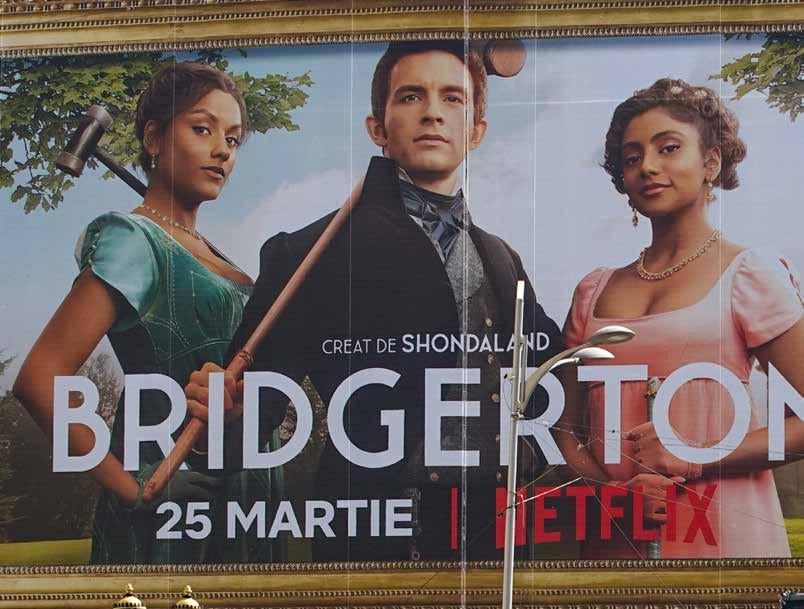
Simon is shown to be a very private person at the start of the show. His reasoning for pretending to court Daphne was to prevent the mothers of “the ton” (high society) from intruding upon his life (Rhimes & Van Dusen, 2020, Ep. 1).To someone who would go to such lengths to have peace and privacy, being publicly ‘out’ would be unquestionably uncomfortable; all eyes would be on Simon. By being out as nonbinary, Simon would inevitably become the “rallying points for a liberatory contestation of that very oppression [of gendered structures in society]” (Butler, 1993, p. 308). Simon would be a political figure of visibility, an exhibitionist of defying gender norms on the “social stage” (Berger, 2014, p. 102). For someone who avoided the duties of being a Duke because it reminded him of his father (Rhimes & Van Dusen, 2020, Ep. 6), Simon is very unlikely to be a trailblazer for transgender people in the Bridgerton society due to this lingering trauma. Instead, Simon conveniently marries the “Diamond of the Season,” a woman so beautiful and proper that she is even praised by the queen (Rhimes & Van Dusen, 2020, Ep. 1). (Rhimes & Van Dusen, 2020, Ep. 1). To someone who would go to such lengths to have peace and privacy, being publicly ‘out’ would be unquestionably uncomfortable; all eyes would be on Simon. By being out as nonbinary, Simon would inevitably become the “rallying points for a liberatory contestation of that very oppression [of gendered structures in society]” (Butler, 1993, p. 308). Simon would be a political figure of visibility, an exhibitionist of defying gender norms on the “social stage” (Berger, 2014, p. 102). For someone who avoided the duties of being a Duke because it reminded him of his father (Rhimes & Van Dusen, 2020, Ep. 6), Simon is very unlikely to be a trailblazer for transgender people in the Bridgerton society due to this lingering trauma. Instead, Simon conveniently marries the “Diamond of the Season,” a woman so beautiful and proper that she is even praised by the queen (Rhimes & Van Dusen, 2020, Ep. 1). This marriage captivated the people of “the ton,” keeping eyes off of Simon and how he presents himself, and instead on the marriage that shook society to its core (“The Duke and I”). It was only after this that Simon felt comfortable in the role of the duke, and thus he began managing his estates (Rhimes & Van Dusen, 2020, Ep. 6). This marriage captivated the people of “the ton,” keeping eyes off of Simon and how he presents himself, and instead on the marriage that shook society to its core (“The Duke and I”). It was only after this that Simon felt comfortable in the role of the duke, and thus he began managing his estates (Rhimes & Van Dusen, 2020, Ep. 6). Simon’s reluctance to play the role of the duke – a key political figure – while under “the ton’s” scrutiny echoes his reluctance to publicly embrace this political martyr of gender queerness and face the judgement of his peers. Simon’s reluctance to play the role of the duke – a key political figure – while under “the ton’s” scrutiny echoes his reluctance to publicly embrace this political martyr of gender queerness and face the judgement of his peers.
Simon’s spite for his father would prevent him from ever confirming whether he truly was a male or not. Instead, he is shrouded in the vagueness of society’s assumptions and compliance to cissexism, essentially performing in a way that society expects while not swaying their perception of him and his gender. According to Butler, “all gendering is an impersonation and approximation” (Butler, 1993, p. 313). Either way, Simon would be putting on the performance of the expectations and stigma that come with being nonbinary, or he would be impersonating as a male. For Simon, it’s a catch twenty-two situation. Gender is “performative” and relies on both the performance of the subject, the individual, as well as the perception of the subject through society (Butler, 1993, p. 314). Thus, in contrast to his childhood, Simon embraces hypermasculinity. Nearly anything that could be considered a trait of masculinity, Simon does. He drinks heavily while still maintaining the physique of a well-trained boxer and has sex for pleasure instead of love (Rhimes & Van Dusen, 2020, Ep. 2). Simon is an all-around rake in the eyes of “the ton” (“Art of the Swoon”). Simon, determined to bury his past, pursues everything that will help him impersonate masculinity. Simon denies his past and identity because of the trauma he faced as a child. Instead of exploring these complexities, exploring the possibility of a queer, transgender Duke of Hastings, Bridgerton sticks to the simplicities and conforms to the cissexist norm of both modern and regency society.
Genderqueer representation in popular modern-day media is not an unfounded concept. Good Omens (2019), based on the novel written by Neil Gaiman and Terry Pratchett (1990), is a fantasy comedy series with multiple nonbinary characters. These characters were confirmed to be nonbinary by Gaiman in a tweet: “Happy International Non-Binary People’s Day! Love from me, And from all the angels and demons in Good Omens and one of the Horsepeople of the Apocalypse,” (2019). The show performed well with an 8.1/10 rating on IMDb (2019). In comparison, Bridgerton received a 7.4/10 rating (IMDb, 2020). While the original novel Good omens: the nice and accurate prophecies of Agnes Nutter, witch (1990) included these queer characters and the Bridgerton novel did not, Amanda Kohr (2021) writing for Refinery29 makes an argument about Bridgerton producers’ editing of the novel’s original content: “After all, the showrunners have already strayed from the source material to make the show more racially diverse — why not go all the way and strive for sexual diversity as well?” (para.6). The producers have made sure to at least attempt at including racial diversity but ignored the prospect of a wider gender spectrum and queer diversity in the show. Furthermore, adding in queer and transgender characters would create a diversity that is still somewhat historically accurate in the regency era, even if not accurate to the original Bridgerton novels.
When looking at historical context, transgender people existed long before the 21st century. In the 18th century, around the same time that Bridgerton would take place, Chevalier d’Eon was a French spy who lived as both a man and woman throughout their lifetime (Trans and Gender-Nonconforming Histories, n.d). Mary Hamilton took on the name of Charles Hamilton to marry a woman, becoming known as “The Female Husband” (Trans and Gender-Nonconforming Histories, n.d). There is a story of a person, presumably intersex, who was charged with sodomy after transitioning to a more masculine lifestyle, with the support of his future wife, Marin le Marcis (Long, 2021). He was examined by multiple doctors, one of whom by the name Duval, who recognized an appearance of ‘male’ genitalia (Long, 2021). Duval later released a treatise, which became “part of a larger body of material that calls into question the distinction between what we call ‘biological sex’ and what we call ‘binary gender’” (Long, 2021, p. 70). Marin became one of the earliest intersex peoples identified in history and one of the first inklings that there may be something beyond the
strict sex binary of ‘male’ and ‘female’. Queer people existed during the time that Simon Basset would have walked the planet. People outside of the binary of ‘male’ or ‘female’ existed during the Bridgerton era. If the show’s producers were concerned with historical accuracy, despite already having changed the racial representation in history, plenty of queer and transgender people existed during this period for characters to be based on.
Instead, Bridgerton producers let these matters lie. The producers allowed Simon Basset to fit society’s expectations of gender both inside and outside of the show. They did so despite laying out detailed foundations for Simon to explore his gender identity and to be a canonically nonbinary, transgender character. However, due to the existence of these foundations, viewers can analyze and connect with Simon as a nonbinary character, no matter what the source material implies. Queer audiences should be allowed the same visibility as others without having to dig through critical analyses to gain a mediocre amount of representation. Bridgerton’s diversity is surface level due to its denial of the existence of those who fall outside of the gender binary, thus upholding the expectations of a cissexist society and forcing viewers to override the producers to claim characters as queer to gain representation.
Berger, A.-E. (2014). The Queer turn in feminism: Identities, sexualities, and the theater of gender. Fordham University Press.
Butler, J. (1990). Gender trouble: Feminism and the subversion of identity. Routledge.
Butler, J. (1993). Imitation and gender insubordination. In H. Abelove, M.A. Barale, & D.M. Halperin (Eds.), The Lesbian and Gay Studies Reader (1st ed., pp. 307–320). Routledge.
Copeland, K. J. (2017). Transformative father-son relationships as coping mechanisms among representations of Black same-gender-loving sons in American television and literary narratives. Journal of Black Sexuality and Relationships, 4(2), 5–44. https://doi.org/10.1353/bsr.2017.0026.
Davis, E. C. (2009). Situating “fluidity”: (Trans) gender identification and the regulation of gender diversity. GLQ: A Journal of Lesbian and Gay Studies, 15(1), 97–130.
Feinberg, L. (1998). Trans liberation: Beyond pink or blue. Beacon Press.
Gaiman, N. [@neilhimself]. (2019, July 14). Happy International Non-Binary People’s Day! Love from Me, and from All the Angels and Demons in Good Omens and One. [Tweet]. Twitter. https://twitter.com/neilhimself/status/1150428978475409408?lang=en.
Gaiman, N. & Pratchett, P. (1990, May 10). Good omens: the nice and accurate prophecies of Agens Nutter, witch.Workman publishing.
Gaiman, N., Gatiss, M., McDormand, F., Skinner, C. (2019-2023). Good Omens. [TV series]. BBC Worldwide. Halberstam, J. (2018). Trans*: A quick and quirky account of gender variability. University of California Press. IMDb.com. (2020, December 25). Bridgerton. IMDb. Retrieved 2022, from https://www.imdb.com/title/tt8740790/. IMDb.com. (2019, May 31). Good Omens. IMDb. Retrieved 2022, from https://www.imdb.com/title/tt1869454/
Kohr, A. (2021, February 2). Where were the queer relationships in “Bridgerton”? Refinery29. Retrieved 2022, from https://www.refinery29.com/en-us/2021/02/10286537/bridgerton-queer-gay-lgbtq-story-characters
Long, K. P. (2021). The case of Marin Le Marcis. In G. LaFleur, M. Raskolnikov, & A. Klosowska (Eds.), Trans historical: Gender plurality before the modern (pp. 68–94). Cornell University Press.
Martin, A. L. (2018). Introduction: What is queer production studies/why is queer production studies? Journal of Film and Video, 70(3), 3–7.
Rhimes, S. & Van Dusen, C. (Executive Producers). (2020-present). Bridgerton [TV series]. Shondaland CVD Productions; Netflix. Trans and gender-nonconforming histories. (n.d.). Historic England. Retrieved October 13, 2022, from https://historicengland.org.uk/research/inclusive-heritage/lgbtq-heritage-project/trans-and-gender-nonconforming-histories/ Tyson, L. (2021). Using critical theory: How to read and write about literature (3rd ed.). Routledge.
JENNA DUMBROWSKY originally wrote this piece in Millersville University’s Literary Research and Analysis Course, analyzing a course material through a literary lens of their choice. They proceeded to revise their work and present it at the English Association of the Pennsylvania State University’s annual conference as a panel with three other students in October 2022. Jenna hopes to continue pursuing personal studies in queer literary theory as they pursue their degree in Secondary English Education. Outside of academia, Jenna is a member of the cross country and track and field teams at Millersville University, as well as a member of Omicron Delta Kappa National Leadership and Honor Society.

ABSTRACT
Women in universities are often vulnerable to sexual assault. This literature review will analyze the significance, prevalence, risk factors, long term and short-term effects, interventions, and the implications of young women who were sexually assaulted while studying at a university. Each section will go more into detail about aspects of the issue and what has already been achieved to help eliminate or drastically decrease sexual assaults on college campuses. Some interventions that have been implemented include improving and creating new legislature, bystander educational programs, and improving university resources for sexual assault victims. Although there is more research to come on the prevention and treatment of sexual assault victims, this literature review attempts to educate and discuss the overall current status of sexual assault in female populations on college campuses. To eliminate sexual assault on college campus we need to advocate for change, practical solutions, and justice for victims.
A major social issue today is the sexual assault of young adults in college. An overarching theme throughout the already established research has been that sexual assault is defined as any nonconsensual sexual behaviors like touching, fondling, and penetrating. According to Mellins et al. (2017), women experienced sexual assault 28% of the time, and men experienced sexual assault 12% of the time; this indicates that women were sexually assaulted over twice as much as men were. By the final fourth year of college, one in three women experienced an assault. The highest number of reports of sexual assault in American universities were from women through verbal persuasion and when they were under the influence of alcohol. Sexual assault in American universities can happen to women or men, but the main research focus will be on women in universities, who were victims of sexual assault, and in this review, the young adult age group consists of women who are 19-35 years old. Based on scholarly research about sexual assault from Indiana University and the University of Utah, nearly one third of women in universities are victims of sexual assault; however, this statistic only accounts for the number of women who reported their incidents (Kamimura & Streng, 2015). Sexual assault in universities is a significant problem that needs awareness and improvement in the future.
Sexual assault on college campuses is a prevalent and pervasive issue that affects all generations of women. The issue affects women’s mental, physical, and social health (Potter et al., 2018). Women who were victims of sexual assault are more likely to develop post-traumatic stress disorder and major depressive disorders (Farahi & McEachern, 2021). Sexual assault in universities can also negatively affect women’s academic performance as they have a much higher rate of dropping out of college than women who were not victims (Potter et al., 2018). Another common theme throughout research on sexual assault is that sexual assault is a major and continuous issue in American universities; in a study on the perception of sexual assault, nearly every group

of women, LGBTQIA+ members, and minorities perceived this as a more prevalent issue than heterosexual Caucasian men did. This demonstrates how important the issue is since those at higher risk of sexual assault and those more vulnerable to not receiving the proper help or treatment following a sexual assault incident see it as such (Wallace & Worthen, 2017).
In American universities, the sexual assault of women is a social problem, but several organizations are working to tackle the issue. The National Association of Social Workers (NASW) recognizes the month of April to be dedicated to sexual assault because of how important awareness of sexual assault is and because they want to promote alternate options for victims of sexual assault to report their incidents and tell their stories (National Association of Social Workers, 2022). The NASW has worked to promote prevention of sexual assault and interventions for clients who are victims with the Centers for Disease Control and Prevention (CDC), National Sexual Violence Resource Center (NSVRC), Family Violence Prevention Fund, American Medical Association (AMA), College of Obstetricians and Gynecologists, and state and federal government offices (National Association of Social Workers, 2022).
The NASW is trying to address sexual assault by creating a National Committee on Women’s Issues, (NCOWI), and closely collaborating with the National Sexual Violence Resource Center(National Association of Social Workers, 2022). The National Sexual Violence Resource Center helps victims of sexual assault obtain legal services and access local support groups and counseling services that are available to women in universities or the younger population of adolescents. The Committee on Women’s Issues is meant to not only raise awareness about sexual assault in female communities, but also meet regularly to discuss new interventions and evaluate how the statistics reflect any changes. The committee is responsible for ensuring women’s welfare the best they can throughout their activities and practice, while developing a systemic framework that includes women’s rights and issues (National Association of Social Workers, 2022). These are some organizations that work to promote women’s rights and wellbeing and function to reduce sexual assault.
Biological risk factors increase one’s probability or risk of being sexually assaulted, and there are three main biological risk factors for women who were sexually assaulted in college: identifying as a woman, having a sexual orientation other than heterosexual, and being a minority (Farahi & McEachern, 2021; Bhochhibhoya et al., 2021). It is a common theme in college that women have reported more sexual violence incidents than men. A study conducted by Bhochhibhoya et al. (2021) shows that a biological factor of being a woman can place somebody at a higher risk of sexual assault. In this study, heterosexual couples were found to be more at risk than LGBTQIA couples because most people who participated in the study were heterosexual; however, a common theme among most research articles is that LGBTQIA individuals are more vulnerable to any kind of sexual assault (Sutton et al., 2021). The final biological risk factor is that minorities tend to have a higher risk of being sexually assaulted (Bhochhibhoya et al., 2021). Because minorities have a higher risk of experiencing sexual assault, they need to have more access to resources and raise more awareness of the issue in their community.
Environmental factors that could put somebody at risk for sexual assault are consuming too much alcohol, participating in casual sex culture, and having a lower socioeconomic status (Bhochhibhoya et al., 2021). Alcoholic practices, such as binge drinking, tend to contribute to several sexual assault reports and incidences; this could be because high amounts of alcohol in one person’s system impact how well that person can make decisions, think situations through, and consider the consequences of a situation (Marcantonio et al., 2021). Women, who are in long-term and committed relationships, are less likely to be sexually assaulted because they are likely to know their sexual partner and their partner’s history for a longer period and are less likely to seek out casual sexual relationships with somebody who could possibly have a history of sexual assault (Bhochhibhoya et al., 2021). Finally, the likelihood of women in low socioeconomic classes to experience sexual assault could be higher because they may not be able to afford resources or security to protect themselves against a perpetrator, and they may be more vulnerable to not report the incident either (Bhochhibhoya et al., 2021). According to the National Institute of Health report, two other environmental factors that put someone at risk for sexual assault are participating in a sorority and being a first-year student in college (Mellins et al., 2017). Many sexual assaults happen at parties in fraternities and sororities and first-year students could be more at risk because studies have shown that they seem to attend the most parties and consume higher amounts of alcohol than other upper-level students (Mellins et al., 2017).
Women who were sexually assaulted reported having higher difficulty concentrating in their classes, had a decrease in their grades and academic performance, and changed their future educational goals. Specifically, women who were sexually assaulted had their cumulative GPA and regular class attendance decreased (Molstad et al., 2021). Some changed their future educational goals by dropping out of school altogether, not attending graduate school, changing majors, or transferring universities (Molstad et al., 2021). In Molstad et al. (2021) study, one woman in a phone interview stated that she had lost a scholarship to a university because of the effects of sexual assault on her academic performance, but the only reason she obtained her scholarship that she had previously lost and received
leniency on her grades was because she reported the sexual assault to multiple people. Some other women who were interviewed stated that they did not socialize in class much after the sexual assault, and one woman said she didn’t go to tutoring services alone either. Based on this research, sexual assault inevitably can change the course of somebody’s educational path and career by negatively affecting the victim’s mental health.
The effects on a woman’s health after a sexual assault are serious and can be long-term. Women can develop mental illnesses such as post-traumatic stress disorder (PTSD), depression, and socializing disorders; one socializing disorder women have reported was social anxiety around men, and another socializing issue reported was trouble with dating or establishing romantically intimate relationships due to a lack of self-esteem, confidence, and trust for themselves or other men again (Mason & Lodrick, 2013). Fifty- one percent of penetrative sexual assault victims have developed PTSD from their experience, which causes them to have painful flashbacks, nightmares, an increased risk of coping negatively with drugs, and disruption of their daily lives. Other long-term health problems are accidental pregnancies and the spread of sexually transmitted diseases (Mason & Lodrick, 2013). This research shows that the long-term health effects after experiencing sexual assault can negatively impact one’s social, psychological, and physical wellbeing.
Since women are more likely to be the main target of sexual assault, it’s important to discuss why women do not always report it and who are the different subgroups of women who are at risk. Women in lower socioeconomic classes are at a higher risk of being sexually assaulted (Mellins et al., 2017). According to a study done on reported incidences of sexual assault at the University of Oklahoma, despite minoritized women being at a higher risk of sexual assault, they made up a lower number of reported incidents of sexual assaults; this could mean that despite being at a higher risk for sexual assault, women of color do not report incidents of sexual assault and do not have the same resources readily available to them (Wallace & Worthen, 2017). This underrepresentation could be because there is a disproportionate amount of minoritized women in universities in general but also because women on college campuses lack education on what sexual assault is and how to make a report; they may also lack social support and resources and may fear the potential consequences from the perpetrator (Wallace & Worthen, 2017). The issue of confidentiality of the victim and fear of not being believed were the two highest fears of reporting a sexual assault (Kamimura & Streng, 2015). These are some reasons why women do not always report an incident of sexual assault.
Identifying the populations at highest risk for being sexually assaulted and the most likely perpetrators aid in developing effective policies, programs, and interventions to decrease the number of sexual assaults at universities. The most effective interventions aim to educate the most at-risk college aged students on what sexual assault is, how to avoid it or potentially get away from those situations, what consent is and is not, proper and improper ways to ask for consent, how to be an effective bystander, how to report sexual assault, and what resources sexual assault victims have available to them. Some interventions that have already been implemented are as follows: Title IX Act and The Not Alone Act. The Title IX Act makes it a requirement to empower women not to be discriminated against and also requires universities to promptly respond to sexual assault reports and to protect students against it; this act also requires colleges to provide services to victims of sexual assault (Kamimura & Streng, 2015). The Not Alone Act requires colleges to outline their protocols, identify a Title IX coordinator, provide a clear definition of sexual assault, have clear investigations procedures, provide resources to the sexual assault victims, and train faculty to handle these situations (Kamimura & Streng, 2015). These important programs hold the university accountable, but protect students before sexual assault happens and afterwards if it does happen (Kamimura & Streng, 2015). Although these legislative solutions have not completely eliminated sexual assault, they have greatly helped universities in being held accountable for what interventions they are implementing.
There are several ways to improve interventions that would decrease or eliminate sexual assault against women in universities. Breitenbecher (2000) explains that we can start teaching about consent and defining sexual assault in sexual education programs and in classes. We can focus more on disproving rape myths instead of sharing or talking about them as if they were true in bystander programs. These programs can include LGBTQIA+ communities; this would raise awareness of the community’s vulnerability and heighten knowledge on how sexual assault can affect the LGBTQIA+ community differently (Farahi & McEachern, 2021). The programs can improve the interventions by following up with students afterwards to evaluate what they have retained and what they have done to prevent sexual assaults in the future (Breitenbecher, 2000).
The most effective interventions concern creating new laws, improving law enforcement’s reactions to sexual assault, and improving education on sexual assault (Kamimura & Streng, 2015). The most vulnerable audiences to reach at universities are people in high-risk communities such as minorities, students who are in fraternities or sororities, students with a mental illness (Bhochhibhoya et al., 2021), and students with alcoholism or substance abuse disorders (Molstad et al., 2021). The least effective programs are those that do not involve educational aspects about sexual education and sexual assault definitions from health service professionals and experts, do not involve all the marginalized groups who are disproportionately affected, and do not follow up with results afterwards
(Breitenbecher, 2000). These interventions are not effective because they do not address the groups most likely to be sexually assaulted, do not provide accurate education, or are not trusted by students in university.
In the future, any student or professional at a university should be involved in advocating for sexual assault victims personally, institutionally, and societally. Implementing crisis interventions and educational programs are often overlooked interventions, but these are effective ways that professionals can be involved in eliminating or reducing sexual assault of adult women on college campuses (Kamimura & Streng, 2015).
In conclusion, sexual assault is a complicated and serious problem that deserves attention and research to help completely eradicate or vastly diminish how often it happens. Sexual assault has several long-term and short-term effects that inevitably impact the wellbeing of women in universities. Although there has been some headway in starting to address and solve this issue, more changes and effective interventions are still needed. Sexual assault awareness is extremely important because it greatly influences women, minorities, LGBTQIA+ community, and people in low socioeconomic statuses. Improving this situation institutionally should be a goal of any university.
Bhochhibhoya, S., Maness, S., Larson, D., & Cheney, M. (2021). Risk factors for sexual violence among college students in dating relationships: An ecological approach. Journal of interpersonal violence, 36(15-16), 7722-7746. https:// doi: 10.1177/0886260519835875
Breitenbecher, K. H. (2000). Sexual assault on college campuses: Is an ounce of prevention enough? Applied and Preventive Psychology, 9(1), 23-52. https://doi.org/10.1016/S0962-1849(05)80036-8
Farahi, N., & McEachern, M. (2021). Sexual assault of women. American Family Physician, 103(3), 168-176.

Marcantonio, T. L., Willis, M., & Schisler, E. D. (2021). Associations of alcohol consumption, sexual assault history, severity, and revictimization with college women’s bystander behaviors in alcohol-involved settings. Journal of Interpersonal Violence, 36(23–24), 11792–11807. https://doi.org/10.1177/0886260520983513
Mason, F., & Lodrick, Z. (2013). Psychological consequences of sexual assault. Best Practice & Research Clinical Obstetrics & Gynaecology, 27(1), 27-37.
Mellins, C. A., Walsh, K., Sarvet, A. L., Wall, M., Gilbert, L., Santelli, J. S., Thompson, M., Wilson, P. A., Khan, S., Benson, S., Bah, K., Kaufman, K. A., Reardon, L., & Hirsch, J. S. (2017). Sexual assault incidents among college undergraduates: Prevalence and factors associated with risk. PLos One 12(11): e0186471. https://doi.org/ 10.1371/journal.pone.0186471
Molstad, T. D., Weinhardt, J. M., & Jones, R. (2021). Sexual assault as a contributor to academic outcomes in university: A systematic review. Trauma, Violence, & Abuse, 24(1), 218–230. https://doi.org/10.1177/15248380211030247
National Association of Social Workers. (2022). Sexual assault awareness month. Retrieved March 7, 2022, from https://www.socialworkers.org/Practice/Womens-Issues/Sexual-Assault-Awareness-Month
Potter, S., Howard, R., Murphy, S., & Moynihan, M. M. (2018). Long-term impacts of college sexual assaults on women survivors’ educational and career attainments. Journal of American College Health, 66(6), 496-507.
Streng, T. K., & Kamimura, A. (2015). Sexual assault prevention and reporting on college campuses in the US: A review of policies and recommendations. Journal of Education and Practice, 6(3), 65-71.
Sutton, T. E., Edwards, K. M., Siller, L., & Shorey, R. C. (2021). An exploration of factors that mediate the relationship between adverse childhood experiences and sexual assault victimization among LGBTQ+ college students. Child maltreatment, 27(4), 539-549. https://doi.org/10.1177/10775595211041970 .
Worthen, M. G., & Wallace, S. A. (2017). Intersectionality and perceptions about sexual assault education and reporting on college campuses. Family relations, 66(1), 180-196.
https://doi.org/10.1111/fare.12240
COURTNEY LEDGARD is the author of the literature review article “Sexual Assault in Universities”. While she is earning her bachelor’s of social work at Millersville University, she works as a Behavioral Health Technician and serves on the Bible Campus Ministries board. Courtney hopes to pursue a career in the geriatric field in the future and continue her education to achieve a master’s in social work. In her free time, she enjoys spending time with loved ones, writing, painting, and shopping.
ENGAGE IN WHAT MATTERS
What do equity and justice look like in education?
According to Research for Action, PA was recently ranked 50th out of 50 in U.S. public schools for students with diverse backgrounds, and according to LNP, Lancaster County is also facing an equity gap, which directly affects the public school system.

Do Pennsylvania and Lancaster County provide an equitable education compared to the rest of the country? Do students feel safe, protected, and seen? Do Pennsylvania and Lancaster County provide a thriving learning environment for every student, regardless of race, ethnicity, religion, gender identity, disability, and sexuality?
What are the ways you are affected by access to educational resources, culturally representative instruction, and restorative justice? Is there a change you want to see in the education system?
The Engage for Change Journal focuses on issues affecting Lancaster and the surrounding region and is now accepting submissions for its 2024-2025 issue on Equity and Justice in Education. We accept submissions from undergraduate and graduate students, alumni, faculty, staff, and community members for the 2024-2025 issue. Collaborative submissions are encouraged. We accept a diverse range of articles, from research articles to personal perspectives and creative pieces.
DEADLINE FOR SUBMISSIONS: September 9, 2024
Check out our website for more information on article types, writing tips, and the submission process: blogs.millersville.edu/engageforchangejournal
CONTACT Kerrie R.H. Farkas, Founder and Co-Editor: engageforchangejournal@millersville.edu