ASSET/PROPERTY MANAGEMENT FIRMS
BROKERAGE FIRMS
CONSTRUCTION COMPANIES/GENERAL CONTRACTORS
ECONOMIC DEVELOPMENT CORPORATIONS
FINANCE FIRMS
RE LAW FIRMS


ASSET/PROPERTY MANAGEMENT FIRMS
BROKERAGE FIRMS
CONSTRUCTION COMPANIES/GENERAL CONTRACTORS
ECONOMIC DEVELOPMENT CORPORATIONS
FINANCE FIRMS
RE LAW FIRMS
By Brandi Smith
The Chicago region is witnessing a surge in demand for specialized facilities like cold storage, data centers and distribution centers. This demand is reshaping the industrial landscape and driving new construction trends to meet the unique needs of various industries. One such project
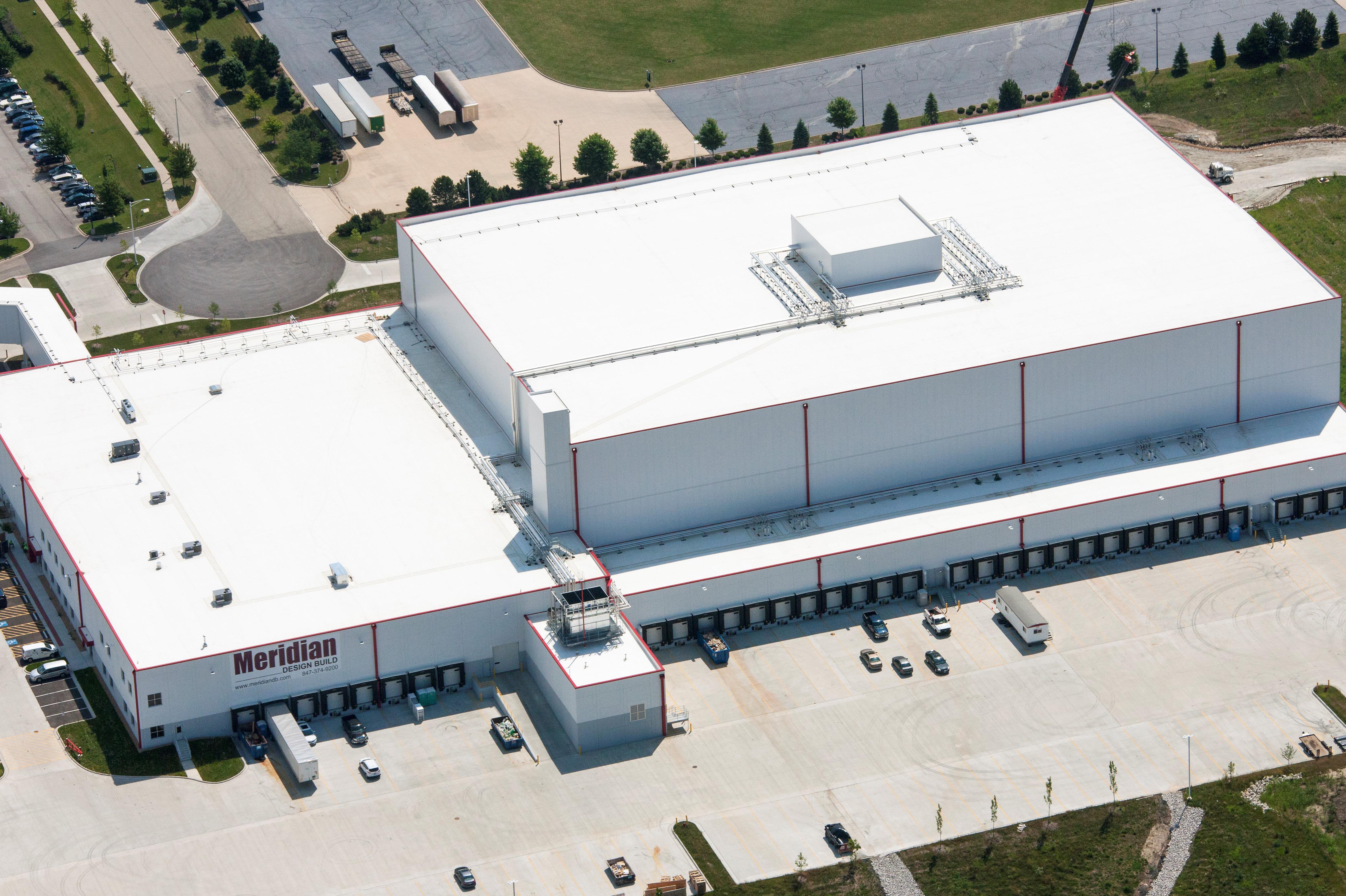
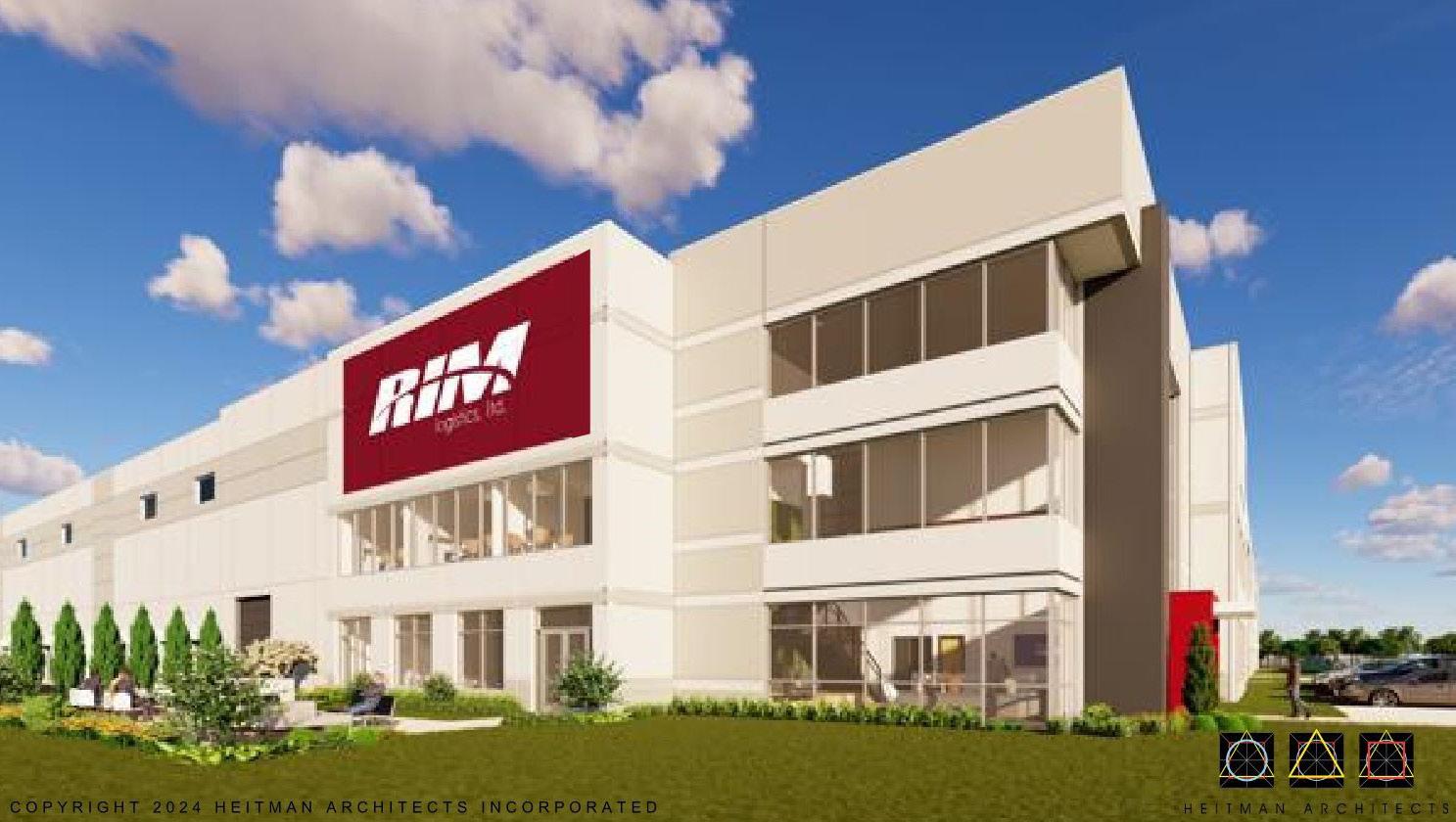
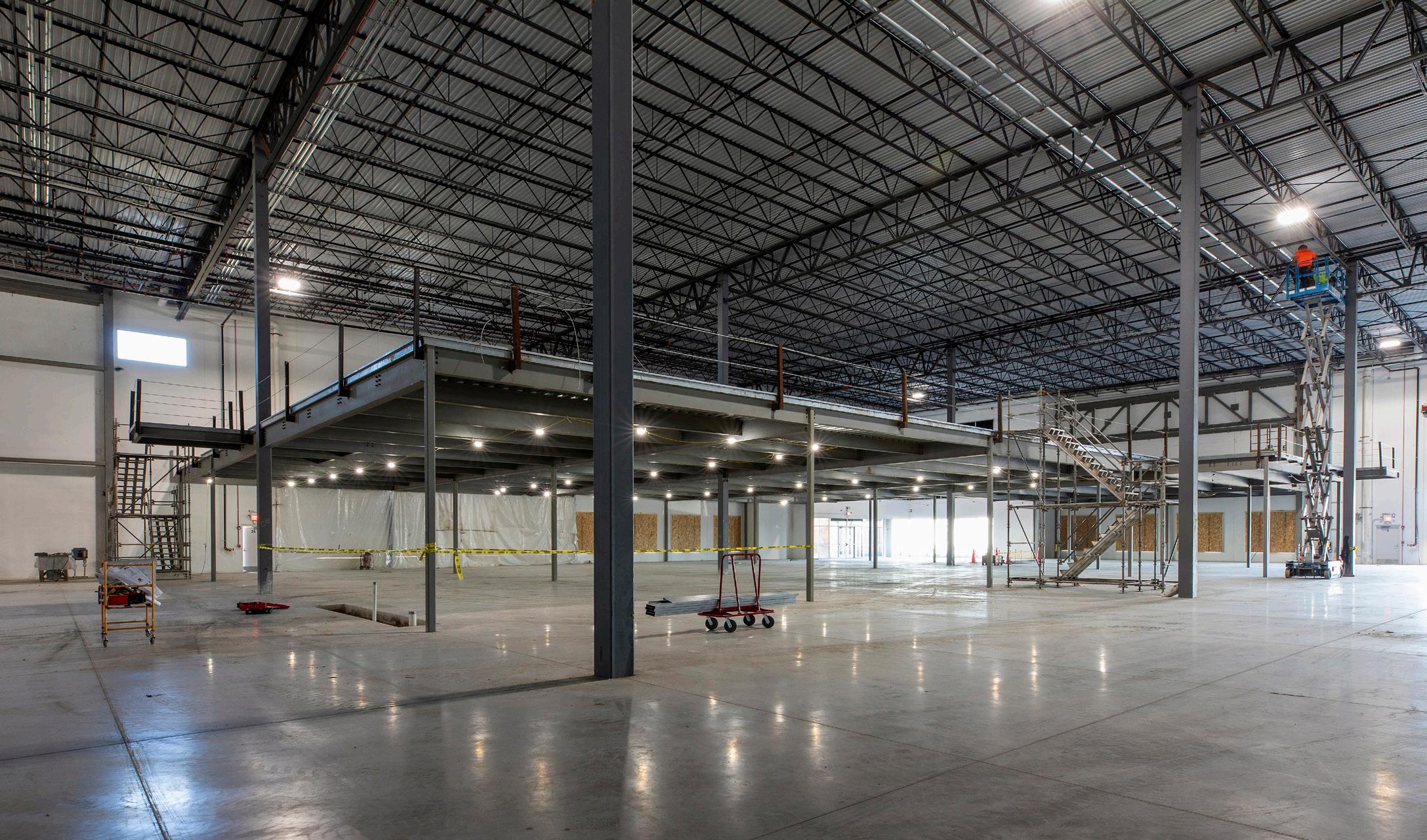
that highlights these changes is the 326,000-squarefoot retrofit in Bartlett, Illinois, for RIM Logistics. Meridian Design Build is leading the design/build project, reflecting the increasing preference for custom-built solutions as businesses seek facilities tailored to their operations.
“We’ve seen a move over the last 12 to 18 months toward user-driven/build-to-suit projects,” said Howard Green, Executive Vice President of Meridian Design Build. “In some cases, the move toward
(continued on page 10)
Our experts have the creativity and know-how to tackle your toughest supply chain challenges, continuously giving you a competitive edge to realize your success.
PUBLISHER
Mark Menzies menzies@rejournals.com 312.933.8559
MANAGING EDITOR Dan Rafter drafter@rejournals.com
VICE PRESIDENT OF SALES & MW CONFERENCE SERIES MANAGER Ernie Abood eabood@rejournals.com
VICE PRESIDENT OF SALES Frank E. Biondo Frank.biondo@rejournals.com
CLASSIFIED DIRECTOR
Susan Mickey smickey@rejournals.com
Chicago Industrial Properties® (ISSN 1546-377X) is published bi-monthly for $59 per year by Real Estate Publishing Corporation, 1010 Lake St Suite 210, Oak Park, IL 60301. Contact the subscription department at 312.933.8559 to subscribe. © 2024 by Real Estate Publishing Corporation. All rights reserved. No part of this publication can be reproduced or transmitted in any form or by any means, electronic or mechanical including photocopying, recording or by any information storage or retrieval system.
Dan Barrins Associated Bank
Ron Behm Colliers International
Susan Bergdoll CRG
Corey Chase Newmark
Dan Fogarty Stotan Industrial
Barry Missner The Missner Group
Adam Moore
First Industrial Realty Trust Inc.
Joe Pomerenke
Arco/Murray National Construction Company, Inc
Adam Roth NAI Hiffman
Mike Yungerman Opus Group
1
From cold storage to data centers: The rise of specialized industrial facilities in Chicago The Chicago region is witnessing a surge in demand for specialized facilities like cold storage, data centers and distribution centers.
4
Signs of stability: Optimism for industrial investment sales in Chicago Experts from both Avison Young and Cushman & Wakefield remain optimistic about the future of Chicago’s industrial real estate market, citing newfound stability and pent-up demand as key factors driving a recovery in the second half of 2024.
8
One of Chicagoland’s Hottest Industrial Markets Isn’t in Illinois It’s been nearly a decade since Amazon planted its flag in southeast Wisconsin, spurring a wave of industrial development that has transformed the Interstate-94 corridor into one of the fastest-growing submarkets in Chicagoland.
12
The Simplicity Building: A Hub for Cannabis Cultivation and Industrial Innovation in Niles, MI Located at 901 Wayne Street in Niles, Michigan, the Simplicity Building is a beacon of industrial innovation and opportunity.
16
Chicago’s warehouse development boom: A look at key players leading the charge Chicago’s industrial market is experiencing record-breaking warehouse development, fueled by the continued rise of e-commerce, supply chain resilience efforts and the city’s strategic location as a logistics hub.
22
ASSET/PROPERTY MANAGEMENT FIRMS
BROKERAGE FIRMS
CONSTRUCTION COMPANIES/ GENERAL CONTRACTORS
ECONOMIC DEVELOPMENT CORPORATIONS
FINANCE FIRMS RE LAW FIRMS

By Brandi Smith

Investment sales volumes saw significant declines across commercial real estate sectors, particularly in industrial properties, at the beginning of 2024 due to rising borrowing costs and market volatility. However, experts from both Avison Young and Cushman & Wakefield remain optimistic about the future of Chicago’s industrial real estate market, citing newfound stability and pent-up demand as key factors driving a recovery in the second half of 2024.
“Interest rates have moved down in concert with the 10-year Treasury rate since its April high levels,” said Erik Foster, head of Industrial Capital Markets for Avison Young. “This is causing some uptick in industrial deal velocity in Chicago as compared to past months and it’s our belief at Avison Young that we will see this in future sales data.”
"Interest rates have moved down in concert with the 10-year Treasury rate since its April high levels."
“Base rates are lower than they were at the beginning of the year, but more importantly they’ve been stable,” explained Mike Tenteris, executive director of Cushman & Wakefield's Industrial Advisory Group. “Everyone has a pretty good handle on what their borrowing
costs are going to be when they enter a transaction.”
That’s a contrast to the instability spiked by the ten-year Treasury rate in Q4 2023. This increase, Tenteris noted, caused many investors to go “pencils down” until market conditions stabilized. The slow first quarter of 2024 was, in many ways, a delayed response to this uncertainty.
“Despite the drop in overall sales volume, industrial continues to outperform other asset classes among investors because of the asset’s strong fundamentals, which are in line with our consumption-based economy,” he said.
Foster believes that the industrial sector will remain the favored asset class as we head into 2025, even amid challenges in other commercial real estate areas.
The strong fundamentals that Foster referenced are reflected in low vacancy rates and growing rents across Chicago, which Tenteris described as one of the key reasons the market remains attractive for industrial development.
“Chicago's still a good place to invest in industrial assets. The property fundamentals in Chicago are definitely the best in the Midwest for industrial,” Tenteris said.
Unlike some other regions, Chicago has not experienced significant overbuilding during this cycle, keeping vacancy rates steady, according to Tenteris.

“There are quite a few properties on the market across the Midwest,” he said.
“Sellers are behind on their disposition goals and buyers have business plans to execute. It’s happening now, just a little slower than a lot of us expected.”
“We fully expect for the Chicago markets to recover and Avison Young is seeing more investor activity,” echoed Foster.

While both experts agree that borrowing costs have been a major factor in dampening investment activity, they also highlight the critical role that market clarity has played in helping sellers and buyers alike navigate these challenges. Tenteris explained that success in this environment relies on staying in close contact with both debt and equity markets. He also stressed the importance of keeping an open dialogue with lenders, buyers and sellers to adapt to ever-changing conditions.
“You find out what will still work,” Tenteris said. “A transaction that might have worked six months ago might not be the same one that'll work today.”
He emphasized the value of understanding what buyers and lenders are seeking in the current environment, as well as using real-time market feedback to inform clients’ decisions. He also highlighted Chicago’s unique position as a stable market for industrial investments, thanks to its steady rents and controlled vacancy rates.
Foster pointed to Avison Young’s ability to leverage proprietary market data and insights as a critical advantage in delivering results for clients. Combined with the firm’s client-first approach, Foster said this allows Avison Young to offer tailored solutions in structuring deals despite fluctuating market conditions.
The experts agree that while challenges remain, the fundamentals of the industrial sector make it a resilient and attractive option for investors heading into 2025.
“Right now, I see the market as still in recovery mode, with investor confidence rising and the industrial capital markets remaining at the top of the heap in terms of investment traction,” Foster said.

By Tim Thompson, executive vice president of HSA Commercial Real Estate
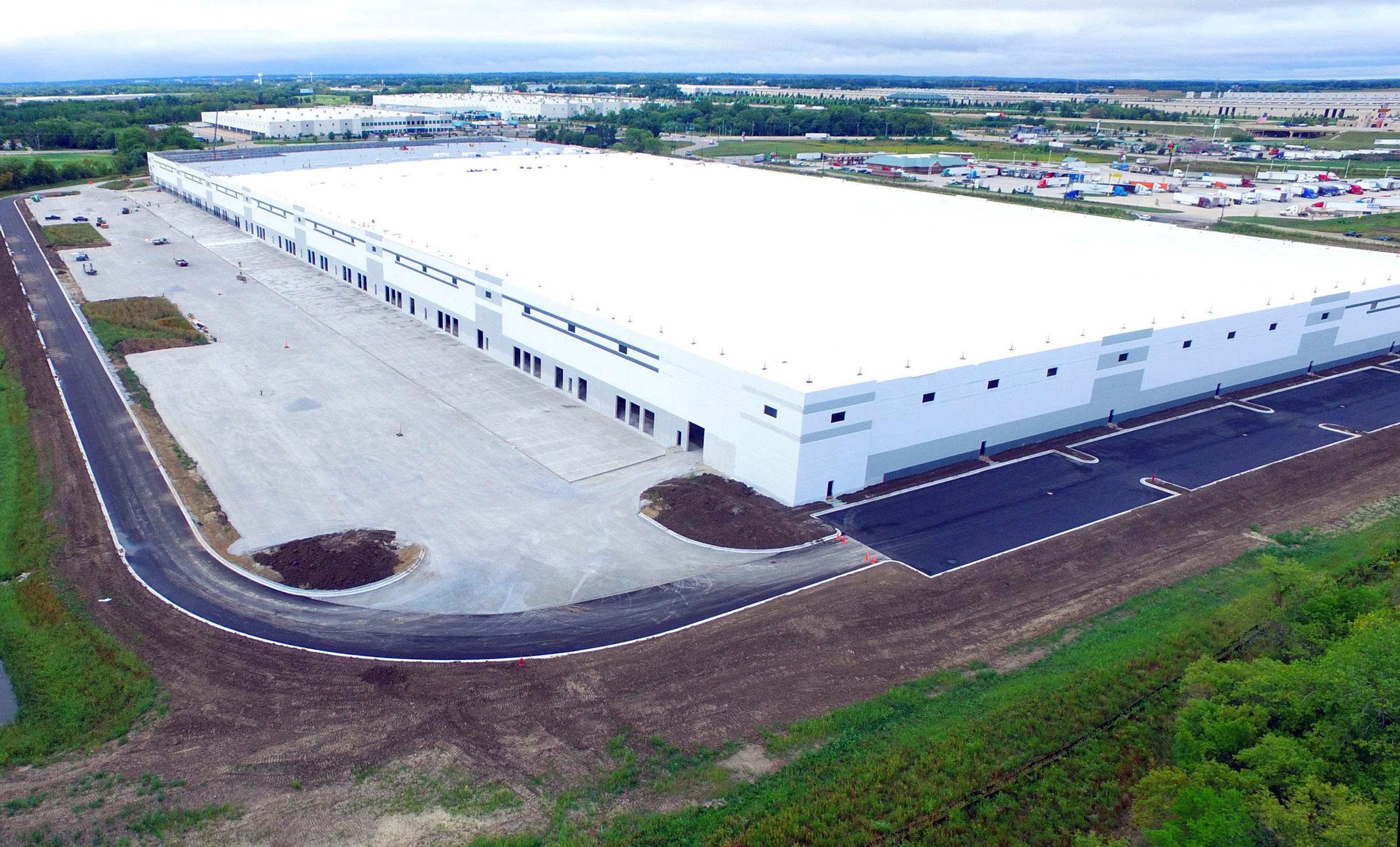
It’s been nearly a decade since Amazon planted its flag in southeast Wisconsin, spurring a wave of industrial development that has transformed the Interstate-94 corridor into one of the fastest-growing submarkets in Chicagoland.
In fact, the inventory of industrial product in southeast Wisconsin is now more than 84 million square feet across 652 buildings, surpassing that of the older and more established Lake County submarket, which comprises 80 million square feet, according to CBRE.
Abundant, large parcels of improved land made it easy for developers to launch new projects, many of them bigbox warehouses ranging from 500,000 to 1 million-plus square feet, with plenty of space for trailer parking as well.
Millions of dollars in infrastructure improvements, including the expansion of I-94 to eight lanes and addition of
"In the near term, we expect recently completed speculative spaces to be absorbed and rents to remain stable."
underground utilities, also helped fuel development activity, as have lower taxes and population growth that has deepened the labor pool. In addition,
the pro-business communities of Bristol and Somers have been extremely helpful in approving development plans.

Huge amounts of speculative industrial space was recently delivered in southeast Wisconsin, with 3.5 million square feet added in 2022 and 3.7 million square
executed a full-building,
feet in 2023, according to Cushman & Wakefield. These deliveries pushed the vacancy rate up to 9.8% in Q2, but speculative construction dropped off dramatically this year, to only 900,000 square feet so far in 2024, because of the higher development costs and lower availability of capital. Leasing activity remains strong and reached 1.9 million square feet this year as of the end of the second quarter, which is the most first-half transactions signed since 2022.
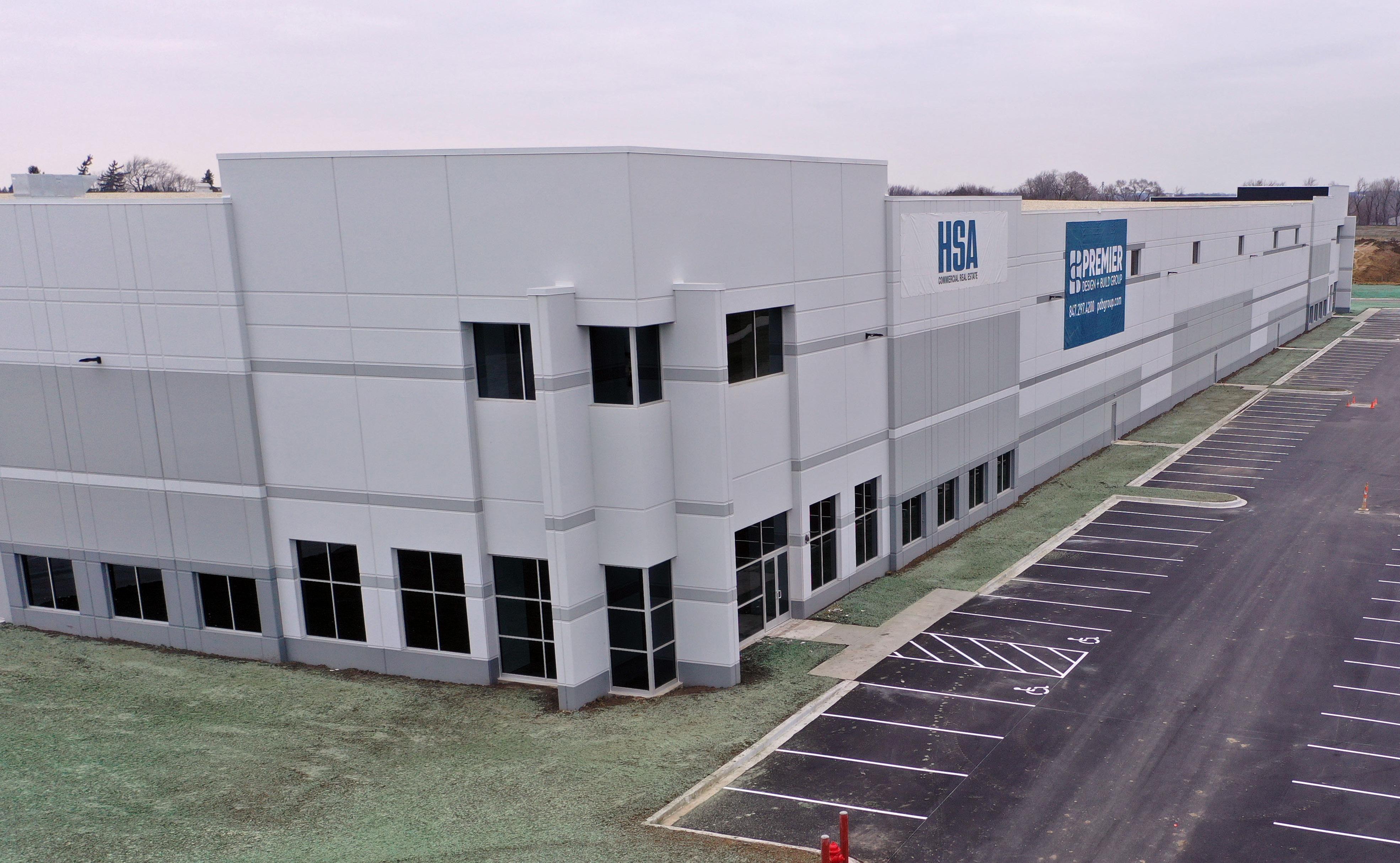
In a testament to the desirability of southeast Wisconsin, our firm, HSA Commercial, executed the submarket’s largest lease in fourth-quarter 2023: a 447,216-square-foot full-building lease with HARIBO of America, Inc., at Bristol Highlands Commerce Center East, our 68-acre industrial park in Bristol. The development, which has 157,000 square feet still available, is also home to Visual Pak, a Waukegan, Ill.-based provider of contract packaging and manufacturing that occupies a 472,176-square-foot warehouse in the park.
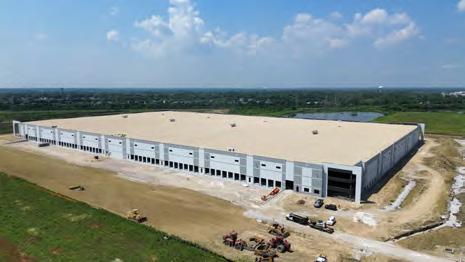
In late 2023, we also completed one of Wisconsin’s largest-ever speculative industrial buildings: Highland Commerce Center of Somers, a 918,844-square-foot distribution center located directly east of I-94 at the Burlington Road interchange in Somers. Leased by Cushman & Wakefield, the space offers 40-foot clear heights, 109 dock doors, 165 truck trailer parking stalls and 511 employee parking spaces.
Also last year, we delivered a 550,647-square-foot warehouse that is the first of three buildings in our new Bristol Highlands Commerce Center West project at the southeast corner of 136th Avenue and Wilmot Road in Kenosha. The new 82-acre warehouse park will total 1.3 million square feet upon full buildout and is located near HSA Commercial’s existing Bristol Highlands Commerce Center East development, completed in 2020. Together, the two phases will total six buildings and 2.4 million square feet.
We are actively marketing these two latest developments to large users in need of modern warehouse space that supports continued business expansion between Chicago and Milwaukee. Southeast Wisconsin continues to attract all types of tenants, from warehouse to manufacturing to product fulfillment and assembly. There's a steady stream of firms both locally and regionally looking in this market.
In the near term, we expect recently completed speculative spaces to be absorbed and rents to remain stable. HSA Commercial has nearly 3 million square feet of industrial product in southeast Wisconsin, and we are looking to acquire additional land sites in the submarket for both speculative and build-to-suit development. As a firm that has been actively developing along the I-94 corridor for more than 30 years, we remain bullish on its future as a critical link in ever-evolving supply chains.
build-to-suits is driven by users looking for a new facility in an area with limited speculative inventory.”
Green noted that the trend is particularly pronounced in cold storage and data center facilities, as these require extensive above-standard improvements that make retrofitting existing speculative buildings much more expensive than new construction. Cold storage facilities, for instance, require significant above-standard improvements such as insulation upgrades, vapor barriers, underfloor warming systems, specialized dock equipment, specialized sprinkler systems and a structure capable of supporting roof-mounted refrigeration equipment, according to Green. Data centers, on the other hand, need significantly more power, cooling and data connectivity than typical industrial buildings, which makes new builds more appealing.
“Interest in, as well as development and construction of these ‘specialty’ facilities has increased,” said Trevor Ryor, Vice President of Clayco’s Indus-

trial Business Unit. “While not just in the Chicagoland area, construction of cold storage facilities and data centers is very active right now.”
Ryor attributed this rise to evolving consumer needs, particularly the increasing demand for faster access to stored data, social media platforms and convenient food and beverage

products. He also observed how shifts in the distribution market are driving demand for facilities of various sizes.
“The distribution market continues to evolve,” Ryor said. “Since such a drastic slow from recent post-pandemic levels over the past couple of years, it has the perception of being slow.”
While the demand for large, all-under-one-roof distribution centers has slowed, Ryor noted that activity on 250,000-square-foot and smaller sized facilities is active, reflecting a broader shift toward more nimble, adaptable facilities for smaller users. Firms like Clayco and Meridian are not only meeting this rising demand, but also tack -
ling the unique challenges that come with building such facilities.
“If built on a speculative basis, understanding or guessing on assumptions for racking/material handling, floor loading requirements, loads imposed to the roof structure, what type of products will be in the building and how that affects the fire protection and mechanical systems are all considerations in the design,” Ryor said.
To maximize flexibility, he noted that Clayco provides a seven-inch unreinforced floor slab on grade that allows flexible floor loading for a tenant, until specific loading requirements are identified or special storage or material handling requirements are known.
Meanwhile, cold storage and data centers require developers to adopt specialized construction techniques that enhance energy efficiency and sustainability.
“We spend a great deal of time working with our design teams and subcontractors to identify ways to provide the most value to our clients,” Green said.
In the case of cold storage, relatively small investments in items such as increased insulation, higher quality vapor barriers and more efficient refrigeration systems can result in significant operational savings over the building’s life. Similarly, data centers must prioritize energy efficiency, power redundancy and cooling system reliability to ensure smooth and uninterrupted operations.
Despite the success of specialized facility projects, Chicago developers face ongoing challenges in the construction of distribution centers, particularly when it comes to electrical systems.
“The foremost challenge on the construction front continues to be long lead times for electrical switchgear and utility company delays in getting electrical service to new facilities,” Green said.
To address this issue, Meridian has implemented strategies such as placing equipment orders early, purchasing custom-built switchgear from local manufacturers and accommodating temporary generator connections when utility companies are unable to deliver power on time.
In addition to cold storage and data centers, Chicago’s industrial market is also seeing the rise of controlled-environment agriculture (CEA) facilities, particularly in metropolitan areas.
“The Chicago market is a dense metropolitan market, and we are seeing the CEA growers wanting to try and find solutions for cities like Chicago and vertically grow crops in existing
buildings to help with supply chain,” said Scott Rahn, Vice President and Market Leader with Clayco’s Consumer Products & Supply Chain.
Clayco’s integrated approach, which emphasizes speed to cultivation, has made it a strong player in the CEA market.
“We treat CEA projects like any fasttrack food and beverage project,” Rahn said, explaining that Clayco’s ability to adapt designs quickly around an owner’s growing systems requirements helps accelerate project timelines. “The key to fast-track projects is that the owner has its requirements and understanding of its grow systems figured out so that the design can quickly be done around those requirements.”
The industrial market in Chicago continues to push forward with new projects emerging to meet the evolving needs of tenants. For example, Clayco is currently constructing a 66,552-square-foot Class-A warehouse/distribution facility in Franklin Park, Illinois, just southeast of O’Hare Airport.
“With easy access to I-294, distribution to Chicago or any of the surrounding states is a strong attribute,” Ryor said, noting that the facility’s 32-foot clear height and 18 dock positions make it ideal for warehouse distribution or light manufacturing.
Similarly, Meridian’s work for RIM Logistics in Bartlett demonstrates how builders are responding to client needs with innovative solutions. The project’s phased occupancy plan, which includes the integration of a corporate office and customer experience area, has allowed RIM to operate in the facility while design decisions for the office are finalized.
“Although the last 18 to 24 months have been challenging for our clients, it’s been rewarding working on their behalf to provide solutions that result in successful outcomes,” Green said. “We value the relationships that we’ve
established over the years and look forward to being a resource for our clients as the real estate landscape presents additional challenges and opportunities in the years ahead.”

of us for your next Facility Renovation / Corporate Interiors project...







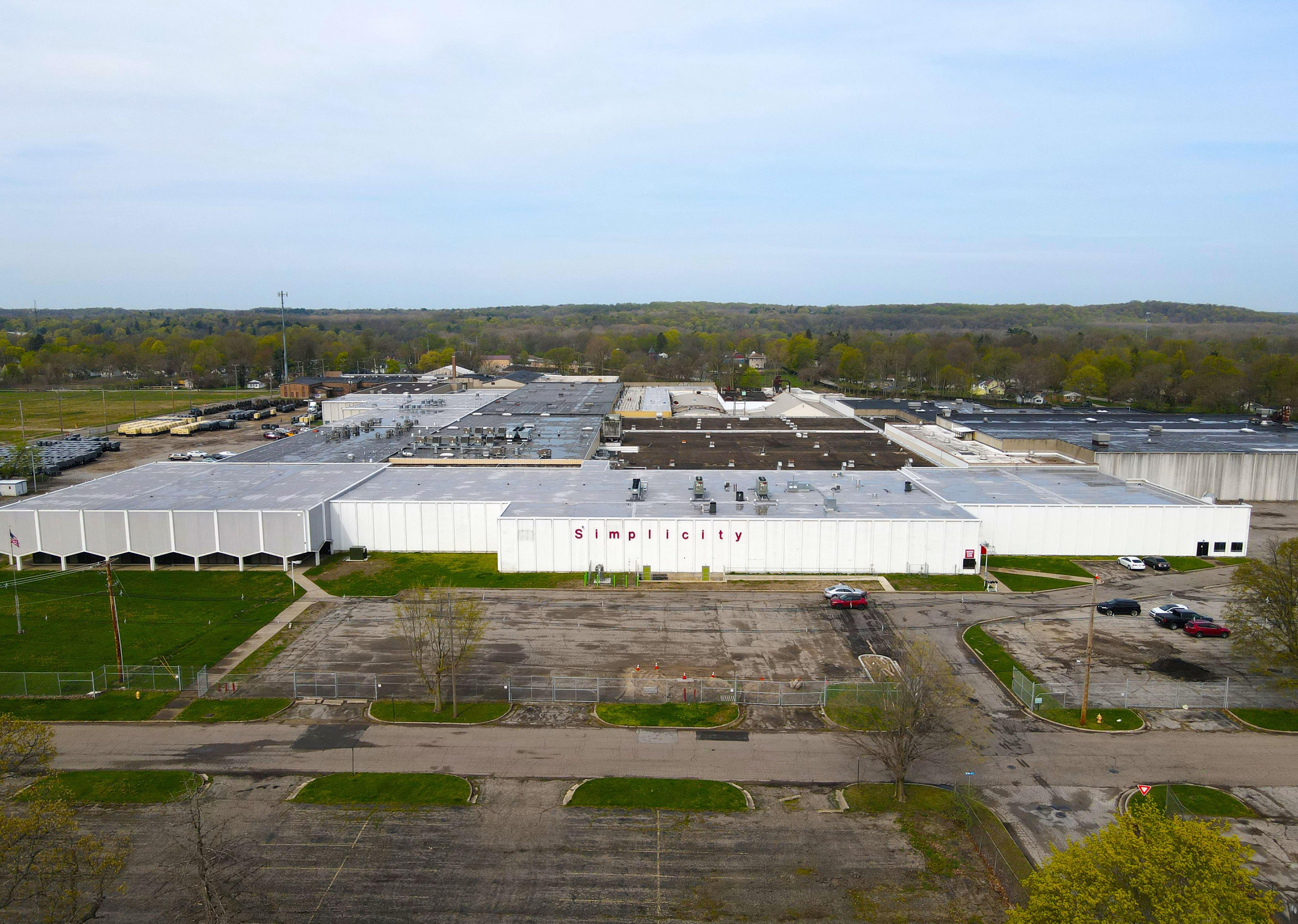
Located at 901 Wayne Street in Niles, Michigan, the Simplicity Building is a beacon of industrial innovation and opportunity. This multi-tenant, professionally managed industrial complex is a sprawling 497,091-square-foot facility, sitting on a 33-acre parcel. It offers versatile warehouse and manufacturing spaces, perfectly suited for modern industrial needs, particularly in the burgeoning cannabis industry.
A Legacy of Innovation
The Simplicity Building’s roots trace back to 1927, when it was founded as the
Simplicity Pattern Company. Initially focused on sewing patterns, the company grew rapidly, moving its headquarters to Niles in 1931. Over the decades,
Simplicity became a household name, dominating the home sewing market with its expansive catalog business and widespread retail presence. At its peak in the 1970s, the company employed 3,000 people in Niles alone, boasting its own paper mill and printing operation. However, as demand for sewing patterns waned, the Niles plant closed its doors in 2007.
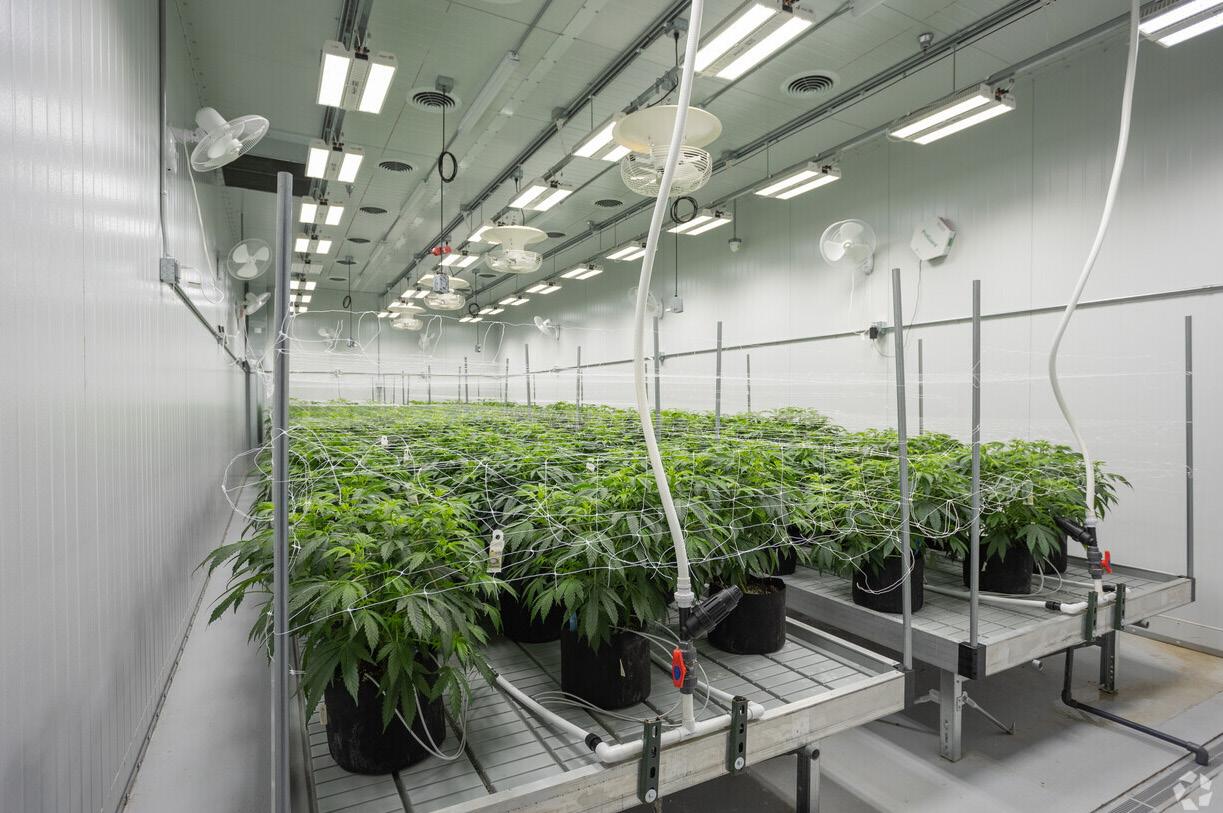
Today, the building has been repurposed into a modern industrial complex, carrying forward its legacy of innovation by supporting a new wave of entrepreneurs and businesses.
The Simplicity Building offers state-ofthe-art facilities designed to meet the
demands of today’s industrial enterprises. It is particularly well-suited for companies involved in the cultivation, transportation and processing of cannabis. With its robust infrastructure and strategic location, it is an ideal setting for businesses looking to establish or expand their operations.
Key Features:
Space and Flexibility: The complex provides 497,091 square feet of easily
Bitcoin mining and advanced manufacturing.
Advanced Connectivity: Tenants benefit from Everstream’s Business-Only Fiber Network, offering high-speed internet with diverse route entry for maximum uptime and redundancy. This ensures that businesses can maintain continuous operations with minimal risk of downtime.
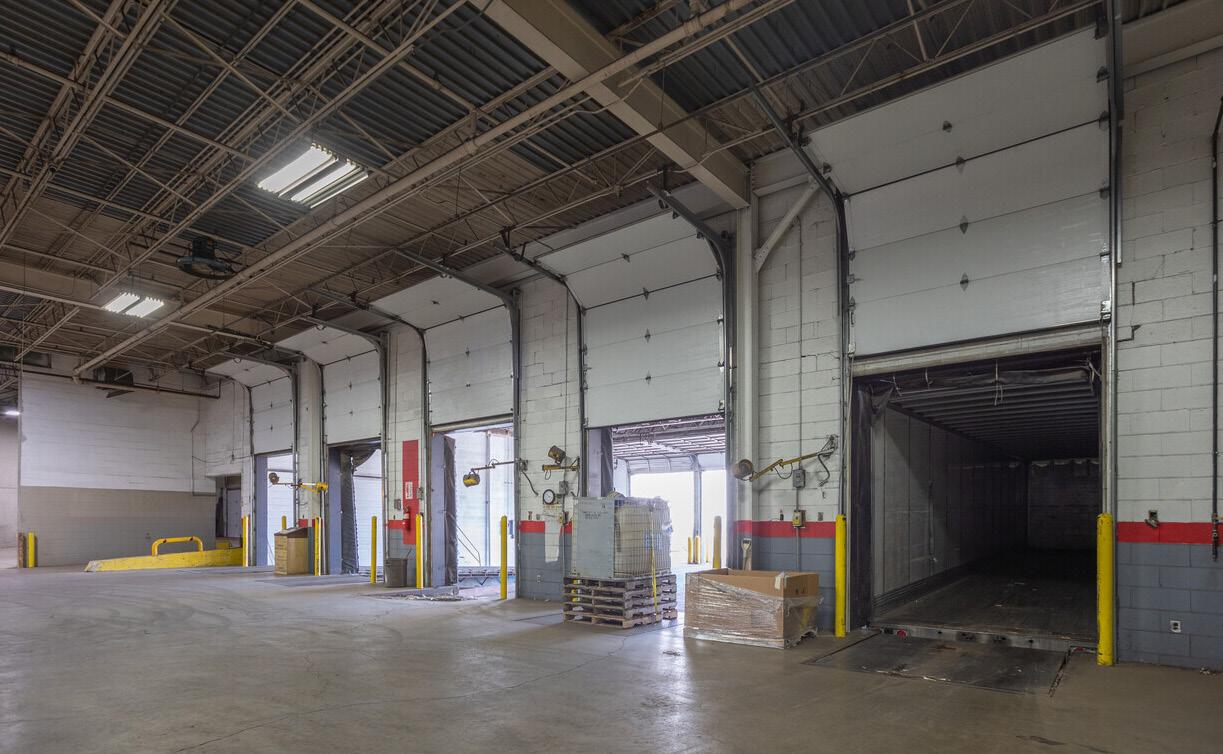
High Ceilings and Efficient Loading: With a maximum ceiling height of 30 feet, the building can accommodate a variety of storage and manufacturing needs. Additionally, it features 15 loading docks and 3 grade-level overhead doors, facilitating efficient logistics and transportation.
Security and Safety: The entire complex is video monitored, fenced and secure, with a sprinklered fire protection system to ensure the safety of tenants and their assets.
Strategic Location: Situated near major transportation routes, including I-80/90, US-31, and US-12, the Simplicity Building offers easy access to key markets and suppliers. The potential for rail service further enhances its appeal as a logistics hub.
The Simplicity Building is already home to five successful indoor cannabis cultivators since 2021: HLF (Anthos), Craft Hydroponics, Greenstem, Delta Farms, and Origins MI. These companies have found a supportive environment in Niles, where the building’s state-ofthe-art facilities and strategic location have helped them thrive. The building’s management team is experienced in working with cannabis businesses, making it an ideal partner for companies looking to enter or expand in this industry.
For businesses seeking to join this thriving community, the Simplicity Building offers competitive leasing rates, ranging from $4.00 to $8.50 per square foot (NNN). The management team is committed to helping tenants custom-build their sites to meet their specific operational needs.
divisible space, with units ranging from 5,544 to 174,460 square feet available for lease. This flexibility allows businesses to tailor their space to their specific needs.
Heavy Power Supply: The building is equipped with its own 34,500 KVA (15.3 MW) substation, with the potential for expansion. This heavy power capacity is crucial for energy-intensive operations such as cannabis cultivation, GPUs,
The Simplicity Building at 901 Wayne Street in Niles, MI is more than just an industrial complex; it is a center of innovation and growth, deeply rooted in Niles’ industrial history. Whether you are in the cannabis industry or any other manufacturing or distribution field, this facility offers the infrastructure, flexibility, and support you need to succeed.
If you are interested in touring this property or have additional questions about leasing this property, please contact NAI Cressy Brokers Ryan Gableman, CCIM/SIOR or Sam Cressy at 574.271.4060.



By Brandi Smith
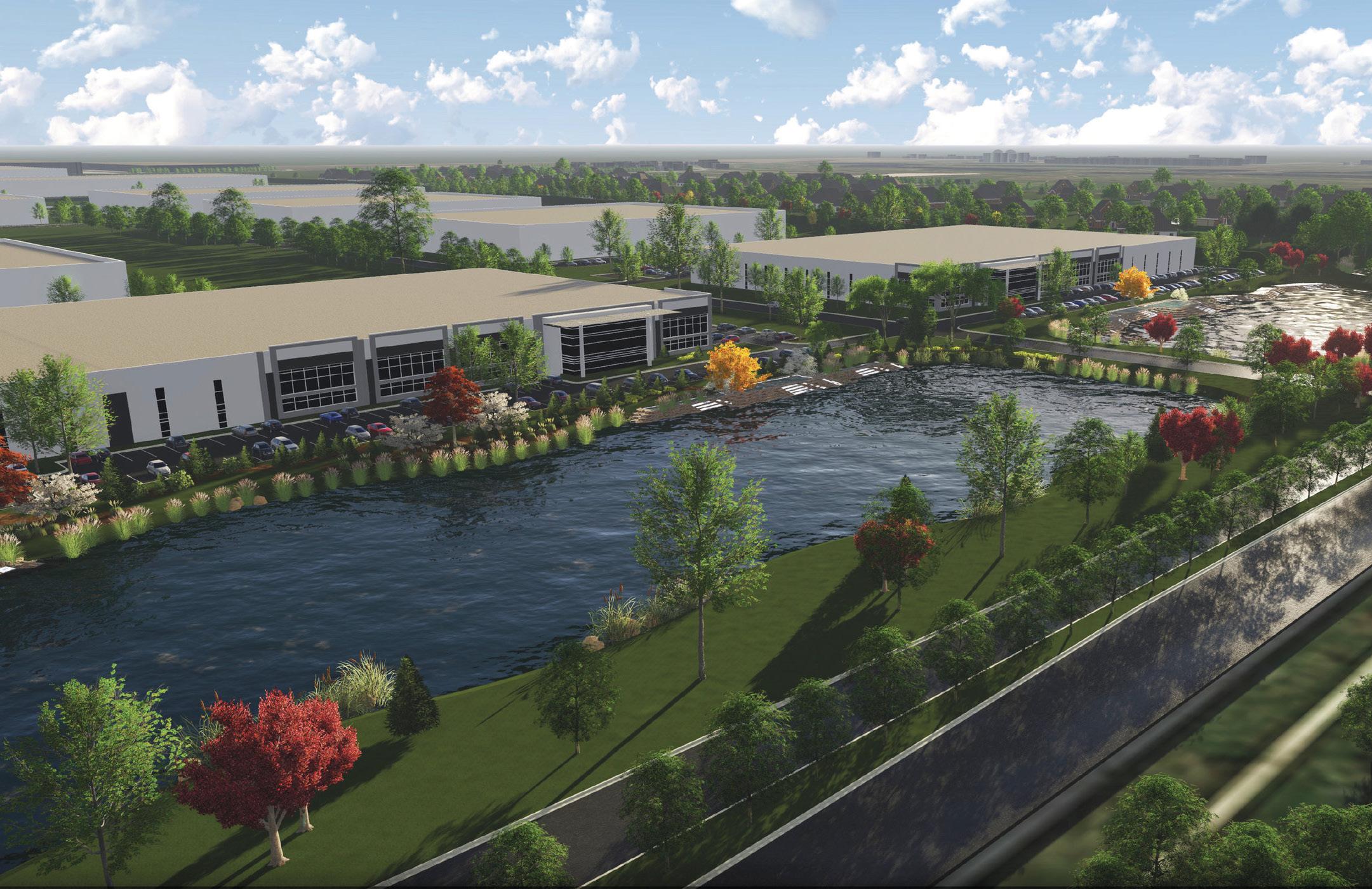
Chicago’s industrial market is experiencing record-breaking warehouse development, fueled by the continued rise of e-commerce, supply chain resilience efforts and the city’s strategic location as a logistics hub. Companies like CenterPoint Properties, Northern Builders and Logistics Property Company are leading the charge, adapting to shifting demand while addressing the need for sustainable growth and specialized facilities.
From taking advantage of Chicago’s robust transportation infrastructure to embracing redevelopment and community engagement, these firms are shaping the region’s future as they respond to both short-term market fluctuations and long-term industrial trends.
‘Strategic growth’ with NAI Hiffman
Chicago has always been a major distribution hub, said R. Kelly Disser III, Executive Vice President and Principal of NAI Hiffman, citing its extensive transportation infrastructure.
“Major interstate highways come through Chicago—I-90, I-80, I-55, I-94, I-65, I-57, and connecting I-294 and I-355,” Disser said. “All Class 1 railroads, east/west railroads intersect in Chicago (CN, UP, BNSF, CP, NS, CSX), we have many intermodal rail yards and the inland ports result in many goods coming through Chicagoland. In addition to all of this, we are the largest Midwestern city by a lot and have close to 10 million residents/consumers in greater Chicagoland. It makes sense for dense distribution based on the demographics and infrastructure.”
As a result, the warehouse market in Chicago is booming and NAI Hiffman is capitalizing on the region's record-breaking development and adapting to changing demand patterns.
“We have three excellent quality buildings our team is diligently focusing on leasing, ranging from 450,000 to 600,000 square feet,” Disser said. “Each of these buildings can be leased today at a rate which is less than what the lease rate would be if any of the three buildings were replicated today in the subject submarkets with comparable infrastructure.”
Breaking down the market’s current conditions, Disser observed that record-breaking deliveries of distribution centers resulted from a surge in demand during the pandemic. Now he says there appears to be a moderation
and right-sizing as many industries adjust back to a ‘normal’ pace of business.
“Those who expanded too rapidly are giving back space or have surplus space; those who were more tempered in their growth immediately coming out of the pandemic now have the opportunity to take market share and are being opportunistic to capitalize on opportunities presented,” Disser said. “These are the types of companies we enjoy working with for strategic growth.”
CenterPoint’s ‘sustainable development’
CenterPoint Properties is approaching Chicago’s industrial market with a focus on sustainable development and stra-
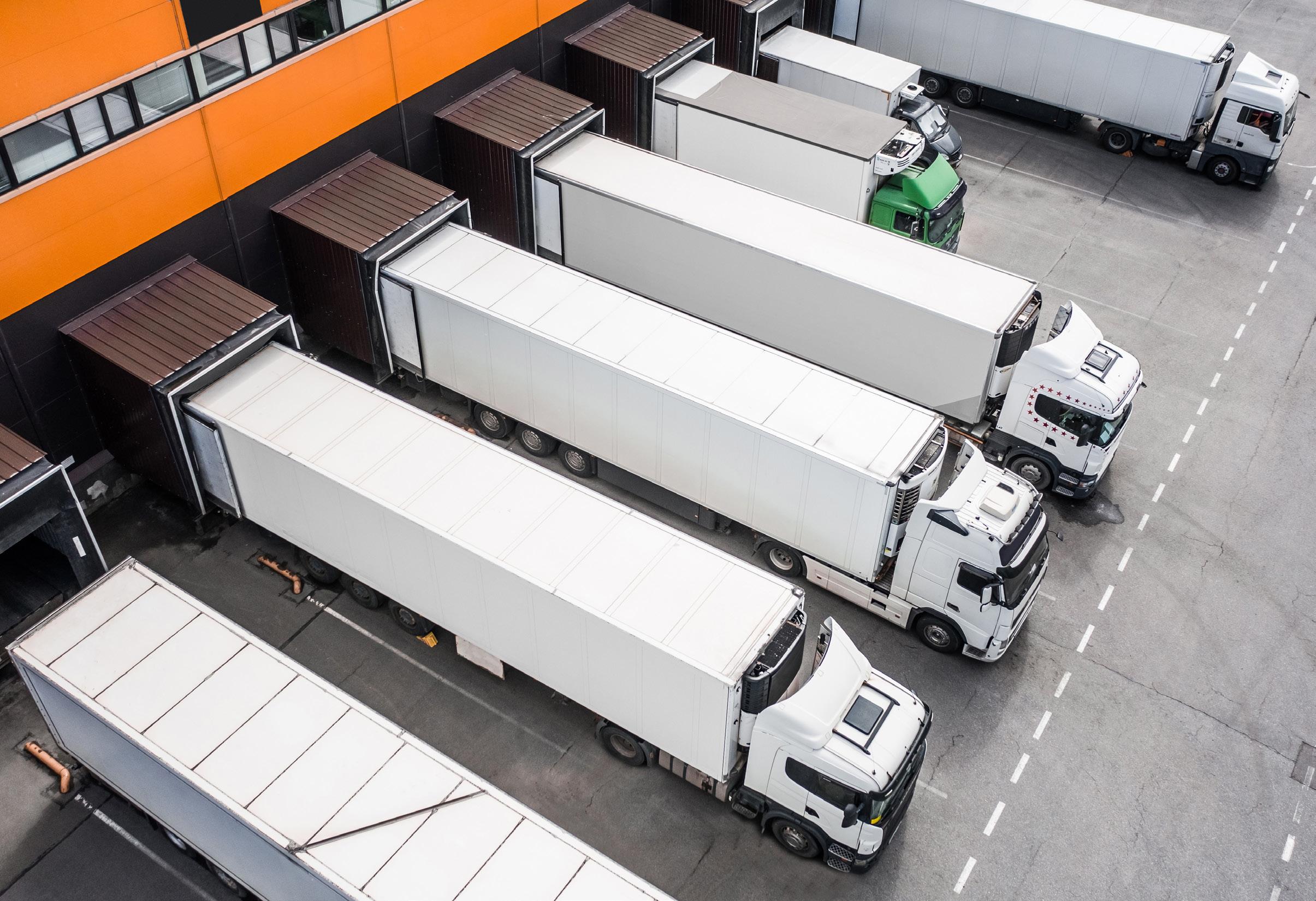

tegic redevelopment. Michael Brazeal, Manager of Development Transactions for the Central Region, emphasized the company’s efforts to align with new logistics trends, such as e-commerce and supply chain resilience.
“Several factors fueled Chicago's warehouse development boom in 2023. Some are new, while others are long-standing reasons behind Chicagoland’s emergence as a major logistics hub,” Brazeal explained. “On the newer side, the continued growth of e-commerce has led to updated inventory strategies aimed at preventing the supply chain disruptions the nation and the world experienced during the pandemic.”
In addition to short-term market responses, CenterPoint is looking ahead to key areas of growth.
“However, we anticipate demand will rise in several key areas once (uncertainty around the upcoming election) passes,” said Brazeal. “Drivers of this growth will include the need for infill warehouse locations, sustainable and green facilities, automated warehousing and increased cold storage capacity.”
"CenterPoint’s development teams across the country actively engage with the communities in which we operate, promote sustainable development and align economic benefits with local priorities."
CenterPoint also takes an active approach to community engagement, which has been integral to the company’s success in projects across the country.
“CenterPoint’s development teams across the country actively engage with the communities in which we operate, promote sustainable development and align economic benefits with local priorities,” Brazeal said, adding that this includes early engagement with stakeholders and responding to their concerns during the planning process.
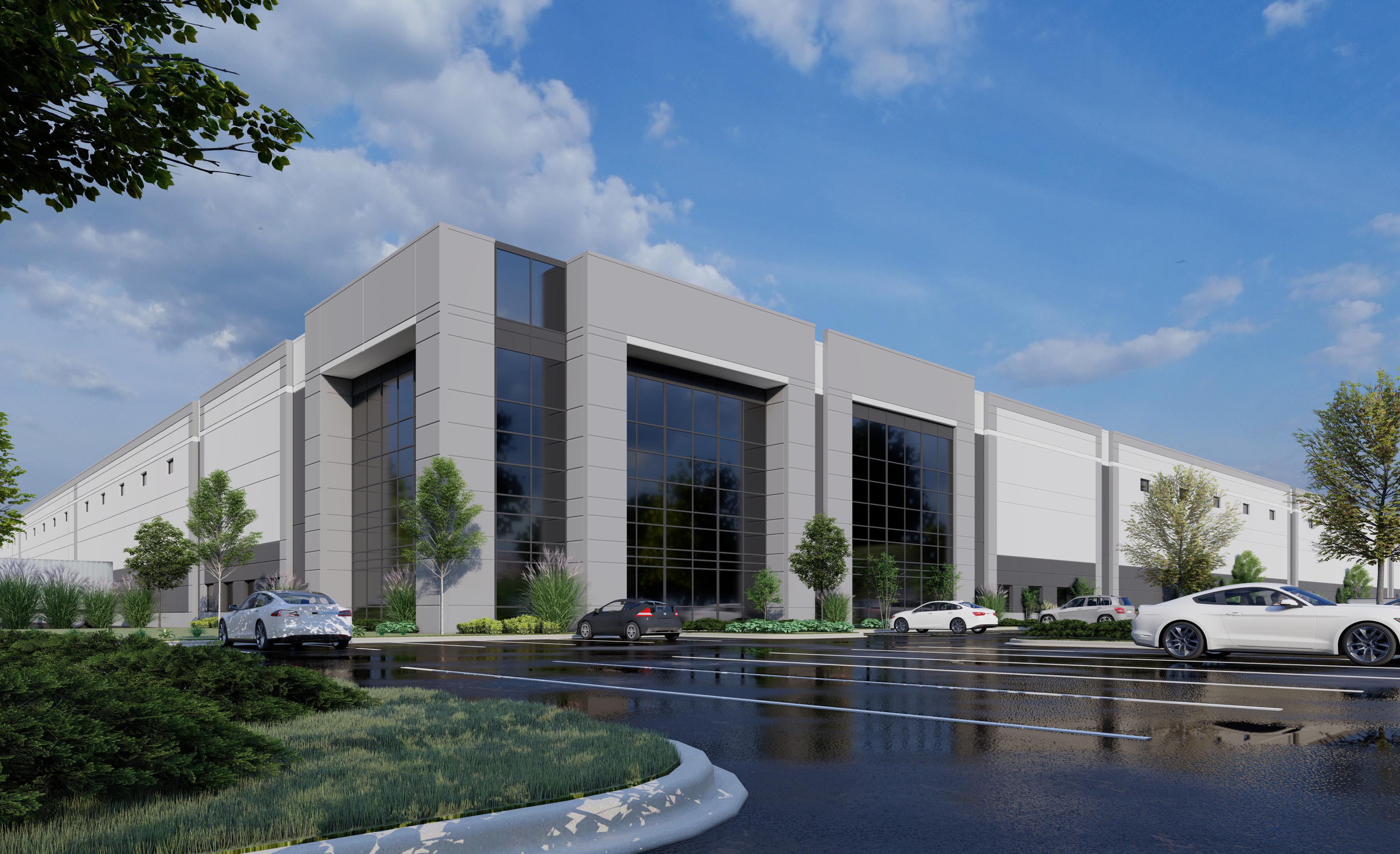
One of CenterPoint’s significant projects is a newly completed 976,954-square-foot speculative building at 2903 Schweitzer Road in Joliet, Illinois.
“The Class-A facility is adjacent to the Houbolt Road Extension bridge, put-
ting it mere minutes from I-80,” Brazeal said.
NAI Hiffman’s Dan Leahy and Adam Roth are handling the leasing efforts for the facility.
The ‘two-way street’ at Northern Builders
Northern Builders is capitalizing on the increased demand for specialized industrial space in Chicago, with a focus on build-to-suit and cold storage facilities.
“Whether you are buying groceries, a new sweater or a pool noodle, consumers want products at a competitive price as quickly and conveniently as possible, which has required businesses to continue strategically expanding their warehouse and distribution footprints across the country,” said Matthias Trizna, Vice President of Development.
Northern Builders has several significant projects underway in the Joliet and New Lenox areas. One of these is a speculative 802,440-square-foot crossdock facility, which is expandable to 1.2 million square feet.
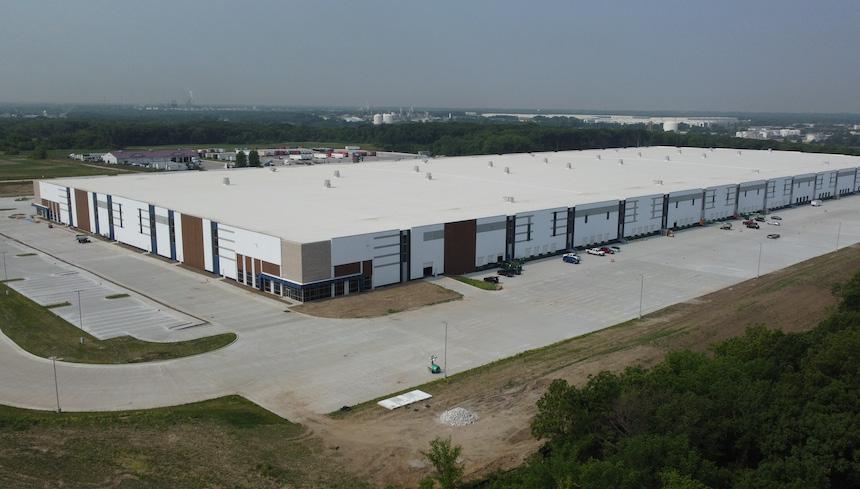
“It can accommodate up to 600 car parking stalls, 175 dock positions and 178 trailer stalls,” Trizna said.
Another key project is a 70-foot-tall, state-of-the-art 202,759-square-foot
In addition to its industrial developments, Northern Builders is diversifying
with a $70 million multi-phase sports campus on 100 acres. The project will include 29 youth baseball and softball fields, 12 soccer or multi-use fields, two full-service concession stands, a beer

"We continue to see a focus on locating as close as possible to the end customer. Given the lack of available sites and maturity of some of these infill markets, there will be a big lag in the supply of new functional product. Rents will grow and vacancies in these locations will remain very low."
garden, playground and 10 batting cages.
Throughout every project, Trizna stressed the importance of collabora -
tion with communities and policymakers.
“It’s really a two-way street partnership. On the developer side of the equation, you need to be cognizant
of the community and the neighbors when working through the design and site planning efforts first and foremost,” he said, referencing their developments at Carlow Corporate Center, Plainfield Business Park and
Cherry Hill Business Park. “We always try to go out of our way to invite council members and staff officials to tour our many projects.”

‘Higher-end building approach’ sets Logistics Property Company apart
As the demand for logistics space in Chicago evolves, Logistics Property Company is taking a unique approach to Chicago’s industrial market by focusing on infill locations and long-term ownership. The company’s emphasis on building high-quality, high-finish logistics facilities has allowed it to thrive even as the market adjusts post-pandemic.

“We continue to see a focus on locating as close as possible to the end customer,” said Aaron Martell, Executive Vice President of the central region, who sees infill locations as critical to his company’s strategy. “Given the lack of available sites and maturity of some of these infill markets, there will be a big lag in the supply of new functional product. Rents will grow and vacancies in these locations will remain very low.”

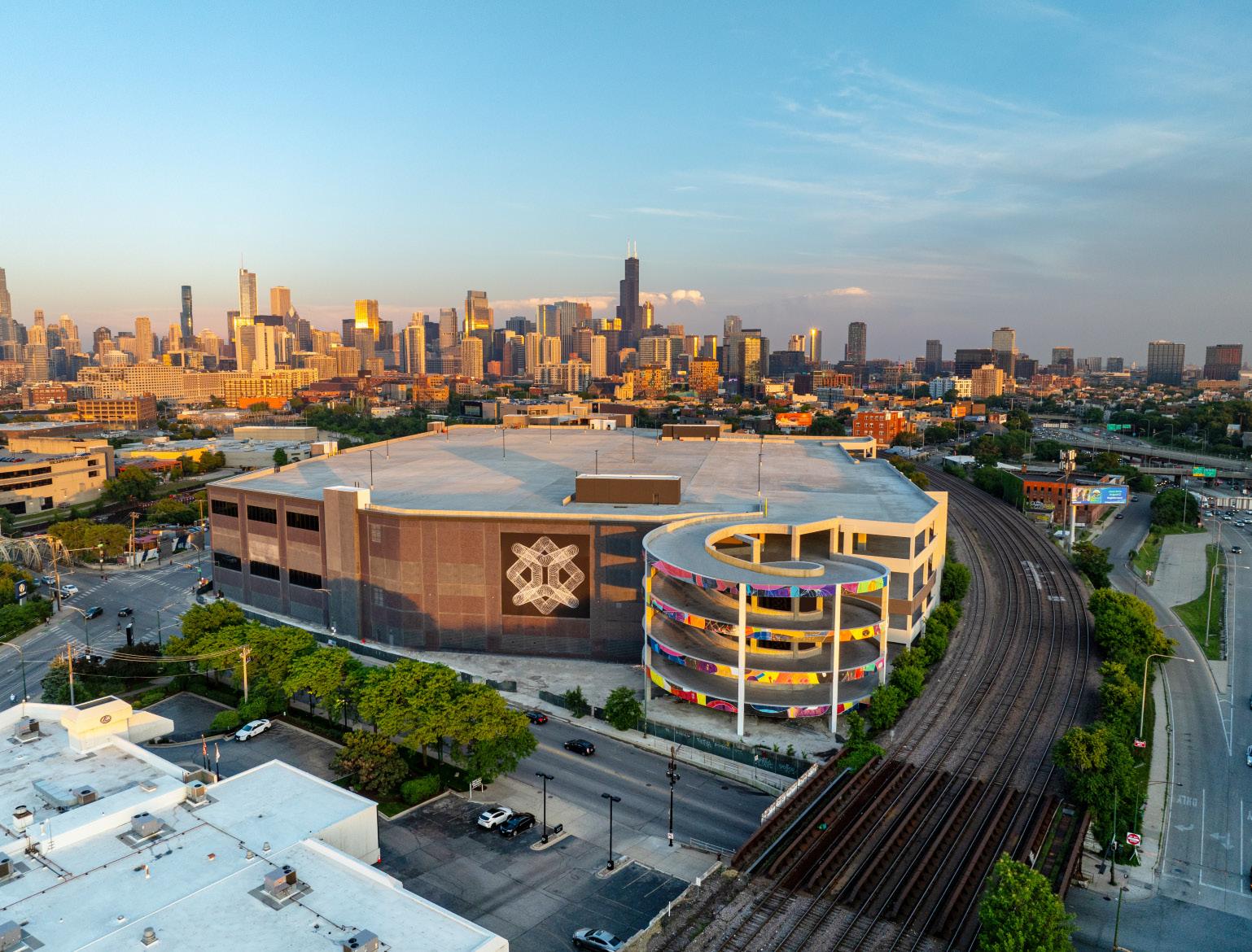
One of the company’s hallmark projects is the region’s first multi-story logistics facility, located at 1237 W Division.
“We’re excited to be nearing completion of such an amazing project,” Martell said.
“We’re excited about leasing prospects as we finish 2024 and enter 2025.”
Logistics Property Company’s long-term approach also extends to its community engagement strategy, ensuring its developments meet both market demands and community expectations.

“The best outcomes for development really come from first listening to the communities where we want to invest,” Martell explained. “Given our belief in long-term ownership, we build a building that has a higher finish than a typical commodity merchant developer product. That higher-end building approach has worked well in the communities where we’ve developed projects.”


ALVAREZ & MARSAL PROPERTY SOLUTIONS
205 W Wacker, Ste 516 Chicago, IL 60606
P: 312.606.0966
Website: ampsre.com
Key Contacts: Kevin Halm, Managing Director, khalm@ampsre.com; Pete Kontos: Managing Director, pkontos@ampsre.com
Services Provided: AM-PS provides property management, project management, and brokerage services to owners and occupiers of office, retail, and industrial real estate. Company Profile: AM-PS was born out of the desire to take the strategic mindset and processes of the renowned business restructuring firm Alvarez & Marsal and reframe them for the commercial real estate world. Our approach solves problems, improves performance, and unlocks value for our clients. Our work has positively impacted real estate and those who interact with our properties nationwide.
S74 W16853 Janesville Road
Muskego, WI 53150
P: 414.369.3511 | F: 414.435.0251
Website: outlookmgmt.com

Key Contact: Ray Balfanz, President/Partner, ray@outlookmgmt.com
Services Provided: Full service property and asset management services, financial analysis and reporting; budget preparation and expense reconciliations; lease administration; construction management; preventative maintenance and consulting services.
Company Profile: Outlook Management Group, LLC AMO provides comprehensive property and asset management services for all asset classes in multiple states and markets.
Notable Properties Managed: Washington Corners, Naperville, IL; Ironwood Office Park, Glendale, WI; Wood River Condominiums, West Bend, WI; Seven 10 West Luxury Apartments, Chicago, IL; MDJD Aesthetic MOB, Rockford, IL, Ascension Health MOB Milwaukee, WI; Henry Ford Health Systems Pharmacy Services Bldg. in Rochester Hills, MI; Henry Ford Medical Center in West Bloomfield, MI; Baptist Medical Center South, Montgomery, AL; and Lee Memorial Health Systems Building in Fort Myers, FL.
SPACESHIFTS
3 E. Huron St. Chicago, IL 60611
P: 872.267.2691
Website: spaceshifts.com

Key Contact: Delanie Prince, Operations Manager, info@spaceshifts.com
Services Provided: SpaceShifts is a platform for optimizing vacant workspaces, not subleasing. It enables the options of utilizing vacant workspaces, sharing staff overhead, and amenities, and helping businesses maximize their property and resources.
Company Profile: SpaceShifts is a unique platform connecting individuals seeking workspace with businesses having extra space to rent. Terms are flexible and arranged by the parties involved. The service is currently free. Sign up at SpaceShifts.com to explore this opportunity.
9550 W. Higgins Road, Suite 400 Rosemont, IL 60018
P: 847.374.9200 | F: 847.374.9222
Website: www.meridiandb.com
Key Contact: Paul Chuma, President; Howard Green, Executive Vice President

Services Provided: Meridian Design Build provides construction and design/build construction services on a national basis with a primary focus on industrial, office, medical office, retail and food and beverage work.
Company Profile: With a team of in-house professional project managers, Meridian has extensive experience coordinating the design and construction of new buildings, tenant improvements, and additions/renovations from 15,000 square feet to 1,000,000+ square feet. Meridian Design Build has been a Member of the U.S. Green Building Council since 2007.
Notable/Recent Projects: Venture Park 47, Huntley, IL - 729,800 sf speculative industrial facility for Venture One Real Estate. Lion Electric, Joliet, IL - 928,500 sf electric bus / medium duty truck assembly plant for Clarius Partners. Greenwood Truck Terminal, Greenwood, IN - 125 door truck terminal on 43 acres for Scannell Properties.
9450 West Bryn Mawr Ave., Suite 120 Rosemont, IL 60018
P: 847.615.1515 | F: 847.615.1598
Website: pccdb.com

Key Contacts: Mark L Augustyn, COO, maugustyn@pccdb.com, James A.. Brucato, President, jbrucato@pccdb.com
Services Provided: Principle specializes in commercial and industrial property and is committed to providing clients with the highest level of design/build construction services with an absolute dedication to each project.
Company Profile: Design/Build General Contractor established in 1999 specializing in the design and construction of Build-to-Suit, Speculative, Retail, Food Processing, Expansions/Additions, Tenant Improvements, & Specialty Facilities. Principle also has extensive experience in interior improvements, site evaluation, due diligence, and value engineering.
Recently Completed Projects include:
• 282,588 SF dry-cleaning facility for Tailored Brands, at 2000 Deerpath Rd. in Aurora, IL.
• 31,200 SF facility for Alvil Trucking, at 2570 Millenium Dr. in Elk Grove Village, IL
• 6,200 SF Warehouse for Superfast Trucking, at 1001 Raddant Rd. in Batavia, IL
2000 Center Dr., Suite East C219 Hoffman Estates, IL 60192
P: 847.392.6900
Website: victorconstruction.com
Key Contact: Zak Schuttler, President, ZakS@victorconstruction.com
Services Provided: Victor Construction Co., Inc. manages projects from ground-up site developments to interior buildouts, specializing in retail, industrial, and commercial markets.
Company Profile: Victor Construction Co., Inc. remains a family-owned and operated General Contractor. Having been in business since 1954, our firm has extensive experience managing every aspect of interior construction for the corporate, manufacturing, industrial, and retail sectors.
Notable/Recent Projects: Owens + Minor Distribution – 600K SqFt distribution facility that involved a full LED lighting upgrade, new HVLS fans, 200K SqFt section that required new cooling for medical distribution, an office renovation of 20K SqFt, and a new exterior employee pavilion.
ECONOMIC DEVELOPMENT CORPORATION OF MICHIGAN CITY
Two Cadence Park Plaza
Michigan City, IN 46360
P: 219.873.1211
Website: www.edcmc.com

Key Contacts: Clarence Hulse, Executive Director, chulse@edcmc.com
Karaline Cartagena Edwards, Economic Development Manager, kcedwards@edcmc.com
Services/Demographic Info: Up-to-date inventory of commercial buildings, site selection and orientation tours.
Incentives: Tax-Increment Financing, Façade Improvement Grants, Property Tax Abatements, Enterprise Zones, Job Training Programs
Recent CRE Activity: Double Track Northwest Indiana: $1.6 Billion development reducing train travel to Chicago to 60 minutes; The Franklin at 11th St. Station: $100 Million Development with Residential & Retail Space; “You are Beautiful”/SoLa: $311 Million Mixed-Use Multi-Family Development with 235 boutique hotel rooms & 174 Luxury Condos; Burn ‘Em Brewing: $3 Million Expansion project with 30 new jobs.
WORSEK & VIHON, LLP
180 North LaSalle Street, Suite 3010
Chicago, IL 60601
P: 312.917.2307 P: 312.917.2312 | F: 312.596.6412
Website: wvproptax.com

Key Contacts: Francis W. O’Malley, Managing Partner fomalley@wvproptax.com; Jessica L. MacLean, Partner jmaclean@wvproptax.com
Services Provided: Worsek & Vihon, LLP represents tax payers in Illinois by limiting their property tax liabilities through ad valorem appeals. We have over 40 years of experience and can handle basic to the most complex assessment issues while offering the dependable, personalized attention our clients deserve. We have experience representing owners of all property types. In addition to filing thousands of appeals with the Cook County Assessor, we have been involved in numerous proceedings before various Boards of Review, the Illinois Property Tax Appeal Board, and the Circuit Court of Illinois, and have appeared before the Illinois Appellate and Supreme Courts.
Company Profile: Worsek & Vihon LLP, is a team of experienced attorneys singularly focused on real estate tax law. The firm is dedicated to minimizing property tax liabilities through strategic tax portfolio management, well-researched, creative appeal preparation and aggressive advocacy.
VILLAGE OF HUNTLEY
10987 Main Street
Huntley, IL 60142
P: 847.515.5268

Website: huntleyfirst.com, huntley.il.us
Key Contact: Melissa Stocker, Development Manager, mstocker@huntley.il.us
Services/Demographic Info: Huntley, a northwest suburban Illinois community of greater than 29,000 residents, is conveniently located at the crossroads of Interstate 90 and IL Route47. Proximity to the interstate and to international and cargo airports in Chicago and Rockford make Huntley an ideal location for businesses looking to escape the congestion of more populated areas while reaping the benefits of a Chicago market location. Village of Huntley staff provides comprehensive services including site selection assistance and demographic resources, visit huntleyfirst.com to start the search for your new home for business. Residential construction continues with three subdivisions actively building. Huntley is home for your business, and home to the right employees for your business.
Population In Primary Trade Area: 97,283
Incentives: TIF District, Fast Track permitting and development approval process
CRE Activity: Huntley is home to leaders in business. Join Weber, Northwestern Medicine, Amazon and many others that chose Huntley as their home for business. Hampton Inn recently opened in Huntley. Amazon has begun operations in two Huntley facilities. E-Logistics firm headquarters are underway. Speculative development is underway and available near the tollway. Multiple retail strip centers are in the planning and construction phases. With land available for custom-tailored facilities, businesses seeking sites recognize Huntley as a prime location for operations.
10000 W. 151st Street
Orland Park, IL 60462
P: 708.364.9131
Website: emarquettebank.com
Key Contact: Gene Malfeo, Senior Vice President, gmalfeo@emarquettebank.com
Services Provided: Full line of Commercial, Business and Real Estate loans customized to your individual needs including: commercial and residential construction loans, commercial mortgages, equipment loans and working capital lines of credit. Company Profile: Marquette Bank started in Chicagoland in 1945 and is still locallyowned/operated. Expect quick decisions, competitive rates, easy application and personal service. Personal/business banking and lending, home mortgages, land trust services, estate planning, insurance services, wealth management and multifamily lending.
1000 N Water Street, Suite 1700
Milwaukee, WI 53202
P: 414.298.1000
Website: reinhartlaw.com

Key Contact: Joseph Shumow, Shareholder, jshumow@reinhartlaw.com
Services Provided: Reinhart is a full-service, business-oriented law firm that delivers innovative, value-added solutions for today’s most important real estate needs, including land use and zoning; tax incremental financing; tax credits; leasing; construction; and condemnation and eminent domain issues.
Company Profile: With the largest real estate practice in Wisconsin and offices throughout the Midwest and across the country, Reinhart’s attorneys offer clients customized real estate insight rooted in broad knowledge and deep experience to help you capitalize on opportunities no matter where you do business.