How to... Manage workplace stress levels
Artificial intelligence Why we need to re-evaluate legacy practices
Martyn’s Law Integrating new duties with fire safety frameworks
SPRING 2026 EDITION NO. 67
OFFICIAL JOURNAL OF THE IFSM
How to... Manage workplace stress levels
Artificial intelligence Why we need to re-evaluate legacy practices
Martyn’s Law Integrating new duties with fire safety frameworks
SPRING 2026 EDITION NO. 67
OFFICIAL JOURNAL OF THE IFSM
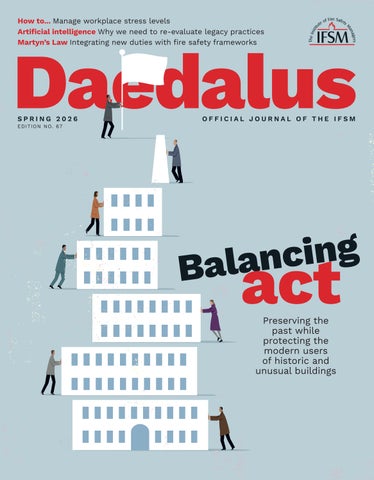
Preserving the past while protecting the modern users of historic and unusual buildings






We understand your profession almost as much as you do
For more than 15 years, Anchorman Professions has been arranging specialist PI insurance for fire safety consultants, fire engineers, and risk assessors. We understand the unique responsibilities and risks within the fire safety sector and work closely with leading insurers to secure the right protection at the right price.
So you know that with us, you’ll be in safe hands. Whether you’re just starting out, or a well established firm, we take the time to understand your business, ensuring you get the right cover at the best price

Expert advice and guidance
Exclusive in-house scheme with an “A” rated insurer
Access to a wide range of other insurers
“Great service - kept fully informed and updated. It always came across that you had my best interests at heart. I was struggling getting insurance due to the industry I am in and I felt reassured that you would do your best to help.”
“Anchorman have been providing insurance cover for a number of years, following a recommendation by a colleague who was very pleased with their service. I can reiterate his recommendation as they have been excellent throughout. Very helpful, friendly and professional - all round a great company to have on your side!”
Reaching out to our friendly UK-based team couldn’t be easier.
Working in historic or unusual buildings –some of which may be functioning facilities for modern organisations –poses unique challenges for fire risk assessors
Artificial intelligence is playing an increasingly prominent role in fire safety, creating both opportunities and challenges








Martyn’s Law, which introduces proportionate security duties for publicly accessible venues across the UK, will have practical implications
consider the reaction to fire of pipe and duct insulation products when paying attention to safety-critical areas



Disappointing news on our apprenticeship initiative, raising concerns over how the sector will be able to recruit talent it needs
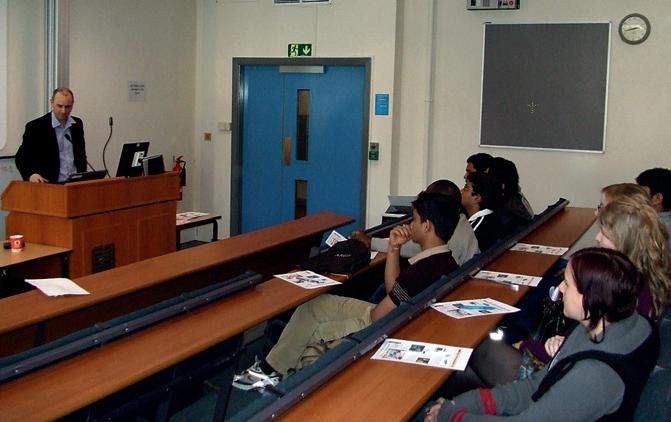
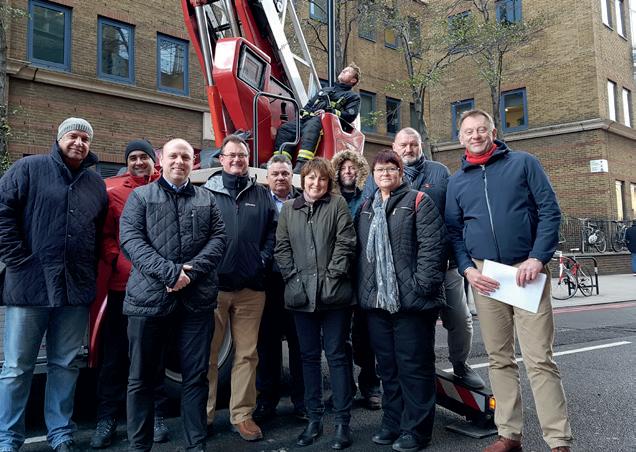
Ihave gone into my archive yet again to find this photograph (below) of one of our past presidents, Dave Price, when we both talked to students about the Institute at the University of Leeds in 2008.
Dave and I had been asked to grow the membership by attracting younger people. We had a little success in recruiting student members, especially when we told them that student membership was – and just to remind readers, still is – free!
The picture is timely as our application for a fire risk assessor apprenticeship was submitted to Skills England before Christmas. I have just received a reply, which is disappointing to say the least. We picked the initiative up when doing work with the Home Office on BS8674, fire risk assessment schemes, regulated qualifications and competence. We made great progress and then the ‘fire’ reference was passed over to the Ministry of Housing, Communities and Local Government (MHCLG).
When we mentioned the apprenticeship initiative, the minister was extremely keen for it to be pursued, and it’s thanks to representatives from the Fire Industry Association, the Fire Sector Confederation and our own team that I was able to complete a full application for submission to Skills England. Unfortunately, MHCLG have pushed back on all initiatives around competence for fire risk assessors, and Skills England (which morphed out of the Institute for Apprenticeships and Technical Education last year) cannot process our application
because of what appears to be turmoil in government departments.
Part of Skills England’s reply to me was: “The government announced a ministerial reshuffle, which included plans to transfer ministerial responsibility for adult skills from the Department for Education (DfE) to the Department for Work and Pensions (DWP). As a result of this machinery of government change, ministerial responsibility for apprenticeships,
adult further education, skills, training and careers, and Skills England has now moved from DfE to DWP. However, the DfE will retain oversight of the higher education and further education systems, as well as skills, training and careers policy for individuals aged 19 and under. Additionally, provider oversight – including the implementation of the Apprenticeship Accountability Framework – will remain with DfE and operate under a shared service model. Minister Smith, in her capacity as minister for skills, will continue to work across both departments.”
The Institute has invested a massive amount of time in creating a visible and accessible route as a career pathway
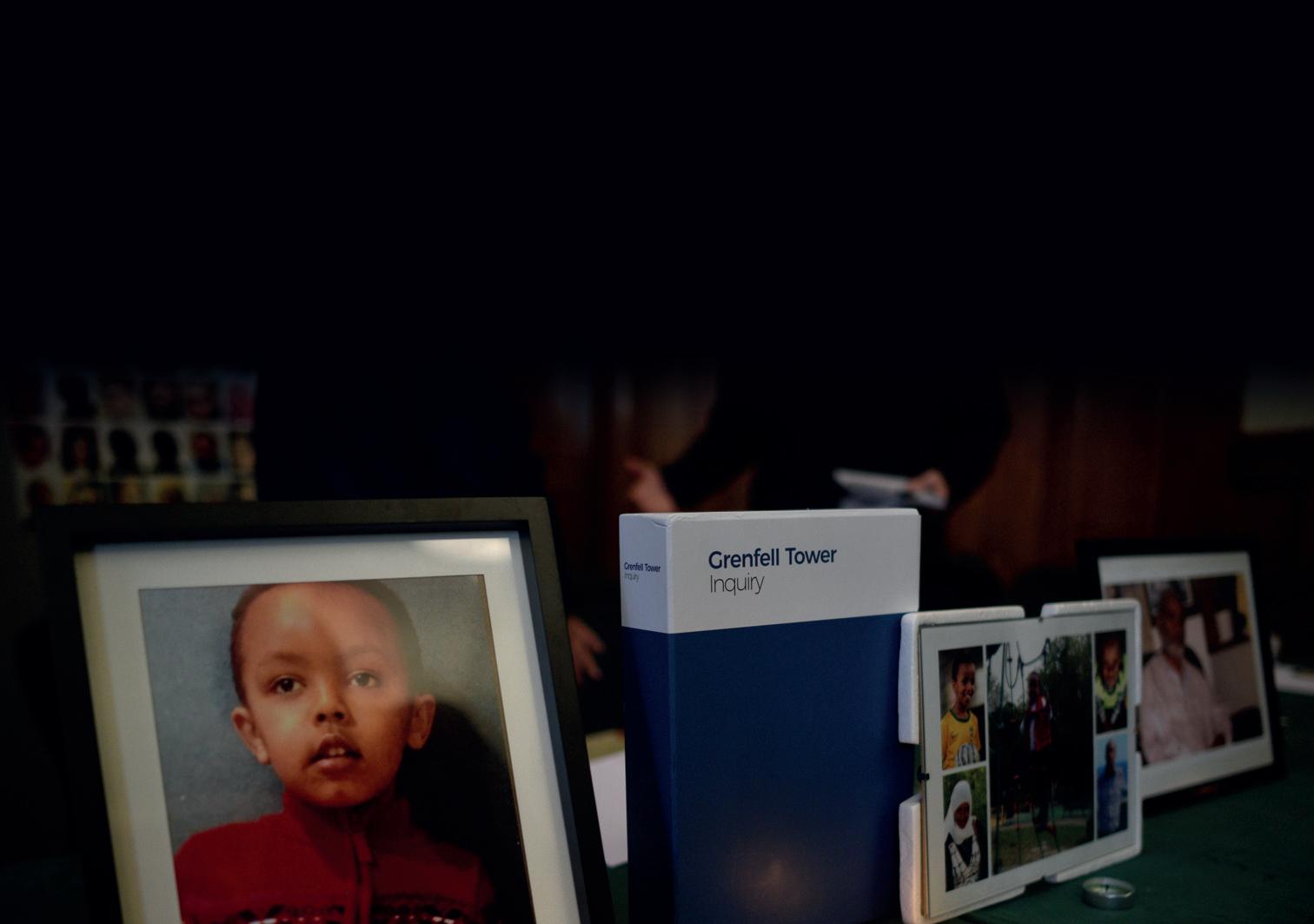
I am still trying to figure out what this actually means, given the absolute imperative that was created post-Grenfell by the government for competence and regulation for fire risk assessors, as well as the need to grow the profession.
The Institute has invested a massive amount of time (mostly voluntary) over the past few years in creating a visible and accessible route as a career pathway for those who want to enter this part of the profession.
Needless to say, I will be writing back to Skills England, MHCLG and the minister(s), pointing out that our application deserves to be looked at with some urgency if we are to secure the future of the profession of fire risk assessors.
Once again, I thank all members for their continuous loyalty and support.
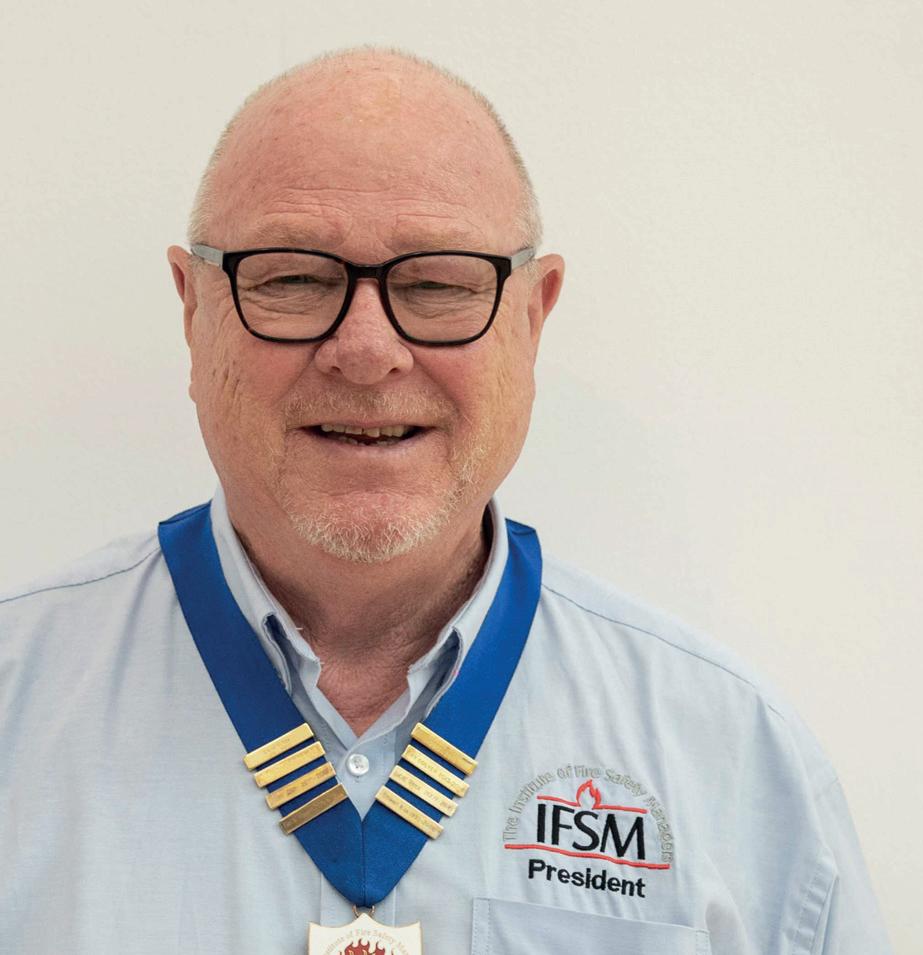
Dr Bob Docherty QFSM, PhD, CEng, FIFSM
(Life), FIFireE, MEI is president of IFSM
WHAT YOU NEED TO KNOW
IFSM members are invited to the IFSM Charity Golf Day, where they can enjoy a day of golf, networking and fundraising.
THE MINISTRY OF HOUSING, Communities, and Local Government has announced a public consultation as part of its plans to regulate the title and function of fire engineers.
It follows the release of an authoritative statement by The Fire Engineers Advisory Panel, which was set up by the government in April 2025, in response to the recommendations of the Phase 2 report from the Grenfell Tower Inquiry.
The panel supported the government’s plans to regulate both the title and function of fire engineers, which it argued should have the following key objectives:
A system in which buildings are consistently safe for the people who live in, use and occupy them
A resilient, competent workforce that operates ethically and is accountable for the protection of life through the quality of its work
Viable, attractive education routes, leading to good, sustainable careers
A profession that values its duty to
protect people and so earns and maintains the trust of the public.
The panel was also tasked with exploring the wider context of the profession, looking at issues such as education, role and responsibilities, behaviours, experience and skills. The consultation and further policy work will look at: Defining and implementing the fire safety strategy as the core statutory function of fire engineers Determining the scope of buildings requiring a fire safety strategy produced by a regulated fire engineer Defining the accountabilities of the fire engineer to clarify how the fire engineer’s statutory functions sit alongside contractual arrangements, and the responsibilities created under the new higher-risk building regime Clarifying the fire engineer’s role across the whole building lifecycle, including the panel’s proposals for periodic review of the fire safety strategy during occupation.
The event is being held at Morley Hayes Golf Club in Derbyshire on Tuesday 23 June 2026, starting at 11am. Just 40 tickets are available for the 18 holes, and those travelling from further afield can stay over at the fourstar Morley Hayes Hotel. Tickets are priced at £75 each, and proceeds from the event will go towards The Burns Trust.
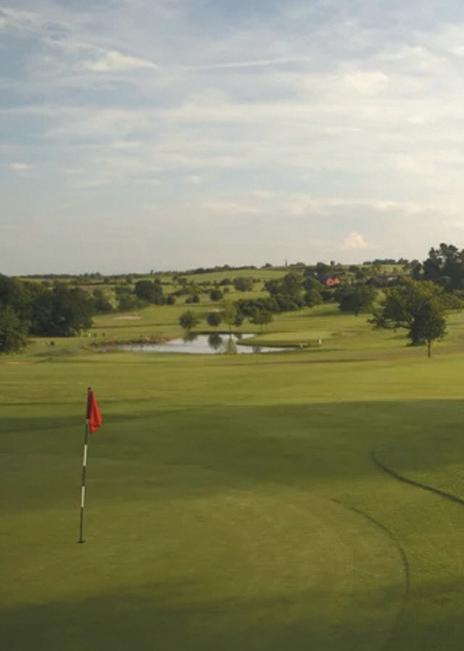
“Whether you’re an avid golfer or simply want to enjoy a great day out, this event promises excellent company, friendly competition and the chance to make a real difference,” says David White, IFSM chairman.
To book your ticket, visit ifsm.org.uk/events
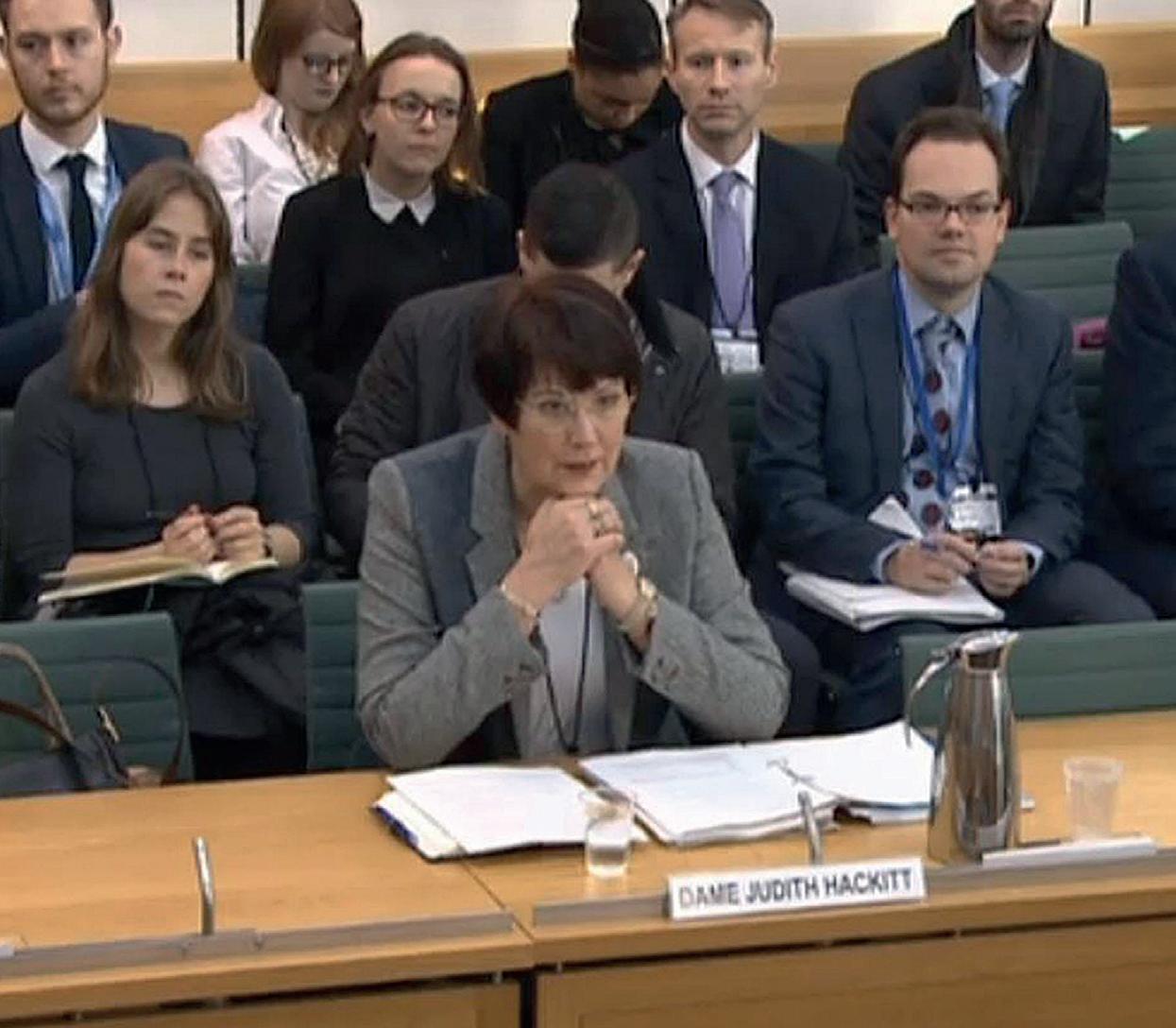
THE FIRE SAFETY INDUSTRY has come together to produce the Fire Risk Assessment National Practice Guide, designed to reflect the learning and improvement developed after the Grenfell Tower fire in 2017 and the Hackitt Report of 2018.
The original framework was created by the Fire Sector Confederation (formerly the Fire Sector Federation) to improve competence standards in fire risk assessment. This was based upon experience and earlier work by the Fire Risk Assessment Competency Council. IFSM, industry bodies and competency committees have also fed into the documents.
The Fire Risk Assessment National Practice Guide (parts 1 and 2) aims to create robust, transparent and consistent professional practice for fire risk assessors engaged in the assessment of life safety risk from fire in all workplace premises, including residential and higher-risk buildings. They explore topics such as fire risk assessor practice, competence and professional standards, as well as technical reporting.
Access the documents in the Member Library section of the IFSM website
The Fire Safety (Residential Evacuation Plans) (England) Regulations 2025 come into effect in April, introducing new rules around the safety and evacuation of vulnerable residents in high-rise and higher-risk buildings who may have difficulty leaving premises by themselves.
A central element of this is the creation of Residential Personal Emergency Evacuation Plans – known as Residential PEEPs – under which responsible
persons will be expected to identify residents with mobility or other impairments and to create a personcentred fire risk assessment to support their evacuation.
This will need to be reviewed every 12 months or when circumstances, such as the condition of the resident, change.
The regulations apply to buildings that have two or more sets of domestic premises, and which are either 18m above ground level, have seven storeys or more, or
are more than 11m above ground level that has simultaneous evacuation strategies in place.
An emergency evacuation statement will also need to be created for each relevant resident, outlining what they should do in the event of a fire.
The responsible person must also create a separate building emergency evacuation plan, which must be shared with the local Fire and Rescue Authority and placed in a secure information box on the premises if one exists.

CONSTRUCTION COURSE
IFSM MEMBERS CAN GET a better understanding of how buildings are constructed at upcoming one-day courses hosted by council member, building surveyor and training consultant Malcolm Thomas.
The course will cover the construction and implementation of passive fire safety measures across all common building types, from the Georgian period to the present day.
This is essential information for anyone involved in providing fire risk assessments, or looking to develop the skills to conduct type 2 and 4
assessments and compartmentation surveys, Fire Risk Appraisal of External Walls and other building reports.
Events will be held on these dates:
14 APRIL: MANCHESTER
16 APRIL: LONDON
9 JUNE: LONDON
11 JUNE: MANCHESTER
The courses run from 10am-4pm and cost £350 per person. For more information, visit the events section of the IFSM website. See our cover feature on page 14
A Huddersfield business has been fined £160,000 for failing to comply with an enforcement notice issued after a number of unsafe practices were identified at its premises.
West Yorkshire Fire and Rescue Service (WYFRS) successfully prosecuted Hellfire Entertainment after initially issuing the notice for breaches including no automatic fire detection in the kitchen, blocked fire exits and no fire separation between the open kitchen and the bar.
WYFRS senior fire protection manager Chris Kemp said: “This outcome sends a clear message; there are real consequences for neglecting fire protection responsibilities.”
Magistrates described the company as having “a total, blatant disregard for the safety of both members of the public and their own employees” and acting with a “breach of duty and a breach of trust”.
Elsewhere, Birmingham City Council successfully prosecuted the owner of a block of flats for failing to comply with an Improvement Notice around fire safety measures.
Freehold Managers (Nominees) Ltd, which operated Centenary Plaza, was fined £50,000, in only the second prosecution by a local authority using powers provided under the Housing Act 2004.
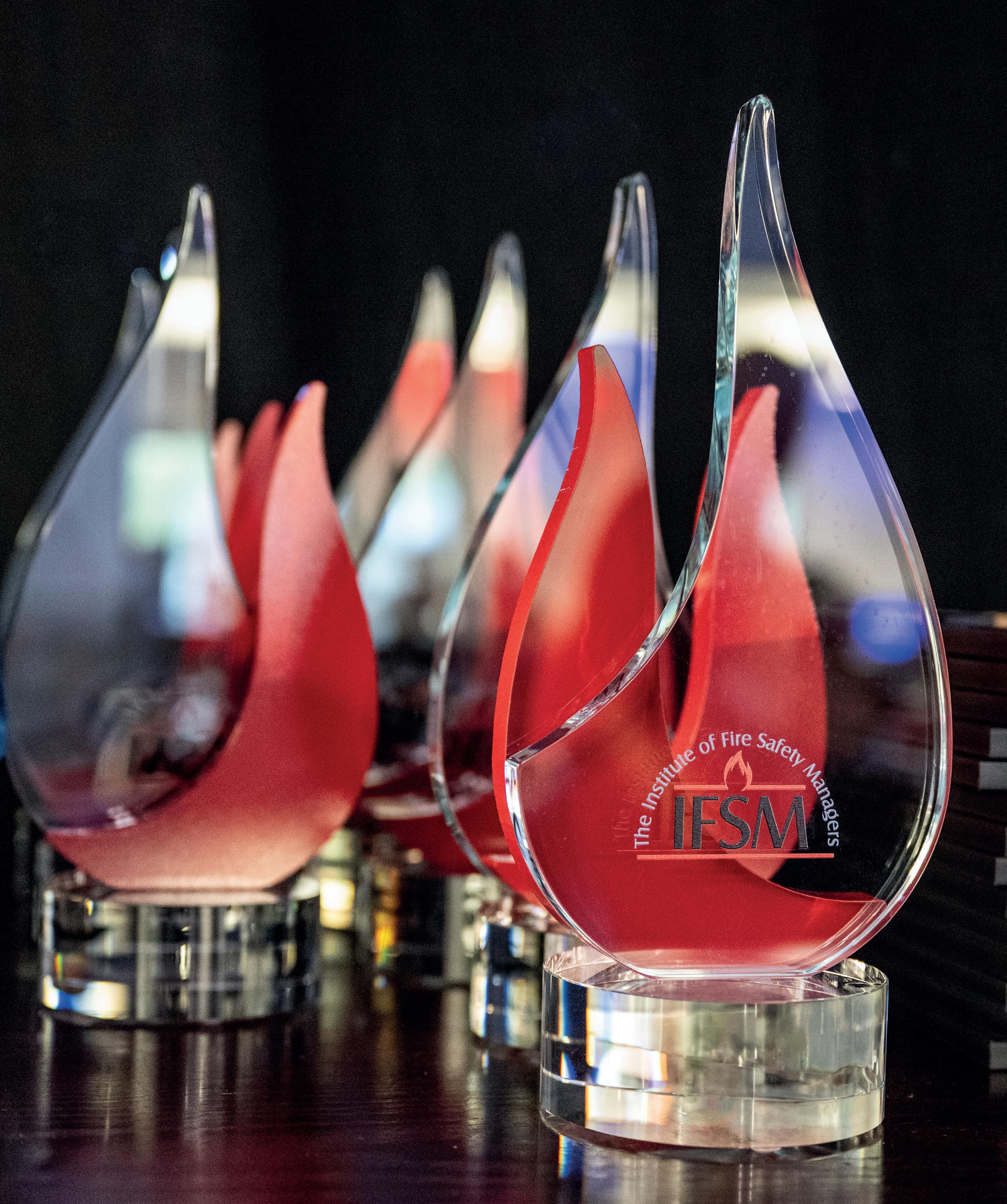
The IFSM Awards are back and set to be bigger than ever, as the industry recognises individuals, teams and organisations that have gone above and beyond to raise standards
The Institute of Fire Safety Managers is delighted to announce that the IFSM Awards 2026 will take place on Thursday 1 October 2026 at the iconic Old Trafford Cricket Ground in Manchester.
Following the success of last year, the awards will once again be hosted in the prestigious Members’ Suite, providing a fitting backdrop to
1
celebrate outstanding achievements across the fire safety profession.
This year’s ceremony promises to be bigger and better. We are thrilled to welcome Jon Briggs, best known as the voice of Siri, who will be hosting the evening. Jon will be joined by a comedian, with additional after-dinner entertainment to ensure a memorable and enjoyable night for all attendees. This year attendees will also enjoy a

full sit-down meal, making the evening a true celebration of excellence, professionalism and community.
The IFSM Awards recognise individuals, teams and organisations who go above and beyond to raise standards and make a real difference within fire safety. The award categories for 2026 are:
Fire safety manager of the year
Young fire professional of the year
Fire safety professional of the year
Fire safety team of the year
Fire safety company of the year
Accreditation course of the year
Fire safety project of the year
Employee of the year
Nominations open on 1 April 2026 and will remain open until 31 July 2026. This is members’ opportunity to recognise excellence, whether it’s a colleague, team, company or project that has made a significant impact.
You can nominate someone by visiting ifsm.org.uk/awards and completing the nomination form. Successful nominees will be in with a chance to win the eye-catching flame design IFSM award, a prestigious symbol of achievement within the fire safety profession.
We look forward to welcoming you to Old Trafford for an unforgettable evening celebrating the very best of fire safety in 2026.
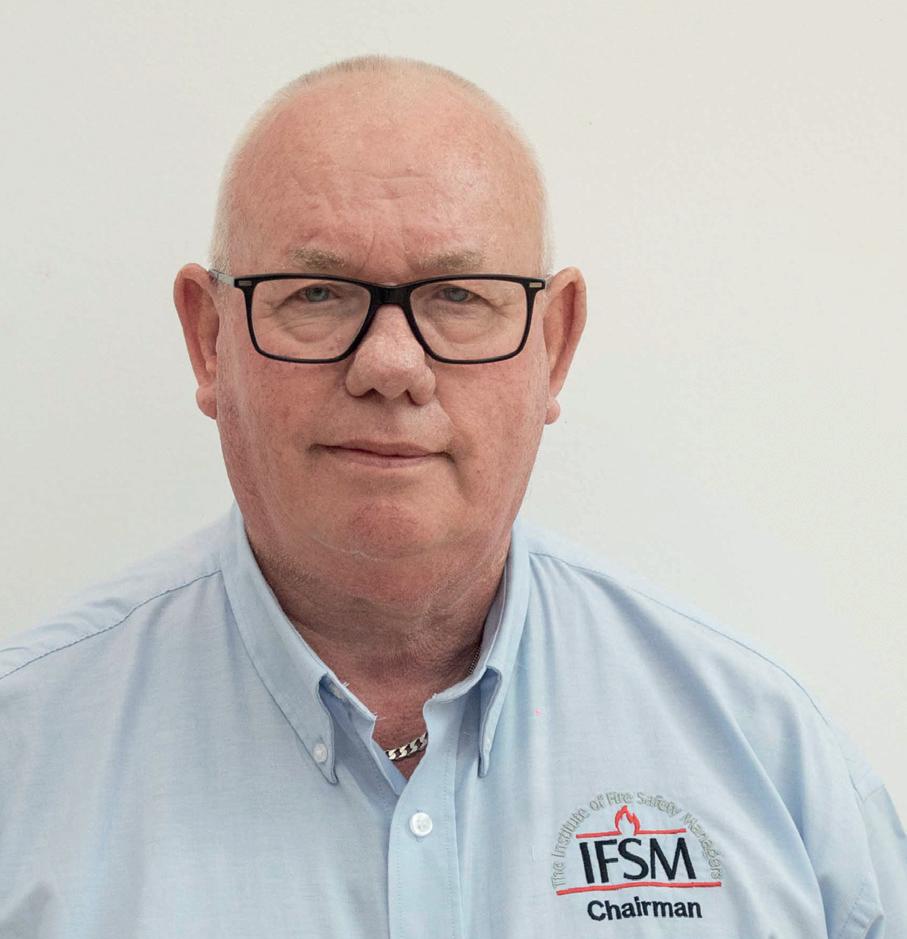
The start of this year has seen trips to Singapore and Dubai to further the reputation of the Institute as an internationally respected professional body
Ihope you are all keeping well and busy. Spring always feels like a good point in the year to pause and take stock, and the first few months of 2026 have certainly started at a steady pace for the Institute.
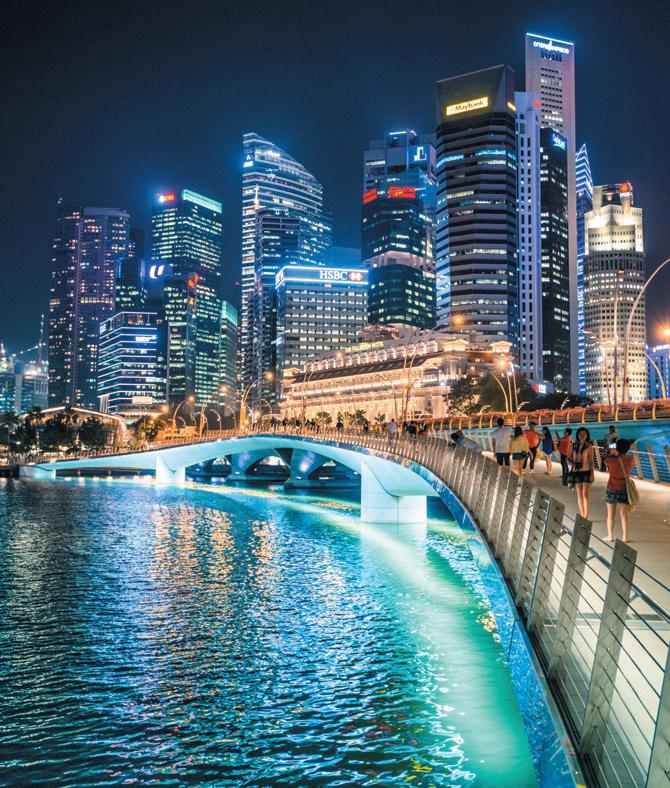
Over recent months, the president and I have had the opportunity to represent IFSM internationally, including visits to Singapore and Dubai. These visits are not simply about being seen overseas, but about making meaningful connections, understanding how fire safety is approached in different parts of the world, and ensuring IFSM continues to be recognised as a professional body with strong values and standards.
Our time in Singapore was particularly insightful. The emphasis placed on regulation, competency and
My focus remains on ensuring that the Institute continues to operate in a professional and consistent manner
professional standing aligns closely with the values the Institute has championed for over 25 years.
During our visit, we met with representatives from the Fire Safety Managers’ Association Singapore, and our discussions reinforced the importance of maintaining clear professional standards for those working in fire safety roles. There was a strong alignment in our respective approaches to competence and professionalism, and it was encouraging to see so many shared principles. These conversations highlighted the importance of IFSM continuing to position itself as a credible, internationally respected professional body, one that understands both UK legislation and the wider global context in which many of our members operate. Dubai, as always, was lively and fastmoving. A large part of our visit focused
on networking, and it was good to see just how well established the IFSM name has become in the region.
We met with existing members, prospective members and a wide range of industry contacts, all keen to understand how the Institute supports different levels of competence and professional development. The Middle East continues to be an important area for IFSM, and the conversations we had there gave me confidence that our presence will continue to grow.
Alongside the international work, it is important to remember that the Institute is built around people. With that in mind, I am delighted to share some happy news from within the IFSM team. Laura, one of our staff members, has recently welcomed a baby girl. She arrived safely, and both mother and baby are doing very well. I am sure you will join me in congratulating Laura and wishing her and her family all the very best at this special time.
As we move further into the year, my focus remains on ensuring that the Institute continues to operate in a professional and consistent manner, while staying true to the values and standards that have underpinned IFSM for more than 25 years. The president and I will, as always, continue to represent you at all levels within the industry, both at home and abroad.
I look forward to meeting many of you at our forthcoming events over the coming months.
David White FIFSM
(Life), MIFireE, MIIRSM, LCGI is chair of IFSM

Book
“This




Fire safety managers have a responsible job, and inevitably that means pressure for them and their teams. While some stress is to be expected, it’s important it doesn’t overwhelm people. Professor Lynda Holt outlines how to keep workplace worries under control
Stress is an integral part of everyday life; it’s a physiological response common to all mammals.
Some stress is good for you. The energy you feel can be motivating; it sharpens your focus and helps you to feel prepared, energised and ready to ‘go’. It is responsible for both excitement and anxiety.
These physiological responses are designed to be short term. You experience stress, you return to baseline. Think of a frightened animal: it might run or freeze, but as soon as the threat is over it goes back to grazing as if nothing ever happened. Humans are designed the same, except our big brains create feedback loops, so instead of going back to grazing we re-run scenarios in our head and worry about what might happen or what others might think of us.
When you add to this work pressure, the need to perform or constantly make decisions, stress stops being situational and becomes continuous. Your nervous system never quite stands down, and that perpetual state of stress changes your biology.
Chronic stress is harmful. It doesn’t make people stronger, more resilient
or more capable. Stress changes your brain, reducing your logical bandwidth or your ability to think straight and your working memory. It also impacts your impulse control and emotional regulation. In the longer term, it increases your risk factors for many serious illnesses.
While very few people get to avoid stress at work, there are things you can do to both manage it and ensure you are not harmed by it. One of the first steps to reducing workplace stress is to normalise conversation about it, to distinguish between the ‘load issue’ that induces stress and the sense of personal failing that so often goes hand in hand with it.
It is often easier to notice stress in someone else than feel it in yourself. If you work with or manage others, be aware of the early signs, like lowered tolerance, irritability, rigidity, changes in risk tolerance, withdrawal or not delivering work on time or to the usual standard.
The sooner you can break a stress cycle, the quicker you get back to the grazing you were designed for. Here are three practical ways to help yourself through stressful periods.
1
Take time to ‘stand down’
Most people move straight from one high-stakes task to the next without taking a moment to reset. If you run through tasks in your mind, you probably start analysing what happened, what might happen, and so on. Your brain can’t tell the difference between real risk, overthinking and cognitive overload, so your nervous system doesn’t get the opportunity to reset. Know what grounds you, calms you and makes you feel like yourself.
Give yourself a deliberate pause after pressure to recalibrate your nervous system. If you are struggling to know what these are for you, try a quick fiveminute walk, ideally outside, or a few minutes of complete calm, with noisecancelling headphones and closed eyes. There is no one right way but there will be a right way for you. These bouts of micro-recovery make a real difference.
2 Reduce your cognitive load
If you often feel like you are carrying the world in your head, then this will be particularly helpful for you. Everyone has a point
Give yourself a deliberate pause after pressure to recalibrate your nervous system
of mental saturation, and the more pressure you feel to juggle tasks, remember stuff or problem-solve, the more fatigued you become. The fastest way to reduce cognitive load is to externalise it, so write lists, use checklists and simplify or systemise as much as you can.
In addition, minimise distraction, multitasking and informationoverwhelm. This is more often about self-discipline than you might think, as when you feel stressed you are often less trusting of your own judgment and lean towards needing more ‘evidence’. Finally, decision-making takes a high cognitive toll, so reduce what you can, share where you can and focus on one priority at a time.
3 Create boundaries and endings
Lack of closure, whether that be of a task or of your responsibility, keeps your brain actively processing, and your nervous system stimulated. Allowing yourself a moment to acknowledge or celebrate completion gives you that respite or reset.
Responsibility can be trickier; it requires you to both create and enforce boundaries around what you are able to contribute and when you might need to ‘stand down’. Regularly ask yourself: what is mine to carry, what is shared and what is genuinely outside my control? Then act accordingly.
Professor Lynda Holt is founder of The Braver Group and honorary professor of social leadership at the University of Salford
Working in historic or unusual buildings – some of which may be functioning facilities for modern organisations –poses unique challenges for fire risk assessors.
David Adams explores the balance between preserving the past and protecting today’s users
One of the benefits of working as a fire risk assessor is the opportunities it offers to work in some fascinating buildings. Some IFSM members only get to work in more unusual buildings every now and then, while others specialise in assessing specific building types, including new, old or refurbished buildings. Each may present different challenges for the assessor.
In some of these buildings, a fire risk assessment may inform the creation or adaptation of a fire strategy. One example might be an assessment following refurbishment of a building that comes under the remit of the Building Safety Regulator (BSR), such as an office block seven or more storeys high or a non-residential building converted for residential use.
In complex projects like these, it may be difficult for the owner or manager of the building, or contractors working there, to accurately compile the ‘golden thread’ of information relating to it that is required by the BSR, says Ahmed Allam Jaheen, director of fire engineering at multidisciplinary professional services firm WSP. In such cases, a fire risk assessment can be a valuable source of information for a fire engineer developing fire safety solutions for the building. “Fire risk assessments as part of the refurbishment of offices play a major role in making up for that lack of accurate information,” says Allam Jaheen. They may also play an important role in buildings that are altered significantly within the ‘permitted development’ element of planning law, which allows such changes without planning permission. In some cases, up to four storeys could be added to a building, creating structural problems likely to be solved through the use of lightweight steel or timber. But this, in turn, creates additional fire safety risks, says IFSM council member, building surveyor and training consultant Malcolm Thomas.
As an example, he points to the case of the Spectrum Building in Dagenham, Essex, on the edge of
London. This former office block had been repurposed for residential and other uses, and two new timberbased storeys had been added to the original five-storey steel and concrete structure. It was destroyed by fire in August 2024, which spread along scaffolding that had been erected to remove flammable cladding. Thankfully there were no casualties, but 80 residents lost their homes.
Assessing fire risks in much older buildings can also be a complex task.
Bob Bantock is a heritage fire safety specialist for the National Trust and leader of a 12-strong team of fire safety experts responsible for protecting thousands of its owned or managed historic and modern buildings across England, Wales and Northern Ireland, including large country houses and industrial heritage sites.
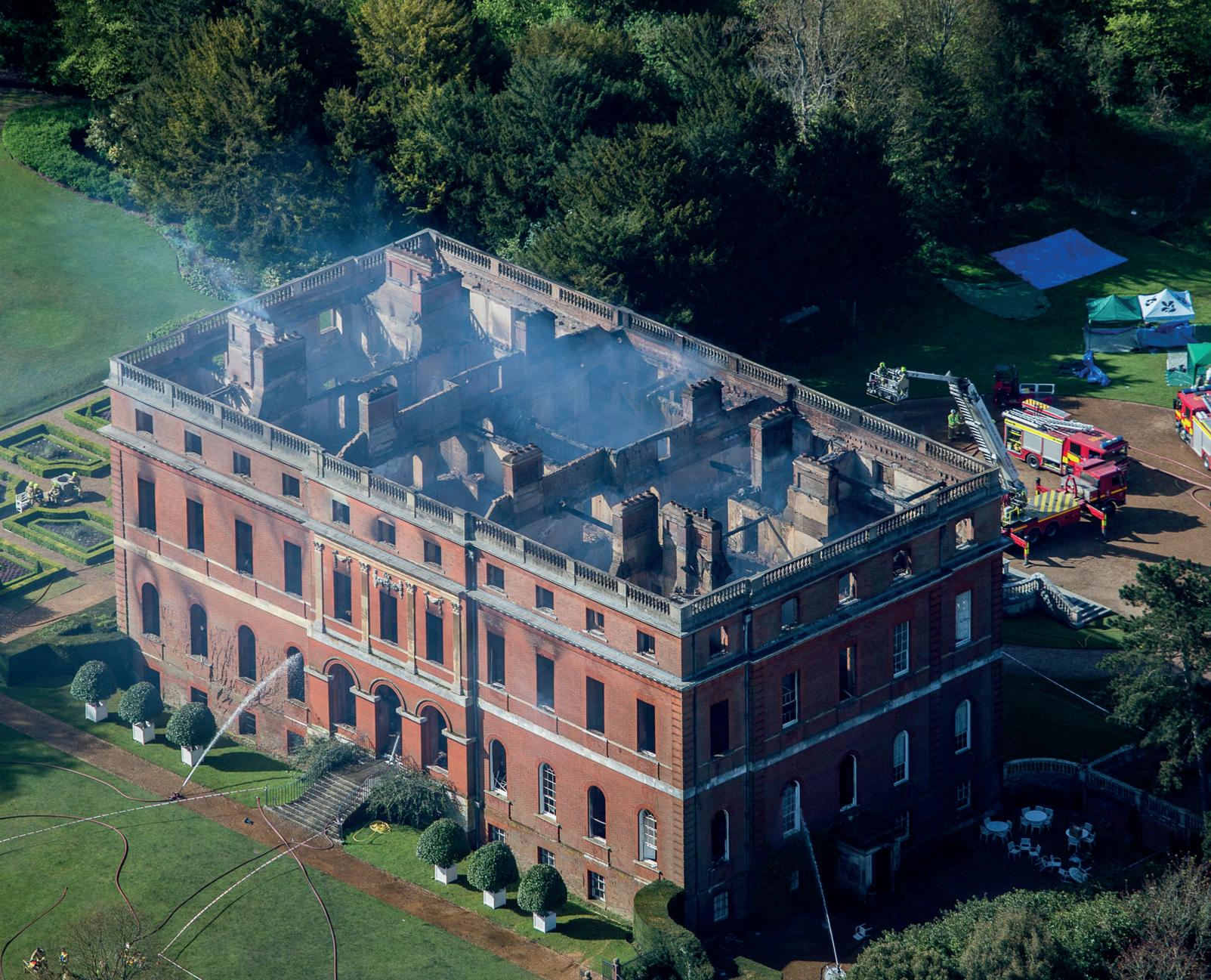
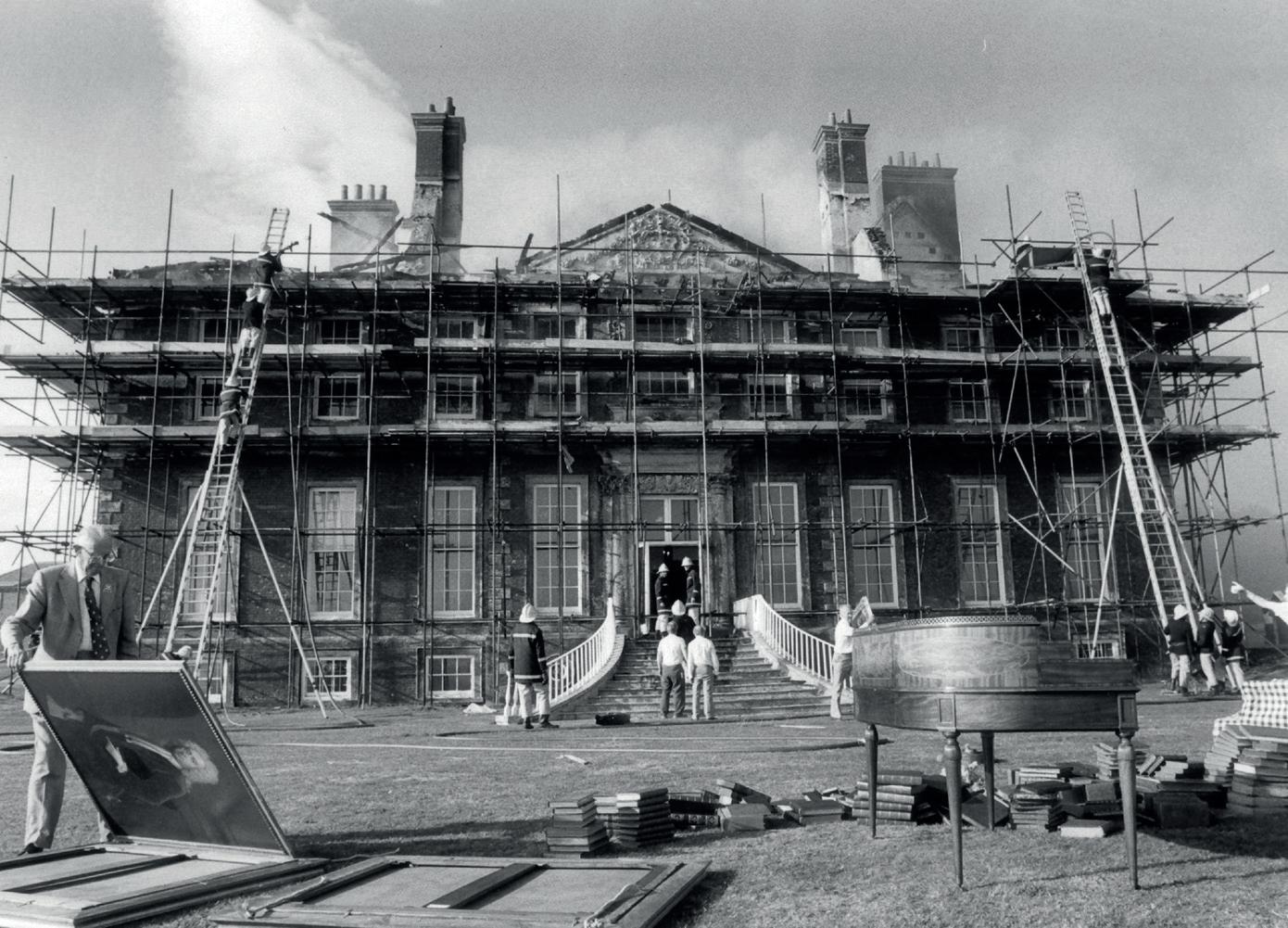
As well as ensuring the safety of people working, living in or visiting the Trust’s properties, the team must also protect the fabric of the historic buildings and the collections of artworks and other items they house. The organisation has experienced disastrous fires in the past: its great houses at Uppark House in West Sussex and Clandon Park in Surrey were devastated by fires in 1989 and 2015 respectively.
To prevent similar disasters, Bantock and his colleagues need to find an appropriate way to apply modern fire safety regulations and legislation to a huge range of listed buildings, many of which may also have specific conservation requirements, at a sustainable cost.
One example might be work in relation to a 300-year-old wooden door in a location where a fire door might otherwise be installed. Options could include using specialist expertise to conceal hard-to-burn materials inside the door, or adding intumescent varnish, paint or veneers to make it less likely to burn quickly. “But all of those options will cost a lot of money,” says Bantock. “And the property may have 150 doors.”
An alternative approach may be to commission research about how fire
develops and grows in a particular room, then create a risk matrix for that room. Bantock gives the example of a country house with a 20m2 Great Hall that has a 3m-high ceiling. “In that room, if you had a fire, the fire and smoke is going to be up at ceiling level before it does anything to the door,” says Bantock. “You might be able to improve the ceiling to stop the fire spreading upwards. It’s a case of making improvements where you can, without butchering the building.”
The Clandon Park fire was caused by an electrical fault, and today large National Trust properties are subject to full surveys of all the fixed wiring inside properties, which is housed in rodentproof MIC cabling. The organisation works closely with local fire services, running exercises on strategies for dealing with fires and creating sitespecific risk information (SSRI) that could be used when responding to a fire within a specific property.
There are also very strict policies on hot works carried out by contractors –the fire at Uppark was caused by a contractor using a blowtorch when fixing lead flashing on a roof. Today no hot works are permitted within 6m of these buildings. Instead, scaffolding may be constructed away from the building where hot works can be completed safely.
Proportionate response
Other types of historic building may pose different challenges. Tim Richardson runs Quinquennial Inspections, a specialist firm based in the West Midlands that conducts fire risk assessments for many churches, alms houses and other historic buildings. His work also involves trying to find practical solutions that balance risk management and conservation requirements. While guidance is available, ultimately the assessor must work with the building owner and possibly also other heritage organisations or authorities to determine the most appropriate level and means of fire protection, says Richardson.
You may not be able to bring it up to a modern standard of passive or active fire protection but sometimes it isn’t necessary
“It’s not black and white,” he says. “You may not be able to bring it up to a modern standard of passive or active fire protection – sometimes that just won’t be possible; sometimes legislation won’t allow it – but sometimes it isn’t necessary.”
For example, while some churches might need automatic fire detection or emergency lighting, others will not.
In a smaller building, such as a parish church, existing safety features may be adequate for ensuring people’s safety.
There will be some fixtures within a church, such as ancient church doors, that simply cannot be upgraded or changed. But Richardson points out that sometimes, in the event of a fire, a door or floor timbers that might not have appeared to offer much fire resistance in theory
turn out to be very slow burning in practice. “You don’t have to try to fire-proof oak, but you can work out the char rate,” he says. “These things sometimes perform better than modern materials.”
Nonetheless, there is often a need to preserve historic features if at all possible. Richardson gives the example of work in a 17th-century Quaker Meeting House in the West Midlands to protect oak panelling.
“This woodwork was very plain and simple, but it was also really historic,” he says. “You could replace it if it was lost, but you’d never achieve what was there originally.” In this case, sprinklers have been fitted in the building to help these fixtures survive a fire. He has also worked in other unusual or historic buildings where a need to take additional action was more clear-cut. Ancient alms houses often have roof voids that are open and shared between multiple

properties, increasing the chances of a fire starting in one spreading quickly to the others. Richardson cites the example of Grade II listed alms houses in Staffordshire dating from 1504, where, with permission from appropriate heritage authorities, compartmentation has now been installed in the roof void, primarily to protect life but also the building.
Some historic buildings present challenges for fire risk assessors because they are used in much the same way as modern public buildings. Simon Davies, a fire risk assessor at Nottinghamshirebased UK-Fire Risk Assessments, encountered problems when assessing fire risks in a listed hotel building dating from the 19th century. Here, a fire engineering solution avoided the practical and regulatory obstacles of completely new fire separation measures between the hotel’s bedrooms. Instead, a high fog/ water mist system was installed to protect escape routes and the rooms leading directly into them.
The government issues regularly updated, extensive guidance on conducting fire risk assessments in hospitals and other complex healthcare premises. But, again, the nature of these buildings, some of which incorporate Victorian sections joined to structures built at various times during the last 120 years, can create additional risks, as can the hospital’s operational needs, which may include repurposing or adapting different parts of the buildings at short notice.
WSP’s Ahmed Allam Jaheen says compartmentation is often a key issue when assessing fire risks in hospitals. Here too, he says, an expert fire risk assessor may be able
to suggest possible improvements to an existing fire strategy.
Finally, there are also some specialist industrial and manufacturing facilities that require special consideration. This may be because of the nature of materials stored or processed there. Davies has completed fire risk assessments in facilities where use of extremely hazardous and explosive materials meant the premises were subject to multiple additional regulatory requirements.
As a result, he says, although parts of some of the buildings on these sites were unusual structures, “there were so many regulations [involved] that in some ways it was quite an easy assessment to do”, with only a narrow range of possible risks and risk mitigation measures to consider.
Working on unusual buildings like these, whether old or new, can be challenging, but rewarding. And the aim of every assessment remains the same: ensuring the safety of people and of the incredible variety of buildings in the UK that can help to improve all our lives, in many different ways.
David Adams is a freelance journalist with a strong background in the built environment
Any IFSM member could benefit from increasing their knowledge of how different types of building structures work, and the implications for fire risk assessments. IFSM council member, building surveyor and training consultant Malcolm Thomas has devised an IFSMaccredited training course, ‘Essential building design and construction for fire safety professionals’.
This focuses on seven common structural types of building used in the UK, fire safety designs appropriate for them and relevant regulations and standards.
It also includes a section about refurbishment and repurposing of existing buildings. He will be delivering the course in April and June in Manchester and London –for further details see ifsm.org.uk/events
Artificial intelligence (AI) is increasingly integrated into modern built environments through connected sensors, automated building systems and advanced data modelling. However, its potential impact on fire safety management, fire engineering and emergency response remains underexplored. This article examines the emerging capabilities of AI, evaluates the limitations of traditional fire safety procedures and outlines opportunities for evidence-based modernisation.
Fire safety as a discipline has historically evolved through major incidents and empirical experience. Much of today’s operational doctrine predates advanced sensing, machine learning and digital building analytics. As a result, several current practices may not reflect the capabilities of modern technology. AI presents opportunities to enhance detection, evacuation and risk assessment, and to reduce responder exposure to hazardous conditions. The following are some of the areas in which AI is currently being used in the fire safety space.
Artificial intelligence is playing an increasingly prominent role in fire safety. This creates opportunities, challenges and the need to re-evaluate legacy practices, says Dr Tony Fogarty
potential to enhance fire detection, evacuation, suppression and compliance
fire
AI systems can dynamically analyse building behaviour using Internet of Things sensors; heating, ventilation and air-conditioning data; energy profiles; thermal imagery; occupancy monitoring; and particulate measurements. Predictive algorithms model ignition likelihood and detect anomalous behaviours that correlate with pre-ignition conditions, shifting fire risk assessment from static observations to continuous data-driven analysis.
AI-enhanced detection and alarm verification
False alarms continue to challenge operational response and occupant confidence. AI-driven multisensory validation can cross-analyse optical smoke signatures, acoustic flame patterns, CCTV analytics, thermographic gradients and human behavioural cues. This allows near-instant differentiation between genuine fire scenarios and non-fire phenomena such as steam, aerosols or dust.
Digital twin technology, updated by real-time building sensors, enables dynamic simulation of smoke spread, temperature changes and occupant movement. AI can model evacuation routes, congestion points, deteriorating conditions and tenability thresholds. These capabilities improve situational awareness for incident commanders and surpass the limitations of static, scenario-based evacuation modelling.
AI can impact legacy procedures such as manual search: Current doctrine relies heavily on manual searches to confirm evacuation. This exposes personnel to unnecessary risk. AI-enabled occupancy verification – via PIR sensors, thermal sensors, CO2 differential monitoring or intelligent smoke alarms –can identify unoccupied spaces and reduce the need for physical searches in many building types.
Lift use during evacuation: Traditional restrictions on lift use were developed before
real-time building analytics existed. AI could evaluate lift shaft temperatures, smoke ingress, compartmentation integrity and motor performance to determine if lifts are safe to operate. This may enable controlled, inclusive evacuation for less-abled occupants, supported by real-time feedback.
AI-driven partial evacuations: Instead of full evacuations or fixed alarm-zone logic, AI can determine exact risk zones by analysing fire growth, smoke migration and tenability. This enables selective, strategic evacuations that reduce disruption while maintaining safety.
Manual first-aid firefighting depends on human availability, confidence and willingness to engage with early-stage fires. AI-guided robots could navigate autonomously, identify fire class and apply appropriate extinguishing media. This adapts existing robotic technologies for fire suppression, reducing risk to staff and limiting fire growth before brigade arrival.
The Building Safety Act emphasises the need for accurate, continuously maintained safety information. AI can support this through automated updating of fire safety files, identification of inconsistencies, interpretation of standards and monitoring changes in building layout or use. This enhances accountability and supports the Golden Thread requirements.
AI must operate within rigorous ethical and regulatory frameworks. Key considerations include algorithmic transparency, GDPR compliance, data governance, validation of predictive models, competence requirements and clear delineation of responsibility. AI should augment – not replace – competent human professionals in life-safety decision-making.
AI has significant potential to enhance fire detection, evacuation, suppression and compliance. It also allows the profession to re-evaluate long-standing assumptions that may no longer be appropriate in a data-rich, sensor-connected environment. Adoption must be carefully governed, ethically aligned and professionally overseen. If implemented correctly, AI may represent one of the most transformative developments in the evolution of fire safety practice.
Dr Tony Fogarty is managing director of RM Risk Management






Martyn’s Law introduces proportionate security duties for publicly accessible venues across the UK, and requires integration with fire safety frameworks. Steven Murfin explores the practical implications and what steps organisations should take to prepare
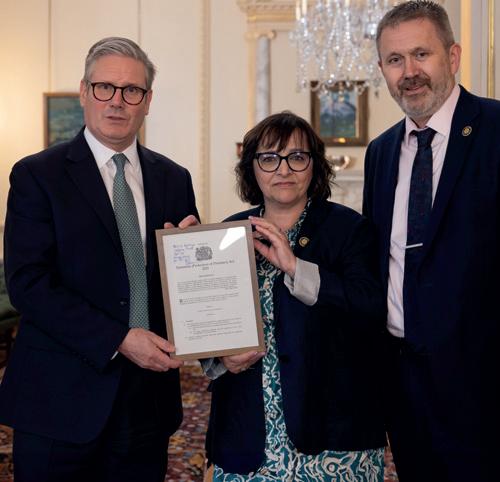
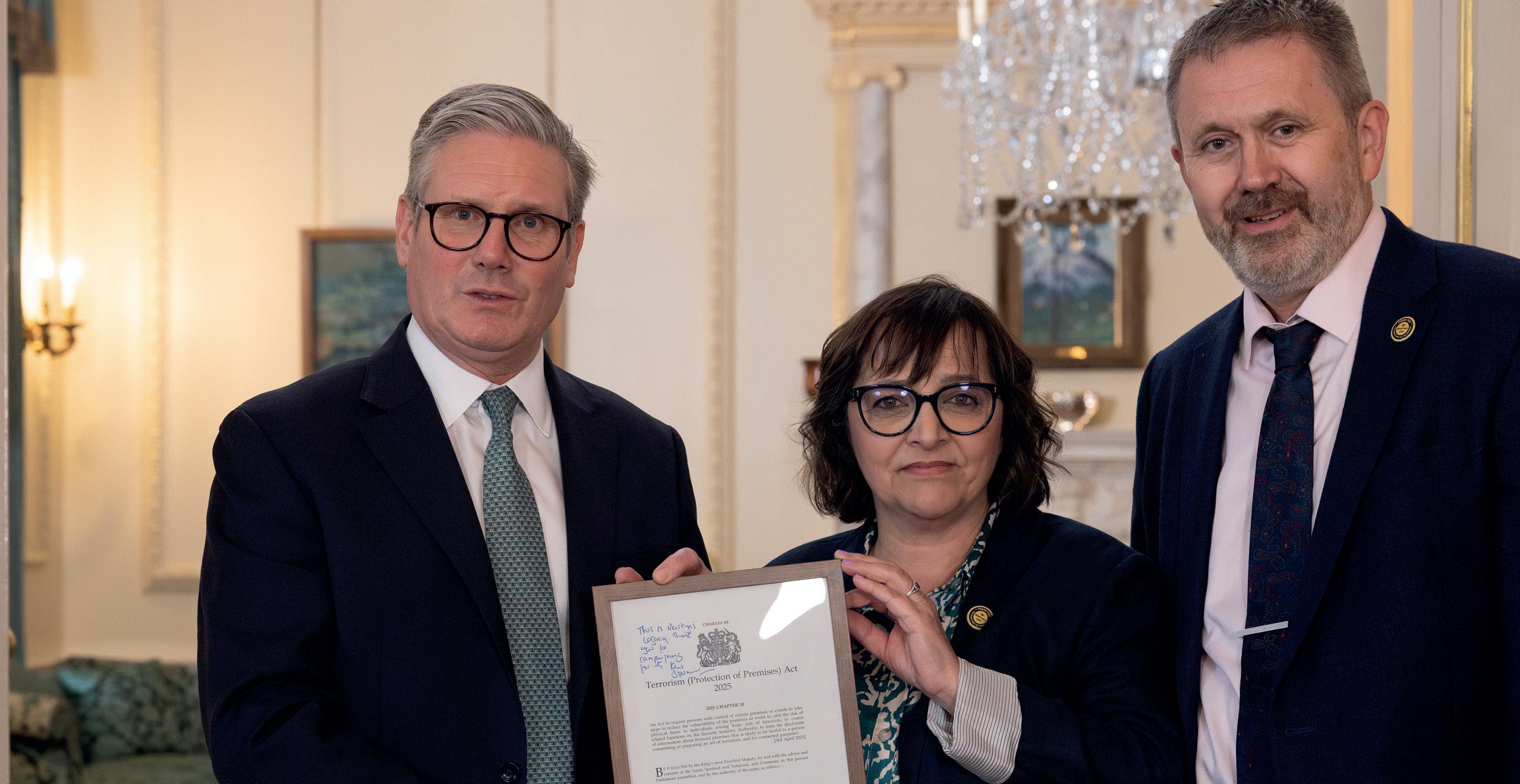
The Terrorism (Protection of Premises) Act 2025 –commonly referred to as Martyn’s Law – marks a significant shift in UK public safety. Rather than fostering fear, the legislation promotes preparedness, awareness and proportionate action. Named in memory of Martyn Hett, a victim of the 2017 Manchester Arena attack, the law reflects the tireless advocacy of his mother, Figen Murray, who argued that if we can protect people from fire, we can protect them from terrorism too.


Martyn’s Law applies to all publicly accessible locations, from small community halls to major stadiums, requiring venues to take reasonable steps to reduce risk and improve emergency response. For fire safety professionals and facilities managers, this is both a challenge and an opportunity: integrating terrorism risk into existing safety frameworks to build a more resilient culture nationwide.
Although the law gained Royal Assent in April 2025, official guidance documents are still pending. The government has set a two-year implementation window, meaning organisations should start thinking about preparing now, even though full compliance cannot be achieved until guidance is published. It’s important that any meaningful change isn’t introduced until the full guidance is published.
At its heart, Martyn’s Law seeks to raise the baseline of protective security without turning venues into fortresses. It introduces proportionate, risk-based duties aligned with three principles: preparedness, protection and resilience. Preparedness ensures


staff know what to do in an emergency. Protection focuses on reducing vulnerabilities through reasonable steps.Resilience means organisations can respond and recover effectively. These principles mirror existing frameworks in fire safety, health and safety, and business continuity, making integration straightforward for most organisations.
incidents. Modern safety management increasingly demands multi-hazard planning, covering fire, terrorism, medical emergencies, crowd surges and severe weather.
Fire safety professionals will play a vital role in compliance by integrating terrorism risk into fire risk assessments, advising on evacuation and invacuation strategies, supporting incident response planning, and assisting with drills and exercises. While Martyn’s Law does not mandate specific qualifications, professionals experienced in risk assessment, emergency planning and crowd safety will be well positioned to support organisations.
Facilities managers will feel the greatest operational impact. They will need to update staff training programmes, review access control systems, adjust contractor management processes, maintain new documentation and ensure regular drills and lessons learned. Enhanced-tier venues must demonstrate compliance at any time, requiring clear records, up-to-date plans and evidence of training.

Martyn’s Law introduces two tiers of responsibility based on venue capacity. The Standard Duty applies to venues with a capacity of between 100 and 799 people. It focuses on practical measures such as basic terrorism awareness training, simple procedural plans and clear communication arrangements. Staff vigilance for suspicious behaviour is also essential. Typical venues include community centres, small theatres, places of worship, pubs and local authority buildings.
The Enhanced Duty applies to venues with a capacity of 800 or more. These venues must undertake structured terrorism risk assessments, maintain documented security plans, and conduct regular drills and exercises. Stronger physical and procedural security measures are expected, along with clear governance and accountability. Examples include arenas, stadiums and transport hubs.
Martyn’s Law applies to all publicly accessible locations, from small community halls to major stadiums
Martyn’s Law introduces several core obligations. All staff must receive terrorism protection training to spot suspicious behaviour, report concerns and respond during an incident. Venues must have clear incident response plans covering evacuation, invacuation, lockdown and communication with emergency services.
Enhanced-tier venues are required to complete structured terrorism risk assessments to identify vulnerabilities and mitigation measures. Proportionate security steps may include access control, bag searches, CCTV, barriers and visitor flow management. Enhanced-tier venues must also maintain records of training, risk assessments, security plans and drills, similar to fire safety documentation requirements.
Martyn’s Law complements, rather than replaces, fire safety legislation. Both frameworks share common elements such as a Responsible Person, risk assessment, proportionate measures, staff training and record-keeping. Facilities managers must understand the difference between evacuation, which is typical for fire, and invacuation or lockdown, which may be required during terrorism
Organisations can take simple, low-cost steps before the law comes into force. They should review existing safety frameworks and integrate terrorism risk into fire risk assessments and emergency plans. Staff training is highly effective and easy to implement, and procedures should be updated to include lockdown and invacuation plans. Communication systems must be reliable, and vulnerability reviews should assess entrances, queuing areas, vehicle access and staff positioning.
Building a culture of awareness is essential, encouraging staff to report concerns and challenge unusual behaviour. For enhanced-tier venues, external consultancy will be vital for risk assessments, security plans and compliance documentation.
Compliance costs for the standard tier are estimated at around £330 a year. Enhanced-tier venues may incur costs of around £5,210 a year for training, risk assessments and maintaining enhanced procedures. Most costs relate to staff time rather than physical security upgrades, which will only be required where reasonably practical.
Martyn’s Law represents a cultural shift in public safety, bringing terrorism preparedness into the same space as fire safety. For fire professionals, it offers an opportunity to strengthen existing systems and improve resilience. Ultimately, the law is not about fear; it is about ensuring tragedies like Manchester never happen again and giving venues the tools to protect the people who walk through their doors.
Steven Murfin is a security consultant and director of Murfin Consulting. Access his free CPD webinar for IFSM members at ifsm.org.uk/member-library/on-demand-cpd-videos
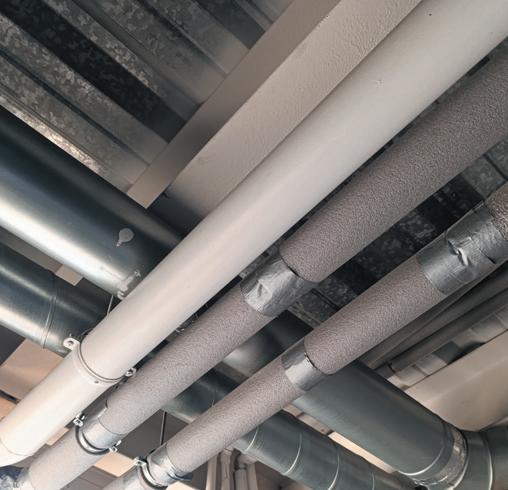
Greater consideration is being paid to safety-critical areas such as fire-resisting ducts and insulated fire wall penetrations. But we also need to consider the reaction to fire of pipe and duct insulation products, says Chris Ridge
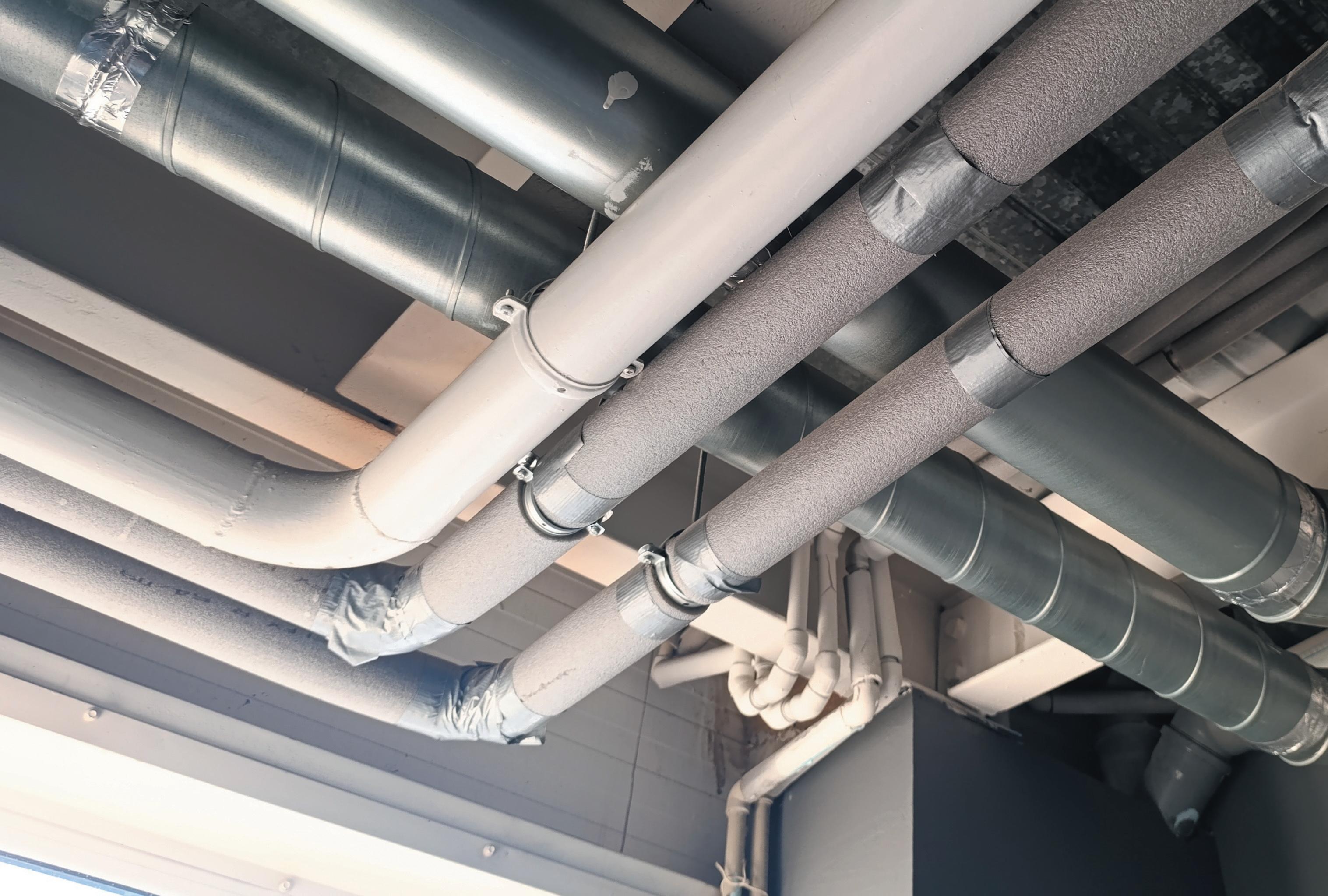
The reaction to fire of structural thermal insulation products is now a key focus for fire safety professionals. However, building services play a significant role in any modern building and careful attention should also be paid to the reaction to fire of pipe and duct insulation. In this article I look at the existing reaction to fire guidance for pipe and duct insulation and then investigate some of the key examples where standards are not being met. Finally, I will consider what may be done to promote good practice in future.
While there remains a stubborn reluctance to let go of ‘Class O’ references within parts of the domestic insulation market, the wider thermal insulation market has
moved on to declaring reaction to fire under the Euroclass standards. Approved Document B specifically mentions pipe insulation just once. In Volume 2 under ‘Extensive Cavities’, there is a requirement for the pipe insulation system to achieve a class C-s3, d2 rating or better “if the cavity is over an undivided area that exceeds 40m in any direction”.
Thermal insulation of pipework and ductwork is not mentioned in the ‘Internal Linings’ section of Approved Document B.
However, the spirit of Approved Document B is represented in BS 5422:2023 (Thermal Insulating Materials for Pipes, Tanks, Vessels, Ductwork and Equipment Operating Within the Temperature Range –40°C to 700°C – Method for Specifying), where a minimum of C-s3, d2 is specified for dwellings and B-s3, d2 is specified for non-dwellings.
Further considerations are introduced in section 27.2.2 of BS 9991:2024 (Fire Safety in the Design, Management and Use of Residential Buildings – Code of Practice), where B-s3, d2 is stated as a minimum where services are run horizontally within common access corridors and lobbies, including corridor access for firefighting shafts (unless enclosed with fire-resisting construction).
In general, building services specifications tend to follow suit, with a minimum reaction to fire performance of B-s3, d2 typically stated. This allows for a large range of suitable products including mineral wool, nitrile rubber and phenolic foams. However, despite the large range of products generally available on the market,
the number of unsuitable products finding their way into construction projects appears to be increasing.
Polyisocyanurate (PIR) is a highly effective insulation, but most PIR variants have a Euroclass reaction to fire of E or F and generally release a considerably higher rate of toxic products than other insulation products when burning.
There are several manufacturers of PIR board selling into the UK market. There is a market for PIR boards for use on externally located ducts and manufacturers that have CE-marked their products for duct applications are very clear that these products are suitable for external work only. In no circumstances should PIR board be used on internally located ducts. It is a potentially dangerous misapplication of product. Thermal Insulation Contractors Association (TICA) first called for a ban on this practice in the autumn of 2022, but sadly this practice still goes on.
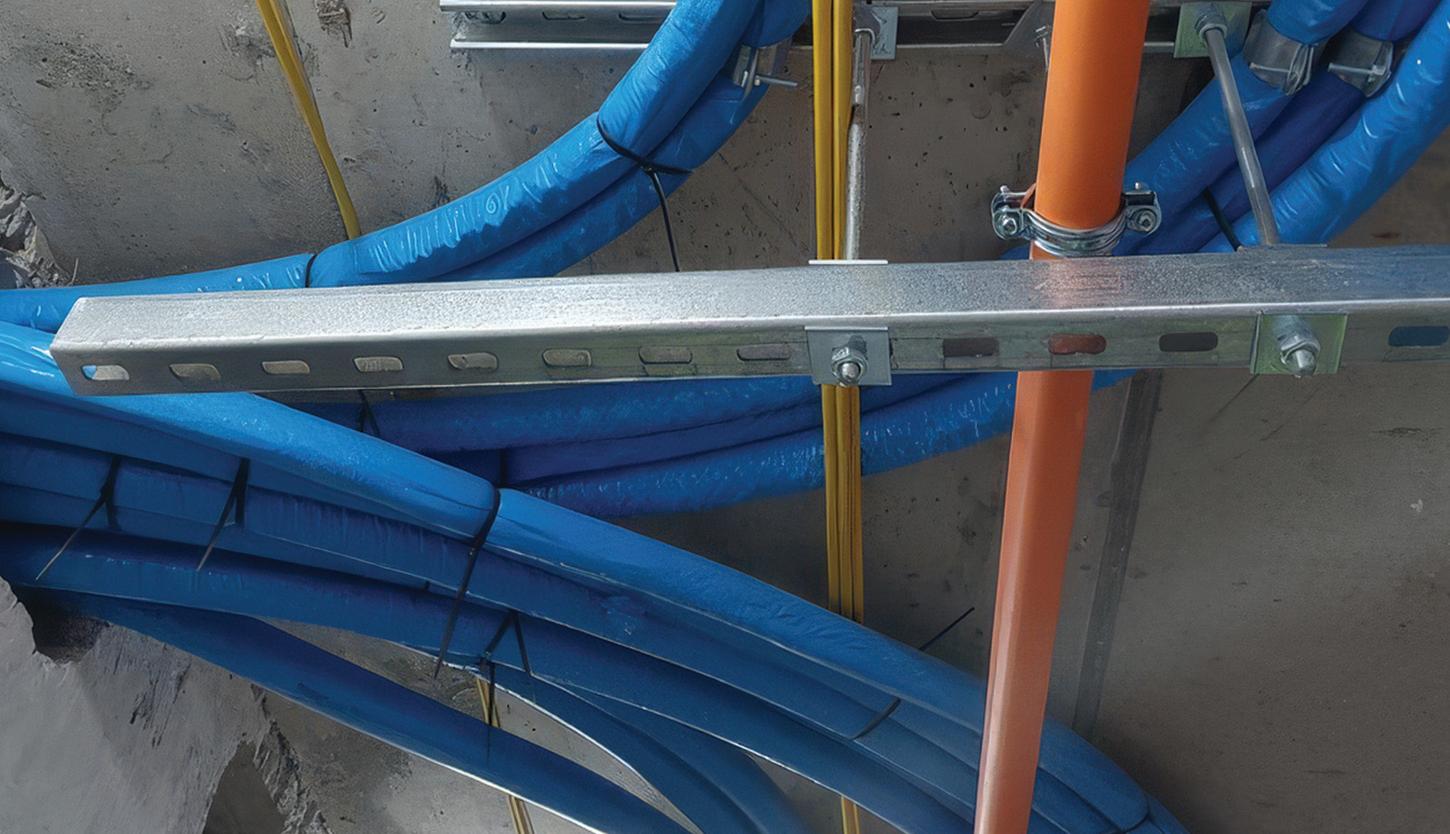
Pre-insulated MLCP (multi-layer composite pipe) systems are typically comprised of an MLCP pipe insulated with a PE (polyethylene) flexible foam and finished with a protective PE sheathing.
Construction products such as thermal insulation for pipework and ductwork are subject to harmonised testing standards and can therefore be specified based on clear parameters. However, when thermal insulation products are hybridised with other
Insulation naturally lends itself to conversion and hybridisation, with thermal insulation products often marketed as new brands
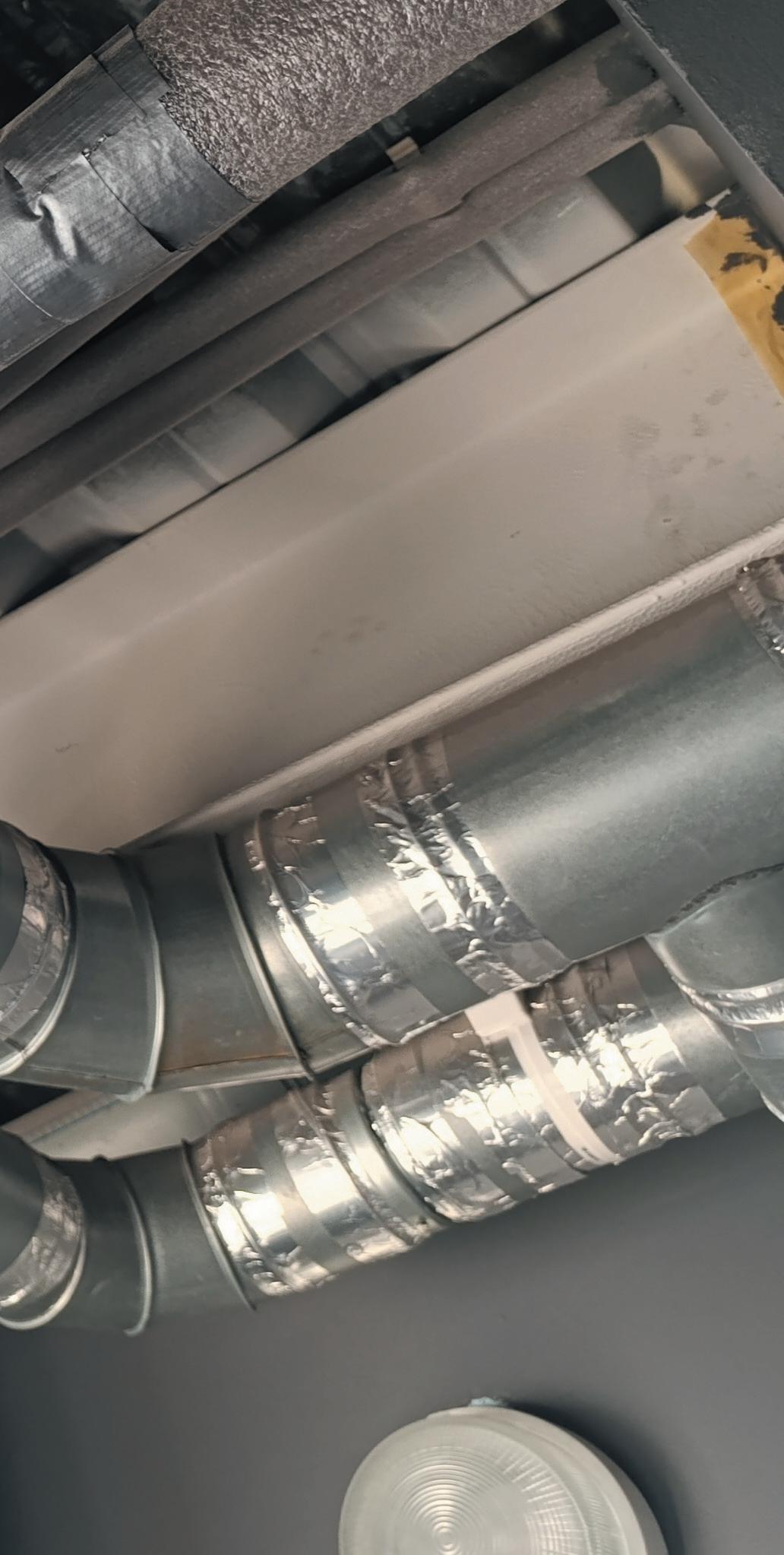
products, they form new products for which there is no existing harmonised standard. MLCP products are therefore not covered under the harmonised standard, and the declared Euroclass reaction to fire for these products can vary anywhere from a B to an E.
This suggests there is a range of approaches in terms of product testing. If a manufacturer is declaring a Euroclass B reaction to fire without an applicable testing standard as reference, what does that Euroclass B actually mean? How is the product being tested? Currently, we just don’t know.
In addition, it is often unclear as to whether the declared reaction to fire for the product is based on a test including the protective sheathing or if it has been based on the existing polyethylene foam performance prior to alteration during the secondary manufacturing process.
Pre-insulated MLCP pipework is by no means restricted to dwellings, and large cable-tied bundles of these pipes are an increasingly common sight in communal areas in higher-risk buildings.
In some cases, we just don’t know how big the potential problems are, and further scrutiny is needed. One area of interest is converted insulation products. Insulation naturally lends itself to conversion and hybridisation, with thermal insulation products often marketed as new brands.
However, it should not be automatically assumed that the stated reaction to fire is for the converted or ‘finished’ product. In some cases, pipe insulation products are converted from insulation boards or blocks. It is worth checking that the reaction to fire is specifically for the finished product. A telltale sign may be a reference to a flat board test (without subscript L) for a linear product that should have a
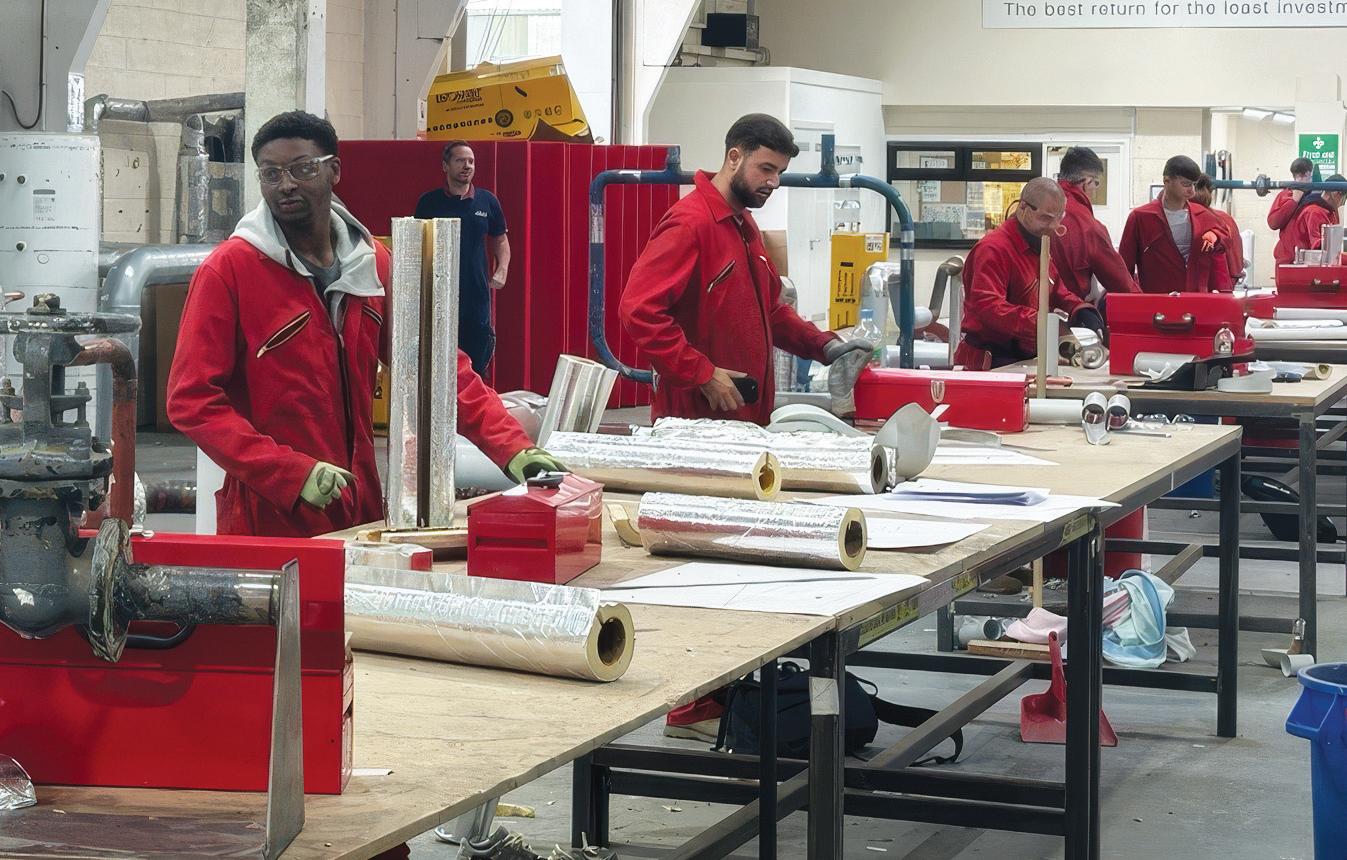
More consideration needs to be given to
subscript L (for example, a B-s1, d0 for pipe insulation instead of a B L, s1, d0).
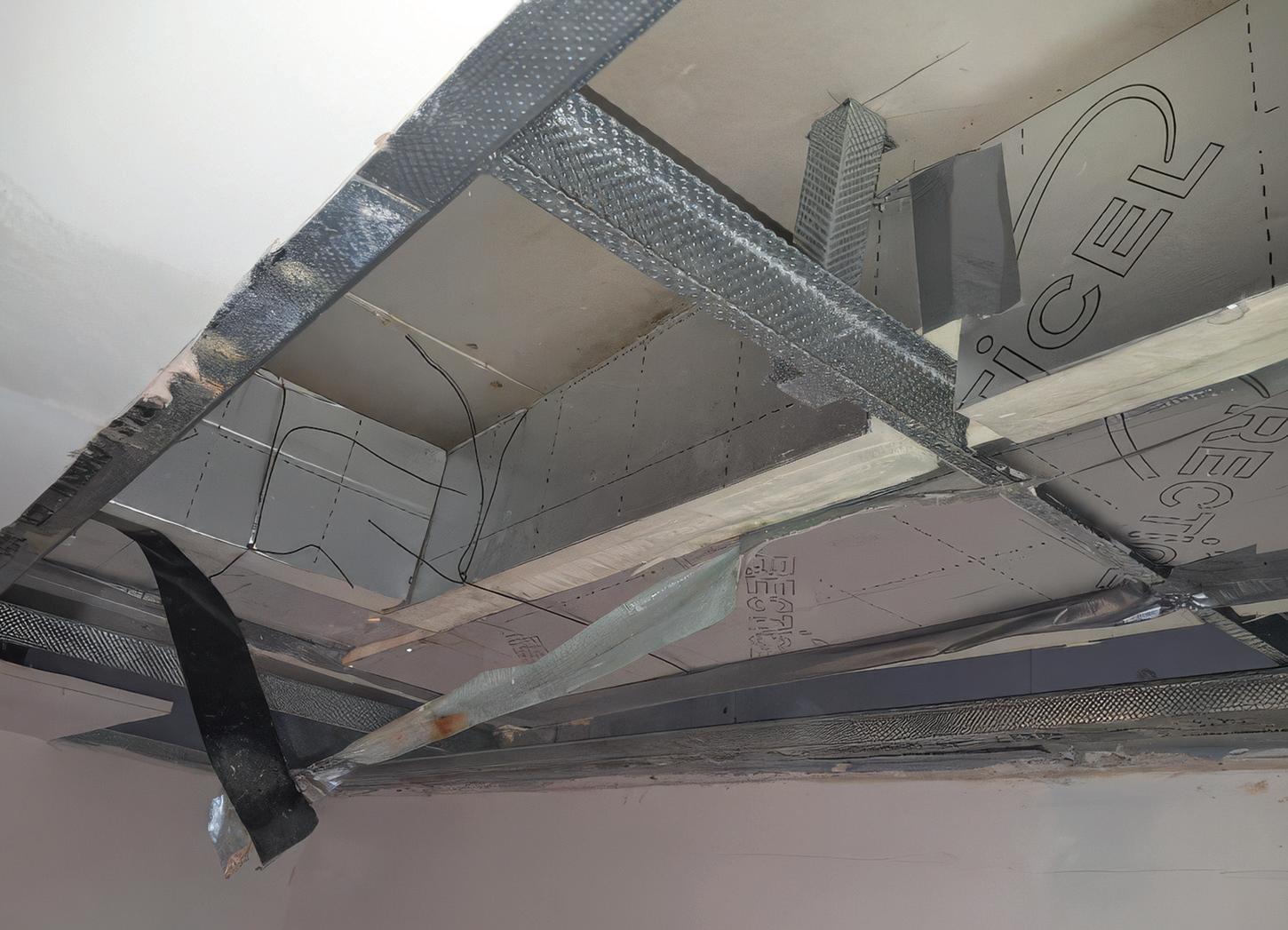
Another area of consideration is pre-insulated plastic duct systems. There are several products available in the UK market where EPS (expanded polystyrene) insulation is marketed in combination with plastic ducts. The typical reaction to fi re for an EPS foams is Euroclass E. These products are typically marketed for domestic ductwork insulation and may oft en be overlooked.
The construction sector is changing and the emphasis on installer competence and organisational capability of the contractor is rising. Trade associations have been tasked with taking a lead on installer competence. Indeed, TICA was among the very first construction sector specialist trade associations to complete a competence framework for our industry.
Domestic thermal insulation installations are usually carried out directly by the trade installer (for example, the domestic heating engineer).
For industrial, commercial and communal residential applications – with the notable exception of commercial refrigeration (like domestic plumbing, commercial refrigeration applications typically incorporate flexible foams that are straightforward to install) – a specialist thermal insulation contractor should be appointed. However, often primary contractors do not consider this on design-and-build projects due to cost constraints and a lack of oversight.
The problems I have highlighted usually occur because a non-specialist has completed the installation inhouse instead of appointing a suitably competent specialist. Hybridised products are being marketed to
installers who do not have the required level of thermal insulation competence.
What needs to happen next?
Trade associations are already working together to provide clarity in areas where trades junction with each other. Pipe penetrations of fire walls is a perfect example of a safetycritical application where multiple competence frameworks need to align, and more consideration needs to be given to early appointment and co-ordination of specialist trades with a clear understanding of responsibilities.
From a reaction to fire point of view, we must consider what a realistic minimum should be. A Euroclass B sets a high threshold in terms of reaction to fire. This allows for the specification of mineral fibre and for most nitrile rubber and phenolic products, while preventing the use of highly flammable products.
However, the majority of specifications still allow an s3 classification for smoke production and a d2 classification for flaming droplets. In both cases, these are the lowest classifications and can include “products for which no performance is declared”.
Other European countries are tightening their standards in these areas, and the UK should not fall behind. I have therefore proposed to the British Standards committee overseeing the future review of BS 5422 that a minimum criterion for non-dwellings should be upgraded from B-s3, d2 to B-s2, d0.
Some of the insulation materials discussed may sound familiar. It is a sobering thought that we are seeing the same materials that contributed to
Be precise about the insulation material you wish to specify – does the product have a suitable reaction to fire performance?
Consider if the insulation material is being used in a dwelling or non-dwelling scenario. Different standards apply and products suitable for dwellings may not be suitable for other applications.
Ensure that a suitably competent thermal insulation specialist has carried out the thermal insulation work (excluding commercial refrigeration and domestic plumbing).
Ask the manufacturer of any pre-insulated pipework product for a copy of the fire test report and seek further advice regarding the suitability of the product (both reaction to fire and fire resistance through compartment walls may need to be considered).
the Grenfell Tower fire still flying under the radar and being used incorrectly. Some cases are an outright misuse of product. Other cases represent a lack of rigour concerning products that fall outside of harmonised testing standards. In all cases, a greater focus on the reaction to fire of the materials we are using to insulated pipes and ducts should be encouraged.
Chris Ridge is technical director of Thermal Insulation Contractors Association (TICA)
IFSM is a professional body for individuals and companies working in the fire industry. Whether you’re just starting out or have years of experience, joining the Institute offers numerous benefits
The Institute of Fire Safety Managers (IFSM) is a recognised body dedicated to promoting high standards in fire prevention, protection and risk management. Membership can enhance your career, offering access to resources, networking and ongoing professional development.
The great thing about IFSM is that applications are open to anyone, at any level, working within the fire industry. Whether you’re a fire risk assessor, facilities manager, fire alarm installer or involved in fire safety in any other capacity, IFSM membership provides the structure and support to help you grow and develop your expertise.
The following are just some of the main reasons people are joining IFSM:
One of the key reasons to join IFSM is that membership is recognised as a mark of competence. By becoming a member, you demonstrate that you have the qualifications, knowledge and experience at the level of membership you hold and pledge to meet the Institute’s high professional standards.
Members receive a digital downloadable certificate, can use the IFSM post-nominals and display the IFSM logo on their website, marketing materials or email signature, signalling their commitment to quality and professionalism.
IFSM has a range of memberships, many of which come with postnominal letters. These include:
Student (SIFSM)
Technician (TIFSM)
Associate (AIFSM)
Member (MIFSM)
Fellow (FIFSM)
Life fellow (FIFSM (Life))*
*This is the highest grade of membership of the Institute and is by way of nomination only.
CPD is essential for staying up to date in your profession. Through highly discounted technical events, workshops, trade shows, quarterly journals and online CPD events, IFSM helps you stay at the cutting edge of fire safety knowledge and practices. Additionally, IFSM strives to share valuable updates on industry news.
IFSM facilitates attendance at annual technical events that are CPD-accredited, online on-demand webinars, online access to presentations from IFSM technical meetings and regular news bulletins.
IFSM also accredits training centres and courses. A full list of accredited providers can be found at ifsm.org.uk/training-courses
IFSM works closely with government bodies, regulatory authorities and industry leaders to represent the views of its members
Members can use their login details to gain access to the members’ library section of the website. This hosts numerous technical documents, presentations and 19 British Standard documents.
For those involved in fire risk assessments, IFSM membership offers the opportunity to be listed on the National Fire Risk Assessors Register (NFRAR). This recognises the different levels of knowledge and competency that each individual holds, ranging from entry-level assessors just starting out in their career (Foundation level; formerly Tier 1) through to Intermediate and Advanced levels (formerly Tiers 2 and 3).
The NFRAR will help you choose a registered fire risk assessor or company in your area with the requisite skills, knowledge, experience and insurance to carry out any fire risk assessment(s).
Affiliate members are businesses and companies that are associated with the Institute, which offer a range of fire-related services to help your organisations. If your organisation operates in and around the fire safety space, you may decide to apply for affiliate membership. Find out more at ifsm.org.uk/affiliates
IFSM works closely with government bodies, regulatory authorities and industry leaders to represent the views of its members. In an everchanging regulatory environment, having a professional body that advocates for you is crucial. IFSM ensures that your voice is heard, influencing policies and standards that impact the fire safety industry.
Joining the Institute is much more than a transaction; it’s an investment in your future. From enhancing your
professional reputation with a mark of competence to offering invaluable CPD opportunities, the benefits of membership go far beyond the tangible. No matter your level of experience or your role in the fire safety industry, IFSM is there to support you, advocate for you and help you achieve your career goals. If you want to take the next step in your fire safety career, becoming an IFSM member is a smart and rewarding choice.
If you’re interested in joining IFSM, please get in touch through any of the below channels:
info@ifsm.org.uk
0330 355 1286
ifsm.org.uk
ADVANCED
● Charlie Brough
● Abigail Hutchings
● Patrick McDonnell
● Denise Houston
● Mark Jones
● Ralph Ash
● Richard Wood
● Martin Polley
● Leigh Cotterill
● Tim Gray
● Michael Franklin
● Clive Whiting
● Jason Petchey
● Andrew Clayton
● Jack Walker
● Rajdeepsinh Ranjitsinh Jadeja
● Neil Trenchard
● Bernard Neill
INTERMEDIATE
● Paul Ricketts
● Jack Halil
● Man Sang Ting
● Manni Singh
● Jason Turner
● Peter Phillips
● James Ford
● Kwok Pan Lee
● Lorna Lenihan
● Adam O’Dowd
● Francis Addo Osew
● Sebastian Hibbert
● Adrian Davies
● Gordon Rose
● Lloyd Kembrey
● Carl Taplin
● Philip Langdale
● Alan Bate
● Daniel Quirke
● Daniel Pyett
● Brian Galsworthy
● Simon Hay
● Nick Hayes
● Ashley Nevols
● Alice Ibbottson
● James McCarthy
● Lukasz Gancarczyk
● Paul Williams
● Paul Jennings
● Daniel Anonye
● Andrew Willison
● Stephen Simms
● Ewan Chrystal
● Lee Neale
● Christian Silver
● Alan Hudson
● Philip Adams
● Jim ODwyer
● Jolyon Ditton
● Alan Heatley
● Artur Kurczak
● Rob Anderson
● Graham Nicholson
● Stephen Doyle
● Silvester Bonsu
● Liam Evans
● Neelambaradharan Karthikeyan Nair Rema
● Earl Engert
● Jason Brunell
● Gergana Vasileva
● Paul Lyness
● John Brookin
● Stephen Boniface
● Robert Pocklington
● Skye Thomas
● Kevin Howard
● Joseph Burke
● Arfon Fry
● David Withers
● Sean Sanders
● Shozlul Amin
● Brandon Bernard
● Luke Whalley
● Mark Friend
● Hal Furneaux-Gotch
● Michael Quinton
● Robert Shirley
● Jordan Robins
● Daniel Navarrina
● Jason Perry
● Simon Jones
FOUNDATION TO INTERMEDIATE
● Daniel Briody
INTERMEDIATE TO ADVANCED
● Lindsay Masson
● Matthew Collins
● Stephen Dudeney
● Alan Dodd
● Darren Craven
● Muz Iqbal
● Joshua Williams
● Mohammed Miah
● Valter Miguel Lavadinho Leitao
● Matthew Brown
● Martin Hall
● John Askew
● Stephanie Millington
● Jason Petchey
● Andrew Clayton
● Jack Walker
● Rajdeepsinh Ranjitsinh Jadeja
FELLOW
● Benedict Koh
MEMBER GRADE
● James Spink
● Philip Adams
● Paul Gotthardt
● Carl Sands
● Raza Arshad
● Jolyon Ditton
● John Heath
● Samir Adhiakri
● David Venus
● Raymond Bosdet
● Craig Parkhouse
● Wesley Mather
● Richard Jewell
● Jordan O’Brien
● Lesley Miller
● Gary Evans
● Haider Al Darraji
● Malcolm Sterling
● Garry Sawdy
● Raimonds Pizics
● Neil Brinham
● Gareth Barbour
● Tariq Qamar
● Russell Smith
● Denis Kavanagh
● Edward Day
● Abhishek Patil
● Leigh Edward Thomas
● Benjamin Stephens
● David Mackie
● William Bledge
● Damon Yoxall
● Gerard Heffey
● Marianne Evans
● Andy Maloney
● Cecil Korishetti
● James Lowe
● Ian Cooksley
● Harvey Dorling
● Paul Dennis
● Matthew Dixon
● Alexander Petrovic
● Kirsten Allen-Ross
● Ben Walton
● Aaron Henley
● Jack Procter
● Ryan Peacock
● Stephen Wollen
● Phil Dolphin
● Mark Firth
● Ivan Slavchev
● Deiniol Lloyd
● Brian Lambert
● Mark Chinery
● Rahul Krishnan Thokkanam Veettil
● Lee Goupillot
● Adam Beaton
● Sean Jenkins
● Tom Spencer
● Alan Richardson
● Richard Coleman
● Richard Deans
● Stephen Simms
● Mark Bernardi
● Rob Jones
● Glen Warnes
● Mark Hickinbotham
● Nazir Ahmad
● Bradley Ward
● Glynn Garnett
● Jeremy Foyle
● Shahmore
● Prasanna Packirisamy
● Dean Farnell
● David Johnson
● Steve Boniface
● Michael Little
● Sean Sanders
● Cliff Wilson
● Keith Hansord
● Carl Brooks
● Sam Wilde
● Declan Rogers
● Martyn John Wild
● Richard Haddad
● David Armstrong
● Satheesh Kumar
● Calum Baxter
● Dylan Thompson
● Abigail Hutchings
● Mongkol Theeralak
● Jonathan Myers
● Kelly Price
● Stevie Clifford-Tucker
● Pierre Guilcher
● George Maclean
● Chris Inch
● Richard Bladon
● Steven Hall
● Juliette Collinson
● Wayne Eaton
● John Walkden
● Dalver Basi
● Paul Walsh
● David Robertson
● Brian Nelis
● Oluwafemi Babatunde
● Andrew Moth
● Jamie Ballan
● Benjamin Finden
● Matthew Jackway
● Danielle Jago-Loughlin
● Lawrence Bestwick
● John Tiernan
● Victoria Davies
● Joanne Munro
● Andrew Neophytou
● Herman Abel
● Simon Jones
● Temitope Mudele
● Anthony Barlow
● Wayne Young
● David Scott
● James Saunders
● Andy Bathie
● Michelle Pitkin
● Richard Hitchman
● Gerard Trehy
● Mark Newstead
● Md Abul Kashem
● Gary Martin
● Martyn Dove
● Gulsen Akyol
● Robert Walker
● Neil Trenchard
● Jack Ridgill
● Huzaifa Karbhari
● David McAndrew
● Clifford McCrory
● Craig Beddall
ASSOCIATE GRADE
● Greg Leadsham
● Mayowa Ibidokun
● Laura Dixon
● David Dursley
● Rachel Finney
● Arun Syamaprasad
● Mary McDade
● Reece Simpson
● Andre Rabie
● Alan Wager
● Andrew Forsyth
● Richard Pettitt
● Diana Kennes
● Olubamise Ala
● Aaron Moxam
● Davide Vezzani
● Leigh Smith
● Kristian Williams
● Ian Kendall
● Karl Thomas
● Paul Read
● Adnan Alhasan
● Anderson Chericoni
● Jamie Irwin
● Faisal Ali
● Jason Perry
● Steve Docherty
● George Draganov
● Kristofer Crossley
● Yiu Wah Kwong
● Andrew Ellitts
● Binita Shah-Graham
● Moshiur Rahman
● Lee Broadbent
● Laura Tull
● Lyndsey Scragg
● Luke McGarrity
● Luke Rosenberg
● George Prinsloo
● Stephanie Hemmings
● Justin Bettles
● Matt McAllen
● Anthony Smith
● Imran Munshi
● David Pretorius
● Rob Shirley
● Ryan Jackson
● James Haworth
● Shozlul Amin
● Jon-Paul Laver
● Zak Akhtar
● Russell Grant
● Colin Sampson
● Hal Furneaux-Gotch
● Nathan Struggles
● Scott Machin
● Muhammad Muneeb Fareed
● Graeme Staddon
● Andrew Haycock
● Julie Noble
● Ediz Arkin
● Daniel Whittle
● Michael Ward
● Robert Wylie
● Stephen Nicol
● Andy Ricketts
● Craig Simmons
● Tony Turner
● Helen Millward
● Oladiran Olaniyan
● Hollyanne Bonfiglio
● Duncan McLaughlin
● Alexander Bladen
● Geena Varghese
● Omar Zaki Mahmoud
● Mahmoud Sami Nachawi
● Sita Madhavi Guduru
Pratap Guduru
● Lauren McQuoid
● James Wells
● Darren Fuller
● Imtiaz Ahmed
● Simon Fogwill
● Anthony Trinder
● Emmanuel Owusu
● Emma Carroll
● Maxwell Diaba
● Donna Haffenden-Angear
● Christopher Gallacher
● Paul Billington
● Siobhan Bowen
● Tony Myers
● Kane Bray
● Leanne Sames
● Russell Bower
● Richie Ellis
● Rick Blaney
● Idris Oyebamiji
● Elizabeth Davis
● Mark Williams
● Niall Carlier
● Peter Drummond
● Jack Rose
● Nicholas Thompson
● Ty Hardy
● Nicholas Senese
● Darren Howard
● Sabrina Gallagher
● Gary Bell
● David Hughes
● Emma Gregorios-Pippas
● Raghad Al Kunani
● Darren Hance
● Imad Ihsan Malik
● Ryan Sheehan
● Duncan Broadbent
● Paul Richardson
● Sam Webb-Wood
● Benjamin George Tomlin
● Stephen Madill
● Laura Firby
● Daniel Chorlton
● Alasdair Jones
● Mathew Robinson
● Raj Baksi
● Nathan Jessimer
● Daniel Watson
● Neil Gardner
● Lauren Watson
● Shannon Jones
● Luke Ventura
● Tyler Wood
● William Hayden
● Bailey Scales
● John Phillips
● Simon Hubbard
● Nina Styring
● Michael John Murphy
● Charlotte Alsop
● Jack Haddow
● Jason Kubiak
● David Wood
● Richard Catto
● Elvis Zgavarogea
● Yehia Abdelzaher
● Ellie Hunter
● Stewart French
● James Butcher
● Abo-Oghene Bratte
● Neil Hartshorn
● Syed Hamza Qaiser
● Jessie Hillman
● Muhammad Usman Ashraf
● Gary Levett
● Lee Verity
● Philip Hardy
● Gary Pearson
● Emmanuel Ezeocha
● Kathleen Evans
● Moshe Abraham
● Sam Matthews
● Derrick Anderson
● Andrew Ellwood
● Kieran Reeves
● George Helsdown
● Lorna Neave
● Gary Keogh
● Peter McKain
● Paul Mullins
STUDENT GRADE
● Viktoria Kuzmina
● Thomas Phillips
● Anna Bastey
● Luke Yeoman
● Terry Borondy
● Ellis Jordan
● Muhammad Asim Zia
● Samuel Harvey
● Aaron Prince
● Paulo Almeida
● Keith Holt
● Ivan Savchuk
● Emily Shield
● Steven McShane
● AJR Commercial
● Aurora UK Group
● Black Hawk Fire Protection
● BlueLight Fire Engineering
● Brick by Brick Property Services
● Bureau Veritas UK
● C&G Facilities
● Capital Fire Risk Assessment Surveys UK
● Corework Property
● Crusader Group Services
● Cube Purple/Fire Arrest
● CWB Fire Safety
● Day Property Services
● DGT fire safety & compliance
● DS Fire
● FD Inspections
● Fireact
● Firenergy
● Firesavvy
● FNS Electrical & Fire safety
● Fortis Fire & Electrical Engineering
● Gleneaston Homes
● Greensurv Group
● HB Fire Protection
● IDS Global
● KP Safety Solutions
● LMAC Group
● Marksafety Consultancy
● Metrix Contractors
● Mx18 Fire Protection
● Omnifire
● PFP Specialists
● PHD Mechanical
● Phoenix Fire Solutions
● Pip&Co. Chartered Surveyors
● Red Peak Compliance
● Risk Safety Services
● Safety at Work Solutions
● Sam’s Total Protection
● Secure & Protect Solutions
● Spectra Analyst Services
● Strathvac
● Surrey Fire Safety
● Tek Security and Networks
● Train Safe Solutions
TECHNICIAN TO ASSOCIATE
● Ryan Marshall
● Adrian Croome
● Raymond Cardew
● Umair Rafiq
● Philip Whitehouse
● Stuart Perry
● Joanne Rafferty
● Bin Quan
TECHNICIAN TO MEMBER
● Ron Harper
● George Bainbridge
● Andrew Burns
● Andy Hargrave
● Andrea Hill
ASSOCIATE TO MEMBER
● Alexei Ghavami
● Benjamin Towner
● William McAllister
● Edward Boyles
● Jason Wilkes
● Greg Precious
● Joel Higgins
● Scott Ford
● Daniel Harrison
● Ben Richardson
● Simon Cracknell
● Abbie Dawson

A senior fire safety consultant at FIT Group, Nick Wright entered the fire safety sector after an initial career as a firefighter
Q How did you first get into the industry?
My introduction into the industry was back in 2011 when I joined the fire service as a firefighter. The role incorporated a foundation level of fire safety knowledge through the understanding of thermodynamics and risk assessments. I took an interest in this side of the industry and enrolled on a fire safety course back in 2017. Since then, I have slowly transitioned away from operational duties to my now full-time role as a senior fire safety consultant.
Q
Why did you feel this was the career you wanted to pursue?
Q What is your current role?
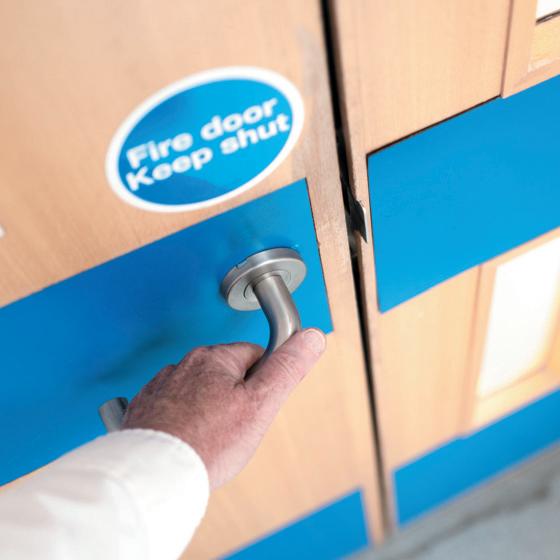
I’m a senior fire safety consultant which incorporates several responsibilities such as conducting retrospective fire strategies, fire risk assessments, passive fire protection surveys including fire stopping and compartmentation, and inspecting fire doors. Building client relations as well as managing existing relations also forms part of my role, which keeps the job varied and exciting.
Q What gives you the most pleasure from your career?
The sense of responsibility and professional pride that comes with my role. The world of fire safety can be confusing and ambiguous at times, so it’s rewarding to assist clients in providing clear and cost-effective solutions to any fire safety issues they have.
Q How would you like your career to develop in future?

It allowed me to focus on the prevention of fires rather than reacting and responding. Understandably there is so much to learn within this career, and I enjoy learning about the different ways in which we can mitigate the risks of fire. The end goal remains the same as firefighting – to keep people safe from fire – however, this approach can be done from the comfort of an office chair with fewer sirens.

I once turned up for a preoccupancy fire risk assessment, only to find the building wasn’t even under construction
I would like to establish myself in the world of fire engineering and further understand that side of the industry. I believe more can be done with regards to the design and construction of buildings to further safeguard people from fire, and I’d like to explore this further. I’m hoping to work alongside experienced fire engineers to gain better knowledge.
Q What piece of advice would you have for your younger self?
Q How has your career developed to date?
I began conducting fire risk assessments back in 2017. I took my time to ensure I gained enough experience and fully understood the importance of fire safety. Once I felt I had a grasp of the basics, I began enrolling on several courses to underpin my knowledge. To further my development within the industry, I gained the Level 5 Diploma in Fire Engineering Design in 2024.



Q What’s the oddest situation you’ve encountered?
I once turned up for a preoccupancy fire risk assessment, only to find the building wasn’t even under construction yet. It was a bit of a head-scratcher and had me wondering if I was at the right location. I ended up co-ordinating with the client to come back once work had started. It probably set a new office record for the least time spent on site.


I would say that it’s okay to make mistakes. Every error is an opportunity to learn and improve. Early in my career, I sometimes feared getting things wrong, but I’ve realised that acknowledging and learning from mistakes is what builds confidence, competence and professional judgement over time.
Q What do you get up to outside of work?
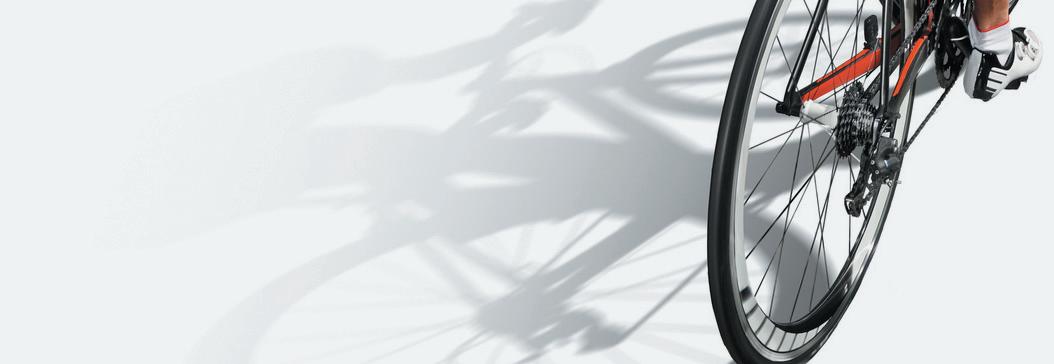
The job can be sedentary at times, so I like to offset this by keeping fit and active. I’m currently training for a triathlon, which can be physically demanding and time consuming, but I enjoy the challenge. When I’m not being a general nuisance to other road users on my bike, I like to catch up with family and friends and unwind with a Guinness or two.

Professional recognition
Gain credibility for your commitment to maintaining the highest fire safety standards within your business.
Stay informed and compliant
Join our mailing list for access to webinars, training, industry insights and fire safety updates, including our exclusive quarterly Daedalus Newsletter.
Logo & website link
Increase online visibility with your logo and a direct link to your website on the IFSM website.
User-friendly profile
Keep your profile updated, download certificates and purchase tickets to events and industry workshops at a discounted rate.
Networking opportunities
Connect with a dynamic network of experts fostering valuable contacts and potential collaborations.
Marketing opportunities
Take advantage of discounted advertising rates and the opportunity to submit articles, boosting your organisation’s visibility and thought leadership.
Tel
Email info@ifsm.org.uk
Web www.ifsm.org.uk