
Angèle Taylor












Angèle Taylor
By Ken Waddell

As we approach 2026, DOCUMENT STRATEGY is embarking on one of the most significant evolutions in our history. The industry we serve has changed dramatically over the last decade. What began as distinct disciplines — customer communications, information management, compliance and document design — have converged into an interconnected ecosystem where technology, regulation and customer expectations move faster than ever before.
To meet this shift head-on, our editorial strategy is expanding and realigning to reflect how our readers actually work today. Beginning this fall, you’ll notice new categories, updated navigation and fresh editorial voices that bring clarity to a complex landscape.
Here’s a glimpse of what’s ahead: Customer Communications & Experience will connect the dots between outbound communication, personalization, and customer journey design.
Content & Information Management unites creation, storage, and governance strategies under one roof.
Process Automation & Workflow takes a deeper look at digitization, intelligent document processing, and efficiency gains.
Compliance, Risk & E-Discovery will reflect the growing role of regulatory strategy and compliance-by-design.
AI & Intelligent Automation, Cloud & Digital Transformation, Emerging Technologies, and
Sustainability & ESG Reporting represent new categories born out of direct industry demand and future-facing opportunity.
These new categories will guide our coverage, ensuring we provide both the depth and breadth our readers need. Just as importantly, our editorial goals are shifting to prioritize practical, actionable content — strategies you can implement, lessons learned from peers and real-world case studies that help make the business case for modernization.
We also know that no single audience defines this industry — but they all share a need for content that speaks directly to their roles. That’s why DOCUMENT STRATEGY will begin introducing role-based navigation, so readers can easily find content tailored to their function and priorities.
You’ll see more coverage of applied AI, emerging technologies, and how companies balance innovation with regulatory obligations. You’ll also see new series that explore funding models, executive decision-making and anonymized business cases — because the conversation must move beyond theory to practical justification and measurable impact.
But most importantly, we want this transformation to be a collaborative one. DOCUMENT STRATEGY has always thrived because of its community of contributors — practitioners, thought leaders and innovators who share their expertise. As we move forward, I invite you to be part of shaping the conversation. Share your ideas, submit content or suggest new areas we should be exploring. You can find contributor information at www.documentmedia.com/contributors reach out directly to Erin Eagan at erin@rbpub.com
president Chad Griepentrog
publisher Ken Waddell
managing editor Erin Eagan [ erin@rbpub.com ]
contributing editor Amanda Armendariz
contributors Mitch Anderson
Gary Gregg
Stephanie Holden
Patrick Kehoe
Mia Papanicolaou Eric Riz
Elizabeth Stephen Angèle Taylor
John Zimmerer
advertising Ken Waddell [ ken.w@rbpub.com ] 608.235.2212
audience development manager Rachel Chapman [ rachel@rbpub.com ]
creative director Kelli Cooke
PO BOX 259098
Madison WI 53725-9098 p: 608-241-8777 f: 608-241-8666 email: customerservice@rbpub.com
DOCUMENT Strategy Media (ISSN 1081-4078) is published on a daily basis via its online portal and produces special print editions by Madmen3, PO BOX 259098, Madison, WI 53725-9098. All material in this magazine is copyrighted ©2025 by Madmen3 All rights reserved. Nothing may be reproduced in whole or in part without written permission from the publisher. Any correspondence sent to DOCUMENT Strategy Media, Madmen3, or its staff becomes the property of Madmen3.
The articles in this magazine represent the views of the authors and not those of Madmen3 or DOCUMENT Strategy Media. Madmen3 and/or DOCUMENT Strategy Media expressly disclaim any liability for the products or services sold or otherwise endorsed by advertisers or authors included in this magazine.
SUBSCRIPTIONS: DOCUMENT Strategy Media is the essential publication for executives, directors, and managers involved in the core areas of Communications, Enterprise Content Management, and Information Management strategies. Free to qualified recipients; subscribe at documentmedia.com/subscribe.
REPRINTS: For high quality reprints, please contact Chad Griepentrog, 608-241-8777, chad.g@rbpub.com

With over 30 years of experience in print and electronic media, Chris Canaday is a grizzled veteran of the communications revolution. Over the past decade, he has been focused on helping Northwestern Mutual modernize its client communications ecosystem. Currently, Chris serves as the Assistant Director of Strategic Initiatives within the Print and Digital Document Management (PDDM) function at Northwestern Mutual. In this role, he is helping shape the company’s Client Experience vision, expand digital capabilities and modernize legacy processes. Chris has held a variety of technical and business positions, including Information Architect, Senior Engineer, and Director of Transformation. He has also led numerous tech modernization, outsourcing and eDelivery acceleration initiatives, demonstrating his ability to drive innovation and efficiency for the enterprise. Chris previously served as an Advisory Board member for the Document Strategy Forum.

Aaron Horsfield, MHA, MPH, is an experienced leader in healthcare and insurance. As the Sr. Director of Plan Operations at UPMC Health Plan, he drives operational efficiency initiatives through transformation, change management, and transparency. His background includes health policy, transactional communications, insurance operations, and healthcare strategy. Aaron is a 2022 Pittsburgh Business Times and Leadership Pittsburgh Inc. 30 under 30 honoree, volunteer board meeting with Iowa Hugh O’Brian Youth Leadership, United of Way of Southwestern PA, National Avairy, GOLD Leadership Group with the University of Iowa Center for Advancement, and advisory board member across the CXM industry. Additionally, he served as an Advisory Board Member for the Document Strategy Forum.

Andy Keller is the Domain Architect at USAA responsible for Operational Messaging at USAA. Andy began his career at USAA in 1984. For 41 years Andy has been involved in USAA Communication technology, starting as a specialist in Printing, but over time expanding into Omnichannel. Andy provides technical direction for communications resulting from business transactions. This includes EMAIL, SMS, Mobile Messaging, Hosted Documents, and Print\Mail. USAA’s goal is to communicate with their members where and when they want. Additionally, he served as an Advisory Board Member for the Document Strategy Forum. Via this forum as well as other industry groups he has forged a level of expertise that the industry finds value. He specializes in eDelivery, Document Accessibility, and print vendor management while also maintaining a reasonable level of understanding of Document Archive and Records Management domains.

Pat McGrew helps companies perform better in the print hardware, software and printing services industries. Her experience spans all customer communication channelsand segments including transaction print, data-driven and static marketing, packaging and label print, textiles, and production commercial print using offset, inkjet, and toner. She is certified as a Master Electronic Document Professional by Xplor International, with lifetime status, and as a Color Management Professional by IDEAlliance.

Jennifer Raml, Information Technology Manager at Acuity a Mutual Insurance Company, is a strategic technology leader with over two decades of experience streamlining document workflows and customer communications in banking and P&C insurance industries. She has successfully led enterprise-wide CCM implementations and automation initiatives while building high-performing technical teams. Her expertise spans document strategy, business analysis, and process optimization, with a proven track record in modernizing customer communications.

Will Morgan is an experienced industry analyst with expertise in the Customer Communications Services market. As Aspire’s Senior Research Analyst, he works alongside the wider team to provide advice, insight and vital intelligence to the company’s expanding customer base on both sides of the Atlantic. Before joining Aspire, Will worked with Keypoint Intelligence-InfoTrends’ Customer Communications and Business Development Advisory Services.
W H Y A I I S
T H E K E Y T O
B R E A K I N G
D O W N C C M
M O D E R N I Z AT I O N
B A R R I E R S
Tackle modernization with confidence and realize lasting business value
By Patrick Kehoe

For many large, regulated organizations, customer communications management (CCM) systems have quietly become one of the most expensive and limiting parts of the technology stack. According to Aspire, 39% of enterprises now cite costly system maintenance as their top CCM challenge. These legacy environments demand constant IT support, siphoning resources and forcing technical teams to focus on template edits and system upgrades instead of innovative, forward-thinking projects.
The impact of keeping outdated systems in place extends well beyond IT. Time to market is slowed and responsiveness to customer demands is limited. On top of that, the fragmented nature of the overall ecosystem, with content scattered across multiple platforms and managed by separate teams, makes it nearly impossible to maintain consistency or deliver a true omnichannel experience.
Consider the situation one organization in the mortgage servicing segment faced before starting its CCM modernization journey. The company’s communications were spread across multiple legacy CCM platforms, each with its own content library and change management workflow. Hundreds of duplicate templates were required to account for state, product and client variations. Every change, no matter how small, had to be coded in by IT, which meant even routine updates could take months to implement.
Modernizing to a next-generation CCM platform offers a way to break free from these manual processes, mounting technical debt and outdated technology. Yet many organizations still hesitate, concerned about the perceived complexity, cost and risk of migration — even as the business case for change grows stronger by the day.
The complexity of legacy CCM environments can make migration feel like an expensive gamble. Years of accumulated content, targeting logic and one-off client or product customizations create a daunting task. Organizations face tough questions: Which content should be kept, rewritten or retired? What needs to be improved? Who will review, standardize and approve it all?
The right approach to tackling CCM modernization isn’t throwing more resources at the problem or outsourcing to third-party agencies unfamiliar with your industry. It’s AI.
Traditionally, migration has meant developing standards, then assigning large teams to review and rewrite each document one by one. Depending on the size and scope of the project, it can take years and consume millions of dollars. Faced with that reality, many organizations postpone modernization indefinitely. Others take the path of least resistance: A “lift-and-shift” approach that moves all existing content into the new platform as-is, carrying forward the redundancies, inconsistencies, outdated content and complex workarounds from legacy systems that caused problems in the first place.
If organizations don’t find ways to improve and optimize their content
during migration, they risk compromising the efficiency and customer experience gains investing in a new system is meant to deliver. So, what is the best way to tackle this process to ensure all goals are met?
The right approach to tackling CCM modernization isn’t throwing more resources at the problem or outsourcing to third-party agencies unfamiliar with your industry. It’s AI. Purpose-built CCM migration tools now leverage AI to automate the most difficult and time-consuming aspects of the process, while also improving the quality and consistency of the content being migrated. These tools provide powerful rationalization capabilities. They are capable of ingesting thousands of documents and templates from a variety of legacy systems and breaking them into smaller, logical components. Dashboards and reports then provide organizations with clear visibility into the attributes, patterns and commonalities across their entire communications library.
Using semantic analysis, AI identifies duplicate and near-duplicate content, such as a disclosure repeated across hundreds of documents and consolidates it into shared content objects which can be reused across communications. At the same time, outlier content, like a clause that only appears once or twice in a library of 1,000 communications, can be flagged for removal unless there is a compelling reason to retain it.
The most advanced tools also embed AI-assisted optimization directly into the migration process. They highlight content that is unclear, overly complex or off-tone, and can recommend

rewritten alternatives aligned to internal readability or sentiment benchmarks, or even to ISO plain language standards. They also detect brand guideline violations, such as incorrect fonts or design elements, to ensure all communications used throughout the customer journey deliver a consistent, cohesive experience.
The impact these tools can have is significant. For the organization referenced earlier, AI-assisted migration reduced their template library by more than 85%, cutting their content management burden dramatically. The project was completed in a fraction of the time a manual process would have required, leaving behind a streamlined, standardized content library as the foundation for their new platform.
Ultimately, the capabilities of the system you migrate to will determine how much value you can capture from modernization. Not all CCM platforms
that call themselves “modern” are created equal. In today’s ever-changing omnichannel landscape, the ideal system functions as a centralized content hub supporting all channels. In these systems, content is managed independently from channel-specific templates, meaning the same approved component can be delivered to print, email, SMS, web and mobile without duplication. This eliminates the need for channel-based silos, reduces the risk of inconsistencies, and makes it easier to support new channels as business needs evolve.
Within the hub, content sharing and reuse capabilities are critical. Common elements like disclosures or contact information should be managed from a single control point and reused across multiple communications and channels. This change in approach is not only far more efficient, but it also improves the accuracy and consistency of the end-customer experience.
The hub should support full cloud deployment, with both content
management and composition running in the cloud. Cloud-native platforms lower ownership costs by reducing infrastructure and maintenance needs while delivering automatic upgrades, new features and security updates as soon as they are available. They should also be highly scalable, able to handle spikes in communication volume without disruption, and provide a secure, fault-tolerant environment that ensures stability.
Finally, look for no-code solutions that maximize control for business users. Non-technical teams should be able to manage the end-to-end process — from creating and updating communications to defining business rules and even adjusting composition templates — through a single, intuitive UI. When the change management process is no longer bottlenecked by IT availability, change cycles shrink from months to minutes, giving the business the agility to launch products faster, respond to client needs in real time, and meet regulatory deadlines with ease.
CCM modernization is no longer optional for organizations that want to stay competitive, control costs and deliver the modern, digital-first experiences customers expect. The barriers may seem daunting, but with a clear strategy and the right technology, organizations can finally tackle modernization with confidence and realize lasting business value.
PATRICK KEHOE is Executive Vice President of Product Management, driving product strategy in collaboration with the product development team at Messagepoint, a provider of customer communications management software. Kehoe brings to the company more than 25 years of experience delivering business solutions for document processing, customer communications and content management. For more information, visit www.messagepoint.com.

By Angèle Taylor
Resistance to change is a familiar challenge in any transformation initiative, but it becomes especially entrenched in document-heavy environments. These are the systems and workflows that have been built over decades and are often deeply embedded in compliance, customer communications, and operational processes. When leaders attempt to modernize these areas, they frequently encounter a paradox: the more critical the process, the more resistant the organization becomes to changing it.
According to a 2025 study by the Association for Intelligent Information Management (AIIM), 78% of companies are now operational with AI-powered document processing. This marks a dramatic shift from previous years, when
stalled projects and skepticism around AI readiness were common. Yet despite this momentum, resistance remains a persistent barrier, especially in organizations where document workflows are tightly coupled with legacy systems and regulatory requirements.
This resistance isn’t just about technology. It’s about people, habits and the perceived risks of disrupting something that “works well enough.” Employees who have spent years navigating legacy systems often develop a sense of ownership and expertise that feels threatened by automation or AI. Meanwhile, managers may hesitate to invest in change due to sunk costs, regulatory complexity or fear of operational downtime. These concerns are valid, but they can also become barriers to progress if not addressed strategically.
Understanding the roots of resistance is the first step toward overcoming it. In document-heavy processes, resistance often stems from a combination of psychological and structural factors. On the human side, there’s the fear of losing control, the anxiety of learning new tools and the skepticism that change will actually improve day-to-day work. On the structural side, legacy systems are often deeply integrated with other business-critical platforms, making change feel risky and expensive. The result is a kind of organizational inertia, where the cost of doing nothing is quietly accumulating, even as the world moves forward.
That cost is rarely visible at first. Yet over time, it manifests in slower turnaround times, increased error rates and mounting compliance risks. Manual
document workflows are prone to inconsistency, especially when they rely on outdated formats like static PDFs or fragmented XML structures. These inefficiencies don’t just affect internal operations. They ripple outward to customers, partners and regulators. In industries where trust and precision are paramount, the inability to evolve document processes can become a competitive liability.
To lead change effectively, organizations must shift the narrative from disruption to opportunity. This begins with a compelling vision that connects the transformation effort to broader business goals. Leaders should articulate not just what is changing, but why it matters. Will it reduce risk? Improve customer experience? Free up time for more strategic work? These outcomes must be communicated clearly and consistently, especially to those who feel most vulnerable to the change.
Equally important is the role of internal champions. Change is rarely successful when it’s imposed from the top down. Instead, it thrives when cross-functional teams are engaged early and often. These champions can help translate strategic goals into operational realities, identify friction points, and advocate for user-friendly solutions. Their involvement also signals that the change is collaborative rather than mandated.
To understand why resistance is so persistent, it helps to look at how document-heavy processes evolved. In many organizations, these workflows began as paper-based systems which were designed for physical filing, manual approvals and wet signatures. Over time, they were digitized, often through scanned documents or basic PDF forms. While this reduced physical storage and improved access, it didn’t fundamentally change the way information flowed. The result is a digital façade over analog thinking. True transformation requires reimagining these processes from the ground up, using intelligent automation and data-driven design.
Technology plays a critical role in enabling this shift, but it must be
positioned as a partner, not a threat. Intelligent tools can simplify complex document workflows without replacing the human expertise that makes them effective. For example, AI-powered systems can interpret unstructured data, auto-populate forms and guide users through multi-step processes. These tools don’t eliminate the need for skilled professionals, but rather they enhance their capabilities by reducing manual effort and improving accuracy.
To ensure successful adoption, organizations should follow a set of best practices that align strategy with empathy.
To ensure successful adoption, organizations should follow a set of best practices that align strategy with empathy. First, start small. Pilot programs in low-risk areas allow teams to experiment, learn and build confidence. Second, communicate clearly and often. Avoid technical jargon and focus on outcomes such as faster approvals, fewer errors and better customer experiences. Third, invest in training that’s role-specific and ongoing. Change fatigue often stems from poor onboarding, so make learning accessible and relevant. Fourth, create feedback loops. Encourage users to share what’s working and what’s not and use that input to refine the solution. Finally, celebrate progress. Recognizing early wins helps build momentum and reinforces the value of the transformation.
As these practices take root, it’s essential to measure what matters. Time saved, errors reduced and user satisfaction are all critical indicators of success, but so are softer metrics like
trust, engagement and adaptability. These are the qualities that determine whether a change initiative becomes sustainable or stalls after initial enthusiasm fades. Leaders should track these metrics closely and use them to guide ongoing improvements.
Ultimately, overcoming resistance to change in document-heavy processes is not just a technical challenge, it’s a leadership opportunity. It requires vision, empathy and a willingness to engage with complexity. When done well, it unlocks new levels of efficiency, compliance and customer satisfaction. It also prepares the organization for future innovations, creating a culture that sees change not as a threat, but as a path to growth.
Looking ahead, the future of document strategy will be shaped by organizations that embrace intelligent transformation with clarity and courage. This means auditing existing workflows, identifying areas of friction and building a roadmap that balances innovation with empathy. It means investing in tools that support, not replace, human expertise. And most importantly, it means listening to the signals of resistance and responding with thoughtful, strategic action. In doing so, organizations won’t just overcome resistance they’ll build resilience, agility, and a foundation for long-term success.
ANGELE TAYLOR is a seasoned business strategist and author specializing in the intersection of technology, innovation and organizational growth. With over a decade of experience in enterprise transformation and digital strategy, she brings a pragmatic yet forward-thinking perspective to her writing. Angele’s work focuses on helping leaders navigate complex change, leverage emerging technologies, and drive sustainable value. She frequently contributes to industry publications and speaks at conferences on digital transformation and leadership. transactional communications, Liz has the ability to help companies make the needed microchanges that will immediately impact the customer experience, while putting the steps in place to make long-term changes.
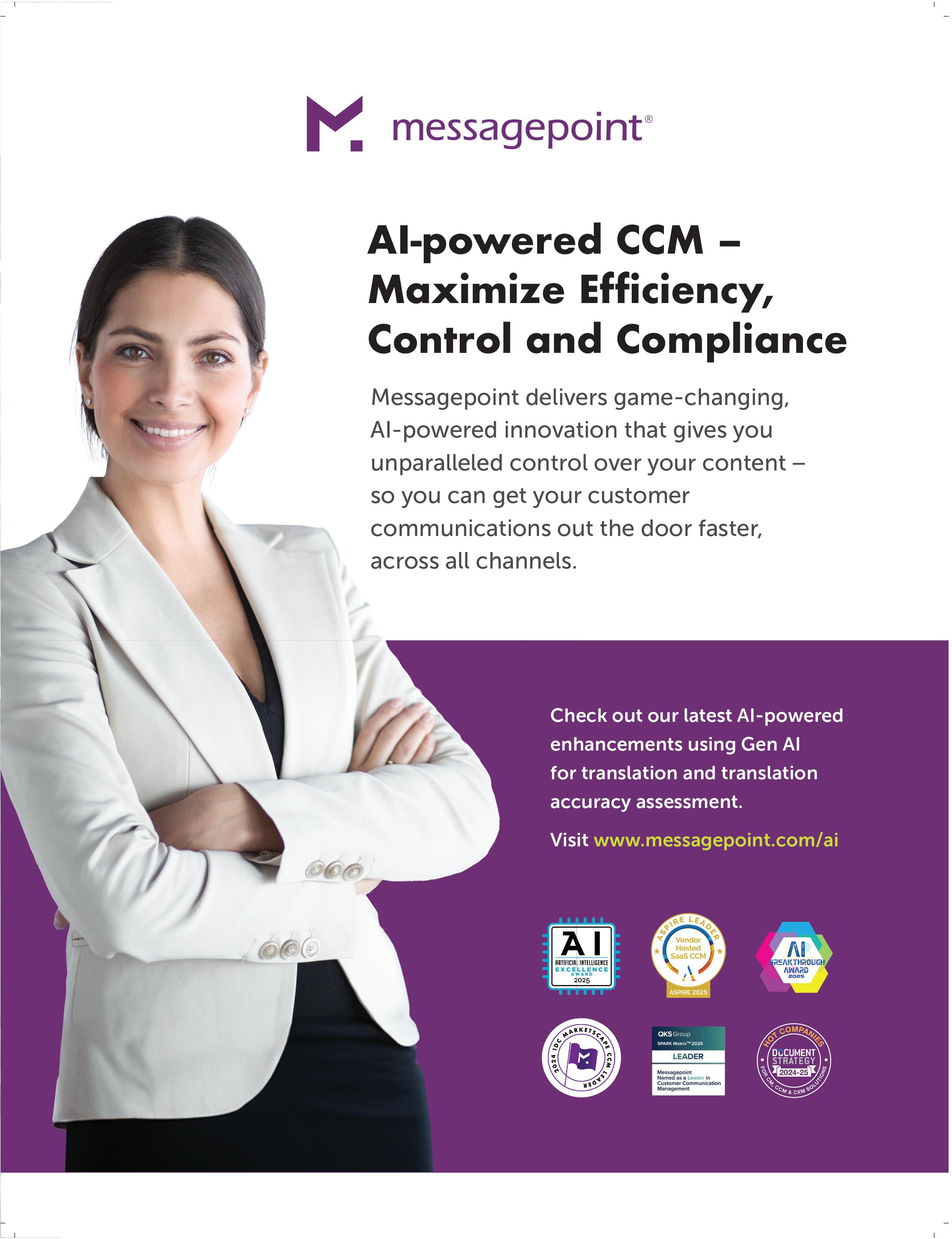
By Gary Gregg

When I think about how far customer communications have evolved, it’s clear that we’ve entered a new era, one where the regulated document is moving from being an artifact of a transaction, to a moment of engagement. In industries from finance to healthcare to utilities, the documents we send, including statements, bills or regulatory notices, are now touchpoints. They can either reinforce a customer’s trust and connection with a brand, or they can erode it.
The shift is being driven by the same force transforming nearly every corner of business: digital expectations. Customers have become accustomed to experiences that are fast, intuitive and personalized, and they now bring those expectations to every interaction, including documents.
For decades, organizations have invested in Customer Communications Management (CCM) to ensure accuracy, compliance and consistency. But CCM alone is no longer enough. The
focus now is on Customer Experience Management (CXM), ensuring that the customer experience in every interaction is seamlessly integrated.
As an example, we are now seeing that the utility bill isn’t just a demand for payment, but an opportunity to educate customers on energy-saving programs, offer flexible payment options, or reinforce sustainability commitments.
Historically, customer communications were one-way. A document was generated, sent and the assumption was that the recipient would read it, understand it and take the required action. In reality, many didn’t. Questions arose, confusion set in, and customers were often forced into secondary channels, like the call center, to get clarity.
In today’s environment, simply delivering information is no longer enough. The role of the document has expanded. It needs to not only inform, but also guide, listen, learn and respond, right in the moment of need. This is the essence of Interactive Experience Management (IXM):
embedding intelligence into documents so that they are no longer static, but dynamic.
Digital-first thinking has been around for years, but customer expectations have continued to evolve. People are no longer impressed simply because something is available online, they expect it to be intuitive, responsive and personalized. Imagine receiving your monthly insurance statement and being able to click a section to ask, “Why did my premium change?” and getting a clear, contextual answer instantly, without leaving the document or navigating to another system. That’s IXM in action.
Interactive capabilities allow the document to respond in real time, using information of the specific customer and the content they are viewing. Instead of a one-size-fits-all message, the customer receives targeted, relevant information based on their immediate question or historical behavior. This ultimately reduces frustration, builds trust and eliminates friction in the customer journey.

The most effective interactive documents go beyond just answering questions. They create opportunities for immediate action:
Complete smart forms: Embedded forms to allow customers to add information or request changes directly within the document. For example, submitting a new address or coverage adjustment can instantly trigger a policy update without requiring separate paperwork or calls.
Pay directly from the document: Customers can complete a payment without being redirected to a separate portal, significantly reducing drop-off rates and making the process seamless.
Sort and filter information: Large statements or transaction histories can be sorted by date, category or amount, helping customers find what matters most to them without scrolling endlessly.
Raise disputes instantly: If a customer spots an unfamiliar charge or transaction, they can flag it for review right within the document, triggering the
necessary workflow without picking up the phone.
Download supporting details: Instead of calling to request backup information, customers can expand sections to view related receipts, claims or explanations.
These capabilities remove the friction between noticing an issue or opportunity and acting on it. They transform the document from a static record into a self-service gateway.
One of the most overlooked benefits of IXM is the data it produces. Every click, query or interaction within a document tells you something valuable about the customer experience. If hundreds of people are asking about the same line item, it’s a clear signal that the language or presentation needs to change.
This feedback loop leverages data insights and allows organizations to optimize continuously. The document becomes a living, evolving asset that gets better over time as it learns from real-world interactions.
The most exciting shift in IXM is that we are moving from document as monologue to document as dialogue.
And beyond the customer experience, there is a strong business case. Organizations that turn documents into interactive touchpoints can expect to see:
Lower operational costs: When customers can self-serve within the document, call volumes drop and service teams can focus on higher-value interactions.
Higher engagement rates: Customers are more likely to act
when they understand what’s being asked of them and can respond without friction.
Better compliance and clarity: In regulated sectors, interactive elements can help ensure that required disclosures are understood, not just presented.
Faster optimization cycles: Realtime feedback allows for immediate improvements, rather than waiting months or years for redesign initiatives.
The most exciting shift in IXM is that we are moving from document as monologue to document as dialogue. Instead of delivering information and hoping for understanding, we are creating two-way interactions where the document can answer, clarify and even predict needs.
The truth is, the document is still one of the most direct, trusted and legally recognized forms of communication between an organization and its customers. By making it interactive, responsive and data-driven, we can transform it from a static touchpoint into a dynamic part of the customer journey.
We’ve reached the point where every document a customer receives is an experience in itself. Whether it’s a bill, an explanation of benefits, a statement or a compliance notice, it’s an opportunity to connect, guide, learn and build trust.
The organizations that will lead in the next decade are those that stop thinking of documents as the end of the process and start seeing them as the beginning of an interaction. Every document is now a touchpoint and in the age of digital expectations, that touchpoint has the power to define, foster and grow the relationship.
GARY GREGG, Chief Product Officer (CPO) at OSG, brings over 26 years of expertise in the Customer Communications Management (CCM) industry. A leader with a passion for innovation, Gary has played a pivotal role in transforming OSG into a leader in Customer Experience Management (CXM). Passionate about blending print and digital strategies, he consistently delivers solutions that elevate customer engagement and streamline communication processes.

By Mia Papanicolaou & Elizabeth Stephen
If there’s one thing we’ve learned after decades in customer communications, it’s this: notifications are never “just notifications.”
Yet, too often, that’s exactly how organizations treat them. Payment reminders, appointment confirmations, past due notices, fraud alerts, to name a few, are all relegated to the compliance bucket. Sent because they have to be.
But here’s what we’ve seen play out time and again with clients across industries: these tick box communications are some of the best opportunities you have to build trust, reduce friction and even deepen relationships. Customers open them. They act on them. And they remember how they felt when they received them.
So why, we ask, are so many still generic or even confusing, and anxiety-inducing?
Let’s start with a story. Recently, Liz was in the middle of buying a new home (already a stressful enough experience) when she received a past due notice in her inbox. Cue immediate panic: Had she missed a payment? Would this derail her credit score at the worst possible time?
Turns out, she had missed it. But not because she ignored the original payment notice. She had a procedure and it had simply been lost in a sea of nearly identical, lookalike emails around that same procedure. No subject line, content or visual differentiation. Nothing to set it apart from the flood of other payment reminders she was receiving daily.
When everything looks and sounds the same, the burden shifts to the customer to decode it. That’s not just inconvenient, it’s unfair.
We often talk about the business impact, including missed payments, increased call center volumes and delayed revenue. But let’s pause and consider the customer.
A missed payment doesn’t just mean a late fee. It means stress, embarrassment, sometimes even damage to a credit score. A vague fraud alert doesn’t just slow down resolution. It breeds mistrust and worry. A generic appointment reminder doesn’t just waste time. It risks missed care.
Notifications should lighten the load for customers, not add to it. That’s why we push our clients to stop seeing them as compliance chores and start treating them as moments of truth in the customer journey.
Here’s where it gets exciting, because the fixes aren’t rocket science. They just require a shift in mindset.
1. Lead with context.
Lead with what matters most. If it’s a payment confirmation, state clearly what was paid, the amount and the date. If it’s a bill, state the service and amount upfront. No guessing games.
2. Provide enough detail.
Clarity comes from content. For a medical appointment, list the provider, location, time and prep steps. For payments, specify the service, due date and balance. The goal is to answer the customer’s next three questions before they even have to ask.
3. Differentiate visually.
Not all notifications are equal. A past due notice should look urgent. A standard reminder should look different from a confirmation. Think of it like road signs so that customers know instantly what type of message they’re looking at.
4. Speak like a human.
If you wouldn’t say it at your kitchen table, don’t put it in a notification. Customers don’t think in “statement IDs” or “service events.” They think in bills, payments, appointments, deliveries. Meet them there.
When we sit down with organizations, we often hear: “But we have to send it this way because it’s a regulatory requirement.” And yes, compliance is non-negotiable. But compliance and
customer experience are not mutually exclusive.
The best companies we’ve worked with treat notifications as a dual-purpose tool: they meet the requirement and deliver value.
In healthcare, we’ve seen appointment reminders evolve into supportive touchpoints with prep instructions, rescheduling links and directions, reducing no-shows and improving patient confidence.
In banking, one client transformed fraud alerts into one-click confirmations, empowering customers to resolve issues in seconds.
In insurance, renewal notices were paired with helpful coverage insights, sparking meaningful conversations rather than groans of obligation.
When everything looks and sounds the same, the burden shifts to the customer to decode it.
That’s not just inconvenient, it’s unfair.
When done right, notifications move from a mere necessity to a brand builder.
All too often we’ve heard how notifications are “sent from a different system” or “IT manages those.” Let’s be clear: the tools exist. Modern communication orchestration platforms make it easy to personalize, adapt and deliver across channels in real time. You can segment by urgency, customize by customer preference, and A/B test for continuous improvement.
What holds organizations back isn’t technology, it’s mindset. Notifications are still treated as set and forget. Our message is to stop treating them like background noise and start treating them like a shining star.
So where do we go from here? If you take one thing from this article, let it be this: Customer confusion is costly, whereas clarity pays.
It’s time for companies to see notifications not as obligations, but as opportunities. They’ll:
Reduce customer effort
Build trust at moments that matter most
Differentiate in markets where everyone else is still sending lookalike templates
Save money by cutting call volumes and missed payments.
This is the drum we beat with our clients: notifications are not small or trivial. They are the high-engagement touchpoints where your brand either adds stress or creates confidence.
It’s time to move them out of the tick box column and into the strategy column, because once you do, you’ll realize they’re not just about compliance. They’re competitive advantage.
MIA PAPANICALOU helps companies go paperless for transactional customer communications and works to improve those touchpoints through customized strategy and advisory services. She is a regular speaker and blogger on digital customer communication, digital maturity and improving the customer experience.
ELIZABETH STEPHEN is an expert in CCM and helping clients utilize digital communications to meet their CX goals. As a true specialist in transactional communications, Liz has the ability to help companies make the needed microchanges that will immediately impact the customer experience, while putting the steps in place to make long-term changes.
By Mitch Anderson

How much do I owe?
How do I pay?
Where’s my bill?
Are any of your customers asking these questions? If so, it might be time to rethink your utility bills.
On the surface, utility bills should be an easy way to engage with customers. After all, they’re an essential document that must reach every household.
But when the design is confusing, delivery is delayed or information is incorrect, they can quickly become a major point of contention for customers. Getting billing, ‘just right’ enhances the customer journey and opens new opportunities for engagement. From rethinking design to implementing strong data checks, utilities can leverage bills to reduce errors, speed up payments and deliver far better customer experiences.
A common complaint about utility bills is that they’re too difficult to read. Cluttered, complex bills often leave customers unsure about how much they owe, when a payment is due or how to make a payment.
Here’s where a bill redesign can be a game-changer. A clean layout that follows information hierarchy, itemizes your charges and gives prominence to

the most critical information has the power to reduce calls to your call center while shortening days-to-pay.
By removing communication obstacles, you can free up space and time to consider strategic ways to optimize your bills. For example, suppose you have important service issues to communicate or a specific marketing message, such as the availability of online statements. In these situations, you can populate certain areas of your statements with
A clean layout has the power to reduce calls to your call center while shortening days-to-pay.
tailored messaging without disrupting the flow of vital information.
Maintaining accurate mailing addresses is another challenge. As a utility, your revenue generation model relies on accurate customer data. Incorrect addresses, outdated records or errors in data entry might seem trivial, but their impact can be costly. If your customers aren’t receiving their bills, payments won’t materialize, which affects your cash flow.
Adopting systems that flag undeliverable addresses is an excellent safeguard against faulty data. Regularly validating records with NCOA (National Change of Address) can help you ensure bills are delivered to their intended recipients.
By automating quality assurance and monitoring customer data at every step, providers can catch errors before investing time and money in returned mail.
Too often, organizations underestimate the importance of putting rigorous checks in place to ensure billing accuracy. Yet, without them, teams waste hours reprinting invoices, dealing with customer complaints and fixing problems they could have avoided.
To prevent these issues, it’s essential to put validation steps in place before bills are ever sent, such as an exception-handling process that can flag account activity, or implementing a quality assurance step that gives stakeholders a chance to review final statements.
Implementing these steps could reduce avoidable calls to your call center, tighten up your days sales outstanding (DSO), and improve customer satisfaction. At the end of the day, it’s about building trust and creating efficiencies in all areas of your billing operations.
For utilities, mistakes on a bill translate into higher costs, delayed payments and unnecessary strain on support teams. And for customers? It chips away at trust, creating underlying dissatisfaction.
It’s why billing accuracy should remain a top priority for utilities. It’s central to the customer experience and crucial to your business revenue model. By rethinking bill design and improving billing data, utilities can turn a source of frustration into an opportunity for enhanced customer experiences.
Ultimately, when billing is accurate and payment methods feel seamless, customers feel valued and that satisfaction becomes the foundation for lasting loyalty.
MITCH ANDERSON has 36 years of experience servicing customers in the print and digital services world with a focus on Utilities, Financial Services, and Healthcare. Before joining Doxim in October 2020, Mitch was the Chief Revenue Officer at Pinnacle Data Systems. At Doxim, Mitch leads a team of dedicated professionals focused on serving the Utilities market. Reach out at www.doxim.com.

BY JOHN ZIMMERER
Economic pressures, regulatory shifts and evolving consumer expectations are converging to create a complex environment for health insurers. Amid this turbulence, many payers are hesitant to invest in customer experience (CX) initiatives, opting instead to focus on cost containment and infrastructure rationalization. However, this cautious approach may be shortsighted. As healthcare becomes increasingly consumer-driven, payers must rethink their strategies and modernize their operations to remain competitive and meet the rising expectations of their members.
The Current Landscape: Economic and Regulatory Headwinds
Since (at least) 2019, the healthcare industry has faced mounting financial
pressure. Industry EBITDA as a proportion of national health expenditure has declined significantly, with payer margins in 2024 reaching their lowest point in a decade. Inflationary pressures, labor shortages and constrained reimbursement growth have compounded the challenges. The shifting payer mix — driven by increased enrollment in Medicare and Medicaid — has further strained financial models.
Regulatory changes have added another layer of complexity. The Inflation Reduction Act (IRA) introduced new cost burdens for Medicare Advantage plans, including caps on out-of-pocket drug costs and expanded subsidies. These changes, while beneficial to consumers, have increased financial liability for payers. This has driven the Medical Loss Ratio (MLR) as high as 93% for some payers. Additionally, evolving CMS
mandates around real-time prior authorization and data exchange are pushing payers to modernize their systems under tight timelines.
With shrinking margins and unpredictable policy shifts, the appetite for bold investments — particularly in customer experience — has waned.
Despite these challenges, the imperative to improve customer experience has never been stronger. The healthcare consumer of 2025 is digitally savvy, expects personalized engagement, and demands transparency and convenience. Yet, health insurers continue to rank near the bottom of customer experience indices compared to other industries. Forrester’s latest report puts the industry’s CX dead last among the 13 the firm follows.
This disconnect is not just a reputational issue — it has tangible financial consequences. CMS has increasingly tied Medicare Advantage Star ratings to customer experience metrics, with patient experience, complaints and access now comprising 57% of the overall score. These ratings directly impact plan enrollment and Quality Bonus Payments, making CX a strategic lever for growth and profitability.
Moreover, poor customer experience leads to deferred care, member churn and increased administrative burden. Fragmented systems, legacy infrastructure and siloed data impede payers’ ability to deliver seamless, personalized interactions. As healthcare becomes more consumer-driven, payers that fail to adapt risk losing market share to more agile competitors and new entrants.
One of the most significant barriers to CX investment is the pressure to cut costs and rationalize IT infrastructure. According to the NAIC’s 2024 midyear analysis, health plans’ net income
fell 14%, and operational cash flow dropped 86% compared to the previous year. With such drastic liquidity shifts, payers are forced to make difficult decisions about where to allocate resources.
Traditional cost-cutting measures — such as administrative downsizing and contract renegotiation — are no longer sufficient. Operational inefficiencies and outdated systems continue to drain resources, making it harder to justify new investments. Additionally, the ROI of CX initiatives can be difficult to quantify, especially when benefits are realized over the long term.
However, the cost of inaction may be even greater. Member dissatisfaction leads to higher churn, increased call center volume and lower Star ratings — all of which have direct financial implications. Investing in CX should not be viewed as a discretionary expense but as a strategic necessity.
To navigate these challenges, payers must adopt a more strategic and integrated approach to customer experience. This begins with modernizing technology infrastructure to support real-time data access, personalized engagement and seamless omnichannel communication.
AI and automation offer promising avenues for reducing administrative costs and improving member interactions. McKinsey estimates that targeted AI adoption could reduce administrative expenses by up to 25%, medical costs by 11% and increase revenue by 12%. Applications such as claims automation, predictive analytics, and AI-powered member engagement can deliver measurable ROI while enhancing service quality.
Moreover, payers should integrate CX initiatives across core functions — risk adjustment, quality improvement, enrollment, claims, care management and utilization management — to maximize impact. Fragmented efforts dilute value; coordinated strategies amplify it.
Cultural and organizational inertia often hinder CX transformation. Many payers still view customer service as a cost center rather than a strategic asset. To shift this mindset, leadership must champion CX as a driver of growth and differentiation.
This requires cross-functional collaboration, clear KPIs, and a commitment to continuous improvement. Training staff, empowering agents, and redesigning workflows around member needs are essential steps. Additionally, payers must invest in data (and AI) governance and interoperability to unlock the full potential of their technology platforms.
In a time of economic and regulatory uncertainty, it’s tempting for payers to delay investments in customer experience. But doing so risks falling behind in a rapidly evolving healthcare landscape. The consumer expectations of 2025 demand more than transactional interactions — they require empathy, personalization and digital-first engagement.
By rethinking their approach to CX and embracing strategic modernization, payers can not only weather the current storm but emerge stronger and more competitive. The path forward is not easy, but it is necessary. Customer experience is no longer a luxury — it is a strategic imperative.
JOHN ZIMMERER is the Vice President of Vertical Marketing, Healthcare at Smart Communications, where he acts as a subject matter expert on the digital transformation of customer communications, data-centric workflows, and omnichannel customer journey orchestration. Most recently, John has been researching and writing about improving customer experience in healthcare and is regarded as a thought leader in this area. John has over 25 years of experience applying technology to create value.

By Eric Riz
Robotic Process Automation (RPA) has long been recognized as a tool that clicks buttons faster than humans, excelling at repetitive tasks like moving files or exporting reports. Yet in the world of document governance, speed alone is not the solution. The real challenges are deeper and more complex: inconsistent classification, sprawling permissions, lack of visibility into data locations and the need for defensible retention and deletion practices. The future of RPA in this space is not about building more bots, it is about transforming automation into a programmable control plane that enforces policies, reduces risks and provides measurable stewardship of information across its lifecycle.
Traditional RPA scripts were designed to handle simple, deterministic tasks.
Document governance, however, demands consistency and policy alignment at scale, backed by traceability. Instead of brittle, UI-driven scripting, organizations are now favoring API-first orchestration, enabling automations to connect directly with content services, data loss prevention systems, eDiscovery, records management and identity platforms.
The outcome of this shift is that automation is no longer about oneoff efficiencies, but about embedding reusable governance controls into the very fabric of how documents are created, managed and retired. Success is measured not just by throughput, but by governance outcomes, reducing the number of orphaned sites, accelerating disposition timelines, minimizing sensitive-data dwell time and strengthening the overall audit posture.
When applied strategically, RPA can take on high-value roles in document governance. It can automate lifecycle management by applying retention policies, checking for legal holds and triggering defensible disposition of records. It can enrich metadata and normalize document structures, ensuring content is classified accurately, labeled with the appropriate sensitivity and ready for discovery. It can enforce access hygiene by identifying and correcting oversharing, expiring guest access or remediating risky permissions. RPA can also play a key role in policy compliance and incident response: when a data loss prevention rule is triggered, automation can quarantine the file, notify the responsible party, require acknowledgment and document the corrective action. Even large-scale migrations
benefit from automation, as RPA can pre-cleanse legacy file shares, remove duplicates and standardize structures before content is migrated into a modern information architecture. Finally, RPA can generate audit reports, create attestation workflows and compile evidentiary artifacts to support compliance programs.
The next leap comes when RPA is paired with artificial intelligence. Document governance often blends deterministic rules with probabilistic insights; for example, retention rules may require content to be deleted after seven years, while an AI model can help classify whether a document is a contract or a working draft. Together, these tools create a governance fabric where AI proposes, policies constrain, humans adjudicate exceptions and RPA executes. Intelligent Document Processing (IDP) systems can extract entities like client names or invoice numbers, large language models can provide reasoning for edge cases, and RPA ensures execution is consistent, auditable and repeatable. This evolution positions RPA not just as an executor, but as the bridge between policy, AI reasoning and human oversight.
Scaling this vision requires thoughtful architectural design. Event-driven orchestration is becoming the standard, with bots subscribing to signals like document creation, label changes or access modifications, and triggering workflows as needed. API-first integrations reduce fragility and improve fidelity compared to UI scraping. Policies are increasingly represented as code, stored in version-controlled repositories, and deployed through CI/ CD pipelines. Observability is critical, with logs, approvals, and disposition certificates centralized to create a single source of truth for audits. Proper segregation of duties ensures that policy authors, automation operators, and approvers remain distinct, reducing conflicts of interest.
However, with great automation comes great responsibility. Without governance, organizations risk “bot sprawl,” where automations
themselves become a new source of inconsistency and fragility. To prevent this, RPA implementations must follow strict guardrails. Bots should be version-controlled, tested in non-production environments and peer-reviewed before deployment. Automations must respect records locks and legal holds, and every action should carry a stamped record of provenance, including the policies and models used to reach the decision. Idempotency and rollback processes ensure resilience, while throttling and scheduling protect against system overload. Ethics and fairness also matter, as AI-assisted classification must be validated to avoid bias, especially when dealing with sensitive or employee-related content.
When applied strategically, RPA can take on high-value roles in document governance.
Organizations can think about this journey in terms of maturity levels. At the most basic level, governance is ad hoc, manual tagging, sporadic cleanup and reactive compliance during audits. With scripts, organizations achieve some repeatability but still lack consistency. The real inflection point comes when RPA is used to enforce policies systematically across repositories, with dashboards that report on retention, access hygiene and policy compliance. The most advanced organizations move toward autonomous governance, where event-driven, model-assisted classification and proactive controls create measurable service levels and continuous improvement.
Measuring success in this area requires new metrics. Rather than tracking bot throughput, organizations
must assess coverage (the percentage of content under policy), time to control (the speed of classification and labeling), risk reduction (such as reduction in overshared content or sensitive-data dwell time) and disposition efficiency (percentage of eligible content deleted on time). Audit readiness is also a key measure — how quickly can evidence packs be produced? Finally, organizations should measure productivity gains, such as hours saved on manual records tasks or storage reclaimed through defensible disposition.
The trajectory of RPA in document governance is clear: it is evolving from a tool for repetitive work into the backbone of a governed automation fabric. As platforms provide richer signals and AI grows more capable, automation will increasingly move from rule-based to reasoning-based, applying policies by meaning rather than just location or metadata. Governance will become adaptive, adjusting to regulatory or organizational changes with minimal friction. For users, the experience will shift from opaque enforcement to explainable automation: instead of simply being denied access, a user will be told that their document was labeled Confidential and sharing restricted because it contains client PII and a contract ID.
The future of RPA in document governance is not about armies of bots clicking screens; it is about consistent, defensible and scalable controls that transform documents from liabilities into trusted assets. By combining automation with policy, human oversight, and AI intelligence, organizations can reduce digital debt, improve compliance, and prepare for an era where governance is both automatic and transparent.
An established leader focused on corporate efficiency, strategy and change, ERIC RIZ founded data analytics firm VERIFIED and Microsoft consulting firm eMark Consulting Ltd. Email eric@ericriz.com or visit www.ericriz.com for more information on how to govern your data journey.

By Stephanie Holden
In the world of document and data automation, we’ve hit a turning point. For years, organizations have relied on structured templates, keyword rules and rigid layouts to extract data from business documents. But real-world documents — especially contracts, invoices, legal records and technical specifications, rarely follow a neat structure. They’re messy, variable and filled with nuance. Enter Large Language Models (LLMs). These models aren’t just better OCR engines or smarter regex matchers — they bring a new paradigm: contextual understanding. With LLMs, we’re no longer locked into the brittle world of templates. Instead, we gain AI that can read and understand documents like a human — only faster.
Traditional document processing tools extract data by identifying patterns in fixed layouts (think: “Invoice Number always appears in the top-right corner”). But when the format changes or the document has multiple sections with similar terms, those tools break down. LLMs, however, are trained on massive amounts of natural language data, including documents, articles, contracts and technical materials. This gives them the ability to understand semantic meaning and intent, interpret context, such as distinguishing between a payment term and a delivery clause. LLMs can handle variability and processing multiple formats without retraining the model. LLMs can reason through content, such as answering “what are the termination conditions in this contract?” even if phrased differently across vendors.
Unstructured Contracts: A Perfect Use Case for LLMs
Contracts are notoriously challenging to automate. They have variable formats and sections, as well as often written in dense legal language. Critical data is often (e.g., duration, termination clauses, liability limits)
buried in long paragraphs. Vendors, partners and government agencies all use different templates. However, LLMs excel here. They can extract specific clauses even when they aren’t labeled or summarize terms like payment timelines, renewal conditions or obligations. They are useful in comparing versions of contracts and flagging what has changed. LLMs can answer questions in plain English about the contents of the contract (e.g., “When does the contract auto-renew?”) and are able to support risk analysis, identifying unusual terms compared to a standard baseline. This means companies can accelerate contract review, improve compliance and reduce legal bottlenecks — all without building a different template for every vendor.
are not just a better way to extract data — they’re a whole new way to work with documents.
Invoices: LLMs can handle variations in formats, identify line items, match descriptions with purchase orders and flag anomalies — such as duplicate billing or missing numbers.
Legal Records: For litigation, compliance or audits, LLMs can extract and summarize relevant facts, legal precedents or case references — even across thousands of pages.
Technical Specs: If it is an engineering document, a material safety data sheet or a parts list, LLMs can parse complex tables, diagrams (via multimodal extensions) and extract actionable details.
And as for how it works? If you are familiar with OCR, this may sound familiar: Firstly, the system ingests PDFs, scans, emails, or text files, next, OCR and layout-aware tools extract readable text. The LLM is guided with prompts or examples (“Find the payment terms in this contract”) and processes the full document, understands relationships and extracts or summarizes information.
The system either hands off to a human for validation or directly updates databases, workflows or reports. These systems can be further enhanced with RAG (Retrieval-Augmented Generation) and fine-tuning, which allow them to learn organization-specific language and policies. LLMs can be deployed in secure, private environments — hosted on-premise or in air-gapped infrastructure — making them suitable for regulated industries like defense, healthcare and finance. With careful logging, redaction and model tuning, they can meet the strictest standards (e.g., HIPAA, CMMC, GDPR).
Final Thought: From Data Extraction to Document Intelligence
Large Language Models are not just a better way to extract data — they’re a whole new way to work with documents. For organizations drowning in unstructured content, LLMs offer a powerful, flexible and intelligent solution. Whether you’re reviewing 500 contracts for renewal, analyzing technical specs for product compliance or scanning invoices for fraud — LLMs can read, reason and act with precision. The age of document templates is ending. The era of document intelligence is just beginning.
STEPHANIE HOLDEN graduated with a Master’s in Business Administration and Marketing from Alliance University. From there she went on to hold various customer facing roles in healthcare, grocery and technology. She is passionate about working with clients across industries to modernize data intensive processes and boost efficiencies through smart scalable solutions.

Generative AI is making its way into customer experience (CX) measurement and Voice of the Customer (VoC) programs — but Forrester’s 2025 global survey reveals a bigger issue: most CX teams still struggle to earn stakeholder confidence or drive action. Outdated practices, surveyheavy feedback collection, weak metrics, and missed opportunities in journey measurement all hold programs back. While genAI shows promise, the real shift requires stronger analysis, clearer communication, and strategic alignment with business goals. Discover the six gaps holding CX back — and how teams can close them to deliver real business impact.
The CCM-CXM market is buzzing with activity, as new providers join the Aspire Leaderboard and established players roll out major innovations in AI, accessibility, cloud, and global expansion.



QKS Reveals that Customer Journey Orchestration Projected to Register a CAGR of average by 2028.
The rising complexity and expectations of customer interactions in today’s marketplace demand the usage of Customer Journey Orchestration (CJO). Customers now expect seamless, personalized experiences that are tailored to their unique requirements and preferences due to the widespread use of digital channels and touchpoints. By combining data from several sources, applying machine learning and advanced analytics to comprehend and forecast consumer behavior, and automating real-time personalized interactions, CJO helps businesses to satisfy these needs. This strategic strategy optimizes marketing and sales activities, increases engagement, boosts customer satisfaction and loyalty, and improves overall business outcomes. CJO gives businesses a crucial advantage in a highly competitive market by guaranteeing that they can provide timely, relevant, and consistent experiences to customers across all customer touchpoints.

Aspire CCS recently unveiled its new Market Trend Reports initiative. These reports provide the independent analysis and intelligence that senior decisionmakers need to anticipate evolving developments and capitalize on emerging trends as they transition their businesses from Customer Communications Management (CCM) to Customer Experience Management (CXM). Built on our proprietary research and decades of industry expertise, these reports convert detailed market insights on the trends shaping modern communications into actionable recommendations that will help businesses navigate regulatory challenges, technology adoption, and customer experience enhancement. Multiple reports are currently available for purchase on the Aspire CCS website where you can also find a schedule outlining publications on future topics.

Integrated services is a unified approach to sales services, trust and safety, and CXM across functions and channels, creating a cohesive, high-performing customer ecosystem. This approach promotes collaboration, encourages data sharing, breaks down silos, and improves both decision-making and customer experiences. This allows enterprises to build meaningful relationships, uncover hidden insights, and exceed customer expectations. Integrated services facilitate this shift by anticipating customer needs, uncovering new sales opportunities, and cultivating trust and loyalty. This Viewpoint explores an integrated framework’s components and benefits, discusses key opportunities for synergies across services, and examines providers’ role in driving enterprise adoption. It emphasizes integrated services’ importance in enabling enterprises to continuously innovate, adapt to new trends, and capitalize on emerging opportunities, ensuring they remain relevant and resilient in an ever-evolving market.


Fifty-seven percent of CEOs and CFOs reported that improving customer experience is their top growth priority. Enhancing customer experience and strengthening customer growth capabilities is vital for CMOs, considering fewer than half of CEOs and CFOs see marketing as a major driver of growth. Download the Customer Experience Management Framework infographic to identify three pillars, nine capabilities and 19 activities to successfully deliver a CX management initiative and: Assess your organization’s current CX maturity, Identify gaps in capabilities to set priorities and develop plans to improve and Clearly demonstrate the growth of CX program to your leaders.

Catch up on all the news, opinions, and current events happening around the industry.
Under the agreement, Doceo will act as a value-added reseller (VAR) of Crawford Technologies’ full suite of enterprise software and document accessibility solutions. The partnership strengthens Doceo’s well-established document management solutions with new opportunities to provide clients in Spain, Portugal and Andorra with optimized workflow solutions that significantly reduce costs and improve productivity, while meeting the ever-increasing global standards of accessibility compliance.

Smart Communications announced its acquisition of Pendula, a trusted provider of intelligent orchestration and digital delivery technology. Pendula’s customer engagement solution is renowned for helping enterprises complete their most critical customer interactions through personalized, intelligent, cross-channel engagement.


Automation Anywhere announced it has been recognized as a 2025 Gartner Peer Insights™ Customers’ Choice for Intelligent Document Processing (IDP) solutions. This distinction is based on feedback and ratings from customers who have implemented Document Automation to automate the extraction, validation, and understanding of data from complex unstructured documents, turning into structured information for actionable business use.
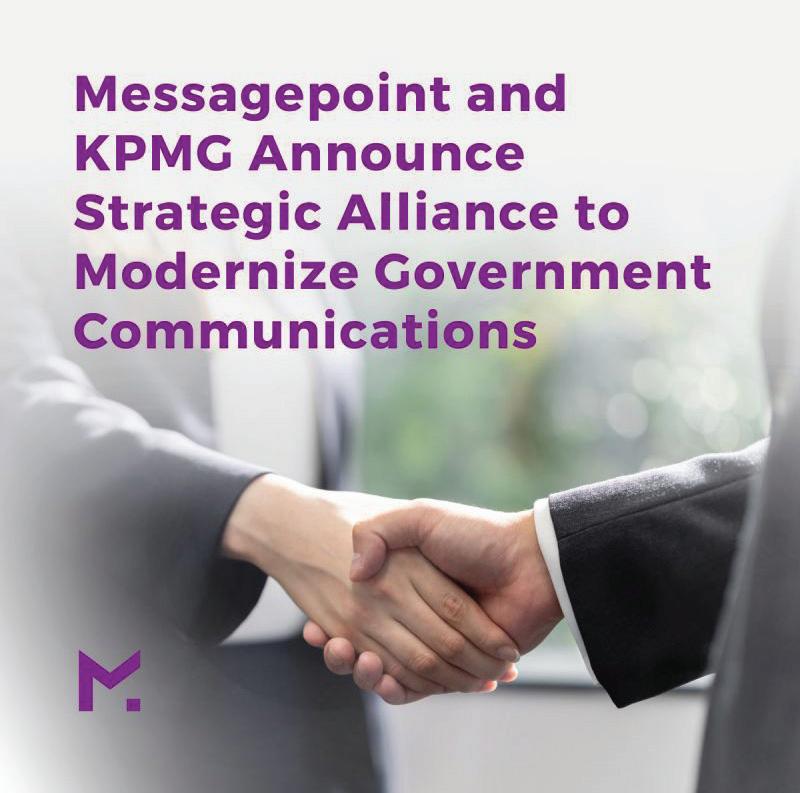

Messagepoint and KPMG LLP announced a strategic alliance to help government agencies transform and modernize constituent communications. This collaboration brings together KPMG’s century-long track record serving the public sector and deep industry and government transformation experience and Messagepoint’s AI-powered CCM platform to enhance the KPMG Resource Integration Suite (KRIS) and bring a new level of efficiency, accessibility, and personalization to constituent communications.

/ AIIM / / ALAN BURGER /
ACCORDING TO A 2025 STUDY BY THE ASSOCIATION FOR INTELLIGENT INFORMATION MANAGEMENT (AIIM), 78% OF COMPANIES ARE NOW OPERATIONAL WITH AI-POWERED DOCUMENT PROCESSING.
IN THE NEXT FEW YEARS, USING DYNAMIC CONTENT WILL BECOME AN ALMOST INVISIBLE YET INTEGRAL LAYER OF EVERY COMMUNICATION WITHIN CXM.
/ TREELINE RESEARCH /
Over 85% of monthly interactions between customers and financial institutions are digital.
/ JOSHUA NOBLE / Direct mail remains a powerful and insightful tool for reaching and engaging customers, as 72% of consumers regularly read or look at mailed ads, and 82% look at them at least once weekly.
/ ZENDESK RESEARCH /
With 70% of CX leaders planning to integrate GenAI into most of their touchpoints in the next two years, the question is no longer if but how to apply the technology effectively.