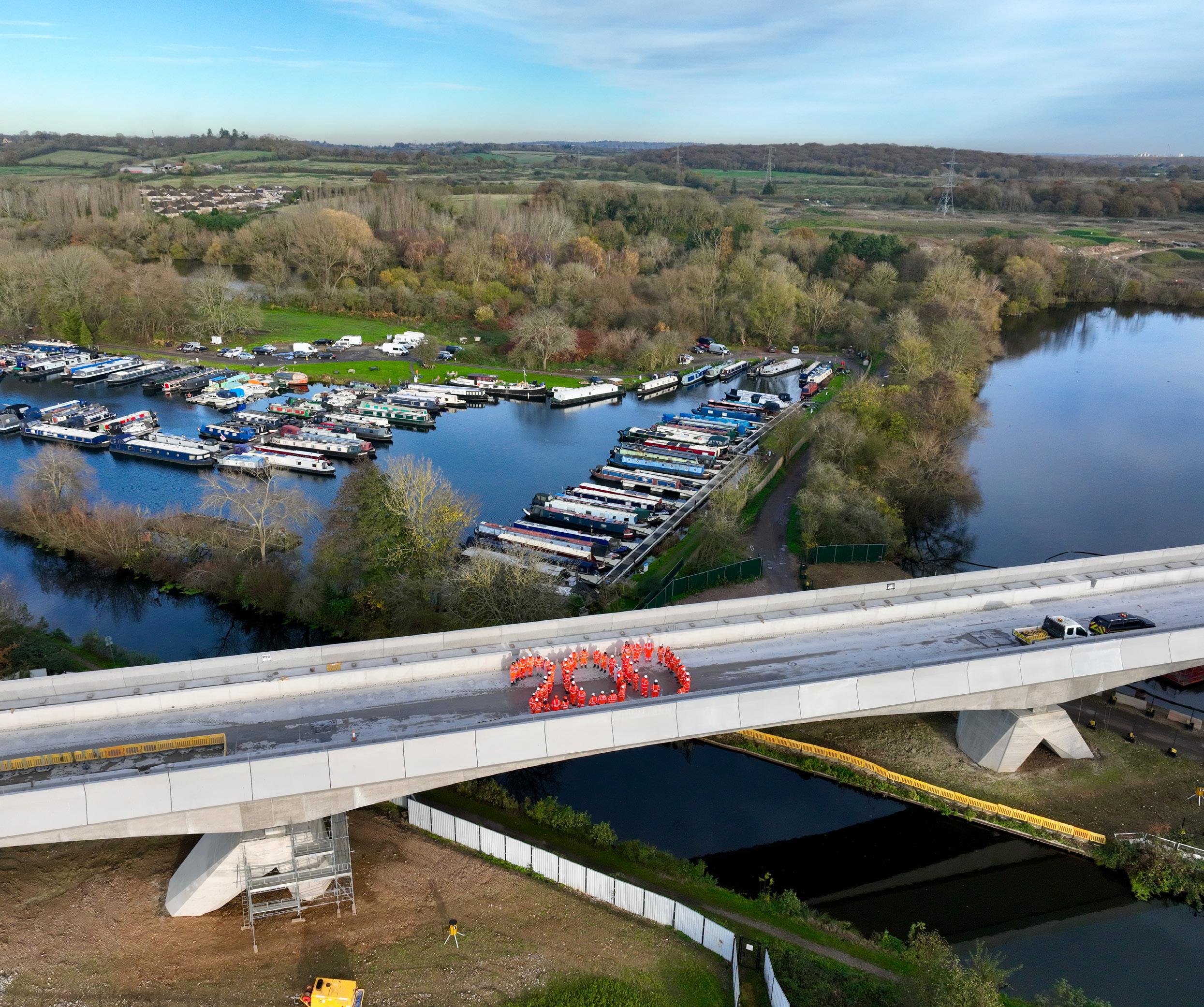
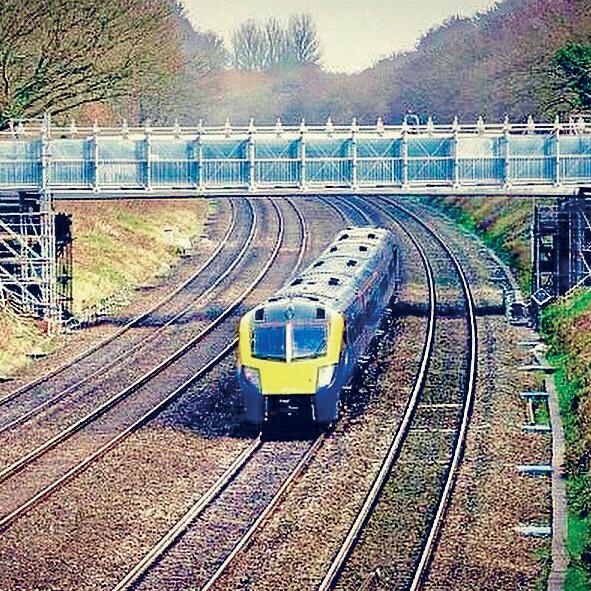
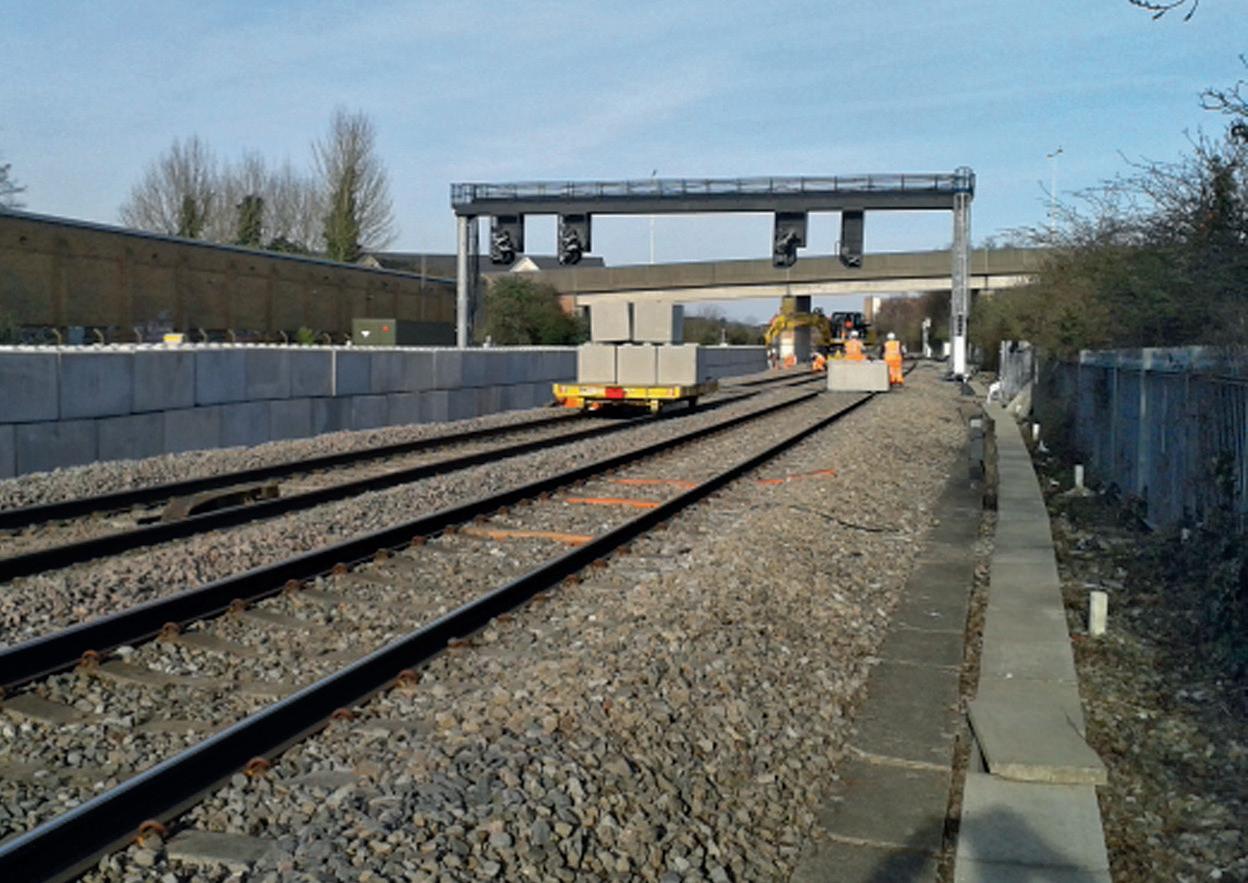
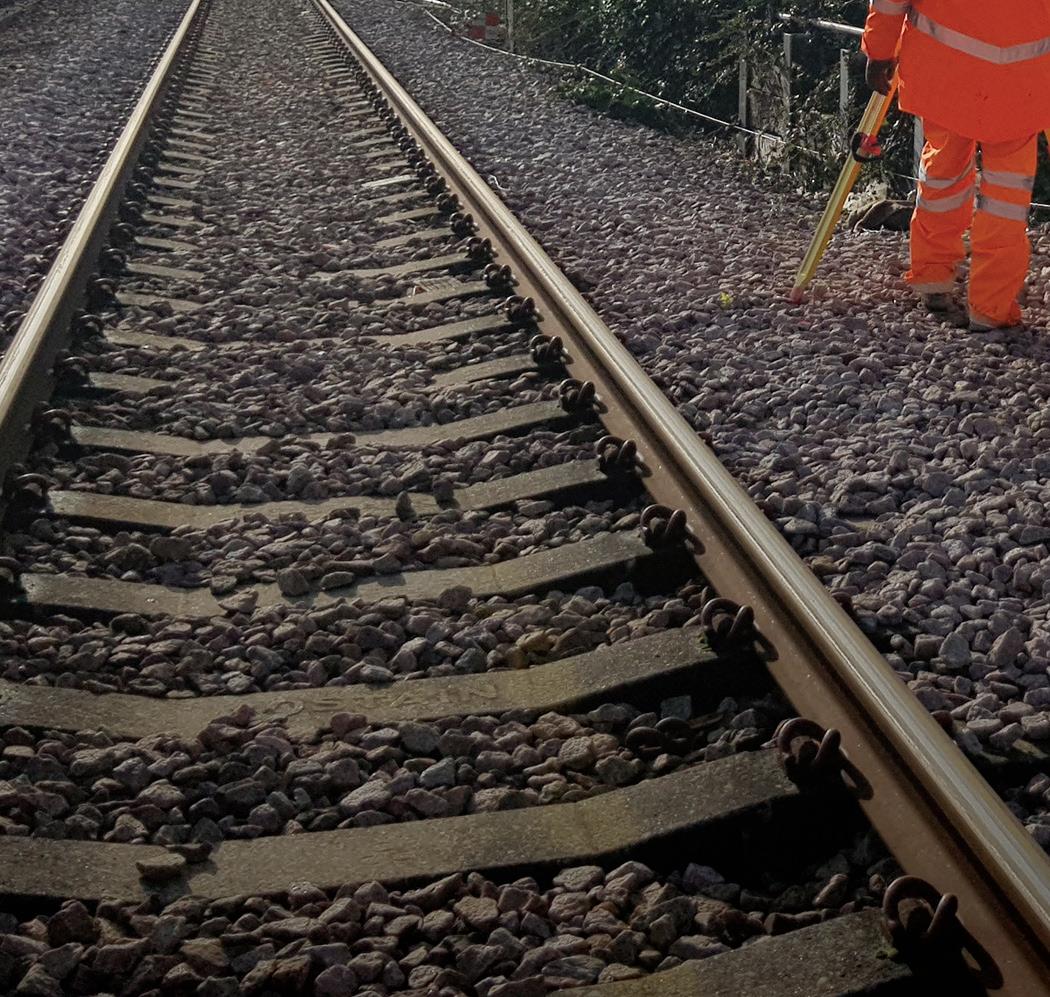
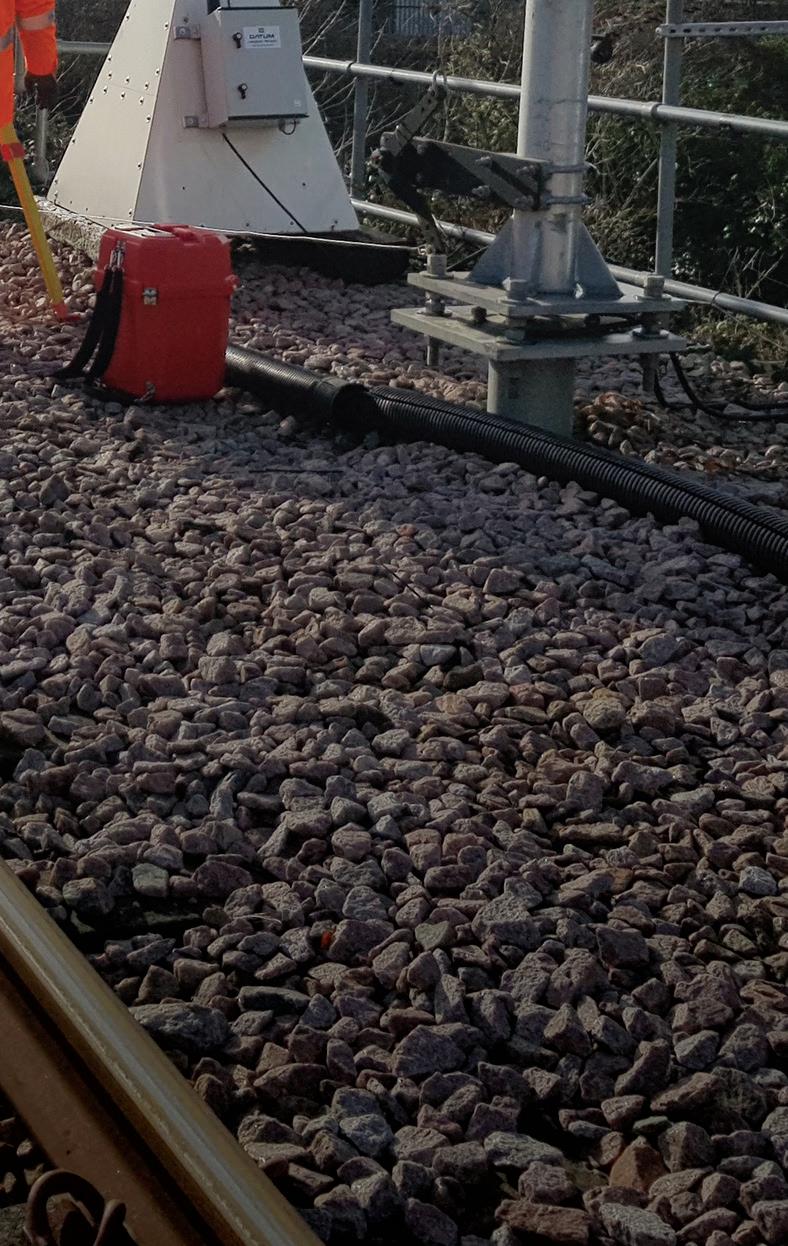
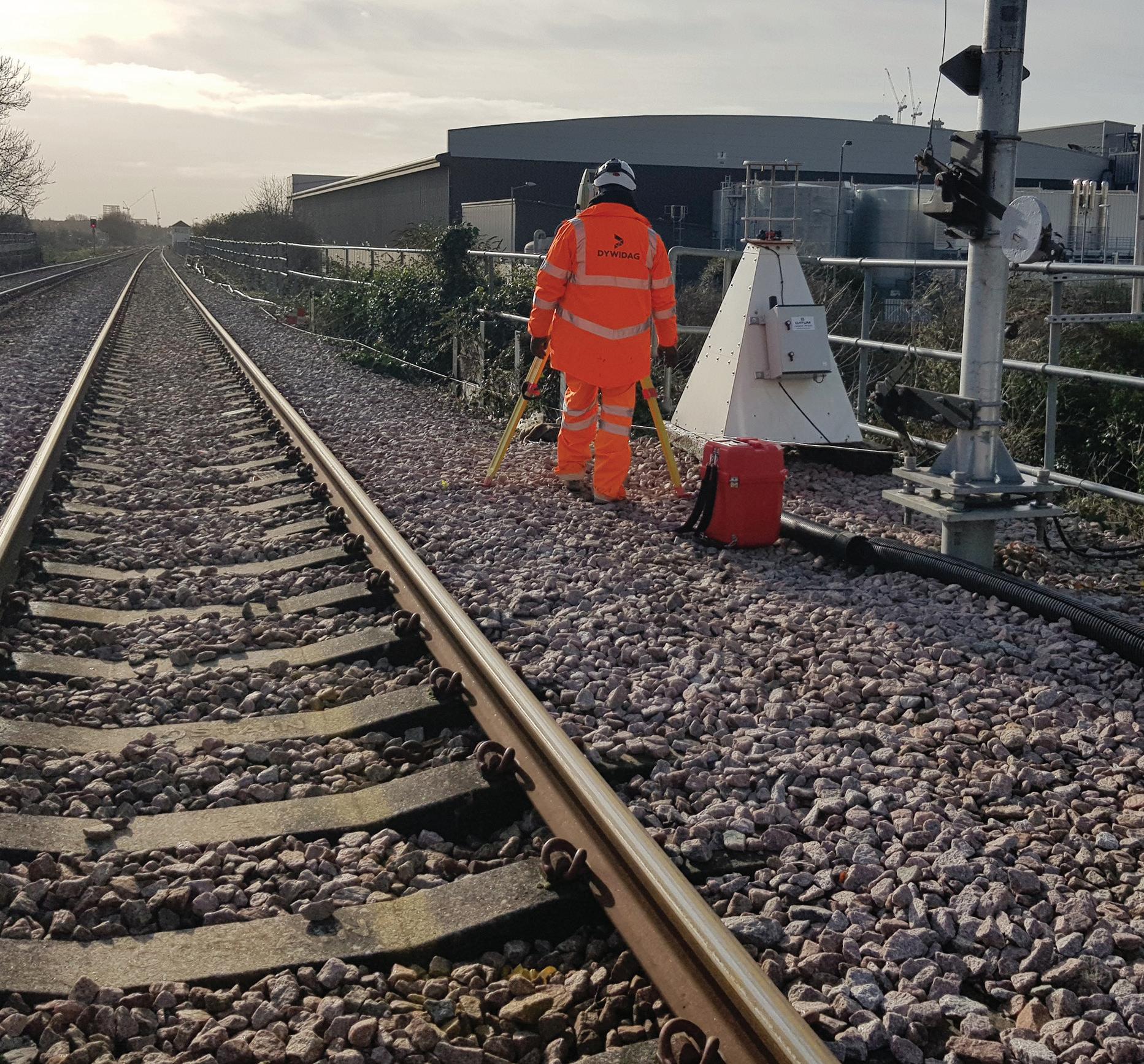
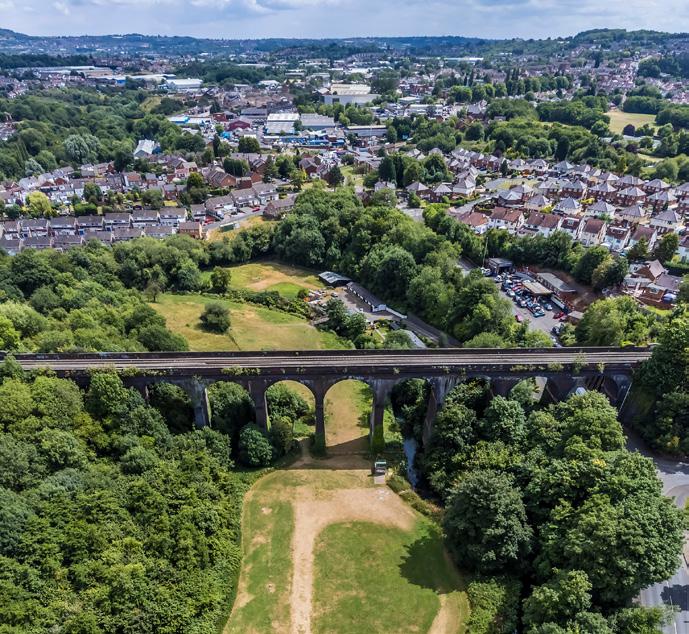
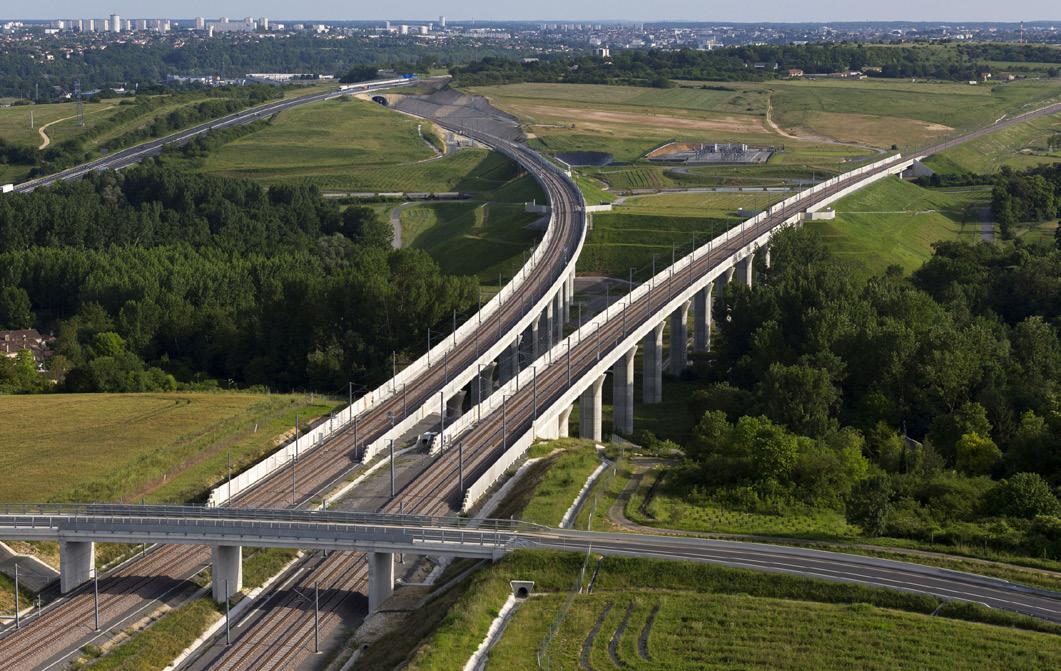
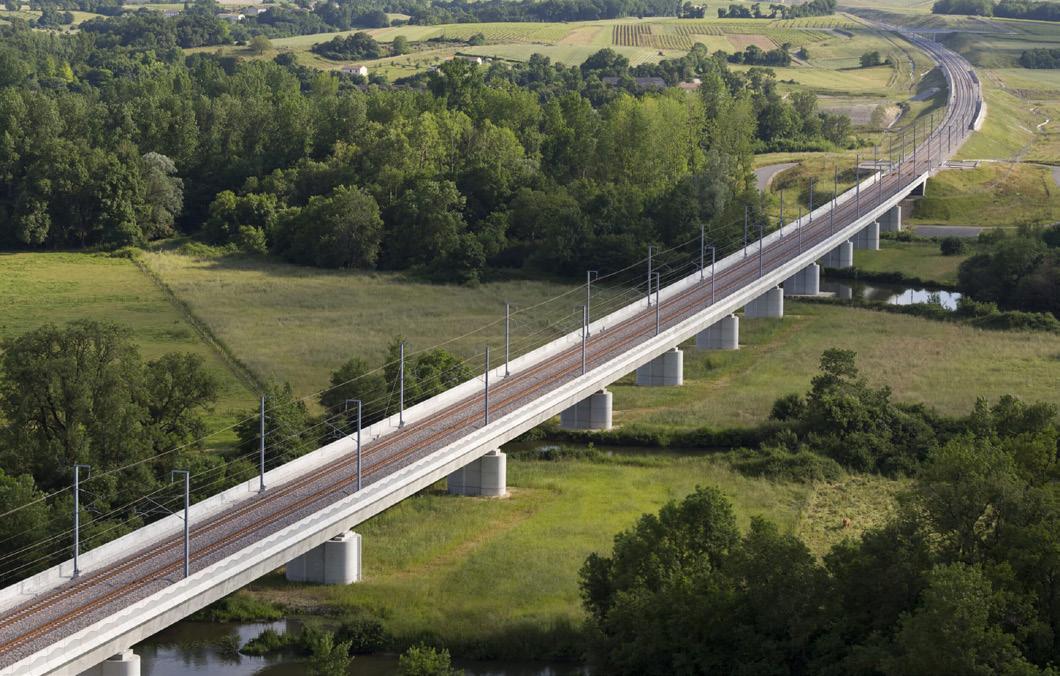
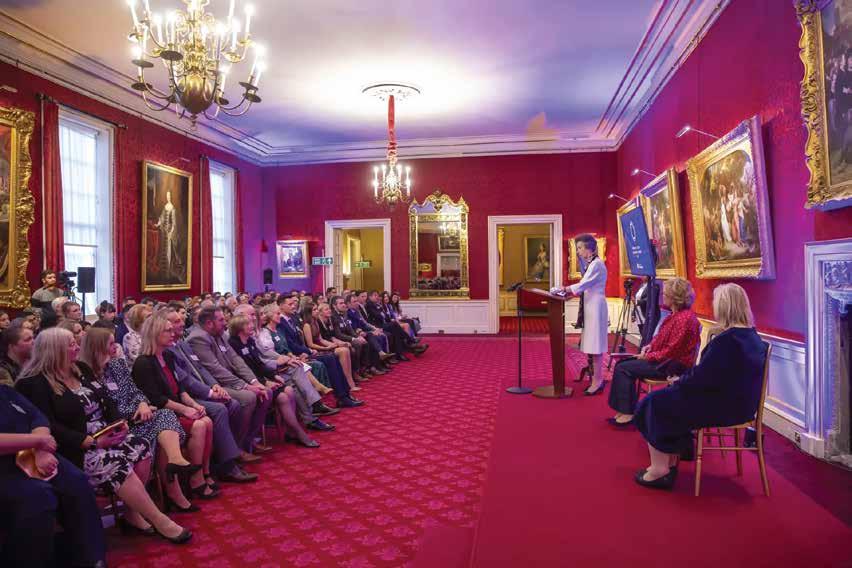
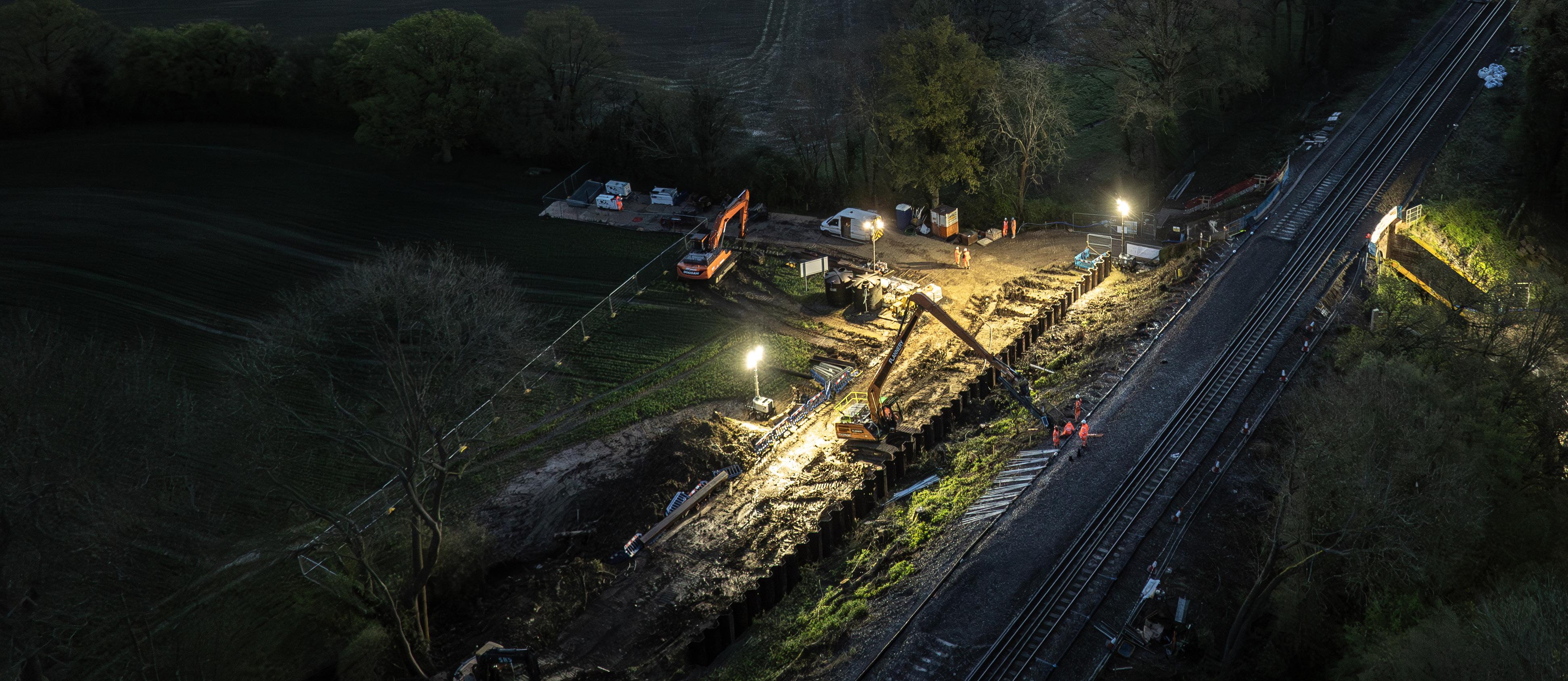
HS2 staff and contractors celebrate this national milestone on a newly built section of Colne Valley Viaduct
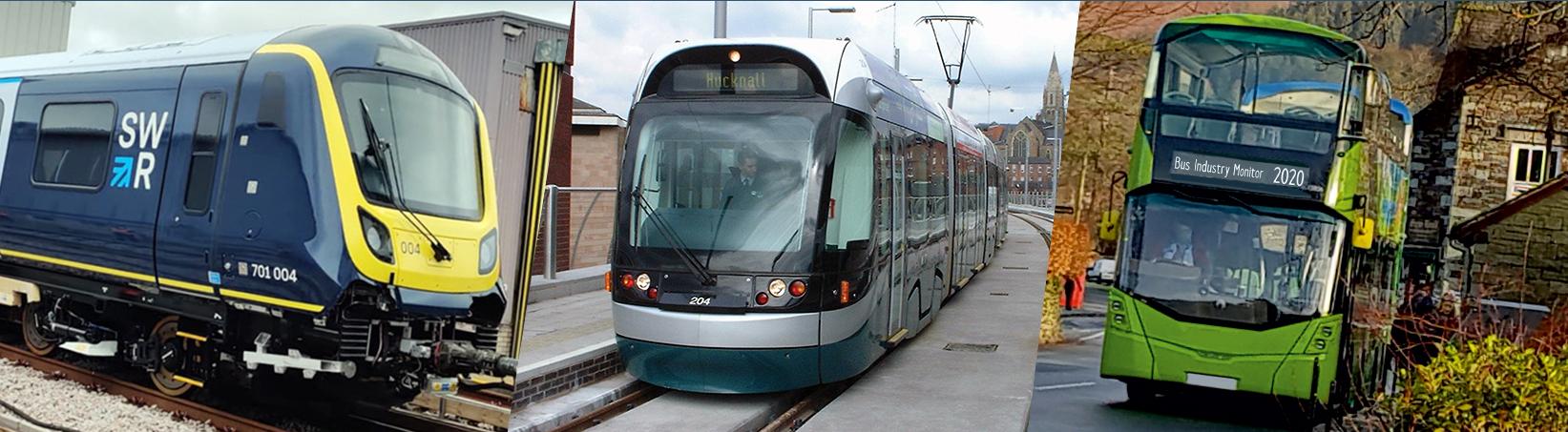
TRAM & LIGHT RAIL
DEPOTS
The OPC’s Blueprint for High Performing Depot Teams
Rapid Transit for Bristol? INTERVIEWS
Conversations with Industry Figures
At OPC Assessment, we are more than test publishers; we’re experts in our field with more than 25 years’ experience supporting our global clients in the rail and transport sector, engineering industry and beyond.
Our psychometric tools help to: recruit top-tier talent develop high-performing employees support career-long growth
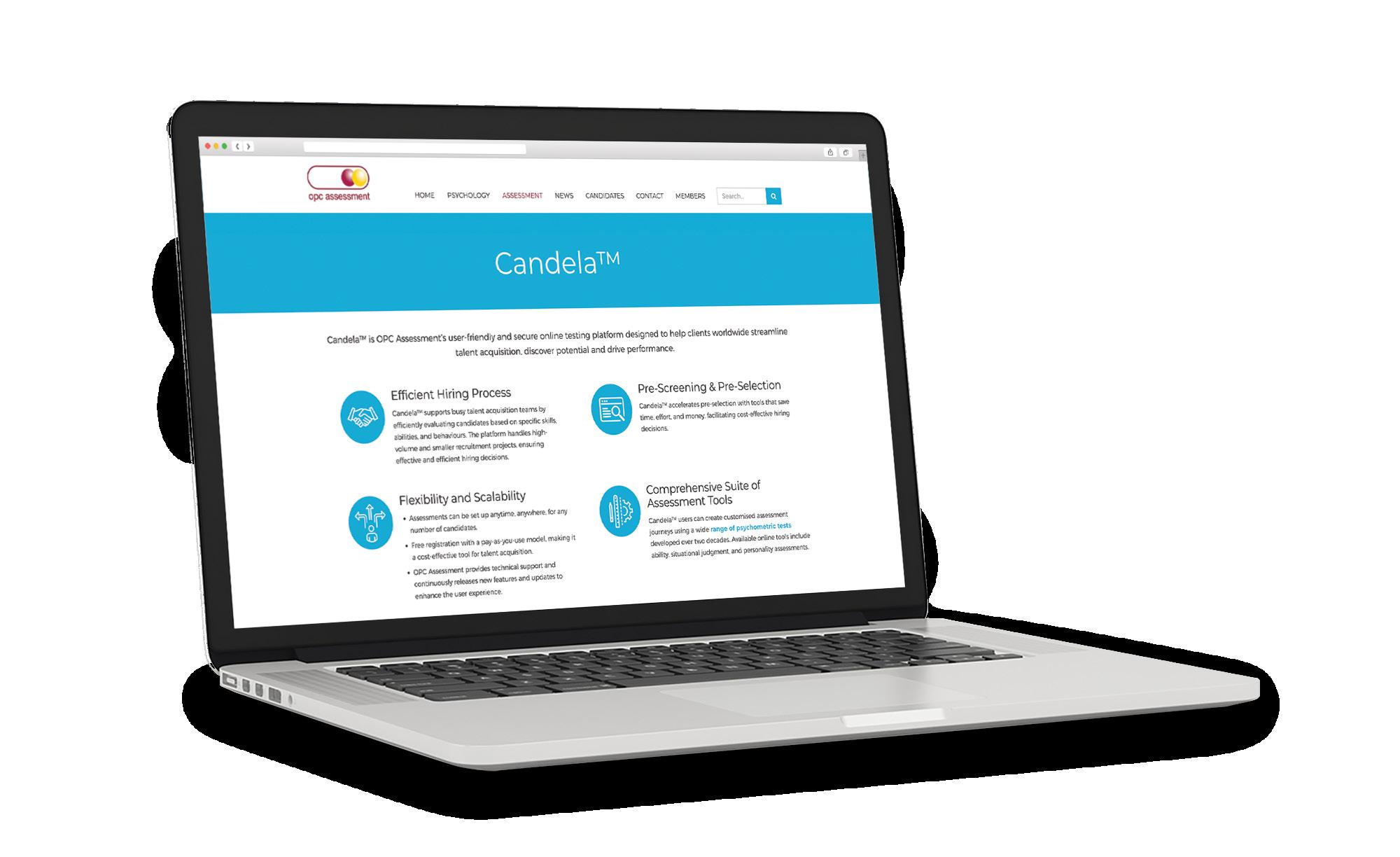
Hosted on our user-friendly Candela™ platform, clients can explore our extensive range of innovative assessment tools. Guided by our expert psychologists, we can advise on bespoke recruitment solutions tailored to your specific needs.
The rail industry enters 2025 facing both opportunities and challenges. Transport Secretary Louise Haigh's vision for integrated transport, announced in Leeds late last year, emphasises a 'people-first approach' drawing inspiration from European successes like Dijon's integrated network. The government's commitment to recruiting a new Integrated Transport Commissioner signals serious intent to deliver real change in how our transport networks connect.
However, concerning research from Rail Partners reveals that rail freight costs have increased by ten per cent in real terms since 2015, compared to just three per cent for road transport. Track access charges have seen a stark 26 per cent rise while road charges and levies have fallen by 41 per cent. This disparity poses a significant challenge to government targets for growing rail freight by 7.5 per cent in England and Wales, and 8.7 per cent in Scotland by 2029. The report suggests policy interventions like halving track access charges while adjusting road fuel duty could increase rail freight's market share by 31 per cent – potentially saving 370,000 kilotonnes of CO2 emissions.
These challenges are reflected in RIA's recent open letter to the Transport Secretary, highlighting concerning industry trends including a 9.4 per cent workforce reduction in the past year. RIA's priorities for 2025 focus on ending ‘boom and bust’ investment cycles, accelerating investment plans ahead of Great British Railways' establishment in 2026, and ensuring rail reform progresses with proper supply chain involvement.
In this context, our interview with Jools Townsend of Community Rail Network offers valuable insights into how community rail partnerships are driving post-pandemic recovery and enhancing local economic development. This grassroots perspective becomes especially relevant as the government develops its integrated strategy.
The issue explores several major infrastructure themes. Our interview with Sébastien Vecchiato examines the shifts needed for major UK infrastructure projects, while our comprehensive coverage of depot operations and rope access engineering demonstrates the technical innovation happening across the sector.
We also analyse the Labour government's first budget and its implications for rail investment and development. Laura Wright provides detailed analysis of what these economic shifts mean for our industry.
With Railway 200 celebrations ahead and the implementation of new transport strategies, 2025 marks both a commemoration of our railway heritage and a crucial moment in shaping its future. The Department for Transport's development of a tenyear strategy for transport design, construction and operation in England provides an opportunity for the industry to contribute to a truly integrated vision for the future.
As we begin this significant year, we look forward to tracking these developments and continuing to provide industry analysis and insight on everything that happens.
SAM SHERWOOD-HALE EDITOR
(GBRf Peterborough Maintenance Hub built by Cairn Cross, 2024)
15 Melanie Gangl-Verma shares her knowledge of how Frauscher constantly evolves and challenges itself to introduce innovations for a better
18 Sam Sherwood-Hale spoke to Jools Townsend, Chief Executive of Community Rail Network about the social value of community rail, its role in sustainable travel, engagement with young people, local economic development, and how community rail partnerships are helping drive the post-pandemic recovery of Britain's railways
Craig Elder and Paul Hill, partners at Browne Jacobson, on how the retirement of PFI left a void in how to leverage private investment for improving public infrastructure like railways
It was an historic budget – the first to be delivered by a female Chancellor – and the first by a Labour government in 14 years, Laura Wright breaks it down
As 2025 begins, this column starts with a double-header looking at revised employment law guidance and some interesting contract law
must take centre stage to achieve sustainable transport goals and boost economic growth across
Unleash your welding potential
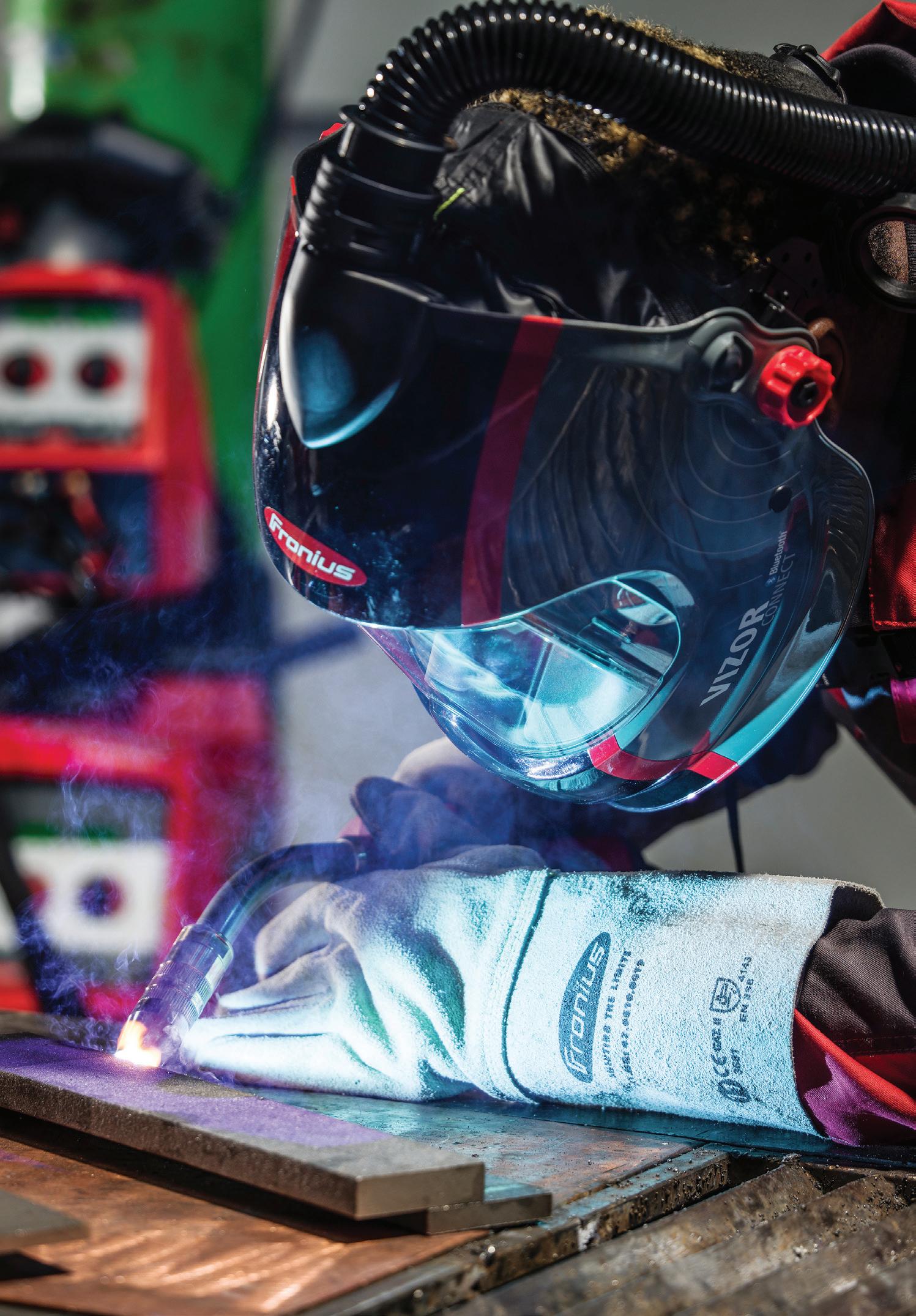
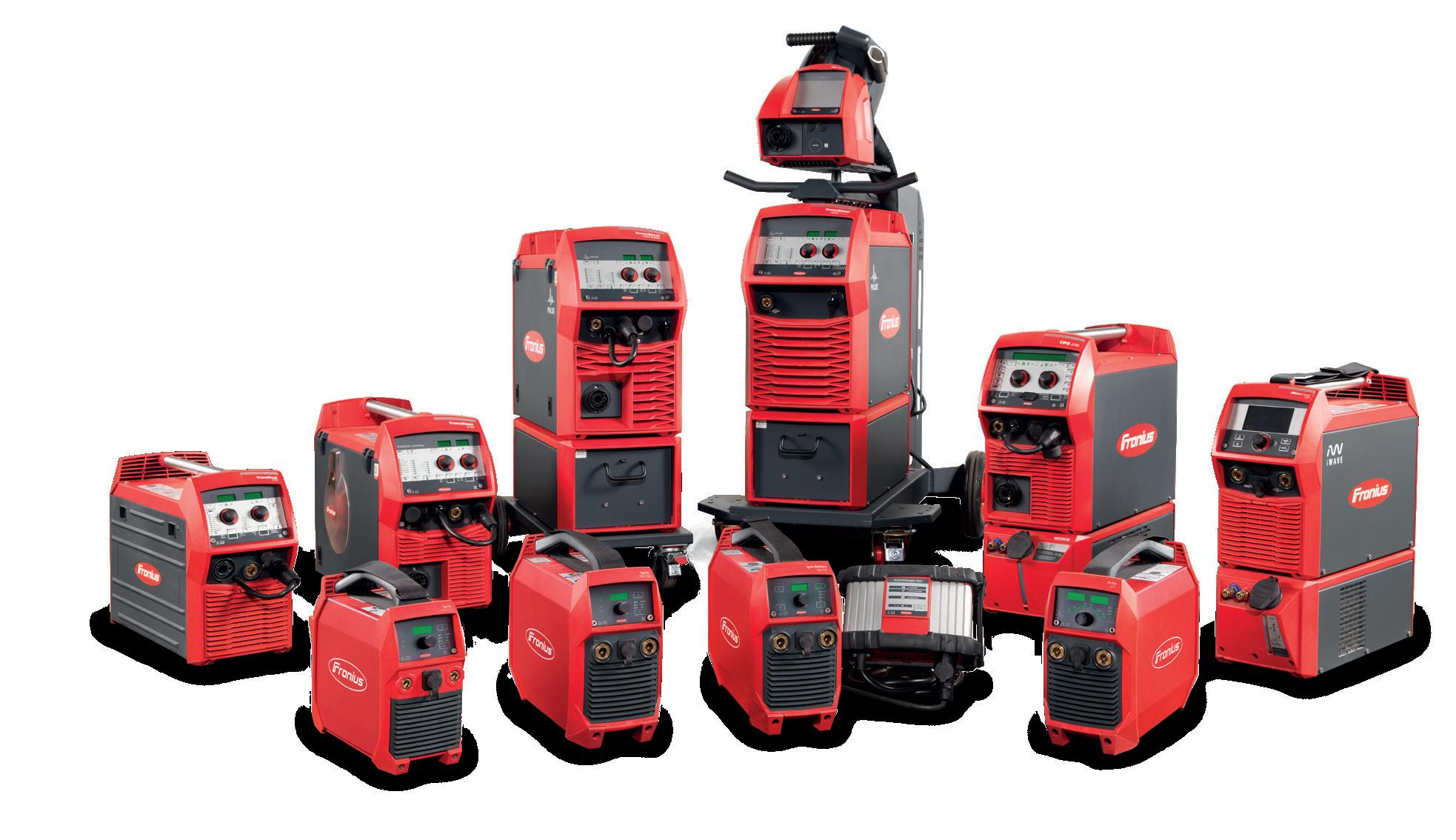
Discover the unmatched benefits of Fronius welding machines, designed specifically for welders who need reliable solutions for both the workshop and on-site working. Fronius products deliver outstanding performance with a stable arc for uninterrupted work and userfriendly operation. Built to be tough and portable, these systems are ready to work whenever and wherever you need them.
Our lineup includes the cordless Fronius Ignis Battery, perfect for those MMA repairs where there’s no power available. Additionally, the TransSteel Pulse range offers consistent seam quality at faster speeds, with little to no spatter - for all
56 INTERVIEW
The message from last year’s High Speed Rail Group Investment Summit is that some significant shifts are needed if major UK infrastructure projects are to go ahead.
Sam Sherwood-Hale spoke to Sébastien Vecchiato about financing options that could bring schemes to fruition
59 IN CONVERSATION
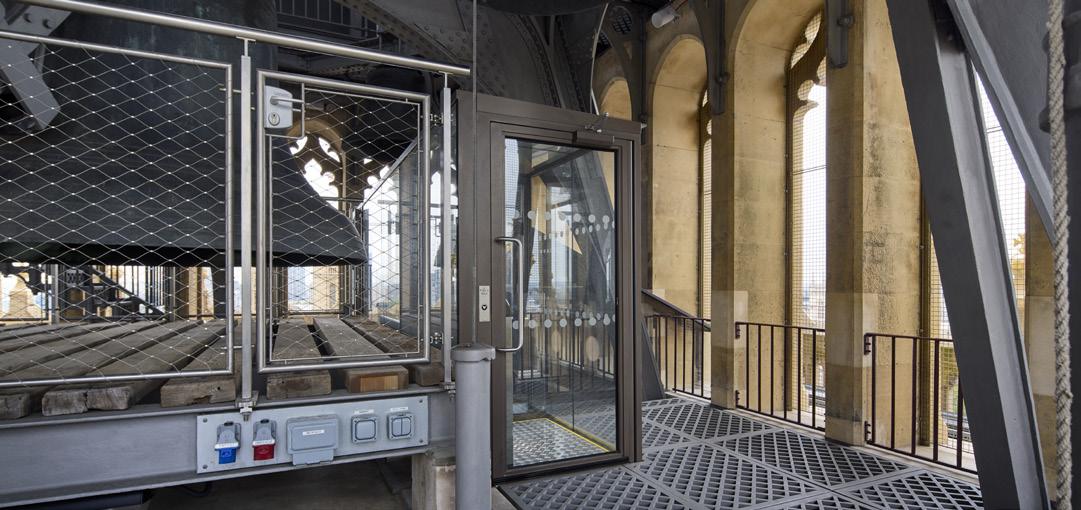
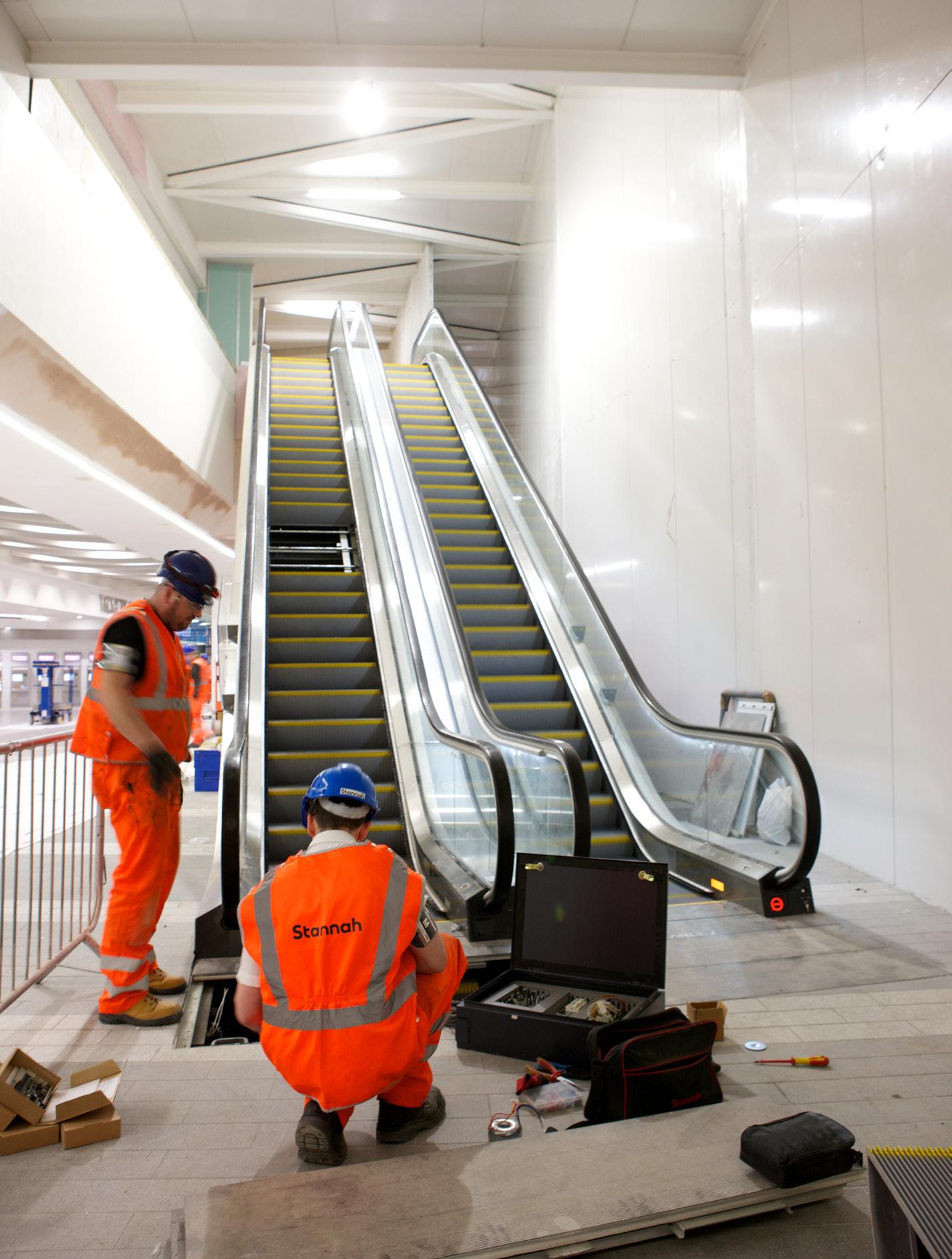
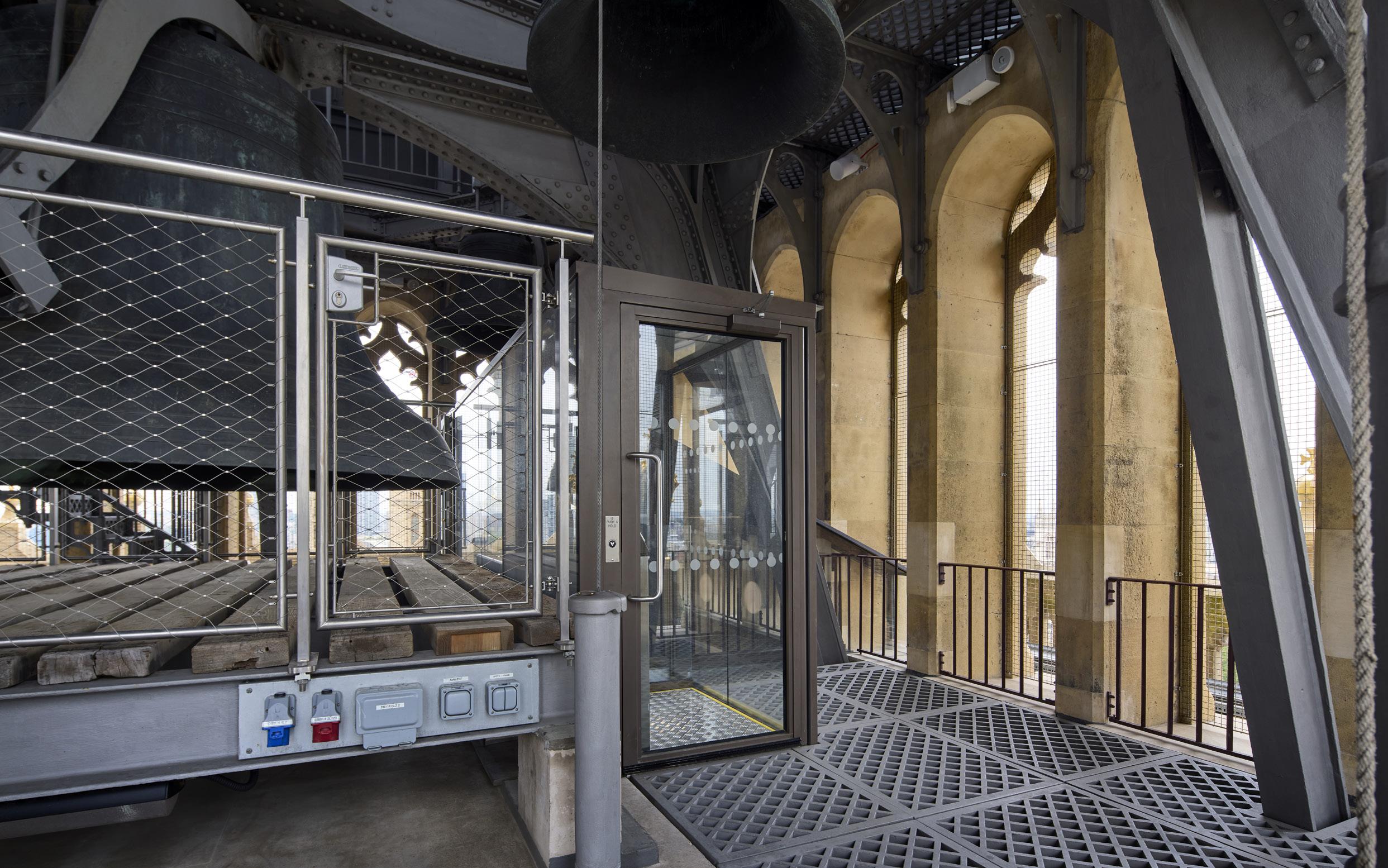
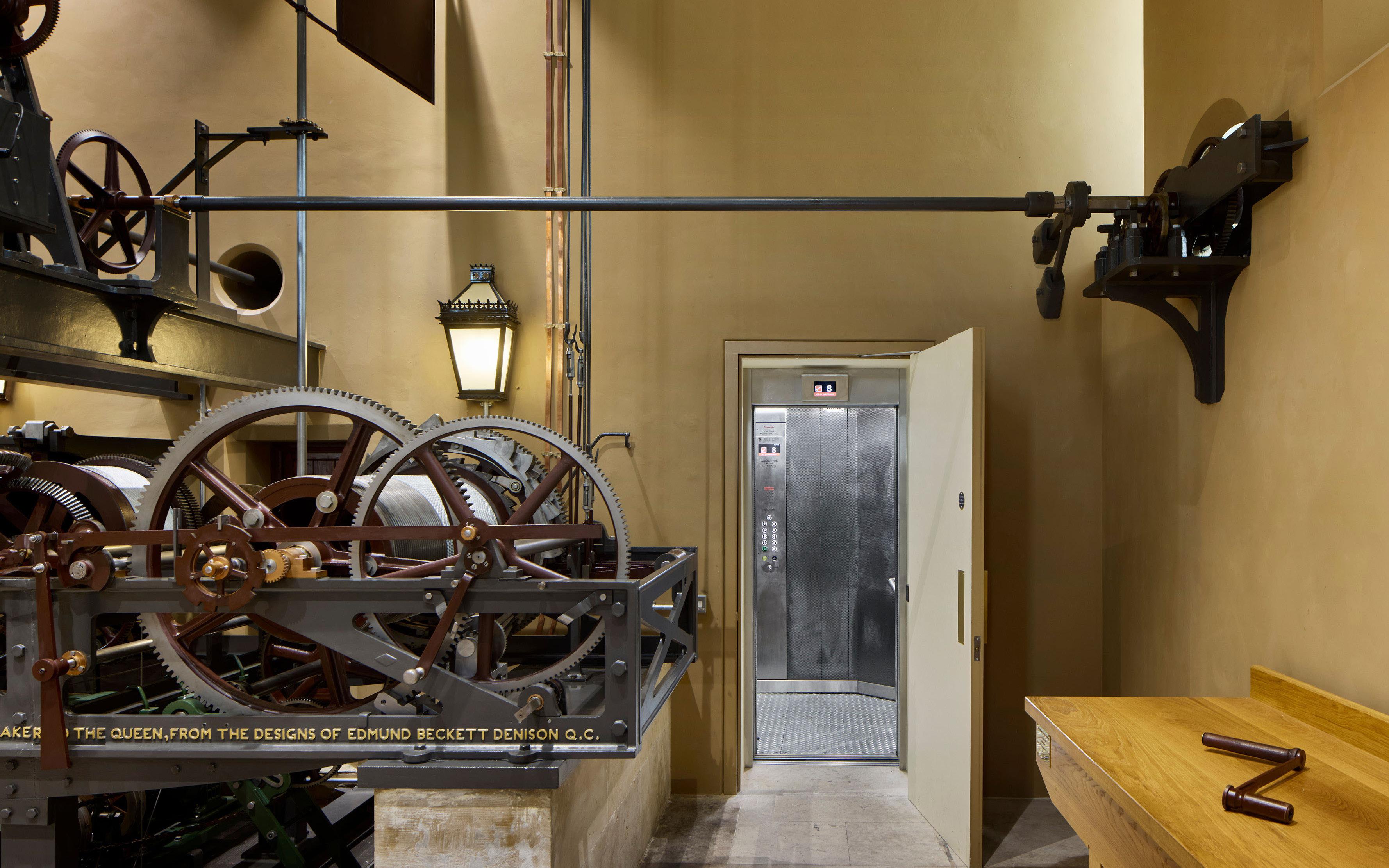
Dave Saunders, Head of Major Projects Division at Stannah Lift Services
63 IN CONVERSATION
Kate Louise Cole, Managing Director of Havi Technologies
66 IN CONVERSATION
Rob Wheeler, Director Sales & Customer Services, UK at Liebherrtransportation Systems
71 IN CONVERSATION
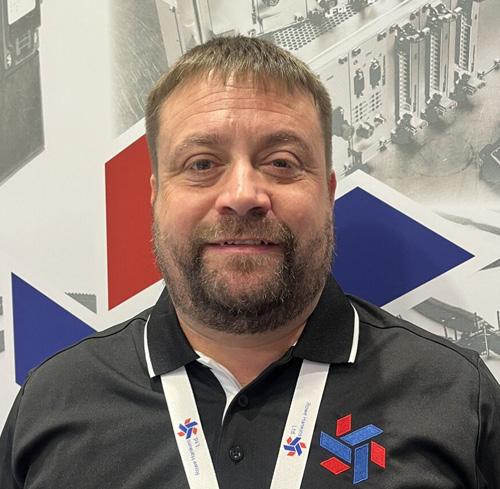
Alex Emmerson, Engineering Director at Rowe Hankins Ltd
BUSINESS PROFILES
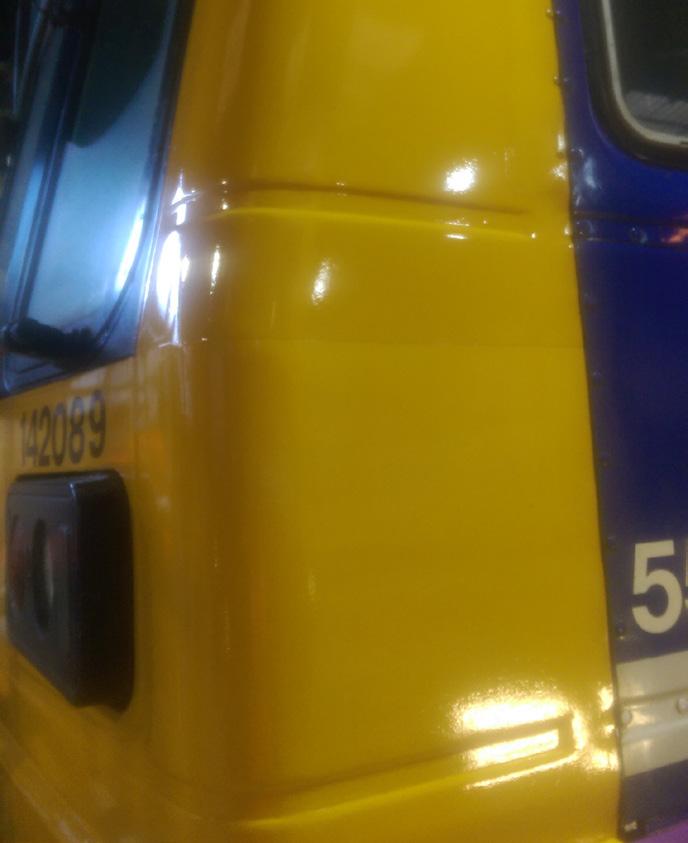
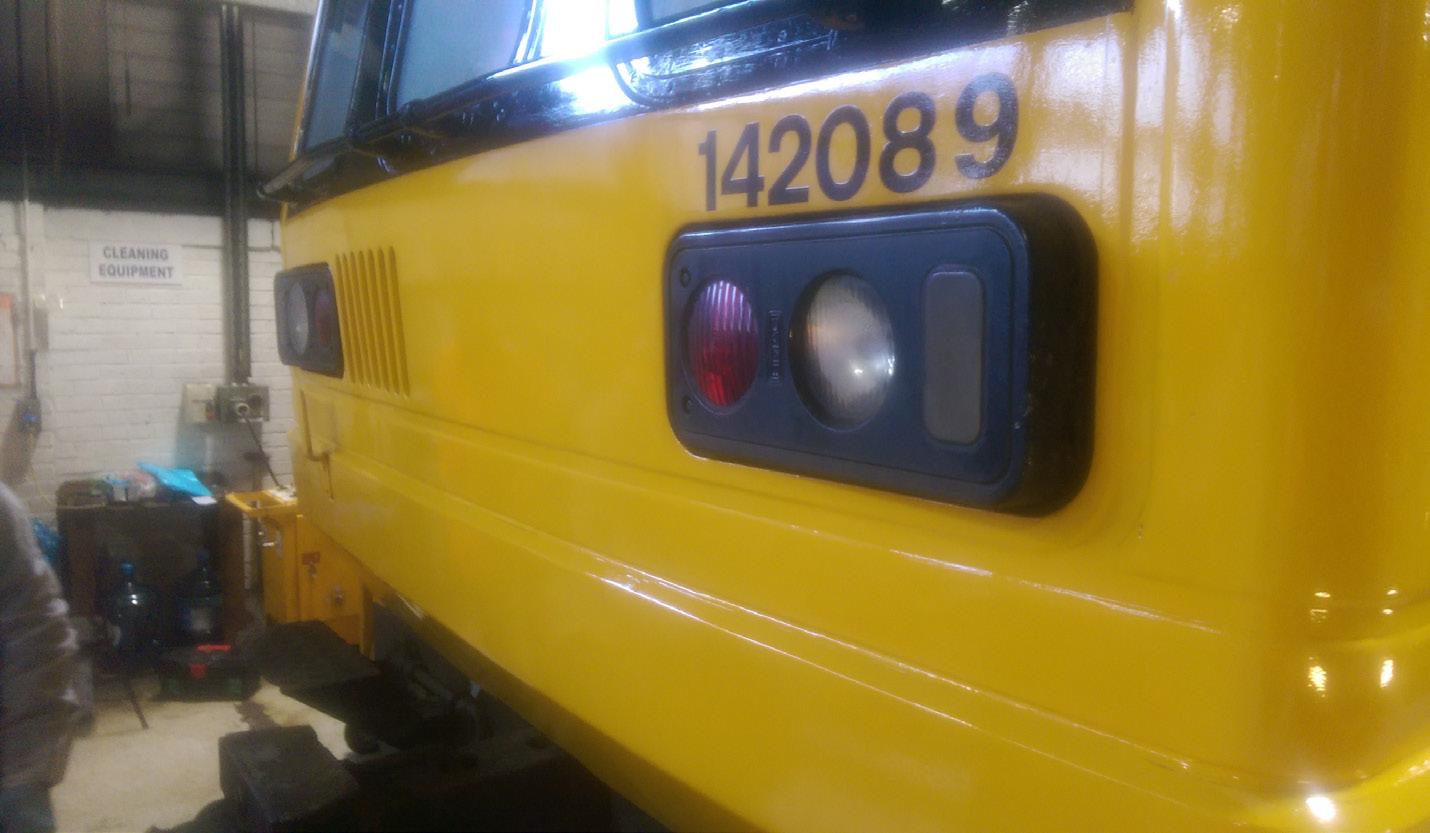
74 Urban Hygiene
Leading the fight against railway graffiti
77 VIEWPOINT
Dominic Gibbeson, transport expert at PA Consulting, on unblocking Britain’s rail development
78 ROPE ACCESS
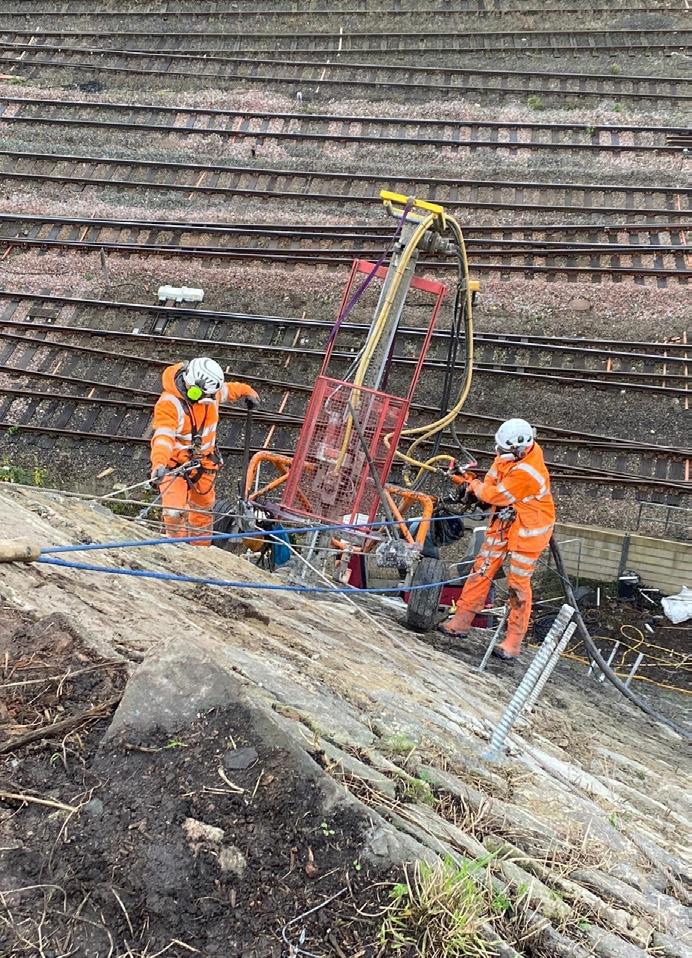
Rope access and geotechnical engineering
Nicola Small, Steve Mabey, Rachel Firth, Rob Whyte, Andy Butters, Jason Wade, Chris Jackson
Hitachi Rail Acquires Omnicom
Hitachi Rail has agreed to acquire Omnicom, a digital rail monitoring business, from Balfour Beatty. The acquisition aligns with Hitachi's recently launched HMAX digital asset management suite.
Omnicom, with 25+ years in railway technology, provides software and hardware for rail infrastructure monitoring, including track inspection and gauge clearance measurement. Their systems use edge computing and machine learning for near real-time anomaly detection, processing trillions of bytes of images daily to optimize trackside maintenance.
The integration with HMAX, launched in September 2024, will bring Omnicom's technology to the global market. HMAX integrates
live data from trains and infrastructure into a single platform, using AI to enhance operations, reduce energy consumption, and enable predictive maintenance. The platform processes data at the ‘edge’ significantly improving the speed of insights reaching operators.
Hitachi Rail CEO Giuseppe Marino described it as a strategic acquisition, emphasizing how Omnicom's track monitoring tools will strengthen their global infrastructure optimization offering. Omnicom's Managing Director Sanjay Razdan highlighted how the acquisition will enhance their ability to deliver AI-enabled systems while improving rail infrastructure safety and efficiency.
Footbridge Set to be Installed in £140 Million
Darlington Station Upgrade
Six weekends of major engineering work in the North East will see significant progress in Darlington station's £140 million regeneration, with a 120-tonne crane lifting steelwork over the East Coast Main Line as construction continues at the Grade II-listed building.
The work, which runs for six consecutive weekends from 8-9 February, will transform passenger facilities and deliver an integrated transport hub with improved local and national connections. During this period, the line will be closed in both directions
while National Highways demolishes the old Allerdene bridge south of Newcastle as part of their A1 upgrade work.
A major milestone will be reached on 22-23 February when the new enclosed, step-free footbridge is lifted into place over two new platforms. Engineers will test new switches against the signalling system and conduct overhead line work across the station, while laying cables and installing trackside equipment to progress the project.
The comprehensive programme includes significant safety improvements, with
the installation of a semi-automatic track warning system between Ferryhill South and Tursdale junctions and new walkways between Durham station and Tursdale Junction. Track renewal work will take place at Chester-le-Street, involving over half a mile of rail, sleeper and ballast replacement, while engineers strengthen the track bed at Tursdale Junction to restore line speeds. Additional maintenance work includes telecommunications upgrades and preparations for the Railway 200 celebrations.
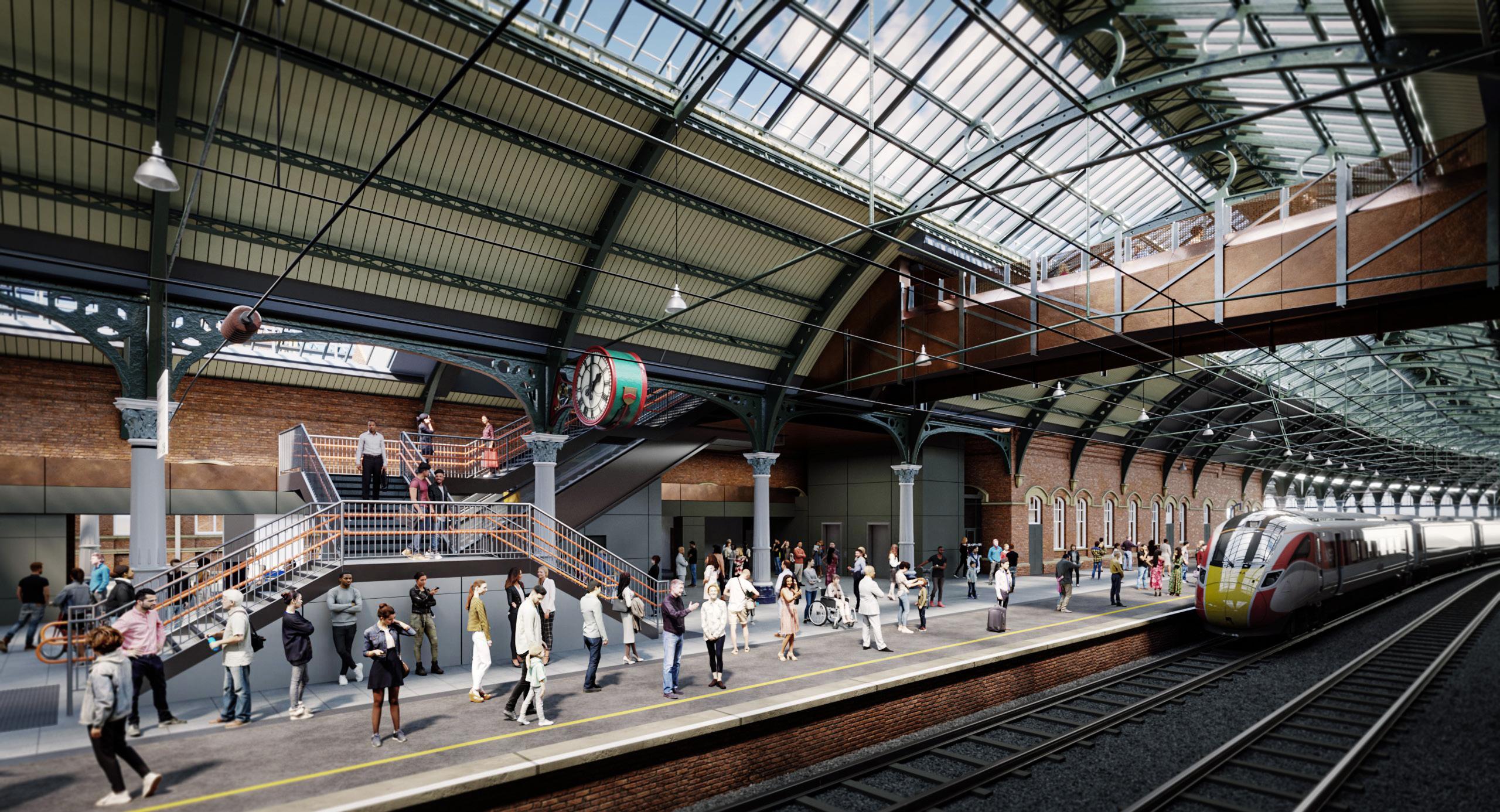
CGI image showing how platform one will look with new stairs and footbridge.
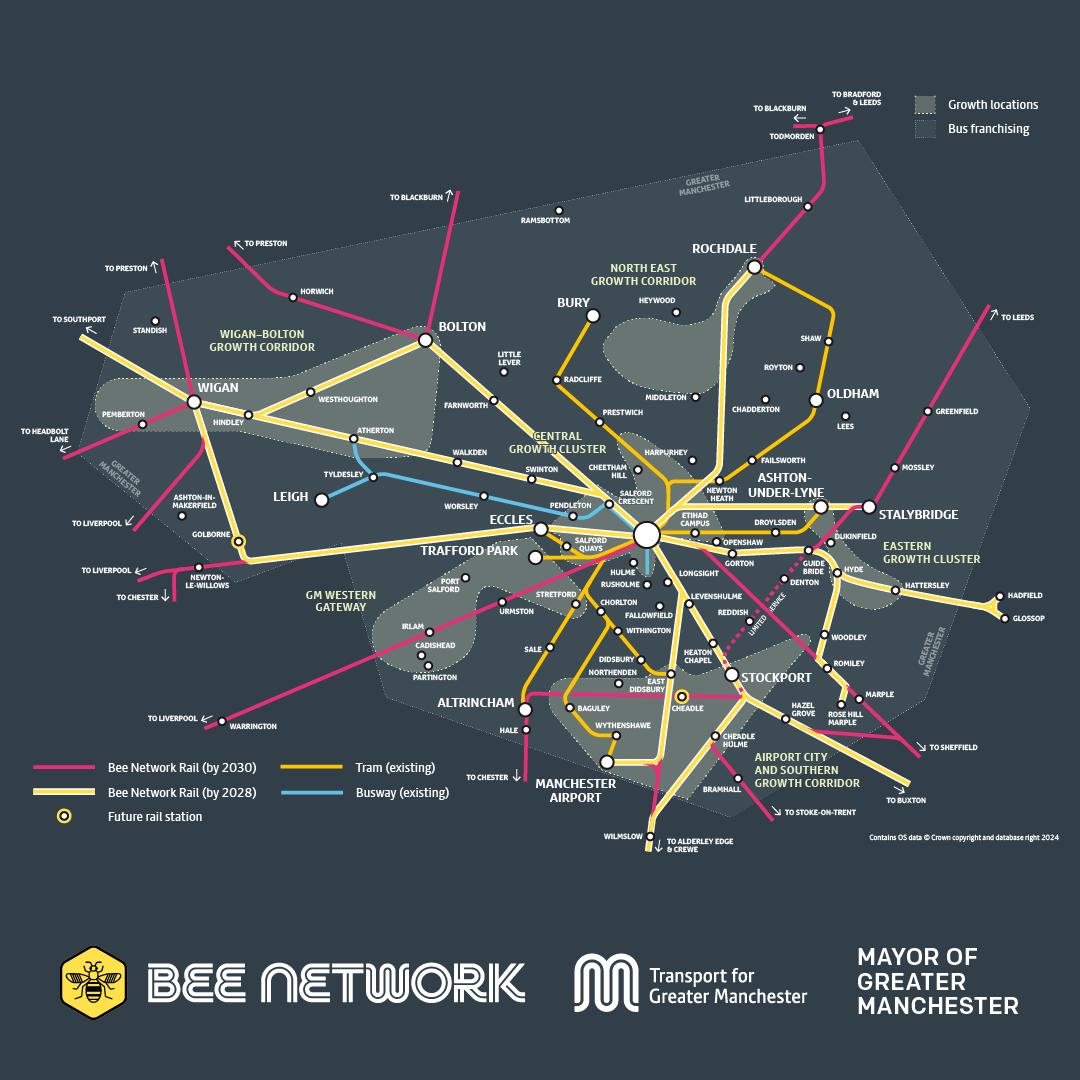
Mayor Andy Burnham Reveals Plans for Bee Network
Greater Manchester has unveiled ambitious plans to integrate rail services into its Bee Network by 2028, marking a significant expansion of the region's London-style public transport system. The three-phase transformation, developed in partnership with the rail industry and Department for Transport, will incorporate eight commuter rail lines covering 64 stations.
The initiative, announced by Mayor Andy Burnham, will commence with services between Manchester and Glossop, and Manchester and Stalybridge by December 2026. The programme will implement contactless tap-in-tap-out ticketing, simplified fare structures with daily and weekly caps across bus, tram and train services, and comprehensive station upgrades featuring Bee Network branding and improved accessibility.
The £114 million project aims to boost annual rail journeys by 1.3 million across the initial eight lines, with £34 million allocated from the City Region Sustainable Transport Settlements fund until March 2027, and an additional £80 million earmarked for completion by 2028. The transformation will also facilitate new housing developments, with plans to deliver 750 new homes near rail stations by 2028.
Station improvements will include enhanced safety features, modernised facilities, and improved passenger information systems. The programme will increase step-free access from 43 per cent to over 60 per cent of stations by 2028. A significant milestone has been reached with government approval for a new £32 million station in Golborne, reconnecting the area to the rail network after a 60-year absence.
The phased implementation will see Phase 2 extend to Manchester Airport and Alderley Edge services by December 2027, establishing an international travel hub. Phase 3, completing in December 2028, will incorporate lines to Rochdale and Wigan, with remaining Greater Manchester stations joining by 2030.
Environmental benefits are central to the initiative, with the integration expected to remove over seven million car journeys annually, saving approximately 700 tonnes of carbon. The programme builds on Greater Manchester's successful bus
franchising model, completed earlier this month, and aligns with the government's wider rail reform agenda outlined in the English Devolution White Paper.
Network Rail has endorsed the plans, emphasising their commitment to devolution that benefits passengers and supports integrated local transport systems. The initiative demonstrates Greater Manchester's growing role in shaping regional transport infrastructure, with discussions ongoing regarding further devolved powers for service management and network specification.
Consultation on Plans to Improve Manchester Oxford Road Station
Network Rail has launched a consultation on major upgrades to Manchester Oxford Road Station, with proposals including extended platforms, improved track layouts, and enhanced accessibility features to boost network capacity and passenger experience.
The scheme will reconfigure the station to three platforms – two through-platforms accommodating eight-car trains and a six-car turn-back platform – increasing seating capacity by 120 seats per service. Track and signalling improvements will allow an increase from twelve to 14 trains per hour, while over 900 metres of new track and upgraded overhead line equipment will reduce congestion by eliminating conflicting train movements.
A new footbridge with lifts will provide step-free access throughout the station, complemented by wider, resurfaced
platforms and improvements to existing lifts. The design considers the surrounding historic environment, including the Grade II listed station building and platform canopies.
The public consultation runs from 20 January to 28 February 2025, with drop-in events scheduled for 1 and 17 February at Manchester's Friends' Meeting House. A second consultation focusing on environmental and construction impacts will follow later in 2025, before planning applications are submitted in 2026.
Construction is expected to close the station for approximately two years, though trains will continue running through the station. Transport for Greater Manchester is working with local authorities to manage increased passenger flows at neighbouring stations during the closure period.
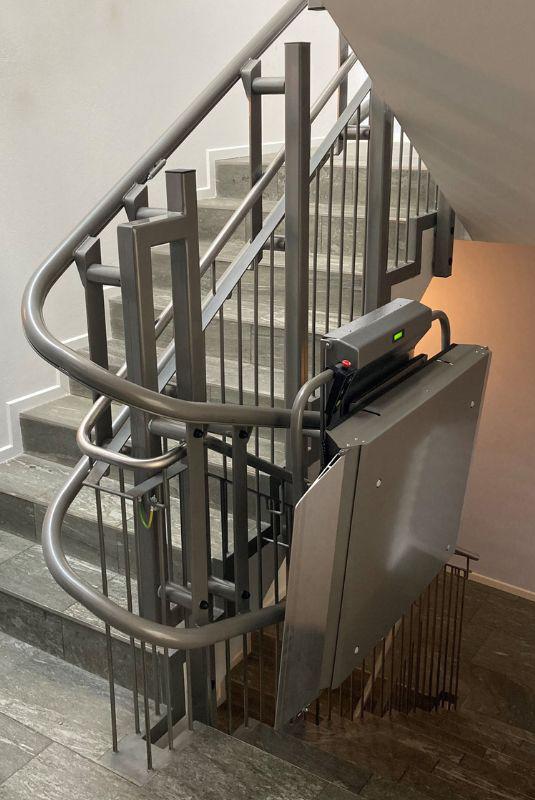
Stannah Announces New Addition to Platform Range with Stairiser CR2
Stannah, a leader in the UK lifts sector, has announced an innovative new addition to its Stairiser platform lift range with Stairiser CR2.
The new Stairiser CR2 inclined platform lift, which replaces Stairiser CR, is designed for use on a curved rail, making it suitable for any run of stairs with a single turn, multiple landings or spiral configuration.
Sleek and stylish, the new Stairiser CR2 is designed specifically for curved stairways with the major benefit of the new Stairiser CR2 over the Stairiser CR is that it offers greater energy efficiency along with a new design that is both stylish and discrete. Stairiser CR2’s slimline design means the rail has minimal outward projection from the wall and the platform folds away when not in use.
Along with its more elegant appearance, Stairiser CR2 retains the dependable rack-and-pinion system that makes Stannah’s Stairiser range a trusted choice with customers in both existing and new buildings.
The Stannah inclined platform lift range is a market leading access solution that is ideal to help make an existing building accessible to all. Similarly to the Stairiser SR, which is designed to run on a single straight flight of stairs, the CR2 for curved stair flights continues to work in the event of a power failure because the drive motor is powered with onboard batteries. The unit is charged at each landing stop to ensure it continues to function even during a power outage.
Multiple platform sizes on Stairiser CR allow it to comfortably accommodate a wheelchair and user combined. It features a fully automatic, electrically controlled folding platform. Safety barrier arms and raised ramps ensure safety of the user during travel. The lift supports a maximum load of 250kg. Optional features include a remote call station. As one of the slimmest and most discrete options on the market, Stannah’s range of Stairisers helps building owners to meet the requirements of the Equality Act and Part M of the Building Regulations.
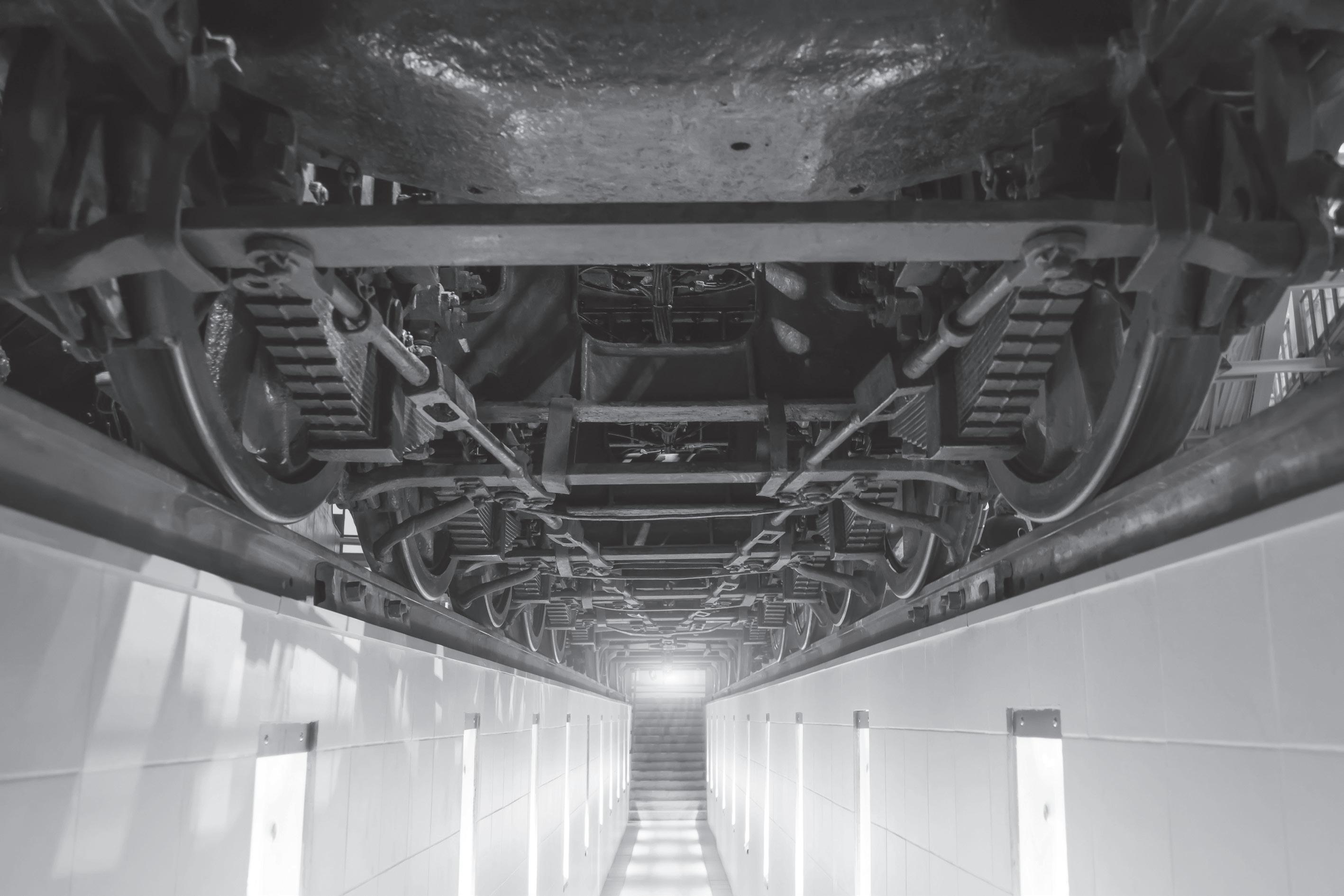
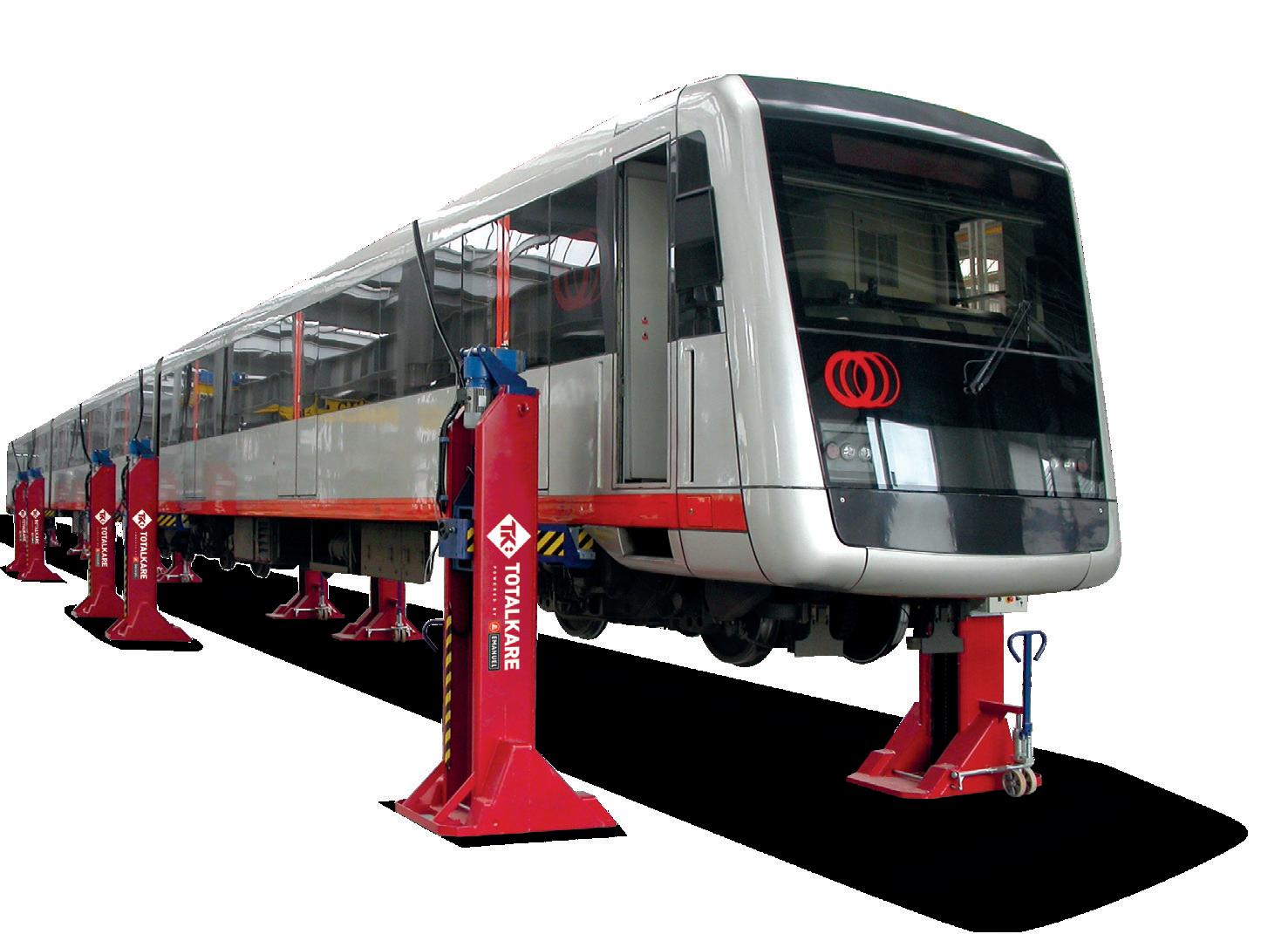
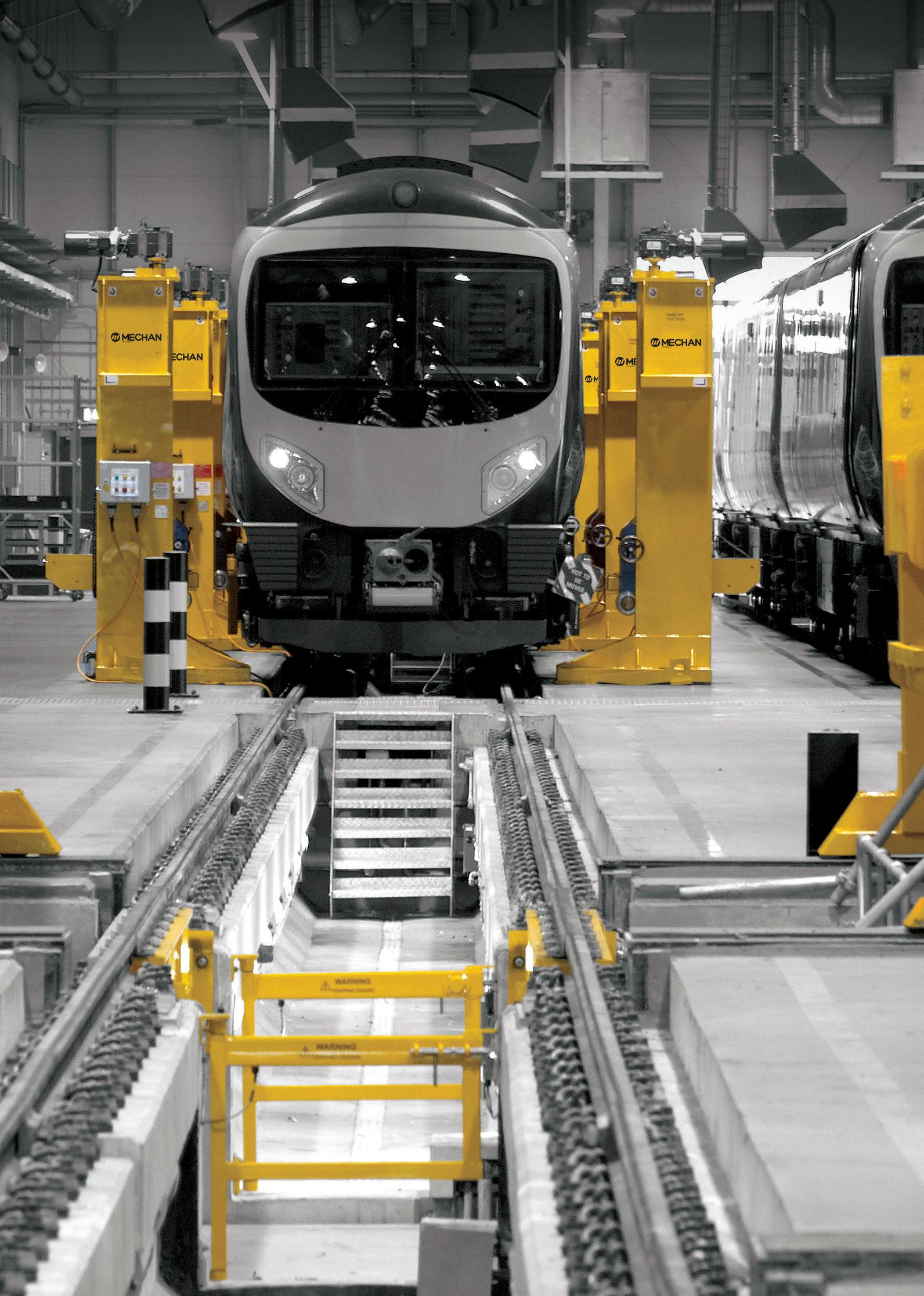
RAIL LIFTING JACKS & PIT EXPERTS
Proposed East West Rail Consultation Response to be Reviewed by Transport Committee
A proposed response to a consultation on the new East West Rail (EWR) line, connecting Oxford and Cambridge, is being reviewed by the Transport and Infrastructure Committee. The EWR project, which has the Government’s backing, aims to improve transport links, reduce congestion, and support economic growth, while also promoting sustainable development.
EWR is planning to bring better access to jobs and education, linking world class universities and clusters of innovative enterprise along the corridor, which will in turn foster further investment to create employment, boost business and grow the economy.
The EWR line is supported in the Combined Authority’s Local Transport and Connectivity Plan (LTCP) for the region. EWR has the potential to help enable the LTCP’s vision by reducing pressure on roads, promoting cleaner, healthier journeys and reducing environmental impacts from transport. By linking EWR in with ongoing work to reform buses, as well as existing rail services and cycling and walking upgrades, the scheme can support the Combined Authority’s goal to create a joined-up transport network for the region, and provide more choice for residents over the way they travel.
The East West Rail Company (EWRC) non-statutory consultation focuses on the eastern section of the route from Bletchley to Cambridge and Cherry Hinton. At its
meeting on January 24, the Transport and Infrastructure Committee will review a detailed draft consultation response to reflect the region’s priorities. This proposed response was developed with input from the Combined Authority’s board members and committees made up of local councillors from across the region and business representatives.
The proposed response focuses on broad strategic transport, environmental and growth matters for the region. It is acknowledged that local councils and other groups will respond with more detailed feedback about their particular areas.
Some key responses the committee will consider are:
• Protecting the environment – ensuring there is a net gain for local biodiversity, and conducting thorough Environmental Impact Assessments to better understand the implications of the development.
• Electrification – calling for the rail line to be fully electrified from day one to meet net-zero carbon targets.
• Active travel connections – improving first- and last-mile travel through better walking, cycling, and bus links.
• Unlocking new stations – safeguarding land for potential future stations near St. Neots and Wintringham to support sustainable development objectives
• Freight: Supporting rail freight to cut road traffic and boost sustainable transport of goods.
• Community and accessibility – reducing barriers caused by rail infrastructure with accessible stations, pedestrian and cycle-friendly crossings, and communityfocused planning.
• Managing construction impacts – putting strong measures in place to manage noise, traffic, and disruption during construction.
• Ongoing connections – benefits of EWR should support more of the East of England by ensuring robust connections with existing regional and national rail networks.
Cllr Anna Smith, Deputy Mayor and Chair of the Transport and Infrastructure Committee, said: ‘The Committee’s review will ensure that the region’s needs are clearly set out to the East West Rail Company. The Combined Authority is supportive of an East West Rail line, but it is vital that this major opportunity to upgrade our public transport infrastructure delivers real improvements for people in our region. It is absolutely right, therefore, that the committee highlights areas that need to be addressed. By tackling key environmental, social, and economic issues, we can ensure this project works for everyone.’
The response will be submitted after the committee meeting concludes. A statutory consultation on EWR is currently planned for later in 2025.
ORR Orders HS1 Ltd to Further Lower Charges for Train Operators
The Office of Rail and Road announced today that it is directing HS1 Ltd to lower its charges for passenger and freight train operating companies to use the high speed rail line from London to the Channel Tunnel, from April 2025. The regulator’s decision, published in its Final Determination of HS1 Ltd’s spending plans for the next five years, follows a thorough review of the company’s proposals, which had already proposed some reductions in costs relative to today.
The regulator has determined that overall charges should come down by 3.8 per cent (£5 million per year) compared to HS1 Ltd’s
latest plans, which were published in November as a response to the regulator’s Draft Determination in September. As part of this, the company is being directed to reduce its charges for renewing its track assets and its stations, including St Pancras. It must also reduce its charges for its day-to-day operating and maintenance of the railway. ORR was able to identify specific areas in the company’s spending plans where further improvements can be made, resulting in savings to passenger and freight train operators. ORR's view is that better management of the track and station assets can result in lower charges, ultimately benefiting customers.
Track replacement work at Weaste tram stop is part of a planned £147 million package to maintain, upgrade and improve the Metrolink network up to 2027. Further track works are planned for various city centre locations later this year.
Metrolink is UK’s largest light rail network and has 99 stops across 64 miles of track, with more than 780 million journeys having been made since opening in 1992.
A key part of the Bee Network, it is now carrying more people than ever before with a record 45.57 million trips being made on trams last year.
Year of Improvements to Metrolink UK Railway Industry Launches Historic Bicentenary Celebrations
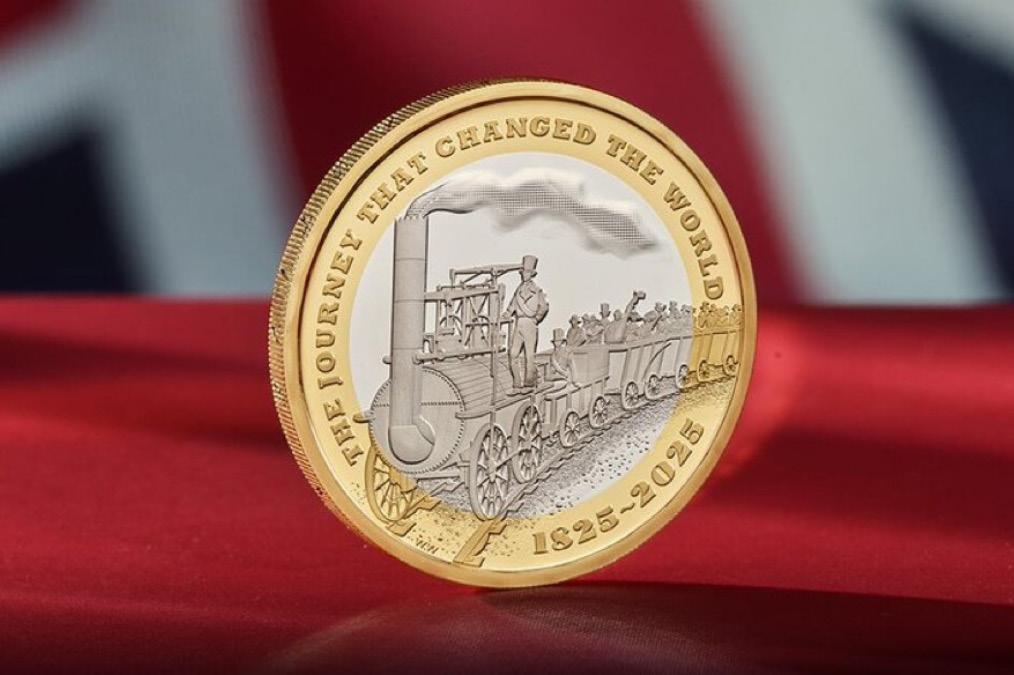
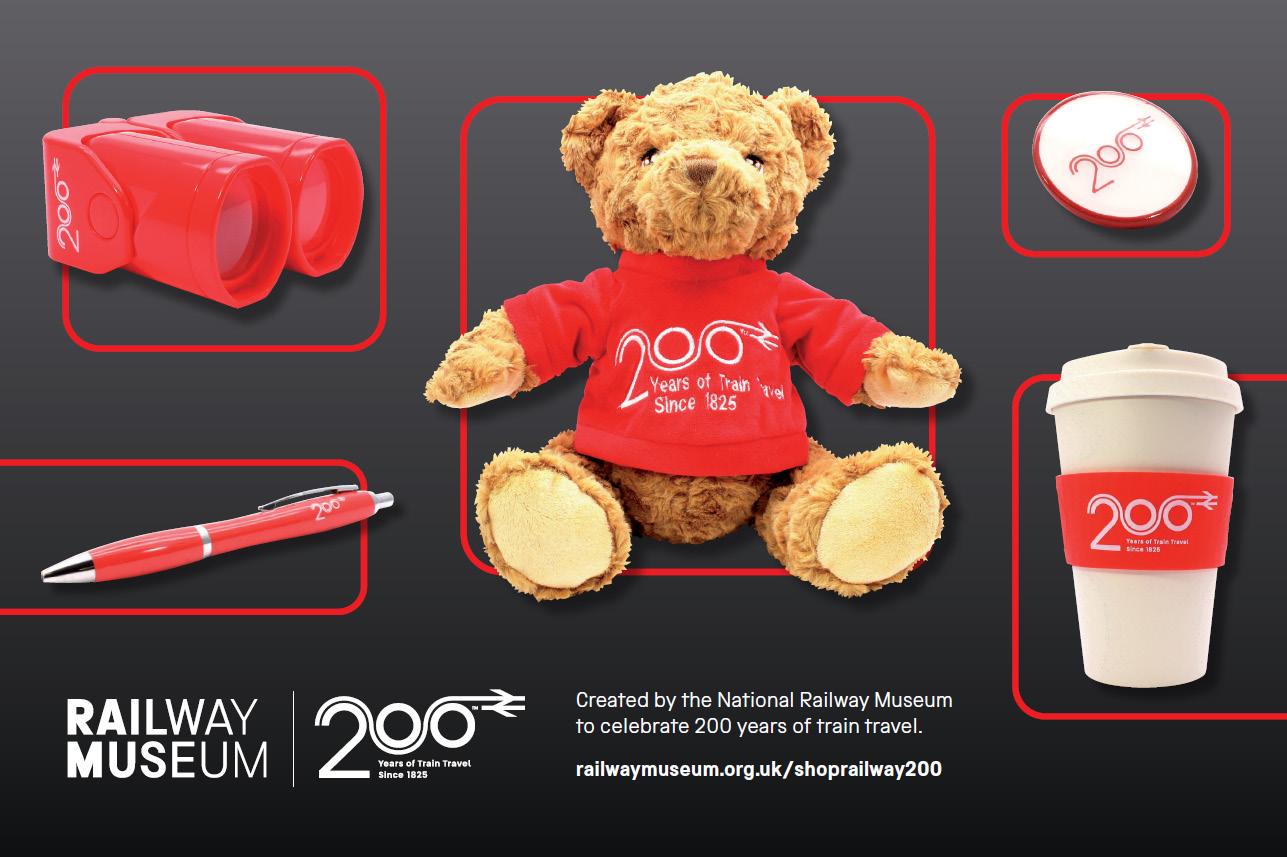
The UK railway industry has commenced a landmark year of celebrations marking 200 years of passenger rail travel, with The Royal Mint unveiling a commemorative £2 coin inspired by the 1825 opening of the Stockton and Darlington Railway.
Over 100 events are planned throughout 2025, structured around four strategic themes: innovation and technology, education and skills, celebrating rail people, and cultural heritage. A searchable interactive map at railway200.co.uk showcases activities ranging from heritage trails to major festivals.
Central to the celebrations is a pioneering exhibition train named 'Inspiration', which will traverse Britain promoting rail careers and innovation to an expected 400,000 visitors. The National Lottery Heritage Fund has provided £250,000 for this initiative, alongside a £238,000 grant to preserve the original 26-mile Stockton & Darlington Railway route.
The National Railway Museum in York will celebrate its 50th anniversary alongside the bicentenary, reopening its restored Station Hall in September following a £10.5 million refurbishment. The revitalised space will feature new collection items alongside the royal carriages, offering unique experiences including afternoon tea aboard a restored 1907 dining saloon.
August will see 'The Greatest Gathering' at Alstom's Derby Works – the largest temporary assembly of trains and rail-related exhibits in a generation. Meanwhile, a nine-month international festival across Durham and Tees Valley will present free outdoor spectacles and exhibitions from March to November.
The rolling programme of works – funded from the government’s City Region Sustainable Transport Settlement – will ensure the network keeps on delivering safe, reliable and accessible services for millions more people into the future.
Last year, more than £20 million was invested in tram improvement works across Greater Manchester, including at Piccadilly Gardens, London Road and Market Street, with all projects delivered on time and on budget.
Community engagement forms a crucial part of the celebrations, with the Community Rail Network coordinating themed activities nationwide. Projects include the creation of 200 'blue plaques' celebrating railway pioneers, a giant textile timeline in Hampshire, and an international Railway 200 badge for Scouts and Guides developed by Girlguiding North East.
The Keighley and Worth Valley Railway will host the Olivier award-winning production of The Railway Children from July to September, featuring an immersive steam train experience. The Bluebell Railway's summer festival aims to attract 80,000 visitors, including 18,000 schoolchildren exploring STEM careers.
Railway 200 has also launched a charity partnership aiming to raise £200,000 for organisations including Alzheimer's Research UK and the Railway Children, preserving rail heritage for future generations. The public is invited to share their own railway stories through the Great Rail Tales project, documenting personal connections to Britain's rail history.
Rail Minister Lord Hendy emphasised the anniversary's significance: ‘Our railways have become integral to millions of lives, bringing communities closer together, opening up new opportunities for business and driving economic growth across the country.’
The year-long celebration will feature commemorative events at historically significant locations, including George Stephenson's birthplace in Wylam, Northumberland, and his final resting place at Holy Trinity Church, Chesterfield, honouring the pioneers who sparked a global transport revolution two centuries ago.
Melanie Gangl-Verma
Managing Director of Frauscher UK Ltd
Tel: 07817 422078
Email: uk.marketing@frauscher.com
Visit: https://www.frauscher.com/en
Melanie Gangl-Verma started her career as an intern in the production process optimisation department in Austria and is now the Managing Director of Frauscher UK Ltd. Throughout her career, she has held key roles, including Process Management Manager and heading the company's Production Unit in India for more than 2.5 years. Melanie's extensive experience and passion play a huge role in leading the Frauscher UK & Ireland team to success.
Melanie Gangl-Verma shares her knowledge of how Frauscher constantly evolves and challenges itself to introduce innovations for a better tomorrow
SSH: Tell us a little bit about your role in your company.
MGV: As the Managing Director of Frauscher UK Ltd., I oversee our operations, strategy, and business growth in the UK and Irish markets. Frauscher has a strong global presence, so I prioritise working closely with other global offices to deliver innovative solutions that meet the rail industry’s needs. We as a team at Frauscher, are dedicated to deliver the world’s most reliable train detection and wayside object control solutions. Our industry leading field elements, software, connectivity and data access solutions, combined with smart lifecycle services, ensure system critical components are operational and provide the information rail operators need to maximise the safety, efficiency and capacity of their network.
My team and I support our customers, such as Network Rail, Irish Rail, Transport for London and Translink by providing our products and services. We focus on addressing industry challenges and aim to ensure Frauscher UK & Ireland continues to provide our company's globally proven cutting-edge technology and reliable service to the UK and Irish markets.
I strongly believe we can help the industry with our products, services and
solutions to overcome its current and future challenges.
SSH: Can you tell us more about the challenges that the rail industry faces?
MGV: It has always been a principle of Frauscher to discuss actual requirements with our customers to learn about their needs. From these conversations, we understand that the rail industry faces numerous challenges, including maintaining and upgrading ageing infrastructure, ensuring safety and security, and managing vendor lock-in situations. There are also increasing pressures related to cost management, traffic, and the need for seamless integration of existing solutions with the latest technologies. These challenges require innovative solutions and robust strategies like Frauscher’s to ensure efficiency and reliability.
SSH: What does Frauscher as a company do to address these challenges?
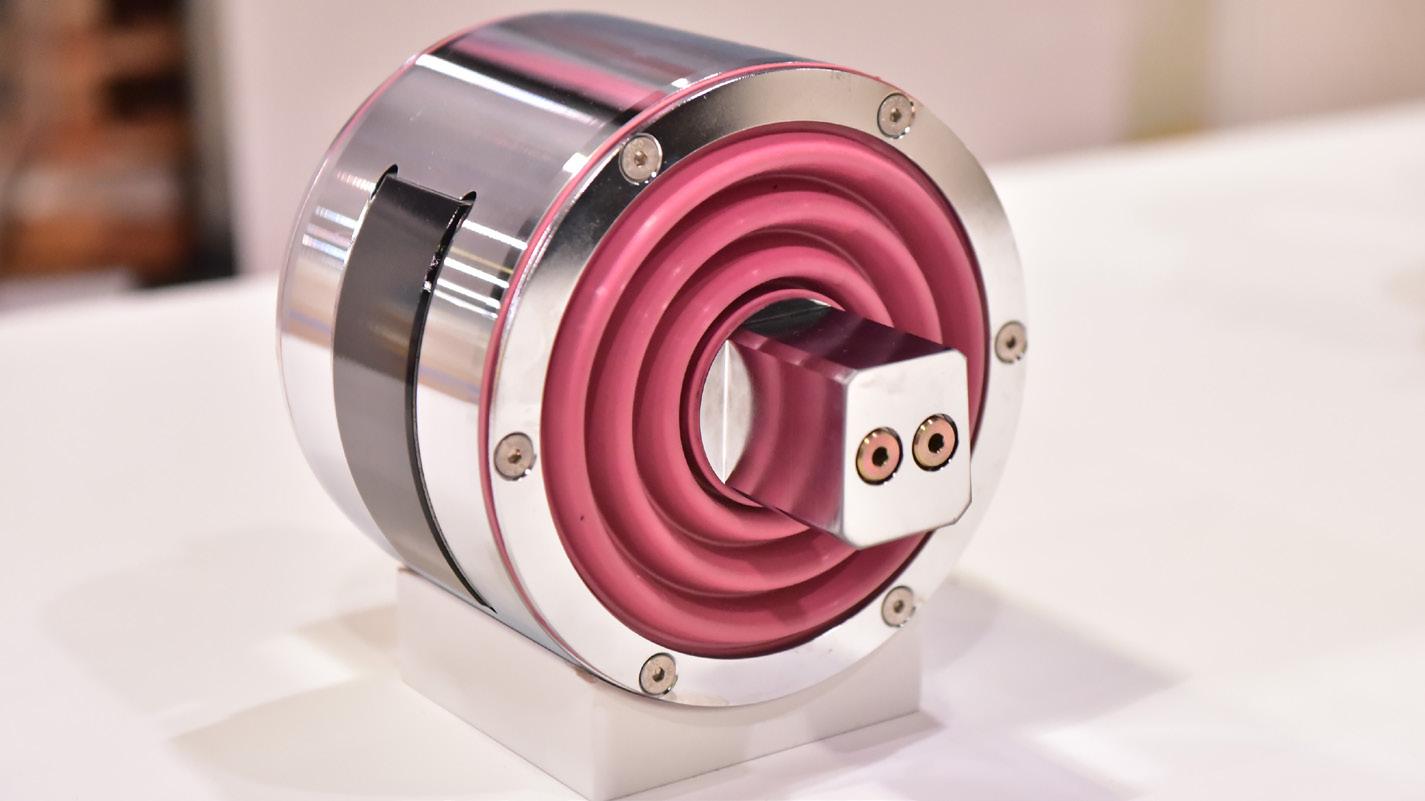
MGV: At Frauscher, we address these challenges by developing and implementing innovative solutions globally and tailoring them to the UK & Irish market's needs and demands. To achieve this, we are in close contact with our location in Austria, where our Innovation Centre and production facilities are situated. Our solutions include advanced train detection and data transmission systems as well as lifecycle services. One of our latest innovations is an EULYNX-compliant Object Controller for controlling and monitoring point machines. We also focus on increasing cyber security measures to protect critical infrastructure using Frauscher Connect, our versatile connectivity manager for all Frauscher systems.
SSH: What products and services do you offer as a company to support the industry?
MGV: Globally, Frauscher offers highly available wheel sensors that have proven reliable under the most challenging climatic and mechanical conditions, such as heat, frost, or floods. Our axle counters are characterised by maximum flexibility and scalability.
Frauscher Insights Diagnostics, our cloud-based diagnostic tool, helps monitor the status of wheel sensors and axle counters, ensuring optimal performance. Last year, we completed the first implementation of this solution on the Paddington to Reading Train Detection scheme with over 750 detection points, which marked a huge milestone for us.
FAdP Point Control, an EULYNXcompliant Object Controller for points, is our latest and most significant advancement. During InnoTrans 2024, we presented our innovations and expanded portfolio and experienced massive interest
from customers all over the world. We also have ongoing discussions with our customers in the UK and Irish markets about their benefits. One notable aspect of our work at Frauscher is continuously improving our products and solutions to meet the industry's evolving needs.
We don't just stop there; we understand the importance of cyber security and have a greater focus on ensuring our solutions are not just reliable but completely safe.
SSH: Are there any new developments/ strategies you have in place to support your expanding portfolio?
MGV: Our latest developments haven't just extended our portfolio by single products but let our offering grow by full pillars. Adding the concept of object controllers alongside our data transmission solution while significantly improving our services through digital tools led to a change in our overall positioning in the railway market.
Our new claim, ‘Your partner for confidence’, now reflects this, emphasising two strategically crucial aspects.
First is our partnership, a key element in our collaboration with customers and partners and internally with our locations. Especially with the extended service portfolio, we are offering now contributes to this aspect, as we accompany our customers throughout the whole lifecycle of an installation – from planning to operation and maintenance.
Second, is our confidence, which we aim to give our customers by providing them with the world's most reliable field elements for train detection and object control combined with innovative software tools and data transmission solutions. That said, Frauscher's offering has transformed and goes way beyond train detection.
SSH: How has your company evolved as a business to support your new portfolio?
MGV: As a company, Frauscher has evolved from a hardware supplier to a hardware and software company and then to a data-driven full lifecycle partner for our customers. Over the last 30 years, it has been quite a journey, and one thing that has stayed constant has been our passion for innovation.
Throughout our journey, we have made significant investments in innovation. Ten per cent of our annual revenue is dedicated to R&D, and over 100 professionals work in this area. I believe our growth reflects our commitment to providing comprehensive solutions that address the changing needs of the rail industry.
SSH: How does this change affect your role/the way you interact with the market, your customers?
MGV: With the shift towards a full lifecycle partnership, my role has become more dynamic. My team and I engage more closely
with our customers to understand their needs and challenges and provide tailored solutions. I strongly believe our approach will foster stronger relationships and ensure we can deliver value beyond our products.
SSH: In terms of technology, how do you anticipate things might change in the next five to ten years?
MGV: In the next five to ten years, I anticipate significant advancements in digitalisation, data analytics, and cyber security within the railway industry. These technologies will enhance the efficiency and safety of railway operations.
Additionally, integrating AI and machine learning will provide predictive maintenance capabilities, reducing downtime and improving reliability. Frauscher is committed to staying at the forefront of these technological changes to deliver cutting-edge solutions.
SSH: Do you think Frauscher as a company will continue to evolve with the industry changes?
MGV: Absolutely. Frauscher has a strong track record of innovation and adaptation. We continuously invest in R&D and work closely with our customers to understand and anticipate industry changes. Our proactive approach ensures that we keep pace with technological advancements and lead the way in developing solutions that address emerging challenges in the railway sector.
SSH: What do you think are the challenges being in a company that is constantly growing/evolving?
MGV: Constant growth and evolution come with challenges, such as maintaining our core values and quality standards while scaling operations. Staying ahead of technological advancements and market demands requires continuous investment in innovation and talent development. However, these challenges also present opportunities for growth and improvement, driving us to be better and more responsive to our customers' needs.
SSH: How do you make your business a good place to work with continuous growth?
MGV: Creating a positive work environment amidst continuous growth involves fostering a culture of innovation, collaboration, and professional development. We invest in our employees' growth through training and development programs, encourage open communication, and recognise and reward contributions. We are a small but strong team, and we take every opportunity to celebrate our wins, big and small. I strongly feel our diverse and committed team is what creates a unique and positive experience for our customers.
Jools Townsend
Chief Executive of
Community Rail Network
Jools Townsend is Chief Executive of Community Rail Network, the national umbrella body for Britain's community rail movement. Under her leadership, the organization works with 75 community rail partnerships and nearly 1,300 station groups across Britain, covering more than a third of Britain's rail network and half of its stations.
She oversees delivery of Community Rail Network's work in line with its strategic priorities, leading and supporting the team, fostering relationships with the rail industry and third sector, and advocating for community rail nationally. A passionate believer in sustainable travel and communities making positive change, her career has been dedicated to the third sector, with a focus on communications, campaigning and supporting grassroots action.
Sam Sherwood-Hale spoke to Jools Townsend, Chief Executive of Community Rail Network about the social value of community rail, its role in sustainable travel, engagement with young people, local economic development, and how community rail partnerships are helping drive the post-pandemic recovery of Britain's railways
SSH: What is the social return on investment (SROI) for community rail activities, and how does this demonstrate their value?
JT: Community rail is all about helping communities derive maximum value from their local railways and stations. As the national umbrella body for this unique grassroots movement, we know it delivers far-reaching, often life-changing, benefits for local people and places, and how this feeds into the success and sustainability of our railways.
But as community rail continues to grow, and with a rapidly evolving policy and transport landscape around us, we wanted to get a fuller picture of the impact and value the movement delivers, within and with so many communities across Britain. We felt this would help us to understand how community rail’s role and impact could be further developed into the future, as we move towards the renationalisation of rail, and Great British Railways being stood up.
The research underpinning our new Value of community rail report found that community rail achieves an incredible social return on investment of £17.89 per £1 of funding from government and industry.
This figure emphasises the amazing work being done by 75 community rail partnerships and nearly 1,300 station groups, with 100-plus officers and 8,250 volunteers between them. These partnerships and groups, brought together under Community Rail Network, now cover
more than a third of Britain’s rail network and half of its stations, across diverse localities.
The significant SROI demonstrates that community rail is completely dedicated to people and communities, engaging and empowering them, and achieving positive change, using the railway as a rich resource for that. Alongside the numbers, our report, which was supported by Rail Delivery Group, includes powerful examples and testimonies that bring all this to life, showing how community rail is adding tremendous social, environmental, and economic value for and with communities.
We worked closely with the Rail Safety Standards Board (RSSB) to use their Rail Social Value Tool, and with the Housing Associations Charitable Trust (HACT) to use their Social Value Insight Platform, to use the most suitable metrics and calculations available to best represent the activities of community rail partnerships and groups and produce appropriate estimations of the social value to those areas of work.
SSH: How do community rail partnerships contribute to promoting sustainable travel and encouraging modal shift from cars to trains?
JT: Community rail delivers a huge range of projects to encourage and enable modal shift, breaking down barriers and positioning rail as an inclusive, positive way to travel. Research suggests that meaningful community engagement and empowerment,
‘More than 8,250 volunteers give around 380,000 hours of their time to community rail every year, worth £30.9 million in social value to individuals and their communities’
of the kind delivered in community rail, is vital in achieving more sustainable transport habits and lifestyles, supporting people to change together.
Common activities include modal integration and active travel initiatives, as well as community and youth engagement, rail confidence programmes, and communications, promotions and events that highlight rail’s green credentials and crucial role in tackling the climate crisis.
Community rail also helps to connect rail with public transport, active travel and community and shared mobility, improving access to rail and local sustainable travel networks, and enhancing the ‘first and last mile’ of rail-based journeys.
This includes improving walking, cycling and wheeling routes to and from stations so they are safe, direct and convenient; spearheading or supporting active travel hubs at stations, offering information, guidance and training; running projects such as guided walks or cycle rides from stations to bolster confidence and bring people together; and including information on active travel routes and public transport to local attractions in itineraries for leisure journeys and days out.
The movement is also an effective vehicle for bringing multi-modal transport partners together and delivering muchneeded integration improvements that serve local needs and improve access to low-carbon mobility. As communities themselves are building the case for change, this raises awareness and creates ownership, simultaneously supporting modal shift.
Community rail often acts as a conduit in identifying and coordinating shared solutions between transport providers, authorities, and interest groups, such as combined ticketing offers, timetable coordination, or improved interchange facilities.
‘Community rail achieves an incredible social return on investment of £17.89 per £1 of funding from government and industry’
SSH: In what ways does community rail work to increase travel confidence and accessibility for diverse groups, including those with disabilities?
JT: Opening up rail travel to more people and working with partners to make rail more inclusive and accessible is a common thread through community rail, and often where great gains can be made with social value – in some cases transforming lives – while contributing to sustainability. It means thinking beyond existing passengers and breaking down barriers for those who don’t or rarely use rail, opening up new opportunities.
Community rail works with people to increase their confidence and skills using rail, combined with other sustainable modes of travel. The movement adds value to individuals, communities, and the railways by breaking down mobility barriers –physical, perceptual, and socio-cultural – for those who have never or rarely travelled by rail, feel excluded, or have otherwise become disenfranchised from rail use. This work often focuses on the practicalities of rail travel, but also contributes to raising awareness and changing perceptions, showing how rail can be part of a sociable, sustainable, prosperous lifestyle, opening doors to new opportunities.
Community rail partnerships and group also play a vital role in enabling accessible, inclusive journeys. This opens up rail travel to people affected by a wide range of physical and non-visible disabilities and mobility needs, preventing isolation, promoting independence, and broadening social mobility. The movement is also making stations – including the many smaller and unstaffed stations – physically accessible to disabled people and others, creating more inclusive and welcoming environments that encourage social interactions, and coordinating inclusive volunteering.
Community rail’s local knowledge, and relationships with other community groups, is vital in making these initiatives a success. Impact is enhanced when projects are built on genuine involvement and shaped by those with lived experience. Creative, holistic approaches are evidently working to bring people together, provide a voice and empower marginalised groups.
SSH: How does community rail engage with young people and schools, and what are the benefits of these educational initiatives?
JT: Our research found that community rail directly engages 125,000 people a year in activities that create a multitude of opportunities and benefits for local people, places and economies, and our shared future.
A significant proportion of those engaged are children and young people, with an estimated 65,000 involved annually in education and youth engagement projects worth £45 million in social value, via partnership working with 2,000 schools, colleges, and youth groups. These projects are shown to deliver a huge array of benefits, opening up work, training, and leisure opportunities.
Rail travel empowers young people to become more independent, confident, ambitious, and socially mobile. Education and confidence-building programmes with young people, particularly the many who are new to rail or face travel barriers, engage them at a time when travel habits are forming, creating familiarity and locking in the long-term benefits of using rail and sustainable travel.
Community rail also offers an ideal environment for young people to develop skills and hone existing talents in real-life settings, and in ways that are visible to local communities, aiding personal and professional development. It provides opportunities for them to connect with their communities and influence issues they care about, such as social inclusion and the environment.
By drawing on youth voices, community rail groups become more inclusive and better equipped to serve their communities, helping young people have a stake in the railway and decisions that affect their futures. Youth engagement adds creativity, passion, and new ideas and approaches,
helping community rail and the rail industry move towards a more sustainable future, and stimulating progression.
By listening to young people and promoting not only social action, but career pathways, the rail sector can harness young people’s energy and enthusiasm to help create a rail industry fit for future generations.
SSH: What role does community rail play in supporting local economies and tourism, particularly through rail-based leisure travel?
JT: Community rail encourages people to use the train to explore and enjoy everything Britain offers, and is uniquely placed to share local stories, insights, and histories to inspire more sustainable rail-based journeys.
The local knowledge held within community rail, and its local links, gives partnerships and groups an advantage in building positivity and interest in their line and attracting visitors. The movement is also increasingly building alliances across the tourism and leisure sector to add value to local visitor economies, while helping people to arrive and move around without adding to traffic and pollution.
Community rail supports economic development and local regeneration in a myriad of ways, including working with local businesses and visitor economies to boost sustainable economic development through rail-based tourism.
Partnerships and groups often produce materials and online content and campaigns, such as line guides and themed itineraries to promote attractions in their area. They also develop mutually beneficial relationships with tourist attractions and businesses to encourage visits by rail users, such as discount ticket offers and shared website links, with businesses promoting sustainable travel by rail in return.
As Community Rail Network, we support the work of our members in promoting rail-
‘From annual funding of around £7.2 million from government and rail sources, community rail produces just under £129 million in social value’
based tourism via Scenic Rail Britain, our unique tourism campaign that encourages people to take the train for sustainable leisure journeys. The campaign is special in the way it is driven by communityled content, therefore bolstering and empowering our members to promote their stations and lines, while also drawing on their rich array of local knowledge, insights, and stories.
SSH: How do station adoption groups and volunteers contribute to biodiversity and nature conservation at railway stations?
JT: More than 8,250 volunteers give around 380,000 hours of their time to community rail every year, worth £30.9 million in social value to individuals and their communities. This inspiring activity, mostly at stations, promotes community cohesion and pride, enhances biodiversity and green spaces, and enables healthy outdoor exercise, skills development, and new friendships.
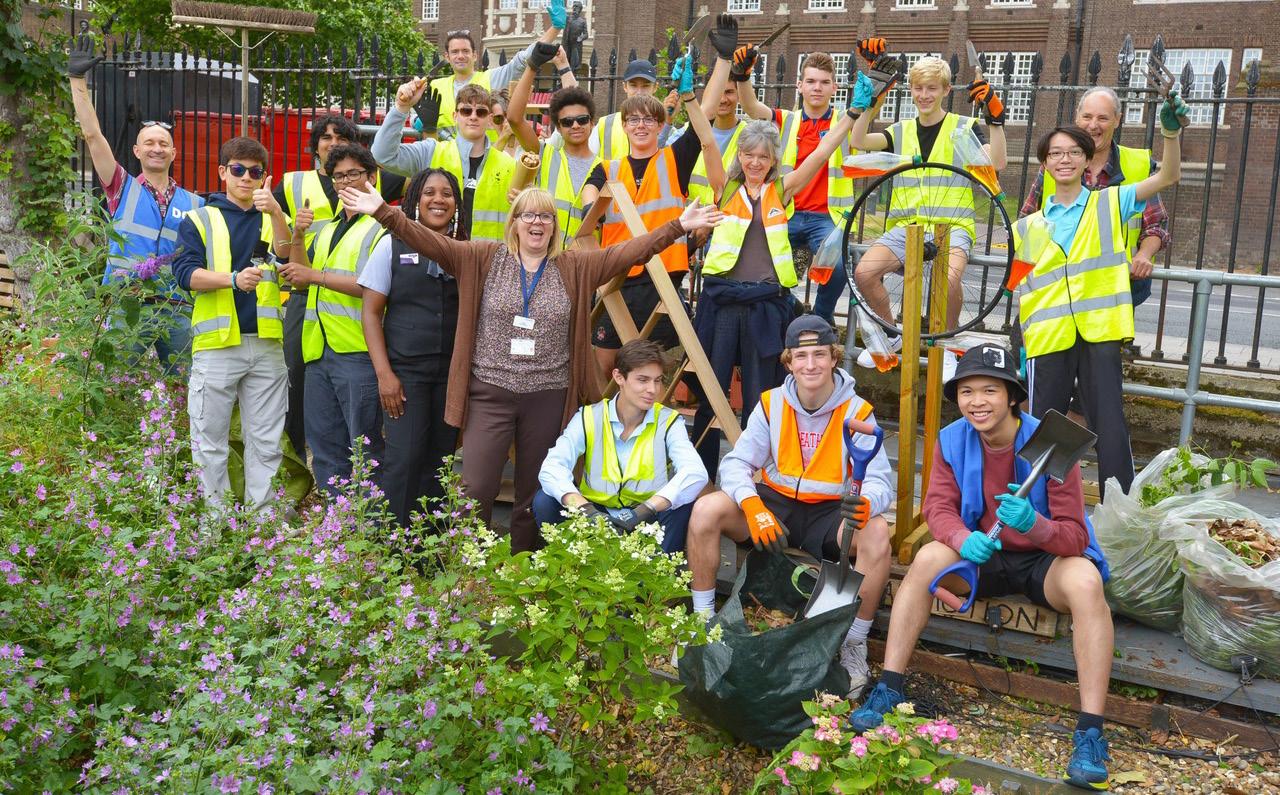
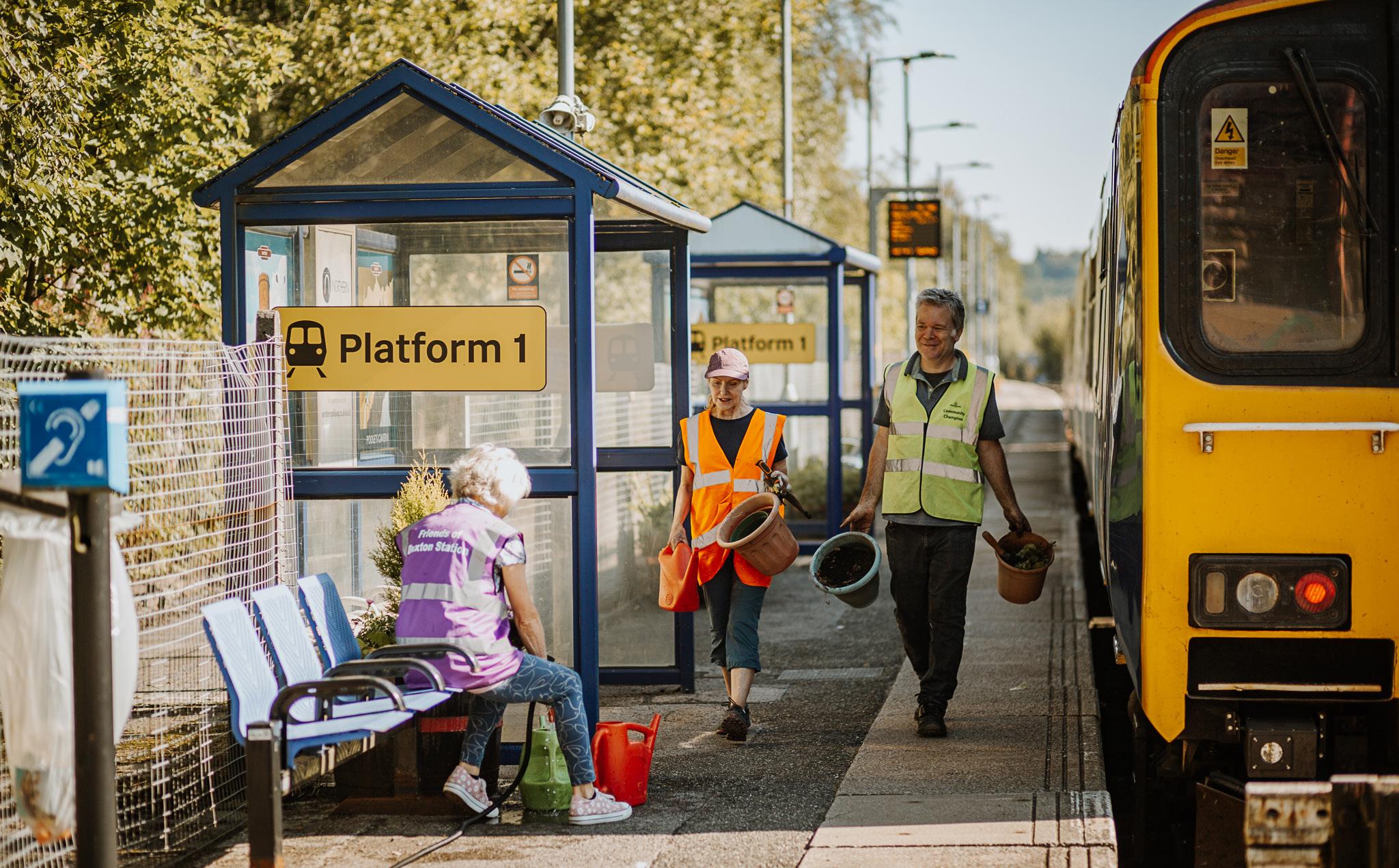
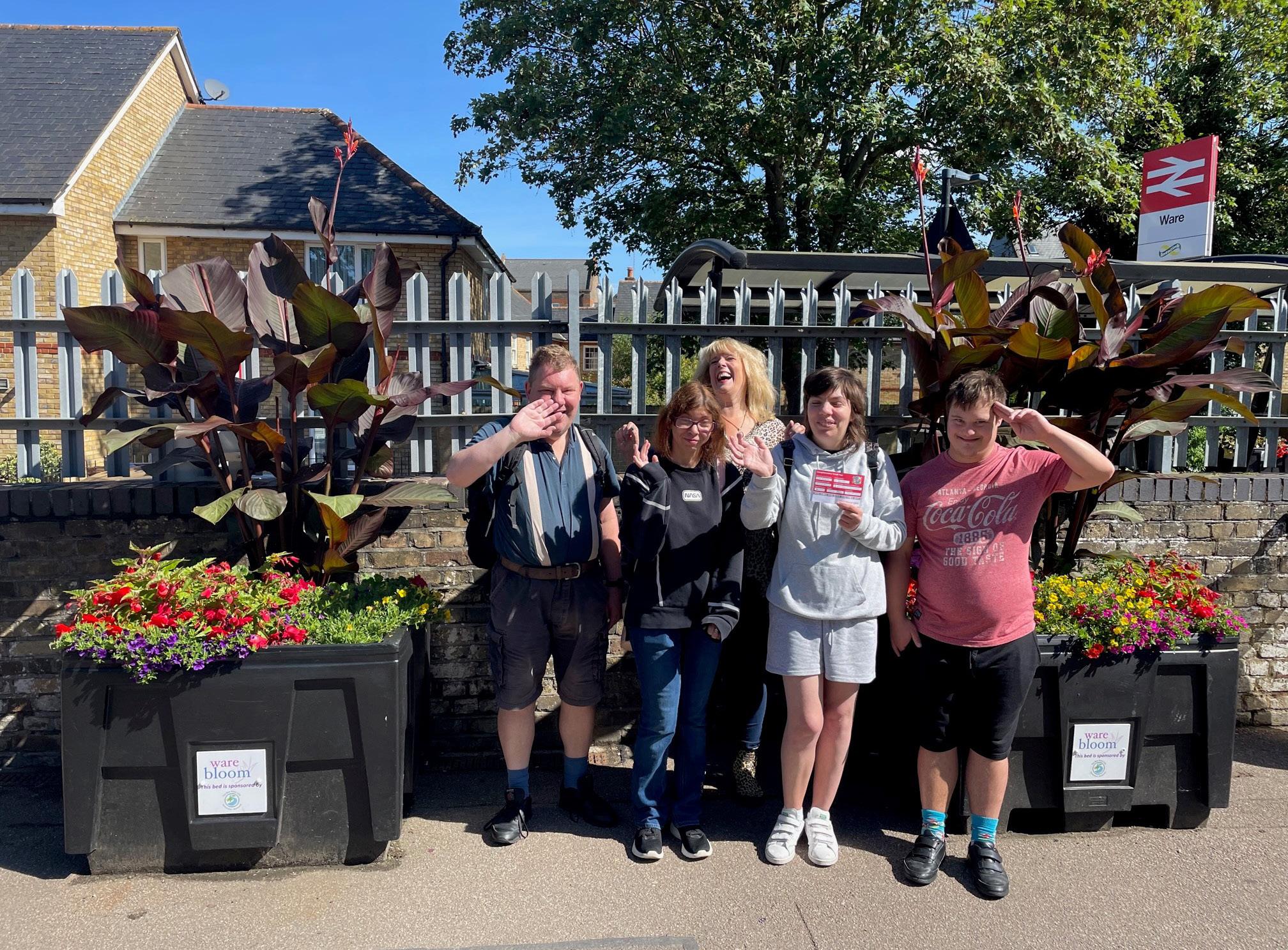
Almost 1,300 stations are now ‘adopted’ across Britain, covering half of the rail network, with the vast majority of adoption groups involved in some form of biodiversity, gardening, or wildlife activity. Common projects include creating station and community gardens, enhancing wildlife habitats, delivering nature education and awareness-raising activities, and engaging communities, for example in volunteering, educational programmes, and food growing schemes. These initiatives are being led by an increasingly diverse range of groups, including station friends’, ‘In Bloom’ groups, schools and colleges, and environmental groups and charities.
We know that community rail partnerships and groups across Britain are making an increasingly positive contribution to biodiversity and the natural environment. The movement has a rich history of community gardening projects and community engagement, and while improved biodiversity has sometimes been a happy by-product of these cornerstone activities, partnerships and groups are now consciously thinking about the impact they can make in this rapidly developing area.
If the biodiversity crisis is to be reversed, everyone will need to play their part, and
community rail is well-placed to assist with local recovery efforts and a move towards biodiversity gain.
All over the network, community rail is helping to create new areas to nurture greater biodiversity and wildlife or enhancing existing areas to ensure they offer a diverse range of species. These activities also bring social value, bringing people together and improving the long-term wellbeing and resilience of individuals and communities. They raise awareness of the importance of the natural environment and the need to protect it and help to connect people with the huge variety of life on their doorstep.
SSH: What are some examples of how community rail has helped to rejuvenate and repurpose unused station buildings for community benefit?
JT: Bringing unused railway buildings back to life can transform stations into thriving hubs for their communities. This brings a host of benefits to the rail industry, making stations more welcoming, hospitable, attractive, well-connected environments for passengers and visitors, bringing increased footfall, and creating positive local relationships. Such projects greatly benefit communities and are naturally driven by and respond to local needs: stimulating social and economic prosperity and complementing wider regeneration.
Projects we have supported include station buildings converted for community events and meeting spaces, cafes, popup stalls, arts workshops and galleries, museums, and bookshops, and sometimes with various ventures and uses brought together under the one roof. These may be set up as social enterprises or community interest companies or managed by a community rail partnership or a local trust.
Numerous ventures creating both commercial and social value have flourished at stations, such as cafes that not only engage local suppliers, but also offer work placement opportunities to young people and adults with learning disabilities who might otherwise be excluded from the labour market. In some cases, community station initiatives also help to connect the railway better with other sustainable travel modes, such as with bicycle repair or hire hubs, onward active travel or tourist information, or improving interchange and wayfinding whilst renovating buildings.
At Community Rail Network, we continue to see great enthusiasm for station buildings projects within communities, and not just among established community rail partnerships and station friends:
local charities, clubs, councils, and other community-based partnerships see the opportunities for working with the railway and making better use of their stations.
As a result, community station projects constantly branch into in new areas, such as: training and employment support; zero waste and free shops; music and arts programmes; and spaces for social activities and support groups. Community rail can act as the glue to bring community and railway partners together on such schemes, aiding learning from successes elsewhere.
SSH: How does community rail act as a link between the rail industry, local authorities, and communities to influence rail improvements and development?
JT: Community rail acts as a ‘critical friend’ to the rail industry, local government, and other partners, enabling effective community engagement and input, and shining a light on local needs and aspirations. This adds value to rail and transport developments, from major infrastructure schemes to service and timetable amendments, while also spearheading smaller-scale, community-led projects. All community rail partnerships, and many station groups, are engaged in this type of work, which delivers a range of identifiable benefits, including making rail more accessible and appealing, and creating a sense of empowerment and ownership towards local railways.
Community rail also supports and advises on local transport strategies and plans and works closely with local government. This includes playing a unique advisory role, ensuring rail’s place and potential in supporting local development, regeneration
and sustainable mobility is understood and incorporated into plans.
The movement also plays a key role in bringing transport and community partners together and drawing in funds from different sources to support locally led projects such as modal integration schemes. It is also vital is aligning community rail activities with local aspirations and strategies to aid their realisation. This insight and influence can have a transformative effect on local environments and communities and people’s quality of life.
SSH: What is the estimated annual social value created by community rail activities, and how is this broken down across different areas of work?
JT: Our Value of community rail report demonstrates the significant social value being delivered by community rail and shows how the movement has developed into an integral part of rail’s offer to local communities.
From annual funding of around £7.2 million from government and rail sources, community rail produces just under £129 million in social value, directly engaging 125,000 people a year through empowering and enriching activities, putting local railways and stations at the heart of inclusive, prosperous, sustainable, and healthy communities.
This figure of £129 million in social value can be broken down as follows:
• An estimated 65,000 young people per year are involved in community rail education programmes and youth engagement activities, with a social value of £45 million.
• More than 8,250 regular volunteers are active across the community rail
movement, worth £30.9 million in social value to individuals and their communities.
• Around 12,000 people are engaged in activities to increase travel confidence and make rail more accessible and inclusive, with a social value of £16.4 million.
• More than 12,000 people are engaged in community rail activity linked to biodiversity, nature, and the outdoors, with a social value of £14.4 million.
• Almost 9,000 people each year are engaged in arts and cultural activities within community rail, with a social value of more than £8.3 million.
• Community rail delivers activities to encourage and enable sustainable and integrated travel with more than 9,000 people per year, with a social value of £7.4 million.
• Around 17,000 people are engaged in activities to promote rail and sustainable tourism, boosting local visitor economies and supporting a shift towards Net Zero transport, with a social value of £4 million.
• The remainder of the total social value figure (approx. £2.7 million) is a result of engagement between community rail and other community and voluntary sector partners.
I know that’s a lot of facts and figures, but we would argue that the freedom, confidence, mobility, and opportunity that this work brings to communities and individuals is sometimes hard to put a price on. Perhaps above all else, our evidence shows how community rail acts as a valued partner to the rail and transport sector and local authorities, ensuring rail’s delivery and development is attuned to the needs and aspirations of communities.
Given the ambitions to create a railway that is more orientated around and responsive to local needs, working together with local leaders, surely the ‘community voice’ part of what community rail does so well, will really come into its own.
SSH: How has community rail contributed to the recovery of rail passenger numbers following the Covid-19 pandemic, and what evidence supports this?
JT: Passenger journeys on a large sample of railway lines with community rail partnerships recovered faster from the pandemic, standing at 89 per cent of preCovid-19 levels at the end of 2023-2024. This compares to an average of 83 per cent for all passenger journeys across the network (excluding the Elizabeth Line), and 84 per cent for regional operator journeys, deemed to be the fairest comparison.
While we acknowledge that the recovery of passenger numbers cannot be directly attributed to specific community rail activity, we do know of the wide-ranging ways the movement contributed to rebuilding rail patronage post-Covid.
Community rail partnerships and groups acted as a link between railways and their communities, feeding in local understanding and insights to the industry through periods of service changes and uncertainty, and helping communities feel reassured and confident about rail. They worked tirelessly to enhance community wellbeing and inclusion, supporting local resilience efforts. When it was appropriate, they also played a key role in restarting and reinvigorating promotion of rail for leisure, tourism, and sustainable mobility, championing the work being done by rail industry partners to make rail safe, inclusive, and reliable.
The strong post-Covid recovery continued a trend seen over a ten-year period prior to the pandemic from 2008-9 to 2017-18, with passenger numbers on a significant sample of community rail lines rising by 42 per cent, higher than that seen for total (35 per cent) and regional sector (29 per cent) journeys.
Given the demonstrable value community rail provides, it is ideally placed to play a vital role in the new government’s vision of a transformed, passenger-focused, inclusive railway that is responsive to local needs, and building greener, more integrated transport networks to promote social mobility and tackle inequality. There is a clear case for community rail to continue to be supported, financially and politically, by its rail, transport, and government partners, to allow it to further develop and thrive through the forthcoming period of rail reform and beyond.
We are excited about the future, and looking forward to working with our members across Britain, our partners across rail, transport and government, and of course local communities, to unlock all the value the railways can offer.
Delivering social and environmental value across the rail industry.
One year on from the launch of the Sustainable Rail Blueprint, we’re proud of what has been achieved already. We’ve developed new tools, metrics and guidance to address key problems such as climate change, noise, waste and decarbonisation.
We’ve also created clear roadmaps for the future. This groundbreaking framework is leading the industry towards a greener, more sustainable future.
Rail industry partnerships are already generating substantial social value and we’re excited to see how these efforts will grow in 2025.
Find out how www.rssb.co.uk/socialandenvironmental
by Chris Cheek
Rail Subsidy Remains at £4 Billion Despite Revenue Surge
Revenue approaches pre-Covid levels as passenger numbers recover, but rising operating costs and persistent commuter shortfall keep taxpayer support high despite 13 per cent growth in ticket sales
‘Nationalised ScotRail's £773 million subsidy covered 70 per cent of operating costs, with passenger income of £335 million barely covering labour costs’
higher than pre-Covid.
• Rolling stock charges were the third highest component, on 22.9 per cent, giving a total figure of £3.33 billion. This represented an increase of 1.8 per cent over the previous year and 9.4 per cent over 2018/19.
• Diesel fuel is the smallest component identified separately, accounting for 2.5 per cent of total costs. The £404 million total was 11.3 per cent down on the previous year, but 3.3 per cent up on 2018/19’s figure.
• The balance of costs, comprising 19.0 per cent, covered other operating costs. The total, at £2.76 billion, was 1.7 per cent up on the previous year, but 13.5 per cent below 2018/19.
‘Train operators turned a £316 million profit on £14.5 billion operating costs, achieving a modest 2.9 per cent margin’
The passenger rail industry’s finances continued to improve in 2023/24, according to figures published recently by the Office of Rail and Road (ORR)*. However, there was still a deficit on the passenger business requiring taxpayer support of £4.1 billion.
Total passenger income during the year was £10.1 billion, 13.9 per cent ahead of the previous year. A further £661 million of other operating income brought the total income to £10.8 billion, 12.9 per cent up. Operating costs during the year totalled £14.5 billion, 10.1 per cent up on the previous year, leaving a £3.75 billion deficit. This represented a ten per cent improvement on 2022/23.
The government paid £4.06 billion in subsidies to the train operating companies, leaving them an operating profit of £316 million, at a margin of 2.9 per cent. This gave the operators a 2.2 per cent uplift on operating costs.
‘Two
operators made premium payments: West Coast (£67.2 million) and East Anglia (£57.8 million)’
Despite the substantial growth, ticket revenue figures remained below preCovid numbers, though the gap narrowed significantly during the year. In 2022/23, the gap was 35 per cent. This year, it had narrowed to 19.8 per cent – a shortfall of just over £2.5 billion. Other income remained 46 per cent short of pre-Covid levels, meaning that total revenue remains 22.3 per cent short of full recovery. Costs, meanwhile, were 2.7 per cent higher than before the pandemic.
The figures also give some breakdown of operating costs, enabling us to look at both their movement and the percentage breakdown.
Highlights include:
• The largest component was staff costs, which, at £4.1 billion, represented 28.2 per cent of the total. The real-terms cost was 3.9 per cent higher than 2022/23, but only 0.2 per cent up on 2018/19.
• Track access charges paid to Network Rail totalled £3.99 billion, accounting for 27.4 per cent of the total. The figure was ten per cent up on the year, and 14.5 per cent
Looking at sector performance, the InterCity operations saw real revenue growth of 12.9 per cent, whilst operating costs rose by just 0.5 per cent. The subsidy requirement fell by 48.5 per cent to £496 million, but income remained 23.3 per cent below the 2018/19 total.
London and the South East (excluding the Elizabeth Line) saw lower revenue growth, achieving 8.6 per cent. Operating costs were 4.8 per cent higher, and the subsidy requirement fell by 6.8 per cent to £1.32 billion. Income remained 29.8 per cent below pre-Covid levels. The Elizabeth Line earned revenue of £621 million, against costs of operation of £607 million. Despite this small surplus, a subsidy payment of £91 million was made by TfL.
The regional franchises saw revenue growth of eleven per cent, whilst costs rose by 6.1 per cent. The subsidy bill totalled £2.15 billion, up from £2.05 billion a year earlier.
Amongst individual TOCs, the largest subsidy was paid to the state-owned ScotRail, at £773 million. This public support covered 70 per cent of its total operating costs, with the passenger and other income of £335 million covering the operation’s labour costs with £11 million to spare. The subsidy was up from £737 million a year earlier, and from £528 million pre-Covid. The income figure compared with £274 million in 2022/23 but still 31 per cent short of the £443 million earned in 2018/19.
Also topping the £600 million figure was another state-run business, Northern. Here, total subsidy of £652 million paid for 64
‘Nationalised ScotRail's £773 million subsidy covered 70 per cent of operating costs, with passenger income of £335 million barely covering labour costs’
per cent of operating costs. The passenger and other income of £381 million managed to pay for 92 per cent of the wage bill. The subsidy bill was up from £636 million in 2022/23 and compared with the £428 million paid in 2018/19. Income growth of 7.3 per cent was achieved over the previous year’s total of £355 million, but still fell 16 per cent short of the £457 million received in 2018/19.
At the other end of the scale, two franchises, West Coast Main Line and East Anglia, made premium payments to the DfT. West Coast, run by a FirstGroup/Trenitalia joint venture, remitted £67.2 million to government in 2023/24, compared with receipt of £97 million in subsidy in the previous year. The turnround came as revenue grew by 17 per cent to reach £1.09 billion, outstripping the 1.7 per cent increase in operating costs.
East Anglia, run by Transport UK Group in joint venture with Mitsui, paid £57.8 million to DfT. This payment was the second successive one and was more than double the £27.6 million paid in 2022/23. However, a continuing revenue shortfall of 20.9 per cent meant that the premium fell well short of the £232 million paid to government in the last pre-Covid year. The company’s £687 million worth of income compared with £638 million in 2022/23, a gain of 7.7 per cent.
The highest proportional revenue growth was the 14.6 per cent achieved by West Coast, discussed above. Next came ScotRail, now owned and operated by Transport
‘The Elizabeth Line earned £621 million against £607 million operating costs but still received £91 million in TfL subsidies’
Scotland, which saw an increase of 13.6 per cent – although, as we have seen, this did not prevent the need for an increase in subsidy.
In contrast, Transport Scotland’s latest nationalisation – Caledonian Sleeper – saw the poorest revenue performance, with an 18.7 per cent decline, down to £24.8 million from £30.5 million a year earlier. However, this was offset to some extent by a reduction of 11.5 per cent in operating costs to £54.4 million. As a result there was an 8.2 per cent fall in subsidy levels to £29.6 million.
Also in decline was Merseyrail, the Serco/Transport UK joint venture, which saw income fall by 8.4 per cent, taking the revenue down to £71.2 million. However, the ORR figures show this was the result of a fall in ‘other income’, whilst income from ticket sales was actually 9.9 per cent ahead at £45.2 million. However, despite the growth, ticket sales remained 27 per cent down on pre-Covid levels.
Comment
The ORR’s figures once again paint a fascinating picture of an industry still in recovery from the shocking events of five years ago, and the pandemic’s ongoing consequences. As with the quarterly demand figures I discuss regularly in these pages, we see an industry grappling with ongoing falls in commuting and business travel, depriving it of season ticket and first class/full price revenue.
The year 2023/24 saw yet more economic and political turmoil, with high inflation and a continuing cost of living crisis. At the same time, ongoing industrial action and poor performance in several companies
‘Track access charges of £3.99 billion and staff costs of £4.1 billion together account for 55.6 per cent of total operating expenses’
further damaged the industry’s reputation. It is tempting therefore to suggest that the numbers could have been a great deal worse.
From the Treasury’s point of view, the continuing need for over £4 billion a year in revenue support for the train operators is a concern, especially given the £8 billion bill for Network Rail and the ongoing cost of HS2 (£36 billion and counting) and the context of the worsening fiscal situation in which the government finds itself. Particularly worrying were the above-inflation cost increases – with labour costs leading the way on 3.9 per cent. And that’s before the bill lands for the incoming government’s generous pay settlements last summer.
With a process of change getting under way this year, and lasting over the next three to five years, observers will be looking for the cost savings promised by the proponents of change.
This is to come, they claim, from the ‘simplification’ that the new structure is expected to achieve. Full nationalisation under a revived British Railways organisation is promised to be a part of this process –though these figures illustrate once again the variations in performance across the network and the need for an organisational structure that reflects the widely differing markets that operators currently serve. Meanwhile, the ongoing financial challenges and arguments with the Treasury will certainly not change any time soon.
*Rail Industry Finances, Office of Road and Rail. All figures are adjusted for inflation to 2023/24 prices.
One of the UK’s most experienced business intelligence services on passenger transport, offering comment, analysis and understanding since 1991. Articles, company reports and statistics on bus, rail and rapid transit systems in the UK. Visit our web site to read our articles or buy our reports. Read our blog or ask us for bespoke analysis.
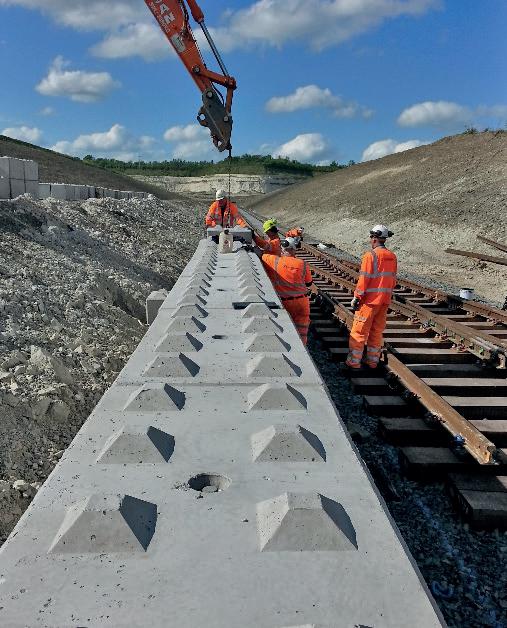
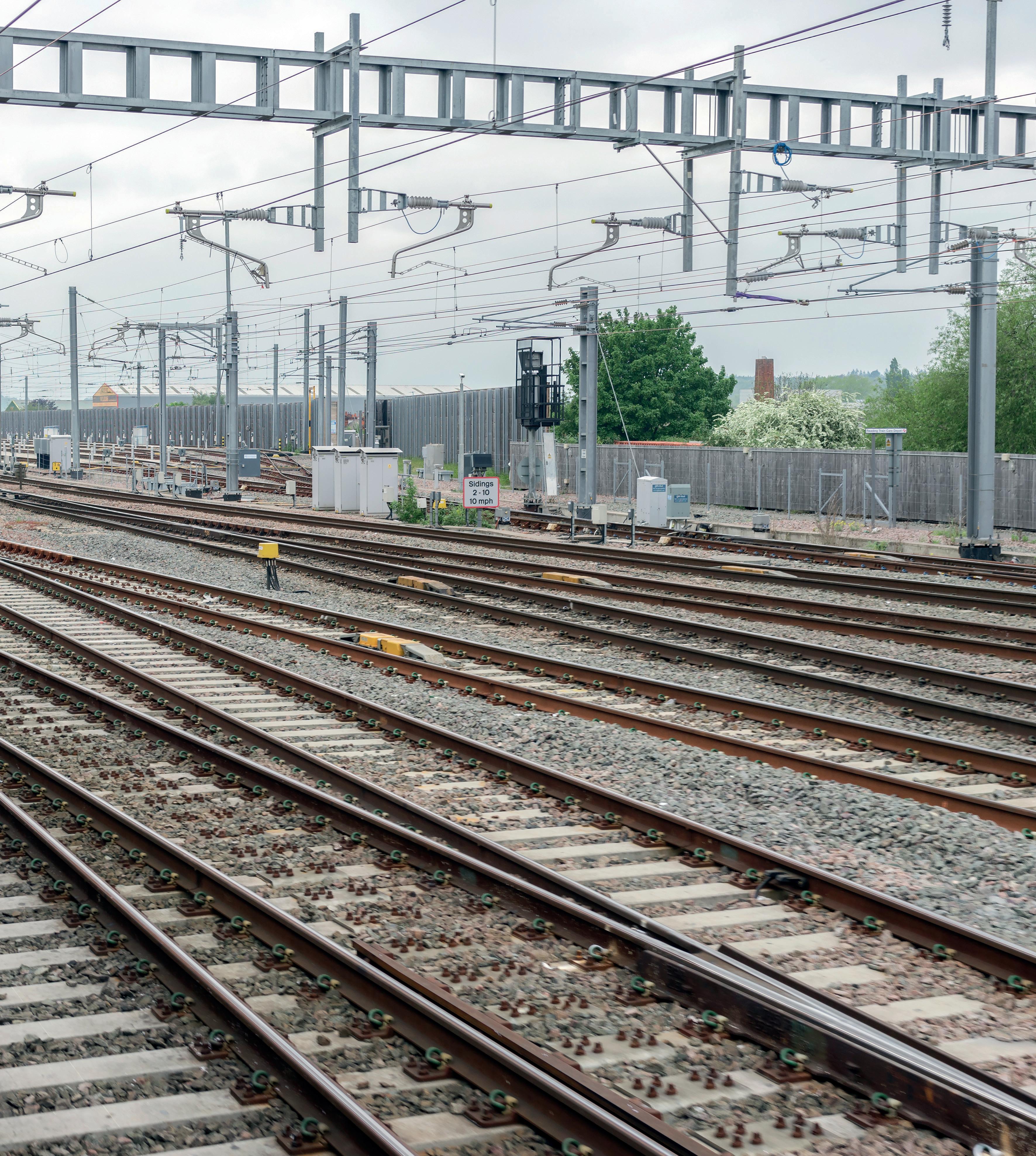
Workforce protection barriers avoiding all line closures with adjacent line open
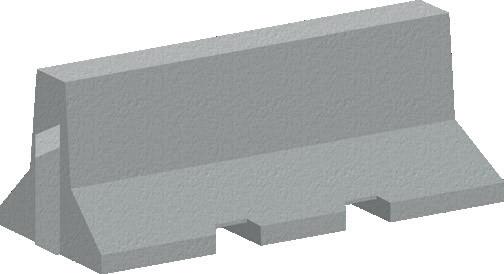
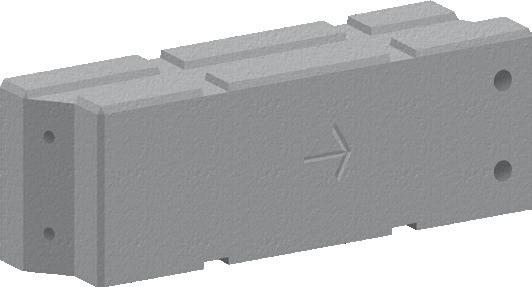
Rockfall prevention with our multi-purpose Jersey barriers
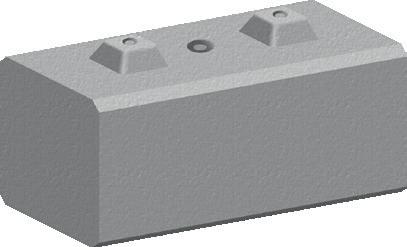
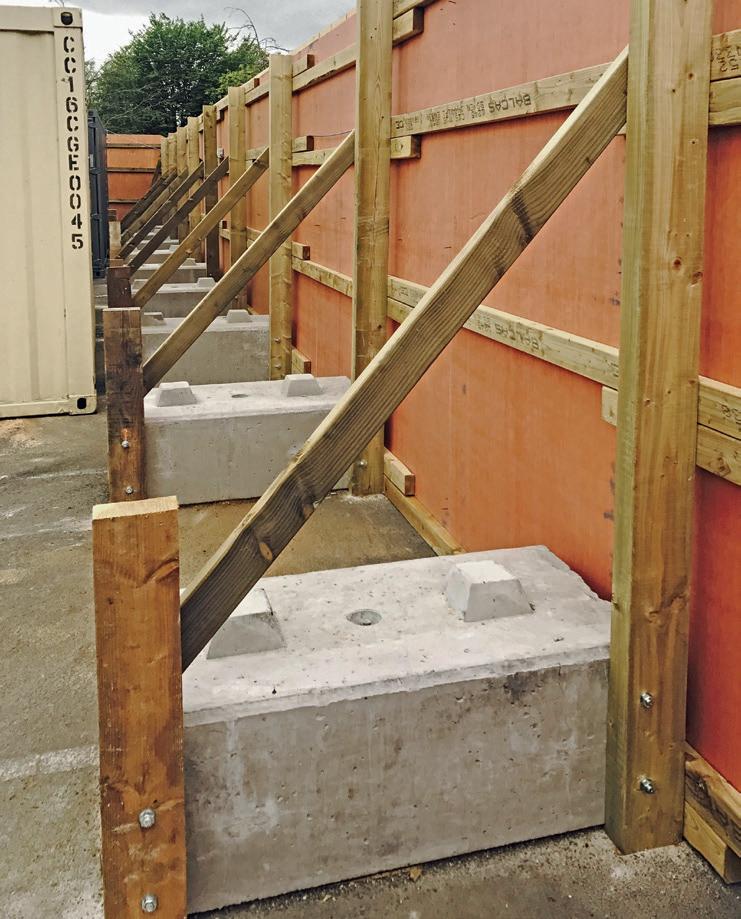
Hoarding stabilisation utilising Elite Duo interlocking blocks
For more information phone 01952 588 885 or browse www.eliteprecast.co.uk or email sales@eliteprecast.co.uk
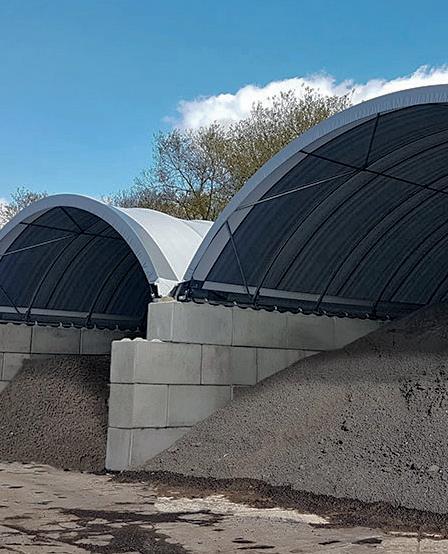
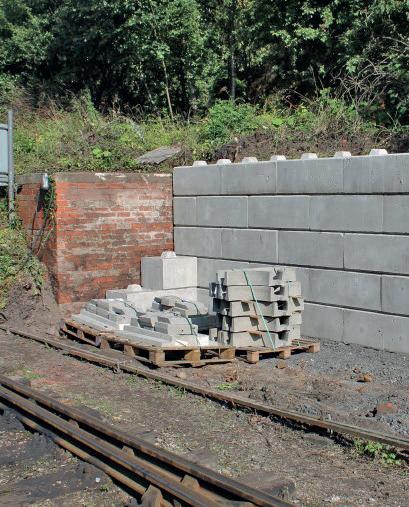
Large ballast bays with walls constructed from our Legato interlocking blocks
Large scale embankment retention using the versatile Legato blocks
Workforce safety refuges built from Elite Duo blocks
LAYING DOWN THE LAW
by Martin Fleetwood
A New Year and Time for some Checks
As 2025 begins, this column starts with a double-header looking at revised employment law guidance and some interesting contract law issues
While headlines from the USA report new actions against illegal workers, managing entitlement to work is a global issue. Towards the end of last year, the Home Office updated its guidance on right to work checks for the UK. A key part of this was looking at compliance with these checks within a company's supply chain and not just the company itself.
The previous wording suggesting that a company ‘may wish’ to check that their contractors and labour providers conduct right to work checks on the people they employ, engage or supply to the business has been replaced with a provision which ‘strongly encourages’ the carrying out of checks, including suggestions that the business itself could conduct such checks.
The guidance for sponsor licence holders goes even further, stating that sponsors must carry out right to work checks on individuals who are not directly employed by them in order to comply with their sponsor duties.
Failure to comply with the recommendations in the Home Office guidance in relation to contractors will not result in a civil penalty to the business but there may be a number of collateral effects to the business including:
• Disruption to operations – if illegal workers are discovered, their removal from a business may lead to operational disruption, particularly if the person(s) removed hold a key position in the business. Finding a replacement with the relevant skillsets may take time.
• Health & safety risk – if identity, qualifications and skill levels of
individuals are not adequately checked this could negatively affect health and safety provision both for the individuals and others within the business. Unqualified or improperly trained staff may cause or fail to prevent accidents or incidents for which the business may be fined under health and safety legislation.
• Insurance cover – insurers may look to invalidate insurance cover if untrained or improperly trained staff are employed and accidents occur.
• Reputational risk – being found to be using illegal workers may well cause reputational damage to the company's brand following press coverage and raise questions over CSR compliance.
•
Practical steps to manage the risk
In light of the updated guidance, businesses should now take a proactive approach to ensuring that their entire supply chain complies with right to work checks. To do this, businesses should review their current right to work practices to ensure:
• They have confirmed that the relevant checks are being conducted by each contractor or labour provider; and
• If they are unsure that their contractor or labour provider is correctly carrying out the checks, that there is a process in place to allow the business itself to conduct right to work checks on those who are employed, engaged, or supplied by contractors to the business.
Rectification of an error in signing a contract
Moving to the second topic of this column, the general position under UK contract law
Martin Fleetwood is a Consultant at Addleshaw Goddard’s Transport practice. The Rail Team has over 30 lawyers who advise clients in both the private and public sectors across a wide range of legal areas. As well as contractual issues, the team advises on operational matters, franchises, concessions, finance, regulatory, property, employment, environmental and procurement issues.
Disclaimer: This article is for informational purposes only and does not constitute legal advice. It is recommended that specific professional advice is sought before acting on any of the information given.
is that the words in the contract have their normal meaning and the signature on the document sets out the authority of the person signing the agreement. If a party to the signed contract later notices that there is an error in the contract, they can apply to a court for rectification of that error.
‘Rectification’ is a legal mechanism whereby a court may order that a document is to be treated as containing different wording from the words that actually appear in the document. In general, a court will only order rectification if it is satisfied that the words were included by mistake by both parties and the words used in the document do not reflect the common intention of the parties at the time.
Signatures are different in that there is a presumption that the authority stated in the signature block is the actual authority that the signatory has. Claiming an authority to sign where it is not held may amount to fraudulent conduct and could render the contract void. However, in the recent High Court case of Ballard v Buzzard a judge has ordered the rectification of a signature block in a document where an individual who needed to sign as a pension scheme trustee signed on behalf of the pension scheme's principal employer.
Signing in the wrong place
The document in question was a pension scheme amending document and for it to be valid the document needed to be signed by all of the trustees in their capacity as trustees. The amending document had four signature blocks with the word ‘Trustee’ next to them and one signature block with the words ‘For and on behalf of the Principal Employer’ next to it.
‘While this case has a happy ending – with the court finding a practical solution to document signing errors from over 20 years ago – it highlights the importance of proper contract management and accurate signature blocks.’
However, there were five trustees. One of the trustees, Mr B, signed next to the signature block that said he was signing for and on behalf of the Principal Employer and did not sign separately in his capacity as trustee.
The judge considered that there was overwhelming evidence that the parties to the amending document had intended that
Mr B's signature would be effective in his capacity as a trustee as well as on behalf of the Principal Employer. The evidence showed that Mr B had played a leading role in promoting the relevant amendment. He had also written to the insurance company enclosing the relevant document saying that it had been ‘duly signed by the Trustees’.
Lack of a complete document
Another issue before the court was that it had not been possible to locate a copy of the amending document signed by all of the trustees. The document had been signed in 2001. The evidence before the court included a witness statement from the chair of the trustees at the time, a barrister specialising in pensions law, that in his recollection the document had been signed by all five trustees. The judge made a finding of fact that the document had been signed by all the trustees, commenting that it was not surprising that a document signed 23 years earlier had been lost.
This case appears to be the first reported instance of a court ordering rectification of a signature block to a document. Also interesting is that the judge found it unsurprising that the final signed version of the document could not be found 23 years on and made a finding of fact that it did exist.
While this case may be a useful precedent in other cases involving execution errors, the judge did receive a witness statement from the chairman of the trustees who was also a pensions barrister. In many cases of lost documents, there may be no one with any recollection of what documentation existed over 20 years ago.
Maintaining good document management
While this case has a happy ending, it may not be the same in other instances. Business should make sure that:
• When signing contracts, the signature block is correct. If necessary, make handwritten corrections and have all parties initial them. In an e-signature system, ask for the document to be amended.
• The original contract and all documents which amend it are properly recorded and kept safely in a place that people know about.
Within the rail sector there are various agreements which last for 20 or more years and unless there is compelling evidence a court may well be decided that a specific document did not properly exist, affecting the assumed rights of the parties.
by Ellis Shelton
Freight Needs to be at the Heart of Rail Investment
As rail investment debates focus heavily on passenger services, Ellis Shelton, Senior Policy Advisor at Logistics UK, argues that freight must take centre stage to achieve sustainable transport goals and boost economic growth across Britain
The debate surrounding rail investment often focuses on passenger rail, and while this is important, the government must not overlook the vital role of rail freight in supporting the UK economy and helping it meet its sustainable transport goals.
Rail freight is essential for connecting ports, industrial centres and businesses to markets across the UK and beyond. As the government addresses historical railway underinvestment, it is critical that rail infrastructure is improved and rail freight operators given appropriate access to the upgraded network if economic growth is to be boosted appropriately and the 75 per cent rail freight growth target met.
Rail Partners’ report A Greener Track shows the cost of moving goods by rail has risen three times faster than road costs over the last decade. The report also highlights how associated costs have diverged with rail freight track access charges having risen by 26 per cent in real terms since 2015, while over the same period road charges and levies have fallen by 41 per cent. To help the rail freight sector compete with the road network, the UK government needs to support the industry by creating an operational environment that brings greater certainty to the market and gives the industry the confidence to make the necessary long-term investments in assets and infrastructure.
Integrated National Transport Strategy Logistics is a major user of the UK’s transport networks and the upcoming Integrated National Transport Strategy needs to recognise the impact any changes could have on the role of commercial transport in delivering the government’s top growth mission. Above all, it is vital that the government acknowledges how to leverage logistics and supply chains to achieve the impact that is needed for the economy.
Efficient rail freight corridors are key to reducing road congestion and lowering carbon emissions, and while more expensive upfront, rail becomes more cost-effective for long distances and large volumes of goods because of its higher fuel efficiency and capacity.
While road freight is attractive over short to medium distances thanks to the UK’s comprehensive motorway network and flexible routing, rail freight excels in supporting sectors such as manufacturing and construction, making bulk transport more efficient and cheaper. It is generally faster and more reliable over long distances as it is less affected by traffic and weather conditions.
It can also help to reduce road congestion, with a single freight train replacing up to 129 HGVs from the UK’s roads. Importantly, using rail freight can help the UK meet its net-zero targets, as it produces 76 per cent less CO2 per tonne than road transport.
Logistics UK is one of the UK’s leading business groups, representing logistics businesses which are vital to keeping the UK trading, and more than seven million people directly employed in the making, selling and moving of goods. With Covid-19, Brexit, new technology and other disruptive forces driving change in the way goods move across borders and through the supply chain, logistics has never been more important to UK plc. Logistics UK supports, shapes and stands up for safe and efficient logistics, and is the only business group which represents the whole industry, with members from the road, rail, sea and air industries, as well as the buyers of freight services such as retailers and manufacturers whose businesses depend on the efficient movement of goods. For more information about the organisation and its work, including its ground-breaking research into the impacts of Covid-19 on the whole supply chain, please visit logistics.org.uk.
‘Using rail freight can help the UK meet its net-zero targets, as it produces 76 per cent less CO2 per tonne than road transport. It is generally faster and more reliable over long distances as it is less affected by traffic and weather conditions, and can help to reduce road congestion, with a single freight train replacing up to 129 HGVs from the UK's roads.’
Electrification enhances the green credentials of rail further; Logistics UK continues to press the government to commit to a long-term programme of electrifying the railway. Electrified rail transport is a fully mature, proven green technology which has been in use for more than 60 years, yet currently, only ten per cent of British freight trains are hauled by electric locomotives. To enable 95 per cent of rail freight to be electrically hauled, only 800 miles of additional electrification is needed in the UK.
Rail freight can also play a significant role in spreading prosperity throughout the whole of the UK by enabling infrastructure and financial development beyond the capital. According to Rail Partners, the sector contributes £2.45 billion to the UK economy every year and 90 per cent of rail freight’s economic benefits occur outside London and the South East. The benefits of rail are well defined and understood by industry insiders but, for rail freight to fulfil its potential, the right decisions need to be made concerning investment, capacity allocation and modal shift across the industry.
Any comprehensive rail investment strategy should include targeted improvements to freight capacity, especially
along key routes. It is important to remember that the economic benefits of enhanced rail freight capabilities would extend far beyond the railway sector, supporting jobs and growth across manufacturing, energy and logistics industries among others. It was reassuring to hear the Secretary of State for Wales state recently that rail was her number one priority in the Spending Review and Logistics UK will continue to press the government to ensure rail investment is prioritised across the whole of the UK.
The sector needs targeted investment in the rail network to enable the electrification of key routes such as Felixstowe to Nuneaton, load gauge improvements across the Pennines and network capacity upgrades to deliver growth targets, for example at Ely Junction and Shugborough Tunnel. The government also needs to develop and fund a rail capacity programme in the Midlands and North rapidly to address the consequences of the decision to cancel HS2 north of Birmingham.
Industrial strategy
A huge opportunity exists for the government to address the decline in logistics productivity, drive growth and secure the sector’s place in the forthcoming
Industrial Strategy, including the development of a genuinely integrated transport strategy that facilitates the efficient movement of freight, while meeting the needs of the travelling public through appropriate investment in the rail network.
Logistics is integral to supporting the expansion and growth of the wider economy and must be embedded into the Industrial Strategy’s objectives. The sector’s investment in its efficiency, automation and skills base cascades through the economy and, as one of the UK’s foundational sectors, without it, the rest of the economy will grind to a halt. Nothing moves without logistics: the whole country relies on the millions of individuals and thousands of businesses working in logistics roles to supply our hospitals, schools, factories and shops with everything they need, everywhere, every day.
Rail freight needs to be at the heart of any rail investment, and levelling the playing field between transport modes will necessitate a multifaceted approach involving policy support, strategic planning and substantial funding. By addressing these key areas, the UK can leverage rail freight to enhance economic prosperity, reduce environmental impact and achieve longterm transport sustainability goals.
When
someone listens, people will make the right call.
Thousands of organisations in the transport sector are members of CIRAS. We build a strong listening partnership with our members to improve safety. Our confidential safety hotline provides extra listening to help staff make the right call and report their concerns even when they feel they can’t use other channels. When we listen, we learn.
Learn how you can build your listening partnership with CIRAS at ciras.org.uk/rightcall.
Matthieu
Bourguignon is the Senior Vice-President and Head of Europe for Network Infrastructure business at Nokia.
5G Revolution Reshapes Rail Networks
Matthieu Bourguignon, Senior Vice-President and Head of Europe for Network Infrastructure Business at Nokia outlines how this crucial shift to 5G technology will enable enhanced digitalisation, automation, and sustainability across rail networks
As an innovator at the forefront of networking, Nokia has already been communicating with individual rail operators about the crucial advantages of digital transformation, including how mission-critical connectivity is foundational to operational excellence and resiliency that can benefit passengers and businesses, as well as the environment.
For example, rail journeys can become more efficient and reliable – with reduced travel time, higher capacity, new conveniences for passengers, and real time journey information.
These advances help make rail travel an attractive choice. Simultaneously, automation can directly deliver greener transport by enhancing railways’ operating efficiency, which decreases energy consumption and emissions while increasing sustainability.
However, one point is critical for gaining the greatest benefit from digital systems: Rail operators are all planning for the migration to the Future Railway Mobile Communication System (FRMCS), which is the next generation of railway communication technology. Here are key facts we have been sharing with rail operators on the transformation process. This information could play a crucial role in comprehensive rail improvements.
FRMCS, capable of high bandwidth and low latency connectivity, is a key enabler of digitalisation and automation, which is at the very heart of sustainable transport. The
‘FRMCS, capable of high bandwidth and low latency connectivity, is a key enabler of digitalisation and automation, which is at the very heart of sustainable transport.’
FRMCS standard requires rail operators to use 5G technology in their communications network, while many are still using GSM-R, a 2G technology.
This GSM-R to FRMCS transition is a hot topic for railways across Europe right now. And complex planning decisions need to be made soon. One of the first steps that can be carried out now for FRMCS deployment is the modernisation of the transmission network to IP/MPLS technology since SDH technology used to support GSM-R is not capable of supporting 5G traffic.
Digital advances, such as the use of AI and Internet of Things, are propelling more automation and data-driven operations across the rail network. As a result, many operational technology (OT) applications
‘Digital advances, such as the use of AI and Internet of Things, are propelling more automation and data-driven operations across the rail network, with operational technology applications increasingly being deployed in segregated, onpremises cloud environments.’
are now increasingly being deployed in a segregated, on-premises cloud environment known as the OT cloud, which improves efficiency for data processing and sharing.
To get maximum benefit from the OT cloud, railways need data centre fabric that can provide resilient, scalable and secure connectivity for the servers that host OT applications and data. This connectivity, interworking with the IP/MPLS transmission network, will enable railway operators to use OT to create an adaptive digital rail system. This system employs data-driven automation to respond to new challenges with smarter decisions, greater efficiency and higher agility.
Talking about security, they also need to be aware of growing cyberthreats since railways can be a prime target, and digitalisation includes more potential attack surfaces. That’s because many of the most vulnerable areas of a railway system are in the interstices and communications between sub-systems. To protect these areas, railways need a comprehensive, defence-in-depth security approach that not only protects individual network elements but also safeguards against new quantum threats.
Nokia has been at the forefront of FRMCS, working with the industry, government regulators, rail operators and standardisation bodies to develop the standard. Our mission-critical solutions including FRMCS, IP and optical networks, OT cloud networking, and quantum-safe networking can all contribute to the success of railway transformation.
We provide an innovative range of products and services specific to the rail industry. From manual to automated monitoring solutions for track infrastructure and other critical assets.
SCAN ME
Craig Elder is a partner in UK and Ireland law firm Browne Jacobson’s government and infrastructure team, advising government clients on projects, complex procurements and high-value contracts. He has worked with major government bodies including HM Treasury, Department of Health and Social Care, and Natural England on high-profile projects. He also has experience of PFI arrangements, including some of the highest-value PFI projects to be signed in the UK. Using this experience, he continues to advise on PFI variations and refinancing.
Paul Hill is Head of Energy and Infrastructure at Browne Jacobson. A banking and finance partner, he specialises in all aspects of general corporate lending, infrastructure finance, acquisition finance, project finance and restructuring – spanning across bilateral, syndicated and debt platform structures. He advises across the stakeholder pool including borrowers, sponsors (across corporates, private equity houses, institutional investors and asset managers), financiers (including alternative debt providers) and public sector bodies. He has extensive experience advising on PFI, public-private partnership and infrastructure acquisition/financing transactions across a broad range of energy and infrastructure sectors.
Replacing PFI Could Hold the Key to Building New Rail Infrastructure
Craig Elder and Paul Hill, partners at Browne Jacobson, on how the retirement of PFI, which catalysed over 700 construction contracts between 1992 and 2018, left a void in how to leverage private investment for improving public infrastructure like railways
As the government looks to grow the economy by ‘getting Britain building again’, the rail industry will be crucial to delivering the nation's infrastructure renewal. However, the UK lags significantly behind other advanced economies in financing and executing major rail projects.
Analysis from Britain Remade last year showed the stretch of HS2 from London to Birmingham will cost £396 million per mile, making it one of the world’s most expensive railways. In France, similar projects cost £46 million per mile.
The industry group found that tram projects were estimated to be 2.5-times more expensive than those in France on a per mile basis, Building underground railways costs twice as much as in Italy, three-times as much as Germany and six-times as in Spain.
Many projects, including the rest of HS2, end up being cancelled and the result is UK overall investment averaged just 19
per cent of GDP in the 40 years to 2019, the lowest in the G7. The National Infrastructure Commission estimates a 30 per cent to 50 per cent increase in both public and private infrastructure investment is needed over the next decade to respond to climate change and to bolster growth.
Public-private partnerships point the way forward in financing
While British Remade rightly points to planning red tape as a key barrier to infrastructure delivery, another key factor is the absence of an effective public-private partnership (PPP) financing model since the demise of the private finance initiative (PFI) in 2018.
PFI, for all its flaws, mobilised substantial private capital to build hundreds of major infrastructure assets across the UK over more than two decades.
In the Autumn Budget, Chancellor Rachel Reeves changed how debt is assessed – now
‘The National Infrastructure Commission estimates a 30 per cent to 50 per cent increase in both public and private infrastructure investment is needed over the next decade’
taking into account the value of investments that will grow the economy – to release £50 billion for infrastructure spending annually.
This provides wriggle room against selfimposed restrictions on borrowing but, to make extra public funds go much further and faster, the government must partner with the private sector.
Tantalisingly, the Budget’s red book refers to mobilising private investment by developing a social impact investment vehicle. Further details, following consultation with industry, are expected in phase two of the government’s spending review this spring.
The challenge in developing such a model is to build on the successes of PFI while addressing its shortcomings – something that will be crucial if the government is to achieve its ambitions for high-speed rail, metro systems and other transformative rail projects.
Learning from PFI’s mistakes PFI was used to sign off more than 700 construction contracts between its introduction by Norman Lamont in 1992 and abolition by Philip Hammond in 2018.
This represented the largest sustained period of public sector infrastructure investment in recent decades, spanning transport, education, health, leisure, prisons, street lighting and environmental management.
Under PFI, a private partner would fund upfront costs and recoup this capital, plus ongoing finance and operational expenses, through long-term 'unitary charge' repayments from the procuring authority – typically an NHS trust, local authority or government department.
Many PFI projects delivered excellent infrastructure and associated services without the state picking up the initial tab.
But the initiative’s reputation became tainted by a wide range of issues, including perceived poor long-term value for taxpayers and windfalls for investors that refinanced debt at lower rates following the riskier construction phase.
Its unpopularity led then-Chancellor Philip Hammond to end PFI in 2018. The coalition government’s ‘PF2’ substitution was short-lived and no replacement model was developed at a UK-wide level.
The good news is that more enticing alternative public-private partnership models are emerging and worthy of further exploration.
Alternative financing models post-PFI
Since the late 2000s, public authorities in Scotland have deployed the nonprofit distributing model. Its three broad principles are enhanced stakeholder involvement in project management, no equity dividends and capped private sector returns.
The Welsh government uses a mutual investment model that shares PFI characteristics but the public sector partner is a shareholder, with greater input into contract terms and receiving ‘cashback’ on any profits.
In September, the Future Governance Forum proposed the infrastructure investment partnerships model. This places greater emphasis on community benefits in any project, cultivating a culture of longterm collaboration and giving local areas more control over their infrastructure.
Crucially, the IIP model also explores how private developers can access unused land around core infrastructure projects to unlock additional commercial potential – a feature likely to appeal to the private sector.
The opportunity for the rail industry
For the rail industry, challenges in infrastructure delivery underscore the necessity of re-evaluating and enhancing the
‘PFI catalysed over 700 construction contracts between 1992 and 2018’
mechanisms through which rail projects are funded and executed.
The government's inclination towards mobilising private investment opens the door for the industry to lead in the development of new models that ensure greater value, control, and positive social impact.
The evolving PPP landscape necessitates a proactive and collaborative approach from rail industry leaders. Engagement with government initiatives, such as any forthcoming consultation on what a ‘social impact investment vehicle' looks like, is crucial.
By aligning commercial strategies with the government's social impact objectives, the industry can secure a privileged position in the pipeline of upcoming infrastructure projects, thereby contributing to the national agenda of building a more connected and sustainable Britain.
Laura is an international rail strategy and policy specialist. Having started her career in Westminster, she marries her political and rail policy expertise to support transport organisations to devise, implement and position their strategy. In addition to clients in infrastructure and freight in the UK, she has recently worked on regulatory projects in Finland and France and is building opportunities in Argentina as they go through their own rail reform process.
Rail and the Budget
It was an historic budget – the first to be delivered by a female Chancellor – and the first by a Labour government in 14 years
It also felt like there was historic levels of pessimism in the weeks running up to Reeves’ statement. Doom and gloom about what was to follow. The Budget even had a title to manage expectations, Fixing the foundations to deliver change. Pain now for the long term good.
Rail got a perhaps unwelcome name check in the opening part of Reeves’ statement to the Commons as she listed the public services that she felt were left “broken” by the previous Conservative administration. The railways are clearly considered by the Government as one of the foundations that needs fixing.
The Budget is probably one – to butcher the spaghetti western The Good, The Bad and the Ugly – of The Good, The Interesting, The Bad and The Unknown.
The Good – a longer-term view of investment
Headline big project investments in railways always make the Budget – even if sometimes they are re-announcements. The Chancellor confirmed that the tunnelling work between Old Oak Common and Euston will go ahead as part of HS2 – the first good news for the high-speed project in some time. TransPennine route upgrade including further electrification was highlighted, as was East-West Rail connecting Oxford, Milton Keynes and Cambridge.
Less headline-grabbing interventions such as upgrading Bradford Forster Square, improvements at Manchester Victoria and electrifying the Wigan to Bolton line were also announced.
Hand-in-hand with the capital investments outlined was the general commitment to a longer-term view of investment and infrastructure. For the rail industry this is long overdue and very welcome – notably for its supply chain. A ten-year infrastructure strategy – if it contains sufficient detail – will provide
confidence to the industry, its supply chain and investors. The strategy will be published at the same time as the spending review in Spring 2025.
These capital investments – and more surety in the pipeline – are needed to help improve our railway’s long-term operational performance and drive the country towards net zero.
The Interesting – the Government’s wider policy on devolution
In September, the Government announced its intention to deliver full devolution across the North with new devolution to Hull and East Yorkshire, Greater Lincolnshire and Lancashire. Once devolution agreements are in place across the country, over 60 per cent of England will be covered by a devolution deal of some kind. The Budget backs devolution for transport with the twelve Metro Mayors to receive an additional £200 million for local transport – including rail – in the next financial year. This will bring the total City Region Sustainable Transport Settlements to over £1.3 billion.
Transport infrastructure is a key component of driving regional growth and Metro Mayors are keen to have an increasing say and control over the strategy and budget for delivering infrastructure. However, with devolution – particularly of finances – there are risks to the railways. Firstly, infrastructure investment may become disjointed and not adequately join up in a meaningful way across the administrative boundaries which passengers and freight flow. A culture of co-operation across political boundaries will be crucial.
Secondly it is currently unclear how greater devolution aligns with the new Great British Railways (GBR) being a ‘directing’ as opposed to ‘guiding’ mind. Mismatched investment plans could be a barrier to good decisions being made on rail infrastructure. It will be important that GBR’s regional management are well aligned with political
‘Transport infrastructure is a key component of driving regional growth and Metro Mayors are keen to have an increasing say and control over the strategy and budget for delivering infrastructure’
regions and GBR is willing to defer to devolved wishes where this is appropriate.
It will be interesting to watch this play out and see how the regions and GBR rise to the challenge. Culture and alignment of incentives will be important factors to use the money efficiently.
The Bad – notable absences from the Budget
It is widely accepted that fares are broken on our railways. Whether you believe in the balance of burden being on taxpayer or fare payer, they are too complex. The complexity has meant that the public have totally lost trust in the fares system and are suspicious as to whether they are paying the best price. It has been acknowledged now by two Governments that this must be fixed. And it is going to take cash.
The Budget included an extra fiver on railcards – railcards that some experts don’t think should even exist if we are looking at attracting more people to use the railways. But for meaningful change in our fares system there is going to have to be more. Furthermore, If the railways are going to go a step further – as the Secretary of State has requested – and have an affordable railway, more cash will be needed for subsidy somewhere.
We must be honest about the scale of the task of fares reform and the money it will cost. The Government may find it is like a plaster and better to rip it off sooner rather than later.
Maybe this will come once the foundations are in place, but change will need more action and soon to rebuild trust in our railways and fix one of the most complained about problems.
Secondly, rail freight was absent. And worse than that, the freeze on fuel duty could actively hurt rail freight.
With the rhetoric of our Secretary of State being ‘Passenger in Chief’ and greater vertical alignment of track and passenger train – freight risks becoming the poor relation of the railways very quickly. This is despite the many benefits it brings in terms of the environment, road congestion and economic benefits to name but three.
NEWS IN BRIEF
EAST MIDLANDS RAILWAY
RECOGNISED AS A TOP EMPLOYER 2025
CF Booth Ltd was established in 1920 by Clarence Frederick Booth and since that time has continued to be passed down through the generations of the Booth family.
The 2025 Top Employers have been announced, and East Midlands Railway (EMR) has been recognised as a Top Employer for the ninth year in a row. Being certified as a Top Employer showcases an organisation’s dedication to a better world of work, demonstrated through excellent HR policies and people practices.
The company has been associated with the scrapping of diesel and electric locomotives since the 1960s and has an excellent reputation as one of the largest rolling stock recyclers in the UK, winning nationally released tenders from several of the main rail operating companies.
It is, of course, the age-old problem of freight not voting. A freeze in fuel duty is far more popular with voters, many of whom do not know or care how everyday items end up in their homes. But if this Government is serious about its net zero targets and meeting their freight growth target, then there has to be some financial recognition for the rail freight sector. This could come in many forms from increasing the cost of more environmentally polluting methods of freight to providing subsidy and incentives to investment for rail.
‘We must be honest about the scale of the task of fares reform and the money it will cost. The Government may find it is like a plaster and better to rip it off sooner’
The head office is located in Rotherham, South Yorkshire at Clarence Metal Works with the company’s gantry cranes and three derrick cranes making the site quite distinctive.
The Top Employers Institute programme certifies organisations based on the participation in and results of their HR Best Practices Survey. This survey covers six HR domains consisting of 20 topics, including People Strategy, Work Environment, Talent Acquisition, Learning, Diversity, Equity & Inclusion, Wellbeing, and more.
The Unknown – how will renationalisation affect everything?
Overarching the good, the interesting and the bad in the Budget is the financial impact in house could put unnecessary pressures on the industry where train operators – such as Greater Anglia – are performing well should
The Government must avoid renationalisation becoming a financial black hole – even if there are some long-term
Clarence Frederick Booth and since that time has continued to be passed down through the generations of the Booth family.
A Budget with many faces with some parts of the industry happier than others. Watching the Spending Review, Industrial Strategy, English Devolution Bill and renationalisation play out will interesting over the coming year. Let’s hope all bring positive progress for the industry.
The company has been associated with the scrapping of diesel and electric locomotives since the 1960s and has an excellent reputation as one of the largest rolling stock recyclers in the UK, winning nationally released tenders from several of the main rail operating companies.
The head office is located in Rotherham, South Yorkshire at Clarence Metal Works with the company’s gantry cranes and three derrick cranes making the site quite distinctive.
CF Booth rolling stock division has achieved both ISO 9001 and 14001 standards and has invested heavily in developing the infrastructure to handle all kinds of rolling stock including more than 1,500 metres of rail sidings, which allows us to accommodate a substantial amount of rolling stock. Work continues at present with rail vehicles being brought in through a connection to Network Rail and the proximity of the railway sidings to roads give this side of the business a high profile with many wagons, carriages, underground and departmental stock being processed.
established in 1920 by Clarence Frederick Booth and since that time has continued to be generations of the Booth family. associated with the scrapping of diesel and electric locomotives since the 1960s and has an the largest rolling stock recyclers in the UK, winning nationally released tenders from operating companies. Rotherham, South Yorkshire at Clarence Metal Works with the company’s gantry cranes making the site quite distinctive.
In addition, our extremely competitive buying process and quick payment terms mean that for many companies wishing to dispose of their rolling stock, CF Booth Ltd is the first port of call. Besides processing rolling stock for their residual ferrous/non ferrous metals, we also salvage any or all components that may be required by railway preservationists.
CF Booth Ltd is one of the leading metal recycling companies in the UK. Established in 1920 by Clarence Frederick Booth, the business has grown from a local metal trader into one of the largest independently run recycling companies in Europe and is nearing its 100th year anniversary. CF Booth has been associated with the scrapping of diesel and electric locomotives since the 1960’s and is now one of the largest rolling stock recyclers in the UK, working with several of the main rail operating companies.
The current Rolling Stock Manager, Christopher Davis, says: “We are proud to be playing a major role in supporting the UK national rail industry and extremely proud to provide a valuable service to railway enthusiasts and preservationists throughout the UK as they continue to restore rolling stock vehicles to their former glory for future generations to enjoy. We value the relationship we have built up with preservationists and enthusiasts over the years’’.
CF Booth rolling stock division has achieved both ISO 9001 and 14001 standards and has invested heavily in developing the infrastructure to handle all kinds of rolling stock including more than 1,500 metres of rail sidings, which allows us to accommodate a substantial amount of rolling stock. Work continues at present with rail vehicles being brought in through a connection to Network Rail and the proximity of the railway sidings to roads give this side of the business a high profile with many wagons, carriages, underground and departmental stock being processed.
We are more than just a metal recycler, our continued investment in infrastructure and quality personnel has put us at the forefront of the metal recycling industry. Working with global businesses and international brands has made us think differently and strive to continue our development.
In addition, our extremely competitive buying process and quick payment terms mean that for many companies wishing to dispose of their rolling stock, CF Booth Ltd is the first port of call. Besides processing rolling stock for their residual ferrous/non ferrous metals, we also salvage any or all components that may be required by railway preservationists.
Our rolling stock asbestos removal/disposal service is supported by Demex Ltd a part of the CF Booth Group. Their fully trained and accredited operatives use the very latest equipment and techniques to safely strip out and dispose of asbestos. Besides processing rolling stock for their residual ferrous/non-ferrous metals, we also salvage any or all components that may be required by Railway Companies and Railway Preservationists.
The current Rolling Stock Manager, Christopher Davis, says: “We are proud to be playing a major role in supporting the UK national rail industry and extremely proud to provide a valuable service to railway enthusiasts and preservationists throughout the UK as they continue to restore rolling stock vehicles to their former glory for future generations to enjoy. We value the relationship we have built up with preservationists and enthusiasts over the years’’.
CF Booth Ltd was established in 1920 by
Leading the Way in Metal Recycling
CF Booth Ltd was established in 1920 by Clarence Frederick Booth and since that time has grown from a local metal trader into one of the largest independently run recycling companies in Europe
The company is a member of the British Metals Recycling Association (BMRA) and holds Gold membership of the Bureau of International Recycling (BIR). Based at Clarence Metal Works in Rotherham, South Yorkshire, it operates primarily as a scrap yard, importing and exporting a wide variety of materials worldwide. With a history in locomotive recycling dating back to the 1960s, the company has grown to become one of the UK's largest rolling stock recyclers, regularly securing national tenders from major rail operating companies.
The rolling stock division has achieved both ISO 9001 and 14001 standards and is subscribed to the Railway Industry Supplier Qualification Scheme (RISQS).
The rolling stock asbestos removal/ disposal service is supported by Demex Ltd a member of the CF Booth Group. Demex Ltd is licensed by the Health and Safety Executive (HSE) for the safe removal of all types of asbestos.
Fully trained and accredited operatives use the very latest equipment and techniques to safely strip out and dispose of asbestos with onsite removal being conducted in CF Booth Group’s purposebuilt decontamination rail sheds.
In addition, the extremely competitive buying process and quick payment terms mean that for many companies wishing to dispose of their rolling stock, CF Booth Ltd is the first port of call. Besides processing rolling stock for their residual ferrous/ non-ferrous metals, CF Booth Group also salvages any or all components that may be required by Railway Companies and Railway Preservationists.
The current Rolling Stock Manager, Christopher Davis, says: ‘We are proud to be playing a major role in supporting the UK national rail industry and extremely proud to provide a valuable service to railway enthusiasts and preservationists throughout the UK as they continue to restore rolling
stock vehicles to their former glory for future generations to enjoy. We value the relationship we have built up with rail companies, preservationists and enthusiasts over the years.’
All enquiries regarding your rolling stock can be directed to Christopher Davis, Rolling Stock Manager at CF Booth Limited, Clarence Metal Works, Armer Street, Rotherham, Yorkshire, United Kingdom. Get in touch via the contact information below.
‘Since the 1960s, CF Booth has been associated with the scrapping of diesel and electric locomotives, growing to become one of the largest rolling stock recyclers in the UK, winning nationally released tenders from several of the main rail operating companies’
Griffiths is Director of Policy & Corporate Development at Planet Mark.
Helping the Rail Industry Achieve Net Zero
Andrew Griffiths, Director of Policy & Corporate Development at Planet Mark sets out six key recommendations to help rail businesses transition to net zero, drawing on insights from the UK's largest census on business sustainability
If the UK is to achieve its goal of reaching net zero by 2050, then the rail industry has a massive role to play. Transport is the UK's largest source of carbon emissions, contributing 23 per cent of greenhouse gases in 2022. While the shift to electric vehicles and the ban on internal combustion engine (ICE) cars by 2030 will help reduce emissions, rail transport is also crucial. With its ability to emit three to five times fewer emissions than cars and trucks, increasing rail usage will help offset pollution from the millions of ICE vehicles that will remain on our roads well past 2030.
However, while rail has the potential to improve the UK’s air quality and significantly reduce carbon emissions, it still has its own net zero journey to complete. Last year's Sustainable Rail Blueprint laid out a framework for the industry to follow, yet more action is still needed from every business and organisation if net zero is to be achieved.
Making rail net zero
To gain insight into the actions needed and the current progress of UK businesses and organisations toward net zero, Planet Mark, in partnership with the UK Business Climate Hub and over 50 business associations, media outlets, and corporations, conducted the UK’s largest census on businesses’ netzero transition.
Over 2,000 UK organisations, including those in the transport sector, were surveyed, revealing consistent barriers. These included high costs, outdated infrastructure, availability of finance, lack of time, policy and regulation uncertainty, a lack of expertise, a lack of trusted information,
and a lack of confidence in knowing where to start.
Despite the challenges involved, the benefits of transitioning to net zero for both the planet and businesses make it an opportunity that cannot be overlooked. To help organisations in the rail industry take advantage of this opportunity and to address the barriers they face, we have identified six recommendations for achieving net zero.
Carbon measurement
The saying ‘If it’s measured, it’s managed’ is especially relevant for carbon emissions. Organisations in the rail industry must establish a comprehensive baseline for their carbon footprint, including scope one emissions from direct business activities, scope two emissions from energy use, and scope three emissions from areas like supply chains and employee commuting. Our research shows that only 33 per cent of UK organisations measure all three scopes, indicating a significant area for improvement.
Comprehensive carbon reduction plans
Every organisation in the rail industry must develop a carbon reduction plan that includes measurable milestones and timelines. By creating a comprehensive plan that addresses scope one, two, and three emissions, organisations in the rail industry can begin tackling their emissions and tracking their progress toward achieving net zero.
Trusted information sources
Finding trusted information on net zero can be tricky. Therefore, operators and affiliated businesses should use sources like the UK
‘Transport is the UK's largest source of carbon emissions, contributing 23 per cent of greenhouse gases in 2022. While rail has the potential to improve this, it still has its own net zero journey’
Business Climate Hub and the Race to Net Zero Campaign, which are government and United Nations-backed, respectively, for guidance and advice.
Education and training
If the rail sector is to hit its target of being net zero by 2050, then every business, department, and person has a role to play. In the same way everyone is responsible for maintaining cybersecurity, safety and helping to generate profitability for a business, the transition to net zero equally touches every role. Sustainability professionals cannot do it on their own. Without sufficient training and education, it is hard for people to know what to do, how they fit into the bigger picture, and what their responsibilities are. The skills gap that currently exists with net zero must be closed if the UK is to hit its 2050 deadline successfully.
Renewables and efficiency measures
The transition to renewable energy is progressing rapidly in the UK. In Q1 of 2023, 48 per cent of our energy was generated from renewable sources, a significant increase from just seven per cent in 2010. For the rail industry, adopting renewable energy is not only an effective way to lower carbon emissions but is also becoming the cost-efficient energy option.
Leverage industry associations
It's concerning that only 14 per cent of UK businesses have sought guidance on net zero from industry or trade associations. Trade bodies are crucial for fostering collaboration and sharing knowledge. By exchanging ideas and insights from across the transportation sector and not just the rail industry, all businesses can more effectively achieve net zero.
Undoubtedly, if the UK is to meet its legal obligation to be net zero by 2050, then the rail industry has a critical role to play. However, for the rail industry to reach its potential and maximise the business opportunity of net zero, it needs to act now. Accelerating carbon measurement, developing carbon reduction plans, investing in education and renewable energy, and support from established trusted sources and trade organisations will enable the rail industry to achieve net zero and enjoy the business benefits on offer. The journey has just begun.
Andrew
• RAILCAR LIFTING JACKS
• BOGIE/EQUIPMENT DROPS
• TRAVERSERS
• TURNTABLES
• BOGIE WORKSHOP MACHINES
• UNDER CAR EQUIPMENT HANDLING
• LASER MEASURING
• SANDBOX FILLING
• SHUNTERS
• EXHAUST EXTRACTION
• UNDER FLOOR WHEEL LATHES
International Reach, Two Way Street
Sheffield based Mechan, specialists in the manufacture of bespoke depot lifting and handling equipment are continually seeking new ways to advance their equipment portfolio
Not only by both putting resource into product development, but also by sourcing and building strong relationships with complementary European innovations. All of which are produced by companies with the same commitment to quality and reliability that reflects the high standards Mechan achieves with its own manufactured products.
Mechan boasts long standing successful partnerships with their partner companies and products, and their latest addition to the portfolio looks to be an exciting addition.
The new kid on the block
The latest product Mechan is showcasing, is the NETBEE ForceBEE brake force measurement system. This system allows for the force measurement of the brake systems (brake pad/disk or brake block/wheel) and parking brakes to be taken. The benefit of
the system is the use of thin film sensors directly between pad and disk or block and wheel, therefore the force is measured directly at the point of application rather than a full vehicle dynamic test.
The sensors capture unaltered measurement data across the entire brake block surface. The whole process can be controlled via a fully mobile tablet computer at up to 40 measurement points simultaneously, with one pressure measuring module. The sensors are placed directly at the test points and all data is wirelessly transferred to the tablet for analysis and verification.
Features of the system include:
• Optional cloud data transmission.
• Optional AR data glasses.
• Battery operated sensors.
• Wireless charging.
• As little as 0.5mm gap required to measure, and more.
The power of three
The handheld, non-contact laser scanner records all relevant wear parameters on Wheelsets and tracks quickly, comfortably and reliably. Using just three simple laser lines, this optoelectronic gauge records geometrical data for any complex shaped object. CALIPRI is more reliable than conventional measurement methods, as the distance and angle of the sensor do not affect the data collection process, eliminating human error and producing faultless, tamper-proof reports. Exactly what is needed in the safety critical rail industry.
Profile measurements take seconds and requires just one operative. The data is then analysed and the results displayed on the handset. The sensor is moved over the object to be measured by hand, whilst the intelligent image processing system records segments from various directions. Acoustic signals and a graphic display help the operator obtain quick and consistent results, even in confined and hard to reach spaces.
CALIPRI can be tailored and pre installed to the parameters you wish to record out of the wide selection of modules:
• Wheel profile.
• Tyre thickness.
• Wheel diameter.
• Wheel clearance (back to back).
• Brake discs.
• Radial/axial runout.
• Wheel defects.
• Rail geometry.
• Switch – measurement of switch frogs and blades.
• Rail – a cross section of rail head/wear parameters.
• Analyser – a quick display of profile data.
• Equivalent Conicity Module.
Cleaner, healthier, safer
The Blaschke specialist systems offer an efficient way to capture diesel emissions and ensure all hazardous gases are disposed of safely. Rail depots can be vast, or they can be confined, either way exhaust gas is heavy and cannot be removed effectively once it is in the air. The only way to control it properly is to capture it at source.
Compared with traditional extraction methods, they are fitted with smaller pipes to guarantee airtight removal of fumes, making your depot cleaner, healthier and safer for the workers in there.
Blaschke’s fully automated suction hoods cater for any type of rail vehicle. They are fitted over the exhaust pipe and can be adjusted easily by remote control. The main systems available, but not limited to are:
• Railpoint – a fixed system ideal for depots that have the same trains parked in the same place every time.
• Railbridge – exhaust hoods that sit on a ‘bridge’ allowing them to move laterally along a road for increased flexibility.
• RailBridge Crane – an overhead gantry is installed to allow the suction hoods to be traversed across the depot.
• Swivel Arms – a space efficient solution for one or two roads. The hoods can be wall mounted, fixed, mobile or run along a gantry roof.
‘Zero emissions are achieved as the shunters are powered electrically’
Award winning design
The energy efficient Zwiehoff shunters use innovative technology to give first class performance and on the spot turning, ensuring passenger and freight trains can be moved effortlessly.
The Rotrac E2 has a 250 tonne capacity and following its success of the pioneering system, a larger version – the Rotrac E4 – was developed to shunt loads of up to 500 tonnes.
Zwiehoff’s energy efficient technology uses only a few battery cells and a small quantity of liquid to provide the necessary drive. Zero emissions are achieved as the shunters are powered electrically and the recovery of energy during operation ensures high energy efficiency.
A compact, simplistic design and low centre of gravity makes the Rotrac shunters small, yet extremely strong and robust. With radio remote control as standard, a boost function to improve pull away performance, as well as sensitive steering for on the spot turning. The Rotrac systems also have adaptive vehicle controls and are equipped with comprehensive safety features and can even be manufactured to explosion proof specifications.
‘Traditional methods are time-consuming and labour intensive, whilst spills and waste often present operators with environmental issues’
Flexible and future proof
Traditional methods of replenishing the on-board stocks of sand used to improve traction and braking are time-consuming and labour intensive, whilst spills and waste often present operators with environmental and health and safety issues. Not with Klein systems. Their systems allow just one operator to fill sandboxes through an ergonomically designed nozzle, similar to those used to refuel a car.
The sand is stored in an onsite silo and dispensed directly into the sandbox. A dense phase pneumatic pipe is used to transfer the sand under pressure at low velocity, minimising pipe wear, whilst dust is eliminated through a simple exhaust system.
Fixed installations have dispensing points located along a service road, so multiple sandboxes can be filled simultaneously. The operator places the nozzle into the sandbox and opens the flow valve. When the box is full, the sand covering the nozzle will stop the flow automatically. Mobile carts operate in the same way, although only one sandbox can be filled at a time, as they have just one nozzle outlet.
Klein’s sandbox filling systems are perfect for growing depots. Expansion requires very little additional infrastructure and minimal operator training is necessary.
Features include:
• Easy to use.
• Free from spills and dust.
• Reduced time in depot means rolling stock can return to service faster.
To find out more on Mechan’s plans new innovative portfolio product, or any of its tried and tested products, get in touch via the contact information below.
Tel: 01142 570 563
Norbar is a UK manufacturer of battery, electric, pneumatic and manually operated torque multipliers, wrenches, torque measurement equipment and bespoke torque control solutions specially developed for the rail industry Contact Norbar and speak to The Voice of Torque Control
Bespoke Solutions for Rail Depot Safety
FirstClass Safety and Control’s approach to rail depot safety isn’t a ‘one-size-fits-all’ standardised approach
FirstClass Safety and Control Ltd (FCSC) designs, installs, and maintains SIL2-rated safety systems, either as a replacement/ upgrade for older rail Depot Protection/Control/LOPS Systems, or for new build depots.
Advances in technology, awareness, and working practices have changed the way rail depots operate, making them safer for employees whilst protecting their assets. But there’s still work to be done; 2021 RSSB data showed that, over the last decade, incidents and accidents in depots had led to the loss of a life every two years. On-site hazards range from powerful rail vehicles to high-voltage electricity.
FirstClass Safety and Control Ltd (FCSC) is working to reduce risk in depot environments. Its cutting-edge systems and procedures are developed with workforce safety in mind, ensuring that rail vehicles can be moved in a safe and controlled manner. These solutions include the market’s first RFID-based Depot Protection System (DPS), which provides an alternative to outdated key exchange technology.
FCSC’s combined Depot Protection System/Depot Control System (DCS) removes interfaces between train movements and employee safety – which, in turn, reduces uncertainty.
‘Things may have been done a certain way for decades – but that doesn't make it right.’
Working around operational requirements
There can be little doubt that technologies such as DPS and DCS improve depot safety. But FCSC believe these solutions should be tailored to suit a depot’s unique operational requirements. Demanding that a site change its working procedures to accommodate a new safety system isn’t just disruptive – it can also create new hazards.
Indeed, ask a depot to change the way it operates, and you’re likely to encounter resistance from employees – who may also be reluctant to engage with the new system. Rather than supplying a standard solution and expecting a depot to adapt, FCSC believe it’s important to visit sites, speak to employees, gain an understanding of on-site processes, and develop a system that meets their needs whilst complying with local regulations.
If the FCSC team notices failings around safety, it can work with clients, helping
them to change their methodologies. But, if a depot is operating effectively, it pays to work around these processes – and to consider on-site behaviours. For example, do depot employees leave the canteen after breaks and walk straight to their worksite? If so, FCSC can install a log-on station outside the canteen to avoid disrupting their routine. The FCSC design philosophy is all about making it easier for staff to use new technologies – finding a solution that fits.
Bespoke depot safety solutions
FCSC’s designers adapt their DCS and DPS (all of which meet Safety Integrity Level (SIL 2)) in-house, integrating the Allen Bradley PLC range with Rockwell Automation hardware/software. And every depot is different – operational mentality varies, as do local rules. Some sites don’t want equipment interlocks; others are keen to see every item of equipment interfacing safely with vehicle movements. FCSC work to develop appropriate solutions –whether that’s an intelligent system with Wi-Fi-enabled interlocks, or something less complex.
It's an approach that results in bespoke products, like the systems FCSC has recently designed and installed for Etihad Rail and KiwiRail. The clients in question had very different needs and requirements, including
the environmental conditions the system would have to operate in.
Elsewhere, FCSC recently developed an industry-first solution for a London depot, whose shunter pushes vehicles into a paint shop onsite. If trains are pushed too close to a traverser pit, the system Wi-Fi interlocks the shunter’s brakes, preventing accidents.
Doing things differently
FCSC MD, Mark Meyrick said: ‘These innovations demonstrate that, when it comes to depot safety, there’s room to think outside of the box. Things may have
been done a certain way for decades – but that doesn’t make it right. Instead, the industry should look to develop more effective solutions. We are currently working on two pieces of equipment that – once patented and approved – will help improve depot safety across the country. We’re also looking to the worldwide marketplace, and have sourced a solution that we feel could be adapted for the UK market around workforce safety.’
Operator Competency is equally important. With this in mind, FCSC also offer training and support, ensuring that
Depot Protec tion Systems (DPS)
Depot Control Systems (DCS) - Combined DPS/DCS
personnel know how to operate their DPS and DCS correctly. Ultimately, every rail depot is different, with different challenges, processes, and people. The technology that keeps staff and assets safe must reflect this.
Visit: www.fcsc.uk
Locally Operated Points Systems (LOPS) - Systems can be designed from basic interlocking to full SIL 2 with RFID technology
+44 (0)1621 743 743
info@ rstclass-safety-control.co.uk
www.fcsc.uk
Depot Protec tion Systems (DPS)
Depot Control Systems (DCS)
Combined DPS/DCS
Locally Operated Points Systems (
SIL 2 Rated Systems as Standard
The OPC’s Blueprint for High Performing Depot Teams
Jo Lawrence, joint CEO of the OPC, shares work to streamline recruitment for key depot roles, and offers reflections on career progression, driver retention, and developing a resilient, multi-skilled depot workforce
When a major rail client approached the Occupational Psychology Centre (OPC) for support, their goal was clear: enhance the recruitment process for Depot Drivers, Signal Operators, and Shunters, and create a bespoke assessment process, distinct from mainline Train Driver tools. The solution? A comprehensive Non-Technical Skills (NTS) profiling initiative led by expert Psychologists with a streamlined selection and assessment process.
The first step: NTS profiling
The NTS profiling process was critical in identifying the specific abilities, interpersonal skills, and competencies needed to perform each role safely and effectively. OPC business and occupational psychologists used specialist profiling techniques; observed employees in their roles, interviewed job experts, and analysed all the data. The outcome was an evidencebased framework that ensured recruitment tools were accurately aligned with job demands, enhancing the likelihood of hiring the best candidates into the right role.
Depot Drivers
Depot Drivers manage the movement of empty trains within depots. Key NTS include cognitive abilities like concentration and decision-making, practical skills such as physical coordination and numerical skills, and strong interpersonal skills like communication and teamwork. Emotional stability and conscientiousness are essential for staying calm under pressure.
Shunters
Depot Shunters are responsible for moving trains in and out of depots and coupling carriages. Key NTS include cognitive abilities like planning and organising and risk anticipation. Practical skills like physical strength and rule adherence are crucial, along with interpersonal skills like teamwork and verbal communications. Emotional resilience, including calmness and systematic checking are essential for their role.
Signal Operators
Signal Operators control train movements within depots through operating the signals and points in a depot. Their role requires
‘Operators benefit hugely from a versatile workforce and a strong leadership pipeline’
cognitive skills such as problem-solving, risk anticipation, and computer literacy. They must adhere strictly to rules and regulations. They rely on positive teamwork and need a degree of assertiveness to coordinate work. Decisiveness under pressure and thoroughness are key emotional characteristics for Signal Operators to perform effectively.
Shared NTS Across Roles
The profiling identified several common NTS across all three roles, some of which are:
• Concentration – essential for situational awareness and hazard detection.
• Planning and decision making –required for various levels of organisation and prioritisation across roles.
• Rule adherence – critical for safety and efficiency.
• Communication skills – clear verbal communication ensures smooth operations.
• Emotional Resilience – remaining calm under pressure and taking responsibility are essential.
Behavioural Indicators of Some
Shared NTS
So, the same Non-Technical Skills (NTS) may be required across different roles. However, a detailed analysis of each job often reveals that varying aspects or levels of these NTS are needed depending on the role.
Concentration
High-level concentration is essential for Signal Operators, when monitoring train movements, signals, and points across multiple locations in the depot.
‘Depot operators often face challenges retaining driving teams, with many transitioning to mainline roles. Understanding employee motivations and career aspirations can help design effective recruitment and retention strategies’
They must remain situationally aware, while monitoring and reacting swiftly to unexpected changes. E.g., emergency train maintenance.
Shunters require a moderate level of concentration to remain alert while managing tasks like coupling carriages and correctly positioning trains in the depot. Their concentration is demonstrated when identifying and addressing issues, such as a misaligned coupling or an unnoticed fault, before they escalate.
Depot Drivers also require a high level of concentration. Their concentration is especially critical during repetitive tasks, such as moving empty trains or performing multiple backing manoeuvres to avoid collisions. They must remain vigilant to hazards, including personnel and other vehicles in the yard, ensuring safe navigation. Additionally, maintaining active awareness of signals and employing techniques to prevent autopilot operation are essential in their role.
Planning and decision making
Depot Drivers need to demonstrate a high level of planning and decision-making skills when organising train movements. They may gather and compile relevant information to coordinate driving activities and sequencing, often in collaboration with others. They must know when to make decisions independently, especially under time pressure, and when to escalate issues to a more senior level.
A Signal Operators’ role also demands advanced planning and organisational abilities to sequence train movements logically and set clear team priorities. They may prepare in advance by gathering necessary information and paperwork. They can multi-task efficiently, and make wellevaluated decisions that prioritise safety, as well as adapting plans if necessary and only referring to senior staff for complex decisions.
Shunters need moderate organisation and planning skills to prioritise tasks deciding which train to prioritise for service particularly under time pressure. Effective problem-solvers, they will evaluate situations take the initiative, and work collaboratively to agree on a course of action or prevent problems.
Communication
Signal Operators require high-level communication skills. They must listen attentively to instructions from supervisors, anticipate risks or dangerous situations while taking on the information. They must also deliver clear instructions to guide colleagues through processes, liaising between departments, or summarising incidents. They need the ability to communicate effectively via radio or telephone as well as an ability to use nonverbal communication like codes or signs in a noisy, busy depot environment.
Depot Drivers and Shunters share similar communication NTS requirements at a moderate proficiency level. They must listen carefully when receiving verbal reports from others with an ability to detect risks.
‘Having multi-skilled employees is highly beneficial and can address resourcing gaps. Staff can step into multiple roles as needed’
These roles need clear communication when making fault reports, summarising information, or asking for clarification. However, Depot Drivers must also communicate clearly via radio or telephone. They may also be responsible for simplifying technical information or complex matters, which is specific to this role.
Streamlining recruitment with a generic selection process
Given shared NTS required for these roles, the OPC suggested a generic selection process, where candidates underwent a standard set of assessments before being streamed into one or more appropriate roles. Jo Lawrence said: ‘When applicants take psychometric tests, some may perform well enough to qualify for all three roles to varying degrees. However, an understanding of the distinct NTS requirements for each role can help identify candidate who may be better suited to a specific role.’
She added: ‘Once streamed, candidates could then complete role-specific assessments and NTS based interviews. This approach can enhance recruitment efficiencies, offering flexibility and choice for both candidates and the organisation, as well as enhancing the candidates’ recruitment journey experience.’
The OPC offers a Bureau Service that can either oversee or fully manage a selection and assessment process, depending on client needs.
Expert OPC Assessment Tools for Recruitment
For over three decades, OPC Assessment has been at the forefront of developing evidence-based assessment tools tailored for the rail industry. These tools are specifically designed to identify the key NTS – cognitive abilities, interpersonal skills, and emotional characteristics needed for high-performing employees in safety-critical roles. By focusing on them operators can help ensure candidates are well-suited to the demands of these vital positions, building a safer, skilled and more effective workforce. Some examples of tools suitable for recruiting these depot roles:
• Safe Concentration and Attention Test (SCAAT): Assesses vigilance and attention on monotonous tasks.
• Driver Fault Finding Test (DFFT): Evaluates logical reasoning and problemsolving abilities.
• Risk and Time Focus Questionnaire (RTQ): Profiles personality traits and attitudes linked to safety-critical roles.
• Railway Verbal Communication Exercise (rVce): Tests verbal communication skills for front-line roles. This is complemented by the Railway Written Communication Exercise (rWce), where candidates can also be assessed on their written communication skills.
Customised Assessment Tools
OPC Psychologists will always recommend and provide suitable assessment tools, prioritising off-the-shelf tools when available. However, if there are operator specific NTS needed for a depot role, the OPC can develop bespoke tools, when needed. These can include situational judgment tests that mirror real-world depot scenarios and NTS-based interviews for line managers. This tailored approach can help ensure a precise fit for recruitment needs.
Career Progression Opportunities and Support
The high degree of commonality in NTS across roles opens doors for exciting career progression. Employees could transition between roles as part of a structured career
path, gaining broader experience and expertise. For Example, Shunters or Depot Drivers could upskill to Signal Operators by building on shared skills like concentration and planning. Jo Lawrence emphasised: ‘Having multi-skilled employees is highly beneficial and can address resourcing gaps. Staff can step into multiple roles as needed.’
The OPC suggests initiatives to help employees transition between roles by developing shared and role-specific skills. Their psychologists can assist with:
• Cross-role Training – job shadowing opportunities to help employees gain hands-on experience in other roles.
• Structured Career Pathways – establish clear progression routes with defined skills, timelines, and inspiring success stories to motivate employees.
• NTS Frameworks – outline the required NTS for each role with measurable objectives and personalised training plans to support career goals.
• Mentoring – pair employees seeking career progression with mentors for guidance, feedback, and skill development.
• Leadership Development – offer leadership training and continuous professional development covering decision-making, team management, and safety leadership preparing employees for leadership roles through workshops and simulations.
• Supportive Work Culture – develop a workplace that values growth, collaboration, and skill development and celebrates successful transitions between roles.
Retention in Depot Driving Roles
Jo Lawrence highlighted: ‘Depot operators often face challenges retaining driving teams, with many transitioning to mainline roles. Understanding employee motivations and career aspirations can help design effective recruitment and retention strategies, that include career development, helping to boost retention.’ The OPC can research the differences between Depot Drivers who stay and those who leave for mainline driving, creating psychological
‘Streamlining depot recruitment processes and developing career progression are essential for building a higher performing, more engaged and effective workforce’
profiles. These insights can help improve recruitment and retention strategies.
Jo Lawrence summarised: ‘Streamlining depot recruitment processes and developing career progression are essential for building a higher performing, more engaged and effective workforce.’
She highlighted the important startpoint of key NTS profiling linked to utilising specialist assessment tools to better select, develop, and retain talent. Career development initiatives can motivate employees and provide the flexibility to address resourcing gaps.
‘Operators benefit hugely from a versatile workforce and a strong leadership pipeline’ Jo added. ‘With a strategic approach to recruitment and development, depot teams can remain engaged, advance in their careers, and contribute to longer-term operational success.’
If you think the OPC can support your depot team recruitment and development, get in touch with the friendly team.
Tel: 01923 234 646
Email: admin@theopc.co.uk
Visit: www.theopc.co.uk
Step into Senior Leadership with CIRO’s
Applications Open Now For February 2025
CIRO is excited to announce a groundbreaking opportunity for rail professionals to elevate their expertise through a dedicated MBA programme, tailored to the rail sector. Launching in February 2025, this course is structured within the prestigious Level 7 Senior Leader Apprenticeship, giving leaders the tools to meet the challenges of today’s fast-evolving rail landscape.
Why Choose CIRO’s MBA?
This rail-focused MBA blends essential business studies with specialised rail modules, addressing network complexities and operational challenges. Levy-funded and flexible, it supports professional growth.
Expert-led modules include:
Leading in a Complex World Strategy in a Dynamic World Financial Decision Making
Strategic Marketing in a Global Context
People, Work, and Organisations
Eligibility Requirements:
Human Resource Management
Digital Transformation
Comparative Railway Operations
Railway System Integration
Research Methods
Extensive Company Project
To join this cohort of future leaders, applicants should have:
• At least 3 years of relevant work experience.
• A minimum of a 2:2 honors degree (or equivalent), though extensive experience may waive this requirement.
• GCSE Maths and English, Grade C (4) or equivalent.
Apply Now to Shape the Future of Rail
Applications are now open. To discuss your eligibility and secure your place in this innovative & exciting programme, contact us at:
learning@railwayoperators.co.uk
An Integrated Rail and Road-Based Rapid Transit for Bristol?
Following Wales's successful model of building consensus between local authorities, businesses and community groups, Gavin Smith outlines how Bristol and Bath could move from planning paralysis to practical progress through a new cross-regional alliance
Bristol is the largest city in Britain – and thus perhaps Europe –lacking a rapid transit system. (The endless handwringing by politicians ignores the research showing that Britain's poor productivity is quite simply the lack of surface tram and light rail based rapid transit.) This development comes into sharper focus since the government's outline approval for Leeds' and West Yorkshire's rail and road-based mass transit concept. Most comparable metro areas in England (Birmingham, Manchester, Nottingham, Sheffield, Newcastle) not only have rapid transit systems, but plan to expand them. Especially poignant is that Bristol's smaller neighbour Cardiff is, with Welsh Assembly support, building its own system interlinking with Newport and the Valleys. Bristol-Bath as a metropolitan area continues to lag behind.
It is worth asking why. What the impacts are. And how this can be remedied. Bristol and Bath are wealthy cities, so it could be argued they are doing perfectly well thank you, without rapid transit. But look deeper. Local prosperity is based on a number of factors. Bristol-Bath in a very real way acts as an extension of London. Many young and some older people move here from London, because although house prices are high, relatively they are lower. Equally, the ‘West of England’ (the name currently given to the conglomeration) is nodal: lying as it does at the junction of the M4 and M5 connecting to the capital, the Midlands and South Wales.
There are excellent rail connections with the capital: a semi-highspeed train leaves every 30 minutes. However, all is not roses. Road congestion, the M4/M5 junction included, can be dire; resultant air pollution remains an issue; car-commuter rat-running through residential districts is rife. Many of
the local workforce have moved further out to satellite towns, including those in Wales, and face tedious daily commutes.
The Greens, who now largely run Bristol City Council, are in favour of building a tram network. Its proponents include deputy council leader Heather Mack, who is the Green Party candidate to become the next mayor of the West of England.
Arguably, in many ways Bristol sold its soul to the car in the 1970s. The area is 'high-tech'. British birthplace of Concorde, it retains a strong aerospace sector, has the regional airport, used to make quality motorcars and is proud of its many cardependent 'out-of-town' shopping centres (which unfortunately have a depressive effect on Bristol city centre retailing, though not Bath's). Yet even motor-city Coventry is developing its 'very light rail' scheme, albeit with funding recently delayed by the DfT.
Bristol lies in southern England, a zone apparently unaware of trends worldwide in urban transport – but equally, of the Midlands or North of the country. One notes that rapid transit exists in the south only in South London's Croydon Tramlink and London's other but not connected rapid transit network, the Docklands Light Railway, increasingly expanding into East London. In England, rapid transit schemes only ever are the child of local planning authorities, usually metropolitan authorities carrying a range of government labels over the years (Passenger Transport Authorities, Combined Authorities).
By contrast, encouragement, expertise and advice have not been forthcoming from either the Department of Transport or from Network Rail. This doubtless has proved beneficial to the more innovative and outward-looking local authorities; but not those that have been complacent, parochial or politically dysfunctional. One
result is that each local metro scheme has to reinvent the wheel: all different, some more successful than others.
The situation in Bristol is improving, however. Both the Green and Conservative candidates for Metro Mayor are committed to trams. A new alliance of local transport campaigns and interested individuals calling ourselves the West of England Transport Association, inspired by an equivalent initiative in Cardiff and the Valleys, has resolved to attempt to emulate the latter's success. A draft scoping report has been produced with a number of locally novel features. It is to be regional rather than solely Bristol-focused, envisaging an expanded local rail network.
Former rail lines from Thornbury, Clevedon, Yate and South Bristol are recommended to be safeguarded for reopening, rail depots safeguarded, an expanded Park & Ride system planned, a Bristol city centre tram circuit, and highway space re-allocated including de-motorwaying the dead-end M32. And in parallel: integrated public transport ticketing, suburban interchanges with feeder buses, a Workplace Parking Levy (à la Nottingham), the closure of car-commuter rat-runs through ongoing Liveable Neighbourhood negotiations, completion of Bristol's ring of Residents Only Parking Zones, and an access-only Bristol city centre (as already obtains in Bath).
The rail network feeding in from West Wiltshire and Mendip is recommended for upgrading to rapid transit quality (see metroisation.co.uk/home). Some freight lines would require tram-train operation; some rail routes could be extended as trams onto highway corridors including the radial M32 into Bristol Centre, and the orbital Avon Ring Road. Map 1 (top of page 55) drafts the expanded rail network; Map 2
NEWS IN BRIEF
UK FIRM DELIVERS RAIL SAFETY SYSTEMS TO NEW ZEALAND
FirstClass Safety & Control (FCSC) has completed two major depot protection installations for KiwiRail in New Zealand, working with partner Freightquip Pty. The Lincolnshire-based safety specialist installed its SIL-2 Depot Protection System at Waltham Mechanical Hub in Christchurch, which will serve as KiwiRail's primary South Island maintenance facility for its incoming fleet of Stadler locomotives. The nine-road installation includes safety interlocks, SCADA monitoring and bespoke audio warnings.
A second system was deployed at the historic Hillside Mechanical Hub, featuring a 12-road solution with mechanical interlocking and wireless interface for the site's traverser. Both systems aim to enhance operational safety at KiwiRail's facilities while accommodating the operator's expansion plans, including 47 new low-emission locomotives arriving from 2024.
CORYTON AND LOWER RHYMNEY RAILWAY LINES ELECTRIFIED AS PART OF METRO
Transport for Wales (TfW) is another step closer to delivering the next phase of the South Wales Metro as it prepares to electrify the Coryton and lower Rhymney lines in the coming weeks. As part of the Metro project, which will deliver 170 kilometres of electrified track, 116 kilometres is already completed and ‘live’. With the upcoming electrification of the Coryton and lower Rhymney lines (from Caerphilly to Cardiff Queen Street), the total will rise to 155 kilometres. Electrifying these lines will enable TfW to introduce new tri-mode trains on the Coryton and Caerphilly to Penarth routes, from Spring 2025.
(bottom of page 55) shows those highways most able to offer space for rapid transit wayleaves.
Such proposals are likely to be realisable only with cross-local-authority and crossparty political support, and that of local MPs, through widespread discussions and a local media campaign. Part of the problem for Bristol and the surrounding councils is that inevitably there tends to be a certain amount of rivalry and competition for funds, leading to lack of cooperation. Whilst WECA – the West of England Combined Authority – was set up to address this lack of coordination, in some respects it has simply added another player to the local rivalries.
We think that WETA (West of England Transport Association) by incorporating local groups, businesses and Councils can help forge cooperation and understanding and help a mutually beneficial transport consensus to arise which can enable WECA to carry out its functions more easily. This is how Professor Barry described the successful process in Wales. Ultimately, only WECA will have the authority to obtain the necessary investments.
WETA hopes to raise £20,000 to carry out the initial scoping study, in part through crowdfunding, in part through voluntary grants and in part through business contributions. Many local businesses are keen to see progress in this regard. More than one appropriate civil engineering consultancy has expressed interest. Once completed, the report will be submitted to WECA, hopefully stimulating action on their part as regional transport planning authority. Bristol and Bath will then be able to hold up their heads to their twin cities, Bordeaux and Hannover amongst them, which already rely on rapid transit systems.
“Since 2017, I have been fighting proposals, first by Bristol City Council and now the West of England Combined Authority, to turn the former Brislington Railway Line between Sainsbury’s on Whitby Road and Tesco on Callington Road in Brislington West into a new road, either for a bus corridor or for general traffic. As we know, building new roads does not solve congestion (induced demand) or encourage people to travel sustainably.
My campaign thus far has been to prevent this route from becoming a road and I have advocated for an alternative use; an active travel corridor and linear park, which would protect the wildlife that has become established over the last 60 years since closure of the railway line. However, I believe a light rail/tram option would also work along this route and could be implemented in such a way to be in harmony with wildlife.”
Councillor Andrew Varney, Lord Mayor of Bristol and one of the Bristol Councillors for Brislington West
This article was written on behalf of the West of England Transport Association (WETA) by Gavin Smith, a retired transport planner for Bristol City Council, who bought for £1 the Wapping Wharf line for the Council from the British Rail Residuary Board, safeguarded Bristol's rail depots through the local planning system, and in an earlier life successfully campaigned for the reopening to passengers of the West London Line (now part of the London Overground). It was inspired by a talk given by Professor Mark Barry explaining how he persuaded the various parties in Cardiff to abandon the car-centric and heavy rail commuting approach, and shift to a light rail and tram-based approach. For video and slides see: https://bathtrams.uk/video-andslides-of-professor-barrys-talk-at-bristol-royalinfirmary-8th-october-2024/
“I agree with WETA, West of England Transport Association, that a rapid transit system is an essential part of the region's transport system which is currently missing. Progress to date has been too slow and beset by petty political bickering. If I'm elected Mayor, I will do all I can to speed it up and deliver the step change that we need. I wish to clarify, though, that I do not consider another "Metrobus" to fit the bill.”
Steven Smith, WECA Mayoral Candidate
Refranchising the DLR
On 3 October 2024, it was announced that Transport for London (TfL), advised by law firm Ashurst, had awarded KeolisAmey a new contract to operate and maintain the Docklands Light Railway (DLR), extending the existing ten-year partnership between the two entities for a further eight years
More than 37 years have passed since the DLR was formally opened by Queen Elizabeth II on 30 July 1987 with eleven single-car trains servicing 15 stations. Since then, the railway has grown to become the busiest light railway in the UK, with more than 90 million journeys made each year over the 45 stations the railway now services.
The DLR franchise is one of TfL's most significant contracts and is the UK's only vertically integrated operation and maintenance solution (including rolling stock). Ashurst's work on this franchise procurement was a multi-year collaborative effort with a number of teams across TfL and Docklands Light Railway Limited (DLRL) (including TfL's in-house legal team), and required input from specialist colleagues across the firm (including competition, employment, pensions, rail regulatory, intellectual property and data protection teams).
Ashurst was responsible for working with the TfL and DLRL teams to develop the Invitation to Tender and contractual documentation for the franchise, engage and negotiate with shortlisted bidders and finalise associated matters with successful bidder, KeolisAmey, prior to execution of the contract.
While at a glance the award of the franchise to the incumbent operator may look like the continuation of business as usual for the DLR, there are in fact a number of innovative features of the new franchise. These features (some of which are described further in this article) in addition to the existing, unique aspects of the DLR resulted in a number of challenges for the development of the franchise agreement and associated contracting arrangements which needed to be worked through with the DLR franchise team as well as specialist teams across TfL over the course of the procurement.
Adaptability
The DLR is a dynamic system in a rapidly developing area of London, and the franchise needed to be adaptable in
a value-for-money and procurement compliant manner.
To achieve this, bespoke arrangements were designed and drafted which included detailed provisions facilitating in-life and reflecting planned capacity enhancements, and dynamic operational performance requirements (and associated relief events) catering for the introduction of the fleet of 54 new B23 trains currently being manufactured by Construcciones y Auxiliar de Ferrocarriles (CAF). These arrangements also included a specific innovation mechanism, including the establishment of an Innovation Working Group and appointment of a dedicated Innovation Champion whose focus is to encourage the franchisee to develop and capture innovation over the duration of the franchise.
These initiatives help facilitate a franchising arrangement which is flexible and future proof, features which are essential in a long term contracting relationship relating to a dynamic and continually developing system.
The adaptability of the franchise is crucial in ensuring that it can respond to the evolving needs of the geographic area served by the DLR, which is characterised by rapid urban development and increasing passenger numbers. This adaptability is not only about accommodating the new DLR rolling stock but also about integrating new technologies and operational practices that can enhance the overall efficiency and passenger experience, as and when these become available.
Performance
Balancing and allocating risk and appropriate incentives is a challenge faced by every procuring authority and the DLR refranchise was no different. In particular, it was imperative to ensure that the franchise incentivises and delivers on TfL's key objectives for the DLR, including great customer experience, improvements in environmental performance, high levels of collaboration, excellence in safety and security and realising the benefits of the new DLR rolling stock.
ASHURST AND TFL
TfL has been a longstanding client of Ashurst and has acted for Docklands Light Railway Limited on all four of its franchising procurements since the first franchise was awarded in 1997. Terry van Poortvliet, the lead partner, has acted on three of the refranchises and Jamie Illingworth, supporting partner, advised on the last two.
Ashurst continues to act for TfL on other matters relating to the DLR, and a broad range of other projects and procurements, including among others the London Trams replacement rolling stock programme, the track works and services Multi-Lot procurement, London Underground's disposal programme for retiring rolling stock and maintenance arrangements for existing fleets.
As part of our work on this procurement, Ashurst provided detailed advice to TfL on the development and drafting of a new performance regime, incorporating among other things a novel ‘Franchise Journey Time’ operational performance metric. This metric aligns to the journey time metric used to monitor performance in other TfL operating contracts, and provides a more accurate, equitable and powerful incentive to maximise operational performance – for the ultimate benefit of passengers.
Ashurst also advised TfL on various other bespoke performance regimes as part of the franchise agreement to address DLRspecific risks relating to the introduction of the new B23 rolling stock and revenue protection. In relation to revenue protection specifically, the DLR faces unique challenges not relevant to other TfL networks given the majority of the stations on the railway do not include ticket barriers. In response to these challenges, Ashurst worked with TfL to develop a new performance incentive regime which provided an increased focus on reducing levels of fare evasion and protecting TfL's revenue.
Stourbridge’s Communityfocused Projects
Community-focused railway services, like the Stourbridge Shuttle and the proposed Dasher project, are more than transportation links –they’re lifelines that connect our communities
These services bring economic vitality, environmental stewardship, and a stronger sense of local identity. The Stourbridge Shuttle exemplifies how reliable, affordable, and sustainable transport can transform daily life. It connects Stourbridge Junction to Stourbridge Town, operating as one of the UK’s most efficient services, with an impressive 99.6 per cent PPM.
For many residents, it provides a dependable and affordable way to travel between key areas, avoiding the costs and complications of driving and parking. Its consistent schedule also ensures that passengers can depend on it for timely commutes, whether heading to work, school, or the shops.
Unlike other forms of transport that may face frequent delays or disruptions, the Stourbridge Shuttle’s dedicated route and lightweight rolling stock enable it to maintain a high level of operational efficiency. This reliability not only builds trust among regular users but also encourages others to shift to public transport, reducing reliance on personal vehicles.
Pioneering Sustainable Connectivity
The Stourbridge Shuttle is a pioneer in sustainable transportation. Powered by an LPG hybrid flywheel since 2009, it is designed to minimise energy consumption and environmental impact. This focus on sustainability aligns with the broader goals of reducing carbon emissions and promoting greener public transport alternatives. For Stourbridge residents, the Shuttle isn’t just a practical service – it’s an ecofriendly solution and more convenient than navigating the daily traffic.
The local service plays a vital role in local connectivity by linking key points in the town with the regional rail network. This connection makes Stourbridge more accessible to surrounding areas, attracting visitors and supporting economic activity. For residents, it provides a seamless link
to other parts of the West Midlands and beyond, facilitating travel for work, leisure, and education.
Beyond its practical benefits, it has become a cherished community asset. Its affordability and convenience make it accessible to a wide range of users, from students to pensioners. Many residents view the Shuttle as more than a mode of transportation – it’s become a part of the town’s identity, a source of pride, and a reminder of how local solutions and enterprises can succeed in addressing national challenges.
The Stourbridge Dasher Proposal
Building on this success, the Dasher project aims to extend this philosophy regionally. It proposes connecting Stourbridge with Canal Street and beyond to Brierley Hill, Merry Hill, and Dudley – like extending the branches of a sturdy tree to reach new areas. Leveraging Very Light Rail (VLR) technology, the project’s £30 million investment provides a sustainable, cost-effective alternative to traditional rail projects, such as the £650 million Wednesbury to Brierley Hill Metro line. It’s a blueprint for future transport that values efficiency over extravagance.
The Dasher project also promises seamless connectivity through the Round
Oak Dual-Track, separating freight and passenger services for smoother operations. Surveys along the proposed route reveal that 87 per cent of residents are excited about the potential service, mirroring a farmer’s optimism for a bountiful harvest. Local businesses anticipate increased footfall, job creation, and economic growth, underlining the project's capacity to breathe new life into the community.
Political and community support further strengthens this vision. A recent visit by MP Cat Eccles and Councillor Jason Griffin – hosted by Pre Metro Operations Director Steve Jasper – brought the project into sharper focus. From touring the Shuttle depot to visiting potential Dasher stops, these leaders experienced firsthand how the project could weave transportation into the fabric of local life. Both pledged strong backing, with MP Eccles committing to engage with regional stakeholders, including Mayor Richard Parker, to propel the project forward. Upcoming visits to the Revolution VLR test site aim to deepen this collaborative momentum.
Importantly, both the Shuttle and the Dasher represent the future of transportation, where communities and sustainability are prioritised. By offering low-cost solutions and meeting specific local needs, they present a viable alternative
to resource-heavy, large-scale projects that often lack a personal touch. With the growing push for decarbonisation and innovation, these projects set a new standard for localised, eco-friendly transport.
Community benefits
Beyond its practical benefits, community rail services foster a sense of unity. The annual Stourbridge Military Vehicle Parade, organised by Shuttle driver David Spruce, exemplifies how railways can play a cultural role.
This annual event gathers thousands to honour military history and support the Royal British Legion’s Poppy Appeal. Pre Metro’s sponsorship—including a shopfront decoration contest – underscores its commitment to community pride. Businesses showcase their creativity while supporting charities, proving that railways can do more than move people –they can inspire them.
This year’s parade was the largest yet, with over 40 historic vehicles and participation from residents, visitors, and dignitaries. Its conclusion at the Bonded Warehouse on Canal Street – a future Dasher stop –symbolised the intersection of tradition and progress, much like the railway itself.
The Potential of Community-focused railway services
The potential of the Dasher project goes far beyond tracks and timetables. By reducing traffic congestion, boosting local businesses, and providing a sustainable alternative to cars, it positions Stourbridge as a transportation innovator – particularly with the Very Light Rail National Innovation Centre, a short distance away.
Just as the Shuttle has become a cherished emblem of the town’s identity, the Dasher promises to elevate this legacy, setting an example for communities across the country.
When done right, small-town and city public transportation acts like the roots of a tree: unseen yet essential, holding everything together while fostering growth. The Stourbridge Shuttle and the Dasher project remind us that trains aren’t just about getting from A to B – they’re about creating opportunities, reducing environmental impact, and connecting people to what matters most. With strong political support, community enthusiasm, and sustainable innovation, Pre Metro hopes to continue redefining what it means to serve and connect our communities.
The future of transport lies not in grandiose, costly ventures but in thoughtful,
people-first projects that address local needs and global challenges. Through the Shuttle’s proven success and the Dasher’s ambitious vision, Stourbridge is on track to becoming a model of how transportation can transform and unite communities.
Tel: 01384 441 325
Email: info@premetro.org
Visit: www.premetro.co.uk
‘There are a lot of opportunities to drive down UK rail costs’
Attracting Funding for Essential Rail Infrastructure
The message from last year’s High Speed Rail Group Investment Summit is that some significant shifts are needed if major UK infrastructure projects are to go ahead. Sam Sherwood-Hale spoke to Sébastien Vecchiato, Technical Director High Speed at SYSTRA UK & Ireland, to find out more about financing options that could bring schemes to fruition
On 5 November, the High Speed Rail Group (HSRG) held an Investment Summit in the Cottons Centre, London, to explore how the UK could attract funding to major rail infrastructure projects in the wake of Government decisions to pull back from planned investment.
The HSRG comprises a variety of companies and organisations working across the sector, and sometimes there can be a variety of views. But one thing that was notable at this event was that the UK rail industry is now speaking with a single voice.
‘Talking with various people at the event, I felt that this was maybe one of the first times when the industry is fully aligned’ says
Sébastien Vecchiato, Technical Director High Speed at SYSTRA, who sat on one of the day’s expert panels.
‘As a global industry we also acknowledged during the event that we could and should do better. There are a lot of opportunities to drive down UK rail costs, for high-speed rail and for other rail infrastructure too.’
Vecchiato was part of a panel discussion about how costs on future high-speed rail projects could be reduced. Chaired by Belinda Smart, deputy editor at New Civil Engineer, the other panellists were Dyan Perry, chair of the HSRG, Neil Henderson, key account director at Mott MacDonald, and Tom Wilne, EDP programme director at Jacobs.
‘We definitely delivered a consistent message in one voice, whatever our background and experience was’ says Vecchiato. ‘Even questions from the floor emphasised the same view.’ The consensus was that greater involvement of the private sector would help drive down costs globally and for the public purse and that a longerterm strategy, with a clear pipeline of rail projects, set out and managed over several decades, could lead to more standardisation and repeatability, unlocking opportunities to grow and retain competency and skills in the UK.
There was also agreement that the industry itself should be doing more to explain the benefits of high-speed rail to the general public. ‘As an industry, we are clearly
‘PPP is a very powerful way to deliver projects on time and on budget achieved by setting fixed incentives and restrictions on midcontract change’
not managing to convince people enough of the benefits of high-speed rail in the UK’ continues Vecchiato.
‘There is no one better to advocate for rail infrastructure projects than the communities who will benefit from them, but they need to understand and embrace them first.’
Lessons from overseas
With ten years working on private-public partnership (PPP) projects in France, Vecchiato’s role on the panel was to provide insight into how those projects were managed and delivered. He has worked on projects including the high-speed South European Atlantic (SEA) line between Tours and Bordeaux, the Bretagne Pays de la Loire line between Rennes and Le Mans, and the Nîmes-Montpellier Bypass which all cover design, construction, operation and maintenance under the same contracts spanning 25 to 50 years.
‘As I commented on the panel, I would never say that the UK should copy France, because our laws, our regulations and our rail history are different. My role was to provide some lessons learned through what are worldwide considered to be successful deliveries in France, some of which could be tailored to the UK context’ says Vecchiato, who contributed a chapter on this subject to the HSRG’s Driving Investment in Rail report, published in October 2024.
One of the biggest benefits of private sector involvement that Vecchiato has
observed in France is the ability to reduce programme overruns. ‘PPP is a very powerful way to deliver projects on time and on budget achieved by setting fixed incentives and restrictions on mid-contract change’ he says.
‘In France, PPPs were schedule-driven projects during design and construction with some strong financial incentives due to their fixed price nature. The faster you deliver, the quicker you get into revenue service and generate some income to balance your investment costs, and eventually the earlier you reach a profitable balance.’
This also helps build support for future projects, he explains: ‘The goal is to deliver the benefits that were agreed in the fastest way possible. The public wants to see trains on the railway, the backers want certainty of delivery in time so they can have a return on their investment. Those are different interests but merge for the same purpose.’
One of the ways to ensure certainty of programme and budget, in particular in the long-term, is to use more standardisation and repeatability, says Vecchiato, an approach that has been successfully deployed for example in both France and Spain. He contrasts this with HS1 and HS2 in the UK, which have been built to totally different specifications.
‘France started in 1981 with its first highspeed line from Paris to Lyon. Over the next 35 years there was always a high-speed rail project in progress, which led to a certain level of standardisation and repeatability of activities and solutions’ says Vecchiato.
‘Spain started later but went faster, now overtaking France in the length of its high-speed network. Both countries have benefited from standardised design and delivery but most importantly, with this approach, they have secured jobs in the rail industry, as well as upskilling, knowledge and continuity of high-speed rail over several generations. It has now become a common pride in both countries, and changed how people, businesses, authorities and industry consider high-speed rail as a benefit to the whole country.’
Innovation is never a dirty word in such PPP context, but its use must be tightly assessed, says Vecchiato. ‘There were some innovations on French PPPs but 90% of what we did was standardised, proven solutions. Some innovations we accepted, some we rejected because the risk related to their approval by the relevant bodies and authorities with respect to the delivery deadline was not balanced.’
Longer term support
One of the impacts of better communication about the benefits of high-speed rail is that long term plans can transcend changes in Governments and public authorities, both nationally and locally. Vecchiato cites the Tours to Bordeaux PPP which was created by a right-wing national government and pushed forward by the left-wing regional and local councils along the route and in Southwestern France, due to strong support from local communities.
Similarly, in Brittany, local governments of all political hues backed the Bretagne Pays de la Loire scheme and brought part of the financing because their constituents wanted it, he says.
‘We should not start to design and build before we have communicated, discussed and set in stone the benefits to local communities, authorities, and to the nation’ says Vecchiato.
‘This also helps governments to think longer term which allows knowledge, competency and skills to be transferred across generations.’
Despite highlighting the need for the high-speed rail industry to do better, the spirit of the HSRG summit was upbeat and optimistic, says Vecchiato. ‘We know that Government budgets are tight with some priorities to manage, but this provides an opportunity not to change everything, but to unlock opportunities and to find new ways of doing things.’
The High Speed Rail Group is already organising workshops to further investigate some of the opportunities discussed by Vecchiato and how they could be realised.
France has led the way in high-speed rail for over 40 years with one of the largest and continually expanding networks in Europe. The use of PPPs in delivering three French high-speed rail projects including (pictured) the 300 kilometre Sud Europe Atlantique (SEA) from Paris to Bordeaux, has proven highly effective in controlling costs and ensuring timely, on-schedule completion.
As part of an inclusive transport strategy, we provide lifts and escalators that are not just reliable, but also durable - designed to ensure step-free access in demanding public infrastructure environments across the UK.
Our commitment to providing reliable and durable lifts and escalators is backed by our extensive service experience. We have partnered with Network Rail for over a decade, installing, modernising, and servicing lift equipment. Taking care of 1,500 lifts across 554 stations, from Penzance to Inverness.
Whether you're planning a new station, airport, or bridge, or looking to modernise your existing infrastructure, we have the expertise and solutions to meet your needs.
Let us assist you with your next project!
DAVE SAUNDERS HEAD OF MAJOR PROJECTS DIVISION AT STANNAH LIFT SERVICES
With over 24 years of dedicated service in the lift and escalator industry, David Saunders has risen through the ranks at Stannah Lift Services, beginning his career as an apprentice and advancing to a key leadership role. David's extensive experience spans both the technical and operational aspects of the industry, managing multimillion-pound divisions and spearheading some of Stannah's most high-profile projects. His deep-rooted passion for lift engineering and commitment to excellence continue to drive his success and influence in the field.
What is your role within Stannah?
My role at Stannah is to oversee our infrastructure divisions. This includes managing new installations in infrastructure environments to bespoke, non-standard, and challenging projects. In addition, I oversee two other departments; one department that handles infrastructure contracts; and one that focuses on overseeing the maintenance, callouts, and repairs of lifts and escalators within infrastructure environments.
How did you start at Stannah?
I started in the lift and escalator industry and at Stannah as part of a modern apprenticeship scheme in 2001. From an early age, I've had a passion for electronics, stemming from an electronics kit I got for Christmas one year. Plus, I was lucky enough to attend a high school that ran a dedicated electronics class.
After I left school, I studied electrical engineering and obtained my foundation qualifications. I was made aware that Stannah was looking for apprentice engineers within my local area; this appealed to me as I loved the thought of travelling around different places and helping people by fixing their equipment. With lift and escalator roles requiring both mechanical and electrical engineering disciplines, my passion for engineering and early knowledge of electrical principles helped with my application as the competition was high.
What success have you experienced in the last twelve months and how do you measure success?
I led the Network Rail Lift and Escalator maintenance and renewal tenders, which we successfully secured in late 2024. We have worked with Network Rail for more than two decades, however the escalator servicing is a new addition. This contract is one of
our company's largest contracts worth in excess of £50 million and today includes approximately 1800 assets.
I have always measured success in two ways: firstly, the customer and their satisfaction, and secondly, our business objectives and how well we have achieved them. Stannah's ethos of ensuring the customer is the priority is the key to our success and is important to me and others in the company.
How has technology developed since you started in the industry?
Lift and escalator technology has moved quickly in the last 24 years, some driven by changes in the British standards governing them and others through technological advancements. In recent years, the use of IoT has helped with remote monitoring and reporting of the equipment.
The industry is now moving to the use of various sensors to monitor
heat and vibration within key lift and escalator components to enable predictive maintenance using data analytics and AI. By using this technology, we can be alerted to a potential problem before it causes the equipment to fail, enabling Stannah to complete planned proactive repairs at a suitable time which does not impact the customer.
‘The industry is now moving to the use of various sensors to monitor heat and vibration within key lift and escalator components to enable predictive maintenance using data analytics and AI. By using this technology, we can be alerted to a potential problem before it causes the equipment to fail’
How long has your company been in business?
Stannah is a family-owned company that has been around since 1867; we've fourth and fifth generation Stannah family currently working around the business. While most know us for our stairlifts (a global and well-known success story), we actually started manufacturing cranes and hoists on the banks of the London Docklands before moving into passenger lifts in the late 1800s!
What types of products and services do you offer and which sectors do you work in?
We offer a broad range of vertical transport solutions, such as stairlifts and homelifts, platform lifts, goods lifts, passenger lifts, escalators and moving walkways, with the requirement for vertical access covering all sectors. We have divisions that manage the supply and installation, which feeds into an extensive maintenance and repair division. This maintenance and repair division covers both commercial and domestic products across eleven branches, with nearly 100,000 assets of all makes and models being taken care of.
What is your Unique Selling Point?
Stannah is the largest independent lift company in the UK, meaning that we have one of the biggest lift and escalator workforces, which allows us to swiftly attend to breakdowns regardless of their location. We are also extremely experienced in the infrastructure sector, and as well as having a dedicated Network Rail division and
service branch, our experience in Network Rail installations and modernisations ensures premium and robust equipment is installed, built for robustness, reliability and compliance to the strict specifications set.
How passionate are you about sustainability in the rail sector, and how do you go about sourcing the materials for your products?
We are very passionate about sustainability at Stannah and have an objective to achieve net zero by 2030. As a member of our sustainability committee, I ensure this is at the forefront of our infrastructure projects. We have long-established supply chains and are currently working with them to look at opportunities to improve our sustainability footprint as part of our objectives.
What are some major projects you're currently working on?
We have over 60 live projects, totalling 161 lifts and escalators that we’re currently working on. These are a mix of brand-new railway stations, as well as access to all schemes to provide lifts to existing stations that don't have them, and other technically complex projects, such as the several new lifts at the Houses of Parliament following the completion of our Big Ben installation, which was the first-ever lift installation in Elizabeth Tower.
What are some standout projects you've been involved in over the years?
There are so many, but for me, the key projects are the technically challenging
ones, such as the Birmingham New Street development in 2013/14, which saw Stannah install over 30 escalators and modernise or install over eleven lifts; this was one of Stannah's largest single projects which required bespoke elements to ensure fitment. Another key project was Waterloo International in 2017, where, due to the thermal movement of the building structure, we required a technical solution to allow the building to move under the escalator.
To solve this, Stannah developed a system using the same technology that had solved the Millennium Bridge's swaying problem back in 2002.
With the coming launch of Great British Railways, how do you anticipate your place within the supply chain changing?
Customer experience is crucial in the public sector. I believe there will be an increased emphasis on accessibility, particularly given the ageing UK demographic. This will likely involve the need for more vertical access equipment and even higher fix and reliability rates, so we will need to collaborate closely with our customers supporting railways to deliver the service levels they need from us, but also our own supply chain to ensure we've got the support, equipment and delivery timescales required by the lift and escalator portfolio to meet these growing demands.
What do you think is the biggest challenge currently facing the rail industry?
Unfortunately, as those in the industry are aware there's not one. Instead it's a mix of climate change implications, the cost
‘Stannah's ethos of ensuring the customer is the priority is the key to our success and is important to me and others in the company’
STANNAH LIFT SERVICES
of retaining existing infrastructure and uncertainty around investment and the future under the Passenger Railway Services (Public Ownership) Act 2024. Looking closer to home and accessibility it's about customer visibility of performance and service quality, with live station reporting setting customer expectations higher than ever before.
In terms of technology, how do you anticipate things might change in the next five to ten years?
In addition to the rail reform and decarbonisation, with direct maintenance impacting cost and reducing availability I think we’ll see even more automation across the industry. But also this data being fed into daily railway operations for efficiency gains, perhaps even increasing the number of unmanned stations.
Established in 1867, Stannah is the UK's largest independent lift company. Originally manufacturing cranes and hoists on the banks of the London Docklands, the company expanded into passenger lifts in the late 1800s. While globally recognised for their stairlifts, Stannah offers a comprehensive range of vertical transport solutions including platform lifts, goods lifts, passenger lifts, escalators, and moving walkways.
Want to know more about Stannah Lift Services?
Visit: www.stannahlifts.co.uk
Compliant HAV Risk Management Demystifying
HAVS Management Facts
‘Plug & Play’ data recording monitoring systems do not make you compliant with the legislation. You need to be able to prove you have taken action to reduce exposures.
Continual Monitoring is not recommended by the HSE. A ‘suitable & sufficient’ risk assessment based on ‘Accredited’ vibration magnitudes & accurate trigger times is required.
A Complete Service Solution
Audits
HAVi will carry out a detailed audit of your current HAV Management activity to HSE standards providing a Gap Analysis to identify areas where corrective action is required to achieve compliance.
Recommendations
We will recommend specific actions focussing on HAV Policy, Risk Assessments, procedures, and training to ensure you are compliant.
Improvements
With our decades of experience we will provide pragmatic control measures and suggest actions that can reduce exposures immediately.
Creating Trusted Critical Partnerships
We work with our customers and will candidly inform them when and where improvements are required to meet compliance. You will have access to more than two decades of experience in helping companies, like yours, do the right thing.
Reducing Your Workload
Tool Data
We will create a single asset register of your vibratory tools using ‘in use’ vibration magnitude data from certified sources that meet BS EN ISO 5349-2 & BS EN ISO 8041
Worker Exposure
We monitor and record your tool operators, detailing all action taken to reduce high exposure. All information is securely kept as defence from HSE or Civil Prosecutors.
Risk Assessments
Eliminate all paperwork with our fully automated dynamic Suitable & Sufficient Risk Assessments that highlight and record any actions taken to reduce risk.
We save your time by providing full HAV Management Focused Insight Reports that quickly address which region, operator, team, task or tool that may require immediate action to reduce exposure as well as highlighting best practice. Management Reports
Information & Training
Key for your compliance, is effective instruction, information & training. Operator risk engagement is vital for any business to reduce exposures. Our E-Learning, f2f and communication programmes ensure your QHSE objectives are front of mind.
KATE LOUISE COLE MANAGING DIRECTOR OF HAVi TECHNOLOGIES
Kate Louise joined HAVi Technologies as Managing Director in 2020. Her authentic leadership approach recognises the importance of the team in achieving company success. She is passionate about leading a purposedriven business that makes a real difference to health outcomes for clients.
HAVi TECHNOLOGIES
HAVi Technologies is focused on providing common sense, pragmatic solutions to help businesses manage HAV (Hand Arm Vibration) risk.
‘Our unique holistic approach to managing risk and compliance is designed with their wellbeing in mind, and our pragmatic solutions mean HAV risk can be one less thing for them to worry about.’
What is your role within HAVi?
As the Managing Director of HAVi; the market leader in providing compliance with vibration legislation, my role is to lead a team of passionate individuals in helping our clients protect their workers from the devastating impact of Hand Arm Vibration Syndrome (HAVS). HAVS affects anyone who uses powered hand tools and is particularly prevalent in the trackside work undertaken by our colleagues in the rail industry.
What challenges have you faced in the industry?
We work closely with rail professionals at all levels working in Safety or Operational roles. These individuals are nearly always time poor with a significant and varied personal workload. With so many tasks on their todo lists and so much competition for their time, our challenge is typically getting their attention. Our unique holistic approach to managing risk and compliance however is designed with their wellbeing in mind and our pragmatic solutions mean HAV risk can be one less thing for them to worry about.
What success have you experienced in the last twelve months and how do you measure success?
Whilst we have been lucky enough to celebrate significant blue-chip contract wins in the last year, our hardest fought and what will undoubtedly become our biggest is to secure a partnership with the UK’s largest rail company.
analytics solution to help their teams make better decisions on HAV control measures. One of the main reasons that any project fails is a lack of engagement of stakeholders. To address this we also created a bespoke marketing campaign for the company around the theme of ‘HAVS WRECKS LIVES’. This programme empowers the workforce to be aware of the risks caused by vibration and understand how they can take action to mitigate them.
Our client is delighted with the results of the project so far and the difference it has made to their safety management and outcomes.
What was the inspiration behind starting HAVi?
HAVi was created in 2008 by our current CEO and Owner, Mike Swan. His vision was to create a solution that made a difference to the two million people in the UK alone at risk of harm through vibration. Since its creation, it has continued to evolve, widening its scope from a simple hardware provider to the market leading provider of a full service solution to compliance and worker protection.
What is your Unique Selling Point?
Want to know more about HAVi Technologies?
Tel: 0115 932 7002
Email: info@thehavi.com
Visit: www.thehavi.com
This bespoke partnership has seen us work directly with their track teams to design a targeted bespoke programme to manage their HAV risk. The solution included conducting detailed risk profile audits, measuring tool vibration magnitudes to the relevant standards, creating risk assessments to meet the requirements of legislation, the implementation of an exposure monitoring schedule and full training of their workforce.
In addition to this, the company also chose us to develop a custom insights and
We view our role in the industry as serving a purpose, to protect workers from harm and to ensure compliance for the organisations they work for. To this end we offer a holistic solution that encompasses everything from risk profile audits, tool measurement, risk assessment creation, tool monitoring and the identification and recording of control measures.
Underpinning all this is a unique proposition that assures compliance by promoting employee engagement in
NEWS IN BRIEF
OVER 1.7 BILLION JOURNEYS IN TWELVE MONTHS TO SEPTEMBER 24
The Office of Rail & Road (ORR) has published positive figures on the number of passenger journeys on the UK rail network. A total of 433 million journeys were made by rail passengers in the last quarter (1 July to 30 September 2024), which is a nine per cent increase from the same quarter in 2023, and there has been a twelve per cent increase in the number of journeys made over the last twelve months. This is significant in that in recent years it was widely held that the high watermark of UK rail travel was 1.7 billion journeys, and this has now been reached in the twelve months to September 2024. The ORR statistics also show that in the last quarter to September, passenger revenues were £2.9 billion, an eleven per cent increase from the previous year.
CONTACTLESS TICKETING ROLLS OUT AT 47 MORE STATIONS
The Department for Transport will add tap-in tap-out contactless ticketing to 47 South East stations from 2 February 2025, with 49 more stations to follow later in the year. The £20 million programme covers major commuter routes and will extend to London Stansted Airport. Early trials at six Chiltern stations have shown strong adoption, with over 268,000 contactless transactions in six months. The system guarantees passengers the best available daily fare, with future expansions planned for Greater Manchester and the West Midlands.
GBRF'S FIRST CLASS 99 LEAVES VALENCIA FOR VELIM TEST TRACK
GBRf’s first Class 99, (99001) has left the Stadler factory in Valencia for the Velim Test Track in the Czech Republic – where it will undergo a rigorous programme of testing and commissioning. After testing in Velim, the 99001 is expected to be in the UK in the early summer of this year.
‘We view our role in the industry as serving a purpose, to protect workers from harm and to ensure compliance for the organisations they work for.’
What new developments/strategies do you have?
We are constantly developing our solution to ensure it continues to meet legislation and our own research on best practice. We were the first to take advantage of using big data to manage risk when we launched our ActivIQ insight management solution in 2023. Our innovations in e-learning and stakeholder engagement were launched in 2024 and have helped many large and small companies make a real difference to health outcomes. There are loads of developments in the pipeline and rest assured they are all focused on making it easier for our clients to protect their workers and stay compliant with vibration legislation.
managing risk using innovative, experiential learning tools and the implementation of companywide awareness campaigns. We take all of this work from the shoulders of safety and operational leaders, freeing them to get on with dealing with their ever growing to-do lists.
When a client comes to you with a particular problem, what’s your process for coming up with a solution, and how closely do you work with clients throughout the projects?
Our first objective is always to understand the client, their environment and the challenges they are facing. In some cases, a recent HSE visit followed by an improvement notice is the trigger but we are seeing a growing number of organisations seeking best practice in the management of vibration risk. In both cases, we can quickly advise on, and help our clients implement appropriate control measures to address any immediate concerns.
Our solution is infinitely scalable so we can then move with the client into discussions around best practice. From here we put together a detailed implementation plan underpinned by engagement and empowerment. No two clients are the same, and we pride ourselves on having the agility to provide each client with a bespoke solution designed to address their needs, in their timescales to achieve their outcomes.
What are some of the biggest challenges your sector currently faces and what are some potential solutions?
We are witnessing a significant increase, not only in the volume of prosecutions for breaches of vibration legislation but also in the size of the penalties. Fines imposed by the HSE in excess of £500,000 are now commonplace and with private prosecutions in the civil courts rife with uncapped payouts, the fiscal risk to organisations not doing the right thing has never been higher. Most, if not all of this risk can be mitigated simply and cheaply.
There is a significant amount of confusion surrounding compliance with vibration legislation that puts unnecessary pressure on duty holders. Our focus on straight talking advice and pragmatic solutions offers comfort to those with the responsibility of ensuring their organisations compliance.
What are your views on collaborative working?
There is always room to learn. By working collaboratively, we can harness the creativity, talent and expertise from multiple sources to deliver the best outcome to our clients. Our job is to pull this together in a pragmatic programme based on a thorough knowledge of both the client’s organisation and of their challenges. Our approach will ensure the client is left with a solution that is compliant and a team that are advocates of best practice in risk management.
dedication to excellence in training and development.
Open to all UK and Ireland-based organisations, of all sizes, Award recipients are royally recognised, attend a high-profile ceremony and join a 600+ strong alumni network. Register now at princessroyaltrainingawards.com/register
Applications open 02 December 2024-31 March 2025
Visit princessroyaltrainingawards.com for more information.
ROB WHEELER DIRECTOR
SALES & CUSTOMER SERVICES, UK AT LIEBHERRTRANSPORTATION SYSTEMS
Rob Wheeler is Director Sales & Customer Services for Liebherr-Transportation Systems UK. He brings expertise in business development, MRO, and service solutions. After supporting the UK Train Protection and Warning Systems (TPWS) projects at Thales, including TPWS Mk4, he transitioned through aerospace Satellite Communications and rail revenue systems before joining Liebherr, to drive HVAC Service advancements near Gatwick.
When did you join the company?
I joined Liebherr-Transportation Systems in August 2019, so five years and going strong.
What is your role within LiebherrTransportation Systems?
I oversee the UK operations on behalf of Liebherr-Transportation Systems GmbH & Co KG, based in Korneuburg, Austria. My role includes managing business development, sales, delivery, and Maintenance, Repair, and Overhaul (MRO) services for HVAC and other product lines. I work closely with customers to ensure operational quality and support future growth.
Tell us about LiebherrTransportation Systems.
‘Companies with diverse technical expertise, like Liebherr, are well-positioned to bring proven innovations into the rail sector, enabling sustainable operations’
Liebherr-Transportation Systems is part of Liebherr-Aerospace & Transportation SAS, one of 13 product segments of the Liebherr Group. The company is a leading manufacturer of systems and components for the rail industry. With decades of experience, it specialises in heating, ventilation, and air-conditioning (HVAC) systems, as well as actuation and power supply systems for various rail vehicles. Based in Korneuburg, Austria, LiebherrTransportation Systems leverages its extensive expertise to deliver innovative and reliable solutions that enhance passenger comfort and vehicle performance.
Which sectors do you work in?
Liebherr-Transportation Systems is an engineering driven supplier of advanced systems solutions and components for various rail vehicles, including high-speed trains, commuter trains, trams, and metros. Our expertise encompasses heating, ventilation, and air-conditioning (HVAC) systems, actuation systems, and power
supply solutions, serving manufacturers and operators globally.
What types of products and services do you offer?
We specialise in designing, manufacturing, and servicing HVAC and hydraulic actuation systems for trains. Our services include initial commissioning support, routine preventive and corrective maintenance, overhaul, and component upgrades. We also provide tailored solutions to meet emerging industry standards and environmental regulations.
What are some standout projects you’ve been involved in over the years?
At Liebherr, supporting the Class 700 fleets stands out as a key achievement, especially as it has led to the ongoing Thameslink HVAC overhaul project, encompassing 1,163 saloon and 240 cab units. This project has not only strengthened our operational capabilities but also driven growth in our team, fostering the development of future technicians and enhancing our expertise in maintaining HVAC solutions within the fullservice life of the product.
What new developments/strategies do you have?
Liebherr-Transportation Systems is actively advancing eco-friendly HVAC solutions by integrating natural refrigerants such as CO₂ (R744) and propane (R290) into our systems. These refrigerants offer low Global Warming Potential (GWP), aligning with environmental regulations and enhancing energy efficiency. Notably, we –in addition to introducing propane-based HVAC solutions – have commenced serial production of CO₂-based HVAC systems in 2024, both activities marking a significant step toward sustainable mobility.
Additionally, our proprietary aircycle technology utilises ambient air for cooling, eliminating the need for synthetic refrigerants. This system, originally developed for the aviation sector, has been successfully adapted for rail applications, providing a climate-friendly and efficient solution. Delivering an upgraded air cycle system as refurbishment solution to one of the major rail operators in Europe in 2024 underlines the relevance of this technology for the European market.
In the realm of hydraulics, our Liebherr Controlled Axle Steering (LiCAS) system has demonstrated substantial benefits, including up to a 95 per cent reduction in track wear and a 30-50 per cent decrease in wheel maintenance costs. By actively steering wheelsets to align with track curves, LiCAS enhances vehicle dynamics, reduces environmental noise, and improves passenger comfort.
These innovations underscore our commitment to delivering sustainable and efficient solutions that meet the evolving needs of the rail industry.
What are some of the biggest challenges this sector currently faces?
The rail industry faces several significant challenges, including aging infrastructure that struggles to support modern demands, increasing pressures to meet
environmental compliance, and supply chain disruptions that impact delivery timelines and operational costs. Additionally, the industry is often driven by a cost-centric approach, limiting opportunities for innovative solutions. The need to balance sustainability goals with economic realities while maintaining reliability and passenger satisfaction adds to the complexity.
Furthermore, decarbonisation is widely regarded as the most pressing challenge in the rail industry due to growing regulatory pressures, environmental goals, and stakeholder expectations. Governments and regulatory bodies are driving the push for net-zero emissions, requiring the adoption of greener technologies and reducing reliance on fossil fuels.
However, the transition is fraught with challenges. Many rail networks still depend on diesel-powered systems, and upgrading infrastructure or replacing fleets demands significant investment and time. High upfront costs, supply chain dependencies, and the technical complexities of integrating new technologies with legacy systems further complicate the shift. Additionally, operators must balance the need for innovation with maintaining profitability and operational efficiency. Despite these obstacles, decarbonisation remains critical for ensuring the rail industry remains competitive and leads the way in sustainable transport.
What are some potential solutions?
Addressing these challenges requires a multifaceted approach centred on innovation, collaboration, and long-term planning. A shift in industry behaviour from prioritising cost alone to fostering collaboration for innovative solutions is essential.
Supply chain challenges can be mitigated by building stronger partnerships, enhancing forecasting capabilities, and investing in localised production where feasible. By embracing these solutions and fostering collaboration between manufacturers, operators, and suppliers, the rail industry can effectively navigate current challenges while setting the stage for sustainable, innovative growth.
What do you expect to be the biggest challenges that come from the transformation of the railway industry?
The transformation of the railway industry toward decarbonisation, technological modernisation, and long-term sustainability will bring several challenges. The most significant will be balancing the high upfront costs of implementing greener and smarter technologies with the industry's need for financial stability. Transitioning to systems like hydrogen-powered trains, ETCS, and predictive maintenance requires significant investment in infrastructure, training, and
integration with legacy systems, which can strain budgets and timelines.
Another challenge will be workforce development. As technology becomes more advanced, the industry will need to equip its workforce with the skills required to manage, maintain, and operate these systems effectively. The shift from traditional approaches to AI-driven and condition-based technologies will necessitate retraining and attracting a new generation of engineers and technicians.
Finally, collaboration across stakeholders will be critical. Manufacturers, operators, regulators, and governments will need to align their strategies to ensure a smooth transition. Without clear frameworks and partnerships, the risks of fragmentation and inefficiency could hinder progress. Successfully addressing these challenges will require forward-thinking investment, strategic planning, and a commitment to innovation.
In terms of technology, how do you anticipate things might change in the next five to ten years?
The rail industry is poised for significant technological advancements over the next decade, driven by the need for safer, more sustainable, and cost-effective operations. Technologies like the European Train Control System (ETCS) will play a critical role in modernising signalling, enhancing safety, and improving interoperability across networks. AI-driven systems will further revolutionise rail operations by reducing risk, improving safety, and ensuring consistent performance. These developments are likely to prompt a shift in design philosophy, with a greater focus on ease of maintenance and extended lifecycles rather than speed of delivery or cost-based
design. This change will encourage adoption of technologies that provide long-term value and support sustainability goals.
As the industry evolves, the need for predictive and real-time condition-based monitoring will grow. Operators will increasingly look to technologies that allow seamless digital communication between operator, maintainer and manufacturer to handle corrective and preventive actions. Technologies should enable proactive maintenance strategies, minimising downtime, enhancing reliability, and extending the lifecycle of critical systems. Such tools are expected to become foundational to operations, particularly as networks become more complex and passenger expectations rise.
Cross-industry innovation will play a pivotal role in meeting these demands. Liebherr’s expertise in predictive technologies, such as its Intelligent Maintenance (LiMain) system developed for its crane business, demonstrates how tools from other sectors can address rail-specific challenges. For instance, the successful adaptation of Liebherr’s air cycle technology, originally developed for aerospace, into rail applications highlights how innovation can transcend industries to deliver sustainable, high-performance solutions.
Technologies like these will help rail operators navigate the dual challenges of achieving environmental compliance and maintaining operational efficiency.
As these changes take shape, rail technologies will become more integrated, intelligent, and sustainable. Companies with diverse technical expertise, like Liebherr, are well-positioned to bring proven innovations into the rail sector, enabling operators to meet evolving demands while enhancing passenger experience and long-term operational value.
‘The rail industry is poised for significant technological advancements over the next decade’
LIEBHERR-TRANSPORTATION SYSTEMS
Liebherr-Transportation Systems, a division of Liebherr-Aerospace & Transportation SAS, is an Austrianbased manufacturer specialising in rail systems and components. Operating from Korneuburg, the company designs and produces HVAC as well as passive and active hydraulic systems for braking, damping, axle steering and leveling for rail vehicles of all kinds. Notable for pioneering eco-friendly solutions, they've introduced CO₂ and propane-based HVAC systems in 2024, alongside proprietary air-cycle technology adapted from aerospace applications. The company's innovative LiCAS system reduces track wear by up to 95 per cent and wheel maintenance costs by 30-50 per cent.
Driving Innovation and Reliability in Light Rail Solutions
At Rowe Hankins Ltd, we pride ourselves on delivering world-class solutions for the light rail sector, underpinned by decades of engineering expertise and a commitment to sustainability. From advanced components to bespoke systems and technical consultancy, our offerings cater to the evolving demands of operators, ensuring performance, safety, and operational efficiency.
Our innovative product range includes Intelligent Wheel Flange Lubrication (IWFL) and Top of Rail Friction Modification (TORFM) systems, which enhance track and wheel longevity, reduce noise, and optimise energy efficiency. Additionally, our Tram Overspeed Protection (TOP’s) systems, current monitoring devices; precision-engineered speed sensors and tachometers ensure critical safety and operational integrity across light rail networks.
At Rowe Hankins, we understand the challenges posed by ageing rolling stock, infrastructure and obsolescence. That’s why our aftermarket customer care services focus on obsolescence management and component overhaul, extending the life of legacy systems.
Our ability to repair, refurbish, and upgrade components such as high-voltage circuit breakers and multi-channel speed sensors enables operators to maximise asset value while maintaining operational continuity.
Beyond products, we offer technical and project consultancy to support clients through complex challenges, from bespoke product development, system integration to sustainability-focused initiatives. Our team’s experience ensures that each project benefits from tailored strategies and solutions designed to meet today’s rigorous demands.
Whether through innovative technologies or trusted support services, Rowe Hankins Ltd is dedicated to keeping light rail systems efficient, sustainable, and future-ready. With a track record of delivering reliability and excellence, we remain a trusted partner for operators worldwide.�
ALEX EMMERSON ENGINEERING DIRECTOR AT ROWE HANKINS LTD
Alex Emmerson is the Engineering Director of Rowe Hankins Ltd, with over 25 years of experience in engineering and leadership across the rail, industrial, nuclear and infrastructure sectors. He specialises in engineering strategy, project delivery, business technical transformation, and is passionate about driving sustainability, innovation, and operational excellence.
ROWE HANKINS LTD
Established in 1986, Rowe Hankins Ltd is a British manufacturer of electro-mechanical and electronic rail components. Now employee-owned, they specialise in trainborne and wayside products including speed sensors, current monitoring devices, and wheel flange lubrication systems.
‘Sustainability means creating solutions that meet needs without compromising future generations’
How did you get started in the industry?
I began my career in engineering after completing an advanced engineering apprenticeship, earning an HNC in Electrical, Electronic & Mechanical Engineering, after obtaining an ONC in Electrical and Electronic Engineering. My early roles involved designing and commissioning control systems for naval applications and industrial machinery, providing a solid foundation in both electrical and mechanical engineering disciplines.
When did you join the company?
I joined Rowe Hankins Ltd in July 2018 as a Consultant Product Development Engineer. In June 2020, I transitioned to the role of Engineering Director.
What is your role within Rowe Hankins Ltd?
As the Engineering Director of Rowe Hankins Ltd, I am responsible for overseeing the company's engineering and manufacturing vision, strategy, and project delivery. My role involves leading business transformation initiatives, modernising company systems, and providing technical support for bids and tenders. I report directly to the Employee-Owned Trust (EOT) board regarding the company's progress.
Tell us about your career before you joined Rowe Hankins Ltd.
Prior to joining Rowe Hankins, I held various engineering and managerial positions in the rail and industrial sectors. Notably, I served as a Lead Implementation Engineer at Bombardier Transportation, focusing on the Crossrail and their Integration Facility, and as a Senior Project Engineer at Thales, where I managed engineering activities for the Manchester Metrolink projects. These roles honed my expertise in project management, system design, and implementation within complex engineering environments.
with stringent timelines, and addressing the evolving demands for sustainability and safety in the rail industry. Additionally, leading business transformation and modernisation efforts at Rowe Hankins required balancing innovation with operational continuity.
What successes have you experienced in the last twelve months and how do you measure success?
In the last twelve months we have acted as main contractor for the supply of Tram Overspeed Protection Systems, starting with Sheffield Supertram. We have also implemented a new cloud-based ERP system alongside Atlassian JIRA Work Management to modernise our operability.
Success is measured through client satisfaction, on-time delivery of projects, and recognition in the industry, such as our shortlisting for the Global Light Rail Awards for technical innovation and safety initiatives on previous projects and product developments.
What does sustainability mean to you?
Sustainability involves developing and implementing solutions that meet current needs without compromising future generations. In the rail industry, this translates to creating products and systems that are energy-efficient, environmentally friendly, and contribute to the longevity and reliability of rail infrastructure.
How has technology developed since you started in the industry?
Since the beginning of my career, there have been significant advancements in digital technologies, automation, and materials science. The rail industry has seen the integration of sophisticated signalling systems, real-time data monitoring, and enhanced safety mechanisms, all contributing to more efficient and reliable rail operations.
When did the company start trading?
Rowe Hankins Ltd was established in 1986 as a specialist distributor and manufacturer of electro-mechanical components.
Throughout my career, I have navigated challenges such as integrating advanced technologies into existing rail infrastructure, managing large-scale engineering projects
We specialise in innovative trainborne and wayside products for the rail industry, including speed sensors, non-intrusive current monitoring devices, intelligent wheel flange lubrication systems, and AC and DC Earth leakage detection units. Additionally, we provide electro-mechanical and electronic product services, including maintenance, overhaul, and repair of circuit breakers, contactors, and on-train monitoring and recording systems.
How have the products and services you offer developed over the years?
Over the years, we have expanded our product range to include advanced condition monitoring systems and real-time railway asset condition monitoring solutions. Our continuous investment in research and development has enabled us to introduce AIdriven, plug-and-play real-time monitoring systems, enhancing predictive maintenance capabilities and operational efficiency.
What are some major projects you’re currently working on?
We are currently engaged in supplying ontrain data recorders and speed sensors for international clients, including a significant contract with the Turkish government train manufacturer, Türasaş. Additionally, we are preparing to showcase our latest innovations at InnoTrans 2024 in Berlin, reflecting our commitment to staying at the forefront of rail technology advancements. We are also coming to the completion of a bespoke Turnkey Tram Overspeed Protection System for Sheffield Tram.
What are some of the standout projects you’ve been involved in over the years?
We designed and manufactured a unique wheel flange lubrication and top of rail friction modifier system which was implemented on all Crossrail vehicles.
We designed and manufactured all underfloor heating circuit protection current monitoring devices (ACEL) AC Earth Leakage devices fitted to all trains on the Bombardier Aventra platform train build.
We designed and manufactured a unique Bespoke speed sensor for all New York City Transit Metro vehicles specifically for the recent CBTC signalling system upgrade.
What are your plans going forward to ensure Rowe Hankins Ltd services are still around for years to come?
Our forward-looking strategy includes continuous investment in research and development to innovate and expand our product offerings. We are committed to sustainability and are actively developing environmentally friendly solutions for the rail industry. Additionally, we focus on expanding our global presence and fostering collaborations with key industry stakeholders to ensure long-term growth and relevance.
What are some of the biggest challenges your sector currently faces, and what are potential solutions?
The rail industry faces challenges such as aging infrastructure, cybersecurity threats, and a shortage of skilled professionals. Potential solutions include increased investment in digitalisation, proactive risk
management strategies for cybersecurity, and greater collaboration with academic institutions to address the skills gap through targeted training programs.
What would you say is the most exciting technology in the industry?
The integration of AI-driven condition monitoring systems stands out as a transformative technology in the rail industry. These systems enable real-time monitoring and predictive maintenance, significantly enhancing safety, efficiency, and reliability in rail operations.
How do you work with the supply chain within this sector?
We prioritise close collaboration with our supply chain partners to ensure seamless project execution and product delivery. This involves maintaining open lines of communication, adopting agile supply chain practices, and conducting regular performance reviews to ensure quality and timeliness.
How can we get more use of the rail assets?
Maximising rail asset utilisation involves leveraging predictive maintenance technologies to reduce downtime, optimising scheduling systems for increased capacity, and integrating rail with other modes of transport for better connectivity.
What are your thoughts on the balance between automation and human roles in the future of rail operations?
While automation will play a critical role in enhancing efficiency and safety, human expertise will remain indispensable for decision-making and managing complex scenarios. Striking the right balance involves leveraging automation to augment human capabilities rather than replace them.
What do you think is the biggest challenge currently facing the rail industry?
One of the biggest challenges is achieving net-zero emissions while addressing growing demands for increased rail capacity. Balancing operational efficiency, sustainability goals, and infrastructure modernisation requires substantial investment over longer periods with innovative solutions.
What role do you see for rail in future urban planning and smart city development?
Rail systems will play a central role in future urban planning, acting as the backbone for smart city transportation. By integrating with other modes of transport and leveraging technologies like autonomous
‘The integration of AI-driven condition monitoring systems enables realtime monitoring and predictive maintenance, significantly enhancing safety in rail operations’
trains and AI-driven traffic management, rail can provide efficient, sustainable, and seamless travel experiences for urban populations.
How can the rail industry better integrate with other forms of transportation to provide seamless travel experiences?
The industry can achieve better integration by continuing to adopt unified ticketing systems, enhancing multimodal connectivity at stations, and using data analytics to optimise schedules and reduce transfer times. Collaboration with technology providers to implement real-time passenger information systems can further enhance the overall travel experience.
What opportunities do you see for international collaboration or expansion in the rail sector?
International collaboration offers opportunities to share best practices, develop standardised technologies, and tap into emerging markets. For instance, Rowe Hankins Ltd has successfully expanded into global markets by forming strategic partnerships and tailoring solutions to meet the specific needs of international clients.
How do you think emerging technologies like artificial intelligence and the Internet of Things will impact the rail sector?
AI and IoT are transformative technologies for the rail sector. They enable realtime condition monitoring, predictive maintenance, and enhanced operational efficiency. For instance, AI-powered data analytics can predict equipment failures before they occur, reducing downtime and maintenance costs. IoT devices integrated into rail systems facilitate seamless communication across networks, improving safety and reliability.
Leading the Fight Against Railway Graffiti
A quarter-century of excellence in anti-graffiti solutions for the rail industry, delivering innovative protective coatings and removal products that keep Britain's railways clean and presentable
For over 25 years, Urban Hygiene Ltd has been at the forefront of the battle against graffiti in the rail industry. Renowned for its high-performance anti-graffiti coatings and effective graffiti removal products, Urban Hygiene has become an indispensable partner for numerous key players in the sector. Their work spans a broad range of rail operators, from London Underground and Northern Rail to Hayley Rail, and they have recently expanded their role as an anti-graffiti coatings consultant for the highly anticipated HS2 project.
A Legacy of Innovation
Founded in 1999, Urban Hygiene Ltd has grown to become a trusted name in the supply of anti-graffiti solutions. Specializing in products that prevent the adhesion of paint, ink, and other markers to surfaces, the company’s coatings are designed for both new installations and maintenance projects. Over the years, Urban Hygiene has perfected the art of protecting the vital infrastructure of the UK’s rail network from the growing problem of graffiti vandalism.
In the UK alone, local authorities spend millions each year on graffiti removal. For councils, these costs divert funds from essential public services. In Dudley, the council spent over £103,000 on 346 incidents in one year. Urban Hygiene understand that proactive graffiti prevention offers a smarter, more cost-effective solution.
Their product range includes a variety of coatings suitable for different materials and environments, such as concrete, metal, glass, and brick, ensuring that rail stations, trains, and infrastructure are always protected against unsightly graffiti. The coatings are designed not only to make graffiti easier to remove but also to provide long-lasting protection without altering the aesthetics or integrity of the surface.
Serving the Rail Industry's Biggest Names
Urban Hygiene’s long-term relationships with key operators in the rail sector highlight the company's ongoing commitment to quality and customer satisfaction. London Underground has relied on Urban Hygiene's anti-graffiti coatings for
many years, ensuring that the iconic Tube network remains clean and presentable for millions of daily commuters. Northern Rail and Hayley Rail have similarly benefited from the company's expertise, employing their products to preserve both rolling stock and station infrastructure across the network.
The company has been instrumental in reducing the negative impact of graffiti on the rail industry, helping to maintain a positive image for the network while reducing costs associated with graffiti removal and repairs. The use of Urban Hygiene’s innovative products has proven to be an effective deterrent to vandals and has significantly reduced the time and effort spent on cleaning and maintenance.
A New Role with HS2
As the UK embarks on the ambitious HS2 project, Urban Hygiene Ltd has been brought on board as an anti-graffiti coatings consultant for ARUP Associates. The role sees the company working closely with ARUP to advise on the selection and application of anti-graffiti coatings for
the new high-speed rail network. This collaboration is a testament to Urban Hygiene’s expertise and reputation within the rail industry, as well as its capacity to support large-scale, cutting-edge projects.
For HS2, Urban Hygiene’s role has included evaluating materials, providing technical advice on coating selection, and ensuring that anti-graffiti treatments are fully integrated into the construction and design phases. The company’s experience in working with a variety of rail operators makes it ideally suited to offer solutions that not only meet performance expectations but also align with the aesthetic and functional needs of this world-class project.
Case Study: Northern Rail trains protected by easy-on
Although easy-on protective coating is usually used by the rail industry for antigraffiti protection, it sometimes finds itself being used for other applications. In this case, Rail Order used easy-on to protect the front (and rear ends) of trains for rolling stock provider, Northern Rail.
On their extensive travels, the fronts and rears of trains will become extremely dirty with everything from leaf debris to carbon deposits and traffic film especially during
the summer months. Carbon deposits and traffic film are exceedingly difficult to clean resulting in train wash facilities sometimes unable to remove it.
In order to facilitate a 100 per cent dirt removal rate Northern Rail, via Rail Order, chose to protect these highly soiled areas for their trains with easy-on anti-graffiti coating. Once the trains were thoroughly cleaned, easy-on was applied using rollers and brushed to a fine, high gloss flat finish.
Months after the job completion the train wash facilities at rail depots have been able to clean away dirt with ease and efficiency. Northern Rail trains now always look bright and clean and any traffic film, graffiti or dirt can be easily removed.
Looking Ahead
Urban Hygiene’s continued success is driven by its unwavering commitment to innovation, quality, and service. As graffiti continues to be a persistent challenge for the rail industry, Urban Hygiene remains dedicated to developing new and improved solutions to combat this issue. Their comprehensive range of products, coupled with their expert knowledge and hands-on experience, positions them as a leading force in the fight against graffiti on the UK’s rail network.
With 25 years of expertise, Urban Hygiene Ltd stands as a trusted partner for rail operators looking to maintain the cleanliness and integrity of their infrastructure. As they move forward, their work with projects like HS2 ensures that they will continue to shape the future of anti-graffiti solutions for the rail industry for years to come.
Proactive graffiti prevention is not only a financial win but also enhances the aesthetic appeal and safety of public spaces. Businesses benefit from cleaner environments, while communities enjoy a greater sense of pride and security.
Tel: 01302 623193
Email: enquiries@urbanhygiene.com
Visit: https://urbanhygiene.com/
graffiti
20 year life anti-graffiti coating that’s perfect for rolling stock, buildings, trackside, bridges and structures
is a transport expert at PA Consulting
Zombie Projects to Progress
Dominic Gibbeson, transport expert at PA Consulting, on unblocking Britain’s rail development
Over recent years, there has been significant uncertainty about when, and whether, many rail schemes would move from the development stage into delivery. As a result, we have a large number of projects stuck in the development stage, often going round and round a loop of optioneering to meet the latest affordability challenge.
Many of these are ‘zombie projects’; they haven’t yet been killed off but are not exactly showing many signs of life either. Yet, from the collection of interventions originally under the Northern Powerhouse Rail umbrella, through to other smaller programmes such as increasing freight capacity through Ely Junction, there are many rail schemes which are vital to help achieve the government’s ambition of delivering economic growth.
There was positive news in the budget with commitments for some of the larger rail schemes including East West Rail, bringing HS2 to Euston, and the TransPennine Route upgrade. Some of the other budget announcements will also make major improvements in infrastructure delivery. However, we are yet to see the detail of how some of this will work and whether there will be sufficient funding available to get many other regional rail infrastructure schemes underway.
There are three key areas which need focus to create a coherent and sustainable pipeline of rail enhancements which will improve outcomes for passengers and drive economic growth.
‘Long-termism’ to allow projects to develop
The government aims to move away from short-term decision making and confirmed
that it will produce a ten-year infrastructure strategy by spring 2025. In addition, it is creating a new body, combining the National Infrastructure Commission (NIC) and the Infrastructure and Projects Authority (IPA), to help oversee the development and implementation of that strategy alongside input from industry. This will be published alongside a multi-year spending review, where the government will set out five-year capital budgets for departments to reduce the cliff-edge funding issues.
Within these structures, government needs to create a clear pipeline of expected rail schemes. This should provide transparency and stable budgets, a consistent set of scheme objectives, and the ability for projects to adapt and evolve within given parameters. This approach will remove some of the political headwinds and create a predictable environment over a sustained period of time which will allow them to move forward.
Vision-led – aligning rail investment with cross-government outcomes
These long-term structures are a big step in the right direction but the real opportunity lies in aligning rail investment with other investment, both government and private sector, to achieve cross-cutting societal benefits.
The ten-year infrastructure strategy should provide greater opportunities to assess how rail investments interact with other related infrastructure. In particular, rail investment should be considered as part of a wider portfolio, including housing, roads and energy, to support economic growth. Therefore, rather than appraising schemes as a sequence of seemingly unrelated investments, there needs to be greater consideration of the overall system,
‘The real opportunity lies in aligning rail investment with other investment, both government and private sector, to achieve cross-cutting societal benefits’
and the part that rail can play as a catalyst for wider investment.
This approach could also enable greater private sector investment, especially where rail development can support wider commercial activity such as property development or passenger focussed revenue opportunities.
Devolved responsibility – integrating regional schemes to meet national objectives
As part of the budget, the government announced that Greater Manchester and West Midlands Combined Authorities will receive integrated settlements at the start of the 2025-26 financial year, with a further four Mayoral Combined Authorities included from 2026-27. This approach provides mayoral authorities with greater control and responsibility to deliver transport schemes across their regions.
This trend towards greater devolution provides the chance to improve outcomes for passengers and deliver more joined-up transport solutions. They can ensure that rail schemes align with both investment in other modes (e.g. mass transit) and other social initiatives such as redevelopment around railway stations.
However, as devolved bodies take greater ownership of rail schemes, they will still need to work closely with both the Department for Transport and subnational transport bodies. Clarity of roles and responsibilities will be critical to ensure objectives align, and that projects don’t get caught up in a governance quagmire. Otherwise developments risk being held up as they spend a huge amount of time optioneering and agreeing approaches with different parties. Funding options may also become more complex, with the need for joint sponsorship between national and local government.
While the budget provides a way to unblock rail investment, more work needs to be done to ensure this investment delivers the desired outcomes. Getting this right will help build the confidence of both the rail sector and wider industry, create better outcomes for passengers, and play a significant part in delivering economic growth.
Dominic Gibbeson
Rope Access and Geotechnical Engineering
Derbyshire Geotechnical Ltd is an established Rope Access Geotechnical installation service provider with a strong track record of quality, competitive pricing and safety
From its base in the Derbyshire Peak District, Derbyshire Geotechnical’s Ltd’s teams of Certified and experienced IRATA Operatives undertake a broad range of specialised Rope Access Geotechnical services installing stabilisation mechanisms (Rock Anchors, Soil Nails & Rockfall Mesh etc) in hard to reach/working at height situations.
Using fully qualified, time served and experienced IRATA Qualified Rope Access Technicians work includes: de-vegetation, large/difficult tree removal, installation of rock anchors, soil nails, rockfall mesh, erosion matting and catch fences, roof inspection, roof bolting and installations in mines and tunnels.
Still considered a relatively young company, Derbyshire Geotechnical Ltd was established in 2017 and has in this short period of time built a good reputation as a safe, reliable Geotechnical Rope Access Operator that delivers high quality installations at a very competitive price. This wealth of experience in the industry enables Derbyshire Geotechnical Ltd to deliver services like the ones listed below.
De-vegetation
De-vegetation involves the removal of weeds and dangerous or obstructive vegetation from either a structure, slopes or rock faces. This can be done to assist inspection, remove potential hazards or as preparation of a face or slope for further works. The cleared area may then, if required, be treated with an herbicide in order to restrict or reduce regrowth.
Rockfall containment
Rockfall containment normally involves the installation of a strong fence or barrier (An approved Debris or Catch Fence) that is placed on or at the base of a slope or beneath a rockface to catch debris, and protect structures, plants and persons beneath. Derbyshire Geotechnical Ltd is frequently
recommended by Catch Fence manufacturers (E.g Geobrugg) as an installer. The company can also offer Catch Fence Inspection and Maintenance services where these structures are already installed.
Slope stabilisation
These are Geotechnical Installations, usually Rock Anchors or Soil Nails and Rockfall Mesh that provides long term stabilisation for over-steepened or unstable soil slopes. The integrity of the soil/slope is improved by drilling, installing and grouting hollow bar anchors into the slope in a regular pattern. The anchors are installed in conjunction with a geotextile erosion matting or a combined rockfall mesh and geotextile layer which is secured to the slope by the anchors.
Rock
face stabilisation
Rock Face Stabilisation involves the securing of unstable rock faces. This can be achieved in three ways:
• De-scaling – removing loose materials such as rock and overburden by hand, and for large blocks with airbags, to leave sound rock that requires little further intervention apart for regular inspection.
• Installation of Rock Anchors and Dowels – Anchor holes are drilled using either a hand operated pneumatic drill or more frequently a rock drill and drill mast mounted on a drilling frame or 360 excavator. Strong Steel Anchor Bars (Usually a Galvanised High Yield Steel Gewi Bar) is then inserted into the anchor holes and affixed into place with either a resin or cement grout, and these can hold both rock mesh and sections of rock face into place.
• Installation of Rockfall Mesh – Often used in addition to the installation of rock anchors this high tensile mesh is held into place by the rock anchors and cables to secure the whole of an unstable face.
Facing systems
Facing systems encourage vegetation growth and enhances the stability of the soil slope through soil retention. This is done through the use of a variety of antierosion and soil retention geo mats, but can alternatively be done with semi rigid geocell baskets or reno mattresses installed on steeper slopes or where high erosion rates can be anticipated. These facings may be tied back with soil nails or driven earth anchors.
Structural repairs
Although not typically a core area of work for the company, Derbyshire Geotechnical Ltd is able to offer structural repair services such as re-pointing, brickwork and concrete repairs. Over the years Derbyshire Geotechnical Ltd has developed business relationships with clients such as; AMCO Giffen, Aggregate Industries, Bam Nuttall, Breedon Aggregates, Hanson UK (Heidelburg Aggregates & Materials), Keller
Geotechnique, Morgan Sindall, National Trust, TARMAC, and numerous local authorities.
In addition to the company’s regular work Derbyshire Geotechnical Ltd also undertakes works for the film industry offering Rope Access Support for works including on site safety cover and the installation of items/equipment on to set for filming. Such works has included providing support on the new Mission Impossible filming and Emmerdale.
As the company grows it endeavours to stay true to its mission statement to provide a safe, reliable, professional, and excellent value for money service to all of its clients in the UK and beyond, whilst striving for continual improvement.
For more information about the services that can be provided by Derbyshire Geotechnical Ltd Rope Access Operators and specialists please contact the team via the contact information below.
TESTIMONIALS
‘I wish to express our thanks for the work of your team and associates. The team were courteous and professional throughout. Communication was excellent and we were able to safely make our contribution by clearing the track of vegetation and liberated stone. The team could not have worked harder during the two days.’
Kevin Bunting (Assessor & Track Support – Steeple Grange Light Railway)
‘Great job, great team, if you ever require a reference either written or verbal, I will be happy to oblige’
Robert Wood (Property Owner, Huddersfield Area)
‘I was aware, through the Ecton Partnership meetings, of some of the complexities of the project but it seems to have been very well planned, managed and executed. Congratulations on a job well done.’
Meeting the future needs of drainage infrastructure – lower carbon products, smart sensing and fully integrated, digital designs
2024 is likely to be another recordbreaking year for rainfall and flooding events in the UK. Ten southern and central England counties experienced the wettest September month since records began in 1836. Conversely, Scotland and Northern Ireland were much drier than normal with rainfall amounts being between 18-37 per cent below average during the period.
Extremes of this nature were once considered exceptional but it is clear that climate change is making these situations commonplace – a real headache for Rail Network asset managers. As the 2024 Office for Road and Rail’s Annual Assessment of Network Rail has highlighted,
drainage systems are a critical part of rail infrastructure and despite improvements in asset knowledge and drainage management plans, Network Rail must ‘…improve its management of drainage assets to better address challenges of extreme weather.’
If one-in-a-hundred year weather events are going to become increasingly prevalent, are current approaches to flood prevention and drainage management truly fit for the future? As most rail sector asset engineers and managers will agree, future-proofing network drainage requires integrated engineering solutions and joined-up thinking at the project design stage.
Critically, stormwater needs to be captured upstream to alleviate flash
flooding and drainage solutions must consider the long-term influence and impact of co-located infrastructure, such as off-network roads, carparks, housing developments, industrial estates and water courses. More importantly, increasing the size/diameter of drainage pipes, as well as the volume and attenuation capacity of the Network’s drainage infrastructure, is vital for stormwater buffering at peak runoff periods.
Earlier in the year, funding for network drainage received a £2.8 billion, five-year investment boost from the Government for control period 7. However, most of this money is likely to be spent clearing, maintaining and repairing existing drainage
Hook, Hampshire using
systems rather than significantly upgrading the drainage system to make it resilient to future climate extremes. Nevertheless, the additional investment is welcome, although balancing the long-term cost of installing new, resilient drainage systems whilst meeting the UK’s net-zero ambitions and the Government’s desire to incorporate smart, digital technology into publicly funded projects will be a significant challenge.
Pipeline innovation and the next generation of drainage systems
As a UK manufacturer of large-diameter, composite steel/plastic drainage pipes for the water and utilities sector, Aquaspira understand the difficulties facing the rail industry. Since 2020, the company has led a programme of pipeline research and product innovation collaborating with UK universities, key supply chain partners and independent experts in sensing and numerical modelling to develop the next generation of pipeline systems.
Presented with the 2022 Award for Inspiring Innovation, Cost-Saving and Efficiency by the Pipeline Industries Guild, the SmartSense research programme has three themes of innovation that map directly to Network Rail’s R&D challenge statements: carbon reduction, digitally enabled design and embedded sensing/ monitoring – all pivotal for future drainage system design on the network.
The company has taken steps to reduce the embodied carbon of its pipes with new, low-carbon products potentially using up to 80 per cent recycled material without loss of product performance. Current research is focused on integrating mixed-source recycled materials, improving designs and, importantly, optimising the use of on-site, recycled ‘as-dug’ backfill materials during installation to mitigate the carbon cost of construction. This will significantly reduce transport-related carbon footprints and facilitate the use of modern electric-based plant (diggers, etc.) rather than emissionheavy diesel vehicles.
The lack of models and data to inform new drainage system design is a ‘priority problem’ for Network Rail and the SmartSense concept is intended to address the issue. Digital Twin models, BIMcompatible product data and freely available digital designs are new developments for Aquaspira CSR pipeline products allowing asset owners, managers and designers to evaluate and engineer drainage systems with greater confidence.
The company is developing sophisticated numerical models tailored to rail network applications that can link in with BIM (building information modelling) and ground stability software.
From an engineering perspective, the sophistication of the Digital Twin models allows for the pipeline and its wider installation environment (i.e., the soils, backfill and adjacent structures) to be included in a single numerical model that can be digitally ‘tested’ under extreme performance conditions, such as heavy rainfall, slope instability and train loading cycles. Although the rail industry is a little way off in its ability to do this conventionally, the digitally enabled, ‘wholesystem’ design approach is a hot topic in the construction industry and will become commonplace for rail infrastructure projects over the coming decade.
To address the sector’s data issue (or more specifically, the lack of data), SmartSense products are designed to include userconfigurable sensing capabilities integrated into the pipeline at the manufacturing stage. Sensing options can include strain, soil moisture & compaction, vibration, water flow/depth and temperature.
Collecting the right data, in the right place and at the right time is important for condition monitoring and the embedded sensing in intended to meet these needs. This performance assessment capability will become even more important as rail maintenance regimes evolve from simply ‘walking the track’ to more autonomous, AIenabled monitoring.
Having targeted, adaptable sensing capability is imperative for future operational management systems and Aquaspira’s emerging SmartSense pipeline products will be able to monitor a range of conditions, both in and around the pipes. The new technology is not at full maturity stage yet but recent research published in the Journal Sensors (Sensors 2024, 24(4), 1298; https://doi.org/10.3390/s24041298) highlights the strain sensing capability of the SmartSense pipeline and its ability to pick out changes in soil compaction and loading/deformation around the pipe. This has obvious benefits for the monitoring of drainage assets but also for the earthworks and critical, difficult to access structures, such as bridges, tunnels and track components.
Ultimately, the Rail sector is at the early stage of developing fully integrated drainage monitoring systems and making this smart pipeline concept work, in realworld settings, is the next step in the development of the SmartSense technology. Drainage infrastructure must be resilient to climate change and the challenges facing the industry are considerable, but so are the opportunities.
As a pipeline manufacturer, Aquaspira have taken this opportunity to innovate in digital design, sensing capability and carbon reduction to meet the future needs of the rail community. As the sector embarks on a new priority funding programme for drainage infrastructure upgrades, this is a unique opportunity for true innovation –one to be gained, rather than lost.
For more information, get in touch with Neil Wallace via the contact information below.
Tel: 01282 608510
Visit: www.aquaspira.com
Full scale testing and Digital Twin models of the SmartSense pipeline under load.
Our rail capabilities cover a wide range of specialist engineering works and projects, including: civil works, track, power, electrification and station builds/upgrades across all rail routes in the UK.
Leading voices from the worlds of aerospace, rail, and energy joined Snap-on Industrial at its Insight 2024 event to discuss the biggest challenges facing industry in the UK and Europe and seek potential solutions
Gathering at the Red Bull Racing headquarters in Milton Keynes, these captains of industry took part in a Tool Control discussion that highlighted how streamlined tool management systems are solving three of their most persistent problems: reduced productivity, tool loss and damage, and inaccurate reporting.
Challenging economic conditions in the post-pandemic landscape have increased pressure on organisations to optimise
their operations, reduce downtime, and save money.
That’s where Snap-on’s suite of all-in-one solutions is meeting a critical need. Powered by L5 Connect software, each tool control system in the Snap-on portfolio allows companies to always have complete visibility of their tool inventory. Not only does this mean they can meet health and safety requirements and CAA guidelines, but it also provides valuable insights that help them save time and money.
Snap-on prides itself on the close relationships it has with its partners, and every new product has been developed in response to customer feedback and urgent industry need.
The discussion panel included representatives from Virgin Atlantic, Lufthansa, and Safran Landing Systems.
Virgin Atlantic looked to Snap-on to aid with the transition from a fragmented workforce using individual toolkits to a centralised system with all engineers using
automated tool control boxes (ATCs). The airline now has 15 ATCs at its Heathrow site.
While embedding the new system required an initial adjustment period, the ATCs have now become an essential resource for employees at every level. Managers can now benefit from a forensic level of insight, which allows them to evaluate how each box is being used as well as quickly identify breakages. Tracking breakages over time also highlight patterns, which the procurement team can use to anticipate future breakages, buy new tools, and have them ready for rapid deployment.
The result is a system that works with the existing workforce and optimises performance without any service interruption. As Andy Currey, Tooling & GSE Manager at Virgin Atlantic, said: ‘Everybody in our workforce was already buying tools from Snap-on so it was a natural fit.’
Aerospace supplier Safran Landing Systems approached Snap-on with a similar concern; the company needed to standardise its operations and move engineers away from individual toolboxes to a more efficient shared system.
‘Accuracy is exceptionally important for us’ said Neil Bevan, OL Assembly Flow Line Manager at Safran. ‘While the cameracontrolled system roll-out required an adjustment at first, it’s now universally appreciated and has transformed the level of control we have over our tooling.’
Lufthansa has found that Snap-on meets offers three essential benefits: full control, accuracy, and insights. The airline uses Snap-on ATCs in its hangars and really put the system through its paces, intentionally trying to manipulate it and force errors (unsuccessfully!) Now, the team know exactly who has each tool, when it was taken from the box, and when it was returned. They also always know the status and availability of the tools monitored by the system. From this data, the team can determine and plan future tool requirements.
Richard Packham, Director UK & Europe for Snap-on Industrial said: ‘In every industry, our customers are under increasing pressure to operate cost-efficiently and
improve productivity without sacrificing quality. We’re proud to help them rise to this challenge by providing intuitive technology and versatile tool systems that offer businesses complete visibility, accurate tracking, and invaluable insights that they can use to optimise their operations.’
To further meet the needs of industry in 2024, Snap-on announced the launch of two new products at the event.
ATC FlexHub
The ATC FlexHub was one of the most sought-after product ideas floated at the previous year’s event in 2023. The Snap-on team took that feedback and ran with it, taking elements of its existing AutoCrib set-up, integrating it with L5 Connect, and enhancing with additional features after deployment in test locations before its official launch, all within twelve months.
Engineered to work at the speed of work, the FlexHub improves tool organisation and visibility. A modular system, the FlexHub is equipped with several different lockers and drawers so that it can hold tools of different shapes and sizes. It’s fully configurable and can grow with you, making it a futureproof purchase. Up to four frames can be configured currently, but this will soon be extended to ten or more frames.
Using an attached or wireless scanner, users can unlock tools from multiple lockers at once. When ready to return, users can simply scan the tool and the relevant locker will automatically reopen for easy storage.
The ATC FlexHub also offers an elevated level of control for calibrated items. Users can manually strike tools that require calibration and automatically send an email notification to the relevant team. The locker containing this tool will then be locked to all other users until the item can be safely removed for calibration.
Powered by L5 Connect, the ATC FlexHub provides businesses with a full audit trail. This is particularly useful when it comes to calibration; administrators can see who flagged the item as requiring calibration, when that decision was made, and how long it took for the tool to be returned to active service.
Torque Control
Let’s talk torque. Snap-on is the world’s leading torque manufacturer and offers an expansive range of torque screwdrivers, wrenches, and more.
Each torque tool can now be controlled and monitored remotely via ControlTech. This innovative system enables engineers to save time and effort while still ensuring all work is being completed safely and correctly.
ControlTech operates in multiple languages and can store a wealth of data; it can hold up to 1500 readings and 100 presets as well as allowing engineers to choose to measure angle, torque and angle, or torque then angle. All this information can be downloaded and emailed as a CSV file at the click of a button.
Each Bluetooth-enabled tool can connect to the system via app or API and data will automatically synchronise as soon as it is within 100 metre range. While in use, the tool will flash, vibrate, and beep once the target torque is reached.
By continually tracking the tool and taking readings, ControlTech provides an exceptional level of control as well as checking work quality, flagging bolts that may have been over-tightened and when bolts in a sequence may have been missed.
For more information, get in touch via the contact information below.
As rail networks evolve with faster trains and flexible commuting patterns, interactive digital timetables are becoming essential tools for modern passengers –but implementing them requires careful planning and passenger-focused design to truly enhance the travel experience
It’s been a while since we cluttered our bookshelves with old fashioned printed timetables. But that doesn’t mean timetables are no longer relevant to our lives. In fact, the way we travel means that train timetables are more important than ever. There has been a seismic shift in the way passengers use the train service, mostly due to the rising trend for remote working, kickstarted by the pandemic.
A new era in business and leisure travel
The growth of hybrid working means people don’t always have a set pattern in terms of the trains they take – and peak time travel is no longer so clearly defined. Instead of the traditional nine-to-five, commuters are visiting the office two or three days a week or checking into a remote workspace for a team meeting on a Thursday afternoon.
The post-pandemic rise in domestic tourism has bolstered leisure travel too, and more people are recognising the environmental benefits of avoiding congested motorways and choosing the train to explore our towns and cities. The upshot is that passengers need more help to decide when and how to travel – not less.
More information for journey planning
With the days of printed timetables behind us, most rail operators have moved timetables online, but even this doesn’t always give passengers the information they need to be able to plan their journeys and decide when is best for them to travel.
That’s why train operators such as Chiltern Railways are using the RailSmart Trainset & Timetables (T&T) solution from Velociti to provide that extra level of clarity that today’s passengers demand.
The introduction of HTML train timetables across the Chiltern Railways network has given passengers access to more detailed information about the routes and trains they take.
A better travel experience
Operating companies can display their timetables in a user-friendly way so passengers can make more informed decisions about which time of the day or week to travel.
A passenger taking the Chiltern Railways service from Birmingham to Leamington Spa could go online to check arrival and departure schedules and see which stations the train is expected to call at and when. Using the same timetable, they could look at how busy their preferred train is likely to be before they book their tickets too, as Martin Howard, Customer Relations and Customer Information Officer at Chiltern Railways explains.
‘We are rolling out timetables that display expected occupancy levels of each of the trains on our network. Passengers can see at a glance if their preferred route typically has plenty of seats, or if it’s usually standing room only. This means people who have the option to do so can decide to take a different train at a quieter time, which reduces the load on busier routes for everyone.’
Supporting passengers with accessible travel information
For passengers with additional needs, RailSmart T&T provides timetables in accessible formats and makes it easier for passengers to check whether the necessary facilities will in place for their journey.
‘PDF schedules published online can be difficult for passengers with additional needs to access’ explains Martin.
‘The solution enables visually impaired passengers to use any screen reader to narrate the text displayed on a train timetable so they can navigate a changed schedule or platform. Key details such as whether stations or platforms currently have a working lift or provide wheelchair access can be added too.
‘We have a fully managed timetable service, which means train schedules for
the entire network can be drawn from industry systems and displayed exactly as we want them. There’s no need for our staff to manually share timetable information.’
Performance and efficiency gains for rail operators
Train companies gain valuable insights from their timetable data, which can be used to improve services, such as reviewing which timetable changes would help to cut waiting times on popular routes or reduce overcrowding during rush hours to improve the passenger experience.
The system saves Chiltern time and money too. ‘We now only produce paper timetables on request for those passengers who prefer them, which has saved many hours and considerable cost says Martin. ‘This is time and money that can be invested in making our network more convenient and stress free for our passengers.’
Easy access to information for journey planning will go a long way towards boosting passenger satisfaction in the changing world of rail travel.
To find out more about passengerfriendly, customised timetables, get in touch via the contact information below.
Tel: 03330 431101
Email: enquiries@velociti-solutions.com
Visit: www.velociti-solutions.com/RailSmartTT
What is the Railway Industry Association?
The Railway Industry Association (RIA) is the national trade association for UK-based suppliers to the rail industry and is active across the nations and regions of the UK
Established nearly 150 years ago, RIA has 400+ member companies from across the supply chain.
As the champion of a dynamic rail supply sector, RIA supports the delivery of a bigger and better rail industry, representing the sector as an essential generator of economic growth, jobs and investment as well as supporting a low carbon form of mass transit for communities across the UK.
RIA advocates, campaigns and lobbies to highlight the value of UK rail and engages with politicians from all parties and civil servants in the UK and devolved governments in addition to regional authorities. The association works closely with all the major rail clients across the country including Network Rail and Transport for London and collaborates with a range of industry partners and stakeholders to make the case for investment in rail. Key focus areas for lobbying include:
• The need for a visible and certain pipeline of rail work.
• Clarity on major rail projects and significant enhancements.
• Decisions on rolling stock manufacturing and refurbishment.
• Rail decarbonisation including electrification and battery traction.
• The benefits of leveraging potential retail solutions and data advances to improve customer experience and railway performance.
• Highlighting export opportunities for UK rail suppliers.
• Supporting SMEs.
Why join RIA?
RIA offers its members a whole host of benefits, helping to improve visibility of their business and products. RIA represents members' interests to Government, political decision-makers, major clients, regulators, and industry bodies. It holds regular events
with politicians, engages with government and industry consultations, and runs campaigns on major issues affecting rail.
RIA facilitates industry dialogue and knowledge sharing through a comprehensive events programme. This includes Member Interest Groups covering technical and policy-based subjects, providing forums for in-depth discussions on specific areas of rail industry development. The association also organises flagship conferences, such as the RIA Annual Conference and the RIA Innovation Conference, which bring together industry leaders, policymakers, and innovators. Additionally, RIA arranges specialised workshops and meetings, enabling members to engage directly with key industry stakeholders and decisionmakers, fostering collaboration and driving forward the interests of the rail supply chain.
The association keeps members up to date with industry news and information, supporting the development of key industry workstreams and promoting innovation and sustainability. RIA provides a platform for members to showcase news or business
developments through its website and social media channels.
Additionally, the association promotes exports of members' products and services by hosting trade missions and events, working closely with the Department for Business and Trade (DBT), and attending overseas trade shows in countries such as India and Australia.
If you are interested in joining RIA, please get in touch via the contact information below.
Tel: 020 7201 0777
Email: membership@riagb.org.uk
Visit: RIAGB.org.uk
LinkedIn: Railway Industry Association
Twitter: @railindustry
Alstom appoints new Managing Director for Alstom UK and Ireland
Alstom has announced Rob Whyte as Managing Director UK and Ireland. Rob Whyte was previously Managing Director in the Nordics. The company has also appointed Andy Butters has been appointed Managing Director Rolling Stock and Components UK and Ireland. Andy will oversee the production of new trains at Alstom’s historic Litchurch Lane Works in Derby.
Lumo drives innovation with new senior appointment
Newcastle-based train operator Lumo has announced the strategic appointment of Rachel Firth as Customer Experience and Innovation Manager, reinforcing its commitment to delivering transformative growth and setting new industry standards in modern rail travel.
Board appointments announced as UKTram looks to the future
Two leading transport professionals have been appointed to the UKTram board as the organisation looks to further enhance its position as a driving force behind the growth of light rail. Nicola Small and Steve Mabey were elected as non-executive directors at the organisation’s recent annual general meeting and will now support the wider UKTram team as it builds on a host of successes to date.
CIRO Welcomes new appointments to its Board of Governors
The Chartered Institution of Railway Operators (CIRO) has announced the appointment of Jason Wade FCIRO, Regional Director for Northern, and Chris Jackson, Managing Director of TransPennine Express, to its Board of Governors. Both bring a wealth of expertise and insight that will enhance CIRO’s leadership and its commitment to supporting railway professionals.
Delivering a bright energy future for the railways
The UK’s rail industry is rapidly evolving as new technologies become available, putting pressure on the associated energy infrastructure.
On every scheme, we take the time to understand your strategic energy requirements, ensuring that we always deliver the best outcomes possible.