Balancing Access and Technology
Where contactless convenience meets inclusive design for every passenger
TRAINING
Bringing the next generation into rail
Where contactless convenience meets inclusive design for every passenger
Bringing the next generation into rail
With over three decades of safety-critical expertise, the OPC delivers bespoke solutions that strive to improve people performance, identify talent and nurture a safer culture.
Our expert psychologists help to:
Discover top talent through specialised recruitment support and role profiling.
Improve performance using Non-Technical Skills and safety initiatives.
Develop best practices, stand-out safety leaders, and deliver post-incident support for a safer culture.
Partnering with the OPC means collaborating with a dedicated team focused on safety and people performance. Trust us for tailor-made solutions from pre-selection to employment. We prioritise safety and strive to enhance your processes to go beyond industry standards.


PUBLISHER
EDITORIAL
EDITOR
Sam Sherwood-Hale editor@railpro.co.uk
DISPLAY ADVERTISING
Jamie Tregarthen sales@railpro.co.uk
RECRUITMENT ADVERTISING recruitment@railpro.co.uk
SUBSCRIPTIONS subscriptions@railpro.co.uk
ADMINISTRATION
Cherie Nugent info@railpro.co.uk
Lisa Etherington admin@railpro.co.uk
DESIGN &
Lukasz Saczek production@railpro.co.uk
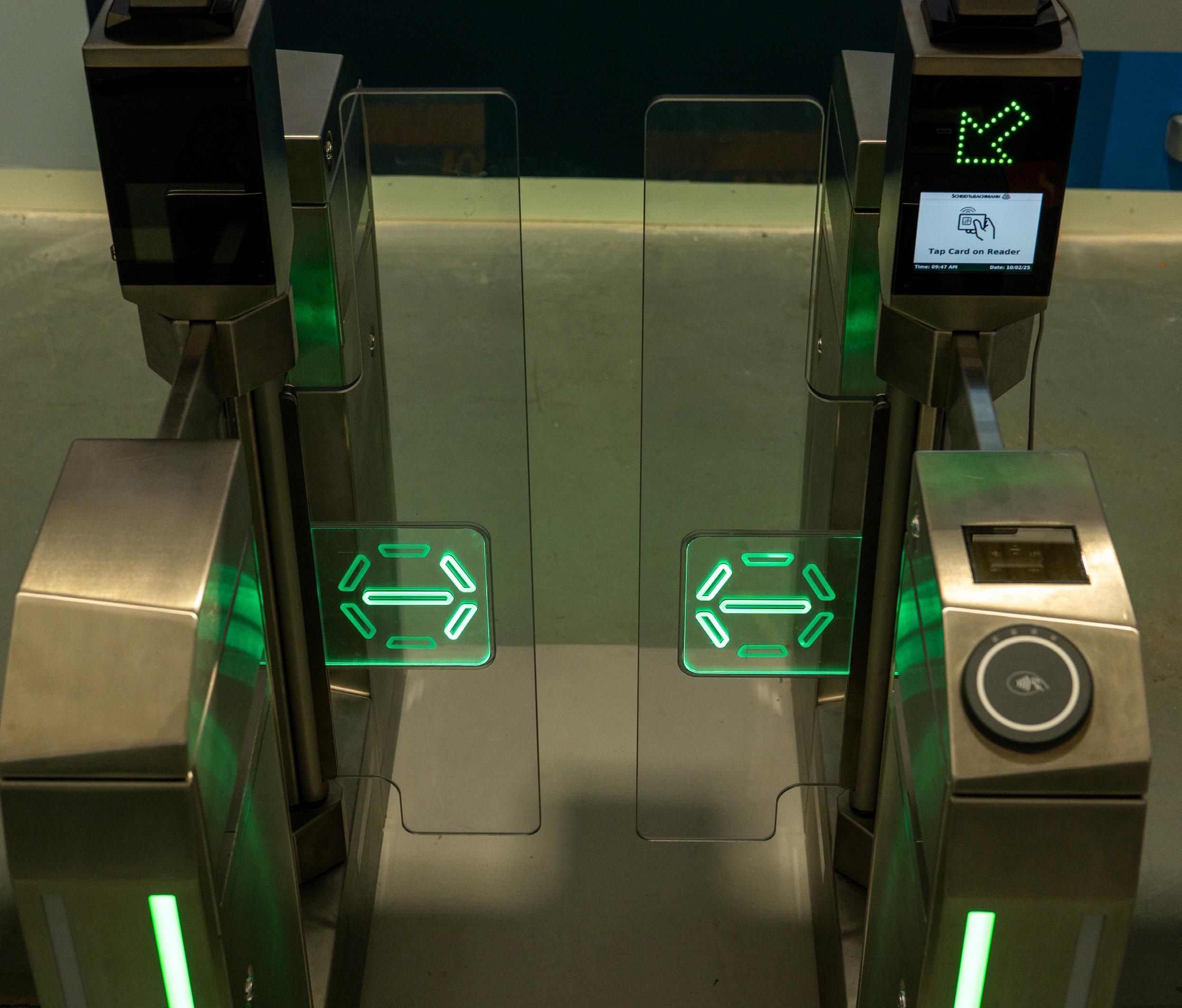
COVER Scheidt & Bachmann

The Government's Clean Energy Jobs Plan promises 400,000 new positions by 2030, but CECA's Ben Goodwin warns success depends on ‘the accelerated delivery of enabling civil engineering works’ and ensuring skills investment aligns with where projects actually happen. For rail, this means coordinating workforce development with electrification schemes, depot expansions, and station rebuilds that will demand both civil engineering and specialist railway expertise.
The announcement of funding to restore passenger services on the Cowley Branch Line after 62 years illustrates how targeted rail investment unlocks economic development. When operational in 2029, the nine-minute journey will connect Oxford Science Park and Oxford Business Park directly to the national network. This represents exactly the productivity-enabling infrastructure that Greengauge21's recent analysis of NIESR research identifies as essential – transport investments responding to training facilities, housing developments, industrial strategy locations, and foreign direct investment where enlarged journey-to-work catchments prove crucial.
Coming to this month's issue, I spoke to Clive Wratten of the Business Travel Association about rail's untapped potential in the work travel market. His Beyond the Boardroom research reveals business travel represents six times the yield of leisure passengers, with annual rail spending of £800 million that could reach £3 billion through targeted improvements and modal shift. His emphasis on productivity during travel rather than sustainability credentials alone offers operators a clearer value proposition, though regional disparities remain stark – East Midlands rail preference sits at just 17 per cent.
I also spoke to Ashenden Wedderburn from GB Railfreight about achieving 100 per cent compliance training completion across 1,400 staff, delivering an 83 per cent reduction in phishing compromises. Alyssa Redsun from VinciWorks explains their AI-powered Conversational Learning that personalises training at enterprise scale, whilst Jenni Anderson from The Talent Foundry describes collaborative programmes reaching 3,005 students and generating £864,706 in social value.
Dr Nigel Harris from The Railway Consultancy brings three decades of perspective to why HS2 struggled whilst Crossrail succeeded – specifically, changing objectives mid-programme without communicating changes to delivery teams, and lacking a single champion with consistent political backing. His warning about Railtrack throwing out institutional knowledge carries obvious relevance as Great British Railways takes shape.
The people-centred theme continues with Alistair Gordon at KeolisAmey Metrolink lifting employee engagement from 41 to 71 per cent, and Sophie Allison reporting West Midlands Metro passenger numbers surpassing pre-pandemic levels at 8.3 million journeys.
As NIESR emphasises, productivity improvements require transport, housing, skills, and digital infrastructure synchronised rather than siloed. This month's examples demonstrate that progress emerges not from grand pronouncements but from leaders who invest in people, maintain institutional knowledge, and ensure purpose remains clear throughout delivery.
SAM SHERWOOD-HALE EDITOR
Following the successful launch of the Diploma in Initial Signaller Training (IST) at Network Rail’s training centre in York, the endorsed programme is now being has now rolled out across Network Rail’s Scottish sites, signalling the next phase in the nationwide enhancement of signaller development.
Developed through a collaboration between CIRO Awarding Organisation (CIROAO) and Network Rail, the 10week IST programme blends rigorous theoretical instruction with immersive virtual simulator sessions. It provides aspiring signallers with the essential skills, operational knowledge and professional standards required to excel in one of the railway’s most safety-critical roles.
The programme’s extension into Scotland reflects Network Rail’s continued commitment to consistency, quality, and operational excellence across all regions. Delivery at Scottish sites is supported by robust internal quality assurance and
the endorsement of CIRO, the UK’s Professional Chartered Institution of Railway Operations?
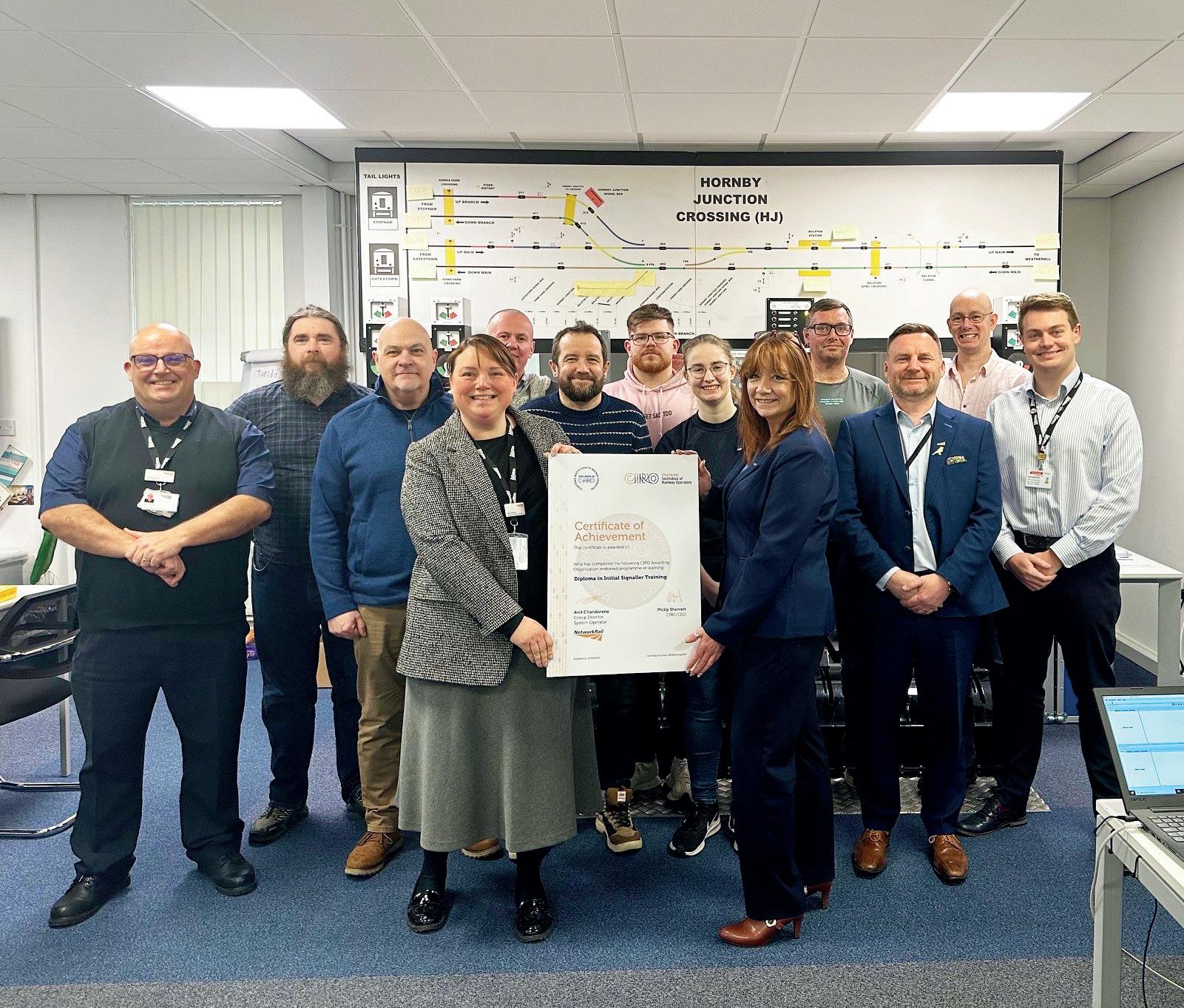
To mark the Scottish rollout, representatives from CIRO and Network Rail, along with a cohort of learners gathered at the Perth training centre for a celebratory photo opportunity. CIRO looks forward to working alongside the training and assessing teams in Scotland
Nadine Schmid, CIRO’s Head of Awarding Organisation Centres and Quality Assurance, visited the site to join staff in recognising the programme’s continued success and to meet the team leading delivery in the region.
Victoria Danskin, Training and Development Manager for Network Rail said:
“The IST diploma endorsed by CIRO, professionalises the hard work our delegates and trainers put into the course, congratulations to all involved. It’s the first time in Scotland that

the qualification of signallers has been professionally recognised and accredited. This will be a game changer in how we retain and attract talent into our industry.
Reflecting on the progress of the IST programme, Justin Willett FCIRO, Director of Operational Capability at Network Rail, commented:
“The Diploma in Initial Signaller Training (IST) represents an exciting step forward in shaping the future of railway operations. Our collaboration with the CIRO marks a pivotal moment in the professionalisation of our signaller colleagues. With this endorsement, the programme not only meets the highest industry standards but sets a bold new benchmark for excellence. By developing the next generation of signallers with technical expertise, and operational integrity, we are not just preparing a highly skilled workforce and recognising the professionalism of the role- we are shaping the future of the rail industry and driving innovation across the network”.
Nadine Schmid added:
“Seeing the IST programme successfully delivered in Scotland is incredibly rewarding. It reflects our shared commitment to raising operational standards and ensuring all signallers, regardless of region, receive the highest-quality training and development.”
As the IST programme continues to roll out across the UK, it sets a new benchmark for industry training and lays the foundation for future growth, innovation and excellence in Signalling, and wider railway operations.
“The Diploma in Initial Signaller Training (IST) represents an exciting step forward in shaping the future of railway operations. Our collaboration with the CIRO marks a pivotal moment in the professionalisation of our signaller colleagues”.
Justin Willett (FCIRO), Director of Operational Capability, Network Rail
For more information on CIROendorsed training and how your organisation can collaborate with CIROAO, visit www.ciro.org/awardingorganisation



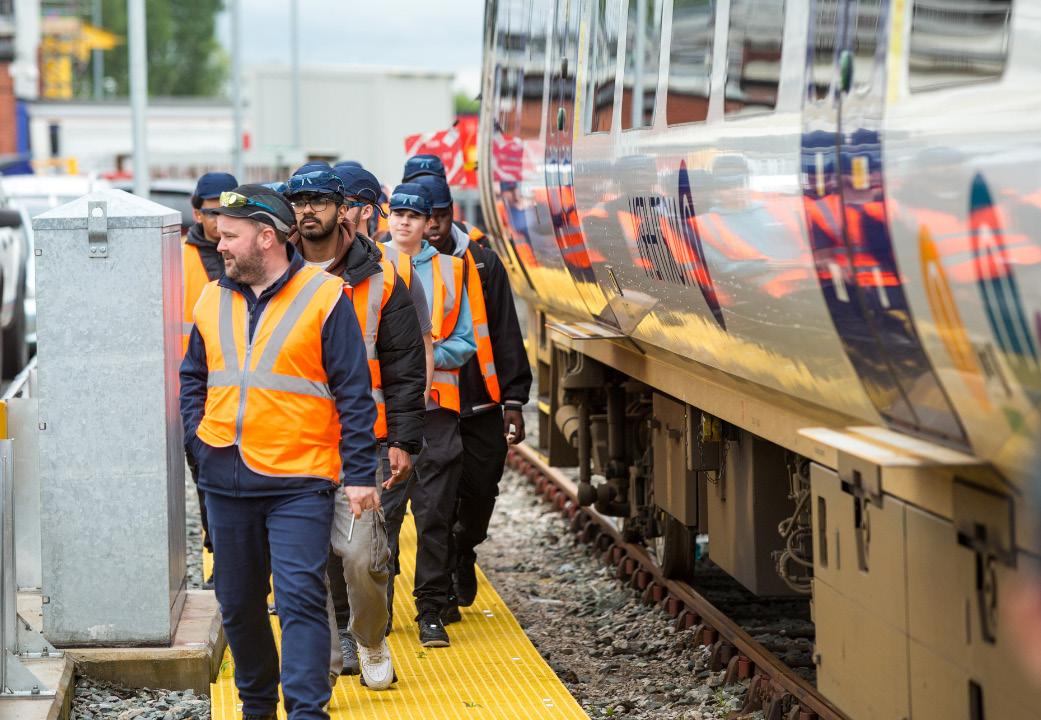
Jason Cooney, Director of Tsaks Consulting, explores the key challenges SMEs face when bidding for rail contracts
In Conversation with Jake Michel Sales Director at Zappshelter
Through inclusive Access Training, c2c and the OPC have helped equip young people with the skills, confidence, and support to succeed in rail
Brendan Morris, CEO of Denova, about how Transport for Wales became the first UK train operator to introduce VR training for train managers, and why this technology is now poised to transform competence development across the rail industry
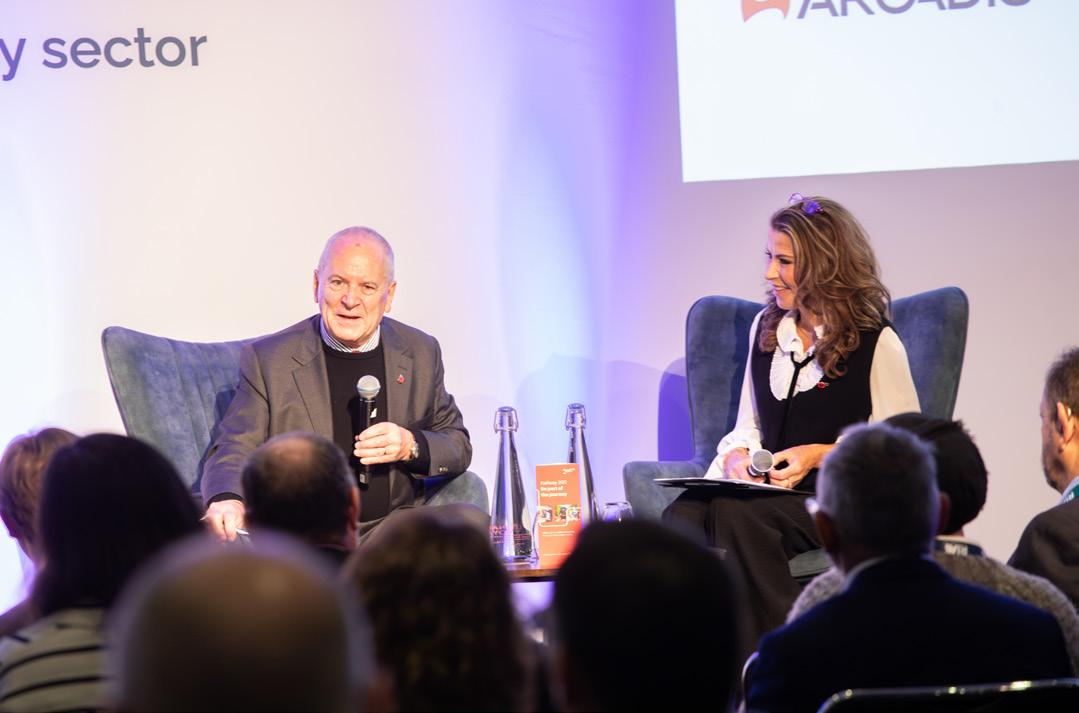
Martin Sion, Catherine Whitfield, Paul Wardle, Ian Law, Don McClurg, Andy Watson, John Stephens, Dan Rogerson, Ben Fletcher, Barbara Alvarez Solanilla, Debbie Simmons



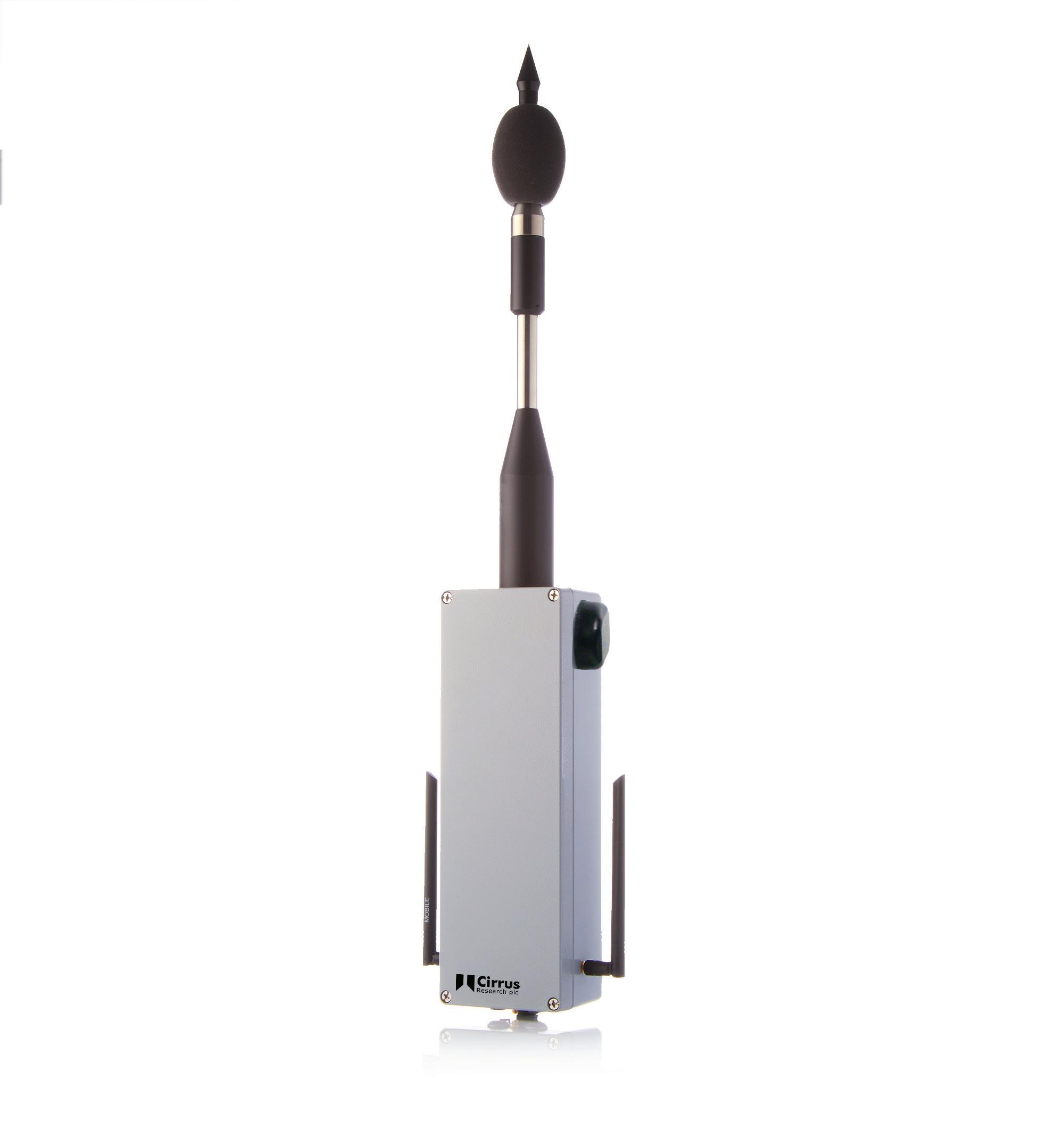
London St. Pancras Highspeed, the operator of the UK’s only high-speed railway connecting London to the Channel Tunnel, has appointed Mott MacDonald as its sole strategic partner under a new Sustainable Asset Management Framework. The three-year partnership will support London St. Pancras Highspeed in delivering its long-term vision to be the most sustainable transport option across the UK and Europe and the world’s leading high-speed rail experience.
London St. Pancras Highspeed holds a 30-year concession, running until 2040, for the operation and stewardship of the 109km high-speed rail line and international stations from London St. Pancras to the Eurotunnel. The railway provides vital high-speed access for domestic and international passenger services, giving London St. Pancras Highspeed a unique and strategic role in the UK rail sector.
The newly launched framework brings together asset management and climate adaptation under a single, integrated approach. This reflects London St. Pancras Highspeed’s continued ambition to embed climate resilience and sustainability into its core operations ensuring long-term performance, regulatory compliance and enhanced value for customers and communities.
‘This partnership supports our ongoing commitment to delivering a high-performing transport system that’s resilient, sustainable and ready for the challenges ahead’ said Jo Parkes, head of asset management at London St. Pancras Highspeed. ‘By bringing together asset management and climate adaptation under one framework, we are both future-proofing our infrastructure and setting standards for sustainable rail.’
Mott MacDonald’s strategic advisory team will provide a wide range of integrated services across asset management, climate and sustainability and supply chain advisory. The collaboration will focus on developing and embedding best practice approaches that deliver tangible benefits to London St. Pancras Highspeed’s customers and the communities it serves.
Mott MacDonald’s strategic advisory lead, Andy Moulds, said: ‘We are delighted to be selected as London St. Pancras Highspeed’s strategic partner on this important framework. Our integrated advisory and consultancy experts will deliver highly tailored strategic advisory services that meet the unique requirements of London St. Pancras Highspeed. This is a powerful opportunity to combine Mott MacDonald’s strengths in asset management, climate resilience and innovation to help shape a more sustainable and resilient future for high-speed rail, supporting the UK’s transition to a low-carbon, climate-resilient transport network.’
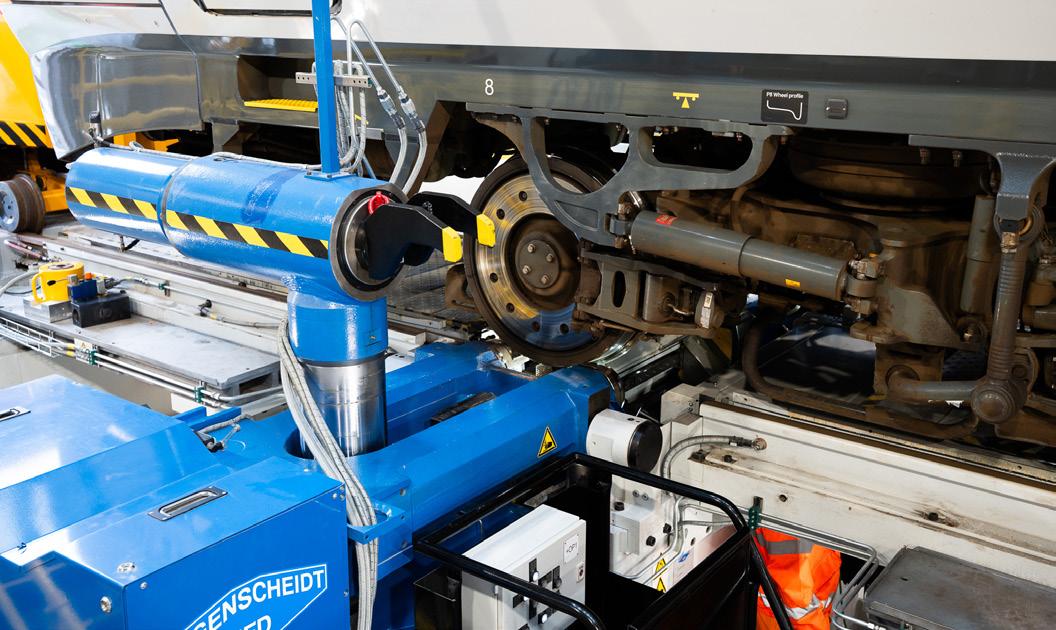
A new £10.5 million wheel lathe facility opening in Holyhead today will improve reliability for the rail network across Wales. The automatic lathe – an important maintenance tool that can repair worn or damaged wheels – is part of the Welsh Government’s Network North Wales initiative. Trains in North Wales will no longer need to travel to the existing lathe in Canton, Cardiff – meaning Transport for Wales’ entire fleet of trains will be maintained and serviced quicker. The project has been completed on time ahead of the busy autumn season, when falling leaves make well-maintained wheels even more important.
Cabinet Secretary for Transport and North Wales Ken Skates said: ‘It’s great to see our new state-of-the-art wheel lathe facility
in Holyhead open and ready for business. This multi-million-pound investment is the latest milestone in Network North Wales’ vision for a better public transport system. Our new facility will operate seven days a week, significantly reducing the turnaround times for trains to be back up and running and making sure people can get where they’re going with fewer disruptions.
‘I’m really pleased that this investment will bring eight new jobs to Holyhead and help unlock economic development across North Wales.’
Ryan Williams, Engineering Director at Transport for Wales said: ‘This new facility is a major step forward in boosting the availability of our fleet of trains, especially as we head into the tougher Autumn and Winter months. It will help us run more efficiently, further strengthen our inhouse maintenance capabilities, and show our dedication to providing a more reliable service across the Wales and Borders network.
‘It’s also a key milestone in making operations more efficient across North Wales, highlighting our continued focus on providing top-quality transport services for the region.’
Alasdair MacDonald, Operational Director for Balfour Beatty, said: ‘The opening of the Holyhead Wheel Lathe marks a significant milestone not just for Transport for Wales, but for rail infrastructure across North Wales. This facility is the first to be delivered under the Welsh Government’s Network North Wales Strategy and will play a vital role in maintaining the new fleet of trains.
‘We’re proud to have delivered a project that combines technical excellence with long-term operational impact, supporting smoother journeys, reduced delays, and a more resilient rail network for the region.’
A Community Rail Partnership has been established in South East Wales to promote sustainable travel and economic development along railway lines connecting Treherbert, Aberdare and Merthyr with Cardiff.
The Three Valleys Community Rail Partnership is hosted by Voluntary Action Merthyr Tydfil and funded by Transport for Wales. The partnership brings together representatives from the voluntary and tourism sectors, healthcare providers, community organisations and the rail industry.
The initiative will cover 35 stations and aims to support local projects focused on health and wellbeing, tourism and economic development. It will provide a community voice as enhancements are delivered through the South Wales Metro programme.
Verity Lewis, Community Rail Officer for the partnership, said the organisation had spent the past year engaging with local communities to establish the partnership. Sharon Richards, Chief Officer at Voluntary Action Merthyr Tydfil, said the host organisation was proud of its role in shaping the partnership.
Three Valleys becomes the sixth community rail partnership on the Transport for Wales network, joining South West Wales Connected, Heart of Wales Line, Cambrian Rail Partnership, Conwy Valley and North West Wales Community Rail Partnership, and 3 Counties Connected Community Rail Partnership. Voluntary Action Merthyr Tydfil, which has existed since 1997, has a membership of more than 370 third sector organisations.
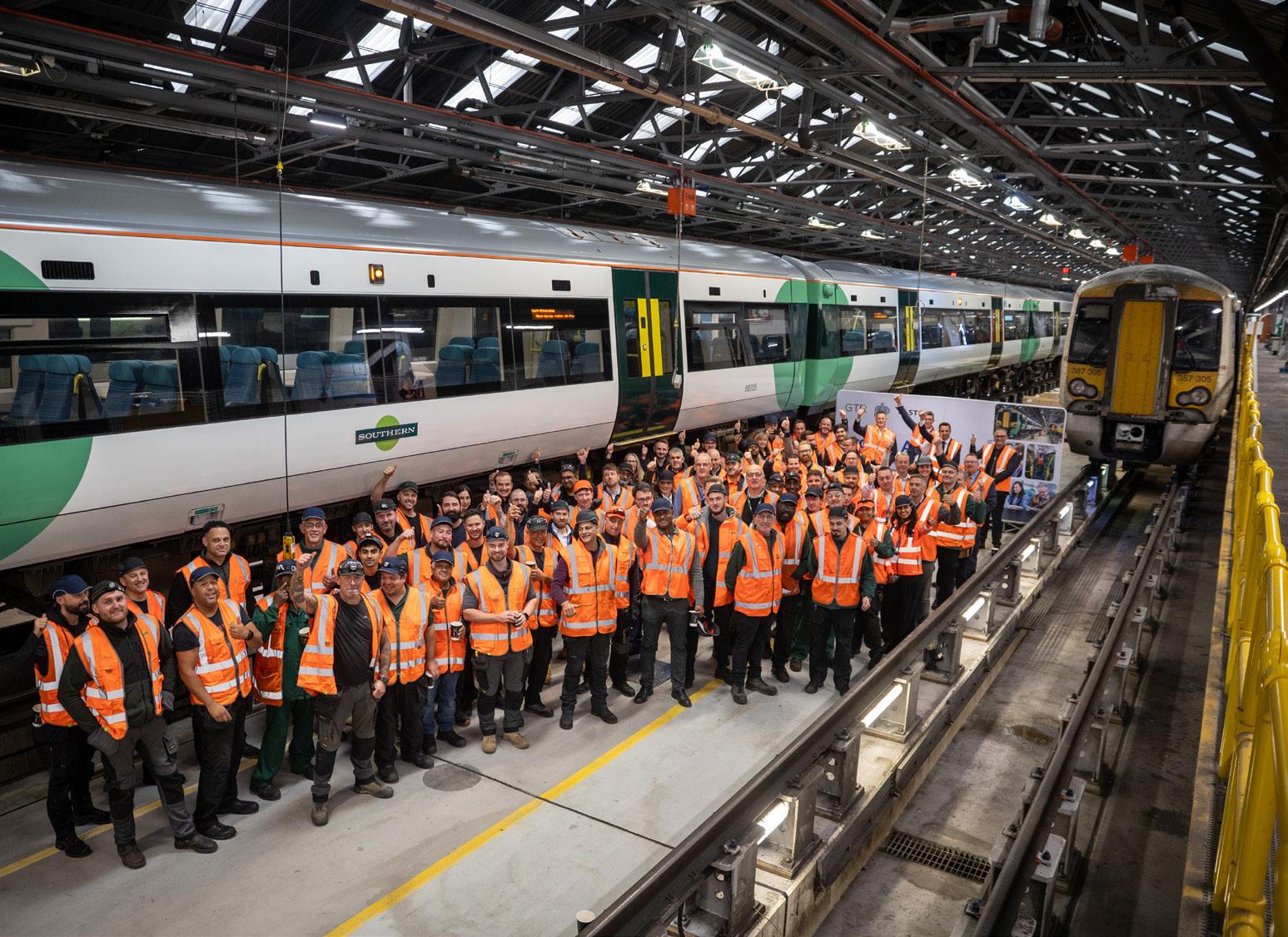
A comprehensive £100 million modernisation programme affecting 1,222 train carriages has been completed on schedule and within budget, delivering improvements to services across southeast England.
The five-year Project Aurora, which concluded this weekend with the final train returning to service, represents the largest fleet upgrade undertaken in the UK. The programme targeted the Electrostar fleet
operated by Southern, Gatwick Express, Great Northern and Southeastern services.
Work was carried out by Southern engineers at the Selhurst depot in south London. The 304 trains in the programme received extensive upgrades including power sockets with USB charging points at every seat, passenger information screens, LED lighting, enhanced WiFi capability, and a new digital infrastructure designed to improve operational reliability.
The digital backbone installed across the fleet enables remote monitoring of train systems, allowing engineers to diagnose faults before trains arrive for maintenance. This capability has reduced downtime and improved service availability. Additional features include forwardfacing cameras and track debris monitoring systems, with remote streaming capability to support incident analysis.
Rolling stock company Porterbrook funded the programme, whilst technical specifications, design and materials were supplied by Alstom. At peak capacity, two complete trains were upgraded and returned to passenger service each week.
The project required 280 kilometres of wiring, 39,000 LED lighting units, 36,000 power sockets and 2.8 million fixings. New passenger counting technology has been installed to support timetable development and service planning.
Steve Lammin, Engineering Director at GTR, noted the significance of completing such an extensive modernisation programme in-house. John Whitehurst, GTR's Chief Operating Officer, described the project as an example of effective industry collaboration.
The programme received recognition at the 2023 National Rail Awards, winning Fleet Achievement of the Year. Services using the upgraded trains operate across London, Surrey, Sussex, Hampshire and Kent.
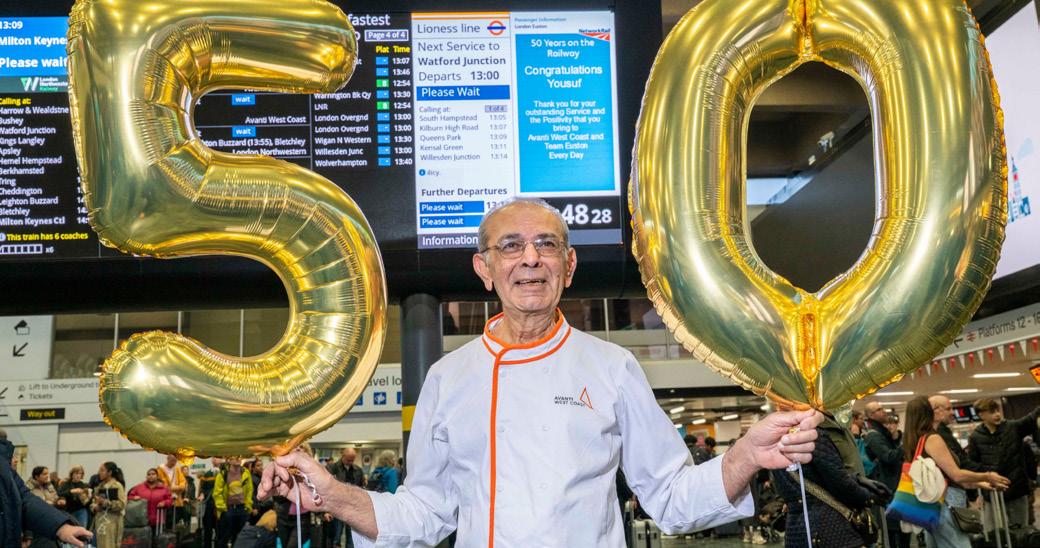
An Avanti West Coast chef is celebrating a career milestone this month as he marks 50 years working on the railway, having served thousands of customers across five decades on the West Coast Main Line.
Mohammed Yousuf – who prefers to be known as Yousuf – joined the industry as a kitchen porter at London Euston in October 1975. Five decades on, in the same station where his railway career began, he celebrated his landmark anniversary amongst friends and colleagues at a surprise party thrown by his workmates – two weeks after turning 73.
After moving from Pakistan in early 1975, Yousuf started work as a kitchen porter at the British Rail run 'Lancastrian Grill' in London Euston station – situated where Avanti West Coast's First Class Lounge is today. With a passion for food, it wasn't long until he was made a chef in the restaurant, which later led to cooking on board trains in 1991.
He initially started with Intercity's Motorail services which carried customers and their cars on the route between London and Glasgow. After these services ceased running in the mid-90s, he continued cooking onboard for the long-distance operator –growing his love for this job and the industry.
Speaking afterwards, Yousuf said: ‘I have been so grateful to work with so many fantastic people over the years and I am fortunate to be doing something that I love every day. The railway has changed a lot over the years, but it's the people that make it great – and I don't plan to stop cooking yet.
‘My advice to those who wish to join the railway is to give yourself time. Don't decide in two weeks or two months whether this is your job or not, give yourself longer – that's what happened with me. When I started on the trains, I was alongside three or four colleagues who joined the same time, but within two months they left. I stayed and I am so happy I did.’
During his time working in the First Class kitchens of the Pendolino (Class 390) fleet, Yousuf fondly remembers a journey where celebrity chef Jamie Oliver was on board. He said: ‘He wrote me a letter of thanks on a serviette, which one of the crew brought into the kitchen for me, and we were able to meet him and get a photo. To receive thanks from a chef like him was a fantastic honour.’
Paula Large, On Board Manager for Catering Support at Avanti West Coast, said: ‘Yousuf is such a pleasure to work with. He comes on the train every day with a smile on his face and he lightens the mood. He treats everybody so kindly, and it is fantastic that even after 50 years, he still loves his job. We are so grateful to have him on our team, and he deserves all the adoration for this amazing career milestone.’
Southeastern is updating online maps for 139 stations across its network following a successful trial of three-dimensional mapping technology. The rail operator tested 3D station maps at 25 stations over the past 18 months. The expanded programme will introduce 3D maps for a further 70 stations, with updated two-dimensional maps for 69 others. All maps will be made available on the Southeastern website rather than solely through National Rail Enquiries. The
3D maps provide a more accurate, to-scale view of station layouts, making it easier for passengers to identify facilities and accessibility features. The technology is designed to help travellers plan journeys independently, particularly when visiting unfamiliar stations.
Tina Owusu, Head of Inclusive Customer Experience at Southeastern, said the improvements would benefit all customers, particularly those with accessibility
requirements or travelling to a station for the first time. She said over two-thirds of the operator's stations would have modern, accessible 3D maps by the end of March 2026.
The remaining 69 station maps will be updated to reflect recent upgrades and facility improvements. Southeastern has already completed 3D maps for 25 stations, including Ashford International, Lewisham, Sevenoaks and Tunbridge Wells.
Eurostar has placed a firm order for 30 new double-decker high-speed trains from Alstom, with options for a further 20 units, representing a total investment of approximately €2 billion. The order marks a significant milestone in the operator's strategy to grow annual passenger numbers to 30 million.
The new fleet, which Eurostar has branded ‘Celestia’, will be based on Alstom's Avelia Horizon platform and represents the first time doubledecker high-speed trains will operate through the Channel Tunnel and on the UK rail network. First deliveries are scheduled for January 2031, with commercial services commencing in May of that year.
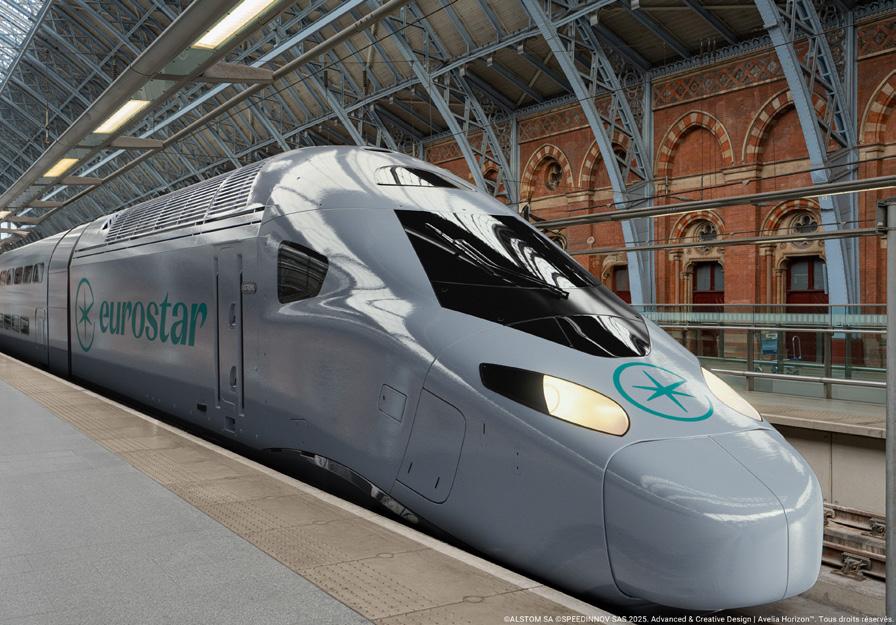
Each 200-metre trainset is expected to accommodate around 540 passengers, representing a 20 per cent increase in capacity compared with Eurostar's current rolling stock. When operated in the 400-metre formations typically used through the Channel Tunnel, capacity would reach approximately 1,080 seats per service.
The four-voltage trains will be interoperable across all five countries currently served by Eurostar – France, Belgium, the Netherlands, Germany and the United Kingdom – as well as planned new destinations including Geneva and Frankfurt. The fleet will operate alongside Eurostar's existing 17 e320 trainsets, bringing total fleet size to 67 units, a 30 per cent increase on current capacity.
The entire fleet will be maintained at Eurostar's Temple Mills depot in east London, which will undergo development costing approximately €80 million to accommodate the new trains. The expansion
is expected to create around 350 highly skilled engineering and maintenance positions, adding to the 450 staff already based at the facility. More than half of Eurostar's workforce is UK-based.
Gwendoline Cazenave, Eurostar's Chief Executive, described the order as ‘the concrete realisation of Eurostar's ambitious growth strategy’ and emphasised the significance of bringing double-decker trains to UK operations for the first time.
The Avelia Horizon platform features two compact power cars and nine articulated double-deck carriages, capable of speeds exceeding 320 km/h. Alstom claims the design delivers 20 per cent energy savings compared with the previous generation through improved aerodynamics and optimised traction systems. The trains will comprise 97 per cent recyclable components, with 25 per cent manufactured from recycled materials.
Maintenance costs are projected to be 30 per cent lower than previous-generation trains, achieved through redesigned
components that extend service intervals and reduce downtime. Predictive maintenance capabilities have been integrated from the design stage, with remote diagnostics systems to anticipate maintenance requirements.
Henri Poupart-Lafarge, Alstom's Chief Executive Officer, said the order confirmed Eurostar's commitment to combining "technological performance, energy efficiency and passenger comfort" whilst embodying the manufacturer's vision of sustainable European mobility.
The order forms part of the framework contract between SNCF Voyageurs and Alstom, which now totals 145 trains including 100 for domestic French services and 45 for European operations. Alstom values the Eurostar tranche at close to €1.4 billion.
Ten of Alstom's 14 French sites will participate in manufacturing, including Belfort for power cars, La Rochelle for passenger cars and project management, and Villeurbanne for control systems. The company has previously announced €150 million of investment to increase production capacity at French facilities to meet growing demand for its Avelia platform.
The design process has involved input from passenger and accessibility groups, alongside 100 Eurostar team members, with accessibility and universal access principles forming core elements of the specification.
More than 1,000 Avelia-platform trains currently operate across 25 countries, with Alstom positioning the range as the broadest high-speed offering on the market, covering maximum speeds from 200 km/h to 350 km/h in various configurations.
Construction of a third platform at Salford Crescent station has reached 75 per cent completion, with the facility expected to open early next year and full project completion scheduled for spring 2026. Network Rail and contractor Kier
Construction have been developing the multi-million-pound upgrade throughout 2025. The new platform includes stair and lift access from the ticket hall, with canopies and staircases installed during a final full weekend closure on 13-14 September.
Remaining construction work will proceed without requiring further railway closures. The additional platform is designed to improve passenger flow and reduce train delays by providing greater flexibility for services travelling through central Manchester and connecting to destinations across the country.
The expanded infrastructure will enable railway signallers to better manage congestion on the Manchester
to Preston line, which serves stations throughout Greater Manchester including Manchester Airport.
James Ashley, Network Rail scheme project manager, thanked passengers for their patience during the upgrade works. He noted that close collaboration with partners and contractors had minimised disruption whilst progressing the transformational improvements.
Jonathan Moran, senior project manager at Kier, highlighted recent key milestones advancing the spring completion target. He acknowledged the local community's patience and anticipated positive impacts on connectivity and customer experience.
Concurrent with the Salford Crescent project, Transport for Greater Manchester is collaborating with Network Rail and Northern Trains on a £10 million investment at Salford Central station. Improvements include a new groundlevel ticket office, platform upgrades and

signage integration with the Bee Network, Greater Manchester's integrated public transport system.
Simon Elliott, Network Director for Rail at Transport for Greater Manchester, described the rail improvements across both Salford stations as delivering lasting benefits for local residents and travellers across the region.
Councillor Mike McCusker, lead member for Planning, Transport and Sustainable Development at Salford City Council, welcomed the progress on the well-used station, noting the efficiency improvements passengers would experience upon completion.
Mark Wantling, chief infrastructure officer at the University of Salford, emphasised the station's role as a key transport hub for the Peel Park Campus. He stated the third platform would support sustainable growth and improve reliability for staff, students and visitors.


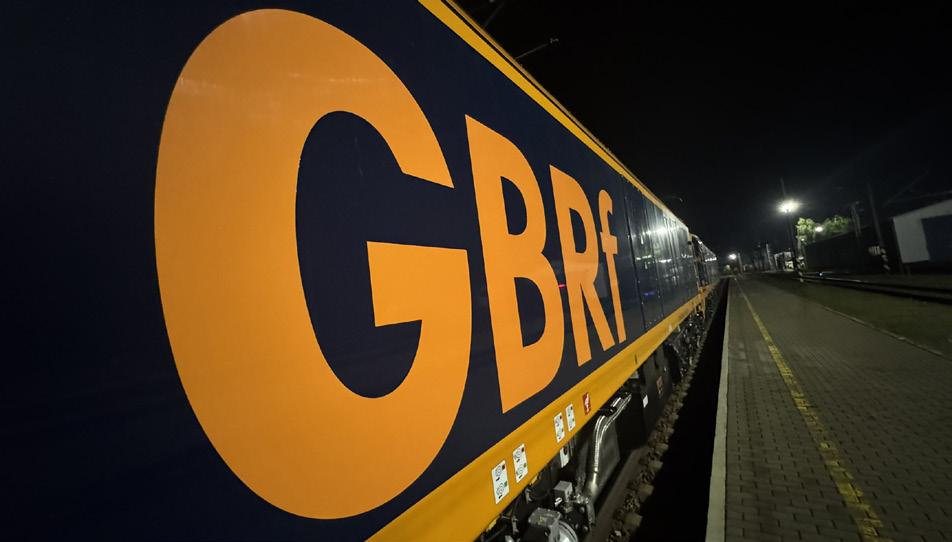
Sam Sherwood-Hale spoke to Ashenden Wedderburn, Learning and Development Manager at GB Railfreight about how the company achieved 100 per cent compliance training completion and created a learning culture that's driving measurable behavioural change across its 1,400-strong workforce
SSH: You've transformed completion rates from around 60 per cent to 96 per cent, and you've now achieved 100 per cent compliance. What changed beyond just those numbers?
AW: Working at GB Railfreight, we're always in a constant pursuit of improving performance, improving efficiency, and certainly improving safety and security. The increase in completion rates was a logical result of what we're all striving to achieve, but the real story is the behavioural change around the business regarding IT security.
We've actually seen people perform their IT tasks in a safer way. People are more likely to check their emails and not just click on anything. They're much more aware of links that could be suspicious, and they check email addresses and where they're coming from. Beyond the figures, the behaviour change has been enormous because we actually recognise that people are taking it seriously and ensuring they're keeping their IT security strong.
SSH: How do you measure that behavioural change? That's often described as the ‘Holy Grail’ of learning and development.
AW: It's an interesting question because measuring behaviour change directly is very difficult, but measuring the effects of behaviour change is easier to do. What we notice around the business is a delay in opening suspicious emails. People are more conscious of checking where messages are coming from and what's being received.
On top of all the security systems we have from an IT point of view, which filter emails and phishing scams, when threats do get through, people are taking the time to evaluate them. We notice this because we have fewer alerts to phishing scams being clicked on. I'd love to be able to directly answer what that behaviour change measurement is. It's the Holy Grail of L&D. But what we can measure are the outcomes: an 83 per cent reduction in phishing-related compromises from our simulation and a 176 per cent increase in phishing reports. That demonstrates real knowledge retention and application.
SSH: Based on your experience across different organisations, how rare is 100 per cent compliance completion?
AW: Of all the businesses I've worked for, I've never seen 100 per cent completed compliance with training in such a short amount of time. Eventually, you’ll get everybody to do it. But we've got everyone to complete two quarters' worth of compliance training well within two quarters. Rolling out compliance training to that many people in that short a period is something I haven't seen before.
I was genuinely surprised by this achievement. In our quarterly meetings with the HR team where I present facts and figures about what's going on in L&D, I've mentioned in the last three meetings that the figures we're achieving for compliance are the best I've ever seen.
The real secret is the engagement piece, and that's where everybody comes together
to explain why we're doing the training, provide quality content, and roll it out so it's accessible to people on the right technology. They can access it in the moment, which means getting people to complete it wasn't tricky. That's credit to everybody who works at GB Railfreight.
SSH: What happens when someone fails or struggles with the training in your safetycritical environment?
AW: E-learning was the primary way we were plugging that gap in knowledge. We use modules from a company called VinciWorks. Their production level and interaction are fantastic, some of the best I've seen. For those who have gone through the learning and may not understand it or need a refresher, everyone has access to our learning platform where they can go in and redo the training.
In conjunction with our legal team and IT, we have a compliance cycle with constant rolling cybersecurity training and various other compliance training. So no one's ever missed, which is a great way we handle ongoing development needs.
SSH: Walk us through how the VinciWorks partnership came about. What made them stand out?
AW: We had a partnership with VinciWorks before my time. I came in as L&D Manager about two and a half years ago, and we already had VinciWorks content for legal compliance. Through our efforts to improve our compliance rates and meet regulatory
obligations, we called on VinciWorks to supply us with more compliance subjects.
The partnership initially came from our legal team, and I kind of piggybacked and said I could do with some more. It was a natural expansion of the VinciWorks catalogue that we could utilise, covering cybersecurity, health and safety modules, and ESG content.
What really stands out about VinciWorks is their superb production quality. It’s engaging and educational, and really easy to digest. That's the real benefit.
SSH: The case study mentions employees weren't just completing training but were actively returning to explore additional modules. What creates that shift from tick-box exercise to voluntary engagement?
AW: I've been in L&D for 15 to 20 years, and compliance training is, unfortunately, seen as a tick-box exercise.
On top of the partnership with VinciWorks, what we've done as an organisation is explain to people the reason compliance training is being rolled out. It's not a case of ‘you just need to do this every year’. We say: here are the actual IT threats, here are the actual legal repercussions, here are the real HR concerns, and here is the learning we would like you to do to bridge that gap. It's very much a team effort where we've explained the reasons and provided development to help people.
SSH: Your recent security inspection by the Department for Transport highlighted your training. Can you tell us about that?
AW: I'm proud to say that the security inspector identified training as one of the key reasons we did so well in the security inspection. To put it into perspective, the counterterrorism module, which is mandatory for all staff, is an hour long.
You're asking operational staff who are very busy and have different shift patterns than someone who works 9 to 5 to sit through an hour's worth of training around what they're trying to do for the business.
Pulling that off, and credit to our operations team and everyone involved, meant the Department for Transport said that was a key piece of why we did so well in the security inspection. It demonstrates that accessible, digestible training can work even in the most demanding operational environments.
‘The real measure of success isn't completion rates, though those matter. It's seeing people take the time to check an email before clicking, report suspicious activity, or voluntarily explore additional learning because they see the value.’
SSH: How do you ensure training fits into people's workflows, especially for operational staff?
AW: From a safety-critical point of view, you don't attack somebody's brain with e-learning right before they're going to drive a locomotive. You need them focused on safety and the operation. Having training that's digestible and accessible means they can pick up their iPad and do it anytime, as long as they have time and it's safe to do so.
At GB Railfreight, all HQ staff have access to various levels of technology from iPads to iPhones, but even our train crew and ground staff have access to iPads and very powerful technology. People are brought into the company and thrust into this world where we're a technology-driven company. We want people to be technologically savvy, and have an appreciation of the threats that go along with that.
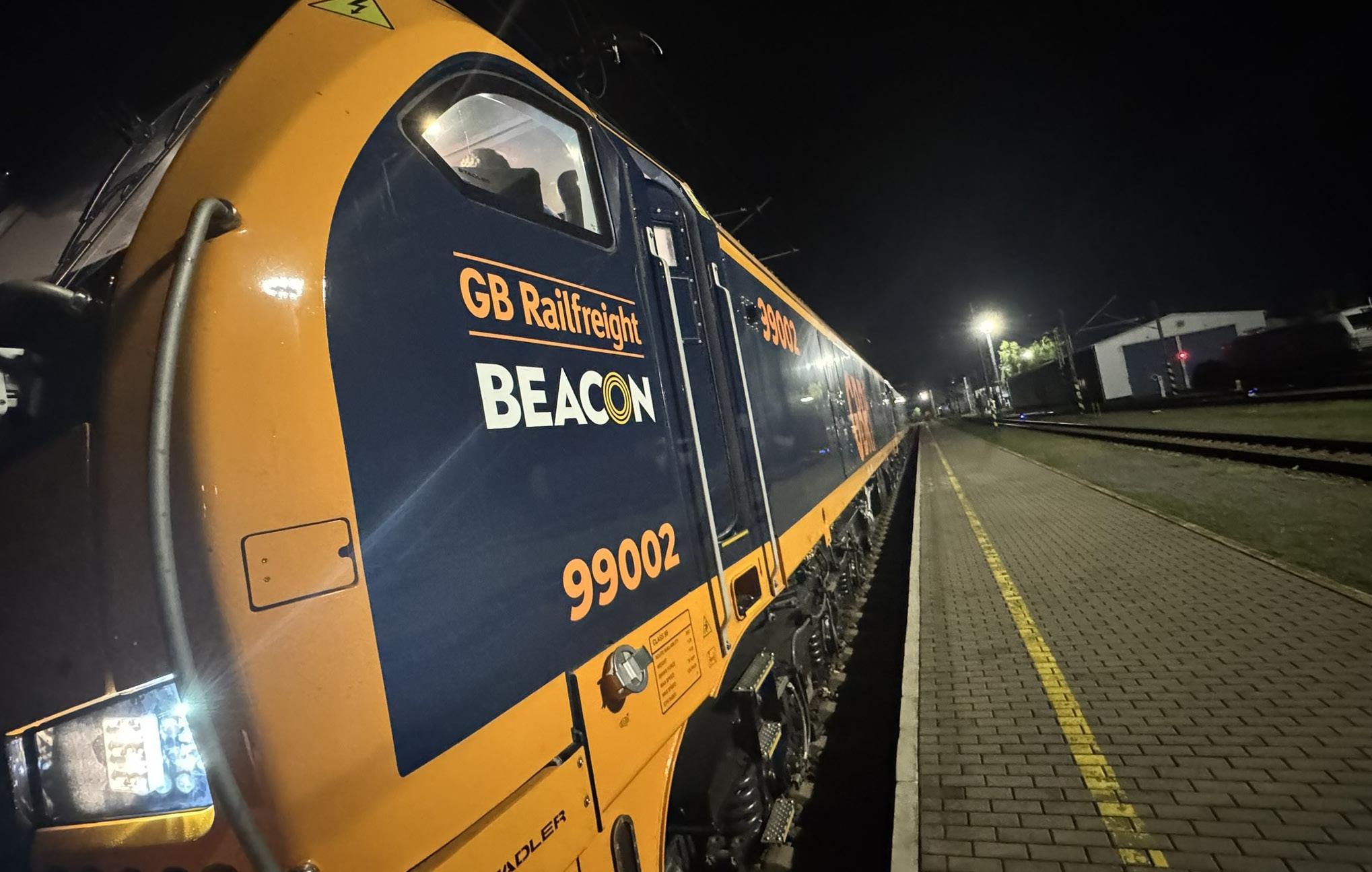
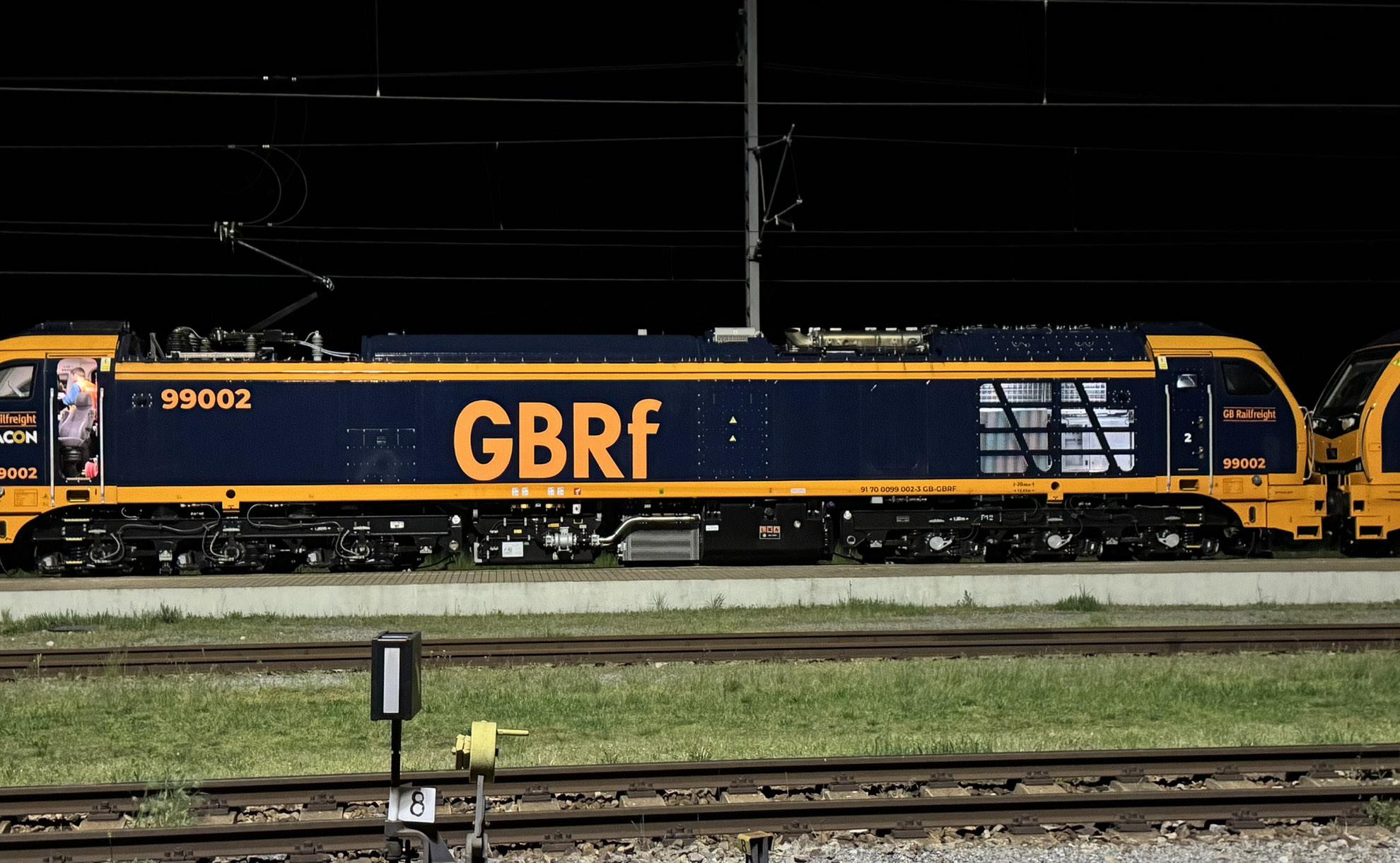
SSH: You're exploring AI-powered Conversational Learning with VinciWorks. What specific problems are you hoping to solve?
AW: This is a new product by VinciWorks where, instead of being fed knowledge on a topic, you're presented with a topic and can start asking questions around the subject. Within that conversational style of learning, the AI will determine how proficient you are and guide you accordingly.
If you demonstrate you're an expert in phishing, say you're someone who works in our IT department, your compliance training probably won't be as long as someone who's never heard of it before. It's a very personalised way of learning, which is exactly what people need nowadays because not many people have time to step outside of their work to do training.
For years, L&D has been talking about personalisation and learning in the flow of work. Now we have AI that can ask very specific questions based on your proficiency to prove your proficiency and take you further. That alone solves learning in the flow of work and personalisation. Partnering with VinciWorks on this journey is exciting because it solves so many questions.
SSH: What's the next cybersecurity challenge you're preparing for?
AW: One of the things we're always on the lookout for is internet and social media security. We need to ensure that what
‘When training becomes a tool people choose to use rather than something they're forced to complete, that's when you've truly succeeded.’
people are using their devices for is workappropriate. We have to ensure the sites they're visiting are secure, and we can keep track of that. That's always a big concern.
We also roll this out for new starters in the business: an understanding of our IT policy and safe use of internet and social media. We're trying to prevent damage to company reputation. If someone posts on your behalf maliciously, how do you prove you didn't do it when all the evidence points towards you? Having people aware of that level of threat and what they can do about it is essential.
We also keep abreast of what's happening in the industry. Our head of IT is fantastic at keeping up to date with security threats around the world and how they're influencing what goes on in the UK. We saw attacks on Marks & Spencer and similar organisations, and we learn from those incidents.
SSH: How do you see AI changing the threat landscape?
AW: I'm no expert in AI. I certainly use it, but not for hugely sophisticated purposes. However, I know AI is able to write code, and I'm sure AI is able to write viruses. The virus, however it's coded, could change on the fly to influence people's systems, which will be a security nightmare.
But I'm a big fan of technology and AI. I think it has fantastic use cases, especially in the world of L&D and in the rail freight industry. It could help with our planning, for example. What we need to do is become as sophisticated as the hackers when it comes to using AI or coding. I wouldn't want to go back to pens and paper and faxes. My wish would be that people just get better at using the tools they have, in line with improved security.
SSH: You're also exploring augmented reality and Apple Vision Pro. How do you stay on top of emerging technology?
AW: I'm always on the lookout for improved technology. I attend L&D and tech conferences where people showcase new technology that can help from a learning point of view. Our partnership with Apple and the Apple Vision Pro is going to be a huge step forward in how we develop people. That augmented reality piece gives you the ability to see the world with training included. If you're looking at a locomotive in a particular way, you can look at that piece
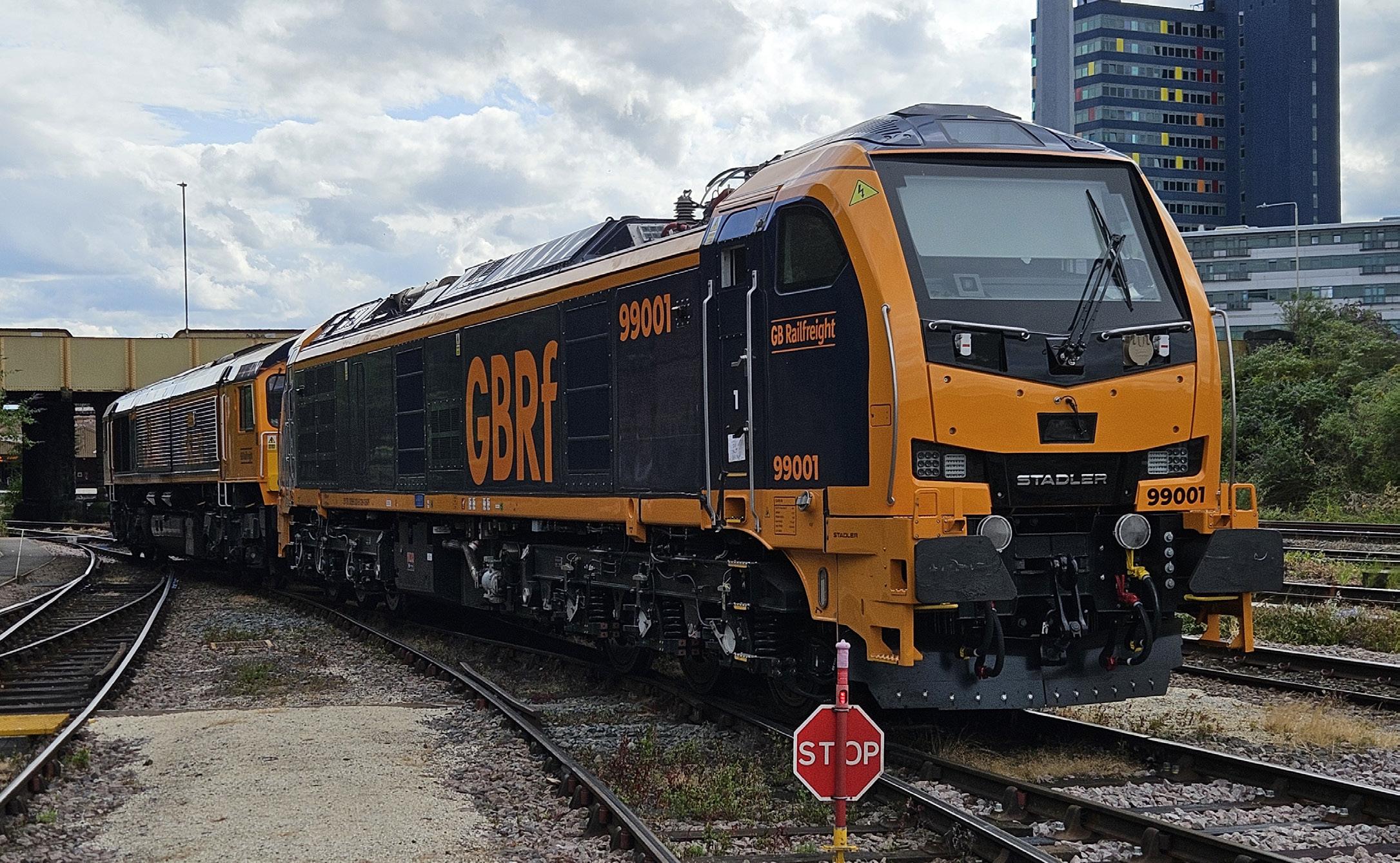
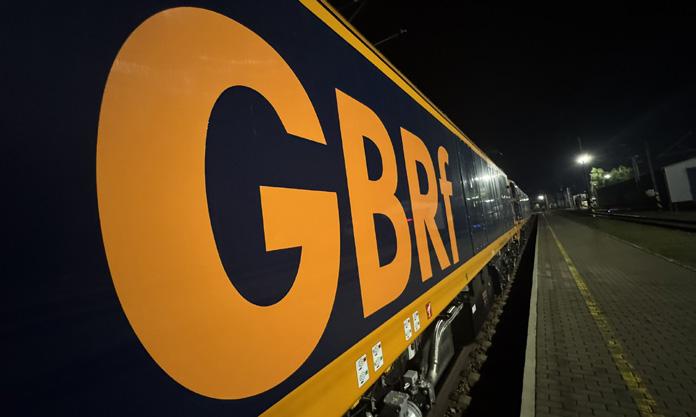
of kit and it can tell you what you're looking at, what it does, and talk to you about faults and improvements or whatever you need to learn. We can build upon that to get people to learn in the flow of work better.
That's really where learning technology should be: how do I get people to learn faster, at scale, and in the flow of work? That's another Holy Grail question. With our eye on technology, we're looking to shrink that gap.
SSH: How has this success changed your role as L&D Manager?
AW: I wouldn't say it's expanded or changed. What we've achieved with VinciWorks is, from my point of view, exactly what L&D should be doing: identifying the problem, implementing a solution that helps our people, and driving that forward to achieve results.
I'd like to think that having success like this allows people to realise the power of L&D, the power of training, and how
e-learning can be very successful in driving change. But it does validate the approach and opens doors for future initiatives.
SSH: Looking at your next round of compliance training, how will it differ?
AW: There won't be as much compliance training, and that's born out of the feedback I get from staff and conversations with the legal team and HR. We listen to that feedback and ask: what's the vibe with our compliance training? Do people feel it's relevant? Is it too much? Is it too long? Although we still have to hit relevant topics that keep our staff compliant, we look to make it accessible and digestible for our people. We certainly don't do compliance for the sake of it. I have quarterly meetings with our legal department to discuss what compliance training we need to roll out next, in line with threats in the world, regulatory changes, or whatever it may be.
SSH: What's your philosophy about what good training should accomplish in safetycritical industries?
AW: Good training should drive performance, improve safety, and ultimately change behaviour, not just tick boxes. In safety-critical industries like rail freight, training isn't just about knowledge transfer; it's about creating a culture where people actively want to learn and apply what they've learned to ensure safety incidents are an absolute minimum.
The real measure of success isn't completion rates, though those matter. It's seeing people take the time to check an email before clicking, report suspicious activity, or voluntarily explore additional learning because they see the value. When training becomes a tool people choose to use rather than something they're forced to complete, that's when you've truly succeeded.
SSH: What excites you most about the future of learning and development at GB Railfreight?
AW: What excites me is the new ways of learning that technology enables.
AI-powered conversational learning, augmented reality through Apple Vision Pro, personalised learning paths: these aren't just fancy tools. They're solutions to problems L&D has been trying to solve for years.
VinciWorks is ahead of the curve. Their content is among the best I've seen, and their courses make compliance genuinely engaging. They don't just deliver training; they help you build a culture of learning that drives real, measurable change. That's exactly where we want to be, and it's an exciting journey to be on.


Alyssa Redsun is Chief Product Officer (Courses) at VinciWorks, leading a cross-functional team to create next-generation eLearning. She drives engagement and improves outcomes by pairing innovative technology with effective course design, from adaptive, personalised learning to AI-powered Conversational Learning, helping organisations build stronger cultures of safety and accountability.

Sam Sherwood-Hale spoke to Alyssa Redsun, Chief Product Officer at VinciWorks, about how the company is transforming compliance training through relevance, innovative technology, and AI-powered learning solutions tailored to the unique needs of safety-critical industries like rail
SSH: VinciWorks has worked with various rail organisations over the years. What makes compliance training effective in this sector?
AR: When it comes to compliance training for different industries, and rail is certainly one of those, we believe relevance is absolutely critical. It's one of our key USPs and a deeply held belief that when people can see themselves in the training, when they can see their risks and the kinds of things the training is talking about, and it's realistic to them, that's when you really can transform behavioural change.
People are going to disconnect from training that doesn't resonate with them, that feels like it's written for someone else. One of the big parts of our training is that we work with different subject matter experts in different industries, just like rail, to shape the way those scenarios and risks are played out. When users are presented with the learning material, they're presented with learning outcomes that match the kind of risks that an organisation is trying to mitigate.
Effective compliance training isn’t about box-ticking, it’s about relevance. When people see themselves in the scenarios, the learning sticks.
SSH: The rail industry changes rapidly, particularly with evolving safety standards and regulations. How do you ensure training stays current?
AR: Absolutely. In a fast-moving environment like rail, being six months out of date can mean missing the very risks you’re training against. We were just updating a phishing course, and when examining cybersecurity trends, it's clear that focusing solely on traditional email, and not mentioning malicious QR codes or text messages scams, overlooks half the risks people currently face.
Not only does the content itself feel dated, and people are going to disengage with it because you're talking about a flip phone and something that's just not relevant, but over and above that, you're missing new risks. The industry is changing, regulations are changing, and certainly in the field of AI and cybersecurity, a lot of best practices are changing. We continually horizon-scan for emerging threats, not just to keep the content fresh, but to make sure we’re protecting people against what’s next, not what’s past.
SSH: How do you balance being forwardlooking whilst ensuring training remains accessible to all employees?
AR: I think the two really go hand in hand. When working with different clients and customers, we make a lot of effort to gather feedback on how the training is going, how the materials are being used. Whenever we're working on customisations with bigger
clients, we'll always take an opportunity to ask, what should have already been in the training piece? We understand you're editing it to do that, but what should have been included initially? We use that to identify opportunities to enhance it.
Really, those two elements of both making sure people see themselves and see the trends and current things in their industry reflected in their training course, that's what administrators are looking for. That's what an L&D department wants. I don't think we are in a situation where it's too forward and too new, and people aren't ready to adopt that into the training. I think that's what people expect, honestly. If you're trying to push training courses and you're not talking about cyber threats that are relevant for 2025, if you're not talking about AI, if you're not talking about recent changes to GDPR, I think you'll lose out on a buying opportunity. L&D departments want things that are an accurate reflection of the current landscape.
SSH: Which topics in your catalogue speak specifically to rail and freight operations?
AR: We spent a lot of time with GB Railfreight unpicking this. We have a library of over 800 courses, and not every single one of those is necessarily going to be high priority. However, when we look at our library, there are really five key topics: D&I, cybersecurity, data protection, health and safety, and core compliance.
For rail, compliance is about both physical and cultural safety, and our course library reflects that. There's absolutely an argument to be made that there's a lot of D&I content that's relevant to rail around banter in the workplace and appropriate communication. It's definitely an industry where, when we work with L&D teams similar to GB Railfreight, they want to make sure that the environments they're fostering are ones that understand banter has a place in the workplace, but it needs to be respectful, and it needs to be the kind of working environment that doesn't have hostility. Unpacking that is an important part of building a safe and inclusive culture.
When you look at health and safety, there's a tremendous amount that's going to be relevant: first aid training, incident reporting, fire safety, manual handling if you're doing any kind of lifting. Those topics are going to be important. There are core compliance topics that will be relevant, like bribery issues. Then, when you move into data protection and GDPR, there's phishing, all the data processing that marketing teams need to be aware of, and the wider organisation needs to be aware of.
SSH: You mentioned workplace culture. Do organisations typically come to you when they've identified cultural issues?
AR: Absolutely. The extent to which organisations want to get into the nitty
‘Effective compliance training isn't about box-ticking, it's about relevance. When people see themselves in the scenarios, the learning sticks.’
gritty details with us is sometimes a bit hazy, but we've definitely worked with organisations whose L&D departments have said, we've got some culture issues. Generally speaking, it's going to be something that you need buy-in from an organisation to acknowledge. If they're coming to us, they've already done that step. By the time people come to us, they've already acknowledged the importance and gotten some level of buy-in from budgets and stakeholders.
We've worked with organisations that've said, even if we're not at full-on harassment or sexual misconduct, they're nervous about the way in which people are sometimes flippant with different things, and they're worried about creating cultures where there might be some elements of bullying. A lot of it's not necessarily intentional, and I think that's something that's really important when you're looking at a lot of these D&I lenses. Oftentimes, people aren't setting out to be malicious; they're not setting out to be cruel to their coworkers.
They're jokes that aren't appropriate, and they need a bit more straightforward language to say this is really better left at the pub, this is really better left outside of the office. That's what these training courses are looking to do. They're not looking to play the blame game and say you're evil and awful. The intention behind them is to say we're all trying not to be jerks at the end of the day, and let's just create a work environment where that can succeed.
SSH: Beyond completion rates, what tools does VinciWorks offer to help organisations prove accountability to regulators and stakeholders?
AR: We have a wide range of features at our disposal. Whether administrators are going back to a board or to a regulator to say we're not just ticking the boxes, we do it in different ways. We’re tracking numerous metrics and insights that we're tracking in the training courses that we can then report against to administrators.
We measure engagement through various means. We've got a new model of courses, which we've termed conversational learning. They're all conversationally driven, so you'll be interacting with a topic and engaging in a back-and-forth conversation about it. As you go through, we've flagged different questions
‘It's the closest thing to having a personal tutor for every employee, but at an enterprise scale.’
that we've deemed reportable, such as: Do you know who to report to? What would you do if you saw an incident like this? We'll
development teams to dig a bit deeper. But also, it's an opportunity when those scores come back very positively to reflect on the fact that people do understand the reporting procedures, they know where to find policies, they know what to do if there's an incident, they feel confident in their ability to speak up. Such feedback is really important and can evidence that something positive is happening in the culture.
SSH: Can you explain your adaptive learning approach?
AR: One of the things that's very popular
for administrators to see who understands the material and is testing out. It's a better learning experience for end users because they're taking a shorter course that's really reflective of the areas they need to focus on. Administrators are confident that people who are unfamiliar with certain areas are receiving remedial training. They're going through that full course, but for the people who are wizards and know this backwards and forwards, they're testing out and getting back to their day jobs.
SSH: The VinciWorks Portal brings everything together. How does it function


SSH: Tell us about the in-browser editor. How does it work in practice?
AR: What happens is you have the entirety of the course open, and all the content elements in that work have a little edit icon. On the fly, you can edit that. We have a full version history, so you can go back to previous versions if you're playing around or you're trying to get different stakeholders to sign off, and you need to see that. We're keeping a version history, but you can see your changes live as you make them.
Before we had in-browser editing, our customisation team would talk about clients sending six pages of content saying "can you add this in," and you put it in and think, I don't think you want it to look like this. Really it gives you an opportunity live to see how your changes affect the course, how they're affecting the flow. It can be done seamlessly. It's supposed to be very intuitive. Our intention is not to make it overly complicated. You can turn things off, turn things on, you can edit them.
Our hope is that we're a partner in that learning experience. You're starting out with really high-quality content and you're finetuning it. Different subject matter experts within the organisation can go in and take what is high-quality content, legislatively backed, that follows all the best practice guidance. Then what you're doing is you're allowing different people to tailor that and give it the voice of that company.
It means training teams spend less time managing content and more time shaping culture.
SSH: How do you handle legislative content when clients are customising courses?
AR: We have a couple of different things in mind with that. We'll absolutely signpost and flag areas that we expect, based on the best practices outlined by our research and writing team. When it comes to elements of the course that are a little bit more sensitive, where we've covered legislation and there are regulatory requirements and drivers behind a lot of these training pieces, we unpack that in the training courses. It's important to understand that you have an obligation to report an incident, especially in industries like rail, if there is an incident that happens. You've got reporting deadlines, and there are laws sitting behind this.
All our content is editable. We'll definitely suggest that pieces that are hard legislation, unless there's an extenuating circumstance like you're not operating out of the UK or you're handling that training in a different capacity and you want to completely omit it from your course, which is absolutely an organisation's prerogative, we'd advise that you leave the legislative pieces alone. It also means that when our team is doing revisions because there have been updates to the regulatory landscape, you can get all those revisions and all those edits.
SSH: Is rail particularly complex from a compliance perspective?
AR: I wouldn’t say it’s necessarily more complicated. Ultimately, the goal of these pieces of legislation is to mitigate risk. There are things that can happen, and if they do, there are procedures that you have to follow. When you look at a lot of sectors, you see similar drivers behind the legislation. When we look at data protection, people's data matters. If there are breaches, if you abuse that data, there are real consequences for people. The goal of those pieces of legislation is to say there's a proper way to handle these things, and you must abide by the rules.
I think really the key piece for our team, and our research and writing team does a very good job of this, is taking that legislation, which can sometimes be riddled with jargon and a lot of nuance, and the goal is to distil out in very clear layman's terms, this is what it means for you, this is what it matters. Let's take it out of subsection A dot point B, and let's just lay it straight. If you're in this kind of situation, this is how you need to behave, this is what you need to do. Our job is to translate complex legislation into practical action, we turn regulation into clear guidance people can actually use.
SSH: Let's discuss AI-powered Conversational Learning. This is a significant development for VinciWorks. How did it come about?
AR: I've been at VinciWorks for ten years. We recently launched Conversational learning. It's definitely not been the focus of my whole time here. It's a newer initiative that we kicked off about a year and a half ago. We began core development, and then transitioned into a beta testing phase. We solicited a lot of feedback from existing clients, and then ultimately, we're now really excited to be in the position to widely launch it to our entire customer base.
It's really an exciting piece. AI is this buzzword; it feels like it’s in every space, but certainly in the e-learning space. There was a real opportunity when we were sitting down and thinking about what we think is going to disrupt the e-learning industry? What do we think is going to change things over the next five years, and how do we make sure we're on the right side of that disruption?
AI has so much power when you can put the industry experience that we've built up over the last 20 years, the information, the guides, the courses, all the content we've written, if you could give that to an AI. Then you could give it strict rules around how to have a conversation and how the learning objectives for a given course should work, because we're instructional designers and we live and breathe learning objectives, that becomes incredibly powerful.
You sit down to discuss a given topic and say, here's this vast array of information that's been curated, that's been reviewed,
that's been signed off. Here's the best practice for learning, including the flow, the conversation and how long it should be and how you should nudge people along. Let's throw that into the mix, too. Then let's put people in a situation where they can really be met at their level and have a conversation one-on-one with every single one of our users about core compliance topics and guide them through what those learning objectives need to be.
It’s the closest thing to having a personal tutor for every employee, but at an enterprise scale.
SSH: How does this differ from traditional e-learning?
AR: It's taking you out of the click-next cycle. It's fundamentally shifting the learning outcomes you can expect, as it enables you to drive engagement and measurement more meaningfully. As much as I'd love to say that people sit down and meaningfully engage with absolutely every training piece we produce, I understand realistically that's not the situation. People don't want to do compliance training. It's taking them away from their day jobs. It's not something they want to do. It's not something that they're particularly interested in, and they're often forced to do it. I understand that that's the situation.
While our driving goal for years, even before conversational learning, has been how do we make this content relevant? How do we make this experience engaging? How do we make content that is going to make behavioural change, that's going to actually mitigate risk? Even though that's the question we've been asking ourselves and trying to produce content towards, conversational learning feels like it has a better solution than some of the solutions we've had in the past.
All the feedback we've received from clients who are currently using it has been incredibly positive. It's been able to give an incredibly personalised learning journey and learning outcome to each individual user. As an organisation that deeply believes in relevance, that's our ethos. What we want to do is sit down with each learner and say, okay, let's talk about health and safety. What do you need to do in a fire safety situation? Where do you go? What do you do? What do you need to know? That's what we'd love to be able to give our administrators and L&D teams, and it feels like with conversational learning now we're in a position to offer that.
SSH: Can you give us an example of how conversational learning works in practice?
AR: Instead of being fed knowledge on a topic, you're presented with a topic and can start asking questions about it. Within that conversational style of learning, the AI will assess your proficiency and provide guidance accordingly.
If you demonstrate you're an expert in phishing, say you're someone who works in an IT department, your compliance training will likely be shorter than for someone who's never heard of it before. It's a very personalised way of learning. We can essentially sit down with each learner and have a one-on-one tutor speaking with every single person in a department. We can give you that experience at an off-theshelf cost of a normal training course. It’s a breakthrough in how organisations can personalise training without multiplying cost or complexity.
SSH: VinciWorks has been in business for over 20 years. How has your approach evolved, particularly regarding the rail industry?
AR: We got started in 2002, so we've been doing this for over 20 years now. We started out looking specifically and partnering with the legal industry. We began by working with law firms in the UK. That's expanded over time. Higher education is an industry we work with, as are rail, oil and gas, energy, and construction. Our original ethos was in that law firm, a heavily regulated space, and we've taken those skills that we've learned there and applied them outward.
In terms of rail specifically, during our branching-out process, we began with a few smaller companies and gathered extensive user feedback from them. In general, when we start looking at a new industry, we'll try to partner with a few organisations in the beginning to understand their specific needs and the language they use. That's what we did with rail. We had a few organisations that we worked with to dip our toes in the water, so to speak. From there, we started to tailor courses and build out that voice, which has grown over time.
SSH: As rail moves towards greater integration under Great British Railways, how do you see VinciWorks supporting this transition?
AR: I believe that building a strong workplace culture is about consistently conveying the same messages. It's about conveying your values, conveying what is important to the organisation. When an organisation says, I'm going to take 30 minutes, 45 minutes, 20 minutes out of every single one of my employees' time, I'm going to tell them to stop earning money, stop making sales, stop marketing, and for 30 minutes I want you to focus on creating a more inclusive workplace or think about how we think about our values, whatever those specific values within the organisation might be, that's a very powerful tool.
One of the rail companies we worked with had recently redone its code of conduct and reshaped some of its value statements. It used training not only to launch its code of conduct, but also as an opportunity to restate: this is our vision of ourselves,
this is how we see ourselves as a company. We're going to take time out of everyone's schedule, stop working, and take a moment to say what matters to us as an organisation, what we value. I think that's a very powerful tool.
Training plays a big part in building culture. It's signposting to everyone within the organisation that this is something that matters to the organisation, and it's something we believe in. I think it's part of a wider initiative. When you shape culture, it involves a lot of manager training and bystander awareness. When people see something that doesn’t fit the ethos the company is building, do people say, ‘hey, that's not what we do here?’ There are numerous layers to building a culture, but certainly training plays a significant part in that.
SSH: What's your vision for the future of compliance training in safety-critical industries?
AR: Conversational learning is something we're incredibly excited about. We really see it as a way to disrupt the e-learning industry and establish it as a new model for how meaningful learning works. Imagine having a one-on-one tutor speaking with every single person in your department. We can give you that experience at an off-theshelf cost.
What we're really striving for is relevance. When we built these courses, we wanted people to be able to swap out our generic image with a floor plan, swap out ‘speak to your compliance team’ with ‘speak to Mark’. That's something we're really striving for. We've built a workflow where hopefully that's easy for clients to do, and we have an entire customisations team to sit beside any organisation, lead that dialogue and ultimately create courses that are really tailored, really relevant and giving the learning points that matter.
The goal is to create training that transforms behaviour, that actually mitigates risk, and that respects the fact that people are busy professionals who need content that speaks directly to their roles and their risks. That's what we've been working towards for 20 years, and with the technology we have now, we're closer to that vision than we've ever been.
SSH: Risk management is high on the agenda in rail. How does your Omnitrack tool help organisations track, monitor, and respond to risks in real time, from onboarding to incident reporting?
AR: Omnitrack gives organisations complete visibility across their risk landscape, from onboarding and supplier checks to incident reporting and whistleblowing. It’s a centralised system that replaces dozens of spreadsheets and forms with automated workflows, flagging high-risk submissions and triggering follow-ups instantly.
For rail companies, that means safety incidents, health and safety assessments, or GDPR breaches can be logged, tracked, and escalated in real time. Dynamic dashboards pull everything together so compliance and safety teams can spot trends, prioritise action, and share data with stakeholders at the click of a button.
We’ve rebuilt Omnitrack’s reporting from the ground up – it now supports cross-form dashboards, advanced filters, and drill-downs from charts to raw data. It’s designed for industries like rail, where safety and accountability are nonnegotiable, and having accurate, immediate insight into risk can make a tangible difference.
SSH: Looking at the next twelve months, what new initiatives or developments can rail companies expect from VinciWorks to further strengthen their compliance culture?
AR: The next year is all about integration, intelligence, and impact. We’ve launched Conversational Learning version 2 – our AIpowered, multilingual training that adapts in real time to the learner’s understanding, giving every employee a one-to-one tutor experience at scale. We’re also rolling out a new Resources Hub inside the VinciWorks Portal – a searchable library of guides, templates, videos, and policy documents so compliance and L&D teams can build campaigns in minutes. Alongside that, Learning Plans will allow organisations to map training to specific roles, teams, and jurisdictions, fully integrated with Omnitrack for policy attestations and audit evidence.
Finally, the latest Omnitrack upgrade introduces cross-form dashboards, role-based permissions, and improved reporting infrastructure – giving safety and compliance leaders in rail real-time insight into risk, behaviour, and progress. It’s all designed to make compliance measurable, meaningful, and easier to manage across large, dispersed workforces.
SSH: Finally, if you had one message for leaders across the rail sector about compliance and risk training, what would it be?
AR: Compliance isn’t just about meeting standards – it’s about shaping culture. In a safety-critical industry like rail, the most powerful message you can send is consistency: the same expectations, the same values, and the same commitment to doing things the right way. Training is where that consistency comes to life. When it’s relevant, adaptive, and grounded in real workplace challenges, it doesn’t just meet a requirement – it changes behaviour. That’s what we’ve built VinciWorks around: giving organisations the tools to make compliance not a tick-box, but a catalyst for safer, stronger, more accountable teams.
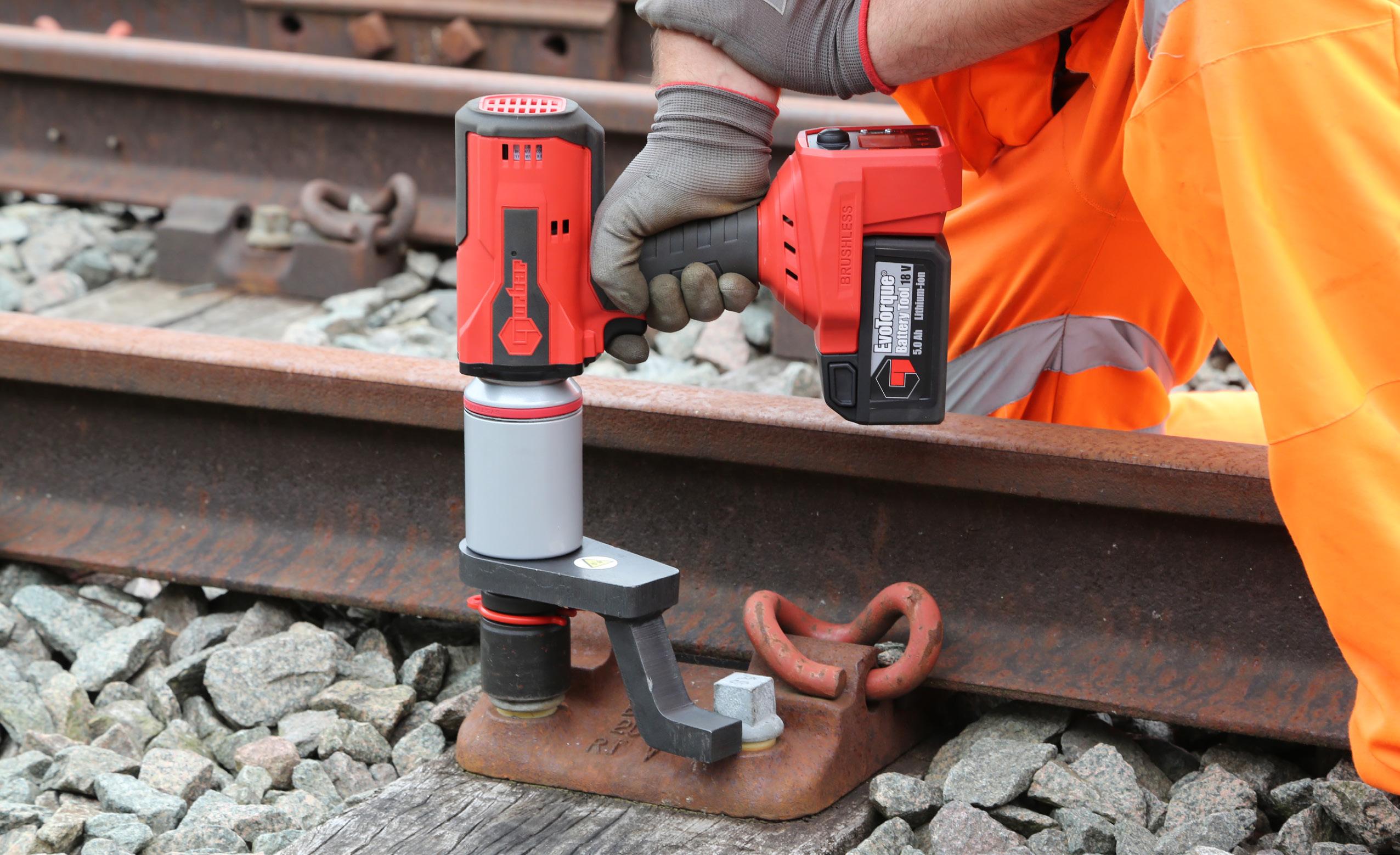
Norbar is a UK manufacturer of battery, electric, pneumatic and manually operated torque multipliers, wrenches, torque measurement equipment and bespoke torque control solutions specially developed for the rail industry Contact Norbar and speak to The Voice of Torque Control
by Chris Cheek
Chris Cheek reviews a year of recovery and restructuring, as the railways grapple with changing travel patterns, persistent deficits, and the long shadow of the pandemic
The passenger rail industry's finances continued their recovery trajectory in 2023/24, but the picture remains complex. Total passenger income reached £10.1 billion, representing 13.9 per cent growth year-on-year. Yet this achievement came with a sobering reality: taxpayer support remained stubbornly high at £4.1 billion, with total revenue still 22.3 per cent short of pre-pandemic levels.
The revenue shortfall tells only part of the story. Operating costs totalled £14.5 billion, running 2.7 per cent higher than before Covid, creating a structural deficit that keeps the Treasury's accountants awake at night. The largest components paint a clear picture of where the money goes: staff costs at £4.1 billion (28.2 per cent), track access charges of £3.99 billion (27.4 per cent), and rolling stock charges at £3.33 billion (22.9 per cent). Together, the first two items alone account for 55.6 per cent of total operating expenses.
Individual operator performance varied dramatically. At one end, nationalised ScotRail required £773 million in subsidy, covering 70 per cent of its operating costs. Its passenger income of £335 million barely covered labour costs with just £11 million to spare. Northern wasn't far behind, needing £652 million in public support to cover 64 per cent of its costs.
At the opposite extreme, two franchises made premium payments to government. West Coast, operated by a FirstGroup/ Trenitalia joint venture, remitted £67.2 million after achieving 17 per cent revenue growth. East Anglia paid £57.8 million, more than double the previous year's contribution. These outliers demonstrated that profitable operation remained possible under the right circumstances – though
‘Track access charges of £3.99 billion and staff costs of £4.1 billion together account for 55.6 per cent of total operating expenses.’
East Anglia's premium still fell well short of the £232 million it paid in the last preCovid year.
The train operators collectively turned a £316 million profit on their £14.5 billion operating costs, achieving a modest 2.9 per cent margin. This represented a 2.2 per cent uplift on operating costs – hardly the stuff of corporate excess.
Analysis of the National Travel Survey revealed a railway undergoing demographic transformation. The trip rate for rail increased by 13 per cent to reach 20.7 trips per person per year, leaving just a 2.5 per cent shortfall against pre-Covid levels. But the composition of that demand had shifted fundamentally.
Commuting trips, once the bedrock of rail revenue, now account for just 37.3 per cent of journeys – ten points lower than in 2019. The growth in leisure travel means this category has surged to 36.0 per cent of passenger journeys, nearly matching commuting for the first time. Business travel recovered somewhat to 8.1 per cent of trips but remained below its 2019 peak of 9.8 per cent.
‘The passenger rail industry achieved £10.1 billion in passenger income, 13.9 per cent growth year-on-year, yet taxpayer support remained stubbornly high at £4.1 billion with total revenue still 22.3 per cent short of prepandemic levels.’
The age profile of rail users shifted dramatically. The 21-29 cohort now accounts for an estimated 22.0 per cent of patronage, up from 17.5 per cent in 2019, making them the most significant age group. Young people and those over 60 increased their usage above pre-Covid levels, while those aged 30-59 – the traditional commuting demographic – continue making fewer trips.
We estimate the loss of some 226 million commuting trips annually compared with 2019, more than the overall national shortfall of 141 million. Business travel accounts for another 89 million lost trips, but these are partially offset by gains in education (85 million) and leisure travel (104 million).
The resurgence of inflation created fresh headaches. With RPI hitting 4.8 per cent in July, maintaining the government's RPI+1 per cent formula pointed toward a 5.8 per cent increase in regulated fares for 2026. This came on top of 2024/25's average increase of 5.1 per cent.
But headline fare increases tell only part of the story. The 5.1 per cent headline increase only delivered a 3.3 per cent yield improvement. InterCity routes achieved just 2.9 per cent (0.8 per cent in real terms) from a 5.4 per cent fare rise, whilst London and the South East managed 3.1 per cent (1.1 per cent real) from a 5.2 per cent increase.
This helps explain why total passenger revenue increased by just 4.8 per cent in real terms despite passenger kilometres rising by 7.5 per cent. Revenue remains 16.4 per cent below pre-pandemic levels, with yields approximately ten per cent lower in real terms than before Covid – rising to 14.5 per cent on InterCity routes.
Campaign groups expressed horror at the prospect of further steep increases. Ben
Plowden of Campaign for Better Transport asked how fares policy would make rail more affordable and attractive to use under public control. But the pertinent question may be different: to whom does rail need to be more affordable – the passenger or the Government?
Government spending on rail totalled £22.5 billion in 2023/24: £12.5 billion in revenue support plus roughly £10 billion on enhancements and projects like HS2. Against a funding gap of upwards of £20 billion by Parliament's end and fiscal rules requiring current expenditure to match income by 2029/30, the Treasury's priorities become clear.
The political calculus matters too. More than 70 per cent of rail journeys are made by people in the top three income brackets, and 54 per cent by the top two – hardly Labour's core vote. Many commuter belt seats that might once have been Tory now lean Liberal Democrat or Green. From a purely electoral standpoint, there are precious few votes in keeping rail fares low.
The year saw the new government take its first steps toward railway renationalisation, with legislation passed and initial operators brought into public control. But the precise terms under which Great British Railways will operate – and when – remained uncertain.
The industry faces mounting existential challenges. The fiscal outlook remains difficult, already impacting funding for services, maintenance and investment. The AI revolution is beginning to affect employment patterns, with quantum computing's impact still to come. Questions over Net Zero targets show signs that previous consensus may be fragmenting.
The watchwords for meeting these challenges must be flexibility and speed of response. The new public sector organisations will need to demonstrate they can deliver both – while simultaneously achieving the cost savings promised through 'simplification' and finding ways to bridge the gap between actual costs and available funding.
‘Commuting trips now account for just 37.3 per cent of journeys –ten points lower than in 2019 – while leisure travel has surged to 36.0 per cent, nearly matching commuting for the first time.’
OXFORD'S COWLEY RAIL LINE TO REOPEN AFTER 60 YEARS
Oxford's Cowley Branch Line will return to passenger service in 2029, reconnecting Cowley and Littlemore to the rail network for the first time since 1963's Beeching cuts. James Murray MP, Chief Secretary to HM Treasury, and Lord Hendy, Minister of State for Rail, announced funding Thursday for two new stations at Oxford Cowley and Oxford Littlemore, serving Oxford Science Park and Oxford Business Park. Journeys to Oxford station will take nine minutes, with direct connections to London and beyond. The freight line requires upgrades including track improvements and level crossing modernization. Detailed design begins early 2026.
We're approaching post-1923 highs for rail passenger journeys, within two per cent of exceeding that year's total of 1.8 billion. That doesn't suggest price is currently a barrier to market growth. What it does suggest is an industry that has adapted to new patterns of use but hasn't yet found the financial model to make those patterns sustainable.
The figures paint a fascinating picture of an industry still grappling with the consequences of five years ago's shocking events. As with so much else, the pandemic's ongoing consequences continue to reshape the railway. The question is whether the structures being put in place can respond to the challenges ahead with the agility they'll require.
Analysis based on figures from the Office of Rail and Road, Department for Transport National Travel Survey, and Office for National Statistics. All figures adjusted for inflation to 2023/24 prices where indicated.
NORTHERN SEES RECORD 8 MILLION JOURNEYS IN A MONTH
Northern recorded over 8.1 million journeys between 14 September and 11 October 2025—its busiest month since before the pandemic and an 8.3 per cent increase on last year. The milestone was driven by a Flash Sale offering 150,000 advance tickets from £2. The record held despite disruption from Storm Amy in early October. Alex Hornby, Northern's Commercial and Customer Director, said the figures reflect growing confidence in rail travel across the North. The operator is working toward targets of no more than two per cent cancellations and 90 per cent of trains arriving within three minutes of schedule. Northern runs 2,650 daily services to over 500 stations.
One of the UK’s most experienced business intelligence services on passenger transport, offering comment, analysis and understanding since 1991. Articles, company reports and statistics on bus, rail and rapid transit systems in the UK. Visit our web site to read our articles or buy our reports. Read our blog or ask us for bespoke analysis.


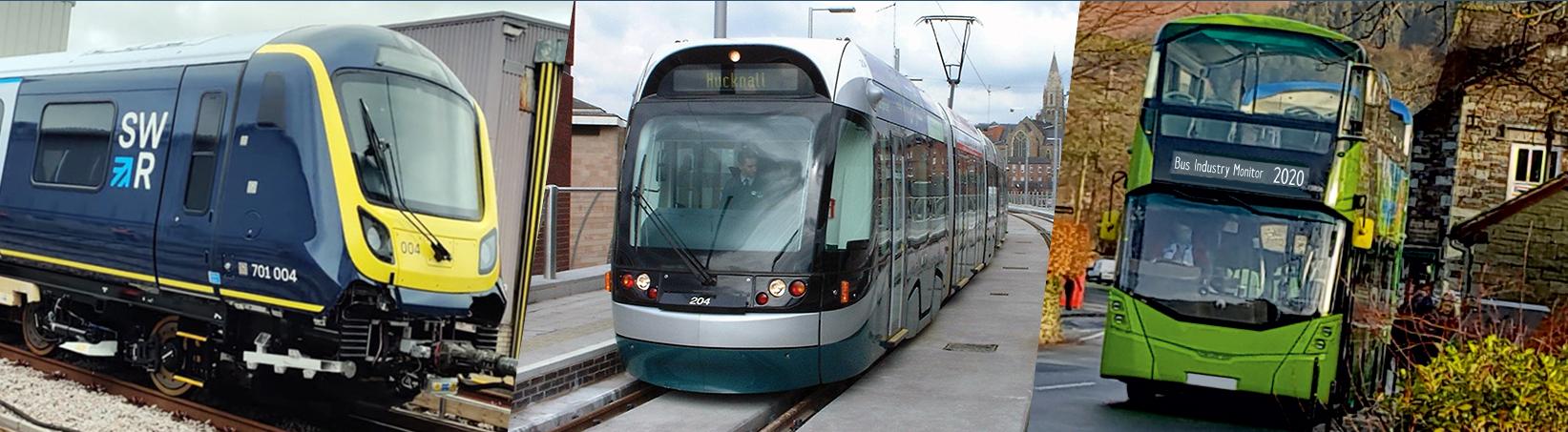
by Martin Fleetwood
Most people and organisations who use software are familiar with the long and detailed licences which come with them and the changes that often come as upgrades are issued
When a software company is taken over by a rival there may be changes to the original software licensing practices. In recent years a key part of this has been a move by software companies away from providing a number of separate service lines to bundling services. This means that customers need to purchase a whole bundle and pay for all of the services, even if they only need to use some of them. Frustration has been building and this has led to Tesco launching a legal claim against its software suppliers.
Tesco litigates against changes to its terms
Tesco Stores Limited (Tesco) uses a significant number of software products in running its stores and managing its loyalty programme. In 2021 Tesco entered into a new enterprise licence agreement with cloud computing and virtualisation technology company VMware International Unlimited Company (VMware) for a number of perpetual licences, subscription licences and various associated supporting services (virtualisation software and support). These underpin Tesco’s servers and data systems which enable its stores and operations to function.
To pay for the virtualisation software and support Tesco entered into an agreement with Computacentre (UK) Ltd (Computacentre) under which Tesco would make staged payments and Computacentre would (as a third party reseller) supply the virtualisation software and support. As part of this arrangement, Tesco alleges that VMware agreed to certain renewal provisions
which, if triggered, would extend the initial term of its agreement with Tesco (Renewal Provisions).
Later in 2021 Tesco entered into a separate agreement with infrastructure software provider Broadcom’s subsidiary CA Europe Sarl for the provision of mainframe software licences, primarily on a subscription basis, and associated support services. This meant that Tesco had two agreements for different software, each on different terms and with different support services.
In November 2023 Broadcom acquired VMware and after the acquisition was completed, Broadcom announced that it was ‘simplifying’ its customer offering, including its licencing model. This included discontinuing perpetual licences and standalone support services and bundling its products into subscription-based offerings at higher prices and on a long-term basis.
Tesco claimed that it does not require subscription-based licences for the perpetually licensed software that it already has and has already paid for. However, in order to obtain the necessary virtualisation support services for its perpetually licensed software in the future, Tesco’s only option from 28 January 2026 will be to pay for the bundled subscription offering which includes superfluous and duplicative subscription licences for other products that it does not need.
In October 2024, Tesco sought to exercise its contractual right to rely on the Renewal Provisions in its contract with VMware to extend the virtualisation software and support for several more years. Computacentre, Broadcom and VMware are
Martin Fleetwood is a Consultant at Addleshaw Goddard’s Transport practice. The Rail Team has over 30 lawyers who advise clients in both the private and public sectors across a wide range of legal areas. As well as contractual issues, the team advises on operational matters, franchises, concessions, finance, regulatory, property, employment, environmental and procurement issues.
Disclaimer: This article is for informational purposes only and does not constitute legal advice. It is recommended that specific professional advice is sought before acting on any of the information given.
alleged by Tesco to have ignored its request, instead sending Tesco the proposal which bundles the different software products and service together at an increased price and requiring Tesco to commit to a seven-year term. This was rejected and challenged by Tesco. Meanwhile Broadcom and VMware have stated that they will continue to perform all of their obligations under the virtualisation software and support agreement, but only until the expiry of the initial term of the agreement.
This has resulted in Tesco bringing legal claims recently:
• Alleging that Broadcom, VMware and Computacentre have breached their contracts and competition law by failing to honour terms in Tesco’s existing licensing agreements.
• Arguing that Broadcom has abused its dominant market position by enforcing a ‘take it or leave it’ approach that coerces customers into having to take out new, expensive subscription models instead of providing support for perpetual licences.
• Seeking declarations in its favour in respect to its legal claims and a final injunction compelling specific performance for the supply of the relevant virtualisation software and support for the Renewal Period, and for the payment of damages and interest.
Practical issues for the rail sector to consider now
While the litigation started by Tesco will take a number of months to come to an initial judgement, which is likely to be
subject to an appeal by the unsuccessful party, there are a number of actions which organisations in the rail sector can take now:
• Undertake a contract review – review all master service agreements, statements of work, end-user licence agreements and licence schedules, and in particular those documents that are referred to by hyperlink. Ensure that you have all of the documents in the contract chain. It is also worthwhile printing out copies, particularly those at the end of a hyperlink which may be changed without any notice. Identify those licences which are
• Use of unilateral and/or discretionary rights – often a licensor’s terms will allow them to make unilateral and discretionary changes such as a decision to retire software and/or services. The scope and impact of these rights need to be carefully considered, particularly when negotiating a new agreement or when considering the renewal of an agreement.
• Access to support services – these are crucial, especially to bring in upgrades, patches and security, but are often not given the attention or prominence that they should have. This can lead to
• Future proof new deals – for upcoming projects, consider areas such as changeof-control, price caps/renewal guardrails, explicit support/upgrade commitments (with service definitions and security update obligations) and step-in rights if a reseller fails to perform.
Be aware of the changing landscape
While it is tempting to sign a contract and put it in a drawer until something starts to go wrong, it is not recommended to do this with software contracts. The contract could have changed through a licensor’s
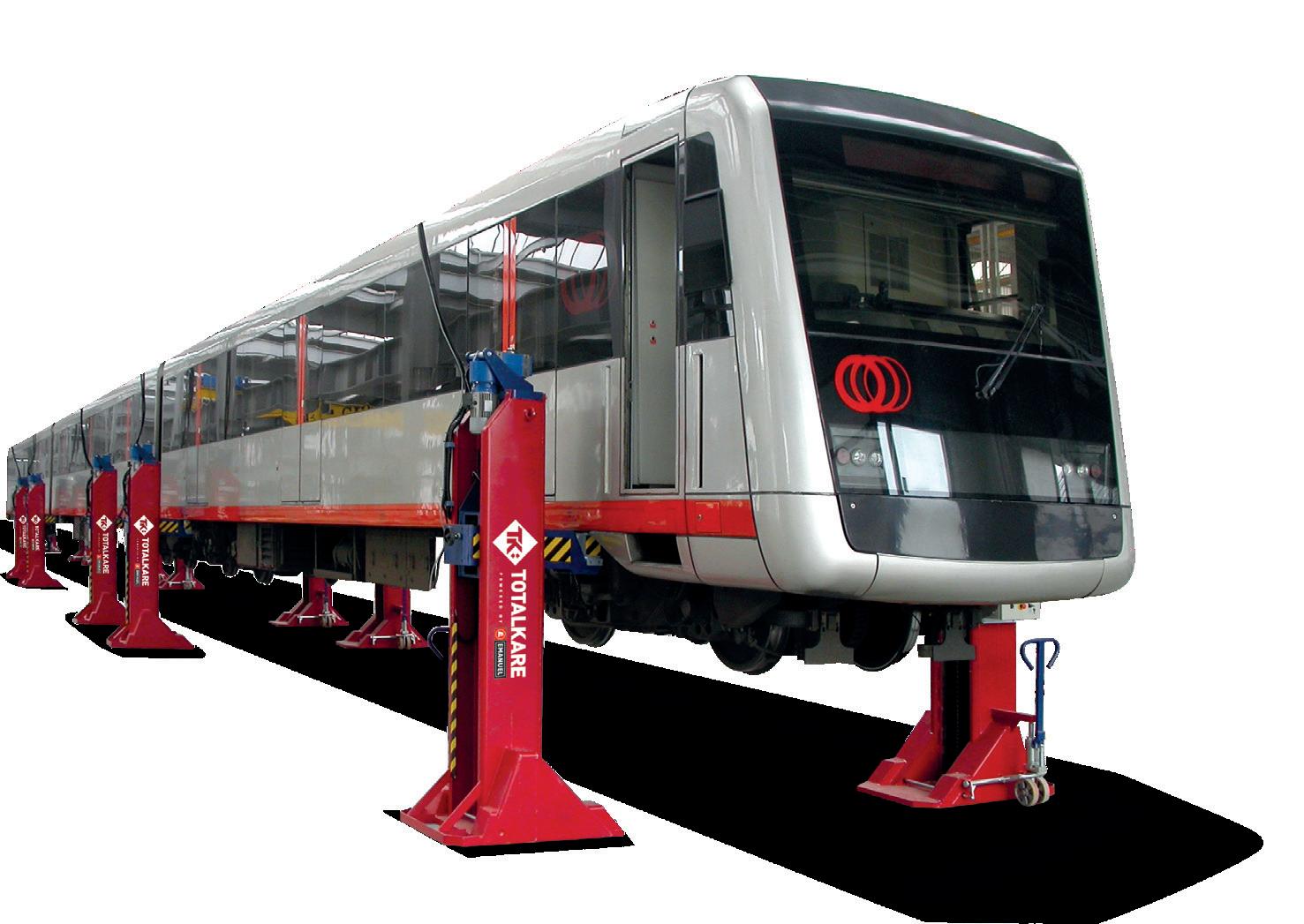
Sophie Allison is Managing Director of Metro operator Midland Metro Limited (MML)
Richard Parker is Mayor of the West Midlands
The past few years have seen a remarkable reversal in fortunes for West Midlands Metro, with a single-minded focus on improving the customer experience and ongoing investment driving recent successes enjoyed by the popular tram system
Figures released in March show that passenger numbers have now surpassed pre-Covid levels, and a recent survey has revealed a sustained increase in customer satisfaction. While these results would be cause for celebration for any network, a series of challenges faced by the Metro’s operator have made them particularly impressive.
Extensive repairs to the tram fleet and disruption due to network extension works have all been overcome with a quiet determination and a commitment to focus on the needs of customers while rebuilding safe, reliable and sustainable service.
Sophie Allison, Managing Director of Metro operator Midland Metro Limited (MML), explained: ‘As was widely reported at the time, we were subject to a networkwide shutdowns in 2021 and 2022, due to cracks being detected in our trams.
‘This was clearly a huge setback for the network and massive inconvenience for the travelling public, but thanks to the skills and determination of the entire Metro team and our partners, we’ve managed to bounce back stronger, and more popular than ever.
‘Since then, we have seen the successful launch of services to Edgbaston, in time for the Commonwealth Games in the summer of 2022, and the opening of a new section of line serving Wolverhampton Station the following year.
‘Equally important has been the investment in improving older sections of
the line, including upgrades to overhead line equipment and track replacement works that have made a significant contribution to improved reliability and increased service frequency.
‘Much of this work was carried out during inevitable service interruption resulting from the connection last year of the existing network to a new Black Country extension, minimising inconvenience for customers.
‘Our customers were also front and centre of our thinking when we implemented a two-year fare freeze to help them through the cost-of-living crisis, and when the ticket prices did rise in January 2024, the increase remained well below the rate of inflation.
‘We’ve also introduced new ticketing arrangements that also offer improved value for money, including a zonal system that has brought us into line with other transport networks across the UK, and proved particularly popular with Metro users. More recently, we’ve launched new ticket machines as part of a move towards off tram ticketing and we continue to invest in our MyMetro App which offers another convenient way to pay for travel.’
The Metro team’s efforts have not gone unnoticed, with more than nine out of ten passengers now expressing satisfaction with their journey. A recent survey also illustrated improvements in several key areas, including the appearance of team members and tram stop convenience, with both now meeting the approval of 93 per cent of those surveyed.
‘Passenger numbers on the Metro are back to where they should be, and that's a direct result of the investment in our network. The tram is an essential part of my vision to create an affordable, reliable and accessible transport network.’
Richard
Parker, Mayor of the West Midlands
Additionally, the visibility and accessibility of information at tram stops increased to 91 percent, demonstrating how the Metro is making it even easier for customers to navigate their journeys.
‘As well as seeing our overall satisfaction score increase to 91 per cent, a four per cent increase from the previous survey, we’ve also made notable improvements in key areas like wait times and seating availability, which make a real difference to the customer experience’ Sophie said.
The research, conducted in November and December last year, also found that nearly three-quarters of customers felt Metro services offered good value for money, while satisfaction with tram reliability increased noticeably from 83 per cent in 2023 to 89 per cent in 2024.
‘These impressive results reflect the investment we’ve made to enhance frequency and reliability, and the commitment of the entire Metro team to deliver the best possible service to the tens of thousands of people who rely on us every day for work, education or leisure’ Sophie said.
‘Although we’re thrilled with the latest results, we’ll never stop striving to do even better for our customers. The feedback from passengers is invaluable, which is why we value their input. As we continue to grow, these findings will guide us in identifying
where we are doing well and where further improvements can be made.’
This wholehearted commitment to putting the customer first is also reflected in new data from the Department for Transport which shows 8.3 million journeys were made in the past year, a 53.7 per cent increase over 2023.
The numbers also surpass the eight million recorded in 2019, the year before the Covid-19 pandemic and highlight the success of investments by the West Midlands Combined Authority (WMCA) in the Metro system, including the Westside Extension in Birmingham, which added three new stops in 2022, and the Wolverhampton city centre extension, which now provides seamless connection with the railway and bus stations.
Transport for West Midlands (TfWM), which is part of the WMCA, and owns MML, continues to grow the tram network, working with the Midland Metro Alliance (MMA) to build the Black Country extension and a new link to Digbeth in Birmingham.
The tram extensions are being funded by the City Region Sustainable Transport Settlement (CRSTS), awarded by the DfT to better connect people to education, leisure and job opportunities across the region.
The growth in passenger numbers has been welcomed by Richard Parker, Mayor of the West Midlands who highlighted the importance of continued investment in transport infrastructure to support the region’s future development.
He said: ‘Passenger numbers on the Metro are back to where they should be, and that’s a direct result of the investment in our network. Topping 8.3 million journeys shows that people trust the Metro to get them to the places they need to be.
‘The tram is an essential part of my vision to create an affordable, reliable and accessible transport network – which is why I was pleased to confirm the next stage of the Black Country Metro extension recently. I will keep pushing to make transport better for everyone, making sure it connects people to the jobs, services and opportunities they need.’
The first phase of the Black Country Metro Extension between Wednesbury and Dudley is due to open later this year and construction work on the next phase to Merry Hill has also now started.
In the meantime, the operator has embarked on an ambitious programme of improvements across the existing network that aim to deliver a host of benefits for customers and the environment.
The intensive activity over the next few months includes the installation of solar lighting and a deep clean of tracks and paved areas to improve their appearance.
The cleaning of the special grooved rails used in urban areas and high-pressure jetting of points also improves their performance, making for more comfortable journeys.
Sophie Allison added: ‘Thanks to the hard work and dedication of the entire
Metro team, our system is even busier than before the pandemic, and I’m delighted to be leading them into a new era. The continued growth and popularity of the Metro is a testament to the region’s commitment to improving transport for everyone.’
‘These impressive results reflect the investment we've made to enhance frequency and reliability, and the commitment of the entire Metro team to deliver the best possible service to the tens of thousands of people who rely on us every day for work, education or leisure.’
Sophie Allison, Managing Director, Midland Metro Limited
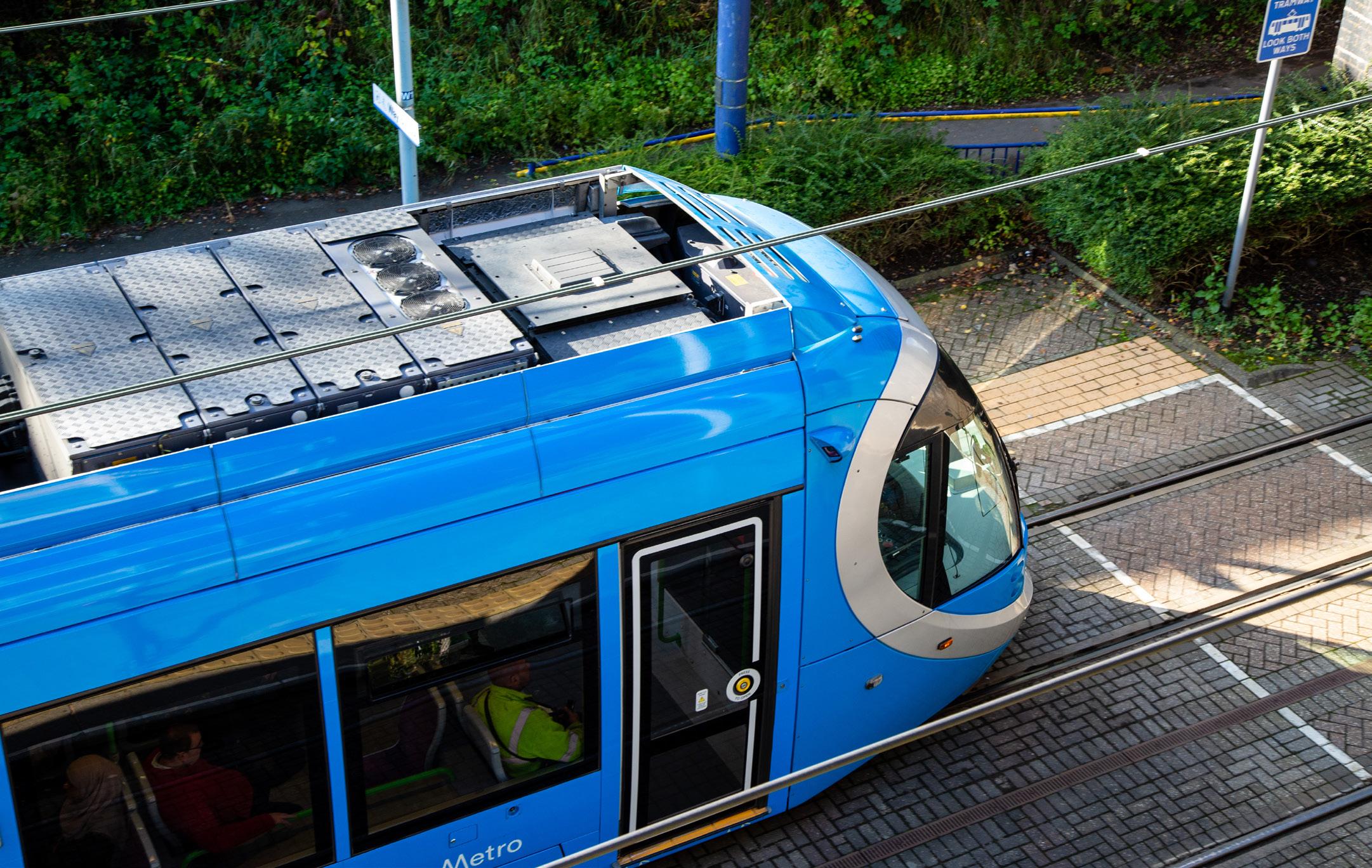
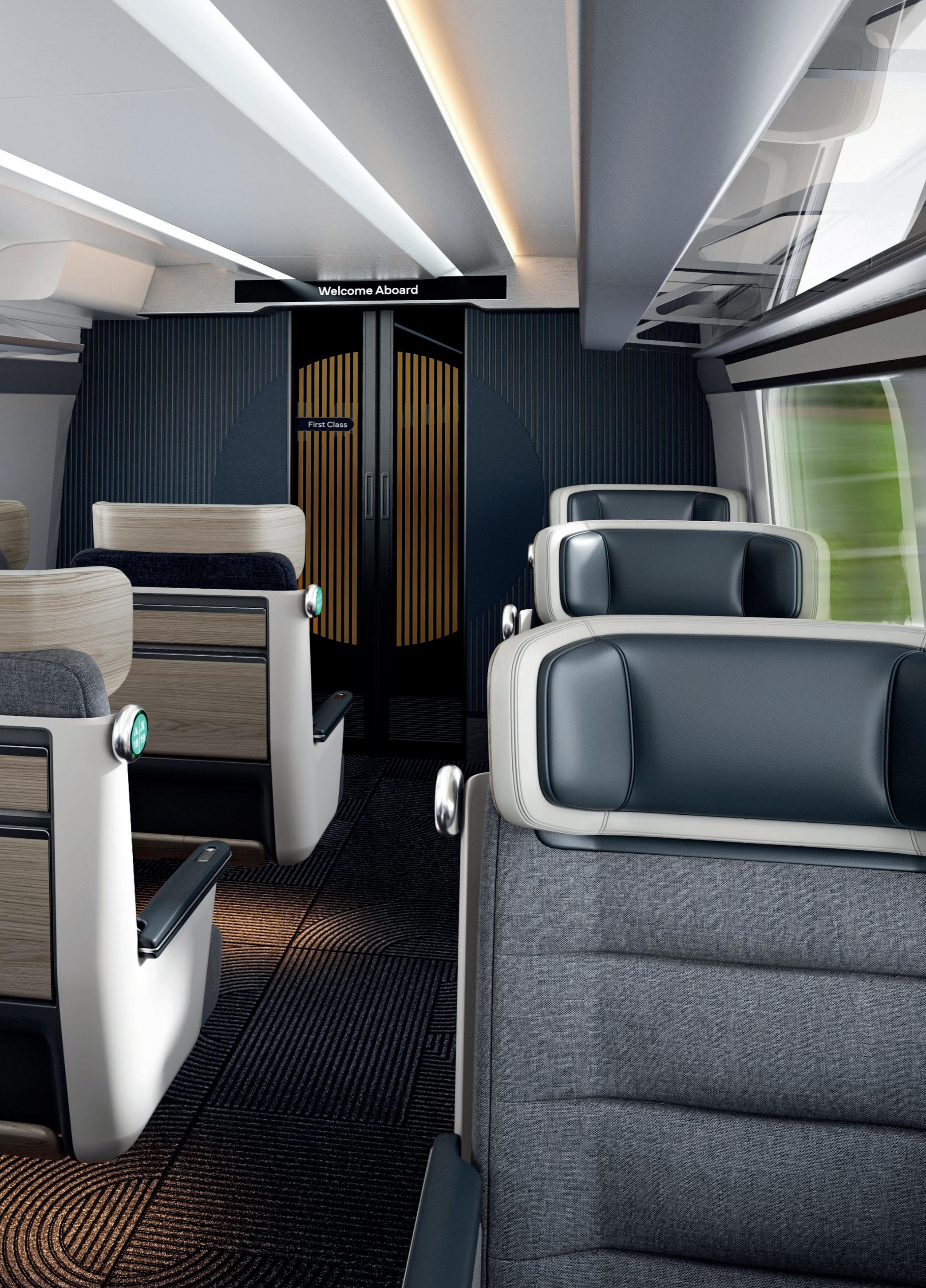
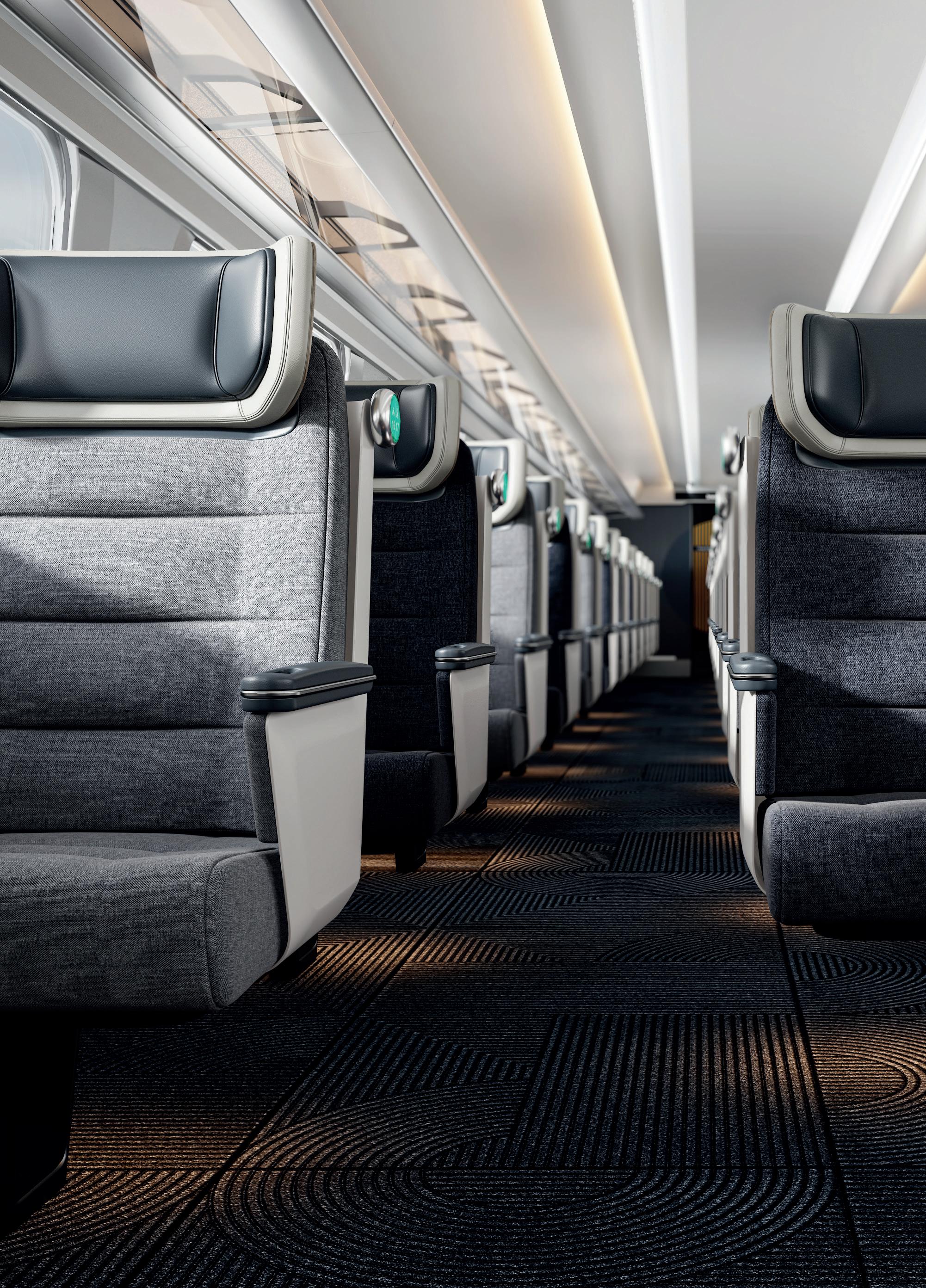
Alistair Gordon, Managing Director, Keolis UK on Building a more inclusive network in Manchester
Manchester has had its fair share of transport headlines in recent years – from the scrapping of the Northern leg of HS2 to the evolution of Andy Burnham’s Bee Network through to recent calls for a Northern Arc connecting the city to its North West neighbour, Liverpool.
True, infrastructure and integration dominate the debate. But a quieter, though no less important, transformation has been unfolding on the city’s tram network in recent years.
As operators of Metrolink through KeolisAmey Metrolink (KAM), we’ve placed people at the heart of our strategy – not just those who use our services, but also the people who deliver them. And in an industry where legacy structures can lag behind modern expectations, Metrolink is showing how a light rail operator can lead on workplace inclusion, skills development and culture change.
The transport industry has traditionally been measured by hard metrics –punctuality, performance, fleet reliability. But in our view, sustainable success also comes from investing just as deeply in people. That’s why in 2024 we restructured our leadership team, bringing in new directors from outside the sector to challenge the status quo and foster a more human-centred culture.
We’ve worked hard to create an open, transparent workplace. Our employees now have direct access to senior leadership and participate in regular engagement surveys, which inform real-time changes across the business. Last year’s employee
engagement score hit 71 per cent, up from 41 per cent, thanks to initiatives like our ‘Nice One’ recognition scheme and mental health support programmes that include pop-up wellbeing kiosks and confidential counselling.
Creating career pathways is key to sustaining and strengthening this shift. Since 2017 we’ve introduced 36 apprenticeships across the network, with a particular focus on engineering – one of the UK’s most critical skills gaps. We’ve also supported internal upskilling through the apprenticeship levy, introduced management development programmes like ‘Track to Success’, and piloted mentoring initiatives aimed at improving progression for underrepresented groups.
A standout initiative is our leadership training programme ‘Leading KAM’, accredited by the Institute of Leadership. It combines workshops, coaching and onthe-job learning to equip future leaders with both technical competence and emotional intelligence. Already, 30 per cent of participants have been promoted, helping to build a leadership team that better reflects the communities we serve.
But we know that real change takes time, and it starts with early engagement. That’s why we’ve invested heavily in outreach to schools, colleges, and community groups, reaching over 19,000 students across Greater Manchester. We’ve built partnerships with The Girls' Network and run dedicated open days to demystify careers in transport.
On social media, a dedicated Instagram account offers young people a behind-thescenes look at what a modern career in
‘The transport industry has traditionally been measured by hard metrics – punctuality, performance, fleet reliability. But in our view, sustainable success also comes from investing just as deeply in people.’
public transport looks like. By changing how and where we tell our story, we’re connecting with Gen Z in a language they understand –and encouraging more women and young people to see themselves in this industry.
Transport still has a way to go on diversity. At KAM, we’ve made conscious strides: our exec team is now 33 per cent female and 17 per cent ethnically diverse, with further plans to improve entry-level representation. We've launched training on inclusive leadership, bias awareness and autism understanding, alongside staffled resource groups focused on topics like Women in Transport, Menopause, and the Armed Forces.
But it’s not just about representation –it’s about belonging. Whether it’s our Pride celebrations or our work to promote cultural understanding, we’re creating a culture where every colleague feels valued, heard and supported.
A strategy that is futureproofed
As we look to the future of Metrolink and the wider Bee Network, we see an opportunity to set new standards – not only in service delivery, but in how our industry treats its people. Inclusive, engaging, and people-first transport isn’t just a moral imperative – it’s a competitive advantage. Rail operators must evolve if we want to attract and retain the next generation of talent. At KAM, we’re proud to be showing what that evolution looks like on the ground. Because for us, the future of transport isn’t just about where we go – it’s about who comes along for the ride with us.
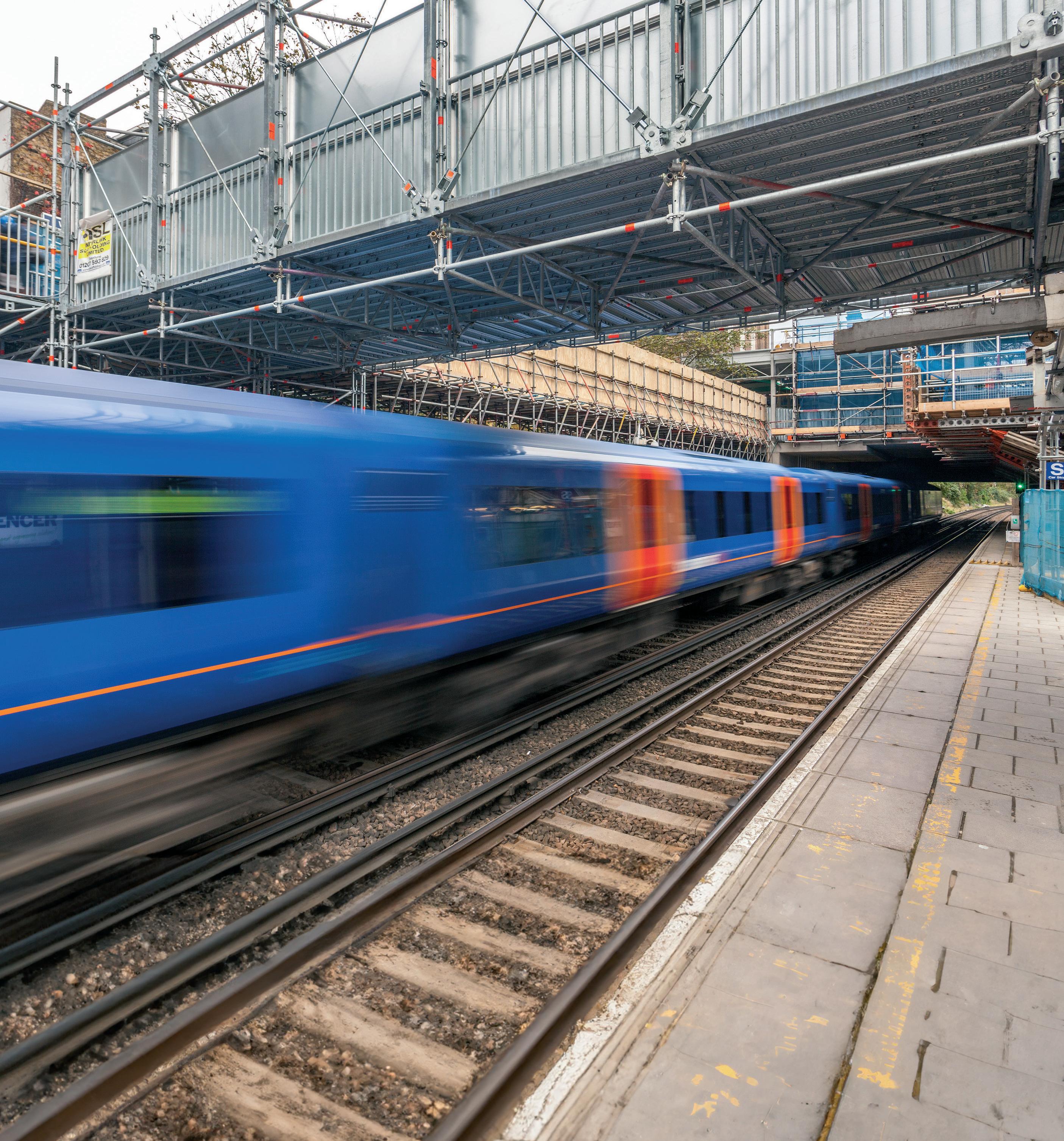
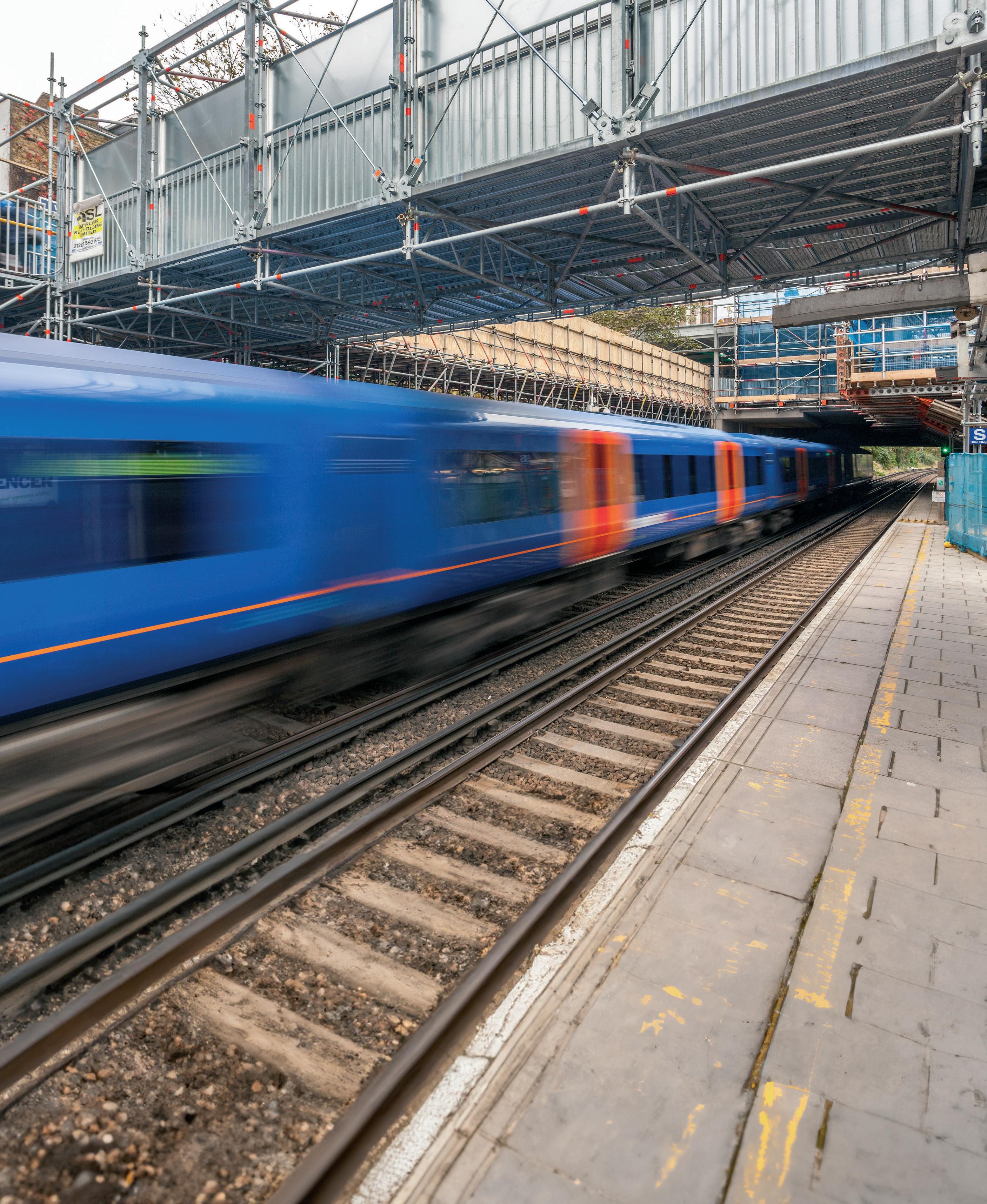
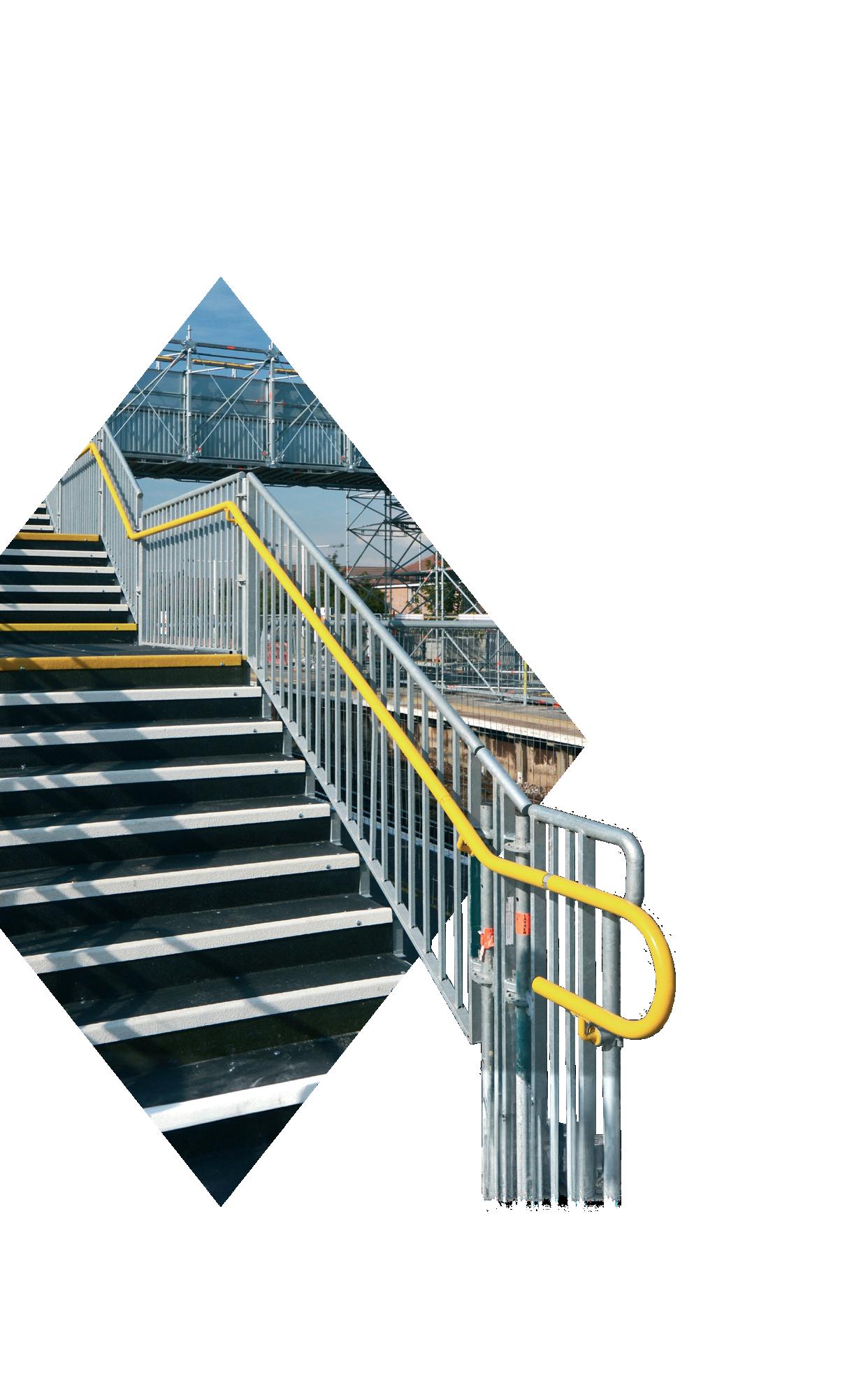
FOR SPANS OF UP TO 30mFROM FOOTBRIDGES TO HEAVY LOAD SUPPORT GIRDERS
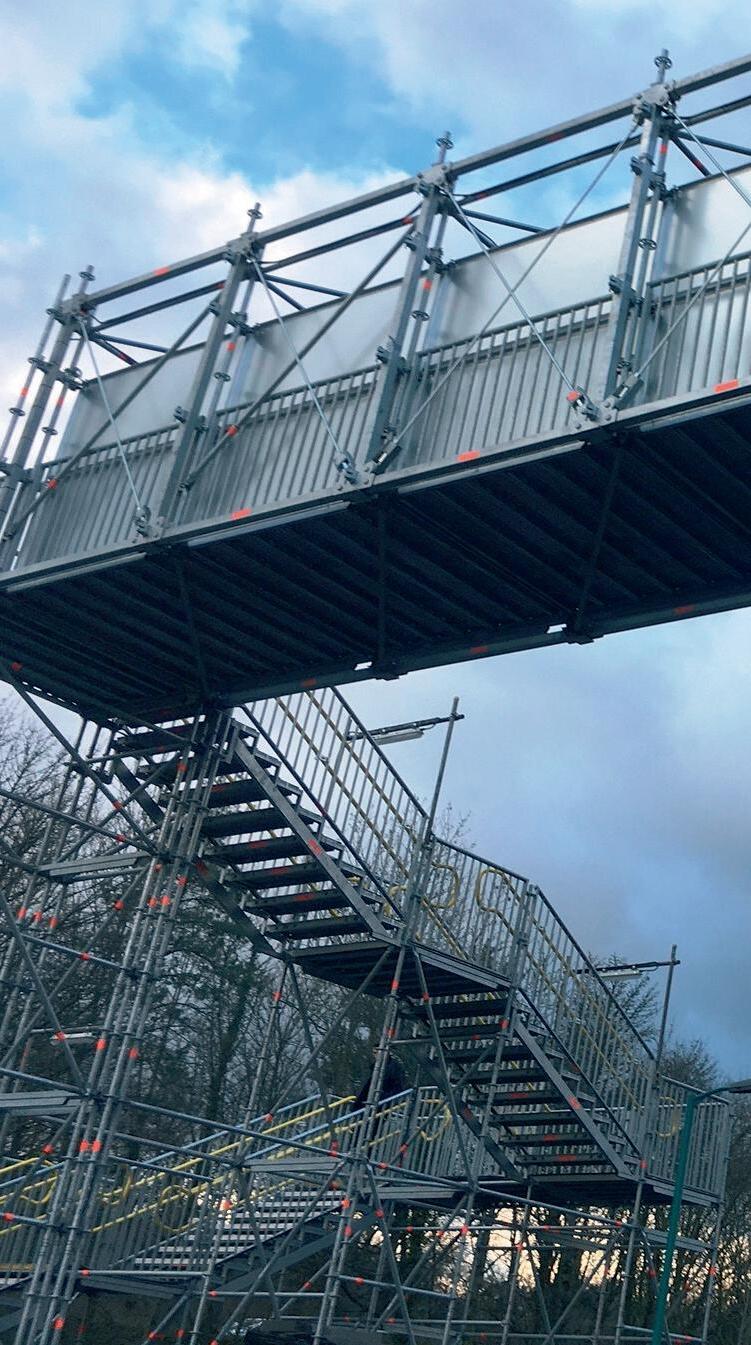

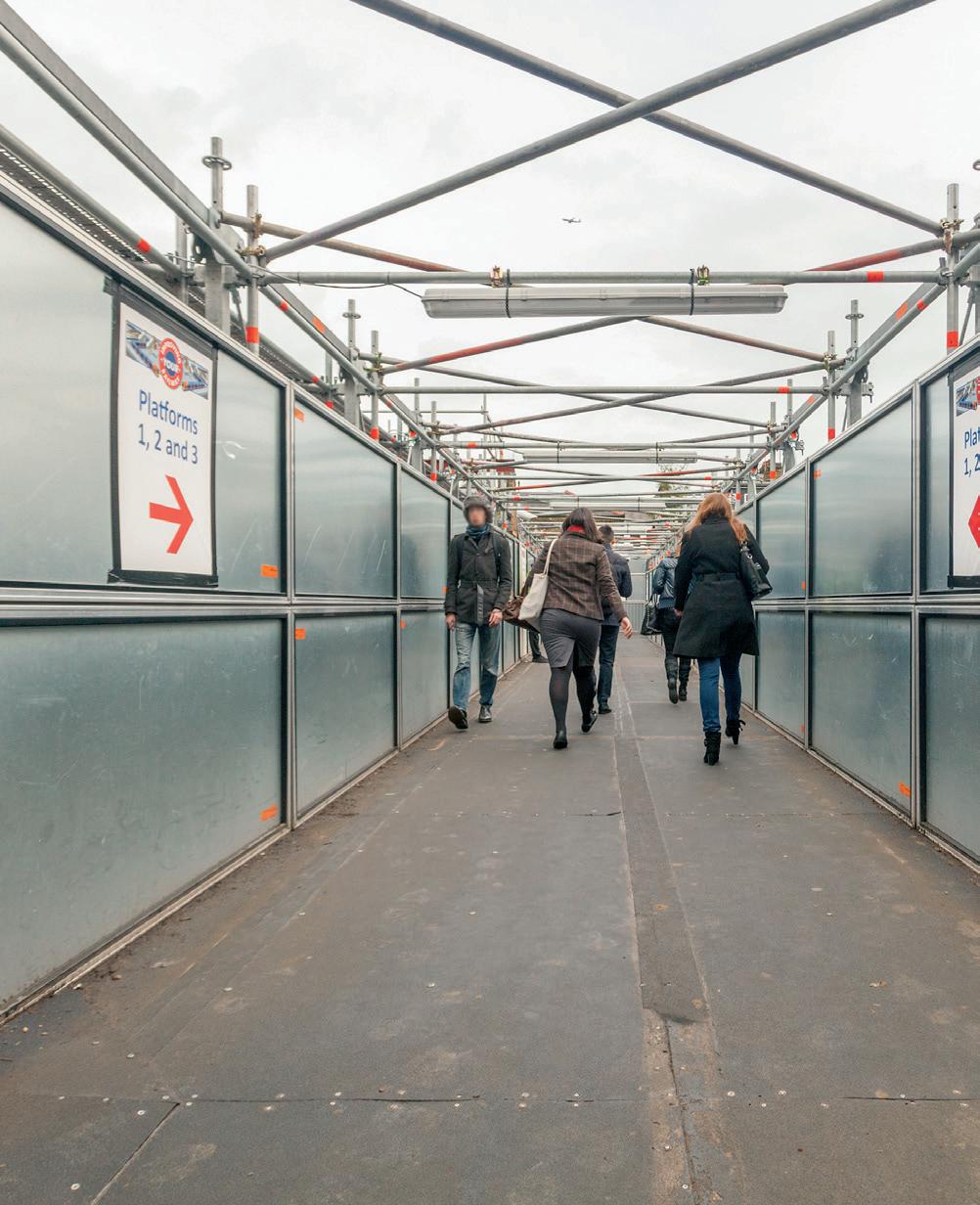
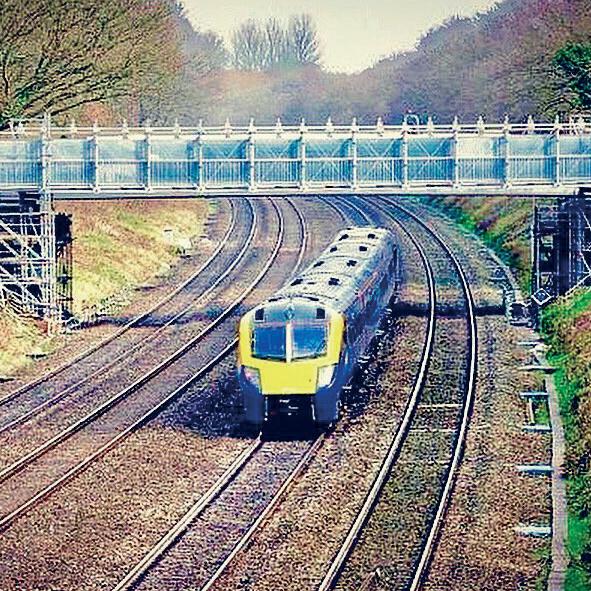












Phil Hibberd is the Group Head of Safety, Security & Sustainability at Transport UK. He also serves as Vice Chair of the IOSH Railway Group Committee and Committee Member of The Parliamentary Advisory Council for Transport Safety (PACTS).
Phil Hibberd, Group Head of Safety, Security & Sustainability at Transport UK explains why the UK Government must build on the private rail sector’s sustainability legacy
The UK Government is the world leader in setting legally binding emissions targets. Our country's public entities are demonstrating their commitment to this policy, such as Network Rail, which aligned with the Government's 2050 net-zero target in its May 2025 sustainability report. This and the substantial progress we in the private rail sector have made has set Great British Railways (GBR) on the right track. The new public operator must take great caution not to backtrack and derail sustainability efforts.
The best way to ensure that GBR maintains this momentum is by leaning on private sector industry experts who in the last 30 years have transitioned this country’s railways from diesel to electric, contributed social value, and made public transport more sustainable and a safer and more appealing place to work. This unparalleled knowledge and experience will play a vital role as the UK’s railways are transformed by nationalisation and the empowerment of devolved authorities.
At Transport UK (TUK), we have launched our own sustainability strategy. Like Network Rail’s, ours builds on the ‘Sustainable Rail Blueprint’, and aligns with the Sustainable Developments Goals (SDGs). It sets out our plan to further reduce our impact on the environment and to maximise our social value, in alignment with the Government’s green agenda.
As the only UK-owned and managed transport owning group, we serve millions of rail and bus passengers every day across the networks of Greater Anglia (GA), West Midlands Trains (WMT), East Midlands
Railway (EMR), Merseyrail, and eleven per cent of London’s bus routes. As stewards of some of the country's best-performing train and bus operators, we are determined to improve our direct environmental and social impact for our communities.
To achieve this, our new strategy builds on our progress in reducing emissions, safeguarding the natural environment, and delivering social value.
We are driving the green energy revolution forward with new technologies, including battery-operated, hybrid, and electric vehicles across all our TOCs and rail replacement services. In 2023, Merseyrail rolled out the UK’s first battery-operated trains for the Mayor of the Liverpool City Region, while we completed a £1.4 billion energy-efficient fleet replacement at GA. WMT is undergoing a £1 billion transformation programme that will significantly reduce its carbon footprint. EMR will significantly cut emissions by introducing a new fleet of bi-mode Aurora trains beginning this year. This fleet renewal will also greatly improve air quality at stations from St. Pancras to Sheffield.
Meanwhile, Transport UK London Bus (TUKLB) just launched Transport for London’s (TfL) 2,000th electric vehicle and has one of the largest electric fleets in the capital. We are also the first London bus operator to fully electrify all our depots.
TUK created our decarbonisation roadmap in 2024, and we are on track to become a net zero carbon organisation by 2050. Parts of our Group will also achieve
net zero for scope 1 (direct emissions) and scope 2 (indirect emissions) ahead of target.
Sustainability is essential for organisations aiming to thrive in the long term, while minimising their impact on the planet and on the flora and fauna in our communities.
TUK are deeply committed to addressing climate change, achieving zero waste, and conserving water. We are not only applying these goals to our existing work, but we are also incorporating these principles into our procurement processes.
Our operating companies recycled 65 per cent of overall waste last year. GA, which underwent a £1.4 billion investment programme, is leading the industry by recycling 87 per cent of waste. We are implementing the lessons learned from GA across all our businesses.
We have also implemented climate change adaptation measures across our networks to improve resilience to extreme weather events. Network Rail is really leading in this area with its biodiversity baseline, with habitat maps and associated Biodiversity Action Plans. We are looking to mirror their efforts.
TUK embraces our duty to create positive social impacts beyond our core role as a transport operator. We do this by maximising the opportunities for social and economic benefits in our work. In 2024, we launched our Social Values Charter, which sets out our approach to achieving our vision of shaping the future of integrated transport.
The rail sector is at a critical juncture. 30 per cent of the rail workforce are over the age of 50, with 47,000 people due to retire in the next five years. At TUK, we are laserfocused on enhancing our social impact to retain and welcome talent. We currently have 446 apprentices working in our businesses and plan to grow this figure.
We see the establishment of GBR as an opportunity to create a simpler, more sustainable and integrated model of public transport, in which passengers can tap and go and can access trains in a wheelchair at every station across the UK. GBR must build on the private sector's progress to fulfil this vision.
We will continue to provide access to education, employment, health and leisure, whilst delivering economic growth and sustainable travel throughout our remaining tenure running some of this country’s best train operators. We are proud of everything our colleagues have achieved over the last 20 years as we have worked to improve sustainability, efficiency and inclusivity across the UK’s transport networks. With our expertise and experience, and now this mandate for our sustainable future, we are eager to support the Government in shaping public transport in the UK and ensure that GBR can build on our success.

‘We're not seeing that people don't want to travel at all. We're seeing people want responsible, purposeful travel. They want to travel, they just want things to make it a better experience, one that's caring for the planet.’
Clive Wratten is Chief Executive of the Business Travel Association (BTA), the UK's leading trade body representing the managed business travel sector. With four decades of experience in hospitality, tourism, and transport, he began his career at British Airways before holding senior roles across the industry. At the BTA, he leads advocacy efforts on sustainable travel policy, accessibility improvements, and modal shift towards rail for work journeys. Wratten regularly advises government and industry bodies on business travel trends and sits on numerous transport sector working groups.
Sam Sherwood-Hale spoke to Clive Wratten, Chief Executive of the Business Travel Association (BTA), about why rail must become the first choice for work journeys, how accessibility improvements could unlock careers, and why the distinction between commuting and business travel matters for the industry's future
SSH: You've been in hospitality and tourism for over three decades. What drew you to leading an industry association rather than staying in commercial operations?
CW: It's actually four decades if I'm being truthful! What drew me here was that this is an industry I love and have been in since I was 16. The chance to come into an association that I've known for years and be the person representing the industry and fighting for it is a really nice place to end up –it's genuinely quite an honour.
I get to do all the things I like to do, which is talk about travel and transport. I'm passionate about it because there's a real misconception about why people travel for business, and I want to change that as my legacy. I want to make sure it's an industry that young people want to come into and see what it does, because the roles you play here make a big difference to the way our country will pan out economically.
It's very different from a commercial role in that you're delivering to your members as opposed to your shareholders or your boss. That's interesting in its own right. When I was a very young account manager working for British Airways, I got sent to meet the CEO of what was then called the GTMC, the predecessor to the BTA. In those days he seemed very senior and I was petrified about meeting him. I thought: ‘Wow, that's the place you want to get to as the peak of your career – you've gone all the way through and you're representing it.’ I was lucky enough to get that opportunity.
SSH: Your Beyond the Boardroom report calls this a ‘pivotal moment’ for collective action. What would success look like in five years' time, and how would we measure whether we've achieved it?
CW: Bringing it back to rail, the easiest measure of success is the volume of rail being used for work. At the moment, our members sit at around £800 million per year. It was £1 billion pre-pandemic. What success would look like is could it be £3 billion per year? That would mean there's been modal shift and a real move towards rail as the preference of choice.
The second piece is if we did this survey in five or ten years' time and rail was first in terms of what's actually chosen – not just what people say they'd prefer, but what they actually take. That's absolutely straightforward. You don't need complicated targets. That will be what success looks like.
SSH: Only 13 per cent of disabled professionals say accessibility doesn't impact their work travel. With 38 per cent travelling weekly, what specific changes would make the biggest difference?
CW: This is a huge part of our work. In fact, only last week we had an accessibility working group looking at how we can
improve the way people travel for work who have additional accessibility needs. A lot of this is about the product itself, whether it's a train or a plane. On a train, there are normally only two or three seats for wheelchairs and one area. For those travelling with non-visible access needs, there's a whole raft of issues.
The piece we really think makes a big difference is changes in the booking process, which hasn't evolved over 25 to 30 years. The railway is a really good example of how complex it is. You have to book your ticket, whether through a travel management company or direct with a train operator. Then you have to go to the passenger assistance app completely separately and unrelated to your booking. The two never speak, and then you have to wait to see what assistance you actually get.
We need that flow to work all the way through. You need to be able to make the booking in the same way that an able-bodied person can travel, because you shouldn't be discriminated against. You need assurance that what you asked for and what you need is going to happen. A lot of people are saying it's just too complex to travel, so they don't go. That's impactful on people's careers because they're not getting a promotion because they're going to need to travel and they shy away from it.
If you need wheelchair assistance, you're going to get a cab from your home to the railway station so the cab needs to be accessible. The train then needs to provide assistance. You're going to Heathrow, you need assistance to the airport, you get on the flight, and then the same thing repeats at the other end. You check into a hotel and need an accessible room. At the moment that's seven transactions because you have to book separately. We need to make the flow better.
SSH: What role do you see technology playing in solving the "last mile" connectivity problem over the next five years?
CW: Technology is the key to all of this. We believe it's around the technology piece that sits within travel, making the booking process much clearer and then using modern technology like APIs to share information with each component rather than having to share it five or six times.
Already, off the back of last week's meeting, we're looking at codes. In aviation, if you're requesting assistance, there's literally one code – WCHR – which signifies wheelchair. We're looking at whether we need codes for ADHD, for those who are blind or partially sighted. We need to give people the choice to select what their needs are, and then technology feeds to each part of that journey.
It's important that you're not a technology expert yourself, but it's important that you know technology experts. You can't claim to be everything. What I can offer is what we need as a solution and talk
to those experts. We're lucky in this industry, we have technology experts, and they're coming out of the dark and caves a little bit more, engaging with the end user and building systems designed by the customer rather than the other way around.
SSH: Generation Z leads international travel at 35 per cent of trips, but they're also doing meaningful domestic project work. How should rail operators adapt their services for this emerging workforce?
CW: The needs aren't dissimilar, but certain things are much more pronounced for younger generations – connectivity and the environment they're in, demanding that it is a positive experience. Things like the availability of healthy catering options at both stations and on trains, Wi-Fi connectivity, safety, and feeling good about their environment – all of those things are slightly different.
What's interesting is that young people want experiences. There's still a desire to travel the world, whether for work or to tag on an experience along with it. In my day you'd just go to New York, have a meeting, and come back. Now they're saying: ‘I want to get two things out of it – I want to have a look around New York, and I want to make sure it's sustainable.’
We're not seeing that people don't want to travel at all. We're seeing people want responsible, purposeful travel. They want to travel, they just want things to make it a better experience, one that's caring for the planet. There's nothing wrong with all of that.
SSH: Your research mentions that 47 per cent want better on-board facilities to encourage sustainable travel modes. Are we asking rail to compete on the wrong metrics when productivity during travel should be the key selling point?
CW: It's absolutely critical that productivity on board trains is maximised, allowing people to work not only on a laptop but to meet round the table as you go to a meeting. That's one of the key reasons people want to use the railway for work. You get a whole lot of time, pretty much uninterrupted, that you can use to work or chat, or even just to think. I used to travel up to Manchester a lot for work. I call it ‘looking out the window moments’ where you just look out the train window and run stuff through your mind. You don't get a chance to do that when you're driving, and on a plane generally not because there's too much going on around you.
We need to focus on building that productivity. It's something the railway, and we hope under Great British Railways (GBR), will be well-placed to develop – listening to what those travelling for work want. There is a lot of crossover with leisure travellers, of course, but equally there are some important differences. Wi-Fi that works, a phone signal where you can make a phone call if you need
to, or a quiet carriage which really is a quiet carriage where no one's screaming down the phone ‘buy, buy, buy and sell, sell, sell’ in your ear all the time.
The railways have done really well postpandemic getting people back travelling on trains for leisure. But travelling for work is still below where it was pre-pandemic, and domestic car use has continued to grow. That's why we're doing this report – to help distinguish between a leisure traveller and a traveller for work, and to show the specific opportunities that exist.
SSH: The report shows stark regional disparities – East Midlands and NorthEast have just 17 per cent and 20 per cent rail preference respectively, whilst Manchester/Liverpool reach 35 per cent. How do you represent members in poorly connected regions who face fundamentally different transport realities?
CW: Our role is bringing members together, creating best practice, and bringing those that are behind up to the levels of those that are leading. Remember, our members are the travel management companies, it's their customers we're really representing who want to travel from Leeds to Manchester or wherever and find that quite a difficult journey.
Our role is talking to government, talking to train companies, talking to people like the Rail Delivery Group. We say: ‘Here's the opportunity. Here's the growth that's come from having a really good Avanti service versus Hull, where Hull Trains and LNER service is a little disjointed. Here's the data around it.’ That's what we do as an association. We bring people together around the table to make it happen. Often it's those that do well sitting alongside those that are not doing so well for whatever reason, where the magic happens because they learn from each other.
SSH: You advocate for rail-first policies for businesses. What would that look like in practice, and how do you convince a CFO that it makes financial sense when rail is often more expensive than driving?
CW: The stats speak for themselves. If people believe they've cracked it, just look at why people are choosing trains third as opposed to the car. We need to engage with both government and the rail industry to realise there is product enhancement needed specifically for those that travel for work.
When I'm speaking to MPs or people on the Transport Select Committee, I'm saying we're here to help. We have six times the yield of the leisure traveller, and we've got a whole untapped market for growth. To say from £1 billion to £3 billion is probably fairly conservative, but that's a good point to start. You're going to get good yields, organic revenue growth, and a demographic that wants to use the train. The opportunity is there to work together to develop that.
SSH: Looking ahead ten years, do you think we'll still be having conversations about modal shift, or will something fundamental have changed about how people travel for work?
CW: We'll see public transport become the way of the future, more so than it does now. The fundamental piece is that people will still need to travel for work. What we learned from the last few years is that human interaction is absolutely critical, and a lot of what we do, like going to build a wind farm, you can't do from your office.
We know from our corporate customers and members that people, if you're talking UK, want to move to the most sustainable form of travel they can that also delivers productivity and cost benefit. Train is best placed for that. Flying will remain critical because you can't get to Sydney or Beijing by train in a reasonable time. But what we want to see is a reduction in domestic flying and Europe being used much more by rail.
The productivity piece and the wellbeing of employees is important. If you travel on GWR, you've done some work, you feel a bit relaxed, you've looked out the window, felt good, and you arrive in Paddington ready to do work. If you've driven, regardless of how great the roads are, you're more focused and feel more tired. All of those things wrapped up suggest that train is the real way forward, with multimodal travel as well, with rail playing a central role.
SSH: The BTA facilitates sharing market intelligence between competitors for the greater good of the industry. Where do you see the biggest opportunities for normally competing TMCs to work together to improve the overall travel experience?
CW: If you've got the right motive and the right objective and a clear outcome, getting people together isn't difficult. We're very clear about why we're having a meeting and what we want to get out of it, and once we've done it there's value for people to turn up because they're going to get something positive from it.
The availability of data and the way you analyse it has evolved massively. Technology advancements have made it much easier for associations like us to get data and come out with real objectives. But you still need to tell a story rather than just present data. That's the bit that helps hit home.
Last week we had technology experts in the room, customer-facing people, and people who have accessibility needs to sense-check what we were saying. That combination of expertise and lived experience is where progress happens.
SSH: By 2030, do you think the business case for rail will be primarily environmental, economic, or something else entirely?
CW: People will still want to travel. Last year our members booked 230,000 people London to Edinburgh by plane and back again. That's a route where you could ask: ‘What about if they flew up one way and came back on the train because they had to be there for a 9 o'clock meeting but had more time and wanted to be sustainable?’ That's what customers want to do these days.
There's a significant opportunity for multimodal travel to exist and develop, with rail playing an increasingly important role. Having GBR will hopefully make this easier. They're recruiting people from outside the rail industry, which is positive. I've got a few airline colleagues within GBR, and I think that's really encouraging. Being able to talk to one organisation and say: ‘Here is an opportunity for you, and we're here to help you grab that opportunity’ will make a real difference.
SSH: How do we build resilience into a rail system that serves essential journeys?
CW: The purpose of the research was to get the view of travellers and address a perception challenge. There's a perception that business travel is about people in suits travelling in business class, going to New York and signing multi-millionpound deals.
But travelling for work is actually a whole broad spectrum of reasons why people travel, and it underpins everything we do from the economic perspective. What we found was a high level of domestic travel for work: 62 per cent from the 1,000 people we surveyed. It's important to get the message across that a lot of the money is spent here, developing the economy here.
It was also about understanding generational attitudes towards modal travel. Rail featured prominently in the findings, both positively and negatively, in that it's viewed as something people want to use for travelling for work but actually choose not to for a number of reasons. The research expressed the breadth of reasons people travel for work, everything from engineers to retail workers to various professions across the economy. It was really about broadening the spectrum.
We're working to increase understanding of the opportunity and why travelling for work is distinctive. There are different groups of rail passengers with different needs. We're seeing encouraging progress. Getting called to speak to the Transport Select Committee about business travel specifically shows the conversation is developing. We're optimistic that when GBR is fully up and running, having that single body to speak to will help speed up progress.
The distinction between commuting and travelling for work is important, and that's part of our job, to help explain it and demonstrate the opportunity it represents for the rail industry.

Providing expert professional advice to everyone in the railway for 30 years
The Railway Consultancy provides consultancy services, in the fields of railway planning, operations, economics, management, strategy and training. Our areas of expertise cover both operational and demand planning, and work is carried out for a wide range of stakeholders, both in the UK and around the world.
demand forecasting
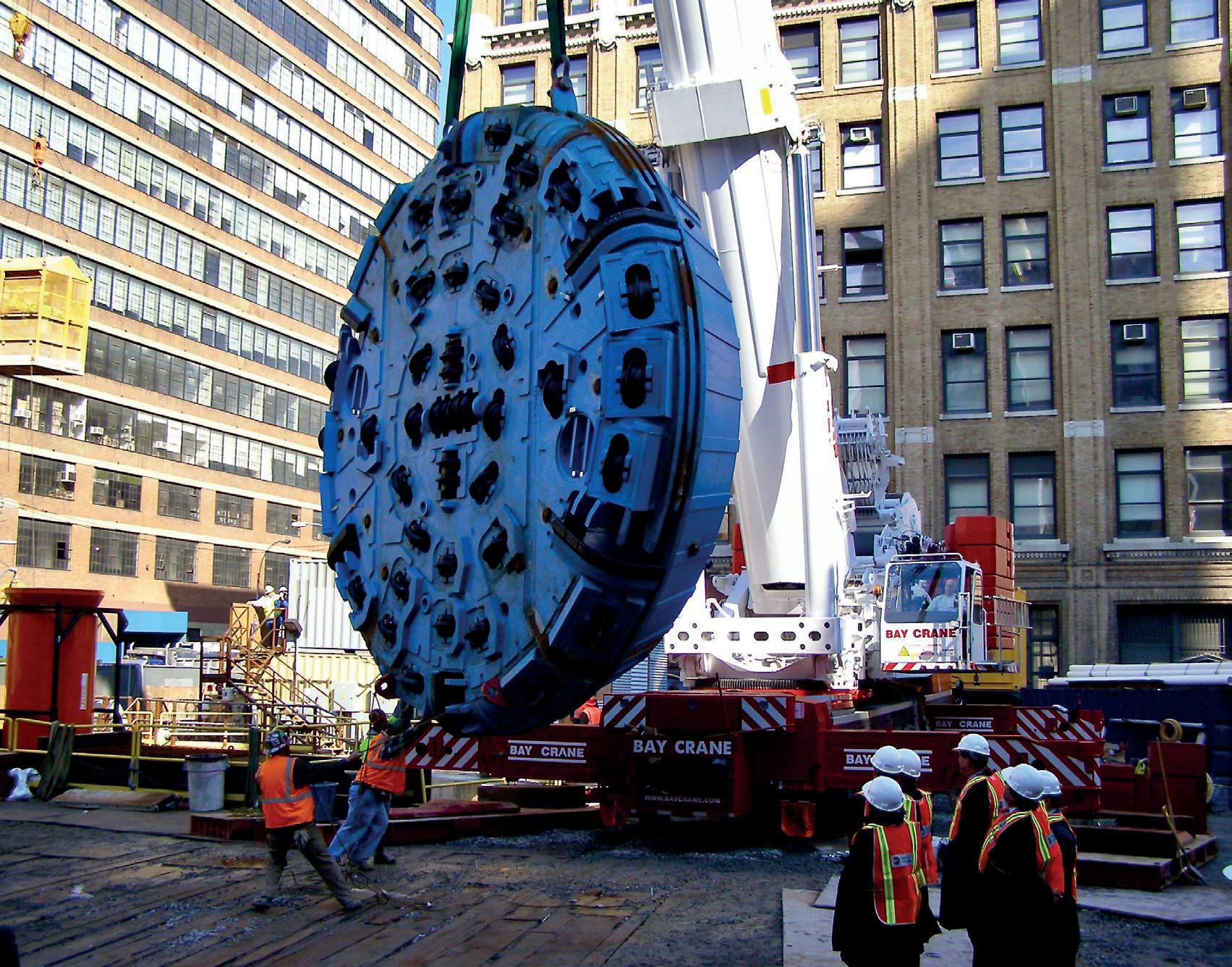
Gall Zeidler Consultants celebrates 25 years of innovative solutions and engineering excellence, marking a quarter-century dedicated to advancing tunnelling and underground infrastructure.
We leverage our expertise in transportation, infrastructure, water conveyance, energy, and mining to help clients overcome challenges and deliver world-class infrastructure projects sustainably and responsibly. Over decades, we’ve built a diverse portfolio of major projects, many ranking among the most significant worldwide. With a diverse team, we operate globally through nine offices across Europe, North America, Latin America, and Asia.
Dr Nigel Harris is founder of the Railway Consultancy, which he established in 1995. Over three decades, they have worked for 275 railway organizations across 41 countries. He previously spent eight years in London Underground's strategic planning unit and holds a PhD in railway fares policy from Newcastle University. He has authored papers and books as used by the Institute of Railway Operators.
Sam Sherwood-Hale spoke to Dr Nigel Harris of the Railway Consultancy about three decades of industry change, why major projects succeed or fail, the challenges of fare complexity, and what it takes to understand how railways actually work

SSH: How did you get involved in railway consulting?
NH: I'm a geographer. I went to Durham, then Newcastle: British Rail had money to support a PhD, which was unusual at the time. I took it and worked out the commercially optimal ratio between peak and off-peak fares for the regional railway network. The government invested about £10,000 and we reckon I made the railway £13 million a year.
That also revealed something else: very little was written down. I've since done books and textbooks for the IRO because this knowledge isn't generally available. How do you expect people to learn without it?
I worked for a consultant for a year, then nearly eight years in London Underground's strategic planning unit, analysing all changes to London's railway network. In 1991, I signed off the Crossrail analysis from
LUL's perspective. It eventually opened in 2022! Then in 1995 I founded the Railway Consultancy. With colleagues, we've worked for 275 different railway organisations over 30 years, not just in Britain.
SSH: You've been through privatisation, franchising, and now we're heading into Great British Railways. What's kept the consultancy going through all that change?
NH: Providing knowledgeable advice without ripping people off. We're small enough to be flexible. If you want to work out how many bricks you need for HS2, you need large teams spending months on it. We turn up either to assess an idea on the back of a fag packet, or when operations aren't working and people need to understand why. I spent twelve days on a platform with a stopwatch recently. Now we know why that railway's not working.
SSH: You were working during privatisation in the 1990s. What was your involvement then and what did you make of it?
NH: I'm pragmatic, not revolutionary. Around 1990, I thought some suggestions for running the railway were bonkers. I could also see this polarisation: people saying privatisation would be great versus those saying it would be a disaster. I thought it's probably neither of these extremes.
I analysed privatisation in the 1990s and scored it four out of ten. I don't particularly mind whether you privatise or not, but it wasn't done well, and you could actually work out the cost of that. The first five years weren't great.
We did some work for Railtrack and it became obvious they'd thrown out a whole lot of people with knowledge. I went to one meeting and realised I knew more about the
subject than everyone at Railtrack. That's not arrogance – I'm genuinely concerned that the national railway infrastructure company had lost critical institutional knowledge.
SSH: How has passenger demand changed over your career?
NH: I joined BR in 1984 when it carried 792 million passengers. We're now carrying about 1.792 billion. That's an increase of a billion more passengers p.a. in my career. That fundamentally changes everything about the railway. Which in some ways is a good problem, but then you get pressure on quality. Trains aren't as punctual as we'd like, and there's stuff we can't do.
SSH: HS2 and Crossrail are two major projects with very different outcomes. What went wrong with one and right with the other?
NH: At the beginning of HS2, a specific engineer at Network Rail was tasked with finding the best route from London to Manchester at 400 kilometres per hour. They developed 40 options and narrowed it down to the best couple. I also know that over 18 months into that process, a Minister changed HS2's objectives to include social benefits. But that message never reached the team. So when they eventually reported the best 400kph route, it already didn't match the objectives coming out of government.
Then there's the fundamental confusion: the name's about speed but it's not about speed, it's about capacity. You and I know that. Whether the general public does, I'm still not sure. I have no problem with most things having multiple objectives, but the worst thing is to change them halfway through and then not really tell half the people working on it. Come back to geography, it's not that far from London to Birmingham, so the time saving from going that fast is never going to be huge. 400kph might save two minutes but add £2 billion. So 400kph was probably never worth considering.
Crossrail had a couple of billion overspend, but if you look at it now, it was properly done. Crossrail stations have been built as you would design them in a textbook: two end escalators facing outwards for maximum catchment area, really wide platforms where you can stick loads of people. It's all been done right. So we can do major projects well.
The difference was that no matter who was London Mayor, Crossrail is a London thing that clearly makes sense. You've got this single project champion with some money. With HS2, people of course lobby for their own regions and then the government doesn't stick with it. Having a stronger core of people who are up for this and going to stick with it makes the difference.
If you turn up in London and ask ‘is the Central line full’ there's only one answer.
But with HS2, are we doing this for faster journeys or capacity relief or moving freight trains or running more semi-fast services to Northampton? Who is this for? With Crossrail, it was obvious. Literally every single person that lived in London.
SSH: You talk a lot about systems thinking in railway planning. How do you approach that?
NH: Big projects need to be undertaken with a good high-level understanding of systems perspectives, and for those perspectives to be maintained when the scheme is amended – which I fear doesn't always happen. It's critical to understand that in a railway, broadly, everything is connected to everything else. Trains, track, processes, people. Those interactions need to be repeatedly checked as projects progress, otherwise it's so easy for a change in one thing to completely eliminate the proper functioning and all the benefits of something else.
When I do training courses, I say to people: just assume everything is connected to everything else. That's probably a fair starting point before you decide on anything. If we change this, what's it going to affect? If you've thought about all that stuff, that's great, but don't just do something without considering that we'll run out of trains over there, we need another depot over there, that junction won't work. I think it's that partial decision making which is poor.
SSH: When you see concerning demand figures on a project, how do you distinguish between operational disruption versus fundamental misalignment with the original objectives?
NH: One needs to sense-check everything. We try to see if operational performance has been poor and might have suppressed demand, but there are all sorts of reasons why demand forecasts may not materialise. People might want to travel at times when the train service is poor, a particular issue for shift workers. Road conditions vary and there are different attitudes to car use in different parts of the country.
In terms of unclear initial objectives, I wonder if these have less of an impact on demand than costs, as the railway is seemingly being required to achieve a wider range of objectives – create local jobs, regenerate the local area, and so on.
SSH: Your platform research moved from measuring door widths to understanding that ‘the gap left by boarding passengers is narrower than the door’. How did you develop that insight?
NH: We've been at the forefront of understanding passenger movement at the platform-train interface since the 1990s,
and a significant element of the academic work in this area has been ours, in concert with Imperial College. The original work in the 1980s by London Underground had identified door width as a critical variable. It was only when we had undertaken a wider range of surveys, we've now done about 250, including for mainline TOCs and foreign railways, that we found door width didn't explain as much of the data variation as previously thought.
Then, whilst actually out on the railway, we observed other constraints to the process, including the space behaviourally left by boarding passengers and the width of the aisle once people have actually managed to board. I think we're happy to start from what the client might think, but on the proviso that if we find that's not actually what happens in practice, one needs to adjust one's hypothesis.
SSH: How do you cut through the complexity to identify in detail what really needs fixing?
NH: One needs a blend of understanding the big picture as well as the detailed knowledge of how things actually work. Unlike most railway managers, I've always had to buy my own train tickets and that hands-on experience, combined with seeing a quarter of a million tickets a year and spending weeks standing on platforms watching what goes wrong, lets me synthesise the theoretical problems with what passengers actually face day-to-day.
We use precise metrics, passengers per second per metre, with 0.8 pass/s/m as an average, because railway line capacity is determined as much by station stop times as by anything else. Our warnings about complexity costs are generally meant at a higher industry-wide level, politicians and TOC directors trying to achieve more and more objectives requires more management decisions and trade-offs. But for technical people charged with designing rolling stock, knowing that average figure is insufficient. They need to know that redesigning that vestibule will have an impact of x seconds per station stop.
SSH: How do you develop these insights while working on the railway?
NH: We've worked with several TOCs where they have a revenue-at-risk regime and do market research interviewing passengers. My colleagues and I see about a quarter of a million train tickets a year in spreadsheets, with all the things that have gone wrong. I spend weeks of my time standing around on platforms. People ask me stuff, I see them ask platform staff things, I go into ticket offices, I try using ticket machines.
When we've done work abroad, clients have said to us: ‘I want you to buy your own train tickets because I want you to tell me when the system isn't working.’ Over a period of months it kind of grows: the
theoretical problem behind this is X, and it keeps happening because we're doing Y. There's synthesis between the background understanding of how things ought to be and the problems people face day-to-day.
SSH: Let's talk about capacity. How do you address the constraints on Britain's railway network?
NH: If you spend a lot of time at Watford Junction, as I've done, you see quite quickly the railway's quite full. Mrs Miggins from the other side of Aylesbury hasn't worked out that the reason the M40 is full of trucks is that some of them (and I can tell you this with freight planning) we simply can't fit on the railway network. At times there just aren't any train paths now.
If you want to run a train from London to Manchester, it's no use only having a train path between Crewe and Wilmslow. People say ‘oh, the railway's not full here’. Well no, but that's only part of the journey I want to do. The last time I looked, there were no container train paths in and out of Trafford Park between 06:45 and 20:15. This is not sustainable.
Andy Burnham would like freight off the roads in Manchester, but you can't do that because people are objecting to infrastructure. There's a bigger picture here. Do you want the railway in your backyard? Well, not really.
I don't think there's anything about the HS2 route that's bonkers. There were several things where you'd go ‘I'd do that if I were you rather than the other’ but I've not seen anything absolutely nuts. What's not ideal is having termini in the middle of Britain. I quite understand why we have railway termini at Penzance and Thurso because you've got to the end of the country. But operationally, needing to reverse in Birmingham, which in my mind is in the middle, that's not ideal.
Someone asked me the other day about the Brighton Main Line. Studies were done 15 years ago to say we need another one. I told them it's not going to happen in my lifetime because I don't see that willingness nationally to put in that level of money and hence capacity.
SSH: Where do you stand on electrification versus alternative technologies like hydrogen and battery?
NH: Let's be honest: we know that 25kV overhead electrification works. It's really quite efficient. But we've got history with several schemes over budget. It's important to remember why they were over budget. When Network Rail says ‘I need to put some wires up here’ they discover a bridge from 1830 that needs fixing whilst they're there. I quite get that. The trouble is government says it's all too expensive.
You can do all the sums. Certainly if you've got four trains per hour, a line should be electrified because it's about 40 per cent
cheaper running an electric train than a diesel one. But innovation looks good. There are loads of people at universities who like to exercise their brains on all sorts of things.
I'm risk averse. First, let's see what other people have done. I'm very interested in all the studies coming out of Germany. Correct me if I'm wrong, but there have been three studies for three hydrogen fleets – two of them are currently not in service, and the other's got a big problem. The Germans haven't managed to make this work, and then you need a hydrogen supply network. We could just electrify the line.
Batteries are different. We know they work. I don't quite agree with some government ministers who've said Batteryoperated Multiple Units are the future. They're great in the medium term because clearly you can't electrify everything all at once, but we can get quite a lot of the benefits quite quickly. If a bridge is really difficult but we don't need to repair it for ten years, we won't electrify that bit until 2041. I'm very happy with battery trains as a temporary solution.
But for me, we need to electrify the railway. A mile a day would be brilliant. That's roughly what the Railway Industry Association said: 400 miles a year. BR produced EMUs very cheaply because York works built one carriage a day for ten years. The stopping and starting of programmes like electrification isn't helping. Scotland is doing the sensible thing by finishing one bit, then doing the next because they have political support.
However, I wouldn't electrify the whole network. When Jo Johnson was Rail Minister, he envisioned no diesel trains anywhere. Does it matter if we run two or three trains a day from Inverness to Kyle of Lochalsh on diesel? No. But we haven't managed to get to Bristol or Sheffield yet. It's almost like there's too much ambition, and when we're not able to achieve even small parts of it, we give up completely. Why don't we just chip away at it?
SSH: What conventional wisdom about freight would you challenge?
NH: You need to be more proactive about getting information about non-bulk flows and then being creative with them.
When identifying freight ‘sweet spots’ you need to go back to the basic question: what is the manufacturer or freight forwarder actually trying to do? For instance, assemble various raw materials to make something, or get goods to a regional distribution centre. The difficult bit is they'll have in mind their existing solution and will, by default, just put the same thing out to tender for road hauliers.
But rail might offer a competitive solution to where they were actually trying to go, which might not have been the RDC. Or for a base-load of three-quarters of their traffic, leaving flexible road hauliers for the remaining seasonal variability. Spreading
traffic between modes reduces the likelihood of being completely stuck if one fails. Motorway congestion and incidents are notable problems for road freight reliability.
We did some work in Colombia where we were asked to help with a railway that had traffic and was being forced by government to accept other traffic. We pointed out that if you're going to price track access, you can't just do it by tonnes. If you carry heavy stuff like coal and someone else turns up with a train of crisps, the crisps don't weigh anything. You need to charge by train path because there's an opportunity cost, you could have run a coal train. That was a real eye-opener for them conceptually.
SSH: Over your career, which intervention projects stand out as particularly significant?
NH: I'd say three levels. Small scale: we did work for Cumbria County Council on the Cumbrian coast. There was a problem with workers getting to Sellafield – genuine electricity supply questions for the country. Within six weeks of receiving our report, the DfT had managed to contract with DRS to replace the two-car DMUs with a fourcar loco-hauled set. Getting the British government to do something within six weeks struck me as significant.
More strategic: we worked for Stoke-onTrent City Council quite some time ago and we persuaded people at the DfT that actually if Stoke wasn't on HS2, it was never going to recover economically. The original plan didn't include socio-economic criteria, so Stoke had been bypassed. You'll see on the HS2 route now that Stoke's on there. I think that was a major change.
At the conceptual level, the Colombia work involved helping them understand that track access pricing needs to be by train path rather than just weight. That changed how they thought about the whole system.
SSH: You've worked in 41 different countries. What patterns do you see repeated across different railway networks?
NH: It's good because you see stuff and say ‘I've seen this problem before somewhere else’. For instance, I've worked in Ireland, Israel, and Norway, and I realised quite quickly they all have the same problem. They're all relatively small countries which developed economically relatively late and had weak railway networks. A million people moved to their biggest cities: Dublin, Tel Aviv, and Oslo respectively. Their existing railway systems didn't work properly and you have to start doing things much more professionally. If you run one train an hour and it's ten minutes late, it doesn't really matter. If you try running trains at five-minute intervals and one rolls up ten minutes late, you're stuffed. It's this realisation: ‘Oh, we have to do this properly in this corridor.’
Smooth discontinuities at county boundaries
Positive? Reduces complexity, and revenue loss and poor p.r. from split ticketing
Smooth rates per mile between TOCs Neutral
Increase Day Returns relative to Singles
Positive?
Increase Offpeak fares relative to Advance Positive
Eliminate Advance fares <£5
Eliminate on-the-day Advance fares
Reinstate Offpeak fares on LNER where withdrawn for 70-min flex
Eliminate TOC-only tickets where there is no difference in journey speed or route e.g. Gatwick-London; York-Northallerton
Require websites to show a range of fares v journey options, not just to highlight the cheapest one
Permit on-line bookings for all trains
Reduces perceived unfairness; evensout competitiveness against the car, in those instances where poorer-quality rail journeys are also more expensive
Increases feeling of fairness esp. where historic regulation has led to day returns being only 5p more than the single. Require a minimum differential of £1?
Restores balance of value of flexibility, eroded through historic regulation of only some fare types
Positive Reduces complexity for inelastic local trips for which pre-booking isn't important
Positive Reduces revenue leakage from inelastic urgent personal business trips; reduces possibility of subsequent cheap-fare passenger getting a seat at expense of a higher-yielding passenger already seated
Unclear Challenges rationale of 70-min product, which doesn't limit passenger to a specific train and therefore manage crowding, nor is it simple. Offpeak fares enable rail to compete against the flexibility of the car without undue complexity, whilst train-specific ADV fares are obviously clearer than those +/- 70 minutes (at origin, intermediate or destination station?)
Positive Reduces complexity and enhances travel flexibility
Positive Revenue-enhancing: enables passengers to trade-up if they can see that a better alternative is only slightly more expensive; would also reduce many operational problems with passengers not being aware of the conditions they didn't check
Unclear
Eliminate split ticketing options with intermediate waits of over 1 hour
Add-on fares to be available from all stations to different London Underground zones, T&W metro, Manchester Metrolink zones etc.
Positive
Offering wider choice: Some websites show no journey alternative for busy services even when a passenger might be prepared to stand, and tickets for these trains are available at machines without a warning that the train is fullybooked
Enhances passenger experience by removing very poor journey opportunities: either passengers will have to trade up or they will get a better service
S Yorkshire a particular problem with its cheap fares
Dinsdale – Nottingham OP single with railcard £67 v Dinsdale – London £62
Dinsdale – Darlington railcard single is £2.50 but only £2.55 day return
Passengers might indeed be willing to pay £10 more, rather than only £5 more, for flexibility
Rail travel is not the same service as theatre visits for leisure purposes. King's Cross – Dinsdale is £2.50 cheaper if I travel right now as an emergency.
It would be possible to allow a passenger to select a broad time of day before being allocated a specific train by the operator the previous day – which would allow the TOC to manage crowding.
Many savings only small anyway; ORCATS raids not relevant within a GBR-type railway
The Trainline-type screen causes all manner of problems to TOCs when passengers have not understood what they have bought
LNER website now has better wording indicating that few/no seats remain
Skegness – London AP ticket seen with 4-hour wait at Grantham
Unclear Increases ticketing simplicity and journey attractiveness Not apparently possible to buy a Durham – Newcastle (central area) metro through ticket (fare shows on National Rail but is same as to Newcastle Central so is presumably incorrect); isn't available at ticket machines
On the other hand, I worked in Ethiopia years ago. Before the railway opened, it used to take a 20-tonne truck two days to get from Djibouti to Addis with oil. It actually used up half its load. The Chinese built this electrified railway, the train does it in ten hours with 3,000 tonnes of oil, and it's reduced prices of everything in Addis by four to five per cent. That's economic value. Whether you arrive in ten or eleven hours with 3,000 tonnes of stuff doesn't matter, it's just so much better. Whereas here, we've got a motorway network that's a bit full. For many people there is an option. In different markets, the railway has a place but maybe not as important as it could be. In Britain, we do notice when the railway's not there and loads of people complain. That's good.
SSH: Let's turn to fares. What's the biggest problem with Britain's railway fares at the moment?
NH: Loads of people whinge about train fares, probably rightly. There's two issues: how expensive things are, and how complicated they are. They're slightly different questions. Within the context of how much money we've got for the railway, we actually need to charge passengers quite a lot. The biggest problem has been incomplete regulation during privatisation – you've been able to do this as a train company but not that. Things that worked in 1997 don't work now after doing the same thing for 30 years. Did you know there are more individual train ticket prices in Britain than there are adults in the country? By a couple of million. If I don't understand all this and for my sins, I've got a PhD in railway fares policy and travel extensively, I'm not surprised other people have problems, so I've made some suggestions in the table.
SSH: Why do you see eliminating split ticketing as such a priority?
NH: I was at Peterborough a few weeks ago. This man came up asking for help because he and his family were doing a journey and had been sold tickets split into four parts. The family weren't particularly frequent rail users, and they were in a mess. Travelling with small kids is never great, and I'm not sure we helped this person. If we'd given them one piece of paper and told them it was a pound more, that would have been better.
The trouble is if you go on a website that says ‘this is the cheapest ticket’, passengers never get that choice. We don't know whether they're happy to pay more or not. Clearly people won't pay £500 for a train ticket, but if you're saying you can have a really simple one for £30 or for £29.99 you have to change at Clapham Junction, Inverness, Birmingham New Street, Lowestoft – are we helping them? I don't think we are.
Split ticketing was always available for nerds like me, but once you've invented a computer app that can do this…what passengers don't know are the conditions.
I can't blame anyone for inventing a clever computer app, but is it helpful? If we look at the Passenger Demand Forecasting Handbook, we know a lot about fares elasticities. For some people, they actually want a cheaper price which is fine. But how badly do they want that cheaper price? If you stick prices down ten per cent but only get two per cent more passengers, you're worse off.
SSH: So what can actually be done to solve the fares issue?
NH: Let me give you a concrete case. When we had an office in Crystal Palace, I hosted a meeting between Southern and Thameslink about a fares dispute. There are different fares from London to Brighton at the moment, even though all the trains are run by GTR, they may be green or grey, but they're all effectively the same operator.
The only reason we have different fares is because when they were private companies, Thameslink sought to capture revenue from Southern through the ORCATS mechanism by pricing 10p cheaper. That was the correct decision for them as a specific private sector TOC, they got money at Southern's expense.
Now that we're all under the same umbrella, that's irrelevant. The railway's effectively giving away 10p to people who were previously paying more. Why don't we just take the 10p back and have one fare for Brighton, any train, £20? …rather than ‘the next train's a green one so it's £20, but the one after is grey so it's £19.90’.
It's relatively easy to abolish this ticket and change restrictions on the other when we've got the same journey time, but there's a sensible trade-off if you want fast versus slow. Birmingham on a fast train with Avanti for £100 in 90 minutes, or West Midlands for £50 in three hours, that's fine, that's a proper choice. But a lot of these fare differences were only appropriate in the privatised environment.
If someone's in charge of that fares database, or individual TOCs are authorised to work collectively, you can simplify a lot of this stuff. I know the Treasury worries about the money, but I'm really not convinced fares revenue would fall. What we'd get is people experiencing the whole thing as hasslefree. Not just the journey and timetable, but turning up at a clean station with good announcements and helpful staff, and being able to buy a ticket without needing three weeks of IT training.
There's a ticket machine near here where you can't buy a ticket in less than 15 screens unless it's one of the top six favourites. Is this helping anyone? No.
SSH: What should be the goal of fare reform?
NH: The goal isn't to save people money, the job is to help people and get them from A to B comfortably, conveniently, and without hassle. Generalised cost theory is,
‘There's two issues: how expensive things are, and how complicated they are. They're slightly different questions.’
in slang terms, an index of hassle. How do we minimise the hassle of getting you from where you are to where you're going next?
This should be the basis for decisions in the railway. It explains passenger behaviour, involves aspects of journey time and fare, and we know a lot about it. It's all in the Passenger Demand Forecasting Handbook which is a kind of Bible of rail market research knowledge, but we still seem to take decisions that don't take this into account. GC theory was invented the year I was born, so has been around a long time, and is the standard for transport planning in the world. Yet somehow the railway doesn't always get it.
Let me give you an example. Years ago I saw a poster on the West Coast Main Line with the message ‘Only three hours, 59 minutes, London to Glasgow’. It was a train that only called at Preston. When I last looked at the West Coast Main Line, it has some big places on it. Milton Keynes has a population of a quarter million and that train goes right through the middle of it, but it's of no use whatsoever if it's non-stop to Preston. For most people, journey time is not about end-to-end. That's why connections matter for HS2.
The human brain can only cope sensibly with a limited number of alternatives, which is why we need to simplify rail fares
SSH: Looking back over 30 years, what stands out as most significant about the work you've done?
NH: One of the most humbling things is when people don't ask technical questions but say ‘fancy a meal?’ or ‘I've got a problem at work, do you want a drink sometime?’. If you start with a reasonably academic background, you expect technical questions. When they actually want to talk through decisions; that's humbling.
Railway managers are people. They have technical problems, but it's also lonely at the top for some people. We're non-threatening, confidential, so they can ask: ‘Do you think I'd be mad if we did this in our train company?’ We’re not one of their colleagues, we're not someone from the DfT.
We can look back and think, yeah, we got asked about that, we fixed that. That's the job satisfaction. If my group of colleagues wanted to earn more money, we could all go earn more somewhere else. But these people actually know about railways, are interested in railways, and want to make a positive impact.
When I started, I thought I'd want to be involved with real people solving real problems rather than just intellectual work. When TOC directors email with ‘can I ask you this?’ it's great. That's what we're here for.
Ken Cameron is the Managing Director of Scheidt & Bachmann Fare Collection Systems for the UK and Ireland. With nearly 40 years of experience in the travel and transport sector, including 25 years on the supply side of the rail industry, he has held senior positions at Eurostar UK, The International Air Transport Association, Rail Settlement Plan, and Evolvi Rail Systems.
Sam Sherwood-Hale spoke to Ken Cameron, Managing Director UK at Scheidt & Bachmann, about the rollout of new FareGo PG|50 ticket gates at Tyne and Wear Metro's Regent Centre station and how the technology balances modern contactless travel with inclusive access for all passengers
SSH: What specific metrics or data drove the decision to prioritise Regent Centre as the first station for the FareGo PG|50 gates: was it based on passenger volume, fare evasion rates, or other operational factors?
KC: A combination of factors were considered: patronage, fare evasion rates and the frequency of antisocial behaviour incidents. These were then evaluated alongside one more factor: the ease (and therefore cost) of installation.
A feasibility study is currently underway which will further identify which additional Metro stations might be suitable for the installation of the new automatic ticket gates. In the new year, plans will begin to update the stations identified.
SSH: You’ve mentioned that the gates are ‘part of a wider initiative to improve safety and reduce fare evasion’. Can you quantify the scale of fare evasion challenges, both at Regent Centre and across the Metro network?
KC: Fare evasion is relatively low for a system the size of the Tyne and Wear Metro, but it remains an issue Nexus are determined to drive down as much as possible. At present, 13 out of their 60 stations have gate lines. These include the busiest stations on Metro, meaning, under normal circumstances, 75 per cent of customers must pass through a gate along their journey.
SSH: Installation is scheduled for completion later in 2025. What's the detailed timeline, and how will you minimise disruption to passengers?
KC: Civil engineering work to prepare the Regent Centre station for the installation of the FareGo PG|50 gates is well under way. The completion of this phase will then more accurately define the plan for the remaining rollout. Already, the area designated for the gates has been secured from public access and creates no disruption to passengers.
SSH: What lessons learnt from your existing Scheidt & Bachmann fare collection infrastructure at other Metro stations influenced the specifications for these FareGo PG|50 gates?
KC: The experience of almost 20 years of gate operation in North America and Europe
has been incorporated into the development of the FareGo PG|50 and its deployment. Particular focus has been placed on the total cost of ownership for our transport partners, which is especially influenced by its service-friendly design. Furthermore, it was important to be able to respond to future technologies and changing ticket requirements. This is why we went with a modular design for the FareGo PG|50, allowing us the possibility of evolving with our transport partner’s ticketing system and, among other specific capabilities, making seamless any future upgrades to future digital ticket media.
SSH: Scheidt & Bachmann operates across parking, EV charging, signalling, and fare collection. How do insights from your other business divisions translate into features passengers will notice in these gates?
KC: Scheidt & Bachmann’s recipe for success in all these industries is based on extensive engineering expertise combined with high value creation depth, which allows us to deliver durable and seamless mobility solutions. In particular, the parking, EV charging, and fare collection industries share a common trend: moving towards increasingly digital offerings and adopting cashless payment options for physical credit cards and mobile phones.
SSH: With 7.6 million monthly transactions across your UK operations (TNS interview, 2024), how does this experience inform your approach to the Metro implementation?
KC: The growing adoption of debit and credit card payments places increasing demands on system performance, demanding rapid transaction speeds, robust reliability and a seamless experience for passengers. These requirements are most visible at ticket vending machines, where delays or failures can directly impact customer satisfaction and throughput. However, as transaction processing extends to the gate line, the stakes become even higher. This shift underscores the need for resilient infrastructure, low-latency networks and proactive monitoring to ensure consistent performance across all touchpoints.
SSH: The FareGo PG|50 design ‘facilitates right-hand tapping’. What passenger behaviour research led to this specific design choice?
‘At present, 13 out of our 60 stations have gate lines. These include the busiest stations on Metro, meaning, under normal circumstances, 75 per cent of customers must pass through a gate along their journey.’
KC: At the beginning of the FareGo PG|50 development, the behaviour of passengers with ticketing gates was analysed and, among other sources, based on a university study. The interaction of passengers with the gate begins as they approach, looking specifically at the orientation of the gate they choose. Then, there are many crucial interactions up until they leave the gate. The analyses of these gate interactions led to the design elements of the FareGo PG|50 that facilitate intuitive use of the gate by the passenger, such as an angled smartcard target, front panel LEDs and a display head with TFT that display in the direction they’re walking.
SSH: How do you anticipate the integration of multiple ticket formats (magnetic stripe, mobile barcode, contactless, ITSO) will impact passenger flow and reduce bottlenecks during peak travel times at Regent Centre?
KC: For passenger flow at a gate, smartcardbased tickets are always the best choice. They keep the physical interaction of the passenger, ticket and gate to a minimum, thereby leading to the highest throughput. However, today there is always an existing system in place with its own wide variety of ticket media needs. Therefore, it was

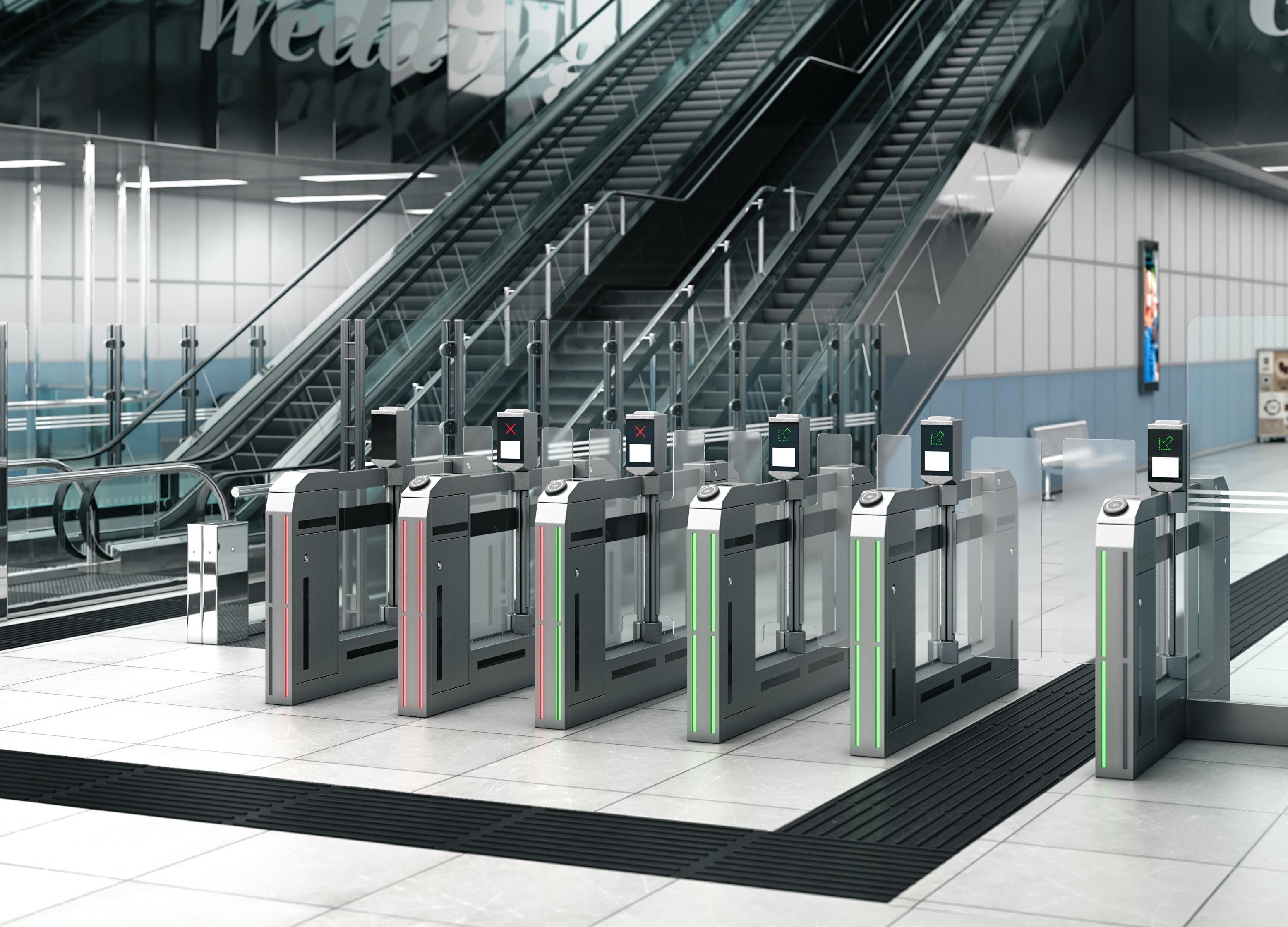
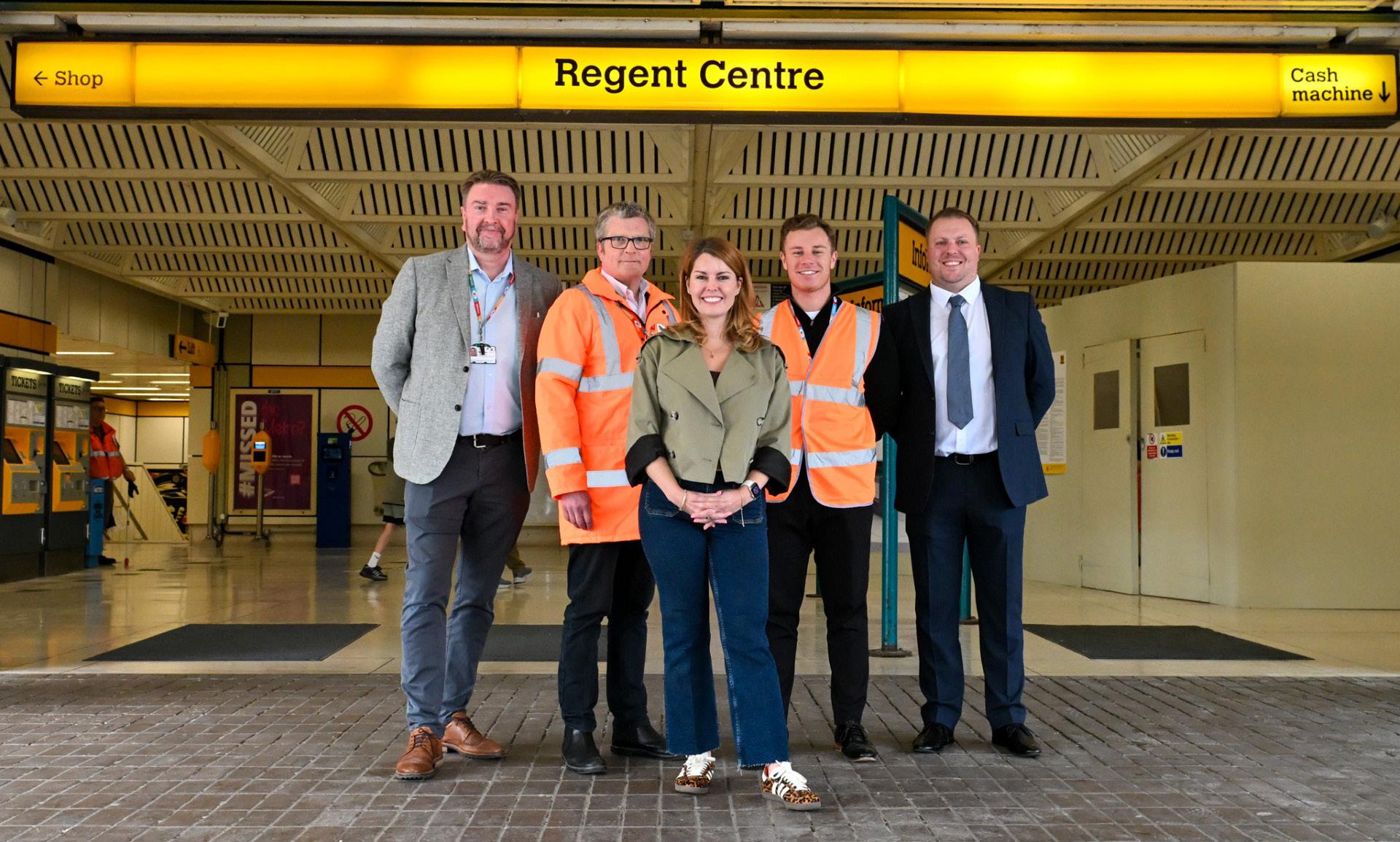
important that the FareGo PG|50 could process that existing ticket media while simultaneously providing a migration path towards more contactless and digital tickets.
SSH: What does ‘fast processing’ mean in practical terms – how quickly do the gates respond to different ticket formats, and what happens when something goes wrong?
KC: I think this topic has several aspects. Although the validation time is mainly determined by the ticket medium (e.g., magnetic ticket vs. smartcard), the FareGo PG|50 platform can also offer traditional validation options, such as magnetic tickets and fast and digital ticket media. Additionally, we have improved the throughput of the gate by, for example, being able to open and close the flaps faster with our smart security control.
SSH: The gates will be ‘fully integrated into the current fare collection infrastructure’, What technical challenges does this integration present?
KC: As an incumbent, it is naturally easier to integrate the new gate into the existing infrastructure. Nevertheless, it is important for us to develop a vision together with our transport partners on how the fare collection system should evolve in the future. Only in this way can we prepare the gate, with a lifespan of 15+ years, for future requirements. The art lies in finding the balance between today and tomorrow, to
offer passengers sustainable and modern mobility solutions together with our customer.
SSH: Walk us through what happens in the milliseconds between a passenger presenting their ticket and the gate opening.
KC: It’s quite difficult to explain, but there is a complex set of processes that happen very quickly. In short, this is the gate passage process:
1. Ticket Handling
• The gate detects and reads the ticket.
• Ticket data is validated.
• If needed, data is updated on the ticket.
2. Validation
• A validation token is generated and placed on the correct side of the gate.
3. Person Detection and Tracking
• Sensors detect an object entering the gate.
• The gate identifies the object — e.g., a person, with buggy, suitcase, bag, wheelchair, etc.
• The object is tracked through the gate aisle.
4. Token Consumption and Exit
• When the object crosses the midpoint, the validation token is accepted.
• Tracking continues until the objects exits.
• The passage is then marked as complete and reported.
SSH: Mayor Kim McGuinness mentioned making public transport ‘safer’. How do these gates specifically enhance safety beyond fare collection?
KC: New gate lines help to safely control customer flow and access to stations. This increases security and safety allowing only those travelling on the Metro to access the platform. The Mayor announced in March that she was putting more money towards new Metro ticket gates as part of a £208 million package investing in wider transport needs.
SSH: Are you working with other UK transport operators on similar FareGo PG|50 implementations, and how might this influence standardisation?
KC: The FareGo PG|50 is also being rolled out beyond these initial locations. At Darlington, for example, where a major station redevelopment is underway, a new gate line will be a central feature of the redesigned concourse. This is particularly significant because Darlington is not only a key interchange on the East Coast Main Line but also a gateway for local and regional services.
By incorporating the gate line into the new concourse from the outset, the project ensures that modern passenger expectations are built into the fabric of the station, whether that means seamless, contactless travel or continued access for cash-paying passengers. It also futureproofs the redevelopment by creating space for scalable,
flexible ticketing solutions that can adapt as passenger behaviour evolves.
In this way, Darlington becomes both a symbol of the North East’s transport renewal and a practical demonstration of how inclusive, forward-looking infrastructure can serve a diverse passenger base.
SSH: In 2020, you described the challenge of serving both passengers who want cash and anonymity and those demanding ‘seamless frictionless’ experiences. How do these gates solve that tension in the context of the North East's diverse passenger base?
KC: In the North East, there is still a substantial group of passengers who rely on cash, value anonymity or are not yet ready to adopt digital-only systems. At the same time, a growing number of commuters, particularly younger and frequent travellers, expect a seamless, frictionless, almost invisible journey experience. The new gates bridge these needs by supporting flexible ticketing options today, while their modular design ensures we can easily adapt as passenger behaviours evolve, making the system both futureproof and passenger focused.
SSH: How does this investment fit into the broader regional transport funding package announced by the North East Mayor?
KC: Mayor Kim is investing more than £2 billion in local transport in North East England over the next five years. At the heart of that investment is her vision to re-create the world class integrated public transport network Metro was part of when it opened in 1980. The Mayor’s new plan has attracted attention from more than 16,000 locals, rating both safety and ease-of-use as priorities for this new network of the future.
The gate and validator architecture
Scheidt & Bachmann have provided to Nexus support the two priorities the public have raised: First, Metro customers have said being able to identify the gates at the station (and the customer service teams who staff them) are key to both feeling and being safe. The new architecture will do exactly that. Second, passengers want a simplified system. Scheidt & Bachmann’s smart payment system underpins the North East’s Pop travel card also provides this easier way to travel. Regent Centre is an interchange with local buses for north Newcastle and suburban
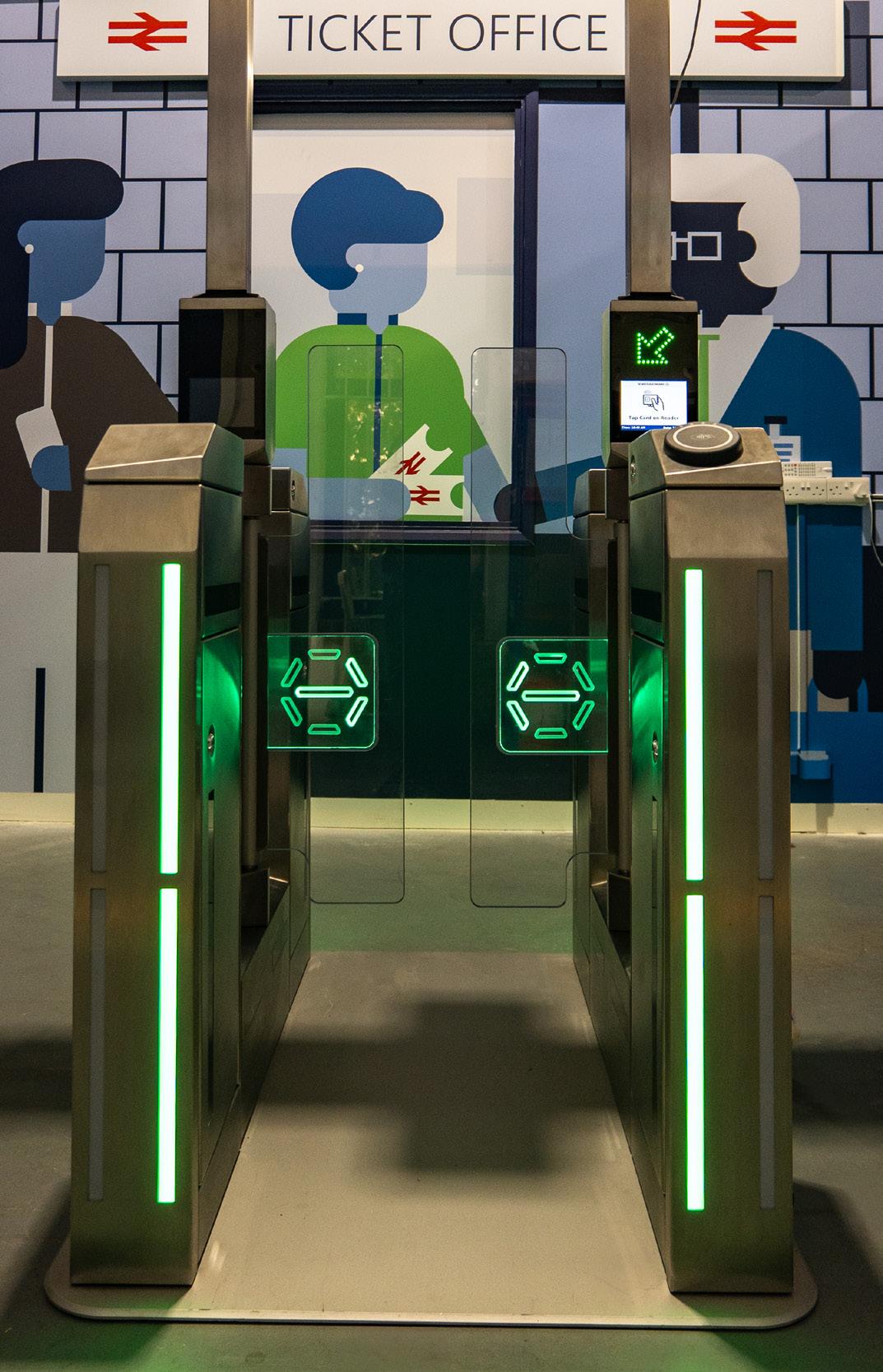
towns in Northumberland, and Pop Pay As You Go, rolled out across the bus network, now includes this simplified payment option. Together, we’re helping create the integrated network the Mayor has been seeking.
‘The new gates bridge these needs by supporting flexible ticketing options today, while their modular design ensures we can easily adapt as passenger behaviours evolve, making the system both futureproof and passenger focused.’
Air horn systems, Wash wipe systems

Presented
systems
Seating framework, Grab rails and luggage racks
Body to bogie pipework, Levelling valve systems Waste disposal, Full pneumatic pipework systems
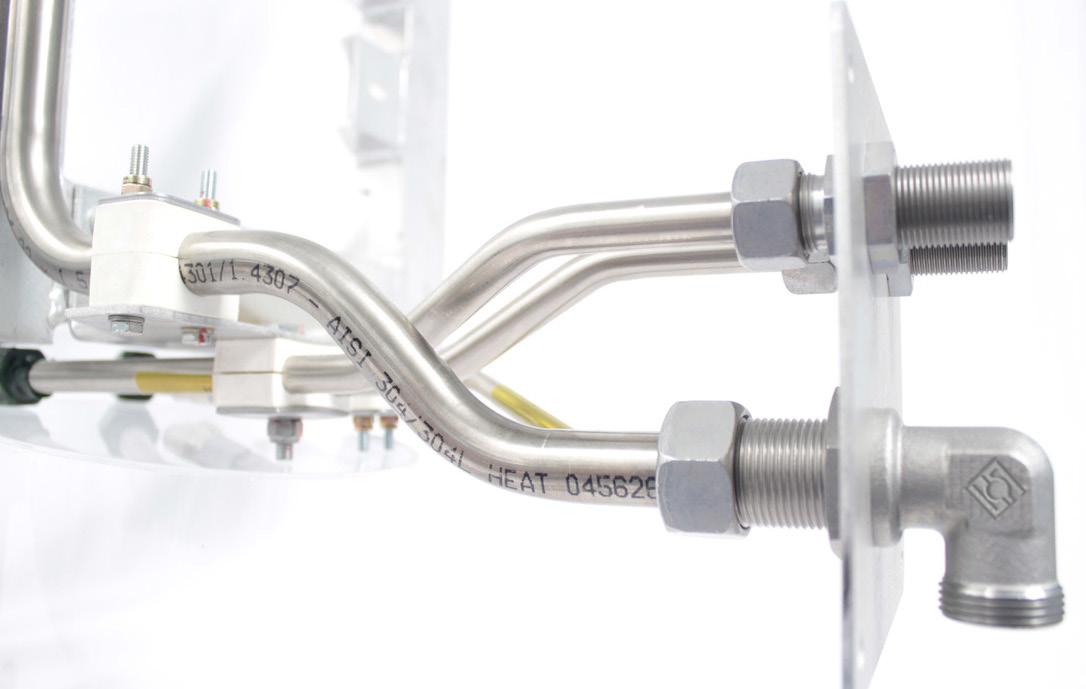

Following Quanex's acquisition of Tyman plc in 2024, the home of Bilco, Howe Green and Profab has undergone a remarkable transformation. Sam Sherwood-Hale spoke with Peter Santo, Divisional President of Quanex Access Solutions, and Nic Darwood, Technical Account Manager, about the journey from difficult times to renewed momentum, and what this means for their rail industry clients.
Sam Sherwood-Hale spoke to Peter Santo, Divisional President of Quanex Access Solutions, and Nic Darwood, Technical Account Manager, about rebuilding trust after a turbulent period, investing £6 million in state-of-the-art facilities, and how the company behind Bilco, Howe Green and Profab is re-establishing itself as a trusted partner to the rail industry
‘When
clients visit our Wolverhampton facility, they often tell us they haven't seen anything like it before. The technology on site, like our Trumpf punching and forming equipment, has given customers real confidence.
Many have come to see their
products being made, and
they
can follow every stage of production.’
Nic Darwood’
SSH: Quanex is a new name in the UK market. Can you tell us who you are and where you come from?
PS: Peter Santo: Quanex is a US-based building products group. In August last year, the company acquired Tyman plc, the previous owner of Bilco, Howe Green and Profab. Together, we now form a $2 billion building products group, with around 80 per cent of operations in the US and 20 per cent in the UK.
I previously led the international division at Tyman, and following the acquisition, Quanex asked me to continue as Divisional President for Access Solutions. Working with Bain Consultants, we reorganised the business by global product stream rather than geography, and Access Solutions became the stream encompassing Bilco, Howe Green and Profab.
Here in the UK, Quanex Access Solutions is the home of Bilco roof hatches, Profab riser doors and Howe Green floor access products – all of which play an important role across the rail industry.
SSH: In terms of day-to-day operations, how much has actually changed?
PS: A great deal has changed. We’ve built a new leadership team and invested heavily – around £6 million in state-of-the-art manufacturing facilities at Wolverhampton’s i54 business park, plus roughly half a million pounds in fire and acoustic certification. That certification underpins one of our key strengths: products fully tested and verified for performance.
The business had come through a difficult period during the previous consolidation of Bilco, Profab and Howe Green into a single site. Supply chain issues and quality concerns impacted service levels. Since then, our focus has been on rebuilding from the ground up – strengthening communication, stabilising operations, and re-earning customer trust.
With Quanex’s support, we’ve created a clear five-year roadmap. We’ve retained the best of what existed before and brought in fresh talent across operations, engineering, and sales. Today, Quanex Access Solutions is operating as a cohesive, forward-looking business built on strong foundations.
ND: It’s been a real journey. Merging three successful brands under one roof was tough at first, and we did lose valuable experience. But the difference today is night and day. Where we once spent time firefighting, we’re now focused on growth. Our customers are coming back, and there’s a real buzz about the quality of our products and service. When clients visit our Wolverhampton facility, they often tell us they haven’t seen anything like it before.
SSH: What was that transition like for your staff, from firefighting every day to looking ahead five years?
PS: When we started, the business was under strain, and there was uncertainty. Our first priority was to restore stability, rebuild structure and processes, and create space for long-term thinking.
We’ve made communication a priority. Every quarter we hold open sessions on the shop floor – it started simply with pizzas in the canteen and open conversation about progress and challenges. It’s now become a cornerstone of how we stay connected as a team. People can see the progress we’re making together.
We also strengthened the team with people who want to help shape the business for the long term. There’s no ready-made playbook for what we’re doing; we’re writing it together, and that’s created a real sense of ownership. With Quanex’s backing, we’ve invested not just in equipment –like our new $2 million laser cutter – but in people and systems that set us up for sustained growth.
ND: Three years ago, the commercial team had just a handful of people. Today, there are 17 of us. The stability that came with Quanex’s acquisition allowed us to regroup, and now that same support is driving us forward. It’s a completely different business to what it was – one where everyone can see a clear future.
SSH: Can you tell us about that fiveyear plan?
PS: Our five-year plan runs from 2025 through 2029 and evolves each year. The first phase is about consolidation and consistency – making sure the fundamentals are right. From 2026 onward, we move into growth mode.
On the operations side, we’re currently running an eight-hour shift, with the aim to move to two shifts as volume grows. The site is built for scale, so as we increase throughput, we gain efficiency and competitiveness. Continuous improvement – in process flow, productivity, and quality –is central to this plan.
Commercially, the focus is on winning back customers and proving that our service today is stronger than ever. We’ve structured the team to support every stage of the customer journey, from initial specification through to delivery and aftersales support. It’s about consistency, reliability, and trust – values that are key in the rail sector.
SSH: How important is innovation to your strategy?
PS: Innovation sits at the heart of our strategy. We aim for at least ten per cent of sales to come from products launched within the past three years. That keeps the business evolving and ensures we’re anticipating customer needs rather than reacting to them.
‘We aim for at least ten per cent of sales to come from products launched within the past three years. That keeps the business evolving and ensures we're anticipating customer needs rather than reacting to them.’
Peter Santo
For us, innovation isn’t just about new ideas – it’s about how effectively those ideas are brought to life. We believe innovation and sustainability go hand in hand; they’re what will shape the industry over the next decade. Our goal is to develop solutions that perform better, last longer, and reduce environmental impact.
SSH: Nic, how have those conversations with clients changed now?
ND: The tone has completely shifted. Customers are engaging with us again, trying our products, and seeing the difference for themselves. For example, our new Howe Green landscape range is being really well received. When clients test us now, we’re delivering on time, often ahead of expectations, and with quality that consistently impresses.
The technology on site, like our Trumpf punching and forming equipment, has given customers real confidence. Many have come to see their products being made, and they can follow every stage of production. That transparency and capability make a strong impression.
We’ve also reintroduced or refined key features like the brass edge trim, heavyduty skates, and a wider range of fire-rated covers. These might sound like small details, but they make a big difference in the environments we serve – especially rail.
SSH: Can you tell me more about the Trumpf machine?
PS: The Trumpf system represents a big step forward for us in precision and efficiency. It’s fully automated, integrating CAD and CAM so designs flow straight from concept to production. It can run around the clock and delivers exceptional accuracy in cutting and folding. This investment means we can respond faster to customers, improve consistency, and enhance our service levels. Ultimately, it’s about reliability – when we make a commitment to a client, we can keep it. That’s the standard we’re holding ourselves to as a team.
SSH: Are there benchmarks you're looking to hit?
PS: We’ve set clear KPIs across the business. For example, we’re targeting a 14-workingday lead time with 95 per cent on-time, in-full delivery. We’re also measuring engineering turnaround and quality metrics to keep us aligned with customer expectations. Health and safety remain a core focus. Our goal is an LTIFR below one, meaning fewer than one lost-time incident per million hours worked. We’re proud to have maintained that for two years running. Safety, quality and service are the three pillars that guide every decision we make.
SSH: How are evolving regulations shaping your product development?
PS: We welcome stronger regulation. It raises standards across the industry and helps differentiate serious manufacturers from those cutting corners. The upcoming changes following the Building Safety Act and the ‘golden thread’ initiatives are positive for everyone who values quality, traceability, and compliance.
We want to be at the forefront of that shift – providing products that not only meet but exceed these standards. That’s especially relevant for the rail sector, where reliability and safety are paramount.
ND: Fire safety and certification are now front and centre in customer conversations. Having third-party fire-rated certificates is a real advantage for us. It’s something many competitors don’t have, and it’s one of the main reasons we’re winning back clients.
SSH: What role does sustainability play in your manufacturing processes?
PS: Sustainability is now a core requirement for every major investment we make. We’re expanding the use of photovoltaic panels, reducing single-use plastics, and working toward zero waste to landfill. We’re also shifting to recycled aluminium, which cuts carbon emissions by up to 90 per cent compared to primary production. These steps make environmental and business sense. Customers increasingly want sustainable solutions, and younger generations joining the workforce expect them. For us, it’s about doing the right thing while strengthening our competitiveness.
ND: The mindset has changed dramatically. Sustainability used to be a “nice to have”; now it’s central to how we work and how our customers evaluate suppliers. It’s great to see younger colleagues leading the way and keeping it front of mind in every discussion.
SSH: Do you anticipate any changes to your business with the changing structure of the railways and Great British Railways coming next year?
PS: We expect a more structured and transparent framework, and that plays to our strengths. We’re built to deliver reliability, compliance, and long-term value – not short-term wins. Our approach is to form lasting partnerships with clients and support them as the industry evolves.
SSH: What do you hope to supply to railway customers?
PS: Our goal is to be a trusted partner to the rail industry – delivering access solutions that meet stringent performance, safety, and sustainability standards. We want our customers to feel confident that when regulations or needs evolve, we’ll already be ahead of the curve.
Behind us, we have shareholders who believe in long-term investment. The best way to understand what we’re building is to see it: anyone visiting our Wolverhampton facility can see first-hand the scale, technology, and dedication that define this business.
SSH: In terms of major rail projects you're involved in?
ND: We’re proud to have been involved in projects across the network – from King’s Cross and St Pancras to Liverpool Street, Paddington, and the Elizabeth Line. You’ll see our Howe Green covers in many of these locations.
We’ve also supported TfL on projects like Blackhorse Road, supplying bespoke duct covers on short lead times. It’s this combination of reliability, responsiveness, and performance that’s helping us reestablish Howe Green and Profab as go-to partners in the rail environment.
SSH: Was there a moment when you realised you were back?
ND: Definitely. The start of 2025 felt like a turning point. The flow of enquiries, the enthusiasm from customers, and the sense of momentum across the team – it all came together. It’s not just about being busy again; it’s about knowing that people trust us and want to work with us.
SSH: Peter, you must feel like you joined at just the right time?
PS: Yes, I have. There have been plenty of challenges, but also real rewards. The opportunity to help rebuild and shape something with lasting value is what motivates all of us. The passion and commitment across this team are remarkable – people genuinely care about what we’re creating here. We’re in this for the long haul, and it’s been incredibly satisfying to see that collective effort starting to pay off.
ND: That’s exactly it – it’s all about momentum and pride in what we’re achieving together.
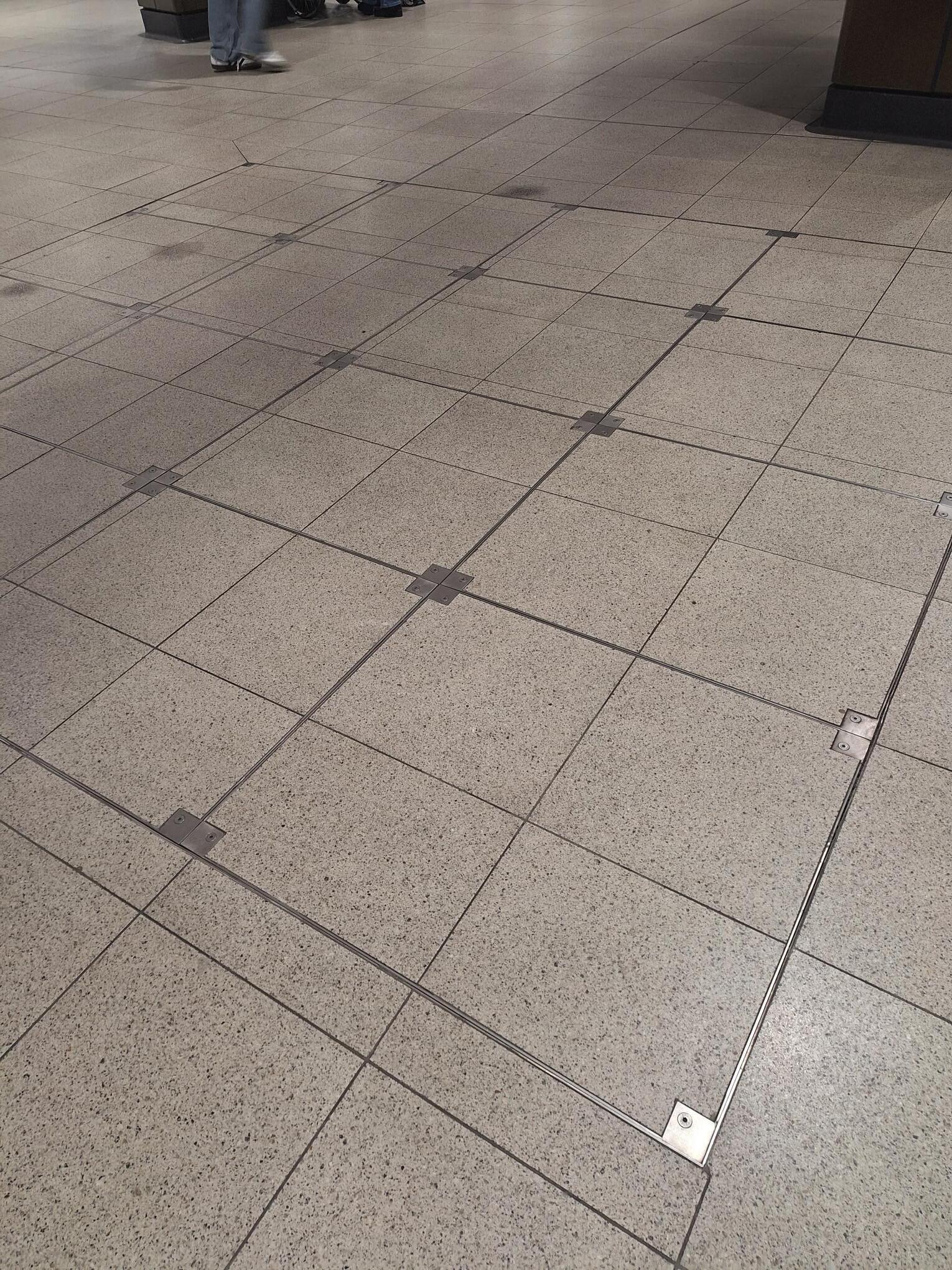
LONDON, UK

As part of the landmark Elizabeth Line, our 7500 Series Floor Access Covers were specified and installed throughout Whitechapel Station.

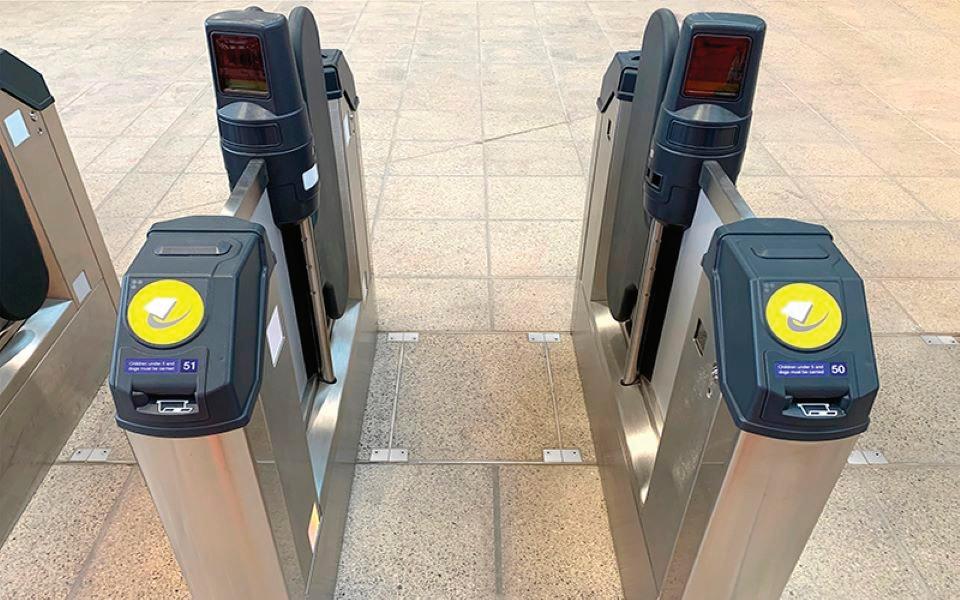

FROM KINGS CROSS TO PADDINGTON
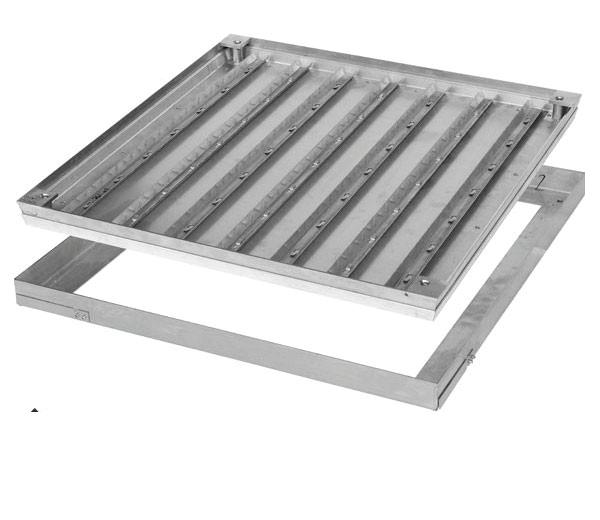
and concealed access to under-floor services across the ticket hall, concourse, and interchange areas.

Looking for bespoke or standard access solutions?
Get in touch today – 01827 718222
Scan the QR code or visit HOWEGREEN.COM
SETTING THE STANDARD IN FLOOR ACCESS INNOVATION FOR PROJECTS ACROSS THE GLOBE
TESTED IN ACCORDANCE WITH BS 476: PART 22: 1987
Provides 2 hours of fire resistance (2 hours integrity and 1 hour insulation), ensuring exceptional safety and performance throughout the station.
5 TONNE WHEEL LOAD CAPACITY
Designed to withstand loads ranging from pedestrian traffic to vehicular wheel loads, while complementing the station’s architectural finish, delivering long-lasting durability, safety, and visual continuity.
Paul Hargreaves is Managing Director of Allan J Hargreaves Plant Engineers. He spent a decade in aerospace engineering, including work on Eurofighter Typhoon development and Saudi aircraft deliveries, before joining the family business in 2011. He completed a management buy-out 2 years ago.
Sam Sherwood-Hale spoke to Paul Hargreaves about growing a Lancashire engineering firm from eight to 80 employees, navigating rapid changes in rail technology, and why the industry faces a period of managed asset decline
SSH: Let's start with your background. Can you tell me about your journey before joining the family business?
PH: I actually went and did my own thing after leaving college. The family business was set up 42 years ago, but I wanted to pursue my own path first. I did two years at college and then an apprenticeship at BAE Systems, before going on to work on Eurofighter Typhoon development, testing all the new weapon systems and hardware on development aircraft. Eventually, I ended up running a team delivering jets to Saudi Arabia for the new Typhoon sales. After taking an aircraft over to Saudi for some trials around 2011, the aerospace industry was rapidly changing, I took the decision to leave aerospace and join the family business following ten years of very interesting work, it was a springboard for me and gave me a very different perspective, opposed to joining the business earlier in my career.
SSH: In the back of your mind, were you always aware that you could move into the family business?
PH: It was always in the back of my mind, because from a very young age I used to go out in a van with my dad at weekends as a kid and help him. I was always interested in mechanics and engineering. So yes, it was always there as an option.
SSH: What was the company like when you joined?
PH: We were quite small at the time, only about eight of us. We spent the next 13 years building the business, taking it from mainly repairs, you know, repairing customers' machines, to upgrading and refurbishing machines. In the last seven years, we've been manufacturing machines as well. There's been quite an evolution. The business has completely transformed from a field service organisation to production and refurbishment. Most of our work is now on site.
SSH: You developed your first direct rail wheel braking system in 2012. What problem were customers facing that nobody else was solving?
PH: This was brought about by a change in rail standards. Network Rail mandated direct rail wheel braking to manage the risk of runaways following a number of accidents
and near misses. At this time, the RIS-1530PLT standard was evolving rapidly, being updated every 12 to 24 months. This was a great time for innovation, from brakes to movement limiters. It was actually a Network Rail funded project because they had to respond to the ORR to manage runaway risk. As a result we developed a failsafe braking system and successfully retrofitted approx. 400 machines directly for Network Rail.
SSH: What gave you the confidence to enter the market with these rapidly changing standards?
PH: The aerospace experience was a great foundation for coming into this industry. It was quite easy to transition because of the type of work I'd been doing. We were delivering aircraft to Saudi Arabia, taking them off the UK production line and upgrading or modifying them to Saudi spec. It's very similar to what we're doing now: upgrading, refurbishing machines, modifying them to the right standard. One of them flies and one of them runs on tracks, but the quality aspects of aerospace standards have really driven me. Obviously, there's nowhere to pull over in the sky. You've got to get it right.
SSH: You now employ 80 people manufacturing highly specialised equipment. What's your biggest operational challenge right now?
PH: Keeping up with the rapid change in technology. New machine lifecycles
‘It's almost impossible to find experienced engineers that do what we do. We're in the northwest of England, and if you draw a circle around Fylde near Blackpool, half of it's in the sea!’
get shorter and shorter as new engine technologies and control systems are released. A machine from an OEM might only be released for four or five years at most now, and then it will change spec again. Fifteen years ago, there might have been 10 years between models. You're having to spend a lot more time on engineering, revalidating or redesigning the machines that we offer. That does put pressure on.
SSH: Does that actually help your business in a way, since more companies need your services with these shorter life cycles?
PH: I suppose it is driving people to need newer equipment because of the newer emissions standards. Although in rail we're in a bit of a pigeon hole where no one's really looking at emissions yet. We're a little bit shielded from it at the moment. But yes,
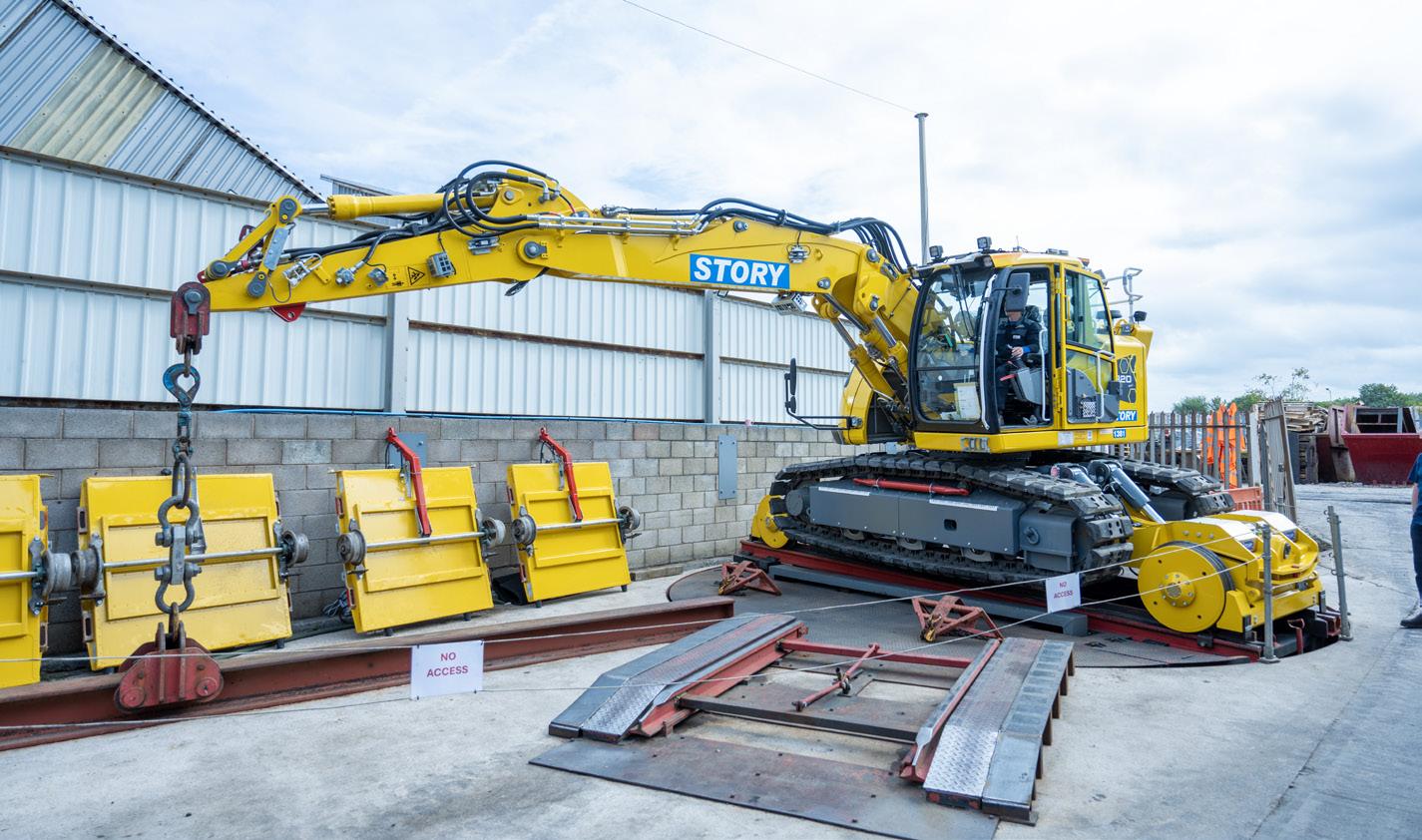
people are looking for new and more reliable equipment. The crucial part is reliability, a key driver and focus for Network Rail, we have a clear focus to design and manufacture our machines to perform consistently.
SSH: Your machines can work under live overhead lines. Most can't. What engineering hurdles did you have to overcome for that capability?
PH: We install RCI systems, rated capacity indicators. With a PLd system, they can be approved for use under OLE, along with some other specific requirements. We specialise in the integration aspect and the approvals, systems such as GKD and InTeEx. We've been integrating these systems since 2012. They're usually third-party systems that keep the machine within specified limits so they can't strike an overhead power line or a machine on an adjacent line.
SSH: You just expanded your site by 900 square metres. What specific bottleneck was holding back your growth?
PH: Space has been the biggest bottleneck, particularly as we've moved to more focus on manufacturing. We've just grown organically, kept adding units onto our site. If you were to start again with an endless pit of money, you could design the perfect site, but growing
like we have has probably not given us the best layout. We've bought another plot of land adjacent to our site and we're going to reconfigure to have our logistics and all our parts properly organized. Even getting machines around site is hard because of the forklifts and stores. The new space will allow us to create flow around the business and keep all the stores and logistics elements away from the daily operations.
SSH: What was the point where you realized you needed to expand in this way?
PH: It crept up on us, to be honest. We hadn't really noticed it until we took a step back and looked at all the wasted time. People trying to move machines, having to move a couple of machines out of the way. It was about twelve months ago that we identified we needed to do something fairly drastic.
SSH: Why expand around your current location rather than move to a whole new site?
PH: We have access to a rail line at the back of our current site, so moving to another site is not really an option. We own all the land, and we didn't want another unit that wasn't adjoining. Purchasing additional premises adjoining the current property was the key move.
‘New machine lifecycles get shorter and shorter. A machine from an OEM might only be released for four or five years at most now. Fifteen years ago, there might have been ten years between models.’
SSH: Network Rail has notoriously strict certification requirements. How do you navigate that approval process?
PH: We have an experienced engineering team who navigate the standards daily. They evidence all the engineering decisions we make, which allows for a smoother and more transparent evidence-based approvals process.
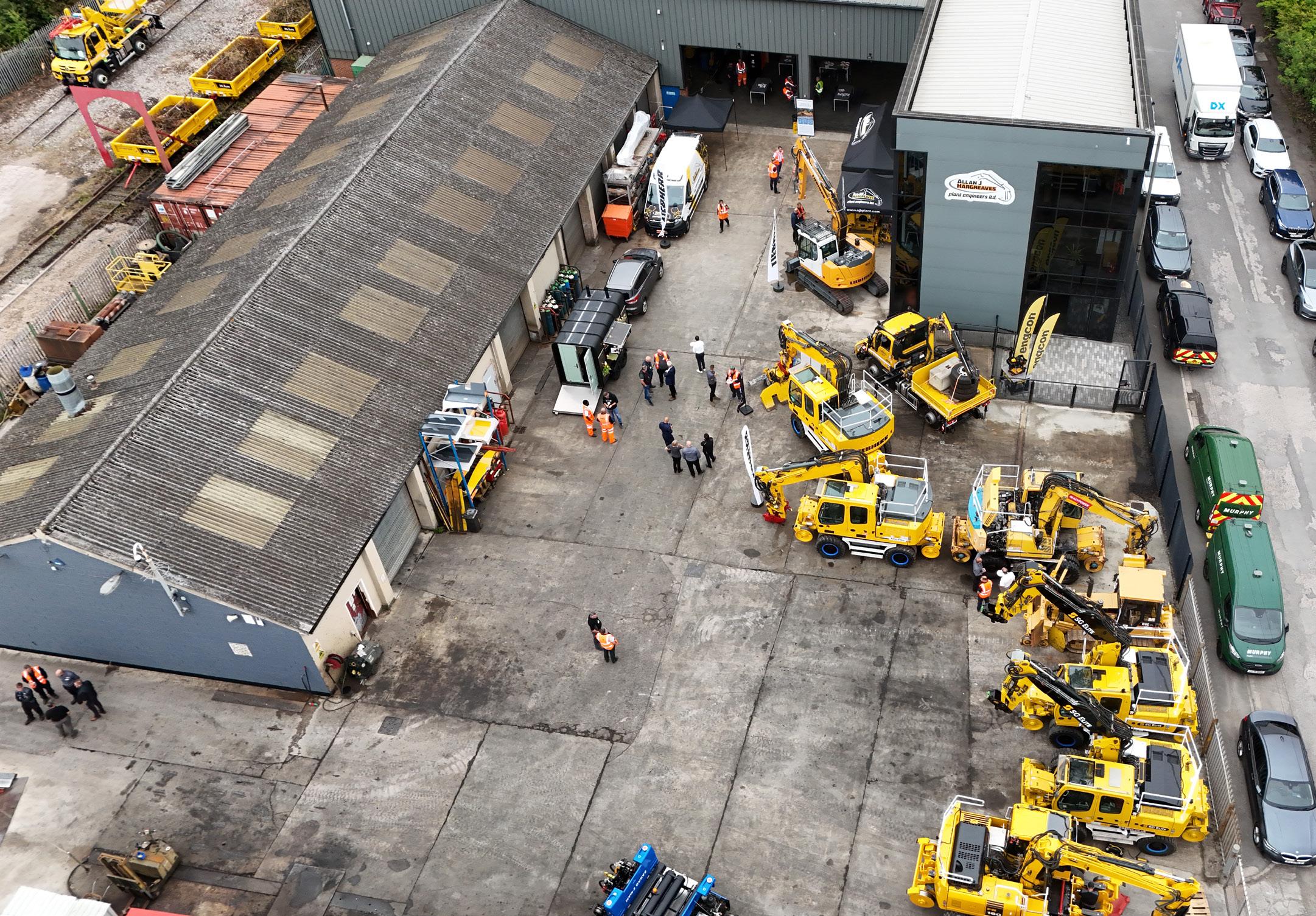
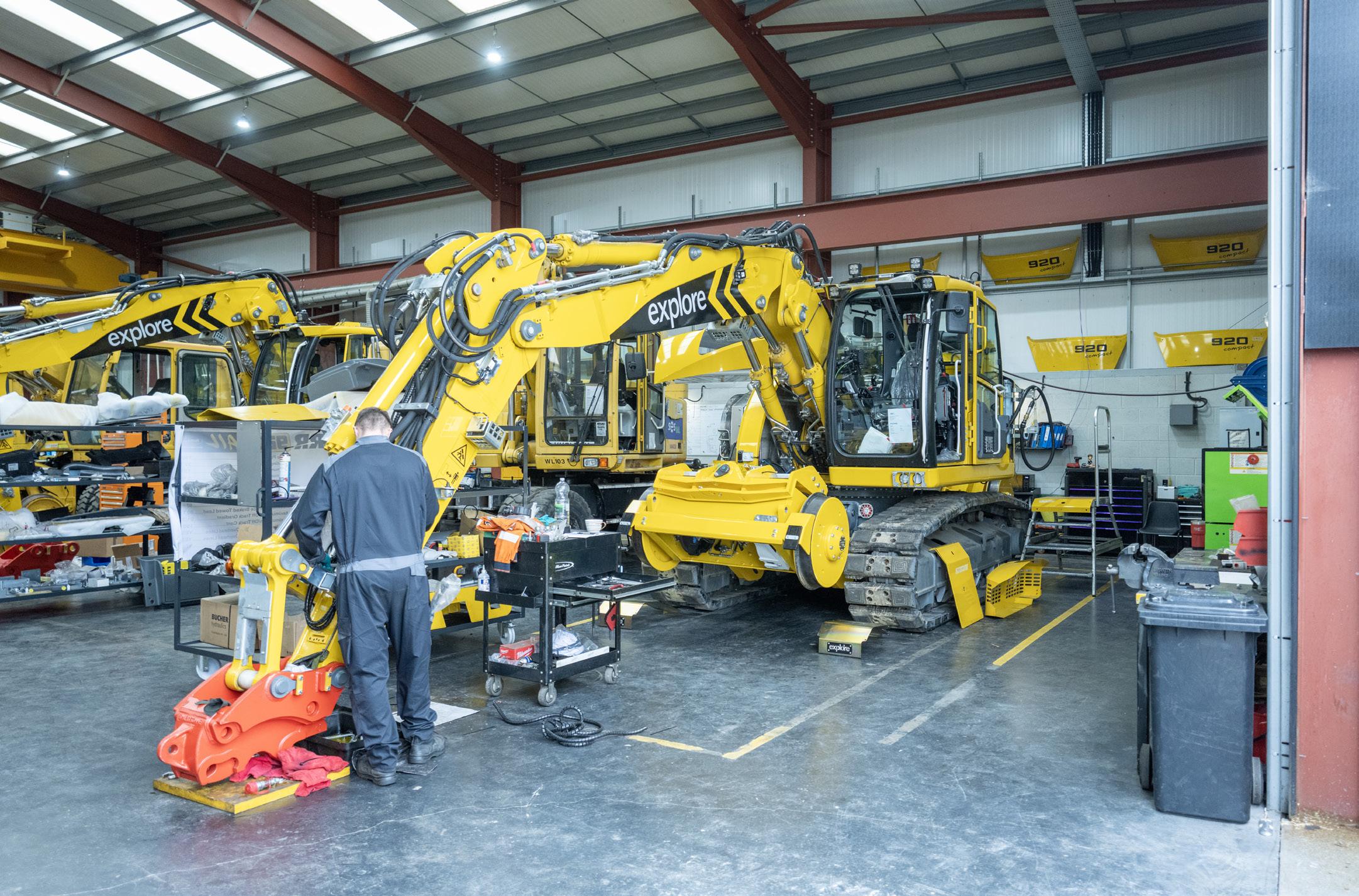
‘We prefer to focus on reinvestment and organic growth rather than rapid growth for a big project. This consistent approach allows the team to evolve in a secure environment.’
people through the business and trying to develop them. Although we have had to make some strategic hires to get specific skills we needed.
SSH: When apprentices ask about career opportunities, would you recommend they stay in the industry or do what you did and go elsewhere and bring those skills back?
PH: If you're passionate about what you do, that's the main thing. It's not about moving for moving's sake. I would have stayed at aerospace if we didn't have the family business. An apprenticeship is a great way to start. I did that, and here I am now.
to do at 16. I did two years at college before starting my apprenticeship at BAE, and I think that extra time really helped.
SSH: You're adapting Komatsu excavators for railway use. What's the most complex modification you've had to figure out?
PH: We actually do Liebherr and Komatsu excavators. We're building and developing more Liebherr machines than Komatsu at the moment. For the Komatsu’s, we stretched the cab on those machines and put that through ROPS testing, which is rollover protection structure testing. That's quite a major achievement. We completely rebuilt the cab into a new cab and took it to an external test house for the rollover testing.
SSH: In terms of expanding from eight to 80 employees, how involved were you in hiring?
PH: We take on a lot of apprentices, about three every year. So we have somewhere between nine and twelve apprentices at any one time, and we've done that every year. A lot of our employees have come through that route. It's almost impossible to find experienced engineers that do what we do. We're in the northwest of England, and if you draw a circle around Fylde near Blackpool, half of it's in the sea! So we try and grow our own. We're strong in bringing
SSH: What's your experience with the quality of apprentices today compared to when you started out?
PH: These are coming from school and most of them don't have any clue what they want to do when they leave. The candidates that are better for apprenticeship tend to be the ones that have done a year of college or a year of something else after school. There's a stark difference between 16-year-olds leaving school and 17 or 18-year-olds. Even in one or two years, there's a great leap in maturity and life experience. Don't get me wrong, we have taken on some 16-year-olds who have been really good, but generally speaking, they don't know what they want
But if you want to talk about the biggest challenge, we build a jet vac machine for railway called the Rail Cyclone. The whole machine is designed and built in-house at our works. It's a suction unit which clears out all the drains from the catch pits at the side of the railway and does high-pressure water jetting. The first one we did was converting a customer's crop sprayer into a jet vac machine. After that, we thought we could do this better ourselves. The customer let us design and manufacture the complete machine from the chassis up rather than convert an existing unit. We still build those to this day. That first one was seven years ago. That's probably the biggest technical achievement.
‘It is quite concerning that we are currently in a period of managed asset decline on the railway. This decline needs to be reversed at some point with greater investment.’
SSH: Your first rail conversion was in 2018, and now you have the Rail Raider Mk2 and Rail Rascal. What's the next machine you're developing?
PH: We've just passed the 100 machine mark! Just over seven years ago, we built the Komatsu Rail Raider, our very first machine. The second machine, approved a
couple of weeks after that, was the first Rail Cyclone, which was the crop sprayer version. Currently in development, we have the Liebherr R914 Rail, the baby brother to the R920 Rail, plus some additional machines we can't yet disclose.
SSH: Your father built this from a single van to an 80-person operation. What's the biggest change you're making as the new owner?
PH: I worked alongside my parents for 13 years before taking over. There has been a lot of evolution over those years to bring us to where we are now. It's not about making any great changes but continuing to do what we do best and develop along with the industry.
SSH: Major infrastructure projects can take years. How do you maintain cash flow with such long development cycles?
PH: We try to ensure we maintain a diverse workbank and don’t have all our eggs in one
basket so to speak, this allows us to pivot more easily when demands arise or drop off.
SSH: You offer both GKD and InTeEx safety systems. How do you decide which technology to recommend to different customers?
PH: These safety systems have specifications to meet regarding key functionality, at the end of the day they both meet the required standards for the rail industry. We aim to guide customers with their decision however the decision can be driven by the users organisational restraints such as training and competence of both the operators and the engineers.
SSH: The rail industry has gone through decades of privatisation, renationalisation debates, and now faces massive electrification and digitalisation programmes. As someone who's been designing rail equipment since 2011, how have these shifting political and technological currents affected your business strategy, and where do you see the biggest opportunities emerging?
PH: A big opportunity to change lies with privatisation of the TOC’s when they are brought into great British Railways. This could allow for greater collaboration on track maintenance activities optimising maintenance windows to maximise the value, historically only short maintenance windows have been available with the majority of a work on a Saturday night which is costly and inefficient.
SSH: The government has committed to massive rail infrastructure spending through HS2, Northern Powerhouse Rail, and electrification programmes. How have overlapping economic and political cycles shaped your approach to growth, and what lessons have you learned about timing major investments?
PH: We tend not to focus on the big projects, announcements for major projects can take years to materialise and change multiple times even before there are boots on the ground. We prefer to focus on reinvestment and organic growth rather than rapid growth for a big project, this consistent approach allows the team to evolve in a secure environment, which is why as a business we have achieved consistent growth over our 42 years in business.
It is quite concerning that we are currently in a period of managed asset decline on the railway, budgets are being squeezed and the infrastructure managers simply cannot do the work they need to do with the budgets they have, mainly due to inflationary pressures. This decline needs to be reversed at some point with greater investment and a clear strategy with a longer view than the current five year control period funding settlements offer.
turnerandtownsend.com/sectors/transport/rail/
We transform together.
Working in partnership makes it possible to deliver the world’s most impactful projects and programmes.
Together with our clients, we turn challenge into opportunity and complexity into success across real estate, infrastructure, energy and natural resources.

KATIE
HULLAND DIRECTOR AND GLOBAL RAIL TRANSIT SECTOR LEAD AT TURNER & TOWNSEND
Katie Hulland leads the strategy development for Turner & Townsend’s community of 500 rail professionals across more than 60 countries. She has over 20 years’ experience supporting major transportation programmes, asset owners and operators including Network Rail Crossrail, HS2, Heathrow Expansion and Hong Kong MTR.

Turner & Townsend is a global professional services firm specialising in delivering major projects and programmes across infrastructure, real estate, energy and natural resources. With over $450 billion of projects in its portfolio, the firm provides advisory and delivery services to governments, transport authorities, investors and asset owners.
Want to know more about Turner & Townsend?
Tel: 020 7544 4000
Visit: www.turnerandtownsend.com
Address: One New Change London, EC4M 9AF, UK
Tell us about Turner & Townsend.
Turner & Townsend is a global professional services company with over 22,000 people in more than 60 countries. Working with clients across real estate, infrastructure, energy and natural resources, we specialise in major programmes, project, cost and commercial management, project controls and performance, net zero and digital solutions, in markets around the world. Turner & Townsend has a strategic partnership with by CBRE Group, Inc., the world’s largest commercial real estate services and investment firm.
What are some major projects you’re currently working on?
For more than 30 years, we’ve supported rail clients worldwide, helping deliver some of the most complex and transformative transport programmes. Our experience spans the UK, Ireland, Canada, North America, the Middle East, and Australia, bringing together knowledge from across these markets to strengthen the way we deliver major rail infrastructure.
Our legacy includes work on the Elizabeth Line, where we provided cost, risk, and controls services that helped shape one of the UK’s most ambitious transport projects. The lessons from that and other landmark schemes now inform our work on programmes such as Network Rail’s Midland Main Line Electrification, Sydney Metro, and Canada’s Metrolinx Capital Investment Programme.
We believe major programmes achieve their potential when they start with a clear purpose and measurable outcomes. That’s why we’ve expanded our advisory services through our ‘Programme as a System’ approach, aligning strategy, governance, and culture to deliver long-term, sustainable benefits.
What are your plans going forward to ensure your services are still around for years to come?
Looking ahead, our focus is on creating long-term value for our clients and the wider rail industry. Our community of over 500 rail specialists continues to grow, united by a shared purpose to deliver sustainable transport solutions that last.
We are investing in the future through three lenses – sustainability, digital innovation and talent and skills. Our service offering is also rapidly evolving, underpinned by the efficiencies of digitisation and AI; helping clients design programme operating models that are fully supported by digital operating systems. This shift is already improving insight, decisionmaking and performance across the asset lifecycle.
We are also building the next generation of rail talent, combining technical expertise with new skills in AI, data,
‘Major programmes achieve their potential when they start with a clear purpose and measurable outcomes.’
systems integration and people-led change leadership. Together, these capabilities ensure we can support the industry’s transition to a low-carbon, digitally enabled railway. We do not want to just help deliver the most complex projects and programmes but see our role as a huge responsibility to help develop a sector that is more connected, sustainable and ready for the next 200 years of rail.
Our strength lies in the confidence we bring to clients navigating complex programmes. With over 76 years of experience, global reach and independence; we help organisations set up and deliver major projects successfully from end to end.
Too often, programmes move into delivery before the right foundations are in place. Our ‘Programme as a System’ approach prevents that by aligning strategy, governance, operating models and culture from the outset and creating delivery organisations capable of realising their ambitions effectively.
We also help clients navigate increasingly complex stakeholder environments from shifting political and policy priorities to the expectations of communities and investors. Our insight across rail, energy, defence and more allows us to anticipate change, build consensus and keep programmes resilient in uncertain conditions. By connecting vision with delivery, we help provide confidence and deeper assurance that outcomes are achieved and benefits are realised for passengers, taxpayers and the wider economy.
With the coming launch of Great British Railways, how do you anticipate your place within the supply chain changing?
The creation of Great British Railways (GBR) marks an important milestone for the sector. Bringing together track and train represents a huge opportunity to better connect sectors such as real estate, maintenance, operations, and capital delivery, unlocking efficiencies, improving outcomes, and enabling a more joined-up approach to planning and investment.
For us, it’s an opportunity to apply the lessons of our 76 year history and three decades in rail to help shape a more integrated and efficient industry. Our experience working with Network Rail, train operators, and local authorities gives us a strong understanding of the challenges and opportunities ahead.
The priority is to ensure that reform delivers tangible improvements for passengers, businesses, and communities. That means more than structural change, it’s about partnership, shared purpose, and leadership that builds confidence from the outset. Our role is to help GBR create a roadmap that’s ambitious yet practical, turning reform into real, measurable progress.
What are your hopes for the new regulatory bodies, such as Great British Railways?
We hope GBR becomes more than a new structure, it should be an empowered organisation that restores public confidence and reconnects rail to its core purpose: moving people reliably, affordably, and sustainably. To succeed, GBR must challenge established ways of working, reduce costs, and take a joined-up approach that aligns operations, investment, and commercial models.
Equally, it must create a culture that attracts and develops the next generation of talent. With strong leadership, innovation, and collaboration across the sector, GBR has the potential to unlock passenger growth, attract private investment, and deliver lasting social, economic, and environmental value.
What do you expect to be the biggest challenges that come from this transformation of the railway industry?
Transformation on this scale always brings uncertainty. The real challenge will be converting reform into visible benefits at pace while maintaining the confidence of passengers, staff, and stakeholders. Our experience across infrastructure sectors
shows that major change rarely fails for lack of intent, it fails when benefits aren’t realised or momentum is lost.
For GBR and the wider industry, success will depend on clear governance, a truly collaborative approach to integration which will mean very regular communication and updates to wider industry stakeholders to maintain momentum. This will demand more than just structure, it will require cultural change, new ways of working and leadership bold enough to step away from the comfort of the past. Silos must be dismantled, decisions with the whole system in mind, and integration treated as a discipline, not an aspiration. Managed this way, reform will move beyond aspiration and deliver measurable results, making a real difference for the people and communities rail serves.
Where do you think the industry will be in the next 10–15 years?
By the 2030s, we expect rail to operate as a connected ecosystem, linking high speed rail, metro, freight, and light rail seamlessly under governance and operating models that maintain performance and cost control. Rail will remain vital national infrastructure, driving growth, supporting communities, and helping to achieve net zero.
For this vision to become reality, reform must deliver clear outcomes: restoring trust, improving value for money, and attracting both public and private investment. Our role is to keep ambition grounded in delivery, ensuring that change translates into real improvements passengers and taxpayers can see and feel.
How can we get more use of rail assets and what is your vision for rail over the next few decades?
collaboration means moving beyond contractual frameworks to foster trust, transparency, and shared accountability. But for collaboration to truly take hold, walking away from change must also be made difficult. That requires clear accountability, delivered and reinforced by government.
At Turner & Townsend, collaboration underpins how we work. We know that when silos are broken down and decisions are made collectively, delivery becomes more confident, consistent and greater than the sum of it’s parts. Ultimately, working together strengthens the industry’s shared purpose, moving people and goods efficiently, safely, and sustainably.
How can we make the rail industry a place people want to work in?
To attract people to rail, the sector must be clear about its purpose and its potential. Rail connects people to opportunities and plays a vital role in achieving net zero, but to truly unlock its potential, we need a clear strategy from government and a stronger pipeline. This will give companies the confidence to invest in skills and capability training, ensuring the workforce is ready for the future.
Innovation is also critical. The next generation is inspired by fresh thinking and new approaches. If rail cannot demonstrate that it’s a modern, forward-looking industry, it risks losing its role in the carbon reduction journey.
That means creating environments where people feel valued, supported, and inspired. At Turner & Townsend, we’ve seen how investing in diverse teams and professional growth brings out the best in our people. If the wider industry adopts that mindset, rail can continue to be one of the most rewarding sectors to work in.
‘Too often, programmes move into delivery before the right foundations are in place. Our 'Programme as a System' approach prevents that by aligning strategy, governance, operating models, and culture from the outset.’
To get more from our assets, we need smarter lifecycle management, moving beyond short-term maintenance to investment in upgrades, automation, and predictive technologies that enhance reliability and extend asset life. Coordinated planning across disciplines and longer-term funding certainty can help unlock greater efficiency and value.
Opportunities also lie in encouraging modal shift from road to rail, expanding freight capacity, and embedding clean energy and innovation across the network. In the next two decades, rail should be delivering clear carbon benefits, digitally enabled, and fully integrated with local transport, providing seamless, sustainable journeys that drive growth and mobility.
What are your views on collaborative working?
Collaboration is essential to rail’s success. The sector relies on many moving parts, government, regulators, operators, suppliers, and communities. Real
What do you think are the most important steps to ensure that integration across infrastructure, operations and passenger experience becomes a reality, not just a vision?
Delivering integration requires more than structural reform, it needs clarity of purpose, disciplined delivery, and a culture that supports collaboration. The outcomes that matter most for passengers, freight, and taxpayers must be defined early and supported by aligned operating models, frameworks, and investment strategies. Integration should be managed as a programme in its own right, with accountability, measurable benefits, and visible results.
The sector must also look outward, learning from the best of other industries. From our experience, integration succeeds when leadership is accountable, collaboration is embedded, and improvements are visible in the passenger experience, turning aspiration into reality across the network.

At Migo, we help transport organisations turn complex change into lasting impact.
Whether it’s adopting new digital systems, delivering major programmes, or preparing for ETCS, we work alongside your teams to make sure change doesn’t just start well, it lands well. We bring together specialists in operations, technology, and strategic delivery to offer practical support where it’s needed most. No overcomplication. No one-size-fits-all. Just the right people, focused on making a difference.
Our services include:
● Training and Development
● Operations and Delivery Improvement
● Project Management and Coordination
● Transformation and Change Management
● ETCS Implementation Support
● Cybersecurity (via our MigoSec+ division)
Change can be complex. But with the right partner, it doesn’t have to feel daunting. We bring experience, structure, and support to help you move forward.
Migo Consult. With you every step of the way.
Follow us on LinkedIn: @MigoConsult Email: enquiries@migoconsult.co migoconsult.co
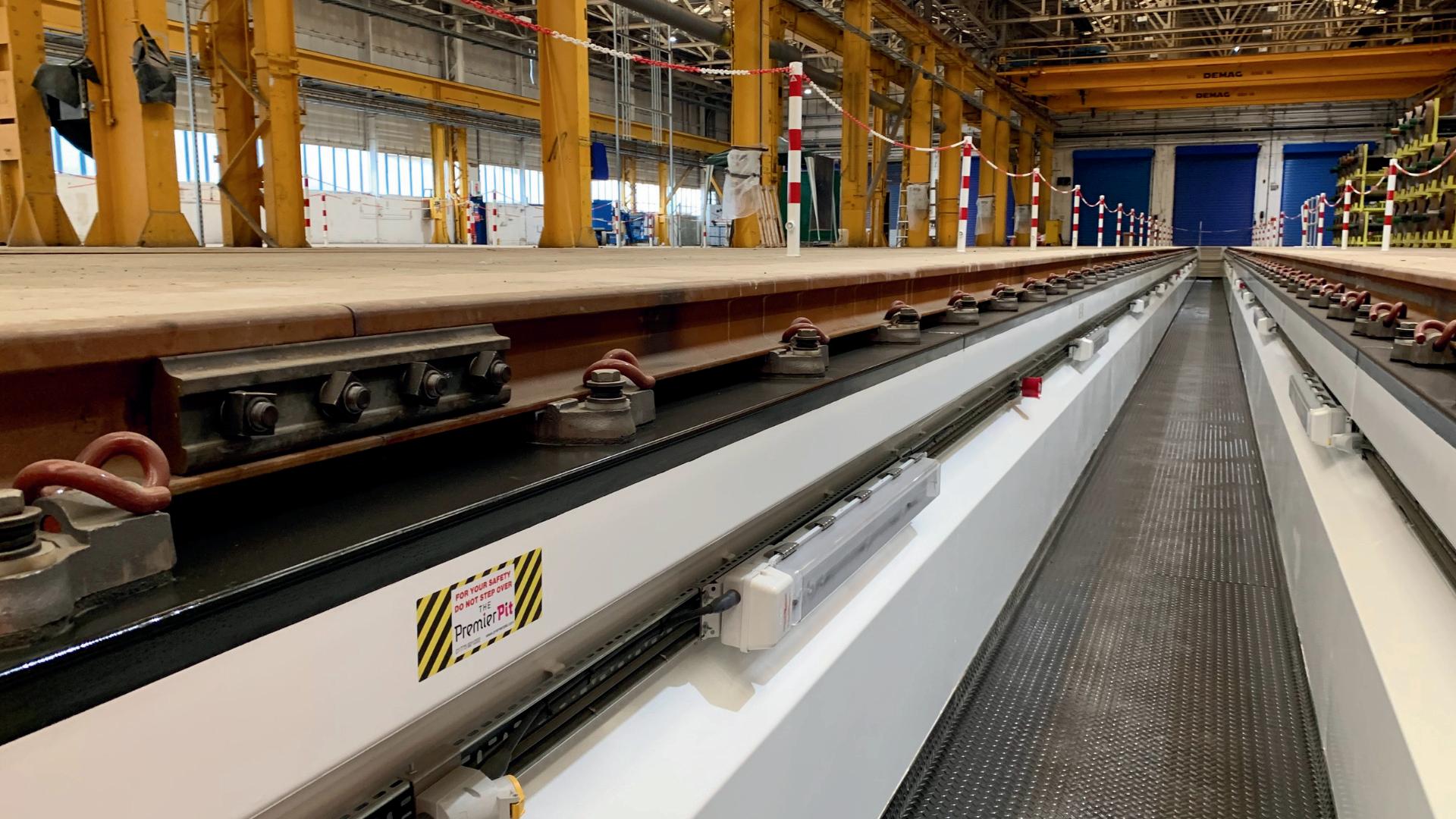

Improve the efficiency of your workshop with our



•
•
Jason Cooney, Director of Tsaks Consulting, explores the key challenges SMEs face when bidding for rail contracts and shares expert strategies on how to overcome them to secure valuable government and private sector work
The rail sector, from large infrastructure projects to essential maintenance, generally works off a formalised procurement process with bidding and tendering for work being the primary method for stakeholders to secure contracts. For the major Tier 1 firms, the bidding process is often challenging due to its complexity and volume, however, they generally have inhouse teams and well-developed bid libraries to make the process straight forward.
On the other hand, for Small and Medium-sized Enterprises (SMEs), writing winning bids and securing government and private sector rail contracts is challenging and often seems unachievable. They generally don’t have the internal bidding infrastructure to complete bids efficiently and get bogged down in compliance.
Five key challenges SMEs face when bidding for rail industry contracts and how to overcome them include:
1. Tailoring safety, quality, and compliance.
2. Writing a high-scoring social value response.
3. Demonstrating innovation while remaining a safe pair of hands.
4. Justifying price through explaining your approach and methodology.
5. Comprehensive planning for regional and remote works.
In rail, generic certifications are the price of admission, not a winning strategy. You need to go beyond ISO certifications and provide documentation which clearly demonstrates your understanding of the unique challenges in the rail industry, as well as the specific project you are bidding for.
The same applies to quality assurance where you need to tailor your documentation and process to the opportunity and industry sector. Your bid must move beyond stating what your processes are, to showing how they are specifically adapted to the operating
environment: managing track possessions, working adjacent to live running lines, or handling specific rolling stock standards. For a maintenance bid, this means detailing how your quality checks account for cyclical fatigue, environmental degradation unique to the trackside, and compliance with specific rail network standards.
By demonstrating that you understand the rules and regulations across the UK, have safety and quality assurance ingrained in your business culture and approach (being an SME generally makes this easier), and have taken the time to foresee potential safety and quality related issues with the specific project, you put yourself in a strong position to score well and secure the contract.
Social Value, particularly in government bids, is a heavily weighted scoring element. A standard commitment to ‘local employment’ won’t cut it. To score well, firms must integrate concrete, measurable plans for local employment initiatives and skills transfer. This means moving beyond generic statements to specific commitments: partnering with regional colleges to offer rail-specific apprenticeships, prioritising subcontracting to local SMEs within a given kilometre radius of the worksite, and establishing skills-transfer programmes that upskill local staff in new rail maintenance technologies. SMEs can really excel here and score well from an employment and skills transfer perspective particularly if your directors and senior personnel are hands-on in your operation.
You can talk about how their knowledge and experience will be passed on directly to local workers and how apprentices and local workers will benefit from the direct transfer of experience and knowledge given the hands-on involvement of your senior personnel.
Every client wants innovation, whether it’s predictive maintenance, advanced sensor technology, or smart logistics to drive efficiency and reduce whole-life costs. However, your bid must ensure innovation does not overshadow a focus on quality and the integrity or safety of critical infrastructure.
A common mistake is proposing innovation without adequately demonstrating its reliability. Your bid must successfully incorporate innovative techniques while linking them directly to quantifiable benefits: reduced network downtime, enhanced preventative safety metrics, or demonstrable whole-life cost savings. The key point is that you need to show that any innovation is proven and de-risked. The reader needs to be comfortable that any new innovations you put forward have been crash-tested in the rail environment and do not present any operational risk or potential delays or issues.
Many SMEs struggle with pricing and feel they have to reduce their pricing in order to win public and private sector bids and tenders. The most common point of failure is often the pricing proposal. A price that is too low raises immediate concerns about corners being cut, while a price that is too high is easily dismissed. The key to success is in the narrative that bridges your technical offer and your final figure: explaining your methodology in order to justify your price. If your price is competitive (lower), you must rigorously attribute the savings to superior efficiency, smart planning, or innovative processes. Explain, for example, that investment in off-site pre-assembly or a bespoke planning tool has shaved off the required track possession time, thereby justifying your lower operational cost. It is a saving based on intelligence,
not cuts to quality or labour. Conversely, if your price is higher, you must clearly link it to increased long-term value, superior materials, enhanced safety provisions beyond the minimum, or a deeper expertise that eliminates future risk and expenditure. The methodological justification is where you prove you offer value for money, not just a cost.
The logistical reality of rail maintenance means contracts frequently involve worksites far from major urban centres, often in regional or remote locations. A bid that fails to acknowledge and robustly plan for these challenges is often discarded.
You must provide a comprehensive plan that demonstrates a deep understanding of operational reality. This plan should cover logistics for equipment and materials, specific protocols for managing local stakeholders and environmental impact in sensitive areas, and crucially, reliable methods for securing and maintaining a skilled, compliant workforce in a remote location. This level of detail, from managing accommodation for crews to emergency response protocols, shows you have genuinely thought about the execution and are not relying on a standard, city centric template. For many SMEs, a lot
of thinking goes into figuring out how you will deliver the works in a remote location and sometimes this thinking isn’t translated into the bid itself. Educating the reader and procurement teams not only on how you will deliver the works in a remote location, but also your reasoning and thought process to get there is critical to writing a successful bid.
Winning a rail bid requires a rigorous bid/no bid process, especially for SMEs. Don’t waste resources on opportunities that don’t align with your core competencies or where you cannot credibly address these sector-specific challenges.
In order to achieve success, SMEs need to move past compliance to demonstrate deep, operational understanding and exceptional, demonstrable value. By tailoring your safety, mastering social value, intelligently integrating innovation, and meticulously justifying your price through methodology, SMEs can level the playing field and secure the contracts that fuel their growth within this vital industry in London and across the UK.
Jason Cooney is the Director of Tsaks Consulting, a bid and tender writing consultancy based in London specialising in the rail sector.
‘A price that is too low raises immediate concerns about corners being cut, while a price that is too high is easily dismissed. The key to success is in the narrative that bridges your technical offer and your final figure.’








































When someone listens, people will make the right call.
Thousands of organisations in the transport sector are members of CIRAS. We build a strong listening partnership with our members to improve safety. Our confidential safety hotline provides extra listening to help staff make the right call and report their concerns even when they feel they can’t use other channels. When we listen, we learn.
Learn how you can build your listening partnership with CIRAS at ciras.org.uk/rightcall.

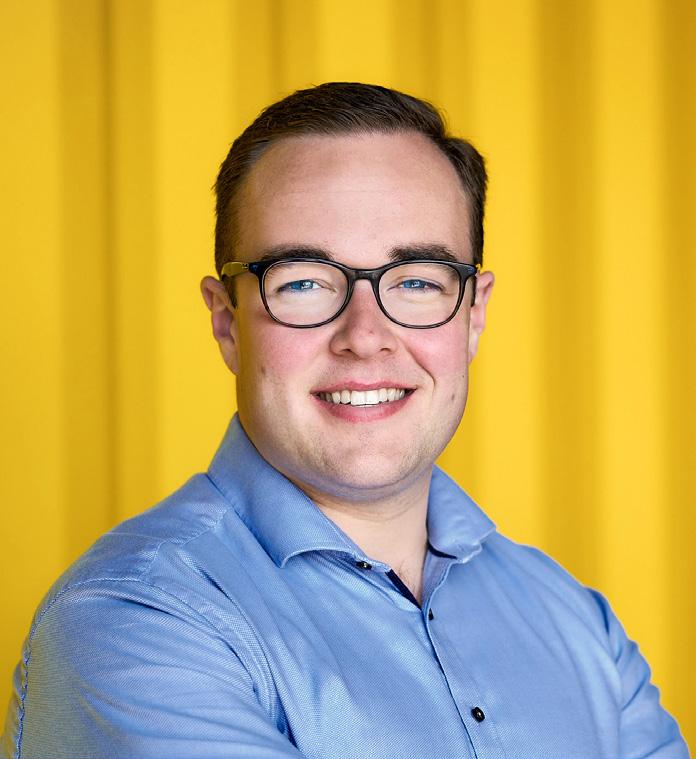
JAKE MICHEL SALES DIRECTOR AT ZAPPSHELTER
Jake Michel is Sales Director at Zappshelter, where he leads the sales team and works directly with senior industry contacts to develop protective shelter solutions. With a decade of experience in the business founded by his father, Jake has overseen the installation of over 1,000 Zappshelters across major infrastructure projects including HS2, Sizewell C, and Hinkley Point C.

Zappshelter is a British manufacturer of engineered shelter systems designed to mount on shipping containers or concrete blocks for temporary or permanent applications. Founded ten years ago, the company serves construction, rail, and infrastructure sectors with relocatable shelters built to conventional building codes.
Want to know more about Zappshelter?
Tel: 01738 316209 Visit: www.zappshelter.com
‘Seek first to understand, and then to be understood' is a Stephen Covey principle we go by, so listening and understanding a client's needs and pain points is critical to developing a solution that works for them.’
What is your role within Zappshelter?
I’m Jake Michel, Sales Director at Zappshelter. My role involves leading the sales team to ensure every client receives the consistent, helpful, and professional experience they expect from us. I also work directly with senior contacts across the industry, both face-to-face and virtually, to develop solutions that protect what matters most to their operations.
What success have you experienced in the last twelve months and how do you measure success?
The last twelve months have been defined by significant growth, with a range of new and exciting projects that have enhanced our industry reputation. This expansion has allowed us to grow our team, increasing our capacity to respond even faster to customer requirements. While we measure success against financial objectives and on-time project delivery, the metric I'm perhaps the most proud of is our perfect product safety record: in ten years of operation, we have had zero structural failures, despite our shelters enduring more than 70 Met Office named storms.
What does sustainability mean to you?
Sustainability permeates our whole organisation from design through manufacturing to installation. This is one of the reasons why Zappshelters are a consistently higher quality than anything else on the market. They are engineered to last, unlike some others which fall foul of our weather conditions and need replacing frequently. The materials we use, such as our Ferroten steel and Taurinox membrane, are infinitely recyclable.
Of course, sustainability is a daily discussion in the office, because we are serving customers who need Zappshelters to meet their own sustainability goals. For example, keeping aggregates dry doesn’t just reduce the weight of the material
meaning more volume per truckload, but it also means that there is less CO2 produced per load too. The same principle applies to a wide range of recycling and construction materials.
What was the inspiration behind starting Zappshelter?
My father, Craig, started the company ten years ago after seeing a similar shelter system in Australia. After a lot of development to perfect a system suitable for UK wind and snow requirements, he set out to launch a product that no one had heard of to an industry that didn’t know it needed it. No mean feat! However, a decade later, Zappshelter is still the best loved, safest, toughest shelter system out there, and made right here in Britain.
Tell us about Zappshelter.
It’s an ingenious shelter system that is designed to mount on shipping containers or precast concrete blocks for temporary or permanent applications. With a wide range of sizes and add-ons, each Zappshelter setup is designed specifically around the requirements of the client to ‘Protect What Matters’ – People, Product, Profit and Planet. The beauty of the system is that it can be installed in a very short period of time with minimal disruption on site and no groundworks. This saves customers a lot of time and money because the last thing anyone needs is interruptions to their daily business operations.
Although fully relocatable, Zappshelters are designed to the same building codes as conventional structures, so they are as permanent as you need them to be. They can be extended or relocated as requirements change, making them a far more appealing solution to alternatives, such as a steel shed. This is especially applicable to the rail industry.
To further enhance Zappshelter’s appeal as the ultimate flexible solution, we have recently introduced Zappshelter Hire – a specialist division that enables customers to rent or lease units at attractive rates, either because they don’t have the capex budget available, or because their requirements are short term, or perhaps because they wish to spread payments over a period of time.
What are some standout projects you’ve been involved in over the years?
Lots of our projects stand out to me – it’s hard to know where to start! Despite having built over 1000 Zappshelters across the world now, I still remember most of them, perhaps especially some of those early ones when we first started out.
I think the most interesting ones would be some of the major infrastructure projects we’ve been involved with such as HS2, the A14 upgrade, Sizewell C, Hinkley Point C, Sellafield, etc. We installed a couple of
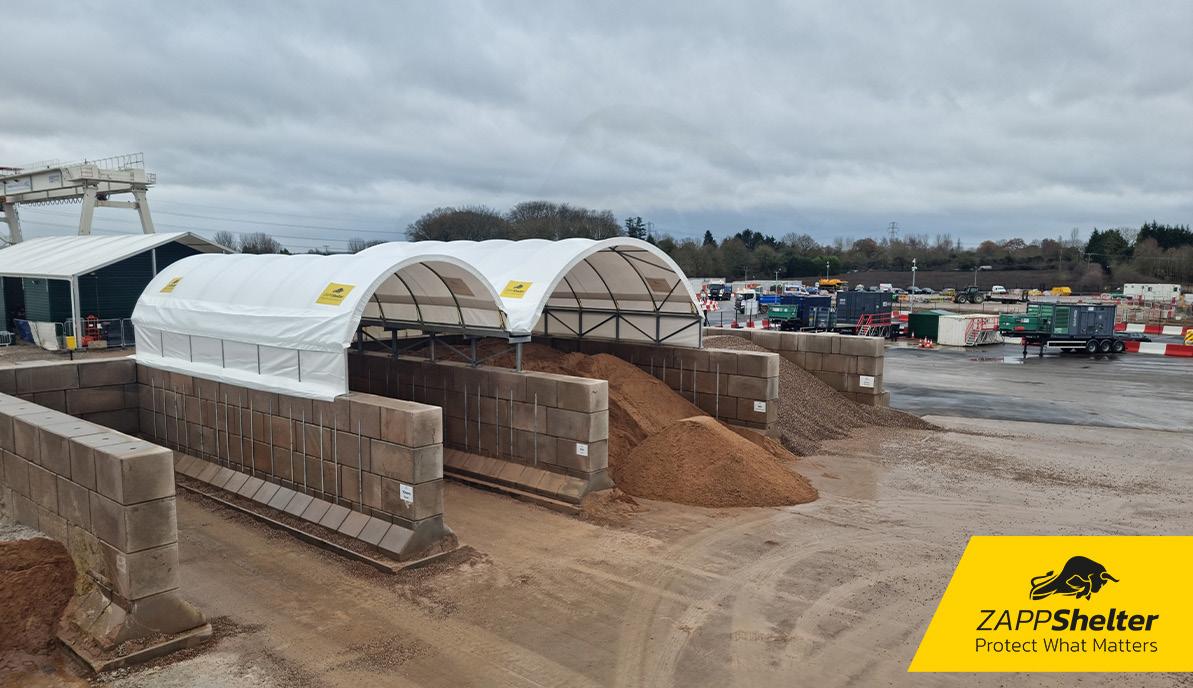
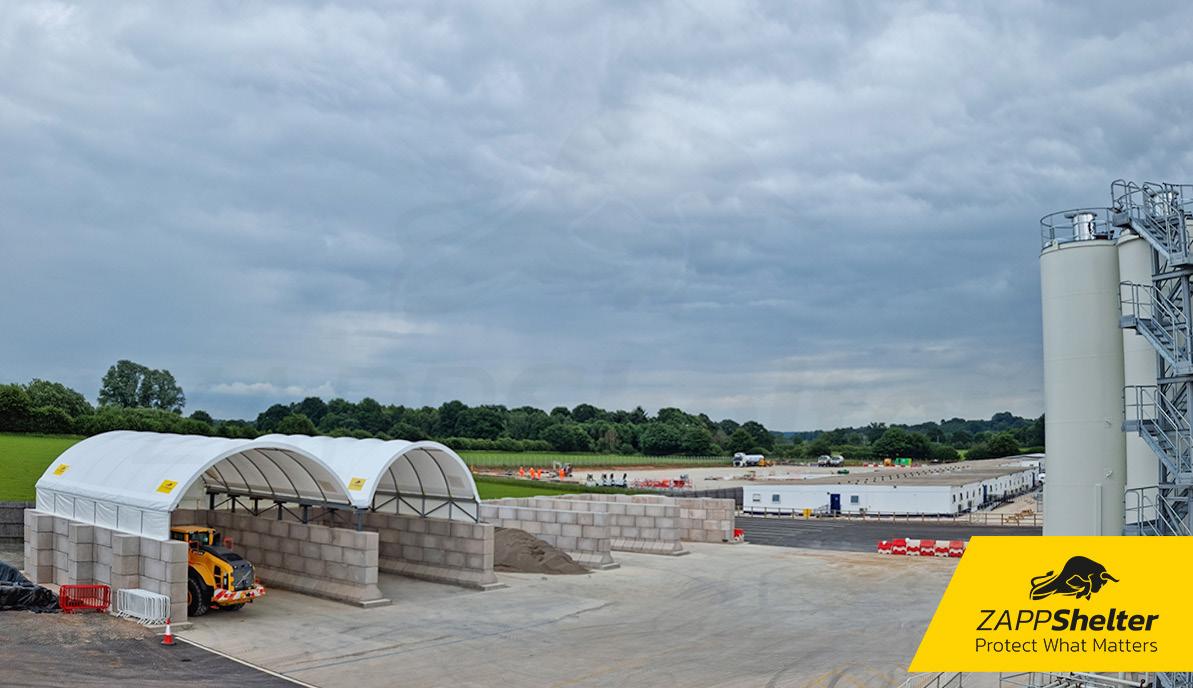
Zappshelters in Mons, Belgium for Google at their new data centre, some were installed on the new Mexico City Airport site… the list of varied and interesting projects is endless! It was a real honour to be involved in a highly sensitive defence project a few years ago – but I’m not allowed to talk about that!
We put the same amount of passion into all our projects, whether it’s huge aggregate storage bays for a Tier 1 Contractor on HS2, or a small workshop shelter for a plant repair company who are looking for a bit of extra space to service machines in poor weather. They often have some aspect of customisation and being able to accommodate customer requirements of this nature is another reason why they keep coming back.
When a client comes to you with a particular problem, what’s your process for coming up with a solution, and how closely do you work with clients throughout the projects?
The critical thing is to listen. ‘Seek first to understand, and then to be understood’ is a Stephen Covey principle we go by, so listening and understanding a client’s needs and pain points is critical to developing a solution that works for them. Once we have grasped the situation accurately, we come up with layout drawings and designs to meet the need, often accompanied by 3D renders which help clients visualise the end result. Keeping close to the customer throughout the process is critical to a successful outcome.
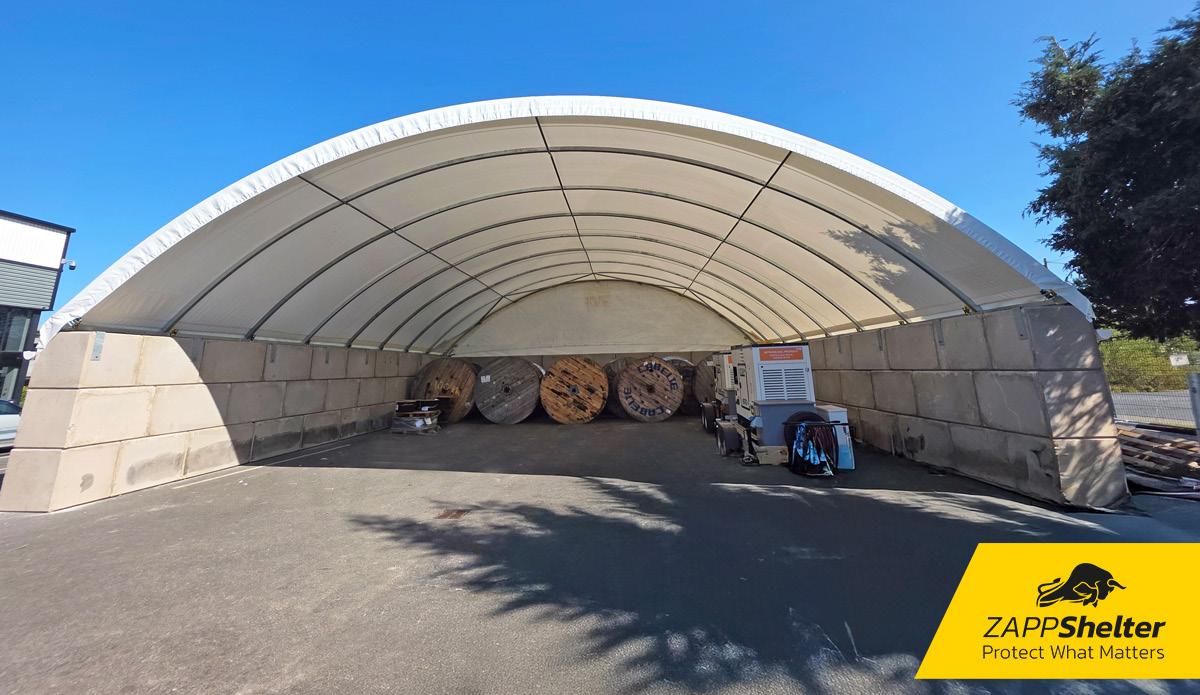
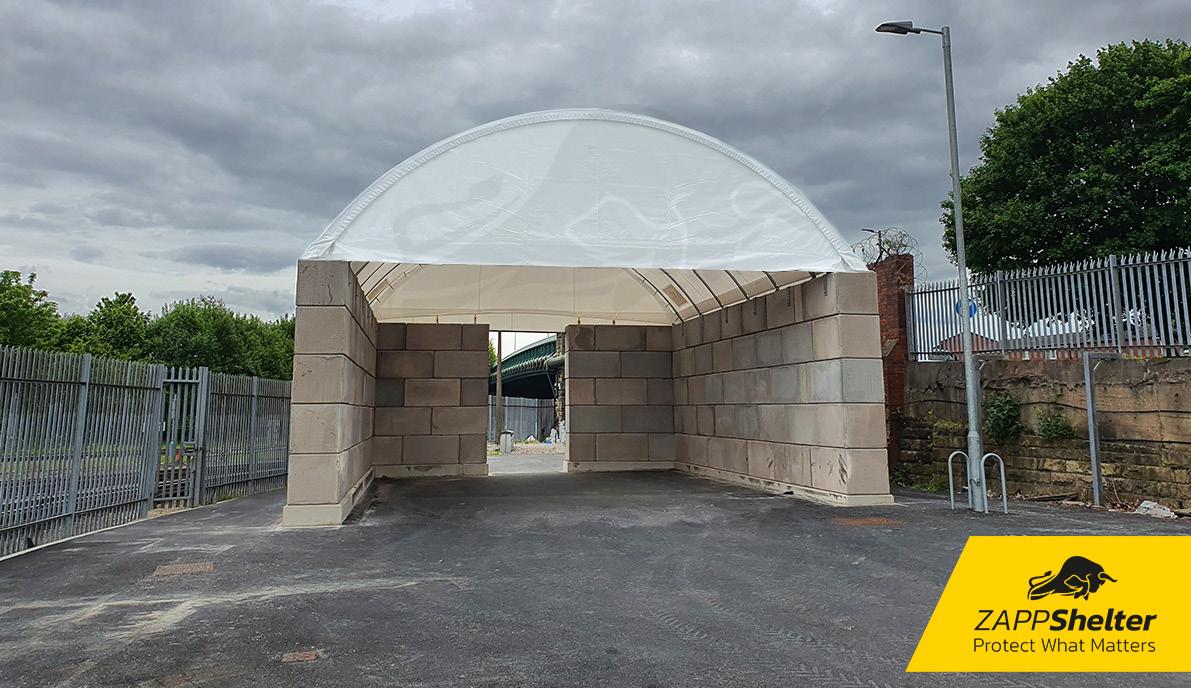
What is the market response to Zappshelter so far?
We’ve been blown away with the response! With over 1000 Zappshelters installed in the UK alone, we are still working on projects covering equipment and materials we’ve never come across before. Despite being ten years into our journey now, it’s still a pleasant surprise to discover a new application for our products, another way to help a different sector of the market to ‘protect what matters’.
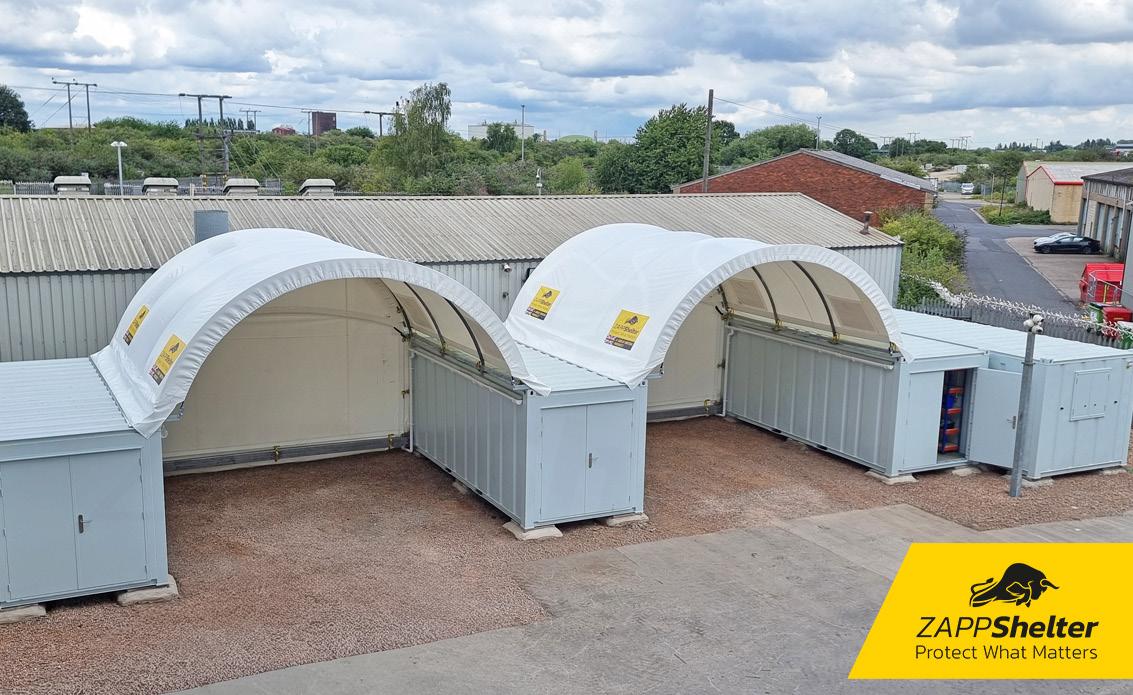
What kind of challenges did you face in the early days?
As I mentioned before, selling a concept that no one had heard of to a market that didn’t know it needed it was seriously hard work. Initial marketing efforts generated a huge amount of interest, but much of it wasn’t appropriate because, let’s face it, you can’t really put a Zappshelter up in the front garden of a three bed semi-detached house in Manchester – these things are huge, but initially the market didn’t understand that. Another challenge was where to focus our efforts. There are so many applications from agriculture to zookeeping that we needed
to decide where to start. Construction is in our family DNA, so that’s what we focussed on initially, including rail, civil engineering, plant hire, housebuilding etc. Of course, we now serve a much greater range of industries but construction-related sectors are still central to what we do.
What’s next for Zappshelter?
The next chapter for Zappshelter is defined by expansion, innovation, and responsibility. We are actively expanding our team to support business growth and are looking at strategic geographic expansion beyond our current core markets to bring our engineered solutions to more clients globally.
Innovation is a key part of Zappshelter’s DNA. Each year we commit a significant budget to product and installation research
and development, with new product updates continuously going through our rigorous structural engineering processes. Simultaneously, we're focused on increasing production efficiency using new machinery, systems, and processes to maintain and improve Zappshelter’s already superior quality.
Finally, we are deepening our commitment to those less fortunate than we are, through the Zapp Foundation, with an expanded focus on charitable initiatives that protect and support communities, reflecting our mission to ‘Protect What Matters’ far beyond the sites and projects we work on. Kindness and compassion are our founding principles and, as the company continues to prosper, so our ability to support others in need increases.
How do you work with the supply chain within this sector?
Collaboration is at the heart of our approach to the supply chain within the rail sector. We understand that successful project delivery hinges on strong partnerships, so we actively engage with a diverse range of suppliers, from raw material providers to logistics partners and industry experts. We prioritise suppliers who share our commitment to
quality, safety, and sustainability, ensuring that every component and service aligns with Zappshelter's high standards and the stringent requirements of the rail industry. Regular communication, transparent feedback, and a shared understanding of project goals are key to fostering these effective working relationships, allowing us to deliver reliable and efficient shelter solutions for our clients.
At some point, every company will face the question of how to continue maximising earnings from their current business practice whilst also investing enough in innovation so they can turn a profit in the future. How can a company achieve the necessary creativity to innovate without compromising their existing business?
Profit is obviously key for the long term viability of any business and budgeting ahead for research and development of products and processes ensures that improvement is ongoing but not to the detriment of the future of the company. For us, maintaining the integrity of our products is an unbending principle that cannot be compromised, cost what it may. It’s from this standpoint that we view all future innovation. This means that product

development and cost-cutting measures are never at the expense of quality and safety. However, we encourage a culture of continuous improvement. Every team member is empowered to think outside the box and challenge the status quo to identify areas for enhancing products and processes. That mindset has led to seemingly small innovations with significant gains, but without disrupting tried and tested practices.
‘In ten years of operation, we have had zero structural failures, despite our shelters enduring more than 70 Met Office named storms.’





Scan to speak to a Sheltologist® and find out how to get undercover on your site today






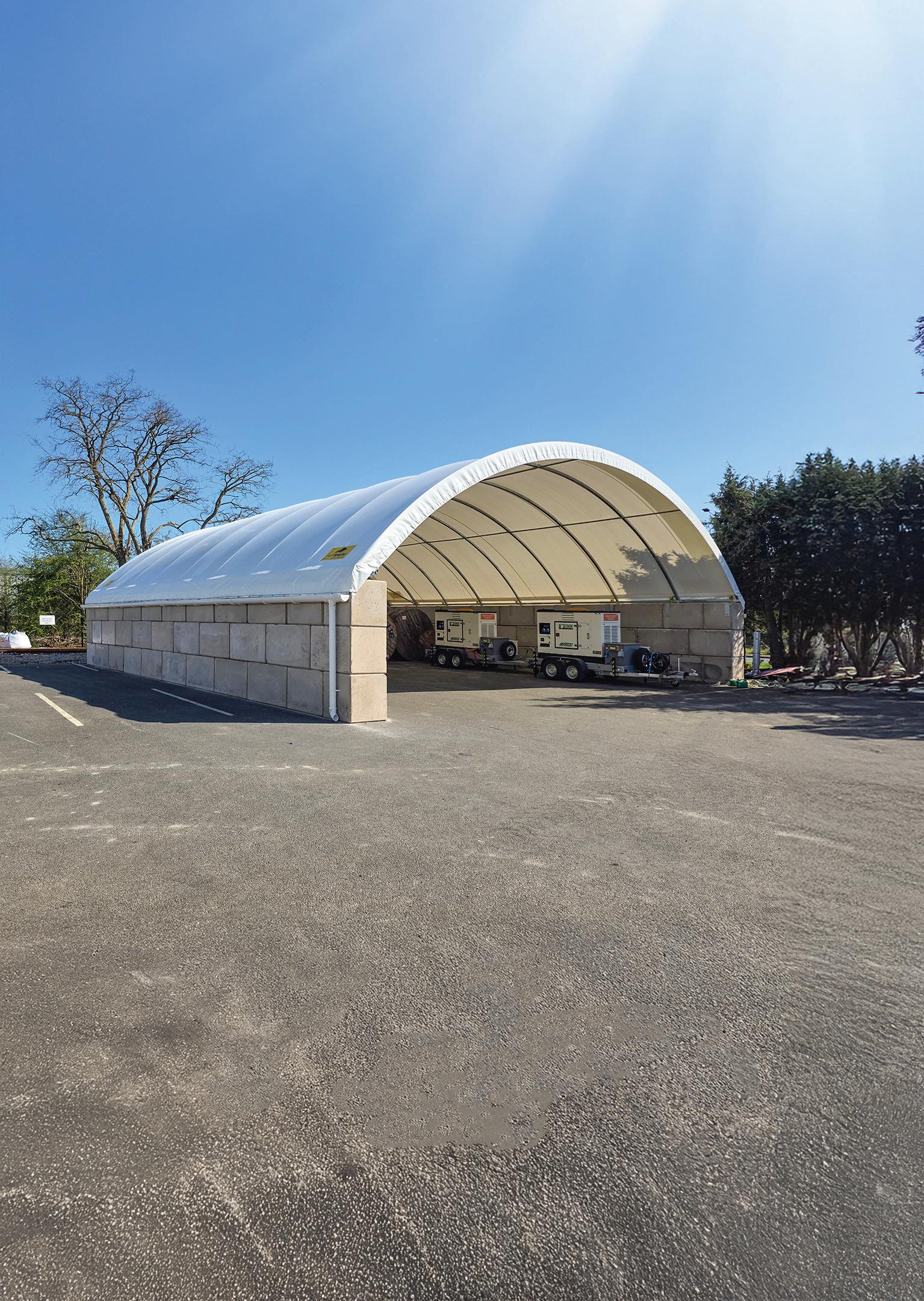

Through inclusive Access Training, c2c and the OPC have helped equip young people with the skills, confidence, and support to succeed in rail
When twelve young people from The King’s Trust joined c2c’s ‘Get into Railways’ programme earlier this year, few imagined that four of them would soon secure permanent roles with the train operator. But that’s exactly what happened, thanks to a unique partnership between c2c, The King’s Trust, and the Occupational Psychology Centre (OPC).
The initiative, now a regular feature of c2c’s recruitment calendar, was designed for 18- to 30-year-olds facing barriers to employment. Over three weeks, participants gained practical work experience across c2c’s business, from customer service and ticketing to HR, while building the confidence and understanding needed to step into a professional work environment.
To support this journey, c2c partnered with the OPC to deliver their tailored Access Training, an evidence-based programme designed to help candidates feel confident and prepare for formal assessments and interviews. The programme began by demystifying psychometric testing, explaining what it is, what to expect, why it matters, and how candidates could prepare effectively. Participants then practised using the OPC’s Core Skills Verbal (CoreV) and Core Skills Numerical (CoreN) tests under timed conditions.
‘Being part of the project was incredibly rewarding, and I learned a great deal too’ said Becky Griffiths, Talent Assessor at the OPC. ‘Delivering the presentation and supporting the applicants gave me valuable, new insights into how important it is to create a candidate experience that is both engaging and genuinely supportive.’
Following their practice tests, each participant received one-to-one feedback. It was a chance to explore their strengths, look at areas for development, and build self-belief and confidence ahead of the official assessment day. Together with c2c’s coaching, this preparation helped candidates prepare for c2c’s official assessments, including OPC Assessment’s Railway Written Communication Exercise (rWce) and Ticket Office Selling Test (TOST)
‘The group were really enthusiastic and eager to get involved’ Becky added. ‘Doing the practice tests helped them understand what a real test environment feels like – and how quickly time passes! They responded really well to feedback, genuinely wanting to do well and make the most of the opportunity.’
The OPC’s Access Training approach recognises that not everyone begins their


‘Access Training helps remove unnecessary employment barriers. Having four people secure jobs from a shortlist of twelve is a fantastic outcome, especially for these Kings Trust candidates. It’s a strong example of how inclusive recruitment can open doors for untapped talent.’
career journey with the opportunities to practise assessments or participate in structured recruitment processes, whether down to educational differences, access to training, or workplace experience. The lowpressure, supportive format helps reduce anxiety, build confidence and aims to level the playing field enabling individuals to perform their best on the day.
That support can make a real difference. Research by The King’s Trust reveals that 25 per cent of young people identify repeated rejection as a major barrier to employment, 23 per cent report low confidence, and nearly one in five (18 per cent) struggles with the application or job interview process. Confidence-building, cited by 38 per cent, was the single biggest factor young people felt would help them secure work. For many of the nearly half a million young people in the UK not currently in education, employment or training, initiatives like the OPC’s Access Training could be the difference between being overlooked and being hired.
‘Not everyone starts from the same place’ said Jo Lawrence, Joint CEO at the OPC. ‘Access Training helps remove unnecessary employment barriers. Having four people secure jobs from a shortlist of twelve is a fantastic outcome, especially for these King’s Trust candidates. It’s a strong example of how inclusive recruitment can open doors for untapped talent.’
For participants, the experience was transformative. Lindsey Keeling, one of this year’s successful candidates, shared: ‘I really enjoyed the chance to complete the two OPC Assessment tests as part of the ‘Get into Railways’ programme. It gave me the opportunity to explore different career avenues, and the OPC team were really helpful in providing practice papers and tips that helped me feel ready for my assessment day.’
The partnership has also brought tangible benefits to c2c’s recruitment approach. Jessica Lake, Head of Learning and Development at c2c, reflected: ‘Partnering with the OPC on The King’s Trust scheme has been a pivotal step in our mission to develop young talent and build a more inclusive workforce. Their assessment and selection expertise has helped us identify individuals with real potential, giving candidates a meaningful pathway into rail, regardless of background. Not only has the partnership supported our social mobility goals, it’s also brought fresh perspectives and enthusiasm into c2c, enriching our culture and strengthening our future talent pipeline. We’re incredibly grateful for the OPC’s insight, support and collaboration throughout.’
Gen Garfield, Youth Development Lead at The King’s Trust, added: ‘Access Training like this plays a crucial role in helping young people take their first steps into employment. With the right support and preparation, their potential shines through. Working with c2c and the OPC has given our candidates invaluable insight into the world of work, and the confidence to succeed in it.’
The collaboration stands as a strong example of how inclusive recruitment can shape futures, helping young people
‘Doing the practice tests helped them understand what a real test environment feels like — and how quickly time passes! They responded really well to feedback, genuinely wanting to do well and make the most of the opportunity.’
overcome barriers to employment while enabling rail organisations to welcome diverse, motivated new talent into the industry.
Interested in supporting emerging or under-represented new talent into your organisation? The OPC’s Access Training programme can be tailored to meet your recruitment needs, giving candidates the confidence and preparation to perform their best.
Get in touch to find out how the OPC could support your next inclusive intake.

Tel: 01923 234646
Email: admin@theopc.co.uk
Visit: www.theopc.co.uk


Expert Edit is a new app from the Rail Safety and Standards Board, bringing you essential insights, guidance and expertise.
Each edition features a selection of concise and engaging stories by specialists on a range of subjects from across the Rail industry.
Download the Expert Edit app – the smarter way to stay informed.
At The Talent Foundry (TTF), a social mobility charity, we believe that every young person deserves the chance to succeed, irrespective of their background. Hear what Jenni Anderson, CEO at TTF, has to say on the benefits of cross-industry collaboration – for young people, staff and employers
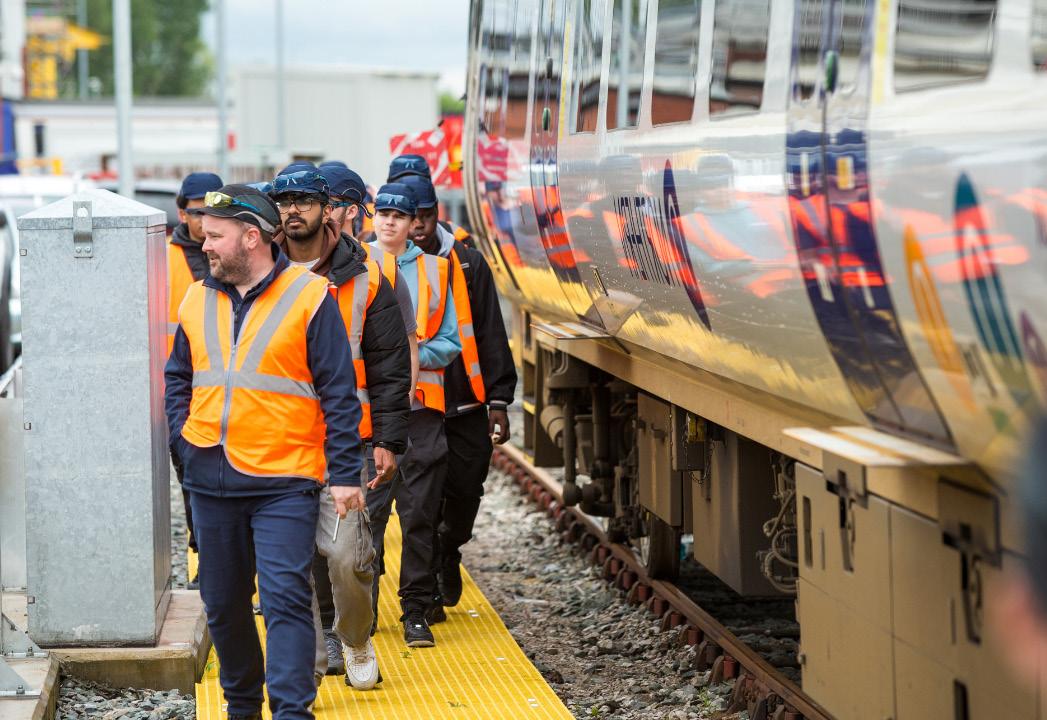
TTF works with Network Rail, the Rail Safety and Standards Board (RSSB) and 13 train operators and companies across the rail supply chain to ensure a student’s potential isn’t limited by their postcode. This partnership, established in 2020, recently won Gold for the Best Collaborative Approach at the Corporate Engagement Awards – a testament to the power of working together across the rail industry. The programmes within our partnerships spark ambition and unlock opportunity so that every young person can thrive.
As part of our efforts to create a fairer society, we focus on building collaborative partnerships with meaningful impact. Our rail partnerships, Track to the Future and Lightbulb Moments, deliver industryfocused skills workshops to enhance opportunities for young people. These workshops take place in schools and at rail operator locations nationwide.
One student noted: ‘Track to the Future has given me an insight into a possible
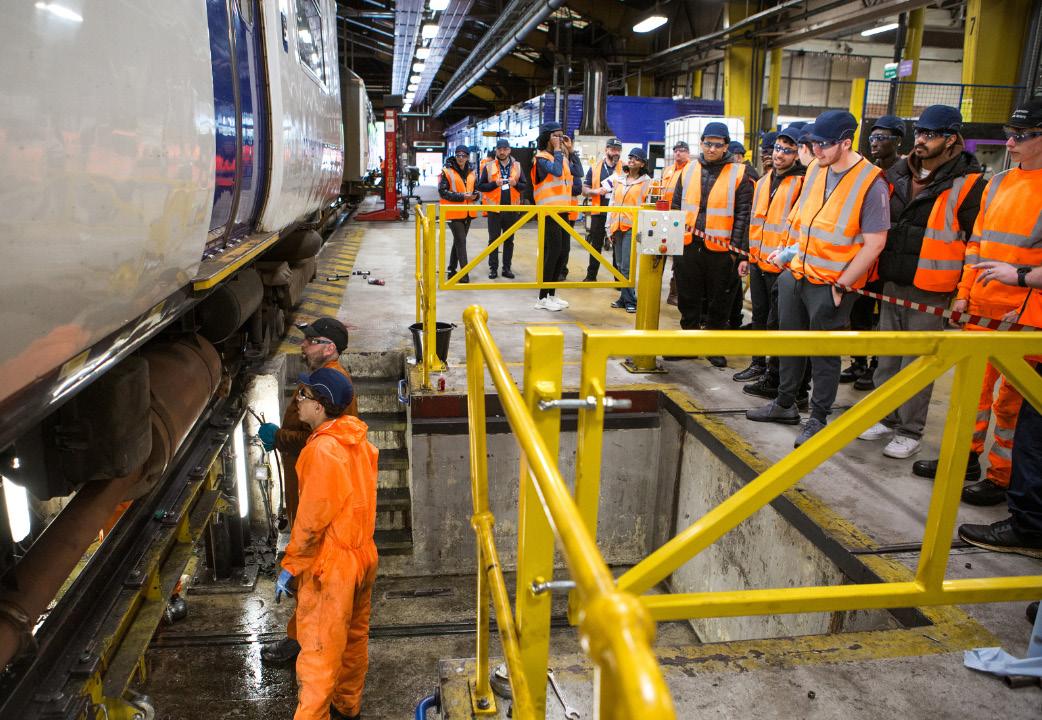
new industry and options in life.’ Another went on to say: ‘I knew nothing of the industry before, but now I see how trains are maintained, the opportunities and the skills needed.’
By pooling knowledge and resources, we work to deliver programmes that give students a real understanding of the rail industry, helping them build confidence, employability skills and awareness of future career paths.
A teacher commented: ‘Our school is situated in a poor demographic area, where a lot of students generally have low self-esteem and no confidence. They are often afraid to step out of their comfort zone. This programme has had an amazing impact, helping them gain team building and communication skills. Experiencing a workplace with a variety of jobs showed them the opportunities if they start to believe they can do it.’
The partnership tackles pressing workforce challenges which require action from the ground up – starting in schools. The NSAR Annual Rail Workforce Survey 2024 highlights that only 6.3 per cent of
rail workers are under 25, and the sector remains predominantly male (82.5 per cent) and white (85.5 per cent). Our programmes inspire students, especially girls, to see themselves working in rail.
Tom Hall, Social Sustainability Principal at RSSB, has facilitated our partnerships with other rail operators. He told us: ‘The Sustainable Rail Blueprint establishes a framework for sustainable development through to 2050. In adopting and aligning with the principles it promotes, the rail industry must recognise the importance of social impact, specifically engaging with young people from a range of backgrounds. It’s our duty to raise awareness of railway roles and provide accessible pathways for careers within the sector.’
Since 2024, we have welcomed new collaborations with Arriva Rail London, East Midlands Railway, Alstom, Northern, Govia Thameslink Railway, LNER, Porterbrook, Transpennine Route Upgrade, Transport for Wales, Stadler Rail and CAF. By uniting such a diverse range of organisations, students get a broad, well-rounded view of the industry and its requirements.
Volunteering – a two-way stream Collaboration isn’t just beneficial for students, but also for the employees who volunteer. From November 2023 to April 2025, 944 volunteer hours were delivered by a range of professionals willing to share impactful career insights, provide crucial mentorship and help students tackle industry challenges. 3,005 students from under-served schools and those facing additional barriers to skills development were reached across 101 sessions and 384 volunteer interactions.
Volunteers gain leadership and mentoring experience, whilst being inspired by the energy and determination of young people.
One volunteer said: ‘It was of huge benefit to me. Being able to understand the next generation is such a valuable experience.’ Another added: ‘I believe I am giving back to the community and also helping the younger generation to have a better understanding of Network Rail and the work we’re involved in.’
Employers also see the tangible impact of their engagement. ‘The programme benefits our staff who can volunteer at a school local to them, to teach young people about what we do in rail, why we do it, and how they can fit in. Inspiring young people to join our industry is key, to ensure we have the skills we will need in the rail industry in the future’ explained Amit Kotecha, Early Careers Manager, Network Rail
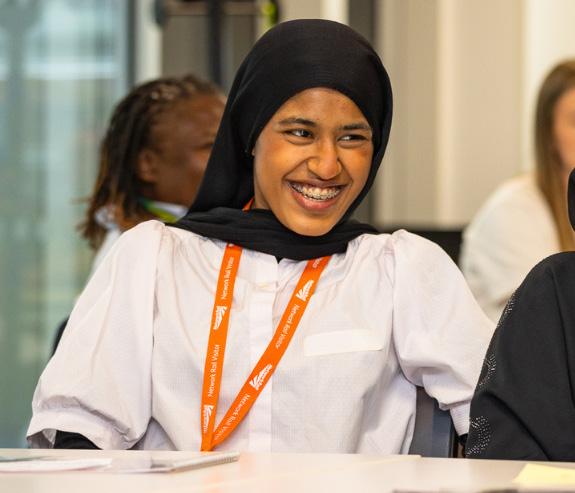
Volunteering also helps employees recognise the potential in young people and refine their own abilities. ‘I believe it has improved my mentoring skills... It has also helped me see hidden potential and skills that individuals may have, but that they need the right environment to be able to shine’ commented one volunteer. Another volunteer added: ‘Taking part benefited me personally… It just shows that the talent is there, it just needs the right kind of nurturing.’
Students describe the programmes as transformative. Participation increases awareness of careers and builds core skills, helping them make informed decisions about their futures.
In fact, 93 per cent of students said they gained a better understanding of rail careers, 87 per cent reported increased confidence in essential skills and 100 per cent of educators found the programme valuable for career guidance. Having a defined programme which is aligned to schools’ needs in meeting statutory careers provision and work experience opportunities means that the partners in the rail industry can more easily meet young people who could be shaping the rail workforce well into the future.
Through such successful collaborations, TTF and its rail partners can have significant societal and business impact.
Breaking down barriers to social mobility and boosting community aspirations by forming a bridge between education and employment means nobody gets left behind. Businesses are also able to identify local talent, and for young people from under-served areas, exposure to rail careers can change the trajectory of their lives. For employees, volunteering provides professional development and a sense of purpose, creating a positive cycle of community impact. Creating change can be hard to quantify, but analysis through the Rail Social Value Framework estimates the total social value of our rail partnerships to be £864,706.
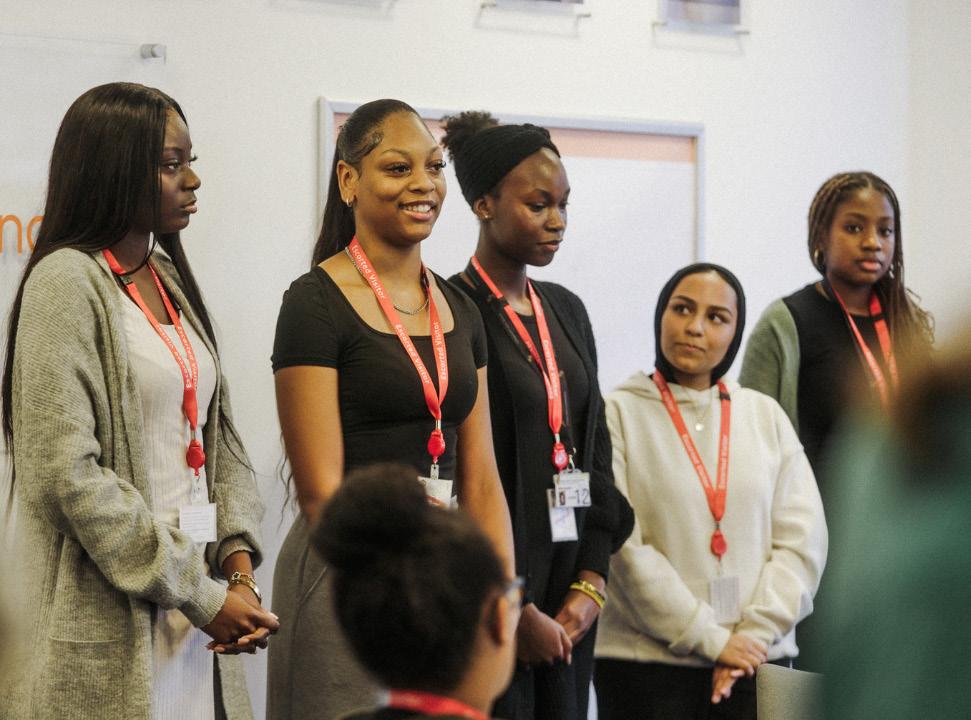
‘93 per cent of students said they gained a better understanding of rail careers, 87 per cent reported increased confidence in essential skills and 100 per cent of educators found the programme valuable.’
By uniting the rail industry around shared goals and utilising our experience of successful collaborative partnerships, we enable parties to work together and opportunity to be increased large-scale. Students leave our workshops empowered to make more informed decisions about their futures, driving social mobility and strengthening the rail industry’s talent pipeline.
With our rail partners we’re committed to giving students the power to believe in themselves. With this proven training model, strong engagement from industry volunteers and measurable impact on students, educators and employers, our collaborative approach is defining a more inclusive and skilled rail industry. You can contact The Talent Foundry via the contact information below.
Tel: 020 7148 0934
Visit: www.talentfoundry.org.uk
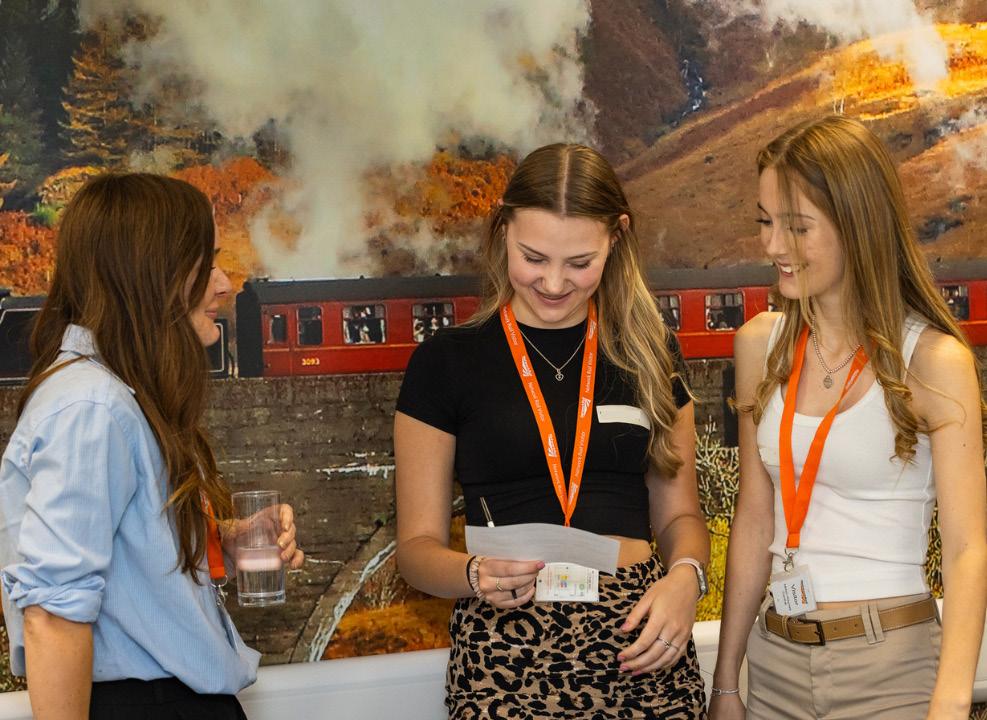
Brendan Morris is an experienced entrepreneur and the CEO of Denova. Founded in 2007, Brendan and the Denova team have developed a wide range of cutting edge rail training technologies for innovative rail operators and manufacturers across the UK, EU and Australia. Having been around since before smartphones, Brendan understands the benefit of combining technical expertise and practical rail knowledge when designing new training applications, and welcomes a partnership approach with traditional rail training companies to ensure that Denova’s product range delivers long term value to the industry.
Sam Sherwood-Hale spoke to Brendan Morris, CEO of Denova, about how Transport for Wales became the first UK train operator to introduce VR training for train managers, and why this technology is now poised to transform competence development across the rail industry
SSH: How did the partnership with Transport for Wales (TfW) begin, and what made them the ideal partner to become the first UK train operator to introduce VR training for their Train Manager function? What was their vision for bridging the gap between classroom theory and practical experience that led to this industry first?
BM: Denova has been working in the rail industry for 20 years, supporting operators with training technologies and applications ranging from new train discovery to ETCS introduction and all points in between. Every application we build is in response to customer requirements and designed to accelerate learning while complementing traditional training methods. Over the years we’ve learned a lot about how trains, networks and the industry works, and see ourselves now as more of a rail/tech hybrid company than a software house. We work with many operators, trainers and manufacturers across the UK, EU and Australia, and the one common thread through them all is that everyone cares about the safety of the network, its workers and passengers. ‘The railway family’ isn’t a platitude, it’s an attitude and commitment
that we share, in our small contribution to improving competence and safety standards.
Our relationship with TfW started when we were employed by the rail manufacturer, to develop the simulator training app for the Class 197. This was targeted at drivers and included train discovery, train management systems (TMS) familiarisation, simulation of train preparation procedures, and degraded/ emergency fault scenarios.
Once it was delivered, James Cooper, Head of Workforce Planning and Operational Training at TfW approached us to discuss how the technology could also be used to deliver training outcomes for train managers, specifically in simulating dispatch and emergency procedures Their main objective was to enable trainee train managers to experience high risk, infrequent tasks in a risk-free environment. To achieve this, TfW realised that they'd need to accelerate learning to bridge the gap between the trainee’s classroom theory and their practical experience.
TfW came to the project with a mature and detailed understanding of what they wanted to achieve and by adding our technical expertise created an informed design team.
SSH: What were the biggest technical challenges in creating a computerised replica of Transport for Wales' Class 197 train, and how did you ensure the virtual environment accurately reflects the realworld conditions that trainees will face on the majority of mainline routes across Wales and the Borders?
BM: We’ve been building rail training simulators for PCs, laptops and tablets for a long time and one of the most essential design guidelines is that the visual content has to be accurate, from the colour of chairs to the cab controls. The slightest variation will be noticed, and criticised, so our expertise lies in building exact replicas. The quickest way to build the models is using 3D CAD which is usually available with new trains however they can be built from 2D images in the case of older traction.
In terms of interactivity, we use the procedures specified in train operating manuals to simulate the required procedures. This is followed by an iterative build approach with the training design team, to ensure that the simulation continually matches the technical specification. Lastly, user group feedback
is gathered to comment on the visual content, technical specification and the user experience.
Technical challenges are only part of the process as consideration must be given as to how new training technologies are going to be used practically in the operators’ training programmes. User interface design and ‘train the trainer’ courses have to be carefully designed, otherwise the clever technical solutions will not be adopted.
SSH: David Lewis mentioned that this type of training is used by the military, NHS, and emergency services, but Transport for Wales is the first train operator to introduce it for train managers. How did you adapt VR training methodologies from these other sectors specifically for rail operations, and what makes the rail environment uniquely suited to this technology?
headsets and enterprise management systems, designed for business has, quite quickly, made the technology much more suitable for delivering essential training interventions.
‘What became evident was that the original perceived learning outcomes weren't as important as the value of the trainee assessing a situation and making a decision that they could then discuss in real-time with their trainer.’
BM: VR has been around for a long time. It's being used in industries such as healthcare and aviation, where repeat practice is essential to build competence, but access to live environments is difficult, if not impossible. The rail industry often finds itself in this situation, particularly with guards or train managers, where access to trains for the purpose of training is limited, let alone to simulate degraded and emergency procedures.
The rail industry is not uniquely suited to VR, but the technology is uniquely suited to solving a rail training problem, namely providing trainers with the environments that allow them to explore and teach scenarios that trainees may seldom see however must be competent in. Virtual Reality is ideally suited to replicating the stressful environment often experienced by train managers.
The easy accessibility of VR is making it a viable technology for training across the rail industry. Advancement such as standalone
SSH: The system allows trainees to experience situations they ‘just wouldn't typically experience in the real world’ as Lee Alexander noted. How do you research and develop these rare emergency scenarios – such as fires onboard, signal failures, and suspicious items – to ensure they're both realistic and pedagogically effective for building competence in safety-critical procedures?
BM: This is an important question, and its answer changed during the TfW project. Firstly, the visual and procedural elements of the degraded or emergency scenarios were captured through discussion with the TfW training design team. We then storyboarded each scenario, including the physical onboard procedures and descriptions of experienced incidents (every train manager has a story!).
What became evident during the design process was that the original perceived learning outcomes of completing procedures such as extinguishing a fire, or evacuating a train were not as important as the value of the trainee assessing a situation and making a decision, that they could then discuss in real-time with their trainer. This
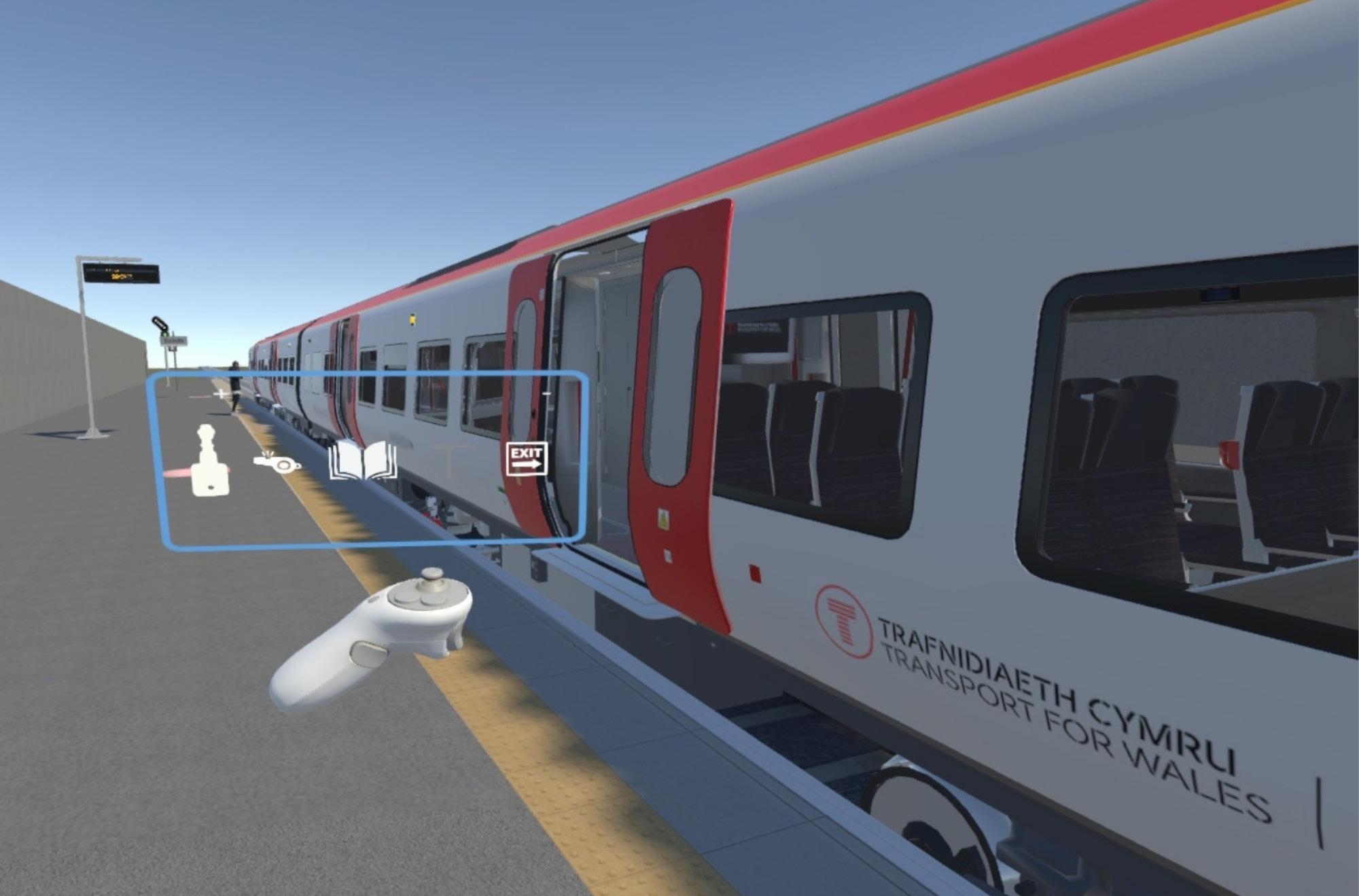
was a revelation to the design team and has impacted the way in which the Dispatch Simulator is used in delivering technical and non-technical skills.
The onus is on us, as the VR content developers, to provide trainers with flexible environments that allows them to initiate as many and varied training interventions as they require to deliver their learning outcomes. Our visual content and interactivity has to be accurate, however we are simply providing the trainer with the environments and content controls. They remain in charge of the training.
SSH: You've been at the forefront of rail training technologies since 2007 and previously described VR as "the solution looking for a problem" in rail. What changed to make this Transport for Wales project viable now, and why did operators suddenly start requesting VR for Train Managers rather than the more established driving simulator applications?
BM: As we have experienced with our tablet simulators, there is a tipping point with training applications where the technology, market demand and realisation of benefits meet, and we’re at that point in the use of VR for non-driving roles in the rail industry. The technology has matured to the point where it is inexpensive (the same cost as a smartphone), headsets are now easy to manage (standalone units requiring minimal setup) and there is a better understanding across the industry of its benefits.
Established simulator applications such as full cab, desktop and tablets are designed for drivers. That problem has been largely solved and offers little in terms of training, or availability, for train managers. Whilst there are elements of in-cab training, such as GSM-R procedures, which a train manager needs to practise, their jobs are significantly
different to drivers and, as such, the desired learning outcomes and means of training require a different approach.
Simulation for customer facing scenarios, such as train dispatch, is less prescriptive than traditional driver simulation, enabling trainees to experience the sometimes chaotic environment of degraded situations. VR now offers this capability, and with the advent of standalone headsets, the technology has come of age, making it as accessible to train operators as buying and using tablets in standard classroom environments.
SSH: Lee Alexander, with 18 years of railway experience, was impressed that instructors can suggest ideas for different scenarios. How important was this collaborative approach with experienced Transport for Wales staff in developing the training content, and how do you incorporate their expertise into creating new scenarios that address real operational challenges?
BM: Collaboration with the training design team is essential, not just in terms of content, but also for putting a strategy in place of how the new technology can be easily adopted and used.
Trainers, for good reason, generally come from a starting point of being used to specifying scenario conditions when buying driver simulators; however, this doesn’t necessarily transfer when the trainees’ job role, responsibilities and learning outcomes are not the same as a driver. We’re building simulators for train managers which provide trainers with the environments they need to teach essential procedures, particularly degraded and emergency scenarios. The visual content and interactivity has to reflect real environments and lived experience. Capturing this is a new process for the industry and requires an iterative design approach that gently pulls the valuable data
from the training design teams as they start to experience the VR environments.
Train manager VR simulators are different to cab simulators however their design, planning and implementation requires the same degree of attention, if they are to deliver real, tangible benefits.
The collaboration also doesn’t stop with the delivery of the simulator. Feedback from Transport for Wales is that the environment and scenarios have significantly enhanced the discussions during the training processes and that trainees are seeing things that they wouldn't normally see until they are out on the live train. The technology is pre-empting problems or discussions, which is helping significantly to accelerate the training.
SSH: The VR scenarios include dispatch procedures on a range of platform types and interactive elements like using a whistle to alert virtual customers and speaking to drivers via the onboard phone. How detailed did you make these interactions, and what role does this level of realism play in building trainee confidence before they move to live operations with real passengers and distractions?
BM: For VR simulation to be effective, it must be realistic, believable, and elicit a response from the trainee which is similar, if not identical, to that which they would give in real life. The level of realism depends on the learning outcome being taught. In the case of TfW dispatch, the platform configurations i.e. long, short, curved etc and the associated dispatch corridor were deemed essential to teach correct dispatch procedures, but not features such as retail units or station buildings. Classroom time is limited so the focus has to be on specific training, not providing a VR environment to admire.
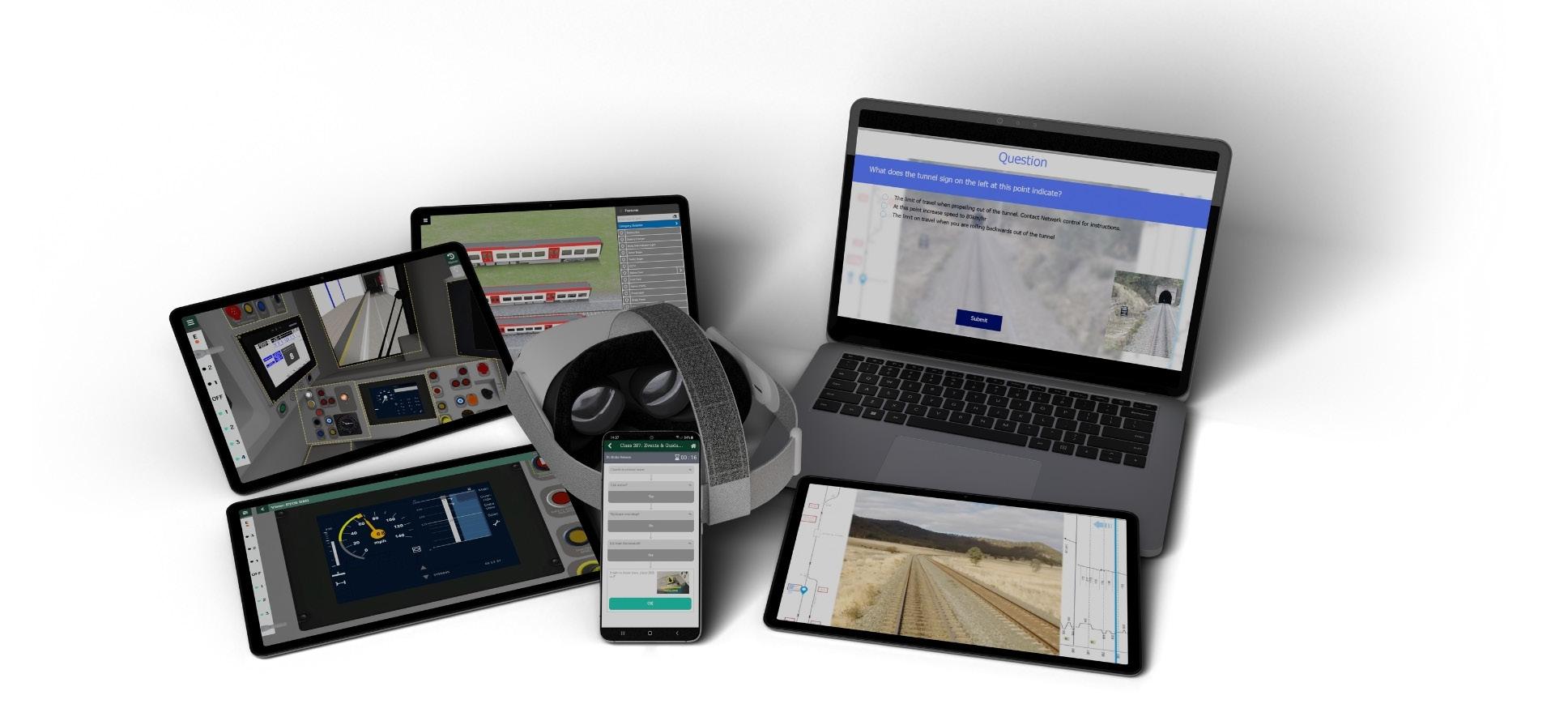
The environments we build are designed in collaboration with the training team with the focus purely on teaching. Included in that is giving the trainer the ability to introduce actions and distractions into the trainees VR experience in real time. We do this by providing the trainer with a control tablet linked to the headsets which enables them to introduce realistic audio and visual distractions designed to challenge the trainee, ranging from a customer asking a question to an on-board fire. Feedback from TfW users has indicated that being able to simulate the random, and often chaotic, behaviour of passengers in degraded and emergency situations is of significant value in training. We are working on developing this further for future releases.
SSH: You describe this as a ‘Dispatch Simulator’ similar to cab simulators for driving, and emphasise VR as part of an "integrated blended solution." How does the Transport for Wales VR training fit into their broader training programme, how does it complement rather than replace their existing practical training methods, and what does this blended approach look like in practice?
BM: The similarity between a dispatch simulator and a cab simulator is that each provides the best possible rehearsal for the intended jobs in real life. Successfully navigating the simulated training scenarios in each are a culmination of months of training that is a significant time and cost investment on the part of the trainee, trainer and operator.
Advancements in technologies such as mobile, virtual and mixed reality applications offer the industry the opportunity to improve and accelerate learning processes, however there is no single panacea, either for a job role or individual. Effective training has to include a blend of methods that complement each other and most importantly deliver the desired learning outcomes. TfW have
recognised this and incorporated it into their training strategy.
A blended training approach is much more than just using different training technologies, in fact the technology is often the easy part, it’s about how each element is used to its best effect. Sometimes a PowerPoint can be the quickest and most effective way of delivering a learning outcome!
SSH: Transport for Wales has ‘really led the way with this innovation’ and you're seeing interest from other UK operators. What specific aspects of the Transport for Wales implementation are other operators most interested in, how is this project serving as a model for the wider industry, and what does your strategy look like for scaling this technology across the rail sector?
BM: It's safe to say that the TfW Dispatch Simulator has kick-started the industry’s imagination. Starting with the self-dispatch and emergency environments provided to TfW we are now working with other operators to develop a range of new virtual and mixed reality environments that will enable training for procedures such as station dispatch, personal track safety (PTS), traction familiarisation, train preparation procedures and coupling.
From a development perspective, we are building a scalable model that will include generic environments where operator-specific requirements such as traction types and procedures can, cost effectively, be added. The feedback from TfW is also influencing our design in the simulation of customer behaviour using controllable avatars. This will be a really interesting development that should have a positive impact on how non-technical skills are taught.
The development of our VR simulators is moving fast, with lots of ideas being raised, however, as we have seen with our
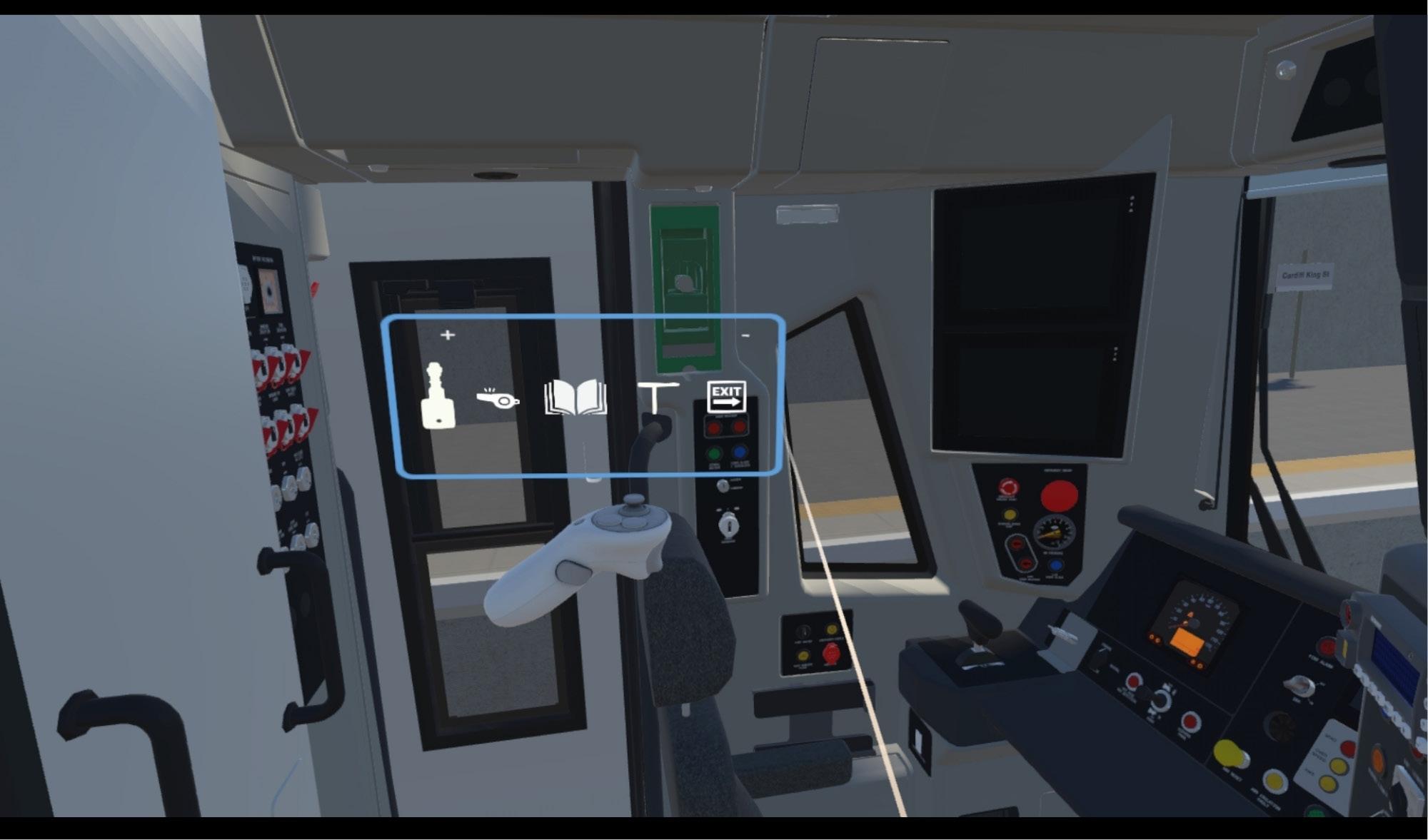
‘Trainees are seeing things that they wouldn't normally see until they are out on the live train, so the technology is preempting problems or discussions.’
tablet simulators, to build a scalable model, the technology has to be tested against its ability to deliver clear learning outcomes, be easy to use and cost effective. Our goal is to achieve all three.
SSH: What’s next for the Transport for Wales VR training programme? Are there plans to expand the scenarios, add new features, or extend the technology to other roles within their operations, and how do you measure whether the VR training is effectively preparing staff for critical situations while building the confidence and competence that David Lewis and Lee Alexander highlighted?
BM: Yes, yes, and yes! Transport for Wales have launched the app with their trainers and are using it in the training sessions across their network. We're getting great feedback from them including suggested changes and new training applications. One surprising one was its effective use in reenacting live incidents with train managers in a safe learning environment.
The simulator is designed to replicate the live network environment, so it has to be maintained to reflect real live changes, either with the visual or procedural content. To remain effective, it can’t stand still.
Measuring the effectiveness of the VR simulation technology is a really interesting question. In the case of the TfW dispatch simulator, the ultimate measurement will be in the number of future PTI incidents recorded after the training has been completely embedded, however the technology will also be able to provide insight, both measured and anecdotal, on its effectiveness to accelerate learning and competence in technical and nontechnical skills.
This is definitely an area of study worth pursuing as the VR simulators are rolled out. Denova’s Dispatch Simulator is the first scalable use of virtual reality for the global rail industry. It approaches simulation from a train manager's perspective. It's an ‘industry first’ that provides trainers with the environments they require to deliver learning outcomes and enables trainees to experience degraded and emergency scenarios that they may seldom experience, but must be competent in.
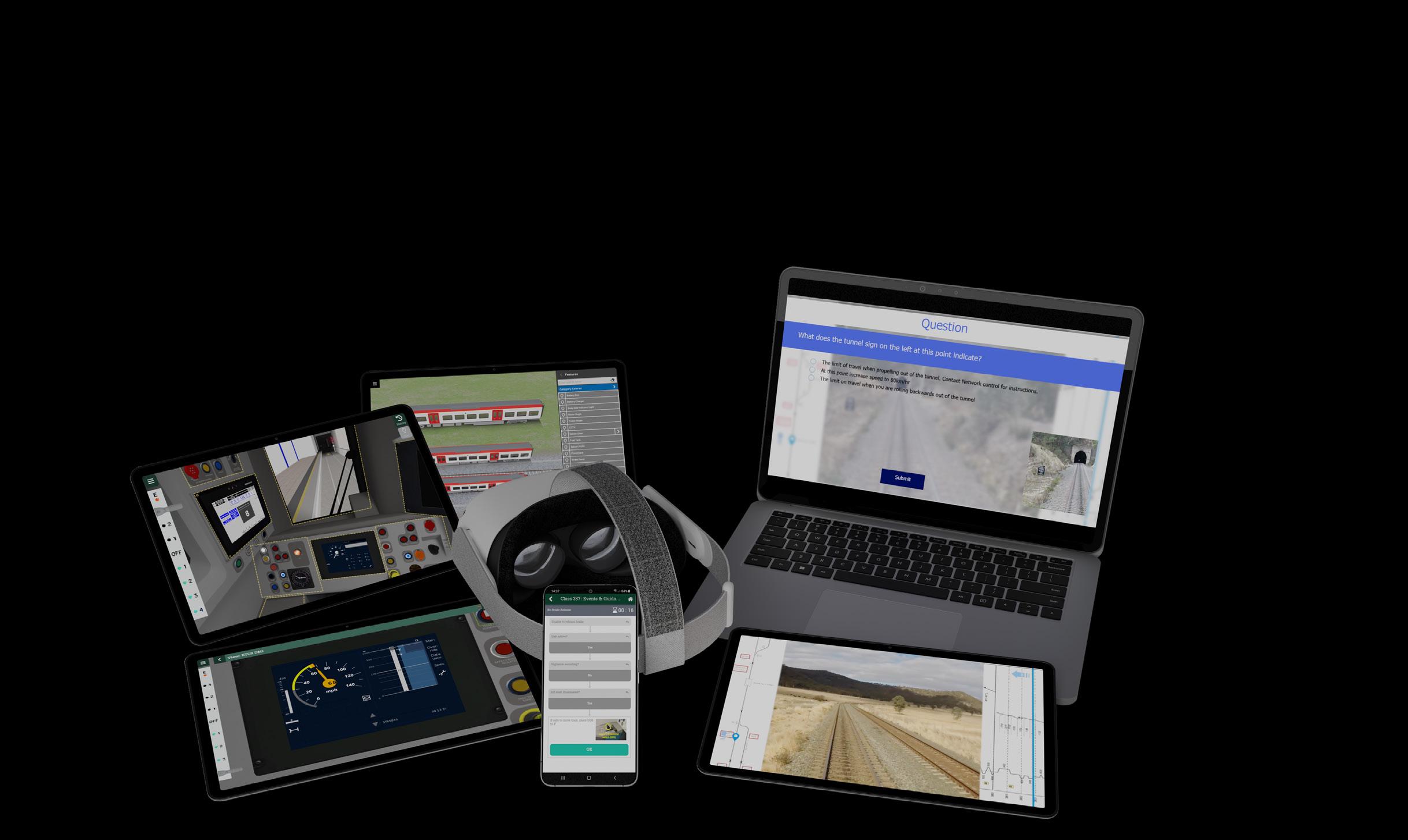
Accelerate learning with immersive practise
Simulate degraded and emergency scenarios
Bring training environments into the classroom
Scan to see the simulator range

25 JUNE, THE SHERATON GRAND LONDON

The Railway Industry Supplier Excellence (RISE) Awards celebrates the talent and achievements of the UK rail supply community. The ceremony will take place at RIA’s seventh Annual Dinner on 25 June 2026.
Early Bird nominations are open!
Deadline for nominations is 13 March 2026
Scan or visit
www.riagb.org.uk/RISE26

Grace Smithen, Marketing & Events Director at the Railway Industry Association (RIA), shares why the RIA Annual Conference 2025 is set to be an unmissable highlight for the rail sector and the perfect way to close an exceptional year
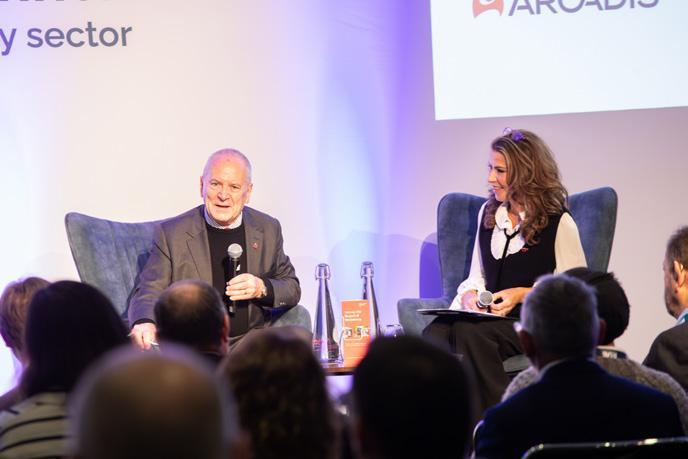
As 2025 enters its final stretch, the Railway Industry Association (RIA) is preparing for its ultimate flagship event of the year, the RIA Annual Conference.
The Association has already enjoyed a standout year, hosting a series of events that have celebrated innovation, collaboration and achievement across the UK rail supply community.
So far, RIA has:
• Welcomed parliamentarians and industry leaders to a Parliamentary Reception celebrating participants in the Rail Fellowship Programme.
• Returned to ICC Wales for the Innovation Conference, where more than 500 delegates and 70 exhibitors showcased the latest technologies and business opportunities.
• Hosted the Trailblazers Summer Networking Reception at the Kia Oval, supporting early career professionals to build industry connections.
• Recognised excellence at the RIA Dinner & RISE Awards, honouring outstanding contributions from across the supply chain.
• Marked RIA’s 150th anniversary with a special networking celebration attended by over 600 guests.
Now attention turns to the RIA Annual Conference 2025, themed Resetting the Railways for Growth: Harnessing the Power
of the Supply Sector. The event promises to build on this momentum, exploring how collaboration and innovation can drive a new era of rail growth.
An agenda of influential speakers
The conference will open with a keynote address from The Rt Hon Heidi Alexander MP, Secretary of State for Transport, who will outline the Government’s priorities for the sector before taking audience questions. Delegates will also hear from Jeremy Westlake, the Chief Executive of Network Rail, in one of his first public appearances since succeeding Sir Andrew Haines OBE.
This year marks several milestones, including Railway200, RIA’s 150th anniversary and Transport for London (TfL)’s 25th birthday. Andy Lord, Commissioner for TfL, will reflect on the organisation’s evolution and share insights on what the next quarter of a century may hold for suppliers.
Meanwhile, Laura Shoaf CBE, Chair of Shadow Great British Railways, will set out her vision for a modern and efficient GBR during a keynote and Q&A session.
Panels shaping the industry conversation
Over two days, the conference will feature thought-provoking discussions with senior leaders from across the rail landscape, including:
• The Future of Rail, with Rebecca Cunningham (Network Rail), Gareth Evans (Network Rail) and Mike Goggin (Steer), chaired by Colette Carroll OBE (AtkinsRéalis).
• Nations & Regions, with Liz Baldwin (Southern Renewals Enterprise), Tricia Williams (Northern Trains), Mark Ilderton (ScotRail) and Mal DruryRose (West Midlands Rail Executive & Transport for West Midlands), chaired by Marie Daly (Transport for Wales), exploring the challenges and opportunities of devolution.
• Rail in Ireland, with Dr Sean Sweeney
(Metrolink) and John Glass (Translink), highlighting the latest developments and cross-border opportunities for UK suppliers.
RIA conferences are renowned for their networking opportunities, and the 2025 Annual Conference will be no exception. All breaks will take place in the exhibition hall, a lively space where delegates can meet exhibitors and explore the latest technologies, products and services shaping the industry.
Back by popular demand, the Spotlight Exhibition sessions will once again allow exhibitors to deliver short, high-impact pitches directly to attendees, offering a unique platform to showcase their expertise and innovations.
The first day will conclude with networking drinks and dinner, featuring a keynote from Mike Brown CBE MVO, Chair of HS2 Ltd. Guests can look forward to a three-course meal, entertainment and further opportunities to connect before the second day’s programme begins.
The RIA Annual Conference 2025 is set to be the industry’s grand finale, bringing together leaders, innovators and suppliers to reflect on progress, share insights and shape the future of UK rail. Places are limited. To book, visit riagb.org.uk/AC25 or contact events@riagb.org.uk
Tel: 02072 010 777
Email: events@riagb.org.uk
Visit: www.riagb.org.uk
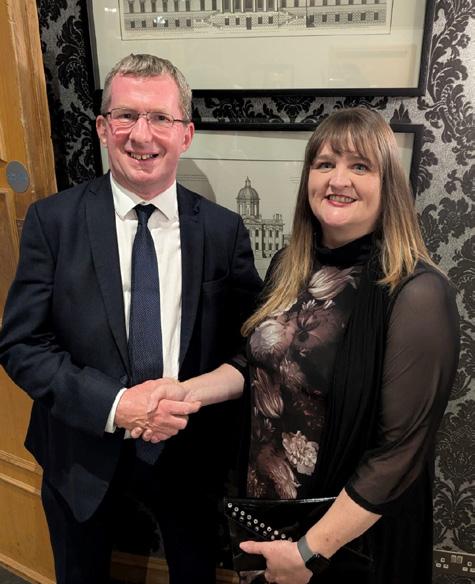

TransiT Appoints New Head of Data
TransiT, the UK’s national Digital Twinning Hub for Decarbonising Transport, has appointed Barbara Alvarez Solanilla as new Head of Data to help its research teams manage, protect and deploy growing volumes of transport data, including air, rail, shipping and road freight data. Barbara joins the TransiT team from University of Glasgow-based research hub, the Urban Big Data Centre, where she was Senior Research Engineering Manager.
Expert in light rail finance joins LRSSB board
Ian Law has joined the Light Rail Safety and Standards Board. Currently responsible for business transformation at South Yorkshire Supertram, Ian led the operator’s finance team through the successful transition into local authority control. Previously, Ian has worked for Manchester Metrolink, which he joined in 2001.
Victa Railfreight appoints Debbie Simmons as new Managing Director
Victa Railfreight has appointed Debbie Simmons as its new Managing Director, taking over from company founder Neil Sime, who will move into the role of Executive Chairman. Debbie has been part of Victa for 13 years, including ten years full-time, and most recently served as Contracts and Resources Manager.
Mott MacDonald appoints Intelligent Transport Systems (ITS) Project Director
Alstom’s Board of Directors appoints new CEO
Alstom’s Board of Directors has chosen Martin Sion as the Group’s new Chief Executive Officer, effective 1 April 2026. Martin will succeed Henri PoupartLafarge, who announced in May his decision not to seek a further term as Chief Executive Officer of Alstom, having served as CEO since February 2016.

New Managing Director for InnoRail
InnoRail has appointed Andy Watson as its new Managing Director.
Mott MacDonald has appointed Catherine Whitfield as Intelligent Transport Systems (ITS) Project Director. With over 25 years in the intelligent transport systems sector, Catherine has helped national and local transport bodies across the UK and internationally shape and deliver strategic programmes that improve outcomes for users and communities. She joins from WSP, where she served as Deputy Group Technical Director.
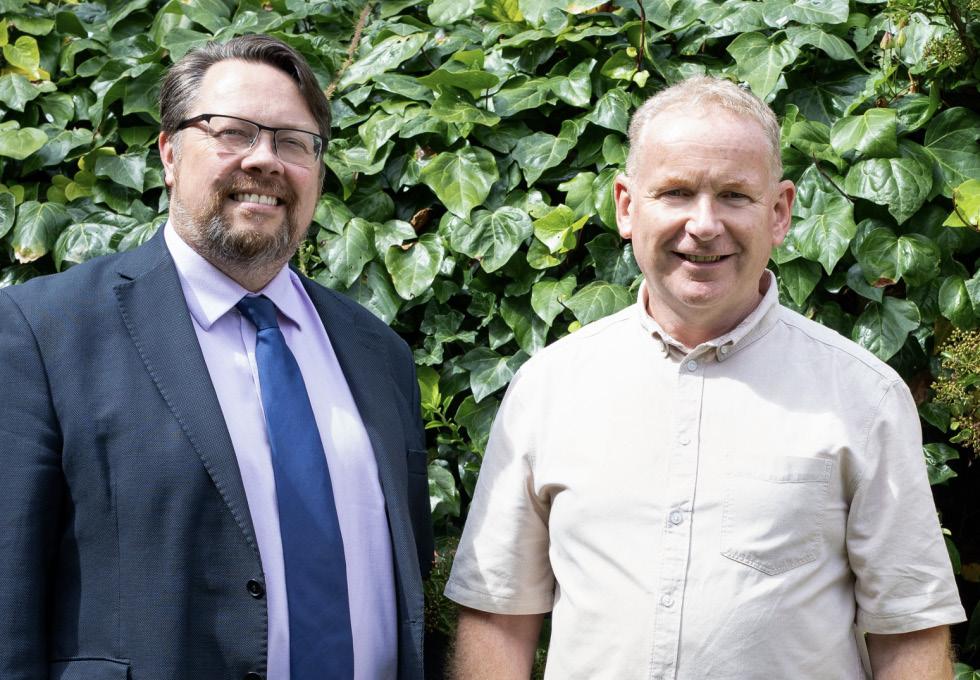
Peninsula Transport and Peninsula Rail Task Force appoint new Chairs
Peninsula Transport Sub National Transport Body (STB) and strategic rail sub-group Peninsula Rail Task Force (PRTF) have appointed two new Chairs to lead their respective organisations. Councillor John Stephens (right) has been appointed Chair of Peninsula Transport, succeeding Councillor Mark Coker Councillor Dan Rogerson has been named the new Chair of PRTF, replacing Councillor Andrea Davis.
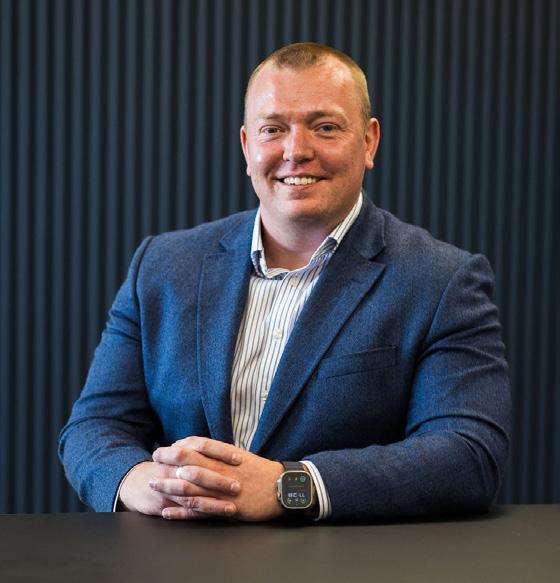
CMAC Group appoints Director of Group Operations
CMAC Group appoints Paul Wardle as Director of Group Operations to lead CMAC’s UK and EU operations centres.
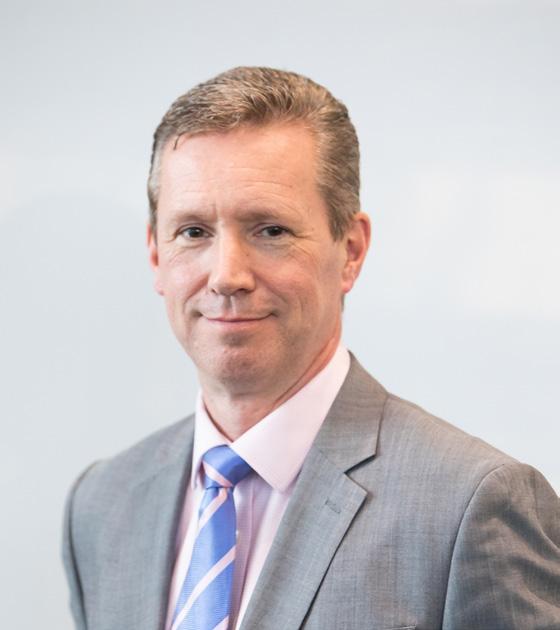
Logistics UK Appoints New CEO Logistics UK has appointed Ben Fletcher as CEO. Ben joins on 1st December, taking on full responsibilities from the start of the new year.
Heads of Safety Group appoints new Chair
Don McClurg, Head of Safety and Standards at Edinburgh Trams, has been appointed the new Chair of a working group led by the LRSSB. A former Combat Medical Technician in the army, Don joined Edinburgh Trams in 2013 where he has previously worked as a Duty Manager, Assistant Safety Manager and Safety Manager.
We are at the forefront of providing innovative technical solutions which enables our clients to meet their sustainability objectives.
Our inspired thinking approach allows us to utilise our long-term expertise to work in partnership with our clients to deliver resilient, bespoke and cost efficient solutions.

Scan here to get in