No Margin for Error
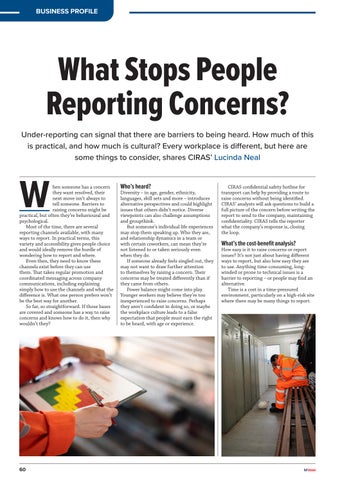
At OPC Assessment, we are more than test publishers; we’re experts in our field with more than 25 years’ experience supporting our global clients in the rail and transport sector, engineering industry and beyond.
Our psychometric tools help to: recruit top-tier talent develop high-performing employees support career-long growth
Hosted on our user-friendly Candela™ platform, clients can explore our extensive range of innovative assessment tools. Guided by our expert psychologists, we can advise on bespoke recruitment solutions tailored to your specific needs.


PUBLISHER
EDITORIAL
EDITOR
Sam Sherwood-Hale editor@railpro.co.uk
DISPLAY ADVERTISING
Jamie Tregarthen sales@railpro.co.uk
RECRUITMENT ADVERTISING recruitment@railpro.co.uk
SUBSCRIPTIONS subscriptions@railpro.co.uk
ADMINISTRATION
Cherie Nugent info@railpro.co.uk
Lisa Etherington admin@railpro.co.uk
DESIGN &
Lukasz Saczek production@railpro.co.uk
COVER

The transfer of Govia Thameslink Railway into public ownership on 31 May brings the total number of operators under public control to nine, and marks another tangible step in a reform programme moving with increasing momentum. The framework for a Memorandum of Understanding between the UK and Scottish Governments, published in March, signals that the more complex question of how GBR and Transport Scotland will work together has been addressed early and in good faith — devolved responsibilities protected, direction of travel shared. What is striking about this moment is the degree to which integration is already being practised ahead of the structures that will formally require it. The joint piece from John Whitehurst, Chief Operating Officer at Govia Thameslink Railway, and Lucy McAuliffe, Network Rail's Sussex Route Director, makes that case from the inside.
This issue carries a particular focus on bridges, tunnels and drainage infrastructure. Matthew Westhead of Mabey Hire examines the emergency temporary works response to bridge strikes and the supply chain coordination required to restore both rail and road safely. Concrete Canvas sets out how its geosynthetic cementitious composite mats are rehabilitating ageing culverts and protecting embankments, with a certified design life exceeding 120 years and installation rates that significantly reduce possession times.
Also in this issue, Kevin Morris of Snap-on Industrial discusses what the rail sector can learn from other industries about asset management and the true cost of uncontrolled inventory. I also spoke to Peter Bierton of Mainmark Ground Engineering, Rob Renshaw of Mosdorfer Rail, and Gareth Ellis of EcoGrit, whose case for rethinking de-icing procurement across the network is as practical as it is pointed.
SAM SHERWOOD-HALE EDITOR
The Railway Industry Supplier Excellence (RISE) Awards celebrate the talent and achievements of the UK rail supply community.
The ceremony will take place at RIA’s seventh Annual Dinner on 25 June 2026.
The evening will be hosted by popular magician and presenter Ben Hanlin, who has appeared on numerous television shows.
Andy Lord, Commissioner of Transport for London, will be delivering a keynote speech. Andy is responsible for delivering the safe and reliable transport systems that keep the capital moving.

Scan or visit
www.riagb.org.uk/RISE26


All the latest from Schréder, DB Cargo UK, Network Rail, Greengauge 21, TransPennine Express, Northern Trains, the Department for Transport and more
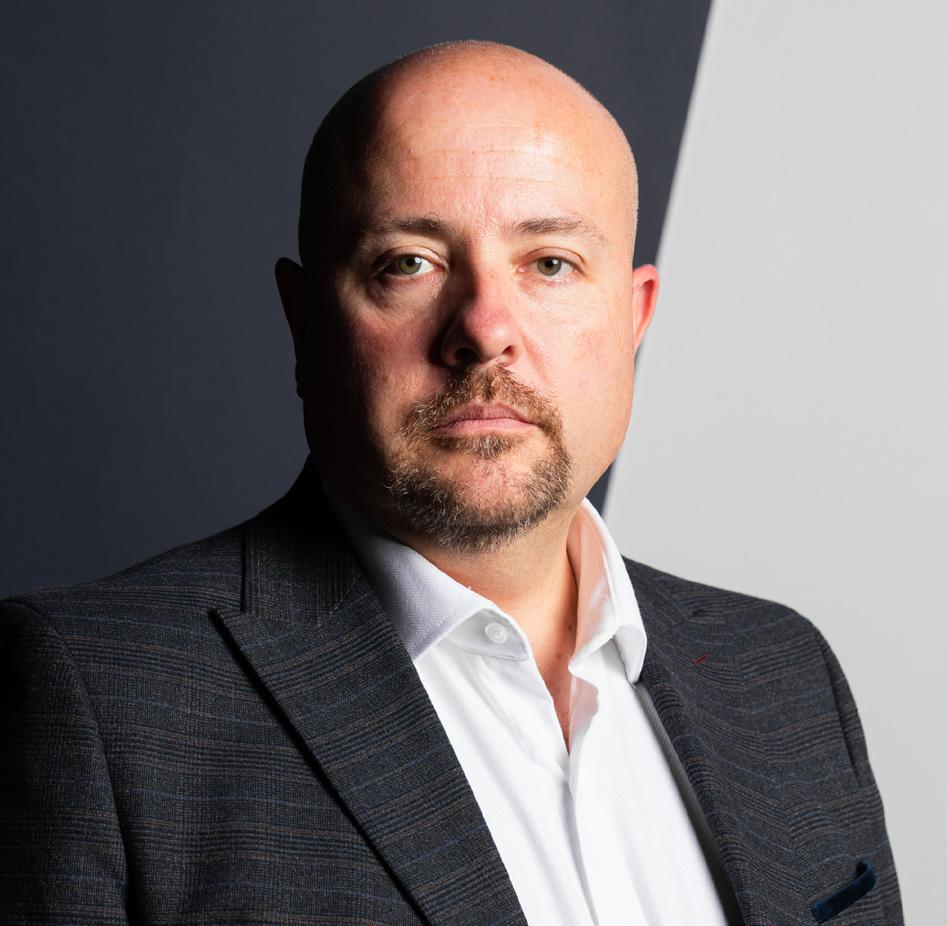
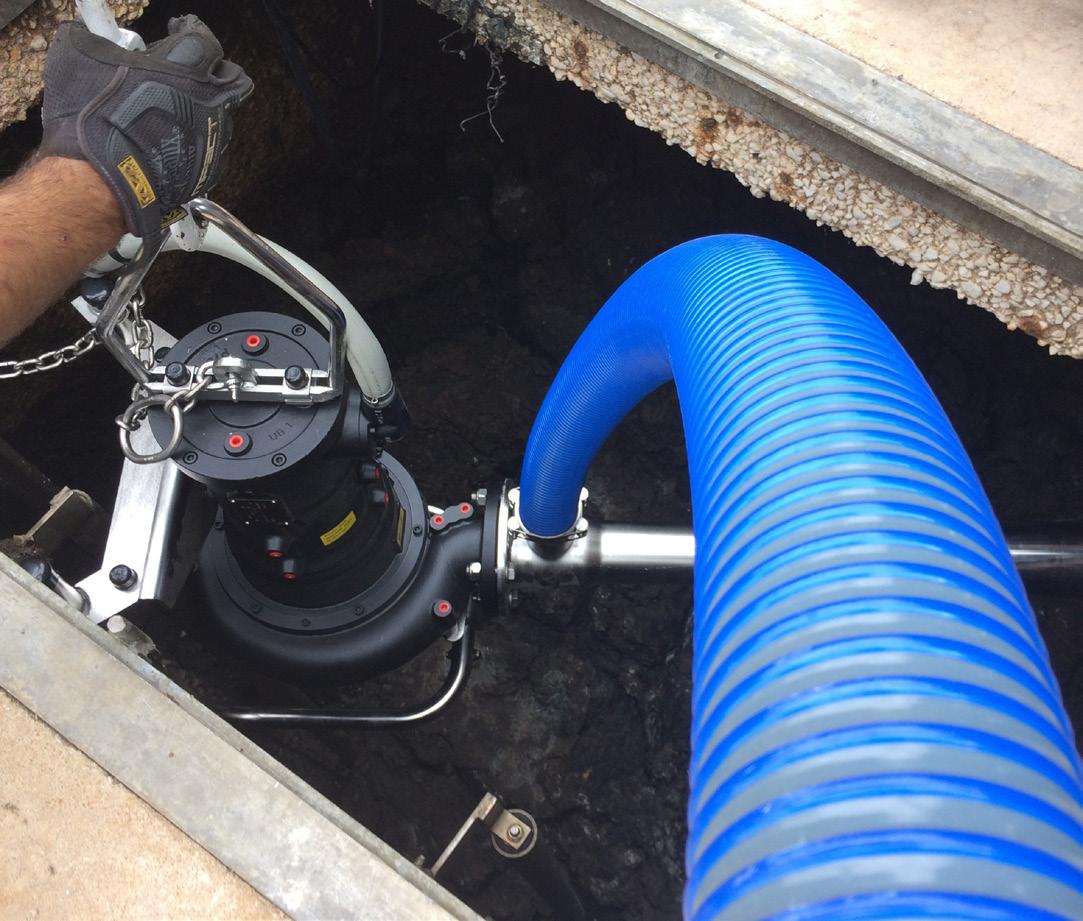
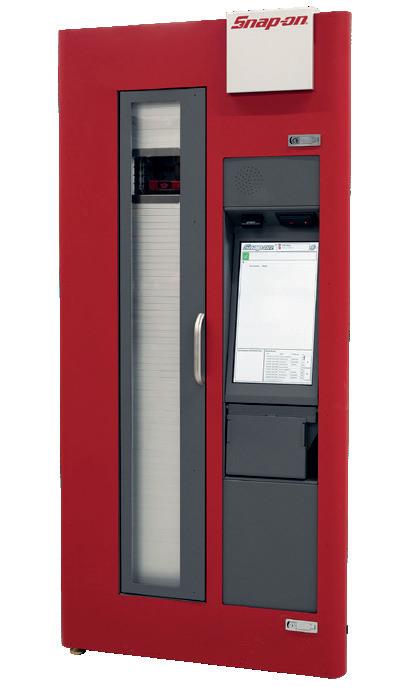
14 From a single automated tool control box in a bogie drop facility to a 25-unit depot-wide system, Snap-on Industrial's work with Eurostar offers a blueprint for how the rail industry can rethink asset management. Snap-on Industrial’s UK & Ireland Sales Manager Kevin Morris explains the technology behind the transformation and why listening to the customer remains the starting point for every solution
18 LAYING DOWN THE LAW
Martin looks at how HMRC's growing focus on IR35 compliance is prompting rail sector businesses to revisit their off-payroll working arrangements and processes
21
22
VIEWPOINT
Dave Widger of AECOM argues that the Northern Powerhouse Rail must deliver people-first growth
VIEWPOINT
John Whitehurst, Chief Operating Officer at Govia Thameslink Railway, and Lucy McAuliffe, Network Rail’s Sussex Route Director, explain why genuine integration between track and train cannot wait for structural reform, and what it looks like when it is already happening on a live network
24 Sam Sherwood-Hale spoke to EcoGrit Managing Director Gareth Ellis about the hidden costs of rock salt, the limitations of traditional de-icing, and why the rail industry's maintenance budgets may depend on finding an alternative
26 Sam Sherwood-Hale spoke to Mainmark Ground Engineering CEO Peter Bierton about innovative ground engineering, the challenges of entering the UK market, and what Britain's railways could learn from a more pragmatic approach to maintenance
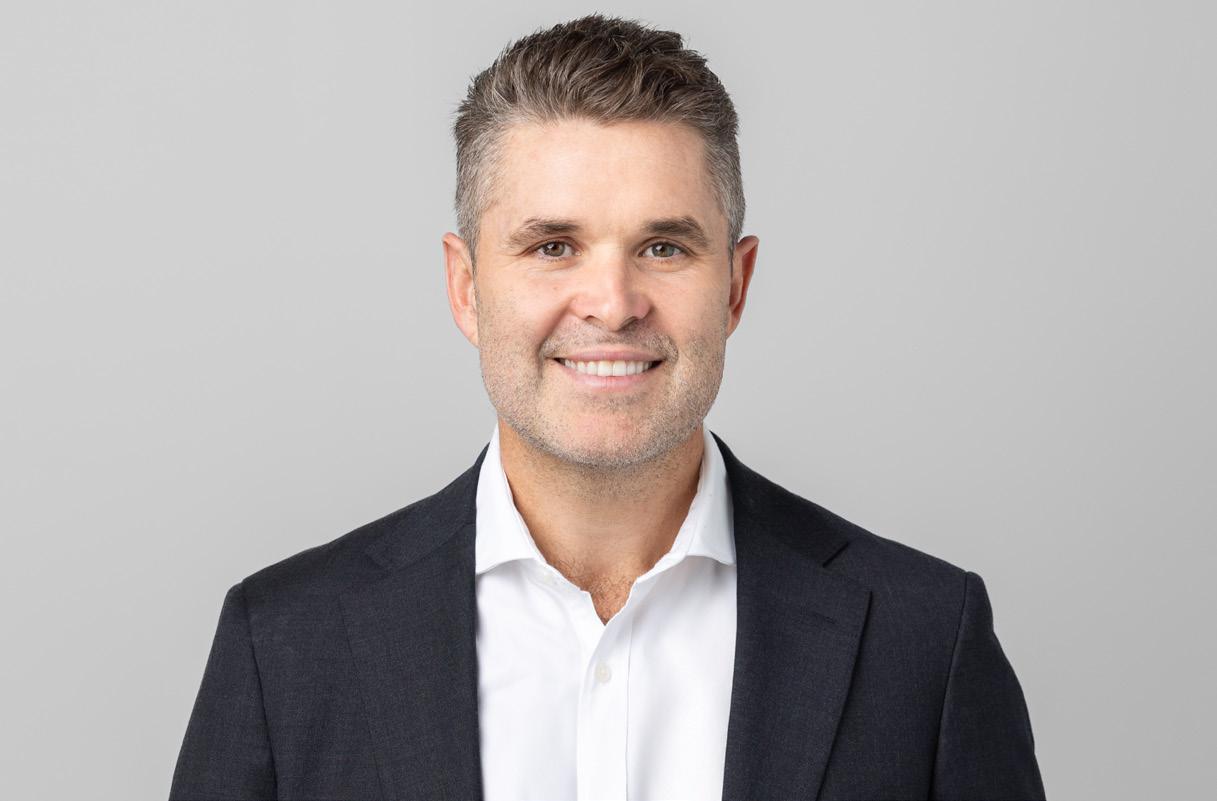
30 Sam Sherwood-Hale spoke to Expretio’s General Manager Eric Nordling about the fundamental principles of ‘the RM discipline’, what rail can learn from aviation, and why the conditions are finally right for UK operators to make the most of it

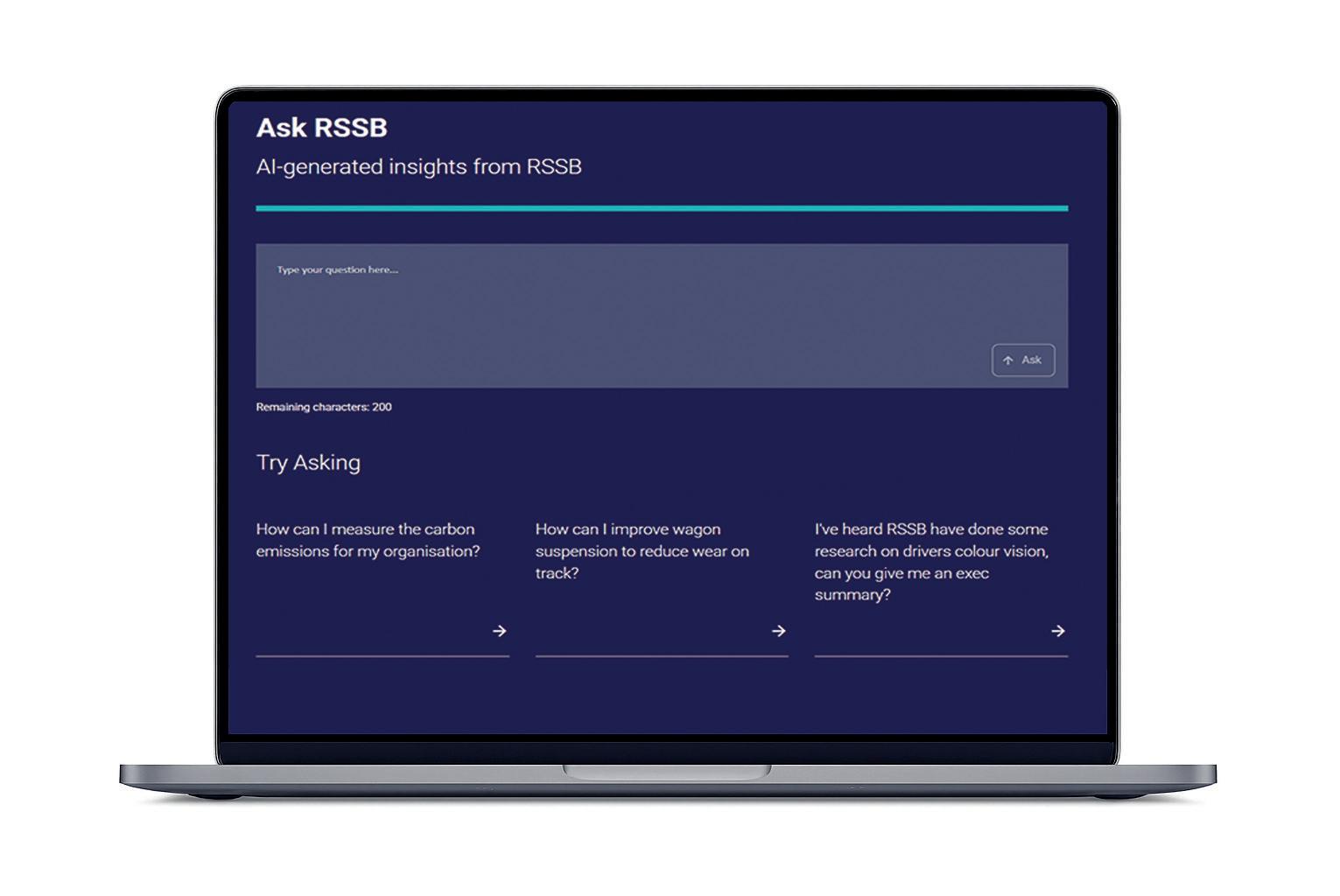
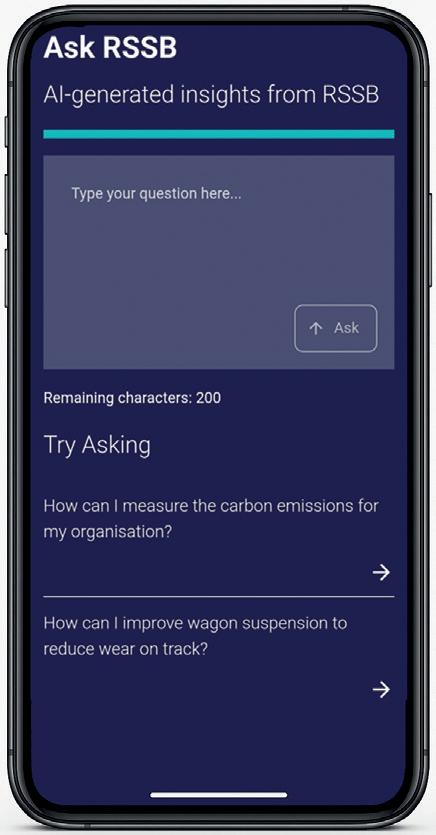
Ask RSSB gives you quick, easy access to the wealth of information on the Rail Safety and Standards Board website
One simple question delivers trusted guidance and the tools and services you need to support your role.


33 PLANT
The Construction Plant-hire Association will hold its tenth annual conference on 21 May 2026 with the theme of Unlocking the Nation's Growth Plans
34 BRIDGES & TUNNELS & PLANT
Concrete Canvas products are revolutionising rail maintenance, offering rapid, safer installation for slope protection, drainage and weed control, while extending asset life with BBA certified durability
37 BRIDGES & TUNNELS
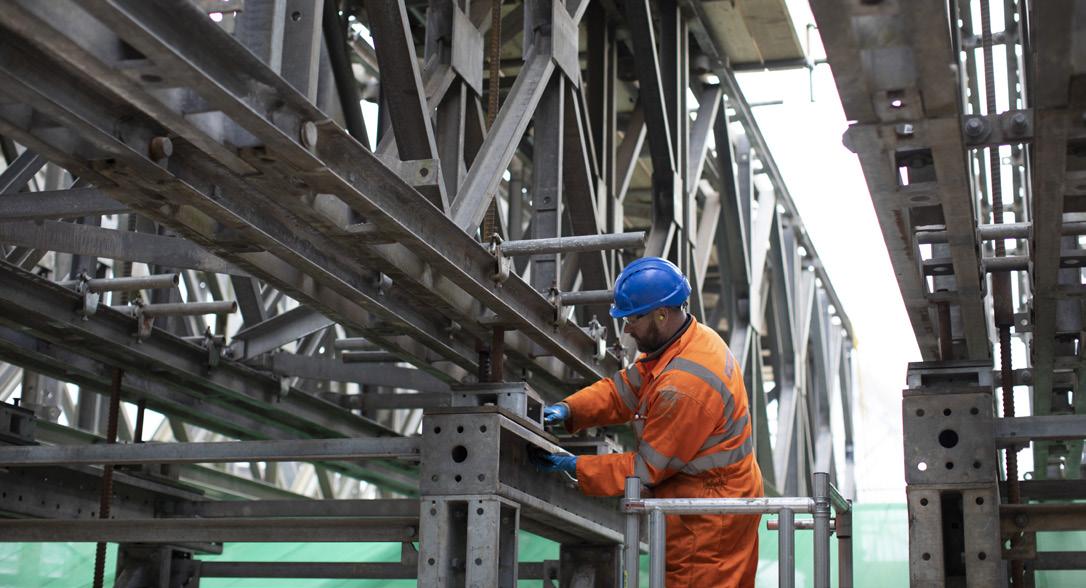
Matthew Westhead, from Mabey Hire Ltd, examines how the rail and construction industries can better respond to bridge strikes and the role temporary works can play in keeping both rail and road networks moving
41 IN CONVERSATION
Rob Renshaw, Commercial Sales Manager at Mosdorfer Rail Ltd.
44 IN CONVERSATION
Chris Renshaw, Business Operations Manager at A Bratt And Son, (Bratts Ladders)
49 IN CONVERSATION
Spill control for the rail industry with Fentex





Schréder has completed the acquisition of the remaining 51 per cent stake in Photinus, making it the sole shareholder of the Austrian solar lighting company. Photinus will operate as Schréder's dedicated solar competence centre within the group.
Schréder and Photinus have integrated Photinus's solar technology with Schréder's EXEDRA IoT platform since joining forces in 2024. The combined offering covers solar-powered lighting
with real-time battery monitoring, predictive maintenance, and light-on-demand functionality using sensor-based dimming. Several patents relating to energy harvesting and smart communication have recently been filed.
Photinus will continue to serve its existing customers directly alongside its expanded role within the Schréder Group.
The Department for Transport has published Better Connected: A Strategy for Integrated Transport, setting out the government's vision for a simpler, more reliable and better connected transport system across England.
The strategy, presented to Parliament by Transport Secretary Heidi Alexander on 14 April, is built around eight priorities: simplifying payments and information, providing safer and more dependable journeys, making travel more accessible and affordable, creating healthier communities, aligning transport and
development, championing data and technology, empowering local leaders, and optimising decision-making and appraisal.
The strategy includes 40 new commitments supported by the £30 billion transport settlement secured in the 2025 Spending Review, covering modernisation of ticketing, improved travel information, and tools for local leaders to deliver transport improvements in their areas. Updated local transport plan guidance has already been published in alignment with the strategy's principles.
The Rail Safety and Standards Board has published its Annual Business Plan for 2026-27, setting out a shift towards predictive insight and outcome-focused analysis to support the transition to Great British Railways.
The plan includes new tools to anticipate overspeed risk, forecast wagon and wheel-track condition, and deliver AI-enabled safety and sustainability insight. Key initiatives include in-service trials of enhanced trailing arm bushes with potential lifetime maintenance
savings of up to £43 million for a typical GB operator, simplified signalling for low-volume freight terminals reducing scheme costs by up to 90 per cent, whole-system station design standards delivering £2.1 million in annual savings, and work to enable simplified singleline working to support faster recovery during disruption.
RSSB states the plan is designed to provide independent wholesystem intelligence as GBR takes shape, with a focus on anticipating future challenges rather than analysing past events.
Alstom has launched its first supported internship programme – ASPIRE. The scheme will support students with special educational needs and disabilities (SEND) through real workplace experience with structured support at the company’s historic Derby Litchurch Lane Works in the UK. Research reveals only 4.8 per cent of individuals with a learning disability or
autism spectrum conditions in England are in permanent paid employment. Alstom’s supported internship programme provides the opportunity to achieve sustained, paid employment by equipping individuals with the skills they need through hands-on learning in the workplace.
In collaboration with Derby College the students are working alongside colleagues
from Alstom’s Training Academy, with the latter delivering bespoke teaching that will enhance their work experience. Specifically, the interns are working on Alstom’s CrossCountry Voyager refurbishment project which is seeing the operator’s Class 220 and Class 221 trains receiving an interior refresh while their exteriors are being repainted in a new livery.








Britain’s railway is set to further harness artificial intelligence to improve reliability, efficiency and passenger experience, as the sector launches its first-ever joint AI action plan.
More than 200 rail leaders and technology experts gathered at London’s Science Museum on Tuesday 28 April to mark the milestone and align on a coordinated approach to AI adoption across the network.
From helping identify potential faults earlier, to improving passenger journey planning, supporting safety and helping staff respond more effectively to disruption, AI is expected to play an increasing role in how the railway operates day to day.
To guide implementation, the Artificial Intelligence in Rail Action Plan has been developed following extensive cross-sector collaboration led by GBRX – the strategic technology body for Britain’s railway – establishing a more joined-up way of working as the sector moves towards Great British Railways.
The plan focuses on overcoming long-standing barriers around data, governance and skills, moving the sector beyond isolated pilots to a coordinated, railway-wide approach enabled by rail reform.
The event also showcased work already underway across the industry through the newly established AI Incubator Accelerator (AIIA), including priority pathfinder projects and a recently launched AI and machine learning apprenticeship programme.
Together, these actions aim to embed AI in how the railway is planned, operated and maintained, delivering practical improvements for passengers and freight users.
Rail Minister Lord Hendy said: ‘For more than two centuries, the rail industry has connected communities and driven innovation across Britain. Now, powerful new technology is redefining how we live, work and travel - and our railway must harness its potential. That’s why the Government published the Transport AI Action Plan
last year, to seize the benefits and manage any potential risks of AI. It's all part of our plan to modernise track and train under Great British Railways, adopting world-leading technology that increases resilience to improve passenger experience while supporting growth, jobs and homes.’
Toufic Machnouk, Managing Director, GBRX, said: ‘AI presents a significant opportunity to improve how the railway works for people. In a system as complex and safety critical as ours, it requires deliberate action to create the conditions for adoption. This plan brings the sectors together to do exactly that, creating the capabilities and pathways that advance the role of AI in how the railway is planned, operated and experienced, delivering improvements for passengers and freight.’
Jeremy Westlake, Network Rail’s Chief Executive, said: ‘This action plan shows the rail industry at its best, coming together to deliver meaningful change as we move towards GBR. These technologies are already helping to improve performance and enhance the experience for passengers and freight users. The publication of this plan represents a defining moment for the sector, reinforcing that collaboration across the rail industry is essential to unlock the full benefits of AI, and positioning Britain’s railways at the forefront of responsible, coordinated adoption.’
Alex Hynes, Chief Executive of DFTO, said: ‘Train operators and Network Rail are already using AI to retool the industry and drive improvements for passengers, bringing improved ways to manage infrastructure, services, grow revenue and improve reliability. The launch of a joint action plan provides industry with a roadmap on how AI can be used to make the railway more resilient and financially sustainable. This is vital if we are to deliver a better railway for everyone in Britain.’
HBC Construction Limited, formerly Henry Boot Construction, has completed a £6 million Maintenance Delivery Unit for Network Rail in Barnetby, North Lincolnshire. The two-storey, 9,500 sq ft building is located next to Barnetby Station and was completed following a start on site in May 2025.
The facility includes office spaces, a workshop, meeting rooms, a canteen, changing facilities and storage space. Sustainability
measures include rooftop solar PV panels, air-source heat pumps, triple-glazed windows, EV chargers and a low-carbon timber construction. The project was funded in part through Network Rail's Green Bank.
Barnetby is the first of two MDU projects awarded to HBC. The company was appointed to deliver a second facility in Sheffield in January 2026, with completion planned for 2027.
DB Cargo UK has signed a seven-year contract with CAT UK to move finished vehicles from Jaguar Land Rover's manufacturing facility at Halewood, Merseyside, to the Port of Southampton. The company currently operates around three services a week on the route.
Jaguar Land Rover is investing heavily at Halewood to enable production of its next generation of electric vehicles, with output expected to grow as a result. DB Cargo UK and CAT UK, formerly STVA, have worked together for more than two decades moving vehicles across the UK and Europe.
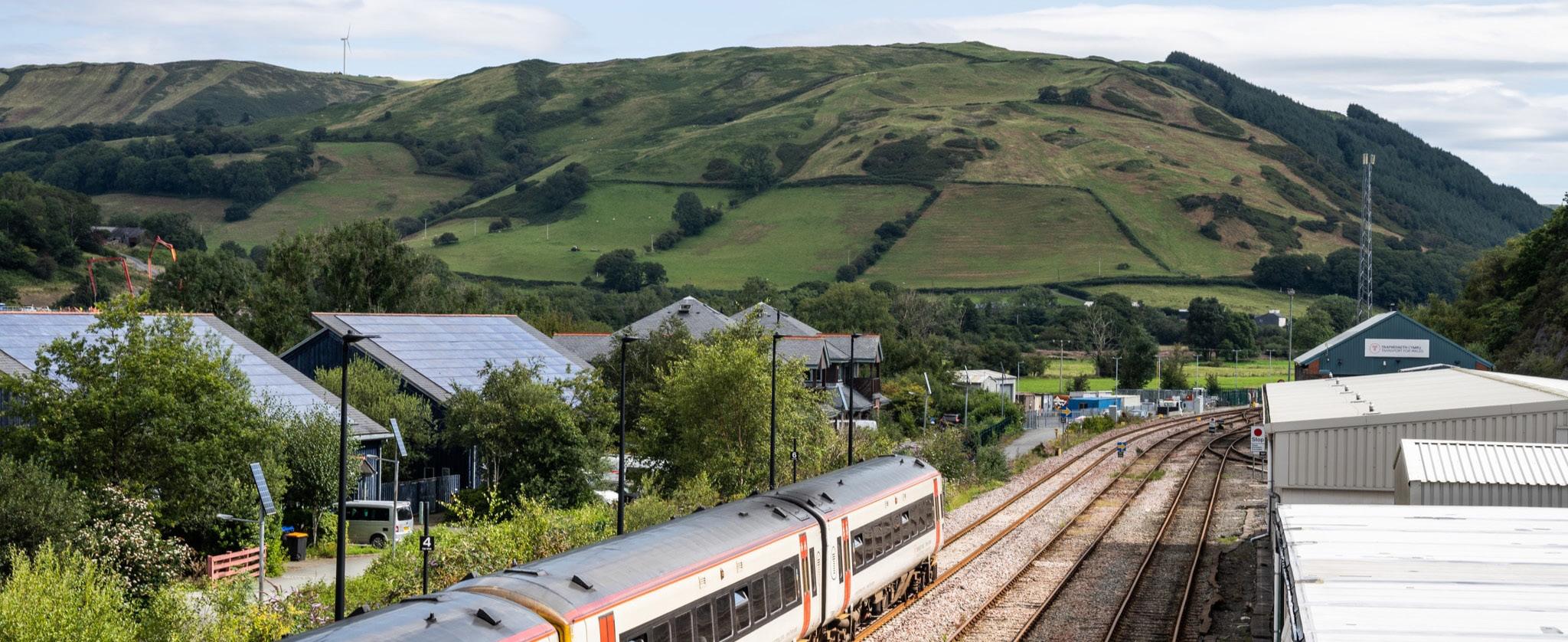
Network Rail is carrying out significant infrastructure upgrades on two key routes this spring, with works on both the Cambrian line and the Transpennine route advancing simultaneously. On the Transpennine Route Upgrade, 56 engineering trains will be deployed between Huddersfield and Leeds to renew 6.2 kilometres of track and lay more than 21,000 tonnes of ballast. Fifty-one new foundation bases will be installed to support overhead line equipment, laying the groundwork for future electrified services.
A second phase at Batley and Dewsbury will follow, involving over five kilometres of further track renewals, 27,000 tonnes of ballast, 67 OLE masts and around 800 metres of drainage work. Batley
station will reopen with step-free access for the first time, alongside extended 150-metre platforms, while Dewsbury's platforms will be extended to 200 metres to accommodate longer trains. Work continues at Huddersfield station, including platform remodelling, subway excavations and construction of a new staircase and footbridge. Refurbishment of the station's historic roof is due for completion in early 2027.
On the Cambrian line, works including track renewal at Montgomery, level crossing renewals, bridge refurbishment in Shrewsbury and drainage improvements are being carried out to prepare the route for the introduction of Class 197 trains later this year.
TP, a global leader in digital business services, has been awarded a new multi-year contract by ScotRail to deliver customer contact centre services, supporting customer engagement across Scotland’s railway network. The three-year contract will see TP provide a diverse range of customer services designed to support the ScotRail customer experience.
Under the agreement, TP will deliver contact centre services including customer relations support, delay repay administration, and telesales operations. Services will be delivered across voice, email, messaging, and whitemail initially with future plans to introduce additional channels and services.
ScotRail selected TP as its partner following a competitive tender process, seeking a partner capable of modernising their contact centre operations and introducing innovative, digitally enabled ways of engaging with their customers.
Services will be delivered from TP’s Cuprum site in Glasgow, supplemented by a work-at-home team (all based within Scotland), with circa 30+ customer service advisors expected during the first
year of operation. The service will be supported by TP’s technology partner, UP3, using their award winning ServiceNow platform.
The ScotRail contract further expands TP’s portfolio of train operating companies and associated organisations that includes Southeastern Railway, National Rail Enquiries and National Rail Card services.
Gary Slade, Chief Commercial Officer, EMEA at Teleperformance, added: ‘We are proud to be selected by ScotRail as their partner for this customer engagement, and to support one of Scotland’s most essential public services. This contract reflects ScotRail’s commitment to deliver high quality customer engagement and TP’s ability to combine skilled people, innovative technology, and flexible delivery models to achieve that vision.
By delivering services from Glasgow and through our work-athome model (Scottish based), and in partnership with technology specialists such as UP3, we look forward to building a long-term partnership with ScotRail that delivers first class customer experience and lasting value.’
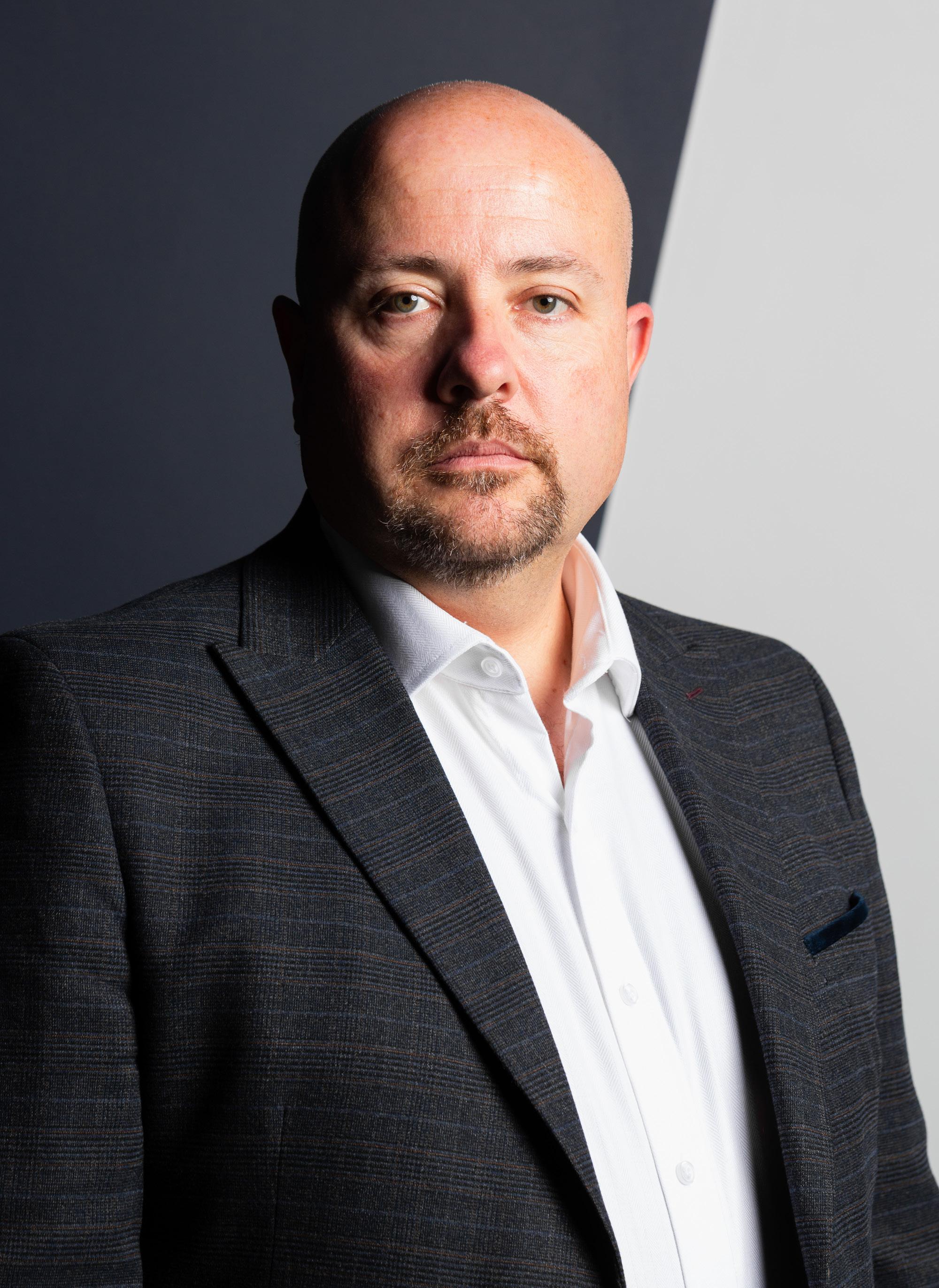
Kevin Morris is UK & Ireland Sales Manager at Snap-on Industrial, where he oversees both direct and nondirect sales for the division across the two markets. With extensive experience in professional tool solutions for critical industries, he has been closely involved in some of the company's most significant rail sector deployments, including the landmark Eurostar ATC rollout.
From a single automated tool control box in a bogie drop facility to a 25-unit depot-wide system, Snap-on Industrial's work with Eurostar offers a blueprint for how the rail industry can rethink asset management. UK & Ireland Sales Manager Kevin Morris explains the technology behind the transformation and why listening to the customer remains the starting point for every solution
SSH: What is your role within Snap-on Industrial?
KM: My current role is UK & Ireland Sales Manager, responsible for the Direct and Non-Direct Sales Business for the Industrial Division of Snap-on Industrial.
SSH: When did the company start trading?
KM: Snap-on Incorporated started trading in 1920 and officially launched its business in the UK in 1965. The company's expansion into the British market was marked by the opening of a branch and a distribution centre in Kettering, Northamptonshire
SSH: What was the inspiration behind starting Snap-on?
The inspiration for setting up Snap-on in 1920 was to revolutionise the automotive repair industry by providing mechanics with a more efficient, versatile, and high-quality tool system. Engineer Joseph Johnson recognised that traditional tools were inefficient and aimed to create a solution that allowed multiple tools to be used with fewer handles. Johnson’s core concept was to create a set of five unique handles and ten interchangeable sockets. This innovation meant that a mechanic could ‘snap on’ different sockets to a single handle, replacing a large, heavy, and often unreliable set of traditional, non-interchangeable tools. This became known as ‘Five Do the Work of Fifty’ and the interchangeable socket was born.
SSH: Tell us about Snap-on Industrial.
KM: Snap-on Industrial, a Division of Snap-on Incorporated, is a leading global innovator, manufacturer and marketer of tools, equipment, diagnostics, repair information and systems solutions for professional users performing critical tasks.
SSH: Which sectors do you work in and what is your USP?
KM: We work across several sectors including rail, aviation & aerospace, energy & natural resources, military & defence, education, and manufacturing & assembly. Snap-on has many unique selling points including the high quality and
durability of its tools. Snap-on tools are recognised as high-end, professional grade instruments, with many of the hand tools made in the USA with proprietary alloy steels, engineered to deliver a high level performance under rigorous conditions. Other USPs include being known as the ‘Brand of Choice’ amongst professional tool users and our Customer-Driven Innovation: Snap-on works closely with technicians to identify needs and develop new tools in response, with over 2,300 active/pending patents worldwide.
SSH: What types of products and services do you offer?
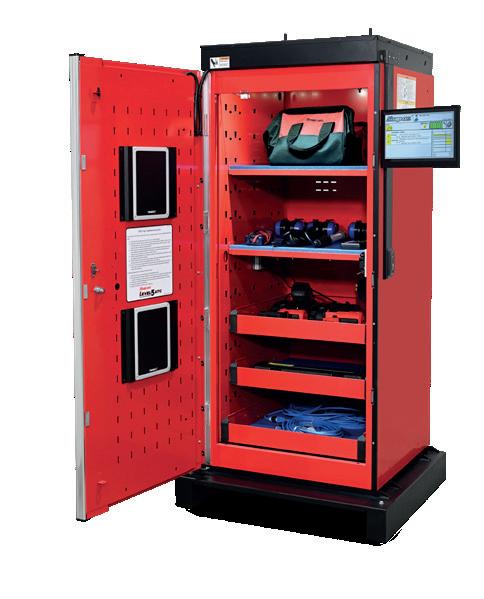
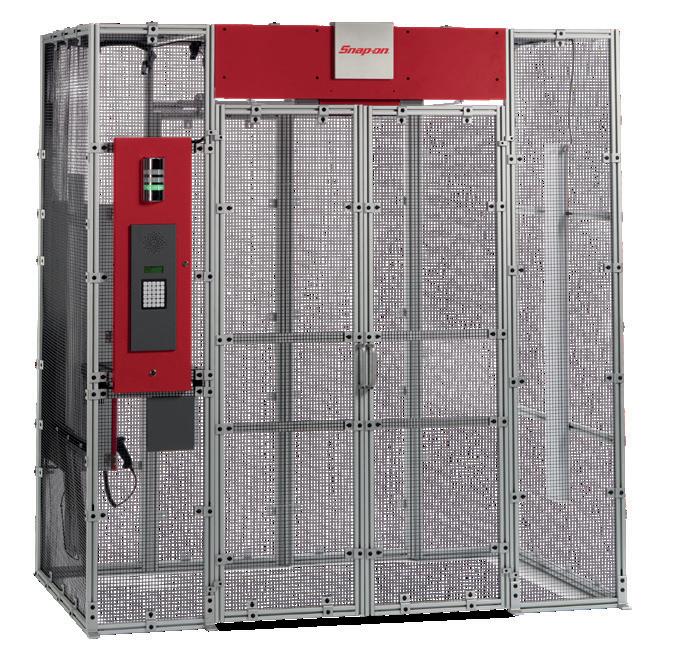
KM: We offer a range of products from hand tools and torque tools right up to fully automated tool control boxes utilising networked software for full traceability of assets.
SSH: How have the products and services you offer developed over the years?
KM: The core of Snap-on hand tool products has not changed much over the years. As a manufacturer of premium tools, our products still maintain a reputation for high durability, longevity and reliability, often being considered a ‘badge of professionalism’. However, the methods we use to help customers control their tools and assets have changed dramatically.
Working with our customers and listening to their feedback, we developed the Level5 Tool Control Program to ensure the customer has the right level of control to meet their needs.
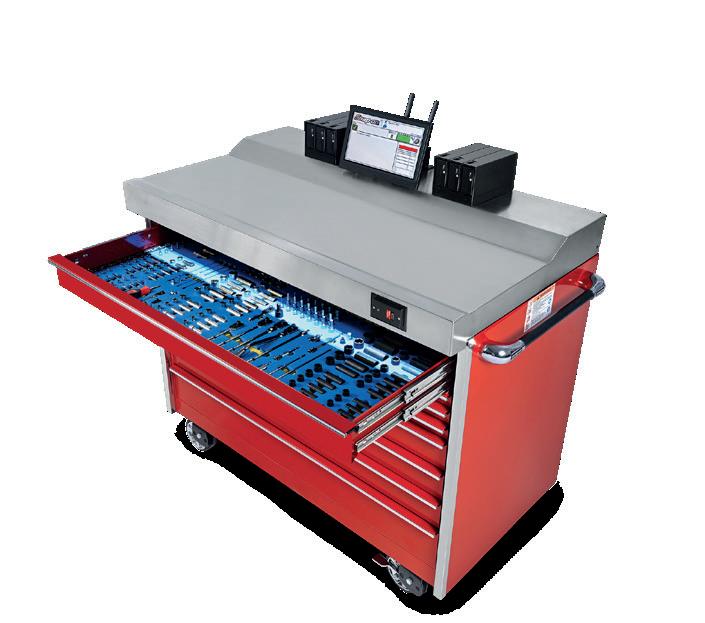
The more organized you are, the easier it is to get the job done right. Starting with a complete tool audit conducted by a Snapon Solutioneer, we’ll help you determine the level of tool control you need, from roll cabinets to carts, keeping the kits mobile or stationary. Implementing proper tool control can improve productivity, control inventory, reduce losses and standardise work by making sure the right tools are in the right place at all times.
Finding the right tool for the job can be time consuming. By increasing tool visibility,
‘Snap-on designs its tools through a customer-centric, observation-based process that prioritises technician feedback, ergonomic safety and high-performance metallurgy’
we decrease the time it takes for your technicians to find the tool they need. We also make it easier for missing tools to be noticed and returned. Our selection of highvisibility tool handles, custom colour foam inserts, toolbox organisers, and pegboards don’t just increase the visibility of your tools, they increase your team’s productivity.
Don’t get locked in to using keys that can be lost or shared. Our tool storage units have Keyless Access Control, which means your teams only have access to the tools they need. Our proprietary software manages tool storage unit access at the individual user level, allowing either stand-alone or networked control. This all means that only the right people can access the tooling as required.
Many customers have manned stores areas that require a system to control inventory as well as tool kits. Snap-on’s True-Crib software was designed for this. Take asset management to a whole new level of speed, control, accuracy and cost-effectiveness with True-Crib. With our easy to operate and intuitive True-Crib software, analysing, reporting, and tracking your tool crib assets becomes simple. True-Crib uses barcode scans and talking software, creating the most accurate way to check tools in and out.
When critical industry processes and concerns require the elimination of Foreign Material, the solution is to minimise human error. Snap-on’s ATC can handle
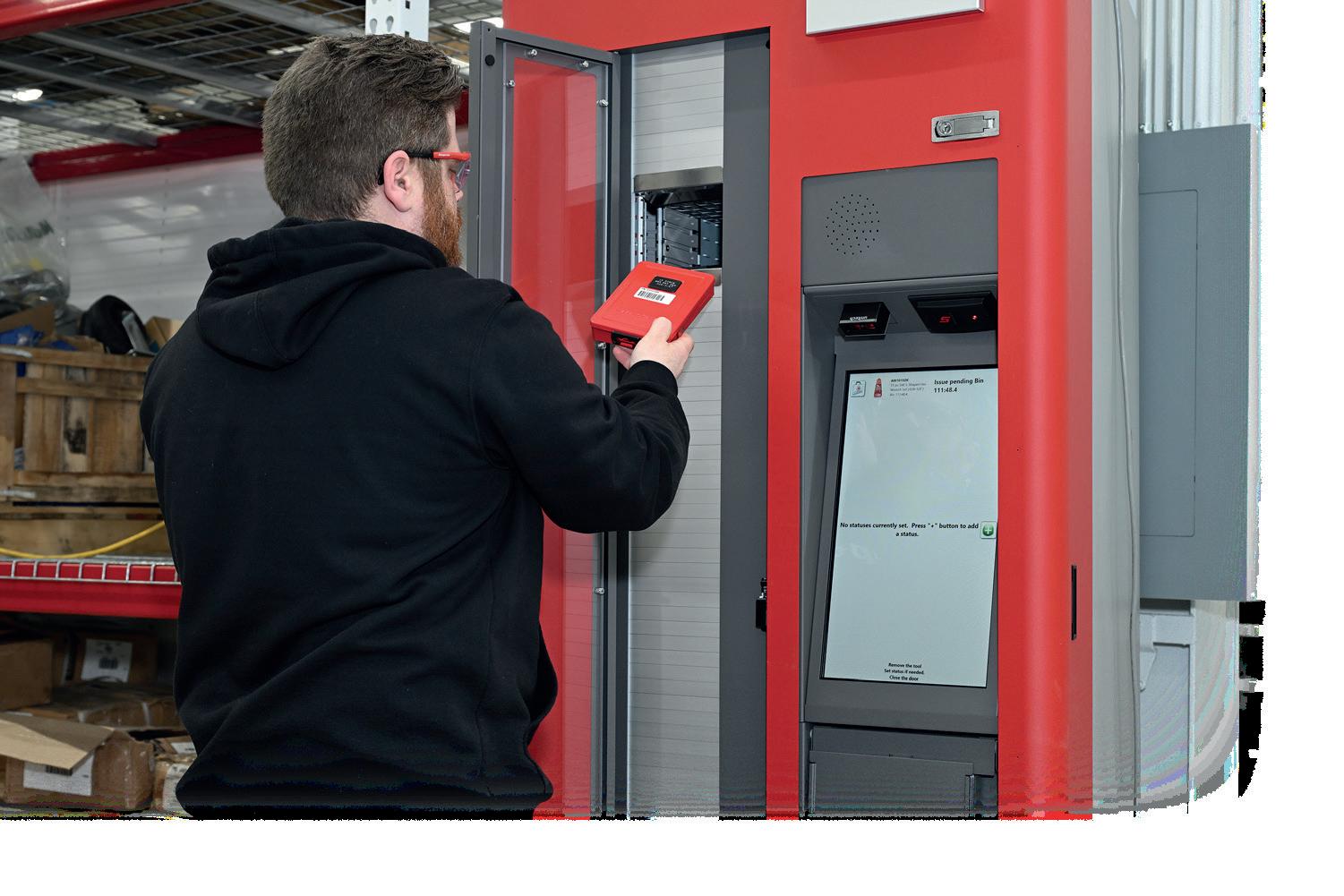
the control and tracking automatically. By adding Automated Tool Control Solutions, systematic solutions begin to standardise work, improve productivity, control inventory, reduce losses, improve security, implement an audit trail, increase accountability, enable oversight prevention and regulate calibration and maintenance reminders.
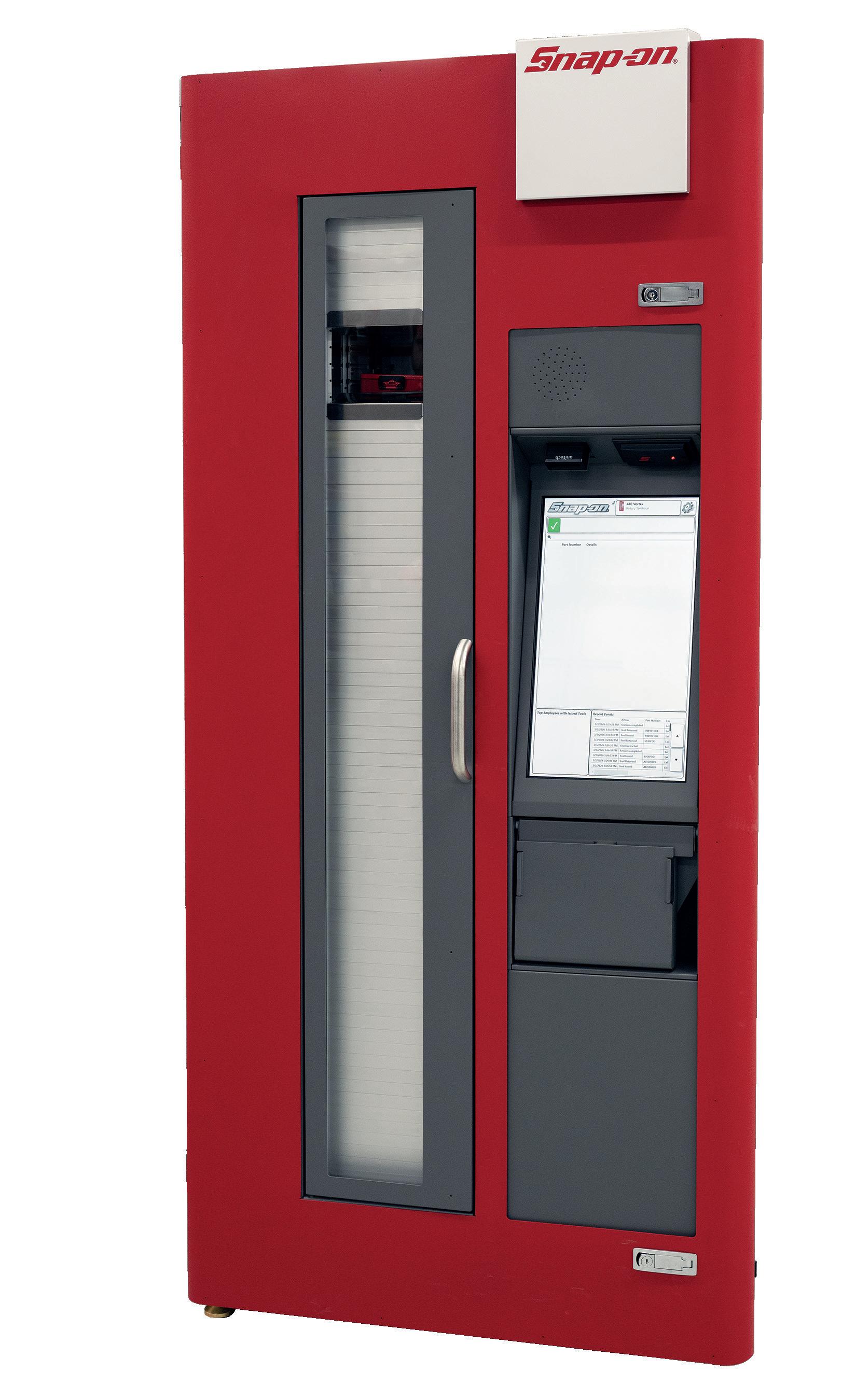
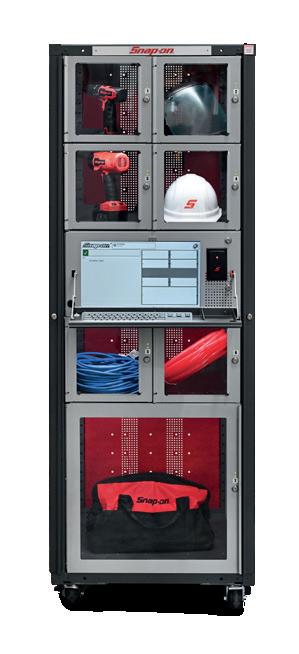
Snap-on’s automated offering has been growing to not only include an Automatic Tool Control box, powered by proprietary camera recognition software, but also many other vehicles for point of use tooling. As well as the ATC mobile box, you have the FlexHub, a customisable, rack-mounted modular locker system designed for 24/7 automated tool and asset tracking with built-in charging capabilities. You also have the ATC Vortex, a vending machine style unit with automatic adjusting tambourstyle doors to dispense a large variety of differently sized items.
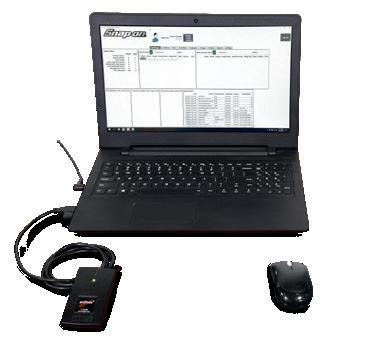
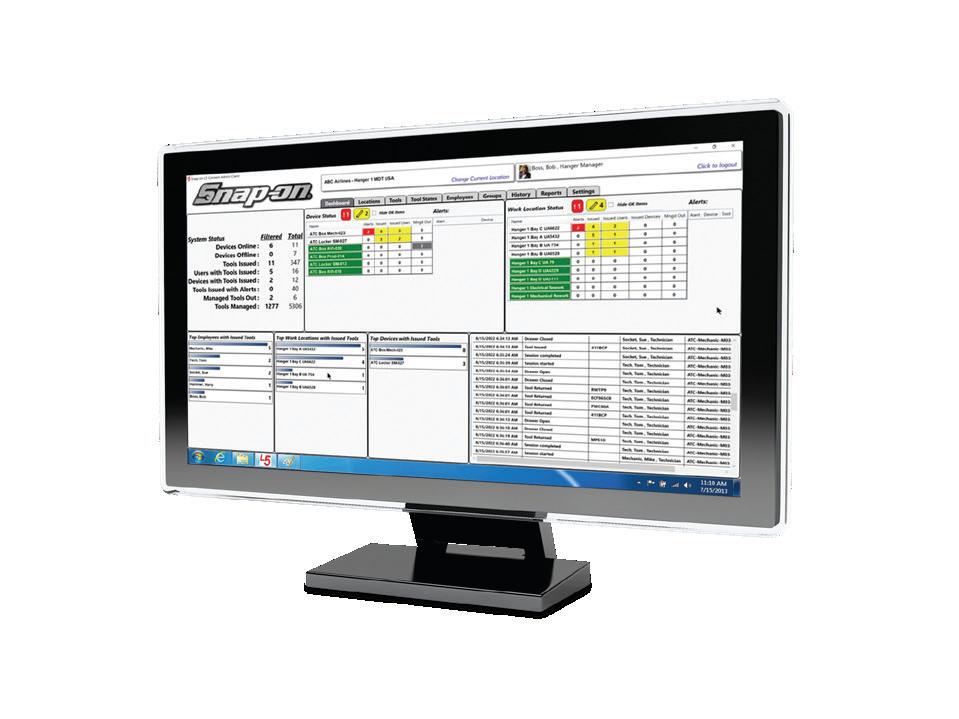
Despite having all these different methods to control automated point of use tooling, there is just one piece of software called L5 Connect required to manage them all, making the complete Level5 tool control programme unique. L5 Connect software networks all your Level 5 equipment, including tool cribs and standalone tool storage units. L5 Connect reports inventory, tool usage, tool maintenance, location and more for greater visibility and ease of management across your business.
SSH: When a client comes to you with a particular problem, what’s your process for coming up with a solution, and how closely do you work with clients throughout the projects?
KM: Customers come to us with many different problems, but our response always starts in the same way – we listen. This is one of Snap-on's core values and is included in our mission statement. We engage fully with the customer to understand the issue they may be facing before looking to one of our many programmes to help find the right solution for them. We can draw from a wealth of expertise that spans the globe. Inside Snap-on we share our solutions with our colleagues, and these are then documented so they can be drawn upon in the future and used to improve our programmes as needed.
One such programme that we have developed whilst working with customers to solve their problems, is our Custom Tools Solution Program. We asked customers if they ever wished they could just design a tool to their exact needs and specifications - with Snap-on, they can. We take a total team approach including engineers who work closely with customers to develop the right solution from the design, testing, and production, right down to the ergonomics.
If a customer ever needs a custom solution, they can count on Snap-on to get the job done. Critical applications require
special tools – it’s that simple. Snap-on has a long, proven track record of designing custom tool solutions for critical industries. Our dedicated engineers use the latest measuring technology, 3D printing, finite element analysis (FEA), and metallurgical analysis to ensure every custom tool meets the high standards that only Snapon can provide. It’s a value-added service unmatched anywhere in the industry.
SSH: What can Rail learn from other industries?
I think what Rail can learn from other industries is how to control assets so they can not only be shared but be available in the right locations at the right times. An example of this is the temptation to have tooling for each team of workers so each team leader know tools are available when they are on shift. In truth, this can often result in tools not being used for up to seven days and there being two or three times more of items than are needed. With our asset management and automation, tools and assets can be controlled and tracked so that businesses can place the items in a single location for all to use.
With the right tracking software, you can easily identify who has what, where they are using it and if they have returned it. The power of knowing where your assets are, allows you to only supply what is needed and divert budgets to other areas of the business for continued improvement.
We are seeing this behaviour across many rail companies as they embrace lean methods and control such as 5S.
SSH: You’ve said the biggest standout project that you have personally been involved in is the Tool Control Project at Eurostar where they became the first rail company in the world to adopt the Snapon ATC system, starting with a single box in its bogie drop facility and growing to 25 boxes across the depot. The benefits they have reported include a 50 per cent reduction in reliance on team cages, significantly reduced tool loss, and greater efficiency through point of use tooling. How representative is that journey of what a typical rail customer experiences, and how does a rollout of that kind usually begin?
We are seeing this approach more and more with Rail customers – a review of business practices to allow them to identify ways to improve efficiencies and drive down costs. This generally starts with a walk around with the customer and a Snap-on representative. A discussion is held about the exact needs: is it to limit tool loss? Could it be the need to rationalise the number of similar tools that are held? Perhaps it is a desire to update obsolete tools and see what new initiatives are in the marketplace? Or could it be that a record of what calibrated tools are being used on what jobs is required?
Whatever the business needs are, through observing work, Snap-on is able to design a solution to enable customers to take their asset management and compliance to the next level, while embracing tool control processes and procedures.
SSH: The ATC FlexHub is a modular locker system with see-through windows, rackmounted design, 24/7 access and full L5 Connect integration. It went from a customer suggestion at your 2023 INSIGHT event to a launched product in under a year. What gap was it filling that the existing range could not address?
KM: Many of our customers love the ATC boxes but you are limited in what you can control by what fits into the drawers. Many customers have larger items that they require point of use but would take up a little bit too much room in an ATC. The FlexHub allows them to control these items in point of use cabinets that will run using the same access cards and be controlled by the same software. These hubs also come with integrated power to allow customers to easily control and simultaneously charge battery-powered tooling so it’s ready to use when needed.
SSH: Many rail operators will already have asset management systems in place. How does L5 Connect integrate with existing infrastructure, and what does that process typically look like for a new customer?
KM: Snap-on L5 Connect software can integrate via API integration into a customer’s third-party management system. This API integration can retrieve, manage and transact data between the L5 Connect system and any system capable of using an API interface. Data including employee information, tool usage and calibration dates can be updated unidirectionally between the third-party application and L5 Connect. This can make management of data more streamlined and efficient to enhance productivity and asset management within an organisation.
SSH: The new industrial drill has been specifically designed to keep the wrist and arm aligned in order to reduce repetitive strain injuries. Is that kind of ergonomic thinking becoming a standard part of how Snap-on approaches tool development, or did it come directly from customer feedback?
KM: The answer to this is both – they are intertwined. Snap-on designs its tools through a customer-centric, observationbased process that prioritises technician feedback, ergonomic safety and highperformance metallurgy. Rather than just manufacturing, the company engineers solutions by observing technicians at work to identify unmet needs and performance bottlenecks.

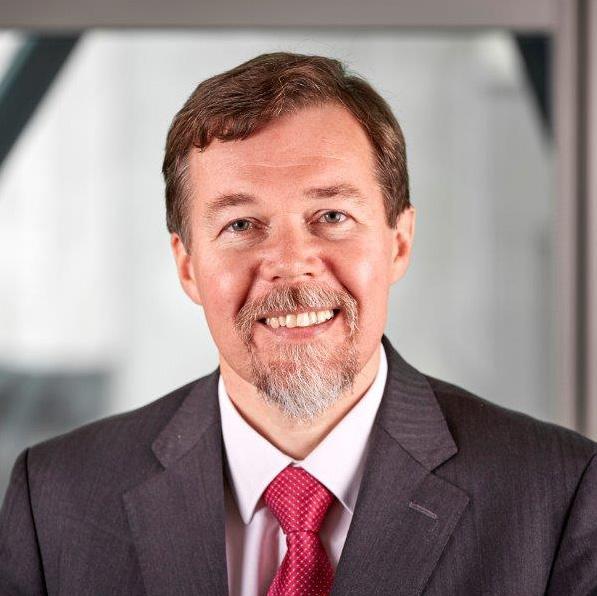
by Martin Fleetwood
Martin looks at how HMRC's growing focus on IR35 compliance is prompting rail sector businesses to revisit their off-payroll working arrangements and processes
The rail sector employs a significant number of contractors and has some complex supply chains, particularly for its major projects. In the period between 2010 to 2020 there was a trend for contracted workers to provide their services through an intermediary company (a personal service company or PSC) rather than become an employee of an organisation in order to reduce the tax liability of both parties for both income tax and national insurance. To combat this, tax legislation known as IR35 or the ‘off-payroll working rules’ was established.
The IR35 regime was applied to the public sector from 2017 and to medium and large businesses in 2021 and has previously been covered in this column. It was deliberately introduced with a ‘light touch’ to encourage businesses to get to grips with their supply chains and re-consider how they sourced their workers so that the appropriate levels of tax were paid. With five years having now elapsed from IR35 first applying to the private sector and the regime becoming well established, HMRC are becoming more focused on off-payroll working and, in particular, compliance with IR35 rules. This can involve HMRC investigations tying up key staff in responding to these requests and potentially the organisation needing to make additional payments to HMRC if incorrect determinations are found to have been made.
A brief reminder of IR35
IR35 only applies to workers supplying their services through a PSC and requires the organisation engaging them through the PSC to:
i. determine if the worker would have been an employee of the organisation had there been a direct contract between the
worker and the organisation rather than through the PSC;
ii. issue a Status Determination Statement (SDS) outlining if IR35 applies to the worker; and
iii. if the SDS places them inside IR35, to deduct income tax, employee and employer NICs and the apprenticeship levy (if applicable) from payments to that worker. If the PSC is contracted through an employment agency, the employment agency is responsible for making the relevant deductions.
If the organisation fails to take ‘reasonable care’ in issuing the SDS to the worker and incorrectly places them outside IR35, then the organisation is liable for all of the tax that should have been deducted from payments to the worker. This is irrespective of whether the PSC is actually paid by an employment agency.
There has been a steady increase in HMRC enquiries into organisations in respect of their off-payroll working arrangements, particularly IR35 compliance. Contact has been through various channels including:
• Support offers with questionnaires.
• Targeted questions as part of broader employer review.
• General off-payroll working questionnaires.
• Enquiries about specific contractors as a result of targeted intelligence.
Care needs to be taken in responding, including to initial generic enquiries, as they all create a body of evidence that HMRC can use and may escalate into more targeted scrutiny. This can be particularly problematic if the later detailed scrutiny reveals errors in the initial responses.
Martin Fleetwood is a Consultant at Addleshaw Goddard’s Transport practice. The Rail Team has over 30 lawyers who advise clients in both the private and public sectors across a wide range of legal areas. As well as contractual issues, the team advises on operational matters, franchises, concessions, finance, regulatory, property, employment, environmental and procurement issues.
Disclaimer: This article is for informational purposes only and does not constitute legal advice. It is recommended that specific professional advice is sought before acting on any of the information given.
In practice, following an HMRC enquiry, most organisations will need to make corrections either to the tax that should have been paid or their IR35 processes. The most common areas where organisations can fall foul of the IR35 rules include:
• Over-reliance on contractual terms preventing the supply of PSCs by employment agencies and thereby not assessing agency-supplied contractors.
• Outsourcing determinations with limited oversight (the organisation must always ensure determinations and SDSs are properly issued).
• Not refreshing determinations for new or changed engagements.
• Insufficient onboarding time for status assessments.
• Misclassifying ‘fully contracted out’ services, leading to missed determinations.
• Over-reliance on software without quality input or oversight.
• Lack of management review and controls.
• Insufficient or outdated staff training.
The majority of these errors arise through a simple lack of attention paid to the process, but the consequences can be quite significant for an organisation, particularly if the status of a number of workers is involved. It should certainly be on the risk radar of the organisation’s Finance Director.
When IR35 was implemented, most organisations reviewed their systems and processes to ensure that they were compliant and the relevant workers subject to IR35 were identified. However, business is dynamic and it is good practice for an organisation to regularly consider how it is obtaining its work force. Issues to be considered include:
• The overall number of PSC workers deemed to be inside and outside of IR35. Does the ratio make sense, or does it require some further examination?
• When were the working practices of employment agencies in the organisation’s supply chains last reviewed?
• For individuals completing SDSs, whether through HMRC’s Check Employment Status for Tax (CEST) tool or through third-party software, are they being influenced (perhaps unconsciously) by an expected outcome?
In response to any investigation by HMRC an organisation should be able to show that it has taken reasonable care in reaching its conclusions. This often requires ongoing vigilance, typically across several business functions.
There are also changes coming through in employment law, following the ‘oncein-a-generation’ Employment Rights Act 2025 which has brought forward numerous reforms, with the first major changes implemented in April 2026:
• The new umbrella company PAYE reforms will make employment agencies or end
clients joint and severally liable for any amount required to be accounted for under PAYE provisions where an umbrella company forms part of a labour supply chain.
• Businesses could be impacted by the potential changes to contract supply chains as a result of the new legislation.
• The new Fair Work Agency, will be established as a single enforcement body for employment rights bringing together the work of existing state enforcement bodies to oversee compliance with, among other things, the national minimum wage.
Businesses will need to consider how they engage contractors and there will be an increased need to ensure compliance ahead of the Fair Work Agency becoming operational.
With HMRC’s focus on IR35 continuing, effective risk management requires robust, documented procedures and a proactive, collaborative approach across business functions. Businesses may wish to:
• Seek specialist advice at the earliest stage of any HMRC contact.
• Ensure compliance processes are regularly reviewed to ensure they meet the ‘reasonable care’ standard and withstand regulatory scrutiny.
• Take care when using third parties/ agencies in the supply chain and ensure that the SDSs are provided and reviewed.
• Ensure any/all staff who conduct SDSs are fully trained and appropriately supervised.
• Be wary of how roles are advertised as these can set expectations of workers.
• Provide regular, updated training for all staff involved in contractor onboarding and IR35 compliance.
• Audit and refresh determinations and processes regularly, especially after organisational changes.
• Audit and review the working practices of any employment agencies in supply chains.
Although putting in place these additional activities will come at a cost to an organisation, this should be compared with the time and cost of staff spent in managing a detailed HMRC investigation and potential additional tax payments to HMRC being required, due to having incorrectly assessed workers under a PSC arrangement.


































Dave Widger, Board Member, Institute of Economic Development and Head of UK and Ireland Economic Development, AECOM. He has been a Technical Lead on several major infrastructure projects across the UK – Crossrail 2, High Speed 2 Phases 1 & 2B, Bakerloo Line Upgrade & Extension and Oxford Cambridge Arc.
Dave Widger, Board Member, Institute of Economic Development and Head of UK and Ireland Economic Development, AECOM argues that the Northern Powerhouse Rail must deliver people-first growth
The recent announcement by the UK government of a £45 billion investment in Northern Powerhouse Rail has rightly generated excitement across the North. Major infrastructure programmes of this scale always capture attention because of the speed and connectivity they promise. But the real story here is not simply about trains moving faster between cities. It is about what this level of investment can unlock for people, places and communities if it is delivered in the right way.
Economic development professionals have long understood that transport schemes can be powerful enablers of growth – and the projections associated with Northern Powerhouse Rail are significant. More than 74,000 new jobs are expected to be created, alongside thousands of new homes linked to major station redevelopments such as York Central and Leeds South Bank. These are not abstract numbers. They represent real opportunities for individuals to access better employment, improved housing and richer cultural and leisure opportunities closer to where they live.
However, as the Institute of Economic Development has consistently argued, infrastructure on its own is never enough. Growth that is measured purely in terms of physical assets or headline economic output risks missing the bigger picture. The Good Growth framework reminds us that success must be socially equitable, regionally balanced and environmentally responsible. Better connectivity across the North has the potential to widen labour markets and open up access to higher value jobs. But this only happens if investment in skills, training and local services keeps pace. The
inclusion of a £570 million skills fund within the Northern Powerhouse Rail programme is therefore particularly important. Training the next generation of engineers, planners and technical specialists is not a side benefit. It is central to ensuring that local communities genuinely share in the value created.
The iED’s forthcoming Good Growth report also highlights the importance of supporting those communities that are often hardest to reach. Faster rail links between major cities are welcome, but policymakers and delivery partners must remain focused on how surrounding towns and neighbourhoods connect into this new network. Without that wider thinking, there is a risk that growth concentrates in a limited number of urban cores while other places fall further behind. Good Growth requires a more deliberate, place-based approach.
Another key theme is the need to regulate market excesses and promote genuine corporate citizenship. Large scale infrastructure inevitably attracts significant private sector interest, and rightly so. Private investment is essential if the full regeneration potential of these schemes is to be realised. However, that investment must deliver net positive value for communities. That means high quality jobs, fair employment practices, strong environmental standards and long term stewardship of place. It also means resisting the temptation to pursue short term gains that undermine long term local resilience.
There is also a broader strategic point. For too long, discussions about major infrastructure have focused heavily on journey time savings and headline benefit cost ratios. Those metrics still
‘LIVING ROOF’ CYCLE SHELTER UNVEILED AT CHAPPEL AND WAKES COLNE RAIL STATION
A new cycle shelter with a living roof has opened at Chappel & Wakes Colne station to improve facilities for cyclists and encourage wildlife at the same time. The project, a first on the Greater Anglia network, was delivered in partnership with the station’s dedicated volunteer adoption team, who work with Greater Anglia to enhance and care for the station. It has been funded by Community Rail Network, the Essex and South Suffolk Community Rail Partnership, Councillor William Sunnuck’s Community Fund and the Essex Local Nature Project. The living roof contains drought-resistant sedum plants, which will provide a range of habitats and seasonal flowers. It also includes a water feature with plants that support aquatic life, along with insect houses for solitary bees and other small insects.
matter, but they do not fully capture the transformational potential of schemes like Northern Powerhouse Rail. The real prize is the creation of more resilient local economies, stronger community wealth building and improved life chances for residents across the North.
This is where collaboration becomes critical. Delivering the full benefits of Northern Powerhouse Rail will require close alignment between national government, combined authorities, local councils, the private sector and community stakeholders. Public funding can unlock opportunity, but sustainable prosperity comes when private investment is guided by a clear, shared vision for place.
If we keep people at the centre of delivery, this investment can help reshape economic geography in a positive way. It can support the reinvigoration of postindustrial towns, strengthen city regions and create new pathways into skilled employment for younger generations. But that outcome is not automatic. It depends on sustained focus, thoughtful planning and a commitment to the principles of Good Growth.
The North has waited a long time for investment at this scale. The opportunity now is to ensure that it delivers not just faster connections, but fairer and more inclusive prosperity. If we get that balance right, Northern Powerhouse Rail will be remembered not simply as a transport scheme, but as a catalyst for people first growth across the North.
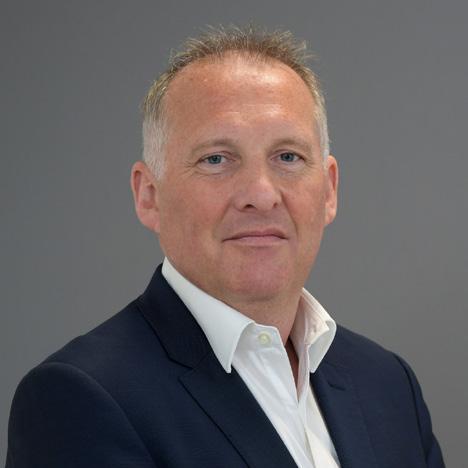

John Whitehurst, Chief Operating Officer at Govia Thameslink Railway, and Lucy McAuliffe, Network Rail’s Sussex Route Director, explain why genuine integration between track and train cannot wait for structural reform, and what it looks like when it is already happening on a live network
Every minute matters. That may sound like a slogan, but when you work on a railway that carries millions of passengers, it is simply a fact. The people who travel with us are relying on our service to reach hospital appointments, to get to work, to see family and friends, to make a flight. Every delay has a human consequence. That shared understanding of who we are running this railway for, and what is at stake when things go wrong, is the foundation of everything GTR and Network Rail have been building together.
The historic fragmented structure of Britain’s railway made it harder to fix problems that span both sides of the tracktrain divide. The incentive structures, the reporting lines, the data systems were all designed around organisational boundaries rather than passenger outcomes. GTR and Network Rail have spent the past year deliberately dismantling that fragmentation, building a joint way of working that treats the railway as a single system.
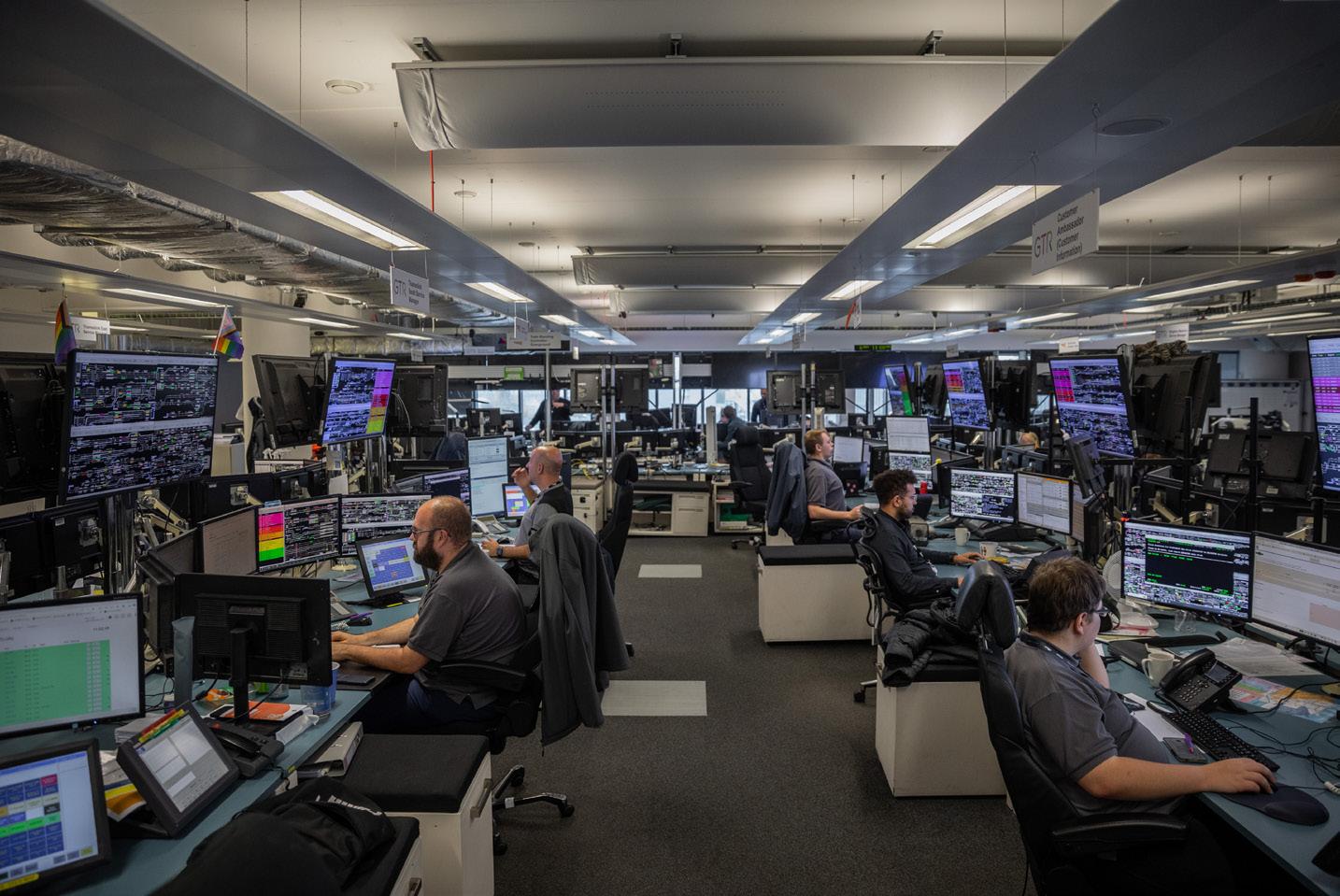
One embodiment of this is a joint control room where both organisations manage day to day operations and customer information across the network. With GTR moving into public ownership on Sunday 31 May, what started as a partnership is becoming the blueprint for how the railway will be run.
The cultural challenge
It would be misleading to suggest this has been straightforward. The track-train divide is not simply a structural problem; it is a deeply embedded cultural one. Both organisations have historically measured
success differently, reported upwards through separate chains of accountability, and operated with data that was rarely shared in real time. Getting engineers, planners and operational teams to work to a genuinely common picture requires more than a new governance structure; it requires a different set of habits and, frankly, a willingness to be held jointly accountable for outcomes that were previously someone else’s problem.
That shift does not happen by decree. But it does start at the top through consistent leadership behaviours. As the leaders of
our respective organisations, we made a deliberate decision not to wait for public ownership or the creation of Great British Railways to behave as one team.
The integrated ways of working we have been building together over many months, and the joint results they are delivering, are proof that the track-train divide can be progressed within the existing structure. It also requires a conviction that is shared across both organisations: that performance is everyone’s responsibility. Not just the people at the operational front line but everyone, regardless of where you work in
the system. Whether you are in engineering, planning, finance or HR, the question should be the same: how does my work connect to the experience of the passenger at the end of it?
The Whole System Model is what we call the shared framework GTR and Network Rail have developed for managing performance. It works precisely because it embeds that question at every level. Rather than each organisation optimising for its own metrics, teams now work to a common picture, asking collectively what each problem means for passengers and how it can be fixed fastest across both organisations. Instead of arriving at a joint meeting with competing versions of events, we arrive at the same table looking at the same data.
The practical outputs of this closer working are tangible. In Sussex, when a trespass incident occurs, which is one of the most disruptive and unpredictable causes of delays, teams can now deploy camera drones to survey the affected area remotely. Controllers get a real picture of what’s happening faster, and lines that would previously have been held closed while staff walked the track can be reopened sooner and more safely.
Fleet and infrastructure teams are also working more closely together using cameras fitted to trains that automatically film the track beneath them during normal service. The footage is reviewed using
automated analysis software and flags potential track problems without the need for engineers to physically walk the line. This reduces disruption while giving maintenance teams better and more timely information. This is exactly the kind of intelligence-sharing that only happens when the two sides of the railway are genuinely aligned.
Elsewhere, protective guards are being fitted around axle counters (the trackside sensors that detect whether a section of line is clear) after litter and debris were identified as a recurring cause of failures. It is the kind of targeted fix that becomes easier to identify and act on when track and train teams are sharing data and having regular conversations. A new joint steering group will formalise this further, bringing planners from both organisations together regularly to coordinate decisions before problems arise rather than after they have.
The performance data reflects months of this closer coordination. Overall cancellations across the GTR network have nearly halved over the course of this year, falling from 7.2 per cent in Period 5 to 4.6 per cent in Period 11. Cancellations directly attributable to GTR dropped to 1.25 per cent in Period 11, the lowest level since the pandemic. These are not figures to be complacent about; there are harder periods ahead as infrastructure work programmes intensify. But they demonstrate that the direction of travel is right.
RAILWAY IMPROVEMENTS DELIVERED IN BEDFORDSHIRE
Network Rail engineers successfully completed a busy programme of improvement works in Bedfordshire to improve safety, accessibility and reliability for passengers. Another milestone was reached at Harlington station, where the ageing footbridge has been safely removed following the installation of a new, modern structure in December. Engineers also completed improvements to the overhead line equipment (OLE) at the station. A few miles south, at Luton station, early construction work has started as part of the Government’s Access for All programme to improve accessibility. Engineers excavated the site, installed piles and erected hoarding to prepare the area for further construction work, as Network Rail installs an accessible footbridge with lifts, in a project planned for completion in spring 2027.
‘We made a deliberate decision not to wait for public ownership or the creation of Great British Railways to behave as one team.’
The debate around rail reform tends to focus on structures, such as who owns what, which body has which powers, how GBR will be constituted. Those questions matter. But structures alone do not make trains run on time. What makes trains run on time is people from different organisations sharing the same picture, making decisions together, and never losing sight of who they are doing it for.
Our joint commitment is to deliver safe and reliable performance for the millions of people who depend on this railway every day. To get them to work, to their families, to their lives. GTR becomes publicly owned on 31 May. The integrated ways of working developed between GTR and Network Rail will carry directly into the new structure. And our goal – a railway that prevents problems rather than simply responds to them – does not change. What changes is the opportunity to embed that approach across the whole system, at scale.
Gareth Ellis is Managing Director of EcoGrit, a British manufacturer of processed salt de-icing products designed as a lower-corrosion, lower-toxicity alternative to rock salt.
Sam Sherwood-Hale spoke to EcoGrit Managing Director Gareth Ellis about the hidden costs of rock salt, the limitations of traditional de-icing, and why the rail industry's maintenance budgets may depend on finding an alternative
SSH: EcoGrit has built its reputation largely in the domestic and commercial space. What is the opportunity you see in rail?
GE: Look at this last winter. Certain parts of the country were absolutely smashed while areas like Suffolk, where I am based, barely saw a frost. These weather patterns are only going to get more erratic, and the problem is we do not know where they will land next. If the whole country were set up like Scandinavia, we would be prepared. But we are not. We have areas that never get touched, and then suddenly somewhere gets deluged and everyone is thrown.
The practices we have relied on here — rock salt, road grit — are causing enormous damage, and other countries that went down that road heavily are now waking up to how bad it has become. Canada, Sweden: they have destroyed virtually everything. You cannot just keep putting more salt down as the weather gets worse.
The alternative that has been marketed as the eco-friendly option is urea. But urea is going to be restricted globally. Brussels is already in discussions because governments have recognised that the excess nitrogen destroys biodiversity, contaminates waterways, and in sufficient concentrations creates toxic algae blooms. Beyond the ecological damage, the nitrogen is needed for fertilisers, and that competition is already driving prices up. People in the deicing industry are relying on a product that is on borrowed time and most of them do not know it yet.
Rail is interesting precisely because the network operates everywhere, in areas where winter conditions can be genuinely severe, year after year. Stations, car parks, crossings, depots, maintenance sites: there is an enormous number of locations that need de-icing, and that makes it exactly the kind of reliable, consistent use case where trialling EcoGrit alongside existing products makes practical sense.
SSH: Rock salt's corrosive effect on road infrastructure is well documented. Rail infrastructure faces the same chemistry: platforms, footbridges, concourses, rolling stock undersides. What does switching to something significantly less corrosive mean for maintenance budgets over time?
GE: EcoGrit's processed salts are 80 per cent less corrosive than rock salt. But more importantly, because the product does not refreeze, you use far less of it. I have footage from Scotland this winter where contractors applied it to an icy surface and came back the next day to find it still dry and clear, while everywhere else was covered in black ice. You can watch snow land where EcoGrit has been applied and simply disappear.
I am in the road repair industry, and I have seen roads right next to each other, same materials, same weather, same area, where one has had rock salt applied and one has not. They look like completely different roads. The one without rock salt has no holes. It lasts decades. The one with it just crumbles.
People do not understand that potholes are not just wear and tear. Rock salt is destroying the roads, and we are spending a fortune trying to repair the damage we are causing. The same logic applies to rail. Switch to something 80 per cent less corrosive and you are not just saving on product costs. You are delaying the degradation of infrastructure that is extraordinarily expensive to repair or replace.
SSH: Rock salt stops working below around minus six degrees Celsius, and the ground temperature is typically two degrees lower than the air temperature. EcoGrit has been tested down to minus fifty. What is the liability picture for a rail operator if a treated surface fails and a passenger is seriously injured?
GE: The ground temperature point is one that most people do not factor in at all. You look at the air temperature, apply rock
salt, and the ground has still not responded the way you expected. EcoGrit was trialled by the Canadian authorities specifically in conditions where thick ice could not be shifted by anything else. At minus fifty, on ice so solid you cannot move it, you put EcoGrit on and it works its way all the way down and breaks it up. You can hear it crack. On liability, the legal landscape around contracted services has shifted considerably. When you contract privately, the duty of care question becomes much more direct. If you are putting a product down that is demonstrably not adequate at the temperatures you are experiencing, and a better alternative exists and is available, the question of due diligence becomes very pointed indeed. Showing that you are doing something is not the same as actually doing something. For a network that operates across the entire country, in areas where conditions can fall well outside rock salt's effective range, that is a procurement question that should be on the desk of every facilities director and legal team in the industry.
SSH: Beyond the treated surfaces themselves, there is the issue of product being carried into buildings on footwear. Rock salt walked in on shoes can burn holes in carpets. In a busy station environment that is a hidden cost that most facilities managers have probably never connected to their de-icing contractor. Does it come up?
GE: It does, and it should come up more. Rock salt is genuinely destructive inside buildings. It burns through carpet, and it corrodes hard flooring over time. People do not realise it because they are not connecting the two things. The gritting contractor comes at night, the damage accumulates slowly, and nobody in the building ever thinks to trace it back to what is being put on the steps outside.
EcoGrit is granular: it breaks down completely and does not transfer in the same
way. You can mix it with water and spray it and it disappears entirely. There is nothing to carry in on a shoe. High-footfall stations have a real cumulative cost from salt damage to interiors, even if no one has ever put those two things together.
SSH: If you look at the safety datasheet for EcoGrit it reads very differently to rock salt: no hazard classifications, no handling restrictions, effectively pH neutral, with ingredients derived from food and drink industry co-products. How does it actually work, and why has this chemistry not been more widely adopted?
GE: Rock salt is not simply salt. It comes from deep underground, and it contains heavy metals and toxins that nature removed from the surface environment millions of years ago. We have built machines that can go all the way down there, extract this material in massive quantities, and throw it straight back onto the surface. The people who sell it do not pay for the roads it destroys, the infrastructure it corrodes, or the waterways it contaminates. They take it out of the ground for almost nothing, sell it, and move on. Someone else picks up the bill. EcoGrit works differently. The salt component is specially processed, which is why it performs at temperatures rock salt cannot touch, and the other ingredients are natural and derived from food and drink industry co-products. Because it does not refreeze, you need a fraction of the volume. Once the ice is gone, there is a protective layer on the surface that you cannot see or feel, but frost cannot re-penetrate it.
As for why it has not been adopted more widely: part of it is that rock salt is cheap because its costs are externalised. The repair bill goes to a different department. The water treatment cost goes somewhere else entirely. Nobody who buys the rock salt is ever asked to reconcile those numbers.
SSH: You have spoken about the structural problem with procurement: the fact that winter maintenance and infrastructure repair come out of entirely separate budgets, so nobody in the process ever has to reconcile what the de-icing contractor is actually costing in the long run. How does that change the conversation with potential clients?
GE: It is a significant barrier. Most councils and many large organisations have a small, fixed winter budget, and that is what they use to procure de-icing products. When the roads or surfaces degrade, the repair bill comes out of capital expenditure, applied for separately. The two budgets are never seen in the same room. The person buying rock salt is not the person paying for the potholes, and they are never asked to connect those two facts.
Leeds City Council approached me this past winter. Their four-year winter maintenance tendering cycle was coming to
an end, and the head of roads and transport contacted me directly. I told them I have put tenders in before and lost, because when everything comes down to lowest price for rock salt, I cannot compete. But Leeds came back and said they want to change that. Cost alone is no longer the criterion: they want genuine innovation. So going into next winter, I am on their procurement books for trial purposes.
SSH: If a major train operating company or Network Rail regional team wanted to run a structured trial, what should that look like and what should they be measuring?
GE: Start with what you already know. Your gritting contractors follow a pattern: they drive a route, apply product, and move on. Take one of those locations and split it. Continue with your existing product on part of it and use EcoGrit on the rest. Come back the next morning. If the conditions are right, you will see a visible difference. One side will have re-iced, the other will not.
What you want to measure is how much less product you are applying over a winter, how many fewer repeat applications are needed, and whether the treated surfaces show any deterioration over time. Because EcoGrit does not refreeze, the low-traffic areas in particular often do not need retreating at all. Rail sites grit whole areas including sections that barely get used, and every day the contractor comes back and puts more down. Once you actually trial something that stays active, you start to question why you were doing it that way.
The other thing worth understanding is the shelf life. EcoGrit can be stored for years without losing its potency. You do not buy a fire extinguisher expecting a fire. You buy it because you need it to be there when the conditions arise. You can stock it properly, use it when you need it, and not worry about it degrading in storage. That makes it a genuinely practical option for strategic stocking across a network.
I am happy to provide product for trial purposes. Getting EcoGrit in front of people who can compare it directly against what they are using is worth more to me than any advertising spend.
SSH: You are also beginning to work with Tier 1 infrastructure contractors. How did that come about, and what does it suggest about where the market is heading?
GE: Those relationships have come from within those organisations rather than through tendering. Someone at the project level requests EcoGrit specifically, often because they have encountered it elsewhere, and the order comes through from finance or admin. That is the pattern I am starting to see more of, and I think it is a healthier dynamic.
The problem with facilities management procurement at scale is that the contract goes to a tier-one provider who breaks it
down to subcontractors, who break it down further, and by the time you reach the people actually doing the gritting at two in the morning, the margin has been extracted so many times there is almost nothing left. Direct relationships change that logic. If the client specifies EcoGrit and their contractors are instructed to source it from me, the product quality is maintained and I know exactly where every tub is going.
SSH: The transition to Great British Railways will bring structural changes to how the network is procured and operated. Do you think that creates an opportunity for smaller specialist suppliers, or does centralised control tend to entrench the existing players?
GE: It could go either way. Larger suppliers have the relationships, the scale, and the ability to absorb complex tendering processes, and that tends to work in their favour under centralised procurement. What gives me more optimism is what is happening outside formal procurement. There are people pushing to get more innovation and more small businesses into the supply chain, and those conversations are happening at an encouraging level. Whether that intention becomes real process change remains to be seen.
What I do think is that when urea is restricted any organisation that has not trialled a real alternative will be scrambling. The smarter operators are already looking at this, and I do not think they will want to be caught unprepared.
SSH: For readers who want to get in touch, whether they are a station manager, a facilities director, a Tier 1 contractor or a procurement lead, what would you want them to ask you?
GE: Ask if you can try it. That is genuinely all I want. I will provide product for a proper trial alongside whatever you are currently using, because I know that once you compare them directly, the case makes itself.
What I want people in the rail industry to understand is that we do not need to switch everything overnight. Pick the areas where conditions are worst and start there. If it works in those places, and it will, then you know it works everywhere. The rail industry puts an enormous amount of product down across a very wide network. If even part of that shifted to something less corrosive, less toxic, and effective at temperatures rock salt simply cannot handle, the cumulative benefit to infrastructure, maintenance budgets and the water table would be very substantial.
I have been funding this myself for over a decade. I am not looking to sell out to the first large company that comes along. This is British, it is patented, and I want it to make a difference here. What I need is for people to give it a fair trial. Once they do, I have never had anyone come back and tell me it did not work.

Sam
Sherwood-Hale
engineering,
Peter Bierton is Chief Executive Officer of Mainmark Ground Engineering, a specialist ground engineering and asset preservation company founded in Australia over 40 years ago and now operating across Australia, New Zealand, Japan, Thailand, Vietnam and the UK.
speaks to CEO Peter Bierton about innovative ground
the challenges of entering the UK market, and what Britain's railways could learn from a more pragmatic approach to maintenance
SSH: Tell me about Mainmark and what you do.
PB: The business has been operating for around 40 years. Mainmark started in New South Wales in Australia, on the Central Coast to be exact. It started from a need to provide remediation services as a response to the earthquake in Newcastle, adopting a leading technology that came out of Scandinavia at the time. The owner and founder adopted the technology here in Australasia and then took the rights to it. We have made a lot of advancements in the technology to have it suitable for multiple uses in all different kinds of geotechnical environments, which is really what has got us to where we are now.
From that starting point the business expanded throughout Australia, into New Zealand, Thailand, Japan, Vietnam, and of
course the UK. Through those 40 years it grew from that singular technology focus into multi-technology: permeation grouting, computerised grouting through JOG, which is the only one of its kind in the world, and a number of other techniques focused on ground improvement, ground engineering, and more broadly asset preservation, avoiding the need to demolish and rebuild. It is widely used across most industries and sectors wherever there are concrete or ground issues.
Rail is intrinsically connected to the earth, through culverts, bridges, and the rail itself. Any movement in the subgrade base or anything it sits on is really our focus area, so it was natural for us to focus on rail. One of the key things about working in rail is fitting in with planning cycles, and the quality and proof of long-term effectiveness is critical. We have really focused on that
over the past twelve months. We have done a lot in rail, and it has been a pull from the rail sector rather than something we specifically targeted. But now we are very focused on rail because of not just the applicability of what we are doing, but also the cycle we find ourselves in, with that real push to ensure assets are preserved or extended. From our core capability and focus, we think they are perfectly aligned at the moment.
SSH: You mentioned the pull factor as opposed to a push factor in entering rail. What was that journey like for Mainmark?
PB: When you look at the fundamentals of what it provides, not just from a cost-effectiveness perspective but as an innovative technology that almost eliminates the need for long shutdowns and service impact, it is quite an easy positioning
when you are leading with that. Some of the work we have done in the past actually gets better results when there are live loads on the track. On some of the freight lines in Central Australia we have had locomotives parked on top of bridges while we are improving the ground and re-levelling those bridges. That innovativeness is unmatched in rail, and we would have hundreds of small projects that eventually compound to make for quite a strong position from where we are now.
We are now able to package up a number of the things we do and highlight the adjacencies we perform within a tunnel environment: water control, water stopping, the preservation of the structure itself from a concrete perspective, and the injection technologies we use. We do see a need for that in markets, particularly where Australia and others have seen a large capital wave of expansion that is now ending, and a lot of rail clients are now focused on maintaining assets, which is what we specialise in.
SSH: You have said that Australia and New Zealand have a more pragmatic approach and are faster to adopt innovative solutions compared to the UK, where there is a complex approval process. What was the experience of entering the UK market like?
PB: It is a long game, which means that patience is required. There is a need to build credibility over time, which means starting small with a couple of projects with framework contractors, and that quickly builds once the reputation for successful projects is established. You start with one project and after a couple of years it might turn into another two or three with the same contractor, and then other framework contractors start reaching out directly. We are just moving past the early adopter stage, and over the next two years I think most shutdowns around the UK that have a track element will be ones we would like to be involved in.
It is a standards-based industry, and within Australia and New Zealand we are also standards-based. We work within European standards. However, innovation is still probably adopted from an infrastructure perspective a little bit earlier there.
SSH: There is also the issue of the structure of railway management in the UK changing, the process of transitioning from Network Rail and the Office of Rail and Road and various other agencies and bodies into a single guiding mind. Does that play into your calculations at all?
PB: I think it feeds upstream delays. We are not a managing contractor. We are a contractor with people on the ground and we do not subcontract elements. They are all Mainmark people running around England and Ireland. We are on the coal face. What we see is a business case or a need to resolve
something. We provide our solution, that goes into a machine, and eventually we get a result. Those structural changes are part of why we see huge delays, as much as the credibility phase is. We do not get great visibility on the asset management plan or great transparency from a spending profile perspective, which makes it difficult to plan workforces around the industry. At the end of the day, that is really the most important part in my view: the people on the ground doing the work. All we want to see is efficiency and transparency.
SSH: Mainmark operates in different countries. Japan in particular seems impressive from an asset management perspective. How does the actual work on the ground compare across those markets?
PB: The Japanese influence on the business has been significant. Some of the technologies we use, and are the only ones to provide, came out of the Japanese business; that is where they were engineered. Japan is also the birthplace of modern-day quality. The continuous improvement element of the way the workforce and business operates there is something we have been absorbing and sharing through the rest of the business for decades, which is not a common occurrence for an Australian business, particularly in infrastructure services.
The efficiency there is really in those quality principles, and that is where you see the Japanese business differentiating from the rest. We have a reasonably large workforce in Japan who are highly loyal, and we benefit from that accumulation of lessons with incredibly skilled technicians who are unique to our technologies.
Japan makes its own standards and marches to the beat of its own drum, which is perhaps evidenced most clearly by its high-speed rail network, arguably one of the best in the world. We use Japan as a benchmark and we like to take that to the UK. Preventative maintenance is key there, and how those principles are adopted has allowed them to continue with that successful journey in railways. They do not allow bridges, structures, and ground issues to become critical. They intervene at a far less deteriorated stage than perhaps some others.
SSH: What does a typical week look like for a Mainmark crew out on the railway?
PB: A typical week is built around planning for night works and weekend shutdowns, where every hour on track is high value. Early in the week we lock in possessions, approvals, and sequencing, often combining ground improvement, concrete repair, and water control works into a single intervention to maximise output within one access window. During the shutdown it is a small, skilled crew with a compact rig. We inject to fill voids, stabilise and relevel assets in real time, carry out targeted
‘We are now very focused on rail because of not just the applicability of what we are doing, but also the cycle we find ourselves in, with that real push to ensure assets are preserved or extended.’
concrete repairs, and in tunnels manage water ingress through sealing and control measures. The work is high-intensity over short windows, typically four to eight hours, with real-time verification and immediate handback.
SSH: Walk us through what actually happens on site when your team turns up to treat a subsiding railway platform.
PB: The process is structured to ensure certainty of delivery within the possession, with all risk addressed upfront. We start with set-out and scanning, confirming the extent of the issue and identifying any services or reinforcement using groundpenetrating radar to ensure drilling locations are fully controlled. From there we implement permit-to-work principles and isolations, aligning with rail safety requirements. No works commence until all controls are in place.
We then drill small-diameter holes in pre-approved locations, inject resin to fill voids and improve bearing capacity, and lift and re-level the slab in real time to specification. Where required, we complete targeted concrete repair works alongside this, including crack injection, sealing, and localised void filling, within the same possession. We finish with verification and immediate handback, with no curing delays and no requirement for repeat access. The scanning, permits, and planning are what allow safe and precise execution in a live rail environment.
SSH: What is the longest continuous section of track or platform you have treated within a single possession window, and what does the on-site footprint actually look like to a station manager or passing train driver?
PB: We have treated continuous platform sections of tens of metres within a single possession, depending on access and constraints. In the right environment we can treat around 50 metres of track slab within an eight-hour shift, compared with what could take a traditional team weeks
of track possessions. From an operational perspective it is one compact rig and a small crew of three to six people. To a station manager or a passing driver, the works are low-impact and tightly contained, with no disruption beyond the possession itself.
SSH: Is Teretek a maintenance solution or a capital renewals solution, and does that distinction affect how your clients fund it?
PB: It sits across both, but it is best positioned as targeted asset preservation. It allows clients to address defects quickly through maintenance budgets and to extend asset life and defer major renewals. The distinction matters commercially because the funding route will differ, but the technology does not care which budget it comes from. What it offers is the ability to act before something becomes a renewalscale problem, which in the long run is where the real saving lies.
SSH: Tell me about the Teretek technology more broadly.
PB: It is a proprietary product and we own the chemical formula. It is delivered through our rigs and equipment, of which we have many running around the UK at present. Liquefaction mitigation is one application: in Japan or New Zealand, where there is earthquake-driven liquefaction risk, the material will drive out the moisture content in the soil and create webs of reinforcement, meaning liquefaction is no longer a risk for structures in that area. It can re-level structures of any scale and weight. We do a lot of work in mining, correcting subsidence under thousands of tonnes of equipment. In rail, where there is deflection in track, we can correct that to the millimetre. It can also be used for water control around tunnels, particularly where sand properties cause permeation through seals.
The material starts in liquid form and can be injected to depths of more than ten metres underground. Think of it as building a pyramid underground: we create a layered approach which goes as dense as concrete, or denser, building up from depth until we are touching the structure. The structure can then either be lifted to correct subsidence, or the ground beneath it is given structural integrity again. That process can be deployed over tens of thousands of square metres or just a few metres. It is a scalable application.
SSH: What is the one project that best demonstrates what the technology can do in a rail context?
The Kimberley Rail Bridge is a strong example. The project involved scour that had undermined the bridge piers of a heritage-listed 1884 structure, in a live railway environment with no direct road access and with works required underwater. We stabilised the structure by filling and binding the voids, completing the works
‘In rail, where there is deflection in track, we can correct that to the millimetre.’
within a single day and avoiding major civil works such as cofferdams or reconstruction. The alternatives that had been considered included temporary river damming and concrete sheet piling, which represent a completely different scale of intervention. It demonstrates the ability to solve complex, overlapping problems quickly, safely, and with minimum disruption.
SSH: How significant is the cost difference compared to traditional methods, and is that commercial argument the one that opens doors with infrastructure asset owners?
PB: It is difficult to put a precise figure on it without a specific case. Often the alternative will be demolition and rebuild, or underpinning, both of which are invasive and mean significant time off network. Our work is completed in hours rather than weeks, with minimal enabling works and no extended closures. When you factor in operational disruption, alternative transport, coordination, and the cost of every track possession hour, the overall saving can be substantial. The difference is material, and asset owners understand possession costs very well.
SSH: What has surprised you most about the UK market, and what does Britain's rail sector do better or worse than the Australian and New Zealand networks you have worked alongside?
PB: I think there is a desire to be compliant in the UK, and people are productively being compliant. I do not think it is a personality trait; people are doing what they are told. The output is less productive than in other countries, but the people are certainly as productive, if that makes sense. The UK has strong engineering assurance and safety frameworks and mature asset management systems, but the approval processes are more complex and the funding cycles do not always align with when defects present themselves. Australia and New Zealand tend to be more pragmatic and faster to adopt innovative solutions.
Could the UK be more efficient?
Absolutely, and I think this is a broader issue across engineering services, not just the UK. The tier-ones have lost a differentiator. They run the same procurement processes, the same systems, the same terms and conditions, and they do not add a great deal of value in terms of solutioning. The people
like us, the actual deliverers of the work, could contribute much more if we were engaged earlier and more consistently. Many tier-one service providers potentially mirror the role of government now, so there is almost a duplication of requirements, which impacts productivity. I am surprised there is not more done about it, because it is fairly well published.
One of my personal observations after a year working across the UK is how often this is the first thing people qualify, or almost apologise for, at every level from executive to engineering. The lessons around HS2, around inefficiencies through delivery and procurement, have been shared with me by many people. I wonder what the catalyst would be to fix it.
SSH: When lifting and re-levelling a platform slab, what tolerances are you working to, and how do you manage the interface with live train movements overhead?
PB: We work to millimetre-level tolerances, aligned with rail standards for step height, crossfall, and the interface with track. That is achieved through controlled and incremental injection, continuous monitoring during lifting, and immediate verification, all within possession constraints and without impacting live operations. The precision of the process is one of its defining characteristics in a rail environment, where the tolerances are tight and the consequences of error are significant.
SSH: The Kimberley Bridge dates from 1884 and is heritage listed. How do you balance the need for intervention with the obligation not to cause further damage to a protected structure?
PB: A very high percentage of the work we do is around heritage-type structures, and the approach always begins with detailed investigation. In areas such as National Trust properties the records are simply not accurate.
The approach is fundamentally noninvasive. The vast majority of our work is delivered through 16-millimetre holes, which means the impact on the actual structure is negligible, and that is why it is a preferred method with heritage buildings, structures, and bridges. We avoid excavation and heavy intervention, use methods that do not introduce additional stress, and minimise disturbance to original materials. Once we have assessed structural integrity, the materials in use, and the ground at different levels, we build the methodology, drawing on both geotechnical and structural engineering. We monitor constantly, pre-, during, and post-intervention. The balance is to stabilise and extend asset life while preserving the integrity of the structure, and that requires close alignment with engineers, asset owners, and heritage stakeholders from the outset.
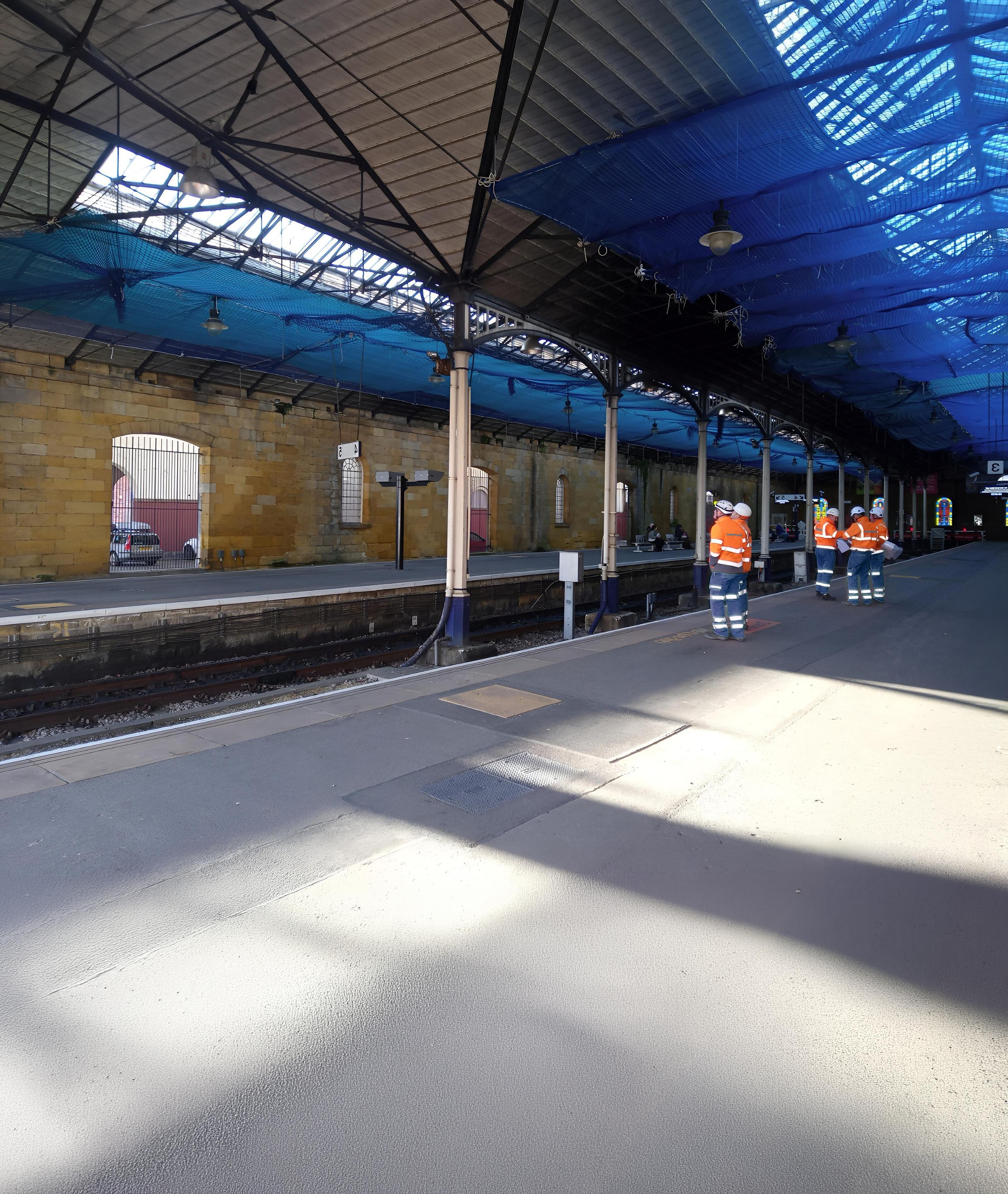
Ground instability in the rail environment is not just a maintenance issue. Track bed settlement, embankment movement, and void formation beneath structures can compromise safety, trigger speed restrictions, and force costly line closures. The pressure to keep the network running while managing ageing infrastructure is only growing.
Using industry leading technologies and maximum precision, Mainmark:
▪ Reinforces track beds and bridge abutments
▪ Fills voids beneath structures
▪ Remediates depot floors
All with minimal disruption and no excavationkeeping you on track.
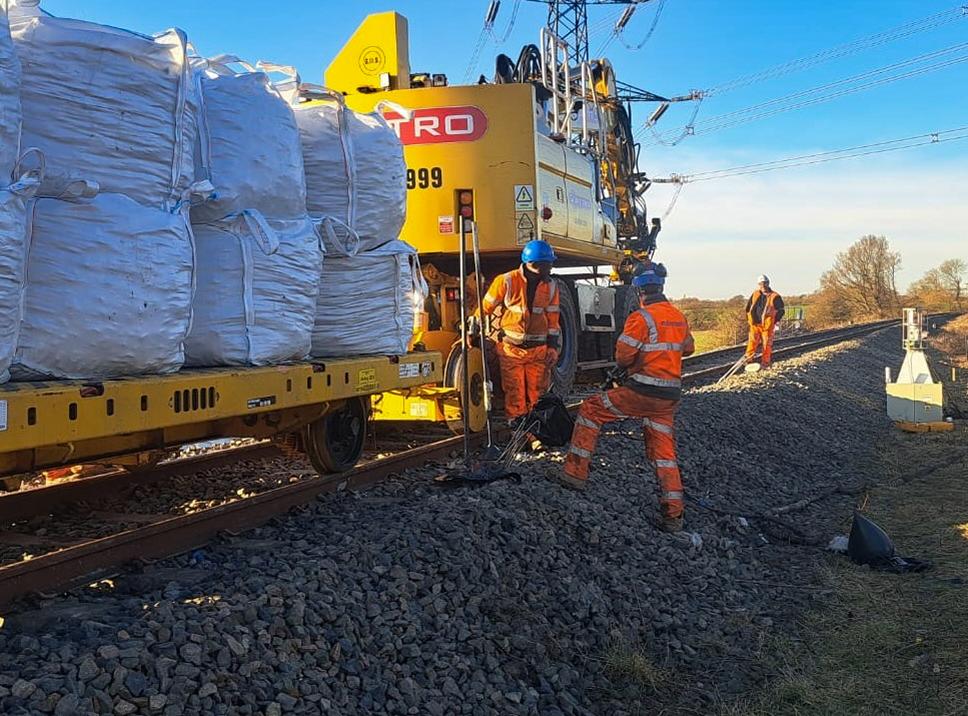
Scan the QR code to find out more. Talk to the ground engineering experts
Eric Nordling, heads up Expretio, a revenue management solutions specialist serving the rail sector in Europe and North America. He brings more than four decades of experience as both a user and designer of revenue management software. He most recently headed the pricing department at Amtrak, where he developed a pricing system which created the fares that were fed into Expretio's Appia platform, and was subsequently recruited to join the company.
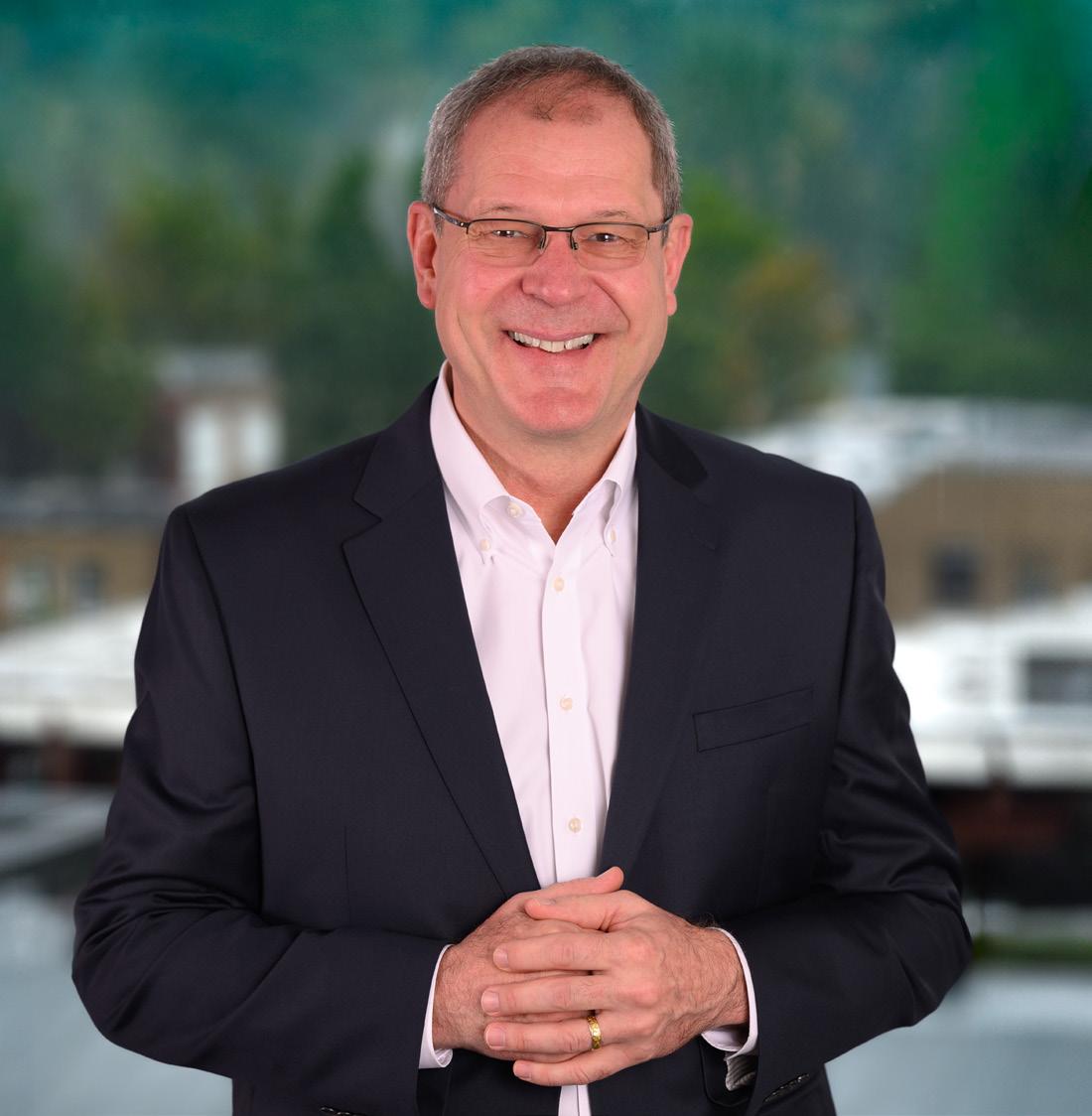
Sam Sherwood-Hale spoke to Expretio’s General Manager Eric Nordling, who has spent more than 40 years in revenue management across aviation and passenger rail, about the fundamental principles of ‘the RM discipline’, what rail can learn from aviation, and why the conditions are finally right for UK operators to make the most of it
SSH: You've spent more than 40 years in revenue management. How has the discipline evolved, and what lessons from aviation are most relevant to rail today?
EN: The first thing I would say about how revenue management has evolved is that as computing power has improved, so has revenue management. In the early days, we had a limited amount of data and fewer than ten algorithms for forecasting. Now, with more modern computing technology, you can consume a lot more information, gathering years and years of data and looking at bookings much more rapidly. In terms of forecasting and optimisation algorithms, instead of eight or nine, we are now talking about hundreds.
If you only have eight or nine models forecasting versus a hundred, the chance of getting a better forecast is much higher with the hundred. And the models in these programmes are now far more sophisticated. They can even adapt on a continuous basis, and that kind of capability simply did not exist forty years ago.
The fundamentals of revenue management are the same in rail as they are in aviation - but the two industries got there by different paths, driven by different pressures.
In aviation, the catalyst was capacity. When Boeing introduced the 747 in 1970,
aircraft size increased by roughly 400 per cent overnight — from around 100 seats on the 707 to 400 on the new widebody. Airlines suddenly had far more inventory than they knew how to sell. It was in fact a British carrier, BOAC, that first responded, introducing excursion fares in 1973. The logic was simple: offer a meaningfully lower price to passengers willing to commit early, book a return, and stay for an extended period. Lower prices stimulate demand, and that demand fills seats that would otherwise fly empty.
But there was a catch. Selling too many discounted seats left no room for the business traveller who books late and pays full fare. Airlines had to learn to predict latebooking demand – and hold back enough inventory to serve it. That tension between selling cheap early and protecting space for premium late bookings is the foundational problem that revenue management was built to solve.
Very basically, all revenue management is understanding what the demand curve looks like for every itinerary. If you offer a high price, the quantity demanded is lower; offer a much lower price, and the quantity is much greater.
That idea of switching from one price to multiple prices is the fundamental underpinning of revenue management, and the revenue benefit is substantial. A
single price of £20 across 60 seats generates £1,200. Offer multiple prices with fixed allocations and that rises to £1,370. But if you can truly understand the demand curve and adjust your allocations intelligently to match it, you can reach £2,040 under average demand conditions. The concept of offering multiple prices exists in airlines, hotels, rental cars, other industries, and of course in rail. And for rail, you have to understand these demand curves for every itinerary possible.
Governments are also under pressure to reduce subsidies, so the timing is aligning right now for UK rail to really take advantage of this technology, to increase revenues, reduce subsidies, increase ridership, and provide more satisfaction to the citizens of the UK. I believe that what will happen with fares reform is that there will be lower prices overall, and more people will be able to take advantage of rail travel. The timing is right.
SSH: Those algorithms are now so much more powerful, with hundreds available where previously there were ten. Are they still using the same underlying format you have just described?
EN: Yes. The underlying microeconomic concept is: if you understand the demand for a particular itinerary really well, and by
‘Revenue management is fundamentally about predicting the future, not reacting to it.’
that, I mean the demand for that itinerary on a specific departure, you can act on it. On a high-demand departure, the demand curve is shifted out to the right, so no cheap fares are offered because you can fill all the capacity with higher fares. On a lowdemand departure, you offer lots of cheap fares because the demand level is not there for the higher ones. Understanding all of these demand levels using large numbers of models helps you to set the right price.
SSH: Can you talk about how the complexity of routes and itineraries evolved in aviation, and what that means for rail?
EN: People want to travel all over the planet, so airlines created hubs where planes come in, exchange passengers, and go out again. Any given plane may have 20, 30, 40 or 50 different itineraries on it. A Boston to London Heathrow flight, for example: those passengers connect to 20, 30 or 40 other destinations. Airlines have to balance what people are willing to pay to travel to all these various places and decide which bookings to accept.
In rail, it gets more complicated. A train going from London to Edinburgh with 40 stops has over 800 different combinations of itineraries, 800 on a single train. One of the things I am impressed with at Expretio is that it actually forecasts each of those individual 800 itineraries and considers which ones would result in the best service to customers. If there are empty seats in one portion of the train, lower prices can be offered to stimulate demand on those empty sections. If the train is very full leaving London, it makes sense to prioritise the passengers travelling the longest distance over someone going just two stops.
All of this forecasting uses models to accurately predict where everybody wants to go, and then additional models to balance all these different itineraries, to determine which to accept and at what price. Rail gets to be a little more complicated because there are simply so many more itineraries per departure.
SSH: That complexity has been there for longer than this technology has existed. Is that why Britain has an opportunity now, because we have essentially been dealing with this problem poorly for a long time?
EN: Exactly. A simple example: if you have a train departing London heading towards a
football match just a few stops away, there is enough demand there to fill the train with just those short trips, and then the train could be empty all the way to Edinburgh. In the old world, you did not have the ability to control all those itineraries. In the modern world, you do have the ability to predict them, control them and optimise for them.
SSH: As GBR comes together with new people and new structures, are you concerned that they might lean too heavily on AI in revenue management specifically?
EN: The AI that is out there today, these modern algorithms, are helpful and impressive. But at the end of the day, the human brain is still more capable. An experienced person who has worked in this field for years will see the patterns, know what is right and what is wrong, and understand the bigger, broader perspectives. They are still needed to reliably supervise these systems and make sure nothing is going awry. You definitely need the systems to keep track of everything, but you need the human judgment to keep everything in check.
AI can be very helpful, as long as it is supervised. If you simply say to AI: ‘do whatever you want’ that is a dangerous proposition. The human still needs to be in the loop. But an experienced human with years of knowledge can be more productive and check the veracity of AI much more readily.
SSH: Some have argued that consolidating everything into a single integrated platform is the most efficient approach to data management in rail. What is your view on that?
EN: An advantage of having everything in one place is that it is much easier to move data around. The disadvantage is: what are you doing with the data? If you are moving it around quickly but not feeding it into models that are forecasting 800 itineraries, if you are just approximating, what good is the rapid data input if you are not doing anything useful with it? The question you need to ask is: am I getting the best possible solution for this particular problem, or am I just getting speed? Revenue management is fundamentally about predicting the future, not reacting to it. The current enthusiasm for real-time data, while understandable, risks missing the point - by the time you're reacting to what's happening now, it's often too late to optimize.
SSH: In your experience, what are the risks of treating revenue management as just one feature within a broader system?
EN: I go back to my business school days. My marketing professor said that in managing commercial affairs, the four most strategic and important considerations are the four Ps: Product, Price, Place and Promotion. For
rail, the product is the itinerary. Where are you going to take me? Next is price, which is critical. What are you going to charge me? And pricing is what revenue management is all about: understanding where people want to go and what they are willing to pay. In any enterprise, the price you are offering consumers is often the most important, or second most important, criterion in their purchase decision. To treat revenue management as some kind of minor task to accomplish really belies the fundamental strategic importance of setting the right price. Place is distribution, and Promotion is advertising.
SSH: How should operators be thinking about pricing across different passenger types and travel patterns?
EN: You pay more for a quality item because it is going to last longer and produce better results. You pay more to be on the train at peak time because at the other end, there is something important for you to do. If you say it should be one low price for everyone, you end up with jam-packed trains and people cannot get on.
The trick is to find the happy median, a normal price that helps manage demand on peak departures, with plenty of discounts from that to help fill less popular services. One of the things we did when we updated the prices at Amtrak was thinking about small group travel. When individuals travel by themselves, the range of price appetite is quite broad. It could be business travelers or Wall Street types travelling between Washington and New York with big incomes and expense accounts, willing to pay high fares. But there are also families who have to figure out how to get between cities and cannot afford buying five tickets at higher prices. For these more price-sensitive passengers we offered automatic discounts for small groups.
So, we created a type of fare where, if you have more people travelling together, the price automatically goes down. We recognised that a family of five could potentially drive, so let us make the train a better value and make it more likely they will choose train over car. We built in automated discounting for larger parties. A family of five does not need to be on the seven o'clock business departure anyway. We can give them a low price on the ten o'clock departure instead. Let the business people go at seven and the families go at ten, let the business people pay a fair price and let the families get a really good deal.
My impression of UK rail is that there are a lot of empty seats. Sure, there are peak departures, but there are a lot of empty seats. And my impression is that with fare reform and good revenue management, there are going to be a lot more passengers, HAPPY ones at that, because the prices are going to go down. Ultimately, lower prices multiplied by more riders equals more revenue.

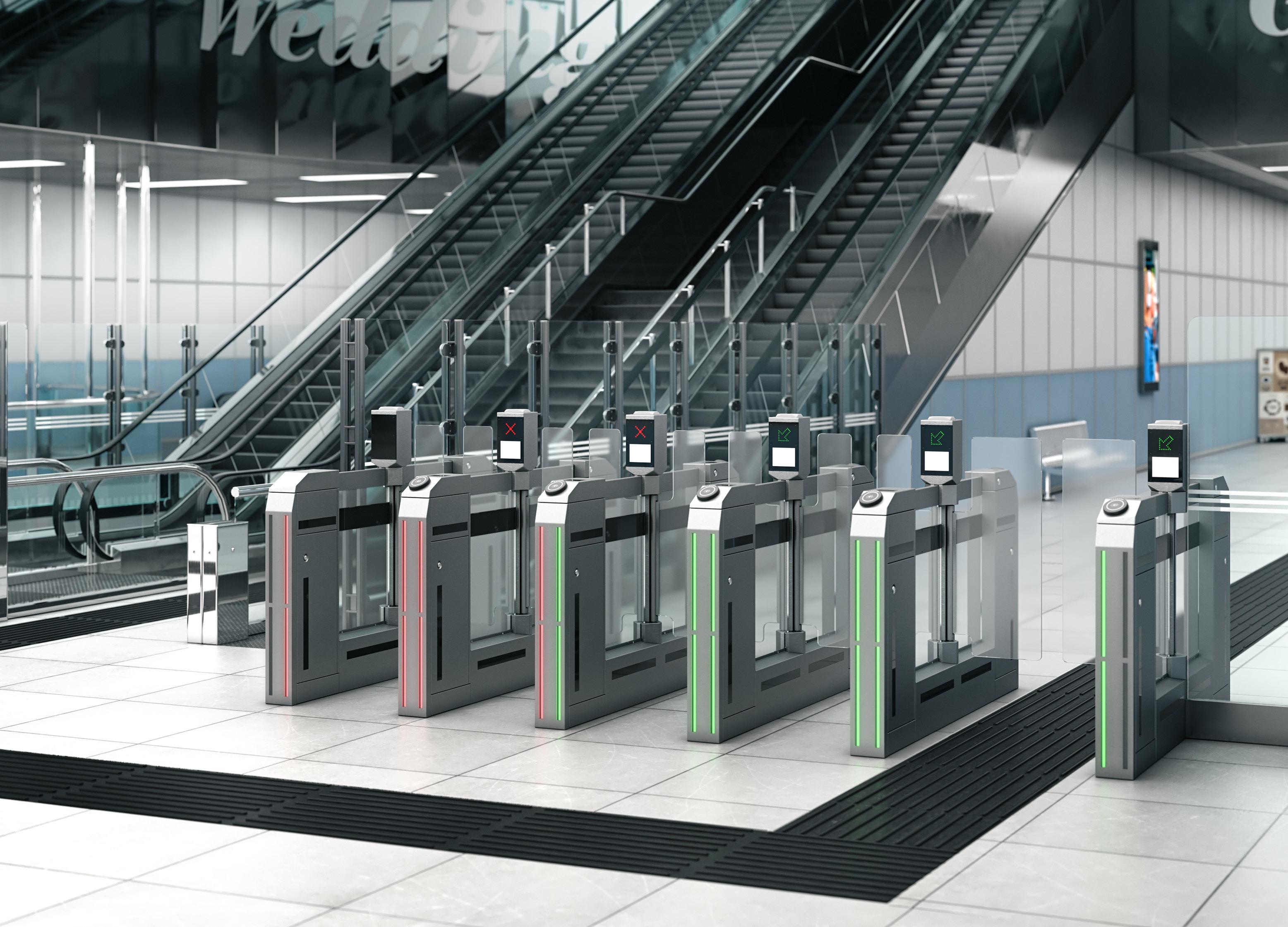
The Construction Plant-hire Association will hold its tenth annual conference on 21 May 2026 with the theme of Unlocking the Nation's Growth Plans

Hosted by industry content creator Peter Haddock, the one-day conference will bring together leading voices from across construction, plant-hire and policy to address key issues including infrastructure delivery, skills, communications and decarbonisation. Spartan Solutions is the headline sponsor for the event, with JCB Insurance Services as associate sponsor. Exhibitors will also include ACOP Group, Compass Business Finance, Instagrid, NOCN Group, Parksafe Group, Point of Rental/Record360, Prolectric Services, The CESAR Scheme powered by DATATAG and VUE Group. Plant Planet joins as the official media partner. A limited number of exhibition spaces remain, offering companies an opportunity
to connect with senior figures from the UK plant-hire and construction sectors.
The conference programme features four sessions. Led by Oxford Economics, the opening session will explore the findings of the CPA's latest report, highlighting the opportunities and challenges facing the UK's construction and infrastructure sector. Oxford Economics will be joined by several senior industry figures: CPA Policy Director Chris Cassley, Cameron Brown of Charlesbye, Patrick Flannery of Flannery Plant Hire, Peter Gibbs of Ainscough Crane Hire, Chris Matthew of Plantforce and Mark Hoad of Sunbelt Rentals.
The second session focuses on skills and workforce development. Award-winning plant operator Molly Gill of Flannery Plant Hire will share her career journey, having
left her role as a nursery assistant to join the Operator Skills Hub with no prior construction experience, rapidly progressing through training to become Young Plant Operative of the Year at the CPA Stars of the Future Awards 2025. She will be joined by Aaron Davis, Safety and Skills Director at Flannery Plant Hire, Rob Lynch of L Lynch Plant Hire and Haulage, and Paul Skitt of Business Skills and Support to discuss skills development and workforce pathways in the plant-hire sector.
The third session will be delivered by Lee Cain, founder of strategic advisory firm Charlesbye and former Downing Street Director of Communications under Prime Minister Boris Johnson. Drawing on his experience at the heart of government, Cain will share strategies for cutting through today's crowded media landscape and driving clear, influential messaging.
The final session will address decarbonisation, led by CPA Decarbonisation and Sustainability Manager Luis Bassett, who will focus on the plant-hire sector's transition to low-carbon operations. The discussion will cover equipment adoption, financing, telematics, carbon reporting and ESG compliance, with practical insights for navigating one of the industry's fastestmoving challenges. Luis Bassett will be joined by Chris Sleight from Off-Highway Research, Joe Gallagher of ESG PRO, Steve Moody of Construction Plant Finance and Charles Bénard of Hiboo.
CPA Chief Executive Officer Steve Mulholland said the conference comes at a critical time for the sector. ‘The combination of a new venue, updated format and a strong speaker line-up positions this as a key date in the industry calendar, and delegate tickets are already selling quickly. Our latest Oxford Economics report provides a strong platform for discussion on how industry and government can work together to unlock growth. We're looking forward to welcoming everyone to One Great George Street.’
Concrete Canvas® products are revolutionising rail maintenance, offering rapid, safer installation for slope protection, drainage and weed control, while extending asset life with BBA certified durability
As Network Rail and its partners continue to navigate the demands of sustainability and efficiency, manufacturers like Concrete Canvas Ltd are playing a crucial role in strengthening the resilience of rail infrastructure. The inventors of Geosynthetic Cementitious Composite Mats (GCCMs) often referred to as ‘Concrete on a Roll®’ are changing how critical assets such as culverts and embankments are protected, repaired, and maintained.
A proven alternative for critical water management assets
Concrete Canvas® GCCM (CC) products are flexible, concrete-filled geosynthetics that harden on hydration to form a thin, lowercarbon, durable, waterproof concrete layer. Manufactured in South Wales, CC products have been used extensively across the UK rail network for over 18 years; they combine the robustness of traditional concrete with the speed and ease of a geosynthetic - without the need for heavy mixing equipment or plant.
This makes CC particularly suited to applications where access is limited or conditions are challenging, such as ageing culverts and steep embankments; these areas are often vulnerable to water ingress, erosion, and structural degradation, requiring solutions that can be deployed quickly while delivering long-term performance.
Culverts are vital components of rail drainage systems, yet many existing structures are ageing and prone to deterioration. Concrete Canvas® provides an efficient solution for culvert lining, extending service life without the need for full replacement.
The ability to conform to irregular and confined spaces allows the material to be installed within existing culvert structures
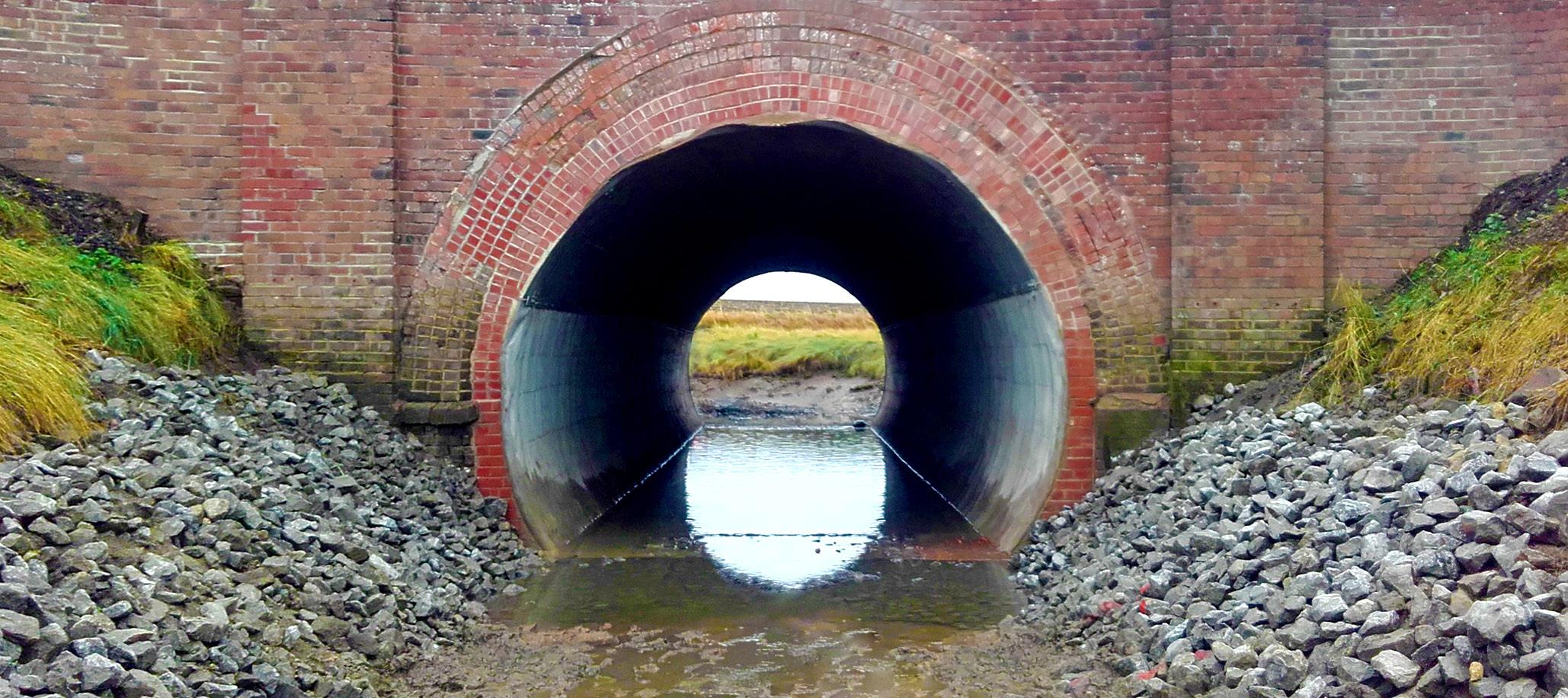
with minimal preparation. Once hydrated, it forms an erosion-resistant lining that protects against abrasion, infiltration, and hydraulic wear, while maintaining flow efficiency.
Compared to traditional solutions, CC significantly reduces installation time and logistical complexity. This is particularly favourable in remote or operational rail environments, where access constraints and line possession times can limit traditional repair methods. Supplied in portable Batched Rolls, CC can be installed with minimal personnel and equipment, reducing disruption while ensuring consistent results.
Railway embankments and cuttings are highly susceptible to erosion caused by rainfall, surface runoff, and extreme weather events. Left unprotected, these slopes can degrade over time, leading to instability, increased maintenance demands, and potential safety risks.
Concrete Canvas® provides a durable armouring solution for embankment slope protection, forming a hard, erosion-resistant surface that prevents soil loss and protects underlying structures. Its flexibility prior to hydration allows it to closely follow ground
contours, ensuring full surface contact and eliminating weak points where erosion could initiate.
Unlike traditional revetment methods, CC can be installed rapidly on steep or difficult terrain, reducing the need for extensive groundworks or heavy machinery. This makes it especially effective for reactive maintenance or upgrades in high-risk areas.
Over time, the material’s fibrous top surface can support natural growth such as moss and algae, allowing treated slopes to blend into the surrounding environment while still delivering long-term protection.
Effective water management is key to maintaining embankments. By combining culvert lining with surface slope protection, CC products offer a comprehensive approach to controlling water flow and reducing erosion risk.
From crest drainage channels feeding into culverts, to full embankment armouring, CC ensures that water is efficiently conveyed and contained, preventing saturation of soils that can lead to slippage or failure. Its impermeable properties also help reduce water ingress into surrounding ground, further enhancing stability.
With increasing emphasis on maintaining existing infrastructure, targeted interventions such as culvert lining and slope protection are becoming essential. Concrete Canvas® enables these upgrades to be delivered quickly and costeffectively, avoiding the need for major reconstruction works.
The Concrete Canvas® T-Series GCCMs are BBA-certified with a design life exceeding 120 years for erosion control applications, providing long-term assurance for asset owners. Whether rehabilitating a deteriorating culvert or reinforcing a vulnerable embankment, CC ensures infrastructure remains resilient for decades.
Installation efficiency is a key advantage of CC products. With laying rates exceeding 200m² per hour and a simple process –unroll, secure, and hydrate – projects can be completed rapidly, minimising line possession times and operational disruption.
In addition, the material’s compact supply format significantly reduces transport requirements. A single bulk roll can replace two 17-tonne ready-
mix deliveries, cutting down on vehicle movements, emissions, and on-site congestion - an important consideration for projects in constrained rail corridors.
Concrete Canvas® also offers substantial environmental benefits. The latest T-Series formulation reduces embodied carbon by 33 per cent compared to earlier versions, and lifecycle assessments show carbon savings of over 60 per cent when replacing traditional poured concrete in lining applications.
By extending the lifespan of culverts and protecting embankments, CC also reduces the need for repeated maintenance interventions, lowering the long-term environmental impact of rail infrastructure management.
As climate change increases the frequency of extreme weather events, including intense rainfall and flooding, the need for robust drainage and slope protection solutions has never been greater.
Concrete Canvas® plays a key role in enhancing climate resilience by protecting culverts from hydraulic damage and preventing embankment erosion and failure. Its rapid deployment capability also
makes it ideal for emergency works, helping to restore and safeguard infrastructure following weather-related incidents.
Driving innovation in rail infrastructure
Concrete Canvas Ltd continues to support the rail sector’s transition toward more sustainable and resilient practices. With proven performance across hundreds of projects, CC products are increasingly seen as the go-to solution for culvert rehabilitation and embankment protection.
By combining durability, speed of installation, and reduced environmental impact, Concrete Canvas® GCCMs address some of the most pressing challenges in rail maintenance today.
Tel: 0345 680 1908
Email: info@concretecanvas.com
Visit: www.concretecanvas.com
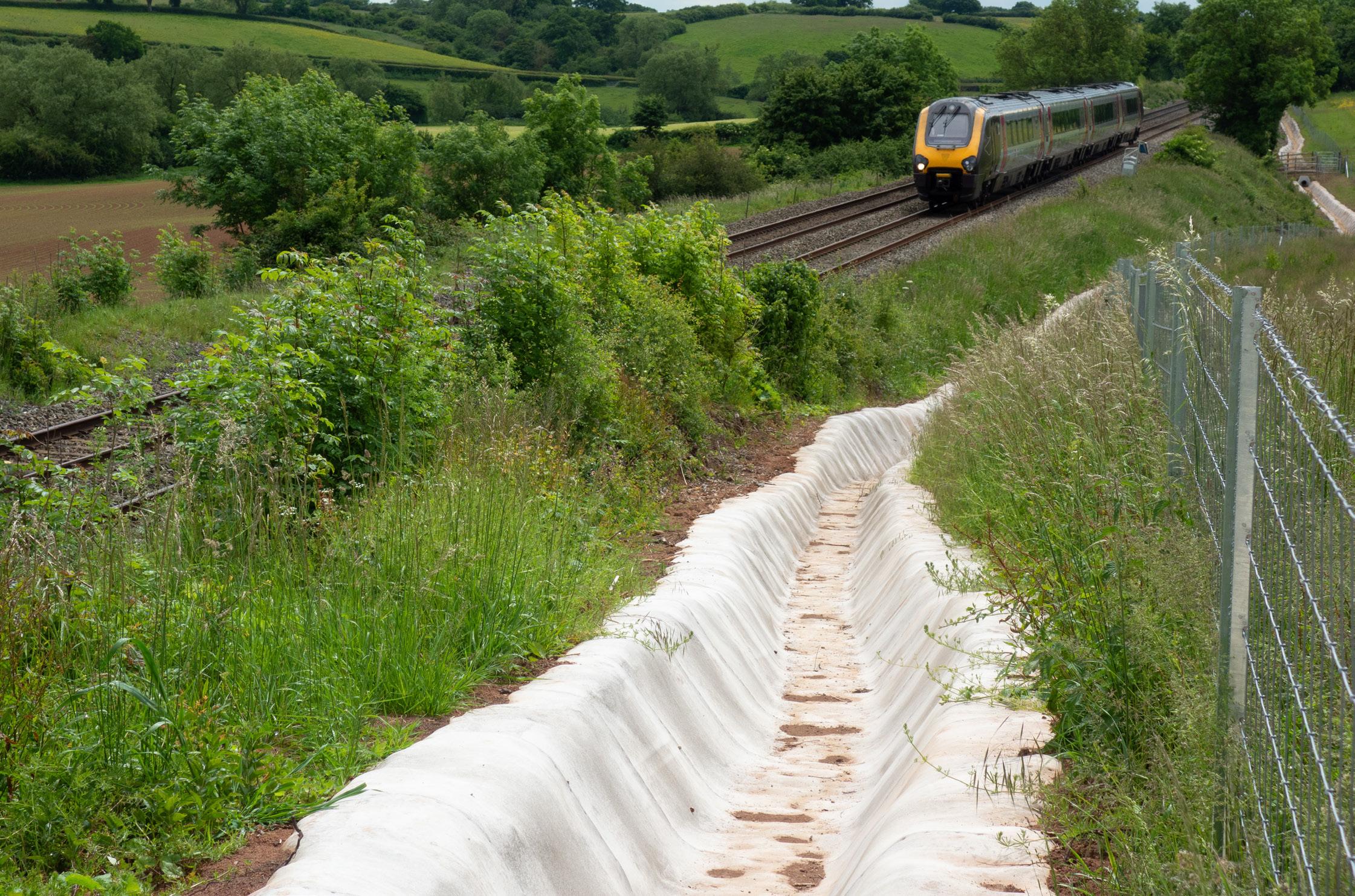
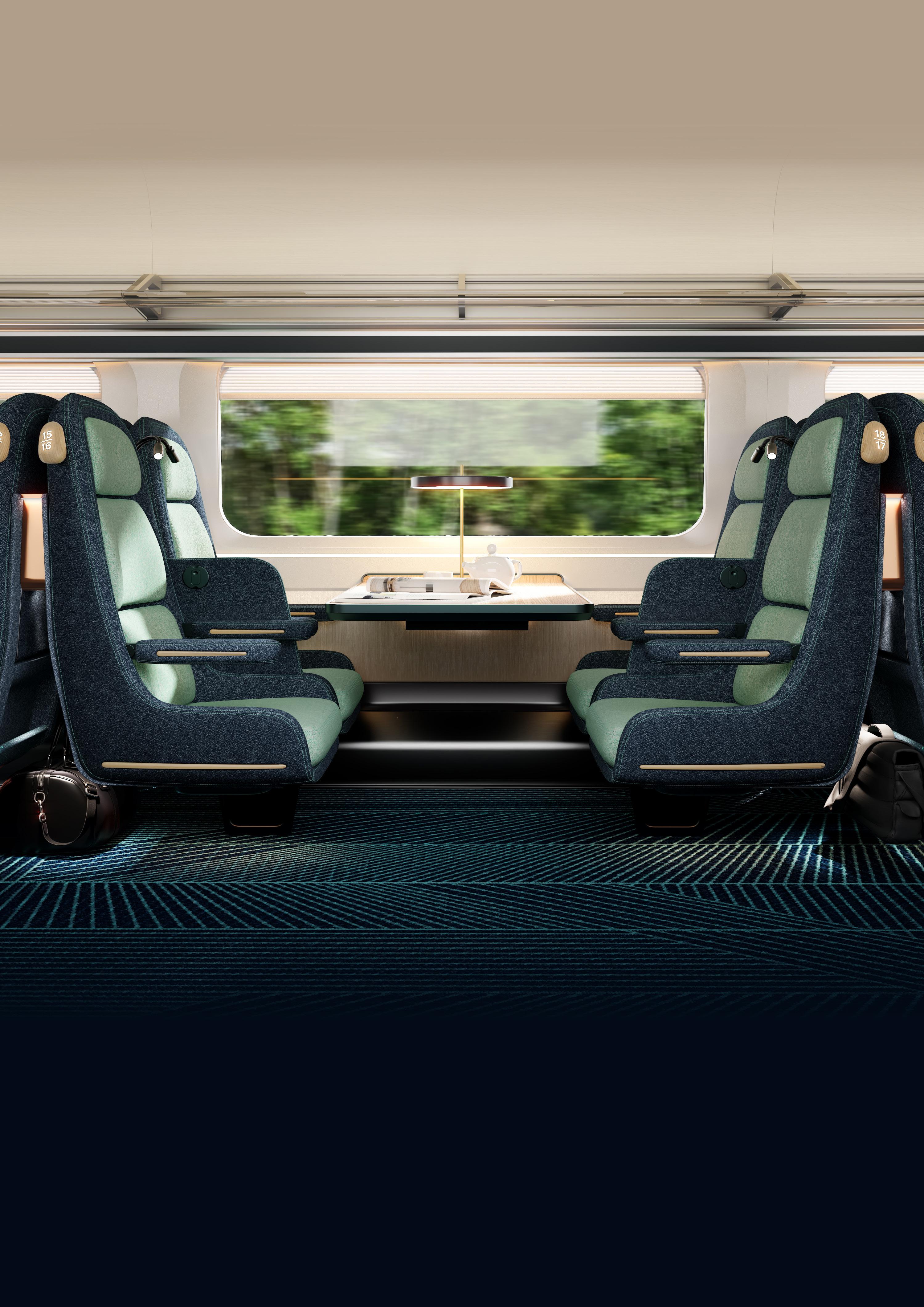
Matthew Westhead, from Mabey Hire Ltd, examines how the rail and construction industries can better respond to bridge strikes and the role temporary works can play in keeping both rail and road networks moving
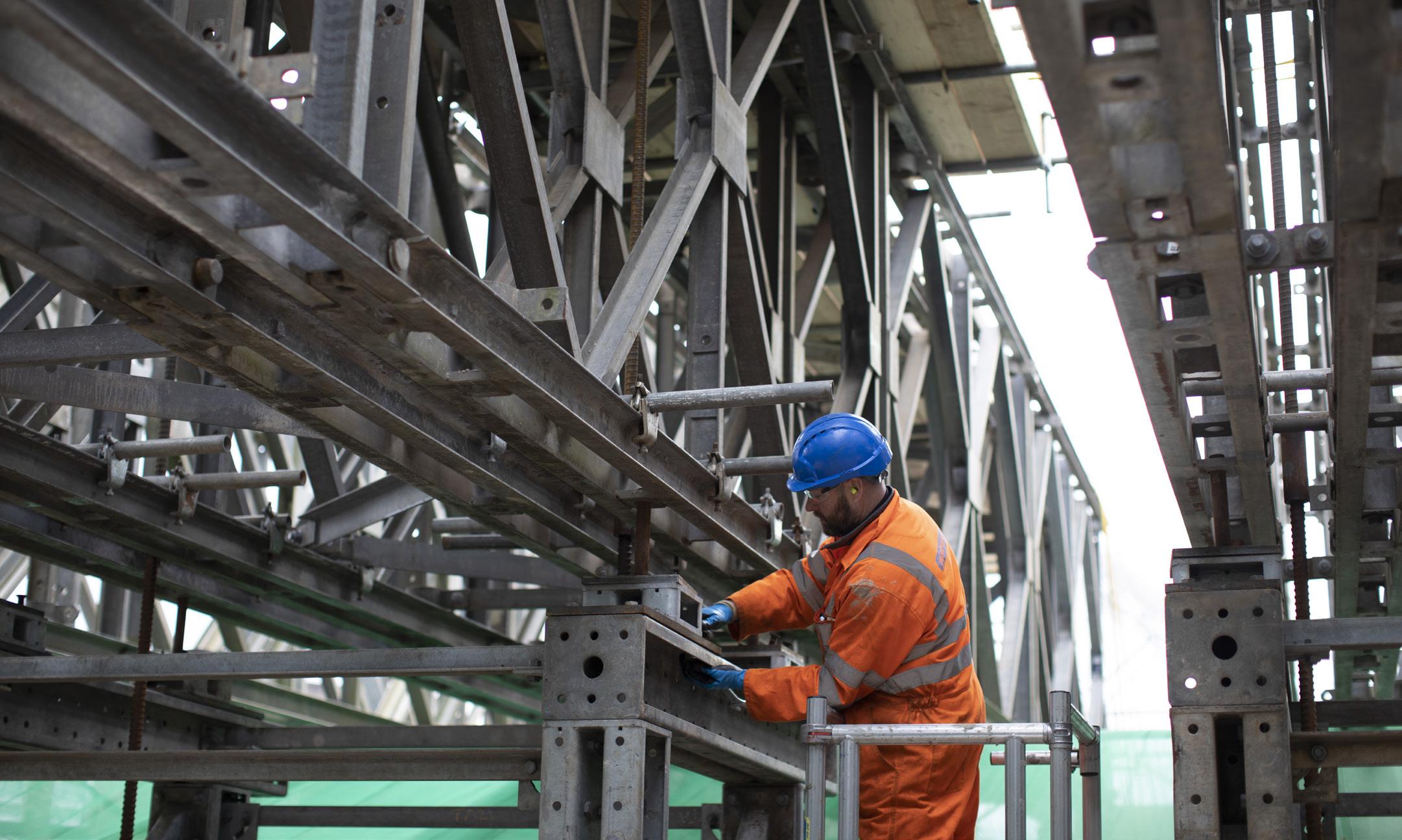
It is estimated that bridge strikes in the UK, occur at a rate of roughly five per day, costing the UK economy approximately £20 million per year in repair and delay compensation. A prompt and collaborative emergency response is therefore necessary, to ensure the structure is structurally safe and help reduce disruption to both rail and road users.
The UK has over 100,000 bridges across the country, with Network Rail responsible for approximately 30,000 bridges, tunnels and viaducts across the UK rail network. Structural damage caused by collisions can have a severe impact, not just in terms
of immediate public risk, but also on the country’s transport infrastructure and the day-to-day lives of those caught up in the disruption.
Following immediate examination, train movements may be stopped and road closures implemented, to maintain safety of the railway and road. But what happens after this, if the bridge requires structural support?
Urgent action must be taken to re-open both rail and road, requiring a high level of co-ordination throughout the supply chain. Given the impact to the public utilising the infrastructure network, all parties – from client through to contractors, designers
and specialist sub-contractors – need to collaborate effectively.
There are various phases that form part of the temporary works provision, following a collision.
The immediate bridge inspection would identify risks associated with structural integrity, allowing decisions to be made regarding the rail line and traffic management, alongside determining the structural support requirements. Often, the conclusion from the bridge assessment is that a bespoke temporary works solution is required, to safeguard the asset. This should
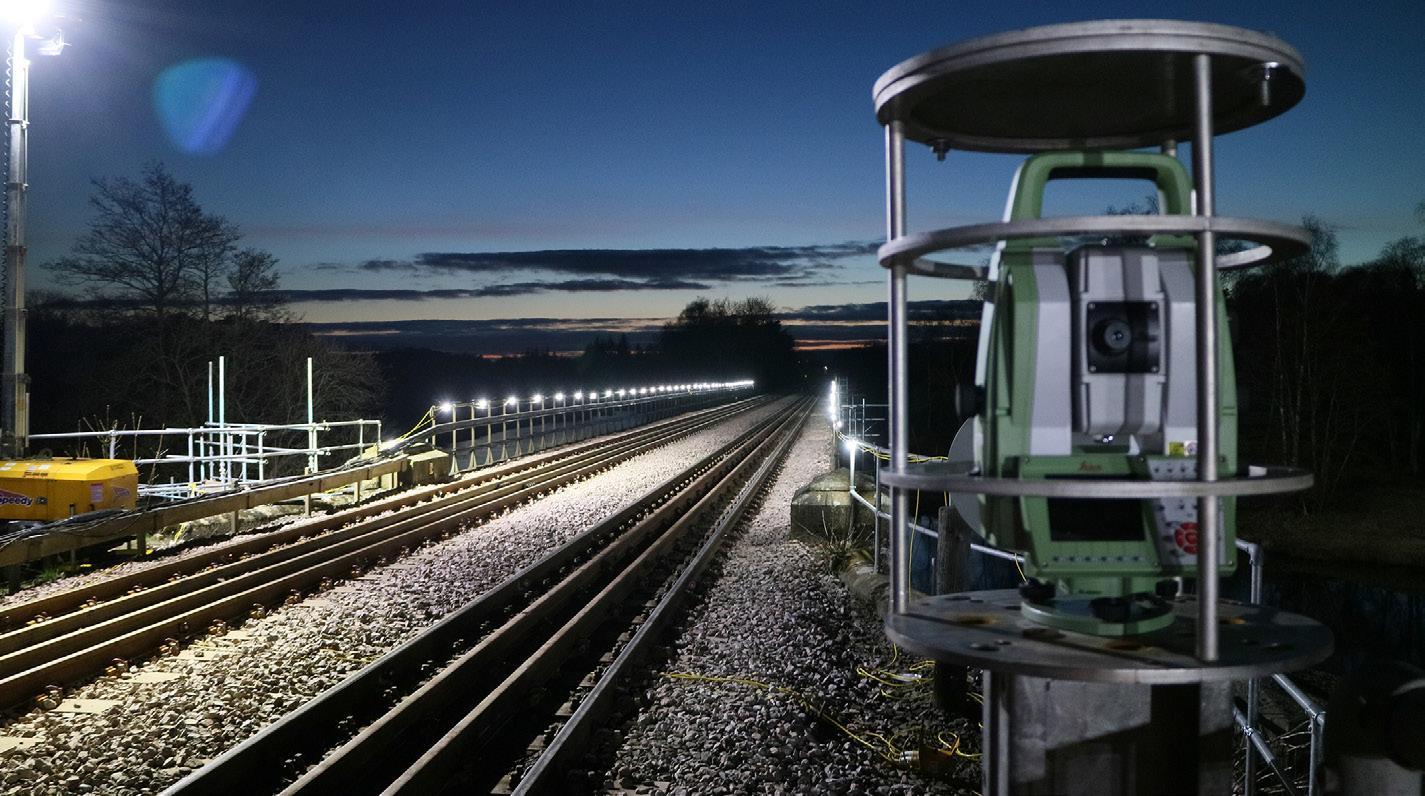
provide assurance to safely restore both train services and road traffic movements, minimising risk and disruption to the public.
The data gathered from the initial inspection will form the basis of a brief, informing the temporary works design. The site constraints and in particular the collision zone may well impact the propping solution, resulting in a phased propping approach, considering vehicle extraction. The use of proprietary equipment provides a reduction in lead in time, alongside flexibility to develop a unique solution. Often the designer will be on-site and therefore effective communication with their off-site design team is crucial.
It is paramount that buildability and any logistics associated with installation are planned effectively, considering any site
constraints. The installation sequence should be adequately planned and risks managed, both to ensure safety of the workforce and avoid further damage to the bridge structure. Pre-assembly of equipment off site is often considered to reduce on site risk and create programme efficiency. In this respect, co-ordination between the temporary works designer and installer is critical.
Structural monitoring of the bridge during the temporary support condition, until permanent remedial works are implemented, can provide longer term assurance to the client. Monitoring would provide real time data on variables, including load and movement, that are relayed automatically to a website for viewing. This information can provide valuable insight into the behaviour of both the existing structure and temporary works equipment.
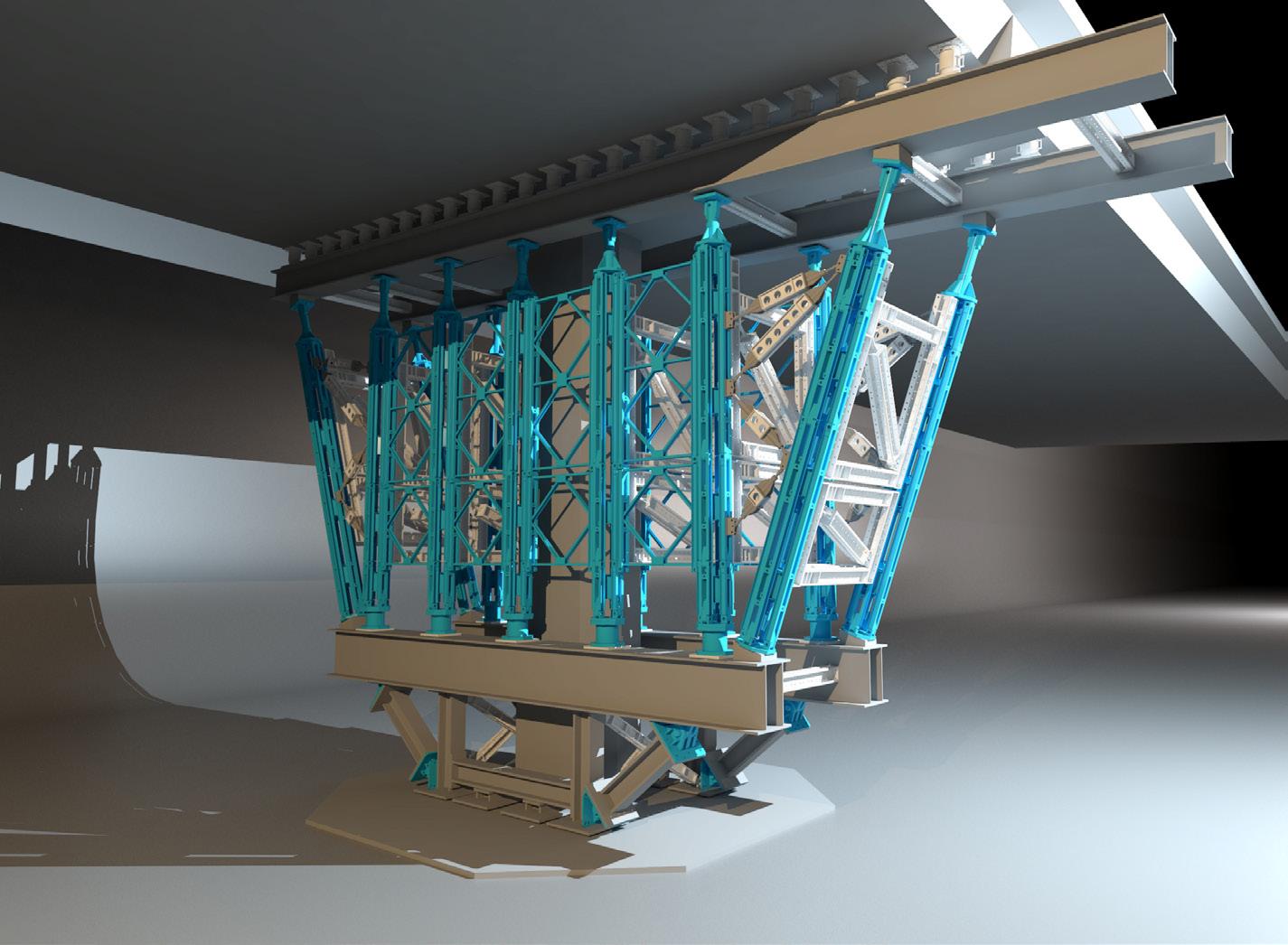
When a freight train derailed as it passed over a bridge in Audenshaw, Manchester, an immediate and collaborative response was essential. Nine of the train’s 24no. wagons came off the rails, causing significant damage to the railway infrastructure. The initial site inspection triggered the need for an emergency temporary works response, resulting in Mabey Hire being contacted as a specialist temporary works subcontractor.
Speaking about this project, Colin Campbell, Senior Project Engineer at Mabey Hire, said: ‘We were initially contacted by Richter, who were appointed by Amco Giffen and Network Rail as Principal Designer. Their assessment of the bridge revealed that structural damage had been caused to the deck, with the bridge requiring immediate temporary structural support.’
The initial priority was to safely remove the derailed wagons from the bridge. However, due to the location of the derailment, any recovery vehicle or crane would have had to access the bridge, with the damaged structure unable to support these additional loadings.
Colin continued: ‘As a result, it was essential that a bespoke solution could be supplied swiftly for on-site installation, to enable the safe recovery of the train wagons and allow the subsequent repair works to commence.’
The temporary propping scheme predominantly incorporated Mabey Hire’s Mass 50, one of the most versatile modular systems available on the UK market, with a combination of vertical propping and horizontal restraints to both bridge abutments.
Following the safe removal of the derailed wagons, Mabey Hire’s temporary propping system remained in place, while Network Rail carried out the essential bridge repairs.
Adrian Bullock, Senior Project Manager at Amco Giffen, concluded: ‘Mabey Hire provided a first-class service on these emergency works. A timely response, excellent technical support and the supply of additional resources to help install the propping works.’ Find out more at www.mabeyhire.co.uk
MATTHEW WESTHEAD is Engineering Director (Major Projects) at
Mabey Hire Ltd
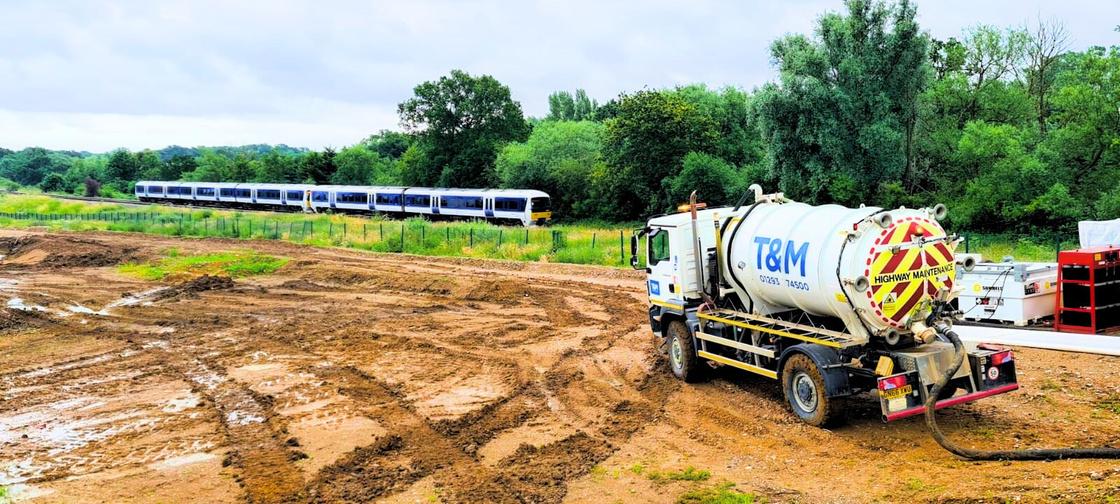
T&M delivers reliable fuel, water, AdBlue® and site support services such as waste removal, that keep rail projects running without interruption.
Our versatile fleet ranges from high-capacity bowsers for bulk operations to smaller, highly manoeuvrable units built for restricted access and fast-paced environments - ensuring we can respond to the demands of any site
We go beyond supply, offering a fully integrated service, helping to streamline operations and reduce downtime
By working closely with your team, we tailor our equipment and approach to meet the specific challenges of each project, combining practical innovation with on-the-ground experience.
With T&M, you get a dependable partner focused on safety, efficiency and keeping your project moving from start to finish.

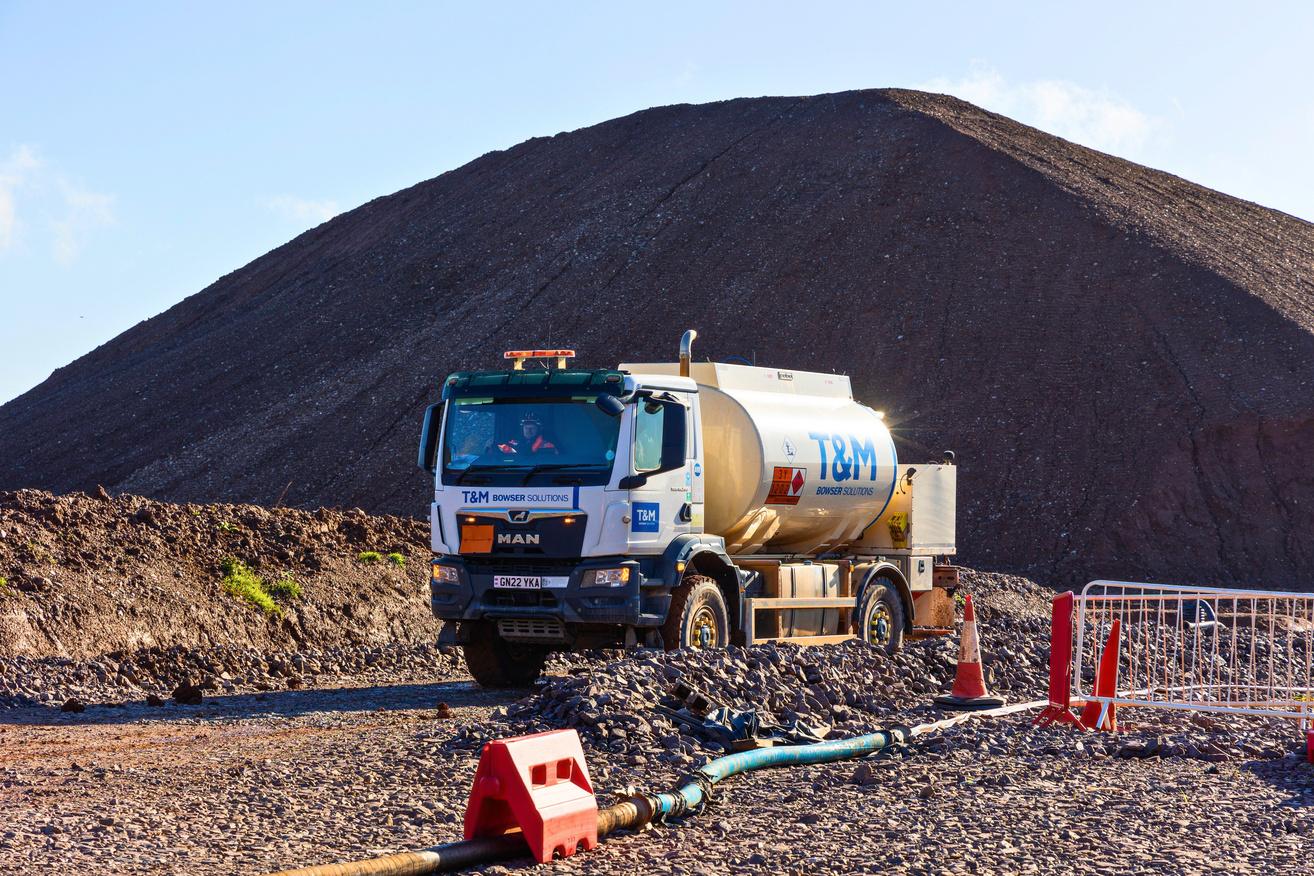
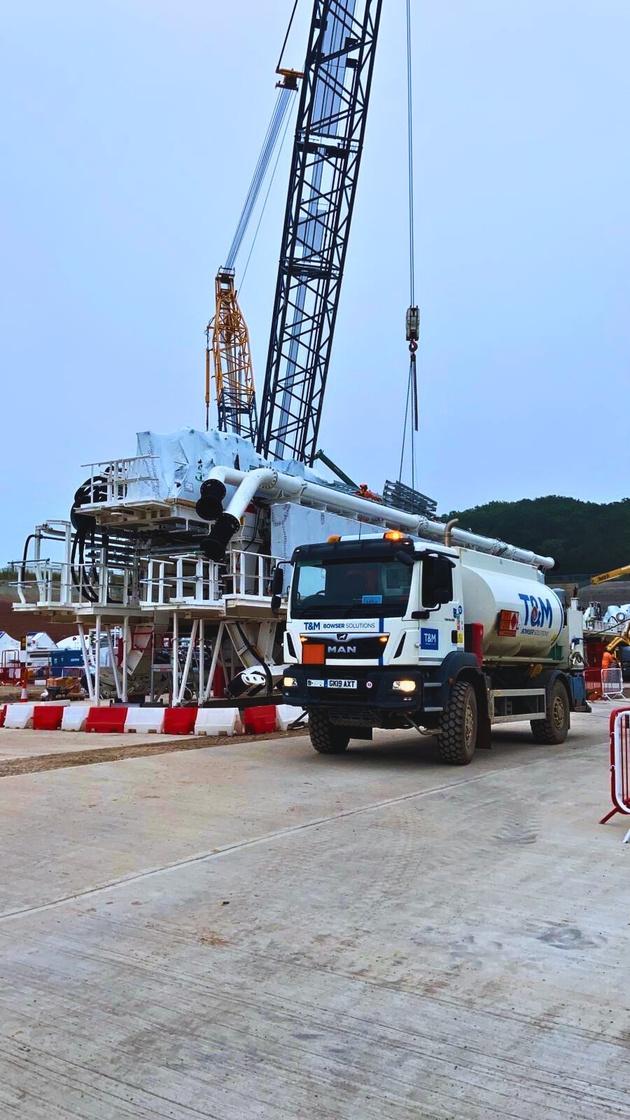












CANTILEVER ASSEMBLIES CANTILEVER COMPONENTS CLAMPS DROPPERS INSULATORS




SURGE ARRESTORS TENSIONING TUBES TURNBUCKLES BACKSTAY

ROB RENSHAW COMMERCIAL SALES MANAGER AT MOSDORFER
Rob Renshaw has been with Mosdorfer for eleven years and has over 21 years of experience within the railway industry, specialising in commercial and engineering-related roles. His role at Mosdorfer Rail is Commercial Sales Manager / Area Sales Manager.
Mosdorfer Rail Ltd is a Sheffield-based provider of complete railway catenary systems and overhead line equipment for high-speed, mainline, light rail and tramway applications. Its product portfolio spans cantilever systems, insulators, tensioning devices, droppers, electrical clamps and fittings, and safety equipment, with production and R&D facilities in the UK, Spain and Italy.
How did you get started in the industry?
I began my career with aspirations of becoming a physiotherapist and pursued university studies in that field. However, my career path took an unexpected turn when I transitioned into the railway industry. Early on, I gained experience in fast-paced, high-demand roles, working long hours and developing a strong work ethic, even in challenging circumstances.
An opportunity then arose through a personal connection to join a railway signalling and engineering company within the commercial department. I embraced the role, seeing it as a chance to build a long-term career in the industry. I remained with the company for approximately ten years, during which I developed substantial expertise and industry knowledge.
Following a change in circumstances, I moved on and was presented with a new opportunity by industry professionals in the railway electrification sector, finding myself in a growing, fast-paced market where everyone knows everyone and successes are driven by community and teamwork.
I have now been with Mosdorfer for eleven years, building connections and experience working within the UK market, as well as managing the Nordic and Dutch markets for the business.
What does sustainability mean to you?
Railways are already one of the lowestcarbon transport modes, but to me sustainability means pushing that further by reducing emissions through a continuous programme of new railway electrification. Electrification is still the only viable technology available that will help us to achieve our carbon reduction goals by the year 2050. The industry is already so far behind on these targets that further delays to the release of more electrification schemes will make success impossible.
How has technology developed since you started in the industry?
The industry has rapidly transitioned into the digital age, driven by a growing demand for greater reliability, reduced whole-life costs, improved environmental sustainability, and the increasing adoption of AI-enabled technologies. Organisations are no longer focused solely on upfront capital expenditure; instead, they are evaluating total lifecycle value, operational efficiency, and long-term performance.
‘We think locally, understanding the specific needs of our clients and communities, yet act globally by applying international standards, modern technologies, and bigpicture strategy.’
Want to know more about Mosdorfer Rail?
Tel: 0114 387 8370
Email: ordersrailUK@mosdorfer.com
Visit: mosdorfer-rail.co.uk
LinkedIn: Mosdorfer Rail
A significant shift has been the move from traditional planned or reactive maintenance models toward predictive maintenance powered by data analytics and artificial intelligence. By leveraging real-time monitoring, businesses can anticipate failures before they occur, minimise downtime, extend asset life, and optimise resource allocation. At Mosdorfer Rail, we have recently developed a remote
monitoring system for our Tensorex C+ spring tensioning device. Our Tensorex Sense monitoring system removes the requirement for lineside visual maintenance of the tensioning system, with live data available anywhere in the world via the click of a button in an app-based system.
Tell us about Mosdorfer Rail
Mosdorfer Rail is a company that works in railway electrification infrastructure. We are a provider of complete railway catenary systems for high speed, mainline, light rail and tramways. Our products and solutions include all elements of overhead line catenary equipment from cantilever systems, insulators, tensioning systems, droppers, electrical clamps and fittings and safety equipment.
What is your USP (Unique Selling Point)?
Our unique strength lies in our ability to combine exceptional value with forwardthinking innovation, while preserving the agility and personal touch of a small business. We think locally, understanding the specific needs of our clients and communities, yet act globally by applying international standards, modern technologies, and big-picture strategy. This balance allows us to deliver solutions that are both cost-effective and cutting-edge, without the bureaucracy or rigidity often found in larger organisations.
Our parent organisation, Knill Gruppe, was founded in 1712 and are in the twelfth generation of family ownership. Mosdorfer Rail is following this trend, having a real family-orientated atmosphere where success (and failure) is felt equally among the whole team. Everyone cares about the business and works tirelessly to ensure that our products and services always reflect the business in a positive manner.
What are some standout projects you’ve been involved in over the years?
We have been involved in most mainline electrification schemes throughout the years, but we are probably not given enough credit within the UK for our international presence. Our products can be found in railway systems all over the world, from Chile to China, Estonia to Ethiopia.
Some recent and significant projects include:
• Yerkoy to Sivas project – Turkey
• Dar es Salaam to Morogoro Project –Tanzania
• Bandirma to Osmaneli project – Turkey
• Tren Maya project – Mexico
• Mersin-Adana-Gaziantep project – Turkey
• Midland Mainline electrification
• Helsinki Tram – Finland
• Eglinton Crosstown LRT – Canada …and many more
‘Electrification is still the only viable technology available that will help us to achieve our carbon reduction goals by the year 2050.’
• Lightweight low-cost cantilevers for high speed and tramway applications. Expanding on our existing range to maximise our portfolio of ‘standard’ solutions, offering a high quality but cost-effective solution to the market.
• Smart tensioning products with predictive maintenance monitoring, including our Tensorex Sense remote monitoring system.
• In-house manufacturing of balance weight anchor tensioning systems.
• A range of product related installation tools and training.
• A full suite of Light Rail products bespoke to all light rail needs.
What kind of challenges did you face in the early days?
Over the past decade we have faced several significant challenges. Instability of the UK domestic market has necessitated strategic adjustments due to unpredictable volumes and demands. Add Brexit, the conflict in Ukraine and the Covid pandemic into the mix and as a business we have faced unprecedented challenges. The uncertainty around the 2050 net zero decarbonisation delivery is the biggest challenge we currently face.
As a key supplier to Network Rail and the UK electrification market, we need clear commitment to a strategic delivery plan to enable us to continue to offer the best solutions in a reasonable lead time and lowest possible cost. The industry has to do better for the supply chain in the form of communication, forecasting and planning; or risk key suppliers finding other markets and sectors to focus their expertise. Or, in the worst case, finding that key suppliers were unable to sustain activities in the current climate and are no longer in operation. This has already happened to some, and the industry must work to ensure it doesn’t happen to more.
new level of concern as a supplier. The sector needs a clear long-term commitment and delivery strategy; without this we face further loss of skills and expertise.
When a client comes to you with a particular problem, what’s your process for coming up with a solution, and how closely do you work with clients throughout the projects?
We aim to provide an end-to-end delivery service based on the customer needs and specifications. We often adapt our product to suit the customer specific application and pride ourselves on our customer service level. With this approach we strive to achieve customer retention and product loyalty.
What new developments/strategies do you have?
We have several new product developments currently in the final stages of the product design life cycle. These include the following:
What are your plans going forward to ensure Mosdorfer Rail Ltd services are still around for years to come?
We intend to invest in people, plant and customer partnerships to ensure that we do not stand still and remain in business for another 300 years. We also see synergies within the Knill Gruppe in similar sectors such as transmission and distribution systems that can transfer directly to the railway sector. We are positive that, even though recent challenges of the UK railway market, our values and team ethic will ensure that we are here to support the market as and when it needs us.
What are some of the biggest challenges this sector currently faces?
Uncertainty over the correct current or future technologies to be used on UK decarbonisation projects is creating a whole
‘The industry has to do better for the supply chain in the form of communication, forecasting and planning; or risk key suppliers finding other markets and sectors to focus their expertise.’
What do you think is the biggest challenge currently facing the rail industry?
The UK lacks a long-term electrification strategy. Without a stable, rolling programme of electrification, the UK risks retaining diesel trains for decades. One 2025 analysis said the UK could still have diesel trains ‘for the next 30 years’ if current levels of inaction continue. The cancellation of Midland Mainline Electrification project in 2025 was a complete disaster for the supply chain, and the industry itself. Suppliers and Skills are leaving the industry in droves, and the challenge will be how to bring them back, or to replace them.
The UK has to follow our European counterparts, in the active and continuous electrification of new and existing railways. The UK are currently so far behind that we are seen as a bit of a laughingstock.
In terms of technology, how do you anticipate things might change in the next five to ten years?
In the next five to ten years it seems that batteries and hydrogen fuel cells are going to challenge railway electrification systems and the general mode of moving people. Autonomous railway systems and predictive maintenance systems through digitisation are also going to have a huge impact on the industry.
Mosdorfer Rail will continue to research, develop and improve our products and systems. We aim to be a key name in the future of global railway electrification systems, continuing our legacy as a dependable, innovative supply of quality solutions offering exceptional value.
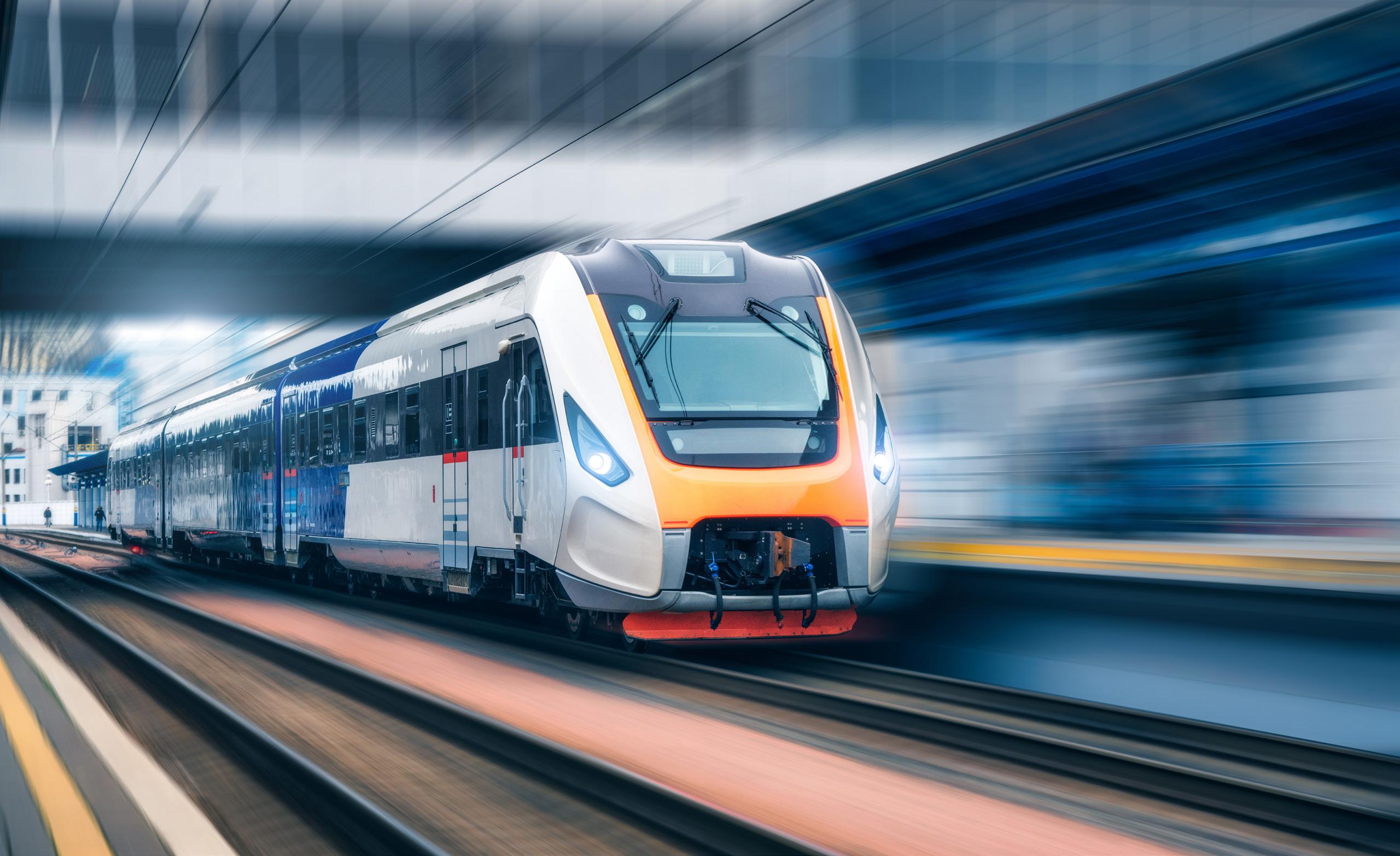
Norbar is a UK manufacturer of battery, electric, pneumatic and manually operated torque multipliers, wrenches, torque measurement equipment and bespoke torque control solutions specially developed for the rail industry Contact Norbar and speak to The Voice of Torque Control
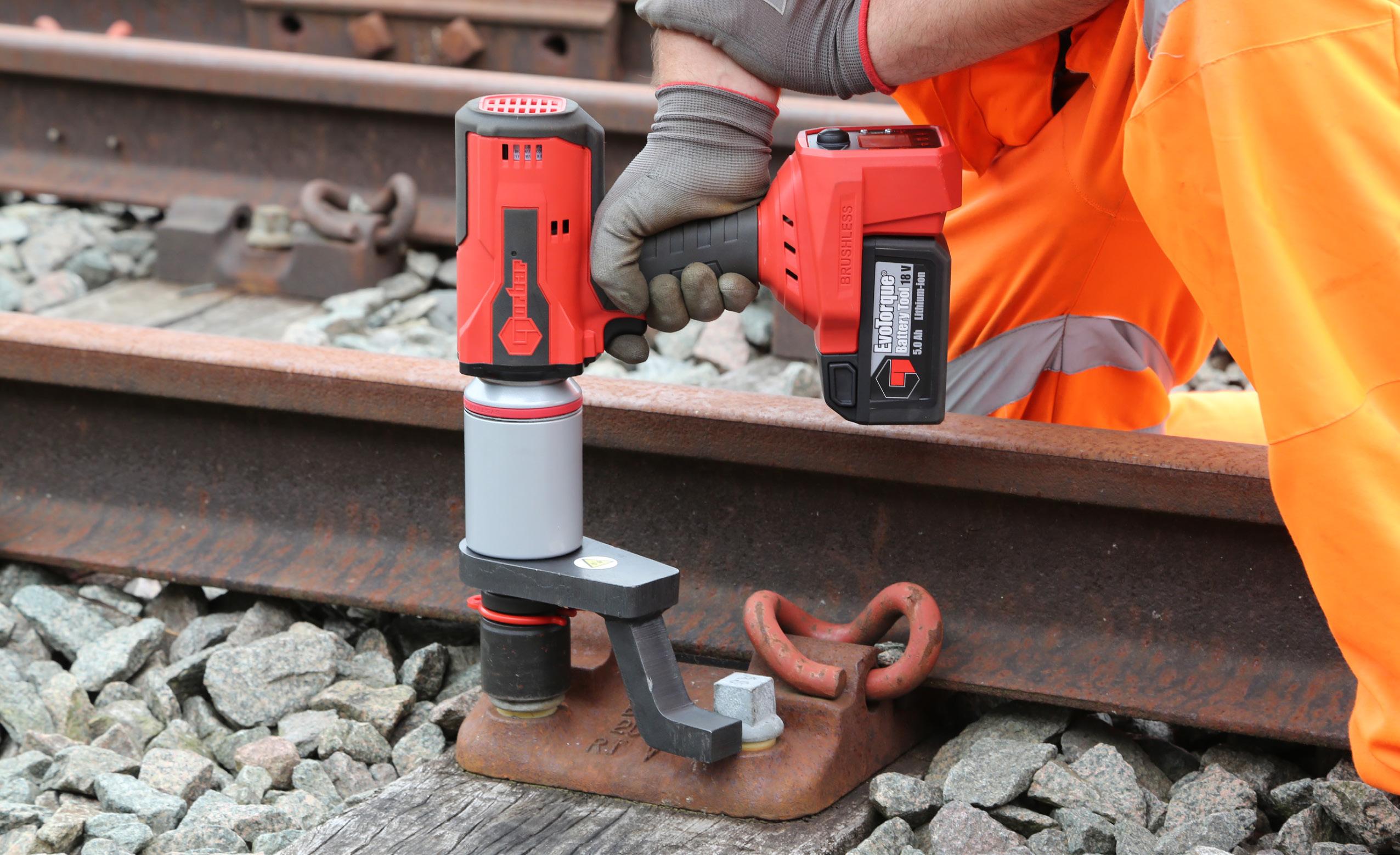
Chris Renshaw is the Business Operations Manager at Bratts Ladders, a role he has held since 2023. He originally joined the company in 2003 as a delivery driver and has worked his way through the business into his current position. Outside of work, he enjoys golf and pickleball, and is a committed supporter of Arsenal FC –something he describes as not always being the most relaxing of pastimes.
Founded in 1895 as A Bratt and Son, Bratts has a long-standing presence in the rail industry, supplying bespoke equipment to meet the specific operational and safety requirements of the sector, and offers training alongside its manufacturing offer.
Want to know more about Bratts Ladders?
Tel: 0115 986 6851
Email: sales@brattsladders.com
Visit: www.brattsladders.com
‘Often, the simplest solution is the best solution. Safer does not always mean more complex.’
What challenges have you faced in the industry?
Oddly enough, it’s procurement departments. Everyone is extremely busy, and it can be hard for people to step away from what they’re doing when what feels like yet another annoying salesperson calls trying to push a product. Being relatively new to the role, I sometimes find it difficult not to take the rejection – or lack of response – personally. I know it isn’t meant that way, and perhaps I just need to adapt my approach. All I really want is for someone to say: ‘Sure, I’ll give you five minutes – let’s see what you’ve got.’
When did you join the company, how did you start at A Bratt and Son & what is your role within A Bratt and Son, (Bratts Ladders)?
I joined Bratts Ladders in 2003 after working as a 7.5- tonne lorry driver. A friend I had previously worked with let me know about a driving vacancy at his workplace and arranged a meeting for me with Mr Peter Bratt. I must have made a good impression, as Mr Bratt offered me the role driving the company vehicle.
Alongside loading and driving the lorry, I helped wherever needed in the workshop. This included cutting timber for stiles, treads, and rails, as well as cutting glass fibre and aluminium for the same purposes. I also learned how to turn rungs over, and as time went on, I gained a strong understanding of the manufacturing processes across all of our ladder and stepladder ranges.
Around 2007, we identified that industry training was becoming increasingly popular. While Bratts had offered training to customers before, Stephen Bratt wanted to expand and strengthen our presence in this area. Knowing that I had previous teaching experience, he approached me to see if I would be interested. Training was something I had always been good at, so I was happy to take on the challenge.
Then in 2023, another opportunity arose within the business. Once again, Stephen Bratt asked if I would be interested in stepping into a new role. I felt it was an opportunity I couldn’t pass up, and before long, I found myself becoming the Business Operations Manager for Bratts Ladders.
Tell us about your career before you joined A Bratt and Son, (Bratts Ladders)?
I wouldn’t quite describe my working life as a carefully planned career—more a collection of roles picked up along the way. Over the years, I’ve worked as a car salesman, a delivery driver, and, as mentioned earlier, in teaching. I was, and still am, a qualified Ballroom and Latin dance instructor, which perhaps means I’ve always worked with my feet in one way or another.
These days, though, my rise and fall are less about the dance floor and more about climbing up and down ladders.
Tell us about A Bratt and Son, (Bratts Ladders) and the types of products and services you offer.
Founded in 1895, Bratts originally manufactured wooden window cleaners’ ladders and barrows under Mr Alfred Bratt. While we still manufacture traditional wooden ladders today, our range has expanded to include wooden Swingback steps and Platform steps.
As the industry evolved, we introduced more modern materials, most notably glass fibre, into our product range. This allowed us to continue specialising in non- conductive access equipment, while also giving our customers greater choice in materials to suit their specific needs.
We soon recognised that even a standard ladder is not always the perfect solution for every job. This led to our involvement in many bespoke projects, helping us adapt and
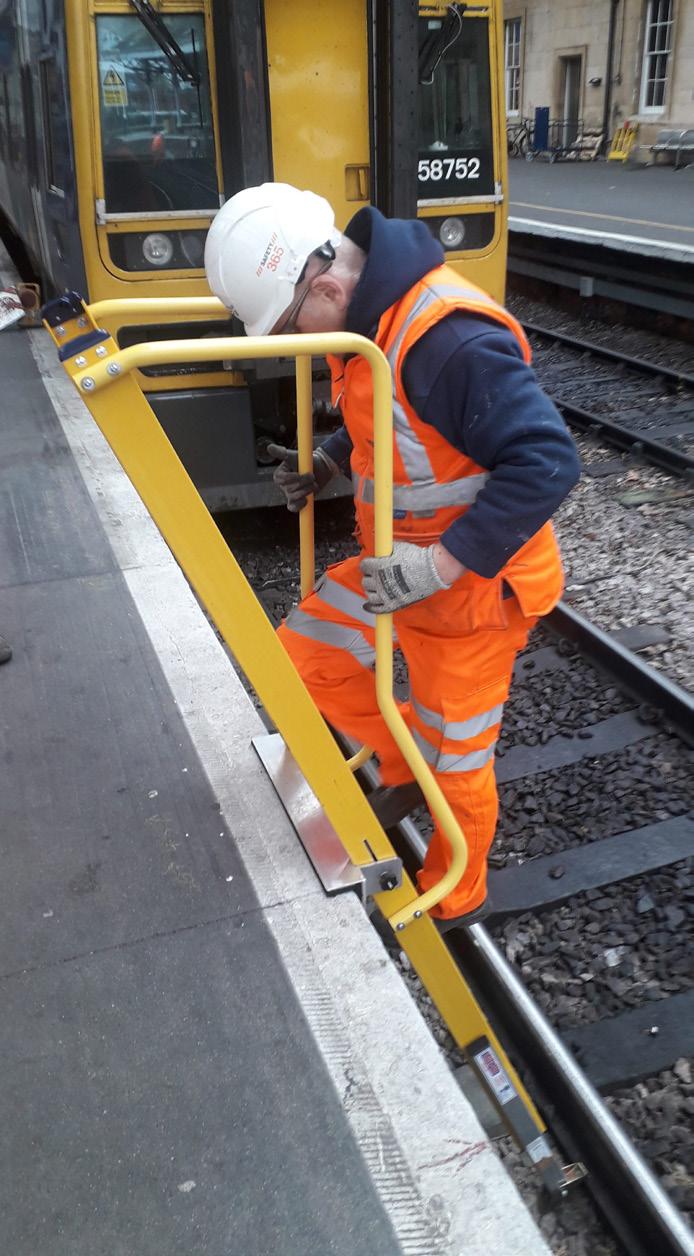
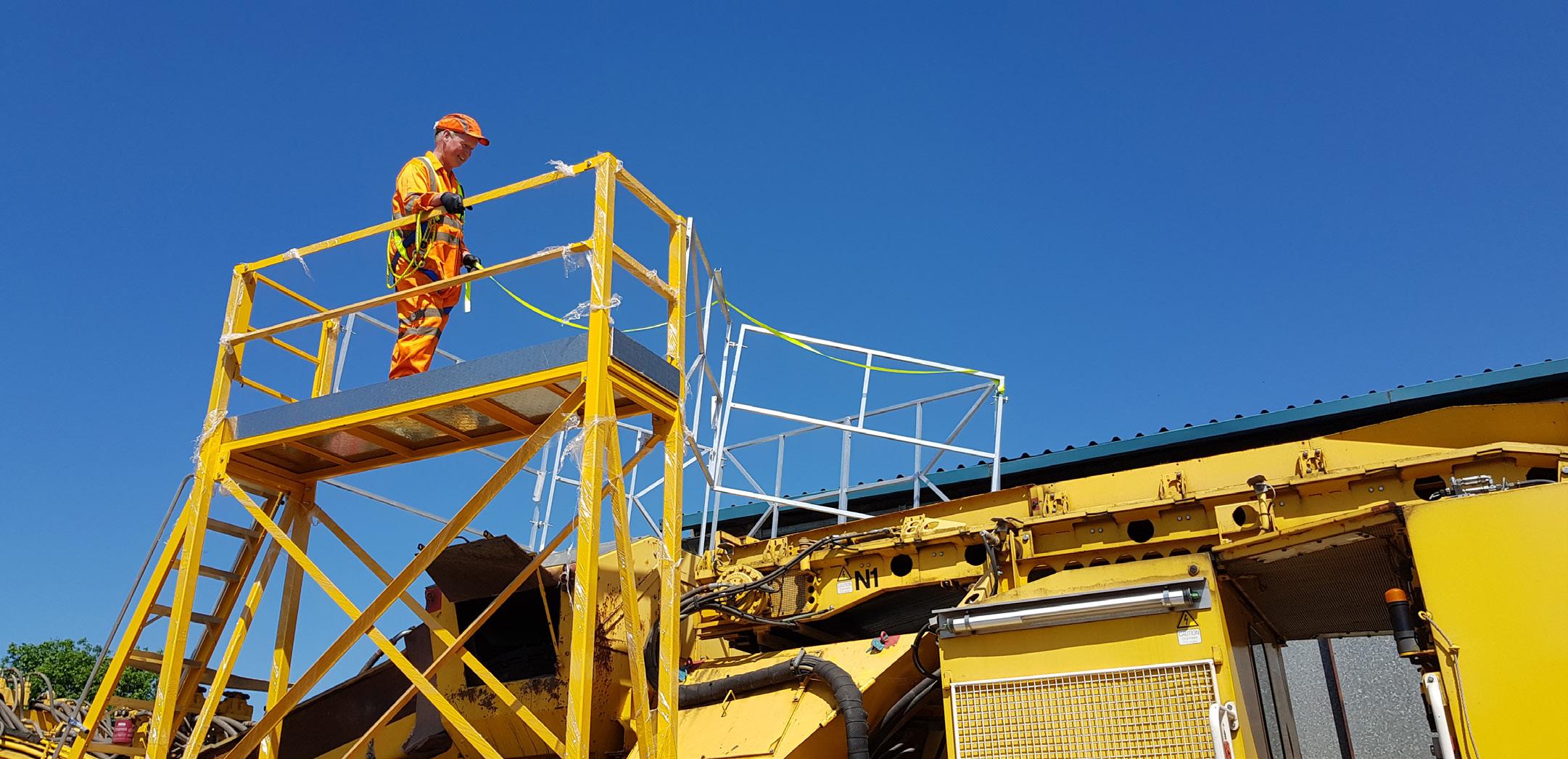
expand what we now consider to be standard access equipment.
From podium steps to bridges, from ladders that extend upwards to those designed to take us downwards, working at height is central to everything we do. Our focus remains on manufacturing access equipment that is fit for purpose, practical, and above all safe to use.
What are some major projects you’re currently working on & what are some standout projects you’ve been involved in over the years?
A couple of current projects are worth highlighting. One is still in its early enquiry stage, where a customer has approached us for a solution to provide access to
TV monitor screens located alongside an escalator. The key challenge will be creating a solid, level working platform for engineers within a very tight and uneven environment, where space and stability are critical considerations.
Another project involves a customer requiring what appears, at first glance, to be a simple ladder to access a track-based machine. However, the challenges lie in the narrow access point, how to secure the ladder to prevent slipping, and the varying heights and ground conditions on which the ladder may be positioned while an engineer attempts to gain access to the equipment.
Bratts has a long-standing history within the rail industry, dating back to the days of British Rail, when we manufactured what was known as a timber Guards Emergency
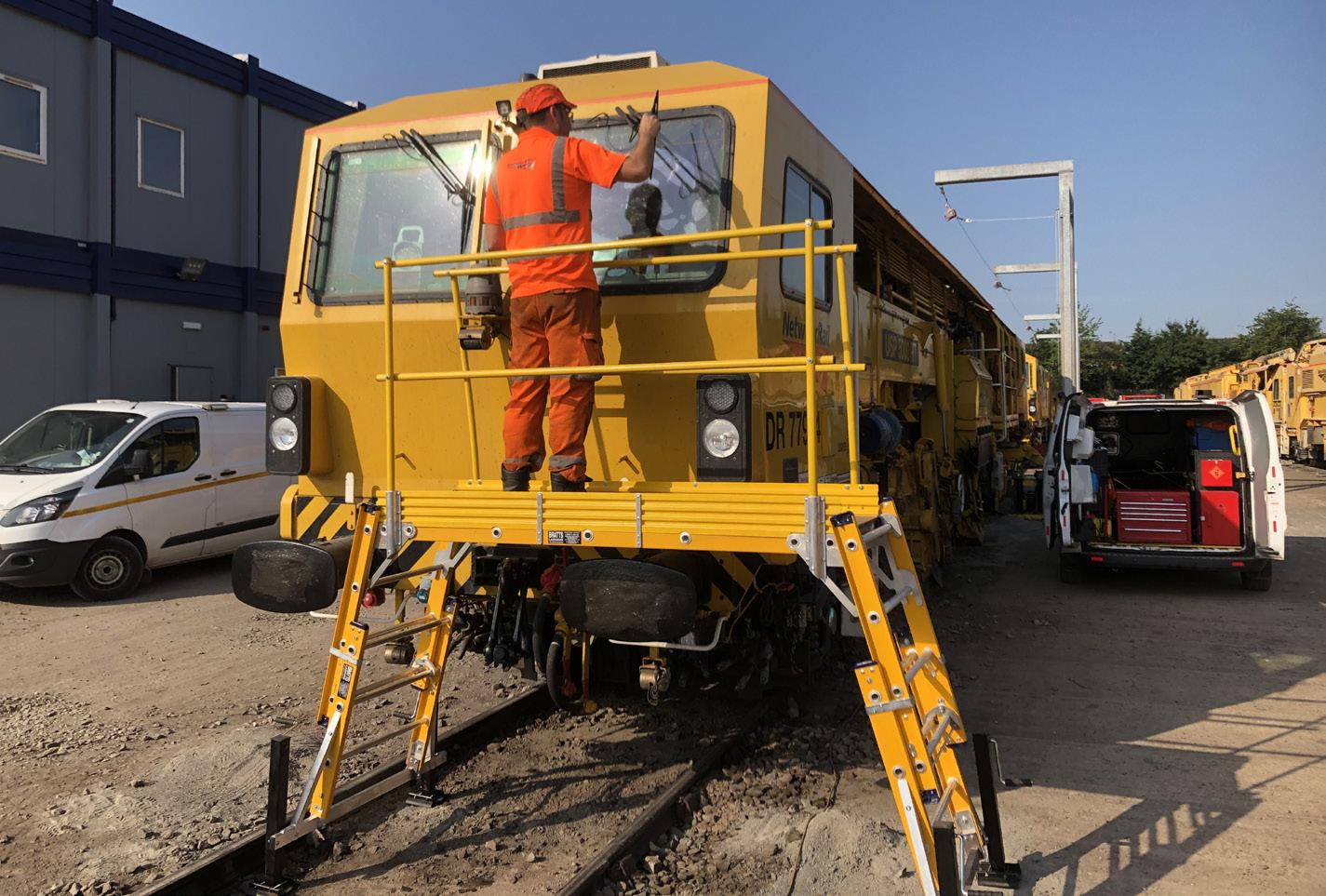
ladder, a double-extension six- foot timber ladder. Since then, our involvement has grown considerably. We have produced Platform- to-Track ladders, access platforms for servicing track machines, bridges designed to straddle control centre panels, and pantograph ladders used to access the tops of locomotives.
When a client comes to you with a particular problem, what’s your process for coming up with a solution, and how closely do you work with clients throughout the projects?
The first step is always to fully understand what the customer is trying to achieve. What task do they need to carry out? How are they currently accessing the area? Once we understand this, we take the time to discuss what we believe would be a suitable and practical solution, listening carefully to their feedback along the way.
From there, we tailor the proposed product to ensure it meets the customer’s requirements and gains their full approval and satisfaction. Often, the simplest solution is the best solution. Safer does not always mean more complex – effective access equipment should be user- friendly, straightforward, and, above all, safe to use.
How do you work with the supply chain within this sector?
Bratts are very fortunate to often have direct access to our end customers. This close connection allows us to work collaboratively, gain a clear understanding of their needs, and ensure we deliver the most effective solution. By engaging directly with the people who use our equipment, we are better placed to design and supply access solutions that truly meet their requirements.
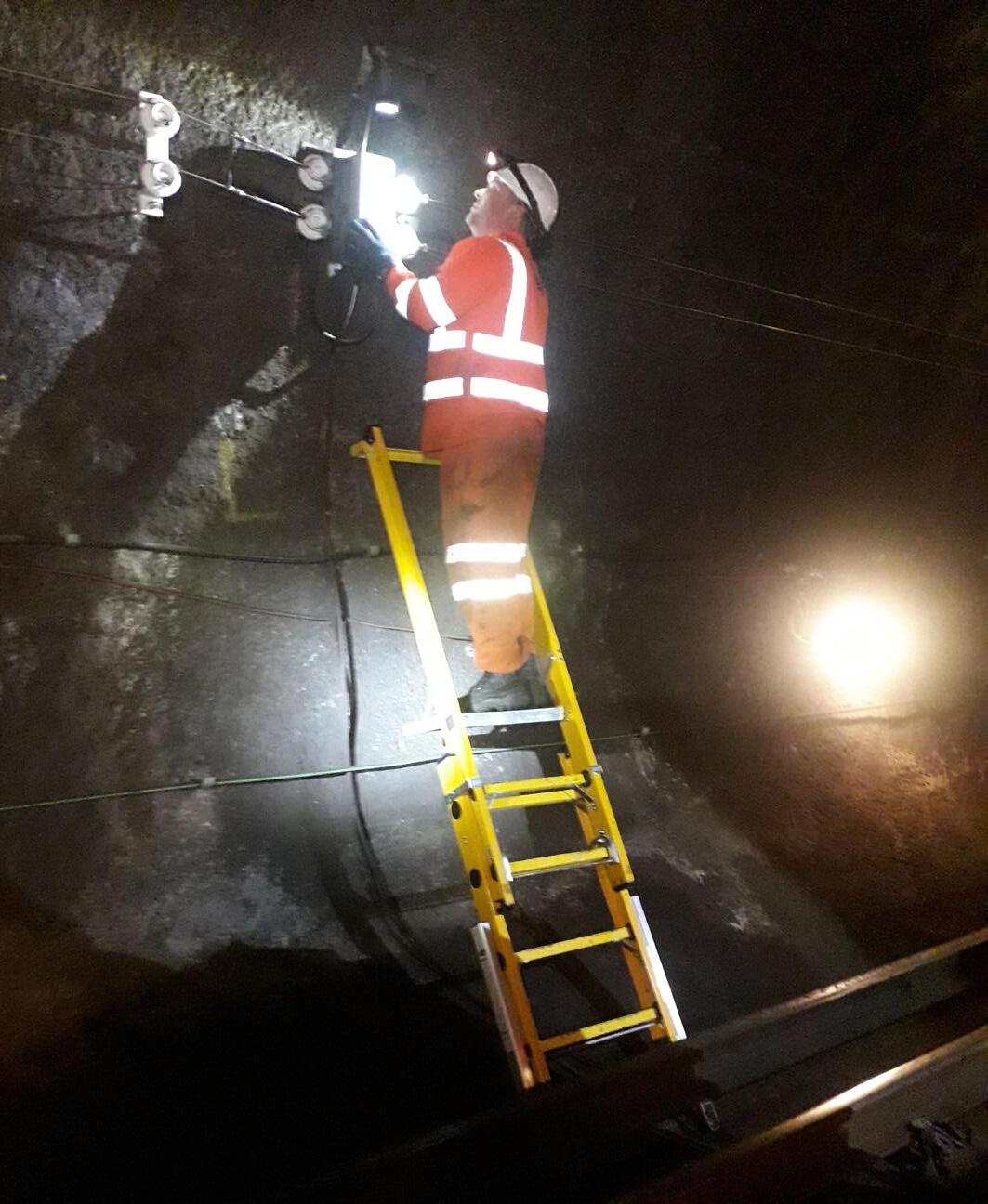
‘Safety will continue to be a key consideration in industry planning and operational procedures, and we will always strive to excel in this area.’
With the coming launch of Great British Railways, how do you anticipate your place within the supply chain changing?
This may sound slightly presumptuous, but I don’t believe our role will diminish. We specialise in non- conductive mobile access, and that will always remain central to what we do. Safety will continue to be a key consideration in industry planning and operational procedures, and we will always strive to excel in this area.
This feels like an exciting chapter for Bratts, and we are committed to ensuring we are ready to play an integral part in what lies ahead.
What are some of the biggest challenges your sector currently faces and what are some potential solutions?
There will always be a need for safe, well-made products. In many cases, this leads customers to place heavy emphasis
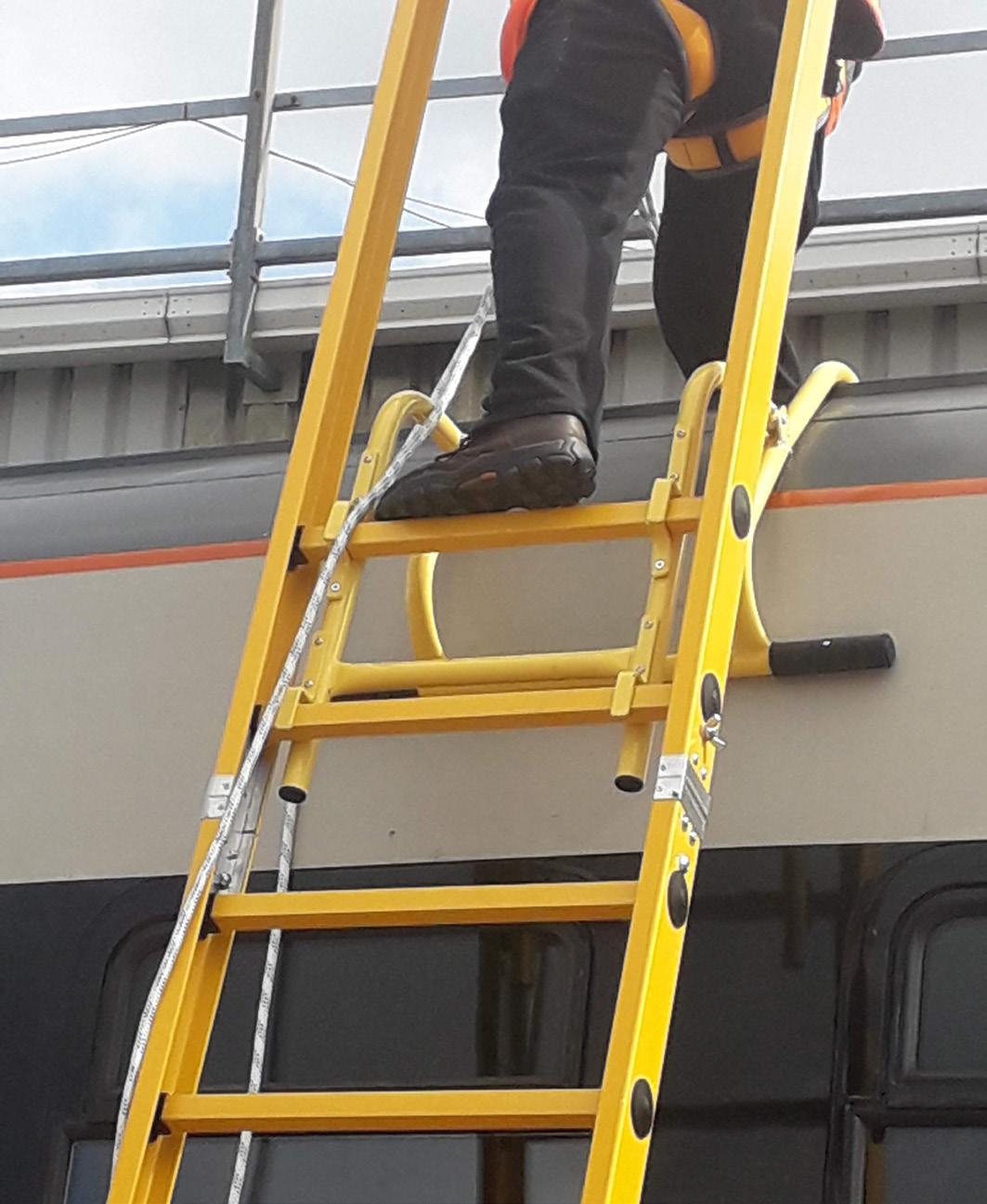
on standardised solutions. Within the ladder sector, recognised standards such as EN131 are widely known and accepted, and they play an important role in setting benchmarks for safety and quality.
However, just because a product carries an accredited kitemark does not necessarily mean it is the perfect solution for every industrial application. What matters most is that the equipment is fit for purpose. Sometimes, the simplest and safest solution (a ladder) really is all that is required.
One potential solution is training. By improving awareness and understanding of what is genuinely practicable while still maintaining safety, we can make better decisions. This helps ensure we are not misled by unnecessary complexity or overwhelmed by noise. Instead of relying solely on a tick-box exercise, we can make well-informed, considered choices that genuinely support safe working practices.
What are your thoughts on the balance between automation and human roles in the future of rail operations?
It’s difficult for me to comment directly on this. Bratts Ladders relies heavily on its workforce, and as a result, we have limited experience with automation and the role it plays in production. Every machine we use still requires human operation and oversight.
In other areas of industry, automation undoubtedly has a greater role to play—and in some cases, a greater need. However, within the rail industry, safety will always
be a major consideration. The question is whether that responsibility can ever be left entirely to automation, or whether there will always be a need for human judgement, experience, and personal intervention to ensure work is carried out safely.
What are your views on collaborative working?
Smart business is built on working together, forming partnerships to achieve a shared goal. A major part of that process is taking the time to truly understand what the customer is trying to achieve.
We are fortunate that, when our customers face access challenges, they trust us to work closely with them to find the right solution. Many of our products began life as collaborative ideas, developed alongside our customers, and have since gone on to become some of the most popular and successful products in our range.
At some point, every company will face the question of how to continue maximising earnings from their current business practice whilst also investing enough in innovation so they can turn a profit in the future. How can a company achieve the necessary creativity to innovate without compromising their existing business?
The old sayings ‘if it’s not broken, don’t fix it’ and ‘the old ways are often the best ways’ often come to mind. For a small business like ours, this can be a difficult balance to strike. It isn’t always easy to justify investing
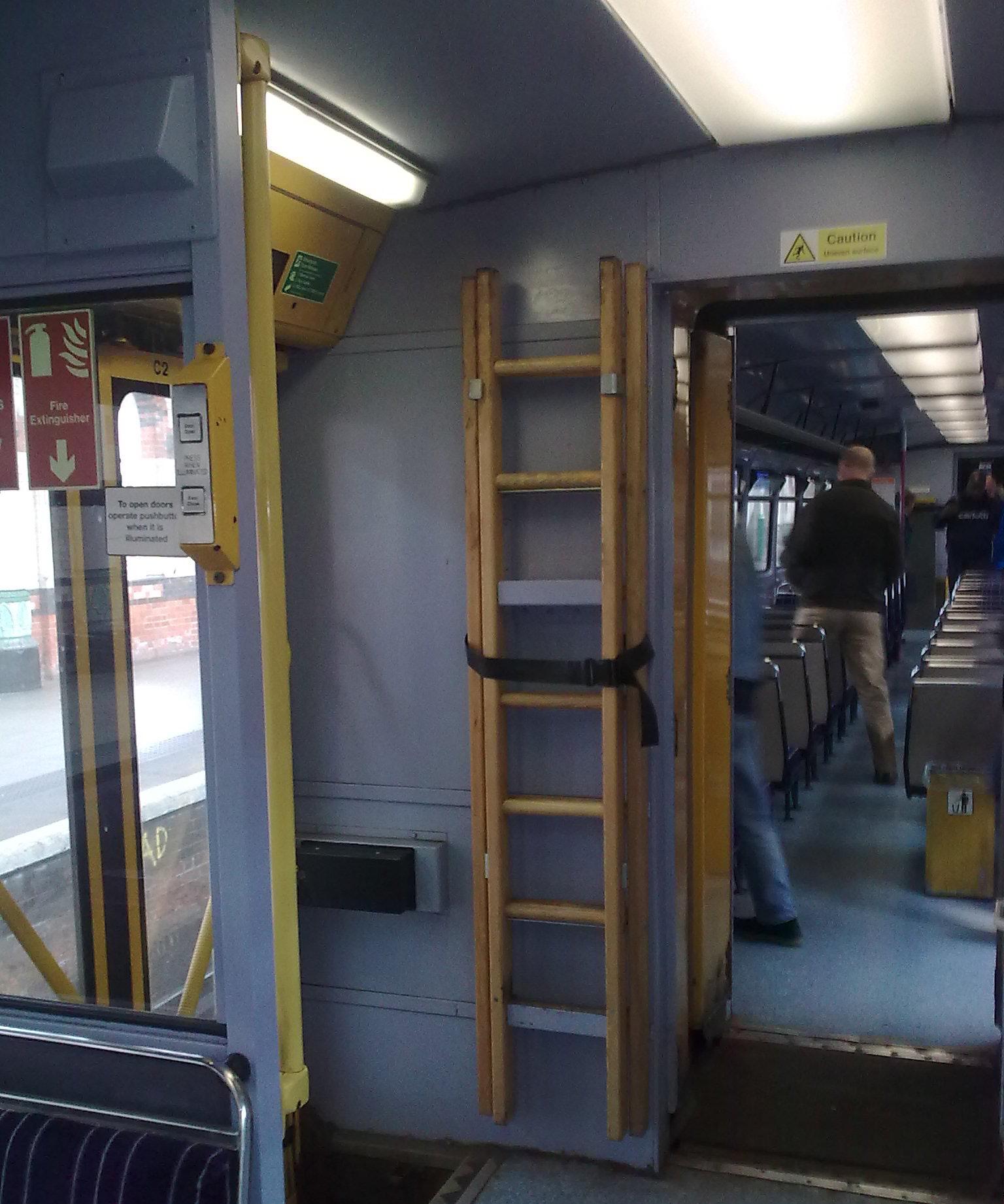
‘Many of our products began life as collaborative ideas, developed alongside our customers, and have since gone on to become some of the most popular and successful products in our range.’
time and money into new processes when the existing ways of working are proven, understood, and profitable.
One way Bratts has explored this is by bringing the manufacture of certain components in-house. While this can offer advantages, it also carries risks and potential pitfalls. We have to carefully ask ourselves: are we truly producing better components? Are we saving money by making them ourselves? Or are we using valuable employee time that could be better spent on core production activities?
The reliability and quality of our components is paramount, and we will never compromise on that. At the same time, we will continue to challenge ourselves—to improve our products and services, to
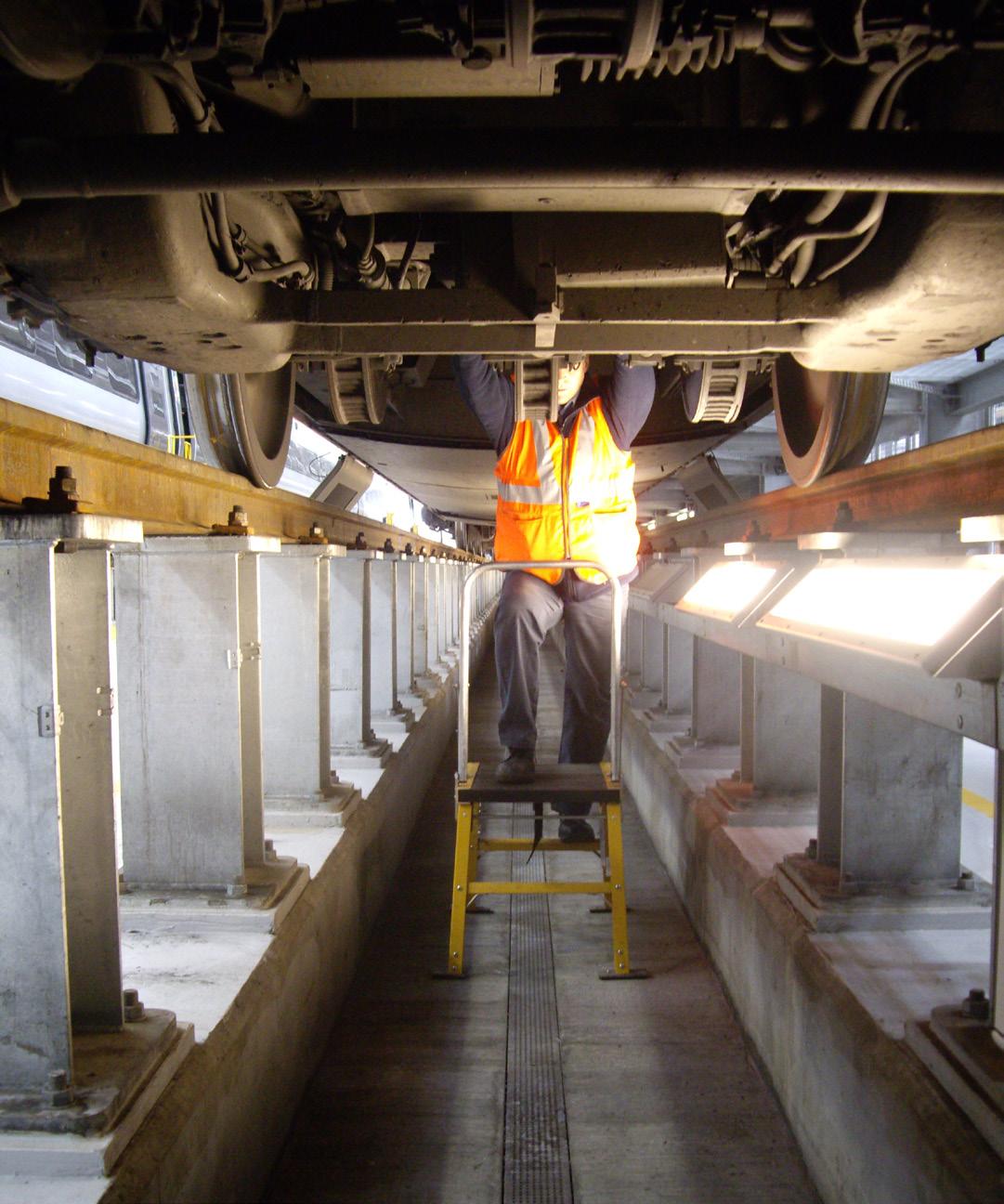
refine the way we work, and to push our boundaries in pursuit of sustainable and more economical profitability.
How have you seen the industry change over the years?
For both myself and Bratts, safety is the primary driver. There will always be a need for efficiency, and there will always be a need for profit – but never at any cost. Safeguarding passengers, freight, and the people who deliver those services must always remain paramount.
The rail industry has long prided itself on its ability to adapt, evolve, and move with the times. I believe it will continue to recognise the direction it needs to take in order to maintain its vital role in our future, while ensuring safety remains at the heart of everything it does.
How can the industry tackle its skills shortage and how do you recruit, retain and train your staff?
The honest answer is that I don’t really know. How do we make any industry more attractive to younger people? At Bratts, one of the challenges we face is finding the right person with the right temperament – someone we can invest time in training without placing too much pressure on them to deliver immediate results. At the same time, we need to take what can be seen as a labour-intensive and repetitive process and help them understand just how much value they add to the business.
Speaking more specifically about Bratts, our shop floor has traditionally been a very male-dominated environment. Perhaps this is something we need to challenge. There may be real opportunities to encourage more young women into our manufacturing environment, and in doing so benefit from their fresh perspective, drive, and enthusiasm.
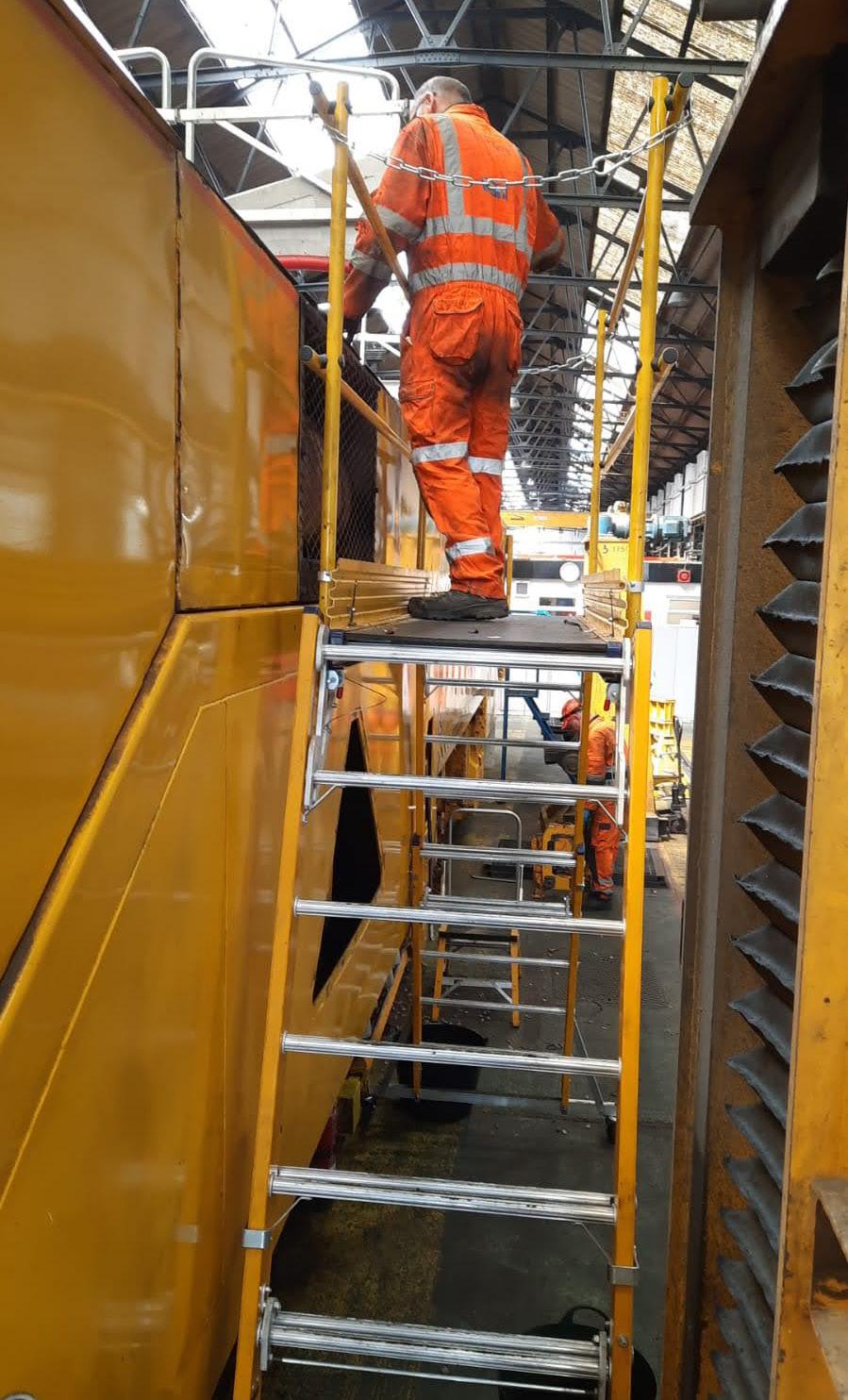


So you don’t have to worry about mess or ground contamination.












Withstands heavy use while allowing oil to soak into sorbent material.
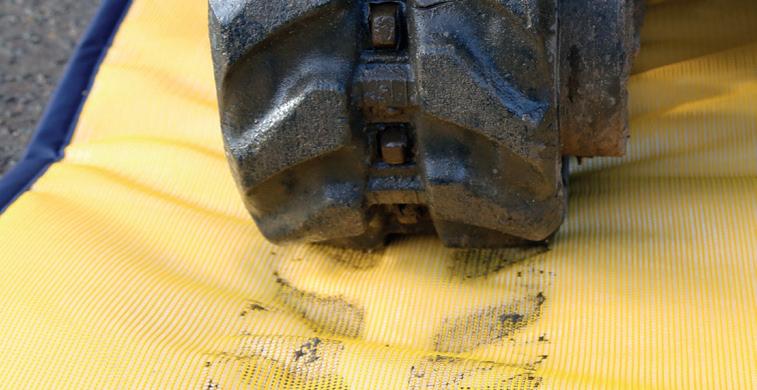
• Absorbs oils, fuels and other hydrocarbon liquids
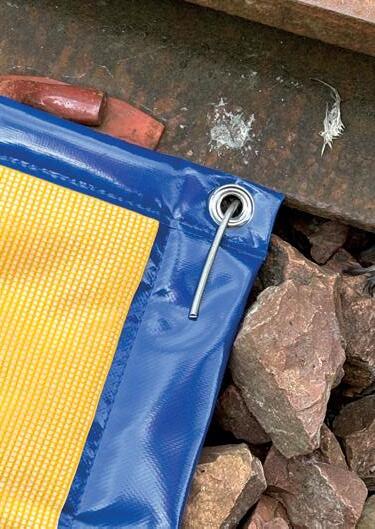
For pegging to the ground, hanging from machinery or fixing to tracks.
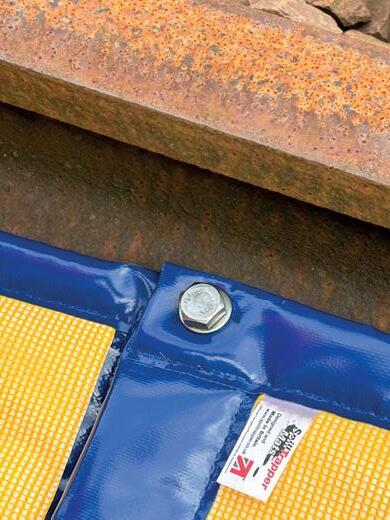

• Waterproof vinyl backing prevents fluids passing through to the ballast
• Ideal for refuelling areas, locomotive traction depots and rolling stock yards
• Traps spills and leaks so you don’t have to worry about mess or ground contamination
• No additional tray needed with the containment mat design
• Non-slip vinyl base contains contaminates protecting the environment
• Hydrophobic inner material will not absorb rainwater
• More cost-effective than other pad or rail style mat products
• Cost effective alternative to installing a drainage system under the track
• Works as part of an environmental management system, helping towards ISO14001 accreditation
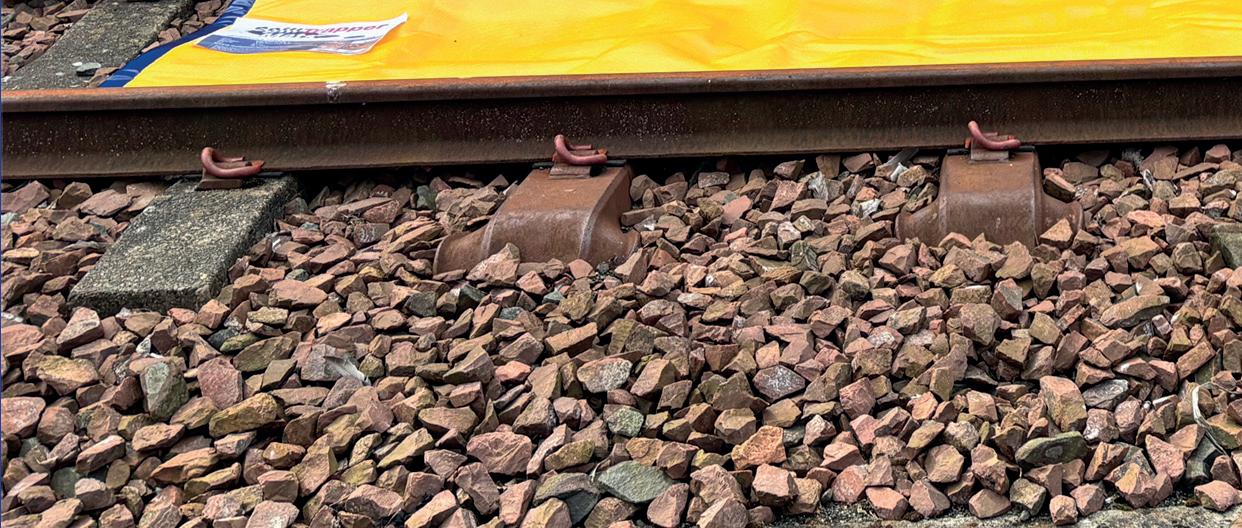
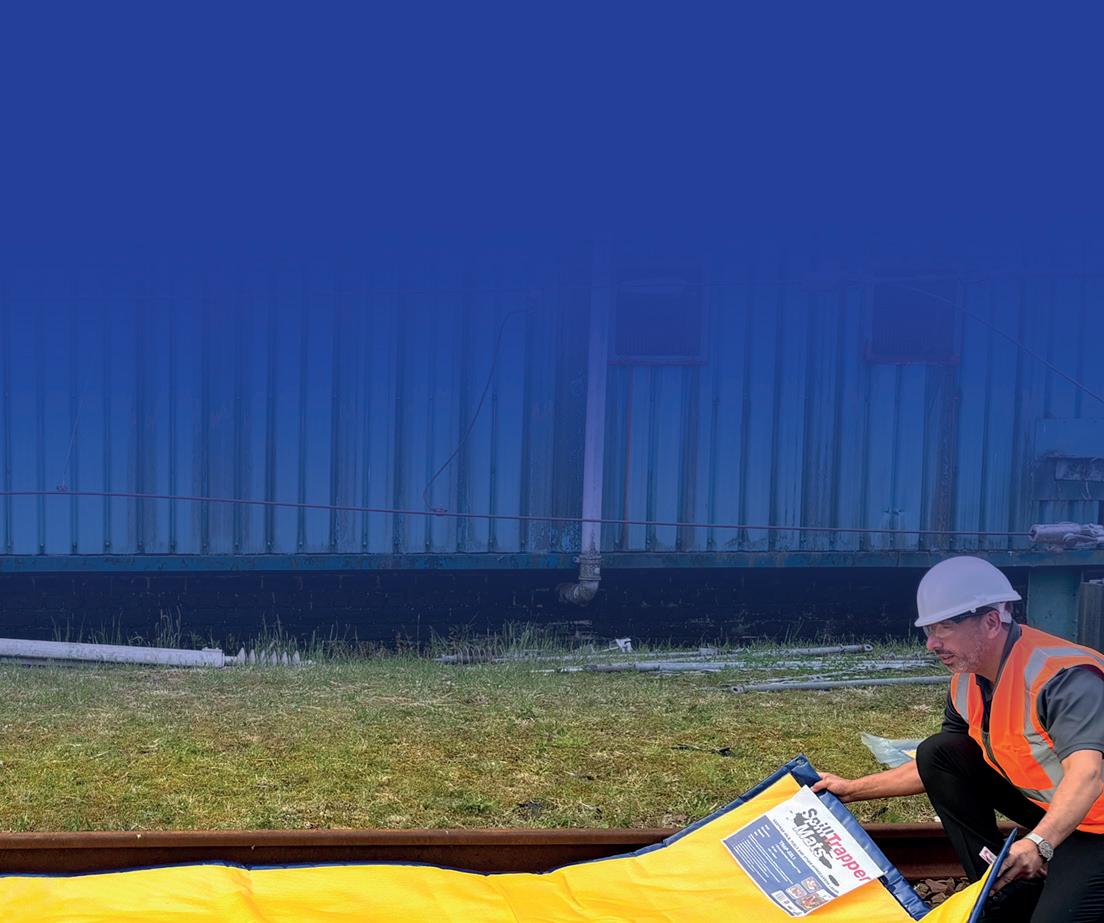
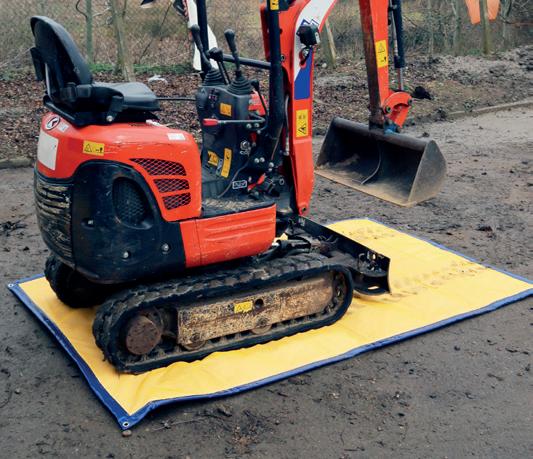
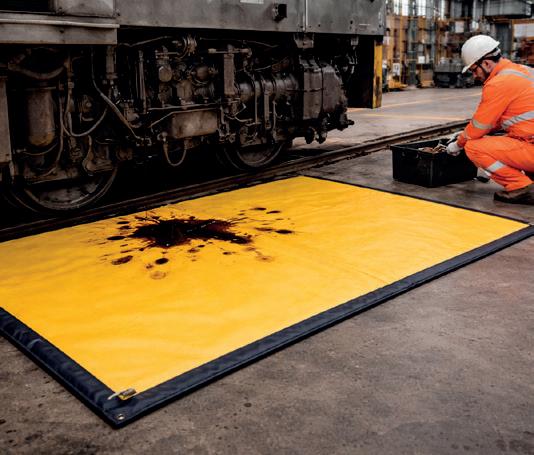
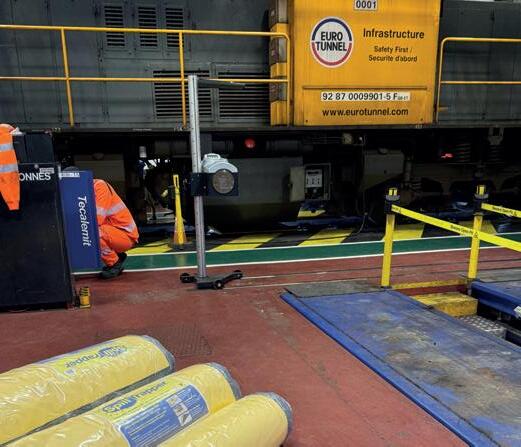
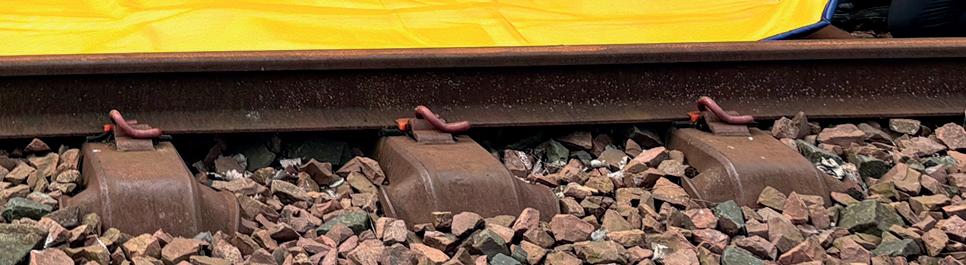
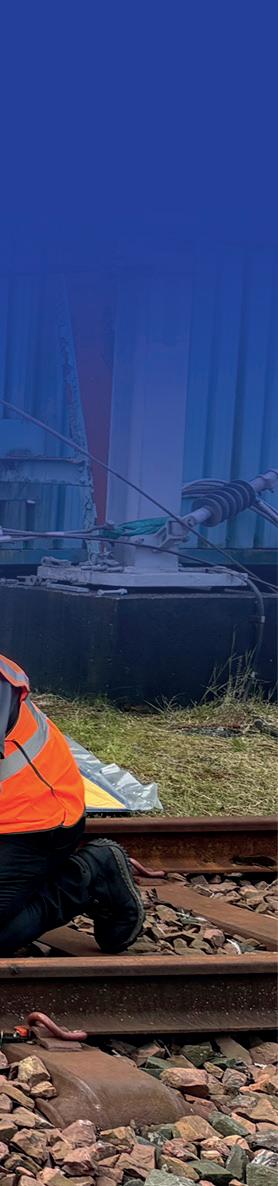




Twenty-five years of spill control manufacturing has shaped a product range and service offering designed specifically for rail depots, operators and infrastructure managers
David Blanchard is a Managing Director of Fentex, alongside Paul Bassitt. Together, they share over fifty years of spill control experience and have driven Fentex to become the leading supplier and manufacturer of spill control in Britain.
Fentex has been the UK's leading spill control manufacturer for 25 years. How has the rail sector specifically shaped your product development over that time?
We created Fentex back in 1999 when we saw an opportunity for a distributorfocused Spill Control manufacturer. This has culminated in Fentex being the UK’s largest manufacturer supporting our distributor partners.
During this time we have seen the implementation of tougher regulations regarding oil and fuel storage together with ever increasing fines for pollution incidents. This of course reflects directly onto rail and depot operators that need quality spill control and absorbent products to comply with the regulations but also to provide a safer, cleaner and slip free working environment. Did you know ‘slips and falls’ are still the leading cause of workplace accidents in the UK.
You've made sustainability central to your brand with the EVO® recycled range. How important is that environmental story to rail operators and maintainers who are under increasing scrutiny from the ORR and Environment Agency?
We recycle 80 to 90 tonnes of material fibre to make the EVO products every month. All companies highlight the need to use more recycled products and the rail industry is no different. In fact I feel the rail industry, because of its significant environmental advantages over that of road transport, are more in touch with environmental issues.
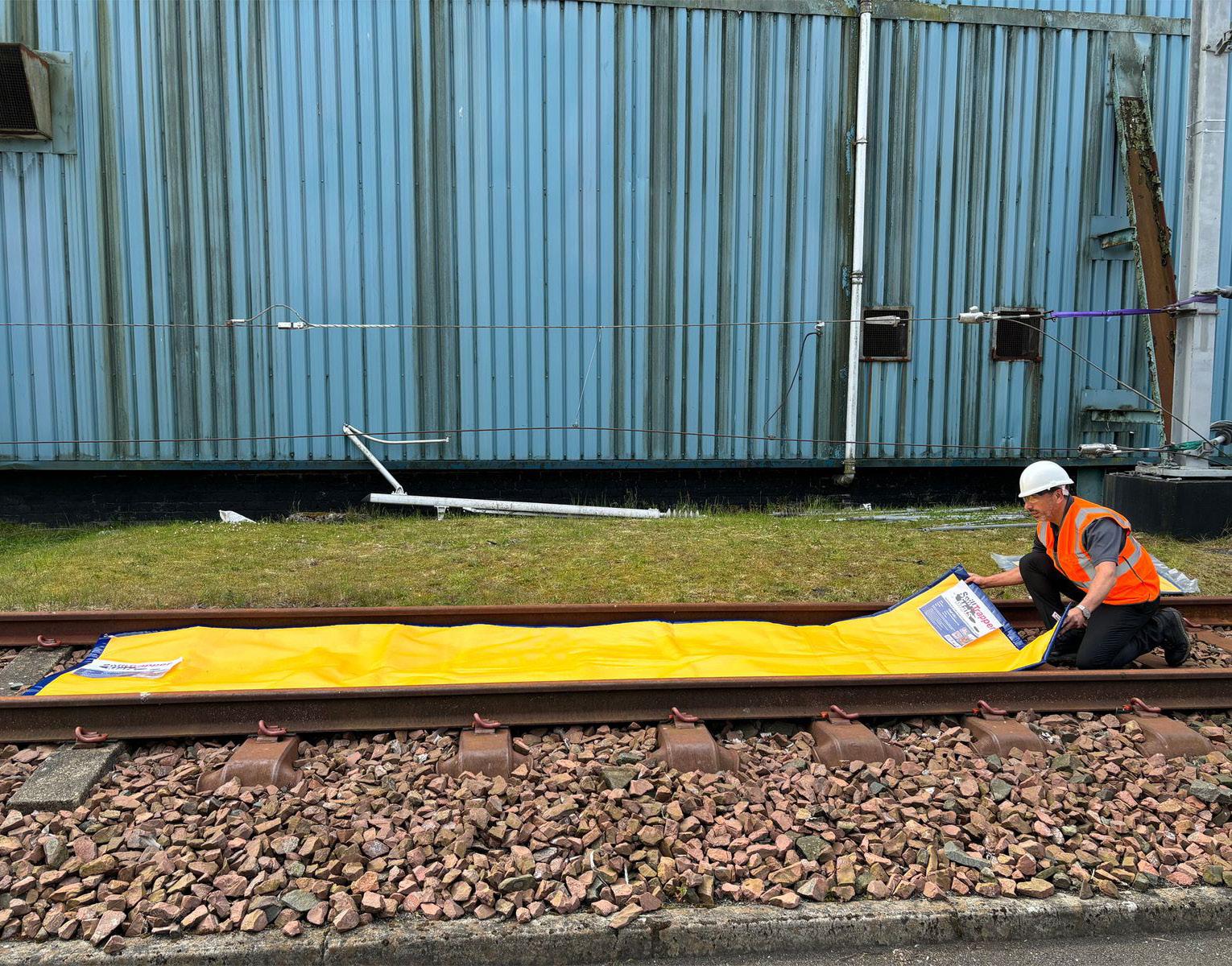
Your Spill Kits come in many sizes, formats and containers. How does that translate to rolling stock, depot vehicles or on-track plant – and have you made any bespoke adaptations for rail clients?
We invented the ‘Fentex Absorbent Station System’ specifically for Traction Maintenance Depots back in 2002. Whilst they did have some Emergency Spill Kits, these were always emptied by engineers needing ‘day-to-day’ absorbents. So we invented the Fentex Absorbent Station to live centrally in the depots where engineers could collect absorbent pads, lengths of absorbent roll, socks and wiper material for everyday leaks drips and small spills. This of course left the Emergency Spill Kits intact, ready for the accidental big spill.
‘We recycle 80 to 90 tonnes of material fibre to make the EVO products every month.’
AdBlue spill kits are a niche but growing product. Given how many modern diesel multiple units and maintenance vehicles now use AdBlue, how significant is the rail sector in that part of your business?
Whilst AdBlue isn’t regarded as aggressive or dangerous it is a water pollutant. Thus the need for a Spill Kit adjacent to AdBlue dispensing areas is very important. They are not expensive as they utilise low cost general maintenance absorbents and we find our 120 or 240 litre wheelie bin spill kits very popular with the rail industry.
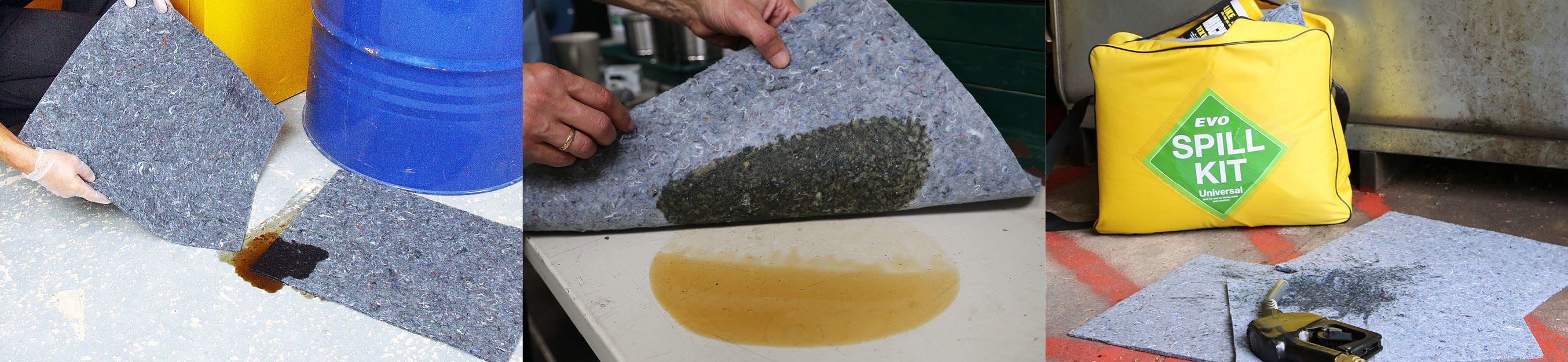
SpillTrappers's unique sorbent laminate allows clean rainwater to run away while trapping oil and fuel. Can you explain how the technology works in practice?
The entire SpillTrapper story is a brilliant example of how Fentex’s industry knowledge and manufacturing capability has produced a class leading product not only in performance, absorbent capability, but also in value being less than half the cost of its rivals that use a synthetic gel in their core.
SpillTrapper uses high quality, hydrophobic material top and bottom. This material only absorbs oil, fuel and other hydrocarbons including the new range of green fuels and diesels but, most importantly, rejects water. So when used outside, the top layer repels the rain but easily and quickly absorbs the fuel. In the core of the Trapper we use our own manufactured EVO material that is made from 90 per cent recycled cotton that has gone through several processes to make it ‘super absorbent’.
Your products reference EA/SEPA/NIEA guidelines and PPG standards. How do you help rail businesses navigate their specific compliance obligations around spill management – do you offer any advisory support or documentation?
Fentex has always offered free site surveys. This is where a Fentex expert will inspect your site and give you an honest and logical view of what spill control is required to meet all current regulations and guidelines.
Secondly we have the UK’s best spill control training package. It is very cost effective as it offers three levels – Bronze, Silver and Gold so you receive the very best level of training required for your workforce or response team.
With train operators and infrastructure managers facing increasing pressure around environmental incidents, what does a best-practice spill response plan look like for a traction maintenance depot or a major rail construction site?
The systems we put into place are always logical and cost effective. They will utilise the Absorbent Station system for day-to-day spills and leaks. There will be a set of Spill
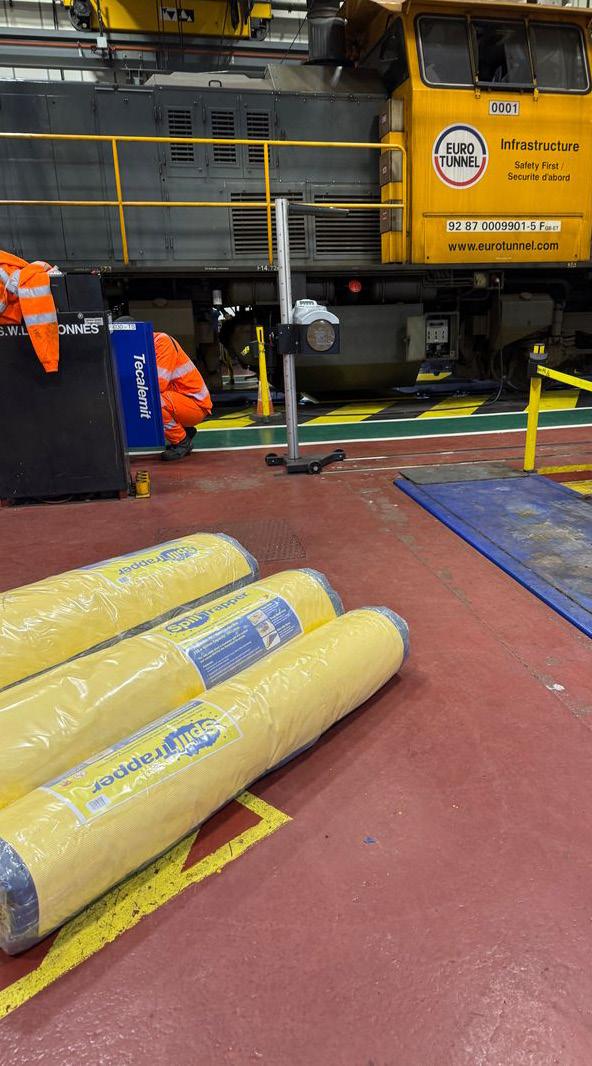
Kits located around the site or placed in relevant vehicles and there will be bunded storage solutions for the safe storage of all fuels, oils and chemicals.
You've introduced new manufacturing lines in your Cambridgeshire, Hull and Ellington factories. What does that investment signal about Fentex's manufacturing ambitions – are there other product lines where you're planning to bring production capability in-house?
Currently Fentex manufacture nearly 50 per cent of what we sell. The vast majority of this is from recycled materials. The new production lines and extended capacity are to enable us to keep well ahead of increasing demand as we see more and more interest from customers for UK-manufactured, green products of which Fentex, in the spill industry, are the market leaders and pioneers. We aim to keep and extend that position over the next ten years.
‘The rail industry, because of its significant environmental advantages over road transport, is more in touch with environmental issues.’
Rail decarbonisation means more battery and hydrogen-powered trains in the coming decade. Does that change the spill risk pro file for maintainers – are you developing products for new fluid types like battery electrolyte or hydrogen system coolants?
We have adapted some spill kits to be more ‘usable’ for these types of new fuel. However the actual materials we use are very much the same. There is little point in developing some new, super-duper, synthetic material when in actual fact a natural burst cotton fibre or a standard low cost polypropylene fibre, when thoroughly tested, is more than capable of absorbing and holding the new liquid or chemical.
If there's one message you'd want every rail depot manager or infrastructure project manager to take away about Fentex, what would it be?
Invite us onto site as I guarantee Fentex will demonstrate how your site or operation spill response can be improved whilst saving money.
Tel: 01487 823184
Email: enquiries@fentex.co.uk
Visit: www.fentex.co.uk
Air horn systems, Wash wipe systems
Inter-car hose assemblies Pantograph systems
Waste disposal, Full pneumatic pipework systems
Seating framework, Grab rails and luggage racks
Body to bogie pipework, Levelling valve systems
A
Presented in kit form, tested and ready for immediate installation, reducing logistic, production and inventory costs.
The STAUFF Line process is adopted by global OEMs to successfully achieve cost savings in rolling stock manufacture.
Presented in kit
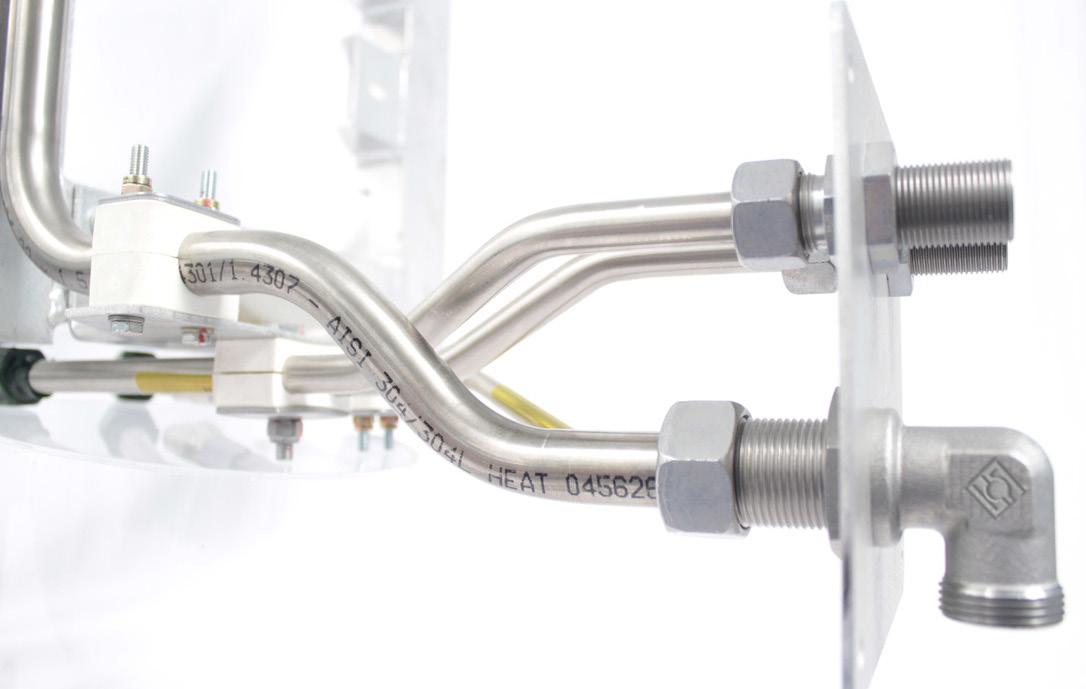
AUFF Line p adopted by global OEMs to successfully achieve cost savings in rolling stock manufacture.

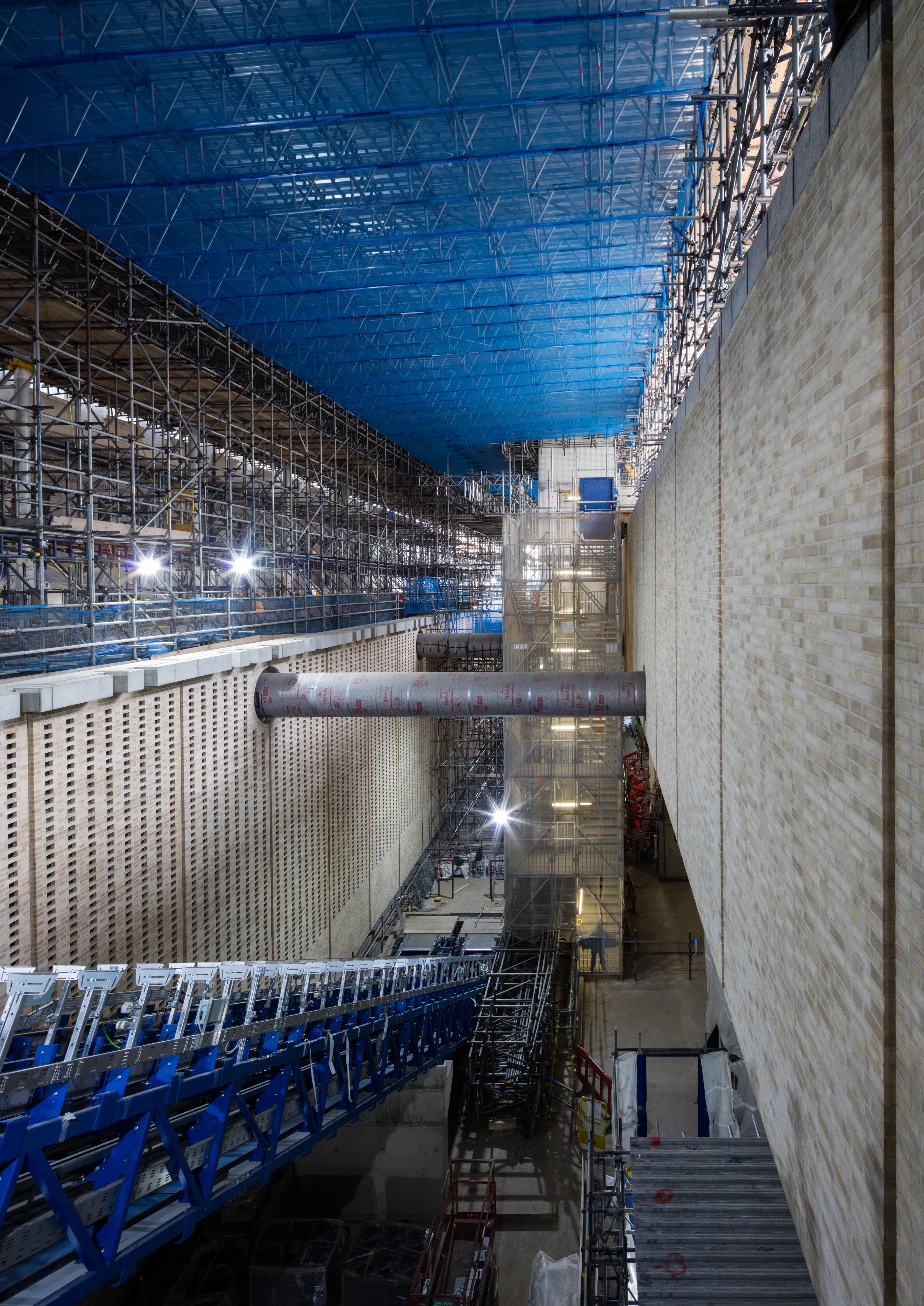
Few environments test the expertise and discipline of a scaffolding and safe access contractor like the rail sector
After working in the sector for decades, Millcroft Services has the in-depth understanding of what’s needed to provide solutions that protect both workers and the travelling public. The UK's rail network carries millions of passengers every day, and to keep it running efficiently requires major upgrade projects, day-today maintenance of stations, tunnels, and trackside assets, all requiring safe, reliable access solutions. In this high-risk environment, there is no margin for error. And behind many of these critical works are specialist contractors working behind the scenes to help keep the network running smoothly. For over 50 years, Millcroft has been one of those trusted partners.
As a specialist scaffolding and access contractor, Millcroft has built its reputation delivering complex, safety-critical solutions across some of the UK's most demanding rail environments.
Few companies can lay claim to a relationship with Transport for London spanning almost 50 years, partnerships with major principal contractors, and a portfolio of projects that includes HS2 and the Elizabeth Line. But Millcroft can.
Major Whitechapel scaffolding project
Millcroft has recently completed an extensive scaffolding and access package in partnership with HA Marks at Whitechapel for Transport for London (TfL). The project was part of a significant programme to refurbish more than 30 retail and residential properties along Whitechapel Road.
The challenges were considerable. This is a busy location with a thriving street market and live Underground lines. Limited access, restricted storage, and the protection of workers, stallholders, and residents required a carefully planned approach.
Millcroft's solution was a bespoke scaffolding system, including a 150-metre Monoflex screen to the rear of the properties, which provided a protective barrier between the works and the live railway line. This allowed the busy line to stay operational while repointing and roof works were carried out. To minimise disruption and keep schedules on track, Millcroft had dedicated teams on site, by day and night.
Millcroft’s contract on the Elizabeth Line at Paddington Station is the perfect example of its ability to deliver complex access solutions in high-profile, designsensitive environments. Delivered by the Costain-Skanska Joint Venture, the project required a new underground station integrated flawlessly with the historic surroundings above.
The company provided general scaffolding, including a 40-metre sliding temporary roof to protect the exposed box void and a birdcage scaffold for safe access during installation of the canopy. Access
to the distinctive Waagner Canopy above the station was also redesigned, creating a 120-metre bridged system with integrated waterproofing to safeguard the completed works below.
Millcroft's team worked a six-day week with ten-hour shifts over the twoyear programme to maintain safe access throughout the congested site, supporting multiple trades and ensuring materials moved efficiently through all levels of the build.
The company's proven experience in rail infrastructure projects, including Crossrail on the new Elizabeth Line and Paddington, made it the preferred bidder for works at Liverpool Street, London.
Millcroft's role on the twelve-week project was to erect and maintain access and safety scaffolding for London-based Conamar Building Services, who were working on behalf of TfL. The scaffolding enabled Conamar to undertake exterior building refurbishment, including maintenance and repair works, removal of foliage and debris from drainage and guttering systems, and cleaning of a disused platform area.
During the tendering process, Millcroft's Pre-Commencement Officer worked closely with the company's Technical Director to review preliminary designs. The team then submitted images and 3D illustrations, along with detailed designs, to clearly demonstrate their proposed solution and the value they would bring to the project. Multiple site visits were conducted by Millcroft's Operations and Technical teams to develop the required engineering drawings.
Liverpool Street Station is extremely busy, so any disruption had to be kept to a minimum. Millcroft developed a logistical plan to deliver equipment to the site quickly at night and during quieter weekend periods. Throughout the project, the company’s trained and experienced representatives conducted regular inspections to ensure that the scaffolding provision maintained the highest standards for operatives working on the project.
Unlike construction, where areas can be closed off, rail infrastructure often must remain fully operational. Scaffolding systems need to be installed around live tracks, in confined spaces, and in busy public areas without compromising safety or daily operations.
For Skanska's HS2 station contract at Euston, Millcroft provided temporary works infrastructure, acoustic and public protection screens, and a wide range of access and containment solutions during the construction of the new HS2 station.
The works included eight-metre high containment screens running the length of three platforms. These screens were
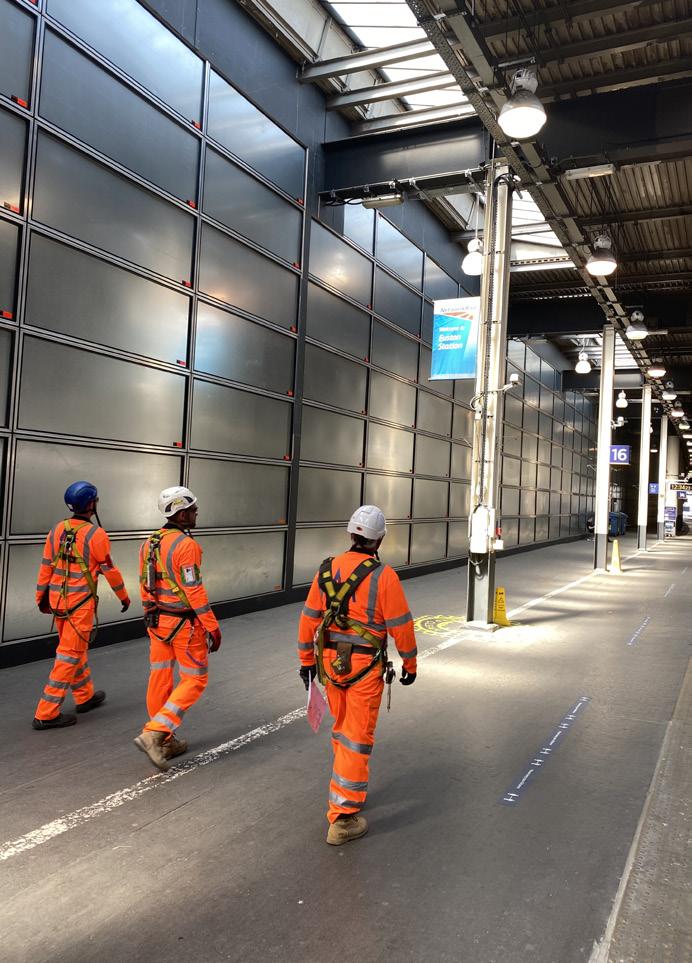
clad with modular acoustic panels for optimal crowd loadings and to provide a secure barrier between the public areas and worksites. Large birdcage structures were erected over the live site office, along with protection decks over the back-room areas, to ensure day-to-day operations continued while construction works were in progress.
Millcroft’s approach is not limited to supplying conventional scaffolding solutions. With an in-house design team comprising engineers, designers, and 3D CAD and 4D modelling technicians, the company keeps innovating in response to project-specific challenges.
Millcroft’s design capabilities are particularly evident in its work on HS2, where the scale and complexity of construction often require new approaches.
A recent example of this is the development of a travelling scaffold system for tunnel lining works. The scaffolding is designed to adapt as it moves through the tunnel, with the outside structure changing to accommodate the narrowing profile. This clever design eliminates the need for repeated dismantling and reinstallation, improving efficiency and minimising manual handling and exposure to risk. The system was fully 3D modelled before installation to ensure there were no clashes with the tunnel and that safe access could be guaranteed for the lining works. The 3D model was also used to generate load lists and calculate the exact self-weight of the structure and the pulling force required to move it.
Elsewhere on the HS2 project, Millcroft's design capabilities have played an essential role in developing and installing ‘dry enclosures’ essential for the assembly of the project’s massive Tunnel Boring Machines (TBMs) as well as specialised ‘birdcages’ for workers to weld the TBMs together.
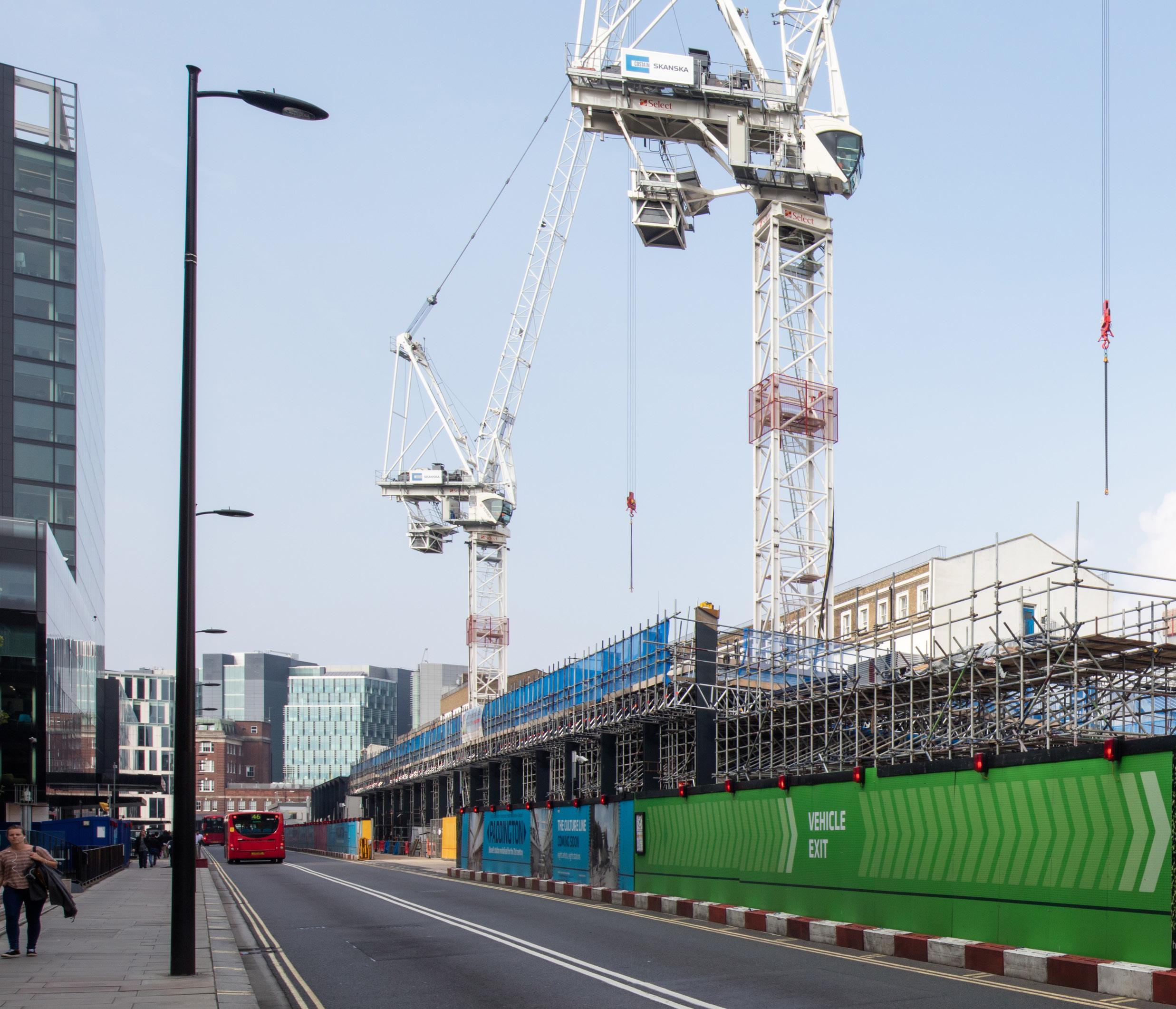
While many rail projects are planned months in advance, the reality of operating a live transport network means urgent works are sometimes unavoidable. Millcroft has been appointed to Places for London’s Urgent Scaffolding Framework following a highly competitive tender process.
Under this framework, the company is delivering rapid response scaffolding solutions across TfL's extensive property portfolio, including sites adjacent to Underground and Network Rail infrastructure. These emergency call-outs often require mobilisation within 48 hours, and in some cases, on the same day.
All scaffolding under the Framework complies with TG20:21 and BS 5675 standards, as well as London Underground and local authority regulations.
Millcroft’s CITB-accredited training centre delivers a wide range of training, including the Site Manager Training Scheme (SMSTS), Site Supervision Training Scheme (SSSTS),
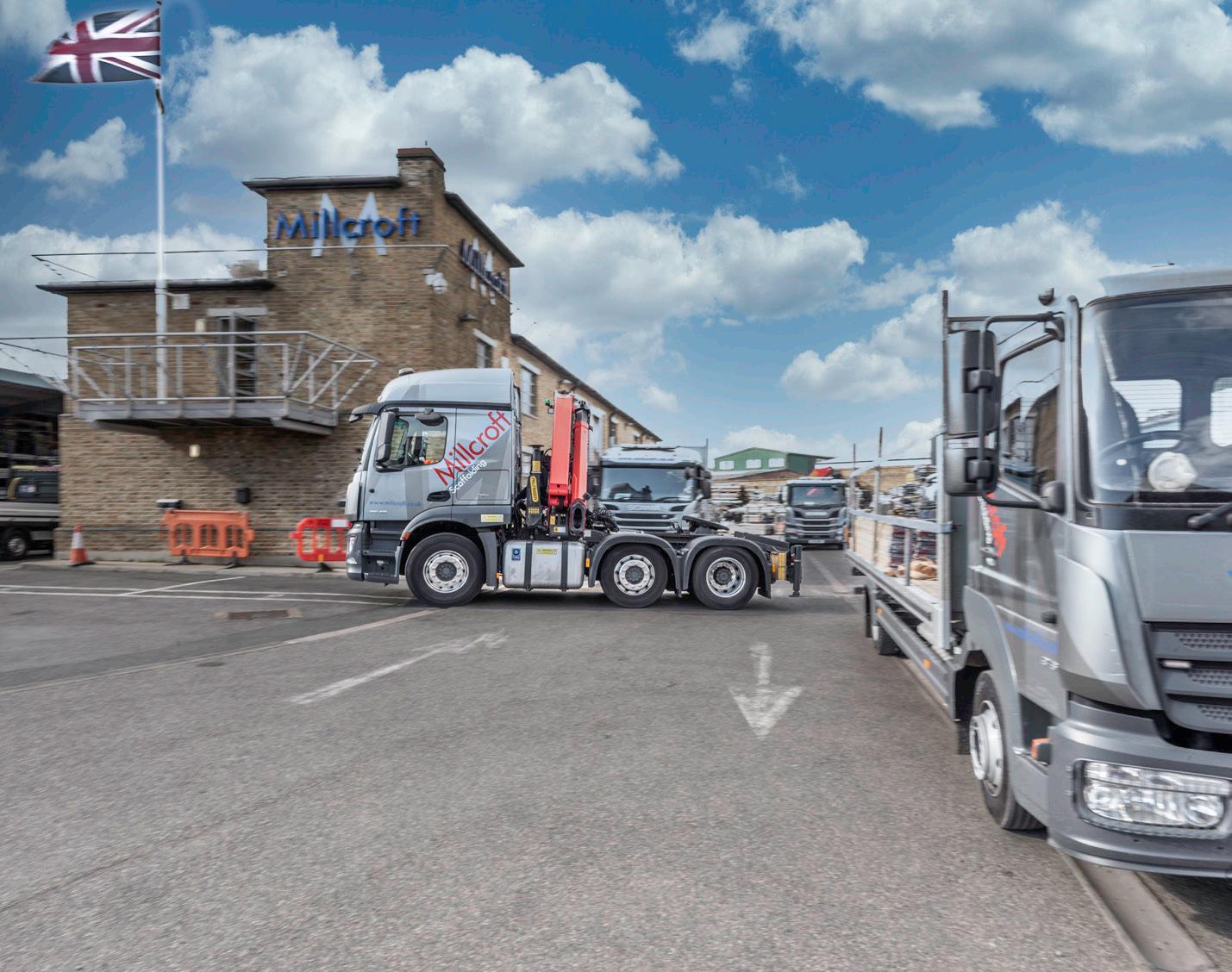
‘These emergency call-outs often require mobilisation within 48 hours, and in some cases, on the same day.’
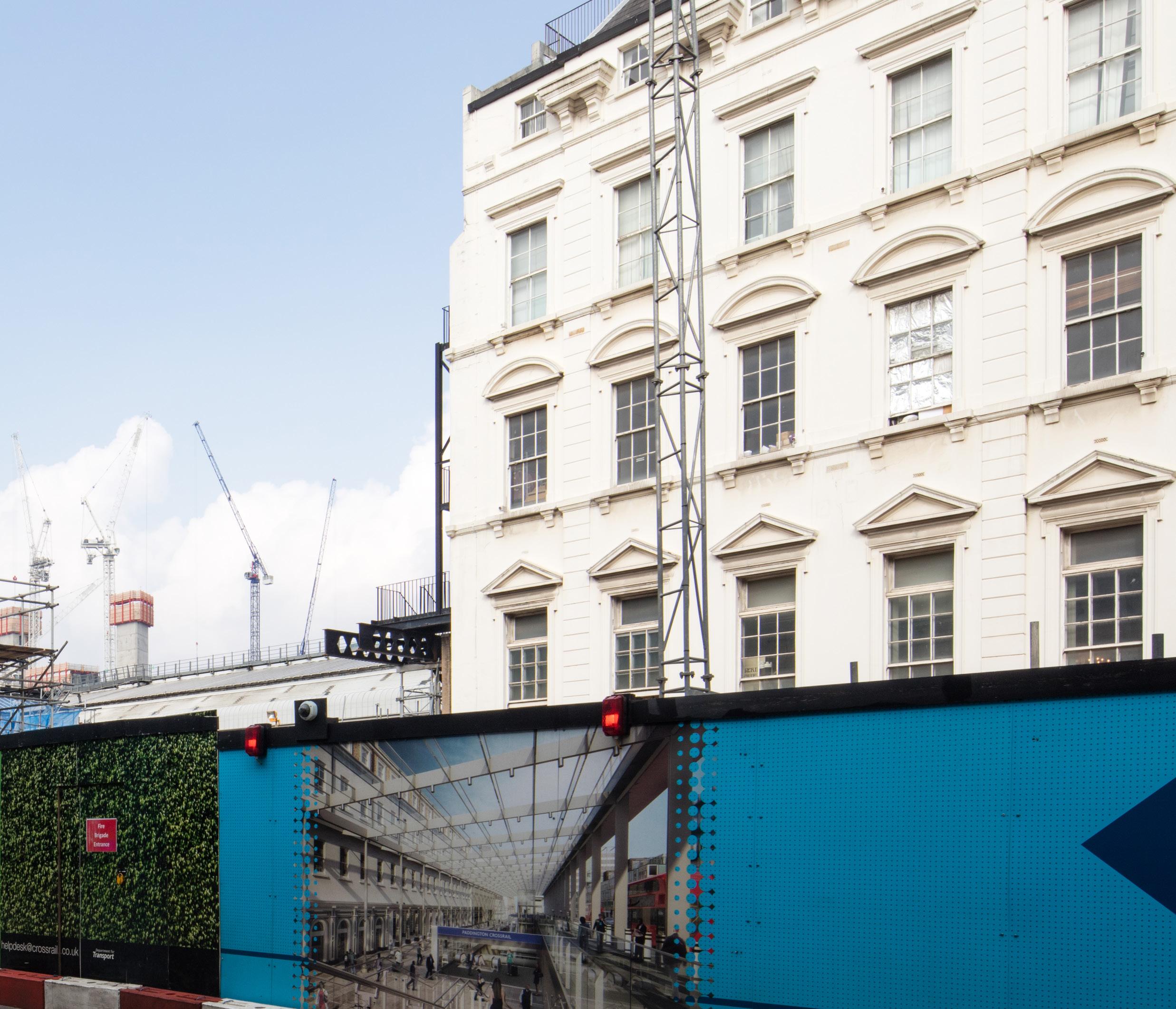
and the CISRS (Construction Industry Record Scheme). These are the backbone of competency and ensure that Millcroft's teams understand how to work safely.
But it's the company's specialised training that really sets it apart and ensures operatives are prepared for the realities of the rail environment, which can involve confined spaces, tunnels, and water.
During the construction of the Colne Valley Viaduct for HS2, Millcroft's team had to wear life jackets instead of the usual harnesses and work out of boats to erect the scaffolding. Before the contract started, the team completed a Safe Working in Water (SWIW) course, which trains operatives in self and co-worker rescue.
For other projects, such as TfL confined space works, operatives have received specialist training, equipping them with the expertise to construct scaffolding safely and competently in restricted spaces and to understand potential hazards.
Millcroft's commitment to safety goes beyond training; it is complemented by robust health and safety procedures and appropriate accreditations. These
include ISO, FORS, and RISQS, as well as an impressive 13 consecutive RoSPA Golds for its health and safety performance, culminating in the coveted RoSPA President’s Gold award for three consecutive years.
As investment in the UK rail network continues, the demand for specialist access solutions will only grow. Projects are becoming more complex, environments are becoming more constrained, and expectations around safety and performance are ever higher.
A key part of Millcroft’s continued success in this sector is early participation and teamwork. By working closely with principal contractors, engineers, and project stakeholders from the start, Millcroft continues to develop solutions that support construction sequencing, minimise disruption, and maintain safe working conditions.
Through continual investment in its people, training, innovation and collaboration, Millcroft will continue to
set the benchmark for safety and precision in one of construction’s most testing environments.
Millcroft operates a substantial in-house scaffold division as well as a comprehensive range of professional construction services, including maintenance, refurbishment and civil works. Located in Greenwich, Millcroft is within easy reach of Central London, the M25 and surrounding counties, and also to offer a national service.
Tel: +44(0)20 8305 1988
Email: sales@millcroft.co.uk
Visit: millcroft.co.uk
TAKING CONSTRUCTION TO A HIGHER LEVEL
Few environments test the expertise and discipline of a scaffolding and safe access contractor like the rail sector.
But after working in the sector for decades, Millcroft Services has the in-depth understanding of what’s needed to provide solutions that protect both workers and the travelling public.
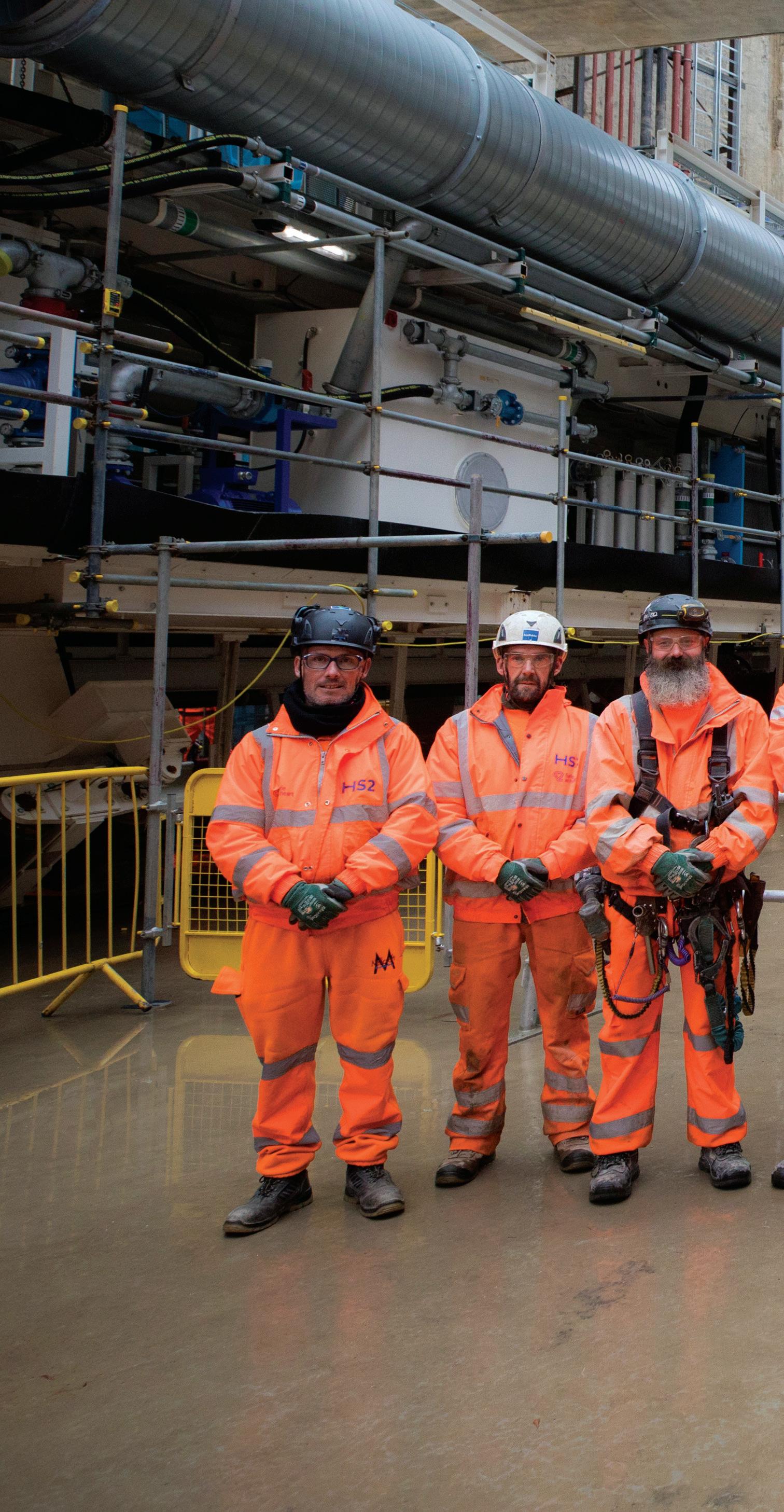
Millcroft Services Plc Salutation House 1 Salutation Road, Greenwich London SE0 0AT
T: +44(0)20 8305 1988
F: +44(0)20 8305 1986
E: sales@millcroft.co.uk
www.millcroft.co.uk
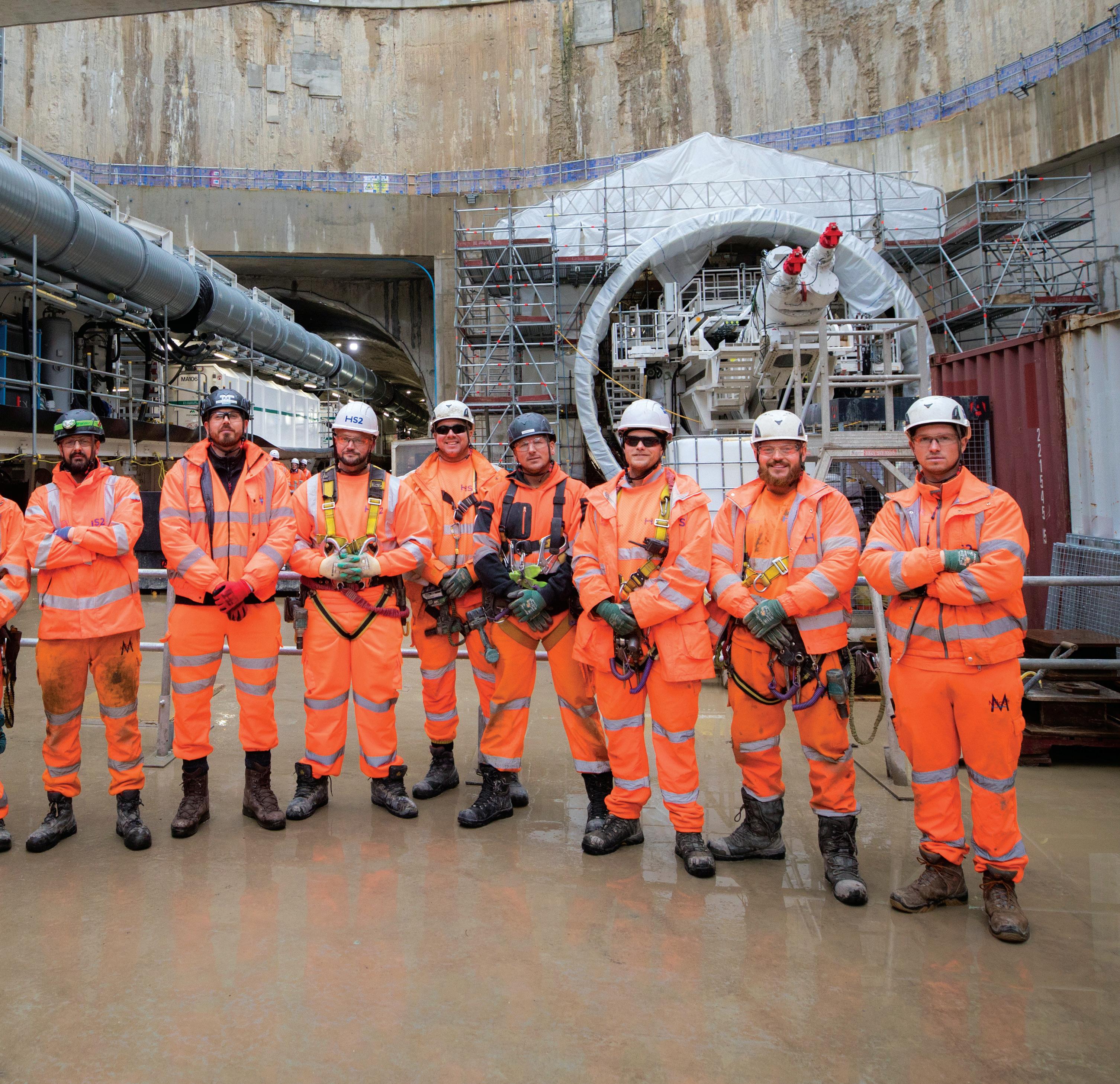
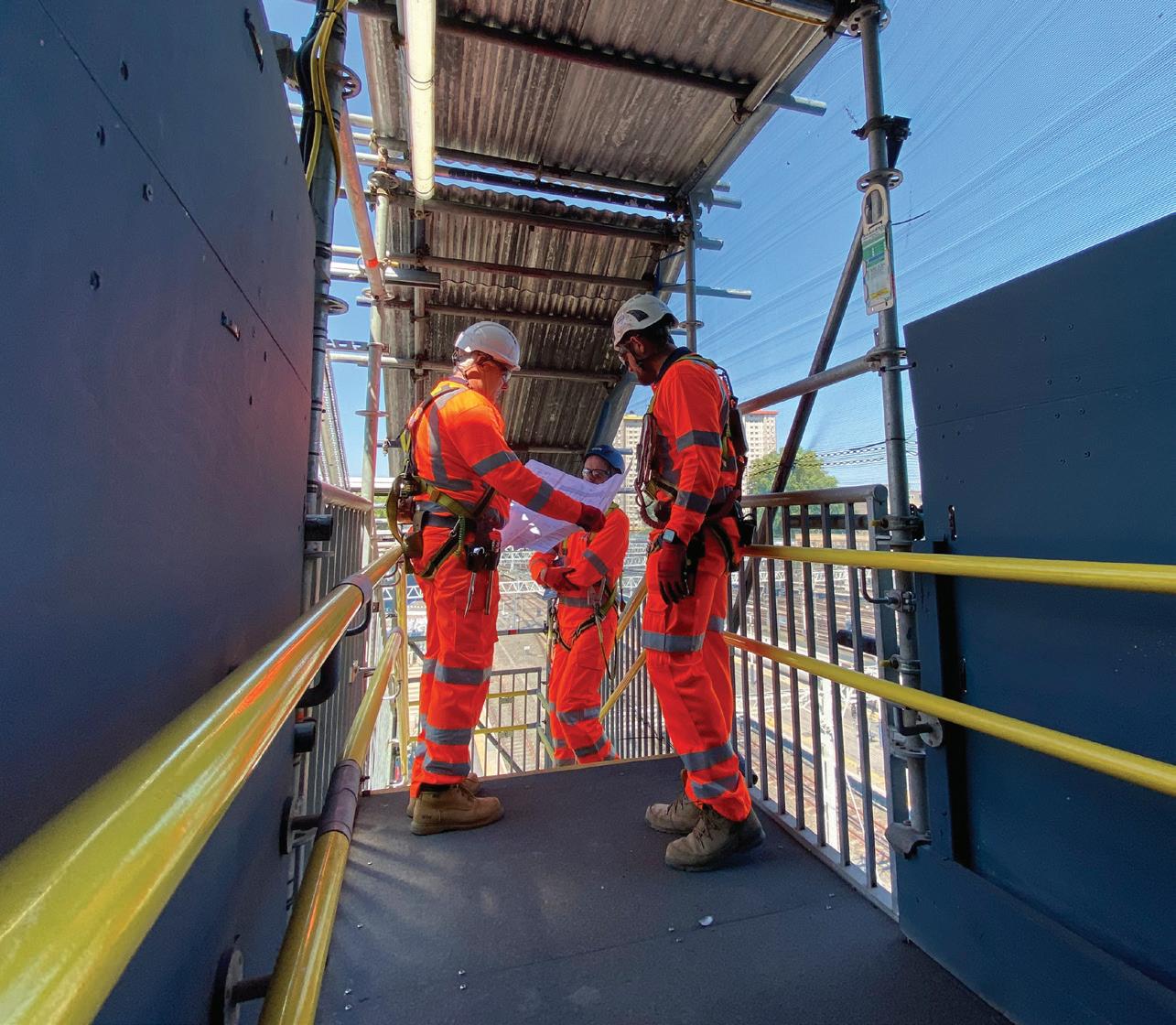
New pump/mixing system puts troublesome train toilet waste pumping station back on track
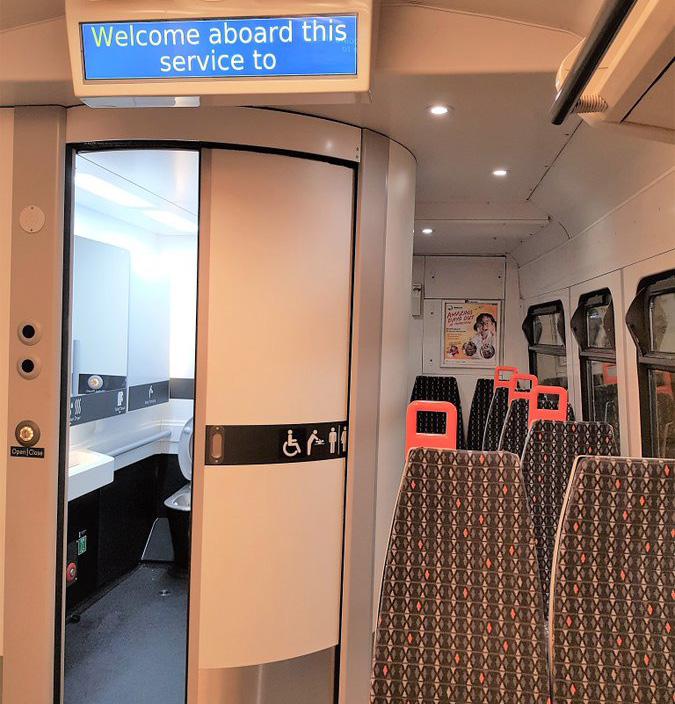
‘Standard duty pumps can't really handle this type of application, and the resulting hassle, downtime, reduced capacity and greatly increased maintenance costs are inevitable.’
An innovative mixing solution from Landia has solved a longstanding issue at a troublesome pumping station that receives wastewater from trains in the South of England.
The existing duty pump in the 30m3 chamber kept blocking: unable to fully deal with the solids from trains’ toilets, which over time, greatly reduced the site’s capacity.
‘When we first visited the pumping station, I couldn’t quite believe the volume of accumulated solids’ said Landia’s Howard Burton.
‘But on the other hand, knowing what some people still unfortunately consider fair game to flush down a public toilet, it perhaps wasn’t that much of a surprise at all! The point is that standard duty pumps can’t really handle this type of application,
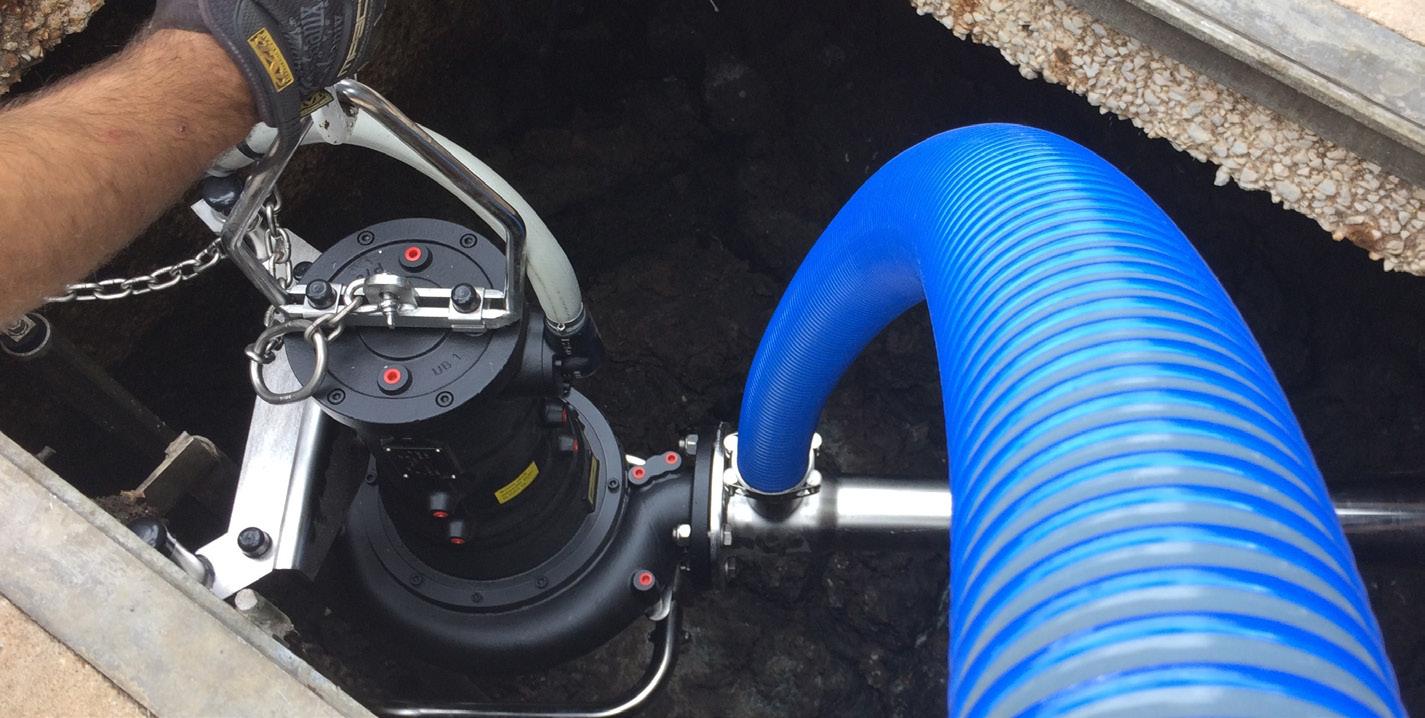
and the resulting hassle, downtime, reduced capacity and greatly increased maintenance costs are inevitable!’
The situation had in fact become so bad with the non-liquid waste from the railway network’s controlled emission toilets (CETs) that staff had had to resort to manually addressing the build up of solids with rakes.
‘Our customer had looked at options for various twin-shaft grinders, but found the costs prohibitive’ added Howard Burton from Landia.
‘Grinders certainly have their place, but costs aside, this was for us, a case of not needing a sledgehammer to crack a nut –and that with our simple EradiGator system, a viable and affordable solution was at hand.
‘There are continuous passes through our proven Chopper Pump’s external knife system, whereas with a grinder, there will be the one, single pass. In this tough application, we included our shredder propeller, which is proving increasingly popular.’
Following the installation of its freestanding system at the railway facility’s pumping station, the existing duty pump has effectively been protected; able to pump wastewater again without blocking. Meanwhile, the Landia system gets to grips with the main task of reducing the particle sizes of the invading solids, so that the lift/pumping station can operate as it is meant to.
‘Another advantage of our tailored solution’ continued Howard Burton, ‘is that it requires no additional infrastructure. It’s a drop-in, plug-and-play solution. Also,
everything is set up on a timer, with just 15 minutes per hour required, meaning low energy costs from a 5.5kW (7.3HP) motor, and a much easier system all round for our customer. No more rakes!’
In the USA, Landia has also had considerable success with its EradiGator and AeriGator pumping/mixing solutions for problematical lift/pumping stations.
In Daphne, Alabama, where its main lift station at Windscape was besieged with ragging issues to the point of having a vac truck there at least once per week, Landia’s EradiGator immediately resolved the problem.
Likewise in Madisonville, Texas, where despite the installation of two pumps that were sold as ‘able to cope with typical lift station debris’, blockages were a regular occurrence. Here, a Landia AeriGator (with a Landia Chopper Pump supplied with a hardened-steel knife system) brought about a long-lasting solution. The system’s venturi nozzle enables the pump to deal with variances in the lift station scum. For lift stations close to residential areas, the AeriGator unit has also been effective in reducing odours.
Tel: 01948 661 200
Email: info@landia.co.uk
Visit: www.landia.co.uk
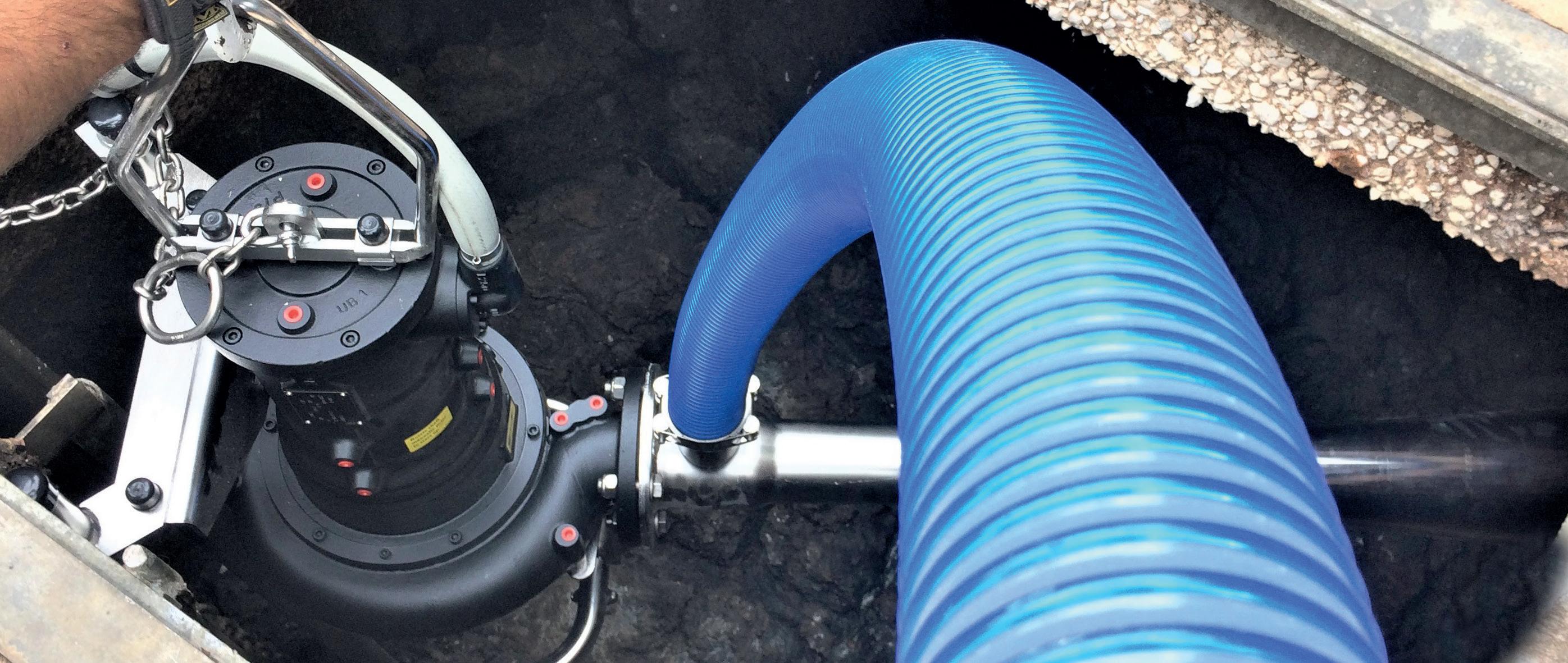
Blockage problems caused by solids at your Pumping Station can now be solved by our plugand-play solution that requires no additional infrastructure.
BEST FEATURE: it is based on Landia’s proven external Chopper Pump knife system. Read the full case study at www.landia.co.uk/case-studies
Under-reporting can signal that there are barriers to being heard. How much of this is practical, and how much is cultural? Every workplace is different, but here are some things to consider, shares CIRAS’ Lucinda Neal
When someone has a concern they want resolved, their next move isn’t always to tell someone. Barriers to raising concerns might be practical, but often they’re behavioural and psychological.
Most of the time, there are several reporting channels available, with many ways to report. In practical terms, this variety and accessibility gives people choice and would ideally remove the hurdle of wondering how to report and where.
Even then, they need to know these channels exist before they can use them. That takes regular promotion and coordinated messaging across company communications, including explaining simply how to use the channels and what the difference is. What one person prefers won’t be the best way for another.
So far, so straightforward. If those bases are covered and someone has a way to raise concerns and knows how to do it, then why wouldn’t they?
Who’s heard?
Diversity – in age, gender, ethnicity, languages, skill sets and more – introduces alternative perspectives and could highlight issues that others didn’t notice. Diverse viewpoints can also challenge assumptions and groupthink.
But someone’s individual life experiences may stop them speaking up. Who they are, and relationship dynamics in a team or with certain coworkers, can mean they’re not listened to or taken seriously even when they do.
If someone already feels singled out, they may not want to draw further attention to themselves by raising a concern. Their concerns may be treated differently than if they came from others.
Power balance might come into play. Younger workers may believe they’re too inexperienced to raise concerns. Perhaps they aren’t confident in doing so, or maybe the workplace culture leads to a false expectation that people must earn the right to be heard, with age or experience.
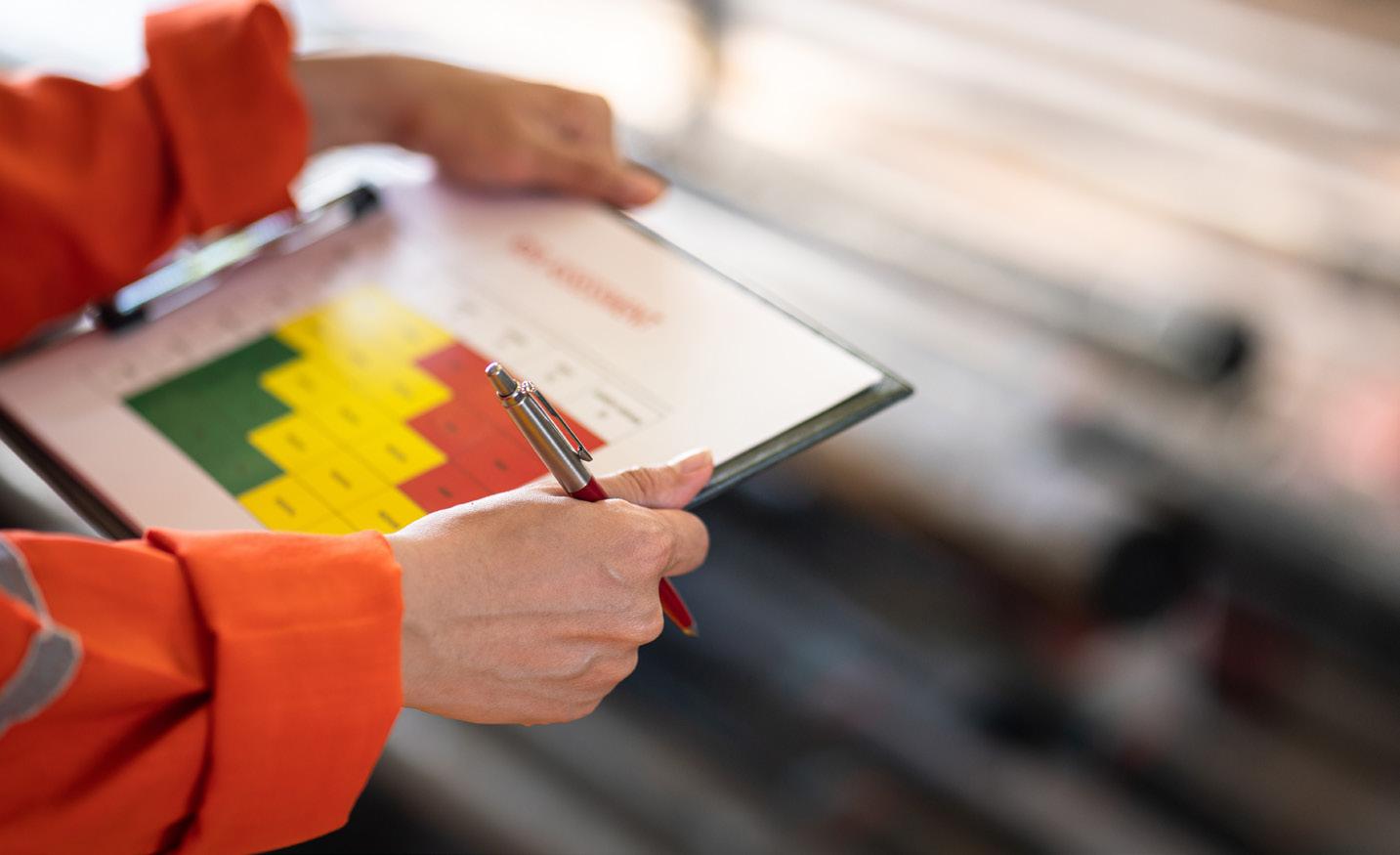
CIRAS confidential safety hotline for transport can help by providing a route to raise concerns without being identified. CIRAS’ analysts will ask questions to build a full picture of the concern before writing the report to send to the company, maintaining confidentiality. CIRAS tells the reporter what the company’s response is, closing the loop.
How easy is it to raise concerns or report issues? It’s not just about having different ways to report, but also how easy they are to use. Anything time-consuming, longwinded or prone to technical issues is a barrier to reporting – or people may find an alternative.
Time is a cost in a time-pressured environment, particularly on a high-risk site where there may be many things to report.
If there’s a perception that reporting could cause more time pressure or more work, this can also act as a barrier.
A cost-benefit question at its simplest: if I report, what happens then to make it worthwhile? Knowing that a concern raised has been resolved, that there’s a plan to deal with it, or that it’s being fully investigated, helps make the time and energy cost of raising it feel worth it.
Sometimes, the cost might seem greater. When people use CIRAS, we do listen to those who fear repercussions or unfair treatment if they were to report another way, although this is only a small amount of the concerns that come to us. This could be more of an issue when someone is working on a short-term or zero-hour contract, and research has shown that people are more likely to speak up where they perceive they have high job autonomy and job security. Just culture is essential for a positive reporting culture.
If people believe the company wants to hear their concerns, they’re more likely to share them. If employees perceive that managers aren’t interested in some concerns (even if it’s unintentional), this may filter through to a perception that reporting isn’t welcomed.
In highly pressured environments, managers may not always have the time and space to listen. Other channels such as CIRAS can help relieve this by providing extra listening to concerns.
Positive encouragement and education could help boost report numbers. Although there may be more reports of smaller issues, this could show that people are comfortable raising concerns, and together these reports can paint a clearer picture of what’s really happening.
Having a ‘close call of the week’ has been shown to increase the quality of close calls while reducing the volume. Sharing examples of ‘good’ reports (anonymised) alongside outcomes, during a briefing on best reporting practice, could have a similar effect – without a negative focus on other reports.
Under-reporting may signal that a company’s safety culture has space to develop further, and reflect employees’ perceptions of it. A company with a mature safety culture is interested in how things really are. It tries to understand why the reality on the ground is different from what’s been planned, by engaging with employees and using their skills, competencies and knowledge to help shape a safer workplace. This is about trust, listening and having a psychologically safe working environment.
In February, Rail Safety and Standards Board published research project T1323 Improving workforce-related reporting practice. This considered the barriers and enablers for track workers reporting safety concerns. T1323 includes a report as well as a good practice guide for employers.
Under-reporting of safety concerns is a concern itself. If you’re not hearing from people regularly, then you won’t see the pattern of insights that small issues and weak signals can reveal. Unseen and underlying risks can build up. Issues could go unnoticed and unresolved. Or they may be fixed repeatedly while staying symptoms of a system at greater risk. This creates a false sense of security. What appears to be an efficient job could conceal deviations from safe practices, workarounds, and doing whatever’s possible in the situation to get the work done, even if it’s unsafe. When reports aren’t coming in, how would you know?
Every business is different and culturally evolving all the time – with micro-cultures within teams and business areas. Staying on top of concerns can be a challenge especially during times of change. If you’re looking for a listening partner, CIRAS can help you to hear the concerns you might otherwise miss.

Download the CIRAS reporting app
Tel (enquiries): 0203 142 5369
Tel (reporting): 0800 4 101 101 (UK) / 1800 239 239 (ROI)
Visit: https://www.ciras.org.uk/rightcall
LinkedIn: linkedin.com/company/ciras
Facebook: facebook.com/ciras.confidential/
Northern appoints DFTO executive as new Chief Operating Officer
Northern has appointed Warrick Dent as its new Chief Operating Officer. Warrick is currently Group Operations and Performance Director at Department for Transport Operator (DFTO), and is set to join the train operator in May. Prior to his role at DFTO, Warrick was Safety & Operations Director at London North Eastern Railway (LNER), where he led the delivery of services from 2018. During his time at LNER, he oversaw the operational introduction of the 65-train Azuma fleet, played a key role in the East Coast Upgrade, and most recently led the successful rollout of the December 2025 East Coast Main Line timetable.
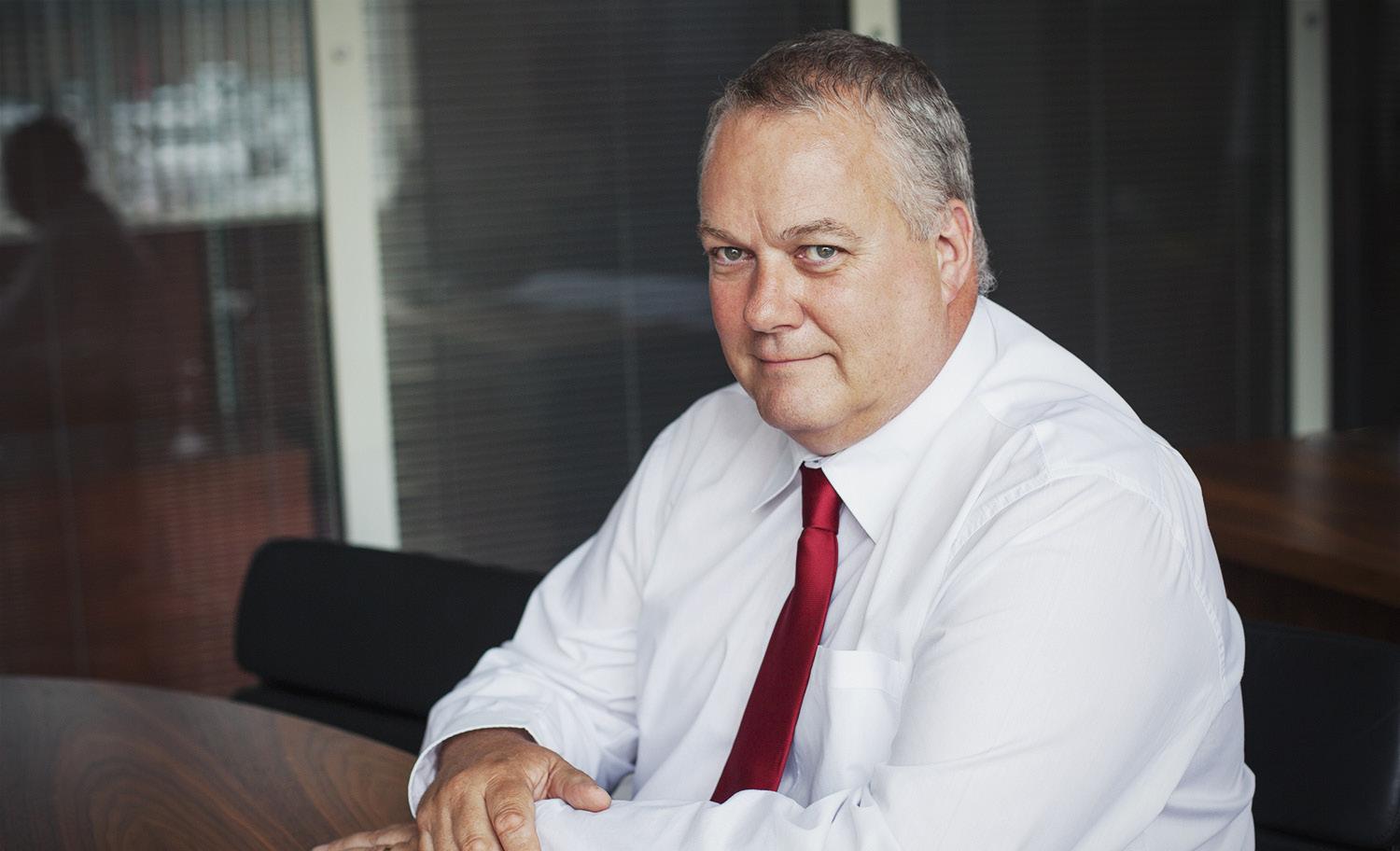
A leading figure in light rail safety has been appointed Chair of a new body responsible for agreeing on formal sector-wide standards.
Colin Kerr, former Head of Safety and Projects at Edinburgh Trams and now Technical Engineer and non-executive director at the Light Rail Safety and Standards Board, will head a committee that’s set to play a crucial role in helping the UK become a worldleader in tramway design and operation.
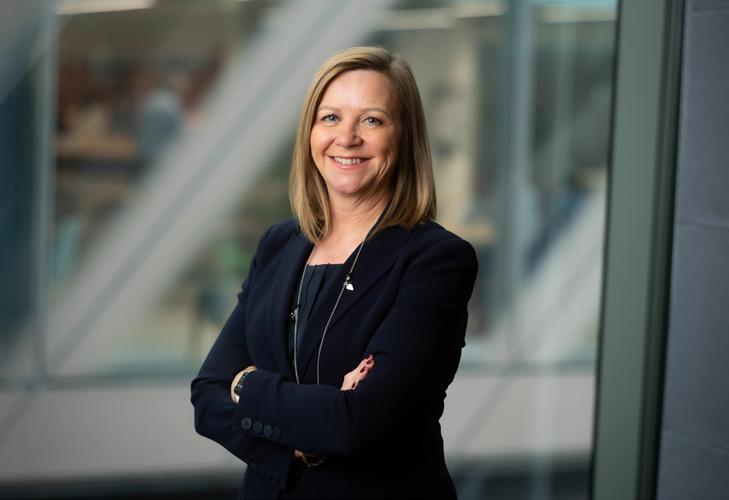
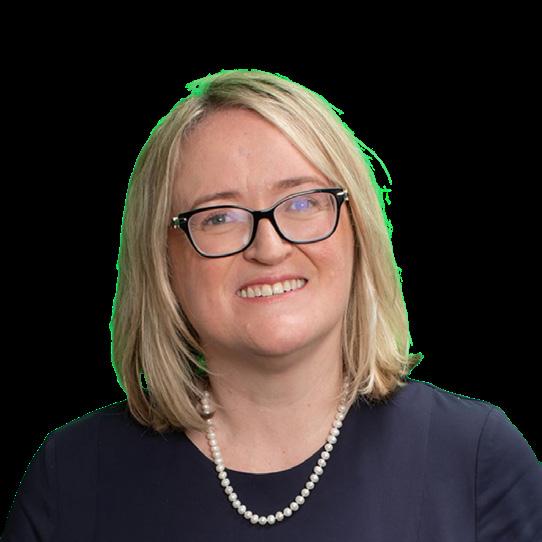
AtkinsRéalis appoints new Global Market Lead for rail
AtkinsRéalis has appointed Colette Carroll OBE as Global Market Lead for rail to accelerate the company’s growth in this market and connect clients with the full range of its capabilities across regions.
Alstom welcomes new Chief Executive Officer
Alstom has welcomed Martin Sion as Chief Executive Officer. Martin Sion succeeded Henri Poupart-Lafarge, who, after a decade at the helm, has decided not to seek a further term as CEO.


GB Railfreight announces senior promotions
Liam Day has been promoted from Asset Director to Interim Managing Director and Ian Langton has been promoted from Production Director to Chief Operating Officer (COO). Liam Day joined GBRf in 2014 from Network Rail. He began his career on Network Rail’s graduate management training programme before moving into rail freight. He joined GBRf as Terminal Development Manager, before progressing through roles as Head of Estates and General Manager in the commercial team, and later becoming Commercial Director in March 2020. He was appointed Asset Director in September 2024. Ian Langton joined GBRf in April 2012 from DB Schenker, where he spent 22 years, having begun his career at British Rail. He joined the business as Head of Operations before becoming Production Director in 2018, where he leads the day-to-day delivery of GBRf’s operations.