Supporting Site Setups
At OPC Assessment, we offer a wide range of innovative psychometric tools that help recruit and develop engineers with strong safety performance. Our expert psychologists believe that certain Non-Technical Skills (NTS) are vital when recruiting for high-risk environments.
Non-Technical Skills such as:
Risk Anticipation and Time Focus:
Crucial for safety-critical work settings.
Constant Vigilance: Monitoring for hazards, safety alerts, and changing situations.
Understanding Rules and Regulations: Vital for upholding high safety standards.
Checking and conscientiousness: Key to performing tasks to a high standard, and helping reduce safety incidents.
Our Candela™ platform hosts tools that help to evaluate concentration, identify safe behaviours, and measure rules-adherence.
OPC Assessment can support your talent search, streamline recruitment, and help improve safety performance. Scan the QR code below for more information.
Assess candidates online using our practical, psychometric tests



EDITORIAL
EDITOR
Sam Sherwood-Hale editor@railpro.co.uk
DISPLAY ADVERTISING
Jamie Tregarthen sales@railpro.co.uk
RECRUITMENT ADVERTISING recruitment@railpro.co.uk
SUBSCRIPTIONS subscriptions@railpro.co.uk
ADMINISTRATION
Cherie Nugent info@railpro.co.uk
Lisa Etherington admin@railpro.co.uk
DESIGN &
Lukasz Saczek production@railpro.co.uk
COVER
The Railways Bill continues its movement through the House of Lords following its Third Reading in the Commons. An amendment enshrining Great British Railways in permanent public ownership passed in June, and the policy publication timetable running to Royal Assent and beyond is now substantial: from the GBR licence framework and the rolling stock and infrastructure strategy expected this summer, to the long-term rail strategy itself, due from the Secretary of State in 2027. The direction is set. The questions that remain are ones of sequencing, implementation and, as several conversations at Rail Live made plain, whether the ambition can be matched by delivery. That gap between the vision and the doing is one this industry knows well.
It is a gap that came to mind when I read a recent interview given by Sir James Cleverly, the Shadow Housing Secretary, to the Federation of Master Builders. Speaking about the construction industry's skills crisis, he observed that in politics, everybody wants to be an architect and nobody wants to be a builder – that bright ideas are all very well but someone has to put them into practice, and if we do not recognise and reward the people who get things done, all that happens is we talk about getting things done. The context was housing, but the point travels.
Rail has its own version of this problem. We have no shortage of strategy; we have a persistent shortage of the skilled people needed to deliver it. Steffen Lutz of Trimble makes exactly this point in his interview this issue, noting that the surveying profession is not producing enough new talent and that everyone across the supply chain is looking for it. The industry's willingness to engage apprentices and early-career workers, on display at Long Marston, is welcome. The structural challenge is larger than any single show can address. This issue reflects a sector in motion.
I also spoke to Dr Jenny Wood of Magellan about what it takes to translate corporate net zero commitments into operational reality, and why the move toward nationalisation may finally create the planning horizon that decarbonisation actually requires. The conversation with Yann Chermat of the Calypso Networks Association covers the Ile-de-France digital wallet breakthrough, what it means for ticketing infrastructure globally and why keeping long-term costs under control remains the hardest problem in the room.
Lindsay Green of SIGBI returns with findings from the 2024 relaunch of the rail safety survey, covering 373 stations and raising questions that the GBR transition must answer rather than defer. And Susan Gray of CIRAS reports on what light rail workers themselves say gets in the way of raising safety concerns – findings that sit uncomfortably alongside any assumption that a quiet reporting system is a safe one.
SAM SHERWOOD-HALE EDITOR




All the latest from Amey, Alstom, East West Rail, GBR and more
12 Sam Sherwood-Hale spoke to Steffen Lutz of Trimble about precision measurement technology, the evolving role of AI in track geometry data, and why the skills gap in the surveying profession is a problem the industry has yet to resolve
Behind every rail resilience scheme
Sam Sherwood-Hale spoke to Dr Jenny Wood about what she has found distinctive about rail's approach to sustainability, how data and ticketing technology can help operators reduce their environmental footprint, and what it will take to turn corporate net zero commitments into operational reality
Richard Sallnow and Viraf Avari of PA Consulting argue that transport technology transformation programmes succeed or fail on the strength of their people, not their platforms
Maintaining Legal Advice Privilege within an Organisation
Practical lessons for rail employers from Freeths’ 2026
Employment Survey

Sam Sherwood-Hale spoke to Yann Chermat about the role of political will in driving standardisation, what the Île-de-France digital wallet breakthrough means for networks around the world, and why keeping costs under control in the long term remains the hardest problem in ticketing

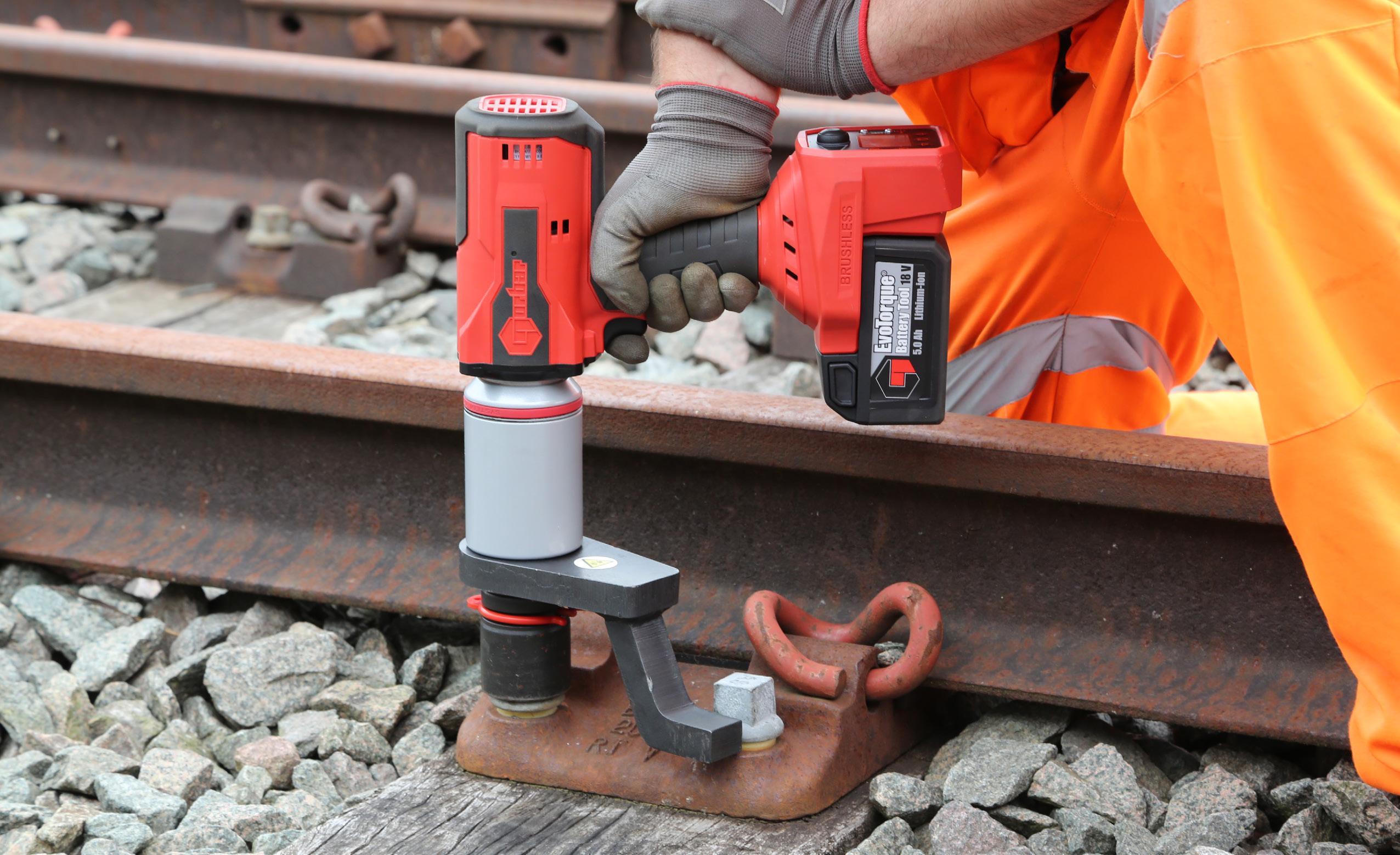
Norbar is a UK manufacturer of battery, electric, pneumatic and manually operated torque multipliers, wrenches, torque measurement equipment and bespoke torque control solutions specially developed for the rail industry
Contact Norbar and speak to The Voice of Torque Control
38 Sam Sherwood-Hale spoke to Kathryn Allen and Ryan Creighton about TP’s approach to customer support and long-term partnership
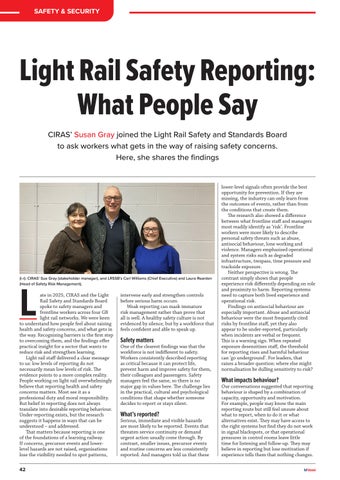
CIRAS’ Susan Gray joined the Light Rail Safety and Standards Board to ask workers what gets in the way of raising safety concerns.
44 Sam Sherwood-Hale spoke to Lindsay Green about the 2024 relaunch of SIGBI's rail safety survey, the findings on station safety for women across 373 stations, and what meaningful progress would look like within the next two years

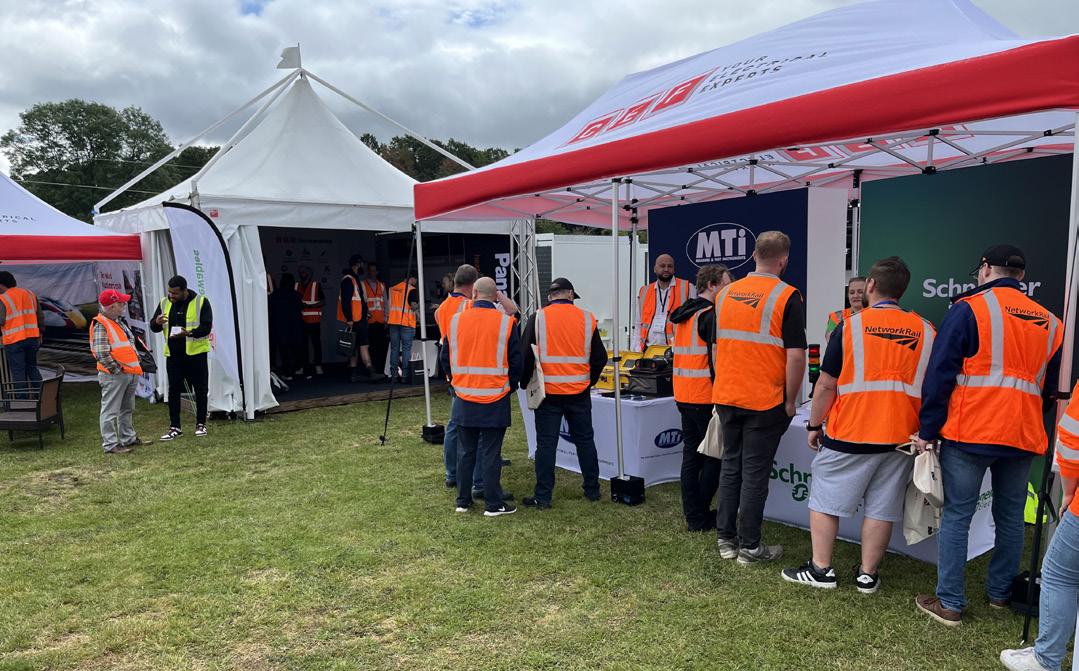
exhibited for the second consecutive year at Rail Live 26, further showcasing its commitment to working with the rail sector
Bill Freeman, Chris Birks, Mike Birch, Esther Lagden, Ian Thornhill, Alexander Moor

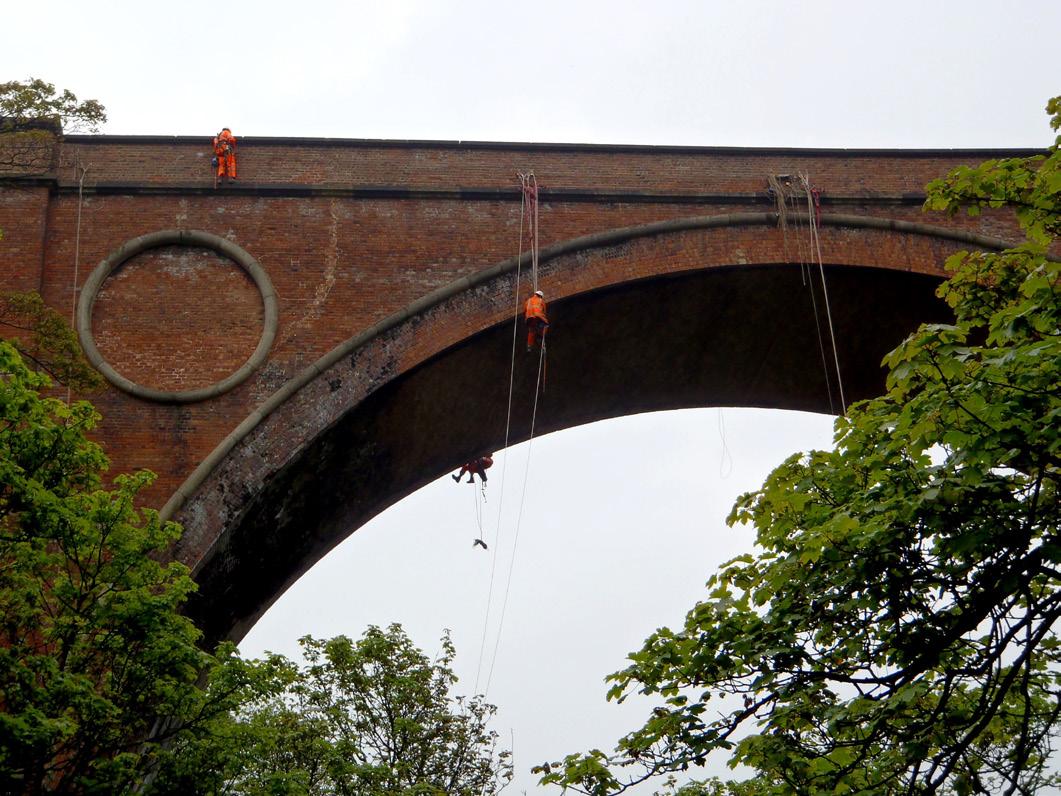
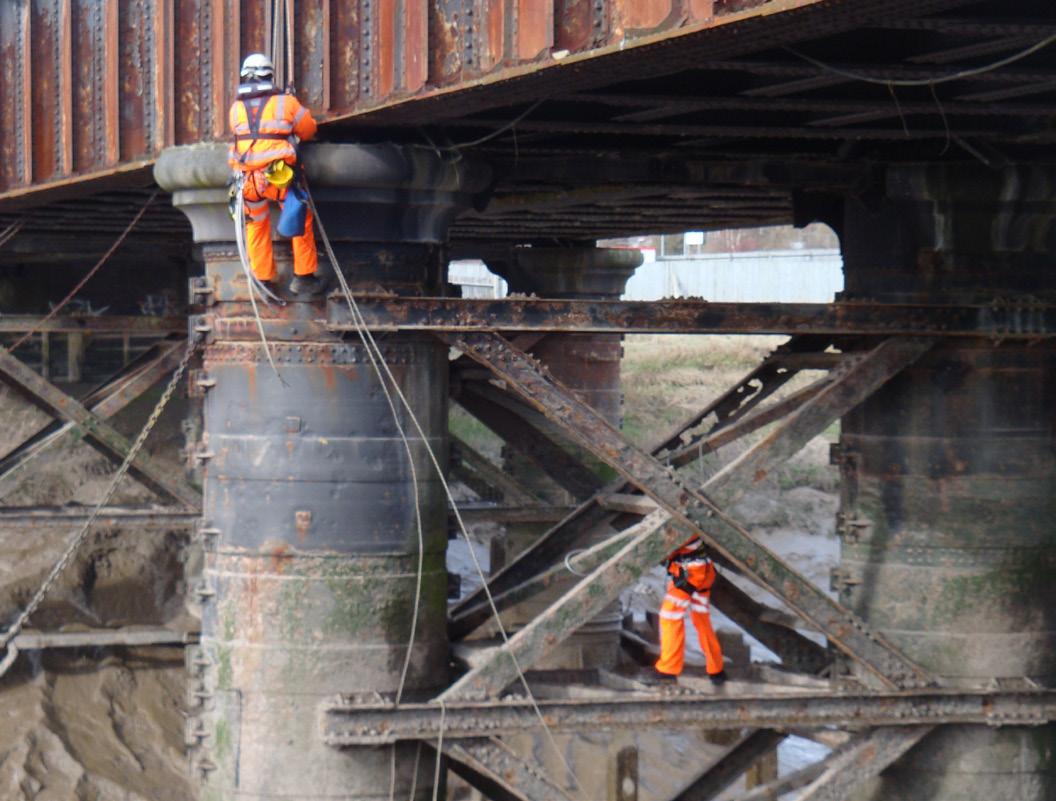
Amey has won two framework contracts with Network Rail's Eastern Region, with a combined value of £40 million over five years. Awarded in March, the Eastern Region Assessment Contracts (ERAC) cover both the North and South Lots of the framework – the maximum possible award – spanning key routes including the East Coast Main Line, North & East, Anglia and the East Midlands.
Under the frameworks, Amey will deliver structural assessment services across railway bridges and structures, carrying out detailed inspections and engineering analysis to identify structural risks, confirm load capacity and provide recommendations on maintenance, strengthening and operational requirements.
Amey has delivered structural assessment services in the region since 2003. Justin Page, business director for rail at Amey, said:
‘This award reflects the strength of our long-standing relationship, and the trust Network Rail has in our capability and collaborative approach. We look forward to helping to inform smarter investment decisions and improve the performance of critical infrastructure across its lifecycle.’
Amey has also been appointed to Transport for London's Infrastructure Improvement Framework, a programme valued at up to £700 million running from June 2026. Working alongside Costain and Dragados, Amey will support station upgrades, tram infrastructure and step-free access improvements across London. Expected projects include work at Elephant & Castle and South Kensington stations.
Alstom spent upwards of £720 million with almost 1,300 Britishbased suppliers over the last year, supporting an estimated 11,000 jobs across the country, the company revealed at its annual Supplier Day in Derby.
Held at Pride Park Stadium on 10 June, the event brought together more than 200 industry stakeholders including suppliers, customers, government representatives and industry bodies. Around 33 per cent of Alstom’s UK spend was with SMEs, with approximately 80 per cent of its suppliers based in Britain. UK suppliers also exported around £100 million worth of goods and services to Alstom entities in 37 countries during the same period, including Australia, Brazil, Denmark, Mexico and the USA.
The day included presentations from Peter Broadley, Commercial Director UK and Ireland, on supplier opportunities across Alstom's 37 UK and Ireland sites over the coming year, and from Olivier Quindos, Procurement Director UK and Ireland, who set out the company's procurement vision centred on strategic sourcing, supplier collaboration and supply chain resilience. Panel sessions were led by Elaine Clark OBE, Chief Executive Officer at the Rail Forum, and Noel Travers, Chairman at the Railway Industry Association, with the event concluding in a structured 'meet the
buyer' networking session connecting suppliers directly with Alstom's procurement team.
Rob Whyte, Managing Director UK at Alstom, said: ‘We are proud that the vast majority of our spend for our UK operations is with British businesses, supporting thousands of jobs and driving economic value across the regions. As we look ahead, our focus is on deepening these relationships — working more strategically with our suppliers to improve competitiveness, reduce time to market and deliver greater certainty through models such as longterm agreements. Ultimately, delivering the next generation of sustainable mobility in the UK and beyond depends on a strong, innovative and aligned supply chain.’
The event also featured Alstom's annual UK and Ireland Supplier CSR Awards, with nine accolades presented across categories covering economic growth, health and wellbeing, diversity and equity, and climate action. Winners included Keighley-based Kadel Engineering, recognised in the Fight Climate Change SME category for initiatives including LED lighting replacement and installation of a more energy-efficient air compressor, and OCS Group, which took the Diversity, Equity and Inclusion large company award after reporting a zero median gender pay gap in 2024/25.
East Midlands Railway has unveiled the first refurbished Class 360 train as part of a £30 million programme to modernise its EMR Connect fleet, with the first upgraded unit due to enter service next month.
The refurbishment, carried out by Siemens Mobility at its Northampton and Bedford facilities in partnership with Angel Trains, includes a redesigned interior with new seating, upgraded luggage facilities, power and USB charging points, improved passenger information systems and enhanced accessibility features.
The work forms part of a wider £60 million regional refurbishment programme covering trains across the East Midlands network. Further Class 360 units are expected to follow over the coming months.
Dominic Booth, Chief Executive of Transport UK, said: ‘This is a perfect example of our delivery-first culture in action, driven by operational expertise. We are securing the long-term reliability of a modern electric fleet that has already achieved a 77 per cent reduction in carbon emissions on this route.’
The government has strengthened the Railways Bill by enshrining public ownership of Great British Railways in legislation, with an amendment passed during report stage in the House of Commons on 10 June.
The amendment requires that GBR must remain publicly owned, with any future attempt at privatisation requiring a full Act of Parliament. The government says the change will have no impact on GBR's ability to attract private investment or work with the private sector.
The Railways Bill, which will deliver the most significant reform of Britain's railways in 30 years, passed its Third Reading and has moved to the House of Lords. GBR is expected to be established in 2027, around twelve months after the Bill receives Royal Assent, and will be responsible for coordinating track, train, cost and revenue across the whole network.
The government says publicly owned operators are already outperforming those still in private hands, pointing to the release of around 40 new Arterio trains into service by South Western Railway, the expansion of pay-as-you-go ticketing and simplified fares in Greater Manchester, and the first rail fare freeze in 30 years.
Transport Secretary Heidi Alexander said: ‘For too long, decisions on our railways were made for private profit. This government made a promise to change that, to build a railway run for the public good not private gain. GBR will be run by industry experts and publicly owned — open to private investment with the flexibility to grow, but its founding purpose will always be the same: to serve passengers, not shareholders.’
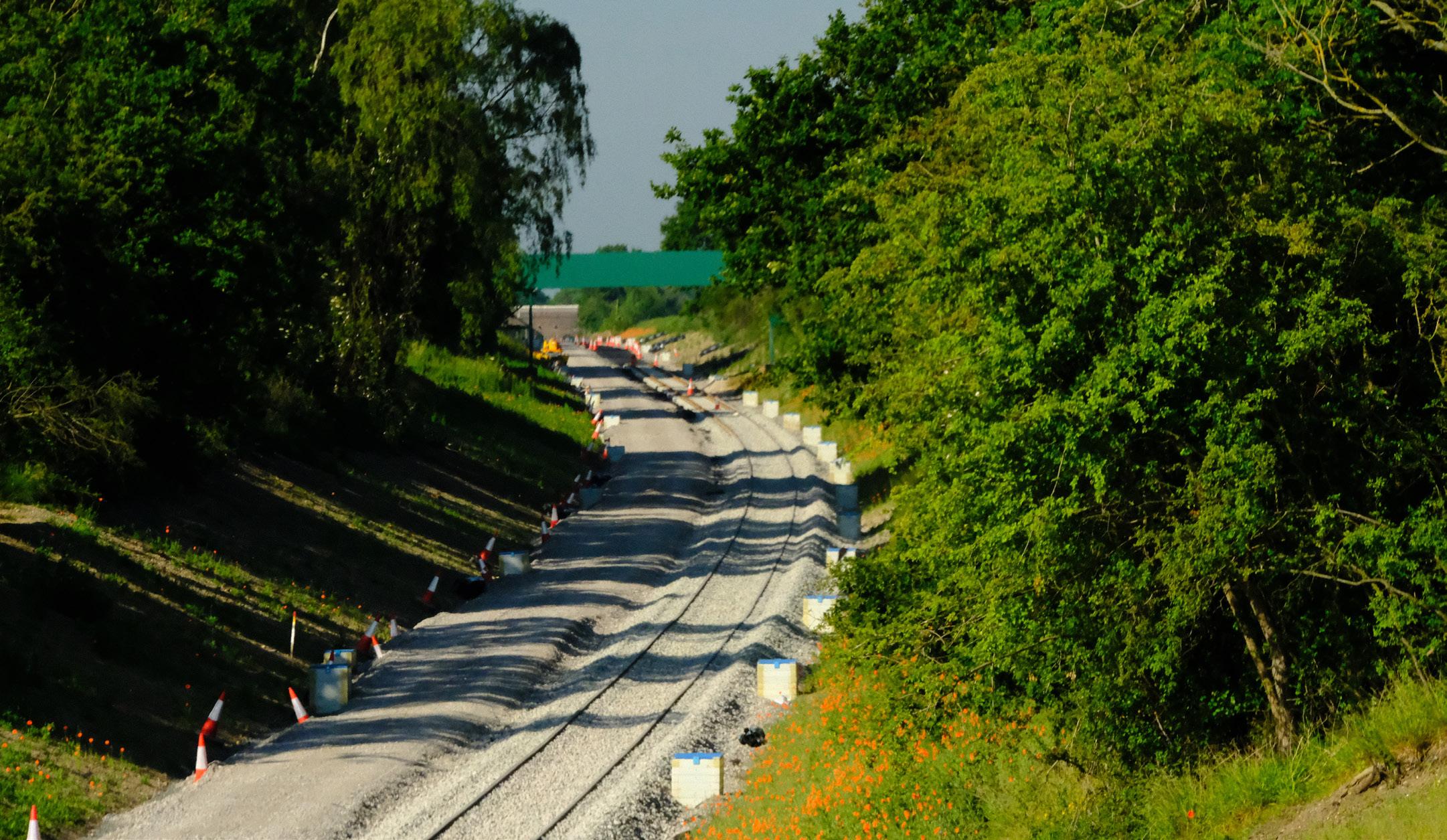
East West Railway Company has achieved PAS 2080 certification, the internationally recognised standard for managing and reducing whole life carbon in infrastructure and buildings, following a two-phase audit programme carried out in early 2026.
The certification recognises EWR Co's approach to embedding low-carbon thinking across the design and future delivery of the railway, covering the full project lifecycle from design and procurement through to construction, operation and maintenance. As part of its carbon commitments, EWR
Co will require future supply chain partners involved in major design and construction works to hold PAS 2080 certification, creating a consistent approach to carbon management across the programme.
The company has also signed up to the Construction Leadership Council's Five Client Carbon Commitments and aims to deliver a net zero operational railway by 2050. Proposals include discontinuous electrification to reduce operational emissions and designing all new stations and depots to be capable of net zero operational carbon from their first day of service.
Tristan Lincoln-Gordon, Head of Environment at EWR Co, said: ‘Achieving PAS 2080 certification is an important step for us, showing that we're managing carbon in a consistent and structured way throughout project delivery and into our supply chain. Reducing carbon is not something that happens at a single stage of delivery — it requires collaboration across the entire programme and supply chain. PAS 2080 helps create that shared approach and gives us confidence that carbon reduction remains central to the choices we make as the project progresses.’
The Office of Rail and Road has authorised Cambridge South station to open on 28 June 2026, marking the final regulatory milestone after more than three years of construction.
GBR Anglia worked with principal contractor Murphy to ensure the station met all safety compliance requirements ahead of the authorisation. The project team coordinated with the ORR for over a year to demonstrate the station is fit for purpose.
The new station will serve the Cambridge Biomedical Campus, described as Europe's largest medical research facility, and provide connectivity to destinations across East Anglia and beyond.
Emily Heria, senior sponsor on behalf of GBR Anglia, said: ‘Gaining the authorisation from the ORR to open Cambridge South is a massive achievement and reflects all the hard work done by everyone involved in the project.’
The Treherbert railway line has completed a major transformation as part of the South Wales Metro project, replacing Victorian-era signalling infrastructure with a modern digital system controlled from Transport for Wales's £100 million depot and control centre at Taff's Well.
Until early 2023, the line operated using a token exchange system requiring drivers to leave their cab to collect a physical token before entering single-track sections. The line was closed for nine months to enable
installation of the new signalling system alongside track layout improvements, passing loops, longer platforms, Access for All footbridges and upgraded passenger information screens.
The works also included the first electrification of the line, with 25,000V overhead cables enabling the introduction of Stadler-built Class 756 tri-mode trains in February 2025 — the first passenger trains in the UK capable of running on diesel, battery or electric power.
Marie Daly, Chief Operating Officer at Transport for Wales, said: ‘The Treherbert line is one of our biggest transformations as part of the South Wales Metro. We've replaced some of the oldest railway infrastructure with some of the most modern in Europe, and just a few years ago Pacer trains were running on these lines. Today customers are benefiting from faster, more reliable and accessible services designed around their needs.’
A £2.7 million investment at Exeter Central has delivered an expanded concourse, smart-ticket gatelines and a new openplan customer assistance desk, addressing long-standing capacity constraints at one of the South West's busiest stations. The work was funded through Network Rail's Industry Revenue Generating Investment programme, which targets schemes that reduce costs and increase revenue for government.
Joanna Grew, GWR and Network Rail Western Joint Route Strategy Director, said: ‘By creating more space, improving the flow of passengers through the station and introducing new smart ticket gates, we have made it easier and safer for people to move around, particularly during the busiest periods.’
Meanwhile, Network Rail has begun installing a new footbridge and lifts at Tackley station in Oxfordshire, delivering step-free access for the first time in the station's history. Work started on 12 June and is expected to complete next spring. The project forms part of the OxRail 2040 Vision and will improve access for passengers with reduced mobility, families with buggies and those travelling with luggage or cycles.
Amjad Ali, Network Rail Project Sponsor, said: ‘Once complete, the new footbridge and lifts will transform access at Tackley, making it easier and safer for everyone to use both the station and surrounding footpaths.’
ScotRail has been recognised as an industry leader for safeguarding, security and public protection after scoring 94 per cent in the latest Safer Railway Scheme assessment, carried out by British Transport Police and the Department for Transport.
The assessment confirmed ScotRail operates at a consistently high standard across work to tackle violence against women and girls, suicide prevention, public protection, partnership working and staff welfare.
Graeme Baillie, Safety and Sustainability Director at ScotRail, said: ‘Safety is at the heart of everything we do, and we're proud to have been recognised through the Safer Railway Scheme assessment.
We have strong partnerships with British Transport Police, Network Rail, and others across Scotland's Railway to keep people safe. Whether it's drinking sensibly, staying hydrated, or asking for help if you feel unwell, small actions can help keep everyone safe.’
The accreditation coincides with Rail Safety Week, which ran from 15 to 21 June, during which ScotRail shared safety advice across its stations, trains and social media channels alongside internal activity focused on staff welfare. The operator's 'Fit for Summer' campaign encourages customers to plan ahead, drink sensibly and seek assistance at stations rather than on board if they feel unwell.
Marketing Communications, Service & Support Manager, Track Survey & Scanning Solutions
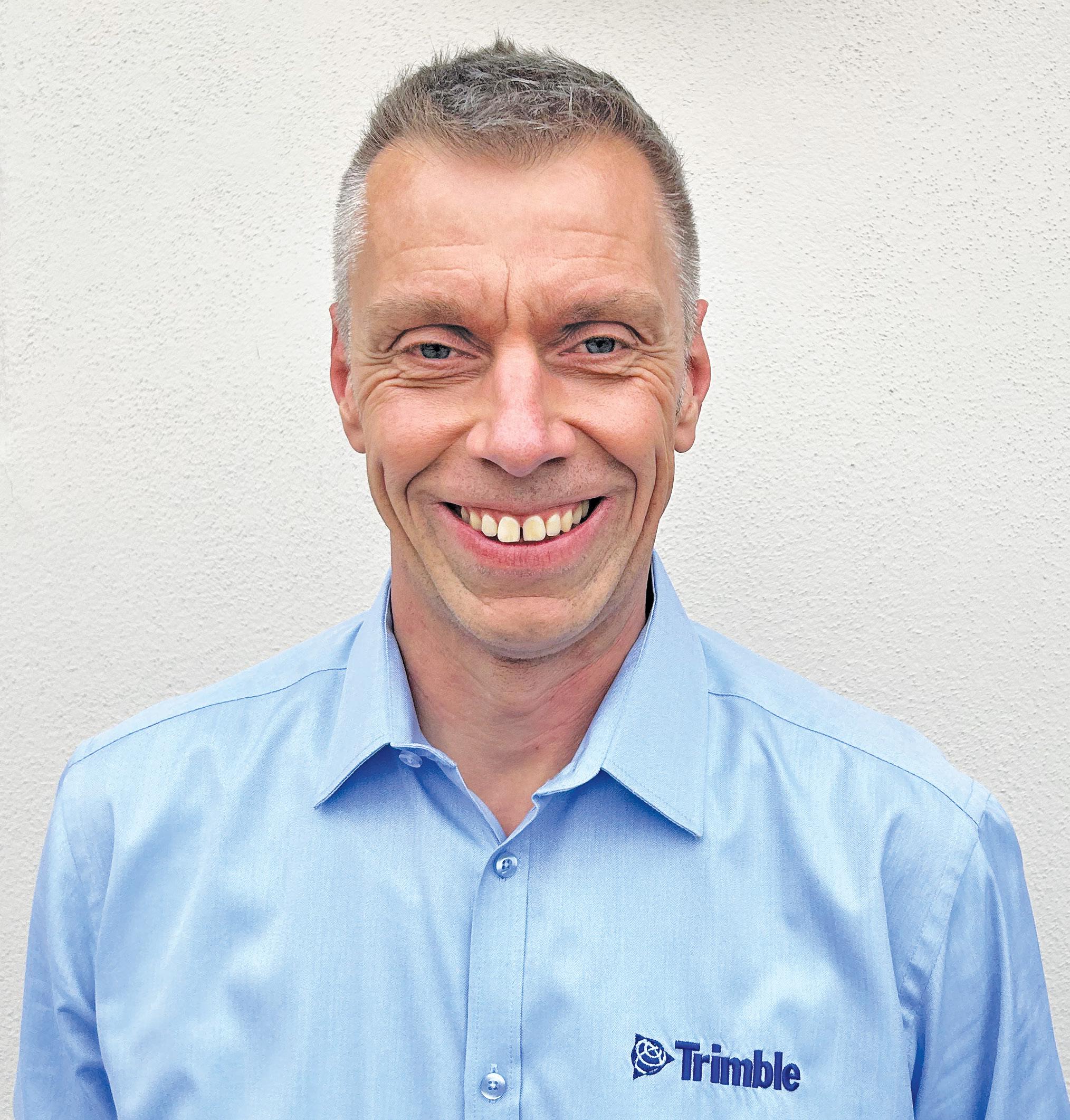
Steffen Lutz is a senior figure within Trimble's Track Survey & Scanning Solutions. This group spent decades developing and commercialising track survey measurement solutions across Europe and worldwide markets. He studied at the University of Applied Sciences in Stuttgart and held various roles at Trimble—as an applications engineer, in sales and in product marketing—before joining the rail industry vertical in 2019.
Sam Sherwood-Hale spoke to Steffen Lutz of Trimble about precision measurement technology, the evolving role of AI in track geometry data, and why the skills gap in the surveying profession is a problem the industry has yet to resolve
‘The cost of not doing so is higher, but it often appears later and is harder to attribute directly.’
SSH: Trimble is a huge multinational company, and yet within the rail industry specifically, recognition of the brand is perhaps not as widespread as it is in other sectors. Is that something you have found, and has it been a challenge?
SL: It is very much an industry vertical. Trimble originated in the GNSS space. We produced some of the first commercial GPS receivers back in the early 1980s, and within that world, among professional land surveyors, the name is well known. But if you asked someone at random at an exhibition like InnoTrans, with its four thousand-plus exhibitors, whether they knew who Trimble was, they most likely would not.
Where we do have strong recognition is among the people actually building and maintaining railway tracks. We started by addressing survey professionals within the rail industry, helping them measure track precisely, and from there we expanded our footprint into rail construction companies. Within those organisations there are users who know us well because they use our solutions to position, build, and maintain track. But it is not the kind of name recognition you have across an entire organisation.
The process of becoming established in a given market takes time. In Germany, it started more than thirty years ago, when solutions were needed to build the first high-speed rail infrastructure. You work closely with the construction companies, with the track owners, with the network operators. Deutsche Bahn in Germany and Network Rail in the UK are examples. And you go through lengthy technology approval processes to bring new methods into their workflows. Large organisations have regulatory requirements, and some of those requirements are still being developed as the technology evolves. It is all very timeconsuming. But at a certain point you have the approvals, the key players understand how the technology works, and then you see it spreading.
That process also varies considerably by region. In the United States, for instance, I worked in the Americas for a number of years, and the standards governing measurement technology in the railway sector are quite different from those used in Europe. In the US you have large Class 1 freight organisations maintaining tens of thousands of miles of track, and the approach to infrastructure maintenance is entirely different from what you see in a
passenger-focused network, or in a mixeduse system like Germany's, where freight and passenger traffic largely share the same tracks. Those different maintenance philosophies shape which technologies become standard, and at what pace.
SSH: In terms of the UK specifically, the variation in standards between the UK and Europe is not as extreme as between Europe and the US. From your perspective working with construction companies here, what are those conversations like?
SL: One thing that has always surprised me in the US context is the approach to clearance validation. When you build or change railway infrastructure, you always need to prove that clearances are sufficient, that train traffic can pass safely without touching anything. In other markets I have worked in, a final clearance documentation step is a standard requirement before a line goes into operation. You have to demonstrate that nothing reaches into the clearance envelope of a train. That has not always been a requirement I have encountered here, which I find striking. You build something, you install it, and in some cases that validation step is simply not required before it enters service.
SSH: How does a rail operator or contractor know when their survey and measurement approach is costing them more than it should?
SL: The most direct indicator is the amount of time and labour involved. But I would approach this question from two directions. On one side, if you are using traditional geodetic methods, a total station with a prism pole or a rail shoe, the work is highly labour-intensive. A surveyor with a pole in one hand, taking two measurements to capture a single track location and then moving five metres up the track to repeat the process: that can take many hours to cover five or six hundred metres.
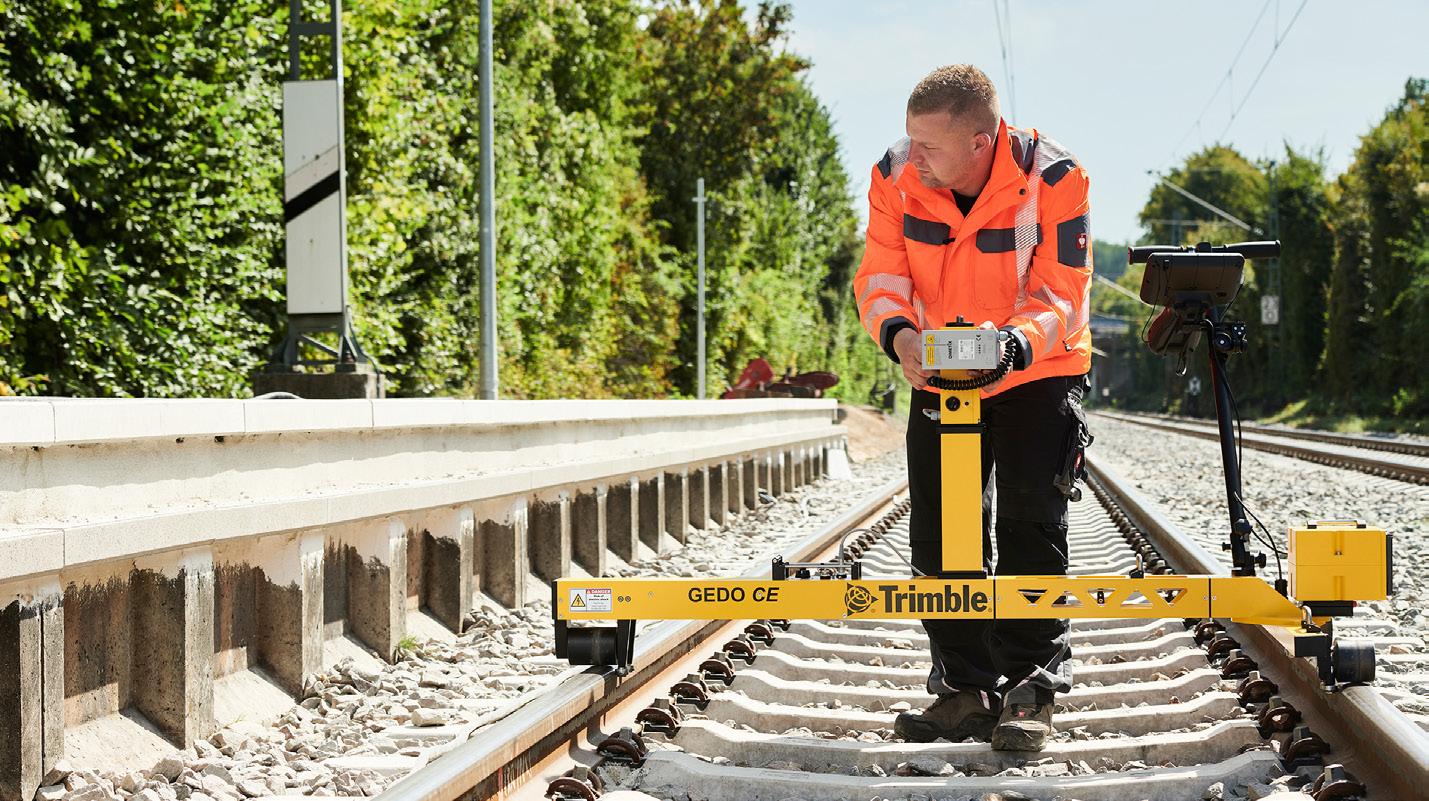
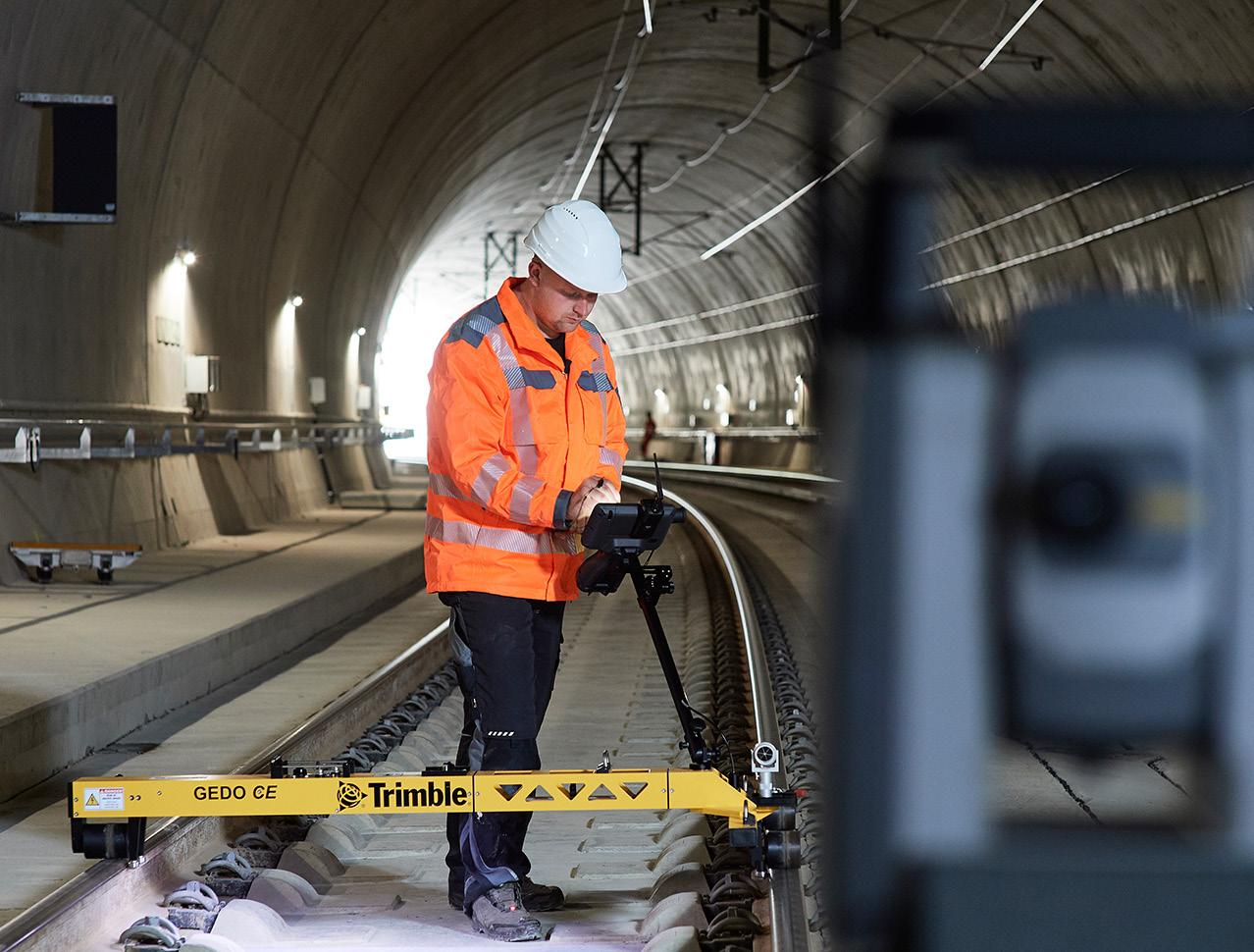
There are still customers working that way, simply because they are not aware that a track measurement trolley exists, where you place the prism on the trolley, it measures gauge with a dedicated sensor and inclination with another, and the instrument follows the prism automatically, recording a coordinate every metre or so. With a trolley and a total station, you can cover five to six hundred metres per hour. With a trolley combined with an inertial measurement unit, you can do two and a half kilometres in an hour or more.
On the other side of the equation, if you are not investing in track geometry measurement at all, if you are not even aware that it matters, you accumulate track quality problems that become very costly to fix later. And there is an ongoing maintenance dimension too: control points can be disturbed by construction activity, damaged by accident, or simply disappear when asphalt is replaced. That ongoing cost of maintaining the reference network has to be factored in. The cost of not doing so is higher, but it often appears later and is harder to attribute directly.
In terms of how new this technology is: the motorised optical instruments have been around since the early 1990s. The first trolley systems were developed in the late 1990s and trolleys capable of higher productivity followed in 2006. The integration of inertial measurement technology into the track measurement process, which is what enables the highest productivity levels, is more recent still, and represents the most significant step change in what is achievable.
SSH: And the track access window is a major factor here too, is it not?
Absolutely. Consider the London Underground, which operates for around twenty to twenty-one hours a day. You cannot simply decide you would like to carry out an as-built survey of a section of track. There is extensive planning involved, and you might be allocated a two-hour window
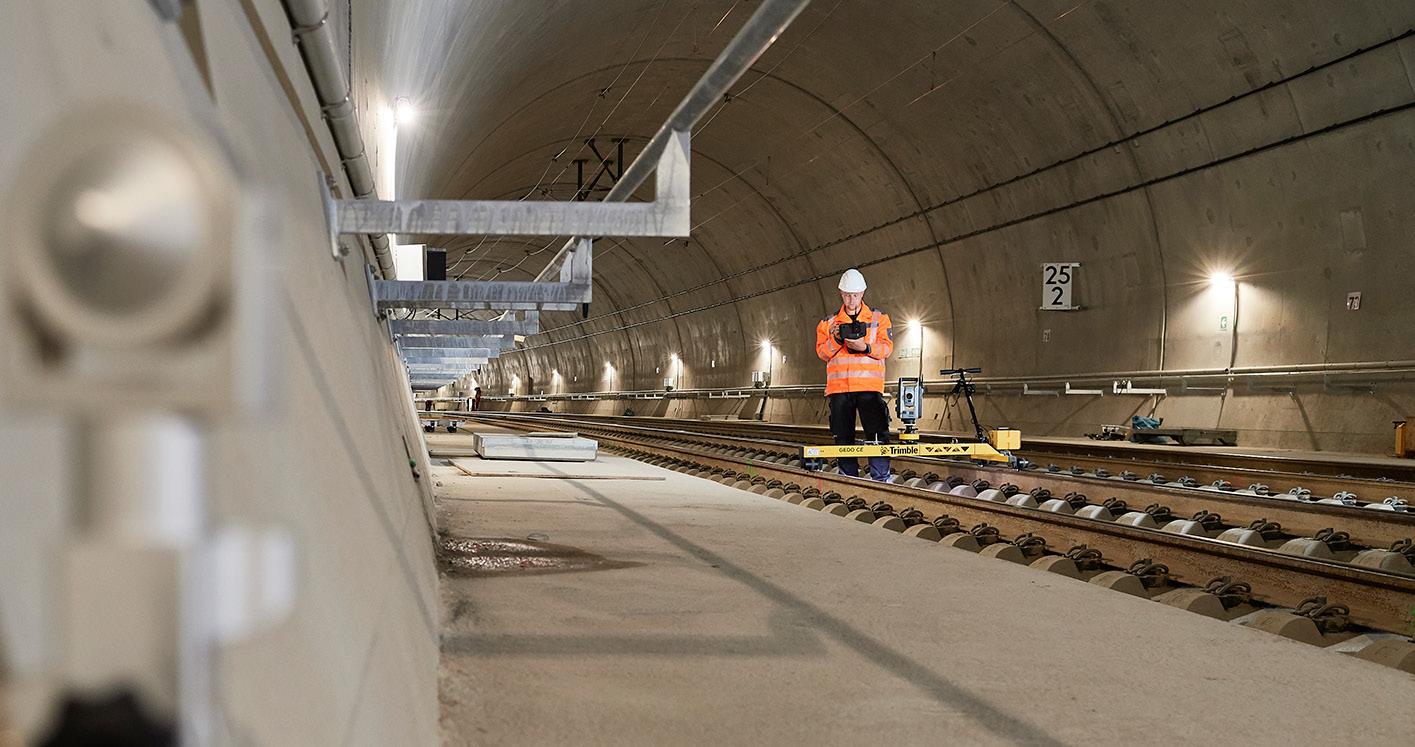
in the early hours of the morning when traffic is reduced. In that window, you want to capture as much track as possible. If you are using slower technology, it may take several night shifts to cover a given amount. With more advanced technology, you can do significantly more in the same time. That is precisely where our solutions have developed over the years, and it is also one reason why track access rarely features in product conversations but is in fact one of the most important constraints shaping how the technology is used.
SSH: What does modern track measurement look like on a network where the reference infrastructure is incomplete or out of date?
SL: The approach depends on how severe the situation is. In the most extreme case, there is no ground control network at all.
Imagine a track that has been in the ground for fifty or sixty years, is in poor condition, and needs to be improved. The first step is usually to document where the track actually is. For that step a precise coordinate reference is already needed.
From that you can recalculate an improved alignment, either refining the existing geometry or starting from scratch with a new design. Once you have that design, you utilise the coordinate reference to build to it precisely.
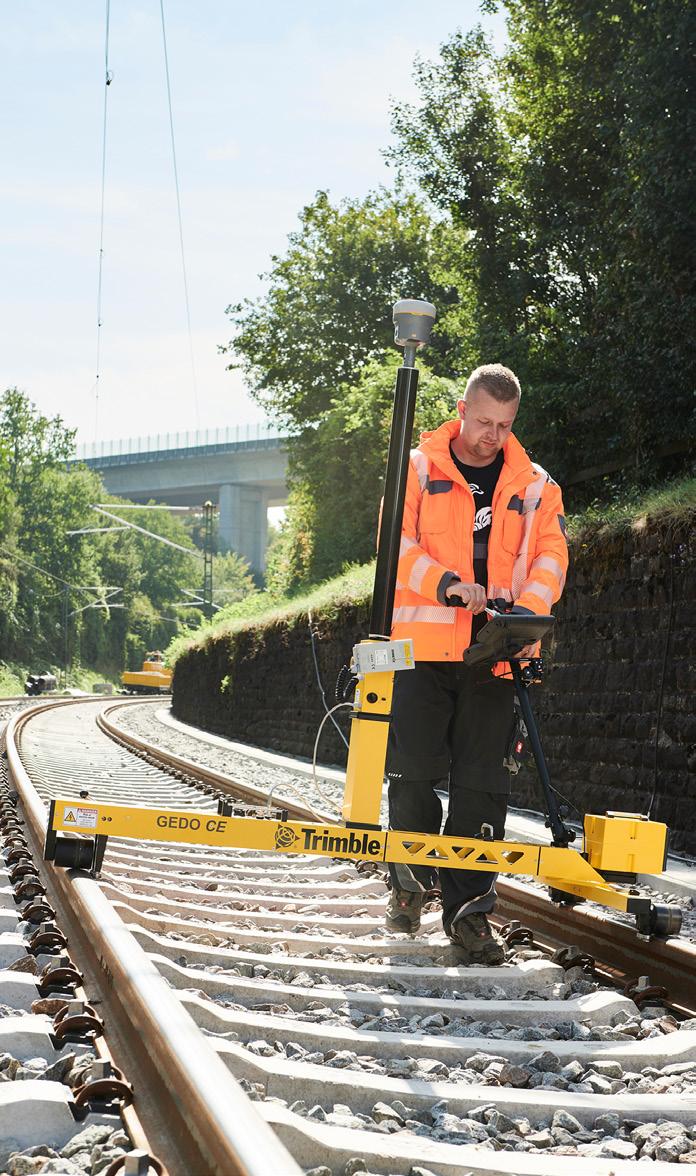
For situations like this and typically on siding tracks, we use a system that combines a track measurement trolley with an inertial measurement unit and a high-accuracy GNSS receiver. The GNSS gives you an absolute position to within around two to three centimetres.
As you push the trolley along the track, you have an absolute position for every measurement point. At the same time,
a crew can walk ahead installing survey markers, attaching them to the catenary system, for instance, and as you complete the measurement run, you assign positions to those new markers. At the end of a single run, you have the track geometry and a new set of control points.
It is a slightly lower accuracy than you would achieve with traditional surveying methods, which involve precise static GNSS measurement campaigns and traversing through an area to establish a control network over weeks or months. But for siding tracks and lower-speed lines, it is an excellent method that gets you all the ground information you need in a single pass, allowing the planning phase to begin immediately.
SSH: Does it ever happen that gaps in the reference point data are only discovered partway through a project?
SL: Yes, and it is not uncommon. We have had customers who were contracted to survey a given number of kilometres of track and discovered mid-project that control points had been removed by a construction effort a few months earlier, or were still physically present but no longer in their correct locations. That is something that can happen to any survey team on any given day. You go out with coordinates and known markers, and some of them have been removed, damaged, or buried under new asphalt. At that point you have to reestablish them using standard survey methods before you can continue. It is an everyday reality of field survey work, unfortunately.
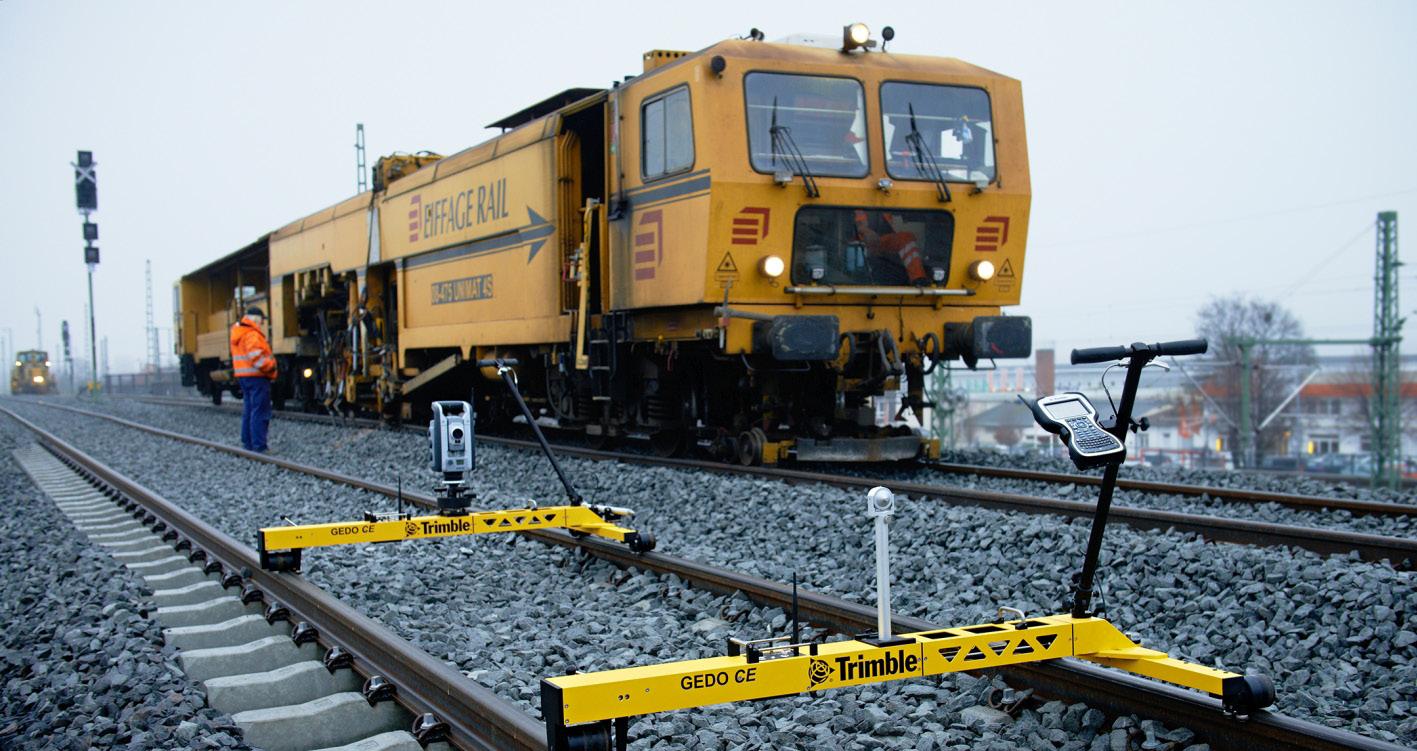
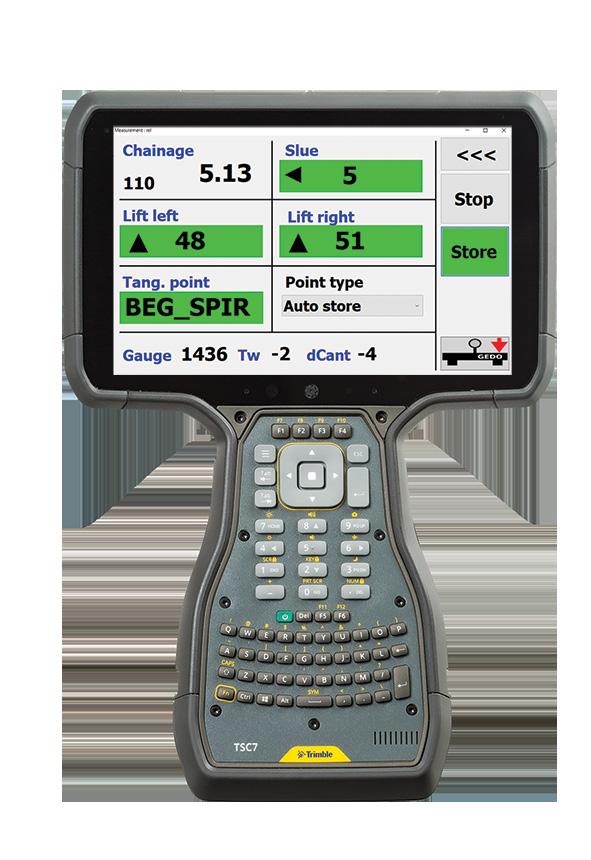
SSH: What is it about tamping workflows specifically that makes them such a productive area for measurement technology to intervene?
SL: To understand that, it helps to know what a tamping machine does. These are large machines that can grab the track, lift it, shift it laterally, and compact the ballast beneath it to achieve even weight distribution from the rail and sleepers into the substructure. They are used both in construction and in routine maintenance, and they are one of the standard tools of the industry.
To apply corrections, the machine needs to know two things: where the track currently is, and where it is supposed to be. Tamping machines have their own built-in measurement systems, but these are relative systems. They can detect the curvature of the track, horizontal and vertical, but they do not know an absolute coordinate. The machine takes a slow measurement run over the track, processes the data with its onboard computing system, and only then can it begin tamping. That
measurement process is time-consuming and expensive, because you are tying up a machine that costs millions of euros and charges a significant hourly rate just to take measurements rather than to do the work it is built for.
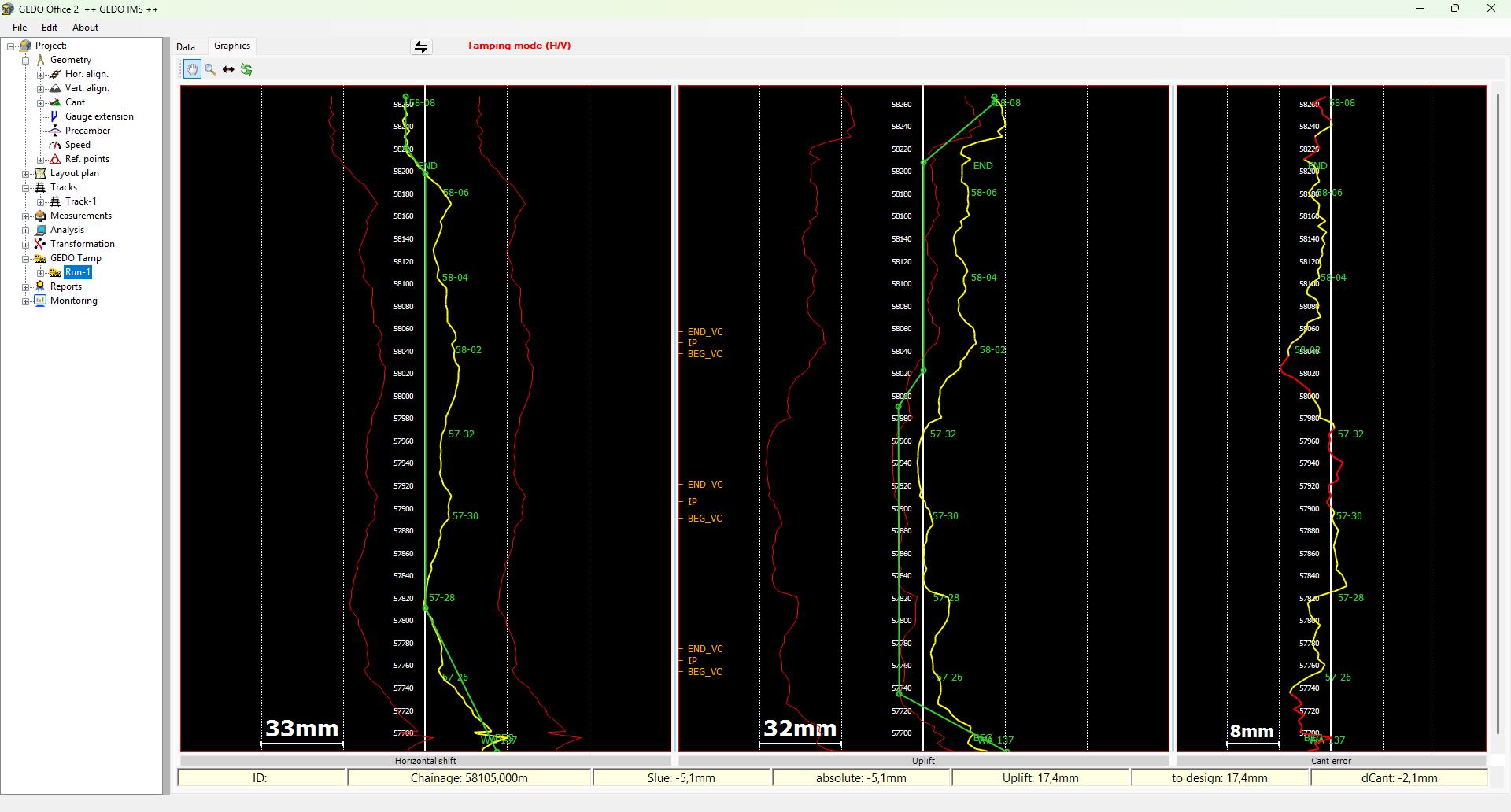
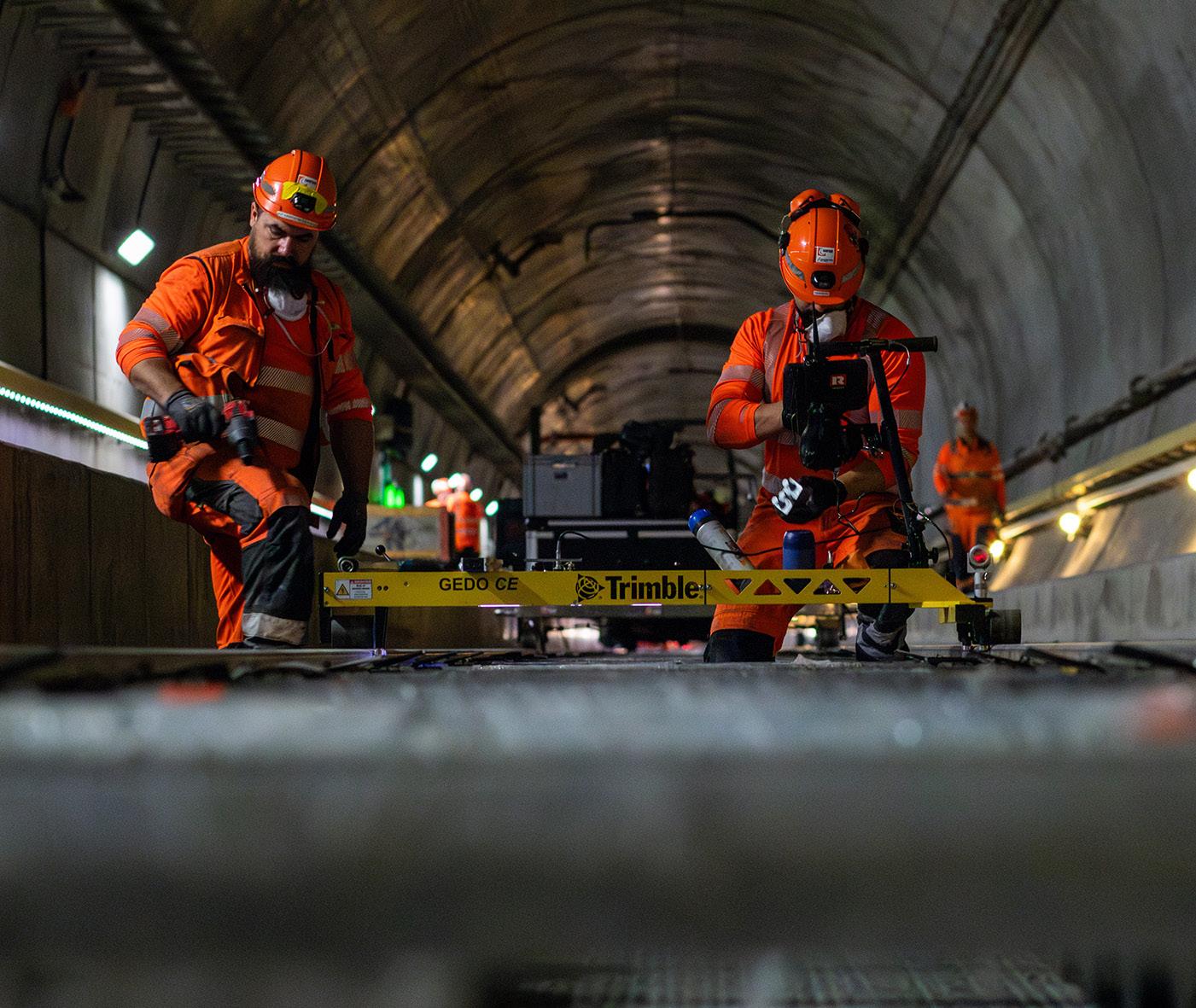
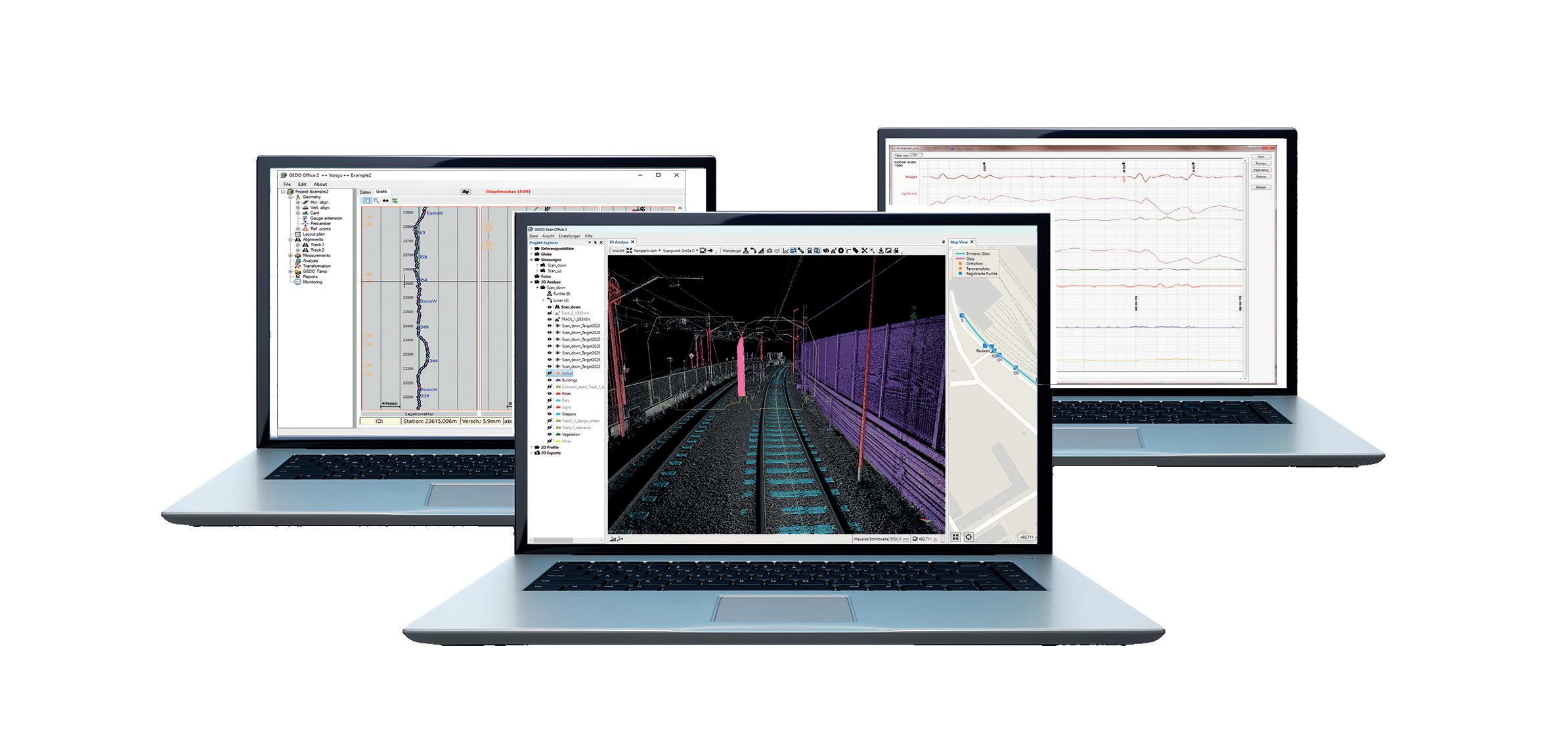
What we did was decouple those two processes. Our trolley measurement systems carry out the pre-measurement, capturing absolute track geometry at rates of 1,200 to 1,500 metres per hour, and the resulting datasets are prepared using our GEDO Office software and handed to the machine operator on a data carrier. The tamping machine can then focus entirely on lining and tamping, while the survey crew works independently ahead of the machine, measuring the next section. We developed the first dual-trolley system for this purpose around twenty years ago, and it has since become a standard workflow. Companies that adopted it early told us they were saving significant amounts of money simply by not having to use the tamping machine for measurement.
SSH: How is AI changing what is actually possible in track inspection?
SL: I should be clear about where our focus sits, because track inspection covers a wide range. There are technologies that look at rail wear, rail profile, the metallurgical condition of the rail head, sleeper condition, ballast breakdown. We do not address those things. Our focus is track geometry: is the track where it should be in terms of position, gauge, and cant? We measure it, document it, and generate quality reports from it. Where AI has become significant for us is in making sense of the data produced by kinematic laser scanning. When you scan a railway corridor from a trolley or a mobile mapping system on a rail vehicle, you generate millions of individual 3D points, a point cloud. Extracting useful information from that manually is enormously timeconsuming. We use AI in our software to automatically classify railway objects within those point clouds: rail, sleepers, ballast, overhead power lines, masts. We can also train and deploy custom classification models for specific applications.
What I want to emphasise is that this is not something we adopted because AI became fashionable. Trimble has had an
‘An initial project is no longer just about meeting a deadline. It is about creating a permanent digital asset.’
interest in automated classification from data for many years. We were doing it with aerial imagery long before it became a standard topic in the industry, looking at how to automatically classify vegetation and infrastructure objects from aerial photographs covering large areas. That interest is part of our DNA as a company. The development of more powerful computing in smaller form factors has accelerated it considerably, and the work is now integrated into our standard processing tools: Trimble Business Center for the broader geospatial market, and GEDO Scan Office for rail-specific applications, amongst other Trimble software solutions.
SSH: What happens to the surveyor's job as the volume of reality capture data outgrows what any team can process manually?
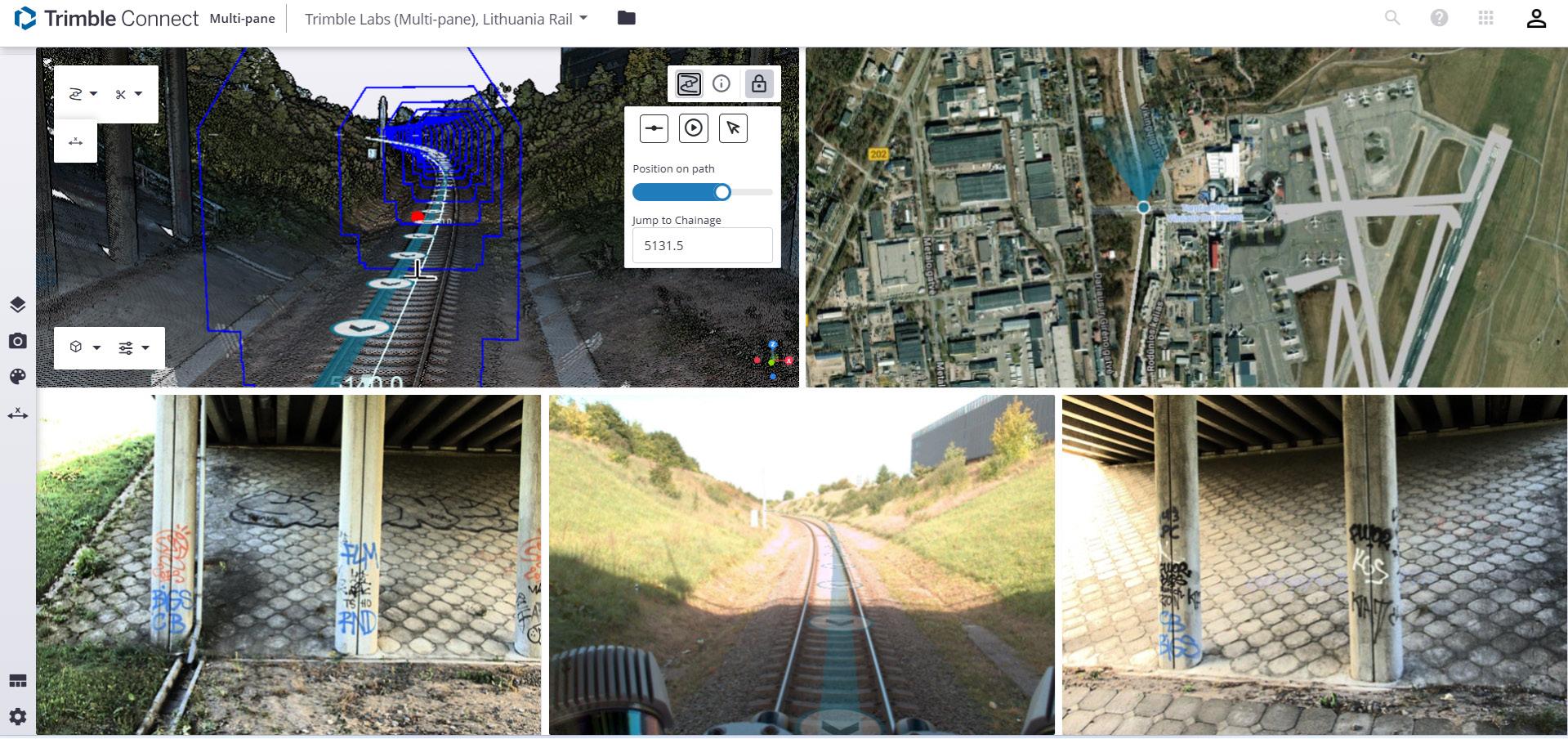
SL: The role is shifting from intensive manual processing toward a more supervisory function, covering quality assurance, customisation, and advanced analysis. That shift is supported by platform systems like the Trimble Connect cloud platform and the Multi-Pane viewer we have just introduced, which is a specialised cloud
viewing environment for large, complex infrastructure datasets. Rather than downloading massive data files to a local machine, licensing software, and processing everything locally, users can view reality capture data and design models together in the same cloud environment, annotate it, and share it across different teams, all without the traditional infrastructure overhead.
That said, I want to raise something that does not feature explicitly in any of these questions, which is the skills gap. The surveying profession is not producing enough new talent. I do not want to say it is a dying profession, but the numbers have changed significantly. When I was a student at the University of Applied Sciences in Stuttgart, there were two graduating classes a year, perhaps fifty or sixty graduates each semester, and there were comparable programmes in Karlsruhe, Munich, Bonn, Dresden, Berlin, Hamburg and elsewhere. There was sometimes a challenge simply finding jobs for everyone. In recent years, programmes have had to consolidate because student numbers fell below what could justify a dedicated surveying course. In some cases they have been merged with civil engineering programmes or other disciplines.
This is a problem not just for us as a manufacturer, we need qualified surveyors within our own organisation who understand what we sell, but for all of our customers. Everyone is looking for new talent. We have introduced earlyoutreach programmes at universities, not at graduation job fairs but in the first semesters, trying to generate interest before students have settled on a direction. In some cases we offer practical-year placements. It is a widespread challenge, and I do not think it is close to being resolved.
SSH: InnoTrans is the biggest stage in the industry calendar. What are you bringing to Berlin this year, and what do you want visitors to leave understanding about Trimble that they might not have walked in with?
SL: InnoTrans is a remarkable show. Even just to walk through it and see the breadth of what is there, the train manufacturers, the interior suppliers, the infrastructure technology, is impressive. We are in the Railway Infrastructure segment, which occupies several halls and brings together manufacturers, construction companies, and network owners and operators. For us, the focus is on the construction and maintenance side of the industry.
Our stand will present solutions from three groups within Trimble. Our own group covers track survey and scanning solutions. The mobile mapping team will be there, systems that can be deployed on rail vehicles, on road vehicles, or on vessels, with the relevant expertise to show how they apply in a railway context. And our monitoring group will be present, because a significant amount of work around rail safety during construction phases involves continuous monitoring, and we have specific sensors and software for that.
In terms of what we are highlighting: our track measurement portfolio will be on show, including our pre-measurement solutions for tamping and our reality capture systems. But the particular focus this year is the shift toward cloud-based workflows. We have been investing heavily in the Trimble Connect platform, which allows data from all our sensors to flow into a shared cloud environment where it can be viewed, annotated, and combined with design models by multiple users simultaneously, without needing local software licences or large file
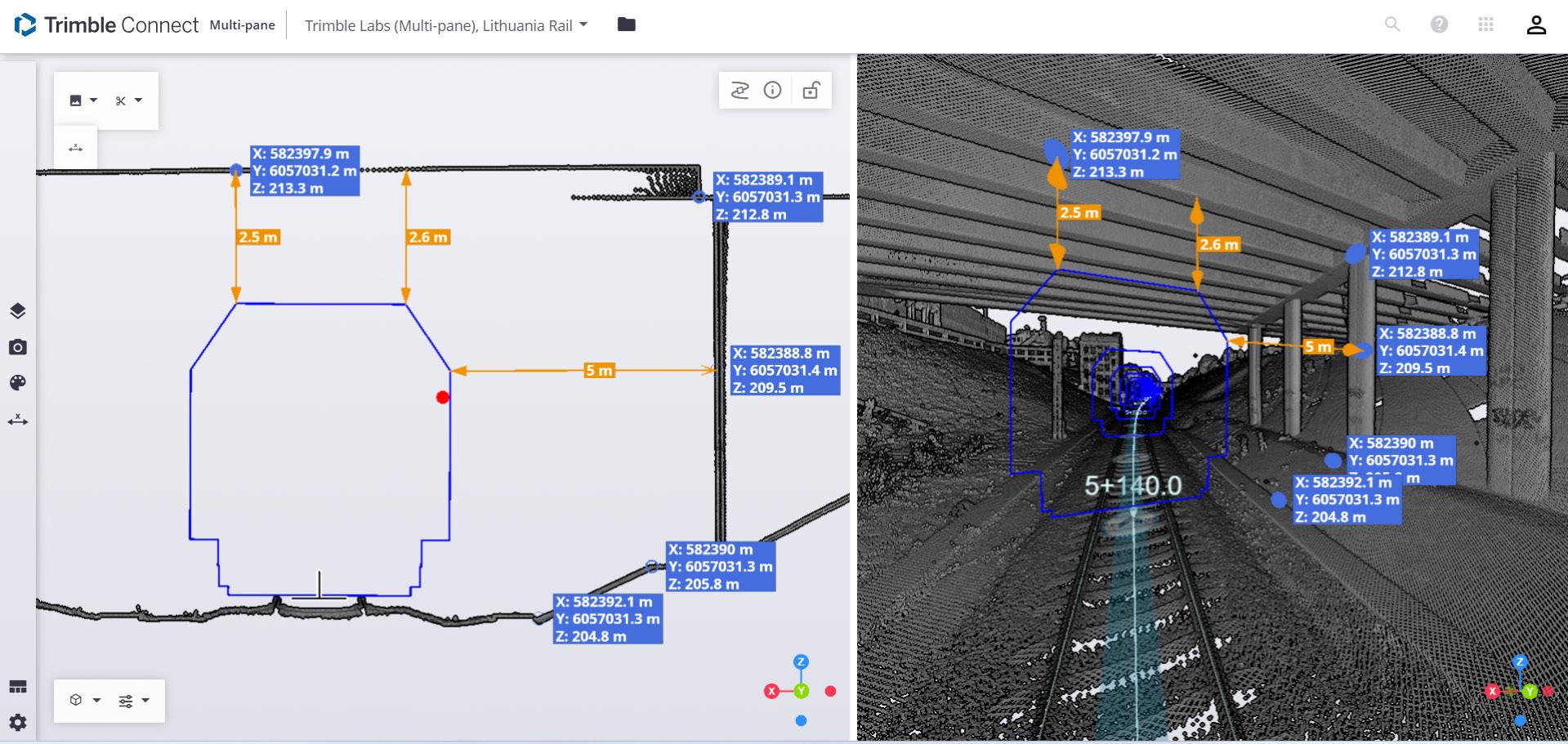
downloads. The major highlight will be the Multi-Pane viewer, which we introduced publicly in March. InnoTrans will be the first major industry event where we are showing it to this specific audience, and it represents a genuinely different way of working with complex linear infrastructure data, bringing together panoramic imagery, oblique imagery, cross-sections, and trajectory-based navigation in a single viewing environment. It is worth saying that not everything on show will already be known to all visitors. Part of the value of a show like InnoTrans is that customers come from all over the world, and what has become standard practice in one region may still be a significant technology advancement in another. We expect to have conversations with people encountering some of these solutions for the first time, alongside conversations with experienced users who are specifically interested in where the cloud platform is heading.
SSH: InnoTrans 2024 was described as your most successful show yet. What did those conversations on the stand tell you about where the industry's head is at right now?
SL: The interest at InnoTrans 2024 was clearly centred on track construction, track monitoring, and asset management. Visitors showed significant interest in systems utilising Trimble GEDO, Trimble Monitoring, and Trimble Mobile Mapping technologies. Key products that drove conversations included the Trimble GEDO IMS-Scan system for kinematic laser scanning, the newly introduced Trimble GEDO Doc system for track quality control with an as-built check, the Trimble MX90 Mobile Mapping System with its updated sensor suite, and the Trimble 4D Control Software for track
monitoring tasks. The ability to demonstrate our office software live on the stand, including Trimble GEDO Office, Trimble GEDO Scan Office, and Trimble GEDO NovaTrack, also generated a great deal of engagement.
SSH: Do you expect 2026 to surpass it?
SL: That is a difficult question to answer honestly, because how do you measure success? Contacts made, leads generated, commercial conversions: these are all valid measures, but they take time to materialise. I am also, if I am honest, cautious about generating hype for its own sake. Looking at our field, I would say the differences between the 2022, 2024, and 2026 shows represent iteration rather than step change, steady development rather than a transformation. That is not a negative thing. Some years bring a genuinely new technology that changes a workflow; most years represent refinement and adoption. Trying to claim each show has to be better than the last is not always the most accurate way to describe what is happening in the industry.
SSH: Strukton managed to measure ten kilometres of track per night on the Bergslagen line in Sweden. For a network owner, what is the practical implication of that number?
SL: The context matters. The traditional approach – a survey crew using conventional methods might achieve around one kilometre per shift, and only if a complete control network is already in place. Strukton measured ten kilometres in a single night, and 31 kilometres of track in total across four nights between Ludvika and Ulvshyttan. That is roughly a ten-fold jump in productivity. That is the headline figure.
However, I believe that how that result was achieved is equally important. The defining challenge in this section was the lack of a complete control network. Normally, this would require you to establish one along the entire stretch first, which is slow and costly, before any survey could begin. However, the GEDO IMS-Scan uses an inertial measurement unit to run the trajectory, with GNSS used at intervals of around every 200 metres to anchor the trajectory and prevent drift. The result is absolute accuracy, similar to that achieved with a full control network, but with only a fraction of the ground control. Strukton supplied the rest: a trained crew and established workflows. When the method is appropriate for the situation and thorough preparation has been carried out, the technology delivers what is expected of it.
For a network owner, the implications go beyond raw speed. You achieve absolute positioning similar to that of a dense control network with minimal preparatory work over long line sections. Furthermore, because the trolley carries a laser scanner, it captures far more of the surroundings and assets than a conventional survey would in a single pass. This combination of speed, accuracy, richer data and reduced setup overhead is what drives maintenance forward on a large scale.
For us commercially, projects like this are invaluable. When a prospective customer asks what the system can really do, you can show them a real result obtained under real conditions – 31 kilometres across four nights with no complete control network required – rather than quoting a datasheet. This is particularly powerful when someone is hesitant about the investment. Seeing how much track was covered and how much time was saved makes the case in a way that specifications alone cannot.
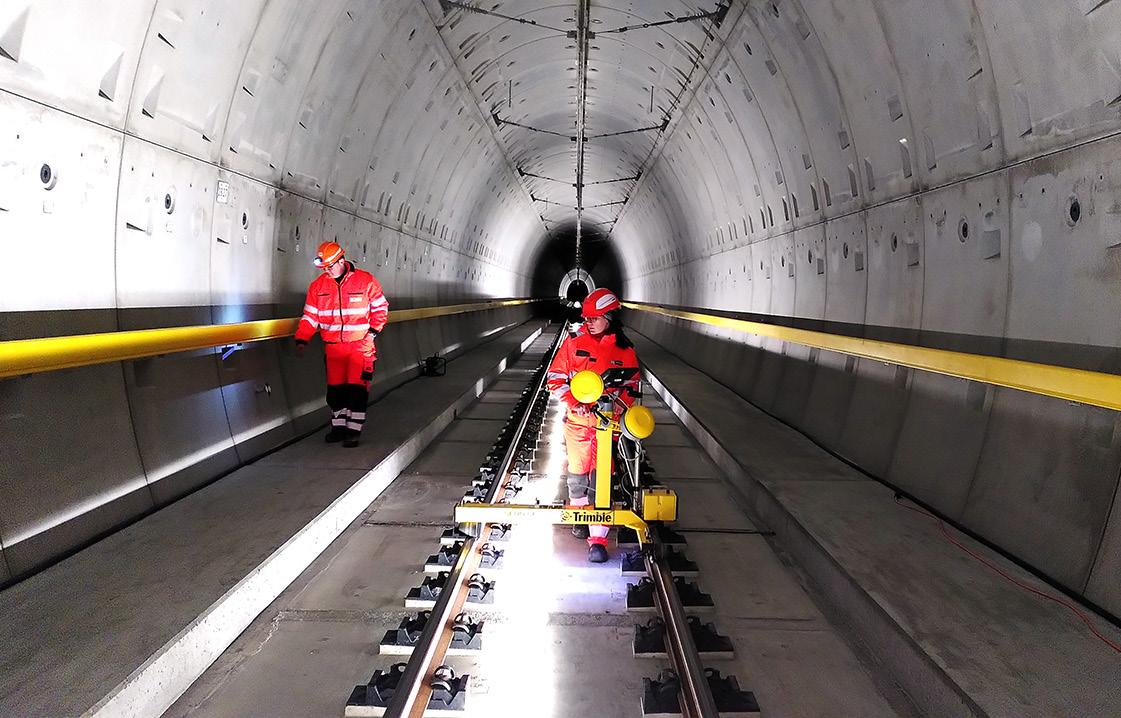
SSH: You wrote for us last year about the Gotthard Base Tunnel project, inspecting 20,000 sleepers under serious time pressure after a major derailment. What did that project mean for Trimble, and what did it teach you?
SL: The project was a crucial validation of what the GEDO IMS-Scan is capable of in the field. Rhomberg Sersa, a company we work with closely on the R&D side and have enormous respect for, had the contract to repair the damage after the accident. Replacing track and switches under time
pressure was well within their capabilities. The complication arose when it became clear that the 20,000 sleepers across the affected section also needed to be documented. When they had a problem of that kind, we collaborated to find a suitable solution.
The conversation was: we have the GEDO IMS-Scan system, we have the field capture capability, can we train a model to extract sleeper information from the scan data and generate the report the client required?
That question set off a process of checking whether the scan resolution was sufficient, creating sample datasets, and
‘High-pressure, high-profile projects are essential proving grounds for technological advancement’
then training the model, which involved colleagues from our Trimble Business Center team. It was not a clean, out-of-the-box solution. It was a significant portion of our technology, combined with a great deal of ingenuity and development work on their side. What the project validated was the field data capture capability of the GEDO IMS-Scan, and the potential of combining it with AI-based classification tools. Achieving 97 per cent accuracy in the analysis of over 500 GB of raw data, across 20,000 sleepers, in time to reopen the tunnel on schedule, that is a meaningful result. And what it taught us is that the integration of digital reality capture and advanced AI is essential for managing critical assets at this level. The trained models do not disappear after the project ends. They provide enduring value for proactive lifecycle maintenance.
SSH: Rhomberg Sersa used AI tools in Trimble Business Center that they had never used before on that project. How often does a high-pressure, high-profile job end up being where new technology gets its first real test?
SL: High-pressure, high-profile projects are essential proving grounds for technological advancement because they demand solutions that significantly outperform the speed and accuracy of conventional methods. That context requires an innovative spirit and a willingness to both adopt and further develop new technologies, qualities for which Rhomberg Sersa is widely respected in the industry.
SSH: The Gotthard dataset now serves as a baseline for the tunnel's ongoing lifecycle management. Is the long-term value of the data becoming a bigger part of how customers think about the investment?
SL: Absolutely. The shift in how customers think about data is significant. An initial project is no longer just about meeting a deadline. It is about creating a permanent digital asset. The Gotthard dataset now functions as a digital blueprint for that tunnel, a baseline against which future maintenance, inspections, and structural changes can be measured quickly and reliably.
• Track quality control
• Track as-built
• Slab track
• Pre measurement
• Clearance analysis
• Laser scanning
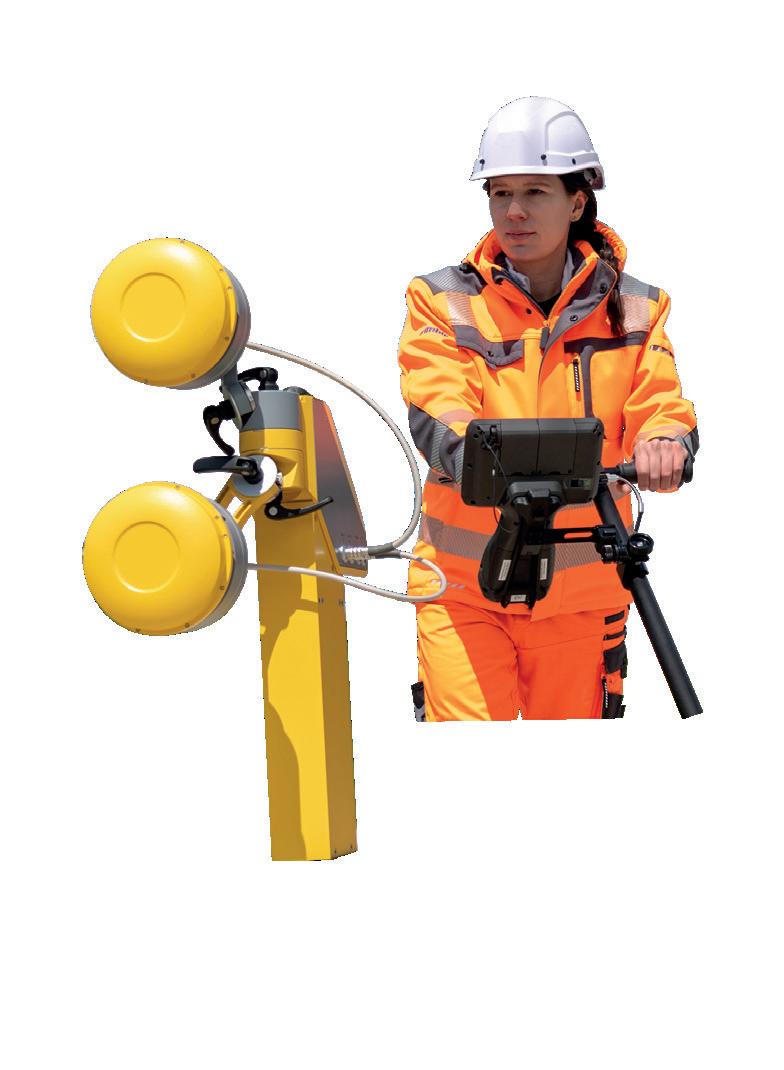
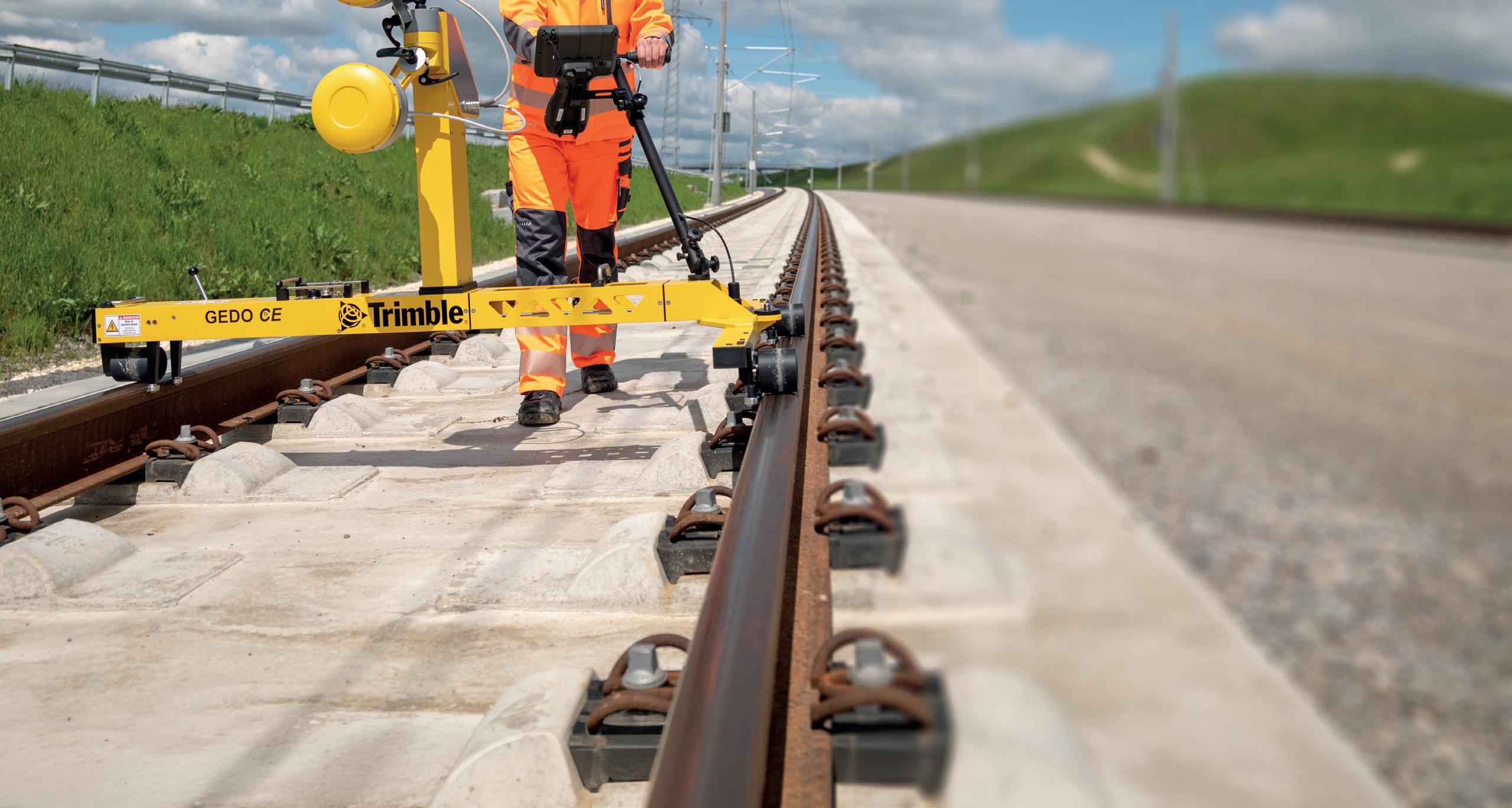
Trimble® GEDO systems combine different technologies. The systems are individually composed for a wide range of track surveying tasks according to the environmental and operating conditions. The Trimble GEDO CE 2.0 track measurement trolley can be equipped with GNSS as well as optical instruments and inertial measurement technology to determine its absolute position.
The flexible and modular design allows Trimble GEDO systems to be adapted to evolving requirements and new developments.
More information:
gedo.trimble.com

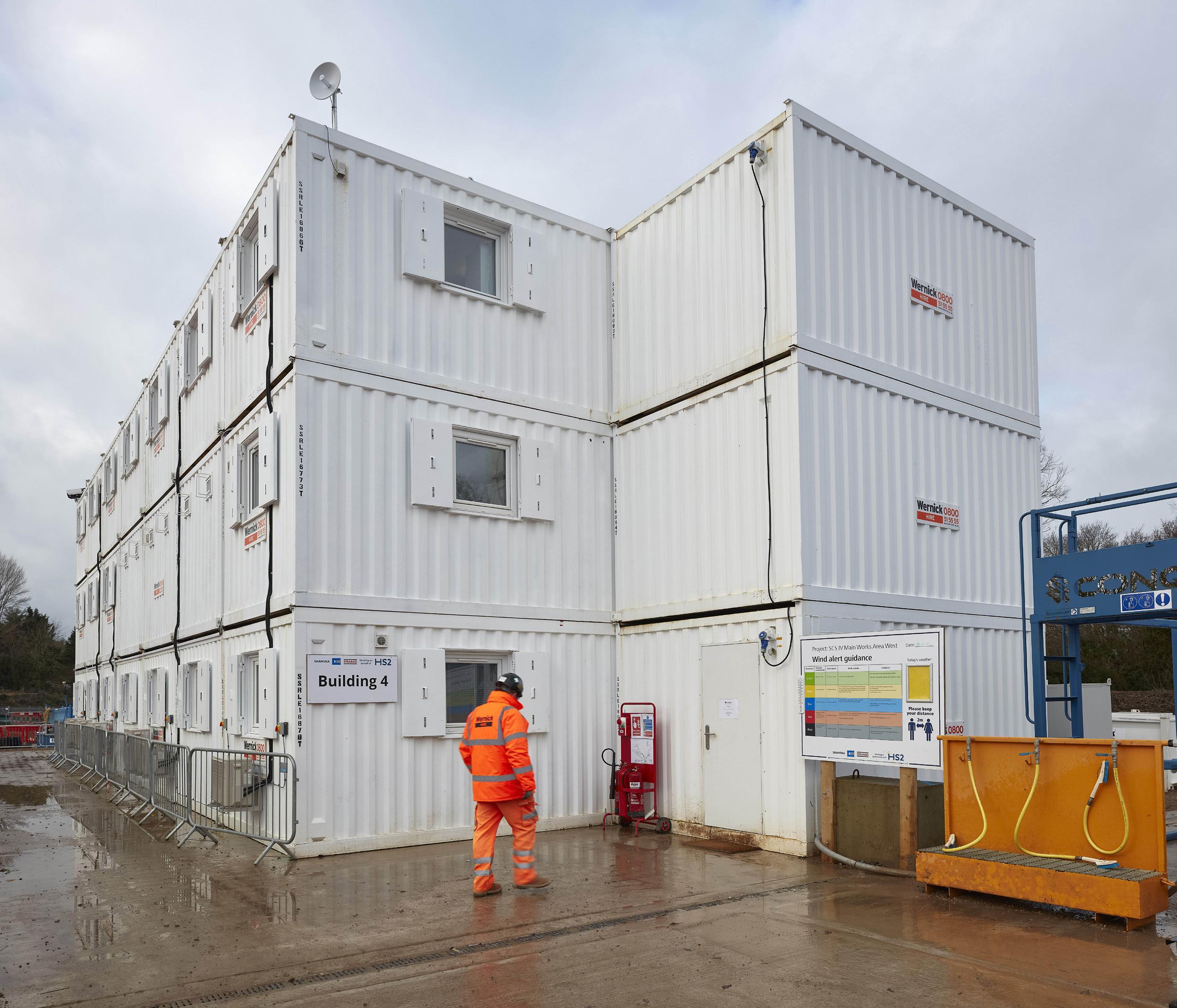
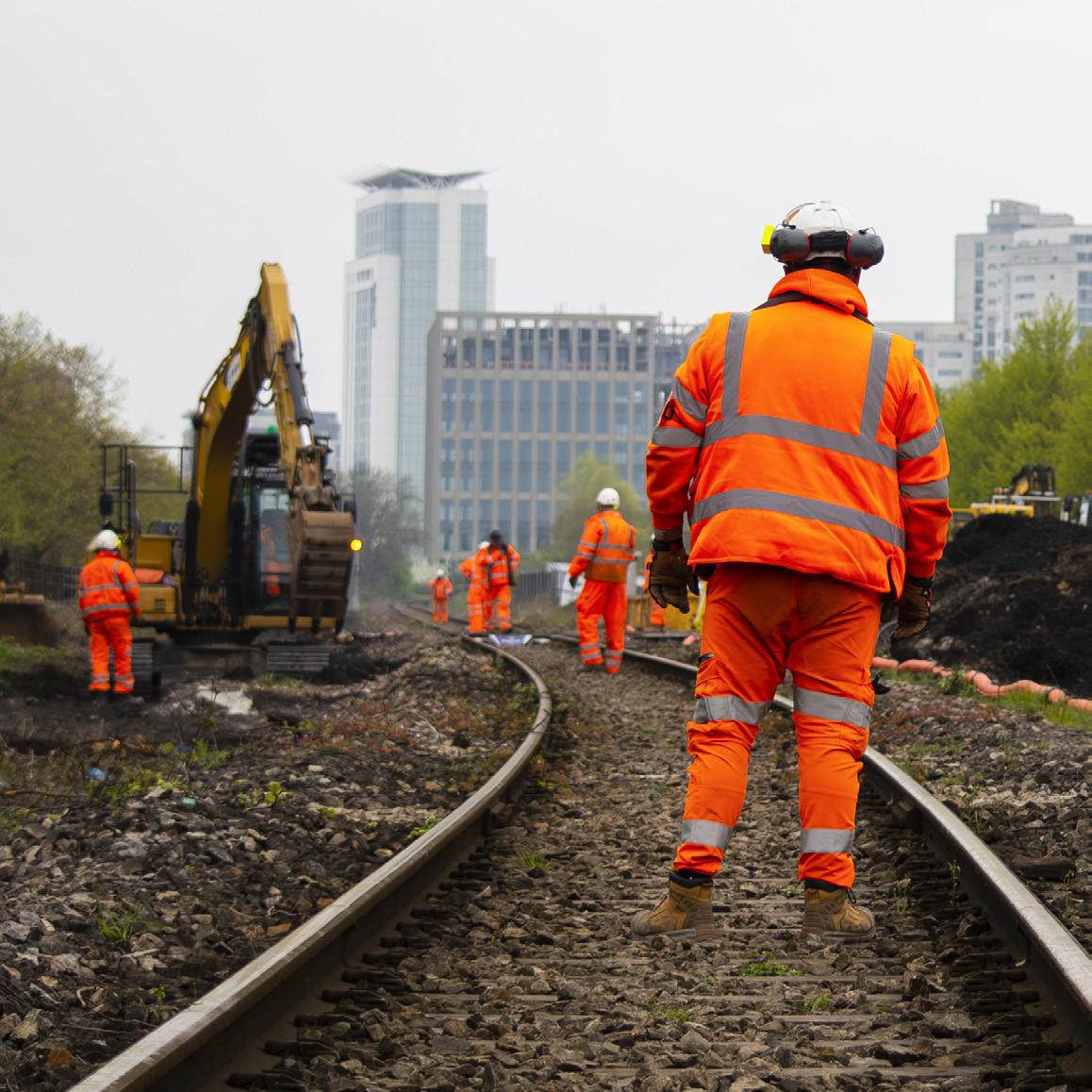
Behind every rail resilience scheme sits the less visible challenge of getting the site setup, welfare, storage and workspace, right for the people delivering the work
Rail resilience is routinely discussed in terms of infrastructure. Drainage systems, earthworks, coastal defences, vegetation management and track renewals are all central to how the railway adapts to shifting weather patterns and environmental pressure. Less visible, but no less important, is the practical delivery requirement sitting
behind every one of those programmes: the temporary site setup.
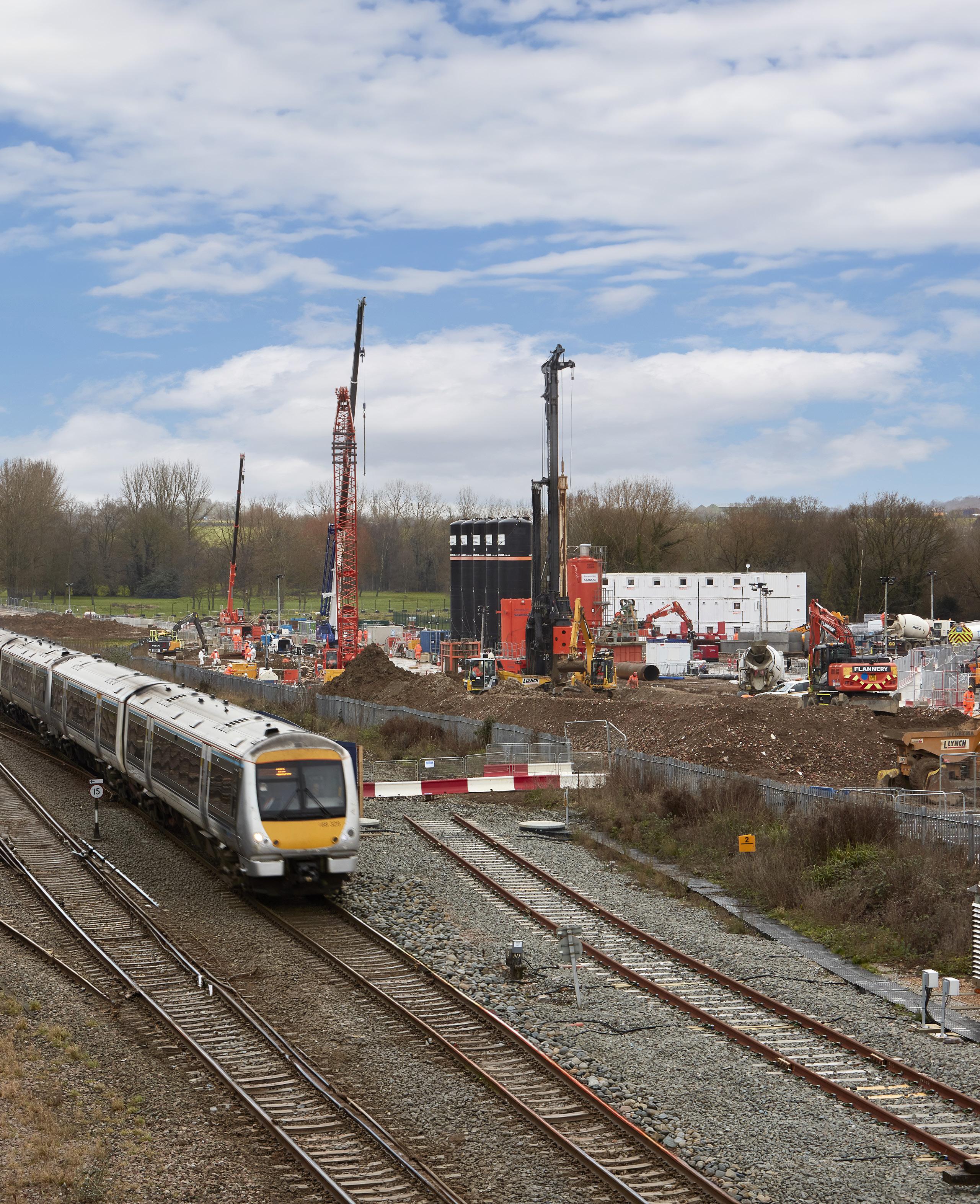
Rail works rarely happen in convenient conditions. Projects are frequently located in remote, exposed or restricted-access environments such as embankments, cuttings, flood-prone corridors and coastal routes, where existing facilities are sparse and the margin for poor site planning is slim.
Resilience works create real site challenges
The range of work that falls under rail resilience brings a corresponding range of site demands. A multi-location drainage scheme requires flexibility and the ability to move quickly. A longer earthworks programme needs a properly established compound. Vegetation management can cover large sections of network with limited
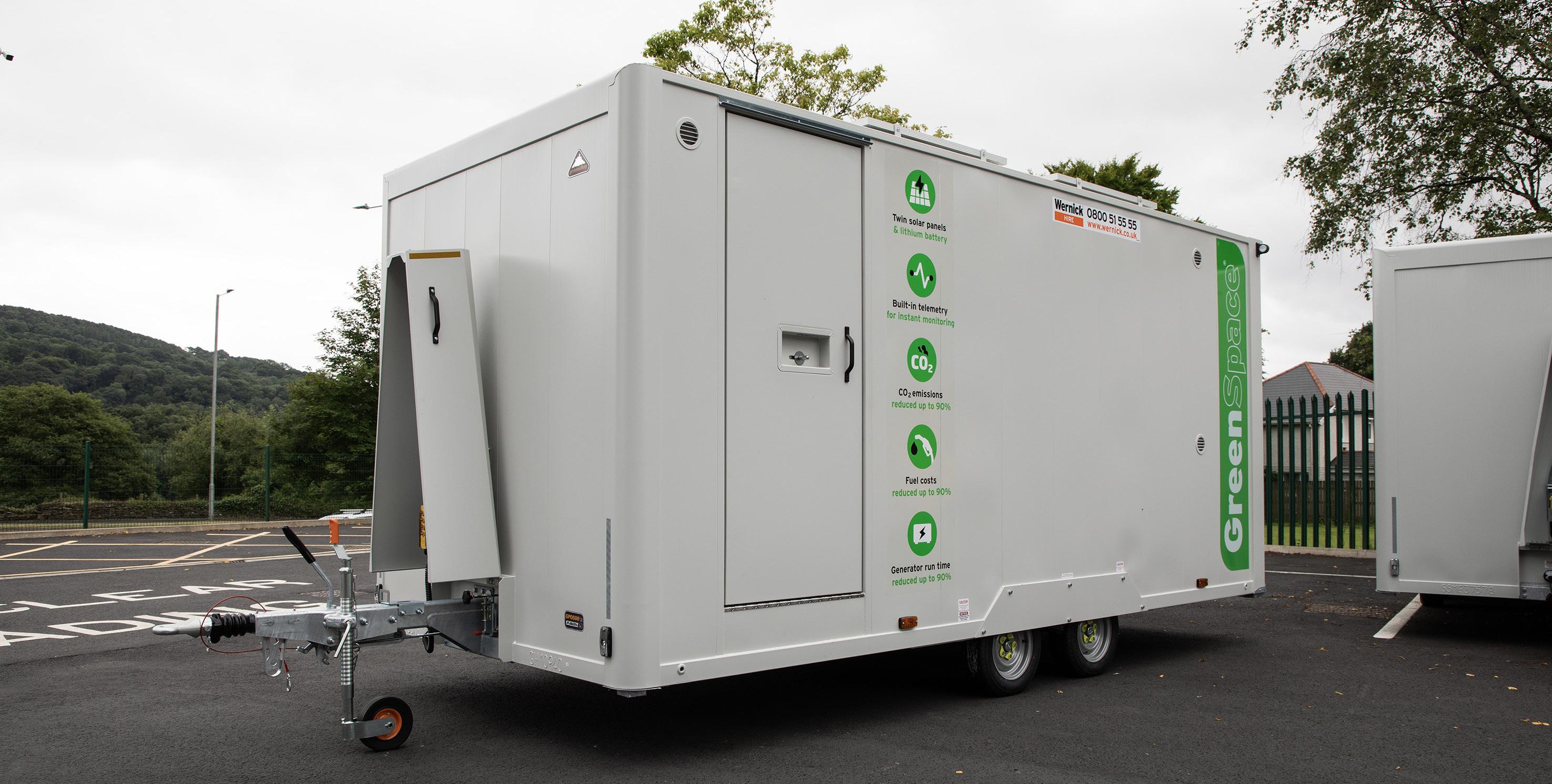
fixed infrastructure. Coastal protection works introduce exposure to wind, rain and difficult ground.
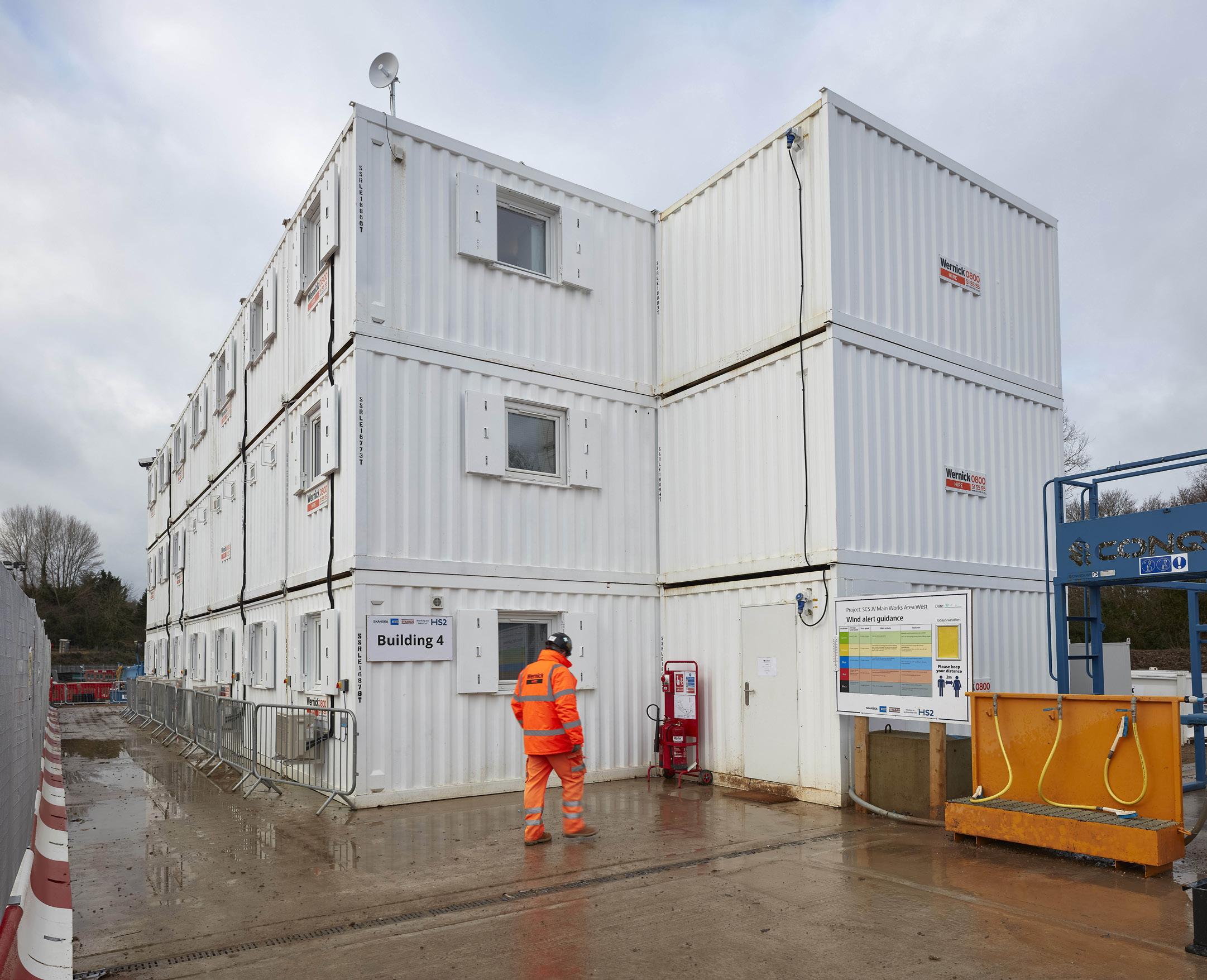
Each environment carries different requirements, for welfare, drying facilities, secure storage, office space and site support. Teams working in wet or muddy conditions need somewhere to dry out and change. Projects handling specialist tools and PPE need storage close to the work face. Longer programmes need offices where supervisors and engineers can actually function. Where the work moves, the facilities should move with it.
Temporary facilities rarely feature in project headlines. They do, however, directly affect the people delivering the work.
Effective site setups are those designed around how a project will actually be delivered, not as an afterthought, but as part of the planning process.
On rail projects, this matters more than most. Access is often constrained, possession windows are tight and site conditions can deteriorate quickly. A fixed compound solution will not serve a team moving along a drainage or inspection corridor. A short-term possession demands a different approach to a months-long earthworks scheme.
The questions worth asking early are straightforward: Where will teams be based? How often will the work area shift? How many people will be on site at peak? What needs to be stored securely, and close to where? What will the weather do to the working environment? Getting those answers into the site setup plan, rather than resolving them during delivery, reduces pressure on contractors and keeps projects moving.
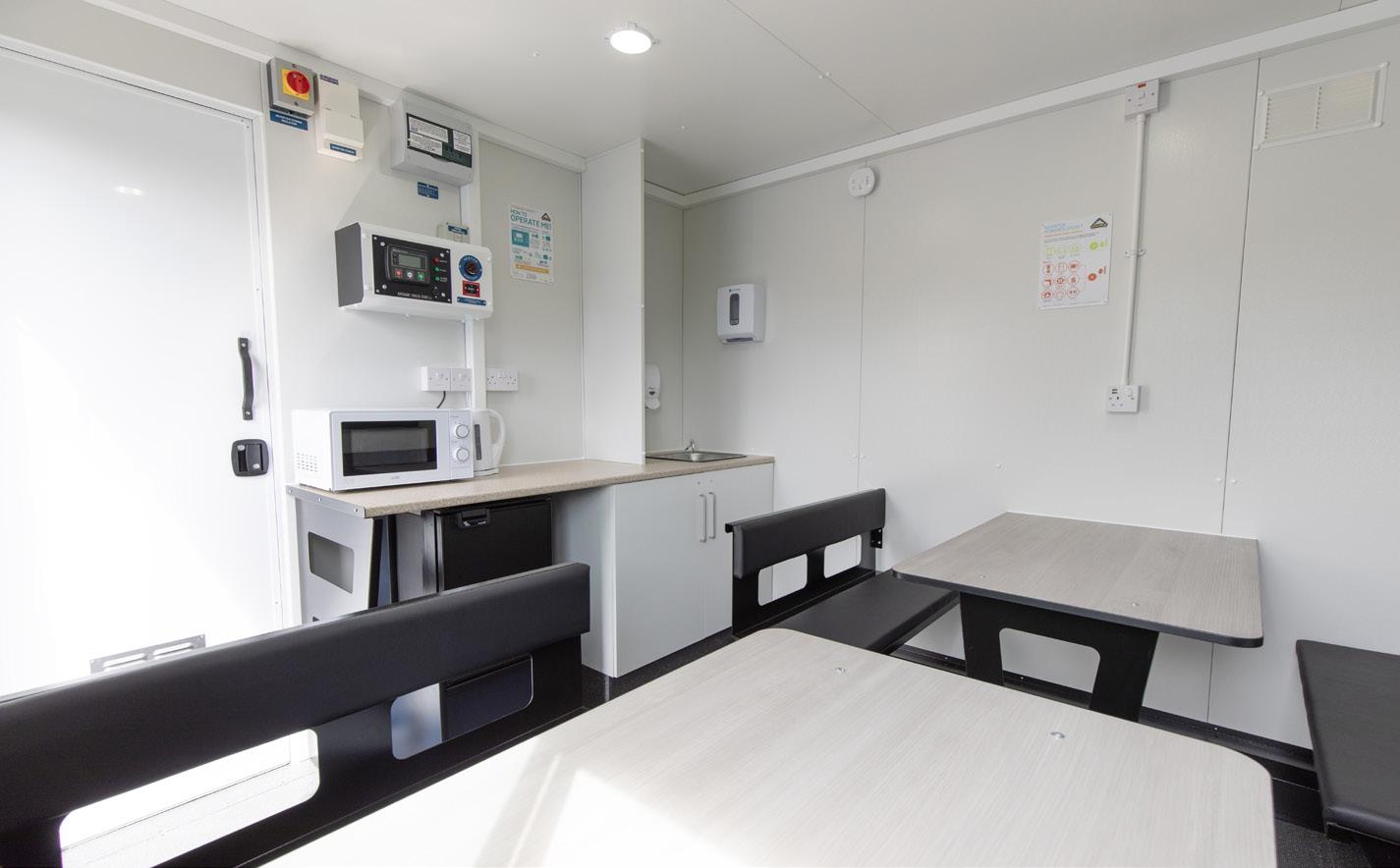
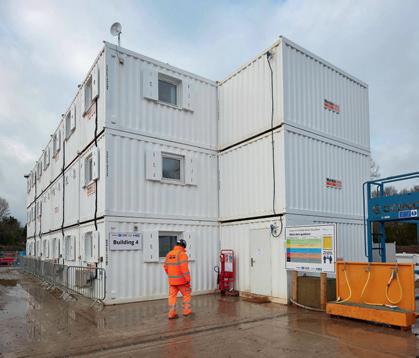
A working compound is more than a welfare unit. Power, access steps, ramps, foundations, furniture, alarm systems, lighting, water and waste management all need to be considered as a whole. When they are, the site is simpler to run and easier to hand back.
For contractors operating in challenging locations, a coordinated supply approach reduces the number of parties to manage and the risk of gaps appearing between them.
Rail resilience depends on skilled teams operating in real conditions. The practical environment those teams work in, their welfare, their workspace, their ability to store equipment and get dry is part of what enables them to perform.
Wernick Hire supports rail contractors with welfare units, site offices, storage, drying rooms, power and wider site setup across the UK. As resilience-focused investment in the network continues, the facilities sitting behind these projects will remain a quiet but consequential part of delivering them safely and efficiently.
Tel: 0800 51 55 55

Email: contact.hire@wernick.co.uk Visit: www.wernick.co.uk


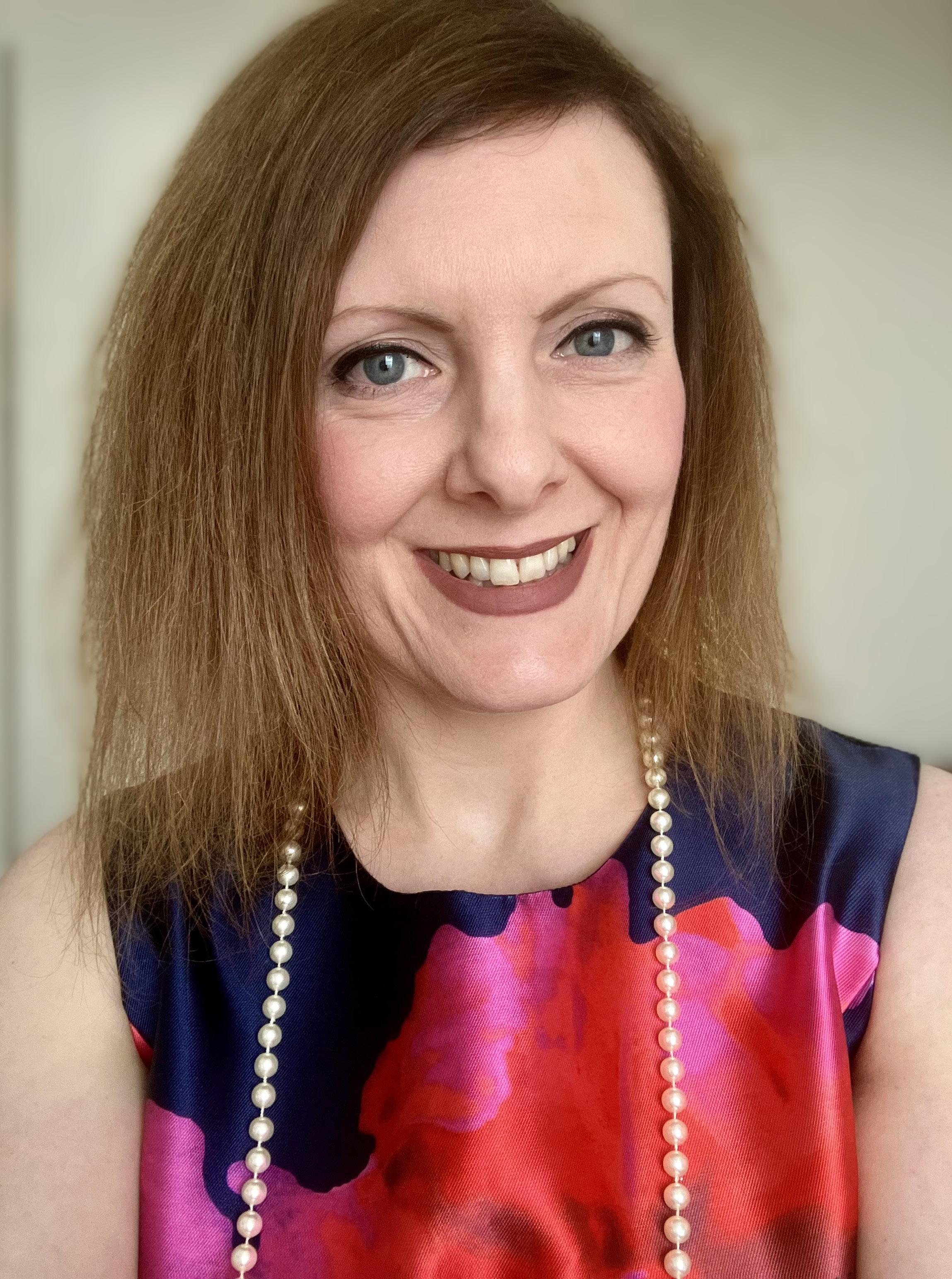
Dr Jenny Wood joined Magellan (formerly Worldline Mobility and e-Transactional Services) as Head of Sustainability around six months ago, bringing with her a background in the fast-moving consumer goods and pharmaceutical sectors. Rail Professional spoke to her about what she has found distinctive about rail's approach to sustainability, how data and ticketing technology can help operators reduce their environmental footprint, and what it will take to turn corporate net zero commitments into operational reality.
Sam Sherwood-Hale spoke to Dr Jenny Wood, Head of Sustainability at Magellan, about what she has found distinctive about rail's approach to sustainability, how data and ticketing technology can help operators reduce their environmental footprint and what it will take to turn corporate net zero commitments into operational reality
‘The goal in all of this is to make the train the easiest and most reliable choice rather than simply one of several options.’
SSH: You came to rail from FMCG and pharma sectors where sustainability has been shaped heavily by regulation and consumer pressure. What has surprised you most about how this industry approaches the problem?
JW: One thing that stood out early was the role of the Procurement Act 2023 and the social value requirements it introduces. Social value now carries a minimum ten per cent weighting in bids, which means sustainability becomes something train companies and suppliers have to demonstrate in tangible, local terms. It is worth being clear about what social value actually encompasses, because it is broader than it might sound. It includes community engagement, environmental impact, employment initiatives and economic stimulation: all the factors that add value in a local area across multiple dimensions.
That is actually quite a useful mechanism because it breaks targets down into something concrete and visible in specific communities. It is a bottom-up discipline that does not exist in the same way in the consumer goods industry and facilitates the delivery of broader corporate sustainability goals in a bite-sized way. That said, there is a balancing act and connecting that local social value work upwards into the broader commitments is not automatic. Active work is required to make sure these two streams are strategically linked.
Where I notice the most difference from my previous sectors is in the relationship with the consumer, the travelling public. In FMCG, consumer demands and scrutiny filter directly into retailer expectations and supply chain pressure. In rail, the passenger is ultimately the end customer and does make choices with their feet, but that pressure has traditionally been less visible
at an industry level. There is something to learn there from sectors that have had to make the consumer relationship central to how they think about sustainability and their commercial offering.
SSH: Train companies and supporting industries have set measurable environmental and social targets. How do you translate a corporate roadmap into decisions that actually change how an operator runs its network?
JW: Any sustainability initiative has to carry a credible business case, it needs to be viable, achievable and desirable or it will not attract the investment and support it needs. That means being clear about what the benefits are in financial terms, presenting clear timelines and evaluating versus the cost and risk of doing nothing. For longerhorizon commitments such as net zero by 2050, the risk of inaction is sometimes easier to articulate than the return on investment, and businesses are beginning to see climate risks materialising in operational terms now. The framing therefore has to connect strategic targets to tangible, value adding actions for decision-makers.
Scope 3 emissions are a useful example of this. For many businesses Scope 3 emissions represent the most significant proportion of their carbon footprint, meaning value chain emissions rather than emissions from their own direct operations. That touches every part of the business and every job function. When you start to map that honestly, it makes clear that decarbonisation cannot be driven solely from a sustainability team. It requires engagement across the organisation and with suppliers, and that requires people to understand what Scope 3 actually means in the context of their own work.
SSH: Fully digital systems can also exclude certain customers. How do you design for sustainability without designing out the people who are hardest to reach?
JW: Digital-first approaches can create barriers for customers who lack reliable connectivity, are less comfortable with technology, have disabilities that affect how they interact with digital systems, or simply do not own a smartphone. Collectively these are not edge cases and numbers could be higher in some areas depending on local
demographics. If a system is built without accounting for them, it is not genuinely sustainable in the broader sense of the word.
The more productive approach is to treat inclusive design as a minimum standard from the outset rather than an afterthought. Solutions built to accommodate the full range of customer needs can potentially end up working better for everyone. That need not be a constraint on innovation; it is actually a driver of better design.
SSH: LENNON and similar systems offer real visibility on how customers move across the network. How much of that data is currently being used to its full potential from a sustainability perspective?
JW: LENNON's capacity to handle detailed passenger flow data is a longer-term ambition rather than a current reality and is dependent on the rollout of tap-on, tap-off infrastructure across the rail network. The team are currently working on replacing the legacy system with a new allocation service and migrating the system to Google Cloud. In the next couple of years, LENNON will be ready to do revenue distribution on real time passenger data, but delivering this in practice will require the complementary rail network upgrades. But when it is available, it should drive much more informed decisions about where services are most needed, where they can be rationalised and where emissions can be reduced.
The question is whether operators are preparing now for how they will use that data when it arrives. The opportunity is significant. Knowing how customers actually move across the network means being able to match capacity to demand, reduce underused services and design a railway that is more efficient and more responsive to need.
SSH: Closing the gap between passengers' intentions and their actual travel choices is central to modal shift. What can ticketing innovation concretely do to move that needle?
JW: The main barriers are practical ones. Getting to and from the station, understanding the fare structure, having confidence that the system will work if something goes wrong. Ticketing innovation
that addresses those friction points can make a meaningful difference to whether someone chooses the train over the car.
Mobility as a service is the direction that makes most sense from a passenger perspective: a single purchase that covers the full journey, integrating multiple transport modes with transparent pricing and automatic updates if disruption occurs. Beyond that, there is the longer-term possibility of truly frictionless travel, where the system identifies the customer and digital ticket without the phone needing to leave the pocket. The goal in all of this is to make the train the easiest and most reliable choice rather than simply one of several options.
Fare complexity is also a significant deterrent, particularly for customers who are less familiar with how the system works. Making it straightforward to find the most appropriate ticket is not a minor convenience issue; it directly affects whether people use the network.
SSH: Many companies use EcoVadis and similar tools to set sustainability targets for their supply chains. Hitting a procurement metric is one thing; actually shifting supplier behaviour is another. What does meaningful engagement look like in practice?
JW: The starting point is recognising that suppliers are at different stages in their sustainability journey, and that a compliance-only approach tends not to move things forward. If there is a gap between what is expected and what a supplier can currently deliver, the productive response is to understand the reasons behind the gap and agree a corrective plan rather than simply demanding immediate compliance.
In practice this means investing time with your suppliers to understand where the gaps originate from. Skills, tools, capacity, awareness: the obstacles vary. Suppliers who receive structured support, including workshops, training and access to relevant resources, are far more likely to make progress than those who receive written requests and nothing else. In the context of Scope 3, collaboration is not optional, you cannot reach net zero within the bounds of your own organisation.
SSH: Rail has traditionally been slow to let regulation drive innovation rather than compliance. Where do you see the industry's appetite for getting ahead of sustainability requirements?
JW: The move towards nationalisation should help here. Long-term infrastructure investment in rail requires exactly the kind of planning horizon that a fragmented, franchise-based structure makes difficult. Bringing the network together creates the conditions for thinking about decarbonisation holistically and on the timescale it actually requires.
There are also external pressures that will increasingly shape the conversation. Passenger expectations are not yet as vocal as consumer expectations in retail, but that could shift as climate change starts to impact people’s lives more and more. There is also growing evidence of people, particularly the younger generation, seeking purpose driven employment that aligns with their own values who are actively selecting companies on the basis of their sustainability goals and ethics. This creates a recruitment and retention dimension that boards are beginning to take seriously.
SSH: How do you get employees across a large business to genuinely change the way they work, and what role does that play in cutting Scope 3 emissions?
JW: Scope 3 is a value chain measure that runs through every part of an organisation: employee commuting, business travel, waste, procurement, the choices people make day to day. Because it touches every role, the sustainability team cannot address it alone. You need the workforce to understand what it means and what they can do within their own areas.
The challenge is that general carbon literacy is quite low, and not just within businesses. The average person hears a great deal about climate change but may not have a clear sense of where the most significant impacts actually come from or what the most meaningful actions are. There is a tendency to focus on visible, everyday choices, recycling or reducing single-use plastic, while the bigger levers remain less understood. The WWF states that if everyone in the world were to live like the average UK resident when lifestyle factors are rolled up, we would need 2.4 planets to sustain us all. This gives a sense of the gap between general awareness and the scale of what is actually involved.
That context matters for how businesses approach internal education. If employees do not have a working understanding of carbon emissions and how they connect to specific activities, it is very difficult to convert a corporate net zero commitment into changes in day-to-day behaviour. The argument for carbon literacy training is that people who understand their own processes and responsibilities will identify opportunities that a sustainability team would never find from the outside. Empowering employees with that knowledge is not just good practice; it is one of the practical levers for actually delivering an emissions reduction programme at scale.
SSH: Where does Magellan see the biggest opportunity to contribute to a greener railway?
JW: Electrification remains the single largest opportunity. Only 38 per cent of the UK rail network is currently electrified, and expanding that coverage is essential
‘Knowing how customers actually move across the network means being able to match capacity to demand, reduce underused services and design a railway that is more efficient and more responsive to need.’
to reducing direct rail emissions. The case becomes stronger as the grid continues to decarbonise. It is worth noting that 60 miles of targeted infill electrification around key hubs including Liverpool, Leeds and Birmingham could enable the decarbonisation of two million train miles annually. That is a significant return on a specific, achievable investment.
Beyond electrification, data has a central role, this is how we believe we can help the industry. Giving operators real visibility into how the network is being used and empowering better decisions on capacity, routing and service planning. Reducing emissions is partly about infrastructure, but it is also about running what exists more intelligently.
SSH: The RSSB's climate resilience assessments show progress on adaptive capacity, but adaptation and emissions reduction are not the same challenge. From Magellan's position as a technology and data provider, where do you see the biggest role for what you do in helping operators prepare for climate impacts?
JW: Resilience is about keeping the network functioning and keeping customers choosing rail, even as conditions become less predictable. That means live disruption information, alternative route planning, and systems that respond automatically when something goes wrong rather than placing the burden on the passenger to work it out themselves.
Data from platforms like LENNON will also support more proactive infrastructure planning. If you can identify the most critical and heavily used routes and cross-reference them against climate risk assessments, you can build a clearer picture of where investment in resilience is most urgent. The goal is a network that adapts ahead of time rather than one that responds after the fact.



Richard Sallnow and Viraf Avari of PA Consulting argue that transport technology transformation programmes succeed or fail on the strength of their people, not their platforms
Transport organisations are under significant pressure to deliver results – whether it’s scrutiny over value for money, the drive to net zero, or rising expectations from users.
At the same time, rapidly developing technology is reshaping what’s possible. From improving back-office efficiency in procurement and finance, to optimising routes, maximising network capacity and anticipating user demand, technology offers significant potential. It’s no surprise that many organisations are turning to largescale tech transformation programmes to unlock better outcomes, faster.
But too often these programmes fall short because organisations position tech as the key driver, while simultaneously underplaying their people as the most critical factor to success.
Culture, skills, leadership capacity, and ways of working ultimately determine whether technology transforms an organisation or simply adds another layer of complexity. If transformation is to deliver lasting value rather than become the next stalled programme, the starting point must be people, not platforms.
Leading from the top Leadership sets the tone for transformation, but it is often where the gap between intent and reality first appears.
Many organisations articulate a strong vision for change yet struggle to sustain momentum when that vision is not matched by visible leadership behaviour. When leaders remain distant from delivery, transformation can quickly start to feel abstract.
Overcoming this requires leaders to move beyond sponsorship into active participation, engaging with teams, removing barriers, and altering their own behaviours.
At a time when organisations are managing continuous change, maintaining energy is as important as setting direction. Recognising progress and celebrating milestones reinforces that transformation is delivering tangible results.
When leaders are consistently visible and aligned, they build the confidence needed to sustain momentum particularly when progress becomes challenging.
While leadership sets direction, successful transformation is determined in the middle of the organisation where strategy meets day-to-day delivery.
Too often, middle managers are expected to deliver transformation alongside full operational responsibilities. When change is treated as an add-on, it competes with the demands of the day job, and momentum slows.
Creating space for managers to lead change is therefore fundamental. Whether through secondments, temporary restructuring, or redistributing responsibilities, organisations need to make transformation a core activity, not a competing priority.
But capacity alone is not enough. Managers also need clarity and ownership. When given a defined role, supported by clear objectives and aligned incentives, transformation becomes something they are accountable for.
This shift sustains pace and embeds change into day-to-day operations. Organisations that invest in their middle tier in this way are far more likely to turn ambition into lasting outcomes.
Even when the right technology is in place, transformation will stall if the organisation is not ready to adopt it.
Many programmes still treat change management as a supporting activity focused on communication, training, and rollout. This often fails to reflect the complexity of transport organisations, which span very different sub-cultures from strategic functions to frontline teams.
Without acknowledging these differences, transformation risks gaining traction in some areas while being resisted in others.
Successful change management starts by engaging teams early and involving them in shaping solutions. Multi-disciplinary approaches can help bridge perspectives, ensuring changes are both practical and broadly owned.
‘Culture, skills, leadership capacity, and ways of working ultimately determine whether technology transforms an organisation or simply adds another layer of complexity.’
This is where impact becomes tangible. At Heathrow Airport, for example, improving punctuality required more than a set of initiatives, it depended on coordinating multiple stakeholders – from airlines to ground handlers – and aligning them around a shared outcome. By engaging the full ecosystem and focusing on how change would be delivered in practice, the programme was able to generate both short-term improvements and longer-term capability.
Communication then reinforces this foundation. Messages need to be relevant to different groups and grounded in their dayto-day experience. Combined with visible progress, this helps maintain engagement and reduces the risk of fatigue.
Even with strong leadership and engagement, transformation can lose direction if it is not structured effectively.
A common pitfall is treating transformation as a collection of individual projects. This can fragment effort, dilute accountability, and make it harder to track progress against overall goals. Instead, taking a portfolio-wide view helps to maintain focus. By defining clear objectives
aligned to strategy, organisations can prioritise activity and avoid the drift that often slows programmes. This also clarifies dependencies between initiatives, reducing
‘Middle managers are expected to deliver transformation alongside full operational responsibilities. When change is treated as an add-on, it competes with the demands of the day job, and momentum slows.’
duplication and helping teams understand how their work contributes to wider outcomes.
At the same time, delivery models and governance need to reflect the organisation itself. Standard approaches rarely translate well into complex operational environments. Tailoring structures to fit the organisation’s culture and operating model ensures transformation can cut across silos. Getting this right early creates the conditions for sustained progress allowing organisations to maintain focus while adapting as the transformation evolves.
At a time when transport organisations need to unlock the full potential of technology, it is easy to focus on platforms and tools. But technology alone does not deliver transformation.
Successful organisations are those that recognise that change really happens in leadership behaviours, in how teams are supported, and in how new ways of working are embedded day to day.
By starting with people – and designing transformation around them – organisations give themselves the best chance of turning technological potential into real, lasting outcomes.

by Martin Fleetwood
English law protects confidential communications between a lawyer and their client from disclosure through legal advice privilege where that communication is for the dominant purpose of legal advice
However, where the client is not an individual, which is often the case in the rail sector, that legal advice privilege only applies to communications between a lawyer and those individuals within the client organisation who are specifically authorised to seek and receive legal advice (the Client Team). If the communications are spread more widely within the organisation, they are likely to lose the legal advice privilege and would need to be disclosed to the other side in any litigation.
However, in the recent case of Aabar SARL v Glencore plc (Aabar) the High Court was asked whether internal communications within the Client Team which were related to a legal matter were also protected by legal privilege or, as no lawyer was involved in the communication, these communications needed to be disclosed.
general requirements for legal advice privilege
Since 2003 legal advice privilege for communications that relate to legal advice given to a company or other organisation will apply to communications which are:
• Confidential;
• Between a lawyer and their client;
• Provided to members of the Client Team within that organisation; and
• Made for the dominant purpose of giving or seeking legal advice.
Where:
• there are communications between the lawyer and other individuals employed by the client organisation but are not part of the Client Team; or
• a member of the Client Team sends copies of any of the communications they received from the lawyer to other individuals employed by the client organisation.
Those communications do not have legal advice privilege and are not protected from disclosure to the other parties in any dispute.
This gives an organisation some clear guardrails to be working within. It should be identifying those individuals who are to be members of the Client Team and ensuring that they receive the relevant training so that they know who they should and should not be disclosing legally privileged communications to. If an organisation does not have such procedures in place, it should be something that its senior management look to rectify at the earliest opportunity.
The new issue that the judge in Aabar was asked to consider was whether legal advice privilege should extend to the communications which went on between the members of the Client Team and didn’t involve the lawyer. This covered both:
Martin Fleetwood is a Consultant at Addleshaw Goddard’s Transport practice. The Rail Team has over 30 lawyers who advise clients in both the private and public sectors across a wide range of legal areas. As well as contractual issues, the team advises on operational matters, franchises, concessions, finance, regulatory, property, employment, environmental and procurement issues.
Disclaimer: This article is for informational purposes only and does not constitute legal advice. It is recommended that specific professional advice is sought before acting on any of the information given.
• Internal communications between members of the Client Team; and
• Documents created by a member of the Client Team,
Which were made and either not shared with the lawyers because they were ultimately not needed to be shared or were never intended to be shared with the lawyers but were confidential and had been created for the dominant purpose of seeking legal advice.
As there was no binding case law on this point, the judge consulted academic textbooks to help him decide the issue. He found that they favoured applying legal advice privilege and concluded that ‘there can be no justification for treating intra-client documents, created as part of the process of seeking legal advice or assistance and/ or for which the intention to communicate with the lawyer accounts for the existence of the document, as not attracting legal advice privilege in circumstances where that privilege is available in relation to other documents that are materially similar.’.
The judge found that there was no logic in treating a lawyer’s working papers (which would be privileged) any differently from the client’s legal working papers as ‘they are the mirror image of each other and, as such, should be treated in the same way for legal advice privilege purposes’.
He also set out three helpful examples of documents which could form part of a client’s working papers and be protected by legal advice privilege:
i. The day before meeting their lawyer for the purpose of seeking legal advice, a client prepares by writing themselves a set of notes for the meeting.
ii. One member of the Client Team who is unable to attend a later meeting with the lawyer emails another member of the Client Team with information or thoughts to help that other member of the Client Team prepare for the meeting.
iii. A lawyer asks for information on a particular topic from the client to enable the lawyer to give advice. The member of the Client Team records the request as a note which is held on the client’s own file. The note itself is never intended to be sent to the lawyer although the note is actioned, resulting in such information being sent to the lawyer (the later communication of the information clearly being privileged as a communication with a lawyer).
‘Where communications are spread more widely within the organisation, they are likely to lose legal advice privilege and would need to be disclosed to the other side in any litigation.’



COVERS
PIT ACCESSORIES
• Ensure every member of the relevant Client Team know who the other team members are for each relevant legal matter they are working on.
• Record on the face of the document or note in the internal communication that it is being made for the purpose of seeking legal advice.
• Ensure that the information contained
members of the Client Team, make a record of what immediate action is being taken to contain the disclosure and contact your lawyer as soon as practicable
• If in doubt, consult your lawyer before drafting the relevant communication or document.
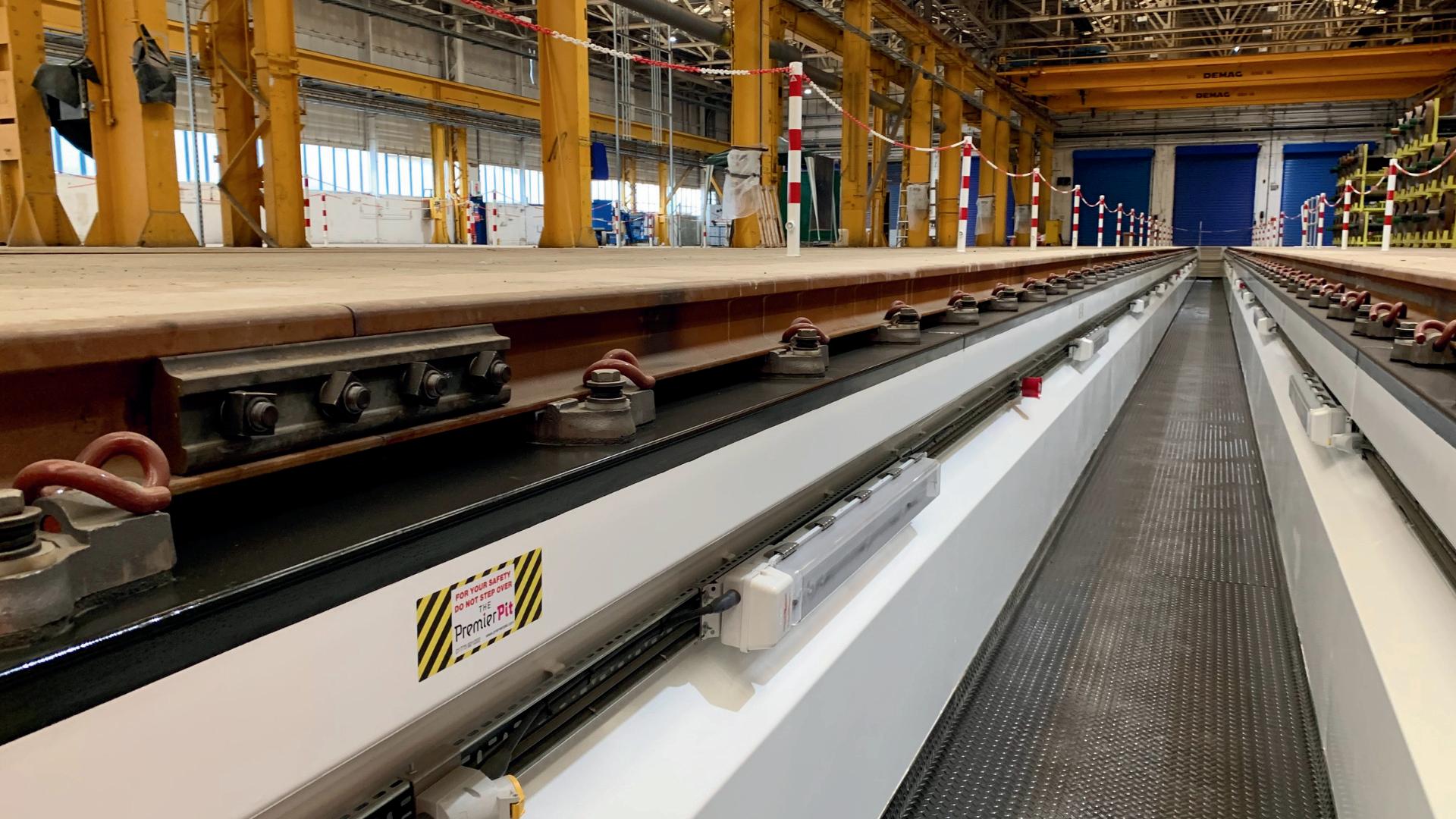
• Welded construction to ensure a water tight finish
• Quicker installation time compared to precast concrete
• High quality finish
• All internal service ducts fitted prior to installation
• Easy to clean
• Rail attachments fitted prior to installation
Premier Pits has led the way in pit manufacturing for over 40 years, supplying workshops worldwide. From inspection and maintenance to ATF, rail, and wash pits, we don’t just manufacture - our experienced Installations Teams handle the complete fitment, ensuring your pit is installed safely, efficiently, and with total peace of mind.








Rena Magdani is National Head of Employment, Pensions and Immigration and Partner at Freeths
Rena Magdani, National Head of Employment, Pensions and Immigration and Partner at Freeths, draws on the findings of Freeths' 2026 Employment Survey to set out what rail employers need to do now
This year’s survey results were shaped by the reforms under the Employment Rights Act. They have prompted a noticeable shift in employer priorities, although not necessarily in the direction the Government intends.
Employers are not optimistic about the impact of the reforms. Sixty-one per cent believe they will make the UK less attractive for investment, while only 12% think the Employment Rights Act will improve job quality and productivity. We are also hearing that rising employment costs, combined with stronger employment protections, are causing some businesses to pause recruitment investment.
Our survey found particular concern about changes to unfair dismissal rights, as a result of which performance management was identified as the top priority for the year ahead. From 1 January 2027, the qualifying service needed to bring an unfair dismissal claim will reduce from two years to six months. The Government estimates this will extend unfair dismissal protection to an additional 6.3 million workers.
Employers therefore recognise that they need to do two things. First, they must manage and assess new starters more
effectively during probation. They know that retaining poor performers beyond six months makes it harder to address performance later, because employees will then have full protection against unfair dismissal. Second, as more employees gain better protection, employers need managers who are well trained and confident in handling disciplinary and performance issues fairly.
The stakes will increase further with the removal in January 2027 of the cap on unfair dismissal compensation (currently the lower of one year’s pay or £123,543). While awards are still based on loss of earnings, removing the cap is likely to have the greatest impact where high earners are dismissed, where a dismissed employee is in a defined benefit pension scheme, or where their prospects of working again are limited.
Alongside upskilling managers on process, employers should also consider the cultural impact. Adopting a more robust and structured approach to probation reviews must not create an oppressive or unwelcoming environment that encourages promising new starters to leave. Recruitment is difficult in many areas, with the British Chambers of Commerce recently reporting that hiring problems are most significant in transport and construction. With such recruitment difficulties, then retaining and developing good recruits becomes increasingly important.
Significant reforms on harassment law are due in October 2026. The duty on employers to prevent sexual harassment will rise from taking reasonable steps to taking ‘all reasonable steps’.
The consequences of getting this wrong can be serious:
• Where a sexual harassment claim succeeds, compensation may be increased by up to 25 per cent if the employer is found to have fallen short of the required standard.
• Failures may also trigger investigation or enforcement action by the Equality and Human Rights Commission (EHRC).
Employers will also be liable where employees are harassed by third parties in the course of their work, if the employer has failed to take all reasonable steps to prevent it. This is particularly relevant for organisations with customer-facing roles, where staff may be exposed to harassment or discriminatory comments from customers or members of the public.
Our survey showed an encouraging 24 per cent increase in the number of employers with sexual harassment training programmes in operation. However, some employers still have no training programmes or risk assessments in place and even if there are programmes in place, if they have not done so already, all employers should review their current approach to preventing harassment in the light of the new standards.
This may include:
• Updating or carrying out targeted risk assessments.
• Reviewing contracts and codes of conduct for suppliers, visitors and contractors.
• Reviewing and strengthening policies and procedures.
• Delivering effective, tailored training.
• Embedding a culture of role-modelling, allyship and bystander intervention.
• Ensuring clear, trusted reporting and complaint mechanisms are in place.
Our survey suggests that, within DEI initiatives, employers’ main areas of focus this year are neurodiversity and menopause. However, more than half of respondents reported low or no manager confidence in supporting colleagues experiencing menopause. Employers should consider training and practical support materials to build capability and confidence in this area. This is especially important because from 2027, employers with more than 250 employees will need to set out in their Gender Equality Action Plan what they are doing to reduce their gender pay gap and support employees experiencing menopause.
Chief Operational Officer at CNA

CNA is a non-profit body that brings members of the transport, mobility and service community together to advance an open ticketing standard that supports seamless, consumer ticketing needs.
Sam Sherwood-Hale spoke to Yann Chermat, Chief Operational Officer at the Calypso Networks Association, about the role of political will in driving standardisation, what the Île-de-France digital wallet breakthrough means for networks around the world, and why keeping costs under control in the long term remains the hardest problem in ticketing
SSH: What has your operator-side experience taught you about what a successful long-term approach to standardisation looks like in practice?
YC: The most significant thing is advocating for a long-term approach to investment in ticketing systems within authorities and operators. That long-term vision is, for me, the very essence of a standardisation strategy. But it is often quite difficult to maintain that approach when there is pressure around deadlines and initial costs within a project, and that frequently leads to short-sighted decisions. Years later, we can see that those decisions carry functional and financial consequences.
We also have to keep in mind that ticketing is sometimes just one aspect, or even a small aspect, of a larger infrastructure or transportation project. That makes it all the more difficult to advocate for standardisation, specifically within ticketing systems. The argument that has to be made, time and again, is that an investment which may appear larger at first, because of the effort required to move towards standardisation, delivers clear operational, financial and governance benefits in the long run. That is a hard case to make when a project is already under pressure on deadlines and initial costs.
SSH: Leisure now accounts for 54 per cent of rail journeys in Britain, with commuters at just 30 per cent. What does that shift in demand mean for ticketing infrastructure, and how can operators make sure that they are able to meet this need?
YC: We have witnessed this trend not only in Britain but in France, and I would say across Europe and at a more global scale. In the post-pandemic period, with the rise of remote working, passenger habits have become far less predictable than before. Commuter travel lent itself to more settled fare patterns and models; that has become more difficult to rely upon.
This demands greater flexibility and variety from public transport authorities and the operators working for them. To deliver that flexibility and variety, the answer lies in adopting ticketing sales systems that are as scalable and agile as possible, while keeping maintenance costs under control, which is always a key factor.
‘What is stored is a real transport ticket, and that is genuinely a world first.’
The more modular, standardised and open a system is, the easier it is to evolve and to scale. An open system is also a means of remaining independent from any single supplier, protecting operator sovereignty and long-term resilience, so that you retain the ability to choose between multiple offers over the long term. There is another dimension to this, which is specific to the work of an association such as CNA. We bring together different players, including authorities, operators, manufacturers and service providers, and that collaborative dimension is itself a way of addressing this unpredictability. Collaboration means sharing experiences: recognising that a challenge faced in one region is a global trend, and then asking what the best practices are and how we should be designing our systems to respond.
SSH: CNA reported 265 per cent growth in mobile ticketing activations in 2025, reaching nearly 15 million. Is that growth evenly distributed across your networks, or are certain markets pulling significantly ahead, and where does the UK sit?
YC: The transport networks in the Paris region account for the largest share of that strong growth, driven by the introduction in 2024 of the service allowing users to purchase and securely store travel tickets on Apple devices using NFC-enabled mobile. There was then something of an Apple effect, and all mobile distribution channels, both Apple and Android platforms, in the Île-de-France region saw a surge in user numbers. That pulled the broader adoption along. We can witness this strong growth primarily within that region at present.
Other regions around the world are looking at that success and preparing their own deployments. In Canada, for instance, in the Quebec region and in Montreal specifically, they are working on new services for NFC-enabled mobile
phones. Paris represents a huge and genuine breakthrough, and now that its functional success is established and these figures are known, it is a trend that is clearly spreading.
SSH: The Île-de-France digital wallet integration is presented as a European first. What made that possible there, and what would need to be true for a comparable deployment to happen in other cities?
YC: It is worth being precise: it is not only a European first, but it is technically a world first. What is stored in the Apple Wallet in Paris is not a stored value, as there were already existing services for that. What is stored is a real transport ticket, and that is genuinely a world first.
What made it possible was, first and foremost, political commitment. Paris had been developing a system based on Calypso and standardised solutions for years, and there was the political will to continue developing that standardised infrastructure and to base the new mobile services on a secure and open standard, designed specifically for public transport. It was also made possible by close technical collaboration between multiple parties. CNA developed an applet compatible with the iOS environment, providing operators with the technical tools to innovate while remaining in control of their systems. This then had to be integrated into a broader mobile ecosystem with other players, and it then had to be processed by the regional validators, because passengers loading tickets onto their mobile devices still have to pass through gates and validators across the region. That required significant technical development and very careful coordination.
For a comparable deployment elsewhere, that same political will and that same close collaboration are necessary. It is also a matter of building the right technical and financial business models to make those different systems sustainable in the long term. Every city and region has its own constraints and parameters, but the Paris example demonstrates that it is possible, and it allows other cities to ask the right questions and to plan their own deployments with confidence. When there is strong political will behind a project, even in a smaller city or region, it is possible to bring the right people together and make it work.
SSH: Does the shift toward public ownership under Great British Railways make the case for open standards easier to advance?
YC: Public ownership matters because it brings political will, and political will is a key factor. But it is worth being clear: standardisation also speaks to private interests. The argument for it is ultimately one of long-term profitability and sustainability, and that case holds regardless of ownership model. What matters most is that whoever is setting the strategy makes a deliberate choice to pursue standardisation, because that is what delivers sovereignty, open markets and protection against longterm supplier risk. If your primary supplier ceases to exist in three or four years, an open, standardised system means you are not stranded. That condition can be met under public or private ownership. The strategic choice has to come first.
SSH: The 2024 Paris Games were a realworld stress test for open, modular ticketing architecture at scale. What did that demonstrate, and is there a comparable moment on the horizon that could serve a similar purpose?
YC: Paris showed that a standardised, independent ticketing system, owned by a public authority, was capable of meeting the challenges posed both by mass public transport at scale and by a major event such as the Games. There are other frameworks besides Calypso one could choose, EMVCo for instance, and the question is always whether an open, standardised, independent system can perform. Paris answered that: yes, it can, and it works for users, while remaining manageable and sustainable for operators.
Behind that, there is a specific concern about technical performance. In Paris, as in London, large numbers of passengers must pass through gates and validators throughout their journeys, and it must be fast. The NFC-based and contactless technology underpinning Calypso addresses that speed requirement.
On the horizon, we have the FIFA World Cup. Mexico is one of the host nations and has been developing a Calypso-based system for several years. Mexico City faces the same mass public transport challenges as Paris, and the World Cup will be a significant real-world test. Looking further ahead, Morocco will co-host the 2030 World Cup and is currently working on its transport and ticketing infrastructure to be ready in time. We have had the opportunity to meet with authorities and national rail operators there, and they are asking precisely the right questions: what were the main challenges during the Paris Games, and what should we be thinking about now to be ready in four or five years? These are the next comparable moments, and they are also a way for other networks to draw directly on previous experience.
SSH: CNA's recent commentary points to EV charging, parking and building access control alongside transport ticketing. How does CNA position itself in those adjacent markets, and how does the open architecture of Calypso allow operators to create ticketing infrastructure that supports this multimodality?
YC: The connection is a natural one, because Calypso is built on highly secure and trusted protocols. That security makes it an attractive option for any contactless service requiring fraud protection, and it led quite naturally to other fields: access control, parking access and, within parking, EV charging.
In parking specifically, the native technical interoperability that Calypso provides as an open standard makes it possible to use the same card or mobile device across different systems within a broader ecosystem that can include parking. A concrete example is Interparking, a major international operator in the urban parking sector based in Brussels, which has been a CNA member for years and offers integrated services via Calypso transport cards, making it possible to use public transport and then complete or begin a journey by parking and, if relevant, charging an electric vehicle.
More recently, we established a partnership with the Smart Physical Access Control (SPAC) Alliance, which brings together various players in access control and cybersecurity in Europe. That cross-membership reflects our ambition to position Calypso as a reference standard wherever secure access is required and address the wider needs around access control and security. Our aim is to ensure that this standard, which natively delivers security and interoperability requirements, is known and understood across these broader fields, within a wider mobility ecosystem and beyond it.
SSH: The CNA User Days came to Africa for the first time this year, and Dakar is building an agile transit system from scratch without legacy infrastructure. What can established networks like those in the UK learn from that kind of greenfield deployment?
YC: These examples from new and emerging systems offer an opportunity to be reminded of the importance of political will, and of the autonomy of the relevant authorities right from the outset of a project. In established regions, we perhaps no longer think consciously about how these systems began. Seeing these projects develop makes that visible again: it is much easier to start a project with real political organisation and genuine sovereignty behind it, with decision-makers who can say, this is the long-term strategy and this is what we owe our citizens.
Beyond that, these new deployments allow established networks to re-examine
their own models, technical, economic and business. We have old models, and these emerging networks give us an opportunity to ask whether we still have the right frameworks to sustain the coming decades. Most of the time we assume the question goes one way: what can a new network learn from the established ones? But there is a real question in the other direction too. It can be a genuine source of inspiration for modernisation, innovation and, perhaps sometimes, revolution.
SSH: CNA argues that operators should demand independent certification and compliance evidence from ticketing suppliers as a matter of routine, in the same way they would for rolling stock. Is that currently happening, and where does the industry fall short?
YC: Certification is a tool to confirm that products will perform in the manner expected and to the standard required. We do see more and more public transport authorities and operators around the world including compliance and certification requirements in their tender specifications when they opt for a Calypso system. In terms of what is already well established, the certification of cards and mobile solutions is mature, supporting interoperability and open competition, with around sixty certified products listed today among cards and mobile solutions provided by different companies.
The area where the industry falls short is terminals, including validators, gate control systems and what we call ticketing terminals. There is still significant work to be done on the certification pathway for these, because integrating Calypso properly into terminal hardware is technically the most demanding part of the process for integrators and manufacturers. We have been developing tools to support that, including SDKs and open-source software development kits to help the industry integrate Calypso solutions into their devices more easily. We are also currently working on certification processes specifically for terminals. Defining how to certify a terminal requires first agreeing on
‘Most of the time we assume the question goes one way: what can a new network learn from the established ones? But there is a real question in the other direction too.’
‘If your primary supplier ceases to exist in three or four years, an open, standardised system means you are not stranded.’
a standardised architecture, on the relevant software layers and on which interfaces should be present. We are close to having that framework in place, and when it is ready it will be a significant milestone in ensuring compatibility between media and ticketing devices.
SSH: Digital-first ticketing carries a real risk of excluding unbanked and less digitally confident passengers. How does CNA ensure that drive toward modernisation does not leave people behind?
YC: Calypso is, by design, an open ticketing standard that is independent of the banking sector. It is not linked to any payment scheme or specification from banking, and
it operates entirely independently of those systems. The Calypso specification enables the development of both physical media, such as cards and paper tickets, and digital tickets on NFC-enabled mobile devices. That combination, addressing both physical and digital channels while remaining independent of banking infrastructure, is the means by which Calypso natively supports inclusive design.
The challenges of inclusivity vary significantly depending on the region: the proportion of passengers using mobile devices, access to bank cards, preference for a transport card or other medium. Each context is different, and the specification is technically ready to address all of those realities. The flexibility to design systems tailored to a variety of social and demographic contexts is built into the standard.
SSH: You have described the ideal ticketing system as easy, beautiful and simple for passengers while remaining manageable and sustainable for operators. Which part of that equation is the most challenging, and how can it be addressed?
YC: The second part, keeping development and maintenance costs under control in
the long term, is undoubtedly the most challenging. The answer lies in building a sound design for modular, standardised and open systems whose components can be easily and independently upgraded and supplied by a variety of providers in open and competitive markets. That is what enables genuine control of the total cost of ownership over the long term, and it is what makes a system remain manageable and sustainable for operators.
There is also a dimension specific to CNA as a community that I think may be what makes our approach distinctive. We are not a private company driving our specifications from the top down, we are a community governed association. The Calypso specifications are written and maintained by operating authorities and the various players in the ticketing industry, for their own needs. Every member is free and invited to participate in the technical groups, and hundreds of members are involved. The aim is to bring the best specialists to the table, to keep systems open rather than closing technical doors, and to embed best practice at the design stage. That is itself a way of ensuring that what is built is manageable and sustainable, because it has been designed by the people who will have to live with it, for the long term.

SSH: What set TP’s proposal apart, and what capabilities were most critical to winning the ScotRail contract?
KA: What set us apart was our ability to combine deep rail sector expertise with modern capability and proven delivery models, in a way which aligned with ScotRail’s ambitions. We’ve supported companies associated with rail and train operating companies for over 15 years. That includes long-standing partnerships with the Rail Delivery Group, where we deliver their National Rail Enquiries and Railcards services, and with Southeastern Railways, where we’ve been award-winning for supporting vulnerable customers and delivering customer service improvements against the backdrop of significant disruption and high contact volumes.
That experience gave us a deep understanding of what ScotRail required, particularly the importance of reliability, empathy and responsiveness when things don’t go to plan. Alongside that, our rail expertise allowed us to demonstrate how we could modernise customer engagement through multi-channel delivery and flexible operating models, supported by strong technology partnerships.
SSH: How do empathy and modern technology actually work together in practice?
RC: At TP we focus on creating a customer experience through our teams around emotional intelligence (EI) augmented by artificial intelligence (AI). The approach is about building up that emotional intelligence, that empathy and rapport for our colleagues, and then augmenting it with innovative technology through AI and automation. The heavy lifting is done by the technology, and we then upskill and
Client Solutions

empower our people for the more complex interactions with customers through our EI focused training.
We have half a million people working for us globally, and we’re investing in emotional intelligence training for every single one of them, right through the life cycle of being a member of the TP team. On AI adoption, whenever we’re creating any solutions, we include our people as part of that journey. It’s built with them through an iterative, agile process, because they’re the end users and know best how it will work for them.
SSH: Is this built in-house?
RC: Yes. Within TP we have what we call TP.ai FAB (Foundational AI Backbone), a portfolio of AI solutions we offer globally. For different verticals and sectors we’ve got specific AI solutions, but also a suite that can be utilised across our customer base. For example, tools that assist agents in improving productivity and quality, and in training, such as role-plays done by AI, so that before our people ever speak to a live customer, they’ve had the opportunity to have those conversations with AI and the first call doesn’t feel as daunting.
SSH: What does ‘modern’ customer contact look like in practice for ScotRail passengers, and how will services evolve over time?
RC: It’s about giving passengers choice, but also convenience and consistency in how they interact with us, and ensuring we’re accessible to all. For ScotRail, that has meant delivering a fully integrated multichannel experience: voice, email, messaging and written correspondence. Later this year we’ve got plans to add web sales and passenger assist as well.
TP is a global business process outsourcing company providing customer experience services across multiple sectors, including rail. It employs around half a million people worldwide and has supported rail and train operating companies for more than 15 years.
Sam Sherwood-Hale spoke to Kathryn Allen and Ryan Creighton about TP’s approach to customer support and long-term partnership
‘What set us apart was our ability to combine deep rail sector expertise with modern capability and proven delivery models.’
It’s not just about adding services and channels, but ensuring they’re connected, so customers don’t have to repeat themselves and each interaction feels informed and seamless across their journey, from planning through to reaching their destination. We’re also being more data-driven and proactive, using insights to identify trends and reduce friction in key journeys such as delay repay. Over time, that means evolving into a more intelligent blend of digital self-service and human support. Simple interactions get handled quickly and efficiently, while more complex or sensitive ones get empathy and rapport from our emotionally intelligent, trained advisors.
For Southeastern Railways last year, they asked us to focus on over 30 different business challenges. We analysed the data we captured on their behalf, and that resulted in over 108 different customer service recommendations which enhanced the service for their customers.
SSH: That data you’re able to access, how much has that increased over time, and what are some of the challenges in handling it?
RC: For this solution we’re using ServiceNow with our partner UP3. The rail industry is complex, with lots of different systems, some of which may be legacy, but we’ve been
‘Automate the routine, reduce customer effort and waiting times, and free our people to focus on the moments that matter most.’
able to pull a lot more data together over time, working with experienced partners. To slice and dice that data, we use tools such as Power BI to put it into a format where we can run bespoke reporting. That gives us an aggregated view, providing the best insight possible to our customers.
SSH: You’re working with UP3 and the ServiceNow platform. How does this technology change what’s operationally possible, and where does it deliver the biggest impact for passengers?
KA: The UP3 ServiceNow platform is specifically designed for the rail industry to manage delay repay, rail compensation and fraud prevention. It brings together multiple touchpoints from across a customer’s rail journey, integrating with the CRM, the train running time system and ticketing systems to enable automation. For ScotRail passengers, that means faster resolution times for delay repay requests, and getting paid more quickly.
For our agents, it enables smarter case management to deal with the exceptions that can’t be automated, where data is missing or a fraud alert is triggered. As an example we are currently focusing on delay repay automation on ScotRail, with a roadmap to increase that as we identify trends through the data. Through our experience with Southeastern Railways we have a lot of best practice expertise that we can share. While we have our own AI technology in-house, sometimes we need to partner with specialists, which is what we’ve done here for ScotRail.
SSH: You’re monitoring how to automate more of the services. What do you look for as signs of success?
RC: It’s the percentage we’re automating, and why we aren’t automating more. That could be whether the application for delay repay needs refining, the accuracy of payments, or customer satisfaction. We’re sharing the best practice we’ve established from previous experience and seeing how things come together, utilising team members who’ve already been through the journey.
It will be driven by the contact drivers that fall outside automation. Some of it is around the parameters for when payments are made. Some is around the availability of
data, because not all networks are the same. ScotRail has some quite rural areas, and some of the data just doesn’t come through as readily. Each rail operator’s capability will differ depending on the mix of data available and how their customers interact with them.
SSH: Where do you see automation genuinely improving the passenger experience, and where is human interaction still essential?
RC: Automation plays a vital role in improving both efficiency and customer experience, particularly in high-volume areas such as journey planning, fares, disruptions and delay repay. We’ve seen that clearly with Southeastern, where automation helps us manage significant spikes in delay repay claims during industrial action while maintaining strong overall service levels.. Parameters can be opened up when there’s a known root cause, such as industrial action and stations being closed, so less manual intervention is required.
But human interaction remains very essential, especially during disruption, in more remote areas, or when customers are vulnerable or distressed. That empathy, reassurance and problem-solving from a real person is critical. Our approach is about striking the right balance: automate the routine, reduce customer effort and waiting times, and free our people to focus on the moments that matter most and use their emotional intelligence. That combination delivers a more efficient and more human experience at scale.
As an example, for one of our rail clients we’ve used AI interaction analytics to identify the reasons for customer calls, then designed and piloted voice AI bot to automate journey planning, fares and disruption enquiries. We’ll look at that as best practice and the potential to utilise with ScotRail.
SSH: How do you avoid over-automating?
RC: Everything we do, we do through a low-risk pilot approach, and there are several factors we always review. First is the customer experience: is it the same or better than before the level of automation? Second is the employee experience: are our people happy with the tools, does their job remain fulfilling? Third, from a contact centre perspective, we check whether our quality scores are the same or better. If we don’t strike the balance, we’ll rework before any rollout, alongside other success criteria such as efficiency gains and productivity improvements.
SSH: ScotRail serves a mix of urban routes and remote communities. How does that influence how you design, staff and manage the service?
KA: Because we have that mix with ScotRail, we’ve designed our operating model
accordingly. We have agents based in our centre in Glasgow, and work-at-home agents across Scotland, so we have people who understand both the urban and the rural and how people travel. As we grow and recruit or backfill, we’ll build more on that approach to ensure we’ve got the right mix.
On training, we make sure agents understand the real-world impact on passengers calling us. For example, people might arrive in Mallaig on the ferry from Skye with only a few onward train choices, so we need to factor that into journey planning. We also factor in the ability to scale and be flexible, so that if bad weather hits one area of Scotland, we can flex resources to maintain consistent quality. It’s a combination of strong operational processes and local understanding.
SSH: The service is delivered from Glasgow alongside a Scotland-based work-athome team. How important is local presence in delivering effective customer experience in rail?
RC: Local presence is really important in a sector where services are so closely connected to communities. For ScotRail, it was important that we supported regional employment and community engagement. The employees talking to ScotRail customers are all based in Scotland, either in Glasgow or further afield. A key part of TP winning the service from the incumbent, was our ability to TUPE across the employees, protecting employment in Scotland while retaining knowledge and experience, which is important for service continuity.
Our advisors travel on the network themselves and have a good understanding of the geography and customer context, which leads to much more relevant and empathetic interactions. The work-at-home model gives us flexibility and resilience, but also access to a broader talent pool. We can do a mixture of office-based and work-at-home recruitment as ScotRail’s service grows.
Through training we want people to feel knowledgeable and ready, but they’ll always have a support network available virtually. We use Microsoft Teams, with regular check-ins with line managers and access to broader TP channels. We’ve had to change our employee engagement strategy greatly since Covid. Around 85 per cent of our roughly 11,500 UK staff work from home, so we’ve got dozens of different employee engagement activities run virtually to keep teams engaged and informed.
SSH: Given you’ve taken on a lot of the incumbent’s staff, how different is the work they’re doing now compared to before?
RC: In terms of outcomes, it’s very much the same. We’re delivering good customer service and meeting requirements. But the systems are different, and how TP does
things is different. Everyone who moved across went through a period of consultation and got a full induction into TP as a business and into the new systems and ways of working. Despite coming over with prior knowledge, we trained them as if they were brand new staff, and provided the same level of support as they onboarded into TP.
SSH: Is that quite a unique scenario, having staff who were doing the same job previously, but under a different administration?
RC: It happens quite often. In our sector, contracts come up for tender from time to time, and under TUPE, employees’ rights and jobs are protected. So when we win work already being delivered by a competitor, we’ll TUPE across as many staff as possible who’d like to come with us. The largest example was with one government client, where we TUPE’d over 2,500 people over a two-month period. We’ve got a team dedicated to that process and onboarding, because it can be unsettling if you’ve worked somewhere for years. It’s about reassuring them their role should be safe, and giving them as much information as possible to help with that bedding-in period.
For ScotRail, one of the team leaders who came across was able to share a lot with us about ScotRail’s business, since it was a new client for us. We utilise that experience, while coaching and developing people who’ve moved across to work in our operating model.
SSH: TP highlights over 15 years of rail sector experience. What are the most common mistakes operators still make in customer contact, and how are you helping ScotRail avoid them?
KA: The main one is that customer contact can be treated as standalone, rather than as a core part of the passenger experience. The rail sector is complex, with multiple stakeholders, so we need to make sure it doesn’t create fragmentation for the customer. There are multiple systems, such as the CRM, ticketing and journey time systems for delay repay, plus disconnected channels like face-to-face at stations and help points. We don’t want customers repeating information and creating frustration or inefficiency.
We draw on our experience with Southeastern Railways as our blueprint, because it’s a quite established and mature model now. We have a cross-functional approach with their stakeholder team that allows us to work and communicate in partnership around unplanned events such as cancelled trains, or planned events such as large crowd management or strikes.
Our approach is to create an integrated model, with good stakeholder management and communication. We’re a partner, and part of an integrated way of delivering services across the customer journey.
SSH: Is treating things in isolation something you find quite common across your interactions with different clients?
RC: More and more, over time, there’s been a real recognition that customer experience runs right through, from the initial contact to the train arriving on time, whether it was clean and tidy, whether there was disruption, what the station was like. All of that comes together to give the total experience. Through that partnership approach, we’ve been able to help clients understand that you’ve got to look at things not in isolation, but as an integral part of the overall journey, and of customer retention too.
Collaboration, best practice sharing, and driving innovation through openness and transparency, was core to what we were proposing. We have an open-door policy. Their offices are five minutes from ours, so they can come in, sit amongst the team, and see what’s really going on. Our successful relationships are based on that kind of foundation, and clearly it was something they wanted to explore with us.
SSH: Has that siloed mentality changed across the industry in recent years?
RC: That single view of the customer, that one version of the truth, is really important. The organisations we work with who get better and slicker with that are the ones most successful in delivering great efficiency and quality, while also being able to overlay more automation and review using AI. Having your systems well presented, so you can augment them, is key to the future of customer service delivery, whether that’s rail or any sector.
KA: I went to Rail Live last summer, and Alex Hynes was speaking about his experience as Managing Director of ScotRail, and how they brought track and train together. From what I’ve heard about Great British Railways, that’s a model that’s being followed. The main part for us is making sure there’s a focus on the customer experience, so you’re not having those silos.
SSH: Beyond core service delivery, where do you see opportunities to add value for ScotRail, whether through innovation, insights, fraud reduction or vulnerable customer support?
RC: We are in the early days of our partnership with ScotRail so during the contract we’ll add value through insight, innovation and continuous improvement, we’ll leverage our technology to support the contact centre and ScotRail’s customers. That means analysing the data, improving upstream processes and using self-service. For delay repay, we’ll work on improving efficiency and on fraud prevention, making sure those processes are both customerfriendly and robust. We’ll also continue to
grow our training using AI tools, and use digital knowledge bases or FAQs so agents have the right answers first time.
As a more mature example as part of Southeastern Railways fraud prevention, we identified customer behaviours and activity that our automated rules at the time couldn’t capture. We created six additional reports to be reviewed, alongside an official fraud team and new processes. That created a fraud detection ecosystem. We now review around seven per cent of all claims each month, focusing on customers who would otherwise have been missed by automation.
The key successes include a 41 per cent increase in accounts marked as suspicious and taken out of automatic processing for manual review, leading to around a 13 per cent reduction in claim payouts on those accounts. We also saw a 600 per cent increase in communications warning customers about suspicious activity, and 93 per cent of those customers stopped their claims as a result, averaging over £50,000 saved from that alone.
SSH: You mentioned the vulnerable customer support and winning awards in that area. Do you have a particular example you’re proud of?
RC: The gold standard of contact centre awards is the European Contact Centre Awards. We won a gold award for our work with vulnerable customers over the last couple of years with Southeastern, and have won a number of awards with them over the last few years.
SSH: You’ve spoken about building a longterm partnership. What does that mean in practice, and what can you deliver over time that a new entrant typically cannot?
KA: A long-term partnership for us is about continuous evolution and shared success. A lot of what we’ve delivered for Southeastern Railways is a roadmap of what we expect to have in place for ScotRail.
What differentiates us from a new entrant is our global best practice. We’ve proven tools and procedures in place, including ISO 9001 accreditation, to make sure we’re continually optimising. One of those is our account management methodology, which ensures strong governance, good stakeholder engagement, robust performance review and timely change control. On ScotRail, we were also able to assign an account manager who was experienced and a good cultural fit with the client.
Given ScotRail is new, the service only went live in mid-December 2025, those two things together mean we can build a deep understanding of their operations, ambitions and strategic priorities, and move from delivery through to proactive improvement and innovation, as well as growing the service and onboarding new service lines. Every year we do client
surveys to understand satisfaction, and put clients forward for awards. As we said with Southeastern, we’re award-winning, and we’d expect the same for ScotRail.
SSH: What does success look like for TP on this contract over the next year or two?
RC: The first thing is the embedding period, which we’re probably still just finishing off, and then adding some of the new service lines throughout this year. Next year is going to be the year where we really focus on continuous improvement opportunities and look to embed some of those. Potentially next year, or the year after, if there’s a suitable award, that would be something we’d look to do with ScotRail. But I can’t promise anything specific. We look at it all the time across our client base.
SSH: Looking ahead, how do you see customer expectations in rail evolving, and what role will digital, AI and multichannel engagement play in shaping the future service model?
RC: Customer expectations in rail are increasingly shaped by people’s experiences across all walks of life: the digital experiences we all have, multiple screens
on the go, social channels, ChatGPT and so on, all at people’s fingertips. So they expect services to be fast and seamless, and available across multiple channels with a consistent experience. Whichever channel is their preference, they should get the same outcome.
We see the future as a blend of AI-driven automation, closely integrated platforms, and highly skilled human support. AI enabled, or EI enabled by AI, that’s really our focus as a company. That technology will enable faster resolutions, increased personalisation and more proactive communications, while people remain essential for the complex, high-impact, highvalue interactions.
With the work we’ve been doing with the Rail Delivery Group, we’re able to identify the top contact drivers, such as journey planning and fares, which are very suitable for voice AI augmentation, or potentially even a fully agentic AI experience with no human in the loop, where you’d be able to complete your full booking without ever having to talk to a person. It’s really important that we use the data we have, and the technology, in the best way to deliver a great customer experience.
There’s also significant opportunity with the development of Great British Railways
Rail Pro Advert 2026 v2 outlines.pdf 1 19/05/2026 16:46:54
to deliver a more joined-up, consistent customer experience across the rail network. Over the next few years, with that kind of best practice sharing approach, all British citizens using the rail network will have an even greater level of customer service across the board with GBR.
SSH: Based on your experiences with ScotRail, do you have hope that GBR, when it’s fully up and running, will have this kind of integrated culture embedded within it?
RC: Certainly, if we’re involved. If we get the opportunity to pitch for that work and win some or all of it, our approach would be very much the same in terms of scale. We’ve got experience of managing hundreds or thousands of staff on a service, so we can scale, but still have local presence and knowledge, as well as the flexibility to deliver a large-scale solution, while keeping that culture consistent throughout. That would be the kind of DNA of what TP is all about: creating the culture our client wants to deliver, but also adding the best of what we can bring as an organisation, to make sure happy people equals happy customers equals happy clients.


CIRAS’ Susan Gray joined the Light Rail Safety and Standards Board to ask workers what gets in the way of raising safety concerns. Here, she shares the findings
Late in 2025, CIRAS and the Light Rail Safety and Standards Board spoke to safety managers and frontline workers across four GB light rail networks. We were keen to understand how people feel about raising health and safety concerns, and what gets in the way. Recognising barriers is the first step to overcoming them, and the findings offer practical insight for a sector that wants to reduce risk and strengthen learning.
Light rail staff delivered a clear message to us: low levels of reporting do not necessarily mean low levels of risk. The evidence points to a more complex reality. People working on light rail overwhelmingly believe that reporting health and safety concerns matters. Most see it as a professional duty and moral responsibility. But belief in reporting does not always translate into desirable reporting behaviour. Under-reporting exists, but the research suggests it happens in ways that can be understood – and addressed.
That matters because reporting is one of the foundations of a learning railway. If concerns, precursor events and lowerlevel hazards are not raised, organisations lose the visibility needed to spot patterns,
intervene early and strengthen controls before serious harm occurs.
Weak reporting can mask immature risk management rather than prove that all is well. A healthy safety culture is not evidenced by silence, but by a workforce that feels confident and able to speak up.
One of the clearest findings was that the workforce is not indifferent to safety. Workers consistently described reporting as critical because it can protect life, prevent harm and improve safety for them, their colleagues and passengers. Safety managers feel the same, so there is no major gap in values here. The challenge lies in the practical, cultural and psychological conditions that shape whether someone decides to report or stays silent.
Serious, immediate and visible hazards are most likely to be reported. Events that threaten service continuity or demand urgent action usually come through. By contrast, smaller issues, precursor events and routine concerns are less consistently reported. And managers told us that these
lower-level signals often provide the best opportunity for prevention. If they are missing, the industry can only learn from the outcomes of events, rather than from the conditions that create them.
The research also showed a difference between what frontline staff and managers most readily identify as ‘risk’. Frontline workers were more likely to describe personal safety threats such as abuse, antisocial behaviour, lone working and violence. Managers emphasised operational and system risks such as degraded infrastructure, trespass, time pressure and trackside exposure.
Neither perspective is wrong. The contrast simply shows that people experience risk differently depending on role and proximity to harm. Reporting systems need to capture both lived experience and operational risk.
Findings on antisocial behaviour are especially important. Abuse and antisocial behaviour were the most frequently cited risks by frontline staff, yet they also appear to be under-reported, particularly when incidents are verbal or frequent. This is a warning sign. When repeated exposure desensitises staff, the threshold for reporting rises and harmful behaviour can ‘go underground’. For leaders, that raises a broader question: where else might normalisation be dulling sensitivity to risk?
Our conversations suggested that reporting behaviour is shaped by a combination of capacity, opportunity and motivation. For example, people may know the main reporting route but still feel unsure about what to report, when to do it or what alternatives exist. They may have access to the right systems but find they do not work in signal blackspots, or that operational pressures in control rooms leave little time for listening and follow-up. They may believe in reporting but lose motivation if experience tells them that nothing changes.
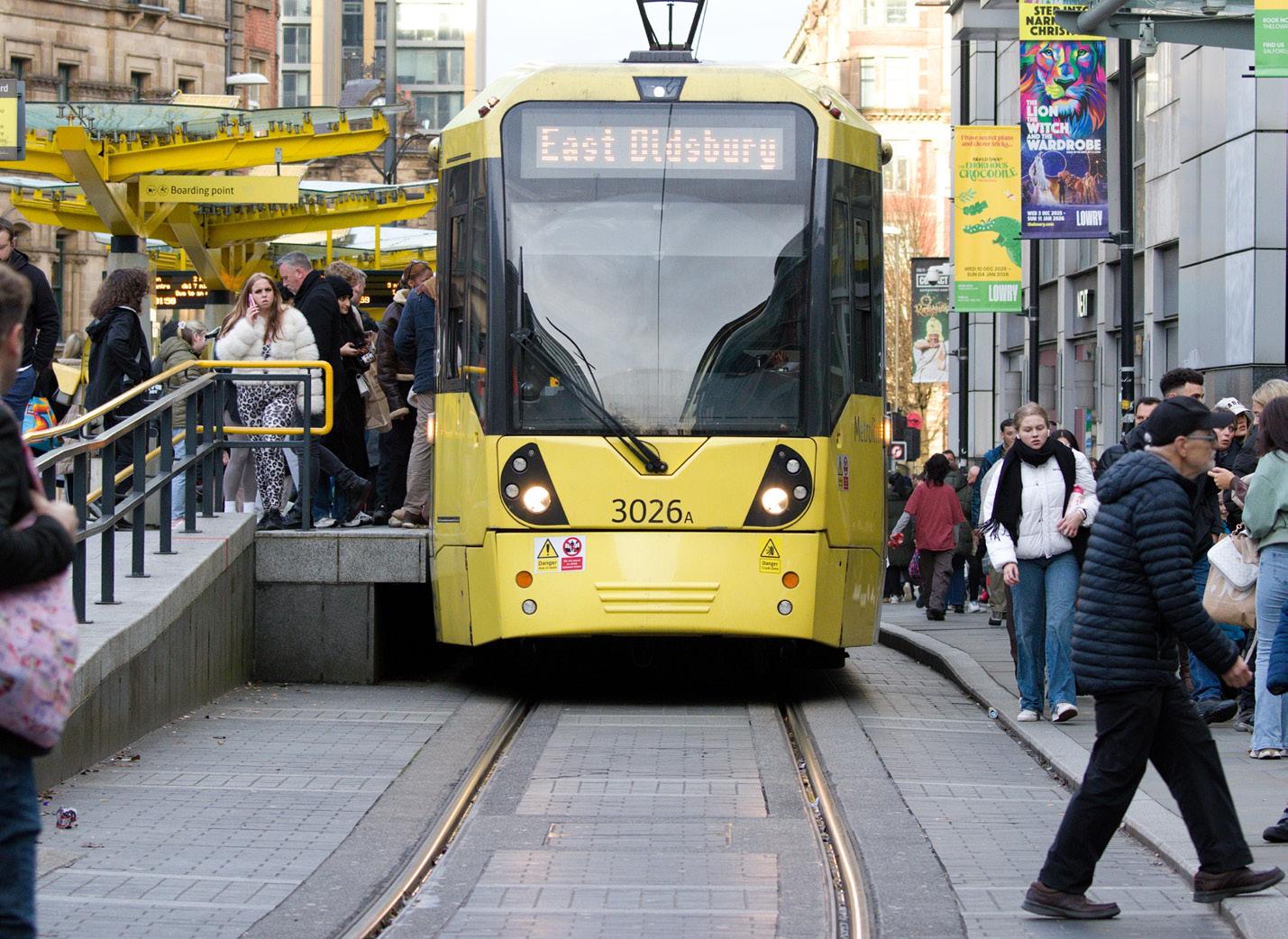
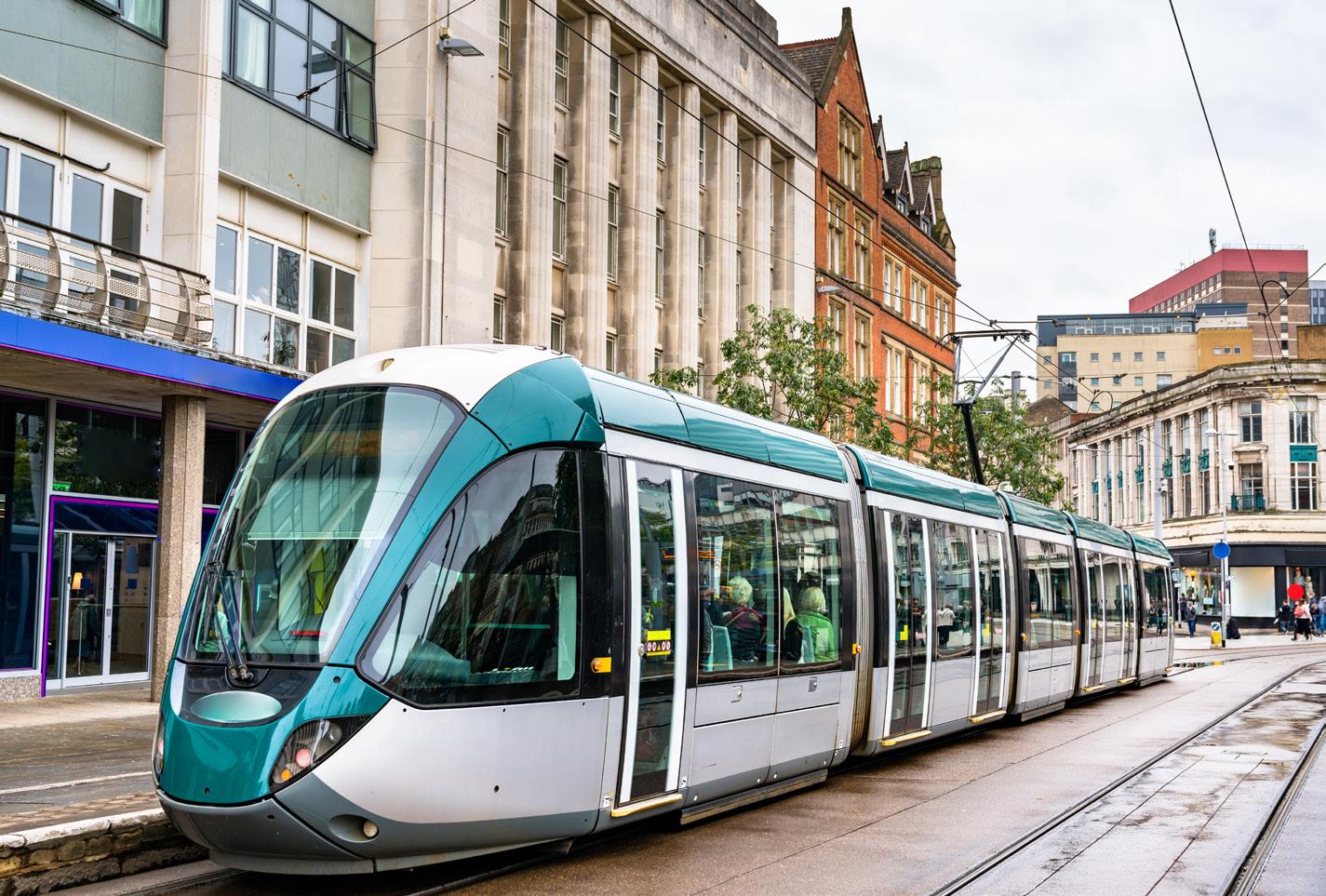
Perhaps the strongest overall message is that feedback and responsiveness sit at the heart of reporting culture. Again and again, participants described concerns disappearing into a ‘black hole’. And automated acknowledgements are not enough. People want evidence that someone has listened, understood and acted. Managers also recognised that, while existing systems don’t always make feedback easy, it’s not a ‘nice to have’. Feedback reinforces confidence, shapes peer norms and determines whether reporting feels worthwhile. Silence, by contrast, quickly feels like indifference.
The same applies to a ‘just culture’. Staff don’t experience just culture through policy
statements alone, but through everyday interactions: the tone of a supervisor, the response of a controller, the fairness of a follow-up conversation and whether the information they have shared is used for learning or blame. Where staff fear repercussions, feel dismissed or doubt confidentiality, reporting can become selective. Where they are treated fairly and respectfully, reporting is more likely to become routine.
So, what does this mean for the sector? First, organisations should be cautious about feeling reassured by low reporting volumes. A quiet system may be healthy, but it may
‘Low levels of reporting do not necessarily mean low levels of risk.’
also be one in which people are deciding that reporting is not worth the effort.
Second, the biggest opportunities for improvement may lie not in major redesign, but in the everyday mechanics of reporting culture: clearer thresholds, better signposting of routes, more frequent training, more reliable feedback and visible ownership of actions.
Third, precursor reporting and lower-level concerns should be treated as valuable safety intelligence, not noise.
Ending on a positive note, the research does not point to a disengaged workforce. It suggests a workforce that cares deeply about safety, but whose willingness to report is shaped by the systems, relationships and expectations around them. That means improvement is possible.
If rail organisations can make reporting simpler, safer, more credible and more visibly worthwhile, they will do more than increase reporting volumes. They will improve the visibility of risk, strengthen trust and support a more mature learning culture across the industry. In a safetycritical sector, that is a strategic necessity.
CIRAS and LRSSB are continuing to work together on using their research in light rail to inform future projects involving the wider sector. These will aim to explore practical ways to drive positive change in reporting culture across light rail. To find out more, contact susan.gray@ciras.org.uk

Download the CIRAS reporting app
Tel (enquiries): 0203 142 5369
Tel (reporting): 0800 4 101 101 (UK) / 1800 239 239 (ROI)
Visit: https://www.ciras.org.uk/rightcall
LinkedIn: linkedin.com/company/ciras
Facebook: facebook.com/ciras.confidential/
Lindsay Green is Director Programmes at Soroptimist International Great Britain and Ireland (SIGBI). She led the 2024 relaunch of SIGBI's rail safety survey, expanding its scope to 373 stations across the UK.
Soroptimist International Great Britain and Ireland (SIGBI) is a registered charity and membership organisation for professional women, working to improve the lives of women and girls through advocacy and community action. Founded on the principle of service, SIGBI's network of clubs across Great Britain and Ireland campaigns on issues affecting women in public life, including transport safety. The SIGBI rail safety survey report is available at www.sigbi.org
Sam Sherwood-Hale spoke to Lindsay Green, Director Programmes at Soroptimist
International Great Britain and Ireland, about the findings of a nationwide rail safety survey, what thirty years of inaction looks like in practice, and why the transition to Great British Railways may be the last real chance to get this right
SSH: The original investigation was launched in 1996 following a specific attack on a Soroptimist. How does the 2024 relaunch compare in terms of methodology and scope, and were you expecting the findings to be as stark as they are?
LG: The original surveys started in 1996, and there was a follow-up in 2002, but that only looked at about 62 stations, mostly in the southeast. I wanted this to be genuinely nationwide, so we looked at 373 stations. Since the report was published I've been told some were missed, so the actual figure is closer to 380 stations across the UK.
No, I didn't expect the findings to be quite as stark as the previous surveys. There are some positives in the report, and I'm glad of that. But some of the same issues that were flagged back then are still with us now, and that is a problem.
CCTV is much more prevalent now, and almost all stations have it, but stations often don't say where it's being monitored or whether it's being monitored at all. If it's simply recording, it's not much use except as evidence after the fact. It doesn't make you safe in the moment. If someone is in trouble
on an unstaffed platform, what matters is whether someone is watching that footage in real time and can get help to them quickly. At a lot of stations we couldn't answer that question from our observations
Only 44 per cent of stations displayed information about who is responsible for safety, and in some cases that information was inside the ticket office. If it's shuttered, you simply can't see it. That's a basic accountability measure that hasn't moved in nearly thirty years.
Some stations actually refused to allow our Soroptimists on to do the survey. At smaller rural halts, you can walk straight on without a ticket, so that was fine. But at some of the bigger stations you need a ticket to access the platform, and where our surveyors asked for permission, a couple simply said no. So we don't have results from those.
SSH: The report finds conditions are worse than thirty years ago in some respects. What has gone wrong, and who bears the most responsibility?
LG: It's not really my area of expertise, but I would suggest that franchising the
‘A human presence changes everything.’
railways into separate companies, each with different rules and different shareholders, hasn't helped. There's no consistent national standard being applied.
There is an accreditation scheme — the Safer Railway Stations scheme — but very few stations and very few operators have actually signed up for it. If more of them did, that would go some way towards addressing this, because it would make them think systematically about what passengers need, not just their own staff. It would also be something they could be proud of. To say all our stations are Safer Railway Stations scheme stations would be a genuine selling point.
One would hope that renationalisation will make things better. I'm a thirdgeneration railway person: my grandfather drove trains, my father was an industrial relations officer, my brother drives track maintenance trains. So I have a personal stake in getting this right. But it won't
happen all at once. As each train operating company's contract falls due, that's when Great British Railways will step in, and it'll take at least three years. We need to use that transition period well.
SSH: How does unstaffed station safety vary across the network?
LG: Thirty per cent of the stations we looked at were permanently unstaffed. Only 10 per cent were staffed at all times. That's a very high figure. The biggest stations are well staffed. At Doncaster, for example, I have seen LNER staff in their red uniforms everywhere. But on rural stations there's no one at all, with very little middle ground.
It's not realistic to expect every small station with two platforms and a handful of trains a day to have permanent staffing. But you would hope that if someone is getting off at one of those stations, the guard makes sure they've got off the train and off the platform safely before it moves on. That flexibility needs to be built into the timetable as a matter of course, with a buffer for it.
What worried me most was how many help points weren't working. On some unstaffed stations the information points had tape over them with a note saying ‘ring 999.’ That is not good enough. If a help point is only on one side of the platform and a passenger can't walk well, they can't reach it. And if the points don't work at all, the whole system fails.
When we first started this work, there were serious proposals to introduce driveronly trains and close all the ticket offices. If that had happened, our results would have been even worse. The Companies turned back from that, which was the right decision.
SSH: The British Transport Police reported a 50 per cent rise in violence against women and girls since 2021. How directly do you link that trend to the physical safety gaps your survey identifies?
LG: I think we're at a point nationally where there is a broader pushback against women's rights, and that isn't unique to transport. But the physical environment either enables or resists that.
The ‘See. It Say. It Sorted.’ campaign is well-intentioned but not well enough explained.
Most people think it's for suspicious packages or unattended luggage. They don't understand that if you text that number on a train because you feel threatened, British Transport Police can text you back and contact the driver directly. The train can be stopped at the next station with officers waiting. People simply don't know that.
There are some really good behaviour campaigns running about bystander responsibility, harassment and not being one of the lads. But we can't legislate behaviour. What we can control is whether the environment communicates that
someone is watching, someone will respond, and help is available.
There are also factors nobody fully accounts for. Most of our surveys were conducted during the day. Ask that same question of a woman catching the last train home and the picture will look very different. One or two station staff said they wouldn't go to their own station at night. That tells you something.
Visible emergency contacts, working help points, working CCTV that is actually monitored, adequate lighting: these are not luxuries. They need to be present regardless of budget cycles.
SSH: Does SIGBI engage with organisations working on vulnerability in transport environments, and is there scope for cross-sector collaboration?
LG: Yes, and it's developing. On the very week the report went on television, two Yorkshire clubs were at Sheffield Station doing a Community Rail in Action session, working with the Railway Children charity. There are plans for joint work with them over the summer.
Yorkshire also has an agreement to work with LNER, Northern and TransPennine Express through a rail users group, and they've sat down with those operators to talk about their concerns. Members in South East England are also doing similar work with South Eastern Railway. That kind of direct dialogue is really valuable.
Something I'm particularly proud of: a bus company in the northeast heard about the work we were doing and asked for our input into their driver safety training, specifically how drivers can better protect women passengers. They've since looked at rolling that out more widely. That matters, because the issues don't stop at the railway gate.
Our relationship with the Community Rail Network has been crucial. Gary and Jenny there gave us a list of which stations had a rail partnership or a rail user group attached, which meant I could write to those groups with our findings directly. They also have connections with British Transport Police, so the report has reached people there too.
SSH: SIGBI is calling for a named national body with clear authority over passenger personal safety. What would that body look like, and where does it sit in relation to Great British Railways?
LG: It sits with Great British Railways. That's where authority over this needs to lie. The problem now is that responsibility is fragmented across operators with different shareholders and different approaches, and you can't have a national standard without a national body to enforce it.
The Safer Railway Stations accreditation already exists and has real value. Stations that have achieved it told us their
BURNHAM HS2 PLEDGE DRAWS LOCAL OPPOSITION
Andy Burnham, the newly elected MP for Makerfield, has pledged to reinstate the cancelled Birmingham to Manchester leg of HS2 if he becomes prime minister, proposing a Crossrailstyle funding model that would draw on business rate supplements, developer levies and land value capture around new stations.
Huw Merriman, Chair of the High Speed Rail Group, said: ‘The need for the route is no less pressing today than when HS2 was first announced. A new connection between Birmingham and Manchester will add transport capacity to and from the North, while also helping to deliver the government's ambition of a more balanced UK economy. With the London to Birmingham section already under construction, the most complex and costly part of the new railway is being delivered. We now need to build on that investment, capitalising on lower delivery costs while sustaining the highly skilled jobs and world class supply chain that has been developed through HS2.’
Network Rail is planning an extensive programme of works on the North Wales Coast line between Chester and Holyhead, with a continuous closure of up to four weeks proposed for January 2027.
The programme, developed as part of the wider Network North Wales investment, is expected to include track renewals, drainage improvements, vegetation management and the installation of two new fully accessible footbridges at Prestatyn and Pensarn. The investment follows the introduction of the new North Wales timetable in May 2026, which delivered a 50 per cent increase in Transport for Wales services.
Emma Osborn, Passenger Strategy Director for Network Rail Wales and Borders, said: ‘This is one of the most significant upgrades to the North Wales Coast line in many years. While there will be some short-term inconvenience, the long-term benefits for passengers, freight and the wider North Wales economy will far outweigh that disruption.’
Passengers made 1.83 billion journeys on Great Britain's rail network between April 2025 and March 2026, according to new data from the Office of Rail and Road, surpassing the previous record of 1.75 billion set in 2018-19.
The figure represents a six per cent increase on the 1.73 billion journeys recorded the previous year. Total fare revenue now stands at £12.32 billion, eight per cent below the pre-pandemic figure of £13.39 billion.
Darren Caplan, Chief Executive of the Railway Industry Association, said: ‘The news from the ORR that passenger numbers are at record levels is no surprise, and backs up what we at the Railway Industry Association have been saying for several years now. We will clearly need more capacity in the future, and plan for consistently growing numbers of rail users, both passengers and freight. The revenue figures are also very encouraging – the current figures are now just eight per cent short of pre-Covid levels and coming back more strongly than many said they would during and in the aftermath of the pandemic.’
MILLION
Greater Thameslink Railway is undertaking a £3.6 million refurbishment of its 115-strong Class 700 fleet, covering exterior polishing, toilet repaints, interior wall vinyls and deep steam-cleaning across all 1,140 carriages. The work is being delivered in partnership with Siemens Mobility at GTR's Three Bridges depot in Sussex, funded jointly by the Department for Transport and Greater Thameslink Railway.
The programme forms part of a wider improvement plan at GTR, which transferred to public ownership on 31 May. Separately, 304 Southern Electrostar trains are undergoing overhaul at Selhurst Depot, receiving repaints, new seat upholstery and carpet as part of the C6 refurbishment programme.
Soroptimists felt noticeably more confident there. The issue is take-up. If GBR makes that accreditation a requirement rather than an option, it would transform things, covering not just what passengers need but what staff need too.
There are also the cross-boundary issues that nobody currently owns. The lighting in the car park and the tunnel leading to a station is often the local council's responsibility rather than the railway's. A couple of years ago, a Soroptimist group flagged a tunnel near a station that felt unsafe and were told it wasn't the railway's problem. Someone needs to own the whole picture from end to end. If that body is GBR, the joined-up thinking has to cover station approaches, not just platforms.
SSH: What would meaningful progress look like within the next two years, and how will SIGBI measure it?
LG: Fewer complaints, more stations registered under the Safer Railway scheme and that 50 per cent British Transport Police figure coming down. More people using trains would also be a sign of progress, because what we're really measuring is confidence. The community rail partnerships are already working on this: some have funding to take people who feel too vulnerable to travel on an actual rail journey, to show them it can be good. We might get involved in supporting that.
But the quick wins matter just as much. Going round every station and checking every help point works, then fixing the ones that don't, isn't rocket science. Putting visible emergency contact information on every platform rather than inside a shuttered ticket office. Bringing back printed timetables for people who don't have a smartphone or can't get a signal. Those things can be done now, before GBR has taken over a single franchise.
We also learned a lot from running this survey and we'll do things differently next time: electronically rather than on paper, which will make processing the results far faster. We also didn't record what time of day the surveys were done, which turned out to matter, and the next iteration will capture that.
SSH: To what extent can community activation contribute to women feeling safer at unstaffed stations, and where does it sit within SIGBI's broader vision?
LG: It can contribute enormously, because a human presence changes everything. Where you have active volunteer groups looking after stations, they're there, and they see what's not working. That visibility has value in itself.
The best example I've come across is the Hub at Hull station. It's a repurposed unit between the bus station and the railway, jointly funded by the council, the railway operator, the bus companies and local
charities. It has comfortable chairs, tea and coffee, and it's used by Andy's Man's Club, Citizens Advice, the Salvation Army: different organisations at different times. All security staff on the station have the access code, so if they see anyone looking distressed or vulnerable, they can take them there, get them a drink and make whatever call is needed.
They described a young man who had been walking up and down the platform in tears because there was a gang waiting for him outside. They put him in the Hub and got him home in a taxi. They've had women there following domestic abuse incidents and confused elderly people who were lost. It doesn't need to be staffed around the clock. The key is that the right people can get in whenever it's needed. That model should be replicated at every major station in the country.
SSH: With 30 per cent of stations permanently unstaffed, what interim measures should operators and Network Rail prioritise right now?
LG: Train guards need better awareness of which stations are unstaffed and the flexibility to act on it. Not just waving a flag and moving on, but being on the platform and making sure people have got off safely. That should be in the timetable as standard, with buffer time built in. It's a safeguarding issue and it can be addressed through training, for guards, for catering staff, for anyone working on the train.
‘See It. Say It. Sorted.’ needs to be explained properly. British Transport Police have a powerful tool there, but the public doesn't understand what it actually does. It needs to be promoted specifically as a personal safety tool, not just a counterterrorism measure.
Charging points that actually work: this is underestimated. Your ticket, your emergency contacts, your ability to call 999 all depend on your phone. We produced emergency contact cards for people to carry in their wallets for exactly this reason, after a young woman was stranded during the strikes with a dead phone and no memorised numbers. She couldn't get home for hours. That should not happen. Some stations in Japan have power bank rental points at every metro station, and that's not an impossible standard to aspire to.
Printed timetables. The southeast has decided to go entirely digital and that is the wrong decision. Not everyone has a smartphone, and not everyone has battery or signal. Even a small printed timetable you can pick up is better than nothing.
And the very simple things: check the light bulbs in the tunnels and subways, check the help points work, put emergency contact information somewhere visible on every platform. In the old days a station manager had pride in their station because it was their station. Someone needs to own that again.

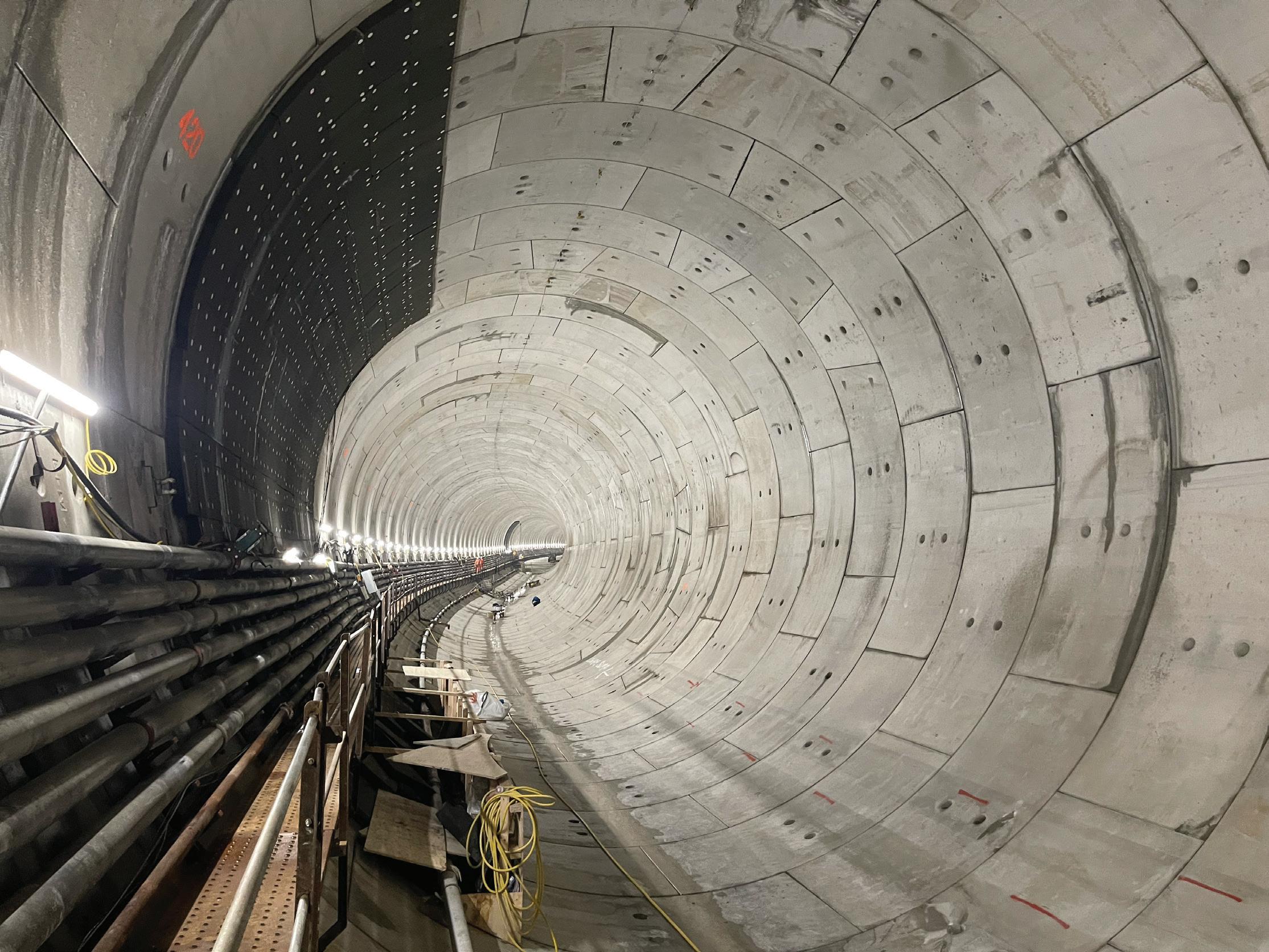
For more than 25 years, Gall Zeidler Consultants has delivered world-class tunnel consultancy and design services. Our specialists apply state-of-the-art construction and rehabilitation methods, combining proven technologies with innovative solutions to create exceptional results for our clients. With more than 580 kilometres of tunnels completed across the globe, we are trusted leaders in our field. We see challenges not as risks, but as opportunities — to innovate, to excel, and to redefine what’s possible underground.









































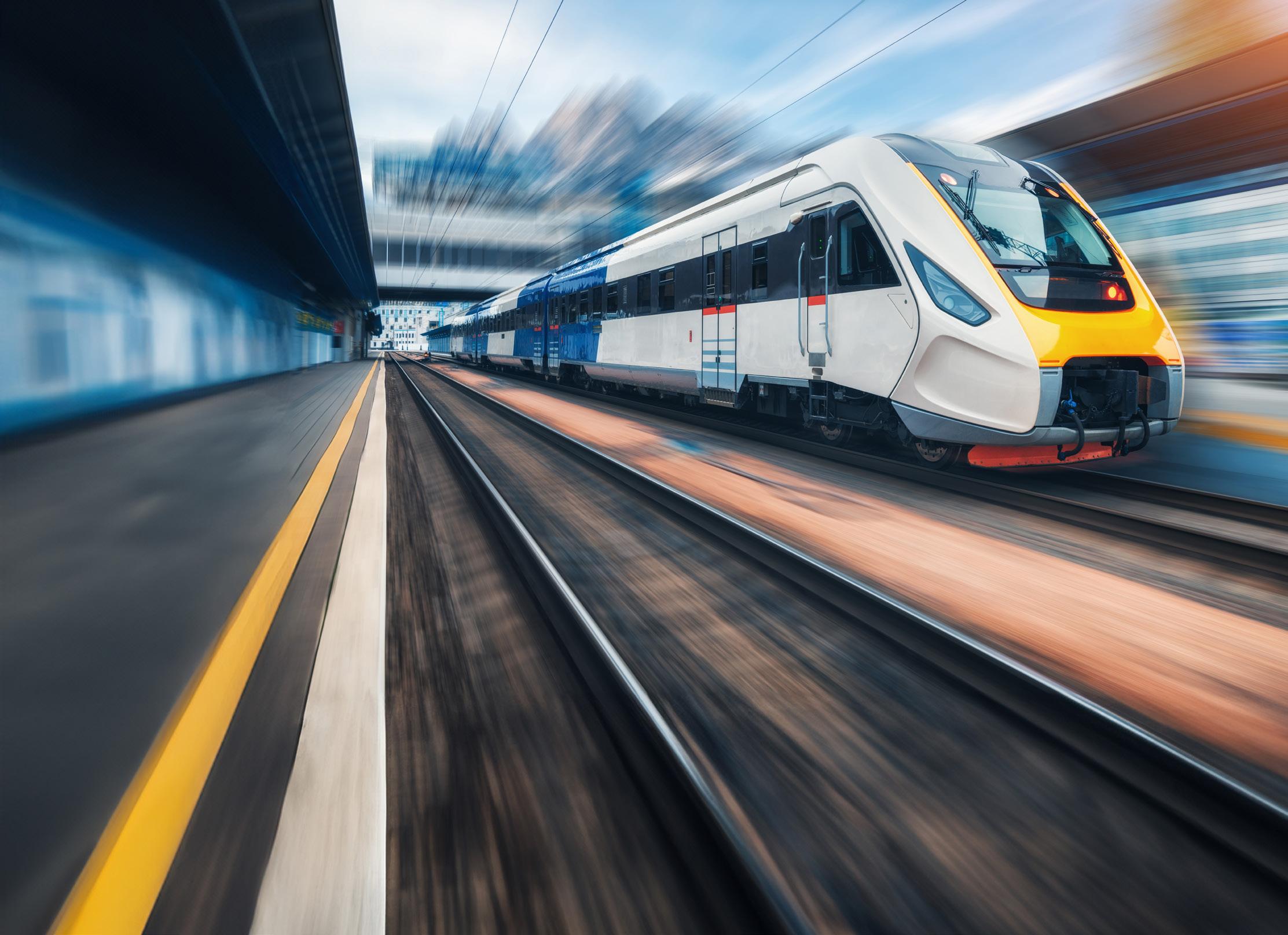


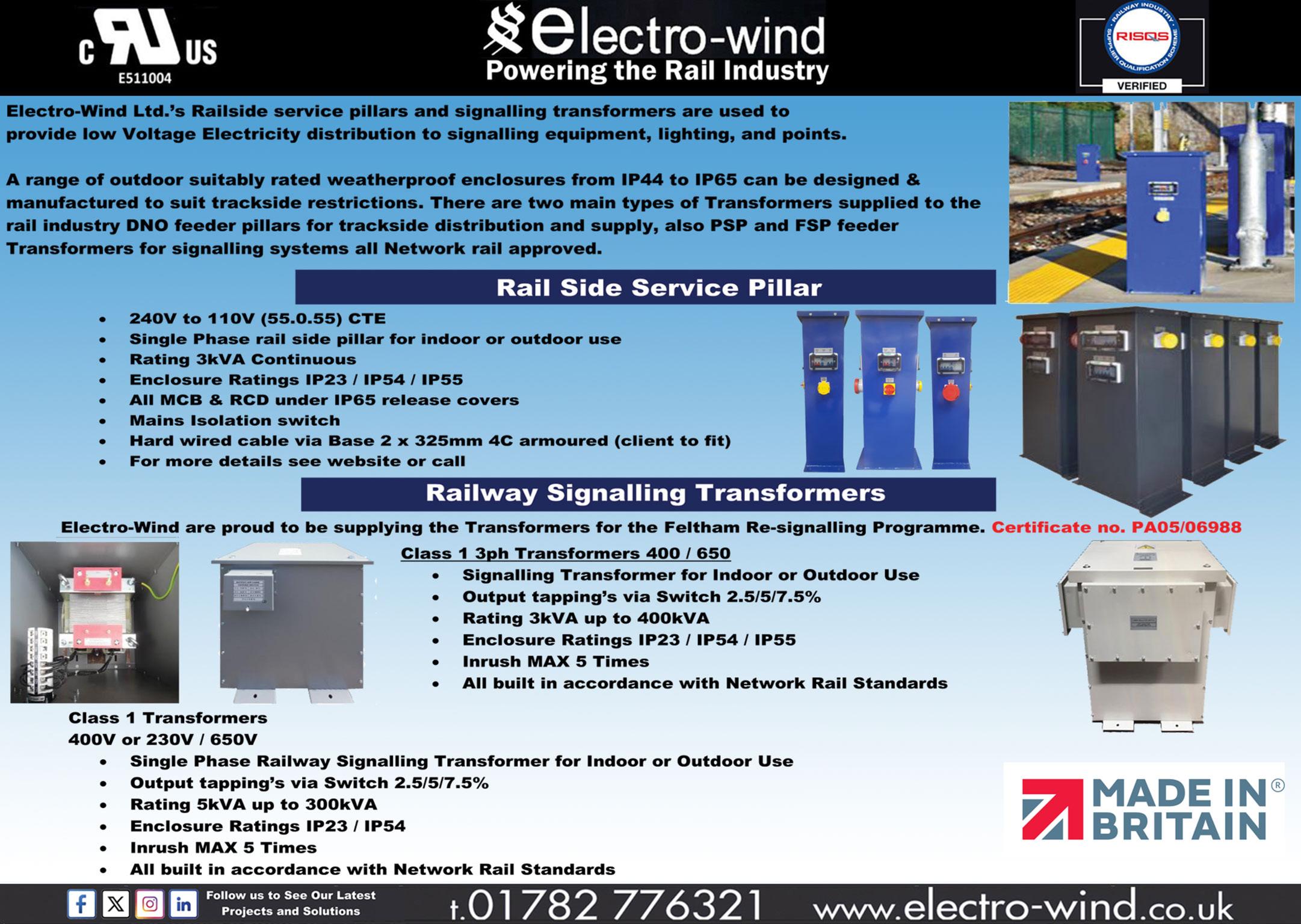
CEF exhibited for the second consecutive year at Rail Live 26, further showcasing its commitment to working with the rail sector
Joining the CEF Rail team on stand were manufacturing partners, including many SMEs showcasing products & innovations to support the transition to a greener and more sustainable rail network. The Electrification message was strong on stand F28!
These included Ensmart Battery & Energy Storage Systems along with Rolec and Proteus showcasing EV charging and bespoke power distribution solutions.
Recognising as rolling stock fleets move to electrified solutions including Bi Mode, there will be increased power demands at depots, storage requirements and blended renewable solutions that will help distribute energy in a sustainable, responsible and economic manner.
Panasonic discussed their new heating and cooling technologies and Alumero covered PV and mounting systems suitable for application across the rail network. Armorduct presented their ‘Magnelis’ range. A high performance, greener cable containment solution.
From day-to-day operational needs, the demand on the rail network in the UK is likely to increase, meaning more trains, more maintenance regimes and demands on manufacturing innovation. ‘Magnelis’ helps maintenance teams trackside and in managed buildings where enhanced corrosion protection and self-healing properties in containment will benefit long term.
Supply Point partner with CEF offering Vending Solutions to depots, streamlining product availability and ensuring Compliant materials are on site when needed. Their solutions also enable control of calibrated equipment.
Schneider showcased its extensive range of Industrial automation products specifically for rail applications which generated much interest from visitors.
Recognising Safety is critical and the need for quality test equipment in the sector, CEF invited MTI & Chauvin Arnoux to exhibit a selection of high-quality Test Equipment.
The recently launched CEF Lighting Design team also made their first appearance at Rail Live to discuss inhouse Impartial design capabilities for stations, platforms and depots, with sample fittings
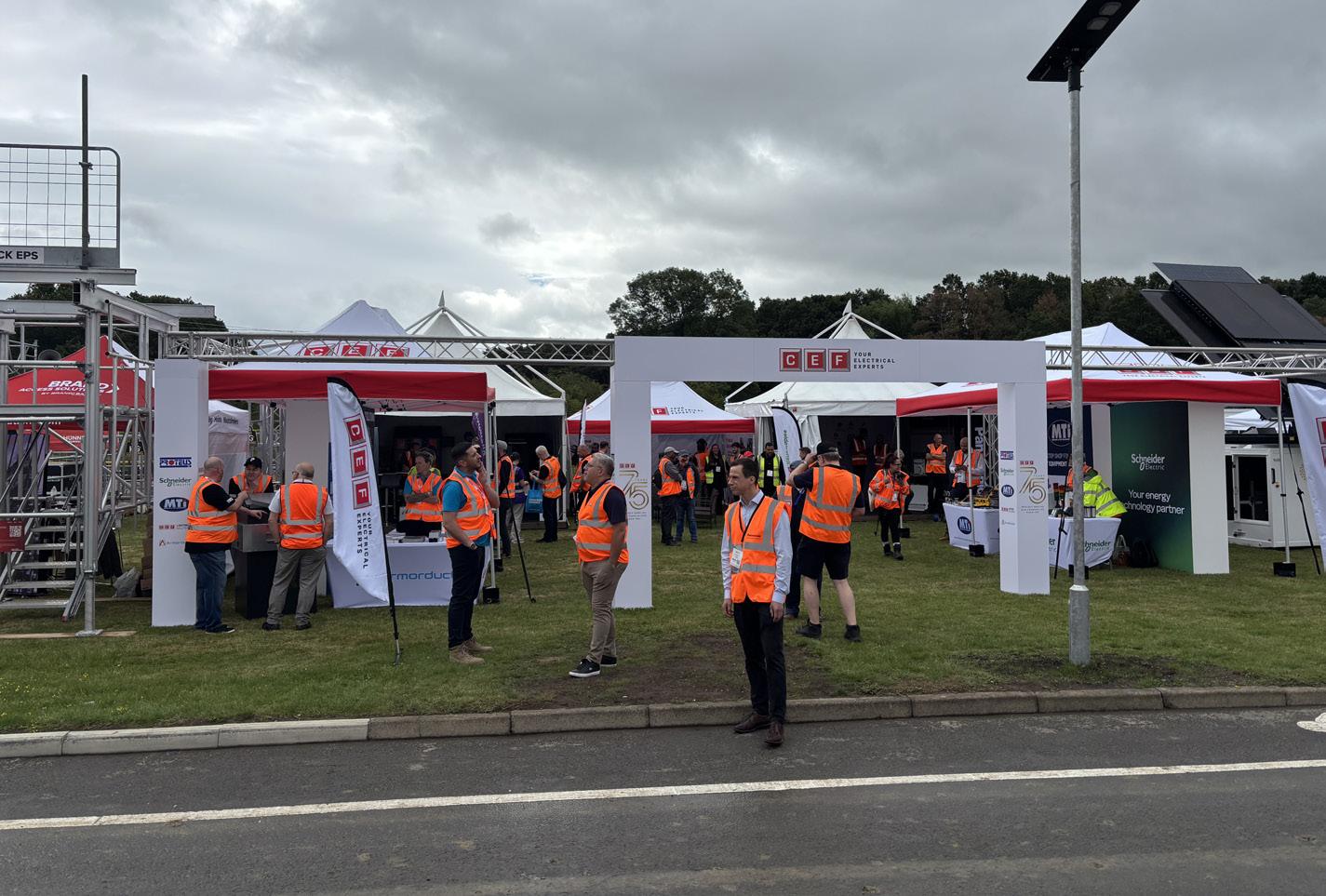
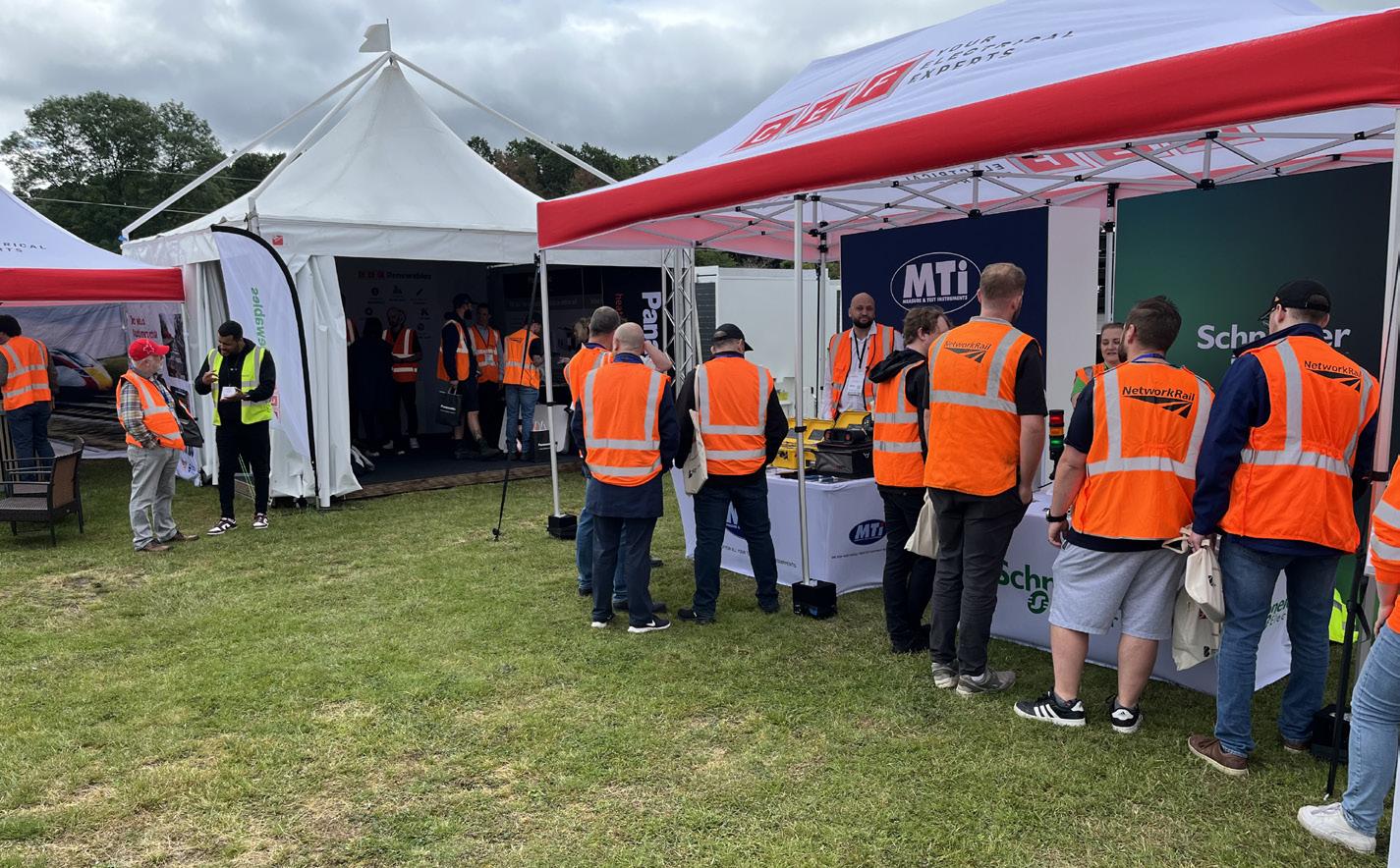
from Designplan, Thorlux, ASD, Tamlite, Holophane and Remote Emergency Lighting Monitoring from Mackwell, all on display.
CEF, as a framework supplier to TFL, Irish Rail and Network Rail understands its responsibility to contribute to the Safe delivery of a greener & more sustainable railway for the UK & Ireland. As network demand grows, CEF will drive innovation
through communication, collaboration and partnerships, ensuring its SME partners are visible. This was evident with the level of positive engagement and conversation on stand covering industry challenges and solutions that can be applied when working together.
For more information please contact CEF rail team on 01926 350018 or rail@cef.co.uk.
The 2026 edition of Rail Live marked a new chapter for the UK's largest outdoor rail exhibition, with a series of firsts that gave this year's show a significance beyond the usual calendar fixture
Held on 17 and 18 June at Porterbrook's Long Marston Rail Innovation Centre in South Warwickshire, Rail Live attracted more than 7,000 rail professionals across the two days, alongside over 290 exhibitors and 60 speakers. Headline sponsors were British Steel and DXC.
The show's unique selling point has always been its setting – real rolling stock, real infrastructure, a working railway environment that no indoor exhibition can replicate. This year, that proposition was substantially enhanced by the opening of Britain's first dedicated two-mile electrified test track loop, formally inaugurated on 4 June by Rail Minister Lord Peter Hendy of Richmond Hill, joined on stage by Porterbrook CEO Mary Grant and railway content creator Francis Bourgeois. The loop, which required the construction of a new bridge and underpass completed in under twelve weeks, connects to the national rail network at Honeybourne and represents a significant addition to the UK's test and trials infrastructure.
For the first time in the show's history, a dedicated train service ran direct from London Paddington into the Long Marston site via the new loop – an HST set supplied by ROMIC Group. Visitors were also offered ticketed rides aboard Porterbrook's HydroFlex hydrogen train around the twomile circuit, with a narrated tour provided by Francis Bourgeois. The combination of the new loop and these passenger experiences gave Rail Live 2026 a demonstrably handson character that set it apart from previous editions.
Porterbrook CEO Mary Grant set the tone for the site's broader ambitions: ‘Long Marston is for the benefit of the whole industry. A site tailor-made for innovation that demonstrates how private capital can work hand-in-hand with Great British Railways to deliver an exceptional service to the travelling public.’
The site itself offered an extensive array of rolling stock and heavy plant on display. Among the highlights was the R200
Inspiration train, presented in association with the National Railway Museum (York and Shildon), Porterbrook and a number of partners. The Inspiration tour was at Long Marston ahead of the conclusion of its national tour, lending the display an added timeliness. Elsewhere across the sidings, visitors could examine track repair units, fire suppression vehicles, freight locomotives and passenger DMUs, alongside the full range of on-track plant that has long been a feature of the show.
The event also carried forward its commitment to careers and skills. Exhibitors from across the supply chain provided information for those interested in joining the rail industry, including apprenticeship pathways – a theme of growing relevance as Great British Railways prepares to come fully into operation in Autumn 2027. Some trains are already running in GBR livery, with further operators including Chiltern Railways and West Midlands Trains set to transition to national ownership in the period ahead.
Local political engagement was also in evidence: Stratford-upon-Avon MP Manuella Perteghella and Long Marston District Councillor Stuart Keighley were among those in attendance.
Both of the show's lecture theatres –Strategy and Leadership, and Engineering and Safety – ran a packed programme across the two days, and footfall at sessions was notably strong.
The GBR transition was the dominant thread running through the Strategy and Leadership Theatre. Rail Minister Lord Peter Hendy addressed the show via video link in a session chaired by RAIL editor Dickon Ross, discussing progress towards rail reform, the challenges of the current investment environment and the road ahead. Sir Andrew Haines, Chair of DFTO, took part in a fireside chat on how DFTO and Network Rail are working together with industry to create GBR and deliver a better railway.
Other well-attended sessions covered the priorities for GBR's first funding period; the relationship between mayoral combined authorities, GBR and private freight operators; and the future of the
KEY FIGURES
• 7,000+ rail professionals in attendance
• 290+ exhibitors from across the UK and internationally
• 60+ speakers across two theatres
• two miles: length of the new electrified test loop, the first of its kind in Britain
• Twelve weeks: time taken to construct the new bridge and underpass for the loop
• Alstom
• British Steel (headline sponsor)
• DB Cargo (UK)
• DXC (headline sponsor)
• East West Rail
• GB Railfreight (GBRf)
• Mainmark Ground Engineering
• Network Rail
• ROMIC Group, RailAdventure and Excursions by Rail
• RMT
• Siemens Mobility
• Stadler Rail
• Transport for Wales
• UKRRIN
• Wabtec
Northern Powerhouse and Midlands Rail Hub programmes. A panel examining the Greater Manchester model – looking ahead to the first two Manchester rail lines joining the Bee Network in late 2026 – featured Alex Hornby from Northern and Simon Elliott from Transport for Greater Manchester.
The international rail market also featured prominently, with a session examining the growth ambitions of Eurostar, Virgin's planned entry into the London on-rail market and the expansion plans of London St Pancras Highspeed.
In the Engineering and Safety Theatre, safety during reform was squarely on the agenda, with HM Chief Inspector of Railways Richard Hines examining how the industry can avoid repeating the postprivatisation problems of the 1990s as it undergoes its most significant structural change since that era. The future of freight traction – and the challenge of moving away from diesel as freight sits outside the rolling stock strategy – was debated by representatives from DB Cargo (UK), GB Railfreight and Heavy Haul Ltd.
Accessibility on rolling stock drew strong engagement, with a panel chaired by the Rail Delivery Group's Dominic Lund-Conlon examining what train manufacturers must do to ensure future fleets meet the needs of all passengers. East West Rail's phases two and three were also discussed, with Will Gallagher, Chief Strategy and Development Officer, setting out progress on reconnecting Oxford and Cambridge.
The light rail sector had a notable presence at this year's show, with a dedicated panel discussion in the Engineering and Safety Theatre drawing a strong audience. Chaired by Lucy Prior of Octavius, the session examined the current state of light rail schemes across the country, the challenges ahead and what can be done to make light rail a more compelling proposition for cities and combined authorities.
The panel included UKTram board members Sophie Allison, Managing Director of West Midlands Metro, and Nicola Small, Very Light Rail Programme Director at Coventry City Council, alongside Melanie Cocoran from South Yorkshire Combined Authority, Colin Rowcliffe of Siemens Mobility UK&I and Dan Tipper of Transport for Wales. The role of UKTram and the Light Rail Safety and Standards Board in supporting collaboration and best practice across the sector was acknowledged throughout the discussion.
Reflecting on the event, Phill Terry, UKTram Lead Engineer, noted the pace of technological advancement across the rail industry and the growing number of digital solutions entering the market, while observing that innovation is not always about large-scale change – practical improvements and everyday tools continue to play an important role in maintaining and improving transport networks.
WSP APPOINTED TO TFL PROFESSIONAL SERVICES FRAMEWORK
WSP has been appointed to Transport for London's Professional Services Framework, securing places across six lots covering programme, project and commercial management services.
The appointment provides a longterm platform for WSP to support TfL's investment priorities across London's transport network. The firm brings programme management, commercial and multidisciplinary expertise to the framework, building on an existing relationship with TfL that includes support on major transport programmes and infrastructure advisory work.
Sharon Young MBE, Key Account Sponsor for Transport for London at WSP, said: ‘This appointment reflects the breadth of expertise we can bring across programme, project and commercial management. We look forward to working with TfL to support the delivery of transport investment that helps keep London moving and enables growth across the capital.’
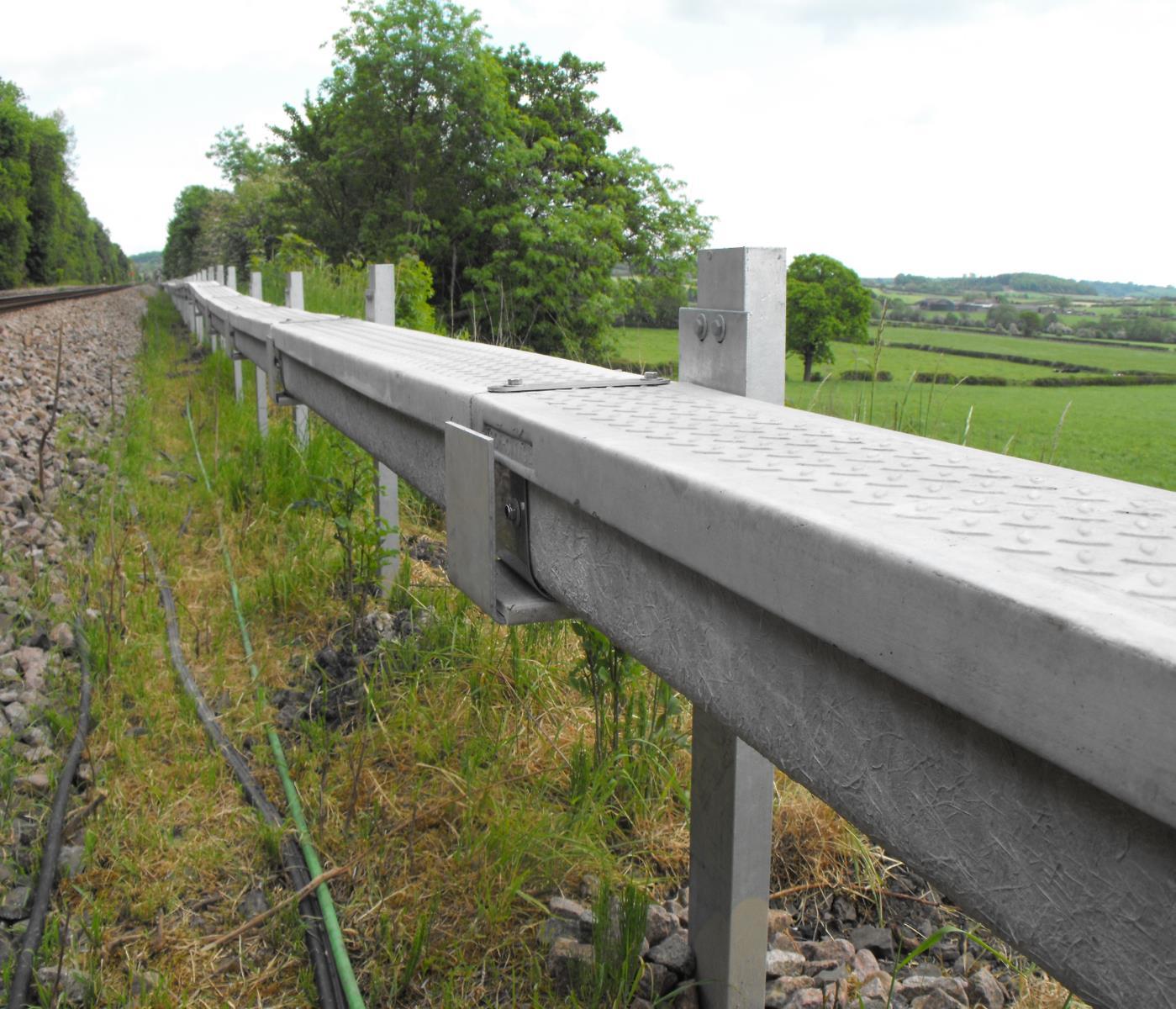


BCM GRC is a UK-based manufacturer of Glassfibre Reinforced Concrete (GRC), supplying the rail, utilities and architectural sectors for several decades
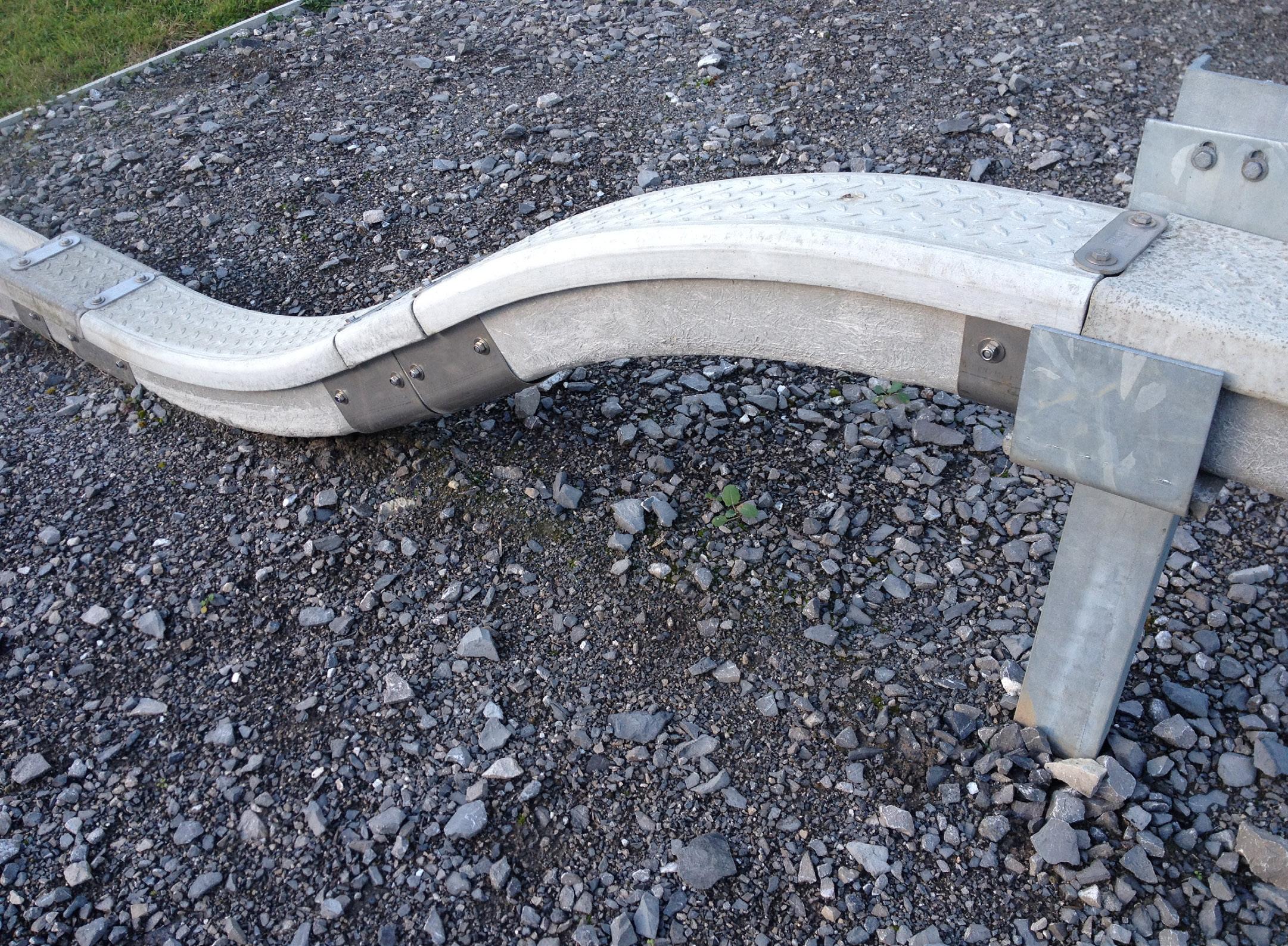
Based at its manufacturing facility in Whitchurch, Shropshire, the company supports major infrastructure programmes with proven products designed to deliver compliance, reliability and long- term performance in demanding environments.
Within the rail sector, BCM GRC works closely with asset owners, designers
and delivery teams to reduce risk while improving buildability and on- site efficiency. Although ground-installed cable troughing is often preferred at design stage, it is frequently rendered impractical by site conditions. Congested buried services, contaminated or unstable ground, high water tables, bridges and viaducts, or the need to avoid excavation around live assets
can all prevent below -ground installation. In these circumstances, BCM GRC provides an approved elevated cable trough system.
Manufactured from Glassfibre Reinforced Concrete, GRC provides a compelling combination of lightweight handling, high durability and inherent non- combustibility (A1 classified). These attributes support safer installation, resilience in demanding
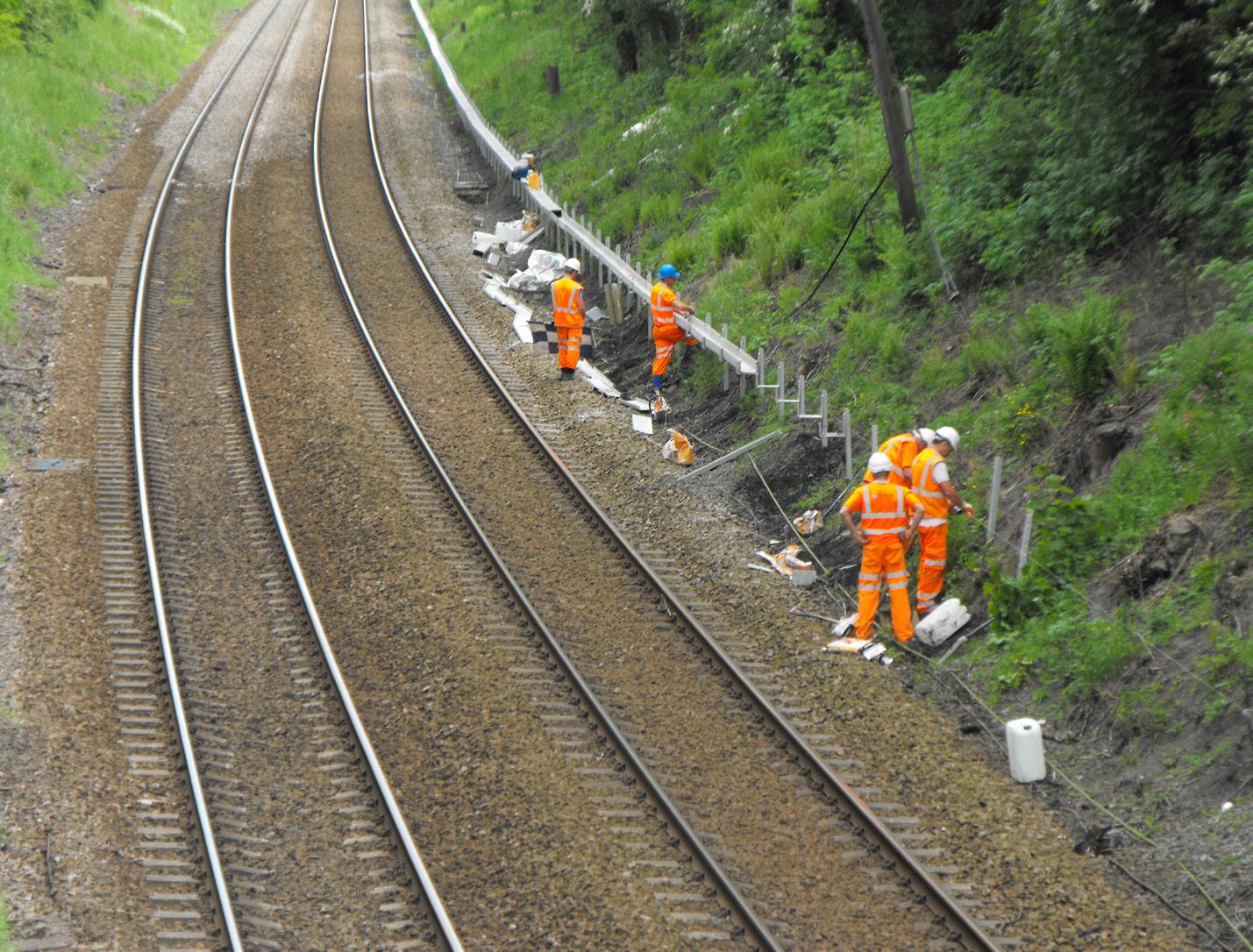
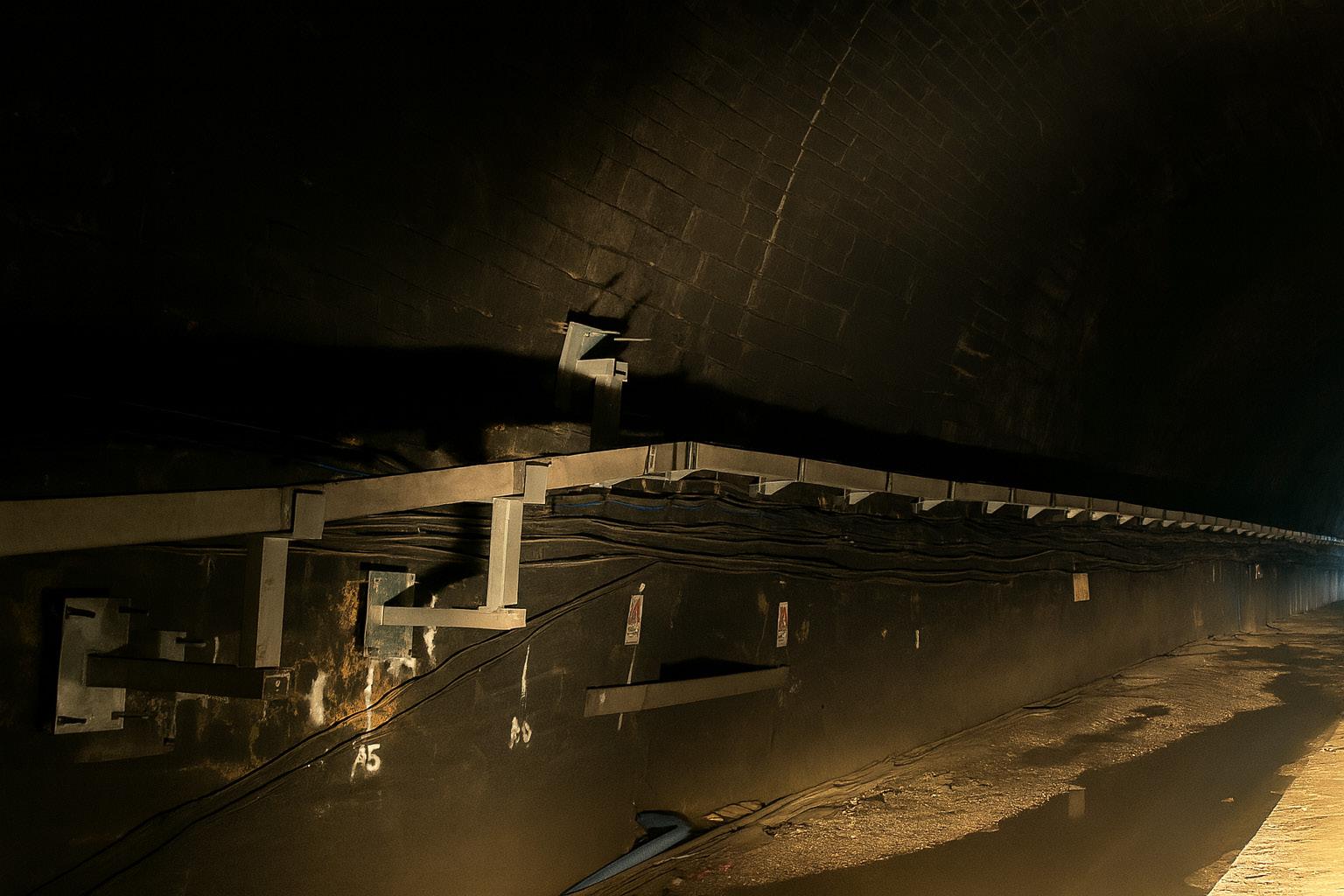
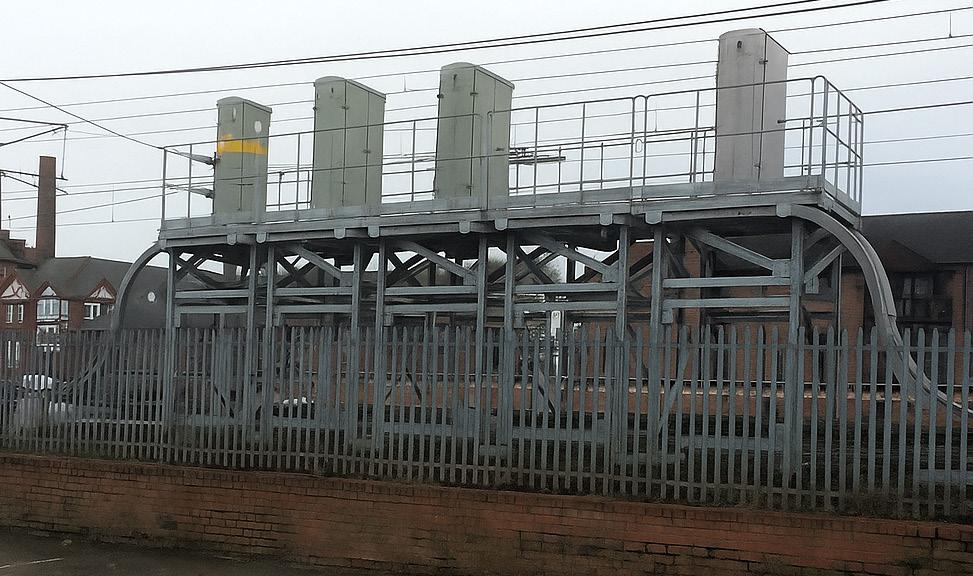
environments, and the elimination of fire load associated with combustible materials.
As awareness of lineside fire risk has increased, fire safety has become a central consideration in infrastructure decision-making. Network Rail’s Emergency Change NR/BS/LI/503, introduced following incidents involving polymer troughing, has reinforced the need to consider real- world fire behaviour rather than relying solely on historic standards. In this context, BCM GRC’s cement-based, non- combustible products align strongly with the industry’s direction of travel, providing a pragmatic means of reducing fire load and limiting fire spread in sensitive locations.
Durability and whole-life value remain equally important for senior stakeholders. Secondary or replaceable civil engineering components are typically expected to achieve a minimum service life of 25 years. BCM GRC’s products are well proven in harsh railway environments, comfortably meeting and exceeding this requirement in line with Product Acceptance PA05/00072. GRC performs reliably in exposed conditions, resists weathering and contamination, and requires minimal maintenance, delivering predictable long- term performance and lower whole-life costs for asset owners.
Installation efficiency is also critical, particularly where access constraints, limited possessions or programme risk are present. Compared with traditional precast concrete, GRC systems are up to 80 per cent lighter, reducing transport requirements and enabling manual installation without cranes or heavy lifting equipment. This supports faster installation, improves safety in live rail environments and enables efficient delivery on constrained or remote sites.
Alongside the visible lineside products, BCM GRC Ltd has been heavily involved in the architectural elements of the modern railway, supplying highly visible curved GRC to the stations and concourses on Crossrail, and cladding the revised signalling centres over the last decade. In a less visible way, GRC and BCM GRC, has been used for drainage and permanent formwork on bridge structures for over 30 years.
BCM GRC Ltd is proud to support the UK rail network, and we are always open and willing to discuss any projects with stakeholders, engineers or operatives. Please give us a call.
Tel: 01948 665321
Email: info@bcmgrc.com
Visit: www.bcmgrc.com
As rail operators and maintenance teams face increasing pressure to improve efficiency, reduce downtime and enhance safety, effective tool control has become a critical part of modern maintenance operations
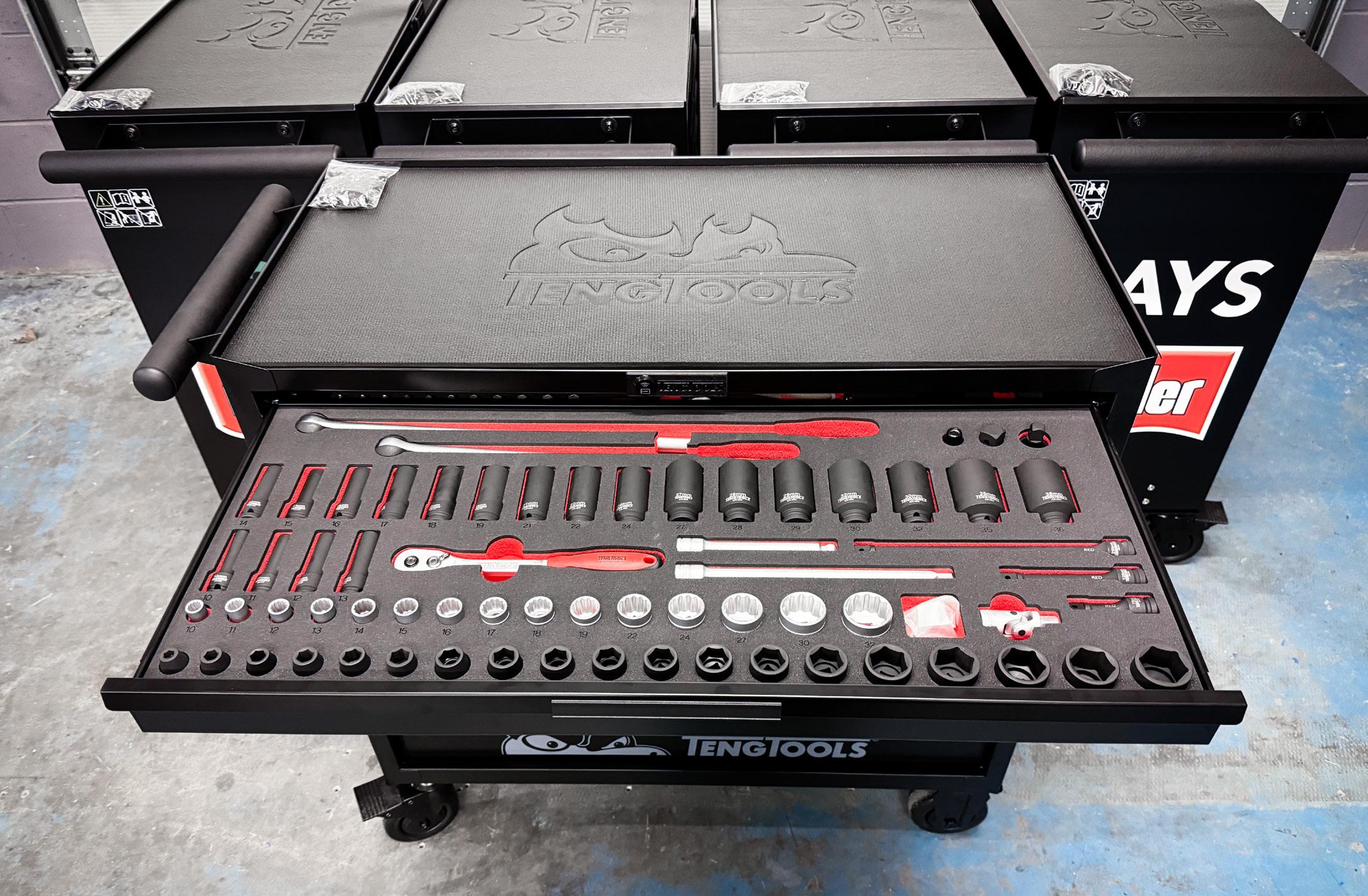
The rail industry depends on reliability. Whether maintaining rolling stock, infrastructure or depot facilities, maintenance teams need the right tools available at the right time and in the right condition. When tools cannot be located, are incorrectly stored or require replacement, the impact can be felt through lost productivity, increased costs and unnecessary delays.
For more than 40 years, TengTools has helped professional users improve
organisation and efficiency through structured tool control solutions. Today, the company's approach extends beyond supplying tools, delivering complete systems designed to improve accountability, reduce downtime and support safer working environments.
A well-organised workspace allows technicians to work more efficiently and helps supervisors maintain visibility of critical assets. TengTools' tool control solutions provide an immediate indication when a tool is missing, helping to reduce
‘Effective tool control helps rail maintenance teams reduce downtime, improve accountability and create safer working environments.’
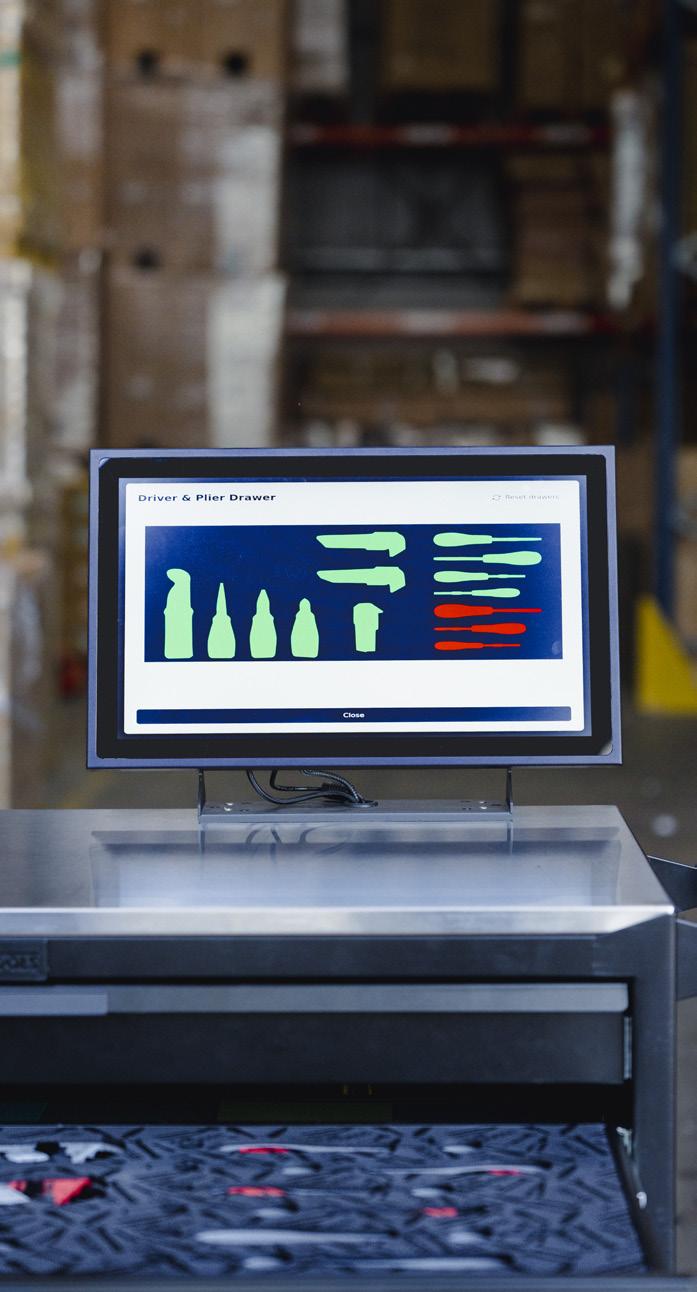
search times and improve accountability across maintenance operations. This simple but effective approach supports both productivity and safety by ensuring tools can be quickly identified before work begins and after tasks are completed.
For organisations requiring greater levels of control, TengTools offers solutions ranging from manual tool tracking through the KIT system to fully integrated RFIDenabled Smart Access technology. These systems provide greater visibility of tool usage, user accountability and asset location, helping maintenance teams manage equipment more effectively across workshops and depots.
In rail maintenance environments, the benefits extend beyond organisation. Effective tool control can contribute to reduced downtime, fewer unnecessary tool replacements, improved workforce productivity and greater confidence during audits and inspections. By ensuring that tools are available, accounted for and properly maintained, organisations can create a safer and more efficient working environment.
As rail operators continue to focus on operational efficiency and cost reduction, tool control is becoming an increasingly important part of wider asset management
‘A well-organised workspace allows technicians to work more efficiently and helps supervisors maintain visibility of critical assets.’
strategies. TengTools continues to work with customers across multiple industries to develop practical solutions that improve organisation, increase accountability and support long-term operational performance.
Visit www.tengtools.com/en-gb/pages/ request-consultation for more information or to speak to a tool control expert.
®

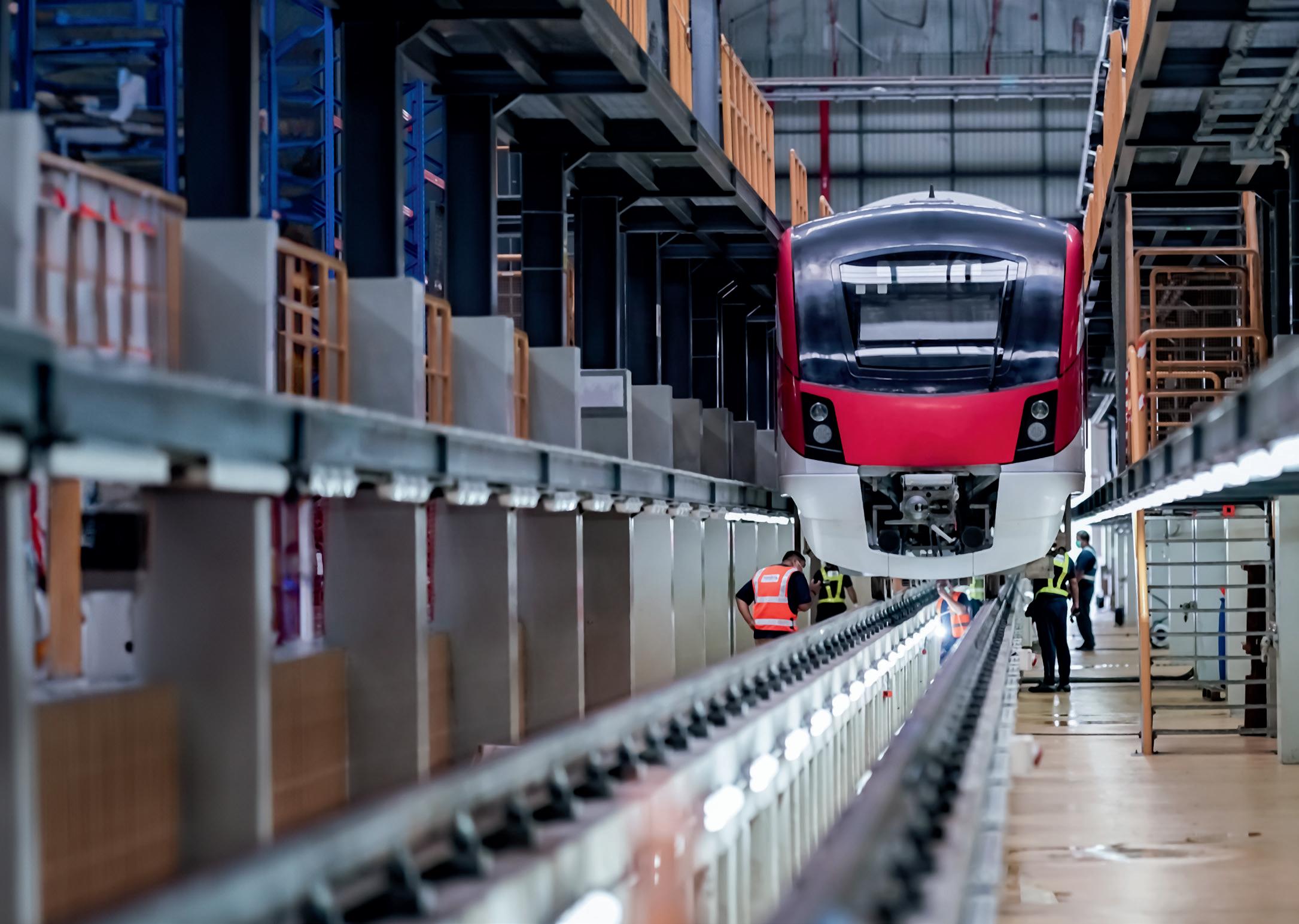

The question comes up in almost every rail depot conversation: should you invest in a permanent inspection pit, or keep things flexible with a set of lifting jacks?
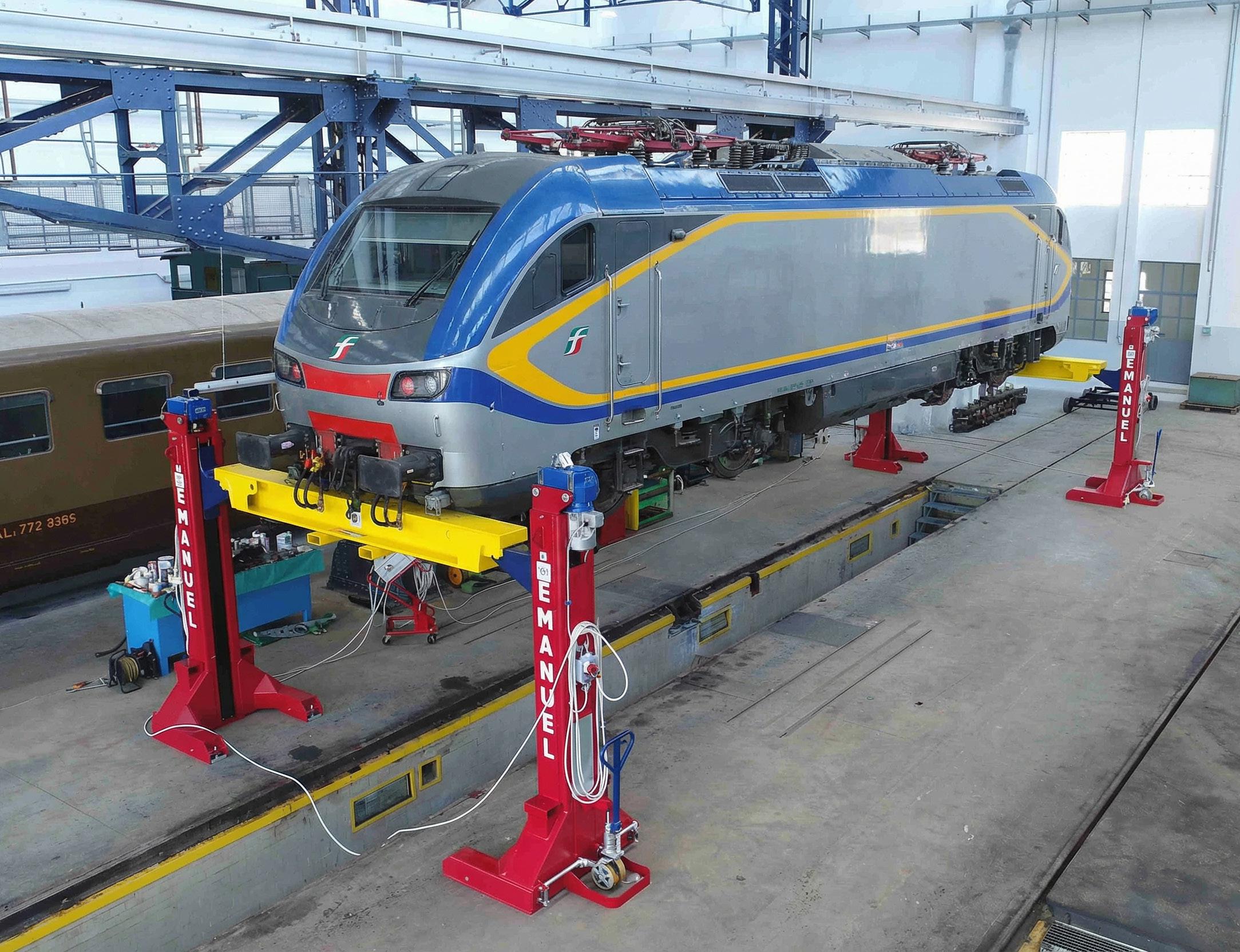
There is no universal answer. The right choice depends on your workshop layout, your budget horizon, and how your depot actually runs day to day. But understanding the trade-offs clearly makes the decision a lot easier.
On paper, a rail inspection pit costs more to install. Expect to spend between £70,000 and £100,000 for a standard installation, compared to £30,000 to £40,000 for a set of eight lifting jacks. That gap looks significant until you factor in what comes after.
Lifting jacks need servicing twice a year. Parts wear, mechanisms need attention, and those visits rarely come cheap. Over time, that adds up to around £10,000 a year in ongoing costs. A pit, once installed, costs closer to £3,000 annually, and that figure tends to stay stable. For a depot with a ten-
year horizon, the maths often flips in favour of the pit.
It is worth noting that Totalkare’s lifting jack sets can scale up to 128 columns, so a large configuration could rival or exceed the cost of a pit installation. The comparison is rarely straightforward, which is why running the long-term numbers matters.
A pit requires groundworks and a site survey. There is no way around that. But the disruption is often shorter than people expect. Totalkare prefabricates its railway
‘For a depot with a ten-year horizon, the maths often flips in favour of the pit.’
of the job. Engineers can work the underside and the top of a train at the same time, which can effectively double the number of services completed in a shift.
Jacks introduce setup time at the
constraint. The depth is built into the floor rather than added above the train, so ceiling height stops being a factor.
A pit suits depots with stable layouts, high throughput demands, and a long-term view on costs. Jacks suit operations that need flexibility, have a tighter upfront budget, or work in spaces where permanent groundworks are not practical. Some depots run both.
If you are weighing up the options, Totalkare's team can carry out a site survey
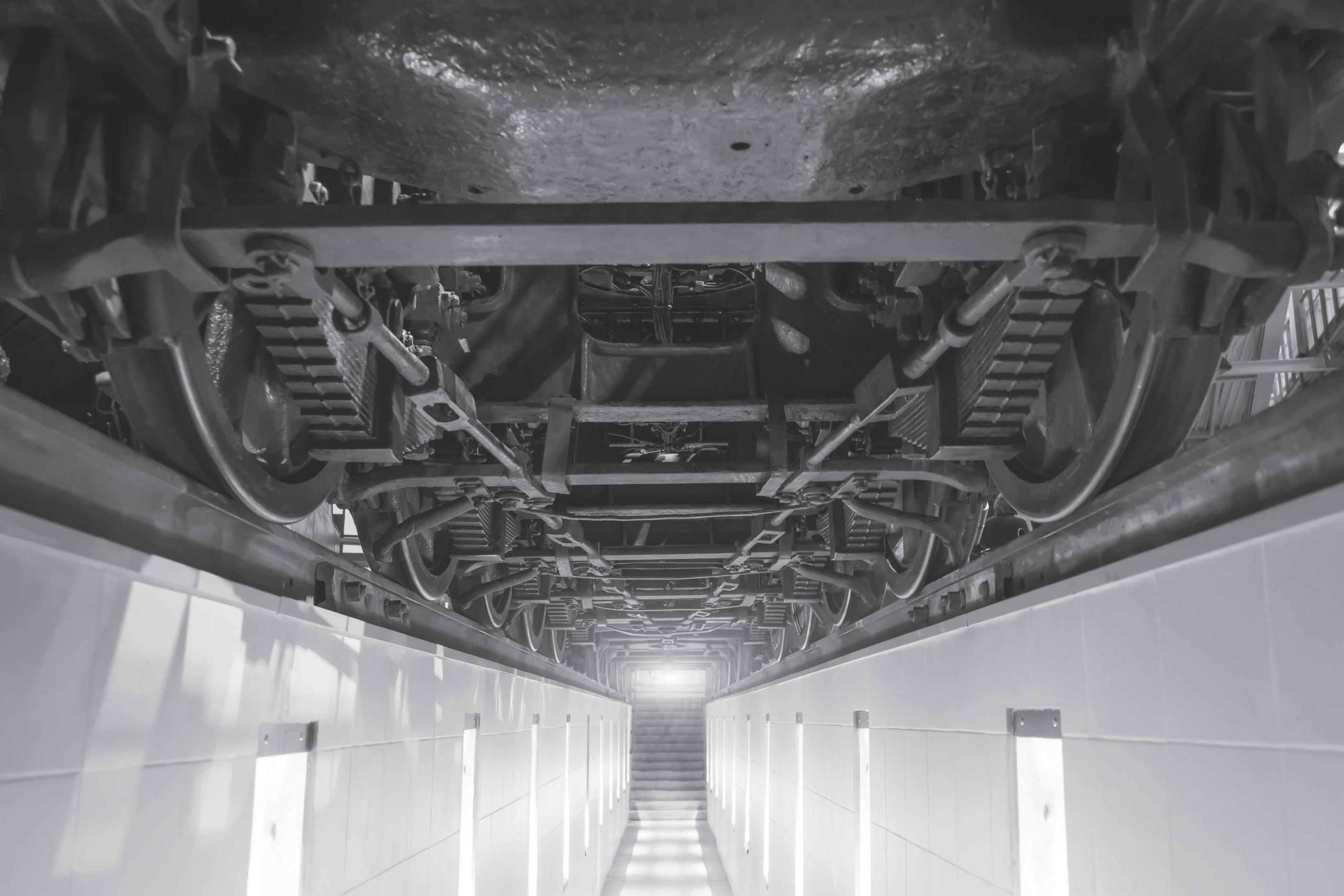
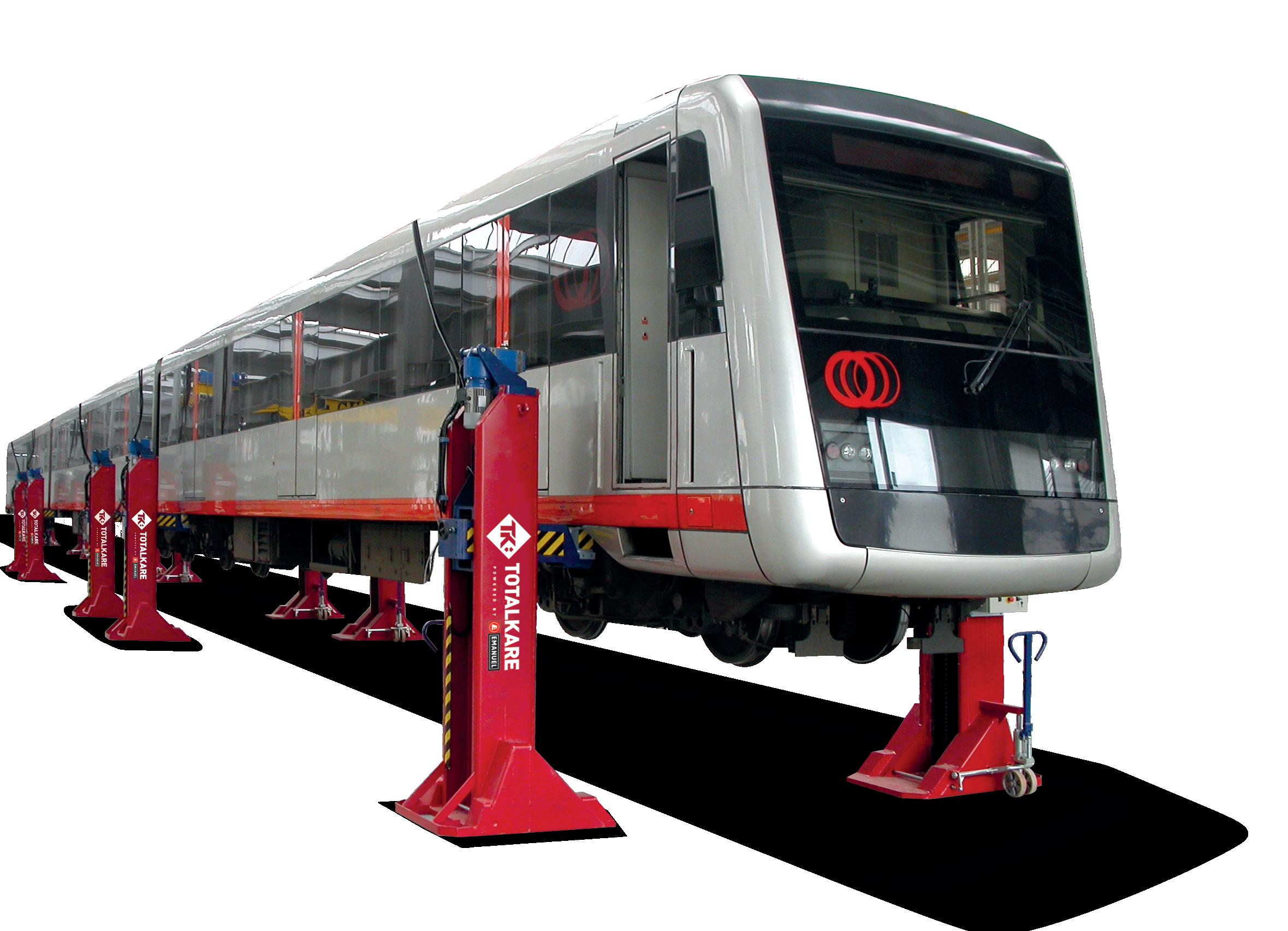

Egis bolsters transport offering with senior industry appointment
Global architectural, consulting, construction engineering, operations and mobility services firm Egis has appointed Mike Birch as Transportation Director for the UK and Ireland. Mike joins Egis from West Yorkshire Combined Authority, where he was Mass Transit Director, overseeing the development of a £3 billion programme to deliver a new tram network for the region.

RSSB Appoints Alexander Moor as Chief Product and Technology Officer
The Rail Safety and Standards Board (RSSB) has appointed Alexander Moor as Chief Product and Technology Officer, effective immediately. Alex joined RSSB in 2012 and has been central to the growth of the organisation’s digital and data capability. Under his technical leadership, RSSB has developed a suite of digital products used across the industry, including the Safety, Health and Sustainability insights platform. These tools bring together complex data to support decision making for operators, safety leaders and others across the GB rail network.
General Manager appointed at Mainmark
Rail expert Ian Thornhill has been appointed as General Manager at Mainmark. Ian is a geologist by qualification and brings more than 15 years’ experience in infrastructure and engineering services. He has held senior roles within organisations including AECOM and SIS Group, with experience across rail, highways and infrastructure services.

Community Rail Network appoints Director of Policy and Communications
Community Rail Network has appointed Chris Birks as its new Director of Policy and Communications. Before joining Community Rail Network, Chris served as Head of Communications for the Mayor of the East Midlands and previously led regional communications and engagement work for the UK’s largest trade union. He also spent more than a decade working in broadcast media in the UK and Middle East.

Community Rail Network appoints new Chief Executive Officer
Community Rail Network has appointed Bill Freeman as its new Chief Executive Officer. Bill previously served as interim Chief Executive of Community Rail Network in 2025.
Network Rail colleague honoured in King’s Birthday Honours
A Network Rail colleague has been awarded the British Empire Medal (BEM) in the King’s Birthday Honours 2026, in recognition of her exceptional contribution to the community. Esther Lagden, a programme manager in Network Rail’s Eastern Capital Delivery team, was recognised for her dedicated voluntary service supporting young people. She has transformed the York St John Ambulance Cadet unit over the past three years. Under her leadership, scores of young people have developed confidence, leadership qualities and lifesaving skills. Her cadets have delivered hundreds of hours of first aid across York – supporting high-profile events such as the Remembrance Parade and York Races – while also engaging with hundreds of local residents to raise awareness of CPR.
www.geoaccess.co.uk Asset Inspections
Access Solutions
Bespoke Projects Enabling Works


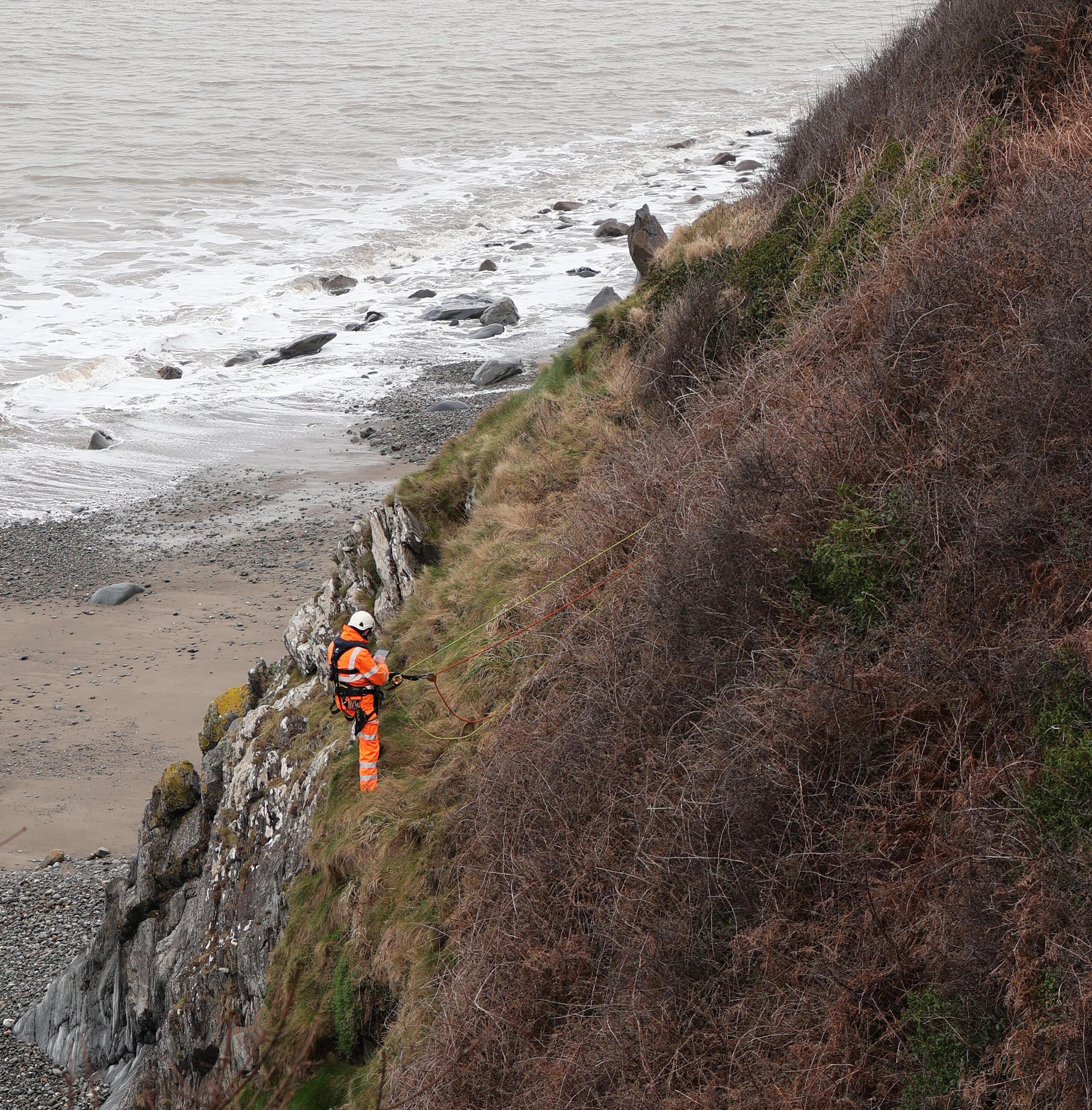
Ask RSSB gives you quick, easy access to the wealth of information on the Rail Safety and Standards Board website
One simple question delivers trusted guidance and the tools and services you need to support your role.