Creating great journeys every day for a sustainable future
Weathering the storms
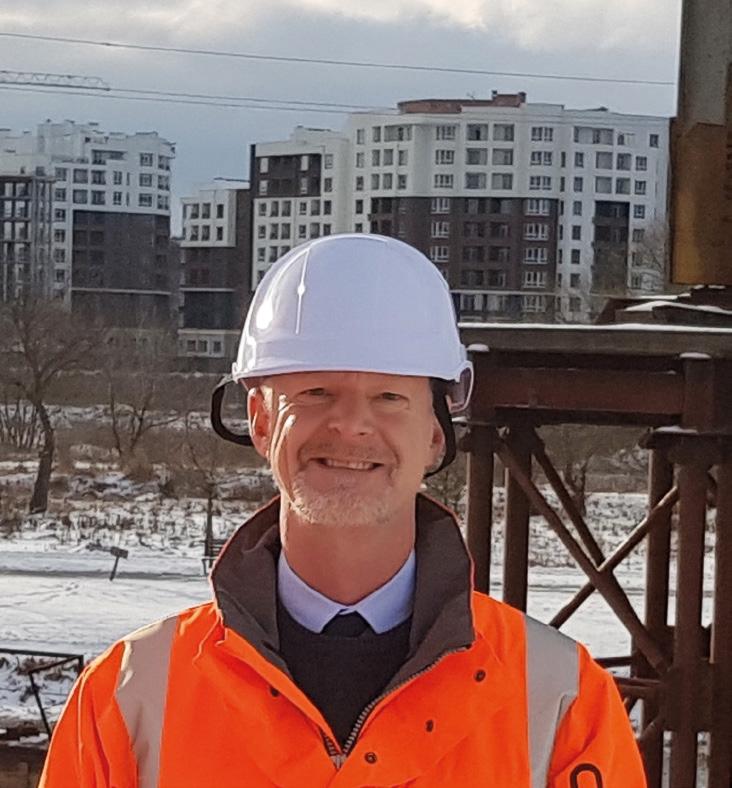
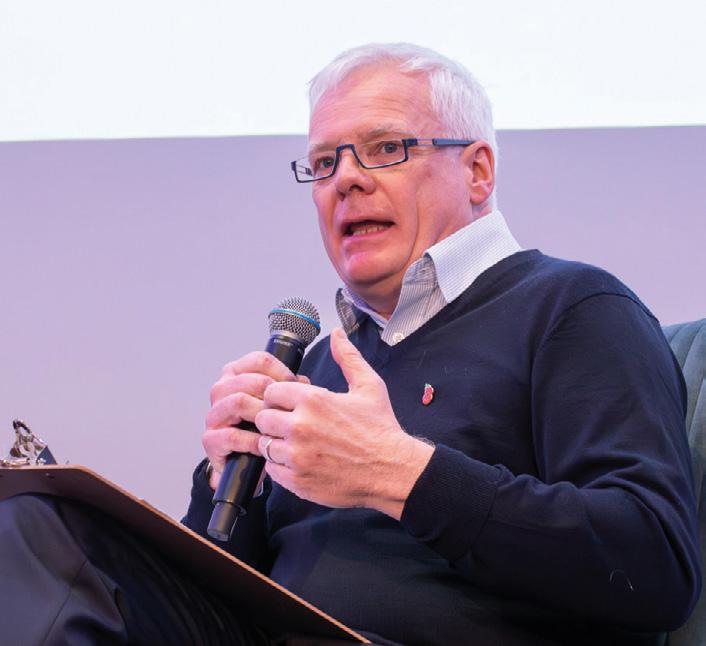
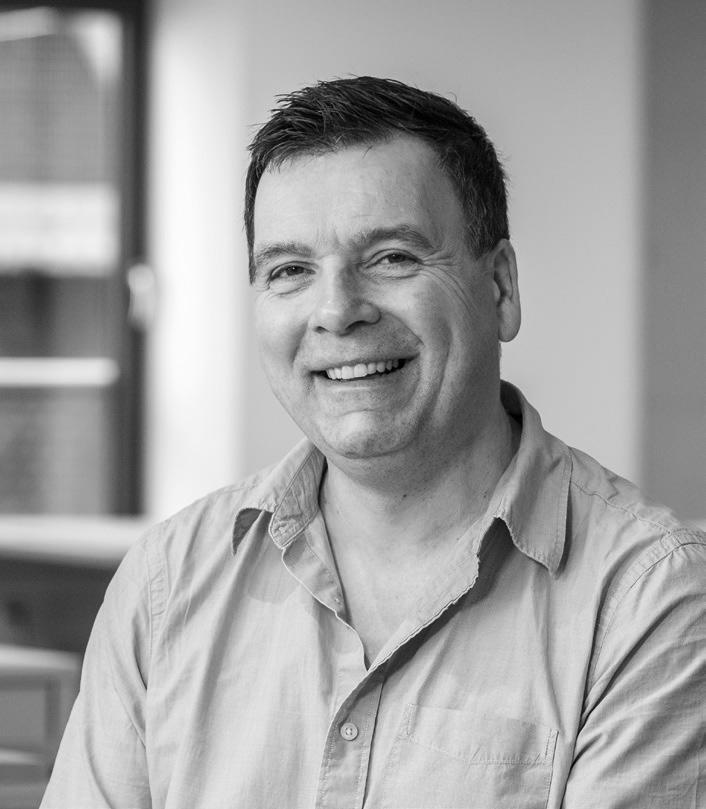
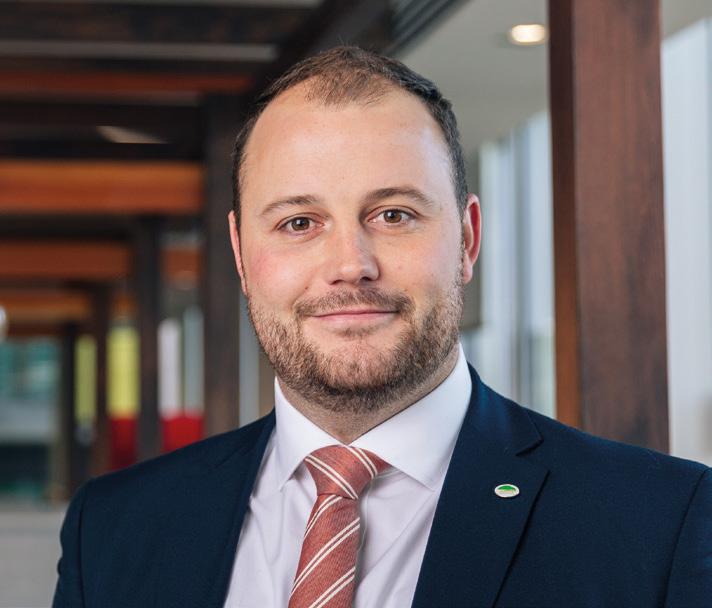
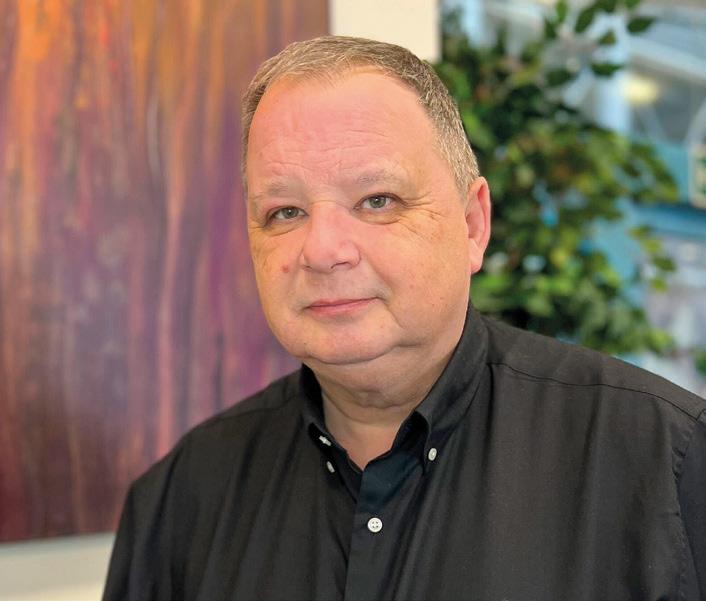
Peter Gibbons
Supporting Ukraine’s railway
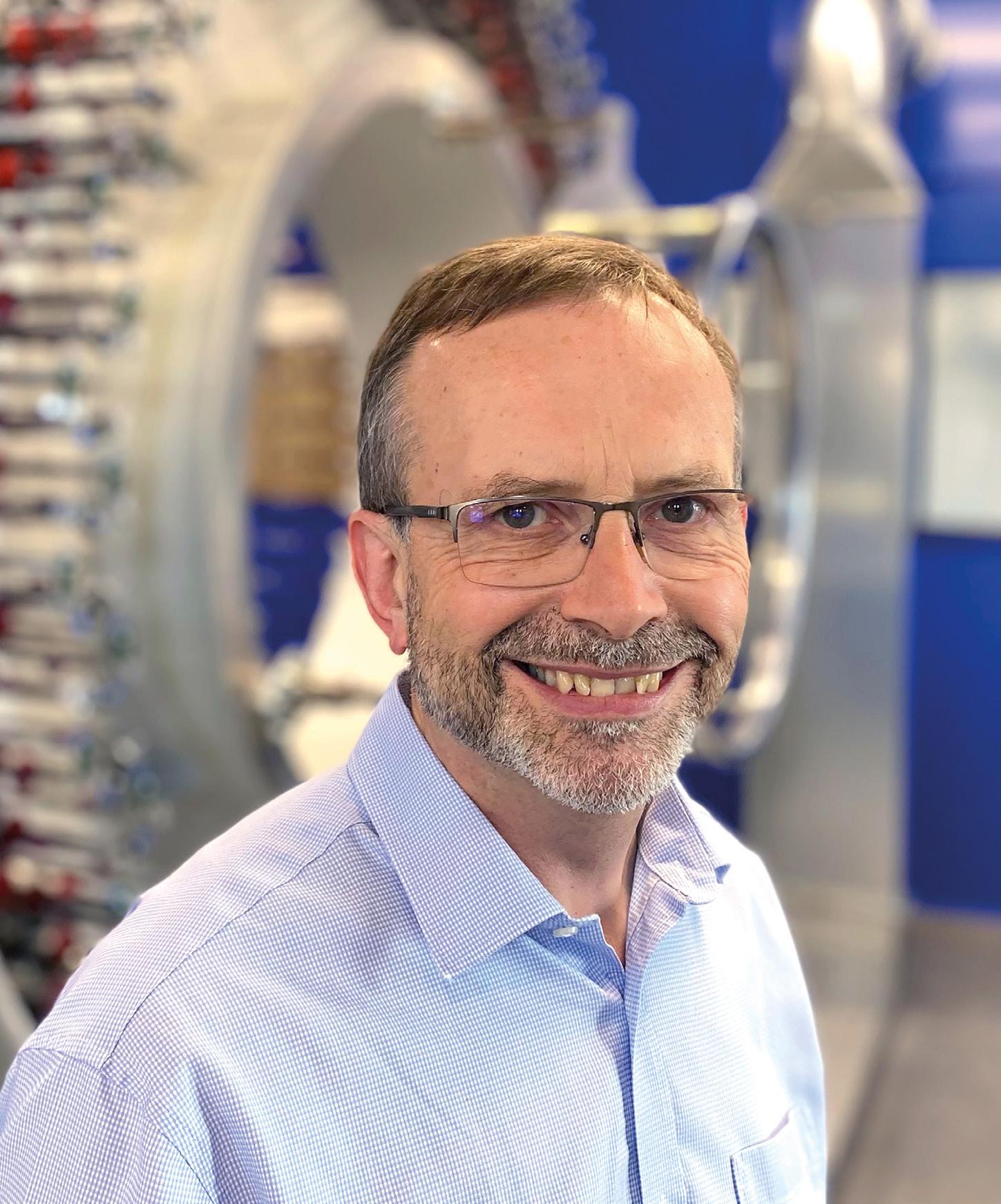
James Cooke
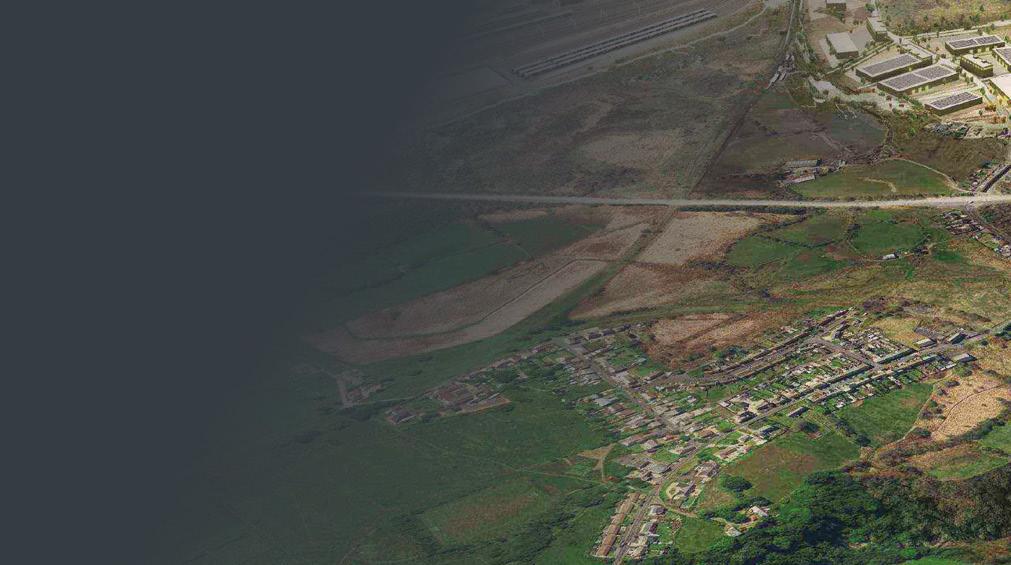
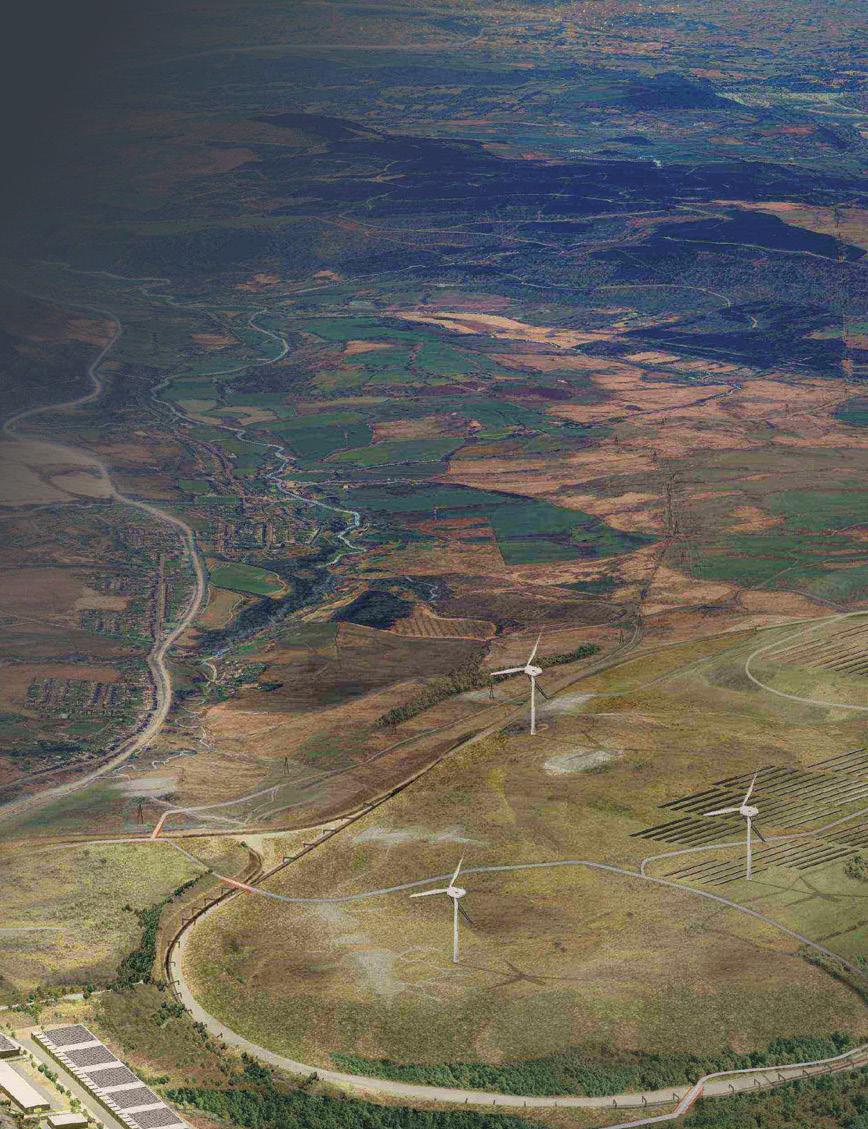
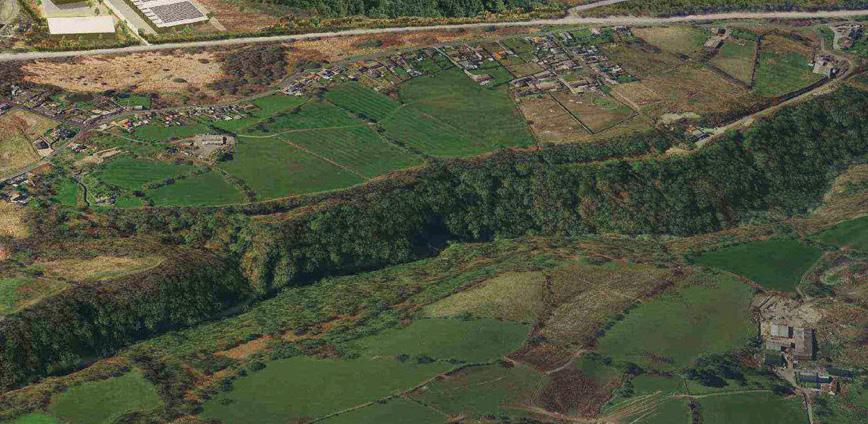
Transforming rail for South Wales and Western England
March 2025
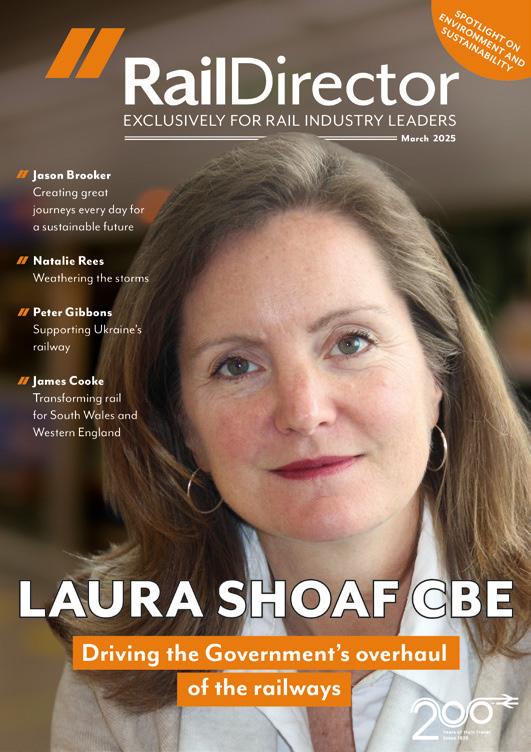
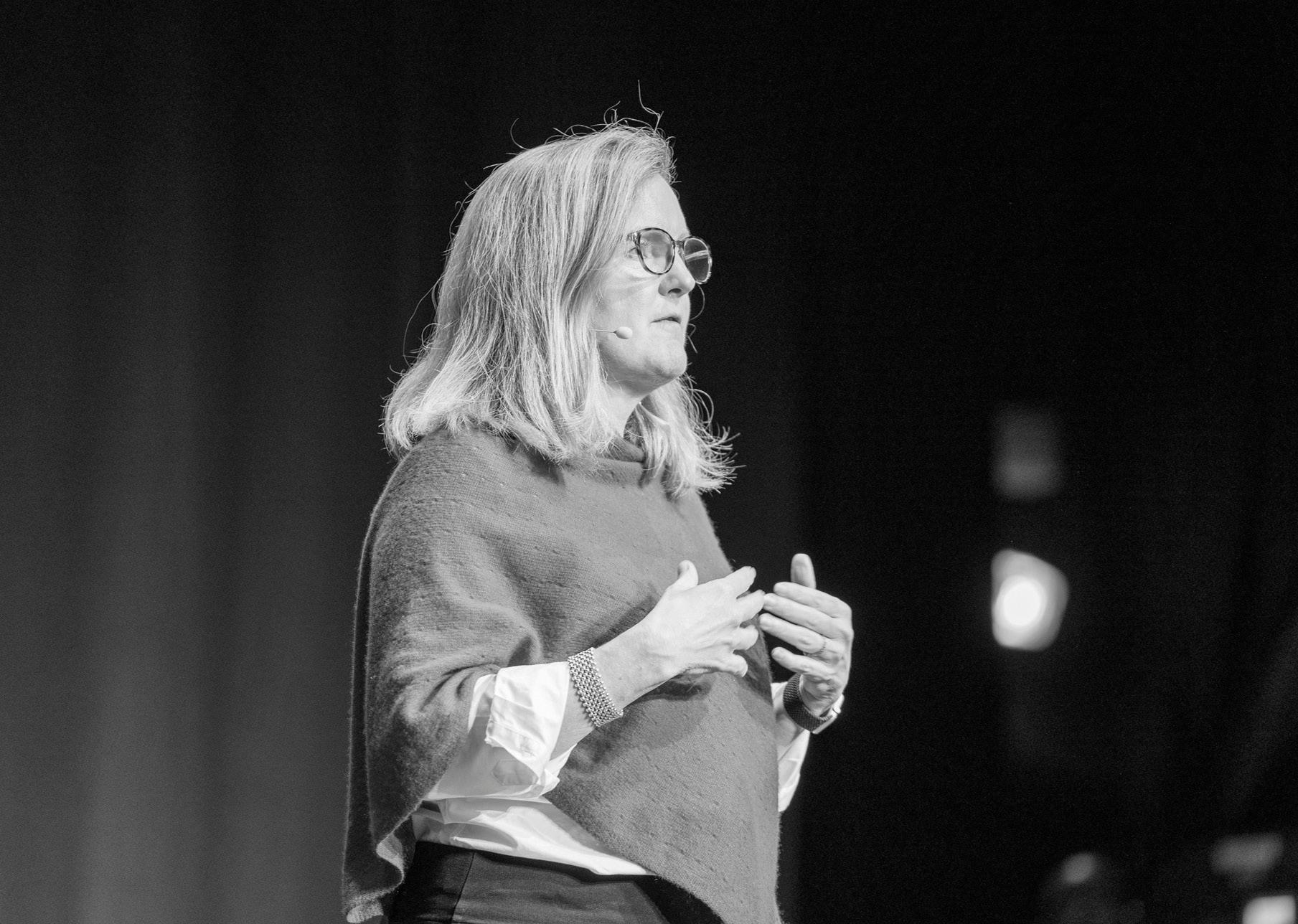
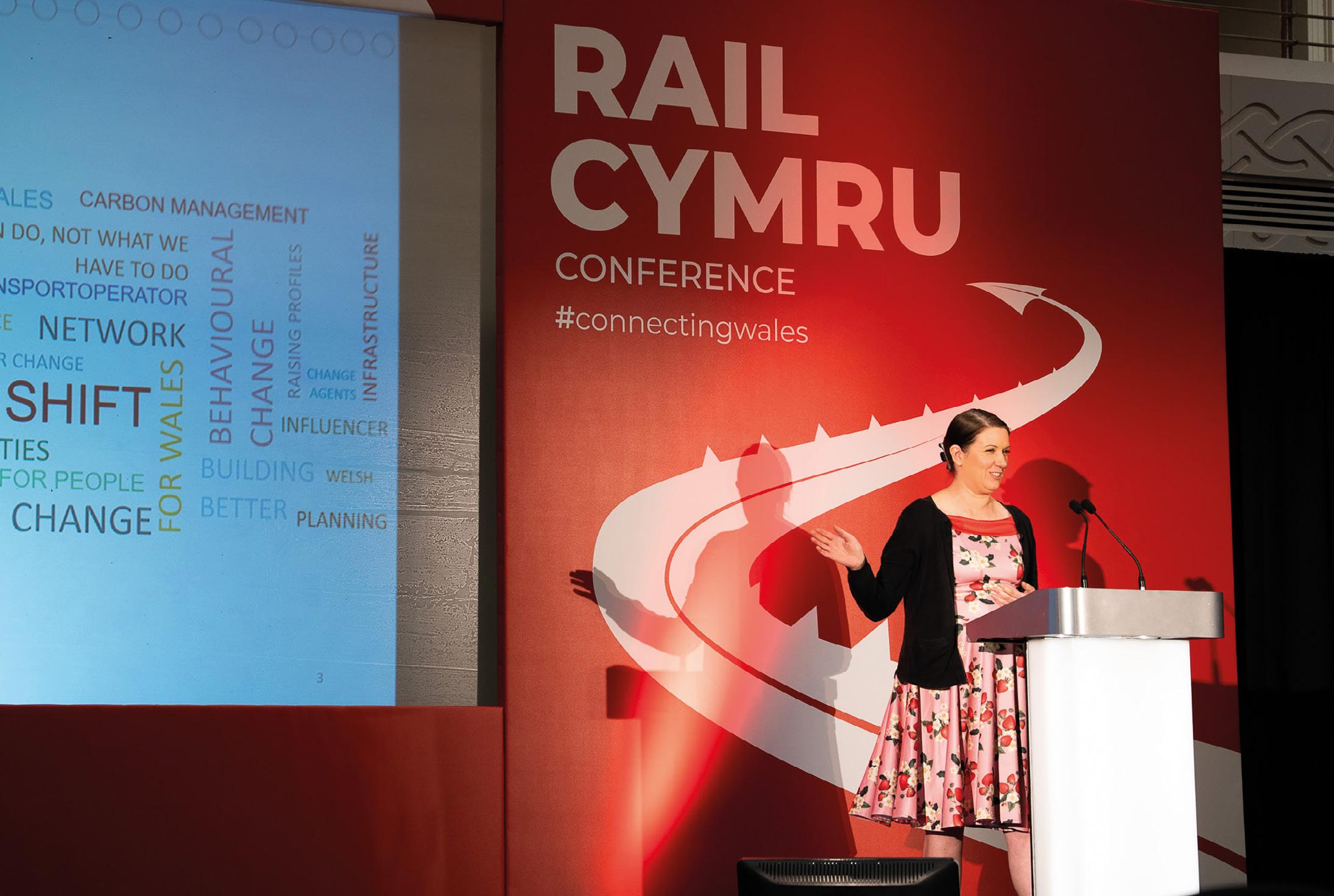
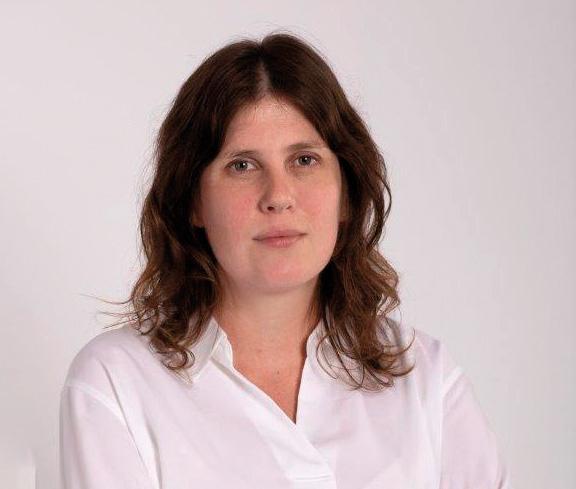
LAURA SHOAF CBE
Driving the Government’s overhaul of the railways
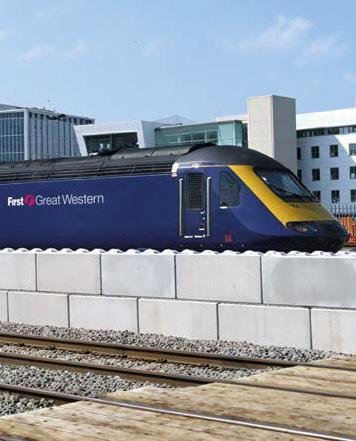
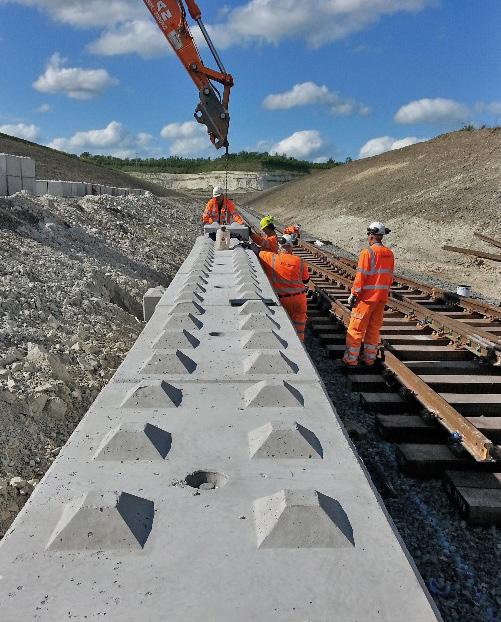
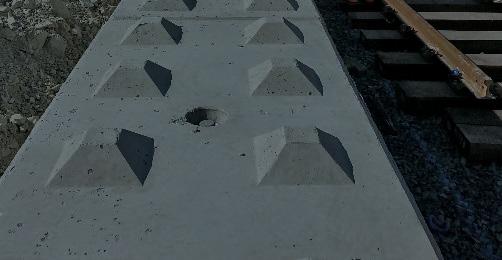
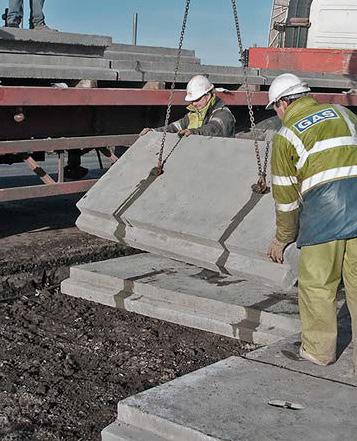
Workforce protection barriers with proven ALO, avoiding all line closures and costly programme delays with adjacent line open
Workforce protection barriers with proven ALO, avoiding all line closures and costly programme delays with adjacent line open
workforce
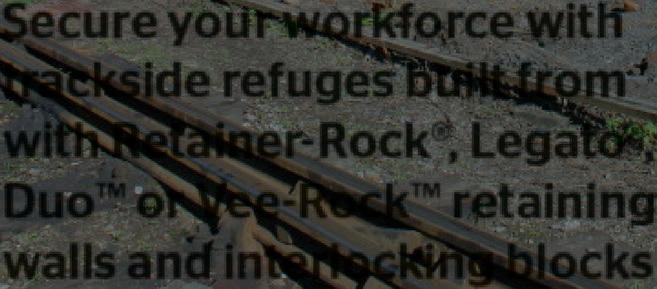
Secure your workforce with trackside refuges built from with Retainer-Rock®, Legato® , Duo™ or Vee-Rock™ retaining walls and interlocking blocks
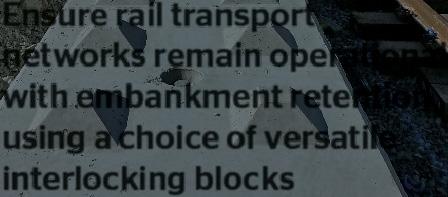
Ensure rail transport networks remain operational with embankment retention, using a choice of versatile interlocking blocks
Ensure rail transport networks remain operational with embankment retention, using a choice of versatile interlocking blocks
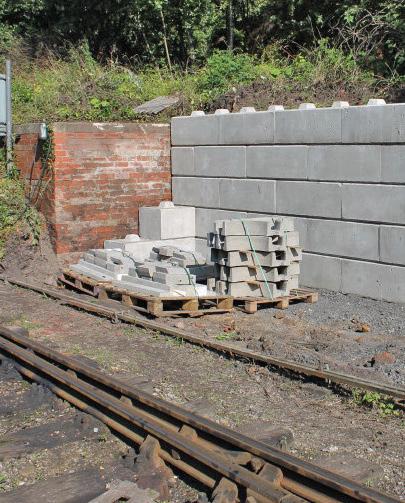
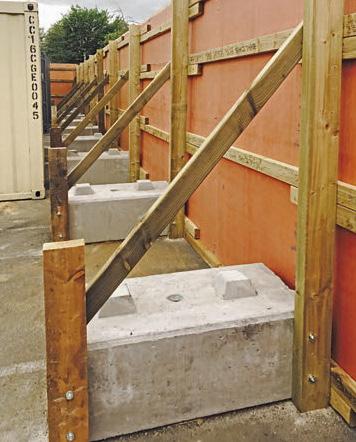
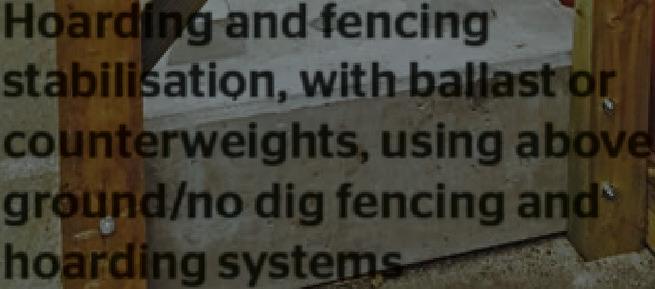
Hoarding and fencing stabilisation, with ballast or counterweights, using above ground/no dig fencing and hoarding systems
Hoarding and fencing stabilisation, with ballast or counterweights, using above ground/no dig fencing and hoarding systems Protect
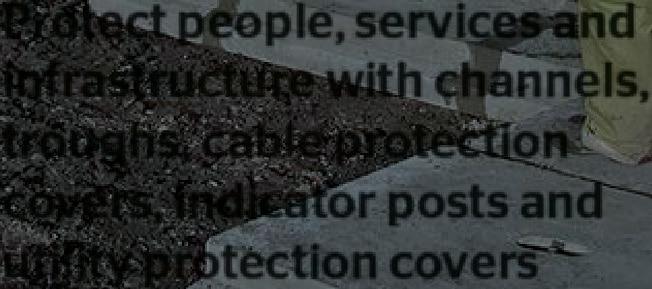
Protect people, services and infrastructure with channels, troughs, cable protection covers, indicator posts and utility protection covers
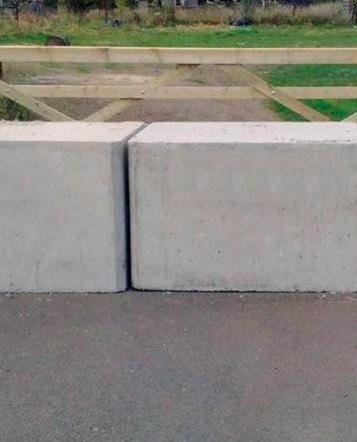
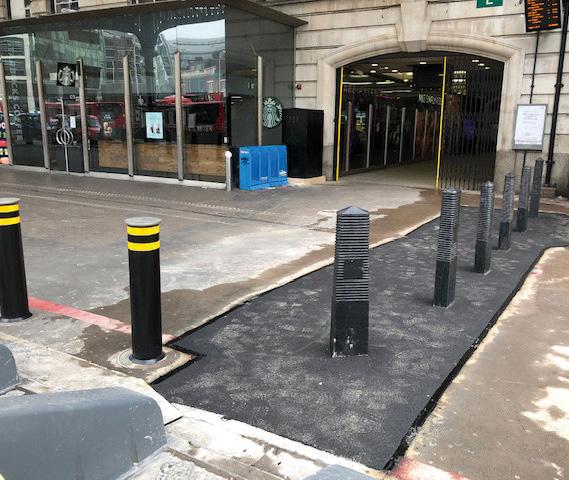
Protect rail lines and stations from unwanted visitors with our bollards, Jersey-Lite™ , Jersey barriers and security block solutions
Protect rail lines and stations from unwanted visitors with our bollards, Jersey-Lite™ , Jersey barriers and security block solutions
Environment and sustainability: A role for everyone to play
elcome to the latest edition of Rail Director, which this month is focused upon the environment and sustainability, two areas which no matter what your job title is in the railway, there is a role for everyone to play. It has been well publicised that the railway is one of the greenest ways to move a large amount of people and goods, at the same time reducing congestion on the roads. The industry isn’t resting on its laurels, with this latest edition of the magazine highlighting how it is going above and beyond in looking at all aspects of its operations to be more sustainable and better for the environment.
Leading the way is Govia Thameslink Railway, which is firmly embedding sustainability within the business, ensuring everybody understands and has a say in the role they can play. The organisation’s Head of Environment and Sustainability Jason Brooker discusses his aspiration that sustainability isn’t just a question, but is part of the fabric of an organisation and industry, up there with customer satisfaction, safety and performance. He also explains how the business is maximising the land it has to help with the ecological crisis. You can read the full article from page 10.
What has been particularly heartening in pulling together the latest edition of the magazine has been the passion of those working in the sector who desperately want to make a difference. Natalie Rees, Head of Sustainable Development and Climate Change at Transport for Wales, is a perfect example. From page 22 she explains more about keeping the railway running and how more and more colleagues are getting involved in playing their part at work and at home.
This month we also look at the progress being made in the overhaul of the railways with Laura Shoaf CBE discussing her role as Chair of Shadow Great British Railways, six months after taking on the job. Collaboration is a word that I am hearing more and more and something that is important to Laura. She said: “My message to the supply chain is how they can help us identify those, promote those, and help put those changes in place now while we are waiting for GBR to get set up.” You can read more from page 6.
I’d like to thank everyone who has been involved in the latest magazine. Work is well underway on April’s edition which will be themed around the hot topic of innovation. Already there are lots of great articles lined up and a great deal of interest in featuring in this edition, so much so that Rail Director will be publishing an innovation themed special edition later this year. You can find out more from the sales team. In April’s edition you can also expect round ups of the Connected Places Summit and Railway Industry Association’s Innovation Conference, two events I’m thoroughly looking forward to attending.
All the best,
Danny Longhorn Editor
The industry is going above and beyond in looking at all aspects of operation to be more sustainable and better for the environment
Rail Director magazine and Railbusinessdaily.com are assets owned by the Railway Industry Association. Railbusinessdaily.com delivers more than 70 stories a week to +73,000 rail industry professionals in our daily 7am newsletter. If you have not already subscribed, it’s free and it’s easy to do so at www.railbusinessdaily.com, please also encourage your colleagues to do the same. This is the very best way to keep abreast of what is happening on the UK’s railways. There is a digital copy of Rail Director on our website.
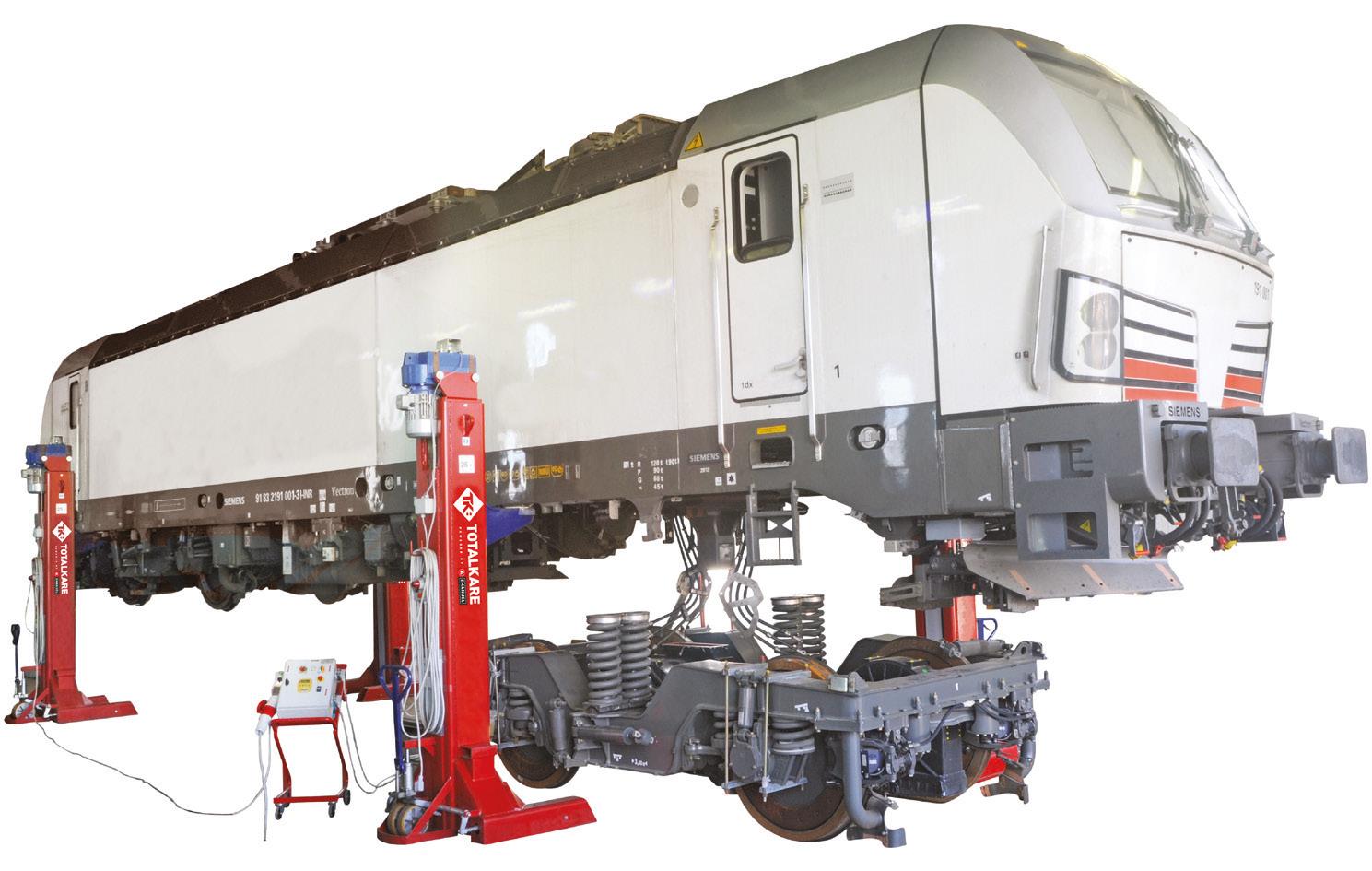
With over 40 years’ experience of high quality, heavy duty vehicle lifting, Totalkare combines world class products with industry leading support to facilitate effective maintenance and repair. LIFTING JACKS & BOGIE
Lifting and inspection equipment you can rely on for all maintenance of rail vehicles.
class products with industry
6
Driving the Government’s overhaul of the railways
Laura Shoaf CBE is approaching six months since she was appointed Chair of Shadow Great British Railways. She discusses the journey so far and the role the supply chain can play in rail reform
10 Delivering great journeys for a sustainable future
Govia Thameslink Railway is embedding sustainability within the business, ensuring everybody understands and has a say in the role they can play. Jason Brooker, Head of Environment and Sustainability, explains more
16
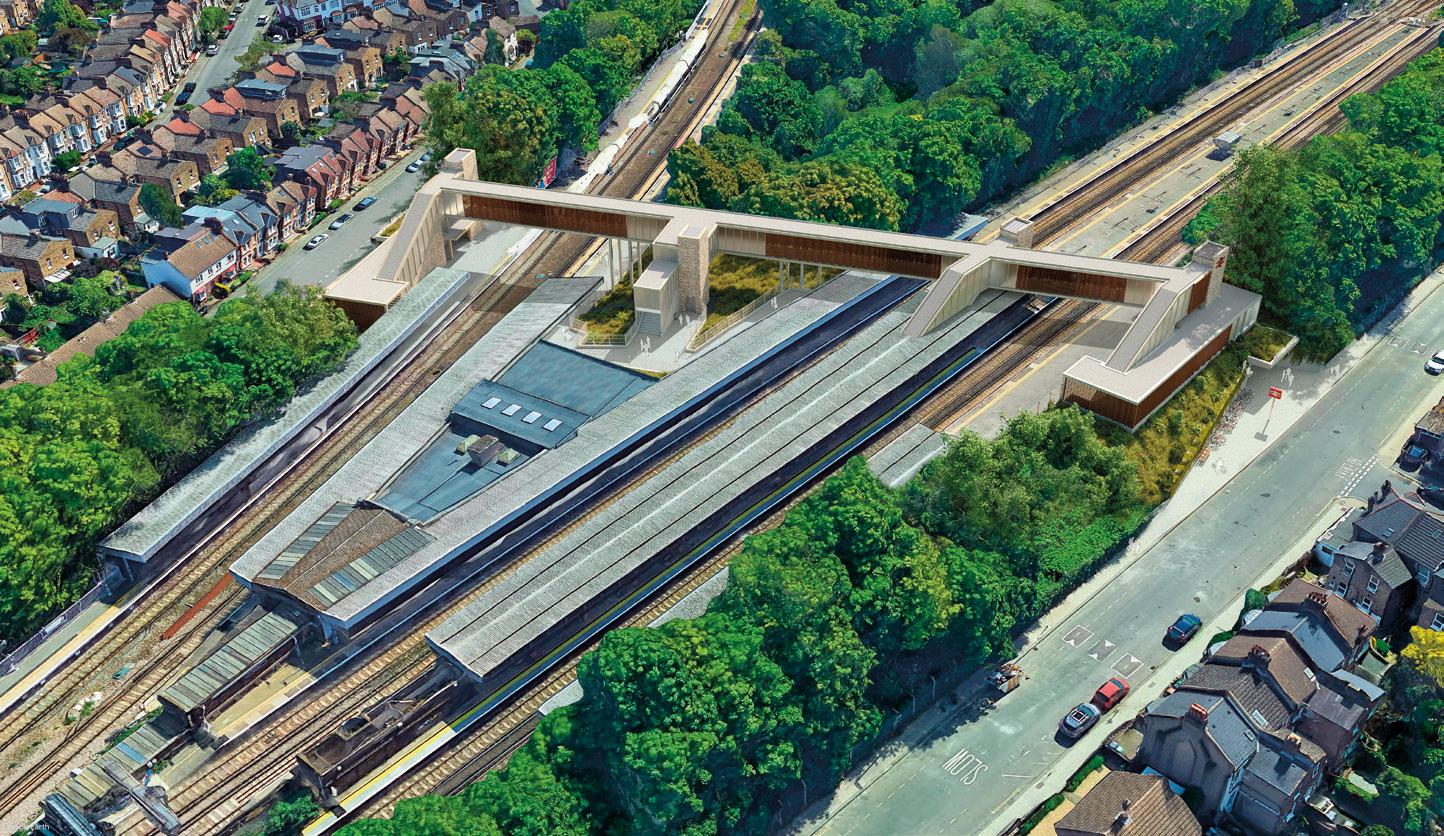
Transforming rail for South Wales and Western England
A plan’s been launched to capitalise on new funding to connect an extra 248,000 people to a new local railway station across South Wales and Western England. Western Gateway’s Deputy Director and Rail Lead James Cooke explains more
22 Weathering the storms
Natalie Rees, Head of Sustainable Development and Climate Change at Transport for Wales, explains more about her role in keeping the railways running
24 Community rail: Transforming station environments and reinvigorating the rail estate
Community Rail Network’s Sarah Chilton explains how the grassroots movement is playing an increasingly important role in revitalising environments on and around stations for the benefit of communities and railways alike
30 Supporting Ukraine’s railway
Peter Gibbons, Chief Security Officer at Network Rail, has been awarded an MBE for his exceptional leadership in delivering the UK’s £10 million aid programme to Ukrainian Railways. He explains more
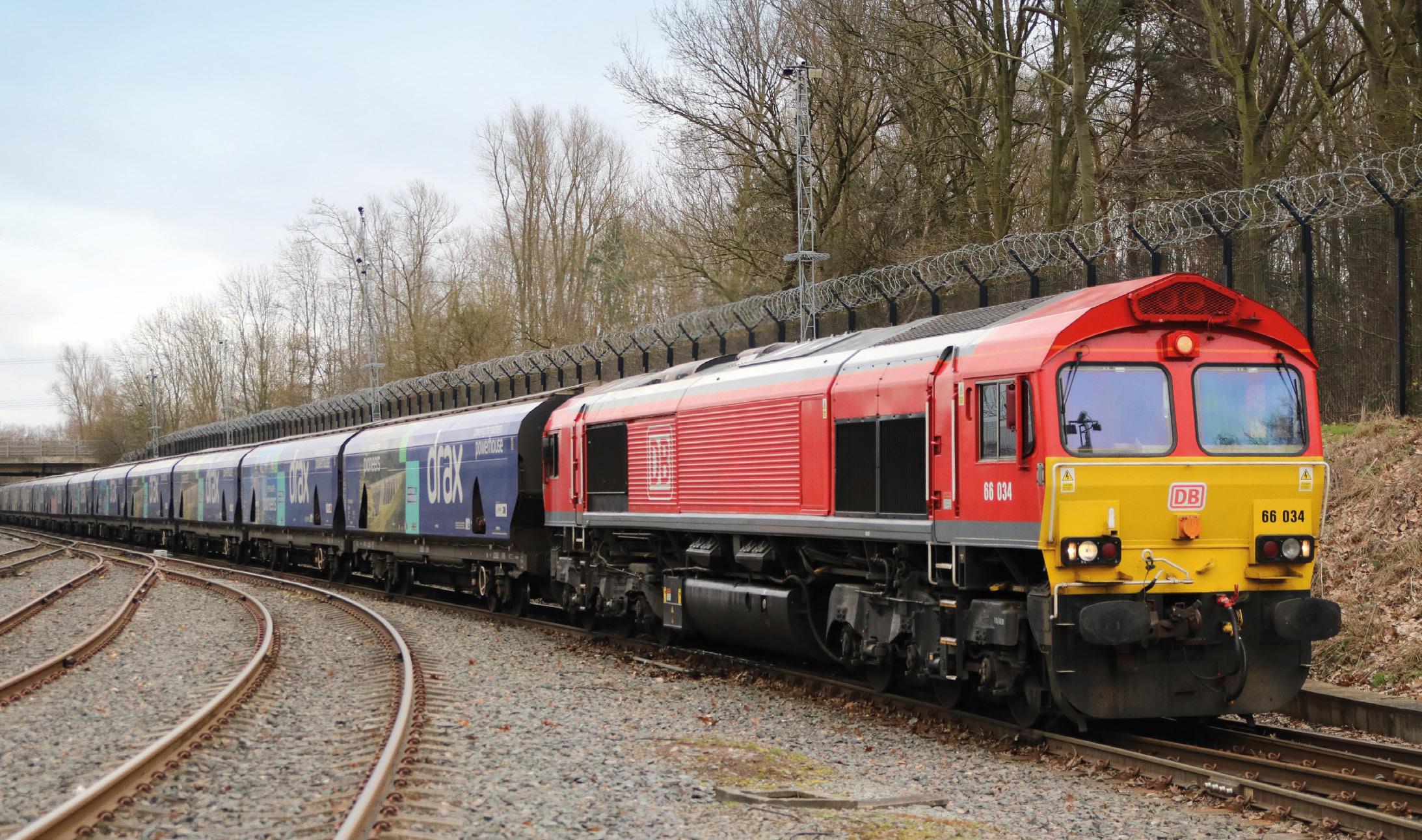
36 Cricklewood believed to be UK’s first net zero rail freight terminal
DB Cargo UK’s Stacie Scullion has described Cricklewood as the jewel in the crown, forming the blueprint for the future development of the organisation’s terminals across England, Scotland and Wales
38 All signals go for leading railway podcast
Green Signals, the UK’s leading railway podcast, recently celebrated its one millionth view. Hosts Nigel Harris and Richard Bowker CBE explain more about the journey
56 Taking ownership of EDI
Apeksha Naik, Odis Palmer and Dante Frederick are industry inclusion and belonging leads and are on the leadership team of Rail Unites for Inclusion. They discuss how the industry is coming together to improve equity, diversity and inclusion
68
Safety, sustainability, and style
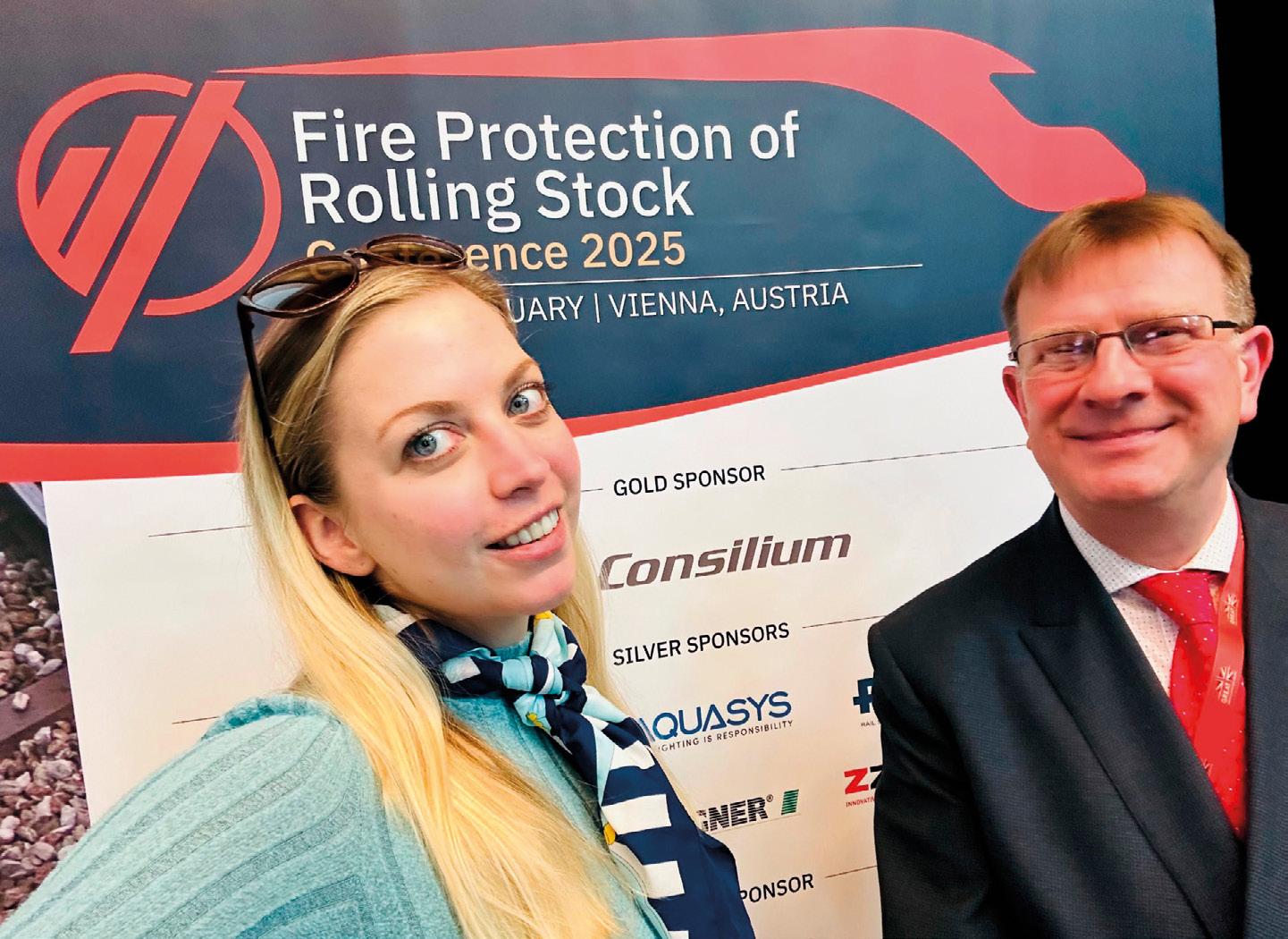
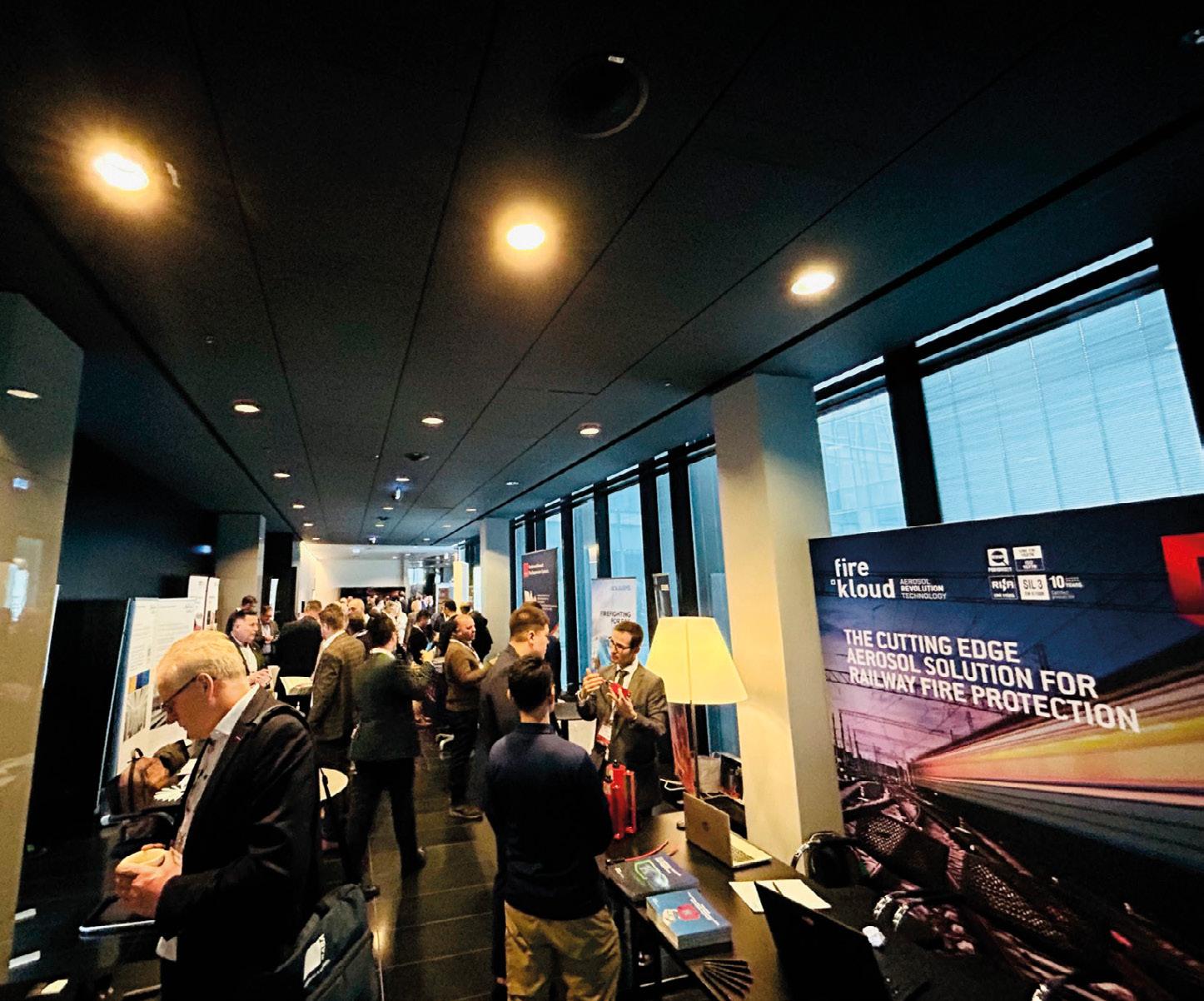
In her latest quarterly column, Daisy Chapman-Chamberlain discusses speaking at the recent Fire Protection of Rolling Stock Conference
74 Future London: Visionary insights on the capital’s growth and mobility
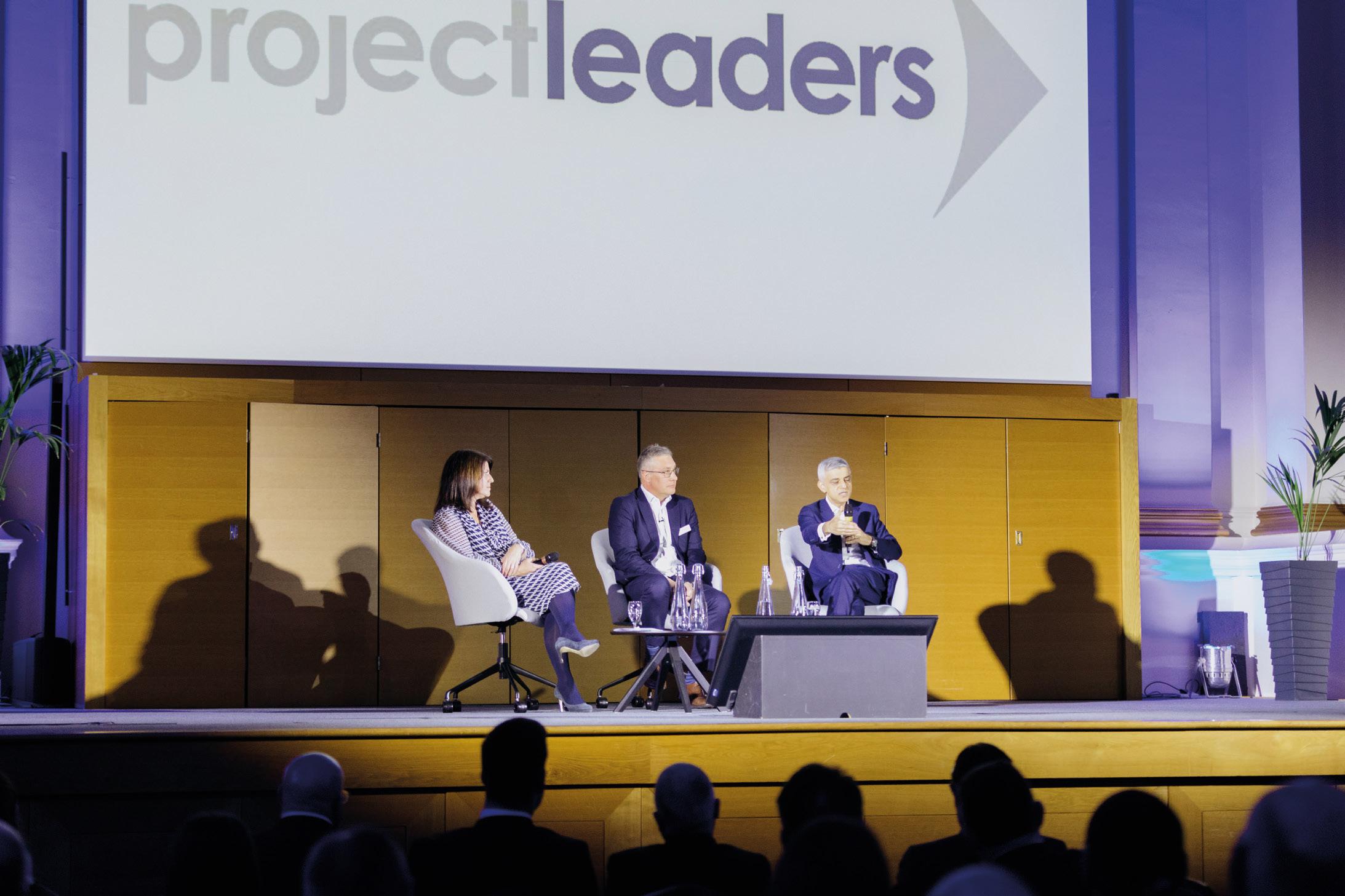
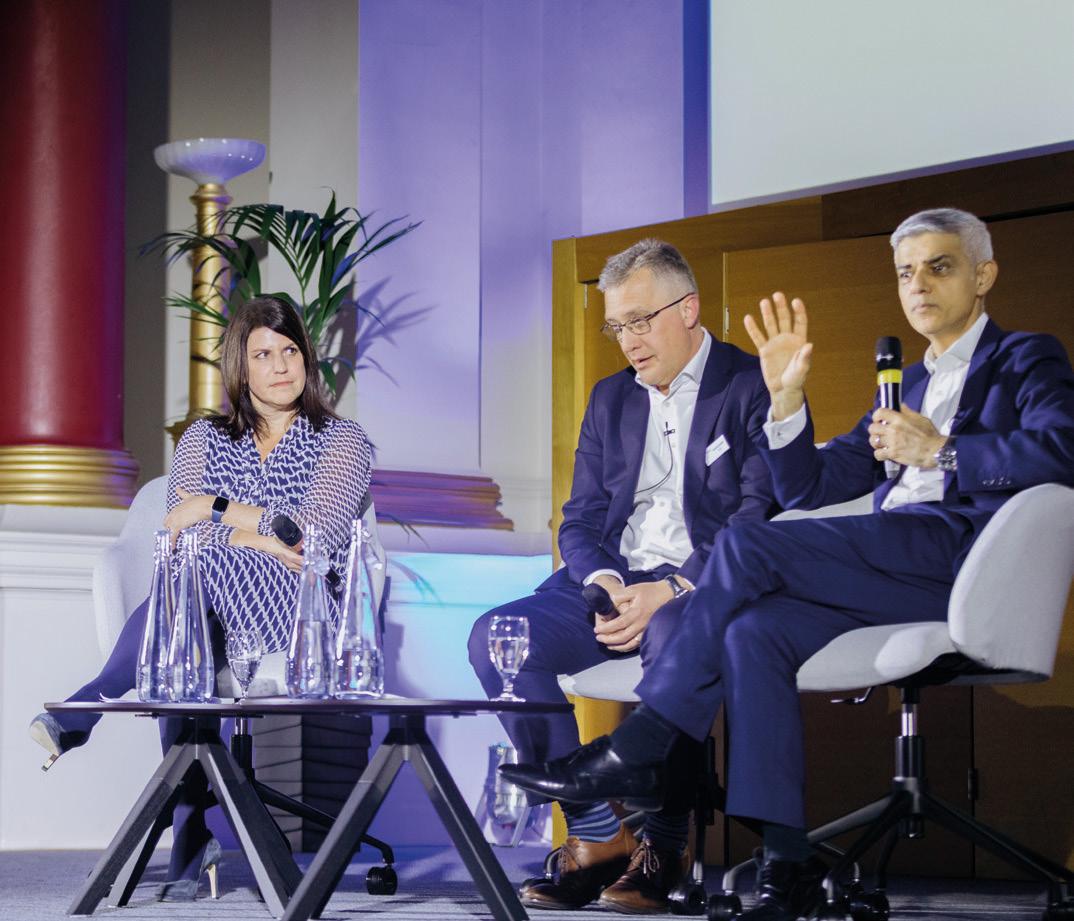
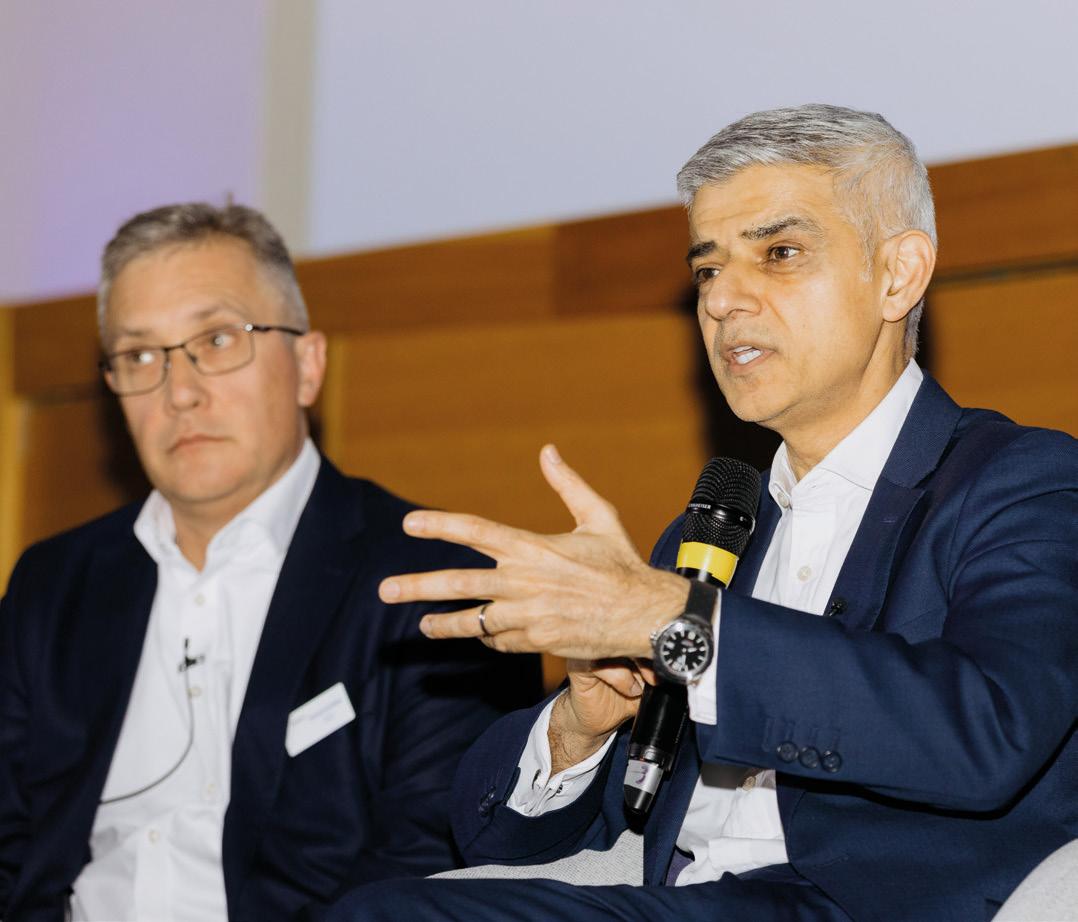
London Mayor Sir Sadiq Khan and Claire Mann, Chief Operating Officer at Transport for London, discuss their vision for the future of London
78 Practical and actionable - empowered learning
As the Railway Industry Association launches a multi-layered industry training programme for all, programme lead Fiona Broomfield discusses how it adds value to both organisational goals and professional development
86 Bringing about a transport system that the country so urgently needs and deserves
Campaign for Better Transport has appointed Ben Plowden as its new Chief Executive Officer to take over from Paul Tuohy, who is stepping down in the spring. He discusses the journey ahead
90 And Finally
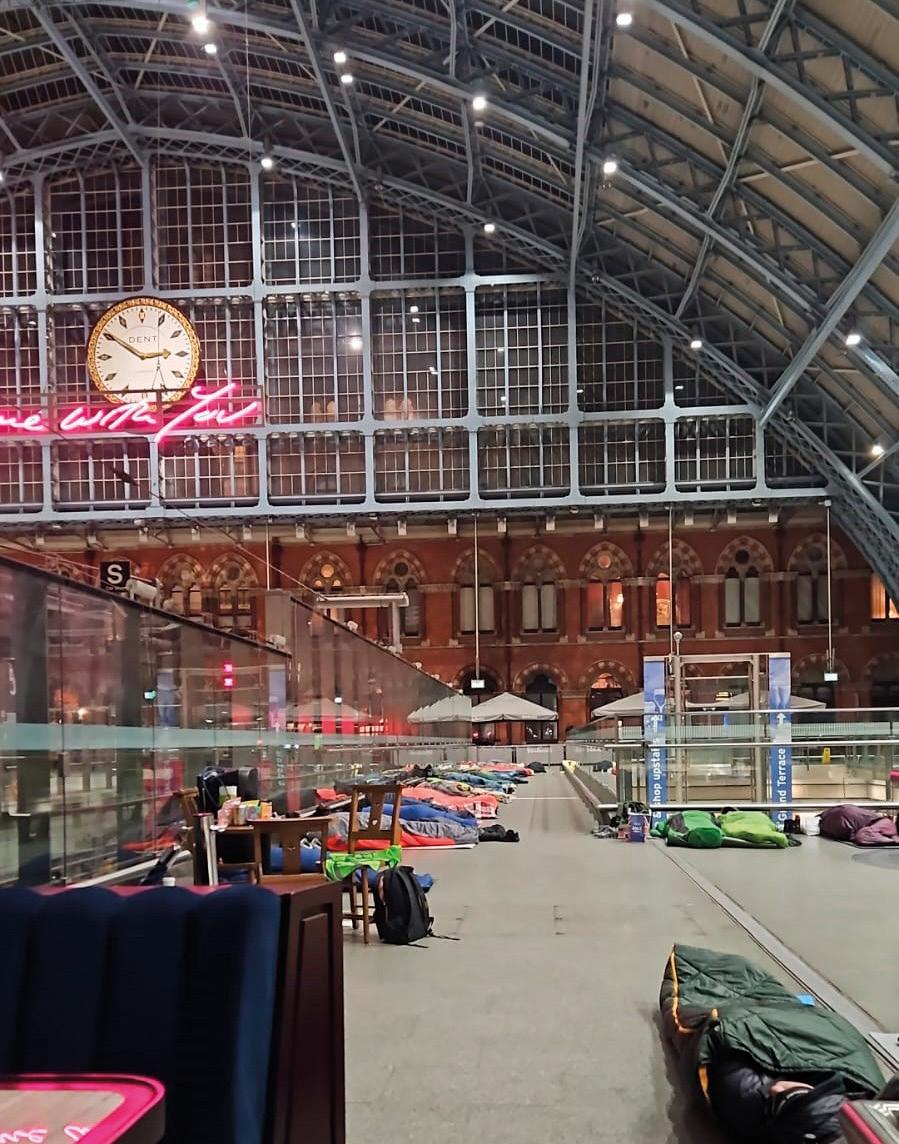
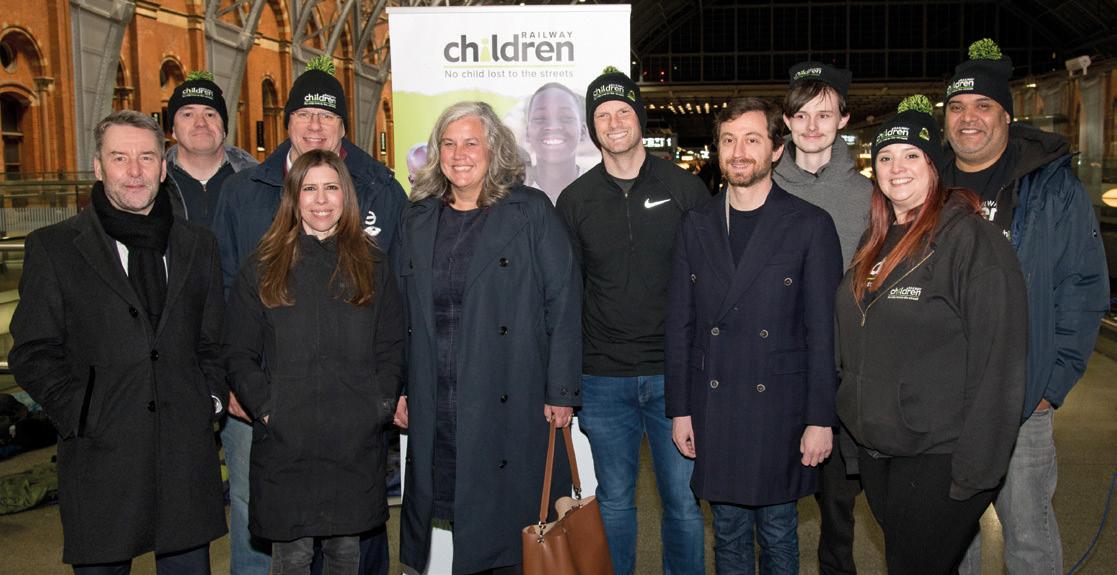
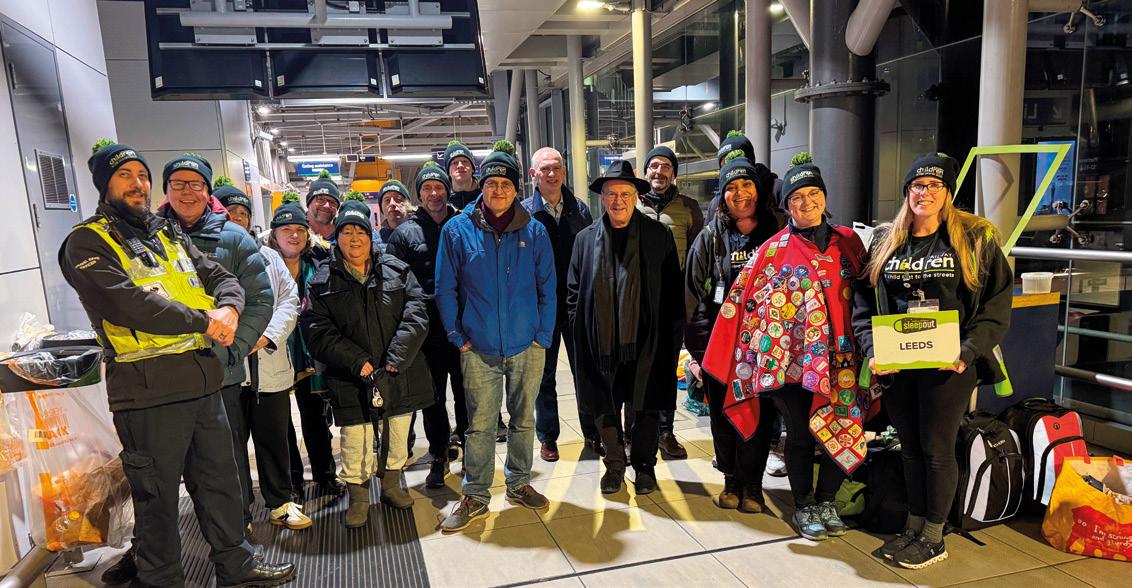
The Railway Children Big Station Sleepout has returned for the sixth annual event in 11 railway stations across the country, raising money and awareness for the work being done to help the thousands of vulnerable children who pass through the railway networks every year
Tel: 01132 082620
Sales: 020 7062 6599
Editor Danny Longhorn danny@railbusinessdaily.com
Designer and Production Manager
Debbie Nolan
Writers Rosie Crampton
Fiona Broomfield
Nigel Wordsworth
Advertising Team
Christian Wiles
chrisw@railbusinessdaily.com
Amy Hudson amy@railbusinessdaily.com
Published by Rail Business Daily c/o 16 Smith Square, Kings Buildings London, SW1P 3HQ
Laura Shoaf CBE is approaching six months since she was appointed Chair of Shadow Great British Railways (SGBR). She discusses the journey so far and the role the supply chain can play in rail reform
Driving the Government’s overhaul of the railways
hat is it we want our legacy to be for the railway and what do we want future generations to be saying about us to people in this industry in the next 200 years?” That is the question Laura Shoaf Chair SGBR poses to the railway industry.
In October she was appointed by the Transport Secretary to drive the Government’s overhaul of the railways, bringing senior leaders together to deliver improvements for passengers and work towards
a more unified rail system. The organisation is also helping design Great British Railways (GBR) – a permanent body that will oversee railway infrastructure and services.
“There is a huge amount of really good work and forward-thinking initiatives happening, so my message to the supply chain is how they can help us identify those, promote those, and help put those changes in place now while we are waiting for GBR to get set up,” explained Laura. “We need to make sure
people are at the heart of the railways and that this remains the focus for years to come.”
Laura was speaking at the Railway Industry Association’s Future of Rail Series, where she asked the rail supply chain to think about the three things that can be done to help reform the rail industry.
“One thing is that we stay together because it is so much easier to succeed in this work if we all work as one team to deliver a joint purpose,” she said. “Two is to stay focused and do what you can do, and do
Images: West Midlands Combined Authority
it well, because we need to improve the railway for passengers now and we need everyone in the industry to help us to do that.
“Thirdly, stay curious and keep sharing experiences, asking questions and challenging about how everyone can make a difference to passengers every day. That is how we are working at SGBR coming together as industry leaders every week to deliver that joint purpose, and that is why I’m so genuinely thrilled about the potential that we have and why it is such an honour to be the Chair.”
Growing up in New Jersey in the United States of America, Laura first moved to the UK in 2002 and began her career as a Principal Consultant at GVA Grimley, a real estate consultancy. Before leading the West Midlands Combined Authority, she was Managing Director of Transport for West Midlands where she oversaw a multi-million-pound transport investment package for the region.
Laura was the first female Chair of the Urban Transport Group, which comprises transport leaders from across the UK. She supported the industry on its recovery from the COVID-19 pandemic and received a CBE in the Queen’s New Year’s Honours List in 2022 recognising her contribution for more than 20 years to transport services and economic regeneration in the West Midlands.
“I was asked by the previous Transport Secretary to take on the SGBR role because of my experience working in devolved models in West Midlands, the work I’ve done with colleagues trying to end violence
against women and girls on public transport, and my relentless, never ending, harping on about how we need to focus and improve the passenger experience on the railway,” she explained.
“I recognise the great power that our transport network plays in our day to day lives, but in order for it to work and in order for it to keep opening up these opportunities, it has to be built around our passengers and freight users. It is my privilege to have been asked to Chair SGBR and my focus will be ensuring people are at the heart of the railways and to ensure this remains a focus for years to come.”
Explaining what SGBR is, Laura said it is not a new organisation, not a new layer of governance and bureaucracy and it is not GBR. She describes it as a way of working in really meaningful collaboration as the industry moves towards GBR. The board includes leaders from Network Rail, Department for Transport (DfT), and DfT Operator, the latter responsible for train operators’ ownership in England. Meetings are held with the Secretary of State every two weeks to deliver some consensus of where the sector is going.
“It is an overly complex system to work in and it is an over complicated system to use,” said Laura.
“Most of us haven’t known any different, but there are a lot of people frustrated, myself included, about how can it be so hard for us to work together to deliver for passengers and freight users. I would go as far to say it feels the system is set up to prevent that from happening.
“Most of us have ideas about the small
There is a huge amount of really good work and forwardthinking initiatives happening, so my message to the supply chain is how they can help us identify those, promote those, and help put those changes in place now while we are waiting for GBR to get set up
How do we harness all of this love, all of this potential and use it to help people access work, turn it into a beacon of diversity where our workforce is as varied and represented as the passengers that use the railway, how do we make it the most accessible way to travel?
changes we could make now which would make a big difference to how passengers feel when they use the rail network, but we often find it is just too difficult to get them done. So even though SGBR might seem like only a small step forward, I can’t overstate how much progress, building on the good work that’s already been done to date, I have seen since I joined in October when it comes to how we are going to try and work as one team.
“We are focusing on what can be done now in the current structures that we are working to today, we focus on what we can do to improve the passenger experience, despite the barriers that exist, not just on talking about how hard it is to work through the barriers. Changes are being made now in advance of the legislation making it easier to do our jobs, to use the network, and making it easier for partners and the supply chain to interact with us.”
SGBR has been tasked by the Secretary of State to focus on five areas:
Integration: Better integration across track and train and working across the industry supply chain to reduce the cost of running the railway and for it to be put on a more financially sustainable footing. An industry financial model has been developed offering a single, simpler, better view of the whole finances of the railway at a granular level. The model has helped Network Rail save nearly £30 million in the last financial year alone, with hopes it will save up to £100 million in the coming years.
Shared standards: Measuring things in the same way so that decision making is focused on a safe, high quality passenger experience. Making performance data more accessible for passengers so that they can make informed decisions, and how supply chain partners can be part of this, so every part of the industry is pulling in the same direction. There is already success with the Rail Data Marketplace, which has developed into one of the largest data sharing platforms across Government.
Fares, ticketing and retail: Helping to unblock the barriers to progress. There is already a lot of work happening such as transforming digital rail ticketing and retail experience, piloting simpler fares, and expansion of tap in tap out.
Strategic innovation: Applying best practice and new technology to create a more modern rail system which is easier to work on and easier to travel on. Drawing on organisations’ best corporate expertise to help SGBR identify opportunities to innovate.
Maximising social and environmental value of rail:
“The last area is particularly close to my heart,” said Laura. “I am consistently surprised and heartened by the deep affection that this country has for its railway which is a powerful uniter. Even at a time of flux and change there isn’t anyone who doesn’t think rail reform is needed and I’ve not met anybody who doesn’t want to be part of it.
“Rail is not an end in itself, it gets people to work, holiday, it allows people to connect with friends and families and brings communities and cities and regions together, drives economic growth, transports critical goods through a strategic freight network. It is about all of those things that it enables to happen that we often lose sight of.
“When it is in its final state, GBR will be one of the largest public sector employers – similar in size to the NHS and the armed forces - and that is before the supply chain is taken into consideration.
“The railway needs to be bigger than the sum of its parts, so how do we harness all of this love, all of this potential and use it to help people access work, turn it into a beacon of diversity where our workforce is as varied and represented as the passengers that use the railway, how do we make it the most accessible way to travel? How do we make travelling by train feel like a no brainer, and how do we continue to make a positive impact on our environment so we leave the world in a better place than we found it? The best way to do that is by working together and through reform.”
The DfT launched plans for the landmark rail reform bill to establish a powerful passenger watchdog last month, with the consultation closing in April. The new independent watchdog will be tasked with ensuring GBR addresses the issues that consistently rank highest in passenger complaints, rooting out the problems that cause poor journeys, ensuring passengers are given clear information when they travel, and helping to tackle the maze of confusing rail fares and tickets passengers have to navigate.
Govia Thameslink Railway (GTR) is embedding sustainability within the business, ensuring everybody understands and has a say in the role they can play. Jason Brooker, Head of Environment and Sustainability, explains more
Creating great journeys every day for a sustainable future
For Jason Brooker, Head of Environment and Sustainability at GTR, the aspiration is that sustainability isn’t a question, but is part of the fabric of an organisation and industry, up there with customer satisfaction, safety and performance and right at the top of business thinking for everyone at the organisation.
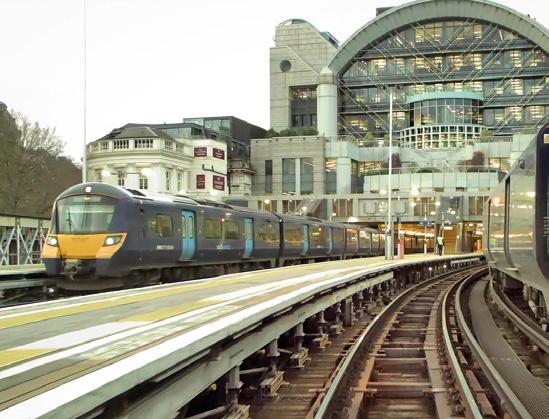
It is a vision that he is bringing to life with the creation of a sustainability plan that is going to be embedded across the entire business of the UK’s largest railway franchise, which operates Southern, Thameslink, Great Northern and Gatwick Express. It is aligned to the business’s main strategy and incorporates the company’s current four main pillars of sustainability – biodiversity and natural capital, water efficiency and leak reduction, waste management and resource use, and climate change resilience.
“This is a plan which will be embedded within the business,” he commented. “The executive has agreed to it, our Chief Operating Officer is going to be our executive sponsor, and this will be set up imminently not as an ambition, but as a deliverable plan that guides everyone on how they contribute to the outcomes.”
The plan builds on The Sustainable Rail Blueprint, an industry-wide framework for realising sustainable rail. Launched by the Rail Safety and Standards Board, Jason was involved in rail’s first unified plan, providing a whole-industry view as far as 2050. The plan Jason is leading on for GTR draws inspiration on this, but is being created specifically for the operator, drawing on the expertise of his colleagues.
“I want colleagues here at GTR to feel like they’ve contributed to this and that they are part of the journey as well,” he explained. “This isn’t about the environment team saying that sustainability is really important and telling staff what they need to be doing, it is about looking at what they are already doing, how it is being done and if we can offer any help and support.
“I feel like we are knocking on an open door with colleagues wanting to play their part when it comes
to the environment and sustainability, but this can only develop if we work together and we’re getting the message right for people, understanding what we’re doing and why, along with the business impact and the wider impact.
“Although what I’m creating will be a blueprint with the topics, I want it to go to the business and for the business to get involved. We have to be quite open with the boundaries because the business context might change, so although the ambition might be the same, there might be better ways of doing it down the line. The plans need to be agile and challenge those norms, but in a way that is constructive, practical, cost affordable and that actually delivers.
“It’s about being conscious of the impact that you can make. Take GTR’s road fleet as an example. The organisation has about 90 cars, which might not be a huge fleet, but they are still burning petrol and diesel,
so what is the carbon impact, and what can we do to improve that if EV isn’t appropriate for our fleet at this time?
“From a customer service perspective, during extreme weather, it would be what is being said to customers and how staff are communicating that to the customer; and from an asset replacement perspective if there is a gas boiler that fails or lights that need replacing, whether there are alternatives that could be more sustainable and better for the environment. Replacing like for better, not like for like.
“It’s got to be realistic, affordable and good value for money, and there is a lot we’re doing already, so it is also about improving on that,” he added. “This isn’t about me going to the business and telling them to replace something even though it might be brand new. It is about the business coming to me with suggestions.
“Overall, it is about that change of mentality, that culture change, and changing the way people think. My aspiration is that sustainability becomes part of our culture and my role is no longer needed because it’s embedded across the business. This plan is the start of this process, embedding sustainability within the business so that everybody understands what role they have to play, and has the opportunity to contribute, no matter what their role is in the business.”
The railway is already the most sustainable mode of long-distance transport for both people and goods, responsible for just 1.4 per cent of the UK’s transport carbon emissions. There is so much more that can be done, but that involves all parts of the industry challenging the way it does business to deliver not just net zero, but sustainable benefits for the local environment, communities and wider society.
GTR has a strong platform to build on, cemented by the fact that last year it joined a group of companies worldwide which have set science-based greenhouse gas reduction targets to keep global warming below catastrophic levels. The goals have
Images: GTR
Agamemnon Otero and Jason Brooker hold their award
Building strong foundations
been validated by the corporate climate action organisation Science Based Targets initiative (SBTi).
With a keen eye on the future, Kieran recognised there was a gap in SEP Geotech’s offering:
While the demand is always there for new staff, Kieran knows the value of hiring the right people:
The organisation has committed to reduce scope 1 and 2 greenhouse gas emissions by 42 per cent by 2029. These are emissions associated with fuel used directly and indirectly for things such as running GTR’s small fleet of diesel trains, company vehicles, and generating electricity to power trains, offices and depots.
“What SEP Geotech does ties together perfectly with piling. The purpose of our investigation forms the basis of the pile design, and our sister company, SEP Rail Design, designs the piles; now we will install them.”
Piling, in engineering terms, involves the installation of foundations driven or bored into the ground to transfer loads to deeper, more stable soil. These structural elements are essential when the natural bearing capacity of the soil is insufficient for supporting heavy construction loads.
GTR already sources clean or renewable electricity for its stations, depots and offices. The majority of greenhouse gases in its operation come from the companies in its supply chain creating the goods and services it uses. GTR has pledged to reduce these scope 3 greenhouse gas emissions by 24 per cent within the same timeframe.
Kieran’s extensive engineering experience, developed since his teenage years, has been centred around piling. He explained:
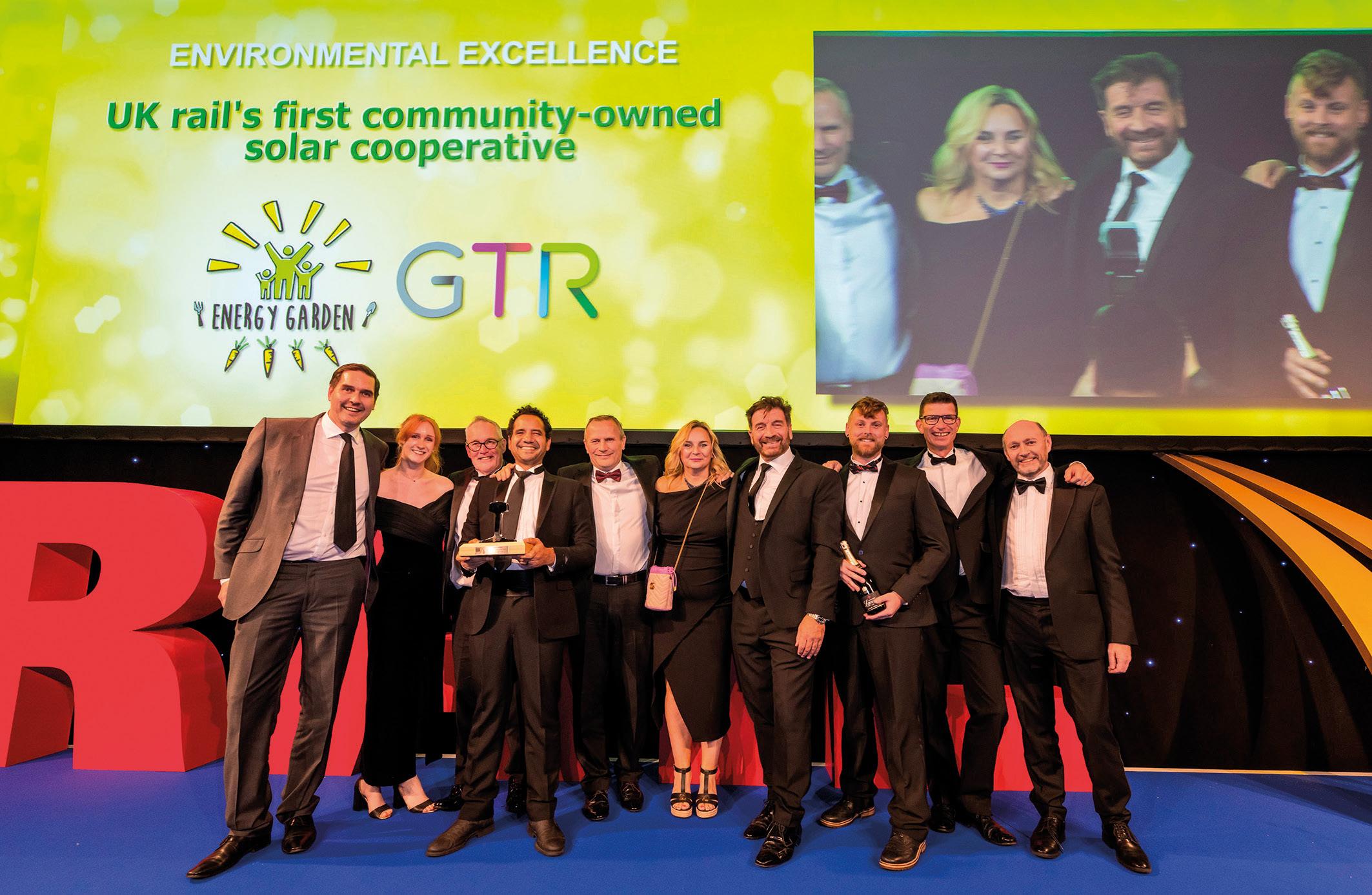
Cauldwell Walk in Bedford; Selhurst in Croydon and Three Bridges in West Sussex. The scheme won the Environmental Excellence Award at last year’s National Rail Awards.
“This industry isn’t for the faint-hearted. Late nights, early mornings. Long periods of time away from your family. My office is my mobile phone and my van; we’re always on the road, on-site, and getting our hands dirty.
The partnership with Energy Garden provides clean, green energy for use onsite at depots. Surplus electricity is bought by ethical UK-based organisations, and this generates profits to fund Energy Garden’s community engagement initiatives – transformational urban greening projects and education programmes for young people from deprived inner city London boroughs.
“Our team shares a deep commitment to the enduring success of our business and is constantly seeking ways to enhance their skills and improve our services.
“We take pride in being one of the few geotechnical companies that offer specialised drilling NVQs to our team, ensuring that our workforce remains at the forefront of industry expertise and quality.”
This is a critical moment for the piling and foundations industry
My aspiration is that sustainability becomes part of our culture and my role is no longer needed because it’s embedded across the business
“This is our public commitment to push ahead with net zero by 2050, pushing sustainability to the top of the business agenda,” added Jason. “We have set near-term science-based targets that are in line with what is needed to keep global warming below catastrophic levels with a maximum 1.5C rise.
“This is a critical moment for the piling and foundations industry. Exciting innovations within pile design and installations are allowing for improved project turnaround times and more technically demanding programmes.
“By leveraging our team’s experience, alongside utilising the wider SEP Rail Group’s capabilities, SEP Geotech is in a perfect position to deliver projects from feasibility to design through to completion.”
“This is a statement of intent. Science-based targets are really hard work to develop so by committing to them and achieving this certificate, we’re showing our ambitions are truly credible.”
Prioritising growth and expertise
Investing in the professional development of the current team is also not just a priority; it’s a key part of SEP Geotech’s vision for the future.
Among the successful initiatives implemented has been London-based Community Benefit Society Energy Garden covering GTR’s railway depot roofs with community-owned solar panels at or soon to be at Streatham Hill in South London; Bedford
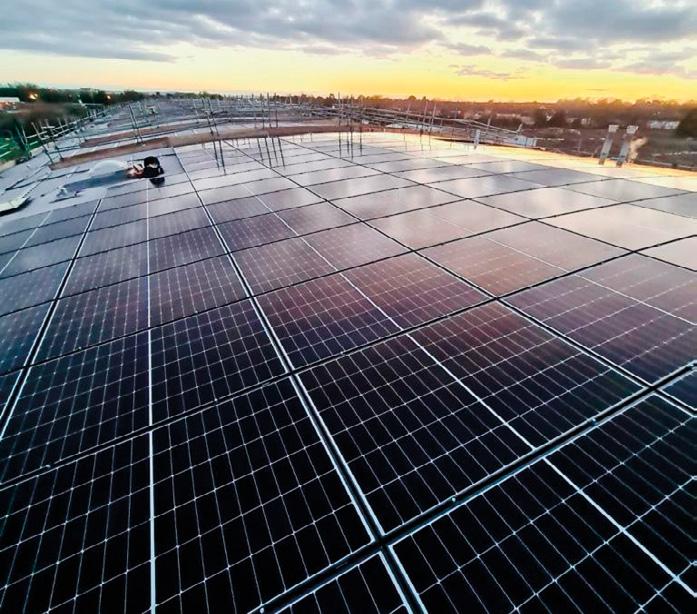
“Community-owned energy is a great example where everyone can benefit,” explained Jason. “We’re in a climate and ecological crisis and we need to be challenging the norms and looking at innovative new ways of doing things. The partnership GTR has with Energy Garden is a fantastic example of doing just that, and it’s something we can all get behind. There are 578 solar panels at Streatham Hill train depot in south London, with Energy Garden putting the panels on the roof at zero cost to us, with us buying the energy off them.
Investment in staff is one thing. But the evolving rail industry landscape also demands industryleading equipment. To address this, Kieran provides a candid glimpse into a forthcoming investment at SEP Geotech:
“We’re investing in a new, state-of-the-art solution designed for safe work on embankments, slopes, and even over water. This innovation eliminates the need for traditional rope access, streamlining our processes even further.”
“At Bedford almost 1,000 photovoltaic panels (932) will generate 322 MWh of electricity a year – enough to power 120 homes every year, saving more than 66 tonnes of CO2e. We’ll be doing Three Bridges and Selhurst next as well. There is a lot more that we can do and a lot more that we can help with the wider transport industry and also our local communities.”
As SEP Geotech continues to evolve and expand its offerings, one thing is clear: Kieran Moran’s experience, dedication, and vision will remain at the forefront, driving the company to even greater heights in the geotechnical engineering industry.
RAISING STANDARDS
JACKS
Bedford Cauldwell Walk
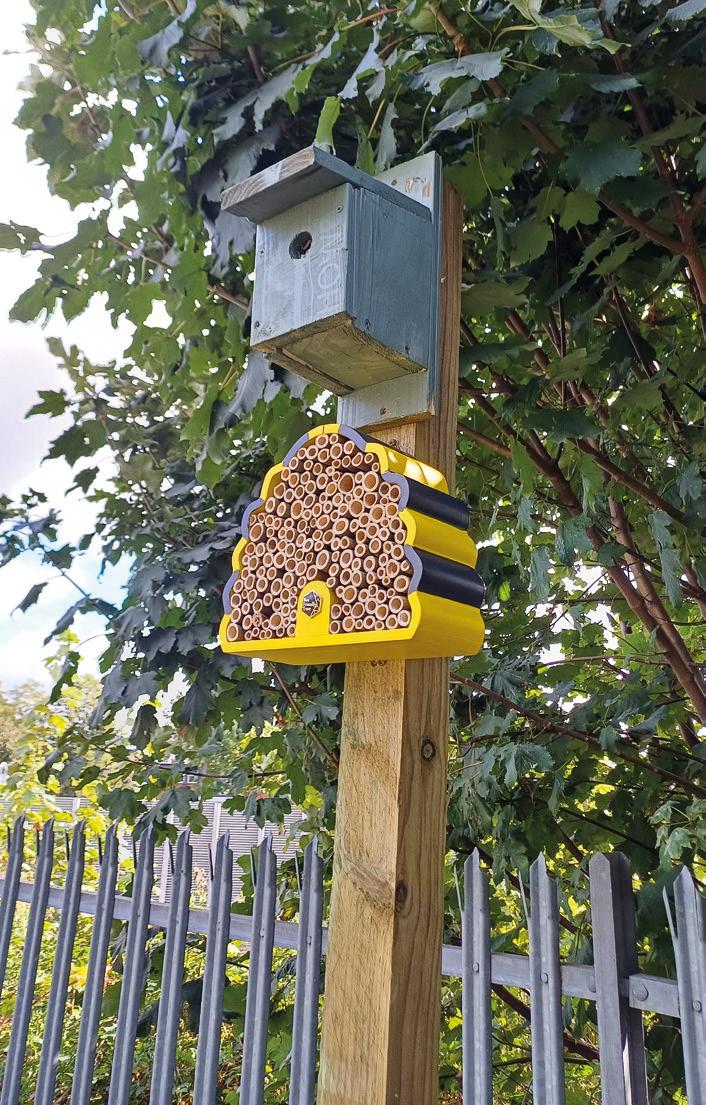
GTR is also trying to do its bit to help with an ecological crisis. Although space might be restricted for GTR, which manages 236 stations, the organisation has teamed up with Bee Friendly Trust, and, by the end of this month, will have created 100 homes for nature across its network ranging from bird boxes to striped bug hotels for solitary insects, and hibernacula – shelters filled with timber and wood to give small animals and insects a place to live during the winter months.
“We are looking at how we can maximise the land that we do have and we’re actually going to be creating another 100 homes for nature by the end of the year, taking us to 200, to coincide with Railway 200,” said Jason.
“We’re also looking into performance, such as how trains are running and the impact of them running, and weather resilience and climate change adaptation. The latter involves us looking at flood risk across our network and identifying areas of vulnerability and the potential adaptations that are needed. This also extends to passenger loading and if a bad storm does shut a station, where do the passengers go? It is about tying it all together into a dedicated weather resilience, climate adaptation strategy – a one-stop shop.
“We’re going to be looking at geographic information systems (GIS) which is going to help. We’ve already got that set up and are in the process of building the overlays of how we can then use that. It can also be used with other train operating companies and Network Rail, especially since we overlap with South Western Railway, Southeastern, Greater Anglia – we can share the overlays with them
and work together.
“The collaboration is something we’re seeing in several areas. I’ve been doing this nearly 15 years and that collaboration as an industry on sustainability has really grown, getting together and sharing best practice. A lot of the work we’re doing around our decarbonisation strategies and our net zero strategies and our weather resilience plans we couldn’t have done without the industry working together.”
This is why Jason is full of confidence for the upcoming sustainability plan, and also his belief in the whole rail industry making more and more of a difference.
“I don’t think the environment was seen as business critical, but more a nice to do thing in the past,” he said. “The railways will still run whether or not we build our ‘homes for nature’, but organisations like GTR are seeing the wider benefit: the contribution that initiatives like this can make to tackling that ecological crisis will ultimately impact the whole planet.
“What we’re doing is the right thing to do and shows we do care for the environment, that it matters, and that hopefully the outputs of the plan for GTR will show why it matters and how we can do more. It comes following the organisation’s new corporate purpose, ‘We create great journeys every day for a sustainable future’. That is our new strap line, and it’s why we position ourselves as industry leaders. People want to do it, a lot of the time they don’t know how, and that is the barrier I’m trying to unlock. There are 7,500 employees and we want every single one of them to be part of the sustainable and environment team.”
Above: GTR and Energy Garden team receive their Environmental Excellence Award at the National Rail Awards 2024
Below: New Southgate
Siemens Mobility opens new Rail Components Distribution Centre at Goole rail village
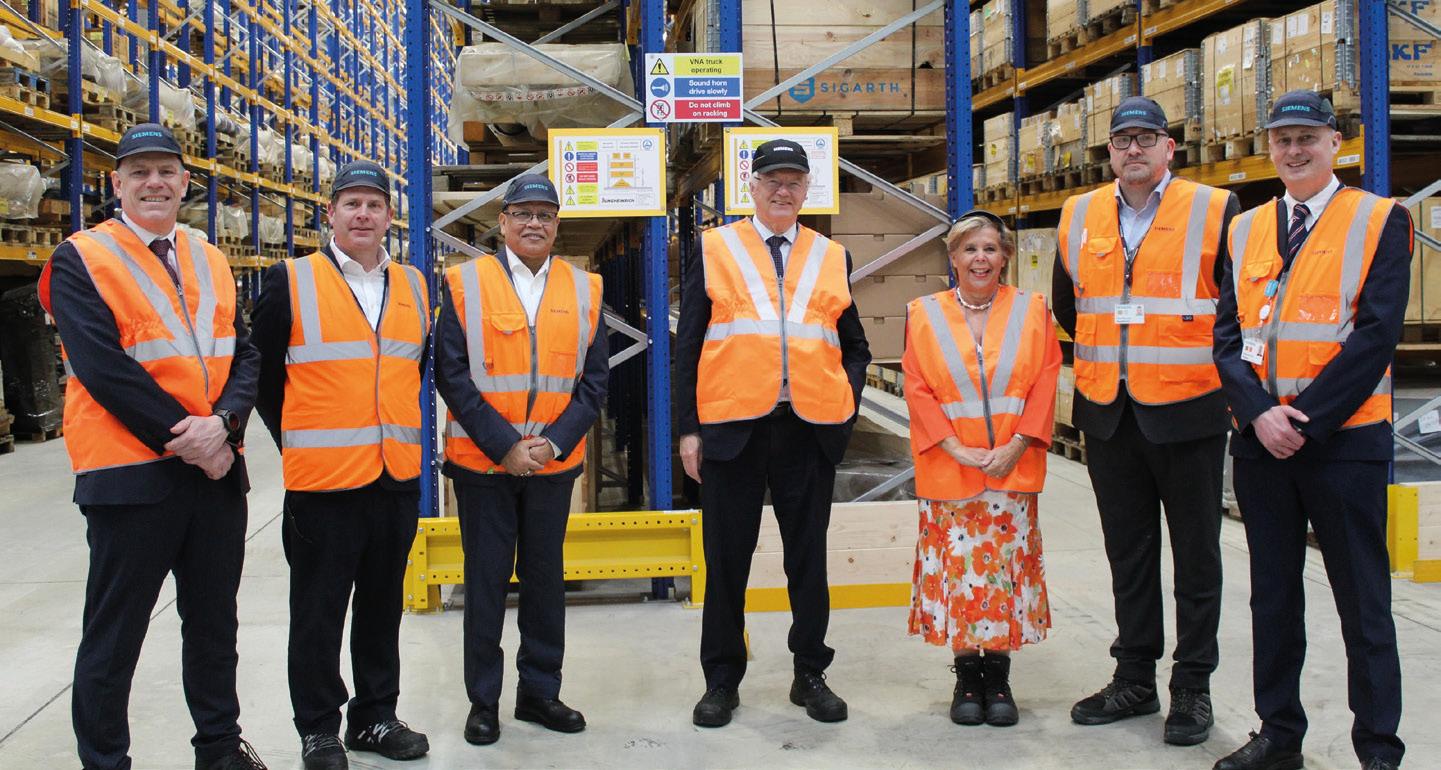
Siemens Mobility has opened its new Rail Components Distribution Centre as the latest addition to its state-of-the-art rail village in Goole, East Yorkshire.
Alongside the company’s existing distribution and logistics centre in Kettering, the Goole facility will serve as a storage and distribution centre for rail components whilst also supporting the integration of the rail village within the wider supply chain to support UK rolling stock operations.
Together, the Kettering and Goole teams include apprenticeships and internships, with significant potential for future workforce expansion.
These roles sit within the end-to-end capability of Siemens Mobility’s rail component logistics in the UK, with a central team of around 30 who support materials management, planning and supply chain management.
Through the localisation of the company’s logistics distribution centres in the north and south of England, Siemens Mobility aims to reduce its logistics carbon footprint by reducing the road miles required to deliver materials to fleets.
New era of rail accountability for passengers as performance data goes live at stations
The Department for Transport says passengers across England can now see how reliable their local train services are, as performance data went live at over 1,700 stations this month.
The data, broken down by operator, shows the percentage of trains cancelled and how punctual trains are at each station, marking the first time that station-level data has been available in the history of the railway. It is now live at major stations through digital screens, where possible, and at most smaller stations, passengers will be able to scan a QR code to see the data online.
Transport Secretary Heidi Alexander said: “These displays are a step towards rebuilding trust with passengers using our railways, as we continue to tackle the root causes of frustrating delays and cancellations.
“Through fundamental rail reform, we’re sweeping away decades of dysfunctionality –putting passengers first, driving growth through connectivity as part of this Government’s Plan for Change.”
Sambit Banerjee, Joint Chief Executive Officer at Siemens Mobility, said: “I am so proud that our Goole rail village is continuing to expand, with a new Rail Components Distribution Centre that will play an important part in Siemens Mobility’s mission to
transform rail travel and transport in the UK.
“This new centre, alongside its sister facility in Kettering, is the latest example of our commitment to the UK and will enable us to further enhance the delivery of materials to our fleets.”
DB Cargo signs contract with Siemens Mobility to fit Class 66 locomotives with ETCS
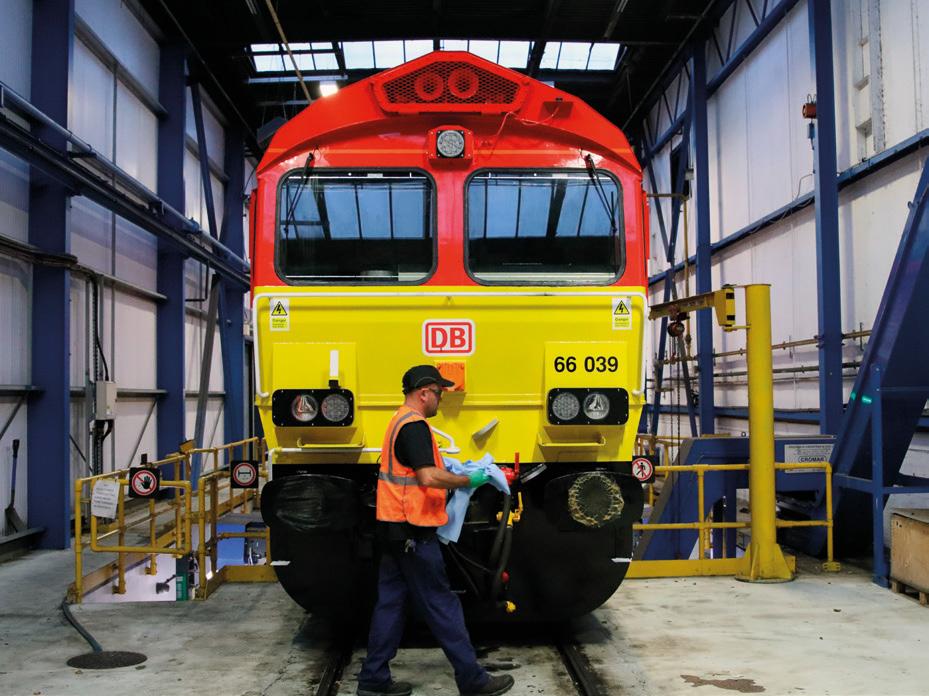
DB Cargo UK has signed a major contract with Siemens Mobility to begin fitting the new European Train Control System (ETCS) to the UK’s Class 66 freight locomotives.
Work will begin in July to fit the new in-cab signalling system to nine Class 66 locomotives (all owned by DB Cargo UK) with the work being undertaken by the company at its Toton Traction Maintenance Depot in the East Midlands.
The work, which is scheduled to be completed in March 2026, is the first phase of a national programme, which will eventually see all DB Cargo’s Class 66 locomotives fitted with ETCS as part of the roll-out of the European Rail Traffic Management System (ERTMS)
in the UK.
Emily Woodward, Network Rail’s Senior Sponsor (Freight) for ECDP, said: “This is an exciting step on the journey to a digital railway, which will contribute to rail freight’s growth by helping freight trains operate more efficiently on the network. We welcome the collaboration and innovation as our partners progress the pioneering work of fitting freight locos for the next generation railway.”
Image: Siemens Mobility
Image: DB Cargo UK
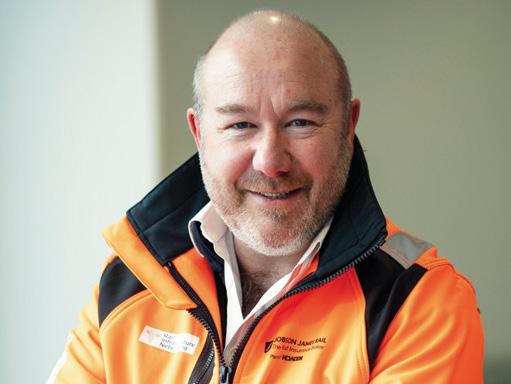
Keven Parker ACII CRM NEBOSH, Head of Rail at Jobson James Rail (JJR), discusses saving money and improving policy cover
The importance of turning to a rail expert to manage your insurance properly
railway civil engineering company with a £10 million turnover got to know and trust the JJR team whilst attending our RIN events. We introduced it to a range of Tier 1 Network Rail Principal Contractors at our Meet The Buyer sessions.
When we were invited to tender for its insurance programme, the premium offered by the incumbent broker seemed expensive to us. We conducted a comprehensive fact-find over three meetings, the first two with its senior management focusing on business activities i.e. what they did for their clients, what they didn’t do, health and safety, risk profile and a review of their contractual liabilities. The third focused upon motor fleet and vehicles/drivers/ journey planning/risk management.
This in-depth research revealed
that risk management was a priority within the business and staff worked to good health and safety systems with good standards of audit and control.
Contractually, the company was in a good place as well. We reviewed its major customer frameworks and identified those which favoured the client.
Yet the pricing of its Employers Liability and Public & Products Liability insurance indicated that its insurers thought the business was high-risk and charged higher-than-average premium rates.
Notwithstanding that its estimated turnover for the year ahead was slightly down due to CP7 woes, after our comprehensive fact-find and leveraging our robust relationships with insurers, we were able to reduce its Liability insurance spend from
£91,000 + Insurance Premium Tax (IPT) to £45,000 +IPT.
The motor insurance was a similar story; its premium was expensive at £143,000 + IPT last year for 52 vehicles (a rate of £2,750 per vehicle.) The fleet manager was very experienced, its claims history was poor three years ago but had substantially improved in recent years, yet the current broker had allowed the price to stay high. We were able to reduce the annual fleet premium spend to £86,934 +IPT.
The current broker was taking full commission on every policy too. It was earning £35,000 a year, whilst doing little to mitigate the increasing cost and was putting its own income first, rather than focusing upon the needs of its client.
Our remuneration model is fairer. We have a structured way of working with rail clients, we work to a fixed fee basis for a company of this size and in this case our fee was £17,500 for high quality, expert advice and service, including managing its claims.
Overall, we saved the business £100,000 + tax and improved policy cover by closing some gaps in its Liability programme and adding our bespoke rail extensions.
A plan has been launched to capitalise on new funding to connect an extra 248,000 people to a new local railway station across South Wales and Western England. Western Gateway’s Deputy Director and Rail Lead James Cooke explains more
Transforming rail for South Wales and Western England
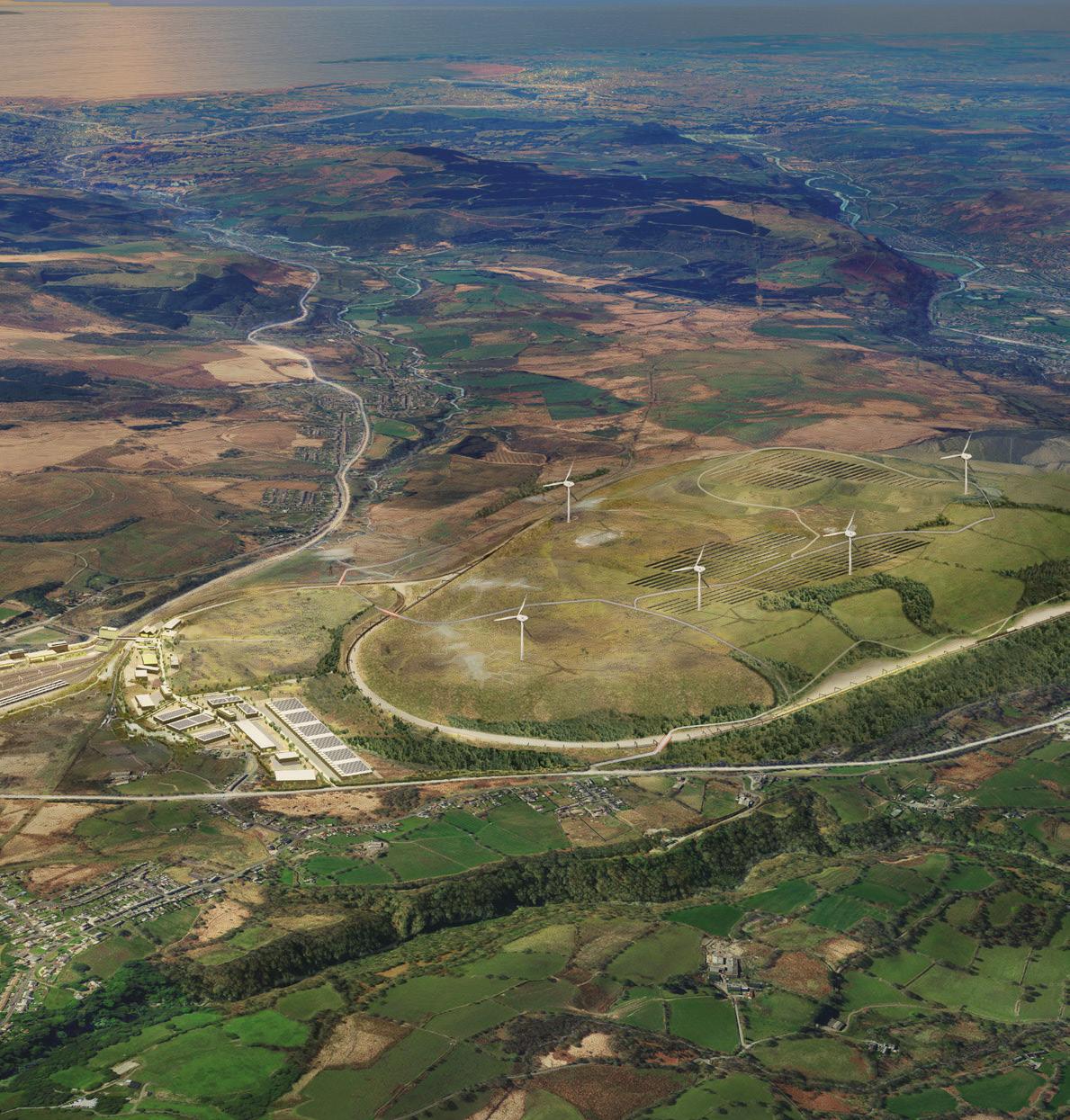
The Western Gateway area is poised to be the fastest-growing region outside of London, yet it has not had the critical investment in public transport infrastructure that other areas of the country have seen, particularly in rail.
That is the message from the pan-regional partnership for South Wales and Western England, which, alongside local authorities, businesses,
Transport for Wales, and Great Western Railway, wants to change that with the launch of a step by step plan for how investment can be targeted to deliver dozens of new railway stations and halve journey times for the five million people who live across the region.
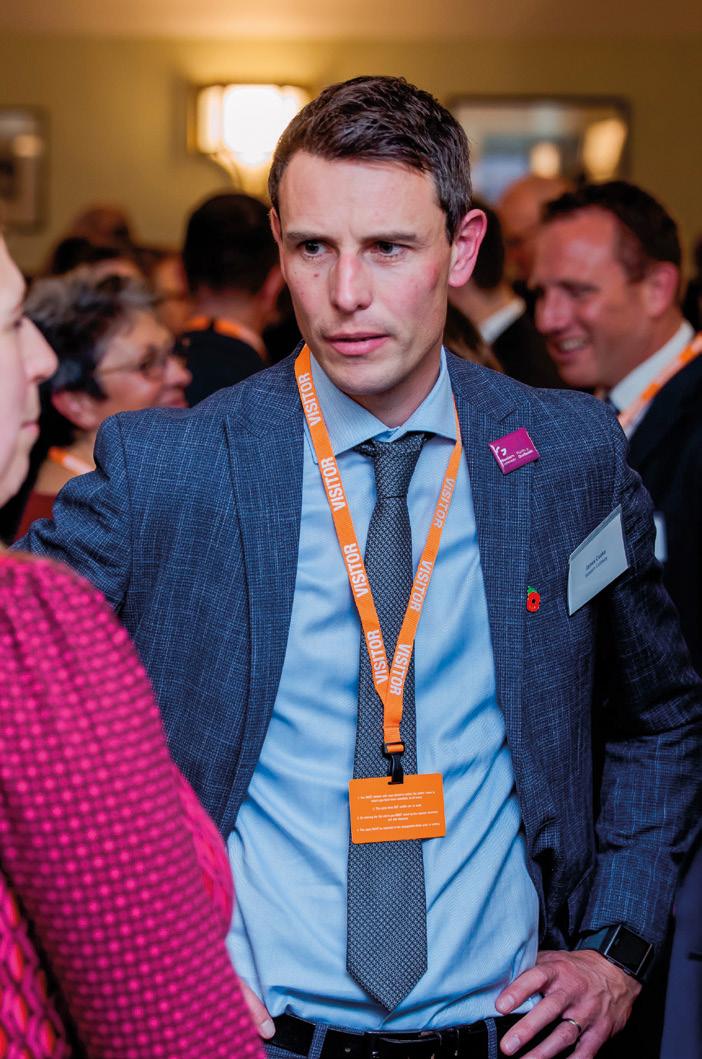
“We’ve got a really exciting opportunity here to do something really transformational, which if delivered, could add £17 billion of economic benefits to the UK,” said Western Gateway’s Deputy Director James
Cooke. “This includes a mix of building new stations, adding new tracks and improving the capacity of certain rail lines to deliver a faster more frequent service.
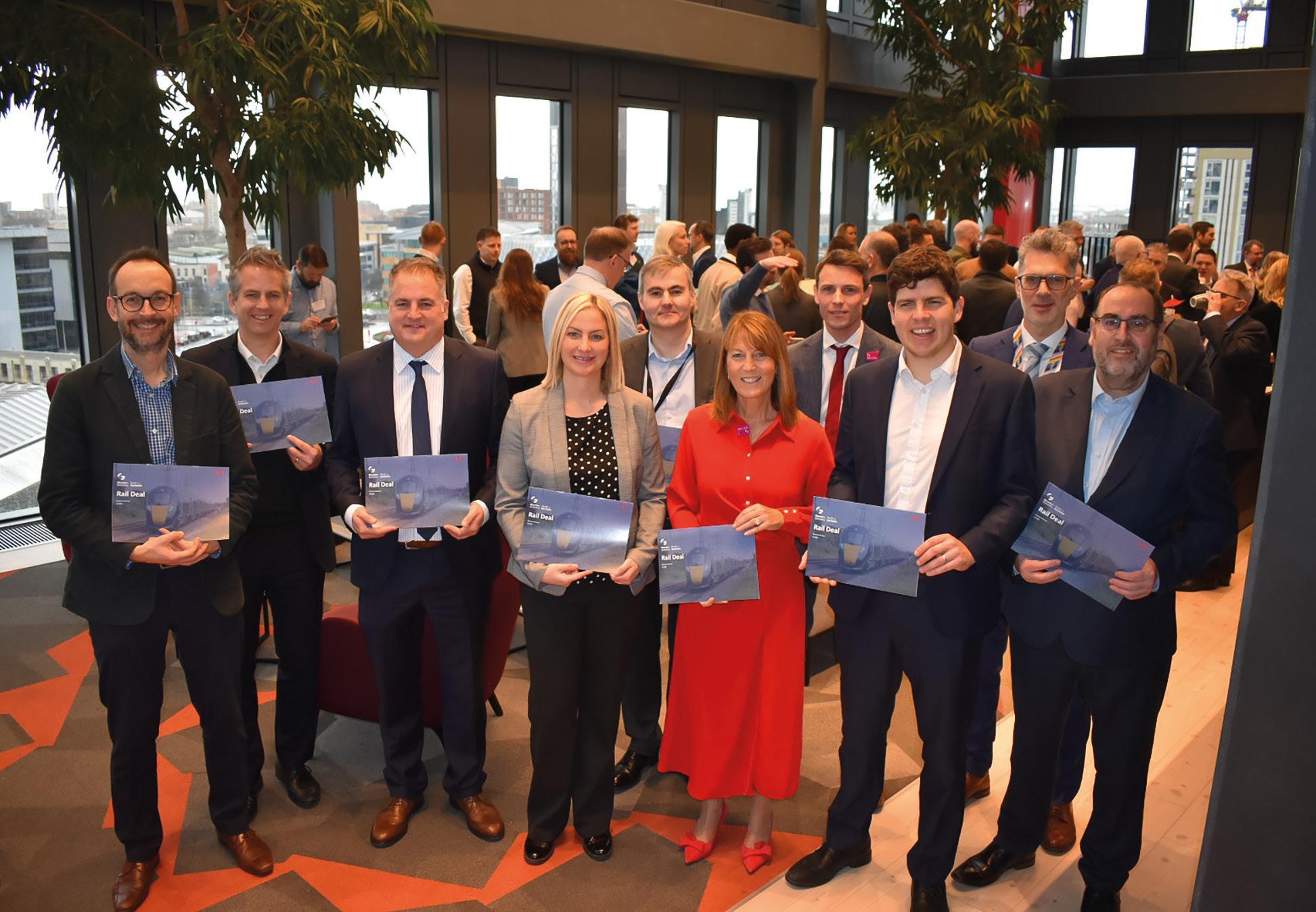
“This is a partnership and we’ve engaged with hundreds of people and I think it is unique to have a plan at this scale with this number of partners all signed up to it, and we’re really excited to have launched the Rail Deal, but now it is about making it
Image: Western Gateway
a reality and focusing on where that investment can come to turn these projects into deliverables.”
The Western Gateway brings together 28 local authorities with businesses and universities to unlock potential and create economic growth. The Rail Deal identifies up to 30 new stations which could be built in the area through stages one and two of the plans alone, notably six new Burns stations between Cardiff and Severn Tunnel Junction.
It also includes associated new Cardiff to Bristol/ Cheltenham services, which were the subject of consultation through 2024, and include the privately funded new Cardiff Parkway station to serve the Hendre Lakes development, which was approved by the Welsh Government earlier this year.
“It started in late 2020 with an ask from the councils to look at rail and connectivity and what that means for our communities and our economy, and the scale of the challenge,” explained James. “I began a piece of work to go out to Transport for Wales, to the West of England Combined Authority and Western Gateway Sub-National Transport Body, to coordinate those bodies around the opportunity for rail, but then to engage Network Rail, the industry and a much wider sector of partners and talk to Great Western Railway and CrossCountry and build this massive shared vision and shared deal opportunity that we have across the geography.
“What we have is a bold, exciting programme which is big in scale, and can deliver £17 billion of socio-economic benefits to the UK economy and to our communities and enable 250,000 people who are within a mile of a station. We’re already starting to see it happen with the Cardiff Parkway station getting planning permission, and last week the Portishead Line investment package coming together.”
The deal links into the organisation’s Rail 2050 Vision to provide better quality passenger and freight services, better stations and integration with wider mass transit systems; but also to promote decarbonisation of the network and private-sector investment.
Stage one –
New Burns stations and services.
New Cardiff Parkway Station.
Targeted track capacity enhancements.
MetroWest phase 1 and 2,
Cardiff Crossrail phase 1.
Stage two –
Electrification to Bristol (Filton Bank and Chippenham), Swansea and Oxford.
Director services to Heathrow.
Upgrades to Cardiff Central, Milford Haven and Bristol Temple Meads stations.
Capacity upgrades at network pinch points: Westerleigh, Cheltenham, Gloucester, Severn Tunnel, Temple Meads to Parson Street, Weston-super-Mare, Cardiff West.
Swansea district line reopening.
New station/freight services at Gravity.
New freight stabling yards.
Stage three –
Further electrification (Bristol to Exeter and to Birmingham, Swansea to Pembrey and Burry Port).
Improved connectivity to Bristol and Cardiff Airports.
Cardiff Crossrail Phase 2.
Further integration with urban mass transit.
James said: “It is fantastic to see some of the immediate term priorities coming to fruition, the next steps are to see that investment continue across the South Wales Metro and the MetroWest
We’ve got a really exciting opportunity here to do something really transformational, which if delivered, could add £17 billion of economic benefits to the UK
The Rail Deal is split into three stages:
Image: Western Gateway
Image: Kate Darkins
programme. An example is the combined authority committing to accelerate some funding around North Filton station, a station that enables a big development in Bristol and the new Bristol Arena.
“We’re really clear what those big growth opportunities are and how they can be phased over the next 10/15 years, and what we want to do as the Western Gateway Partnership is to continue to be the convener, the advocate and the organisation that can bring all of these key delivery bodies together to target that delivery and work out what comes next.”
The organisation has convened sessions around modern methods of construction for new stations, sessions around electrification and how a rolling programme for electrification can be created that can deliver Filton Bank, Cardiff to Swansea, Bristol to Chippenham, and all aspects of the original Great Western electrification programme;
demonstrating that there is innovation in the region to do it cheaper.
“At our launch event Nia Watkins from Network Rail explained how the Core Valley Lines electrification programme is demonstrating some of the most prominent innovation in the sector at the moment in terms of powering trains under bridges, discontinuous electrification,” he said. “If we can bring that forward across the programme here, then we can deliver really, really transformational change that decarbonises fleets and moves trains faster and more efficiently, delivering shorter journey times which is where you get that real reward in socio-economic benefit.
from the mistakes of previous projects.
“The next big thing for me is to focus around investment, working with the Railway Industry Association (RIA) and mapping the projects that we’ve got across this vison and looking at how we secure investment from them without relying on the public sector, how do we go out to the National Wealth Fund, how do we look to the pension funds, how do we look to international investors, to say how do we bring in this money so we’re not reliant on the public sector to deliver at scale.”
And it is a journey that James wants the supply chain to come onboard, building on the foundations of the work already underway in the area.
We’re really clear what those big growth opportunities are and how they can be phased over the next 10/15 years
“We don’t want this Rail Deal to only be a narrative about investment in places and in networks, there is also a really exciting innovation story here that stretches right across the region. This is an area with the emerging Global Centre of Rail Excellence, Siemens Mobility’s £100 million investment in a cutting-edge rail infrastructure manufacturing, digital engineering and research & development centre in Chippenham, and Bristol Temple Meads being the UK’s first station innovation zone. It all connects in reducing the cost of delivering big rail schemes.”
James doesn’t underestimate the difficulties in delivering this, admitting that the Department for Transport isn’t just going to award billions of pounds to deliver the stations and infrastructure works.
“We need to think outside the box with this, and I think that is where the real added value of the Western Gateway Partnership comes because we can convene these partners to have very different conversations that aren’t bound by contractual obligations or procurement relationships,” he said. “We are a small organisation with a big mandate so we can have different conversations, put those partners in a room and take the good and learn
“The Vice Chair of RIA’s Wales and Western region Phil Harrison was present at the launch of the Rail Deal and emphasised the importance that the SME community and the supply chain needs to see ambition in the industry, and it needs to see a plan for delivery,” he said.
“While the Western Gateway won’t actually be the delivery body, we feel this is the clearest, loudest plan probably in the UK at the moment. We want to see that investment get behind it and that needs to be from all sectors, so I’d urge industry partners to get in touch and get involved in this journey with us. The quicker we can accelerate these programmes, the more opportunity that will open up for the supply chain, SMEs, and the communities that will benefit from this transformation.
“We’ve got some amazing things happening in cyber, tech, advanced manufacturing, green energy and everything that plays to the Government’s mantra on growth and industrial strategy. Under this plan our economies will be places that are completely connected by reliable rail infrastructure, which will take the pressure off the private vehicles and enable economic and community growth.”
Image: Kate Darkins
(Network Rail, Holyhead Carriage Wash built by Cairn Cross)
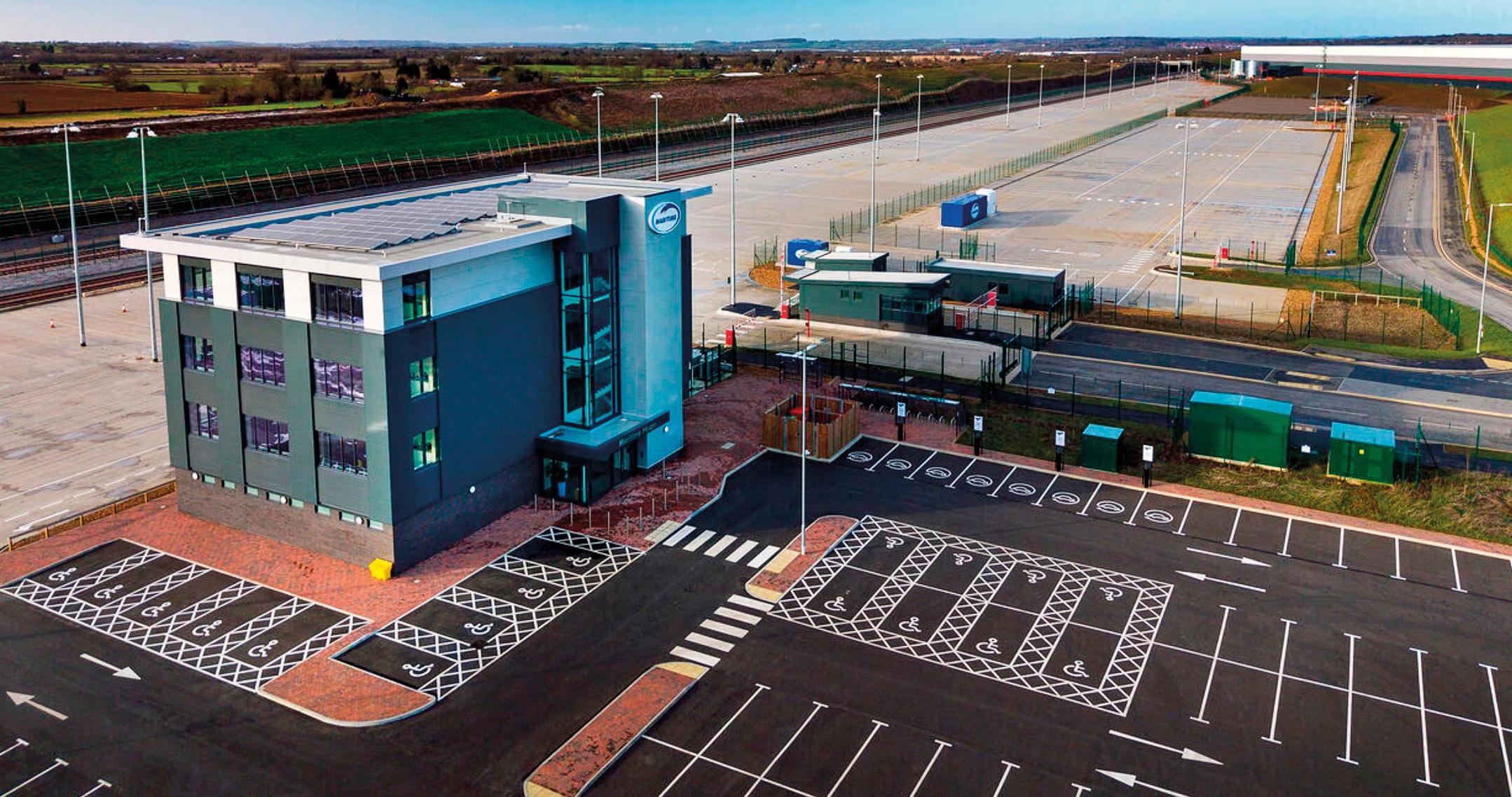
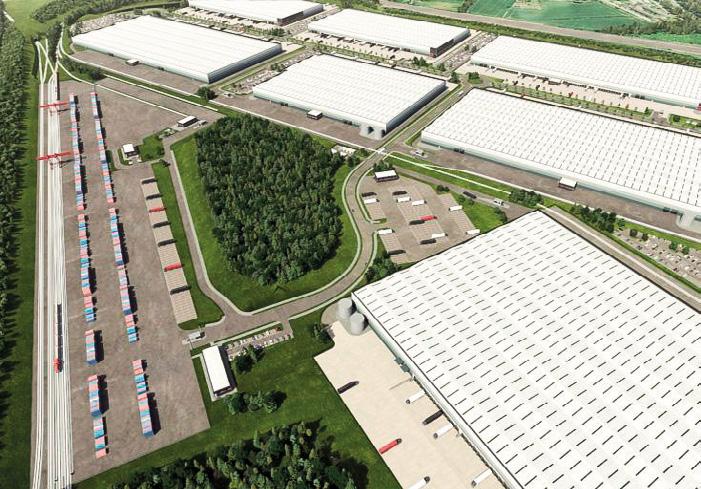
A new, modern rail-freight terminal, under construction near Junction 15 of the M1 motorway, could transform logistics and rail freight in the UK
Controlling the future at Northampton Gateway
Northampton Gateway will be a new intermodal rail terminal, directly linked to the West Coast main line (WCML), that will make transporting goods – from intermodal containers to bulk commodities – more efficient and sustainable.
Currently being built by Winvic Construction for Segro, Northampton Gateway represents a significant step forward in modernising the UK’s transport infrastructure. It will connect rail and road transport in a way that reduces congestion and supports efforts to cut carbon emissions.
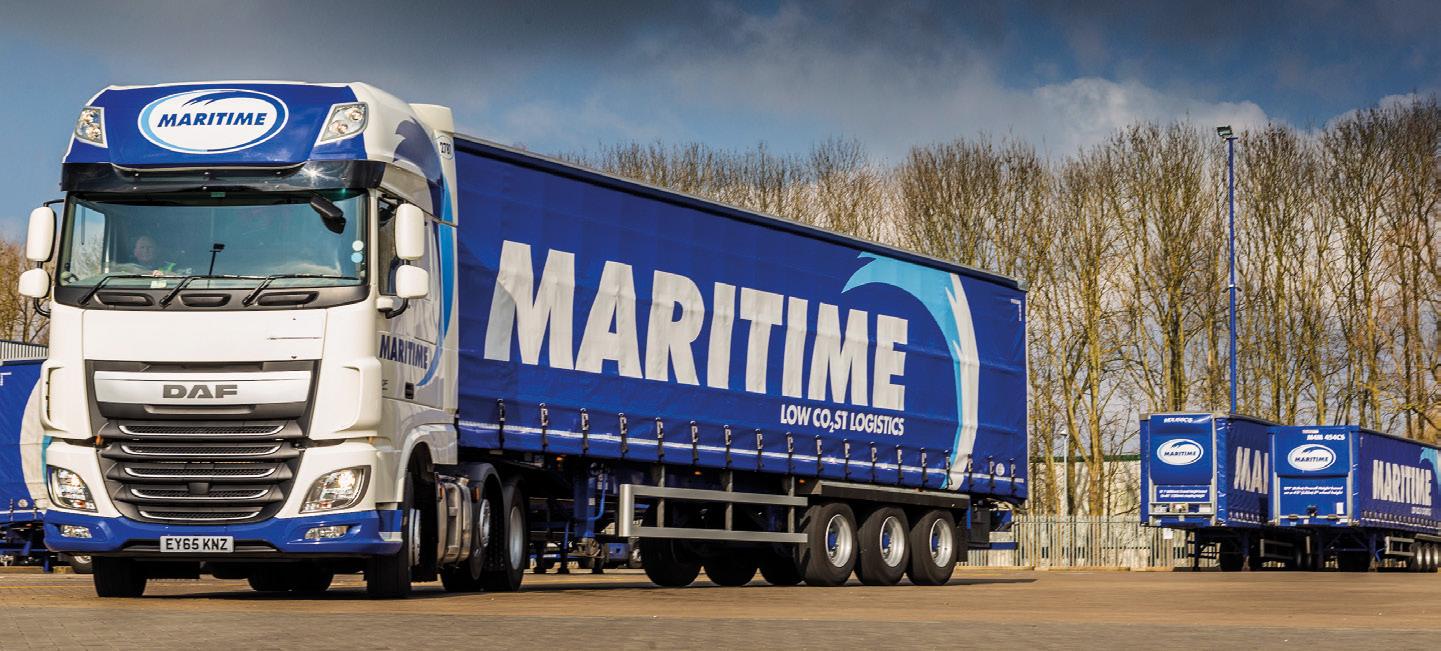
When brought into use later in 2025, the new terminal will be operated by Maritime Transport, one of the UK’s leading providers of integrated road and rail freight logistics. Initially, it will handle up to four trains per day, with plans to expand to 16 trains as demand increases. Its strategic location will make it a valuable asset for businesses aiming to streamline their logistics operations while minimising their environmental impact.
Terminal control and safety
A critical part of the project will be the Terminal
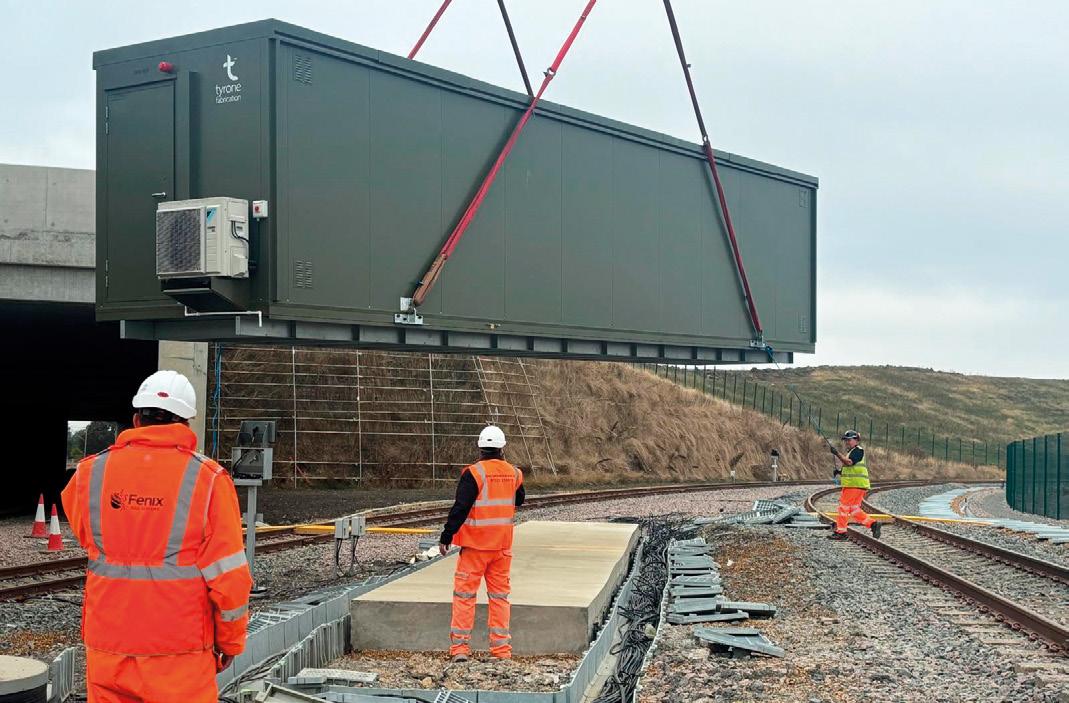
Control Centre (TCC), a state-of-the-art hub that will oversee operations at the rail interchange using real-time data to manage train movements efficiently and safely. Winvic Construction contracted Fenix Rail Systems to provide its expertise and innovative technology in train facility control systems, which are essential for the terminal’s design, development, and long-term success.
Fenix Rail Systems has played an integral role in the development of the Northampton Gateway’s terminal operations, leading the design, integration and implementation of advanced signalling and
train detection systems. The company’s expertise has helped ensure that the terminal is equipped with cutting-edge technology, allowing for smooth, efficient and safe operations.
One of the highlights of this collaboration is the FenLock system, a sophisticated interlocking solution developed by Fenix Rail Systems. This seamlessly integrates the terminal’s signalling needs with the existing WCML infrastructure, facilitating safe and flexible train movements while ensuring easy connections between the new hub and the broader rail network.
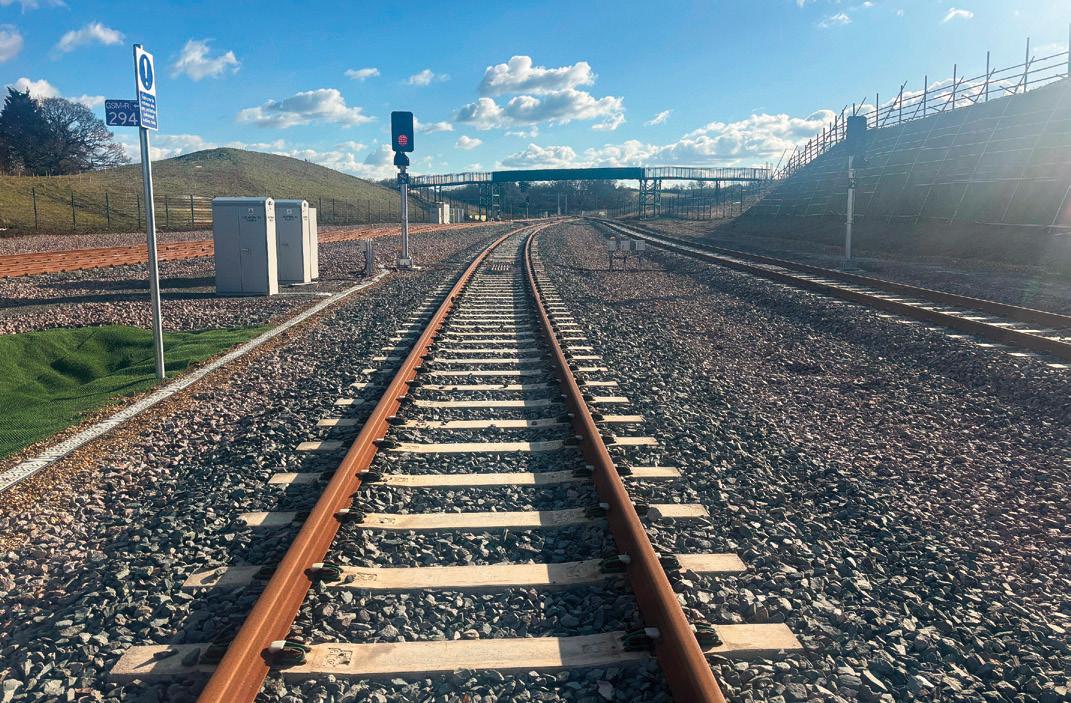
In addition to FenLock, Fenix Rail Systems has worked closely with Network Rail and other stakeholders to develop a comprehensive signalling system that includes new point machines, axle counters, and a Route Relay interlocking to interface with upgrades to the Roade Solid State Interlocking (SSI) system, controlled by Rugby Signalling Control Centre (SCC). These technologies are designed to ensure that the Northampton Gateway operates safely, smoothly and reliably, right from the start.
Safety is a top priority throughout the project, and
Fenix’s unmatched train facility control integration expertise in the UK ensures that the terminal will meet the highest safety standards, making it a trusted hub for rail freight operations. Features such as the Train Activated Warning System (TAWS) at both ends of the terminal will further enhance safety, ensuring that operations run smoothly as the facility opens and grows.
Driving innovation
Fenix Rail Systems has long been recognised as a leader in bringing innovative solutions to the rail sector. One of its groundbreaking offerings, the Pintsch Wolber point machine, is exclusively distributed in the UK and Ireland by Fenix and now commonly found in many depots and train facilities including Northampton gateway
Consistently pushing the boundaries of what is possible in train facility management, Fenix Rail Systems’ commitment to safety and reliability has led to the development and recent launch of the Next Generation of Train Facility Control Systems with a Safety Integrity Level (SIL) of 4, designed to meet the highest safety standards in the industry. The Next Generation FenLock SIL 4 Systems include the following features:
Enhanced Safety Standards: Designed to meet SIL 4 requirements, these systems offer the highest level of safety integrity, ensuring robust protection against potential hazards.
Cost-Effectiveness: Despite their advanced safety features, Fenix’s SIL 4 systems are competitively priced (when compared with the lesser SIL2 Systems), offering a cost-effective solution without compromising on quality or performance.
Seamless Integration: The systems are designed for easy integration with existing infrastructure, facilitating a smooth transition and minimal disruption during implementation.
Advanced Data Analytics: Utilising cuttingedge data analytics, the technology provides actionable insights that enhance decision-making processes and operational efficiency.
Maintenance: Fenix First Fix, the system anticipates maintenance needs, reducing downtime and extending the lifespan of equipment.
Sustainability Focus: Designed with sustainability in mind, the technology incorporates energy-efficient solutions and supports the use of renewable energy sources, contributing to a reduced carbon footprint.
Enhanced Safety Protocols: The system includes automated safety features that improve response times and reduce the risk of human error, ensuring a safer environment for both the facility operator and ground staff working on or about the facility.
These innovations reflect Fenix’s commitment to improving the future of transport by delivering cutting-edge technologies that make operations safer, greener, and more efficient throughout.
A look into the future
The Northampton Gateway is more than just a logistics hub – it’s a glimpse into the future of rail freight in the UK. As rail freight demand grows, the Northampton Gateway will play a key role in relieving pressure on the road network and reducing carbon emissions.
By incorporating innovative solutions such as FenLock and advanced signalling systems from Fenix Rail Systems, Northampton Gateway is helping set new standards for operational efficiency, sustainability
Northampton Gateway
is more than just a logistics hub – it’s a glimpse into the future
and safety in the rail transport sector. The project serves as a model for future developments across the country and the future of UK rail freight looks bright.
Phase one of the Northampton Gateway project is scheduled to be completed in April 2025, with preparations already underway to ensure that the infrastructure and systems are ready. Rigorous testing is being conducted on the signalling systems, train detection technologies, and track layouts to ensure everything is in place for the terminal’s opening.
The Northampton Gateway is ushering in a new era for UK logistics and, by utilising the expertise of Fenix Rail Systems, the project is helping to shape a sustainable and efficient future for rail freight.
It’s an exciting time for businesses, rail operators, and the environment – with the future already taking shape in Northamptonshire.
Fenix Rail Systems www.fenixrailsystems.com
0330 580180
Predictive
Natalie Rees, Head of Sustainable Development and Climate Change at Transport for Wales (TfW), explains
more about her role in keeping the railways running
Weathering the storms
atalie Rees is the passionate champion of sustainability at TfW, with colleagues often stopping her to let her know about things they have been doing both in and outside of work. Just two recent examples include more environmentally-friendly lighting at a depot, to another telling her about upcycling a table.
“It’s nice to hear the stories and it shows the message is spreading around the importance of sustainability, with more and more people wanting to get involved both while at work and at home,” said Natalie, who for the last six years has been supporting the organisation when it comes to sustainability development, climate change, heritage and sustainable impact, energy, environmental compliance and ecology teams.
Natalie’s 20 years of working in the field of sustainable development, environmental management and climate change within the private, voluntary and public sectors in Wales, hasn’t gone
unrecognised. In 2023 she was named alongside the likes of actor and campaigner Michael Sheen in a list celebrating 100 people changing the face of Wales, compiled by former Future Generations Commissioner Sophie Howe and featuring people making a positive difference to the nation.
“I didn’t think too much of it until I turned up at the launch and saw that the list featured so many of my heroes and it turned into a case of imposter syndrome for me,” she explained. “There isn’t a particularly big pool of people when it comes to sustainability but that is changing and we are not doing this because we have to legally, but because people want to do it because they see the impact it has.”
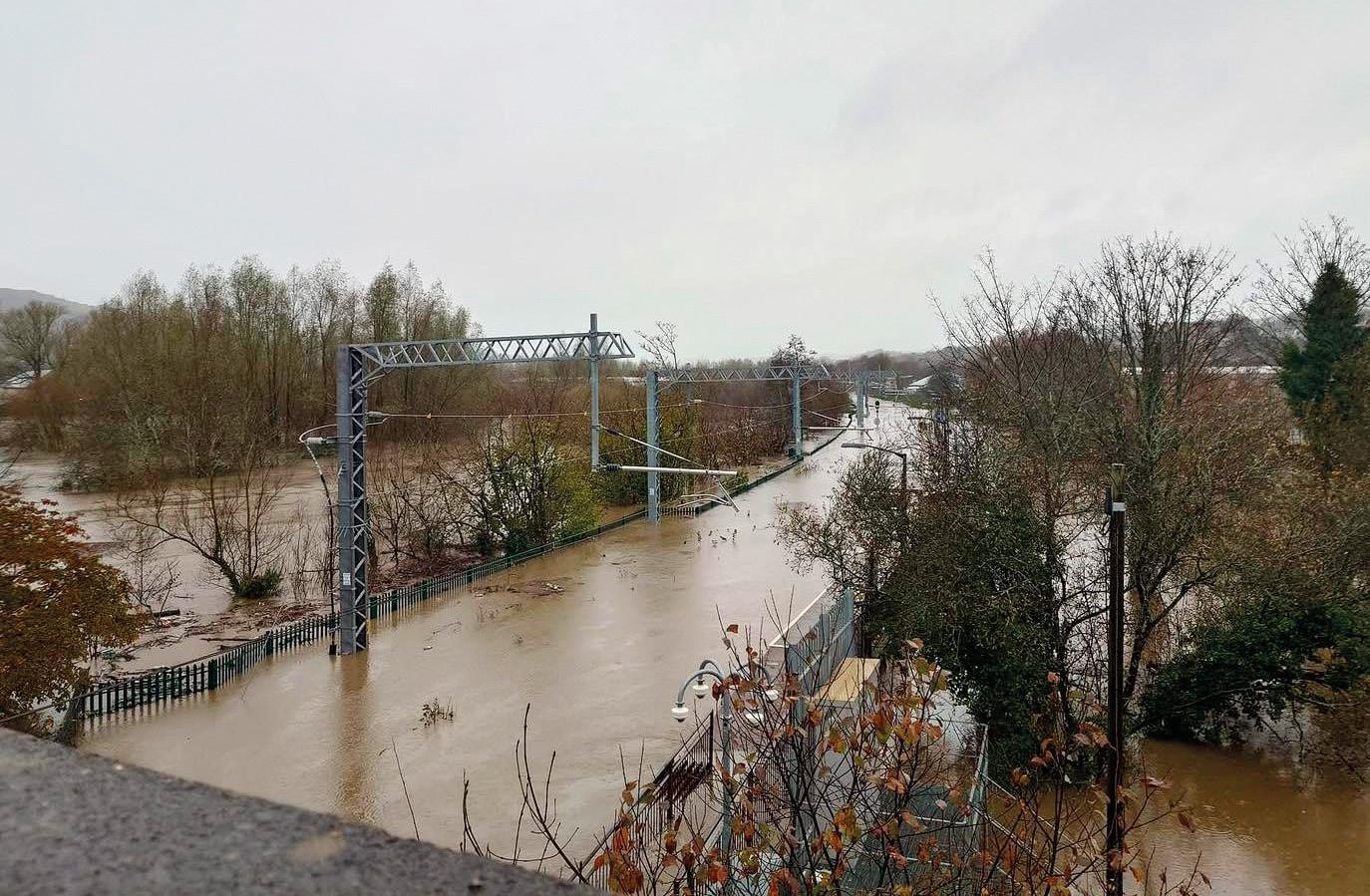
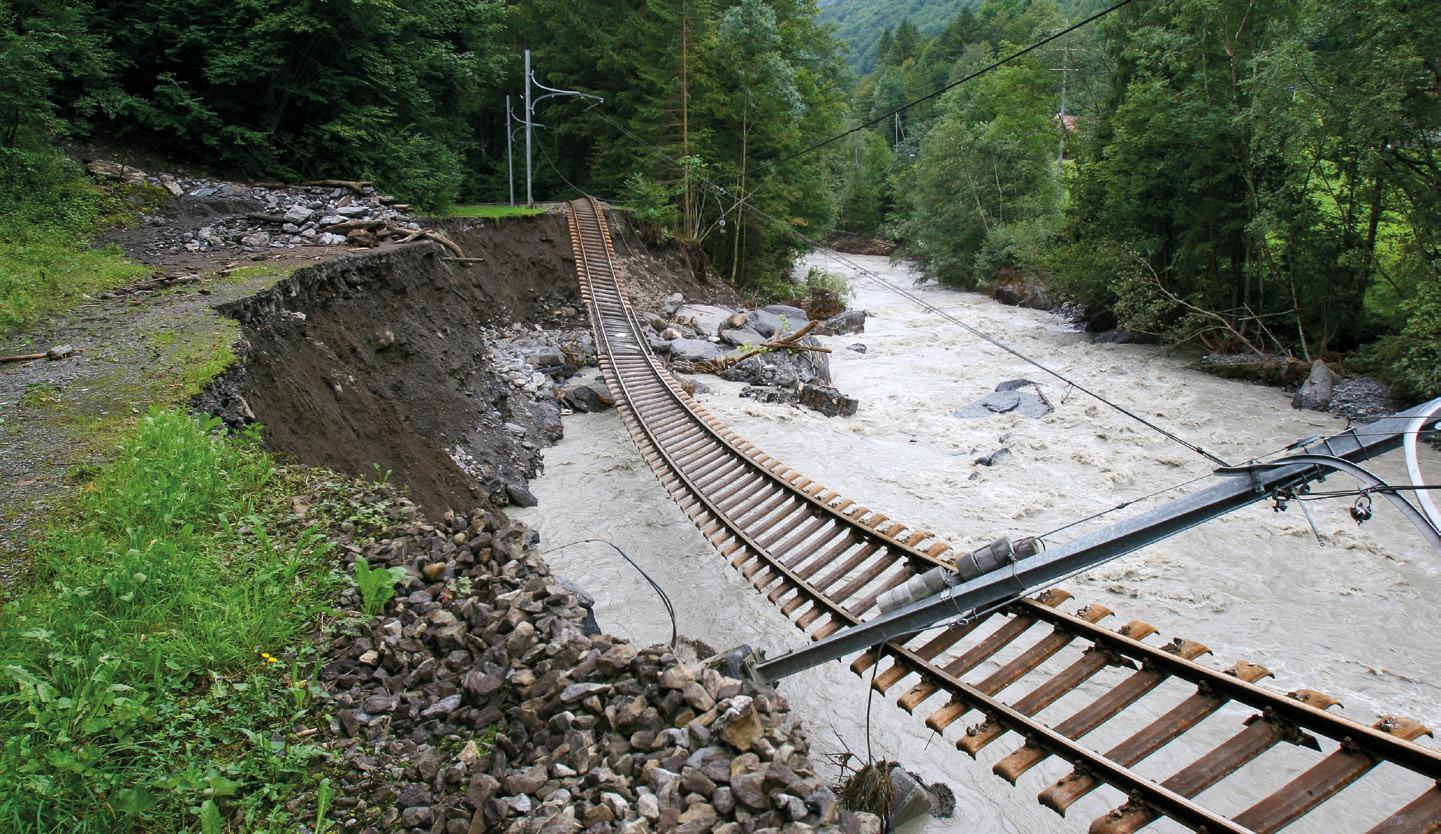
The job, particularly around climate change, has never been more difficult. The railway network in Wales is facing unique challenges from the climate and is vulnerable to flooding and earth movements when faced with extreme weather. That was evident when three consecutive storms caused severe flooding across the Core Valley Lines in February 2020.
“When I started at TfW we were talking about things like a one in a 100-year storm, looking to it as a problem down the line, but we’ve seen so many examples of it happening now that these storms are immediate and more regular problems,” she said.
“Assets that we thought could potentially flood years down the line are flooding now with climate change increasing the severity and frequency of extreme weather.”
Natalie was attracted to the position at TfW from her passion for sustainable development, and the organisation driving forward the Welsh Government’s vision of a high-quality, safe, integrated, affordable, and accessible transport network that the people of Wales are proud of.
“The vision is about being resilient enough to keep people moving and ensuring people have access to transport,” she said. “We are getting those extreme weather days, from flooding to temperatures reaching 40 degrees, so it is about that balance of keeping people safe and encouraging them not to
travel, to allowing them to travel to do the things they need to do.”
Natalie explained that there are various initiatives underway to ensure the network remains safe, from learning from previous extreme weather and ensuring culverts and drains are clear, through to making sure there are shelters and even planting trees to offer shade during periods of hot weather.
“We have weather stations across the Core Valley Lines rail network and use them to understand where the conditions can deteriorate between events,” she said, adding that they are regularly updating the climate change risk assessments. “We’re seeing very small areas that have micro-climates that might get more rain, or wind exposure which is really important as it means we can better plan locally for weather events.
“Longer term from a climate perspective we have electrification projects, decarbonisation strategies, new rolling stock strategies, and the ongoing campaign to encourage people to turn to more sustainable modes of travel. It all feeds into working towards supporting the Welsh Government’s net zero 2030 target for the public sector.
“Our carbon footprint is low, just one per cent of
Assets that we thought could potentially flood years down the line are flooding now with climate change increasing the severity and frequency of extreme weather
transport emissions, but there is a challenge around scope 3 emissions, especially with the construction projects that are underway in the short term, although we hope the reporting methods for scope 3 emissions will improve moving away from spend data only so we can better report what we’re doing, particularly if it is something innovative.”
Alongside her role at TfW, Natalie also chairs the Rail Safety and Standards Board (RSSB) Climate Change Adaptation Working Group (CCAWG), which has taken a joined-up approach to unifying climate change scenarios to use across the rail sector when assessing risk, designing assets and undertaking long term strategic planning.
“By working together and planning for this now through policy, research, communication and better decision making we can help to provide safer, more reliable and more resilient services and infrastructure,” said Natalie, who has been part of the group for nearly six years.
Climate projections estimate how future climate conditions could change over time, including temperature, rainfall, and sea levels. They are based on different scenarios of greenhouse gas emissions, using climate models to predict potential outcomes under different assumptions about human activities.
The primary agreed scenarios are:
RCP 6.0. This assumes moderate warming, with global temperatures likely to rise by about 2-3°C by 2100. Aligned with the currently observed emissions levels. The primary scenario for risk assessments, design of assets and new railway projects and the identification of interventions.
RCP 8.5. The high emission scenario, often called the “business-as usual” scenario. It models what the future looks like if global emissions are not reduced. It assumes global temperatures will rise by 4°C or more. The primary scenario for stress testing infrastructure and testing against high-intensity rainfall.
The chosen scenarios can be used in a systematic and practical way to incorporate resilience into rail, including the design and operation of rail infrastructure and services.
Natalie added: “The group continues to grow with around 40 members all passionate about working together to improve climate resilience. The main theme is preparing for the impacts of climate change. There are lots of tools and we each fill in a climate change matrix to understand what level we are all at when it comes to adapting to climate change.
“It is nice that we have an increasing number of people experiencing similar issues who can share best practice and learning. Our work and learnings are also playing an important part in RSSB’s Sustainable Rail Blue Print, with some of the goals sitting within the work we’re doing in leading and collaborating to make sure we are resilient.
“Overall, there are a lot of challenges in the future, but the fact we are working together both in terms of colleagues at TfW and also the wider industry, will make us stronger in adapting to the challenges of climate change.”
Community Rail Network’s Sarah Chilton explains how the grassroots movement is playing an increasingly important role in revitalising environments on and around stations for the benefit of communities and railways alike
Community rail: Transforming station environments and reinvigorating the rail estate
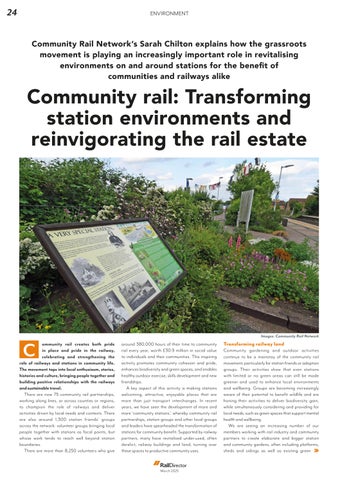
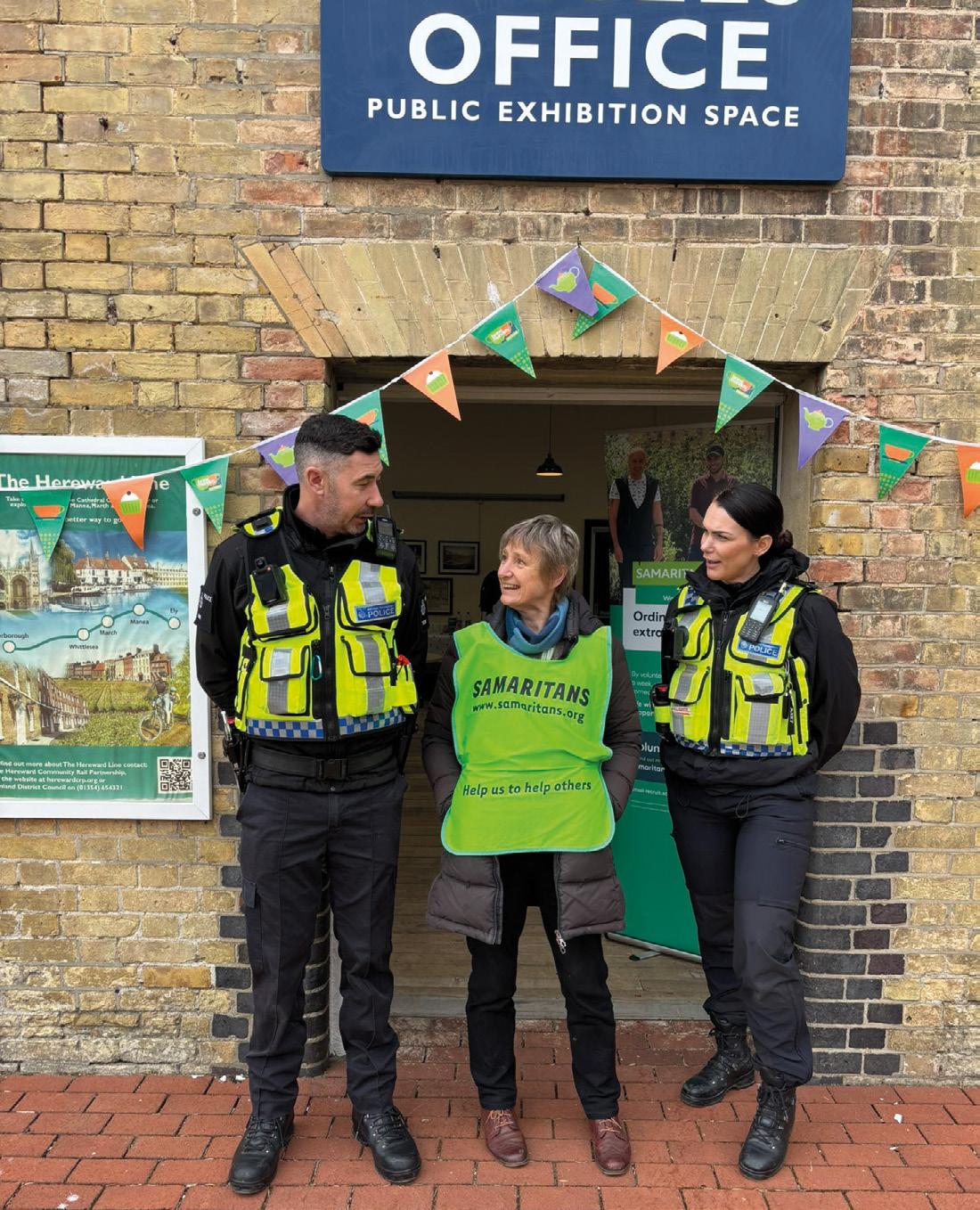
Community rail creates both pride in place and pride in the railway, celebrating and strengthening the role of railways and stations in community life. The movement taps into local enthusiasm, stories, histories and culture, bringing people together and building positive relationships with the railways and sustainable travel.
There are now 75 community rail partnerships, working along lines, or across counties or regions, to champion the role of railways and deliver activities driven by local needs and contexts. There are also around 1,300 station friends’ groups across the network: volunteer groups bringing local people together with stations as focal points, but whose work tends to reach well beyond station boundaries.
There are more than 8,250 volunteers who give
around 380,000 hours of their time to community rail every year, worth £30.9 million in social value to individuals and their communities. This inspiring activity promotes community cohesion and pride, enhances biodiversity and green spaces, and enables healthy outdoor exercise, skills development and new friendships.
A key aspect of this activity is making stations welcoming, attractive, enjoyable places that are more than just transport interchanges. In recent years, we have seen the development of more and more ‘community stations,’ whereby community rail partnerships, station groups and other local groups and leaders have spearheaded the transformation of stations for community benefit. Supported by railway partners, many have revitalised under-used, often derelict, railway buildings and land, turning over these spaces to productive community uses.
Transforming railway land
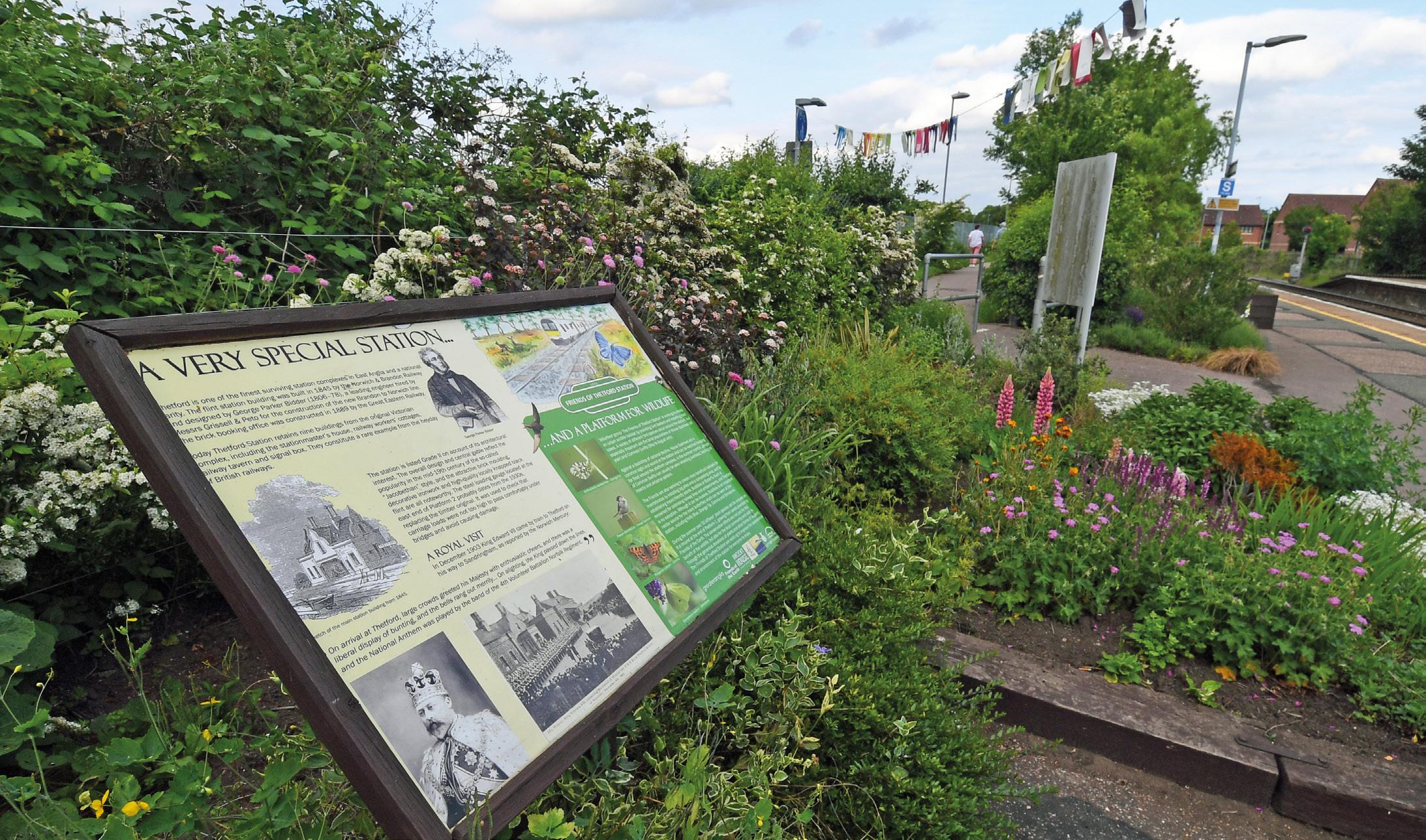
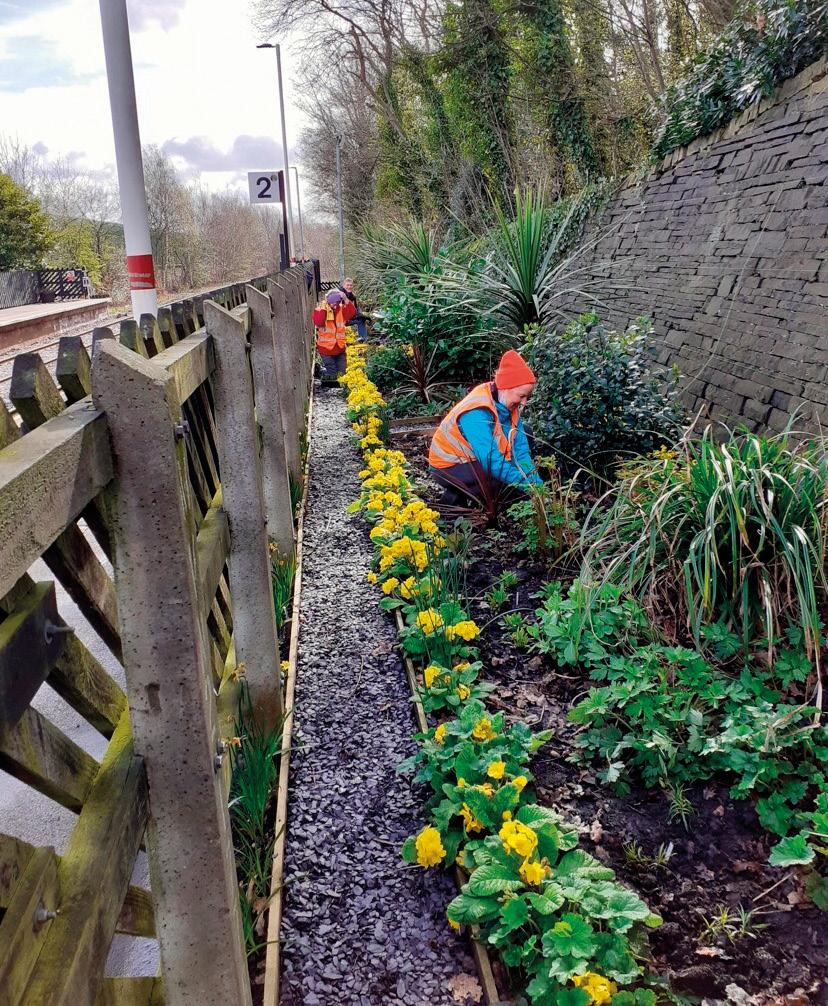
Community gardening and outdoor activities continue to be a mainstay of the community rail movement, particularly for station friends or adoption groups. Their activities show that even stations with limited or no green areas can still be made greener and used to enhance local environments and wellbeing. Groups are becoming increasingly aware of their potential to benefit wildlife and are honing their activities to deliver biodiversity gain, while simultaneously considering and providing for local needs, such as green spaces that support mental health and wellbeing.
We are seeing an increasing number of our members working with rail industry and community partners to create elaborate and bigger station and community gardens, often including platforms, sheds and sidings as well as existing green
Images: Community Rail Network
There are more than 8,250 volunteers who give around 380,000 hours of their time to community rail every year, worth £30.9 million in social
value to individuals and their communities
For more information, visit communityrail.org.uk
spaces. They are also nurturing and enhancing wildlife habitats, such as through pollinator-friendly planting, and the building of bug hotels and bat boxes, and making links with wildlife corridors and wider local conservation schemes. Partnerships and groups are also delivering nature education and awarenessraising activities, and engaging communities in volunteering, nature, and food growing projects that develop wellbeing and skills alongside care for the environment.
Recent projects and initiatives have included:
The Friends of Buxton Station transforming disused station land into a Japanese and wildflower garden, and adding bee-friendly planters to support populations of the endangered local species the Bilberry Bumblebee.
The Poacher Line Community Rail Partnership working with the Bee Friendly Trust to create the ‘Bottesford Friendly Garden,’ turning a neglected piece of land, including an old station building, into a garden, wildlife haven and educational space.
Incredible Edible Bristol and Severnside Community Rail Partnership revamping a disused platform compound at Avonmouth Station into an accessible community food growing and learning scheme.
The 66 station gardens across the Greater Anglia network, tended to by over 300 volunteers, expanding to cover an area of more than 9,000 square metres, with adopters recording more than 200 different species of creatures visiting the
stations including butterflies, bees, slow worms, bats, toads, foxes, deer and many varieties of birds.
The Friends of Goostrey Station using Geographical Information Service mapping to monitor the different species of birds and bugs using the new wildlife habitats they have installed.
These projects help to turn land that might be going to waste, sometimes even acting as a burden on the railway estate, into community assets that deliver social and environmental value. Our evidence shows that these initiatives enhance natural environments and wildlife habitats, contribute to improved physical and mental wellbeing, engage young people and marginalised groups, promote sustainable lifestyles, and even encourage use of the railways by improving travel confidence and familiarity. They can also better integrate stations with their surroundings, bringing people in and breaking down barriers to rail use.
Looking forward
Community rail activity at stations helps to bring people together and develop an affinity to the railway. Looking forward, rail reform and the transition to Great British Railways offers great opportunities to further develop this work, to empower more community groups and organisations to access, utilise, and transform stations for social, environmental, and economic good, strengthening the railway’s place within our communities. By working with rail and other partners to develop cooperation around stations, community rail can play a vital role in realising the Government’s ambition of a rail network that is more tuned into the needs and aspirations of the communities it serves.
A railway track has been installed at Mount Prison in Hertfordshire. Rail Director hears how it is transforming the lives of prisoners
Putting prisoners on the right track to employment
“This Personal Track Safety (PTS) railway course is brilliant. I honestly feel I’ve learned something from it, and it’s given me hope for employment and an insight into what my future could be like.”
This is just one testament from a prisoner inside Mount Prison in Hertfordshire, where inmates have been receiving training to work on the railways, and a railway track is currently being installed, which will enable industry-specific training and prepare participants for roles within the rail sector.
“It is experiences like this that highlight the importance of supporting rehabilitation, which at the same time can help the rail industry which is facing a skills gap,” said Alison Bell, People and Communications Director at Project Leaders. She has recently become involved in a Government-led initiative as part of an Employment Advisory Board which focuses on supporting ex-offenders in their rehabilitation journey, equipping them with the skills and opportunities needed to transition back into the workforce.
“The programme aims to provide meaningful employment opportunities for individuals leaving prison, helping them to rebuild their lives while making a positive contribution to society,” she explained. “The installation of a railway track within Mount prison is already transforming lives but the key to the success is for more organisations to get involved.
“Whether your organisation already has a programme in place or is curious about exploring how to get involved, this is an opportunity to align with a meaningful cause while accessing a pool of motivated, trained individuals eager to contribute.”
One organisation already doing that is Elite Project Services through its On the Right Track initiative, which runs accredited rail awareness courses in several HM Prisons across the South East of England. They are designed to equip individuals with essential skills and qualifications that can pave the way for careers in the rail and construction sectors upon their release.
One inmate from Mount Prison said: “I found learning my PTS with Elite Project Services and the Mount very motivational. While taking part in the PTS I have learned a lot of new information and skills that I did not know before.”
Another added: “This course has been a good experience. The tutor is very helpful and friendly, the course is very informative and resourceful with many benefits and real job opportunities when you’re released.”
Alison has said it highlights how these kinds of
programmes are not only changing lives but also strengthening businesses by fostering diversity, inclusion, and social responsibility.
“The programme aligns with the rail industry’s ongoing commitment to addressing workforce challenges while creating lasting social value,” she added. “Together, we can help ex-offenders rehabilitate and transition successfully back into the workplace, shaping a brighter future for individuals and our industry alike.”
If you’d like to learn more or are interested in exploring ways your organisation could support this initiative, contact admin@projectleaders.co.uk. Alison and the Employment Advisory Board team are keen to collaborate with employers who share the vision of creating opportunities that make a real difference.
It is experiences like this that highlight the importance of supporting rehabilitation, which at the same time can help the rail industry which is facing a skills gap
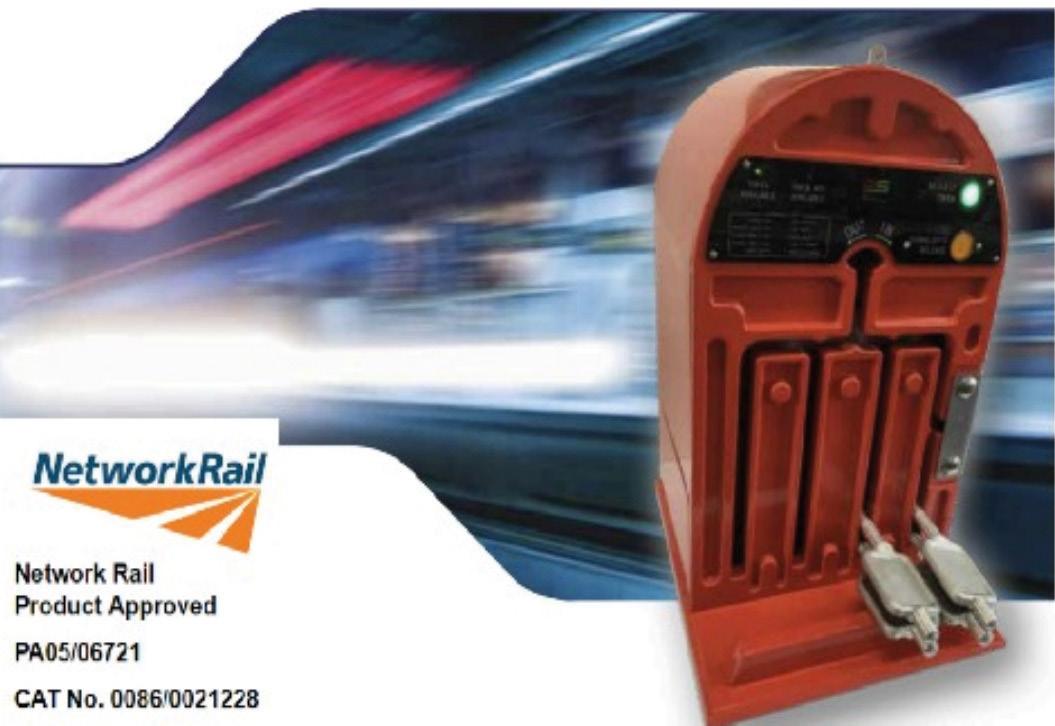
The Digital equivalent of the electro-mechanical standard
A replacement for the existing Block Controller for single line track.
Our fully digital version of key token equipment communicates digitally through IP based systems, including provision for TPWS and section signal release.
The DiBloC features:
•IP connectivity with two redundant connections
•Physical key compatibility with existing key token machine equipment such as ground frame locks
•Ability to work in sets of 2-6 units
•Ability to operate TPWS and/or single throw/starting signals
•No on-board equipment –compatibility with all rolling stock
Peter Gibbons, Chief Security Officer at Network Rail, has been awarded an MBE for his exceptional leadership in delivering the UK’s £10 million aid programme to Ukrainian Railways. He explains more
Supporting Ukraine’s railway
It is with an enormous sense of pride that Peter Gibbons reflects on the role he and the wider UK rail industry has played in ensuring the continued operation of Ukraine’s rail network during the conflict with Russia.
He led the Rail Aid for Ukraine project, a £10 million aid programme to Ukrainian Railways. As Project Leader, Peter coordinated the delivery of vital equipment to ensure the continued operation of Ukraine’s rail network, even spending time on the ground in Ukraine during the conflict, liaising directly with Ukrainian Railways to make sure the project was tailored to their specific needs.
“Although I wish the country wasn’t in the situation that it needed our help, I’m very glad that we could,” he said. “It’s one of those things I’ll look back on and think we have done amazing things, and it will truly have saved lives thanks to the industry and the Government backing.”
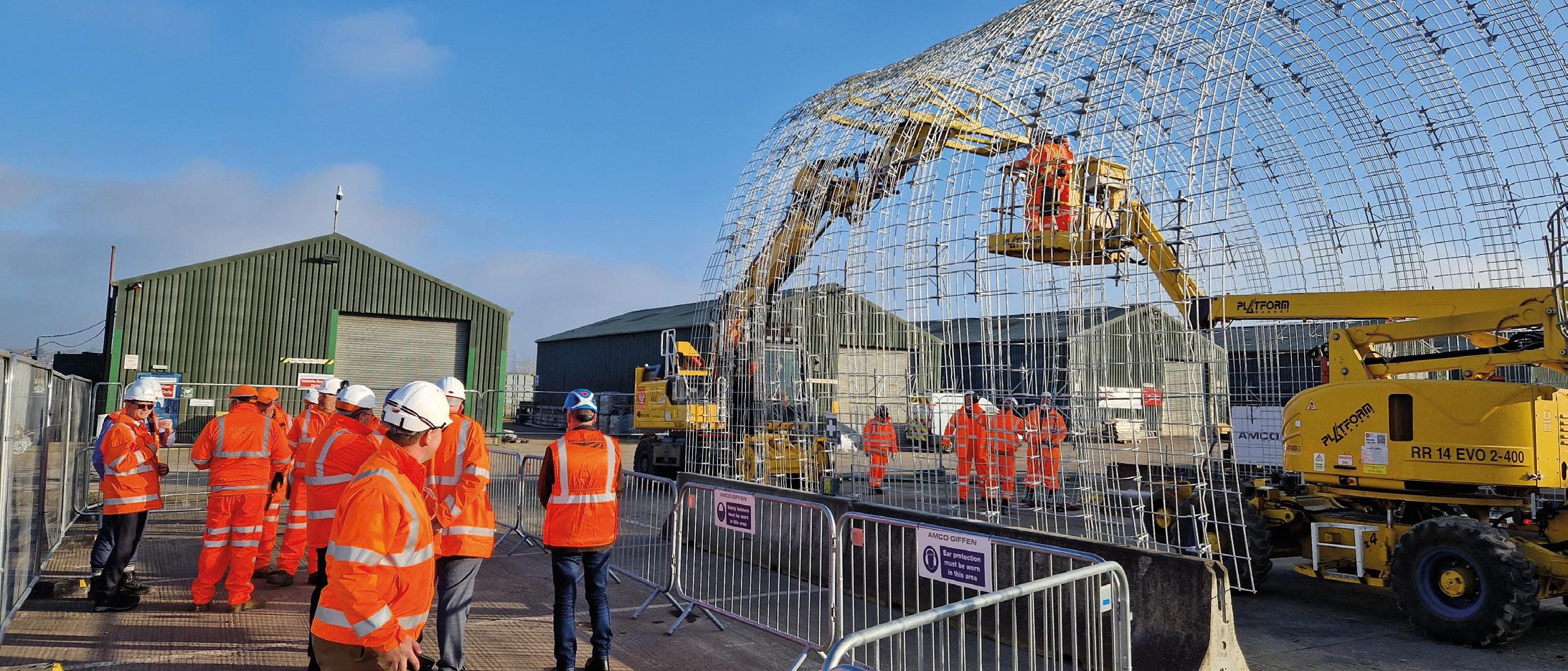
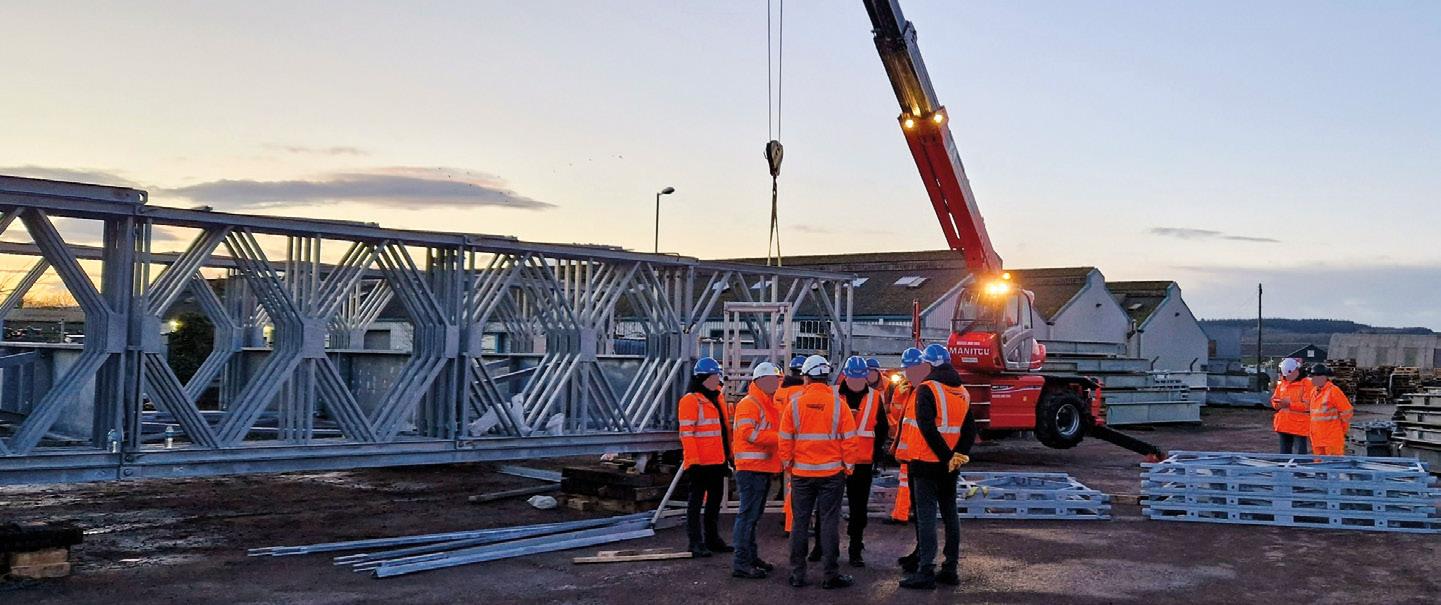
UK Rail Aid for Ukraine is a rail industry project set up by Peter and his team at Network Rail in early February 2022 to facilitate the delivery of large quantities of aid items to those affected by the crisis in the country. Network Rail has supplied eight railway
bridges, 30 bridge support towers, tunnel repair systems and heavy construction machinery, with a special focus on the country’s essential routes.
Peter’s efforts in the operation have been recognised with an MBE for his exceptional leadership, recognition he is quick to point out is down to the hard work of a lot of people.
“It might be my name on the honours list, but without the hard work and dedication and the support of the team at Network Rail and others involved, none of it would be possible,” he explained.
“I do feel very proud to receive the award and it is a huge honour to be recognised for the work that we’ve done to support Ukraine’s railway and of course the work to protect the railway here in the UK.”
Peter was offered the chance to lead the project through his full-time job of Chief Security Officer at Network Rail. He was regularly talking to his bosses about what was happening in Ukraine and Russia, particularly in light of concerns of Russian aligned hacker groups attacking Ukraine services and he had built up connections with railway workers there.
“Honestly, what a privilege,” commented Peter. “I talk to people that were in the team that delivered the aid, and they all say that of all of the things they’ve done in their careers, this is the thing they’re most proud of.
“Although it was very much about Ukraine, it was also about what impact this could have on a wider scale. There was this really challenging conversation around the global food supply and if you stop getting grain out of Ukraine, with it being denied export out
The Ukraine aid preparing to leave the depot. Images: Network Rail
Peter pictured in Kyiv
of the Black Sea ports at the time, the impact this could have on families in Africa.
“Rail became an easy answer and that is when we got into that conversation with Ukrzaliznytsia (Ukrainian Railways) and they explained about the problems they were having with bridges and tunnels being targeted during the conflict. The railway needed to be able to run to help the humanitarian aid get into the country, to help evacuate civilians, and to get grain out of the country. We benefitted from a brilliant engineer, whose work with engineers in Ukraine was vital in really drilling down what was needed, and a programme team that were outstanding.”
It didn’t come without its complexities, but with every problem, teams worked together to find a solution, including bringing a cohort of Ukrainian engineers from the bridges department, to Gloucestershire to train them how to put up flat pack bridges.
“They put a bridge up in a yard in Gloucestershire in three days and took it down in a day and a half and then flew back to Ukraine, where we sent across the bridges,” said Peter. “I still get sent photographs of those bridges that we sent which continue to have a big impact.
“Getting people trained and ensuring the right products out there was a challenge. The freight move was also interesting trying to get all that stuff into the same place and shipped over from a depot in Barking. It created some logistical challenges, but I suspect it is
the sort of issue freight handlers have to deal with day in day out, but not something that security at Network Rail get involved in.
“There was also red tape and getting the right permissions in place in providing railway aid to another country that was challenging, but we had a great team to sort the legals out, work out how you manage the asset and above all ensure everything we do is absolutely safe. One aspect that wasn’t challenging was finding people to help. As soon as we started talking about the project around the railway, there were so many people that opened their diaries and gave up their time. The amount of support we got was amazing.”
As well as his work helping Ukrainian Railways, the citation for his MBE also recognises the work he does day in day out protecting the UK rail network and the people who use it and work on it.
“You think about the number of passengers that use the railways and rely on it to get to work, see family and friends, and the sheer amount of freight movements and I think it is fair to say that if the railway stops, the country stops,” he said. “Being in a position where I get to protect all of that from the bad stuff that happens in society is an absolute privilege.
“I absolutely love my job and I get excited every single day about the work I’m doing, to the extent that I have occasionally got told off when in the evening my wife will catch me staring up into space, ask what I’m thinking about, to be told that I’m thinking about what can be done to improve this, or that, in the
It’s one of those things I’ll look back on and think we have done amazing things, and it will truly have saved lives thanks to the industry and the Government backing
• Prove • Progress • Perform Europe’s premier facility for rail and mobility innovation Discuss Partnerships Now
www.gcre.wales company/gcreinnovation @gcreinnovation The
railways. There is no point of the day at which you’re not Chief Security Officer at Network Rail, but even with the pressure, the people that I work with make it a pleasure.
“But like the £10 million of aid to Ukraine, I didn’t do that, I might have led it, but there was a team that made it happen. That is the same with the work in the
UK. There is a real industry effort to get the job done and it happens because each and every day people are going about their work doing brilliant things to keep passengers and our own people safe.”
This year Peter will be marking his 20th year at Network Rail, a journey which saw him join as Head of Information Security in August 2005, becoming Chief Security Officer nearly eight years ago. Explaining where he begins when it comes to his current job, he splits it into key areas.
“The one that keeps most people awake is around counter terrorism,” he explained. “Sadly, terrorism is a reality, and the railway is a potential target, so we work with a variety of organisations such as the Department for Transport and National Protective Security Authority, to make sure we’re prepared and are doing all we can to stop it happening.
“Another area is cyber security, with recent examples of an incident on a station Wi-Fi just before Christmas and the cyber incident last year that Transport for London suffered, highlighting the risks facing the railways. No-one is immune from a potential cyber attack so trying to keep on top of any threats is high up on the list.
“There is also the crime aspect, but we benefit greatly as an industry having British Transport Police whose staff are brilliant in keeping passengers and our own people safe, as well as tackling disruptive crimes like cable theft and trespass. That leads into
other areas around staff assaults. It is sad that some people have difficult days and then sometimes take it out on staff. The way we look after our own people really is critical to having a railway family that believe in the railway, that want to build careers in the railway and feel valued and proud of the system that we deliver.”
Peter has a really strong value around looking after and protecting people, from joining the army at 16 years old, and the last 20 years working in security at Network Rail. His recent MBE also isn’t the first time he’s been recognised for his efforts. More than 30 years ago, while in the army, he received a British Empire Medal for intelligence related work around the first Gulf War.
“I’ve built a career around security and protection and looking after people and things,” he said. “I get a real sense of achievement and reward, particularly when you look at the numbers, but you also talk to people and get the stories about the things that we’ve done, the changes that we’ve made to make lives better.
“But the job is never done. You look at things like assault levels and crime incidents on the railway and think about how we can make the railway even safer, not being a spectator but making a real difference. It really touches on my values around individual freedoms and something I’m passionate to continue doing and changing for the better.”
Tunnel lining equipment similar to that provided to Ukraine
Engineers being trained on the rapid deployable bridges supplied to Ukraine
Counter terrorism measures at a London station
Peter on shift at Bristol Temple Meads (with Calum Mackay, station transformation lead for Western route)
Jean-Pierre
Bertrand, Chief Executive of Colas Rail
UK, considers how making the railway more sustainable is a challenge for the whole industry
Working together to achieve sustainable success
The railway is already one of the greenest methods of public transport, but it still has challenging goals to meet.
In England, the target is no diesel-only trains by 2040, and no diesels at all by 2050. Scotland is intending to beat each of those targets by five years, though recent messaging implies that it realises the targets won’t be met.
Other countries around Europe have varying versions of the same targets. Their challenges may be different, but they all are aiming for the same result – a zero-carbon railway.
As head of Colas Rail UK, Jean-Pierre Bertrand is able to look at, not only the UK position, but international ones as well. Colas Rail UK is part of Colas, based in France but working in some 50 countries worldwide on five continents. It has a workforce of 65,000 people and undertakes more than 50,000 projects around the world.
Colas is a member of the Bouygues Group, which also owns Equans, with subsidiaries including SPL Powerlines in the UK. The Group has a clear vision on driving sustainability and decarbonisation throughout its entities with a strategy that has been cascaded to each company of the group.
Each entity develops its own sustainability plan, depending on its business model, nature of operation and political environment to deliver on
these commitments. Jean-Perre is responsible for implementing that strategy, as endorsed by the Colas board, in the UK.
Eight pillars
The decarbonisation and sustainability strategy of Colas has been rolled out through an initiative called ACT – Act and Commit Together. It consists of eight ‘pillars’:
Offer customers and users solutions that meet the challenges of sustainable development in local communities.
Roll out a low carbon and biodiversity strategy to preserve the planet.
Promote circular economy solutions to preserve natural resources.
Reduce the impact of the company’s activities to bolster acceptability.
Attract, develop and retain talent through managerial excellence.
Foster a stronger health and safety culture to protect lives.
Build a responsible supply chain rooted in sustainable performance.
Shape an exemplary culture of ethics and compliance.
“ACT deals with CSR (Corporate Social Responsibility) and ESG (Environmental, Social and
Governance) in broad terms,” Jean-Pierre explained.
“It includes sustainable development and a sustainable offering to customers, a low-carbon and biodiversity strategy, the circular economy, and the impact of our activity on the community in order to be more accepted and more acceptable. There is the HR (Human Resources) side of it, which includes the attraction, development and retention of talent, a strong safety culture and the management of a responsible supply chain with sustainable performance.
“As a result, we have an exemplary culture and ethics and compliance.”
In addition, the group has just formalised its commitments to human rights in publishing its Human Rights policy. As caring employers, Colas and Bouygues have, for a long time, acted in accordance with both EU and other human rights requirements, but now they want to go further.
“We work in over 50 countries,” Jean-Pierre elaborated. “So, we must make sure that we are fully compliant with human rights legislation everywhere we work. This includes all of the suppliers and subcontractors who we are using, because, at the end of the day, we are responsible, and we don’t want our names to be attached to any violation of law.”
Working in the UK
Since the early 2020s, the Bouygues group has been emphasising its CSR commitments. Each member of the group, including those in the rail sector, has been required to translate it into their own markets.
Colas Rail UK was one of the first to sign up and commit to adopting the Science-Based Targets Initiative (SBTi) – targets are considered ‘sciencebased’ if they are in line with those that the latest climate science deem necessary to meet the goals of the Paris Agreement – limiting global warming to 1.5°C above pre-industrial levels.
Each member of the Colas Rail UK executive committee now sponsors one or more of the ‘pillars’ defined under ACT.
“Behind that, we have created work streams that are specific to our business and the way we work in the UK,” Jean-Pierre stated. “We appointed some leaders in each of the workstream to be in charge of implementing or developing or putting in place initiatives in line with each of the fields.
“The overall plan is managed by Paul Taylor, who is our Sustainability and Safety Director on my executive committee. He steers the team to deliver on all the actions and initiatives we have committed to, and then, twice a year, we report back to the group through the budget exercise on what has been achieved and what we are doing.
“Our procurement team has to ensure that our supply chain is compliant with our sustainability requirements and the rules we want them to follow, deciding whether they are achievable or whether our plans need more work.”
Client requirements
As well as requiring its supply chain to follow its principles and its ‘eight pillars’, Colas Rail UK also has to take account of any requirements passed down from its own clients.
“So as far as Network Rail, which is our major customer, is concerned, we are fully compliant with what they would like us to achieve and they have asked us to be compliant with,” Jean-Pierre added.
“Then we are reporting to the cabinet offices as well, so we are following Government requirements on gender diversity, on ethnicity, on EDI (Equity, Diversity and Inclusion). The Government is really making sure that their strategic suppliers, of which we are one, are compliant with their expectations and objectives because it’s public money, so that, at the end of the day, the Government is fully entitled to make sure that the money it is spending goes in the right direction.
“So, we need to ensure compliance and we are reporting on that to the Government – not only through Network Rail, but directly with the Government as well.”
The actions being taken by Colas in the UK are broadly in line with those being implemented in other countries, although some of the details vary. On major rail infrastructure projects, for example, Network Rail free-issues much of the materials – rails, sleepers, ballast etc. Network Rail therefore takes on responsibility for the sustainable procurement of these items. In other countries, Colas Rail may procure these itself, and so then it has to be responsible and to police its supply chain.
“On the other side, we are a plant and freight operator as well and freight is consuming fuel and fuel has an impact on our carbon footprint, so this is where we need to focus our attention,” John-Pierre added. “We are buying the fuel, so it is our responsibility to look at alternative solutions to reduce our carbon emissions – in some cases, we have achieved 97 per cent per cent diesel-free operation and we aim to continue looking at ways to be more sustainable in this area.
“In other countries, we are not doing freight, so that isn’t a priority for them.”
Everyone’s challenge
Every year, Colas Rail UK organises a supplier’s day for sustainability. All key suppliers are invited both to learn how the whole business is progressing in achieving its targets, and also so they can demonstrate what they are introducing to work sites, such as solar power and hydrogen power for electricity generation, welfare units and other equipment. It is not competitive – sustainability is something everyone has to improve so suppliers who otherwise compete for business all work together on achieving environmental goals.
“Our supply chain is a major contributor to the achievement of the ultimate target,” JeanPierre stated. “Sustainable development is not a constraint, but a driving force behind innovation and collaboration. We need each other to be able to achieve the targets we want to achieve, so we are definitely open to listen and to learn from their initiatives.”
That’s the main message that Jean-Pierre Bertrand wants to get across to the whole rail industry. Sustainability is a global challenge and everyone –Government, railway owners and operators and the supply chain – needs to work together to achieve the targets that have been set.
Sustainable development is not a constraint, but a driving force behind innovation and collaboration
DB
Cargo UK’s Stacie Scullion has described Cricklewood as the jewel in the crown, forming the blueprint for the future development of the organisation’s terminals across England, Scotland and Wales
Cricklewood believed to be UK’s fi rst net zero rail freight terminal
DB Cargo UK has created what it believes to be the UK’s first net zero rail freight terminal at its Cricklewood site in North London.
While each of DB’s trains already carries the equivalent of up to 129 HGVs and emits 76 per cent less carbon dioxide emissions, it is the company’s incorporation of a wide range of other environmental features that has really slashed the Cricklewood site’s carbon footprint.
Sustainability Manager Stacie Scullion said: “For years now we have talked about the environmental benefits of transporting freight by rail rather than road, however we can make an even bigger contribution towards helping the UK meet its carbon reduction targets by the way we operate our sites.
“At Cricklewood we’ve tried to incorporate as much mitigation as we possibly can into our operations which not only has an environmental benefit, but a significant social value too in terms of improving the quality of life for those residents who live nearby.”
Among the features includes:
Construction of one of Europe’s largest green acoustic barriers to minimise the impact of noise and dust on nearby homes. The south facing, 18m high barrier is planted with approximately 3,520m2 of native green foliage. The wall, which has become a haven for birdlife (a flock of bright green ring-necked parakeets are regular visitors to the barrier), insects and other wildlife, is installed with its own irrigation system and provides a natural carbon sink for the site.
Nine species of native trees have also been planted and unused areas of land have been rewilded, with the site providing an urban habitat for wildlife and a home to wild bees.
Water used on site is recycled and reused through a surface water capture system.
The site procures 100 per cent REGO verified renewable energy.
Switching from the use of white diesel to Hydrotreated Vegetable Oil (HVO) to fuel its on-site machinery and plant has reduced the site’s scope 1 emissions by 98 tCO2e a year. The three
plant machines consumed almost 55,000 litres of white diesel in 2024. The HVO biofuel emits 98 per cent less CO2e per litre than mineral diesel.
Investing in new, more modern and fuel-efficient machinery, with a new Volvo L180H Wheel Loader recently delivered and a new Liebherr LH40C loading machine on order. The new Volvo wheel loader can do the work of the two ageing loading shovels used previously. This will reduce its plant machinery fuel consumption to approximately 41,000 litres.
Installation of a new, drive-through wheel wash which has reduced water consumption through more efficient filtering and re-use of water. The new system is also more energy efficient and provides improved filtration, reducing the use of chemicals.
Installation of new electric vehicle charging points for all staff and visitors.
In 2024, it avoided 40 tonnes of embedded carbon through a circular economy reuse project, whereby modular office facilities were relocated from its site at Barking.
Stacie added: “Throughout the development of Cricklewood we have consulted closely with the council’s planning department, residents and their elected representatives, to not only minimise the risk of any disturbance caused by our operations but to enhance the area too
“Cricklewood is now the jewel in our crown and will form the blueprint for the future development of our terminals across England, Scotland and Wales.”
The company is in the process of having the site’s environmental performance officially accredited as carbon neutral on the basis that it will set a new standard for the sector.
Images: DB Cargo UK
Green Signals, the UK’s leading railway podcast, recently celebrated its one millionth view. Hosts Nigel Harris and Richard Bowker CBE explain more about the journey
All signals go for leading railway podcast
Nigel Harris and Richard Bowker CBE may have their disagreements, but one opinion they both share is that of delight at just how successful their Green Signals podcast has been, particularly the fact that it is close to celebrating 1.2 million views.
It is a journey that only began in October 2023, but which has now amassed to more than 200 videos and over 11,000 subscribers on YouTube and over 2,000 more on audio platforms, as the two hosts turn over the issues of the day, talking to the people making decisions that affect the railway industry, and dig into its 200-year history.
“I wasn’t looking for another full-time job to be
honest, but it’s been brilliant,” explained Nigel, former Managing Editor & Events Director of RAIL magazine. “When you start a YouTube channel you start qualifying for an ad revenue when you have 1,000 subscribers and I was told that could take at least 22 months; it took us three.
“It has been really stratospheric, and the numbers are just brilliant, but what’s really made it is that Richard and I are just lucky that we’ve got 35 years-ish each of experience in the railways from very different viewpoints. That means we can ask a lot of questions of all the high-profile rail industry leaders who have done us the honour of coming on the show and answering questions. People really do want to hear
what they’ve got to say.”
After graduating with Honours in history from the University of Wales, Lampeter, in 1978, Nigel fell into journalism by accident, training as a newspaper reporter/features writer with The Westmorland Gazette, Kendal, in 1979. He moved into railway journalism as Assistant Editor of Steam World magazine in 1981 and has since edited six national railway magazines, including Steam Railway, Steam World and Trains Illustrated. He is also the author of several specialist books on railways and shipping.
Railways play a part in his spare time too. From the age of 15, he has been an active standard gauge volunteer steam locomotive fireman/driver. He
Nigel Harris and Richard Bowker CBE interviewed Chris Green live at last year’s RIA Annual Conference for the Green Signals podcast. Images: RIA
was also a locomotive driver on the Great Central Railway (GCR), in Leicestershire and Director of the GCR plc. Nigel is also a Founding Director of the Loughborough Standard Locomotives Company which part owns and operates its own fleet of three main line steam locomotives, restored from scrapyard condition. He is also the proud owner of a lovely 7 ¼ gauge steam locomotive that he plans to exhibit around the country.
As for his fellow host Richard, he has worked at a senior level in both public and private sector companies for more than 30 years, both in the UK and internationally. His previous senior roles include as Group Commercial Director for the Virgin Group of Companies, reporting directly to Sir Richard Branson and where he was a Non-Executive Director of Virgin Atlantic Airways and Co-Chairman of Virgin Rail Group. In December 2001, he was appointed by the Secretary of State for Transport to be Chairman of the Strategic Rail Authority, a post he held for three years. Between September 2006 and July 2009, he was Group Chief Executive of National Express Group Plc, one of the world’s leading international transport businesses employing some 42,000 people in the UK, Spain and North America. Subsequent to that he spent three years (2009-2012) as Chief Executive Officer of Etihad Rail PJSC in Abu Dhabi, UAE.
Similarly to Nigel, he is a frequent commentator in the media on transport matters. Richard is also a Fellow of the Chartered Institute of Management Accountants, a Fellow of the Chartered Institute of Logistics and Transport and a Fellow of the Royal Society of Arts. He received a BA (Hons) degree in economics and economics & social history from the University of Leicester and was made a CBE in the New Year’s Honours List 2005 for services to the railway industry.
“I thought it would be quite fun to have an opinion about the railways but not be accountable anymore and it has been fun,” explained Richard, on his decision to be part of Green Signals.
“What we try and do is have a bit of fun as well as be professional. The really important thing for us is the quality of our guests. We didn’t set it up as a vanity thing, we actually wanted to make a real difference. We have two very different and complementary audiences. We have a lot of people who are interested in the sector from a hobbyist’s perspective; but we know a lot of people in the industry listen in and that is great.
“So we will always be unashamedly pro rail and a cheerleader for our industry. We will never be sycophantic, and indeed we can sometimes be very tough and challenging. But we do say to guests: ‘If you want to get a message out, come on the show and talk to us because we can also say the things that you are thinking but can’t say.”
As for the podcast name Green Signals, it is neither Richard nor Nigel who can take the credit.
“It was my wife’s suggestion,” said Richard. “We were trying to come up with a name and ‘two old blokes from Lancashire’ didn’t have a good ring to it. My wife suggested Green Signals which ticks all the boxes as it is all about positivity, the environmental credentials of rail, and also the fact that every driver I’ve ever spoken to has said all they want are green
signals all the way. It works.”
Despite being relatively new, it has already become an essential railway channel covering everything from politics and trains, through to economics, people and history. Previous guests have included former Minister of Rail Huw Merriman, General Secretary of ASLEF Mick Whelan, Office of Rail and Road’s Chief Inspector Richard Hines, Former HS2 Chair Sir David Higgins, former Transport for London Commissioner Andy Byford and many others.
“It’s hard to pick a favourite interview because they have been so different,” said Richard. “We have been very honoured with the people who have come on. I remember one week we had Huw Merriman on and soon after that Mick Whelan. Both were really generous with their time, both terrific and neither dodged the questions we were asking.
“I have loved all of the interviews although one of the hardest to do was Sir David Higgins because when you ask a question, his brain is going at such a pace that he answers the question and stops. There is no waffle, so you’ve got to have that next question ready.”
Nigel added: “Everybody’s got a story to tell, and it is the networking, and the talking to people to find out what is going on that really made the podcast an attractive proposition. This has given us that platform to have that debate and conversation.
“We want the railway to succeed, we want it to be better, and we’re not afraid to ask the difficult questions. We will always bat for a better railway for consumers because they have paid for it through fares or taxes. They deserve better than what they are getting at the minute.”
Both Nigel and Richard say that one of the principal reasons the show has been so successful is thanks to the brilliant work that Stef Foster does as General Manager. Always working at a million miles per hour behind the scenes and often appearing on the show itself, Stef worked with Nigel at RAIL magazine where latterly she was Acting Editor. Stef’s brilliance as a journalist and genius at organisation means that Green Signals functions effectively. It does mean that Green Signals has to function as a business generating income as well as costs, but it is set to go from strength to strength having recently joined forces with Rail Business Daily, as a Media Supporter, and the Railway Industry Association (RIA) as a Programme Supporter. Both Rail Business Daily and RIA will promote episodes of the podcast through their channels, with RIA also hosting podcasts at its offices and events around the country, building on the success of the broadcast from its annual conference last year.
RIA Chief Executive Darren Caplan said: “Both RIA and Green Signals are motivated by being a force for good in the railway industry and so we hope that this partnership will further encourage all those fascinated by rail to take an enhanced interest in the events, initiatives and discussions, which both of us value, ultimately for the benefit of rail businesses and organisations, and individual members, listeners, viewers and readers, who are passionate about this fantastic industry of ours.”
The latest podcast and an archive of all previous editions is available at www.greensignals.org or at www.youtube.com/@GreenSignals
We want the railway to succeed, we want it to be better, and we’re not afraid to ask the difficult questions, so we will always bat for a better railway for consumers because they have paid for it through fares or taxes
Nigel Harris
Richard Bowker CBE
KGJ Price Railway Contractors Limited (KGJ Price) Manufacturing Department highlights how it is dedicated to advancing railway infrastructure through quality, innovation, and sustainability
Elevating standards in railway infrastructure
In an era where reliable transportation is paramount, the role of railway infrastructure cannot be overstated. At the forefront of this pivotal industry is KGJ Price, a leader in railway construction and maintenance.
With a commitment to excellence, its Manufacturing Department stands as a pillar of quality within the business, ensuring that the components it produces meet the highest standards of safety and efficiency.
Unmatched expertise
KGJ Price’s Manufacturing Department is staffed by a team of seasoned professionals with extensive experience in railway engineering and manufacturing.
Its engineers and technicians are dedicated to pushing the boundaries of what’s possible in railway construction, employing cutting-edge technology and best practices to design and produce components that are not only durable but also tailored to the specific needs of clients.
Innovative solutions
Innovation is at the heart of the Manufacturing Department. KGJ Price understands that the railway industry is constantly evolving, and is committed to staying ahead of the curve.
The R&D team works tirelessly to develop new materials and technologies that improve the
KGJ Price understands that the railway industry is constantly evolving, and is committed to staying ahead of the curve
performance and longevity of railway components. Whether it’s through the use of eco-friendly materials or the integration of smart technologies, KGJ Price is dedicated to providing solutions that not only meet today’s demands but also anticipate future challenges.
Commitment to sustainability
KGJ Price recognises its responsibility to the environment and the communities it serves. The Manufacturing Team is committed alongside the business to sustainable practices that reduce waste and minimise its carbon footprint.
It utilises energy-efficient processes and actively
seeks out recycled materials for its production. By investing in sustainable manufacturing, the organisation contributes to a greener future while still delivering high-quality railway components.
Customer focused approach
The organisation believes that its success is intrinsically linked to the satisfaction of clients. The Manufacturing Department takes a customer-centric approach, working closely with clients to understand their specific requirements and challenges. Its experts offer customised solutions that cater to the unique needs of each project, ensuring that clients receive products that not only meet but exceed their expectations.
Proven track record
With decades of experience in the industry, KGJ Price has built a reputation for reliability and excellence. The Manufacturing Department has successfully delivered components for numerous high-profile railway projects, both domestically and internationally.
KGJ Price Manufacturing Department is dedicated to advancing railway infrastructure through quality, innovation, and sustainability. As it continues to expand its capabilities and embrace new technologies, the organisation remains committed to delivering the best possible solutions for clients.
https://kgjprice.co.uk/
Image: KGJ Price
For over 50 years, Jones Nuttall Ltd, based in Warrington, Cheshire, has been at the forefront of precision engineering, specialising in rail overhaul, refurbishment, CNC machining, and fabrication. Our extensive experience and customer-focused approach have allowed us to forge long-standing partnerships with some of the UK’s largest rail operators, including Metrolink, part of the iconic yellow Bee Network.
As the Bee Network continues to grow, Metrolink has ambitious plans to expand its tram network over the next 10 years, providing even more seamless connectivity across Greater Manchester. Jones Nuttall is proud to play a pivotal role in this expansion, contributing our engineering expertise to ensure the reliability and safety of the system as it evolves.
Our partnership with Metrolink is built on trust, reliability, and innovation. By supplying precision-engineered rail components, we play a crucial role in maintaining and upgrading their tram network. One of the standout projects has been the refurbishment and moderniation of Metrolink’s electro-magnetic track brake systems—essential emergency braking systems that provide additional stopping power in critical situations. These systems are vital for the safe and efficient operation of trams, activating during emergencies to deliver fast, reliable braking independent of the vehicle’s primary brake system. Our engineering expertise allows us to breathe new life into aging parts, offering cost-effective solutions to replace discontinued components without compromising performance, ensuring these systems remain reliable and effective for years to come.
At Jones Nuttall, we maintain full control over production through our comprehensive in-house machining capabilities. Whether it’s producing aluminum rubbing plates or other critical components on our CNC milling machines, we ensure every part meets the highest precision and quality standards demanded by the rail industry.
Beyond component manufacturing, we specialise in refurbishment and modifications. Our work on electro-magnetic track brake systems is a prime example of how we help our clients maintain safety and operational efficiency. By refurbishing these emergency braking systems, we ensure trams are equipped to handle critical braking situations, significantly enhancing both safety and reliabilitity while minimising downtime and operational costs. As a company, we are dedicated to advancing the rail industry by investing in the latest technology, skilled engineering talent, and innovative processes. This commitment enables us to meet the evolving needs of the sector, delivering high-quality solutions on time and within budget.
With Metrolink’s future expansion plans on the horizon, Jones Nuttall is excited to continue our partnership, providing the precision engineering expertise necessary to support the modernization and growth of the Bee Network. Our focus on precision engineering, innovation, and customer satisfaction makes us the ideal partner for rail operators seeking to enhance performance, safety, and longevity in their fleets.
Referbished Electromagnetic Track Brake
Dr Christopher Johnson and John Chaddock from Park Signalling discuss the organisation’s safety-critical improvement technology that is supporting and extending the life of railway assets and operations
Safeguarding and enhancing the future of the rail network
For three decades, Unipart has been a key player in the global rail and public transportation sector, delivering innovative technology and supply chain solutions. Its approach to collaboration, combined with technical expertise, keeps it at the forefront of transformation and progress in the sector.
Park Signalling, a Unipart company, boasts an industry-leading team of specialists with signalling system knowledge and in-house hardware, firmware, and software design expertise. With a significant portion of the UK rail network still reliant on Solid State Interlocking (SSI), Park Signalling is on hand to address any issues, providing maintenance support to Network Rail with recognised signalling experts.
In January, Network Rail awarded Park Signalling a major contract to produce a Design Workstation (DWS) that will support the future of SSI signalling systems in the UK, providing an update to the way that engineers can manage them in a safe and controlled environment. The delivery of a DWS with the level of technical insight, capability and at the standard required by Network Rail, further reinforces Unipart’s position as a trusted partner to Network
Rail and the UK rail industry.
In an exclusive interview, we spoke to Dr Christopher Johnson, Engineering Director, and John Chaddock, Principal Systems Engineer about the development of the DWS, SSI obsolescence and the development of safety-critical improvement technology that supports and extends the life of railway assets and operations.
“We’re known for our expertise in SSI systems, a technology introduced by British Rail in the 1980s and that still protects approximately 45 per cent of the UK’s rail network,” explained Chris.
“SSI’s longevity is a testament to British innovation and engineering excellence. With thousands of trains depending on SSI every day to move safely through our rail network, it plays a critical role in the national railway infrastructure, therefore our role is ensuring these systems remain safe, efficient, and operational is vital.”
With newer signalling technologies emerging, Chris explained the critical importance, and continued focus that Park Signalling gives to solutions that support SSI.
“While the industry evolves and newer digital
signalling systems are introduced, we must not underestimate the need to sustain, integrate, and evolve legacy systems like SSI to ensure the continued efficiency and safety of our railways.”
The cost and complexity of widespread upgrades mean that SSI must remain in service for the foreseeable future, which is where the rail industry relies on Park Signalling to ensure that the tools required to support, modify, and expand SSI installations remain available and fit for purpose.
“With the introduction of a new DWS, we have a unique opportunity to safeguard and enhance the future of our rail network, ensuring that SSI continues to support railway operations for years to come,” said Chris.
The DWS is a specialised software and hardware setup used for developing and configuring interlocking data. It plays a crucial role in the SSI data preparation process, which involves defining the logic and rules for safe railway signalling operations. The SSI DWS was developed so that signalling design engineers can configure the geographic data in a source text format that is easier to read and write.
the DWS plays a crucial role in enabling integration with modern systems. With increasing digitalisation in railway signalling, solutions such as our ETCS Lite solutions, Optical Data Link Modules, remote condition monitoring, and data-driven asset management must coexist with legacy systems like SSI.
The DWS ensures that interlocking modifications can be made efficiently to support these integrations, helping to extend the useful life of SSI while allowing the network to adopt new technologies in a costeffective, incremental manner.
Chris continued: “At Park Signalling we support electronic and electro-mechanical legacy equipment and, by combining close relationships within the rail industry, our technical expertise and Unipart’s commitment to performance improvement, we are uniquely positioned to address safety critical projects for Network Rail, like DWS, system upgrades, enhancements and temporary installations, that improve performance, reduce risk and optimise cost.
“With all of our projects, our absolute focus is on safe delivery, while helping customers achieve their goals. At Park Signalling and the wider Unipart business, innovation is not just about introducing new technology but also about delivering practical and sustainable value, by designing solutions that enhance efficiency and reduce waste in the design process.
“A key part of our approach is proactively managing obsolescence to ensure that SSI and associated systems remain viable for the long term. Rather than waiting for components to become unavailable or systems to reach crisis points, we take careful and strategic measures to extend their lifecycle, integrating modern tools and methodologies where appropriate.”
A recent example this year is Park Signalling’s development of its existing Technician’s Terminals which will allow signalling maintainers to prepare planned possessions offline and then implement it with just a key stroke at the desired time. This enables the maintenance teams to get more physical time on track, helps efficiently protect them, and reduces overheads on control centre technicians while they implement protection of the work force.
It’s examples like this and the latest DWS project that reinforce Unipart’s commitment to driving progress and performance improvement in the rail industry by designing, making, moving and improving components in customers’ supply chains, to keep rail operations and assets moving and working better, for longer.
Chris said: “We recognise the invaluable expertise within our team, our colleagues in the Institution of Railway Signal Engineers (IRSE) and our industry peers, and we are committed to capturing and preserving critical knowledge that may otherwise be lost or remain undocumented.
“By systematically recording this information, we ensure continuity, support future innovation, and safeguard the skills required to maintain and evolve railway signalling systems effectively.”
The development of a DWS is a critical development for the industry and Network Rail, as Principal Design Engineer John reflected: “DWS is a
critically important system for the railway, however I always refer to it as the bit of SSI that everybody forgets.
“However, without DWS an SSI system is useless. The output from the DWS instructs the interlocking on how it should behave, given the track layout, signalling principles and operational requirements of the given installation.
“Without DWS, the infrastructure manager has no way of updating this data, meaning that any upgrades to the signalling or operations of a railway in an area with SSI would require a total replacement of the interlocking - drastically increasing cost.”
As SSI interlockings still make up a large proportion
It is clear the new DWS will provide a critical update to the way that SSI signalling systems can be managed, not only improving the efficiency of rail infrastructure, but also boosting the overall safety of the UK network
of Network Rail’s installed base of interlockings (including some of the UK’s busiest main lines such as the West Coast Main Line, Midlands Main Line and East Coast Main Line), it is critical that these systems can be maintained.
John said: “DWS is a great project to work on. At Park Signalling, there is no such thing as ‘just another project’, each has its own unique, safety critical importance, detail and challenge.
“Being involved in this DWS project, which is critical to the long-term efficiency of SSI signalling systems, and is further demonstration of our technical ability and capacity to design and deliver solutions that enhance the safety and efficiency of UK railways, is what makes working as a systems engineer at Park Signalling so enjoyable.”
This latest product development from Park Signalling continues the long-term collaboration between Park Signalling, Network Rail and the signalling engineering community in the UK and globally, as John explained: “One of the nuances of DWS is that it is not actually a piece of operational infrastructure, you would never find one by the side of the railway or in a control centre. It is a suite of tools used by railway signalling engineers when undertaking their work changing the railway. That means DWS is in the offices of engineering contractors and infrastructure managers.
“We are working very closely with Network Rail to ensure the success of the project, and engaging with engineering companies globally such as Ireland and Australia where SSI is found to ensure we understand the current and future applications to DWS functionality in different regions.
“It is clear the new DWS will provide a critical update to the way that SSI signalling systems can be managed, not only improving the efficiency of rail infrastructure, but also boosting the overall safety of the UK network, by minimising downtime and ensuring efficient operation of rail services. Work on the project is well underway, with an anticipated completion date of September 2026.”
www.park-signalling.co.uk/
Q Sustain is helping clients achieve greater engineering effi ciencies with better economic, sustainable, and social outcomes. Director Azhar Quaiyoom, and Sustainability Consultant Lovely Chavan, explain more
Pushing the boundaries of innovation in the rail sector
The need for robust energy efficiency and carbon reduction strategies has never been more pressing with organisations in the rail industry needing to think differently for solutions.
That was the case in the recent refurbishment at Birmingham New Street Station, when Network Rail tasked sustainability consultant Q Sustain to minimise the embodied carbon emissions resulting from the replacement of fluorescent lighting with LEDs on 12 platforms.
The solution was to replace the gear trays instead of all 891 complete luminaires across all of the subsurface platforms, retaining the original equipment manufacturer-supported luminaire UK Conformity Assessment status and saving 163 tonnes of embodied CO2e.
“The reduction in operational carbon as a result of using LEDs was also significant, with an estimated 67 tonnes of CO2e saved every year,” explained Lovely Chavan, Q Sustain’s Sustainability Consultant. “The luminaires had a 150 per cent increased light output for every unit of energy; greater output at higher efficiency.”
The project, which has been recognised with several awards, comes at a time when the pursuit of engineering solutions in energy efficiency and carbon reduction has emerged as a critical imperative for organisations seeking to enhance their sustainability credentials that reduce cost and reduce their environmental impact.
Q Sustain has been at the forefront of sustainable innovation in the rail industry for more than 12 years, continuously exploring new technologies and solutions to drive renewable energy generation and decarbonisation, using specialist software to help calculate the generation capacity and carbon and cost savings.
“We understand the railway’s requirements when it comes to project design, governance, requirements and standards, priding ourselves on pushing the boundaries when it comes to bringing innovation, sustainable technologies and ideas into the industry,” said Director Azhar Quaiyoom.
The statement is backed up by several projects, from the organisation’s cutting-edge app designed to help the construction industry accurately measure and reduce embodied carbon emissions throughout the entire project lifecycle, through to providing solutions to clients to improve air quality at their facilities, with Network Rail Technical Authority among its clients on the latter.
When tasked with an energy efficiency and carbon neutrality study for Northern’s Neville Hill train maintenance depot, Q Sustain identified a local heat network from the local Recycling and Energy Recovery Facility which could supply low carbon heat to the depot, helping to remove all gas consumption on site.
In another example, when carrying out a feasibility study into the different renewable energy solutions available to help power the new electric trains on the Transpennine Route Upgrade, Q Sustain didn’t just examine the existing renewable energy technologies that can be utilised on the railway, such as solar power and wind turbines, but also investigated more innovative solutions that had not been applied to the railway before.
“Requiring complex Computational Fluid Dynamics (CFD) to further assess their feasibility, we partnered with the University of Manchester CFD team to produce first-of-its kind complex models to identify the possibility of extracting wind energy from tunnels and micro hydropower via the drainage systems,” explained Lovely.
“Outputs of the study included detailed CFD models, energy yield estimates, economic analysis, risk assessments, carbon saving calculations, stakeholder mapping, and site-specific analysis.”
Whether it’s upgrading equipment, optimising processes, or implementing energy management systems, Q Sustain empowers businesses to maximise energy efficiency and achieve tangible results. The team provides carbon savings, cost savings and paybacks on all measures to help with the decisionmaking process.
It also offers comprehensive training services designed to empower organisations and their staff to enhance energy efficiency and reduce carbon emissions through culture change, with its Sustainability and Carbon Literacy Workshops proving particularly popular. Staff also regularly speak at universities in Manchester and Leeds to help promote green jobs and drive the development of a new generation of leaders.
Azhar concluded: “We specialise in the rail sector, from decarbonisation strategies right through to project managing implementation plans for solutions.
“Diversity is so important in the rail sector, something we have in abundance within our team, alongside a proven track record of success and commitment to excellence, which makes us the ideal partner for businesses seeking to embark on their sustainability journey and drive positive change within their organisations.”
www.qsustain.co.uk/
Providing civil engineering products and services, with expertise in foundations and piling to the Rail, Civils, Energy, Residential and Water sectors
With over 20 years of Rail and Construction industry experience, our familyrun company provides expert advice and cost-effective solutions to all sectors looking for experts that they can rely on. Delivering safe and sustainable solutions at the forefront of innovation and technology, ensuring the highest quality results first time, every time. We can assist clients from advisory and design to compliance and delivery, providing tailor-made solutions to meet clients’ needs.
Installation of all Piled foundation - bored, driven & screw piles
Erection and installation of OHL Gantry structures (masts, booms)
RED, LOC and DNO foundations and platform installations (GI, Design & Install)
Platform renewals and refurbishments
Cess walkways and throughing routes
Fencing and Access stairways
Site compound establishment and access road
Trial Holes
Excavation and installation of concrete bases
Embankment stabilisation & Cess retention
De-vegetation
Piling and Soil nails
Rabbit Netting
Gabian Walls
Frequent severe weather events are causing unprecedented levels of disruption and cost to our railway. Meanwhile, operators and infrastructure owners are looking for smarter, more cost-effective ways to meet sustainability and environmental goals. WSP’s Emily Fennell, Richard Gowing and Dr Kat Ibbotson discuss how Nature-based Solutions (NbS) can address both challenges at once
Nature as a system: A new approach to railway climate resilience
According to Network Rail’s latest Adaptation Report, flooding, subsidence and heat have superseded snow and cold weather in terms of disruption caused to our railway. Such extreme weather events have taken the cost of journey delay compensation to an eye-watering £370 million in just three years.
As well as maintaining a fit-for-purpose climateresilient railway, the industry faces pressing challenges to meet mandated net zero, carbon capture and biodiversity net gain (BNG) targets.
For an industry already impacted by funding restraints, and for passenger and freight users simply wanting safe, reliable and efficient journeys, the message is simple: we need to adapt.
But are we missing a trick? Isolated success stories
show NbS can create habitats around our railway that enhance environmental and sustainability potential and help to protect assets from extreme weather and climate change, while reducing our reliance on less cost-effective hard-engineering solutions. So, why hasn’t it been widely adopted?
A better approach to worsening conditions
The sight of orange-clad railway engineers repairing damage from extreme weather events has become disconcertingly familiar. Last November, Storm Bert left hundreds of tonnes of debris on tracks in the Northwest. The previous month, heavy rain closed the Great Western Railway, again costing hundreds of thousands of pounds to clear up and leaving
Climate change is here to stay, and it’s affecting our railways
Andrew Haines, CEO Network Rail
passengers high and dry. Numerous similar examples have resulted in over nine million weather-related delay minutes in the last three years.
While rail infrastructure owners well understand weather-related risks to their assets, the approach to tackling them is often reactive, short term and discordant; the solution historically being to throw hard infrastructural solutions at the problem – shore up an embankment, build higher coastal defences, even reroute a railway! After all, these measures are tangible, reassuring and provide urgent respite.
But, from a long-term perspective, they are sticking plasters, alleviating symptoms but not the root cause. They are solutions that come from the same siloed thinking that leads to building on flood plains or leaves home builders disincentivised to
Siloed thinking also creates conflict between railway maintenance and sustainability goals; how can vegetation contractors, whose job is to clear the embankments around the railway, support the habitat requirements needed for BNG? And how can railway assets be monitored to ensure an operationally safe railway without compromising the flora and fauna around them?
For rail, the answer lies in a joined-up, holistic approach to adopting NbS. One where nature, which does not regard human boundaries, is seen less as a problem to be solved and more as a system that can support rail resilience through its restoration.
NbS – does it even work?
Heavy rainfall, flooding and landslides make infrastructure inaccessible, resulting in costly compensation, repairs and maintenance. Indeed, flooding was the greatest single cause of disruption to our railway last year. Tom Beresford-West, co-author of a recent white paper on NbS for the Institute of Asset Management, points to numerous success stories from around the world where NbS has benefitted infrastructure and eco-system alike, particularly against flood risk. “There are so many good, albeit isolated, examples of natural engineering solutions achieving the balance of benefitting wildlife
and nature while providing long-term, cost-effective solutions to climate resilience,” he said.
His report highlights the River Eden Restoration Partnership Project. Here, the Environment Agency, Network Rail and Natural England created a ‘wiggling river’ which redirected the flow of water away from railway assets and supported the natural habitat of the river ecosystem. As Tom commented: “That’s a big return for a relatively modest £200k investment.”
UK weather, as well as asset failures and external factors, is the most common cause of delays on the UK rail network. Tom believes that identifying targeted solutions for weather related delays can be embedded into maintaining the whole network: “If we could create a heat map overlapping the critical areas of the network, areas most prone to weather-related delays, asset condition reports, costs of weather damage, and predicted weather data, suitable NbS can then be applied to ensure longer-term resilience to weather delays.”
Rail is a great example, often forgotten, of how a large proportion of the network relies on the foundations and composition of natural elements.
This is just one example. But NbS represents a vast toolkit that can be applied to a range of climate-related issues affecting the railway. Through revegetation e.g. re-establishing native
Together we can rebuild nature. With all of us working towards the shared vision of a Strategic Nature Network we can make nature abundant, resilient and accessible, for the prosperity of all
Stephen Elderkin - Director of Environmental Sustainability, National Highways
Ground water flooding. Image: WSP
Nature must be considered critical infrastructure, essential not only for biodiversity but for the resilience of our entire economy, climate, and communities
Rethinking Infrastructure, Kent Wildlife Trust
trees, hedgerows, shrubs and grasses, we can reduce erosion and enhance the soil’s ability to absorb water during heavy rainfall, stabilising soils and creating natural buffers that reduce landslide and flood risk. Planting trees, shrubs and biodiverse habitats can sequester carbon, improve air quality, enrich biodiversity, reduce temperatures and, crucially for the built environment, protect critical infrastructure.
While living in Medellin, Colombia, Tom saw first-hand how investment in greening urban spaces reduced average city temperatures by two degrees. “There is a lot of potential to be unlocked through NbS,” he commented. “But it is nuanced; a long-term systems-based approach, driven by collaboration and shared learnings, is so important to achieve the benefits of NbS.”
Winning hearts and minds
Despite its compelling benefits, NbS is often ignored in long-term, economic decision-making. Instead, hard-engineering solutions hold sway – flood defences, walls, embankments and dams offer reassuring solutions but are not always the ones that maximise opportunities for nature. To future proof a scheme against devastating natural events requires treating nature as a system. One that promotes a circular economic model, resilient to climate change in the long term; not a linear ‘built’ model that begins and ends with the lifecycle of assets.
Currently, there is a pervasive doubt that NbS alone is a viable way of mitigating the impacts of dramatic weather events. And for urban areas, where the landscape is very different to rural areas (e.g. featuring mineralised surfaces as opposed to soil), hard-engineering solutions are required. Therefore, a hybridised approach that embraces natural and traditional methods offers an on ramp to NbS and a sensible compromise. Either way, it’s critical we celebrate and amplify nature-based successes to capture the imagination of regulators, policy makers, infrastructure owners and public and win their trust in them as viable, if not optimal.
Supporting a joined-up approach to NbS Direction and guidance are available for organisations committed to tackling climate
change and nature restoration through NbS. WSP is itself heavily involved in helping clients improve their understanding of how to achieve objectives, monitor KPIs, and benchmark performance through frameworks such as the Task Force on Climate-related Financial Disclosures (TCFD) and the Task Force on Nature-related Financial Disclosures (TNFD).
Likewise, the Strategic Nature Network (SNN) –a connected framework of restored and protected habitats underpinning the UK’s transition to a nature-positive economy – aims to provide robust structures for achieving BNG and ecosystem restoration. Infrastructure owners and organisations are embracing such strategic approaches; the still nascent SNN is being championed by Rebuilding Nature, a cross-sector alliance of organisations, including National Highways and WSP, and hopes to engender greater private sector confidence and drive large-scale investment in NbS.
PAS 2080, a global standard for managing carbon in buildings and infrastructure, represents another lever that can be pulled. WSP was part of the technical advisory panel and steering group behind its recent iteration and is actively helping organisations align to PAS 2080 through their carbon management systems or, as with National Highways, achieve accreditation and take a lifecycle approach to managing carbon across systems and assets.
Staying ahead of the weather…
Through initiatives and networks such as TCFD, TNFD, SNN and Rebuilding Nature, infrastructure owners can understand more clearly how our climate can pose a risk to their operating models and balance sheets.
Some organisations are embracing the use of advanced data models to help them understand the impact of climate change on their networks, addressing Tom’s aforementioned ‘heat map’ aspiration. For example, we are helping Network Rail Scotland develop a visual and mapped understanding of climate risk across its network, based on a robust evidence base through several workstreams. These range from supporting its development of a desk-based climate change risk assessment, to developing more sophisticated spatial
climate change assessments, complete with granular detail pertaining to assets, performance and other key metrics. We are also developing for them a weather analytics tool to help estimate the likelihood of repeat events at a local level. Investment in digital support is giving Network Rail’s asset managers and engineers a clearer understanding of climate risks so they can introduce appropriate adaptations and optioneering solutions earlier in their designs.
Innovative engineering solutions remove the need for physical site inspections and attendant impact on biodiversity: train-mounted video can capture asset data to create predictive modelling; sensors added to sheet piles can enable remote analysis; oxidised paint can provide visual clues about the corrosive wear of lineside equipment.
Unlocking potential
Infrastructure owners with many thousands of hectares at their disposal should see NbS as an elegant and cost-effective alternative to purchasing land simply to offset carbon or comply with BNG regulations. Beyond climate resilience and sustainability ambitions, NbS can also be a useful tool to enrich the customer experience for these people-focused institutions; the power of boosting passengers’ mental wellbeing through nature is not to be underestimated.
Using NbS, we can create new outdoor spaces that improve biodiversity and provide natural flood defence for thousands of homes, as we have seen in Salford. We might boost storage capacity offline, using engineered bogland to absorb excessive surface water while creating a habitat rich in biodiversity. Or, to ‘slow the flow’ from catchment, we might consider broadening a river corridor or taking a more considered approach to woodland managementthis type of natural flood management having been put to excellent use by volunteers in the Calder Valley. Ultimately, nature targets and cost-effective operational climate resilience can both be achieved through a measured, strategic approach to investing in NbS. Through cross-sector collaboration, knowledge sharing and celebrating successes, we can achieve the wholesale adoption of NbS that will lead to a much-needed win-win for nature and our railway.
Image: WSP
Fereday Pollard Architects (FPA) provides architectural solutions to engineering-led transport programmes in the UK rail industry. Director Chris McCarthy explains more
Making the most of every opportunity
Architectural consultancy FPA has a proven track record in design solutions that inspire and stimulate the client and the user, while providing functional success and certainty for a range of transportation and infrastructure projects across the UK – integrating landscape, architecture, engineering, public space and connectivity.
W ith a 30-year portfolio spanning the full spectrum of new stations, station upgrades and operational rail facilities, FPA is increasingly called upon by clients seeking help to unlock stalled projects, or those that may seem untenable or unviable, or when complex co-ordinated value engineering inputs are required.
“These problematic schemes tend to fall into three types: they may be technically compliant but fail to respond to the passenger needs; they might achieve a strong design aesthetic but lack solutions to fundamental operational requirements or clientspecific design standards; or they offer a technically compliant solution but are significantly over budget,” explained Chris.
To overcome these issues, FPA uses an intelligent approach to identify minimal viable product solutions. Giving one recent station project as an example, Chris outlined how significant cost savings were identified through reducing the development footprint, minimising the interface with the existing station complex and proposing a reduced but well-
considered palette of materials which challenge more traditional techniques. The practice also devised solutions compliant with clients’ technical standards while achieving legible architecture, offering future flexibility and an enjoyable passenger experience.
“We relish opportunities to contribute to the transport sector where infrastructure needs to be renewed, and operational and passenger requirements are changing,” he added. “The solutions we provide are invariably designed against increasingly complex technical or environmental
requirements and financial constraints, which creates great opportunity for innovation. As a dedicated transport architect, I love to provide our clients with solutions based on e xpertise and innovation, while offering delight to the travelling public.”
C hris has over 20 years’ experience in the profession, and since joining FPA in 2011 has gone on to work and lead on over 100 projects in the sector, ranging from large scale new station projects to station access upgrades for Network Rail, TfL and train operators, and operational and control buildings. Currently the practice is working on a series of projects for Transport for London, including a new station at Leyton and step-free access projects including work at Northolt Station.
At Hither Green, FPA has proposed an alternative, rationalised design at feasibility stage, with a 100m straight bridge serving six platforms with new entrances to adjoining streets and maintaining a green corridor to the embankments.
“What I find particularly interesting working on stations is knowing that they are something everybody can enjoy,” Chris explained. “The Jubilee Line transformed passengers’ expectations around its stations and the quality of their user experience. They are just a delight to use, and I think the public do now expect stations and transport hubs to offer an enriched, stress-free travelling experience.”
Chris enthused: “We have a fantastic team here at FPA, working in what will always be a fascinating space, with the constant change of operational passenger requirements and technology. We are confident that we can design solutions that accommodate the increasing complexity of technical requirements, environmental challenges and certainly financial pressures – as a practice we’ve got a lot to offer our clients and the travelling public.
“Everyone at FPA is driven by their enthusiasm for architecture. We work with a multitude of clients that include governmental and statuary bodies, local authorities, global multi-disciplinary engineers, design-and-build contractors and many others who approach us with an array of aspirations, interests and challenges. As a practice that makes the most of every opportunity to improve rail infrastructure, from small complex station projects to the creation of new stations, we are excited by the prospect of sharing and developing ideas with clients who seek solutions based on expertise and innovation.”
www.feredaypollard.com/
Hither Green Station, Southeast London – Access for All scheme by FPA
Composite Braiding is revolutionising composite manufacturing with its unique braiding process, offering a faster, more sustainable, and cost-effective solution for the rail industry
Faster, lighter, greener: How Composite Braiding’s revolutionary
technology
is driving sustainable manufacturing in rail
Composite Braiding challenges traditional methods with its highly efficient braiding process, which is capable of producing up to a mile of material per shift. Managing Director Steve Barbour explains how the company’s innovation is shaping the future of rail infrastructure:
“Our goal is to provide high-performance components at lower costs while significantly improving sustainability,” said Steve.
At the core of this process is “commingled fibre”, a combination of reinforcement fibres such as carbon or glass and thermoplastics like nylon or polypropylene. This integration streamlines production, minimises waste, and enhances efficiency. Using patented heating and moulding techniques, preforms are converted into structural components within five to 10 minutes, an astonishing 97 per cent reduction in production time compared to conventional methods. Additionally, energy consumption is cut by up to 99 per cent, making this approach highly sustainable.
Real-world benefits for rail contractors
As part of the Clean Futures Accelerator, a programme dedicated to supporting clean technologies in the West Midlands transport sector, Composite Braiding has developed a lightweight, sustainable alternative to traditional steel for overhead line equipment (OLE).
With funding provided through the programme and testing carried out at the Black Country Innovative Manufacturing Organisation (BCIMO), the project includes an 8-metre vertical column and a 4-metre horizontal arm, designed to offer the same functionality as steel but with significant advantages:
Reduced weight: These components are up to 85 per cent lighter, requiring smaller foundations and reducing concrete use, which lowers costs and carbon emissions.
Easier installation: Their lightweight nature simplifies transport and logistics, allowing contractors to use smaller installation equipment and reducing the need for costly access roads and heavy machinery.
Sustainability: The materials are recyclable, aligning with the rail industry’s circular economy principles and reducing emissions during transport and installation.
High-volume, low-cost production: Automation ensures scalability and affordability while maintaining consistent quality.
Overcoming
adoption barriers
The rail industry has long relied on traditional materials, making the adoption of new technologies a challenge. “We understand the hesitation that comes with innovation,” said Steve.
“That’s why we’re actively working with rail organisations to validate our technology.”
Through the Clean Futures Accelerator Programme, Composite Braiding has access to BCIMO’s Rail Development & Test Site, where its OLE components are being rigorously tested against industry standards.
Our goal is to provide high-performance components at lower costs
Image: Composite Braiding
“By the time contractors reach option selection under Network Rail’s PACE framework, they will have the data and confidence to consider our solution as a viable, low-risk alternative,” Steve added.
Future applications beyond rail
While the current focus is on rail infrastructure, Composite Braiding’s technology has broad applications, from 5G masts to highway structures.
“Our process allows us to create complex shapes wi t h minimal waste, opening up opportunities in telecoms, highways, and beyond,” said Steve.
The Clean Futures Accelerator and BCIMO’s Demo Day
The Clean Futures Accelerator programme has played a crucial role in fast-tracking the development o f C omposite B raiding’s i nnovations.
With funding, technical e xpertis e, a nd c ommercial support, the company has been able to advance its technology at an accelerated pace.
In February 2025, Composite Braiding showcased its new, ultra-lightweight twin-track cantilever OLE solution to delegates from across the rail industry at BCIMO’s exclusive Demo Day.
The structure on display weighed just 277kg (84 per cent lighter than those currently on the market), with its manufacture and transport producing 70 per cent less CO2e emissions than typical steel structures.
Commenting on the day, Steve said: “This event was a brilliant opportunity to demonstrate how our technology meets the industry’s sustainabi lity and efficiency goals.
“It gave us a chance to engage with industry lea ders and show the real-world impact of our innovation.”
Transforming industries
Composite Braiding’s technology is not just about better m aterials, it’s a bout transforming in dustries.
By combining lightweight design, scalable production, cost-effectiveness, and sustainability, the company provides a compelling alternative to traditional manufacturing methods.
“We’re excited to be leading this change and working
with partners who share our vision for a cleaner, smarter future,” said Steve. “We invite industry professionals to speak to us firsthand to find out how our innovation is shaping the future of rail and beyond.”
compositebraiding.com
Image: Composite Braiding
Image: BCIMO
The railway is very good at managing risk, but there is always room for improvement. RSSB explains more about its Runaway Risk
Tool
Challenges in risk management
Risk management challenges are an ongoing issue, although experience shows they often increase when an organisation or industry is undergoing change or operating in a cost-constrained environment.
Good management of health and safety risk management is both a legal requirement and an integral part of any effective and efficient business. Every passenger, every item of freight, and every member of staff should reach their destination safely every day. Achieving this requires a well-established risk and evidence-based approach to safety. A risk management approach can also be applied to health and wellbeing, reducing risks in this area too.
Common risk management challenges may include accurately understanding your risk profile, targeting safety improvement effort effectively or developing a safety monitoring programme. Other common challenges include analysing data to better understand a particular concern, deciding between different options, and undertaking change safely.
Runaway risk
A new RSSB solution to an issue affecting the rail industry (for decades) is the Runaway Risk Tool, due to be piloted by Network Rail this year. This identifies locations where the gradient or track conditions could cause rail vehicles to move away from worksites and which sections of track would be vulnerable if they did.
The rail industry asked us to undertake data driven research into the management of runaway on-track machinery and vehicles, including the need for accurate identification of high-risk locations. The tool uses high-resolution track imagery and gradient data from Network Rail’s national databases, to simulate possible runaway routes.
The tool includes a user-friendly interface enabling users to input worksite locations and vehicle weights, calculating potential runaway scenarios and facilitating proactive risk management measures.
Previous practice required protection arrangements even in lower risk areas where they might be excessive. By providing accurate location specific risk assessments, the tool supports the creation of suitable and safe protection arrangements. A rigorous validation process has been completed, including workshops and comparisons with real incidents to ensure the tool’s accuracy and reliability.
Chris Knowles, Director of System Safety and Health, said: “When on-track vehicles or machinery run away in a railway work site they pose a serious safety risk.
Above: This wagon ran away from Ministry of Defence sidings in May 2023 and travelled for about 1.5 miles (2.4 km) before it came to rest. Image: Kuehne+Nagel/RAIB
Above: An unattended engineering train ran away from platform 3 at London Liverpool Street station in October 2022. Image: Network Rail/RAIB
Above: In January 2021, a rake of 22 wagons, 21 of which were loaded, ran away from Old Bank sidings at Toton, Nottinghamshire. Image: DB Cargo/RAIB
“Our new Runaway Risk Tool will enable the rail industry to develop site specific risk assessments, helping manage the risk in a practicable and evidence-based way.
“When planning worksites, users will be able to take targeted action to prevent a runaway, improving both efficiency and safety management.”
Bespoke solutions
While most of our work is focused on supporting the whole rail industry, we also undertake individual projects for organisations, including training, research, analysis and risk management.
Our risk management services help organisations better understand their risk and take safe and costeffective decisions.
Some of the areas covered by our risk management consultancy team are:
Taking safe decisions to meet legal requirements and business objectives.
Risk assessment.
Quantified risk analysis, including use of our Safety Risk Model.
Safety-related cost-benefit analysis.
Risk bowties.
Risk profiling.
Deep-dives, data analysis and safety benchmarking.
Safety metrics and monitoring.
Modelling and monitoring train accident risk, and our Precursor Indicator Model.
Decision support tools, such as our Whole System Risk Model to support response to extreme weather events.
Safety data management and data quality assurance, including managing GB rail’s Safety Management Intelligence System.
Our expert team has experience in:
Applying our Taking Safe Decisions Framework.
Undertaking or reviewing risk assessments and quantified risk analysis.
Complex data analysis and safety benchmarking. Developing risk models and decision-support tools.
Helping clients use our guidance on risk bowties.
Applying RSSB risk management standards and guidance, for example on passenger train dispatch and platform safety measures, or trespass risk assessment.
Support to organisations outside GB rail on safety data collection, the management of safety data analysis, and risk modelling.
Why RSSB?
Our risk management consulting team combines expertise in risk analysis, safety engineering, and
safety data management to support safety decision making throughout the GB rail industry.
For over 20 years our experts have been managing and analysing safety data. We have helped GB rail maintain its standing as one of the safest railways in the world. With their up-to-date hands-on expertise, our rail consultancy experts can provide the support you need when undertaking risk assessments and risk modelling and when applying risk management tools, such as our world-renowned Safety Risk Model, to a wide range of issues.
RSSB’s risk management rail consultancy team are active members of various industry risk groups, who lead the industry on innovation, best practice and finding the best way forward. So your projects will benefit from the very latest in rail innovation.
Marcus Dacre, Professional Head Risk and Safety Intelligence, RSSB: “Our experience and tools mean that we are uniquely placed to help rail companies solve their risk management problems effectively and efficiently by following a risk-based and evidence-led approach.”
RSSB’s unique approach
Our unique depth and breadth of impartial technical knowledge lets us accurately define a project’s scope right at the start, minimising wasted effort.
How we have helped:
Risk assessments for a light rail tram operator in a major UK city
A light rail tram operator needed to conduct a review of common safety methods for risk evaluation and deliver recommendations to meet industry good practice. RSSB Consultancy applied expertise gained from work on the standard GEGN8646 Guidance on the Common Safety Method for Risk Evaluation and Assessment to meet this client’s needs.
Developing a regulatory framework for a South American country
A South American country needed to develop a new regulatory framework for its railway. Our specialists work every day to solve the complex challenges faced by rail operators, infrastructure partners, and suppliers – both in the UK and internationally. Our strong relationships at Government level meant RSSB Consultancy were the ideal partners of choice for this task.
Developing user-friendly Safe Systems of Work guidebooks
RSSB Consultancy were approached by an infrastructure company who were concerned that their Safe Systems of Work documents had become too big to consume in one sitting. Using our human factors and safety experts, we conducted an independent review before creating an improved user-friendly document.
Horizon-scanning for UK signalling infrastructure
A major rail infrastructure owner needed to carry out a literature review and horizon-scanning
When ontrack vehicles or machinery runaway in a railway work site they pose a serious safety risk
project to improve its readiness for future challenges. We were the ideal partners to work with on this because, over the past 20 years, our expertise within design, compliance, modifications, and extensions has helped to upgrade and modernise the UK rail network to meet the demands of modern transportation.
Reviewing of operational risk assessments
RSSB’s experts conducted review and gap analysis of operational risk assessments, making recommendations to bring the documents into alignment with Industry Good Practice. This provided an independent opinion of the additional quantified risk assessments that are required and details of risk management actions that should be expanded.
How we can help?
When you need to get it right first time, get experience on your side. Contact us to discuss our rail consultancy services today.
With the UK rail sector at a turning point, Migo Consult Chief Executive Offi cer (CEO) Tim Jones explains how the company’s partnership with Petrosoft.pl and the introduction of RAILSoft will drive effi ciency, improve safety, and lay the groundwork for a smarter, more integrated railway network
Modernising UK rail: How digital integration is driving efficiency
The UK rail industry is undergoing a major transformation. With re-privatisation on the horizon, the sector has an opportunity to address inefficiencies and embrace a more integrated approach to operations and maintenance. Historically, infrastructure and rolling stock have been managed separately, leading to misaligned priorities and reactive maintenance. However, digital transformation and data-driven decision-making are changing this, offering a smarter and more efficient way forward.
Recognising this shift, UK-based consultancy Migo Consult has partnered with Petrosoft.pl to introduce RAILSoft, an IT platform already delivering results for European rail operators. Designed to enhance efficiency, safety, and performance, RAILSoft provides real-time insights and predictive analytics to help operators make smarter decisions.
A need for digital evolution in UK rail
“The UK rail industry is at a pivot point,” said Tim Jones, CEO of Migo Consult. “With the harmonisation of infrastructure and rolling stock on the horizon, we must move away from fragmented digital systems and embrace an integrated, datadriven approach. RAILSoft helps operators bridge the gap between rolling stock and infrastructure management, improving efficiency, reducing costs, and enhancing service reliability.”
At its core, RAILSoft streamlines railway operations, including fleet management, scheduling, maintenance planning, and safety oversight. The system’s real-time data collection allows engineers and operators to instantly access and update operational data, reducing reliance on outdated processes and improving decision-making speed and accuracy.
From reactive to proactive: The role of intelligent monitoring
Traditionally, rail maintenance has been reactive –fixing issues only after they occur. However, predictive maintenance and real-time monitoring are transforming the industry.
“With AI, IoT sensors, and analytics, operators can shift from time-based maintenance schedules
to condition-based interventions,” explained Tim. “This extends asset lifecycles, reduces downtime, and improves safety.”
RAILSoft’s remote condition monitoring enables continuous assessment of rolling stock and infrastructure, reducing costly manual inspections. This allows railway engineers to detect asset degradation early, preventing disruptions before they impact operations.
A global model for smarter railways
Across Europe, rail operators have adopted digital platforms to improve efficiency and service reliability.
“In Poland, RAILSoft has helped freight carriers optimise fleet management, reducing maintenance downtime and improving operational visibility,” said Artur Z bek, CEO of Petrosoft.pl. “We believe its application in the UK can bring equally transformative results.”
One promising innovation is using existing passenger and freight rolling stock as mobile data collection units. Instead of relying on costly measurement trains, passenger and freight vehicles could be fitted with sensors to monitor track
conditions, overhead lines, and other infrastructure in real time.
“Think of it like the railway version of Waze,” added Tim. “By crowdsourcing infrastructure data from in-service rolling stock, we can create a cost-effective, network-wide monitoring system.”
A partnership for the future
Migo and Petrosoft.pl’s partnership is more than just a software launch – it’s about helping the UK rail industry modernise. As the Great British Railways Transition Team (GBRTX) and the Department for Transport (DfT) push for greater integration, RAILSoft is well-positioned to support the sector’s digital evolution.
“We are excited to work with operators, regulators, and industry leaders to demonstrate how RAILSoft can help the UK rail sector move toward a more efficient, reliable, and data-driven future,” concluded Tim. “This is not just about technology - it’s about building a railway system ready for the modern world.”
Migo – Left to right: Artur Z bek, CEO of Petrosoft.pl and Tim Jones, CEO of Migo
Apeksha Naik, Odis Palmer and Dante Frederick are industry inclusion and belonging leads and are on the leadership team of Rail Unites for Inclusion (RUI). They discuss how the industry is coming together to improve equity, diversity and inclusion (EDI)
Taking ownership of EDI
The rail industry is committed to becoming more open, diverse, and inclusive for customers, colleagues and communities, something that is being accelerated through rail reform, including through the work of RUI.
RUI was created in summer 2021 by equity, diversity and inclusion leads from across the rail industry, recognising that collaborating can have more of an impact in creating an inclusive industry, a workforce that is representative of the communities the railways serve and offering customers an accessible environment that meets their travel needs.
“I don’t think you can underestimate what an impact RUI has had,” reflected Dante Frederick, Deputy Chair of RUI. “As we continue with industry collaboration and industry integration RUI has been a model that people can look to.
“For so long we’ve all operated in our own areas, and what started out as an EDI network group, has grown to become a place where there is cross-industry sharing of ideas, experiences, best practice, and also an opportunity to address any challenges in a collective way that might not be getting addressed by individuals.
“It has been an extraordinary success and continues to be, and the more it grows and grows, the more links are made. At every event we have more people coming and joining us from more corners of the sector, getting excited about the chance to have those conversations and it really is influencing where the industry is moving.”
The RUI group is made of anyone passionate about making the rail industry inclusive, and includes members from regulators, train operating companies, freight operating companies, trade
union representatives and parts of the supply chain including external industries keen on sharing inclusion best practice.
It promotes equity, diversity, and inclusion across the rail industry, highlighting and addressing issues faced by customers, colleagues and communities. In addition to this, RUI continues to build relationships with industry employee network groups and industry EDI support groups.
Apeksha Naik, Co-Chair of RUI added: “We’re trying to make the industry more diverse and inclusive and ensuring it is a safe space for people. It is a case of no matter who you are, you can still feel part of something. You don’t have to be an EDI lead, you don’t have to be a network group lead, you can just be someone who wants to do the right thing. You are all welcome to be part of our family.
“When I first took on Chairing RUI after the
Images: GBRTT
Founder left in 2022, I knew that it had huge potential, and I opened it up to anyone within and outside the industry who wanted to join us to make a difference. RUI has grown from being a network group of a handful of EDI leads to an influential forum with around 400 members from over 100 organisations within and outside the industry. We have members from the frontline all the way to director level, all collaborating to create culture change.”
Odis Palmer, Co-Chair of RUI, added: “There is a lot of great work going on in EDI, but it is hard to give definitive answers when it comes to what to pull on in terms of best practice because the industry isn’t all joined up. Even with accreditations it can be hard to compare and do a high-level review of the industry because not everyone uses the same ones.”
Odis and Apeksha have spent the last two years looking into potential models, working closely with Karen Lewis, the Group Human Resources Director for the Department for Transport Operator (DFTO), deciding on the EDI maturity model which was put together by 112 global EDI experts and authored by three people across the globe.
“Maturity models aren’t a new thing to the railway, we use safety and performance ones all the time with operators and infrastructure audited at the same standards, so this is an opportunity to do the same when it comes to EDI,” explained Odis. “It involves a similar kind of framing but around benchmarking of evidence of what is being done in 15 categories, breaking down an organisation into its key functions, whether it is a strategic level piece, leadership and accountability, learning and development, recruitment, communication, flexibility, community or social responsibility.”
The four DFTO operators and GBRTT were audited by an external expert and are currently working together on the recommendations provided, with the Rail Delivery Group having funded a second audit which is currently taking place with themselves and five other operators and due to be completed by April. Network Rail has also recently agreed to go through the maturity model process.
“Following these audits, we should then have a fairly robust image of where a large percent of the sector is, although the aim is to see where we could be
and the journey we need to take,” explained Apeksha. “We are working on how we use the outputs of the audits to put together a proposal for the inclusive design of Great British Railways (GBR).
“It is about designing a future proof version of the industry when it comes to equity, diversity, inclusion, wellbeing, the cultural behaviours piece, all of those things. We know they are important, but they are sometimes classed as the soft areas, when actually a happy employee makes a happy customer, and this makes revenue grow.
The EDI Maturity Model is one aspect of preparing the groundwork for GBR, working with the DFTO, Network Rail, train operators and other partners to bring the sector together to accelerate and embed reform today.
The Industry Inclusion and Belonging Leads have been acting as independent advisors and developing tools and products to support the sector’s EDI maturity.
“We have been working on putting some longterm impact into the design piece and the work we are continuing to do when it comes to EDI feels particularly important in terms of trying to do the greatest good for the greatest number of people,” commented Dante. “The Maturity Model is a central piece of EDI as we head to GBR, alongside other work we’ve pushed on regarding behaviours in senior leaders and the Next Stop - Your Future programme.”
The latter, launched last September, is a ninemonth cross-sector development initiative, funded by GBRTT and led by RUI Co-Chairs Apeksha and Odis, marking a first-of-its-kind non-management panindustry programme for underrepresented groups to foster inclusivity and diversity across our sector.
“This programme includes developing participants with a wide range of lived experiences, and it will support our goals of creating a more inclusive culture and fostering diverse representation across the railway so that we are more representative of the communities we connect, so that we can better serve them,” said Apeksha.
On the EDI Maturity Model, Odis, Apeksha and Dante are urging other rail organisations to get behind it.
“I think it is important that people get behind the
The work we are continuing to do when it comes to EDI feels particularly important in terms of trying to do the greatest good for the greatest number of people
EDI Maturity Model,” said Odis. “We often talk about EDI and that it is everybody’s responsibility, but what you find is that it is often incumbent on one person, or a few people in an organisation to deliver that. The EDI Maturity Model is a way of saying it is everyone’s responsibility and here is how you can be responsible, here’s how you can get a true picture and apply what you should do in your department.
“It is a way of making sure we have a consistent set of actions for all departments that is cohesive, clear and ubiquitous and it is consistent; doesn’t that make sense, making it an easier life to live, so why would you push back. If GBR is going to deliver a simpler, better railway for everyone in Britain, a greener railway for everyone in Britain, these are the things that need to be picked up on for us to deliver on that. Just because it might be difficult, it doesn’t mean it isn’t the right thing to do.”
If you want to find out more about Rail Unites for Inclusion or the EDI Maturity Model, please contact Apeksha Naik, Odis Palmer or Dante Frederick on LinkedIn.
Network Rail’s
Sean Leahy and Bradley Sparkes explain how the camera system can cover many miles of railway in a single shift
Network Rail takes to the sky with Multi-Angle Camera System (MACS) to spot failures before they happen
Network Rail’s Air Operations team has been testing a powerful new camera system that combines high-resolution photography with laser surveys and near-infrared images to give engineers an incredible view of the network.
The MACS fits in a pod under the company’s Twin Squirrel helicopter, operated for the company by PDG helicopters of Cumbernauld, which can cover many miles of railway in a single shift, carrying a pilot and aerial surveyor.
Sean Leahy, from Network Rail Air Ops, said: “Passengers and freight customers deserve a reliable railway and the best way to provide that is to know as much about our network as we can, to spot problems before they happen and maintain it to the highest standards.
“We have brilliant colleagues who are able to work wonders but they can’t be everywhere on the 20,000 miles of track we look after. The MACS is one of the ways we can help them by giving them the best data we can.”
Network Rail’s test track at the Rail Innovation and Development Centre, Melton, has been the test-bed for the system, with the helicopter flying multiple missions along the 13-mile route to give its engineers a detailed view of the route. A recent landslip – fully repaired – showed that the track has the same challenges as the public railway.
The MACS onboard laser creates a point cloud of up to 300 points per square metre, which can be used to build a 3D model of the railway, right down to overhead wires, bridges and more.
Meanwhile three 150 megapixel RGB cameras facing forward, sideways and straight down (nadir) take images, which are geometrically corrected (orthorectified) to make them useful for engineering purposes, while a fourth takes near-infrared images – which can be used to determine plant and tree health. All these images are linked through an inertial measurement unit to provide accurate location data.
The system can also provide digital terrain maps without trees or buildings to help geotechnical engineers to see the railway clearly and understand the nature of any failures and even take action before a failure.
Bradley Sparkes, of Network Rail’s Technical Authority team said: “We operate one of the busiest railways in the world, with over seven million train movements per year making traditional boots-onballast inspections a real challenge.
“When we do ultimately decide to send an engineer on-site for a closer inspection, we need to be sure we’re basing such a deployment on comprehensive
and robust prior intelligence. This will help to drive a reduction in inspection related emissions, improvements in worker safety and enhanced asset intelligence.”
Data from the MACS will provide a solid foundation on which machine learning algorithms for an array of disciplines could be trained. This will help
path the way for the utilisation of survey-grade drones, which will be able to fly increasingly long distances as Beyond Visual Line of Sight capabilities mature.
The MACS will be offered to Network Rail regions for their use as part of the suite of equipment that can be carried by the helicopter, from thermal imaging to standard cameras.
Images: Network Rail
ENSURING EXCELLENCE IN EVERY JOURNEY
SPECIALISTS IN TRAIN DRIVER PSYCHOMETRIC TESTING
RCG's Train Driver Psychometric Testing services are tailored to identify candidates who possess the essential attributes for a successful train driving career.
We deliver psychometric testing to the Railway Industry Standard (RIS3751-TOM) and can provide bespoke testing as per the clients request.
Railway Competence Group (RCG) are a premier provider of comprehensive train driver assessment and training services.
OFQUAL REGULATED END POINT ASSESSMENT ORGANISATION FOR THE TRAIN DRIVER APPRENTICESHIP STANDARD
At RCG, we understand the critical role that competent train drivers play in ensuring the safety and efficiency of rail operations.
Our Train Driver End Point Assessment service is designed to evaluate candidates’ knowledge, skills, and behaviours against industry standards. We have 24/7 flexible assessment availability and will work to the operators requirements.
Our suite of offerings, including Train Driver End Point Assessment, Psychometric Testing, and Train Driver Incident Prevention Courses, are designed to elevate the standards of railway operations and safety. contact@rcg.org.uk
TRAIN DRIVER INCIDENT PREVENTION COURSES
Safety is at the heart of everything
Safety
Our
Driver Incident Prevention Course
specialised program designed to equip train drivers with the skills and knowledge to prevent accidents and incidents on the railways.
Our Train Driver Incident Prevention designed to equip train drivers with railways.
The Bee Network has hit a major milestone of 50 million contactless tap and go tram journeys
Bee Network hits 50 million contactless tap and go tram journeys
The modern payment system removes the need for passengers to buy tickets, instead enabling them to use a contactless card or device to tap in and out to pay for their tram journey, with fares automatically worked out up to the daily or weekly cap.
Since launching on Metrolink in 2019, it has become the most popular way for people to pay for their travel, with 16.5 million journeys, equating to around 45,000 a day, being made using it last year –a 20 per cent increase on the previous year.
Almost two-thirds (64 per cent) of those journeys are made using contactless devices, such as phones and watches, rather than bank cards. This month it launched on buses, enabling seamless travel between bus and tram under a single, simple and affordable fare structure.
Mayor of Greater Manchester, Andy Burnham, said: “The launch of contactless tap and go on Metrolink in 2019 was the foundation on which we’ve built the Bee Network.
“It’s simple and convenient and as the figures show, the most popular way for people to pay for their travel – and this major milestone couldn’t be timelier.
“With the launch on buses we have realised our ambition of a truly integrated London-style transport network that puts us on an equal footing with other global cities like London, New York and Madrid.”
The most contactless tap and go journeys on Metrolink were made on 14 April 2024 – the day of the Manchester Marathon, with November 2024 seeing the most journeys in a single month (1.64 million).
St Peter’s Square (c5.7 million) is the most popular starting point for tap and go journeys, followed by Deansgate-Castlefield (c2.95 million) and Piccadilly Gardens (c2.36 million). Outside the city centre the most popular origins for customers using contactless tap and go are Chorlton (c1.47 million) and Altrincham (1.45 million).
Vernon Everitt, Transport Commissioner for Greater Manchester, said: “There are many benefits to contactless tap and go: it is convenient and easy to use, it removes the need to buy tickets in advance and automatically works out your best value fare over a day or week regardless of how many journeys you make.
“This has gone from strength to strength on Metrolink, with the number of people using it almost
The launch of contactless tap and go on Metrolink in 2019 was the foundation on which we’ve built the Bee Network
doubling in two years.
“When we integrate buses into the system on Sunday, we will have a modern payment system that will enable seamless travel between bus and tram under a single, simple and affordable fare structure.”
Image: Transport for Greater Manchester
Delivering a bright energy future for the railways
The UK’s rail industry is rapidly evolving as new technologies become available, putting pressure on the associated energy infrastructure.
On every scheme, we take the time to understand your strategic energy requirements, ensuring that we always deliver the best outcomes possible.
Scan here to get in touch
Gareth Ellis explains more about EcoGrit, a bio-degradable concentrate that can help keep businesses running even in extreme temperatures
EcoGrit: Designed with the environment in mind
Gareth Ellis is passionate that people look to an alternative to rock salt, describing EcoGrit as a safer, nontoxic, more environmentally-friendly solution.
“This is made with natural ingredients and won’t harm plants, animals, or children,” said the company’s Managing Director. “It’s not grit, it’s a granular product which can work to temperatures as cold as -20C, and it doesn’t re-freeze, meaning it doesn’t need to be re-applied as often as the rock salt does.”
EcoGrit reduces the use of rock salt and urea and is a product that can be safely used around plants and animals. It also has no COSHH restrictions and can be stored indefinitely in a dry place and still works when needed.
“We can’t keep doing what we are doing with rock salt which is damaging assets such as roads; we need to look to the future for an alternative and Eco-Grit is one such solution,” he said. “Britain is sat on vast caverns of rock salt, but when nature created these caverns millions of years ago, they took all of the poisons and heavy metals out of the atmosphere so inside these rock salts are all sorts of toxins.
“Rock salts accelerate deterioration, and it is bad for animals as it embeds in paws and irritates them, and the animals will be forever licking. Salt is in EcoGrit, but it doesn’t have the same attributes of salt because it is processed with other natural products that come out of the likes of animal feeds, brewery, and cereals industries.”
Gareth believes EcoGrit could be particularly useful for the rail industry. When the cold weather
strikes it can play havoc with the reliable, safe running of trains as well as the areas around stations.
“Using a specialist de-icer product to clear rail tracks, railway crossings, platforms, and other areas can help keep things moving smoothly,” he explained. “EcoGrit de-icer can work in temperatures down to minus 20 degrees with effects lasting for up to seven days.
“A urea-free de-icer also helps to protect surrounding surfaces, wildlife and vehicles by offering a non-toxic, corrosion-free alternative method of clearing away unwanted ice, frost and snow. It is perfectly safe to use on rail tracks, as well as surrounding areas, including platforms, railway crossings and station car parks.”
Gareth, who has been promoting EcoGrit for the last decade, said the product not only melts frozen water on surfaces, but it can be applied the night before an expected frost to help stave off the worst of the ice and snow’s effects.
He added: “In the same way, EcoGrit can be applied to railway points and signals to prevent moving parts from freezing over and to keep the mechanism moving smoothly. De-icing frozen station car parks and platforms also helps keep passengers and workers safer from slips and trips that can potentially delay train operations.
“I’m more than happy to discuss EcoGrit with organisations in the rail industry, explaining how it can help people and businesses do their bit for their pets, wildlife and environment with a safer alternative to rock salt.”
www.ecogrit.co.uk
It’s not grit, it’s a granular product which can work to temperatures as cold as -20C, and it doesn’t re-freeze, meaning it doesn’t need to be re-applied as often as the rock salt does
Image: Shutterstock
Security, Fire & Blast Doors, Louvre Panels and GRP Platforms/Walkways for the Rail Industry
With clients and projects such as TFL, EuroTunnel, DLR, Crossrail and HS2, Sunray is the Rail Industry partner when specifying Steel Door and associated products. Our consultative and practical approach ensure bespoke product solutions to meet performance needs without compromise to design.
With exceptional Door Size Ratios, Fire Ratings of 1-4 hours plus overrun and Security Levels 1-6 provide total assurance in today’s built environment together with extensive hardware and locking options, vision panels and overall RAL colours.
● SPECIALIST RAIL SOLUTIONS
● REFERENCE PROJECTS
● BESPOKE SOLUTIONS
● INSTALLATION & MAINTENANCE
● TECHNICAL SUPPORT
- Overground, Underground/TFL, DLR
- Crossrail, DLR, TFL, EuroTunnel
- Tailored designs to meet project criteria.
- Qualified, Compliant & Trained Operatives
- Consultative advice with complete back up concept to installation.
For more details, call our specialised team to discuss your particular project on:
sales@sunraydoors.co.uk
www.sunraydoors.co.uk
To mark the launch of Small Talk Saves Lives, a campaign by Samaritans in partnership with Network Rail, British Transport Police and the wider rail industry, London Bridge station is hosting a special exhibition display for the next month, celebrating people who have saved lives by using small talk
The power of words
This year’s Samaritans’ Small Talk Saves Lives annual campaign has been launched this month encouraging the public to start a simple conversation if they think someone doesn’t look OK at railway stations or other public places.
As part of this year’s campaign, the Power of Words art exhibition has been unveiled at London Bridge Station. The artwork has been created by artist Chris Bishop and is a series of portraits of three people who all realised the power their words could have and saved a life with a little small talk.
Among those who knows first-hand how small talk can save lives is Don Coffey, a train driver with TransPennine Express for over 10 years. In November 2024, he was awarded Train Driver of the Year. Don has a YouTube channel The Best Cab Ride Channel which has over 51,000 subscribers. He shares his story:
“In 2020, I picked up what seemed like a platform entirely full of football supporters. They must have won because they were in good spirits. I remember the train being full, and they were jubilant. There was lots of shouting and cheering. It was all good fun on the train.
“I continued on my way when the signaller asked me to stop the train. I brought the train to a stand and asked the conductor to come down to the front.
I eventually found the person and stopped diagonally opposite, probably 20 metres, something like that. The signaller asked me what I was going to do. I said I’d approach them and see if I could get them to come over or at least move away from the line. I did not know what to expect.
“So, I climbed down from the cab, and approached the person, very aware that I didn’t want to appear intimidating. As I started walking towards the person, I saw it was a woman.
“I instantly started speaking quietly to her. I said, ‘Hello, are you okay?’ And she said, ‘I want to die’.
“There’s something about hearing that, when you’ve got daughters yourself. It resonates a bit. Eventually she agreed to come with me to get her some help.
“When we turned to go to the train, she took my arm. It was tricky to walk, so we took our time and walked back to the train. Getting into a train cab is like climbing up the side of a bungalow, but the conductor was waiting there, and between us, we got her up into the train. She was safe.
“As it was an exceptional situation, I had to radio in to get permission for her to be in the cab. Once this was granted, she sat on what we call a second-person seat, a little flip-down seat on the other side of the cab. Once we got to the station, I stayed with her in the cab, and I just started to talk – it was regular small talk.
“I talked to her about my daughters. You know, what kind of things they do, what they were into. We talked about all sorts of things. And then I said, ‘Oh, oh, look at your nails - they’re nice, my daughters do their nails like that.’
“When the British Transport Police arrived, they came to the cab, and I introduced them to her. They took her out of the cab - and I had a lump in my throat as she stepped out onto the platform. As she was leaving, she turned round, waved with one hand and smiled at me. I felt a bit like I connected with her, just by chatting with her.
“After meeting her, I decided I wanted to do something to help people who were struggling. I set up my YouTube channel, which has over 50,000 subscribers, enabling me to donate to Samaritans every year. It pays for people to be trained to help those who are struggling and for The Samaritans to take phone calls.
“You see, small talk really does save lives.”
Small Talk Saves Lives is about moving people from bystander to standing-by and offering support, turning everyday conversations into moments that matter. The Power of Words art exhibition will be at London Bridge Station until 4 April.
For more information and tips, visit Samaritans.org/smalltalksaveslives or join the conversation on social media using #SmallTalkSavesLives
As I started walking towards the person, I saw it was a woman. I instantly started speaking quietly to her. I said, ‘Hello, are you okay?’ And she said, ‘I want to die’
Rail freight has an ambitious target to boost capacity by 75 per cent by 2050. Industry collaboration is vital to success.
RSSB Professional Head of Freight Dougie Hill explains the part research and standards play in making it happen safely
Helping freight pull more weight
Rail freight plays a vital role for the UK, whether it’s transporting food to supermarkets, moving construction materials, or delivering goods to businesses and eventually consumers. In the process, the rail freight industry contributes £2.5 billion a year to the economy.
It’s also essential to the UK’s net zero targets. According to the UK Government, a tonne of freight moved by rail produces 76 per cent fewer carbon emissions than moving it by road. With a freight train carrying as much as 110 lorries, increasing rail freight will reduce Britain’s carbon footprint and cut traffic jams, too.
There’s potential for rail freight to contribute even more – economically and environmentally. That’s why
the Government has a set a target to increase rail freight capacity by 75 per cent by 2050.
This is a challenging goal, whether it’s making sure the existing network can support extra freight capacity alongside passenger traffic or encouraging road freight customers to switch modes. Success calls for collaboration between all parts of the industry, including freight operators, entities in charge of maintenance (ECMs) and infrastructure owners. They’re already coming together with initiatives to increase freight capacity.
At the heart of this is the Rail Safety and Standards Board (RSSB), supporting the industry with research, standards and innovation, as well as tools and horizon scanning, and helping freight to grow in a cost-effective and safe way.
has a big role to play in boosting capacity, as it limits rolling-stock downtime
More freight means a busier rail network, putting even more emphasis on the
need for safety
Freight is a key priority for us, reflected in the strategic commitments in our business plan, and participation in industry initiatives such as the Freight Safe Steering Group. By facilitating collaboration, we make it possible for the rail freight sector to keep improving operating performance.
Probing the possibilities for more rail freight capacity
A key part of unlocking more rail freight capacity is the use of longer, heavier and faster trains. RSSB research is clarifying what’s possible, focusing on rolling stock and infrastructure while paving the way for new standards.
This research has already shown that the previous estimates of coupler strength were too conservative. Adjusting those means that additional volume can go by rail using existing rolling stock. This research has already benefited numerous freight services, including aggregates train flows from Tunstead quarry, which have been able to add additional wagons to their services.
Other studies are now looking to establish criteria for freight trains to travel faster, as speeds are currently limited by the braking ability of some freight trains and by aerodynamic risk, which currently limit trains to 75mph.
Maintenance has a big role to play in boosting capacity, as it limits rolling-stock downtime. So, the freight sector’s Wagon Condition Programme, supported by RSSB, is investigating how technology can cut maintenance costs. We’re developing a predictive maintenance decision tool for supporting pre-emptive maintenance of wheelsets. The programme is also researching links between braking and low adhesion, to make damage to wagons and track less likely.
Longer, faster trains would boost freight’s lowcarbon credentials. Using a bespoke freight model, research found that increasing the length of trains hauled by Class 66 diesel-powered locomotives, and allowing them to travel faster and with heavier axle loads, would use less energy and emit less carbon per tonne of freight moved. The project also showed that electrifying more of the rail network would boost carbon reductions even more.
Resilient infrastructure is another enabler for more freight volume. Research is analysing the impact of higher freight-train axle loads on infrastructure by creating a method to assess how heavier loads affect masonry and metal bridges, and potentially earthworks, to find the safest routes for heavier trains. Avoiding unnecessary changes to such infrastructure will reduce costs too.
Making safety the backbone of a busier freight network
More freight means a busier rail network, putting even more emphasis on the need for safety. Our work in this area is contributing knowledge that will help the industry grow safely and economically.
Through Freight Safe Insights, for instance, we’re sharing data on incidents and accidents to help the industry make better decisions, and reduce duplication, by drawing on a central bank of intelligence. The freight industry has seen that, when it comes together and works collaboratively on issues such as safety, which are fundamental to its reputation and credibility, everybody benefits. Early examples of information-sharing include precursor data that sheds light on events and activities that either contribute to or prevent accidents. This has only been possible because freight operating companies have come together to share this data and look
Biomass train at Drax power station. Image: Drax
beyond their competitive interests.
The Freight Safe Programme (FSP) is the sector’s collaborative health and safety plan to facilitate freight growth. A priority project of the FSP is the development of an emerging risks horizon scanning service for freight service providers, operators and other stakeholders. RSSB is developing the service, which will be based on a quarterly report on emerging risks, alongside support for organisations to use the information. It aims to help the industry anticipate risks better, identify issues which may require collective response, and help individual organisations explore their own wider business risks.
Standards – underpinning safe freight
Standards help underpin a safe rail network by defining technical requirements, as well as the processes and tasks needed to achieve them, and so giving clarity to everyone from senior management to frontline staff. They also help reduce and control costs by promoting consistency in everything from equipment design to checking rolling stock. Keeping costs as low as possible is important for everyone in the sector and we’re committed to help the sector achieve this.
In the case of freight, standards either published recently or due in 2025 as part of Freight Safe’s Wagon Condition programme focus on areas including maintaining freight wagons and preparing them to enter the network.
Freight operators and ECMs can and do divide maintenance and preparation differently between them. But the standards make clear which tasks they have to complete before rolling stock can join the network, whether it’s testing brakes or checking couplings. They also show what the target
specifications are and list the competencies and information that staff need in order to carry them out.
A continuous cycle of research, publishing new or updated standards and then monitoring the standards in use, makes sure they stay up to date and relevant.
In the run-up to new or updated standards, technical notes let us rapidly give stakeholders guidance on key topics. An example of this is technical note TN2323 ‘Guidance on wagon maintenance related to recommendations from RAIB reports’, available on the RSSB website. This brings together guidance on wagon maintenance based on recommendations from the Rail Accident Investigation Branch (RAIB) in the wake of the 2020 freight derailment at Llangennech.
All these initiatives are helping bring the rail freight sector together to grow safely and rise to the challenge of playing an even bigger part in the UK’s prosperity.
Above: Freightliner loco loading via crane. Image: Freightliner
Daisy Chapman-Chamberlain discusses speaking at the recent Fire Protection of Rolling Stock Conference
Safety, sustainability, and style
There are many challenges currently facing the UK rail industry; from the difficulty of maintaining aging infrastructure, to meeting the needs of a wide range of passengers, to the challenges presented by an increasingly digitised future, those of us working in every sector of the industry face ongoing change as well as significant opportunity. One of the most pressing challenges, as ever, is the financial pressure of maintaining, operating, and improving a network as varied and complex as the UK’s rail network.
From the need to digitise and electrify, to replacing end-of-life assets, to responding to the weather impacts of climate change, the cost of rail is increasing, and not just for the passenger. Within this cost challenge, we must ensure that we maintain the key principle and most important tenet of rail: a vigilant focus on the safety of staff, passengers, adjacent communities, and contractors.
This was one of the golden threads which ran through the Fire Protection of Rolling Stock Conference 2025, delivered by Arena International Events Group, which this author was lucky enough to be invited to speak at. Fire safety of rolling stock, stations and structures, and other assets present wide-ranging and ever-changing challenges for the industry to meet, influenced not just by design, materials, and operations, but by weather factors, human behaviours, skills development and beyond.
When we think about the future of rail, sustainability is becoming increasingly central (as it should be), so we are seeing more planted ‘green/ living plant walls’ incorporated into rail buildings. With increasingly extreme weather (including warmer summers), if these walls are not watered and maintained regularly, they can dry out and die, providing the perfect fuel for a fire. Living walls offer sustainability benefits, but they must also be maintained safely, which comes with an associated maintenance cost.
In an increasingly cost-pressured context, a balance between sustainability, ongoing impact, and spending must be struck, with safety as the top priority. Lineside vegetation and weed growth on buildings may also eventually present a similar risk as the climate changes. Though wildfires are relatively unfamiliar in the UK currently, we can look to the heatwaves of summer 2022 as a potential warning, where temperatures rose above 40 degrees and led to 20 houses being destroyed in a large
Daisy pictured with conference Chair Dr Tony Cash
THE COST, PROCUREMENT & CARBON SOLUTIONS COMPANY
THE COST, PROCUREMENT & CARBON SOLUTIONS COMPANY
THE COST, PROCUREMENT & CARBON SOLUTIONS COMPANY
Enhance Your Environmental Credentials in the Rail Industry
Enhance Your Environmental Credentials in the Rail Industry
Enhance Your Environmental Credentials in the Rail Industry
In today's competitive market, your commitment to sustainability is a key differentiator, influencing both customer choices and procurement decisions. Whether you are supplying end products or integrating into a supply chain, demonstrating robust environmental credentials is essential.
In today's competitive market, your commitment to sustainability is a key differentiator, influencing both customer choices and procurement decisions. Whether you are supplying end products or integrating into a supply chain, demonstrating robust environmental credentials is essential.
In today's competitive market, your commitment to sustainability is a key differentiator, influencing both customer choices and procurement decisions. Whether you are supplying end products or integrating into a supply chain, demonstrating robust environmental credentials is essential.
Understanding Net Zero, Carbon Neutrality, and Sustainability
Understanding Net Zero, Carbon Neutrality, and Sustainability
Understanding Net Zero, Carbon Neutrality, and Sustainability
Navigating the complexities of Net Zero and Carbon Neutrality can be challenging. We simplify this process for you by offering:
Navigating the complexities of Net Zero and Carbon Neutrality can be challenging. We simplify this process for you by offering:
Navigating the complexities of Net Zero and Carbon Neutrality can be challenging. We simplify this process for you by offering:
Clear explanations of complex sustainability concepts
Clear explanations of complex sustainability concepts
Clear explanations of complex sustainability concepts
Insights into the environmental and financial benefits of becoming carbon neutral or working towards Net Zero
Insights into the environmental and financial benefits of becoming carbon neutral or working towards Net Zero
Insights into the environmental and financial benefits of becoming carbon neutral or working towards Net Zero
Practical guidance on starting your sustainability journey and available funding options
Practical guidance on starting your sustainability journey and available funding options
Practical guidance on starting your sustainability journey and available funding options
Strategies to minimise your environmental impact and meet regulatory requirements
Strategies to minimise your environmental impact and meet regulatory requirements
Strategies to minimise your environmental impact and meet regulatory requirements
Comprehensive Carbon Management Solutions
Comprehensive Carbon Management Solutions
Comprehensive Carbon Management Solutions
We provide expert support in calculating your carbon inventory, developing your carbon footprint report, and crafting a robust carbon reduction strategy. Our solutions are designed to comply with international standards such as ISO14064-1, ISO 14068 and align with UK-specific procurement procedures PPN06/21, ensuring your efforts are verifiable and credible.
We provide expert support in calculating your carbon inventory, developing your carbon footprint report, and crafting a robust carbon reduction strategy. Our solutions are designed to comply with international standards such as ISO14064-1, ISO 14068 and align with UK-specific procurement procedures PPN06/21, ensuring your efforts are verifiable and credible.
We provide expert support in calculating your carbon inventory, developing your carbon footprint report, and crafting a robust carbon reduction strategy. Our solutions are designed to comply with international standards such as ISO14064-1, ISO 14068 and align with UK-specific procurement procedures PPN06/21, ensuring your efforts are verifiable and credible.
Patel
Jinesh Patel
Jinesh Patel
Carbon Consultant
Carbon Consultant
Carbon Consultant
T: 0203 746 6630
T: 0203 746 6630
T: 0203 746 6630
E: Jinesh.patel@auditel.co.uk
E: Jinesh.patel@auditel.co.uk
E: Jinesh.patel@auditel.co.uk
Barry Harwell
Myths vs. Reality: The Path to Net Zero
Myths vs. Reality: The Path to Net Zero
Myths vs. Reality: The Path to Net Zero
Contrary to popular belief, achieving Net Zero doesn't have to be costly or time-consuming. There are numerous incentives available to help businesses reduce emissions effectively. We collaborate with your operations, procurement, and finance teams to optimise resources, improve the bottom line, and fund decarbonisation projects efficiently.
Contrary to popular belief, achieving Net Zero doesn't have to be costly or time-consuming. There are numerous incentives available to help businesses reduce emissions effectively. We collaborate with your operations, procurement, and finance teams to optimise resources, improve the bottom line, and fund decarbonisation projects efficiently.
Contrary to popular belief, achieving Net Zero doesn't have to be costly or time-consuming. There are numerous incentives available to help businesses reduce emissions effectively. We collaborate with your operations, procurement, and finance teams to optimise resources, improve the bottom line, and fund decarbonisation projects efficiently.
By adhering to recognised standards, you can safeguard your organisation against greenwashing accusations and ensure compliance with global and UK reporting frameworks.
By adhering to recognised standards, you can safeguard your organisation against greenwashing accusations and ensure compliance with global and UK reporting frameworks.
By adhering to recognised standards, you can safeguard your organisation against greenwashing accusations and ensure compliance with global and UK reporting frameworks.
Our Expertise Includes:
Our Expertise Includes:
Our Expertise Includes:
PAS 2050, PAS 2080 implementation
PAS 2050, PAS 2080 implementation
PAS 2050, PAS 2080 implementation
ISO 14064 and 14068 series carbon emissions reporting
ISO 14064 and 14068 series carbon emissions reporting
ISO 14064 and 14068 series carbon emissions reporting
Embodied Carbon assessments, Environmental Product Declarations (EPDs), and Whole Life Carbon analysis
Embodied Carbon assessments, Environmental Product Declarations (EPDs), and Whole Life Carbon analysis
Embodied Carbon assessments, Environmental Product Declarations (EPDs), and Whole Life Carbon analysis
Compliance with the Carbon Border Adjustment Mechanism (CBAM)
Compliance with the Carbon Border Adjustment Mechanism (CBAM)
Compliance with the Carbon Border Adjustment Mechanism (CBAM)
ESOS (Energy Savings Opportunity Scheme), SECR (Streamlined Energy & Carbon Reporting), and TCFD (Task Force on Climate-Related Financial Disclosures)
ESOS (Energy Savings Opportunity Scheme),
SECR (Streamlined Energy & Carbon Reporting), and TCFD (Task Force on Climate-Related Financial Disclosures)
ESOS (Energy Savings Opportunity Scheme), SECR (Streamlined Energy & Carbon Reporting), and TCFD (Task Force on Climate-Related Financial Disclosures)
Carbon Training for upskilling your team in carbon management and reporting
Barry Harwell
Barry Harwell
Carbon Project Specialist
Carbon Project Specialist
Carbon Project Specialist
T: 0203 746 6630
T: 0203 746 6630
T: 0203 746 6630
Carbon Training for upskilling your team in carbon management and reporting
Carbon Training for upskilling your team in carbon management and reporting
A Proven Process You Can Trust
A Proven Process You Can Trust
A Proven Process You Can Trust
With years of experience in carbon footprinting, we’ve refined our methodology to deliver high-quality, comprehensive reports that cover all relevant scopes. We maintain rigorous internal accountability, holding regular project meetings to ensure meticulous execution and meaningful outcomes.
With years of experience in carbon footprinting, we’ve refined our methodology to deliver high-quality, comprehensive reports that cover all relevant scopes. We maintain rigorous internal accountability, holding regular project meetings to ensure meticulous execution and meaningful outcomes.
With years of experience in carbon footprinting, we’ve refined our methodology to deliver high-quality, comprehensive reports that cover all relevant scopes. We maintain rigorous internal accountability, holding regular project meetings to ensure meticulous execution and meaningful outcomes.
Our Carbon Management System (CMS)
Our Carbon Management System (CMS)
Our Carbon Management System (CMS)
Our proprietary Carbon Management System guarantees timely project delivery, even when faced with delays in client data submission. Our CMS
features:
Our proprietary Carbon Management System guarantees timely project delivery, even when faced with delays in client data submission. Our CMS features:
Our proprietary Carbon Management System guarantees timely project delivery, even when faced with delays in client data submission. Our CMS features:
Detailed tracking of each project stage
Detailed tracking of each project stage
Detailed tracking of each project stage
Accurate time-tracking for precise costing and proposal development
Accurate time-tracking for precise costing and proposal development
Accurate time-tracking for precise costing and proposal development
Customised client-facing documents to deliver clear, relevant information
Customised client-facing documents to deliver clear, relevant information
Customised client-facing documents to deliver clear, relevant information
E: barry.harwell@auditel.co.uk
E: barry.harwell@auditel.co.uk
E: barry.harwell@auditel.co.uk
grassfire in East London.
Living plant walls are often incorporated as an element not only of sustainability, but also style –though of course style is not just restricted to glossy plant life. Style choices are a central component of all rail design down to material, colour, and lighting choices. A great example of this is the Elizabeth line; it would have been easy to assume that the route would suffer from unattractive design choices in order to balance budgets to facilitate the spending required for safety. However, the line won the 2024 RIBA Stirling Prize for architecture, the extremely prestigious annual award which recognises the UK’s best new architecture. The Elizabeth line shows us that we can be safe as well as stylish in rail, but that there will be a cost to be met to achieve this (for the Lizzie line, the final construction cost was approximately £18.9bn).
Fire resistant glass, which can withstand significantly high temperatures, was installed above/ by several walkways and viewpoints. This was a largely stylistic decision to allow daylight into certain stations to create an open environment whilst also showcasing historic London views. It would most likely have been cheaper to have an enclosed roof, so this marks a choice in which a higher spend was seen as a priority in order to ensure a pleasant environment for passengers. We can also see this decision reflected in older designs for fire safety; an excellent example is the statue of J.H. Greathead, unveiled in 1994 above the Bank Underground station network to meet safety standards introduced after the King’s Cross underground fire in 1987.
The statue is a beautiful piece of classic design, depicting Greathead (atop a granite plinth) as the “inventor of the travelling shield that made possible the cutting of the tunnels of London’s deep level tube system”. Between the statue and the oval base, a metal grill functions as a ventilation shaft. This vent (masquerading as a statue) perfectly complements the surrounding listed buildings, demonstrating how the principles of good design for safety can in fact enhance their immediate surroundings, rather than detracting for the sake of practicality.
The preservation of heritage architecture ties into this – ensuring design and architecture from years past are preserved for years to come. During and following a fire, the worst-case scenario is loss of life. But, beyond this, there are also other potential losses, including the potential for lost heritage. In the UK alone, there are around 1,450 railway buildings and structures of architectural or historic interest recorded by Network Rail as of January 2025.
These range from railway stations to signal boxes and everything in between, and can date back to the 1800s. Heritage and listed buildings pose their own unique safety and architectural challenges, and once these structures are lost, they are lost forever. Whilst we can rebuild with similar materials and construction methods (such as with the Notre Dame), it remains a fact that not only is the original building lost, but that items of interest within that building, such as historic records, furniture, or tools, can also be lost.
Beyond heritage, the human elements of rail fires must also be highlighted - possible trauma and mental health impacts for those involved or
We must strive for a future which is safe, but not risk losing our sense of placemaking along the way
adjacent, the environmental and natural impact such as on nesting birds, bats, and other animals, and also loss of economic growth – for example, many people cannot as easily access education, work, or other opportunities until the infrastructure and rail services are restored. This can also lead to a reduction in tourism, impacting local revenues and livelihoods, causing a delay in social growth and a negative impact on community trust in the railway for the long term. The wider impact of damaged and closed railway assets carries a huge cost beyond the immediate financial burden.
Human behaviour is a central consideration for rail fire safety. Most are aware of the risks batteries present in terms of fire, especially in the growing micromobility market (such as electric scooters and bikes), along with the danger that vaping and e-cigarettes present, with regular stories of vape battery fires - gone are the days where smoking was the main human behaviour risk. But beyond this, the rise of cheap, mass-produced products that potentially don’t meet safety standards also poses a risk to rail fire safety. Any passenger can bring anything on board in their bag which may not meet fire safety regulations, and so we face a rise in new electronic risks with less-regulated mass-produced electrical items in both materials used and battery safety.
In London alone, there is an average of 24 fires each week started by chargers, batteries and cables, a figure which is increasing, with UK fire services attending 46 per cent more fires linked to lithium-ion
batteries in 2023 than 2022. In 2024, from just one popular mass production and sales import website, the risk of fire or incident of fire (due to poor quality products, wiring, or batteries) led to the mass recall of multiple products, ranging from a light-up jumper, to power tools, a tablet device, a phone charger, a wireless microphone and more.
Human behaviour will continue to evolve, and it’s our job to meet that challenge as safe transport providers by ensuring an adaptable, proactive approach to safety throughout our rolling stock, stations, infrastructure and beyond. When we think about human behaviour and needs, safety must and always will play a role, but the value of sustainability and style linked to safety must not be overlooked. What’s more, these factors don’t have to be in conflict (as the Elizabeth line proves). Providing environments which connect to local communities and display pride in heritage and culture through design, as so many older railway stations still display today (think of Paddington Railway Station, Bristol Temple Meads, or the recently-renovated and much smaller Irlam), has enormous impact on the perceptions people have of their local area.
The report ‘People and places: Public attitudes to beauty’, for the Commission for Architecture and the Built Environment, found that “Beauty in the built environment was seen as being important for civic pride and for attracting people to an area. They believe that beauty is important in their local area and there is a strong consensus for striving for more beauty in neighbourhoods, towns and cities. Beauty in place is recognised as not evenly distributed. Where there is less, it is seen as part of deprivation; people can and do pay more to live in areas which are more beautiful. Beauty in place is also seen as part of a cycle of respect, it can make people respect an area more, and by being respected, an area can retain its beauty.” We must strive for a future which is safe, but not risk losing our sense of placemaking along the way.
About the author: Daisy Chapman-Chamberlain is Specification Manager at Transport for the North. She focuses on improving transport systems, accessibility, safety and beyond. She is also the Chairperson of the Oxfordshire Community Rail Partnership. Daisy can be reached via LinkedIn.
Image: TfL
Concrete Canvas Ltd has recently received its Environmental Product Declaration (EPD) certificate for its lower carbon alternative to concrete. Head of Sales - UK, Gavin Adams explains how the company is helping to build a stronger railway
Pushing the boundaries of concrete technology
Sustainability and carbon reduction is a huge driver for change across the railway, with the Government legally committing the UK to reduce its greenhouse gas emissions to net zero by 2050.
To achieve this involves finding more sustainable and environmentally-friendly practices and solutions to reduce the carbon footprint, particularly when it comes to the construction sector.
Putting the industry on the right track is Concrete Canvas Limited, the pioneer of Geosynthetic Cementitious Composite Mat (GCCM) technology; flexible concrete filled geosynthetics for a range of erosion control and weed suppression applications, which was developed by the company’s founders while studying at university.
Invented and manufactured with the environment in mind, Concrete Canvas Limited’s T-Series product
range consists of a three-dimensional fibre matrix containing a high early strength gain concrete mix that hardens when hydrated to form a thin, durable and waterproof concrete layer.
A PVC backing reduces water losses, while the internal fibre matrix provides the tensile strength once the concrete layer is set and prevents any crack propagation. The products are available in three types; CCT1®, CCT2® and CCT3®, which are between 5mm and 11mm thick and are hydrated by either spraying or by being fully immersed in water.
“Concrete Canvas® GCCMs are utilised in the rail industry for channel linings, particularly when there is a requirement for erosion control and hard armoured protection,” explained Gavin Adams, Head of UK Sales. “It is an alternative to the traditional hard armoured solution of pre cast, poured concrete or slabs;
quicker to install and cheaper while also lowering the embodied carbon.
“Concrete Canvas® GCCMs have the ability to adapt to on site conditions, so if the channel changes profile, or changes shape, or there are unexpected land drain issues, you can manipulate the material very quickly and that all leads to its speed of installation.
“Ultimately, if you can install it quicker it means you are going to off hire your equipment quicker, your line possession is shorter so you are saving money, but you’re also saving time, and you’re not burning as much fuel for machines. However the main carbon benefit comes in the reduction of thickness of the structure. When used for erosion control, a 7mm GCCM can typically replace 150mm of poured concrete, providing significant reductions in the amount of cement used in the construction.”
The company has recently achieved its EPD certificate for its T-Series product range, which quantifies environmental information about the life cycles of a product.
It is also working hard to deliver its carbon reduction plan using it to find ways to lower carbon going forward. This goes beyond monitoring the mandatory scope 1, 2, and 3 emissions, including the purchase of raw materials.
In order to progress its aim of achieving net zero by 2050, the organisation has set itself ambitious targets to reduce waste by 20 per cent from baseline figures by 2025/26 and reduce total emissions intensity by mass of sold product by 30 per cent from baseline by 2027/28.
“Everybody has a drive to net zero, and what we’re able to show by achieving things like an EPD certificate is that we are pushing towards a low carbon future here at Concrete Canvas,” said Gavin, who particularly praised colleague Stuart Lewis, who spearheaded the work and submitted the data in achieving the EPD.
“There’s a lot of hard work behind it, but it shows the company is incredibly committed to making this as sustainable as possible and that from a concrete point of view we are pushing the boundaries of concrete technology from a sustainability view point.”
Concrete Canvas Limited is already proving a trusted partner to some of the industry’s biggest projects, including HS2, where it was specified over ST4 poured concrete to line crest perimeter drainage channels – the material’s biggest use for the rail network in the UK over the last 10 years.
The Concrete Canvas® T-Series GCCM has been specified for a number of projects within the HS2 scheme, including both temporary and permanent projects on HS2, replacing 150mm of poured ST4 concrete.
“Broadly, use of the environmentally friendly, lower carbon alternative to traditional concrete for HS2 is contributing to the reduction of the scheme’s carbon footprint,” explained Gavin. “In simple figures, a lifecycle report from Ricardo Energy and Environment compared the Global Warming Potential (GWP) of lining a channel in CCT2™ versus using 150mm of ST4 poured concrete and found that our product has a GWP 63 per cent less than that of the ST4 poured concrete.” Gavin added that Concrete Canvas® is also a fantastic solution for durable concrete applications, without the mess associated with the installation of poured and sprayed concretes due to rebound or potential environmental damage as a result of the cement content.
“It can be installed in live watercourses, and underwater and has a minimal loss of fines at around three per cent compared to the average 10-15 per cent experienced when using specialist underwater concretes,” he said. “The specialist high early strength concrete used in Concrete Canvas® has a limited alkaline reserve and the PVC backing is phthalate free, minimising the product’s impact on the environment.
“As a result of these properties, it can be safely installed even on environmentally sensitive sites without adverse effect on wildlife or the local ecology, which is why it has been used by numerous
environmental agencies globally. Furthermore, the fibrous top surface layer is the perfect surface for the growth of moss and algae, particularly in channel lining applications in the UK climate. As a result, the material ‘greens’ over time and can theoretically assist in balancing out the carbon footprint as a result of algae and moss being able to absorb large amounts of CO2 and remove nitrogen from the air.”
The sustainability journey is an ongoing one for Concrete Canvas Limited. In recent years, as well as introducing the new T-Series cementitious material formulation, which has reduced lifecycle carbon emissions; the company has replaced 70 per cent of its petrol/diesel company vehicles with electric vehicles; has been awarded ISO14001 certification (2022) to assist in minimising negative environmental impacts and ensuring compliance with the regulation; and commissioned a 1.1MWp solar array covering most available roof area of the factory.
“We think the solar panels on the roof will lead to a 35 per cent reduction in our grid requirements for energy consumption which is part of our journey to make sure we hit our goals to reach net zero by 2050,” explained Gavin. “Being an SME it is very interactive and we can be agile, if there’s a requirement for us to do something and if we’ve got a business case, then we can go and do it.
“It’s been a fantastic journey so far, and one in which we will continue to help work towards the UK’s aim to achieve net zero greenhouse emissions by 2050, providing a solution capable of contributing to a more sustainable construction industry.”
The company’s headquarters are in Pontyclun, South Wales, from where it operates production, sales, logistics and R&D functions. In addition, it also operates in the USA, Ireland, Italy, Hungary, UAE and Australia.
Concrete Canvas Ltd is committed to driving the transition to more sustainable manufacturing focusing on reducing lifecycle emissions, waste and pollution.
www.concretecanvas.com/
It is an alternative to the traditional hard armoured solution of pre cast, poured or slabs; quicker to install and cheaper while also lowering the embodied carbon
London Mayor Sir Sadiq Khan and Claire Mann, Chief Operating Officer (COO) at Transport for London (TfL), discuss their vision for the future of London
Future London: Visionary insights on the capital’s growth and mobility
e’re not just responding to challenges, we’re setting the global standard for how a modern, efficient, sustainable transport network should operate.” That was the message from Claire Mann, COO at TfL, speaking at an event last month on the future for London.
This year marks the 25th year since TfL started transforming the capital’s transport network, supporting jobs, homes and economic growth, and connecting Londoners to education, employment and leisure. Since then, flagship improvements have included the Elizabeth line, trams and the London Underground and Overground revolutionising the rail network, the creation of pay as you go with Oyster
and contactless payment, and uninterrupted 4G and 5G across the network.
“These projects are about more than transport, they are about shaping communities, strengthening economic resilience and improving the quality of life for millions,” added Claire, who has been COO for a year this month. “Transport is an enabler, and TfL remains a leader in urban mobility innovation, and our experience continues to influence transport policies and strategies across the globe.”
Claire, who was speaking at the Project Leaders’ Future London: Visionary insights on the capital’s growth and mobility event, leads the planning and delivery of services on the Tube, Elizabeth line, London Overground and Docklands Light Railway
(DLR) as well the bus and tram networks, cable car and Santander Cycle Hire.
“The future of London’s transport is bold, inclusive and driven by technology,” she added. “This included TfL’s exploration of technologies such as tram-like electric buses powered by pantograph technology creating greener and more efficient public transport system, and our world-leading bus safety standard that we launched in 2017.
“Our unwavering commitment to the vision zero action plan aimed to eliminate deaths and serious injuries on London’s transport network by 2041. To make the streets safer for everyone is our goal.
“It is a challenge, and we need to work together across the capital to deliver this. These are just
Robust protection for electrical networks and devices.
Helping to maintain service uptime across a variety of critical rail applications.
ABB’s Installation Products Division has a long legacy of providing quality products and innovative solutions. From safeguarding critical infrastructure on Earth to cable ties that help put machines in space, we continue to deliver solutions that provide a smarter, safer and more reliable flow of electricity from source to socket.
The next phase of London’s infrastructure will demand even more, and we need to find smarter, more sustainable solutions that balance ambition with affordability
some of the examples of how we are pushing the barriers to build and create a network which is not only efficient, but also safe and accessible for all, ensuring that every Londoner, regardless of background or ability, can navigate the city with ease.
“It is a moment of great opportunity. By embracing innovation, sustainability, and collaboration we will all build a transport system that is not only fit for today but one that will serve generations to come. London’s transport story is one of progress, resilience and ambition. Together I believe it will keep moving forward.”
Speaking alongside Claire was the London Mayor, Sir Sadiq Khan, who told the influential leaders and forward-thinking professionals in attendance that the challenges of the last decade had been defined above all by “immense resilience”, and that the “best and brightest days are still upon us”.
He added that he believes they’ve arrived at a moment of “maximum opportunity for the first time in a long time”, working with a Government that “wants to work with our city rather than against us”.
“Growth doesn’t come at the expense of other cities and regions. On the contrary, growth in London helps support jobs, supply chains and industry nationwide,” he said. “A problem at the minute is that there is no long-term capital funding. Infrastructure investment is so integral to growth, to building homes, to creating prosperity. We’ve got the expertise to do it.”
The London Mayor called on the Government to think innovatively about how projects are funded, giving the example of the Elizabeth line, a third of which was funded by Central Government, a third by London taxpayers, and a third by businesses. In another example, he said the Northern line extension was paid for by future receipts for the new homes built there and businesses built that were borrowed against.
“The DLR extension will probably help unlock a brownfield site in Thamesmead for 40,000 homes,” he said. “These investments will pay dividends going forward. The Bakerloo line extension south of Elephant and Castle - we’ve safeguarded the route, and we’ve safeguarded Crossrail 2, so our job is to persuade the Government these investments
pay dividends.”
An important hurdle to overcome is the importance of a long-term funding settlement for TfL, something Claire said is a key first step for a pipeline of infrastructure projects.
“We need to have that long-term plan, that investment beyond three years so we can actually start to properly build the business cases to deliver,” she said. “I think we’re in a really strong place with a work bank of activity and things that can absolutely transform jobs, homes, and connectivity across London, but getting this funding settlement in place is going to be the first step for us being able to do that.
“We’re in a good place and the discussion’s going well. We have got another year of a one-year settlement, but we are very confident of a future longer-term settlement.”
Richard Schofield, Chief Executive Officer at Project Leaders, opened the event explaining how the phrase ‘we live in extraordinary times’ has never been more true than it is now, and saying that alongside the huge strides being made in technology and infrastructure, on the other hand there is the navigation of economic uncertainty, political shifts and the ever rising demands on networks.
“The next phase of London’s infrastructure will demand even more, and we need to find smarter, more sustainable solutions that balance ambition with affordability,” he said. “There is the introduction of AI, automation, digital twins and those kinds of things that change the way we design and deliver projects, but we can’t lose sight of the fact that people are at the heart of everything we do.
“2025 is about championing sustainability and innovation, ensuring projects deliver for people and not just project managers, helping to bridge the skills gap and bring fresh talent in, and ever closer partnerships to deliver projects that truly transform communities.”
The event was also raising funds for and awareness of the Cystic Fibrosis Trust, an organisation which works tirelessly to support those living with cystic fibrosis, fund vital research, and improve lives –a cause that is close to the hearts of the Project Leaders’ team.
Engineering Excellence, Global Impact.
For over 35 years, Aarvee has been at the forefront of delivering top-quality railway infrastructure consultancy worldwide. Our expertise encompasses a wide range of rail formats, including High-Speed, Freight, Heavy Haul, Passenger Rail, Metro Rail, and Light Rail. We are passionate about leveraging technology and engineering to create innovative, cost-effective designs that are easy to construct and simple to execute.
We specialize in comprehensive rail solutions, including track design, civil and structural design, signaling, communication, overhead electrification, and operational simulation. Our customer-centric approach ensures that we work closely with clients to understand both their stated and implied objectives, delivering solutions that truly meet their needs while maintaining a strong focus on meeting timelines.
Choose Aarvee for your next rail project and experience seamless design delivery. Benefit from our advanced capabilities in digital engineering, project management, and climate-resilient design to ensure your projects are efficient, safe, and future-ready.
www.aarvee.com
As the Railway Industry Association (RIA) launches a multi-layered industry training programme for all, Programme Lead Fiona Broomfield discusses how it adds value to both organisational goals and professional development
Practical and actionable - empowered learning
Over a decade ago I was part of a pitch team that won a communications contract with a UK train operating company (TOC). We had all the skills, expertise, and credibility to deliver, and were recognised as the best people for the job, but we had no prior experience in rail. So, we had to learn about the industry very quickly – and talk about it like we were subject experts – to deliver not only what the operator needed, but to also exceed their expectations to retain the work.
And we did, building relationships, contacts, knowledge and producing multi-award-winning comms that had tangible impacts on the business and its people. It took hard work, curiosity, immersing ourselves in learning, and forging great relationships with the TOC and wider stakeholders. This experience then enabled us to replicate success for other operators. As we launched RIA’s training programme this month, I recalled this time and what it really takes to understand, succeed and win work in this great industry.
NSAR approved programme
What makes the new RIA Training services programme, endorsed by the National Training Academy for Rail (NSAR), so special is that the team at RIA has effectively packaged up its collective expertise, knowledge, and resources to curate three new training courses. Each is centred around sharing expertise and delivering practical insights that empower participants beyond classroom-style delivery and assessment, so they take learning back into their day jobs and add value to organisational goals and enrich their own careers.
Take one of our courses and you’ll come away informed with more relevant and applicable knowledge, and resources and strategies to either understand the industry, win work in rail, or power Environmental, Social Governance (ESG) in your organisation – you choose the course that best fits your needs.
Each RIA course also facilitates collaborative breakout sessions and networking between attendees
to open peer-to-peer conversations and promote relationship building and problem-solving.
Practical and actionable training
RIA is regarded as the eyes and ears of the supply chain, and acutely aware of the changing landscape in terms of developing skills and knowledge gaps, winning work, and the increasing role of ESG.
So, it makes sense to build a programme supporting all the above and doing so in the most practical ways possible.
RIA Chief Executive Darren Caplan added: “I am excited about the RIA Training programme, and the response we have had to it since its launch. There are of course many people currently working in rail with decades of experience and institutional memory, so it makes sense to make the most of their valuable knowledge and expertise for the benefit of both existing and forthcoming generations of talent. We hope the RIA Training programme will play a useful role in supporting this.”
Courses are open to everyone in rail and
delivered in London and Leeds. Group booking rates are available. RIA members benefit from discounted rates.
Book now at https://www.riagb.org.uk/RIA/RIA/ Member-Benefits/Training.aspx
Contact Fiona Broomfield, Member Relations Manager, and Training Lead. fiona.broomfield@riagb.org.uk 07949 409829
Take one of our courses and you’ll come away informed with more relevant and applicable knowledge, and resources and strategies to either understand the industry, win work in rail, or power Environmental, Social Governance (ESG) in your organisation – you choose the course that best fits your needs
RIA Training courses
Introduction to UK Rail – 1 day
Perfect for new entrants to rail, from apprentices and graduates to established professionals moving into the sector including those working in marketing, legal, leadership and other roles. It delivers a comprehensive overview of rail’s past, present and future, examines structure, governance, safety, operations, finance, technology, key projects, challenges, and opportunities, with an introduction to commercials and key takeaways and resources.
Book now https://www.riagb.org.uk/RIA/ Member-Benefits/Introduction-to-UK-Rail.aspx
Work Winning in Rail Masterclass – 2 days
An in-depth course that is a must-attend for people and organisations seeking to win work in the UK and export overseas. It evaluates why and where to deploy work-winning efforts, analyses clients amidst operating context and how to find and
assess opportunities and build compelling value propositions. Attendees will learn about training, structures, available help, and activities for exports, and more.
Book now https://www.riagb.org.uk/RIA/ Member-Benefits/Work_Winning_In_Rail_ Masterclass.aspx
Accelerating Success – ESG-Driven Growth Strategies for Rail – 1 day
Designed for small and medium-sized organisations across any tier of the rail supply chain. This explores key concepts in ESG, performance, growth strategy, and technical competence and how to create a growth strategy methodology and compare returns on investment for ESG initiatives. It is also pertinent in the context of ESG’s increasing role in procurement.
Book now https://www.riagb.org.uk/RIA/ Member-Benefits/ESG-Training-Course.aspx
RIA Training attendees and trainers on the inaugural Introduction to UK Rail course in March
Courses include Introduction to UK Rail, Work Winning in Rail Masterclass, and Accelerating Success – ESG-Driven Growth Strategies for Rail
Northrail expands fl eet with up to 50 new Vectron locomotives
Siemens Mobility has signed a major framework agreement for 50 Vectron locomotives with RIVE Private Investment, an independent European investment group and parent company of Northrail, a leading leasing provider and asset manager of rolling stock in Europe.
The new agreement covers the delivery of 15 Vectron locomotives, including a comprehensive fullservice contract over a period of eight years. There is also an option to order an additional 35 Vectron locomotives and to extend the service contract by eight years. The full-service contract is supported by fleet monitoring, an application from the Railigent X application suite, providing support for maintenance and life cycle management.
Andre Rodenbeck, CEO Rolling Stock at Siemens Mobility, said: “We are delighted that Northrail and RIVE Private Investment have once again opted for innovative Siemens Mobility technology.
“With more than 2,600 locomotives sold, the Vectron offers both reliability and flexibility and is perfectly designed for the requirements of European rail freight transport.”
Michael Trentzsch, Chief Investment Officer and
Hitachi Rail to upgrade Paris metro line 12 with its digital signalling
Hitachi Rail has been awarded a contract to deliver its Communications Based Train Control (CBTC) digital signalling technology for line 12 of the Paris metro, operated by RATP.
The contract, part of the Open Control Train Interchangeable Integrated System (OCTYS) 2030 programme, will see Hitachi Rail design and deploy wayside CBTC technology, based on RATP’s technical specifications.
The framework contract will see the initial signalling design and installation scope delivered for €20 million with options for additional orders of up to €65 million, including maintenance activities. The line 12 of the Paris metro is 17.2 km long and serves 31 stations including 2 multimodal hubs in the city centre.
With metro line 3 already in operation and line 6 to be commissioned in 2025, the modernisation of line 12 is the third CBTC project of the Paris metro delivered by Hitachi Rail, a long-term partner of RATP for successive OCTYS programmes.
Chief Commercial Officer of Northrail AG, said:
“With Siemens Mobility, we have a partner whose technical expertise and comprehensive service approach will support us in our continued sustainable
growth and the optimisation of our operations.
“The new Vectron locomotives will make an important contribution to realising our long-term goal.”
East Japan Railway Company unveils E10 Shinkansen train
East Japan Railway Company (JR East) has revealed the first images of its new highspeed E10 Shinkansen train, designed by UK-based design consultancy Tangerine.
The E10 Shinkansen aims to redefine high-speed rail travel for the 2030s, replacing existing trains E2 and E5 on Tohoku route.
The project now moves into the design implementation phase,
with the first trains expected to enter service in 2030.
Tangerine was selected as the first non-Japanese design partner to be entrusted with designing one of Japan’s iconic bullet trains. The consultancy was commissioned to craft both the train’s striking exterior livery and its interior.
Matt Round, Chief Creative Officer at Tangerine, said: “The E10 Shinkansen represents a milestone in UK-Japan collaboration within the rail sector, setting new benchmarks for hospitality-focused design and sustainable travel.
“With its blend of Japanese spirit, innovation, and user-centric design, the E10 Shinkansen is poised to redefine high-speed rail travel for decades to come.”
Image: Siemens Mobility
Image: JR East
Image: Hitachi Rail
AARCPS’s main motivation is to help clients achieve their goals through the delivery of strategic and technical expertise, with a particular focus info@aarcps.co.uk www.aarcps.co.uk 07841 611657
Media RBDCommunity RailBusinessDaily
Adastra helps organisations to achieve sustainable growth and operational excellence in an everchanging business landscape. info@adastra.group www.adastra.group 02037 450604
RailDirector
Arthur D. Little’s is made up of skilled consultants – who, in partnership with its global network, bring industry knowledge and cutting-edge new thinking to the table. reception.uk@adlittle.com www.adlittle.com 07889 088674
BMAC Ltd is a pioneering supplier of lighting solutions for road and rail vehicles. enquiries@bmac.ltd.uk www.bmac.ltd.uk 01613 373070
Complete Cyber offers specialised cybersecurity solutions tailored for the railway sector, designed to secure critical systems, data, and infrastructure. contactus@completecyber.co.uk www.completecyber.co.uk
Croftstone Management Limited is a multi-disciplinary management consultancy, and chartered quantity surveying practice. contact@croftstone.uk www.croftstone.uk 01564 791918
Leading rail systems company Babcock is working to decarbonise the network and deliver critical infrastructure. Rail@babcockinternational.com www.babcockinternational.com 01698 203005
Global industry leader Capgemini unlocks the value of technology, using it to manage and transform businesses around the world. www.capgemini.com 02031 170700
CPC Project Services Ltd (CPC), is an established provider of project, cost and programme management services to the transport, infrastructure, property & construction industry. london@cpcprojectservices.com www.cpcprojectservices.com 02075 394750
Eaton Electrical Products are manufacturers of DC-DC converters, including models specially designed and approved for use on railway rolling stock. MartekUKSales@eaton.com www.eaton.com/railway 01954 267726
Our focus is the rail industry with our core discipline being civil and structural engineering and the capability to deliver multi-discipline projects. enquiries@engauged.co.uk www.engauged.co.uk 01270 255731
Gramm Barrier Systems are the UK’s leading specialist contractors in the supply and installation of noise barriers and security fencing. info@grammbarriers.com www.grammbarriers.com 01323 872243
Gripple is a market-leading manufacturer of wire joining and tensioning systems. sales@gripple.com www.gripple.com 01142 752255
Jacobs is a leading international consultancy operations and constructions firm. www.jacobs.com 01189 467000
Lenz Labs develops artificial intelligence (AI) based solutions to manage rail asset risks and improve performance and reliability of the UK’s rail networks. contact@lenzlabs.com www.lenzlabs.com
The Manufacturing and Technology Centre (MTC) has a simple objective – to bridge the gap (or ‘valley of death’) between industry and academia. www.the-mtc.org 02476 701600
Field Consultancy is a political and corporate communications consultancy. We specialise in helping clients to change policy and perceptions. info@wearefield.co.uk www.fieldconsulting.co.uk 02070 967734
GrayBar is a specialist manufacturer of products for the rail industry, with a portfolio of products that have received PADS approval from Network Rail. sales@graybar.co.uk www.graybar.co.uk 01933 676700
Intuitive Talent Solutions supports the transport industry, helping organisations to source outstanding talent for business-critical roles. say-hello@intuitiverecruitment.com www.intuitiverecruitment.com 07801 995094
Jobson James Rail is a national specialist railway insurance broker, the market leader in the UK by a huge margin with over 1,000+ rail clients across the UK, Middle East and Australasia. keven.parker@jjrail.co.uk www.jjrail.co.uk 07816 283949
Global design practice Maynard Design Consultancy Ltd specialises in wayfinding, branding, and product design. info@maynard-design.com www.maynard-design.com 02077 249500
Neology partners with customers to help communities enhance mobility, increase sustainability, improve safety, and generate increased revenue. www.neology.com
A specialist consultancy with extensive experience in Engineering Consulting, Systems Engineering, Safety Engineering and Assurance Activities. . Office@nextec.engineering www.nextec.engineering
Project Leaders LTD is a dynamic force in project delivery, specializing in large-scale capital programs for public and private sectors. admin@projectleaders.co.uk www.projectleaders.co.uk 01843 846006
Real-time infrastructure condition monitoring, Route Reports uses cutting-edge technology to create a realtime view of rail conditions. contact@routereports.com www.routereports.com
Scheidt & Bachmann UK offers full services regarding fare collection systems. sales@scheidt-bachmann.co.uk www.scheidt-bachmann.co.uk/en/fare-collectionsystems
01372 230400
At Severn Partnership we’re market leaders in mobile mapping and Geomatic surveying. info@severnpartnership.com www.severnpartnership.com 01952 676775
SPL Powerlines UK Limited is a leading independent OHLE provider with both a Principle Contractors Licence and a Plant Operators Licence. office.uk@powerlines-group.com www.powerlines-group.com 01236 424666
Premier Pits manufacture and install prefabricated steel maintenance and inspect pits for vehicle workshops. info@premierpits.com www.premierpits.com 01775 821222
A dynamic consultancy offering bid support and design and delivery support for those developing on or around railway land. steve.king@railassetdevelopment.co.uk www.railassetdevelopment.co.uk 07787 577645
RTS Solutions is a UK based technology company creating tailored digital solutions for the rail industry. Paul@RTS-Solutions.net www.rts-solutions.net 07858 678175
Sensonic provides intelligence on railway assets, by turning optical fibres into sensitive microphones to gather vibration information along the entire length of the railway asset. office@sensonic.com www.sensonic.com 01276 534730
Southside Rail Training Ltd can assist in many training areas, from operations, signalling and engineering to management support and advice. southsiderailtraining@gmail.com www.southsiderailtraining.com 07719 304668
Dedicated to customer service and committed to holding stock and supplying high quality products at competitive prices. fasteners@staytite.com www.staytite.com 01494 462 322
SYSTRA leads the delivery of sustainable infrastructure and environments through specialist engineering and consultancy services. info_uk@systra.com www.systra.com 02038 550079
Transformers & Rectifiers provide world-class engineering solutions and one of the widest ranges of products available in the world. sales@transformers.co.uk www.transformers.co.uk 01483 568281
We solve your energy challenges through innovative solutions, delivering resilience, cost efficiency and sustainability to deliver a bright energy future. www.ukpowernetworksservices.co.uk/industries/ rail 02073 977845
A multidisciplinary infrastructure contractor, delivering innovative engineering solutions across the civil engineering and construction sectors including rail, highways, airport, marine, energy, water, and environmental infrastructure. www.volkerwessels.co.uk 01992 305 000
Supporting some of the UK’s best-known brands and most important public bodies, it can provides a range of supply chain solutions, both integrated and outsourced. www.wincanton.co.uk
An independent strategic and technical consultancy specialising in system integration, with a focus on train control and the management of complex large-scale rail projects. info@tiltconsulting.co.uk www.tiltconsulting.co.uk 02074 594253
A team of rail engineers on a mission to bring the rapidly growing technology used in computer gaming to the rail sector.
www.truenorthrail.com 07715 547768
Viper Innovations is improving electrical integrity management of railway signalling power distribution networks. enquiries@viperinnovations.com www.viperinnovations.com 01275 787878
At WAGO we make maintenance-free connections in local and long-distance transport possible with spring pressure connection technology and today we also offer additional comprehensive solutions. uksales@wago.com www.wago.com/gb 01788 568008
YESSS Rail are a RISQS approved supplier of a wide range of electrical materials, associated products and innovative services to the rail sector. enquiries@yesss.co.uk https://www.yesss.co.uk/ 01924 227941
To be featured in the Rail Supplier Directory contact Fiona Broomfield on 07949 409 829 or email fiona@railbusinessdaily.com
Campaign for Better Transport has appointed Ben Plowden as its new Chief Executive Offi cer. Ben takes over from Paul Tuohy, who stepped down at the end of February. Ben brings with him a wealth of experience, having worked in the transport and charity sector for over 30 years.
Bringing about a transport system that the country so urgently needs and deserves
Congratulations on your appointment, what attracted you to the role?
Thank you. I have spent my whole career arguing for and helping to deliver better transport; transport that is safe, accessible, affordable, integrated and decarbonised. I relaunched the Pedestrians Association as Living Streets and helped put the importance of walking on the political and policy map. My 20 years at Transport for London taught me about the practical and political realities of planning and delivering a better transport system. And my time with PA Consulting has highlighted the importance of innovative partnerships between the public and private sectors in delivering our transport and wider societal goals. For the whole of my career, Campaign for Better Transport has been the leading national non-governmental organisation (NGO) making the case for a better transport system, so it is a huge privilege to have the opportunity to work with the fantastic team there, as well as our partners in rail and the wider transport sector to help make that system a reality.
What should the priorities be in making transport better and what role does Campaign for Better Transport have to play in it?
Several things need to be true for transport to be truly better. First, a recognition of the importance of a better transport system – including a reformed
rail sector - in delivering our wider social, economic and environmental goals and tackling the climate emergency. Most travel is a means to an end - gaining access to work, education, healthcare, shopping, leisure, public services and friends and family - so rail and the other modes need to work reliably and efficiently to enable the movement of people and goods. Second, we need a transport system that is truly integrated. It needs to be integrated both internally (so different modes are planned and operated in a coordinated way) and externally (so transport is fully integrated with land-use planning, health, environment and economic development). Third, we need the right professional and organisational capacity and capabilities in place across the sector to plan, deliver and operate better transport. For rail specifically, we want to see a reliable, affordable rail network which is accessible to everyone, no matter where you live. To achieve this, we need:
Fairer, simpler, more affordable ticketing.
To invest in better stations, track and rolling stock and reduce overcrowding.
Ensure train services match the timetable and when there are delays it should be simple for passengers to get compensation.
A rolling programme of rail electrification to make rail even greener and meet the UK
Government’s target to remove all diesel-only trains from the rail network by 2040, as part of a wider plan to decarbonise the rail network and achieve net zero emissions by 2050.
More rail lines and stations to connect more people to the railways with a national programme of reopenings.
Campaign for Better Transport has a critical role to play in making the case for these improvements. We have a whole programme of activities relating to rail, and in particular rail reform, this year, including a rail reform policy paper; our ongoing fares and ticketing work; a forthcoming report on international rail; and a series of events to help ensure the public are on board with reforms.
How do you hope to use your 30 years of experience working in the transport and charity sectors to help in this role?
I am as passionate about helping to bring about a better transport system as I was at the start of my career. That career has taught me about how the transport system works – or doesn’t – and how it could work better to support social and economic development while meeting our climate and environmental goals. It has also taught me that transport is as much a political issue as a technical one.
Transport has a huge impact on people’s
Image: Campaign for Better Transport
lives, so how, and how well, it works is important politically as well as practically. I’ve also learned a lot about the management and leadership of people in organisations. The key is to help people realise their full potential in delivering their personal, professional and corporate goals. And you have to make sure you have the right funding, technology and governance in place to support delivery of your objectives. My new role will allow me to combine my transport sector knowledge with my leadership experience in a really interesting and exciting way.
Outline your aims and aspirations?
My overall aim is to work with the Campaign for Better Transport team and our partners across the public, private and non-profit sectors to help bring about the transport system that the country so urgently needs and deserves. That means building on Campaign for Better Transport’s well-deserved reputation as one of the leading campaigning NGOs in the transport sector. To do that, I need to continue the great work done by my predecessor Paul Tuohy in securing sustainable, long-term income and developing Campaign for Better Transport’s organisational
RSSB appoints new Sustainability Director
The Rail Safety and Standards Board (RSSB) has appointed Rachael Everard as its new Director of Sustainable Development, leading the organisation’s work supporting the rail industry in tackling key sustainability challenges.
Rachael previously led sustainability at Rolls-Royce plc and has extensive experience in corporate sustainability across transport and energy, particularly in climate adaptation and decarbonisation, human rights and corporate reporting.
She said: “I look forward to working with RSSB members and communities across the wider sector to further implement the Sustainable Rail Blueprint to help create a more resilient and efficient rail network that preserves the natural environment and promotes social inclusion.”
Rachael is a chartered environmentalist and a member of both the Institute of Environmental Management & Assessment (IEMA) and the Institute of Corporate Responsibility & Sustainability (ICRS). She holds an MA Honours degree in Sustainable Development from the University of St Andrews.
capacity. I would consider it ‘job done’ if both Campaign for Better Transport and the transport system were in a better state at the end of my time as CEO than when I took up the role.
It is a challenging journey ahead, but do you enter it with a glass half full or a glass half empty?
I like to think of myself as a realistic optimist, or maybe an optimistic realist! The realism relates to the formidable challenges facing the transport sector and the wider economy. The most significant of these is the need to respond to the Climate Emergency, both making our rail and other transport networks climate resilient and – critically – decarbonising transport at pace. There are also key challenges around the state of the public finances and our transport assets. Meanwhile, significant international economic and political headwinds are building, making these challenges even greater. We need to work with our partners to ensure transport receives both the capital and revenue investment it needs to help secure a safe and productive future for everyone in the UK.
The optimism relates to the fact that we have a
Agility Trains has announced that Tom Hawkesworth has been appointed as its new CEO, taking effect on 1 May.
Tom joins from Hitachi Rail, where he was most recently Senior Director of Investment Management. In this role, Tom has a proven track record of working in the rail sector, including working across a number of Hitachi-backed rail ventures, and providing strategic advice and guidance. He was also Hitachi’s nominated Director for the Agility Group companies representing Hitachi’s equity interest in the project, as well as several other Hitachi-backed companies, including Rock Rail East Midlands, Connect 6ix, and Mobilinx. Before joining Hitachi, Tom worked at the global defence company Leonardo for over 10 years.
Tom said: “I am looking forward to leading the team I have worked closely with whilst at Hitachi. As the rail sector undergoes significant changes in the UK, Agility remains committed to delivering highquality trains for the benefit of customers on the East Coast and Great Western Main Lines, acting as a flexible and long-term partner to the train operators and Government.”
Government committed to rail reform, improving local bus services and the conditions for walking and cycling. We have the prospect of the first integrated national transport strategy for England in over 25 years, and we should see further devolution of authority and resources to regional and local transport authorities. We also have a hugely talented transport workforce. Given the right resources, they can plan, finance, deliver and operate a better transport system for all.
A reformed rail system will be central to responding to these challenges and opportunities. I was struck by Heidi Alexander’s recent Statement to Parliament on the Rail Reform Consultation. She said: “An affordable, reliable railway brings new markets and job opportunities closer to those who stand ready to make the most of them. It makes education, healthcare, public services and even just the support of family and friends more accessible to those who need it. A railway that offers a genuine alternative to road travel, combined with a thriving rail freight sector, means cleaner air and less congestion for everyone”.
I couldn’t have put it better myself!
COMET appoints Dr Douglas Leith as Chief Intelligence Officer (CIO)
COMET, a UK-based specialist in investigation and assurance software designed for high-risk industries such as energy, construction, maritime, rail, and utilities, has announced that Dr Douglas Leith has taken on a new role as its new CIO.
In his role, Dr Leith will oversee the optimisation of data, information, and intelligence within COMET’s product suite, as well as lead initiatives to improve data practices within client organisations.
Dr Leith brings a wealth of experience to his new role, having started his career with a PhD in applied Artificial Intelligence (AI) nearly 40 years ago. He said: “In many ways, AI’s role hasn’t changed—it’s always been about supporting human decisionmaking.
“Back then, my work led to a commercial product that helped maintenance managers decide which machines to repair and when, offering intelligence to make more informed, timely decisions. Today, we’re using digital technologies to uncover hidden insights in data, empowering organisations to make the best decisions possible.
Image: COMET
Image: RSSB
Image: Agility Trains New Chief Executive Officer (CEO) for Agility Trains
More than 300 people have raised more than £90,000 at this year’s Railway Children Big Station Sleepout event
Railway Children Sleepout event raises over £850,000
The Railway Children Big Station Sleepout has returned for the sixth annual event in 11 railway stations across the country, raising money and awareness for the work being done to help the thousands of vulnerable children who pass through the railway networks every year.
Rob Capener, Railway Children’s Group Chief Executive Officer, said: “Our Sleepout always has a brilliant atmosphere. Working closely with the British Transport Police, we know that hundreds of vulnerable young people are identified on the UK rail network every day.
“The Sleepout event is a great way to raise vital funds for our programmes that help us reach children in need of urgent support while increasing awareness of our work with thousands of people who use the transport system.”
This year’s event, sponsored by VolkerRail and supported by Network Rail, took place at stations including Birmingham New Street, Glasgow Central, Manchester Piccadilly, Derby, Swansea, Norwich and stations across London, where participants slept out
on the station floors for the whole night.
More than 350 participants from across the industry, from regional managing directors to frontline staff, took part in the event, raising over £90,000 on the night – totalling over £850,000 in the six years since the event began.
Andrew Wilkins, VolkerRail’s Finance Director, said: “VolkerRail has, for many years, been supporting Railway Children and the valuable work they do to make the lives of countless vulnerable young people much better. We are delighted to be able to continue our support by sponsoring and participating in the 2025 Sleepout.”
Also supporting the event were the Sleepout Ambassadors; a network of key influencers within the rail industry who offer valuable support to the success of the event. 2025 Sleepout Ambassadors included Lead Ambassador Anna Delvecchio, along with Nick Joyce, Mark Wild, Richard Sanderson, Andy Lord, Molly Neal and Toufic Machnouk.
The Secretary of State for Transport, Heidi Alexander MP, also visited various London stations, and Lord Peter Hendy stopped off at Leeds Station.
Both met employees and supporters of Railway Children, including the Youth Ambassador Network - young people who have been supported by Railway Children in the past and now advocate for the safety and well-being of young people across the UK rail network.
Lord Hendy said: “It’s great to see so many people come together to raise money for such a good cause, and I’d like to thank our station teams, rail industry partners and the participants for making this event a huge success. Railway Children make a big difference to the lives of some of the most vulnerable people and I’m delighted to have supported them and hope to continue to do so for many years to come.”
Railway Children has been working to keep children safe from violence, abuse and exploitation for more than 25 years, transforming the lives of vulnerable young people across the UK, India and Tanzania. Every day, thousands of children face violence, abuse and exploitation at transport hubs and on the streets, with the Sleepout event just one of the ways Railway Children raises vital funds to keep these children safe and make sure they have a brighter future.
Above: Railway Children Sleepout participants at London St Pancras Station. Images: Railway Children
Above: Lord Peter Hendy, Minister of State for Transport visits Leeds Station, meeting Sleepout participants, Railway Children Staff and rail security staff based at Leeds Station
Above: Secretary of State for Transport Heidi Alexander MP, visits London St Pancras Station, accompanied by Railway Children Staff, Youth Ambassador and Sleepout Ambassadors, including Lead Ambassador Anna Delvecchio
Get the RSSB Rule Book app
Our easy-to-use app gives you 24/7 access to the Rule Book at your fingertips. With our recently upgraded app, you can expect better performance, accessibility, and user experience, giving you the control you need.