-9 62
N ERSON GLABERSO ELIZA LINDA GLAB EVANSS -- LINDA BETH EVAN ELIZABETH
IS
BN
97
888
E. Ev an s
-2 4
M -L OV . G E labe -4 UP rso 72 n
Questo volume sprovvisto del talloncino a fronte (o opportunamente punzonato o altrimenti contrassegnato), è da considerarsi copia di SAGGIO-CAMPIONE, GRATUITO, fuori commercio (vendita e altri atti di disposizione vietati: art. 17, c. 2 L. 633/1941). Esente da I.V.A. (D.P.R. 26-10-1972, n° 633, art. 2 lett. d). Esente da bolla di accompagnamento (D.P.R. 6-10-1978, n° 627, art.4. n° 6).
p u
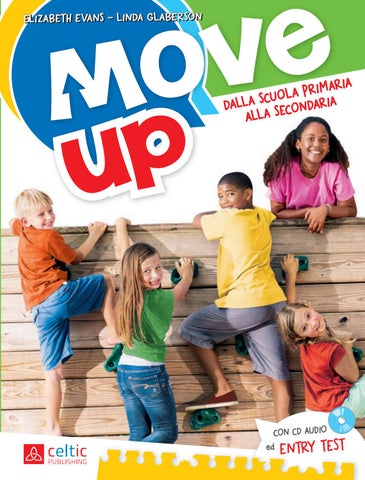
DALLA SCUOLA PRIMARIA ALLA SECONDARIA
Move Up aiuta a consolidare lessico e strutture della lingua inglese per iniziare al meglio la scuola secondaria. Può essere utilizzato sia in classe che a casa, durante l’anno o in vacanza.
ATTIVITÀ GRADUALI E DIVERTENTI
SKILL TEST A FINE UNITÀ ED ENTRY TEST
www.celticpublishing.com
RIPASSO DI LESSICO E STRUTTURE AFFRONTATI NELLA SCUOLA PRIMARIA
CD AUDIO
SPIEGAZIONI DETTAGLIATE ED ESERCIZI DI GRAMMATICA
p u
ARIA M I R P LA O U C S A RIA A DALL D N O C ALLA SE
SOLUZIONI ON LINE SU www.raffaellodigitale.it
www.raffaellodigitale.it
MOVE UP + CD AUDIO
€ 7.50
CON CD AUDIO ed ENTRY TEST
N ERSON GLABERSO LINDA GLAB ELIZA EVANSS -- LINDA BETH EVAN ELIZABETH
p u CONTENTS start! . . . . . . . . . . . . . . . . . . . . . . . . . . . . . . . . . . . . . . . . . . . . . . . . . . . . . . . . . . . . . . . . . . . . . . . . . . . . . . . . . . . . . . . . . . . . . . . . . . . . . . . . . . . . . . . . . . . . . . . . . . . . ................ 2 unit 1 unit 2 unit 3 unit 4 unit 5 unit 6
THIS IS ME . . . . . . . . . . . . . . . . . . . . . . . . . . . . . . . . . . . . . . . . . . . . . . . . . . . . . . . . . . . . . . . . . . . . . . . . . . . . . . . . . . . . . . . ................ 6 MY APPEARANCE. . . . . . . . . . . . . . . . . . . . . . . . . . . . . . . . . . . . . . . . . . . . . . . . . . . . . . . . . . . . . . . . . . . ............ 14 FOOD AND DRINKS . . . . . . . . . . . . . . . . . . . . . . . . . . . . . . . . . . . . . . . . . . . . . . . . . . . . . . . . . . . . . . . . . . ............. 22 SPORTS AND FREE TIME. . . . . . . . . . . . . . . . . . . . . . . . . . . . . . . . . . . . . . . . . . . . . . . . . ............. 30 DAY AFTER DAY . . . . . . . . . . . . . . . . . . . . . . . . . . . . . . . . . . . . . . . . . . . . . . . . . . . . . . . . . . . . . . . . . . . . . . . ............. 38 WEATHER AND CLOTHES. . . . . . . . . . . . . . . . . . . . . . . . . . . . . . . . . . . . . . . . . . . . . . . . ............. 46
e . . . . . . . . . . . . . . . . . . . . . . . . . . . . . . . . . . . . . . . . . . . . . . . . . . . . . . . . . . . . . . . . . . . . . . . . . . . . . . . . . . . . . . . . . . . . . . . . . . . . . . . . . . . . . . . ............ 54 g a . . . . . . . . . . . . . . . . . . . . . . . . . . . . . . . . . . . . . . . . . . . . . . . . . . . . . . . . . . . . . . . . . . . . . . . . . . . . . . . . . . . . . . . . . . . . . . . . . . . . . . . . . . . . . . . . . . . . . ............ 56
! Colours 1 Scrivi i nomi dei dieci colori. Ascolta e controlla.
2
1. y _ _ _ o _
6. p _ _ k
2. b _ _ _ n
7. r _ _
3. b _ u _
8. w _ i _ _
4. gr _ _ _
9. g _ _ y
5. p _ _ p _ _
10. o _ _ n _ _
The alphabet 2 Scrivi le lettere mancanti dell’alfabeto. Ascolta e controlla.
3
C W
N 3 Ascolta lo spelling e scrivi.
4
Poi abbina.
1. _ _ _ _ _ _ _ _ 2. _ _ _ _ _ _ _ _ _
a ...
b ...
3. _ _ _ _ _ _ _ _ 4. _ _ _
2
c ...
d ...
VO C A B U L A RY
Numbers 4 Scrivi i numeri in lettere. Ascolta e controlla.
5
twelve • thirty • twenty-six • fourteen • sixty-eight • forty • seventy-five • eighty-eight 88
...................................................................................................
30
...................................................................................................
12
...................................................................................................
68
...................................................................................................
14
...................................................................................................
75
...................................................................................................
40
...................................................................................................
26
...................................................................................................
5 Leggi e cerchia il numero giusto. Ascolta e controlla.
6
eighth
fourth
third
fifteenth
twentieth
thirty-first
tenth
first
thirteenth
fifth
fourteenth
thirty-third
6 Scrivi la lettera dell’alfabeto corrispondente e scopri il messaggio segreto. The sixth letter
........................
The fifth letter
........................
The eighteenth letter
........................
The twenty-second letter
........................
The ninth letter
........................
The fifth letter
........................
The fifth letter
........................
The eighteenth letter
........................
The fourteenth letter
........................
The fourth letter
........................
The ninteenth letter
........................
The sixth letter
........................
The fifteenth letter
........................
The eighteenth letter
........................
_ _ _ _ _ _ _ _ _ _ _ _ _ _
3
VO C A B U L A RY The week, months, dates 7 Riscrivi i nomi dei giorni nell’ordine corretto.
1. ............................................................... 2. ...............................................................
Sunday
Saturday
Tuesday
Monday
Wednesday
Thursday
Friday
3. ............................................................... 4. ............................................................... 5. ............................................................... 6. ...............................................................
8 Risolvi gli anagrammi dei mesi.
7. ...............................................................
Scrivi i quattro mesi mancanti.
AMCRH
YUJL
UTUGSA
YMA
................................
.................................
...............................
........................
ROTCEOB
AYUNARJ
LPIAR
RNMBEVOE
.................................
..............................
..............................
...........................................
I mesi mancanti sono:
............................................ ............................................ ............................................ ............................................
9 Ascolta e cerchia la data giusta.
Amber
January 8th / 18th
4
Rob
June 6th/ 16th
7
Nick
December 3rd / 23rd
Lucy
March 5th / 15th
VO C A B U L A RY
Adjectives 10 Collega gli opposti.
BIG
SHORT
FANTASTIC
GOOD
HAPPY
HOT
NEW
BAD
COLD
LONG
OLD
SAD
SMALL
TERRIBLE
11 Completa le frasi con un aggettivo. 1. Hi David! I’m in Palermo on holiday and it’s ........................................ here! 2. Brrr! It’s really ........................................ in this room. 3. She wants a ........................................ pair of shoes for her birthday. 4. I can’t finish my sandwich, it’s too ........................................ ! 5. My jacket is ........................................ . I want to buy a new one. 6. It's a ........................................ queue! It's impossible to get into the museum!
School objects 12 Osserva e completa.
exercise book - schoolbag - pencil - rubber - book - pen pencil case - ruler - glue - sharpener
1. .....................................
2. .....................................
3. .....................................
4. .....................................
5. .....................................
6. .....................................
7. .....................................
8. .....................................
9. .....................................
10. .....................................
5
t u VO C A B U L A RY 1 THIS
IS ME
1 Osserva le immagini e completa le frasi, poi ascolta e controlla.
8
Italy - Germany - the United Kingdom - France - Spain - Greece - Brazil - China
WHERE ARE YOU FROM?
1. I’m from
..............................
2. I’m from
..............................
3. I’m from
..............................
4. I’m from
..............................
5. I’m from
..............................
6. I’m from
..............................
7. I’m from
..............................
8. I’m from
..............................
2 Ascolta e completa.
9
grandmother (x2) - mum - brother grandfather - dad - grandad Hi! My name’s Claire. I’m 11 years old and I’m from Ireland. This is a picture of my family: my .............................. , my ........................... and my little .......................................... Nick.
6
VO C A B U L A RY
3 Collega i paesi alle nazionalità. Where are you from?
What nationality are you?
I’m from...
I’m...
Ireland
Brazilian
Italy
Chinese
France
Spanish
Brazil
British
China
Irish
Germany
Italian
Japan
Greek
Greece
German
The United Kingdom
Japanese
Spain
French
I nomi di paesi e gli aggettivi di nazionalità si scrivono sempre con l'iniziale maiuscola.
4 Osserva e completa le frasi. ragazzino
1. He’s from .............................. .
ragazzina
2. She’s from .............................. .
He is .......................................... .
ragazzina
3.
..................................................... .
She is .......................................... .
ragazzino
4.
..................................................... .
My mum’s 34; her name’s Sarah. My dad’s 40; his name’s Martin and he’s from Germany. Helen and Tim are my .......................................... and .......................................... .
My ......................................................
is American, she’s from New York. ..........................................
he’s Scottish.
Tim is from Glasgow,
..................................................... . ..................................................... .
2a Leggi e segna vero (T) o falso (F). 1. Helen is Claire’s mum.
T
F
2. Nick is Claire’s brother.
T
F
3. Claire is from England.
T
F
4. Claire’s mum is thirty-four.
T
F
5. Claire’s dad is Italian.
T
F
6. Tim is American.
T
F
7
grammar S PO T
Pronomi personali soggetto singolare I io you tu he egli she ella it esso/essa
plurale we noi you voi they essi/esse
I pronomi personal i soggetto devono essere sempre es pres si in ingl es e. You are my best fr iend. Il pronome I (io) si scrive sempre con la lettera maiusco la. It si usa per cose e animali. You rimane invaria to al singolare e plurale e corrispo nde a tu, Lei - form a di cortesia e voi.
1 Completa con il pronome personale corretto.
Aggettivi possessivi my your his her its our your their
il mio, la mia, i miei, le mie il tuo, la tua, i tuoi, le tue il suo, la sua, i suoi, le sue (di lui) il suo, la sua, i suoi, le sue (di lei) il suo, la sua, i suoi, le sue (di esso, di essa) il nostro, la nostra, i nostri, le nostre il vostro, la vostra, i vostri, le vostre il loro, la loro, i loro, le loro
In inglese gli aggettivi possessivi non sono mai preceduti dall'articolo. Non –> The my friend My friend a His si usa se il possessore è una person di sesso maschile. sona Her si usa se il possessore è una per di sesso femminile. Its si usa in riferimento a una cosa o un animale.
3 Completa il testo con gli aggettivi possessivi.
1. Ben is my uncle. ......................... is 45. 2. This is Anne. ......................... is my best friend. 3. Mark and I are twelve. ......................... are twins. 4. You are from England. ......................... are English. 5. My tablet isn’t here. ......................... is in my bag. 6. I love elephants. ......................... are very big. 7. Annie and Nick aren’t from London. .........................
are from Bath.
8. Kathy is Australian. ......................... is from Sydney.
2 Scrivi il pronome personale soggetto.
These are my mum and dad. ..................... names
1. Mum .................
4. Mum and dad .................
are Michael and Joan. My little brother is 3,
2. My brother
5. My sister and me .................
.........................
6. The car .................
she’s sixteen. ......................... name’s Katie.
3. Me .................
8
This is a picture of ......................... family.
.................
name is Bob. That is ....................... sister,
grammar S PO T
Present simple - to be forma affermativa estesa I am you are he is she is it is we are you are they are
contratta I’m you’re he’s she’s it’s we’re you’re they’re
ano Le forme contratte si us to rit nell’inglese parlato e sc informale.
4 Scrivi la forma corretta del verbo "to be". 1. Tom ......................... my friend.
forma negativa estesa I am not you are not he is not she is not it is not we are not you are not they are not
contratta I’m not you aren’t he isn’t she isn’t it isn’t we aren’t you aren’t they aren’t
Nella forma contratta not diventa n’t tranne alla prima persona singolare. I am not French. = I’m not French.
6 Scrivi le frasi alla forma negativa. Usa la forma contratta.
My dad isn't 36.
2. We ......................... brother and sister.
1. My dad is 36.
3. You ......................... very nice.
2. They are Spanish.
4. I ......................... twelve years old.
3. I’m from Germany.
5. They ......................... American.
4. It is my phone. ........................................................................
6. She ......................... my teacher.
5. Sarah is my mum.
7. It ......................... her dog.
6. You are in my class. .............................................................
............................................................................ ................................................................. ..............................................................
................................................................
8. He ......................... from China.
5 Riscrivi le frasi dell’esercizio 4 usando la forma contratta.
7 Scrivi le frasi alla forma negativa. 1. You / from Scotland ...........................................................
1. .........................................................................................................
2. She / my sister
2. .........................................................................................................
3. It / his dog ..................................................................................
3. .........................................................................................................
4. They / naughty .......................................................................
4. .........................................................................................................
5. My brother / nine
5. .........................................................................................................
6. Dan / his son ............................................................................
6. .........................................................................................................
7. They / Greek
7. .........................................................................................................
8. Meg / my best friend ........................................................
........................................................................
................................................................
.............................................................................
8. .........................................................................................................
9
grammar S PO T
Present simple - to be forma interrogativa e risposte brevi Am I? Are you? Is he? Is she? Is it? Are we? Are you? Are they?
Yes, I am. / No, I’m not. Yes, you are. / No, you aren’t. Yes, he is. / No, he isn’t. Yes, she is. / No, she isn’t. Yes, it is. / No, it isn’t. Yes, we are. / No, we aren’t. Yes, you are. / No, you aren’t. Yes, they are. / No, they aren’t.
8 Riscrivi le frasi alla forma interrogativa. 1. He is a doctor.
....................................................................................
2. They are eleven. 3. It’s cold today.
...............................................................................
....................................................................................
4. You are British. .................................................................................... 5. We are late.
...........................................................................................
6. It is your book.
...................................................................................
question words Who? What? How? Where? When? Why?
Chi? Che cosa / Quale? Quanto? / Come? Dove? Quando? Perché?
a il verbo Nella forma interrogativ to. precede sempre il sogget He is a football player. Is he a football player? ducono la Le question words intro o della domanda e vanno all'inizi frase. a. Why si usa nella domand sta. po Because si usa nella ris day? Why are you at home to Because it's Sunday!
9 Riordina le parole, scrivi le domande e abbinale alle risposte. 1. ’s • she • Who ? ............................................................................................................................................
a. She’s from Spain.
2. her • What • name • ’s ? .........................................................................................................................
b. She’s my friend.
3. old • is • How • she ?
c. It’s on 2nd August.
..............................................................................................................................
4. ’s • birthday • her • When ? ...............................................................................................................
d. She’s 11.
5. she • is • Where • from ? ......................................................................................................................
e. Her name’s Blanca.
10 Segna la risposta breve corretta.
10
1. Is Maria from Italy?
a Yes, it is.
b No, she isn’t.
c Yes, he is.
2. Is that your mobile phone?
a No, he isn’t.
b Yes, he is.
c No, it isn’t.
3. Are they your cousins?
a Yes, we are.
b Yes, they are.
c No, you aren’t.
4. Is this your book?
a Yes, she is.
b Yes, it is.
c Yes, he is.
5. Are you a Manchester fan?
a No, I’m not.
b No, I isn’t.
c No, I am.
6. Is he your brother?
a Yes, it is.
b No, she isn’t.
c Yes, he is.
S E R U T N E V D A S VENN Ascolta e leggi.
10
11
s s REA DIN G
1. Ascolta e leggi.
E S I T C A R P O T E M I T
11
Hi! I’m Tommy. I’m from London and I’m 11. My parents are British, they are from Yorkshire. My favourite football team is Arsenal. My best friend is Joe, his favourite team is Tottenham. Arsenal and Tottenham are London football teams. Joe and I are in the school basketball team. My hobbies are computer games and music. My favourite things are my England football scarf and my tablet. Joe’s favourite things are his computer games and his mobile phone.
2. Indica se le frasi sono vere (right), false (wrong) o se non ci sono abbastanza informazioni per decidere (doesn’t say). 1 Tommy is Irish. 2 His parents are from Yorkshire. 3 His parents are 43 years old. 4 Joe is Tommy's brother. 5 Joe and Tommy are in the school basketball team. 6 Tommy's hobbies are volleyball and swimming. 7 His favourite things are his football scarf and his tablet. 8 Joe’s favourite things are his computer games and his mobile phone.
12
right
wrong
doesn’t say
s s LISTENING
3. Ascolta Mandy che parla di sé e segna la giusta informazione. Age
Nationality
11 years old
Irish
12 years old
Scottish
13 years old
British
Family
Friends
only child
Debbie
sister
Katy
brother and sister
Julie
Hobbies
Favourite things
volleyball
mobile phone
music
tablet
chatting online
a T-shirt from Paris
12
WRITING 4. Completa il factfile con le tue informazioni personali. Poi usalo per una tua breve descrizione.
Name ................................................................ Age .................................................................... Nationality .................................................... Family ............................................................... Hobbies ......................................................... Favourite things ...................................
Hi, my name’s
...................................................................................
..............................................................................................................................................
...................................................................................
..............................................................................................................................................
...................................................................................
..............................................................................................................................................
.........................................................................................................
.............................................................................................................................................. .............................................................................................................................................. .............................................................................................................................................. .............................................................................................................................................. ...............................................................................................................................................
13
u t 2
MY APPEARANCE 13
1 Ascolta e numera. nose
head
long fair hair
blue eyes
ear mouth
arm black eyes
short brown hair
hand curly red hair
leg
green eyes
foot
Hair è singolare.
2 Osserva le foto, leggi e completa. 1
14
2
This is Justin Bieber.
This is Emma Stone.
He’s a singer.
She’s an actress. She’s
He’s got short
got ............................... hair
.............................
hair and
.............................
eyes.
and ............................. eyes.
VO C A B U L A RY 2
What are they like? 3 Abbina le immagini alle parole. tall
short
thin
plump
shy
physical appearance
lazy
serious
friendly
personality
1
2
5
6
3
4
7
8
4 Osserva le immagini e numera le frasi. - He’s serious.
- She’s friendly.
- He’s tall.
- She’s plump.
- She’s shy.
- He’s lazy.
3
4
L’aggettivo rimane invariato al maschile, femminile, singolare e plurale e precede sempre il nome.
This is Luis Suarez. He’s a footballer.
This is Sara Errani.
He’s got short .....................
She’s a tennis player.
hair and ............................
She’s got long ........................
eyes.
hair and ......................... eyes.
15
grammar S PO T
Present simple - have got forma affermativa estesa I have got you have got he has got she has got it has got we have got you have got they have got
forma negativa
contratta I’ve got you’ve got he’s got she’s got it’s got we’ve got you’ve got they’ve got
estesa I have not got you have not got he has not got she has not got it has not got we have not got you have not got they have not got
contratta I haven’t got you haven’t got he hasn’t got she hasn’t got it hasn’t got we haven’t got you haven’t got they haven’t got
Si usa have got per: - parlare di possesso –> I have got a new skateboar d. New message - descrivere l’aspetto fisico di qualcuno –> Darren has got short fair hair. - indicare rapporti di parentela –> Susan has got a broth er.
1 Completa l’email con il verbo “have got”. New message
My name’s Zoe. I’m 12. I ............................... a brother and a sister. My sister Mia ............................... long curly hair and green eyes. My brother Nick ..................................... beautiful blue eyes. We ................................... a dog and a cat. My brother and sister love music. They ............................... lots of CDs. I ............................... a friend in France. Her name’s Nicole. Her family ............................... a big house in Paris. Great!
2 Scrivi le frasi alla forma negativa. 1. My sister and I / a game console 2. Katie / a new skateboard
My sister and I haven't got a game console.
..................................................................................................................................................
.....................................................................................................................................................................
3. Steve and Sophie / an old computer ........................................................................................................................................ 4. Mrs Robinson / a new car
....................................................................................................................................................................
5. Michael and you / a nice sister 6. George / a new guitar
16
........................................................................................................................................................
.............................................................................................................................................................................
grammar 2
S PO T
forma interrogativa e risposte brevi Have I got? Have you got? Has he got? Has she got? Has it got? Have we got? Have you got? Have they got?
Yes, I have. / No, I haven’t. Yes, you have. / No, you haven’t. Yes, he has. / No, he hasn’t. Yes, she has. / No, she hasn’t. Yes, it has. / No, it hasn’t. Yes, we have. / No, we haven’t. Yes, you have. / No, you haven’t. Yes, they have. / No, they haven’t.
Nella forma interrogativa “have”si mette prima del soggetto: They have got a digital camera.
Have they got a digital camera? Nella risposta breve non si usa“got”. Has she got a tablet? Yes, she has.
3 Completa le domande con have got/has got.
Has Nick .......................... got a car? 1. ..........................
4. .......................... Ellie .......................... a guitar?
2. .......................... Helen and Tom .......................... a dog?
5. .......................... they .......................... a new phone?
3. .......................... you and Tim .......................... a red bag?
6. .......................... Sue .......................... a PlayStation?
4 Riordina le domande e scrivi risposte brevi. ( = yes; x = no) 1. he - a - brother - got - Has - ? ( )
4. we - got - sister - a - Have - ? ( )
.................................................................................................................
.................................................................................................................
2. she - dress - a - new - got - Has - ? (x)
5. he - Has - a - camper van - got - ? (x)
.................................................................................................................
.................................................................................................................
3. they - a - Have - got - computer - ? ( )
6. you - got - new - computer games - Have - ? (x)
.................................................................................................................
.................................................................................................................
Has he got a brother? Yes, he has.
question words How many
pets sisters friends
have you got? has he got? have they got?
How many significa“quanti/ e”: si usa per chiedere la quantit à con i sostantivi al plurale.
5 Scrivi le domande per le seguenti risposte. 1.
................................................................ ?
He has got 2 dogs.
2.
................................................................ ? We
have got 9 pens.
3. ................................................................ ? I have got 4 books. 4. ................................................................ ? They have got 3 CDs.
17
grammar S PO T
Articoli Articolo indeterminativo A/An è l’articolo indeterminativo inglese e corrisponde a un, uno, una, un’. A si usa davanti a parole che iniziano con un suono consonantico. a phone/a computer An si usa davanti a parole che iniziano con suono vocalico. Articolo determinativo The è l’articolo determinativo. Corrisponde a: il, lo, la, i, gli, le. the football/the apples Si usa “the” quando ci riferiamo a qualcosa di determinato. Apples are fruit. The apples in the fridge are very good.
6 Completa con “a” o “an”.
Il plurale dei nomi Il plurale dei nomi si forma aggiungendo s al nome singolare. girl/girls I nomi che terminano con s, ch, sh, x aggiungono es. bus-buses church-churches box-boxes Nei nomi che terminano in y preceduta da consonante, la y diventa i e si aggiunge es. baby / babies Alcuni plurali sono irregolari: mouse/mice person/people man/men child/children woman/women foot/feet
7 Scrivi il plurale dei nomi. friend .................................
box .................................
desk .................................
tree .................................
1. ................ eye
7. ................ book
glass .................................
city .................................
2. ................ school
8. ................ sister
dog .................................
person .................................
3. ................ arm
9. ................ umbrella
day .................................
4. ................ orange
10. ............. egg
party .................................
5. ................ bike
11. ................ elephant
bus .................................
6. ................ animal
12. ................ leg
child .................................
Il genitivo sassone Il genitivo sassone si usa per esprimere l’appartenenza di una cosa a una persona o a un animale o per indicare la relazione tra le due persone. Il genitivo si costruisce così: nome del possessore + ‘s + persone in relazione o oggetto posseduto. Mary’s brother / The dog’s tail
18
8 Scrivi la forma corretta del genitivo sassone.
Linda's pen 1. The pen of Linda ...................................................................... 2. The dog of Mike ....................................................................... 3. The schoolbag of Annie .................................................... ..................................................................................................................
4. The mum of Luigi ....................................................................
S E R U T N E V D A S VENN 14
2
Ascolta e leggi.
19
s s READING
1. Ascolta e leggi.
E S I T C A R P O T E M I T
15
My name’s Tim. Here’s a short description of me and my family: I‘m quite tall and thin, I’ve got short fair hair and blue eyes. I’m friendly but sometimes a bit shy. I’ve got two sisters: Linda and Susan. Linda is thin. She’s got long curly hair and green eyes. Susan is three. She’s a bit plump. She’s very friendly. My dad is tall and thin, he’s got brown hair and green eyes and he’s very friendly too. My mother is quite tall and plump, she’s got short red hair and blue eyes. She’s very friendly too.
2. Completa le frasi scegliendo l’opzione corretta.
20
1 Tim has got a long fair hair
b short red hair
c short fair hair
2 Linda is a Tim’s mother
b Tim’s sister
c Tim’s aunt
3 Linda has got a long straight hair
b long curly hair
c green eyes
4 Susan is a short and thin
b plump
c tall and thin
5 Tim’s dad is a very serious
b very shy
c very friendly
6 Tim’s dad has got a white hair
b blue eyes
c brown hair
s s 3. Ascolta e scegli l’immagine corretta.
16
2
LISTENING 1 Who is Jane?
a
b
c
2 Who is Andrew?
a
b
c
WRITING 4. Usa i dati della tabella per descrivere Gail. Age
13
Her name’s Gail.
Build
tall, slim
She’s
Eyes
brown
Hair
long, black
Personality
friendly
.....................................
.................................................
She has got
........................
................................................. ................................................. .................................................
5. Ora descriviti. Hi! I’m ...................................................................... ................................................................................... ................................................................................... ................................................................................... ................................................................................... ................................................................................... ...................................................................................
21
u t 3
S K D N N I A R D D O FO
1 Etichetta le immagini. apple - rice - cheese - sandwich - eggs - ice cream - lettuce - tomatoes
1. ....................................................
2. ....................................................
3. ....................................................
4. ....................................................
5. ....................................................
6. ....................................................
7. ....................................................
8. ....................................................
2 Ascolta e completa.
17
cheese - tomatoes - lettuce - ice cream rice - hamburgers New York is a very cosmopolitan city. There are many restaurants and you can eat anything at any time. Nick is from NY; his dad is the owner of a multicultural restaurant. These are their specialities: Spanish paella, Indian ............................
and curry and American .......................................................... .
Nick’s favourite hamburger is the cheddar bacon with ...................................... ,
cheddar......................................... , bacon bits,
........................................
and lots of ketchup.
His dad also makes great ............................................................ - there are 22 flavours to choose from.
22
S
VO C A B U L A RY
3 Abbina ciascuna bevanda alla sua immagine.
b
... c ...
d ...
a ...
e ...
f ...
...
g ...
1 lemonade 2 cola 3 milk-sha ke 4 coffee 5 water 6 tea 7 oran ge juice 8 hot chocolate
h
4 Colloca le parole nell’insieme giusto. Hot drinks:
Cold drinks:
......................................................................................................
......................................................................................................
......................................................................................................
......................................................................................................
2a Decidi se le frasi sono vere (T) o false (F) e correggi. 1. Nick is from Chicago.
T
F
.......................................................................................................................
2. His dad has got an Italian restaurant.
T
F
.......................................................................................................................
3. Nick’s favourite food is pasta.
T
F
4. Nick’s favourite hamburger is with cheese.
T
F
.............................................................................................................
5. Nick’s dad makes great ice cream.
T
F
............................................................................................................
.......................................................................................................................
23
grammar S PO T
Preposizioni di luogo
IN
BEHIND
ON
IN FRONT OF
UNDER
Aggettivi e pronomi dimostrativi
NEXT TO
This is an apple.
These are apples.
That is an apple.
Those are apples.
BETWEEN
1 Osserva le immagini e scrivi le preposizioni di luogo.
The mouse is...
1. ........................... the cup.
2. . .......................... the milk and the apple.
This / These si usa per indicare uno o più oggetti o persone vicino a chi parla. That / Those si usa per indicare uno o più oggetti o persone lontano da chi parla. This, that, these e those possono essere usati sia come pronomi sia come aggettivi. This is a new car. / This car is new. A differenza dell’italiano, non hanno né maschile né femminile.
2 “This” o “these”?
3. ........................... the bread.
4. .......................... the juice.
1. .......................... pen
5. .......................... books
2. .......................... boys
6. .......................... ruler
3. .......................... car
7. .......................... tomatoes
4. .......................... dogs
8. .......................... house
3 “That” o “those”?
5. . .......................... the table.
24
6. ........................... to the jam.
1. .......................... girl
5. .......................... apples
2. .......................... cup
6. .......................... egg
3. .......................... kites
7. .......................... T-shirt
4. .......................... book
8. .......................... clouds
grammar S PO T
There is - There are forma affermativa There is / There’s There are
forma interrogativa e risposte brevi
forma negativa There is not / There isn’t There are not / There aren’t
There is corrisponde all’italiano “c'è”. È sempre seguito da a/an/one e da un nome al singolare. There is an apple. There’s an apple.
Is there? Are there?
Yes, there is. / No, there isn’t. Yes, there are. / No, there aren’t.
There are corrisponde a “ci sono”, non si contrae mai ed è seguito da nomi al plurale. There are two tomatoes. There’re two tomatoes.
\ /
4 Osserva l’immagine e completa con “There is/isn’t” o “There are/aren’t”.
In Emily’s kitchen… 1.
...........................................
one apple.
5. ........................................... a bottle of milk.
2.
...........................................
two tomatoes.
6. ........................................... two sandwiches.
3.
...........................................
four potatoes.
7. ........................................... three eggs.
4.
...........................................
six strawberries.
8. ........................................... an orange.
5 Osserva di nuovo l’immagine e rispondi alle domande. 1. Are there two bottles of water?
................................... .
3. Are there five strawberries?
........................................... .
2. Is there an apple?
................................... .
4. Is there a banana?
........................................... .
25
grammar S PO T
Some - Any - A - An forma affermativa
forma negativa
forma interrogativa e risposte brevi
There’s some bread.
There isn’t any bread.
- Is there any bread? Yes, there is. / No, there isn’t. - Are there any apples? Yes, there are. / No, there aren’t.
I sostantivi numerabili sono quelli che si possono contare e che quindi hanno la forma al plurale. an egg / three eggs I sostantivi non numerabili sono quelli che non si possono contare. Non sono mai preceduti da “a/an”. Per indicare una quantità non definita o non numerabile si usano some / any. Some books / Some sugar
Some si usa: nelle affermazioni. nelle domande in cui si offre qualcosa. There are some books in the schoolbag. Would you like some milk? nelle richieste. Can I have some chocolate, please? Any si usa: nelle frasi negative e interrogative, quando non indicano richieste e offerte. There aren’t any children in the classroom. Have you got any pets? Yes, I’ve got a cat. Are there any eggs in the fridge? No, there aren’t.
6 Scrivi i nomi nella colonna giusta, “a / an” se sono numerabili, oppure “some” se non numerabili.
carrot
tea
milk
sandwich
hamburger
bread
cheese
egg
orange
lemon
water
butter
a/an
some
7 Completa le frasi con “some” o “any”. Ascolta e controlla.
......................................
......................................
......................................
......................................
......................................
......................................
......................................
......................................
......................................
......................................
......................................
......................................
18
1. Are there ........................... biscuits?
4. Can I have ........................... milk, please?
2. There isn’t ........................... cheese in the fridge.
5. I haven’t got ........................... money.
3. Would you like ........................... tea?
6. There isn’t ........................... pasta or pizza.
26
S E R U T N E V D A S VENN Ascolta e leggi.
19
27
s s READING
1. Ascolta e leggi il testo.
E S I T C A R P O T E M I T
20
The Borough Market London is the capital of England and the United Kingdom. There are a lot of sights and interesting buildings, beautiful parks, famous museums, galleries, great shops, department stores and markets, like Camden Town.
The Borough Market is a very popular market in London. It is near the Globe Theatre and it is famous for food. Here, you can eat food from all over the world. For example Jerk chicken from Jamaica, curried chicken from India and frankfurters from Germany. There are drinks from everywhere, delicious milkshakes and fantastic ice cream.
2. Completa le frasi scegliendo l’opzione corretta. 1 London is the capital of a Scotland b England c Ireland
4 At the Borough Market a you can go to the theatre b you can eat British food c you can eat international food
2 In London a there aren’t any sights b there are a lot of sights c there is one sight
5 Curried chicken comes from a England b India c Spain
3 The Borough Market is famous for its a street artists b shops c food
6 You can eat fantastic ice cream at a the Globe Theatre b the Borough Market c Camden Town
28
s s LISTENING 3. Ascolta e completa la conversazione.
21
ice-cream - milkshake cheese - ham - lemonade
At the café
Waiter: Hello, can I help you? Jane: Yes! Can I have a strawberry ......................................... , please? Sarah: I’d like a chocolate ............................................. , please. Toby: And I’d like a ................................... and ........................... sandwich. I’m hungry! Waiter: Anything to drink? Toby: A can of .......................................... , please.
WRITING 4. Osserva le immagini, individua le differenze e scrivi.
1
1
In picture 1 there are three apples ...................................................................................................................... ......................................................................................................................
2
2 ...................................................................................................................... ......................................................................................................................
......................................................................................................................
......................................................................................................................
......................................................................................................................
......................................................................................................................
......................................................................................................................
......................................................................................................................
......................................................................................................................
......................................................................................................................
......................................................................................................................
......................................................................................................................
29
u t
SPORTS AND FREE TIME
1 Osserva le foto e per ognuna indica lo sport, l’azione e il nome di chi lo pratica. cycling - skiing - football - tennis - swimming - gymnastics do gymnastics - cycle - swim - ski - play tennis - play football footballer - gymnast - swimmer - tennis player - skier - cyclist
1
2
3
Sport:
................................................................
................................................................
.................................................................
Action:
................................................................
................................................................
.................................................................
Person:
................................................................
................................................................
.................................................................
4
5
6
Sport:
................................................................
................................................................
.................................................................
Action:
................................................................
................................................................
.................................................................
Person:
................................................................
................................................................
.................................................................
2 Ascolta e sottolinea la parola corretta.
22
My name’s Lindsey but my friends/parents call me “Goldfish” because I’m a good dancer/swimmer. I’m in the local football/swimming team. Mr Thompson is our teacher/coach, he can swim/ski very well. He’s a rugby/swimming champion. My idol’s Missy Franklin. She’s an English/American swimmer. I like other sports too. I can play cricket/tennis very well and I can do karate/judo quite well, but I can’t cycle/ski at all!
30
E
VO C A B U L A RY
3 Scrivi le azioni sotto alle immagini corrispondenti. dance - act - ride a horse - play the guitar - sing - paint - play chess - ride a bike
1. ....................................................
2. ....................................................
3. ....................................................
4. ....................................................
5. ....................................................
6. ....................................................
7. ....................................................
8. ....................................................
4 Ascolta e scrivi ciò che Karim e Linda sanno o non sanno fare.
1
23
........................................................
........................................................
........................................................
........................................................
Karim
2
Linda
2a Scegli l’alternativa corretta. 1. Lindsey’s friends call her
a Starfish
b Fish
c Goldfish
2. Mr Thompson is
a her coach
b her teacher
c her dad
3. Missy Franklin is
a a tennis player
b a footballer
c a swimmer
4. Lindsey can do judo
a well
b very well
c quite well
5. Lindsey can’t
a ski
b cycle
c swim
31
grammar S PO T
Can forma affermativa I can swim you can swim he can swim she can swim it can swim we can swim you can swim they can swim
Can è uguale per tutte le persone e viene se guito dalla forma base del verbo. Corrisponde all’ita liano saper fare, essere in grado di, riuscire a.
1 Scrivi le frasi, usa can ( ) o can’t (x). 1. Jane / do karate ( ) ....................................................................................................................
2. Toby / skateboard (x)
forma negativa estesa I cannot swim you cannot swim he cannot swim she cannot swim it cannot swim we cannot swim you cannot swim they cannot swim
contratta I can’t swim you can’t swim he can’t swim she can’t swim it can’t swim we can’t swim you can’t swim they can’t swim
2 Osserva le immagini e completa con can/can’t e il verbo.
swim - play football - climb - skateboard row a boat - ride a bike
....................................................................................................................
3. I / ride a horse (x) ....................................................................................................................
4. We / speak French ( ) ....................................................................................................................
5. It / swim underwater ( )
1. He ..................................
2. She ...........................................
..................................................
............................................................
3. They .......................................
4. ......................................................
............................................................
............................................................
5. ......................................................
6. ......................................................
............................................................
............................................................
....................................................................................................................
6. They / play table tennis (x) ....................................................................................................................
Avverbi di modo I can swim...
{
very well well quite well
I can’t swim...
{
very well at all
32
grammar S PO T
forma interrogativa e risposte brevi Can I swim? Can you swim? Can he swim? Can she swim? Can it swim? Can we swim? Can you swim? Can they swim?
Can può avere più significati: - può esprimere abilità: saper fare qualcosa, essere in grado di. I can swim. - può essere usato per formulare una richiesta: Can I have a sandwich, please? Nella forma interrogativa “can” va prima del soggetto. Can they play tennis?
Yes, I can. / No, I can’t. Yes, you can. / No, you can’t. Yes, he can. / No, he can’t. Yes, she can. / No, she can’t. Yes, it can. / No, it can’t. Yes, we can. / No, we can’t. Yes, you can. / No, you can’t. Yes, they can. / No, they can’t.
3 Scrivi le domande e le risposte brevi affermative ( ) o negative (x). 1. Lisa / climb a wall (x)
5. Amy / ride a horse ( )
.................................................................................................................
.................................................................................................................
Can Lisa climb a wall? No, she can't. .................................................................................................................
.................................................................................................................
2. Nick / do judo ( )
6. his dog / swim ( )
.................................................................................................................
.................................................................................................................
.................................................................................................................
.................................................................................................................
3. Tom and Jane / ski ( )
7. Emma and Sara / play tennis (x)
.................................................................................................................
.................................................................................................................
.................................................................................................................
.................................................................................................................
4. your friends / skateboard (x)
8. Alice and you / dance (x)
.................................................................................................................
.................................................................................................................
.................................................................................................................
.................................................................................................................
4 Abbina a ogni domanda la risposta pertinente. 1. Can you play rugby?
a. No, she can’t, but she can ride a bike.
2. Can your sister swim?
b. Yes, I can. I can play it quite well.
3. Can your friends ski?
c. Yes, he can, but he can’t play computer games.
4. Can your mum ride a horse?
d. Yes, she can. She’s a good swimmer.
5. Can Ben row a boat?
e. No, he can’t, but he can skate quite well.
6. Can your grandad write e-mails?
f. Yes, they can very well!
33
grammar S PO T
5 Scrivi la richiesta in base alle immagini.
Can I have an apple, .......................................................................... please? ....................................................................... ?
1
..........................................................................
4
....................................................................... ?
..........................................................................
..........................................................................
....................................................................... ?
....................................................................... ?
2
5
..........................................................................
..........................................................................
....................................................................... ?
....................................................................... ?
3
6
Imperativo L’imperativo si usa per dare ordini, istruzioni, proibizioni . Come here! La forma negativa si costruisce con Don’t davanti alla forma base del verbo: Don’t run!
DON'T!
DO!
6 Osserva le immagini e completa le frasi. go straight on - turn left - don’t smoke - don’t touch
1. ..............................................
34
2. ..............................................
3. ..............................................
4. ..............................................
S E R U T N E V D A S VENN Ascolta e leggi.
24
35
s s 25
nfe e e r SUMMER CAMP
COME TO OUR FANTASTIC CAMP!
ld
1. Ascolta e leggi.
G
REA DIN G
E S I T C A R P O T E M I T
Greenfield Summer Camp is for young people from 6 to 14 years old. Here you can meet new friends and do lots of exciting activities: you can play basketball, football or you can swim in our Olympic swimming pool. During the day you can cycle in the forest, ride a horse or climb a wall. You can also learn to act, sing, dance and play the guitar with Adrian and Joan. Then in the evening, after dinner, you can watch TV, see a film or play chess with Mrs Bell and your friends. On Friday, the last day, there are lots of games, races and a talent show.
GREENFIELD CAMP IS OPEN FROM JUNE 1ST TO AUGUST 30TH. FOR MORE INFORMATION VISIT OUR WEBSITE. Register online!
2. Leggi e segna vero (T) o falso (F).
36
1. Greenfield is for young people from 6 to 14.
T
F
2. You can do lots of exciting activities.
T
F
3. You can’t swim in the Olympic swimming pool.
T
F
4. You can watch TV during the day.
T
F
5. You can play chess with Adrian and Joan.
T
F
6. You can learn to dance, sing and act.
T
F
7. Saturday is the last day.
T
F
8. There are lots of games and races on Friday.
T
F
s s LISTENING
26
3. Ascolta Bill che parla dei suoi amici. Per ognuno segna cosa sa ( ) o non sa fare (x).
Nathan
Jason
Emily
Sara
play chess
ride a horse
dance
do gymnastics
play football
swim
play basketball
play tennis
sing
act
ski
paint
WRITING
4. Osserva e scrivi ciò che i due ragazzi sanno o non sanno fare. Usa gli avverbi di modo.
Jennifer 1. dance
3. sing
2. ride a horse
4. skate
can dance well . She ...................................................................... Jennifer ................................................... She can’t ................................................... . She ................................................................................ .
Karl
1. cycle
3. do karate
2. play basketball
4. play chess
Karl can ............................................................................................................................................... .................................................................................................................................................................... .
5. Ora scrivi ciò che sai o non sai fare. I can ....................................................................................................................................................................................................................................... .................................................................................................................................................................................................................................................... .................................................................................................................................................................................................................................................... ................................................................................................................................................................................................................................................... .
37
u t 5
DAY AFTER DAY
1 Scrivi le azioni sotto alle immagini corrispondenti. get up - watch TV - have dinner - go to school - brush teeth - finish school have breakfast - get dressed - have lunch - go to bed - meet friends - do homework 7:00
get up 1. ....................................................
7:05
2. ....................................................
7:50
5. ....................................................
3. ....................................................
12:45
6. ....................................................
16:30
9. ....................................................
7:15
2 Ascolta e completa il testo.
4. ....................................................
15:00
7. ....................................................
15:30
8. ....................................................
20:30
19:30
10. .................................................
7:30
11. .................................................
21:45
12. .................................................
27
watch TV
My name’s Joe. I live in London. This is my daily school routine.
go to school
I usually ..................................................... at 7 o’clock in the morning and
have lunch
I ................................................. . Then I .................................................... . I ............................................ by bus.
get up
School starts at 8:30. My favourite lessons are Science and Maths
go to bed
but I don’t like History very much. I ............................................. at school with my
brush my teeth
friends. After school I go to homework club.
have breakfast
38
I usually go home at 5:30. I have dinner with my family at 7 o’clock. After dinner I usually ............................................. . I always ........................................ at 10 o’clock.
3 Leggi, ascolta e completa l’orologio con gli orari.
VO C A B U L A RY
28
3:00 three o’clock 3:55 five to .....................
11 12 1 3:50 ten 10 2 four to four 3:45 3 9 8 4 four 3:40 twenty 7 6 5 .................
..........................
.................
3:35 twenty-five to .......................
11 12 1 10 2 3 9 4 8 7 6 5
3:05 five past ..................
3:10 .................... past three 3:15 quarter ...................... three 3:20 twenty past ...................... 3:25 twenty-five ................. three
3:30 half past ....................
o da Per differenziare l’orario del mattin lingua la nel quello del pomeriggio si usano .: scritta le abbreviazioni a.m. e p.m It’s 9 a.m. - Sono le 9:00. 9:00 It’s 9 p.m. - Sono le 21:00.
L’espressione o’clock si usa per esprimere l’ora esatta: It’s nine o’clock. Sono le nove in punto.
2a Leggi e segna vero (T) o falso (F). 1. Joe is from New York.
T
F
2. He always gets up at seven o’clock.
T
F
3. He goes to school by bus.
T
F
4. His favourite lessons are History and Geography.
T
F
5. He has lunch at school.
T
F
6. He goes home after school.
T
F
39
grammar S PO T
Present simple forma affermativa I live you live he lives she lives it lives we live you live they live
forma negativa Il present simple si usa per parlare di azioni abituali. I go to school at eight. La forma affermativa è uguale per tutte le persone a eccezione della terza persona singolare (he/she/it). I get up. / He gets up.
estesa I do not live you do not live he does not live she does not live it does not live we do not live you do not live they do not live
contratta I don’t live you don’t live he doesn’t live she doesn’t live it doesn’t live we don’t live you don’t live they don’t live
va ria zi on i or to gr af ic he
ch, x, o, Se il verbo termina con ss, sh, ole es. la terza persona singolare vu I watch / he watches sonante Se il verbo termina con una con ge ies. + y, si elimina la y e si aggiun I study / she studies
Nelle frasi negative il ve rbo è preceduto da don’t / do esn’t. Non si aggiunge la s alla terza persona singolare. I don’t like Science. Vicky doesn’t like Maths.
1 Sottolinea la forma corretta del verbo. 1. Emma live / lives in Dublin.
5. I eat / eats fast food.
2. I cycle / cycles to school.
6. My dad read / reads newspapers.
3. Ben and Harry play / plays the guitar.
7. Phil and I love / loves rock music.
4. They meet / meets their friends in the park.
8. We get / gets up at 8 o’clock.
2 Completa il brano con la forma corretta dei verbi fra parentesi. Patrick (live) ................................. in Bath, England. He (go) ................................. to Secondary School. On school days he (get up) ................................. very early in the morning. He (go) ................................. to school by bus. School (start) ................................. at 8:30 a.m. and it (finish) ................................. at 3:30 p.m. After school he (do) ................................. his homework. He (play) ................................. hockey on Monday and Thursday at 5 p.m. He (have) ................................. dinner at 6:30 p.m. After dinner he (watch) .................................
TV with his family or he (listen) ................................. to music.
He (go) ................................. to bed at 9:30 p.m.
40
grammar S PO T
forma interrogativa e risposte brevi Do I live...? Do you live...? Does he live...? Does she live...? Does it live...? Do we live...? Do you live...? Do they live...?
Yes, I do. / No, I don’t. Yes, you do. / No, you don’t. Yes, he does / No, he doesn’t. Yes, she does. / No, she doesn’t. Yes, it does. / No, it doesn’t. Yes, we do. / No, we don’t. Yes, you do. / No, you don’t. Yes, they do. / No, they don’t.
con Do / Does Le domande si formano ito dal verbo. davanti al soggetto segu You get up at 7 a.m. Do you get up at 7 a.m.? terza persona singolare. Non si aggiunge la s alla .? Does he get up at 8 a.m .? Does he gets up at 8 a.m
3 Completa le domande con “Do” o “Does”.
Scrivi risposte brevi secondo le indicazioni: = Yes; x = No.
Does Eric like Maths? ( ) Yes, he does. 1. ................. .......................................... 2. ................. you play football? (x) ..........................................
3. ................. Jenny get up early? (x) .......................................... 4. ................. they play computer games? ( ) ................................. 5. ................. Mark go to homework club? ( ) ................................. 6. ................. your friends play chess? (x) ..........................................
avverbi di frequenza ALWAYS
sempre
USUALLY
di solito
OFTEN
spesso
SOMETIMES
a volte
RARELY
raramente
NEVER
x
mai
Gli avverbi di frequenza vanno prima del verbo. She always gets up at 6 a.m. Do you often watch TV? Ma vanno dopo il verbo essere. We are usually at school on Friday afternoon. Nella forma negativa l’avverbio di frequenza segue “don’t” o “doesn’t”. She doesn’t often play the guitar. Never vuole la costruzione della frase affermativa. They never play computer games.
n ha significato Il verbo have, quando no “got” e segue le di possedere, non vuole regole degli altri verbi. ower, have fun Have breakfast, have a sh
4 Riscrivi le frasi inserendo gli avverbi di frequenza al posto giusto. 1. Sally is late for school. (never)
Sally is never late for school.
.............................................................................................................................................................
2. Amanda plays chess. (sometimes)
................................................................................................................................................
3. They don’t play games. (usually) ....................................................................................................................................................... 4. He is happy. (always)
...................................................................................................................................................................................
5. Sarah watches TV after dinner. (often) ......................................................................................................................................... 6. We go to bed at 10 p.m. (rarely)
.......................................................................................................................................................
41
grammar S PO T
Present simple - Question words question words
What Where When
do/does
soggetto
do does
I you he she it we you they
forma base del verbo live? study? go to school? have lunch? play computer games? do homework?
- Per chiedere con quale frequenza si svolge un’azione si usa How often. How often do you play tennis? - Per la risposta si usano gli avverbi di frequenza che già conosci. I sometimes play tennis.
5 Leggi le risposte e completa le domande.
Where do you live? 1. ............................................................................................ I live in London. 2. What time ................................................................ ? I get up at 7:30 a.m. 3. ............................................................................................ ? She has lunch at school. 4. ............................................................................................ ? They play computer games after dinner. 5. ............................................................................................ ? I study French. 6. ............................................................................................ ? I do my homework at home. 7. ............................................................................................ ? We have the French test tomorrow.
42
What può essere segu ito da un sostantivo e av ere significati diversi.
What time do you ge t up? What subject do you like?
- Vengono usati anche altri avverbi di frequenza quali: once (una volta); twice (due volte); three times (tre volte) ecc... Once a day/a week/a month/a year Every day/week/month/year
6 Abbina domande e risposte. 1. How often do you have coffee for breakfast? 2. How often do you cycle to school?
..........
3. How often do you listen to music?
..........
4. How often do you go to the cinema?
..........
5. How often do you meet your friends?
..........
6. How often do you do sport?
..........
a. I play basketball twice a week. b. Sometimes. I see films on TV. c. Never. I always have milk and biscuits. d. Every day. I love music. e. Never. I get to school by bus. f. Every day at school.
c
S E R U T N E V D A S VENN Ascolta e leggi.
29
43
s s
E S I T C A R P O T E M I T
REA DIN G
1. Leggi le domande e collegale alle risposte di Emily. Poi ascolta e controlla. 30
A TypicAl DAy in the Life of Emily 1 What time does school start?
a. On Saturday I meet my friends. On Sunday afternoon I usually go to the cinema with my parents.
2 What subjects do you like?
b. I like English and History but my favourite subject is Music.
3 Where do you have lunch?
c. It starts at 8:30.
4 What do you do after school?
d. I usually go to homework club and I play with my friends. I go home at 5:30.
5 What do you do at the weekend?
e. I always have lunch at the school canteen with my friends.
2. Completa le frasi scegliendo l’opzione corretta.
44
1 Emily starts school at a 8:05
b 7:30
c 8:30
2 She likes a History and English
b English and Maths
c English and Geography
3 She usually has lunch a at her grandmother’s
b at home
c at the school canteen
4 After school she usually goes a to the gym
b to homework club
c to the cinema
5 On Saturday she a meets her friends
b goes to the cinema
c stays at home
6 On Sunday she a reads a book
b plays tennis
c goes to the cinema
s s
LISTENING
31
3. Ascolta Oliver che parla di una sua giornata tipica.
Segna le informazioni corrette. Puoi segnare più di una risposta. 1. I get up at
7:15
2. For breakfast I have
tea and cereal
3. I go to school
by bike
on foot
by bus
4. School starts at
8:45
8:55
8:15
5. I have lunch
at school
at home
at the restaurant
6. After school I go
to homework club
to music class
to music club
to art club
listen to music
play the guitar
chat with my friends
play video games
at 8:30
at 10:00
7. After dinner I 8. I go to bed
7:30
7:45 coffee and toast
at 9:25
milk and biscuits
WRITING 4. Segui la traccia dell’attività 3 e descrivi la tua giornata tipo.
This is my typical day. I get up at .................................................................................................... ............................................................................................................................... ............................................................................................................................... ............................................................................................................................... ............................................................................................................................... ............................................................................................................................... ............................................................................................................................... ............................................................................................................................... ...............................................................................................................................
45
u t 6
D N A CLOTHES R E H WEAT 32
1 Segna l’espressione corretta. Poi ascolta e controlla.
1
2
3
4
It’s raining.
It’s snowing.
It’s cloudy.
It’s foggy.
It’s foggy.
It’s sunny.
It’s windy.
It’s snowing.
5
6
7
8
It’s raining.
It’s foggy.
It’s hot.
It’s cold.
It’s hot.
It’s windy.
It’s sunny.
It’s warm.
It’s warm.
It’s cold.
2 Ascolta e cerchia la parola giusta.
33
Hi! How are you? We’re in New York/Oxford! I’m staying at my parents’/grandparents’ house. It’s raining/snowing and it’s very cold/warm. My cousins/ friends and I are in the garden/park and we’re making a salad/ snowman. It’s great fun! Heiki and Gloria are my new friends. Heiki is from Finland/England and Gloria from Brazil/Spain can see them in this picture. Gloria is wearing an orange jacket/ jumper, blue shorts/jeans, a yellow jumper/hat and brown shoes/ boots. Heiki is wearing black jeans/trousers, a green jumper/jacket and black boots/shoes.. What’s the weather like in London? Is it windy/snowing too? See you soon. Lucy
46
9
VO C A B U L A RY
3 Etichetta le immagini.
sandals T-shirt
1 ...............................................
2
3
4
...............................................
...............................................
...............................................
boots sweatshirt hat raincoat jacket
5
6
7
8
...............................................
...............................................
...............................................
...............................................
jumper socks shoes shorts
9
10
11
12
...............................................
...............................................
...............................................
...............................................
trousers
2a Leggi e segna vero (T) o falso (F). 1. Lucy is in New York.
T
F
2. She’s staying at her uncle’s house.
T
F
3. Lucy and her friends are making a snowman.
T
F
4. Heiki and Gloria are her new friends.
T
F
5. Heiki is from Finland.
T
F
6. Gloria is from Spain.
T
F
7. Gloria is wearing an orange jacket and brown boots.
T
F
8. Heiki is wearing black trousers.
T
F
47
grammar S PO T
Present continuous Il present continuous si usa per indicare azioni in svolgimento. Si forma con il verbo “be” e la forma base del verbo + ing. I’m reading.
forma affermativa estesa I am reading you are reading he is reading she is reading it is reading we are reading you are reading they are reading
contratta I’m reading you’re reading he’s reading she’s reading it’s reading we’re reading you’re reading they’re reading
va ria zi on i or to gr af ic he
1 Scrivi le forme in “ing” dei verbi elencati.
sonante + e I verbi che terminano con con e –ing. perdono la e prima di aggiunger make/making have/having dance/dancing sillaba e che I verbi composti da una sola te preceduta da terminano con una consonan la consonante una sola vocale raddoppiano prima di aggiungere -ing. swim/swimming run/running stop/stopping
1. watch
..........................................................................................
2. play
..........................................................................................
3. have
..........................................................................................
6. sleep
..........................................................................................
4. run
..........................................................................................
7. get
..........................................................................................
5. dance
..........................................................................................
8. stop
..........................................................................................
2 Riordina le frasi. 1.
m • oo in • is • the • it hen • in ....................................................................................................................................................
2. is • an • i e ream • dele • eatin 3. swimmin • friends • are •
.............................................................................................................................................................
y • in • la e • the ..................................................................................................................................
4. mat h • wat hin • a • he • are • ids .................................................................................................................................................... 5. • n lish • am • st dyin • a ra • with
..............................................................................................................................................
6. are • o • oo in • sa sa es ......................................................................................................................................................................
3 Completa con il present continuous del verbo tra parentesi. 1. Lucy and Jack (go) ............................................. to school. 2. he do
r n
.............................................
in the park.
3. Mrs. Jones (prepare) ............................................. a cake.
6. li e wear
4. Nancy (write) ............................................. an email.
7. I (listen) ............................................. to my favourite song.
5. he at slee
8. he hildren ha e
48
.............................................
on the sofa.
.............................................
green trousers.
.............................................
dinner.
grammar S PO T
forma negativa Estesa I am not reading you are not reading he is not reading she is not reading it is not reading we are not reading you are not reading they are not reading
Contratta I’m not reading you aren’t reading he isn’t reading she isn’t reading it isn’t reading we aren’t reading you aren’t reading they aren’t reading
La forma negativa del present continuous si costruisce così: soggetto + verbo “be” alla forma negativa + verbo con -ing. He isn’t reading.
4 Osserva le immagini e correggi le affermazioni. 1
4 She’s drinking a cola.
hey are swimmin
She isn't drinking a cola. She's eating ........................................................... an ice cream. .......................................................... . ...........................................................
2
3
He is playing rugby.
........................................................... ........................................................... .......................................................... .
5
We are having lunch.
...........................................................
...........................................................
...........................................................
...........................................................
.......................................................... .
.......................................................... .
he do is slee in
6
hey are st dyin
...........................................................
...........................................................
...........................................................
...........................................................
.......................................................... .
.......................................................... .
49
grammar S PO T
forma interrogativa m readin ? re yo readin ? Is he reading? Is she reading? Is it reading? re we readin ? re yo readin ? re they readin ?
La forma interrogativa del pre sent continuous si costruisce così: verbo be + soggetto + verbo alla forma in -ing. Are you playing? Is she watching TV? Nelle risposte brevi affermati ve non si usa la forma contratta e non si ripete la forma -ing. Yes, I am. / No, I’m not.
Yes, I am. / No, I’m not. Yes, you are. / No, you aren’t. Yes, he is. / No, he isn’t. Yes, she is. / No, she isn’t. Yes, it is. / No, it isn’t. Yes, we are. / No, we aren’t. Yes, you are. / No, you aren’t. Yes, they are. / No, they aren’t.
5 Osserva le immagini e rispondi.
1. Is he swimming?
2. re they st dyin ?
Yes, he is.
...................................................
...................................................
3. Is she diving? ...................................................
4. Is she drinking? ...................................................
6 Collega domande e risposte. 1. re yo
layin on yo r tablet?
a. o they aren’t hey’re slee in
2. re they ha in dinner?
b. Yes, I am. It’s great fun!
3. Is she studying for the exam?
c. No, she isn’t. She’s on holiday.
4. Is your brother sleeping?
d. Yes, he is. He’s really tired.
7 Individua gli errori e riscrivi le frasi correttamente. 1. Do you sleeping? ................................................................................................................................................................................. 2. re yo
o to the swimmin
3. John is swiming.
ool?
....................................................................................................................................
..................................................................................................................................................................................
4. Paul is reading my magazine? .................................................................................................................................................. 5. hey layin football
50
.......................................................................................................................................................................
S E R U T N E V D A S VENN Ascolta e leggi.
34
51
s s REA DIN G
E S I T C A R P O T E M I T
1. Leggi le due cartoline e rispondi alle domande relative a ciascuna.
1. Where are Julie, Mark and Bob spending their holiday?
embe 2 3rd D e c
............................................................ ............................................................
2. Where are they at the moment? ............................................................ ............................................................
Australia
3. What’s the weather like? ............................................................ ............................................................
4. Where’s Julie sitting?
r D e a r S te v e , m A u s tr a li a !! fro A b ig h e ll o e beach at W e a r e o n th is h e w e a th e r T t. n e m o m th e re. f a n ta s ti c h e v e r y h o t. d n a y n n u s I t is a p a lm tr e e r e d n u g n ti I ’m s it a n d d r in k in g s d r a tc s o p w r it in g it ju ic e . tr o p ic a l f r u r e s w im m in g . ob a Mark and B g r e a t ti m e . a g in v a h W e ’r e C h r is tm a s . H a v e a n ic e L o v e J u li e .
............................................................ ............................................................
5. What are Mark and Bob doing? ....................................................................................................................................................................... ........................................
6. Where are they now? .............................................................. ..............................................................
1 January st
ULURU AyErS rOcK!! 52
Dear Steve, Hello again and Happy New Year from Uluru!! We’re visiting this amazing place in the Australian desert. It’s an important Aborigine site. Mark and Bob are studying the cave drawings and I’m taking lots of photos. Coming back home next week. See you at school! Love Julie.
7. What’s Uluru? .............................................................. ..............................................................
8. What are Mark and Bob doing? .............................................................. ..............................................................
9. What’s Julie doing? .............................................................. ..............................................................
LISTENING
s s
2. Ascolta e scrivi il nome.
35
Steve - Luke - Adele - Helen - Kate
1 1. ........................................
2
3
2. ........................................
3. ........................................
4
5
4. ........................................
5. ........................................
WRITING
3. Sei in vacanza. Scegli e completa la cartolina per un tuo amico. Dear ............................................ ,
1 the
A big hello from (1 ) ............................................ .
2 It’s raining / It’s windy / It’s snowing
(2) ............................................ . I’m having (3) .......................................................... . At the moment I’m sitting (4) ...................................................... writing postcards and (5)
........................................................ .
I’m (6) ............................................................................................ .
taly the
3 a great time / a terrible time / a good time 4 on the beach / in my hotel / in a shopping centre
I’m feeling really (7) .................................................................. .
5 drinking a juice / reading a book
I hope you are OK,
6 staying in a hostel / staying in a hotel
See you (8) .................................................................. Love, ........................................
7 tired / relaxed / happy 8 next month / next week / on Saturday
53
e ry 1 Cerchia la parola intrusa. 4. ele hant • ira e • head • ebra • hi
1. one • red • yellow • reen • bl e 2.
onday • h rsday • riday • an ary •
nday
3. r ler • en il ase • s mmer • r bber • en
o
5. ebr ary • at rday • e ember •
tober •
6. hello • hi • it hen • bye • oodni ht ....../6
2 Completa le sequenze con le parole del riquadro. swimmin s rin tablet hamb r er om ter ren h sandwi h mil
se ond n lish do bathroom tea se enteenth s mmer bedroom
1. eo ra hy • talian • .............................................................................................................. 2. o ee • a
le i e • ..............................................................................................................
3. heese • bread • ......................................................................................................................... 4. winter • a t mn •
.....................................................................................................................
5. it hen • li in room • .......................................................................................................... 6. s iin • olleyball • ................................................................................................................... 7.
• mobile hone •
...............................................................................................................
8. fteenth • third • ........................................................................................................................ ....../16
3 Scrivi le ore per esteso. t’s
......................................................................................................
t’s
......................................................................................................
t’s
......................................................................................................
t’s
......................................................................................................
t’s
......................................................................................................
t’s
......................................................................................................
....../6
4 Osserva le immagini e segna vero (T) o falso (F).
1
2 1. here’s a s
ermar et ne t to the oli e station
4
3 T
F
2. here’s a ar behind the s hool
T
F
3. here’s a hos ital o
T
F
T
F
osite the boo sho
4. here’s a inema in front of the toy sho
54
ly
....../4
e r y 5 Completa il dialogo con le domande nel riquadro. Do you like school? When’s your birthday? What’s your favourite subject?
Where do you live? How old are you? Have you got any pets?
1. .................................................................................................................................................
What’s your name? Have you got any brothers or sisters? Where are you from? y name’s nne
2. .................................................................................................................................................
I’m twelve years old.
3. .................................................................................................................................................
My birthday is on 3rd December.
4. .................................................................................................................................................
I’m from England.
5. .................................................................................................................................................
I live in Liverpool.
6. .................................................................................................................................................
Yes, I have got a sister.
7. .................................................................................................................................................
Yes, I have got a dog.
8. .................................................................................................................................................
Yes, I like school.
9. .................................................................................................................................................
li e
aths b t my fa o rite s b e t is rt
6 Sottolinea la parola giusta.
....../9
My name is/are Oliver. I am/have got 12 years old. My birthday is on/in 12th December. I live in English/England. I has/have got two brother/brothers and a sisters/sister. My sister’s name am/is athy He/She is very nice. She have/has got long hair and blue eyes. Her/His favourite sport is swimming. I have got two pet/pets. hey heir names are/is Rambo and Zorro. My best friend am/is Paul. She/He is in my class. His/Her favourite subjects is/are Maths and Geography. He like/likes playing football and judo.
7 Scrivi un breve testo su di te (nome, età, famiglia, materie preferite, sports).
....../19
My name’s ................................................................................................................................................................................................. .............................................................................................................................................................................................................................. .............................................................................................................................................................................................................................. ..............................................................................................................................................................................................................................
....../20 ....../80
55
g a u t 1 Brazil Brazilian British China Chinese France French German Germany Greece Greek Ireland Irish Italian Italy Japan Japanese Spain Spanish United Kingdom What nationality are you? Where are you from?
Brasile brasiliano britannico Cina cinese Francia francese tedesco Germania Grecia greco Irlanda irlandese italiano Italia Giappone giapponese Spagna spagnolo Regno Unito Di che nazionalità sei? Da dove vieni?
u t 2 arm ear eyes foot friendly hand head lazy leg long mouth nose personality physical appearance
56
braccio orecchio occhi piede amichevole mano testa pigro gamba lungo bocca naso personalità aspetto fisico
plump paffuto serious serio short corto / basso shy timido tall alto thin magro What are they like? Come sono?
u t 3 apple cheese coffee eggs hot chocolate ice cream lemonade lettuce milkshake orange juice rice sandwich tea tomatoes water
mela formaggio caffè uova cioccolata calda gelato limonata lattuga frappè succo d’arancia riso tramezzino tè pomodori acqua
u t 4 act climb cycle cycling cyclist dance do gymnastics football footballer gymnast gymnastics paint play chess play the guitar ride a bike ride a horse
recitare arrampicarsi andare in bici ciclismo ciclista ballare fare ginnastica calcio calciatore ginnasta ginnastica dipingere giocare a scacchi suonare la chitarra andare in bicicletta andare a cavallo
row sing ski skier skiing swim swimmer swimming
remare cantare sciare sciatore sci nuotare nuotatore nuoto
u t 5 brush teeth do homework get dressed get up go to bed go to school have breakfast have dinner have lunch meet friends watch TV
lavarsi i denti fare i compiti vestirsi alzarsi andare a dormire andare a scuola fare colazione cenare pranzare incontrare amici guardare la TV
u t 6 boots cloudy cold foggy hat hot It’s raining. It’s snowing. jacket raincoat sandals shoes socks sunny sweater sweatshirt trousers warm windy
stivali nuvoloso freddo nebbioso cappello (a falda) caldo afoso Sta piovendo. Sta nevicando. giacca impermeabile sandali scarpe calzini assolato maglione felpa pantaloni caldo ventoso
© 2016 Raffaello Libri S.p.A. Via dell’Industria, 21 60037 - Monte San Vito (AN)
Editorial staff: Francesca Ceppi, Clarissa Coppari Graphic dept.: Alessia Polenti, Benedetta Boccadoro Illustrations: Mauro Marchesi Photo editing: Raffaello photo team Photographs: Archivio Ed. Raffaello, Fotolia, iStockphoto, ThinkStock
www.grupporaffaello.it - info@grupporaffaello.it www.celticpublishing.com Printed in Italy by Gruppo Editoriale Raffaello
Ristampa: 5 4 3 2 1 0
2021 2020 2019 2018 2017 2016
L’Editore è a disposizione degli aventi diritto con i quali non è stato possibile comunicare, nonché per eventuali omissioni o inesattezze nella citazione delle fonti. Tutti i diritti sono riservati. È vietata la riproduzione dell’opera o di parti di essa con qualsiasi mezzo, compresa stampa, fotocopia, microfilm e memorizzazione elettronica, se non espressamente autorizzata dall’Editore. Questo testo è rispondente al codice di autoregolamentazione Polite (Pari Opportunità Libri di Testo), per la formazione di una cultura delle pari opportunità e del rispetto delle differenze.
-9 62
N ERSON GLABERSO ELIZA LINDA GLAB EVANSS -- LINDA BETH EVAN ELIZABETH
IS
BN
97
888
E. Ev an s
-2 4
M -L OV . G E labe -4 UP rso 72 n
Questo volume sprovvisto del talloncino a fronte (o opportunamente punzonato o altrimenti contrassegnato), è da considerarsi copia di SAGGIO-CAMPIONE, GRATUITO, fuori commercio (vendita e altri atti di disposizione vietati: art. 17, c. 2 L. 633/1941). Esente da I.V.A. (D.P.R. 26-10-1972, n° 633, art. 2 lett. d). Esente da bolla di accompagnamento (D.P.R. 6-10-1978, n° 627, art.4. n° 6).
p u
DALLA SCUOLA PRIMARIA ALLA SECONDARIA
Move Up aiuta a consolidare lessico e strutture della lingua inglese per iniziare al meglio la scuola secondaria. Può essere utilizzato sia in classe che a casa, durante l’anno o in vacanza.
ATTIVITÀ GRADUALI E DIVERTENTI
SKILL TEST A FINE UNITÀ ED ENTRY TEST
www.celticpublishing.com
RIPASSO DI LESSICO E STRUTTURE AFFRONTATI NELLA SCUOLA PRIMARIA
CD AUDIO
SPIEGAZIONI DETTAGLIATE ED ESERCIZI DI GRAMMATICA
p u
ARIA M I R P LA O U C S A RIA A DALL D N O C ALLA SE
SOLUZIONI ON LINE SU www.raffaellodigitale.it
www.raffaellodigitale.it
MOVE UP + CD AUDIO
€ 7.50
CON CD AUDIO ed ENTRY TEST