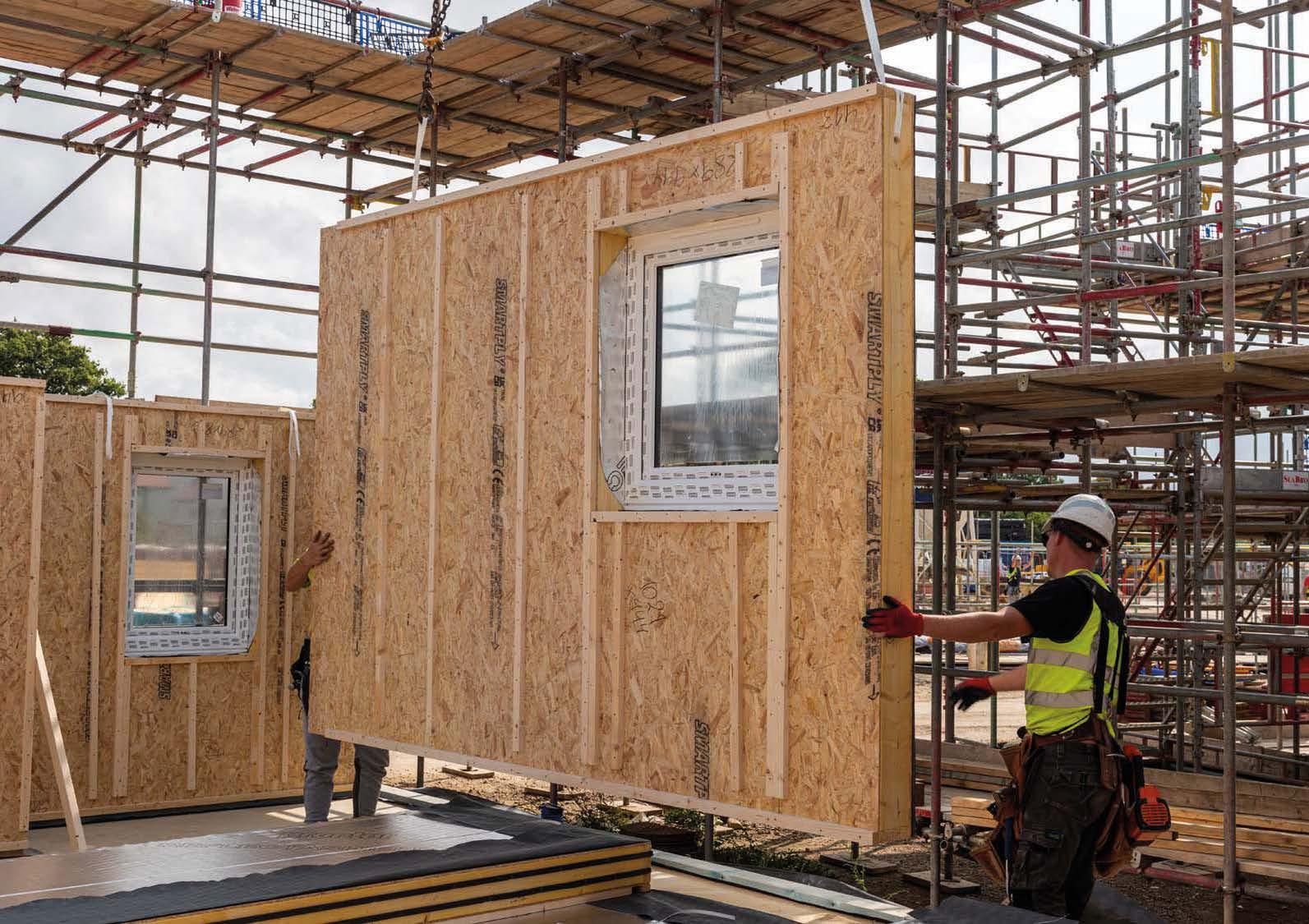
With built-in protection from fire AND water, DryGuard FR is a structural plywood which saves time, money & effort on site, while providing the ultimate protection for your building.
• Fire resistant; to B-s1, d0 (EN 13501-1)
• Reduced build delays; slows the absorption of water for up to 90 days*, reducing drying time
• No need to cover; or build false roofs, saving labour & material costs, time & effort
• Resistant to warping, less waiting; drying-time is reduced & structural integrity is retained
• No mould; DryGuard FR is protected against fungal growth, saving remedial costs
DryGuard FR. The Ultimate Protection.
& Midlands: 0121 265 4822
Wales: 01437 760 890
Advertising Opportunities
For all advertising enquiries contact:
Karen Cox,
Account Manager
Radar Media Ltd
T: 01743 290014
E: karen.cox@radar-media.co.uk
Printed on FSC Mix paper by Buxton Press Ltd Palace Road, Buxton, Derbyshire, SK17 6AE T: 01298 212000 W: www.buxtonpress.com
Contact Structural Timber
Circulation: Pip Greenroyd T: 01743 290006
E: pip.greenroyd@radar-media.co.uk
Production: Design Team T: 01743 290001
E: info@structuraltimbermagazine.co.uk
Accounts: Debra Brooks T: 01743 290016
E: accounts@structuraltimbermedia.co.uk
Structural Timber Magazine is produced and published by Structural Timber Media Ltd
Suites A & B Hermes House, Oxon Business Park, Shrewsbury SY3 5HJ T: 01743 290001
Subscriptions and back issues visit W: www.timbermedia.co.uk/structural-timber-magazine
Disclaimer: The content of Structural Timber Magazine does not necessarily reflect the views of the editor or publishers and are the views of its contributors and advertisers. The digital edition may include hyperlinks to third-party content, advertising, or websites, provided for the sake of convenience and interest. The publishers accept no legal responsibility for loss arising from information in this publication and do not endorse any advertising or products available from external sources. The publisher does not accept any liability of any loss arising from the late appearance or non-publication of any advertisement. Content including images and illustrations supplied by third parties are accepted in good faith and the publishers expect third parties to have obtained appropriate permissions, consents, licences or otherwise. The publisher does not accept any liability or any loss arising in the absence of these permissions for material used in both physical and digital editions. No part of this publication may be reproduced or stored in a retrieval system without the written consent of the publishers. All rights reserved.
TWelcome to the latest issue of Structural Timber Magazine. We have reached the halfway mark of the year amazingly quickly and the timber sector continues to thrive as sustainability goals and the necessity for a healthier and energy efficient built environment are ever-present.
he timber sector has often been criticised for some of its traditional approaches and shying away from the adoption of digital tools, automation and advances in manufacturing technology. A generalisation for sure, but as all industry observers and commentators will have noted in recent years this has changed dramatically. ‘Industrialised Construction’ is a concept that is now becoming more prevalent in the structural timber sector. As seen inside these pages at Alexander Timber Design (ATD), they are one of the latest timber system manufacturers to bolster what they can deliver with its closed panel system, by installing increased advanced manufacturing techniques and adopting an Industry 4.0 approach, with robotics and automation streamlining product quality and boosting productivity. These are the kind of developments that are seeing the timber sector grab headlines as it mixes the best of the natural and manufacturing worlds together.
Stating boldly that your products are sustainable, energy efficient and low carbon is one thing. Proving that is entirely different.
Environmental Product Declarations (EPDs) are becoming hugely important. The latest Sustainability Report from NBS reports that
Gary Ramsay | Consultant Editor
specifiers are demanding better embodied carbon data from manufacturers to achieve net zero targets and for more ‘consistent, transparent, and high-quality sustainability data from manufacturers.’ For housing providers, the impending Future Homes Standard is focusing minds on whole-life data and third-party verification. If you are still unsure of how to approach EPDs – there is much more of that inside as well.
The STA also outlines its latest industry guidance documents. It has updated its ‘Volume 1 Pattern Book: Structural Timber Buildings Fire Safety in Use.’ The Pattern Book ‘removes ambiguity and gives stakeholders, from Building Control Bodies to insurers, a reliable, evidencebased reference.’ Peer-reviewed by BRE Global, it is one of the STA’s most important publications – recognised and accepted by Building Control Bodies as an authoritative source of information. The weight of irrefutable evidence is growing on what timber can offer developers, clients and all construction professionals.
Thanks as ever to all our contributors, advertisers, and supporters for their help this issue, it is genuinely appreciated.
Email: gary.ramsay@structuraltimbermagazine.co.uk
We are always looking for the latest industry news, people appointments and project case studies using all types of timber systems and products. For use both in print and online please send them to me at the contact email above.
UNLOCK EVERY INCH OF YOUR STORAGE
Combilift’s range of multidirectional, articulated, pedestrian forklifts trucks, straddle carriers and container loaders will allow you to maximize the capacity, improve efficiency and enhance the safety of your facility.
Contact Us Today
To find out how Combilift can help you unlock every inch of your storage space.
Front cover: George Barnsdale
Print
Cover: GEORGE BARNSDALE
With a focus on the manufacturing processes, Stephen Wright, Chairman at George Barnsdale explores some key factors affecting the longevity of timber windows and what can be done to prolong their lifespans.
28 A Blueprint for Design, Compliance & Commercial Success
As the UK construction sector strives to align with net-zero targets and rising housing demands, the STA’s interim CEO Andrew Orriss explains why structural timber is key to transforming the way we build.
33 In the Frame at InverTay Homes
Glidevale Protect is supplying its construction and roofing membranes for a new timber frame housing development currently being constructed by InverTay Homes in Dundee.
36 Structural Timber Awards & Conference 2025
In partnership with the STA, the Structural Timber Conference takes
UK
Industry News
A quick round-up of some recent news stories from the timber and construction sectors that you may have missed including: Donaldson Timber Systems publishes an EPD for its full wall panel range, the Mass Timber Centre of Excellence launches at the BE-ST campus, MEDITE TRIMAX is brought to market and Bywater Properties officially opens its Paradise building.
42 Smart Timber Design
A new advanced timber frame manufacturing facility has opened in Scotland drawing timber from local sawmills and confirming sustained growth for both Alexander Timber Design and its owners Glennon Brothers.
44 Questions of Carbon
A recent report from the Future Homes Hub offers valuable guidance for homebuilders and designers looking to build better and more sustainably with system comparisons at the centre of its findings.
46 Understanding EPDs
It is becoming critical to prove the environmental impacts of the building
rethink what Scottish timber can do, says Sam Hart, Associate Director of
What Makes Timber Windows Last 60+ years?
With a focus on the manufacturing processes, Stephen Wright, Chairman at George Barnsdale explores some key factors affecting the longevity of timber windows and what can be done to prolong their lifespans.
The robust nature of wood, combined with modern preservative treatments, allows timber windows to withstand the test of time, maintaining their structural integrity and design far longer than many synthetic alternatives. Not all timber windows and doors are created equal and there are various factors that can influence the longevity of your timber window including material choice, manufacturing processes, correct installation, and maintenance.
Monitoring moisture content
One key factor that affects timber’s long-term durability is whether it remains dry or not. If timber remains dry (usually deemed a moisture content of less than 20%) it will not become rotten. The acceptable moisture levels of timber depend on its final use and the average relative humidity of the environment it will be situated in.
Ideally, timber should be processed at around 12% moisture content as the moisture content in the UK oscillates between 12-16% depending on the weather and climate. Most timber used nowadays is engineered, which makes it more stable, and therefore easier for coatings to be applied and to be maintained. But if you’re laminating timber, it needs to be around 12% moisture content. The ambient moisture content in a store and a heated factory will dramatically reduce this unless the atmosphere has the moisture controlled.
Combining design and performance
Design is about creating stunning windows that perform to the highest levels possible. Constantly developing timber products to ensure they perform to the highest standards possible ensures that the design of the
Timber windows are robust and perform to the highest standards
window is optimised, whilst refining techniques that ensure the timber performs effectively.
To influence the design and performance of timber windows, you can concentrate on preventing water ingress by incorporating things like internal beading, which research has shown significantly extends the life of a timber window. You can also make small profile adjustments to ensure they discard water as easily as possible. The design and assembly of joints also influence the long-term performance of the paint finish as timber moves depending on temperature
Cover Story – George Barnsdale
and humidity. If a joint fails, there needs to be a secondary line of defence. This can be achieved by carefully sealing all the unexposed joints, allowing them to be protected even if the joint fails. Consistently developing timber products can help understand any changes that need to be made to coatings to ensure they perform to the highest standards.
Having a thorough paint process
To allow coatings to last for decades, there needs to be a very good bond between the coating system and the substrate. This cannot be achieved by spraying directly onto the substrate as the paint does not penetrate deeply enough. To ensure this doesn’t happen, a 2-coat flow coating system can be used, which deluges the product and goes into a very high humidity area to stop the paint drying too quickly and to allow it to penetrate deep into the substrate. Any exposed end grain should then be sealed, and a special sealant applied to all V joints, allowing the joints to move without cracking the final coating.
How can you ensure your timber windows will last?
As we have explored, a very well designed and manufactured timber window and door
“As a building material, timber provides many benefits that allow it to perform to the highest standards whilst providing the design flexibility to replicate even the most unique specifications. Timber windows – if manufactured with longevity in mind and maintained throughout their lifespan – will last for 60 years or more.”
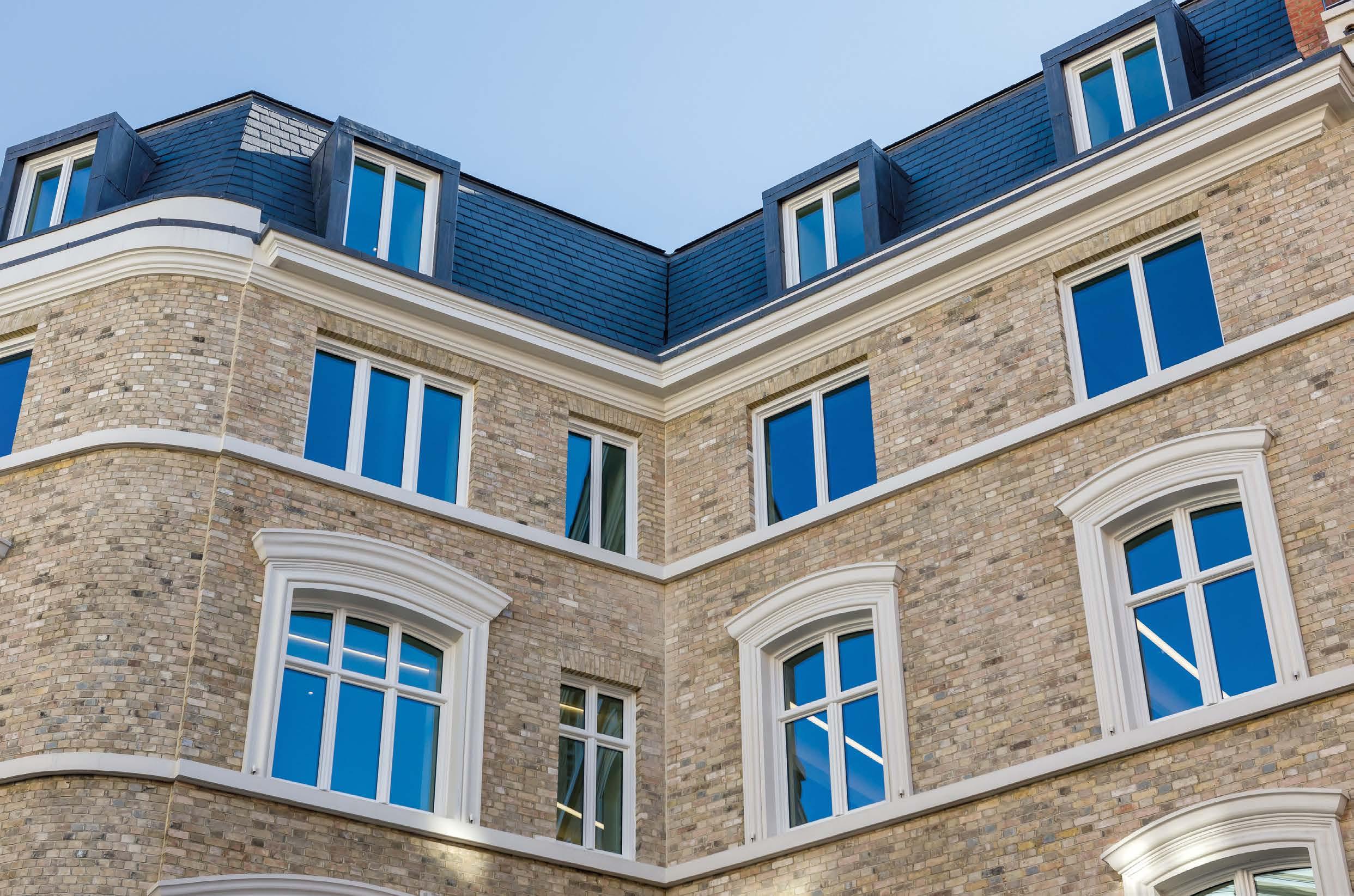
Craftsmanship and decades researching and developing timber windows means they meet the highest industry standards
Well designed and manufactured timber windows will stand the test of time with very little maintenance
will stand the test of time with very little maintenance, but to ensure your timber window lasts longer, simple inspection and maintenance will help reduce the likelihood of expensive maintenance in the future.
There are various ways to maintain your timber window to ensure its longevity. For instance, it’s important to make sure there is no build-up of algae or moss-type organisms on your window, as they can penetrate deep into the coating. This is more likely to occur on northfacing elevations. To prevent this from happening, you can use diluted household bleach on areas where algae may be starting to form.
You should also check for cracks in your windows, particularly on joints. They are simple and cheap to rectify and will dramatically reduce the re-coating period if dealt with efficiently. It is important to choose the type of timber for your window wisely. We would recommend opting for an engineered timber, such as Accoya. The substrate in Accoya is more stable and the thermal performance is better. Accoya will also provide the best long-term paint performance.
What makes a George Barnsdale window last a long time?
We have spent decades researching and developing our timber windows to ensure they meet the highest industry standards. Our on-site R&D centre allows us to constantly innovate to perfect our paint systems using our own QUV accelerated test chamber and test our timber windows and doors against weather or security conditions. This extensive research allows us to develop our products and systems for optimum long-term performance.
As a building material, timber provides many benefits that allow it to perform to the highest standards whilst providing the design flexibility to replicate even the most unique specifications. Timber windows – if manufactured with longevity in mind and maintained throughout their lifespan – will last for 60 years or more.
Do you have an upcoming timber windows project? To find out how we can support you and your timber window requirements visit: https://pages.georgebarnsdale.co.uk
Kirkliston Early Learning Annex Completes
Tilbury Douglas has successfully handed over the new Kirkliston Primary School and Early Learning Centre. Constructed on behalf of the City of Edinburgh Council, the project was delivered on land adjacent to the Kirkliston Leisure Centre, which remained fully operational throughout the build.
The new £9million single-storey facility, with a Gross Internal Floor Area (GIFA) of 1,342sqm, accommodates 128 children and features 16 outdoor places designed in alignment with the ‘Space to Grow’ initiative. The building’s sustainable design and construction reflect Tilbury Douglas’ dedication to energy efficiency and carbon reduction, following The City of Edinburgh Council’s Carbon Vision 2030 and meeting the Scottish Futures Trust’s sustainability targets.
Constructed using a glulam frame and cross laminated timber (CLT) panels, the building’s fabric-first approach significantly minimises energy demand while ensuring occupant comfort, air
quality, and natural daylighting. Renewable technologies, including Air Source Heat Pumps and Photovoltaics, were integrated into the design, resulting in an Energy Performance Certificate (EPC) rating of A and a projected energy consumption of just 67kWh/m²/annum.
Throughout the project, Tilbury Douglas exceeded expectations for community engagement and social value, delivering a 45% Social Value Return on Investment, with over 90% of the project’s value directed to local SMEs. Outreach efforts included workshops with local schools, careers fairs, and STEM activities, as well as support for the neighbouring community through over 100 hours of volunteering.
Barry O’Hagan, Regional Director, Scotland at Tilbury Douglas, said: “We are thrilled to see the children and staff of Kirkliston Primary School and Early Learning Centre enjoying their new space. This project exemplifies our commitment to delivering high-quality, sustainable education facilities that meet the needs of local communities.”
The School also marks another milestone in architect Holmes Miller’s growing portfolio of sustainable education projects using structural timber. Arranged around an L-shaped layout, the annex comprises two distinct wings—one for Nursery and the other for Primary 1 – joined by a shared dining hall. Recessed canopies, framed by timber colonnades, define the building’s key entrances and offer sheltered transitional spaces that encourage movement between indoors and out, while helping to mitigate solar heat gain. Designed with future adaptability in mind, the building can be extended westward to accommodate further growth, ensuring long-term resilience.
Exposed glulam columns and visible CLT structures introduce a natural warmth and calm to interior spaces creating a nurturing, engaging setting for early years education. “The plan was developed in close consultation with the school to reflect its real operational needs,” said John Burns, Associate at Holmes Miller. “From the mirrored 50/50 nurseries – connected by a bespoke,
child-accessible kitchen – to the open-plan Primary 1 wing designed to ease the transition from nursery, every aspect supports a fluid, childcentred learning experience.”
The building is designed to Passivhaus principles, with a high-performance envelope and enhanced airtightness – enabled using CLT wall panels – significantly reducing heat loss. A mechanical ventilation with heat recovery (MVHR) system further boosts energy efficiency. The extensive use of CLT and glulam not only reduces embodied carbon but showcases how structure and sustainability can work together to enrich the learning environment.
“As a practice, we’re passionate about how natural materials can positively impact learning spaces,” added John Burns. “The Kirkliston project is a great example of how low-carbon design doesn’t mean compromising on quality or creativity—it means delivering something both beautiful and responsible.”
www.holmesmiller.com
www.tilburydouglas.co.uk
Discover Mayplas’ complete range of products and systems for housing developments, with timber-frame structures.
Mayplas, a specialist in passive fire protection, acoustic and thermal insulation for the housebuilding industry, has introduced three new products. Our Party Wall Head Cap System and Thermafire A2 Soffit add to Mayplas’ comprehensive portfolio of products for timber and masonry frame applications.
Party Wall Head Cap System
MP551 Party Wall Cavity Barrier
MP551 Window Cavity Barrier
Thermafire A2 Soffit
MP551 Horizontal Cavity Barrier
Mass Timber Centre of Excellence Launches at BE-ST Campus
A centre of excellence for mass timber research, innovation and manufacturing has been launched by Built Environment – Smarter Transformation (BE-ST).
Supported by Scottish Funding Council and host institution Edinburgh Napier University, the Innovation Campus at BE-ST will now house £1.5million of newly acquired, state-of-the-art mass timber post-processing equipment and SuperBlower extraction system. This will complement existing capabilities and further enhance precision finishing, production capacity, and health and safety processes.
The Mass Timber Centre of Excellence will provide the UK construction and built environment sector with the facilities, knowledge, and connections to accelerate the adoption of UKgrown mass timber solutions and access the benefits these can bring, such as lowering carbon emissions associated with construction,
strengthening local supply chains, creating jobs, and improving the efficiency of the delivery of the built environment.
It offers access to the UK’s most advanced mass timber manufacturing equipment and hosts the largest commercially available CNC machine in the UK, while offering the full-scale production of cross laminated timber (CLT), nail laminated timber (NLT), and glue laminated timber (Glulam). The factory is anticipated to have an annual manufacturing output capacity of approximately 8,000m³ once fully operational.
The UK faces the dual challenge of a climate emergency and a housing emergency. By advancing the use of mass timber, the Centre has been established to position the construction industry as a key part of the solutions to both challenges. Currently, the UK imports 73,000m3 of mass timber per year. By creating higher-value timber products in the UK, such
as mass timber, and leveraging local supply chains, we can unlock significant economic and environmental benefits in the UK.
The Centre provides support to accelerate UK-grown mass timber adoption across the UK. As well as offering access to mass timber manufacturing equipment, the Centre offers research, innovation, and systems design support through partnerships with industry and academic experts to develop timber solutions, consultancy services to assist with product approvals, regulatory compliance, and manufacturing processes, and timber processing through trusted partners for felling, grading, kilning, and planing. Hands-on training and skills development can also be provided via the Centre to upskill the workforce in the expertise required to deliver mass timber products.
Sam Hart, Associate Director of Manufacturing and Housing, at BE-ST said: “The Mass Timber Centre of Excellence opens up huge
opportunities for the construction sector. By investing in mass timber, we are not just advancing low carbon approaches to construction, we are also investing in economic growth, creating jobs, and addressing some of the UK’s key challenges.”
Stephen Good, CEO of BE-ST added: “The launch of this Centre will support the wider adoption of mass timber, helping to reduce carbon emissions, strengthen supply chains, and deliver muchneeded domestic, non-domestic, public, and private infrastructure where appropriate, in a more efficient, affordable, higher quality and sustainable way.” The Mass Timber Centre of Excellence is inviting businesses, policymakers, and construction professionals to explore the opportunities mass timber can offer, from adopting or manufacturing mass timber components or taking part in our skills programmes.
www.be-st.build
New Home for Hundegger SC480
Nua Manufacturing, based in Carlow, has successfully installed the first new generation Hundegger SC480 machine.
Nua Manufacturing in Carlow has installed the first Hundegger SC480 machine in the UK/Ireland, which is a state-of-the-art timber processing machine with a 480mm working width and 200mm working thickness. The machine also processes beams up to 13m long.
The SC480 will enhance NUA’s capability to process various timber frame components, in quantity and high speed, and will eventually allow them to work on glulam roof systems and other structures, supported by Hundegger’s Cambium software for seamless design integration.
“NUA supports Hundegger machinery and software,” says Chris Osborne from Hundegger. “The SC480 machine incorporates the latest technology and is a fast timber processing machine. Through the Cambium software, it is possible to link seamlessly to design software, enabling the creation of special structures at NUA via its CNC capabilities. Hundegger highly values NUA as a customer with so far five machines installed in the three factories.”
Gabriel Prior from NUA adds: “We are pleased to introduce the new Speed Cut to our Carlow facility. It enhances our capacity to deliver components efficiently and safely to our timber frame production lines. The versatility of the Speed Cut in performing various cutting, drilling, and milling tasks is a great asset as we grow and innovate our product range.”
For more on NUA’s impressive building portfolio showing their commitment to design and building using timber frame visit: www.nuamanufacturing.ie
HOW YOU BENEFIT:
For cross-sections from 20 x 60 mm to 300 x 650 mm
hundegger.com
With patented and proven ROBOT-unit for all-round 6-axis machining
Tool changer for up to 28 different tools
Small installation dimensions without structural changes on your hall floor, from 17.5 m x 5.8 m with 8 m wood length
Precision and performance sensibly combined
Your perfect partner for processing of buildings in timber!
Hundegger UK Ltd. Chris Osborne Snetterton Park, Harling Road Snetterton, Norfolk NR16 2JU
New MEDITE TRIMAX Now Available
With the help of SAM Mouldings, MEDITE SMARTPLY has launched MEDITE TRIMAX – a durable, sustainable and low-maintenance external cladding solution made from MEDITE TRICOYA EXTREME.
Designed to enhance the look of both newbuilds and renovations, this quality timber cladding is available in primed or fully finished options, ensuring a hassle-free installation with a flawless, longlasting finish. Projects can be completed using MEDITE TRIMAX fascias and soffits, available as standard in white.
“We are proud to join forces with SAM Mouldings to bring to the market this innovative cladding solution – durable, sustainable and easy to maintain,” says Jack Scanlan, Product Manager at MEDITE SMARTPLY. “While the partnership between the two companies is founded on a solid reputation, MEDITE TRIMAX is
rooted in advanced engineering.
It gives end users peace of mind that, with proper maintenance, the cladding will last the lifespan of the building. Furthermore, the sustainable appeal is achieved by using fast-growing trees that lock up carbon during their lifespan – a significant benefit as the construction industry strives to reduce its carbon footprint.”
The primary objective of the cladding is to protect the building from weather elements such as rain and wind, so durability is of the utmost importance. Manufactured with acetylated wood fibre, MEDITE TRIMAX is a groundbreaking cladding solution with the highest durability for timber in the market. It is also resistant to rot and fungal decay. The panel exhibits outstanding stability, allowing it to be used in applications once limited to products such as composite panels, fibre cement, hardwood, softwood or PVC.
The softwoods are sourced from sustainably managed, FSCcertified forests. By using fastgrowing trees, MEDITE TRIMAX offers a sustainable alternative to conventional solutions while providing longevity beyond standard timber cladding.
MEDITE TRIMAX cladding comes primed or fully finished, offering versatility to suit a range of project needs. With easy and infrequent maintenance, users can simply sand and paint the cladding to keep it looking great. Enhanced stability and durability extend the coating’s service life, and any damage to the coating will not affect the core. A 50-year warranty on the base panel ensures performance throughout the building’s lifespan. Available in several colours, these cladding panels make it simple to transform the aesthetics of a house and achieve the desired look.
Based in Northern Ireland, SAM is the UK’s leading manufacturer
of interior and exterior MDF mouldings, including skirting and architrave, cladding, fascia and soffit. “An important function of cladding is to enhance the building’s aesthetic appeal,” says Paul Lavery, Joint Managing Director at SAM Mouldings. “As the UK’s leading manufacturer of MDF mouldings and a trusted partner of MEDITE for many years, we’re proud to lend our expertise to MEDITE TRIMAX. Featuring superior finishing, the cladding is also lightweight and easy to install. The solution is a cut above the rest. Undeniably, one of the main factors in that is the neatness, uniformity and crisp look you can achieve with MEDITE TRIMAX cladding.”
The cladding solution is available in double shiplap or double tongue and v-groove profiles and is easy to install with stainless steel fixings.
www.meditetrimax.com
SCM Host Timber Experts at Italy HQ
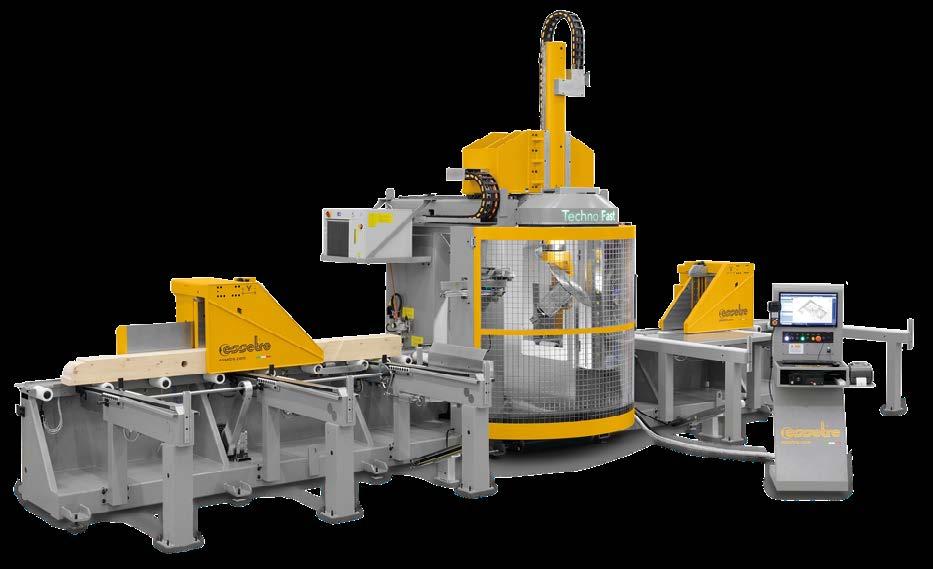
SCM presented their most recent innovations dedicated to timber construction technology at its ‘Timber Construction Days’ open house on 13-15 March. It brought together experts and professionals from different countries and under the spotlight was the new CNC machining centre OIKOS XS 650 and the renewed offer of software and digital services.
Held at SCM’s HQ in Sinalunga (Siena, Tuscany) it attracted over three hundred visitors from different countries, including leading companies, technology partners and prominent industry experts who took stock of the sector, trends and cutting-edge topics, including the digitalisation of mass timber.
Among SCM’s innovations, was the new CNC machining centre OIKOS XS 650, the latest in the OIKOS range with all its advantages while offering improved performance, greater productivity
and flexibility when processing beams with a cross-section up to 650x310 mm. The event also shined the spotlight on Maestro lab beam&wall, the SCM software dedicated to all AREA and OIKOS CNC machining centres and developed on the new CAD/CAM Maestro lab, to the advantage of the machine’s features and the operator’s experience of use.
The modernised industrial plant was officially inaugurated during
the open house – now 50% larger and with a further 3,000sqm of production space, totally 10,000sqm overall. An expansion aimed at increasing production capacity and optimising internal logistics, in order to promote competitiveness and technological innovation.
“In line with the high demand from the timber construction industry, both in Europe and overseas, we have speeded up our R&D path and we were proud
to showcase the many results at the open house,” said Tommaso Martini, Business Unit Manager for CNC Machining Centres and Systems for Timber Construction. “We started out with the production needs linked to the construction of timber buildings using mass timber and moved towards promoting a new concept of ‘smart timber’. We did so with solutions that allow our customers to make their processes smarter, optimising workflows, saving on material and covering a wider spectrum of applications.”
The open house was preceded by two days of training for the entire SCM sales network: colleagues and collaborators came to Sinalunga from as far away as Japan, to share knowledge about CNC technology and its various applications in the worldwide timber construction market.
www.scmgroup.com
Deeside Timberframe Unveils
Ambitious Investment Strategy
Deeside Timberframe is making a bold statement with a multimillion-pound strategic investment programme. The investment supports the company’s continued growth and commitment to innovation and sustainability, while aligning with the UK Government’s target to build 1.5 million new homes over the next five years.
As part of its expansion, Deeside Timberframe has opened a new office in Warrington, marking a significant step in the company’s strategic growth across England. The move reinforces its longterm commitment to supporting developers, housing associations, and contractors throughout the UK. The new base allows the business to strengthen client relationships, provide more responsive support, and meet growing demand for sustainable, energy-efficien timber frame solutions.
The broader investment programme focuses on increasing
manufacturing capacity, improving production efficiency, and embedding sustainable practices across operations. These improvements are designed to directly benefit customers through shorter lead times, increased factory output, and even greater consistency in quality and service.
A key component includes a 5,500sq ft factory extension at Deeside Timberframe’s Throsk manufacturing facility. Designed to accommodate a new automated wall production line, the expansion significantly boosts productivity and enables faster, more efficient delivery of timber frame systems.
In line with the company’s net zero strategy, the site now benefits from a 108kW solar panel installation, generating 90,000 kWh annually – enough to supply more than one third of the facility’s energy needs.
Further investment in cuttingedge machinery includes the integration of a Hundegger Turbo-Drive Saw, a fully automated precision cutting system, and the addition of a new AV Birch Magna
Press and AB Birch UniRoll for open web joist production. These improvements bring critical design and manufacturing processes in-house, strengthening supply chain resilience, enhancing flexibility, and ensuring tighter control over quality and scheduling.
To support safer and more efficient factory operations, Deeside Timberframe has also commissioned a new dust extraction system from Indusvent, replacing the previous installation and aligning with its sustainability goals. The company has made significant investments in its design and engineering software, including continued development with Elecosoft’s 2D and 3D CAD design suite and an upgrade to MiTek’s PAMIR, an industry-leading tool for truss and joist design. Together, these technologies improve design accuracy and streamline integration with the factory’s automated systems.
“The demand for high-quality, sustainable housing is greater than ever, and timber frame
construction is a key solution to meeting these targets,” said Managing Director David Crawford. “Our multimillionpound investment enables us to expand our capacity, integrate innovative technologies, and improve sustainability across our operations. We are proud to be making strategic moves that not only benefit our business but also contribute to the UK’s housing ambitions and net zero goals.”
Reinforcing the impact of these investments, Andrew Orriss, interim CEO of the Structural Timber Association, said: “It’s encouraging to see members investing in the future of timber to support the Government’s ambition to build 1.5 million homes. This kind of expansion not only enables the delivery of more high-quality timber homes across England, but also creates skilled jobs, supports safer and more efficient factory operations, and contributes directly to the UK’s housing and net zero goals.” www.deesidetimberframe.com
Truss
David Crawford, Managing Director, Deeside Timberframe
The industry’s first and only P5 grade structural flooring with third-party certification for weather resistance of up to 100 days. Engineered to endure the most challenging site conditions, EGGER Protect is low-slip, moisture resistant and hard-wearing. Part of the EGGER Advanced Structural Flooring System, it can be fitted in light rain and provides a safe working platform even in wet conditions.
Discover EGGER Protect to.egger.link/protect
Peab and Södra Agree Hybrid Collaboration
Scandinavian firms Peab and Södra have signed an agreement on an exclusive collaboration for sustainable frame solutions aimed at the construction industry. The aim is to create a standardised ECO-hybrid frame solution for volume production of housing, where ‘the choice of material is guided by function, climate benefit and resource efficiency.’
Based in Sweden, Peab is a Nordic Community Builder with over 13,000 employees with Byggelement founded by the Peab Group in 2003 that is now one of Sweden’s leading suppliers of complete structural systems in precast concrete. The company produces and delivers ‘projectadapted frames and elements’ directly to the construction site, ready for assembly.
Södra is the largest forest-owner association in Sweden, with more than 50,000 family forest owners as members. Building systems is one of Södra’s key business areas and has been producing cross laminated timber (CLT) for largescale construction since 2019. The production facility outside Varberg is co-located with Södra’s pulp mills and sawmills, providing access to green energy and finished infrastructure.
Peab and Södra are united in their ambition to develop a hybrid solution of the future for frames, where precast concrete is combined with CLT to meet the toughest climate requirements. The collaboration is based on
a joint vision: the choice of material must be functional, sustainable and material-neutral –with the right material in the right place. The solution will help to reach the goals of the Paris Agreement and enable the construction of longterm sustainable housing in terms of both cost and climate impact.
“The aim of our collaboration is to explore how we can develop a hybrid frame solution that is viable on a large scale in terms of cost, function and sustainability,” said Andreas Berge, Business Area President at Södra with responsibility for Södra Building Systems. “It’s about total optimisation by using the right materials in the right place.”
Mon Timber Focuses on Engineering with Senior Appointment
Mon Timber, a branch of leading timber supplier Premier Forest Products, has appointed Martin Hallam as General Manager of Engineering. Martin joined the team at Mon Timber as Business Development Manager last year, excelling in building and strengthening customer relationships and continued positive promotion of products to suppliers.
As Mon Timber looks to develop their engineering services following customer demand, Martin was promoted to lead the division from their site in Newport. His dayto-day management of the branch, working closely with the yard staff, office team and sales team, will help ensure lead-times are kept to a minimum and customer satisfaction remains at the forefront.
Martin has also played a part in the development of the newly launched timber engineering facility at Duchy Timber based in Cornwall, as they look to expand their territorial
reach across south Wales and the West. Both engineering sites focus on the design and offsite manufacture of roof truss and floor joist solutions.
On starting his new role, Martin said: “I am thoroughly enjoying my time at Mon Timber and am pleased to be promoted to a leadership role where I can continue to enhance our exceptional engineering service for our customers. In fact, our lead times have already improved, and we are achieving project turnarounds of one week. I’m looking forward to continuing the already fantastic growth of the division and ensuring that Mon Timber Engineering is at the front of customers minds for every project that they’re working on.”
Terry Edgell, Co-Founder and CEO at Premier Forest Products, added: “We’re delighted to have Martin at the helm of the engineering division at Mon Timber Newport. Since joining us last year, his expertise has been invaluable, making him the natural choice for the
Peab also emphasised that the solution is based on collaboration. “By combining wood’s low carbon footprint and lightweight constructions with the robustness, stability and weight of concrete, we will achieve the best of both worlds,” said Carl Rülcker, Interim President of Byggelement. “We see great potential in a solution that is not based on either/ or, but on collaboration. With this initiative, we are taking another step forward towards building more sustainably – without compromising on function, cost or buildability.” In spring 2025, the parties will come together to investigate the conditions for moving forward with the development process.
www.sodra.com
role. I’m excited to see his vision unfold as he continues to enhance our service and support for our customers.”
Premier Forest Products Ltd is a vertically integrated timber operation engaged in the importation, wholesale distribution, milling, processing, merchanting and manufacture of timber products from multiple sites across the UK.
www.premierforest.co.uk
Class A Rating
Craig Fyall, Technical Director at Permavent offers some thoughts on building safety and why specifying the right material is so important.
Our industry has been overwhelmed by the sheer scale and magnitude of the recladding crisis. We have all seen the news reports about the number of affected buildings in the UK, the cost of remedial work and the impact on all affected by it. What does not make the headlines nearly enough is the building cavity and the contribution this has on a building’s fire rating and safety. The whole industry is consumed by the focus on cladding, without giving due consideration to what should be used as a standard in the cavity build-up.
The additional challenge of identifying and extinguishing a fire within a concealed cavity can be notoriously difficult for obvious reasons. The NHBC’s and BRE Trust’s TF2000 study attests to this, whilst also identifying the supporting role a combustible membrane can play in accelerating any fire spread. It’s critical to put the emphasis on cavity design at the planning stages of any construction project. As an industry we have a duty of care to make sure
UNLOCK EVERY INCH OF YOUR STORAGE
the same mistakes are not repeated, by cutting corners specifying products which contribute to fire due to their inferior performance characteristics.
Achieving a Class A rating when manufacturing a membrane is exceptionally difficult: one must consider the substantial differences in the testing methodologies and the product performance. It is important to understand that whilst a B classification is defined in BS EN13501 as having a “limited
contribution to fire” an A rated counterpart, “will not contribute to a fire.” This being the case, why are class B products still being specified when they can by nature contribute to a fire on an external wall, regardless of how limited that contribution may be? This is true to the point that the NHBC now recognise advances in membrane technology and that an A rated membrane should be used wherever possible.
www.permavent.co.uk
NorDan Roots for Timber Health Programme
NorDan, one of Europe’s leading timber composite window and door manufacturers, has become the first manufacturer of its kind to actively measure and monitor the health of the forests from which it sources its timber.
NorDan invited independent consultants Fortis Facades to analyse the Polish forests that are a vital part of its supply chain, checking important factors such as tree health, density and chronology of the trees, as well as the quality and yield of timber.
Fortis Facades’ ‘BIOME’ division employed the use of scientific methods to assess the condition and sustainability of the NorDan forests in Poland. These methods involve a variety of techniques, including tree boring and core sampling, surveying, geotagging and ecological surveys to establish the health of the trees and the
soil they are grown in. NorDan says this helps to guarantee the quality of the timber and ensure good forestry practices are used to maintain the sustainability of the woodlands.
The initiative reflects NorDan’s approach to sustainability, which runs from the performance of its products through to the way they are manufactured and how raw materials are sourced.
Tom O’Sullivan, Technical Specification Advisor, NorDan UK, who has been involved in the project, explained: “Timber is at the heart of our products, delivering thermal performance, longevity and low embodied carbon. We want to ensure that every piece of wood we use not only meets the highest quality standards but also aligns with our commitment to environmental stewardship.
“That is why we invited Fortis Facades to carry out a
comprehensive analysis of the trees we use in our supply chain. This meticulous approach will not only help us ensure that the timber we use is robust, sustainable and of the highest quality, it will also help safeguard the continued health of the forests and their environment long-term.”
Fortis Facades, a leading façade consultancy, created BIOME to use meteorological, climatic and environmental sciences to understand how its products impact the climate and interact with a changing world.
Thomas Ashfield of Fortis Facades added: “As the natural world changes, so do the resources we have become dependent upon. Climate change impacts the health, condition and availability of natural resources, including timber for construction. Our response and approach to understanding, monitoring and employing the use
of natural resources must adapt accordingly. The ability to not only monitor and assess current conditions but also to forecast future trends is invaluable and a necessity for securing sustainable resources. This enables us to serve as more effective custodians, not only of the materials we harvest but also of the landscapes we ultimately shape and need to maintain.
This new initiative is just one example of how the entire NorDan Group prioritises sustainability, including advanced production techniques to enhance the timber’s durability and resistance to environmental factors, guaranteeing a long lifecycle for its products. NorDan provides a 30year warranty to all windows and doors against fungal attack, decay and rot.
A
The intensity of Climate Change has created a great urgency to protect all of our timber structures. As manufacturers of the patented Enviro Eco Buildings, Envirograf® Group have developed a completely new method of construction for bungalows, houses, flats, and other buildings. Envirograf® Product 42 HW timber coating range has passed a test in China for 2 hours, to protect their wooden temples from fire. Envirograf® coatings have also passed a rigorous Australian bush fire test. In Scandinavia, Envirograf® coatings solved a problem with internal and external timber fires in their buldings. In summary, Enviro Eco Buildings have been designed to protect against fire (to never burn down) and combat flooding. They are rapidly assembled on site and are cost effective to build, making it possible for young people to afford and helping to meet the important government house-building targets.
Completely fire-resistant
Fully insulated
Tested for thermal and acoustic qualities
Speedy construction
Eco-standard low air permeability
Comprehensively tested and certified by KIWA
Protected from flood damage by unique metal sub-frame
Enviro Eco Fire Doors have developed and manufacture Fire Doors tested to BS/EN 1634-1 standard. They give full fire integrity and are thermally insulated. All of these 1 hour rated fire doors are available in 35mm and 44mm thicknesses. Widths from 763mm to 838mm are also made to suit disabled people's needs. Traditional Ledged and Braced Doors are also made. These are all intended help the UK to meet the challenges of rapid aggressive climate change.
Accsys, the manufacturer of Accoya wood, proudly sponsored the ‘Rising Star’ award at the British Woodworking Federation (BWF) Awards 2024, reaffirming its commitment to nurturing the next generation of talent in the woodworking and joinery sector.
As part of the sponsorship, winners and shortlisted candidates for the Rising Star award, alongside the Apprentice of the Year finalists, were invited to Accsys’ state-of-the-art Accoya wood production facility in Arnhem, the Netherlands, to see first-hand how Accoya is made. Attendees of the trip included: Lilli Mae, Partnerships Manager at Gowercroft, Harrison Ward, Apprentice/Student at James Wilding Joinery Ltd, Paige Kavanagh, Carpenter at Corbel Conservation and Tautvydas Bumblys, Production Administrator at Heron Joinery.
The Accoya sales and marketing team hosted the group, with key representatives including Laura Keily, Head of Marketing, Alejandra Castro, Marketing Manager and Mike Lewis, Technical Sales Manager. They were supported by Helen Hewitt, CEO of the BWF.
The multi-day experience included exclusive site visits to several long-standing Accoya projects in the Netherlands, offering attendees a first-hand look at the material’s performance over time. Stops
included the Breakers Beach House in Noordwijk, where Accoya’s natural aesthetic complements the coastal environment, Fort Vier Restaurant with its distinctive architecture and exposed Accoya cladding and the 1.5km Accoya boardwalk in Amsterdam. Now over a decade old and exposed to continuous foot traffic and variable weather, the boardwalk continues to demonstrate Accoya’s proven durability, dimensional stability, and suitability for demanding outdoor applications.
Laura Keily, Head of Marketing commented: “Nurturing the next generation of talent in
woodworking is crucial to ensuring a strong future for the industry. We were honoured to host the rising stars of the industry and show them the magic that happens behind the scenes at our Accoya manufacturing site. It was inspiring to show them some of the incredible projects that can be achieved with Accoya and witness their enthusiasm and passion for wood. I look forward to seeing how they will continue to shape the future of our industry.”
www.accoya.com
SR Timber Celebrating 20 Years
In 2025, SR Timber is celebrating a significant milestone: 20 years in business. Shaun Revill, the current Trading Director and the ‘SR’ in SR Timber co-founded the company in 2005. As an industry expert in timber roofing battens, Shaun possesses extensive knowledge about every aspect of production, from log processing to sawmilling and distribution. For many years, his guiding principle has been to promote the importance of using only certified, graded, high-quality battens in the UK roofing market.
Shaun started in the roofing business on the tools working for his late father, a third-generation slater and tiler. He expanded his knowledge of the industry and learnt about timber production and distribution by working for a Swedish timber exporter that specialised in the production, sales and distribution of roofing batten.
Following a spell as a timber agent where due to his knowledge of both Swedish and Latvian sawmills, he placed suppliers and customers together in this specialist area, he partnered with a leading UK roofing contractor at the time to establish SR Timber. The business was formed along with its sister business, a Latvian timber sawmill, which since that day has been its only source of roofing batten, procuring logs and boards, and producing batten that is quality-checked and 3rd-party certified to BS5534.
Today SR Timber employs nine staff, nearly half of which are female in what has traditionally been a male-dominated industry. All the management and sales staff are independently qualified batten graders, continuing to raise industry standards. Their offices are based in Huthwaite, North Nottinghamshire, and they have a sizeable import terminal at Immingham,
where they stock significant volumes of their flagship trademarked brand of PREMIUM GOLD™ BS5534 graded batten. Thousands of cubic meters of SR Timbers PREMIUM GOLD™ batten are delivered into and out of their Immingham terminal each month, it is consistently arriving from Latvia and is produced by their long-standing sole partnership sawmill.
Over the years SR Timber has expanded its timber product range to include various roofing timbers. The business is planning a number of celebratory activities over the year to mark this special achievement.
www.sr-timber.co.uk
*For further technical information and fire test reports, contact us on +44 (0)161 905 5700 or e-mail info@glidevaleprotect.com www.glidevaleprotect.com/frsolutions
Paradise Doors Unlocked
Another landmark timber building has been officially unveiled in London. Setting a benchmark for ‘healthy and environmentally aware design’ Paradise is a new six-storey office timber building that is hoping to set new standards as a sustainable workspace. Owned and developed by Bywater Properties, it is a collaboration between Bywater Properties and Sumimoto Forestry, with the structure containing 2,100 cubic metres of Sylva™ CLT floors and roofs from Stora Enso and delivered by B&K Structures.
The building takes its name from its location overlooking Old Paradise Gardens, near Lambeth Palace. The former Costa coffee roastery site was bought Bywater Properties in 2018. They looked to create a vibrant, office development and workspace with high operational efficiency. The CLT structure will reportedly lock away nearly 1,900 CO₂e for 60 years. The building’s overall embodied carbon emissions are 35%
lower than the RIBA 2030 target, achieving this milestone five years ahead of the RIBA target date. The volume of CLT used at Paradise is equivalent to 1,881 trees which removed 1,884 tonnes of CO₂ from the atmosphere during growth.
The official ribbon cutting ceremony saw Mary Creagh, CBE, MP, Parliamentary UnderSecretary of State at the Defra, declare the building open for business. At the opening she reiterated that schemes such as the Paradise Building are a great example of the kind of construction outlined in the Timber in Construction Roadmap.
“Paradise offers a genuinely exciting opportunity,” stated Richard Walker, Chairman of Bywater Properties. “It is an exemplar ‘north star’ for the UK property sector, as we strive to reach our net zero obligations and a more sustainable built environment. Our goal was to create a building with the highest operational efficiency and a workspace that supports the
health and well-being of the people within it. Paradise pioneers both low-carbon construction and a circular economy approach. Along the way, we’ve formed a new partnership, and friendship, with Sumitomo Forestry. And on behalf of everyone at Bywater Properties, I’d like to thank them for their support and guidance in bringing Paradise to life. This space has brought mass timber technology to the UK and is a huge step forward for low-carbon development.”
A whole-life approach has been central to the building design, which is reflected in the end-oflife strategy. The timber contained in Paradise is designed for deconstruction and reuse, meaning its lifespan far surpasses conventional building materials and the carbon can remain ‘locked in’ beyond the lifespan of the Paradise structure. The developers estimate 80% of the timber used in Paradise can be reused.
www.bywaterproperties.com/projects
New Moves in Safe & Sustainable Loading
At Ligna 2025 Combilift launched two groundbreaking solutions for timber handling proving once again it can offer constantly innovative solutions for all loading situations.
Timber yards, panel product suppliers, and sawmill operations face everincreasing pressure to handle long and heavy loads more safely, more efficiently, and with less environmental impact. At Ligna 2025, Combilift unveiled two major innovations designed specifically with these industry challenges in mind: the new Combi-FSE 8000 and the Combi Load Xtender.
Combi-FSE 8000 – Heavy-Duty Electric Sideloader for Long Loads
The latest addition to Combilift’s fourwheel electric sideloader range, the Combi-FSE 8000, offers an 8-tonne lift capacity — ideal for handling structural timber, packs of sawn wood, panels, or engineered wood products in confined indoor or outdoor environments. Key timber-focused benefits include:
• Powerful, Emission-Free Operation: twin 18kW drive motors provide the torque and responsiveness required for heavy packs, with all-electric performance suited for indoor timber stores
• Patented Traction and Steering: designed for year-round reliability in muddy or uneven yard conditions
• Unrivalled Operator Visibility: the under-deck battery position and expansive glazing allow operators a clear line of sight, especially when reversing in narrow racking aisles or busy sawmill loading areas
• Quick Battery Change: ideal for multi-shift operations in busy timber yards.
Fleet managers also benefit from CombiConnect, Combilift’s advanced telematics system for real-time machine performance tracking and maintenance planning.
Combi Load Xtender – GameChanging One-Side Loading for Timber Yards
Unveiled alongside the sideloader, the Combi Load Xtender is a new pantograph-style load extender that enables complete loading and unloading of trailers or rail wagons from a single side – a major advantage in timber yards where space is tight or trailer access is limited. For timber operations, the Xtender delivers:
• One-Side Access: load full packs of timber from one side only, removing the need to move trailers or access both sides
• Ultra low mechanism height: the ultra-compact design ensures smooth movement and full functionality below standard trailer height without interference
• Enhanced Safety: operators can load securely against the far closed side of the trailer, reducing the risk of products falling and keeping personnel out of busy traffic zones.
“These new solutions were developed in direct response to what we’re hearing from the timber sector,” said Martin McVicar, Combilift’s CEO. “Customers need to move larger loads in tighter spaces with greater safety and lower emissions. The FSE 8000 and Combi Load Xtender do just that and they’re backed by Combilift’s proven track record in long-load innovation.”
Both products are now available for order.
For more information on FSE visit: https://combilift.com/fse-8000
For more information on Xtender visit: https://combilift.com/combi-load-xtender
“Combi-Connect is Combilift’s advanced telematics system. This cloud-based platform
enables
real-time
performance monitoring, diagnostics, and usage analytics, giving fleet managers valuable insights to optimise productivity, reduce downtime, and support proactive maintenance scheduling.”
Muir Timber Systems Secures
Kirkintilloch Affordable Homes Contract
Muir Timber Systems has secured a new contract with Kirkintilloch-based construction specialists, SIM Building Group, to support the delivery of 22 new affordable homes at Whitehill Court in East Dunbartonshire.
The development will offer a mix of terraced homes and flats, helping to meet local housing needs. As part of the contract, Muir Timber Systems is supplying a full timber kit package, including external wall panels, loose I-joist floors, internal NLB partitions, and loose site-erect roof trusses. Deliveries to support the erection of the first block of flats began earlier this month, marking a strong start to the build programme.
This project continues a successful working relationship between Muir Timber Systems and SIM Building Group, following the delivery of highquality timber solutions on previous developments
at Coatbridge Road in Glenmavis, Cobblebrae Farm in Falkirk, and Gartcosh Road in Kirkintilloch. Part of the family run Muir Group, Muir Timber Systems was initially set up in 1975 to supply its sister companies, Muir Construction and Muir Homes, but now delivers timber solutions for a variety of contractors and house builders across Scotland from its factory in Inverkeithing. The timber kits for this project are crafted using sustainable materials and are produced with energy drawn from the factory’s solar array, underscoring Muir Timber Systems’ commitment to environmental responsibility and sustainability.
Gary Gray, General Manager of Muir Timber Systems, said: “We’re proud to be continuing our strong working relationship with SIM Building Group on another important affordable housing development. At Muir Timber Systems, we focus on providing timber solutions that not only meet
the highest standards of quality and efficiency, but also contribute to the creation of lasting, sustainable communities. Whitehill Court is a great example of this, and we’re excited to play our part in bringing these new homes to life.”
Michael Thewlis, Commercial Director of SIM Building Group added: “We have engaged with Muir Timber Systems on previous developments over the last 5 years and the good working relationship has been instrumental Sim Building Group delivering well-designed, energy-efficient homes for developers across central Scotland. Muir’s consistent quality and responsive service help keep our projects moving efficiently and we are delighted to be working together once again at Whitehill Court to provide much-needed affordable homes in the heart of Kirkintilloch.” www.muirtimbersystems.co.uk
DTS Achieves EPDs for Full Wall Panel Range
Donaldson Timber Systems (DTS), has published, third party accredited environmental product declarations (EPD) for its full wall panel range. In 2024, the DTS open panel Alpha system became the first offsite assembled timber frame wall panel in the UK to offer an approved EPD. DTS now also holds EPDs for its preinsulated wall system, Delta and the awardwinning closed panel system, Sigma II solid stud and Sigma II I stud.
The EPD, which transparently communicates the environmental performance of a product over its lifetime, allows customers to accurately measure their carbon footprint and make informed decisions on the best product choices to meet sustainability goals. It also improves transparency regarding product performance claims, making it easier to compare the impacts of different materials and build systems accurately.
The use of EPDs is in line with the Government’s Timber in Construction Roadmap to get Britain building with the use of sustainable and low carbon building materials, which was announced in February. Originally launched in late 2023 under the Conservative Government, the Roadmap has been updated with more ambitious targets. A priority theme is ‘improving data on timber and whole life carbon’. It is also a measurement which will become increasingly important if the proposed Part Z amendment to Building Regulations is accepted.
Valid for five years, the EPD is based on current available and published data for end-oflife assumptions. DTS is working on EPDs for its full product range, with floor and roof systems to follow.
John Smith, Technical Director at Donaldson Timber Systems, explains: “We always champion
the use of offsite timber frame construction as the best way to achieve sustainable building practices and meet net zero targets but telling customers this is no longer enough. If we are to make meaningful change, all environmental claims need to be backed up with proof.
The only way to achieve zero carbon is to measure and reduce the whole-life carbon of buildings. The availability of environmental product declarations (EPDs) is an important step in recognising this. We’re proud to be leading the industry with proof that timber frame is a carbon sink, and we’re thrilled that we’re already seeing significant improvements on the EPD we achieved for our Alpha system just six months ago.”
Adam Gravely, Head of Technical and Innovation at the Future Homes Hub added: “Understanding embodied and whole life carbon is a crucial next step if we are to meet our net zero carbon ambitions as a sector. There is a challenge around getting product-specific embodied carbon data and homebuilders are increasingly calling on their supply chains to provide EPDs to support their whole life carbon assessments. It’s great to see DTS’s commitment to supporting their customers and engaging with the Hub on how to drive down the embodied carbon impact of new homes.”
Along with an EPD, Sigma® II has achieved a range of third-party approvals, including BOPAS Plus, BBA, NHBC Accepts and STA Gold Assure, delivering the confidence that it is durable, complies with building regulations and technical standards while being designed, manufactured and installed to last for at least 60 years. Sigma® II was also the first timber system verified by Cast to exceed.
NEWS IN BRIEF
Kronospan Lands in London
Opened during Clerkenwell Design Week 2025, the new Kronospan Design Centre at 73–75 Goswell Road offers an immersive experience with Kronospan’s surface materials and wood-based panels. It is tactile, interactive and a ‘creative playground’ for architects, designers, and joinery trades. It will also provide a platform for knowledge exchange, workshops, and collaborative events.
Waugh Thistleton Wins Case
Waugh Thistleton won its High Court case brought by furniture manufacturer Vitsœ over rotted CLT roof panels at its complex in Leamington Spa. Vitsœ had sought £4million in damages but deputy high court judge Martin Bowdery dismissed the claims, ruling that Waugh Thistleton was ‘not liable to the claimant as alleged, or at all’.
DTE Announces Senior Design Appointment
Donaldson Timber Engineering has promoted Lauren Brister to lead engineer. Lauren will be heading up the manufacturer’s specialist division, DTECH (Donaldson Timber Engineering Care Homes) and will manage the team of DTECH consultants across the UK who work solely on care home projects which are often bigger and more complex.
Naturewall Appoint Industry Heavyweight
The decorative wall panel manufacturer and retailer, has appointed retail heavyweight Duncan Kendal as Board Advisor, strengthening its leadership team at a key point in the company’s growth journey. Duncan’s retail career includes senior roles at Amazon, Argos, and Wickes. With operations in Hull and Leeds, Naturewall is undergoing rapid expansion across its product range and manufacturing capacity.
Irish Representation at EOS
The European Organisation of the Sawmill Industry (EOS) held its annual General Assembly on 27 May in Vienna. This year’s General Assembly marked a significant moment as the organisation welcomed two new members into its growing network: Filiera Legno (Italy) and Forest Industries Ireland. Their inclusion reflects the continued relevance and influence of EOS across the European timber sector.
G&B Fissaggi Acquires Aptus Fastener System
Integration of operations should be complete by early August. The acquisition marks a new chapter in G&B’s 13-year commitment to the UK market. Aptus is widely regarded as a specialist in timber construction, particularly through its bestselling timberfix® woodscrews, pro-struct® structural timber screws, and exclusive partnerships with German leaders like HECO® and Pitzl®.
TIMBERMEDIA.CO.UK
Your source for all things Timber, packed with news, features and resources.
Whether you’re a reader, advertiser, marketeer or work in the timber sector, Timber Media is for you.
A Blueprint For Design, Compliance & Commercial Success
As the UK construction sector strives to align with net-zero targets and rising housing demands, the STA’s interim CEO Andrew Orriss explains why structural timber is key to transforming the way we build.
While its sustainability credentials are well established, timber also brings impressive commercial benefits, bolstered by a growing library of technical guidance and tools. Timber frame construction significantly reduces build times compared to traditional masonry methods and homes can be completed in as little as 15 weeks – almost half the time of masonry alternatives.
This expedited timeline leads to reduced on-site risks, fewer delays, and greater predictability, particularly beneficial in the context of largescale housing projects or sites where efficiency is paramount. Timber enables projects to become weathertight up to 10 weeks sooner, allowing interior works to progress well ahead of schedule. Combined with a just-in-time approach enabled by offsite manufacturing, this contributes to less waste, lower costs, and improved project management. With material waste minimised and fewer weather-related delays, timber stands as a robust commercial alternative, especially in affordable housing and high-volume developments.
New guide for design
Recognising the need to support best practice as timber use scales across the sector, the STA recently released its most comprehensive design tool to date, ‘Structural Timber: Design and Construction Guidance.’ Aligned with the RIBA Plan of Work, this guide empowers architects, engineers, developers, and insurers to make informed decisions at every project stage, from inception to long-term maintenance.
The guide addresses vital topics such as early-stage planning, procurement, fire safety, moisture management, and construction logistics. Crucially, it also demystifies timber construction methods,
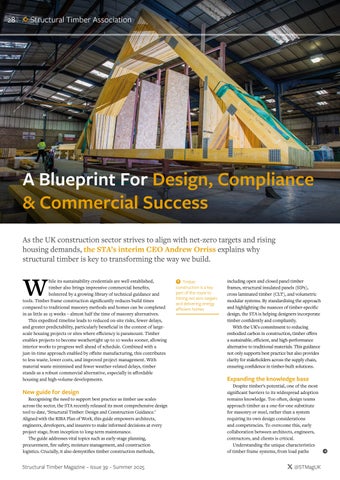
Timber construction is a key part of the route to hitting net zero targets and delivering energy efficient homes
including open and closed panel timber frames, structural insulated panels (SIPs), cross laminated timber (CLT), and volumetric modular systems. By standardising the approach and highlighting the nuances of timber-specific design, the STA is helping designers incorporate timber confidently and compliantly.
With the UK’s commitment to reducing embodied carbon in construction, timber offers a sustainable, efficient, and high-performance alternative to traditional materials. This guidance not only supports best practice but also provides clarity for stakeholders across the supply chain, ensuring confidence in timber-built solutions.
Expanding the knowledge base
Despite timber’s potential, one of the most significant barriers to its widespread adoption remains knowledge. Too often, design teams approach timber as a one-for-one substitute for masonry or steel, rather than a system requiring its own design considerations and competencies. To overcome this, early collaboration between architects, engineers, contractors, and clients is critical.
Understanding the unique characteristics of timber frame systems, from load paths
What changes might the Construction Product Reform Green Paper bring for structural timber – How prepared are you?
The UK government’s Green Paper on Construction Products Reform has the potential to profoundly reshape the way we build. Set for implementation in 2025, it aims to tighten safety standards, improve transparency, and drive sustainable construction. For the timber and timber frame sector, it’s both a challenge and a major opportunity.
We’ll be able to demonstrate that timber can meet the highest standards of safety, performance, and sustainability. It’s also a moment to correct misconceptions and push for smarter regulation that recognises the strengths and specific qualities of timber.
Whether you’re a housebuilder, developer, or part of the supply chain, these reforms will affect how products are tested, certified, and used. The timber sector is well-prepared and consistently improving, but we must raise the bar and show that we’re serious about quality and accountability.
Key Points to Consider:
Smarter regulation. A risk-based approach should recognise the differences between timber uses, not all applications carry the same risk.
Stronger testing. New rules will tighten testing and certification requirements. Our STA Assure scheme already raises the bar and we support higher standards across the board. Real sustainability. Timber is renewable and low-carbon. But we must back that up with clear data, from forest source to building site.
Tougher supply chains. Importers and merchants will need to meet the same standards as manufacturers. This will help cut out poorquality products and boost trusted UK supply.
Backing innovation. Approval routes must be straightforward. The system must support – not stall – better building methods. Better data. Clear digital records on product safety, testing, and traceability will lift industry standards. Many timber firms are already leading the way.
Facing fire safety. We will continue to demonstrate through testing and research that timber systems meet safety expectations – during and after construction.
Global alignment. The UK must stay in step with international standards, avoiding duplication or trade barriers post-Brexit. Skills drive. New rules mean we need more technical skills. Training and education across the sector must keep pace. Build Smart. Build Timber. Specify STA Assure.
Structural
and fixings to moisture behaviour and acoustics, enables better design outcomes and compliance. Adhering to performance standards around fire safety and durability is also paramount. The UK Government’s Timber in Construction (TiC) Policy Roadmap echoes this sentiment, highlighting the need to increase skills, capacity and competency across the supply chain.
Architects and designers must not only embrace timber’s design potential but also champion integration with modern methods of construction (MMC), particularly offsite manufacturing. Here, design decisions can have cascading effects on cost, scheduling, and quality assurance, making early-stage planning even more crucial.
To further support designers and demonstrate compliance with regulatory standards, the STA has also updated its ‘Volume 1 Pattern Book: Structural Timber Buildings Fire Safety in Use.’ Peer-reviewed by BRE Global, this critical resource offers detailed performance data for commonly used wall and floor elements, along with new wall types and roof spandrel elements.
By simplifying the compliance process and clarifying permissible variations in construction details, the Pattern Book removes ambiguity and gives stakeholders, from Building Control Bodies to insurers, a reliable, evidence-based reference. The Pattern Book is one of the STA’s most important publications – recognised and accepted by Building Control Bodies as an authoritative source of information.
At the heart of the STA’s approach is a commitment to quality assurance. Initiatives such as the STA Assure scheme evaluate member organisations on competency and regulatory compliance, giving developers, insurers and specifiers confidence in the robustness of timber solutions. Meanwhile, the Installer Training Scheme (ITS) ensures that site teams have the skills required to maintain consistency and quality throughout the build process.
Millions of more homes
The STA’s broader mission supports the Government’s commitment to building 1.5 million homes over the next five years, an ambition that cannot be met without embracing modern, sustainable methods of construction. Over the past five years, 198,429 timber frame homes have already been delivered in the UK, a number the STA aims to grow significantly in line with housing targets.
To secure timber’s future in UK construction, the industry must invest in the people who will drive its uptake. That includes expanding formal education for architectural and engineering students, rolling out Continuing Professional Development (CPD) programmes focused on timber design and installation, and attracting skilled tradespeople to work with timber systems. At the same time, the industry must continue to innovate, leveraging digital design tools, integrated project delivery
The updated STA guidance on structural timber buildings provides an authoritative source of information to provide confidence in material specification
models, and more advanced prefabrication techniques. The STA plays a central role in championing these shifts, influencing legislation, shaping training pathways, and ensuring its members remain at the forefront of technical excellence.
Structural timber has a vital role to play in reshaping the future of construction in the UK. With benefits that extend far beyond sustainability, from speed and efficiency to compliance and cost-effectiveness, it presents a compelling case for widespread adoption. But to unlock its full potential, we must build an ecosystem of knowledge, skills and support. Through guidance documents like the Design and Construction Guide and the Pattern Book, as well as quality schemes and training initiatives, the STA is creating the foundation for long-term success. The future of timber construction is not just about materials, it’s about mindset, collaboration, and a shared commitment to excellence.
www.timefortimber.org
To download the Pattern Book visit: www.structuraltimber.co.uk/ wp-content/uploads/2024/12/Fire-In-Use-Pattern-Book-Volume-1-v3.1DEC-2024-STA.pdf
To download the Design HOW Guide visit: www.timefortimber.org/ how-timber/the-design-process
New Timber Media Products & Services Directory
The new Timber Media Products and Services Directory provides the industry with a comprehensive listing of top suppliers and manufacturers operating in the timber sector, all in one place on the www.timbermedia.co.uk website.
A listing provides a highly effective, cost-efficient way to promote your products and services online, alongside the industry’s top brands. Generating inbound leads and enquiries, as well as backlinks through to your own website!
Your company profile will include:
Company logo Contact information & website links
Product / service bio Social media links
The directory will also be promoted regularly via eshots, newsletters, magazines and social media channels – providing additional exposure to a large, specific network.
Over 3,750 unique web visits per month
Over 50 product / service categories Only £600 per annum*
*There is an additional £150 annual fee for any additional category listings.
To confirm your Products and Services Directory Listing, simply email karen.cox@radar-media.co.uk or call 01743 290 014
Flexible offsite construction software
www.timbermedia.co.uk
3D model is created in:
or
Factory operators have easy access to digital shop drawings.
All necessary data for production is generated, including links to your CNC machines.
Trusted by leading companies in the construction industry
Project data is unified and optimized for collaboration between stakeholders.
Glidevale Protect Unveils its New Fire Rated Internal Membrane –Protect FrameFoil FR
Leading UK producer Glidevale Protect has launched Protect FrameFoil FR, a new Class A2 fire rated, reflective air and vapour control layer (AVCL) and separate FR sealing tape designed to improve the thermal performance and airtightness of internal walls, ceilings, and floors.
The new solution has been developed to work alongside Glidevale Protect’s established A2 rated FrameSafe FR external breather wall membranes to offer a complete system both inside and out for low, medium and high-rise projects. This offers added protection for structures, particularly in high risk, multi-occupancy builds over 11m in height, specifically those covered by the Building Safety Act. The product is ideal for modular and offsite construction as well as traditional builds in both the residential and commercial sectors.
Designed for use internally across steel, masonry, and timber-framed structures, Protect FrameFoil FR is best installed as a system where the membrane laps are sealed with new Protect FR Foil tape to deliver a fully fire rated, airtight and vapour control solution. This membrane and tape system has been independently fire tested both with the membrane free hanging and as a system application fixed over A1 and A2 substrates, achieving a Class A2-s1, d0 reaction to fire rating. Using the combination of Glidevale Protect’s fire rated wall membranes exceed the requirements set down in Building Regulations Approved Document B in the UK and Building Regulations Technical Guidance Document B in Ireland.
Featuring a woven, glass fibre construction with an aluminium foil surface, FrameFoil FR enhances thermal efficiency, achieving an aged thermal resistance (R-value) of 0.64 m²K/W when used facing into a still air cavity, contributing to overall energy performance.
Specifying the correct membrane is essential to achieving critical building safety standards and long term durability
“FrameFoil FR is another exciting addition to our fire rated solution offering,” says John Mellor, Head of Marketing at Glidevale Protect. “It is designed to meet the increasing demands of regulatory compliance and building performance as well as helping to deliver airtightness, vapour control and thermal efficiency. Combined with our Class A2 fire rated external wall membranes, we can provide specifiers, contractors, and developers with a fully independently fire tested wall membrane system solution. This can be installed across all development heights, helping to build healthy solutions with fire rated materials that can provide added reassurance for specification.”
To find out more and request independent fire test reports for Glidevale Protect’s fire rated membranes visit: www.glidevaleprotect.com/frsolutions, call 0161 905 5700, or email technical@glidevaleprotect.com
In the Frame at InverTay Homes
Leading building products manufacturer Glidevale Protect is supplying its construction and roofing membranes for a new timber frame housing development currently being constructed by InverTay Homes in Dundee.
Being built by InverTay Homes’ timber frame arm Timber Engineering UK, the large 114 home development of affordable family homes is being built offsite using Timber Engineering UK’s advanced timber frame system, Ultrakit.
Glidevale Protect played a key role in achieving the level of energy efficiency required by InverTay Homes with its Protect TF200 Thermo external membrane installed to the Ultrakit timber frames in the factory, helping to achieve a low U-value of 0.16 for the standard external wall. Protect TF200 Thermo, which has an insulating, reflective surface and provides a strong aged thermal resistance, helped improve the U-value performance of the wall. Glidevale Protect also supplied its heavy-duty vapour impermeable underlay, Protect A1, to ensure a second line of defence for the roof structures.
The Ultrakit wall system is designed to deliver high performing, low carbon timber frame houses, making it the perfect fit for InverTay Homes with its ethos of creating genuinely affordable housing by building energy efficient homes, maximising thermal performance to reduce running costs.
“Ultrakit is one of the most efficient methods of delivering high quality, energy efficient housing at scale,” says Caryn Gibson, Business Operations Manager from Timber Engineering UK. “Designed for rapid assembly and exceptional performance, Ultrakit accelerates the pace at which homes are built, whilst also reducing carbon emissions and delivering cost savings. Using the high-quality wall membranes from Glidevale Protect allowed us to achieve the U-value targets set for this project and ensure that the homes we’re building are not only energy efficient but will also be protected from the risk of interstitial condensation.”
John Mellor, Head of Marketing at Glidevale Protect added: “We’ve developed our product range to provide innovative, high-performance solutions for both traditional and offsite construction projects alike. Working with Timber Engineering UK and adopting a fabric first approach, means that we’re able to maximise the thermal efficiency of these houses to create homes fit for the future.”
Glidevale Protect’s A1 roofing membrane provides a highperformance, heavy-duty type HR roofing underlay which is completely water and airtight, offers unrestricted use for wind uplift in zones 1-5 across the UK and Ireland without the need for additional sealing tapes, and is designed for use on all cold and warm pitched roofs in conjunction with high and low level ventilation. Both Protect A1 and Protect TF200 Thermo can be used to provide temporary protection of external walls and roofs during the construction process as well as being a secondary line of protection from water and windblown snow.
www.glidevaleprotect.com
Protect’s A1 roofing membrane provides a highperformance, heavyduty type HR roofing underlay which is completely water and airtight
Protect TF200 Thermo wall membrane
Advanced Cutting and Precision
Essetre’s Techno Saw range offers a solution to support the evolving needs of the UK timber frame industry.
Chancellor Rachel Reeves’ Spring Statement reaffirmed the Government’s ambitious target of building 1.5 million new homes by 2029, intensifying the demand for high-quality, efficient timber construction solutions across the UK.
To help meet this demand, Michael Weinig (UK), part of the globally renowned WEINIG Group, has partnered with Italian CNC specialist Essetre to provide British manufacturers access to advanced cutting and joinery machinery supported by a dedicated national service network.
Michael Weinig (UK) Ltd now officially represents Essetre in the UK, offering a comprehensive package of sales, technical consultation, and after-sales support. This strategic partnership combines Essetre’s innovative engineering with Weinig’s established UK infrastructure, delivering exceptional value to manufacturers looking to scale up production without compromising on quality.
The Essetre Techno range is ideally suited to applications including roof trusses, timber frame kit manufacturers, glulam processing, and log home fabrication. National Sales Manager Damon Harris offers expert guidance tailored to individual production needs, while Weinig UK’s experienced service team ensures consistent, nationwide support and peace of mind.
Driving innovation in timber construction
Essetre’s Techno series delivers cuttingedge CNC technology specifically designed for modern timber construction. From entry-level to fully automated systems, the range enables UK manufacturers to increase productivity, minimise waste, and maintain precision across a broad spectrum of applications, including cross laminated timber (CLT) panels, glulam beams, and timber frames. Machines such as the Techno Fast, Techno Saw, and Techno Saw XS are engineered for high-performance environments, offering the flexibility and speed required to support the UK’s evolving construction methods and ambitious housing targets.
Spotlight on Essetre’s Techno Series
Techno Fast – equipped with a STIHL chainsaw, the Techno Fast combines advanced CNC control with high efficiency and flexibility. Ideal for precision blade
cuts such as fitting iron feet, it is built for robust performance and rapid turnaround in demanding production settings.
Techno Saw – designed for processing smaller cross-section workpieces, the Techno Saw excels in the accurate manufacture of truss and frame elements. Its 8-position tool magazine enables both sawing and routing, including holes, grooves, and rebates. It can handle multiple components simultaneously within a 400 x 240mm envelope and lengths up to 12m – making it perfect for I-joists and complex structures.
Techno Saw XS – the most compact model in the range, the Techno Saw XS delivers high-speed, precision cutting in a space-saving design. Featuring a 9kW 5-axis electrospindle and 480mm saw blade, it processes materials up to 320 x 120mm and lengths of 6m. A CNCcontrolled buffer infeed, gripper, pusher, and outfeed unit make it a reliable and economical solution for all-angle crosscutting – ideal for entry-level production and packaging applications.
Ready to transform your production line?
Contact Michael Weinig (UK) today to book a consultation and discover how Essetre’s advanced CNC solutions can help future-proof your business and keep pace with the UK’s growing construction demands.
For more information about the Essetre product range please contact Weinig UK on 01235 557600 or email sales.uk@weinig.com
Eolis HC
REFLECTIVE INSULATION
Cutting edge technology. Cutting time on site.
• Light and quick to install, with no cutting between rafters
• Self-adhesive lap for ease of installation
• Innovative technology for excellent thermal performance
• Made with 100% recyclable components
Refl ective Insulation created using our new innovative Triplex technology provides dual features in one product. With an integrated vapour barrier it’s possible to insulate and achieve airtightness in a single operation.
To request a free sample, arrange a CPD or find out more about our solutions, please contact solutions@insulation-actis.com quoting ST magazine in the email subject line.
Enter the Big Time
The countdown is on for the Structural Timber Awards 2025 with the entry deadline next month. Don’t miss this super occasion that recognises the many outstanding projects and achievements across the timber industry.
The Structural Timber Award Winners will be announced at the National Conference Centre, Birmingham on 01 October later this year and for 2025, the Awards will follow the Structural Timber Conference, which is also taking place at the same venue.
The Awards are free to enter, and we encourage you to enter your eye-catching and successful projects and talented people into multiple categories. With a choice of 19 categories, there is a chance for everyone to be celebrated. Start your entries today and make sure to hit submit before the entry deadline –Friday 11 July 2025.
Why should you enter the awards?
Awards recognise hard work and hard-fought achievements, so being selected for the shortlist or ultimately winning can raise your company profile, boost staff morale, create better working relationships, improve motivation and
ultimately help win more business. Shining a spotlight on success generates feelings of satisfaction and pride to be associated with a talented team and successful business.
With the calibre of the expert judging panel scrutinising the entries, a Structural Timber Award win, shortlisting or nomination can act as a genuine endorsement for your business and what you do on a day-to-day basis. A win can give a seal of approval to your activities and act as a sign of quality for potential customers. It’s a great way of separating your company from your competitors.
Raise your profile
Business and industry awards are one of the most effective marketing tactics. Just being shortlisted can improve brand awareness and promote your expertise and innovation to new customers. Maximising media coverage surrounding the awards will also drive traffic to websites and engagement on social media
platforms. Awards celebrate hard work and success and generate great PR opportunities –the kind of publicity that is priceless.
You can also attract future talent.
Competition is fierce when attracting the brightest and best to become part of your business and help generate further success. Awards evidence company stature and credentials among new recruits.
Pitching your company as the ‘best’ will attract the right talent to push your business forward. Increased employee morale will also help attract and importantly retain new recruits. All awards finalists will be promoted to a national audience, giving entrants the opportunity to make their mark on this sustainable, environmentally focused and economically important market.
You can enter the Structural Timber Awards 2025 at: www.structuraltimberawards.co.uk
A big thank you to all the companies who have already signed up to be sponsors for this year’s awards. Our sponsors will be front and centre of the celebrations. Get in touch today to discuss getting involved as a sponsor and benefit from months of pre-event marketing email: karen.cox@radar-media.co.uk
For more information on the STRUCTURAL TIMBER CONFERENCE, contact Emily Dyer on 01743 290025 or emily.dyer@radar-media.co.uk
01.10.2025
NCC, BIRMINGHAM
Following a year of remarkable achievements and innovations, the conference promises to showcase the benefits and explore the possibilities of timber construction. With influential speakers and engaging discussions, the STRUCTURAL TIMBER CONFERENCE 2025 will address the challenges, present solutions and analyse successes, that help drive the industry forward.
BOOK YOUR TICKETS TODAY!
Tickets include access to the Conference, Exhibition and lunch and refreshments throughout the day.
ENTER THE AWARDS
The STRUCTURAL TIMBER AWARDS entry platform is open - start getting your entries ready!
ENTRY DEADLINE FRIDAY 11 JULY 2025
For more information on the STRUCTURAL TIMBER AWARDS, contact Ellie Guest on 01743 290005 or ellie.guest@radar-media.co.uk
Featuring compelling examples of what can be achieved using the most natural and sustainable of materials, the STRUCTURAL TIMBER AWARDS will also be taking place on the evening of 01 October 2025 at the National Conference Centre, following on from the Conference. Heading into the eleventh year, the Awards will celebrate outstanding projects, inspiring individuals and the coming together of an industry.
SPONSORSHIP OPPORTUNITIES
The sponsorship packages are already selling fast –limited opportunities remaining for 2025!
For more information contact Karen Cox on karen.cox@radar-media.co.uk or 01743 290014
Crowning Achievements
We throw the spotlight on one of the winners at the Roofscape Design Awards 2025 and hear more about the work conducted at Langdon Hospital for the Devon Partnership NHS Trust.
Organised by the Trussed Rafter Association (TRA), the annual Roofscape Design Awards recognise innovation and technical excellence in roofscape design. The winner of Commercial Project of the Year was the Learning Disability and Autism (LDA) unit at Langdon Hospital and designed by Jamie Underwood.
A new specialist healthcare facility in Devon required a high level of technical co-ordination, particularly in the design and installation of its timber roof structure. The LDA unit at Langdon Hospital in Dawlish, developed by Kier Construction for the Devon Partnership NHS Trust, provides care for individuals whose needs cannot be met in mainstream mental health settings.
The building covers a footprint of approximately 49m x 59m. The roofscape comprises four duo-pitched roof zones, connected by a series of flat and pitched link sections. The sequencing of trades, integration with a mixed structural frame, and the requirement for clear service co-ordination all informed the design approach.
Crendon Timber Engineering – a long-standing member of the TRA – was appointed to design, supply, and install the roof structure. The engineered timber package included posi-rafters, raised tie trusses, solid timber ceiling joists, and glulam valley beams. The roof design was led by Senior Designer Jamie Underwood, supported by Crendon’s in-house estimating, contracts, and site teams.
The roof structure was installed over a live programme, which required early design decisions to mitigate risk
Co-ordination of structural and service interfaces
The roof required early consideration of service integration, particularly the vapour control membrane, which, while outside of Crendon’s package, intersected several zones. The team at Crendon accounted for this in their technical drawings, providing visual confirmation of the membrane path to reduce the risk of site delays due to missing or conflicting information.
Roofing
Ceiling joists and posi-rafters were designed as separate elements, which added complexity around uplift and restraint. A fixing methodology was developed using framing anchors, inverted truss clips and staggered double wall plates. These connection points were specified to provide continuous vertical load paths and ensure stability under lateral wind loading. Clear documentation of plate levels and fixing positions supported accurate installation, particularly where timber interfaced with structural steel.
Construction sequence and site safety
The roof structure was installed over a live programme, which required early design decisions to mitigate risk. Crendon prefabricated all noggins, firrings and infill timbers to reduce the need for on-site cutting and associated dust. This approach also improved dimensional accuracy and helped maintain installation speed. Ceiling joists were plydecked prior to rafter installation to provide a working platform. Service voids within the ceiling were identified in advance and capped during installation to reduce fall risk. Site deliveries were scheduled in line with installation stages to avoid overloading storage space and to reduce manual handling requirements on site.
Standardisation and material efficiency
Several aspects of the structural design, including the use of steel ridge beams, were already defined before Crendon’s involvement. However, the timber elements were reviewed and rationalised where possible. Repeating standardised section profiles and connection details across the roof zones supported efficient manufacturing and reduced the need for bespoke modifications on-site.
All timber components were sourced from PEFC-certified suppliers. In line with Crendon’s environmental objectives, the company has implemented solar PV at its manufacturing facilities and is phasing in electric vehicles across its transport and handling operations. These measures contribute to lower embodied carbon and support ongoing improvements in energy efficiency throughout the delivery process.
Digital modelling and project delivery
Crendon utilised MiTek Pamir to model the engineered timber elements along with AutoCAD to prepare drawings and coordinate with other trades
“The project required high levels of accuracy, particularly around sequencing and interface points. The focus was on delivering a safe, efficient and robust solution that could be installed with minimal rework. It was a technically challenging scheme, and the outcome reflects co-ordinated input from all parties.”
Repeating
standardised section profiles and connection details across the roof zones supported efficient manufacturing and reduced the need for bespoke modifications on-site
and structural elements. These tools enabled the design team to respond to changes quickly and maintain alignment with the overall programme. Ongoing liaison between Crendon, Kier Construction and other subcontractors allowed issues to be resolved prior to installation. The team remained flexible in the face of late-stage changes and were able to revise and issue updates without disruption to build flow.
“This is a strong example of engineered timber performing well in a complex healthcare setting,” said Nick Boulton, Chief Executive of the TRA. “The roof design supported sequencing requirements and integrated cleanly with structural steel and services. What stands out is the focus on safety, repeatability and co-ordination. These are the kind of projects that demonstrate the versatility of structural timber, particularly when design and manufacturing are aligned early. The Roofscape Design Awards, are designed to highlight precisely this kind of work, where structural expertise meets realworld delivery.”
www.crendon.co.uk www.tra.org.uk
Smart Timber Design
A new advanced timber frame manufacturing facility has opened in Scotland drawing timber from local sawmills and confirming sustained growth for both Alexander Timber Design and its owners Glennon Brothers.
In a landmark moment for Scotland’s manufacturing and construction industries, First Minister of Scotland, the Right Honourable John Swinney MSP, recently officially opened one of the UK’s most technologically advanced timber frame construction facilities.
Operated by Alexander Timber Design (ATD), the company is owned and run by UK & Ireland timber industry leaders, Glennon Brothers. Established in 1913, Glennon Brothers has grown into a major supplier of sawn softwood products for the construction, packaging, fencing, and timber frame housing sectors. The company handles over 1.1 million cubic metres of logs annually, producing more than 550,000 cubic metres of sawn timber.
All of the Troon sawmill supply comes from sustainably managed sources and is FSC certified with around 65% of its total annual intake sourced from within a 75-mile radius of the sawmill. The remaining 35% is delivered in bulk cargo by sea transfer from the Isle of Arran and from Argyll by Timberlink. Sitka spruce makes up 97% of its total supply. The official opening marks a significant leap forward in sustainable building practices and green manufacturing in the UK and Ireland and the £18million investment brings Glennon Brothers’ total investment in Scotland to over €80million.
Alexander Timber Design are using the latest automated technology to maximise product quality and productivity
Innovation and sustainability
ATD’s Irvine facility sets a ‘new European benchmark for innovation, environmental responsibility, and industrial integration’. The cutting-edge manufacturing plant is to become a central hub for timber frame housing innovation across the UK. It combines
advanced robotics, precision engineering and the very latest next-generation design systems to deliver high-quality Scottish timber homes while excelling with world-class standards of ‘efficiency, sustainability and resource maximisation’.
Commenting at the launch, First Minister John Swinney said: “Today’s opening is a symbol of the kind of future Scotland is building with high-skilled, high-tech and environmentally responsible next generation industries. This facility brings together sustainable construction, advanced manufacturing and regional economic development, placing Scotland firmly at the forefront of the green industrial revolution. It is an excellent example of the kind of economic opportunities that can exist that can help both grow our county’s economy whilst tackling the climate emergency. Quite simply, it is creating Scottish homes from Scottish timber.”
The ATD business operates in a continuous and sustainable green cycle. Sitka spruce crops are grown in Scotland over a 35-year rotation before being felled to help meet the need for a sustainable supply of timber products. After processing these logs in the Troon sawmill, the company use the best quality C16 construction grade material to build new homes for the Scottish housing market, and all in a state-ofthe-art timber frame facility that is only six miles away from the sawmill. Concurrently, the forest site that provided the raw material supply in the first place is being restocked to complete the green cycle.
Mike Glennon, Joint Managing Director of Glennon Brothers said: “This is a very proud day for our company. We’ve always believed in the potential of Scottish timber and in the skilled people who make this industry thrive. With this facility, we’re investing not only in advanced technology, but in Scotland’s sustainable future. We are honoured to have First Minister John Swinney MSP here today to share this very positive story about forestry, timber, and the outstanding economic and environmental benefits from which Scotland can prosper.”
Woodland resources
Glennon Brothers has welcomed the Scottish Government’s commitment to new woodland creation and target of 18,000 hectares of new planting this year. Commercial conifers are an essential part of the journey towards net zero and are highly efficient at sequestering carbon over shorter rotations, storing carbon in sawn timber products.
“Today’s launch provides a real-world example for governments, developers, and consumers looking for greener alternatives,” added Joint Managing Director Pat Glennon.
Committed to MMC
“We are committed to leading the way in modern methods of construction (MMC) through the continued promotion of offsite manufacturing and our closed panel system,” says Jim Patterson, Head of Timber Frame at ATD. “As the demand for faster, more efficient, and sustainable building methods grows, our high-performance timber frame solutions reduce build time, improve quality, and reduce on-site waste.
“Our closed panel system recently achieved NHBC Accepts certification. It streamlines the construction process, offering developers and housebuilders a dependable, precision manufactured product. By manufacturing offsite in a controlled environment, we can ensure consistency, reduce delays, and deliver exceptional standards of workmanship. NHBC certification gives the developer confidence in a warrantied, quality assured product.
“A key part of our sustainability strategy is our use of locally-sourced Scottish timber, harvested in South West Scotland and processed at Glennon Brothers sawmill in Troon –just six miles from our new, state of the art manufacturing facility. Re-enforcing our ‘Forest to Front Door’ policy our ‘Scottish Timber for Scottish Homes’ approach is unique to ATD and significantly reduces the carbon footprint of our products whilst supporting the local supply chain and economy. As part of our growth strategy, we aim to continue to grow our market share in Scotland and Northern England by forging new partnerships and deepening relationships with key housebuilders.”
L-R First Minister of Scotland, the Right Honourable John Swinney MSP and Jim Patterson, Head of Timber Frame at ATD at the official factory opening
“This facility offers a tangible example of how the timber industry can lead the transition to a low-carbon economy. It reinforces Scotland’s role as a leader in modern methods of construction (MMC), helping meet the rising demand for energy-efficient, affordable housing.”
As the UK construction industry is under increasing pressure to reduce its carbon footprint, the opening of this plant offers a scalable, sustainable solution that aligns with national and international climate goals. Timber frame construction is now widely regarded as one of the most environmentally friendly building techniques available, offering lower embodied carbon, faster build times, and greater energy efficiency. This milestone represents not only a triumph for the two companies and the Scottish economy but is symbolic of what the future of construction can and should look like.
A recent report from the Future Homes Hub offers valuable guidance for homebuilders and designers looking to build better and more sustainably with system comparisons at the centre of its findings.
As all those involved in construction work toward meeting Future Homes Standard (FHS) targets, there’s growing recognition that reducing carbon emissions means looking beyond just operational efficiency to embodied carbon.
‘Embodied and Whole Life Carbon in Future Homes Standard Options’, explores how various housing designs under consideration for the FHS impact both embodied carbon (from materials and construction) and operational carbon (from energy use) – together known as whole life carbon. By comparing typical house types, the report underscores the importance of taking a holistic view and the need for ‘tailored assessments’, warning that focusing solely on the structural wall materials oversimplifies a much broader issue.
Following the launch of the FHS consultation in December 2023, developers have been working to identify cost-effective, scalable specifications that comply with Part L (focused on operational carbon). To support this effort, the Hub brought together a working group of developers and carbon
Targets surrounding embodied and whole life carbon are central to building design
specialists, who examined three common fabric and service specification options. Each was evaluated for its embodied and whole life carbon impact.
Embodied carbon was calculated using One Click LCA – a widely used commercial software tool among housing developers for carrying out Whole Life Carbon Assessments – while operational carbon was assessed using SAP 10.2, in line with Building Regulations Part L 2021.
The three fabric and services specification options were ‘defined through discussions with the working group members to represent likely options for meeting the FHS.
Option A: Masonry with 100mm cavity, mineral wool insulation, triple-glazed uPVC windows
Option B: Masonry with 150mm cavity, mineral wool insulation, double-glazed uPVC windows
Option C: Timber frame with 140mm studs, mineral wool insulation, 25mm PIR overboarding, double-glazed uPVC windows.
The findings show that timber frame construction generally has 3-5% lower upfront
embodied carbon intensity and 1-2% lower whole life carbon intensity than masonry options with comparable thermal energy performance. However, overall carbon impacts across the options were broadly similar, reinforcing the message that no single solution significantly outperforms the others in terms of embodied carbon. In other words, as outlined in the findings there is no ‘silver bullet’ when it comes to reducing embodied carbon of new homes.
One encouraging insight is that the Hub’s Future Homes Carbon Assessment Tool – which uses a simplified elemental method – showed strong alignment with One Click LCA for fabric-related aspects. This makes it a practical starting point for smaller developers or those lacking the resources for detailed modelling.
“Understanding whole life carbon is a crucial next step if we are to meet our net zero carbon ambitions as a sector,” says Adam Graveley, Head of Technical and Innovation for the Hub. “At this natural time of change, as homebuilders and designers update their house types to meet the Future Homes Standard, there is an opportunity to also consider the up front and life cycle impact of embodied carbon.
“This report supports those developers who are asking the next question: How do we build homes that both meet the Part L regulations and reduce the embodied carbon impact to support the transition to net zero? We encourage developers to utilise the insights from this report and engage with our Whole Life Carbon Assessment Tool to further refine their designs.”
The FHS represents one of the most significant regulatory shifts for UK housing in decades. New materials and construction methods –and in many cases very demanding approaches – will hopefully create better low-carbon, energy-efficient new homes. Timber has the edge when it comes to embodied carbon, but everything rests on providing better fabric energy performance. Choosing between timber or masonry construction isn’t just a matter of tradition or cost – it’s now a strategic sustainability decision that will reshape how developers design, specify, and construct 21st century homes.
www.futurehomes.org.uk
Design and Detailing is Everything
The latest Sustainability Report from NBS (Powered by Hubexo) shows that specifiers are demanding better embodied carbon data from manufacturers to achieve net zero. The report ‘underscores a pressing need for more consistent, transparent, and high-quality sustainability data from manufacturers.’
The report – based on responses from hundreds of industry professionals – revealed that fewer than 50% of all projects currently achieve stringent sustainability benchmarks. The main obstacles include inconsistent supply chain data, a lack of transparency around embodied carbon, and limited access to reliable certification schemes.
Although early-stage design presents the greatest opportunity for positive environmental impact, 92% of specifiers also report that a lack of detailed, reliable sustainability performance data from manufacturers can hinder the process.
Furthermore, the survey indicates that specifiers are inclined to choose sustainable alternatives, with nearly half (46%) and 52% of architects only specifying or selecting manufacturers with above-average sustainability credentials. This preference
is especially strong when supported by Environmental Product Declarations (EPDs), essential third-party certifications that evaluate a product’s full lifecycle impact rather than isolated metrics.
Unfortunately, some manufacturers are still only prioritising basic origin information, despite the accessibility of these mainstream protocols, and it’s hindering specifiers when building accurate specifications. This disconnect highlights an urgent need for alignment as the sector, which still accounts for 39% of global CO₂ emissions, accelerates its efforts to meet net-zero targets.
“The results of the Sustainable Futures report reflect something we’re seeing more and more in practice,” says Lee Jones, Head of Sustainability at NBS (Powered by Hubexo). “A real appetite among specifiers for meaningful, actionable sustainability data. But the stats are clear, if environmental data is vague or incomplete that doesn’t support decision-making at pace. If we want sustainable choices to become the default, we have to make those choices easier to identify and compare. That means standardising how data is shared, improving transparency, and focusing on the metrics
that will matter most in the coming years.”
With policy frameworks like The Future Homes Standard and The London Plan raising the bar, and environmental expectations rising, the construction industry’s next challenge is clear: match ambition with transparency, and turn sustainability promises into real-world impact. By embedding sustainability data directly into the specification workflow, alongside certifications including EPDs, carbon metrics and compliance information, NBS makes it easier for specifiers to choose low-impact products without compromising on performance or practicality.
www.thenbs.com
Understanding whole life carbon will be a crucial next step if we are to meet our net zero carbon ambitions and deliver 1.5 million homes
Understanding EPDs
It is becoming critical to prove the environmental impacts of the building materials being used in construction. Trevor Richards, Operations Director for Cogent Consulting, explains the relevance of EPD’s to timber technology and offers guidance on how to produce them effectively.
EPDs – based on the EN 15804 standard – became mandatory in July 2022 for all new EPDs following a significant amendment (EN 15804+A2) approved in July 2019. This change requires EPDs to provide more detailed information on environmental impacts as well as aligning with the revised Construction Products Regulation (CPR). The revised CPR, which entered into force in January 2025, introduces additional requirements for EPDs that align with the EN 15804 standard.
What is an EPD and what do I do?
An EPD is a standardised document that communicates the environmental performance or impact of a product across its entire lifecycle. Developed in accordance with international standards, an EPD is grounded in a lifecycle assessment (LCA), which evaluates environmental impacts from raw material extraction through to end-oflife disposal.
An EPD is third-party verified to ensure the reliability and credibility of the information it presents. It allows for meaningful comparisons within the same product category and provides quantitative data on impacts such as carbon emissions, water consumption and energy demand. The structure of an EPD is modular, with environmental impacts reported by lifecycle stage, most commonly following the A1-A3 (cradle-to-gate) scope, and often including later stages (A4-C4) such as transport, use and disposal.
Why EPDs matter for timber technologies
Timber is often promoted as a low-carbon or even carbon-negative building material, but these claims require substantiation through credible, transparent data. For timber products, EPDs serve several key purposes.
EPDs offer timber manufacturers a credible means of communicating environmental performance
They provide transparent carbon accounting by quantifying carbon sequestration during tree growth alongside emissions released during processing, use and disposal. This enables fair comparison with competing materials such as steel and concrete by evidencing lower embodied carbon. EPDs also facilitate access to markets that require verified environmental data and enhance credibility with architects, contractors and clients pursuing sustainability targets.
Delivering efficiency and
competitive
advantage for manufacturers of offsite systems and technology
As specialists in industrialised construction technologies – our objective is to increase productivity and profitability by making offsite manufacturing operations leaner, safer and more efficient. We
Manufacturing logistics assessments
Manufacturing controls systems
Management systems implementation
Manufacturing process improvement
Offsite manufacturing audits and gap analysis
Digital factory simulation
Manufacturing systems integration
Embodied Carbon
Writing an EPD for Timber: Step-by-Step
Creating an EPD is a technically rigorous process, but one that firms like Cogent Consulting can support. The process includes four main stages: defining the product, conducting the LCA, compiling the declaration and undergoing independent verification.
The first step includes specifying the product type, timber species and source, intended use, declared unit of measurement and the geographic and temporal scope.
System boundaries must also be selected. These typically cover A1-A3 but and may extend to A4-A5, B, C and D. End-of-life scenarios are particularly significant for timber, and it is essential to clearly state whether the timber is likely to be incinerated, reused or recycled or disposed of totally.
The next step is the LCA and impact assessment. This data is modelled using LCA software such as SimaPro, GaBi or One Click LCA. For timber, carbon modelling is especially critical. The assessment must follow a Product Category Rule (PCR) tailored to timber construction products, usually aligned with EN 15804, to ensure consistency and comparability.
Once the LCA results are available, the information must be compiled into an EPD document. This includes a product description, functional unit, a summary of the manufacturing process, system boundaries, LCA results presented in tables, interpretation of those results and declarations on data quality and verification status.
To be recognised as a Type III environmental label, the EPD must undergo third-party verification by an approved body or programme operator such as BRE, IBU, or EPD International. The verifier assesses the EPD’s alignment with the PCR, the robustness of the LCA and the accuracy of the underlying data. Only after this verification can the EPD be formally published and registered.
Pitfalls to avoid
If in-house expertise is limited, engaging experienced LCA consultants is advisable, particularly given the complexities of timber modelling involving biogenic carbon and delayed emissions. Manufacturers should also plan for periodic updates as EPDs are generally valid for five years, but changes to processes or inputs may necessitate earlier revisions.
There are some pitfalls to avoid. Unclear or overly optimistic endof-life scenarios can distort carbon calculations and assumptions should be explicit and conservative. Relying on generic data is another risk, as it can misrepresent actual environmental impacts. And overstating benefits
First EPD steps include specifying the product type, timber species and source, intended use, declared unit of measurement and the geographic and temporal scope
robust evidence can undermine the EPD’s credibility. Finally, using an incorrect or outdated PCR can result in the EPD being rejected.
Once the EPD has been verified, it should be made publicly accessible. This can be done via national databases and platforms such as Green Book Live or EPD International and NBS Source. Publishing the EPD on your company website also ensures wider visibility.
Why EPDs are a strategic investment for timber technology providers?
EPDs offer timber manufacturers a credible means of communicating environmental performance, allowing them to compete on measurable outcomes rather than unverified claims. EPDs also facilitate access to procurement frameworks that prioritise data-led decision-making. While the creation of an EPD can be a complex and resourceintensive endeavour, the benefits, in terms of reputation, market access and alignment with sustainable construction practices, are significant and enduring.
www.cogent-consulting.co.uk
Cogent Consulting
Need support developing your EPD? Get in touch with Cogent Consulting. With unrivalled expertise and independent, practical guidance, we help manufacturers navigate the technical challenges of EPD creation while unlocking the full potential of innovative construction methods.
www.cogent-consulting.co.uk
without
Beyond the Benchmark
With timber technology helping deliver ultra-low energy housing in Finland, Dr Anthony Greer, Director at TALO outlines why an offsite and fabric first approach is key to improving the UK’s newbuild stock.
The UK’s housing industry is on the brink of a significant shift. The final specifications for the new Future Homes Standard (FHS), including the implementation date are set to be announced this year. The aim is to decarbonise new homes in England by improving energy efficiency and reducing heat loss. While the regulations should deliver better outcomes in the critically important drive towards net zero, they still lag behind what is already being achieved in countries such as Finland.
Around 70% of new homes in Finland are constructed using timber frame. This is not an aspiration – it is current practice that has been honed over decades and thousands of units. In contrast, the UK’s housing sector is still largely reliant on traditional, site-based construction. Despite increasing interest in offsite manufacture, widespread adoption has yet to be embraced by the volume housebuilders and residential property developers.
Lessons
from Finland
The main driver for offsite manufacturing in Finland is the extreme climate. With temperatures as low as -50° in winter and as high as 30° in summer, there is a clear need for exceptional thermal efficiency and to reduce work on-site in such cold winters. Unlike in the UK, there is limited mass housebuilding in Finland – most new homes are developed privately – meaning that offsite housing must deliver customers’ expectations for quality, design flexibility, high energy and thermal performance to address the climate extremes, cost efficiently.
One of the reasons advanced timber superstructures from Finland can deliver such high-quality housing, is that there is complete control of the timber – from forest to sawmill, factory manufacture to site. The process is entirely ‘dry’ – which we believe is fundamental to delivering low or zero energy housing.
If high quality, slow grown Nordic timber is protected from the weather at every stage, it never gets wet and therefore never has to dry out over time. Wet timber means movement – twisting and cracking – which then leads to snagging and heat loss once a house has been built. When you have dry timber combined with robust offsite manufacturing processes and intelligent design, you can radically reduce air permeability for a higher degree of thermal efficiency, and at no cost premium. This fabric first approach has to start in the forest and follow through each stage of the product lifecycle, including how the timber superstructure is installed on-site.
Beyond compliance: a new baseline
The FHS is clearly a welcome step in the right direction, aiming to reduce carbon emissions and energy consumption in new homes. Key anticipated improvements include
reduced air permeability and enhanced insulation to generate lower energy bills for homeowners and tenants. However, for many housebuilders still using traditional site-based construction methods, compliance will come with higher cost and increased risk of non-compliance and remediation work. The skills required to deliver ultra-low energy homes – especially to achieve the required level of airtightness – are not readily available on most UK sites. This is where offsite manufacturing comes into its own.
A common misconception is that meeting the FHS will require expensive technology such as ground or air source heat pumps. In reality, the most cost-effective and sustainable strategy begins with the building fabric. High-performing timber superstructures manufactured offsite and with triple glazing, insulation and internal plasterboard precisioninstalled in the factory, are already delivering exceptional thermal efficiency and airtightness for low rise housing.
When this offsite technology is combined with mechanical ventilation with heat recovery (MVHR), solar panels, battery storage, and electric underfloor heating, the need for traditional heating or costly heat pumps, is eliminated. This holistic approach of integrating a highly insulated, precision-manufactured superstructure with the building’s energy strategy, creates homes that exceed regulatory requirements and with energy bills at close to zero levels. Advanced timber framed technology – such as that refined and proven for three decades in Finland – offers a credible and cost-effective route to delivering higher quality housing for everyone.
www.talo.co.uk
Precise installation using a dry timber system – from forest to sawmill, factory to site – improves thermal efficiency and quality with each home built by TALO installed and watertight in one week ready for fitout
Tired of hearing people say UK-grown timber is not as strong as European timber, that there are too many knots to be aesthetically pleasing, or that it’s not a safe enough building material because it burns? We wanted to prove that it is and could be used safely as a high-value construction method. BE-ST launched the Mass Timber Centre of Excellence and if we’re looking for a sign of progress that perspectives are changing, this could be it.
The launch of the Centre is a testament to a ten-year journey taken by BE-ST, Edinburgh Napier University, and strategic industry partners to invest in wood and timber research and to validate mass timber as a high-value construction method. Currently, we are limited in what we can do with multi-storey mass timber construction as building regulations guidance discourages or prevents the use of combustible materials in buildings over 11m in Scotland and 18m in England due to fire safety concerns. This is despite other countries, such as Canada, Norway, and more, building to heights of 40m and beyond.
Extensive global research has explored and demonstrated that mass timber can achieve adequate safety in structures beyond these heights when designed, manufactured, and constructed with due consideration given to the relevant concerns. In our current Built by Nature research project, we are working alongside the Edinburgh Fire Research Centre at the University of Edinburgh to compile this research, identify any gaps, and establish the views and understanding of a broad selection of UK built environment stakeholders.
This evidence will directly support multiple workstreams that are advancing the UK Government’s Timber in Construction Roadmap 2025 which promotes (among other things) the safe, sustainable use of timber as a construction material. It will also support the necessary changes to help solve many of the built environment’s challenges, from lowering carbon emissions to delivering much needed public infrastructure. BE-ST has been involved in the shaping of the roadmap from its inception.
Mass Timber = Major Change
With its Mass Timber Centre of Excellence recently opened, it’s time to rethink what Scottish timber can do, says Sam Hart, Associate Director of MMC and Manufacturing at BE-ST.
Mass timber might not be the most viable solution for delivering traditional housing as creating solid floor, wall, and roof panels uses more timber than the highly efficient timber framing construction method. However, mass timber is particularly suited to multi-story projects or non-domestic buildings that have requirements for large, clear spans, dimensional stability, or high racking resistance. This means it could be a key solution to lowering the carbon emissions of the construction sector and delivering high quality, efficient, sustainable and more affordable multi-storey building such as schools or hospitals.
construction through commercially available equipment and facilities, as well as expertise, research and skills training.
Through ten years as an innovation centre focused on changing perspectives and validating the use of homegrown mass timber, we have also invested in partnerships and projects that have delivered real tangible economic, environmental and social benefits. BE-ST has supported the creation of 5,356 jobs, many of which have been in timberrelated sectors, including over 40 created at Ecosystems Technologies, a sustainable and natural material offsite manufacturer in Invergordon. We have also procured a
“Mass timber is particularly suited to multi-story projects or nondomestic buildings that have requirements for large, clear spans, dimensional stability, or high racking resistance. This means it could be a key solution to lowering the carbon emissions of the construction sector and delivering high quality, efficient, sustainable and more affordable multi-storey building such as schools or hospitals.”
A key milestone on our journey to validating the applications of UK-grown mass timber construction use was the founding of Transforming Timber – a collaborative knowledge hub promoting the use of homegrown mass timber. Transforming Timber was established through a £1.5million Innovate UK-funded programme and delivered by BE-ST, Edinburgh Napier University, NMITE, Ecosystems Technologies, University of Edinburgh, and BSW Timber. This work has provided a foundation that means that Edinburgh Napier University and BE-ST are now further investing in the Mass Timber Centre of Excellence with a validated proposition to provide the sector with resources and support for mass timber innovation, manufacturing and skills. The Centre has launched to support the transformation of built environment delivery and increase the use of mass timber in
further £1.5million of commercially available equipment that has supported businesses like Ecosystems Technologies to double in value year on year and to deliver high-quality, sustainable housing and schools across the UK.
When we take a step back, a key part of our success has been working with our partners since we began in 2014 to build momentum for homegrown mass timber manufacturing in UK. We want the Mass Timber Centre of Excellence to build on this at scale and pace, for it to be the breeding ground for the timber and forestry sector, where it can access the benefits that come with investing in and building mass timber and the supply chain, and for Scotland’s people and economy to reap the benefits.
www.transformingtimber.co.uk www.be-st.build
OFFSITE EXPO brings together those who are driving change in the construction sector – the event will play host to the leading UK and international offsite manufacturers and component suppliers showcasing a broad spectrum of panelised and volumetric modular systems, plus pod and prefabricated MEP solutions.
OFFSITE EXPO has a range of exhibition and sponsorship packages available. These have been designed to be flexible and offer a wide range of promotional opportunities to suit any marketing aims, resources and budget.