FUTURE FOUNDATION
26 th Annual Celebration of Queens


26 TH ANNUAL CELEBRATION OF QUEENS • 2023 C M CEL page 1 Y K
Wednesday,















QUEENS CHRONICLE, Thursday, June 22, 2023 Page 2 C M CEL page 2 Y K For the latest news visit qchron.com 26 TH ANNUAL CELEBRATION OF QUEENS • 2023 AMDU-081832 amdusany.com RESTAURANT & BAR SUPPLIES Min. Delivery $400.00 25,000 Products In Stock! Products we offer: • Deli Supplies • Pizza Supplies • Bakery Supplies • Bar Supplies • Restaurant Supplies • Supermarket Supplies KITCHEN EQUIPMENT such as: ✔ Blenders ✔ Freezers ✔ Refrigerators ✔ Food Processors ✔ Grills ✔ Fryers ✔ Stoves & More! Quality, Selection and Excellent Customer Service! OPEN TO ALL RESTAURANT STORE OWNERS AND TO THE GENERAL PUBLIC 934 JAMAICA AVENUE BROOKLYN, NY 11208 718-277-2051 AMDUSA@optonline.net 71-31 73 RD PLACE GLENDALE NY 11385 OPEN: MON. - SAT. 10 am to 6 pm OPEN 7 DAYS A WEEK Mon.-Sat. 10 am to 6 pm Sun. 10 am to 4 pm CALL OR VISIT US TODAY! Please visit our website to see a full list of all our products! 7 AMDUSA Now Has Uniforms All Sizes and All Colors for Women and Men. 8 MINUTE DRIVE FROM QUEENS CENTER MALL 2nd Location ©2023 M1P • FRAB-082084 We’re Here For You and Your Family! Elder Law & Estate Planning Probate Guardianship Divorce Real Estate 69-09 Myrtle Avenue, Glendale, NY 11385 For more information: 718-418-5000 www.frankbrunolaw.com Our Practice Areas are: Attend a FREE WEBINAR and receive a FREE CONSULTATION! (Worth $400) “HOW DO I PROTECT MY HOME AND MY LIFE SAVINGS?” Tuesday, July 18th, 2023 at 4:00pm Friday, July 21st, 2023 at 1:00pm
Guardianship Process from Incapacity to Court Appointment
June
at 5:00pm
, 2023 at 4:00pm
how legal planning is different with my office! Go to www.frankbrunolaw.com and click on Attend Webinar Supplement Editor: Peter C. Mastrosimone Cover and section design: Jan Schulman Editorial layout: Gregg Cohen The Queensborough Performing Arts Center. Photo by Dominick Totino TABLE OF CONTENTS • New airports prepare for takeoff ..........4 • Bike routes and events expand.............6 • Hospitals add tech and space ..............8 • Modern playgrounds and parks ..........10 • A college president on higher ed ........12 • Green learning centers growing .........14 • Evolving Ridgewood and LIC ...............18 • Willets Point plans move along ...........20 • A business leader on commerce ........22 • Stage is set for modern theaters .......24 • Space for car and scooter share ........26 • Mets minor league prospects ............28 QUEENS CHRONICLE 2023 26th Annual Celebration of Queens N U FO ON I T O
28th, 2023
Monday, July 31st
Discover


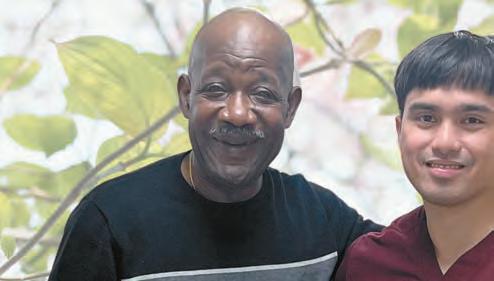


C M CEL page 3 Y K Page 3 QUEENS CHRONICLE, Thursday, June 22, 2023 For the latest news visit qchron.com 26 TH ANNUAL CELEBRATION OF QUEENS • 2023 Corp., had to say about our team: “ Short-Term Care | Long-Term Care | Hospice Care • • • • New modern look. Same tradition of care. 718-298-7806 • 164-11 Chapin Parkway, Jamaica Hills, NY 11432 • margarettietz.org RIGHT PLACE,
Airports transformed before our eyes
by Michael Gannon Senior News Editor
President Harry Truman was at the opening ceremony of Idlewild Airport back in 1948. In 2014, then-Vice President Joe Biden was the impetus for what would become a new LaGuardia Airport.
In the last seven years, LaGuardia, which opened in 1939, has pretty much completed its transformation from the “third-world airport” that Biden had passed through.
And within the next seven, the Port Authority of New York and New Jersey is promising similar if not better results at what is now John F. Kennedy International Airport.
The gem at LaGuardia, Parekh said, is evident immediately.


“I think it’s when customers first walk into the new terminals,” he said. “How spacious they are, the amount of light that flows in. It’s the first place you see when you come into the airport and the last place you see before you leave the airport. And, probably more importantly, a lot of the artwork that now is across the entire terminal ... It’s not just transportation.
It’s not just an aviation building.
It’s also a place to feel a piece of New York pride, because a lot of the art reflects the culture of diversity of the people of New York and the people of Queens.”
FUTURE MODERNIZATION
“It is our goal to have world-class airports, to be a worldclass operator,” said Hersh Parekh, director of government and community relations for the Port Authority of New York and New Jersey, which operates both JFK and LaGuardia. “It is our goal to have the best facilities not just in the country, but in the world. We’ve proven we can do that with LaGuardia. And we want to make JFK even better.”
Being New York City, of course, there was a catch — a big one.
“We built LaGuardia and we’re building JFK while we’re maintaining full flight operations,” said Thomas Topousis of the PA’s media office. “And at LaGuardia we had record numbers of passengers while rebuilding the airport. You build something new and you take something down ... It’s never really been done at an airport.”
According to the PA, LaGuardia is substantially complete.

Parekh said the work that still needs to be done includes two of the Terminal C concourses.
“That deals with the additional concourses,” Parekh said. “Terminal C will have four concourses, two of which we will have completed in the next 12 to 18 months. Two are completed. Half of the third is open. The fourth, one of the Delta concourses, will be a gut renovation. We’re not going to knock it down like the other concourses.”

The passenger experience, Parekh said, is a 180-degree turnaround.
“It’s night and day,” he said. “LaGuardia literally has gone from the worst airport to the best airport. And that’s not just the Port Authority’s opinion. It’s been the opinion of the determination of independent panels, avi-
ation experts.”
The new Terminal B back in March was designated as the best new terminal in the world by Skytrax, an international airport rating organization. It also was the first North American terminal to receive the group’s five-star-rating.
“[Skytrax] is kind of inside baseball,” Parekh said. “But it’s very much the Oscars of the aviation industry.”

For traditionalists, two of the old American Airlines terminals from 1939 not only have been saved from the wrecking ball but have been renovated and are still being used by American [Airlines].
Topousis said the remainder of the buildings recently earned an award from the Queens Chamber of Commerce.
The classic Marine Air Terminal, which is both an official New York City landmark and on the National Register of Historic Places, was not touched and serves Spirit Airlines.
Parekh believes the PA has far exceeded the traveling public’s expectations from 2014-15.
“I don’t think anyone thought LaGuardia would turn out as beautifully as it did,” he said. “And the results speak for themselves.
“You’ll see it if you look at those independent ratings. We see it on social media all the time, where people tweet that it is their first trip back to LaGuardia since Covid, and they are amazed at the difference They think they’re at the wrong airport ... You’re no longer just trying to get to your flight.
You’re going to enjoy the airport, the art installations, the concessions, just the overall experience.”
The work at JFK, by comparison, is in its infancy.
“Kennedy is a much larger, much more complicated and much more expensive development program,” Parekh said. “LaGuardia was an $8 billion project. This is a $19 billion project at Kennedy.”
At JFK some terminals are being expanded while others will be demolished and replaced.
Terminal 8, which houses American Airlines, underwent a $400 million expansion to allow British Airways to relocate in from Terminal 7 back in December.
Parekh said the building also has artwork that pays homage to the massive stained-glass window that for decades was a prominent feature of JFK’s old American terminal.
“That window went out a very long time go,” Topousis said. “You can buy pieces of it on the internet.”

The next project expected to come online will be the expansion of Terminal 4, which is expected to be completed in the third or fourth quarter of this year. The project will allow Delta, now operating out of Terminals 2 and 4, to consolidate in one place.
The PA has pointed out that there has been massive private investment in the airports. American has invested $400 million. Delta has put up $1.5 billion of its own money. The Port Authority also has committed $3 billion.
Still in its preliminary stages is
what will be the $9.5 billion Terminal 1, the largest at the new JFK.

“That will be the gem on the south side of the airport,” Parekh said. Terminal 1 will be built on land presently occupied by Terminal 1, Terminal 2, which has been closed and will be demolished, and the vacant lot that used to have Terminal 3. The first phase will be completed around 2026. Completion is expected around 2029 or 2030.”
Finally, a new Terminal 6 will be built on the site of the old Terminal 6 and the existing Terminal 7, which will be demolished. It will be connected to Terminal 5, which houses JetBlue.
Parekh also said the PA is proud of the benefits that have been accrued by the communities around LaGuardia and those coming to the area around JFK.
Topousis said area businesses were awarded more than $850 million in contracts from the LaGuardia project alone, and a record $2 billion in contracts for minority and women-owned businesses.
“More than 1,000 residents have gotten jobs,” Parekh said. The $850 million for local businesses has been a source of pride for us. We’ve set up aviation [science, technology engineering and math] programs [in area schools]. We’ve awarded a dozen full scholarships to Vaughn College for high school students. We’re rebuilding airports, but we’re also bringing economic, educational and business opportunities. It’s a humongous point of pride for the Port Authority.” Q
QUEENS CHRONICLE, Thursday, June 22, 2023 Page 4 C M CEL page 4 Y K For the latest news visit qchron.com 26 TH ANNUAL CELEBRATION OF QUEENS • 2023
A traveler makes his way through one of the new terminals at the new, brighter and far more passenger-friendly LaGuardia Airport near the end of an $8 billion renovation and rebuild.
PHOTO BY MICHAEL SHAIN
The new Terminal 1 at John F. Kennedy International Airport will be the gem of a $19 billion rebuild. RENDERING COURTESY PANYNJ
LaGuardia’s future has arrived; Kennedy has 2030 ETA
Queens Village
$699,000
Nestled in the highly sought-after neighborhood of Queens Village, this delightful colonial home presents a fantastic opportunity. Boasting three bedrooms and two bathrooms, it offers endless potential. Upon entering the fi rst fl oor, you will fi nd a conveniently placed closet and an inviting entry foyer that leads to a sunlit living room. Adjacent dining room leads into a FULLY RENOVATED kitchen equipped with state-of-the-art appliances. Patio doors off the kitchen grant access to a spacious backyard, vinyl fence and above ground pool and spacious driveway. Ascending to the second fl oor, are three sun-fi lled bedrooms and an updated hall bathroom. Semi-fi nished basement provides ample space with two closets, boiler, and a water heater. Its location offers the utmost convenience, with its close proximity to a multitude of shopping options, restaurants, public transportation.


Carmen Coll

Licensed Real Estate Salesperson, CBR





D: 718.819.4068 M: 917.306.3486
Carmen.Coll@elliman.com
Bayside Gables Price Upon Request
Expand Your Horizons...Elegant Normandy Tudor located in Historic Bayside Gables situated on an Expansive Beautifully Landscaped Property...The Main Level features a Gracious fl owing layout including an inviting Foyer, Formal Dining Room, Sun Drenched Living Room with Wood Burning Fireplace leading into an All Season Garden Room ideal for afternoon tea or evening cocktails, Powder Room, Spacious Kitchen with Breakfast Room...French doors opening onto a brick patio perfect for outdoor dining and entertaining. The Upper Level consists of four bedrooms, three of which are En Suite. The Master Bedroom accentuates a Wood Burning Fireplace, A Bright & Sunny Sitting Room overlooks the lush Gardens... Solid Oak Hardwood Floors Throughout, CAC + 2 car garage with electric charging station.

C M CEL page 5 Y K Page 5 QUEENS CHRONICLE, Thursday, June 22, 2023 For the latest news visit qchron.com 26 TH ANNUAL CELEBRATION OF QUEENS • 2023 Bayside Offi ce | 36-29 Bell Boulevard | 718.631.8900
110 WALT WHITMAN ROAD, HUNTINGTON STATION, NY 11746. 631.549.7401. © 2020 DOUGLAS ELLIMAN REAL ESTATE. ALL MATERIAL PRESENTED H EREIN IS INTENDED FOR INFORMATION PURPOSES ONLY. WHILE, THIS INFORMATION IS BELIEVED TO BE CORRECT, IT IS REPRESENTED SUBJECT TO ERRORS, OMISSIONS, CHANGES OR WITHDRAWAL WITHOUT NOTICE. ALL PROPERTY INFORMATION, INCLUDING, BUT NOT LIMITED TO SQUARE FOOTAGE, ROOM COUNT, NUMBER OF BEDROOMS AND THE SCHOOL DISTRICT IN PROPERTY LISTINGS SHOULD BE VERIFIED BY YOUR OWN ATTORNEY, ARCHITECT OR ZONING EXPERT. EQUAL HOUSING OPPORTUNITY CALL THE CLARK WATKINS TEAM AT DOUGLAS ELLIMAN FOR ALL YOUR REAL ESTATE NEEDS. East Flatbush Brooklyn $978,888 Web ID #3471165 Brick 2 Family. 5 BR’, 2 Baths. Both Units Have Own Entrance. Beautiful Wood Fls. Bsmnt is Huge! 2 Car Garage. Party Driveway. Yvette Watkins Lic. Assoc. R.E. Broker M 917.655.9318 Eyston Perez Lic. Assoc. R.E. Broker M 718.877.1858 Springfield Gardens $749,888 Web ID #3453358 2 Family. 4 BR Duplex W/Updated Kit, LR & DR. Lower Level Studio. Sep Ent In Rear. Lrg Dvwy, Great Backyard. Yvette Watkins Lic. Assoc. R.E. Broker M 917.655.9318 Eyston Perez Lic. Assoc. R.E. Broker M 718.877.1858 Canarsie $849,888 Web ID #3431043 All Brick Corner 2 Family, 5 BR’s. 3 Elec Meters. Income Generator. Updated Boiler and Good Roof. Large EIK Spacious LR/DR. Yvette Watkins Lic. Assoc. R.E. Broker M 917.655.9318 Eyston Perez Lic. Assoc. R.E. Broker M 718.877.1858 NewListing! NewPrice! InContract! Carmen Coll Licensed Real Estate Salesperson, CBR D: 718.819.4068 M: 917.306.3486 Carmen.Coll@elliman.com Andrea Evans Licensed Associate Real Estate Broker D:718.819.4027 M:718.644.7207 Andrea.Evans@elliman.com Maryann Marinello Licensed Real Estate Salesperson D: 718.819.4161 M: 646.226.2518 Maryann.Marinello@elliman.com Call Us Today For All Your Real Estate Needs! Call Us Today For All Your Real Estate Needs! Andrea Evans Licensed Associate Real Estate Broker D:718.819.4027 M:718.644.7207 Andrea.Evans@elliman.com Maryann Marinello Licensed Real Estate Salesperson D: 718.819.4161 M: 646.226.2518 Maryann.Marinello@elliman.com
The expanded joys of cycling
New,
 by Deirdre Bardolf Chronicle Contributor
“Life is like riding a bicycle,” Albert Einstein said, “To keep your balance you must keep moving.”
And that is evident here in Queens, where cycling is on the rise and the infrastructure to support it is keeping up the pace.
Nabil Ahmed Khatari, a 27-year-old software engineer from Flushing, has replaced most of his car trips with bike rides.

“It’s both recreation and primarily how I get around,” said Khatari.

“Commuting to work, doctor’s appointments, grocery runs, even dropping off my younger sister to school,” are all done on two wheels now, he said.
Khatari commutes to Manhattan, often trekking through the cyclist-friendly and scenic 34th Avenue Open Street in Jackson Heights and hitches a cargo trailer to the back of one of his three bikes to run errands when he’s not shuttling his sister off to high school.
“I wouldn’t say it replaces cars necessarily because it’s not always practical in Queens, but replacing some car trips, I think it would make people happier, healthier,” he said.
For recreation, he says he enjoys biking through the beautiful parks Queens has to offer, such as Kissena and Cunningham, and checking out the progress made on paths like the Vanderbilt Motor Parkway.
Khatari is not alone.



love for cycling as well as the adventures they have embarked upon here. The goal is “to form a stronger and more supportive cycling community within our great Queens borough,” according to the page.
Though there is still room for improvement, like more accessible paths in underserved parts of the borough and safer conditions on the existing routes, many acknowledge how far biking in the borough has come — even those from neighboring boroughs.
“Queens has come such a long way in the bike infrastructure arena,” said Allison Cline, a Brooklynite who is part of the Queens Cycling Club.
“I remember hurtling down the Queensboro [Bridge] onto some sketchy pavement with fading, cracked bike lane paint. And now? Sweet, smooth fresh paint bike tracks to welcome you to Queens,” said Cline.
“They have a long way to go, but what a start,” she added. “Nothing like riding your bike over some freshly laid bike path.”
And Cline is not the only Brooklyn native boasting about the riding Queens has to offer. Melissa Duchan moved from there to Rego Park and recently started commuting to her office in Midtown.
“I find that the infrastructure where I am now is much better than where I grew up in Brooklyn,” Duchan said. There are protected lanes from her apartment all the way to work.
FUTURE TRANSPORTATION
Cycling in New York City has reached an all-time high, the Department of Transportation announced in April. Last year, for the first time ever, more than 24,000 trips were recorded over East River bridges during an average, in-season weekday, according to the agency.
Communities have also arisen throughout Queens that celebrate biking and share events and regular rides, all for free and open to the public.
The Queens Social Ride meets every Sunday at 9 a.m. at the Unisphere in Flushing Meadows Corona Park for a 15- to 30-mile ride to different parts of Queens. Participants go from 8 to 13 mph on their journeys.

The Queens Cycling Group on Facebook has over 1,000 members. Members share a
Some of the improvements are thanks to connecting different bike paths together, an effort that remains underway.
“Queens has some spectacular and unique bike infrastructure,” said Jessame Hannus, also of Rego Park.
“You could do a trip from the Queensboro Bridge to Flushing Meadows Corona Park and back and be on bike lanes just about 100 percent of the way,” Hannus said. “Much of that is protected and downright lovely.”
And the work continues to ensure safe and smooth spins.
The DOT is on track to install a record number of protected bike lanes this year, to “harden,” or add barriers, to more than 10 miles of existing bike lanes and to use sturdier materials in new ones, it announced along with the ridership boom.
“Upcoming protected bike lane projects include a range of high-ridership corridors, bridges, priority investment areas in underserved communities, and innovative bike boulevards,” the agency said at the time.
Improved locations include the Joseph P. Addabbo Memorial Bridge to Cross Bay Boulevard as well as Vernon Boulevard from the Ed Koch Queensboro Bridge to the Esplanade Entrance.
Open Street redesigns are in the works for 33rd Avenue from Utopia Parkway to 215th Place in Bayside and 31st Avenue in Astoria. The first phase of a community bike network is coming to Community District 11. Protected bike lanes are on the way for Astoria Heights and Cypress Avenue in Ridgewood.
Procurement is taking place for the DOT’s Better Barriers program. The agency will test new curb materials at targeted locations citywide, including on 11th Street and Jackson Avenue in Long Island City.
Bike lanes on Queens Boulevard have been expanded and hardened, including three-quarters of a mile of delineator-protected bike lanes with Jersey barriers from 72nd Street to Grand Avenue back in May. That built upon 3.7 miles of bike lane hardening on the notoriously dangerous boulevard last year, for a total of 4.4 lane miles.
“Hardening bike lanes across Queens to making the Joseph Addabbo Bridge more accessible to cyclists and e-bike users are direct investments in equitable street safety, and I thank the DOT for its partnership in protecting all who use our roadways,” said Queens Borough President Donovan Richards in a statement back when the DOT made its ridership and infrastructure announcement.
Richards said he looks forward to “doubling and tripling down” on future shared efforts.
“We’re focusing on thoughtfully expanding our existing bike network with new lanes in underserved communities; new connections across bridges; and comprehensive neighborhood networks — all while developing innovative new bike boulevard designs that reduce vehicle volumes and prioritize cycling safety,” DOT Commissioner Ydanis Rodriguez explained back in April.
Events, too, will encourage the biking movement.
On July 29, the citywide Summer Streets program will come to the LIC and Astoria waterfront, where it will run along Vernon Boulevard from 44th Drive to 30th Drive.
“Summer Streets is a must-do for walkers, runners, bikers, or anyone who wants to celebrate the summer in New York,” said Laura Rothrock, president of the Long Island City Partnership, in a release about the event last week.
Beyond the obvious benefits of biking for health and the environment are innovative new ways to maximize the paths, something that was seen in Rockaway earlier this month.
Thanks to a multiagency effort, a $16.6 million infrastructure project that rebuilt Beach 108th Street from Beach Channel Drive to Shore Front Parkway was completed, bringing not only protected biking but expanded pedestrian space and enhanced traffic safety to the corridor.

The kicker? It features porous pavement that will allow nearly 1.3 million gallons of stormwater to be absorbed into the ground each year, aiming to reduce flooding.
In a prepared statement about the project, Rodriguez said, “These changes improve safety for all road users and support safe, sustainable, and efficient transportation options for New Yorkers.”
QUEENS CHRONICLE, Thursday, June 22, 2023 Page 6 C M CEL page 6 Y K For the latest news visit qchron.com 26 TH ANNUAL CELEBRATION OF QUEENS • 2023
Q
Cyclists take a break near Fort Tilden in Rockaway during this year’s Pineapple Ride, held June 10. The annual event benefits a different charity each year. PHOTOS BY NABIL AHMED KHATARI
Beauty and utility: One ride parked before Queens’ best-known symbol makes for an elegant nighttime shot, while another on a Flushing sidewalk demonstrates pure practicality.
safer lanes abound — for pleasure, commuting, shopping and more



C M CEL page 7 Y K Page 7 QUEENS CHRONICLE, Thursday, June 22, 2023 For the latest news visit qchron.com 26 TH ANNUAL CELEBRATION OF QUEENS • 2023
Healthcare innovations save lives
Elmhurst, Jamaica and NewYork-Presbyterian Queens hospitals see upgrades
by Naeisha Rose Associate Editor
It’s the 21st century, and with new technology comes improvements in healthcare. While Covid-19 certainly opened the public’s eyes to the importance of maintaining and upgrading hospitals, many of the health facilities in Queens were already in the process of making improvements not only to better treat patients but to also provide care in more efficient buildings.
At NYC Health + Hospitals/Elmhurst, there are several ongoing projects, according to Milenko Milinec, the chief operating officer at the medical center.
“We’ve been very fortunate over the last few years that we have a lot of elected officials and elected partners who are contributing to upgrades at the facility,” Milinec told the Queens Chronicle. “We have in total $560 million in upgrades on the way or planned at the hospital here.”
At the end of July, the hospital will have two full-size operating rooms after it merges two cystology rooms with an existing operating suite. The new ORs will have a tech space too.
“We are creating two full-size operating rooms capable of robotic surgeries,” Milinec said. “We will increase our surgical capacity at the hospital” by 20 percent.
Surgeons will use a da Vinci robot to assist them with procedures.
The hospital also has an ambulatory surgery expansion.
“We are adding another OR and four procedure rooms,” said the COO. “That will increase our outpatient surgical capabilities at the hospital, as well. That will add us many surgical sub-specialties: urology, gastroenterology, general surgery, pulmonology, symptomology and gynecology.”
The hospital also has modernized its radiology rooms.
“We have made many imaging upgrades,” said Milinec. “We’ve replaced the equipment at three of our mammography rooms with digital mammography. We have a fourth planned for this upcoming year, so that we are fully modernized with our entire mammography suite.”
The hospital is in the process of replacing a nuclear camera, it replaced a CT scanner and an upgrade to a Cardiac Cath Lab is in the works, according to Milinec.
“A nuclear camera is used to better locate the cancer in patients,” he said. “It gives us a clearer image of where it is.”

There will also be a $13 million renovation of the hospital’s entire Labor & Delivery Suite.
“That will provide a new recovery space, a new triage and a new anti-partum space,” the COO said. The project is scheduled to begin in December and is expected to take 15 months to complete. “We are looking at Spring of ’25 for completion.”
The ambulatory expansion is expected to have the same timeline as the L&D suite. The mammography suite upgrade is expected to start in August and be completed in three months, as well as the Cardiac Cath Lab.
“It has been a decade since the first talk of renovation,” Milinec added. “We had completed design prior to Covid ... Thankfully, we didn’t start construction because we were at the epicenter of the epicenter for Covid ... We now section off areas of the Emergency Room and are able to manipulate airflow should there be other surges.”

Some energy upgrades at the hospital, which is located at 79-01 Broadway, include solar panels on the Ambulatory Clinical building and spending $8 million on an emer-
gency electrical system.
Located in Flushing, NewYorkPresbyterian Queens said it is passionate about providing high-quality care to the city’s most diverse borough.
“I’m proud of the new programs, units and innovation at NewYorkPresbyterian Queens,” said Jaclyn Mucaria, NY-Presbyterian Queens’ president, in a statement via email. “Our commitment to the community we serve is unmatched and we’re constantly looking for ways to bring more enhanced services directly to our patients where it’s convenient for them.”
The hospital recently opened a new state-of-the-art pre-operative area and family waiting area with two new operating rooms. The two new rooms include the latest in robotic surgery capabilities and equipment.
rological condition at a general or surgical ICU, but the neuro-ICU will be able to react faster in providing care helping to speed up healing, improve outcomes and shorten hospital stays.

The neuro-ICU will include a full CT scanner on-site, private rooms, dedicated video EEGs at each hospital bed to help detect seizure activity, ICU point-of-care pharmacists and a patient lift in each room to ensure safe transitions for both patients and medical staff.
To improve their techniques, physicians, nurses and other personnel use medical simulation to help healthcare professionals and trainees at the hospital perfect their teamwork and communication and further develop their skills, according to NYPQ.
FUTURE PRESCRIPTION
NY-Presbyterian also upgraded and expanded its intensive care units with state-of-theart equipment to provide broader critical care. The expansion included redesigning three brandnew units with 60 ICU rooms to support adult surgical, medical, cardiac and neurological critically ill patients.

Opening in July, it will be home to the only neuroscience intensive care unit in the borough, offering specialized critical care for patients with complex neurological conditions, according to the hospital. Specialized treatment may not be readily available for patients with a neu-
ceremony on June 16. “Our volume peaked in 2010, at 135,000 visits when neighboring hospitals closed. That made us the 27th busiest emergency department in the country.”
Prepandemic, visits were averaging 120,000 per year, he added.



“We are the busiest Level 1 Trauma Center in all of New York City,” said Flanz. “As a safety-net hospital, we have not had access to capital for major facility upgrades and that is why we are profoundly grateful to Gov. Hochul for providing this ... transformation grant that will enable us to provide ... exceptional services in a state-of-the-art emergency department. Our community, and our patients deserve nothing less.”
The hospital will go from having one trauma bay to four major trauma bays, from one isolation room to 22, and three times the number of treatment areas, he said. There will also be two new intensive care units: a 12-bed neuro-ICU and a 10-bed ICU. That brings the total of ICU beds to 48.
“When completed, the Emergency Department will double in size,” the CEO said. “The project will also add much-needed space to our mental health program and to our CPAC,” or chest pain center.
JHMC will also collaborate with Memorial Sloan Kettering Cancer Center to develop its cancer care program.
“This year, like last year, we have targeted our gala to support the development of our cancer program with the goal of providing world-class cancer service ... right here in Jamaica, Queens,” the JHMC president added.
Flanz told the Chronicle that the development with MSK is going great.
At Jamaica Hospital Medical Center, ground was symbolically broken last Friday in the doctors’ parking lot, which is adjacent to its C-building, for a $150 million Emergency Department expansion that will help the health facility serve more than 150,000 patients annually.
The parking lot, located on 89th Avenue between 135th Street and the Van Wyck Expressway Service Road in Richmond Hill, will be taken up by the expanded Emergency Department, according to JHMC President and CEO Bruce Flanz.
“We were able to build the current ER in 1989 anticipating our volume would grow from 30,000 annual visits to 60,000,” Flanz said at the
“They are excited as much about this as we are,” Flanz said. “We have new oncologists who will be providing services right here on our campus. We will be providing services across the board and the goal is to provide as many of the services here, and if there is someone who has a significant need, we have that relationship where they can get treated at Memorial.”
Hochul, the keynote speaker last Friday, said the $150 million was an investment into the future of the community.
“As a result more lives will be saved,” Hochul said. “We have so much more to do. But this community deserves the finest institution, the finest facilities and the finest opportunities to get the best health outcomes in life.” Q
QUEENS CHRONICLE, Thursday, June 22, 2023 Page 8 C M CEL page 8 Y K For the latest news visit qchron.com 26 TH ANNUAL CELEBRATION OF QUEENS • 2023
An example of a NewYork-Presbyterian Queens intensive care unit. COURTESY RENDERING
A rendering of a NYC Health + Hospital/Elmhurst Labor & Delivery patient room. COURTESY RENDERING

C M CEL page 9 Y K Page 9 QUEENS CHRONICLE, Thursday, June 22, 2023 For the latest news visit qchron.com 26 TH ANNUAL CELEBRATION OF QUEENS • 2023 PK Building: 110-51 Guy R Brewer Blvd. Jamaica, NY 11433 IT'S NOT TOO LATE TO APPLY! ROCHDALE EARLY ADVANTAGE CHARTER SCHOOL STILL ACCEPTING PREK - 8TH GRADE APPLICATIONS FOR THE 2023-24 SCHOOL YEAR! Main Building: 122-05 Smith Street Jamaica, NY 11434 Phone: 718-978-0075 Email: Info@reacschool.com Website: www.reacschool.com APPLICATION DEADLINE: AUGUST 31ST, 2023 APPLY AT WWW.REACSCHOOL.COM Looking for a Career in Teaching? Please join our team today! We have openings for K - 8 Classroom Teachers. Please send your resumé to Info@REACSCHOOL.COM.
What’s hot in parks: not just the sun
Playgrounds upgraded,
by Stephanie G. Meditz Chronicle Contributor
pickleball
accommodated, Commonpoint center open
This summer, Queens residents of all ages can visit new and improved parks for some fun in the sun, whether it means prancing around the playground or trying their hands at up-and-coming sports like pickleball.
As the weather gets warmer and schools let out for the summer, Queens parks anticipated high volumes of visitors with their recent renovations, from childproof play equipment to ample exercise space.
Poured-in-place rubber surfacing has proven essential to play areas, especially for young children.
The Trust for Public Land installs this surfacing to its sites to prevent injuries, which is crucial to their work in schoolyards.
The Trust partnered with Councilmember Bob Holden (D-Maspeth) and the Department of Environmental Protection on an upgraded playground at IS 73 in Maspeth that opened in May.
Holden also brought PS 153 to the Trust’s attention, and a new playground there is slated to open next summer.
“We’re looking for areas that don’t have a lot of open space and have a large number of people who live within a 10-minute walk,” Trust for Public Land Playgrounds Director Mary Alice Lee told the Chronicle. “There’s about 15,000 people that live within a 10-minute walk of 153, and so we wanted to create this safe space for them to use after school and on the weekends.”
In Long Island City, PS 111’s new playground will open in July, and construction at IS 145 in Jackson Heights will begin in the fall.
The Trust works with schools on playground designs by distributing a survey to students, parents and the nearby community to hear their input on potential improvements.
In addition to safety surfacing, fitness areas and net climbers are popular among students in Queens, which Lee attributes to the iconic Forest Hills resident Spider-Man.
Modern designs from the city Parks Department also feature safety measures.
In Flushing, renovations at Maple Playground include safety surfacing around the play area and beneath both swing sets. Reconstruction is projected for completion in September.
With funding from the City Council, Councilmember Julie Won (D-Long Island City) and Queens Borough President Donovan Richards, Lawrence Virgilio Playground in Woodside will get safety surfacing, anti-slip mats and security lighting, along with a reconstructed play area.

Jamaica Playground is under active construction, slated for completion at the end of this month.
As part of a $33 million investment partially funded by FEMA 428, a federal program for safe school and other infrastructure projects, the Beach 59th Street playground in Rockaway unveiled a playground featuring new equipment, rubber safety surfacing and a new shade structure in June.
The investment also covers the brand-new Nameoke Park at the corner of Nameoke and Augustina avenues, slated to open at the end of the summer, and Shorefront Beach 98th Street Playground, with its tot play area situated closest to the 97th Street concessions and facilities.
With playgrounds for older children farther away, that follows a trend among recent Parks designs — separate playgrounds for children aged 2 to 5 and 5 to 12.
Challenge Playground in Little Neck also follows that model. It opened last May with more than $3 million in improvements, including new swings, a spray area and a cement wading pool.
In Briarwood, Hoover Playground’s design shows separate play areas for older and younger children, complete with 8-feet swing sets and monkey bars, slides and rock walls sized proportionally to each age group.
“I think it’s so important that we’re able to create a safe place for the kids to play, to have that resource so that they can play outside, get fresh air, exercise, and also for the social interaction,” Lee said. “It’s a great way of strengthening social ties in a community by having a playground that is a fun place to visit.”
Exercise and socialization have no age restriction — Commonpoint Queens Tennis and Athletic Center Tennis Director Aki Wolfson said pickleball is “growing everywhere” and creating high demand for courts, especially among older crowds.
With elements of tennis, badminton and pingpong, pickleball is accessible for all ages and skill levels, but can quickly become competitive.
Center is an indoor and outdoor facility that boasts 10 pickleball courts, seven tennis courts and a 40-by-60-yard turf field.
In addition to paid programming, tennis courts are open to the public with a permit from the Parks Department.
Other parks are starting to meet public demand for pickleball — handball courts at Ravenswood Playground in Astoria, St. Michael’s Playground in Woodside and Louis C. Moser Playground in Jackson Heights have spaces designated for it. Roy Wilkins Park in St. Albans also includes four lined pickleball courts on its tennis courts. Last summer, Rockaway Beach 102nd Street constructed a dedicated pickleball court.


“I believe the pickleball rage will continue to grow in the years to come, so installing more pickleball courts will definitely benefit the community,” Wolfson said.
Sporty types in Queens can take their pick of new games to try in upgraded courts.
Shore Front Parkway in Rockaway saw a newly constructed multipurpose sports field open in May, one that includes sand volleyball courts and table tennis tables. In Southeast Queens, Springfield Park is projected to see new basketball courts and a new barbecue area unveiled in July.
FUTURE RECREATION




“At the moment, we are starting to reach out to children to have them start pickleball,” Wolfson said. “Especially for the little ones, with the smaller space and lower net, it is a good way to start hand-eye coordination skills leading into playing tennis.” Commonpoint Queens, formerly the Central Queens Y and Samuel Field Y, is a nonprofit that has provided physical and mental health programs for more than 60 years, including recreational leagues, clinics and instruction for swimming, dance, soccer, basketball, tennis and more. One offering is wheelchair tennis — Commonpoint hosted the 21st annual Jana Hunsaker Memorial Wheelchair Tennis Tournament earlier this month.
Last year, Commonpoint partnered with Parks to begin operations at the Alley Pond Tennis Center. The Commonpoint Queens Tennis and Athletic
Cricket, which NYC Parks said is “one of the most widely played sports in the world,” is available at Baisley Pond Park, Cunningham Park, Rockaway Community Park, Roy Wilkins Recreation Center, Archie Spigner Park and Tudor Park. Among other park projects:
Thanks to Won, Mayor Adams and the Parks Department, Big Bush Park in Woodside is getting an $847,000 renovation that began in June to replace its old astroturf with new synthetic turf for soccer, baseball and other activities.
Community Board 7 voted last February to transform Field 3 at College Point Fields into a small soccer pitch ideal for youth league games. The plan includes synthetic turf and storm management infrastructure, with design set to be done in January.
For storm management in Rosedale, the National Audubon Society partnered with the Department of Environmental Protection and Parks to complete a $725,000 restoration project at Hook Creek Park in May. The project sought to preserve saltmarsh from sea-level rise, which provides habitats for birds to breed and safeguards against flooding.
The Chronicle reported that Alley Pond Park and Sunset Park are undergoing similar projects, as will Rockaway Community Park in Edgemere, Idlewild Park in Jamaica, Vernam Barbadoes Peninsula Preserve in Far Rockaway, Hamilton Beach Park in Howard Beach, Powell’s Cove Park in Whitestone and Spring Creek in Brooklyn in the future. Q
QUEENS CHRONICLE, Thursday, June 22, 2023 Page 10 C M CEL page 10 Y K For the latest news visit qchron.com 26 TH ANNUAL CELEBRATION OF QUEENS • 2023
The Trust for Public Land partnered with Councilman Bob Holden on IS 73’s colorful, revamped schoolyard, left. At Louis C. Moser Playground in Jackson Heights, above, players of tennis and pickleball both can serve up a good time. PHOTOS BY STEPHANIE G. MEDITZ
Tape on a wall at St. Michael’s Playground in Woodside designates space for pickleball.





















C M CEL page 11 Y K Page 11 QUEENS CHRONICLE, Thursday, June 22, 2023 For the latest news visit qchron.com 26 TH ANNUAL CELEBRATION OF QUEENS • 2023 EXCELSIOR ROOFING SERVING ALL 5 BOROS HIC-LIC #2106940 FULLY LICENSED • ROOFING • SILICONE • CHIMNEY • GUTTERS • POINTING • PAINTING • THOROCOAT • BRICK WORK • TUCK POINTING • WATERPROOFING CALL FOR FREE ESTIMATE TODAY 718-285-2357 EMAIL: EXCELSIORROOFING4@GMAIL.COM WEBSITE: EXCELSIORROOFS.COM SPECIAL 10% OFF With this ad. EXCR-081629 SENIOR DISCOUNTS $ 99 GUTTER CLEANING Clean Roof Gutters and Flash All Vents and Silver Seal Flat Roofs Up To 800 sq. ft. Only $695
Higher ed investment benefits all
by Frank Wu
As president of Queens College, I tell our students my family is just like their family. In my dream job, I have come full circle: My parents came to the United States in the early 1960s, as students. I was born on these shores, and I know I owe my position today to the power of our system of higher education. It has been and can continue to be the engine of the proverbial American Dream.
This is especially true in the World’s Borough, where so many journeyed from far and wide, sacrificing for their next generation, because they identify with the ideals which beckon around the globe. Some critics doubt the value proposition of higher education. In the City University of New York system, however, we have confidence we are doing what we were established to do. We enable not only individuals but also communities to become upwardly mobile.

Rankings and studies consistently prove with compelling data the



story our own students share. Although rival institutions may be charging more than $80,000 per year for undergraduate education, our tuition remains less than $8,000 — an order of magnitude difference. Thanks to the generous support of the state and the city, more than 40 percent of our students do not have to pay any of that either. So, regardless of your financial circumstances, it is still possible to put yourself through college if you are a student in our programs.
Our institution is an investment in the common good. While a few have lost confidence in the very concept, offering a self-fulfilling prophecy that our world consists only of persons pursuing their own self-interest without regard for others, we continue to put our idealism into practice.
Before the pandemic, we commissioned expert economists to consider the evidence. They documented that for every public dollar that is put into Queens College, the institution returns just shy of five to the

New York City economy through the efforts of its graduates. This alumni impact amounts to $1.5 billion. It represents collective earnings, taxes paid on those earnings, jobs created by alumni, taxes paid by their businesses, and spending by alumni. The study also revealed that nearly 85 percent of QC students stay in the metropolitan area after graduating. They earn an average of $34,500 more annually and $1.5 million over their working lifetime than a person with only a high school diploma.
More than a thousand people, including faculty and staff, alumni and students, developed our strategic plan. Even when it was impossible to hold town halls in person, they assembled on virtual platforms to envision our future. We agree that we want to embrace diversity, equity and inclusion. These have been core values well before any controversy over the basic concepts of fighting discrimination in all its forms and promoting respect for everyone who would extend it in turn.
So many of our students are double majors. They know change has become the only constant. Their careers, plural rather than singular, will demand adaptation. That is why we opened a new arts school and a new business school simultaneously. The savvy art student will take a business course, and vice versa. The renowned school of education is exemplary. All of those being trained to teach an even younger generation are essentially double majors: They learn a subject such as history or physics, and then they learn how to pass on their knowledge and skills.
FUTURE EDUCATION



To prepare our students to work and to help them secure jobs with decent wages in their field of study is the minimum. We must do more than that. Our responsibility is to make ready engaged citizens. Democracy is sustained by participation. Since 1937, our motto has been, “We learn that we may serve.” Now, we recognize that the best leaders are those who serve. Yet all the good we can do is possible only with mutual commitment

Queens College tuition is still below $8,000 a year, a tenth of what many rivals charge.

to the social contract. The pandemic tested our resolve to come together. We pledged, with the hope which was needed to make it through such an extended crisis, that afterward we would try to do better than we had before. Higher education makes that possible, and our campus is one of those few places where people of all ethnicities and all faiths are bound together in aspirations to improve their lot in life and the world around them.
I am humbled to hold the role that I have, because I am inspired by our students. We have a duty to empower them. Q
Frank Wu is President of Queens College.
Catholic Cemeteries is proud to offer families pre-construction options for our beautiful brand new Mary Our Lady of Peace Mausoleum. This new mausoleum features indoor and outdoor crypt and niche sites surrounded by religious statuary and stained glass refl ecting the life of Mary.

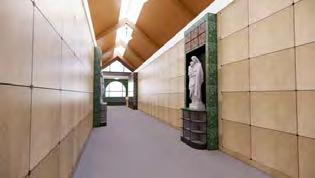



QUEENS CHRONICLE, Thursday, June 22, 2023 Page 12 C M CEL page 12 Y K For the latest news visit qchron.com 26 TH ANNUAL CELEBRATION OF QUEENS • 2023 Introducing: Mary Our Lady of Peace Mausoleum Mount St. Mary Cemetery, Flushing, NY CATHOLIC A CEMETERIES
To request information on Mary Our Lady of Peace, please mail this coupon or call to schedule an appointment. Mail to: Mount St. Mary Cemetery 172-00 Booth Memorial Ave. Flushing, NY 11365 (718) 353-1560 Name: Address: Phone:
COURTESY PHOTO




















C M CEL page 13 Y K Page 13 QUEENS CHRONICLE, Thursday, June 22, 2023 For the latest news visit qchron.com 26 TH ANNUAL CELEBRATION OF QUEENS • 2023 over the counter medication prescriptions 138-44 B, Queens Blvd, Briarwood, NY 11435 Tel: (929) 244-7805 Fax: (929) 244-7806 ©2023 M1P • FMCP-082164 To do list 2023 Flushing Meadows-Corona Park Conservancy odol Would like to invite you to join us this SEASON Come visit our Queens Wildlife Zoo, New York Hall of Science, Queens Museum, Queens Theatre, USTA National Tennis Center, Citi Field, Unisphere, Queens Botanical Garden, Meadow and Willow Lakes Come throw or kick a ball and have a picnic Willow Lake & the Pat Dolan Trail Entrance is at Mauro Playground at 73 Terrace and Park Drive East Take a peaceful nature walk and enjoy the outdoors ❑ ❑ ❑ Check for Times and Location on our website: fmcpc.org or facebook @Flushing Meadows Corona Park Conservancy Support our Park You can help the Flushing Meadows Corona Park Conservancy maintain and preserve our 897 acres of beautiful meadows, playgrounds, fi elds and educational programming by making a tax deductible contribution or by volunteering, call Jean (718) 544-7436 Jean Silva, President FMCPC Join Us In Our BACKYARD Flushing Meadows Corona Park The Alliance for Flushing Meadows Corona Park Community Advisory Board (CAB) Needs Your Help Community Ideas are Important to US! T Please scan to fill out the survey on the CAB website We are working together to make FMCP the BEST Park for everyone. Please give us your ideas, your suggestions for how YOU would like to see the park serve the community. What type of improvements are needed, what Activities and Events YOU would like to see. Remember It’s Your park. Come join us! Alliance for Flushing Meadows Corona Park The mission of the Alliance for Flushing Meadows Corona Park is to support NYC Parks to preserve, maintain, and improve Flushing Meadows Corona Park for the benefi t and use of the surrounding communities and all New Yorkers. allianceforfmcp@gmail.com Community Advisory Board The CAB’s mission is to provide a coordinated community voice and affi rm the community’s ongoing importance – and inclusion in – the Alliance’s goals for the park. These goals include programming, activities, maintenance and operations, beautification, sustainability, and fundraising. fmcpcommunity@gmail.com To do list 2023 Next Meeting is June 29th VOEO-082175 The Voelker Orth Museum, Bird Sanctuary and Victorian Garden 149-19 38th Avenue, Flushing, NY 11354 www.vomuseum.org 718-359-6227 WELCOME! COME, ENJOY A BEAUTIFUL SUMMER GARDEN! Experience the 19th century home of German immigrants and explore connections to Queens families today. Offering drop-in house tours & gallery hours, Tuesdays & Sundays 1-4. Prayer Cocoon & Textile Art by Dani C. Song on view Welcome Summer! Family Day, June 29th, 1:00-3:30pm Garden Creativi-Tea Art Workshops, July 11th, 18th & 25th, 1:30pm Shakespeare Plays in the Garden, August 4th & 18th, 7:30pm info@vomuseum.org Celebrating 20 Years
Outdoor learning activities in Queens
Idlewild, HarborLAB, Queens Botanical Garden and APEC have plenty of offerings
by Naeisha Rose Associate Editor
Schools may nearly be out for the summer, but fun, environmentally oriented activities and enrichment opportunities for youths and adults are being offered throughout Queens in some new and improved facilities and unique sites.

Set near Jamaica Bay and adjacent to JFK Airport, within one of the largest saltwater marshes in the borough, is the Idlewild Park Preserve Environmental Science Center, a 5,400-square-foot pavilion.
The Eastern Queens Alliance, a federation of civic associations in Southeast Queens, runs the green learning and community center, which has indoor and outdoor classrooms, exhibitions and views of the wetlands.
“We just opened last year,” EQA Chairwoman Barbara Brown said of the $8 million facility that had a ribbon-cutting ceremony on April 28, 2022. “We run environmental education programs for children and adults.”
“We try to get youths to think about environmental topics they are passionate about and make some kind of a change,” the EQA chairwoman said. “We help them focus on how they are going to go about accomplishing those changes.”
The initiative is an international program by Jane Goodall, the world-renowned primatologist and anthropologist famous for her work studying wild chimpanzees, and her institute.
“We have a loose affiliation with them,” Brown said. “Last summer, our youngsters said they were concerned about environmental racism and justice ... they did research and made a presentation and had a discussion about the topics with people from the community, as well as elected officials.”
The youths were also concerned about the overuse of plastics and did park cleanups.
FUTURE EXPLORATION
Brown told the Queens Chronicle that its upcoming six-week summer session, which has the theme of “Water, Water, Everywhere ... Wonders of Earth’s Waters,” runs from Mondays to Fridays, July 10 to Aug. 18, from 10 a.m. to 3 p.m., and is for children ages 6 to 12.
Youths will learn about science, technology, engineering and mathematics, marine animals, weather, climate change and how much of the planet is covered in water. They will also get to use the 15-acre Idlewild Park Saltwater Marsh, which the center is situated within, as a laboratory extension.
“During the summer, we will also have our Roots & Shoots leadership program,” Brown said. “It’s called Roots & Shoots Youth Brigade.”
The program runs on Saturdays from July 1 to Aug. 26, from 11 a.m. to 1 p.m., and is for youths and young adults ages 10 to 19.
“We try to get them from ‘I’m passionate about this topic’ to ‘How am I going to do something about this?’” she added. “What are the steps of planning a project from beginning to end? What are your target goals? What is your target population? Who do you reach out to? They plan out the steps, and learn how to execute it and accomplish it both individually and together.”
There are no set dates, but later this summer, weather permitting, the preserve intends to collaborate with Harbor Learning Adventure Boating, a Long Island City-based environmental and educational organization, according to Brown.
“We are seeing what is available on their schedule to take people out canoeing and kayaking,” she said. “The canoeing and kayaking will go on at the Idlewild Park Preserve.”
To sign up for programs or learn more about the science center, call (347) 824-2301 or visit easternqueensalliance.org.
HarborLAB, run by Erik Baard, its founder and executive director, is a water-themed environmental science learning service, which hosts its programs at various sites throughout New York City’s waters and New Jersey’s.
“We are regrouping after the pandemic,” Baard told the Queens Chronicle. “We don’t have an interior space.”
This summer most of HarborLAB’s events will be at Gantry Plaza State Park in Long Island City.
Earlier this month, a Gantry Pride Paddle event was supposed to be held at the park but was delayed until June 24, from 12 to 3 p.m., because of air-quality issues from the Canadian wildfires, according to Baard.
Other paddling events are scheduled for July 29 and Aug. 19 at Little Bay Park in Fort Totten, from 12 to 4 p.m.
“Because we are a mobile platform, we have something called the WAEV,” Baard said. “It is a water-accessed electric vehicle. We have two electric vehicles that are stuffed with next-generation inflatable kayaks. We go all around the city, especially in Queens.”
Tentative events include an Energy Inde-



pendence Paddle from New York Harbor to Porte Liberte, NJ, which will include a discussion on the history of energy at the harbor, tidal mills and offshore turbines. Another possible event is the Gantry Independence Day Open Paddle on July 4, from 10 a.m. to 12 p.m.

“The events are weather- and water qualitydependent,” Baard said.

While there is no contract, HarborLAB is speaking with developers to have a boathouse at Anable Basin, near the Pepsi Sign in Long Island City, so that they can have an ADAaccessible launch there.
“It’s a finger of truncated water,” said the HarborLAB founder. “We are also planning on speaking with the Parks Department to get a wheelchair runway at Little Bay Park. Our whole mission is environmental education, access and our diversity, equity, inclusion and accessibility work.”
HarborLAB has openings for volunteers and paid internships for those who want to help with its event programs.
To learn more about its educational tours or a position, visit harborlab.org.
Back on land, ground will be broken at the end of this year for the Queens Botanical Garden’s new educational center at 43-50 Main St. in Flushing, according to Jatnna Ramirez, QBG’s director of programs.
“In the next two to three years we will have a new education building that will be able to house a lot more programming for youths and adults,” said Ramirez. “The new building will have a garden surrounding it and a teaching kitchen for both adults and kids to do food exploration and nature explorations. We are very excited about that.”
While Ramirez is happy to be getting a newer building to teach guests and train staff, especially during inclement weather, most of QBG’s programming is outdoors.
“We have year-round programming, nature exploration for kids as little as 2 years old,” said the director. “It is cool to see kids engaging with plants and flowers. We have a farm
here where we grow food. We have a workshop called Plants We Eat and they get to learn where food comes from.”
QBG also has a bee garden and a program called Buzz Worthy.
“It’s all about our bee friends and helping people connect with nature and understand the function of bees and other pollinators in our life,” Ramirez said.
Parents can participate in kids programming and there are also outreach workshops at libraries and community centers, where the QBG takes the garden to.
The garden is also offering a paid farm internship for college-aged students to learn about urban agriculture.
To learn more about QBG’s offerings or the internship program, visit queensbotanical.org.
The Alley Pond Environmental Center, which has long been based on Northern Boulevard, just east of the Cross Island Parkway, is also getting a new educational facility, according to Irene Scheid, APEC’s executive director.
“The new building is where the old building’s back parking lot was,” Scheid said. “Once people enter the building, they can go right into the park without crossing an active parking lot.”
The 9,940-square-foot facility is expected to achieve a LEED Silver environmental rating, and it has passive ventilation in occupied spaces, radiant heat flooring, occupancy sensors and reduced energy consumption, along with geothermal heating and cooling, according to the Parks Department.
“It will have additional classroom space,” Scheid added. “We will be there by the fall.”
In the meantime, people are attending programs at a temporary location at 224-65 76 Ave. in Oakland Gardens.
There will be an Evening Pajama Party and Story Time for young kids on Friday, June 23, from 7 to 8 p.m., and a Vet Tech program on July 15, from 10 a.m. The summer offerings are filling up quickly, so visit alleypond.org to register. Q
QUEENS CHRONICLE, Thursday, June 22, 2023 Page 14 C M CEL page 14 Y K For the latest news visit qchron.com 26 TH ANNUAL CELEBRATION OF QUEENS • 2023
A new environmentally friendly building for the Alley Pond Environmental Center is expected to be completed by the fall. RENDERING COURTESY NYC PARKS
A HarborLAB tour of the East River under the Queensboro Bridge. PHOTO BY MAIRO NOTTON





















C M CEL page 15 Y K Page 15 QUEENS CHRONICLE, Thursday, June 22, 2023 For the latest news visit qchron.com 26 TH ANNUAL CELEBRATION OF QUEENS • 2023 bookbums@aol.com 104-29 Jamaica Ave., Richmond Hill, N.Y. 11418 718.441.1199 ©2023 M1P • AUSB-082064 10429J BASEBALL BOOKS BOUGHT & SOLD BASEBAL Like us on acebook The Austin Book Shop Email and Phone Orders Are Welcomed! Rated one of the best Book Shops in Queens! With excellent customer service! er v c e s i ! WE SUPPORT ALL QUEENS SPORTS & BUSINESSES OPEN: SATURDAYS & SUNDAYS CALL AHEAD Only a few spots remaining for NY’s #1 summer baseball camp. Led by New York State Baseball Hall of Fame & former 1978 World Champion NY Yankees Coach Dom Scala. Learn from the best. Don’t hesitate - register today. NEW HEIGHTS CONSTRUCTION LLC PRE-HUNG DOORS, IRON SECURITY DOORS, ANDERSEN STORM DOORS SIDING, ROOFING & WINDOWS Waterproofi ng, Gutters, Soffi t & Fascia Repair, and more! FENCES, DECKS & AWNINGS Wood Cedar, PVC, Stainless Steel, Chain Link, etc. Pressure Treated and Composite Decking KITCHENS & BATHS Complete Renovation & Remodeling, Expert Tile, Granite and Quartz MASONRY WORK Concrete Sidewalk Violations • Porches Brick and Granite Steps Paver Stones • Brick Pointing • Stucco, etc. INTERIOR FLOORING & PAINTING John Miller 917-642-0195 • 718-767-0044 NewHeightsConstructionNYC@gmail.com FINANCING NOW AVAILABLE Call Now for FREE Estimates Call BIG JOHN, the owner, for Personalized Service, Best Prices & Free Estimates! SUMMER SPECIALS! SPECIALS ON VINYL SIDING Expires 7/31/2023 Accepting All Credit Cards



















QUEENS CHRONICLE, Thursday, June 22, 2023 Page 16 C M CEL page 16 Y K JAMAICA JAMS 2023 && SAVE THE DATE jamaicajams.nyc AUGUST 4TH & 5TH JAMAICA NEW YORK jamaicajamsfestival2023.eventbrite.com @CulturalCollab ©2023 M1P • OB’S-082063 Discover fresh baked goods every day at our bakery shop. Wedding Cakes - Seasonal Pies - Catering Services Available Call us at: 718-978-4247 Website: www.obsbakery.com 165-76 Baisley Blvd., Jamaica, NY 11434 PROUDLY SERVING THE QUEENS COMMUNITY FOR OVER 40 YEARS! CATERING SERVICES AVAILABLE Bakery Shop and Takeout Restaurant O.B.’s Bakery serves an irresistible selection of fresh-baked goods and dishes every day. Choose specialties from cakes and pies to West Indian and American dishes. We Specialize in: SUMMER EVENTS and BBQ FOOD ITEMS! 144-45 87th Avenue Briarwood, NY 11435 www.silvercrest.org 718 480 4000 Your Center for Rehabilitation and Ventilator Care









































































C M CEL page 17 Y K Page 17 QUEENS CHRONICLE, Thursday, June 22, 2023 For the latest news visit qchron.com 26 TH ANNUAL CELEBRATION OF QUEENS • 2023 SPECIALIZING IN: WWW.JBHOMEIMPROVEMENTSINC.COM 1-800-599-1150 87-10 101ST AVE., OZONE PARK, NY 11416 Visit Our Showroom at: NYC LIC. #2011058 L.I. LIC. #H18D2240000 Don’t Be Fooled By Any Other Number! Satisfying Customers for Over 40 Years FULLY LICENSED, INSURED & GUARANTEED Summer Specials ✔ ALL TYPES OF VINYL SIDING ✔ FULLY INSULATED SIDING ✔ ROOFING ✔ GUTTERS ✔ GARAGE DOORS ✔ VINYL WINDOWS ✔ SLOCOMB WINDOWS • Triple Low E Glass • Foam Filled Frames • Composite Reinforced Rails • 50 Year Manufacturer Warranty ✔ ANDERSEN WINDOWS CERTIFIED ©2023 M1P • JBHI-082174 • 16 Ft. Panels1/3 Less Seams The Original Since 1981 SAME NAME SAME OWNER
Neighborhood cradles of creativity
LIC and Ridgewood: two communities,

 by Kristen Guglielmo Associate Editor
When describing the borough of Queens, perhaps one of the most definitive terms is the word “dynamic.” The borough is everchanging, while somehow maintaining its historical significance. This is perhaps most clear in the neighborhoods of Ridgewood and Long Island City, both of which have undergone a plethora of changes since their establishment — but have managed to maintain their integrity.


“Both neighborhoods were settled at the same time, and the architecture is very similar,” said Bob Singleton, executive director of the Greater Astoria Historical Society. “Some developers worked in both communities at the same time so they actually resemble each other – for example, Mathews Flats, built by Gustav Mathews.”
Ridgewood is considered one of the largest historic districts in the United States, with more than 2,900 buildings in 18 districts listed on the National Register of Historic Places. The buildings reflect turn-of-the-century multistory Romanesque style with brick row houses and brownstones that are attractive to the eye — including the aforementioned Mathews Flats.
The area was heavily influenced by German immigrants and left-
wing politics. “There is a distinctive shift in that direction by people in their 20s and 30s today, with much of the goals, language, and discussions centered around many of the same issues being discussed in 1900 when both communities were being developed,” Singleton explained.
Though Ridgewood has its fair share of similarities with LIC, young people are especially attracted to it because of its similarity to a Brooklyn neighborhood.
“I call it Ridgewick,” said resident Beatriz Alamonte, a recent college graduate who has lived in Ridgewood for just two years after relocating from Flushing. Ridgewood is a popular locale due to its being next door to Brooklyn’s Bushwick, and it echoes some of the same “hipster vibes,” as Alamonte put it.
“My roommates and I were looking at Bushwick initially, and this is close enough,” she shared.
Both Ridgewood and LIC have grown into high-energy locales, the latter after being heavily built up, mirroring aspects of Manhattan.
The neighborhoods are continuing to develop even today, with plenty of new members of each relocating from out of state.
“People from the Midwest revitalized the area,” Singleton said. “They were not raised in cities. They were raised on plots of land. These people and their parents were usually professionals with some degree of education, so they brought about new ideas.”
While LIC used to be home to a large number of factories, it has grown in creative distinction. The neighborhood, which is the largest in Queens, is now packed with luxury high-rises, beautiful parks and art museums sure to delight any creative type.
The high-rises can be seen from far distances, and people not familiar with the area often mistake them for Manhattan buildings when viewing the skyline.
“Both neighborhoods are brimming with cradles of creativity,” Singleton said. “When you get new people, you get new energy and new ideas. The other ideas continuously are examined because it has to refresh itself.”
Some residents have said Ridgewood is becoming gentrified, with the rise of more commercial coffee shops, thrift stores, bars and chain restaurants — like the Panera Bread that opened its doors on

June 12.
“It could’ve been just a bakery or something,” Alamonte said. “Or more housing. We could use some more large apartment buildings with cheaper rent.”
Not everyone would agree with that statement. “I worry about the very large buildings. I hope not to see more of them,” said Linda Monte, recording secretary and former president of the Greater Ridgewood Historical Society. Monte moved to Ridgewood in the 1970s, and has a deep appreciation for the historical aspects of the neighborhood.
“The large buildings are disturbing to me because I like the small scale of the neighborhood that we have,” Monte said. “It’s lowprofile, and I think that really defines the neighborhood.”
from countries in Europe. “It’s an interesting point, not a hopeless point. If you look closely enough, you see why they’re doing it. New materials, new styles. ”
FUTURE EVOLUTION
Singleton also noted that changes are not new to either area. “People from all around the world are coming here with ideas. Medicine, technology, science, art,” he said. “Every generation modifies its skill set to address the challenges of its particular generation. And a city reinvents itself with every generation, harvesting the latest dynamic ideas. The communities that are hit by that are the ones that have a great future.”
everyone on my block and we look out for each other,” Stimpfl-Fernandez said.
Christina Mayer is a resident of LIC, who moved there from her parents’ home in Rockford, Ill., during the pandemic.
“I had just graduated, and I didn’t want to move back home. I got a remote job based in Manhattan, so LIC seemed like a great idea. It’s close enough, rent was cheaper and I was able to easily get a place with some roommates,” Mayer explained.
“I’m not as much of a fan as I was in 2020.”
The combination of rent going up and the heavily developed setting made for a less than ideal living experience for Mayer.
Of the neighborhood’s historical architecture, Monte said, “Slowly, I see the historical buildings disappearing. The ironwork, gate work... The things that made these buildings historic. We’re losing them.”
LIC has had a similar issue — the architecture that made it unique is slowly disappearing. The area is turning into a mirror image of Manhattan, with large high-rises throughout the neighborhood.

Singleton noted that architectural changes happen with new waves of immigrants, especially those not
Arianna StimpflFernandez, president of the Greater Ridgewood Historical Society, commented on the positive aspects of changes in her neighborhood. “Originally, Ridgewood was mostly German and Italian, but now it’s very multicultural, and I think that’s among the most positive changes,” she said.
The neighborhood holds a special place in her heart, as she grew up there, often spending time at her grandparents’ house — which she now lives in, and maintains the original architecture.
“Ridgewood has a family, community feel to it, and that has stayed the same. Young families keep moving in. I tend to know
“I honestly spend most of my time in other neighborhoods. I come to LIC to sleep,” Mayer said. “Sure, we have plenty to do here, what with all the cafés and art galleries and such, but I wish I would’ve moved somewhere a little more quaint.”
When looking at the changes happening in both Ridgewood and LIC, it’s easy to forget that change is often an inevitable, natural occurrence with nearly every community. The newer generation makes its mark.
As Singleton put it, “Look at young people, see what they’re doing and you can translate that. You’ll see the seeds of the future are being sown.” Q

QUEENS CHRONICLE, Thursday, June 22, 2023 Page 18 C M CEL page 18 Y K For the latest news visit qchron.com 26 TH ANNUAL CELEBRATION OF QUEENS • 2023
Customers sitting outside of Milk & Pull, one of Ridgewood’s many coffee shops. Residents believe there is an excess of newer commercial buildings, such as cafés.
PHOTO BY STEPHANIE MEDITZ
A heavily developed stretch of 31st Street with gleaming skyscrapers in LIC. PHOTO BY MICHAEL GANNON
growing and evolving with time













































C M CEL page 19 Y K Page 19 QUEENS CHRONICLE, Thursday, June 22, 2023 For the latest news visit qchron.com 26 TH ANNUAL CELEBRATION OF QUEENS • 2023 Jamaica Hospital Medical Center is proud to be named one America’s Best 250 Hospitals by Healthgrades Serving our patients and the community in a way that is second to none Delivering the Very Best Care to our Community for the 4th Year In a Row.
Willets Pt: ‘valley of ashes’ no more





Soccer stadium, affordable housing promise economic growth in Queens
 by Sophie Krichevsky Associate Editor
Willets Point and Flushing Meadows were memorialized by author F. Scott Fitzgerald in “The Great Gatsby” as the “valley of ashes” — a desolate, waterfront area that people going between Long Island and Manhattan pass through. In a novel packed with symbolism and metaphor, Fitzgerald is heavy handed in his implication that the valley of ashes is meant to represent poverty, moral decay and the death of the American Dream.
For years, New York City politicians and Queens leaders have often returned to Fitzgerald’s dubbing of the area to make the argument that Willets Point ought to be developed.
In that pursuit, what the future has in store for Willets Point has been a question left unanswered for years as proposals came and went. But things are looking more certain as the Willets Point Redevelopment Project has progressed further.
Back in 2018, the city announced plans to build 1,100 units of affordable housing and a 650-seat elementary school in Willets Point. Environmental remediation of the Phase 1 site — the southernmost portion of Willets Point’s 61 acres east of Citi Field, 23 of which are owned by the city — began in 2021.
Fast forward to last November: After months of speculation and rumors that Mets owner Steve Cohen had intentions to put a casino across the street from Citi Field, mixed in with reports that the New York City Football Club was aiming to build a stadium at the same spot, the latter panned

out. Mayor Adams announced that, in addition to a 25,000-seat stadium, the city would partner with Queens Development Group — a joint venture between former Mets owners Sterling Equities and Related Companies LLC — to build 1,400 more units of affordable housing, along with a 250-key hotel. According to PJ Berg, the New York City Economic Development Corp.’s senior vice president of real estate transactions, those buildings will be lined with plenty of outdoor, public space as well, making for one acre in total. Collectively, those elements represent Phase 2 of the project. (Though a casino is not part of the Willets Point Redevelopment Project, Cohen’s hopes are far from dead; visit qchron.com for coverage on that.)
Borough President Donovan Richards is excited, to say the least.
“Queens is The World’s Borough, and with the World Cup coming to the area in 2026, it only makes sense that Queens plays The World’s Game on a professional level. That’s what we’ll be doing once New York City Football Club’s new stadium opens in 2027, creating thousands of new jobs in the process,” he said in a statement.
“But ultimately, the most important stat on the scoreboard is 2,500 — the number of affordable housing units being built at Willets Point, making it the city’s largest 100 percent affordable housing project in 40 years.”
The project’s completion is still several years out. Even as work began almost three years ago, to the average onlooker, little beyond bulldozers and piles of dirt can be seen beyond the construction wall lining Roosevelt Avenue and Seav-
er Way. But that is a massive oversimplification, says Berg.
“What’s happening is that a long neglected area of the city is finally getting the attention and investment that it deserves, through the remediation ... which is 23 acres of environmental cleanup of long, long, polluted land,” he told the Chronicle. With the remediation work on Phase 1 now complete, he added, more visible work on city infrastructure, including sidewalks and streets, will begin soon.
According to the EDC, developers are expected to break ground on the first new building slated for Willets Point by the end of 2023.
structure to a long-neglected area, the project has been touted as a chance to spark the Queens economy.
FUTURE AMBITION
That will include 880 units of affordable housing, as well as retail space at the ground level and parking below. Due to flooding concerns, the entire site will be elevated with landfill, Berg said.
Transportation improvements for the area have been a big question in light of the redevelopment work. An EDC spokesperson said possible transit work will be looked at during the environmental review process; Tom Grech, president and CEO of the Queens Chamber of Commerce, said the No. 7 train could get some capacity and modernization upgrades.
In addition to being the city’s largest affordable housing project in 40 years and bringing infra-
“This is a project that truly brings our neighborhood to the forefront with 1,550 permanent jobs and 14,200 unionized construction jobs, access to reliable transit, and a 650-seat elementary school that will help alleviate the burden of neighboring schools that are over-capacity,” reads a statement from Councilman Francisco Moya (D-Corona), who has worked to move the project along, as his district overlaps with the site. “In addition to open space for residents and visitors to enjoy, ground floor retail space for local small businesses and a privately financed stadium — the first in the city built specifically for soccer— will be the economic engine making the entire vision possible. The entire project will generate $6.1 billion in economic impact over the next 30 years.”
A portion of that $6.1 million figure is expected to come from tourism — that’s where the hotel comes in. “Think about how many people would like to go to a soccer game, or frankly, go to a Mets game or a tennis match and make a night of it and stay nearby, rather than have to trek into Manhattan,” Berg said.
“The goal has always been to make Queens a true live-work-play destination,” Richards said. “And with additional investments in state-of-the-art infrastructure, union jobs, and local retail, it’s impossible to overstate the influence of Willets Point’s transformation and the project’s furtherance of that ultimate mission. Communities like Corona and Flushing — which have suffered from decades of disinvestment — must benefit the most from this plan, however, and I look forward to ensuring that happens as it moves through the ULURP process.”
EDC CEO and President Andrew Kimball previously told the Chronicle that Phase 2 of the project is expected to go before Community Board 7 as part of the Uniform Land Use Review Procedure sometime in the first quarter of 2024.
But jobs will not be limited to concessions, hotel services and the like — Berg noted that NYCFC plans to move its headquarters to the stadium, which could produce jobs.
Grech is optimistic. “It’s a fantastic opportunity to transform a neighborhood and an area that’s been blighted for 50 years, 60 years with nothing,” he told the Chronicle.
“What more can be done to a corner that has been left to languish?” Moya said. “Without a doubt, the Willets Point redevelopment project has it all.” Q
QUEENS CHRONICLE, Thursday, June 22, 2023 Page 20 C M CEL page 20 Y K For the latest news visit qchron.com 26 TH ANNUAL CELEBRATION OF QUEENS • 2023
Slowly but surely, construction is moving along at Willets Point. Environmental remediation work for Phase 1 of the massive redevelopment project concluded this spring.
PHOTO BY SOPHIE KRICHEVSKY
The New York City Football Club is expected to open its new 25,000-seat stadium as the 2027 Major League Soccer season kicks off. NYC EDC RENDERING
As a lifelong resident of Queens, I take pride in the Borough and our communities. If you should need assistance in any matter, please do not hesitate to contact my office.
JOSEPH P. ADDABBO, JR.
New York State Senator - District 15

DISTRICT OFFICES:


84-16 Jamaica Avenue Woodhaven, NY 11421 (718) 738-1111 addabbo@nysenate.gov

Established 1852
One of the greatest gifts you can give to those you love is a sense of security – the knowledge that you have taken care of everything. St. Michael’s is a religious Cemetery open to people of all faiths. For more information including a free Resource Guide call 718-278-3240 or visit us at www.stmichaelscemetery.com.


Community Mausoleum II
66-85 73rd Place Middle Village, NY 11379 (718) 497-1630

PROUD SUPPORTER OF OUR LOCAL INSTITUTIONS
CULTURE LAB LIC
HOUR CHILDREN
HUNTERS POINT PARKS CONSERVANCY
JACOB RIIS SETTLEMENT HOUSE
KIDS RIDE CLUB
LIC ARTISTS
LIC COMMUNITY BOAT HOUSE
LIC CULTURAL ALLIANCE

LIC YMCA
MOMA PSI
MUSEUM OF THE MOVING IMAGE
NYC KIDS RISE
PURSUIT
QUEENS MUSEUM

QUEENS PUBLIC LIBRARY

URBAN UPBOUND
THANK YOU FOR ALL YOU DO FOR OUR COMMUNITY! PLAXALL.COM
C M CEL page 21 Y K Page 21 QUEENS CHRONICLE, Thursday, June 22, 2023 For the latest news visit qchron.com 26 TH ANNUAL CELEBRATION OF QUEENS • 2023
JOSA-082182
7202 Astoria Boulevard, East Elmhurst, NY 11370 718-278-3240
SPACE
OFFER AVAILABLE: $1,000 PER
PRE-CONSTRUCTION DISCOUNT
St. Mary’s
For businesses, it’s all systems grow

 by Tom Grech


The last few years have been difficult for our local economy and sadly, we’ve seen too many beloved community institutions close their doors to customers for good. But as we chart our recovery, there are reasons to be optimistic, particularly here in Queens. From our diversity, to our thriving arts and culture scene, to our seven colleges and universities graduating students companies want to hire, to our world-class transportation infrastructure, Queens has everything businesses need to grow and thrive.
These are the reasons that Amazon initially chose Long Island City as the location for its second headquarters, and everything that appealed to the tech giant is still here today. Queens is well positioned to foster a thriving tech ecosystem.
Supporting that ecosystem requires more than just attracting the world’s most prominent tech companies to Queens. We also
need to do everything we can to help homegrown startups succeed. There is no better way to do that than through tech incubators. The Queens Chamber of Commerce and the Queens Tech Council have launched incubator spaces in the Rockaways and Jamaica with plans to open several more in the coming months.
These incubators offer complimentary office space, mentorship and other business resources for tech startups to help grow the sector from the ground up. Perhaps most importantly, these incubators offer the opportunity for collaboration between some of the brightest minds in the industry.


tribute more than $72 billion in economic activity to the metropolitan area and employ nearly 50,000 people. Thanks to Gov. Hochul and our friends at the Port Authority, we are now seeing exciting investments in our airports. The $9.5 billion New Terminal One project at JFK will create 10,000 new jobs and contracting opportunities for minority- and womenowned businesses.
Beyond the residents they employ and the businesses they contract with, our airports are vital for us to attract and grow businesses.
FUTURE COOPERATION



Our transportation infrastructure sets tech, and all industries in Queens, up for success. Queens is the “Aviation Borough,” and LaGuardia and JFK have long been vital to our local economy. The two airports con-
They allow Queens-grown companies to access global markets. At our recent Queens Business Expo, we heard from representatives from a number of foreign governments who cited our airports as a reason foreign companies looked to Queens as a place to gain a foothold in North America.
They also support another industry crucial to Queens — tourism. Visitors from around the world come here to experience international cuisine and world-

class attractions. Recently The New York Times listed 19 Queensbased restaurants in the top 100 list of all restaurants across New York City. We have dozens of museums and parks to enjoy.
Additionally, Willets Point is one of the world’s premier destinations for sports entertainment, with the Mets ($338 million) and the US Open ($750 million) generating over $1 billion in economic impact annually. The redevelopment of the neighborhood will bring the world’s game to the World’s Borough, with the opening of a state-of-the-art soccer stadium that New York City Football Club will call home. The project, which includes 2,500 affordable homes, is expected to generate $6.1 billion in economic impact over the next 30 years, creating 1,550 permanent jobs and 14,200 construction jobs.
For months, Steve Cohen and his team have been working with the community and neighbors on a vision to transform the 50 acres of asphalt parking around Citi Field with new public green space, thousands of new and permanent jobs, and entertainment that will bring people to the area every single day
of the year. This would be transformative for not just the surrounding neighborhoods but our entire borough with serious economic impact and community benefits.
There are a lot of exciting things happening in our borough at the moment, but what makes me most optimistic about the future of Queens is the entrepreneurial spirit I see every day. People from all over the world, in every industry, are determined to grow their businesses and live the American dream in our community. That grit and determination puts us in a position to succeed. Q
Tom Grech is President and CEO of the Queens Chamber of Commerce.

QUEENS CHRONICLE, Thursday, June 22, 2023 Page 22 C M CEL page 22 Y K For the latest news visit qchron.com 26 TH ANNUAL CELEBRATION OF QUEENS • 2023 COMPREHENSIVE MEDICAL IMAGING 3T MRI • MRA • 1.2 OPEN MRI LOW DOSE CT • CTA • FLUOROSCOPY DAT SCAN • NUCLEAR MEDICINE PET/CT SCAN • ULTRASOUND • DEXA X-RAY • INTERVENTIONAL RADIOLOGY CORONARY CT ANGIOGRAPHY CALCIUM SCORING ECHOCARDIOGRAM • LIVER BIOPSY THYROID BIOPSY PEDIATRIC RADIOLOGY 3D DIGITAL MAMMOGRAPHY BREAST ULTRASOUND MRI BREAST STEREOTACTIC BREAST BIOPSY ULTRASOUND GUIDED CORE BIOPSY MRI GUIDED BIOPSY
IMAGING Western Queens 72-06 Northern Blvd Jackson Hts, NY 11372 Glendale Queens 83-14 Cooper Ave Glendale, NY 11385 32nd Avenue 32-25 Francis Lewis Blvd Bayside, NY 11358 Downtown Flushing 136-25 37th Ave Flushing, NY 11354 Bayside 44th 44-01 Francis Lewis Blvd Bayside, NY 11361 T E L ( 7 1 8 ) 4 2 8 - 1 5 0 0 | F A X ( 7 1 8 ) 4 2 8 - 2 4 7 5 M A I N S T R E E T R A D I O L O G Y . C O M
WOMEN'S
Queens restaurants are a big draw for tourists. PHOTO BY VICTORIA ZUNITCH / FILE










C M CEL page 23 Y K Page 23 QUEENS CHRONICLE, Thursday, June 22, 2023 For the latest news visit qchron.com 26 TH ANNUAL CELEBRATION OF QUEENS • 2023 TO GIVE THEM THE BEST THEY GAVE YOU THE BEST NOW IT’S YOUR CHANCE PARKER CARE. THE BEST. FOR THE BEST. 271-11 76th Avenue New Hyde Park, NY 11040 | 877-727-5373 | parkerinstitute.org QLIR-070488
Theater is ancient; today’s not at all




Accessibility, lights and sound are key to upgrades at major Queens venues
by Mark Lord Chronicle Contributor
The development of theater as a vital part of society can be traced as far back as the classical period of ancient Greece some 2,500 years ago, and its continuing evolution into the 21st century may be evidenced with the modernization of many of the performing venues right here in our own backyard, three of which are highlighted below.
Queensborough Performing Arts Center, in existence since 1965, is located on the campus of Queensborough Community College in Bayside. It recently underwent its first major renovation, which, according to Executive and Artistic Director Susan Agin, “came out of the necessity to remove existing barriers within QPAC to accommodate patrons with disabilities in compliance with the latest Americans with Disabilities Act.”
What started out as a $3.7 million project ultimately resulted in a complete overhaul to the tune of $15 million. The exploding budget was the result, in part, of the “heightened costs for materials and labor post-Covid,” Agin said.
In other parts of the borough, plans for facelifts are underway at two additional theatrical mainstays, Kupferberg Center for the Arts, on the campus of Queens College in Flushing, and Black Spectrum Theatre on the border of Jamaica and St. Albans.
Beginning July 1, Colden Auditorium, the jewel of the Kupferberg complex, with just over 2,000 seats, will be closed for approximately one year for “major upgrades and renovations on the infrastructure and theatrical production capabilities,” said Kupferberg’s director, Jon Yanofsky.
The multimillion-dollar project is a “huge endeavor,” Yanofsky said.
A cultural staple since 1961, the venue has presented a wide variety of artists over the years, reflecting the diversity of the borough’s residents.
Colden’s upcoming season will find temporary homes at two other campus venues, LeFrak Concert Hall and the Goldstein Theater.

Carl Clay, who founded Black Spectrum in 1970 to provide the community with AfricanAmerican cultural expression through contemporary theater and film, continues to lead the company. He recently indicated that renovations at the site “would allow us to have a modern look and to make internal changes — expand the museum and expand areas for the community to put on events.”

He added that the city is putting $125 million into building a recreation center in Roy Wilkins Park, home to his theater, which he said will remain in its current building.
“We’re in the process of putting architectural plans together to do over the theater and the lobby,” he said.
While the end results of those renovations will likely provide audiences with many pleasurable experiences in the years to come, accomplishing the changes is no simple task.
“We began making provisions for the ADA project in the fall of 2017 by presenting a number of shows in alternate venues and by hosting a number of dinner theater programs at popular neighborhood restaurants,” Agin said. “The demolition work actually began in December 2018.”
Five years later, “We’re back in the theater full-time,” she said.
“QPAC is now fully accessible. There is equal access to the building for those with disabilities, accessible box seating, fully renovated and accessible restrooms and dressing rooms, a new ADAcompliant elevator, new ticket booth and refreshment area,” Agin said.
Renovations at the theater also include new acoustical finishes, she added.
“Our theater is now equipped with all-new sound and lighting equipment that includes digital sound and lighting consoles, new multitiered house speakers, multipurpose LED lighting fixtures, fully programmable moving lights, state-of-the-art infrared listening devices and more,” she said.
Agin acknowledged former City Councilmember Daniel Dromm for allocating $500,000 toward the sound and lighting upgrades, an amount matched by the state.
In keeping with the changing times, an enlarged lobby at QPAC now includes two gender-neutral bathrooms.
“The moment you step inside the theater, you are transported into a venue that feels like an intimate Radio City Music Hall,” Agin said.
Plans for Colden include upgrading both the theatrical and house lighting to all-LED lighting, according to Yanofsky. Digital projection capabilities, a key component for touring artists and for set design, is also on the agenda, he said. “It gives us a much greater variation” when it comes to the types of performances
that will be possible, he explained.
In addition, Yanofsky said improved internal communications are planned, as well as new stage risers and microphone packages.
Besides the work planned for Colden, Yanofsky said that “we hope to secure funding for LeFrak Concert Hall,” as well.
Clay expressed hope that the future will bring to his venue a new lighting system, new seating and additional stage mechanics that will allow productions to fly in sets.
A new chair lift for those with disabilities has already been installed, and “we’re looking to redo our bathrooms,” Clay said. If all goes well, additional major work on the theater will begin next summer, he added.
Streaming of selected productions, necessitated by the arrival of Covid-19, will continue, Clay said: “People would appreciate that. Some people are still reluctant to come out.”
Along the same lines, Agin said, “Remaining on the cusp of new forms of entertainment includes live streaming and virtual events, and programming that invites audience members to participate through social media platforms. Some of our performances also integrate video and gaming components.”
Meanwhile, the lawn in front of Black Spectrum (in Roy Wilkins Park at 77th Street and
Baisley Boulevard) was recently redone by the Department of Parks and Recreation, with shrubbery and benches added to the site, Clay noted. A free outdoor summer café will take full advantage of the upgrade, with performances twice a week beginning today, June 22, kicking off with “Tribute to Ladies of Soul.” Other attractions will include “A Tribute to the Dells” and “Ladies of Motown.” Shows at the café are scheduled for Thursdays from 5:30 to 8 p.m. and Sundays from 5 to 7 p.m.
In fact, whether the renovations at the respective venues already have been completed or remain ongoing or are yet to come, all three, along with many others in the borough, are gearing up for a summer filled with special attractions.
QPAC will present “A Disney Singalong Tribute,” described as the “ultimate Disney experience band for Disney fanatics of all ages,” today, June 22, at 7 p.m. in Juniper Valley Park in Middle Village and other dates around the borough. Admission is free.
Next up for QPAC, June 25 brings “Richie Santa: A Tribute to the King,” a free performance in tribute to Elvis Presley, to Hillcrest Jewish Center (183-02 Union Tpke., Fresh Meadows) at 3 p.m.
And at QPAC’s newly refurbished venue at Queensborough Community College (222-05 56 Ave., Bayside), audiences will be treated to The Modern Gentlemen, a quartet that has appeared alongside Frankie Valli for the last decade, performing pop, rock and doo-wop classics for a modern audience. Show date is Aug. 18 at 8 p.m. Tickets range from $33 to $58.

Coming up at Kupferberg is “American Symphony Orchestra: American Expressions” on Sept. 10 at 3 p.m. The program, to be presented at LeFrak Concert Hall (153-49 Reeves Ave., Flushing), highlights different forms of expression that emerged in the 1920s, including new elements of dance, theater and jazz. Tickets are free.
On Oct. 7 at 8 p.m., Kupferberg will present vocalist Gretchen Parlato and guitarist Lionel Loueke in concert, also at LeFrak. The program tells the story of 20 years of inspiration and friendship between the two musical soulmates. Tickets range from $30 to $40.
With all the advances being made in theater, it’s unlikely that Aristophanes and his contemporaries would even recognize it as the same institution that they had been a part of so many centuries ago. Q
QUEENS CHRONICLE, Thursday, June 22, 2023 Page 24 C M CEL page 24 Y K For the latest news visit qchron.com 26 TH ANNUAL CELEBRATION OF QUEENS • 2023
The new Queensborough Performing Arts Center in Bayside looks cutting-edge regardless of what’s happening on stage, and is fully handicap-accessible.
PHOTO BY DOMINICK TOTINO
Colden Auditorium at Queens College in Flushing and the Black Spectrum Theatre on the Jamaica-St. Albans border are both slated for upgrades. COURTESY PHOTO, LEFT, AND FILE PHOTO
FUTURE IMAGINATION



























C M Y K Page 25 QUEENS CHRONICLE, Thursday, June 22, 2023 For the latest news visit qchron.com 26 TH ANNUAL CELEBRATION OF QUEENS • 2023 GREM-082181 Gregory W. MEEKS Congressman - Fifth District of New York @GregMeeksNYC We are proud to join with the Queens Chronicle in Celebrating Queens Paid for and authorized by Friends for Gregory Meeks bank that “gets me.” I chose a local Checking | Savings | Online | Mobile | Mortgage myNYCB.com • (877) 786-6560 © 2023 Flagstar Bank, N.A. | Equal Housing Lender •
Sharing the future of transportation
Scooter rental coming to Eastern Queens in 2024; carshare greatly expanded
by Michael Gannon Senior News Editor
Subways and buses no longer are the only forms of shared transportation in the five boroughs.
And with city officials expanding the shared automobile program this spring and expanding the Bronx e-scooter pilot program into Queens next year, they appear to be going all in on the new alternatives.
Commissioner Ydanis Rodriguez of the city’s Department of Transportation announced the expansion of the scooter rental program, begun in the Bronx in 2021, on June 15.
“E-scooters and other forms of micromobility will help us build a cleaner and greener transportation system that connects residents to commercial and transit hubs,” Rodriguez said in a statement from his office. “I am thrilled that our e-scooter sharing program is here to stay and that it will expand to eastern Queens. Our pilot program met and exceeded our ambitious goals—and it’s time we make it available in more neighborhoods.”
nities, easing dependence on motor vehicles by offering an environmentally friendly mobility option. The service was also found to provide an important connection to transit, providing what is called a “last-mile” connection to subway stations, bus and ferry stops.
The DOT said the first 12 months of the Bronx program saw more than 1 million rides from 86,000 user accounts.
Safety requirements included in the contracts with scooter companies Bird, Lime and Veo include an in-app safety training and quiz, as well as age verification for new riders. There is also a Beginner Mode, during which each rider’s first three trips are speed-limited at 10 mph and cannot start in overnight hours. All scooters must be capped at 15 mph.

FUTURE MOBILIZATION
The Queens program will primarily include Tier 1 and Tier 2 priority investment areas over roughly 20 square miles in Eastern Queens, from Flushing and Auburndale to the north down to Rochdale Village and Springfield Gardens to the south.
The expansion will provide critical connections to major transportation and commercial hubs for roughly 600,000 residents.
Exact program boundaries are still being determined based on community feedback.
Last November, the DOT released an evaluation report highlighting the successes of the pilot and examining uses after more than 1.4 million rides.
The report found the e-scooter share pilot provided functional and accessible mobility options to historically underserved commu-
The DOT said it has recorded few serious injuries and no fatalities through the program so far. In the first 12 months of the pilot, there was fewer than one crash reported per 8,000 trips.



New Yorkers who receive or qualify for any local, state or federal assistance program, such as SNAP, NYCHA and discounted utility bills are eligible for discounted e-scooter share rates. Materials promoting discounted pricing are available in multiple languages.
As part of the pilot, all companies must provide wheelchair-accessible scooters. As of June 1, 2023, over 1,200 riders have collectively taken nearly 140,000 rides through discounted pricing services, averaging over 100 rides per account.
Councilwoman Selvena Brooks-Powers (D-Laurelton), who chairs the Transportation Committee, shared Rodriguez’s enthusiasm fr project expansion in last week’s statement.
“I celebrate the extension of DOT’s e-scooter sharing program to transit desert neighborhoods like communities I represent in Southeast Queens that have been long
underserved by public transit,” Brooks-Powers said. “This program will provide a clean, efficient, and affordable micro-mobility option to community members in need. I look forward to working with DOT to ensure the program is rolled out equitably.”
The scooter announcement came less than three months after the DOT in late March began an effort that more than doubled the number of parking spaces in the city set side for carshare programs operated by Getaround, Truqit and Zipcar.
Members who enroll in one of the company’s programs can reserve a car, drive it away at the scheduled time and return it to the same marked, dedicated parking spot when finished.

The pilot program began in Queens, Brooklyn, Manhattan and the Bronx in 2018. Expansion this past spring increased the number of dedicated parking spots in the city to 552, up from 230. The DOT has said more sites will be evaluated and established throughout 2023.

A list of carshare locations throughout the city can be found on the DOT’s website at on.nyc.gov/3CDmr6O.

City officials in the spring said the pilot program reduced car ownership and estimated that it cut greenhouse gas emissions by 7 percent and vehicle miles traveled by 6 percent.
Mayor Adams said in March that the program established a proven track record of cutting greenhouse gas emissions and offering New Yorkers an alternative to owning cars.
“That’s why we expanded this program in February and why we are doing it again ...
This program has been studied thoroughly with extensive community feedback, and the results are clear: Car-sharing is making New York City safer, cleaner, and healthier.”
“Doubling the size of this program will make curbside carshare accessible in more neighborhoods, save people money, and build upon the success of our successful pilot program,” Rodriguez said in the statement.
The DOT said carshare users took about 160,000 trips total during the pilot, with an average of 24 rides per month per space. Each month, an average of 17 unique carshare members used vehicles in each space.
The agency also said annual vehicle miles traveled were reduced by about 38.7 million and that an annual net reduction of 12,000 metric tons in greenhouse gases per year was realized.
The pilot dramatically increased diversity of carshare users: Black and Latino membership doubled to about 30 percent of total carshare users.
After the first year of the pilot, unauthorized use of on-street carshare parking spaces declined dramatically, once the DOT allowed carshare companies to use paint to clearly mark their spaces with “Carshare Parking Only,” making the program much more reliable for customers.
The DOT said the program brought carshare to 14 neighborhoods citywide with low and moderate incomes, including Inwood, Washington Heights, Harlem, Parkchester, Red Hook, Jamaica and the Rockaways. Many of those neighborhoods saw the highest rates of overall use during the pilot. Q
QUEENS CHRONICLE, Thursday, June 22, 2023 Page 26 C M CEL page 26 Y K For the latest news visit qchron.com 26 TH ANNUAL CELEBRATION OF QUEENS • 2023
A Zipcar sits ready for its next member driver on 175th Street in Jamaica right off of Hillside Avenue. The city has more than doubled the number of carshare spaces.
PHOTO BY MICHAEL GANNON
The city Department of Transportation will introduce rental e-scooters to Eastern Queens starting in 2024, citing what officials say has been an extremely successful pilot program in the Bronx.
IMAGE COURTESY NYC DOT
Come See What’s Going On At The YI FOREST HILLS SENIOR LEAGUE


STAY SOCIAL, STAY CONNECTED, STAY FIT!
OFFERING BOTH IN-PERSON AND VIRTUAL PROGRAMS AND DAILY HOT LUNCH!
LUNCH IS SERVED IN 2 SHIFTS: 11:15 AM AND 12:30 PM • RESERVATIONS ARE SUGGESTED BUT WALK-INS ARE WELCOME
IN-PERSON PROGRAMS: VIRTUAL* PROGRAMS:


Mondays Mondays
Exercise with Darryl
Ping Pong
Exercise with Darryl
Tuesdays Tuesdays
Wednesdays
Open Beading Session with Yvonne
Breakfast
Yoga with Nechama
Movie Club
Rock & Roll Aerobics with Moshe
Wednesdays
Aerobics with Pat
Yoga with Nechama
Rock & Roll Aerobic with Moshe
Art with Rivky
Yoga with Debbie
Thursdays Thursdays
Balance and More with Darryl
American and Asian Mahjong
Fridays Fridays
Discussion with Rachel Epstein Tai Chi with Lisa Wong
Yoga with Debbie
Balance and More with Darryl
Exercise with Denis
Meditation & Tai Chi with Moshe
*Virtual Reality Programs. Stop by the Center to pick up the monthly class schedule. Transportation available to our Center from your home (Rego Park & Forest Hills) To register for these FREE classes, call us at 718-520-2305 or email fhseniorleague@gmail.com

AWARDS:
• Five-Star Nursing & Rehabilitation Facility awarded by the Centers for Medicare and Medicaid Services.

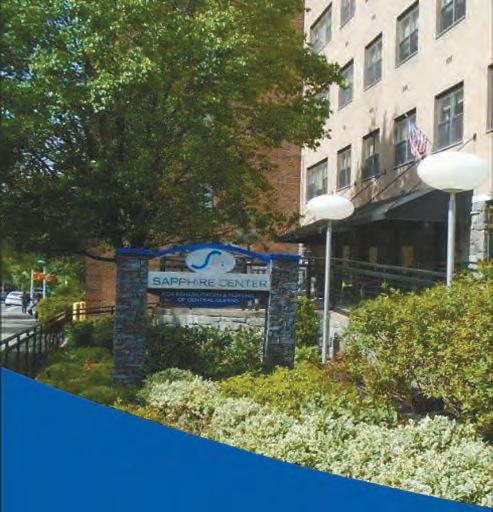



• Administrator member of American College of Health Administrators






• Administrator recipient of CMS Outstanding Achievement award for Reducing Hospitalizations
• Administrator is 2016 Recipient of Lily Leadership Award
C M CEL page 27 Y K Page 27 QUEENS CHRONICLE, Thursday, June 22, 2023 For the latest news visit qchron.com 26 TH ANNUAL CELEBRATION OF QUEENS • 2023 Sapphire Center For Rehabilitation & Nursing of Central Queens SAPR-079083
68-07 BURNS STREET, FOREST HILLS, N.Y.
Funded in part by the NYC Department for the Aging, Councilwoman Lynn Schulman and private contributions.
11:20 am 1:45 pm 2:00 pm 9:00 am 11:10 am 1:30 pm 10:00 am 9:15 am 10:20 am 1:00 pm 9:30 am 10:30 am 11:20 am 10:00 am 11:10 am 10:00 am 11:00 am 9:15 pm 10:20 am 10:00 am 11:15 am
©2023 M1P • YOUI-082131
Who’s the diamond in the rough?
by Lloyd Carroll Chronicle Contributor
Mets owner Steve Cohen has not been shy about spending money on big-name free agents.
Yes, it can be argued whether signing Max Scherzer and Justin Verlander to $43 million per year salaries, as well as having signed shortstop Francisco Lindor in 2021 to an 11-year, $341 million deal, were prudent use of financial resources. Nonetheless, the ability of a baseball team to attract highpriced talent leads to better attendance and more lucrative sponsorship deals.
The key to long-term sustainable success, however, is having a fruitful minor league system, as both the Atlanta Braves and Houston Astros have shown, much to the consternation of Mets and Yankees fans.
Mets fans will not want to hear this, but it does not appear immediate help from their team’s minor league affiliates is likely. Injuries to, and poor performance by, Mets varsity players such as catcher Omar Narvaez, Eduardo Escobar and Daniel Vogelbach forced General Manager Billy Eppler to bring up Francisco Alvarez, Brett Baty and Mark Vientos, respectively, from their AAA Syracuse Mets farm club.

offensive abilities. The problem is that he was signed as a shortstop, a position, which, for better or worse, appears to be the domain of Francisco Lindor for the rest of this decade. The Mets are wisely using the 2023 season to allow Mauricio to try his hand at the other infield positions, and even to let him get experience in the outfield.
Two other Syracuse Mets players worth tracking, aside from starting pitcher David Peterson, who got demoted from Queens to central New York State because of his inability to get major league hitters out, are Jose Butto and Josh Walker.
Butto is a 25-year-old starting pitcher from Venezuela who can strike people out. He was called up as an emergency starter for the Mets earlier this year and got clobbered, but it may not be fair to extrapolate much from that one game.
FUTURE ANTICIPATION
That has decimated the Syracuse Mets of quality young talent, save for the current top prospect in the Mets organization, Ronny Mauricio. There is little doubt about Mauricio’s


Walker is 28, which is ancient for a minor league pitcher. In fairness, Walker spent four years in college, and has battled injuries. The Mets converted him from a starter to a reliever, and the move is paying off for the 6-foot, 6-inch righthander as he has become a lights-out closer for Syracuse. Given the putrid state of the New York Mets bullpen, Walker recently earned a chance to apply his skills in Flushing sooner than later, being recalled to the big league club in June. He has been sharp in three relief appearances for the Mets, which has increased his immediate worth in the organization.
The Mets AA team, the Binghamton Rumble Ponies, have some potential big leaguers on their roster.

Right-handed starting pitcher Dominic Hamel was a third-round pick for the Mets in the 2021 amateur draft. He is still considered a top prospect, but his earned run average of more than 5 this season is concerning at the AA level. While Hamel’s performance has been below par, Mets brass must be impressed with his fellow starter, Mike Vasil, who was named the Eastern League player of the month
in May. Vasil, a 23-year-old, 6-foot, 5-inch Bostonian, was chosen five rounds after Hamel in the 2021 draft. He has averaged one strikeout per inning, while still having solid control as he does not walk many opposing hitters. Following that impressive month, Vasil was promoted to AAA Syracuse in mid-June.
Former WFAN air personality, and respected baseball photographer, Mike McCann now lives in central New York State. He told me he is impressed with Rumble Ponies third baseman Jose Peroza and outfielder Matt Rudick. According to McCann, Peroza is a solid contact hitter who can hit an occasional home run, while the 5-foot, 6-inch Rudick reminds him of diminutive Houston Astros star Jose Altuve in that he hits for both power and average and can steal a base as well.
Speaking of diminutive players, the Mets are optimistic about 19-year-old, 5-foot, 8-inch shortstop Jett Williams, who was a Top-14 pick in the 2022 draft. Williams is playing for the Mets A-level team, and scouts say he has good range in the field and a solid knowledge of the strike zone. The Mets will not rush Williams through their farm system.
Also chosen in the first round of the 2022 draft was Georgia Tech catcher Kevin Parada, who is now playing nearby for the Mets “high-A” team, the Brooklyn Cyclones. Parada is known for his defensive skills behind the plate, and he has home
run power. The downside is he has a tendency not to be selective when hitting, and he winds up swinging at pitches out of the strike zone.


Twenty-year-old wiry Brooklyn Cyclones centerfielder Alex Ramirez may be the most intriguing player to watch if you go to Coney Island. Ramirez has a golden arm and can cover a lot of real estate in a hurry when it comes to tracking down fly balls. He is unusual, though, in that he can hit for average but strikes out a lot for a player not known for home run power.
The highest-ranked prospect on the Brooklyn Cyclones pitching staff is 6-foot, 4-inch former University of Tennessee hurler Blade Tidwell. Scouting reports say he can hit 95 mph on the speed gun and can throw a devastating slider in the upper 80s range. Tidwell’s earned run average is around 5, which is not great, but it should go down with experience and adjustments.
Predicting success in the majors for any minor leaguer is risky business for a variety of reasons. The Mets had lofty expectations for pitcher Matt Allan, whom they selected in the third round of the 2019 amateur draft. Allan had Tommy John surgery in the spring of 2021, and then had to have elbow surgery this past spring. Allan is only 21, and he and the Mets are hoping his youthful age will help him overcome the bad luck he has endured since signing a professional baseball contract. Q

QUEENS CHRONICLE, Thursday, June 22, 2023 Page 28 C M CEL page 28 Y K For the latest news visit qchron.com 26 TH ANNUAL CELEBRATION OF QUEENS • 2023
Ronny Mauricio, 22, has been so dynamic at the plate the last two seasons that as he’s progressed through the Mets minor leagues, the organization is now playing the former shortstop at second base and left field in order to find a place in Flushing for the talented slugger.
PHOTOS BY MIKE MCCANN
Lefty reliever Josh Walker, left, had such an impressive May in the minors that the Mets brought him up in mid-June and he has thrived with a 1.93 ERA in his three outings. Jose Peroza, right, was Walker’s teammate in Binghamton, but the corner infielder has a much more crowded road to the big leagues.
Mets’ farm system not about to save the day, but there’s some talent there














C M CEL page 29 Y K Page 29 QUEENS CHRONICLE, Thursday, June 22, 2023 For the latest news visit qchron.com 26 TH ANNUAL CELEBRATION OF QUEENS • 2023 14-02 124TH STREET, COLLEGE POINT, NY 11356 CALL: 718-463-1810, CALL/TEXT: 516-387-2055 All Life is Precious PREGNANT? NEED HELP? Free Pregnancy Test Informative and Emotional Support. Caring Assistance Through All Stages of Motherhood. Extensive & Comprehensive Material Assistance Program for Mothers and their Families, From Newborn to size 10/12 Volunteers and Donors Needed. NYS Senator Leroy Comrie NYS Senator Leroy Comrie 113-43 Farmers Blvd St Albans, NY 11412 113-43 Farmers Blvd. St. Albans, NY 11412 718-765-6359 | info@leroycomrie org 718-765-6359 | info@leroycomrie.org 2 6 t h A n n u a l C e l e b r a t i o n o f Q u e e n s 5 0 t h A n n i v e r s a r y o f H i p - H o p M u s i c t o O u r E a r s 26th Annual Celebration of Queens 50th Anniversary of Hip-Hop Music to Our Ears Paid for by New Yorkers for Leroy Comrie S a l u t i n g t h e W o r l d ' s B o r o u g h ! Saluting the World's Borough! “High School is four years; St. Francis Prep is Forever.” Congratulations to the Class of 2023 on their achievement earning over $178 million in scholarships. ST. FRANCIS PREPARATORY SCHOOL 6100 Francis Lewis Blvd. Fresh Meadows, NY 11365 (718) 423-8810 www.SFPonline.org #SFP4ever #TerrierTough STFR-082132 ©2013 M1P • FDEV-062520 718-274-1940 Over 100 Years of Dependable Service Se Habla Español • Si Parla Italiano • Omiloume Ellhnhka • Mowimy Po Polsku • #2 Oil & Diesel Fuel • Oil Burners & Boilers Installed & Serviced • Vacuum Cleaning of Boilers • Prompt & Courteous Service All Major Credit Cards Accepted F. DeVito Fuel Corp. Residential & Commercial Full Heating Service EDEV-081335 SAME DAY DELIVERY!





































QUEENS CHRONICLE, Thursday, June 22, 2023 Page 30 C M CEL page 30 Y K For the latest news visit qchron.com 26 TH ANNUAL CELEBRATION OF QUEENS • 2023 ©2023 M1P • JJSR-082062 • New Roofs of all Types • Roofi ng Repairs • Chimney Caps • Waterproofi ng • Basement Waterproofi ng – Serving All Of Queens –917-407-1141 718-713-8020 Senior Discount HIC Lic. #1443031 FULLY LICENSED 27 Years Experience Call Today For A Free Full Roof Inspection & Estimate! 10% OFF Spring SPECIAL FIND US ON Clean Roof Gutters and Flash All Vents and Silver Seal Flat Roofs Up To 800 sq. ft. Only $ 695
Flushing Hospital Medical Center








is proud to be the recipient of many nationally recognized Healthgrades awards














These awards were given to Flushing Hospital in recognition of the high-quality, person-centered care we deliver to our community.
Providing superior service to our patients and our community in a caring environment


C M CEL page 31 Y K Page 31 QUEENS CHRONICLE, Thursday, June 22, 2023 For the latest news visit qchron.com 26 TH ANNUAL CELEBRATION OF QUEENS • 2023





































QUEENS CHRONICLE, Thursday, June 22, 2023 Page 32 C M CEL page 32 Y K For the latest news visit qchron.com 26 TH ANNUAL CELEBRATION OF QUEENS • 2023 We stock vanities, medicine cabinets, sinks, toilets and all your bathroom needs! WE ARE FULLY STOCKED IN INTERIOR DOORS & MOLDINGS All Sales Final. Not Responsible For Type Errors Or Omissions. Photos For Illustration Purposes Only. Shop At Home 24 Hours A Day: Weismanhomeoutlets.com All Store Hours: Monday - Saturday 8-6 • Sunday 10-5 Queens • Middle Village 63-27 Metropolitan Ave..........718.497.0212 • 218-01 Merrick Blvd...............718.723.4000 Brooklyn • Borough Park 1175 Mcdonald Ave...................718.377.8871 • Marine Park 2375 Flatbush Ave.....................347.713.1600 Sale Ends June 2 , 2023 Free In-Home Measuring! No Appointment Necessary! Guaranteed Lowest Prices! All Wood! Visit Us At:weismanhomeoutlets.com • Porcelain • Ceramic • Laminate • Hardwood • Luxury Vinyl • Glass High End Tiles At A Discounted Price! Over 1,000,000 Sq. Ft. In Stock! Tiles Starting As Low As 49¢ sq. ft. White Shaker Grey Shaker Oak IN STOCK IN STOCK IN STOCK Spruce Merlot IN STOCK Avoid those kitchen remodeling mistakes. Talk with one of our designers today to layout your dream kitchen 25% Off Including Madison, Bergen, Sofia Glaze and Belmont Glaze. Offer Expires July 1, 2023 CUBITAC IMPERIAL SERIES FREE IN HOME MEASURING
