
















































Shortenings & Margarine
Commodity Trading
16 Mixed palm oil outlook
With palm oil facing increasing competition from rival oils like soyabean and sunflower, prices this year will depend on production in Indonesia and Malaysia, as well as demand from major importers like India and China
Plant & Technology
19 Global round-up of news
OFI reports on some of the latest projects, technology and process news and developments around the world
Processing & Technology
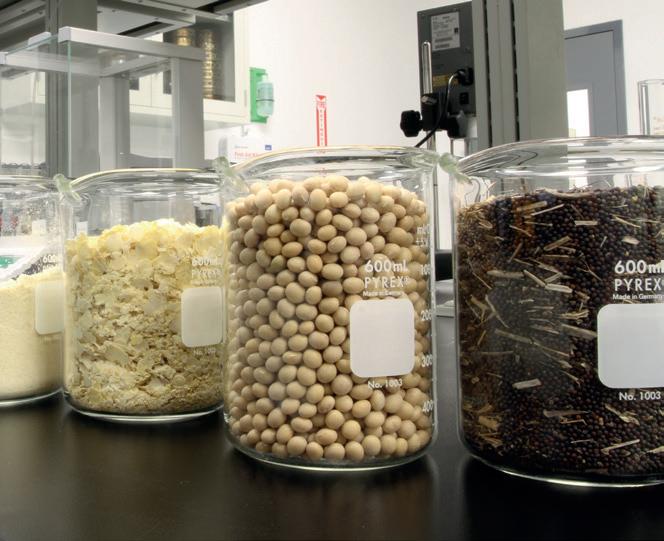
A new alcohol-based solvent extraction technology offers comparable operational efficiency to hexane-based oilseed extraction, as well as clean-label, environmental and worker safety benefits

22 India: trends and advances India’s shortenings and margarine markets span home cooking to large multinationals, with industry evolving to eliminate trans fats, and palm oil the preferred raw material
Transport & Logistics
25 Southeast Europe expands
Investments in port handling capacity at Constanța, Varna and Burgas –along with projects along the Adriatic coast – mean the Western Black Sea and Balkan corridors are playing a more important role in a diversified European export network
Catalysts
28 Optimal hydrogenation
Catalyst manufacturers must have a thorough understanding of the relation between catalyst preparation variables, characteristics and performance indicators to design optimal products for customers

Comment
2 Fragile systems
News
4 Strait of Hormuz blockade and ceasefire still in place
Transport/Biotech News
12 USA monitors detention of Panama ships in China
Renewable News
14 Canola oil used in new Nokian winter tyres
Biofuel News
15 EPA sets highest ever level of quotas for US biofuels
Diary of Events
31 International events listing
Statistics
32 World statistical data
EDITORIAL:
Editor: Serena Lim serenalim@quartzltd.com +44 1737 855066
Assistant Editor: Gill Langham gilllangham@quartzltd.com +44 1737 855157
ADVERTISING: Mark Winthrop-Wallace markww@quartzltd.com +44 1737 855114
PRODUCTION:
Production Editor: Carol Baird carolbaird@quartzltd.com
CORPORATE:
Managing Director: Tony Crinion tonycrinion@quartzltd.com +44 1737 855164
SUBSCRIPTIONS: Jack Homewood subscriptions@quartzltd.com +44 1737 855028
Subscriptions, Quartz House, 20 Clarendon Road, Redhill, Surrey RH1 1QX, UK
SUBSCRIPTION RATES:
Print & digital: Single issue – £45
1 year – £182 (UK), £210 (overseas)
2 years – £328 (UK), £377 (overseas)
3 years – £383 (UK), £440 (overseas)
Digital only: Single issue – £29
1 year – £170
2 years – £272
3 years – £357

© 2026, Quartz Business Media ISSN 0267-8853
WWW.OFIMAGAZINE.COM

A member of FOSFA
Oils & Fats International (USPS No: 020747) is published eight times/year by Quartz Business Media Ltd and distributed in the USA by DSW, 75 Aberdeen Road, Emigsville PA 17318-0437. Periodicals postage paid at Emigsville, PA. POSTMASTER: Send address changes to Oils & Fats c/o PO Box 437, Emigsville, PA 17318-0437
Published by Quartz Business Media Ltd Quartz House, 20 Clarendon Road, Redhill, Surrey RH1 1QX, UK oilsandfats@quartzltd.com +44 1737 855000
Printed by Stephens & George Print Group, Merthyr Tydfil, Wales

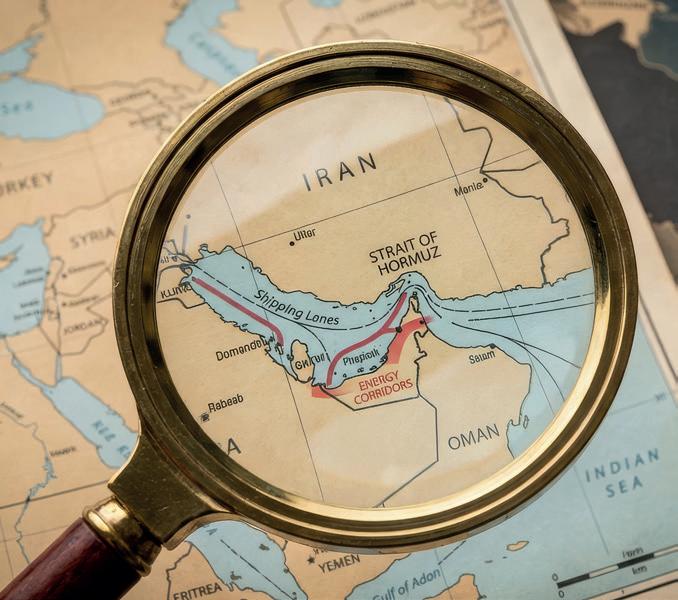
The geopolitcal tensions surrounding Iran are once again exposing the fragility of our global agri-food systems, particularly those heavily reliant on interconnected trade routes and energy inputs.
At the farm level, the impact has been immediate. With roughly a third of globally traded fertilisers transiting through the Strait of Hormuz, the flow of urea, ammonia and sulphur – inputs that underpin modern crop production – has been constrained, resulting in a 30-40% rise in fertiliser costs, reduced application rates in some regions and the spectre of lower yields. While most fertiliser volumes for this year’s Northern Hemisphere crops were committed and priced before the conflict began, the risk is for later crops.
“The last thing we want is lower crop yields and higher commodity prices and food inflation for the next year,” says United Nations’ Food and Agriculture Organization (FAO) chief economist Maximo Torero.
In addition to fertilisers, the crisis is also affecting other agricultural inputs including chemicals and machinery, with “long-term consequences for agriculture” even if the war were to end today, FAO director-general Qu Dongyu told the the 38th session of the FAO Regional Conference for the Near East.
Held on 20 April at a “critical moment” for the region, Qu underscored the need to recognise “the immense importance of maintaining trade flows, and of ensuring access to adequate food for all, particularly in import-dependent countries”.
In the edible oils market, the Middle East is one of the most import-dependent regions in the world. Iran’s imports of Malaysian palm oil and palm-based products, for instance, tumbled 86.1% in the first quarter of this year, according to Malaysia External Trade Development Corporation (Matrade) chairman Datuk Seri Reezal Merican Naina Merican.
Reezal Merican stressed that indirect effects, such as higher goods prices, freight costs and war risk premiums, could weaken export competitiveness. He said in a 22 April The Edge Malaysia report that Matrade’s global offices and trade commissioners had been given an urgent mandate to monitor and facilitate trade flows by providing regular updates on how exporters can divert cargo to stable regional hubs and ports such as Salalah or Sohar in Oman, while also exploring alternative land and rail routes.
Even if the Iran war ends today, it could take six months or longer for ships to be cleared for transit through the Strait of Hormuz because Iran has mined the narrow waterway, according to 20 April American Shipper report.
In 1991, it took the USA six months to recover 1,300 mines after the Iraq war and it had a map of where the mines were, unlike with Iran, the report quoted a source as saying. As a result, six months from the end of hostilities to clear ship operations would be normal for vessel insurers and underwriters who have declared force majeure in the region, the source said.
Marine insurers have said that war risk coverage is available for the Strait of Hormuz but American Shipper cited insurance rates of up to 1%-5% of hull value, as much as 10 times higher than pre-war levels of under 1%. Lloyd’s List reported premiums of US$10-14M for a very large crude carrier, and triple that for US-connected vessels, the report said.
Shipping disruptions – as we’ve seen with the Ukraine war and Black Sea shipping, and now the Strait of Hormuz – have a major impact on trade flows and supply chains. The Iran conflict has exposed, once again, how our global food systems remain acutely sensitive to geopolitical disruption.
Serena Lim, OFI Editor, serenalim@quartzltd.com





Better refining yields. Lower refining costs1. The lowest carbon footprint2 . That’s the advantage of soybean oil from U.S. soybeans, whether crushed in-market or imported from the U.S. What’s Nourishing Your Business?


SCAN TO SEE THE SOURCE OF YOUR ADVANTAGE.










1






WORLD: Global vegetable oil prices increased for the third consecutive month in March due to higher quotations for palm, soyabean, sunflower and rapeseed oils, according to the benchmark United Nations’ Food and Agriculture Organization (FAO) Food Price Index (FFPI) released on 3 April.
The index tracks changes in the international prices of the most globally traded food commodities.
The index averaged 183.1 points in March, up 8.9 points (5.1%) from February and up 21.3 points compared to the previous year, a rise of 13.2%.
“International palm oil prices reached their highest level since mid-2022 and moved to a premium over soyabean oil, largely reflecting spillover effects from the sharp increases in crude oil prices, while lower-than-expected production estimates in Malaysia provided additional support,” the FAO said.
World soyabean oil prices edged up marginally, with expectations of stronger US biofuel uptake partly offset by rising export supplies from South America.
International sunflower and rapeseed oil prices were underpinned, respectively, by supply tightness in the Black Sea region and prospects of stronger feedstock demand amid elevated world energy prices.
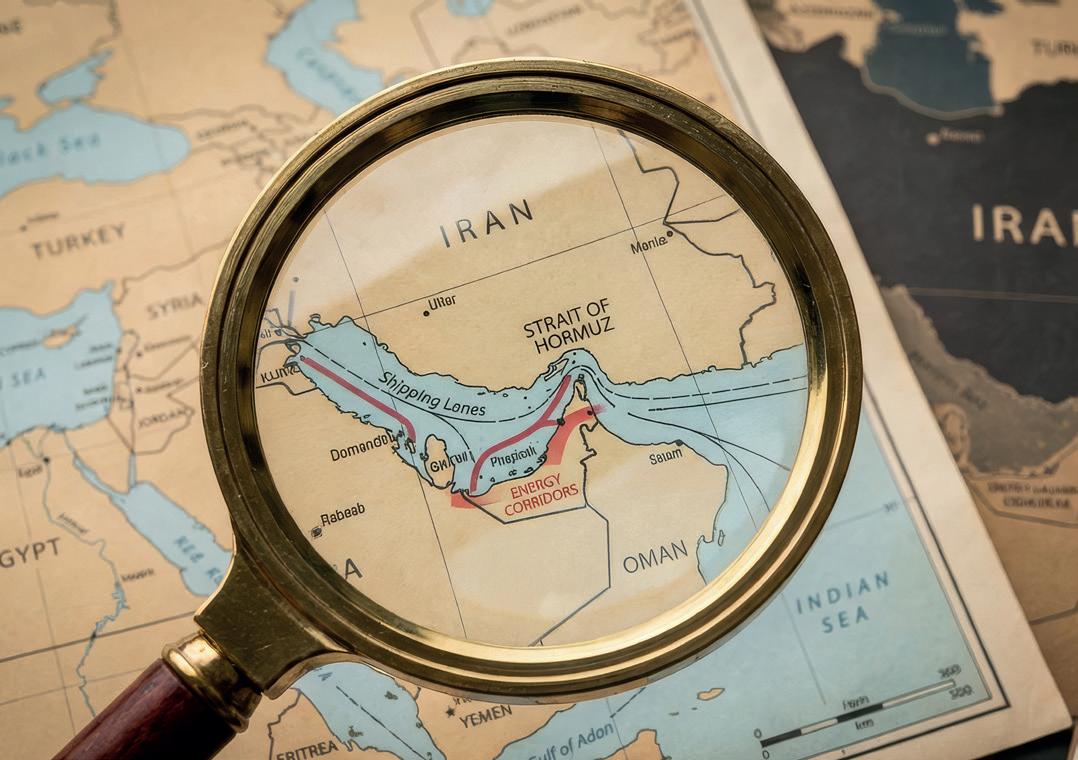
The indefinite US-Iran ceasefire, which began on 8 April, was still in place as OFI went to press after nearly six weeks of US and Israeli strikes on Iran, and retaliatory Iranian attacks against Israel and Gulf countries.
However, the vital Strait of Hormuz waterway remains effectively shut, with Iranian forces capturing or attacking commercial vehicles, and the USA imposing a naval blockade of Iranian ports following the breakdown of US-Iran peace talks on 12 April.
According to United Nations (UN) data reported by Food Navigator on 14 April, 2,000 ships carrying food and energy inputs have been impacted by disruption of the Strait of Hormuz. Although grains such as wheat, maize and barley accounted for a large share of stranded cargoes, edible
oils – including sunflower and rapeseed oil – were another important commodity, the report said. Other key commodities, such as cocoa, coffee and sugar, were also among stranded shipments.
In addition, the shipment of vital agricultural inputs like fertilisers were also impacted, putting future harvest at threat, the report said.
If the crisis in the key waterway continued, it could set off a chain of effects like the aftermath of the COVID-19 pandemic, the UN's Food and Agriculture Organization (FAO) said on 14 April.
Poorer countries were most at risk from scarce and costly fertiliser and energy inputs, FAO chief economist Maximo Torero said in a 13 April podcast with David Laborde, director of FAO’s Agrifood
Economics Division.
Although the March FAO Food Price Index (see left) was relatively stable due to ample supplies of most food commodities, pressure was rising in April and would intensify in May as farmers made decisions on switching planting choices to adapt to fertiliser availability, the FAO said.
Soaring crude oil prices caused by the conflict were also driving renewed demand for biofuels as the need to tackle fuel shortages outweighed concerns that using crops for fuel would drive up food prices, Reuters wrote on 21 April.
About 20% of global oil and gas supplies, which typically passed through the Strait of Hormuz, had been disrupted, the report said. Crude oil prices were up by more than 30% since the start of the conflict on 28 February, while prices for corn – a key biofuel ingredient – had risen by 5%.
Countries in Asia – a region heavily dependent on Middle East oil imports and which buys about 80% of the oil shipped through the strait – have set out plans to increase biodiesel use. Leading palm oil producer and exporter Indonesia is accelerating its mandatory blending rate for palm oil-based biodiesel to 50% from 40%.
Malaysia is also planning a phased expansion of its B10 mandate to B20 (see p10).
European companies have partnered with certification bodies and non-profit organisations to launch EU Sustainable Supply Chains Coalition aimed at supporting the implementation of the EU Deforestation Regulation (EUDR), Sustainable Views reported on 14 April.
Launched in the European Parliament on 14 April, the coalition is calling for ambitious EU legislation to help build sustainability in agricultural and timber supply chains.
Companies involved include Swiss conglomerate Nestlé, global chocolate and cocoa manufacturer Barry Callebaut and confectionery and snack giant Mars, alongside non-profit organisations such as the Roundtable on Sustainable Palm Oil and the Rainforest Alliance.
The European Commission’s review of the EUDR – which covers seven commodities linked to deforestation including palm oil and soyabeans – was expected to be published on 30 April, the report said.
“Last November, implementation of the EUDR ... was delayed for the second time following a vote by the right and far-right,” said French MEP Pascal Canfin. “Its application has been pushed back to the end of 2026, and it is essential that no amendments are made and that it is implemented fully and rigorously.”
The new coalition was also a way of showing the USA, which had lobbied against the EUDR, that the EU would not be dictated to, Canfin added.






CPM offers end-to-end processing solutions for the oilseed market.
We are the preferred partner for the oilseed processing industry, offering complete preparation solutions. CPM offers the lowest total operating cost solution in the industry, everything from maximizing your extraction process to minimizing energy consumption.
Discover all the benefits of our solutions at OneCPM.com/Markets/Oilseed-Processing
CRACKING FLAKING GRINDING PELLETING PARTS & SERVICE





































































MALAYSIA: Global agribusiness Cargill announced on 31 March that it was adding a new speciality fats line to its edible oil plant in Port Klang, amid rising demand in Asia-Pacific.
The multi-million dollar investment would add more speciality fat products to the company’s portfolio, which included a wide range of cocoa butter equivalents (CBEs), low-trans fatty acid cocoa butter replacers (CBRs), and speciality fats for chocolate confectionery, frying, baking or fillings applications, the firm said.
The investment followed Cargill’s US$20M investment in 2020 to expand and modernise the plant. The Port Klang site – the first within Cargill’s global edible oils network to use speciality fats processing technology – is one of two edible oil facilities operated by the company in Malaysia, .
Cargill’s speciality fats portfolio includes Coconera, a CBE designed for chocolate applications including coatings for praline shells, nuts, wafers and moulding chocolate; and Olinera, a non-hydrogenated, non-tempered CBR.
ARGENTINA: Argentine agribusiness Molinos Agro is working in alliance with local agricultural technology company Ucrop to measure the Scope 3 carbon footprint of its soyabeans, according to a 25 March Ecobiz report.
The programme would trace soyabeans from planting to harvest and then calculate their environmental footprint under international standards, to obtain certification from the Global Feed LCA Institute (GFLI). The carbon footprint would be measured via Ucrop’s blockchain and on-farm digital verification platform.
Consumer goods giant Unilever has agreed a US$44.8bn deal to merge its food business with US-based spice and seasoning company McCormick, The Guardian wrote on 31 March.
Following the move, the Anglo-Dutch company would control 65% of the new spin-off and its core focus would be on beauty, personal care and home products.
The merger would combine Unilever’s food brands such as Marmite spread, Hellmann’s mayonnaise, Knorr and Pot Noodle, with McCormick’s condiments and spices including French’s mustard, Old Bay seasoning and Cholula hot sauce, the report said.
Completion of the deal was expected by mid-2027, subject to McCormick shareholder approval, receipt of required regulatory approvals and other customary closing conditions, Unilever said in a 31 March statement on its website.
“It will unlock value, enhance the group’s structural growth profile and simplify the portfolio,” the company said.
Unilever uses oils and fats in the production of many of its products, with soyabean oil used in dressings – including Hellmann’s mayonnaise – palm oil used in the company’s soaps and
shampoos and shea butter used in some of its body wash products.
Last year, Unilever sold off its ice-cream division, the home of Ben & Jerry’s, Magnum and Wall’s. In addition, over the past decade, the company had sold off its spreads business, which included brands such as Flora and I Can’t Believe It’s Not Butter, in 2017; most of its tea business, including Lipton, PG Tips and Tazo in 2022, before last year’s listing of the ice-cream business.
The new combined company will be called McCormick and be led by its executives, with senior management representation from the ranks of Unilever’s food business, according to The Guardian report.
Savings would come from changes in manufacturing, distribution and on procurement of supplies, the companies said.
“We are unlocking trapped value through a growth-led separation of foods,” said Fernando Fernández, Unilever’s chief executive. “Our retained stake reflects our conviction in the strength of the combined firm and its future prospects.”
Last year, the food business accounted for just over a quarter of Unilever’s overall annual sales of €50.5bn (US$67bn), Reuters wrote on 31 March.
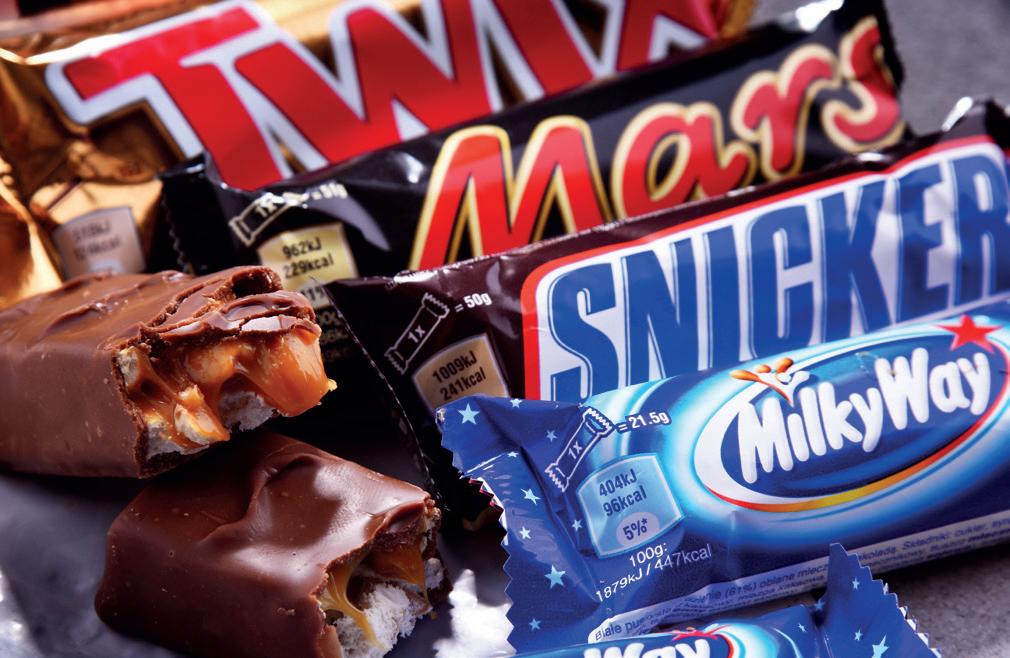
Confectionery and snack giant Mars and global food and agribusiness company Olam Food Ingredients have announced a five-year strategic collaboration in Ecuador to help promote climate-smart and regenerative agriculture practices across their shared cocoa supply chain.
“Building on our long-standing collaboration in cocoa sourcing, this effort demonstrates our belief that when companies share common goals, they can deepen cooperation and drive more meaningful impact at scale,” said Benjamin Guilbert, global vice president, Cocoa at Mars.
In place from 2025-2029, the initiative would help reduce the carbon footprint for cocoa in Ecuador, boost productivity and enhance farmer resilience, Mars said on 15 April.
The first phase would introduce regenerative agriculture across more than 9,000ha of farmland. This would involve more than 960 farmers across the major cocoa-growing regions of El Oro, Esmeraldas, Guayas, Los Ríos, Manabí and Santo Domingo.
Mars said farmers were transitioning from monoculture to multi-strata agroforestry, which – by mimicking natural forest ecosystems – boosted cocoa production, supported microorganisms and pollinators, and created natural barriers against pests and disease.








The EU could lose access to key agricultural imports from the USA if its deforestation law is introduced in its current form, according to senior US officials quoted in a 13 March Euractiv report.
Without amendments, the EU Deforestation Regulation (EUDR) could discourage US producers from supplying the bloc, the officials said during a tour of EU capitals aimed at raising Washington’s concerns ahead of a European Commission (EC) review of the EUDR, Euractiv wrote.
A senior US Department of Agriculture (USDA) official said the rules would impose heavy compliance burdens on US exports –including soyabeans.
CHINA: Chinese soyabean imports in 2026/27 are expected to increase by 2M tonnes from the previous year to reach 108M tonnes, the US Department of Agriculture (USDA) reported on 19 March. The rise was due to a moderate increase in demand for soyabean meal by China’s feed industry. As of 26 February, USDA data indicated that China had purchased 10.8M tonnes of its 12M tonne purchase commitment of US soyabeans, following a meeting with the USA in October, when a trade deal was reached to suspend retaliatory trade measures.
The EUDR requires importers of seven commodities – palm oil, soyabean, timber, rubber, coffee, cocoa and cattle – and derived products, to prove that their supply chains are not linked to deforestation. It is scheduled to come into force on 30 December 2026 for large and medium companies.
The regulation would require costly traceability and segregation systems, making the EU less attractive for US exporters, the USDA official said, adding that American farmers were reluctant to share sensitive data with foreign authorities.
European livestock producers relied heavily on imported soyabean feed, the official said. According to Washington
estimates, the EUDR could affect around US$8.9bn/year of US exports to the EU.
Washington had proposed several changes as part of the EC review, Euractiv wrote in a previous 12 March report. One was to introduce a “negligible risk” category for the USA with “dramatically simplified documentation”, the USDA official said.
Under the EUDR, countries are classified as having a low, standard or high risk of deforestation, with the USA falling under the low-risk category. The USA would like the EU to revise the rule that excludes countries from 'low-risk' status if deforestation exceeds 70,000ha/year, claiming that the threshold disadvantages large countries.
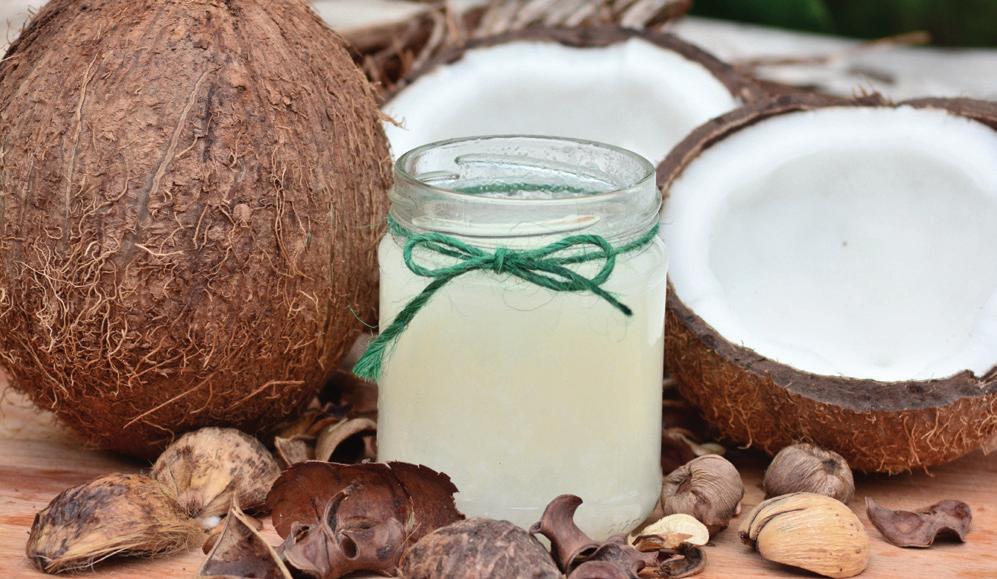
Spanish vegetable oil company Lípidos Santiga (LIPSA) and Philippine agribusiness Dumaguete Coconut Mills (DUCOM) have become the first companies to be verified under the Sustainable
On 11 March, the EU notified the World Trade Organization (WTO) of a new proposal setting maximum levels for mineral oil aromatic hydrocarbons (MOAH) in certain foods, from 1 January 2027.
The proposal to amend regulation EU 2023/915 includes oilseeds, oil fruits, animal and vegetable fats and oils, tree nuts, pulses, cereal grains, milk, dairy products, cocoa beans and cocoa products, confectionery, spices, dried herbs, teas, foods for infants and young children, food supplements and food additives.
MOAH fractions are considered potentially carcinogenic and the EU said maxi-
Coconut Charter.
DUCOM was the first company verified under the Origin Standard, while LIPSA was verified under the Supply Chain Standard, the Sustainable Coconut Partnership
mum levels should be set to ensure a high level of human health protection.
According to a 6 March European Commission Frequently Asked Questions (FAQ) document on the proposal, maximum levels (MLs) for MOAH in food would be established in accordance with the ALARA (as low as reasonably achievable) principle.
The proposal sets minimum enforceable MLs based on fat/oil content when the calculated MOAH ML for a food is too low to be reliably measured in practice. For:
• Low-fat foods (<4% fat/oil): If the calculated ML is below 0.50 mg/kg, it is rounded up to 0.50 mg/kg.
(SCP) – which administers the charter – said in a 27 March LinkedIn post.
The charter aims to harmonise requirements across long and complex coconut supply chains, and improve traceability and transparency.
LIPSA is a leading supplier in the market and the largest vegetable oil refinery in southern Europe, with a processing capacity of more than 900,000 tonnes/year.
Philippines-based agribusiness DUCOM is involved in the processing and manufacturing of coconut-derived products including copra, coconut oil and meal.
• Medium-fat foods (4–50% fat/oil): If the calculated ML is below 1.0 mg/kg, it is increased to 1.0 mg/kg.
• High-fat foods (>50% fat/oil): If the calculated ML is below 2.0 mg/kg, it is increased to 2.0 mg/kg.
With MOAH contamination resulting largely from the smoke-drying process of copra, the proposal could impact the Philippines' crude coconut oil (CNO) exports to the EU, which accounts for 60% of the country's CNO exports, United Coconut Association of the Philippines chairman Marco Reyes said in an 8 April BusinessMirror report.
www.ofimagazine.com 21-23 September 2026, Amsterdam, the Netherlands www.ofimagazine.com/ofi-international-2026

UKRAINE: The country's 2026/27 sunflowerseed and rapeseed planted areas are expected to expand at the expense of soyabeans, the US Department of Agriculture (USDA) Foreign Agricultural Service ‘Ukraine – Oilseeds and Products Annual’ report said on 8 April.
Sunflowerseed production was projected at 12.8M tonnes, a 16% year-on-year rise, while rapeseed was expected to rise by 25% to 4M tonnes, and soyabeans to fall by 5% to 4.7M tonnes.
Production of sunflower oil in 2026/27 was expected to increase by 15% yearon-year to 5.5M tonnes, while soyabean oil was forecast to slip by 3% to 551,000 tonnes and rapeseed oil to climb by 25% to 820,000 tonnes.
Shipments of sunflower oil from the world's largest exporter was forecast at 5M tonnes in 2026/27, up 11% from the previous year’s estimate, while rapeseed oil was expected to jump by 84% to 825,000 tonnes.
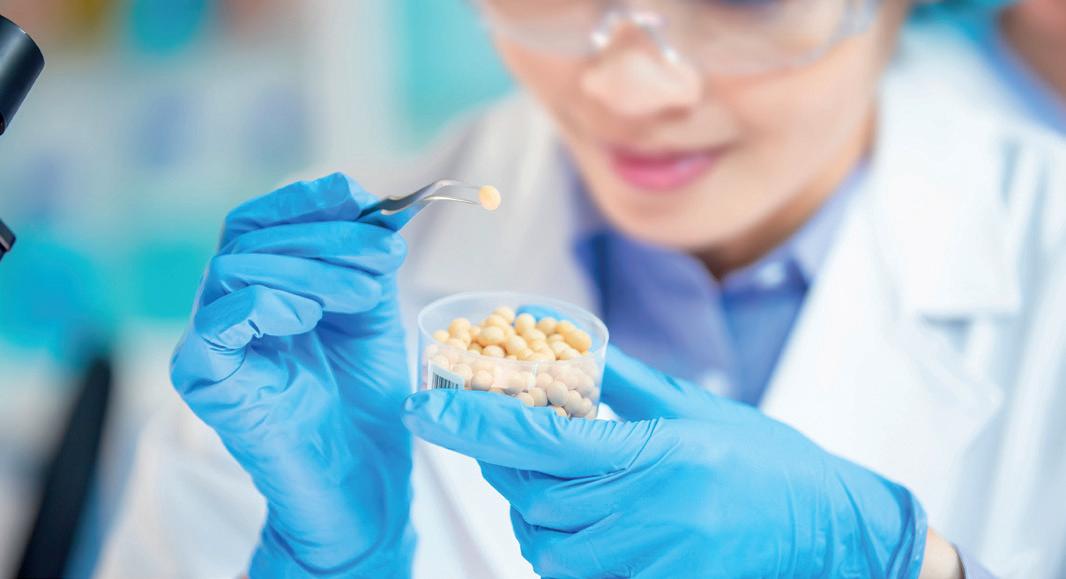
Brazil’s government will negotiate safety requirements for soyabean exports to China, following changes which led global agribusiness firm Cargill to cancel its Brazilian shipments to the country, Reuters reported on 17 March.
Cargill Latin America head Paulo Sousa said on 12 March that Brazil's Agriculture Ministry had adopted a stricter sanitary evaluation on soyabeans bound for China to check for pests and weeds after a request from the Chinese government.
The changes made it difficult
Argentina’s near record sunflowerseed crop is expected to help boost global supplies, both via exports of sunflowerseed meal and oil, and exports of sunflowerseed to Black Sea crushers, according to the US Department of Agriculture (USDA)'s ‘Oilseeds: World Markets and Trade’ April report.
Although Argentina produced only around one-tenth of the world’s sunflowerseed, the timing of its harvest and recent production growth would have an impact on global stocks.
“Argentina’s southern hemisphere harvest starting in February falls later than major Black Sea producers harvesting in September, providing a counter-seasonal boost to global supplies," the USDA said.
The country harvested its bumper 2025/26 sunflowerseed crop in February and exports totalled 300,000 tonnes in February (the last month of the 2024/25 marketing year) and continued to be strong in March at approximately 200,000 tonnes.
“These volumes far exceed typical volumes,” the USDA said.
As a result, 2024/25 exports were forecast at 624,000 tonnes and 2025/26 exports were expected to total 600,000 tonnes, reaching multi-decade highs, with shipments mainly destined for the EU – particularly Bulgaria and Romania – where crushing margins were high due to high sunflower oil prices.
for traders to comply and, as a result, Cargill had stopped buying soyabeans from farmers in Brazil, Reuters wrote.
Brazilian Agriculture Minister Carlos Favaro confirmed that Brazil had received complaints from Chinese buyers and authorities after some cargoes had shown the presence of weed seeds, and that inspections had been stepped up when the complaints persisted.
He added that vessels with pending inspections would only receive certificates if their cargoes met the standards
required by China, the world’s leading soyabean importer. Favaro said two Brazilian ministry officials were scheduled to visit China to propose a sanitary protocol. Brazil’s aim was to negotiate terms that met China’s inspection demands, preserved the operating capacity of Brazil’s industry and minimised risks. He said the dispute did not amount to an embargo by China. “If China had intended to suspend purchases of Brazilian soyabeans, it would have suspended them. That is not the issue.”
In a previous report on 13 March citing trade sources, Reuters wrote that Brazil’s Agriculture Ministry had increased inspections on soyabean shipments to China following Beijing’s repeated findings of pesticide- and fungicide-coated beans. Delays in receiving export certificates had kept ships waiting at port longer than scheduled, resulting in penalty fees.
Australia's canola production is projected to fall to 6.2M tonnes in 2026/27, a 19% decline from the previous year’s near-record 7.68M tonnes, dampened by diesel and nitrogenous fertiliser supply constraints and their high prices, according to the US Department of Agriculture (USDA) Foreign Agricultural Service 6 April ‘Australia: Oilseeds and Products Annual’.
At the time of the 2026/27 crop planting, diesel supplies had been delayed and prices had almost doubled, while nitrogen fertiliser prices had more than doubled, due to the Iran conflict and shipping interruption through the Strait of Hormuz.
Canola and wheat were the most nitrogen-intensive among Australia's major winter crops and while supply was considered adequate for winter planting, there was considerable uncertainty over availability for in-season top dressing, the USDA said.
The USDA forecast a 6.8% decline in canola planted area and a 13% reduction in the national average yield.
Australia remained the world’s second largest canola exporter behind Canada, and accounted for around a third of global exports, the USDA said. With production down, canola exports were expected to drop by 16% to 4.7M tonnes, and canola oil exports were expected to rise marginally to 300,000 tonnes.



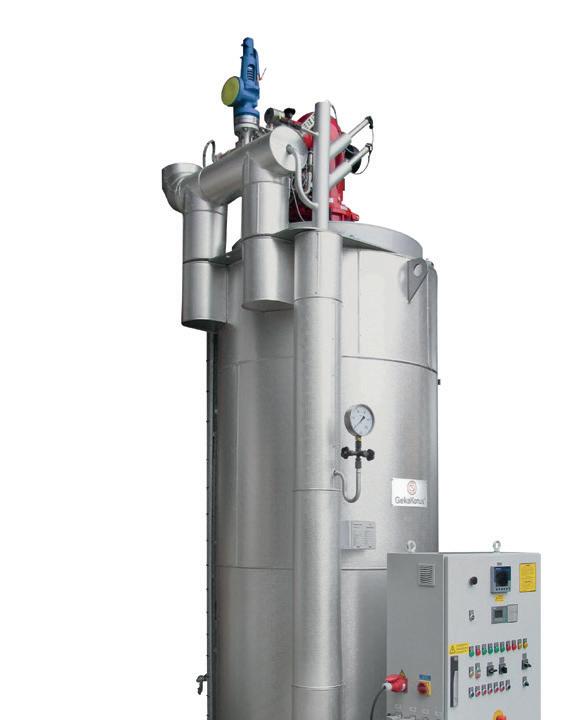
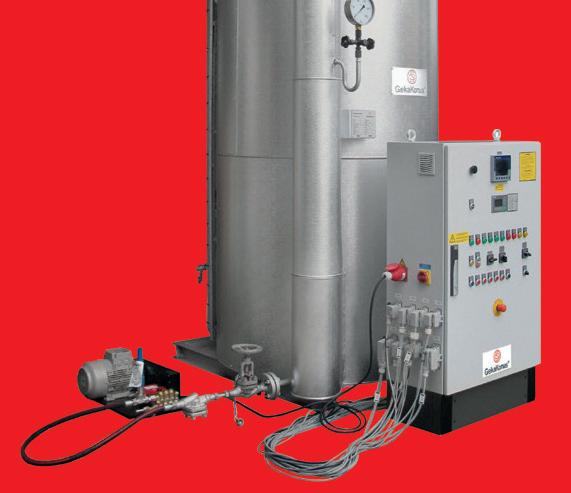















BELGIUM: Global commodity trading house Alkagesta has signed a multi-year lease agreement for biofuel storage at the Pantank facilities in Antwerp, Biofuels International reports.
Alkagesta operates around 700,000m³ of storage capacity across Europe and Asia, largely concentrated in the Mediterranean.
Alkagesta’s move was expected to add flexibility and liquidity to a sector that had been navigating heightened volatility in global fuel markets, Biofuels International wrote on 25 March.
While geopolitical tensions had driven sharp swings in crude and refined oil product prices, the biofuels market had remained comparatively stable, due to diversified feedstock supply chains and the support of European blending mandates, the report said.
Alkagesta specialises in biofuels, fertilisers and petroleum products. Its biofuels desk trades used cooking oil, and food waste-derived oils, soapstock acid oils and biodiesel.
CANADA: German chemical and biotech company BASF Agricultural Solutions announced on 17 March that it was investing €17M (US$19.6M) in expanding its canola breeding centre in Saskatoon to support precision-controlled environment growth systems and high throughput automation pipelines. Construction was scheduled to start in the first half of 2026 and continue until the end of 2027.
The company also said on 31 March that it had completed its acquisition of US biological crop protection company AgBiTech, allowing it to scale AgBiTech’s technologies globally.
The US Federal Maritime Commission (FMC) is monitoring China’s alleged retaliation against Panama-flagged vessels for its effect on global shipping, FreightWaves wrote on 30 March.
According to published reports, China has detained more than 90 Panama-flagged ships at its ports, after Panama took control of two terminals at either end of the Panama Canal in February. The terminals had been managed by Hong Kong-based CK Hutchison (CKHH)’s Panama Ports Company (PPC) subsidiary but on 29 January, Panama’s Supreme Court ruled that PPC’s concession was unconstitutional.
The Panama Canal is a critical route for vessels moving between the Atlantic and Pacific oceans and for US grain and soyabean exports to Asia. It has become highly politicised, with US President Donald Trump saying the USA should take back control of the canal.
“China has now imposed a surge in detentions of Panama flagged vessels in Chinese ports under the guise of port state control, far exceeding historical norms,” CMC chair Laura DiBella said.
“These intensified inspections were carried out under informal directives and appear intended to punish Panama after the transfer of Hutchison’s port assets. Given that Panama flagged ships car-
ry a meaningful share of US containerised trade, these actions could result in significant commercial and strategic consequences to US shipping.”
The FMC was “closely monitoring” the situation and its effects on global shipping conditions, DiBella added.
The FreightWaves report said that Panama was the world’s largest ship registry, with more than 4,700 bulk and container vessels accounting for about 15% of global tonnage.
In March, about 75% of all ships detained in Chinese ports – or 92 of 124 vessels – were Panama-flagged, according to Asia Pacific regional port state control organisation Tokyo MOU. The proportion was up from about 35% in January and February and ranged from one to 10 days in length.
After the Supreme Court ruling that PPC’s concession to operate the Balboa and Cristobal terminals at the Panama Canal was unconstitutional, Panama awarded 18-month interim operating agreements to Maersk’s APM Terminals and Mediterranean Shipping Company’s Terminal Investment Limited subsidiary.
CKHH had filed for arbitration against Panama, seeking more than US$2bn in damages, FreightWaves wrote.

German chemical and biotech giant BASF is hoping to win approval from Canadian and US agencies for its drought-resistant genetically modified (GM) mustard plant, according to a 2 April Reuters report. If approved, the company aimed to commercialise its mustard-canola hybrid InVigor
Gold next year in the USA and a few years later in Canada. Mustard and rapeseed belong to the same Brassica plant genus but mustard seeds are usually ground into spice or made into mustard condiments, while canola is bred from rapeseed to have low erucic acid and glucosinolates
suitable for food and feed. Canadian mustard production was typically less than 200,000 tonnes/year against canola production of at least 19M tonnes/year, Reuters said.
According to BASF, with safeguards against pollen flow and seed spread between mustard and canola fields, more than 809,000ha of its mustard-canola could be grown in arid areas of Canada and the USA.
However, some global importers, such as France –which sourced about half its mustard supplies from Canada – had strict non-GM standards and Canadian mustard growers and sellers were concerned trade could be impacted if traces of the hybrid were detected, the report said.
Chane is a liquid bulk storage partner, specialising in end-to-end services for storage, processing and logistics. Collaborating closely with our customers, we provide reliable services that help their businesses run smoothly, as well as creating the infrastructure that facilitates their growth. We make storage active by connecting supply and demand in new ways and thinking ahead towards the future.
Chane offers storage facilities at strategic locations across the Netherlands, France, the United Kingdom, Spain, Portugal and Poland. With a total capacity of over 5,6 million cubic metres (CBM), our terminals handle a highly diversified base of liquid bulk products and offer excellent integrated and innovative service solutions.
21 terminals in 6 European countries
With a total storage capacity of 5,6 million CBM
Creating a sustainable future together



Finnish tyre developer and manufacturer Nokian Tyres has developed a new winter tyre by mixing pine resin and canola oil into the rubber formula as part of a wider drive to reduce dependence on petroleum oils.
Suitable for passenger cars, crossovers and sport utility vehicles, the company’s Hakkapeliitta 01 studded winter tyre features on-demand grip provided by double action stud technology which allowed it to automatically adapt to changes in temperature, Nokian Tyres said on 2 March.
As the temperature changed, the retract-
EUROPE: On 23 March, Finland’s UPM Specialty Materials and Dutch speciality wax, adhesives and coatings firm Paramelt announced the development of a new bio-, paper-based food packaging concept with strong grease protection, suitable for bakery goods, greasy snacks, and fast food and convenience applications.
“UPM’s advanced barrier base papers, combined with Paramelt’s bio-based heat seal and barrier technology, deliver a recyclable paper-based solution with the grease barrier and sealing performance required for food applications,” UPM said. “The components have been individually validated as home compostable.”
able studs adjusted automatically between on and off modes, the company explained.
When the tyre warmed up, the softened compound allowed the stud to sink deeper into the tyre, improving grip on dry and wet roads. When it cooled down, the stud protruded from the tread, improving grip on ice and snow.
“This new winter tyre … responds to temperature changes to deliver ultimate safety while protecting the road,” said Nokian Tyres president and CEO Paolo Pompei.
As a result of the retractable studs, the
tyre reduces road wear by up to 30%, improves ice grip by up to 10% and wet grip by up to 5%, compared to its predecessor, according to the company.
“We didn’t want to compromise between superior ice grip and low road wear, which is a common trade-off in winter tyre development,” said Mikko Liukkula, Nokian Tyres development manager.
In addition, the tyre reduced noise levels by as much as one decibel, the company said, adding that the new tyre range would be available in the second half of 2026.

Italian textile manufacturer Brugnoli has developed a fabric derived from up to 89% renewable sources, including castor oil, World Bio Markets Insights wrote on 20 March.
The new fabric – Br4/E1 – combines three bio-based components and has been
produced using Brugnoli’s patented Br4 production process designed for stretch fabrics with bio-based polyamide.
The EVO polyamide component is derived entirely from renewable sources including castor oil and industrial corn.
EVO reduces climate change
impact by 45%, ecotoxicity by 86% compared to conventional PA 6.6 polyamide, and marine and terrestrial eutrophication, according to Fulgar.
The elastomer component of Br4/E1 is Lycra EcoMade renewable fibre produced by The LYCRA Company, composed of approximately 70% industrial corn not intended for human food. The company said the fibre could reduce carbon emissions by up to 44% compared to traditional fossil-based Lycra fibre.
Brugnoli’s bio-based fabrics include fine wools, refined cottons, viscose, linens and natural fibres. The firm has also introduced a material derived from recycled vegetable frying oils into its dyeing process.
Fatty amines market set to reach $8.74bn by 2036
The global fatty amines market is projected to increase from US$5.16bn in 2026 to US$8.74bn by 2036, driven by a shift towards bio-based surfactants, according to an EIN News report on 8 April.
This projected growth represented an opportunity of US$3.57bn, fuelled by rising demand for quaternary ammonium compounds in household disinfectants.
Fatty amines are produced from oils and fats like coconut oil, palm kernel oil (PKO) and tallow, and are used mainly as surfactants and industrial additives.
The report said competitive positioning in the fatty amines industry was determined
by feedstock access; downstream derivatisation and application-specific purity.
As regulatory frameworks like the EU Deforestation Regulation (EUDR) tightened, the market was seeing a divergence between producers, EIN News wrote.
“Feedstock flexibility is becoming the decisive competitive variable,” said Shambhu Nath Jha, principal consultant at Fact.MR.
“Producers capable of shifting between tallow and coconut oil hydrogenation will maintain margin stability, while those tied exclusively to single-source PKO face heightened volatility.”
The report said tertiary fatty amines led
the market with a 39.9% share in 2026 as their superior quaternisation reactivity made them the preferred substrate for fabric softeners and antimicrobial biocides.
The USA was the fastest growing market (6.3% CAGR), supported by a strong detergent manufacturing base and advanced speciality chemical infrastructure.
The sector’s top three players – Evonik Industries, Kao Corporation and KLK OLEO – controlled approximately 22-28% of the global share, the report said.
Other key players included Huntsman International, Global Amines Company, India Glycols and Indo Amines.
The US Environmental Protection Agency (EPA) has issued its highest ever biofuel quotas for 2026 and 2027 in a bid to boost domestic oil and feedstock.
US President Donald Trump announced on 27 March that the EPA had finalised the Renewable Fuel Standard (RFS) “Set 2” final rule.
The final rule sets the biomass-based diesel quota at record volumes, while also accounting for 70% of waived gallons from 2023-2025 small refinery exemptions (SREs).
The EPA said the final volume requirements for 2026 and 2027 would protect investments made by US corn and soyabean growers, oilseed processors, and biodiesel and renewable diesel producers.
The move would also drive renewed demand for US soyabean producers and generate over
US$10bn for rural economies, the EPA added.
To meet the historic 2026 and 2027 volume levels, the EPA estimated that biodiesel and renewable diesel production and use would need to increase by over 60% compared to 2025 volumes, the last year of the Biden-Harris administration’s “Set 1”.
“These historically high volumes are expected to create a US$3-$4bn dollar increase in net farm income,” said US Secretary of Agriculture Brooke L Rollins. “The RFS Set 2 Rule will create a US$31bn dollar value for American corn and soyabean oil for biofuel production in 2026, which is US$2bn more than in 2025.”
The EPA also announced that from 2028, foreign fuels and feedstocks would receive half of the RFS compliance value compared to American-made products.
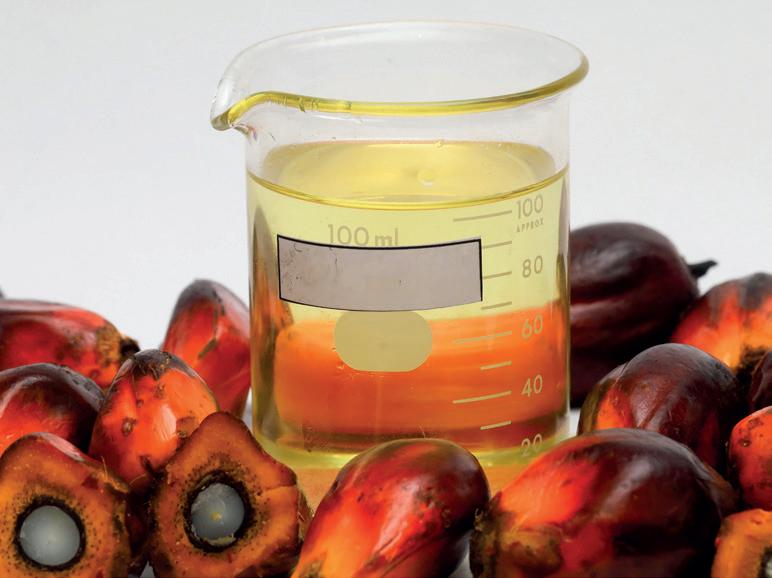
Indonesia’s energy ministry issued a ministerial decree on 8 April setting the timeline for the early implementation of the country’s B50 palm oil-based biodiesel blending mandate, Reuters wrote on the same day.
B50 would be the standard for all users by
2028, the decree said, and the energy ministry would issue a new decree to allocate the biodiesel required to meet the B50 goal in the second half of this year.
The ministry had previously allocated 15.65M kilolitres for 2026 to meet the current B40 standard, the report said.
Indonesia is the world’s largest producer and exporter of palm oil. In January, authorities shelved plans to launch B50 this year due to technical and funding concerns.
However, energy supply disruptions due to the ongoing US/Israel-Iran conflict had led to the revival of interest in B50, Reuters wrote.
The government has said that increasing the biodiesel blend would reduce import dependence, strengthen the energy trade balance, add value to the palm oil sector and support national emissions reduction targets.
PHILIPPINES: The Philippine Coconut Authority (PCA) is pushing back against a proposal by President Ferdinand Marcos Jr to suspend the mandatory inclusion of local feedstocks in the country’s biodiesel blend, saying the move would impact coconut farmers’ livelihoods and derail long-term investments.
The proposal, which had been passed by the House of Representatives and was awaiting the Senate’s approval, would authorise the temporary suspension of locally-sourced biofuel blending for up to one year, the Manila Bulletin wrote on 19 March.
This would provide the government with additional flexibility to keep petrol prices stable amid volatility caused by the Iran conflict, the report said.
Under the country’s Biofuels Act, all liquid fuels for cars and engines must contain locally-sourced biofuels. The proposal would temporarily suspend the current B3 mandate to allow the entry of imported biofuels if prices of local biofuels were at least 5% higher than traditional fuel.
The PCA said local processors had the capacity to increase blending levels up to 7%, subject to appropriate policy direction and market readiness.
The Malaysian government is planning to introduce a phased expansion of its 20% palm oil-based biodiesel (B20) programme nationwide, according to a Reuters report quoting Plantation and Commodities Minister Noraini Ahmad.
As the world’s second largest producer of palm oil, Malaysia currently applies a B10 biodiesel mandate for the transport sector, with B20 in place in the states of Labuan, Langkawi and most of Sarawak.
However, recent surges in crude oil prices had renewed calls for the government to accelerate the shift towards higher biodiesel blends, the 7 April report said. Ahmad said the government remained committed to implementing initiatives to progressively increase biodiesel blend usage over time. “Currently, most areas in Malaysia are still on a B10 blend for the transportation sector,” she said. “Therefore, there is still significant room to support
an increase in the national biodiesel blend from B10 to B20 and B30.”
Malaysian biodiesel production totalled 975,207 tonnes in 2025, meaning biodiesel production plants were operating well below their maximum production capacity of 2.36M tonnes, Ahmad said.
As part of the drive to increase biodiesel mandates, blending depot infrastructure across the country should be prioritised for upgrading, she added.

Although still the dominant oil globally, palm oil’s market share of the overall vegetable oil market is declining due to a slowdown in production growth alongside an increase in worldwide soyabean oil supplies, according to analysts at Bursa Malaysia’s Palm & Lauric Oils Price Outlook Conference & Exhibition (POC2026).
Declining yields due to lack of replanting, ageing oil palms and disease – with around 15% of oil palms infected with Ganoderma – alongside rising production costs have also impacted the sector, delegates at the event held on 9-11 February in Kuala Lumpur, Malaysia, heard.
According to the Malaysian Palm Oil Board (MPOB), around 30% of oil palms in Malaysia are 19 years old or older and that figure was expected to rise to 35% by 2027.
“CPO has lost its growth dynamics,” Thomas Mielke, executive director of ISTA Mielke (Oil World), said.
Global palm oil production was slowing down and could satisfy only 15-20% of the growth in world consumption of 17 oils and fats in the next 5-10 years, compared with an average 32% in 2021-2025 and 43% in 2011-2020, he explained.
Crude palm oil (CPO) prices could depend on production levels in Malaysia and Indonesia as well as demand from price sensitive markets like India and China, according to speakers.
At the time of the February conference, market views on CPO prices were diverse, ranging from MYR3,800-4,800 (US$9651,219). However, since then other major factors including the USA/Israeli-Iran conflict had impacted the sector.
Weaker prices of vegetable oils like soyabean oil could also negatively impact
With palm oil facing increasing competition from rival oils like soyabean and sunflower, crude palm oil prices this year will depend on production in Indonesia and Malaysia, as well as demand from major importers like India and China Gill Langham
CPO demand in major destination markets like India and China (See Figure 1, p17).
In addition, successful harvests and planted area expansion in Brazil and Argentina had led major buyers like China and India to stock up with soyabeans at the expense of lower demand for CPO.
Against this backdrop, speakers also raised concerns about land confiscation – including oil palm plantations – by the Indonesian government and transfer to state ownership, which could further limit supply growth.
In addition, the Indonesian government’s decision to pause the introduction of its 50% palm oil biodiesel blending target (B50) this year would also increase available palm oil supplies, delegates heard.
However, at the time of going to press, it was reported that Indonesia had accelerated road tests with a view to introducing B50 later this year.
Geopolitical tensions continued to disrupt trade flow and logistics while regularity uncertainty and unpredictable weather were among other challenges faced by the industry, delegates heard.
Despite a challenging environment, Malaysian recorded a record production of 20.28M tonnes in 2025 – the first time the country’s output had exceeded the 20M tonne mark.
Alongside Malaysia’s record output in
2025, the country’s export performance also improved, with total exports of palmrelated products worth MYR126.51bn (US$32bn) compared to MYR109.39bn (US$27.8bn) in 2024.
According to Julian McGill, managing director of Glenauk Economics, this achievement was due to a combination of favourable weather conditions and improvements in the labour force.
“Heavy rainfall in 2024 eliminated water deficits and a dry 2025 helped the harvest,” he said.
“We do not expect the same luck on the weather this year and are entering a period of historical droughts so are forecasting production of 19.7M tonnes.”
Dorab Mistry, director of Godrej International, agreed saying Malaysian palm oil production in 2026 would be lower than in 2025, particularly in the second half of the year.
Based on MPOB data, McGill said 2025 was the first year Malaysia had pre-pandemic levels of labour although shortages remained.
“Whether the industry continues to obtain sufficient quotas to meet their labour requirements is critical and requires continued close monitoring,” he added.
Dr Sathia Varga, managing editor of Fastmarkets, said he expected Malaysian CPO production to reach 20M tonnes this year – a drop of 1.4% compared to the previous season.
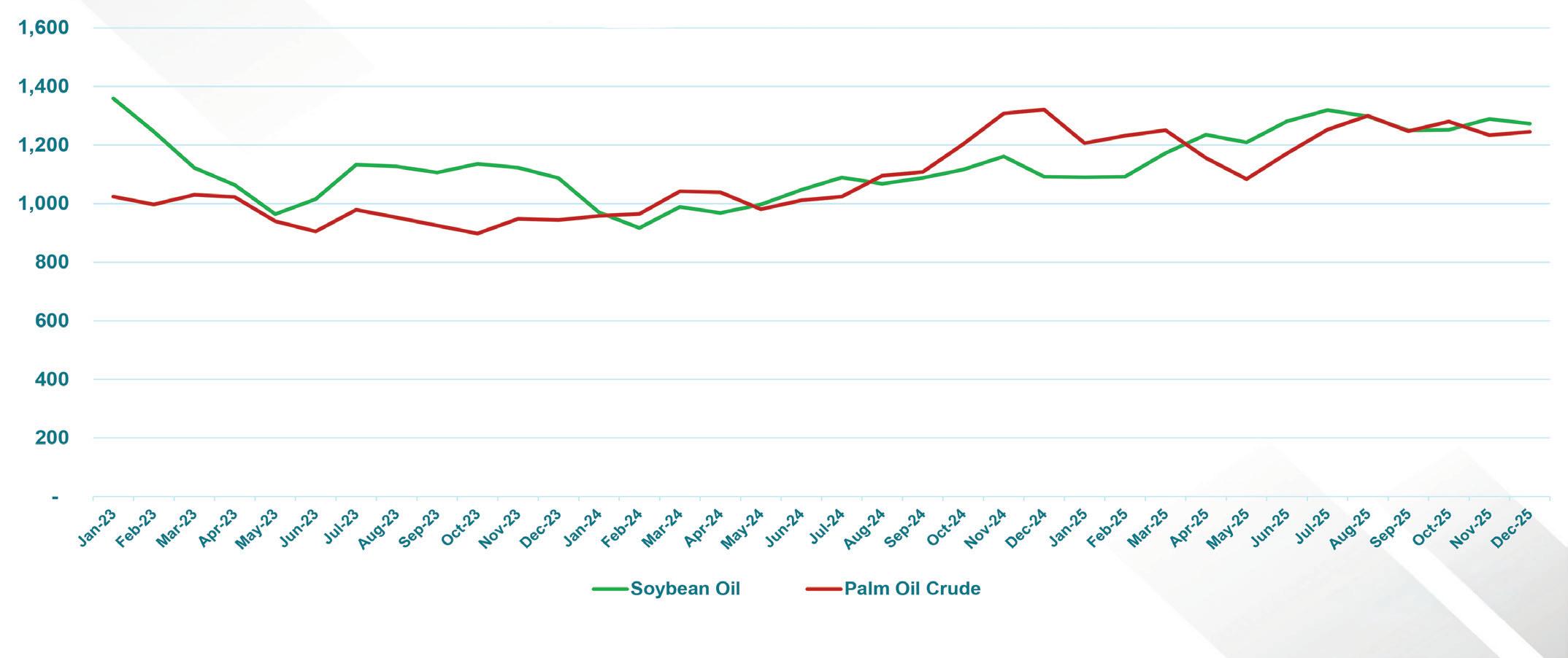
As baseline weather conditions were generally better in Indonesia than Malaysia, with few droughts, McGill said the result was likely to be a normal seasonal pattern in Indonesia, with output declining in the first quarter of 2026 but recovering in the second quarter.
Fastmarkets’s Dr Varga said he

expected Indonesian CPO production to total 49M tonnes in 2026, a drop of 4% – around 180,000 tonnes – compared to the previous year when production reached 51M tonnes.
The fact that Indonesia was now not only the largest palm oil producer but also the largest consumer had changed the fundamentals of the global vegetable oil market, Mielke added.
The Indonesian government’s policy of land seizures could pose a problem with yields and production during the second half of 2026, according to Godrej International’s Mistry.
United Plantations vice chairman and chief executive director Carl BekNielsen said the land seizures could have a substantial impact on Indonesian
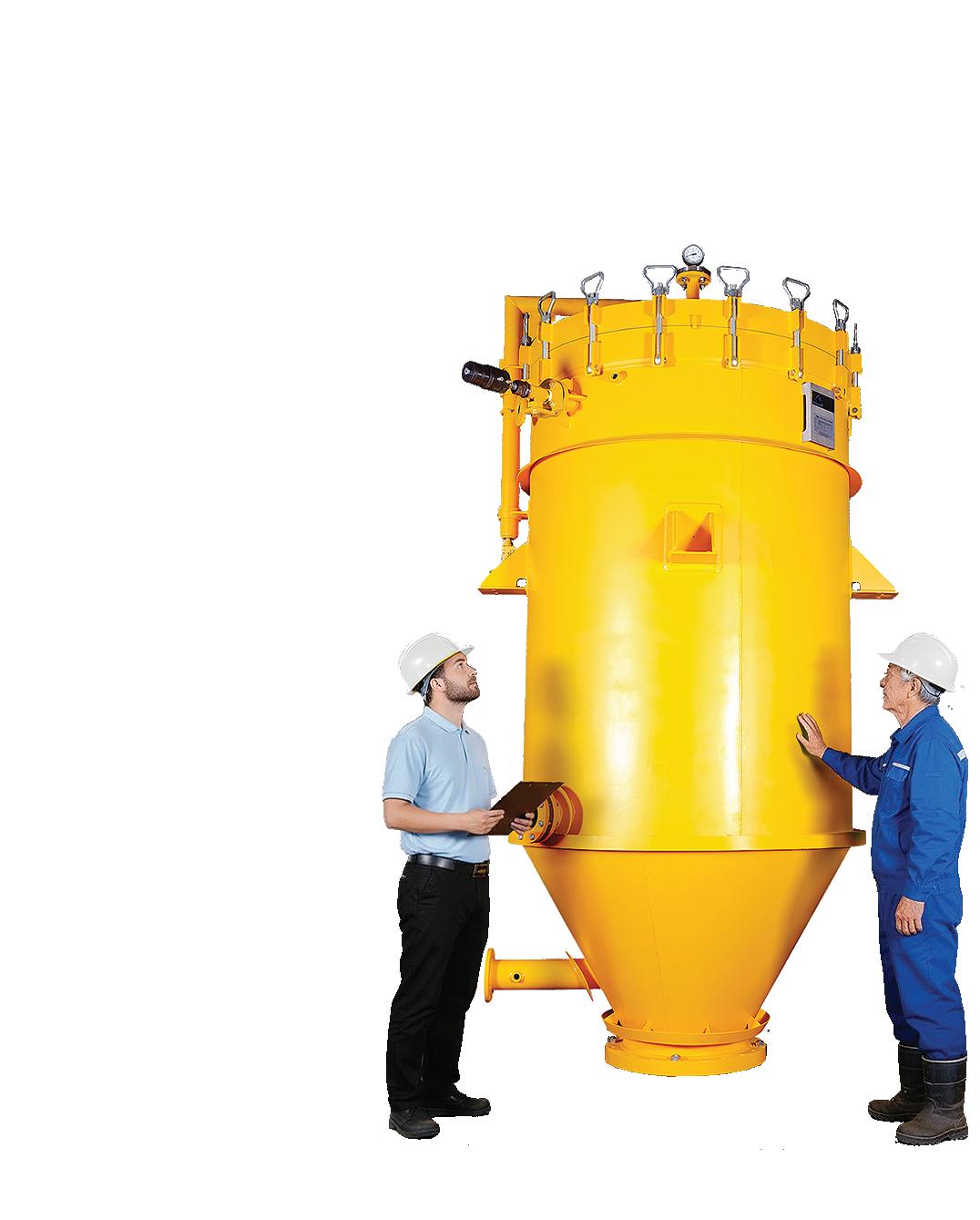

production levels, which could help support CPO prices.
“If Indonesia’s CPO production declined by just 4%, that would equate to about 2M tonnes,” he said.
Citing official figures, McGill said by the end of 2025, just under 800,000ha of oil palm planted area had been seized, with a second phase planned, although the process was slow.
“We expect a final number of 1.2M ha. The impact to date has been to encourage over-harvesting of fresh fruit bunches, increasing output. Reduced fertiliser and upkeep would start to be felt by the second half of 2026, he added.
“The management of small, scattered plots is impossible and the longer negotiations take to develop workable management agreements, the stronger the impact will be on output, but this will mainly be felt in 2027.”
Despite the land seizures, seed sales of around 160M in 2025 implied that 800,000ha of oil palm area had been either planted or replanted, Bek-Nielsen added.
“Record replanting and high seed sales suggest there is some growth in [Indonesia’s] palm area and future output.”
Speakers at the event highlighted the need to increase yields in leading producing countries Indonesia and Malaysia.
“Palm is losing its momentum … supply is stagnating,” Bek-Nielsen said.
“The last 15-20 years of NGO pressure to curb deforestation, combined with a failure to replant ageing oil palms, will shrink future supplies of palm.”
According to Bek-Nielsen, if Malaysia could increase yields – by replanting and using improved agricultural practices – from the current 3.5M tonnes/ha to 4.5M tonnes/ha by 2023, it could lift CPO production from 20.3M/year to 26M tonnes/year by 2028, without any deforestation.
Oil World’s Mielke said the challenge for the years ahead was to produce sufficient supplies, in good quality and at reasonable prices in a sustainable way. “The focus must be to raise yields per hectare, owing to the limitations of land. But area expansion is also needed.”
To address problems of ageing oil palms and slow replanting, Dr Noraini Ahmad, Malaysia’s Minister of Plantations and Commodities, said the government’s priorities for 2026 included productivity enhancement, replanting support, research and development, and the adoption of technology across the plantation sector.
With the USA, Brazil and Argentina now all exporting soyabean oil to India and large soyabean crops expected in all three countries, competition from rival oils had increased, Mistry said.
Bek-Nielsen pointed out that Brazil and Argentina had expanded the soyabean planted area by almost 10M ha between 2020-2025, an expansion of 9M ha and 0.9M ha respectively.
In addition, China’s high stock levels of soyabeans had led it to sell soyabean oil to India at competitive prices, reducing CPO imports to India in 2025, delegates heard.
As well as increasing competition from rival oils, such as soyabean oil, McGill said third and fourth position palm oil producers Thailand and Colombia had short windows for exports which meant they could influence the market. Both countries' outputs were forecast to rise in 2026, pushing more volumes of CPO on the export market, which would compete mainly with Malaysia’s export share, he said.
An overview of the vegetable oil sector in China was presented by Ryan Chen, China’s Import & Export business director of Cargill Investments (China).
China's total palm oil products demand in 2025 was around 7.2M tonnes. With current momentum, Chen said he expected China’s total demand for the ' Big4' vegetable oils - soyabean, rapeseed, palm and sunflower - to increase by 1% in 2026.
On the downstream side, he expected demand for shortening oil, hydrogenated palm oil and palm stearin to increase to 4.4M tonnes in 2026.
He also forecast a decline in China's soyabean oil exports from 560,000 tonnes in 2025 to 260,000 tonnes this year due to increased competition from South American supplies.
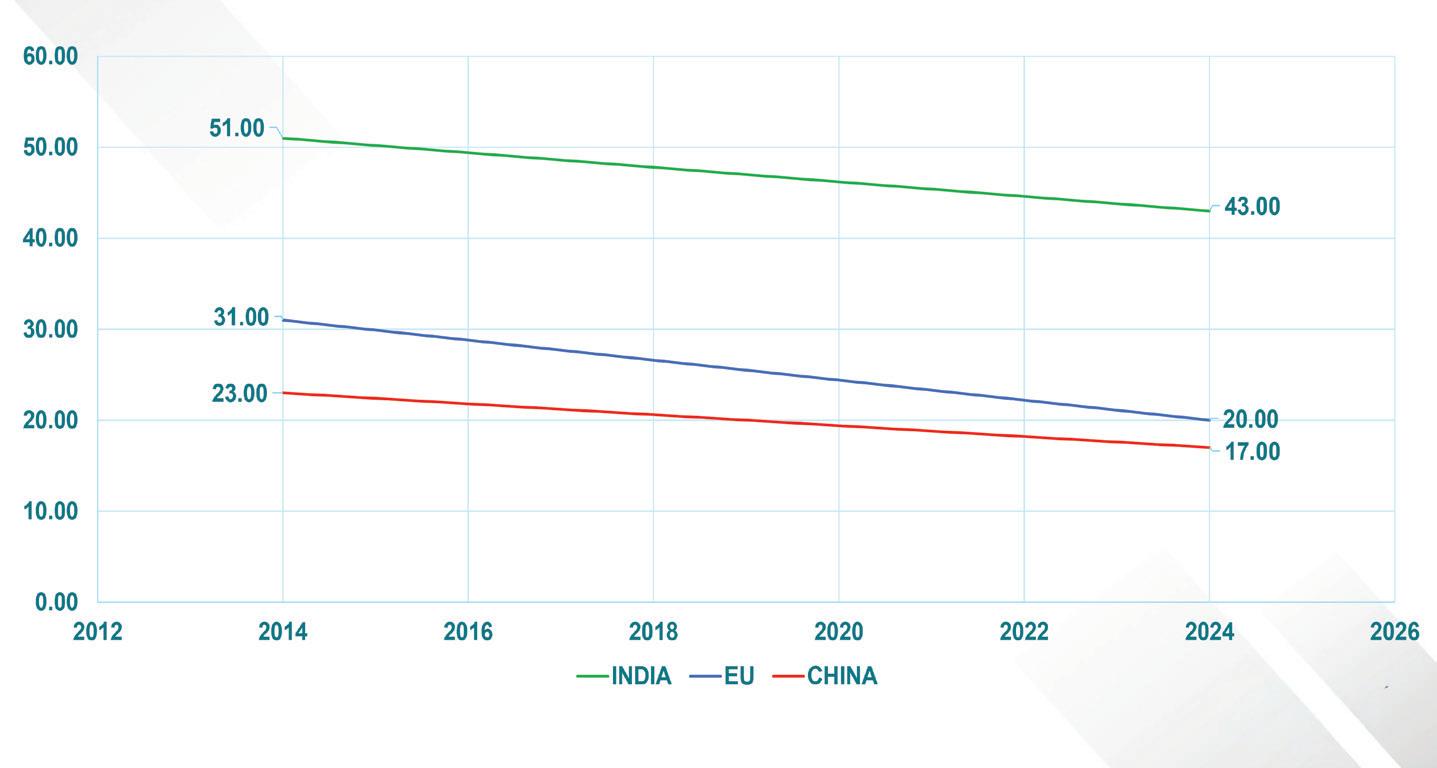
Jeremy Goon, CEO of FFM and chief sustainability officer of Wilmar International, said the African region was set to become a key driver of global palm oil demand over the next decade as the population was expected to double to around 2.5bn in 2050, while consumption already exceeded domestic production and urbanisation was rapidly progressing.
With palm oil consumption declining since 2014 in major consuming countries including China, India and the EU, with substitution with soyabean oils, Goon said African demand would test if palm oil could remain competitive (see Figure 2, above).
“Africa will shape palm oil dynamics for decades,” he added.
Despite the many challenges facing the palm oil sector, Oil World’s Mielke said palm oil still dominated the global vegetable oil markets with a production share of 31% and an export share of 49%.
Palm oil and soyabean oil were also still the price leaders, currently accounting for 57% of world consumption, he added.
However, land confiscation in Indonesia could limit production growth while competition from rival oils, such as soyabean oil, was expected to increase with the soyabean planted area growing faster than palm oil expansion.
Godrej International’s Mistry added that Indonesia and Malaysia – the world’s two biggest palm oil-producing countries –could face production issues in the second half of 2026, while he expected Chinese consumption of vegetable oils to weaken and India’s imports to be higher although palm would be competing with soyabean oil for its share of that market.
“The outlook for vegetable oil prices will be fought out in swing markets like India,” Mistry concluded. ● Gill Langham is OFI's assistant editor
Oils & Fats
International reports on some of the latest projects, technology and process news and developments around the world
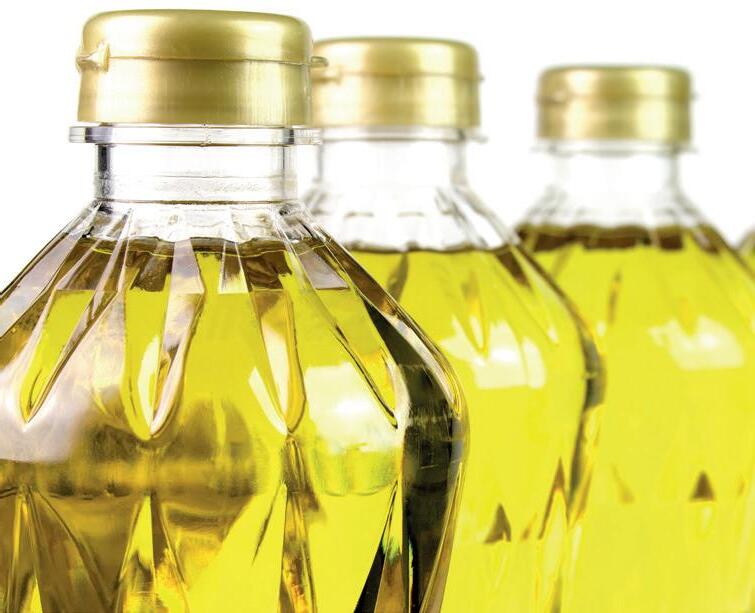
Thai edible oil company Thanakorn Vegetable Oil Products (TVOP) has introduced laserpowered plastic blowing technology in its bottling system, Food-Drink&Innovations wrote.
Scientists from Russia’s St Petersburg State University have developed a new magnetic catalyst for use in the production of biodiesel from soyabean oil.
Although transesterification was the most common industrial method to produce biodiesel from oils and fats, it was essential to reduce the volume of waste generated from the repeated use of catalysts that accelerated the reaction, an 18 March report on the university’s website said. However, in practice, the regeneration and re-use of catalysts remained challenging, the report said.
In its research – published in February in the scientific journal Bioresource Technology Reports – the university team synthesised a new magnetic composition based on calcium oxide and magnetite, using carbide slag – a readily available industrial waste product from acetylene production – as the raw material. They then conducted a series of experiments on biodiesel production from soyabean oil.
The results identified the optimal method for preparing the material for industrial use.
“We solved two key problems simultaneously: we created an inexpensive composition from production waste and, equally importantly, identified an optimal regeneration method for it,” said Konstantin Rodygin, co-author of the study and associate professor in the Department of Organic Chemistry at St Petersburg State University.
“Our experiments demonstrated that, for such systems, vacuum filtration ensures maximum preservation of the active component and a high product yield, while magnetic extraction proved to be the least effective method.”
While traditional bottling uses infrared lamps to heat plastic pre-forms before blowing them into bottles, the EvoBLOW technology –developed by French packaging manufacturer Sidel – uses laser heating to shape recycled polyethylene terephthalate (PET) and recycled PET (rPET) containers. The laser targets specific zones of the pre-form, which is then blown into shape with tighter control.
The higher precision had led to the development of TVOP’s new one litre oil bottle, which was 2g lighter than alternatives, the 3 April report said, adding that TVOP was the first edible oil producer in the world to shift to a laser-powered blowing solution.
The laser’s cold-start capability and environmental stability would also improve operational efficiency, Food-Drink&Innovations wrote.

The oils and fats industry has long sought a cleaner alternative to hexane-based oilseed extraction. Now, a new alcohol-based solvent extraction technology offers comparable operational efficiency, as well as cleanlabel, environmental and worker safety benefits
Kris Knudson, Alex Danelich
Solvent extraction is the industrial process used to remove oil from oilseeds such as soyabean, canola and sunflowerseed. This process is critical to global food security –it produces the cooking oils, protein meals and ingredients that form the foundation of countless food products consumed worldwide. Without efficient extraction methods, the world could not produce enough affordable protein and oil to feed today’s population of over 8bn people.
The extraction process works by using a solvent to dissolve and separate oil from the solid seed material, achieving oil recovery rates of 95-99% – far higher than mechanical pressing alone.
For over seven decades, the global oilseed processing industry has relied on hexane-based solvent extraction. Hexane is a petroleum-derived chemical solvent that the industry has adopted for compelling practical reasons including efficiency, cost effectiveness and readily available sources. While hexane has been instrumental in scaling oils and fats production, the industry has long sought a cleaner alternative that can deliver comparable efficiency and economic viability.
In 2024, the European Food Safety Authority (EFSA) initiated a reassessment of hexane as a safe food extraction solvent. It advised that concerns about potential toxic exposure demanded reevaluation of the safety of using hexane and began collecting data to study the effects of hexane exposure. Innovations in solvent extraction methods have yielded findings that support other solvents, including alcohol-based ethanol.
Alcohol-based oilseed extraction has several
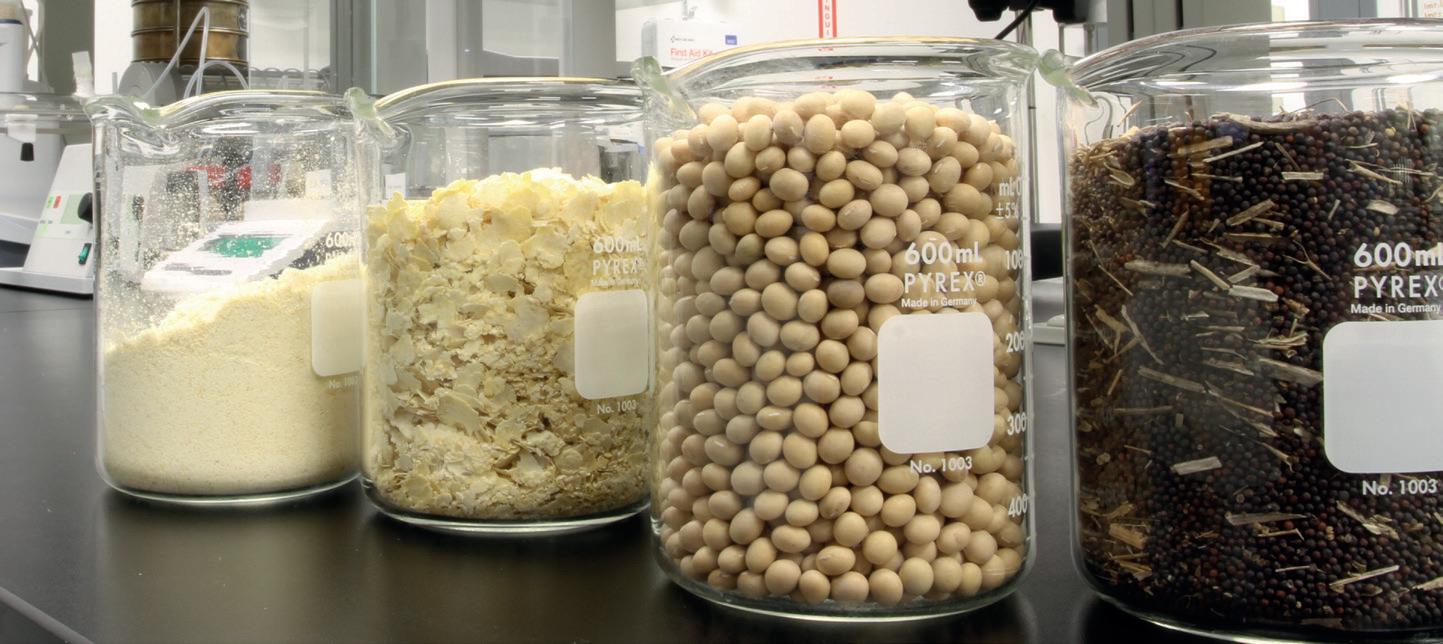
benefits including the fact that alcohol:
• Is already present in, or used to produce, many foods and beverages.
• Enables the production of clean label products that appeal to healthconscious consumers.
• Significantly improves worker safety.
• Reduces environmental impact compared to petroleum-based solvents such as hexane.
• Aligns more closely with sustainability goals.
• Uses renewable source materials such as plant-based ethanol.
• Facilitates easier permitting of new extraction facilities.
However, historical challenges with alcohol include its much higher energy requirements for solvent recovery; significantly higher operational costs; complex engineering requirements; and economic unfeasibility at industrial scale.
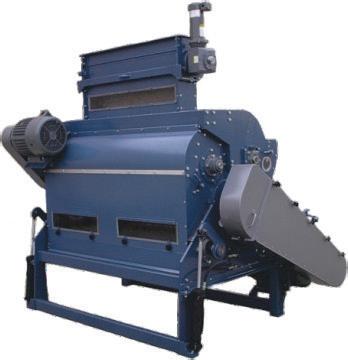
CPM|Crown says it has addressed these challenges with its patent-pending Monarc extraction technology, utilising ethanol as a solvent.
"The breakthrough lies in engineering innovations that dramatically reduce the energy requirements for alcohol recovery, making the process economically competitive with hexane systems for the first time at scale," the company says, adding that key advantages of Monarc technology are:
• Scalablility: Suitable for both new plant construction and facility upgrades.
• Clean label enabled: Allows manufacturers to meet growing consumer demand for clean-label products, including organic.
• Enhanced employee safety: Eliminates petroleum-based solvent handling concerns.
• Environmental benefits: Reduces environmental impact.
• Market advantage: Enables premium positioning for health-conscious
consumers.
• Cost parity: Projected to have comparable operational efficiency to hexane-based systems.
• Retrofittable: Existing facilities can be upgraded without complete reconstruction.
"Consumer research consistently shows growing preference for clean-label products – foods made with recognisable, minimallyprocessed ingredients," CPM|Crown says. "They seek lighter-coloured oils, higherprotein meal and blander taste in protein concentrates. Clean oilseed processing using alcohol-based solvents empowers producers to meet these expectations.
"Along with consumer demand for clean, safe and sustainable oils, the push for improved employee conditions in processing facilities is growing. Alcoholbased solvents reduce toxic side effects (including inhalation exposure) and have fewer negative impacts on the manufacturing environment."
In 2025, CPM|Crown completed its first sale of Monarc to Spain's Elian, which is now constructing a commercial-scale facility in Barcelona.
“We’re extremely excited to be the first company in the world to adopt this new fully integrated processing solution, from preparation to extraction to concentration," says Elian Barcelona commercial director Richard Petro.
“The world increasingly wants food to be manufactured in a safe, responsible and sustainable way," adds Dave MacLennon, former CEO of Cargill. "That’s why Monarc is going to be game-changing for the industry.”
Kris Knudson is President of CPM|Crown and Alex Danelich is Global Vice President of Sales for Crush and Specialty Segments
●






India's shortenings and margarine markets span home cooking to large multinationals, with industry evolving to eliminate trans fats, and palm oil the preferred raw material due to its versatility and affordability Kannan Jagadeesan
With around 1.47bn people, India has the world’s largest population and is also the leading global importer of edible oils.
Its per capita consumption of edible oils and fats is some 23.5kg, which has tripled in the last 25 years from 8.5kg in 2001.
The country’s total consumption of oils is 25.5-26M tonnes/year and growing at a rate of 3-4%/year, projected to reach 30M tonnes/year by 2030.
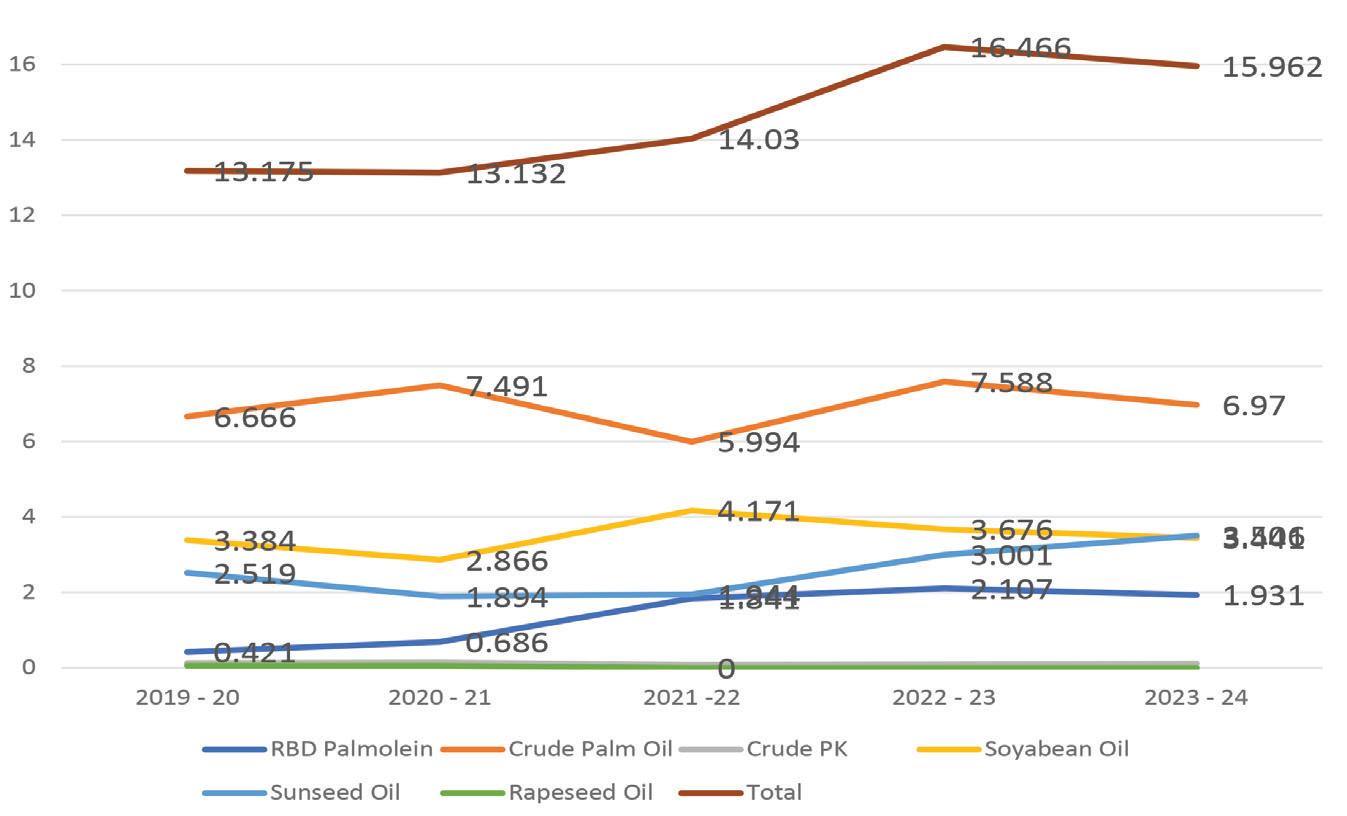
India imports around 16M tonnes/year of edible oils – some 60% of its requirements – and produces around 10M tonnes/ year. In 2023/24, the country imported 15.962M tonnes of edible oil including 6.97M tonnes of crude palm oil, 3.5M tonnes of sunflowerseed oil, 3.4M tonnes of soyabean oil and 1.931M tonnes of RBD palm olein (see Figure 1, p24).
The country’s National Mission on Edible Oils (NMEO) aims to increase domestic production of edible oils and reduce import dependence by expanding palm oil production and boosting
productivity of oilseeds such as mustard, soyabean, groundnut and sunflower.
India has around 150 shortening and margarine lines, totalling 400 tonnes/hour or 3M tonnes/year of installed capacity.
Three main companies – Standard International Precision Engineers, SPX Flow and Chemtech – supply more than 80% of the equipment and technology to the market.
The country’s shortenings and margarine industry comprises products for frying (vanaspati), the table sector, baking and general purpose applications.
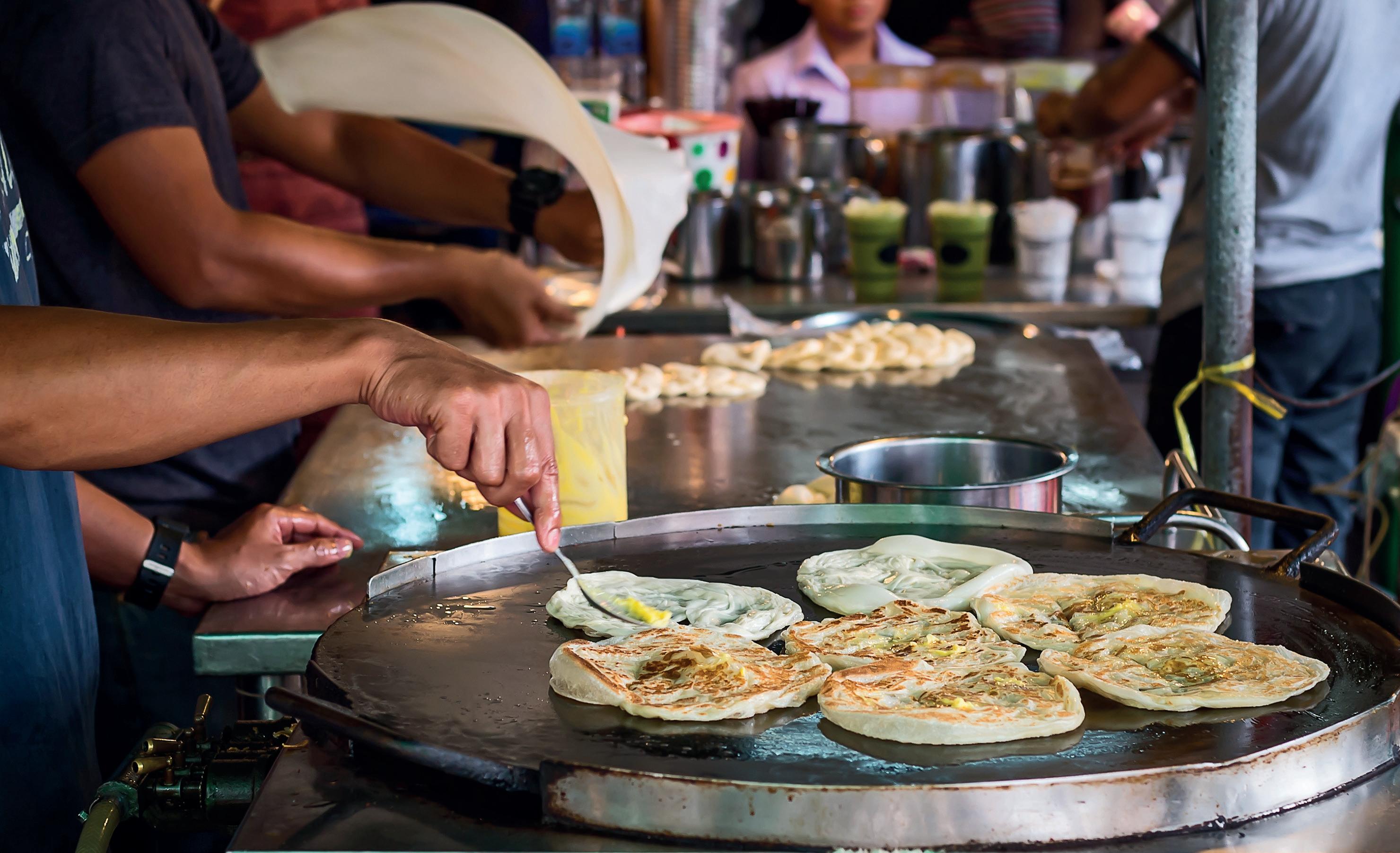
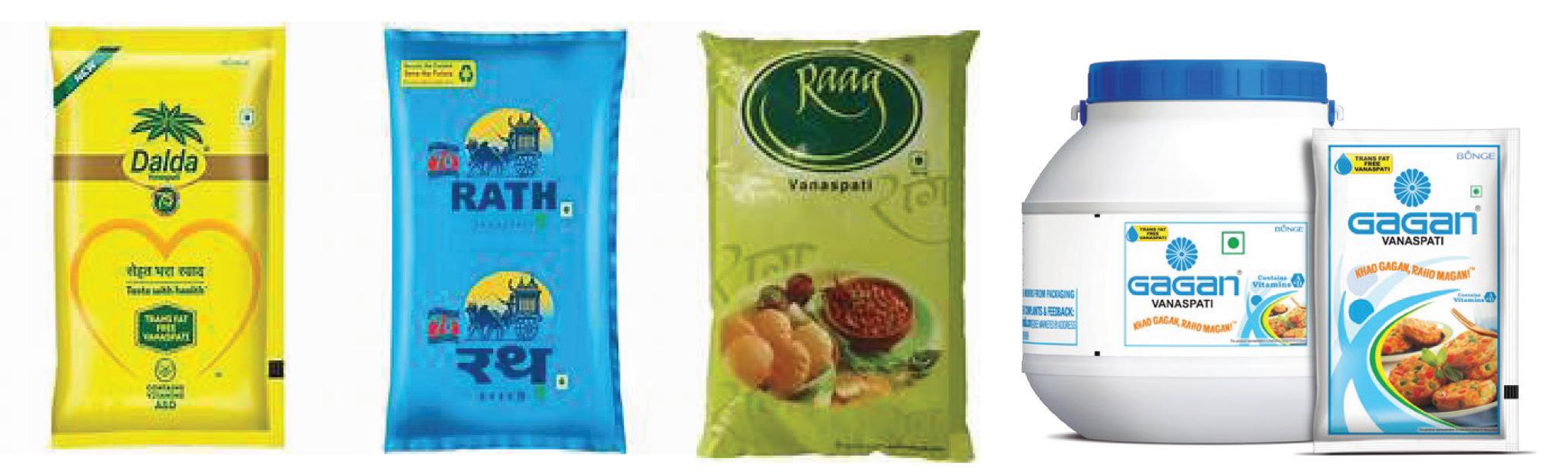
Vanaspati is a cost-effective alternative to ghee and butter made by solidifying liquid oils through hydrogenation, which increases shelf life and heat resistance. It is used in households and the hotels, restaurants and cafes (HoReCa) sector in a grainy form like ghee (milk fat), for shallow and deep frying, and to produce rotis, parathas, samosas, briyanis and sweets. It is sold in a range of packaging including sachet pouches, jars, tins and jerry cans.
Table margarine and spreads are used in households and the HoReCa sector and
have a smooth and spreadable texture like butter. They are refrigerated for retail use and at an ambient temperature for the B2B sector. Margarines and spreads are sold in wraps, tubs and slices and are used in food products such as sandwiches, toasts and Vada Pav – a spicy potato fritter sandwiched in a soft bread bun.
Bakery shortenings and margarine are used by a variety of customers, from artisan bakers, to small chains and industrial bakers. They are homogenous and smooth in texture, come in aerated and extruded forms and distributed at ambient temperatures generally in 15kg bags-in-boxes. Bakery shortening and margarines are tailor-made to produce products such as puff pastry, cakes, icings, biscuits, cookies, breads and toasts.
General purpose shortenings and margarine are also used by small artisan producers to large industrial companies. They have multiple applications and an ambient distribution, generally in bulk liquid form and bag-in-box.
India’s shortenings and margarine market comprises a large mix of home bakers and
cooks, artisanal bakeries, small chains and large industrials including US multinational food and snack manufacturer Mondelēz; South Korean conglomerate Lotte; Indian snack, biscuit and confectionery manufacturer Parle; Indian food company Britannia Industries and multi-business Indian enterprise ITC Limited.
The sector spans different application methods, different regions and different operational sizes, with differing consumption patterns.
The country has a large vegetarian population, with restrictions on the use of lard, tallow and dairy products, and a preference for egg-free ingredients.
Distribution can take 12-15 days exposed to varying weather conditions and increasing day-by-day ambient temperatures, which requires heat stability even above 450C.
The challenge is to meet this diversity and to create products for such a large and diverse population and industry.
Trans fat elimination
Trans fatty acids (TFAs), particularly industrially-produced TFAs, are produced during partial hydrogenation of vegetable oils.
Partial hydrogenation converts liquid
oil into a semi-solid fat, creating a texture similar to traditional ghee (clarified butter) but at a lower price; creating crispness, flakiness and a good mouthfeel in bakery products; while improving shelf-life, plasticity (spreadability) and stability at high temperatures.
However, TFAs have already been conclusively linked to increasing low-density lipoprotein (LDL or ‘bad’ cholesterol) and lowering the level of high-density lipoprotein (HDL or ‘good’ cholesterol HDL), raising the risk of coronary heart disease, stroke and type 2 diabetes.
The Food Safety and Standards Authority of India (FSSAI) has amended food safety regulations so that industrial
programme, edible oil and bakery associations, individual bakeries and chefs have also voluntarily committed to eliminate or reduce iTFAs from their products. They include the Indian Vanaspati Producers Association, The Solvent Extractors Association of India, and The Vanaspati Manufacturers Association of India.
Changes and challenges
The move against trans fats has led to a shift in the manner of shortening, margarine and spread production.
The industry no longer relies on partial hydrogenation to create solid fat structures. Instead, structure is achieved through improved fat blending,




been introduced to have controlled crystallisation rates.
There has also been a rise in the use of crystallisation aids – substances that help control the way fat molecules crystallise during cooling or processing – to guide fat molecules into a stable solid structure without needing partial hydrogenation.
In addition, blends of fully hydrogenated and liquid oils have resulted in products with the desired texture.
Hydrogenators used for partial hydrogenation have been converted into dual process systems. These fully hydrogenate oils to create a hard stock, blend liquid oil and interesterify to achieve the desired melting profile and texture.
Multi-stage fractionation of palm oil has been introduced, against single-stage fractionation which only results in a liquid palm olein and a solid palm stearin. In multi-stage fractionation, the first stage results in stearin and olein, the second fractionation results in a softer stearin and hard stearin, while a third stage produces speciality fractions.
This produces super olein, soft palm mid-fractions, hard stearin fractions and speciality fats with precise melting ranges, and natural hard stocks for margarine, spreads and bakery fats.
Existing crystallisation lines have been
designed for fast crystallisation blends containing triglycerides that crystallise quickly and form a stable β′ crystal network, providing the desired firmness and spreadability.
Modern margarine production typically use systems like the votator/scraped surface heat exchanger (SSHE). An oil and water phase emulsion is prepared, followed by rapid cooling in the SSHE and crystallisation to physically structure the fat, while mechanical working is carried out in the pin worker, and crystal stabilisation occurs in the resting tube.
The pin worker prevents agglomeration of crystals, distributes crystals uniformly, enhances plastic consistency and prevents a grainy texture.
The extension of resting tubes improves crystal development and structure formation. It allows for proper formation of stable β′ crystals and prevents the development of large unstable crystals. This reduces post-hardening and improves spreadability at refrigeration temperature, allowing manufacturers to use fully hydrogenated no-trans fats, interesterified fats, palm fractions and structured blends, without relying on partial hydrogenation.
Changes in process conditions include adjustments in crystallisation temperature
Source: The Solvent Exatractors' Association of India
profiles; adjustments in pin workers to minimise working; maintenance of system back pressure to enable extrusion; and successfully managing the tempering duration, which would otherwise be expected to increase due to trans fat reduction and elimination.
Crystallisation temperature controls the nucleation rate, crystal size, polymorphic form and solid fat network formation. With precise temperature profiling, smaller, uniform crystals form, a stable β′ structure develops and the desired firmness is achieved. Adjustments in crystallisation temperature profiles optimises the cooling curve, allows for a controlled nucleation temperature, adjusts the final exit temperature and allows for a modified residence time in cooling barrels.
Pin worker adjustments reduce shear intensity, optimise pin speed and allow for a controlled residence time. Excessive pin working breaks crystal networks too much, delays structure setting and low hardness that may not be suitable for critical baking applications. By minimising pin working, the crystal network remains intact, faster setting occurs and plasticity improves naturally.
Maintaining the system back pressure prevents premature expansion, ensures compact crystal packing, improves structural integrity and enables smooth extrusion. Adjustments have increased system pressure, controlled outlet restriction and stabilised flow during discharge. Proper pressure control strengthens the fat matrix without the need for partially hydrogenated hard stock.
Tempering allows crystal stabilisation, polymorphic transition control and final structure development. As new fastcrystallising blends already form stable structures during controlled cooling, no major modification in tempering is now required.
The Indian shortenings and margarine industry has evolved to address trans fat elimination, with trans fat-free shortenings and margarines already on the market.
Palm and palm fractions have played a vital role in this change and will continue to be a preferred major raw material due to their versatility and affordability.
Functionality challenges with soft oil – such as organopletics, shelf life, heat stability and limited flexibility in production facilities – still exist, and price will continue to remain a major deciding factor. ● Kannan Jagadeesan is the founder of Value Chain Catalyst, a global technical and strategic business consultancy in India
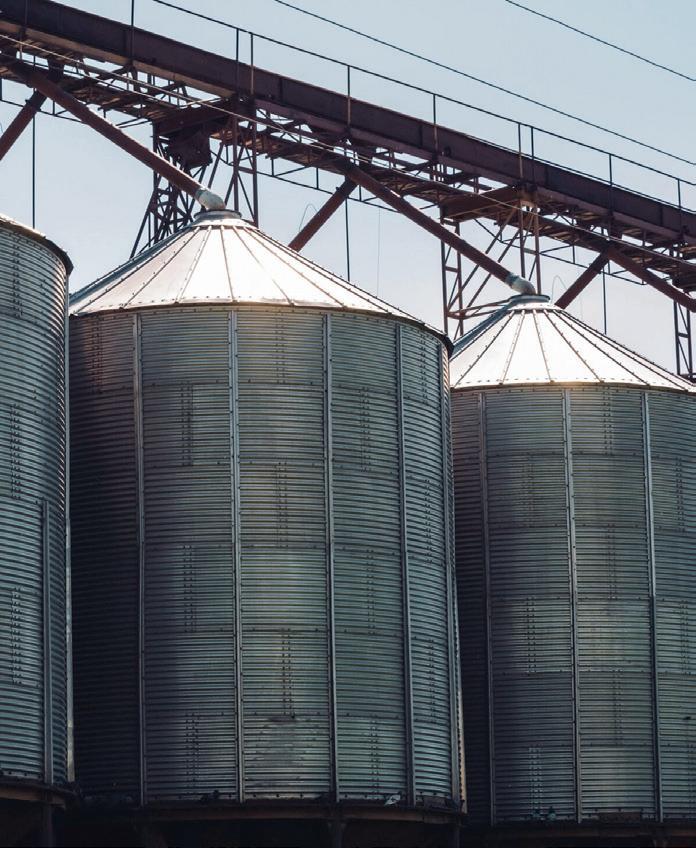
From upgraded Danube terminals to expanded Adriatic and Aegean ports, Southeast Europe is rapidly ramping up oilseed logistics capacity, as governments and private investors race to unlock faster, more diversified export routes. The only major headwind remains lingering disruptions in the Black Sea, where the Russia–Ukraine war continues to weigh on regional shipping flows.
Over the past few years, Bulgaria and Romania have witnessed a remarkable

Investments in port handling capacity at Constanta, Varna and Burgas – along with projects along the Adriatic coast – mean the Western Black Sea and Balkan corridors are playing a more important role in a diversified European export network Vladislav Vorotnikov
improvement in oilseeds logistics infrastructure, driven by a mix of economic and political factors.
Western Black Sea developments
For oils and fats logistics, the key development of recent years was the elevation of the Western Black Sea ports – especially Constanța – from secondary regional outlets to critical strategic export hubs, says Nandini Roy Choudhury, a senior analyst with think-tank Future
Market Insights.
The oil and fats trade in the Black Sea region has been riding a rollercoaster ride in the last few years, as evidenced by available data.
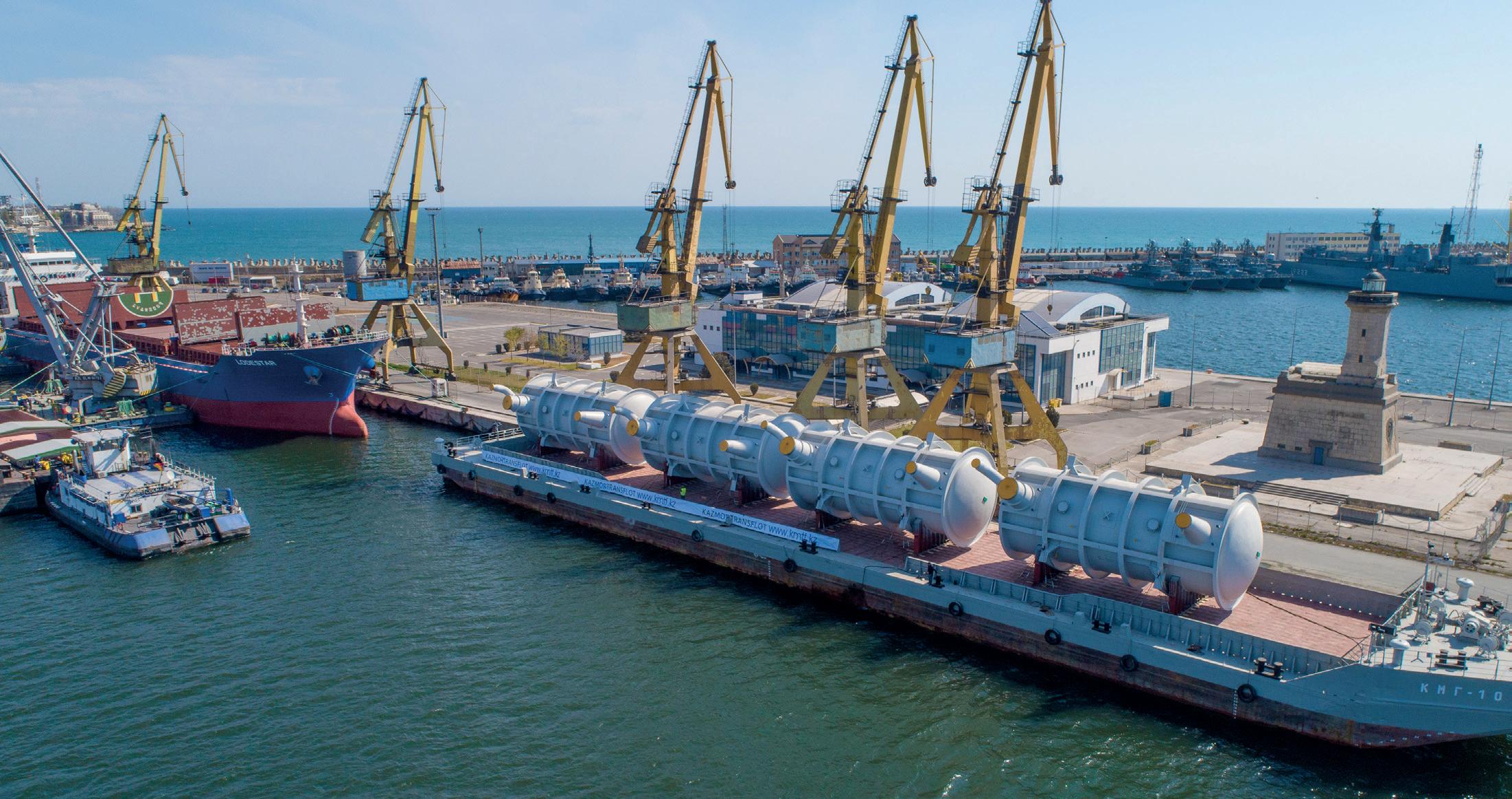
In 2023, Constanța handled a record 92.7M tonnes of cargo, up 22-23% from 2022. Oilseed handling reached about 9.27M tonnes, nearly triple the 3.48M tonnes seen in 2022.
However, 2024 saw a marked drop in volumes across key bulk categories —


effective technology and complex services
■ Horizontal agriculture
■ Local mechanical processing
■ Patented system of energy recovery
■ Complex approach including Physical Oil Refining
■ Unique combination of extruders and screw presses
including oilseeds, with deliveries falling by 64.5% compared with the previous year.
The key reason for these ups and downs was "trade normalisation after the surge tied to Ukrainian transit flows," explains the press office of the Constanța port administration.
Despite the dip, the trade flows are noticeably exceeding pre-war levels. Investments in trade flow facilitation are already bearing fruit.
"Investments in port handling capacity, storage and rail connectivity have materially improved throughput efficiency," Choudhury says. "Constanța, in particular, has benefited from terminal modernisation and better rail access into the port area, which helps reduce congestion during peak harvest periods."
Choudhury explains that when ports are able to load larger vessels more consistently and reduce berth waiting times, the economics of bulk exports improve immediately – not necessarily because freight rates decline dramatically, but because demurrage risk and scheduling uncertainty decline.
Several promising new projects are expected to further facilitate logistics.
For example, Transport Trade Services is investing €22.9M to expand a grain and oilseed terminal, aiming to lift storage capacity from 110,000 tonnes to 180,000 tonnes and adding shiploading capacity of up to 1,000 tonnes/hour, while separate deals include the acquisition of a vegetable oil terminal with 27,600 tonnes of liquid storage and total capacity exceeding 70,000 tonnes.
In Bulgaria, upgrades are centered around the ports of Varna and Burgas, and include investments in intermodal infrastructure and rail links.
In particular, Bulgaria's Ministry of Transport has approved about €7M in modernisation projects for key terminals, including rehabilitating rail links to Varna-West, new equipment purchases, and a mobile crane for PCHMV-Varna, improving capacity and intermodal operations.
Future concession plans could bring up to BGN500M (~€255M) in investment into deeper channels and new quay walls at Varna-West, signalling major long-term infrastructure enhancements.
"Historically, many traders saw these ports as relatively limited in terms of hinterland access. Improved rail integration changes that dynamic by allowing exporters to move larger bulk volumes more predictably from inland storage to port terminals," Choudhury says.
However, the most important impact in the Bulgarian seaports is operational reliability rather than headline cost reduction. "Commodity traders price logistics risk into their bids, so when a corridor becomes more predictable, the region becomes more competitive even if nominal transport costs do not fall dramatically," Choudhury adds.
Southeast Europe is rapidly upgrading its oilseeds logistics infrastructure, driven less by local production growth than by the region's emergence as a strategic gateway
to European and global markets.
Bulgaria and Romania are Europe's leading oilseeds producers, although the industry's growth potential in both countries remains limited.
Grain and oilseed producers in Bulgaria are facing several challenges, according to Ilia Prodanov, chairman of the management board of the Bulgarian Grain Producers Association.
First and foremost is the battle against climate change, Prodanov says.
In the 2024/25 marketing year, Bulgaria's total oilseed harvest fell to about 1.6M tonnes, down from roughly 2M tonnes a year earlier, marking the lowest crop in over a decade and reflecting the stress of hot, dry conditions on yields. Sunflower production alone fell by about 15% to 1.5M tonnes, and rapeseed output shrank by a similar margin to around 175,000 tonnes.
Although production is on a recovery track in the 2025/26 marketing year, changing weather conditions remain one of the key factors that the local oils and fats industry needs to contend with.
"Another significant issue is the war in Ukraine and its accompanying factors –rising prices for fertilisers, agrochemicals and fuels," Prodanov says.
In addition, high land rents undoubtedly represented the most enormous burden for Bulgarian farmers. "In comparison with other European countries, Bulgaria ranks among the top five in terms of land rent costs," Prodanov adds.
All these factors make the rise in local production that would justify investments
in oilseeds logistics highly unlikely in the coming years.
Foreign trade, on the other hand, offers much more potential in terms of ramping up trade flows.
Expanding capacities are paving the way for regional ports to handle oilseeds and vegetable oil imports from Ukraine and other more remote destinations.
Most recently, Bulgarian farmers have increasingly voiced fears about the impact of the EU-Mercosur agreement.
The Bulgarian Grain Producers Association, for example, warns that under the trade deal, the elimination of tariffs and reduction of barriers is expected to increase imports of soyabeans and other oilseeds from South America into the EU market as Brazil, Argentina, Paraguay and Uruguay — major global producers — gain greater access to European markets and compete with domestic supplies.
This scenario, although undesirable for local manufacturers, holds promise for local infrastructure operators.
According to analysts, Bulgaria and Romania's accession to the Schengen Area in 2026 will further improve both countries' attractiveness as European gateways, reducing border friction and transit times, making the region a more seamless gateway for European trade flows and strengthening its role in the broader EU supply chain.
Promising developments are also emerging in the Western Balkans, with investments in streamlining logistics infrastructure along the Adriatic coast.
One flagship project focuses on the Port of Bar in Montenegro, the country's primary deep-sea gateway on the Adriatic.
Supported by a financing package of around €175M in EU grants and concessional finance, upgrades to the Bar–Golubovci rail section will link the port more effectively with inland Serbia and beyond, potentially doubling rail freight capacity and strengthening Bar's role as a corridor for bulk cargo flows from Central and Southeast Europe.
Private investments and EU-supported infrastructure projects are gradually increasing the strategic importance of the Western Balkans alongside Southeast Europe, Choudhury says.
"Projects such as new grain terminals, rail modernisation and improved port handling capacity are helping the region move closer to the operational standards of established EU export hubs," Choudhury adds.
The Ukrainian conflict has also played a role in changes to oilseed logistics in this part of Europe.
"In many ways, the Russia-Ukraine war accelerated changes that were already underway – pushing Southeastern Europe to develop into a more prominent logistics bridge between agricultural producers in Eastern Europe and global commodity markets," Choudhury says.
At the same time, she states that broader connectivity initiatives – including rail projects linking the Balkans with Greece and improved transport corridors across Southeastern Europe – are expanding the potential routing options for agricultural commodities.
"This does not mean that the Western Balkans will replace the traditional EU bulk gateways in the near future. Major North Sea ports still benefit from enormous scale, deeper financial markets and longestablished trading ecosystems."
However, what is clearly happening is the emergence of a more diversified European export network, where the Western Black Sea ports and Balkan corridors act as important complementary routes, Choudhury says.
"In a world where geopolitical disruptions and climate variability increasingly affect trade, that kind of diversification has significant strategic value."
● Vladislav Vorotnikov is a freelance journalist

Oilseed preparation performance is driven by consistency, control, and how effectively equipment responds to variability in materials and operating conditions. French designs cracking, flaking, conditioning, and pressing systems with a focus on mechanical durability, stable and dependable operation, and long term serviceability, where uptime, maintenance access, and energy use directly influence plant performance.
Across food and industrial applications, French preparation equipment provides uniform material quality through each step of the preparation process, controlled thermal exposure, and reliable operation under changing seed or other oil bearing material conditions. This balanced approach helps protect oil and cake quality while supporting efficient and stable downstream processes.
At the French Innovation Center, processors evaluate preparation approaches using their own oilseeds. Working with experienced engineers, trials help refine operating conditions, manage variability, and reduce unnecessary heat and energy input before scale up, supporting informed preparation decisions as processes and expectations evolve.

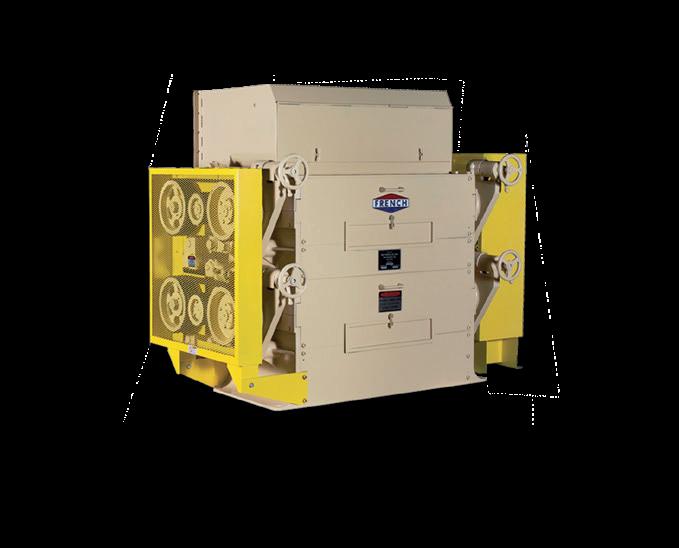

Catalyst manufacturers must have a thorough understanding of the relation between catalyst preparation variables, characteristics, and performance indicators to design optimal products for customers, taking into account applications and feedstocks
Tjalling Rekker
Industrial scale hydrogenation of fats and oils began in the beginning of the 20th century and enables the conversion of (mostly) liquid vegetable oils into (semi-) solid fats that are predominantly used in the food industry but also in the production of oleochemicals such as fatty acids, alcohols and amines.
Edible oils are a mixture of triglycerides with fatty acid chains that can vary in both length and degree of unsaturation.
The degree of unsaturation is expressed as the iodine value (IV) – the higher the IV, the higher the degree of unsaturation.
By removing the unsaturated bonds in the fatty acid chains, the melting range increases, thus expanding the applicability of edible oils in the food industry. In addition, oxidation to off-flavour products such as aldehydes, ketones and carboxylic acids is prevented, thereby improving stability and shelf life.
The role of nickel – as the active catalyst material – is to split the adsorbed hydrogen molecules (H2) into hydrogen atoms, which combine on the catalyst surface with the unsaturated bonds of the triglyceride molecule to form a saturated bond.
The goal of full hydrogenation is to remove all the unsaturated bonds, while selective partial hydrogenation aims to reduce only the polyunsaturated fatty acids (such as linolenic acid C18:3 and linoleic acid C18:2) and preserve the mono-unsaturated fatty acids (such as oleic acid C18:1).
Selective partial hydrogenation
improves oxidative stability while preserving nutritional quality because polyunsaturates, which are sensitive to oxidation and cause instability of fats, have a much higher likelihood to be hydrogenated compared to monounsaturates.
However, partial hydrogenation is also accompanied by the formation of trans isomers, which are associated with an increased risk of coronary heart disease through increasing the level of (bad) LDL cholesterol. For that reason, alternative modification techniques – such as interesterification, fractionation, blending, the use of alternative (tropical) oils or combinations of these – are being applied in order to obtain the desired functionality.
Nevertheless, since (full) hydrogenation to low IV provides a base stock for some of these steps, it still remains an important part of the edible oils processing chain.
In addition, full hydrogenation of triglycerides is, after hydrolysis, also used to produce saturated fatty acids that are used as raw materials in the oleochemical industry.
Since the beginning of industrial fats and hydrogenation of oils, several types of catalysts have been used, such as nickel formate, Raney nickel, copper and precious metal catalysts such as platinum and palladium. Although precious metals show a higher activity and better cis-isomer retention compared to nickel


catalysts, their high costs have prevented commercial-scale use.
Copper catalysts exhibit a high selectivity for retaining mono-unsaturated fatty acids but since copper is a strong pro-oxidant for fats and oils, any traces should be removed carefully.
Today, supported nickel catalysts are being mainly used as they are the most cost-effective option. Typical support materials are kieselguhr, silica, alumina or combinations of these.
The purpose of the support is to provide a surface on which the small nickel crystallites are finely dispersed, resulting in an increased exposed nickel surface area that is available for the hydrogenation reaction.
In addition, the interaction between the support and the nickel crystallites prevents the latter from sintering into larger crystallites, which would result in loss of activity.
The effect of the nickel crystallite size and nickel dispersion has been shown in laboratory tests in which two catalysts – A and B – were compared.
Catalyst A and B mainly differ in nickel surface area while other characteristics such as nickel content were comparable (see Figure 1, above). Catalyst A was a catalyst with small nickel crystallites resulting in a relatively high nickel surface area while catalyst B had larger nickel crystallites and thus a lower nickel surface area. The impact on catalytic performance is shown in Figure 2 (above) in which the time to reach an IV<1 is plotted versus catalyst dosage for the full hydrogenation of palm oil at standard conditions (200°C; 3 bar H2).
The higher nickel surface area of catalyst A provided for more active nickel sites available for the hydrogenation reaction. This can be utilised in two ways. Firstly, it allows for a lower catalyst
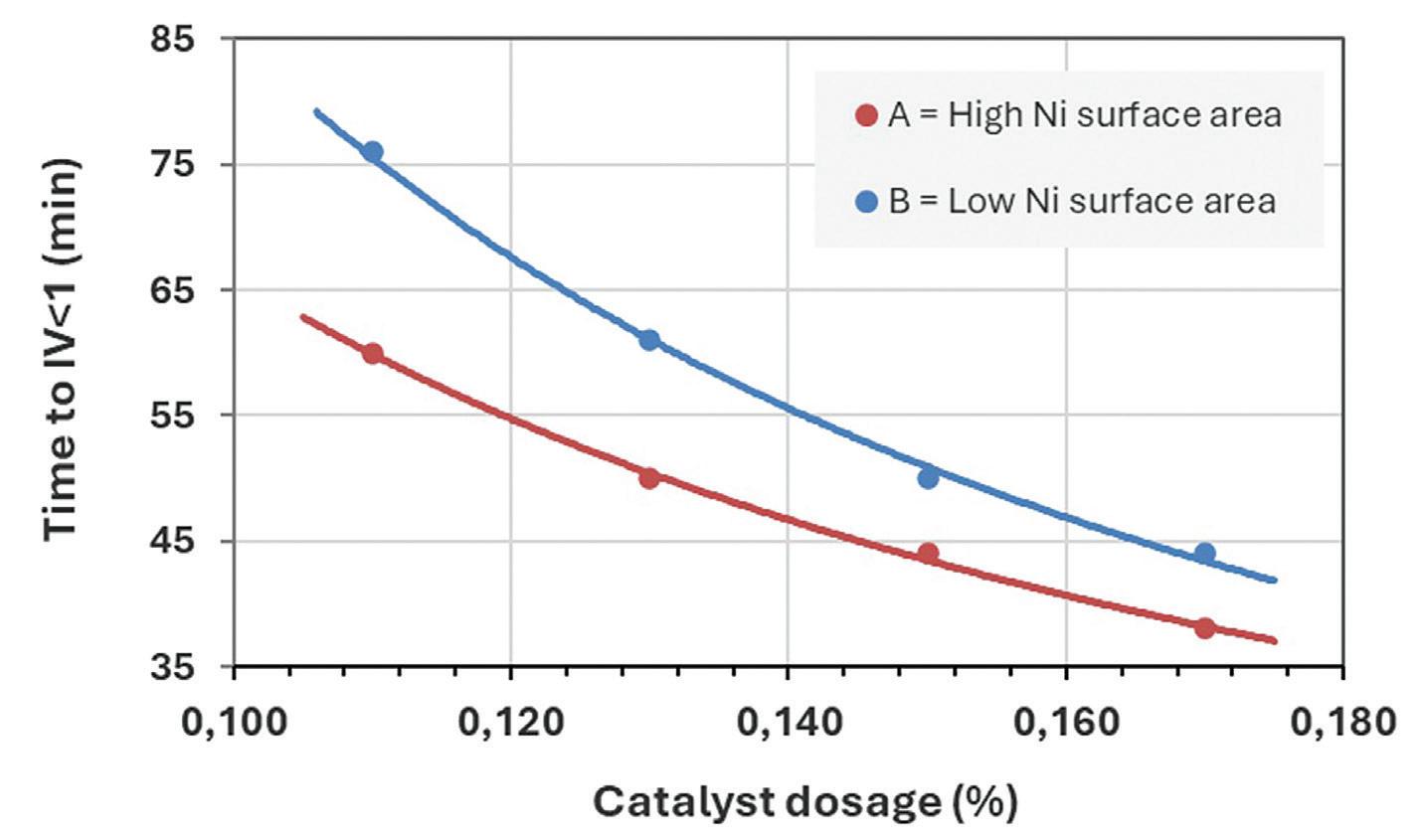
dosage at the same reaction time, thus reducing catalysts costs.
Alternatively, the higher activity of catalyst A can also be used to shorten the reaction time at the same catalyst dosage which will result in increased productivity. This example shows that the available nickel surface area is more important than just the total nickel content of the catalyst.
An additional advantage of a higher nickel surface area is better resistance to catalyst poisons such as sulphurcontaining compounds (such as glucosinolates in rapeseed oil).
If present, part of the catalyst will be consumed by these poisons, creating a socalled threshold effect; sulphur will block part of the nickel by irreversibly forming nickel sulphide on which no hydrogen dissociation is possible.
With a larger nickel surface area, the nickel in the catalyst is used more efficiently and the catalyst will maintain a higher activity as a relatively smaller part is blocked by poison molecules.
The hydrogenation of edible oils is a three-phase process (gas/liquid/solid) that is typically done in a batch-slurry reactor.
Depending on the desired final product and feedstock quality, typical process conditions for hydrogenating edible oils include a temperature of 120-200°C, a pressure of 1-10 bar and a catalyst loading of 0.02-0.2%. Since hydrogen has low solubility in oil, its concentration is much lower compared to the double bond concentration in bulk liquid. Therefore, hydrogen mass transfer from the gas phase to the catalyst surface, where the reaction takes place, is an essential step that may influence the overall hydrogenation rate.
The hydrogen supply on the catalyst surface actually affects all aspects of the hydrogenation step and is determined by pressure, temperature, agitation/ mixing, reactor configuration and catalyst activity/dosage. For example, increasing the pressure will result in higher hydrogen surface concentration, thereby increasing activity. However, at the same time, it will also reduce selectivity with more fully saturated fatty acids being formed. Increasing the temperature will increase activity (by kinetics) and therefore decrease the hydrogen concentration on the catalyst surface. This will not only result in increased selectivity for hydrogenating polyunsaturates but also
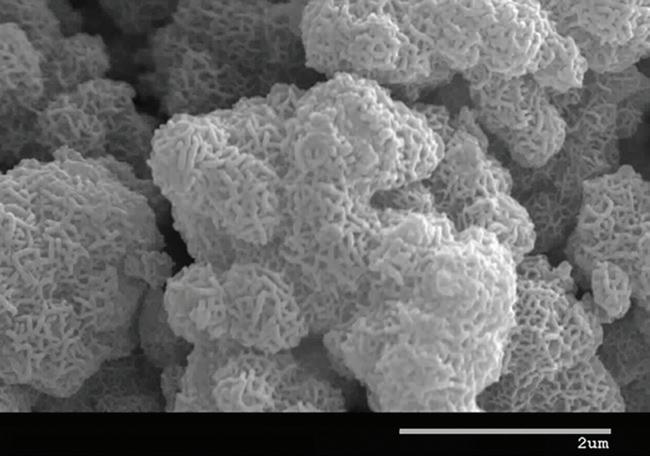
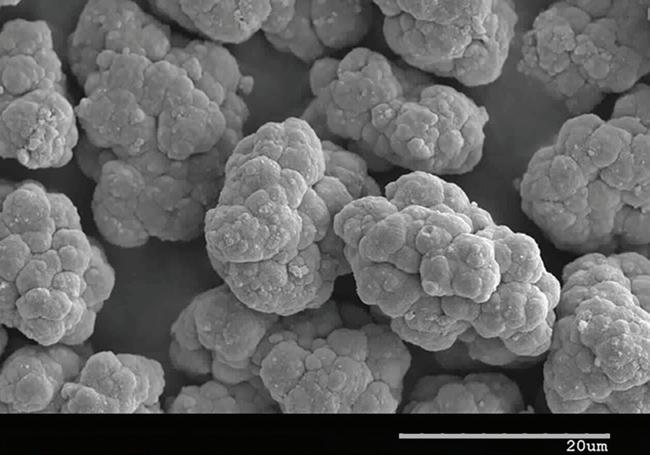
in more trans isomers formation. Table 1 (previous page) shows the impact of various process variables on catalyst performance parameters.
Since most of the active nickel surface area is located inside the pores of the catalyst, mass transfer into the catalyst particle is also of great importance in determining process efficiency. Besides hydrogen, unreacted triglyceride molecules have to diffuse into the pores and once they are (partially) hydrogenated, diffuse back into the bulk liquid.
In the case of selective partial hydrogenation, the latter ideally occurs without the triglyceride molecules being fully saturated. The presence of short and wide pores will facilitate the latter, which can be accomplished by small particles with a large pore volume.
The electron microscopy images in Figure 3 (above), for example, show how by selecting a specific type of support, a completely different catalyst morphology and particle size can be obtained. The much more open structure of the nickel/alumina catalyst will provide better selectivity for hydrogenation of polyunsaturated fatty acids, while the larger and denser particles of the nickel/silica catalyst will have better filtration characteristics. In addition, the latter will have lower susceptibility to catalyst poisoning as, generally, relatively large poison molecules have limited accessibility to the active nickel located inside the pores.
The type and nature of the support material not only affect selectivity and filterability but also the activity of the catalyst. By selecting a support with optimised pores, IQatalyst has been able to introduce a catalyst for full and partial hydrogenation of edible oils with a higher activity that enables reducing the nickel content while maintaining the same activity on catalyst weight base.
This not only makes the catalyst costs less dependent on fluctuations in nickel price, but it also contributes to improved sustainability due to more efficient raw material use.
'The catalyst manufacturer has to combine sometimes conflicting desired properties into an optimal product, taking into account the specific applications and feedstocks'
Following the hydrogenation step, a catalyst has to be removed from the product, which is normally done by a filtration step. Efficient filtration of the catalyst from the hydrogenated product is accomplished with a catalyst that has a large particle size, a steep particle size distribution and a high density (ie, a low pore volume).
However, the larger particle size and higher density are in conflict with high activity and selectivity so there will always be a trade-off between filterability and catalytic performance.
In order to achieve the best possible compromise, the catalyst manufacturer has to have a thorough understanding of the relation between catalyst preparation variables, characteristics and performance indicators, thus providing the best possible solution for the customer.
In general, supported nickel catalysts are manufactured through a number of
consecutive steps, each of which may be decisive in determining the ultimate catalyst performance.
Typically, the first step is a precipitation process during which the nickel precursor is deposited on the support with a base precipitant such as sodium hydroxide or sodium carbonate. In this precipitation step, many parameters can be varied which may affect the final properties of the catalyst. Examples of these are type and concentration of raw materials, acidity, agitation speed and temperature.
The challenge is that when adjusting a parameter to obtain a specific catalyst characteristic, another property of the catalyst may change as well in an undesirable direction. For instance, the particle size of the catalyst can be increased by reducing the agitation speed during the precipitation step, but only to a limited extent, since the nickel surface area will also decrease, which will result in a less active catalyst.
Following the precipitation step, the resulting precipitate is washed with water to remove undesired salts that may affect performance, dried and activated by reduction with hydrogen. The reduction step is critical as it can make or break a catalyst. For instance, a too high reduction temperature will cause sintering of nickel crystallites and, hence, lower activity, while a too low reduction temperature will result in a lower amount of reduced (active) nickel and inefficient use of the total amount of nickel available.
After the reduction, the reduced nickel catalyst powder is mixed into a fully saturated vegetable oil and formed into pastilles to protect it from contact with oxygen and for ease of handling. Typically, these pastilles contain 1822% nickel but, as mentioned above, improvements by support optimisation have enabled the reduction of the nickel content of IQatalyst’s most recent catalyst development to as low as 11-12%.
Although health concerns related to the formation of trans isomers have led to a fall in partial hydrogenation of edible oils globally, partial hydrogenation still remains an important tool for the edible oil processor to achieve the desired product functionality and as a means to produce raw materials for the oleochemical industry.
The catalyst plays a crucial role in this and the catalyst manufacturer has to combine the sometimes conflicting desired properties into an optimal product, taking into account the specific applications and feedstocks. ● Tjalling Rekker is a staff chemist in R&D at IQatalyst, the Netherlands
11-13 May 2026
GrainCom26
Geneva, Switzerland
https://graincomevents.com/
27-30 May 2026
24th European Fat Processors and Renderers Association (EFPRA) Congress Tenerife, Spain
https://efpra.eu/events/
27-28 May 2026
Aquafeed Platform Europe
Hotel Novotel Gent Centrum, Ghent, Belgium
https://smartshortcourses.com/23rdaquafeed-europe-demo/
29 May 2026
4th Global Oleochemical Conference Château Le Grand Mello, Paris, France www.hbint.com/save-the-date-oleoline4th-global-oleochemical-conference
1-2 June 2026
34th Technical Short Course: Advanced Technologies in Oilseed Processing, Edible Oil Refining and Oil Modification
Hotel Novotel Gent Centrum, Belgium
https://smartshortcourses.com/34th-oilsand-fats-short-course/
2-4 June 2026
4th International Conference Lipid droplets & Oleosomes Montpellier, France
https://4thldocongress.seminaire.inrae.fr/
9-10 June 2026
International Grains Conference (IGC) IET London, UK https://www.igc.int/en/conference/ confhome.aspx
10-11 June 2026
Oleofuels 2026
Seville, Spain www.wplgroup.com/aci/event/oleofuels
15-17 June 2026
Argus Biofuels & Feedstocks Latin America Conference
São Paulo, Brazil www.argusmedia.com/en/events/ conferences/latin-america-biofuels
15-17 June 2026
Sustainable Aviation Futures Congress Amsterdam, the Netherlands www.safcongress.com
18-19 June 2026
12th International Symposium on Deep Frying
Radisson Blu Hotel, Hamburg, Germany https://veranstaltungen.gdch.de/ microsite/index.cfm?l=11921&sp_id=2
22-25 June 2026
Annual Vegetable Oil Extraction Course (VOE-2026)
College Station Texas, USA
https://fatsandoilsrnd.com/annualcourses/
2-3 July 2026
Food Lipids and Lipidomics for Health, Nutrition and Sustainability Aveiro, Portugal
https://veranstaltungen.gdch.de/ microsite/index.cfm?l=11918&modus=
5-10 July 2026
27th International Symposium on Plant Lipids - ISPL Málaga 2026 Málaga, Spain
https://www.neo.emma.events/ISPL2026
27-30 July 2026
Annual Edible Oil/Products Processing Course (VOP-2026)
College Station, Texas, USA
https://fatsandoilsrnd.com/annualcourses/
15-17 September 2026
Argus North American Biofuels, LCFS & Carbon Markets Summit Monterey, California, USA www.argusmedia.com/en/events/ conferences/north-american-biofuelslcfs-carbon-markets-summit
21-23 September 2026
OFI International 2026
Amsterdam Congress Centre @ Park Inn by Radisson, the Netherlands www.ofimagazine.com/ ofi-international-2026

28-30 September 2026
3rd Berlin Symposium on Structured Lipid Phases
Berlin, Germany
https://eurofedlipid.org/3rd-berlinsymposium-on-structured-lipid-phases/
29-30 September 2026
Oleochemical Technology Louvain-la-Neuve, Belgium https://drive.google.com/file/d/1rRvH7Q J15XU1QdvyIi8amfph6Iq137xH/view
12-14 October 2026
6th International Symposium on Lipid Oxidation and Antioxidants Wageningen, the Netherlands https://eurofedlipid.org/6th-internationalsymposium-on-lipid-oxidation-andantioxidants/
13-14 October 2026
OFIC 2026
Kuala Lumpur Convention Centre, Malaysia https://mosta.org.my/
20-22 October 2026
Argus Biofuels Europe Conference London, UK www.argusmedia.com/en/events/ conferences/biofuels-europe-conferenceand-exhibition
20-23 October 2026
2026 North American Renderers Association (NARA) Annual Convention Tucson, Arizona, USA https://nara.org/about-us/events/
4-6 November 2026
Sustainable Aviation Futures North America Marriott Marquis, Houston, USA https://www.safcongressna.com
5-6 November 2026
European Commodities Exchange Rotterdam, the Netherlands www.ece-rotterdam2026.eu
5-7 April 2027
38th Palm & Lauric Oils Price Outlook Conference & Exhibition (POC2027) Kuala Lumpur, Malaysia
2-5 May 2027
AOCS Annual Meeting & Expo Hilton Chicago, Illinois, USA https://www.aocs.org/event/ 2027-aocs-annual-meeting-expo/
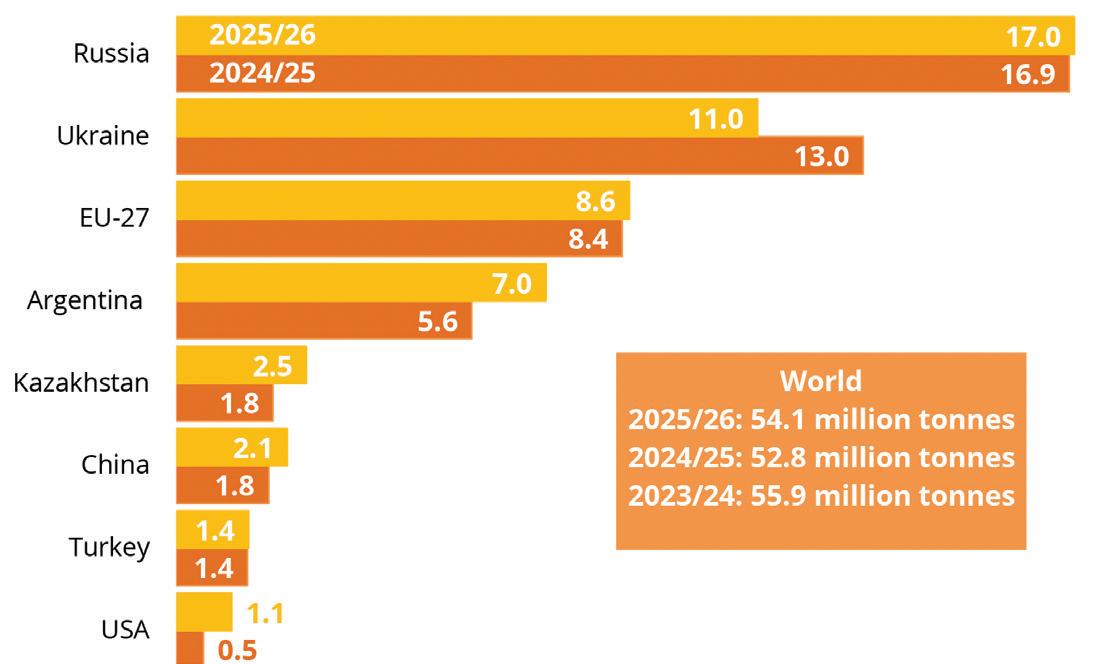
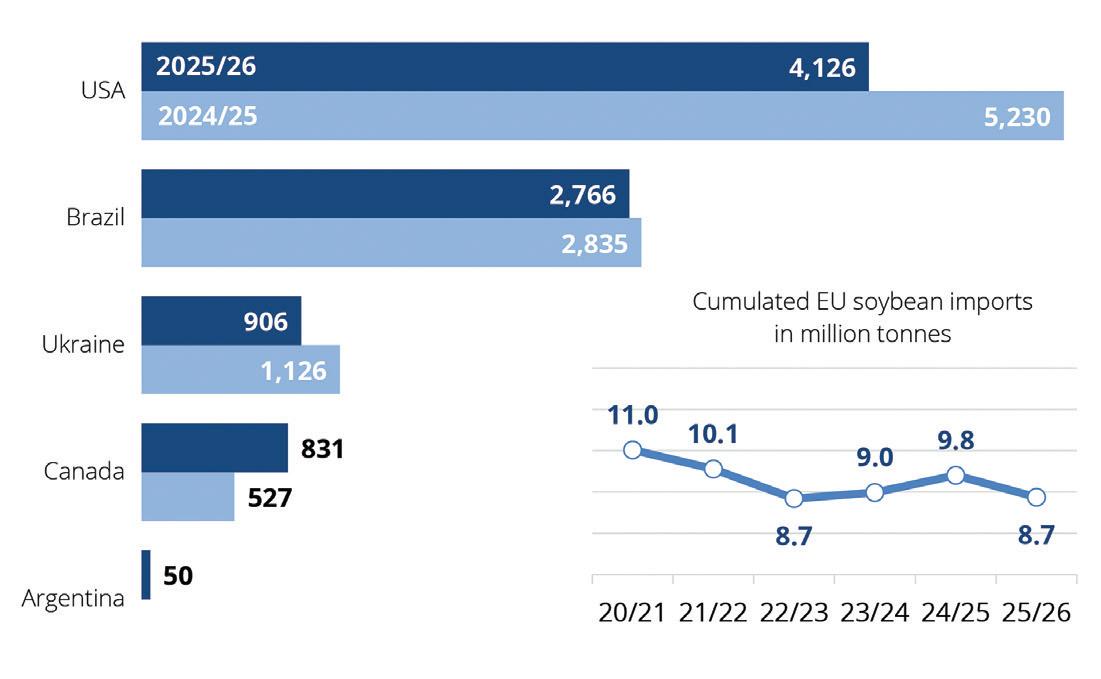
According to recent data from the US Department of Agriculture (USDA), global sunflowerseed production will likely reach 54.1M tonnes in the current marketing season, compared with the previous year’s level of nearly 52.1M tonnes.
Argentina’s harvest is projected to reach 7M tonnes, the largest in 28 years, mainly due to an expansion in production area. Ukraine’s harvest is forecast at 11M tonnes, the smallest harvest in 12 years.
The USDA further raised the crop outlook for Kazakhstan by 64,000 tonnes to 2.5M tonnes, representing an increase of approximately 700,000 tonnes compared to 2024/25.
The EU purchased just over 8.7M tonnes of soyabeans between 1 July 2025 and 15 March 2026, representing a drop of around 1.1M tonnes compared to the same period in the 2024/25 season, according to European Commission (EC) data reported by Germany’s Union for the Promotion of Plants and Protein (UFOP).
The USA and Brazil remained the most important supplier countries but did not match the previous year’s volumes. The EU imported 4.1M tonnes from the USA in the first eight-and-a-half months of the 2025/26 season, significantly lower than the 5.2M tonnes in the year-earlier period, giving a US share of some 47%. Soyabean shipments from Brazil, the second largest supplier to the EU, fell 2% to approximately 2.7M tonnes, accounting for just over 32% of total imports.
Crude palm oil
RBD palm oil
RBD palm olein
RBD palm stearine
March 2026
$1,285.00 (CIF Rotterdam)
$1,097.50 (FOB PG/PK)
$1,102.50 (FOB PG/PK)
$1,045.00 (FOB PG/PK)
April 2026
$1,5800.00 (CIF Rotterdam)
$1,212.50 (FOB PG/PK)
$1,217.50 (FOB PG/PK)
$1,175.00 (FOB PG/PK)
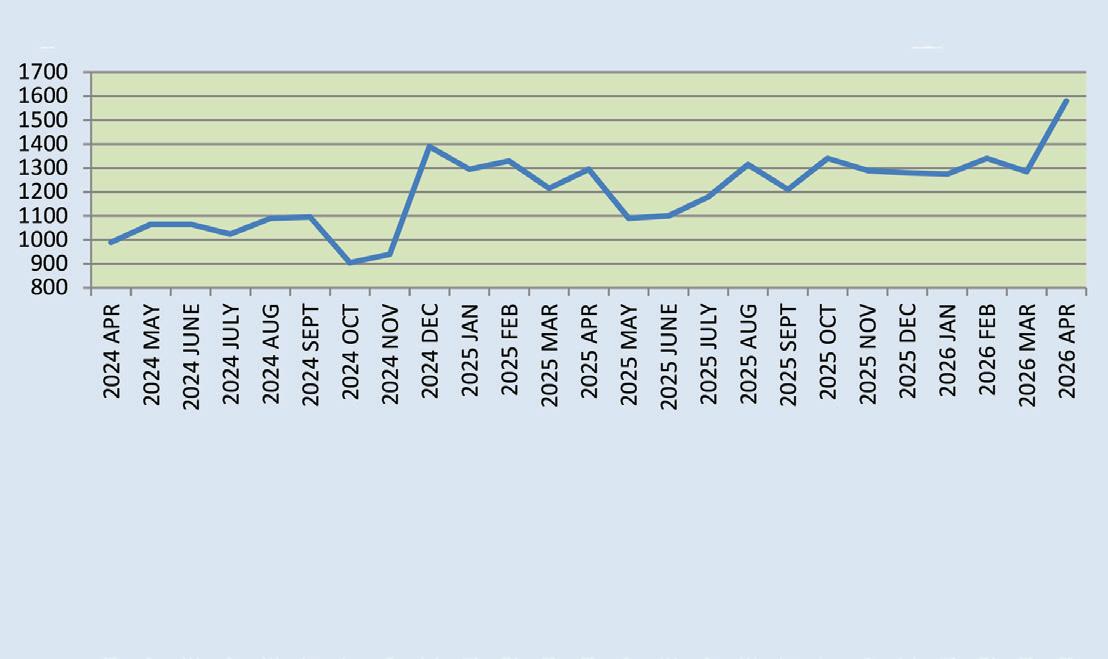
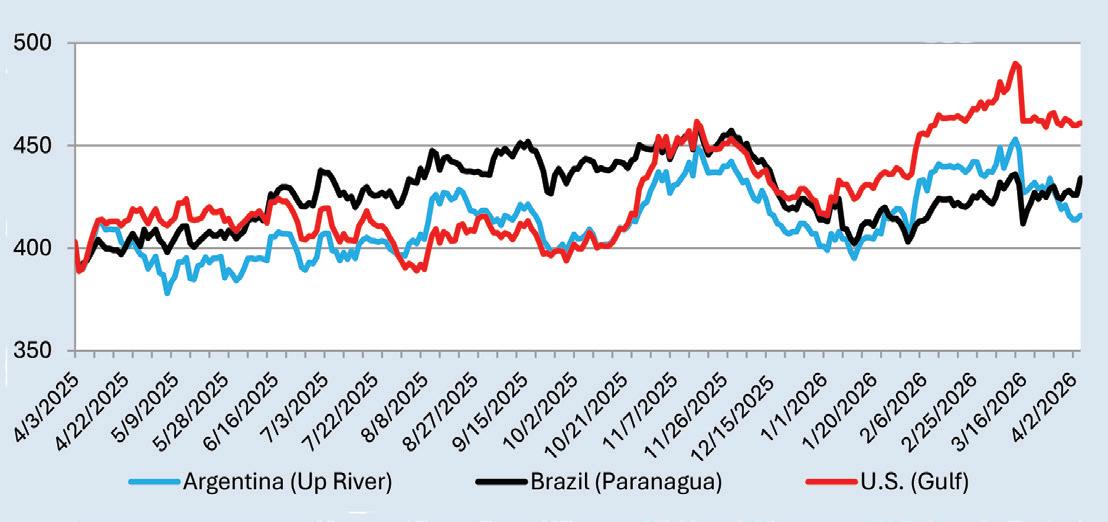
According to UFOP, the decline in soyabean imports mainly reflects a drop in EU pig slaughterings from 250M to 220M between 2021 and 2023, followed by a moderate recovery to 227M slaughterings in 2025.
Palm oil prices have rallied almost 20% with the war in Iran and general support from energy-linked demand, according to Riverside Tanker Chartering Ltd’s April market report.
Indonesia had set a timeline for the early implementation of its B50 palm oil-based biofuel blending mandate, and there had been renewed talks of Malaysia moving up from its current B10 mandate to B20.
Indonesian palm oil exports were generally robust with a month-on-month increase to global destinations, the report said. It was worth noting that when the Russia-Ukraine war began in 2022, palm oil prices rallied to almost double where they are now, the report said.
US soyabean export prices declined to around US$460/ tonne in March after news that the Trump-Xi summit would be delayed until mid-May, according to the US Department of Agriculture (USDA) ‘Oilseeds: World Markets and Trade’ April report. Similarly, Brazilian soyabeans declined on news of the delayed summit but recouped price losses in mid-March, aided by a rising Brazilian real and higher petroleum prices.

Don’t miss...
Bonte Hen Linseed Oil Windmill Tour!









CHOOSE ONE OF THE FOLLOWING:





• OFI Commercial/Technical Conference - ‘Responding to Market Demands’ covering the EU Deforestation Regulation, sustainability, biofuels, the global vegetable oil market and prices, trade agreements, food safety & innovations, and solutions in processing & refining
• DGF ‘Emerging and Persistent Contaminants in Oils and Fats – Challenges and Innovations’ including persistent organic pollutants, process-related compounds, mineral oil hydrocarbons, 3-MCPD and GEs
• TRIACT Oleochemicals Technical and Market Approach training session, with a global overview of vegetable oils and animal fats derivatives and oleochemical products

• Euro Fed Lipid Oleochemistry Conference - From Oils and Fats to Polymeric Materials: Innovations and Applications