www.the-probe.co.uk
CPD: CATTANI AIR TECHNOLOGY
Optimising dental practice performance: the role of compressors and suction systems Cattani is delighted to bring you this CPD exploring how the right compressor and suction systems can optimise clinical workflows, reduce costly downtime, and ensures superior patient care
Aims The aim of this article is to explore the role of dental compressors and suction systems in modern practice, and how selecting the right equipment can enhance efficiency, compliance and patient care. Learning objectives: On completing this Enhanced CPD session, the reader will be able to: • Understand the function of compressors and suction systems in dentistry • Recognise the differences between key system types • Identify the features required for optimal performance and longevity • Appreciate how modern innovations improve workflow and patient experience Learning Outcome: B, C The unseen foundations of modern dentistry In today’s dental practice, efficiency, reliability and patient comfort are paramount. While much attention is given to clinical techniques and visible equipment, the systems working behind the scenes are just as critical. Dental compressors and suction systems form the operational backbone of any surgery. Compressors power essential tools, while suction systems maintain a clear and hygienic working field. Together, they enable clinicians to work effectively, safely and without interruption. When properly specified and maintained, these systems contribute to smoother workflows, reduced downtime and improved patient outcomes. Conversely, poor system selection can lead to inefficiencies, increased maintenance costs and compromised clinical performance.
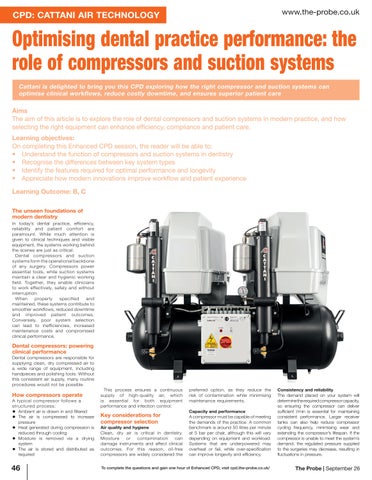
Dental compressors: powering clinical performance Dental compressors are responsible for supplying clean, dry compressed air to a wide range of equipment, including handpieces and polishing tools. Without this consistent air supply, many routine procedures would not be possible.
How compressors operate A typical compressor follows a structured process: • Ambient air is drawn in and filtered • The air is compressed to increase pressure • Heat generated during compression is reduced through cooling • Moisture is removed via a drying system • The air is stored and distributed as required
46 46-47_Probe-Sep_Cattani-CPD.indd 46
Capacity and performance A compressor must be capable of meeting the demands of the practice. A common benchmark is around 50 litres per minute at 5 bar per chair, although this will vary depending on equipment and workload. Systems that are underpowered may overheat or fail, while over-specification can improve longevity and efficiency.
Consistency and reliability The demand placed on your system will determine the required compressor capacity, so ensuring the compressor can deliver sufficient l/min is essential for maintaining consistent performance. Larger receiver tanks can also help reduce compressor cycling frequency, minimising wear and extending the compressor’s lifespan. If the compressor is unable to meet the system’s demand, the regulated pressure supplied to the surgeries may decrease, resulting in fluctuations in pressure.
To complete the questions and gain one hour of Enhanced CPD, visit cpd.the-probe.co.uk/
The Probe | September 26
This process ensures a continuous supply of high-quality air, which is essential for both equipment performance and infection control.
Key considerations for compressor selection Air quality and hygiene Clean, dry air is critical in dentistry. Moisture or contamination can damage instruments and affect clinical outcomes. For this reason, oil-free compressors are widely considered the
preferred option, as they reduce the risk of contamination while minimising maintenance requirements.
01/09/2026 17:05:16