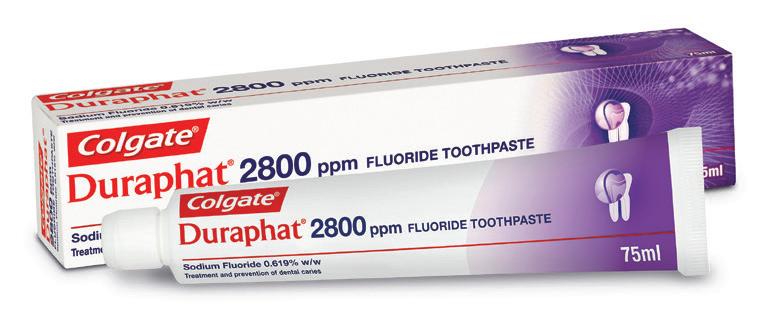
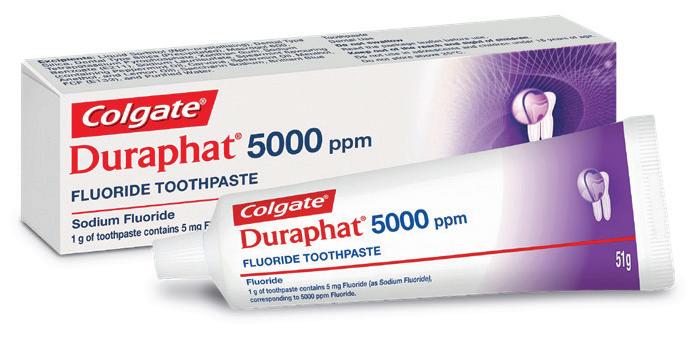
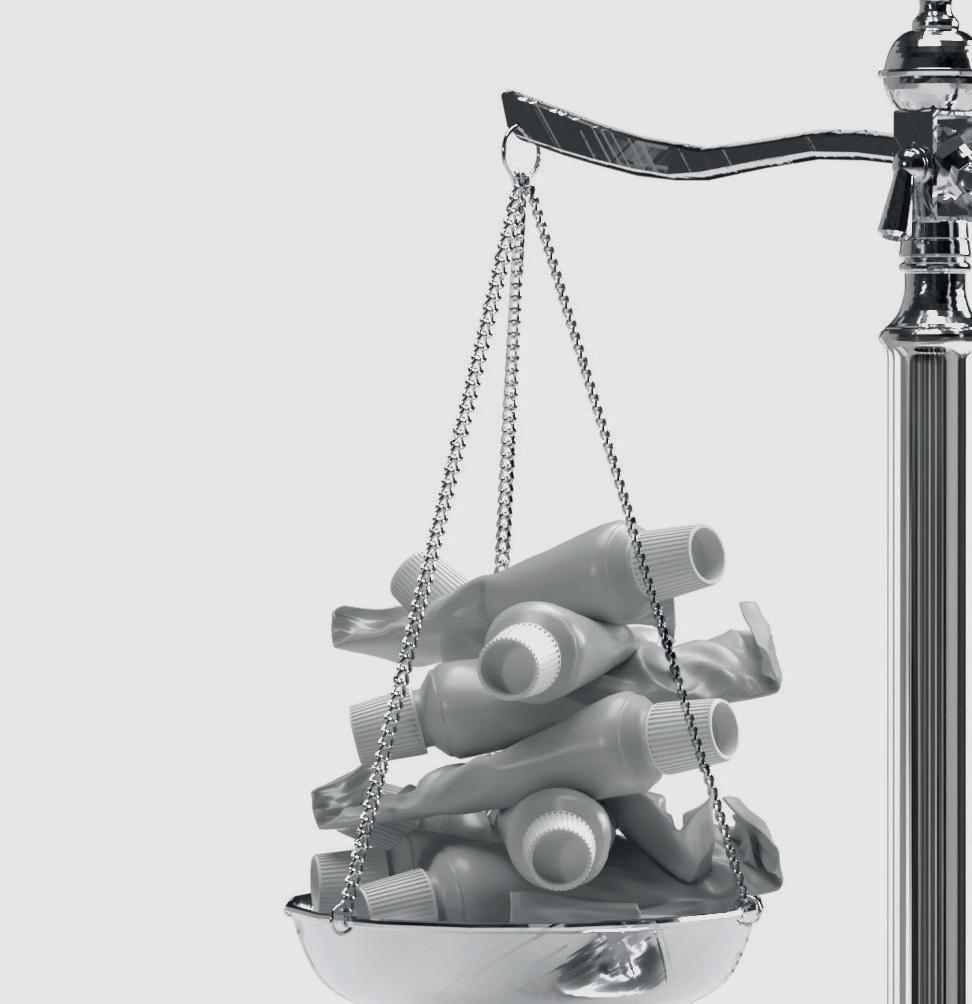
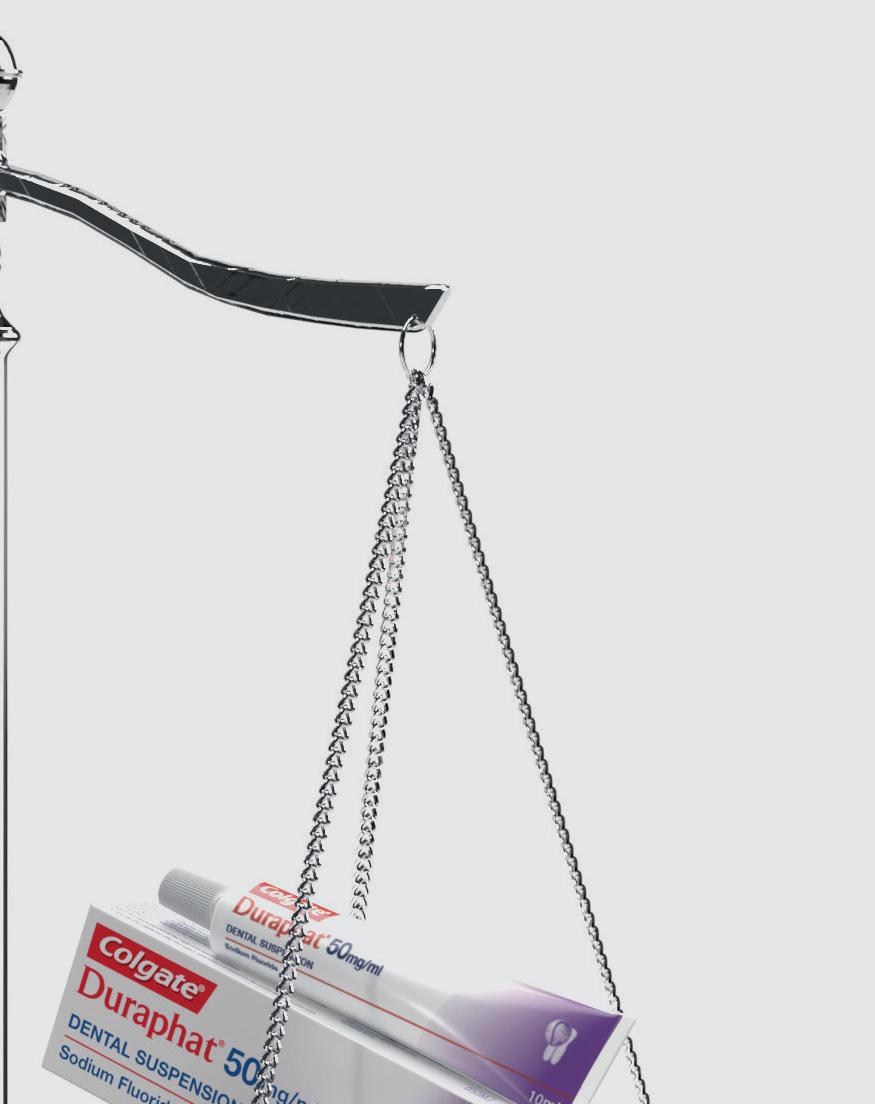
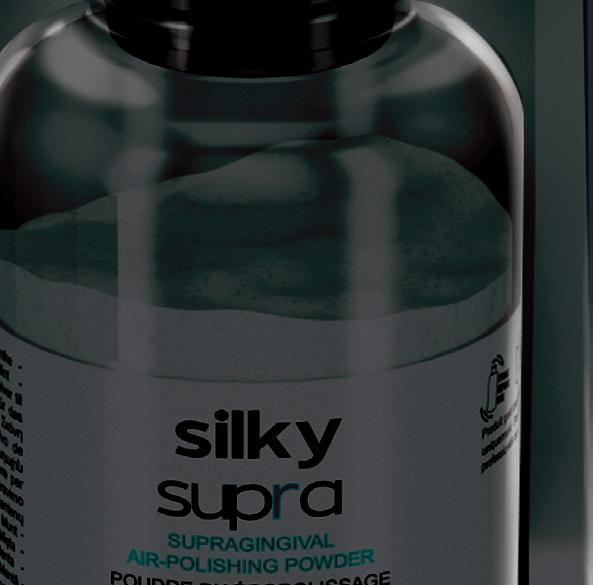
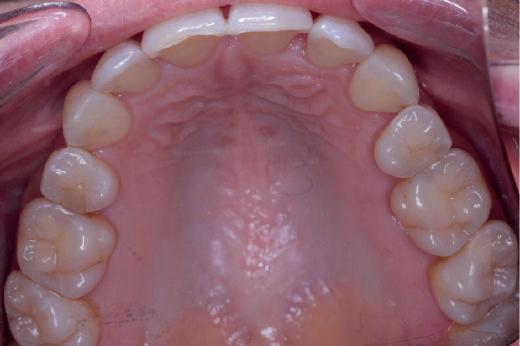
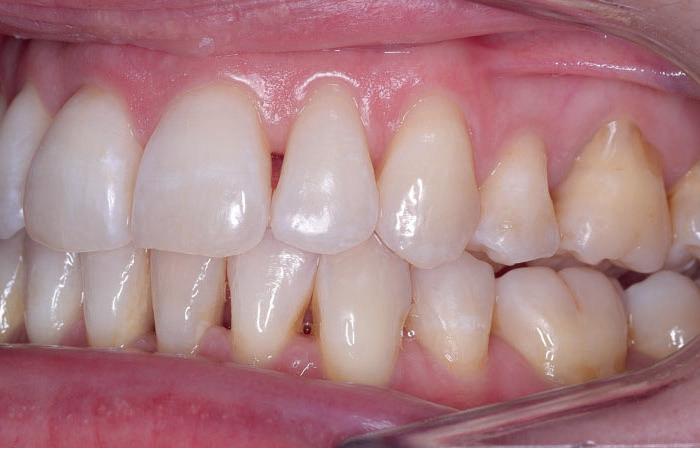
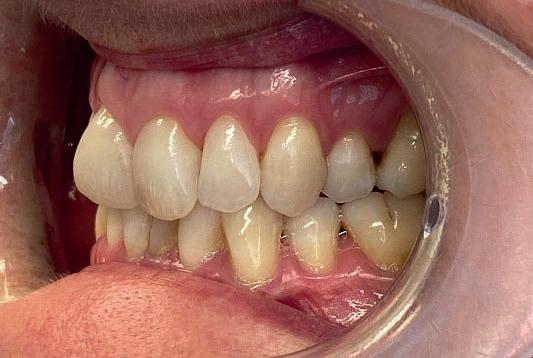
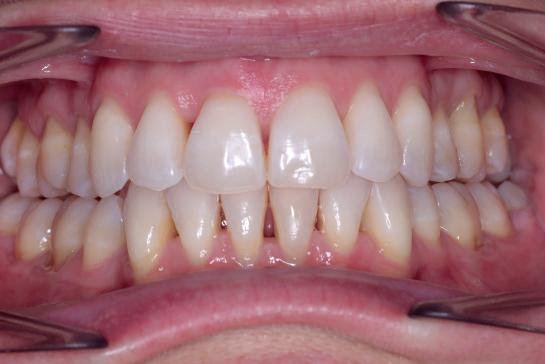
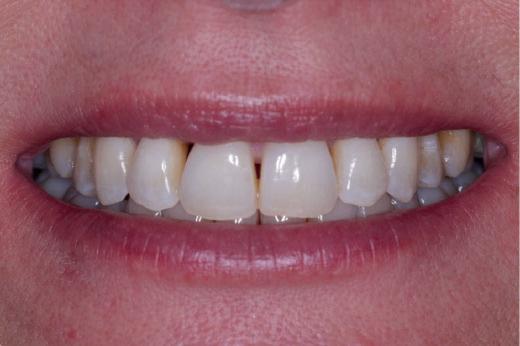
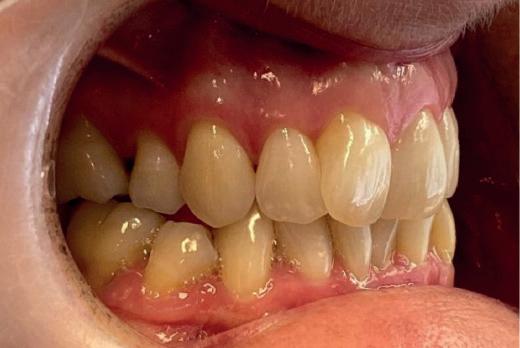
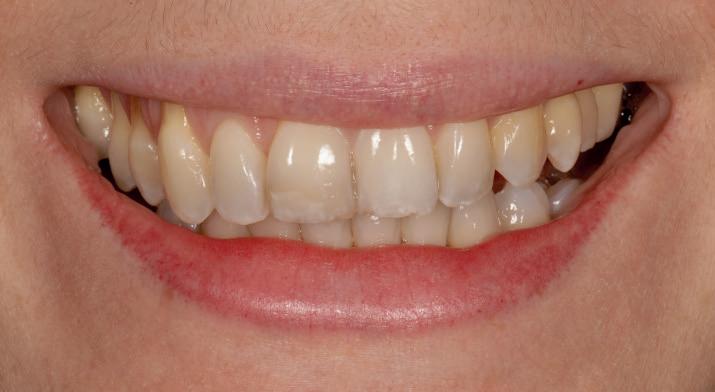
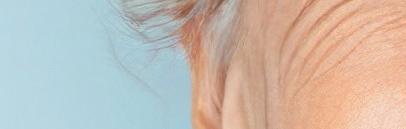
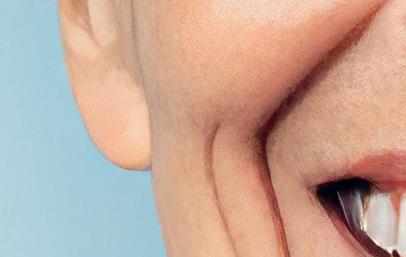
Colgate® PreviDent® provides the protection your patients need to help make their last cavity their last. To help your patients prevent and reverse caries,
Anna, 61
Anna, 61
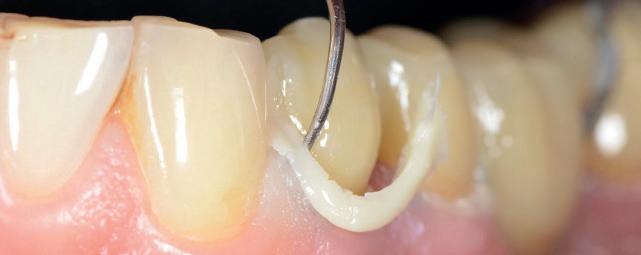
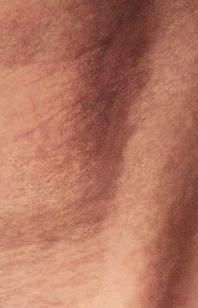
Exposed roots
Gingival recession
Mason, 6
Calvin, 24
Frequent snacking
Antidepressants
Frequent snacking
*"Caries risk and social determinants of health," JADA, December 2022
*"Caries risk and social determinants of health," JADA, December 2022
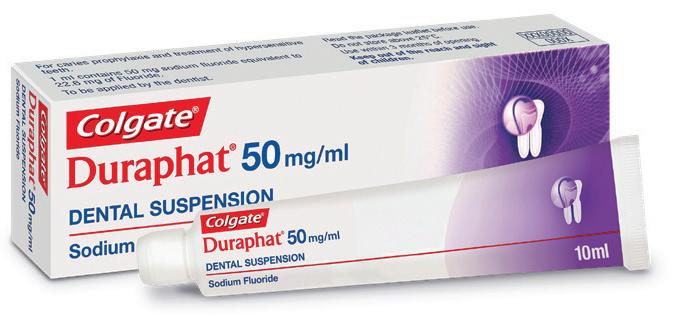
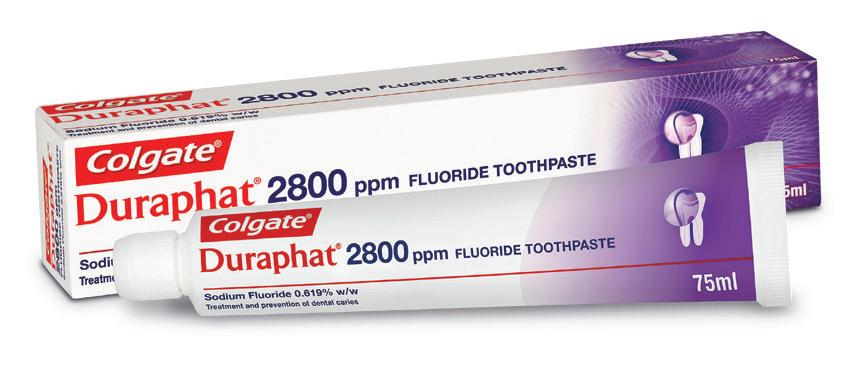
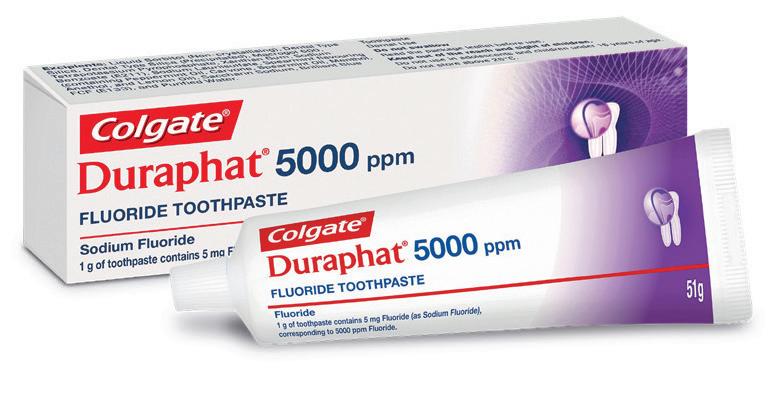
Assess their caries risk, and consider prescribing high fluoride to increase caries control5 Be confident prescribing Colgate® Duraphat®, the brand your patients
1 “Periodontal Disease in Adults (Age 30 or Older).” National Institute of Dental and Craniofacial Research, U.S. Department of Health and Human Services, www.nidcr.nih.gov/ research/data-statistics/periodontal-disease/adults
2 Georgetown University. “Prescription Drugs” Health Policy Institute, 2019, hpi.georgetown.edu/rxdrugs/
1 “Periodontal Disease in Adults (Age 30 or Older).” National Institute of Dental and Craniofacial Research, U.S. Department of Health and Human Services, www.nidcr.nih.gov/ research/data-statistics/periodontal-disease/adults
2 Georgetown University. “Prescription Drugs” Health Policy Institute, 2019, hpi.georgetown.edu/rxdrugs/ 3 “Does Dental Insurance Cover Braces?” Humana.com, www.humana.com/dental-insurance/dental-resources/dental-braces
Over two million toothbrush packs delivered to school children as the UK government’s partnership with Colgate-Palmolive begins
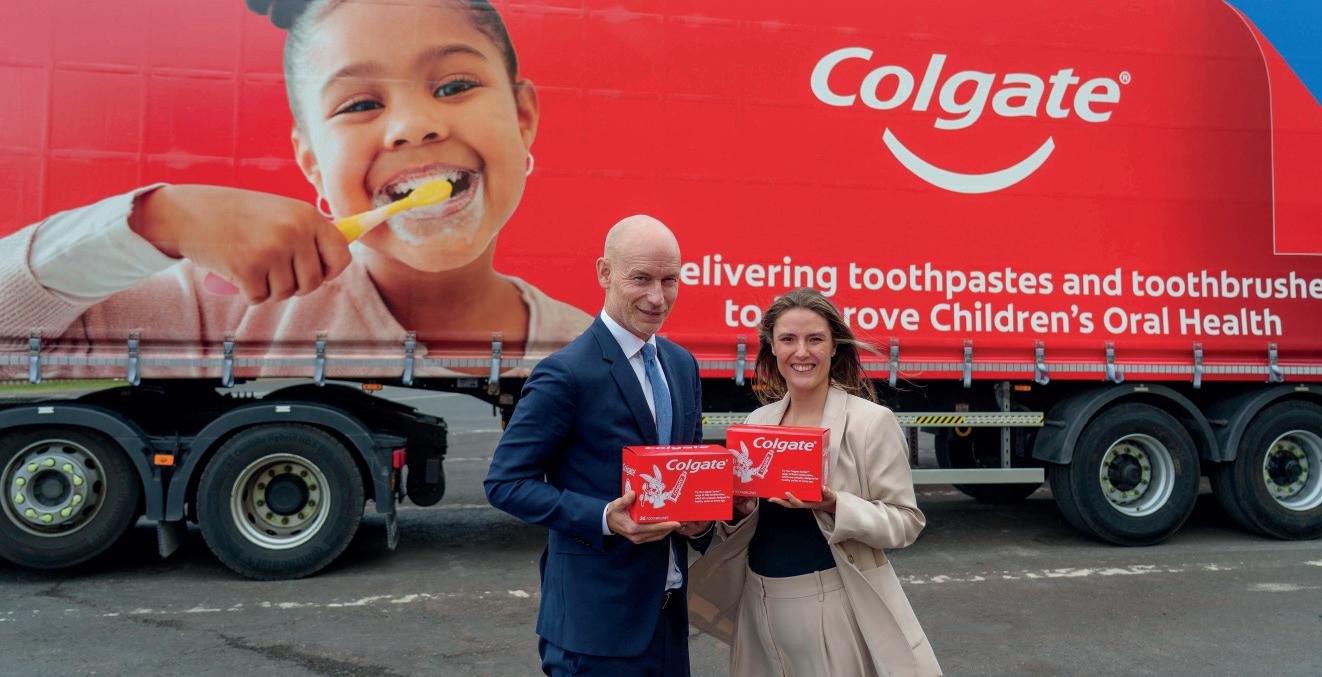
More than two million toothbrushes and toothpastes have been delivered to 3-5 year olds in early years settings in the most deprived areas of England, as well as military families overseas, in September. The delivery marks the beginning of a five-year collaboration between the Government and ColgatePalmolive to help children develop positive toothbrushing habits and set them on a path to better oral health, as part of the government’s Plan for Change.
The new scheme is expected to help up to 600,000 3–5-year-olds in early years settings to develop good toothbrushing habits this school year.
Children of overseas British military families serving in bases ranging from the Netherlands, Cyprus, Germany and the Falklands who historically have been underserved will also receive toothbrushing packs as part of the government mission to address inequalities.
Health Minister Stephen Kinnock visited Tinsley Meadows Primary Academy school in Sheffield to see how the rollout was progressing in the city, where nearly 9,500 children will receive packs this year.
Removal of decayed teeth remains the most common reason for a 5–9-yearold child to be admitted to hospital in England. Supervised toothbrushing is the government’s first step to improving children’s oral health as part of the commitment to raise the healthiest ever generation of children. There has also been a consultation to expand community water fluoridation to the North-East.
Health Minister Stephen Kinnock said: “We know that a third of five-year-olds in
the most deprived areas have experience of tooth decay – something we know can have a lifelong impact on their health.
“This is why we are getting on with the job of delivering these toothbrush & toothpaste packs to the most deprived areas to help children have the best start in life by reinforcing good toothbrushing habits.
“We are so grateful to Colgate-Palmolive who have worked tirelessly with us to get two million packs out to more than
Revised Scope of Practice guidance published
The General Dental Council (GDC) has published its revised Scope of Practice guidance after a comprehensive review and collaboration with dental professionals, education providers, indemnifiers, and other key stakeholders.
The updated guidance will take effect on 1 November 2025.
The revised guidance has not changed the scope of practice for any of the seven dental professional titles. Rather, it provides greater clarity on existing title boundaries. The guidance will better support dental professionals to use their professional
judgement within these boundaries for the benefit of patients.
The GDC has reminded dental professionals that having a professional title does not automatically mean they can or should do everything within that title’s scope. They must be trained, competent and covered by indemnity or insurance before carrying out any task that falls within their professional title’s scope.
The revised Scope of Practice guidance and the consultation outcome report are published on the GDC website.
To support its implementation, the GDC
will deliver online sessions for dental professionals and stakeholders over the coming months to explain changes to the guidance and address any questions.
The Scope of Practice guidance was first introduced in 2009 to outline the skills and abilities every dental professional should have upon registration with the GDC, as well as those they might develop later in their careers.
The GDC extends its sincere gratitude to all the contributors to its review and consultation process.
Ross Scales, Head of Upstream Regulation at the GDC, said the revised
500,000 children for the start of this school year to deliver on our ambition.”
The two million packs have come through the innovative collaboration with ColgatePalmolive, which has committed to donate over 23 million toothbrushes and fluoride toothpastes over the next five years to support the programme.
Across the country 3 Colgate Trucks will be delivering donated products to local authorities to support their supervised toothbrushing schemes throughout the year.
The partnership also includes oral health educational materials and products for home, so families have the support they need to make sure the good habits continue at home and over the school holidays.
Additional funding worth £11 million has been distributed to local authorities who will work to identify early years settings in target areas and encourage them to take part in daily supwervised toothbrushing.
The programme is expected to return £3 for every £1 for the Government invested in supervised brushing, with a potential of over £34 million generated for the investment committed this year over the next 5 years.
Scope of Practice guidance represents the invaluable contributions from and engagement with the dental sector to date, reflecting the feedback the regulator has received.
“Our aim has been to provide the clarity and support that dental professionals have called for, allowing them to work to their full scope and use their professional judgement to put patients first. We are grateful to all those who contributed to this review, and we look forward to supporting the professions in understanding and applying the revised guidance.
A welcome from the editor
As the evenings draw in and temperatures cool, it can be easy for many of us to slip into more of a negative mindset. Seasonal affective disorder, aptly abbreviated to SAD, is a very real thing, described by the NHS as ‘a type of depression that comes and goes in a seasonal pattern’.
While I would point to certain festivities on the horizon as presenting something to perhaps look forward to, my colleagues have banned me
using the ‘C word’ before December. However, one particular article in this issue leapt out to me and that was from the returning Dhiraj Arora, whose piece on page 47 explains how you can ‘flip your thinking’. Rather than thinking “I have to get up to go to work,” on those cold, dark mornings, flip it to “I get to go to work.” The intimation there is that you have a career and some purpose for your day ahead.
Additionally, for those still in the early stages of their dental careers and perhaps feeling a little overwhelmed, Riaz Sharif offers stress management and resilience building tips on page 18.
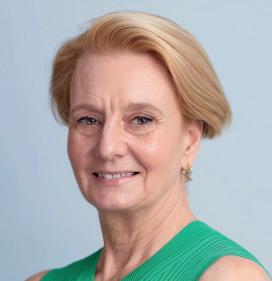
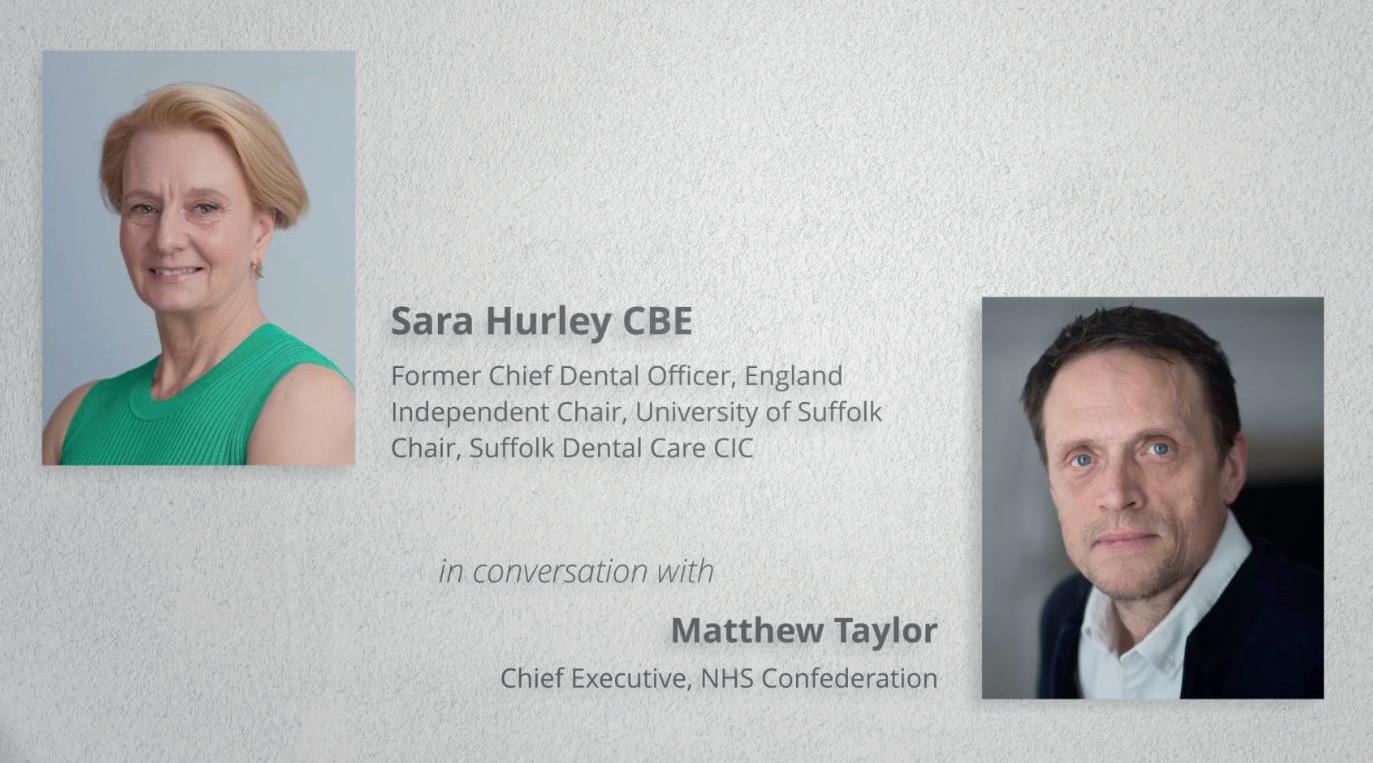
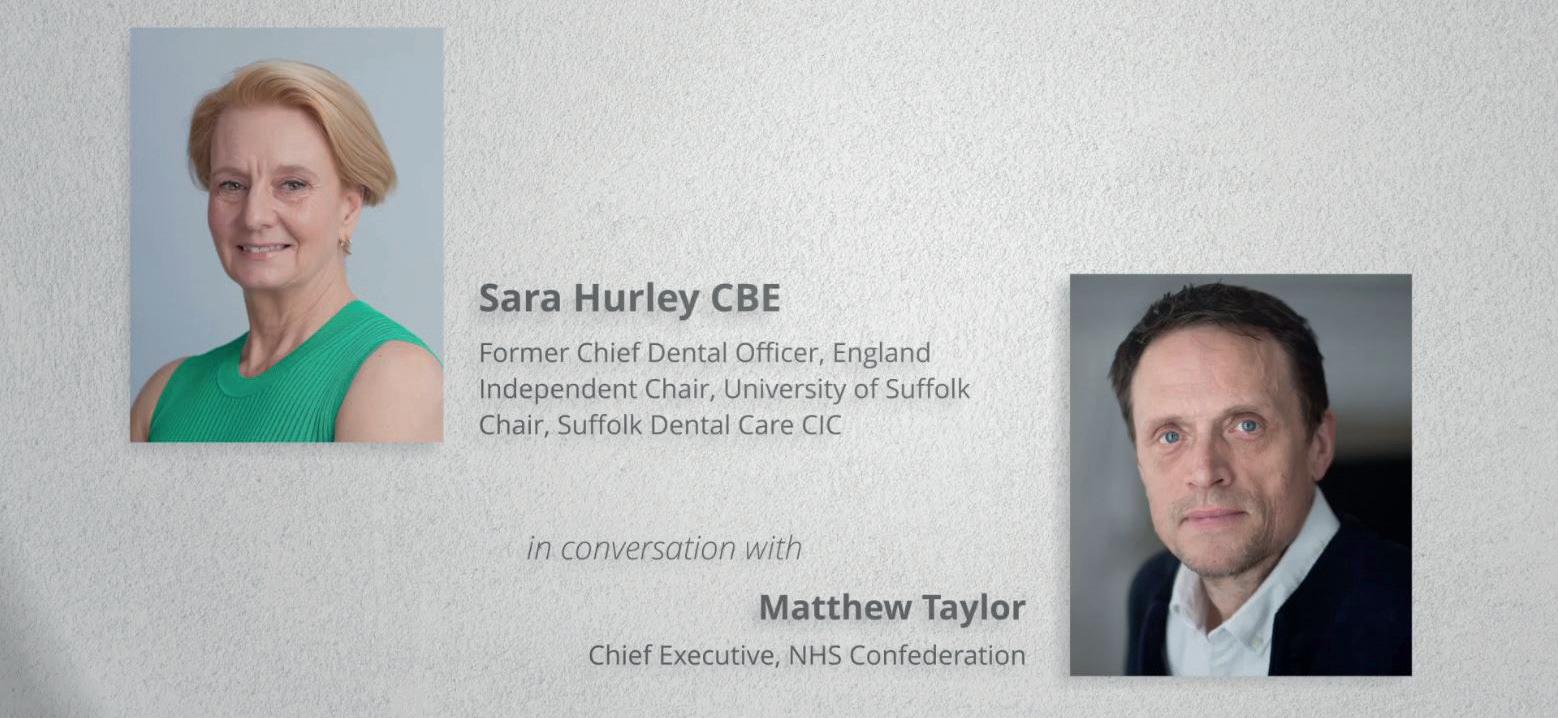
I am also keen to highlight a fantastic conversation we had the privilege of playing host to last month between former CDO England Sara Hurley and NHS Confederation Chief Executive Matthew Taylor. An abridged transcript can be found on page 16, along with a link and QR code to watch the full conversation.
Enjoy the magazine!
The Probe is published by Purple Media Solutions.
Registered in England.
Registered number 5949065
Managing Editor: James Cooke
Commercial Director: Gary Henson
Divisional Administrator: Francesca Smith
Production Designer 1 : Lorna Reekie
Production Designer 2: Rob Tremain
Digital Content Manager: Stephen Wadey
Circulation Manager: Andy Kirk
Managing Director: Ed Hunt
Regular Contributors: Lisa Bainham, Nigel Carter, Barry Cockcroft, Ollie Jupes and Pam Swain
E-mail news, stories or opinion to james.cooke@purplems.com
Media Solutions Ltd, 2014. All rights reserved. ISSN 0032-9185. The publisher’s written consent must be obtained before any part of this publication may be reproduced in any form whatsoever, including photocopies, and information retrieval systems. While every effort has been made to ensure that the information in this publication is correct and accurate, the publisher cannot accept
liability for any consequential loss or damage, however caused, arising as a result of using information printed in this magazine. The views expressed in The Probe are not necessarily the views of the magazine, nor of Purple Media Solutions
Editorial Advisory Board: Dr Barry Oulton, B.Ch.D. DPDS MNLP; Dr Graham Barnby, BDS, DGDP RCS; Dr Ewa Rozwadowska, BDS; Dr Yogi Savania BChD, MFGDP; Dr Ashok Sethi, BDS, DGDP (UK), MGDS RCS; Dr Paroo Mistry BDS MFDS MSc MOrth FDS (orth); Dr Tim Sunnucks, BDS DRDP; Dr Jason Burns, BDS, LDS, DGDP (UK), DFO, MSc; Prof Phillip Dowell, BDS, MScD, DGDP RCS, FICD; Dr Nigel Taylor MDSc, BDS, FDS RCS(Eng), M’Orth RCS(Eng), D’Orth RCS(Eng); Mark Wright BDS(Lon), DGDP RCS(UK), Dip Imp Dent.RCS (Eng) Adv. Cert, FICD; Dr Yasminder Virdee BDS. Readers who
Matthew Taylor Chief Executive NHS Confederation,
Dr Sura Makki Dentist Wantage Oasis Dental
Riaz Sharif Dentist at mydentist, Parkstone Road, Poole
Natalie Fitzpatrick Dental Hygienist of the Year Diamond Smiles Foundation
Polly Bhambra Practice Principal Treetops Dental Surgery
Dr Simon Parsons Dentolegal Consultant Dental Protection
Sara Hurley Former Chief Dental Officer, England
Abi Greenhough Managing Director Lily Head Dental Practice Sales
It’s good to talk
Not long after I retired from dentistry, I bumped into a patient in the supermarket. I’d had a good relationship with her over the years and we had a pleasant chat about, of course, her ongoing treatment with her new dentist. Once I’d established to my relief and satisfaction that her new clinician wasn’t as gentle as me in his delivery of locals, the conversation turned to my retirement. ‘What do you most miss about dentistry,’ she asked. It took about a millisecond to come up with the answer. “The biscuits,” I replied. It was very nearly the truth. After I sold my practice in 2012, I went on to work for six years as an NHS associate in a well-known corporate. Despite all the hassle I was enduring at the time as a result of my practice sale, I thoroughly enjoyed my time at the corporate, free of the shackles of practice management and financial juggling. Having said that, I was nevertheless STILL working in NHS dentistry and I remained the seething, wriggling bag of neuroses and stress that I was from the day I walked out of dental school.
My colleagues at the corporate were wonderful and I still meet up with them regularly, but it was they who introduced me to the delights of biscuits. In our staffroom we had a glorious array of bikkies and since my surgery was right next to the staffroom it took only 11 seconds to get from my computer monitor to the Hobnobs. And yes, I once timed it out of necessity, so powerful was my yearning for the sedative powers of Choccy Hobby’s. I believe even diazepam wouldn’t have worked quite as well. Of course, the biscuits were a displacement activity. Stressed to the gills, I was aware that the trips to the staffroom were a distraction and a desperate attempt to put my head in a different place or, more accurately, a different frame of mind.
It all came flooding back the other day when I came across a paper in the British Dental Journal entitled “Burnout and depression in the UK dental workforce: findings from a cross-sectional survey.”*
The aim of the survey was to assess the current levels of burnout, depression, trauma, and readiness to provide quality care across the UK dental workforce. The conclusion of the authors of the study was that a substantial segment of the UK dental workforce is suffering from psychological distress, including burnout, depression, and trauma. I concluded that ‘Things ain’t improved since I retired then?’
I wasn’t surprised at all by the finding that 75-99% of participants in the survey were experiencing significantly higher levels of emotional exhaustion and depressive symptomology and lower levels or personal accomplishments if they … anyone? … anyone? … that’s right, worked in the NHS!
The overall findings made for quite depressing reading. Burnout was detected in 8% of participants overall (including dental care professionals and dentists), rising to 10% amongst dentists alone. Staggeringly, Depression-like symptoms were reported by over 36% of respondents.
I believe we all know the contributory factors to depression and anxiety in dentistry – fear of making mistakes, dealing with anxious patients, selfimposed impossibly high standards, isolation, business pressures, long hours in static positions, repetitive strains on the upper limbs, meeting high patient expectations, dealing with patient conflicts, feeling that dental professionals can’t show vulnerability or seek help, and dealing with ever-increasing risks of litigation or disciplinary action are but a few of the factors.
You can also chuck in being considered to be personally responsible for the dental access crisis while you’re at it! So, what can you do about avoiding the stresses and strains of dentistry? Well, if you WILL insist on staying in the profession, you’re frankly a lost cause. My advice to a new graduate who joined the corporate as an NHS associate a few years ago was “RUN! RUN LIKE THE WIND!”
You can also chuck in being considered to be personally responsible for the dental access crisis!
On first entering practice I tried desperately hard to give the outward appearance that I was cool, calm and collected, to the point that over the years patients and some colleagues in the past even described me as ‘chilled’. Nothing could be further from the truth. I suffered terribly from insomnia during my time in dentistry and early in the morning I struggled to brush the palatal or lingual surfaces of my molars because of retching. Early on in my career I would actually throw up, so anxious was I about the day ahead.
I can’t honestly say that my anxieties were chiefly related to money worries or staff problems, although they were not to be dismissed – especially after the 2006 UDA-based contract was imposed on the profession. No, it was the simple act of treating patients - trying to satisfy their desires and hitting a high standard of work that most stressed me out. A high standard was something I felt I never ever achieved consistently. When I first started out in practice, although dental litigation wasn’t anything like the level it is now, I was paranoid that I was going to get struck off or get a complaint. Once, a marginal ridge fell off an amalgam a day after I placed it. I was convinced I would end up in front of a health service committee for
shoddy workmanship and I remember planning out a new career the night before the patient came in to have the restoration replaced.
For me, the pressures simply came from patients – and anxious patients in particular – you know the ones, the type that come in and say “I’m not looking forward to this.” An innocuous enough remark but it would put me on edge, often inducing the shakes. And if a patient ever jumped during treatment, you would have to pretty much scrape me off the ceiling. I would go to enormous lengths to make the patient comfortable and I could be accused of overdosing the patients on surface anaesthetic and articaine. For needle phobics, I even developed a technique where in order to avoid the pain from an infiltration around the upper incisors, I’d start numbing from the upper premolars and work my way around until I got to the tooth I actually needed to anaesthetise. Sometimes I’d deliver 3-4 cartridges just to numb an upper central.
And as for ID blocks, that was the worst. Apart from exacerbation of my IBS, anxiety also had an effect on my heart rhythm. I was only in my early thirties at the time. On more than a few occasions when I was working in the early days, my heart went into overdrive, dropping beats along the way till I felt faint. I ended up having a 24-hour heart monitor on several occasions and had to make a note of what I was doing when I felt palpitations. Analysis of the readouts showed that every time I gave local, my heart rate shot up. On one occasion when I was giving an ID block, my heart rate went up to 140 beats per minute. It was many years later that I was diagnosed with paroxysmal atrial fibrillation but giving people injections didn’t help it at all.
Time pressures were also something I succumbed to. I tried to give myself the right amount of time to complete procedures, but the odd emergency or
delay would really stress me out. That wasn’t helped by a man coming in one day and virtually screaming in my face because I had unavoidably kept him waiting 30 minutes or so.
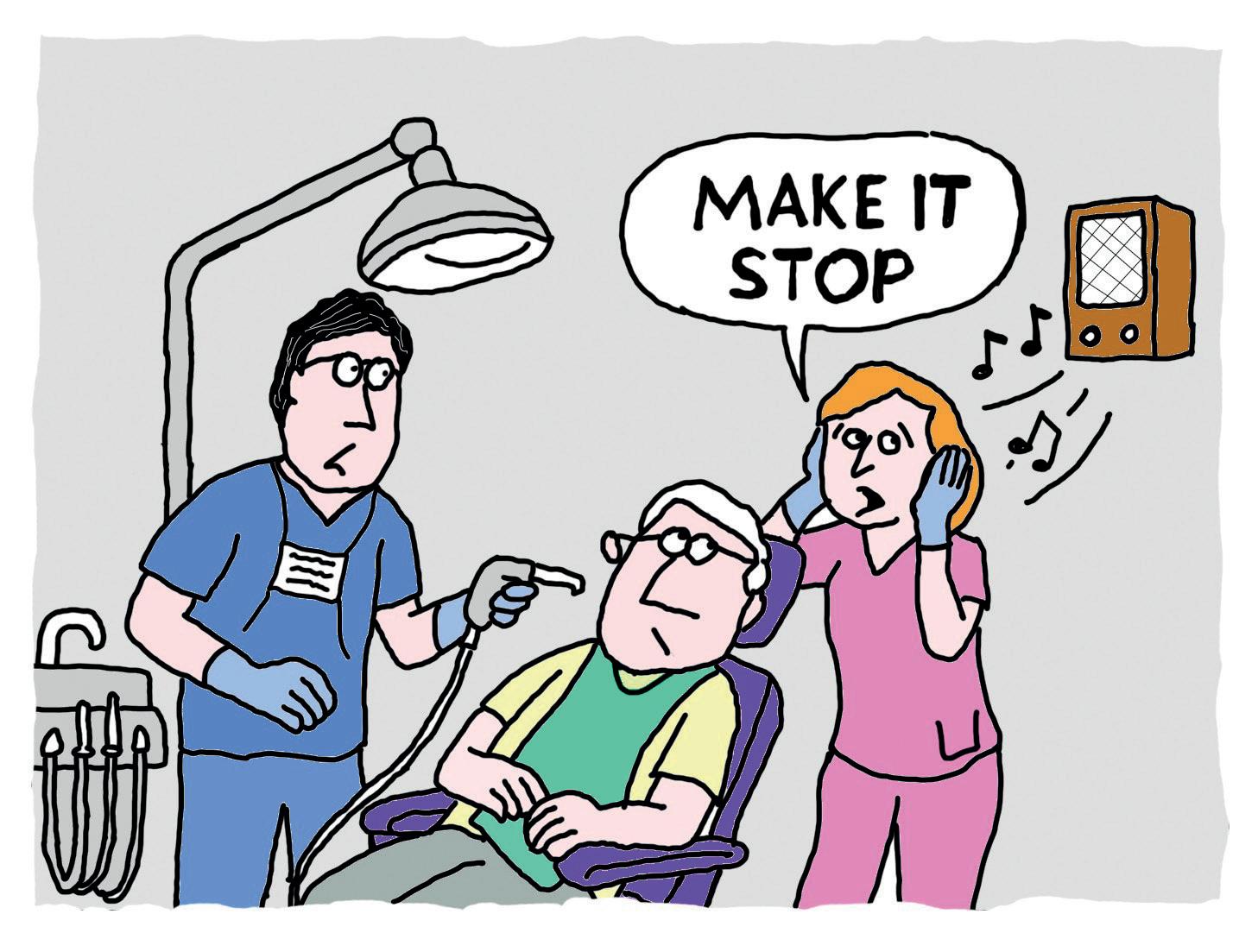
So, what can you do about reducing the stresses of practice? Playing Café Del Mar chillout CDs in the surgery constantly was one of my strategies – they helped put my head in a café beach bar in Crete but drove my nursing colleagues insane. My breakthrough came when I first went on Twitter in 2012 and started honestly speaking about my own struggles with anxiety as a dentist. It greatly helped when many other dental professionals came out and shared their own struggles. If nothing else, it brought to the fore the notion that I wasn’t alone.
Talking helps and early on in my career I fully confess that I sought help from a psychotherapist. It didn’t eliminate my worries and anxieties completely, but it did put things into perspective and, somehow, I managed a full 35 years in the profession without a total breakdown.
I’m going to end with a shameless plug for Mental Dental, the support group for dentists on Facebook, founded by Dr Lauren Harrhy. Type in ‘Mental Dental’ on the platform and apply for admission. If you are struggling (as every single dentist in the UK almost certainly is at the moment), you’ll find better advice and coping mechanisms than I can give you.
Having said that, playing Kate Bush endlessly, also helps. n
About the author ollie Jupes is the pseudonym of a former nHs dentist. He monitors dentistry on twitter X as @DentistGoneBadd
1 SHADE
2
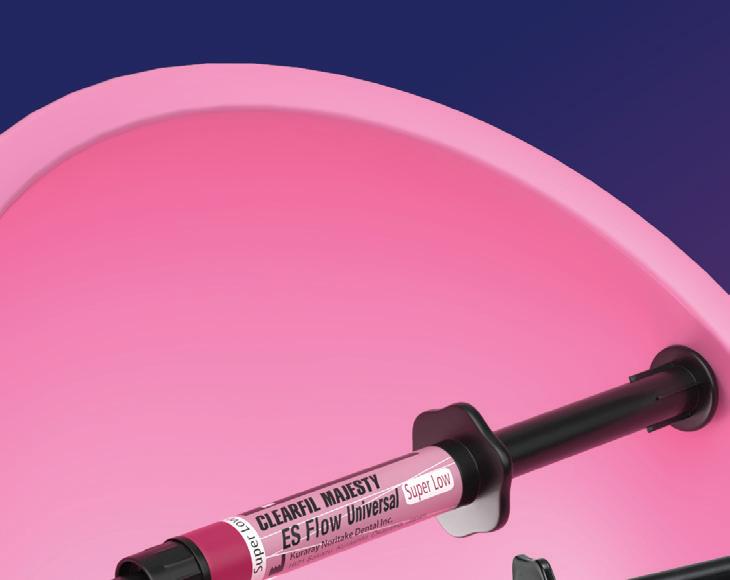
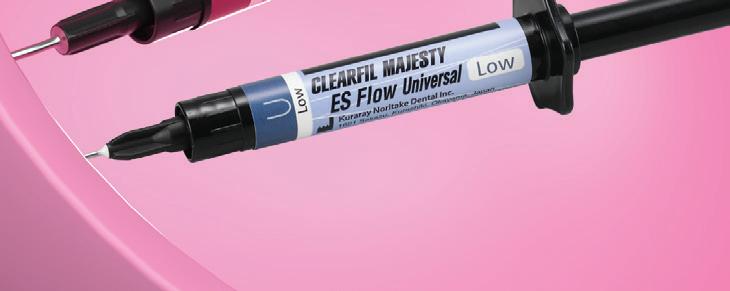
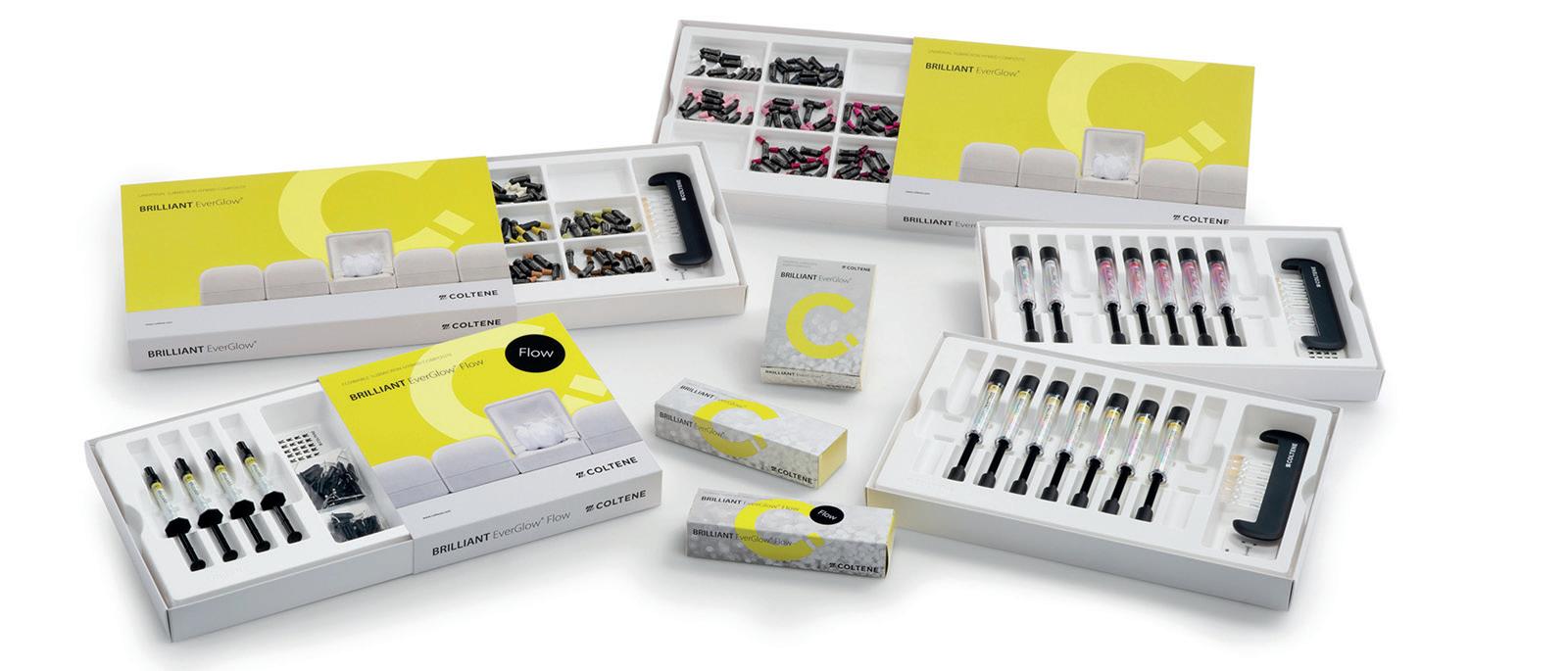
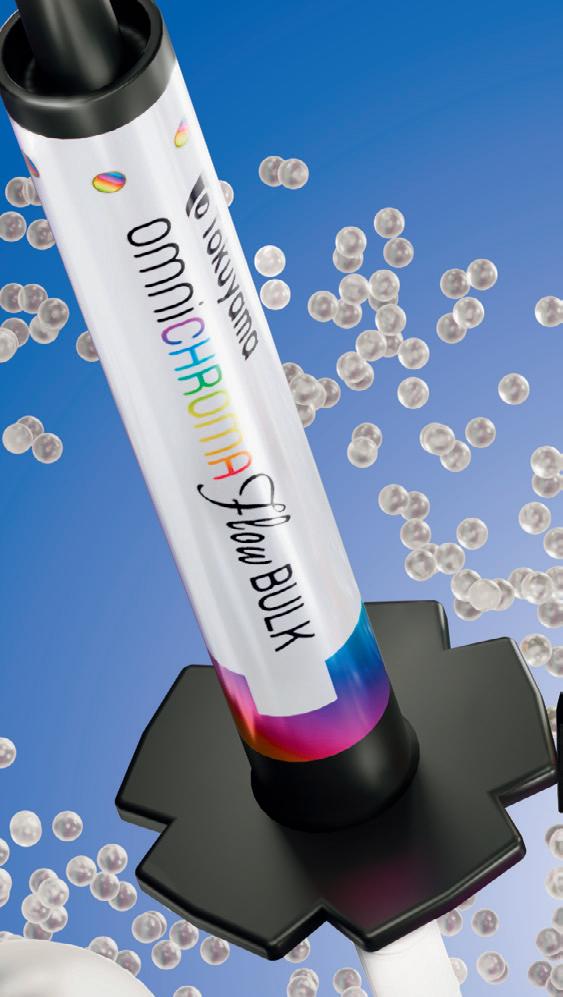
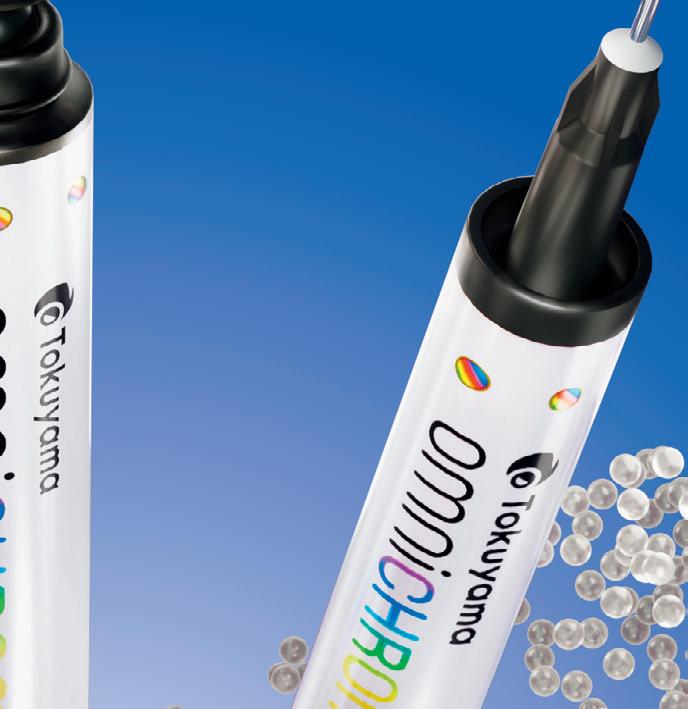
This innovative owable composite transforms shade matching into an effortless process—no shade guide required. With just two complementary shades, U and UD, it seamlessly blends with the surrounding tooth structure. Its easy polishability and long-lasting high gloss enables you to create beautiful, natural-looking restorations with minimal effort. And with strength comparable to many paste-type composites, it’s suitable for a wide range of clinical applications.
This innovative owable composite transforms shade matching into an effortless process—no shade guide required. With just two complementary shades, U and UD, it seamlessly blends with the surrounding tooth structure. Its easy polishability and long-lasting high gloss enables you to create beautiful, natural-looking restorations with minimal effort. And with strength comparable to many paste-type composites, it’s suitable for a wide range of clinical applications.
FLOWABILITIES
Low and Super Low for a wide range of indications 150 IMPRESSIVE STRENGTH
Sufficient for use even in stressbearing posterior restorations
Covers all VITA* shades in all cavities, except those lacking of a back wall of shade B3 and darker
is a trademark of VITA Zahnfabrik, Bad Sackingen, Germany
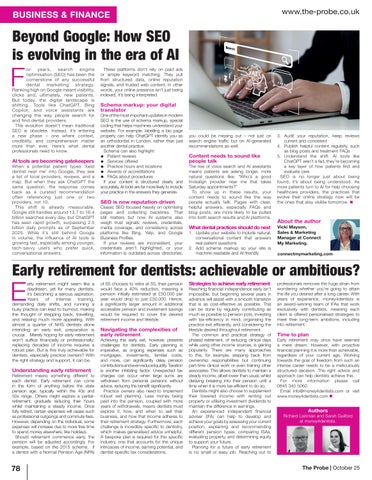
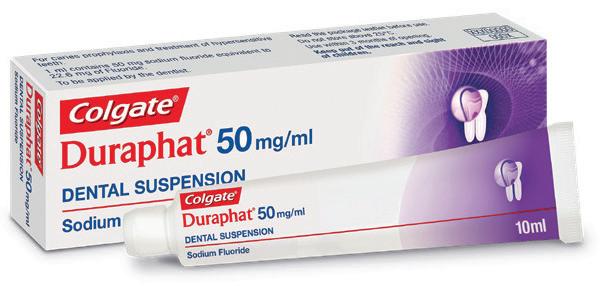
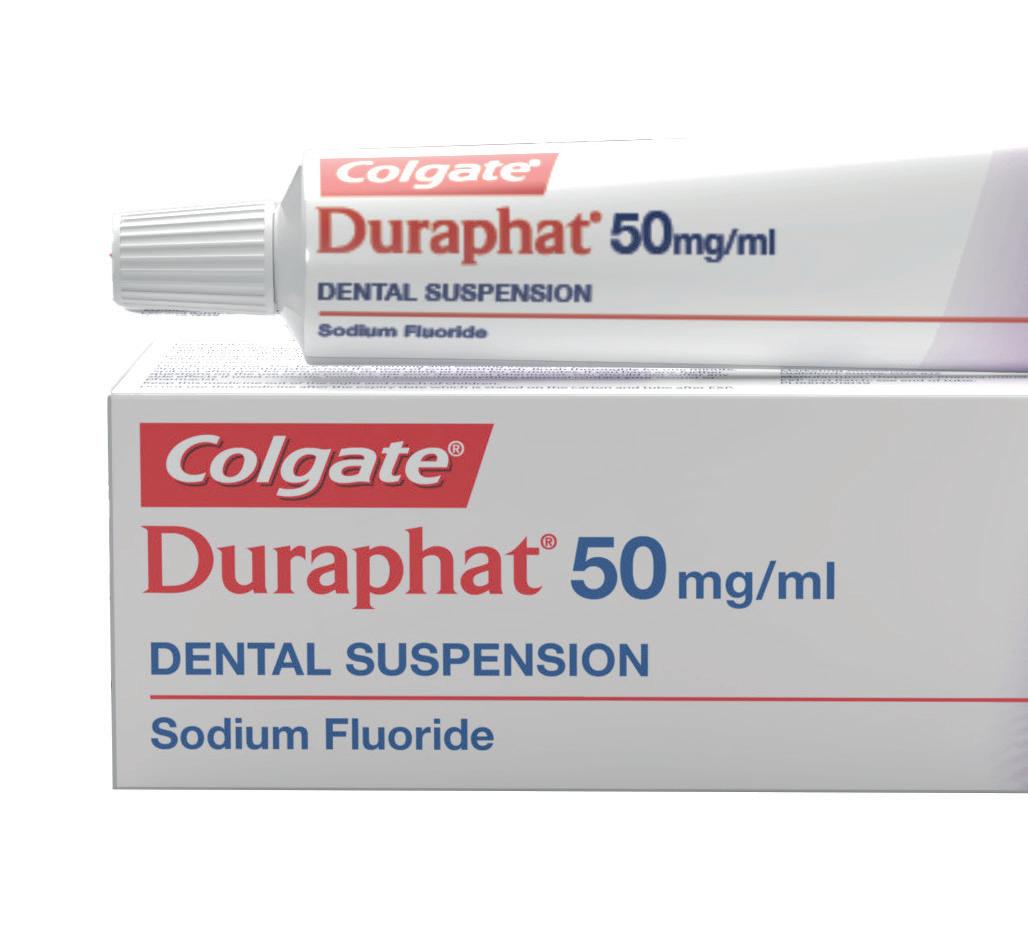
Colgate® Duraphat®, the only fluoride varnish that carries the weight of clinical evidence*
Colgate® Duraphat® is the only fluoride varnish licensed for caries control in the UK†
Colgate® Duraphat® is the only fluoride varnish licensed for caries control†
• Releases free fluoride ions for 6 months1
• Releases free fluoride ions for 6 mon
• Fast and easy application
• Fast and easy applic ation
• Temporary visual tint to aid application
• Temporar y visual tint to aid applic atio
• P
• Pleasant taste and fruity smell 2 UK
Adverse events should be reported. Reporting forms and information can be found at www.yellowcard.mhra.gov.uk. Adverse events should also be reported to Colgate-Palmolive (U.K.) by calling 00-800-321-321-32.
varnish
†Colgate® Duraphat® fluoride varnish for patients 3 years of age and over. References: 1. Seppä L. Caries Res 1984; 18 278-281. 2. https://www.childsmile.nhs.scot/parents-carers/fluoride-varnishing/ 3. Delivering better oral health - an evidence-based toolkit for prevention, Office for Health Improvement and Disparities’ 2021. 4. Marinho VCC, Worthington HV, Walsh T, Clarkson JE. Fluoride varnishes for preventing dental caries in children and adolescents. Cochrane Database of Systematic Reviews 2013. 5. The use of fluoride varnish by dental nurses to control caries. NHS. Primary Care Commissioning, 2009. 6. https://www.england.nhs.uk/ long-read/supply-and-administration-of-medicines-by-dental-hygienists-and-dental-therapists/ 7. https://www.england.nhs.uk/commissioning/wp- content/uploads/sites/12/2016/09/avoidance-doubt-v4-1.pdf.
Name of the medicinal product: Colgate® Duraphat® 50mg/ml Dental Suspension. Active ingredients: 1ml of suspension contains 50mg Sodium Fluoride equivalent to 22.6mg of Fluoride (22,600 ppm F-) Indications: For the prevention of caries in children and adults as part of a comprehensive control programme., desensitisation of hypersensitive teeth. Dosage and administration: Recommended dosage for single application: for milk teeth: up to 0.25ml (=5.65mg Fluoride), for mixed dentition: up to 0.40ml (=9.04 Fluoride), for permanent dentition: up to 0.75ml (=16.95 Fluoride). For caries prophylaxis the application is usually repeated every 6 months but more frequent applications (every 3 months) may be made. For hypersensitivity, 2 or 3 applications should be made within a few days. Contraindications: Hypersensitivity to colophony and/or any other constituents. Ulcerative gingivitis. Stomatitis. Bronchial asthma. Special warnings and special precautions for use: If the whole dentition is being treated the application should not be carried out on an empty stomach. On the day of application other high fluoride preparations such a fluoride gel should be avoided. Fluoride supplements should be suspended for several days after applying Duraphat®. Interactions with other medicines: The presence of alcohol in the Duraphat® formula should be considered. Undesirable effects: Oedematous swelling has been observed in subjects with tendency to allergic reactions. The dental suspension layer can easily be removed from the mouth by brushing and rinsing. In rare cases, asthma attacks may occur in patients who have bronchial asthma. Legal classification: POM. Product licence number: PL
Turning your practice into a Community Health Hub
Want to turn your practice into a Community Health Hub? polly Bhambra explores how to grow and empower your team to do it
We all know the feeling: the diary is full, the phones are ringing, compliance never sleeps –and yet the wider oral health picture in our community isn’t moving fast enough. If dentistry is to become more than a place where problems are fixed, we must step beyond the surgery and meet people where they live.
That’s what a Community Health Hub does. It extends your practice’s impact into schools and high streets, turning prevention into a year-round, team-led habit – not a seasonal campaign.
This isn’t airy theory. It’s a playbook any practice can adopt – one that builds prevention and brand trust at the same time. why now?
Three currents are colliding.
First, national campaigns like National Smile Month keep public attention on the basics: brush with fluoride, cut sugar, visit regularly. The momentum shouldn’t end in June. Use it as a springboard.
Second, access pressures remain real. The government’s Dental Recovery Plan tried to stimulate activity with a ‘new patient premium,’ dental vans and ‘golden hello’ incentives. But parliamentary scrutiny has since questioned its impact and value for money.
Third, we have proof that school-based prevention works. Scotland’s Childsmile and Wales’s Designed to Smile have shown that supervised toothbrushing and homepack support can reach tens of thousands of children every year.
In 2023/24, Designed to Smile supported 59,079 children in nursery/primary settings. Along with distributing 167,695 home packs.
This is evidence that simple, repeated interventions scale.
Closer to many of our clinics, the BrightBites programme – delivered by Denplan – has reached around 30,000 children, pairing lively education with takehome resources.
These are practical proof-points that outreach is doable for busy teams. Especially when you plug into existing frameworks.
what a Community Health Hub looks like
A Community Health Hub is less a building than a mindset. It weaves three strands through your year:
1. School engagement – assemblies, class workshops, teacher packs, toothbrushing demos, diet games, and parent evenings
2. Wellness add-ons – services that sit naturally alongside dentistry: oralcancer screening pop-ups, bloodpressure checks during Oral Cancer Awareness Month, sleep-apnoea risk chats and nutrition talks
3. Charity partnerships – consistent support for one or two local causes (youth hubs, foodbanks, homeless outreach), with staff-volunteering days and campaign-linked donations
Do this with integrity and you’ll see three flywheels start to turn: better prevention, stronger brand trust, and easier recruitment.
empower your greatest asset: dental nurses
If you want this to be credible and sustainable, put dental nurses at the centre.
The GDC’s working-patterns analysis shows dental nurses are predominantly employed, largely single-site and perform a mix of clinical and non-clinical roles –the exact profile you need for consistent community relationships and repeat visits to the same schools.
Formalise ambassador roles (with time and recognition) and you’ll unlock energy you didn’t know you had.
practical moves:
• Create community ambassador posts for nurses
• Fund train-the-trainer style CPD: delivering a school session, safeguarding basics, handling Q&A with parents
• Build ready-to-go kits
• Rotate opportunities so outreach becomes part of career development.
Measure what matters (and tell people)
A Community Health Hub isn’t charity for charity’s sake; it’s purposeful prevention with accountability. Track:
• Reach
• Referrals & PR
• Pipeline: new patient enquiries with a school or event source
• Workforce.
Put the numbers in your annual report and on your website. Patients and partners want to support practices that prove impact.
Make it easy to say yes
Schools are time-poor. Send a one-page menu with three options (20-minute assembly; 45-minute class workshop; parent evening pop-up) plus what you’ll bring, what you’ll need (usually a screen or floor space) and safeguarding details.
Offer dates, not open-ended ‘let us know’. For partners, align missions: supermarkets (sugar awareness), sports clubs (mouthguards), libraries (screening popups), youth charities (toothbrushing kits).
Where appropriate, piggy-back national programmes like BrightBites so your team plugs into tested content and ready-made materials.
‘But we’re busy’
1. Pick one school (the closest) and do one great visit each term. Quality beats quantity
2. Bundle content: record your school demo as a short reel; turn the slides into a printable one-pager; email it to parents via the school office
3. Protect time: two hours, twice a month, for your Community Ambassadors. It will repay itself in goodwill, word-ofmouth, and recruitment
the underrated benefit
Purpose attracts people. New graduates and experienced DCPs consistently tell me they want to work where care extends beyond the practice.
Share your outreach wins in job packs and interviews: ‘We taught 900 local children this year; every nurse gets paid outreach time.’
A 12-month outreach calendar
• January – New Year, New Habits: school assemblies on routines and sugar swaps; adult evening on dry-mouth/ medication and oral health
• February – Children’s Mental Health Week: link anxiety, thumb-sucking, and dental visits; run a storytime at a nursery
• March – Oral Cancer Mini-Pop-ups (community centre/library): 2-minute checks
• April – Sugar Smart Month with a local café: ‘tooth-friendly’ snack labels; QR code to your resources
• May/June – National Smile Month: three school visits, two reels/week with bite-size tips, practice open morning; partner with a supermarket for a ‘lunchbox makeover’ demo
• July – Plastic Free July: decon tour on sustainability; toothbrush recycling amnesty; publish your waste-reduction wins
• August – Sports Clubs Summer Sessions: hydration vs sports drinks; mouthguard fitting day with club discount
• September – Back to School: reception parent evening pack; fluoride varnish info; teachers’ resource drive
• October – Stoptober: joint event with a local stop-smoking service; oral-cancer risk chat; book in November checks
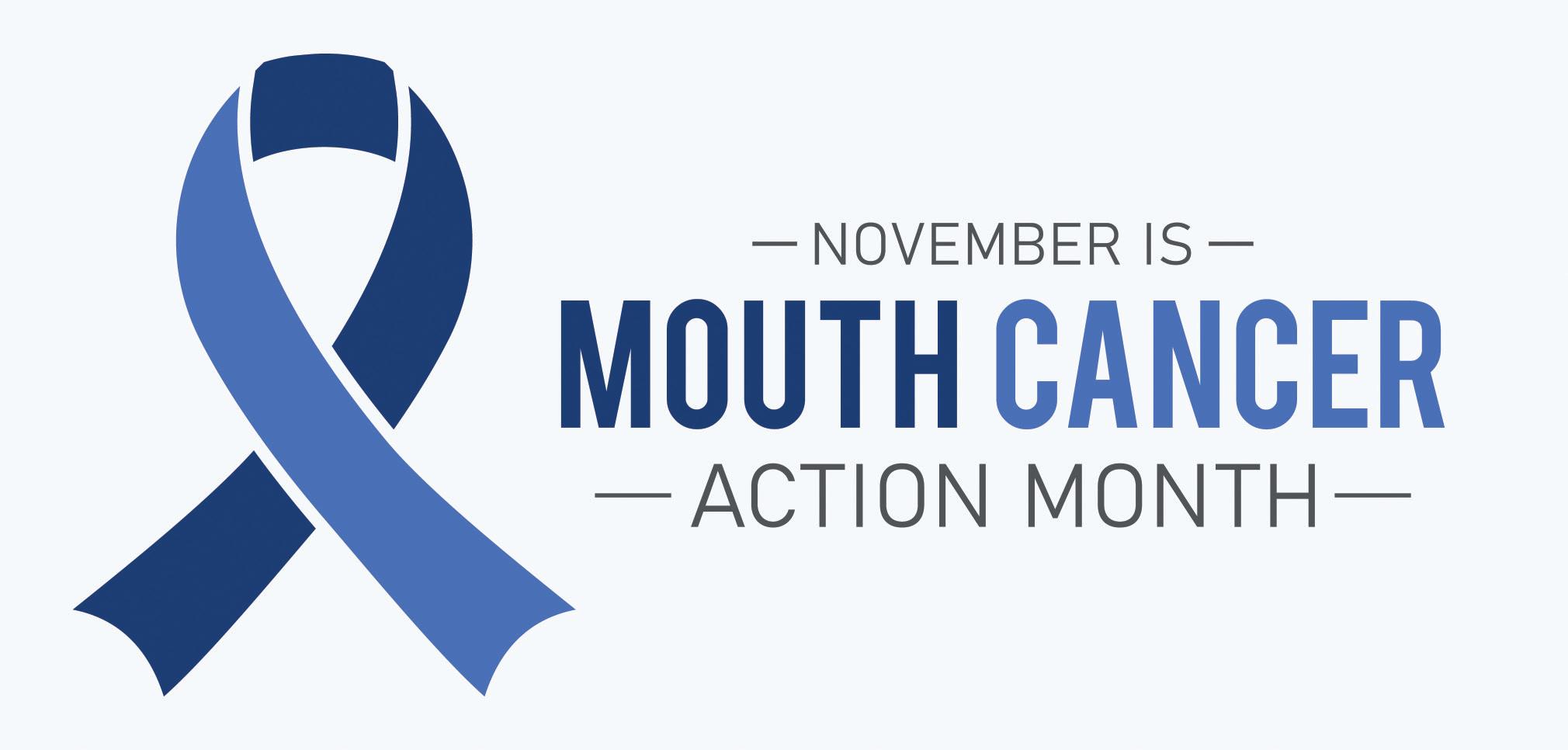
• November – Mouth Cancer Action Month: blue-ribbon campaign; evening talk with a survivor/ENT guest, with opportunistic screening
• December – Give Back Drive: £5 per verified Google review donated to a local youth charity; publish your year’s impact Two touchpoints a month will transform your visibility in a year!
It’s more persuasive than any generic ‘we’re a friendly practice’ line – and it reflects the reality of today’s workforce values highlighted in the GDC data.
A final word on prevention as identity
When 22.4% of five-year-olds in England have experienced dentinal decay – rising far higher in deprived areas – we cannot content ourselves with polishing the same stones inside the four walls of our surgeries.
Community Hubs won’t solve access alone, but they will change trajectories.
The beauty of this approach is that it is team-led. Our dental nurses are natural educators and organisers; our therapists bring preventive expertise; our reception teams are community connectors. Give them the mandate, the time, and the tools – and watch your practice’s reputation, prevention outcomes and recruitment soar.
Start with one school next month. Put two Community Ambassadors in your rota. Say yes when the supermarket asks for a health stand. Track what happens. In twelve months, you won’t just feel like a Community Health Hub – you’ll be one. n
About the author polly Bhambra, practice principal at treetops Dental surgery. Follow her social media channels @pollybhambra
Avoiding conflict over contracts
Whether you’re a self-employed dental professional or practice owner, a smooth working relationship depends on having a clearly worded contract
which is fair to both of you. The DDU’s eric easson looks at some common points of contention and how to avoid disputes
Contractual disputes can be disruptive, stressful and expensive. Those involved often wish they’d reached agreement over the wording of particular clauses before signing on the dotted line, rather than attempting to unpick a legally binding document after things have started to go wrong.
Although a contract is supposed to set out the obligations of both parties, so they know where they stand, a flawed contract makes misunderstandings and disputes more likely and harder to resolve.
Unfortunately, the DDU’s contract review service sees a wide variation in the quality and content of contracts for associates and other self-employed dental professionals. The Government is “considering the merits of introducing minimum terms of engagement and a model contract for associate dentists” who provide NHS care to ensure greater consistency and fairness. The proposal was included in the consultation document, NHS dentistry contract: quality and payment reforms, which closed on 19 August 2025 and if it receives support the Government has said it will “work with the sector to develop and consult further on the detail”.
An official model contract may not happen for some time so what can dental professionals and practices do now to ensure that their own legal agreements stand the test of time?
1. Check the wording carefully Contracts can be long and seem a bit dull but it’s essential that you read every page to ensure you know exactly what
you’re committing to. It’s wise to assume all clauses are enforceable unless they have strong legal advice to the contrary. Even if you really want the post, take some quiet time to read the document rather than signing straight away and avoid leaving it until the last minute before you’re due to start rather than putting yourself under unnecessary pressure.
Many practices use a contract template from an organisation like the DDU but modify the wording to meet their needs. This approach makes sense but it’s important to check any revisions to ensure they are still appropriate to the individual circumstances.
2. Understand the terminology
If you’re new to self-employed practice, there’s likely to be a lot of unfamiliar terms. While these should be clarified in the document it’s worth knowing about some of the potentially contentious areas so you can pay close attention. These include:
• Licence fee – the percentage of gross earnings the self-employed dental professional pays to the practice for use of the facilities, equipment, material, etc. This can be a significant amount so we recommend you familiarise yourself with the practice to ensure you are happy.
• Locum clauses – arrangements for appointing a locum to cover for extended periods where the dental professional will be unavailable to work. It’s often the dental professional’s responsibility to ensure continuity of care for patients.
on whether wording is in line with current best practice and supply a model contract for practices to adapt to meet their needs. As self-employed dental professionals are responsible for paying their own income tax and National Insurance, it’s also advisable to speak to an accountant with specialist expertise in the needs of dental professionals.
4. Raise concerns and negotiate
A contract should strike a fair balance between the interests of both parties. For example, a restrictive covenant that
• Termination clauses – these allow either party to give the other written notice of termination. Three months is the most commonly used period in the agreements we review, although notice periods do vary. Variations we have seen seek to impose a longer period of notice on the associate than on the owner, whilst others require the associate to serve a minimum term before they can give notice. Contracts usually allow for immediate termination in exceptional circumstances.
• Restrictive covenants – restrictions on where a self-employed dental professional can work after leaving the practice to protect the practice from losing patients or staff. These typically state the individual can’t work within a specified radius from the practice for a specific period.
• Fee retention – some associate and dental therapist agreements will usually include a provision for the practice to retain an agreed sum of money for a specified period, to fund the cost of remedying defective treatment provided by the dental professional. This should set out how the money would be used and how it should be administered, as well as how the dental professional will be kept informed. Managed well, retention fees ensure patients are offered necessary remedial treatment, which may reduce the potential for complaints or legal claims.
3. seek advice
If you’re unsure, ask a specialist in contract law to review the contract and highlight areas of concern. The DDU’s contract review service for members can advise
prevents an associate seeking work within a five-mile radius for three years might appear unreasonable if the practice is in a city rather than a rural setting. If you don’t agree with something, it’s important to raise this and ask for the rationale behind it. It’s much easier to negotiate a compromise at the outset than when one or both parties feel resentful, so make the most of this window of opportunity.
5. Know your red lines
A contract is supposed to provide certainty and peace of mind, especially
over areas which are a common cause of contention. If you don’t think that is achievable, or you reach an impasse during negotiations, then you would be wise to consider if the potential risk of a dispute arising in the future is too high for you to be comfortable and, if it is, decide to look for an alternative position. n
About the author eric easson, dento-legal adviser at the DDU.
Endodontic file separation and patient safety
With World Patient Safety Day having taken place in September, Dr simon parsons, Dentolegal Consultant at Dental Protection, looks at what we can do to reduce our risk of procedural error from endodontic file separation
Patient safety is paramount in endodontic procedures, with guidelines in place to prevent infection and cross-contamination.
In addition to proper sterilisation and singleuse protocols for endodontic instruments, other strategies include the use of a rubber dam to prevent the aspiration or swallowing of instruments.
These are all essential for minimising risk in endodontic procedures. However, one of the most frequent adverse events reported is the separation (or fracture) of an endodontic instrument within a tooth.
Consider this scenario:
A young, recently qualified dentist commenced root canal treatment (RCT) on a lower molar for a patient who had recently given birth. At the second appointment, a file separated, unknown to both the patient and the clinician.
The tooth remained symptomatic, and due to the part-time availability of the treating dentist, the patient sought urgent pain relief at another dental practice where the separated file was discovered during preoperative radiography. The unhappy patient was referred to an endodontist who was unable to retrieve the file. It was agreed, due to the ongoing symptoms, that it was best that the tooth be extracted by an oral surgeon.
The oral surgeon could not achieve adequate local anaesthesia to extract the tooth conventionally, so the patient was subsequently booked in for treatment under general anaesthesia. This incurred considerable inconvenience and expense to the new mother who needed to make alternate childcare arrangements.
Once the clinician became aware of this, they sought advice from Dental Protection and the case was resolved by reimbursing the patient for over £2,000 of specialist and hospital costs. This was essential as the patient had not been warned about the risk of file separation and the potential implications of this. Consequently, there was no valid consent in place for this case.
Regrettably, the patient had already complained, and the clinician endured considerable anguish during the protracted management of the complaint. While the actual occurrence of file separation may not necessarily have been avoidable in this instance, early identification of it may have expedited appropriate patient management and eliminated a complaint, improving the outcome for all parties.
how likely is file separation and should we forewarn about it?
It can be difficult to know exactly how often files fracture within teeth and remain there because they cannot be removed. This may be due to reasons such as lack of awareness of the fracture itself, a failure to inform the patient or deal with the issue, or endodontic failure requiring tooth extraction. Clinicians may have fractured a file and then successfully retrieved it, in which case such an event would be unreported.
However, it is not uncommon for patients to be first advised of a file separation when seeing a new dentist and having radiographs taken. This naturally raises doubt in a patient’s mind about the ethics and clinical ability of the previous treating dentist and can lead to a complaint or claim.
So why don’t we tend to forewarn our patients of this risk? It may well be because we don’t see it as a likely outcome to our care, given that studies typically report the incidence of file separation as being between 0.25% and 10% of cases investigated1
A recent study of 571 Protaper Next rotary files discarded by endodontists according to conventional reuse protocols showed an incidence of fracture in almost 20% of XI files and unwinding in a further 10%, despite these not being discarded due to known failure but simply in accordance with protocol2
These authors noted that the fracture of rotary nickel-titanium instruments (NiTi) can occur from torsion (exceeding the elastic limit of the alloy due to binding of the file while torqued), cyclic fatigue, or a combination of both factors. Such research underlines the need for careful protocols in the reuse of rotary endodontic files and suggests that fractures may arise during instrumentation without the clinician being aware of it, especially when using fine rotary files.
Although file separation may indeed occur much less frequently than some other endodontic complications, such as overfilling or underfilling, its detrimental impact can be significant especially in cases of periapical infection, resulting in a reduction in success of up to 14%.
Clinicians are obliged to communicate common adverse outcomes, as well as uncommon but potentially serious complications, as part of achieving consent for procedures. We recommend that all endodontic patients are forewarned of the risk of file separation as part of the routine disclosure of the risks associated with endodontic therapy before treatment commences. Naturally, this would also need to be documented in your clinical records.
how might we reduce the risk of file separation?
Some file separations may be unavoidable due to crystallographic issues in the alloy that can predispose to failure, or manufacturing defects. While we have all heard occasional reports of new NiTi rotary files fracturing soon after first being used in a canal, most file separations seem to arise from errors in instrumentation technique, or reuse of rotary files an excessive number of times.
Clinicians can reduce the risk of file separation by careful preoperative case assessment (with referral of cases with anatomical complexity or likely procedural difficulty to specialists), ensuring straight line access into canals wherever possible, removal of coronal constrictions through a crown down approach, and copious, fastidious irrigation.
Careful use and reuse of files is a must. Visual inspection of files under magnification is essential where they are being reused, even on the same patient, for example from one canal to the next. Visibly damaged files must be discarded and reuse protocols for rotary files strictly adhered to. Clinicians are wise to set rotary motors at correct speed and torque settings prior to starting each and every case.
Management of a file separation
Determining the best long-term approach to these events depends on the individual case, since the objective of the endodontic treatment with or without a fractured instrument remains the same – namely, to disinfect the root canal system and prevent its recontamination while ensuring the tooth is aymptomatic3
Disclosure of the complication to the patient must occur if you are unable to correct the situation during the normal course of treatment and avoid irreversible harm or a compromised outcome. If file retrieval is not possible, prompt referral to a specialist for assessment and remedial treatment is wise. This is usually at the referring practitioner’s cost unless the patient has been specifically forewarned at the outset of a high risk of this complication and the associated potential costs of remedial treatment but has chosen to decline the offer of a specialist referral. Any decision to monitor, bypass or remove a separated file fragment should be made in consultation with the patient. Factors to be considered may include any constraints in the root canal accommodating the fragment, the stage of root canal preparation, the potential complications of the treatment approach adopted, the strategic importance of the tooth involved and the presence (or absence) of periapical pathology4
The presence of a fractured instrument need not reduce the prognosis if the canal system is already well-disinfected and there is no evidence of apical disease, in which case file retention or bypass may be considered5 Endodontics is never easy, and complications can occur even in experienced hands. Always contact Dental Protection if you are unsure about how best to manage the situation with a patient following a treatment complication. n
References
1. Chandak M, Sarangi S, Dass A, Khubchandani M, Chandak R. Demystifying Failures Behind Separated Instruments: A Review. Cureus. 2022 Sep 26;14(9):e29588. doi: 10.7759/ cureus.29588. PMID: 36312609; PMCID: PMC9595390.
2. Fernandez-Pazos G et al, Fracture and deformation of ProTaper Next instruments after clinical use, JClin Exp Dent 10(11): e1091-e1095 (November 2018)
3. Simon S, Machtou P, Tomson P, Adams N, Lumley P, Influence of fractured instruments on the success rate of endodontic treatment. Dent Update 35(3):172-4, 176,178-9 (April 2008)
About the author Dr simon parsons, Dentolegal Consultant at Dental protection.
I felt completely out of sync with normal life.
A prescription for change
In a world of evolving healthcare, where the focus is increasingly on integrated systems and preventative care, the future of dentistry often feels like an afterthought. Yet, a recent conversation between two of the sector’s most influential figures, former Chief Dental Officer for NHS England, Sara Hurley, and the Chief Executive of the NHS Confederation, Matthew Taylor, suggests a new dawn is on the horizon. In a special episode of “The Probe” podcast, they didn’t just discuss problems; they outlined a powerful “window of possibility” for a systemic overhaul of NHS dentistry, transforming it from a reactive service into a proactive cornerstone of public health.
The conversation begins by establishing the collaborative spirit needed for such change. Matthew Taylor describes the NHS Confederation as a “membership body representing leaders from all parts of the UK’s health system,” a description that immediately broadens the scope of the discussion beyond dental clinics. This collaborative ethos, he explains, is what allows the Confederation to work across government and with local partners to “improve the health of the nation”. This is not just a conversation about teeth; it’s a discourse on holistic health, a subtle but crucial reframing of the debate.
Taylor then lays out what he calls the “burning platform” for dental reform—a series of sobering statistics that paint a stark picture of the current crisis. He doesn’t mince words, citing the “shocking figures” of children aged five to nine being admitted to hospitals for tooth decay, a trend that is both preventable and tragic. He also highlights the alarming rise in oral cancer cases, the escalating complexity and cost of treatments, and the all-toofamiliar stories of “dental deserts” and the desperate, often dangerous practice of “DIY dentistry”. The ripple effects, he points out, even contribute to longer elective waiting lists, demonstrating how poor oral health can clog up the entire healthcare system. It’s a wake-up call, a clear signal that the
status quo is not only unsustainable but actively harming the public.
With the crisis clearly defined, Taylor presents a three-pronged strategy for a new era of dental care, built on smart, sustainable reform. First, he addresses the much-maligned contract system, advocating for a shift away from the current model based on the UDA (Units of Dental Activity). Instead, he proposes a more intelligent commissioning system that “rewards prevention and outcomes rather than just activity”. This change would fundamentally alter the way dentists are compensated, encouraging them to focus on patient well-being rather than simply ticking off a list of procedures. It’s a bold move that would incentivize public health and proactive care over the current, often reactive, approach.
The second pillar of his strategy is a radical reimagining of dental care’s role within the community. Taylor introduces the concept of “neighborhood health,” suggesting that dental services should be seamlessly integrated into a broader,
more holistic approach to well-being. He envisions a system where dental care is brought directly to the public, especially in underserved communities. In a particularly innovative suggestion, he muses that dental care should be part of the work of “community health and well-being workers” who engage with families on their doorsteps. This isn’t just about providing care; it’s about building trust and ensuring that dental health is a visible and accessible part of daily life.
Finally, Taylor champions workforce innovation, arguing that the current structure of the dental profession is not fit for purpose. He points to the underutilized potential of dental therapists, stating that “it ought to be that we have got several therapists for each fully qualified dentist in order to have the most productive workforce given that therapists can do so much of the work that dentists can do with the right supervision”. This shift in perspective is not about devaluing the role of the dentist, but rather about empowering a skilled workforce to operate at its full
potential, freeing up dentists to focus on the most complex cases and allowing the system to serve more people more efficiently. It’s a strategy that promises to alleviate the strain on the workforce while simultaneously expanding access to essential care.
Sara Hurley, speaking from her experience at the top of NHS dentistry, acknowledges the profession’s readiness for change. She points to the frustration of talented professionals who are willing to innovate but are held back by bureaucratic barriers, especially the rigidities of the UDA system. She provides a powerful case study in Suffolk, where a 10-chair dental center serves as a blueprint for the future. In this model, a flexible mix of dentists and therapists provides “shared care,” demonstrating that innovative, teambased approaches are not just theoretical but entirely achievable. The Suffolk model proves that the “window of possibility” is already open; it just needs to be scaled up. The conversation concludes with a powerful, unifying message. Sara Hurley’s final words are a call to action: “we keep oral health at the table...we keep prevention at the forefront and above all we keep working together to put the mouth back in the body because that’s where it’s always belonged”. This isn’t just a political statement; it’s a philosophical one. It frames the mouth not as an isolated part of the body but as a crucial indicator and contributor to overall health. It’s a call to break down the silos between medical and dental care and to build a truly integrated system that prioritizes prevention and collaboration. In the end, this conversation between Sara Hurley and Matthew Taylor is more than just a summary of problems and a list of solutions. It is a roadmap for a radical transformation of NHS dentistry. It’s a hopeful vision where collaboration replaces competition, prevention triumphs over reactive treatment, and the mouth is finally recognized as the integral part of the body it has always been. The burning platform is real, but as this conversation shows, so is the will to build something better.
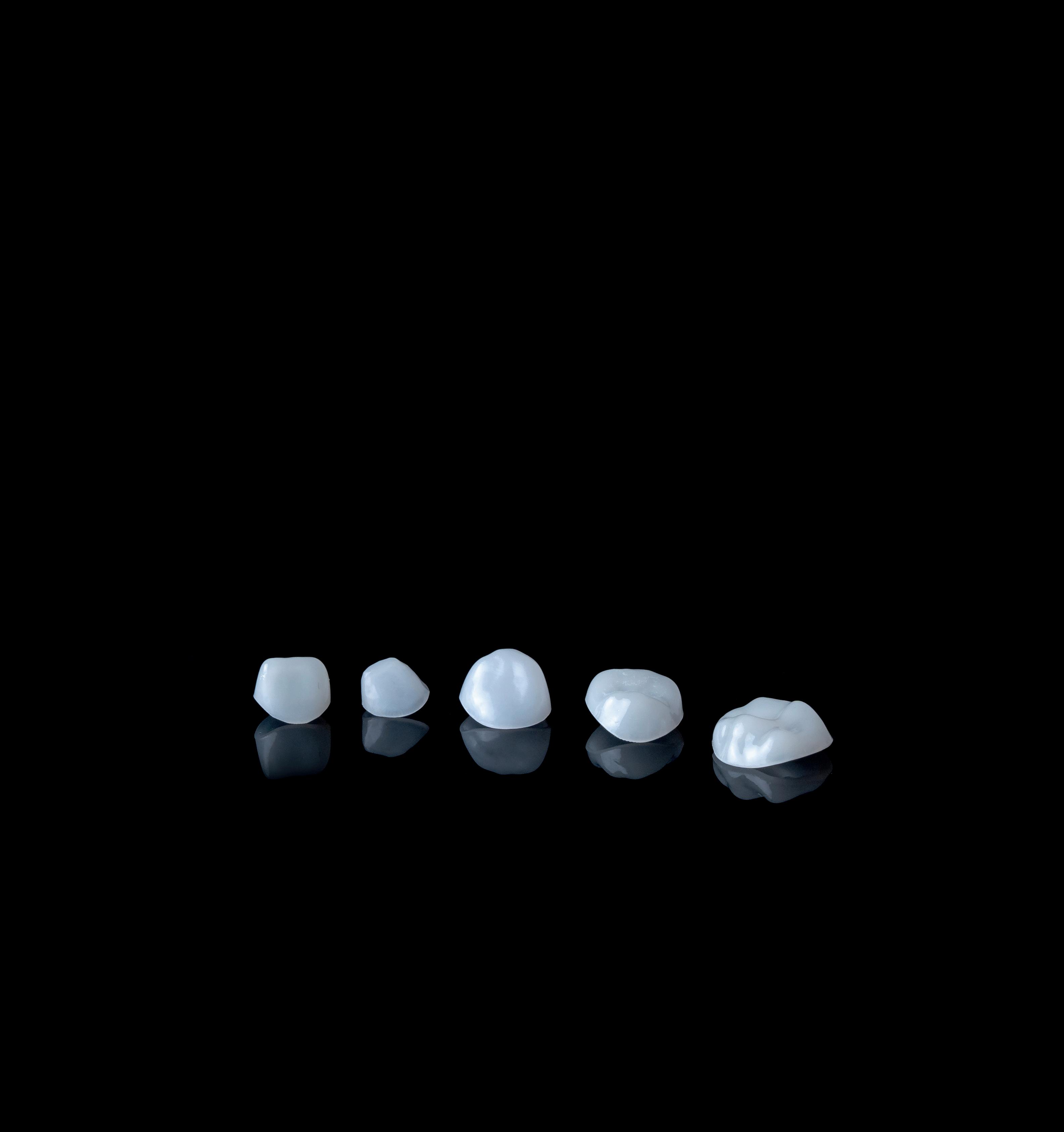
CERAMIR PEDIATRIC CROWNS
The future of modern pediatric dentistry
• Optimal fit & function – Prefabricated to match natural shape and colour
• Minimally invasive – Preserves as much dentine as possible
• Fast, simple workflow – Improves the treatment experience for the child
• Safe & healthy – Biocompatible, BPA-free, and non-toxic
Managing stress and building resilience in the early years of dentistry
Anxiety and stress are often silent companions in the early years of dentistry. The relentless pursuit of perfection, the weight of responsibility, and the emotional toll of patient care can quickly mount into a storm of selfdoubt, fatigue, and even burnout. For many young dentists, the early years feel like walking a tightrope, balancing technical precision, patient trust, and personal expectations, all while silently questioning, “Am I good enough?”
I’ve been there. From a childhood of adversity, foster care, and social invisibility to the sharp clinical world of dentistry, I had to forge resilience not just to survive, but to thrive. My journey taught me that success in dentistry isn’t just about mastering techniques or passing exams, it’s about mastering yourself.
Starting out in dentistry can be exciting, but it can also feel overwhelming. The pressure to perform well, build confidence with patients, and make the right clinical decisions can all add up. For many new dentists, stress and anxiety are common in the early years. It’s not unusual to feel uncertain, tired or even wonder if you’re really cut out for this work. These feelings are more common than many people think. They don’t mean you’re not capable or in the wrong profession. But they do need attention, because ignoring them can lead to burnout or longer-term problems with mental health and wellbeing.
In this article, I want to share some approaches that have helped me and may help others. Some of these are based on my own experiences of building resilience through personal adversity. Others are simple habits and routines that can support your wellbeing and help you stay focused and balanced in practice.
Looking after your physical health
Dentistry involves long hours of closeup work, often in awkward positions. Over time this can take a toll on your body and energy levels. A regular fitness routine, even a few short sessions a week, can improve your posture, support your strength, and help you stay focused during the day. Exercise can also help with stress. Activities like walking, swimming, yoga or strength training might give your mind space to reset. It doesn’t need to be intense or time-consuming to make a difference.
Creating a wellness routine
Stress is a normal part of the job, but having simple ways to manage it can make a big difference. Some people find that mindfulness, journalling or breathing exercises help reduce tension and improve focus. Others find value in taking quiet breaks away from screens or creating a clear end to the working day. You don’t need
to do everything at once. Trying one or two small changes might be a good place to start. For example, taking five minutes between patients to breathe or stretch can help reset your focus and reduce feelings of being overwhelmed.
Spotting early signs of burnout
Burnout can creep up slowly. It might show up as tiredness that doesn’t go away, difficulty concentrating or feeling disconnected from your work. You may also notice changes in how you respond to stress or how you feel about coming in to work. If this starts to happen, try to talk to someone you trust. That could be a colleague, mentor or a mental health professional. Taking regular breaks, setting boundaries, and keeping time for things outside of dentistry might help reduce the risk of burnout.
Managing imposter feelings
Many new dentists experience imposter syndrome. This is the feeling that you’re not good enough or that you’ve somehow fooled others into thinking you’re more capable than you are. It often happens when you’re still building confidence and comparing yourself to more experienced colleagues. These feelings are common, and they usually ease over time. You don’t need to be perfect to be a good dentist. Mistakes can feel heavy at first, but they are often part of the learning process. Reflecting on what went well, as well as what could be improved, can help build your confidence gradually.
finding a healthy work-life balance
It’s easy to let dentistry take over, especially when you’re trying to prove yourself. But having interests and relationships outside of work can help you stay grounded and reduce stress. Time away from the clinic can also give your brain a chance to rest and reset, which may improve your focus when you’re back at work. Try to protect your time outside work as much as possible. This might mean not checking emails in the evening or making space for regular activities that help you feel relaxed or fulfilled.
Believing in yourself
Self-belief often grows slowly. For me, it came through experience, reflection and pushing through challenges. I came into dentistry from a background where the odds weren’t in my favour. There were many times I could have given up. But I learned to see adversity as something that could shape me, not break me. Everyone’s journey is different, but many people face private struggles that others never see. Reminding yourself of how far you’ve come and what you’ve already overcome can help strengthen the belief that you can keep moving forward.
Communicating well with patients
Most complaints in dentistry are not about the quality of care but about misunderstandings or unmet expectations. Clear and kind communication can reduce the risk of complaints and make patients feel more at ease. It can also help you feel more confident in your work. Try to explain things in simple
language, check that the patient has understood, and give them space to ask questions. Listening carefully can often ease anxiety and build trust.
Developing leadership qualities
You don’t need to be in a senior role to lead. Leadership can show in how you support a colleague, how you speak up when something isn’t right, or how you handle a difficult day. Being calm, respectful and reliable can set a strong example, even when you’re new to the team. Leadership is not about knowing everything. It’s about being open to learning, treating others well, and doing your best in challenging situations.
final thoughts
Dentistry can be demanding, especially in the early years. But with the right habits and support, it can also be a deeply rewarding career. Taking care of your mental and physical wellbeing, building strong relationships, and reflecting on your growth can help you stay resilient. There’s no perfect way to do this, and everyone’s journey looks different. But by being honest with yourself, asking for support when needed, and taking small steps to protect your wellbeing, you can build a long and fulfilling life in dentistry. n
about the author riaz Sharif practices at mydentist, Parkstone road, Poole.
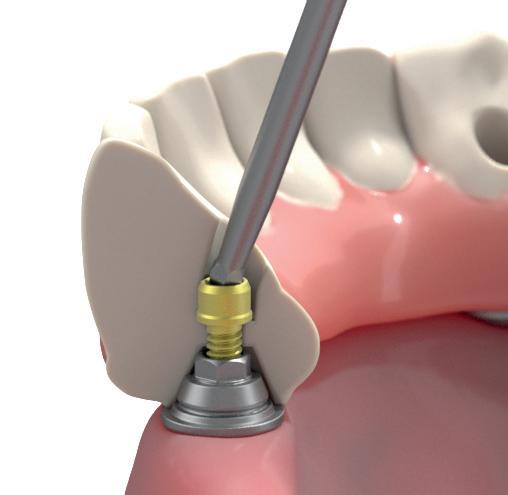
EthOss® is a 100% synthetic bone graft material for dental implant surgery. With no risk of cross-contamination, EthOss® works with the body’s healing process by creating a calciumrich environment and is completely absorbed.
New business? Put safety first
Setting up a squat practice or taking over an established one both present many challenges. For the new principal, there are staff to meet, accounts to assess, contracts to review, premises to update, and changes to make, all while seeing new patients and delivering firstclass dental care. The health and safety of everyone in the building is a priority and should be the first aspect considered when getting to grips with the business.
patient safety
To ensure patients are protected from avoidable infection, it is critical to evaluate the decontamination processes in place and to establish rigorous protocols. Even one small error – anywhere in the practice –could enable opportunistic bacteria to infect someone. Those who are immunocompromised or other vulnerable people are at greater risk. For example, there must be a clear dirty-to-clean workflow, ensuring professionals can keep the two strictly segregated. It is also important to implement processes specific to each area of infection control and prevention, each clearly defining what must be done, when, how, by whom, and with what. This covers hand hygiene, surface cleaning and disinfection, and instrument sterilisation, with considerations for both professionals and patients to fulfil their respective responsibilities. Regarding the former, it should not be assumed that all members of the team are familiar with the necessary steps, and training
should be delivered to all those new to the practice. Refreshers are also very helpful even for experienced professionals, and going back to basics is especially useful if changes are being made to their previous workflows.
When it comes to patient education, simple posters located strategically around the practice will remind individuals of the need for meticulous hand hygiene and what this entails. In appropriate situations, such as pre-surgical appointments, patients might also be advised to use an antimicrobial mouthwash to reduce the risk of microbial contamination in aerosols.
professional protection
While all of the above will reduce the risk of infection among staff as well as patients, additional steps must be implemented to further protect the team. A specific protocol must be designed for sharps management and disposal, for example. Professionals are at potential risk of more than 40 bloodborne infections from sharps injuries, including Hepatitis B and C, and HIV. Safe sharps practices, such as banning of recapping, are key. Similarly, the management of all clinical waste – including waste sharps – must be carefully considered. Approximately 15% of the total waste generated in healthcare facilities worldwide is estimated to be hazardous, presenting infectious, toxic or radioactive risks to people and the environment. All waste items generated in the dental practice must be handled and discarded in line with HTM 07-01, including the use of appropriate bags and containers.
The Department of Health’s best practice guidelines also recommend colour-coding waste according to the risk it presents, separating clinical infectious, clinical highly infectious, offensive, medicinal, cytotoxic and cytostatic, anatomical, dental amalgam and gypsum, and mixed municipal waste. Staff must know how to achieve this while protecting themselves and their colleagues from potential harm.
Only as good as the tools at hand
However, excellent professional training and meticulous workflows alone are not enough to keep everyone safe in the dental practice. The equipment utilised throughout the decontamination process must also be reviewed to ensure that it too meets the necessary regulations and fulfils all relevant legal obligations.
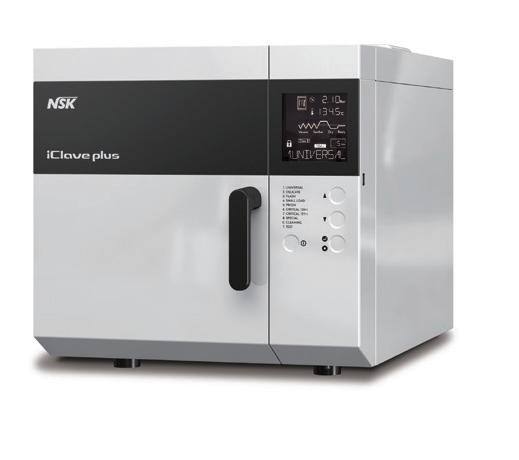
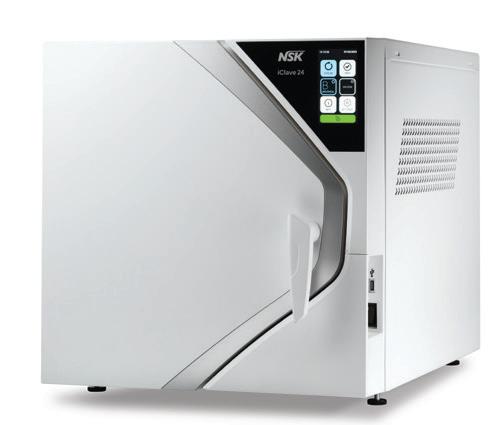
Focusing on the autoclave, whether you are buying a new machine, have inherited the equipment upon practice purchase or you installed a second-hand machine, it is crucial that you do not simply use it without getting it checked. A compromised autoclave could lead to insufficient instrument sterilisation and increased running costs, as well as having a detrimental impact on your practice should a patient or team member be unknowingly exposed to infectious agents.
Rather than leaving things to chance, make sure to have the equipment fully checked, tested and validated before using it, and annually thereafter. The former will ensure it is functioning correctly, facilitating workflow efficiency
and optimising safety standards. Annual validation including the PSSR testing which is a legal requirement for compliance and includes a Pressure Systems Safety Regulations (PSSR) certificate.
For complete peace of mind, put your faith in an Eschmann autoclave and the comprehensive Care & Cover maintenance and servicing programme. With a nationwide team of expert engineers trained specifically on Eschmann equipment, we offer equipment testing, servicing and validation, with annual Enhanced CPD staff training included with our equipment as standard. That means you can be confident in the quality of your decontamination protocols for the health and safety of patients and staff alike.
peace of mind
Safety standards are not an option in the dental practice, they are the foundation on which excellent dental care is built. There is much to consider when setting up a new practice or purchasing an existing business, but safety always comes first.
For more information on the highly effective and affordable range of decontamination solutions available from Eschmann, please visit www.eschmann.co.uk or call 01903 753322 n
about the author Nicky Varney, Head of Marketing at eschmann.
Is decentralised dentistry the future?
Dental care is steering towards the digital realm more and more every day, which has offered plenty of new opportunities for effective care. With the rise of digital workflows, and the immediate accessibility of information and communication through online and cloud-based solutions, it’s possible that we’re heading towards a world where dentistry can operate beyond the dental practice.
The potential impacts on modern dentistry can be assessed at three distinct points: the care of a patient during treatment, the assessment of a patient’s oral health prior to care, and the management of an entire dental practice.
Hands-off
Remote dental care, or teledentistry, may only work with select treatments, and conversations have already been had about the opportunities in orthodontics.
Sometimes called direct-to-consumer orthodontics, providers have offered dental aligners that patients use and manage themselves, aiming for the outcomes of traditional orthodontic treatment. Patients may feel they are able to receive treatment from clinicians that they could otherwise not access, due to location constraints. Through this treatment approach, a patient receives aligners through the post, cutting out in-person dental supervision and monitoring at some steps. It is for this reason that concerns have been raised about the feasibility of teledentistry, and the safety of
patients. The General Dental Council (GDC) notes that any innovation in dental care cannot compromise patient safety measures.
In a statement regarding direct-to-consumer orthodontics, the GDC instructed clinicians to refer to the guidance already established in the Standards for the Dental Team, which applies to all interactions between patient and clinician – even if completed remotely.
The GDC points out that for many aspects of the patient treatment process, a face-to-face interaction or physical clinical assessment is needed to ensure safety. With this in mind, the patient experience can never be completely remote – and nor should it be, as there is still no substitute for a physical clinical assessment for the basis of the treatment plan.
If a clinician proceeds with remote care, it’s important to understand their existing responsibilities. If they are the prescribing dentist carrying out a course of treatment based off of a clinical examination from another dental professional, they take whole responsibility for care. They must still keep a full patient record, and stick to traditional practises and guidance where appropriate.
picture perfect
In practise, remote dental care is evidently difficult. However, one step that may be better translated to decentralised care is the use of remote diagnostics.
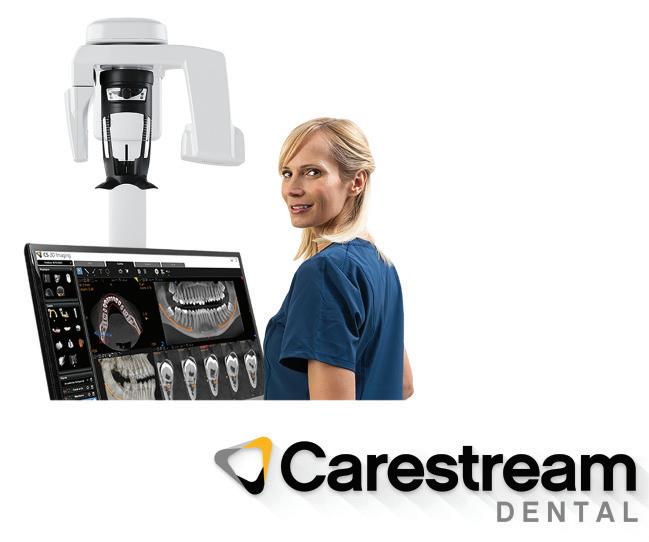
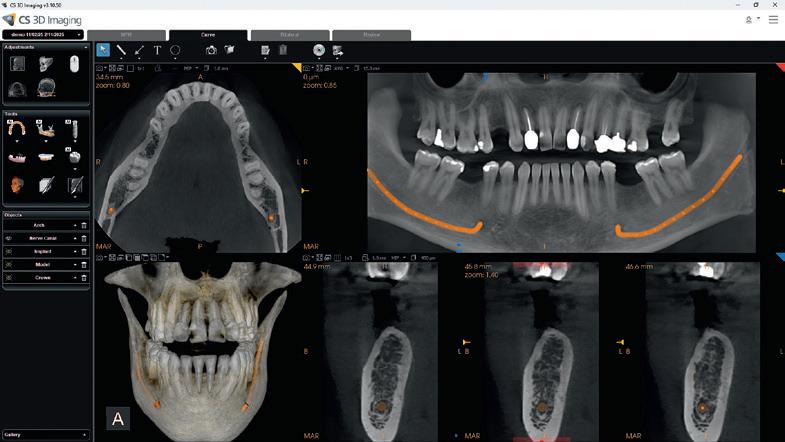
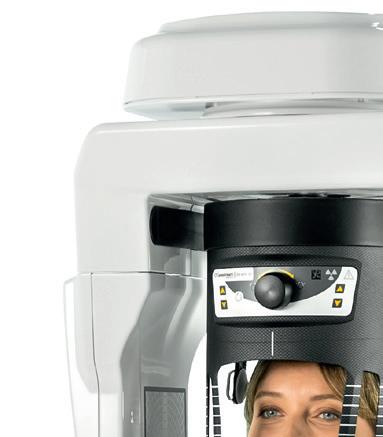
Digital imaging systems now utilise 2D and 3D radiography in ways that mean the transfer of patient information is incredibly quick and simple. The use of
dedicated scanning centres can therefore thrive. Where some practices do not have immediate access to advanced solutions, they may be able to refer a patient to a scanning centre, or another practice with the appropriate equipment, before treating them back in the practice once they have received the imaging results. This community of interconnected dental professionals can work together to support larger patient bases, and be confined less by in-practice equipment.
Access to different solutions ensures patients can get the types of scans that are suited to their care. A cone beam computed tomography (CBCT) scanner and a conventional computed tomography (CT) scanner offer different advantages. If a clinician requires greater detail in the soft tissue, a CT scan would be effective, but if this can be forgone for a lower radiation dose at a higher resolution, a CBCT scan may be more ideal – dental professionals could refer appropriately.
Managing from anywhere
Remote workflows can be immediately implemented through the management of the dental practice. Cloud-based solutions have changed the opportunities that practice managers, clinicians and front-desk teams have by making patient information, scheduling, and business insights immediately accessible from anywhere. By choosing to embrace digital, cloudbased workflows for practice management, clinicians have a greater ability to operate
across multiple practice sites from anywhere with an internet connection. Digital patient records also help the referral process, as notes can be found quickly without sifting through paper copies in the practice.
Sensei Cloud from Sensei, the practice and patient management brand of Carestream Dental, helps clinicians step into a world of interconnected dental care. Dental professionals can use the cloud-based system to manage 24/7 online bookings and patient communications with ease, as well as real-time dashboards for business data. All information is GDPR compliant and secured with state-of-the-art cybersecurity tools, to ensure patients are protected.
With practice management and patient diagnostics given more flexibility, a decentralised view of dentistry is possible. It helps create larger clinical communities which can support wider patient bases. Teledentistry is still evolving, but until a completely safe approach is found, the blend of in-person and more remote care is optimal for all clinicians.
To learn more about how Sensei Cloud can help your practice thrive, visit gosensei.co.uk.
For the latest updates, follow us on Facebook and Instagram @carestreamdental.uk n
about the author claire Mccarthy, Senior Director of product and process excellence at carestream Dental.
IA splash of colour
n the animated classic Finding Nemo , the titular character is imprisoned in a dentist’s fish tank, leading to an intense escape during a child’s check-up appointment. The result is a traumatising experience for the young patient, Darla, that taps into the fears that other children may have when visiting the dental practice.
Helping nervous paediatric patients overcome these fears and reduce their anxieties is essential to improve their interest and compliance with maintaining their oral health. Approaches for treating uncooperative children like sedation and physical restraint may work in the moment, but they fail to make the dental practice a place that children can feel safe and happy in. As such, an element of fun may be needed to entertain paediatric patients, with the hope that it leads to greater engagement with their oral health.
Design of the practice
From a young age, children need to perceive the dental practice as a welcoming space. However, those
who have had a negative experience elsewhere with medical care, such as in a hospital, may carry a nervousness towards a dental practice, leading to unruly behaviour and an uncooperative dental patient. It has also been noted that a growing number of children lack the abilities and self-control to handle new situations like visiting the dental practice, presenting difficulties for the dental team.
The visual design of the reception and waiting area can create a positive first impression. The overall attractiveness of a dental practice’s physical environment is significantly associated with higher perceived quality and satisfaction, a reduction in patient anxiety, and more positive interactions between the patient and members of the dental team. A welcoming atmosphere, as dictated by the colours, layout and lighting of a dental practice, is therefore beneficial to all inside it.
A survey found that children expressed a preference for natural light and decorated walls in the dental practice. Popular forms of visual entertainment in the waiting area
included a TV and an aquarium, though the latter may be a time-consuming expense. It’s also important to not homogenise the tastes of paediatric patients: children aged 6-8 showed more enthusiasm for walls which featured cartoon designs, whereas those aged 9-11 preferred bare walls. ii Colour is still essential though; yellow walls generate a positive, happy emotional state and blue a calmer, more comforting atmosphere.
pleasant to play in
Playing is a vital part of childhood and growth, and a dental appointment should not fully inhibit the opportunity to do so, especially as some children find dental practices intimidating. A designated play area can create a sense of security for young children and serves as a distraction for anxious patients.
There are many options when designing a fun play area. Themed ones, like jungle, space or fairy-tale, create consistency and add a level of escapism to the waiting area. Elsewhere, low tables and chairs with rounded edges, beanbags and cushions are safe alternatives to sit on, reducing the risk of an injury. For forms of entertainment, pens and paper, puzzles, and action figures are all great – though these will need wiping down to prevent the spread of germs. Whereas a generation might remember the abacus as a waiting room stalwart, some dental practices may prefer the ease of tablets, upon which children can play games (these are also quicker to sanitise after use), or a TV for cartoons.
the fun continues at home
Reducing anxiety and increasing the engagement of paediatric patients can lead to superior oral health outcomes but it also has an economic benefit: shorter treatment times, quicker recovery times and less of
a reliance on sedation allows dental practitioners to see more patients. As such, making dental care fun should also continue at home.
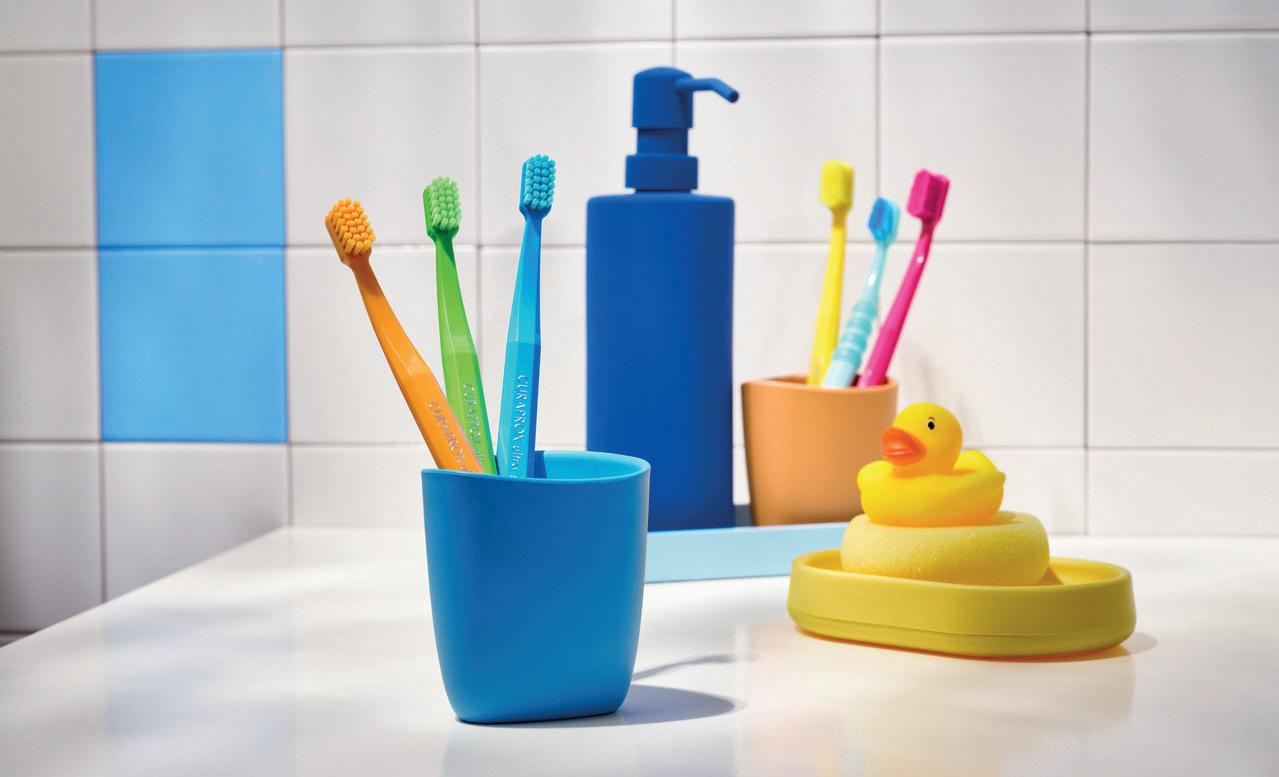
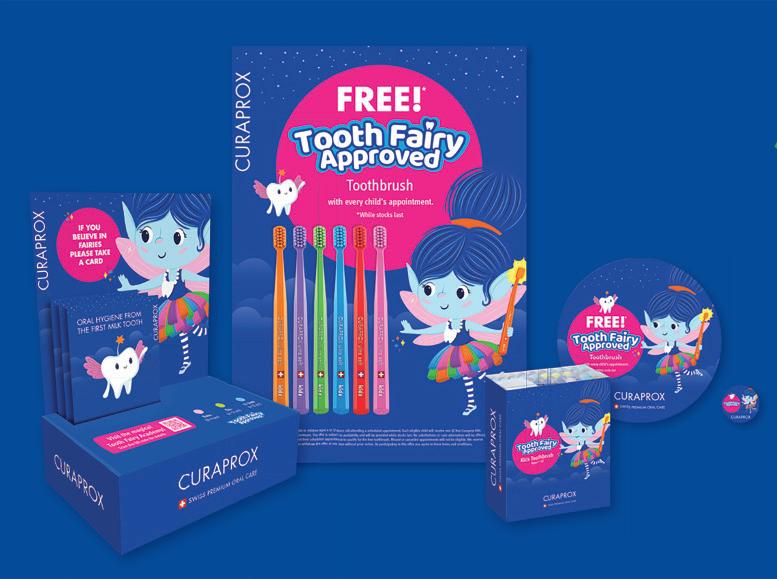
To empower children with looking after their oral health, the Tooth Fairy Gift Set from Curaprox is filled with useful features. Along with the reliable Curaprox Kids Toothbrush and Kids Watermelon Toothpaste, it contains a tooth pouch and a hanging sign for the Tooth Fairy, a tooth loss chart and a guide to cleaning the oral cavity. This improves a child’s understanding of the importance of daily dental care and helps reduce anxieties around dental appointments.
When it comes to managing anxious young children in the dental practice, harbouring a welcoming atmosphere and a well-maintained play area can change the perception of going to the dentist, creating a space that all can feel safe in.
To arrange a Practice Educational Meeting with your Curaden Development Manager please email us on sales@curaden.co.uk
For more information, please visit curaprox.co.uk and curaden.co.uk n
about the author andrew turner, curaden UK Head of Marketing.
Using sharps injuries to improve workflows
Accidents happen. In healthcare, however, they can have significant consequences for clinicians and patients – physically, emotionally, and legally. This includes injuries caused by sharps in the dental practice.
For this reason, strict routines are in place for the management of sharp items, in hopes that individuals can avoid harm in all instances. When professionals are injured, it’s important that the correct workflows are in place for recovery to minimise distress. Dental teams need to also realise that accidents provide an effective chance for practices to learn, and make changes to protect professionals in future.
A sticking point
According to recent research carried out by Initial Medical with the British Association of Dental Nurses (BADN) in 2025, around 51% of dental nurses have had an inoculation injury. Around 76% of those that have been affected have had multiple inoculation injuries, which suggests that not only are many individuals affected in dentistry, but repeated events are somewhat common.
Of the injuries in the report, respondents said that 96% could have been avoided.
A percutaneous injury carries many risks for dental professionals. The main problem is the potential exposure to infections, such as bloodborne viruses (BBVs). The most common forms of BBVs include human immunodeficiency virus (HIV), hepatitis B (HBV) and hepatitis C (HCV). Prevalence in the UK population is generally low, with
patients affected by each condition estimated to be <0.3%, <1% and <0.5% respectively. Only a small number of percutaneous injuries are known to have caused infection that led to serious illness, but the injury and anxiety around its impact can still have a significant effect on a dental professional.
To combat this, clinicians need two key factors considered: protections need to be in place to minimise injury risk, but equally as important, dental teams need to know what to do when a problem does occur. Knowledge of post-exposure procedures and next steps can alleviate some of these anxieties.
Team knowledge
Safe sharps handling can avoid the majority of inoculation and percutaneous injuries in dental care. Clinicians should ask themselves whether a safer sharp device could be used, and seek out personal protective equipment (PPE) such as puncture-resistant gloves or finger coverings.
Training should also be provided for all dental team members, ensuring they know how to work safely with the sharp equipment and procedures in everyday care. This could include the use of needles, scalers, and probes, which caused 38%, 27% and 27% of injuries from clinical items respectively.
According to the BADN research, a third of injuries occurred after an item was used, but prior to disposal. Dental professionals need to have training dedicated to the
management of sharp items during this phase of use. This includes awareness around recapping procedures, which should be avoided at all costs unless a risk assessment identifies it as a solution to another risk (such as reducing the risk of contaminating a sterile space), though appropriate devices, such as needleblocks, need to be in place for this.
Safely managing sharp objects at any point of use protects not only clinicians and patients, but many unseen professionals who may have to handle the item later in the workflow. Between 2012 and 2022, the NHS as a whole processed 1,947 successful claims for professionals affected by needlestick injuries, and 1,460 of these were received from ancillary workers (including cleaners, porters, laundry and maintenance staff), with 432 from clinical staff.
Taking action
Dental professionals should also be aware of the actions they need to take when an injury occurs. This includes notifying the employer, recording the incident and supporting an investigation of the incident which may prompt changes. To facilitate this, dental teams need to encourage a culture of honesty and support, with investigations led by accident prevention, not blame placement in mind. If team members feel they will be in trouble, panic can ensue, and not only could incidences go unreported, but key opportunities to prevent future injuries may be missed.
Put protection in place
Safe disposal of sharp items is paramount, as misunderstood workflows or inappropriately designed and positioned containers create the ideal environment for injury. Clearly marked and secure waste bins should be placed close to the point of use, alongside instructions for disposal.
Eco Sharps Bins from Initial Medical are compliant with current regulations, with colour-coded solutions to follow Health Technical Memorandum 07-01. They are made from at least 40% recycled plastic, and are puncture-resistant and seepageproof to minimise the risk of injury. They are suitable for wall and trolley mounting brackets, ensuring clinical teams can position them wherever needed.
Sharps injuries present a significant risk to healthcare staff, but using current guidance and lessons learnt from previous incidents ensures teams can be kept safe. Amended workflows to avoid repeat injuries is key, and is possible with a culture of honesty and non-judgement throughout the dental team.
To find out more, get in touch at 0808 304 7411 or visit www.initial.co.uk/medical
About the author
Rebecca Waters, Head of Marketing at Rentokil Initial.
The balancing act of modern dentistry
In all areas of dentistry, patients are often seeking fast solutions that deliver a combination of aesthetics and cost-efficiency. For clinicians, it is just as important to ensure function and longevity, but achieving all of these objectives can be challenging. The answer is often in the techniques, technologies and materials used.
increasing patient demands
Patient expectations are driven by a number of factors. In today’s society, aesthetics are often important and this can cause people to prioritise their looks when investing in themselves. When it comes to dentistry, this typically means that individuals either seek highly cosmetic outcomes from the treatment they need, or that they are motivated primarily by aesthetics. This trend is at least partially driven by the massive growth and influence of social media. The platforms are thought to be one of the main sources of information for patients considering any medical procedure, especially among women. They are also potentially informing and influencing patient expectations when it comes to aesthetic results. A recent systematic review even found that social media was leading to overtreatment and raised ethical dilemmas for dentists wanting to balance marketing with delivering care in the best interests of their patients.
While dentists can use social media to their benefit to spread oral health messages and promote their services, the channels do
come with a warning. Many of the images shared do not outline the full story and have no context in terms of the invasiveness of treatment, the cost and the time taken to complete. As such, patients may be misguided or unrealistic in what they hope to achieve for themselves – making it essential to clearly establish and manage their expectations before any treatment begins. Recommendations from dento-legal advisors are to keep information accessible, avoiding dental jargon to increase patients’ understanding. It is also important to show empathy and to encourage a twoway conversation so that the patient can give feedback or ask questions to further enhance their knowledge.
aesthetics and functionality
Once patients appreciate what is and is not possible for their treatment, it is vital that any procedures be planned to optimise aesthetic outcomes without compromising function or longevity. In fact, the latter two are the main priorities for the clinician, who will need to consider a vast range of factors to ensure patient satisfaction at the same time. Ultimately, it all comes down to the treatment planning. Every procedure must be detailed ahead of time, taking into consideration the current and future occlusal, masticatory, speech and temporomandibular health. Any potential risks of complications should be anticipated and mitigated against, increasing the chance of success in the long-term.
This is particularly important in restorative dentistry, where even the smallest change to a tooth can have a significant and farreaching impact. For example, maintaining optimal occlusion is integral to the longterm stability of a restoration. Getting this wrong will likely result in repeated fractures, repairs and replacements, with the appropriate patient frustration that comes with them. This is true of all types of restoration, although the time and financial implications will vary substantially between a single unit composite restoration and an implant-retained bridge.
Material selection is just as crucial to minimise complications and optimise their durability, while also ensuring aesthetics.
The COLTENE BRILLIANT EverGlow composite is an ideal solution as a universal submicron hybrid composite that delivers easy handling, form stability, excellent polishability and long-lasting lustre. Three translucency levels and enhanced Duo Shades further make it simple to achieve highly aesthetic
restorations that blend seamlessly with the natural dentition.
Striking the right chord
Balancing function, longevity and aesthetics is essential for high-quality patient care in the modern world. While patient expectations must be managed carefully, clinicians should always be aiming for stunning restorations that stand the test of time. With the right restorative techniques and materials, all this and more can be achieved.
For more on COLTENE, visit colteneuk.com/BRILLIANT-EverGlow email info.uk@coltene.com or call 0800 254 5115. n
about the author Nicolas coomber, cOLteNe National account & Marketing Manager.
Can digital dental impressions offer sufficient resolution?
When creating dental restorations, accuracy is essential for optimal patient outcomes.
In recent years, many dental professionals have taken the leap and adopted digital workflows. However, it is important to understand the impact that modern technology might have on clinical outcomes. As such, the materials and equipment used in dental labs and practices must offer excellent results and be used effectively by dental professionals.
In order to understand the strengths and weaknesses of different methods of impression taking, it’s important to consider the evidence and select the best solution based on each clinical scenario.
Direct vs indirect impressions
When approaching each case in practice, it is important to consider the pros and cons of traditional vs digital impressions as they apply to that case. Traditional impressions record the surface continuously, whereas digital systems are only capable of recording dots at certain points, filling in the gaps in the data algorithmically. With an intraoral scanner (IOS) this approach improves speed of the scan both to take and process, but does lead to concerns about accuracy, particularly impacting on more complex cases.
Studies show that crowns produced using IOS scans can have a marginal fit deficiency of up to 120 microns. In order to achieve high quality outcomes, particularly
in complex cases, it is important to consider whether this is accurate enough, and if a gap of this size actually has clinical significance or not.
In restorations with marginal gaps larger than 30 µm, accelerated caries development is reported and this accelerates further the further above 30 µm the gaps reach. This is a considerable problem as crowns made from intraoral scans struggle to achieve gaps of less than 100 µm. Although clinical outcomes from these ‘digital impressions’ are considered acceptable, there is potential to significantly increase accuracy, which intuitively will lead to optimised patient outcomes.
clinical factors relating to scanning and complications of full arch cases
In order to achieve good results, intraoral scanners require multiple viewing angles. This can be difficult to achieve due to practical physical restrictions, such as extent of mouth opening and being unable to scan all tooth surfaces when neighbouring teeth are present. In full arch cases, research states that conventional polyvinyl siloxane impressions display the highest levels of accuracy, followed by intraoral scanners, with irreversible hydrocolloid impressions (alginate) the least accurate (which also deteriorates very quickly within just 12 hours). Additional to the challenge of full arch cases, in order to achieve good results with an analogue method, it is essential that the impression technique must be
executed meticulously. This is not always the case due to time restrictions and other pressures on the dental team, making it difficult to maintain the highest standards of analogue impressions. As such, the current (though sub-optimal) results achieved with an intraoral scanner may out-perform a poorly taken traditional impression. A further complication to consider when it comes to management of full arch cases is that intraoral scans generally fail to take into consideration mandibular flexion, potentially reducing the global accuracy of a scan significantly. This phenomenon was first reported in 1931 with much work published since, but is largely ignored by intraoral scanners with very few compensating for mandibular flexion leading to problems with fit and potential early failure, particularly of larger fixed restorations.
the future of digital dentistry
Although the impact of digital dentistry has been growing rapidly, it’s important to understand that traditional impressions still very much have a place and critically, to appreciate how the two methods can work in synergy for improved patient care. To facilitate this hybrid approach, the team at Mimetrik™ has developed the world’s only six degrees of freedom dental object scanner, the Cubit360TM. The user holds the impression or dental model in front of the scanner, rather than using a robotic method, enabling continuous, real-time scanning with no mechanical delays or need for cumbersome metal mounting
frames. This means a complete gapless scan of an impression or dental model in a matter of seconds.
Dental impressions are still the foundation for any prosthodontic workflow. In order for technicians and clinicians to provide patients with dental restorations which fit properly, it’s essential that the tools they use are fit for purpose. There are a number of areas where intraoral scanners are lacking when it comes to precision and the ultimate creation of prostheses which fit well, and there are many cases where traditional impression material could be used to achieve better outcomes. As new technology emerges for use in dental labs and practices we can, however, expect to see exceptional outcomes without compromise. Improving ease of use, time, and accuracy, while at the same time reducing the need to post impressions saving more time and money, and improving sustainability.
For more information about Mimetrik, please visit https://mimetrik.tech/ n
about the author
alyn Morgan is the immediate past president of the British endodontic Society, and the co-founder and ceO of a spin-out company from the University of Leeds, Mimetrik Solutions.
Managing the complex needs of high-risk patients
Dr Ben Atkins reflects on the key themes from his panel discussion at Dentistry Show London (DSL) 2025, where he
and
At this year’s Dentistry Show London, I had the privilege of chairing a panel discussion that addressed a topic very close to my heart: how we, as dental professionals, can better manage the complex needs of high-risk and difficult-to-treat patients.
I was joined by two of the sectors pioneers — Professor Iain Chapple, an internationally esteemed expert in periodontology and oral-systemic health, and Professor Tim Newton, a clinical psychologist whose work in dental anxiety and behavioural science has reshaped how we understand patient care. Together, we explored how dentistry can evolve to provide more meaningful support for those who continue to struggle despite the best of intentions and interventions.
Why some patients fall through the cracks
In my clinical work and as Clinical Director of Prevolution Health, I’ve seen time and again that oral health
inequality remains one of the most persistent challenges we face.
Despite all our advancements, many patients — particularly those with diabetes, frailty, cognitive decline or entrenched socio-economic disadvantage — continue to experience chronic oral disease.
Standard prevention strategies often fall short for these individuals. As I said during the session, our current models aren’t enough for patients facing multiple, overlapping challenges. We need to adopt more personalised, empathetic approaches, ones that start with understanding each patient’s life, barriers, and motivations.
Professor Newton brought invaluable insights into how anxiety, trauma, and even shame can shape a patient’s engagement with care. He reminded us that no treatment plan succeeds without trust, and that sometimes our greatest clinical skill is simply listening without judgment.
Moving beyond one-size-fits all
One of the key messages I wanted to share was the importance of co-designing care plans with patients. When people feel they’re part of the conversation, not just recipients of instruction, their confidence and adherence grow. It’s about setting realistic, achievable goals, not idealistic ones that ignore the pressures and limitations many of our patients face.
Professor Chapple offered a crucial perspective on the need for precision prevention — especially in managing periodontitis alongside systemic diseases. His clinical and academic work is showing us how inflammation, bacteria, and behaviour intersect in complex ways. These insights are vital as we shift toward more tailored, riskbased interventions.
The role of innovation in complex care
While personalised care is essential, I also believe in leveraging the right tools to support our patients, particularly those who continue to experience disease progression despite best efforts.
During the session, I discussed Prevora, a 10% chlorhexidine tooth coating that is clinically proven to reduce the harmful bacteria that causes oral dysbiosis. For patients with recurrent caries or periodontal risk — especially those in care homes, with dexterity issues, or who are medically compromised — Prevora extends prevention where traditional dentistry struggles most, supporting minimally invasive care and improving patient outcomes.
And crucially, it can be delivered by a wider dental team, including nurses under appropriate direction, making it a practical option for busy UK practices.
Empowering the whole team
One theme that resonated with all of us on the panel was the need to empower the wider dental team. Whether it’s
dental nurses applying adjunctive treatments, or therapists and hygienists leading preventive care, we must use the full scope of our teams to reach the patients who need us most.
Too often, the burden falls solely on the dentist but with the right training, delegation, and supervision, we can build a more efficient and compassionate care model. This isn’t just about improving efficiency – it’s about increasing access and equity, two values that underpin everything I believe in.
Looking ahead
The discussion at the DSL was both empowering and motivating. We now have all the pieces in place to address this unmet healthcare need — the tools, the team, and the approach. With that comes not only an opportunity but also a responsibility to drive systemic change. By bringing together personalised care, behavioural insight, clinical innovation, and team empowerment, we can shape a future where the management and prevention of oral disease truly reaches every patient.
I want to thank both Professor Chapple and Professor Newton for sharing their time and expertise. I hope this panel will contribute to meaningful, professionwide change.
Dentistry Show London returns 9th and 10th October 2026 at Excel London.
About the author
As Clinical Director of Prevolution Health and a practising dentist, Dr Ben Atkins brings extensive experience to his role, including previously serving as President of the Oral Health Foundation and leading work to reduce health inequality as clinical adviser to NICE and the National Association of Primary Care.
DMUK announces annual Development Day
Dental Mentors UK (DMUK) is hosting its annual Development Day on Saturday 8th November at the Royal College of Surgeons, in London. The event is open to members and non-members alike.
Dentists and DCPs in attendance will be treated to Dr Hoda Wassif’s talk on Mentoring in the age of AI, which
explores the challenges and possibilities that the generative technology presents. Also speaking will be Dr Shilpa Chitnis, who will be Dealing with Imposter Syndrome in Dentistry. Registration begins at 9:30am, with the AGM taking place from 10-10:30am. The Development Day will then commence, ending at 4:30pm and providing 5 hours of verifiable CPD.
Precise Working Dies in Just Minutes
T Flows beautifully—better than stone—to create a smoother die and to capture minute detail
T No hand-mixing—inject it directly from the automix cartridge into impression
T Exceptionally hard set—90+ Durometer
T Slightly flexible
T Set time: 2 minutes
Address Royal College of Surgeons, 38-43 Lincoln’s Inn Fields, London WC2A 3PE
Cost
Dentist members: £125
DCP members: £90
To register, email: mabelsaw@hotmail.com
DMUK is an organisation of trained and experienced mentors dedicated
to supporting all dental registrants, including Development Advisors who specifically work with registrants in difficulty, to return them to safe practice following GDC sanctions.
The group is keen to maintain evidence-based and proven standards within mentoring, and has a number of members who are currently undertaking academic research, and who include all members of the profession.
For more information, visit https://dentalmentorsuk.com/
A Legacy VPS Bite Registration Material
T Stays stacked on the occlusal surface during placement
T Optimal consistency allows patient to naturally close with zero resistance while capturing every detail
T Hardens to a plaster-like final set with a durometer of 90 to ensure precise articulations
T Set times: 30 Seconds | 60 Seconds | 2 Minutes
The hidden price tag of mouth cancer
Dr Nigel Carter, CEO of the Oral Health Foundation, explains why dentistry must change the way it tackles it
Few diseases carry such a heavy price as mouth cancer. In the UK, 10,825 were diagnosed in the most recent year – around 30 a day. Cases have more than doubled in a generation, yet survival rates have barely shifted. The reason is simple: too many are found too late.
The human cost is devastating. For patients, it can mean life-changing surgery, loss of speech, difficulty eating, and lasting psychological impact. For families, it is emotional strain, financial hardship, and sometimes bereavement.
The wider costs – to the health system, the economy, and society – are rarely discussed. This November, Mouth Cancer Action Month will focus on The Costs of Mouth Cancer to bring that reality into the open.
The many costs of late detection
Treating mouth cancer is not just clinically demanding – it is financially punishing. An early stage case costs around £2,600; for advanced disease, it can climb to £19,500.1
Advanced cases often require major surgery, reconstruction, radiotherapy, and prolonged rehabilitation, placing heavy demands on NHS resources. Over five years, head and neck cancers – including most mouth cancers – have cost the NHS more than £255 million, with almost £20,000 spent per patient in the first year after surgery.2
But numbers cannot capture the real cost. Late detection can mean losing the ability to speak or eat normally, living with facial disfigurement, or facing permanent changes to taste and swallowing. These are not temporary inconveniences –they alter every meal, conversation, and social interaction for life. The emotional toll is immense, often accompanied by depression, anxiety, and isolation. Families shoulder a heavy burden – becoming carers, coping with financial insecurity, and navigating a complex health system while watching someone they love endure long and painful treatment.
Around half of mouth cancer patients never return to employment after their diagnosis – a fact rarely acknowledged, yet one that underscores how far-reaching the consequences can be. Employers lose skilled workers, communities lose active members, and health and social care services are left supporting needs that could have been avoided. Cancer Research UK estimates premature cancer deaths cost the UK economy £10.3 billion annually in lost productivity3 – an average of £61,000 per death – alongside up to £1.7 billion in lost paid work and £4–4.5 billion in unpaid care.4
Much of this could be prevented. Early detection saves lives, preserves quality of life and livelihoods, and spares families years of hardship. Dentistry is uniquely placed to make that difference but relying solely on spotting lesions during routine appointments is no
longer enough, particularly when many most at risk – smokers, heavy drinkers, and people in deprived areas – are the least likely to attend.
Dentistry’s reach must extend beyond the chair
No other part of the health system examines the oral cavity as often as we do, and each examination is a chance to detect potentially cancerous lesions early. Yet those who most need these checks often do not attend until the disease is advanced. This demands a more proactive approach.
Dental teams should be visible in settings beyond their surgeries – pharmacies, workplaces, care homes, and homeless shelters – to reach those who rarely access mainstream services. In practice, however, this outreach is rarely supported by NHS commissioning and is often delivered voluntarily or through short-term funding.
Partnerships with GPs, practice nurses, and cancer charities can create referral pathways for patients presenting with oral symptoms elsewhere, but without formal recognition – and payment – for this work, coverage will remain patchy.
If the government is serious about prevention, it must reinvest in community dentistry and commission these services nationally, not leave them to the goodwill of overstretched teams.
Advocacy as a professional responsibility
Dentistry has often spoken about mouth cancer within its own circles, but public engagement is still too often limited to posters in waiting rooms and leaflets for those already in the chair. Awareness must reach beyond our patient base, into spaces where at-risk groups are most likely to be found – community clubs, social housing hubs, workplaces with older employees, faith centres, and venues offering tobacco or alcohol support. Local media can help keep the conversation visible.
Commissioning groups should be encouraged – and, where necessary, challenged – to include oral cancer prevention in their strategies. Nationally, the profession’s trusted voice should be used to push for policies that reduce tobacco and alcohol harm, advocate for HPV vaccination uptake, and secure funding for oral screening programmes. This is not beyond our remit – it is central to preventing disease. And it cannot be confined to November; it must be part of year-round advocacy.
Making mouth cancer everyone’s business
When detected early, survival rates can be up to nine in 10. Found late, they fall to around half.5 This contrast should make every dental professional question whether the current model – passive detection during routine appointments – is fit for purpose. Moving towards an active, search-and-engage approach will require creativity, persistence, and, in some cases, stepping outside our comfort zones.
Mouth Cancer Action Month offers a focal point for attention, but vigilance must not be seasonal. The costs of mouth cancer – in lives, livelihoods, and healthcare resources – are paid every day. We have the skills, knowledge, and public trust to lead change. What
remains is the will to redefine our role: from providers of clinical services to active agents in one of the most urgent public health battles of our time. This November, The Costs of Mouth Cancer will be our rallying call. The challenge is to ensure that when we speak about costs, we are not talking about those counted in lives lost because the chance to act came too late. Visit www.mouthcancer.org and support Mouth Cancer Action Month.
References
1. Ribeiro Rotta, R.F. et al. (2022) ‘The cost of oral cancer: A systematic review’, PLOS ONE, 17(5), e0266346. Available at: [PLOS ONE article] (Accessed: August 2025).
2. Kim, K. et al. (2011) ‘Long-term costs associated with healthcare use of people treated surgically for squamous cell carcinoma of the head and neck in the UK’, BMC Head & Neck Oncology, 3, 47. Available at: [BMC Head & Neck Oncology] (Accessed: August 2025).
3. Cancer Research UK. (2025) Health is wealth: tackling cancer to grow the economy. Cancer Research UK, 27 June. Available at: [CRUK report] (Accessed: August 2025).
4. Ribeiro Rotta, R.F. et al. (2022) ‘The cost of oral cancer: A systematic review’, PLOS ONE, 17(5), e0266346. Available at: [PLOS ONE article] (Accessed: August 2025).
5. Cancer Research UK. (2024) Survival for mouth and oropharyngeal cancer. Available at: Cancer Research UK (Accessed: August 2025).
About the author Dr Nigel Carter OBE is the Chief Executive of the Oral Health Foundation.
If something in the mouth isn’t quite right, get it checked.
the mouth isn’t quite right, get it checked.
“ If something in the mouth isn’t quite right, get it checked. ”
Mouth cancer survivor
Mouth cancer survivor
Laura
Mouth cancer survivor
Your dentist can spot the early signs of mouth cancer.
Your dentist can spot the early signs of mouth cancer.
Your dentist can spot the early signs of mouth cancer.
Check yourself for mouth cancer – it takes less than a minute and could save your life.
Check yourself for mouth cancer – it takes less than a minute and could save your life.
If you spot anything unusual, see your dentist or doctor.
If you spot anything unusual, see your dentist or doctor.
www.mouthcancer.org
Check yourself for mouth cancer – it takes less than a minute and could save your life. If you spot anything unusual, see your dentist or doctor.
www.mouthcancer.org
Mouth cancer can affect anyone. It can appear in the mouth, or on the tongue, lips, head and neck.
Look out for:
Mouth cancer can affect anyone. It can appear in the mouth, or on the tongue, lips, head and neck.
Look out for:
• Mouth ulcers that last more than 3 weeks.
Mouth cancer can affect anyone. It can appear in the mouth, or on the tongue, lips, head and neck.
• Red or white patches in the mouth.
• Mouth ulcers that last more than 3 weeks.
Look out for:
• Unusual lumps or swellings.
• Red or white patches in the mouth.
• Unusual lumps or swellings.
• Mouth ulcers that last more than 3 weeks.
• Red or white patches in the mouth.
• Unusual lumps or swellings.
#MouthCancerAction
The orthodontic gap
Why interdental cleaning is essential
Orthodontic treatment, spanning from fixed braces to clear aligners, is increasingly common in both adolescents and adults. Of course, this solution for aligning teeth and improving oral function is both appreciated and utilised globally, but with this greatness comes challenges. Daily oral hygiene is significantly more difficult to attain when undergoing orthodontic treatment, particularly interdental cleaning.
This step in the oral hygiene routine is integral when undergoing any type of dental treatment, but it is significantly more difficult for patients with orthodontic appliances that obstruct access to residual food particles and bacteria. These patients are significantly more susceptible to plaque build-up and hence, gingival inflammation and enamel erosion. Without the correct oral hygiene protocol for those with fixed appliances, the process towards a better smile could become compromised entirely. Proper tools and cleaning habits can assist in deterring these problems, ensuring oral hygiene throughout the orthodontic journey.
Why a better smile requires better cleaning
The design of orthodontic appliances means that brackets, wires, and other addons like bands, permit food debris, and subsequently, bacteria to accumulate. Fixed braces especially, cause even greater inhibitions surrounding everyday cleaning, and standard toothbrushes and floss are often inadequate. Other specific patients that can fall victim to difficulty in oral hygiene are those that wear clear aligners. Aligners are renowned for trapping bacteria, saliva, and food remnants against the enamel and interdentally. Due to this, excellent oral hygiene must be promoted during aligner treatment.
A common complication with poor dental hygiene during orthodontic treatments is white spot lesions (WSLs) which is the first indicator of enamel demineralisation. Not only do these spots look aesthetically unappealing, but they also signal early decay. Research surrounding the matter evidences that 38% of patients develop WSLs within six months of beginning orthodontic treatment, caused primarily by poor oral hygiene. WSLs can become irreversible without professional intervention, and again compromise the whole purpose of orthodontic treatment. Furthermore, the chances of these patients experiencing gingivitis and bleeding increases due to greater difficulty in flossing with fixed braces and lack of awareness with clear aligners. Orthodontic treatment can be a long commitment, and with additional oral complications, patients could feel demotivated and more self-conscious. This can potentially lead to avoidance of appointments and vicious cycles regarding their relationship with oral care.
Why traditional floss often falls short Traditional floss is certainly adequate when used properly, and in the right circumstances.
However, the structure of fixed braces, with wires and brackets, make this a challenging task that requires time and nimbleness. With removable aligners, regular floss is recommended and sufficient, though challenges in establishing and maintaining new dental hygiene habits with the addition of orthodontic treatment remain. Due to both these circumstances respectively, flossing can be avoided or performed inadequately, allowing opportunity for food particles and bacteria to be retained interdentally, and eventually lead to plaque build-up and decay. Fortunately, other options are available for those undergoing orthodontic treatment, who require nimbler, more appropriate tools for the task. These products are particularly useful for fixed appliance users, but additionally for all those seeking a worthy interdental cleaning routine.
Finding the perfect partner for the future of your hygiene
For any patient seeking great interdental hygiene, and particularly orthodontic patients, interdental flossing is a great option. Water flossers are another excellent method of cleaning interdentally. For fixed brace users, their speed and ease of use make no other option more efficient. For aligner wearers, who are constantly removing and reinserting their mouthpiece throughout the day, water flossing is a great way to add a refreshing clean between meals and an impactful addition to anyone’s oral hygiene routine.
When choosing which water flosser to purchase, look no further than Waterpik™ –the #1 water flosser brand recommended by dental professionals. The Cordless Plus by WaterpikTM is clinically shown to be up to 3x as effective for removing plaque around braces versus brushing and string flossing when used with the innovatively designed Orthodontic Tip, specific for targeting those hard-to-reach areas. With the extra quiet design, minimised size, and portability, the WaterpikTM water flosser is the perfect accomplice in challenging harboured food remnants right after eating –perfect for clear aligner wearers on-the-go and fixed brace wearers, wherever they need it.
The benefits of interdental cleaning whilst undergoing orthodontic treatment extends far beyond clean teeth. Maintaining good interdental health is integral for preventing long-term complications and ensuring that the outcome of treatment is a straight and healthy smile.
For more information on WaterpikTM water flosser products visit www.waterpik.co.uk.n
about the author
Sharon Kidd has experience working as a hygienist in a variety of different settings including dental hospital, domiciliary home visits, military, private and general practice. She works with specialists and general dental practitioners to support patients with different needs including those who are nervous to visit the dentist.
The impact of yo-yo dieting on oral health
Ahealthy diet is essential for maintaining good oral as well as overall health. A balanced diet that is rich in both micronutrients and macronutrients is required for the body and mind to function effectively. An adequate supply of micronutrients is essential in managing a rapid immune response during inflammatory processes associated with periodontal disease, for example. Macronutrients, like carbohydrates, protein and fats are vital for tissue repair and healthy cell function.
Weight-loss is a vital part of preventing complications from excess weight, such as diabetes, kidney disease and cardiovascular disease, all of which are associated with poor oral health. However, sustainable methods that prioritise maintaining the intake of essential nutrients should be encouraged to ensure weight management is consistent, and that health is maintained throughout the process of reaching and remaining at a healthy weight.
Diet or weight cycling, commonly known as yo-yo dieting, in combination with certain extreme dieting methods is associated with a net weight gain, and ultimately, has a deleterious effect on people’s oral, physical and mental health.
Unsustainable weight-loss
For many individuals, weight-loss is difficult and often unsustainable, leading to some seeking easy ways to shed pounds. More than one in five women have been on at least five diets that have not resulted in maintaining a healthy weight. 21% of British women say they have yo-yo dieted at least five times, and 11% have done it at least ten times. 6% of those surveyed have dieted and put the weight back on again more than 20 times.
Although some popular diets may result in weight reduction, evidence suggests that 80–95% of dieters regain most of their lost weight within 5 years. This problem can result in a habit of cycling between different extreme diets in quick succession. In combination, fad diets and yo-yo dieting can have a detrimental effect on patients’ long-term oral as well as systemic health.
Sharon is also a professional educator for WaterpiktM, the water flosser.
Many popular diets encourage extreme approaches, such as entirely cutting out certain macronutrients or eating only one food for extended periods. While some of these extreme diets can be beneficial – at least for a limited time – some can have a direct impact on oral health. For example, diets that dictate a severely reduced carbohydrate intake can cause xerostomia, increasing the risk of caries, halitosis and periodontal disease. Many low carbohydrate, high protein diets prioritise extreme consumption of fats, increasing the risk of cardiovascular disease, which is strongly linked to periodontal disease. An overconsumption of meat and dairy can also be a risk factor for enamel erosion.
lifelong effects of yo-yo dieting
Weight cycling is thought to affect patients’ microbiome, potentially leading to gut dysbiosis. This imbalance results in the loss of beneficial microorganisms and alters the
composition and function of gut microbiota. There is a reciprocal relationship between oral and gut microbiota, meaning that individuals with gut dysbiosis may be more susceptible to periodontitis and other related oral health issues.
Weight cycling is also associated with hyperinsulinemia and elevated basal insulin secretion, and some studies suggest that it is associated with poor cardiometabolic outcomes and increased risk of Type 2 diabetes. Inflammation and altered immune cell composition are known to remain in adipose tissue following weight loss. Individuals who engage in weight cycling, commonly tend to have an increased percentage of body fat, making them more susceptible to the oral health challenges experienced by obese individuals. These include a higher prevalence of alveolar bone loss, caries, and tooth loss.
educating patients for optimal oral health
As well as educating patients on optimal oral hygiene, it is important to understand the importance of prioritising a healthy approach to nutrition. When patients are actively engaging in yo-yo dieting, encouraging enhanced hygiene can help them prevent complications that can result in a lifelong impact on their oral health. Recommending products like FLEXI interdental brushes from TANDEX is a great way to provide optimal oral hygiene to patients every day. They come in 11 sizes to help patients keep all interdental spaces clean. Adding just a small amount of PREVENT Gel from TANDEX to FLEXI brushes ensures the benefits if 0.12% chlorhexidine and 900 ppm fluoride reach every interdental space.
A balanced diet, rich in whole foods can support healthy, sustainable weight management while also maintaining healthy oral mucosa and dental tissue. For patients that are caught in an endless diet cycle, encouraging them to choose more sustainable weight-loss methods can help them achieve better oral as well as physical health.
For more information on Tandex’s range of products, visit https://tandex.dk/ Our products are also available from DHB Oral Healthcare https://dhb.co.uk/ n
about the author
Jacob Watwood, UK Clinical advisor for tandex.
A-dec 500 Pro: Experience a new level of connection. Everything you’ve come to appreciate about the A-dec 500 dental chair, is now available with a new delivery. Enabled with A-dec+ and an updatable software platform, the A-dec 500 Pro delivery system supports your dental team with a new level of connection.
The link between oral health and heart health
In recent years, there has been a steady increase in the awareness of the links between oral health and systemic illness. However, this knowledge is not necessarily available to every patient, with many unaware of the impact that their oral hygiene is having on their overall health and vice versa. One particular area of focus amongst dental professionals and health researchers has been the impact of the mouth on heart health, with an increasing pool of evidence examining the correlation between dental diseases and periodontal inflammation on cardiovascular diseases and associated issues. As such, it’s important that dental professionals understand the links, and the ways in which prevention and management techniques may have an effect on patients’ general health.
What are the links?
Research strongly suggests that periodontitis has consequences for overall health, particularly when it comes to cardiovascular disease and associated conditions (endocarditis, hypertension, atrial fibrillation, coronary artery disease, diabetes mellitus, hyperlipidemia). Repeatedly, studies have found that those with poor oral health are at increased risk of cardiovascular problems – more commonly experiencing a heart attack or stroke than people with good oral health.
There are a number of theories that aim to describe why this correlation exists. The first is that gingivitis and periodontitis-causing bacteria (Streptococcus mutans, Treponema denticola and Porphyromonas gingivalis ) also travel to blood vessels elsewhere in the body where they cause inflammation. As a consequence of this inflammation and resulting damage, blood clots, heart attacks, and strokes may occur. This is supported by the discovery of these bacteria far from the oral cavity, however antibiotics have not been found to be effective in the reduction of cardiovascular risk.
An alternative theory is that, rather than bacteria being the source of the problem, the body’s immune response is the real culprit. This theory suggests that inflammation leads to vascular damage throughout the whole body affecting the heart and the brain. Some research also suggests that there is not a direct connection at all. Instead, the reason for the correlation may lie with a common risk factor for both illnesses (like smoking, for example), a genetic pre-disposition for both disorders, or socioeconomic factors which restrict access to healthcare.
Managing at-risk patients
Whilst there is limited research surrounding the management of patients who may be at increased risk of both poor oral health and cardiovascular health, a study from Korea
found that frequent toothbrushing and regular dental appointment for professional cleaning reduced the risk of future cardiovascular events by 9% and 14%, respectively. Overall, there is evidence that periodontal therapy may contribute to improved outcomes relating to cardiovascular pathologies. It is thought that this is due to a decrease in systemic inflammation.
oral hygiene for reduced inflammation
Plaque build-up causes gingival disease and periodontitis, leading to inflammation, infection, and tooth loss if untreated. As discussed, it is thought that the effects of this extend beyond the mouth, potentially causing systemic illnesses such as cardiovascular disease, a leading cause of death globally.
As such, it’s important for there to be a focus on prevention. Research suggests that periodontal disease treatment can reduce inflammation. This highlights the importance of oral health management and public health initiatives which emphasise oral hygiene.
BioMin® understands the importance of oral hygiene as a preventative strategy. Developed by scientists and clinicians at Queen Mary University of London, the BioMin® range of toothpastes offer superior protection against acids and bacteria in the mouth. When used as recommended, the BioMin® F formula creates a strong fluorapatite layer over the tooth and within exposed tubules, effectively protecting the enamel.
It is important to recommend high-quality toothpastes to patients – both those who are at a high-risk and those who would benefit from preventative measures.
Cardiovascular disease is a serious public health concern, and dental professionals are best placed to pick up on potential oral health risk factors to reduce the changes of a future diagnosis or cardiac event. With links between oral bacteria, inflammation, and cardiovascular disease becoming more established in the research, it is important that the correlation is taken seriously, and that patients are made aware of the potential impact of their oral hygiene on their overall health and wellbeing.
The science is clear. The solution is simple.
Back in Stock Soon!
We are currently experiencing a temporary disruption in supply across many of our usual stockists due to regulatory issues. While this is a temporary pause, it’s a part of ensuring we meet the highest standards and continue to provide safe and trusted products to our customers.
We’re working hard behind the scenes to resolve this and will be sharing updates on our website as soon as we have a clearer timeline.
Your patience and continued support is truly appreciated.
www.biomin.co.uk n
about the author alec hilton, Ceo, BioMin technologies.
Cleft lip and palate: the oral health impact
Cleft lip and palate is the most common congenital disorder, affecting one in 700 UK babies. The condition, defined as a gap or split in the upper lip and/or the roof of the mouth, is present from birth. Whilst surgery can correct this, it can continue to impact a child’s life as they grow into adulthood.
For dental practitioners, cleft lip and palate represent an enduring challenge for maintaining oral health standard in affected patients. By understanding the possible risk factors of a cleft lip and palate, the effect they can have on the patient’s oral health, and how treatment can help, dental practitioners are better prepared to manage specific cases.
random beginnings
While developing in the womb, the embryonic facial fusion process may be unsuccessful, resulting in a complete unilateral or bilateral cleft lip and palate. A degree of randomness is involved in who this affects, but several risk factors exist. These include smoking and drinking during pregnancy, a lack of folic acid, the consumption of certain medicines and genetics – a child born to a parent who had a cleft lip and palate has a 2-8% chance of having one too. Cleft lip or palate can be picked up during the 20-week pregnancy scan, otherwise it is diagnosed after birth.
The immediate impact of a cleft lip and palate is difficulty feeding, with the gap preventing a tight seal. As such, cleft lip surgery is typically performed on infants around 3-6 months, reuniting the lip and better allowing the baby to feed. Cleft palate surgery is often performed at 6-12 months, closing the gap in the oral cavity and better supporting feeding and, later, speech. Other complications, such as hearing problems caused by a build-up of fluid in the more vulnerable ears, also hinder a child’s quality of life. Whilst treatment helps, it doesn’t solve many of the problems that the child will grow up facing.
Dental problems
Continual oral health maintenance is important for all children, but paediatric patients with a cleft are at a higher risk of caries and periodontitis. 71.9% of cleft lip and palate children reported caries; the disruption to the continuity of the maxillary arch and the subsequently impacted tooth structure, shape, eruption, number and maxillofacial growth leads to an accumulation of dental plaque. The narrower, more crowded arches increase the difficulty in accessing the teeth and gingivae to clean them. As orthodontic treatment may be required for cleft lip and palate patients when of age, continual maintenance of the oral cavity ensures that the teeth, gingivae and bone remain strong.
Drying out
participants stated that they awoke with a dry mouth more than three times a week. Mouth breathing, especially for long periods at night, dries out the oral cavity, depriving the teeth and gingivae of the naturally protective powers of saliva and allowing trapped food particles and harmful bacteria to fester. This leaves the oral microbiome exposed to disease.
Impacted diet is also a cause for concern. 27% of patients born with a cleft avoid certain foods, especially hard, small or spicy options. This limits food choice and can also lead to a deficiency in certain vitamins or food groups. An unhealthy diet increases the risk of health complications, whilst sugary foods further damage the teeth. To combat the risk of oral diseases, a consistent oral hygiene routine must be encouraged in cleft lip and palate patients from a young age, and their first dental appointment should be as early as possible.
excellent outcomes
Treatment of the cleft lip and palate can improve the oral and overall health of a child. To improve surgical outcomes, consider the DynaCleft system from Total TMJ. The result of a collaboration between plastic surgeons, cleft palate teams and orthodontists, the system guides facial tissues to enhance symmetry, supporting and better positioning a cleft. Easy to use at-home, the system maximises comfort and doesn’t interfere with feeding, ensuring a smooth experience ahead of surgery. Cleft lip and palate remain an ongoing challenge – one that is rarely spotlighted. Armed with the knowledge on how the condition affects oral health, dental practitioners can better support their patients before surgery and in the many years after. For more details about Total TMJ and the products available, please email info@totaltmj.co.uk n
Another major area for concern is xerostomia. A survey on people born with a cleft reported that 54% were regular snorers, with many sleeping in a different room to their partner. As such, 61% of the
about the author Karen harnott, totaltMJ operations Director.
Compliance-led engineering
Some practices still struggle to stay up to date with the latest HTM 01-05 requirements and CQC expectations. That’s where Hague Dental can add real value – by supporting practice managers and infection control leads with guidance, and compliance-linked services, provided by a specialist engineering team.
The following areas are compliance critical:
1. Pressure Systems Inspection (PSI)
Sometimes referred to as Pressure Vessel Inspection (PVI). All autoclaves and compressors fall under the Pressure Systems Safety Regulations (PSSR) 2000, which require a Written Scheme of Examination (WSE) and annual PSI. Many practices are unaware that this is a legal requirement separate from routine servicing. In addition, many insurers also require a PSI at point of installation.
Steps involved in PSI testing typically include:
• Attaching a pressure gauge to the compressor to measure the pressure
• Operating the compressor and measuring the pressure at various intervals
• Comparing the pressure readings to the manufacturer’s specifications
• Using an ultrasonic thickness gauge to ensure the integrity of your vessel, remove the pressure relief valve and the pressure gauge to test and certify
• Checking for any leaks or problems that may be affecting the pressure readings
• Documenting the results of the PSI testing via WSE.
Hague engineers are manufacturer trained and certified to work on Bambi, Cattani, Durr, Melag, MGF, NSK, Prestige, Tuttnauer,
and W&H. Hague’s Customer Services Hub will provide you with seamless annual reminders and digital records.
2. Critical Examinations
All dental X-ray machines should have an electrical and mechanical check every 12 months. Separate to servicing, and following Ionising Radiation Medical Exposure Regulations (IRMER) and Ionising Radiations Regulations (IRR17), a critical exam must be undertaken under the following schedule:
• Wall mounted intra oral X-ray units and OPG units with or without CEPH software – at least once every three years, or any time a major component is changed, or the machine is relocated
• Handheld intra oral devices – once a year
• CBCT units – once a year or any time a major component is changed. The annual check can be extended to once every three years if practices carry out their own quality assurance checks
The steps involved in certification for dental X-ray equipment include:
• Pre-inspection: A Hague Dental certified engineer will assess the equipment and the location in which it will be used
• Testing: The X-ray equipment is subjected to a range of tests to ensure that it is functioning properly, producing accurate images, and meeting safety standards
• Evaluation and Certification: If the X-ray equipment passes evaluation, Hague Dental’s Radiation Protection Adviser (RPA) will issue a certificate of compliance Annual Service: Hague Dental engineers can also perform the annual service to ensure
that the X-ray equipment continues to meet the necessary standards. Hague engineers are manufacturer trained and certified to work on Acteon, Durr, and Vatech. Stay compliant with annual alerts and digital documentation from Hague’s Customer Relations Hub.
3. Autoclave and Washer Validation
In England, washer disinfectors are not currently a mandatory requirement for registration with the Care Quality Commission (CQC). However, the CQC does expect new entrants to comply with best practice, which includes the use of washer disinfectors. Practices are also expected to have enough autoclaves to meet their sterilisation needs and ensure compliance with infection prevention and control guidelines. When determining the number of autoclaves for your dental practice, consider the following factors:
• Workflow and patient load
• Instrument turnover time
• Redundancy and maintenance
Autoclaves and washer disinfectors should be validated, tested, maintained and serviced as recommended by the manufacturer, ensuring machines are functioning according to manufacturer specifications and in line with best practices. The steps involved in validation typically include:
• Measuring the temperature and pressure of the steam during the autoclave sterilisation cycle and temperature during the washer disinfector cleaning and disinfection cycles
• Confirming that the autoclave is reaching the required temperature
• Checking the control system functionality and safety features
• Documenting the results of the validation tests as per HTM 01-05
Validation reports are often reviewed during CQC inspections.
Hague engineers are manufacturer trained and certified to work on Durr, Melag, NSK, Prestige, Tuttnauer, and W&H. Our Customer Services Hub will provide you with reminders, digital reporting and records that can make a real difference for practice managers already juggling compliance burdens.
Why work with Hague Dental?
Staying compliant is a full-time job and many practices are already stretched thin. Hague Dental’s Specialist Engineering Division can ease that burden, offering:
• Rapid support for decontamination equipment servicing and repair
• Automated service reminders and digital certificates
• Risk reduction through expert preventative maintenance
• Technical advice from engineers who understand HTM 01-05
Whether you’re preparing for a CQC inspection or simply looking to strengthen your compliance position, Hague Dental’s compliance-led engineering services elevate your practice standards, protecting your patients, your team, and your reputation. Speak to our Customer Relations Hub team today to book an assessment or service plan review.
Tokuyama are technological pioneers in the field of light-cured sub-microscopic spherical filler particles, which has resulted in composite restorations of outstanding aesthetics, reliability and user-friendliness. They are the only composite manufacturer to use patented spherical filler particles within their materials. Each variant utilising spherical particles of different diameters to maximise their optical and physical properties for the desired indication. In addition to optimised optical properties resulting in enhanced aesthetic restorations, Tokuyama’s spherical filler particles offer other significant advantages compared with the irregular shaped filler particles used by all other manufacturers. They are quicker and easier to pack into nooks and crannies, reducing the risk of voids; easier to sculpt and carve; and have a much smoother surface finish which has a natural high lustre that requires minimal if any polishing.
Tokuyama’s unique spherical filler particles produce the highest gloss in the shortest possible time. Their fillers are not easy to dislodge and create a very smooth surface that is highly resistant to abrasion. Their initial lustre lasts and lasts.
Consequently, Tokuyama spherical fillers ensure smooth restorations that stay smooth; diffuse and transmit light for optimal shading and aesthetics; produce mirror reflection and have high abrasion resistance that ensures a long-lasting polish, lustre, durability and colour stability; and optimum optical shading.
Spherical fillers – a pearl of an idea! Utilising patented Sol-Gel Technology Tokuyama “grow” their spherical filler particles to a diameter that is optimised for their desired colour adaptation and outstanding physical properties.
All other manufacturers simply grind their glass materials until the individual filler particles are within a desired, but random size range. Their filler particles are all irregular in size and shape, as seen under a scanning electron microscope.
What does this mean for the clinician and patient?
mirror Reflection and Lustre
With their identically shaped spherical filler particles, Tokuyama composites reflect light just like natural enamel and have a natural lustre. Unlike rough surfaced composites which scatter light diffusely to produce a dull matt appearance.
abrasion Resistance
Tokuyama composites’ uniform and small spherical filler particles are not easy to dislodge and produce a very smooth surface that is highly resistant to abrasion. This abrasion resistant surface remains smooth permanently, so that the initial lustre of Tokuyama composites remains permanent too.
Unlike irregularly shaped filler particles used by other manufacturers, which can become dislodged or plucked out by polishing etc to leave a rough and irregular pitted surface which is very abrasive and very difficult to polish.
Light Diffusion and transmission
The high light diffusion and transmission properties of Tokuyama composites ensure a uniform and gradual transition between tooth and composite. Unlike conventional composites which exhibit minimal light diffusion and transition resulting in visible margins.
Faster Polishing
Tokuyama composites produce the highest gloss in the shortest time.
them to reuse the camphorquinone over and over again. This not only speeds up the curing time, but also dramatically reduces the amount of camphorquinone that is necessary in other composites.
Longer Working time, Faster Cure
Tokuyama’s RAP Technology ensures faster curing plus high resistance to ambient light to ensure an extremely generous working time, when required. Followed by an extremely short curing time. Consequently, Tokuyama composites offer ease of placement, sculpting and finishing which remains completely under your control until the moment you want it to cure, at which point it cures virtually instantaneously.
Deep and Completeness of Cure
Tokuyama’s RAP Technology ensures a much higher degree of polymerisation resulting in much lower residual monomer, which leads to stronger, deeper and more complete curing.
minimal Shade Change
When camphorquinone is light cured its shade changes to a more yellowish hue.
Tokuyama’s RAP Technology means there is a much lower proportion of camphorquinone in their composite materials which ensures an imperceptible shade change after light curing. Unlike other composite brands.
tokuyama Course in London Book now! Join us for DENTAESTHIQUE on 24–25 October at Glaziers Hall for two immersive days dedicated to modern aesthetic dentistry. Learn directly from world-renowned experts Dr Newton Fahl Jr, Dr Jurgita Sybaite, Dr Thomas Taha and Dr Rhodri Thomas as they reveal step - by - step protocols that turn complex challenges into predictable, beautiful results. Then put those protocols into practice in exclusive hands - on masterclasses with Newton and Thomas. Hosted by Dr Paul Midha. Sponsored by Trycare and Smile Dental Academy.
For details about the Tokuyama range or to book a place on the DENTAESTHIQUE course, contact your local Trycare representative, call 01274 885544 or visit www.trycare.co.uk n
SEm of tokuyama spherical filler particles
THE FINE ART OF MASTERING RADIANT SMILES
24 OCTOBER 25 OCTOBER
Dr Newton Fahl Jr
Dr Jurgita Sybaite
Dr Thomas Taha
Dr Rhodri Thomas
Host: Dr Paul Midha
Dr Newton Fahl Jr
Dr Thomas Taha
Exclusive: Hands-on Course
NHS Practice?
Explore a membership plan
NHS dentistry plays a vital role in UK healthcare and, for many practices delivering NHS care, the model can work. However, I meet practice owners every week who tell me they are struggling to make the financial numbers add up. Delivering care within the UDA system means that, for some, they are running at a loss. However, there is an alternative that can lead to a more secure, sustainable, and fulfilling way of working: introducing a private membership plan.
Jim Sykes’ nHS conversion journey
Take the example of Principal Jim Sykes at Hexham Dental. He came into the profession wanting to help people via the NHS. But after many years, his work-life balance was missing, and his business wasn’t viable – the practice was losing money with every hour of NHS care delivered. When he decided to move away from NHS dentistry, he admitted to feeling anxious. In his words, he worried about becoming “an enemy of the people” within his community. But the reality was very different. Thanks to carefully worded communication sent to each patient, coupled with the national conversation around NHS dentistry regularly featured on TV and in national and local press, many were quick to accept the situation and swiftly sign up to the new membership plan.
Why membership is a popular choice
Membership means patients are investing in their oral health. Members want to attend regularly, they prioritise oral care, and they value the time and service given. What often surprises practice owners is the number of patients needed to convert to cover the income of an NHS contract. On average, converting around 40% of your NHS patients onto a membership plan can replace NHS revenue, freeing up more time for each patient. This percentage varies depending on your patient base composition (fee-paying adults/children/exempts) and UDA value, but 40% is a good ballpark. An exact target uptake is obtained from the analysis we conduct with a practice considering a conversion.
At Patient Plan Direct, we have certainly noticed a change in patient behaviour – most practices we work with are steadily increasing their planpatient numbers with ease. This reflects the shift in patient attitudes, with the most crucial factor in their decision to sign up being that they don’t want to risk losing access to their trusted dentist. Loyalty goes a very long way as a form of currency when launching a dental plan in an NHS practice.
Handling the challenges
Of course, the transition from NHS to private practice isn’t without hurdles. Your practice team is one key element of success. They need to be on board with the new direction of the practice. In the case
of Jim Sykes, his team supported him wholeheartedly, as they knew he had made the decision with integrity and for the wellbeing of not just the patients, but his team too.
On average, converting around 40% of your NHS patients onto a membership plan can replace NHS revenue.
Training the practice team is crucial for handling patient questions. Being able to highlight the benefits of a dental plan and rationalise the transition in care with confidence will result in more patients joining a plan.
Navigating social media criticism or negative local press coverage may be necessary, and a thick skin is sometimes required. It’s worth remembering that any backlash is rarely about the individual dentist, but rather about a much larger problem that principals themselves cannot solve.
“What about the children?” is often questioned by patients and those in the local community. But the reality is that, when seeking to retain a children’s NHS dental contract, practices are often declined. So many of my clients offer a very low monthly fee to make a children’s membership highly affordable. That’s because our
about the author dan nulty, Business development Manager at patient plan direct.
plans are extremely flexible – they are tailored to suit each practice. Ultimately, the practice owner can dictate what is included in a plan and set the monthly fee. We simply crunch the numbers and provide the advice and guidance we believe will ensure the highest plan uptake.
Loyalty goes a very long way as a form of currency when launching a dental plan in an NHS practice.
time for a new direction?
Like I said earlier, NHS dentistry works well for many. However, for those I have helped transition to private dentistry, I get tremendous personal satisfaction when my clients succeed in achieving both their personal and professional goals after completing an NHS conversion. I’m yet to meet a principal who regrets making the move. So, if you’re sitting on the fence, I encourage you to explore your options. Even a simple conversation with peers or a plan provider can give you a clearer understanding of what’s possible for you and your practice.
Find out more:
www.patientplandirect.com/ n HS n
“We wanted to deliver high-quality dentistry and have a viable business. Work-life balance had been missing for some time. What our NHS conversion has done is it’s brought back that enjoyment.”
Jim Sykes,
Owner/Director at Hexham Dental Clinic
Scan the QR code to watch his testimonial:
patientplandirect.com/NHS
info@patientplandirect.co.uk
Developing endodontic skills in general dental practice
The life of a GDP is a varied and challenging one, with a wide range of clinical areas encountered on a daily basis. The most challenging of these clinical domains is endodontics. The dark, hidden world (literally) of the root canal can ruin a day and steal joy from practice life. Nothing frustrates and disheartens a clinician more than the seemingly perfect root canal treatment that persists with infection or the returning, tormented patient with pain that cannot be located and managed. As such, clinicians must consider the value of upskilling in endodontics both for the benefit of their patients and themselves. There are various pathways for education available to the modern dentist, so it’s important to understand which will be most valuable to each individual.
Upskilling and following advice
The European Society of Endodontology (ESE) Undergraduate Curriculum Guidelines for Endodontology acknowledges that not all dental students will have extensive experience in endodontics, but may have limited experience at a competent level. Thus, it is expected that the newly qualified graduate must build their experience, knowledge and competence over their career. Upskilling in endodontics will improve the quality of care a dentist provides and that patients receive. It can reduce stress levels, as your ability to diagnose and manage more cases develops. It can also fuel passion for dentistry and endodontics with few things being more satisfying than completing a challenging case. Education, support and mentoring are all key elements in this process.
Accessing educational resources
Educational content has never been more available to dentists. Social media platforms such as Instagram and YouTube provide small bites of clinical cases and tips which can be really helpful for inspiration, peer review and tips and tricks. However, cases posted may be unusual and not a basis for consistent outcomes. They are snapshots of treatment and are best used in supplement with other education. Dental education websites often have endodontic teaching series, offering flexibility and value for money.
Subscriptions to endodontic journals, such as the International Endodontic Journal or the Journal of Endodontics, helps clinicians to keep up to date with research and developments. These can be very scientific, but can also be applicable to daily practice.
For example, a recent position statement published in the International Endodontic Journal recommends the use of magnification for dental students carrying out endodontic treatment, so, the first step in improving skills would be the use of loupes and a light or a dental operative microscope (DOM) to provide enhanced vision. Magnification with illumination improves appreciation of anatomy and helps to find canals. Increased knowledge and vision are symbiotic in increasing endodontic performance.
events, courses, and mentoring Day courses are a great way to build up knowledge, skills and techniques. Events with a large number of attendees may feature well-known, polished speakers
delivering stimulating and educational content. The British Endodontic Society (BES) hosts two main events per year –the Spring Scientific Meeting in London and the Regional Meeting in November held this year in Birmingham – combining quality education for dentists of all levels and providing an opportunity to spend time with colleagues who share similar interests. Events with smaller numbers, typically offer quality education with an opportunity to interact with the speaker and discuss specific topics. These may also have a practical element, which can allow more education on file systems, or techniques. The BES has recently offered a Hands-On Workshop on the topic of Endodontic Retreatment and a Vital Pulp Therapy Masterclass.
Local endodontists often provide courses, as they help to build a community of dentists who may refer to them.
A new era of vaccinations?
Ihave spoken about vaccinations before because it has been a topical subject of late given the pandemic and a general rise in once eradicated diseases. However, I was intrigued to come across a study that suggests a new and rather innovative delivery system for vaccines in the future – dental floss!
new research
The research was recently published in Nature Biomedical Engineering, exploring whether flat string floss could administer sufficient vaccine to afford protection against specific diseases. Initial thinking creates a hypothesis that floss laced with proteins and inactive virus would effectively transfer these substances to the host as they enter the body through the interdental gingival spaces. The pilot study, conducted in mice, administered the vaccine by flossing every two weeks for 28 days, before exposing the test subjects to a lethal strain of flu. All test-group mice not only survived, but had also developed a more widespread immune response, with flu antibodies detected in their faeces, saliva and bone marrow.
As the research moves into human testing, it has so far evaluated access of string floss, finding
that food dye on the product was detected on the gingival about 60% of the time. Further study is required to determine the viability of such a vaccination method, although the implications so far are somewhat promising – especially if the reliability of delivery can be increased.
expanding role of dentistry
If such a concept is successfully developed, it could help to overcome another barrier to vaccination for thousands
This is a reciprocal arrangement, with endodontists often encouraging people to contact them with questions, interesting cases or to ask how to proceed. These relationships are invaluable as support is key to help a dentist become competent in more areas and attempt more challenging cases. Evening talks hosted by local clinicians offer the opportunity to meet with other dentists in your area. As these are often shorter talks, they may have a more specific subject. The next step would be more extensive courses, covering endodontics in more breadth and depth and a qualification such as a certificate, diploma, MSc or MClinDent may be needed to satisfy your endodontic educational needs! Having a mentor can help you guide your career. Those who guide, support and share experience with other clinicians can create a positive impact that can change careers.
Plan what you want to achieve and work towards those goals. The endodontic community is a friendly one, also keen to share and help spread their knowledge and interest.
For more information about the BES, or to join, please visit www.britishendodonticsociety.org.uk or call 07762945847 n
About the author Mark McAlister works at a practice limited to endodontics in Leeds and is also a Training programme Director for Dental foundation Training in Yorkshire & Humber.
of people worldwide. It is estimated that approximately 10% of adults in the UK have a fear or phobia of needles – furthermore, this is expected to reduce vaccination uptake by an estimated 10% too.
This is just one more example of the expanding role of the modern dental professional, demonstrating the unique connections between oral and systemic health. It comes at a time when colleagues are introducing new screening services as part of a holistic approach to care. For example, early diabetes testing is growing in popularity, requiring a simple questionnaire and fingerprick blood test. Several dental practices are also offering vitamin D testing as a way to assess bone health and immunity strength. Another systemic health screening is taking patients’ blood pressure to assess their risk of cardiovascular issues. Out involvement with vaccinations would certainly be a feasible next step. n
About the author
endoCare, led by Dr Michael sultan, is one of the UK’s most trusted specialist endodontist practices.
Learn, practice, teach
The proverb ‘the student has become the master’ can be found all over the world, with various iterations coming from ancient Taoist philosophy, Leonardo da Vinci and Star Wars, among many more. The maxim implies that, through diligent study and excellent teaching, the student will grow their skills beyond that of their mentor and will, in time, be able to pass on their knowledge and experience to the next student in the cycle.
For dental professionals, delivering excellent treatments is just the beginning of a long and varied career. As confidence and ability improves, clinicians may feel inclined to become a teacher themselves. A sideways career move in lecturing can be a fulfilling experience.
Why teach?
There are many reasons to consider a role in education and support the learning and development of others. For those who enjoy sharing expertise, are passionate about learning, and want to support the next generation of dental practitioners, then picking up some lecturing opportunities is highly recommended. It is a chance to pass on the knowledge and skills that you have been taught and since honed in the daily workflow; from unique patient cases to complex clinical challenges, sharing your insights can illuminate some of the advanced techniques and technologies that can lead to clinical success.
As dentistry can be a fraught occupation, it is vital that dental practitioners share their experiences, however difficult and unattractive, to support one another and overcome problems together. By pivoting into teaching, you can reassure younger dentists and students by acknowledging the challenges you have faced, how you overcame them, and any tips that can reduce feelings of anxiety and stress in the workplace.
find your class
Teaching and lecturing opportunities can come in many shapes and forms. For first timers, leading a study club, a hands-on workshop or a webinar can be a great gateway into the world of an educator as these may focus on smaller groups of students. A progression from there can be appearances in front of live audiences at dental events and conferences, engaging with a larger crowd.
For those that are looking for a career shift, part- and full-time teaching in universities can be a rewarding experience – professionally and financially. Juggling in-practice clinical work with teaching
sounds full-on, but by finding the right balance you can let the two disciplines support each other. In this sense, dental students may enjoy recent cases taken from your daily workflow, bridging the transition from university to dental practice.
Be inspirational
American author John C. Maxwell stated that “people don’t care how much you know until they know how much you care”, emphasising the importance of demonstrating genuine care and concern for others as much as the knowledge and expertise. Dental practitioners who have as much a passion for people as they do for their work are therefore ideal candidates for teaching, encouraging greater engagement with their audience and improving their confidence. By valuing the wellbeing and being invested in the success of your students, you can create a supportive learning environment in which dental students or younger dentists will thrive.
feel empowered
It’s not just students who you can empower – by becoming a lecturer or teacher, you can feel empowered in your own work. Showing others is the best way to realise how much you know. With this mindset, returning to the dental practice can feel more energising as you assess each experience with a patient as a potential reference point for future classes or talks. Similarly, you can ask patients if they consent to their treatment being used as a case for dental students to observe or learn from. This may improve the practitioner-patient relationship if the patient feels like they are getting the best possible treatment – if it is being referenced and shown to other professionals then it must be a first-class treatment.
Members of the Association of Dental Implantology (ADI) can get a taste for lecturing at the Members’ National Forum in November 2025. This unique opportunity sees dentists with a passion for implants presenting topics to their peers within two parallel programmes. A full day jam-packed with interesting and relevant information, members can accrue CPD hours whilst sharing their research and experiences for an all-round beneficial day.
The sideways step into lecturing can open up new opportunities and skill sets for dental professionals, allowing invaluable knowledge and experience to be passed to the next generation. Go from student to master and consider a step into the world of teaching today.
ADi Members’ national forum saturday 22nd november 2025
For more information about the ADI, visit www.adi.org.uk n
About the author Amit patel - president of The Association of Dental implantology (ADi) - is registered with the General Dental Council as a specialist in periodontics. His special interests are dental implants, regenerative and aesthetic periodontics.
The arch enemy of edentulism
Few treatments in dentistry are as demanding as full arch rehabilitation. By replacing an entire arch of missing teeth with a fixed or removable prosthesis, dental practitioners can tackle edentulism and restore function and aesthetics for patients. This can dramatically enhance their quality of life by increasing the foods they can comfortably eat, with the chance of improving diet for an overall healthier body. But delivering a full arch treatment requires extensive skill and experience – hearing from a seasoned professional can illuminate the best approach to planning such a case.
Dr Federico Brunner is a leading expert in restorative and aesthetic dentistry. As a Smile Designer and Oral Architect based in Madrid, he is known for his advanced, patient-centered approach to full mouth rehabilitation, integrating digital technology and emotional dentistry into daily practice.
An international lecturer, Dr Brunner often focuses his sessions on sharing modern protocols that improve outcomes and predictability. He is also a champion for ethical cosmetic dentistry, noting:
“Every dentist has their own ethical framework that is shaped by many factors. These include their teachers, their mentors, their influences – even how they were raised. Ethics in dentistry means providing the best possible diagnosis and an interdisciplinary treatment plan. It’s about execution guided by thoughtful planning. Too many dentists jump straight into treatment without properly analysing the case. Ethical dentistry is about achieving the best long-term results biologically, functionally, and aesthetically.”
A transformative treatment
Dr Brunner will be attending the BACD 21st Annual Conference to deliver a lecture entitled “Facially Driven & Emotionally Connected Full Mouth Rehabilitation.” He outlines the content:
“In my presentation I will take you through my journey in full mouth rehabilitation, beginning with my first experience in facially guided treatment planning, and how I have developed my current protocol: EGOP – Esthetically Guided, Occlusally Protected. It will be a comprehensive exploration of a modern approach to full mouth rehabilitation – one that combines facially driven planning, emotional dentistry, and guided execution. Attendees will be immersed in workflows that bridge digital precision with care that is centered around the patient – from treatment planning to final quality control.
“There are several learning objectives that I hope attendees of the lecture will achieve. This includes understanding the principles of facially driven treatment planning and how they impact restorative outcomes, and learning how emotional dentistry influences patient experience and treatment acceptance. Another learning objective is how to apply guided workflows and reverse engineering techniques for predictable full mouth rehabilitation – I hope that these skills are then applied in daily practice to optimise patient care.
“One of the main challenges when it comes to tackling advanced cases is simplifying the clinical complexity. Transforming such a case into a clear, stepby-step plan is crucial, and having a welldefined protocol like EGOP is absolutely essential. I want attendees to feel more confident and secure when performing these treatments, eliminating stress by following a comfortable protocol and achieving excellence in complex cases.”
Calling all cosmetic dentists
Alongside his lecture, Dr Brunner will be overseeing an in-depth hands-on workshop entitled “Modern Execution of Full Mouth Rehabilitation”. This will be a practical supplement to the lecture, giving attendees a richer learning experience to empower their daily workflow. Dr Brunner elaborates on the value of attending the BACD 21st Annual Conference:
“Most aesthetic cases require a deep understanding of vertical dimension, tooth alignment, interdisciplinary collaboration and facially driven planning. For dental professionals looking to gain confidence in how to approach cosmetic cases, the conference has a rich programme of lectures, hands-on workshops and networking opportunities that make it ideal to enhance knowledge and skills.
“I am honoured to have been invited to speak – I originally came to the UK to learn English and worked here for six years, gaining invaluable experience. Many of my colleagues are members of the BACD and I consider it a beautiful and inspiring organisation that is always at the forefront of industry changes. For dental professionals with an interest in ethical cosmetic dentistry, the BACD 21st Annual Conference is the place to be – see you there.”
Along with the diverse spread of educational sessions, the event will also house a trade exhibition filled with industry leaders and the products and services that sit on the cutting edge of technology. From finding a gamechanging innovation that will streamline your workflow to finding a new supplier, the trade show is always brimming with possibility.
Join in on the action and plan your trip to the BACD 21st Annual Conference.
BACD 21st Annual Conference 6-8 november 2025 Lowry Arts Centre, Manchester
For further information and enquiries about the British Academy of Cosmetic Dentistry visit www.bacd.com n
• Quick heating within 15 SECONDS
• 360 degree rotatable injection needle
• High performance brushless motor
• Low wear, low heat, longer service life
• 6:1 mini contra-angle
• Lightweight cordless handpiece
• Four working modes - forward, reverse, reciprocating and AT
• Can be connect to the Optima Apex Locator (BAE310)
• Titanium body
• Ceramic bearings
•
Respect over popularity
Leading a disengaged dental team with culture and boundaries
In the world of dental practice leadership, it’s tempting to chase popularity. We want to be liked, included, and seen as part of the team. But here’s the truth: we don’t need to be popular. We don’t need to be everyone’s best friend. What we do need is respect. We need team members who value us as leaders as much as we value them as professionals. Without mutual respect, culture crumbles – and boundaries blur.
So, what happens when your team isn’t engaged? When the energy is flat, the initiative is missing, and the accountability feels one-sided? You don’t fix it by becoming more agreeable. You fix it by becoming more intentional.
Diagnosing the disengagement Disengagement rarely announces itself. It creeps in quietly – missed deadlines, passive responses, resistance to change. In dentistry, where precision and patient experience are everything, a disengaged team isn’t just frustrating – it’s risky.
Before you rebuild culture, you need to understand what broke it. Is it burnout? Lack of clarity? A leadership vacuum? Or a team that’s grown comfortable with underperformance?
Culture is built, not bought
Culture isn’t a perk. It’s not a pizza party or a motivational poster. It’s the invisible system that governs how your team behaves when no one’s watching. And it’s built through consistency.
• Start with clarity: Define what excellence looks like in your practice. Be specific
• Model the standard: Your team watches how you show up. If you’re late, distracted, or inconsistent, they will be too
• Celebrate the right things: Don’t just reward output – reward attitude, initiative, and collaboration
Boundaries protect culture
Boundaries aren’t barriers – they’re guardrails. They protect the culture you’re trying to build. That means:
• Accountability isn’t optional: If someone consistently underperforms or undermines the team, address it.
Silence is complicity
• Feedback is a two-way street: Create space for your team to speak but make it clear that respect is non-negotiable
• Friendship isn’t leadership: You can be warm without being permissive. You can be empathetic without being indulgent
re-engaging the team
If your team has checked out, don’t take it personally but do take it seriously. Here’s how to start the turnaround:
• Reconnect to purpose: Dentistry isn’t just clinical, it’s transformational. Share patient stories. Remind your team why they matter
• Listen, then lead: Host oneon-one check-ins. Ask what’s working, what’s not, and what they need to thrive
• Reset expectations: If the culture has drifted, call it out. Set new standards. Be clear, firm, and fair
final thoughts
Leadership in dentistry isn’t about being liked, it’s about being trusted. It’s about creating a space where people feel safe, challenged, and proud of their work. That starts with respect. It’s sustained by culture. And it’s protected by boundaries. You don’t need a perfect team. You need a team that’s willing to grow. And that starts with you. n
About the author
Lisa Bainham is president at ADAM and practice management coach at practice Management Matters.
Putting your money where your mouth is
This month, I’m going offpiste slightly – but, a holistic view of health is becoming increasingly mainstream – “put the mouth back in the body,” and all that – so I’m going to talk about vegetarianism.
strictly speaking, a pescatarian).
A vegan is a vegetarian who also eschews all animal products (dairy products, eggs, honey –often wool or silk as well – and, surprisingly, shellac-containing fluoride varnish).
I have been vegetarian since 1989. I was then living in Bermuda, which imported most of its meat from the US. I must confess, being Fleetwood born and bred, I do occasionally eat fish. 1st-7th October is National Vegetarian Week and all the stats quoted below are from the VegSoc website www.vegsoc.org.
What is a vegetarian? There is no legal definition, but it is generally held to be a person who doesn’t eat meat, fish or seafood (so I am,
According to VegSoc, 4.5% of the UK population have a vegetarian or vegan diet, which means there are just over 3m vegetarians in the UK . (For brevity, the term ‘vegetarian’ in this article includes vegans.) Vegetarians apparently have a 14% lower cancer risk than meat-eaters.
People in the UK ate 17% less meat in 2019 than in 2008. UK consumers spent almost £600m on meat-free food items in 2020 – almost twice as much as in 2016. One in five
ready meals are plant-based or veggie (though most of them aren’t worth eating – either tasteless and watery, or just tasting of tomato and chilli!), and the plant-based market in the UK/ EU is forecast to grow from £3.9bn to £6.6bn in 2025.
It’s also cheaper to be veggie – a study by Oxford University found that in countries such as the UK, a whole food vegetarian diet works out considerably cheaper than a meat-based diet. A study published in the Lancet in 2021 found that consumers cut their food bills by a third by adopting a plant-based diet (21-34% cheaper if vegan, 27-31% cheaper if veggie). Even if not completely committed to a veggie lifestyle – a flexitarian diet was found to be 14% cheaper!
Just two meat-free days a week means a 30% reduction in meat consumption. I would imagine these figures only apply if one is cooking meals from scratch – certainly existing on plant-based ready meals would increase one’s food bills!
According to the National Food Strategy Report 2021, plant-based proteins produce 70 times less greenhouse gas emissions than the same amount of beef and use 150 times less land – apparently, if everyone switched to a plant-based diet, a 75%
reduction in global agricultural land use would be achieved.
So, what impact does this have on oral health? There isn’t much research on the issue, but BDJ Team in 2023 suggested that a veggie diet includes more anti-inflammatory foods and therefore may reduce periodontal inflammation. However, the inclusion of more antioxidant foods (e.g. fruits) poses a higher risk of dental erosion. An earlier article also in BDJ Team in 2020 looks at the impact of a vegan diet on oral health, as does an article from the Oral Health Foundation (https://www.dentalhealth. org/blog/vegan-food-and-oral-health). Obviously, there is room for much more research on this subject!
Of course, you don’t have to go the whole hog (sorry, unfortunate choice of words!) by becoming completely veggie overnight. National Vegetarian Week is a great opportunity to try cutting down on meat-based meals. For more information, tips and recipes visit vegsoc.org/national-vegetarian-week/ n
About the author pam swain MBe is Chief executive of BADn
Perio & oral hygiene
Varios Combi Pro2
AN EVOLUTION IN ULTRASONIC AND POWDER THERAPY
Gentle yet powerful, reliable and exceptionally durable, Varios Combi Pro2 has a host of advanced features designed to improve efficiency, control and enhance patient comfort. Engineered with meticulous attention to detail, Varios Combi Pro2 is an investment in clinical excellence and in the health of your patients.
• Superbly comfortable water temperature, for both ultrasonic & powder
• Durable titanium ultrasonic handpiece
• Jet Nozzle for Perio Handpiece
• Auto Cleaning
• Removable Powder Chambers*
• Multi-functional wireless foot control
Elevate your practice and patient care with the Varios Combi Pro2 - the future of ultrasonic and powder therapy.
Heated Water
Both ultrasonic and powder handpieces inject water that is heated to the approximate temperature of the oral cavity, ensuring greater comfort, even for those patients with sensitivity.
Jet Nozzle for Perio Handpiece
Executes precise, targeted treatment to areas with staining or thick biofilm on roots or restorations.
Titanium Ultrasonic handpiece
• Durable & lightweight, with unrivaled ergonomics
• Non-slip & scratch-resistant Duragrip coating
• Slim LED handpiece enhances visibility
iCart Prophy2
User-friendly and convenient trolley cart with the optional extra of a water bottle attachment, to create an independent water supply. This means that when the Varios Combi Pro2 is used with the iCart & bottle, you can treat patients without connecting to the external water mains supply.
MODEL iCart Prophy 2 (cart only)
S9098
Powder Therapy
Ultrasonic Tips
Supragingival powder for tough stains. Used with ProphyMate or the Varios Combi Pro (Prophy Chamber).
• Calcium carbonate powder (54 µm) SOFT pearl
4
Supragingival powder for moderate stains. Used with Prophy-Mate or the Varios Combi Pro (Prophy Chamber).
• Glycine based powder (65 µm). Water soluble, making clean up easier.
Perio Mate Powder
For subgingival biofilm removal or mild supragingival stains. Used with Perio-Mate or the Varios Combi Pro (Perio Chamber).
• Glycine based powder (25 µm) FLASH pearl
BUY ANY 2 PACKS OF FLASH OR SOFT pearl GET A FREE nozzle for Varios Combi Pro or Prophy-Mate*
POWDER THERAPY PATIENT LITERATURE
Available on request with Prophy-Mate neo, Perio-Mate and Varios Combi Pro purchases.
BUY 2 PACKS OF Perio-Mate Powder GET A FREE Varios Combi Pro2 JET NOZZLE*
Pro2 & VarioSurg 4
Decontamination & IPC
07900 246529
aglasgow@nsk-uk.com 07525 911006
07435 840097
07872 824175
Flip your thinking: I get to do this
Are you a glass half full or half empty sort of person? For me it depends on my mood, to be honest. Sometimes I catch myself mid-moan and recognise it, other times it’s just how the day goes. It has made me consider exactly how prophetic it can be to feel negative, and how much of a ripple effect is caused from a negative approach.
I read about the ‘flip it’ brigade. It’s nothing new to be honest – from the same field of thought as having a ‘positive mental attitude’ and being a ‘can-do’ kind of person, but it’s quite powerful.
We’ve all been there. The alarm goes off, the day ahead looms, and suddenly everything feels like one big chore. “I have to go to the gym.” “I have to make a load of calls.” “I have to plan for a presentation.” Sound familiar?
So, instead of shrinking away from the things that threaten to swamp my day, I swap that tiny little word ‘have’ for ‘get’ and it all sounds so much better. It might sound silly or cheesy, but it’s a powerful mindset shift: I get to do this. “I get to go to work.” “I get to enjoy being fitter.” “I get to share things with colleagues.”
Why words really matter How we think or speak shapes our outlook more than we realise. When we say, “I have to,” it feels like a burden, a demand, a weight on our shoulders. But “I get to” reframes the task as an opportunity or privilege. Think about it: “I have to go to work” becomes “I get to go to work” –meaning you have a career that (hopefully) you enjoy or brings satisfaction. “I have to exercise” becomes “I get to move my body” – and not everyone can.
Take something good from everyday chores
Take the washing-up/dishwasher duties. Most of us groan when we see that pile of dishes. But those dishes mean you shared a meal. Study? It means you have more to learn and the privilege of education. The school run? It means your kids are healthy enough to head to school. These little flips turn nagging tasks into quiet reminders of the good stuff we sometimes take for granted. Many repetitive tasks can be meditative: you’re being productive but you can also use the time to switch off, be quiet and reflective.
Challenges count too It’s not just chores - the same trick works with bigger challenges. Anxious about a meeting? Try: “I get to share my thoughts.” Worried about a tough procedure? Think:
“I get to practise what I have learned.” This doesn’t magically make stress vanish, but it helps tilt the perspective towards gratitude and possibility rather than worry.
How to start flipping the script So, how do you do this without it feeling forced? It’s all about small swaps and gentle reminders. Here are a few easy ways to start:
• Catch the “have to” moment. Notice when you say (or think) “I have to…” That tiny pause is your chance to flip it. Example: “I have to get up early” becomes “I get to start my day in good time, and I have that first coffee to enjoy.”
• Anchor it to gratitude. Link the task to what it represents. “I get to pay bills” means you’ve got a home, electricity, a car, wi-fi, whatever you’re paying for
• Say it out loud: “I get to”. This is obviously optional. I’m not one for vocal affirmations but you can change how you frame things out loud. Saying “I get to swim this evening” is better than “Ugh, I have to exercise later.”
• Start small. Pick one or two regular moans (like commuting or studying) and practise flipping those first
• Pair it with a ritual. Maybe jot one “I get to” thought in a notebook each morning, along with the rest of your day’s intentions/plans
• Give yourself grace. Some days you won’t feel like flipping the script – and that’s okay. The goal is progress, not perfection – we’re only human!
The bottom line
Life is full of responsibilities, no doubt. But within those responsibilities are privileges, signs of connection, comfort and opportunity. Next time you feel the moan coming on, try being more of a flipper. Instead of “I have to”, remind yourself: “I get to”. I’m convinced it lightens the load. n
About the author Dr Dhiraj Arora BDs MJDf rCs (eng) Msc (endo) pG Cert Ce owner of evo endo, with three practices (limited to endodontics) in Twickenham, Gerrard’s Cross and slough. Dhiraj is a passionate teacher and ambassador for all things endo. follow him on instagram: @drdij_evoendo
The benefit of self-determination
This is a favourite topic of mine, which I use with clients and their teams but I don’t believe I have written about before. I am sure that if more people understood and embraced self-determination we might be able to reduce the unhappiness and disharmony in dental (and other) professions.
Self-Determination Theory (SDT) is a psychological framework developed by Edward Deci and Richard Ryan that explains human motivation and well being. At its core, SDT identifies three basic psychological needs that are essential for optimal functioning and personal growth.
Three core needs:
1. Autonomy – The need to feel selfdirected in your actions rather than controlled by external forces.
2. Competence – The need to feel effective and capable of achieving desired outcomes.
3. Relatedness – The need to feel connected to others and experience a sense of belonging.
SDT distinguishes between intrinsic motivation (doing something because it’s inherently satisfying) and extrinsic motivation (doing something for external rewards or to avoid punishment).
When our three basic needs are satisfied we experience greater intrinsic motivation, which leads to enhanced wellbeing, performance and personal growth.
Talk to any group of dentists and dental team members who are less than happy with their lot and I guarantee that some, if not most, of their grievances can be attributed to a lack of self-determination. Whether that can be blamed on a lack of control over their working patterns, unreasonable
expectations from a principal or practice manager, or frustration at limited opportunities to use hardearned but underutilised skills.
My first practice post was, like many of my contemporaries, in a ‘factory’ where the books were filled to capacity, and beyond, and prevention was described as “making sure your (amalgam) restorations didn’t have overhangs”. After several busy hospital jobs I wasn’t afraid of hard work, but maximising treatment in order to earn more while simultaneously expecting to develop a good relationship during a five-minute check-up was not how I wanted to make a living. As the occupant of a room who was only valued for gross turnover and where I was yet another in a long line of associates, the only encouragement was to do more, faster. I made money but hated going to work. Eventually, I had my own practice where I put prevention at its heart. The work as a practice owner was far more satisfying and successful on all measurable outcomes, but it wasn’t
until I realised that although I could do difficult dentistry, I took little or no satisfaction from using my hands. If things were good I would say, “Well, so they should be, that’s why I did all the courses.” When things were less than perfect I thought I was hopeless with my hands.
I got satisfaction from treating children, phobics and building a practice based on my philosophy of life and dentistry. Ultimately, although successful on every measure except happiness, it didn’t satisfy me and I moved on to the next stage of my career, leaving somebody else to tend to the patients.
Twenty years on, during a recent trip to my old stamping ground for a family wedding, I met a former patient who hugged me and told me how much she missed us. “Dr X is fine and I have confidence in him but we all miss you!”
The love and respect of patients was great and I still miss it, but it didn’t tick all my self-determination boxes. Now I am fulfilled, enjoy the different challenges and am genuinely excited by how I spend my days. n
Looking for an intelligent image management system?
Dental imaging is at the very core of every treatment journey, informing diagnosis, treatment planning, and facilitating communication with patients and colleagues. Clark Dental understands the importance of an effective image management system to ensure that your resources are accessible and organised all in one place. As such, Clark Dental now offers the CDR Onepix clinical image management system –allowing dental professionals to easily gather all of their images in one place. When considering an image management system, there are a number of factors that should be taken into account to enable you to find the ideal solution for your practice. With 50 years working in the dental profession, the Clark Dental team is best placed to assist clinicians in this process.
importance of effective image management
An effective image management system should enable dental professionals to do much more than simply view their clinical images. CDR Onepix delivers a wide range of useful tools, enabling you to easily edit, search, sort, and view images, for a more effective workflow. It enables you to easily gather all images in one place, logically organised to ensure accessibility and, when
combined with your notes, the system offers you a clear overview of your patients. Further to this, CDR Onepix is fully integrated with most imaging system manufacturers (across intraoral sensors, intraoral cameras, extraoral cameras and intraoral image plate scanners, panoramics with integrations constantly expanding for enhanced inclusivity.
OnePix can also convert existing image databases into one place.
Cloud or local – the choice is yours The system gives individuals the choice between running CDR Onepix on a local server, or storing images remotely through Onepix Cloud.
Onepix Cloud also facilitates a shared image archive, ideal for practices which operate across multiple locations. Further to this, those who store their images with Onepix Cloud are able to access patient images and data from any location, including home offices.
Benefits at a glance
CDR Onepix was developed in Scandinavia, in collaboration with dentists and radiologists, to ensure the needs of clinicians are met. The open system has a modern interface, featuring smart menus to enable efficient workflows and improved user experiences, and it’s CE-marked
for the safety of you and your patients.
However, the benefits don’t end there:
• Images are stored in DICOM format, meaning all patient data is embedded in the image.
• High-quality integrations with most systems on the market. Plus, all patient images are centralised in one place, including the storage of digital impressions.
• Option to store images in the Onepix Cloud.
• AI functionality Opinion integration, results can be viewed directly in CDR Onepix to support diagnostics.
• Examinations are linked using ‘maps’ including multiple image types. Mapping tools are customisable, and multiple images are stackable in the same map location.
• Search functions provide quick overviews, and clinicians are able to access notes from examination view.
Clark Dental offers dental professionals the solutions they need to empower their workflows and enable them to achieve high-quality treatment outcomes. Visit the showroom to explore the wide range of dental equipment, software, and design solutions, and discuss the high-standards of support and maintenance available from the team.
CDR Onepix is an excellent option for those who would like an enhanced clinical image management system. The centralised system enables clinicians to store multiple imaging types in one place, accessed through the Onepix Cloud from anywhere, revolutionising the diagnosis and treatment planning process. Working seamlessly with other technologies, integrated compatibility means there is no need to compromise. Contact the team at Clark Dental to find out more about the system, and the products and services on offer.
For more information call Clark Dental on 01268 733 146, email info@clarkdental.co.uk or visit www.clarkdental.co.uk n
about the author stuart Clark, Managing director at Clark dental.
One big happy family – built on trust
Richard Miller-White started his practice 30 years ago and has since built a thriving, truly patientcentred business alongside a dedicated team. When he made the decision to sell his practice, he was looking for a very specific kind of buyer.
“I initially considered the sale as my associate showed an interest in buying the practice,” Richard explains. “Otherwise, I was quite content with the practice situation at the time and was not thinking of an exit plan. After a valuation and a change in direction by my associate, I decided to place the practice on the open market.”
“There were several viewings of the practice thanks to a supportive broker, but I did not feel that I would gel with any of the potential buyers. I was waiting for the right one to come along and I was quite adamant about not selling to a corporate. I was worried that the ethos of the practice for putting patients and staff first would be compromised.
“Then, one November evening, the broker contacted me after speaking to a team who we now know to be DeNovo Dental Partners. The practice had only been on the market for a couple of months and despite not being open to selling to a corporate, the DeNovo business model intrigued me.”
Discussing further what it was about the DeNovo model that appealed to him, Richard continues:
“It was refreshingly new to the UK but was a tried and tested model in Canada, Australia and the USA. I arranged to meet the DeNovo founders and was pleasantly
surprised at how down to earth they were. They were also passionate about forming a partnership with practices where they could grow and maintain their own identity with the welfare of the practice staff and patients at the core of the business – since practice autonomy is at the core of the model. The seller would also become a shareholder and every practice would be working for the same goals. There would be help available when it was wanted, leaving me more clinical time to spend with my patients.”
DeNovo offers a shared ownership model, whereby Partner dentists retain complete clinical and business autonomy of their practices. Unlike in other sales
processes, the full value of the practice is paid upfront, the majority of which is cash and the remainder is in shares in the broader DeNovo parent company. The model affords Partners several wealth generation opportunities, including Partners receiving additional incentive payments for business growth in the years following the sale.
Despite taking a light-touch approach, the DeNovo team actively supports practices with growth planning, capital funding, compliance, accounting, marketing, training and more. The Partners also gain all the advantages that come with being part of a larger dental community, with trade partnerships offering discounts and general economies of scale.
And true to the model, DeNovo actually does have a very light touch on daily life in its practices. As Richard goes on to express, routine processes will largely remain the same:
“The team were obviously apprehensive when I shared news of the sale – it was a big deal after 30 years. However, I know they were pleasantly surprised that there were no noticeable changes after we had transitioned. It really was business as usual. Even the practice name will stay the same, because why would you change it?
“The transition process was pretty smooth. The biggest surprise, or I should say the best surprise, was confirmation of all the reassurances. There were no hidden agendas and no small print; the whole process was very transparent. There have been no changes to the practice and if I want to change anything and I need help or advice then all I need to do is reach out.
Basically, DeNovo understands that its Partners are the best clinical leads for their own practices. The whole partnership is built on trust and respect.”
Even Richard’s ambitions for the practice haven’t changed since becoming part of DeNovo. The only difference now is that he has access to additional support and resources if he needs them. Looking ahead, Richard says:
“For the next 5 years, I will carry on treating my patients and growing the practice to meet the increasing demand – just as I would have done before the sale. I have a special interest in Dental Sleep Medicine, which DeNovo are helping me to develop further. I can also collaborate with the other DeNovo Partners and we are becoming one big happy family built on trust.”
For any principals looking for alternative buyer options to the traditional corporates, Richard offers some final words of wisdom:
“My advice to other dentists is that if they are considering the sale of their practice, either now or in the future, contact DeNovo. We all know somebody who has sold to the well-known corporates and wish they hadn’t. DeNovo really is a group with a difference.”
Find out if DeNovo is right for your practice’s future by visiting www.denovo.partners today n
Engaging design, upholstery colour picker tool, videos, testimonials and much more... Explore now
Introducing next level implantology
BioHorizons Camlog continues to drive innovation in the implant field with cutting-edge research and knowledge surrounding implantology. Immediate dental implant placement poses multiple advantages in the right cases, the company has created new, exceptional solutions to streamline workflows while preserving bone and gingival tissues. By optimising each step for full-arch restorations, BioHorizons Camlog is helping clinicians to elevate outcomes and create a comfortable patient experience. New additions to the Tapered Pro Conical system allow clinicians to streamline fullarch workflows even more whilst preserving bone and gingival tissues.
delivering confidence with fullarch freedom
With new solutions and concepts, full-arch workflows are constantly getting simpler, faster, and smarter. Based on the deep conical design of the industry-leading CONELOG® implant already in the market and the Tapered Pro body from BioHorizons, the innovative conical connection is now available from BioHorizons Camlog.
The new Tapered Pro Conical implant system possesses remarkable features, including:
• Laser-Lok® surface that encourages soft tissue attachment, and the reduced collar diameter preserves vital bone
• Long conus conical to reduce micromovements
• 6-cam connection for flexible abutment orientation options and optimal restorative convenience
• Flat implant shoulder to reduce vertical discrepancy
• Platform-switching to preserve the crestal bone and deliver aesthetic outcomes
• End cutting, self-tapping, helical cutting flutes for controlled placement
• Deep, buttress threads to provide primary stability
What truly elevates this system are two innovative additions:
1. taking implantology to the next level
The new 3.8mm diameter implant on a regular platform means clinicians now require fewer components, have simpler workflows, and faster planning access – ideal for streamlining immediate full-arch cases where time, efficiency, and precision are integral.
The 3.8mm comes with two connection options – narrow and regular, which further boost prosthetic flexibility, particularly in cases where bone volume is limited or where specific
implant sizes are necessary due to anatomical structures. Having two different options for the 3.8mm means full-arch cases can be performed with a single prosthetic platform, making each abutment interchangeable across all implant sites. This helps to optimise chair-time and can make components selection simpler, for a faster prosthesis fabrication turnaround.
2. the breakthrough direct-toMUa screw
Reinvent boundaries in restorative dentistry with
Dentistry is full of innovators who are constantly looking to elevate the standard of patient care provided in practice. For many clinicians, cutting-edge technology is a pioneering new way to achieve restorative excellence, balancing speed, accuracy, longevity and aesthetics. With the latest equipment and material resins, dentists and their teams are reinventing what’s possible.
Elevating efficiency and retention in fullarch workflows, the new addition of the direct-to-multiunit screw from BioHorizons Camlog now simplifies this process even further.
Designed to secure zirconia, PMMA, and 3D printed restorations directly to a multiunit abutment, the advanced design comes with multiple innovative features:
• No requirement for an intermediate component like titanium bases or a coping
• Precise angulation – screw channel angulation of up to 25°
• Flat screw seat for optimal load distribution, reducing the risk of damage
• Enhanced screw diameter for optimal force distribution
• Gold anodised for improved aesthetic in anterior zones with a thin restoration wall This improvement reduces prosthetic complexity and minimises the number of additional components required. These features save time in the laboratory as well as in the chair – ensuring patient comfort, reduced appointments, and faster treatment. For clinicians, the additions mean a streamlined process with added efficiency. Together, these latest solutions make the Tapered Pro Conical implant system more adaptable and efficient, particularly for immediate full-arch restorative indications.
the trusted partner for your implant success
With decades of advanced research behind the products, BioHorizons Camlog continues to pioneer within the implant field – known for the innovative designs and breakthrough developments. The portfolio also boasts an extensive range of leading prosthetics, biomaterials, and more.
Consistently developing and supporting dentistry, the company offers a dedicated customer care team and various educational programmes, helping clinicians deliver exceptional patient care from the treatment planning to the very end of treatment and beyond. The team provides the tools, training, and continued support needed to ensure predictable success and the longevity of dental implants, facilitating excellence in full-arch rehabilitations.
Discover the latest pioneering upgrades from BioHorizons Camlog – shaping the future of implantology!
For more information on the Tapered Pro Conical implant from BioHorizons Camlog, please visit theimplanthub.com/taperedproconical/ n
SprintRay is a major part of this revolution, providing the means for professionals to push restorative boundaries and completely change the game in 3D printing.
introducing the future, today
The Midas 3D printer is the fastest and easiest way to transform your digital workflows. It features patented Digital Press Stereolithography to overcome the traditional challenges of needing low-viscosity resins. Hydrodynamic principles change the way it works, facilitating the 3D printing of highlyfilled composite restorations for unmatched strength and durability.
This is achieved alongside speed and efficiency, enabling the 3D printing of a crown in just 10 minutes, with the entire workflow requiring 45 minutes or less! It’s even possible to print up to three crowns within each of the three capsules every time, further optimising productivity and reducing the time taken for chairside restorations.
What’s more, exceptional ease of use means that no staff training is required so the team can start utilising its advantages straightaway. This eliminates any hassle or additional cost associated with the implementation of other new equipment within the practice. Additionally, the Midas offers a small carbon footprint to support more sustainable restorative production processes without compromising output.
on the market – they are designed well and robust, eliminating any restrictions on the resins that can be used. The speed is phenomenal – I can print models in 20 minutes, with first-class quality of fit every time.
“The equipment has also been incredibly easy to use. It means patient care can be delivered more quickly and products are often of a higher quality than what traditional lab workflows allowed. Being better, faster and cheaper, it ticks all the boxes.
“The service is also very good. In four years with SprintRay, I have contacted customer service twice. I received a call back within 30 minutes both times to talk me through the solution. 3D printing has transformed the way I practise dentistry. Our new patients are absolutely blown away by what we are able to achieve.”
a complete ecosystem
experiences from the profession Growing vastly in popularity among UK dental professionals, the SprintRay Midas has been the subject of much praise. Dr Simon Chard – Co-principal of Rothley Lodge Dental, Past President of the BACD and Co-founder of PÄRLA Oral Care – shares his experience with 3D printing and SprintRay:
“The Midas is completely revolutionary in its execution. It is much cleaner, much more user-friendly, has a smaller footprint in the practice and looks great. I am really excited to see its capabilities as they continue to develop in the future.
“The whole SprintRay workflow has become integral to everything I do in practice. 3D printing is a no-brainer for providing a better patient experience and creating efficiencies. It’s an exciting time to be involved.”
Dr Neil Harris, Clinical Director of HRS Dental Care, has worked with SprintRay 3D printers for the last four years.
He commented:
“I believe SprintRay 3D printers are the best
To complement the Midas 3D printer and ensure outstanding outcomes, the SprintRay Ceramic Crown resin has been designed specifically for restorative success. The break-through material is formulated as a hybrid nanoceramic containing 51% ceramic. This gives it superior strength and aesthetics for reliable, long-lasting results, as well as excellent marginal fit first time.
The workflow is further compounded by the free-to-use AI Studio, which generates AI-driven designs for clinicians to customise for each patient, saving more time and hassle. As a versatile CAD software, AI Studio makes designing a range of restorations quick and simple for clinicians, with automated checks helping to refine all aspects for a seamless fit in the mouth. Dentists need only upload upper and lower post-op scans, adjust or confirm the margins, and make any final touches for ideal anatomical sculpting before 3D printing. Engineered for precision, it delivers excellent results that patients will love.
Join the revolution
The boundaries that once restricted what could be achieved in same-day dentistry are being completely recreated. With SprintRay, clinicians can deliver unprecedented speed, accuracy and durability of restorations, without compromising the affordability or aesthetics of treatment. To see how you could redefine your workflows with SprintRay, contact the expert team today. For more information on the 3D printing solutions available from SprintRay, please visit https://sprintray.com/en-uk/ n
Launching this fall — a simplified prosthetic workflow!
The Tapered Pro Conical implant is engineered for confidence and simplicity, now with a single platform that reduces inventory and chairtime!
Streamlined full-arch inventory
Tapered Pro Conical‘s newly expanded portfolio with the 3.8mm regular prosthetic connection allows the use of a single prosthetic platform for any full-arch case!
Fuel your full-arch workflow. Book a demo today!
www.theimplanthub.com/taperedproconical
Direct-to-MUA screw
No more copings – this precision engineered direct-to-MUA screw secures zirconia, PMMA and 3D-printed restorations directly without needing an intermediate component.
More than surgical treatment
Managing practical, emotional and clinical aspects of implant care
Dental professionals today are tasked with treating a vast range of patients with a huge number of concerns, desires and anatomical complications. As such, a broad array of skills is required for the clinician to effectively manage these patients and deliver care that will guide them to their healthiest self. For those providing dental implant therapy, in particular, patients may present with any number of challenges. These will need to be managed from a practical, emotional and clinical perspective for the best results.
the practicalities of treatment
Modern clinical techniques and technologies have unlocked huge potential for patients with many different needs to seek effective dental implant solutions. However, it is important that a very practical approach is taken to ensure good outcomes and an efficient patient journey.
The journey begins with a thorough initial assessment and detailed discussion to understand what a patient seeks to achieve from treatment and why. This is crucial for the effective management of patient expectations and encouraging individuals to be realistic about what dental implants could mean for their dental and systemic health and wellbeing. These conversations must include everything from aesthetic and functional expectations, to budget and timescale to completion. The latter two considerations are especially important when preparing for dental implant therapy. Not only does this modality require a significant investment of time and money from patients and professionals alike, but it is also heavily influenced by minimising risks, emphasising the need for patient compliance. If they appreciate their role in treatment outcomes from the outset, they will be best set-up for success. Taking a practical approach will ensure the most appropriate clinical treatment and the smoothest patient experience throughout.
an emotional rollercoaster
Despite needing to cover the practicalities of treatment, it is vital that dental professionals remain empathetic to patients’ psychological wellbeing at the same time. Any surgical treatment that has the potential to alter a person’s way of living, mental health and quality of life should be approached with the appropriate care.
This once again begins during the assessment and planning phase, when patients may share their motivations for wanting implant rehabilitation. Edentulism is linked to a reduced quality of life for patients. Those affected are more likely to
experience systemic diseases, issues with mastication and nutrition, and decreased social wellbeing. For many of these individuals, dental implants provide a route back to their old selves, restoring function and self-esteem.
As such, dental implant treatment is associated with a significant increase in quality of life for patients. There is even evidence to show that implant-retained solutions may deliver a greater improvement than conventional dentures for the majority of patients. It seems that patients are either satisfied or very satisfied with this treatment regardless of the implant-retained prosthetic solution chosen.
Consequently, it is important that dental professionals find a balance to provide patients with the practical and emotional support they need. Building rapport prior to treatment will also help to encourage patients’ trust in their professional team, in turn allowing them to access the on-going support necessary throughout the treatment journey.
clinical excellence
When the time comes for treatment to be delivered, it is crucial that dentists employ the most appropriate clinical techniques for the situation at hand. Choices must be made between immediate and delayed placement and loading protocols, restorative options and material selection, all of which will impact the function, aesthetics and longevity of results achieved. These will be further optimised with the implementation of cutting-edge technologies designed to enhance the predictability of treatment and minimise the risk of both surgical and restorative complications.
To ensure clinical excellence for a wide range of patients, it is imperative that dentists have undergone sufficient training and education in the field. For those looking to take their implantology skills to the next level, various clinical programmes are available from the ICE Postgraduate Dental Institute and Hospital, led by eminent specialist oral surgeon, Professor Cemal Ucer. These cover a broad selection of advanced surgical techniques and preservation concepts, utilising stateof-the-art teaching facilities to deliver an exceptional learning experience for all dentists in attendance. Blending theoretical and hands-on tuition, and exploring a breadth of topics from immediate placement to digital workflows and patient management, the courses are ideal for any practitioners wanting to transform their patients’ lives.
Dental implant treatment affords a myriad of benefits when delivered in the right way for the right patients. For success, it is crucial that practitioners manage every aspect of the journey, including practical, emotional and clinical considerations. Only then will patients receive high-quality outcomes with the smoothest possible treatment experience.
Please contact Professor Ucer at ucer@icedental.institute or Mel Hay at mel@mdic.co 01612 371842 www.ucer-clinic.dental n
Socket preservation
Your next new skill
Implant placement is an advanced form of treatment for the edentulous patient. Managing the biological site of a restoration is key to successful outcomes. Luckily, in many cases, tooth loss and the resulting socket can be prepared through surgical extraction, and, in select cases, the same appointment can be used to optimise the site.
When a tooth is removed from the jaw, clinicians need to ensure a number of steps are taken to maximise healing prior to implant placement. Typically, the socket would form a blood clot, which would need to be preserved to protect the wound. In addition, the hard tissue can undergo atrophy, with change to the vertical and horizontal width of the alveolar ridge known to occur over just a short period.
The latter aspect is of particular concern for implant care; placement of dental implants in sites with poor bone quality leads to decreased primary stability and consequently increases the risk of treatment failure. In this case, clinicians may not want to let the socket simply form a blood clot, and undergo unassisted healing – instead, socket preservation techniques that use tissue augmentation may tilt the chances for success in their favour.
What is socket preservation?
Socket preservation, sometimes seen in the literature as alveolar ridge preservation or socket grafting, aims to support the hard and soft tissues after extraction, maximising bone volume for optimal functional and aesthetic results. It is carried out immediately after tooth extraction, and is regarded by the literature as a key element of successful care.
It’s important to note that different approaches fall under the term ‘socket preservation’. Typically, it will involve a hard tissue grafting procedure, but can be performed with a variety of techniques and materials.
In the first six months following tooth extraction, sockets with unassisted healing experience an average horizontal and vertical bone resorption of 3.79mm and 1.24mm respectively. The literature features many successes of socket preservation, with a potential preservation of approximately 1.31mm to 1.54mm of bone width and 0.95mm to 1.12mm of bone height in the same timeframe. However, this still shows that a degree of ridge volume loss is expected, and the literature attributes this to the potential influence of local and systemic factors that are not yet fully understood.
the power of action
Clinicians will typically place a bone graft into the socket following extraction, sealing the site with a barrier to aid healing and minimise infection. A 2023 randomised clinical trial compared the following approaches:
• Group A: Cancellous bone allograft sealed with a collagen sponge.
• Group B: Cancellous bone allograft sealed with an autogenous soft tissue punch.
• Group C: Demineralised bovine bone mineral xenograft sealed with an autogenous soft tissue punch.
• Group D: Autogenous soft tissue punch only. The results create a clear picture; with the inclusion of bone augmentation material, resorption is greatly reduced. In vertical measurements, Group D saw a median value of resorption at the central buccal site of 2.92mm – the next highest was Group A, with a value of 0.85mm. At the horizontal level, resorption at a 2mm reference point in Group D had a median value of 3.35mm, where the next highest was in Group B at a value of 1.03mm.
Performing hard tissue augmentation to preserve alveolar sockets is no simple feat. Clinicians must first have the clinical confidence required for the extraction of the tooth, and then the competence to choose the best augmentation material for a patient, deploy it to the extraction site, and ensure it is safely managed throughout the healing process. Where socket preservation is appropriate for the patient, only a clinician who is appropriately trained and competent can provide care; this may require a referral to another professional where it is in the patient’s best interests.
Love to learn
For clinicians considering a career in implant dentistry, socket preservation is a necessary skill to develop for predictable outcomes. It is, after all, a key element near the start of many treatment plans, and can have an incredibly significant impact on outcomes, as the figures on resorption rates show.
Seeking out educational opportunities dedicated to implant dentistry also ensures the knowledge gained and techniques used are applicable to these treatment needs.
The PG Diploma in Implant Dentistry from One to One Implant Education provides the ideal entry into the world of implant dentistry, covering socket preservation and bone regeneration techniques for confidence in a variety of cases. Led by Dr Fazeela KhanOsborne, founder of One to One Implant Education and renowned clinical educator, delegates work in a peer-mentored programme that encourages collaboration, communication and learning through hands-on sessions. Socket preservation is just one skill needed for successful implant treatment, but its completion sets the pace for ensuing care. With confidence in modern tissue augmentation techniques, socket preservation can be used predictably for aesthetic and functional outcomes that last a very, very long time.
To reserve your place or to find out more, please visit 121implanteducation.co.uk or call 020 7486 0000. n
Cadaver Course for Complex Surgical Implant Procedures 2025
1 Day of Lectures
Surgical anatomy with emphasis on advanced augmentation procedures
Sinus floor elevation and augmentation procedures
Sinus pathology, recognition and management
GBR procedures
Block grafting
Soft tissue grafting procedures
Evidence based treatment planning Prevention and management of complications
2 Days Hands-On Cadaver Training
Anatomy review
Avoiding complications
Sinus floor elevation procedures
Block grafting techniques
Soft tissue grafting procedures
NEW: Pre-course CT Scan Planning
Plan your procedures like a real case
Enhance decision-making & confidence
Dates: 26–28 November 2025
Times: 09:00 – 17:00
Venue: West Midlands Surgical Training Centre, Coventry, CV2 2DX
CPD: 19 5 Hours
Fee: £3,399 + VAT
✔ Fresh cadaver training
✔ 2:1 delegate-to-cadaver ratio
✔ Scan-based planning workflow
✔ Taught by industry leaders
✔ For implant dentists ready to grow
courses@vssacademy.co.uk
When to plant an implant?
Dental implants support the rehabilitation of tooth loss, providing a long-lasting and reliable replacement to the natural dentition. Each implant offers a functional and aesthetic restoration to rehabilitate, and often improve, a patient’s quality of life – whether being able to comfortably bite back into an apple or feeling more confident when smiling.
The placement of the implant is pivotal for treatment success. Alongside the physical location of the implant, clinicians must consider the timing of the treatment. The debate between immediate and delayed implant placement is one that must be considered with every patient, and is also something that the patient should be equally informed about due to the potential differences in survival rates and the influencing factors affecting them.
Breakthrough research
Post-extraction of the treated tooth, alveolar bone resorption poses a significant challenge for the maintenance and stability of an implant. On average, bone resorption ranges from 5-7mm horizontally and 1mm vertically within the first three months of the extraction. Whilst autologous grafts and biomaterials can help preserve the alveolar ridge ready for a delayed implant placement, both clinicians and patients may favour the benefits of immediate placement. In particular, this protocol minimises surgical interventions, reduces treatment time and improves aesthetics for an initially more satisfying patient experience.
However, research has continually sought to define if immediate placement carries a higher risk of failure in the long term. Traditionally, a delay of 3-5 months allows bone conditions to stabilise for optimal osseointegration results, and is seen as a more favourable option because of a higher reported success rate. A more recent study has reinforced this notion: survival rates for immediate dental implants ranges from 90-95% compared to 95-100% for delayed implants. This disparity is often agreed on, though a study in China had a much wider disparity than previous research has indicated – 81% for delayed and 53% for immediate. Many factors can explain this jump, such as the elongated timespan (six years) of the former study, and the location of the implants themselves – this may just be an exception to the overall literature, and not the rule.
mandible or maxilla?
Implants located in the mandible are more likely to last longer than those in the maxilla. The denser bone structure in the mandible is a firmer framework for implants, providing superior support and stability due to the improved rate of osseointegration. Because of this, delayed implants are more prevalent in the mandible (47%) than immediate implants (33%), as the latter are often prioritised in the maxilla and anterior regions to minimise soft tissue collapse and preserve the extraction site.
The difference in cortisol bone density between the mandibular and maxilla regions has led to further disparities in
implant survival rate. Those placed in the mandibular region, delayed or immediate, have a 94.7-100% survival rate whereas those in the maxilla have a 90.9-100% rate. Overall, this disparity is slight, with both still reporting a predictably high survival rate and positive, long-term outcomes.
Careful considerations
A worry presents itself for patients with dental or medical comorbidities; osseointegration may be more easily achieved with an immediate placement, but several factors should be highlighted to the patients who may wish the faster, less invasive treatment. These include uncontrolled diabetes, autoimmune disease and osteoporosis. In such cases, delayed placement should be advised for more effective outcomes.
Another issue is sex, with male patients often reporting higher rates of implant failure. This is attributed to differences in bone density and behavioural patterns – men may be less likely to follow the recommended post-treatment self-care, explaining the higher prevalence of peri-implantitis in this demographic. In this case, the implant being placed immediately or later on has less of an impact on the survival rate.
Direct in decision-making
In an age where patients may prefer the more immediate treatment option so that their dentition is restored as soon as possible, clinicians should affirm the importance of longevity and the longerterm benefits of a delayed implant in many
situations. Patient preferences should be accounted for in the decision-making, but these are often second to the individual circumstances and any risk factors for implant failure.
Whether delayed or immediate, measuring implant stability is important for monitoring osseointegration and the longevity of the treatment. To do this with speed and precision, consider the Osstell Beacon from W&H, a non-invasive diagnosis instrument that sends reliable information to your computer via the free OsstellConnect platform. A wireless solution that promotes a more flexible and mobile workflow, using the Osstell Beacon gives clinicians safely stored data that enhances treatment predictability.
Keeping updated on the latest research around implant placement is essential for clinicians to optimise treatment outcomes for their patients. By accommodating the many variables, from implant location to comorbidities and patient preferences, a more holistic decision can be made to ultimately improve the patient’s quality of life. To find out more about the full range from W&H, visit www.wh.com/en_uk, call 01727 874990 or email office.uk@wh.com n
about the author tom James, national Sales & marketing manager at W&H.
Improving inlays – how materials and methods can optimise outcomes
Providing effective, non-invasive restorations to the dentition is the dental professional’s bread and butter. This includes inlays and onlays, a restorative choice for patients that is more conservative than a crown, but suits teeth that are heavily damaged by caries. As time has passed, dentistry has increasingly leaned towards providing non-invasive care. This means that where appropriate, a dental crown should be avoided if an inlay/onlay would suffice. We have also witnessed the development of new materials and dental technologies, changing the capabilities for indirect restorations. Understanding how to optimise these solutions through modern workflows is key, and helps clinicians understand when an inlay can be effective.
a good impression
An indirect restoration, such as a dental inlay/onlay, involves the fabrication of a restorative element outside of the oral cavity, using a physical or digital impression as a reference. This approach offers mechanical advantages over direct resin composites, including the avoidance of polymerisation shrinkage, the ability to conform to the ideal occlusal morphology, and improved wear compatibility with the opposing natural dentition. However, this is more time consuming – the restoration must be accurate and effective to make up for the increased cost and treatment duration. It all begins with the impression of the prepared tooth. If inaccurate, the inlay will not
be designed for the correct space – expect an unsuccessful restoration, and the need to extend treatment time and restart the process. The literature has examined the use of both digital and conventional impressions in recent years. Some studies in the literature feel that digital impression techniques can simplify and speed up the workflow (for those familiar with the technology), whilst improving patient comfort, and delivering high-quality restorations. However, conventional impression materials are still seen as a highquality solution that is preferred in some treatment instances. Clinicians should secure the greatest possible outcomes by using techniques that they are familiar with, as control over the impression will have a significant influence on the outcome.
material matters
An inlay can be produced with a wide array of restorative materials. The clinical team should choose one based on functional, aesthetic and oral health needs. Appearance is key; patients are increasingly desiring restorations that are aesthetic and blend in with the existing dentition, even for posterior solutions.
When choosing materials for inlays/onlays, however, strength is non-negotiable. The
restoration is on the occlusal surface of the tooth, and must not be susceptible to the forces caused by chewing, biting and swallowing.
Ceramic inlays have been recognised to have good survival rates in line with other restorations made with the material, and displayed a 1% annual failure rate in 15 years of observation, according to a 2016 study. A systematic review published in the same year observed similar survival rates and performance for glass-ceramics and feldspathic porcelain.
The use of composite resin has been fairly successful too. Studies have shown a cumulative survival rate of inlays, onlays and overlays of 91% over five years. The biggest reasons for failure of composite resin solutions were primarily biological, including secondary caries and endodontic complications. This differs from the ceramic restorations assessed in the same study, which principally failed due to mechanical complications.
Other studies have identified fractures as the most frequent failure type for composite restorations, however, so they are far from immune.
Clinicians can assess their own favoured materials for use, but a greater number of options available means that there is a solution for every patient.
Sticky situation
Another essential material aspect of the dental inlay is the use of an effective adhesive resin cement to secure the material in the long-term. Clinicians will need to consider that an inlay/onlay may
need to adhere to both enamel and dentine, so appropriate adhesion is imperative. There is also the consideration of the luting cement in a conventional or self-adhesive workflow. Self-adhesive solutions are favourable to dentists due to their ease of use and reduced treatment time, but the quality of bonding to dental structures and the inlay/ onlay material should still be prioritised. With studies showing that survival rates are heavily influenced by the choice of cement and adhesive system, clinicians should never settle for second best. The 3M™ RelyX™ Universal Resin Cement from Solventum, formerly 3M Health Care, is an award-winning solution that features universal dual-cure capabilities for virtually all adhesive and self-adhesive resin cement indications. It utilises an outstanding self-adhesive bond strength, including to dentine, to support streamlined workflows, and can be paired with the 3M™ Scotchbond™ Universal Plus Adhesive from Solventum for an enhanced bond strength to all substrates. The next time that clinicians consider a conservative restoration, and opt for an inlay/ onlay, there will be much to consider. With an optimised impression, as well as materials and adhesives that can be relied upon in a variety of situations, dental professionals will ensure patients receive high-quality care that lasts for years to come.
To learn more about Solventum, please visitsolventum.com/en-gb/home/oral-care/
For more updates on trends, information and events follow us on Instagram at @solventumdentalUK and @solventumorthodonticsemea n
Bis-GMA-free formulation: for better biocompatibility
Easy stocking: only 1 shade for economic sustainability
Structural shade without artificial colour pigments: adapts seamlessly to any tooth shade from A1 to D4
Samples & More
Complex crowding treated with clear aligners
d
r s
ura Makki
presents her approach to treating complex crowding and rotations in both arches with clear aligners over the course of 12 months
Awoman, Mrs S., presented to the practice with a primary concern of dental crowding in the lower anterior region, which had led to the overlapping of teeth. This was an aesthetic issue for the patient, but also compromised the oral hygiene routine due to limited access to interdental spaces and surfaces across the dentition.
To assess whether treatment would be suitable, a complete examination of her dental health was conducted. Overall, the dental condition was excellent, with minimal bone loss and only a small amount of gingival recession. The high standard of oral hygiene was especially commendable, as gingival recession can complicate routines, and compromise effective plaque debridement for some individuals.
She exhibited a Class III molar relationship and a Class I incisal relationship, with severe anterior crowding and displacement. Alongside this, she had an increased overbite of approximately 4mm.
The level of crowding in the mandible had led to the rotation of the incisors. The UL1, in particular, was affected to such an extent that it was almost rotated by 90º. As expected in many orthodontic cases, the maxilla was also affected, though rotations were not observed to the same extent.
Mrs S. had undergone fixed orthodontic treatment when she was younger, which involved the removal of all first premolars. No retainer had been used, prompting relapse.
Dental health was deemed acceptable for orthodontic treatment to treat both arches, and the options available were discussed.
treatment options
Various approaches to treatment were presented to the patient. This included no treatment and monitoring of the dentition, which was not preferred, and the use of
fixed orthodontic appliances. These would help enact targeted, effective orthodontic movements. Invisalign was also discussed as an option, and was preferred due to being a discreet appearance and improved comfort – though some was to be expected. Fixed appliances were considered to be too visible, and Mrs S. was concerned that they would be painful against buccal tissue.
The removability of Invisalign also appealed, with an opportunity to complete a conventional oral hygiene routine.
After orthodontic care, the opportunity for composite bonding would become available. This was not decided upon at this point, as the patient wished to see the outcome of the orthodontic care before engaging with further treatment.
Once fully informed consent was received, treatment could begin.
treatment overview
Mrs S. was provided with both upper and lower clear aligners across a 12-month period. Invisalign Comprehensive was used, as this was suitable for a more complex case.
Aligners were provided regularly at consistent check-ins, which were used to assess the progression of treatment, and also monitor aspects such as oral hygiene. The patient experienced no severe issues, aside from minimal discomfort which was expected.
Interproximal reduction (IPR) of 0.5mm was performed between the UL3 and UR3 to aid the anterior crowding and to improve the overbite. This minimally invasive approach prioritises the conservation of the dentition, only enacting removal of the enamel where it is functional, aesthetic and required to create space for alignment.
To aid the reduction of the posterior open bite, vertical elastics were emplored in a ‘box’ configuration on the posterior teeth. This was the only notable challenge that
Fig 1. Crowding and subsequent rotation of the lower incisors, occlusal view
Fig 2. Crowding of the upper incisors, occlusal view
Fig 3. Pre-treatment, anterior view
Fig 4. Pre-treatment, left lateral view
Fig 5. Pre-treatment, right lateral view
Fig 6. Alignment in the lower arch post-treatment, occlusal view
Fig 7. Alignment in the upper arch post-treatment, occlusal view
Fig 8. Post treatment, anterior view
Fig 9. Post-treatment, right lateral view
Fig 10. Post-treatment, left lateral view
Fig 11. Final result, smile view
had to be managed. Buttons were placed on the buccal surfaces of the premolars and molars, covering six teeth on each side, with medium strength elastics connecting these. Elastics were only needed for a couple of months, and Mrs S. experienced no significant difficulties.
The complexity of this case meant that an extended treatment time was necessary, as well as a large quantity of aligners. Throughout the year, 31 unique aligners were provided for the maxilla, and 45 aligners for the mandible.
Success was only possible with exceptional compliance and commitment from the patient, which Mrs S. displayed in abundance. The patient wore the aligners for the recommended duration and followed all oral hygiene instructions, which maximised orthodontic tooth movement and minimised the risk of problems such as caries development.
Post-treatment phase
Following the successful orthodontic treatment, composite bonding was anticipated to address black triangles in the anterior region. A course of whitening treatment was performed, and following this, Mrs S. turned down the proposal of further restorative care. She preferred the natural appearance of the teeth.
The case was completed with professional airflow cleaning and scaling, further enhancing the aesthetic result.
In order to preserve results, retainers were provided to the patient at the end of treatment, with advice on how often to wear them.
Reflection
This case was a great success, and one I am proud to have completed. The patient was happy with the outcome, which always makes the case feel truly successful. Patient compliance, and a
predictable approach to care, ensured results were achieved in a timely fashion. This case also paralleled my journey through clinical photography, highlighting the impact of the IAS Photography Online Course.
The first images in this case were basic, taken without professional equipment. In contrast, the final case documentation was captured using a Canon DSLR camera with a macro lens and ring flash, significantly improving the quality and presentation of the records. The training provided a valuable enhancement to case documentation and communication.
For more information on upcoming IAS Academy training courses, please visit www.iasortho.com or call 01932 336470 (Press 1) n
about the author
Dr Sura Makki is a dentist at Wantage Oasis Dental Practice.
She offers a wide range of general dentistry treatment, and has a special interest in cosmetic dentistry, implantology, periodontology and endodontics. Dr Makki has an Enhanced Skill Tier 2 in Endodontics and Periodontics 2018, and a PG Cert Aesthetic Dentistry 2015 which was earned at King’s College London, England. Dr Makki has been an Invisalign provider since 2017. In recognition of her commitment to patient care, Dr Makki was a finalist for the Treatment of Nervous Patients award at the Private Dentistry Awards in September 2024. She is a member of the British Society of Periodontology, a full member of the British Academy of Cosmetic Dentistry (BACD), and serves as a Gold Ambassador for the BACD.
Successfully convert from NHS to private dentistry with us
If you have been thinking about making the move from NHS to private dentistry, let our friendly experienced team explain why introducing private Dental Plans to your practice can enhance your income and provide you with the freedom to grow your business.
Our dedicated team will work with you to carry out an impartial analysis of your business and will provide you with all the support and advice needed for a full or partial conversion.
With over 30 years experience of administering Dental Plans for practices throughout the UK, we are the perfect partner to ensure your transition is both seamless... and an ongoing success!
Soft tissue augmentation to treat severe gingival recession
d r Balaji presents a complex case in which soft tissue augmentation was undertaken to address severe gingival recession in the UR quadrant in which the key aims were to restore aesthetics and reduce sensitivity whilst ensuring a long-lasting solution
Patient presentation and assessment
A 34-year-old woman presented to the practice for treatment. The patient had severe gingival recession in all areas of the mouth and a very thin gingival biotype. The UR3-6 were showing a large amount of the roots and causing root resorption too. Her primary concern was the aesthetic appearance of her teeth, though she wanted to address the sensitivity she was experiencing and was keen to achieve a longterm and durable treatment result for her natural teeth.
treatment planning
To treat the severe gingival recession, it was important to discuss all available treatment options, including the possibility of doing nothing. The option of orthodontic treatment (which the patient had already undergone previously) was discussed, which the patient declined. However, she wanted to improve the appearance of the soft tissue. Due to the thin
gingival biotype, it was important to consider soft tissue augmentation in order to produce a stable functional and aesthetic outcome.
As such, the patient consented to gingival grafts to cover the recession and restore gingival thickness in the mouth. It was agreed that the UR quadrant would be treated as a starting point, meaning that the area with the most severe recession (UR36) would receive treatment first.
treatment provision
Recession coverage was performed for multiple teeth, as planned.
To begin, local anaesthesia was administered to numb the area and a mucogingival split thickness flap designed for multiple teeth was raised. Gingival planing was then undertaken using EDTA and amelogenin.
Three connective tissue grafts were harvested from the palate, which were de-epithelialized and sutured onto the root surfaces of the UR3,4, and 6. Connective tissue grafts offer the benefits of aesthetics as well
1. Pre-treatment smile
Fig 2. pre-treatment UR quadrant
Fig 3. multi tooth flap design
Fig 4. mucogingival split thickness flap raised
Fig 5. surgical site post root planing
Fig 6a. connective tissue grafts harvested
as offering effective outcomes. This technique ensures the gingivae are restored to optimal height whilst providing an excellent colour match – addressing the patients key concerns in this case.
Once stabilised, the buccal flap was advanced tension-free to cover the roots. The connective tissue donor sites were covered to protect them from infection and promote healing. The patient was then provided with post operative instructions to minimise the risks of complications and encourage a smooth healing journey.
Reflection
On reflection, the treatment was successful. Follow up photos show an excellent aesthetic outcome and good root coverage. Currently, we are planning to treat the UL region too. The patient is very happy with the outcome.
Dr Balaji provides industry-leading training courses on both hard and soft tissue management around dental implants with the ASHA Club.
Fig 7. connective tissue grafts placed on root surfaces
Fig 8. buccal flap advanced to cover the roots
Fig 9. surgical site healing
Fig 10. final treatment outcome
For more information about how you could elevate your skills with the support of experts, please visit www.ashaclub. co.uk or call 07974 304269 n
about the author
dr selvaraj Balaji Bds, MFds RCPs(Gla), MFd sRCs(ed), Lds RCs(eng) Since he obtained the BDS Degree, Dr Balaji has worked in Maxillo-facial units in the UK for several years and gained substantial experience in surgical dentistry. He is the principal dentist of The Gallery Dental Group which is made up of Meadow Walk Dental Practice and The Gallery Dental & Implant Centre. Dr Balaji is also the founder of the Academy of Soft and Hard Tissue Augmentation (ASHA) and runs courses, lectures and study clubs in the UK and around Europe for aspiring implantologists,
Fig
One bottle. Zero compromises!
Universal all-in-one adhesive for a wide range of applications and materials
Compatible with all techniques
No filler and no HEMA – protection against hydrolysis
Reliable, strong bond with less technical sensitivity
Simplified procedure for any adherend surface
No additional primer ne eded
HWhy patient experience matters
A reflection for dental teams
ow many times have you remembered a truly great experience over a forgettable one, or worse, a bad one? I’ll go first…
I had my upper 4s removed for orthodontics and, mid-extraction, the forceps slipped and landed on my school uniform. My premolar went flying across the surgery like a rogue popcorn kernel. Memorable? Absolutely. Positive? Not quite. What a patient remembers isn’t always the clinical detail, it’s how they felt. And for dental teams, that feeling is shaped by every interaction, not just the treatment itself. Understanding and improving patient experience isn’t just good practice, it’s essential to building trust, loyalty, and longterm success.
More than just clinical Visits to the dental practice are about more than just the treatment on the day, patient experience starts long before the patient sits in the chair. It’s in the tone of the first phone call, the warmth of the welcome, the clarity of the care they are going to receive, and the confidence they feel when they leave. A positive experience can ease anxiety, encourage regular attendance, and foster stronger relationships between patients and the team. The role of dental teams is about more than just oral health. In fact, 30% of patients say their dentist knows more about their overall health than their GP, and 33% have had the
same dentist for 10 years or longeri. That’s not just continuity; it’s about human connection. It’s the kind of relationship that makes patients feel safe, understood, and cared for.
Payment plans provide a fantastic way for patients to maintain their connection with their practice, by enabling them to spread the cost of their care over the year and encouraging them to attend regular check-ups and hygienist appointments. Denplan’s 2024 Oral Health Survey revealed 90% of people with a health plan, that lets them claim back the cost of dental care, go to the dentist or hygienist at least once every two years, compared to 70% of those with no cover.
Imagine a nervous patient who’s avoided the dentist for years. A calm conversation with one of the team to explain what to expect, a personalised treatment plan, and a way to spread the cost so there are no financial surprises – together with a team that listens – can turn fear into confidence and re-establish a positive and preventative approach to oral health.
Researchii shows that patients report high satisfaction when they experience key drivers such as, clear communication, ease of access, and personalised care. These figures highlight the role dental teams play, not just in oral health, but in how patients feel about their care.
Investing in the wider team Patient experience comes from the whole team. By providing the
appropriate tools and dedicating time to training, you can ensure the whole team is delivering an excellent patient experience. From practice and patient support to CPD-accredited training sessions, teams can be equipped to provide care that’s clinically sound and emotionally supportive.
To truly empower the full team, there needs to be greater support across the wider system.
The Department of Health and Social Care has a vital role to play in guiding practices on how training can support the full dental team, enabling professionals to work at the top of their capabilities and improve practice capacity. For example, giving dental therapists and hygienists NHS performer numbers would allow them to deliver a broader range of services, helping to ease pressure and improve access for patients, thus improving patient experience.
Events like our Practice Manager training days have showcased how sessions on topics like employment law and managing difficult conversations can strengthen team confidence and cohesion, ultimately improving the patient journey.
With dentistry facing unprecedented challenges, from workforce shortages to limited access, dental teams across the UK are working incredibly hard to deliver care under immense pressure. At the same time, patient expectations continue to rise, making the experience we offer more important than ever. In
this environment, creating a strong, supportive patient journey isn’t just a nice-to-have, it’s a meaningful way to stand out, build trust, and make a difference. A positive experience leads to better reviews, more referrals, and stronger retention. Just as importantly, it fosters a workplace culture where teams feel proud of the care they provide, even in the most demanding circumstances.
That flying premolar moment from my own teenage dental visit might have been unforgettable, but not for the right reasons. It’s a reminder that what patients remember most isn’t always the procedure itself, but how they were made to feel. And that feeling is shaped by us, the dental team.
Patient experience is a team effort. It’s about empathy, communication, and consistency. When dental teams are supported, trained, and empowered, they create environments where patients feel safe, valued, and cared for, and that’s something they’ll remember long after they leave the chair.
About the author Lianne Scott-Munden, Clinical Services Lead at Denplan.
Call in the experts. Contact us for your FREE Care & Cover package quotation. I would unreservedly recommend products
Eschmann & the Care & Cover service package to others.
With no hidden fees, Care & Cover offers:
• Annual Validation and PSSR certification
• Annual service & software upgrade
• On-site support from our team of over 50 specifically trained engineers
• Unlimited breakdown cover
• Unlimited Eschmann parts & labour
• Technical telephone support
• Enhanced CPD User training
Experience Eschmann excellence at www.eschmann. co.uk, or call us on 01903 753322.
In partnership with
Maxine Northall-Rollins, Scott Arms Dental Practice
Our next step in sustainability
Just over a year ago, we proudly achieved ISO 140001 for our Environmental Management Systems – a massive milestone that underlines our commitment to becoming the UK’s most sustainable, independent repair centre.
Since then, we’ve continued to place sustainability at the very heart of our business. We know how important it is for dental professionals to work with suppliers who share the same commitment to reducing environmental impact. That’s why we’re delighted to unveil the latest step in our green initiative: the launch of our new reusable MC Repairs FREEPost Box.
This innovation will gradually replace our current plastic FREEPost Packs, helping us cut down on unnecessary
waste while still providing the same fast, first-class service you rely on.
Why the MC Repairs FREEPost Box matters to us:
For years, our FREEPost Packs have been a convenient way for practices to send us equipment in need of repair. While these packs already contained 30% recycled content, the enclosed bubble bag was part of the recyclable content, and although they were durable, they were a high number of plastics and weren’t reusable. The new FREEPost Box changes everything.
• Durable & Reusable – Designed for multiple trips, not single use
• Fully Recyclable – At the end of its life, the box is recycled responsibly by us.
• Circular System – We return your repaired equipment in the same box, ready to use again. If it becomes worn, we replace it with a fresh one – no hassle, no waste.
In short: less plastic, less waste, more responsibility.
What’s new & improved
• Recyclable and Reusable – A smarter, greener alternative to single-use plastic packaging.
• Two Convenient Sizes – Practices can choose the right fit, avoiding unnecessary bulk or waste.
• Durable by Design – Strong enough to withstand repeated use and handling.
• Refreshed Look – Professional new branding that reflects our commitment to sustainability as well as our reputation for reliability.
The bigger impact
Every FREEPost Box reused means one less plastic pack in circulation. Over the course of a year, this simple switch will help eliminate thousands of single-use packs from the dental waste stream, supporting practices that want to meet their own sustainability goals.
This launch is also part of a much wider journey. Alongside packaging innovation, we continue to focus on: • Reducing waste across our workshops.
• Improving energy efficiency in our operations.
• Expanding digital resources to cut down on printed materials.
Conclusion
The MC Repairs FREEPost Box is more than just packaging – it’s another step forward in building a more sustainable future for dentistry. We’re proud to make it easier for practices across the UK to reduce their environmental footprint, while still enjoying the reliable, fast-turnaround service you expect from us.
Together, one repair at a time, we can make a measurable difference.
Ready to make the switch?
Contact us today to request your reusable MC Repairs FREEPost Box and join us in cutting waste without cutting corners.
the author
Director
Dental Hygienist of the Year: Natalie Fitzpatrick THE DENTAL AWARDS 2025
2025’s Dental Hygienist of the Year, Natalie Fitzpatrick , discusses patient education, direct access and exemptions for dental hygienists and dental therapists, and her volunteer work with the Diamond Smiles Foundation.
Your entry highlighted inspiration from the emotional intelligence displayed by dental hygienists. Could you elaborate on what that means in your daily practice and how you apply the Oyster Theory to create a comfortable environment for patients?
Each appointment is individual and should be uniquely for the patient. It is not a tick-box exercise. Oyster Theory is metaphor for creating a safe space for my patients. My task is to stop anything from spoiling their experience and ensure a comfortable appointment. Using emotional intelligence to self-regulate my own daily emotions and have the social awareness of what it is the patient needs from this appointment helps me carry out this task successfully.
You mentioned that you personally welcome each patient from the waiting room rather than calling their name. What led you to adopt this specific practice, and what kind of feedback have you received from patients?
I started this approach on returning to work during the Covid-19 pandemic. Often, because of fallow time and social distancing, there was only one patient in the waiting room. Coupled with all the PPE we had to wear at the time, it felt unnatural to call them in the previously standard way. I welcomed them to the practice with the medical face mask (which had become a social norm) and explained I would be donning a lot more PPE before we went into the surgery. With patients also wearing masks, my awareness of their non-verbal communication became heightened. Over time I was able to mirror their body language and build better clinical relationships with my patients.
How has your collaborative approach to treatment, where you guide patients rather than dictate, helped to foster trust and empower them in their oral health journey?
A lot of people, even if they aren’t dentally phobic, dread coming for hygiene appointments. It is a vulnerable position to be in – lying back with your eyes closed and neck exposed – and can cause fight or flight reactions. It is important to recognise that patients are trusting and allowing us into their personal space during dental appointments. Speaking with patients and allowing them the chance to voice previous experiences and for you to explain why that step is necessary (or unnecessary!) builds a collaboration. I am there to guide them to better oral hygiene and there are many ways to approach that. Having a well-equipped surgery of ultrasonic scalers, hand instruments for supragingival and subgingival PMPR as well as supragingival and subgingival air flow units is a privileged position to be in, and allows me to offer a personalised service to my patients.
You’ve found an innovative way to educate patients on oral irrigators by using extra-oral demonstrations and even a demonstration sketch. How do you adapt your educational techniques to different types of patients, and what’s the key to making home care advice more than just advice?
When you attend a personal trainer to help with your fitness, they don’t solely explain the movement or purely tell you to do a squat or deadlift. They demonstrate the correct form so you can see it visually for yourself. They then help with your set up as you attempt it yourself. I believe that hygiene appointments are personal training for oral hygiene and, as such, dental professionals should adapt the same approach. Being mindful of their dexterity issues, missing dentition, or facial anatomy, train patients in how they can personally improve their oral hygiene.
Following your exemption training, how has being able to administer local anaesthetic impacted the way you treat patients with active periodontal disease?
I would like to thank the British Association of Dental Therapists (BADT) and British Society of Dental Hygiene & Therapy (BSDHT) for all their dedication on the exemptions project. It is going to have a long-lasting positive impact to our profession and patient perception. It has cut down on admin for dentist colleagues and made appointments smoother without the need to interrupt for a prescription midway.
As the Scottish representative for the BADT, you’ve been visiting dental school students and serving on the DCP Advisory Group for Scotland. What are the most pressing issues for the next generation of dental professionals, and how do you advocate for them?
The current hot topic across the four nations is direct access within the NHS. Whilst this would be another milestone for the profession, it is important to note that not all dental therapists or hygienists wish to work direct access, either within the private sector or NHS. Additionally, NHS contracts are not written with dental therapists or hygienists in mind and further considerations must be made for them to be acceptable to the profession.
The next generation of dental professionals are entering in a time where their colleagues are achieving high academic accolades, including PhD doctorates awarded with professor titles, and co-ordinating dental therapy programmes. The BADT is continuing to push the envelope for the profession, and I am proud to be a part of it. The new graduates should be very excited about their career choice.
You volunteer with the Diamond Smiles Foundation. What motivated you to get involved with this specific charity, and what has that experience taught you about the power of dental care in rebuilding lives?
The ability to smile is a wonderful thing and being able to gift that to someone else is highly rewarding. When Dr Leanne Branton announced the charity, it was the community project I had been searching for to fulfil my personal Ikigai and give my career a purpose. I was unsure if there would be scope for a dental therapist to join the volunteer team, but I was openly welcomed and there is plenty of PMPR, oral hygiene and direct restorations to be done before the patients move on to advanced procedures, including dental implants.
How did it feel to be named Dental Hygienist of the Year?
To be recognised as outstanding in both aspects of my career – Highly Commended Dental Therapist and Winner of Dental Hygienist – is truly overwhelming. I would like to take this opportunity to thank all those I currently work with and those I have worked with in the past. You have all helped shape me into the clinician I am today.
Congratulations again to all those who won, were shortlisted or entered. The future of patient care is in our hands.
Understanding and preventing peri-implant disease
TePe is delighted to bring you this article, with the aim of supporting the ongoing Enhanced CPD needs of dental healthcare professionals in improving and maintaining the oral health of their patients
Aims
This article highlights the importance of interdental cleaning as part of a patients daily oral hygiene routine
Learning objectives:
• Develop an understanding of the aetiology and pathogenesis of peri-implantitis
• Examine the risk factors contributing to the onset and progression of peri-implantitis
• Explore key preventive strategies for peri-implant disease, encompassing both professional interventions and patient-led approaches
Learning Outcome: C
Peri-implantitis continues to be a major source of complications in dental implantology. Its progression can profoundly affect a patient’s overall oral health and diminish their quality of life. Moreover, the presence of peri-implant disease may influence patient satisfaction with their dental care – even when the concerns are not directly linked to the implant procedure itself.
It is therefore essential for dental teams to have a clear understanding of the factors that contribute to the development of peri-implantitis, and to be equipped to support patients in preventing it. This process starts with effective patient education and is sustained through the promotion of consistent, high-quality long-term oral hygiene practices.
Estimated prevalence
While estimates of its prevalence vary across the literature, a recent systematic review found it to affect just under 20% of cases at a patient-level and just over 12% at an implant-level. Some of the fluctuation in incidence reported among the research is likely due to a lack of definitive definition for the disease, with many studies using slightly different parameters in their assessment of periimplant health.
Aetiology
Peri-implantitis shares many characteristics with periodontitis, including visible signs of inflammation, bleeding on probing and radiographic bone loss. However, disease progression varies between the two, with peri-implantitis developing in a non-linear and accelerating fashion. Though further research is needed to better understand why this is, current thinking links it back to the different structure and composition of the local host response.ii
Pathogenesis of peri-implantitis has been largely attributed to the colonisation of bacteria on the implant surface. Studies have found different microbiota associated with healthy and diseased peri-implant sites, with the latter leading to the destruction of the surrounding soft tissue.
Peri-implantitis is a pathological condition occurring in tissues around dental implants, characterised by
inflammation in the peri-implant mucosa and progressive loss of supporting bone. The disease is typically identified from a visual assessment of the soft tissue, peri-implant probing and radiographic assessment. Of course, the former is fundamentally subjective, which can lead to differences in perception between clinicians. The latter two provide more tangible and comparative measures, which is important in the standardisation of diagnosis, management and monitoring of peri-implantitis across the profession.
The 2017 World Workshop on Periodontal and Peri-implant Diseases and Conditions established standardised definitions and diagnostic criteria for peri-implant conditions. According to its findings, peri-implantitis is characterised by bleeding on probing accompanied by progressive bone loss beyond the normal crestal bone changes associated with initial implant healing. In contrast, periimplant mucositis involves inflammation and bleeding on probing without any
radiographic evidence of bone loss. This distinction, bone loss being present in peri-implantitis but absent in peri-implant mucositis is widely recognised as the key diagnostic difference between the two conditions.
Managing risk factors
Unsurprisingly, many of the key risk factors for peri-implantitis overlap with those associated with periodontal disease. For instance, cigarette smoking is strongly implicated as a significant risk factor for peri-implantitis. Other modifiable contributors to peri-implant disease include inadequate maintenance care, obesity, improper implant positioning, and poorly designed prosthetic components— all of which can compromise implant health and long-term outcomes. All of these can often be managed with smoking cessation support, excellent oral hygiene, improved diet and meticulously planned implant treatment by the dental implantologist. With today’s evidence-
based implant systems, biologically designed biomaterials and cutting-edge technologies, the chances of success can be optimised for a wide range of patients. For example, surgical approaches can be utilised to minimise the chance of excess cement being left around the implant, which has been shown to increase the opportunity for peri-implantitis.iii Though less can be done about them, it is vital that unmodifiable risk factors are discussed with patients ahead of potential implant therapy too. These consist of cardiovascular and autoimmune diseases, and there are some suspected genetic components at play too.vi
Role of oral hygiene
As established, optimal oral hygiene is crucial for the prevention of peri-implant disease. This must involve the removal of plaque from interdental spaces around implants. Even where implants are not present, bacterial plaque has been found to accumulate within the interproximal
areas of the mouth, especially in the posterior region, before other areas of the mouth.iv Given that plaque accumulation – among other factors –is a leading cause of peri-implantitis,v regular mechanical removal of biofilms throughout the mouth is crucial.
Achieving this requires both professional intervention and a commitment from patients to maintain an excellent at-home routine. In the practice, clinicians should look to help prevent biologic complications with regular patient recall and the delivery of appropriate supportive therapies.vi Between appointments, patients must realise their role in the success of their implants by implementing an effective daily oral hygiene regime. Though seemingly simple in nature, difficulties arise for patients in the form of time constraints, long-term financial investments and retaining enthusiasm. When it comes to interdental cleaning, patients may face further obstacles should they experience issues with dexterity, which is especially true for dental floss, which many people may find difficult to use correctly. Dental professionals must recognise the challenges and barriers patients encounter
Brought to you by
when trying to establish and maintain an effective oral hygiene routine. By understanding these individual difficulties, clinicians can personalise their guidance, ensuring that recommendations align with each patient’s unique circumstances. This tailored approach fosters an environment that supports optimal at-home plaque control. Sustained patient compliance and motivation can be enhanced through ongoing professional support and the provision of appropriate oral care products.
As an industry-leading provider of oral hygiene solutions, TePe is renowned for its interdental solutions. Among the evidence-based portfolio is the Implant Care Kit, which consists of everything a patient would need to optimise their plaque removal and elevate their oral hygiene in both the short- and long-term after implant placement. This includes a pack of Interdental Brushes Extra Soft, a Compact Tuft Brush, a Universal Care Brush, and an Implant Ortho Brush, as well as Bridge and Implant Floss.
Aiming for longevity
Peri-implantitis remains a complex yet prevalent challenge within implant dentistry. Its multifactorial aetiology requires a comprehensive approach in order to effectively prevent disease development and progression. This mandates both ongoing professional supervision and patient compliance with excellent oral hygiene – which includes regular interdental cleaning. The everyday routine should be discussed and designed with input from both parties to ensure it is
CPD Questions
CPD Questions
1. At implant-level, what percentage of cases are estimated to develop peri-implantitis?
a) 10%
b) 11% c) 12% d) 13%
2. Which symptoms are shared by periodontitis and peri-implantitis?
a) Visible signs of inflammation
b) Bleeding on probing
c) Radiographic bone loss
d) All of the above
3. How is peri-implantitis diagnosed?
a) Visual assessment of the soft tissue
b) Peri-implant probing
c) Radiographic evidence
d) All of the above
4. Which modifiable and patient-related risk factors are associated with the development of peri-implantitis?
a) Smoking alone
b) Smoking, lack of oral hygiene and obesity
c) Poor diet alone
d) Genetics
5. What is required to maintain implants in the long-term and reduce the risk of peri-implant disease?
a) Professional intervention and patient at-home oral hygiene
b) Professional supportive therapies only
c) Patient compliance alone
d) None of the above
6. How can dental professionals help patients to implement and maintain an effective at-home oral hygiene routine?
a) By recognising the barriers they face
b) Tailoring oral health advice
c) Recommending high-quality orla hygiene solutions
d) All of the above
as feasible, convenient and successful as possible, including discussions on behaviour change. Only then can implant health and longevity be optimised.
For more information on the innovative new products available from TePe, please visit www.tepedirect.com
References
i. Diaz, P., Gonzalo, E., Villagra, L.J.G. et al. What is the prevalence of periimplantitis? A systematic review and meta-analysis. BMC Oral Health 22, 449 (2022). https://doi.org/10.1186/ s12903-022-02493-8
ii. Berglundh T, Mombelli A, Schwarz F, Derks J. Etiology, pathogenesis and treatment of peri-implantitis: A European perspective. Periodontol 2000. 2024; 00: 1-36. doi:10.1111/ prd.12549
iii. Staubli N, Walter C, Schmidt JC, Weiger R, Zitzmann NU. Excess cement and the risk of peri-implant
iv. Lang NP, Cumming BR, Löe H. Toothbrushing frequency as it relates to plaque development and gingival health. J Periodontol. 1973 Jul;44(7):396-405. doi: 10.1902/ jop.1973.44.7.396. PMID: 4514570. v. Ramanauskaite A, Juodzbalys G. Diagnostic Principles of PeriImplantitis: a Systematic Review and Guidelines for Peri-Implantitis Diagnosis Proposal. J Oral Maxillofac Res. 2016 Sep 9;7(3):e8. doi: 10.5037/ jomr.2016.7308. PMID: 27833733; PMCID: PMC5100648.
vi. Monje A, Aranda L, Diaz KT, Alarcón MA, Bagramian RA, Wang HL, Catena A. Impact of Maintenance Therapy for the Prevention of Peri-implant Diseases: A Systematic Review and Meta-analysis. J Dent Res. 2016 Apr;95(4):372-9. doi: 10.1177/0022034515622432. Epub 2015 Dec 23. PMID: 26701350. n
From Conflict to Clarity: Handling Complaints with Confidence
Practice Plan is delighted to bring you this article, with the aim of supporting the ongoing Enhanced CPD needs of dental healthcare professionals and their teams
Aims
• Complaints are an inevitable part of any healthcare setting, including dental practices. While they can be challenging, complaints also present valuable opportunities for reflection, learning, and service improvement.
• Dental teams are expected to manage complaints in line with guidance from the General Dental Council (GDC) and the Care Quality Commission (CQC), to ensure patients feel heard, respected, and supported throughout the process. Handled well, a complaint can serve to strengthen the patient/practice relationship by increasing trust.
• This CPD article explores good practices for handling complaints in dental settings and focuses on regulatory compliance, communication strategies, and fostering a culture of openness and continuous improvement.
Learning Outcome: A, B, D
Understanding Complaints in a Dental Practice
The GDC defines a complaint as “an expression of dissatisfaction about an act, omission or decision of the provider, either spoken or written, and whether justified or not, which requires a response.”
There can be a number of reasons for a complaint in practice including:
• Lack of information or deficient communication
• Perceived poor clinical outcomes
• Administrative errors
• Financial disputes
• Rudeness or poor behaviour from team members.
It’s essential to recognise the root cause of a complaint and address concerns proactively to prevent situations escalating.
Regulatory Framework: GDC and CQC Expectations
The GDC outlines six core principles of complaint handling to which dental team members must adhere. These universal principles were developed in collaboration with 28 organisations from across the dental sector. They are:
1. All feedback is important – you should encourage patients to share concerns without fear
2. Make it easy to complain – your complaints process should be accessible and transparent
3. Follow a clear procedure – complaints should be investigated fairly and consistently
4. Answer questions and concerns – you should respond to complaints in a
timely and respectful manner
5. Create a positive experience –complaints should be viewed as opportunities for improvement
6. Use feedback to improve – you should reflect on and adapt your processes and practices based on patient input.
It is a CQC regulation that all dental practices, whether they provide NHS services or private only, have in place a robust complaints procedure. This must be communicated clearly to patients and followed diligently.
For NHS complaints, there is a twostage resolution process. The initial step is via local resolution, where the patient contacts the organisation providing care (such as the dental practice) or goes directly to a primary care provider
or the commissioning group. This would be followed by escalation to the Parliamentary and Health Service Ombudsman if needed.
If the complaint relates to a private practice, the patient can contact the practice directly or the Dental Complaints Service.
Developing an In-House Complaints Procedure
Every dental practice should have a written complaints policy that is:
• Visible: it’s displayed in reception, waiting areas and on the practice website
• Accessible: it’s easy for patients to understand and use
• Comprehensive: it covers both
NHS and private complaints where appropriate
• Timely: it sets clear expectations for response times and resolution. It’s essential you train your staff to handle complaints courteously and professionally. Patients must feel listened to and respected when giving feedback or making a complaint.
Dealing with complaints through the local resolution route is the quickest way to get things sorted. Make sure to log all complaints and include details of investigations you carry out. As well as allowing you to update the patient, this information will inform any changes, improvements or additional training needs you identify to ensure similar situations do not arise in future.
Patient-Centric Complaints Management
Adopting a patient-centric approach allows you to view the complaint from the patient’s perspective and put yourself in their shoes. This requires:
• Empathy: first step is to acknowledge the patient’s feelings and show genuine concern (“I’m sorry to hear that...”)
• Clarity: Explain clearly the complaints procedures, what will happen next and how they will be updated
• Support: Offer reassurance and guidance throughout the whole process.
Your complaints procedure should be easy for patients to navigate and there should be no obstacles in the way of them submitting a complaint. Your practice should offer a variety of methods for them to lodge their complaint such as verbally, in writing, or online. The complaints procedure should remain confidential at all times.
Communication: The
bedrock of successful complaint resolution
Effective communication is key to resolving complaints. This involves:
• Listening actively: Let the patient speak without interruption and make it clear through your body language and tone that you are paying attention. Listen to understand, not to respond
• Avoid being defensive: Focus on understanding what they’re saying rather than justifying things. Sometimes, it may be best to take the details of their complaint and explain that you will investigate and get back
Brought to you by
to them rather than trying to deal with things there and then
• Respond professionally: Keep calm and use respectful language. Try not to take things personally and avoid getting angry or upset
• Keep patients informed: Provide updates and offer to speak again or meet in person if needed. Make sure you respond to complaints in a timely manner. Acknowledge complaints within 3 working days and aim to resolve them within 10–20 working days, wherever possible. More complex complaints may take longer in which case, keep the patient updated regularly through phone calls or emails.
Outcomes and Follow-Up
A well-handled complaint should result in:
• Acknowledgement: A sincere apology if appropriate
• Action: taking corrective measures or making procedural changes to avoid the same thing happening again
• Closure: providing the patient with a clear explanation of the outcome.
It’s good practice to ask for feedback from the patient on how they feel the complaint was handled. As well as ensuring there are no lingering issues, this helps build trust and demonstrates your commitment to continuous improvement.
Reflection and Learning
Unpleasant or uncomfortable as complaints may be, they also offer valuable learning opportunities. It’s good practice for teams to:
• Review complaints regularly: Discuss them in your regular team meetings
• Identify trends: Logging complaints and reviewing them helps highlight any recurring issues and address their causes
• Update procedures: Make changes based on lessons learned
• Record CPD: Reflecting on complaint handling can contribute to your professional development.
The GDC encourages dental professionals to include complaints handling in their Personal Development Plan (PDP) and to log relevant CPD activities under Development Outcomes A (effective communication), B (management and leadership), and D (maintaining patient confidence).
Indemnity and Support
As long as you have the appropriate indemnity cover, your defence organisation
may be able to offer guidance and support during the investigation of more serious complaints which may involve legal or regulatory issues.
Conclusion
Handling complaints effectively is not just a regulatory requirement—it’s a vital part of delivering compassionate, patient-centred care. Although receiving a complaint can be a stressful experience, by embracing feedback, communicating openly, and learning from them it’s possible to turn a complaint into a catalyst for growth and improvement. n
CPD Questions
1. Which of the following is not one of the six core principles of complaint handling outlined by the GDC?
A) Make it easy to complain
B) Use feedback to improve
C) Offer financial compensation
D) Create a positive experience
2. What is the first step in the NHS two-stage complaints resolution process?
A) Contacting the Dental Complaints Service
B) Escalation to the Parliamentary and Health Service Ombudsman
C) Local resolution with the care provider
D) Filing a complaint with the CQC
3. According to the article, which GDC Development Outcomes are most relevant to complaints handling?
A) A, B and D
B) B, C and D
C) A, C and E
D) A, B and C
Built to last: Sustainable design in the dental surgery
John Dargue examines how sustainable equipment design supports ethical purchasing decisions, highlighting regulatory frameworks, industry standards, and the role of repairability and durability
Aims and objectives
The aim of this article is to explore how sustainable choices in dental equipment can benefit both the environment and the practice.
On completing this Enhanced CPD session, the reader will:
• Understand why equipment longevity is a key component of sustainable dentistry
• Recognise how regulations such as REACH influence responsible equipment design
• Appreciate the environmental and financial benefits of durable, repairable and modular systems
• Evaluate how long-term warranties support ethical purchasing decisions and clinical reliability
• Identify how manufacturers such as A-dec® embed durability and resource efficiency into equipment design to support sustainable practice.
Learning Outcome: B, C, D
Sustainability in dentistry is often framed around reducing disposables and energy consumption, but a deeper dimension lies in the design and lifespan of equipment. Dental equipment that is built to last can reduce waste, lower lifetime costs, and minimise the environmental burden of replacements.
By considering regulation, standards and repairability, practices can make purchasing choices that support both planet and practice. A-dec has long embedded these principles into its equipment design, ensuring durability, modularity and long-term performance.
A recent example is the A-dec 500 Pro delivery system, which combines this established design philosophy with the reliability and digital innovation required for daily clinical use.
The case for durability
Modern dental practices are increasingly seeking ways to align with sustainability goals. However, a reliance on disposables and short-lived equipment often undermines these efforts. When equipment fails prematurely, it generates waste not only in the form of discarded units, but also in the environmental impact of manufacturing, shipping and installation of replacements.
By contrast, investing in equipment with a proven 15- to 20-year lifespan reduces material demand, lowers transport emissions, and supports financial stability for the practice. Durable systems also reduce downtime and disruption, allowing clinicians to focus on patient care rather than maintenance or replacement planning.
A-dec has long positioned durability at the heart of its design philosophy. For decades, the concept of conserving resources has been a guiding principle in The A-dec Way1 tenets, ensuring that products are engineered for longevity rather than obsolescence. That is why
A-dec chairs and delivery systems are rigorously tested to withstand years of daily use and supported by a modular design that allows components to be repaired or upgraded rather than discarded.
Regulation and responsibility
Regulation is a key driver of sustainability in healthcare equipment. In the European Union, the Medical Device Regulation (MDR 2017/745) emphasises traceability, quality and safety across the entire lifecycle of a medical device.2 For dental equipment, this means manufacturers
must demonstrate not only clinical performance but also material safety, labelling accuracy and post-market surveillance. Robust compliance reduces waste by ensuring products are fit for long-term use. Since Brexit, the EU MDR no longer applies in Great Britain. Devices are regulated under the UK Medical Devices Regulations 2002 (as amended), overseen by the Medicines and Healthcare products Regulatory Agency (MHRA). However, the system remains in a transitional phase, and CE marking continues to be accepted until 30 June 2030 for most devices, while
the new UKCA mark is being rolled out. It is also worth noting that in Northern Ireland, EU MDR continues to apply under the Protocol, so CE marking remains the requirement there.3
Alongside medical device regulation, the Registration, Evaluation, Authorisation and Restriction of Chemicals (REACH) regulation plays a crucial role in protecting both human health and the environment from hazardous substances.4 Dental equipment manufacturers must evaluate and limit the use of harmful chemicals in materials, ensuring compliance before products reach the market.
Together, these frameworks encourage manufacturers to adopt cleaner production processes, reduce chemical risks, and extend the safe lifecycle of equipment. This approach is already part of A-dec’s manufacturing philosophy, where sourcing, production and testing are closely managed in-house. Understanding these regulations helps dental professionals make informed, ethical purchasing decisions, and provides assurance that equipment is not only high-performing but also responsibly produced.
Repairability and modular design
One of the most overlooked aspects of sustainable dentistry is repairability. When dental equipment is designed with modular components, parts can be replaced or upgraded without discarding the entire unit. This design philosophy significantly reduces waste, extends product lifespan, and lowers costs for the practice.
For example, the A-dec 500 Pro delivery system incorporates modular assemblies that allow for component-level servicing. This means that wear-and-tear items can be replaced independently, reducing both cost and environmental impact. By avoiding wholesale replacement, practices also minimise downtime, ensuring a smoother workflow and better patient experience.
Repairability also ties into resource efficiency within manufacturing. A-dec’s processes in Newberg, Oregon, are designed for end-to-end oversight, allowing quality to be controlled from raw material through to final assembly. When scrap cannot be avoided, metals and other materials are collected and recycled, while local sourcing of specialist components helps reduce transport emissions and support regional economies. These measures, combined with lean manufacturing and a culture of continuous improvement, drive the ongoing reduction of waste.
Warranties, lifespan and total cost
Sustainable dentistry is as much about economics as it is about ecology. Equipment that is designed to last reduces waste, minimises disruption and lowers the total cost of ownership over its lifetime. With A-dec equipment, every component down to the smallest detail
is built from high-quality raw materials to ensure robustness and longevity. This attention to detail underpins the durability of the system and gives practices confidence that their investment is designed for the long term.
A 10-year warranty, such as that offered on A-dec core equipment, adds additional reassurance for the clinician and further reflects design confidence and commitment to long-term support. When equipment is expected to deliver 20 years of service, the financial and environmental benefits are significant. Practices avoid the expense and waste associated with frequent replacements, while also benefiting from consistent performance and fewer disruptions.
Sustainability meets digital dentistry
For patients, durable equipment translates into a smoother clinical experience. Ergonomic stability, reliable controls and gentle chair movements all contribute to comfort and trust. From a sustainability perspective, this continuity reinforces the value of investing in quality, both ethically and operationally.
Sustainability and innovation are not mutually exclusive. In fact, digital integration can support responsible dentistry by reducing inefficiencies and extending equipment life. The A-dec 500 Pro demonstrates this by incorporating software-driven updates that keep the system current without requiring major hardware replacements.
Through A-dec+ connectivity, practices can access remote diagnostics, monitor performance, and receive real-time software enhancements. This reduces unnecessary service visits and ensures equipment remains future-ready without generating additional material waste. In essence, software innovation supports hardware longevity, which is a crucial consideration for sustainable practice management.
Practical steps for dental professionals
For dental teams looking to embed sustainability into their equipment decisions, several practical considerations can help guide purchasing:
• Evaluate warranties and expected lifespan – longer warranties are often linked to robust design and lower long-term costs
• Ask about modularity and repairability – systems that allow for part-level replacement significantly reduce waste
• Review compliance with REACH and the relevant medical device regulations (EU MDR in the EU, or MHRA requirements in Great Britain) – check that manufacturers can demonstrate conformity with these frameworks
• Consider sourcing and manufacturing practices – local or vertically integrated production often reflects stronger control of resources and reduced emissions
• Balance cost with value – initial outlay should be considered against 15 to 20 years of reliable use, not short-term savings.
CPD Questions
1. Which of the following best describes the role of equipment longevity in sustainable dentistry?
a) It reduces reliance on disposables
b) It lowers lifetime costs and environmental impact
c) It ensures compliance with infection control
d) It shortens downtime by encouraging replacement
2. What is the purpose of REACH regulation?
a) To control service contracts in healthcare equipment
b) To monitor traceability of medical devices in clinical use
c) To regulate the use of hazardous substances in materials
d) To ensure ergonomic comfort in dental chairs
3. Which of the following best illustrates how A-dec embeds sustainability into its equipment design?
a) Using modular components that can be repaired or upgraded
b) Offering shorter warranties to encourage regular replacement
c) Relying on imported materials for all manufacturing
d) Designing systems for a maximum of eight years of use
4. What does a 10-year warranty typically indicate about dental equipment?
a) It has a low purchase price
b) It is designed for short-term use
c) It reflects confidence in durability and support
d) It restricts future upgrades
5. How does the A-dec 500 Pro delivery system help practices remain sustainable over time?
a) By requiring hardware replacement every five years
b) Through software-driven updates that extend equipment life
c) By limiting compatibility with other devices
d) By storing clinical data on external servers
By framing sustainability as a holistic consideration, encompassing materials, design, regulation and lifecycle performance, dental professionals can make purchasing choices that are both responsible and resilient.
Long-term ethical practice
Sustainability in dentistry extends far beyond disposables. By focusing on durability, repairability and regulatory compliance, practices can reduce environmental impact while ensuring financial stability and patient satisfaction. Equipment built to last, like the A-dec 500 Pro delivery system, exemplifies how sustainable design and digital innovation can work together to support long-term ethical practice.
For dental professionals, investing in longevity is not only good for the planet but also essential for future-ready patient care, and A-dec’s commitment to quality is evident at every level – right down to the smallest brass screw.
References
1. The A-dec Way. Available at: https://www.a-dec.com/-/media/ adecdotcom/resource-center/ product-information/salesinformation/brochures/the-a-dec-way-
brochure-85605300.pdf?rev=ca516 a2aa9ca4859928b2ce3b770987b. Accessed 20 August 2025
2. VDE. The EU Medical Device Regulation (MDR): What is changing? Available at: https://www.vde.com/ topics-en/health/consulting/the-eumedical-device-regulation-mdr-whatchanges. Accessed 20 August 2025
3. Gov.uk. Guidance: Regulating medical devices in the UK. Available at: https://www. gov.uk/guidance/regulating-medical-devicesin-the-uk. Accessed 21 August 2025
4. Health and Safety Executive (HSE). UK REACH explained. Available at: https://www.hse.gov.uk/reach/about. htm. Accessed 20 August 2025 n
About the author John Dargue, Territory Manager, South West England & South Wales, at A-dec.
“I entered the dental industry in 2011, progressing through sales roles in clinical workflows, account management, and clinical affairs before joining the A-dec family in 2021. My experience enables me to understand complex customer needs.”
Introducing the ‘Scan Every Patient’ Protocol
How one dental practice is driving case acceptance and new workflows by starting every patient appointment with a digital intraoral scan
Aims
To introduce the “Scan Every Patient” protocol and explain how one dental practice is using it to enhance patient communication, streamline clinic workflows, and improve practice income.
Learning objectives:
The objectives of the article are to show how the protocol:
• Enhances patient communication through “co-diagnosis”.
• Drives case acceptance and leads to a positive financial impact.
• Transforms the patient experience and builds trust.
• Promotes a whole-team approach and empowers dental staff, such as nurses.
Learning Outcome: A, B, C, D
Dr. Milad Shadrooh, aka The Singing Dentist, is undergoing a practice transformation by implementing a Scan Every Patient protocol (SEP). The evolution is paying off with progress across multiple areas of the practice, from enhanced patient communication and streamlined clinic workflows to greater practitioner and team satisfaction, and ultimately, stronger practice income.
Dr. Shadrooh explains: “I have been practising since 2004, and had previously used other intraoral scanners. Our switch to the iTeroTM scanner happened with the launch of Invisalign Smile Architect TM software for ortho-restorative planning. I was involved with piloting the digital smile design software and keen to put it through its paces. Align Technology had made significant investment in R&D, and I could see the scanning technology was evolving at a rate of knots- so it was an easy decision to transition to the iTero scanner.”
The ‘Scan Every Patient’ Protocol
Having heard other practitioners extol the benefits of scanning every patient, Dr. Shadrooh adopted this workflow protocol. “When you scan patients, they immediately see their dental issues for themselves, which allows for better conversations - seeing is very much believing. For me, chatting to patients comes naturally but, for less experienced associates, initiating discussions can be challenging. The iTero scanner has changed that, giving them a starting point for every conversation because patients can see their challenges for themselves - it prompts them to ask questions.”
His associate Dr. Ploy Intawong was first to embrace the ‘scan every patient protocol’. She particularly likes the fact that “Scanning patients enables an element of ‘co-diagnosis’; showing them their scans on a screen and allowing them to ‘discover’ their oral health issues, ask
questions and engage in conversations about potential treatment options.”
“Scanned patients say ‘Wow, this is cool. What is this technology?’” says Dr. Shadrooh. He leverages this ‘wow’ factor, telling them how much the scanner costs, which he believes demonstrates his investment in their care. He initiates conversation showing them the results of the iTero NIRI technology (Near Infra-Red Imaging) alongside x-rays to help them understand their oral health, after which many of the tools in the Align™ Oral Health Suite are utilised as the diagnosis and planning process progresses. “It’s so impressive being able to show patients a 3D image of their teeth. I think all clinics need to have scanners now.”
Treatment UptakeExamining The Evidence
As a result of the new Scan Every Patient (SEP) protocol, case acceptance has
risen, leading to a positive financial impact for both associates and practice. Analysing the data shows a marked increase in both the number and value of treatments since the practice started scanning every patient.
Statistic 1: The practice reviewed Dr. Intawong’s earnings in the 7 months before implementing the SEP protocol and compared them with the 7 months after its introduction. By averaging Dr. Intawong’s monthly earnings before and after implementing the SEP protocol, they observed a 35% increase in her earnings in the 7 months following the introduction of the ‘scan every patient’ protocol.
Statistic 2: The practice compared Dr. Intawong’s earnings with those of other associates who didn’t scan every patient. In the 7 months before implementing the SEP protocol, Dr.
Intawong earned, on average, 20% less than Associate 1 and 18% less than Associate 2. In the 7 months following the introduction of the ‘scan every patient’ protocol, Dr. Intawong’s earnings increased significantly, with her earning 65% more than Associate 1 and 24% more than Associate 2.
Statistic 3: The practice analysed Dr. Intawong’s earnings with one specific patient. She examined the patient and identified the need for a full mouth rehabilitation. The options were explained and the patient was presented with
a treatment plan worth £14,000. The patient did not proceed at that time. The next examination took place six months later, which was after the implementation of the SEP protocol. Dr. Intawong scanned the patient’s teeth and revisited the same treatment plan. This time, using the scan to educate and show the patient their issues, the patient decided to proceed with the £14,000 treatment plan, despite no changes in their personal circumstances.
Dr. Shadrooh comments on statistic 3: “Of course there may have been other factors which made the patient convert 6 months later, but scanning was a major contributory factor without question.”
He adds “I was more than pleasantly surprised once I reviewed the figures and I can confidently say the ‘Scan Every Patient protocol’ absolutely works! So much so, I would like to name it “The SEP Protocol” - Scan Every Patient... let’s start a movement!
Some principals may hesitate at the initial expense of buying an iTero scanner, but Dr. Shadrooh points out, “The figures after adopting the ‘SEP Protocol’ add up and speak for themselves. Not only is the scanner a tax-deductible investment, but the cost can also be spread over time, and it will more than pay for itself –particularly if you are using it for big smile makeovers, such as implant and Invisalign treatments.”
A Whole Team Approach
Such has been the success of the SEP protocol, the practice has introduced another iTero scanner, allowing all associates to scan without having to move one device between rooms. Says Dr. Shadrooh: “Having a scan allows our dentists to build up a rapport and chat with the patient right from the start, as opposed to immediately sticking a mirror in their mouth. You get your nurses to do the scanning, so you can engage in informed conversation. We want our nurses to feel more empowered and part of the process. Medical surgeons don’t start and finish a whole operation, they have a whole team approach, so why not bring this to dentistry?”
Dr Intawong adds “Once patients see the scan results, it is a complete game changer. Seeing their own mouth in 3D shifts the whole tone of the appointmentthey start asking questions, and suddenly it becomes a much more collaborative experience. The scanner has completely transformed how patients engage. When they see a 3D image of their own mouthespecially side-by-side with an older scan - it shifts the entire conversation. They become more aware of issues like wear, crowding, gum recession, and cracked or broken restorations. When shown, they can actually see the cracks which have formed around their old amalgam fillings, and it makes explaining the risks so much easier. It’s no longer just me telling them - they’re seeing it for themselves, unprompted. It takes the pressure off me having to convince them - they get it.
“It’s opened the door to more holistic conversations, especially with patients with worn dentition. The scan helps them understand that it’s not just about fixing one broken tooth with a filling. We can zoom out and look at the bigger picture - why that tooth broke, how their bite is functioning, and what long-term solutions might be more appropriate. They start to understand how everything works together, and that leads to much more comprehensive and meaningful treatment planning.
CPD Questions
CPD Questions
1. What is meant when Dr Intawong says that “Scanning patients enables an element of ‘co-diagnosis’”?
a. Patients tell you what their diagnosis is
b. Seeing their scans allows them to discover their oral health issues and ask questions
c. Scanning replaces Clinicians diagnosis
2. ‘SEP’ stands for:
a. Standard Endodontic Procedure
b. Signpost Every Pot hole
c. Scan Every Patient
3. Patients seeing their teeth in a 3D image…
a. ...makes the appointment a more collaborative experience
b. ...completely transforms how they engage
c. ...makes them more aware of issues
d. ...all of the above
4. What are the keys to successfully implement a scan every patient protocol?
a. iTero scanner training
b. Team work
c. Scheduling the right amount of time for appointments
d. All of the above
“Because the scan gives us something visual and interactive to talk through, it’s helped build rapport much quicker. Patients feel listened to, more involved, and - most importantly - they trust the process. The whole appointment becomes more collaborative, and that really changes how treatment is received.”
Teamwork is Crucial and Practice Makes Perfect Training and practice is key to successfully scanning every patient. Dr. Shadrooh implemented both in-house and iTero-led training allowing team members to become familiar with the technology. He acknowledges “There’s a learning curve for those new to scanning and Principals need to learn to trust and relinquish some control, but in the long run it will make everything much smoother because it empowers everyone, and you can focus on what you do best.”
“You need to ensure you have enough time to implement this. If that means adding an extra five minutes to an appointment, do it, because that extra time will pay dividends. Inform patients about their new appointment experience beforehand so that they know what to expect and why that extra five minutes will make all the difference”.
Dr Intawong adds “My nurse and I completed a patient pathway course which made a huge difference. We still ran late when we first started scanning every patient, however, after a few weeks performing multiple scans, everything started to flow and we got on track with timings. It came down to practice and repetition. The support
from my nurse was a complete gamechanger. Once we found our rhythm, she instinctively knew when to set up, how to position the scanner, and how to keep things moving without me needing to say a word. It stopped being something I had to manage on my own and became a proper team workflow. The more we did it, the faster and more seamless it became.
“Having a Principal who was fully behind the process made a big difference. There was no pressure to rush or skip steps - it was clear this was about long-term value for the patient and delivering the kind of care we believe in practice-wide.”
The SEP has made my job so much easier - I honestly couldn’t work without an iTero scanner now.” Dr. Intawong concludes. Dr. Shadrooh wholeheartedly concurs. If fact, such has been the success of the Scan Every Patient protocol the practice has invested in a second iTero scanner. For more information about the iTero Digital Scanner, please visit www.itero.com n
About the author Dr Milad Shadrooh qualified in 2004 from Barts and The London and he has worked at Chequers Dental ever since. His main interests are in cosmetic dentistry, treating with composite and porcelain veneers and Invisalign clear aligner therapies for his patients. He is also a trainer for Avant Garde which offers training in the latest cutting edge dental techniques and technologies.
Prevention
of musculoskeletal complaints among dentists - with the Bambach® saddle
The Bambach® Saddle Seat is a proven, ergonomic solution that specifically counteracts these problems. Its patented saddle shape provides optimal pelvic support and encourages a natural, upright posture, enabling the spine to maintain its healthy S-shape. Unlike conventional chairs, which often encourage an unhealthy C-shaped posture due to their angle, the Bambach® Saddle Seat enables a semi-sitting, semi-standing experience that improves hip joint mobility and blood circulation. This relieves tension, has a positive effect on breathing and digestion, and supports healthy head posture.
Users report a reduction in neck and back pain, increased vitality and a noticeable improvement in their ability to concentrate and the quality of their work. Over 50,000 Bambach® Saddle
A proven
seat
Seats have been sold worldwide, demonstrating the success of this ergonomic concept. Key product highlights include the patented rear seat curvature, optimal pelvic alignment, promotion of natural spinal curvature, improved blood circulation in the legs, and support for healthy muscle development in the back. By choosing the Bambach® Saddle Seat, dentists are investing in their long-term health. Interested dental practices can test the Bambach® Saddle Seat free of charge for a week to experience its benefits for themselves.n
Belmont launches advanced implantology feature across Eurus treatment centres
Belmont has introduced an innovative built-in implantology motor system as an option for all Eurus treatment centres.
Setting a new standard in precision, safety, and efficiency, this ‘technology-atyour-fingertips’ integrated solution improves workflows to assist clinicians in delivering reliable implant treatments.
Harnessing cutting-edge touch-screen technology, the new implantology system combines the powerful Bien-Air MX-i LED 3rd Generation Micro Motor with the CA 20:1 Contra Angle Micro Series Handpiece, offering unmatched reliability and advanced rotary capabilities. The intuitive Eurus touchscreen now features a new Implant Special Icon, offering easy access to five programmable memory settings (M1 to M5), which can be navigated confidently via a user-friendly foot stalk.n
track record of three decades Evident
At IndepenDent Care Plans (ICP), we are proud of our proven track record in helping dental practices grow for more than three decades!
This anniversary is a reminder of just how much the right dental plan can benefit a dental practice. If you don’t already have one in place, introducing a dental plan affords regular monthly income, an increase in appointment attendance, improved treatment uptake, enhanced patient engagement and so much more. If you do already have a solution but feel that it could be working harder for you, then finding a better alternative could give your growth the boost it needs.
To implement a tailored dental plan working with a team with a 30-year proven track record, contact ICP today. For more information about ICP and to book a no-obligation consultation, please visit ident/co.uk or call 01463 222 999n
Blue View Varistrip™ – the contoured anterior matrix from Garrison dental solutions
The contoured Blue View VariStrip™ anterior matrix offers optimal curvature and band height for anterior restorations. The 0.05 mm thin polyester strip is threedimensionally preformed and can be placed and moved interproximally until the height fits perfectly.
Thanks to the pre-contouring, dentists can replicate occlusal-gingival anatomy and achieve precise results. At the same time, problems such as flat interdental spaces, black triangles or food traps are reliably prevented.
The bluish tint provides excellent contrast between matrix and tooth structure without interfering with composite
polymerisation. Preparation margins and placement remain clearly visible at all times.
With its variable width of 5 to 10 mm, VariStrip™ always offers the right height for all front teeth, making it the ideal solution for high-quality aesthetic restorations.
For more information, please contact Garrison Dental Solutions Germany at 0800 011 2738 or visit the website.n
Evident, a leading name in UK dentistry, is marking its 50th anniversary with a striking new brand identity and a series of exclusive promotions designed to thank the profession for five decades of trust and support.
Since 1975, Evident has partnered with dental professionals nationwide, delivering premium products, tailored service, and industry-leading expertise. From pioneering Apex Locators to supplying their first loupe in 1993, the company has consistently been at the forefront of clinical innovation. Since 2009, its partnership with ExamVision has set the benchmark for optical clarity, ergonomic precision, and customised fit.
Exclusive 50th Anniversary Offers*
* 15% off ExamVision HD and Kepler loupes, plus free prescription lenses (worth up to £1,400) and free Blue Light Protection (worth £425)*
Affordable excellence
SprintRay is the only provider dedicated solely to delivering comprehensive 3D printing workflows in dentistry. Among the portfolio is the new Midas 3D printer, which makes excellent dentistry more affordable for practices and patients alike.
The one-of-a-kind design is completely unrestricted by resin viscosity, delivering a standard of accuracy, speed and predictability so far unmatched in the field.
The patented Digital Press Stereolithography (DPS) technology, combined with the specifically designed SprintRay Ceramic Crown resin, allows dentists to 3D print crowns in just 10 minutes, with a total treatment time of an
* 15* % off ExamVision PowerGo/Total light*
* Buy One, Get One Free on BulkEZ PLUS refill syringes for new customers*
Dental professionals can also access Evident’s free Dental Professional’s Guide to Choosing the Right Loupe and book personalised demonstrations with their expert team. Find out more, book a demo, or claim your offer at response.evident.co.uk/50-years-offers/ or download the free guide at response.evident.co.uk/loupes-buyers-guide n
Why wait hours when you can deliver instant results? Mach® Die Silicone, trusted for decades in prosthodontics and orthodontics, makes models for chairside whitening trays ready in just few minutes. With its superior flowability, Mach® captures every detail, creating durable, smooth models—no mixing, no plaster, no second appointment.
Here’s how simple it is: take alginate impressions, inject Mach® Die Silicone directly from the cartridge, top with Blu-Mousse® for a stable base and let it set for 2 minutes. You’ll have a clean, accurate model ready for your thermoforming machine! Compared to stone models that need hours to dry, this
technique means patients can decide on whitening spontaneously and start treatment the very same evening. Available in the UK through major dental dealers. For further information or a free demonstration visit https:// parkell.eu/product/mach-diesilicone-impression-material/, contact infoeurope@parkell.com or call/whatsapp +46 708 593 481.n
Managing patients’ dental pain remotely can be challenging, but it’s vital for helping to maintain their quality of life whilst they wait for treatment. Orajel™ offers a wide range of solutions to help your patient manage their dental pain at home.
astounding 45 minutes.
As such, you get speed, accuracy and costefficiency wrapped up into one innovative solution, facilitating reliable and highly affordable same-day dentistry for a wide range of patients. Find out more today.
For more information, please visit https://sprintray.com/en-uk/n
pain, Orajel™ Extra Strength contains 20% benzocaine, for rapid relief.
Additionally, if patients are suffering with mouth ulcers or denture pain, Orajel™ Mouth Gel is the ultimate soother. It contains 10% benzocaine and can be applied directly to the areas of the mouth that are tender or painful up to four times per day.
Orajel™ Dental Gel contains 10% benzocaine, allowing the patient or their carer to apply the local anaesthetic to the painful tooth. The powerful local anaesthetic temporarily blocks the pathway of pain signals along the nerves, numbing the area. For more intense dental
To find out more about the range of products from Orajel please visit the website and get in touch with the team. For essential information, and to see the full range of Orajel products, please visit https://www.orajel.co.uk/n
Putting patients at ease saving oral health and the planet,
At EndoCare, we strive to put all patients at ease for their upcoming endodontic treatment. That’s why, when you refer to us, you can be confident that your patients will receive a 5-star service.
See below an online review from a patient who was recently referred to us: “Dr Michael Sultan is extremely thorough, puts the patient at ease and really listens. I was referred to him last week and what a wonderful referral. A charming and kind specialist and excellent care. Wouldn’t go to anyone else! 5 stars.”Why not refer your patient today to see how we can help
to put them at ease and create the smoothest possible treatment pathway for advanced endodontics.
Refer to EndoCare today.
For further information about the endodontic referral services available from EndoCare, please call 020 7224 0999 or visit www.endocare.co.uk n
safe sharps waste with Initial Medical
Safely manage your sharps with the Eco Sharps Bin from Initial Medical, and avoid injuries and infection for your team.
The Eco Sharps Bin range is made from at least 40% recycled plastic, featuring puncture-resistant and seepage proof solutions. This ensures everything from needles and syringes, to scalers and burs can be disposed of without worry.
Plus, each sharps bin from Initial Medical is available in line with the colour code, ensuring you meet all relevant regulations, such Health Technical Memorandum 07-01.
Safe sharps disposal is vital in dental care, yet a 2025 survey with the British Association of Dental Nurses found that the most common point for an inoculation injury was after an item was used, but
suction system care
Bossklein DAILYasp is a single stage, all in one solution designed to clean and disinfect all different types of dental aspirator system in only 15 minutes.
The unique formula contains EDTA to target calcium build up and help keep pipe internals debris free. EDTA is gentle enough for regular use but effective enough to provide comprehensive cleaning and de-scaling to this vital piece of equipment. A single stage solution can save both time and money when compared to using two different products. Daily maintenance with a single product is preferred, simple and cost effective.
Bossklein DAILYasp has the performance of a market leader with a much lower price tag.
before it was discarded.
Eco Sharps Bins at the point of use can support your team, and maximise their safety.
To learn more about sharps waste management, contact the Initial Medical team today.
To find out more, get in touch at 0808 304 7411 or visit the website today www.initial.co.uk/medical n
For more information call 0800 132 373 or visit www.bossklein.com n
”Products…made by people for people” – innovatively designed oral health care by TANDEX. Dental care and the environment are at the forefront of TANDEX’s motivation. Patients can expect more than expert tools, usable from the comfort of their own homes, but also peace of mind regarding sustainability outside their home too.
TANDEX prides itself on using nothing other than food-approved raw materials in each product. Quality ingredients are never compromised because of this, with enamel repairing, disease-deterring components supporting users globally.
Moreover, patients can utilise a plethora of products whilst maintaining their eco-conscience due to the maintained use of traceable raw materials in TANDEX packaging. Additional to
the recyclability, the oral products themselves are also made in a factory working with sustainable sources like solar panels, reducing both theirs and each user’s carbon footprint. Choose TANDEX to help both patient care excellence and the environment. For more information on Tandex’s range of products, visit https://tandex.dk/ Our products are also available from DHB Oral Healthcare https://dhb.co.uk/n
Your Handpiece & small dental Equipment
MC Repairs Ltd is your independent, specialized partner for expert repairs, servicing, and sales of dental handpieces, motors, scalers, curing lights, scaling units, and much more!
Accredited on all major dental manufacturers such as: Acteon, Bien Air, DTE, EMS Dental, KaVo Dental, MK-dent, NSK, SprintRay, W&H and much more!
We provide bespoke, No Obligation, FREE quotations with every service. You accept any repairs, servicing or sales only when you’re fully satisfied with the proposed costs. No surprises, just peace of mind.
Proud to lead the way in sustainability, we’re the UK’s foremost sustainable dental equipment repair centre, proudly holding ISO 14001 certification for our environmental management systems.
Let us support your practice with expert service, tailored advice, and a commitment to sustainability.
For more information contact us at www.mcrepairs.co.uk or call us at: 01253 404 774”n
refresh with Brain Floss!
Brush up on dental news and delve into fantastic case studies with Brain Floss from Solventum, formerly 3M Health Care, available online.
Brain Floss blogs not only explore how Solventum enables better, smarter, safer healthcare, but also into fascinating and complex restorative treatments. Clinicians can take inspiration from these and unearth new approaches to clinical care that they may not have previously considered.
Find ‘Brain of the week’ quizzes that test your clinical knowledge too, and read up on clinical information with in-depth articles. Have a case that you want to present to colleagues to become a source of inspiration for others? Share it with the Brain Floss community by submitting your case online.
Learn more by contacting the Solventum team today.
To learn more about Solventum, please visit solventum.com/en-gb/home/oral-care/ For more updates on trends, information and events follow us on Instagram at @solventumdentalUK and @solventumorthodonticsemea n
comprehensive content A truly comprehensive portfolio
Patient leaflets are invaluable to dental practices, presenting important information in a non-invasive way – if a patient is interested, they can pick one up, and if they are not, they can move on.
Members of the Association of Dental Implantology (ADI) can access 50 free leaflets, titled ‘Considering Dental Implants?’ Designed to catch the eye whilst remaining simple and accessible, the leaflets encourage patients to learn more about implants without putting them on the spot.
Featuring succinct descriptions and diagrams that detail the treatment process, the leaflets debunk myths, answer FAQs and highlight the importance of dental care around the implant site for long-term
success. Comprehensive in its content, the leaflets allow patients to explore the topic in their own time whilst also inviting further conversation with their dental practitioner.
Take advantage of the ADI’s brilliant offer and present patients with all the information they need to get a grasp on dental implants.
For more information about the ADI, visit the website. Join todayn
Did you know… BioHorizons Camlog provides a truly comprehensive portfolio of clinically-evidenced dental implant systems, complementary biomaterials and educational resources?
Solutions are designed to optimise predictability, stability and longevity of clinical treatment, allowing dentists and their teams to care for a broad range of patients with different needs. The products also help to streamline workflows ensuring an excellent patient and professional experience.
In addition, all solutions come with exceptional support from highly dedicated customer service and Territory Management teams who are always on hand to provide information and guidance.
To find out more about the wide selection of products available from an industryleader, BioHorizons Camlog, visit the website today.
For more information on the comprehensive product portfolio from BioHorizons Camlog, please visit www.biohorizonscamlog.co.uk/ n
Intuitive diagnostics Professional and distinctive
If you’re looking to upgrade your in-house diagnostic capabilities, the CS 8200 3D Access CBCT could be exactly what you’re looking for.
Offering clear images that support reliable diagnostics in a wide range of clinical situations, the scanner is simple to set-up and intuitive to use. The operator-friendly interface makes it a great option for team members who are knew to CBCT imaging, facilitating a seamless workflow even as they become familiar with its features.
The flexible 4-in-1 solution provides panoramic and CBCT imaging, 3D model scanning and optional cephalometric imaging. CS MAR technology also reduces metal artifacts to afford greater confidence in your diagnosis and an even higher standard of care. Find out more today. For more information on Carestream Dental visit www.carestreamdental.co.uk
For the latest news and updates, follow us on Facebook and Instagram @carestreamdental.uk n
Your cabinetry reflects your practice, playing a pivotal role when it comes to convenience, efficiency, and aesthetics. Clark Dental understand the importance of ergonomics and functionality, making them best placed to support your decision making when creating your dream practice.
The E.04 collection, available from Clark Dental, is available in multiple configurations, colours, and materials, for a fully customisable experience. Every detail of the collection has been designed to optimise daily efficiencies.
with the team and visit the website today. For more information call Clark Dental on 01268 733 146, email info@clarkdental.co.uk or visit www.clarkdental.co.uk n
Dr Max Pura, Clinical Director at Green Lane Dental Centre, comments on his experience with the BRILLIANT Bulk Fill Flow from COLTENE, whose products he has used for more than 20 years.
“I find the composite material very easy to use. Handling is smooth and predictable, allowing for faster placement with fewer adjustments. It offers excellent malleability and maintains shape well before curing. Shade matching is natural, seamless, and polishes beautifully, achieving a high-gloss finish with minimal effort.
“I was particularly surprised by the 4mm curing depth being achievable in 20 seconds. It significantly streamlines my workflow and the depth of cure is reliable, with no signs of under-curing or post-operative sensitivity. This feature is a real time-saver in busy clinical
There are several challenges with the traditional dental practice sales process. DeNovo Dental Partners provides a solution.
We take a completely different approach to practice acquisition, utilising a model that is tried and tested around the globe, but totally unique in the UK. It’s based on a shared ownership concept, allowing principals to reap the benefits of joining a group that has a rich ecosystem of support, without losing any of their clinical or business autonomy.
More than that, our community is culture driven, meaning we adhere to our values in everything that we do. These include: 01 – Protection for our practices’ autonomy 02 – Strength because we’re better together
03 – Freshness of ideas and approach
04 – Hygiene to ensure safe and efficient
sleek,
An advanced electric toothbrush can transform the daily oral hygiene routine, removing harmful bacteria and supporting a comfortable cleaning experience.
The Hydrosonic Pro from Curaprox was developed with dental professionals for maximum efficiency and effectiveness. Among its innovations are the 7 cleaning modes, each promoting a tailored cleaning experience to suit the patient’s needs, and the trio of specialised brush heads: Power, Sensitive and Single, each ensuring optimal care for every scenario.
The design of the Hydrosonic Pro retains the sleek minimalism and Swiss design that patients expect from Curaprox products, but it
settings, especially in posterior restorations and children.
“The customer service from COLTENE is brilliant – always available to help, very knowledgeable and consistently updating me on new products”
The COLTENE BRILLIANT Bulk Fill Flow offers speed, reliability, and versatility with three translucency levels. Its high abrasion resistant properties promote beautiful restorations in one step, removing the need for excessive layers.
For more on COLTENE, visit colteneuk.com/BRILLIANT-bulk-fill-flow email info.uk@coltene.com or call: 0800 254 5115. n
To discover the range of services and equipment from Clark Dental get in touch
The iTOP course from Curaden is a must for all dental professionals who wish to better understand correct toothbrushing technique, and the best ways of communicating this subject with patients.
Cherise Gould, a dental hygienist with 11 years of experience, attended an iTOP seminar and shares her experience:
“I wasn’t expecting to gain as much as I did from the session – I was genuinely impressed. The iTOP training was incredibly informative, offering both practical techniques and a deeper understanding of individual oral prophylaxis that can be immediately applied in practice.
“The instructor was Diane Rochford who was amazing – engaging, knowledgeable and truly passionate about what she teaches. It was a supportive learning environment that explained
clarkdental.co.uk
everything with clarity and enthusiasm; familiar topics felt fresh and insightful. I walked away feeling re-energised in my role and confident in sharing new techniques with my patients. I highly recommend iTOP to any dental professional, regardless of experience.”
For more information about iTOP courses and to book your place on one, please visit The Curaden Academy website www.curadenacademy.com/
To arrange a Practice Educational Meeting with your Curaden Development Manager please email us on sales@curaden.co.ukn
dental care environments
05 – Polished operations that facilitate clinical excellence
06 – Wellness of our people is prioritised
Want to know
more about whether DeNovo is a good fit for you? Contact our team today.
DeNovo Dental Partners
Partner Focused. Culture Driven. Growth Orientated. For more details, please visit www.denovo.partners n
The latest Dental Elite Benchmarking Report has been released and offers UK-wide insights into the income and costs experienced by dental practices between July 2024 and June 2025; prepared with data from all valuations completed by one of the UK’s most active business valuers.
Key findings showed that the average EBITDA (Earnings Before Interest, Tax, Depreciation and Amortisation) margin across all practices is 20.77% – adjusted for outliers in the data.
Approximately 42.5% of practices exceed the 20% EBITDA threshold and just 37.37% report turnover above the £882,000 average. Practices above this remain the target for acquisition by corporate consolidators, meaning the majority are still sold to independent buyers.
The report also demonstrated that NHS practices presented the highest gross profit
also supports oral care needs: Curacurve technology enables greater access to the tooth surfaces thanks to the precisionengineered angles of the brush head.
Elevate daily dental care with the reliable and quality care offered by the Hydrosonic Pro.
To arrange a Practice Educational Meeting with your Curaden Development Manager please email us on sales@curaden.co.uk
For more information, please visit www.curaprox.co.uk and www.curaden.co.uk n
At Dental Directory, we’re dedicated to delivering value in every aspect of our service.
Not only do we ensure competitive prices all-year round, but we also provide various promotions and bundle offers to deliver even greater cost-efficiency on products you buy every day.
But the value of our service goes far beyond price. All our solutions are supported by a team of product experts who are constantly available to provide advice and guidance to help you make the very most of the products available.
margins, despite a slight increase in staff wages – which was apparent mostly for ancillary staff, who are larger in number within an NHS-dominated practice. Whether you are preparing for a future practice sale or not, it’s vital to understand the practice market landscape and to prepare your business accordingly. For expert support in interpreting the latest market data and applying it your situation, contact the team at Dental Elite. For more information on Dental Elite visit www.dentalelite.co.uk, email info@dentalelite.co.uk or call 01788 545 900 n
For the equipment we supply, we also have an extensive team of specifically-trained engineers across the nation. They offer advanced technical support both remotely and on-site, and they maintain a first-time fix rate of over 90% for peace of mind that they will keep your practice running. In addition, we offer equipment training for your team, marketing support and so much more for the practices we work with.
Discover what value means at Dental Directory today.
For more information on the products and maintenance services available from Dental Directory, please visit ddgroup.com or call 0800 585 586 n
A team here for you
BioHorizons Camlog is committed to delivering exceptional customer service and support to complement their range of industry-leading solutions.
The team has recently been expanding and Zoe Russo recently joined as Territory Manager for East London & East Anglia. With 23 years of experience in interventional cardiology – including working as an Interventional Cardiology Nurse – Zoe brings with her a plethora of experience in various healthcare-focused sales roles. As such, she understands the daily challenges of clinical practice. About why she joined the team Zoe says:
“I’ve always enjoyed interacting with customers, being on the road and meeting new people. I also wanted to utilise my
The RVG 5200 by Carestream Dental provides a cost-effective, high-performance intraoral sensor. It’s been designed for reliability and created for practices seeking a smooth introduction to digital radiography. The RVG 5200 delivers sharp, high-resolution images with minimal team training required.
The robust product is built for a decade of extremely intense usage. The RVG 5200 comprises of shock, bite and drop resistant casing to guarantee durability, and is fully waterproof, allowing immersion for better hygiene and safety. Sophistication does not compromise simplicity, with user-defined image processing tools allowing operators to establish their own default settings or to use the pre-set options available.
knowledge and skills while learning something new, which made a move into implant dentistry with BioHorizons Camlog a fantastic opportunity.
“I have loved getting stuck in and find the dental profession to be fascinating. I appreciate the importance of clinically-proven products and with BioHorizons Camlog, I know that I am delivering solutions our customers can trust.”
To find out more about the broad range of solutions available from BioHorizons Camlog, or to contact your local representative for support, please visit the website below.n
All about that brace
Lingual braces are a subtle way of managing malocclusions, allowing patients to maintain a professional look and reducing aesthetic anxieties among those who are selfconscious.
To learn more about these orthodontic appliances and the delicate process of placing them, consider the Lingual Braces course from the IAS Academy. The one-day course supplies clinicians with an expansive coverage on lingual braces, from diagnosis and case selection to the treatment sequence and troubleshooting.
Hands-on sessions will also occur, led by Dr Asif Chatoo, the only orthodontist accredited by both the World and the European Lingual Orthodontic Societies. His unparalleled expertise will guide dentists in sessions for
placing wires and retainers, bolstering their confidence and readying them to implement their newfound skills and knowledge into the daily workflow.
Being able to provide lingual braces to patients gives orthodontists greater flexibility in the services they can offer patients, guiding them towards the best treatment option. Expand your daily practice with the IAS Academy courses today.
For more information on upcoming IAS Academy training courses, please visit iasortho.com or call 01932 336470 (Press 1)n
Customisation continues with the ability to tailor images according to personal specification requirements, optimising diagnosis, and ease of use. Images can be perfected through three options of anatomical image enhancement modes with a sharpness filter ranging from 0 to 6, paired with a dynamic slider bar to make real-time observations and amendments to contrast changes. Combining durable excellence with sophistication, the RVG 5200 is an essential addition to any practice seeking consistently reliable digital imaging without compromising affordability.n
optimal comfort is within reach
Providing a comfortable environment is essential for improving the patient experience. As such, practices should consider the quality of their treatment centre, and choose an option which offers maximum comfort and excellent ergonomics.
Not only does the Sirona Axano treatment centre from Clark Dental add a stylish and elegant flair to any dental surgery, it offers both you and your patient optimal comfort. The Axano is intelligent and intuitive, with Smart Delivery Pro ensuring that the dentist element of the treatment chair is always within reach. And the position of the head rest ensures
A next generation formula that protects against oral disease – Perio plus Zero from Curaprox is the innovative mouthwash without undesired effects or usage limitations.
Maintaining the balance of the oral microbiome is essential for long-term oral health results. Perio plus Zero supports this by providing powerful protection against harmful bacteria and plaquebuilding germs.
With zero chlorhexidine in its unique formula, the mouthwash is ideal for short or extended periods of time, and is especially suitable during and after treatment. With Perio plus Zero, patients can treat halitosis, dry mouth and gingival problems for a cleaner, happier smile. Those undergoing orthodontic treatment will also benefit from regular use, ensuring that
an ergonomic workflow, while keeping your patients comfortable.
For more information about solutions from Clark Dental, please contact the team.
For more information call Clark Dental on 01268 733 146, email info@clarkdental.co.uk or visit www.clarkdental.co.ukn
clarkdental.co.uk
the tooth surfaces and gingivae inaccessible to toothbrushes are sufficiently protected.
Recommend Perio plus Zero today and help patients improve their oral hygiene outcomes.
To arrange a Practice
Educational Meeting with your Curaden Development Manager please email us on sales@curaden.co.uk
For more information, please visit www.curaprox.co.uk and www.curaden.co.uk n
curaprox.co.uk
Dental Elite is celebrating 15 years of providing the dental profession with exceptional recruitment support. Having come a long way since being established from a homeoffice in 2011, the organisation now consists of a comprehensive recruitment team with specialists dedicated to each area of the market.
After almost 10 years with Dental Elite herself, Lisa McCusker, Senior Recruiter and Locum Recruitment Specialist, considers the team to be one of the company’s greatest assets, saying:
“We have an experienced team specialising in each area of dental recruitment, from locum to permanent dentists, dental team members and support staff. This allows us to focus on exactly what it is clients are looking
for. We strive to go above and beyond, working tirelessly to give individuals and practices options.”
To see for yourself why Dental Elite has been so successful in delivering recruitment support to the profession for so long, contact the team today.
For more information on Dental Elite visit dentalelite.co.uk, email info@dentalelite.co.uk or call 01788 545 900 n
A refreshing new model in the uK
When looking to sell his thriving 30-year-old practice, Dr Richard Miller-White was looking for a very specific kind of buyer. He says:
“The DeNovo business model intrigued me – it was refreshingly new to the UK but was a tried and tested model in Canada, Australia and the USA. The DeNovo founders were down to earth and passionate about forming a partnership with practices where they could grow and maintain their own identity with the welfare of the practice staff and patients at the core of the business – since practice autonomy is at the core of the model. The seller would also become a shareholder and every practice would be working for the same goals.
“The transition process was very smooth. There were no hidden agendas and no small
print; the whole process was very transparent. There have been no changes to the practice and if I want to change anything and I need help or advice then all I need to do is reach out. Basically, DeNovo understands that its Partners are the best clinical leads for their own practices. The whole partnership is built on trust and respect. We are becoming one big happy family built on trust.”
Find out if DeNovo is right for your practice’s future by visiting www.denovo.partners todayn
With a comprehensive range of solutions designed to meet the needs of everyday dentistry, Dental Directory also offers a selection of specialist products. These include materials and equipment specifically developed for use in orthodontic treatment, oral surgery, and endodontics, as well as in the treatment of patients with advanced oral hygiene or physical needs. Each product comes with expert guidance and support of a team that understands exactly what it takes to deliver excellent dentistry in a wide range of clinical indications. Browse the full range of everyday and specialist products on the website today.
For more information on the products and maintenance services available from Dental
Beyond Google: How SEO is evolving in the era of AI
For years, search engine optimisation (SEO) has been the cornerstone of any successful dental marketing strategy. Ranking high on Google meant visibility, clicks and, ultimately, new patients. But today, the digital landscape is shifting. Tools like ChatGPT, Bing Copilot, and voice assistants are changing the way people search for and find dental providers.
This evolution doesn’t mean traditional SEO is obsolete. Instead, it’s entering a new phase – one where context, credibility, and comprehension matter more than ever. Here’s what dental professionals need to know.
ai tools are becoming gatekeepers When a potential patient types ‘best dentist near me’ into Google, they see a list of local providers, reviews, and a map. But when they ask ChatGPT the same question, the response comes back as a curated recommendation often referencing just one or two providers, not 10.
This shift is already measurable. Google still handles around 13.7 to 16.4 billion searches every day, but ChatGPT has seen rapid growth, surpassing 2.5 billion daily prompts as of September 2025. While it’s still behind Google in volume, the influence of AI tools is growing fast, especially among younger, tech-savvy users who prefer quick, conversational answers.
These platforms don’t rely on paid ads or simple keyword matching. They pull from structured data, online reputation signals, and trusted web content. In other words, your online presence isn’t just being indexed, it’s being interpreted.
s chema markup: your digital translator
One of the most important updates in modern SEO is the use of schema markup, special coding that helps machines understand your website. For example, labelling a bio page properly can help ChatGPT identify you as an orthodontist in London, rather than just another dental practice.
Schema can also highlight:
• Patient reviews
• Services offered
• Practice hours and locations
• Awards or accreditations
• FAQs about procedures
If your content is structured clearly and accurately, AI tools are far more likely to include your practice in the answers they generate.
seO is now reputation-driven Classic SEO focused heavily on optimising pages and collecting backlinks. That still matters but now AI systems also weigh trust signals: reviews, credentials, media coverage, and consistency across platforms like Bing, Yelp, and Google Business Profiles.
If your reviews are inconsistent, your credentials aren’t highlighted, or your information is outdated across directories,
you could be missing out – not just on search engine traffic but on AI-generated recommendations as well.
content needs to sound like people talk
The rise of voice search and AI assistants means patients are asking longer, more natural questions like: “Who’s a good Invisalign provider near me that takes Saturday appointments?”
To show up in these results, your content needs to sound like the way people actually talk. Pages with clear, helpful answers, especially FAQs and blog posts, are more likely to be pulled into both search results and AI platforms.
What dental practices should do next
1. Update your website to include natural, conversational content that answers real patient questions
2. Add schema markup so your site is machine-readable and AI-friendly
3. Audit your reputation, keep reviews current and consistent
4. Publish helpful content regularly, such as blog posts and treatment FAQs
5. Understand the shift. AI tools like ChatGPT aren’t a fad, they’re becoming a key layer of how patients find and evaluate care
SEO is no longer just about being found, it’s about being understood. As more patients turn to AI for help choosing healthcare providers, the practices that evolve their online strategy now will be the ones that stay visible tomorrow. n
about the author Vicki Mayson, sales & Marketing Manager at connect My Marketing.
connectmymarketing.com
Early retirement for dentists: achievable or ambitious?
Early retirement might seem like a daydream, yet for many dentists, it’s becoming a serious aspiration.
Years of intense training, demanding daily shifts, and running a busy practice can lead to burnout, making the thought of stepping back, travelling, and relaxing much more appealing. With almost a quarter of NHS dentists alone intending an early exit, preparation is crucial. Merely hoping for early retirement won’t suffice financially or professionally; replacing decades of income requires a robust plan. But is this truly achievable for dentists, especially practice owners? With the right strategy and support, it can be.
understanding early retirement Retirement means something different to each dentist. Early retirement can come in the form of anything before the state pension age, typically within the 40s and 50s range. Others might explore a partialretirement, gradually reducing their hours whilst maintaining a steady income. Once fully retired, certain expenses will cease such as professional outgoings and commute fees. However, depending on the individual, some expenses will increase due to more free time to spend money elsewhere, like holidays. Should retirement commence early, the pension will be adjusted accordingly. For example, based on the 2015 scheme, if a dentist with a Normal Pension Age (NPA)
of 65 chooses to retire at 55, their pension would face a 40% reduction, meaning a pension initially estimated at £50,000 per year would drop to just £30,000. Hence, a significantly larger amount in additional accessible pension and investment savings would be required to cover the desired retirement income and lifestyle.
navigating the complexities of early retirement
Achieving this early exit, however, presents challenges for dentists. Early planning is imperative, as ongoing expenses such as mortgages, investments, familial costs, and more, can significantly delay pension contributions and even reduce liquidity. Taxation is another inhibiting factor. Unexpected tax charges can occur when large sums are withdrawn from personal pensions without advice, reducing the benefit significantly. Practice owners also need to implement robust exit planning. Less money being paid into the pension, coupled with more years of withdrawals, means dentists must explore if, how, and when to sell their business, and how that income adheres to their retirement strategy. Furthermore, each challenge is incredibly specific to dentistry, which makes generalised advice unhelpful. A bespoke plan is required for this specific industry, one that accounts for the unique intricacies of income, earning potential, and dentist-specific tax considerations.
strategies to achieve early retirement
Reaching financial independence early isn’t impossible, but beginning several years in advance will assist with a smooth transition that is as cost-effective as possible. This can be done by regularly contributing as much as possible to pension pots, investing with tax-efficiency in mind, organising the practice exit efficiently, and considering the lifestyle desired throughout retirement.
The common and practical strategy of phased retirement, of reducing clinical days while using other income sources, is gaining popularity. There are many approaches to this, for example, stepping back from ownership responsibilities but continuing part-time clinical work or even training other associates. This allows dentists to maintain a steady income, albeit lower than usual, whilst delaying breaking into their pension until a time when it is more tax-efficient to do so.
Dentists might also choose to supplement their lowered income with renting out property or utilising investment dividends to maintain the difference in earnings.
An experienced independent financial adviser (IFA) can help to develop and achieve your goals by assessing your current position, explaining and recommending different pension types, comparing ISAs, evaluating property, and determining equity to support your future.
Planning for a future of early retirement is no small or easy job. Reaching out to
professionals removes the huge strain from wondering whether you’re going to attain the life you desired after a long career. With years of experience, money4dentists is an award-winning team of IFAs that work exclusively with dentists, meaning each client is offered personalised strategies to meet their long-term ambitions, including into retirement.
Time to plan
Early retirement may once have seemed a mere dream. However, with proactive financial planning it is more than achievable, regardless of your current age. Working towards the goal of freedom from such an intense career needs to be a meticulously structured decision. The right advice and approach can help dentists achieve this. For more information please call 0845 345 5060.
Email info@money4dentists.com or visit www.money4dentists.com n
authors Richard Lishman and Sarah Guilford at money4denitsts.
CS 8200 3D
Looking for more possibilities?
Every patient is different, so your CBCT imaging system has to adapt. The new CS 8200 3D’s Advance Edition enhances your diagnosis with a powerful 4-in-1 system for all your needs. It boasts more and extended fields of view and Al-automated implant planning1 for faster workflow.
Scan to learn more
fields of view up to 16 x 10 cm
Three upgradeable FOV configurations
AI-automated implant planning1
Don’t let absence haunt your practice
simon cosgrove, Dental Regional Manager and qualified Specialist Financial Adviser at Wesleyan Financial Services, examines the case for locum insurance
An unseen threat lurks in every dental practice: the sudden loss of a dentist through illness or injury, leaving the practice with a skeleton staff and patients vanishing from the diary.
The most recent figures from the GDC show that there are 45,580 dentists practicing in the UK in 2025. As there are estimated to be 11,976 dental practices in the UK, this equates to an average of just under four dentists per practice.
Losing even one dentist often means a 25% reduction in clinical staff on average, which is a significant strain if the absence lasts beyond a few days. For the short term, you can probably cope, but what if it’s something more serious? I’ve worked with dental practices for many years and have seen unexpected events impact dental practices and their finances – car accidents, broken arms, mental health problems and serious illnesses, to name a few.
The absence of a dentist can have serious consequences, disrupting patient care and reducing income as appointments are cancelled.
A locum dentist is the answer to this problem, but the associated expense can be prohibitive. The cost of a locum can range from £350 to £500 per day, depending on the practice’s location and the specialism required. That means a month-long absence at £500 per day could cost more than £10,000, which is enough to significantly dent profits.
The way to lay this ghost to rest is locum insurance.
Locum insurance can be taken out either individually by associate dentists or by a practice and it will pay the insured amount to enable the funding of a locum for up to 12 months. As this is an expense for business purposes, the premiums are tax deductible, which is not the case for more general income protection premiums.
Many associates have the standard BDA contract with their practice, in which there is a clause that states that in the event of them being unable to work, they must arrange and pay for a locum. Legally then, the financial onus is on the associate. However, in my experience, many dental practices are unwilling to enforce this contract clause as they want to maintain a good relationship with their dentists. There are risks and implications to this for both parties, though, which are beyond the scope of this article.
Practices are within their rights, however, to impose this clause, which would leave a significant financial problem for the associate.
An insurance policy that would pay, say, £500 per day for a locum ensures that the associate is not just protecting themselves against the cost of having to pay a significant daily amount to fund a locum but is also ensuring that they have the peace of mind that they are able to fulfil the terms of their contract with the practice.
Practices are also able to take out a policy that will protect them from having to find the money to fund an expensive locum. For practice owners, practice profits directly affect household income. Finding an additional £10,000 per month for a locum will inevitably reduce both profits and take-home income. Policies can be taken out with varying periods before they pay out. A policy that pays out after four weeks of absence will be a lot cheaper than one that pays out immediately. They usually pay out for up to 12 months, as this is the period generally specified in the BDA
contract that an associate is liable to pay for a locum. After this period, of course, it will be clearer whether the dentist is ever going to be able to return to work.
This is an important – and often overlooked – area of risk for dental practices. Many assume it will never happen to them, until it does. Don’t let absence creep up on you unprepared. With the right locum insurance in place, you can protect your practice, your patients and your income from being haunted by this lurking threat.
When the unexpected strikes, who you gonna call?
Book a conversation with a dental Specialist Financial Adviser at Wesleyan Financial Services on 0808 149 9416 or visit wesleyan.co.uk/dental.
Please note: Charges may apply. You will not be charged until you have agreed to the services you require and the associated costs. Learn more at www.wesleyan.co.uk/charges. n
about the author
Having vast experience as a dental specialist financial adviser (sfa) over the years, simon cosgrove is now a Dental Regional Manager at Wesleyan financial services, guiding a team of dental sfas to support dentists, their families, and their practices with financial planning to secure their financial future.
Experience exceptionally lightweight loupes with crystal clear optics, designed and optimised for you.
• Custom Measurements
• Custom Fitting
• Custom Fabrication
For a t as unique as you are.
Shifting dynamics in the dental practice market
All markets are always changing, and UK dentistry is no exception. Over the past three years, the values achieved for dental practices have remained notably stable, a clear sign of enduring confidence in the sector.
However, the dynamic of who is buying, what they’re buying, and how deals are being funded is evolving. For practice owners, this means more buyer choice, greater flexibility on deal terms, and more options for what post-sale commitment and working life can look like.
The UK dental practice market has undergone a notable transformation over the past 18 months, with a clear shift in transactional activity and buyer behaviour. As we reflect on the second half of 2024 and the first half of 2025, one trend stands out: the resurgence of the independent market and privately owned groups, which together accounted for a remarkable 82% of all transactions during this period.
The rise of debt-funded private groups
A particularly notable trend in 2025 has been the transformation of practices sold to investors, with 60% of practices sold on an associate-led basis being acquired by privately owned, growing micro-corporates.
While this segment was previously dominated by large body corporates, micro-corporates are now emerging as the dominant force in associate-led practice acquisitions. This shift is largely attributed to the strategic repositioning of corporate dental operators, which has created space for other buyer types to step forward.
Privately owned groups, backed by structured finance and often led by experienced clinicians or entrepreneurial investors, are actively seeking practices that offer both resilient income streams and growth potential. Their interest is particularly strong in NHS practices located in sustainable areas with room for private revenue expansion.
aspiring practice owners are choosing acquisition over starting from scratch
Ambitious first-time buyers remain an essential foundation of the market.
Interestingly, their preferences are also evolving. In contrast to the postCovid boom in squat practices, there is a noticeable decline in new CQC provider registrations. This suggests that the wave of squat openings, which surged in the wake of the pandemic, is beginning to taper off.
Instead, many first-time buyers are turning their attention to smaller, established practices. These businesses often require less upfront capital, making them more accessible. More importantly, they offer immediate income from day one, with existing patient lists and the potential for incremental improvements.
a landmark deal: bridgepoint’s acquisition of mydentist
Adding further momentum to the market is the recent acquisition of mydentist by Bridgepoint, announced in July 2025. The deal marks Bridgepoint’s return to UK dentistry after its investment in Oasis Dental Care.
While the multiple achieved in the mydentist deal, estimated in the low 10.00 multiple of EBITDA, was lower than the 12–14 × multiples seen during the peak of the private equity cycle, the transaction is a signal of investor confidence in the dental sector.
Bridgepoint’s re-entry into the market is widely seen as a restoration of the exit route for investors, which had been stagnant for some time. As this renewed pathway becomes more established, it is expected to cascade down to the mid-market, giving smaller operators and investors greater confidence in their own exit opportunities.
nHs contract Reform: a watchpoint for the sector
Over the past two years, there have been marginal but meaningful changes to the NHS dental contract in England. These adjustments, particularly to banding structures, have made the contract slightly more viable. Many in the sector now view it as “as good as it’s going to get” under the current framework.
However, the public consultation on NHS dental contract reform has opened the door to more significant changes. The government faces difficult decisions on how to allocate funding in a way that realistically meets the needs of a population where funding is available for less than 50% to access NHS dentistry.
As the consultation progresses, the sector will be watching closely. The outcome will have far-reaching implications, not only for patients and providers, but also for practice valuations, buyer appetite, and the future structure of the dental market.
What makes a practice attractive in today’s market?
In a market where buyers are more selective, certain characteristics consistently make dental practices stand out:
1. A strong base of active, returning patients – This is perhaps the most critical factor. A loyal patient base provides predictable revenue and reduces the risk associated with patient attrition post-sale.
2. Opportunities for private income growth – Practices located in areas with strong demographics for private dentistry are particularly attractive.
3. Operational efficiency and compliance – Well-run practices with clean financials, up-to-date equipment, and strong compliance records are easier to finance and transition.
4. Locations which support recruitment – Practices in areas with good transport links, population growth, and limited competition are in high demand.
5. Scalability – For group buyers, practices that can be expanded or new sites added regionally are especially appealing.
The UK dental practice market continues to evolve, offering both challenges and opportunities. With stable values, a broader range of buyers, and new deal structures emerging, practice owners and buyers alike have more options than ever before to shape their future in the sector n
about the author abi Greenhough, Managing Director of Lily Head Dental Practice sales.
The Perfect Couple
Meet FLEXI & PREVENT Gel
The couple that helps you to achieve even better oral hygiene
FLEXI
• The special flexible handle makes it possible to angle the handle to achieve better and easier access to all interdental spaces.
• The non-slip handle ensures good grip, even when fingers are wet.
• All brushes have plastic coated wire. This ensures no metal is in direct contact with teeth and gums, thus making them much more comfortable to use and preventing dental injuries.
• 11 sizes ensure that all needs are covered.
PREVENT Gel
• Strengthens the enamel and has an anti-bacterial effect.
• 0.12% chlorhexidine and 900 ppm fluoride.
• The consistency combined with the needle shaped tube end make it easy to apply directly on the FLEXI brush and use wherever needed.
• Pleasant taste of peppermint.
• No alcohol or abrasives.
Who should you sell your dental practice to?
Owner occupiers? Body corporates? Martyn bradshaw, Director of PFM Dental, has the answers
Over the last couple of years, the demand for dental practices has re-strengthened and values being achieved are similar to the height of the market. Yet, we have seen a shift, with the majority of dental practices now being purchased from individuals buying their first practice and dentists who own multiple practices. This is not to say that corporate activity isn’t strong, because it is. However, corporates are generally a little more clinical in finding the right practices for them and are generally looking for larger practices than they were previously (typically with an EBITDA in excess of £250,000 associate led).
Owner occupiers
Prior to 2006, most dental practice were purchased and owned by a dentist who owned the one dental practice in which they then worked. Whilst there was a big shift with the change in the Dental Act (2006) allowing the setup of limited companies and the growth of the corporate, we are currently seeing more individuals purchasing practices.
Finance is readily available for those with a good credit history, and deposit level requirements are low. We are seeing the banks offering first time buyers a high level of borrowing, enabling them to purchase practices that they may have thought would have been out of reach. Typically, finance can also be arranged with as little as a 5% deposit also. Thus, associates are not only now looking at the single handed or 2-3 surgery practice but may be competing with a corporate for a £2,000,000 practice.
Typically, the offers are much cleaner, in that 100% of the cash is usually paid upfront and there would not often be any requirement for the principal to stay, although for the larger practice it is often preferred that they would.
The legal work can take significantly longer with an owner occupier than a corporate, often due to them being new to the purchase, generally a little more risk averse, and also working their full-time job – so the reviewing of documents will often be dealt with on evenings and weekends. I would typically see that a private buyer sale takes around 3-4 months longer over a corporate sale.
b ody corporates
Whilst all valuations are based on a multiple of EBITDA (earnings before interest, tax, depreciation and amortisation), corporates are very much reliant on this figure. Put bluntly, the investors (funders of the corporates) are looking to purchase EBITDA.
There is always a risk to purchasing a dental practice and they will want to ensure that the principal and associates remain at the practice, and, more importantly, that the turnover and EBITDA does not reduce. As such, it is normal to see the following terms alongside offers from corporates:
Deferred – most corporates will ask for an amount of the sale price to be held back, which will be paid based on the principal remaining at the practice. Some also require targets to be met. Typically, the payment of the deferred would be made in equal instalments over the tie-in period, should all of the conditions be met.
Tie in – Typically a corporate will ask the principal to stay for 2-3 years, or possibly longer if they would be harder to replace. This can often suit a
dentist who does wish to remain at the practice for a further few years but not have the hassles of running the practice. This also can provide freedom in that, after the three years, the (previous) principal can then carry on working until they wish to retire, at which point they are only restricted by their associate contract notice.
Targets – The way in which corporates work can be very different. The most typical route, is that the corporate will require an overall practice turnover target, thus not only putting the onus on the principal to remain and undertake their gross fees, but also to help keep the ship happy, to ensure that associates are also hitting their targets. However, we do also see corporates that require the EBITDA to be maintained – which is a little harder to verify, and caution should be considered when looking at this route.
b onuses – Some are now offering bonuses so that the principal is not just encouraged to hit their target to receive the deferred consideration, but to be rewarded should they help the corporate achieve growth.
A sale to a body corporate may be the right thing for many dentists looking to retire, especially if they wish to stay at the practice for a number of years post sale. However, as always, the devil is in the detail, and where there are terms alongside the offers, the vendor should consider the risk element of these. It may also be worth considering that some terms can be negotiated, and this is often where you get value from a good sales agent. A good sales agent will of course also put the practice to as many suitable corporates as possible to ensure that you get the best offer and terms.
There are a high number of smaller corporates who are purchasing practices, and they will often be more flexible with the terms or will often provide clean offers (with no tie in or deferred). This can be an attractive option as it can be the best of both worlds of corporate and owner occupier.
s ummary
Whilst there can be advantages and disadvantages of each type of purchaser, to ensure that you get the best deal it is better to open yourself up to as many options as possible. You can then compare the offers and terms of each. A good dental agent will have registered buyers who they can speak to that are looking for practices in your area – both individual and corporate. i f you are considering selling your dental practice then please contact Martyn b radshaw.
PfM Dental offers a comprehensive range of professional services exclusively for dentists. since 1990 we have been trusted advisers to the dental profession with a hard won reputation for sound, ethical and independent advice. Our services incorporate 4 key departments: practice sales and valuations, independent financial advice, dental accountancy and dental legal services.
https://pfmdental.co.uk/
about the author
Martyn bradshaw is a Director of PfM Dental and heads up the dental practice sales agency.
Dentists’ Provident, always by your side.
None of us know what the future holds.
Having to take time off work because of an illness or injury can have a serious effect on your finances. This is where we come in – our income protection plans can help take away the worry by replacing the income you lose, until life gets back to normal.
For over a hundred years, our members have trusted us to give them peace of mind when they need it most. Isn’t it time you did the same?
To get a quote for an income protection plan please visit www.dentistsprovident.co.uk
To discuss a new plan just for you or review your current plan please contact our member services consultants on 020 7400 5710 or memberservices@dentistsprovident.co.uk
Latest benchmarking statistics now available
Obtaining reliable and up-tothe-minute market information is integral. Understanding the importance of trusted data, Dental Elite shares analysis of the practice sales and acquisitions market with the broader profession annually in the Autumn, reflecting on the previous years’ data. The latest Benchmarking Report has now been released and can be downloaded from the website for free.
a true representation
This report evaluates data from practice valuations completed between July 2024 and the End of June 2025, with yearon-year comparisons from an aggregate level and segmented by practice type. It offers unmatched insight into the dental market, including information from both new valuations and revaluations to maintain a dynamic data set. This provides an accurate understanding of the dental landscape, taking into account variations in operational structures as well as broader market trends.
sales market landscape
The average EBITDA (Earnings Before Interest, Tax, Depreciation and Amortisation) margin across all practices is 20.77% –adjusted for outliers in the data. Approximately 42.5% of practices exceed the 20% EBITDA threshold and just 37.37% report turnover above the £882,000 average. Those practices that are generating over £900,000 in revenue and EBDITA margins over 20% are the key target for consolidators and corporates in the acquisitions market. This is relevant to future vendors as they plan their exit, highlighting the scope of potential buyers among the first- and second-time
owners. This is reflected in the latest Dental Elite Goodwill Report, which found that almost 70% of practice sales were made to individual or small group owners.
The practice picture
Comparing data from the past three years suggests that many expenses remain stable for most dental practices. Core costs such as lab and material fees have stayed largely the same, though notable increases are seen among mixed and private practices who require a greater range of clinical solutions as they diversify their services. Fee-per-item and dental plan payouts have also remained constant as percentages of revenue.
Turnover across all practices has also stayed within a similar range during this time at an average of £867,749. Mixed practices (made up of 20% or less NHS work) achieved the highest figures with an average of £1,052,984, followed by private and then NHS practice (consisting of 80% or more NHS dental provision). That said, gross profit margins are still highest in NHS-dominated practices – mostly due to proportionally lower lab and material costs. Lower associate payout ratios are also contributing to this, particularly for those with rates above £30, albeit associate pay rates have grown over the last few years. It is still not uncommon for a payout ratio for NHS work to be below 35%.
Further, the report also noted an interesting downwards shift in NHS payout ratios, despite UDA rates reaching record highs with the average across all practices now at £34.20. NHS England’s introduction of the £28 minimum UDA rate seems to have had a particularly positive impact for practices who were previously well below the market
average, with funds directly increasing profitability rather than being absorbed by operational costs.
Staff wages have seen a slight increase, which will be partially due to the rise in National Living Wage, driving practices to offer salary uplifts in order to stay competitive. This is especially applicable to ancillary team members and is most noticeable in NHS practices. They typically require more staff to achieve the same revenue as a predominately private practice, albeit the larger increase in National Living Wage and changes to Employers National Insurance Contributions will be felt greater in next year’s report.
implications for growth
Limitations and challenges within the NHS framework are causing more practices to transition towards mixed or private models, which is helping to unlock earning and growth potential. For these and other reasons, there has been a continuing contraction in the number of NHS-dominant practices throughout the UK.
The objective in every principal’s mind right now is business growth. The data suggests that this can be achieved by increasing revenue and optimising use of existing resources, rather than solely reducing costs. Principals should be focused on increasing chair occupancy, diversifying services and improving patient flow to drive profitability and EBITDA margins.
Introducing and optimising a hygiene function is another excellent way to increase revenue. It ensures efficient use of time and resources in the practice, freeing dentists to focus on higher-value treatment, while also being one of the most reliable and profitable private income streams available. A dental plan may offer similar advantages for many practices, tapping into the potential they offer for anchoring patients to the practice and encouraging their long-term loyalty.
Turning insight into action
Whether you are preparing for a future practice sale or not, it’s vital to understand the practice market landscape and to prepare your business accordingly. Allowing time to optimise business growth and boost profits will put you in good stead for the future either way. For expert support in interpreting the latest market data and applying it to your situation, contact the team at Dental Elite. For more information on Dental Elite visit www.dentalelite.co.uk, email info@ dentalelite.co.uk or call 01788 545 900 n
about the author Luke Moore is one of the founders and Directors of Dental elite.
Setting SMART business objectives
When preparing your practice for growth, it is important to know exactly what you want to achieve. This requires the creation of business objectives, which should follow the SMART principle to be most effective. This stands for: Specific, Measurable, Achievable, Relevant and Time-bound. Here, we look in more detail at what that means for you.
specific
Your objectives must be tailored specifically to your practice. While you may be inspired by what others have used, or what a quick internet search suggests, it is crucial that your targets are refined to be most appropriate and beneficial to your business. It is also important to avoid too broad or vague goals, as these will be difficult to implement and it will be almost impossible to determine when you have fulfilled your goals.
Measurable
While creating these objectives, it is essential to ensure that they can be measured in some way. This means setting targets with quantifiable
outcomes, which can be assessed based on numerical or count values, percentage-based metrics or timebased metrics.
achievable
While growth goals should be ambitious, they must still be within the realms of possibility. Creating goals that are basically unattainable will be demotivating and demoralising for you and the team, which can be detrimental to overall progress.
Relevant
Similarly, your objectives need to be relevant to what you want to achieve. There’s little point setting a goal to increase delivery of a specific type of treatment that your current patient demographic simply doesn’t need, for example. Ensuring your targets are appropriate for your situation will make them far more meaningful and achievable.
Time-bound
To successfully measure your progress against your goals, it is necessary to have an end-point. Very few – if any –
businesses would be able to increase revenue by 10% every year indefinitely, for instance. By establishing a timeframe in which to achieve your goals, this creates urgency without panic. It also determines a deadline to reflect on success and to inform the next set of objectives for the following 6 months, year or 5 years.
a proven formula
The SMART approach to business goal setting is a proven one, helping organisations of all sizes and in all industries to develop effectively.
If your target is to increase monthly or annual revenue, to boost profitability or increase patient numbers, then introducing a dental plan should be part of your strategy for growth. When you work with IndepenDent Care Plans (ICP), you will also benefit from the extensive expertise and experience of our Business Development Consultants, who can help tailor your dental plan to specifically support your practice growth ambitions. Celebrating 30 years in dentistry, ICP makes it simple to design and implement a bespoke dental plan that will attract new patients and guarantee stable monthly income.
find out more today!
For more information about ICP and to book a no-obligation consultation, please visit ident/co.uk or call 01463 222 999 n
about the author
Dr Robert Donald, Director, indepenDent care Plans.