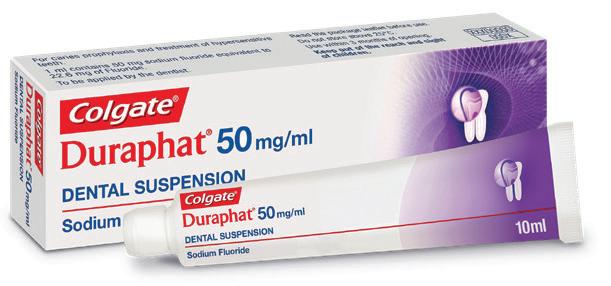
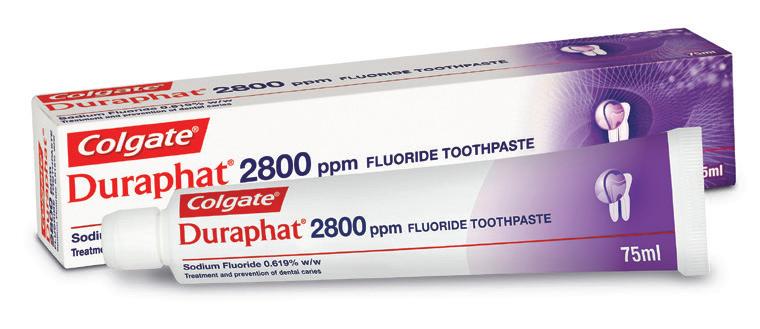
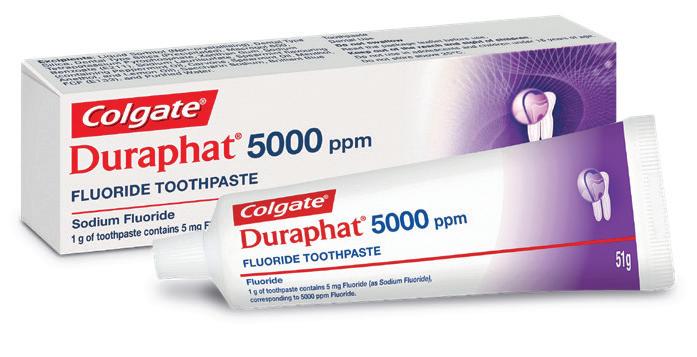
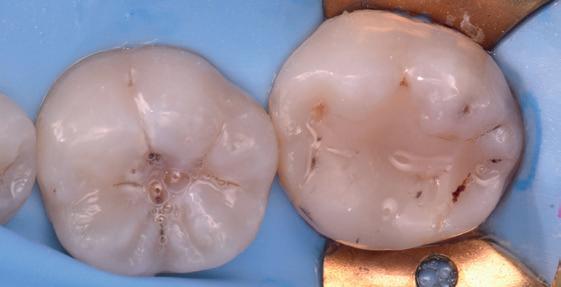
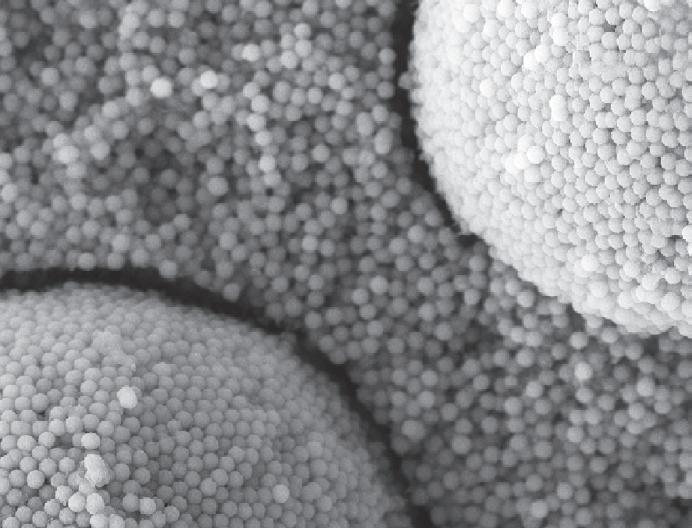
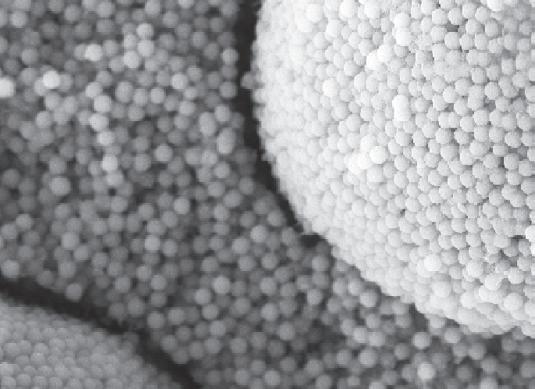
Colgate® PreviDent® provides the protection your patients need to help make their last cavity their last. To help your patients prevent and reverse caries,
Anna, 61
Anna, 61
Exposed roots
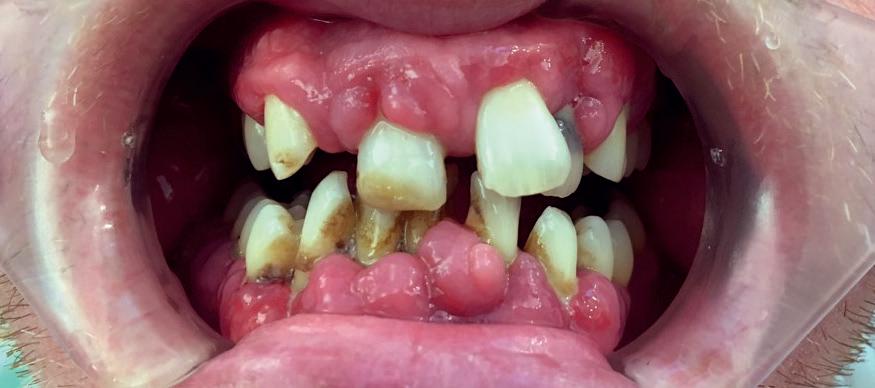
Gingival recession
Mason, 6
Calvin, 24
Frequent snacking
Antidepressants
Frequent snacking
*"Caries risk and social determinants of health," JADA, December 2022
*"Caries risk and social determinants of health," JADA, December 2022
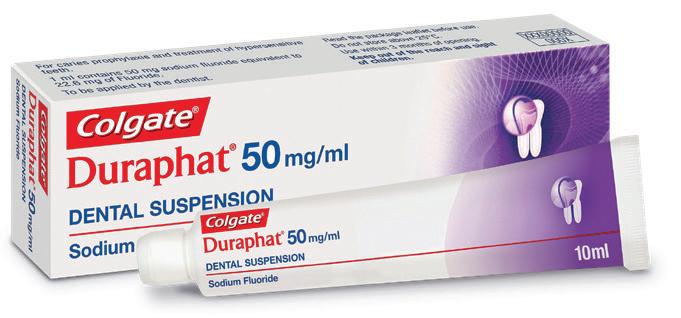
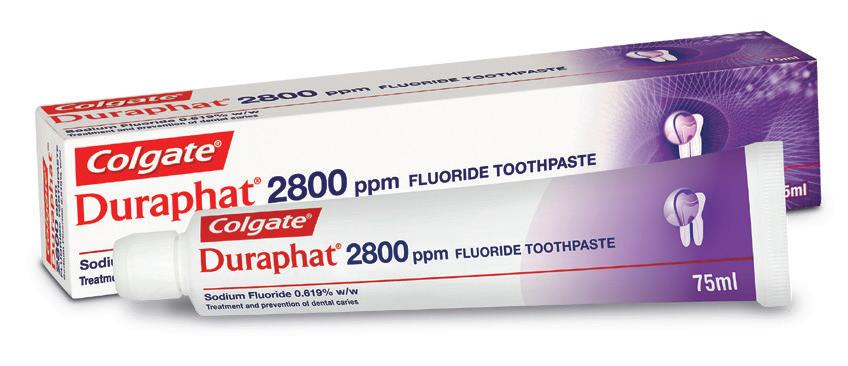
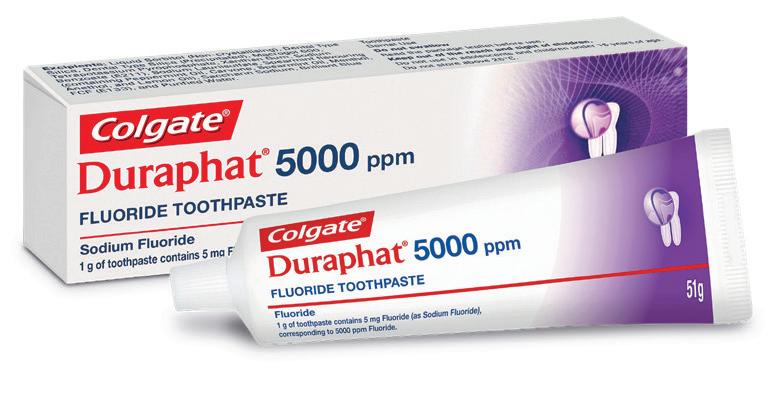
Assess their caries risk, and consider prescribing high fluoride to increase caries control5 Be confident prescribing Colgate® Duraphat®, the brand your patients
1 “Periodontal Disease in Adults (Age 30 or Older).” National Institute of Dental and Craniofacial Research, U.S. Department of Health and Human Services, www.nidcr.nih.gov/ research/data-statistics/periodontal-disease/adults
2 Georgetown University. “Prescription Drugs” Health Policy Institute, 2019, hpi.georgetown.edu/rxdrugs/
1 “Periodontal Disease in Adults (Age 30 or Older).” National Institute of Dental and Craniofacial Research, U.S. Department of Health and Human Services, www.nidcr.nih.gov/ research/data-statistics/periodontal-disease/adults
2 Georgetown University. “Prescription Drugs” Health Policy Institute, 2019, hpi.georgetown.edu/rxdrugs/ 3 “Does Dental Insurance Cover Braces?” Humana.com, www.humana.com/dental-insurance/dental-resources/dental-braces
Colgate-Palmolive partners with UK Government on new supervised brushing programme
Initiative designed to improve the oral health of up to 600,000 children per year across England
In a groundbreaking partnership, ColgatePalmolive and the UK Government have united to transform children’s oral health. A pioneering Supervised Toothbrushing Scheme was announced today by the Department of Health and Social Care. The scheme will launch in nurseries and primary schools throughout England’s most deprived areas, aiming to protect children from tooth decay and set them on a path to better oral health.
Colgate-Palmolive is thrilled to be making a substantial contribution to this important scheme, with plans to donate over 23 million toothbrushes and toothpastes over the next 5 years, along with educational materials from its esteemed Colgate® Bright Smiles, Bright Futures™ programme. This scheme addresses the worrying figures around children’s oral health in the UK. Currently, treatment for decayed teeth leads as the primary cause of hospital admissions for children aged 5 to 9, with shocking figures revealing that 1 in 4 five-year-olds suffer from tooth decay
in England, with even higher rates of 1 in 3 in the most deprived areas.
Expected to create a significant impact, this programme will reach up to 600,000 children each year ages 3 to 5, helping to instil positive brushing habits at school and home.
Colgate-Palmolive’s Chairman, President and Chief Executive Officer Noel Wallace, said: “At Colgate-Palmolive we believe every child deserves the chance to have a healthier smile and brighter future. We’re thrilled that Colgate® and our team in the UK have been chosen to partner with the government to help improve children’s oral health across the country – it’s an incredibly important initiative given the current levels of tooth decay in children. Our global programme Colgate® Bright Smiles, Bright Futures™ is among the most far-reaching and successful children’s oral health initiatives in the world. With long-standing partnerships with governments, schools and communities, BSBF has reached approximately 1.8 billion children and
their families since 1991 across 100 countries with free oral health education and free dental screenings.
“In the UK, we’ve been running Colgate® Bright Smiles, Bright Futures™ since 2014 and are extremely proud to have reached over 18 million children
across the nation with oral health education and donations of essential health and hygiene products.
“With the launch of the supervised brushing scheme, this partnership will be able to make a real impact in preventing tooth decay and ensuring brighter futures for generations to come. We want all children, regardless of needs or circumstances, to be fully equipped with the information and tools they need to keep improving their oral health every day.”
Health Minister Stephen Kinnock said: “It is shocking that a third of fiveyear-olds in the most deprived areas have experience of tooth decay –something we know can have a lifelong impact on their health. It’s why we’re delivering supervised toothbrushing to 600,000 young children and families who are most in need of support as part of our wider plans to revive the oral health of the nation, and we’re pleased to have Colgate ® on board to help deliver on our ambition.”
Sir Keir Starmer announces the end of NHS England
The Prime Minister, Sir Keir Starmer, has announced that NHS England will be abolished in a move to cut bureaucracy. Management of the health service will be brought “back into democratic control.”
The government has described NHS England as possessing “burdensome layers of bureaucracy without any clear lines of accountability.” Speaking in Hull, the Prime Minister noted that the NHS us “overstretched” and “unfocused.”
Established in 2013 by former Conservative health secretary Andrew Lansley, NHS England was intended to offer the NHS greater independence and autonomy from government interference.
Founded as a quango (funded by taxpayers,but not controlled directly by central government) NHS England serves a wide range of statutory functions, boasting various responsibilities and regulatory powers, such as agreeing funding and
priorities for the NHS alongside the government, and overseeing the delivery of safe and effective NHS services.
NHS England employs around 15,300 people at present, while the Department for Health and Social care has approximately 3,300 members of staff on its books.
Health Secretary Wes Streeting has said that the government wants to slash those numbers by 50% to “deliver hundreds of millions of pounds worth of savings.”
BDA response
The British Dental Association has said the plans to reallocate resource from the abolition of NHS England should contribute towards a fair funding settlement for NHS dentistry.
Last month the BDA gave written evidence to the Public Accounts Committee indicating a decade of austerity funding means thousands of NHS dentists are now delivering some NHS treatment at a loss. The Treasury’s unwillingness to help NHS dentistry stand on its own two feet is accelerating the exodus to the private sector. A simple new NHS patient exam loses a typical practice £7.69; a denture – £42.60.
The professional body has lambasted recent Government plans to raise NHS charges, which in the past merely acted as a cover for cuts, within a static budget that’s barely changed in a generation. Labour has pledged reform of the failed
contract in NHS dentistry. The BDA says a fair funding settlement has to underpin meaningful negotiations.
In managing this overhaul, the BDA stresses that ministers must ensure that there is sufficient capacity within the Department of Health to cover reform of the dental contract, and maintain the existing Dental Public Health workforce, who are vital to delivering the Government’s agenda on improving oral health and reducing inequalities.
Shiv Pabary, Chair of the British Dental Association’s General Dental Practice Committee, said: “The PM says he’s going to ‘shift money to the frontline,’ but will a broken NHS dental service see a penny of this? Choices made at the Treasury have left millions unable to access care, while practices lose money doing NHS work. We cannot build a service fit for the future without sustainable funding.”
A welcome from the editor
It’s April and we have no time for fools here! In fact, it’s rather the opposite, as we proudly present the 2025 Dental Awards Shortlist in this issue. The standard of entries has once again been impeccable, providing our independent panel of judges with a tough time in deciding upon this year’s finalists and ultimate winners.
If you entered the Dental Awards 2025, head over to page 52 now to find out whether you’ve gone through to the next stage. Last month, I mentioned that our new series, The Ultimate Guide to Direct Access had just premiered. All five episodes are now available, and the response has been phenomenal. A huge thank you goes out once again to those who volunteered their time to take part in a series that tells you everything you need to know about Direct Access. Watch the full series by visiting tinyurl.com/ugtda or scanning the QR code. Speaking of series, Judith Husband completes her two-part series of articles on dentistry as a career for women on page 10 of this issue. Meanwhile, Lisa Bainham begins a two-part series of her own on page 35, which explores the power of positive body language and will continue next month. And on page 58, Martyn Bradshaw from PFM Dental discusses why you should not go it alone when selling to a body corporate as part of his Q&A series. As always, there’s plenty more to sink your teeth into, so enjoy magazine.
The Probe is published by Purple Media Solutions.
Registered in England.
Registered number 5949065
Managing Editor: James Cooke
Commercial Director: Gary Henson
Divisional Administrator: Francesca Smith
Production Designer 1 : Lorna Reekie
Production Designer 2: Rob Tremain
Digital Content Manager: Stephen Wadey
Circulation Manager: Andy Kirk
Managing Director: Ed Hunt
Regular Contributors: Lisa Bainham, Nigel Carter, Barry Cockcroft, Ollie Jupes and Pam Swain
E-mail news, stories or opinion to james.cooke@purplems.com
Media Solutions Ltd, 2014. All rights reserved. ISSN 0032-9185. The publisher’s written consent must be obtained before any part of this publication may be reproduced in any form whatsoever, including photocopies, and information retrieval systems. While every effort has been made to ensure that the information in this publication is correct and accurate, the publisher cannot accept
liability for any consequential loss or damage, however caused, arising as a result of using information printed in this magazine.
The views expressed in The Probe are not necessarily the views of the magazine, nor of Purple Media Solutions
Editorial Advisory Board: Dr Barry Oulton, B.Ch.D. DPDS MNLP; Dr Graham Barnby, BDS, DGDP RCS; Dr Ewa Rozwadowska, BDS; Dr Yogi Savania BChD, MFGDP; Dr Ashok Sethi, BDS, DGDP (UK), MGDS RCS; Dr Paroo Mistry BDS MFDS MSc MOrth FDS (orth); Dr Tim Sunnucks, BDS DRDP; Dr Jason Burns, BDS, LDS, DGDP (UK), DFO, MSc; Prof Phillip Dowell, BDS, MScD, DGDP RCS, FICD; Dr Nigel Taylor MDSc, BDS, FDS RCS(Eng), M’Orth RCS(Eng), D’Orth RCS(Eng); Mark Wright BDS(Lon), DGDP RCS(UK), Dip Imp Dent.RCS (Eng) Adv. Cert, FICD; Dr Yasminder Virdee BDS. Readers who
Judith Husband Board member Medical Protection Society
Annastasia Kellett Wright Professional Educator Waterpik
Riaz Sharif Dental Practitioner mydentist
Dr Jure Poglajen Digital Laser Dentist, Slovenia
Dr James Goolnik Founder Optimal Dental Health
Donna Hall Regional Support Manager Practice Plan
Jim Hall Founder & Chief Executive Clyde Munro
Nathan Poole Ross-Brooke Dental
Ooh! That doesn’t feel quite right!
(Looking after yourself in practice)
Over the years I’ve periodically banged on about how dental professionals should look after their mental health, bearing in mind that dentistry is consistently ranked as one of the most stressful professions to be engaged in.
The combination of high workloads, focussing day after day on precisionbased work, dealing with patient anxiety (not to mention demanding, awkward patients), as well as coping with business management responsibilities – particularly if you are still embedded in the NHS or are planning an escape route - will all take their toll on your mental resilience.
But as I’m learning now – way after the horse has bolted and was last seen hitching on the slip road to the M4 - it is equally as critical to ensure that you get your physical health addressed as soon as possible.
Dentistry is also recognised to be a physically demanding profession and a good number of dentists I have known over the years have bravely struggled on with niggles that have progressively worsened and ultimately dogged them well into retirement, despite their rigid adherence to recommended analgesic dosages. And the biggest culprit? Moi.
The reason I’m motivated to bring this up now is that I spent nearly seven hours in the Same Day Emergency Care (SDEC) unit at my local hospital on Saturday, with a problem that I should have pursued and fully addressed many years ago. I was a mature student and entered dental school in the early 1980s. I began going on to clinics in about 1985, just as I’d hit 30 years old. We’d only been on restorative clinics half a dozen times or so, when one day I began to feel this very alarming turmoil in my chest. I confess to being a little panicky since my father had heart trouble all his life, and I was newly married with a newborn at home, 80 miles away.
The supervising lecturer advised that I visit the onsite GP practice, abandoning my patient to an SHO who completed the treatment I had begun. By the time I saw the GP and was plugged into the ECG machine, there was nothing to see, of course.
During the rest of the dental course, I had another couple of episodes - as luck would have it, on the cursed restorative clinic. I strongly felt that I was labelled as ‘inadequate’ and ‘not up to it’ by restorative department staff. At no point while I was at dental school was I investigated further than having a 10-second ECG taken. When I went into practice after graduation, I continued to have further heart episodes, sometimes three years apart and, each time, no abnormalities were picked up
on the ECG. Even an ambulatory 24-hour ECG failed to detect an abnormality. Two cardiologists also failed to diagnose the problem and neither of them suggested possible differential diagnoses.
When my late wife became terminally ill and I experienced another episode, my colleagues insisted I went to the GP and, again, nothing was picked up.
The GP, who was aware of my wife’s illness, asked: “How’s your wife?”
I couldn’t really see the relevance, but then – Jeremy Paxman-style –repeated: “How’s your wife?” The implication was that I was stressed because of my other half’s illness and he left me with the distinct impression that I was a hysteric.
At that point I gave up on pursuing any sort of medical advice and just suffered in silence, scary though the episodes were.
Back in the summer of 2020, the first year of the pandemic, I went for a walk at a famed, local, hilly, beauty spot. An hour or so later I developed a fluttering in my chest, which definitely didn’t feel right, and persisted for the rest of the day into the next morning. On realising my new Apple Watch was capable of producing a pretty accurate one-lead ECG heart tracing, I took a couple of readings, and my watch was pleading with me to contact a doctor. After contacting 111, I was directed to the local A&E department. Mercifully, I was expected and a savvy senior house officer who saw the tracing, which was on my iPhone, took me straight to an ECG, which confirmed that I was in atrial fibrillation.
I was subsequently officially diagnosed with paroxysmal atrial fibrillation. I’d obviously had it from 30, well into my 60s. Beta-blockers in the form of bisoprolol have, until now, reduced my atrial fib to one episode in four years… until…
On the Friday evening before 111 sent me to the SDEC, a quick check on my watch showed that I wasn’t in atrial fib, but was in tachycardia. I was recording an average 143bpm for 15-second bursts, every couple of minutes. Naturally, despite me asking the nurse if the ECG could be started once I was having the palpitations, this wasn’t done - “We’re very busy today” – and the flutter wasn’t recorded. Mercifully, I just so happened to have a review scheduled with a cardiologist tomorrow, who will doubtless again recommend ablation – a procedure I TURNED DOWN last year because I’d only experienced one episode of AF over four years since taking my new medication.
Whether the many years of having untreated paroxysmal atrial fibrillation has led to Tachycardia-induced Cardiomyopathy is anyone’s guess (or my cardiologist’s best estimate), but I
seriously regret not giving myself time off from practice to pursue the cause of my palpitations from 1988 onwards. Like every other dentist on the planet, I considered myself to be indispensable, and regarded my absence as depriving my patients of my unique skills and care. Utterly ridiculous.
The other ailment I ignored and refused treatment for – ultimately leading to my decision to retire early – was a persistently dislocating shoulder. I first injured it in the mid1970s whilst preparing to join the police force. I was attempting to get myself fully fit before training, when someone dived on top of me while I was holding on to the bar at the side of a swimming pool. The severity of that dislocation meant that the West Midlands Police force was deprived of my deductive skills, although dentistry fortuitously gained a loose-limbed addition to its ranks.
Over the years, the shoulder became problematic. I once fell down a flight of spiral stairs and dislocated it half an hour before our dental open day started. I made my boss reduce the dislocation by barking out instructions.
As the dislocations became more frequent due to the laxity of the joint, I was more able to reduce the dislocation myself. I’d quietly excuse myself and go into the kitchen, grab onto the underside of a bench and pull – hey presto.
I once dislocated while taking a lower eight of well-built elderly lady,
but continued after a quick reduction and a few inaudible swearwords. Eventually, I realised that my time was up early one morning, lying in the dark on a council car park after slipping on ice and dislocating with a mild jolt. I was getting to the point where I was becoming anxious in the days before doing extractions – particularly orthodontic exodontia. AGAIN, I refused surgery because I was reluctant to take time off. I could have saved myself a lot of trouble and a LOT of discomfort.
Mercifully, I chose NOT to refuse hearing aids when offered this week. Having suffered incredibly loud, highpitched tinnitus since 2012, I finally took the bull by the horns and sought advice from an audiologist. She found that my hearing was in bad shape – I naturally blame turbines – and, after three full days of use, the tinnitus is much reduced, albeit still detectable. I do know of dental colleagues who suffer similarly. If you do suffer from the condition, do yourselves a favour and get yourself checked out. You need to look after yourselves –just like I do. n
About the author ollie Jupes is the pseudonym of a former nHs dentist. He monitors dentistry on twitter X as @DentistGoneBadd
Specialisation in dentistry
Is it the answer to career burnout?
Burnout is a pressing concern in many professional fields, including dentistry. General dental practitioners (GDPs), particularly those with significant NHS commitments, report elevated stress levels and experience burnout.
Let’s explore the role of specialisation in alleviating burnout.
Understanding burnout
Burnout, as defined by Mental Health UK, is a state of physical, mental, and emotional exhaustion resulting from prolonged stress. The World Health Organization (WHO) classifies it as an “occupational phenomenon.”1 Unlike temporary stress –which may affect sleep and emotions –burnout leaves individuals feeling detached, demotivated, and hopeless about their work situations. Recognising the signs of burnout is crucial for GDPs to address their mental health proactively.
Diverse perspectives on specialisation
While specialisation offers many advantages, not all GDPs view it as the ultimate solution for burnout. Dr Ben Atkins, a former owner of three dental practices in Manchester, argues that specialisation is not necessarily the key for every dentist. He emphasises the importance of understanding one’s personal career goals and areas of interest. Improving one’s skill set and identifying specific stressors may be more beneficial than pursuing specialisation alone. During his time managing multiple practices, Dr Atkins focused on helping team members recognise their individual needs and challenges. This approach allowed each dentist to clarify their aspirations and identify struggles, fostering a supportive and adaptive work environment. He made clear that specialisation can also bring challenges, including the cost-benefit dilemma and a potentially narrowed focus.
Challenges of specialisation
The costs associated with specialisation can be substantial, and recovery of these upfront investments is not guaranteed. While specialised GDPs may earn more, this is not always the case, as courses and expanded degrees can cost thousands of pounds. Additionally, a narrowed focus may lead to repetitive daily tasks, making dental work feel monotonous. Therefore, dental professionals must weigh these factors when considering specialisation. If a GDP has a real passion for a particular subject within dentistry, then this will not matter. However, it is important to go into specialisation with your eyes open and understand its ramifications.
tailoring approaches to individual needs
Dr. Atkins’ perspective underscores the notion that every dental professional is unique. What works for one individual may not suit another. Personal fulfilment in dentistry can arise from various sources, including specialisation, skill enhancement, or simply finding a balance that reduces stress. For some, specialising may provide a clear pathway to job satisfaction and reduced burnout. For others, focusing on skill development and self-awareness may be more effective.
Ultimately, GDPs should explore different strategies and identify what aligns with their
aspirations and work-life balance. This tailored approach can lead to a more fulfilling career, as understanding individual preferences is crucial.
the impact of specialisation
So why would GDPs want to go into specialisation to reduce burnout? Current research indicates that specialised dentists often experience lower levels of burnout compared to their general practice counterparts. Studies show that “specialised dentists were less likely to have burnout syndrome compared to general practice dentists.”2 Specialisation may offer several benefits:
• Focused workload: Concentrating on specific areas can lead to greater job satisfaction and reduced emotional fatigue
• enhanced skills and confidence: Additional training allows specialists to manage complex cases more effectively, thereby reducing stress
• supportive professional networks: Specialisation often facilitates strong professional communities that provide support and diminish feelings of isolation
• increased autonomy: Specialisation can grant dentists more control over their schedules and patient care, contributing to lower stress levels.
Fulfilling existing skills
Taking a different perspective, it’s not just about specialisation – fulfilling and expanding the skills professionals already have can also play a crucial role in addressing burnout. Many GDPs have a wide range of skills and knowledge that, when further developed, can bring a deep sense of professional satisfaction. Sometimes, focusing on refining these existing abilities – whether it’s enhancing communication with patients, improving diagnostic techniques, or mastering new technologies – can provide the sense of accomplishment and variety that reduces burnout. In fact, this approach can often be just as fulfilling, if not more so, than committing to a new specialisation, without the added pressure of major financial investments and the narrowing of focus.
Conclusion
While burnout remains a significant challenge in dentistry, the solution may not lie solely in specialisation. A balanced approach that considers individual preferences, skill development, and stress management can lead to a more fulfilling career.
As dental professionals navigate their paths, understanding their limits and prioritising wellbeing will be crucial in combating burnout and enhancing job satisfaction. Today dentistry continues to be a stressful occupation with external pressures now piling high, especially for those currently struggling under NHS contracts to make it work for their community. If you or a colleague you know is experiencing high amounts of stress and need help, the NHS has resources available via, www.nhs.uk/mental-health. n
About the author
Karen Coates, oral Health Content specialist at the oral Health Foundation, and RDn
A new dawn for NHS dentistry
With the end of NHS England announced, polly Bhambra explores what this might mean for NHS dentistry
The recent announcement by Prime Minister Keir Starmer to abolish NHS England marks a pivotal moment in the evolution of our healthcare system.
Established in 2013 as an arm’slength body to oversee the National Health Service, NHS England has played a significant role in shaping healthcare delivery.
However, this bold decision to dissolve the organisation aims to streamline operations, reduce bureaucracy, and place patient care at the forefront.
For dental professionals across the country, this transition presents an opportunity to reimagine and revitalise NHS dentistry.
Understanding the shift
NHS England was created under the Health and Social Care Act 2012, introduced by then-Health Secretary Andrew Lansley. The intention was to grant greater autonomy to healthcare providers and commissioners, distancing day-to-day operations from direct governmental control.
While the move aimed to foster innovation and efficiency, it also led to fragmented structures and, at times, convoluted decision-making processes. The current administration’s decision to abolish NHS England seeks to rectify these challenges. By reintegrating its functions directly under the Department of Health and Social Care, the government aims to eliminate redundant layers, enhance accountability, and ensure that resources are utilised more effectively. This restructuring is anticipated to bring about a more cohesive and responsive healthcare system.
implications for nHs dentistry
For dental practitioners, the dissolution of NHS England could herald a series of positive changes:
With reduced bureaucratic layers, decisions pertinent to dental care – such as funding allocations, service provisions, and policy implementations – can be made more swiftly. This agility can lead to faster adoption of best practices and innovations in dental treatments.
Direct oversight by the Department of Health and Social Care may lead to more judicious distribution of resources. By identifying and addressing specific needs within dental services, there’s potential for improved funding models that better reflect the demands of both practitioners and patients.
Historically, oral health has often been sidelined in broader healthcare discussions. This restructuring offers an opportunity to integrate dental health more thoroughly into general health strategies, emphasising its critical role in overall well-being.
Addressing potential concerns
Change, especially on such a grand scale, invariably brings concerns:
The process of dissolving NHS England and redistributing its functions may lead to temporary uncertainties. It’s crucial for dental practices to stay informed and engaged during this period to adapt effectively.
With the restructuring, there may be apprehensions regarding job redundancies, especially among administrative roles. Transparent communication from the government will be essential to address these concerns and ensure a smooth transition.
Ensuring that patient care remains uninterrupted during this transition is paramount. Collaborative efforts between dental professionals and policymakers will be vital to uphold the quality of care.
A new dawn for nHs dentistry
The abolition of NHS England signifies a transformative phase for the NHS, particularly for dental services. By reducing bureaucratic constraints and creating a more integrated healthcare system, there’s a genuine opportunity to enhance the quality and accessibility of dental care across the nation.
As dental professionals, it’s incumbent upon us to embrace this change proactively:
• e ngage with policymakers: participate in consultations and discussions to ensure that the unique challenges and opportunities within dentistry are recognised and addressed
• Adapt to new frameworks: stay informed about structural changes and adapt practice operations accordingly to align with new guidelines and expectations
• Advocate for oral health: utilise this period of change to highlight the importance of oral health in overall health strategies, ensuring it receives the attention and resources it warrants
Conclusion
The decision to abolish NHS England is a bold and forward-thinking move aimed at refining our healthcare system for the better. For dentistry, this change offers a chance to address longstanding challenges and elevate the standard of care provided to patients.
By embracing this transition with optimism and active participation, dental professionals can play a pivotal role in shaping a brighter, more efficient future for NHS dentistry. n
For more useful tips in dentistry, follow me on instagram @pollybhambra
And finally, a more centralised and cohesive system can facilitate better communication between policymakers and dental professionals. This alignment ensures that the voices of those on the frontline are heard, leading to policies that are both practical and impactful.
About the author polly Bhambra, practice principal at treetops Dental surgery.
Managing patient expectations
Ideally, dental professionals and patients should both be on the same page when it comes to the expectations and outcomes of any treatment. However, this is not always the case, so it is important for dental professionals to set and manage realistic expectations. This applies to both their dental care but also to non-clinical aspects, including availability of appointments and approachability of all members of the dental team.
Factors impacting on patients’ expectations
There are many factors which can contribute to a patient having unrealistic expectations when receiving dental treatment. Firstly, patients may feel that they have not been appropriately informed about what to expect. They could have unrealistic expectations about things like the length of time the treatment will take or the consequences of complications of treatment.
Conversely, patients may have preconceived ideas about how they will be treated. This might be because they’ve based their expectations on previous experiences that aren’t relevant or accurate anymore, or on the experiences of friends or relatives whose situation may have been different.
Time pressures can also make managing patient expectations challenging, as dental professionals are required to balance the safe running of a dental practice while spending time talking to a patient to check they fully understand the issues involved in their care and the potential complications of their treatment.
If a patient arrives at the practice anxious, this can compound the factors above and make misunderstandings more likely.
How to manage patients’ expectations
Again, there are a number of ways to manage the expectations of a patient, while also minimising the risk of a complaint. Clear, consistent and accessible information in both on and offline formats can help patients know what to expect. This is particularly useful in letting patients know about issues such as how long appointments should last, the procedures when arriving at the dental practice, opening times and treatment fees.
Remember that each patient will have different needs and levels of understanding. Try to avoid dental terminology, abbreviations and jargon, and with the patient’s permission, involve those close to them in the discussion, if appropriate. This can also be supported by providing patient leaflets or information about extra resources for the patient to read at home.
Checking the patient’s understanding and letting them ask questions as well as showing empathy and understanding are all vital in establishing a good rapport with a patient, gaining their trust and, as a result, improving their experience of care.
Dentistry as a career for women
Judith Husband, a leading dentist and member of Council at Medical Protection Society – of which Dental Protection is part – reflects on dentistry as a career for women in the second and final part of this series
Scan the QR code below to read the first part of this article, published in the March 2025 issue!
On average, in the UK, men generally earn more than women. Research suggests they also have more confidence when it comes to applying for jobs and climbing the corporate ladder. It is recognised that women are less likely to take credit for achievements or share successes. Therefore, it is vital to build personal confidence to use the platforms and opportunities as they arise to showcase yourself. Dentistry can be very isolating and having a network of supportive professionals, virtually or face to face, is vital.
Understand what success looks like. Explore opportunities and options with an open mind and try to remain agile. Build a plan and be prepared to make some sacrifices. Progressing within a career and, most importantly, enjoying it is very personal; be driven by your goals.
On a boring practical note have a degree of financial stability, or a rainy day fund – it will always give a degree of freedom both personally and professionally. Some opportunities will not be financially rewarding immediately but will prove pivotal in years to come.
My friends are a broad mix of professions and ages, but they have always been the cornerstone of my support network. Sharing concerns and problems, not necessarily for solutions but to mentally address and acknowledge them, is my personal approach to stressful events. A form of talking therapy.
Building clear deadlines for work projects and being honest with what is achievable have helped me juggle many different, competing pressures at times.
Better wellbeing support
My experience working with different organisations and businesses has
highlighted to me just how different most general practices are when compared to large organisations in the terms of the help, support and reasonable adjustments that can be put in place for individuals.
The nature of clinical dentistry is also limiting in its physicality, time pressures and detailed complex work.
Different practices will be able to offer varying levels of practical support but there should be a culture of openness and dialogue within teams to address locally any individual challenges.
Future NHS contracting must take into consideration the workforce needs and not just an abstract concept of value for money. If working conditions remain poor then dentists will continue to retire early or increase private care, and valuable team members will be lost.
Groups and networks for women in dentistry
There is Women Dentists Network, which can be found at https://www. womendentistsnetwork.com/. They have a a private group all women dentists and students can join that currently has more than 600 members.
Dental Protection provides a range of educational resources through its Online Learning Hub, which comes at no extra costs and counts towards CPD. Online, on-demand CPD courses have been a game changer personally – helping to avoid long evening drives to lectures or days away from work. However, I always attend some face-to-face lectures and events each year.
Dental Protection have a super selection of on demand courses covering all areas of dentistry, some short others larger modular based courses. The live webinars are a great way to access learning with the opportunity to ask questions and be part of a real community.
The College of General Dentistry also have events, both virtual and face to face.
It is important for me to also remain up to date with corporate governance and world events, and so international news publications and the Institute of Directors are part of my regular reading.
Mentorship
My mentors have been informal but none the less invaluable.
With the advent of online meetings and learning there is less opportunity to build relationships within the profession and, as such, informal mentorship. More formal structures could be useful and have proven of great value in other sectors.
It is worth considering the wider team when looking for clinical mentorship. Often colleagues within the practice can prove a great source of support and even take on a mentor role.
Top tips for the future
Be informed and stay informed. Understanding your rights, the contract you work under and the drivers within your sector are essential. Clinical dentistry is only one part of a career in dentistry.
Choose your professional support network with care. Indemnity is a GDC requirement, but the right provider will be able to help and support you in the good times, as well as when complaints or other medicolegal matters arise. I am aware of the exceptional support that Dental Protection provides to members, and know it can make a real difference. Complaints and litigation will happen, don’t be scared, but do be prepared and know how and where to seek help.
Ensure you have trusted friends and colleagues. Online forums have value but cannot replace a real person.
Start planning your finances, paying debts, building financial security.
Most importantly, think about what makes you happy.
What is your definition of success?
We should all be proud of our profession and ensure the great steps forward already achieved with inclusivity and fairness are embedded and used as a foundation to develop on for the future.
Personally, I believe NHS dentistry is important, but the dreadful downward spiral witnessed during my career will need to be halted. Dentistry could be the model of a well-functioning mixed economy, and the private sector can and should work supportively with the NHS for patients and the profession. Finally, the regulatory burden we work under in the UK needs to be fit for purpose, protecting patients but also enabling clinicians to do their best, without fear or defensive practice. These future hopes would of course not only benefit women. We often see diversity and inclusion efforts benefit the entire workforce and community – dentistry
About the author
Judith Husband served as an elected Non Executive Director of the British Dental Association for over ten years and continues to sit on their General Dental Practice Committee. From June 2019, she was a member of the Dental Board which advises MPS on developments within dentistry and on members’ needs. Judith was recently appointed to the Medical Protection Society Council.
upheaval of a patient complaint could happen to anyone. Our dentolegal experts will help get things back to normal.
Is that caries, or just a hallucination?
The momentum for AI in dentistry may be gathering pace, but nathan poole of Ross Brooke Dental isn’t quite ready to morph into an ‘accountant bot’ yet
The words artificial intelligence (AI) are on the tip of so many tongues right now, and is it any wonder?
A division of computer science that can mimic the human intellect, AI has been around for more than half a century, although progress was limited until recently, when technology capable of powering complex programmes became available. Over the last two years, there has been a leap forward with apps and platforms underpinned by AI transforming the workplace. In January, Sir Keir Starmer announced a blueprint1 to ‘turbocharge AI’ and unleash a decade of national renewal.
ChatGPT from Open AI is the best known of all programmes. Who hasn’t had fun testing out its ability to churn out text in a matter of seconds? This and other programmes are making us rethink the way the workplace functions and even how education is delivered.
AI is already transforming some aspects of dentistry. A survey2 carried out in the US in 2023 revealed that a third of dentists had implemented AI, and 77% of those had observed positive outcomes. Meanwhile, an article3 in the Bulletin of the Royal College of Surgeons describes how AI-powered tools can analyse radiographs and intraoral photographs to identify abnormalities and aid in early disease detection.
The author predicts that within 10 years it may be considered malpractice not to use AI in screening for oral cancer.
As an accountant dedicated to supporting dentists, and with a significant number of orthodontist clients, it’s fascinating to observe our orthodontic clients benefiting from technology that is improving communications with patients and reducing travelling time to appointments.
The more sobering question, though, is: If you have never sorted through the mess of seemingly unrelated symptoms to arrive at a potential diagnosis but instead relied on a computer, how do you learn the thought processes required for excellence as a dentist?
A similar issue has already been noted with the advent of Google showing how our brains can adapt to know where to find information rather than store the information4
A meeting hosted by the Faculty of Dental Surgery at the Royal College of Surgeons towards the end of last year5 showcased the exciting changes underway in dentistry. Delegates learned about an impressive software product called Kiroku6, designed for automated clinical record-keeping, and an app7 being developed for radiograph viewing and dental disease identification. While sharing the mood of excitement, especially around products with very specific tasks, several speakers at the meeting warned there was still a lot of hype around AI. Bizarrely, it is easiest to deploy where it delivers the least benefit. Or, in other words, there is a greater risk of malfunction when the application carries more risks. When a platform like ChatGPT gets something wrong, producing false
information based on patterns or objects that are non-existent, it is described as an AI hallucination.
Cureus , Springer Nature’s Journal of Medical Science, published a comprehensive review8 of ChatGPT in dentistry. The authors stated that it has provided many benefits in the dental field, helping decrease dentists’ workloads, but the authors warned that AI systems are not infallible. OpenAI acknowledges that ChatGPT may write answers that sound plausible but are in fact nonsensical. Continuous monitoring is needed.
An American insurance company has written an excellent article9 with the title Navigating the Risks of AI-Enhanced Dentistry. The authors share their ideas on how to mitigate risks which are endemic and possibly inevitable, in a new and powerful technology – particularly the risk of malpractice claims.
In summary, the article advises that dentists will want to:
• Strengthen data security measures
• Ensure all members of the team are well-versed in interpreting AI outputs and understanding its limitations
• Treat AI as an advisory tool only
• Ensure patients are aware of AI involvement in their care and obtain informed consent accordingly
• Clarify legal responsibilities to define liability boundaries
• Integrate AI thoughtfully I agree with this cautious approach. As an accountant working in the dental field, I’m delighted to know the high burden of administrative tasks facing dentists can be mitigated. But as is my nature, I am cautious.
Go onto the internet and you will find there have been plenty of studies testing the reliability of AI, some highlighting the risk of misinformation. Indeed, a paper10 in the Journal of Periodontology examining the use of AI in dental education refers in its opening paragraphs to the ‘intense risk of misinformation’.
We were fascinated to note a paper11 published in Dental Maxillofacial Radiology,
the Journal of Head and Neck Imaging, in June 2024, which concluded that large language model-based chatbots (like ChatGPT) do not perform well in oral and maxillofacial radiology. The accuracy rates of four chatbots were compared with the performance of dental students who were found to be significantly more accurate. The authors of the paper described the chatbots’ performance as “unsatisfactory.”
However, the performance of newer versions of Chat GPT was better than the older versions and, with more specific training, AI will undoubtedly improve.
The best-known example12 of AI unreliability outside of dentistry is probably its application at McDonald’s drive-ins.
In the Summer of 2024, McDonald’s decided to withdraw the programme after customers started posting some of the mixups online, such as bacon being added to an ice-cream order!
Unsurprisingly, it was a tax case13 which highlighted the potential for AI misinformation most effectively to me!
A woman had failed to pay her Capital Gains Tax (CGT) and was issued by HMRC with a penalty, which she appealed. Her defence was that she had experienced mental health problems and was unaware that she had to pay CGT. To support her case that a penalty should not be imposed, she provided examples of people who had appealed successfully. However, these examples proved to be ‘AI hallucinations’! The case was dismissed and the penalty confirmed.
Although it is relatively uncommon in dental practices, if you are already trying to use AI in your practice in a way that is ‘seeking to achieve an advance in science or technology’, then you may be eligible for R&D tax relief14
In summary, technology is indubitably going to transform the way we all work. We have already seen how the armies of secretaries who supported the work of professional people, typing up letters, documents and referrals, have been made redundant. In the coming years, we will see the following become the norm:
• AI technology automating admin tasks and predicting patient needs
• AI algorithms analysing patient data like medical histories, X-rays and treatment outcomes
• Chatbots and virtual assistants setting up appointments and answering questions
At this point in time, we do need to be careful as the information we get from AI, whether it be on tax or clinical dentistry, may not be 100% reliable. So, human supervision remains essential. Dentists and their teams will not be replaced; they will be more educated in AI and skilled at monitoring technology.
To conclude, I will quote Asif Chatoo, the orthodontic specialist who was a speaker at the conference5 organised by the Faculty of Dental Surgery: “Technology is there to assist us. It’s a powerful tool but as technology becomes more innovative, we need to become wiser.” n
About the author nathan poole FCCA, a Certified Accountant, has worked with the dental profession for over 20 years and also spent time working for one of the UK’s top 40 firms. He joined Ross Brooke Dental soon after its formation in 2020. to organise to speak to nathan, email: npoole@ross-brooke.co.uk
AI-generated image
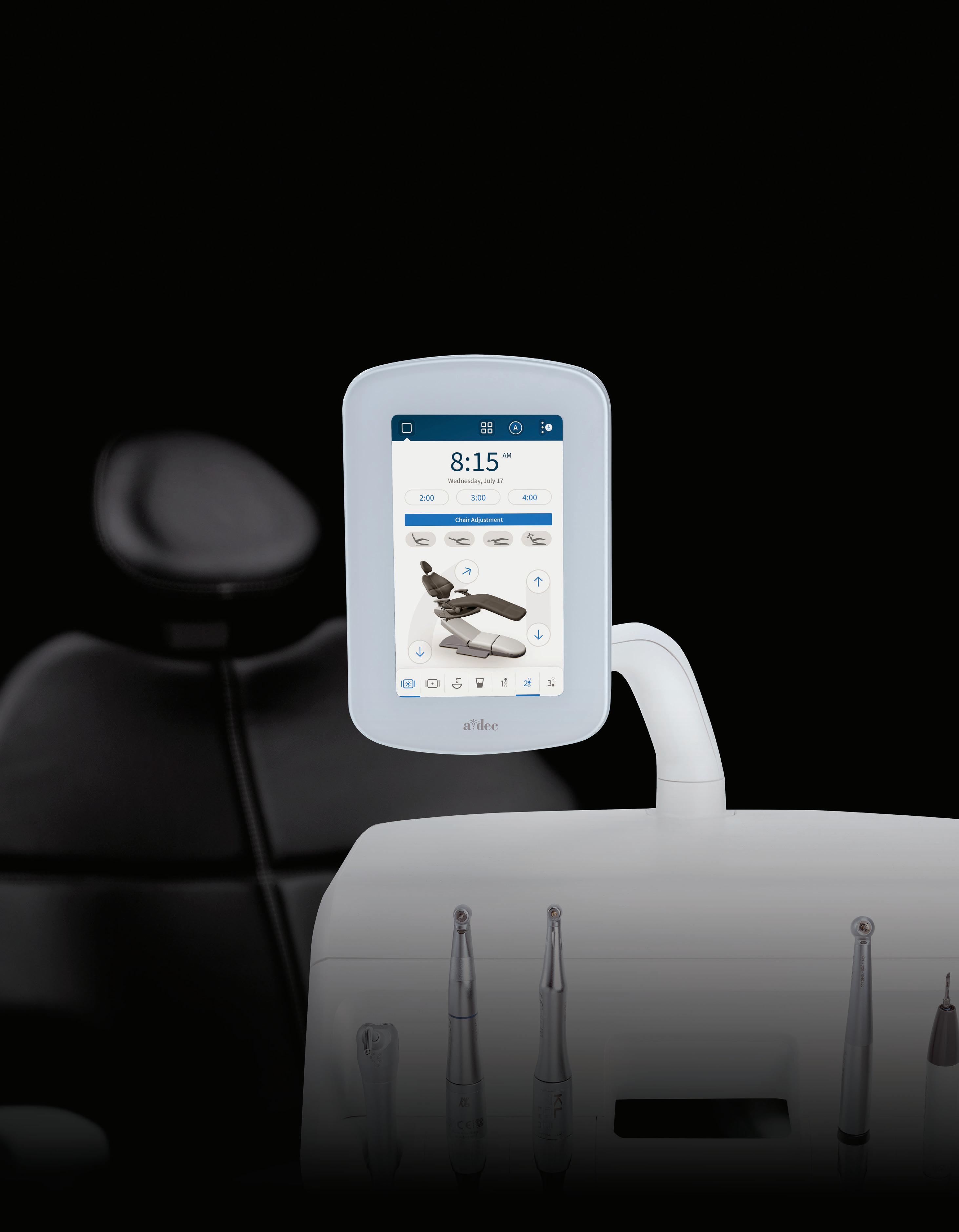
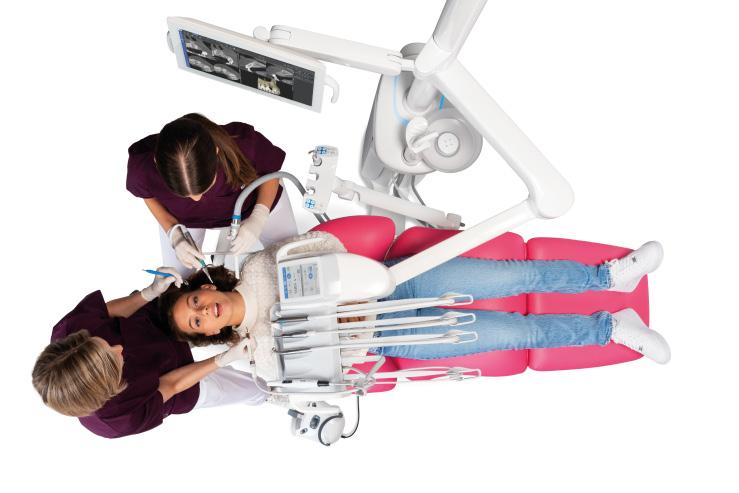
A-dec 500 Pro: Experience a new level of connection. Everything you’ve come to appreciate about the A-dec 500 dental chair, is now available with a new delivery. Enabled with A-dec+ and an updatable software platform, the A-dec 500 Pro delivery system supports your dental team with a new level of connection.
UNIQUE SUGAR ACID NEUTRALISER
Significantly increases resting pH in plaque to a healthier level 2,3
1,450 ppm Fluoride
The right decontamination equipment optimises safety and success
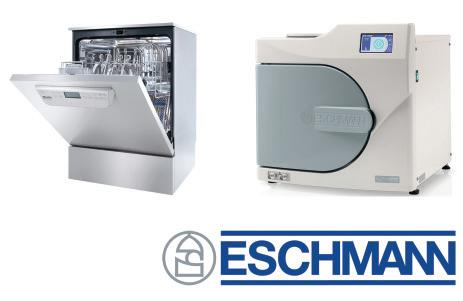
When it comes to any equipment or technology in the dental practice, it is crucial to choose wisely to ensure the best outcomes. Not only will your solutions be the key to optimising your daily workflows, allowing the team to deliver safe and effective dental care to patients, but they will also have a considerable impact on your business performance and profitability. Decontamination equipment, in particular, has a significant impact on the practice, the team and patients. Selecting both appropriate and highquality brands is, therefore, paramount to the success and safety standards maintained across the practice.
Selection checklist: autoclave
The most important piece of infection control equipment is the autoclave. Mandatory for all dental care providers as per HTM 01-05 and SHTM 01-05 regulations, the autoclave delivers the sterilisation of instruments, rendering them safe for reuse. When choosing the right machine for your practice, consider the following:
• Size and capacity – the chamber must be large enough to accommodate an appropriate number and size of instruments for your surgeries. Too big and you will waste energy and water, too small and your appointments could be delayed while waiting for safe instruments.
• Type – an ‘N’ type autoclave is ideal for sterilising unwrapped solid reusable instruments, while a ‘B’ type autoclave is required for processing hollow instruments, implant kits, unwrapped
solid instruments and wrapped/ pouched instruments. As such, it is crucial that your autoclave is capable of correctly sterilising the instruments you use.
• Cycle time – this will be relevant alongside the size of the machine as practices need to know that their instruments will be ready for reuse in sufficient time. Shorter cycle times also result in reduced water and energy use.
• Ease of use – the equipment needs to be intuitive enough that all relevant members of the team can operate it correctly throughout the day.
• Durability – you need your autoclave to withstand the rigours of practice life without breaking down or malfunctioning, which costs time and money.
Selection checklist: washer disinfector
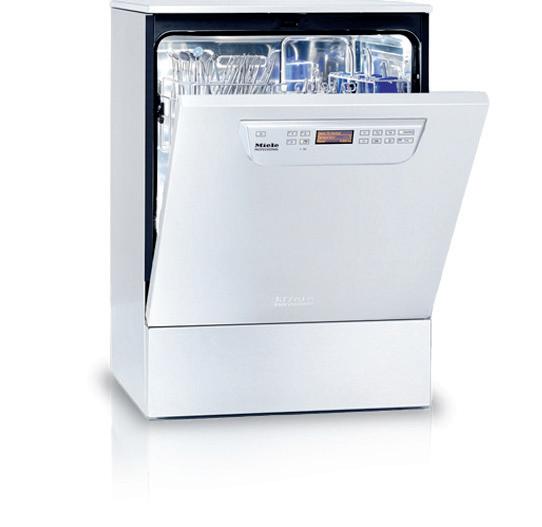
For all dental practices in England and Wales working towards best practice, a washer disinfector is a necessary piece of equipment. This is already mandatory for practices in Scotland. Not only does the washer disinfector provide automated and validated cleaning and disinfection of instruments prior to sterilisation, but it does so while increasing workflow efficiency and staff safety. To optimise your investment, several factors must be taken into account. Many of these are similar to those listed above for autoclaves, though there are others:
• Water and energy efficiency – selecting equipment that promotes these will support the practice’s green credentials and save money in the long-run.
• Physical design – there are both underbench and countertop options available on the market. Choosing the solution that best fits within the practice will be important.
Selection checklist: supplier
With both autoclaves and washer disinfectors – as well as any other decontamination equipment you are investing in – it is crucial to consider the what and the who. That means sourcing products from a supplier you can trust to deliver quality equipment and long-term maintenance support. Though there are many different criteria, here are some of the most important:
• Quality and longevity of equipment – the chosen supplier must provide products that perform effectively and reliably to ensure that infection control processes are completed correctly.
• Regulatory and sector-specific knowledge – you’ll want to work with a team that understands dentistry and the exact requirements you have to comply with as a dental practice. This will ensure the advice and guidance you receive is relevant to your business.
• Service and support – working with a team that provides ongoing support is the best way to ensure you can fully maximise on your equipment’s features and benefits. A supplier that combines this with equipment maintenance, servicing and validation as part of their service contracts will provide even greater value for your investment.
• Team training – leading suppliers will also provide equipment training for appropriate practice team members
upon installation, which is accredited Enhanced CPD.
Decisions, decisions
If the time has come to upgrade your decontamination equipment, or if you are kitting out a new practice, choosing the right equipment and supplier is essential. Each decontamination solution developed by Eschmann is supported by the comprehensive Care & Cover servicing and maintenance programme. This includes unlimited breakdown cover, Annual Validation and Pressure Vessel Testing (PSSR2000) Certification by a trusted Eschmann engineer, unlimited original manufacturer parts and Enhanced CPD User Training. As practice manager, Sharon Davies recently said: “Eschmann always allocate an engineer who comes to resolve any issue straight away – they consistently deliver an excellent service.”
No matter whether you need one piece of equipment or a full suite of infection control solutions, make your decision carefully. The right choice will make a huge difference to your business in the long-run.
For more information on the highly effective and affordable range of infection control products from Eschmann, please visit www.eschmann.co.uk or call 01903 753322 n
about the author Nicky Varney, Head of Marketing at eschmann.
Preparing your practice for pre-acceptance waste audits
Healthcare waste management requires exceptional due diligence to ensure each item finds its way into the appropriate waste stream, and that members of the public and the wider environment are protected. Pre-acceptance waste audits are one key element of this. Dental professionals must keep up to date with the latest legislation to ensure pre-acceptance audits are completed at appropriate points of the waste workflow. Failure to do so may mean waste management services cannot take items from a practice, putting unnecessary pressure on clinicians to find a way to store healthcare waste safely, as more builds up over time.
What is a pre-acceptance waste audit?
The need for a pre-acceptance audit begins further down the line in the waste management workflow. A permitted waste treatment and disposal site takes on items from a dental practice which cannot simply be sent to a landfill. This could include pharmaceutical items, waste that presents a risk of infection, anatomical waste and more. To be able to manage this waste effectively and safely, a treatment and disposal centre must know about the waste and its composition before it arrives, the audit also allows a facility to confirm that the items are technically and legally suitable to be managed by their team.
Where a waste management service requires a pre-acceptance audit, the burden falls on the waste producer, i.e. the dental practice, to provide complete and necessary information. While these audits are undoubtedly in-depth and timeconsuming, they need only be completed every two years for dental practices producing under five tonnes of clinical waste in a calendar year. An audit may need to be completed sooner if there are significant changes to onsite practices. This scenario is quite rare, which is likely to be a relief for clinicians and practice managers across the UK.
Waste audits can also provide insights that help clinicians make evidence-based changes to daily workflows. Health Technical Memorandum 07-01 (HTM 07-01) notes that waste audits are essential for demonstrating compliance with regulatory standards, informing waste management policies and procedures to better align them with key NHS principles, such as the circular economy, and for monitoring progress towards waste hierarchy targets and in-practice strategies.
a significant responsibility
To ensure waste management services can confidently take items off of the hands of dental practices and draw conclusions that can influence everyday procedures, an audit must be comprehensive and accurate. Clinicians should know the basic criteria for the
information required by a waste management site, and where to find any further details should they be needed when reviewing all forms. Every pre-acceptance audit must be carried out on the grounds of the practice; relying solely on work completed over the phone or online is not sufficient. Dental practices should leave this responsibility to an appropriately trained and experienced team member, or have an external auditor come to complete the task. Consider treating a waste pre-acceptance audit as you would any complex case for your dental patients; training, competency and confidence are non-negotiable qualities required by the auditor to ensure the best outcomes.
Get the details down
Information within a pre-acceptance audit will include the source of the waste (in this instance, dental care), details of the waste streams used by the practice and the types produced, a list of all functional areas on the premises, and how waste has been segregated and stored. Visual checks can help establish the contents of bulk waste containers, and discussions with the dental team (and observations of their actions) can inform the validity of attempts to segregate and store waste in line with HTM 07-01 standards. Where failures arise, it must be seen as an opportunity to improve workflows in the practice, these changes, once implemented, should also be recorded.
The information needed to complete a pre-acceptance audit report requires further depth, and clinicians can find more details in the guidance issued by the Environment Agency and NHS England. Support can also be sought out from waste management experts and services.
Initial Medical is a leading Britishowned medical waste service. The Initial Medical team can provide clinicians with leading waste containers to fit every dental requirement and expert insights into everything from waste segregation to the completion of pre-acceptance audits. Dental professionals can speak to Initial Medical team members about optimising in-practice procedures and organising safe, routine waste collection schedules.
Getting the pre-acceptance audit for waste items correct saves plenty of headaches for the dental team. The process is thorough but necessary to keep clinicians, waste collectors, the public and the wider environment safe, so be sure it is completed accurately, the first time.
To find out more, get in touch at 0808 304 7411 or visit www.initial.co.uk/medical n
about the author rebecca Waters works within the research and Development team at rentokil initial.
•
• Carry out supra and subgingival instrumentation
• Use a combination of our products if surgical intervention is required
• Continue to monitor and support the patients’ oral health throughout their life
Transforming workflows in the digital dental lab
Steve campbell discusses the key challenges faced by technicians in the dental lab, and the ways in which new dental technology can impact and improve
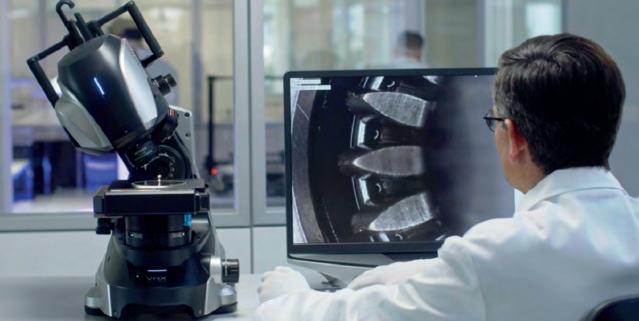
The main challenge we come up against with regards to scanning in the dental lab is achieving accurate image acquisition. This is because, whilst effective in some cases, intraoral scanners are prone to mis-stitches and, in order to achieve a more accurate outcome, a lab scanner is needed. This presents its own challenges – being a clunky and time-consuming process. A clinical dental technician (CDT) might need to carry out a scan of a denture or impression whilst a patient is waiting, and this is not a quick process. This puts us at risk of a bottle neck in the lab, whilst we wait for scans to finish.
championing digital lab work
At Nexus Dental Lab, we are huge digital advocates, and have been fully digital for 10 years. Through digital breakthroughs, we are able to implement processes that aren’t available elsewhere and use more durable materials. As such, we are able to change everyone’s experience for the better, especially the patient’s. By utilising digital processes, once we have produced a denture, we are able to re-produce a spare at the click of a button. This transforms the lives of people in care homes, who may lose or break their dentures, which ordinarily results in a delay of two weeks and impacts both their nutrition and quality of life. However, digital processes mean that we can create a spare which is kept safe with a carer who can easily reorder a replacement from the lab.
on workflows
The Cubit360 digital scanner from Mimetrik will change everything for us –it’s the missing piece of the puzzle. The scanner is unique in that it is portable and accurate. Traditional lab scanners are impractical, bulky, expensive, and difficult to use, whereas intraoral scanners are handy but result in misstitch, ultimately leading to poor fit. The Cubit360 produces a complete digital reproduction of the object in your hand. It is globally accurate without misstitches, for a simple process and an accurate fit. This completely transforms the end result for patients, eliminating discomfort and improving retention. It also changes the entire scanning experience for the professional team.
integrated ai workflow
Artificial intelligence (AI) already plays a role in our workflows at Nexus. We have our own development team, and use AI at the front end. We use generative AI in design to produce a video of the patient, demonstrating their expected treatment outcome.
We carry out a lot of complex full arch work, meaning that we are aware of challenges with accuracy. Since going fully digital, we have seen things progress. Intraoral scanners have been a huge development but they have a small field of vision. It’s like doing a jigsaw but only being able to see one piece at a time. The Cubit360 can see the big picture, making it globally
Hiring hardships
In the last few years, hiring has become a greater problem for both job seekers and business owners. The almost exclusively digitised process, which sees applications and CVs shared online, interviews conducted over video calls, and workers more likely to expect work-fromhome options, has made it difficult for both sides. 80% of employers have found hiring ‘very’ or ‘quite’ difficult whilst 70% of job seekers believe that the current market is not supportive for finding work. For dental practices, being fully staffed ensures the daily workflow runs smoothly, allowing more patients to be seen and preventing a backlog. When a staff member leaves, filling that hole should be done as efficiently as possible without compromising on the quality of the selected professional – multiple options should always be considered. Avoiding some of the pitfalls in hiring keeps dental practices ahead of the competition and cements the reputation of the business.
recruiting the next gen
The hiring market is tough because businesses must balance the needs of four different generations. Whereas baby boomers and Gen X seek security and a good work-life balance in their jobs, millennials and Gen Z are more focused on company ethics such as inclusivity, diversity in staff, equal pay and
wellbeing support. As each generation brings a new set of qualities and traits, practice principals must find overlapping elements to lay a universal foundation from which to market a job vacancy from.
One generational trait is noticeable: the younger generations are more likely to be stressed in their role. By 2030, Gen Z will form 30% of the workforce, but the high levels of stress lead to an increased risk of burnout; job hopping is a subsequent habit because of this.iii In dentistry, stress and burnout are well-established presences, with a fear of litigation, time pressures and managing difficult patients all contributing factors. To combat this and encourage younger workers to apply and stay for longer in a job, advertisements should highlight the emotional help available through the dental practice, such as wellbeing activities or support networks.
a spooky sensation
A more recent problem in the hiring process is ghosting; applicants failing to turn up to interviews without letting the business know otherwise. 79% of millennial and Gen Z job seekers have ghosted an interview in the past year. An explanation has been given by some of these: 50% see ghosting as acceptable because of how many firms and businesses fail to respond to applications, and that many don’t tell candidates if they
accurate whilst still achieving micron level precision. This changes everything for us, maximising time in the lab for the benefit of everyone. Our turnaround times are shortened, clinicians can see more patients, and patients receive faster treatment. This is the unit that we have been looking for.
transforming workflows in dentistry
The user experience with the Cubit360 will be completely different to anything else on the market. At current, every product comes with a set workflow, and can feel quite complex and intimidating to those who are not familiar with digital solutions. In contrast, the Cubit360 system is completely open, and has a low barrier to entry, enabling the user to simply present the object and begin scanning instantly. This means that there is virtually no learning curve. When I first encountered the Cubit360, I was able to use it instinctively – this tells me that, for those who haven’t worked with any digital tech before, the system is very easy to learn.
Another advantage is its speed. The Cubit360 is scanning models and dentures in a fraction of the time we would normally need – something that was taking us 10 minutes previously, now takes 2 minutes. This is particularly important for dental technicians, as time is a valuable resource and we have a diminishing workforce. Anyone using this will feel the benefit instantly.
For the lab, this is such a transformative product – able to complement the images we receive from those who already use intraoral scanners, whilst ensuring a global scan is achieved for complete accuracy.
the future of digital dental technology
I genuinely think that this opens up unique new pathways, facilitating the predictable creation of highly accurate full arch scans. Ultimately, the Cubit360 creates an entirely new workflow. In the surgery, clinicians could use it to scan impressions and send them directly to the dental lab, and it can act as a stepping stone for those currently not using digital solutions, as it is an incredibly accessible option. I think a CDT armed with this unit could transform the lives of those in care homes, creating backup files for dentures. This is a new solution that can enable us to help members of society access the support they need. For more information about Mimetrik, please visit https://mimetrik.tech/ n
about the author Steve campbell, Dental Laboratories association (DLa) immediate past president, dental technician and managing director at Nexus Dental Laboratory.
have been unsuccessful. Dental practice owners should ensure that everybody interviewed is notified if they haven’t got the role; this creates a positive image for the practice and may make it easier to return to the applicants for any future vacancies that come up. Unattended interviews are damaging to businesses, with staff wasting time and productivity that could have been spent elsewhere and leading to increased stress for the hiring teams.
Describing the dream job
To gain optimal engagement with job seekers and combat the risk of no-shows, dental practices should advertise roles that people will want to be a part of. An effective job advertisement must detail the following with total clarity:
• A description of the role’s typical duties and responsibilities
• Qualifications and experience needed
• Perks and benefits of the role
• The application process
• Contact information
Whilst these feel like a given, the job advertisement also gives the hiring team the chance to promote why their practice is an ideal place to work. This includes outlining the goals and mission of the workplace, identifying the areas in which someone can grow in the role, promoting the emotional support networks available
to staff, and shining a light on the values of the team.
To help dental professionals with the hiring process, the British Academy of Cosmetic Dentistry (BACD) offers its members a 33% discount to advertise a job on Dental Talent. As the premier destination for jobseeking dental professionals, Dental Talent accommodates a wide range of dental roles, from practice managers to dental nurses, connecting ideal candidates with the perfect practice. The BACD is driven to support dental professionals with a passion for cosmetic dentistry, nurturing a growing network of like-minded colleagues from which to find new potential job candidates.
Navigating the job market can be arduous for hiring teams. By taking steps to enhance the way jobs are advertised, engagement with job seekers can be improved and dental practices can avoid long periods of being understaffed, optimising the patient care they can deliver.
For further information and enquiries about the British Academy of Cosmetic Dentistry, visit www.bacd.com n
about the author Dr Sam Jethwa is president of the British association of cosmetic Dentistry.
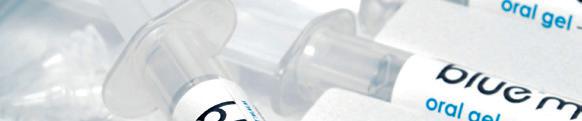
A Revolution in Oral Care
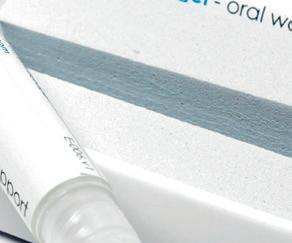
The most e ective and body-friendly way of healing soft tissue and oral wounds.
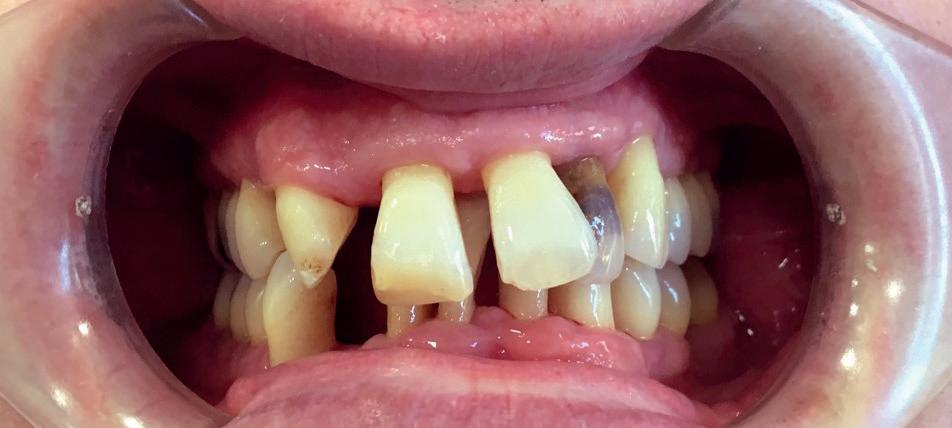
Patient Case Study – Before
Patient presented with Stage 4 Grade B
Generalised Periodontitis.
Treatment: RSD Q&Q. blue®m TOOTh protocol
Patient Case Study – After
Recall at 12 months
Case study and photographs courtesy 0f Pat Popat BSc(Hons), PTLLS, RDH, RDT
Oxygen for Health
Patient health at its optimal
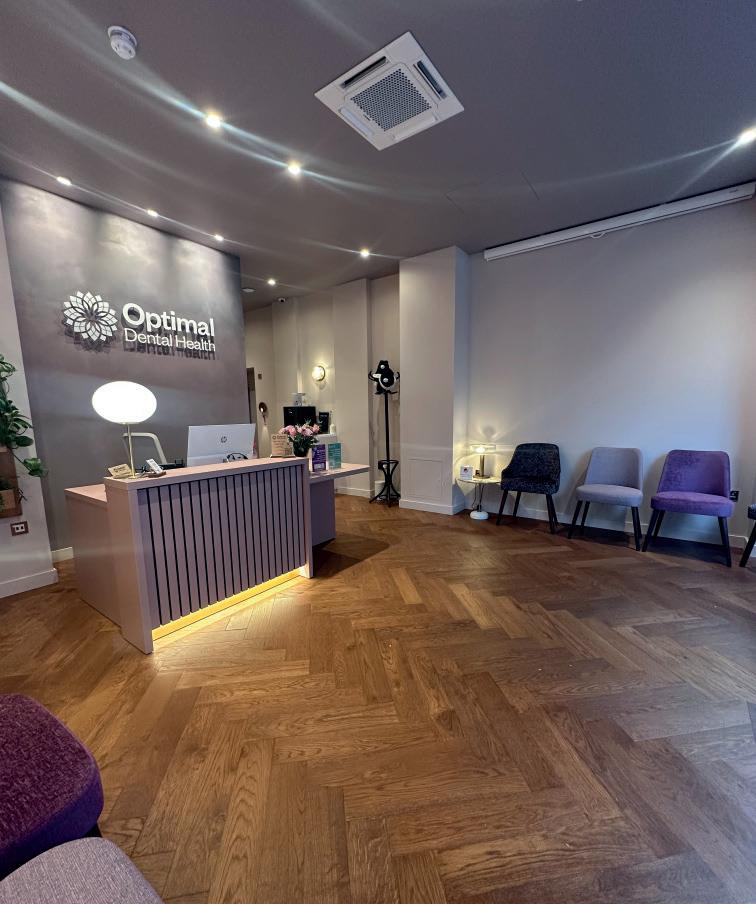
Dr James Goolnik shares his experience of creating Optimal Dental Health, and how it impacts the patient journey and staff experience
When I was looking to set up the practice, I was considering who to work with for equipment, cabinetry, and service. I had a vision for what I wanted to achieve, and sent a brief to a number of providers, including the team at Clark Dental. What first attracted me to Clark Dental was the speed of their response and the fact that they seemed excited about the project – particularly the fact that we have a different, more holistic, approach to patient care.
Throughout the project, they’ve been really proactive. I’ve known Stuart Clark and the team for many years, and have worked with them on various projects in the past. I like the fact that Clark Dental is family run – the same as my practice. I also like that they’re very responsive to questions and they’re keen to help. We have developed a long-term relationship, making it really easy to follow up whenever we need assistance.
Design and equipment that reflects our brand
During the design process, the question at the very heart of it was: “Does it work for us?” As such, we developed a practice that prioritised ergonomics for our team and our patients, and ensured a seamless patient journey. Of course, at various points during the design process, alterations were needed, and the design team and architects at DDCP were always able to find the solution. The aesthetics of the practice were important to us. We wanted to create an environment which feels spa-like, safe, clean, and friendly. Alongside this, we wanted to use a colour scheme outside of
the ordinary – purple features throughout the practice, with gold details – to create a nice environment for our team and our patients. In terms of equipment, I know the pieces that I like and that I’m used to, but I was guided by the team at Clark Dental who ensured that I got up-to-date solutions for the practice. Equipment selection was, therefore, a joint effort using my own knowledge combined with their suggestions. We selected treatment centres from A-dec (400 and 300) as they are robust and easy to maintain, along with Durr suction pumps, Dentsply Sirona Orthophos S CBCT system, W&H handpieces, and intraoral x-ray systems from Dentsply Sirona. Matt Rowlingson from Clark Dental was excellent, he found the best solutions for our practice.
Service you can rely on
By working with a reputable supplier, we are secure in the fact that Clark Dental has and will continue to provide us with excellent service going forward. Since we opened Optimal Dental Health, the team have acted quickly to solve any teething problems, and have visited the practice multiple times to train the team on equipment maintenance. Everything is working smoothly as we get busier and busier.
Raine Leary from Clark Dental enabled us to integrate our digital CBCT, x-ray, and intraoral camera systems into our workflows, and provided ample training for the team, telling us how it works day to day, and discussing the digital technology without the jargon. In the modern practice, IT is changing all the time, so it was important for us to make sure that our system flows well and was cost-effective.
For others who are setting up their practice from squat, I would advise that it generally takes longer than you might initially anticipate. However, it is important to set up the appropriate service agreements to ensure that everything works and stays maintained. Additionally, I would highly recommend having conversations with equipment engineers, as they will offer unique insights when it comes to preventing and addressing common issues. I thoroughly recommend using Clark Dental. In three words, Clark Dental is responsive, cost-effective, and positive. They are solution-driven and have delivered a great experience – we are looking forward to working together in the years to come.
priorities: our team and patients
Our new space is over two floors, making it crucial that we adapt the flow of the space
to our people. The team loves the colour scheme, and the patient journey is working really well whilst still maintaining a cosy feel. Our team is a top priority, which is why we directed energy to our staff area in this project – we want our team to feel valued.
At Optimal Dental Health, we adopt a holistic approach to patient care, in which we aim to optimise patients’ general health through the mouth. We want to make sure the patient journey is smooth, and that they feel listened to during their appointment, as this will help them get the maximum value from their time with us. The technology and equipment we use enable us to effectively communicate with our patients, and to help them understand the value of treatment.
Most importantly, we are looking at our patients’ overall health – we want to help them feel better, not just leave with shiny teeth. We have a nutritionist as part of our team to help facilitate conversations around dentistry, nutrition, sleep, and stress. This makes us well placed to monitor their health closely, and help them improve how they feel as they leave their appointments. Ultimately, our aim is to help patients feel more energised, sleep better, and improve their overall wellbeing – and our practice design, equipment, and team offer this every day.
For more information call Clark Dental on 01268 733 146, email info@clarkdental. co.uk or visit www.clarkdental.co.uk n
about the author Dr James Goolnik is the founder of Optimal Dental Health, located just off Baker Street in London.
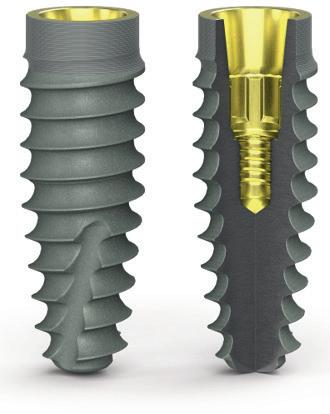
AI to offer new possibilities in implantology?
Iam always keen to learn about the latest technological development impacting life as we know it. As a dentist, my fascination with technology and its potential to streamline the delivery of health and dental care only adds fuel to my research. Artificial intelligence (AI) is an area of particular interest given its rapid advancement in the last few years.
As such, there has been an influx of information on the subject. The development of platforms like Chat GPT, Perplexity and Copy.ai has opened up a new world of possibilities for all to benefit from. Whether you’re looking for support in writing patient emails, creating social media graphics, constructing a business plan or more, these programmes can provide an excellent starting point and guide. From a clinical perspective, AI-driven software is increasingly being utilised to support the delivery of treatment as well. One of the latest studies I came across showed Japanese researchers using deep learning classification models to accurately identify dental implants.
With so many different implant systems on the market, it can be difficult for clinicians to confirm the brand they are working with when needing to restore an implant placed previously by another dentist.
Using a dataset containing thousands of images, the software analysed panoramic and periapical images to detect the implant in place with high precision. It demonstrates the potential application of semi-automated implant classification to help clinicians deliver enhanced implant maintenance and restorative care to patients.
Just as is true of the content creation and interactive AI programmes mentioned earlier, this kind of technology is still restricted. For a start,
it is wholly dependent on the existing data it has access to. Where information is missing from it sources, the software will be incapable of finding an accurate solution. This also leaves it open to bias, so it is crucial to ensure that any programmes used draw from reliable and expansive datasets with the lowest possible risk of data skew. For all its benefits, AI lacks true understanding, meaning it doesn’t have the human-like comprehension needed to make sensible assumptions or reasonings in the absence of information.
With this in mind, AI-driven solutions are proving hugely advantageous across various dental disciplines. Implantology is the latest field to benefit from programme development, but I have no doubt that we will all be using it much more in the not-toodistant-future. n
about the author endocare, led by Dr Michael Sultan, is one of the UK’s most trusted Specialist endodontist practices.
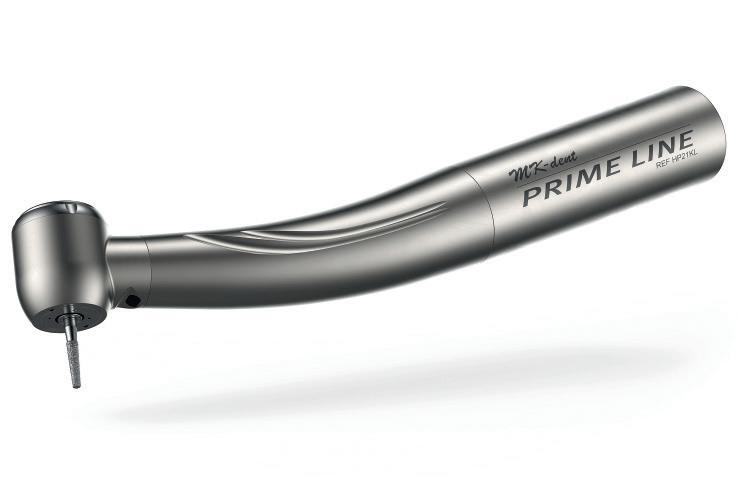
The indispensable role of handpieces in dental practices
Unveiling the MK-dent Prime Line
In the world of dentistry, precision, efficiency, and patient comfort are paramount. At the heart of delivering exceptional dental care is the dental handpiece, an essential tool that directly influences the quality of treatments.
MK-dent, a family-owned and operated company based in Germany, has revolutionized dental handpieces with their Prime Line, combining cutting-edge technology, unparalleled performance, and outstanding service. In this editorial, we explore the critical role of handpieces in dental practices and the remarkable benefits of MK-dent’s Prime Line, featuring high-speed and contra-angle handpieces.
the essential role of Handpieces in dental Practices
Dental handpieces are indispensable tools in any dental practice. They are used for a variety of procedures, from routine cleanings to complex restorative work. The reliability, efficiency, and performance of these handpieces directly impact the effectiveness of dental treatments and the overall patient experience.
High-quality handpieces enable dentists to perform procedures with greater precision and control, reducing the risk of complications and ensuring optimal outcomes. They also contribute to patient
comfort by minimizing discomfort and reducing the time spent in the dental chair. Given their critical role, investing in superior dental handpieces is not just a matter of preference but a necessity for any dental practice committed to excellence.
the MK-dent Prime line: redefining excellence
MK-dent’s Prime Line stands out as a beacon of quality and innovation in the dental industry. These handpieces are designed with meticulous attention to detail, leveraging advanced engineering and manufacturing techniques to deliver unmatched performance and durability.
High-speed Handpieces: Quiet Powerhouses
The high-speed handpieces in the MK-dent Prime Line are a testament to the company’s commitment to excellence. One of the standout features of these handpieces is their remarkable quietness, operating at less than 55 dB(A). This tremendous quietness significantly enhances patient comfort by reducing the anxiety often associated with the noise of dental procedures. But it’s not just about being quiet; these handpieces are also incredibly powerful. With an output of 25W at the standard setting of 42 psi, they deliver exceptional performance, allowing dentists to carry out procedures with remarkable efficiency. MK-dent’s high-speed handpieces provide optimal power and reliability, perfectly suited to the demands of modern dentistry, without requiring to increase the pressure, which impact the lifetime of handpieces significantly.
Contra-angle Handpieces: Precision and Comfort
The contra-angle handpieces in the MK-dent Prime Line are equally impressive. Designed with high-precision engineering and crafted through most modern manufacturing techniques, these handpieces boast unbeatable performance and durability. The gear sets are crafted with meticulous attention to detail, ensuring smooth operation and long-lasting reliability. One of the key benefits of these contraangle handpieces is their low vibration, which enhances both patient and doctor comfort. The reduced vibration minimizes fatigue for the dentist during long procedures and ensures a more comfortable experience for the patient. This combination of precision, durability, and comfort makes MK-dent’s contra-angle handpieces an invaluable asset in any dental practice.
Phenomenal local service: a Perfect Blend of German engineering and Customer Care
While the quality of the products is paramount, the service that accompanies them is equally important. MK-dent excels in this area by offering phenomenal local service through their partners across the UK. This service model combines the renowned precision of German engineering with a strong sense of customer care, ensuring that dentists receive the support they need to maintain and optimize their equipment. MK-dent’s local partners are trained to provide comprehensive support, from routine maintenance to address any technical issues that may arise. This ensures that dental practices can rely on
EMS AIRFLOW® Prophylaxis Master Insight
EMS have redefined professional oral hygiene treatments thanks to the latest tabletop unit, the EMS AIRFLOW® Prophylaxis Master! Designed exclusively to offer the popular Guided Biofilm Therapy (GBT) initiative for dental professionals. The cuttingedge unit asserts a new benchmark for performance, precision and patient comfort making it the gold standard in the industry.
Guided
Biofilm therapy
Guided Biofilm Therapy, is a unique process for dental biofilm removal, using professional prophylaxis procedures. Including stain elimination and minimally invasive calculus scaling. The device’s state of the art technology to correspond with Guided Biofilm Therapy is characterised by unique ergonomics, high precision, easy maintenance and complete compliance with the highest standards of performance.
PieZoN® No PaiN technology
Removal of calculus is at highest efficiency and completely optimal for patient comfort using EMS PIEZON No pain technology. Very few instruments are required to cover 95% of all clinical applications thanks to the EMS Perio Slim (PS Instruments) series. The linear bi-directional movement of the PS instrument combined with recommended power and water results in the most efficient and painless treatment, avoiding over instrumentation and root sensitivity in a minimally invasive way.
Patient Comfort with Heating system
The Prophylaxis Master’s adjustable heating system allows for warm water during treatment, maximizing patient comfort and minimizing sensitivity. Further aiding with limiting pain and increases the patient experience.
Make Biofilm visible with eMs Biofilm discloser
EMS Biofilm Discloser highlights biofilm and all problematic areas. With most biofilm invisible to the naked-eye this aids in helping detect biofilm, ensuring AIRFLOW® treatments only where its required, with clear colour evidence of clinical outcome.
their handpieces to perform consistently, without the downtime that can disrupt patient care. The availability of local support means that any issues can be resolved quickly and efficiently, minimizing the impact on the practice’s operations. The dedication to customer satisfaction is evident in every aspect of MK-dent’s service. The company’s local partners in the UK are committed to providing personalized service tailored to the specific needs of each dental practice. This close relationship allows MK-dent to understand and address the unique challenges faced by their customers, fostering a sense of trust and reliability. In the demanding environment of dental care, the importance of highquality handpieces cannot be overstated. MK-dent’s Prime Line offers tremendous benefits, from the quiet power of their highspeed handpieces to the precision and comfort of their contra-angle handpieces. Combined with phenomenal local service that merges German engineering with exceptional customer care, MK-dent stands out as a leader in the dental industry. Investing in MK-dent’s Prime Line is a commitment to excellence, ensuring that dental practices can provide the highest level of care to their patients. n
by Gary Keenan
airFloW® MaX and PerioFloW® Handpieces
The AIRFLOW® MAX and PERIOFLOW® handpieces deliver unparalleled efficiency in removing biofilm, stains, and young calculus both supra and sub-gingivally.
These handpieces, when paired with the AIRFLOW® PLUS powder, comfortably and efficiently eliminate biofilm while reducing the need for traditional hand and power instrumentation. Ensuring a far superior patient experience and outcome.
eMs airFloW Prophylaxis Master practice requirements
1. in-House Hands-on demonstration
An in-house, hands on demonstration of the EMS Prophylaxis Master will be conducted on-site. This will provide an opportunity to understand the clinical and financial benefits the system can offer you.
2. Pre- i nstallation r equirements
All pre-installation requirements must be followed, with guidance provided throughout the enquiry process to ensure proper compliance.
3. Handpiece Quantity determination Assistance will be offered to determine the appropriate number of additional handpieces needed. This ensures proper workflow/maintenance can be carried out without surgery downtime.
4. i n-House Handover
An in-house handover session will be conducted by either MC Dental Equipment or an EMS area representative to familiarize the practice team with the system.
Conclusion
Following a successful demonstration of the unit and the quotation being accepted and unit being installed with all correct requirements met, your practice will be instantly projected to a new level in service offered. You can then at this point opt for further in-house training with one of EMS Dentals, Swiss Dental Academy (SDA) trainers. This will further elevate your practice knowledge of the EMS system, tapping into the advice and expertise of one of the renowned SDA trainers is a priceless investment and highly recommended by myself. n
Controlling kidney disease
The kidneys have many roles, from removing waste products and excess fluid to regulating salt content and producing hormones. Without these organs, the body cannot function. However, chronic kidney disease (CKD) is on the rise; by 2040 it is forecast that it will be the fifth leading cause of premature death around the world.
Among the UK population, over 10% of people have some degree of CKD, with 3 million currently living with severe kidney disease. For dental practitioners, noting the rise in CKD is essential because of the complex relationship it has with oral diseases, particularly periodontitis. Identifying at-risk patients and supporting those diagnosed with CKD is of paramount importance.
Understanding CKD
CKD is a long-term condition where the kidneys struggle to function. Its aetiology is multi-factorial: health problems such as high blood pressure, diabetes and high cholesterol can place too much strain on the kidneys, while kidney infections, inherited conditions and long-term use of certain medicines can also increase the risk of developing CKD. Its prevalence increases with age and can affect anyone. However, it is more common in people of Afro-Caribbean or South Asian origin. Socio-economic inequalities, and disparities in access to healthcare could be an explanation for this.
CKD is often diagnosed late due to patients commonly experiencing a lack of symptoms in the early stages. However, those with CKD may experience fatigue, shortness of breath and nausea. Blood in the urine can also be a symptom. As obesity and cardiovascular disease are also risk factors, CKD patients may have a greater predisposition to heart attacks. With obesity, high blood pressure, and high cholesterol often overlapping with CKD, afflicted patients must be encouraged to alter their lifestyle choices, such as a poor diet or a lack of exercise, to reduce the risk of developing CKD. But one of the biggest concerns of CKD is how it weakens the immune system, making patients more vulnerable to infections, especially in the oral cavity.
oral health and CKD
Research has shown that 77.8% of CKD patients had some alteration in their oral cavity. Oral health can be easily neglected when being treated for a systemic health condition, and the suppressed immunity of CKD makes oral diseases more likely to develop. For instance, CKD patients being
treated with haemodialysis are more prone to severe periodontal disease ; patients may be hospitalised for long periods without consistent oral healthcare.
Besides the inflammation of the gingiva, renal failure has other oral manifestations, ranging from ulcers and viral infections to xerostomia and halitosis. The latter two are more prevalent. Xerostomia can develop from the medication that CKD patients may be taking for high blood pressure and cholesteroliv meaning that, with less saliva to buffer harmful particles, this can magnify the risk of infection. Halitosis can be caused when urea, usually removed by the kidneys, breaks down into the foul-smelling ammonia.
Whilst CKD can increase the risk of periodontitis, periodontal disease can also affect renal dysfunction, increasing the risk of CKD. Inflammatory biomarkers, such as interleukins found in the gingivae and associated with periodontitis, are also linked with those that increase the risk of developing CKD. Furthermore, dental infections like periodontitis may delay kidney transplants, meaning patients have to endure kidney failure for longer. a daily task
To help protect CKD patients and patients at risk of developing CKD from oral diseases, a consistent oral hygiene routine is essential. Maintaining regular dental visits and toothbrushing twice a day can minimise kidney disease as a factor for oral diseases.
Incorporating interdental brushing into the daily routine can also reduce gingival inflammation, and therefore the risk of periodontitis. The FLEXI range of interdental brushes from TANDEX is ideally suited for this, offering 11 different sizes for optimal access around the oral cavity. Between the malleable brushes and the flexible handle, the FLEXI provides a comfortable clean. It can also be paired with the PREVENT Gel, from TANDEX, for an anti-bacterial kick that strengthens enamel and protects the teeth. Reduce the risk of oral diseases with the TANDEX product range.
The association between CKD and periodontitis is common, and must be addressed. As CKD increases in prevalence, arming patients with the knowledge and equipment they need to protect their oral health is essential.
For more information on Tandex’s range of products, visit https://tandex.dk/ Our products are also available from CTS Dental Supplies: https://cts-dental.com/ n
about the author Jacob Watwood on behalf of tandex.
Strength in sleep
At the start of the 20th century, a woman’s average life expectancy was 49 years. Today, the average age for the menopause is slightly higher at 51; improvements in health and sanitation, research, education, lifestyle choices and medical care have ensured that women now have a life expectancy of 80, meaning over a third of their life extends beyond the menopausal transition where once it often did not. Despite affecting half of the world’s population, the menopause is wrapped in taboo and has been disproportionately overlooked in health and research, with ageism and sexism contributing to a stigma around this critical turning point in a woman’s life. For dental practitioners, the menopause is important to note – highlighting the relationship between perimenopause and sleep deprivation can not only support patients at-risk from oral health complications, but it can also ensure an allround healthier patient and break the stigma through effective communication.
Perimenopause problems
Perimenopause is experienced roughly 4-8 years before entering menopause, often for those aged in the early 40s but can also emerge in the mid-30s. This change sees the ovaries producing less oestrogen, disrupting the menstrual cycle. This limited production will eventually stop, leading to the menopause. The change in hormone levels can lead to many symptoms:
• Fatigue
• A low sex drive
• Sudden shifts in mood
• Depression
• Vasomotor symptoms such as hot flushes and night sweats
• Sleeping issues
Sleep disruption is one of the most common symptoms. Whereas 16-42% of women with no symptoms of perimenopause report problems sleeping, this increases to 39-47% for those with symptoms. For postmenopausal women, the range is 35-60%. With insufficient sleep the body is unable to recharge, leading to daytime sleepiness and a lack of productivity. Constant fatigue can impact a patient’s work life and also bring them harm – tiredness is often the root cause of major accidents. Whilst there are many other factors to explain disrupted sleep, such as the back aches and joint pains associated with the menopausal transition, the fluctuations in hormone levels are a major contribution to a poor night’s rest.
a balancing act
However, it has been identified that sleep alleviates perimenopause symptoms, with those achieving 6-9 hours of sleep showing improvements in hormone levels compared to those who only managed 3-6 hours. This highlights the importance of raising awareness on sleep management, perimenopause symptoms and overall wellbeing to patients. Dental practitioners can educate perimenopausal women on the relationship between diet and sleep by encouraging a diet filled with milk products, fish, fruit and vegetables for optimal sleeppromoting effects. Moreover, a healthy diet and regular exercise can reduce high levels of cortisol, improving sleep.
a perfect storm
Both disordered sleep and the menopause have been linked to adverse oral health outcomes. Xerostomia is one of the most commonly reported symptoms of the latter, with postmenopausal women experiencing decreased unstimulated and stimulated submandibular and sublingual salivary gland flow when compared to premenopausal patients. This is not related to medication use. The composition of the saliva may also change, with the literature noting an increase in calcium in the saliva of postmenopausal women, which provokes faster plaque mineralisation.
Reduced salivary flow may mean debris is not moved from the dentition, and the encouragement of plaque mineralisation may contribute to increased bacterial irritation of the gingival tissue, alongside an elevated caries risk.
Sleep disturbances exacerbate the issue, as inadequate rest has been correlated with a lower number of present teeth and increased periodontal disease. Fatigue induced by a lack of sleep can increase gingival inflammation, meaning patients must take active care to remove any controllable irritants such as plaque or interproximal debris.
Alongside twice daily toothbrushing, patients could use the Waterpik™ Cordless Advanced water flosser. It features 3 adjustable pressure settings, and removes up to 99.9% of plaque following a 3-second application. The Waterpik™ Cordless Advanced is also 50% more effective at improving gum health compared to traditional floss, meaning fewer patients have to lose sleep over periodontal diseases.
The huge changes that menopause can cause demand greater research and awareness going forwards. Dental practitioners must grow their knowledge and skills in this area to offer treatments and management options that make a difference in alleviating symptoms. By doing so, consistent sleep and optimal health can be restored to affected patients.
For more information on Waterpik water flosser products, please visit: www.waterpik.co.uk.n
One of the key disruptors is the imbalance between oestrogen and the stress hormone cortisol: low levels of oestrogen lead to higher levels of cortisol. Heightened stress then prevents the body and mind from relaxing, with low oestrogen levels also making it harder to stay asleep, impacting sleeping patterns. Similarly, higher levels of follicle stimulating hormone (FSH) is associated with greater odds of repeatedly waking up.
about the author
annastasia Kellett
Wright has been a professional educator for Waterpik since 2016 and is actively involved with the British Society of Dental hygiene and therapists
Buy 2 get 1 free (while stocks last)
Directa’s ProphyCare, is one of the most well-known brands of prophylaxis paste worldwide, offering reliable results ranging from regular cleaning of the teeth to more complicated implant maintenance procedures.ProphyCare pastes are available in different grits from coarse to extra-fine and are colour coded for easy identification. All ProphyCare pastes have a mild minty taste and do not splatter, it stays in the polishing cup during the treatment.
prophylaxis more ts have
Life-long oral health
According to the World Health Organization, “oral diseases disproportionately affect the most vulnerable and disadvantaged populations. People of low socioeconomic status carry a higher burden of oral diseases and this association remains across the life course, from early childhood to older age”. In the UK, the economic impact of dental caries is disproportionately higher in deprived groups, with an estimated per-person cost of approximately £18,000. Research suggests that this cost could be dramatically reduced with the implementation of targeted preventative measures. This highlights the vital role of dental professionals in preventing dental pathologies, particularly when it comes to public education and reinforcing the basics. As such, it’s important to understand the current recommendations in terms of public health approaches, and at home prevention techniques in order to best support the patients most in need.
Preventative approaches –public and personal health
In recent years, there has been a shift in focus to prevention rather than treatment wherever possible. Over time, the aim of this is to improve public oral health, reduce associated costs of dental treatment for patients, and slow the restorative cycle. There are a number of personal preventative measures that may be implemented to target areas of specific
concern, and enable patients to take steps at home to prevent decay. Not all techniques are appropriate for every patient, and clinicians should make decisions and recommendations based on the patient’s unique scenario.
A great starting point for most patients is the use of a high-quality fluoride toothpaste, to protect the enamel and remineralise the dentition. It is important to understand that, whilst it is a simple measure, this may feel inaccessible to some patients due to financial restrictions. As such, it is important to provide education about the benefits of prevention both for their health and their wallet. For patients who are at a higher risk of caries development, fluoride varnish may be applied to offer extra protection, and fissure sealant may be used to protect problem areas.
Community-wide prevention may also have a significant impact on oral health, with water fluoridation, oral hygiene education in schools, and the soft drinks levy (sugar tax) aiming to prevent caries development and protect oral health.
If applied across the UK population, prevention approaches such as these could lead to the reduction of caries rates by 30% – with the biggest impacts felt in the most deprived groups.
Beginning with children
In order to address oral health problems in deprived groups, it is essential that we ensure children are given the best
A smile fit for a selfie
It is estimated that 1.94 trillion photographs were taken in 2024, 78 billion of which were selfies. 14 billion images are shared online every day for multiple purposes, but people often share pictures of themselves online to widen their social and professional networks, to personalise content, and to help build a personal brand that can attract various opportunities, or align with their chosen career.
Not only are more individuals sharing their own image via social media platforms, they are consuming more content provided by celebrities and influencers. A recent survey indicated that 62% of women interested in beauty follow influencers on social media. Over 1,000 beauty influencers operate across various platforms, with an average number of followers ranging between 417,134 and 767,65, depending on the platform. For all these reasons, social media has been found to be a strong motivator for many patients to invest in cosmetic dental procedures. The UK accounted for 5.3% of the global cosmetic dentistry market in 2022, generating a total revenue of about £1,458.10 million. This is expected to increase to £3,480.15 million by 2030. The most popular cosmetic dental treatment by far is tooth whitening, followed by veneers, composite bonding and clear aligner treatment. The Oral Health Foundation has reported that 66% of UK adults have considered having their teeth brightened. Lines are sometimes blurred between influence and sponsored content online, and many beauty influencers can be very persuasive. Listening to patients, taking the time to understand their motivations
possible start as this will help them maintain better oral health throughout their lives. By delivering preventative care at an early age, clinicians can help to lower early childhood caries and the risk as they grow up. Research supports this, with a study assessing the influence of fluoride toothpaste suggesting children using fluoride toothpaste observe a 24% reduction in caries compared to those using a fluoride-free toothpaste.
Fluoride toothpaste for children
Regardless of the method of use, the appropriate levels of fluoride are proven to positively impact oral health, with prevention essential for people of all ages, beginning in childhood. Offering parents advice about caring for their children’s teeth is vital, as this can help them maintain excellent oral health into adulthood. It could also help patients make informed choices, enabling them to access life-changing oral hygiene solutions.
BioMin® F for Kids offers advanced 12-hour protection, with its slow-release, low level fluoride formula delivering long-lasting benefits to strengthen the enamel. Additionally, it features smart pH technology to release the necessary minerals and reduce acidity after eating and drinking. Using our strawberry-flavoured toothpaste can make toothbrushing more enjoyable for children, helping to establish a positive routine.
can help engage them, building trust to more effectively educate them on the relative risks and benefits of different tooth whitening treatments.
the advantages of a confident smile Patients want to look their best for a number of reasons. Many seeking cosmetic treatment believe their psychosocial wellbeing will improve, and the primary driver tends to be internal rather than a desire to please others. Improved dental aesthetics has been shown to support patients’ psychological wellbeing and quality of life.
While some physical traits, like facial symmetry, tend to be consistently identified as attractive, many factors are down to personal grooming, appealing personality traits, individual tastes or cultural ideals. Attractiveness is multifaceted, but when people are deemed to be more physically appealing, they are perceived to be more intelligent, healthy, trustworthy, and sociable. Physical attractiveness, especially when combined with personal grooming and personability, vastly improves a host of life experiences, including reproductive success and criminal justice outcomes. Social media has given rise to a desire
Calling all dentists! Do you want samples or a practice visit? Speak to our UK dealers, trycare on 01274 88 55 44 or email: dental@trycare.co.uk, or CtS on 01737 765400 or email: sales@cts-dental.com
When kids like the taste of their toothpaste, they’re more likely to brush regularly and develop healthy habits that can lead to a lifetime of good oral hygiene. It’s also a fun way to encourage independence in their daily routine while ensuring they maintain strong, healthy teeth.
For more information about BioMin®, and their innovative range of toothpastes, please visit www.biomin.co.uk, or email marketing@biomin.co.uk. n
about the author alec hilton, Ceo, BioMin technologies.
among many patients to represent themselves consistently and positively across various online media platforms. A strong personal brand is thought to enhance an individual’s credibility, conveying their personality, ethos, credentials, social skills and life experiences relevant to desired opportunities.
As part of this, a well-tailored brand leverages appealing visuals, which benefit from including a well-lit, close-up, highresolution profile picture, with the individual looking well-groomed, confident and comfortable. A study based on 800 profile pictures found that a smile leads to a perception that the person is more likable, competent, and influential. When people smile with their teeth showing in photos, they are twice as likely to be rated as likable than if they smile with their mouths closed.
a safe, bright smile that’s on-trend
While cosmetic enhancements to improve patients’ smiles are very much on the rise, dazzling, BL1 white teeth are falling out of favour. Risks associated with aggressive bleaching, and negative news stories about dental tourism may partly be responsible, but trends also reflect a renewed interest in natural beauty popularised by key influencers. For example, celebrities like Rylan Clark and Simon Cowell have had their distinctively bright veneers replaced with more naturallooking ones in recent years.
Aggressive tooth bleaching with hydrogen or carbamide peroxide-based products can lead to tooth sensitivity, irritation to the gingiva and changes in the microhardness of enamel.xvii Regulations on the sale of over-the-counter, peroxide-based whitening
kits came into force in 2012. However, products are available with ingredients that pose a serious risk to patients’ dental tissue, and in 2019 illegal whitening procedures reportedly rose by 26%.
By recommending safe tooth-brightening products, like BRILLIANT Lumina from COLTENE, clinicians can safeguard their patients’ oral health while also offering a bright, well-groomed, natural look that’s totally on-trend. BRILLIANT Lumina is based on the active ingredient PAP (phthalimido peroxy caproic acid), which – unlike hydrogen peroxide and carbamide peroxide – has no erosive effect on the tooth structure. Patients seek tooth whitening treatment for a number of reasons, but an increasingly important driver is the need to present themselves well across all their social and professional networks. Beauty might be skin-deep, but being able to present a confident, well-looked-after smile does improve the wellbeing of patients, and may well offer them an advantage in a competitive world. Supporting patients in achieving this safely will provide them with a natural, healthy smile, fit for a selfie. For more on COLTENE, visit: https://colteneuk.com/BRILLIANTLumina Email info.uk@coltene.com or call 0800 254 5115. n
about the author Nicolas Coomber, ColteNe National account & Marketing Manager.
Vision impossible
Vision is how we learn, move, read, watch and do countless other daily things. Because of how much we use our eyes, it can be easy to take them for granted, leading to neglect in ocular health maintenance. In the UK, 250 people start to lose their sight every day, with more than 2 million Brits living with impaired vision. By 2050, led by an ageing population, the number will double. There are several causes of sight loss, with age-related macular degeneration (AMD) and cataracts being the most prevalent. Glaucoma is a third factor, with 7% of people losing their vision to it. For dental practitioners, glaucoma is of particular interest due to its growing association with infectious bacteria in the oral cavity. Through a greater understanding of vision loss, glaucoma and the relationship with the oral microbiome, practitioners can arm at-risk patients with the actions to avoid sight loss.
Glaucoma chameleon
Glaucoma is dubbed the ‘silent thief’ of sight as significant visual loss often occurs over many years before a patient is diagnosed with it. Worldwide, this hidden disease is the leading cause of irreversible blindness, making it essential to recognise and manage early. Adults in their 70s and 80s are at a greater risk of glaucoma, as are those of an African, Caribbean or Asian origin or those with a family history of it. There are several variations of the disease, but the most common is primary open angle glaucoma. Here, the eye’s drainage channels
become increasingly clogged over time, building up fluid and intensifying pressure inside the eye. The optic nerve at the back of the eye contains millions of nerve fibres that connect the retina to the brain, transmitting the sensory information needed to generate the vision – when this is damaged by the increased pressure, vision deteriorates, beginning with the peripheral. Along with blurring vision, seeing rainbow-coloured circles around bright lights is also an early sign of glaucoma, and an eye test is recommended. However, glaucoma can occasionally develop suddenly, causing intense pain, nausea, vomiting, headaches and red eye.
An eye for an eye
As infections in the ear, nose or throat can increase pressure in the optic nerve, it is essential to treat them as quickly as possible to avoid intensified glaucoma symptoms. Research has also found an association between glaucoma and oral diseases, especially periodontitis.
The oral cavity is the only body part through which infectious microorganisms can spread to distant organs and cause
disease; teeth are a doorway to overall health. The dysbiosis of the oral microbiome, triggered by diseases such as caries and periodontitis, leads to the immune system generating inflammatory markers to combat the infection. From the base of the teeth, inflammatory bacteria can reach the optic nerve head microcirculatory system, causing endothelial cell dysfunction and increasing the risk of glaucoma. This can have a reciprocating impact on oral health: visually impaired patients are likelier to report a higher incidence of dental trauma, plaque and oral disease. An interdisciplinary approach between dental practitioners and other healthcare providers is therefore required to lower the risk of glaucoma.
A tooth for a tooth
Dental practitioners can reduce the risk of glaucoma in two key ways: promoting a consistent and effective oral hygiene routine to limit infectious diseases, and to follow a healthy diet. For advice on the latter, at-risk patients should be recommended leafy greens (such as kale and spinach), eggs, squash, sweet potatoes, lean meats and poultry, and fatty fish like salmon, trout and tuna. Many of these foods contain essential nutrients like vitamins C and E, and fatty acids like omega-3, all of which help maintain ocular health. As high blood pressure is also a threat for glaucoma, eating fruits, vegetables and wholegrains and
avoiding sugary treats and salty foods can keep hypertension in check and limit the prevalence of harmful bacteria in the oral cavity, maintaining an all-round healthy body. To prevent periodontitis and reduce the risk of glaucoma, practitioners should reaffirm the importance of an effective oral hygiene routine to patients. For a reliable toothbrush, recommend the CS 5460 from Curaprox. Featuring ultra-fine Curen filaments for excellent cleaning power, the toothbrush’s gentle feel and slightly angled head ensures a comfortable and compliant experience. Available in a range of colours, patients can mix and match the look of their handle and brush for added enjoyment. Glaucoma’s prevalence and the impact of impaired sight demands an inter-disciplinary solution. For dental practitioners, identifying at-risk patients and encouraging a healthier diet and consistent oral hygiene routine can reduce the risk of periodontitis and limit the spread of inflammatory microbes around the body. By protecting their oral cavity, patients can better protect their overall health.
To arrange a Practice Educational Meeting with your Curaden Development Manager please email us on sales@curaden.co.uk
For more information, please visit www. curaprox.co.uk and www.curaden.co.uk
To what extent is extra fluoride helpful? S
The most common health condition of all is untreated dental caries. This is brought on by a variety of factors, from diet to poor oral hygiene routines, and inadequate exposure to fluoride.
Fluoride itself is a naturally occurring mineral found in some water sources, meaning it can be consumed by the everyday person. The volume in which it appears depends on which area of the world, and the UK, that an individual lives. However, patients who do not get enough fluoride may need alternative solutions to prevent against dental decay.
It is the responsibility of the dental team to ensure that patients take in ample fluoride, and they should be able to make recommendations for each unique case dependent on an individual’s needs.
how much is enough?
Clinicians should always ask themselves if a given patient gets adequate fluoride, or is their intake in excess or entirely insufficient? Being at either end of the spectrum can be problematic.
An over-ingestion of fluoride over a lengthy time period can contribute to fluorosis which, in its mildest form, can appear as white or translucent mottling or banding of teeth – more severe cases can lead to enamel damage or pitting. The effects of fluorosis are deemed to be entirely aesthetic, and particularly affect the developing dentition of children. This is not to say that adult patients are immune from the effects; a 2018 study found that fluorosis was more common in adults with a lifetime exposure to water fluoridation than those without exposure, but the aesthetic impact diminished with age.
Insufficient fluoride intake, however, can be far more damaging – but it’s important to look at it first through the benefits of adequate fluoride consumption. This includes the prevention of caries though a number of different processes.
Fluoride inhibits tooth demineralisation, promotes remineralisation, and also affects bacterial metabolism and acid production, which are all obviously positive. The crystalised structure of the enamel surface absorbs fluoride ions, protecting it against demineralisation. Then, as and when demineralisation occurs, fluoride continues to absorb into the partially affected crystals, attracting supersaturated calcium and phosphate ions to promote remineralisation. Fluoride also directly combats cariogenic bacterial species by interfering with enzymatic activity, resulting in cell lysis.
If a patient’s fluoride intake is insufficient, this protection quickly falls apart; enamel is more susceptible to damage, which is then not actively repaired, and oral bacteria is left untouched to develop carious lesions.
Predominant sources of fluoride
In the UK, drinking water can artificially and naturally feature fluoride, with the first UK fluoridation schemes being established in the 1950s and 60s. However, fluoridated water is currently only supplied to 10% of the population in England; a majority is subsidised through regional schemes, but 8% of this is through naturally occurring fluoride. Over 50 million people in England alone remain without this source of fluoride, and thus may require alternative solutions.
Water fluoridation is an area of debate, and the UK Parliament recognises it as such. Protesters voice concerns over state intervention, the robustness of scientific evidence, possible negative health consequences, and feelings about the purity of water.
Most modern toothpastes contain fluoride, and so patients can benefit from the mineral whilst simultaneously displacing plaque and oral bacteria. Clinicians should advise that most patients choose toothpastes containing 1350-1500ppm of fluoride, and there are specially designed solutions that are suited to children under 3-years-old that have a lower volume of fluoride, but it should still be around a 1000ppm minimum.
take matters in your own hands
Still, dental caries remains a widespread issue in the UK – 31% of adults have tooth decay. In many cases, clinical intervention to support fluoride uptake is necessary. This is possible through the application of fluoride treatments, which is generally provided in a highly concentrated rinse, foam, gel, or varnish. This will provide a greater quantity of fluoride than that found in water or toothpaste, and will require patients to not eat or drink for a set amount of time after care. The result is improved fluoride access, at a level that can be controlled to avoid excessive or insufficient intake.
The Clinpro Clear Fluoride Treatment from Solventum, formerly 3M Health Care, is a water-based, rosin-free formula that is simple to apply, and an ideal choice for clinicians and patients alike. Available in 3 flavours – flavourless, watermelon and mint – to improve the patient experience, it has a minimum contact time of just 15 minutes whilst ensuring effective fluoride uptake.
It’s paramount that all patients have access to fluoride, whilst remaining aware of the risks of overexposure. In order to prevent caries development, clinicians should discuss how patients typically get their main sources of fluoride, and suggest clinical treatments where appropriate.
To learn more about Solventum, please visit solventum.com/en-gb/home/oral-care/n
tand on any train platform or wander any high street and you will see people listening to something on their phones. The widened accessibility to smart phones, earphones and apps has meant that many are frequently listening to music, podcasts, radio programmes or even learning a new language on the go. Listening has never felt so important to our daily lives, but it also feels like it’s taken for granted.
In the UK, hearing loss is a growing problem. 18 million adults are either deaf, losing their hearing or have tinnitus – that equates to one in three adults. This has a colossal monetary impact: the UK economy loses an estimated £25 billion a year in unemployment and lost productivity because of hearing loss. For dental practitioners, hearing loss may not be a priority when treating patients. However, the association between temporomandibular joint disorder (TMD) and hearing loss demands a greater awareness, allowing practitioners to better help at-risk patients
the disposition of the joint disc, the Eustachian tube cannot properly drain the fluid, blocking the middle ear and inhibiting hearing. Similarly, the close location between the TMJ and the ear can also explain the connection through an immunobiological lens: TMD can cause facial swelling due to arthritis or, in cases of trauma, retrodiscitis. The inflammation and swelling easily affect nearby tissues and structures, including the ear.
a strange symptom TMD symptoms usually focus on masticatory muscle pain, restrictions in opening the oral cavity and clicking noises in the temporomandibular joint (TMJ). Whilst these are more recognisable signs and symptoms for patients to be aware of, it is the less obvious connections like headaches and hearing loss that must be highlighted too, giving practitioners and patients a greater understanding of the condition and also the body as an interconnected whole.
Aural symptoms such as tinnitus, otalgia, dizziness or vertigo, hyperacousia or hypoacousia can be associated with TMD, with their incidence reaching 85% among TMD patients. As such, research has found that delivering TMD treatments to patients with aural fullness reduces their symptoms, with 90.2% of affected patients having significant improvements to their aural fullness, emphasising that TMD was a major factor. One explanation is that patients with clenching habits may have dysfunctional masticatory and tensor tympani muscles, leading to aural fullness and hearing problems. However, it is uncertain what the actual cause of the connection between TMD and hearing loss is because the aetiology of hearing loss is often hard to define. too close
for comfort
The TMJ is a synovial joint that allows for hinge and sliding movements. Its proximity to the ear means that, when the jaw is moving, be that for speaking, mastication or bruxism, the disposition of the joint disc increases pressure in the Eustachian tube. This connects the middle ear, used for transmitting soundwaves, with the nasal-sinus cavity. The Eustachian tube drains fluid away from the middle ear to balance the pressure – this is felt when the ears pop whilst changing altitude, for instance. When the equilibrium of pressure is altered by
Problem and solution
Left unchecked or untreated, hearing loss can lead to other problems, such as social isolation, depression, reduced quality of life, and loss of independence and mobility. An inability to hear will also push the brain to work harder to process sounds, effecting memory. The relationship between dementia and hearing loss is noticeable: patients with untreated mild hearing loss are twice as likely to develop dementia, whereas those with severe hearing loss are up to five times more likely to develop dementia. Dental practitioners can help avoid these outcomes by encouraging a greater awareness of TMD and its impact on the whole body, as well as helping TMD patients receive the treatment they need as early as possible. For an excellent home therapy treatment option, the OraStretch® Press Jaw Rehab System from Total TMJ is a simple yet effective way of restoring strength and function to the jaw. User-operated, a squeeze of the handles opens the patient’s jaw, stretching the orofacial tissues and mobilising the TMJ. With a range of rehabilitation protocols for practitioners to recommend, the system can help a variety of TMD patients on the road to recovery, reclaiming a better quality of life. For many, listening is an invaluable part of everyday life. Without it, many of life’s joys can pass by unheard. To give patients a better chance at reducing the risk of hearing loss, utilise an interdisciplinary approach when treating TMD patients and combat the condition together.
For more details about Total TMJ and the products available, please email info@totaltmj.co.uk n
about the author
Karen harnott, totaltMJ operations Director.
Advice when it’s needed most
With many patients in recent years waiting extended periods of time and travelling long distances to receive dental care, dental pain has been at the forefront of public imagination for some time. As such, it’s important that practices are able to offer patients advice about how best to manage their pain, no matter the cause, whilst they wait to be seen by a dentist. It is absolutely essential that those experiencing toothache visit the dentist for diagnosis and treatment. If the pain is caused by injury or disease, for example, their situation may worsen over time, eventually leading to tooth loss. However, minimising the symptoms and understanding triggers of dental pain can help alleviate its intensity in the meantime.
Triggers of toothache
Avoiding common triggers such as cold food and drink, sweet food, biting down, or other pressure, whilst waiting for an emergency appointment can help reduce the intensity of the pain felt by patients. The NHS recommends eating soft foods, and avoiding chewing with the sore tooth, as well as using a soft toothbrush to help reduce pressure on the problem area, whilst still removing bacteria. It also suggests avoiding foods that are sweet, very hot, or very cold, as well as not smoking, to prevent the problem getting worse.
Management at home
Often, patients may opt to take pain killers like paracetamol or ibuprofen to manage their toothache, however, these can take time to start working, and may not be the most effective way to relieve pain. Instead, recommend that patients use Orajel, the dental gel which contains benzocaine, for rapid relief in under two minutes. Not only does it work quickly, but it enables patients to deliver the gel exactly where it’s needed, for targeted relief
Orajel comes in a number of different forms, ensuring patients can get the type of relief they need, when it’s needed. These are:
Orajel Dental Gel
This delivers rapid relief from dental pain when and where it’s most needed. It contains 10% benzocaine to reduce pain caused by a broken tooth, or a tooth in need of a filling until patients are able to
attend the practice. Up to four times per day, patients are able to apply the powerful local anaesthetic directly to the source of the pain, blocking pain signals along the nerves, numbing the area.
Orajel Extra Strength
For acute toothache, recommend Orajel Extra Strength. It contains 20% benzocaine, the maximum level available without a prescription in the Orajel range. Similarly to Orajel Dental Gel, it enables patients to deliver the local anaesthetic to a targeted area, for rapid pain relief, and can be applied up to four times per day.
Orajel Mouth Gel
Designed specifically for relief from mouth ulcers and denture pain, Orajel Mouth Gel contains 10% benzocaine to provide relief right at the source of pain. It is suitable for use up to four times daily, for no longer than four days.
Orajel Sensitivity ProShield Toothpaste
For patients experiencing sensitivity, recommend that they use Orajel Sensitivity ProShield Toothpaste to reduce sensitivity, repair the enamel, and reduce plaque.
Emergency phone messaging
Patients may seek assistance with dental pain at any time of the day or night, as such it’s important to have information available to them when they need it most. Should a patient phone the practice out of hours, seeking emergency care, providing a helpful and informative answerphone message can help them to effectively manage their pain until they can be seen. In this message, advise patients to avoid the triggers mentioned above and use the appropriate Orajel product for their specific concern. For more information, and to see the full range of Orajel products, please visit https://www.orajel.co.uk/
Avoiding periodontal complications...
An overhanging dental restoration (ODR) is defined as an excess of restorative material, extending beyond cavity preparation borders. ODRs are common causes of gingival inflammation and periodontal damage. Working in a very limited area in the mouth and having difficulties accessing certain teeth can lead to ODR, which is a particular problem in interproximal areas. In these regions, polishing procedures that reduce micro environments for bacteria are more challenging – particularly at the disto-occlusal margins of maxillary molars.
The prevalence of ODRs is remarkably high. However, with careful treatment planning, and with the use of appropriate methodology, clinicians can reduce the impact, or completely avoid the formation of overhangs.
the prevalence and impact of overhanging restorations
Prevalence varies depending on the population and restorative material studied. Overhanging restorations have been identified in anything between 25-76% of all restored surfaces. ODRs are often found in posterior teeth, particularly molars and premolars, and are more prevalent in the maxilla compared to the mandible.ii In one study, featuring the panoramic radiographs of 243 patients with one or more restoration, a total of 280 overhanging restorations were detected. More than half of the overhangs in this study were reported at the distal margins of Class II restorations, which are located between the molars.
Overhangs can create crevices and micro-gaps that make it difficult for patients to maintain adequate oral hygiene. The accumulation of plaque in these regions leads to the development of destructive subgingival flora, causing inflammation of the gingiva. Over time, this can lead to periodontitis, characterised by alveolar bone loss and possible tooth mobility.
The anatomical shape of the tooth, the type of restorative material, and the location of the overhang all play a role in how easily plaque can accumulate. Particularly when the restoration is near the gumline, where the gingival sulcus is formed subgingivally, the gingiva can be directly irritated. This irritation can damage the epithelial tissue and subepithelial connective tissue, making it harder for the tissues to heal and maintain a healthy attachment to the tooth.
the role of technique and materials in overhanging restorations
While ODRs can be exacerbated by unusual tooth morphology or access problems, overhangs are predominantly iatrogenic. Poor cavity preparation, inappropriate matrix band selection, improper wedging, and excessive material placement can all lead to the formation of overhangs. While both amalgam and composite restorations can be associated with ODRs, amalgam fillings tend to be more prone to marginal failure. In one study, overhanging margins in amalgam
Go digital with patient-centric dentistry
restorations had four times the prevalence of composite restorations. However, composites can also create overhanging margins if not placed carefully. Whether using amalgam or composite, dentists must be meticulous in their approach to avoid complications.
Prevention and treatment of overhanging restorations
Dentists must take care to place restorative material precisely, ensuring that it does not extend past the tooth’s natural contours. Choosing the correct matrix band is essential to achieving a properly contoured restoration. A well-adapted matrix ensures that the restorative material is contained within the preparation margins, preventing overhangs from forming.
Proper wedging stabilises the matrix band and helps to prevent excessive material from extruding beyond the preparation margins. This is especially important in Class II restorations, where the contact point between adjacent teeth must be recreated accurately.
Small overhangs can often be corrected or refined by smoothing out the margins of the restorative material. In cases where the overhang is severe or causing significant periodontal damage, the entire restoration may need to be removed and replaced.
tools and techniques for effective treatment
In order to manage overhanging restorations, a high quality 1:1 handpiece will allow appropriate finishing and polishing without causing damage. The Synea Fusion handpiece from W&H, offers an efficient, durable optic perfect for the job. If larger quantities of harder advanced ceramic materials, such as zirconia, require removal then you can benefit from specialised handpieces designed for the purpose such as the Synea Fusion Power Edition. With a small head, the Synea Fusion range is designed for optimal access when treating hard-to-reach areas. Precise and powerful action allows clinicians to efficiently and accurately remove excess material, as well as to polish and contour restorations.
Taking into account the possible consequences of ODRs, dentists should take proactive steps to prevent their formation. Through careful restoration techniques, regular monitoring, and early intervention, it is possible to prevent or minimise the impact of overhanging restorations, protecting patients’ periodontal health.
To find out more about the full range from W&H, visit www.wh.com/en_uk, call 01727 874990 or email office.uk@wh.com n
about the author
Jon Bryant, national Sales & marketing manager, UK & Ireland, W&H UK
Dentistry today is designed with patients at its very core. Every step of the treatment journey is tailored to optimise the patient experience and facilitate the best possible outcome for them. This means enhancing everything from the clinical result to treatment efficiency and patient comfort throughout. Although the concept can mean slightly different things to different practitioners, most will agree that it requires high-quality clinical dentistry, effective communication and engagement, an ergonomically-designed premises and the right digital technology.
What is patient-centred care?
Already used widely across dentistry and the wider healthcare sector, patient-centred care may be described as care that meets the individual preferences, needs and values of the patient being treated. Many define it as seeing the patient as a person, not just a clinical case, with consideration for their dental, systemic, mental and emotional health, as well as their lifestyle behaviours, budget and ambitions. However, there is a lack of consensus regarding an exact definition. Eight principles of patient-centred care have been proposed by the Picker Institute in the US – respect for the patient’s values; information and education; access to care; emotional support to relieve anxiety; involvement of family and friends; continuity of care; physical comfort; and coordination of care. Other researchers suggest that aspects like shared decision-making is a critical aspect of truly patient-centric care. Further still, the subjective nature of the concept makes it difficult to monitor too – a systemic review found that it is not possible to systematically and empirically assess the quality of patient-centred care within a dental setting. As such, it is equally as challenging to create guidelines for dental teams to follow and implement in a practical way.
Whatever the concept means to you and your team, it is crucial that steps are taken to optimise the patient experience throughout the practice and for their entire treatment process.
High-quality dentistry
First and foremost, the quality of clinical treatment provided must be optimised. This means making the necessary provisions to facilitate accurate assessments and diagnostics, predictable planning and exceptional treatment delivery. This will require on-going training for the clinician and all members of the dental team to ensure they are using the latest evidencebased treatment techniques.
Communication, engagement and education
In order to deliver dental treatment in a patient’s best interests, it is vital to first understand them, their concerns, their priorities and their knowledge of their oral health. This is why effective communication is a cornerstone of high-quality care. It is also mandatory as part of the education process, ensuring that patients have the information they need to make informed choices and share the decision-making process. Getting them to actively partake in their dental
care in this way is also important for their compliance with clinical recommendations and their long-term health.
the practice environment
To ensure the physical comfort of patients before, during and after treatment, the practice design should be considered. There should be a clear direction of flow from the front door to reception, from the waiting room to the surgery. Chairs should be comfortable, signage clear and the atmosphere should be warm and welcoming to help put visitors at ease. The comfort of the dental chair should also be optimised and ease of patient access to facilities such as radiographic and CBCT imaging should be considered too.
equipment selection
To maximise the time spent with each patient while maintaining a high-quality of clinical treatment, the team must be able to maintain efficient treatment journeys. This often means utilising digital technology to streamline the professional workflow and enhance the predictability, reproducibility and reliability of clinical solutions.
The RVG 5200 intraoral sensor from Carestream Dental offers a sophisticated, reliable and affordable introduction to digital intraoral imaging that helps clinicians achieve all this and more. Featuring excellent image quality for precise diagnostics and a robust design that withstands vigorous practice life, the simple-to-use solution is an ideal entry point for digital dentistry that will promote a patient-centric approach to care.
Patients first, now and always Patient-centred dentistry is the gold standard in today’s profession. Despite some fluidity remaining with regards to its exact definition, all dental professionals should be looking to achieve an elevated standard of care. By adopting the latest clinical techniques, communication concepts, practice design ideas and digital technology, you too can consistently provide dentistry that puts your patients first – now and always.
For more information on Carestream Dental visit www.carestreamdental.co.uk
For the latest news and updates, follow us on Facebook and Instagram @carestreamdental.uk n
about the author
nimisha nariapara is the trade marketing manager at Carestream Dental covering the UK, middle east, nordics, South africa, russia and CIS regions.
Application and utilisation of 3D printing in dentistry
It is no secret that 3D printing is transforming dentistry as we know it. The latest technologies on the market make faster, more efficient, more predictable and easier workflows a reality for a broad range of dental professionals. Just as importantly, the solutions are enhancing the patient experience, facilitating shorter treatment times and better fitting devices. For dental practices considering their next steps, it’s crucial to understand the comprehensive application of 3D printing technologies in order to maximise your investment.
Restorative & prosthodontic dentistry
With many clinicians already employing digital workflows for restorative and prosthetic dentistry, this is an excellent area in which to utilise 3D printing. The introduction of such technology allows a completely digital chairside process, from impressions to the fabrication of temporary and final 3D printed crowns, bridges and more. The various resins and 3D printing materials available today deliver a previously unmatched level of accuracy, strength and aesthetics. The in-house approach offers the added advantages of significantly lower production costs and impressively fast treatment times. The same can be said of removable denture production, where devices can now be created that ensure comfort, natural-looking aesthetics and durability for the patient.
Orthodontics
Another discipline in which 3D printing can be successfully applied for a number of practices is orthodontics. Much like the creation of prosthetics, the fabrication of clear aligners or splints is
made faster, simpler and more cost-effective by bringing it on-site. The literature has also found no differences in accuracy of dental models for aligners when comparing 3D printed and milled solutions. Given the substantial demand for clear aligner treatment in the UK right now and expected in the future, the ability to promise a predictable and efficient patient experience is huge for practices. Most of the major commercial manufacturers of such appliances already use 3D printing and thermoforming, which means practices can implement very similar workflows in-house for similar results. There is also merit in the opportunity to reprint lost or broken aligners without any hassle or significant extra cost to the patient. In addition, you will be able to print the retainer directly in the near future – saving a number of steps in the process.
Implantology
For clinicians providing oral surgery, the 3D printer is the ideal chairside companion once again. As part of a digital workflow, the technology can be used to create patient-specific guides, which have been shown to increase the accuracy of implant placement compared to freehand in appropriate cases. Where required, the same
The Perfect Amalgam Substitute
A universal, dual-cure composite that can be used to fill any size cavity preparation, all the way up to the occlusal surface, without any need for additional layering. Ideal for posterior restoration.
Predicta® Bioactive Bulk releases calcium and phosphate ions and releases and recharges fluoride ions to stimulate mineral apatite formation and remineralization at the material-tooth interface.
T Unlimited depth of cure
T Two slightly fluorescent shades for a natural appearance
T Strong and durable to withstand occlusal forces
T Highly polishable & radiopaque
T Nanohybrid
Predictable results for any size cavities!
technology makes it possible to create custom abutments and prosthetics to fit onto placed implants as well, further personalising treatment and increasing the chance of long-term surgical and restorative success.
No end of possibilities
The above is in no way an exhaustive list of applications for in-house 3D printing. For example, there are opportunities to utilise 3D printed endodontic guides. Chairside printed models can also be useful for oral health education and helping patients understand their current condition, proposed treatment and expected outcomes.
Success with support
One of the key barriers to the implementation of 3D printing in dentistry is a lack of familiarity among the dental team. Despite the technology having existed for several decades, only in the last decade has it become more commonplace in the dental practice. Options available today have been refined and optimised to be simpler to use, helping an increasing number of dental teams overcome this barrier. With thorough training and on-going support from a trusted supplier, all dental practices can now very successfully implement 3D printing within their workflow for enhanced patient care.
It is also important to consider the calibre of equipment and supplier you choose. For instance, only very few in the UK offer MDR-approved equipment and a certified workflow that can be easily audited for complete peace of mind.
This is a cornerstone of SprintRay’s approach to providing 3D printing solutions for dental practices across the UK. No matter the size,
previous experience or ambitions of your business, SprintRay provides the MDRapproved technology and support you need to reap the many rewards of 3D printing. As the only supplier of a comprehensive 3D printing digital ecosystem, SprintRay is the obvious choice for any dental teams looking to upgrade their dentistry, whether focused on restorative, prosthodontic, orthodontic or implant treatment – or a combination of these and more.
An investment in your future For any dental practices aspiring to develop their digital workflow and make the most of the very latest solutions on the market, chairside 3D printing will offer clear advantages. Introducing the technology and training the team to be confident in using it will be a fruitful investment in the future of your business. For more information, please visit https://sprintray.com/en-uk/
About the author Ross Phillips, SprintRay Area Manager, UK & Nordics.
Visit us at BDIA, Booth E20 or scan the QR code for further information and an exclusive trial offer.
What Clinicians Say
“Our dental practice is growing more and more delighted with Predicta Bulk. I think Parkell came up with an excellent product. We like that it is chemically cured, you know it cures all the way even if you use a thick layer. Other bulk materials have a limited depth of cure. The colour match is surprisingly good, I didn’t expect that. “
Manouchehr Kiaei, DDS - Sweden
”Predicta Bioactive Bulk is a unique restorative material. There is no need for occlusal layering or adding a different composite on top of the restoration. I love the ease with which I can make large restorations; it’s a time saver! The initial chemical curing process is short, but not too short. My patients experience no postoperative pain. The restorations polish well and still look like new after several years.”
Sjobbe Besseling, DDS, Netherlands
Clinical Case, Dr. Jure Poglajen ,Slovenia
Celebrating teams every day
Not just on special occasions
In the fast-paced environment of a dental practice, becoming absorbed in the day-to-day essentials can be all too easy. For me, as a Practice Manager, that was compliance, practice growth and managing my P&L. Whilst these things are crucial, it’s equally important to remember that the true essence of a practice lies in the people who bring it to life every day. Celebrating and appreciating teams shouldn’t be limited to special occasions; it should be a continuous effort woven into your practice culture.
International Dentists Day, International Dental Nurse Day, and other designated celebrations serve as an important reminder of the invaluable contributions of dental professionals. However, limiting celebrations to these dates can sometimes feel tokenistic and undermine the true spirit of appreciation.
True recognition comes from acknowledging the efforts of the team on a daily basis. This doesn’t mean grand gestures all the time. It can be as simple as a heartfelt thank you, raising an individual’s achievements during a practice meeting, or just a personalised message. There’s lots of evidence to show that regular recognition creates a culture of appreciation which boosts morale, enhances team cohesion,
increases job satisfaction, and can even enhance overall productivity. Plus, it can also help in recruiting and retaining talent, driving your practice’s success.
To create a culture of appreciation, it’s important that every team member feels heard and valued. By having open communication channels, they can
feedback and allow appreciation to flow freely. Don’t wait for a major milestone to recognise their efforts; celebrate the small wins along the way, motivating them to build on that momentum and achieve larger goals.
There are plenty of ways you can approach daily recognition, from small
Experience A-dec innovation at Dentistry Show 2025
For over 60 years, A-dec has been a trusted name in dental equipment, developing innovative and reliable solutions that have helped shape modern dentistry. This year, A-dec is excited to welcome you to stand B40 at the British Dental Conference & Dentistry Show Birmingham (BDCDS), the UK’s largest dental event, taking place at the NEC Birmingham on 16-17 May 2025.
It will be worth visiting the A-dec stand at the show. Visitors can explore the cutting-edge A-dec 500 dental chair package, now available with the newly launched A-dec 500 Pro delivery system, featuring A-dec+, an updatable software platform offering future-ready digital capabilities. Its new Dynamic Screen 7 (DS7) delivers a user-friendly interface, system diagnostics, and seamless software updates, ensuring your equipment evolves with your practice needs. You’ll also find the A-dec 400 and A-dec 300 Core on display, so don’t forget to visit A-dec.
Why choosing the right dental equipment matters
With dental professionals potentially spending 26,565 hours in their chairs throughout their careers, selecting the right one is crucial. Comfort, durability, and efficiency all play a significant role in ensuring both practitioner and patient satisfaction. A-dec’s Territory Managers will be available at the show to provide expert advice on surgery design and equipment options, helping you make an informed decision tailored to your practice needs.
Meet the A-dec team at the Dentistry show this year
A-dec’s experienced Territory Managers will be on hand throughout the show to offer tailored advice. Justin Hind, John Dargue, John Timson, Allan Wright and David Miles will be available to discuss surgery design, equipment selection, and how to optimise your practice for future growth. With their extensive knowledge of dental equipment and years of experience working in the sector, they can provide valuable insights to maximize the efficiency of your surgery. Engaging in an open, two-way conversation at the Dentistry Show Birmingham 2025 will help you gain a better understanding of the brand and build a solid relationship. Buying dental equipment shouldn’t be just about the initial sale; it should be about fostering a lasting relationship for the life of the equipment. Your supplier is there to offer advice and support to help you maximize your usage of the product.
BDCDs 2025: A must-attend event for dental professionals
BDCDS is the UK’s largest dental event, featuring over 400 exhibitors, two days of industry insights, training, and networking opportunities, and attracting more than 9,000 dental professionals from across the country.
This year’s Dental Technology Showcase (DTS) is set to be even more exciting, with Gary Neville headlining the speaker lineup alongside other industry experts. The show provides a unique opportunity to gain valuable knowledge, explore the latest innovations, and connect with fellow professionals.
rewards like a celebration with cake, or a gift card, to regularly scheduled teambuilding activities where everyone can bond and celebrate the practice’s success together. Not all gestures of appreciation need to hold monetary value for an employee to feel truly appreciated. You could recognise someone’s hard work by providing opportunities for personal growth.
It’s also important to remember that different team members will appreciate different forms of recognition. I, for one, squirm at the very thought of public acknowledgements and value a more private gesture of appreciation.
So, whilst it’s important to celebrate International Dentists Day and Dental Nurse Day, these occasions should be seen as part of a wider strategy of continuous recognition. When appreciation and celebration become a daily habit, you’ll foster a loyal and motivated team, and create a happy working environment in which they can continue to thrive. n
About the author Lianne scott-Munden, Clinical Quality and Complaints risk Manager at Denplan.
Can’t attend? Visit an A-dec showroom If you’re unable to attend the Dentistry Show this year, you can still experience A-dec’s awardwinning dental chairs at one of our UK showrooms. Book an appointment at our locations in Bracknell, Warrington, or Nuneaton, where our team will provide a handson demonstration tailored to your practice needs. Visit https://unitedkingdom.a-dec.com/showrooms For more information or to schedule a showroom visit, call 0800 233 285 or email info@a-dec.co.uk. n
Restorative - Turbines
Restorative - Contra Angles
Surgic Pro2
VarioSurg 4
07900 246529
07435 840097
A Dental Leadership Disconnect
Ihave attended another GDC Dental Leadership Network meeting in London. I say GDC DLN meeting, but the GDC are at some pains to stress – somewhat disingenuously, in my opinion – that it is NOT a GDC meeting, but ‘your meeting’. However, the GDC organises the meeting, choosing the venue, the speakers, the panel members, the date – if it walks like a duck… Each meeting has a theme, and this one was: ‘Future dental team: their expectations, preparation and career’. One of my takeaways from this event was that the GDC – possibly unconsciously – equates ‘dental registrant’ with ‘dentist’. They talk a good talk about including all the members of the dental team –but their walk is very different! Take this meeting, for example. The first four items were; ‘How do we prepare BDS students for practice’; ‘How does medical education prepare doctors for practice?’; ‘A year in the life of a foundation dentist’; and ‘Mentoring: from graduation to retirement’ (which could have been about DCPs as well – but wasn’t!). Nothing for any other members of the dental team there.
This was followed by a panel answering questions asked by members of the audience via a phone app on the subject of ensuring development opportunities that meet the needs of individual dental professionals. The questions were displayed on a large screen above the panel’s heads, the panel consisting of a professor from a dental school (dentist), a dental dean (dentist), the President of BSDHT (hygienist), the CEO of NEBDN and an ortho therapist. No dental nurse! (With all due respect to NEBDN, they are an awarding body who represent educators, they don’t represent dental nurses.) This panel, composed of middle class white people, none of whom (with the possible exception of the ortho therapist – I have no idea how much they earn) earns a penny less than £50k a year, then pontificated on what newly qualified dental professionals need. Apparently, all members of the dental team should work to the extent of their scope of practice and expand their skill set to do so (statement from a dentist). Well, here’s a newsflash: most dental nurses would love to do exactly that, but cant afford to go on, or to take annual leave to
attend, the necessary courses. This is often because their employers won’t pay for the courses or give them protected time off to further their studies! And, if they do expand their skill set by funding themselves, they can’t use their newly acquired skills to ‘work to the extent of their scope of practice’ because their employers won’t allow them to – or expect them to – do the additional work without a subsequent rise in salary! As someone on my table remarked: “Only someone earning a lot of money can make a statement like ‘remuneration is not key’ with a straight face.” Try telling that to a dental nurse earning minimum wage with a couple of kids to feed and a mortgage to pay!
Incidentally, my question: ‘Is anyone on this panel actually earning minimum wage, as most dental nurses are?’ appeared briefly on the screen before being removed by the GDC facilitator.
The fact is that there is not a crisis in dental nurse recruitment. There are plenty of dental nurses – it’s just that many are working in Lidl, stacking shelves, because they get paid more doing that! The so-called dental nurse retention crisis will not
be solved until practices start paying salaries commensurate with the responsibilities of the role of a dental nurse, treating their dental nurses with respect as fellow registered healthcare professionals, and providing support in career development. Simples! These views are my own, and don’t necessarily reflect those of BADN.
Auto-renewal of memberships
We have recieved a spate of e-mails from dental nurses stating that we have auto-renewed their membership and taken money from their cards without informing them. BADN does not yet do auto-renew (and when we do, probably later this year, we will of course inform all members that their renewal is due, the amount to be taken, and the date on which it will be taken). So – if one of your memberships has been renewed and money taken without first informing you – it’s not us! n
About the author pam swain MBe is Chief executive of BADn
The power of positive body language
Positive body language, emotional intelligence, and the ability to handle difficult conversations with confidence are not just nice-to-have qualities, they are essential tools for success in healthcare and customer service. Over my 28 years as a practice manager, I’ve consistently emphasised these skills with my team, and they have been instrumental in helping us navigate some of the most challenging situations.
When the pressure is on, whether dealing with an unhappy patient or managing a tense team discussion, these skills have allowed us to remain calm, composed, and professional. The ability to connect with others through body language and emotional intelligence can defuse tension, build trust and, ultimately, lead to better outcomes for both patients and staff. Passing on these tools to my team has not only strengthened our practice but has also helped me personally navigate the highs and lows of managing a healthcare team. It’s been a crucial part of our culture and continues to drive our success. In the realm of communication, we often focus on what is said. However, research shows that only 7% of communication is verbal, while 38% is influenced by tone, and a significant 55% is shaped by body language. This underscores the incredible power of non-verbal cues in conveying meaning, building relationships, and enhancing our interactions with others.
Body language is not just a silent companion to what we say, it’s an essential element that shapes how our messages are received. Positive body language fosters trust, strengthens connections, and creates a welcoming atmosphere, which is especially crucial in professional settings.
Key elements of positive body language
1. o pen p osture: Whether standing or sitting, adopting an open posture by avoiding crossed arms or defensive gestures sends the message that you’re approachable and open to conversation.
2. e ye Contact: Maintaining appropriate eye contact establishes a sense of connection and shows that you’re engaged in the interaction. However, it’s important to balance it so it doesn’t come across as intimidating.
3. s mile: A genuine smile communicates warmth, friendliness, and openness, helping to put others at ease and create a welcoming environment.
4. Leaning i n : Subtly leaning forward during a conversation signals interest and engagement. It shows that you’re actively listening and invested in the exchange, making the other person feel valued.
5. n odding: Nodding while listening reassures the speaker that you’re processing the information and encourages them to continue.
Consider a receptionist at a dental practice welcoming a patient. By maintaining eye contact, offering a friendly smile, and adopting a relaxed posture, the receptionist immediately creates an environment of comfort and trust. This positive body language makes the patient feel seen and heard, which can significantly impact their overall experience.
facing difficult conversations with confidence
In any profession, especially in healthcare, you’ll occasionally face difficult conversations – whether discussing a patient’s treatment plan, addressing concerns, or handling a disagreement. Handling these conversations with confidence is essential to maintaining trust and ensuring effective outcomes.
The first step to success
Before engaging in a difficult conversation, preparation is key. Know what you need to address and anticipate potential responses or concerns from the other party. Being prepared allows you to stay calm and focused, no matter how challenging the discussion might be.
Confidence tips:
• Breathe: Deep, slow breaths can help calm nerves and maintain composure during tense moments.
• p osture : Stand tall, with shoulders back, and make appropriate eye
contact. Your body language can directly influence your sense of confidence and help you project authority and calm.
• Listen actively : Show that you’re genuinely listening by nodding, making eye contact, and paraphrasing the speaker’s words. This helps create rapport and ensures the other person feels heard.
• s tay calm : If the conversation becomes heated, stay calm. Don’t react impulsively. Staying composed will help de-escalate the situation and keep the conversation productive. Imagine a patient is unhappy about the cost of an implant. By standing confidently, speaking clearly, and focusing on the value of the treatment, you can calmly address their concerns. By using positive body language, you convey confidence and empathy, helping to maintain a constructive dialogue. n ext issue, i will continue this topic by exploring emotional intelligence and rapport building. n
About the author Lisa Bainham is president at ADAM and practice management coach at practice Management Matters.
A young dentist’s journey
riaz sharif recalls how he overcame the obstacles in his path to becoming a dentist
The most rewarding trails are the ones we make for ourselves, the ones that provide us with growth and personal development. Those are the paths we pave for others to follow. Personal development is an ongoing journey of self-improvement and self-discovery; it’s the lifelong pursuit of becoming the best version of oneself.
Growing up in Hackney, East London, I never could have predicted that dentistry would be my lifelong career option. Before embarking on my career, I had been placed into several foster care homes and recall an extremely disruptive childhood that continued into my teenage years. Without boundaries and expectations as a child, or even a functional, stable home, my path led to wrong decisions and negative consequences. Academic success was definitely not on my list of desired achievements.
In my early teenage years, I was introduced to a boxing coach who encouraged me to get into fighting competitively. I took part in
Junior Amateur Boxing Association fights at the famous York Hall in Bethnal Green, and accumulated a successful amateur fight record. Fitness and boxing for me got me through some huge struggles as a young boy and allowed me to leave life’s worries behind.
One particular foster father stood out from my childhood. His name was David, and he continued to guide and influence me well into my teenage years. His interest in the medical field began to rub off on me, and he would regularly encourage me to pursue a career in either medicine or dentistry, which felt like a huge long shot. Regardless of all my struggles, I eventually managed to gain a place on the Biomedical Materials Science course at Birmingham University in the hopes of later gaining postgraduate entry into dentistry. David attended my gradation at Birmingham University in 2012 but, unfortunately, never saw me gain the degree in dentistry as he passed from cancer in 2017. He was my best friend, a lovely man. I was lucky to have him in my life.
studying abroad
Studying dentistry abroad was not exactly what I had in mind but, when the opportunity arose, I went with it. Post graduate entry seemed a slim chance for me in the UK but, fortunately, I had a friend who was studying in Budapest for the six-year dental medicine degree. So, I packed my bags and plucked some courage, and moved
to Hungary. As daunting as it was, moving abroad, the struggle for the first year was unreal. The language barrier, the intensity of the examinations, the frequency of the exams to progress semester by semester was nothing but brutal. But it was all lifechanging at the same time. I funded my way through university by training local residents and students in the gyms of Budapest, and every examination in dentistry abroad was conducted in a speaking format with what seemed to be an intimidating group of doctors and dentists. Learning Hungarian to be able to work in the hospitals was a must, so overcoming the language barrier needed to be done.
Towards the end of my degree, my hopes of finally becoming a dentist were shattered. My marriage broke down, my foster father, David, died, and I failed to complete the final examination. The committee at the faculty of dentistry chose to dismiss me before my last exam in 2017. I wasn’t in a good place at all and decided to head back to London.
I managed to take the credits I had completed in Budapest and have them transferred to a university in Slovakia, with the addition of four years to complete a dental degree. I’m not sure by now how many people would have quit or chosen another career path but, for some reason, I wanted to prove to myself that I could finish what I’d started.
In 2021, I gained my Degree in Dental Medicine and undertook my first mentoring placement in the UK at mydentist in Poole, where I currently work as a private dentist. I have since hit the ground running, taking a huge interest in a range of courses, and not long ago completing my post-graduate diploma in aesthetic and restorative dentistry.
Discomfort zone
Studying abroad most definitely allowed me to venture out of my comfort zone as opposed to studying in the UK. The accumulative experience is not only reflected in my current dental practice but also my growth as a young dentist. If I had the option to select my path again, choosing between studying abroad or in the UK, without a doubt it would be to go overseas. Each chapter and downfall shaped me as a strong-minded individual, building my strong work ethic as a dentist. n
About the author riaz sharif practices at mydentist, parkstone road, poole.
A new network to support and inspire
Dentistry can be a rewarding and empowering industry, changing the lives of patients and looking after those at a greater risk of health complications. But dentistry can also be fast-paced, stressful and exhausting, especially when trying to juggle professional demands and personal commitments.
Designed to support and inspire women in dentistry, The Female Dentist is a growing network where communication, education, events and other benefits all overlap, forming a well-connected team of dental professionals. Its eleven-strong board includes eminent industry figures who each bring something different to The Female Dentist. They are: Dr Fazeela Khan-Osborne, Jo Hunt, Dr Nicola Gore, Dr Nikita Mehta, Dr Shabnam Zai, Linzy Baker, Ezgi Demir, Dr Wajiha Basir, Dr Alga Zelda, Nicki Rowland, and Shraddha Sheth. Whether having a passion for implantology, unmatched teaching experience, a focus on mentoring and networking, or a connection to the next generation of dental students, each board member brings a unique quality to guide professionals to higher achievements.
The Female Dentist is a platform for growth that helps create new leaders in the dental community. The core values are:
• Empowerment – harnessing your potential to work with confidence
• Collaboration – working together to innovate and drive growth in your careers
• Inclusivity – nurturing a safe environment for all to flourish in
• Continuous learning – valuing the importance of ongoing education to stay at the forefront of future changes
• Wellness – prioritising mental and emotional well-being for a balanced lifestyle
Membership benefits
Becoming a member of The Female Dentist opens doors to a vast wealth of opportunities, each supporting professional and personal development. Members can access an exclusive directory of fellow professionals, such as architects or financial advisors, to get the assistance they need. This comprehensive resource allows members to contact reputable services to collaborate on projects together. Similarly, access to the membership listings gives members a fast way to connect with likeminded peers, helping find others to share
advice with or working together to plan a hands-on workshop or talk at an upcoming event. The listing is also a crucial conduit for finding a mentor, allowing professionals to receive the guidance needed to excel in their chosen pathway.
Keeping up to date
The Female Dentist also hosts an array of webinars and podcasts. Featuring industry experts and trailblazing women, these sessions provide members with first-hand knowledge on anything from clinical advancements and business strategies to work-life balance and personal development. These recorded options allow listeners to learn in their own time, be that commuting or in a lunch break, and also familiarises them with more of the pioneering figureheads of dentistry.
The network’s newsletter, a compilation of inspiring stories from fellow members and the latest industry news, trends and updates, is another great way of keeping at the forefront of dentistry. The newsletter maintains a feeling of community, allowing dental professionals to share in each other’s achievements, hardships and expertise.
Combined with The Female Dentist jobs page, members will be able to find new positions that best suit their aspirations. Executive members can also advertise for their practice or find locum opportunities, ensuring quick turnarounds for practices and reducing long periods of being understaffed.
out of office fun
Exciting events are available to members of The Female Dentist. These feature the ideal trifecta of fun activities, insightful CPD talks on a range of topics, and luxury meals. The events take place across a range of locations, from beautiful countryside retreats to action-packed sporting occasions. As well as offering time away from work to wind-down and relax, the events are fantastic networking opportunities, allowing women in dentistry to build long-lasting connections that will support each other in achieving their career goals. Discover the experiences and benefits awaiting members of The Female Dentist and be part of a new network that will transform the way women in the dental industry work together.
For details on membership visit: thefemaledentist.co.uk/membership-benefits/ n
INTRODUCING
PROFESSIONAL TEETH WHITENING
GUARANTEED 5-DAY TURNAROUND
No bulk purchases required
ULTRA-SEAL TRAYS FOR INDUSTRYLEADING EFFICACY
Specially formulated pH neutral Day & Night gels
NO BULK PURCHASES REQUIRED SPECIALLY FORMULATED DAY & NIGHT GELS
REQUEST MORE INFORMATION ABOUT VITALISSE .
Find your BHAG…
Icame across a great business term recently, and it’s a new one on me – BHAG. Pronounced Beehag, it’s a term coined by Jim Collins in his books Built to Last and Good to Great . Unlike all the boring acronyms we’re used to, BHAG brilliantly stands for: ‘Big Hairy Audacious Goal’.
On further exploration of this intriguing term, it seems that a BHAG is often a bold statement that may appear ludicrous but is actually possible. You can apply this to your life, career or business but it has to be big.
Think big, the biggest you can imagine. The definition of the BHAG is the combination of a deep passion, a crazily ambitious goal and your ‘economic engine’ – in other words, what’s going to power you to get there.
Jim’s book is based on a six-year study into what makes companies great – and the BHAG concept features heavily. He states that a fox knows many things but a hedgehog knows one thing very well – and that single-minded focus translates into success. The idea is that you create a sentence that sums up your vision in a few short, powerful words that exude energy and urgency. You can see how I’d be hooked.
Microsoft: ‘To put a computer on every desk and in every home, running Microsoft software’
Google: ‘To organise the world’s information and make it universally accessible and useful’
Nike: ‘To crush Adidas’
Starbucks: ‘To become the most recognised and respected consumer brand in the world’
Honda: ‘We will destroy Yamaha!’
To inspire and get attention, your BHAG should ideally have an element of shock factor and provide the big headline. To make it work effectively, to translate the initial statement into actions, support your BHAG from a number of angles and perspectives with more traditional goal setting.
Your Big Hairy Audacious Goal can bring multiple stakeholders together as it should be easy to engage with and recall – unlike the BHAG’s more timid, conservative relation: the mission, vision and values statement… snooze.
I’ve talked to a few people and have heard a couple of interesting responses. The ones that shout the loudest are those that play up to the word ‘audacious’ – bold, daring, fearless, and also presumptuous and cheeky. It certainly shakes up the predictability of day-to-day business and career paths.
So, how does the BHAG relate to us? How do the big dreams and ambitions of the multi-national corporates filter down to dentists at different career stages? For me, I am enjoying the thought process behind the BHAG headline. It’s provoking introspection, focus and conversation. What is my BHAG? It could be related to my practices or training business. It could equally apply to my family life or personal training goals. I’m working on it but I think the common strand is in using my passion for endodontics to change lives – whether that’s through education, securing my family’s future or by helping patients.
About the author Dr Dhiraj Arora BDs MJDf rCs (eng) Msc (endo) pG Cert Ce owner of evo endo, with three practices (limited to endodontics) in Twickenham, Gerrard’s Cross and slough. Dhiraj is a passionate teacher and ambassador for all things endo. follow him on instagram: @drdij_evoendo
Don’t believe everything you read
Throughout my life, I have tried to maintain a circle of friends and acquaintances from as many diverse backgrounds and occupations as possible. On the one hand it is always good to be the only dentist in a group as it’s a good low-cost marketing system. On the other hand, and more importantly, you cannot underestimate the value of listening to other people sharing their life experiences, both professional and personal.
I was fortunate to have been a member of the Round Table
organisation (until I was 40 when the age rule meant I had to leave) and then to join The Rotary Cub of Gloucester before my relocation to Ireland. I also attended and contributed to the more businessorientated organisations including BNI and Chamber of Commerce.
To be able to listen and understand others is invaluable; to fly the flag for your own profession is a privilege.
Dentistry, as I have often written and spoken, can be a very lonely profession. Nobody doubts it is hard, demanding on the body, brain and soul, and frequently stressful. We all need light and shade in our lives, time away, other inputs and the ability to see the world from another point of view, or two, or more.
All work precludes the opportunity to get some light and shade in your life. I was reminded of this when I read about the Gell-Mann amnesia effect. This is a concept first described by the novelist Michael Crichton in a 2002
speech, where he named it after Murray Gell-Mann, a Nobel Prizewinning physicist with whom he had discussed the phenomenon.
We have all read in newspapers, magazines or social media, watched on TV, or heard on radio, points of view on dentistry that are poorly researched, one-sided or plainly wrong. Our responses can vary from acceptance, through irritation, to anger at a clear lack of research, an evenhanded approach and the absence of balance. Yet, we listen, tut and shake our heads about other topics about which we know little.
Back to the Gell-Mann effect, which works this way. You open the newspaper to an article on some subject you know well. In Murray’s case physics, in yours dentistry. You read the article and see the journalist has absolutely no understanding of either the facts or the issues. Often, the article is so wrong it actually presents the story backward. After tutting and
shaking your head at inaccuracy, you turn the page to another article and accept that what is written to be true, hence the ‘amnesia’ effect.
A similar phenomenon is Erwin Knoll’s law of media accuracy.
“Everything you read in the newspapers is absolutely true except for the rare story of which you happen to have first-hand knowledge.”
What’s the point of this article? Simply, be the source of dental knowledge for as many people as possible. Be the ‘beloved expert’ on all things related to the mouth and teeth, from halitosis to cosmetics, lips to tonsils, prevention to prosthetics, and more. Don’t hide your lamp under a bushel. Tolerate interest, welcome it even. When someone wants to talk shop, wave the flag for your profession and therefore yourself. Become the ‘beloved expert’ on the one thing you truly do know inside out. It’s a lot cheaper and far more reliable than social media. n
I’m not sure yet but I am really looking forward to nailing my own BHAG headline. n
Communicating the benefits of a dental membership plan to patients
Are you making the most of your opportunities to ‘sell’ the benefits of your dental membership plan to your patients? Regional Support Manager, Donna Hall, suggests ways to start the conversation
When you’re speaking to a new patient, it’s easy to introduce the subject of membership plans, as it can be a natural part of introducing them to the practice. When it comes to your long-standing pay-as-you-go patients, they can often be overlooked, which is a shame. These patients are great candidates for your membership plan as they have been coming to you for a long time, so they have proven they’re loyal and that they’ll attend fairly regularly, although you’ll often find they visit the practice around every seven to nine months as opposed to every six. Encouraging them to take up plan membership offers a great way of getting them not only to attend more regularly but also to give them all the extra benefits that, as a non-member, they are not entitled to. These would be things such as the Worldwide Assistance Scheme, the discounts you offer for your treatments, reduced charges for emergencies, and so on.
Different approach
The messaging you would use for a longstanding pay-as-you-go patient would be a little different from the way you address things with a new patient. I would be asking longstanding patients whether they had considered joining the membership plan. They may have been asked once in the past and declined but have never been spoken to about it since. People’s attitudes and circumstances change, so I would advise speaking to your pay-as-you-go patients about joining your plan every 12 to 18 months or so.
However, I would suggest making a note on your software that you’ve spoken to them about this so that they don’t get asked about plan membership every time they walk through the door. That can feel repetitive and may irritate a longstanding patient.
Using phrases such as ‘you do realise you’re paying us more than you need to for your dental care,’ and ‘do you know you could save money if you were a part of our membership,’ and then showing them the savings they could have on their treatment if you’re using a maintenance plan model can be good ways to open the conversation. You can then outline all the other benefits available that they may not have known about.
With the cost of their appointments covered by their direct debit, they’re more likely to attend every six months, which will help to keep them dentally fit. Also, if they’re able to take advantage of the discounts you offer on treatments, they may become open to considering more than just maintenance.
Clinician first
As I have mentioned, I would choose a different approach with a new patient. This is because you have no idea how loyal they are likely to be in the long term. I would
avoid focusing too much on the treatment discount, even though this might seem to be the obvious reason a patient would join a plan there and then. Unless they appreciate all of the benefits of the plan, they’re likely to have the treatment and then cancel. As the idea of plan membership is to encourage loyalty, that would not achieve the aim!
I feel the best approach with new patients is to use the oral health message. Suggest that the best way you can keep their mouth healthy is for them to become a member of the practice. That will allow them to be seen regularly so any emerging problems can be spotted early, reducing the need for invasive treatment long-term. You can then outline the range of other benefits they would be entitled to as a member.
It’s important to prescribe the level of plan you feel is right for the patient. The patient shouldn’t be allowed to choose from a menu of options. There should be a clinical discussion with the plan membership level being determined by the patient’s overall health and dental needs. That way, patients are joining for the right reasons. And although they will still get all the other benefits straight away, it means that they can appreciate there’s a long-term health implication to being a member.
Have the conversation early
The dentist should always be the one to have the clinical discussion with a patient about membership and which level is right for them. However, your membership plan should be introduced much earlier in the patient journey than when they get into the chair. Every new patient inquiry on the phone should include mention that you offer a practice membership plan. Remember, in this case, you’re not promoting Practice Plan – you’re promoting your own brand. This is your dental practice, and it’s your membership plan. Explain that it’s a way of budgeting for their routine care and that when they come in for their first appointment, the dentist will speak to them about membership in more detail. It’s a good idea to have PDFs of your literature or something on your website so that if you do send any kind of follow-up to new patients, you can include information about the plan.
Having printed literature in the practice for patients to look at and read about all the plan benefits before they see the dentist is also a good idea. Once they’ve seen the dentist and they’re back at reception, then that’s where the front desk team will try to close that sale for the dentist and sign them up as a member.
To keep the plan membership a live subject in the practice and the team focused, I always tell them that membership has to be embedded within every member of your team. Any of your nurses, front desk team, or your clinicians should be able to tell you what the benefits are to your patients of being a plan member. The more that you eat, sleep, and breathe it within the practice, the more it will become part of your practice culture. You’ll then find that you have patients ringing up wanting to join your plan because their friends are patients of yours who are members. So, the fact you offer plan membership to everyone in the practice will start spreading via word-of-mouth, and you can watch your plan numbers grow.
Growth is the theme for the sessions at Practice Plan’s Dental Business Theatre at this year’s British Dental Conference & Dentistry Show in Birmingham on 16th and 17th May. If you’d like to talk to a plan provider that this year celebrates 30 years of helping dentists to grow thriving and profitable businesses, why not visit stand G50 for a chat? We’ll welcome you with a warm smile and a glass of something chilled. Alternatively, you can start the conversation with Practice Plan at 01691 684165, or for more information visit the Practice Plan website: https://www.practiceplan.co.uk
About the author Donna Hall, Regional Support Manager at Practice Plan.
Reflecting on the past year
professor William McLean reflects on his British Endodontic Society (BES) presidential year, and his hopes for the future of the Society as well as endodontics more broadly
I’ve been excited to be able to carry on the work of the past presidents, continuing to expand our membership and to deliver opportunities and value to our members. We have continued to develop our Early Career Group which is now a very successful part of our Society. We have also seen the previously released Guide to Good Endodontic Practice be embraced by members and those outside the organisation, with international endodontic societies working in collaboration to develop versions of the guide in their respective languages. It has been valuable to strengthen relationships with those societies (AEDE, AIE, SFE and SPE), and we now have formal agreements in place for reciprocal benefits for our members. This is an exciting chapter in BES history.
Being able to deliver the IFEA World Endodontic Congress (WEC) in the year of my presidency was a great honour. I was excited to showcase what the BES is capable of on the world stage. The IFEA WEC has been the pinnacle of my year as president. The feedback from delegates has been exceptional and we saw incredible engagement from the industry too, marking a significant change in the relationship between trade and profession in recent years. It highlights the future possibilities in terms of delivery of conferences and collaboration going forward.
Looking to the future
I have had a long journey with the BES, having been on council in various roles for a decade, and I hope to continue to support the Society in the years to come. For the next year, I will be the immediate past president, and I hope to continue to play an active role in delivering on the aims of the BES. Last year, I developed and delivered, in collaboration with others, engagement activities to educate the public on important aspects of Endodontics and promote the speciality. This is an area I feel passionate about and I am keen to create similar opportunities to engage the wider public in the future.
The BES has a long history, and is currently in a very strong position, with a Council membership that is passionate about the Society and its role in promoting and educating. I feel very positive about what is possible for the society going forwards. We constantly strive to improve our member benefits, one of which for 2025 will be establishing a webinar platform on our website - a new and exciting development.
The BES has invested heavily in research over past years, and we can see the impact this has had and the opportunity it’s presented to influence the profession. Having a voice for endodontics in the UK is important, especially as clinical practice continues to evolve – the BES is a key advocate for clinicians, teachers and patients alike.
Endodontics is in an exciting phase of evolution, as we see the rise of biologically based interventions. The BES undoubtedly has a role to play in driving and supporting change. Change is never easy, but I think we are up to the challenge, and I predict we will be a key player in moving the profession towards more biologically based practice and supporting the development of all members of the dental team in this change. I am looking forward to all that our incoming president, Phil Tomson, will achieve in this area in the year to come.
As my presidency comes to an end, I would like to make a few special mentions.
Our COO, Annabel Thomas, is stepping down after 27 years with the Society. She has been a huge part of the BES’s identity for many years. On a personal note, she
is a friend, as she has been a friend to the society and its members, I will be sad to not to have an excuse to constantly call her. I want to thank her for all of her hard work. We will no doubt see her continued support, and I wish her well for the future. I would also like to welcome Suzanne McLean who will be stepping into Annabel’s role, albeit with a job title change as Operations Director. Although she does have big shoes to fill, I’m sure that she will do a wonderful job. Finally, thank you to those who have supported us in the achievements of the past year and of course our membership who are the life blood of our Society.
For more information about the BES, or to join, please visit www.britishendodonticsociety.org.uk or call 07762945847 n
Build the practice you’ve always dreamed of
Historically, Fife has been a challenge for dental providers, with difficulty recruiting new dentists in the area. It is not clear why this is, I live in Fife and I think it’s a great place to be and to bring up a family. Families are distressed about not being able to see a dentist, and I am determined to make a difference. My aim is to attract the right dentist to Fife and reinvent the way we provide care. We have an excellent facility in the area, and it’s a family-centric practice we can invest in for the future.
We are the leading group in Europe in terms of applying digital technology, and we have ensured that Novadent is equipped with the very latest digital equipment for the benefit of patients and dentists. On top of this, our dentists gain access to all that Clyde Munro has to offer, including our team, and training centre.
Novadent Family Dental Care is a newly renovated practice, with the best
possible technology available, including the latest digital equipment. Clyde Munro is looking for associate dentists and practice managers who are motivated to take on and grow the practice, with the support of the team, to create something that we hope will make a big difference in Fife.
The ideal dentist(s) would be entrepreneurial, as they will be encouraged to act as the leader of the business. In order to make this happen, we have introduced a new scheme called the Principal Ownership Plan (POP). This would be made available to successful candidates and would mean that they receive a percentage ownership of the practice, without the requirement of financial investment. When we come to the end of a three-year period, the business leader(s) would receive a percentage of the increase in value of the business.
POP is a unique opportunity for someone who is thinking about becoming a practice owner in the future. It enables them to begin providing family dental care in an environment where they have great support and investment and where they can focus on patient care whilst getting the right HR support, technology, training, and development.
In order to create a centralised oral health hub, Novadent Family Dental Care has an in-house dental lab, with the latest digital technology available to produce high-quality dental products such as dental bridges and crowns. This means that, rather than sending out for work from
labs across the UK, we can provide a unique service from a digital lab within the Novadent practice itself. We have already invested in the equipment and technology, including items like 3D printers, and we have trialled a similar project in Edinburgh. This provides a unique opportunity to support the production of mouthguards for rugby players across Scotland. This capability will be located in Novadent, and the right team will have the chance to support other local sports teams and protect children’s and adult’s teeth. Additionally, there’s a great programme in Scotland called Childsmile, through which we provide education and support to families as well as access to a dentist. This will be a key part of this project. There will be an education suite at Novadent for families to make sure that children have the best possible oral health.
Given our scale, Clyde Munro can provide unmatched support and enable the right team to develop and grow into whichever area they’d like. I’m looking forward to working with a new team on this really unique project. I see Novadent growing rapidly. With space for four to five dentists and a digital lab on site, this is a great opportunity to create a highly efficient workflow and to shape the future of lab work. Plus, we have been investing in the latest scanners, and digital planning capabilities to ensure that a fully integrated digital workflow is available from day one –with the training to back it up.
I also see dental therapists playing a key role at Novadent, enabling us to build a good team with some urgency. This practice is an absolute requirement, enabling families in Fife to see a dentist. I envision it being able to look after 10,000-15,000 patients. This is achievable and, with a focus on family care, we can make a significant contribution to solving some of the challenges in the area. I’m confident that we can do this.
Take the next step in your career I want to make it clear that this is an opportunity that is becoming available now, and that we can make this happen very quickly for the right candidate(s). We’ve done all the preparation and would love to get input from the new team as we develop our plans.
Hear the full interview with Jim here to find out more about this excellent opportunity: https://tinyurl.com/ClydePod
To find out more about or apply for the career development opportunities available at Clyde Munro, visit https://tinyurl.com/novadent
For an informal conversation call Jo Hood on 07586 989654 n
About the author Jim Hall, founder and Chief executive of Clyde Munro.
X THE FACTOR
AN XTRA POWERFUL TEAM:
Perfectly coordinated products with easy and efficient application for safe and aesthetic results for direct restorations!
BONDING
Universal all-in-one adhesive for all etching techniques
FILLING
Fluoride-releasing composites for multiple indications
POLISHING
Superior finishing and polishing disks
For further information, please contact the SHOFU office 01732 783580 or sales@shofu.co.uk
Case 1: Anterior tooth restoration with composite
Case 2: Posterior tooth restoration with composite
Restorations with Beautifil II LS, Beautifil Flow Plus X and OneGloss by Erik-Jan Muts, M.Sc., Netherlands
The new best-in-class is here
An immediate implant protocol affords several advantages for patients and clinicians alike. Not only is treatment delivered faster, but bone volume can be better maintained. The literature 1 also supports immediacy as a viable alternative to a delayed implant placement approach.
For clinicians to fully utilise the benefits available, it is crucial to select an implant system designed to facilitate immediate placement.
introducing the nEW Tapered Pro Conical
With a heritage of over three decades in implant dentistry, BioHorizons Camlog recently launched a brand-new product to optimise outcomes with immediate protocols. The Tapered Pro Conical implant provides the best of both worlds, leveraging the successful macro design of BioHorizons’ Tapered Pro and the proven and patented CONELOG® connection. The result is a predictable implant solution designed for efficient immediate implant treatment with a bestin-class conical connection.2
The new Tapered Pro Conical implant features:
• Long conus conical connection to reduce micromovements
• 7.5º angulation that is proven to provide superior positional stability in comparison to other conical systems2
• Deep, aggressive, buttress threads to ensure superior primary stability
compared to other implants
• 6-cam connection designed for flexible abutment orientation and simple placement
• Platform-switching to preserve the crestal bone and optimise aesthetic outcomes
• Flat implant shoulder to reduce vertical discrepancies by facilitating flat seating of restorative components
• Laser-Lok® surface to encourage soft tissue attachment3,4 and preserve crestal bone
• End cutting, self-tapping, helical cutting flutes ensure controlled placement
Dr Duncan Park, principal of Green Square Dental & Implant Centre, said:
“The Tapered Pro Conical implant achieves excellent stability in a range of situations. The connection is based on the proven CONELOG® design which has been available for over 13 years and is among the best available. 2 The emergence profile lends itself to create a very nice curvature of the gingiva, improving the soft tissue adaptation for exceptional aesthetics and cleansability.
“The design and material of the implant as a titanium alloy (Ti-6AL-4V ELI) also means it affords the strength required to ensure implant stability even when used in a smaller diameter, should the case demand it. In effect, it is the best of both companies –BioHorizons and Camlog.”
Dr Omal Iqbal, postgraduate supervisor with Bristol University, commented:
“The new Tapered Pro Conical implant from BioHorizons Camlog is based on the thread design and body shape of a previous generation of implant, which
has proven to achieve high primary stability. This makes the new implant especially advantageous for immediate loading, though it is just as suitable for placement in healed sites too.
“Importantly, the new conical connection, adapted from the evidenced, long-term CONELOG® connection, achieves an enhanced emergence profile, which is crucial for soft tissue healing and aesthetics. With the excellent connection of the Tapered Pro Conical implant, the BioHorizons Camlog portfolio is the complete package. Like all solutions from the manufacturer, it comes with the support of extensive research and innovation giving the clinician total peace of mind.”
streamlined performance and surgical flexibility
While designed to optimise outcomes using immediate protocols, the Tapered Pro Conical is suitable for delayed techniques as well. Further affording flexibility for the practitioner, the implant is available with a Pro Freehand Surgical Kit and a Pro Guided Surgery Kit. These facilitate guided and freehand surgery respectively, allowing the clinician to select the most appropriate approach for each individual case. Enhancing this, the Pro Guided Surgical kit has an innovative, patent-pending guide adapter to convert freehand drills to guided drills. This adaptability allows further intraoperative flexibility and surgical efficiency by offering freehand and guided surgery within a single kit solution!
setting new standards
The Tapered Pro Conical reflects BioHorizons’ dedication to developing innovative products that enhance clinical performance and workflow efficiency.
Discover the best-in-class connection! Discover the Tapered Pro Conical implant from BioHorizons Camlog today.
For more information on the innovative Tapered Pro Conical implant from BioHorizons Camlog, please visit theimplanthub.com/taperedproconical/ n
references
1. Asghar AM, Sadaf D, Ahmad MZ, Jackson G, Bonsor SJ. Comparing clinical outcomes of immediate implant placement with early implant placement in healthy adult patients requiring single-tooth replacement in the aesthetic zone: a systematic review and meta-analysis of randomised controlled trials. Evid Based Dent. 2023 Jun;24(2):93. doi: 10.1038/s41432023-00902-7. Epub 2023 Jun 5. Erratum in: Evid Based Dent. 2024 Jan 17. doi: 10.1038/ s41432-024-00968-x. PMID: 37277486.
2. Semper-Hogg, W et al. Analytical and experimental position stability of the abutment in different dental implant systems with a conical implant–abutment connection. Clinical Oral Investigation (2013) 17: 1017.
3. Human Histologic Evidence of a Connective Tissue Attachment to a Dental Implant.M Nevins, ML Nevins, M Camelo, JL Boyesen, DM Kim.International Journal of Periodontics & Restorative Dentistry. Vol. 28, No. 2, 2008.
4. Histologic evidence of a connective tissue attachment to laser microgrooved abutments: a canine study.M Nevins, DDS, DM Kim, DDS, DMSc, SH Jun, DDS, MS, K Guze, DMD, P Schupbach, PhD, ML Nevins, DMD, MMSc. Accepted for publication: IJPRD, Vol 30, No. 3, 2010.
The power of attending in person
In an era of digital communication and virtual events, there is something undeniably powerful about the experience of attending a live, in-person conference. The British Dental Conference & Dentistry Show (BDCDS) stands as a prime example of why physical events remain crucial for professionals in the dental industry. While online platforms have made it easier to access information and connect with colleagues remotely, there are countless advantages to engaging face-to-face that simply cannot be replicated in virtual settings.
Connections that last Networking is at the core of every industry, and the dental sector is no exception. While digital platforms allow for initial connections, they often fall short when it comes to creating lasting professional relationships. At in-person events like the BDCDS, the opportunities for face-to-face interaction are invaluable.
Meeting fellow professionals, suppliers, and thought leaders in person provides a chance to build rapport and establish trust in a way that online platforms simply cannot match. Conversations can flow more naturally and be less transactional, leading to richer exchanges of ideas and experiences. The ability to gauge body language, make eye contact, and engage in spontaneous conversations adds a level of authenticity that is often lost in virtual communications. These personal connections are not just fleeting – they create lasting relationships that can support your career, practice, and professional growth long after the event.
In addition, live events offer the opportunity to connect with a broader and more diverse range of professionals from all over the world. Whether you’re seeking new business opportunities, exploring partnerships, or simply
looking to expand your network, the potential for meaningful connections is unmatched.
Professional development through live engagement
Another compelling reason to attend events in person is the opportunity for hands-on learning and engagement. While virtual webinars and workshops can provide valuable content, they often lack the interactive component that makes in-person events so dynamic. At BDCDS, attendees can participate in live demonstrations, ask questions directly to experts, and gain realtime feedback on techniques and products. For those looking to gain enhanced CPD, 11 show theatres will host a series of insightful seminars and workshops on the most relevant and applicable hot topics affecting daily practice. With up to 12 enhanced CPD hours available, every dental team member is catered for with core clinical areas covered - ideal for personal development as well as benefiting the entire team.
Instead of passively consuming content through a screen, you are fully immersed in the experience. This level of engagement allows for a deeper understanding of the subject matter and often leads to new insights that may not be gained through virtual interactions. Whether it’s discovering the latest dental technologies, learning about new treatment techniques, or
hearing firsthand about the challenges and successes of industry peers, in-person events provide a unique and valuable opportunity to grow both professionally and personally.
experiencing innovations firsthand
Perhaps one of the most compelling reasons to attend industry events in person is the opportunity to see the latest innovations in dentistry up close. In an industry that is constantly evolving with new technologies, tools, and techniques, being able to explore these advancements in person is a game-changer.
While virtual events can provide product demos via video or images, there is no substitute for being able to physically interact with the latest equipment, test new products, and get a true sense of how they function. From cutting-edge dental software to the newest advancements in imaging technology, the ability to see, touch, and try these innovations for yourself ensures that you are on the forefront of industry trends.
At BDCDS, exhibitors showcase the newest and most exciting products in dentistry, allowing you to compare options and make more informed decisions about what will benefit your practice. The opportunity to speak directly with manufacturers and suppliers provides invaluable insight into how products are made, how they work, and how they can be integrated into your practice for optimal results.
An electric atmosphere
While the business and educational elements are undeniable, there is also something intangible about the overall atmosphere of a live event. The buzz, the excitement, and the shared enthusiasm for the future of dentistry create an experience that is simply not possible in a virtual environment.
Walking through the exhibition hall, you can see first-hand the incredible passion and innovation driving the dental profession forward. From the newest diagnostic tools to breakthrough treatments, the excitement in the air is palpable. These events bring the dental community together and remind attendees of the collective purpose that drives them—improving patient care and advancing the profession.
Final thoughts
In-person events like the BDCDS provide more than just a day of lectures and product displays - they offer a chance to shape the future of your practice and the profession. By networking with colleagues, discovering the latest technological advancements, and immersing yourself in the dynamic atmosphere of the event, you position yourself and your practice at the forefront of dental innovation. As the dental industry continues to evolve rapidly, attending real-world events will remain an essential part of staying up to date with trends, techniques, and technology. Testament to this, last year the BDCDS had a recordbreaking year with more delegates than ever before. The forthcoming show on the 16th –17th May at NEC Birmingham is set to follow in its footsteps. Visit birmingham.dentistryshow.co.uk to find out more! n
About the author shareena thantrey, Group Marketing Manager at Closerstill Media.
Calling all dental hygienists and therapists
For dental hygienists and therapists, implant patients pose a unique challenge for disease prevention. A lack of undergraduate training and education around dental implants means that many practitioners have minimal knowledge on how to manage and maintain implant patients. Inadequate awareness can increase the risk of peri-implantitis, magnifying the likelihood of implant failure and leading to further diseases in the oral cavity.
To support practitioners in the battle for implant care, the ADI Team Congress 2025 has assembled a variety of reputable speakers as part of the Hygienists and Therapists Programme on Friday 2 May. Oral prophylaxis is essential to dental therapist Victoria Griffiths, who places the emphasis on prevention over intervention. To do this, practitioners must be experienced in the field of dental implants, harnessing a broad knowledge and skill set. Victoria’s talk at the ADI Team Congress, “A-Z of Dental Implant Maintenance”, will provide a comprehensive building block for attendees – she outlines its content:
“The lecture will arm practitioners with dental implant knowledge in managing and maintaining conventional and nonconventional implants. This will include instrument selection, the basic structure and components of dental implants,
the role of professional care and patient compliance, and the long-term success of dental implants, as well as a brief dip into peri-implant diseases.
“I hope that attendees of the lecture will be equipped with the basics and can apply this in their daily workflows. I also want to highlight that one course is never enough –other sessions on this subject will always be needed to improve confidence, approach more difficult patients, and spot the signs of peri-implant disease in a timely manner.
The ADI Team Congress is therefore a great place to see world-class speakers and gain valuable knowledge and a fresh perspective across all areas of dental implantology.”
Dr Victoria Sampson, regarded for her work in salivary diagnostics, is leading another talk, entitled “Saliva Testing in Implants – Can We Predict the Failure and Success of Implants?” Identifying a fascinating future where saliva can improve diagnostics, Dr Sampson lays the foundation for her talk:
“The early detection of failing implants and the maintenance of them long-term is a huge challenge for practitioners. Often the issue is seen too late, at which point the destruction is irreversible. The absence of proprioception around an implant makes it even more challenging for patients to detect compared to their natural teeth.
So, the talk will address the research into how we can detect implants at-risk of failure before the damage has occurred at a biomolecular level. This can either be through salivary diagnostics or chairside tests looking at peri-implant crevicular fluid (PICF). I hope this talk sheds light on the new advancements in early diagnostics using saliva and preventing peri-implantitis.”
For Dr Graham Stokes, Chair of the Medical Protection Society, another area of interest is occlusion, which is often overlooked yet must be considered to ensure the longevity of an implant. His talk, “Occlusion in Dentistry: How Precise is Precise and What’s it all About?” will illuminate its importance. Dr Stokes adds:
“The delivery of dental implants requires a better understanding of occlusion; how a patient’s bite affects everyday life. We must look at the occlusion in the planning process as the impacts are vital. Having a day-to-day knowledge of occlusion and understanding how implants impact the entire mouth are essential. Attendees of the talk will learn, among other things, about the use of bite guards, how to use a semi-adjustable articulator, and how to review the occlusion long-term post-operatively. I am delighted to attend and look forward to meeting peers and colleagues at this excellent event.”
For fellow speaker Dr Fazeela KhanOsborne, Principal at The One to One Dental Clinic of Harley Street, the ADI Team Congress represents a calendar high point, noting:
“The ADI Team Congress is by far the most educational and informative implant gathering of the year, with its great social events making wonderful opportunities to meet friends and fellow professionals in one place – I have been a member for decades!” Dr Khan-Osborne will close the Hygienists and Therapists Programme with an unmissable talk on how the dental clinician and the team can assist in referring for dental implants, and the what criteria is used to achieve a gold standard approach. Don’t miss out on all these sessions and the multitude of other enlightening talks at the ADI Team Congress 2025 – book now. n ADI team Congress 2025 1-3 May the Brighton Centre BOOK nOW adi.org.uk/events/adi_congresses For more information about the ADI, visit www.adi.org.uk
Free
No
24-hour
Guaranteed
Learning from mistakes in practical training
As individuals, dental professionals will have different preferred learning styles. Some are visual learners, some auditory, whilst others learn by doing (kinaesthetic learning).
Kinaesthetic learners learn best by physically interacting with their environment, and prefer practical situations over theoretical concepts. Trial and error is a big part of this learning style, enabling individuals to explore their new skills and discover new techniques for themselves. Often, a mixture of theoretical and practical learning is appropriate, particularly within dentistry.
Hands-on learning is a great way for clinicians to pick up skills in a safe and effective way. As such, courses which incorporate a hands-on aspect, enabling clinicians to solidify their theoretical learning, are valuable and improve their ability to use the skills they have learned when they return to the practice.
When seeking out a dental training course, it’s important to consider the types of training it will provide, and the impact this will have on your learning.
develop your practical skills
By opting for a course with a hands-on aspect, you’ll be exposed to a more immersive learning experience. Handson learning aims to simulate real-world scenarios, therefore helping you to develop skills that can be used in the practice. This is the ideal way of learning, in a safe environment, where you are able to ask the trainer questions, and learn from your mistakes without any harmful consequences.
critical thinking for improved decision making
Taking part in hands-on training also enables clinicians to develop their critical thinking skills, relating to the new technique they are learning. During this aspect of training, dental professionals must make decisions in order to meet the goal of the treatment. These decision-making skills are essential across all areas of dentistry and, when learning a new procedure, it’s essential that these decisions can first be made in a controlled environment.
Building confidence
According to the GDC Standards for the Dental Team, dental professionals must only carry out a task or a type of treatment if they are appropriately trained, competent, confident, and indemnified. As such, building confidence during clinical training is extremely important, and a hands-on training aspect is a fantastic tool to facilitate this. As is ongoing support, so seeking a mentor when learning new skills can be extremely helpful in building confidence and ensuring a clinician is competent to perform real treatment.
Retaining information
Often, when undertaking a training course, there is a lot of new information to absorb. A great way to solidify your knowledge and really take everything in is through a practical element. By practising the new
treatment type step by step, clinicians are able to better memorise their new skills. Repetition is the key here, so practising as much as possible and shadowing a more experienced clinician are great ways to commit the technique to memory.
Making mistakes – and how to prevent them!
Another major benefit of practical learning is the opportunity it creates for making mistakes. When learners make mistakes during practical training, they create opportunities to receive immediate feedback from an expert as they learn, correcting them as they learn. This is incredibly helpful for enabling learners to better understand where they are going wrong, what to do in this scenario, and how to prevent it happening again.
High-quality dental training
A varied educational approach is essential for the best learning outcomes, and ensuring you select a high-quality course provided by the experts is equally important.
The Advanced Horizontal & Vertical Augmentation course from the ASHA Club provides clinicians with a comprehensive overview of the processes involved in both hard and soft tissue augmentation. This course is ideal for clinicians who already provide dental implant treatment and want to expand their capabilities, with hands-on aspects provided throughout the four-day course.
Further to this, course delegates are able to solidify their learning through mentoring opportunities provided by ASHA Club founder, Dr Selvaraj Balaji, and gain access to an exclusive ASHA Club WhatsApp group for further support. New course dates for the two-part course have been announced for 2025: 9th-10th May and 11th-12th July.
If you are seeking a new dental training opportunity, ensure it provides the support and learning styles you need to develop your new skills and ensure you are confident to perform them in your practice. Practical training is an excellent way to do this, and courses which incorporate this into their programme enable you to learn from your mistakes and seek immediate assistance from those who are best placed to help you.
Find out more at ashaclub.co.uk/courses advanced Horizontal & Vertical augmentation
9th and 10th May / 11th and 12th July 2025
To book, please call: 07974 304269 or email: info@ashaclub.co.uk n
about the author dr Selvaraj Balaji is the founder of the academy of Soft and Hard tissue augmentation (aSHa) and run courses and lectures in the uK and around europe, where he teaches other aspiring implantologists how to treat difficult cases.
Tackling temporary crowns
Restorative treatments vary in complexity and can take numerous appointments between the initial plan to the final smile. This amount of time, and the nature of the treatment, can mean there are many factors that can contribute to restoration failure, from delayed wound healing to infection. For permanent dental crown treatments, temporary crowns are placed in the short term to maintain the patient’s oral function, aesthetics, phonation and occlusal relationship, supporting the success of the treatment. Dental practitioners must tailor their precautions and approaches so that the temporary crown lasts, significantly reducing the risk of treatment failure. Navigating the factors for crown failure also relies on the patient’s help, with education on these factors being vital for them to understand.
alert to allergies
Temporary crowns provide continuity for the gingival tissues and accelerate the healing of damaged gingival tissues from the tooth preparation. However, material selection is pivotal to avoid complications. Allergic reactions to crown materials are not common, but inflammation and burning sensations can be caused by acrylic resins. For patients, gingival inflammation or irritation may be observed at the temporary crown margins in the days after placement – practitioners should encourage patients to monitor these changes and, if the discomfort continues, schedule another appointment. Clinicians can also suggest patch tests to check for reactions or, for individuals who have previously had a reaction to a temporary crown, use a nonmetallic or hypoallergic material.
Succeed with digital
Digital dental technologies have transformed temporary crown treatments, providing enhanced precision for optimal placement. Furthermore, digital visualisations of restorations can be crucial aides for the patient’s understanding and setting realistic expectations, illustrating the treatment process for enhanced engagement. For the maintenance of the temporary crown, digital treatment plans can foster a sense of confidence for the patient, with the practitioner able to highlight the areas that will be monitored for infection, unstable mechanical forces or allergic reactions.
Patient preparation
Once the temporary crown is placed, practitioners must ensure its success through patient education; when the individual leaves the practice the crown is in their care. There are several pitfalls that need to be circumvented to avoid breaking the temporary crown.
It should be recommended for patients to avoid chewing hard and sticky foods on the side of the temporary crown, minimising
the risk of damage. This includes crusty bread, tough meats, raw vegetables and caramel. As this must be adhered to for a minimum of 2-3 weeks, it is easy for patients to forget. Practitioners should encourage patients to use daily reminders, such a post-it note on a lunchbox, to avoid chewing on the crown.
Some patients may also worry that as temporary crowns are glued with an easy-to-remove adhesive, the action of toothbrushing may damage or dislodge it. Practitioners should reiterate that brushing is imperative to prevent bacterial infection at the treatment site, but a gentle approach will be ideal. Whilst a cavity is unlikely to develop in the few weeks of having a temporary crown, gently brushing and flossing around the treated tooth reduces the risk of pathogens or trapped food particles attacking the treated tooth or those adjacent to it. Infection can cause pain, swelling, tenderness, halitosis, bad breath and pus to discharge, impacting quality of life. Single tufted toothbrushes are an excellent solution, offering greater control and cleaning power than traditional toothbrushes, whilst still remaining gentle.
Grinding to a halt
Another factor for patients to control is bruxism; grinding exerts pressure on the temporary crown and can damage or dislodge it. For those who are conscious of their grinding habits during the day, practitioners should suggest a number of options, such as avoiding hard or chewy foods (especially chewing gum) and practicing relaxation techniques. For sleep bruxers, mouthguards can take the pressure off the teeth, protecting the temporary crown. In the event of a dislodged temporary crown, patients should be informed that they can try and slide it back into place.
For practitioners who may worry about temporary crown success, and many other restorative anxieties, the Bulletproof Dentistry Course from the IAS Academy provides reliable and repeatable solutions. Powered by the expertise of Dr Jaz Gulati and Dr Mahmoud Ibrahim, the course obliterates the confusion around occlusion, offering a comprehensive understanding of how the teeth interact. This ensures that restorative treatments can be delivered with masterful techniques for long-term success. The two-day course empowers practitioners, giving them greater confidence with their restorations for longlasting patient satisfaction and wellbeing. By pre-empting potential complications for temporary crowns, and educating patients on how they can manage them at home, dental practitioners can avoid the pitfalls of treatment failure with their restorations, leading to outstanding functional and aesthetic results.
For more information on upcoming IAS Academy training courses, please visit www.iasortho.com or call 01932 336470 (Press 1) n
about the author dr tif Qureshi, founder and a clinical director of iaS academy.
The Perfect Couple
Meet FLEXI & PREVENT Gel
The couple that helps you to achieve even better oral hygiene
FLEXI
• The special flexible handle makes it possible to angle the handle to achieve better and easier access to all interdental spaces.
• The non-slip handle ensures good grip, even when fingers are wet.
• All brushes have plastic coated wire. This ensures no metal is in direct contact with teeth and gums, thus making them much more comfortable to use and preventing dental injuries.
• 11 sizes ensure that all needs are covered.
PREVENT Gel
• Strengthens the enamel and has an anti-bacterial effect.
• 0.12% chlorhexidine and 900 ppm fluoride.
• The consistency combined with the needle shaped tube end make it easy to apply directly on the FLEXI brush and use wherever needed.
• Pleasant taste of peppermint.
• No alcohol or abrasives.
Bio-enhancement techniques in alveolar ridge preservation
Following the extraction of a tooth, dental implants are an excellent option for patients due to their favourable aesthetics and functional capabilities. However, various clinical, biomechanical, and biological conditions must be met for long-term success. Dimensional changes to the alveolar bone start with the loss of bundle bone during the first 7–14 days after a tooth is extracted. The preservation of bone quality in the alveolar ridge is crucial for maintaining healthy and functional dentition. The clinician must rely on the best evidence to guide them on the management of the extraction site – the timing of implant placement, as well as the appropriateness of socket augmentation protocols. Where socket augmentation is indicated, many different bio-enhancement techniques now exist to minimise bone loss following an extraction. This field of study is rapidly developing, and the acquisition of knowledge and skills around bio-enhancement techniques in alveolar ridge preservation (ARP) has become an expectation within the competency of the advanced practitioner.
contemporary ridge preservation techniques
Immediate placement of dental implants into the extraction socket following tooth extraction is a common contemporary solution for preserving the alveolar ridge, with or without simultaneous bone augmentation. However, primary stability and aesthetics may be challenged if bone quality is not sufficient, and immediate placement is not always indicated. Socket augmentation is recommended to maintain the shape of the alveolar ridge when immediate or early implant placement with sufficient primary stability cannot be achieved. This may be due to significant bone defects, compromised socket walls, or unfavourable conditions of the soft tissue. In guided bone regeneration (GBR), barrier membranes are implanted over a tissue defect, to protect a bone graft from cell invasion from the gingival epithelium and connective tissue. This technique is widely accepted, but also presents risks, like membrane exposure, wound dehiscence or infection. Non-biodegradable barrier membranes are advantageous for supporting large-scale tissue regeneration, however, they require surgical intervention to remove the membrane. The use of bone substitute materials (BSM) in oral surgery and implantology has been employed since the 1970s with the use of hydroxyapatite (HA). Contemporary ARP makes use of many bioactive materials, encompassing HA, collagen, and 3D bone repair materials. Biomimetic materials containing hydrogels, stem cells and vascular endothelial cells, for example, can be engineered and printed, promoting enhanced integration and regeneration. A buccal fat pad (BFP) can be used as a natural barrier to cover non-resorbable devices for vertical ridge augmentation. Using BFP flaps to repair oral defects has proven to be efficient in bone augmentation. The adipose tissue deposits along the anterior border of the masseter muscles can be used for the repair of oral defects, and are a rich and easily accessible source of mesenchymal stem cells.
autologous platelet concentrates
Platelets are a major source of autogenous growth factors, which were first employed in the 1970s with platelet-rich plasma (PRP), a blood based therapy which involves injecting concentrated plasma into a site of injury. Platelet-rich fibrin (PRF), developed in 2001, is a biomaterial derived from a patient’s own blood, consisting of a concentrated fibrin matrix containing platelets, white blood cells (leukocytes), and growth factors. PRF acts as a scaffold to promote tissue regeneration and wound healing. Unlike PRP, PRF doesn’t require added anticoagulants during preparation. Numerous studies have shown that the use of autogenous PRF platelet concentrates during ARP reduces healing time, and improves angiogenesis and bone regeneration. PRF promotes socket sealing by enhancing the fibrin matrix. Additionally, it decreases postextraction pain and has antibacterial properties, reducing the risk of infection.
Concentrated growth factors (CGF) are the most recent generation of platelet substitutes. Created in 2006, CGF maximises the concentration of growth factors such as vascular endothelial growth factor (VEGF), transforming growth factor-β1 (TGF-β1) and β2 (TGF-β2), fibroblast growth factor (FGF), platelet-derived growth factor (PDGF) and insulin-like growth factor (IGF) present in blood platelets. CGF treatment is promising, and may well be a simple and low-cost solution in the near future, but the evidence is still emerging to confirm its appropriate application.
evolving protocols
Bio-enhancement and alveolar ridge preservation protocols are evolving in line with advancements in surgical techniques, biomaterials and in the science examining the biological mechanisms behind bone growth. Staying abreast of the evidence to support effective ARP is essential for the advanced dentist.
Eminent specialist oral surgeon, Professor Cemal Ucer, examines these in the Advanced Certificate in Management of Tooth Loss: Immediate Implants vs Socket Preservation course at the ICE Postgraduate Institute and Hospital. The comprehensive course includes lectures, workshops and hands-on experiences with expert practitioners, covering all aspects of tooth loss management, including hands-on practical experience in socket augmentation and alveolar ridge preservation. Many techniques exist to minimise the loss of bone following the extraction of a tooth. Developing the confidence and critical skills to develop an evidence-based treatment plan as this exciting field of study evolves is an essential requirement for a serious practitioner.
Please contact Professor Ucer at ucer@icedental.institute or Mel Hay at mel@mdic.co 01612 371842
www.ucer-clinic.dental n
about the author
Professor cemal ucer (BdS, MSc, Phd, oral Surgeon, iti Fellow).
Crossovers between implants and orthodontics
Orthodontics and implantology are two essential aspects of modern dentistry. The former corrects the existing dentition, adjusting a malocclusion to return function and aesthetics, whereas a dental implant achieves the same goal in an edentulous space.
However, in select cases it may be fruitful to consider both clinical modalities in a singular, cohesive approach. Dental professionals who are considering such treatments must balance the benefits and the challenges facing the use of both workflows.
Just as an orthodontic appliance and implant restoration could be part of the same treatment plan to create a functional and minimally invasive result, multiple clinicians may need to work together to deliver success. Each dental professional involved should have an understanding of the current literature linking both fields, and be confident that the pairing is best for an individual patient’s needs.
changes in density
With appropriate case selection, adjunctive orthodontic treatment can be considered alongside conventional implant placement in order to maximise aesthetic and functional results.
Successful dental implant placement relies upon adequate space and favourable hard and soft tissues health. In some cases, edentulism will induce malalignment in the surrounding dentition, which must be rectified before an implant is placed.
However, orthodontic treatment is associated with changes in bone density. If improperly managed, this may compromise the treatment site for future implant surgery. Failure to provide adjunctive support, such as hard tissue augmentation, for example, could lead to a greater risk of implant failure.
The level of bone resorption observed in the literature is not insignificant. Some level of root resorption is expected in most orthodontic treatments, with 1-2mm thought to be a normal side effect. A study into resorption around the maxilla anterior teeth when moved through orthodontic treatment found that the bone density around teeth reduced by 24.3±9.5% during just 7 months of treatment. Bone density was seen to increase in only two of 144 samples. In general, bone density actually developed on the tension side of the tooth (opposite to the tooth movement) whilst decreasing on the compressed side, exemplifying that density is affected by the direction in which teeth are moved.
useful. Orthodontic extrusion is recognised to improve the quality of local bone and gingivae prior to implant placement in select cases, especially in the anterior maxillary zone. Slow extrusion with close monitoring can encourage the mineralisation of new trabecular bone, making it a more favourable site for an implant. Immediate placement is recommended to reduce subsequent bone resorption in this situation.
With either approach, orthodontic treatment could be paired with surgical tissue augmentation at the treatment site to facilitate a successful, aesthetic outcome. Clinicians should develop their skills before taking on such cases.
augmentation
Alveolar ridge augmentation techniques are generally more effective at restoring the width of the site rather than the vertical height – the latter can be quite reliably developed through extrusion in the right cases. Simultaneous implant placement with guided bone regeneration is a widely accepted, though complex, technique in modern dentistry. Soft tissue augmentation may also be required to optimise the aesthetic result.
The General Dental Council’s ‘Standards for the Dental Team’ calls for clinicians to find out about the current evidence and best practices that affect their care, and take part in activities that develop their knowledge and skills. For clinicians looking to implement the discussed approaches with confidence, this includes courses that cover surgical skills, implant placement, and hard and soft tissue management.
The Postgraduate Diploma in Advanced Techniques in Implant Dentistry from One to One Implant Education provides clinical confidence in complex implant procedures. Delegates delve into the use of hard and soft tissue augmentation, and refine workflows that help deal with common anatomical defects faced in everyday implant dentistry. The course is led by Dr Fazeela KhanOsborne and Dr Nikolas Vourakis, two eminent and experienced clinicians who provide unique, evidence-backed insights into complex protocols.
Orthodontics and implantology are not worlds away, but together can lead to particularly interesting treatment outcomes in select cases. Clinicians should seek out opportunities to develop their skills and be encouraged work collaboratively to find the best approach in each case.
To reserve your place or to find out more, please visit 121implanteducation.co.uk or call 020 7486 0000. n
Clinicians must consider how bone density changes will favour the success of the placed implant; a 2019 study of 255 implants amongst a orthodontically-treated and control group found that success was only compromised when a restoration was placed in the maxilla following orthodontic treatment, meaning the approach could be more viable in mandibular-based cases.
extrusion
If the defective tooth is still in place, a different orthodontic approach may be
about the authors dr Fazeela Khanosborne, Principal implant and Restorative Surgeon.
dr nikolas Vourakis, Senior implant and Restorative Surgeon in private clinics in London and edinburgh.
ParaPost® System
A complete range of posts for direct and indirect indications
Global market leader in post systems
Proven clinical success with more than 50 studies
More than 55 years of expertise
One-o ce - visit and laboratory techniques
Endo meets Resto - complete system with core-build ups and cement
Life after amalgam: using a bioactive, dual cure bulk-fill composite for posterior restoration
Parkell is delighted to bring you this article, with the aim of supporting the ongoing Enhanced CPD needs of dental healthcare professionals in improving and maintaining the oral health of their patients
Aims:
To explore the advantages of using a bioactive, dual-cure bulk-fill composite for posterior restorations, focusing on its clinical efficacy, durability, and ability to preserve natural tooth structure. Objectives
• Explain the benefits of bioactive, dual-cure bulk-fill composites in restorative dentistry.
• Demonstrate the clinical application and handling techniques of dual-cure bulk-fill composites.
• Address issues like longevity, shrinkage, and post-operative sensitivity.
• Discuss patient-centered considerations, including aesthetic outcomes, financial factors, and minimally invasive treatment options.
Learning Outcome: C, D
As general dental practitioners, it is essential to standardise clinical workflows to effectively manage a broad spectrum of cases. Achieving this goal requires the establishment of efficient clinical routines, minimising the need to "reinvent the wheel" for each patient. This structured approach not only enhances treatment efficiency but also ensures that procedures are completed in a timely manner, avoiding unnecessary delays.
Furthermore, it is of paramount importance to maintain a low biological cost, emphasising the preservation of natural tissues. This focus on tissue preservation is increasingly critical, both for practitioners and patients alike. Patients are increasingly seeking minimally invasive treatments that prioritise the
preservation of oral structures while being aesthetically pleasing.
Ensuring patient satisfaction, both in terms of clinical outcomes and financial considerations, is fundamental to the success of any dental practice. This balance is often dictated by patient budgets, which in turn set boundaries on what treatments can be provided. Within these financial constraints, it is essential to deliver the best possible care and results.
To achieve these objectives, the selection of reliable dental materials is paramount. The materials chosen must serve to restore natural function and mimic the anatomical properties of the original tooth. A prime example of such a material is Predicta Bioactive Bulk (Parkell, USA), which I use routinely for posterior restorations. This dual-cure composite can polymerise both through
light activation and a chemical curing process, independent of the restoration's depth. This versatility allows for the use of a single increment, even in deep cavities, while maintaining strong, consistent curing throughout. The material exhibits excellent fluorescence, providing a natural appearance, and its highly polishable surface further contributes to an aesthetic, durable result.
Predicta Bulk is available in two viscosities - low and regular - and two shades, with the A2B2 shade proving to be an effective match for most patients. In my experience, patients rarely express concerns about the colour, and the material adapts well to the surrounding dentition. Predicta Bulk also demonstrates excellent radiopacity (280% Al according to manufacturer’s data), which allows for clear visibility in diagnostic radiographs.
The mechanical properties of Predicta Bulk are commendable, particularly its impressive flexural strength (120.40 MPa), which surpasses that of many other light-cured bulk-fill composites.1 The dual-cure setting also offers advantages in terms of reduced shrinkage and curing stress, as the chemical curing process allows for a more gradual and uniform cure compared to traditional light-cured materials. When handled properly, the shrinkage is comparable to other bulk-fill materials on the market. Additionally, these materials are capable of releasing mineral ions such as calcium and phosphate, and releasing and recharging fluoride levels. This is supported by a study from Uppsala University in Sweden, which examined Predicta composites’ ability to precipitate hydroxyapatite in simulated body fluid (image 1).2 This process
Fig.1
Fig.5
Fig.2
Fig.6
Fig.3
Fig.7
Fig.4
Fig.8
www.the-probe.co.uk
contributes to the material's capacity for remineralisation at the interface between the restoration and the tooth, forming a protective mineral apatite layer that may reinforce the tooth structure, enhance the longevity of the restoration, promote prevent secondary caries and reduce postoperative sensitivity.3,4,5
When applying Predicta Bulk, it is important to understand its dualcure nature, with the chemical curing component being particularly advantageous. After placing the material, I recommend light-curing it briefly for five seconds to stabilise it, followed by a two-minute waiting period to allow for full chemical curing. According to manufacturer’s trials, this protocol ensures that the material is properly cured, regardless of the depth of the cavity, while minimising shrinkage to 1.52%.
Proper wedging is essential to achieve optimal proximal contacts when using a bulk composite, as the flowable nature of the material inhibits pushing the matrix against adjacent teeth. The material’s flowable consistency means that shaping occurs post-curing, and proper technique is essential to avoid air bubbles, which could affect the final restoration. I always ensure that the syringe tip remains inside the material throughout placement.
Having used Predicta Bulk since 2019, I can confidently attest to its durability and overall performance. Despite initial skepticism regarding the flowable nature of the material, the results have been consistently reliable, with minimal fractures or failures noted during annual patient follow-ups. Over the years, I have observed its continued efficacy during routine follow-ups, with no significant issues of marginal staining or secondary caries development.
In nearly 2,000 posterior restorations, I have rarely encountered post-operative sensitivity, and when it has occurred, it has typically resolved within 1-3 days. In one isolated case, persistent sensitivity was noted, and a temporary filling was placed to alleviate discomfort. Once the sensitivity subsided, the permanent composite restoration was reinserted
without further complications. Notably, there have been no cases requiring endodontic intervention after the placement of Predicta Bulk restorations.
Clinical Case
A 32-year-old male patient presented with a large carious lesion on tooth 36, which had previously been restored with amalgam. The clinical indication for treatment was the removal of the amalgam restoration and the management of secondary caries.
A rubber dam was applied for optimal isolation and safety during the procedure (Fig.1). Upon removal of the amalgam, a significant cavity was revealed, extending distally and approaching the adjacent tooth 37 (Fig 2). Efforts were made to preserve the enamel, particularly on the mesial aspect of the tooth, to maintain tooth integrity and avoid unnecessary damage to the adjacent structures. To aid in achieving proper contact and contour, FenderMate pre-curved matrices (Directa, Sweden) were placed (Fig. 3). The tooth surfaces were etched, followed by the application of a bonding agent (Fig 4, 5).
The cavity was then filled with Predicta Bulk Bioactive composite, shade A2/ B2, which was applied in excess to ensure complete coverage of the cavity (Fig 6). After placement, the material was allowed to undergo a chemical curing phase for 2 minutes (Fig 7.).
Following this, a 20-second light curing cycle was performed to ensure complete polymerisation of the material.
Subsequent shaping and polishing of the restoration resulted in a wellcontoured and aesthetically pleasing final outcome, resembling the appearance of an inlay (Fig. 8). In this case, a crown or onlay was considered, but the patient opted against these more invasive and expensive alternatives, citing financial considerations. It is anticipated that the composite filling will provide long-term functional success, with a prognosis of at least 10 years based on the material's properties and the clinical outcome achieved.
References
1. Radwanski, M., ZmyslowskaPolakowska, E., Osica, K. et al. Mechanical properties of modern restorative “bioactive” dental materials - an in vitro study. Sci Rep 15, 3552 (2025). https://doi.org/10.1038/ s41598-025-86595-7
CPD Questions
1. What is one of the key advantages of standardizing clinical workflows in general dental practice?
A) It allows dentists to use different techniques for each patient
B) It increases efficiency and reduces treatment delays
C) It eliminates the need for patient consent
D) It ensures that only high-cost treatments are offered
2. What is a significant benefit of using a bioactive composite for posterior restorations?
A) It requires multiple increments for deep cavities
B) It only cures through light activation
C) It supports remineralization by releasing mineral ions
D) It is only available in one viscosity and shade
3. What is the advantage with the dual-cure property of a composite?
A) It allows the material to polymerize chemically in areas where light cannot reach
B) It speeds up the curing process by eliminating the need for light activation
C) It decreases shrinkage if chemical curing is allowed
D) It prevents the material from bonding to the tooth structure
4. What is a recommended step when using Predicta Bulk for posterior restorations?
A) Light-cure for 5 seconds before allowing full chemical curing
B) Avoid light curing to maximize chemical polymerization
C) Apply the composite in dry conditions without bonding agents
D) Use only one shade for all restorations, regardless of patient needs
2. Engqvist, H., Release study. Parkell Bioactive Bulk Restorative, Uppsala University. Data on file available upon request from the manufacturer.
3. Ibrahim, M.S., Aldhafeeri, F.R., Banaemah, A.S. et al. The demineralization resistance and mechanical assessments of different bioactive restorative materials for primary and permanent teeth: an in vitro study. BDJ Open 10, 30 (2024). https:// doi.org/10.1038/s41405-024-00209-4
4. Angadala P, Mandava J, Ravi R,
About the author
Dr Jure Poglajen graduated at the Ljubljana Medical Faculty in 2004 and runs a family based dental clinic in Brezice, Slovenia. His favorite fields in dentistry are laser dentistry, endodontics and oral surgery. A dental advisor and lecturer for several dental manufacturers, Dr Jure was awarded the Biolase Ambassador Award in 2013. Dr Jure is a long-term vegan and runs a humanitarian organisation in support of refugees. For this
Hanumanthu KR, Penmatsa P, Pulidindi H. An in vitro micro-CT assessment of bioactive restorative materials interfacial adaptation to dentin. Dent Res J (Isfahan). 2022 Jul 18;19:56. PMID: 36159057; PMCID: PMC9490256. 5. Phyo, W.M., Saket, D., da Fonseca, M.A. et al. In vitro remineralization of adjacent interproximal enamel carious lesions in primary molars using a bioactive bulk-fill composite. BMC Oral Health 24, 37 (2024). https://doi. org/10.1186/s12903-023-03814-1 n
engagement, he was awarded the title of “Personality of the year 2015” by the readers and journalists of Slovenia’a largest newspaper Delo Dr Jure is also the Vice-President of the Extended Professional Council for Dental Medicine, which is the highest advisory body to the Minister of Health in this field. He additionally serves as the President of the Committee of Private Doctors and Dentists in the Assembly of the Medical Chamber of Slovenia. Furthermore, Dr Jure is a member of the National Institute of Public Health Board and General Hospital Novo Mesto board.
Image 1
The Dental Awards 2025 Shortlist Revealed!
2025
The 2025 Dental Awards are almost upon us and, as the original and most prestigious Awards event in British Dentistry gears up for its 27th edition, it gives us at The Probe great pleasure in announcing the shortlisted entries for each of the categories
A massive thank you to everyone who entered this year’s awards. The high volume of entries from dentists, therapists, hygienists, practices, nurses and dental teams lends itself to the
NATIONAL SMILE MONTH AWARD
• Community Dental Services CIC
immense talent and skill within the profession, as well as the high esteem in which the Dental Awards is held.
A special thanks goes to our expert judging panel, comprising: Tim Newton,
• Edinburgh Community Food and LINKnet Mentoring
• NHS Ayrshire and Arran Oral Health Improvement Team
• Stradbrook Dental, Tonbridge
BEST OUTREACH OR CHARITY INITIATIVE
• Edinburgh Community Food and LINKnet Mentoring
• Imogen Dental
• ODL Dental Clinic
• The Rotters - Cazzie Phillips
• University of Suffolk Dental Community Interest Company
WEBSITE AND DIGITAL CAMPAIGN OF THE YEAR
• Bhandal Dental Practice
• Hayden Dental, Carmarthen
• ODL Dental Clinic
• Serio Dental
FRONT OF HOUSE/RECEPTIONIST OF THE YEAR AWARD
• Christine Bonanno, Ten Dental + Facial
• Claire Smith, Community Dental Services CIC (CDS)
• Erica Bryant, Chapel Dental
• Shauna Rebecca Church, Inspired Dental Care
TEAM OF THE YEAR
• Cheadle Hulme Dental and Cosmetics
• Community Dental Services CIC, Nottinghamshire Special Care Hospital GA Team
• Imogen Dental
• Inspired Dental Care Exeter
• ODL Dental Clinic
• Serio Dental
• Smile Stories, Dorset
• Ten Dental + Facial
• Tooth Club UK
• University of Suffolk Dental CIC
• VICI Dental
• Watford Smiles
Sood, Lisa Bainham, Rhiannon Jones, Debbie Hemington, Pam Swain, Davinder Raju, Amit Patel, Paroo Mistry, Preetee Hylton, Amanda Reast and Amanda Oakey.
PRACTICE MANAGER OF THE YEAR
• Adele Marietti, Imogen Dental
• Ahmed Abdou, Falkirk Dental Care
• Alex McWhirter, North Cardiff Dental
• Chloe Phillips, Stella Dental
• Maiara Ban, ODL Dental Clinic
• Nicola Bushell, Community Dental Services CIC Essex
• Nicole Duffy, Watford Smiles
DENTAL NURSE OF THE YEAR
• Aeowen Pleece-Drake, Inspired Dental Care
• Alison Pillings, Holbrook Dental and Implant Centre
• Rachael Louise Hartley, Beverley Orthodontic Centre
DENTAL THERAPIST OF THE YEAR
• Abigail Dawson, Rocky Lane Dental Practice
• Anuja Joshy, University of Suffolk Dental Community Interest Company
• Bukola Ogunyemi, ODL Dental Clinic
• Chrystal Sharp, ODL Dental Clinic
• Emily Banks, University Dental Hospital, Cardiff
• Gemma-Louise Cowen, Prohygenist
• Natalie Fitzpatrick, Bridge Dental Care
• Neringa Babusis, Falkirk Dental Care
• Rachael Louise Hartley, Beverley Orthodontic Centre
• Tracy Tang, Sherwood Park Dental
YOUNG DENTIST OF THE YEAR
• Awaz Sharief, Bupa Dental Care, Bolton Silverwell
• Darsh Thacker, Care Dental Smile
• Dr Russell Hashemi, Inspired Dental Care
• Dr Riaz Sharif, {my}dentist, Poole
• Jagdish Ketan Patel, Bricketwood Practice
• Janice Jyy Yi Lim, St Martin’s Dental and Implant Clinic
• Maram Majed Altawash, Minstry of Health
• Paul Midha, VICI Dental
• Simran Bains, Rock Dental Practice
DENTIST OF THE YEAR
• Dr André Faro Leite, Inspired Dental Care
• Dr Awais Qureshi, Care Dental Smile
• Dr Chloe Harrington-Taylor, Hereford Dental Implant Clinic
• Dr Gayathiri R Balasubramaniam, K S Hunjan and Associates
• Dr John Barclay, Kandy Lodge Dental Surgery
• Dr Kush, Watford Smiles
• Dr Malihe Moeinian, Dr Mali Dental Clinic
• Dr Martina Hodgson, The Dental Architect
• Dr Neel Tank, Imogen Dental
• Dr Samatha Ravipati, Claremont Dental Practice
• Dr Vishal Raichura, Woodberry Down Dental Practice
• Dr Wajiha Basir, Trinity House Dental Care
• Laura Frost, Community Dental Services CIC
• Nosheen Chowdhary, Bupa Dental Care, Hornchurch
• Shi Karim, Cheadle Hulme Dental and Cosmetics
PRACTICE OF THE YEAR
• Biggleswade Dental Centre, Bedfordshire
• Care Dental Smile, London
• Chapel Dental, Flackwell Heath
• Cheadle Hulme Dental and Cosmetics, Manchester
• Dream Smiles Dental, Bolton
• Hayden Dental, Camarthen
• Imogen Dental, Oxfordshire
• North Cardiff Dental, Cardiff
• ODL Dental Clinic, London
• Pearl Dental, Bradford
• Pure Periodontics Gum Specialist, London
• Serio Dental, London
• Ten Dental + Facial, London
• The Covent Garden Dental Practice, London
• University of Suffolk Dental Community Interest Company, Ipswich
• Watford Smiles, Watford
Anshu
The Dental Awards is sponsored by B.A. International, Colosseum Dental, Dental Elite, and Waterpik, and is presented in association with the Oral Health Foundation, ADAM, BADN, BADT, and BSDHT. We thank you all.
Peace of Mind for 60 Years
Bactericidal, with yeasticidal activity against enveloped viruses (enveloped viruses incl. HBV, HCV, HIV, and coronaviruses), non-enveloped adenoviruses and noroviruses.
Orotol Plus disinfects, deodorises and cleans all suction and amalgam separating systems and spittoon bowls. Use alongside MD555 to descale and physically clean all components of the suction unit and drain lines.
Orotol Plus is non-foaming, designed to protect and care for your suction unit. It’s high-standard material compatibility ensures performance and longevity.
For more information visit www.duerrdental.com/en/products/hygiene
Keep your practice and profits protected
In the face of rising costs, protecting your profits and the value of your dental practice is essential – but how can you ensure this happens?
Our Managing Director, Abi Greenhough, will be joining a panel at the Dentistry Show Birmingham on 17th May, to discuss How to protect your profits & the value of your dental practice in the face of rising costs.
From managing staff costs to optimising your pricing, driving efficiencies, implementing the most practical business models and finding opportunities to refinance debt, Abi and the panel will
guide you through every eventuality and share her expert advice on keeping your practice safe amid financial uncertainty.
Register for the event at: dentistry-show-birmingham-2025.reg.buzz n
Predicta® Bioactive desensitizer –the Bioactive desensitizer by Parkell
Predicta® Bioactive Desensitizer is changing the way dental professionals treat dentinal hypersensitivity by using the elements that are naturally found in the tooth, (calcium and phosphate) and restoring them to the tooth in the form of hydroxyapatite plugs that immediately start forming in the dentinal tubules upon application.
Predicta® Bioactive Desensitizer doesn’t stop there. An additional layer of mineralization also forms atop the dentinal tubules as a result of the ongoing release of calcium and phosphate ions. This extra layer broadens the seal that protects the pain-sensing A-delta nerve fibers in the pulp from being stimulated. This syringe dispensed, ready-to-use gel
requires no light-curing and treats dentin hypersensitivity due to exposed roots after perio-surgery, bleaching procedures, scaling or root planning and gingival recession. Patients report relief from sensitivity lasting over six month. Predicta® Bioactive Desensitizer is considered highly biocompatible as it contains no aldehydes, methacrylates or other soft-tissue irritating chemicals.
Available in the UK through the main dental dealers. For further information contact infoeurope@parkell.com or call/whatsapp: +46 708 593 481. n
The KaVo DIAGNOcam is the only Full HD camera that creates three clinically relevant images in less than a second to reliably detect the earliest signs of caries using a combination of intraoral, transillumination and fluorescence images.
Looking for a demo?
Give us a call at 01253 403 440 https://mcdental.co.uk/shop/brands/kavodental/kavo-diagnocam-vision-full-hd/n
unbeatable trio
• BeautiBond Xtreme: All-in-one universal adhesive with high bond strength, suitable for all etching techniques.
• BEAUTIFIL Flow Plus-X: Versatile, fluoride-releasing hybrid composite in 2 viscosities, perfect for Class I-V restorations.
• Super-Snap X-Treme Polishers: Achieve a flawless finish with our enhanced polishing disks for ultimate patient comfort.n
Planmeca will be bringing the newest product innovations to the Birmingham Dentistry Show on the 16-17 May. With next-level dental units and new additions to the Planmeca Viso family of imaging units we can’t wait to show you what we have to offer.
Planmeca introduced its first digital 3D imaging unit 20 years ago and haven’t looked back. With new products launched earlier this year at the International Dental Show across all major categories, our new generation of products expand and complement the existing range of digital dental equipment and software. Bringing better care and ease of use to patients and dental professionals in the UK and beyond!
Come along to stand J34 and experience the newest advancements in digital dentistry for yourself! n
Choose the latest advanced CBCT imaging system that is designed for clinicians taking their first steps into 3D radiology with the CS 8200 3D Access from Carestream Dental.
A user-friendly interface is optimised to improve the accessibility of CBCT and panoramic imaging, allowing clinicians to better inform their own treatments with confidence. The open platform also means you can integrate information from leading intraoral scanners for a fast, seamless workflow.
Patients can receive high-quality care with a lower risk of adverse outcomes thanks to the low-dose imaging mode, which delivers high-quality 3D images at the same or lower does as a standard panoramic examination.
With an ultracompact design and laser-free, face-to-face positioning, the CS 8200 3D Access is an ideal addition for any practice.
Simply get in touch with the Carestream Dental team to learn more.
For more information on Carestream Dental visit www.carestreamdental.co.uk
For the latest news and updates, follow us on Facebook and Instagram @carestreamdental.uk n
Dr James Goolnik, the founder of Optimal Dental Health, shares his experience of working with Clark Dental on this project: Equipment selection was a joint effort, using my own knowledge combined with their (the Clark Dental team’s) suggestions. We selected treatment centres from A-dec (400 and 300) as they are robust and easy to maintain, along with Durr suction pumps, Dentsply Sirona Orthophos S CBCT system, W&H handpieces, and intraoral x-ray systems from Dentsply Sirona. Matt Rowlingson from Clark Dental was excellent, he found the best solutions for our practice.
By working with a reputable supplier, we are secure in the fact that Clark Dental has and will continue to provide us with excellent service
going forward.
Raine Leary from Clark Dental enabled us to integrate our digital CBCT, x-ray, and intraoral camera systems into our workflows, and provided ample training for the team, telling us how it works day to day, and discussing the digital technology without the jargon. I thoroughly recommend using Clark Dental. For more information call Clark Dental on 01268 733 146, email info@clarkdental.co.uk or visit www.clarkdental.co.uk n
An increasing desire to showcase a brilliant smile over social and professional networks has contributed to tooth brightening becoming the most popular cosmetic dental treatment. With BRILLIANT Lumina from COLTENE, you can offer patients a bright smile that is safe as well as beautiful.
BRILLIANT Lumina is designed to enhance the appearance of your patients’ teeth without any risk of damage or irritation. Tooth brightening is achieved gently with the active ingredient PAP (phthalimido peroxy caproic acid).
Unlike formulas containing hydrogen peroxide, carbamide peroxide or other
aggressive bleaching substances, none of the ingredients in BRILLIANT Lumina pose a risk to the tooth microstructure. Check the website to find out more! For more on COLTENE, visit https:// colteneuk.com/BRILLIANTLumina email info.uk@coltene.com or call: 0800 254 5115. n
www.the-probe.co.uk
the dream team for oral care
Daily toothbrushing is essential, but many tooth surfaces are left untouched by a regular toothbrush – interdental brushes can access these tougher spaces.
To ensure that patients use both brush types every day, Curaprox presents Super Duo, a pairing of the CS 5460 toothbrush and the CS interdental brush in one efficient package. Both brushes are designed for a comfortable cleaning experience that effectively polishes the teeth and reduces the risk of oral disease.
The Super Duo range offers five different colours and two free interdental brushes with a duo-holder, allowing users to easily alternate between two brush sizes. With the variety in colour and design, users can
personalise their oral hygiene routine for a more enjoyable experience.
By including a toothbrush and an interdental brush in one reliable set, the importance of using both every day is reinforced. For excellent oral hygiene solutions, Curaprox can help.
To arrange a Practice Educational Meeting with your Curaprox Business Development Manager please email us on sales@curaden.co.uk
For more information, please visit: www.curaprox.co.uk and www.curaden.co.uk n
top-tier navigation
Selling a dental practice requires negotiation with multiple stakeholders, and the various complexities can cause bottlenecks, making sales progression a vital element to keep everything on track.
Lottie McBean, Sales Progression Manager, has been with Dental Elite for 5 years, during which time she has successfully pushed forward numerous dental practice sales.
As Dr Ken Stalker, a dentist in Abingdon, Oxfordshire, said of his recent sale: “Lottie and her team helped me to successfully navigate the sale of my practice, overcoming a number of problems along the way.”
Working her way up within a closeknit team, Lottie is now bringing her considerable skill and experience to lead a dedicated new dental laboratory sales division within Dental Elite. Contact the team to find out more today! For more information on Dental Elite visit www.dentalelite.co.uk, email info@ dentalelite.co.uk or call 01788 545 900 n
transform your dentistry with sprintray Imaging according to your needs
“My 3D printer from SprintRay is the workhorse of the practice – it’s running almost all day every day.” Dr Neil Harris, Clinical Director of HRS Dental Care, has worked with SprintRay 3D printers for the last four years. He continues:
“I believe SprintRay 3D printers are the best on market – they are designed well, robust and open source, eliminating any restrictions on the resins that can be used. The speed is phenomenal – I can print models in 20 minutes, with first-class quality of fit every time.
“The equipment has also been incredibly easy to use. Importantly, because I’ve used scanners for years, the 3D printer allows me to leverage that data and feeds into the overall workflow to produce predictable products. It also means patient care can be delivered more quickly and products are often of a higher quality than what
Why refer to Endocare?
There are many reasons to refer your endodontic patients to EndoCare. Here are just a few:
• Team of highly experienced expert and specialist endodontists
Want to know more? Contact our amazing team today to find out more about why you should refer your endodontic patients to EndoCare.
traditional lab workflows allowed. Being better, faster and cheaper, it ticks all the boxes.
“The service is also very good. In four years with SprintRay, I have contacted customer service twice. I received a call back within 30 minutes both times to talk me through the solution.
“3D printing has transformed the way I practise dentistry. Our new patients are absolutely blown away by what we are able to achieve.”
For more information on the 3D printing solutions available from SprintRay.n
No matter what type of dentistry you provide, diagnostic imaging is the cornerstone of any treatment planning especially when it comes to complex cases. The Orthophos S imaging system, available from Clark Dental, is a true allrounder of its class, offering high quality results in 2D, cephalometric, panoramic, and 3D images.
The Orthophos S equips your practice for a broad range of clinical needs, enabling 3D adjustable imaging according to your requirements, thanks to its Low Dose and HD functions. Additionally automatic patient positioning means
maximum consistency and reproducibility.
For more information, please contact the team at Clark Dental, who will be happy to offer advice and support.
For more information call Clark Dental on 01268 733 146, email info@clarkdental. co.uk or visit www.clarkdental.co.ukn
Integral autoclaves with Eschmann
Health Technical Memorandum 07-01 details the colour scheme all dental practices must use when segregating clinical waste.
Choose Griff Pac containers from Initial Medical as a solution that optimises waste segregation, whilst protecting clinicians, patients and the wider environment.
The Griff Pac is a sturdy, puncture-proof bin made from corrugated polypropylene, with an integral HDPE liner. This means that despite its light-weight, flat-packed structure, it is also seepage-proof, and minimises waste spillage. It is also an eco-friendly solution, with a 25% reduction in CO2 emissions during production, and a 64% reduction in CO2 emissions from raw materials when compared to standard rigid containers.
For further information about the endodontic referral services available from EndoCare, please call 020 7224 0999 or visit www.endocare.co.ukn
The containers are available in orange, blue, and yellow to support correct waste segregation and in line with HTM 07-01, ensuring your dental practice is compliant with the latest regulations. When managing clinical waste in your dental practice, choose solutions you can rely upon. Contact the Initial Medical team for more details.
To find out more, get in touch at 0808 304 7411 or visit the website today www.initial.co.uk/medical n
Carmen May, Practice Manager at Bay View Dental & Implant Clinic, Harwich, speaks about her experience with Eschmann equipment and services in the practice:
“We have two autoclaves from Eschmann, both Little Sister models, and a washer disinfector. They’ve been in place for a number of years and are absolutely integral to the daily running of the practice and everything we do.
“We know that we can easily speak to our Eschmann service engineer, Andy, whose work and response time has always been outstanding. If we ever have an issue, he is able to advise us over the phone or arrange a visit to ensure our equipment is up and running as soon as possible.
“I would definitely recommend other practices use Eschmann equipment and
Dental Elite is the specialist dental agency that uses its unparalleled expertise and understanding of the dental sector to help you achieve your goals.
As Dr Sina Salatin said of his experience working with Dental Elite Locum Controller, Luke Arnold:
“We had an excellent experience working with Luke, who went above and beyond to help us find a locum dentist for our practice. His dedication, efficiency, and resourcefulness were truly impressive. Luke listened carefully to our specific needs and worked tirelessly to ensure the perfect match for our requirements.
“Throughout the process, he maintained clear and consistent communication, providing updates and addressing any concerns we had promptly. His professionalism and ability to
receive help from their excellent service and support team.”
The latest range of Little Sister autoclaves from Eschmann features both ‘B’ type, vacuum and ‘N’ type, non-vacuum models to accommodate all of your sterilisation needs. To learn more, get in touch with the Eschmann team today.
For more information on the highly effective and affordable range of infection control products from Eschmann, please visit www. eschmann.co.uk or call 01903 753322n
deliver results under tight deadlines made the entire experience stress-free and seamless.
“We couldn’t be more grateful for his invaluable support. Luke’s expertise and proactive approach made a significant difference, and we wouldn’t hesitate to work with him again. Highly recommended!”
To find out how Dental Elite can help you get the results you need, contact the team today!
For more information on Dental Elite visit www.dentalelite.co.uk, email info@dentalelite.co.uk or call 01788 545 900 n
A helping hand for patient contact
Reach out to your patients and ensure they make their regular appointments with R4+, a Sensei product from Carestream Dental.
R4+, now powered by Patient Portal, a Sensei product, allows dental teams to send quick recall message invites to patients, where they can then book appointments online at a time that suits them. This helps your practice improve patient attendance, and puts the power in the hands of individuals who otherwise wouldn’t contact the practice themselves.
The R4+ appointment calendar is intuitive, and straightforward to work with. Managing your days in the practice has never been so simple, meaning you can
For a fascinating session on facial aesthetics and knowing that implants are or are not needed, attend “Face, White and Pink: Simplifying Complex Restorative Cases.”
Presented by Peter Pizzi, an experienced educator and dental technician, the session will transform how practitioners approach their implant cases. Peter expands:
“The talk will outline the importance of incorporating various restorative options for implants. This will tie into the overall aesthetics, implementing facial features and increasing the understanding towards lip dynamics. With greater value on how the face, white and pink comes together, treatments that satisfy the needs of the patient can be delivered.
“I will share tips and guidance on the approaches that have worked for me in my
Anyone can take a photo, but clinical photography demands a consistent quality in lighting, framing and clarity, helping dental practitioners and patients monitor the progression of a treatment.
To understand and improve your clinical camerawork, the IAS Academy offers the online Photography Course. Led by the multi-award-winning Dr Shiraz Khan, the course provides comprehensive coverage on the relevance of photography in the dental practice, the optimal camera settings needed for first-class images, and how to use the pictures for patient education and recordkeeping.
Completing the course will empower dental practitioners to enhance their daily practice, be that through more professional marketing that
Craft beautiful and long-lasting dentures – both traditional and fixed hybrid for stunning full arch solutions. Discover the latest 3D printing resin that makes this possible, now available from SprintRay.
Formulated with proprietary NanoFusion™ technology, OnX Tough 2 is designed to ensure products are printed with the high strength needed for durable prosthetics. This makes the material ideal for traditional dentures, as well as fixed hybrid solutions for full arch implant rehabilitation cases.
focus your energy where it matters – your patients.
Choose R4+ to help your practice bring patients into the dental chair, and contact the team today to find out more.
For more information on Sensei Cloud visit https://gosensei.co.uk/
For the latest news and updates, follow us on Facebook and Instagram @carestreamdental.ukn
A
experience stand d55
Discover the latest in high-quality dental products and equipment with COLTENE, a global leader in manufacturing and supplying reliable and userfriendly dental solutions. Their respected portfolio includes brands such as HyFlex, BRILLIANT, AFFINIS, CanalPro, and SciCan, all designed to meet the needs of dental professionals, streamline procedures, and improve patient care.
You can experience these world-class solutions first hand by visiting their stand at the British Dental Conference and Dentistry Show (BDCDS) in Birmingham this May 16-17.
COLTENE’s knowledgeable team of industry professionals will be available to provide insights and expertise. Be sure to ask about national promotions and exclusive monthly offers available
directly from the team.
A visit to the COLTENE stand, number D55, promises valuable takeaways, including previews of product launches for the year and must-have tips and product demonstrations.
Explore how COLTENE products can enhance your practice.
For more on COLTENE, visit:www.coltene.com email info.uk@coltene.com or call 0800 254 5115. n
restorative implants and I also would like attendees to take away how essential photography is in treatment planning, enhancing our understanding of facial features and suitable restorative options.”
Don’t miss out on the educational and networking opportunities at ADI Team Congress 2025.
For more information about the AdI, visit www.adi.org.uk n
the experts are here to help
Eschmann, the experts in infection control, will be attending the British Dental Conference and Dentistry Show 2025 in Birmingham this May.
Have a question about the latest autoclaves available? Want to upgrade your current decontamination workflow? Need more reliable support to keep your infection control equipment running efficiently for longer?
Eschmann can help. The team will demonstrate the comprehensive range of autoclaves, washer disinfectors, reverse osmosis water systems and more on stand N20. They will also discuss the Care & Cover servicing and maintenance package provides everything you need and more to optimise workflow efficiency
and product lifetime.
See you there!
British Dental Conference and Dentistry Show 2025 –Birmingham NEC 16th-17th May – visit Eschmann on stand N20!
For details on the industry-leading decontamination equipment and unparalleled support available from Eschmann, contact the team today at www.eschmann.co.uk or call: 01903 753322n
displays the treatments they offer or working with greater self-confidence knowing that they have defensible records.
Master your photography and revolutionise your workflow with the IAS Academy today.
For more information on upcoming IAS Academy training courses, please visit: www.iasortho.com or call 01932 336470 (Press 1)n
April is Stress Awareness Month and, with many patients feeling stressed and anxious on a regular basis, it’s important that dental professionals understand how to help patients manage the painful oral health symptoms of stress.
Stress can cause many patients to subconsciously clench their jaws, putting pressure on the temporomandibular joint, and excess force on the teeth which may lead to fractures and cracks. Research suggests that stress and anxiety may also lead to the development of mouth ulcers.
Recommend pain management solutions from Orajel, for rapid relief from toothache and mouth ulcer pain. Orajel Dental Gel is a topical gel with 10% benzocaine which can be applied directly to the painful tooth,
for toothache relief in just 2 minutes. For more severe cases, recommend Orajel Extra Strength which contains 20% benzocaine. Orajel Mouth Gel is the ideal solution for patients suffering with mouth ulcers, enabling them to directly apply 10% benzocaine to the affected area.
For more information, and to see the full range of Orajel products, please visit http://www.orajelhcp.co.uk/ n
Available in Bleach, A1, A2, B1 and even Hollywood white, prosthetics meet the aesthetic demands of even anterior cases for high patient satisfaction. The patient
experience is further enhanced with the speed of treatment – with SprintRay’s complete digital ecosystem, OnX Tough 2 enables the fabrication of traditional and fixed hybrid dentures in as little as 30 minutes. Want to know more? Contact the team today. For more information, please visit https://sprintray.com/en-uk/n
The Centre for Oral, Maxillofacial & Dental Implant
Reconstructive Surgery has all the state-of-theart facilities needed when you have to refer a patient for complex treatment.
Led by world renowned specialist oral surgeon, Professor Cemal Ucer, the centre offers advanced surgical treatments and high-quality clinical care, as well as a comprehensive suite of innovative digital dentistry solutions.
The clinic has a full spectrum of digital workflow equipment, including cone beam computed tomography (CBCT) scanners and the latest in intraoral optical scanning (IOS) equipment.
well as individualised CAD/CAM bone grafting procedures.
Please contact Professor Ucer at ucer@ icedental.institute or Mel Hay at: mel@mdic.co 01612 371842n Enhance
The clinic has all the equipment needed for 3D printing and milling. Patients can be provided with customised implants, crowns and bridges, as
The clinic has the means to create computer-aided surgical navigation using 3D printed surgical guides for improved accuracy and precision of implant placement.
All 3D assessment and virtual treatment planning software needed is at hand for a smooth workflow.
Contact the team to discuss a referral today!
Priority Boarding: KaVo – the new dental unit
Something excellent is coming.
Something excellent is coming.
There’s a new and exciting destination for KaVo dental units. Be one of the first to experience the successor to our classic KaVo PRIMUS 1058 Life and ESTETICA E50 Life units.
There’s a new and exciting destination for KaVo dental units. Be one of the first to experience the successor to our classic KaVo PRIMUS 1058 Life and ESTETICA E50 Life units.
Email us now to find out more: info@kavo.co.uk or get in touch with one of our specialist retailers.
Email us now to find out more: info@kavo.co.uk or get in touch with one of our specialist retailers. www.kavo.com/en
What you need to know when selling to a body corporate
For those with a large practice there can be quite an appeal in selling your dental practice to a body corporate. However, Martyn b radshaw from PFM Dental discusses why you should not go it alone in part of his Q&A series
Navigating the sale of a dental practice, particularly to a corporate entity, presents a complex landscape. Ensuring a fair valuation, securing multiple competitive offers, understanding the intricacies of corporate terms, and even considering the role of an agent, are all critical components of a successful transaction. This article delves into these key aspects, highlighting the importance of accurate valuations, the benefits of leveraging an agent to maximise offers, the potential pitfalls of corporate retentions, and the often-overlooked cost-effectiveness of professional representation. We’ll explore how a strategic approach can safeguard your financial interests and ensure you receive the optimal outcome from your practice sale.
correct valuations
Each Body Corporate will calculate their financial model in slightly different ways. However, it is important that your practice is correctly assessed. This means someone having undertaken a valuation of the practice for you (and not on behalf of the buyer). There are a number of things that will be personal to you in the practice, and it is important that these are discussed and removed from the calculations. It may also be that you are running the practice in a way that works for you as the principal but doesn’t generate as much profit under an ‘associate led’ model, which is what the Corporates would look at.
Over my time, I have even identified errors from the Corporates when we have been comparing models whilst acting as agents, something that, if the principal was dealing with directly, would not have been identified and a lower price would have been given.
Multiple offers
A main part of an agent’s job is to put your practice in front of as many suitable buyers as possible. We spend a significant amount of time talking to buyers and Corporates, and understanding not only the types of practices that they are looking for, but what elements are important to them and what are less so. As such, if we have a practice with, say, an underperformed NHS contract, we know which Corporates will not be concerned with this, and which will. This is similar with many facets of the practice.
With an agent, you will also get exposure to the small Corporates, where someone may own 3-5 practices. Often, with smaller Corporates, the terms are less onerous and as such can provide some of the most competitive offers. We want to give you a number of offers – then you can choose which offer/terms works best for you, especially if there is a retention, as we want to reduce or mitigate the risk.
Terms of a corporate
Whilst each Corporate will vary, it is typical for a true Body Corporate to hold some of the sale price back as a retention. This can vary in amount but can be up to 30% of the headline price.
The retention will likely have specific terms attached, including the principal staying at the practice for a number of years or maintaining a turnover-based target (some including growth of turnover). If the practice does not meet these terms, then there would be a loss (or reduction) of the retention. This can lead to you receiving significantly less in sale price than originally anticipated.
Each Corporate will have their ideal terms. As an experienced agent, we know what terms can be negotiated with each of the different Corporate buyers. We also have smaller Corporates who tend not to impose any retention, meaning that it is a less risky proposition.
cost of an agent
Part of the consideration may be that if you approached a Corporate directly, then you would save on agency fees. However, speaking specifically about PFM Dental, the fees will be covered by the buyers under our priority buyer scheme. We have certain, more active types of buyers, including the Corporates, who want details as soon as they are available. As such, this type of buyer receives the details one week before we go to open market and, for this, they will cover the agency fees.
In reality, if we are looking at a £2,500,000 sale, then you are likely wanting us to only go to Corporate-style buyers due to the value anyhow, but the fee is still covered. The agency fee is fully transparent as it is paid to you with the sale amount, and we invoice you as normal. n
about the author
Martyn bradshaw is a Director of PfM Dental and heads up the dental practice sales agency.
Bis-GMA-free formulation: for better biocompatibility
Easy stocking: only 1 shade for economic sustainability
Structural shade without artificial colour pigments: adapts seamlessly to any tooth shade from A1 to D4
Hatching a plan for your nest egg
It’s a little-known fact that the term ‘nest egg’ derives from an old farming technique where, to encourage hens to lay more eggs and create more income, a farmer would leave one egg in the henhouse.
The term has been around for hundreds of years and is a fitting metaphor for saving for the future. Compound growth helps savings flourish faster and, psychologically, it’s often easier to keep adding to an existing fund than to start building one from scratch.
When talking about a nest egg in terms of financial planning, it is firstly important to differentiate between a nest egg and an emergency fund. An emergency fund is an instantly accessible sum of money, which is usually at least three times your monthly income, that can be used for unexpected urgent expenditure; for example, your boiler or car breaking down.
A nest egg, on the other hand, is a sum of money that is set aside for a specific purpose in the future. This could be for retirement, a dream holiday when you hit a significant birthday, or university expenditure for the children, for example.
The first step in building your nest egg is to decide on your objective and then calculate how much you will need for that objective if you had to fund it today. The timeline is a crucial part of the process, as it will dictate the impact of inflation on your plan. This is the part that many people either underestimate or forget completely.
Inflation has been a significant issue over the last few years, and it hit a 40-year high of 11.1% in October 2022. The figure has decreased significantly since then, but it’s important to remember that any amount of inflation means that prices are rising and, indeed, building on already inflated prices.
For example, imagine you set a goal in 2015 to save £20,000 for a purchase in 2025. Over those 10 years, the cost of goods and services rose by 53.9% according to the Retail Price Index as of January 2025. This means that something
that cost £20,000 10 years ago is likely to cost £30,788 now. If you’d been saving with a target of £20,000 over that period, you’d be over £10,000 short of your target! Of course, the longer the time period of your objective, the more significant the impact of inflation.
If you expected a ‘medium’ 5% growth rate on your savings (and didn’t factor in any fees for products or advice), you might have thought saving £130 a month would get you to £20,000 in 10 years. But to account for inflation, you’d actually need to save £199 a month. When planning your nest egg it is, therefore, essential to take into consideration the impact of inflation over the timeline of your objective in assessing your target fund.
Another consideration is, of course, the vehicle in which you are going to save and how tax-efficient that vehicle is, as tax can also have a significant impact on the final value of any savings.
Any objective with a time frame of five years or less might be most suited to cash savings, as any stock market-based
Market update
Ireported in the middle of 2024 that the headwinds that the dental practice sales market had been experiencing previously were receding. The good news is that those headwinds have shifted 180 degrees, and principals who are exiting their dental practice are now benefiting from a following wind.
There are more practices coming to the market and increasing numbers of buyers are ensuring that interest levels in each practice are high. When I review the year-on-year figures, we see that there is an 80% increase in practice viewings by qualified buyers. As you would expect, this improved buyer demand is resulting in higher values being paid.
After a hiatus, body corporate activity is building and many are re-entering the market to further bolster demand. These organisations are re-entering the market with new budgets to invest in driving growth and, in some cases, have just undergone a period of refinancing.
It is not just the established corporates that many people are familiar with, but a number of mini corporates who have been gradually growing their portfolio, which casual observers of the market will not be aware of. As always with corporate buyers, the acid test will be when we see an increased volume of offers on the table and completed deals.
These new independent micro group buyers in the corporate space are often more flexible in the deal structure than the well-established body corporates. The micro groups will typically fund acquisitions with bank lending.
One word of caution: Their ability to raise finance is contingent on financial performance and leverage of their existing business(s). This can change during a transaction. We advise these mini corporate buyers to work with a credit broker, like Lily Head Finance, to ensure the money is there to complete the transaction.
investment over that period would be considered too unpredictable and inflation wouldn’t have as much of an impact as it would over a longer period. Holding significant amounts of cash over an extended period is subject to inflation risk.
This means that as prices rise over time, the ‘real’ value of your cash – what it can actually buy – decreases. In many cases, inflation grows faster than the interest earned on cash savings, leading to a loss of purchasing power.
An objective with a medium- to long-term investment can be approached with stock market-based investments in mind, subject to your attitude to risk. This would help to try and achieve growth above inflation, with the longer timeframe giving the funds a chance to grow and overcome any volatility over the years.
Remember: The value of investments may go up as well as down and you may get back less than you invest.
If your objective falls after your minimum retirement age (which is currently 55, but increasing to 57 from April 2028), then a
Confidence continues to be bolstered as a result of the Bank of England reducing the rate of interest in the last three consecutive reviews. The bank rate has shifted from 5.25% to 4.5%.
We are seeing good interest in NHS practices from the micro corporates and privately owned groups. The growth in high-end elective treatments has flatlined
pension may be the most tax-efficient way of saving. If your objective is for an earlier event, an ISA or unit trust may be suitable, subject to your current ISA allowance usage (£20,000 in the 2024/25 tax year). As ever, it is important to get professional advice on the most suitable solution for your individual circumstances and objectives, to ensure that your nest egg hatches into everything you’d planned for.
speak to a specialist
Tax treatment depends on individual circumstances and may be subject to change in future.
Speak to a dental Specialist Financial Adviser at Wesleyan Financial Services. Visit Wesleyan.co.uk/dental or call 0808 149 9416.
Please note: Charges may apply. You will not be charged until you have agreed to the services you require and the associated costs. Learn more at www. wesleyan.co.uk/charges. n
about the author
Having vast experience as a dental special financial adviser (sfa) over the years, simon cosgrove is now a Dental Regional Manager at Wesleyan financial services, guiding a team of dental sfas to support dentists, their families, and their practices with financial planning to secure their financial future.
in the private sector. Investors are always looking for areas where they can build revenue. Perhaps this is why we are seeing an increased interest from buyers for sustainable NHS practices from the independently owned groups and independent buyers.
The caveat still remains that NHS practices in coastal and remote areas are still struggling to attract a lot of interest. This does not mean there is not a market; you only need one person to buy a practice. But what it does mean is that valuations are remaining much steadier. The cost of hiring Associates to these areas, and a general shortage of staff, is still a barrier to some buyers. n
about the author abi Greenhough, Managing Director of Lily Head Dental Practice sales.
Is selling to a corporate the right move for you?
There are many different factors at play that predict whether a sale to a corporate will suit you, including the nature and location of your business, your profitability and your scale. If you’re a business with a high-revenue, selling to a corporate may help you maximise value, and may indeed be your most viable option.
Although though there may be terms and targets to meet during a 3-5-year deferred consideration, depending on your needs and preferences, selling to a corporate can be a great decision that comes with a number of benefits.
What is a corporate?
While a corporate used to be defined by the activity of two or three wellknown groups, corporates are now considered to be anybody backed by private-equity, or debt-funded, owning over 50 practices. The large groups and corporates grow either through acquiring more sites, benefitting from the arbitrage, or by developing EBITDA on their existing estate, at no additional cost to themselves.
Micro-consolidators (owning 5-10 sites) have taken over the mediumrevenue transaction, as they are able to offer much more competitive terms. However, these buyers are dependent on bank loans for funding. The higher level transactions on practices turning over an average of £1.9 million are still available to corporates for this
reason, as they manage acquisitions through private equity or debt funders rather than conventional lenders.
Some potential benefits of selling to a corporate Corporate groups tend to want you to stay as long as possible. If you’re planning on still being a dentist for the next 5 to 10 years and you are simply selling to reduce responsibility, pay off debts, or focus more time on family, the corporate life may be for you.
Control
Remaining the king or queen of the castle is a commonly-used expression by dentists wanting to maintain a stake in their sold business. They may have built up a practice over several decades, or started it off as a squat. With a corporate you often have the option to stay on as the lead clinician, working with the same team you built up over a long time, maintaining decision-making privileges across the practice.
The team
Any good corporate understands the value of the team, so – contrary to common misconceptions – they are unlikely to make slash and burn changes to contracts. The EBITDA purchased by corporates depends on dental nurses, receptionists, practice managers – and crucially – associates. TUPE is in place to protect employed members of staff.
Talk of the town
You could be forgiven for coming away from Rachel Reeves’ first budget in late October thinking that only one thing had changed. The talking point on seemingly everyone’s lips in the weeks that followed was the reformation of inheritance tax reliefs on agricultural assets over £1 million, or up to £3 million in certain circumstances.
Inheritance tax is a tax on the estate of an individual who has died, including their property, money and possessions. This may also apply to dental professionals depending on the value of their estate. It’s worth considering how inheritance tax could affect clinicians, and how individuals can manage their estate to help those surviving them maximise their inheritance in a manner that is both legal and ethical.
Understanding inheritance
In the UK, inheritance tax is typically paid on the value of an estate above £325,000 at a rate of 40%.ii Only one in 20 estates are affected by this, according to HM Revenue & Customs, but the value of an estate may still need to be reported even if it doesn’t reach the threshold.ii A valuation of all assets will deduct any debts and liabilities, but records should be kept regarding how they are assessed – HMRC can ask to see these up to 20 years after inheritance tax is paid.
Earnings potential
To maximise sales proceeds and net earnings post-sale, staying on as an associate within your existing practice can be preferable long-term to moving on. Chances are you know your patient-base very well, which will enable you to maintain a consistent level of income after the sale.
Time
The average transaction duration with a corporate is currently around 4-5 months. Their business valuation is put together by your dental agent rather than a bank, based on a multiple of your EBITDA. As long as the profit is verified through financial due diligence, and legal due diligence is managed effectively, the sale will go through more quickly than a sale backed by a high-street lender.
Risk mitigation
A typical corporate deal requires you to drive profitability over a deferred consideration period. If you do not earn that 20% or 30% of the
complete deal over the course of your tie-in, you can lose out.
Dental Elite works month by month with sellers to ensure the numbers projected on EBITDA are sustained throughout the whole sale period, so we get to the end of the sale and effectively maximise the value – and there isn’t a renegotiation later on down the line because revenue and profits have slipped. Whether your practice would benefit from selling to a corporate or to another tier, strategic insights offered by Dental Elite ensure you are fully informed, and able to make the best decision to suit your goals.
If you are confident in your practice’s profitability, there can be a number of benefits for a vendor selling to a corporate. Regardless of the buyer, however, it is important to seek the advice of a specialist broker who can ensure your valuation and deal terms meet your current and future needs, and that you are protected from any potential risks.
For more information on Dental Elite visit www.dentalelite.co.uk, email info@dentalelite.co.uk or call 01788 545 900
About the author Luke Moore is one of the Founders and Directors of Dental
Exceptions to inheritance tax payments are achievable. A home left to children or grandchildren can increase the threshold to £500,000, which is sometimes called the residence nil rate band, and if a home is passed to a spouse or civil partner, there is no tax to pay on it. Any unused threshold can be passed onto a surviving spouse or civil partner.
Passing on the practice
One of the biggest concerns for any dental professional may be the rate of inheritance tax paid on the practice, which can be considered a business. Business Relief in effect reduces the value of a business or its assets when evaluating the estate that inheritance tax will be marked against. Any ownership or shares will be included, meaning the value should come under consideration even in a partnership.
Clinicians may qualify for 100% business relief on a business or interest in a business, and shares in an unlisted company. They may also be able to receive 50% business relief on shares controlling more than 50% of the voting rights in a listed company, as well as the land, buildings or machinery owned and used in their business. It’s important to note that the business, in this case dental practice, must have been owned by the affected person for a minimum of two years.
Evaluate your circumstances
There are a number of elements in dentistry that could affect an inheritance tax return –how much of the practice does a clinician own, and is it a lone venture or part of a partnership? Is some of the equipment used by the practice in their name?
Clinicians should consult an independent financial adviser to help assess how their ownership or role in a partnership in a dental practice helps them qualify for either band.
money4dentists is the award-winning group of independent financial advisers who ensure clinicians can best understand their inheritance tax responsibilities. The expert team, who have worked solely with dental professionals for decades, are able to assess and advise a clinician’s unique situation for the most efficient inheritance tax outcomes.
With the whirlwind surrounding inheritance tax caused by the October budget, it’s important to understand one’s own responsibilities. For dental professionals, this can appear complex, but with some time the situation can be easily understandable with expert guidance.
For more information, please call 0845 345 5060 or 0754DENTIST.
Email info@money4dentists.com or visit www.money4dentists.com
Richard T Lishman
“
Hayley Wright, Goldsworth Road Dental Centre
Call in the experts Contact us for your FREE Care & Cover package quotation.
With no hidden fees, Care & Cover offers:
• Annual Validation and PSSR certification
• Annual service & software upgrade
• On-site support from our team of over 50 specifically trained engineers
• Unlimited breakdown cover
• Unlimited Eschmann parts & labour
• Technical telephone support
• Enhanced CPD User training
Experience Eschmann excellence at www.eschmann.co.uk, or call us on 01903 753322.
Together for a Sustainable Future
At Orsing, we believe every step towards sustainability makes a difference. That’s why we offer both bio and non-bio products, giving dental clinics the choice to reduce their climate footprint. Our bio products are made with fossil-free plastic, known as Green PE — a bio-based material derived from renewable resources like sugarcane. By using Green PE in our products and packaging, we help lower atmospheric carbon dioxide levels, contributing to a healthier planet for future generations. As demand grows for safe, sustainable dental consumables, Orsing is proud to offer high-quality solutions that combine performance, affordability, and environmental responsibility.