Alexander Lever reflects on the groundbreaking projects that earned EvoEnergy two prestigious trophies at The EI Awards
Boosting wind and solar power with corrosion prevention
Page 12
Scaling with Simpro software
A small electrical contracting business has flourished thanks its leadership and the implementation of Simpro
Closing the digital skills gap
David Pownall, Schneider Electric, discusses the pressing need for digital skills training to future proof the workforce
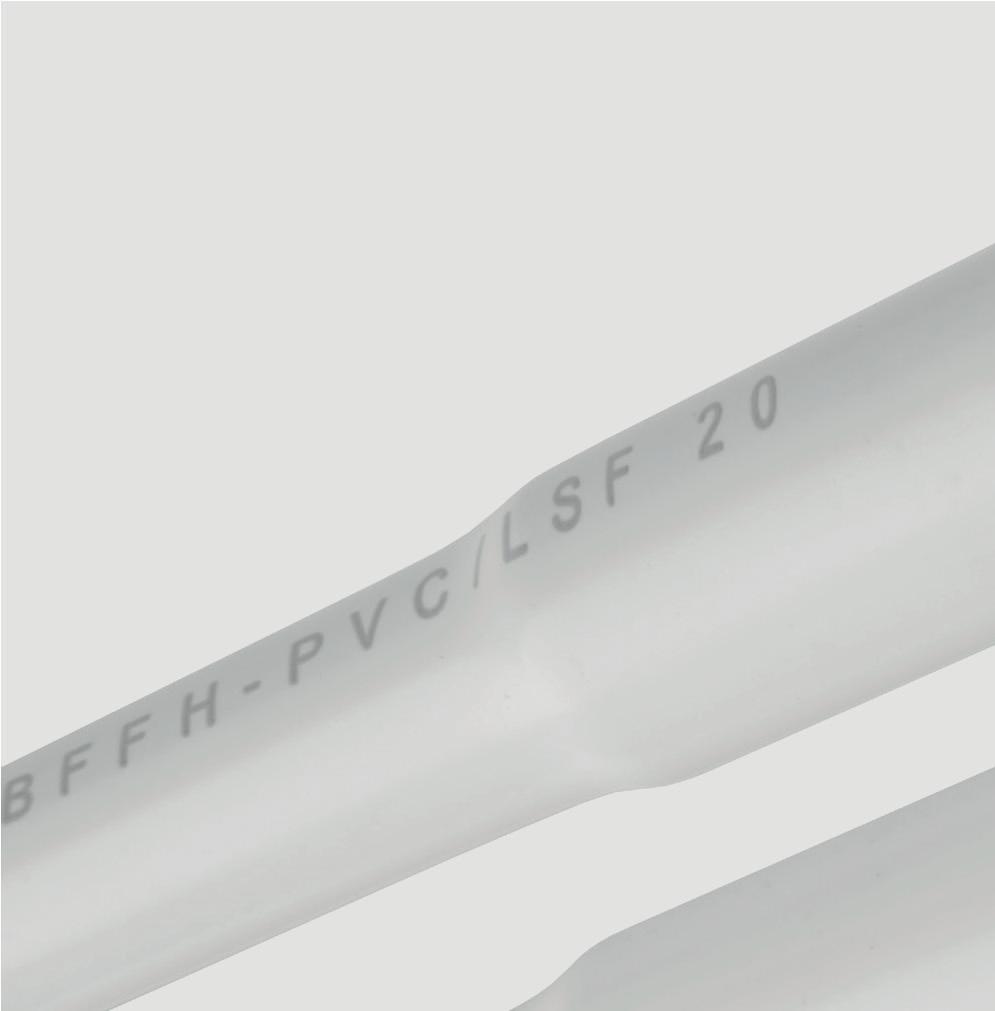
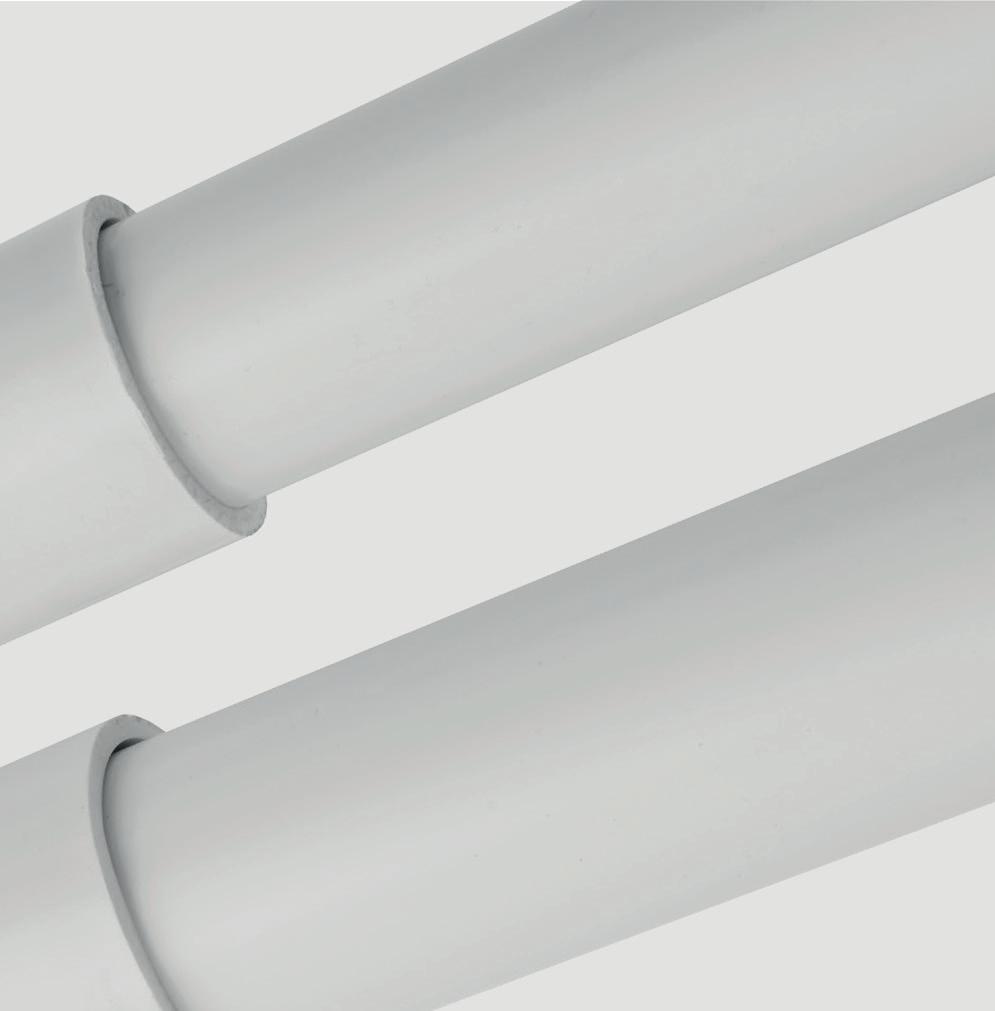
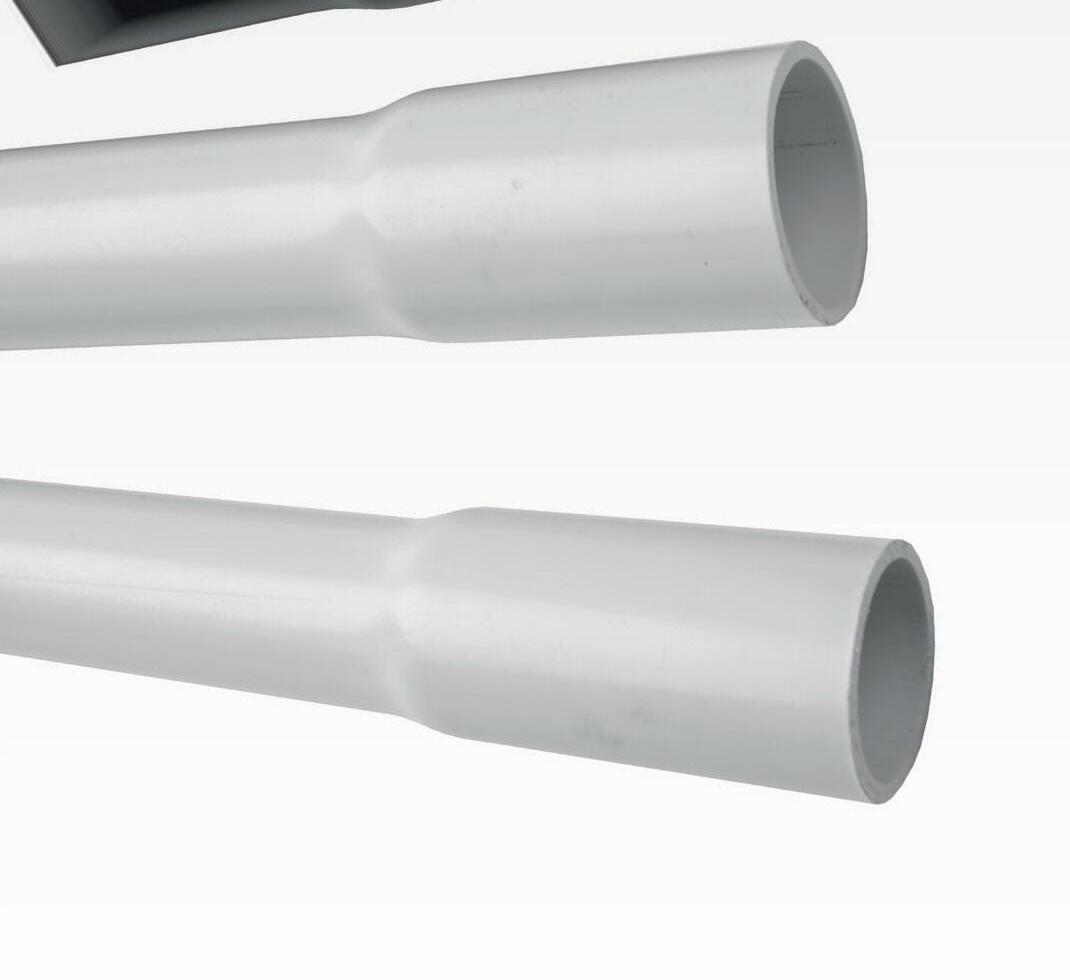
NEW PRODUCT THE NEXT GENERATION OF CABLE MANAGEMENT SYSTEMS
MOULDED COUPLERS FOR SPEED OF INSTALLATION (SAVING TIME AND MONEY)
PVC-LSF (LOWER SMOKE & FUME)
HEAVY GAUGE ONLY
BLACK & WHITE 20MM & 25MM
STOCKED IN THE UK
News and Products
4, 6, 8, 12, 16, 17, 49, 51
Features
LIGHTING
18 Human rights charity moves to new eco building in its 20th year
20 Tradition and power for the future: 75 years of Zumtobel
HVAC
22 HVAC industry encouraged to switch to continuous flow fans
24 Vent-Axia welcomes Government setting date for Awaab’s Law
25 Using pre-heated water with bare wire water instantaneous heaters
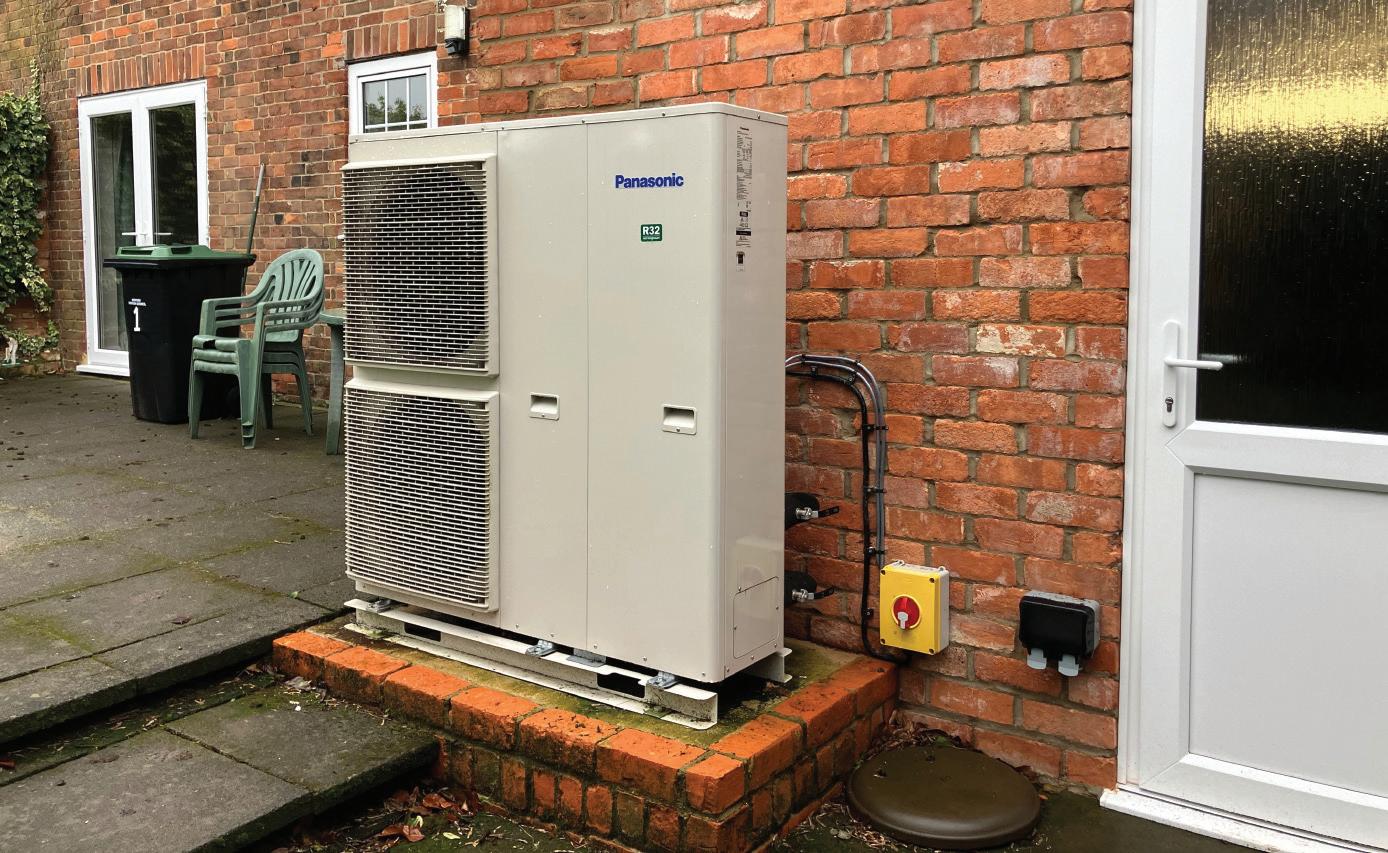
26 Panasonic cuts energy costs for 19th Century Bedfordshire home
ENCLOSURES
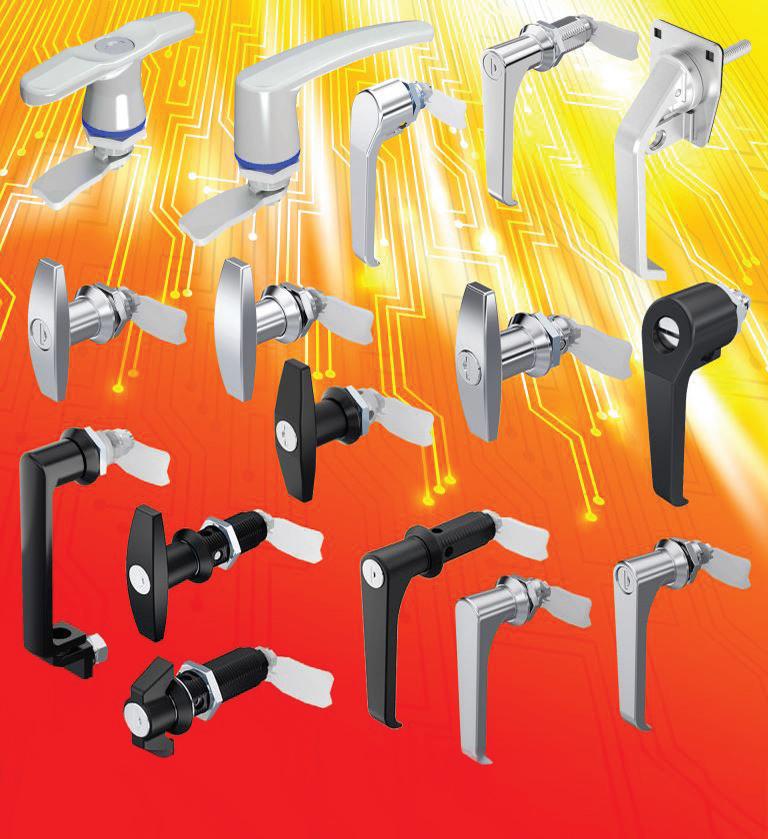
30 Enclosure hardware update for specialist panel builders
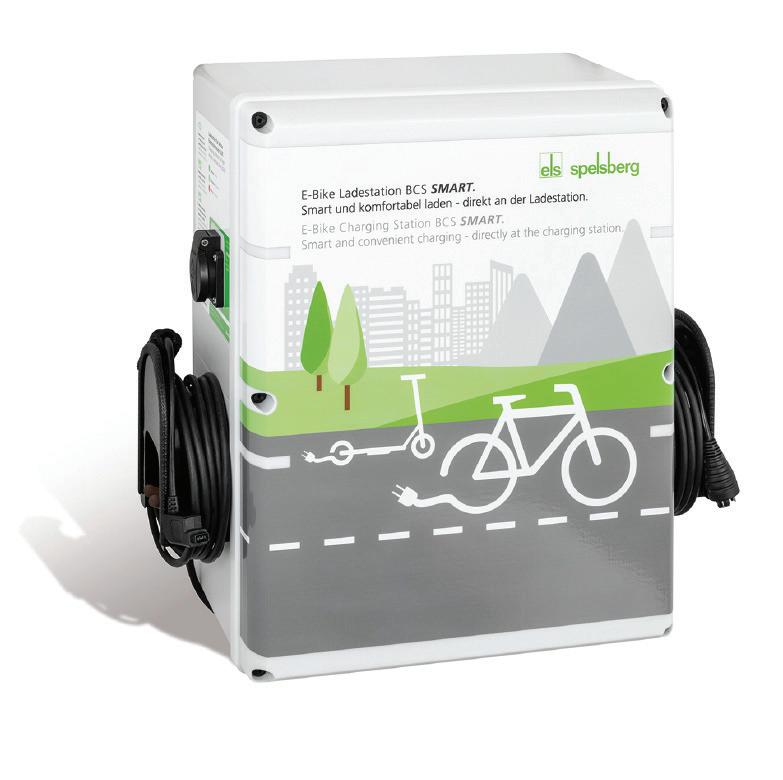
32 Welsh Wildlife Centre powers sustainable travel
SOFTWARE & APPS
35 Fastest growing Scandinavian quotation platform comes to UK
36 Scaling with software
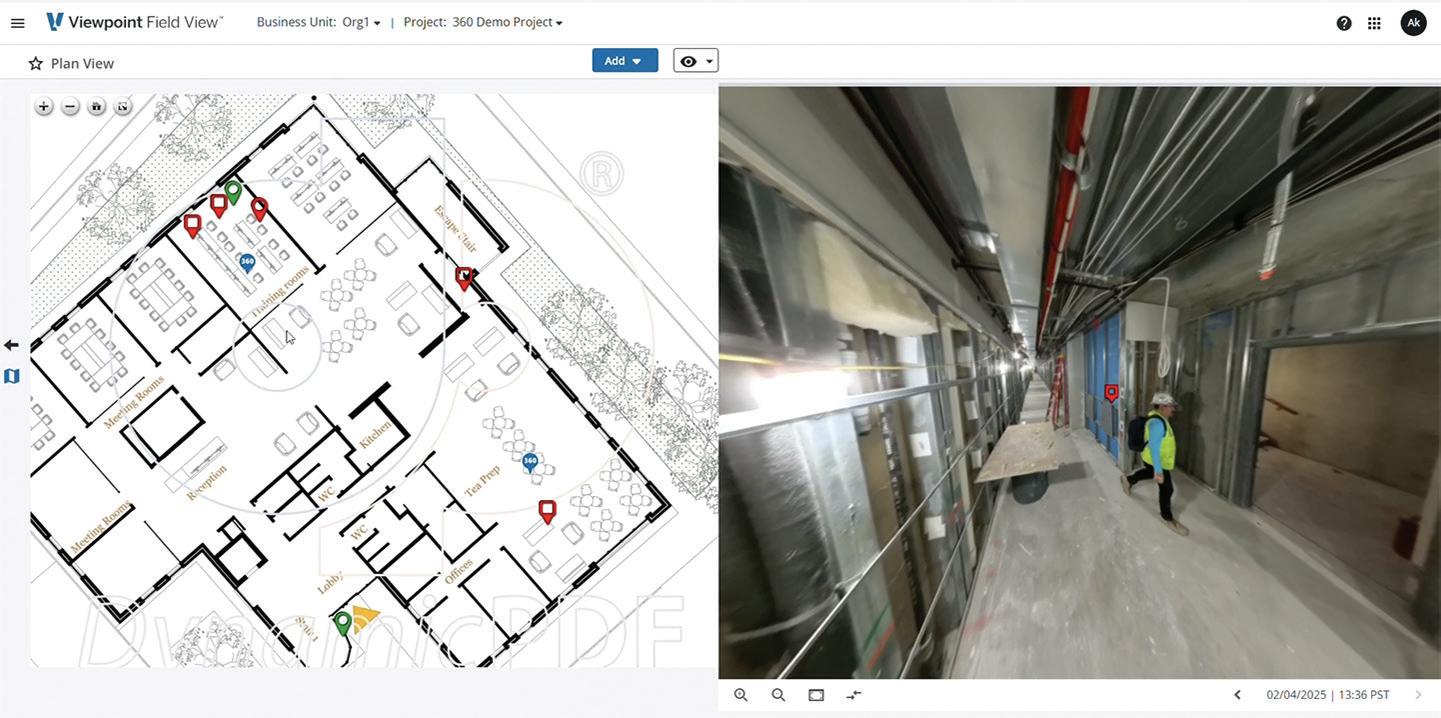
37 Streamlining site capture with new 360º photo functionality
38 Maximise your profits with smarter job pricing
TRAINING
40 Net zero transition offers whole new range of opportunities
41 A practical approach to training
42 Touring Segen Academy: Bridging the renewable skills gap
44 Getting technical: How training is closing the digital skills gap
45 Shorter apprenticeships won’t prepare learners
Extras & Interviews 10, 28, 46
Switching Off
48 Climbing to new heights
Closing argument
Welcome
Today (Wednesday, March 26)
Chancellor of the Exchequer
Rachel Reeves delivered The Spring Statement 2025, bringing a mix of measures impacting the electrical and construction sectors.
While the government’s focus on sustainability and green technology continues, it has raised concerns among business leaders about the lack of clear direction and meaningful relief in the face of rising operational costs.
The industry, however, saw positive announcements, with substantial funding allocated for skills development and training. This includes a £100 million investment to help new entrants, returners, and those looking to upskill.
The government’s focus on building homes and boosting construction provides opportunities for growth, but the sector is grappling with a significant skills gap, with many vacancies remaining unfilled due to a lack of qualified workers.
The Statement will likely provide a boost for industries such as electrical contracting, where demand for skills in energy efficiency, smart metering, and sustainable construction is on the rise. However, for the electrical industry to fully benefit, the government will need to deliver clear, long-term strategies that support innovation, training, and the adoption of sustainable technologies.
34 Wiring the future: Gig economy and the evolution of home services
50 Opposition to energy bill won’t slow down solar momentum
Lisa Peake, EDITOR, lisa.peake@purplems.com @electricaltimes
Appointments
The British Safety Industry Federation (BSIF) is delighted to announce the appointment of John Hooker as its new Chief Executive Officer (CEO). John, who currently serves as the Chief Executive of SATRA Technology Centre Ltd, will officially take over the role in the summer of 2025, succeeding Alan Murray.
ESP is pleased to announce the appointment of two new Area Sales Managers, Thomas Carman and Ian Lauder.
Thomas takes on responsibility for the Home Counties and East Anglia regions, where he will focus on increasing demand across the full range of ESP products.
Ian will be covering Scotland, where he will be responsible for developing existing business with national and independent wholesale customers, as well as identifying partnership opportunities with end users and specifiers.
Phil Philippou has been appointed National Sales Manager at HVAC distributor and engineering business, LH-plc. His responsibilities include leading the company’s sales team to target and growing its chiller maintenance portfolio and installation projects.
Phil’s duties include coaching, motivating, and supporting the sales team through collaborative site/customer visits, while also challenging the commercial and final tender submission to ensure competitiveness and innovation.
Designer radiator manufacturer IRSAP UK has appointed Graham England to its newly created role of Electrical Sales Manager. Bringing over 20 years of sales expertise to the position, Graham will play a key part in supporting the company’s growth as it continues to strengthen its portfolio of high-quality heating solutions via its subsidiary brand, The Radiator Company.
Roxtec is reinforcing its commitment to Southern England by welcoming Stephen Neville as the new Technical Sales Manager for Infrastructure and Industry.
Based near London in Benfleet, Essex, Stephen will be instrumental in driving Roxtec’s growth strategy across the region. His core focus will be on elevating infrastructure resilience and environmental standards across sectors including ports and airports, advanced facilities, water management works and civil construction.
TrustMark, the UK’s only GovernmentEndorsed Quality Scheme for work carried out in and around the home, announces the appointment of Charlotte Carter as Chief Operating Officer (COO), a newly established role in the organisation. Charlotte joins TrustMark after 13 years at Checkatrade. She is strategic and resultsorientated with over 10 years of executive level success, recognised for driving profitability and operational transformation at scale.
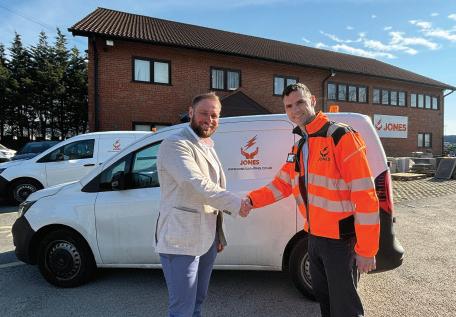
United Living strengthens infrastructure capabilities with acquisition of Jones
United Living Group, the social and utility infrastructure solutions provider has announced the acquisition of Jones, a leading power distribution and street lighting contractor. This acquisition strengthens United Living’s existing activities in the power market, which have been growing since it achieved National Electrical Registration Scheme (NERS) accreditation in 2024.
Based in the North West of England, Jones is a specialist Independent Connection Provider (ICP) providing DNO services and a full range of street lighting services, covering design, project management, consultancy, installation and maintenance on behalf of UK Distribution Network Operators and Local Authorities.
Jones has a long-standing and strong reputation for quality and reliability of service in delivering major projects for its clients. It is also committed to bridging the skills gap and expanding workforce capability, through an internal training programme to bring a new pool of skilled labour into the sector and support increasing requirements from DNOs.
Dave Jones, Managing Director, Jones said: “We are excited about the opportunities this partnership brings to leverage our combined strengths. The investment by United Living will enable us to further enhance the services we provide to customers, setting the standard for excellence in delivery and driving environmental innovation and improvements.”
Scolmore Group announces new external sales structure to drive growth
Scolmore Group is pleased to announce a realignment of its external sales structure to support the organisation’s strategic business plan and to maximise the growth potential for all companies within the group – Click, Ovia, ESP and Unicrimp.
Due to the continuing success and growth of the Elucian range since it was launched in 2021, a decision was made to separate Wiring Accessories and Circuit Protection into two separate categories, each with its own dedicated sales team. This will provide more focussed effort and allow the company to develop the expertise within each sector to offer the highest level of service to customers.
Scolmore Group is confident that this
evolution will not only bring significant benefits to customers and partners, but will maximise the particular skills and expertise within the senior management team.
The restructure will see former Regional Sales Manager (South West and Midlands), Audra Fellows, promoted to the new position of National Sales Manager - Group Specification and Key Accounts.
Promoted from Regional Sales Manager (North) to National Sales Manager - Click, is Dom Freer who will now have responsibility for the Click range of products across the UK (excluding Scotland & Northern Ireland). Dan Ellams has been appointed the Elucian National Sales Manager, covering the UK (excluding Scotland and N. Ireland).
Norfolk residents benefit from £2.1 million power upgrade
A £2.1 million investment has upgraded power supplies at an electricity substation near Great Yarmouth, benefiting thousands of residents for the future.
UK Power Networks, which distributes electricity across the East, has installed a new 23-tonne electricity transformer in the village of Martham. Transformers step down the power so it can be safely delivered to homes and businesses, offer scope for greater electrical capacity and will maintain reliable supplies.
The new kit, which was carefully manoeuvred into place, is part of UK Power Networks’ investment programme to upgrade the electricity supply. It will receive electricity from the network at 33,000-volts and safely turn it down to 11,000 volts for onward delivery to about 6,000 customers in the village and beyond.
Gavin Hawes, project manager at UK Power Networks, said: “This investment project will deliver long-lasting benefits in the area and support growth in demand for electric vehicles, heat pumps and more low carbon technologies connecting to electricity networks.”
UK Power Networks owns and maintains the network of cables, substations and power lines that deliver electricity to approximately 20 million people across the East, London and South East of England. It has invested £8 billion in its electricity networks since 2011.
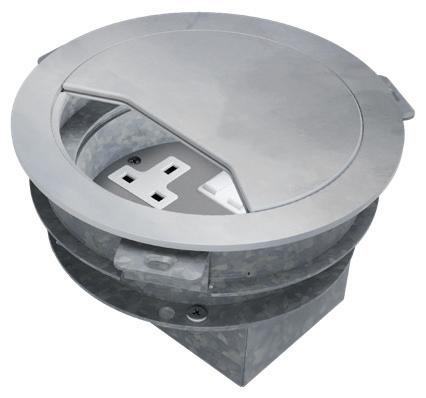
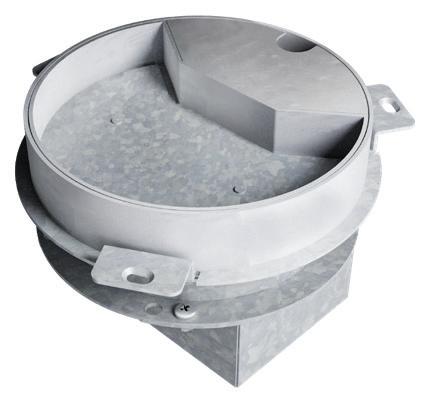
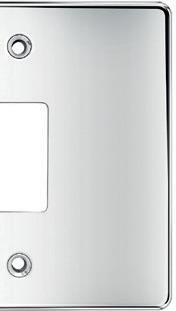
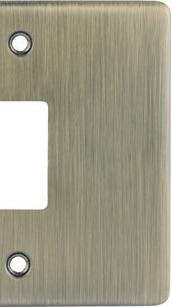
Stainless Steel Grommet
Our Stainless Steel Grommet is an elegant, premium quality floor-access solution that allows you to connect seamlessly with your underfloor power distribution system.
The Stainless Steel Grommet is designed for use in high-end commercial environments and is suitable for raised floor applications. It can be installed in a range of flexible and efficient configurations that permit safe and easy of access to power and data services within the under-floor void.
carpet installations.
Stainless Steel Flanged Trim for
Stainless Steel Tramline Trim for premium floor tile installations.
IN BRIEF
The No Falls Foundation, the first and only UK-based charity dedicated exclusively to the work at height sector, welcomes the recent announcement that the Government and regulators are set to review outdated health and safety regulations, including plans to simplify and streamline reporting of workplace accidents.
VIVID has been offered £14.35 million from the government’s Warm Homes: Social Housing Fund (WH: SHF) to improve the energy efficiency of their homes. This provisional allocation of funding, combined with VIVID’s own £33.6 million investment to improving energy efficiency over the next three years, is a significant boost.
Schneider Electric is doubling its intake of veteran talent as it looks to address the UK skills shortage.
Recognising the valuable, transferrable skills of military personnel, Schneider Electric’s Veterans Talent Programme equips people leaving the armed forces with the industry knowledge and technical skills needed for hard-to-fill operational and senior management roles in the energy management and electrical industry. The demand for skills in these areas is growing fast as the UK increasingly shifts towards cleaner energy and its net zero targets.
Recolight has announce that 12 companies joined the Recolight WEEE scheme over the last 12 months. Five companies joined during 2024, and a further seven in January 2025.
Nigel Harvey, CEO, said: “At Recolight, we are committed to providing a comprehensive recycling and reuse service for the customers of our Members. Over the last five years we have been working across the lighting industry to drive the transition to a Circular Economy. We are delighted to be recognised as more than just a compliance scheme”
The next community heat hub goes live
The Community Heat Hub (CHH) is now delivering low-carbon heat at The Gateway in Bexhill, Sussex, a vibrant housing development being delivered by Vistry Group.
The Community Heat Hub is one of GTC’s low carbon heat network solutions that answers the Future Homes Standard by reducing carbon emissions by 75-80 per cent from day one, combing the two FHS notional specifications of heat pumps and heat networks in one future-proofed, net zero solution.
Heat Hub in late February and first homeowners moved in on February 24. This is the UK’s second Community Heat Hub to be commissioned since its launch, with more being delivered in the coming months.
The Community Heat Hub at The Gateway is estimated to save around 850 tonnes of carbon dioxide emissions annually in comparison to individual gas boilers.
Vistry contracted GTC to deliver heat to The Gateway in Bexhill, alongside electric, fibre, water, and wastewater. Once fully built the scheme will provide 801 high-quality mixed-tenure new homes, a primary school, community centre and sports pavilion connected to the low carbon solution. GTC commissioned The Gateway Community
Brendan Evans, Managing Director at Vistry Kent said: “Vistry is committed to delivering sustainable long-term communities that provide the mix of high-quality new homes that residents need. Collaborating with likeminded organisations like GTC is essential to help us deliver innovative solutions that meet important decarbonisation standards while helping to fulfil the UK’s chronic need for new housing.”
ABB completes acquisition of Siemens’
Accessories business in China
ABB has completed the acquisition of Siemens’ Wiring Accessories business in China, to broaden ABB’s market reach and complement its regional customer offering within smart buildings. Generating over $150 million in revenue in 2024, the business adds a comprehensive product portfolio, a robust distribution network across 230 cities, and 350 skilled employees.
Wiring
The business will be margin accretive to ABB and expands ABB’s portfolio with wiring accessories, smart home systems, smart door locks and further peripheral home automation products, which will continue with the Siemens brand under terms of a licensing agreement.
Mike Mustapha, President of ABB Electrification’s Smart Building Division said: “This acquisition strengthens ABB’s position and commitment to growth in China’s wiring accessories market, complementing our smart buildings technologies portfolio and enabling us to meet evolving customer needs by creating safer, smarter and more sustainable buildings. We are perfectly positioned to offer a full range of wiring accessories, home and building automation, energy distribution and management solutions, to address major local challenges such as rapid urbanization, energy transition, electrification of buildings, decarbonization and advancing AI and digitalization.”
Top marks for sustainability as South Yorkshire Primary School goes green
Pupils and teachers at Marshland Primary Academy in Moorends, near Doncaster, part of Venn Academy Trust, are celebrating cutting their carbon footprint after successfully installing a modern ground source heat pump system and other state-ofthe-art energy efficiency measures.
Working with Kensa, the school is trailblazing how to go green, overhauling its old heating and hot water system and replacing the ageing gas boilers with seven new ground source heat pumps.
The six-month project, partially funded by the Government’s Condition Improvement Fund, also included fitting new radiators and 69 solar PVT panels, an emerging technology used in renewable heating installations. The
upgrades are expected to boost the school’s energy efficiency, cut heating-related carbon emissions by close to 80 per cent, and ensure classrooms stay warm and comfortable throughout the year for the benefit of staff and pupils alike.
Investing in energy efficiency upgrades has provided the school with a low-cost, low-
maintenance, renewable heating system, securing its energy future while providing long-term savings on heating and hot water bills.
To meet the government’s goals of reducing public sector carbon emissions by 75 per cent by 2037, thousands of schools across the UK will need to follow Marshland Primary’s example, replacing their ageing, high-carbonemitting heating systems and embracing more innovative, modern technologies.
This latest school ground source heat pump installation follows more than fifteen others Kensa has completed in schools, including in South Wales and Northumberland, along with another in Doncaster at Richmond Hill Primary School.
Autocharge enabled for CTEK EV Charge
Points
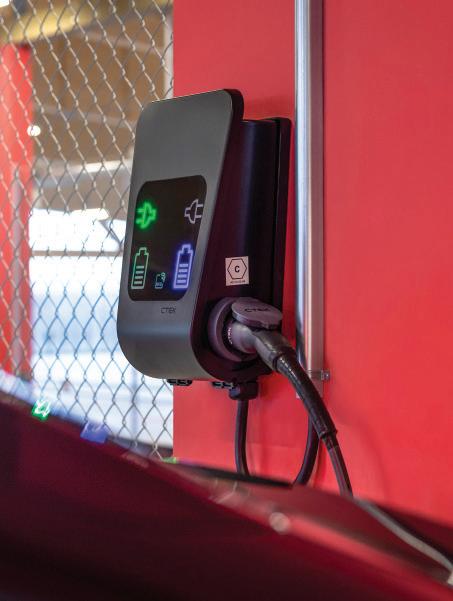
Zero touch charging of Electric Vehicles (EVs) has been enabled for CTEK’s latest charge points via a new firmware update which includes Autocharge.
The new firmware update 4.9.1 empowers CTEK’s CHARGESTORM CONNECTED 3 (CC3) to support Autocharge, the streamlined charging experience for drivers who will simply plug into a CC3 which automatically communicates with the vehicle and, if a payment method has been previously set up, begins charging.
The faster to use Autocharge is particularly beneficial for businesses with fleet or other workplace charging and destination charging. Its benefits also apply to public charging networks and residential community car parks. Only registered vehicles are authorised to charge, preventing unauthorised access.
CTEK’s firmware version 4.9.1 also enables wireless configuration over WiFi, giving installers the opportunity to configure and commission newly installed CC3s from inside their work van, now by using a mobile phone or tablet. It also adds customisable current limits per outlet, allowing greater flexibility in distributing available power.
The new firmware also introduces key innovations for both CTEK’s current CC3 model and its predecessor, the CC2. Both models can now get wireless load balancing thanks to CTEK’s NANOGRID AIR add-on, which enables dynamic power management without physical wiring.
Visit: ctek.com/support/software-firmware
The Highland Council backs West of Orkney Windfarm’s offshore plans
The Highland Council has given its backing to the West of Orkney Windfarm’s offshore plans. The final decision on the offshore consent will be now made by Scottish Ministers following recommendations by the Marine Directorate Licensing Operations Team (MD-LOT) and taking into account comments made by consultees.
“This paves the way to full offshore consent which, if secured, would enable us to enter into a forthcoming UK ‘contract for difference’ auction round – which is a vital step in the advancement of both the project and its supply chain.
Commenting on the decision, West of Orkney Windfarm Development Manager
Jack Farnham said: “This is another important milestone for the West of Orkney Windfarm, and we are grateful to The Highland Council for their support.
“The West of Orkney Windfarm is a major energy infrastructure scheme which can bring significant long-term economic benefits to the north of Scotland and beyond. We will continue to work on achieving the critical remaining project milestones in order to generate clean power by 2030.”
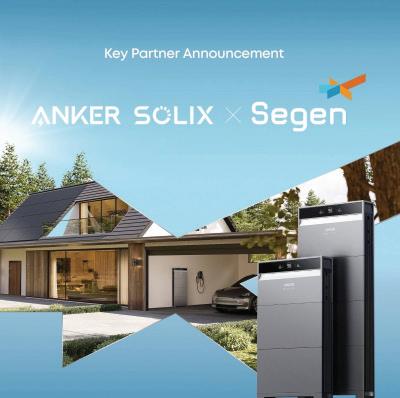
Anker SOLIX and Segen join forces to expand energy storage solutions in the UK and Ireland
Anker SOLIX has announced a new partnership with Segen, the UK’s largest distributor of renewable energy technologies. Through this collaboration, installers across Ireland will gain access to the full range of Anker SOLIX X1 Home Energy Storage (HES) systems, including both single-and three-phase models in the future. With its all-in-one, ultra-slim minimalist design and advanced functionality, the X1 sets a new benchmark in the industry.
Christofer Fisher, Segen’s Senior Technical Product Manager, commented: “Segen are delighted to be working with Anker SOLIX. This product range perfectly balances market leading technologies and easy-to-use features that customers will fall in love with. Our values and commitment towards providing customers with the best level of support are mirrored by Anker SOLIX, and we are thrilled to be collaborating together for the launch of the X1 to our market.”
The Anker SOLIX X1 is a modular and scalable energy storage system for solar power which is designed for residential and small commercial applications and offers several advantages over conventional storage systems. The capacity can be flexibly adapted to requirements, with the autonomy of the individual modules increasing reliability. In addition, the modularity enables simple assembly and uncomplicated maintenance, which provides stress-free maintenance.
The Anker SOLIX X1 offers plug-and-play installation, making it installer-friendly and minimising maintenance efforts. The modular structure allows for quick assembly and easy maintenance, ensuring a hassle-free experience for installers and homeowners alike.
Panasonic Partners with British Gas to provide service and maintenance for Panasonic Aquarea Air Source Heat Pumps
Panasonic Heating & Cooling Solutions has entered into a new partnership agreement with British Gas to provide servicing and maintenance for Panasonic Aquarea Air Source Heat Pumps installed across the UK. This collaboration ensures homeowners benefit from British Gas’ network of qualified, experienced engineers trained to keep Aquarea heat pumps running efficiently and reliably for households nationwide. As the UK makes significant progress towards net-zero emissions, homeowners require a reliable support system. This partnership merges innovation, scale, and expertise to ensure that Aquarea air source heat pumps remain the gold standard in home heating year after year. Partnering
with one of the UK’s most trusted home servicing and maintenance providers, guarantees that homeowners have access to the highest quality service, and one of the UKs leading network of heating engineers, instilling confidence in the transition towards sustainable heating.
British Gas engineers have completed comprehensive, hands-on training, equipping them with the skills necessary for maintenance, diagnostics, and repairs of the Panasonic Aquarea Heat Pumps. These engineers are dedicated to ensuring systems operate efficiently, enabling homeowners to reduce energy costs while also enhancing comfort within their homes.
The agreement was marked at ISH 2025, Frankfurt on March 17 – pictured left to right Panasonic Heating & Cooling Solutions Europe CEO Hiroshi Komatsubara; Panasonic Heating & Cooling Solutions Europe MD Enrique Vilamitjana; British Gas Chief Commercial Officer Alex Marples; British Gas Director, Home Solutions David Robertson.
Winner Q&A
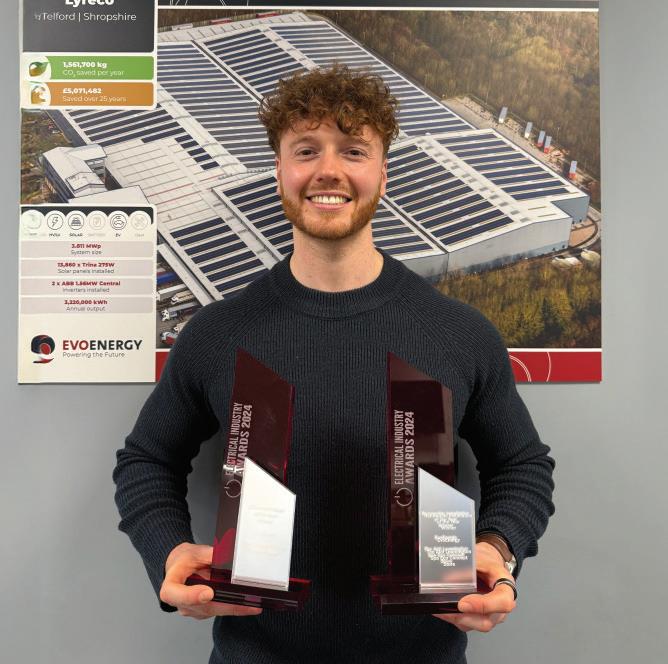
Having picked up two trophies at the Electrical Industry Awards 2024 for groundbreaking projects at the Aldi Leamington Spa Eco Concept Store and the National Cycling Centre, Alexander Lever, Marketing Manager at EvoEnergy, shares his insights into the technologies and sustainable practices that are shaping the future of commercial energy use
Congratulations on winning the Renewable Installation of the Year award! Can you give a brief overview of the Aldi Leamington Spa Eco Concept Store project?
The Aldi Leamington Spa Eco Concept Store is a groundbreaking project in sustainable retail. The key objective was to reduce the store’s carbon footprint and improve energy efficiency through innovative renewable technologies. The installation featured a 209kWp solar PV system, which generates 167,409kWh of clean electricity annually. Alongside this, the store integrates a range of sustainable materials such as cement replacement concrete, timber fibre insulation, and a partial green roof, creating a benchmark for sustainable retail developments.
How do you envision this project influencing future commercial building designs in retail?
This project is a strong example of how large-scale retailers can integrate renewables into their operations effectively. We believe this model will encourage other retailers to rethink their approach to energy consumption and sustainable construction. Features such as solar PV, battery storage, and passive design elements are scalable across other stores, making net zero operations a realistic goal for the retail sector.
What lessons did you learn from this project?
What were the main challenges you faced during this project?
One of the biggest challenges was ensuring that all the sustainability features worked in harmony while maintaining a cost-effective and functional design. From installing solar panels to incorporating circular economy principles like recycled lighting columns and refill stations, each aspect needed careful planning. Additionally, balancing the renewable energy generation with the store’s operational energy demand was a crucial technical challenge.
One key takeaway is the importance of designing energy-efficient systems that align with business operations. Retail stores have specific energy usage patterns, and integrating the right renewable technologies—such as battery storage to capture excess solar energy—can make a significant difference.
Another lesson is that sustainability should be approached holistically; by combining energy efficiency with eco-friendly building materials and customer engagement initiatives, retailers can maximise their environmental impact.
Tell us more about the National Cycling Centre project, winner of the Electrical Project of the Year, and its key sustainability goals...
The National Cycling Centre project, delivered in partnership with Manchester City Council, aimed to support the city’s net-zero ambitions by integrating a renewable energy solution into one of the UK’s most iconic sports facilities.
Given that the existing Velodrome roof could not support solar panels due to weight constraints, the project required an innovative approach— leading to the installation of a 196kWp solar carport system. This installation now generates 171,788kWh of renewable energy annually, reducing carbon emissions while ensuring the facility remains fully operational.
The project was part of the European Regional Development Fund’s “Unlocking Clean Energy in Greater Manchester” initiative, reinforcing its role in driving sustainability at a regional level.
In terms of innovation, what made this solar carport system stand out from other similar installations in the industry?
This project is unique in that it not only serves as a renewable energy source but also enhances the functionality of the National Cycling Centre.
The Y-shaped asymmetrical carports, designed with a 3.5m clearance, accommodate taller vehicles carrying bicycles on roof racks— something that was a critical consideration for the facility. EvoEnergy also incorporated Solaredge Module Level Power Electronics (MLPE) to optimise energy generation, increase safety, and improve monitoring capabilities.
Additionally, security and accessibility were prioritised, with integrated CCTV, downlighting, and uplighting ensuring a safe and well-lit environment for visitors.
What are you most proud of in relation to the project, both personally and as part of the EvoEnergy team?
We take immense pride in having successfully delivered a highly visible, sustainable energy solution for a world-class sports venue. The project was completed under budget and ahead of schedule, despite its complex requirements and challenging constraints.
Beyond energy generation, the project delivered 850 apprentice hours and provided hands-on
THE ELECTRICAL INDUSTRY AWARDS 2025 IS SPONSORED BY:
experience to underrepresented groups within the construction sector.
Additionally, 98 per cent of project waste was diverted from landfi ll, reinforcing EvoEnergy’s commitment to environmental stewardship.
Seeing the project receive industry recognition highlights the importance of renewable energy in public infrastructure and sets a precedent for similar projects across the UK.
What do these awards mean for you and the team at EvoEnergy?
Winning these awards is a signifi cant milestone for our team, showcasing the expertise, dedication, and innovation that go into every EvoEnergy project.
It’s particularly rewarding to see projects like the National Cycling Centre and Aldi Leamington Spa Eco Concept Store recognised, as they highlight how renewables can be integrated across different sectors—from retail to sports infrastructure.
These awards reaffi rm our role as industry leaders in delivering cutting-edge renewable solutions and encourage us to continue pushing the boundaries of what’s possible.
What is next for EvoEnergy?
EvoEnergy continues to work on transformative projects that drive the UK’s transition to clean energy. We are expanding our expertise in solar PV, battery storage, EV charging, and smart grid technologies, with a strong focus on large-scale commercial and public-sector projects.
A prime example is our recent installation at Birmingham Airport, where we delivered the largest airside solar PV system in the UK, a 6.89MWp ground-mounted array that signifi cantly reduces carbon emissions and enhances the airport’s energy resilience.
Beyond this, we are seeing growing interest in Power Purchase Agreements (PPAs) and energy fl exibility solutions, helping organisations secure clean energy without upfront capital investment.
Looking ahead, we remain committed to innovation and collaboration, ensuring that businesses, local authorities, and communities can achieve their sustainability goals effi ciently and affordably.
Boosting wind and solar power with corrosion prevention
As the renewable energy sector grows, ensuring the longevity of wind and solar installations becomes critical. Corrosion is a major threat to their expected 20-30 year service life, which can undermine the sustainability of these energy sources. Cortec highlights the importance of proper material selection and corrosion prevention during shipping and maintenance
If a wind or solar installation doesn’t last as long as its expected 20-30 year service life, is it really a sustainable use of resources? With corrosion as a key enemy of wind and solar longevity, Cortec highlights the importance of proper materials selection during the design phase, but also of the benefits of a few simple corrosion preventative steps during shipping and maintenance.
ESD packaging for sensitive solar components
When packaging photovoltaic equipment, manufacturers should think of protecting ESD (electrostatic discharge) sensitive components such as bypass diodes, as well as the metal supports, frames, wires, and electrical contacts that could be subject to corrosion. EcoSonic VpCI-125 HP Permanent ESD Films and Bags take care of both concerns. Vapor phase
Corrosion Inhibitors in the film inhibit corrosion on a variety of ferrous and non-ferrous alloys, including galvanised steel, aluminum, and brass; while permanent static-dissipative properties help reduce or eliminate static buildup in the package.
Outdoor shipment of large wind components
In the case of wind turbine components, size, rather than ESD protection, is one of the big issues. Large wind turbine shafts, rings, and hubs often receive the brunt of attack from harsh weather because they may be transported on open truck beds or stored onsite for several years until installation is completed. Fortunately, VpCI-126 HP UV Shrink Film and MilCorr VpCI Shrink Film are two anticorrosion films designed to hold up well in outdoor conditions and available in sizes large enough to shrink wrap giant components. If needed, additional protection can be added, such as VpCI-368 D removable coating for more vulnerable surfaces and/or Desicorr VpCI Pouches for additional corrosion protection plus desiccant action within equipment and packaging voids.
Corrosion in control panels
Once solar panels and wind turbines are put into service, the job of corrosion protection is
not over. Solar panels and wind turbines are inherently equipped with wires and electrical contact points that merge inside control boxes potentially subject to the ingress of oxygen, humidity, and chlorides. Placing a small self-stick device such as the VpCI-105 or VpCI-111 Emitter inside is an easy and effective way to guard against corrosion surprises that would require early repair or replacement of any exposed electrical contact points within the panel. Similar to VpCI films, these devices release corrosion inhibiting vapors that diffuse throughout the space and adsorb on metal surfaces (ferrous and non-ferrous) to which they are attracted. It is much easier to replace these once every two years as part of routine maintenance rather than risk the potential of corroded metal contacts that could interrupt operations and require more extensive repair.
Additional coatings for structural protection
In some cases, extra coatings may be desirable on various structural components. For instance, wind turbine base bolts are especially prone to corrosion and are good candidates for VpCI-368. Although classified as a removable coating, VpCI-368 offers such heavy duty corrosion protection that it is often used in offshore platform layups. If (unlike normal) solar
panel frames and supports are made of carbon steel rather than corrosion resistant aluminum or galvanised steel, an extra protective coating such as EcoShield VpCI-386 or a primer/topcoat combo such as VpCI-396 and VpCI-384 is definitely in order to reduce solar structural corrosion. In some extreme conditions, owners may even find supplementary coatings warranted for an additional layer of protection on aluminum or galvanised steel in the severest environments. In these cases, a wash primer such as VpCI-373 should be used before topcoating for better adhesion.
Keep renewable energy sustainable
While the suggestions above do not cover all possible corrosion concerns for wind and solar energy, they are good places to start for basic corrosion prevention. Protecting solar and wind components during transit is critical to getting off to a good start, while protecting control panels and vulnerable structural components as part of routine maintenance can promote desired longevity by reducing corrosion at some of the easiest points to address.
Contact Cortec to learn more about protecting solar and wind components during shipping and maintenance to maximise the sustainability of renewable energy. Visit: www. cortecvci.com/contact-us
The industry’s largest and most respected event, the Electrical Industry Awards is back.
Brought to you by Electrical Times, the Awardscelebrating its 33rd year - recognise outstanding product innovation as well as individual talents. The winner of each category receives a coveted Electrical Industry Award.
So if you, or your company have something to shout about, these awards will get you noticed.
SPONSORS:
Some incentives for entry....
Gain independent industry recognition for the excellent work delivered by you, highlighted across the range of categories.
Promote your excellence, demonstrate a competitive edge and position your company alongside the best in the business.
A winners reception in central London with food, drinks, entertainment and completely free of charge!
Being a finalist is proof of excellence in your business and proves to clients new and existing you are in industry innovator.
The great big switch on is coming! but are we ready?
The long-awaited increase in the UK’s electrical capacity is due in 2030, less than 5 years way. In total, it is around 50 GW which, to put into context, is almost the equivalent of the UK’s entire peak electricity demand, with 1 GW being able to power over 2 million homes for a year.
Around London we are expecting upgrades to Uxbridge Moor, North Hyde, Amersham, Laleham and Slough East, which are linked with around 30 data centres averaging above 100MWit per site, amounting to well over £30bn of construction investment aligned with these upgrades.
Combining these developments with secured power and across the wider UK including key growth areas; Manchester, Leeds, Northumbria, Wales and Scotland it is estimated that there is currently over £100bn of construction in digital infrastructure planned for the next 10 years. This is amazing for the industry - but the question is, can we deliver it?
Being realistic, the power ramp up is unlikely to come all at once on January 1, 2030, and will probably be a phased approach. However, if we also factor in the impact of the number of planned Battery Energy Storage Systems (BESS) supporting the sustainable energy productions, it is likely we will see the UK getting close to its target and delivering the planned digital infrastructure within the time frame. In broad terms, this means that everyone in the sector will need to find a way to increase output to meet this demand, as well as encouraging new entrants to support the effort.
But are we ready? The answer, at best, is maybe — and that means we must act now. One of the issues is that the current UK market growth has slowed in line with the availability of power, especially compared with significant growth areas in other European regions. The demand has certainly been there, but the UK construction market has faced several challenges, including rising costs from fixed-price risks taken before high inflation, the burden of Covid-related debt, and government tax increases that have impacted both investment and profit.
In addition, the fallout from the collapse of ISG left a huge hole in the market, with over £1bn in debts, leading to understandable trust issues. The industry needs a market reset, with a focus on fostering the growth of UK contractors through sustainable profits, stronger client collaboration, enhanced training initiatives, and better connections with colleges, universities, and government support.
By Nick Marlow, Regional Director at BCS
It is worth noting that none of this factors into the government’s recent “AI Opportunities Action Plan” announcement, which commits to building a ‘cutting-edge, secure, and sustainable AI infrastructure.’ In the document, it outlines plans for a dedicated 500MW data centre for public organisation use, thereby suggesting that a much higher number of these dedicated AI 500MW data centres will be needed to service the private sector. Yet, to date, there is no mention of a plan to support the construction and manufacturing industries to meet the substantial growth of the data centre industry within the UK that this will entail.
Another factor to consider is that AI-driven changes to digital infrastructure, such as the shift towards higher rack densities, which ultimately require liquid cooling, have already caused significant disruption within the industry. Design consultants are operating at full capacity, trying to implement changes on projects that are already in progress or late in the design phase. There is also uncertainty surrounding the shift in the manufacturing and materials industry, as it must adapt to meet the sector’s requirements, including the need for precision
piping and commissioning boilers for heat load testing. This is against a backdrop of unknowns regarding the cost and project timelines, which is creating additional pressures on funders and developers.
Finally let’s not forget the skills shortage. We will need a significant influx of people within the industry if we are set for £100bn of digital infrastructure development. At BCS we are proud of our apprenticeship programme and our athlete conversion programme coupled with our investment in training and people addressing this issue. However, we recognise we still need to do more! If we assume we need 500 people per £1bn of digital infrastructure, we will need to have around 50,000 people in the industry to deliver it. And this doesn’t include the operations staff.
As an industry we need to come together, meet the challenge and truly unleash the full potential of the UK digital infrastructure. This will mean supporting the construction industry to ensure they don’t take on all the risk. This can be done by the government or clients, but we all need to pull together if we stand a chance of succeeding in delivering what is needed.
How the industry is becoming more welcoming for women
With International Women’s Day, taking place last month, Jackie Janssen, Head of Communications at the Considerate Constructors Scheme (CCS) highlights five best practice strategies that are helping to make the sector more accessible to women
The construction industry, traditionally dominated by men, is now evolving towards greater inclusivity and diversity. Companies are actively creating inclusive workplaces that support women, recognising that diversity is key to the sector’s success—especially amid a skills shortage. From establishing mentorship programs and women’s networks to offering flexible working arrangements and addressing unconscious bias, the sector is working to create more inclusive workplaces where women can thrive and contribute to shaping the future of construction.
Establishing women’s networks and mentorship programs
Creating dedicated support networks for women within construction firms provides a platform for discussion, professional development, and advocacy. A number of CCS partners have introduced Women’s Networks, allowing female employees to connect, share experiences, and discuss challenges they face in the industry. These networks can help to foster a sense of community, build confidence, and promote a culture of mutual support. Mentorship programs also play a vital role in helping women advance their careers. By pairing less experienced employees with senior professionals, these programs offer valuable career advice, encouragement, and practical guidance on navigating an industry that has historically been male-dominated. Structured mentorship ensures that women not only enter the sector but also thrive in leadership positions.
Offering flexible working arrangements
One of the biggest barriers preventing women from joining or remaining in the construction industry is the lack of flexible working arrangements. However, this is beginning to change, particularly with the government’s proposed Employment Rights Bill, which aims to make flexible working the default from day one unless an employer can prove otherwise.
Many construction firms are already adapting by introducing part-time roles, job sharing,
By tackling unconscious bias, construction firms can shift mindsets and ensure that hiring, promotion, and leadership opportunities are truly based on merit rather than outdated perceptions of gender roles.
and hybrid working models. These initiatives enable women—especially those with caregiving responsibilities—to balance their careers with family commitments. By offering flexible working from the outset, construction companies can demonstrate their commitment to inclusivity while ensuring they do not miss out on talented professionals.
Providing inclusive facilities on site
Creating a more welcoming environment for women should go beyond policies and include practical changes on construction sites. Some positive examples include investment in genderinclusive facilities, including self-contained, lockable toilets and private nursing rooms for new mothers.
Another essential consideration is Personal Protective Equipment (PPE). Traditionally, PPE has been designed for male body shapes, often making it uncomfortable and unsafe for women. Companies that provide PPE in women’s sizes send a clear message that they value and respect their female workforce.
Simple yet impactful steps like these help break down barriers and create a more comfortable and professional working environment for all.
Addressing unconscious bias and gender equality training
Cultural change starts with education. Unconscious bias training is being adopted by forward thinking companies to help employees recognise and challenge stereotypes.
Gender equality workshops are another powerful tool. These sessions typically cover workplace inclusion, leadership development, and breaking down barriers that prevent women from progressing in their careers. Investing in regular training not only creates more inclusivity but can also improve team dynamics and overall productivity. By tackling unconscious bias, construction firms can shift mindsets and ensure that hiring, promotion, and leadership opportunities are truly based on merit rather than outdated perceptions of gender roles.
Promoting female role models and inspiring future generations
Visibility matters. Actively highlighting female leaders through case studies, social media, and leadership programs are popular ways to challenge industry stereotypes. Meanwhile outreach efforts, including school visits, career fairs, and mentorship programs can help to introduce young women to construction careers. At the Considerate Constructors Scheme (CCS), our annual Gala event showcases some inspiring female leaders in the Hall of Fame & Rising Star categories. We have also launched the Guardians of Construction comic book series. This initiative is designed to engage younger audiences and showcase the exciting possibilities within the industry. By illustrating a wide range of careers – from hands-on trades to health and safety management – we want to inspire the next generation to view construction as a rewarding and achievable career.
Find out more about registering with the Considerate Constructors Scheme (CCS) and becoming a leader in responsible construction by visiting: www.considerateconstructors.com
Switched On
Glamox wins contract to light Denmark’s largest offshore wind farm
Glamox has a contract to light Denmark’s largest offshore wind farm with its energy-efficient LED marine lighting. The contract from ProCon Wind Energy will see lighting installed on 72 wind turbine foundations for the wind farm being constructed by RWE.
The Thor wind farm will be located off the Danish west coast – roughly 22 km from Thorsminde off the west coast of Jutland. Once operational, it will generate more than 1 GW of green electricity for the Danish market.
Glamox has provided 1,200 marine-certified LED luminaires for the external and suspended internal platforms of the foundations. These platforms are critical as they ensure access to the turbine and the technical connection between the monopile foundation and the wind turbine. The lighting must withstand the harshest marine conditions, including saltwater exposure, waves, lightning strikes, and vibrations from strong winds. The turbine foundations, which reach up to 100 metres in height, will each weigh approximately 1,500 tonnes. Siemens Gamesa SG 14-236 DD wind turbines will be mounted on these foundations.
“For our customers and their offshore wind farms, lighting is key for safe and efficient working conditions. Lighting that works on every service mission is needed and paramount. It has to be long-lasting and withstand vibrations from the wind turbine and the extreme offshore environment – coping with rain, wind, corrosive seawater, and sub-zero temperatures. Glamox provides this,” said Thomas Dybro, Head of Project Development & Sales at ProCon Wind Energy.
“Denmark is an offshore wind superpower and generates the highest amount of offshore wind power per capita in the world,” said Astrid Simonsen Joos, Group CEO of Glamox. “Robust, highly dependable, and energy-efficient lighting is an intrinsic part of offshore wind, and we are thrilled to be part of this green revolution, lighting the turbines of Denmark’s largest offshore wind farm.”
Turbine installation is due in 2026, with the start of operations in 2027.
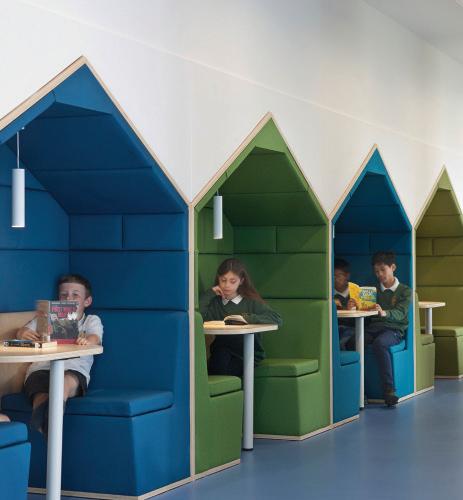
With more energy price rises recently coming into effect and adding to the financial strains that many schools are already experiencing, any measures that can be taken to reduce energy bills are welcomed. Having recently undergone a total upgrade of their lighting schemes to LED, two primary schools in Surrey are already reaping the benefits with reduced operational costs and improved lighting levels, thanks to new lighting solutions from Ovia.
Kingswood Primary School is a small village primary school occupying extensive grounds in Lower Kingswood in Surrey. Worplesdon Primary School is a much larger school located in Guildford. While they may be very different in terms of size, both schools are committed to playing their parts in the decarbonisation of their schools in partnership with Surrey County Council (SCC).
The first phase of this work has been the upgrading of the lighting systems throughout the schools, replacing old and inefficient
Ansell Lighting supports electricians of the future
Ansell Lighting has joined forces Northern Regional College in Northern Ireland to provide support and resources for the Electrical Installation Apprenticeship course. The College, which provides further education across four of the 11 council areas in Northern Ireland from five campuses in Ballymena, Magherafelt, Newtownabbey and Coleraine, is keen for the partnership to provide students with invaluable industry insights and hands-on experience with state-of-the-art electrical components.
Ansell has supplied a series of product boards including downlights, retail and commercial fittings, emergency lighting packs and its own smart OCTO lighting technology. These boards, displayed within the College, allow students to interact with working products and gain a deeper understanding of lighting solutions. Each board includes detailed information about the luminaires and their benefits. One of the projects students will undertake during their course this year involves designing lighting for a hotel, with Ansell products playing a key role in the process.
Ansell representatives also visited Northern Regional College’s Newtownabbey campus to meet with lecturers and students, sharing their expertise and offering realworld perspectives on the industry.
Mark Rogers, National Sales Manager for Ireland at Ansell Lighting, said: “As a manufacturer we recognise the importance of investing in and supporting the next generation of electricians and installers, at a time when there has been talk of skills shortages within the industry.
“Ansell Lighting was established in Northern Ireland and so we are particularly pleased to be able to support students and apprentices in the region. We hope to see these students flourish and work with us in their future careers.”
light fittings with LED replacements.With all areas of the schools to benefit from the lighting upgrade, a broad selection of Ovia fittings were specified to satisfy the various requirements that the different rooms/areas of the schools called for. All classrooms, corridors, stairwells and cloakroom facilities were included, along with the hall, kitchen, reception areas, offices, staff rooms, store rooms, plus libraries, IT and music rooms. The provision for emergency lighting and external lighting was also part of the project.
Responsible for specifying and installing fittings for the LED lighting upgrade was Stuart Gibson Divisional Manager with Niblock Electrical Services, a specialist electrical division within Niblock Building Contractors, working on domestic, commercial, maintenance, fire alarms/emergency lighting and EV charging projects, and operating across London and the South East regions. He said: “We are delighted with the results, as the new lighting systems have significantly improved the overall brightness and ambiance of both schools, creating a more productive and comfortable atmosphere for all. The professionalism and dedication of both teams throughout the project were exceptional, and we look forward to future collaborations with Surrey County Council and Ovia Lighting.
“This project demonstrates the importance of effective coordination between suppliers, designers, and installers in delivering highquality outcomes for public sector clients.”
Ovia gets top marks for school lighting upgrade
Acrospire enhances Harlington underpass with energy-saving vandal-resistant lighting
British manufacturer, Acrospire works with Hillingdon Council and J McCann & Co Limited to revitalise a key pedestrian route in London, addressing users’ safety concerns.
Harlington, a historic district in the London Borough of Hillingdon, has long served as a vital connection for residents and commuters. Adjacent to the M4 and close to Harlington High Street, the underpass provides a key pedestrian route linking the community. However, over the years, the ageing 70W SON – T lighting system (90W circuit) left parts of the underpass in darkness, creating an uninviting environment and safety concerns for users.
Committed to fostering safe and strong communities while achieving a greener, sustainable borough, Hillingdon Council partnered with Acrospire and Termed contractor J McCann & Co Limited to revitalise the Harlington Underpass. Together, they aimed to transform the space into a safer, more welcoming area, encouraging use and reducing energy consumption.
To meet these goals, Acrospire’s Serifa linear luminaires were selected for the project. The 44W ceiling luminaires, specified in black in 1250mm lengths delivering 5,342 lumens, offer a bright, evenly distributed light in a 4,000K colour temperature. This carefully designed solution not only addresses safety concerns but also aligns with Hillingdon Council’s dual commitments to creating safe, resilient communities and achieving carbon neutrality.
The Harlington Underpass now boasts a brighter, more welcoming environment that encourages use and discourages anti-social behaviour. The improved lighting quality ensures better visibility and a more secure atmosphere for residents and commuters. Furthermore, the built-in energy-saving features reduce energy consumption by over 50 per cent, contributing to Hillingdon’s sustainability goals.
Roy Thabrew, Lighting Engineer at LB Hillingdon commented, “The upgraded lighting has transformed the Harlington Underpass. The improved light quality and even distribution make the space feel safer and more inviting for residents, while the energy-saving features support our commitment to sustainability.”
To find out more about Acrospire’s vandal-resistant solutions please visit: https://acrospire.co/ ranges/wall-and-ceiling/
Illuminating the path to educational excellence
Zumtobel and its sister brand Thorn, both lighting brands of the Zumtobel Group, has helped Milltimber School become an award-winning educational facility, promoting sustainability, wellbeing, and a conducive learning environment.
The £16.4 million Milltimber School, part of the Oldfold Farm development, earned the Aberdeen Society of Architects (ASA) Education Design Award 2023. As part of a £100 million investment by Aberdeen City Council in four new schools, the facility offers modern, sustainable, and inclusive learning spaces for the growing catchment area.
To meet the evolving educational needs of the community, the ambitious project aimed to create spaces that encourage active learning and enhance student experiences. A key success of the design was how the spaces between the buildings were utilised to create moments that could enhance curriculum delivery. The shape and structure of the rooms, alongside colourful wayfinding and nature-themed supergraphics, reflect the natural forms of nearby landscapes and help define the character within the school’s spaces.
Zumtobel and Thorn’s lighting solutions were crucial in making the Milltimber School a success. Their commitment to sustainability, innovation, and creating spaces that enhance education, aligns with the school’s vision, resulting in a broader trend of smart, energyefficient lighting in educational facilities.
Zumtobel and Thorn have also provided lighting solutions for the three other schools within the project, demonstrating their expertise in creating conducive learning environments in educational spaces. These projects, including Countesswells New Primary School and Torry New Primary School & Community Centre, showcasing Zumtobel and Thorn’s dedication to transforming education through innovative lighting solutions. For more information about the respective products, please visit www.thornlighting.co.uk or https://z.lighting/en/zumtobel/
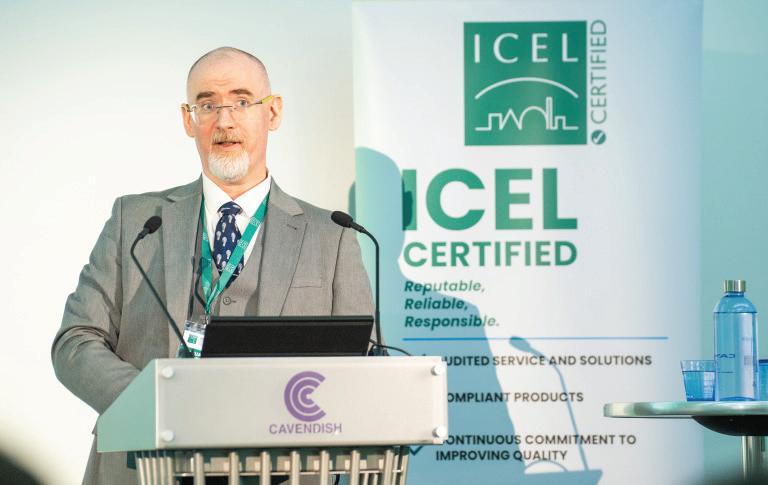
ICEL Emergency Lighting Conference 2025: The future of emergency lighting
The ICEL Emergency Lighting Conference 2025 is set to return to Cavendish Conference Centre, London on Thursday, September 11, 2025, bringing together leading experts and key stakeholders to drive progress in emergency lighting safety and compliance, where attendees will have the opportunity to engage with manufacturers, industry leaders, and key decision-makers. This must-attend event will explore the latest industry advancements, regulatory updates, and best practices to reinforce building safety and create more secure environments for people to live, work, and learn in.
For the third consecutive year, Joanna Watchman, CEO of B Corp-certified agency Content Coms and Founder of Work in Mind, will facilitate the conference. Her expertise in ESG and sustainability communications has been highly praised by attendees in 2023 and 2024, ensuring another engaging and insightful event.
The conference agenda is tailored to a diverse audience, including designers, specifiers, distributors, installers, maintainers, and end-users. The event will feature a keynote speaker slot, panel discussions, with a attendance from high-profile organisations such as Laing O’Rourke, MITIE, CBRE, NHS, E.ON, EDF, WSP, Transport for London, BDP, and Sainsbury’s, many of whom attended the 2023 and 2024 conference’s. Additionally, members from leading industry bodies, including ACE, BAFE, BCA, BCO, ECA, EDA, FIA, IWFM, REF, RICS, and SLL, are invited to attend and contribute to discussions shaping the future of emergency lighting.
Attending the ICEL Emergency Lighting Conference 2025 offers a unique opportunity to stay ahead of the latest regulatory changes and compliance requirements. Delegates will gain valuable insights from industry-leading experts on enhancing emergency lighting design and maintenance while participating in thought-provoking panel discussions on competency schemes and sustainability. The event also provides a platform to connect with professionals and organisations at the forefront of innovation, fostering collaboration and knowledge-sharing to drive the future of emergency lighting.
To register, complete the Registration Form at www. thelia.org.uk/member-services/events/icel-emergencylighting-conference/register-to-attend.html
For sponsorship and exhibitor opportunities, contact icelconference@thelia.org.uk.
Human rights charity moves to new eco building in its 20th year
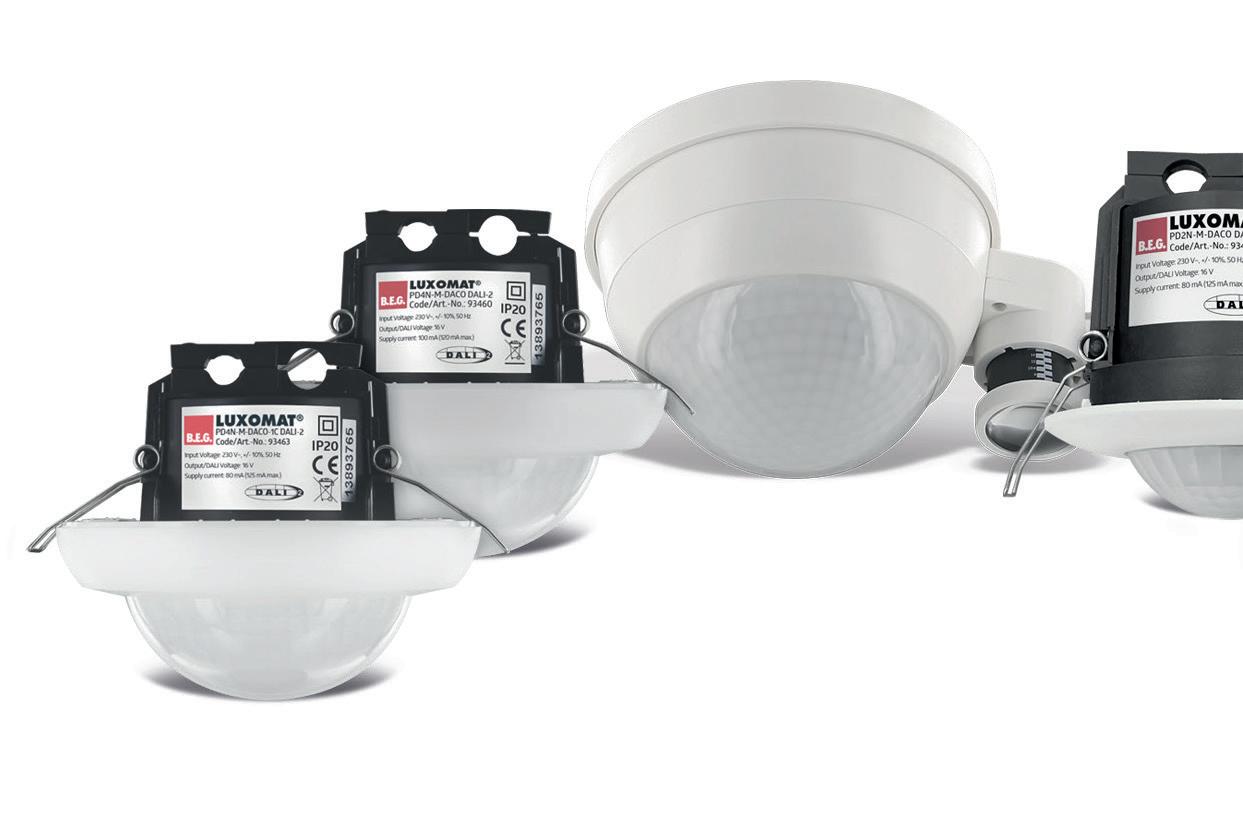
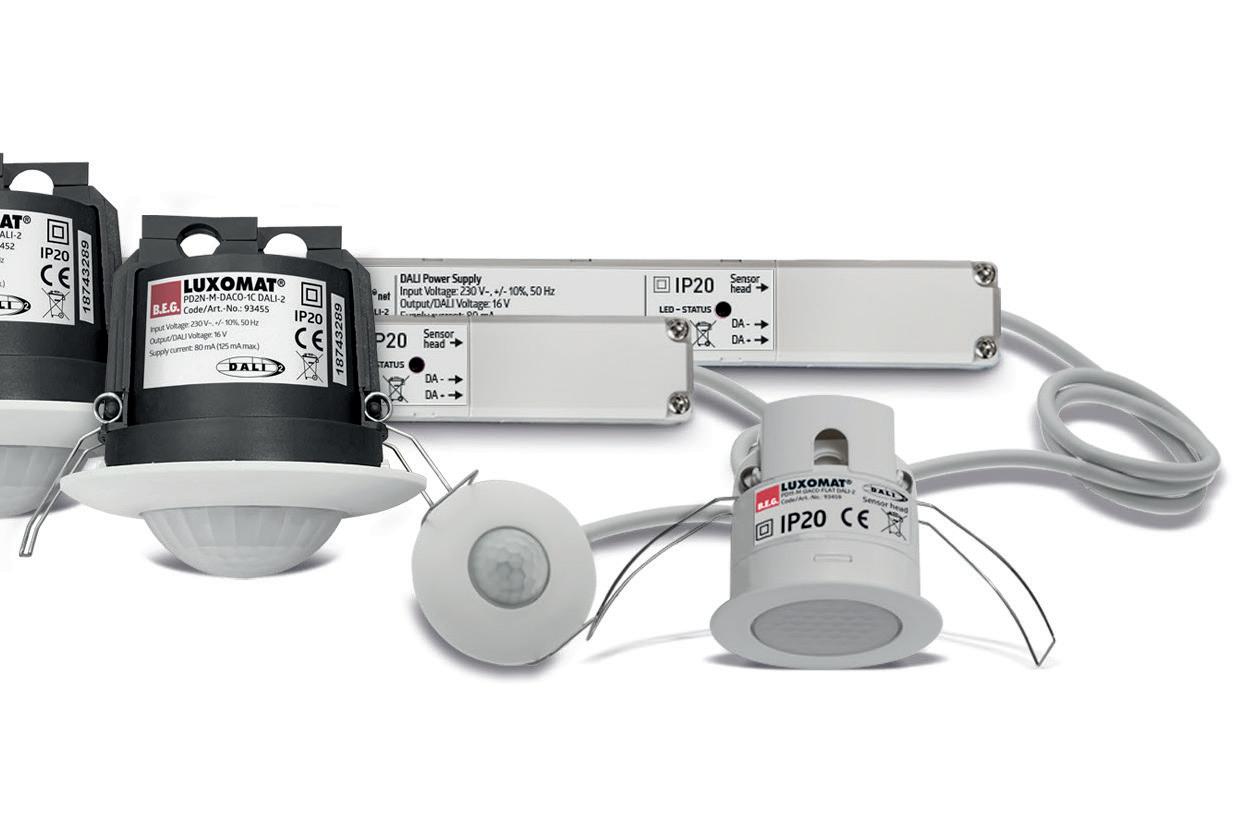
The Helen Bamber Foundation, celebrating its 20th anniversary, now operates from a new energy-efficient office in London, designed with the support of B.E.G. to reduce its carbon footprint and energy costs. This sustainable move reflects the charity’s ongoing commitment to environmental responsibility while continuing its vital work
The Helen Bamber Foundation was founded in 2005 and works to help survivors of trafficking and torture get their lives on track. It was set up by the late human rights activist Helen Bamber, OBE, who at the age of 20, was part of one of the first relief and rehabilitation teams to enter Bergen-Belsen - a notorious Nazi concentration camp in Lower Saxony, northern Germany after the Second World War.
On her return to England, Helen Bamber was appointed to the Committee for the Care of Children from Concentration Camps where she looked after 722 children from Auschwitz.
In 2005, she founded the Helen Bamber Foundation to help combat trafficking in human beings and protect the rights of survivors by providing care and support while pushing for change in the UK Government’s policies. Helen died in 2014 at the age of 89 but her charity continues to work with the belief that all people must be treated fairly, regardless of where they were born.
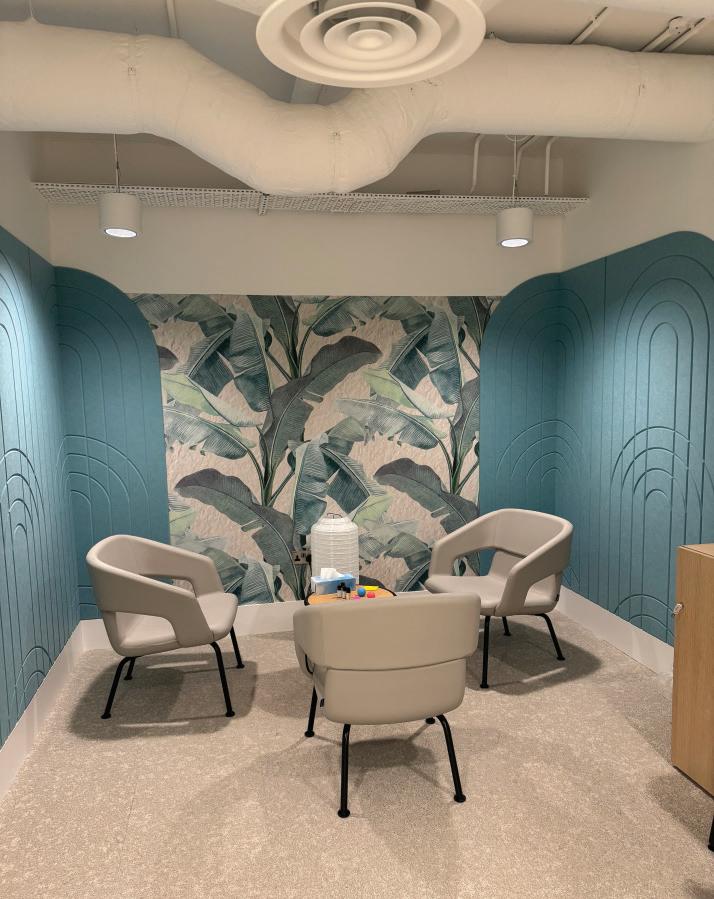
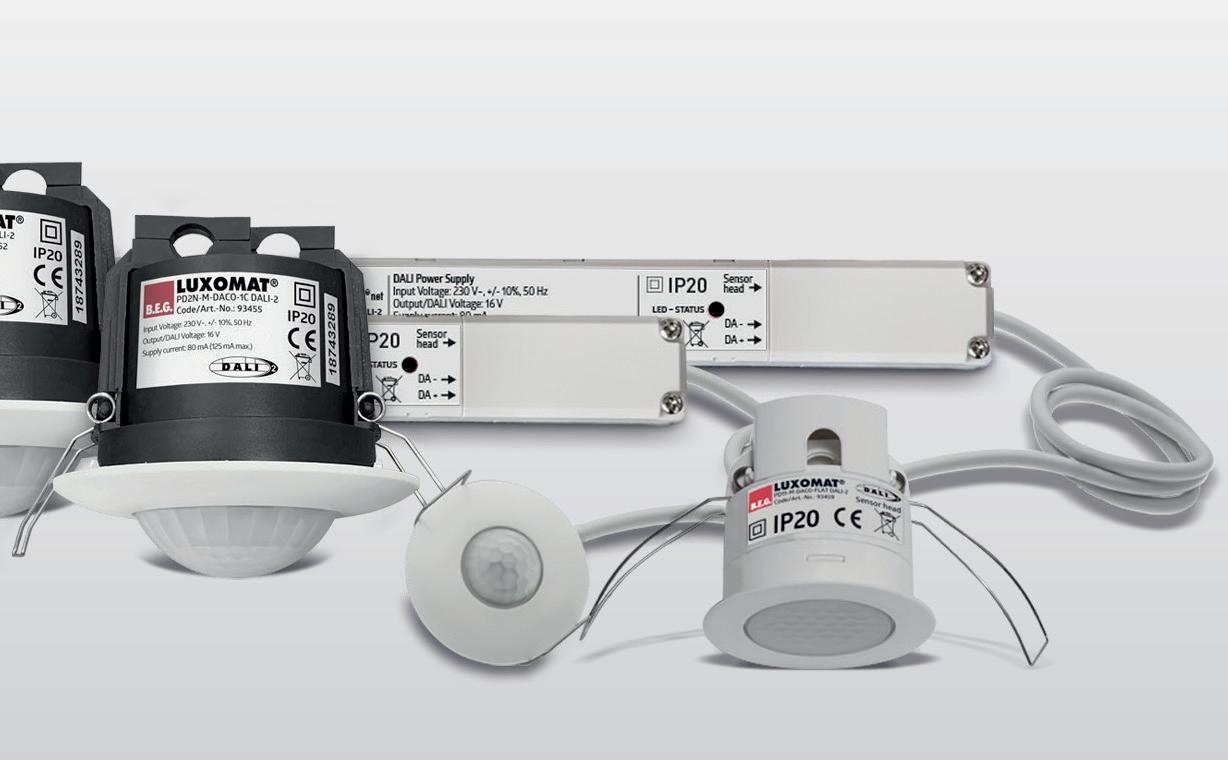
The charity moved its offices to Westland Place in Old Street, London from Camden, London with sustainability in mind so it looked at the best possible way it could heat and light the new building. It worked with lighting controls manufacturer B.E.G. who helped design, install and commission a new energy efficient building management system which
would feature LED lighting and dimmable DALI lighting controls. This solution was installed by JPS Group, an electrical installing company, under the management of Hop Interiors who were employed by HBF.
The new premises were designed with pro-bono support from BDG Architecture and Design to feature LED lighting, DALI lighting controls as well as to make use of energyefficient heating and cooling systems, and high-quality insulation which are designed to reduce energy consumption and lower greenhouse gas emissions.
B.E.G. regional director Dan Glynn said: “The BEG DALI solution works by reducing the running costs of the lighting, but it also provides a flexible solution enabling different scenes to be created for a relaxed environment.
“The consultation rooms had been designed for a ‘homely feel’ to reflect the ethos of the Helen Bamber Foundation. The lighting and lighting controls adds significantly to the overall ambience while still maintaining a highly efficient and flexible lighting solution.
“It provides scene plates for the HBF team to make simple adjustments, with the lighting being fully automated through occupancy control so the lighting can dim down to a reduced level when not in use and then switched completely off if areas aren’t occupied for a period of time.”
The re-use of existing material and used recycled items or items designated for waste such as off cuts, supported HBF’s desire to reduce their environmental impact. This meant that on the ground floor office space they only adjusted one room and kept the rest as it was, including washrooms, kitchens and meeting rooms. The flooring was also sanded and re-varnished rather than laying new carpets.
The existing lamp shades in the reception area were kept. The Ceiling rafters were also donated from stocks that would have gone to waste. The Helen Bamber Foundation acquired £100,000 worth of furniture, donated by multiple businesses through Office Furniture London Ltd. Electrical equipment that needed to be replaced was also scrapped through a pro bono offer so that all parts that could be used were salvaged.
Kerry Smith, Chief Executive Officer at HBF, said: “The Helen Bamber Foundation is committed to promoting sustainability and effective recycling practices in its new premises. This undertaking not only reflects the organisation’s values but also aims to minimise its environmental footprint while serving vulnerable communities. We thank B.E.G. and all other partners involved in making our move to our new home as simple and easy as possible.”
www.beg-luxomat.com/en
ECYCLE
REPURPOSE REUSE
WEEE Compliance. REUSE Hub. WEEE Recycling. & more for Lighting
Recolight is the leading UK WEEE compliance scheme for lighting, taking on responsibility for its members’ WEEE compliance. O ering free integrated Lamp and Luminaire collection and recycling and the biggest UK-wide network of collection points for all WEEE lighting.
Recolight go beyond recycling, by o ering circular economy services, facilitating the reuse of lighting equipment, and helping to avoid unnecessary recycling of surplus new lighting.
Working with the lighting industry, Recolight o er support and services to help their Producer Members transition to a Circular Economy.
Tradition and power for the future: 75 years of Zumtobel
On the occasion of 75 years of Zumtobel, Karin Zumtobel, Chairwoman of the Supervisory Board, and Alfred Felder, CEO of the Zumtobel Group, talked about the value of tradition and the power of innovation with Oliver Herwig, an independent journalist and lecturer for design theory at the University of Arts Linz
The lighting group is celebrating it’s 75th anniversary at the place where Dr. Walter Zumtobel founded the company in 1950: The Light Forum in Dornbirn, a former factory hall, is home to the strong brands of the Zumtobel Group today. Here, they showcase their extensive expertise in lighting as well as the latest developments and technologies.
How do you feel about this anniversary?
Karin Zumtobel: It is a responsibility and joy at the same time. Growing up in Dornbirn, I already got to know the company as a young girl and worked at several trade fairs. Many things were inherent in my upbringing and have always been part of my everyday life. 75 years make me proud, especially considering what has been achieved during this time. We went through many changes – and the fact that we are still here proves that we can handle change and transformation, and that we look to the future with optimism.
Alfred Felder: What has made the company successful is still valid: the unconditional aspiration to design innovative lighting solutions for tomorrow. We have gone through a number of technological changes – the development towards electronics, towards LED. This is not always an easy task to tackle for a company. And that is why I am truly proud and grateful that we managed all these changes successfully. At the same time, it also entails a responsibility to keep up the success and shape the future. In this context, the Zumtobel family, as a core shareholder and with a great interest in technology and innovation, makes a significant contribution insofar as it is possible for the Management Board to think strategically and in the long term.
Q: A: Q: Q:
Do you think your grandfather would feel comfortable in the company the way it is today?
criteria is still the same: We focus on innovation. My grandfather was an engineer himself. Insofar, technological advances are still a major topic. We strive for top quality and value open collaboration. We have stayed true to our roots. Everyone in the company feels that.
How do you approach lighting solutions in view of a sustainable transformation?
Alfred Felder: We have always focused on energy efficiency, for both our products and our solutions. Now, material aspects are also playing an increasingly important role when it comes to circular design closing loops. We generally invest in holistic solutions, taking the entire life cycle into account. Consequently, we also always invest in future projects.
Q: Q: A: A:
Karin Zumtobel: I think he would be very satisfied to see how true we have stayed to his vision. The important
Karin Zumtobel: This way, we help our customers reduce their carbon footprint with the solutions we offer. And we remain a key innovation driver for sustainability, even after 75 years. Our claim is: thinking ahead. Which functionality could be in demand in ten years? We want future-proof products.
And material cycles are part of the design from the outset?
Alfred Felder: When designing new products, we do make sure that key elements can be replaced and can always be upgraded to the state of the art. Existing components are returned to the material cycle wherever possible. This way, our customers always have efficient products and this added value has a direct impact on them.
A: A:
Light art has always been important to Zumtobel. Why is this?
Karin Zumtobel: First of all, it’s a personal interest of my father and the whole family. Then we decided very early as a brand to approach architects who look at a building holistically and care of the effect the lighting has on the building and its architecture. And it quickly became clear that the earlier we enter into the dialogue, the better the solutions we can develop together for a project. Special highlights include projects like currently the children’s hospital in Zurich
with work by James Turrell. There you experience how light changes spaces and situations. It is installations of this kind, together with architects or artists, that have always inspired us and helped us to evolve continuously.
Does this mean that art has also been a pacemaker for technological development?
Karin Zumtobel: Absolutely. Light artists and architects challenge us extremely: They seek perfection. They want to create an impact. This is how unique pieces or special products made in small numbers are created.
Alfred Felder: It’s a little like Formula 1. First, companies test new technologies and then show that it works. We also pack all of our knowledge, our experience and our engineering know-how into such projects to create something perfect, sometimes something completely new. You learn a lot when you work on high-end applications and great challenges. We create light solutions beyond the standard.
Karin Zumtobel: That is why we offer architects, planners and developers solutions that create visible added value.
Alfred Felder: Yes, we often have to balance architectural desires and technical feasibility. But it is exactly these challenges that motivate
us again and again to make the seemingly impossible possible.
Which qualities distinguish your employees? What would you say fits the corporate culture?
Karin Zumtobel: I would say: they are curious, open ...
Alfred Felder: ... flexible. And we all share a passion for light. There is hardly a more beautiful product than light: highly emotional and sophisticated. The technology behind it is very broad, from mechanics and optics to design, electronics and software. The mix of different talents and also the interaction between different cultures is what we stand for and what keeps us flexible.
Karin Zumtobel: This way, we can also tackle the next 75 years, because we pass on the essence of what Zumtobel is about. With our
profound knowledge, committed employees and partners and the high demands we place on ourselves. We want people to get together at our company in order to create new things and to contribute our share to a positive future. That means that innovation will go on and on…
Alfred Felder: LEDs still have a lot of potential to offer. We are in the process of becoming part of the building infrastructure, being compatible with other systems in the building. Many things in a building connect vertically – and we want to be part of this development. Plus, service will be crucial in the future. At some point, the moment will come when we will probably generate more revenue by providing service.
Karin Zumtobel: We have to keep our finger on the pulse of time and be open to new things. And we have to remain open to share our knowhow so we can play a bigger part in shaping the future together.
For more information,visit: z.lighting/en/group
“75 years make me proud, especially considering what has been achieved during this time. We went through many changes – and the fact that we are still here proves that we can handle change and transformation, and that we look to the future with optimism.”
HVAC industry encouraged to switch to continuous flow fans
As the UK grapples with a growing issue of damp and mould in homes, industry experts, including Elta, are urging ventilation installers to shift from intermittent flow fans to continuous flow solutions, which offer more consistent moisture extraction to help tackle the escalating problem of indoor dampness
Ventilation installers and electricians are being encouraged to move away from installing intermittent flow fans and instead fit continuous flow fans.
The call comes from governing bodies and industry experts, like Elta, as the country continues to battle against damp and mould in homes.In England, around two million people are currently living in homes with significant damp or mould, representing 3-4 percent of residences.
Elta questions that intermittent flow fans may be indirectly contributing to the damp and mould problem. As they only work when homeowners turn them on, stale, moist air is able to build up in bathrooms, ensuites, and kitchens. With homes becoming increasingly airtight, continuous flow fans ensure stale air is extracted continuously, increasing the airflow at times when in-built sensors detect a high level of humidity.
Nick Higgs, National Sales Manager at Elta Trade, part of Elta UK, said: “Intermittent flow fans have been the status-quo for many years, fitted in rooms such as bathrooms and ensuites and only working when occupants take a shower or bath. However, quite often, the level of extraction is not enough, especially with homes being more insulated, keeping moisture trapped inside.
“Ventilation installers can recommend continuous flow fans whenever there’s a job that requires
Ventilation installers can recommend continuous flow fans whenever there’s a job that requires replacing an intermittent flow fan, or an installation in a new home or for bathroom redesign projects.
replacing an intermittent flow fan, or an installation in a new home or for bathroom redesign projects. Continuous flow fans can dial up and down their performance to better extract moist, stale air at all times, reducing the chance of damp and mould growth.”
When fitting ventilation solutions, Nick stresses that compliance with Part F of the building regulations is key, and ventilation installers can refer to Approved Document F for guidelines on minimum ventilation rates for domestic dwellings.
“Part F now covers both the air flow requirements, and the installation standards required for best practice,” says Nick.
“Installers absolutely have to be qualified to install ventilation products, but they also have to follow the correct standards as outlined in the document. This is to ensure the performance of the ventilation method is maximised and the designed air flow requirements are achieved.“
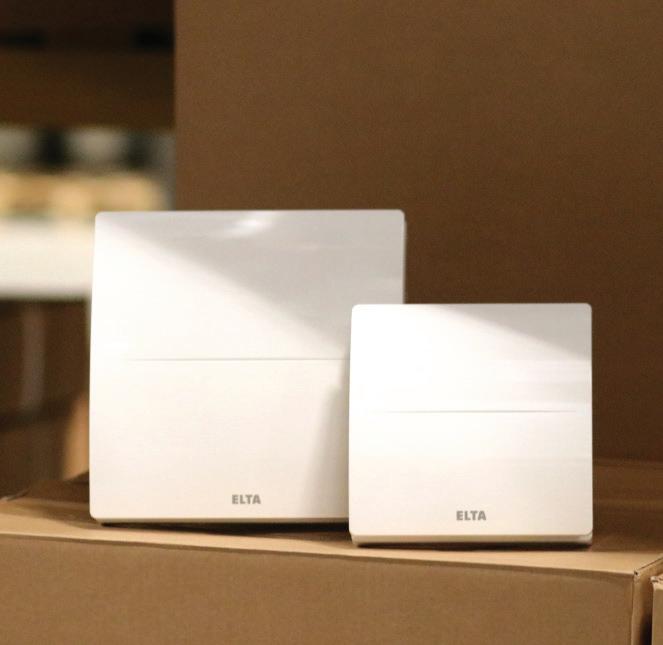
Nick highlights that ventilation installers can confidently meet Part F requirements by fitting larger, more powerful units, such as Elta’s recently launched DEXA 150 continuous flow fan.
“We’ve launched the DEXA 150 because not many manufacturers are producing fans in this category, yet we view it as essential given how homes are becoming more and more airtight.
The DEXA 150 provides increased air flow, flexibility, durability, and performance, all while being easy to install. It is the air movement solution that contractors and specifiers need to meet today’s ventilation challenges and tomorrow’s regulations.”
For more infomraiton and to find out more about the DEXA 150, visit Elta’s website at EltaTrade.co.uk.
COMPLIANT OR COMPLACENT? IT’S YOUR CHOICE.
Our dMEV-NICO provides continuous background extract ventilation for new build properties, plus it’s fully compliant with the latest Building Regulations Approved Document F & L – protecting the health of your occupants.
Preventing mould with the dMEV-NICO – visit our website to find out more.
Vent-Axia welcomes Government setting date for Awaab’s Law
Vent-Axia has welcomed the UK Government’s decision to set a date of October 2025 for the introduction of Awaab’s Law. The law, initiated after the tragic death of Awaab Ishak, will require social landlords to address damp and mould hazards within specified timeframes, improving tenant safety and reducing health risks
Leading British ventilation manufacturer, Vent-Axia, has welcomed the UK Government’s decision to set a deadline of October 2025 for the introduction of Awaab’s Law across the social housing sector. The law, named in memory of 2-year-old Awaab Ishak, who tragically died as a result of living in a mould-infested home, aims to improve living conditions and prevent similar tragedies. Awaab’s Law is part of the Social Housing (Regulation) Act and is set to impose strict requirements on social housing landlords to investigate and resolve issues of damp and mould within specified timeframes, helping residents gain faster repairs and reducing health risks. It marks the biggest change in social housing rules in a decade, aiming to prevent future tragedies and improve tenant safety.
In a statement entitled ‘Improving the quality of social housing and strengthening tenant voice’ by Deputy Prime Minister Angela Rayner, published on 6 February 2025, it was revealed that from October 2025 social landlords will be required to address damp and mould hazards that present a significant risk of harm to tenants, within fixed timescales. From the same point in time, they will also have to address all emergency repairs, whether they relate to damp and mould or any other hazard, as soon as possible and within no longer than 24 hours. Other hazards, apart from damp and mould will not be introduced until 2026 at the earliest. The Government is set to shortly publish further detail and guidance to support implementation.
The statement follows the latest English Housing Survey which revealed a significant damp and mould problem in UK social housing. The survey found that 5 per cent of homes in England experienced damp issues in 2023, marking an increase on the previous five years, when the figure ranged from 3 to 4 per cent. It also revealed that serious condensation was more common in homes (3 per cent) than rising damp (2 per cent) or penetrating damp (2 per cent). Within the social rented sector, local authority dwellings were more likely to have serious condensation (7 per cent) than housing association dwellings (4 per cent).
“We welcome the Government setting a date to introduce Awaab’s Law since it gives clarity for social housing landlords. No one should live
in a home with mould and damp and landlords have a duty of care to their residents to help ensure they live in a healthy environment.
Addressing mould and damp is not only about complying with regulations but crucial for safeguarding residents’ wellbeing,” said Natasha King, Product Manager at Vent-Axia. “Effective ventilation is vital to improve indoor air quality and tackle condensation and mould. At VentAxia we have been advising on ventilation since 1936 and we work with landlords to help them choose the right ventilation for their individual property so they meet their duty of care.”
Under the Homes (Fitness for Human Habitation) Act 2018 landlords already have a legal requirement to provide rental properties that are fit for human habitation. This includes providing effective ventilation and ensuring properties are free from damp and mould. Vent-Axia can help landlords meet their duty of care with the right ventilation solution for each property. There are different types of ventilation available depending on the property type and whether there is already a mould problem, with Vent-Axia able to offer a range of effective, energy efficient ventilation solutions.
The Heat Recovery Retrofit Solution from Vent-Axia has been specifically designed for easy, lower cost retrofit of heat recovery to save maximum energy and emissions and comply with the requirements of PAS 2035 in the social housing sector. The Heat Recovery
Retrofit Solution range consists of three different Mechanical Ventilation with Heat Recovery units, which can be used together to help improve IAQ and maximise energy savings by introducing heat recovery to the property. The range comprises: the Lo-Carbon Heat Save, and the Lo-Carbon Tempra which are both wall-mounted through-the-wall units and the Lo-Carbon Calido, which utilises a simplified ducting system that can run within the home to supply heat recovered fresh air to a different room.
Another ventilation option for landlords is the intelligent Lo-Carbon Revive 7, a filter-less unitary fan that features an adjustable trickle speed option, advanced humidity sensing and controls, as well as a raft of useful original features to provide powerful, quiet and efficient ventilation, all with a seven-year guarantee. Alternatively, the intelligent Lo-Carbon Response 7 is a filter-less unitary fan that features an ultralow profile for discreet installation; increased airflow performance; a digital control menu; as well as a seven-year guarantee. Ticking all the right boxes for social housing the Revive 7 and Response 7 both boast powerful, quiet and efficient ventilation, helping provide good indoor air quality and comfort for residents, while being quick and easy to install, low maintenance and reliable.
For properties with hard-to-treat mould, Vent-Axia’s PIV units, the Lo-Carbon PoziDry Pro and Lo-Carbon PoziDry Compact Pro are the ideal solutions. Designed to improve IAQ and prevent moisture build-up within social housing properties, the PoziDry range provides a
highly effective solution to help households and landlords control condensation and mould, as well as offering high levels of air filtration.
Providing fresh, tempered air into the home the PoziDry range creates an indoor environment where condensation and mould find it hard to exist, benefiting occupants and avoiding the damaging effects on the building. The PoziDry Pro is designed for properties with loft space to install the unit in whilst Vent-Axia’s Lo-Carbon PoziDry Compact Pro is the ideal solution for properties, such as flats, without a loft.
For social housing landlords requiring further ventilation advice visit Vent-Axia’s social housing hub: https://www.vent-axia.com/social-housing.
Vent-Axia will be publishing an eBook, ‘Ensuring Safe Housing Conditions: Focusing on Mould and Damp Conditions’ to give guidance to social housing landlords on Awaab’s Law and how to tackle condensation and mould. The eBook has been created using Government guidance: ‘Understanding and addressing the health risks of damp and mould in the home’ For further information, visit vent-axia.com.
Using pre-heated water with bare wire water instantaneous heaters
A common water heating issue is waiting for hot water to reach outlets far from a combi boiler or water store, wasting both water and energy. Bare wire heaters provide an effective solution, offering long-lasting performance, even in hard water areas, and boosting efficiency when combined with pre-heated water from a combi-boiler or thermal store. John Felgate, Chairman of BEAMA’s Electric Space and Water Heating group, explains...
One common water heating headache is having a outlet a long way from a combi boiler or water store. Waiting minutes for water to run warm is not only annoying but wastes water both at a cost for those who are metered and to the planet.
“This is where bare wire heaters can come into their own,“ says John Felgate, Chairman of the Electric Space and Water Heating group at BEAMA and Head of Technical at Stiebel Eltron.
“Unlike old fashioned tubular instant water heaters, bare wire heaters can accept pre-heated water either direct from a combi-boiler or a central thermal store heated by a boiler, heat pump or even solar thermal panels. They offer long operating lifespans even in hard water areas as they are highly resistant to scaling. I’ve been running one in my own home, with very hard water for a decade with no loss of performance, to overcome this problem. Super compact and easy to install, they make retrofitting very easy.
“Using pre-heated water also enhances the performance of the instantaneous heater; with a higher input temperature it can achieve higher volumes of throughput at your target temperature, giving you a more powerful shower or faster filling sinks. This means even single phase units can give luxury levels of performance and serve more outlets simultaneously.
“At a winter intake temperature of 10 °C
our DCE-S Plus 10/12 single phase heater can produce 7.3 litres a minute at 38°C which will serve a shower and basin, but increase that to just 20°C and you can achieve 11.3 litres which could serve a whole small apartment with a shower for a couple with ease.“
John, who is also Chairman of the Domestic Heat Pump Association points out that using instantaneous water heaters with heat pump systems or a central electric tank can also have advantages. “Having one of these heaters inline can mean that can potentially fit a smaller DHW tank, where installation space is tight. Whilst it is more efficient to use a heat pump for hot water generation than direct electricity, there is always a trade off with tank space. For maximum efficiency heat pumps may need a somewhat larger tank to serve a property or indeed mean finding space for one where a combi boiler is being replaced. One of these units can help take up some slack to ensure coverage at high demand times so that a more modest tank can be used.
“For apartments where the main source of water heating is an electric cylinder you can potentially save space which is at an absolute premium in these small homes. If you only have single phase supply but a bath is fitted, you might save half a cupboard for storage if you can use the tank just for pre-heating the water. Or indeed make a bath possible where there is insufficient storage for a full size tank.”
For more on Stiebel Eltron’s range of bare-wire water heaters contact sales@stiebel-eltron.co.uk or see www.stiebel-eltron.co.uk/instant
Panasonic cuts energy costs for 19th Century Bedfordshire home
Panasonic’s Aquarea J Series T-Cap Monobloc heat pump has helped a retired couple in Bedfordshire replace their old, inefficient heating system. Installed by Clima Renewables, the energy-efficient system provides consistent warmth and significant cost savings, with remote control via the Panasonic Smart Cloud app
An environmentally conscious retired couple in Bedfordshire sought to replace their expensive running and inefficient old traditional heating system in their four-bedroom, 1890’s-built rural property with a more sustainable heating system. After consulting with Clima Renewables, who had been maintaining the old system, the couple opted to install a Panasonic Aquarea J Series T-Cap Monobloc Air to Water heat pump unit. The installation was completed with the Panasonic Aquarea Smart Cloud control system which allows the couple and the installer to remotely control the heating system.
Homeowners, Hilary and Peter Foot commented: “We have lived in the property for the last 34 years but found the old heating system to be very expensive to run. The Panasonic heat pump system was installed in August 2023, and we’ve noticed a significant reduction in our energy bills. At the same time our home maintains a consistent, comfortable warmth throughout. We also find the Aquarea Smart Cloud app easy to use to control the temperature, and it’s useful to track historical data.”
David Codona and Marc Umney, Directors of Clima Renewables, have been installing air to water heat pumps for a number of years, often sourcing units through distributors Ultimate Renewables. When discussing the Bedfordshire project, Simon at Ultimate Renewables recommended the Panasonic units to be the best solution for this older property due to their proven and reliable energy efficient performance. David added, “We attended the Panasonic A2W training, and when installing the units, we found them to be more straightforward and quicker to install, with noticeably better quality overall. Since then, we have become Panasonic Pro Partners and installed many more Panasonic units and will continue to do so”.
The old heating system failed to provide adequate warmth, often forcing homeowners, Hilary and Peter, to resort to using their open fire on colder days. Wanting to futureproof
We have lived in the property for the last 34 years but found the old heating system to be very expensive to run. The Panasonic heat pump system was installed in August 2023, and we’ve noticed a significant reduction in our energy bills.
their home with a more sustainable energy source, they explored heat pump technology. Having already installed 11 solar PV panels and an energy storage battery to help power their electric vehicles and other household utilities, the couple were open to transitioning their heating system as well. Their home now features underfloor heating to the ground floor and radiators upstairs rooms. Due to the age of the property, installation presented challenges - some rooms retained original wooden floorboards, while the extended part of the house had concrete flooring, requiring additional effort. However, the homeowners found the results well worth it. Hilary and Peter added: “We are extremely pleased with our decision and love the consistent, steady warmth throughout our home.”
Clima Renewables recently conducted a 12-month service of the heating system, which showed a good average SCOP of 4.47 for 2024. David noted that they have made a few more minor adjustments and expect to see even better results next year.
The Panasonic J Series heat pump boasts an A+++ Energy Class, and maximum output temperatures of 60°C. Bespoke software for maximum efficiency delivers low output temperatures. The Panasonic smart cloud control app and service app, with an easy-to-use remote controller for end user accessibility, enables a low carbon and holistic solution to heating. The unit in this project is a T-Cap and available in 9 kW, 12 and 16kW models, with an internal domestic hot water tank and external unit for ease of installation. The Aquarea T-Cap Monobloc unit is ideal for retrofit and new build projects where the output capacity is demanding. The unit is easy to install and is excellent for replacing gas, oil or electric boilers and for connecting to new underfloor heating, radiators or fan coil units. The Aquarea T-CAP has very little drop off down to -20 °C outdoor temperature, without the help of an electrical booster heater, offering a highly efficient heating capacity even at low ambient temperatures.
Visit https://www.aircon.panasonic.eu/GB_en/
S W TCH O N TO STELRAD
Not just any rad. Stelrad.
Niglon: pioneering innovation
With a commitment to quality, innovation, and customer feedback, Niglon’s diverse product offerings cater to residential, commercial, and industrial sectors, providing reliable, modern solutions for today’s electrical needs
Niglon is a fourth-generation, family-owned company based in the Midlands, with a history dating back to the 1940s in Birmingham. Today, it offers an extensive range of over 4,500 products across nine core categories, including circuit protection, wiring accessories, cable management, control & automation, industrial accessories, earthing, lighting control, and fixings & tools.
Though they started selling wiring accessories more than 20 years ago, it was from 2017 onward that the company significantly advanced this offering. This expansion necessitated substantial investment in systems, development tooling, and manufacturing. As a result, Niglon now offers more than 1,000 items in wiring accessories alone, with continuous improvements and new additions each year to meet the needs of the market.
In Focus: Decorative accessories and Premium Edge S
One of the standout developments from Niglon is the Premium Edge S range. The brand was relaunched in 2024 with the introduction of two new finishes—matt black and antique brass—to complement the existing brushed and polished chrome options. This range, featuring a sleek screwed-plate design, has been very well received by the trade. The new finishes meet growing customer demand for stylish and modern wiring accessories that can easily transform the look and feel of a room.
Niglon’s ability to respond quickly to market trends is evident in how the new finishes quickly became popular. A simple swap of the wiring accessories can dramatically change a room’s décor without the need for costly or time-consuming adaptations. Key features of the Premium Edge S range include:
• Metal-to-metal rockers, reducing SKU numbers and simplifying stock management.
• LED indicators to enhance functionality.
• Modular switches, offering flexibility for various applications.
• A fixed edging gasket, which prevents wet plaster from soiling the stainless steel faceplate and ensures easier installation, especially on uneven walls.
This range is supported by a 20-year guarantee, and sales continue to grow as Niglon solidifies its reputation as a trusted supplier of decorative wiring accessories.
Ongoing developments
Niglon remains dedicated to expanding and improving its product range based on customer feedback and evolving market needs. For example, in 2025, the company will introduce a more comprehensive grid range, with modules now available in all the plate finish options. The new range includes 8 and 12-way grid plates in black and antique brass, allowing Niglon to provide decorative accessories for larger, more complex projects.
Additionally, the company has added super-fast USB A+C type chargers (both 4.8A and 45W) to its range of decorative and white moulded products. These modern charging solutions complement existing USB options, ensuring Niglon’s products meet the high demands of today’s electrical needs.
Product ranges - The perfect ten Niglon continues develop new products with a focus on both functionality and design. In so doing the company remains committed to providing high-quality, reliable wiring accessories. The company’s offering is grouped into key categories, each designed for specific customer needs in residential, commercial, and industrial settings:
Decorative Metal:
Ultima: Niglon’s flagship range, featuring screwless plates and a luxurious brushed or polished chrome finish. It is widely used in homes, hotels, and commercial buildings. Premium Edge S: A contemporary, lowprofile range with a luxurious stainless-steel plate finish, designed to complement and enhance any room’s décor.
White Moulded
Profile: A sleek, low-profile white moulded plate with screw covers, designed for modern residential or commercial applications.
Median: A popular range featuring soft-edged plates with interchangeable switch modules and a one-screw fixing. It is Niglon’s fastest-growing range, designed to be clean and simple.
Artic Edge: A traditional, square-edged white moulded range, offering a more classic aesthetic for installations.
Ceiling Accessories: A variety of pendants, batten holders, and ceiling roses, perfect for both new builds and refurbishments.
Grid/Euro Media
Euro Media: A flexible range allowing the integration of television, data, and USB charging points. It can be clipped into unfurnished faceplates for easy configuration.
Matrix 20: A modular grid range that offers a myriad of combinations. Interchangeable printed switched rocker covers make it easy to configure on-site, and the faceplates coordinate with other Niglon ranges like Ultima, Premium Edge, and Profile.
Commercial/Outdoors:
Metallic: Heavy-duty, metal-clad products designed for demanding environments such as workshops, garages, and light industrial units. Finished in satin silver, these products are built to withstand tougher conditions.
Hurricane: Weather-resistant switches and sockets ideal for outdoor environments, providing protection against dust and water.
For more information, visit niglon.co.uk, call 0121 711 1990, or visit Facebook @niglonltd.
Our Premium Edge S range of switches & sockets feature a contemporary low-profile design, manufactured with stainless steel faceplates, available in four luxurious finishes.
• Four great plate finish options • Metal To Metal Rockers
• Matrix20 Compatible
*Grid system available in 1, 2, 3, 4,
Brushed Chrome Polished Chrome Antique Brass Matt Black
6, 8 & 12 Gang
Enclosure hardware update for specialist panel builders
The field of enclosure and cabinet hardware is quite established and is one where development occurs through constant evolution in response to customer feedback and the changing demands of extensive application types. This is a process which can creep up on engineers who have a more technical focus, so FDB Panel Fittings see their role as one of informing about important changes in products and service.
In this spirit their MD Gary Miles would like to discuss the present situation. For example, the team at FDB Panel Fittings have calculated that they carry over 116,000 possible combinations of standard components available ex stock at their Online store – clearly there are other suppliers in a similar situation.
The product list includes quarter turn lock bodies in zinc die chrome, zinc die black, polyamide black, and 316 stainless steel. As well as supplying standard inserts, there are inserts which turn a standard quarter-turn latch/lock into one with a handle. These include T-Handles, L-Handles, Star Knobs and Wing Knobs in various styles, plus for locks used in dusty environments they offer dust caps, and finger pulls for easy opening of panels – also multiple types of tabs and cams.
With sophisticated ergonomic design, L and T handles come easily to hand and are comfortable to use. Their leverage allows the operation of internal rod systems for multi-point gasket sealing and added security, which is increasingly important for the protection of sophisticated digital process controls. Also available are wing-knob inserts which function as smaller variants for wall-mounted enclosures. Likewise, standard “spanner lock” style inserts for quarter turns enable the use of an extended
By Gary Miles, Managing Directer at FDB
handle key, which provide enhanced leverage where a larger fixed handle is not appropriate.
These modern variants of proven traditional L and T designs are convenient and natural in feeling during operation, excellent in larger spaces, and suit floor standing cabinets and large enclosures. They are available in polyamide, zinc die chrome and black powder coat, plus in polished stainless steel with a wide selection carried in stock for urgent delivery to customers production facilities or project sites.
Typically, an enclosure hardware stock profile includes many hinges for concealed use on enclosures and cabinets whether as screwedon types or for welding prior to paint. Other types are suitable for storage cabinets or for thick doors where they may be fitted into the door edge.
Sealing with a gasket profile is generally necessary to ensure conformity with standard IP levels of protection against the ingress of dust/water. Traditional P-type sections and self-adhesive closed-cell foam are commonly available as are edge protectors and sections for inspection windows. This covers a wide range of gasket sealing profiles for enclosures and cabinets including channel fitting and edge clip-on profile sections predominantly supplied in coiled lengths for easy use in production/ installation environments.
As an alternative, Swinghandles for cabinets and large enclosures have established
Panel Fittings
themselves as a stylish space saving solution to the provision of low-profile locking, with good leverage for multi-point rod locking systems. It is worth considering the range of options they offer for inserts or locks, with one or two keys, padlocking options and remote electronic security. Materials for swinghandles now include polyamide, zinc die and stainless steel with common ratings of IP65 or better which will suit the great majority of applications.
The needs of specialist panel builders have called forth services such as the FDB Rocfast assembly and logistics program which focuses on lock assembly including all major industry brands – and is designed to take the hard work out of an ordering process that often requires specification of individual lock components, and time consuming self-assembly prior to installation. In this way customers may utilise the skills of an expert team to rapidly identify the optimum specification of components, then to order, assemble and deliver to site, to workshop or to metal former/installation subcontractor. FDB Panel Fittings and sister company FDB Electrical share their online shopping website at www.fdbonline.co.uk. Further information on FDB products and services may be found at: www.fdb.co.uk. Find the latest information and news on the FDB blog – www.fdbonline. co.uk/blogs/news, or follow them on X formerly known as Twitter: https://x.com/fdbpanelfittingalso see www.youtube.com/fdbpanelfittings
Have you got your brown book yet?
Every day we see more and more new and emerging technologies in our industry and we need to keep abreast of these changes. To keep you and your customers safe and to keep on top of recent changes, make sure you have the very latest edition of the IET Wiring Regulations.
Use our handy timeline to quickly and easily check that you’re up-to-date at theiet.org/regs-checker-ET
Buy your copies of the book and expert guidance publications, also available as digital subscription packages from the IET Bookshop today at theiet.org/brown-book-ET.
Tel: 01952 605849
Email: sales@spelsberg.co.uk
Web: www.spelsberg.co.uk
The Institution of Engineering and Technology is registered as a Charity in England and Wales (No. 211014) and Scotland (No. SC038698). Futures Place, Kings Way, Stevenage, Hertfordshire, SG1 2UA, United Kingdom.
Welsh Wildlife Centre powers sustainable travel
The Welsh Wildlife Centre in Pembrokeshire has embraced sustainable transport by installing Spelsberg BCS e-bike and e-scooter charging stations. The durable, easy-toinstall units support multiple charging types, providing a reliable solution for the centre’s growing number of eco-conscious visitors
The Welsh Wildlife Centre is located within an interesting ecological area that lends itself to cycling. As a result, the centre welcomes visitors every day, with an increasing number arriving on e-bikes.
To provide an e-bike and scooter charging facility, the centre’s electrical installer specified a Spelsberg BCS charging station. Durable and simple to install, the charging station is compatible with Shimano, Bosch, and standard 13-amp connections, enabling a single BCS unit to cover multiple e-bike charging systems.
The Welsh Wildlife Centre in Cilgerran near Cardigan, Pembrokeshire, overlooks the River Teifi and the Teifi Marshes. The centre is the home for many daily visitors and the local community to explore the fascinating ecology and wildlife of the area, with a diverse array of species including include otter, kingfisher, bittern, and hen harrier. The building itself is a striking design, built primarily of wood and glass, housing a presentation area for the work of the Wildlife Trust of South & West Wales, as well as a café for the many visitors to the centre.
Multiple charging options
The charging stations are durable, easy to install, and simple for users to operate, so we’re seeing high interest from locations such as workplaces, shopping centres, public areas, as well as tourist attractions.
a compact footprint, measuring 53cm long, approximately the same width, and just under 23cm in height.
Constructed from highly durable glass-fibre reinforced polycarbonate, the station has a high impact resistance, achieving IK08 rating. The sealed unit also provides IP54 ingress protection with silicone sealing, preventing ingress of dust and water splash including light rain. To provide extra protection against the Welsh elements, Renewable Energy Technologies installed the units within compact, wooden shelters to provide additional cover. To prevent condensation forming inside the unit, the BCS features an integrated ventilation element, enabling rapid egress of moisture.
Easy to use
Championing the area’s ecology, the Welsh Wildlife Centre has a focus on environmentally friendly energy, which includes powering sustainable transport that staff and visitors use to access the site. As well as encouraging cycling, the centre wanted to support the growing use of e-bikes and e-scooters as a green way to travel, in addition to five EV charging points already installed at the centre.
To support the use of e-bikes, the central infrastructure requirement is a fast and reliable means of recharge. The Welsh Wildlife Centre approached Renewable Electrical Technologies to specify and install the system, following a recommendation from fellow Pembrokeshire ecology research centre, Dr Beynon’s Bug Farm.
Predominantly focussing on supporting solar energy across West Wales, Renewable Energy Technologies covers the full scale of projects, including electrical installation capabilities with solar panels, inverters, battery storage, as well as
EV charge points - plus charging points for lower voltage applications.
To select the e-bike charging system, the main criteria was charging flexibility. Aiming to minimise the cost of e-bike charging hardware, Renewable Energy Technologies wanted a system that was compatible with all the main types of chargers. This was the main reason behind the selection of Spelsberg’s BCS e-bike charging station.
Durable and compact system
“The Spelsberg station provides charging for Bosch and Shimano connections, as well as two standard 230 volt 13-amp charging sockets, so it provided three-in-one charging,” says Dave Thomas, Renewable Energy Technologies. “This meant we were able to install just one type of charging station instead of multiple units to cover the different charging systems available.”
Two BCS units were selected, enabling up to eight e-bikes or e-scooters to be charged simultaneously. As well as reducing the cost of hardware, Spelsberg’s BCS unit also offers
Weighing just 10 kg and featuring single-phase connection to a 230 V mains supply, installation of the Spelsberg system was straightforward, with the units wall mounted within wooden shelters. “Including the light groundworks and cable management, the BCS units took around four hours to install, making it a relatively simple job,” says Dave.
With stock held at Spelsberg UK’s Telford site, the BCS units were delivered within days of order and were installed in mid-December 2024. Since then, Renewable Energy Technologies confirms that the system is providing troublefree e-bike and e-scooter charging at the Welsh Wildlife Centre. Despite the winter conditions, multiple bikes have been charged every day as the 107-hectare site is visited by tourists and the local community.
For users, charging is a simple, with LEDs indicating charging status. “Compatibility with the most popular charging types has made the BCS units popular for any location that requires e-bike and e-scooter charging,” says Spelsberg’s Callum Bradwell. “The charging stations are durable, easy to install, and simple for users to operate, so we’re seeing high interest from locations such as workplaces, shopping centres, public areas, as well as tourist attractions.” For specific requirements or corporate branding, Spelsberg can also customise BCS units, offering in-house CNC and printing services.
Wiring the future: Gig economy and the evolution of home services
Adam Graham, CEO of JustFix, highlights how technology and the gig economy are shaping the future of home services, offering flexibility and new opportunities for both workers and consumers
The UK’s home services sector is undergoing its biggest transformation in decades. As demand for skilled trades surges, the gig economy is reshaping how electricians, plumbers, and other professionals work, creating new opportunities but also challenges. Driven by technological advancements and shifts in working patterns and societal expectations, this evolution is particularly evident within the electrical services sector, a vital component of our transition towards a low-carbon future. The undeniable contribution of skilled tradespeople to our infrastructure, construction, and maintenance sectors underscores their critical role in our economic landscape.
Recent findings from the Federation of Master Builders (FMB) reveal a remarkable 20 per cent surge in demand for skilled tradespeople, a testament to the sector’s vitality. This surge is not merely a fleeting trend but a reflection of a fundamental shift in consumer behaviour and economic priorities. The pandemic, in particular, catalysed a profound re-evaluation of our living spaces. With extended periods spent at home, individuals and families are investing in renovations, upgrades, and essential maintenance, driving unprecedented demand across the board.
The gig economy, with its promise of flexibility and autonomy, offers a compelling solution to this evolving landscape. The contemporary workforce is witnessing a significant departure from the traditional paradigm of lifelong employment.
Post-Covid-19, the demand for electricians has skyrocketed, fueled by a confluence of factors. Remote work is driving demand for upgraded home offices, pushing electricians to install more advanced electrical infrastructure. The growing adoption of electric vehicles has led to a surge in demand for home charging installations. Furthermore, the push for energy efficiency and sustainability has driven homeowners to invest in smart home technologies, IoT integrations, and energy-saving electrical solutions.
However, this boom is not without its challenges. The increasing complexity of home electrical needs continues to drive high demand for skilled electricians amidst a significant skills shortage. The FMB reports that over 60 per cent of its members are grappling with this challenge. This gap between supply and demand underscores the critical importance of attracting and retaining skilled tradespeople, necessitating that industry leaders carefully consider and evolve business in line with market forces to ensure a sustainable and equitable future.
The gig economy, with its promise of flexibility and autonomy, offers a compelling solution
to this evolving landscape. The contemporary workforce is witnessing a significant departure from the traditional paradigm of lifelong employment. Driven by economic pressures and a generational shift in career aspirations, individuals are increasingly pursuing multiple income streams. This trend, particularly pronounced among younger professionals, reflects an entrepreneurial spirit and a desire for diverse opportunities. The concept of a singular, linear career path is being replaced by a “career portfolio,” where individuals concurrently engage in multiple jobs or contracts. This diversification not only provides financial resilience but also caters to the modern professional’s desire for autonomy and varied experiences.
The proliferation of online marketplaces and technological platforms has been instrumental in facilitating this transition to a gig-based economy. By creating greater liquidity in the marketplace, these platforms democratise access to skilled trades, enabling individuals to “buy and sell” their expertise more efficiently. This increased accessibility benefits both tradespeople, who gain access to a much broader client base, and consumers, who can readily source qualified professionals with ease and convenience.
Marketplaces like JustFix, TaskRabbit and Thumbtack, and Etsy are empowering skilled tradespeople by providing flexible work opportunities, simplifying transactions, and building reputations. These platforms increase accessibility, provide flexibility, simplify transactions, build reputation, and expand opportunities. They enable tradespeople to set schedules and rates, showcase their skills, and build sustainable careers.
But the gig economy must be navigated with caution. To ensure fairness and sustainability, industry stakeholders and marketplace platforms must prioritise ethical business practices. This includes ensuring fair compensation, clear terms of service, and accessible dispute resolution mechanisms. Furthermore, robust training and certification programs are essential to maintain high standards of quality and safety.
Technology plays a pivotal role in facilitating this evolution. Digital platforms can streamline
the process of connecting homeowners with qualified tradespeople, leveraging big data, AI and algorithms to match skills, availability, and location. Robust verification processes are also essential to build consumer trust and ensure the safety and satisfaction of all parties involved. By prioritising ethical practices, we can create a thriving ecosystem that benefits both tradespeople and homeowners.
Looking ahead, the future of home services will be defined by the seamless integration of technology and human expertise. We envision a marketplace where homeowners can easily access reliable, high-quality services, and where skilled tradespeople can thrive in a flexible and equitable environment. The current surge in demand, coupled with the flexibility of the gig economy, presents ongoing opportunities to ensure this essential sector continues to thrive.
The electrical services sector, in particular, is poised for continued growth. As technology advances and the demand for sustainable solutions increases, electricians will play an increasingly vital role in powering our homes and businesses. Now is the time for industry leaders to embrace this transformation with foresight and integrity, ensuring that the benefits of the gig economy are shared equitably. By fostering a
culture of transparency, fairness, and innovation, we can build a sustainable future for the home services industry, that powers progress and empowers both workers and customers alike. The future of home services is not just about
demand, it’s about how we meet it. By embracing fair gig economy models, leveraging technology, and ensuring transparency, the industry can move beyond transformation to innovation.
Fastest growing Scandinavian quotation platform comes to UK
Tech startup, Kobbr is finally making its highly successful quotation software available for tradespeople, craftspeople and contractors across the UK
After successfully becoming the fastest growing quotation platform in Scandinavia, tech startup Kobbr is bringing its innovative software solution to the UK and launching it nationwide. The launch is part of the company’s longterm mission to design and develop innovative and intuitive software solutions to empower tradespeople, craftspeople and contractors to work smarter, faster and more profitably in a data driven age.
The Kobbr platform, cloud-based and operating across mobile, tablet and PC, allows users to quickly create accurate and professional looking quotations, share them in an instant with customers, discuss and modify them before requesting and receiving digital approval.
Designed by tradespeople for tradespeople, the platform has been developed to meet the specific needs of all major trades; including electrical, plumbing & gas, carpentry, painting and decorating, roofing, masonry or HVAC
& refrigeration industries. Through first hand industry knowledge and experience, Kobbr have successfully modernised and streamlined the process of quoting for projects, whilst simultaneously creating a more organised work environment. The user-friendly interface and innovative features have been helping tradespeople in Scandinavia improve efficiency, accelerate business growth and grow profits. Customers have welcomed being able to spend
less time on tedious office admin and more time focusing on what they do bestdelivering first class services to customers.
2024 was a successful year of growth for Oslo-based Kobbr, with more and more customers discovering that time saved is equivalent to money earned. A recent new partner is the electrician chain Elfag, which consists of 2,200 electricians spread across Norway. An easy choice, according to Knut Klefsås, National Director at Elfag; “Choosing Kobbr as a partner was easy for us. Their tool makes the quotation process much simpler and more transparent for our members. With full control over quotations and pricing, our member companies can deliver accurate and competitive quotations, which gives them an edge in the market”
Come meet the team - Kobbr will be exhibiting this year’s ELEXSHOW, the tradeshow for the professional electrical industry, at Alexandra Place, London on 27-28 March 2025. Visit: https://elexshow.info/london/
Scaling with software
A small electrical contracting business started in 2011 has flourished into a successful operation thanks to Ceri Crannis’ leadership and to the implementation of Simpro Software. CTS now runs more efficiently than ever, overcoming key challenges in scheduling and quoting, and setting the stage for continued growth and success
Started in 2011 as a man in a van operation, CTS has come a long way since the its beginning. Managing Director Ceri Crannis remembers the early days well, as she and her husband successfully grew the electrical business past its infancy and started taking on staff.
With a strong client base and already wellknown for their honesty, integrity and specialty in inspection and testing, they did very well for themselves. Ceri took over when her husband Darren left the company to become a Technical Manager at ECA, continuing CTS’ legacy and committing fully to her passion for the electrical industry.
Now, the business employs a variable workforce of up to three staff and five subcontractors, a sizable team who share Ceri’s vision for electrical excellence.
Electrical contracting
CTS operates like you’d expect an electrical contracting business to, with multiple technicians on the road providing electrical services and an office team supporting these efforts from headquarters. Across industrial, education and commercial clients, the team specialises in inspection, testing and condition reports and has the workforce capable of taking on any work that comes their way.
Why they introduced Simpro Software - unmanageable schedules and markups
Like many successful trade businesses, CTS reached a point where operating using manual methods could no longer facilitate the kind of growth the business was aiming for. The two main pain points they experienced were familiar to the trades: trouble managing schedules for an ever-expanding workforce and issues factoring markups into quoting. These challenges caused CTS a lot of operational friction, with Ceri spending excessive time acting as the conduit that kept the business running smoothly.
How Simpro changed things - faster and better
It would be an understatement to say that Simpro has merely improved how CTS does business. Ceri herself confirms that she “Couldn’t put a price on it,” with the software bolstering both her operations and her confidence as an operator. After some initial
anxiety about investing in an entirely new system, she decided to commit.
Today, Ceri says that Simpro has: “Without a shadow of a doubt,” solved the problems the business was experiencing, with the software acting as a “one-stop shop for the activities necessary to help the business operate.” Quotes are faster, with a built-in price list that the team easily updates yearly to account for material fluctuations. Invoicing jobs out is also quicker and smoother than ever before, with everyone able to access the information they need for the job easily through Simpro’s ability to sync between every enabled device simultaneously.
The business isn’t the only one benefiting from Simpro, either. Cleanly designed digital invoices are now the standard for CTS, leading to faster customer payments and showcasing that clients love the speed and quality of the service they are getting.
All in all, it’s a story of complete success between CTS and Simpro, and Ceri is thrilled with the resulting efficiency, saying: “By centralising our operations in one platform, we
can efficiently track our jobs, allocate resources and communicate with our team and clients in real-time.” That’s a glowing review, and with everything running so smoothly, it’s easy to see why Ceri and the team aren’t shy in saying: “We rely on Simpro.”
Where to next - customer groups and business tracking
Now that Ceri has applied Simpro’s software to CTS’ everyday operations, she’s decided that the next step is to start improving lead acquisition. With dedicated Customer Groups set up in the software, the business can track where its new leads are coming from and how much revenue specific groups of customers are generating for the business.
Simpro excels at facilitating this kind of forward-thinking planning and development, and when combined with a business like CTS, the sky’s the limit.
As for whether Ceri recommends Simpro, her advice to any trade business owner experiencing similar challenges to hers is: “Do it! Do it now, and don’t look back!”
CTS hasn’t looked back since embarking on its Simpro journey, and why should they when there’s so much to enjoy on the horizon?
To find out more, visit: simprogroup.com
Streamlining site capture with new 360º photo functionality
Trimble has launched 360 Photos for Viewpoint Field View, expanding site capture capabilities within the field management solution. This allows users to easily capture and integrate 360º photos into their documentation workflows, without manual uploading or using third-party software – simplifying progress tracking, reporting and traceability
Traditionally, capturing 360º imagery would have required a separate device, manual uploads and additional software. With 360 Photos for Field View, teams can now connect directly to an Insta360 X3/X4 camera via Field View Mobile, mark their position on the site drawing, capture their surroundings and simultaneously upload 360º photos to Field View Web. Creating an accurate, real-time visual record of job progress, it allows for comprehensive evidence capture, from start to handover. Faces are automatically blurred for privacy.
In the office, project leads can access these 360 images using Field View’s cloud-based platform to create tasks, manage forms and track productivity across the site. The images can be aligned accurately for side-by-side comparisons to see how the work on-site evolves, making it easier to spot changes, check work quality and identify discrepancies. As well as reducing travel and admin time for project and quality managers, enabling site workers to validate onsite work remotely, easily and frequently, this single, connected solution
also eliminates the need for investment in thirdparty digital sitewalk software. Location-linked visual evidence makes it easy to demonstrate completed work for contractual, compliance and quality purposes, helping to ensure prompt payment of invoices.
Hazards can also be identified early to minimise incidents and non-conformance fines, while traceable, detailed evidence can be captured as a means of quality assurance and control.
Commenting on this latest addition to Field View, Mark Slack, Product Manager at Trimble, said: “Field View with 360 Photos allows onsite workers to capture real-time job progress from the start of a project to completion, with enhanced visibility. Project teams and leaders are empowered to make faster, more informed
decisions while gaining tighter control over quality, compliance and safety.”
Ian Simpson, Senior Site Manager, L&Q, added: “Linking the device to the camera is easy and quick. The photo capture feature significantly improves compliance. Being able to record specific times and locations is invaluable, especially for documenting those crucial ‘golden thread’ moments. Having this system work alongside our snagging process is a huge benefit.”
Currently, Field View with 360 Photos supports Insta360 X3 and X4 cameras, with plans to add new models as they are released.
For more about Viewpoint Field View, visit: https://get.trimble.com/2502-uk-cms-pc-360photos-2502-uk-cms-vpt-fv-360-photoslp.html
“Field View with 360 Photos allows onsite workers to capture real-time job progress from the start of a project to completion, with enhanced visibility. Project teams and leaders are empowered to make faster, more informed decisions while gaining tighter control over quality, compliance and safety. ”
Business tips: Maximise profits with smarter job pricing
With fluctuating material costs, labour rates, and the need for competitive quotes, Job management software offers a smarter way to maximise profits by making pricing, quoting and tracking costs more accurate and efficient, says Katie Hall, Marketing Manager at Fergus
Pricing jobs accurately is one of the biggest challenges tradespeople face. Get it wrong, and you could find yourself barely breaking even or losing out on potential work. For electricians, plumbers and other trade business owners, striking the right balance is crucial to maintaining profitability. Fergus job management software offers a smarter way to maximise profits by making pricing, quoting, and tracking costs more accurate and efficient.
Stay on top of material costs with pricebook integration
Material costs fluctuate constantly, making it difficult to ensure your quotes reflect the latest supplier prices. Fergus solves this problem with its pricebook integration feature, allowing users to upload supplier pricebooks directly into the system. This ensures that every quote is based on the most up-to-date material costs, reducing the risk of underquoting and protecting profit margins.
Set clear profit margins with material markup functions
Once material costs are accounted for, the next step is setting the right markup to guarantee a healthy profit. Fergus’s quote creator allows users to set custom margins and see exactly how much profit they’ll make on each job. Whether adjusting pricing based on the job type, client or business goals, Fergus automatically calculates the final price, taking the guesswork out of the process.
Faster, more professional quotes Fergus not only improves pricing accuracy but also streamlines the quoting process. Tradespeople can create branded, itemised quotes in minutes, complete with clear cost breakdowns. This professional approach not only impresses clients but also helps to prevent disputes by ensuring transparency from the outset, building trust and confidence.
Don’t forget labour costs
Many tradespeople focus on material costs but struggle to price their labour correctly, often underestimating the time and effort involved.
Material costs fluctuate constantly, making it difficult to ensure your quotes reflect the latest supplier prices. Fergus solves this problem with its pricebook integration feature, allowing users to upload supplier pricebooks directly into the system.
Accurately calculating labour costs is essential in preventing losses. Fergus recommends following a simple formula:
• Determine Your Hourly Rate – calculate how much you need to earn per hour to cover overheads and generate a profit.
• Estimate the Job Duration – be realistic about how long a job will take, factoring in potential delays.
• Multiply the Two – hourly rate × estimated hours = labour cost.
Fergus makes this process easier by allowing users to set default hourly rates for different job types and track time spent on jobs in real-time. This ensures tradespeople stay on track to hit their profit targets.
Track job costs in real-time
One of the biggest challenges in job pricing is ensuring that estimated costs match actual expenses. Fergus enables real-time cost tracking, helping businesses monitor materials, labour, and additional expenses as the job progresses. This means electricians can adjust their pricing strategies based on accurate financial data rather than guesswork.
Convert more quotes into confirmed jobs
A well-structured quote isn’t just about pricing—it’s about winning more work. Fergus helps trade businesses create competitive quotes that showcase professionalism and transparency. With digital approvals and automated follow-ups, users can increase their quote acceptance rate and secure more jobs with less effort.
For electricians, plumbers and multi-trade businesses, Fergus removes the uncertainty from pricing, making it easier to maximise profit and grow with confidence.
For more free information and advice on running a successful trade business, as well as a free trial, visit www.fergus.com
● to push t connector blocks attachment to metal cabinets
Net zero transition offers whole new range of opportunities
Alex Robinson, Head of Product Development at NICEIC, explains the benefits of training in energy efficiency measures as the UK strives to reach its net zero targets. NICEIC is one of the UK’s leading providers of electrotechnical training courses and qualifications, with 1,313 training courses delivered to almost 7,400 delegates in 2024
In its Climate Budget, the Climate Change Committee (CCC) recently set out ambitious targets on electrification and low-carbon electricity supply. These factors make up the largest share of emission reductions in its recommended pathway, needing to reach 60 per cent by 2040. Meeting those targets is not just about renewable energy technology or investment, it requires a highly skilled workforce and robust safety standards to succeed.
The ECA recently launched its Electrifying our Future campaign, which makes the case that as the UK moves towards heat pumps, EVs, and clean energy, the need for robust training has never been greater. This is something that contractors and installers have clearly understood, both in terms of the way that the industry is changing and the opportunities this presents to those with the right skills.
In a recent survey, 25 per cent of NICEIC businesses said upskilling in low carbon technologies is their top priority for the next 12 months. This is a strong indication that incentives are aligning for electricians to modify their skillsets to be able to complete installations of low carbon technologies. The core skills that electricians need have remained remarkably constant throughout my career, and they will stay that way for many years to come. Those core skills now need to be complemented by an understanding of new technologies, as consumer choices evolve and the popularity of solutions like electric vehicle charging points (EVCPs), solar photovoltaic (PV), and energy storage systems increase. The inevitable result will be electricians in the highest demand will be those who can confidently install low carbon technologies.
For many NICEIC certified businesses heat pumps, PV systems, EV charging and energyefficient storage systems (EESS) are no longer ‘technologies of the future’ but solutions they are installing on a daily basis.
Greg Cheesbrough, owner of NICEIC-certified business Enhance Power Ltd, has seen first-hand the benefits of upskilling in low
By investing in courses like this, we have been able to future-proof the work that we offer to our customers, as well as attract new business in the rapidly evolving electrical industry.
carbon technology. Through NICEIC training, Greg was able to expand his offering to take advantage of the increasing domestic adoption of low-carbon technologies and is now seeing the results, commenting “Upskilling through NICEIC training with the Level 3 Award in the Installation of Small-Scale Solar PV Systems has been a game-changer for Enhance Power Ltd. By investing in courses like this, we have been able to future-proof the work that we offer to our customers, as well as attract new business in the rapidly evolving electrical industry.”
In line with growing demand, NICEIC recognises the requirement to continually expanding our course portfolio to evolve and adapt to the growing needs of the electrical
industry. NICEIC has introduced a wide range of courses and qualifications designed to get electrical contractors educated and confident in tackling all kinds of low carbon installations.
NICEIC is a recognised Electrician Plus training provider. The Electrician Plus model, launched by The Electrotechnical Skills Partnership (TESP) emphasises that after becoming a qualified electrician, electricians can complement their core competencies with additional training and qualifications in low carbon technologies to perform safe and compliant installations. Relevant training courses offer valuable continued professional development (CPD) through recognised industry qualifications, helping electricians stay up to date with the latest technology, regulations, and safety standards. Businesses benefit too, by expanding the range of services they can offer to their customers.
By embracing these training opportunities, electricians are both investing in their future as well as playing a vital key role in the UK’s net zero transition.
To find out more about NICEIC training, visit niceic.com/training
A practical approach to training
With the electrical industry facing a critical skills shortage and thousands of rewarding career opportunities opening up, choosing the right training path has never been more important. Mark Krull from Logic4training explores alternative qualification routes and offers advice on selecting quality, hands-on training programs that deliver real-world skills
With growing demand from the increasingly electrified heating and transport industries, it’s estimated that the UK will need more than 100,000 additional electricians by 2032. It’s also an ‘AI-proof’ career—while automation is transforming many industries, the hands-on, problem-solving nature of electrical work ensures that skilled electricians will remain in high demand for years to come.
Building the skills base
Apprenticeships are a good fit for many new entrants and small businesses. However, the electrical sector needs to attract a diverse range of new entrants, from school leavers to experienced workers with transferable skills. Training pathways should reflect the wideranging opportunities as we move towards net zero and be flexible enough to meet individual needs and learning styles.
This changing landscape has given rise to different routes to becoming an electrical engineer, including courses that combine in-classroom learning with an on-site portfolio, plus the use of digital tools to supplement practical experience.
Before embarking on any course, it’s important to understand what qualifications you need for the areas of electrics you want to work in. Do you want to be a domestic electrical installer, adding electrical skills to existing related trades (such as gas installation or plumbing), or are you looking to become a fully qualified electrician with a recognised NVQ Level 3? Do you need to join a Competent Persons Scheme (CPS) and/or gain a Domestic Electrician Gold Card?
Train for the real world
Whatever type of electrical course you choose, it’s important that there is an appropriate focus on the practical side of the job. When selecting a training provider, be wary of courses that focus too heavily on e-learning, particularly those that begin with extensive online-only modules before any hands-on training.
Online training should support knowledge gained in-centre rather than replace face-toface instruction. Without regular in-person guidance, many learners feel unprepared for practical elements, or simply become fatigued and fall off the pathway, leading to high dropout rates.
Quality training centres provide:
• Immediate access to experienced tutors who can demonstrate techniques and provide instant feedback
• Hands-on practice with industry-standard equipment and tools
• The opportunity to troubleshoot realworld scenarios under supervision
• Networking with peers and industry professionals
• Personalised attention from experienced trainers
• Clear pathways to recognised qualifications
Choosing quality training
As the number of training courses grows to meet demand, distinguishing between quality education and cleverly marketed courses designed to capitalise on industry demand can be challenging. My advice would be, don’t book a training course based on online research alone. Before you part with your cash, visit the
training centre in person to see what kind of practical set up they have, meet the tutors and assessors, and speak to former students about their experiences.
Ask the right questions
Is there a focus on practical training?
Verify the total number of in-person training hours included. Some courses advertise as “blended learning” but actually offer minimal face-to-face instruction. The best courses balance practical and theoretical learning with substantial in-centre time.
Do you know the outcome?
Understand what work you’ll legally be able to carry out following completion. For example, domestic electrical installers carry out low voltage work in residential settings, including things like re-wiring, replacing light switches and sockets and repair fuse boxes, whereas maintenance electricians have a broader scope, focusing on designing, installing and repairing electrical systems.
Are the qualifications recognised?
Check that qualifications are industry recognised and certified by established awarding bodies such as LCL Awards or City & Guilds.
Make an informed choice
The electrical engineering industry offers great opportunities for a secure career in 2025 and beyond. While there are quality alternatives to apprenticeships, training pathways should always prioritise hands-on preparation for the workplace. www.logic4training.co.uk
As the number of training courses grows to meet demand, distinguishing between quality education and cleverly marketed courses designed to capitalise on industry demand can be challenging. My advice would be, don’t book a training course based on online research alone. Before you part with your cash, visit the training centre in person to see what kind of practical set up they have, meet the tutors and assessors, and speak to former students about their experiences.
Touring Segen Academy: Bridging the renewable skills gap
Editor Lisa Peake shares her insights from a tour of Segen Academy, an innovative training centre dedicated to preparing the next generation of renewable energy installers. The visit also sparked discussions on the crucial role of government policy in fostering industry growth, driving demand, and building a skilled workforce for the future
Earlier this year, Electrical Times was invited to tour the Segen Academy, a state-of-the-art facility designed to train up to 1,600 renewable energy installers annually. During the visit, myself and Lauren Edwards, Labour MP for Rochester and Strood, were offered valuable insight into how the academy is addressing the UK’s renewable energy skills gap. The tour also sparked engaging discussions on the policy changes needed to support the industry.
The Segen Academy was officially launched in November 2024 and the first courses took place in January 2025. Set against the backdrop of Damhead Creek Power Station, a 792 MWe gas-fired facility, and near the site of the now decommissioned Kingsnorth Power Station—a former coal and oil plant— Segen’s training centre offers a striking contrast between the old and the new, symbolising the vital transition toward more sustainable energy production in the UK.
The purpose-built facility is designed to provide apprentices and electricians with the essential skills required to enter the rapidly growing renewable energy market. At the same time, it also provides opportunities for existing installers to upskill, ensuring they remain at the forefront of industry advancements The academy offers expert tutors, accredited courses, and training on cutting-edge equipment.
Touring Segen’s cuttingedge renewable training facility
Introducing us to the facility, Chris Fisher, Senior Technical Product Manager, Segen, remarked: “One of the biggest things that installers are looking for is the experience and [the opportunity] to get hands on. They might walk in here an electrician or plumber, but they are leaving us as a certified renewable installer. Combining these people and these skills together will help us reach our [net zero] targets as a nation going forward.”
During the tour, we were given an insight into the learning process at the academy, which consists of three key components: hands-on
...this is a really Innovative model and it does seem to be leading the way. One of the things I’m quite keen to do is to understand how we can get this across the whole of the UK and I’m really proud that I’ve got this in Rochester.
training in the Practical Zone, classroom sessions that blend theory with practical skills, and post-training support in the field. The Segen Academy emphasises experiential learning at every stage, maintaining connections with newly qualified electricians as they enter the renewable sector and offering ongoing support for at least six months after training.
Within the Practical Zone, there is a mock training roof (pictured right) to provide installers with hands-on experience working in a controlled, safe environment. The roof design plays a crucial role at the academy, offering trainees a realistic preview of what they will encounter during actual installations.
James Galloway, Global Product Director, Segen, explained: “It’s really important to have that hands-on experience because it gives you the confidence to take that first step.
“There are very important things that you can’t really teach in the curriculum— those common problems that you encounter in the field...”
In a similar vein, Segen has created training booths equipped with the latest technology, designed to replicate a miniature home setup.
The goal is to provide installers with more hands-on experience, ensuring that when they arrive at a real home, they’ve seen the full installation process and aren’t overwhelmed by unfamiliar aspects.
The booths not only focus on hardware, familiarising installers with leading brands, but they also put an emphasis on the digital experience, making the commissioning process an essential part of the training.
Left to right: James Galloway, Chris Fisher, Aodha O’Carroll (Solar Energy UK), Lauren Edwards (Labour MP), Liz Cammack, and Mike Eaton
Chris commented: “Once everything’s plugged in and wired up, it’s getting it online, getting it working that is a big frustration within the industry, so we’re teaching commissioning too. In these booths, once everything’s wired up and done, all your live monitoring will be available on every single screen…it teaches that extra step and really gets you across the line from being a good installer to a great installer.”
The Segen Academy not only includes training on single-phase units that you would typically see in most residential homes, but three-phase commercial units as well. James explained: “We’re really trying to offer a very diverse and broad range of skills…not just residential, but also commercial. And that’s actually quite unique. There are very few training centres in the UK that offer proper commercial training and that was something that came through quite early on in feedback from installers.”
Segen believes that by offering this comprehensive training, they are equipping installers with the skills necessary to adapt, even when market disruptions affect their usual area of expertise. Using the historic end of the Feed-in Tariff (FiT) as an example, Liz Cammack, Advisor to the Segen Global Board, said: “We’ve had scenarios in the past whereby sudden changes in policy have meant a huge shift in demand and a real need for installers to diversify between residential and commercial market segments. I think we’ve got a responsibility to have foresight into the way the industry is going and to help arm the industry to be able to cope with that.”
James added: “That [raises] a really good point about what does a sustainable job look like? –It’s one where you can have security throughout your career and that means access to other market sectors such as commercial.”
He continued: “There’s a term widely used in the sector called the solar coaster. Volatility is a risk because the solar PV market is not yet in its maturity, so what in another sector might be quite a small bump can have a massive effect. Businesses can go out of business as a result.”
Overcoming barriers to adoption
There’s still a long way to go before we reach mass adoption, with currently less than five per cent of UK households having solar panels on their roofs. As mentioned during our tour, training centres like the Segen Academy are vital in preparing installers for the growth of renewable technology. However, government policy is equally important in supporting these installers and enhancing the country’s ability to scale adoption and foster long-term growth.
Liz explained: “One of the biggest hurdles at the moment is access to capital. I’m hopeful there will be innovative schemes in the pipeline to address this and open the door to renewable technologies for a wider demographic.
“And then we’ve got the skills gap. There just isn’t enough of an expert salesforce out there to generate business opportunities. But, there are lots of really positive things happening like this
[training centre] to help develop those soft skills and to help create confidence.”
When asked about The Warm Homes Plan and whether this will help create demand, Liz commented: “Unfortunately, it was announced without enough real clarity around solar and there was quite a lot of ambiguity, which usually causes a period of delay. I think the long-term benefits will be good but it’s likely there is some apathy while we wait to hear exactly what support there is likely to be.”
James added: “The most impactful policy change we’ve seen in the renewable sector is salary sacrifice on EV charging. That was massive for homeowners. The median gross salary in the UK is £37,000, so there is an upfront cost burden of getting into renewables…and that has a massive impact in terms of accelerating that take-up curve.”
Going forward policy will be essential to develop appropriate economic conditions that address the needs of homeowners and drive demand. Additionally, incentives must be carefully thought out to ensure they have a positive effect on uptake.
Talking again of the Feed-In Tariff, Liz warned: “We would not want to go back to that kind of subsidy because it did prompt a kind of boom or bust mentality. What we’ve got to do is enable solar in a way that is stepping over the upfront capital cost hurdle, but within people’s affordability.”
Lauren Edwards, Labour MP for Rochester and Strood, said: “There’s definitely more things that are short-term in the next four or five years that we need to think about in terms of incentivising certain behaviours from that cost-of-living angle. Sometimes when we talk about putting all this money into green energy, it can feel very far away from people - they can feel like the benefits of it are going to be 20, 30 years down the line. And when people are seeing their wallet squeezed as they are, I think we as a government and as politicians need to do
better about selling the short- and medium-term benefits of the investment.”
Liz responded: “You’re right, we have to be innovative in the way that we do this. Solar and other renewable technologies have been aspirational and that shouldn’t be the case. It should be standard; it should be available to everybody, and it hasn’t been unfortunately [up] to this point.”
Closing thoughts from Labour MP Lauren Edwards
At the end of the tour, Lauren Edwards, Labour MP for Rochester and Strood, reflected on the significance of Segen Academy’s efforts in her constituency and the wider implications for the future workforce. She highlighted the critical role that developing green skills will play in meeting the UK’s clean energy goals:
“Well, I’ll start by saying it’s hugely impressive and I feel very fortunate to have something like this in my constituency. The government has put a lot of focus, energy and resources towards making sure that we meet our clean energy targets, but I think we all know that we are not going to be able to meet them if we haven’t got people with the right skills.
“One of the things I’m particularly focused on in my role as the chair of The All-Party Parliamentary Group for Skills, Careers and Employment is making sure that we have a real focus on how we can build green skills in this country. Particularly for people who are already operating in engineering and construction.
“When we look at workforce planning, in the next 10, 20, 30 years, people are going to need green skills to continue to have well-paid and secure jobs. So, I think this is a really innovative model and it does seem to be leading the way. One of the things I’m quite keen to do is to understand how we can get this across the whole of the UK. I’m really proud that I’ve got this in Rochester.”
For more information, visit: segen.co.uk/info
Getting technical: How training is closing the digital skills gap
By David Pownall, VP of Services at Schneider Electric UK and Ireland
As technology evolves at pace, the installation, safety, and maintenance of electrical infrastructure changes just as quickly. This has created a widening skills gap as electrical engineers try to keep up with innovation and adapt their digital skillsets. At the same time, concerns about skill shortages are compounded by the challenge of attracting and retaining young engineers who are eager to stay ahead of the curve.
Clearly there is a pressing need for digital skills training to facilitate transformation and future proof the workforce and organisations alike. Let’s dive into the real impact of the current skills gap, the importance of boosting engineers’ digital skillsets, and how a holistic approach to training can help engineers to excel.
Investing in upskilling and ongoing training to enhance retention
Upskilling opportunities are essential to empower electrical engineers, give them greater job satisfaction, and improve productivity. Low levels of ongoing training can force engineers to look elsewhere to advance. According to the ONS, employees stay in a job for around four years and it’s even less for those aged between 16 and 24. Improving retention through clear professional development opportunities is crucial. In fact, 94 per cent of employees report they would be more likely to remain with a company that actively supports career growth and advancement. It is a win-win situation –boost engineers’ skillsets while keeping vital skills and knowledge within the organisation.
The importance of digital training for electrical engineers
Organisations are looking to transform their electrical infrastructure to power improved energy management, resilience, and safety. They can achieve this by adding simple secondary sensors to existing equipment, and then connect it with cloud-based power monitoring that will support predictive maintenance algorithms. There is a renewed focus on business leaders to drive energy efficiencies, cut CO2 emissions, and reduce costs – enhanced energy management is the perfect way to hit all these goals. As a result, machinery and digital solutions are becoming more complex and require skilled engineers to operate and maintain them. It is crucial that large enterprises, manufacturers,
energy companies and utilities providers provide access to the latest training courses and qualifications covering digital technologies to power this progress. Not only will this training help organisations to improve operations, but it will also address the growing complexities associated with cloud and AI, the automation of machinery and equipment, and evolving safety regulations.
At the very least engineers need access to training that will provide them with a fundamental understanding of how to make the best use of digital tools to manage and maintain automated machinery and electrical installations. Once they’re equipped with those basic skills they will be able to perform onsite and remote maintenance, but they will also be able to recognise when they need to bring in additional support and expertise to deal with more complex use cases.
Boosting engineer training
While businesses make crucial investments in digital monitoring and analytics tools that support predictive maintenance, circularity, and the optimal performance of electrical installations, they must make similar investments in their training. Cultural changes and an emphasis on training will ensure that the companies with the best qualified engineers are the companies best equipped to scale and transform, while keeping operations running safely, and attracting and retaining talent in the face of a chronic skills gap.
Initiatives like the recent Schneider Electric Training launch, covers a vast range of training
requirements keeping engineers at the forefront of tech transformation. Through a holistic approach including virtual courses in the digital campus and in-person training at specialist academies: spanning the Automation Academy, Buildings Academy, Power Academy and the Secure Power Academy. The courses cover everything from AI, the automation of machinery and equipment, to innovations in power and energy management, ensuring that all skills are covered. Essential training and standards for workplace safety, including nominated authorised persons accreditation are also delivered by our Safety Academy.
It’s all about building a bridge between where a company is today in technical performance and where it wants to be in the future.
Training unlocks a digitalised, sustainable future
There is no doubt that urgent training is required to embrace new technologies and build a better future. Closing the digital skills gap allows organisations to drive modernisation, improve performance, reduce downtime, and comply with changing safety regulations. For engineers, it is an essential part of their career enhancement and a key foundation of a positive employee experience, attracting and retaining talent when we need it most.
Ultimately, training is key to future proof organisations and maximise ROI. With smarter engineers come smarter businesses, and any digital investment will be short lived unless engineers have the technical skills to support that transformation.
Shorter apprenticeships won’t prepare learners
83 per cent of UK tradespeople say shorter apprenticeships won’t prepare learners according to On The Tools TradeBrain research
New research by On The Tools reveals that UK tradespeople overwhelmingly oppose shortening apprenticeships, with 85 per cent rejecting the idea of reducing training to eight months. A further 83 per cent believe shorter apprenticeships would fail to prepare learners for the realities of the trade, highlighting a clear concern about training quality and its long-term impact on the industry.
The survey was conducted for the February edition of the ‘Monthly Insight’ reports offered exclusively to those subscribed to On The Tools’ TradeBrain Membership Programme. February’s topic covered tradespeople’s attitudes to the Department of Education’s recent changes - and proposed changes - to apprenticeship programmes. Effective immediately, businesses can decide whether adult learners need GCSEs in English and maths to complete their apprenticeships; the trades’ attitude to this change was explored in the report. Sign up to TradeBrain Membership to find out more.
Proposed changes include reducing apprenticeship durations from twelve to eight months in certain industries. Set to take effect in August, pending legislation, it’s unclear if construction will be included. On The Tools asked community members in the industry to share whether they thought
A rushed apprenticeship could leave entrants lacking crucial skills, making them less employable and increasing risks on-site: ultimately affecting productivity, safety, and the long-term talent pipeline for the industry.
construction should be included in the changes, and 85 per cent said it should not.
The reason might lie in the perception of readiness for real work in the trade. When UK tradespeople were asked whether they thought an eight-month-long apprenticeship would prepare learners well enough for the trade, only 17 per cent said it would. A majority of 4 in 5 believe that if the programme was shorter, new entrants would not be prepared for real work in the trade and the standard of work would drop. Many in the trade recognise that apprentices need time to build practical experience and confidence before transitioning into full-time work, ensuring they can contribute effectively from day one. A rushed apprenticeship could leave entrants lacking crucial skills, making them less employable and increasing risks on-site: ultimately affecting productivity, safety, and the long-term talent pipeline for the industry.
But, apprenticeships aren’t the be-all and end-all of routes into construction. For this research report, On The Tools interviewed eight tradespeople about their experiences entering the industry, and none had taken the apprenticeship route. This underscores the importance of the government considering alternative pathways into the trade.
Many tradespeople cited informal routes such as family connections, hands-on work experience, and self-employment as their way in. As Craig Paxon, a landscaper, pointed out: “It’s not easy to join a company, and it’s not easy for a company owner to employ. Maybe they should offer more incentives for employers to take on young tradespeople.”
Lee Wilcox, CEO and co-founder of On The Tools, commented: “The skills shortage is one of the biggest threats to the future of the UK construction industry, and it’s clear that the current system isn’t working as it should. While reducing entry barriers is a step in the right direction, this alone won’t solve the issue. We need to ensure that construction is seen as a desirable career path, that employers feel supported in hiring and training new entrants, and that we explore a range of routes into the trade.”
Find out more about TradeBrain Membership: https://bit.ly/TradeBrainMembership
Shaun Hurworth, Dimplex
Dimplex has recently celebrated its 75th anniversary. What do you believe has been the key to the company’s longevity and success in such a competitive industry?
Q: A:
At Dimplex, our success over the past 75 years has been built on a foundation of strong values. We value innovation, ensuring we are always at the forefront of technological advancements. We care about people, from our employees to our customers and installers. We keep things simple, making our products intuitive and easy to use, and we always have a customer-first approach, designing solutions that truly meet their needs.
Another key factor has been the quality and reliability of our products. Our HVAC systems have stood the test of time, offering long-lasting performance that customers trust. By combining this with a commitment to sustainability and smart technology, we’ve maintained our leadership in the electric heating industry.
Looking back over the past 75 years, which achievements or milestones stand out?
Looking back over the past 75 years, several defining moments have shaped our journey and cemented our position as a leader in electric heating. One of the most significant milestones was the formation of Glen Dimplex in 1977, when Glen Electric acquired Dimplex. This marked the beginning of the Glen Dimplex Group, allowing us to expand both our product portfolio and global reach.
Another key achievement was our pioneering work in electric heating. We led the way in developing the first storage heaters to support the UK’s nuclear energy rollout, a breakthrough that helped shape the modern electric heating landscape.
The heating industry has changed dramatically, with rapid advancements in technology and consumer expectations. Smart technology has transformed how people interact with their heating systems and we’ve embraced this shift by integrating connectivity into our products.
for recognising that electricity can be generated 100 per cent renewably. This commitment has reinforced our belief that electric heating is not just a viable solution but a critical pathway to achieving net zero.
How has Dimplex evolved since its founding, especially in terms of product innovation and customer needs?
The heating industry has changed dramatically, with rapid advancements in technology and consumer expectations. Smart technology has transformed how people interact with their heating systems and we’ve embraced this shift by integrating connectivity into our products.
By continuously innovating and responding to market demands, we ensure our products deliver the performance, flexibility and ease of use that modern consumers expect.
How has the rise of smart technology and digital integration impacted Dimplex’s product development and overall business model?
Q: Q: A: Q: A: Q:
More recently, we have been at the forefront of championing the electrification of heat. As conversations around sustainability have evolved, we have remained vocal advocates
A prime example of this is the Dimplex Alta Wi-Fi and AluRad Wi-Fi, which come with integral remote controls as standard. These models offer seamless app-based control, allowing users to manage their heating anytime, anywhere. This not only enhances convenience but also supports greater energy efficiency - helping customers optimise their comfort while reducing running costs.
A:
Smart technology has allowed us to enhance our products without complicating usability. A heater’s on-board controls can remain simple and intuitive, while an accompanying app can provide more advanced features for those who want greater flexibility and control. This ensures that all users, whether they are tech-savvy homeowners looking for smart functionality or those who prefer a more traditional approach, can tailor their heating experience to their needs.
On the business side, digital integration has opened new opportunities to improve customer support and system efficiency. Enhanced aftercare services now allow us to offer remote diagnostics, video call engineering and even product ‘takeover’ capabilities, enabling us to resolve issues quickly and efficiently without the need for in-person visits. Our approach to system integration has also evolved, with heating, hot water and ventilation now working seamlessly together to provide a more holistic and efficient home comfort solution.
In addition, smart grid interaction is transforming how our products interact with energy supply. Our Quantum High Heat Retention (HHR) storage heaters can respond to signals from the grid, charging when electricity is at its lowest carbon intensity via the British Gas Dimplex Quantum tariff. This not only helps customers reduce energy costs but also supports the wider transition to a low-carbon electricity system.
With sustainability a growing concern, how has Dimplex adapted its operations to reduce environmental impact?
A:
Sustainability is a consideration in everything we do. Our sustainability reporting ensures that we continuously assess and improve our operations, identifying opportunities to reduce our environmental impact while maintaining the quality and efficiency of our products. One key area of focus is sustainable packaging. We are actively working to reduce plastic waste and incorporate more recyclable materials, ensuring that our packaging is both protective and environmentally responsible. By making these changes, we can significantly cut down on unnecessary waste and contribute to a more circular economy.
Energy efficiency is another priority. Our product designs incorporate intelligent features such as open window detection and predictive warm-up, which help optimise energy use. These innovations ensure that heating is only used when needed, reducing unnecessary consumption and helping customers lower their energy bills without any reduction in comfort.
Minimising maintenance requirements is also crucial to sustainability. By designing products that require fewer spare parts and less servicing over their lifetime, we can reduce the environmental impact associated with repairs, replacements and engineer visits. This approach not only benefits the environment but also enhances reliability and convenience for users.
Finally, we are committed to maximising our products’ ability to interact with the grid, ensuring energy is used at its most sustainable. Our Quantum storage heaters, for example, are designed to charge when electricity generation is at its lowest carbon intensity, taking advantage of cleaner energy sources. By integrating these smart capabilities, we are helping to create a heating landscape that supports the transition to a low-carbon future.
Q:
A:
Are there any upcoming projects or product innovations that you’re particularly excited about?
We’ve recently introduced Latitude Monobloc - our latest advanced air source heat pump designed to meet the needs of modern, net-zero-ready homes. As the newest addition to our comprehensive range of heating and hot water solutions, it delivers highly efficient, low-carbon space heating and domestic hot water, all within a sleek, compact design.
Engineered specifically for the UK climate, it provides a flexible and effective route to compliance with Building Regulations, including Part L, making it an ideal choice for housebuilders and developers navigating evolving sustainability requirements. With its blend of efficiency, performance and
ease of installation, Latitude Monobloc is a game-changer for anyone looking to deliver comfortable, sustainable and regulationcompliant homes.
Q:
As we look toward the next 75 years, what strategic goals or visions does Dimplex have for the future?
A:
Our long-term vision remains clear: to be a leader in the transition to a sustainable world. The way we heat our homes and buildings is evolving and we are committed to driving that change with innovative, efficient and future-ready solutions. For the UK, this means developing cutting-edge electric heating solutions that work seamlessly with the grid, ensuring households and businesses can maximise efficiency while reducing their carbon footprint. Our focus is on creating smarter, more responsive systems that integrate with renewable energy sources and help customers make the most of lowcarbon electricity.
Supporting the transition to renewable energy is central to our long-term strategy. We are continuously refining our products to ensure they deliver both performance and sustainability, helping consumers and businesses reduce their environmental impact without compromising on comfort or reliability. By aligning our technologies with the UK’s growing renewable energy capacity, we are paving the way for a cleaner, more sustainable heating future.
Education and transparency around electric heating remain crucial and as the market shifts, it is essential that consumers, installers and specifiers understand the real-world benefits of different electric heating
technologies. We are committed to providing clear, honest information to help people make informed choices that suit their needs, ensuring confidence in electric heating as a long-term solution.
The heating industry is at a pivotal moment and Dimplex is committed to leading the way - just as we have for the past 75 years. By combining innovation, sustainability and customer-focused solutions, we are shaping the future of electric heating and ensuring that the next generation of homes and buildings are heated efficiently, affordably, and responsibly.
For more information on Dimplex, visit www.dimplex.co.uk
SWITCHING OFF
Climbing to new heights
Lisa Peake talks to Stuart Chappell from Parker Building Supplies about his experience of tackling Snowdon in extreme conditions with fellow fundraisers Liz and Richard Barnes, raising £3,300 for Teenage Cancer Trust
Iwork on the sales counter at Parker Building Supplies’s Uckfield branch, where I assist customers who visit the store and manage stock orders for the shop.
I started working for Parker Building Supplies in 1999 after a former colleague from my previous role at Jewson’s joined the company and recommended that I apply. I’ve been enjoying my time here ever since.
Parker Building Supplies is now a small part of the larger Independent Builders Merchant Group, and recently celebrated its 40th anniversary with the launch of its dedicated in-store radio.
The most rewarding part of my job is helping customers with all their building needs. It’s also incredibly fulfilling to be part of the company’s efforts in raising money for charity, specifically the Teenage Cancer Trust, which is a fantastic cause.
Conquering Snowdon: A wonderful fundraising adventure
I try to do something every year to raise money for Teenage Cancer Trust, and in recent years, I’ve driven 2,000 miles around the country, walked 70 miles from Folkestone to Eastbourne, abseiled down the Spinnaker Tower, and even done a wing-walk. So, when Richard, my colleague and fellow fundraiser at the Uckfield branch, suggested we take on a mountain challenge with his wife, Liz, I thought it was a brilliant idea!
There aren’t many mountains in Sussex, but the South Downs do have some pretty steep hills, including the Seven Sisters. So, we spent plenty of weekends and evenings hiking them to get ourselves ready for the Snowdon climb.
When it came time for Snowdon, the three of us worked really well together and we constantly encouraged each other to keep going. However, the biggest motivation was that we were raising money for Teenage Cancer Trust. Our goal wasn’t just to climb a mountain—it was to help fund the incredible work of the charity and support the brave young people battling cancer, a thought that pushed us forward every step of the way.
The toughest part of the climb came in the last third, when the weather took a turn. What started as a sunny day quickly changed to extreme winds, with gusts reaching up to 70mph. To top it off, we found ourselves in the clouds, so visibility was really poor. Near the top, the winds were so strong that standing up was difficult at times, let alone trying to navigate steep, rocky paths. We definitely had a few stumbles! We tried to wear hats, but the wind was so strong that
they kept blowing off. I managed to catch Richard’s when his flew away!
When we finally reached the top, we didn’t realise it at first due to the thick clouds, but once we did, it was an incredible feeling. We were so happy. So many kind people had sponsored us, and knowing that their generosity was helping raise money for Teenage Cancer Trust made the climb totally worth it.
We came away from this experience having learned that we’re capable of overcoming tough conditions and reaching our goals, and in doing so we were able to raise £3,300 for our chosen charity. We feel so proud and are incredibly grateful to all the amazing people who sponsored us.
There will definitely be another fundraising challenge this year - it’s still in the planning stages, but it will probably be another long walk, taking place in September.
I would say to anyone who wants to try doing a fundraising challenge - do it! It’s so rewarding knowing that you’re helping raise money for a great charity, but also you can have so much fun doing it.
Left to right: Stuart Chappell, Liz Barnes and Richard Barnes
Unicrimp offers new Narrow Copper Tube Terminals
Unicrimp has expanded its Q-crimp range of copper tube terminals with the introduction of new narrow palm, tin-plated copper lugs. Designed for applications where space is limited or compact installations are required, the narrow profile of the new lugs offers a perfect solution compared to standard lugs.
Narrow palm lugs are generally used when terminating cables into low voltage, moulded case circuit breakers, where limited width terminal blocks cause problems for standard lug terminals. The compressed palm of the narrow palm lug provides an effective and efficient termination enabling close mounting in confined spaces, which makes them particularly suitable for control panels and switchboards.
Manufactured from high-conductivity copper, these lugs offer installers reliable performance, ensuring efficient electrical conductivity, whilst maintaining strong mechanical and electrical integrity even in high-load applications. They are coated with an electroplated finish for protection against corrosion and oxidation and their design offers improved safety - reducing the risk of loose connections and overheating.
The new copper lugs are ideal for a wide range of applications, including:
• Switchgear and control panels – for connections in tight panel layouts.
• Automotive systems - where space optimisation is critical.
• Renewable energy systems – involving compact setups such as solar inverters.
• Industrial equipment – including motor connections and power distributions.
• Aerospace and marine - environments requiring compact and reliable connections. They are available in a variety of sizes:
- 35mm2, 50mm2 and 70mm2 narrow palm copper tube lug with 6mm stud
- 70mm2,95mm2, 120mm2 and 150mm2 narrow palm copper tube lug with 8mm stud
- 120mm2 narrow palm copper tube lug with 10mm stud
The lugs comply with international standards, including ANSI, CE, and UKCA, ensuring they meet the highest quality and performance requirements for customers worldwide. More information on the range can be found on the Unicrimp website www.unicrimp.com
Click Introduces Metal Clad Pro Wiring Accessories
Click Scolmore is proud to announce the launch of Metal Clad Pro, a robust new range of premium, durable wiring accessories. Designed with a contemporary, curved profile, with matching surface boxes, the Metal Clad Pro range comprises switches, socket outlets, modular plates, fused connection units, as well as surface and blank boxes, and the entire range is available in two striking finishes ‘Metal Clad Grey’ and ‘Polar White’.
The products are packed with features that include:
• Contemporary curved profile with matching back box profile - achieves a neat and precise fit for an unobtrusive aesthetic and to eliminate uneven surfaces.
• LED Indicator – a brighter, more modern method of indication, replacing traditional neon indicators and located on the rocker switch.
• Ingot-Style Socket Pins – all Metal Clad Pro socket outlets (round pin excluded) will contain the new ‘Ingot’ style socket pins as opposed to the traditional T shaped versions.
• New Insert Shapes – FCUs and 20A switches now feature a stylish, modern insert shape that reduces the amount of exposed white plastic around the inserts.
• 3 Pin Safety Shutters – Ensures that all three socket outlet pins are engaged correctly before the shutters open, providing added protection.
All Metal Clad Pro Fused Connection Units contain all the features from Click’s recent FCU redesign and now also include a host of new features to achieve a premium, robust product:
• Fuse Orientation – A new vertical position to improve the aesthetic of the product.
• Lockable Fuse Drawer – providing an additional security step to prevent unauthorised access.
• Angled Terminals – all in the same upwards orientation to allow for ease of termination / installation.
• Strip Length Marking – added to the rear housing to show the perfect termination length.
• Enhanced Fuse Ventilation – Provides improved airflow, allowing the fuse to operate at a cooler temperature.
The Metal Clad Pro Socket Outlets and Fused Connection Units are tested and approved to BS 1363 regulations and have been added to Click Scolmore’s long-standing Kitemark Licence. Watch the video here – https://www.youtube.com/watch?v=ewrpWjY0zOA www.scolmore.com
Opposition to energy bill won’t slow down solar momentum
Lee Sutton, co-founder and chief innovation officer of renewable energy tech firm myenergi, believes that the Uk’s adoption of solar power will continue to boom, regardless of mandatory installations on new build properties
The New Homes Solar Generation Bill recently had its second reading in the House of Commons. However, due to government opposition, it failed to go any further. Had it have been passed, the move would have seen all homes built after 2026 fitted with mandatory solar panels – a significant step forward in future-proofing new properties and one that would increase their energy efficiency, minimise carbon emissions and accelerate progress towards 2050 net-zero emissions targets.
Opposition to the bill may seem like a step backwards, but the decision is unlikely to slow down the monumental rise of microgeneration.
The UK’s adoption of solar power is expected to continue booming, regardless of mandatory installations on new build properties.
The rise in renewables
Over the past few years, solar adoption rates have hit record levels. Indeed, according to the Microgeneration Certification Scheme (MCS), an impressive 220,000 systems were fitted last year alone, more than any other year. As a result, panels are now said to be installed on the roofs of more than 1.4 million UK homes.
It feels as though the rise of renewables has come out of nowhere. But if you take a step back, it’s not hard to understand why. A volatile energy market, fluctuating costs, price caps creeping upwards and threats over blackouts have put the general public on red alert. This, combined with increasing consumer awareness about the environmental impact of fossil fuels, has led millions of householders to look towards cleaner, greener, cheaper solutions.
Domestic-scale renewable energy generation technologies, like solar PV and heat pumps, are quickly becoming commonplace in properties
nationwide. While previously considered a novel and often expensive solution, continued research, development and economies of scale have seen prices crumble.
As a result, insight from Which? suggests that you can now purchase and install a 3.5kWp solar array for around £5,500. On its own, solar PV can cut bills significantly. By adding a home battery, like the myenergi libbi, to store power in periods of high generation and deploy it in periods of low generation, you can see these figures fall even further.
What’s more, the industry’s rapid growth has also given rise to a new dawn of technologies, such as power diverters, designed to maximise self-consumption. Much like batteries, these devices aim to tackle issues surrounding intermittent generation. At myenergi, we’re renowned for designing and manufacturing an integrated ecosystem of solutions to optimise energy use in the home. Alongside our eddi
power diverter, we brought the world’s first solar-compatible electric vehicle charger – zappi – to market.
By combining self-generation with innovative solutions to optimise self-consumption, it’s possible to minimise your reliance on the grid, reduce your carbon footprint and save thousands of pounds on your energy bills. All in all, it’s a sensible decision – with householders switching to renewables in their droves.
So, while the New Homes Solar Generation Bill failing to garner government support is disappointing, it’s unlikely to slow down renewable energy momentum. The benefits of self-generation will keep attracting consumers and the transition will continue at pace.
Looking ahead: Part L of the Building Regulations
With changes to Part L of the Building Regulations coming into force next year, which will require property developers to incorporate state-of-the-art energy-saving technologies into their projects, renewable energy self-generation remains a highly attractive proposition.
Housebuilders can use any technology that they choose, but solar PV and battery storage remains one of the easiest, most cost-effective, readily available decarbonisation solutions on the market.
So, as an industry, let’s not be spooked by government opposition to the New Homes Solar Generation Bill. The roll-out of renewables is happening at pace and, while legislation is critical to accelerate progress, we’re likely to see far more impact through changes to Part L of the Building Regulations.
For more information about myenergi, or the company’s innovative ecosystem of smart home energy technologies, visit www.myenergi.com.
“It feels as though the rise of renewables has come out of nowhere. But if you take a step back, it’s not hard to understand why. A volatile energy market, fluctuating costs, price caps creeping upwards and threats over blackouts have put the general public on red alert. This, combined with increasing consumer awareness about the environmental impact of fossil fuels, has led millions of householders to look towards cleaner, greener, cheaper solutions.”
Knightsbridge boosts charging with market’s
most powerful USB socket
The 13A SP Switched Socket with Dual USB-C (65W Dual Fastcharge) from Knightsbridge delivers faster and more efficient charging for modern devices, representing an important upgrade to the company’s existing 45W model.
The socket features dual USB-C outputs allowing users to charge two devices simultaneously or power a single device, such as a laptop, at the full 65W without any need for bulky adaptors.
Supporting USB-PD and PPS protocols, it’s compatible with smartphones, tablets, and laptops.
At the core of the socket’s performance is GaN (Gallium Nitride) technology, achieving over 94 per cent efficiency while reducing energy loss and heat, making this product energy-efficient without compromising speed or reliability.
Designed with a single pole switch, outboard rocker, and twin earthing points, the socket combines functionality and style. Its retrofit- and installation-friendly design simplifies upgrades without extensive rewiring. With Over Voltage Category III suitability and ErP standby power consumption of just 0.1W, it offers versatility and energy efficiency.
The 13A SP Switched Socket is available in four styles: raised edge square, raised edge round, curved edge and screwless designs. Each option blends seamlessly with different interior aesthetics and suits both modern and traditional environments.
Built with premium-grade metals for durability, the socket includes advanced safety features such as overheat and overload protection, ensuring peace of mind for users.
For more details about these and other products, please visit www.mlaccessories.co.uk or call 01582 887760. www.mlaccessories.co.uk
Click Scolmore set to revolutionise electrical installations
Scolmore has launched the Elucian Three Phase Distribution Board collection, comprising seven distribution boards – 4, 6, 8, 12,16, 20 and 24 Way.
Key features include:
• 4 and 6 Way boards
• 8, 12, 16, 20, and 24-way boards
• Device Alignment
• Quick Release Doors
• SPD Installation
The Circuit Protection Devices are designed to populate the Three Phase Distribution Boards and Extension Boxes. The move into Three Phase calls for larger sized devices (3 Pole and 4 Pole), higher rated / breaking capacity devices (10kA), and D Curve devices.
These devices are ideal for safeguarding complex electrical systems while ensuring seamless operation and compliance:
• Mains isolator switches – 3 and 4 pole 125A and 250A.
• Residual Current Circuit Breaker (RCCB) – Type A and B.
• Surge Protection Device (SPD) – Type 1 and 2 and Type 2.
• Arc Fault Detection Device (AFDD) - available in B and C curves (AFDD+MCB in B Curve only).
• Miniature Circuit Breaker (MCB) – 1 and 3 pole B, C and D Curve (6A to 63A).
• Residual Current Circuit Breaker with Overcurrent Protection (RCBO) –available in B and C Curve.
• Three Phase Multi-Function Energy Meter Kit – designed for seamless integration into all the distribution boards. Supplied as a complete kit.
• Blanks - Single and Three Way Din Rail Blank Module with 125A and 250A Adaptors.
All Elucian distribution boards undergo rigorous testing to meet and exceed BS EN 61439-3 standards and compliance with BS 7671. www.elucianuk.com
Ovia introduces mounting collars for gator LED street lights
Ovia has introduced two new mounting collar accessories for its Gator LED street lights. The Gator luminaires are designed to fit a Ø76mm pole/post straight from the box. With the new collar accessories, installers can easily swap the spigot and make it compatible with Ø50mm and Ø60mm pole/posts. This innovative solution provides ultimate flexibility, to allow the perfect fit for any project.
Made from cast aluminium, the mount collars are supplied in a grey finish to match the Gator street light and they are supplied with 2 x M8 x 16mm cap heat stainless steel screws to mount the collar to a post or wall bracket.
Ovia’s Gator is a reliable, high-performance LED lighting solution with CCT switch. With an IK10 housing and IP66 rating, it is ideal for lighting larger outdoor areas, such as car parks and walkways, and is designed to be quick and simple to install by way of an easily accessible gear tray and piano key cable terminals.
There are three size/wattage options to choose from – large (135W), medium (65-100W) and small (20-40W). The luminaires offer 50,000 hour lifetime and 850x 1500 beam angle.
The reversible mount option is an additional feature. The mount bracket can be rotated and pivoted to allow for vertical or horizontal fitment with no additional joints required. A wall bracket is available and the shorting cap can be replaced with a photocell sensor to assist with energy saving.
The Gator street light and mounting collar accessories come with a five-year warranty. More information on the range can be found on the Ovia website – www.oviauk.com www.oviauk.com
The comprehensive ventilation range by Airmaster
Whilst the Airmaster Brand by the CED Electrical Group is best known for its space heating and cooling products, it also boasts one of the Industry’s widest ventilation ranges of Extractor Fans.
We start with 4-inch and 6-inch fans designed for wall or ceiling installation. First is the (RFP) series of Timer Extractor Fans: modern slim designed units featuring low in use noise and LED indicators when on. Suitable for kitchen, bathroom or toilet, both sizes are available in white, stainless steel or chrome, whilst the 4” unit also has a glass motion sensor version finished in white.
The second (XF) 4-inch + 6-inch series comes in three standard voltage versions – a basic fan, a pull cord option and a timer model, plus double insulated versions of both. Separate brown or white Fan Grills are available for this series.
Completing the ceiling/wall extractor fan range are the(XFE) Low voltage 12v double insulated Safety Fans, with or without separate Controller and designed for fitting within 0.6m of a bath or shower, where current regulations prevent the use of conventional fans.
And finally the Airmaster range concludes with complete 4-inch In-line shower Extractor Fan Kits, either Standard or complete with Timer, Centrifugal Extractor fans plus 4-inch and 6-inch pvc or aluminium ducting.
Further information please call 0208 503 8500 or visit www.cedelectrical.co.uk. www.cedelectrical.co.uk
ESP ignites the fire and CO alarm market
ESP has introduced Espire, a range of fire and CO alarm products. Sitting as a separate brand, Espire is supported by Scolmore Group, distributed by ESP.
The Espire fire and safety alarms are suitable for Grade D1, D2 and F1 installations. Five alarm types:
The optical smoke and heat alarms are available in three options: powered by mains with a sealed, tamper-proof 10-year lithium battery; powered by mains with a 9V replaceable battery; or powered by a sealed, tamper-proof 10-year lithium battery.
The alarms are available in two options: powered by mains with a sealed, tamper-proof 10-year lithium battery, or powered by a sealed, tamper-proof 10-year lithium battery.
All alarms have been tested by third party test houses and certified by LPCB and TUV, to meet the relevant product standards – BS EN 14604 for smoke alarms: BS 5446-2 for heat alarms and BS EN 50291-1 for CO alarms. All products come with a five-year warranty. www.espireuk.com
The relaxed route to fresh air without the chill
Decentralised ventilation with heat recovery for rooms with external walls
Can provide gentle yet intensive ventilation with low noise emissions
High air quality - two filters per fan make it ideal for allergy sufferers
Moisture recovery of up to 60%
Up to 90% heat recovery – save £100s on bills vs. opening a window!
One controller for up to 4 pairs of fans supplying fresh air to up to 100 m² of living space
Request a FREE specification for your project www.stiebel-eltron.co.uk/etimesvlr sales@stiebel-eltron.co.uk | 0151 346 2300