australian
VOLUME 36 ISSUE 2 ● MARCH | APRIL 2026
• Introducing Timber Built Offsite
• Balancing the scales one truss at a time
• Hyne celebrate 25 years in Tumbarumba
VOLUME 36 ISSUE 2 ● MARCH | APRIL 2026
• Introducing Timber Built Offsite
• Balancing the scales one truss at a time
• Hyne celebrate 25 years in Tumbarumba
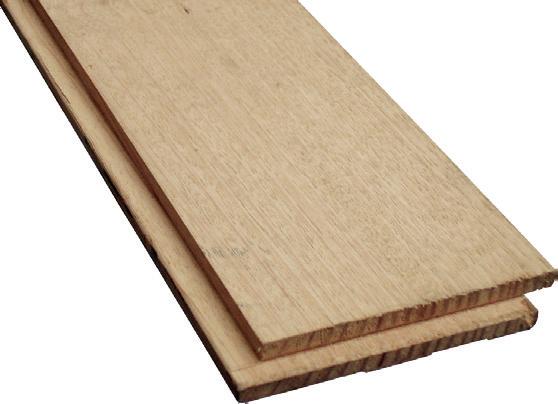
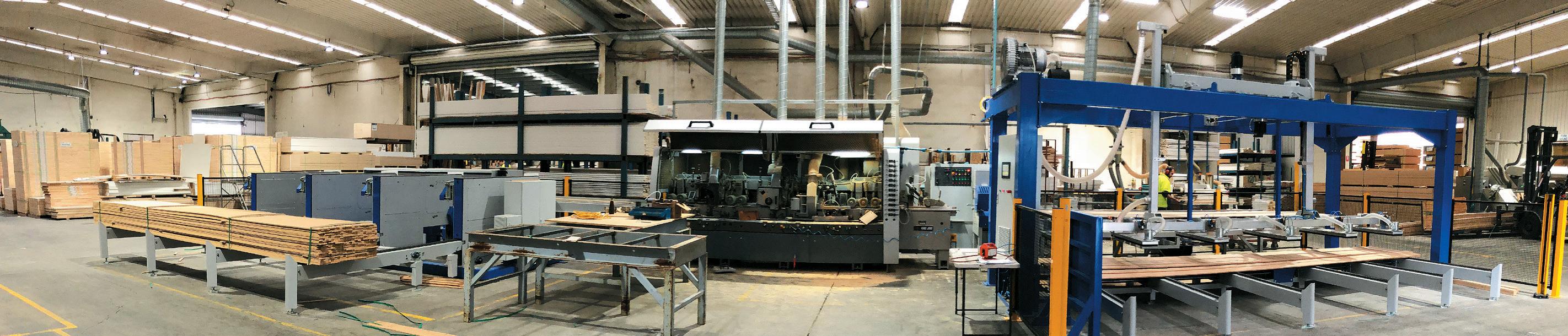
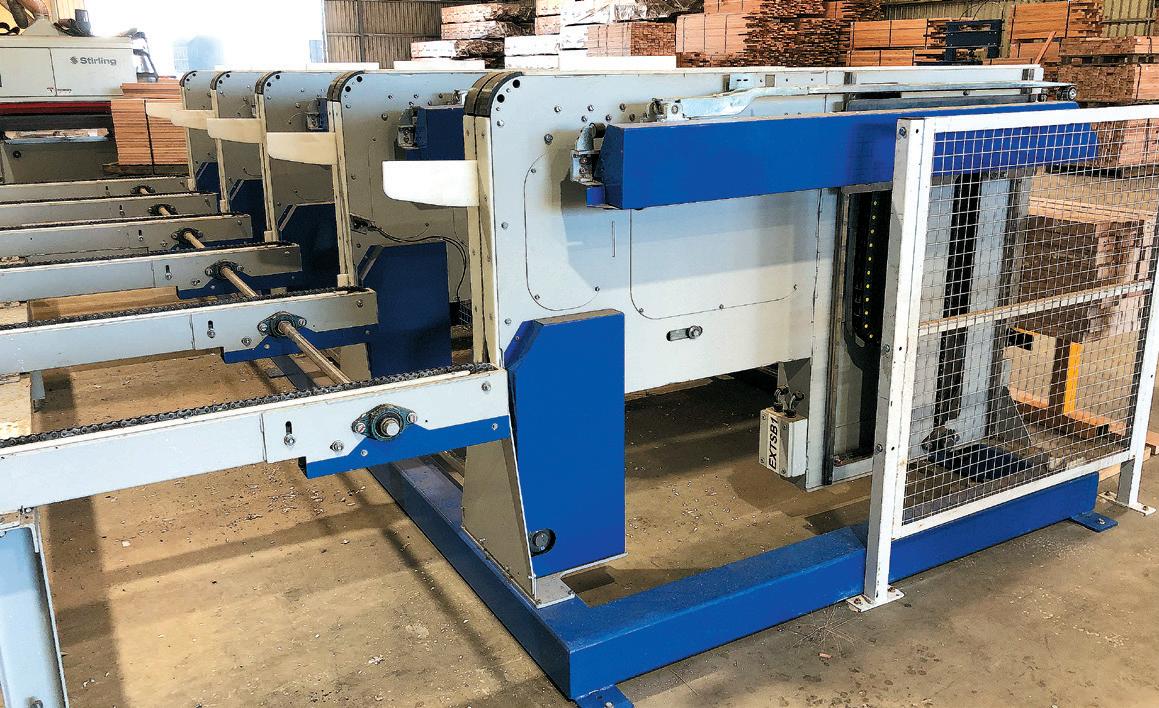
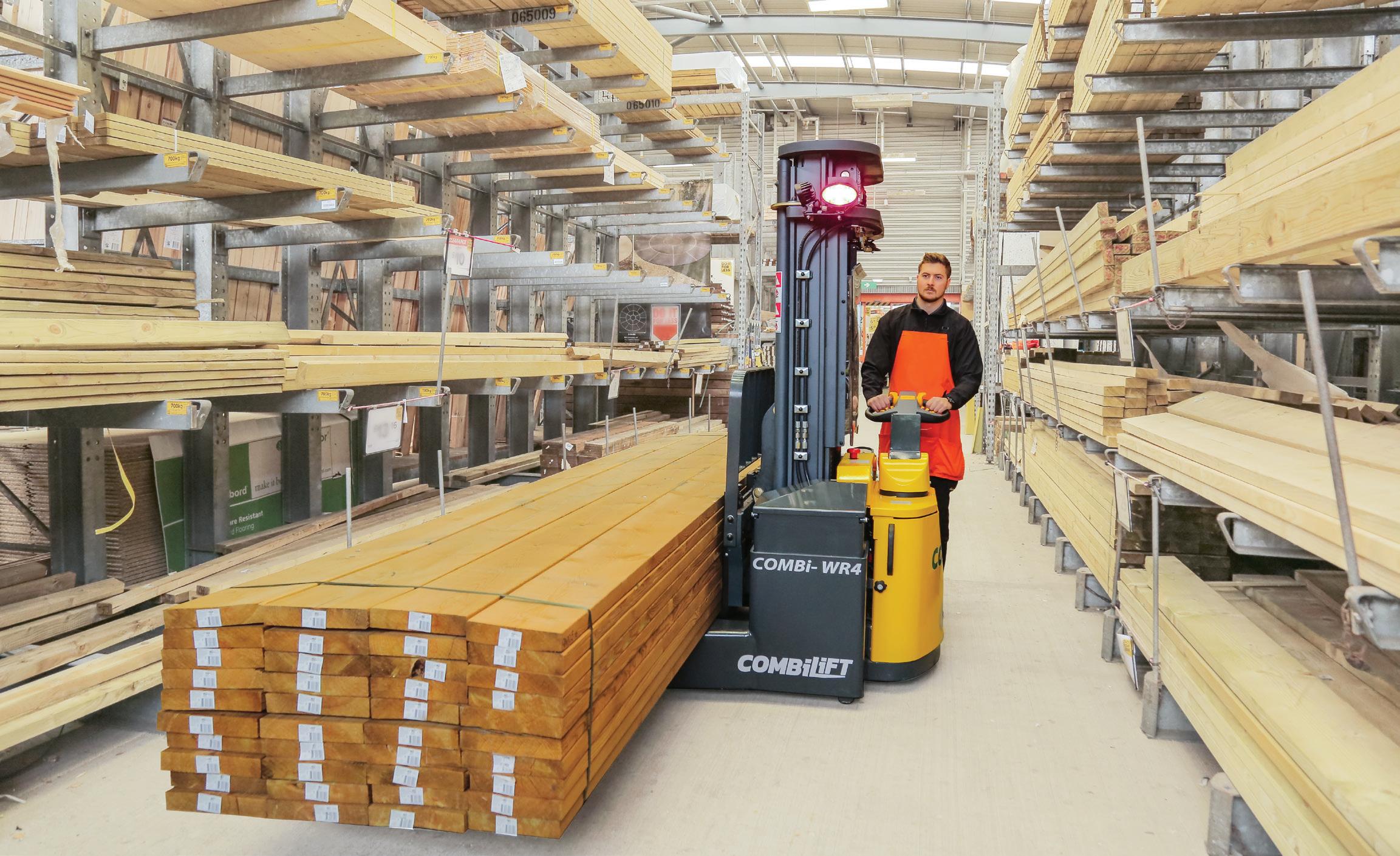
The Stacker is the perfect solution to continuously stack timber into packs all day long without any supervision. This machine is ideally suited to any moulding, finger jointing or docking line and will improve productivity and safety. The automated Stacker is a robust, reliable, economical and user friendly solution to stacking timber.
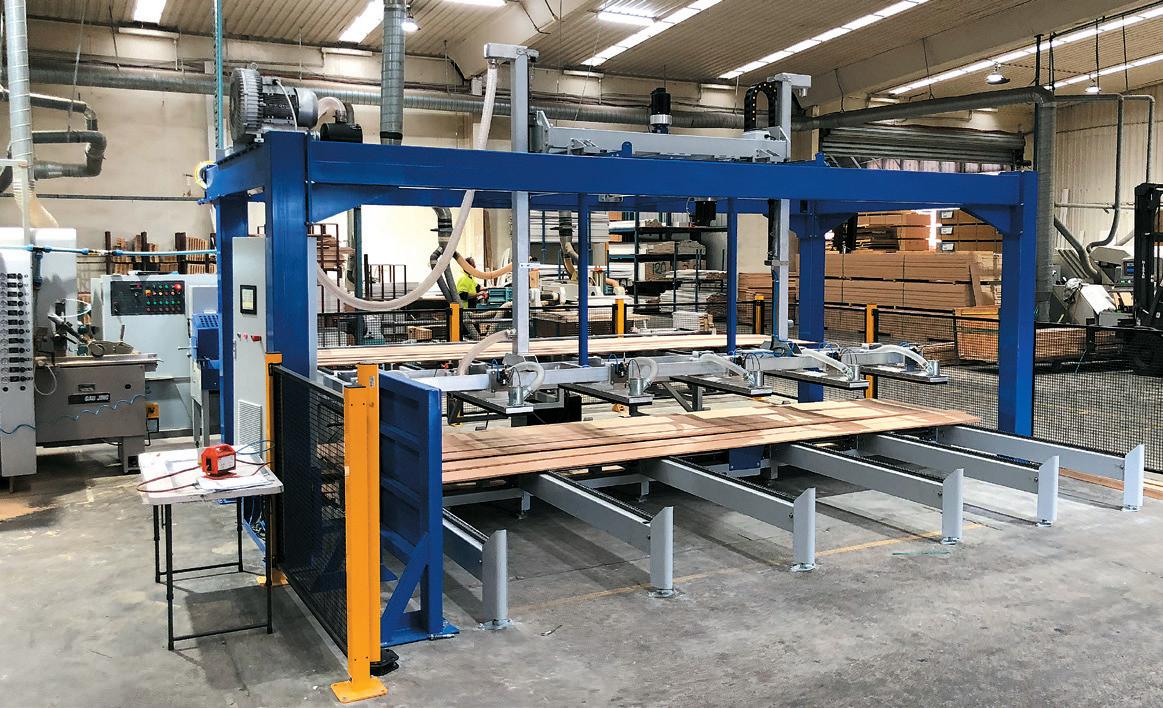
The Vacuum Lifter can be used to unload and load timber one piece, or a layer, at a time. When unloading a fillet sweeper can be incorporated to automatically clear the fillets in between the layers. The vacuum lifter is an extremely versatile piece of equipment that is a must for any high speed, heavy lifting, long piece, or repetitive applications.
MARCH | APRIL 2026
Volume 36 – Issue 2
Incorporating Australian and New Zealand Timberman Established 1977
Front Cover:
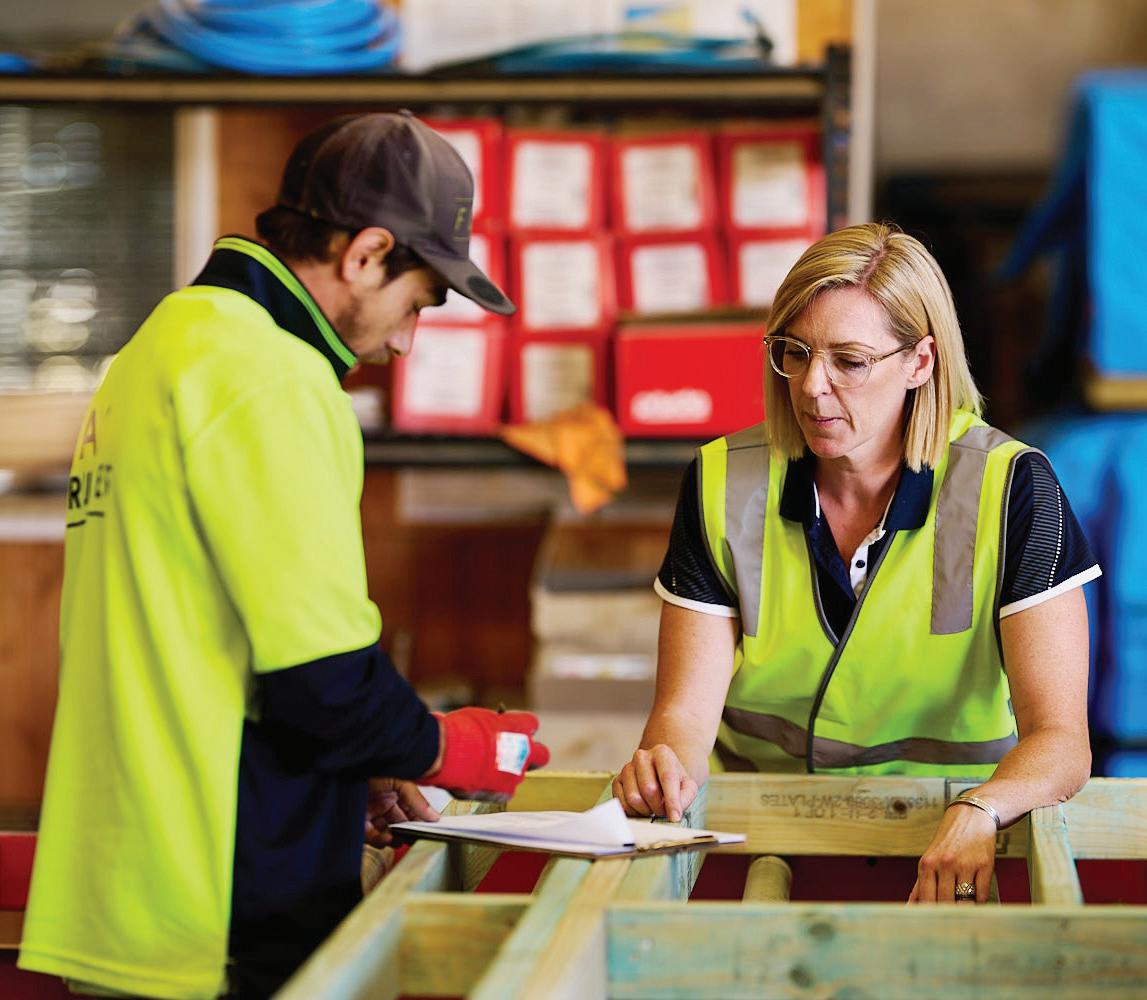
The 2026 International Women’s Day theme, Balance the Scales, asks us to consider not just whether women are present in an industry - but whether they are truly supported, seen as capable, and empowered to thrive within it. For Jacqueline Goodwin, Director of A.G. Trusses in Western Australia and Victoria, those scales have been something she has been determinedly tipping for her entire working life - one roof truss, one building site, one stride at a time.
Story page 16
Publisher and Chief Executive: Hartley Higgins
6 13
General Manager: Robyn Haworth
Editor: Bruce Mitchell b.mitchell@ryanmediapl.com.au
Advertising: Jamie Richardson j.richardson@winetitles.com.au
Adelaide Office +61 (08) 8369 9514
Production & Creative Services: Robyn Haworth
Timber classifieds: j.richardson@winetitles.com.au
Adelaide Office +61 (08) 8369 9514
Subscriptions: subs@forestsandtimber.com.au
Adelaide Office +61 (08) 8369 9500
Subcription rates Free
Accounts:
Adelaide Office +61 (08) 8369 9500
Postal Address: 630 Regency Road, Broadview South Australia 5083 Phone: +61 (08) 8369 9500
Melbourne Office: Suite 207/19 Milton Parade, Malvern VIC 3144 Phone: +61 402 494 041
Find us on Facebook @AustralasianTimber Website www.timberbiz.com.au
Conditions
The opinions expressed in Australian Timber Magazine are not necessarily the opinions of or endorsed by the editor or publisher unless otherwise stated. All articles submitted for publication become the property of the publisher. All material in Australian Timber Magazine copyright 2022 © Ryan Media. All rights reserved. No part may be reproduced or copied in any form or by any means (graphic, electronic, or mechanical including information and retrieval systems) without written permission of the publisher. While every effort has been made to ensure the accuracy of information, the publisher will not accept responsibility for errors or omissions, or for any consequences arising from reliance on information published. 20
Australia’s Smart Building sector has achieved a dramatic transformation that seemed almost impossible just two years ago.
From near-invisibility in national housing policy to securing hundreds of millions in federal and state commitments, the sector has moved decisively from recognition to implementation — and now to genuine momentum.
Speaking at the industry’s flagship conference on the Gold Coast, prefabAUS Executive Chairman Damien Crough reflected on the sector’s remarkable trajectory.
“In a few short months we have advanced from almost nonrecognition to major uplift in support for MMC in these critical national areas,” he said.
Queensland has set a 50% Modern Methods of Construction target for government projects while preparing for the 2032 Olympics build.
New South Wales has launched a $10 million Modular Housing Pilot with Pattern Book fast approvals for modular construction.
Victoria has committed $50 million to a Future of Housing Centre of Excellence, Western Australia has allocated $50 million to its Housing Innovation Program, and both South Australia and Tasmania have established dedicated MMC social housing programs. It’s even making its presence felt on national TV with the prefabAUS-sponsored Epic Builds program on Channel 9.
The financial sector has also shifted dramatically. CommBank now offers prefab-specific products.
The question is no longer whether Modern Methods of Construction will transform Australian building. The question is how quickly the sector will embrace the future that prefabAUS has systematically created.
Australia’s prefabricated building industry is expanding rapidly, driven by housing shortages, labour constraints, and demand for faster, more sustainable construction.
Companies are focusing intelligent, sustainable and reliable modular design for both residential and commercial sectors, highlighting the industry’s emphasis on speed and environmental performance.
To meet that growing interest
Australian Timber Magazine has introduced a regular section launched with this edition, to cover the industry from every perspective; from those involved in the planning to those at the construction end of the process, and everything in between, including monitoring all
governments’ support for timber construction built offsite in solving housing shortfalls.
Australian Timber Magazine will look at what’s being built, how it’s being built, who is building it, and why the industry matters.
Already, several key timber-based players are shaping the prefabrication landscape. Timberlink’s NeXTimber facility in South Australia is a major player, representing the country’s first integrated CLT and glulam manufacturing plant and boosting domestic supply capacity.
XLam is another leading manufacturer, operating one of the largest CLT production facilities in Australasia and supplying prefabricated structural panels for large-scale projects.
Australian Sustainable Hardwoods (ASH) produces MASSLAM glulam systems, focusing on high-performance hardwood solutions for commercial structures.
And industry bodies such as prefabAUS connect a wide network of builders and promote innovation, indicating a maturing and increasingly collaborative sector.
Overall, Australia’s timber prefab building industry is transitioning from niche to mainstream. With strong demand, technological innovation, and growing institutional support, it is likely to play a central role in delivering faster, more affordable, and sustainable housing nationwide.
Our new Timber Built Offsite coverage begins on Page 11.
What began as a handson introduction to the timber industry has quickly turned into real career opportunities for 14 participants of the NTHA Crafting Careers in Timber Program.
Sixteen candidates stepped into the program with little more than curiosity — many believing carpentry was their only pathway into the industry. Four weeks later, 14 were preparing to enter the workforce, armed with new skills, industry insight, and a clear direction for their future.
For many, that future looks very different than they first imagined.
From day one, the program broke away from traditional training.
Instead of sitting in a classroom, participants were immersed in the industry, starting out in forestry and following the journey of timber all the way through to manufactur-
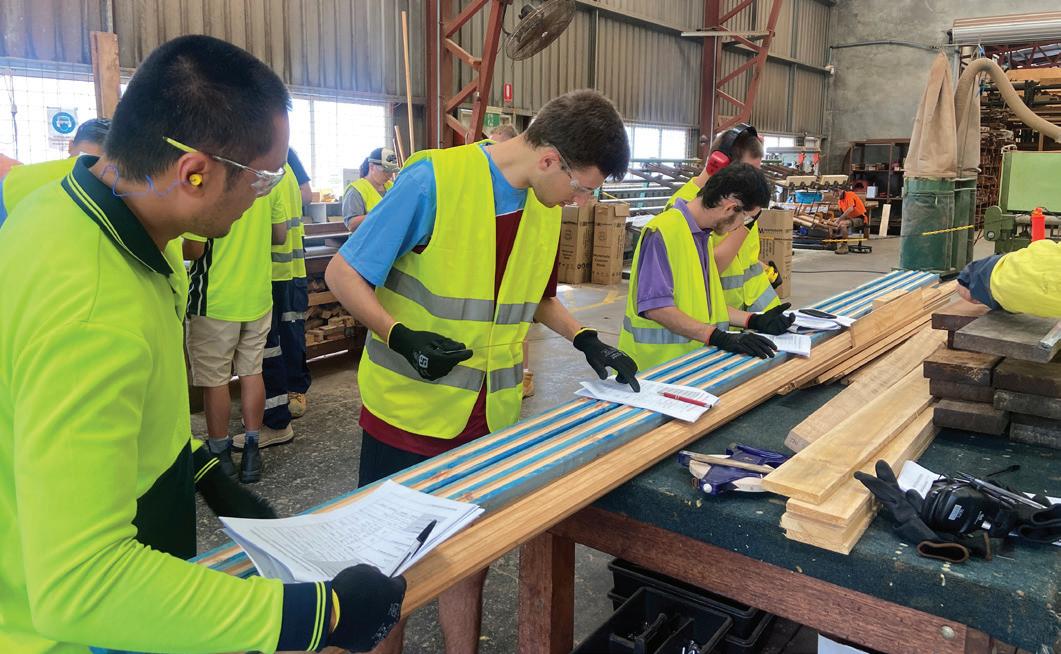
ing and construction.
They walked through working forests, watched logs being milled into structural timber, and stood on factory floors where frames and trusses are designed and built with precision technology.
It was this real-world exposure that left the biggest impression.
“The site tours were definitely
the highlight because it gave them such good exposure to the industry,” NTHA Program Manager Natasha Ryan said.
“A lot of the trainees came into the program wanting to be carpenters, thinking that’s what timber was,” Natasha said.
“But they soon discovered the diversity within the industry.
ASenior Research Fellow at the University of Queensland School of Civil Engineering has recently completed a six-month secondment with AKD to apply research expertise in an operational setting while gaining insight into industry challenges.
Dr Luis Yerman, representing the ARC Advance Timber Hub and the National Centre for Timber Durability and Design Life, spent the six months working with Hub partner AKD to bridge academic research and real-world timber applications. This industry engagement is an important key performance indicator of the Hub.
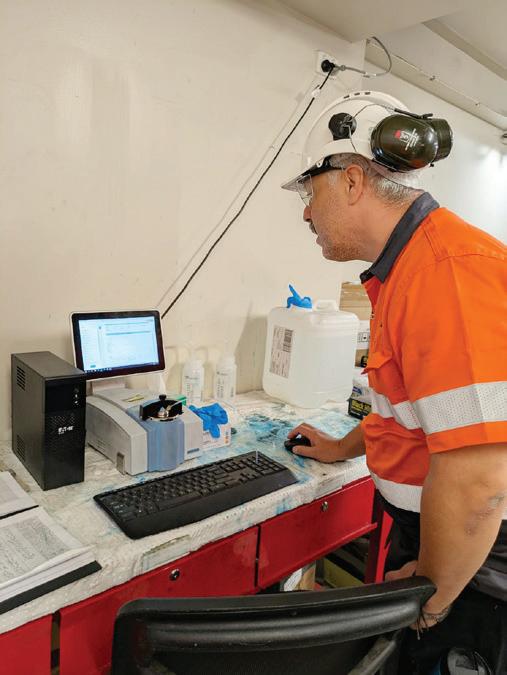
Dr Yerman has a background in chemistry and extensive experience in timber durability, fungal decay, moisture behaviour, and fire performance.
The secondment was designed to explore the broader issue of mould in timber products, from its underlying causes through
to management and prevention across the product lifecycle.
“I’d like to express my sincere gratitude to AKD for the opportunity to complete an industry secondment at the Caboolture sawmill,” Dr Yerman said.
“These six months have been truly rewarding. I learned a great deal about timber operations and had the pleasure of meeting many talented and dedicated people across the business.”
Over the course of the placement, Dr Yerman developed and delivered a structured body of work covering three interconnected areas.
These included a review of commonly used mould remediation approaches, an investigation of material characteristics that
influence moisture and biological behaviour, and an assessment of environmental conditions relevant to timber storage and handling. Together, these activities provided a holistic framework for understanding mould risk from multiple angles.
A key objective of the secondment was knowledge exchange. By working at the interface between research and industry practice, the project supported clearer alignment between scientific understanding and practical decision-making.
It demonstrated the benefits of embedding researchers within operational settings, enabling two-way learning, more relevant research questions, and stronger pathways for future collaboration.
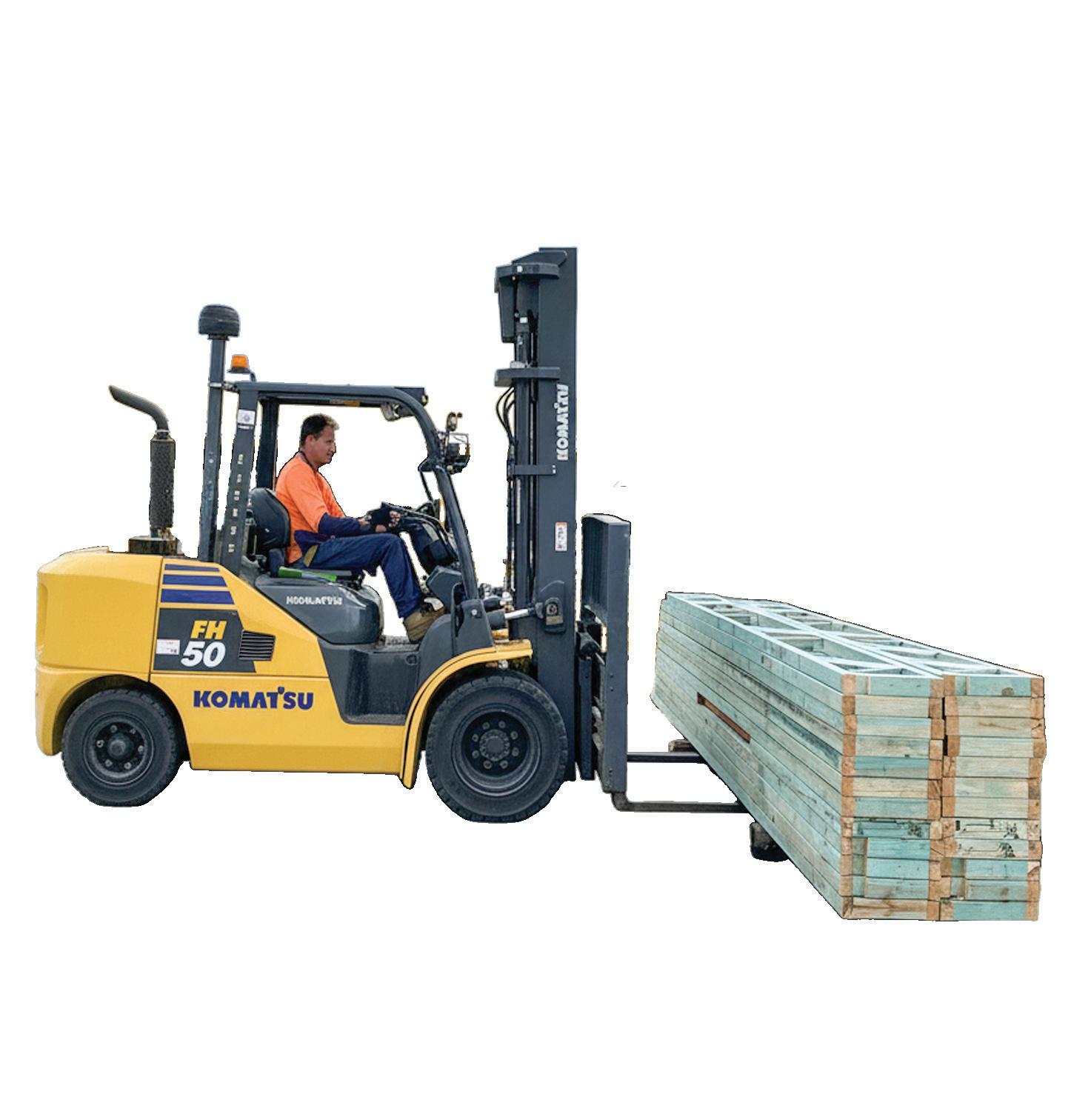
Komatsu Forklifts are built tough for timber handling. Delivering exceptional lifting power, stability, and precision, they make moving heavy, irregular timber loads safer and more efficient. With wet disc brakes and hydrostatic drive available on select models, you’ll enjoy improved fuel efficiency and lower operating costs. Count on Komatsu Forklifts for reliability, quality and durability in the harshest environments.

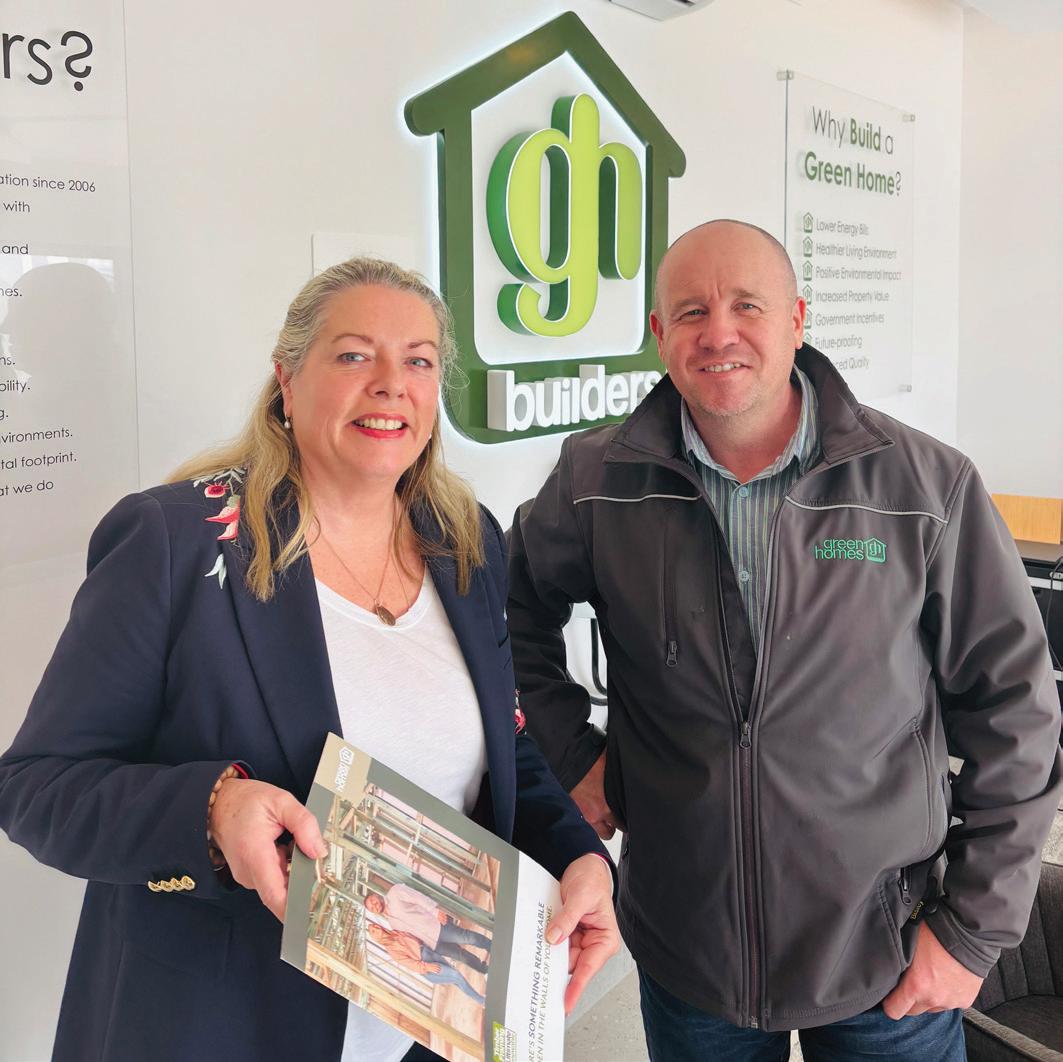
When Green Homes Australia (GHA) designs a home, the structural system isn’t debated. Timber framing is the obvious choice to meet performance goals and thermal ratings.
That position wasn’t shaped by trends or marketing. When the company launched in 2006 few were considering energy efficiency or long-term environmental impact. Designing for lifecycle outcomes was even rarer still.
For GHA Founder Mick Fabar, following trends was never his focus. He wanted to address what he saw as fundamental shortcomings in the way Australian homes were being built, developing a model prioritising sustainability, affordability and liveability.
Nearly two decades later, the approach that set GHA apart is increasingly what the market expects. As affordability, durability and energy performance move from “nice-to-have” features to baseline requirements, the business model GHA established early
journey, but as a proven, performance-driven structural solution.
However, these days buyers are asking more informed questions about materials, durability and long-term performance - and timber framing sits quietly but critically at the centre of those conversations. Over time, GHA’s engagement with the Renewable Timber Framing Campaign has evolved from brochure placement in display homes to an ongoing thought partnership with an upcoming digital campaign on both companies’ social media platforms.
initiative that provides reduced interest rates to consumers building energy-efficient homes.
“We’re one of the only builders in the country to have our full suite of designs fully approved by the Green Loan Program,” he adds.
Recent FWPA consumer research shows that affordability and durability are among the most important considerations for new home buyers, particularly in the current cost-of-living focus.
is now aligning with mainstream demand. And at the centre of that model is a structural decision Mick has stood by from day one: renewable timber framing.
For many years, Mick struggled to see the value in actively promoting timber framing as part of a broader campaign to promote his business and win more work. Not because it wasn’t important - but because to him, timber framing is clearly the only way to go.
Insightful and direct in his exchanges with Renewable Timber Framing Campaign Manager, Christine Briggs, early interactions made his feelings clear: why sacrifice time selling the benefits of timber framing when that’s all he’s going to ever offer in his homes?
“If you want predictable thermal performance, timber framing is the logical choice,” he says. “We wouldn’t build any other way.”
That mindset reflects how embedded timber is within GHA’s system. It’s not treated as a point of differentiation for the client
Green Homes Australia operates across Australia, New Zealand and the United States, with climate-specific design packages tailored to performance outcomes. Each home is designed for its site, with considered choices for construction and material choices (including prefabricated or traditional stick-built timber framing solutions), harnessing passive solar principles and energy modelling to determine how the building will perform.
“What we do well is make sure the right design is done first,” Fabar says. “Then the second part of energy efficiency is choosing the right products.”
The result? Homes that are not only energy-neutral but poised for future adaptability.
The GHA approach means rather than positioning timber framing as a sustainability upgrade or optional feature, it’s rightly treated as the obvious structural foundation that enables consistent thermal performance across Australia’s eight climate zones. Without it, the energy ratings GHA designs for would be impossible to achieve. Notably, all of Green Homes Australia’s designs are pre-approved under the Green Loan Program, a government-backed
Environmental performance also rates strongly, especially among value-driven consumers who want evidence rather than ‘feel good’ statements.
This shift is reflected in GHA’s client base. Their buyers are not niche sustainability advocates or high-end luxury clients; they are informed, value-focused households looking for homes that perform as intended over time. For this cohort, GHA’s fact-based modelling and design process provides confidence that sustainability claims are backed by measurable outcomes.
Scaling performance creates opportunities for growth
To meet growing demand, Green Homes Australia transitioned from a franchise model to a licence-based system, supporting regionally based builders who want to deliver high-performance homes within a proven framework – with opportunities for more to join their ranks. Many of these licensees are small to mid-scale operators, building 10–40 homes per year and seeking to grow without compromising quality or control.
Visit the Green Homes Australia website for more information on their licensee opportunities, and access free resources for marketing timber framing to your clients from the Renewable Timber Framing campaign.
Hydrowood, Tasmania’s pioneering underwater timber recovery company, has appointed Bowens as its exclusive distributor in Victoria, marking a significant milestone in the company’s national growth strategy.
The partnership was officially launched at Bowen’s Circa Studio, with architects, specifiers, builders and members of the Sustainable Builders Alliance in attendance. “The commercial and residential construction sectors are searching for truly sustainable materials — and that’s Hydrowood,” said CEO Neale Tomlin.
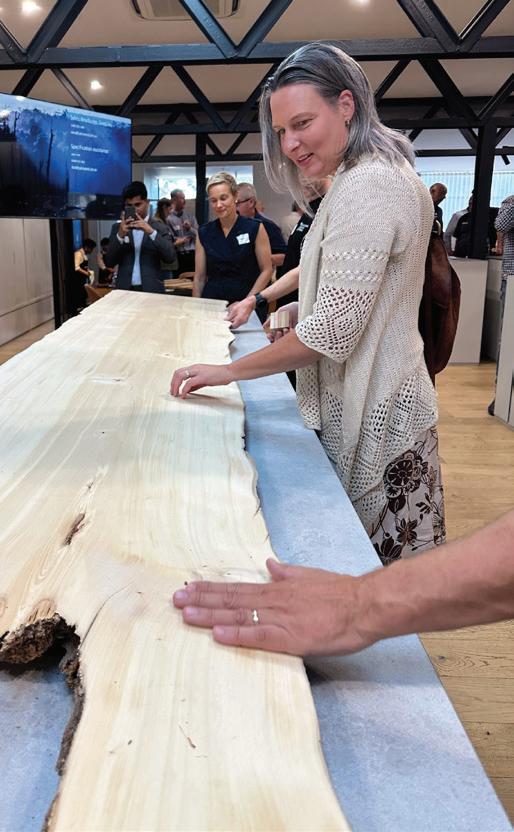
“This partnership ensures Victorian architects and builders can access our product locally and confidently specify it into projects.”
Bowens Managing Director John Bowen said the alignment
between the two companies was clear.
“Bowens sees its relationship with Hydrowood as a partnership that will grow stronger over time.
“We’re a business that is great at selling to builders and getting the right product in their hands.
“We can ensure that Hydrowood gets the audience it deserves, making its way across Victoria and into projects around our state.”
Mr Tomlin said that as demand grows for transparency around the origins of materials, Hydrowood offered the market something genuinely rare: premium Australian native timber with a powerful and verifiable story of recovery, innovation and environmental responsibility. Founded
and headquartered in Tasmania, Hydrowood is Australia’s first and only underwater timber recovery business.
Through the development and commercial deployment of underwater logging technology, the company recovers premium Australian native timbers submerged in lakes and transforms them into high-grade architectural and furniture materials.
The Victorian distribution agreement represents a major step in scaling a homegrown Tasmanian innovation onto the national stage, cementing Hydrowood’s position as a Tasmanian success story delivering skilled jobs and export-ready products from the state.
MARK SIMPSON
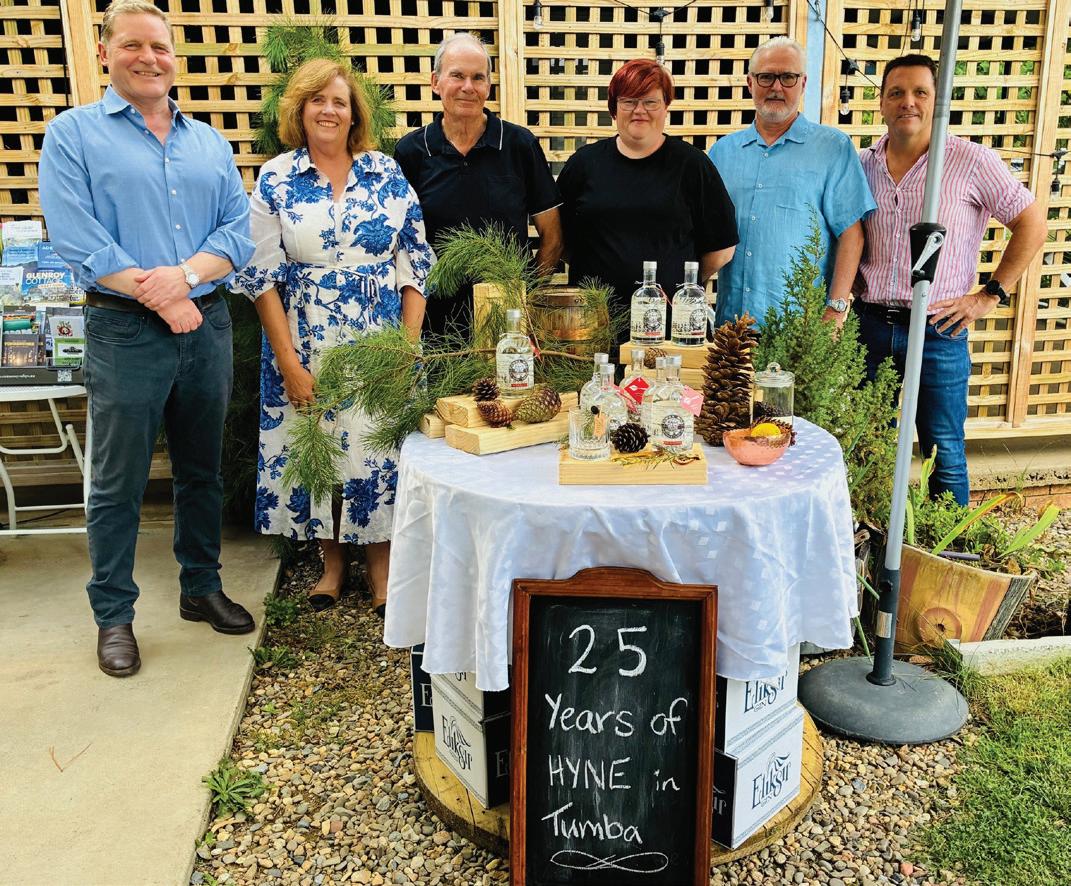
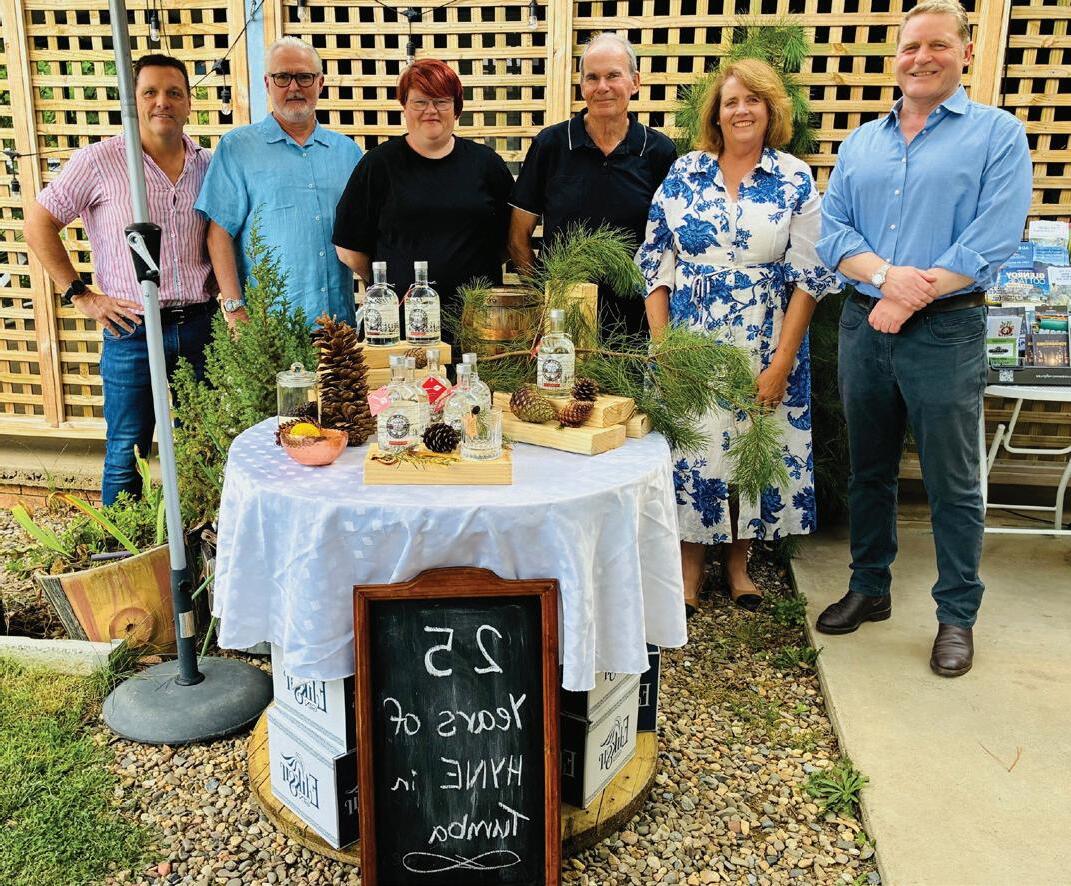
2026 marks 25 years since Hyne Group took over the Jingellic Road mill in Tumbarumba.
To celebrate Hyne has launched the Hyne-Pine Gin.
In partnership with Tumbarumba founded, Ladbroken Distillery, the Radiata Pine needle infused gin was officially launched with taste testing by Hyne’s local customers and suppliers.
Hyne Group Chair, Tom BruceJones hosted the small launch which presented an opportunity to thank those in attendance for their support over the years, especially in light of recent bushfires and ongoing challenges.
“It was great to meet some of our local customers, suppliers and builders, and share some current market insights as well as the journey over the years.
“Pine infused gin certainly presented some light-hearted fun while acknowledging the importance of supporting locally grown and manufactured timber for our housing construction.
“I would also like to thank Robbie and Neil Ladbrook, founders
of the Ladbroken Distillery, for taking our idea and creating something special to mark this commemorative year,” Mr BruceJones concluded.
Speaking to the guests at the launch Mr Bruce-Jones outlined what he saw as the prosperous future ahead for Hyne Group which has now diversified into a number of other timber products included laminated lumber and timber palates.
“There is no limit to our ambition,” he said.
Hyne is also proud to be such a significant part of the Tumbarumba region economy.
“All those who recall the Tumbarumba Mill site when Hyne purchased it 25 years ago, can attest to the significant investment and growth the Hyne Group has delivered over the years,” their announcement of the commemoration said.
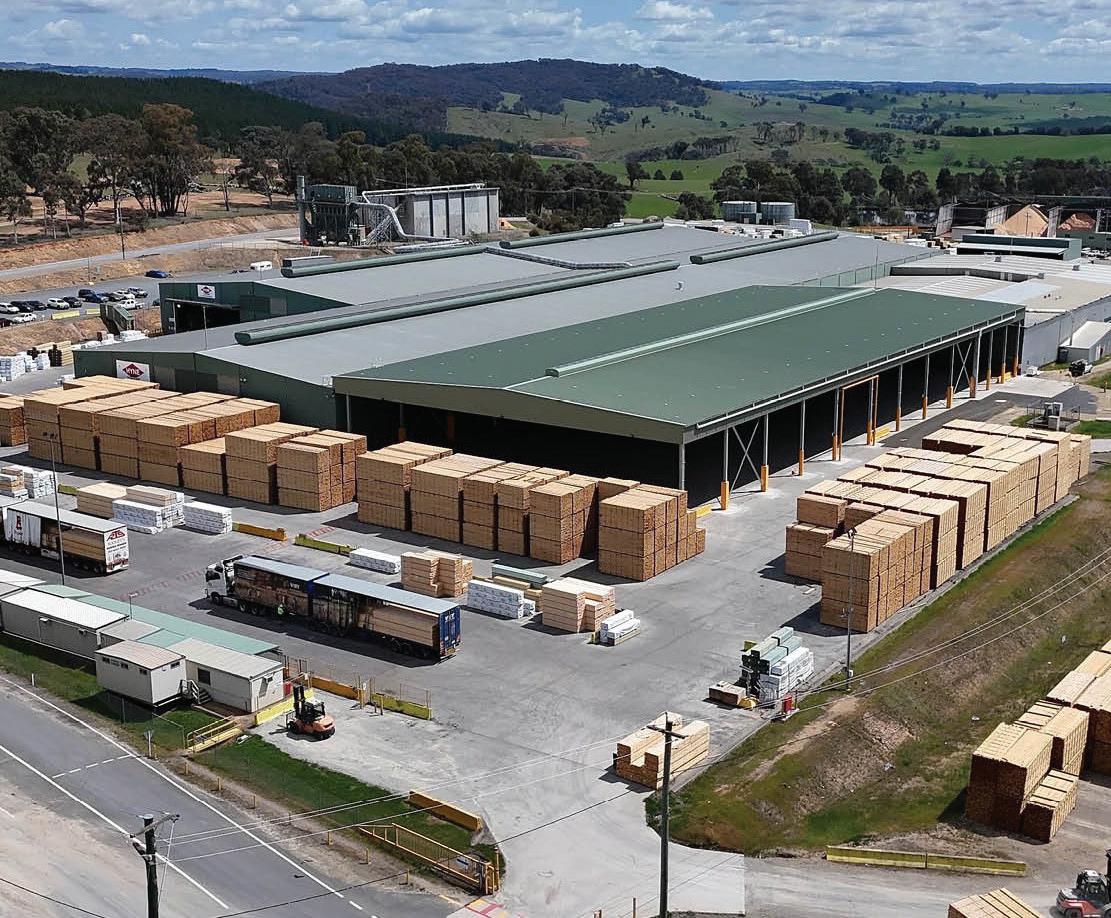
Approximately 90 per cent of the Jingellic Road site was rebuilt as part of the $180 million investment, transforming it, into a world class sawmill, employing over 200 people.
This strategic move was a game-changer for the company’s move into southern markets.
It was another five years before the first boards rolled off the production line but today the mill processes approximately 500,000 cubic metres of log per year, or the equivalent of about 16,600 timber framed homes.
Fifth generation Hyne family member and General Manager, Sales, Peter Hyne, recalled the angst the company went through in the shift to softwood milling.
“With access to hardwood native forest becoming tougher and the changes in the industry the only option was to move to plantation grown softwood,” he said.
He recalled his grandfather being totally opposed to the change when the family company proposed to convert their mill at Tuan in Queensland. But he conceded and the rest, as they say, is history.
Snowy Valleys mayor, Councillor Julia Ham, acknowledged the contribution of the Hyne Group to the region.
“25 years is a significant milestone and the economic value of the Mill to this region cannot be underestimated.
“From both direct and in-direct employment, manufacture of sustainable, quality products and the support for the community over the years, the contribution is tremendous, not only for Tumbarumba, but the whole of Snowy Valleys Council area and beyond.
“The Hyne Community Trust alone has contributed almost $1 million into the community and that doesn’t include all the other donations including timber for various community initiatives,” Cr Ham said.
The commemorative Hyne pine infused gin is available while stocks last and pending demand for future batches. It can be purchased directly from the Ladbroken Distillery in Tumbarumba, 7 Albury Street, or ordered online at: https://ladbroken.com.au/ collections/limited-release-seasonal-gins/products/hyne- anniversary-pine-infused-gin.
After a 50-year tenure with Hyne, James Hyne has retired.
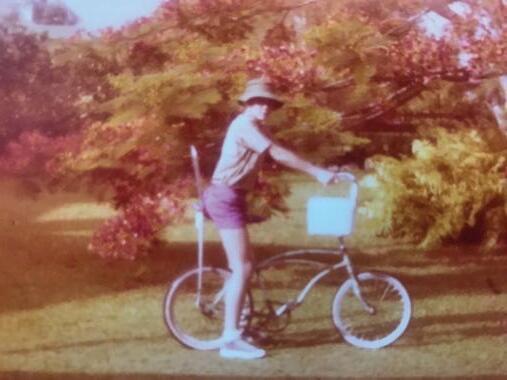
His journey started in 1976 when, at age 15, he rode his push bike to work in the Maryborough pole yard during his school holidays.
At 17, he officially commenced, but only after his grandfather, third generation Lambert Hyne, had briefed everyone that he was not to receive any special treatment. As such, James’ first job was shovelling mud at the treatment plant.
From hardwood to softwood, pole yards to log yards, operations to the office, James worked across many parts of the business including as a Director on the Board. He has seen and been part of many acquisitions, restructures, leadership changes and new locations.
However, James states it is the many faces and characters he has had the privilege to work with over the years, that are his most treasured experiences and memories.
“It has always been said, from generation to generation, that Hyne is about its people and I couldn’t agree more,” he said.
emotions.However, I am sure we can all agree it is well-deserved to say the least, and I wish him all the very best with this next, hopefully more relaxed, chapter,” Mr Bruce-Jones said.
The peak state body for Queensland’s forest and timber industry has paid tribute to highly respected Board member James Hyne, whose 16 years of dedicated service as a Timber Queensland Director has strengthened the industry.
“I thank all those who have been part of my journey over the years – far too many to mention.
“There have been many great leaders that have provided inspiring mentoring, and it has been a privilege to be part of a company built on the strength of its people.
“From riding my push bike into the pole yard at 15 to walking out after 50 years, it has been an extraordinary journey and one I will always be grateful for.
“As I retire, I acknowledge the exciting times for Hyne, particularly through the partnership with James Jones and the continued global growth and expansion.
“I wish the business and the broader industry, every success for the future.” James said.
In paying tribute to James’ 50 years of service, Hyne Group Chair, Tom Bruce-Jones said his retirement is extremely well-deserved.
“James has made a remarkable contribution to both the business and the community with an incredible 50 years of service.
“Being highly regarded throughout the company and as a local, Maryborough man, the announcement of his retirement will no doubt be met with mixed
Timber Queensland CEO Mick Stephens has praised James for his passion and long-term commitment to the interests of the industry across Queensland.
“In his role as a Director and more broadly, James contributed to many positive developments from the establishment of the Parliamentary Friends of the

Queensland Forest and Timber Industry network through to training and skills initiatives, and the formation and governance of the Queensland regional forestry hubs, including his role as Chair of the South East and Central Queensland forestry hub.
“The Hyne name is widely recognised in the Queensland timber industry with a rich family history, and James is testimony to this enduring legacy,” Mr Stephens said.
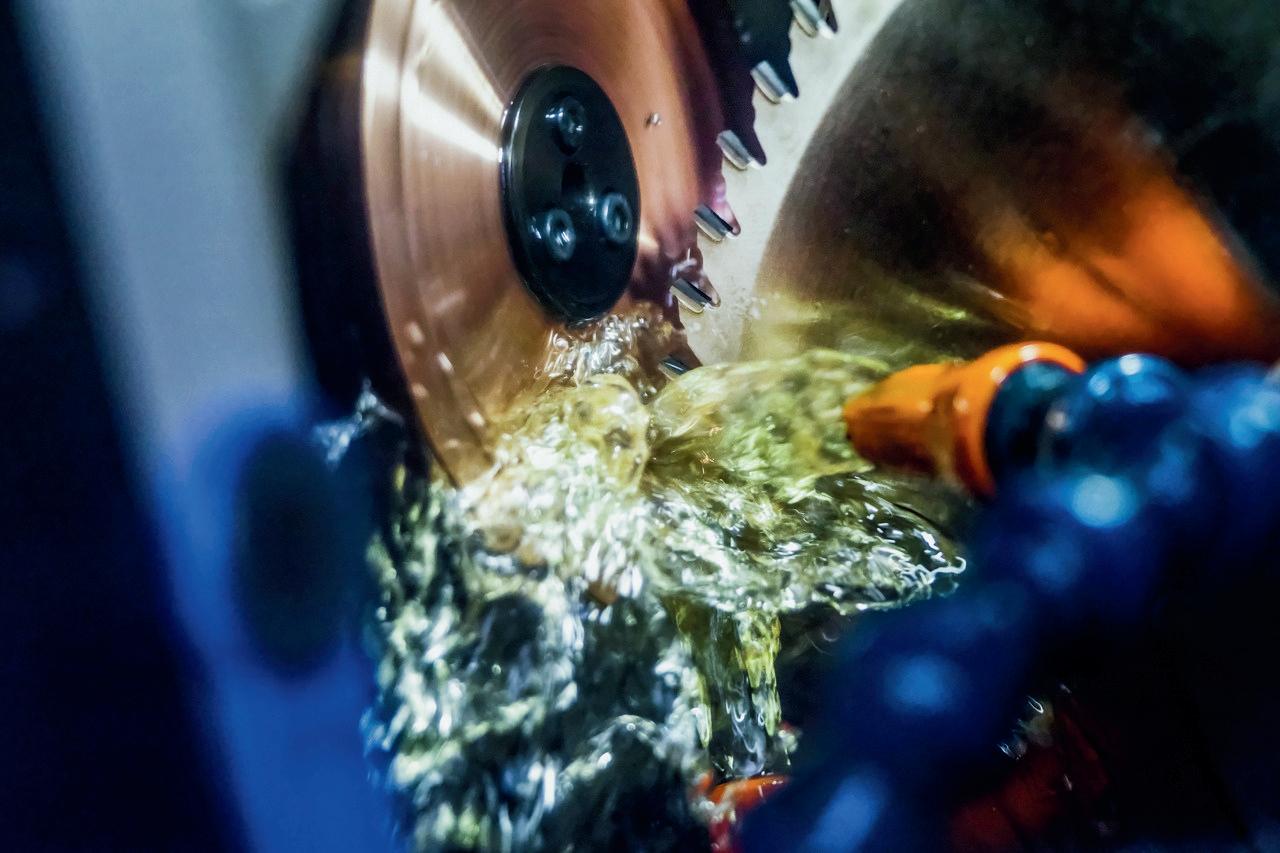
At Leitz Australia and New Zealand, our fully equipped workshops can expertly sharpen any brand of tooling to Leitz international quality standards.
We will restore your tools to as-new condition with Leitz precision grinding technology - extending their life, improving performance and reducing waste.
Keep your tools working like new. Talk to your Leitz representative today. We
Forestry Corporation NSW (FCNSW) has been convicted in the Land and Environment Court for four offences under the Forestry Act 2012 for breaching conditions of the Coastal Integrated Forestry Operations Approval (CIFOA) during forestry operations in Wild Cattle Creek State Forest between June and July 2020. FCNSW breached the CIFOA by failing to identify, map and record six giant trees and three hollow-bearing trees during broad area habitat searches conducted prior to forestry operations in Wild Cattle Creek State Forest. As a result, these nine trees were unlawfully felled by FCNSW’s logging contractors, so causing harm to the environment.
The prosecution was brought by the NSW Environment Protection Authority (the EPA) and FCNSW pleaded guilty to the offences. On 13 March 2026 the Court convicted FCNSW of each offence and determined that FCNSW should pay a monetary penalty totalling $450,000. The Court ordered FCNSW to pay the amount of the monetary penalty in lieu of a fine to undertake restorative justice activities and bio-cultural repair of the affected locations. The Court also ordered FCNSW undertake an audit of its internal procedures, instruction and training relating to the identification and retention of giant trees and hollow-bearing trees and implement the recommendations of the audit. FCNSW was ordered to pay the EPA’s legal costs as agreed or assessed and publish this notice in State-wide, local and industry publications.
Laura Stefani and Tom Hol decided to knock down and rebuild their family home in Heathcote in Sydney’s south, they wanted a fundamentally different approach to construction — one aligned with their values around sustainability, efficiency, and thoughtful design.
Their journey to a custom modular home with MODE Homes demonstrates both the potential of prefabricated construction for everyday Australian families and the critical role that new finance products — like CommBank’s prefab loan — are playing in making it accessible.
The couple’s interest in modular construction was sparked at a TEDx conference highlighting the waste generated by traditional building — estimated at nearly 40 per cent of all locally produced waste.
“The waste reduction set us off on this trajectory,” says Tom. “In a factory, if you’ve got trimmings from one house, you can use them on the next, rather than chucking them in a skip bin.”
Beyond waste, they were drawn to reduced transport emissions and the superior thermal performance of factory-built homes. “We wanted a relatively passive design with good insulation,” Tom explains. “With the modular builders we were looking at, double-glazed windows and solid insulation were standard.”
Using the prefabAUS website and other research, the couple narrowed their search to builders who could deliver an architecturally designed custom home within budget. When they met MODE Homes’ architect-director Matt, the connection was immediate. “I
thought they’d be way outside our budget,” Tom recalls. “But Matt said that [our budget was in line with] the majority of houses he builds. Within an hour and a half, we’d basically done our design.”
The resulting home — around 170 to 180 square metres internally plus generous decking and a plunge pool — is a modest but well-resolved split-level design that responds to the sloping block. Bedrooms are treated as places to sleep, with the design prioritising open-plan living, transparency, and connection to the outdoors.
MODE Homes uses a pragmatic hybrid approach that keeps costs down without compromising design. Standard modules are just 3.5 metres wide, so they travel on standard roads without police escorts or pilot vehicles. Transport costs for each module came in at around $2,000 to $2,500, compared with up to five times that for wider modules. More complex elements like the open-plan living area are built on-site using panels that connect to the factory-built modules, delivering factory efficiencies where they matter most while enabling larger living spaces that would be impossible to transport.
The build demonstrated prefabrication’s speed advantages. Laura and Tom lived in their existing home for 11 weeks while the new house was constructed in the factory.
Once the old home was demolished, MODE’s team completed footings in a week and craned the modules into position the following
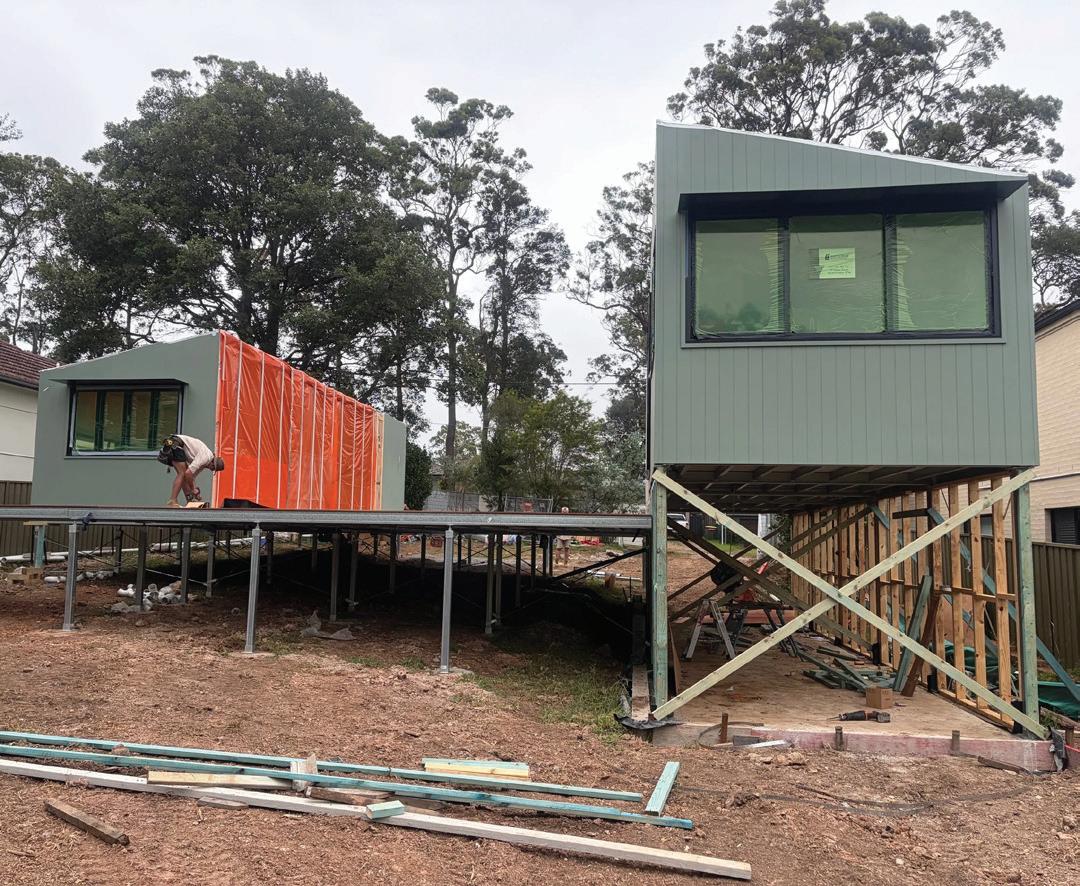
Thursday. “By the end of three weeks, they expect to have the roof and externals on,” says Tom.
Perhaps the most significant barrier the couple faced wasn’t planning or design — it was finance. Their mortgage broker contacted around 39 lenders and came back with a blunt recommendation: choose a different builder. “He said we should just build the normal way, because we wouldn’t have any trouble securing finance,” Laura said.
The problem was that traditional construction loans are structured around on-site milestones — slab, frame, lock-up. With prefabricated construction, the bulk of work happens in a factory before anything is visible on site, and most lenders couldn’t accommodate that.
Then CommBank announced its dedicated prefab home loan allowing customers to access progress payments before the home is affixed to land — up to 60 per cent of the contract price, rising to 80 per cent for accredited manufacturers. For Laura and Tom, it was transformative. “Once we provided
the Section 68 approval, they’ve been really quick with payments,” Laura says.
Laura and Tom are candid that the journey hasn’t been without frustration. New South Wales planning legislation still categorises modular homes under outdated caravan park regulations, which added months of delays and required their home to be set back two metres from side boundaries rather than the standard 900mm — a challenge the NSW Government is now actively working to resolve.
Yet even with these hurdles, the couple have no regrets. “We’d still do it again,” says Laura. “We know it will be worth it. We’ll have a home that connects with our values.”
Their story illustrates a pivotal moment for Australia’s housing sector. With finance products like CommBank’s prefab loan removing the biggest barrier to entry and governments modernising planning frameworks, custom prefabricated homes are becoming a genuinely viable option for families who want sustainability, and affordability.
t sounded like a pretty difficult task to start with.
Design and build a four-bedroom home in Melbourne, and deliver and build it with all wiring and plumbing installed on an island in the middle of Bass Strait in 90 days.
Add into that mix a building company which really specialises in big builds, and a construction crew with no real experience in prefab construction.
And then film the whole exercise for a reality-style television program based on modual construction produced in partnership with prefabAUS.
Premiering on 28 February on Channel 9 and 9Now, the new docuseries follows Australian-based prefab and modular construction teams as they race against the clock to deliver complex, high-performance builds in just 90 days.
Navigating remote locations and tight deadlines, each episode captures the rapid rise of modular and prefabricated construction in Australia.
The first program followed Melbourne-based Timber Building System and its plan to build the prefabricated four-bedroom home on King Island in Bass Strait. Everything, including the crane for assembly had to be transported to the island by ship.
Founded in 2014, TBS has quickly established itself as a market leader in the manufacture of high-quality prefabricated timber building systems for multi-storey, commercial and residential construction.
General Manager at Timber Building System (TBS) Tim
Newman is an experienced, professional engineer with a career that has followed his passion for designing, developing and validating high-quality products for large scale production.
Tim is an established BIM and lean manufacturing expert who has led TBS over the last four years, growing the business from a startup to a significant player in the manufacture of prefabricated buildings. He has been a critical player in building TBS’s manufacturing facility in Victoria and the company’s success overall. Tim continues to oversee the successful installation of works across Australia and within New Zealand.
He is committed to growing TBS’s prominence in the market and securing its recognition as a leader in Australian innovation and design.
“So we’re part way through designing a pre-fabricated hotel to put on the Ocean Dunes Golf Course (on King Island). And I really liked the island, and I really wanted the challenge of building a house on the island as quickly as we possibly could,” Tim told the program.
“We build hotels, multi-story buildings. So this is a bit of a flex for the team to see how quickly we can build a standard house.”
The 152 square meter house is designed for workers accommo-
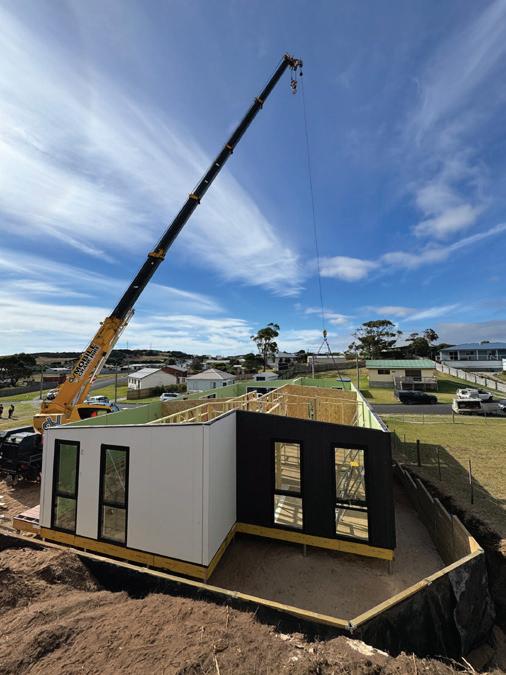
I really wanted the challenge of building a house on the island as quickly as we possibly could
dation in remote areas.
In normal circumstances building a home on King Island takes around 18 months to build.
In this case, Tim said TBS was not just putting a house on a remote location; “We’re using local talent to put that house together and enable them to build more houses quickly.”
“We’ll put the material on the boat the day before it’ll come over. We’re going to ship the crane at the same time. And we’ve got containers which have got all the furniture and everything to put in the house when it’s finished.”
He was initially aiming for 70 days.
The team in Melbourne spent
some spent months creating a detailed model of the house.
Production then began on the factory floor where a CNC machine cut the timber required it to within one millimetre.
Then it was joined, framed and braced, insulated, and wrapped. Then followed windows, the flashings and finally the cladding.
It was then shipped to King Island.
“We got this project over the line in 35 days,” Tim says.
“It’s the way that building needs to move. This will definitely help all remote areas grow.
“Our production line looks very similar to what a car line would look like, a linear production line, and the panels come off that production line the same as a car would.
“I see the future of building in this space to be manufacturing buildings coming off a production line with high quality at a significant pace, creating manufacturing jobs in the country.”
ALICIA GUTIERREZ BROWN
What if the solution to Australia’s housing shortage was already sitting in its underutilised forestry residues?
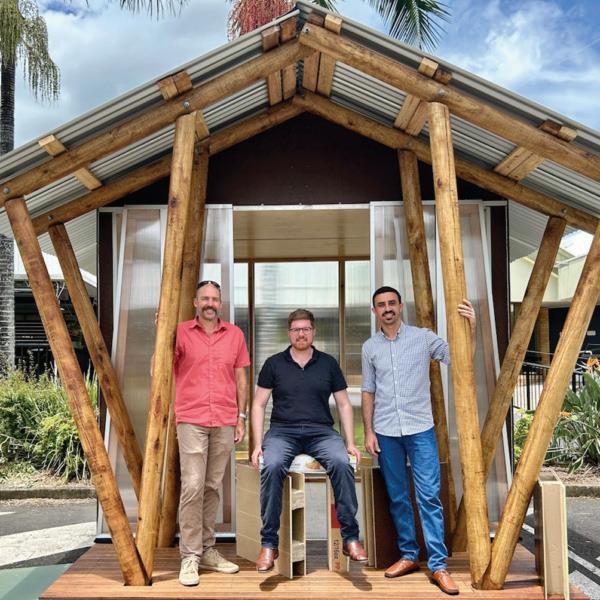
The Australian Forest and Wood Innovations (AFWI) Centre for Sustainable Futures is collaborating in a new project to transform under-utilised timber by-products into innovative, low-cost building systems for small homes and multifunctional structures.
Researchers at the University of Queensland are leading the initiative, with Associate Professor Joe Gattas heading the project titled Bio-based Construction Systems for Small-Footprint Dwellings and Multifunctional Outbuildings. The research aims to tackle growing housing affordability pressures while creating new opportunities for Australia’s forestry sector, unlocking new value from Australia’s wood fibre while helping address the nation’s housing affordability challenge.
The four-year initiative will develop two novel construction systems: a roundwood framing system using small-diameter logs with minimal processing, and a bio-based structural sandwich panel system made from engineered wood products such as particleboard, fibreboard, and plywood.
Together, these systems will enable the production of affordable, prefabricated buildings ranging from tiny homes and granny flats to sheds, carports, and hybrid ‘liveable sheds’ that combine storage or utility space with living areas.
Demand for small-footprint dwell-
ings is expanding rapidly across Australia, driven by housing affordability pressures, planning reforms, and increased demand for flexible living solutions. More than 10,500 secondary dwellings are estimated to be built nationally each year, alongside a substantial market for small-scale outbuildings and light industrial structures.
Despite this growth, current housing options remain dominated by steel-framed and imported systems, narrowing material diversity. The new project aims to introduce alternative building systems that are cost-effective, adaptable, and suited to a wider range of users, from homeowners to regional builders and DIY markets. These systems leverage locally sourced and manufactured materials to strengthen supply chain resilience and support sovereign capability.
Dr Gattas said this project is about creating “practical, scalable alternatives.”
“We’re developing building systems that are not only lowcost and adaptable, but also make better use of the resources we already have. The project represents a significant innovation opportunity by connecting under-utilised forestry resources with emerging construction market needs.”
Australia’s forestry industry produces significant volumes of low-value materials, including small-diameter logs, processing residues, and non-structural timber. These resources are often not fully utilised or directed toward short-lived applications.
This project seeks to change that by transforming these materials into high-value structural compo-
nents for construction.
Under conservative adoption scenarios, the new systems could generate demand for 61,000 cubic metres of timber fibre annually, representing an estimated $57 million market opportunity, while supporting regional economies and avoiding displacement of traditional timber markets.
The project will develop and test prototypes across multiple sites in Queensland and New South Wales, tailoring designs to local conditions and material availability.
Importantly, the systems are designed for off-site prefabrication or DIY flat-pack assembly, rapid deployment in disaster-affected areas, and for use in remote and regional communities.
The research will also map regulatory pathways across different building types – from DIY tiny homes through to
prefabricated secondary dwellings – helping expand market access for timber-based systems.
Beyond affordability and flexibility, the project contributes to Australia’s transition to a circular bioeconomy. By redirecting timber by-products into durable building materials, the systems could store approximately 50,000 tonnes of CO₂ annually.
Professor Mark Brown, Director of the AFWI Centre for Sustainable Futures housed at the University of the Sunshine Coast, said the project is a strong example of the type of innovation AFWI is investing in, connecting underused wood fibre with real-world construction needs.
“It aligns directly with our focus on maximising value from existing resources, developing new timber products, and supporting a more sustainable, carbon-friendly building sector,” Professor Brown said.
Associate Professor Dominik Holzer from the University of Melbourne has delivered a compelling presentation on how Artificial Intelligence could revolutionise the prefabrication industry.
His address to Offsite25, the annual conference of prefabAUS, - From AI to Factory - outlined the opportunities and significant challenges facing the construction sector’s digital transformation. Holzer began by highlighting Australia’s stark housing reality. The nation is falling dramatically short of its National Housing Accord targets, with actual dwelling approvals continuing to diverge from desired targets. Perhaps most troubling is that Australia has actually become slower at building homes over time—the average period between commencing construction and completion has extended from around six quarters a decade ago to more than nine quarters today.
When asked to explain this paradox in an age of technological advancement, Holzer was unequivocal: “It is often not just what we can do within the design and delivery side of things that determines how effective we are,” he said. “It is often also constrained by contracts; it is constrained by government overregulation associated with application and approval processes.”
This decline in productivity occurs against a backdrop of severe skills shortages. Australia currently faces a deficit of 83,000 tradespeople, creating a perfect storm that threatens to derail housing delivery targets.
The construction industry, traditionally one of the slowest
adopters of new technology, must now confront whether AI can provide solutions to these systemic challenges. Holzer believes AI represents a fundamental shift from previous technological advances.
“There are numerous patterns of information and knowledge management that can be boosted by the capabilities of AI,” he said. “It can really affect a whole different range of parts of your information flows and knowledge systems.”
This breadth of application sets AI apart from previous technologies like Building Information Modelling (BIM), which primarily benefited spatial coordination but had limited impact on project finance, procurement, fabrication processes, or logistics.
Holzer’s presentation mapped out comprehensive applications across the entire prefabrication process. In finance and feasibility, AI can assist with market analysis, demand forecasting, site suitability assessment, and dynamic financial modelling that updates projections as conditions change. For production management, AI enables predictive analysis for optimising schedules, reducing production cycle times, and automating compliance checks when interfacing with BIM systems.
On the factory floor, AI appli-

cations include risk forecasting, inventory management, and automated quality inspections.
“You have computer-supported visual checks where you have quality checks that would allow you to detect any defects or any deviations from what was designed,” Holzer explained, noting this could “speed up your QA processes dramatically.”
The technology extends to logistics through process simulation, supply chain vulnerability detection, and route optimisation. For site management, applications include minimising construction risks, supporting crane movement optimisation, and facilitating augmented reality installations.
Perhaps even more impressive than federal recognition is the systematic state-by-state adoption of Smart Building priorities. Queensland has set a 50% MMC target for government projects while preparing for the 2032 Olympics build.
At the conference, Assistant Min-
ister for Planning, Housing and Better Regulation Rebecca Young announced that a dedicated MMC sub-group would be added to the Queensland Building Ministerial Advisory Council (BMAC). This provides Modern Methods of Construction with focused attention within an influential reform body where prefabAUS already serves as a council member.
New South Wales launched a $10 million Modular Housing Pilot with Pattern Book fast approvals for modular construction.
Victoria committed $50 million to a Future of Housing Centre of Excellence, Western Australia allocated $50 million to its Housing Innovation Program, and both South Australia and Tasmania established dedicated MMC social housing programs.
The financial sector has also shifted dramatically. CommBank now offers prefab-specific products allowing 80% contract price access before home installation — a crucial breakthrough that addresses the sector’s unique procurement requirements. A Federal Treasury Working Party
is actively addressing remaining MMC finance barriers.
Central to Holzer’s message was the critical importance of data preparation — a step many organisations overlook in their rush to implement AI solutions.
“The biggest investment probably would have to be this sort of data cleansing, data tagging exercise that needs to happen to then really reap the benefits over time,” he said.
This data work involves several key components. First, organisations need to establish in-house reference databases that are “specific to your organisation, specific to what your core business is about”.
The goal isn’t about homogenisation of approaches across the industry — Holzer stressed: “We don’t want AI to lead to everyone doing the same thing and just hoping to do it quicker and cheaper.”
The process begins with historical project analysis.
“For many, it has to do with information tagging, where you look at your organisation’s history and projects, you standardise some of the data, and you allow the AI to harvest information and extract some trends and analysis.”
This historical data mining can reveal patterns in everything from financial performance to technical details that proved successful on previous projects. However, Holzer noted a fundamental industry weakness that makes this challenging: “We are such a project-by-project-based industry. We have been really bad in knowledge management and knowledge sharing, even within organisations.”
Navigating Legal and Technical Obstacles Legal issues present complex challenges that the industry is
only beginning to address. On the critical question of liability when AI systems make errors, Holzer was direct: “You can’t blame an algorithm for making decisions that led to wrong outcomes... You will not win a legal case if you say, Sorry, it’s not my fault, it’s the AI’s fault.”
He argues that the solution lies in “expert-in-the-loop systems” where human oversight remains integral to AI-assisted decision-making processes.
Data ownership and intellectual property protection create additional complications. There are substantial risks of inadvertent competitive intelligence sharing, particularly given AI’s appetite for data.
“AI is very hungry and keen to grab information from everywhere,” Holzer said, emphasising the need for careful data governance and new AI-inclusive policies by insurers.
For organisations ready to begin their AI journey, Holzer identified several accessible starting points, all of which depend on proper data preparation. The biggest opportunity lies in addressing the industry’s knowledge management failures by “establishing systems that allow you to bring up information in real time, and to help you make decisions based on more informed background information that’s available to you much quicker than you were able to do in the past”.
Other accessible applications include automated quality assurance on factory floors, transport logistics optimisation, and improved site management through crane movement optimisation and automated visual checks. However, these applications require standardised, tagged data to function effectively.
THE FOUNDATION: DATA STRATEGY
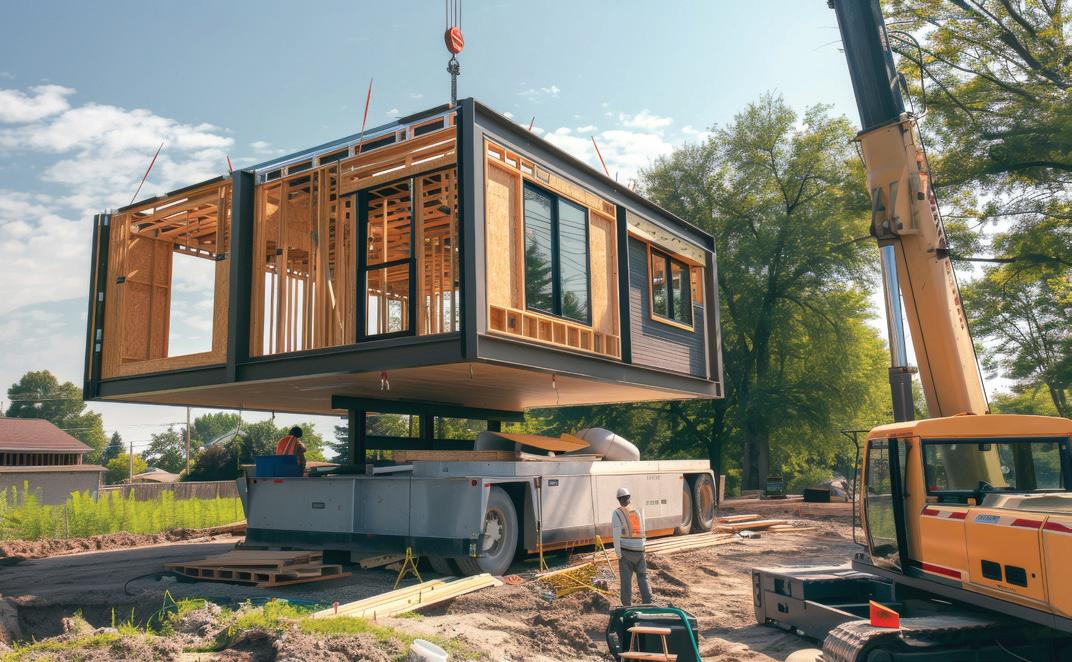
Technology extends to logistics through process simulation, supply chain vulnerability detection, and route optimisation.
When asked what construction professionals should do immediately to start their AI journey, Holzer’s response was emphatic about data fundamentals: “They should set up an AI steering group that discusses their data and how they deal with information clearly. AI can only work if it’s clean, consistent and high-quality. It’s the same trash-in, trash-out conversation about data we’ve always had.”
This requires what he called “a homogenisation of data structures across your business” that links different processes — from supply chain integration to design, fabrication, scheduling, transport, and finance — under unified logic.
“You want AI to be able to query across, and so that really depends on how clean and purposefully appropriate the data that you deal with is.”
The data strategy must also address IP and security concerns. Organisations need “a group of people within the organisation who look at this IP question, who ensure that whatever data you train your AI on is yours, or it’s publicly available to the point where you’re not infringing on anyone’s IP.”
From his consulting experience, Holzer emphasised that “data safety is the number one priority. You don’t want to expose yourself to any risk.” This involves establishing “very solid back-of-house
data and data integration system, and a very clear understanding ethically and legally, on what data sets you’re drawing on.”
The workforce implications are profound, with production planners, quality inspectors, and material handlers likely to see significant changes. However, rather than simply eliminating jobs, AI-enabled prefabrication requires workers who can collaborate with evolving, non-human intelligence systems.
Holzer advocates for coordinated responses involving government, education, and industry. This is also where the prefab sector needs to assist government institutions in finding more efficient ways to process building applications using AI. The problem isn’t overregulation as such, but the time it takes to manually check submissions against the myriad of compliance requirements in place. AI could play a significant role in automating a substantial number of tasks here. The prefabrication sector, being relatively small and cohesive, is well-positioned for collective action, though he acknowledges the challenge of balancing data sharing with competitive advantage protection.
KAT WELSH
The 2026 International Women’s Day theme, Balance the Scales, asks us to consider not just whether women are present in an industry - but whether they are truly supported, seen as capable, and empowered to thrive within it.
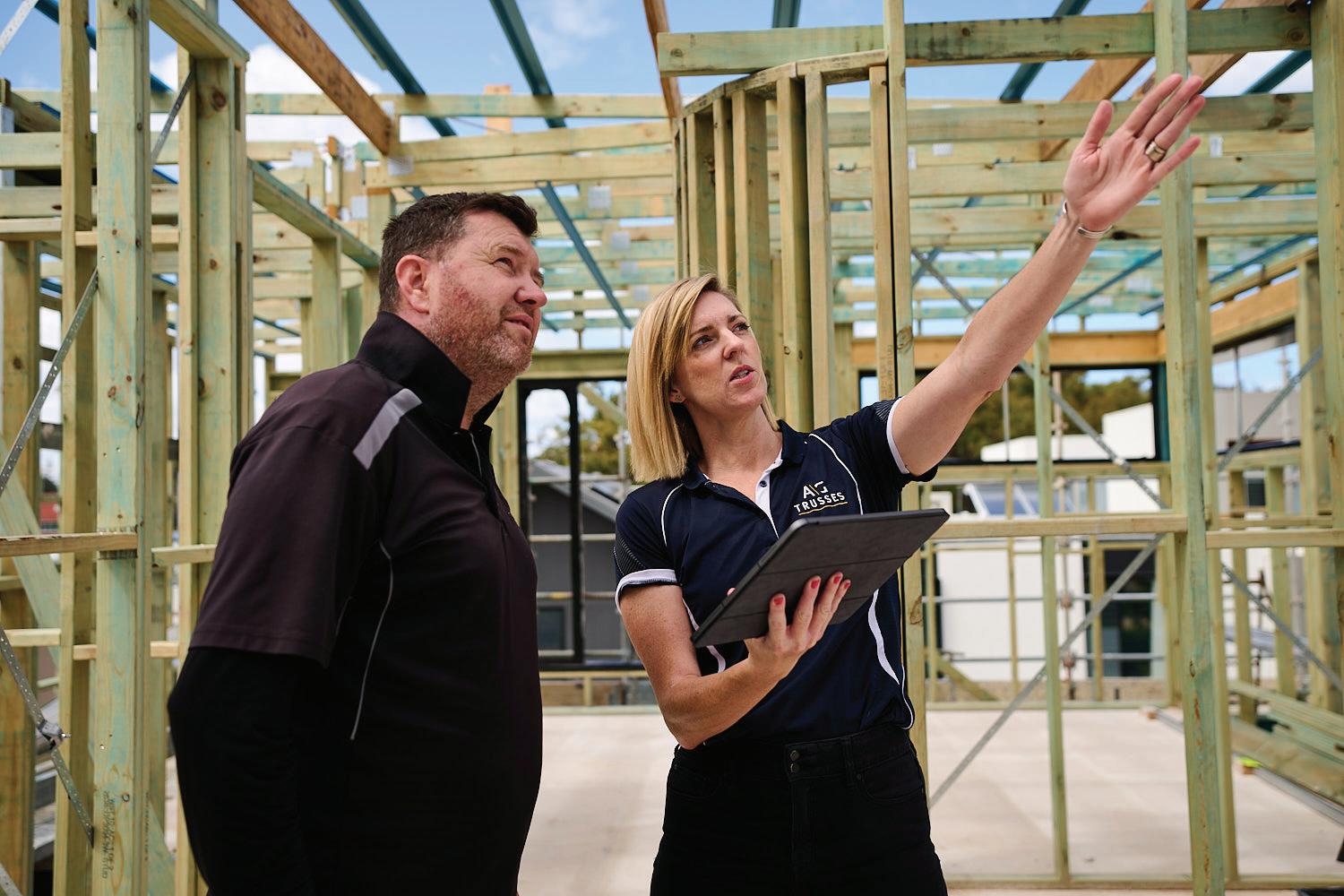
For Jacqueline Goodwin, Director of A.G. Trusses in Western Australia and Victoria, those scales have been something she has been determinedly tipping for her entire working life - one roof truss, one building site, one stride at a time.
Women make up approximately 15% of the construction workforce in Australia, with less than 3% working on the tools - a figure virtually unchanged since the 1990s (source from Victoria’s Big Build). In the frame and truss sector specifically, the picture is even more niche: a tightly held, largely family-run industry where, as Jacqueline puts it, most women arrive not through recruitment drives or career pathways, but through the family business. Jacqueline is one of those women. And, what she has done with that beginning is anything but accidental.
Jacqueline grew up on building sites. Her father started the family truss manufacturing business over 40 years ago, and for Jacqueline and her siblings, the factory floor, the yard, and the construction site were extensions of home.
“I come from a long line of builders. My dad and my grandfather were both builders. Dad started manufacturing trusses over 40 years ago, so building sites have been second nature to me. Back when safety wasn’t a critical issue, I was running around on weekends playing in the bricky sand… always very hands-on.”
That upbringing sparked more than just familiarity with the industry - it ignited a genuine
love of design. Jacqueline had dreams of becoming a graphic designer as a teenager, drawn to the visual, creative side of things. She attempted a civil engineering degree, but the realities of running a family business meant she needed to work. What emerged instead was something just as technically impressive: a career as a detailer and designer in the frame and truss world, working in 3D modelling and complex structural drafting.
“When you design components that construct something, because really a truss is a big Meccano set, and you start seeing things come together and create something awesome, I started designing probably in my teens, still at high school… through my 20s and 30s, designing and loving the drafting aspect as well… the crafting and design component actually becomes quite fun. It’s not just triangles and squares, it’s all these little details that create something bigger.”
Today, Jacqueline works alongside her family, wearing the many hats that family businesses demand - from accounts and scheduling to manufacturing, machinery, design, and site support. She also came on to the FTMA Australia Board recently, engaged with the wider industry conversation, at a time when the sector is experiencing genuine momentum.
When asked about the role family support has played in her career, Jacqueline is unequivocal - it has been everything. “My entire family… you couldn’t ask for more support. I’ve made mistakes. But you learn from them, and they never stopped supporting me because of them.” Jacqueline reflected on what her path might have looked like without that foundation - and it speaks directly to the challenge facing
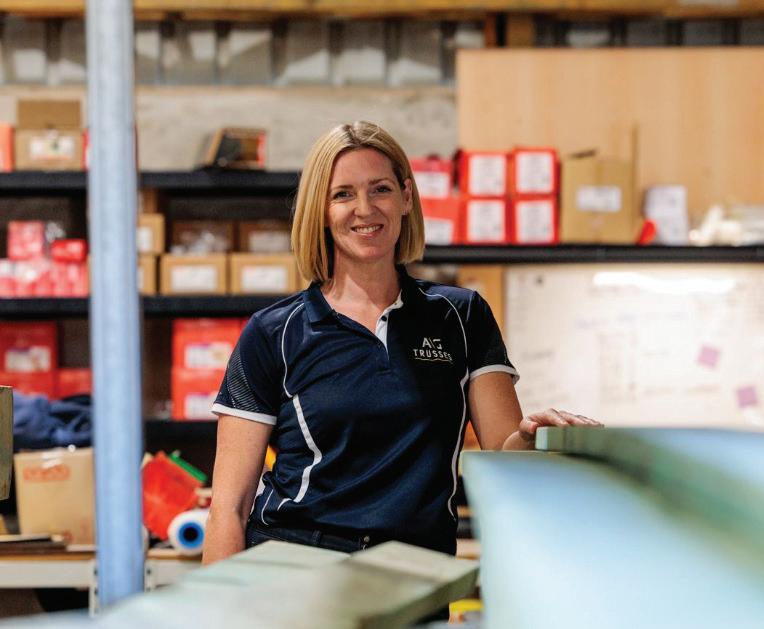
women across the construction sector who don’t have the same scaffolding around them. She also recognises the importance of the AG Trusses working team “That foundation extends beyond family. I’ve been fortunate to work alongside a strong and capable AG Trusses team, with a shared commitment to quality, problem-solving and working cohesively.”
Ask Jacqueline whether it has been hard being a woman in this industry, and she gives a nuanced, honest answer. Not hard, exactly, because of the support - but never without an extra layer of effort required. She spends significant time on site, supporting the installation of trusses and wall frames, believing firmly that the supply chain depends on keeping the carpenters happy and technically supported. In that environment, she has navigated the well-worn terrain of gendered assumption.
“When a man and a woman both turn up on site, the expectation would be that the man knows what he’s talking about. If a woman turns up on site, there’s a
doubt, a question mark. You have to make sure you establish early that you know what you’re talking about, or you’re strong with the technical details.”
It is a dynamic familiar to women across the construction industry. An Australian 2022 NAWIC survey found that 75% of women in construction had experienced gender-based adversity in their careers, with many reporting they had been doubted, disrespected, or judged in their field because of their gender. The experience of having to ‘earn the room’ - to prove competence before it is assumed - remains a persistent tax on women’s working lives. Jacqueline acknowledges the flip side, with humour: sometimes being the only woman on site works in her favour. The novelty can open doors. But she is clear-eyed that this is not the same as equity. One of Jacqueline’s most passionate observations is about the invisibility of the frame and truss sector as a career pathway - particularly for women. “People don’t know about this industry. People just expect trusses to land on
site. They don’t know how much effort and design work goes into producing something like a fully prefabricated timber system … A lot of the women involved in this industry are family members who have just fallen into the role… I’d love to see recruitment drives, university open days, people saying ‘this is actually a career path’. That would bolt on to making sure that truss and frame designers have legitimate qualifications, because there’s a lot of good ones and a lot of poor ones, and we’re all tarred by the same brush.”
Jacquline notes that there are female engineers, female architects and drafters, women in scheduling and contracts - but in the specific world of truss and frame detailing, the numbers are low. The path in is obscure, and without visibility, it is almost impossible for women to know to look for it. This is something the industry has a real opportunity to address. The upcoming launch of the Introduction to Timber Systems Designing course, is one step in that direction.
When asked what she is most proud of, Jacqueline speaks not of projects or business milestones, but of relationships. “I’m most proud of the relationships I’ve developed along the way. We have a strong record of supplying long-term clients, and I genuinely like working with the people I work with. I like working with my clients… the guys on site… When you have strong relationships with people, there’s nothing you can’t overcome together.”
And her advice to women struggling to find their footing - those facing barriers, unfairness, or self-doubt - is grounded, warm, and hard-won. “You won’t gain anything by being scared. Everyone is scared and anxious about putting themselves out there, but you’ll never gain anything if you don’t try. Once you try a little bit and push yourself out of your
comfort zone, it will be easier to try just a little bit more every single time. Everybody makes mistakes. I don’t care who they are. No one knows everything about everything, so there is always an opportunity to learn. There’s always an opportunity to do better. Just because you made a mistake doesn’t mean that it’s all over. How you manage, and pick yourself up and move on from that, that is also character building.”
For Jacqueline, the IWD 2026 theme of Balance The Scales is not abstract. It is lived daily - in the navigation of work, motherhood, running a business, and modelling confidence for her daughter. “For me, [balancing the scales] means work, skills, motherhood, school drop-offs, children. I’ve got a teenage daughter. Balancing what I do daily and invest in my working life and then going home and showing her confidence and all those things. It’s just such a difficult thing, particularly as a woman and the mother of a daughter.”
Jacqueline reflected on the conversation around how gender equity is framed - what she wants is for women to be hired because they are genuinely brilliant, and for the pathways to exist that allow brilliant women to find their way in. “There are so many smart women out there who could do this… I think it’s a confidence thing, how you project yourself. It’s a very tricky, balanced scale. It’s about education, it’s about support, upskilling yourselves.”
Despite the challenges, Jacqueline is energised about where the frame and truss sector is heading. New technology, 3D design capabilities, automation, a booming housing market - all of it points to a sector with enormous opportunity for people who want to build things.
“Our industry is booming at the moment, well it is in WA… In the
last five years, what’s happened in terms of how industries have changed, the expectations, the automation coming in, it’s awesome. It’s exciting to be part of it at the moment.”
That excitement, combined with an industry that is slowly but genuinely becoming more visible,
more professional, and more open to diverse talent, is where the hope for progress lives. The scales won’t balance themselves - but women like Jacqueline Goodwin are doing the work, day by day, truss by truss, to shift the weight.

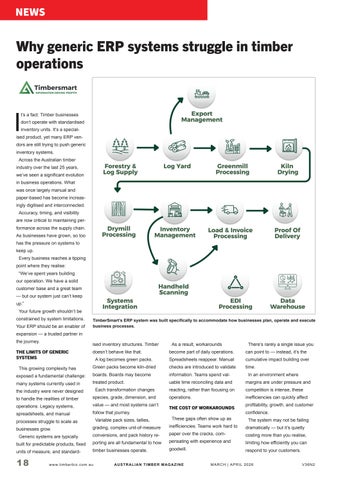
It’s a fact. Timber businesses don’t operate with standardised inventory units. It’s a specialised product, yet many ERP vendors are still trying to push generic inventory systems.
Across the Australian timber industry over the last 25 years, we’ve seen a significant evolution in business operations. What was once largely manual and paper-based has become increasingly digitised and interconnected. Accuracy, timing, and visibility are now critical to maintaining performance across the supply chain. As businesses have grown, so too has the pressure on systems to keep up.
Every business reaches a tipping point where they realise: “We’ve spent years building our operation. We have a solid customer base and a great team — but our system just can’t keep up.”
Your future growth shouldn’t be constrained by system limitations. Your ERP should be an enabler of expansion — a trusted partner in the journey.
This growing complexity has exposed a fundamental challenge: many systems currently used in the industry were never designed to handle the realities of timber operations. Legacy systems, spreadsheets, and manual processes struggle to scale as businesses grow.
Generic systems are typically built for predictable products, fixed units of measure, and standard-
ised inventory structures. Timber doesn’t behave like that.
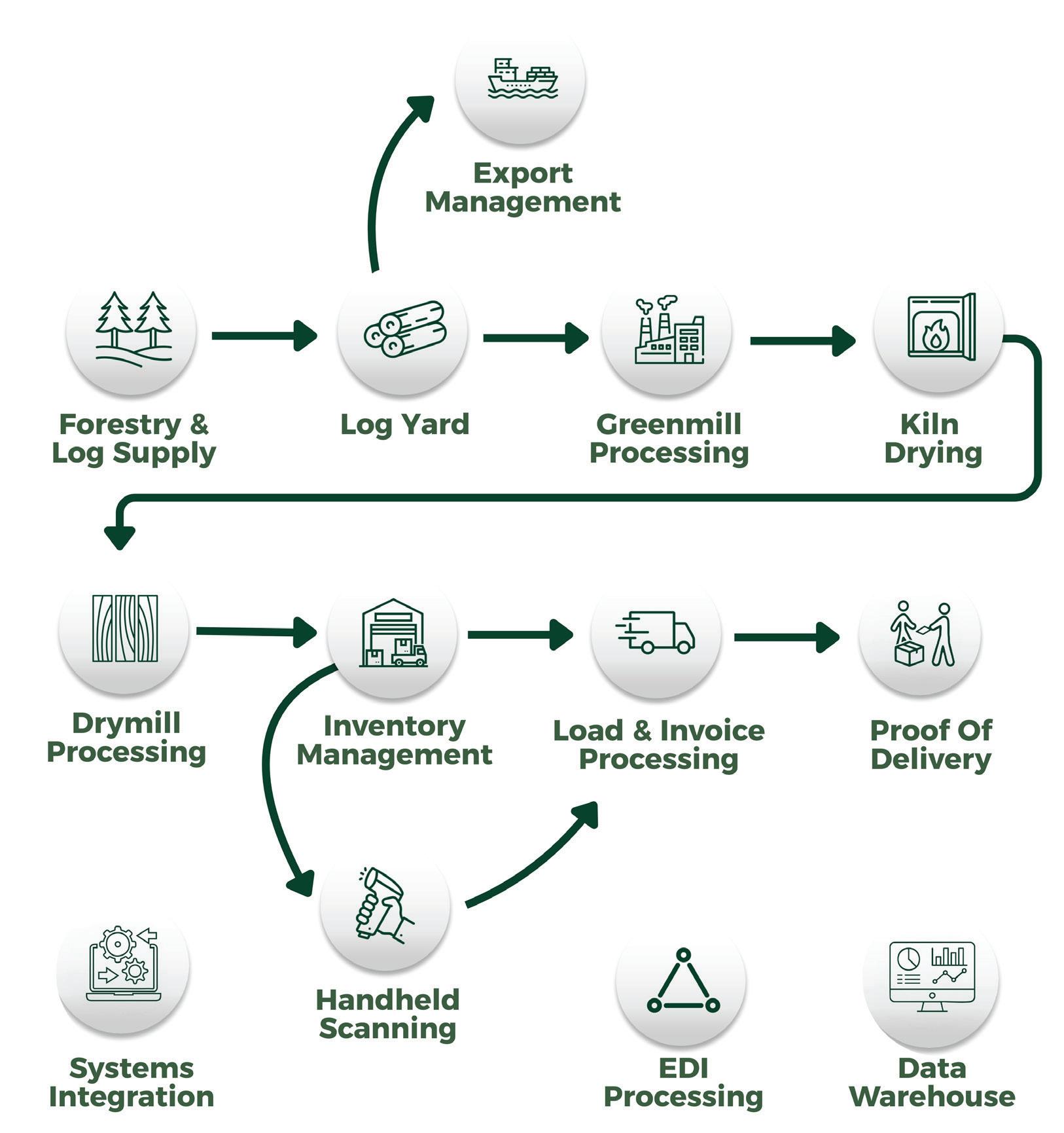
A log becomes green packs. Green packs become kiln-dried boards. Boards may become treated product.
Each transformation changes species, grade, dimension, and value — and most systems can’t follow that journey.
Variable pack sizes, tallies, grading, complex unit-of-measure conversions, and pack history reporting are all fundamental to how timber businesses operate.
As a result, workarounds become part of daily operations. Spreadsheets reappear. Manual checks are introduced to validate information. Teams spend valuable time reconciling data and reacting, rather than focusing on operations.
These gaps often show up as inefficiencies. Teams work hard to paper over the cracks, compensating with experience and goodwill.
There’s rarely a single issue you can point to — instead, it’s the cumulative impact building over time.
In an environment where margins are under pressure and competition is intense, these inefficiencies can quickly affect profitability, growth, and customer confidence.
The system may not be failing dramatically — but it’s quietly costing more than you realise, limiting how efficiently you can respond to your customers.
The question is no longer whether systems need to change, but how quickly they can adapt to keep pace with the industry.
Timber businesses are increasingly recognising that systems need to be designed specifically for the way timber operates.
Technology itself shouldn’t be the hardest part. The right solution connects people, processes, and systems in a way that reflects real operations.
Before a vendor writes a single line of code, they should ask: How does timber actually move through your business?
Where does information get lost between receipt and dispatch?
What does your sales team need to know before committing to a customer?
Those answers should shape the system — not the other way around.
For many businesses, this shift represents more than a technology upgrade. It’s a move toward greater control, efficiency, and confidence in daily operations.
With over 25 years of experience working alongside timber businesses, TimberSmart has listened to and addressed real-world challenges across the supply chain. Designed specifically for timber operations, TimberSmart reflects the complexities of inventory, processing, and logistics in a way that aligns with how businesses actually work — bringing people, systems, and processes together.
If you step back and ask, “What does a system look like that was built specifically around the timber industry, by a team that lives in the industry?”
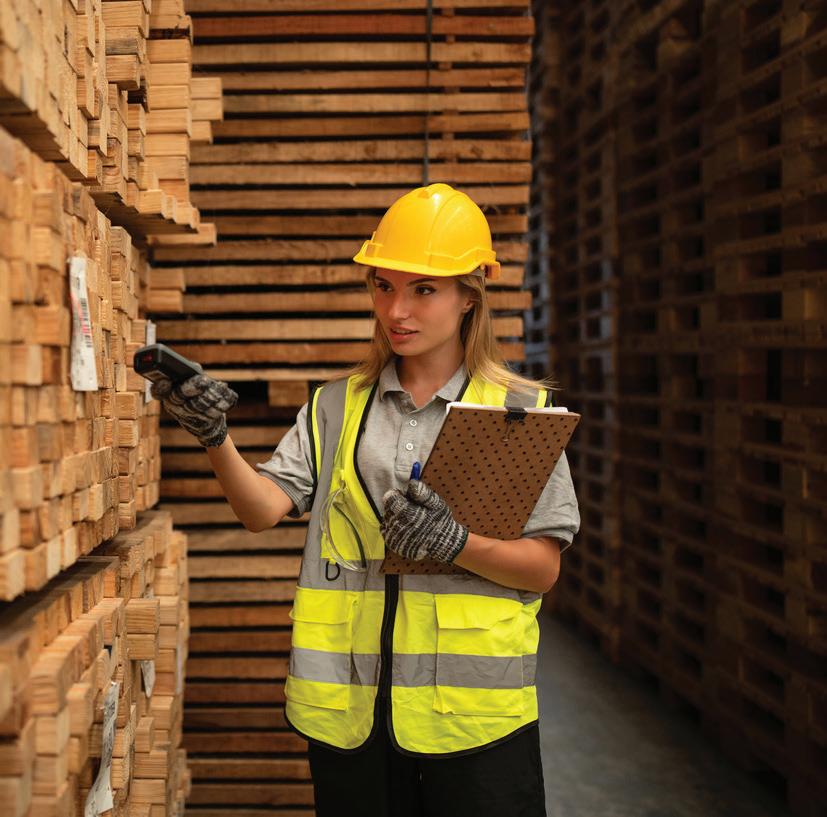
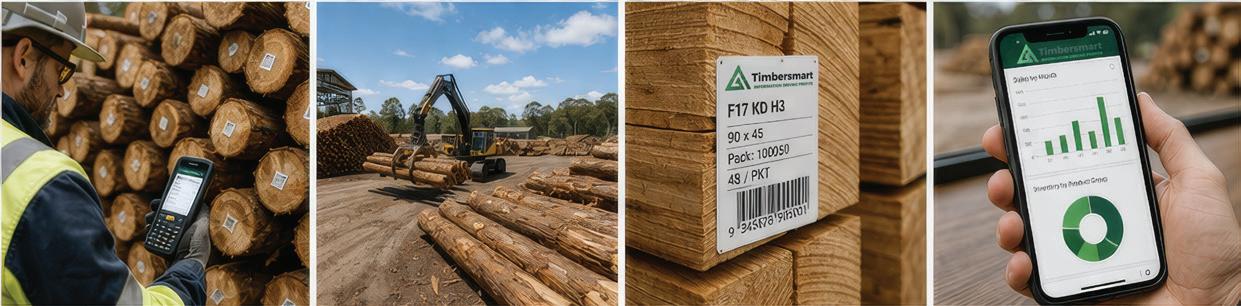
TimberSmart delivers fully integrated Enterprise Resource Planning and mobile solutions that streamline operations from log intake to dispatch. We help sawmillers, wholesalers, and re-processors run more efficiently with real-time data, greater visibility, and reduced manual processes.
Use real-time data and industry-specific functionality to gain the visibility you need to reduce errors, and make effective decisions.
• TimberSmartOne ERP - end-to-end operations
• Forestry, Log & Inventory Management
• Sawmilling, Wholesaling & Manufacturing
• Finance Integrations & TimberXchange (EDI)
SERVICES
• Consulting & Implementation
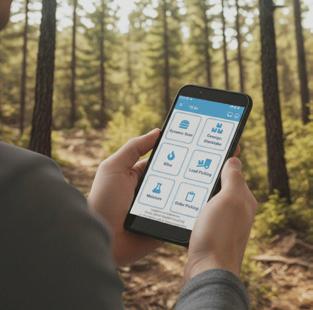
• Mobile Apps & Handheld Scanning
• Custom Development & Integrations
• Data, Reporting & Hardware Solutions




Email: sales@timbersmart.com.au Website: www.timbersmart.com.au
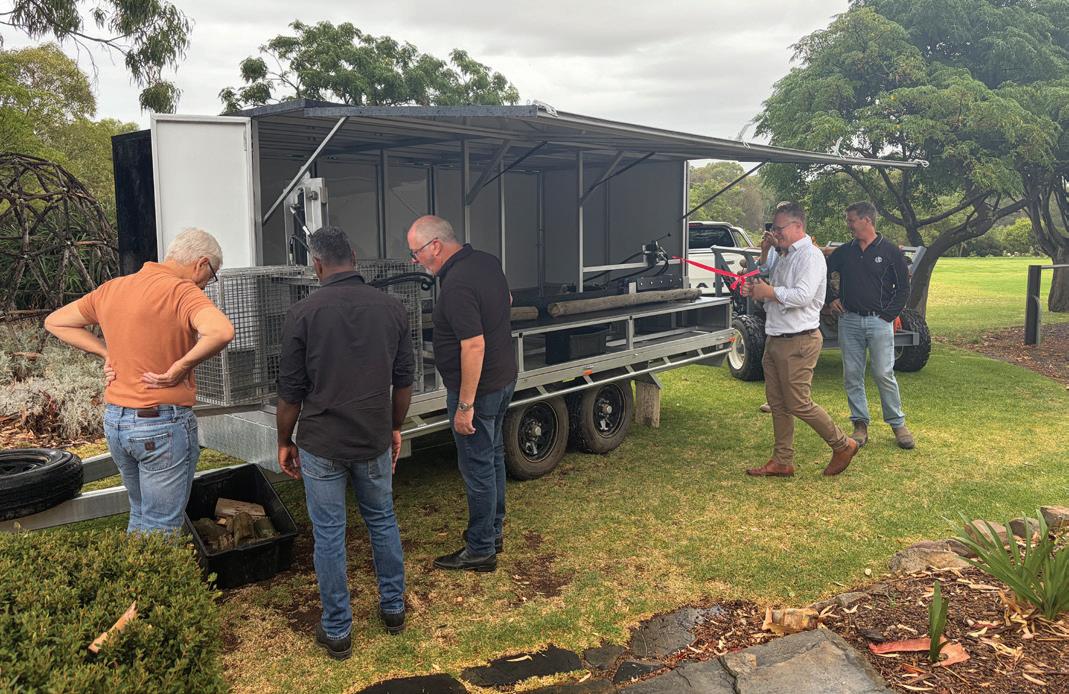
Apilot project to investigate the feasibility of repurposing, vineyard CCA posts into posts that can be reused as agricultural fencing that has the potential to save the industry up to $3000 per hectare in disposal costs has been launched in South Australia.
The Vineyard Post Resue Pilot is an industry-funded initiative led by the National Centre for Timber Durability and Design Life in collaboration with Forest and Wood Products Australia (FWPA), Australian Forest Products Association (AFPA), Wine Australia (WA), Engineered Wood Products Association of Australasia (EWPAA), Frame & Truss Manufacturers Association (FTMA), Koppers, Hexion, and Azelis.
This project has been co-funded by the South Australian Wine Recovery Program, supporting vineyard waste management initiatives. This program is a recommendation of the National Viticulture and Wine Sector Working Group which was established by Agricultural Ministers to address issues being faced by the sector. It is centred on safely stripping the CCA posts and then repurposing the clean posts while safely collecting and disposing of the waste contaminated sawdust.
Project lead Dr Pene Mitchell from the University of the Sunshine Coast told this week’s launch that aim of the project was to detail circular pathways for treated timber
and engineered wood products to aid the transition of the whole timber supply chain to a circular economy.
She said it would contribute information to age recovery, including understanding things like processing times for de-nailing and cutting to size, market availability and the economics behind post reuse.
Vinyard management company FABAL Group has been engaged to develop the technology to process the end-of-life posts for reuse.
FABAL Group CEO Ashley Keegan said that for growers the project was critically important.
“What I think it represents is just the first palpable, practical step to solve a real problem,” he said.
“Our industry creates 700,000 broken posts per year. Those accumulate to the point where there’s piles of those stacked down the back fences of all our vineyards.
“You combine that another estimated 2.5 million posts coming into the pipeline because we’re having to readjust and restructure due the acute situation that we’re in, and we have a real problem.”
Mr Keegan said he was deeply passionate about the problem for two reasons.
“The first is very simple, and it’s the financial reason, because at the end of the day, there’s only one legal, responsible way for us to dispose of posts at present and that’s through in our licensed landfill,” he said.
“To put that in context, it’s about $3.50 to $5.50 per post for us to do that, depending on the transport component. It’s an enormous amount.
“Let me put some context around that. Every hectare of vineyard that we have uses, on average, 600 to 700 posts per hectare. So do the
simple maths, and you end up with $2500 to $3000 a hectare just in that single waste stream.”
And Mr Keegan said that can represent between 10 and 25% of the entire value of a vineyard just in one single waste stream.
“And don’t even get me started on the cost to get them out of the paddock, to actually prepare them to be able to be disposed of,” he said.
Mr Keegan said the second reason he was passionate about the project was because growers were facing a lack of sensible commercial opportunities to solve the problem of disposing of used treated posts.
“And it produces this sort of catatonic state of inaction,” he said.
“Or even worse, it encourages us to keep doing what we’re doing, which is what our industry doesn’t need.”
He said the pilot project was not going to be the single solution to the problem.
“What I think it represents for us as growers is just a single palpable, practical plan that is just one part of the solution.”
SA’s Forest Industries Minister Clare Scriven said there were as estimated 89 million posts in Australia’s vineyards, and about half of those were in South Australia.
“So given that most of those posts are treated with CCA (and) disposal is a challenge,” she said.
“And finding a solution for treated timber is about finding a solution across the entire value chain.”
The full program for the 2026 FTMA National Conference & Trade Expo May 8 on the Sunshine Coast has now been confirmed, and it reflects exactly where our industry stands today, at the crossroads.
This year’s theme, At the Crossroads: Reframing for Growth, is not just a slogan. It recognises the very real decisions facing frame and truss manufacturers as housing demand shifts, competition increases and governments push harder into offsite, modular and prefabricated construction.
The day opens with Tim Woods from IndustryEdge setting the scene in Housing at the Crossroads. After years of stagnation, the Australian housing market is moving again, but approvals, supply and confidence remain fragile. Tim will unpack the current position, the outlook for the next eighteen months and what it really means for manufacturers. It will be data driven, direct and highly relevant to every business planning capacity, staffing and investment.
From there, we turn to the future of our own sector. In Building the Future of Lightweight Timber Framing, FTMA’s National Research & Technical Manager, Rhianna Robinson, will host a panel featuring AFWI CEO, Joseph Lawrence; Associate Professor, Louise Wallis; FWPA Head of Built Environment Programs, Kevin Peachey; and Timber Development Association NSW CEO, Andrew Dunn, to explore how AFWI funded R&D is shaping new standards for lightweight timber framing.
Never before has our industry seen this level of coordinated investment in research. The work underway is helping streamline manufacturing requirements, lift compliance confidence and

KERSTEN GENTLE Executive Officer
FTMA Australia
underpin the development of our own Lightweight Timber Framing Standard. This is about setting our sector up properly for the future.
We will also officially Launch the Timber Systems Designer Online Training program, a new national online pathway designed to attract, train and grow the next generation of timber systems designers. For years, attracting and developing design talent has been a challenge for our industry. This program represents a practical step forward in building the skills pipeline we need.
After morning tea, the focus shifts squarely to business performance. George Prothero from Chrisdar Consulting will deliver The True Cost of Running a Manufacturing Business, addressing one of the most important but often misunderstood aspects of any operation. Understanding real costs is fundamental to profitability, performance and long-term business value. In a consolidating industry, clarity around margins and cost structure has never been more important.
Damien Lacey from OE Partners follows with Optimise Before You Automate: Lean Lessons from High-Performance Manufacturers. Automation is a hot topic across our sector, but as Damien will demonstrate, technology alone does not fix broken processes. Drawing on real world manufacturing examples, he will show how high performing businesses focus first on Lean fundamentals, identi-
fying constraints, reducing waste and stabilising workflows before making targeted automation investments. For manufacturers questioning return on investment, this session will provide practical guidance on how to make smarter decisions.
Julia Hall from Twenty Nine Ideas will then tackle a topic many manufacturers still debate, How to Reframe for Growth that Actually Works. Her practical workshop will cut through the noise and examine what genuinely drives sales growth in a manufacturing business, and what does not. As markets shift and competition increases, how we position and present our businesses is becoming more important.
After lunch, the afternoon begins with nearly three hours dedicated to the first ever Trade Expo, giving delegates structured time to engage with suppliers, technology providers and service partners in a focused environment.
Our keynote speaker, Michael McQueen, sponsored by MiTek, will then take the stage with Preparing Now for What’s Beyond the Crossroads. In a fast paced and research rich session, Michael will explore how leaders in the offsite prefabrication and frame and truss industry can remain relevant and resilient as the landscape shifts.
With new modular and volumetric competitors entering the market, greater government backing of prefab construction and demand moving toward midrise and multi-res, the question is not whether change is coming, it is who will adapt early enough to benefit. Michael will examine the technological forces transforming construction, including AI, automation and digitisation, the expectations of younger generations and a practical blueprint for staying competitive. Delegates will
leave with a clear game plan to navigate disruption and strengthen their competitive edge.
The day concludes with Tim Woods returning to the stage for What the Market Is Telling Us.
Building on Michael’s keynote and the past three Frame and Truss Sector Outlook feedback, Tim will workshop the issues raised by builders, certifiers, timber companies and nail plate suppliers. This session will focus on practical improvements our industry can make to streamline processes and strengthen the supply chain. It is designed to be candid, solutions focused and collaborative.





















TABMA Australia and Hardware
Australia members are set to vote in an Extraordinary General Meeting on March 9 to determine if the associations will merge into one entity.
This exciting prospect, for both TABMA and Hardware Australia, will provide a stronger voice that is better able to advocate for all members nationally.
Both Boards have worked closely when developing a new name and logo for the potentially merged association.
THE bushfires and COVID-19 will put even more of a squeeze on timber supplies, with the construction industry ramping up earlier warnings of a supply shortage in the lead-up to summer. PrefabAUS, the peak body for Australia’s off-site construction industry, says the impacts on Australians from COVID-19, and the prefabrication sector, have yet to be fully realised. PrefabAUS said it would remain in close contact with the Government and all relevant authorities keeping a watching brief as the situation evolves over time.
DWELLING PRICES continued to rise at a sustainable rate during the December 2014 quarter, according to the latest ABS data. During the December 2014 quarter, dwelling prices as measured by the ABS Residential Property Price Index (RPPI) increased by 1.9% on the previous quarter. Compared with the same period 12 months earlier, home prices were 6.8% higher. Established house prices increased by 7.0% over the past year, with other types of dwelling seeing growth of 6.1%.


TTIA is often asked about the legalities of using probation periods when employing staff. Below are some of the key issues addressed: What is a probationary period and why do we have them? The purpose of a probation period is to allow a reasonable opportunity for a business to induct and train an employee in a position, and assess the employee’s aptitude and competency, to determine whether they are suitable for the organisation and the position. It is in a very real sense, a practical extension of the selection process.
If the probationary employee proves to be unsuitable for the job, the employer may want to terminate employment with a week’s notice or equivalent pay in lieu, without having to exhaust the time and resources associated with a formal counselling or warning process.
It is important for employers to be aware that if a probationary period extends beyond 6 months (or 12 months for a Small Business Employer), the employer risks a likely unfair dismissal claim for ending employment without providing reasons for termination and/or opportunities to improve
performance. This is because the Fair Work Act’s minimum qualifying period will override any probationary term in an employment contract when determining whether an employee is protected from unfair dismissal.
• For a probation period to be an effective safeguard for employers, it is therefore crucial that:the amount of time allocated to ‘probation’ in an employment contract (including extensions to probation), does not exceed the qualifying period for unfair dismissal which is 6 months (or 12 months for a small business employer).
• the employer reviews the suitability of the probationary employee for ongoing employment prior to the end of the qualifying period.
• if the employee is unsuitable, a decision to terminate probationary employment is confirmed prior to the end of the qualifying period.
It is unlawful to dismiss a probationary employee (or any employee) for reasons that are in breach of their general protections, in breach of discrimination laws, or are specified as unlawful reasons in employment legislation. This is distinct from the unfair dismissal provisions.
If the person’s employment has not reached the minimum qualifying period for unfair dismissal (6 months or 12 months) the employer is not required to use formal processes such as disciplinary meetings, performance improvement plans or formal warnings when ending the probationary employment.
The probationary employee may
however be entitled to consultation in the event of redundancy or major workplace change. Contact TTIA in these circumstances for more assistance.
Remember that probationary employees (other than casuals and fixed-term employees) are also entitled to written notice of termination in accordance with the NES.
If the employee does not qualify for unfair dismissal, they are not entitled to written reasons for dismissal.
Does an employer need to provide reasons to dismiss a probationary employee?
If the employee does not qualify for unfair dismissal, they are not entitled to written reasons for dismissal.
However, a written notice should be given reminding the employee they are on probation which is an extension of the selection process and that the business has decided to discontinue their employment based on the terms of that probation period.
TTIA has a fully functioning in-house IR department, backed up by the industry’s key and most experienced Legal Officer. Should you need assistance with any legal matter contact TTIA by email ttia@ ttia.asn.au or phone the TTIA Industrial Hotline on (02) 9264 0011.
If you are not currently a Member of the Association, we have a special offer at this time of year. If you join now and pay for a year’s membership (1 July 2026 – 30 June 2027), the remaining three months of this financial year will be included at no cost. If you are interested in taking up this offer, please contact the Association .
Ruckers Hill in Northcote, Victoria, was named after William Rucker a German immigrant who took up land in the area in the early 1800s.
Noted for its scenic views, Ruckers Hill was referred to at the time as the “Balcony of Melbourne”, according to Paul Michell, Convenor of the Northcote History Group.
Fast forward 200 years or so and Ruckers Hill is the location for a modern, sustainable purpose-built home designed by Gardiner Architects with sweeping views to the city.
Architect Paul Gardiner states: “Environmental sustainability is an integral part of the architec-

PETER LLEWELLYN Technical representative, Timber Veneer Association of Australia
tural approach of our practice at every level. This extends to the integrity of material selections.”
Aside from their aesthetic qualities, timber products such as veneers were used extensively in the Ruckers Hill house for two key reasons, according to Gardiner.
• Firstly, the low carbon
Do you crosscut timber packs +/- 1 mm accuracy?
Or cut structural timber, panel product (MDF & LVL), paper rolls ?
Or produce pallet dimensions or studs on fixed lenghts?
footprint timber offers as an inherently sustainable and renewable resource that stores carbon.
• Secondly, timber was used for its ability to work well with, and even enhance, the other sustainable systems used in the building’s thermal design.
• Blending with timber floors and external cladding, hoop pine veneer was specified for the ground floor ceilings.
Gardiner advises that hoop pine veneer on plywood was selected “for its subtle texture, pale colour and convenient sheet sizes, in addition to its credentials as a natural and sustainable product”.
Another design consideration
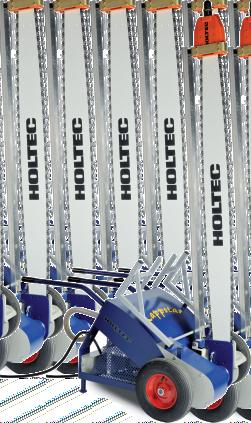
was that hoop pine veneer’s pale colour had the ability to “not be an overbearing presence above one’s head, and to contrast with the dark timber flooring throughout the house”, as Gardiner put it.
Lining the underside of the undulating roof with hoop pine veneer on plywood also allowed the architects to express the external form of the roof line in the internal spaces below.
Other outstanding examples of timber veneers in architectural projects can be found on the Timber Veneer Association’s website at www.timberveneer.asn.au .
Click on the About Veneer tab and scroll down to “Projects”.
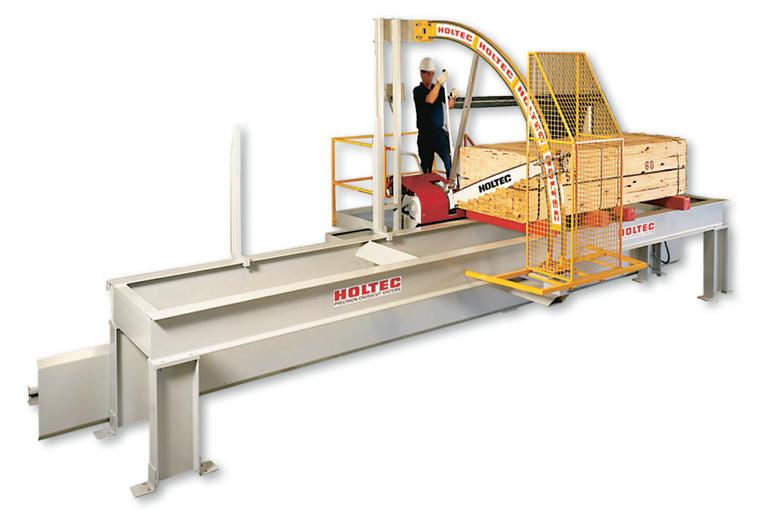
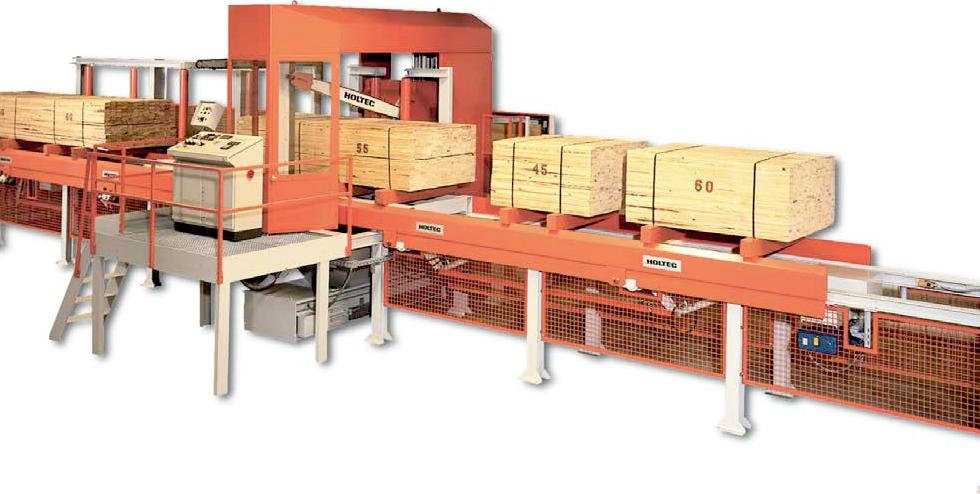
The Bradfield City Centre’s First Building, located in the heart of Western Sydney, stands as an iconic example of how advanced building materials, such as engineered wood, can play a transformative role in sustainable construction.
The building – recognised at the 2025 Australian Timber Design Awards for its excellence in timber design - serves as the first stage of the Advanced Manufacturing Readiness Facility (AMRF) project, a critical development aimed at fostering innovation and providing a hub for manufacturing and research in the region.
A key feature of the project is the integration of engineered wood as a primary construction material, a decision that reflects both sustainability goals and a forward-thinking approach to modern architecture. Designed by architectural firm Hassell in collaboration with Dr Danièle Hromek of Djinjama it features extensive use of natural materials and a cooling green roof to reduce solar thermal heating loads.
According to Djinjama’s Danièle
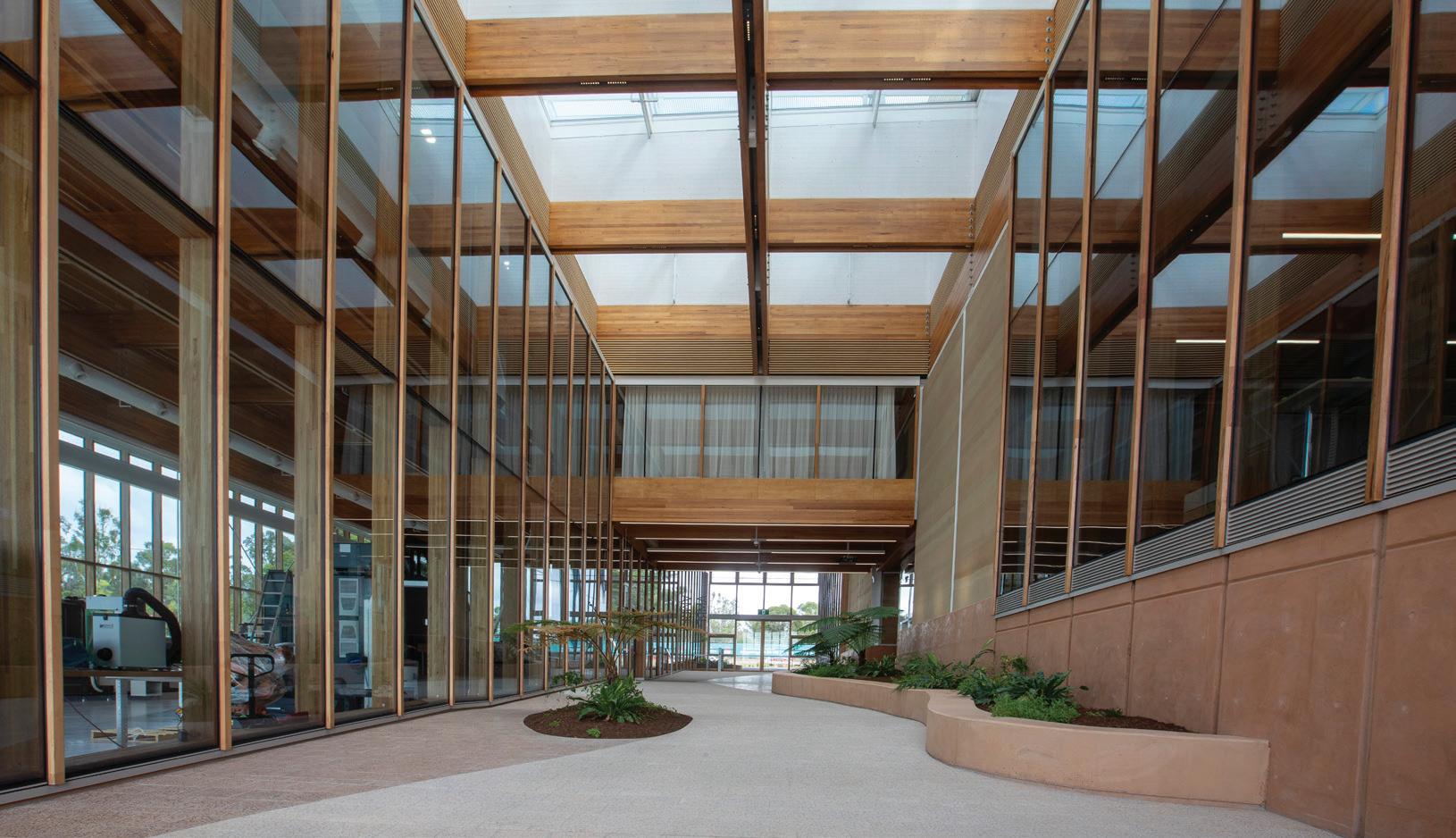
Hromek, designing the First Building represents “a massive opportunity across time and space”. Appropriately, it answers the burning question: what happens when the building outlives its use? Here, the idea of circular economy has been embedded.
The building has been conceived as a ‘kit of parts’, its timber structure comprising prefabricated modular components that are mechanically fixed together. These can be disassembled, expanded,
First Building – Bradfield
Structural Engineers: WSP, Northrop
Fabricators: Savcon, Dunsteel
Builder: Taylor
Photographer: Mark Syke
Location: Bradfield, NSW
Award sponsor: Wood Solutions
or even relocated.
The building draws its design cues from the surrounding natural waterways and the Cumberland Plains. Internal rammed earth walls provide a stunning visual feature, alongside extensive glass walls that allow visitors to witness the creation of new prototypes and technologies in the AMRF Manufacturing Hall.
A rooftop viewing platform provides a unique vantage point to watch the construction of the new city and the nearby Bradfield Metro station.
The final delivery of prefabricated Sylva by Stora Enso was in November 2023. Australian Sustainable Hardwoods (ASH) supplied all of the glued-laminated timber beams and local sawn wood while other suppliers provided the GLT for the exterior façade.
The Sylva elements by Stora Enso were precoated and protected on five-sides with hydrophobic coating before shipping. Some of the elements were preinstalled with lifting devices and factory applied temporary membranes. In addition, Stora Enso delivered structural timber (Duobalken) and
technical support for panel splitting. The entire process unfolded seamlessly.
“Bradfield Development Authority is committed to building a stronger future for Western Sydney by delivering Bradfield and attracting investment to the Western Sydney Aerotropolis,” Bradfield Development Authority CEO, Ken Morrison said.
“The Authority has firmly shifted from planning to a delivery phase, with momentum well underway.
Completion of the First Building in March is a milestone that will accelerate innovation across the manufacturing sector in Western Sydney and beyond.
The First Building and AMRF will be magnets for innovation and investment across NSW and Australia, aligning with the NSW Government’s commitment to prioritise rebuilding the state’s manufacturing capability.
The people and industries of Western Sydney can now utilise AMRF’s expertise and world leading advanced manufacturing equipment to connect with global opportunities, create jobs and drive the NSW economy.