
NEVADA ASSOCIATION OF CONSERVATION DISTRICTS SCHOLARSHIP OPPORTUNITY
Nevada Association of Conservation Districts (NvACD) is proud to support Nevada students pursuing an education in agriculture, renewable natural resources, or a related field at an accredited institution of higher learning, including vocational/ technical schools. The NvACD Scholarship Committee is always impressed with the high quality of the applicants that we receive; it makes the decision both rewarding and challenging to choose among the Nevada students. The application process is open now and closes April 15, 2023. The application and all information can be found at www.nvacd.org
Last year NvACD distributed $7,500 in scholarships. Much of this funding comes from the NvACD Sportsmen’s Raffle conducted each year with prizes from Gunworld and Archery in Elko drawn October 1-30. Only 500 tickets are sold and winning tickets go back in for another chance. All information is available at www.nvacd.org. Great prizes for a great cause! 30 chances for only $100!

Conservation Districts (CDs) have the responsibility to understand the resource concerns in their area and to find solutions to those concerns by working with landowners, producers, agencies and groups, building relationships with partners and providing the nexus to work across ownership boundaries. One of the greatest contributions of this little known but powerful resource in Nevada is the unrivaled authority and opportunity to meld funding for projects from multiple agencies and landowners. CDs are directed by locally elected volunteer residents and were founded, along with 3,000 CDs nationally, in 1937 on the philosophy that conservation decisions should be made at the local level with a focus on voluntary, incentive-based actions.
NvACD will continue to support youth who write to tell us, “I would like to truly thank you for your investment in my future. I sincerely appreciate your support of myself as well as other youth.” Please share this announcement with students and sportsmen far and wide and partner with NvACD and CDs to grow our future and put good resource management on the ground.
If you would like to donate to the NvACD Scholarship Fund, any amount is appreciated. There is a donation tab on the NvACD website, or you may contact Adriane Tibbitts at treasurer@nvacd.org.
Watch here: https://youtu.be/vjRFxtC-Sak
20
24
25
Ads sent to or built by The Progressive Rancher become property of this magazine. Published 8 times a year. View all issues at www.progressiverancher.com Readership reaches more than 30,000. The views and opinions expressed by writers of articles appearing in this publication are not necessarily those of the editor. Letters of opinion are welcome; submit via email. Advertising rates available upon request. Advertising does not imply editorial endorsement. Liability for errors or omissions in advertisements shall not exceed the cost of the space occupied by the error or omission. Leana Litten Carey, Owner/Editor 2040 Reno Hwy 432 • Fallon, Nevada 89406 (208) 358-2487 • progressiverancher@gmail.com COVER: Tom Easterly's Angus # 9 Champion Perf. Tested Bull and Buyer enjoying the sunny day. Photo by Leana Carey IN
© The Progressive Rancher Magazine. All rights reserved. Owner/Editor/Publisher – Leana Litten Carey progressiverancher@gmail.com Graphic Design/Layout | athena@athenart.com 2 NvACD Scholarship 3 NCA President's Perspective 4 NCA March 2023 Roundup 5 Eye On The Outside The Legislative Process 6 NBC Checkoff News 7 NBC Inspiration & Recipe 10 NDA Happenings & Hirings 11 USDA Applications to Support Economic Development & Jobs 11 Creeks & Communities 2023 Training Schedule 13 Frey Ranch Distillery named NDA 2022 Nevada Ag Small Business of the Year 14 Great Basin Bull Sale Results 16 Fallon Ranch Hand Rodeo 2023 Hot Iron Branding Results
Save The Date! Bottari COL
THIS ISSUE
18
SRM | Beavers and Riparian Habitats
NFB | 2023 NV Legislature
NFB
Scholarship Opportunity
|
25 NFB | Welcome Monica Avery
26 NFB | Market Intel
Overview
30 *Special Report* January 2023 Nevada Cattle Industry Economic
34 USDA Nevada Water Supply Outlook Report
36 NDOW Sagebrush Habitat Planning
Read the magazine and more articles online at WWW.PROGRESSIVERANCHER.COM VIEW ADDITIONAL ARTICLES AT www.progressiverancher.com Follow us on Facebook! Rangeland Grazing and Water - Modern Ranching Property Rights Documentary
39 Accessibility and Soul are Hallmarks of the Small Farm Conference
The Progressive Rancher www.progressiverancher.com 2 MARCH 2023
president ' s perspective
It was actually Charles Dudley Warner who said “Everybody complains about the weather but nobody does anything about it”. Weather might have been the most impactful thing coming out of the National Cattlemen’s Beef Association Convention recently. It was 15 below zero when I left home and I arrived to 75 degrees in New Orleans; darn right it made an impact! We were treated to a couple of different weather presentations, and -imagine this- there was some discrepancy in their long-range forecasts. One told us that La Nina is definitely on her way out and we should be in a “normal” to wetter pattern by this Spring, and the other said that while La Nina is weakening, she’ll likely impact us through fall so look for a Spring and Summer much like we’ve had the past couple of years. Obviously, I’m going with the first prediction.
Closer to home, your Association is in the middle of the 82nd Nevada Legislature. I’m pleased to say that we’ve interacted with our new Governor and his staff


quite a bit already and the results have been positive. An NCA past President taking over the reins at the Nevada Department of Agriculture is an added bonus. Your NCA leadership has been busy building relationships with Legislators and while there’s always things that seem to pop up - like a crack at Nevada water law, we feel that we’ve a good chance of keeping any sort of regulatory mischief to a minimum this year.
Mr. Warner surely didn’t know how much snow we’ve all pushed around this winter when he said “nobody does anything about it”. Hopefully all that makes for full ditches and plentiful grass and your calving season is filled with warm days full of exceptionally smart heifers and very restful nights.
Jon Griggs President National Cattlemen’s Beef Association

For info about our Team Roping, please visit FallonLivestock.com


Next Special Feeder Sales March 14, 2023 • 1pm April 11, 2023 • 1pm Roping and Squeeze Chutes, Smarty and Heelomatic Roping Dummies in Stock S&S Tack Shop (559) 779-5856
The Progressive Rancher www.progressiverancher.com MARCH 2023 3
by Martin Paris | NCA Executive Director | O: 775-738-9214
NCA March Roundup
Happy March everyone! There is a lot to report on over the past month, so I’ll cut to the chase. The Annual NCBA Cattle Industry Tradeshow and Convention was held the first week of February in New Orleans. A lot of topics currently impacting our industry were discussed in depth during the convention including USDA’s proposed rule on electronic identification for cattle moving interstate. The new rule would “require official ear tags to be visually and electronically readable for interstate movement of certain cattle and bison”. Certain cattle meaning sexually intact cattle and those that are 18 months of age or older, all female dairy cattle of any age and male dairy animals born after March 11, 2013. Cattle of any age used for rodeos or recreational events fall within the definition as well.
USDA’s stated goals of the proposed rule are to “advance the electronic sharing of data among federal and state animal health officials, veterinarians, and industry; including sharing basic animal disease traceability data with the federal animal health events repository (AHER). Use electronic identification tags for animals requiring individual identification in order to make the transmission of data more efficient. Enhance the ability to track animals from birth to slaughter through a system that allows tracking data points to be connected and elevate the discussion
with States and industry to work toward a system where animal health certificates are electronically transmitted from private veterinarians to state animal health officials.”
Public comment on the proposed rule is currently being collected. The deadline to submit comments is March 20th. NCA is currently reviewing the proposed rule in its entirety to ensure that it meets the needs of Nevada livestock producers and NCA policy.

Another large topic discussed in New Orleans is the upcoming Farm Bill. Authorized by Congress every 5 years, the Farm Bill is the most comprehensive piece of legislation impacting agriculture. The majority of the Farm Bill affects eaters and not ranchers or farmers, however, there are several programs in the bill that are vital to cattlemen and women including voluntary conservation, risk management and disaster, and critical animal health programs. The deadline for reauthorizing the next Farm Bill is September 30, 2023. NCA is already discussing key priorities for the bill with members of the Nevada federal delegation. Stay tuned as conversations regarding the 2023 Farm Bill continue to take place.
I’d also like to take a minute to congratulate Fulstone Ranches in Smith, NV for being one of seven 2022 Environmental Stewardship Award Program


regional winners announced at NCBA’s convention. The Environmental Stewardship Award annually recognizes the outstanding stewardship practices and conservation achievements of U.S. cattle producers from across the nation. Regional and national award winners have been commended for their commitment to protecting the environment and improving fish and wildlife habitats while operating profitable cattle operations. The common trait among all winners is the desire to leave the land in better shape for future generations while also inspiring the next generation of land stewards. One national winner will be selected later this year out of the seven regional winners, and we wish the Fulstone family the best as they continue through the process.
On another note the 82nd Session of the Nevada Legislature is underway. At the time of writing this article NCA is working to establish relationships with new legislators and reconnect with the veteran legislators. We are also working to identify and respond to pieces of legislation that could have a positive or negative impact on Nevada producers. We expect a few different bills in regard to Nevada water law and other natural resource related topics. As we move through the Legislative Session, please feel free to contact me in regard to any of legislative proposals floating around Carson City over the next few months. Until next time.
Nevada Water Solutions LLC Thomas K. Gallagher, PE 775 • 825 • 1653 / FAX 775 • 825 • 1683 333 Flint Street / Reno, NV 89501 tomg@nevadawatersolutions.com Water Rights / Resource Permitting Expertise The Progressive Rancher www.progressiverancher.com 4 MARCH 2023
The Legislative Process
I thought a good topic for this column would be a discussion of the legislative process since the Nevada Legislature convened for the bi-annual meeting on February 6th. This session, like all the others since the Nevada Constitution was amended, is mandated to last 120 continuous days until early June. I have been a registered lobbyist in Nevada for over forty years.

It always surprises me when during election season friends of mine who know the kind of law practice I have (legislative and government affairs) ask me about candidates for the State Assembly and State Senate. I give them my opinion base upon my experience with a candidate running for reelection or interviews with people who are first time candidates. Often, I hear comments from my friends that they might skip voting in these races because it doesn’t seem to have relevance to their personal or business daily life.
I can assure anyone with those doubts about relevance the legislature and its actions on hundreds of issues in any legislative session are very relevant and can impact in many ways negatively and positively the lives of the citizens of any state. I would venture to say the process by which ideas become laws passed by a legislature is not very wellknown by the electorate of any jurisdiction and that includes Nevada.
Let us say you have a great idea for a new law in Nevada or you think there is a law that should be repealed because it discriminates or is bad for business development. You have some neighbors or friends who agree with you. You all think this idea should be addressed in the next legislative session. How do you get this idea presented to the legislature for discussion and a vote.
You and your neighbors live in a district represented by a State Senator and a member of the State Assembly. One or both of these representatives should be contacted well before the next legislative session and your idea should be explained to them for consideration as a bill draft request (BDR). Each member of the legislature has a defined quantity of BDRs they can use to turn into bills to be introduced at the next legislature.
Once the member of the legislature is convinced your idea has merit to at least be heard they will request a place in line for the BDR and it will be assigned a number and published on the State Legislative web site. When the legislature convenes the BDR could be printed and pre-filed or shortly within the first month of the legislature the bill could be provided to you by the member for your review. If there are no changes you would tell the legislator it is fine to be introduced. The bill will be read the first time in the house of origin and a assigned to a committee with the relevant jurisdiction over the chapters in the statutes the bill seeks to amend or add.
The next step is the bill will be heard in a committee. Prior to this meeting the person who wants the change to the law should either hire a lobbyist to visit with members of the committee, do the visits themselves or a combination of both. These educational visits are imperative for the success of the bill because invariably there will be questions or opposition to the idea. The questions need to be answered before the hearing and a good advocate for the idea will understand the opposition point of view, articulate it in the meetings, and counter the opposition argument. If this is done correctly the hearing will go smoothly. It is unlikely the bill will be voted on during the hearing. That action will be done later. The vote will be to defeat the idea, pass with any amendments, and send the bill to the full house for a floor debate and a recommendation to pass it, or send to the full house with no recommendation.
Let’s assume the bill is passed in the house of origin. Once passed it is sent to the other house. This house reads the bill and refers it to the relevant committee where the process described above is repeated in the second house. Here again, the background work meeting with members of the assigned committee to prepare them for the hearing on the bill is essential for success of the bill.
The second house could pass the bill in the form sent to it from the first house. More often than not, the second house will amend the bill. If this happens and the bill passes the second house when sent to the house of origin three things could happen. The first house could agree to the other house
amendments, they could reject the amended bill and send a message to the amending house about that action, or they could vote to defeat it. If they send the message the second house can agree the bill should not have been amended ,or they can send a message to the house of origin indicating they want to convene a conference committee to meet and see if they can reach a compromise position on the amended bill.
If this later path is chosen the leadership of each house will appoint conference committee members to meet and try to reconcile the differences between the two versions of the bill. If they are successful the bill will go to each respective house for a vote to agree on the recommendation of the conference committee. Assuming this is successful the bill is sent to the Governor for his signature or veto. If vetoed the bill is sent back to the legislature for a vote to override the veto. If the vote to override succeeds the bill becomes law. If not, the bill dies. If the Governor signs the bill the bill becomes law. By the way, the process described above is a shortened version of how a bill becomes a law in our legislature in Nevada. There are some fifty plus hurdles to overcome in the process before a bill can change or add to our statutes.
One thing missing in this rendition are the political factors which inevitably come into play during the process. An idea to add to our law can have the greatest merit and be supported by the best empirical evidence and still be subject to partisan political considerations or even intra party disputes among members of the same political persuasion. The legislature is the place where people are supposed to come together in the arena of public discourse and create solutions to the many problems facing any civilized society, but it does not always live up to democratic ideals.
However, it is the best system ever devised by man to deal with those problems. I hope the above has given you some food for thought.
I’ll see you soon.
The Progressive Rancher www.progressiverancher.com MARCH 2023 5
Nevada Ranch Receives Regional Environmental Stewardship Award
 by Makenzie Neves | Manager, Producer Education & Engatement | makenzie@calbeef.org
The National Cattlemen’s Beef Association (NCBA) announced today that Fulstone Ranches in Smith, Nevada, was selected as one of seven regional winners of the 2022 Environmental Stewardship Award Program (ESAP). The ranch was recognized during the 2023 Cattle Industry Convention & NCBA Trade Show in New Orleans.
“Farming and ranching families across the country continue to incorporate practices that protect and preserve land and water resources for future generations,” said NCBA President Don Schiefelbein. “These regional winners represent the cattle industry’s commitment to environmental stewardship.”
Established in 1991, ESAP celebrates outstanding land stewards in the cattle industry. The regional winners will compete for the national award, which will be presented during NCBA’s Legislative Conference in Washington, D.C., April 24-27, 2023. The 2022 Environmental Stewardship Award Program Regional Winners are:
Region I: Lamb Farms, Inc., Oakfield, New York
Region II: Carter Cattle Company, LLC, Pintlala, Alabama
Region III: Huth Polled Herefords and S&H Livestock Enterprises, LLC, Oakfield, Wisconsin
Region IV: Parks Ranch, Goliad County, Texas
Region V: Mannix Brothers Ranch, Helmville, Montana
Region VI: Fulstone Ranches, Smith, Nevada
Region VII: Jorgensen Land & Cattle Partnership, Ideal, South Dakota
“Fulstone Ranches is committed to maintaining their operation for future generations while continually adapting to practice environmental stewardship on their private parcels, leased grounds and public land grazing allotments,” said Marc Jackson, field
supervisor for the Pacific Southwest Region Fish and Wildlife Service. “Over the years, each generation has successfully managed the operation which has allowed them to maintain and improve viable rangelands for more than 100 years.”
The Fulstone family has been working the land and raising livestock in Nevada since 1856, and today the ranch is operated by the sixth and seventh generations. Fulstone Ranches works cooperatively with state and federal agencies, universities, and nonprofits to bring resources and expertise to solve natural resource challenges. The family works tirelessly fine tuning their operation to improve not only forage quality for livestock, but to also sustain the habitat for wildlife species such as the Bi-State SageGrouse. They changed the duration and timing of grazing and removed pinyon-juniper to increase water availability and reduce competition with other desired plant species. The Fulstones are also on the forefront of soil health using worm tea, a natural liquid fertilizer made from worm castings. Water retention has increased as has the quality of feed.
“A farm essentially is an ecosystem, one that we manage to make a living off of, but still an ecosystem,” said Emily Fulstone of Fulstone Ranches.
ESAP is generously sponsored by companies and federal agencies who share the cattle industry’s commitment to caring for the environment and protecting natural resources. Sponsors including U.S. Department of Agriculture Natural Resources Conservation Service, Corteva Agriscience, McDonald’s, and U.S. Fish and Wildlife Service partner with NCBA to promote environmental stewardship throughout the beef supply chain.
For more information, visit www.environmentalstewardship.org.
The Progressive Rancher www.progressiverancher.com 6 MARCH 2023
Shoulder
Petite Tender
Menu Inspiration
by Chef Barry Strand | NCBA Culinary Center

Don’t let this little cut from the Chuck primal fool you, the Shoulder Petite Tender is loaded with flavor and makes a great addition to any menu. Smaller and more affordable than the Tenderloin, the Petite Tender is juicy and tender and works well in a variety of menu applications from appetizers to entrees. Other names for the Shoulder Petite Tender include the Teres Major; Butcher’s Steak; Chuck Shoulder Tender; Petite Tender Medallions; Shoulder Petite Tender; Shoulder Petite Tender Roast Boneless; Shoulder Tender; Shoulder Tender Medallions. When ordering this cut, ask for 114F. The following are some menu ideas we created using this versitle cut of beef.
APPETIZERS
Steak Dolmades: Season Beef Petite Tender with sumac, salt and pepper, and then broil. Combine with a reduction of shallots, butter, meat drippings, pomegranate juice, port and lemon juice. Slice steak, then roll in grape leaves and lavash bread. Garnish with pomegranate syrup and seeds and spearmint.
Beef Petite Tender and Truffle Butter Fonduta: Season and broil Beef Petite Tender, then let cool and cube. Create a fonduta using grated fontina and aged provolone melted in milk with egg yolks and truffle butter. Serve fonduta in a fondue pot with cubes of beef and baguette for dipping.
ENTRÉES
Steak Tonnato: Drizzle chilled slices of roasted Petite Tender with a creamy Italian tuna or “tonnato” sauce. Garnish with black olives, roasted red and yellow peppers, parsley and capers.
Steak Tagine: Serve slices of grilled Petite Tender over a sweet-savory Moroccan stew of chickpeas, tomatoes and dates, and season with cumin and saffron. Garnish with grilled lemon slices and toasted sesame seeds.

Sesame-Crusted Beef Medallion Okonomiyaki: Sear or roast black and white sesame crusted Petite Tender medallions. Serve on top of Japanese pancake, or okonomiyaki.
All-Day Steak Salad: Serve slices of roasted Petite Tender over a field of greens mixed with veggies and capers for a hearty lunch-time salad.
Al Pastor Glazed Petite Tender: Though traditionally pork, the Al Pastor brought to Mexico from Lebanon was originally red meat. Use the Petite Tender to bring this dish back to its original roots. Serve in a glaze bolillo rolls.
Easy Steak Diane
A flavorful cream sauce is served with mushrooms and tender beef medallions.
INGREDIENTS:
1 pound beef Petite Tender Medallions, cut 3/4 inch thick
2 to 3 teaspoons lemon pepper
2 teaspoons olive oil
Chopped fresh parsley
1 tablespoon olive oil
8 ounces mushrooms
2 tablespoons finely chopped shallots or onion
2 tablespoons brandy
1/2 cup whipping cream
2 teaspoons Worcestershire sauce
COOKING:
Heat 1 tablespoon oil in large nonstick skillet over medium heat until hot. Add mushrooms and shallots; cook and stir 3 minutes or until tender. Remove from skillet; set aside. Wipe skillet out with paper towels.
Press lemon pepper evenly onto beef medallions. Heat 1 teaspoon oil in same skillet over medium heat until hot. Place 1/2 of beef in skillet; cook about 4 to 6 minutes for medium rare (145°F) to medium (160°F) doneness, turning occasionally. Remove; keep warm. Repeat with remaining 1 teaspoon oil and beef.
Add brandy to skillet; cook and stir over medium heat until browned bits attached to skillet are dissolved. Stir in cream and Worcestershire sauce. Add mushroom mixture; cook and stir until sauce is slightly thickened. Add beef; stir to coat with sauce. Sprinkle with parsley, as desired.
Nutrition information per serving: 465 Calories; 207 Calories from fat; 23g Total Fat ) 151 mg Cholesterol; 23 mg Sodium; 5 g Total Carbohydrate; 56 g Protein; 5.6 mg Iron; 12.5 mg NE Niacin; 0.9 mg Vitamin B6; 3.8 mcg Vitamin B12; 10.4 mg Zinc.
www.nevadabeef.org
www.mybeefcheckoff.org

The Progressive Rancher www.progressiverancher.com MARCH 2023 7
SHORT ON WATER ? Two Alfalfas in One
Plant On Dryland Plant If Your Pivot Only Pumps 400gal/
Greenway Alfalfa 360-D On the Market for 29 years (and still unbeatable)
We are a non-GMO seed house! Never a positive hit for GMO
When Planting Dryland
Alfalfa always use coated seed! (Let us prove it!)
This Alfalfa has been called a tetraploid anomaly by alfalfa breeders. On the market for 25 years, and being improved twice, It remains the highest yeilding, low water alfalfa on the market!

HERE’S WHAT GROWERS ARE SAYING:
"We plant 360-D every year, and we now have over 1000 acres. We took a second cutting when many other growers in our area only cut once."
Bruce Davenport - Goldendale, WA

"We planted 360-D in an irrigated eld that was very short on water. Side by side was eld with normal water. The 360-D yielded with the well irrigated adjacent eld! No di erence in yield!"
Alan Greenway Seedsman
Over 40 Years Experiance
Greenway Seeds Caldwell, ID
Alan Greenway 208-250-0159 (cell) 208-454-8342 (message)
Ryan Telford - Richfield, ID
√ Will produce AT LEAST 80% of crop with 50% of water
√ Will produce a subsequent cutting after water is gone
√ Plant on dryland/ guaranteed to out yield Ranger or Ladak


√ Plant under pivots that only pump 400 gal/
√ Plant on elds that have only early season creek water
√ Plant under end guns on pivots
√ Plant in the late fall with your dormant seeded grasses
www.greenwayseedandindustries.com We have sold out by March 1st each of the last 3 years. Order early!
Never a Report of Winter Kill
The Progressive Rancher www.progressiverancher.com 8 MARCH 2023

The Progressive Rancher www.progressiverancher.com MARCH 2023 9
NDA Director JJ Goicoechea
Thank you for the warm welcome as I step into this role as Director of the Nevada Department of Agriculture (NDA). I have worked in the agriculture industry for the majority of my career, including more than three years previously serving as the NDA state veterinarian. I would like to extend gratitude to the Nevada Board of Agriculture and Governor Joe Lombardo for this appointment, and to the Nevada food and agriculture industry for their support and entrusting me in this leadership position. I look forward to working hard with industry, partners, stakeholders and NDA staff in support of our mission to preserve, protect and promote Nevada agriculture. Thank you again for this opportunity.
Food sales opportunity –Home Feeds Nevada program
The NDA is seeking meat, produce, and other farm products to purchase at fair market price from Nevada farms and ranches. The foods will be sent to Nevada food banks as part of the recently launched Home Feeds Nevada program, in support of Nevada agriculture and food security. Now is the perfect time to apply and plan for 2023 production.
The program is open to farms of all sizes, with smalland medium-sized farms receiving a premium over the base price, recognizing the additional costs of operating a smaller operation.
Producers will be paid fair market price for products, with a formula that compares commodity to local food prices and pays a local premium.
Prior to completing the online application, ensure that you meet the program requirements. If you have questions or need assistance, including technical assistance with the online process, please contact Ann Louhela via phone at 775-250-1339 or email at alouhela@agri.nv.gov.

Visit agri.nv.gov/HFN for more info and to apply.
USDA and NASDA Foundation launch toolkit to increase market access for underserved specialty crop farmers
The USDA’s Agricultural Marketing Service (AMS) and the National Association of State Departments of Agriculture (NASDA) Foundation have created a Good Agricultural Practice (GAP) grower toolkit and corresponding website to increase underserved farmers’ access to new and existing markets and USDA food safety certification programs. This initiative was created under an AMS cooperative agreement with the NASDA Foundation.
The GAP toolkit includes new and user-friendly educational resources with an emphasis on GroupGAP, a USDA farm food safety program that provides the specialty crop industry opportunities to supply and buy fruits, vegetables and related products certified as using GAP. The website and toolkit detail the specifics of all GAP programs, their benefits, expected costs, misconceptions, the audit process and relevant resources.
The NASDA Foundation GAP toolkit is located at nasda.org/gap-overview/. Join
Save the Date:
Nevada Native Seed Forum to be held April 11-12

Mark your calendars! The 2023 Nevada Native Seed Forum is scheduled from 7:30 a.m. to 5 p.m. April 11-12 at Great Basin College Greenhaw Technical Arts Center inside Room 130, 1500 College Parkway in Elko.
The forum will bring stakeholders together to discuss and develop local native seed strategies. Sessions will be held in person with an option to view virtually on April 11. In-person attendees will also have an opportunity in an optional field trip to visit fire rehabilitation sites on April 12, weather permitting.
Sessions will cover a breadth of native seed topics, including collection, production, testing, certification and restoration.
Please note, seating will be limited, so please indicate whether you plan to attend in person or virtually. To register, email Stephen Kielius at skielius@agri.nv.gov.
us for Food Safety Fridays
Join us every Friday in January for a brief presentation and discussion on agricultural water and learn how to keep it from becoming a source of contamination. We'll have more sessions covering different topics every Friday of the month. Next month we will cover soil amendments. To register, email Leycha OrtizCarlo at lortiz-carlo@agri.nv.gov.

Sessions are held at the following times each month:
First Friday – 9 – 9:30 a.m.
Second Friday – 12 – 12:30 p.m.
Third Friday – 3 – 3:30 p.m.
Fourth Friday – 12 – 12:30 p.m.
From The Desk Of
The Progressive Rancher www.progressiverancher.com 10 MARCH 2023
USDA seeks applications to support rural entrepreneurs &
create jobs in rural Nevada
USDA is accepting applications to support economic development and create jobs for people in rural Nevada

USDA has funding available under the Rural Business Development Grant (RBDG) program to support business opportunities or business enterprise projects in rural communities. Eligible entities include rural towns, communities, state agencies, authorities, nonprofits, federally recognized Tribes, public institutions of higher education and nonprofit cooperatives. Please note, this funding is not provided directly to small businesses.
Business opportunity projects are used to identify and analyze opportunities that will use local rural materials or human resources. These projects must be consistent with local and areawide community and economic development strategic plans. Projects must also support other economic development activities in the project area. They may include establishing business support centers or financing job training and leadership development in rural areas. Enterprise projects include the repair or modernization of buildings, technical assistance such as feasibility studies or business plans, or equipment purchases for leasing to small or emerging businesses.
Nevada communities include those in the Rural Partners Network (RPN), an alliance of federal agencies and commissions working directly with rural communities to expand rural prosperity. The Rural Business Development Grant Program directly supports RPN objectives, including job creation and community improvement. For additional information and to receive the FY2023 application toolkit, please contact Krista Minges in the USDA RD Nevada state office at krista.minges@ usda.gov or (775) 443-4756.
Job Opportunities
Accounting Assistant 3 (Reno, Sparks), Admin Assistant 1 (Sparks), Agricultural Inspector 2 (Sparks), Agricultural Police Officer 1 - Underfill (Elko), Agricultural Inspector 2 (Sparks), Brand Inspector 1 (Elko), Environmental Scientist 2 (Sparks), Environmental Health Specialist 2 - Underfill (Sparks), Environmental Health Specialists 3 - Underfill (Reno, Sparks), Microbiologist 2 - Underfill (Elko), Microbiologist 3 (Elko), Program Officer 1 (Las Vegas), School/Community Nutrition Program Coordinator 2 (Reno, Sparks), Weights & Measures Inspector 3 (Elko). Keep up to date with all NDA job openings at careers.nv.gov
NOW HIRING BRAND INSPECTORS
Creeks and Communities: A Continuing Strategy for Accelerating Cooperative Riparian Stewardship 2023 Trainings

Riparian proper functioning condition (PFC) assessment uses common terms, definitions, and methods to identify opportunities for positive change from reasonable investments, enhance local management, and solve problems by people most affected. Integrated Riparian Management uses PFC assessment to prioritize needs for adaptive management with monitoring for riparian objectives and strategies. Trainings are available to landowners, Federal, State, and local agency personnel, tribes, industry, conservation interests, and others. Instructors are from Nevada Creeks and Communities Team. There is no cost for classes.
PFC Assessment for Integrated Riparian Management
March 14-17, 2023 by Zoom - request reservation for link
PFC Assessment for Integrated Riparian Management
July 11-14, Rafter-7 Ranch, 92 East Walker Rd. Yerington, NV. Request a reservation
PFC Assessment for Integrated Riparian Management
July 18-21, Alturas, CA. Modoc National Forest, 225 West 8th St Request a reservation
PFC Assessment for Integrated Riparian Management
September 19-21, Elko, NV. Ramada/Stockman’s, 340 Commercial St Request a reservation
You are welcome for the parts of the class you need or want (1-4 days).
Day-1 | 8:00 Registration, 8:15 AM start
Inside or Zoom for PFC instruction
Day-2 | 8:00 AM start – Outside or Zoom for PFC Assessments
Day-3 | 8:00 AM start – Inside or Zoom for Integrated Riparian Mgmt
Day-3 | PM and Day 4 – Outside or Zoom for assessing additional riparian areas. Zoom class will feature optional participant-provided case studies - PFC assessments or integrated riparian management assessment, priorities, objectives, management, monitoring, or adapting management for specific locations
Cottonwood Ranch Riparian/Creek Workshop
How to See a Creek, Tools for Improving Creek Functions, and Creating Your Story (How to show the improvements made)
June 6-8, Cottonwood Guest Ranch, HC 62 Box 1300, O'Neil Route, Wells, Nevada, www.cottonwoodguestranch.com (775) 472-0222
PFC Assessment and/or Integrated Riparian Management
Coaching field sessions are available for small groups such as ID or collaborative teams beginning in May.
For PFC class signup or questions, contact: Sherman Swanson, 775-233-622, swanson@unr.edu with name, affiliation, address, phone, email, interest, discipline, role or area of expertise. For reference materials go to:
www.tinyurl.com/NevadaBox AND www.blm.gov/learn/blm-library/ agency-publications/technical-references - Be sure to scroll down the page and expand the riparian area management section.
There will also be a Riparian Multiple Indicator Monitoring Class in Winnemucca, Nevada on June 26-30. Please contact Mark Gonzalez at mark_gonzalez@blm.gov or Steve Smith at sjsmith@blm.gov to register.
Riparian functions keep water on the land longer, reduce flood and drought effects, improve water quality, enhance forage and habitats, and focus monitoring objectives and strategies for integrated management.
The Nevada Department of
by state.
Agriculture is seeking candidates for part-time Brand
Inspector 1
positions statewide.
For more information, submit resumes to: animalindustry@agri.nv.gov Salary: $15.19 per hour. Personal vehicle mileage reimbursed
The Progressive Rancher www.progressiverancher.com MARCH 2023 11
GRASS UP TO YOUR SHOULDERS
5 1/2 Ton/ 1st Cutting (AND WE’RE SHORT ON WATER!)
MACBETH MEADOW BROME
We run out of creek water about June 1, and Macbeth still kicked out the tons. We had to raise the swather to get through it!
Of the five meadow bromes on the market, Macbeth is the only one that excels on dryland or low water. A meadow brome will always be your highest yielding grass! Macbeth will have leaves about as wide as barley.


New Seeding
Macbeth with 360-D dryland alfalfa * Black Ranches/ Bruneau, Idaho

* 360-D was chosen for it’s longevity
Alan Greenway Seedsman

Over 50 years
Greenway Seeds
Caldwell, Idaho www.greenwayseed.com
Alan cell: 208-250-0159
Message: 208-454-8342
Experience $3.50/lb (USD) - Free Shipping on 2000 lbs. or more!
*Jerry Hoagland, Seven High Ranch, Reynolds Creek, Owyhee Co, Idaho
The Progressive Rancher www.progressiverancher.com 12 MARCH 2023
NDA Media Contact: Ciara Ressel cressel@agri.nv.gov | 775-525-4160
Frey Ranch Distillery | Molly Ellery molly@argentumnv.com | 775-235-4454

Frey Ranch Distillery named 2022 Nevada Agriculture, Food and Beverage Small Business of the Year
The Fallon distillery was awarded on January 26, 2023
The Nevada Department of Agriculture (NDA), in partnership with Made in Nevada (MIN) presented the 2022 Nevada Agriculture, Food and Beverage Small Business of the Year Award to Frey Ranch Distillery in Fallon, NV.


“Frey Ranch is a great representation of the agriculture, food and beverage industry in Nevada,” said NDA Director J.J. Goicoechea. “Their grains are grown here on Nevada soil and made into something representative of the state.”
The award recognizes the extraordinary work done by agriculture, food and beverage industries in Nevada. Frey Ranch Distillery was selected from 15 nominations by three judges from the NDA and Made in Nevada to receive this year’s award. Nominations for Frey Ranch Distillery recognized them as a true farm to glass operation and one of only four estate distilleries in the country. Their involvement and service in giving back to the community as well as being a tourism hub for Churchill County and contributing to the economy and workforce with 25 employees were also recognized.
“My family has been farming in Nevada for 165 years and we couldn’t think of a better way to share that commitment with the community than with a product grown and produced wholly from Nevada,” said Colby Frey, co-founder of Frey Ranch Distillery. “To continue to share our portfolio of whiskeys, including a new release this weekend, is incredible and it means a lot to be recognized with this award.”
 From left to right, Brad Scribner from Made in Nevada, Colby and Ashley Frey, NDA Director Goicoechea
The Progressive Rancher www.progressiverancher.com MARCH 2023 13
The Inaugural Great Basin Bull Sale was held on February 18, 2023 at the new Rafter 3C Arena in Fallon, Nevada. With over 300 attendees, 123 all breed bulls sold in rapid fashion for an average of $4,730. The high selling bull, consigned by Hone Ranch, was Lot 49, a son of RAF Bankroll 801 for $11,000 to Ashley Cockrell of Cedarville, California.


The proceeds from the Lot 1 bull were donated to the Nevada Cattlemen’s Association as a fundraiser for all the work they do on behalf of cattle producers in Nevada and the surrounding states. We would like to thank the Nevada Cattlemen’s Association for all of their support and are humbled by the endorsement they gave the Great Basin Bull Sale by allowing us to take over management of the previous Fallon All Breeds Bull Sale to combine into this event. Lot 1, the son of RAF Arsenal 806, sold for $6,000 to Jeff Lommori of Wellington, Nevada.
Awards were presented for the Champion Bulls before the sale to Fred Jorgensen of Jorgensen Charolais for Champion Performance Bull-All Other Breeds for Lot 82. Charlie Hone of Hone Ranch was awarded two awards, Champion Overall Performance and Champion Calving Ease Angus for Lot 48. Tom Easterly of Easterly Romanov Ranch won the Champion Angus Performance Bull for Lot 9. Jerry Maltby of Broken Box Ranch was awarded the Champion All Other Breeds Range Bull Award for Lot 165. Hertlein Cattle Company, owned by Kurt and Sharon Hertlein were awarded the Champion Range Bull, Champion Angus Range Bull and the Overall Supreme Champion Bull, all for Lot 128. We wish to especially thank Jim Barbee, County Manager of Churchill County, Jesse Sergura, Manager of the Rafter 3C Arena and all staff for helping to bring this event to fruition and making it such a success. The combined endorsements and handing of the reins from the Nevada Cattlemen’s Association and Snyder Livestock, to bring the combination of Performance and Range bulls into one venue for all decerning bull buyers to come to one location to buy high quality bulls to fit any environment, are greatly appreciated.
With consignors and buyers from Nevada and outlying states, sponsors and advertisers, this event was a huge success. The dinner and dance, dog trials and hot iron branding events rounded off this President’s Day Weekend, with more planned for next year. Join us for the 2nd Annual Great Basin Bull Sale on February 17, 2024. Visit GreatBasinBullSale. com for more information.

The Progressive Rancher www.progressiverancher.com 14 MARCH 2023
A) Fred Jorgensen with Jorgensen Charolais won Champion Performance all other breeds for Lot 82.
B) Tom Easterly with Easterly Romanov Ranch won Champion Angus Performance Bull with Lot 9.
C) Hone Ranch won Champion Overall Performance and Champion Calving Ease Angus with Lot 48.


D) Jerry Maltby with Broken Box Ranch won Champion All Other Breeds Range Bull for Lot 165.
E) Kurt and Sharon Hertlein with Hertlein Cattle Company won Champion Range Bull, Champion Angus Range Bull and Overall Supreme Champion with Lot 128.


A D E B C The Progressive Rancher www.progressiverancher.com MARCH 2023 15
Fallon Ranch Hand Rodeo


2023 HOT IRON BRANDING Results
MEN'S TEAMS
1st Place Team: Wards Team, team members: Jake Ward, Billy Finks, Gene Curtis, & Blake Teixira
2nd Place Team: C Buckhorn T Ranch, team members: Clint Allegre, Dennis Lee, Chad Goings , & Chance Kretschmer
3rd Place Team: Nuffer Fencing: team members Brandon Nuffer, Ken Torkelson, Wes Osborne, Chase Briggs
WOMEN'S TEAMS
1st Place Team: C 5 Ranch Team, team members: Bailey Kretschmer, Kale Knittle, Noel Lambert,& Brynn Lehman
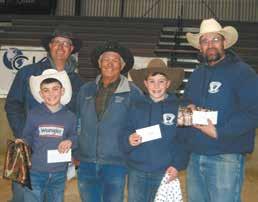
2nd Place Team: Rana Creek Ranch Team: team members: Kylie Askew, Hannah, Ballantyne, TaylerTorkelson, Lexie Osborne
FAMILY TEAMS
1st Place Team: Mackenzie Family, team members: Sam Mackenzie, Lacy Mackenzie, Stetson Mackenzie, Carlee Mackenzie

2nd Place Team: Open 6 Lazy S Ranch, team members: Hayes Allegre, Clint Allegre, Sage Hiibel, & Clayton Hiibel
3rd Place Team: C Buckhorn T Family, team members: Clint Allegre, Toni Allegre, Addison Allegre & Hayes Allegre
The Progressive Rancher www.progressiverancher.com 16 MARCH 2023


The Progressive Rancher www.progressiverancher.com MARCH 2023 17
If you’re looking to sell a farm or ranch, give me call!
3,796 deeded acres in 6 pastures watered by spring and stock water well. Irrigation permit on 130 acres. Well to be drilled this year. The well costs will be added to price of $2,277,559.


HIGH DESERT GRANGE SHOWS

April 8 | High Rollers Jackpot, Fallon
October 7 | Old Timers & PeeWee Goat & Sheep Show, Fallon


*Adults & Youth Ages 3-8 only*
High Desert Grange Chapter #22

Box 5272 Fallon NV 89406

Please join us for a Celebration of Life for Pete Bottari. We will be gathering on Saturday, June 3, 2023 at 4:00 p.m. at the Bottari Ranch in Lamoille, Nevada. If the weather is bad, we will be at The Old School House (also in Lamoille).
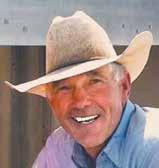
The beef and the bar will be provided by Pete’s family. If anyone attending would like to contribute a side dish of your choosing, it would be very much appreciated. We will send out a reminder in the papers and on social media closer to the date.
BATTLE BORN STOCKTON WELL GRANGE SHOWS
February 4 | Cavy Cuddles & Bunny Love Show
February 25 | Horse Contest Horse Judging & Hippology Educational Contests

May 7 | Easy Peasy Horse Show
June 3 | Battle Born Dairy Goat Show
October 15 | Spooktacular Horse Show
Battle Born Stockton Well Grange #29
Box 302 Silver Springs NV 89429
For additional information on these properties, visit BOTTARIREALTY.COM Paul D. Bottari Broker, NV Lic# B 015476 Office: 775.752.3040 Cell: 775.752.0952 paul@bottarirealty.com 1222 6th St. • PO Box 368 • Wells, NV 89835
McGill Area Farm Wells Area Deeded Range with Irrigation Permit
former Montana Rancher! Accredited Land Consultant and Recipient of the 2019 Land Realtor of America Award* *Given to just one person in the Realtor’s organization by the Realtors Land Institute (NAR branch specializing in Land, Farms & Ranches.
Welcome Michael Robinson
SAVE THE DATE! June 3 | Bottari Celebration of Life
P.O.
775.427.8210
highdesertgrange22@gmail.com highdesertgrange22 www.grange.org/highdesertnv22
P.O.
battlebornstocktonwellgrange29@gmail.com BattleBornStocktonWell www.grange.org/battlebornstocktonwellnv29
The Progressive Rancher www.progressiverancher.com 18 MARCH 2023

The Progressive Rancher www.progressiverancher.com MARCH 2023 19
Beavers and Riparian Habitats
By Charlie D. Clements and Dan N. Harmon
The role of beavers in riparian ecosystems of western North America is a two-edged sword. Meadows created by beaver dams and ponds, with all their associated biological diversity, bring the impressions of nature at its best (Fig. 1).
Over-utilization of woody vegetation, bank erosion, and catastrophic floods from bursting beaver dams form a contrasting view. This review of the role of beavers in past and present riparian ecosystems is offered to encourage land managers to be aware of the importance of these animals. This review concentrates on the western Great Basin, but the principles discussed apply to western North America.

Taxonomy
The North American beaver (Castor canadensis) is one of two species belonging to the rodent family Castoridae. The other species (Castor fiber), resembles the North American beaver in size and appearance, but is found in Europe and Asia. The earliest beaver fossils date from the mid-Tertiary of North America in which fossil beavers include giant forms. The modern day North American beaver dates from the Pleistocene.
Historical Relations
Much of the earliest exploration of far western North America can be attributed to the search for beavers by trappers. During the early 19th century beaver pelts, as a source of felt for hats, along with demands for fur for garments, brought trappers to the wilderness. Finan MacDonald and Michael Bourden led the 4th expedition of the Hudson Bay Company in 1823 that reached the extreme northern part of the Great Basin. Bourden was killed by Indians and MacDonald wrote, “when that country will see me again, the beaver will have gold skin". Peter Skene Ogden then led the next six brigades for the Hudson Bay Company, and first reached the Great Basin in 1826 at the present location of Malheur Lake, in east-central Oregon. On that trip he wrote, "I may say without exaggeration, man in this country is deprived of every comfort that can tend to make existence desirable. If I can escape this year, I trust I shall not be doomed to endure another". But Ogden did return and from 1828-1830 explored parts of the Great Basin which lie in present day Idaho, Nevada, and Oregon. The wanderings of fur trappers created tensions among the Spanish, French, English, Russians, and Americans, all of whom were attempting
to establish and maintain their claims over what eventually became the western United States. These pressures led the Hudson Bay Company to develop a policy of deliberately over-trapping the eastern and southern borders of their Pacific Northwest territories. This destruction of the beaver resources was designed to discourage American trappers from encroaching on what was claimed as British territory. Trappers continually pushed on to new trapping areas because the existing beaver populations were largely destroyed by excessive trapping that failed to leave viable colonies to repopulate trapped areas.
By late in the 19th century much of the North American beaver population was over exploited. Near the end of the 19th century many states adopted protective laws concerning wildlife resources which included bans on trapping beavers. Game management agencies on the stage and federal level began reintroducing beavers to areas where they had been completely removed by trapping and to areas where they did not previously occur. Currently beavers probably exist over a broader range in North America than they did at contact time with European man.
When Peter Skene Ogden explored Nevada from 1828 to 1830, he recorded that the Humboldt River had five forks, three of which contained beavers, and that beavers were quite numerous in those forks. He also recorded beavers to be present in other systems of Nevada, such as the Colorado and Owyhee Rivers, but stated that the Carson, Truckee, and Walker Rivers were free of beaver signs. All of these mentioned systems currently contain beavers, along with many other systems which were recorded by early explorers to be free of beaver signs. Reintroduction programs probably can be credited with the present occurrence of beavers in many areas.
Were beavers actually native to those systems that were recorded to no have beavers? Considering that the main purpose of these early explorers was to find areas occupied by beavers, and they had qualified trappers along, their records of certain systems being free of beavers at the time of their passage should be very reliable. Could beavers have been native to systems like the Carson, Truckee, and Walker Rivers before

The Progressive Rancher www.progressiverancher.com 20 MARCH 2023
Figure 1. Beaver activity improving degraded meadow habitat.
early explorers passed through, and, if so, what brought about the extinction of beavers in these systems? Perhaps disease, over trapping by native Americans, or predation caused their disappearance, or maybe they were not native for some unknown reason.
Life History
Beavers may be exceeded only by man in their abilities to alter the environment. Through their construction of dams, beavers can change degraded meadows into a pond environment with a dependent diversity of animal and plant species (Fig. 2). For example, the density and species diversity of birds has been found to increase due to beaver activities. In contrast to such desirable effects of beavers, they also can cause flooding of agricultural areas and highways and create havoc with irrigation systems. Beavers can also overutilize preferred woody species along streams, such as aspen and cottonwoods, and in so, cause a temporary decrease in tree species diversity, as well as eat themselves out of house and home (Fig. 3). A beaver colony is made up of one or more families consisting of a pair of adults, yearlings, and kits. Beavers are known to be monogamous, colonial, and territorial. If a beaver's mate dies, a new mate is selected from dispersing two-year-olds or other unmatched adults. Beavers breed once each winter and have a gestation period of about 107 days. Litters consist of from one to nine kits. The litter size corresponds with the quality of the environment the colony occupies and the severity of the winter. The young are born with open eyes and fur and weigh about a pound. Newborn kits can move about within the lodge. At about two months of age they are weaned and must forage outside the lodge.
As yearlings, beavers learn to become accomplished builders. They leave their home lodge in search of mates and establish new lodges. They may use old dams, and/ or lodge structures that already exist by refurbishing them or they may build their own structures. They start building a dam, which usually takes place from August through October, by placing branches at a chosen site and adding mud and other debris from the bottom near the dam. Once the height of the dam is near the preferred level, the construction of the lodge begins.
The building of the lodge starts with the beavers gathering and piling sticks on shore close to the water. Beavers then start piling sticks in a chosen area and keep adding until a substantial pile starts to accumulate. Mud is then added to the bottom of the pile. The chosen site may be surrounded by water, which they prefer, or they may build it along the edge of an impoundment or on shore.
Beavers are vegetarians and feed during fall and winter on the tender bark of willows, aspen, cottonwood, and alder. During spring and summer they prefer to feed on sedges, grasses, and forbs, and other aquatic and riparian plants.
Population Dynamics
Because their ponds and lodges serve as a safety refuge, beaver populations are not preyed upon intensely by native carnivores. Bobcats, coyotes, wolves, mountain lion, bears, wolverines, and lynx have been known to take beavers. Where wolves still exist, beavers may be an important component of their summer diet and predation upon beavers can be quite high. Diseases such as Tularemia and rabies may also affect beaver populations. With natural enemies not being a major factor in population control for beavers in most areas, man and his activities have a large influence on population dynamics. Harvest rates tend to reflect prices being paid for beaver pelts.
Management
Management plans for riparian areas should include an active plan for beaver management. A beaver colony will selectively exploit the woody vegetation of a riparian area. In western Nevada, along the eastern

 Figure 3. Beaver activity causing damage on black greasewood in a salt cedar infested habitat along the Walker River in central Nevada.
...continued The Progressive Rancher www.progressiverancher.com MARCH 2023 21
Figure 2. Habitat created by beaver activity increases plant and wildlife diversity.
base of the Sierra Nevada, beavers will virtually eliminate black cottonwood from the riparian zone, but leave mountain alder. This changes the tree density, tree height, availability of tree cavities, and many other aspects of the riparian habitat. Conversely, unlimited trapping can eliminate the beaver population from riparian areas, which can decrease the diversity of a riparian area. Research suggests that beaver pond ecosystems can provide important habitats for nongame breeding birds in the Western United States. Habitat changes resulting from beaver activities can have extreme influences on the quality of a riparian system and can be either negative or positive. Each individual area is different and therefore management plans may need to be specific for each area. The most practical way of controlling beaver population is through systematic harvesting of surplus animals. This can prevent damage to the riparian habitat while maintaining the beaver population. In this age of awareness of animal welfare it is necessary to involve the general public in the design of management plans for beaver management. Unlimited beaver populations can be bad for riparian habitats and ultimately for beavers themselves. On the other side of the coin, to remove beavers completely from an area would eliminate the natural part of the environment that is important to many species of animals and plants. Beaver management can be very emotional with difficult issues for land managers to work with, but they are important aspects of natural resource management.
ur
13, 2023
Wyndham Visalia • Visalia, CA
Consignment Deadline: March 27, 2023
ur • May 4, 2023
WVM Headquarters • Cottonwood, CA

Consignment Deadline: April 19, 2023
The Progressive Rancher www.progressiverancher.com 22 MARCH 2023
...continued For more information, please call (530) 347-3793 or email us at wvm@wvmcattle.com Look for the catalog and video on ww w.w vmcat tle.com Market your cattle with the professionals! WATCH & LISTEN TO THE SALE on the Web at:
P
U
C O MI N G S A L ES
Simulcast on DISH 998 • April
Simulcast on DISH 998


800 - 513 - 4963 • ww w.pinenutlivestocksupply.com Complete selection of animal health products, feed, and equipment for beef, dairy, equine, sheep, goat and small animal. Snyders Pinenut Livestock Supply Fallon: 8 - 5:30 M-F Gardner ville: 8 - 5 M-F The Progressive Rancher www.progressiverancher.com MARCH 2023 23
Farm Bureau At The 2023 Nevada Legislature
By Doug Busselman | NFB Executive Vice President
As this is being written, the 82nd Session of the Nevada Legislature is in its early phases (the third week).
One of Nevada Farm Bureau’s top priorities is representing our state’s farmers and ranchers at the Nevada Legislature. Annually Farm Bureau farmer and rancher members participate in a process of developing policy positions on the issues that they believe warrant their organization’s attention. Starting at the county Farm Bureau level and working up to the Nevada Farm Bureau annual meeting. The positions on important issues are discussed and worked into the form of statements that when adopted by the voting delegates are incorporated into our annual policy book.
The Farm Bureau policy book is the basis for evaluating legislative proposals and the lobbying activities that are carried out on a daily basis in the legislative session.
It was Farm Bureau’s policy regarding “Critical Management Areas” which was worked into SB 113, introduced by request by Senator Pete Goicoechea of Eureka. The purpose of this bill is to clarify the intentions of the Nevada Legislature to protect senior water right owners in groundwater management plans when such a plan is developed under state law for Critical Management Areas.
If SB 113 is passed, as written, future groundwater management plans that are submitted to the State Engineer for consideration will need to be signed by senior water right owners who have the majority of the total groundwater committed for use in a basin.
A “senior water right owner” is defined as being someone who holds a permit or certificate to appropriate water in the basin with priority rights that are older than the date on which appropriations for withdrawals of groundwater in the basin were equal to the perennial yield
of the basin.
For those senior water right owners who do not wish to participate in the groundwater management plan, and who have not signed the proposed plan, the State Engineer “shall not require” their water to be included in the provisions of the groundwater management plan.
SB 113 has also been co-sponsored by Senators Robin Titus, Carrie Buck, Ira Hansen, Jeff Stone and Lisa Krasner. Another section of the bill also addresses existing -- as well as any future groundwater management plans that are developed. It is the only portion of the legislation which has any application for existing groundwater management plans.
When a plan has been in effect for 10 consecutive years, the State Engineer is to review the results of the groundwater management plan to determine whether there has been significant progress towards stabilizing the drawdown of the groundwater in the basin. If there hasn’t been significant progress, the plan is dissolved and the withdrawals, without limitation, including withdrawals from domestic wells will be restricted in that basin to conform to priority rights.
Farm Bureau policy states, “Attention needs to be directed at addressing overappropriated groundwater basins with solutions oriented to bringing water rights and water being pumped into balance with perennial yields.”
It is because of this policy statement and another Nevada Farm Bureau policy for a water rights buyout/ retirement program that Farm Bureau is supporting passage of SB 176. This is another legislative proposal sponsored by Senator Goicoechea. It establishes and provides initial funding for purchasing water rights from willing sellers and retiring those water rights from further appropriation.
To start the “Account for Purchasing and Retiring Water Rights,” SB 176 seeks an initial appropriation of $5 million. It also authorizes funding to go into the account by various other methods including gifts, donations, bequest or grants.
The State Engineer is directed to develop the necessary regulations for carrying out the program.
SB 112 is another bill which fits into Nevada Farm Bureau’s policy and is a measure that we will be supporting. This legislation is aimed at basin accounts and assessments that the State Engineer makes in some designated basins. If passed, the bill will cap the assessment at a maximum amount of $2 per acre ft. of agricultural water rights. It also would prohibit the use of the money levied to pay the salaries and expenses of the State Engineer or the technical, clerical and operational staff of the State Engineer.
Starting in the last session of the Nevada Legislature, funds were diverted from the basin accounts and used to cover staff salaries and expenses under the auspices that those being paid with these funds had something to do with the reason the fees were being assessed. The degree to which this might be the case is unknown, since there aren’t any reports that go to the counties where the fees are levied.
SB 112 would also change that lack of accountability. The bill would require the State Engineer to submit an annual report, before the first Monday in October, to each county commission where the assessments are collected, where the funds were spent and the activities that were being carried out for the groundwater basin.
Farm Bureau policy supports the transparency that this bill seeks.
Not all of the legislation that Farm Bureau is working on is water related,
although this session will have more water bills than any other session that can be recalled. Farm Bureau has recently testified in support of AB 109, a bill brought forward by Assemblywoman Selena La Rue Hatch.
This bill is geared to establishing a state program for enhancing soil health. It creates a nine-member advisory committee which is connected to the State Conservation Commission. AB 109 seeks to fund the start-up with $200,000 and through having such a program it is anticipated that additional federal funding for soil health will be available for use in Nevada.
Conservation Districts are tagged with being the “boots on the ground” for implementing educational and technical support with funding coming their way through the structure legislated in the bill.
Farm Bureau’s policy has went on record as being in support of the voluntary/incentive-based approach that the legislation calls for as well as the emphasis that Farm Bureau members have given to wanting educational and practical assistance in understanding the concepts and practices for regenerative agriculture. The bill also calls for research on improving soil health, another important and foundational process needed to better understand what works best for Nevada’s soil and environmental conditions.
As the Nevada’s 2023 Legislative Session continues to unfold, Nevada Farm Bureau will be engaged, seeking to implement the policy positions that Farm Bureau members have spelled out to be objectives that they wish to be achieved.
Nevada Farm Bureau
The Progressive Rancher www.progressiverancher.com 24 MARCH 2023
Nevada Farm Bureau
Dave Fulstone Scholarship

We are excited to announce the 2023 Dave Fulstone Scholarship is now open. The Dave Fulstone Scholarship is awarded through the Nevada Heritage Foundation an organization that supports education of Nevada’s youth in agricultural related fields.
The Dave Fulstone Scholarship is available to any student graduating from high school this year, a current college student or a trade school student who is furthering their education in a course of study pertaining to agriculture.
A successful candidate for the scholarship must be from a Nevada Farm Bureau member family. A completed application must be submitted and include a copy of your most recent transcript and two letters of recommendation.
Full application details and application forms can be found on the Nevada Farm Bureau website at nvfb.org or by using the direct link www.nvfb.org/articles/dave-fulstone-scholarship-2/
The Application deadline is April 1st. Applications can be emailed to Julie Wolf at, wolfranch1nv@gmail.com or mailed to
Nevada Heritage Foundation Scholarship Committee
C/O Nevada Farm Bureau
Nevada Heritage Foundation
2165 Green Vista Dr Suite 205 Sparks, Nevada 89431
For more information, please call the NFB office at 775-674-4000.
Welcoming The New Nevada YF&R Chair
I'm Monica Avery! I’m so excited to be the new Nevada Farm Bureau Young Farmers and Ranchers (YF&R) State Chair! I have served two 2-year positions as the Nevada District 3 Representative and now am lucky enough to finish out my time in the YF&R program as the State Chair.
I am a fourth-generation farmer and rancher. My dad and I run our family's centennial farm in Churchill County. We run 300+ pair of cattle and farm just over 1000 acres to produce our own hay for our needs.

Outside of working on the ranch I am the office manager for a local hay sales company.
I have two beautiful daughters: Rylee and Makenzie and an amazing husband, Preston. I love to coach softball, cheerleading and helping with our local 4H.
I love the friendships and relationships I have been able to build through Farm Bureau and the valuable leadership skills it has taught me so far.
I look forward to growing the YF&R program over the next few years and hope you join me on the adventure. If interested in learning more about the YF&R program, please contact Brittney Money at brittney@nvfb.org. We would love to have you join us.
The Progressive Rancher www.progressiverancher.com MARCH 2023 25
MARKET INTEL | 2023 USDA Farm Income Forecast Erases 2022 Gains
USDA’s most recent Farm Sector Income Forecast, released February 7, anticipates a decrease in net farm income for 2023. U.S. net farm income, a broad measure of farm profitability, is currently forecast at $136.9 billion, down 15.9% from 2022’s $162.7 billion. This $25.9 billion decline erases the $21.9 billion increase that was forecast between 2021 and 2022 but is smaller than the gain between 2020 and 2021 of $46.5 billion following the COVID-19 pandemic. When adjusted for inflation, 2023 net farm income is expected to decrease $30.5 billion (18.2%). The report expects farm and ranch production expenses to continue to increase by $18.2 billion (4.1%) in 2023 to $459.5 billion, following a record increase of $70 billion in production expenses in 2022.
Net Farm Income Breakdown
Direct government payments are forecast to decrease by $5.4 billion, or 34.4%, between 2021 and 2022 to $10.2 billion. This marks the third consecutive decrease in government
payments for producers since the peak of the COVID-19 pandemic in 2020. As displayed in Figure 2, the decrease corresponds to near total reductions in both USDA pandemic assistance, which included payments from the Coronavirus Food Assistance Programs and other pandemic assistance to producers, and non-USDA pandemic assistance programs, such the Small Business Administration’s Paycheck Protection Program.
Notably, from 2022 to 2023, federal payments through USDA’s pandemic assistance initiatives are expected to increase from $540 million to nearly $1 billion. The Biden administration’s recent announcement of the Pandemic Assistance Revenue Program (PARP) adds more money to a pot that was expected to all but disappear. To be eligible for PARP, an agricultural producer must have been in business during at least part of the 2020 calendar year and have had a 15% or greater decrease in allowable gross revenue. Funding for this program contributes to an expected increase in USDA
pandemic assistance. In contrast, nonUSDA pandemic assistance remains at $0 between 2022 and 2023. Likewise, the Market Facilitation Program, which provided a series of direct payments to farmers and ranchers impacted by trade retaliation, ended in 2021 and will not be part of net farm income past 2022, when $1.18 billion was paid out. The “other supplemental and ad hoc disaster assistance” category includes payments from the Wildfire and Hurricane Indemnity Program (WHIP+), Quality Loss Adjustment Program and other farm bill designated-disaster programs. Most recently, this includes the Emergency Relief Program (ERP), which replaced WHIP+ for 2020 and 2021 disaster-related crop losses and has paid out over $7.3 billion to producers in Phase 1 as of Feb. 5. The activity under this program pushed payments from the ad hoc assistance category from the original February 2022 projection of $2.9 billion to $10.7 billion – a 264% increase. In 2023 payments under this category are expected to cool to $4.98 billion though many producers continue to wait for payments under Phase 2 of
by Daniel Munch, Economist www.fb.org/market-intel/2023-usda-farm-income-forecast-erases-2022-gains

the ERP program, which is currently in open enrollment through June 2. In Figure 2, total commodity insurance indemnities, which are triggered in the event of revenue or yield loss for growers who have purchased crop insurance, are not direct government payments but are included for comparison (and illustrate the importance of these vital risk management options). Commodity insurance indemnities are expected to increase in 2023 by 12.5%, or $2.5 billion, moving from $20.2 billion to $22.7 billion, marking the highest payout of indemnities since the data series began in 2005. This increase is the likely result of increased crop insurance enrollment by those who received a WHIP+ payment and are required to purchase crop insurance or Noninsured Crop Disaster Assistance Program coverage (when crop insurance is not available) for the next two available crop years– a requirement of ERP also.
Livestock
The largest decrease in net farm income is tied to a projected fall in cash receipts from livestock due to lower prices for all major categories except cattle. The value of livestock production (in nominal dollars) is expected to decrease nearly 6%, or $14.7 billion, in 2023. Chicken eggs and milk are responsible for the largest percentage decreases, with cash receipts for chicken eggs projected to decrease by $4.9 billion or 24%. Highly pathogenic avian influenza has affected over 52 million birds in commercial flocks in the U.S., including over 43 million egg layers, pressuring supplies and pushing up prices. As the flock recovers, egg production increases and consumer demand fundamentals recalibrate prices lower. Milk receipts are similarly expected to decline $8.4 billion (14.6%) on expectations for higher milk production and lower corresponding prices.
Cash receipts for cattle and calves are estimated to increase by $2.1 billion or 2.4%. As described in previous iterations, drought conditions in the
Nevada Farm Bureau
The Progressive Rancher www.progressiverancher.com 26 MARCH 2023
West and southern Plains have damaged pastures and led to higher costs for feed such as hay. This has resulted in many farmers marketing heifers that would typically be kept for breeding and herd replacement and thus a reduction in U.S. cattle inventory that will continue for years to come. Tighter cattle supplies have pulled both cash and futures prices higher, leading to continued growth in cash receipts.
Crops
On the crops side, receipts for major row crops like corn and soybeans are expected to decline while wheat and hay are expected to increase. Receipts for corn are expected to fall by 4.5% ($4.1 billion), while soybeans are expected to be down 8.1% ($5.2 billion). Wheat is expected up 4% ($0.6 billion) and hay receipts are expected to grow by $0.6 billion (6.1%). Fruits and nuts are expected to hover close to $30.8 billion in receipts while vegetables and melons are poised to fall from $21.8 billion to $19.9 billion (-8.6%). The vast majority of expected receipt declines are linked to falling prices rather than volume dynamics. Weather and climate conditions will have strong impacts on the true outcome of this year’s price outlook. Extreme drought that has
pushed up hay and wheat prices could subside marginally after a winter of strong (so far) Western precipitation and snow. Record production in foreign corn and soybean players like Brazil and Argentina are competition for U.S. crops overseas, particularly in China. Uncertainty related to Mexico’s commitment to ban GMO corn for human consumption and the ongoing Ukraine-Russia conflict remain.
On the cost side, production expenses, including operator dwelling expenses, are forecast to increase for a sixth consecutive year, growing in 2023 by $18.2 billion, or 4.1%, to reach a record $459.5 billion. And while it’s little consolation, some major input items such as cumulative feed costs, fertilizers and fuels and oil are expected to decline from record highs. Feed costs, which represent the largest single expense category, are expected to decline $3.92 billion to $72.66 billion (-5%). Fertilizers, lime and soil conditioners are expected to decrease $1.25 billion, or 3%, from $43.42 billion to $42.17 billion.

Typically, fertilizers represent about 15% of a crop farmer’s costs and any increase, regardless of magnitude, can be crushing for some producers, especially
in times of declining revenue. Fuels and oils are expected to experience the largest percent decline – 17% – from 2022, moving from $20.25 billion to $17.1 billion. These drops, however, are easily outpaced by increases in other expense categories including marketing, storage and transportation, which are forecast to increase 11%. Labor costs are expected up across all subcategories with cash labor forecast to move from $39.2 billion to $42.08 billion (+7%). Inflation, currently sitting at 6.5%, has pressured interest expenses as the Federal Reserve Bank attempts to bring inflation under control through higher rates.
Between 2022 and 2023, interest expenses, including operator dwellings, are expected to jump 22%, going from $27.6 billion to $33.84 billion, making it more difficult for farmers and ranchers to acquire lines of credit to purchase inputs and equipment this year. Livestock, seed, electricity, repair and maintenance are among the other categories expected to increase in price.
Other farm income, which includes things like income from custom work, machine hire, commodity insurance indemnities and rent received by operator landlords, is estimated to
increase by $3.2 billion, or 8%, from $42 billion to $45.2 billion in 2023. But when all these factors are accounted for, the resulting expectations for net farm income decline become apparent, as illustrated in Figure 3.
Other Considerations
USDA’s Farm Sector Income Forecast also provides expectations of farm financial indicators that can give insight into the overall financial health of the farm economy. During 2023, U.S. farm sector debt is projected to increase $31.19 billion, or 6.2%, to a record $535 billion in nominal terms. Nearly 70% of farm debt is in the form of real estate debt, for the land to grow crops and raise livestock. Real estate debt is projected to increase $26.79 billion to a record-high $375.8 billion, largely due to an increase in land values across the country. Nonreal estate debt, or debt for purchases of things like equipment, machinery, feed and livestock, is projected to increase by $4.4 billion to a record $159.1 billion. The value of assets regularly being purchased with debt is rising, which means it will continue to be important for farmers and ranchers to pay down debt and cover interest to maintain a healthy balance sheet, an endeavor that will be even more cumbersome within a high interest environment.
Based on 2023 debt and asset levels, USDA expects the debt-to-asset ratio to be 13.22% for 2023, which sits marginally below the prior five-year average (13.5%), meaning farmers are expected to hold steady on borrowing to finance the purchase of assets. Higher interest rates will likely act as a barrier for farmers to finance new assets moving forward.
Working capital, which takes into consideration current assets and liabilities, is the amount of cash and cash-convertible assets minus amounts due to creditors within 12 months. In 2023, working capital is projected to fall by $14.9 billion, or 8.9%, to $118 billion, which is the first decline since 2016, and sits at $2.5 billion below 2014 levels, when farmers and ranchers held $121 billion in working capital. Lower levels of working capital often
....continued The Progressive Rancher www.progressiverancher.com MARCH 2023 27
suggests that many U.S. farmers have just enough capital to service their short-term expenses and debt, which becomes more difficult as interest rates rise. To borrow a phrase from the 46th President of the United States, it’s not a lot of “breathing room.”
Another metric that highlights the concern about farmer profitability in 2022 is the rate of return on assets.
For 2023, the rate of return on assets is projected at 7.7%. This is a drop from 2021 and 2022 when returns were up over 12.5% but remains above returns experienced between 2014 and 2020. Compared to 2021 and 2022, farmers and ranchers are seeing smaller revenues or returns for the investments made in the cost of production and in assets used to produce a farm product; the opposite is true from 2014-2020.
Figure 4 highlights the U.S. farm sector debt, the debt-to-asset ratio and the rate of return on farm assets.

Summary
USDA’s most recent estimates for 2023 net farm income provide a very early estimate of the farm financial picture. For 2023, USDA anticipates a decrease in net farm income, moving from
$162.7 billion in 2022 to $136.9 billion in 2023, a decrease of 16%. Much of the forecasted decline in 2023 net farm income is tied to lower crop and livestock cash receipts, continued increases in production costs and a decrease in ad hoc government support, resulting in an overall decrease of forecast net farm income. It is important to highlight the early nature of this forecast.

In February 2022 USDA forecast that net farm income would decline that year by 4.5%. In the September 2022 update that decline was flipped to a 5.2% increase and in the final December 2022 update this 5.2% increase was pushed to a 13.8% increase.
The change in the February and December forecast was the difference between general farm economy income decline and record cash receipts. Much uncertainty remains related to the ability of farmers and ranchers to costeffectively access inputs and deal with regional regulatory and weather-related challenges.
With an early expectation of revenue declines, which more than erase gains made during 2022, it becomes all the more important for producers to have clarity on rules that impact their businesses’ ability to operate, for producers to have access to comprehensive risk management options and for producers to be given a resounding voice during formulation of vital legislation such as the farm bill, which can either complicate or streamline farmers’ and ranchers’ ability to contribute to a reliable and resilient U.S. food supply sustainably.
....continued STAY UP-TO-DATE ON AG NEWS! Sign up at at nvfb.org for the weekly NFB Grassroots Newsletter and have current AG topics delivered directly to your inbox. The Progressive Rancher www.progressiverancher.com 28 MARCH 2023
The change in agriculture today is just a glimpse of what lies ahead. It’s why, more than ever, we are committed to being the partner you can trust, who understands your needs and delivers value to help you achieve your goals.


Wherever agriculture goes, we’ll be there, alongside you, as you lead the way.




COMMITTED TO SERVING YOUR NEEDS. Visit agloan.com/growyourfuture A Part of the Farm Credit System. Equal Opportunity Lender. Your future grows here SCAN ME YOUR FUTURE GROWS HERE. The Progressive Rancher www.progressiverancher.com MARCH 2023 29
January 2023 Nevada Cattle Industry Economic Overview
This economic report was written exclusively for the Progressive Rancher by Malieka T. Bordigioni
Like much of the greater economy, agricultural sectors have been subject to volatility and uncertainty over the past several years. The COVID pandemic, adverse weather, and war in Ukraine contributed significantly to disrupted supply chains and shifts in production which negatively influenced macroeconomic trends and pushed prices upward. The impacts of these events and the lingering repercussions are felt globally, with some communities, economies, and industries disproportionately affected. While agricultural production is strongly defined by location, agricultural trade is influenced at a global scale, finding producers especially subject to the adverse impacts of the past few years. In particular, the current cattle industry environment reflects the resulting volatility.
Recently released USDA reports provide insights about the current structure of national, regional, and state-level cattle herds and how current conditions compare to historic trends. Overall, when comparing national 2023 January 1 inventories to 2022 January 1 inventories, cattle inventories are down (with beef cattle inventories seeing a larger decrease than all cattle), beef replacement heifer inventories are down, and cattle on feed inventories are down. The inventory trends in the 11 continental western states (’11 states’) and for Nevada specifically report similar trends. Regarding slaughter, comparing national preliminary totals for 2022 to 2021, commercial slaughter numbers were up and average pounds per head of commercial cattle were down. Overall, total U.S. national beef production for 2022 is expected to be about 1% higher than 2021. Strong export demand and tight supplies are both contributing to strong cattle and beef prices compared to recent history. However, production input prices, especially for feed and energy, have also experienced upward pressure, squeezing net income for U.S. cattle producers.
Beef cows represent the largest category of all cattle inventories in the U.S., 11 states, and Nevada. Ten year (2014-
2023) January 1 averages are reported as 33%, 51%, and 30% respectively. Across those same ten years, beef cow inventories peaked in 2019, 2018, and 2020 respectively. In the case of Nevada, 2020 was the largest beef cow inventory since 2001. Yet both beef cow and beef replacement heifer inventories have been in decline. In the case of the U.S., the decline began in 2018 with 2023 beef cow inventories down 3.5% from 2022, and replacement heifers down 5.8% in 2023 compared to 2022. The 11 western states experienced similar trends but the year-over-year (YOY) decline in 2023 is reported at 2.2% for beef cows and 2.3% for beef replacement heifers. Reporting for Nevada’s beef cow inventories showed more moderate declines until 2023, which reflects a 4.9% YOY decline in beef cows and 7.9% in replacement heifers.
Given the production structure of western beef cattle production, particularly the dependence on grazing, the beef cow inventories seem to reflect the challenges of consecutive years of drought. In addition, the meat processing supply chain backlog following the onset of COVID-19 in March 2020 (and the preceding Tyson processing plant fire in August 2019) created even greater issues for cattle ranchers competing for limited slaughter and storage space, while continuing to hold and feed livestock. The sharp increase in demand for feed in 2020 occurred near the middle of a five year national trend of increasing cattle on feed inventories, influenced by the cattle cycle. The 2020 COVID induced feed demand shock combined with drought stressed supplies of forage and feed supported upward pressure on feed costs. The Economic Research Service’s (ERS) most recently released cost and returns data for cattle and calf producers reports data through 2021 for the U.S. and by region (Nevada is represented in the Basin and Range region). For Basin and Range producers, total feed costs average (2017-2021) 75.8% of all operating costs compared to 72.4% nationally, up 9% and 4.7% respectively over the previous five years (20122016). Costs associated with grazed
feed averaged about 1/3 of total feed costs 2017-2021 both nationally and for the Basin Range – up 16.7% and 20% respectively over the previous five year average. Moreover, the continued rise in alfalfa prices that began in summer 2021 is not yet fully reflected in the ERS cost and returns. Monthly per ton U.S. prices for dry alfalfa averaged $254.50 in 2022, 43% higher than the average annual prices 2017-2021. Comparatively, the most recently reported price for Nevada dry alfalfa is $310/ton in December 2022, about 15% higher than the U.S. 2022 December price of $269/ton.
The increase in feed costs throughout the beef supply chain combined with a period of general upward price pressure, the natural cattle cycle, and adverse weather are reflected in cattle processing sector as well. Cattle on feed inventories for 2023 are reported down 3.7% nationally and 2.5% for the 11 states. Preliminary 2022 USDA commercial slaughter data for cattle at least 500 pounds reflects about a 1.4% increase YOY both nationally and for the 11 states. The same data set reflects declining live weight per head, down 0.2% YOY nationally in both 2021 and 2022. Declines for the 11 states were slightly greater at approximately 0.5% in 2021 and 1% in 2022. Overall, U.S. beef production is estimated up about 1% YOY in 2022 at 28.3 billion pounds.
On the supply side, increased production costs and moderating production contribute to higher prices throughout the supply chain, including prices received by cattle producers. The Cattle Range provides weekly 750 pound feeder steer prices by state, region, and overall average. Referencing the most report released for the week ending 2/17/23, overall price per hundred weight (cwt) ended at $182.56, up 3.9% month over month, 12.6% YOY, and 23.1% over the five year average. Nevada prices reported for the same week average approximately 98.6% overall prices across the reported times (and are equivalent to western region prices). However, Nevada’s 2/17/23 $180.33/cwt reflects a 4% month over
month, 14% YOY, and 22.7% over the five year average. While U.S. demand for beef products has declined slightly in recent years with rising consumer prices, export demand for U.S. beef has been strong, reaching 3.5 billion pounds in 2022, a 3% YOY increase in volume. Value of U.S. beef exports realized a record increase of approximately a $11 billion dolloars, a YOY increase just over 10%. Asian trading partners accounted for about 70% of export beef volume.
While uncertainty continues into 2023 given U.S. economic conditions (e.g. inflation, interest rates), geo-political volatility (e.g. the war in Ukraine, China emerging from strict COVID measures), natural disasters and weather patterns (e.g. global weather events, implications from earthquakes in Turkey and Syria) to name a few, some current conditions provide benefit to cattle producers in Nevada and broader stakeholder groups. Significant precipitation in the western U.S. beginning in December 2022 decreased areas experiencing any level of drought in the 11 states by 13% (as of 2/14/23 reporting 79.6% of the 11 state area is at some level of drought). The precipitation didn’t completely remove drought from Nevada (2/14/23 reporting at 100% of state in some level of drought, but the 2/14/23 reports no location in the state is categorized as the highest classification of drought (D4/ exceptional) and the areas in Nevada reported as D3/extreme in the 12/13/22 report decreased by approximately 75% by 2/14/23. Another positive trend is that while prices of inputs (namely energy and feed costs) important to cattle production remain high compared to five year averages, they are down from recent hisoric or nearhistoric peaks. Lastly, recently released USDA projections to 2032 expect that while U.S. per capita beef disapperance will decline slightly in the nearby years on lower production, they are expected to remain nearly steady through 2032. Howver, export demand for beef is expected to grow approximately 14% by 2032.
The Progressive Rancher www.progressiverancher.com 30 MARCH 2023
Sources:
The Cattle Range. Feeder Steer Prices for the week ending February 17th https://www.cattlerange.com/pages/ market-reports/weekly-feeder-cattle-prices-by-state/, accessed 2/20/23


U.S. Department of Agriculture, Economic Research Service. Commodity Costs and Returns data,https://www. ers.usda.gov/data-products/commodity-costs-and-returns/, accessed 2/20/23

U.S. Department of Agriculture, Economic Research Service. Livestock, Dairy, and Poultry Outlook: February 2023 https://www.ers.usda.gov/webdocs/outlooks/105840/ldp-m-344.pdf?v=6037.6, accessed 2/20/23
U.S. Department of Agriculture, National Agricultural Statistics Service. Cattle 1/31/2023 https://usda.library. cornell.edu/concern/publications/h702q636h?locale=en, accessed 2/20/23
U.S. Department of Agriculture, National Agricultural Statistics Service. Nevada Hay Prices December 2022 https://www.nass.usda.gov/Statistics by State/Nevada/Publications/Crop Releases/Nevada Hay Prices/, accessed 2/20/23

U.S. Department of Agriculture, National Agricultural Statistics Service. Quick Stats, https://quickstats.nass. usda.gov/, accessed 2/20/23
U.S. Department of Agriculture, Office of the Chief Economist, World Agricultural Outlook Board. USDA Agricultural Projections to 2032 https://www.usda.gov/sites/default/files/documents/USDA-AgriculturalProjections-to-2032.pdf, accessed 2/20/23
U.S. Drought Monitor. Compare Two Weeks, https://droughtmonitor.unl.edu/Maps/CompareTwoWeeks.aspx, accessed 2/21/23
The Progressive Rancher www.progressiverancher.com MARCH 2023 31


a QR scanning app or your phone’s camera to access the website The Progressive Rancher www.progressiverancher.com 32 MARCH 2023
SCAN HERE Use
C all o r s t op in for our comple t e list of Seeds in stock
R o n ’s S ee d & S up p l y
710 Grass Valley Rd • Winnemucca, N V 894 45 775- 623-5053 • ronsseed@gmail com
Serving Nevada Agriculture for 40 years
S a l t t o l e ra n t , d ro u g h t- h a rd y,
o rg a n i c a l l y a p p rov e d a n d n o n - G M O se e d v a ri e t i e s a v a i l a b l e .
5 H R e v ol t 6 -
W L 3 3 6HQ .R R 3 V H
W L 3 5 6HQ .R R 4 V H
W L 3 7 2 HQ R R 5 V H
G R AINS & MISC .
- Cayuse
O a t s
W he a t
Tr it ic a le
- M onida
- Twin - PR 1404
- Patrone
- Forerunner
- M erlin
B e a r dle s s B a r le y E ur ek a
P e a s
C or n
S or g hum S uda n
R y e g r a in
C ho w f or d S t ock f or d
BM R

-
- Piper Sudan
- Sweet RN
- Honey
- Gazelle (Spring)
- Prima (Fall)
- VN S
C L O V E R S
A ls ike
L a dino
R e d C lo v er
S t r aw ber r y
W hit e Du t ch
Yello w Blo s s om
TUR F GR A SS E S
R on ’ s S pe cia l Tur f Mi x
K Y Blue G r a s s
At hle t ic Tur f Mi x
T T P er ennia l R y e g r a s s
C he w ing s Fe s que
B en t g r a s s
D RY L A ND & R EC L AM AT I ON SEE D
W he a t g r a s s e s Immig r a n t Kochia
Nor d a n C r e s t e d S no w s t or m (Ne w)
Ne w H y/ S a lt la nder G r e a t B a s in W ild R y e
Bluebunch R o a dc a s t
H y cr e s t C r e s t e d
Ta ll W he a t g r a s s
S iber ia n W he a t g r a s s Sh a de s c a le
O a he In t er me dia t e 4 W ing S a lt bus h
P ube s c en t
G a rr is on C r e eping
India n R ice g r a s s Me a do w Fox t a il
Big S a gebr us h R a nge Ch a nger
PA S TUR E MI X E S
Oly mpic E lit e Uni v er si t y w/ No C lov er Nor t hw e s t P a s t ur e Hor s e P a s t ur e R on ’ s Dr y la nd Mi x R on ’ s R a ngela nd Mi x
FIEL D GR A SS E S
Or cha r d G r a s s e s
- Seco (Dryland) - Potomac - Paiute
Moun t a in Me a do w Br ome
S moo t h Br ome
A nnua l R y e G r a s s
P er ennia l R y e G r a s s
C lim a x T imo t h y
Faw n Ta ll Fe s cue
C ONV EN T I O N A L A L FA L FA VARIETIE S 6 4 2 2 Q C inch I (ML) Ver n a l 6 4 01N C inch II R a nger 65 8 5 Q R on ’ s Blend W L 3 4 3 HQ 6 3 0 5 Q S pr e dor 5 W L 3 5 4 HQ 919 Br a nd L a d a k W L 3 6 3 HQ ©2021 Forage Genetics International, LLC. Roundup Ready® is a registered trademark of Monsanto Technology LLC, used under license by Forage Genetics International, LLC. HarvXtra® Alfalfa with Roundup Ready® Technology and Roundup Ready® Alfalfa are subject to planting and use restrictions. Visit www ForageGenetics.com/legal for the full legal, stewardship and trademark statements for these products. HarvXtra and NEXGROW are registered trademarks of Forage Genetics International, LLC. Prices and programs are subject to change. Because of factors outside of Forage Genetics International s control, results to be obtained, including but not limited to yields, financial performance, profits, losses or otherwise, cannot be predicted or guaranteed by Forage Genetics International. H A R VX TR A ® & R OU ND U P R EA DY ® A L FA L FA F D W H 6 4 09H V X R R 4 V H 6 4 9 7 R 4 V H 6 516R
The Progressive Rancher www.progressiverancher.com MARCH 2023 33
Natural Resources Conservation Service
NEVADA WATER SUPPLY OUTLOOK REPORT
February 1, 2023
Read FULL 40-Page Report with Linnks & Graphs HERE: www.nrcs.usda.gov/wps/portal/wcc/home/quicklinks/states/nevada/watersupply/wsor/
For questions contact: Jeff Anderson, Nevada NRCS Snow Survey, jeff.anderson@usda.gov or 775-834-0913.
UPCOMING EVENTS
Western Snow Conference
April 17-20, 2023, Flagstaff, AZ -
Submit abstracts by Feb 1, 2023
SUMMARY
NINE atmospheric rivers made landfall along the California coast between Christmas and mid-January! These storms brought heavy snowfall from the Sierra Nevada Mountains right across Nevada, Utah and Colorado. February 1 snow water amounts are at or near record setting amounts at SNOTELs and snow courses from California to Colorado.
February 1 snowpacks are 173-240% of median in the eastern Sierra, 130247% across northern Nevada, 247% in the Spring Mountains, and 144% in the Upper Colorado Basin. Most SNOTELs in the eastern Sierra and across Nevada are already exceeding April 1 peak amounts. February 1 streamflow forecasts point to well above normal runoff this spring. If winter and springtime precipitation continues to be strong, the 10% exceedance streamflow forecasts indicate the potential for near record setting streamflow volumes. The lingering effects of drought add a level of uncertainty to just how good the runoff will be. This is especially true in the Humboldt Basin where water year 2022 observed streamflow volumes were at or near record low for a number of gages. In order to go from record dry to record wet in one year, there are some key puzzle pieces that need to fit together. Mainly, the hydrologic system needs to become primed by the rapid melt-off of low elevation snow likely assisted by rain. An event similar to
the flooding that occurred in February 2017 would improve baseflows and boost runoff off efficiency later in the spring allowing much of snowmelt from higher elevations to reach the lower end of the Humboldt River.
SNOWPACK
This year ranks as one of the best February 1 snowpacks on record for our region. SNOTELs and snow courses across four states from California to Colorado are measuring record and near record February 1 snow water amounts. Snowpacks are 173-240% of median in the eastern Sierra, 130247% across northern Nevada, 247% in the Spring Mountains, and 144% in the Upper Colorado Basin. Many SNOTELs have already exceeded their normal spring-time peak amounts that typically occur close to April 1. Nearly all SNOTEL and snow courses in the Carson and Walker basins are measuring record February 1 snow water amounts across elevations from 6,000 to 9,400 feet. Conditions in Eastern Nevada and the Upper Humboldt Basin are also spectacular with snow at most sites exceeding the 95th percentile when compared to historic data. Like the Carson and Walker basins, the Humboldt Basin also possesses near record low elevation snow. Located north of Elko, Tremewan Ranch snow course (5700ft) with 5.6 inches of snow water, has its second highest February 1 measurement since 1955. If this low elevation snow melts off quicky, it could prime the river system for high elevation snowmelt later in the season. Based on SNOTEL data back to 1981, the Upper Humboldt Basin has only seen more snow in 1997 and 1984. SNOTELs in Eastern Nevada along the Route 50 corridor are currently also record high. The February 1 snowpack in the Upper Colorado Basin ranks above the 90th percentile and was only better in 1997, 2017 and 2005. Snowpacks have already exceeded normal spring-time peak amounts in the Lake Tahoe, Truckee,
Carson, Walker, and Humboldt basins, as well as, in the Eastern Nevada and the Spring Mountains. The Northern Great Basin, Owyhee, Snake and Upper Colorado are all making excellent progress towards this mark as well.
PRECIPITATION
Water year precipitation is 155-223% of median in the eastern Sierra basins, Humboldt, Clover Valley, Spring Mountains and Eastern Nevada. Amounts are a bit less at 114-118% in the Northern Great Basin, Owyhee and Snake basins along Nevada’s northern border. Monthly precipitation in January ranged from near normal along Nevada’s northern border up, to two to threeand-a-half times normal in the eastern Sierra, Eastern Nevada and to nearly five times median in the Spring Mountains. The rapid succession of atmospheric river storms between December 27 and January 16 overwhelmed many SNOTEL precipitation gages with heavy snowfall. NRCS staff were busy in the field in January doing maintenance on precipitation gages to register all this snow. Some gages continue to be filled with snow. Precipitation data from plugged gages appears as “missing” in public reports until daily data are estimated by a hydrologist using snow pillow accumulation. This estimation technique has proven reliable over many other big winters should not be a cause for concern. Eventually the precipitation will register either after a site visit or once conditions warm up. SNOTEL issues, such as precipitation gage plugging, can be tracked on the SNOSTAT map.
SOIL MOISTURE
Soil saturation improved across the state after the relatively warm atmospheric river brought rain to the valleys and up into mountains on December 31. Soil moisture under the snow is currently above median in the Sierra basins, Eastern Nevada and Upper Colorado Basin. Soils moisture is near median for February 1 in the Humboldt, Clover Valley, Owyhee and Spring Mountains. The only area with below normal soil moisture is the Snake Basin. Soil moisture will play a critical role in the Humboldt Basin this spring. The Comus and Imlay gages recorded the lowest observed flows on record in water year 2022 as the lower reaches of the Humboldt River dried up and
stopped flowing. Streamflow returned at the Comus gage last month, but the river continues to be dry at Imlay. Soil moisture is near normal for this time of year in the Humboldt Basin based SNOTEL data. If the near record snowpack at low elevations melts off quickly, soil conditions could improve dramatically leading to improved base flows when high elevation snow starts melting this spring. This would positively impact runoff efficiency. For comparison this year’s February 1 soil moisture ranks better than 2019, but not nearly as high as 2017. The observed runoff volumes were strong in 2019 and 2017, but 2017 was significantly higher in part due to excellent soil moisture. Soil moisture graphs found later in this report average data from sensors located at soil depths of 2, 8 and 20 inches for all the SNOTEL sites in a basin. SNOTEL soil moisture data has a short period of record. Soil moisture graphs in this report are based on data since October 2005.
RESERVOIRS
January storms added 138.5 kaf to Lake Tahoe storage and 73.9 kaf to Lahontan Reservoir storage. Gains in other northern Nevada reservoirs were smaller, but the deep snowpack holds water that will improve reservoir storage dramatically once spring melt occurs. Streamflow forecast skill improves each month, by March 1 reservoir operators should have a better idea about the chances for filling reservoirs this spring. For current storage levels see individual basin pages found later in this report.

STREAMFLOW FORECASTS
Given the record to near record February 1 snowpacks, its little surprise April through July streamflow forecasts are well above normal across Nevada. In most basins the 50% exceedance forecasts rank between the 75th and 99th percentile compared to period of record data. For comparison this month’s forecasts percentiles are similar to observed data in 2019 in some areas. Forecasts are lowest along Nevada’s northern border in the Snake and Owyhee basins, where percentages are 121-125% of median, ranking in 50th67th percentile. Forecasts improve to 160-220% of median for most points in the Truckee Basin, ranking between the 74th and 88th percentile. Forecasts are higher still from Lake Tahoe south
The Progressive Rancher www.progressiverancher.com 34 MARCH 2023
to the Walker basin with most forecasts ranging from 222% for the WF Carson near Woodfords (92nd percentile) up to 350% for the East Walker near Bridgeport (94th percentile). Percentages for many points in the Humboldt Basin and Eastern Nevada are above 250% of median and some over 400%. These extremely large percentages indicate this year runoff could be in the upper end of the historical distribution. Streamflow in the Great Basin is most often modest, however the spread in volumes is very wide when comparing a “big” year to what is observed more typically. These skewed datasets cause large differences between the median streamflow which represents the middle value, compared to the average. The average is often skewed higher than the median by the few large runoff years. Medians can be less than half of the average. Dividing forecast volumes by the smaller median leads to large percentages. Nevada depends on the boom years to fill reservoirs and make it through multiple years of drought caused by low snow and precipitation. To have such a bountiful snowpack this early in the season presents a challenge for forecasting due to how much future weather is still not known. With two months of winter ahead record-breaking streamflow is possible. The 30% and 10% exceedance forecasts give runoff volume estimates assuming the weather continues to be wetter or much wetter than normal. The 10% exceedance forecasts indicate April-July volumes could be near record amounts (>95th percentile). Such volumes could be similar to or even exceed 2017. With two months of winter ahead there is still a lot of uncertainty about how big runoff volumes could be. Forecast skill in January and February is lower than in March and April of a year, and the range of outcomes between the 90% and 10% exceedance are still wide.
RANGELAND CONDITIONS
The NRCS mission is to provide resources to farmers and ranchers to aid them with the management of their land. Most NRCS SNOTEL stations are located in the mountains above 6,500 feet. There are many millions of rangeland acres below the SNOTEL network. This section takes a closer look at data from lower elevation rangeland and valley locations that may be especially useful to rangeland users.
Seasonal snow cover replenishes soil moisture and provides water for plant growth. A useful tool to track the lower elevation snowpack is NOAA’s Modeled Snow Water Equivalent Map.
The January 1, 2023 map (left) shows modeled snow water equivalent across Nevada one month ago. Comparing January 31, 2023 (right), snow accumulation increased substantially in January across all elevations.
Plant Growth: Temperatures in January have been below normal across the state. Plant growth has slowly initiated at low to mid-elevations (~5500 ft.). Germination is behind on several annual non-native plants, including cheatgrass, Arabian schismus, bur buttercup, red-stem filaree and annual mustards due to dry and cold conditions. Long-term forecasts developed by the USA Phenology Network predicted that spring leaf out would arrive later than normal (www.usanpn.org/home).
Spring leaf out is behind in southern Nevada and 9 days late in parts of southern California near Los Angeles according to the National Phenology Network. U.S. Drought Monitor map (below) shows the entire state being in drought status. Moisture events in December lowered drought severity ratings across Nevada.
Temperature and Precipitation: Table 1 provides a summary of temperature and precipitation data from selected valley climate stations across the state for the month of January. January had below normal temperatures across all weather stations. On January 31, the maximum temperature for the month at Reno was 56°F with a minimum temperature of 4°F. Elko had a January high of 45°F which is 5°F cooler than last year. The highest temperature in January was 61°F at the Las Vegas airport climate station with a low of 32°F. Precipitation was above average across the state except for Winnemucca. In January 2022, Reno received no precipitation ranking as the driest January since 1893. January 2023 was the third wettest January since 1893 with Reno 1.19 inches above normal for the month. The additional moisture will have a positive effect on spring vegetation across Nevada including increases in biomass production of invasive annuals. The Drought Monitor map in Figure 3 shows continued improvement in drought status since last month.
View full 2023 report with charts, graphs & links here:
www.nrcs.usda.gov/wps/portal/wcc/home/quicklinks/states/nevada/watersupply/wsor/
RECORD BREAKING SNOWPACK IN WALKER AND CARSON BASINS


Matt Cole, NRCS Soil Scientist and Snow Surveyor, measures Willow Flat Snow Course in the Little Walker Basin on January 27, 2023. The measurement found 58 inches of snow depth and 20.0 inches of water content which is 282% of median. This is by far the best February 1 snowpack ever measured at this course beating the 2005 measurement by 3.9 inches of snow water! Data for this course dates back 50 years. Willow Flat is not alone, nearly all SNOTEL and snow courses in the Carson and Walker basins are measuring record February 1 snow water amounts across elevations from 6,000 to 9,400 feet. Record to near-record snowpacks stretch from the Sierra Nevada across Nevada, Utah and into Colorado.
Snotel monitoring: www.nrcs.usda.gov/wps/portal/wcc/home/ snowClimateMonitoring/snowpack/snowpackMaps
Photo Credit: Jeff Anderson
The Progressive Rancher www.progressiverancher.com MARCH 2023 35
Sagebrush Habitat Plan
Introduction
Nevada is the Sagebrush State and sagebrush habitats alone cover over 50 percent of the State, supporting more than 367 species of wildlife, and multiple plants and invertebrates that occur nowhere else in the world. Healthy, intact sagebrush supports rural economies and traditional uses and is vital to the well being of Nevada citizens.
Threats to sagebrush in Nevada are wide-spread and impact our way of life. Loss of high-quality sagebrush habitat in Nevada has been far reaching over the last several decades. Mule deer, pronghorn, sage-grouse and other wildlife have declined as a result of sagebrush habitat loss and degradation.
In Nevada, eight species are predominantly dependent on sagebrush habitat for most of their life history needs: pygmy rabbit, Great Basin pocket mouse, sagebrush vole, sagebrush lizard, greater sage-grouse, sage thrasher, Brewer’s sparrow, and sage sparrow.
From 1986 to 2020, good and intermediate quality sagebrush habitat within Nevada declined from an estimated 70.1 percent of potential habitat to 35.5 percent of potential habitat. In addition to this loss of good quality habitat, there has been a rapid expansion of poor condition grasslands from 1.5 percent in 1986-1990 to 11.6 percent in 2016-2020 across the state.

In an effort to better coordinate and address sagebrush degradation, Executive Order (EO) 2021-18 directed NDOW to collaboratively establish a Nevada Habitat Conservation Framework to provide for habitat conservation, restoration, rehabilitation, and protection.


Foundational elements of the EO include the development of a Sagebrush Habitat Plan and Wildlife Connectivity Plan. These will be developed in coordination with the Nevada Sagebrush Ecosystem Program (SEP) and the Nevada Department of Transportation (NDOT) with coordination and input from the Public and other State and Federal land management agencies.
NDOW and the SEP hope to collaborate with federal and state agencies, tribes, private landowners, and other interested publics to develop habitat mapping products to assist in strategically identifying and prioritizing landscapes for conservation efforts to be included in their respective plans (Sagebrush Habitat Framework for NDOW and Strategic Action Plan for the SEP).
February 2023 The Progressive Rancher www.progressiverancher.com 36 MARCH 2023
Sagebrush Habitat Planning


NDOW and the SEP held local work group meetings in January 2023 in Winnemucca, Elko, Ely, Reno, and Las Vegas to seek input on the development of the SHP. If you missed the meeting, then you can find the presentation and background information at: https://www.ndow.org/blog/habitat-conservation-framework/
We welcome your input in the SHP planning process. If you have any comments or would like to be added to the contact list, please submit comments and contact information to ndowshp@ndow.org
Ideas for providing helpful input includes (but is not limited to):
• Contact information for other interested parties,
• Feedback on draft geospatial products outlined in the presentations and their possible uses,
• Other approaches to identifying priority landscapes at different scales from state-wide to regional to project scales,
• What are Nevada’s priority threats and actions and how to best address in a way that is helpful for various needs.

Tentative timeline:
• Public Surveys - TBD
• Public/Agency review draft products – Spring/Summer 2023
• Local Work Group/Targeted Meetings – TBD
• Public Draft Review – Fall 2023
• Final Draft – Dec. 2023
• Future Revising - TBD
February 2023 Learn more at: www.ndow.org/blog/habitatconservation-framework/ The Progressive Rancher www.progressiverancher.com MARCH 2023 37
Change in sagebrush habitat quality from 1986-2020


www.progressiverancher.com 38 MARCH 2023
Accessibility and Soul are Hallmarks of the Small Farm Conference
Support part of Farm Credit’s $1 million commitment to young, beginning and small producers in 2022
Contact: Linda Sadler, Farm Credit Alliance (775) 677-7876, sadlerassociates@sbcglobal.net or John Frith, Write Stuff Communications (916) 765-6533 john@twscommunications.com
Now in its 35th year, the Small Farm Conference will be held this year from February 26 to March 6. Organized each year since 2018 by the Community Alliance with Family Farmers (CAFF), this year’s conference will once again be a hybrid event, said Evan Wiig, CAFF’s director of membership and communications.
And depending on the reaction to this year’s conference, CAFF may be sticking with that format in the future, he added.
“During the first year of COVID (in February 2021), we were 100% virtual,” Wiig recalled. “For the second year (of COVID) we were still nervous about what to do so we started looking at the evaluations, anticipating to bring it back in person and that attendees wanted us to do that.”
However, the evaluations showed that while there was support for an in-person event, there were also a lot of people who said it was great to have the conference so accessible. Wiig said it can be a challenge for small farmers to get away for a week, and the additional costs of child care, hotel and travel. So CAFF planned a virtual schedule featuring 50 online workshops, ending in 10 in-person gatherings around the state for attendees to get together with other attendees from their area. It turned out to be a popular format, so CAFF is trying it again this year.
“We want to maintain accessibility while keeping the soul of connecting with other humans. If this year is as successful as last year – and we have nearly 500 registrations so far – this might be the future of the conference,” he said.
Jeana Hultquist with American AgCredit said Farm Credit sponsors many conferences and events each year because of how important they are to the present and future of California agriculture.
“As a farmer-owned cooperative, we understand the importance of supporting the next generation of agriculture. In 2022, we contributed over $1 million to support young, beginning and small producers as they grow and learn the complex and dynamic business of agriculture,” Hultquist said. “We’re thrilled to support organizations like CAFF who share the same passion for the sustainability and viability of agriculture as we do.”
Besides American AgCredit, other Farm Credit organizations supporting the Small Farm Conference are AgWest Farm Credit, CoBank, Colusa-Glenn Farm Credit and Fresno Madera Farm Credit. The organizations are part of the nationwide Farm Credit System – the largest provider of credit to U.S. agriculture.
“We want to make sure small farms thrive,” Wiig said. “Running a viable small farm operation is pretty tough – the odds are against you. We want to provide as much support as we can.”
While CAFF doesn’t have a definition of exactly what a small farm is, Wiig said most small farmers in California sell direct to consumers in one form or another, through farmers markets, farm stands, or direct to local restaurants. One thing in common is that they are all deeply involved in the day-to-day operations of their farm.
Each year, CAFF embarks on a listening tour of small farmers to determine their top issues to guide the organization’s focus. This year, he said the top concerns were access to water, access to land, and access to infrastructure.
Water is a perennial problem for all farmers and ranchers, especially in California, but he said small farmers have some unique challenges.
“Small farmers who are surrounded by larger operations with deeper wells can see the water table start to drop. Their shallower wells are no longer sufficient, and they can’t afford to compete with the larger organizations by drilling deeper,” he noted. Infrastructure is a particular problem because processors and distributors are consolidating – and larger operations are less likely to work with a small farm. For example, the only slaughterhouse in the North Bay announced in 2019 that it would no longer process animals for private rancher-owned labels. Many ranchers quit raising livestock for meat, while others had to truck their animals to the Central Valley or Eureka, up to 250 miles each way.
So ranchers eventually formed a co-op and purchased a $1.2 million mobile meat processing facility that began operations a year ago. Wiig said such cooperative measures are a growing trend as farmers and ranchers look for creative solutions.

Wiig said the conference could not be held without the support of Farm Credit and other sponsors.
“It’s great seeing folks like Farm Credit stepping up and recognizing that their support is an investment in the future of agriculture and our food system. And in the long run, we think that investment has paid off. We now have thriving farmers markets and local food systems. We have small farm advisors through U.C. Extension. We have conversations around the impacts of climate change, and we think investments through sponsorships over the years has been an investment in what we see today.”
Mark Littlefield, President and CEO of AgWest Farm Credit, said the Farm Credit System prioritizes financing small farming and ranching operations – in addition to larger operations – as they are critical to the future of farming.
“We understand that reliable and consistent access to capital is a requirement for small farmers and ranchers to succeed,” Littlefield said. “When coupled with the support of an active community where these dedicated individuals can network, receive advice and formalized training – they thrive. It’s for this reason Farm Credit is proud to sponsor the Small Farm Conference. While the challenges for this community may be significant, access to resources specifically built with them in mind will allow these farms to grow and continue contributing to their local communities.”
About Farm Credit: | AgWest Farm Credit, American AgCredit, CoBank, Colusa-Glenn Farm Credit and Fresno Madera Farm Credit are cooperatively owned lending institutions providing agriculture and rural communities with a dependable source of credit. For more than 100 years, the Farm Credit System has specialized in financing farmers, ranchers, farmer-owned cooperatives, rural utilities and agribusinesses. Farm Credit offers a broad range of loan products and financial services, including long-term real estate loans, operating lines of credit, equipment and facility loans, cash management and appraisal and leasing services…everything a “growing” business needs. For more information, visit www.farmcreditalliance.com
About CAFF: | he Community Alliance with Family Farmers builds sustainable food and farming systems through policy advocacy and on-the-ground programs that create more resilient family farms, communities and ecosystems. The California Small Farm Conference convenes farmers and ag advocates to share resources, trade best practices, learn and collectively advocate for family farms in their community. For more information, visit https://caff.org.
The Progressive Rancher www.progressiverancher.com MARCH 2023 39
Participants in the 2022 North Bay conference gathering at Green Valley Farm in Sebastopol.

Presort Standard U.S. Postage PAID Tooele , UT Permit # 40
