
American Ag Network | Burgum Issues Statement for Withdrawal of WOTUS Rule

NFB - State Agencies and Their Planning for the Future
NFB - Dave Fulstone Scholarship Submissions Open
UNR Range Club Fundraiser
Obituary: John Leroy Falen
Merck Veterinary Manual: Trichomoniasis in Cattle
UNR Experiment Station | Biosecurity Decision
FarmWeekNow | Ag Experts Forecasts for the 2023 Farm Bill
NFB presents Congr. Amodei with Friend of FB Award 36 The Union | Lack of Meat Processing Plant Hurts Nevada 37 Public Lands Council Roundup 38 SRM | Embracing Complexity & Humility in Rangeland Science 43 Recipe: Instapot Pho 44 NFB - A Few Parting Words

Owner/Editor 2040
•
COVER
IN THIS ISSUE © The Progressive
rights reserved. Owner/Editor/Publisher – Leana Litten
progressiverancher@gmail.com Graphic Design/Layout
3 NCA President's Perspective 4-8 Great Basin Bull Sale 9 NCA Scholarship Opportunities & Teacher Nominations Needed 10 NBC Checkoff News & Recipe 12 Eye on the Outside |
2.0 15 JJ Goicoechea
NV Dept of Agriculture Director 15 USDA Seeks Public Comment on Disease Traceability Regs 17 Save The Date
Bottari
of Life 17 Let's Talk Ag
Cattlemen's Update Intro 18 Cattlemen's Update 20
22
25
26
27
28
29
30
31
34
34
Read the magazine and more articles online at WWW.PROGRESSIVERANCHER.COM VIEW ADDITIONAL ARTICLES AT www.progressiverancher.com Follow us on Facebook! Read more articles on our website about... Use of Electronic Identification Eartags as Official Identification in Cattle and Bison NOW HIRING BRAND INSPECTORS The Nevada Department of Agriculture is seeking candidates for part-time Brand Inspector 1 positions statewide. For more information, submit resumes to: animalindustry@agri.nv.gov Salary: $15.19 per hour Personal vehicle mileage reimbursed by state. The Progressive Rancher www.progressiverancher.com 2 FEBRUARY 2023
Ads sent to or built by The Progressive Rancher become property of this magazine. Published 8 times a year. View all issues at www.progressiverancher.com Readership reaches more than 30,000. The views and opinions expressed by writers of articles appearing in this publication are not necessarily those of the editor. Letters of opinion are welcome; submit via email. Advertising rates available upon request. Advertising does not imply editorial endorsement. Liability for errors or omissions in advertisements shall not exceed the cost of the space occupied by the error or omission. Leana Litten Carey,
Reno Hwy 432 • Fallon, Nevada 89406 (208) 358-2487
progressiverancher@gmail.com
: Photo of John Falen provided by Sabrina Uhlmann
Rancher Magazine. All
Carey
| athena@athenart.com
WOTUS
Appointed
- June 3, 2023
Celebration
- Staci Emm
Central Nevada Regional Water Authority Update
SRM | Cheatgrass, Wildfire & Stand Renewal Process
president '
s perspective


There’s no manual or training to learn how to be president of this Association. Much like we do in ranching, we presidents learn from those that go before us.


Around the turn of the century when I started becoming active in the Association, the president was John Falen. I found John to be a bit of a conundrum, with his consummate cowboy look and sometimes gruff exterior, you would think he would be a “my way or the highway” kind of guy. He was a principled man who stuck to his guns to be sure, but he had a knack for building relationships and bringing people into the fold that he had absolutely nothing in common with.
I think that John understood that we get where we are in our thought processes by our life experiences
and although some of our conclusions might not be exactly smart, it doesn’t mean we’re stupid. We’re sure lacking that notion today, aren’t we.


This is the thing that I learned from John, listen respectfully to folks perspective, share experiences that may enlighten the course of action and proceed on the common ground. I can’t do it with the engaging smile John had though. I know there to be agency folks, environmentalists, wild horse advocates, politicians, and an awful lot of ranchers who would agree that we need more John Falens in our lives. Rest easy John.
 Jon Griggs President, NCA
For info about our Team Roping, please visit FallonLivestock.com Our SPECIAL SALES are the second Tuesday of each month Next Special Feeder Sales February 14, 2023 • 1pm March 14, 2023 • 1pm April 11, 2023 • 1pm
The Progressive Rancher www.progressiverancher.com FEBRUARY 2023 3


SALE HOSTS THD © 2-18-23 Fallon, NV Hone Ranch Gudel Cattle Company Westwind Ranch Angus Easterly Romanov Ranch Popovits Family Ranch Diablo Valley Angus Hertlein Cattle Company Parnell Ranch Cardey Ranches Carter Griffin Inc. Anthony Angus Hatchet Ranch Daniels Herefords Jorgensen Charolais Rafter 9 Ranch Romans Angus & Brangus Steve Smith Angus & Gelbvieh Range-Ready Division BULLS SELL CONSIGNED BY: Cope Cattle Wild West Angus Cardey Ranches Feather River College Hatchet Ranch University of Nevada Reno MDB Polled Herefords Broken Box Ranch Lund Angus Ranch Gem State Angus Rafter 9 Ranch Steve Smith Angus Amador Angus Spanish Ranch Savage Cattle CONSIGNORS Performance-Tested Division 100 BULLS ON TEST AT SNYDER LIVESTOCK CO. LIVE SALE BROADCAST RAFTER 3C ARENA 325 Sheckler Rd., Fallon, NV Lunch: 11:30 a.m. • Sale 1 p.m. Sale Catalog, Videos & Test Datawww.greatbasinbullsale.com Email greatbasinbullsale@gmail.com Auctioneer Jake Parnell, 916-662-1298 Endorsed by Brought to you by HONE RANCH GUDEL CATTLE COMPANY WESTWIND RANCH ANGUS HONE RANCH Charlie Hone 775-691-1838 honeranch@frontier.com Contact Any Breeder or the Sale Manager to Request a Sale Catalog GUDEL CATTLE CO. Kris Gudel 916-208-7258 gudelcattleco@gmail.com WESTWIND RANCH ANGUS David Holden 530-682-8594 wstwind@hotmail.com SALE MANAGER Matt Macfarlane, 916-803-3113 m3cattlemarketing@gmail.com www.m3cattlemarketing.com The Progressive Rancher www.progressiverancher.com 4 FEBRUARY 2023
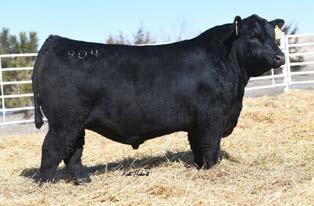
No other Hereford sire comes close to matching Cuda’s unprecedented combination of calving ease, growth, maternal & carcass merit. This powerful, stout, rugged, short marked, homozygous polled sire is a true breed leader. His daughters in production are establishing excellent production records.


in

Offering in the
SALE
GREAT BASIN BULL
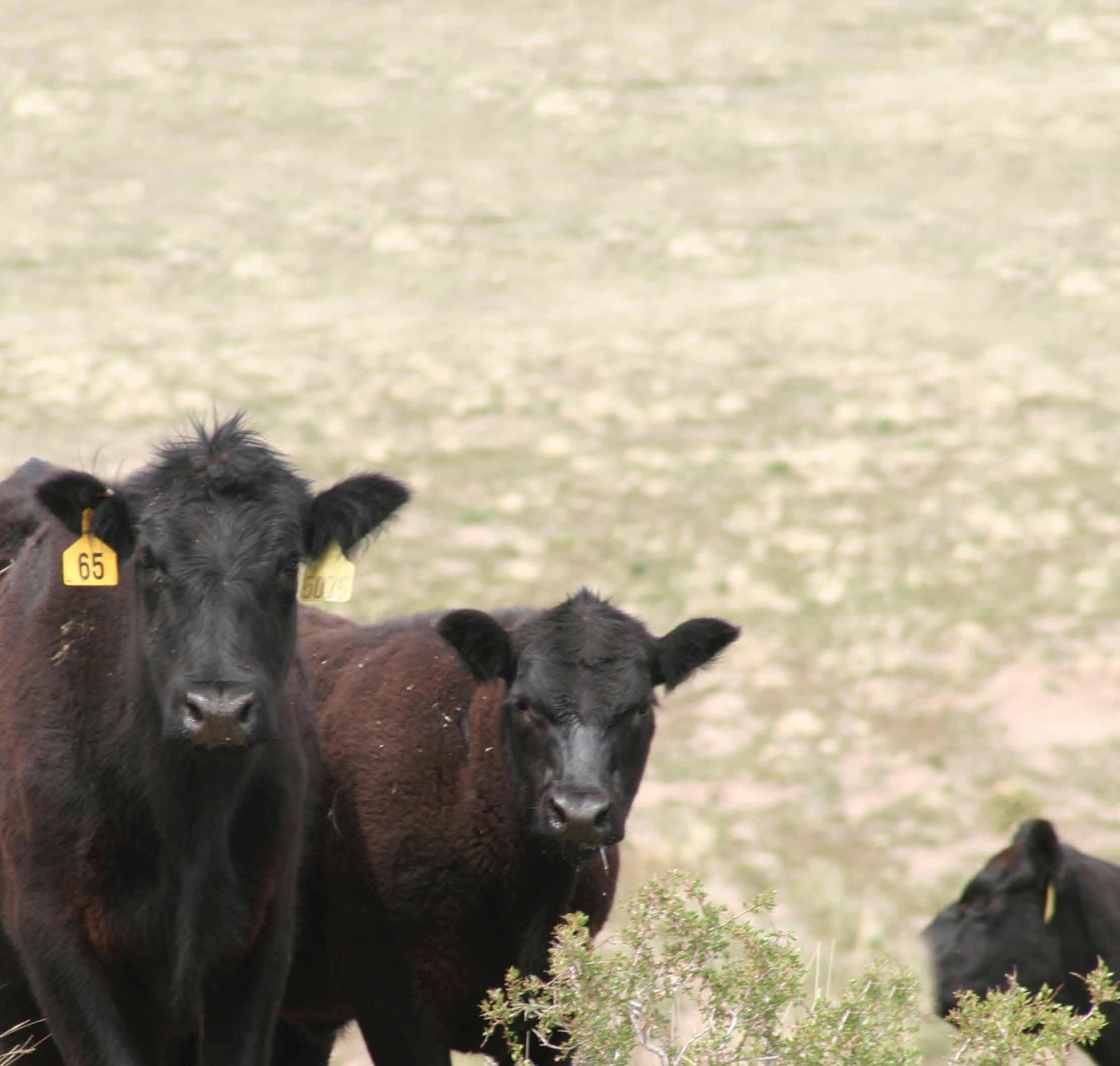
Two Hereford Bulls sired by BEHM 100W CUDA 504C
MDB POLLED HEREFORDS LLC Meridian, Idaho 208-515-6755 Percentiles for BEHM 100W CUDA 504C {CHB, DLF, HYF, IEF, MSUDF, MDF} (P43636764) EPDS AS OF 12/12/22 The Progressive Rancher www.progressiverancher.com FEBRUARY 2023 5
Cuda ranks
the top 4% CED, 2% BW, 4% WW, 4% YW, 1% MILK, 1% M&G, 2% CW, 10% FAT, 5% REA, 2% MARBLING, 6% BMI, 4% BII, 1% CHB


Range-Raised Brangus & Ultrablack Bulls & Females Pamela Doiron New Cuyama, CA 805-245-0434 doiron@spanishranch.net www.spanishranch.net FB & IG spanishranchcuyama The Progressive Rancher www.progressiverancher.com 6 FEBRUARY 2023

See our Bulls at the GGB Sale on Feb 18, 2023 The Progressive Rancher www.progressiverancher.com FEBRUARY 2023 7





More info or questions, call Richard Allegre at 775-848-2108 rafter3carena.org/event/hot-iron-calf-branding-mens-womens-family/ The Progressive Rancher www.progressiverancher.com 8 FEBRUARY 2023
by Martin Paris | NCA Executive Director | O: 775-738-9214
The NCA Is Awarding Two Scholarship Opportunities
The Nevada Cattlemen’s Association (NCA) is pleased to announce our 2023 scholarship opportunities. NCA will again be offering two scholarships.
The NCA Scholarship will be awarded to a first-year college student beginning to pursue an education within the agricultural industry. This scholarship is open to all Nevada High School graduating seniors planning to attend a community college or four-year university and majoring in an agriculture related field. The amount of this scholarship for 2023 will be $1,500!
Eligibility & application requirements for the NCA Scholarship include:
• Applicant must be a senior graduating from a Nevada High School.
• Applicant must plan to attend a Community College or a 4-year College or University.
• Applicant must be seeking a degree in an agricultural related field.
• Applicant must have at least a 2.5 GPA. A copy of the student’s official transcripts is required.
• Applicant must submit a cover letter describing themselves and how your future plans tie into the future of the cattle industry, background in the beef industry, and how this scholarship may benefit you, etc.

NCA is also pleased to announce the continuation of the Marvel/Andrae Scholarship, which is available to graduating high school seniors or students currently enrolled in college. To be eligible, students must be pursuing a bachelor’s degree in agricultural economics, agricultural business, or the animal/meat science fields. The 2023 Marvel/Andrae Scholarship award will be $2,000!
The NCA would like to thank Agri Beef for their continued support of the Marvel/ Andrae Scholarship. This scholarship recognizes the legacies of Tom & Rosita Marvel and Jim & Sharon Andrae and the many contributions these two Nevada ranching families have made to our industry.
Eligibility & application requirements for the Marvel/Andrae Scholarship include:
• Applicant must plan to attend or be currently attending a Community College or a 4-year College or University.
• Applicant must be from Nevada and pursuing a degree in a bachelor’s degree in agricultural economics, agricultural business, or the animal/meat science fields.
• Applicant must have at least a 2.8 GPA. A copy of the student’s official transcripts is required.
• Students that were previous recipients of the NCA Scholarship and meet the eligibility requirements of the Marvel-Andrae Scholarship are eligible to apply.
• Applicant must submit a cover letter describing themselves, background, goals, future plans, and how this scholarship may benefit them, etc.
Students and educators interested in these two great scholarship opportunities are encouraged to contact the Nevada Cattlemen’s Association. Scholarship application forms can be downloaded from the Nevada Cattlemen’s website at www.nevadacattlemen.org, or applicants can call the NCA office at 775-738-9214 or send a request to nca@nevadabeef.org for a copy. Completed applications are due April 3, 2023, and can be mailed to: Attn: Research & Education Committee, c/o Nevada Cattlemen’s Association, P.O. Box 310, Elko, NV 89803; or submitted by email to nca@nevadabeef.org.
NCA Seeking Teacher of the Year Nominations
Nevada Cattlemen’s Association The Nevada Cattlemen’s Association has started their annual quest for “Teacher of the Year” candidates and are asking for your help in soliciting nominations. The deadline for submitting nominations is June 15, 2023.
Nominees must be an elementary, junior high, or high school teacher who incorporates agriculture into their regular curriculum. For example, a teacher who teaches a one-week segment on agriculture and its importance to Nevada. Current Agricultural Education teachers are not eligible. Nominees may also include teachers considered in previous years but were not selected for the award. Nominations must include a completed NCA Teacher of the Year Application Form and an attached short essay describing why the teacher is being nominated.
The winner of this award will receive a $1000 school supply stipend donated by Nevada Agriculture Foundation. The award recipient will also be recognized during the Nevada Cattlemen’s Association’s annual awards banquet on November 18th, 2023, in Winnemucca, NV at the Winnemucca Convention Center.
Anyone may submit a nomination form which is available at www. nevadacattlemen.org. For any questions, please contact the NCA office at 775-738-9214. Nominations may be submitted by email to nca@nevadabeef.org with “2021 Teacher of the Year Nomination” in the subject line; forms may be faxed to 775-738-5208; or sent by mail to, “Teacher of the Year Nomination”, C/O Nevada Cattlemen’s Association, P.O. Box 310, Elko, NV 89803.
The Progressive Rancher www.progressiverancher.com FEBRUARY 2023 9
ARE CONSUMERS STILL SATISFIED WITH STEAK?

An Update from the Steak Satisfaction Survey
The National Cattlemen’s Beef Association (NCBA), on behalf of the Beef Checkoff, is continually monitoring and identifying the main drivers of beef demand. These five primary demand drivers are thought to be some of the most significant influencers of beef demand, and consist of eating experience, convenience/versatility, price, raised/grown, and nutrition. NCBA, on behalf of the Beef Checkoff, conducts regular studies to monitor beef’s performance within these primary demand drivers. One such survey makes use of the Consumer Beef Tracker to continually monitor reported levels of consumer satisfaction while eating various beef products.
Beef steak has historically been a popular cut among beef consumers, both at retail and foodservice. While beef steak may be associated with a higher average price compared to other protein products, a consistently satisfying eating experience continues to drive its popularity.
(Figure 1)1
Steak is not exempt from these decreased restaurant visits. Figure 2 shows occurrences of eating steak in a restaurant have decreased by 27% from January 2022 – August 2022, while occurrences of eating steak at home have increased by 15% from January 2022 – August 2022, further indicating that consumers are shifting to dining in instead of visiting a restaurant. However, despite the decreasing occurrences of restaurant visits, spending at restaurants increased 7% in June 2022, although this could be due to elevated price levels at restaurants2. While some consumers may continue to visit restaurants despite these increased prices, other consumers may opt to dine at home in favor of affordability.

Consumer satisfaction remains the highest for steak products, both at home and at a restaurant. Figure 1 shows that consumers recognize and appreciate the eating experience received from purchasing beef steak. Interestingly, claims of satisfaction are higher at home for all three products, potentially because meals at home can be customized much easier than meals at a restaurant. This trend also comes in light of decreasing restaurant visits across the food service chain. Foodservice traffic has decreased over 10% year-over-year in June 2022, with a further yearly decrease from March to May 20222. As inflationary pressures continue to rise, consumers are being forced to alter their preferences and household budgets.

(Figure 2)1
(Figure 3)1
Trending satisfaction levels for eating steak at home have fluctuated throughout the first quarter of 2022, before reaching a 2022 year to date high in July. Since then, satisfaction levels have decreased from July 2022 – August 2022. Steak satisfaction levels at a restaurant exhibited more volatility through the first and second quarters of 2022, before dropping from June 2022 – August 2022. These recently decreased levels of satisfaction could be due to the increased cost of the meals. If this is the case, then steak is not alone as most food products have increased in price over the past year.
 Courtesy of Beef. It’s What’s For Dinner.
The Progressive Rancher www.progressiverancher.com 10 FEBRUARY 2023
Willingness to pay for steak has also decreased slightly from the high of April – June 2022, as shown by Figure 4, and has dipped slightly below the average retail price for the same time frame. This inversion could be due to the increased price volatility within protein markets over the last few months. As prices for common goods continue to climb, consumers may become less able to purchase the same goods they historically have. Despite this recent dip, the current willingness to pay for July – August 2022 remains strong in comparison to past willingness to pay reports and is currently $1.70 higher than July – September 2019. Additionally, willingness to pay for steak has remained consistently above other proteins and other beef cuts1,3

As various economic forces continue to affect consumer preferences, beef steak continues to remain a popular protein source due to the consistently enjoyable experience this cut provides, both at home and at a restaurant. As restaurant visits remain compressed and prices continue to be a pain point for consumers, at home preparation continues to occupy a larger share of beef purchases. As consumers continue to employ caution with their purchasing decisions, a reliable and enjoyable eating experience may work in beef steaks favor. It is important that the industry continues efforts to assure consumers that eating steak will not only provide a satisfying experience but can also be purchased amidst tightening household budgets.
1. Consumer Beef Tracker, Directions Research, analyzed and summarized by NCBA, on behalf of the Beef Checkoff, September 2022.

2. Frossard, JP. “The Earnest Files: Inflation Edition.” Research.rabobank. com, RaboResearch, July 2022, https://research.rabobank.com/far/en/ sectors/consumer-foods/the-earnest-files-inflation-edition.html.
3. NielsonIQ Discover, Domestic Retail Beef Sales, 7.2019 – 6.2022.
www.nevadabeef.org www.mybeefcheckoff.org
T-BONE STEAKS WITH GRILLED VEGETABLES & STEAK SAUCE

Classic T-Bone Steaks grilled alongside red peppers and mushroom kabobs. The entire meal is finished with a homemade steak sauce.
INGREDIENTS:
2 beef T-Bone Steaks, cut 1 inch thick (about 2 pounds)
3 tablespoons mixed peppercorns (black, white, green and pink), coarsely ground
1 teaspoon salt
1/8 teaspoon ground red pepper
2 small red, yellow, orange or green bell peppers, cut into 6 wedges each 8 ounces medium button mushrooms 2 tablespoons olive oil Salt and pepper
COOKING:
SAUCE:
2 tablespoons butter
1/2 cup finely chopped onion
1 teaspoon minced garlic
3/4 cup ketchup
2 tablespoons packed brown sugar 1 tablespoon Worcestershire sauce
Combine mixed peppercorns, salt and red pepper in small bowl. Reserve 1 teaspoon for sauce. Press remaining pepper mixture evenly onto beef T-Bone Steaks. Toss bell peppers and mushrooms with oil to coat in a large bowl; season with salt and pepper, as desired. Thread mushrooms evenly onto two 12-inch metal skewers.
Place steaks in center of grid over medium, ash-covered coals; arrange bell peppers and mushroom kabobs around steaks. Grill steaks, covered, 11 to 16 minutes (over medium heat on preheated gas grill, 15 to 19 minutes) for medium rare (145°F) to medium (160°F) doneness, turning occasionally. Grill bell peppers and mushrooms 12 to 15 minutes or until tender, turning occasionally.
Meanwhile prepare sauce. Melt butter in small saucepan over medium heat. Add onion and garlic; cook and stir 4 to 5 minutes or until tender. Stir in remaining sauce ingredients and reserved 1 teaspoon pepper mixture; bring to a boil. Reduce heat; simmer 3 minutes to blend flavors, stirring occasionally. Place in blender or mini food processor container. Cover; process until puréed.
Remove bones and carve steaks into slices. Serve with sauce.
(Figure
4)1,3
Courtesy of Beef. It’s What’s For Dinner.
The Progressive Rancher www.progressiverancher.com FEBRUARY 2023 11
WOTUS 2.0
I will call this column WOTUS 2.0. Regular readers will recall my column in the November issue of this publication which discussed WOTUS and the current case before the Supreme Court commonly known as “Sackett”, named after the family in Idaho who took the Environmental Protection Agency (EPA) to court. The EPA claimed they needed a permit to build a house because there was a wetland on their property. The agency said this was a water of the United States (WOTUS) and thus subject to Clean Water Act (CWA) jurisdiction. The Supreme Court has taken the case under submission and will likely render an opinion before June of this year.
You might ask, “Why is he writing about this so soon again..?”
On December 29, 2022, the EPA issued a new WOTUS rule redefining once again what they believe is a WOTUS. This new rule plus a decision by the Supreme Court is the fourth time in sixteen years property owners and users in the United States including ranchers and farmers have to figure out if they have a jurisdictional water on their property. The reason such an evaluation is necessary is because if you do have a WOTUS on your land that land is subject to regulation and control by a Federal Government Agency.

Now no one , including myself, is arguing against the clean water goals of the CWA. We all want clean and available water for human needs and purposes. However, several concerns are abundantly clear from the recent actions of the EPA. Why did they rush to promulgate a rule knowing the Supreme Court would be deciding the issue of what constitutes a WOTUS within six months of the publishing of the rule?
Furthermore, the new rule makes no distinction for what is jurisdictional and what common sense says is not subject to EPA control. Let me give some examples. The original law- the CWA, said interstate waters such as the Snake River in Idaho, the Carson River in Nevada and the Virgin River in Utah are waters of the United States. These rivers flow through at least two states and two of them are tributaries of larger rivers, the Columbia and the Colorado. There are other obvious examples. Lake Michigan and Lake Tahoe are clearly waters that need CWA protection. Smaller intra state streams like the Sacramento River in California are a substantial body of water anyone would want to protect from degrading.
But think of a vernal pool within twenty-five miles of the Sacramento River in the foothills of the Sierra Nevada. What is a vernal pool? It is a slight depression in an oak tree studded grassland which is full of water from winter rains in the spring but dry the rest of the year. These pools provide water for wild life and livestock for a part of the year, but for the most part, have no physical connection to a water of the United States. Under the new EPA rule these water features are not excluded from the jurisdiction of the EPA. Therefore, if the rule is upheld by a future Supreme Court, the EPA could have jurisdiction and control of the use of the land on which the vernal pool is located. Throughout the Great Basin there are ephemeral streams which have a short seasonal flow and which are located hundreds of miles from waters of the United States. These could become jurisdictional under the new rule.
The rule does have some so-called agricultural exclusions such as irrigation features and farm ponds. However, there is enough ambiguity that even these agricultural necessities could be found to be under the jurisdiction of the EPA.
Generally, an agency’s regulatory power comes from the plain meaning of a statute that enables that power. When the agency interprets ambiguous language to give it rule- making authority that doesn’t exist from that plain reading, higher courts have stripped the rules from the agencies if they cannot show clear congressional authorization to make rules regarding major questions of national significance.

The history of creating a definition of WOTUS since the passage of the CWA in 1972 is interesting. I have read there have been thirteen to sixteen different definitions used by the EPA in that fifty year period of time. What is ironic about the Sackett case is no matter what definition the Supreme Court lands on in its decision it will most likely conflict with the new rule’s definition which will mean that the deference usually granted agencies by the courts will not be in play and the EPA will have to amend its rule. Because there has been so much controversy in the creation of various definitions of water of the United States by the agency and the courts, I think the Supreme Court will look for explicit statutory authority and not give deference and implicit delegation to the EPA in deciding what should be a water of the United States.
In the meantime, people like farmers and ranchers who must operate under the rules will be as confused as ever and unfortunately will not be in compliance with either the EPA definition or the Supreme Court’s definition. Organizations such as the National Cattlemen’s Beef Association have just filed suit against the EPA asking the court to temporarily restrain the EPA from implementing the rule.
They are also disputing the EPA authority pending a decision from the Supreme Court. We may finally see some clarity on this issue this next year which will give some stability to ranchers to decide if they have a water feature on their land that is subject to EPA jurisdiction.
Let’s hope and I’ll see you soon.
Nevada Water Solutions LLC Thomas K. Gallagher, PE 775 • 825 • 1653 / FAX 775 • 825 • 1683 333 Flint Street / Reno, NV 89501 tomg@nevadawatersolutions.com Water Rights / Resource Permitting Expertise The Progressive Rancher www.progressiverancher.com 12 FEBRUARY 2023


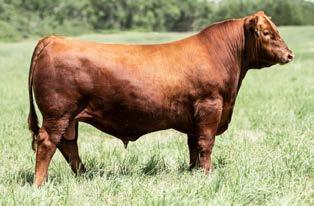
44TH ANNUAL MARCH 8, 2023 SALE BROADCAST ON LUNCH AT 12 NOON SALE AT 1:00 PM 5078 Rockland Hwy. Rockland, ID 83271 https://www.udycattle.com BULL SALE HEREFORD SIRE: Boyd 317 Blueprint 6153 Behm 100W Cuda 504C RED ANGUS SIRE: WFL Merlin 018A 5L Wrangler 1974-166E BLACK ANGUS SIRES: Tehama Tahoe B767 Baldridge Movin On G780 NJW 79Z Z311 ENDURE 173D Sterling Pacific 904 BIEBER CL STOCKMARKET E119 BW 4.0 WW 75 YW 128 MM 34 BW -5.1 WW 75 YW 126 MM 24 BW 1.8 WW 77 YW 138 MM 20 George 208-226-7857, cell 208-221-2277 James 208-221-1909 | jamesudy@hotmail.com Sale Location Nine miles south of Rockland, Idaho Sale Day Phones 208-221-1909 | 208-548-2277 Information online at: udycattle.com 130 BULLS | 60 YEARLING HEIFERS The Source for Quality Cattleman's Choice WEDNESDAY, Hereford.org January 2023 | 1 The Progressive Rancher www.progressiverancher.com FEBRUARY 2023 13



The Progressive Rancher www.progressiverancher.com 14 FEBRUARY 2023
Governor Joe Lombardo approves appointment of Julian J. Goicoechea as NV Dept of Ag Director
CONTACT : Ciara Ressel, Public Information Officer II, Division of Administrative Services Nevada Dept of Agriculture, 405 South 21st Street, Sparks, NV 89431 Office: 775-353-3603
(CARSON CITY, Nevada.) – Governor Joe Lombardo has approved the appointment of Dr. Julian Joseph (J.J.) Goicoechea as director of the Nevada Department of Agriculture (NDA).


“I’m excited to announce J.J. Goicoechea as the new Director of the Department of Agriculture,” said Governor Joe Lombardo. “J.J. is one of the best and brightest leaders in agriculture in Nevada, and I’m grateful for his willingness to serve our state. I know that the Department of Agriculture will greatly benefit from J.J.’s thoughtful leadership, wealth of knowledge, and decades of hands-on experience.”
Director Goicoechea is well-versed in agriculture industries, previously serving the NDA as state veterinarian from 2016 to 2019 and currently serving as interim state veterinarian. Director Goicoechea received his doctorate in veterinary medicine from Colorado State University and did his undergrad studies at the University of Nevada, Reno. Director Goicoechea has practiced veterinary medicine in rural Nevada for over 20 years and assisted with the family ranching operation in addition to his experience as Eureka County Commissioner.
“I look forward to stepping into this new role and I’d like to thank Gov. Lombardo and the NDA for this opportunity," said Director Goicoechea
USDA Seeks Public Comment on Proposal to Strengthen Animal Disease Traceability Regulations

Jan 18, 2023 |
APHISpress@usda.gov
The United States Department of Agriculture’s (USDA) Animal and Plant Health Inspection Service (APHIS) is proposing to amend animal disease traceability regulations and require electronic identification for interstate movement of certain cattle and bison. APHIS is also proposing to revise and clarify record requirements. These changes would strengthen the Nation’s ability to quickly respond to significant animal disease outbreaks. Major animal disease outbreaks hurt our ranchers and farmers and all those who support them along the supply chain, threaten our food security, and impact our ability to trade America’s high quality food products around the world. Rapid traceability in a disease outbreak could help ranchers and farmers get back to selling their products more quickly; limit how long farms are quarantined; and keep more animals from getting sick.
Interested stakeholders may view the proposed rule in today’s Federal Register at https://www.federalregister.gov/public-inspection/2023-00505/use-ofelectronic-identification-eartags-as-official-identification-in-cattle-andbison. Beginning tomorrow, members of the public may submit comments. All comments must be received by March 22, 2023. APHIS will review all comments and address them in a final rule.
Animal disease traceability, or knowing where diseased and at-risk animals are, where they’ve been, and when, is important to ensuring a rapid response when animal disease events take place. USDA is committed to implementing a modern system that tracks animals from birth to slaughter using affordable technology that allows for quick tracing of sick and exposed animals to stop disease spread. APHIS has worked extensively with stakeholders on this issue and electronic identification and records for livestock movement emerged from these discussions as valuable goals for safeguarding animal health. APHIS decided to pursue these changes through notice and comment rulemaking to ensure transparency and maximize public participation in the process.
The proposed rule would require official eartags to be visually and electronically readable for official use for interstate movement of certain cattle and bison. It would also revise and clarify certain record requirements related to cattle, including requiring official identification device distribution records to be entered into a Tribal, State, or Federal database, and available to APHIS upon request.
The key to protecting U.S. livestock health, producers’ livelihoods, and the U.S. economy in an animal disease outbreak is swift detection, containment, and eradication of disease. This proposed rule would allow USDA to do just that.
The Progressive Rancher www.progressiverancher.com FEBRUARY 2023 15
Casey
Crawford Cattle - Winnemucca, NV

Roberti
Coffin

Seeds Grazing Corn (GX80) is the No. 1 grazing corn in the nation because it is 5-6 days earlier than the competition. This allows the rancher to plant 5-6 days later and still reach peak sugar content (pre tassel) before the frost shuts you down! GREENWAY’S GRAZING CORN Graze Yearlings1500 on a 130 Acre Pivot for 30 Days 3.5 lbs. of Gain Per Day (69% TDN) 5-7 wt. Cattle* OVERSEED ALFALFA with Grazing Corn
with
grain drill
second cutting on an older field alfalfa. Ready to graze in early September.
cut alfalfa. If we had to do that over we would follow third cut. We grazed 400 head for
Cory
Utah HERE’S WHAT RANCHERS ARE SAYING
Greenway
Plant
a
following
“We planted GX80 following second
two weeks on 20 acres”
Veterre - Greenriver,
(See website for photos)
Calvin - Monte Vista, CO We grazed lambs on GX80. They ate it all the way to the ground. Unbelievable!
graze. We
baled
it.
Planted mid July, it was way over our heads. We were surprised as to how long we were able to
also
some of
We’re buying again.
every year.
Ranches - Loyalton, CA We grazed pairs. They ate it all to the ground. We also baled it. The cows like it. We plant GX80
Nov 24. The corn was 7-1/2 ft. tall. The program was
Alan Greenway Seedsman Over 50 years Experience Greenway Seeds Caldwell, Idaho www.greenwayseed.com Alan cell: 208-250-0159 Message: 208-454-8342 * Jesse Norcutt, Currant, NV 28 Ton Silage Pasco, WA The Progressive Rancher www.progressiverancher.com 16 FEBRUARY 2023
Butte Farm and Ranch - New Leitzigg, ND We planted 400 acres on dryland and fed out 800 pair. We grazed it from Oct 20 to
a success!
THE DATE! June 3 | Bottari Celebration of Life

Please join us for a Celebration of Life for Pete Bottari. We will be gathering on Saturday, June 3, 2023 at 4:00 p.m. at the Bottari Ranch in Lamoille, Nevada. If the weather is bad, we will be at The Old School House (also in Lamoille).

The beef and the bar will be provided by Pete’s family. If anyone attending would like to contribute a side dish of your choosing, it would be very much appreciated. We will send out a reminder in the papers and on social media closer to the date.
Wells Area Deeded Range with Irrigation Permit

3,796 deeded acres in 6 pastures watered by spring and stock water well. Irrigation permit on 130 acres. Well to be drilled this year. The well costs will be added to price of $2,277,559.
McGill Area Farm
160 acres with nice Log Home, 2 center pivots, one covering approximately 100 acres and the other 30 acres. Lots of nice metal fencing, big shop/ barn. Priced to sell at $775,000.

Let’s Talk Ag
By Staci Emm | Editorial
NV STOCK WATER & WELCOME 2023
It was great to see everyone at the 2023 Cattlemen’s Update, and we are seeing an influx of storms that we hope will keep coming in hopes of a good water year. We just got back from our yearly Cattlemen’s Update, where we get out in the state, and get to see everyone. About three years ago, we starting hosting a webinar on Monday’s where we can incorporate speaker panels on different topics. This year we had a panel on water where we had State Engineer Adam Sullivan; Executive Director of the Central Nevada Regional Water Authority Jeff Fontaine; and Nevada Assemblyman Howard Watts. We had a great discussion on urban, rural and agriculture water issues in Nevada. There were several questions and a discussion about stock water.
The state engineer presented to the group that the state does recognize stock water rights. Nevada does have Nevada Revised Statues (NRS) that deal with stock water permitting and even temporary permitting of stock water wells. This became interesting language when you realize how this would work on public lands managed by the federal government. I am sure that stock water issues have been handled several different ways involving public and private land over the past century.
The main question to the panel regarding stock water was whether the State of Nevada and the federal agencies work together through “collaboration” on stock water infrastructure and overall stock water issues. I really didn’t realize the importance of this issue until I began to research how the management of stock water on public lands occurs in Nevada. The NRS combined with an online Bureau of Land Management (BLM) Nevada Water Rights Policy really opened my eyes that we have a stock water infrastructure issue just as much as we have a surface water infrastructure issue in the state. BLM has online policy that limits their ability to assist a livestock producer, all because the water permit is not in the name of the federal agency. While I did not do in-depth research on this exact issue, I think we all need to revisit or at least think about these types of issues and the collaborations needed. Does it matter if the producer holds the stock water permit for his livestock in the ranch’s name or his personal name? Why should collaboration and financial federal assistance be limited if the water permit is not in the federally agencies name and holds a beneficial use for livestock? How much is this happening in Nevada?
Some of this problem might be mitigated, in the short term, for some livestock producers in a recent policy change within a USDA, Farm Service Agency (FSA) program. The policy changes just happened and is supposed to address wells on public lands. I encourage you to go into your local FSA office if you are interested. But, while this may be the quick fix, it does not take care of the collaboration issues between the state and the federal government.
What should the relationship be between the federal land management agencies and the State of Nevada in the regulation and infrastructure of stock water in Nevada? We all know that it is just not livestock that use this water infrastructure, and that wildlife and feral horses are utilizing this water too. I believe that there has to be a collaboration, and an understanding on all sides between producers, wildlife managers, and public land managers. I have many colleagues, as UNR has one of the best range programs in the country, that believe livestock can be used as an effective range management tool. This should facilitate a strong collaboration moving forward.
I am so thankful that I get to participate in the Cattlemen’s Update every year. I learn something new and get to visit with so many great people. As we start our 2023 legislative session, there will be some focus on water. We are also getting some weather, which means we have a chance at getting a decent water year.
See next two pages for a comprehensive article on this year's Cattlemen's Update
BOTTARIREALTY.COM
If you’re looking to sell a farm or ranch, give me call! For additional information on these properties, visit
Paul D. Bottari
Broker, NV Lic# B 015476 Office: 775.752.3040 Cell: 775.752.0952 paul@bottarirealty.com 1222 6th St. • PO Box 368 • Wells, NV 89835
Accredited
Land Consultant and Recipient of the 2019 Land Realtor of America Award* *Given to just one person in the Realtor’s organization by the Realtors Land Institute (NAR branch specializing in Land, Farms & Ranches.
SAVE
The Progressive Rancher www.progressiverancher.com FEBRUARY 2023 17
The annual Cattlemen’s Update, presented annually in January by the University of Nevada and sponsored by a number of businesses and agencies, crisscrossed Northern Nevada in to present information to ranchers and other stakeholders that may affect their businesses and the Nevada cattle industry.
The first day was presented virtually and then presenters headed east to Fallon, Ely, Elko and Winnemucca to offer a wide variety of topics. The Cattlemen’s Update is a partnership led by the university’s College of Agriculture, Biotechnology & Natural Resources (CABNR) and its Extension and Experiment Station units.
Attendees received information not only to help them with their operations but also make them aware of critical problems or issues facing those who work the land. As he has done for years, Dr. Barry Perryman, a researcher, professor and chair of the College’s Department of Agriculture, Veterinary & Rangeland Sciences, moderated the three-hour program.
A new problem weed
Dr. Lesly Morris, associate professor in Rangeland Ecology and Management, sounded a warning shot involving an invasive species of weed that has spread across the Pacific Northwest and has the ability to be a problem in the Great Basin. She said cheatgrass and Medusa head, a nonnative, noxious winter weed that has been identified to be harmful to Nevada’s agriculture, the general public or the environment.
Morris said ventenata could be the next problem grass, which is a wispy, little plant that grows from 4 to 18 inches tall and has very smooth, slender leaves. The first recorded collection occurred in1952 in Washington state and then began to spread to eight other states.
Morris pointed out ventenata has a limited distribution and has been placed in category A on the noxious weed list. She said the worst case scenario is for the weed could grow anywhere in the Great Basin.
Cattlemen’s Update crisscrosses Nevada
Presentations aim to help food produces with a wide range of subjects
 By Steve Ranson | Nevada News Group
Like cheatgrass, Morris said ventenata can increase fire hazards and decrease wildlife habitat and the diversity and productivity of the range lands. She said the grass could impact hay production and cause a big loss of its export value.

The U.S. Department of Agriculture considers ventenata to outcompete perennial grasses and is of little value to foraging animals.
“We don’t know enough of ventenata and how it will affect grazing,” Morris said.
Morris revealed studies that indicate ventenata has doubled in the Pacific Northwest in seven years and expands by 3 million acres annually. Another studies shows the grass can invade rangelands quicker than cheatgrass. Ventenata can also invade with or without fire.
Drought recovery affects cattle industry
Shannon Neibergs, an Extension economist for Washington State University and director of the Western Center for Risk Management Education, emphasized several factors affecting the industry, specifically the war in Ukraine and its effects on the global markets, its volatility in the energy markets and drought.
According to the U.S Drought Outlook, persistent drought has plagued the West for several years as of Nov. 1, 2022.
“The market is taking into account the drought outlook and how it’s affecting the market,” he said.
Neibergs said many cows were lost because of the drought, which, he said, could extend into the spring.
“From the drought, we had a record high of female slaughter,” he said, noting heifer beef cows were above the historic average.
Neibergs said cows and heifers made up more than 46% of all beef slaughters last year and the number exceeds the 2012 era drought’s culling rates.
“Drought, high corn and hay prices and high cattle values have kept fewer cows in production and kept heifers moving into feed yards and slaughter,” he said.
In Region 9 which consists of Nevada, California, Arizona and Hawaii. Neibergs said reports showed higher culling in 2022.
Neibergs, however, said local risk depends on drought recovery and outlook. He said 2022 was an economic roller coaster with the war in Ukraine, drought, inflation, the coronavirus pandemic and other economic risks.
On an optimistic note, he said the consumer demand and export for beef has shifted back to the feeders from the packers because of decreased cattle on feed.
“Beef consumer demand and the export outlook remain strong by supporting record high price outlook for fall 2023,” he said.
Trich or treat
Gardnerville veterinarian Randy Wallstrum, known as the “Damn Vet,” said Tritrichomonas foetus or trich causes venerable disease in cattle, and that could result in problems for area cattle producers. He said trich causes infertility and could result in abortions in cows and heifers.
Wallstrum said several times during his presentation trich could be financially devastating and costly to remove the affected cows from a herd. He said possible causes infecting a cow — which occurs during breeding — could come from a stray bull, another cattle on public lands coming from somewhere else, bad
fences, increased cattle movement or from the neighbor’s cattle.
Wallstrum said testing would confirm the presence of trich.
“Multiple tests may be required,” Wallstrum said.
The Douglas county vet said vaccinations help 85% of the cattle, but the vaccination does not prevent trich.
Photos tell a story
Brad Schultz, the Extension education in Humboldt County, presented a photography study of the Santa Rosa Range during the 2022 Cattlemen’s Update.This year, he showed participants how to make photo monitoring an important tool in their studies.
“Pictures can clearly a story when combined with other data,” he said.
Schultz pointed to a number of reasons for photo monitoring: describing current conditions and using the information to proceed with the study and going forward with the information that may show abnormal or catastrophic events changes across time. He said the monitoring could document management practices.
During his presentation, Schultz described different methods in gathering information, but he stressed consistency in monitoring the subject.
“Be consistent,” he said. “Same time of year, time of day, weather. Ideally, they’re the same.”
In addition to monitoring techniques, Schultz said individuals documenting their project should keep their information safe by placing the data and photographs in a fireproof safe and securing their data.
Schultz said good, clear pictures are worth “a lot of words.”
From his presentation, Schultz said pictures “can be enhanced with other publicly available imagery …and multiple types of imagery at different scales can provide excellent data about vegetation and rangeland change.”
The Progressive Rancher www.progressiverancher.com 18 FEBRUARY 2023
Ventenata grass is widespread in the Pacific Northwest. Washington State University photo
Smoke in the air
Dr. Mozart Fonseca, researcher and associate professor of Veterinary & Rangeland Sciences, discussed the problems of heavy smoke from the area’s summer wildfires and how it not only affect humans but also livestock.


“The smoke affects the livestock more in western Nevada than in northeastern Nevada,” he said.
Both northern California and Nevada have experienced consecutive summers where numerous forest fires burned thousands of acres and generated thick smoke that socked into the valleys. He said the smoke caused respiratory problems with cattle that left are out in the elements for days.
Fonseca’s timeline of events ranged from the first 24 hours to months, even years after exposure. Within the first 24 hours, he said cattle could experience swelling of the lungs, labored breathing, blocked airways and wheezing. From four to 10 days after wildfire exposure, cattle could contract pneumonia and have damage to the respiratory defense mechanism. The longer terms effects, according to Fonseca, could result in longer term damage to the small airways and intolerance to exercise.
Extension serves as connector
Dr. Jacob DeDecker, the College’s associate dean for engagement and director of Extension, presented updates on programs he oversees. A native of Illinois, he spent 16 years at Michigan State University and moved west to Reno in July.
“I love Extension, love 4-H, love agriculture. I’m excited to continue that in Nevada,” he said during his introductory remarks.
DeDecker promoted the role of the state’s Extension office sand programs which assist ranchers with the various programs available to them.
“Extension serves as a connector to bring people and ideas together,” he said.
DeDecker said Extension has the ability to involve local, state and federal government agencies whose experts can assist the individuals who work the land.


“Extension is a partner to bring people to the table,” he added.
During his presentation, DeDecker said the state’s second 4-H camp will be located in southern Nevada and will give students a hands-on experience. The first 4-H camp has been located at Lake Tahoe for decades.
Additionally, he said there’s emphasis on urban agriculture, and two new positions focusing on urban agriculture have been created. He said urban agriculture will work with participants to grow and produce food in urban areas.

DeDecker is bullish on Extension and what it offers to Nevadans whether they live in rural areas or the cities. He said Extension is valuable to Nevada.
“We have a great story to tell to all different areas of Nevada,” he said, pointing out Extension is an information hub.
The area’s fire and smoke has affected cattle in western Nevada. Photo courtesy of CABNR
Dr. Barry Perryman, a researcher, professor and chair of the College’s Department of Agriculture, Veterinary & Rangeland Sciences, moderated the three-hour program.
Brad Schultz, Extension educator in Humboldt County, researcher and professor of rangeland ecology and management, discusses the benefit of using photography for various studies.
Dr. Randy Wallstrum, Gardnerville veterinarian, discussed the dangers of Trich
The Progressive Rancher www.progressiverancher.com FEBRUARY 2023 19
Dr. Jake DeDecker is the college’s new associate dean for engagement and director of Extension.
The 82nd (2023) Nevada Legislature will begin on February 6, 2023. To date, there are three water bills and 18 bill draft requests (BDRs) that have been submitted by Legislators. Detailed language for BDR’s is still being developed and not yet available. This article will focus on one water bill and three BDR’s that are most important to CNRWA and its member counties.
Assembly Bill 34 which revises requirements for certain notices and court orders published in newspapers, will primarily impact rural counties. The Division of Water Resources requested this measure because newspapers in rural Nevada do not always publish public notices resulting in delays in processing water right applications and other administrative actions. AB34 provides that if a newspaper of general circulation fails to publish the notice or order submitted by the State Engineer the required number of times or consecutively, the State Engineer is not required to republish the notice or order if the notice or order is published at least once by the newspaper and the State Engineer mails the notice or order to not less than one public library in an affected county or counties or, if there is no public library, another public place, for public posting. CNRWA will work to ensure ample public notice is continued in rural counties.
BDR #338 submitted by the Joint Interim Standing Committee on Natural Resources is to clarify the processes and authority for the conjunctive management of surface and groundwater basins.
CENTRAL NEVADA REGIONAL WATER AUTHORITY UPDATE
 By Jeff Fontaine | Executive Director | CNRWA | ccjfontaine@gmail.com
This BDR will be one of the more complex and controversial water issues debated this Session. The Central Nevada Regional Water Authority’s policy is that conjunctive management of hydrologically connected water resources is generally appropriate and warranted but may not be in select cases and should only be implemented after a complete vetting with local and public coordination of how issues and impacts will be worked through. The policy also states that conjunctive management is important to protect existing water rights and the integrity of the prior appropriation system and should occur at the most local level possible where the unique set of conditions is well understood and where interested water users can efficiently and fully participate and remain informed.
Another conjunctive water management measure, BDR #208, authorizes the State Engineer to create, modify, and jointly administer basin boundaries. BDR #208 is in response to the 8th Judicial District Court ruling on State Engineer Order 1309 for the Lower White River Flow System (LWRFS). The ruling now on appeal to the Nevada Supreme Court states that the Nevada State Engineer had no authority based in statute to create the LWRFS superbasin out of multiple distinct, already established hydrographic basins and that the Nevada State Engineer lacked the statutory authority to conjunctively manage this LWRFS superbasin. The threshold issue that will need to be addressed is how the priority of water rights in individual hydrographic basins would be managed in
a combined basin, i.e., a senior right water right in a single basin may no longer have the same priority in a superbasin.
Groundwater management planning in Critical Management Areas (CMA) is another important water issue that will be considered. Diamond Valley in Eureka County is the only basin in Nevada that has been designated as a CMA. BDR #595 is in response to the Nevada Supreme Court ruling last spring that the State Engineer has the discretion to approve a groundwater management plan (GMP) that departs from the doctrine of prior appropriations. The State Engineer’s approval of the Diamond Valley GMP was appealed to the District Court, which found that the approval was unlawful. The District Court’s finding was then appealed to the Nevada Supreme Court which opined that Nevada statutes give the State Engineer discretion to approve a GMP that does not strictly comply with Nevada’s statutory water scheme or strictly adhere to the doctrine of prior appropriation. While the Diamond Valley GMP is specific to Diamond Valley it is possible that other CMA’s will be designated in the future prompting the need for clarification on the parameters of a CMA.
CNRWA has also requested the following BDR’s for the upcoming Legislative Session: funding for counties to prepare and update water resource plans, authority for a board of county commissioners to establish a groundwater board for areas designated as a groundwater basin by the State Engineer, assuring that special groundwater assessments are being used for administration of designated groundwater basins, and funding for the voluntary retirement of water rights in overpumped groundwater basins.
Farm Bureau joins with others to file suit against new WOTUS rule
The Biden Administration’s Waters of the United States (WOTUS) has officially been published in the January 18 Federal Register, kicking off the 60-day path to implementation. This step also triggered the lawsuit which the American Farm Bureau Federation (AFBF) joined with 17 other organizations in opposing the proposed rule. It is hoped that the judicial process will once again hold the federal agencies (Environmental Protection Agency and the Army Corp. of Engineers) at bay in moving forward with their new scheme to over-regulate and control beyond their authorities.
You can visit the Legislative website at: www.leg.state. nv.us for information about bills and also how to view committee meetings and provide testimony. You can also check out the Central Nevada Regional Water Authority website at http://cnrwa.com/ for regular updates.
Jeff Fontaine is the Executive Director of the Central Nevada Regional Water Authority whose members include Churchill, Elko, Esmeralda, Eureka, Humboldt, Lander, Nye, Pershing and White Pine Counties. CNRWA’s mission is to protect the water resources in member counties so these counties will not only have an economic future, but their valued quality of life and natural environment is maintained. CNRWA formulates and presents a united position on water and water-related issues to the Nevada legislature.
www.fb.org/newsroom/afbf-files-legal-challenge-to-new-wotus-rule
The Progressive Rancher www.progressiverancher.com 20 FEBRUARY 2023

The Progressive Rancher www.progressiverancher.com FEBRUARY 2023 21
Cheatgrass, Wildfire & Stand Renewal Process
By Charlie D. Clements and Dan N. Harmon
The accidental and subsequent invasion of cheatgrass throughout millions of acres of Intermountain West rangelands has resulted in rangelands formerly dominated by native shrub and grass species being converted to cheatgrass dominance. Cheatgrass is native to the cold deserts of central Asia, which are very similar to the big sagebrush/bunchgrass and salt desert shrub ranges of the Intermountain Area of North America. Cheatgrass was first collected in Pennsylvania in 1861 and believed to be accidentally introduced in contaminated wheat and then dispersed from farm to farm and across railways through equipment and stock. By 1902, cheatgrass was identified in Nevada and reported to occur along railways, roadsides and croplands. By 1935, cheatgrass was abundant throughout the Wyoming big sagebrush/bunchgrass communities throughout the Great Basin (Figure 1)
The central issue in any discussion of the ecological ramifications of cheatgrass invasion and dominance on Great Basin rangelands is the role cheatgrass plays in the stand renewal process. The stand renewal process is based on the premise that the species composition and dominance of a given community are highly influenced by how the tenure of the previous assemblage of plants on the site was terminated. Plants do not live forever, sooner or later they die, and
new seedlings have to be recruited either to perpetuate the preexisting community or to introduce a new plant community to the site. For example, early researchers recognized burning as the stand renewal process for big sagebrush communities. Researchers pointed out that big sagebrush stands tend to consist of shrubs that are roughly the same age, within 10-15 years, which they concluded that the previous community on the site was catastrophically destroyed and the decade plus variation in age is a reflection of big sagebrush’s slow recolonization due to big sagebrush being killed in wildfires, no resprout ability following wildfire and limited seed dispersal. It is within the array of the stand renewal process that the current burning of Great Basin rangelands operates.
Historically, Great Basin rangelands have experienced 10 kinds of stand renewal process:
1) Pre-European; A dynamic in relation to climate, the fire interval that occurred prior to European contact in the Great Basin (including aboriginal uses of wildfires).
2) Vertebrate and invertebrate herbivory.
3) Promiscuous/prescribed burning.
4) Attempts at absolute control of wildfires on rangelands.
5) Substitution of mechanical control by plowing for wildfires as a stand renewal process for big sagebrush/bunchgrass plant communities.
6) Substitution of herbicide applications for wildfire for big sagebrush/bunchgrass community renewal.
7) Wildfires fueled by cheatgrass.
8) Grazing management introduced as a substitute for mechanical or herbicidal stand renewal in big sagebrush communities.

9) Wildfires burning in native grasslands that were restored through grazing management.
10) Fires burning in annual grass dominated communities.
It is through this diverse array of stand renewal processes that give light to the many successional plant communities that can occur in big sagebrush/ bunchgrass potential communities in the Great Basin.
Fire Interval Before European Contact; The first stand renewal process that occurred in the Great Basin is the most difficult to identify or quantify. Estimates of the interval between wildfires in the big sagebrush/ bunchgrass communities before European contact are highly variable and often controversial. Those that believe wildfire played a large role tout that wildfires were quite frequent, while those on the other end of the spectrum believe wildfires were quite infrequent and occurred rarely. Fire scars of western juniper for example suggest that wildfires in southeastern Oregon may have been as frequent at every 5 years, while others have reported western juniper fire scars in northern California as nearly a century apart. Pioneer researchers pointed out that wildfire intervals in big sagebrush/bunchgrass communities had to be at least greater than every 15 years, otherwise early explorers would have reported on the prevalence of grasslands and rabbitbrush/bunchgrass communities rather than big sagebrush/bunchgrass communities they described as they traveled west. These pioneer researchers also highly suggested that wildfire interval of big sagebrush bunchgrass communities was most likely every 60-110 years, but wildfire intervals prior to European contact remained a puzzle.
Vertebrate and Invertebrate Herbivory; Obviously, herbivory was a stand renewal process in the Great Basin prior to European contact. Some researchers report that it must not have been a major factor because the population and density of large herbivores
The Progressive Rancher www.progressiverancher.com 22 FEBRUARY 2023
Figure 1. Cheatgrass was pre-adapted to invade the cold deserts of the Great Basin.
was extremely sparse. Pronghorn antelope browse on big sagebrush at all seasons of the year, but there have been no reports of big sagebrush stands being killed by excessive pronghorn browsing. Mule deer population densities in the Great Basin were reported as very low at the time of European contact, therefor their impact on big sagebrush stand renewal had to be minimal. Bighorn sheep were most likely restricted to more rugged, mountain portions of the Great Basin where escape topography existed instead of vast landscapes of big sagebrush/bunchgrass communities. Rocky Mountain Elk, were not reported as very abundant in the eastern part of the Great Basin and were reported as absent from the western portion of the Great Basin and the American Bison had withdrawn from these regions prior to European contact as reported by early explorers and settlers. Researchers report that vertebrate herbivory was most likely confined to small mammals, with rabbits being the most numerous. Insect herbivory was a form of stand renewal in big sagebrush stands in the Great Basin before European contact and continues to play a role in these communities. An example of this is the sagebrush defoliator, a moth that in some years defoliates large blocks of big sagebrush. Severe infestations can kill large percentages of older big sagebrush plants in a community, but the younger more vigorous sagebrush plants usually recover. The resulting stand renewal occurs without the woody species giving up total dominance of the site, which happens with burning.
Promiscuous Burning; Promiscuous burning has become quite uncommon, although people still deliberately set fires. Passive and unintentional promiscuous burning caused by such agents as improperly discarding cigarettes, campfires, or fires caused by vehicle or off-road vehicle exhaust has increased significantly as human population has increased and expanded into the Great Basin. Early pioneer reporter, David Griffiths, visited the northwestern portion of the Great Basin in 1899, he reported that he saw numerous wildfires in the mountains and that they were supposedly set by sheep herders in the hope of enhancing early spring forage production for the next grazing season. Researchers may not give them credit, but sheep herders and ranchers have long known that that fire reduces competition from woody species, increase the production of nutritional herbage, and promote nutrient cycling and availability. Sagebrush was also a necessary and widely used fuel for much of the 19th and 20th centuries in the Great Basin. Cowboys, sheep herders and prospectors preferred to camp where there was widely available fuel supply, preferably pinyon, juniper or mountain mahogany, but often at the lower elevations, big sagebrush was the fuel of last resort. The disproportionate harvesting patterns can be attributed to pioneers selecting watering holes and meadows for camp sites therefor contributing to the stand renewal process for these specific sites and communities.
Absolute Control of Wildfires; The early 20th century resulted in a conservation movement in the United States that was built on a program of stamping out forest fires and putting an end to promiscuous
burning. Choking smoke, followed by acres of charred and blackened landscapes along with loss of human life provided dramatic images that the American people embraced and called for conservation of natural resources. The ecological consequences of attempting to exclude fire as a stand renewal process in American forests, woodlands and rangelands were not understood for much of the 20th century. Early Forest Service Bulletins often included a photograph of an old-growth ponderosa pine tree with a pronounced fire scar accompanied by a caption noting how destructive fires were in pine woodlands. The government’s policy of excluding wildfires during the 20th century led to a greater expansion of woody vegetation in the Great Basin than had occurred since the neoglacial period some 5,000 years ago. Researchers in the mid-20th century started reporting the importance of fire as a natural part of the environment. Some of these researchers had learned about the importance of fire while they worked summers on fire suppression crews in their earlier years. The tenure of the Forest Service and the Grazing Service during the first 60 years of the 20th century coincided with the dramatic decrease in the number of acres of big sagebrush / bunchgrass rangelands burned in the Great Basin. In the case of big sagebrush communities, the reduction of wildfires was more biological than regulatory, there simply was not enough herbaceous vegetation on these shrub-dominated, over-grazed rangelands to support wildfire ignition and spread. Even cheatgrass was biologically suppressed by excessive grazing. Vast acres of big sagebrush communities, lacking an understory of perennial herbaceous vegetation, were caught in an ecological time warp as the sagebrush roots mined the inter-space between shrubs for nutrients and water, opening the door for an invasive annual which happened to be cheatgrass.
Mechanical Removal of Sagebrush; Dense big sagebrush stands were barriers to the development of irrigated farms in the early days of reclamation projects in the Intermountain Area. Homesteaders had to laboriously grub out each sagebrush plant in preparation to grow crops. Federal government, under the goal of improving productivity of western rangelands during World War II, developed mechanical equipment to plow and seed degraded big sagebrush stands. As a substitute for burning as a stand renewal process, custom built plows were constructed and pulled behind large tractors to destroy degraded big sagebrush habitats that lacked a herbaceous understory needed to carry fire (Figure 2). This led to more than one million acres of big sagebrush being plowed up and seeded to crested wheatgrass in a relatively short period of time. The success of these seeding tremendously enhanced the forage supply of Nevada rangelands. Estimates in the 1960s suggested that these crested wheatgrass seedings provided nearly 25% of the forage based for Nevada’s livestock industry. Increasing the forage base and using crested wheatgrass in the spring when the native perennial grasses are most susceptible to damage from grazing, reduced grazing pressure on the native perennial bunchgrasses, but it also reduced the grazing pressure on cheatgrass, which produces copious amounts of
seed. Federal agencies offered seedings to grazing permittees as bait to gain acceptance for reduction in the number of permitted animals or change the season of use, which also favored cheatgrass.
Application of Herbicides; By the mid-20th century, it was proposed that the herbicide 2,4-D be used to spray big sagebrush communities in place of prescribed fire as a tool because public land management agencies were completely committed at the time to a policy of excluding wildfires. The herbicide experiments were careful to only spray big sagebrush communities that still contained sufficient native perennial grasses to occupy the environmental potential, otherwise cheatgrass would be the vacuum species. The stand renewal process using 2,4-D was that of either a release of native perennial grasses and improved herbaceous forage, or the advancement of cheatgrass. Sites that resulted in the release of native perennial grasses returned to big sagebrush dominance while the sites that were invaded with cheatgrass remained cheatgrass dominated ranges. The stand renewal process is relevant to the current status of cheatgrass and wildfires. It was very important to understand that sites that were planned for herbicide applications to renew big sagebrush stands would only work if the proposed site had sufficient perennial grasses to be released and occupy the site. The problem though, was that those actually applying the herbicide treatments often did not follow this guideline which opened the window to cheatgrass dominance and associated fuels and fire risks. On top of this, was the recommendation that the site be rested following the herbicide application, usually deferred from grazing for two growing seasons, therefore if native perennial grasses were not sufficiently present, cheatgrass again benefited from this management action and increasing cheatgrass dominance.
Wildfires Fueled by Cheatgrass: Intentional exclusion of wildfires from big sagebrush/bunchgrass communities by fire suppression and unintentional exclusion through removal of herbaceous fuel by excessive grazing resulted in an increase in big sagebrush stands with little to no native perennial grass understory. Wildfire was reintroduced to
Figure 2. Plowing up big sagebrush followed by the seeding of the competitive perennial grass, crested wheatgrass, was a common range improvement practice in the 20th century.

...continued next page
The Progressive Rancher www.progressiverancher.com FEBRUARY 2023 23
degraded big sagebrush communities with cheatgrass providing the fuel to spread the fire from shrub to shrub. In the late 1990s, the Nevada Section of the Wildlife Society put together a working group to develop a white paper on the Section’s “Fire Statement”. Wildlife officials were not pleased with the end product because they viewed it as pro-fire. The paper stated that fire could be beneficial in the mountain brush communities, but not beneficial in the lower big sagebrush and salt desert shrub communities. Even early researchers struggled with burning degraded big sagebrush stands that had a cheatgrass dominated understory, because big sagebrush plants in degraded communities can live for decades, succession appears to be frozen and the lack of forage perpetual. If degraded big sagebrush communities are burned, the community will convert to cheatgrass and sprouting shrubs like rabbitbrush. In years with above average precipitation, these burned areas produce a large amount of forage. Once a cheatgrass plant is established, no matter how diminutive, a seed bank is established. Even during dry years, when cheatgrass seems to disappear from the sagebrush stand, the seed bank is intact. Each year with sufficient moisture, cheatgrass enlarges its’ distribution and density in the stands until conditions are right to support a wildfire. The increase in wildfire frequency from cheatgrass fuels further supported cheatgrass dominance and re-occurring wildfires.
Grazing Management: Rest-rotation grazing management as a substitute for brush and weed control followed by artificial seeding as a stand renewal process in big sagebrush/bunchgrass plant communities has been nearly universally applied since the mid 1960’s. Several factors combined to end the golden age of range improvement, mechanical/herbicide brush control and revegetation. These included the passage of the National Environmental Policy Act (NEPA), which requires environmental impact studies before range improvement projects are implemented, a growing opposition to range improvement practices from vocal environmental and wildlife professional management groups. Seeding of crested wheatgrass in particular was viewed as only benefitting the livestock industry while at the same time degrading natural communities. Range improvement projects also needed to be funded, and politicians were sensitive to adverse publicity from these groups. Rest-rotation grazing was successful in restoring the perennial grass portion of the community in the higher elevations with higher potential where remnant stands of perennial grass remained in the understory, but on a much larger scale, the lower elevations of Wyoming big sagebrush and salt desert shrub communities rest-rotation grazing ensured cheatgrass dominance. Rest-rotation grazing in these communities resulted in the accumulation of huge amounts of cheatgrass fuel during years the pasture was rested and during the period when the community received deferred grazing until after seed ripe. This was a recipe for massive wildfires, and that is exactly what occurred, therefore the stand renewal process was one of fire and further dominance of cheatgrass.
Fires Burning in Annual Grassland Communities; Repeated fires burning in cheatgrass dominated landscapes has become the most extensive stand renewal process on many landscapes. It is commonly noted by researchers and managers that wildfires in cheatgrass dominated habitats do not destroy the litter on the soil surface and that a near continuous layer of cheatgrass seed was left behind. The presence of shrubs allows the fire to burn hot enough and for a long enough period of time to kill the majority of cheatgrass on the surface and a portion of seed in the seed bank, but as can be witnessed following wildfires, cheatgrass presence can be immediate or with the second year. The abundance of cheatgrass herbage obviously influences its fuel characteristics, if the precipitation is favorable for cheatgrass growth and the site does not burn or receive appropriate grazing levels to reduce fuels, the dried carryover herbage adds to the next years fuel load and can lead to catastrophic and extensive wildfires. Wildfires are a necessary step in the transformation from shrub steppe to annual grass dominance
Conclusion
It is easy to fall into the trap of believing that all of the ecological problems associated with cheatgrass in the Great Basin would be solved if wildfires were eliminated. Cheatgrass invades a community, not because of wildfire per se,
Figure 3. Rest-rotation grazing was designed to improve perennial grass communities, not communities with cheatgrass, therefore, cheatgrass benefitted from this management decision.
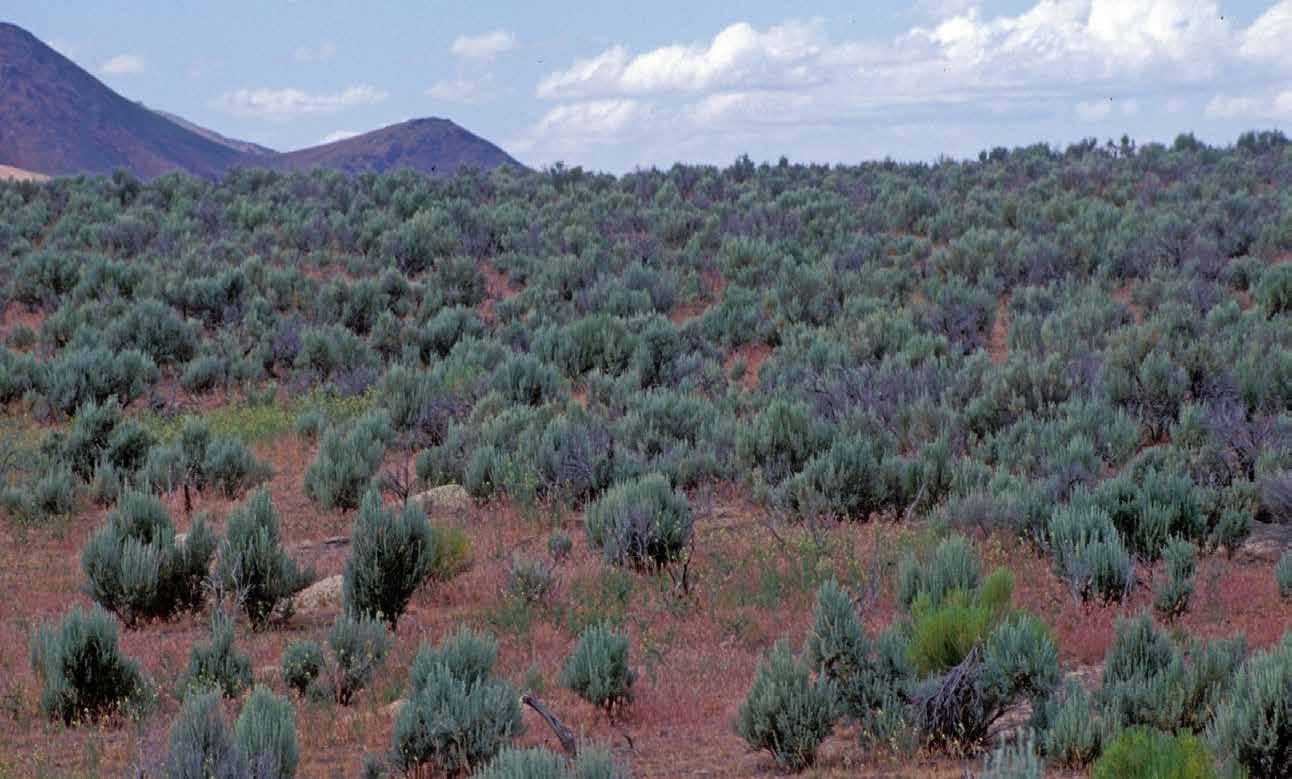
Figure 4. Managing big sagebrush communities to ensure perennial grass presence and health significantly reduces the chance the site will be converted to cheatgrass dominance.

but because of the relative lack of competition from degraded populations of perennial grasses. Cheatgrass also invades high ecological condition native plant communities because there is a niche available for a competitive annual grass that native plant species do not fill. Excessive, improperly timed, and annually repeated grazing enlarges the adaptive niche available to cheatgrass. Cheatgrass dominates because of this degradation and destruction of sagebrush by wildfires. Stands that become old, decadent and dense suppress perennial grasses that are needed to suppress the exotic and invasive annual, cheatgrass. Passive management of shrub communities ensures an increase in fuel loads, increased wildfire risks and the transformation of shrub communities to cheatgrass dominance (Figure 3). Active management of habitats to improve perennial grass densities decreases wildfire frequencies and allows for the return of critical browse species (Figure 4). Fire as a stand renewal process is an inherent part of the Great Basin ecology, especially in the big sagebrush/bunchgrass zone.

The Progressive Rancher www.progressiverancher.com 24 FEBRUARY 2023
Doug Burgum
Burgum Issues Statement Calling on Biden Administration to Withdraw New Waters of the U.S. Rule
By Jesse Allen | American AG Network | americanagnetwork.com

BISMARCK, N.D. (JAN. 18, 2023) – Governor Doug Burgum issued the following statement today calling on the Biden administration to withdraw its final Waters of the U.S. (WOTUS) rule, warning that the rehashed Obama-era regulations would create confusion, add red tape and lead to higher consumer prices.

The U.S. Environmental Protection Agency and U.S. Army Corps of Engineers published the final rule in the Federal Register today. It repeals the definition of WOTUS that the Trump administration adopted in 2020 in its Navigable Waters Protection Rule. The final rule takes effect 60 days after it is published, unless legal action delays it.

“After North Dakota led the fight against the Obama administration’s misguided WOTUS rule, it’s disappointing that the Biden administration is doubling down on this overreaching policy,” Burgum said. “The EPA’s reworked version of WOTUS has the same problems as its predecessor, violating landowner rights and creating confusion for farmers, ranchers and industry by adding red tape and erroneously classifying almost every stream, pond and wetland as a federally managed water. The result will be higher costs for food, fuel and other consumer goods with no substantial benefit to the environment.
North Dakota has some of the cleanest water in the nation, and this proposed rule threatens our state’s legitimate authority to protect our own waters from pollution. It’s a prime example of federal overreach that ought to be withdrawn, or at least delayed until the U.S. Supreme Court issues a decision in the Sackett v. EPA case related to Clean Water Act jurisdiction.
We look forward to supporting North Dakota’s attorney general in challenging this new rule.
The Progressive Rancher www.progressiverancher.com FEBRUARY 2023 25
State Agencies And Their Planning For The Future
By Doug Busselman | NFB Executive Vice President
Recently two state agencies launched their public engagement process for planning actions that they are working to carry out over the next year or so. Another major state agency has recently wrapped up their nearly 18-month planning process, finalizing the recommendations which came from a working group of stakeholders who developed their report to go to the 2023 Nevada Legislature.
Two of the agencies, the Nevada Department of Transportation and the Nevada Division of Water Resources’ Water Planning Section took a more formal planning approach with identified stakeholders being named to advisory groups to work through their planning process. The Nevada Department of Wildlife (NDOW) has approached the development of their Sagebrush Habitat Plan with a series of public meetings, held across the state, seeking public input identifying the types of ideas which could be included in the plan that they might do.
The update for the Nevada State Water Plan involves a 20-person State Water Plan Stakeholder Advisory Group and follows the state’s Administrative Procedures process with published agendas and public comment periods at the beginning and end of the meeting. This same formal process was followed in developing the Sustainable Transportation Funding Study.
For their part NDOW seems to be taking a route very similar to federal land managers. The recent public meetings scheduled for sites around the state took on the nature of being scoping meetings with opportunities to offer thoughts on what should be included in the plan that NDOW will probably draft and then send out for public responses. The working model might not be exactly the end process, but based on the take away impression from the first meeting held in Winnemucca on January 17th it seemed to be a rough outline of the concepts they are working from.
For most Nevada citizens the opportunity to be involved in the details of creating state agency plans is not a cherished occasion to be marked on a calendar or even deserving a refrigerator magnet to be posted prominently so you don’t forget. Those who make the time to be “stakeholders” mostly are people who have a job that involves going to meetings to participate by representing others.
The NDOW Winnemucca meeting had one person in attendance who wasn’t there drawing a paycheck as part of their responsibilities for going to meetings like this. Reports from the additional meetings held in rural Nevada indicate that there were very few non-government persons who attended the meeting. Those reports also shared that there were comments made at all of the meetings on how little of notice was provided to make anyone aware that the meetings were being held. (We learned of the meeting schedule, from a third party on the Friday afternoon before the meeting swing began.)
Somehow public input processes need to operate with involvement that isn’t exclusively dominated by federal or state agencies being the participants. On the other hand, too many instances of public input not being listened to or having the agencies already decided in the end product have soured the desires to even pay attention.
The intentions for the Nevada Department of Transportation Sustainable Transportation Funding Study was to identify the mechanisms for tax increases and extra fees to cover the shortfall that the Department believes are needed. After the 18-month process the recommendations that came from the deliberations were to increase taxes, establish some new ones and have additional fees to gain more dollars. Those proposals will likely be part of legislative bills that legislators will be weighing in the 2023 Legislative Session.
The NDOW Sagebrush Habitat Plan indicates that the purpose will be to develop a Nevada centric map and or mapping toolset based on values and threats to help prioritize conservation actions across the various land management/ownership. While it is understandable that NDOW would have their reasons for building maps that deal with their “values” and might work to address the “threats” that they are concerned with…it is a little hard to understand why others might want to automatically fall in line with thinking that is a worthwhile purpose.
Things identified on maps, regardless of how they are represented (blue, green or red colors), especially when those representations are remotely sensed to be either very important or in bad shape has not worked out well for those who rely on being able to use the land which are highlighted on the maps that have been created.
This planning process, created by an Executive Order that a past Governor decreed, states that it will be “developed collaboratively with counties, federal land management and state agencies and other stakeholders.” Yet the swing of public meetings held around the state in January had little to no notification being provided to some key stakeholders. It seemed that federal land management and other federal agencies knew about the meetings, along with other state agencies, but if you weren’t a stakeholder who wasn’t working for one of these agencies, you might not have heard that the meetings were being held.
The update process for the State Water Plan, last published in 1999, also came about through a legislative effort to restaff the water planning function in the Division of Water Resources. This was accomplished in the 2019 Nevada Legislature. The 20-person advisory group of stakeholders were identified based on having a distribution and diversity from across the state as
well as representatives of stakeholder groups with direct connections to water resources.
To their credit, the team involved in working with the water planning process have identified what the State Water Plan is supposed to be and also what the State Water Plan is not. Providing this type of parameters and boundaries should help keep the endresult from going off the rails on its way to completion.
As someone who was involved in very intense lobbying to keep the 1999 State Water Plan from becoming a disaster which at times appeared to be an all out effort to redesign Nevada Water Law and reshuffle the foundations – having the current limitations and direction spelled out is less of a reason to start out with confrontation. It is good to read that the State Water Plan is not a plan to change water laws nor reallocate water among users. It is good to read that the State Water Plan is not a plan for new regulations. It is not a plan to be used as an advocacy document.
Regardless of whatever agency is working on their next plan to do whatever they have intentions to try to accomplish, it’s important for Nevada citizens to be kept in the loop of what is taking shape. They may not wish to sit through the endless meetings and discussions over specifics, but they still need to have a say, at some point, in whether they believe the plan fits with their interest and the interests of others who are directly affected.
Being active in organizations who represent your interest and staying informed is a sound strategy to follow and work with those who are involved in the planning process to have your voices heard by the agencies developing their plans.
Nevada Farm Bureau
The Progressive Rancher www.progressiverancher.com 26 FEBRUARY 2023
Dave Fulstone Scholarship OPEN FOR SUBMISSIONS

We are excited to announce the 2023 Dave Fulstone Scholarship is now open. This scholarship is awarded through the Nevada Heritage Foundation an organization that supports education of Nevada’s youth in agricultural related fields.
The Dave Fulstone Scholarship is available to any student graduating from high school this year, a current college student or a trade school student who is furthering their education in a course of study pertaining to agriculture.
A successful candidate for the scholarship must be from a Nevada Farm Bureau member family. A completed application must be submitted and include a copy of your most recent transcript and two letters of recommendation.
Full application details and application forms can be found on the Nevada Farm Bureau website at nvfb.org or by using this direct link: www.nvfb.org/articles/dave-fulstone-scholarship-2/
The Application deadline is April 1, 2023. Applications can be sent to Julie Wolf at wolfranch1nv@gmail.com or mailed to:
Nevada Heritage Foundation Scholarship Committee


C/O Nevada Farm Bureau
Nevada Heritage Foundation 2165 Green Vista Dr Suite 205 Sparks, Nevada 89431
For more information, please call our office at 75-674-4000.
STAY UP-TO-DATE ON AG NEWS!
Sign up at at nvfb.org for the weekly Nevada Farm Bureau Grassroots Newsletter and have current AG topics delivered right to your inbox.

Nevada
Farm Bureau
800 - 513 - 4963 • ww w.pinenutlivestocksupply.com Complete selection of animal health products, feed, and equipment for beef, dairy, equine, sheep, goat and small animal. Snyders Pinenut Livestock Supply Fallon: 8 - 5:30 M-F Gardner ville: 8 - 5 M-F
The Progressive Rancher www.progressiverancher.com FEBRUARY 2023 27


UNR RANGE CLUB RAFFLE FUNDRAISER The UNR Range Club is selling raffle tickets to raise funds for students to attend the annual Society for Range Management conference Contact us at unrrangeclub@gmail.com to purchase tickets! Tickets are 1 for $20, or 6 for $100 Yeti 35 QT cooler with hand-tooled leather top, made by a range club member 4 person Reno Rodeo experience; includes 4 tickets for June 19th performance and various swag for 4 people Basket with assorted items from local Reno businesses PRIZES 3 chances to win! Drawing 2/20/23 The Progressive Rancher www.progressiverancher.com 28 FEBRUARY 2023
In Loving Memory John Leroy Falen
March 18, 1937 - December 17, 2022
John Leroy Falen of Orovada, Nevada, passed away on December 17, 2022 at the age of 85, surrounded in love by his wife of 63 years, Sharon Falen, and his children, grandchildren and great-grandchildren.
John was born on March 18, 1937 in Caldwell, Idaho, to Leslie and Letha Falen. He grew up on the L – F Ranch on Juniper Creek at the base of South Mountain, 40 miles southeast of Jordan Valley, Oregon. John and his brothers Roger and Loyd rode their horses to school, and like other children in the area, school was coordinated around ranch work. John attended high school in Marsing, Idaho, batching near his uncle Earnest Falen’s home returning to the L – F Ranch to work when needed. He attended college at the University of Idaho in Moscow, Idaho receiving his Bachelor of Science degree in Animal Science in 1960. During his junior year, he met his wife Sharon Franklin of Moscow, Idaho. Their first date was on her 17th birthday, 65 years ago last month. They were married in in 1959.
John, in every way, was a cattleman. He and Sharon started their lives with John working in feedlots, buying cattle and eventually partnering with Clarence and Wayne Johnson operating a feedlot and livestock trading enterprise in Wilder, Idaho. In 1977, he leased two ranches in northern Nevada, the “Home Ranch” near Orovada, Nevada and the “UC Ranch” near McDermitt, Nevada. The Home Ranch was where John and Sharon made their home. It was at the Home Ranch where John and Sharon hosted numerous yearly “family and friends’ reunions” when family and friends from all over the country would join for a weekend of horse and wagon rides, good two-step dancing music, great food and good fellowship. It was also at the Home Ranch where the Newsweek magazine writers and photographers went to meet a man who would dawn the cover on that publication on September 30, 1991 and detail the story of a ranching family working in a place where the federal and state governments own 85% of the land and it is not possible for a ranch to survive without BLM and/or Forest Service grazing permits. John, Sharon and family would eventually negotiate purchases for the Home Ranch and the UC Ranch so the ranches and the way of life could be passed down their children and grandchildren.
The Home Ranch was also where John set forth on his pathway of servant leadership. Not being one to ever take a break, for 20 years John served the school children in Humboldt County, Nevada as a member and chairman of the school board. During this time he began his political career as an advocate for the ranching industry serving as Nevada Cattlemen’s Association President in 1997-1999, Nevada’s Public Lands Council Committee, the National Cattlemen’s Association Executive Board, the NCBA wild horse and burro committee and the National Public Lands Council President. John was appointed by the Secretary of the Interior to serve on the National Wild Horse and Burro Advisory Council. Although there were no wild horses on the Home Ranch or UC Ranch, John’s understanding of the livestock industry and his compassion for wild horses suffering from drought and starvation made him the perfect advocate to work on solutions to remove excess horses from the range. Because of his work, he was one of the founding board members of the Mustang Heritage Foundation.
John’s passion for his family, his ranch and his community was evident in everything he did. The invention of the cell phone brought a whole new freedom to John in ways that searching for pay phone could not. John’s saddle horses would automatically stop when John’s cell phone would ring so John could take the call. As much as the phone would
ring, that meant a lot of stopping. John was ever present on local parade days in Orovada, McDermitt and Winnemucca, driving his team and wagon. Anyone who was within miles of the Home Ranch was encouraged to stop for a comfortable bed, a delicious meal, or a good visit with John sitting at his grey metal office desk with all the braided bridal reins and silver bits hanging behind him. Not just for his friends and family, but the passing of John leaves a huge hole in the public lands livestock industry.
John is survived by his wife, Sharon, his children Frank (wife Karen Budd-Falen), and daughters Judy (husband Hank Kershner) and Johnna (husband Tommy Bruhn), son-in law Loyd Sherburn and brother Loyd Falen. He had seven grandchildren Jake Kershner, Becky Gallagher, Isaac Falen, Sharon Sherburn, Sarah Falen and Kaylee and Gage Bruhn, and four great grandchildren Gauge Brown, Wesley Falen, Kinsley Kershner and Casey Gallagher. He was proceeded in death by his parents Les and Letha Falen, brother Roger Falen and his beloved daughter Cindy Sherburn.
Funeral services were held January 21 at the community hall in Orovada. In lieu of flowers, please send donations to the Nevada Cattlemen’s Association; PO Box 310 Elko, NV 89803. They ask that you write in the Memo in Memory of John Falen and the donation will go to the scholarship fund.
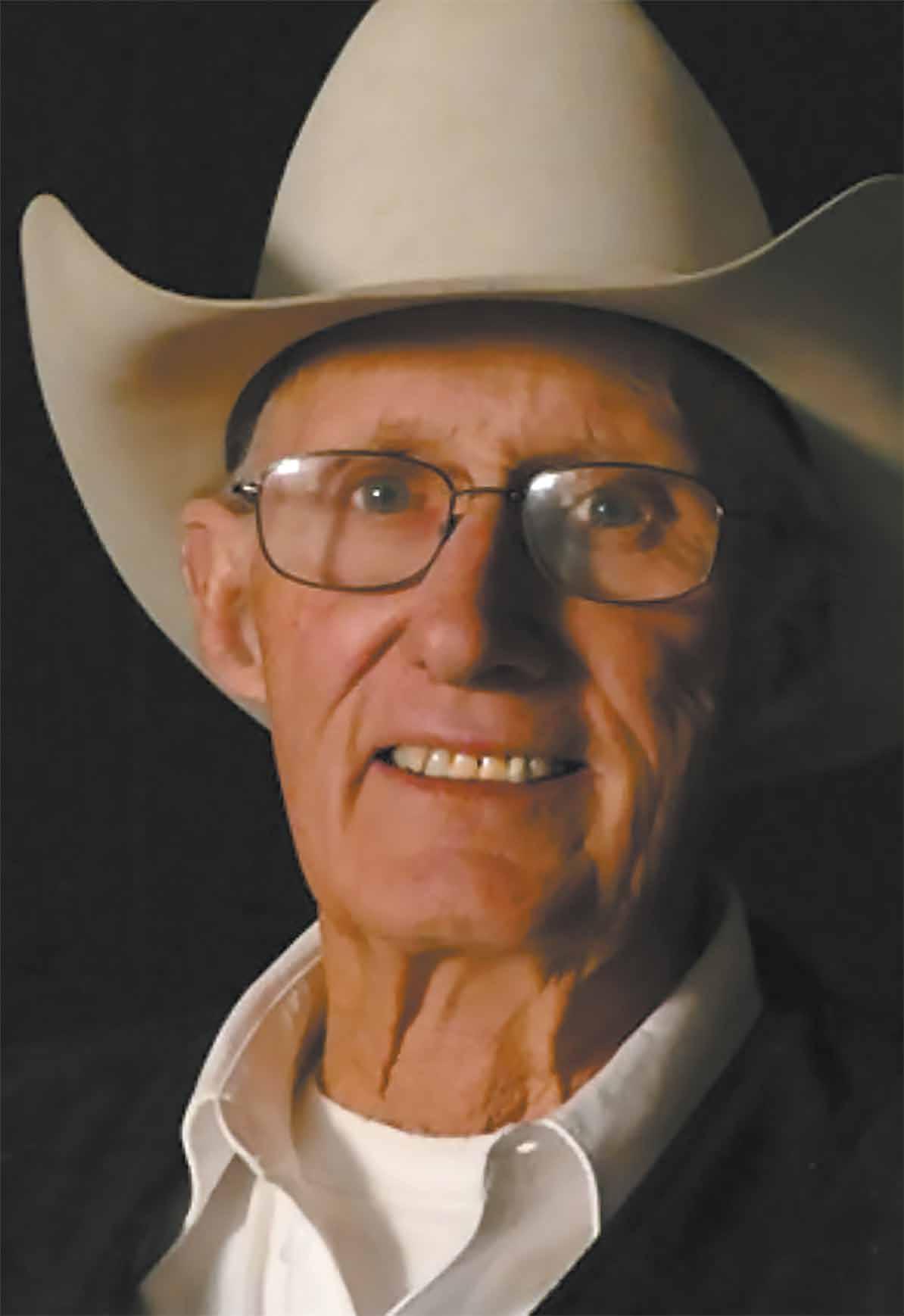

The Progressive Rancher www.progressiverancher.com FEBRUARY 2023 29
MERCK MANUAL Veterinary Manual
Trichomoniasis is a venereal disease of cattle characterized primarily by early fetal death and infertility, resulting in extended calving intervals. Distribution is likely worldwide. Diagnosis is confirmed by isolation of the organism. Imidazoles have been used to treat infected bulls, but none is both safe and effective. Control is by culling infected bulls.
Etiology and Epidemiology of Trichomoniasis in Cattle
The causative protozoan of trichomoniasis, Tritrichomonas foetus, is pyriform and ordinarily 10–15 × 5–10 mcm, but there is considerable pleomorphism. It may become spherical when cultured in artificial media. At its anterior end, there are three flagella approximately the same length as the body of the parasite. An undulating membrane extends the length of the body and is bordered by a marginal filament that continues beyond the membrane as a posterior flagellum. Although T foetus can survive the process used for freezing semen, it is killed by drying or high temperatures. T foetus is found in the genital tracts of cattle. When cows are bred naturally by an infected bull, 30%–90% become infected, suggesting that strain differences exist. Variation in breed susceptibility to trichomoniasis may also exist. Bulls of all ages can remain infected indefinitely, but this is less likely in younger males. By contrast, most cows are free of infection within 3 months after breeding. However, immunity is not longlasting and reinfection does occur. Transmission can also occur when the semen from infected bulls is used for artificial insemination.
Clinical Findings of Trichomoniasis in Cattle
The most common sign of trichomoniasis is infertility caused by embryonic death. This results in repeat breeding, and attending stock persons often note cows in heat when they should be pregnant. This, along with poor pregnancy test results (eg, too many “nonpregnant normal” and late-bred cows) is usually the presenting complaint. In addition to
•

TRICHOMONIASIS IN CATTLE
By Eugene D. Janzen, DVM, Department of Production Animal Health, Faculty of Veterinary Medicine, University of Calgary | Modified Oct 2022
a reduced number of cows estimated to calve during the regular calving season, an increased number of cows with a “nonpregnant abnormal” reproductive tract diagnosis is seen. These include cows with pyometra, endometritis, or a mummified fetus.
Fetal death and abortions can also occur but are not as common as losses earlier in gestation. T foetus has been found in vaginal cultures taken as late as 8 months of gestation and live calves can be born to infected dams. Pyometra occasionally develops after breeding.
Diagnosis of Trichomoniasis in Cattle
Diagnosis is confirmed by culture
History and clinical signs are useful but are essentially the same as those of bovine genital campylobacteriosis. Confirmation depends on isolation of T foetus which may be difficult to differentiate from other trichomonads resident in the digestive tract. Diagnostic efforts are directed at bulls, because they are the most likely carriers. Suction is applied to a pipette while it is used to vigorously scrape the epithelium in the preputial fornix. Alternatively, douching with saline or lactated Ringer’s solution (without preservatives) can be used. Aspirates or douches, concentrated by centrifugation, are examined using darkfield contrast microscopy. This material is also transferred immediately to the surface of a liquid culture medium such as Diamond medium. Better success culturing the organism has been reported when using commercially available media-filled pouches. In addition, incubating the media beyond the standard 48 hours may also enhance the accuracy of the diagnosis. Sampling every 48 hours for 10 days from the bottom of the tube and examining at 100–400× may reveal the rolling jerky movements of T foetus
Studies have examined the possibility of using PCR assays to identify T foetus directly from the preputial samples without an intervening culture. These tests are being used by some laboratories to reduce the time required for a definitive diagnosis of trichomoniasis.
Some diagnostic laboratories are suggesting that the scraping be placed in phosphate buffered saline before transport to the diagnostic laboratory. A sample prepared in this way can be effectively examined for both trichomoniasis and campylobacteriosis by using a specific PCR application.
Studies suggest that 95% of infected bulls will be positive on culture, and that 3 successive cultures at weekly intervals will detect 99.5% of infected bulls. A vaginal discharge (after treatment of pyometra) or vaginal mucus (obtained toward the end of a luteal phase) may also be of diagnostic value.
The number of times the bull battery should be sampled and cultured to ensure the bulls are negative depends on the prevalence of fetal wastage in the cow herd. With more open and late cows, the frequency of testing should increase to improve the probability that bulls are negative for the protozoan.
Treatment and Control of Trichomoniasis in Cattle
• Imidazoles have been used to treat bulls, but none are both safe and effective
• Control is by culling infected bulls
Various imidazoles have been used to treat bulls with trichomoniasis, but none is both safe and effective. Ipronidazole is probably most effective but, due to its low pH, frequently causes sterile abscesses at injection sites. In addition, bulls are probably susceptible to reinfection after successful treatment. Resistance to ipronidazole may also be a concern. The biggest problem, however, is that the success of treatment is measured by repeated sampling, which may mean the individual bull can never be definitively called negative. Therefore, an unqualified recommendation for the bull’s use cannot be given.
Control consists of eliminating the infection from the bull battery by culling all bulls and replacing them with virgin bulls or by testing and culling positive bulls. Repeated testing in older bulls may be unsatisfactory, and it may be prudent to cull them all.
Reinfection is prevented by exposing only the uninfected (clean) bulls to uninfected (clean) cows. Clean cows are assumed to be those with calves at foot (even though some infected cows may produce a live calf) and virgin heifers. In situations in which several herds are commingled on the same range, caution must be exercised to ensure that cows and heifers are not exposed to potentially infected bulls at the home ranch before they are turned out on the common grazing pasture.
T foetus can be safely eliminated from semen with dimetridazole.
Vaccines developed some time ago for use in cows and evaluated in the field were not highly effective, especially in the absence of other control measures. However, the efficacy of whole-cell T foetus vaccines has recently been critically reviewed. Although there is some evidence to suggest that timely vaccination will improve reproductive performance in heifers, there is a distinct lack of evidence that vaccination will reduce “bull-associated outcomes.”
Biosecurity of Trichomoniasis in Cattle
Once a herd diagnosis has been made, all efforts to eliminate or treat it will probably be unsuccessful if significant biosecurity measures are not in place. Although T foetus can be eliminated from semen with dimetridazole, using artificial insemination as a reproductive strategy to circumvent the use of bulls will not sufficiently decrease the risk of reinfection without a significant biosecurity strategy. The commingling of breeding groups, even within one ranch, may serve to maintain carrier cows and bulls. Groups of infected and potentially infected cattle must be kept distinct from “clean” breeding groups. Also, the addition of leased mature bulls or the purchase of mature cows may be enough of a biosecurity break to maintain the organism in the herd and lead to an outbreak of reproductive failure later on. The herd veterinarian should be able to create a herd-specific biosecurity protocol for the herd in question.
The Progressive Rancher www.progressiverancher.com 30 FEBRUARY 2023
Animal diseases such as trichomoniasis (aka “trich”) can cause substantial adverse production and financial impacts to range cattle producers in Nevada. Alternative range production scenarios such as inoculating herds with the trich vaccine, selling of infected herds, etc. can impact the spread for the trich and profitability of Nevada range producers. This project will survey ranchers to determine what factors will increase adoption of the trich vaccine or adoption of alternative public land management scenarios to control trich. Survey data will then be used to drive a representative ranch simulation model, providing information as to potential adoption by public range producers not only under average conditions but also conditions where production and prices are less favorable. Another model (stochastic dominance – a ranking system based on risk) will be employed to derive those trich programs that may be adopted by risk adverse Nevada cattle producers. These results could enhance the adoption and development of outreach/extension programs to address trich infections on public land cattle herds.
Background
Biosecurity is defined as the protection of agricultural animals from any type of infectious agent – viral, bacterial, fungal, and parasitic (U.S. Environmental Protection Agency, 2009). Any outbreak of infectious agent impacts the local, regional, and national economies as evidenced from episodes of avian influenza and mad cow disease. Biosecurity issues are often thought to occur on private property, but in Western States such as Nevada, biosecurity should be incorporate public lands. Biosecurity, even on public lands, against animal disease represents an important aspect of public land ranch management. Animal diseases such as trichomoniasis for cattle can cause substantial economic harm to public rangeland producers in the state of Nevada. Especially when the disease is contagious, controlling and/or eradicating an animal disease not only improves ranch profitability but also protects and strengthens the Nevada range livestock industry as a whole.
With rising concern at the industry level, the Nevada cattle industry has requested public regulations to control trichomoniasis in Nevada. The industry-level interests, however, do not seem to be in tandem with those of individual ranchers. In a producer survey in 2006, approximately 30% of cow-calf operators in Nevada indicated that they did not test bulls for trichomoniasis. Only 37% reported that they vaccinated their cows and heifer for trichomoniasis. The necessity of public regulations perceived by the industry, in fact, stems from the fact that there is a divergence between individual and aggregate (private or public) interests.
EXPERIMENT STATION | Biosecurity Decisions By Nevada Cattle Ranchers On Public Lands
 Thomas Harris, Professor, State Specialist
(naes.unr.edu/research/project.aspx?GrantID=655)
While evidence of non-adoption of biosecurity action against trichomoniasis is found, the reasons for nonadoption are not clear. The likely major determinants of private biosecurity actions for a rancher are (1) what is at stake or the magnitude of the damage due to a disease, (2) likeliness of disease introduction in the herd, (3) effectiveness of biosecurity actions, and (4) how individuals evaluate (1), (2), and (3), which partially reflects rancher awareness of the disease and biosecurity options. These factors affect private ranchers’ incentives to adopt/not adopt biosecurity actions. When public regulations are in place, rancher incentives to participate and comply are also affected by these factors.
In Nevada, where much of livestock production occurs on public lands, a rancher’s animal health decisions can also be influenced by neighboring ranchers’ decisions especially when there is no fence that physically separates the herds. For example, trichomoniasis is transmitted from a bull to cows and heifers at the time of breeding. Vaccinating own cows may limit the incidence of the disease but does not prevent infection from neighboring ranchers’ bulls. A biosecurity incentive in this case may be to fence in one’s allotment of public rangeland, but it is costly and faces institutional restrictions.
In this project, the motivations and incentives for rancher biosecurity against animal diseases will be investigated, focusing on trichomoniasis in cattle and measures targeted for trichomoniasis, some biosecurity measures may be relevant for other animal diseases. A survey of Nevada cattle ranchers will be conducted to assess rancher awareness and perception of factors affecting adoption of biosecurity actions.
The results will be of significance to designing and implementing extension activities as well as designing
and implementing/enforcing regulations. Nevada veterinarians have estimated the financial impacts of trichomoniasis on Nevada ranches. However this analysis employed average production, output prices, and input costs. In reality, production values, output prices, and input costs are variable and this variability need to be incorporated in any analysis of financial impacts of trichomoniasis and possible adoption of the trichomoniasis vaccine.
Objectives
The primary objective is to improve the productive and economic capacity of Nevada public land livestock producers in addressing issues of biosecurity actions against animal diseases such as trichomoniasis. Specific objectives are:
1. To develop a Nevada rancher survey to identify factors that influence adoption of the trichomoniasis vaccine and identify regulatory procedures that could be introduced on Nevada public lands;
2. To analyze the rancher survey data and to identify factors that enhance adoption of the trichomoniasis vaccine and regulatory procedures to reduce the spread of trichomoniasis in public land livestock herds,
3. To validate and update the Central Nevada wholeranch model and develop a whole-ranch model for Southern Nevada, and
4. To derive stochastic efficient trichomoniasis programs on representative ranch in Central and Southern Nevada.
Experiment Station Contact Information
Max C. Fleischmann Agriculture Building #201 Mailstop: 222 | 1664 N. Virginia St., Reno NV cabnr@unr.edu | 775-682-8357
Per Pound The Progressive Rancher www.progressiverancher.com FEBRUARY 2023 31


SCAN HERE Use a QR scanning app or your phone’s camera to access the website www.progressiverancher.com 32 FEBRUARY 2023


High Desert Grange Chapter #22 P.O. Box 5272 Fallon NV 89406 775.427.8210 highdesertgrange22@gmail.com highdesertgrange22 www.grange.org/highdesertnv22 Battle Born Stockton Well Grange #29 P.O. Box 302 Silver Springs NV 89429 battlebornstocktonwellgrange29@gmail.com BattleBornStocktonWell www.grange.org/battlebornstocktonwellnv29 HIGH DESERT GRANGE SHOWS April 8 | High Rollers Jackpot, Fallon October 7 | Old Timers & PeeWee Goat & Sheep Show, Fallon *Adults & Youth Ages 3-8 only* BATTLE BORN STOCKTON WELL GRANGE SHOWS February 4 | Cavy Cuddles & Bunny Love Show February 25 | Horse Contest Horse Judging & Hippology Educational Contests May 7 | Easy Peasy Horse Show June 3 | Battle Born Dairy Goat Show October 15 | Spooktacular Horse Show For more information, please call (530) 347-3793 or email us at wvm@wvmcattle.com Look for the catalog and video on ww w.w vmcat tle.com Market your cattle with the professionals! WATCH & LISTEN TO THE SALE on the Web at: U P C O MI N G S A L ES ur • March 2, 2023 WVM Headquarters • Cottonwood, CA Consignment Deadline: Feb 22, 2023 ur • April 13, 2023 Wyndham Visalia • Visalia, CA Consignment Deadline: March 27, 2023 Simulcast on DISH 998 The Progressive Rancher www.progressiverancher.com FEBRUARY 2023 33
FarmWeek Now .com
Every dollar will be questioned, conservation spending could get trimmed and a status quo attitude may preserve some vital programs while gutting others.
And the work likely won’t be done before next October. Those are among the top forecasts for how drafting the 2023 farm bill might play out in the next Congress, one featuring a Republican majority in the U.S. House and Democratic control in the U.S. Senate.
They were offered by Jonathan Coppess, director of the University of Illinois’ Gardner Agriculture Policy Program; Nick Paulson, U of I professor and ag economist; and Mary Kay Thatcher, Syngenta’s senior lead of federal government relations, during a panel discussion at the 2022 Farm Assets Conference.
Even though the farm bill can serve as a basis for bipartisanship, political dynamics will still play a major role in crafting next year’s legislation, Coppess said. “We’ve had some challenges the last two farm bill goarounds, and I think those challenges will still exist politically,” Coppess said, adding those issues will be magnified by the narrow margins in each chamber.
U.S. Rep. Glenn “GT” Thompson, R-Pa., will lead the House Ag Committee while U.S. Sen. Debbie Stabenow, D-Mich., will retain her chair position in the Senate Ag Committee.
Thatcher said Thompson will likely bring a “whole different focus” to farm bill hearings, one that contrasts with the climate-related hearings lead by current committee chair Rep. David Scott, D-Ga.
The committee itself is also on track to look much different as U.S. Rep. Mary Miller, R-Oakland, is one of four committee members from Illinois to be
Ag policy experts offer 3 forecasts for the 2023 farm bill
By Timothy Eggert, Agriculture Policy Editor | Farm Week Now
reelected. Final assignments will come once the new Congress is seated.
Coppess said it’s “vital” for Illinois as an “incredibly important agricultural state” to have a voice on both the House and Senate ag committees.
And that voice will likely join others on the committee in advocating for a “business-as-usual” farm bill that preserves crop insurance, keeps commodity title program spending the same and makes “some tweaks” to other programs, according to Paulson.
Coppess agreed, but added he hopes a “tough farm bill debate” leads to “some creativity, pushing some innovation” in policy areas like risk management.
“As you think about priorities and these conversations, ideally it is something creative, something new than just ‘I want a higher number in the statute,’” he said.
Here are two other predictions offered by the panel:
Debt ceiling debate to loom over negotiations
The projected $1.3 trillion price tag for the 2023 farm bill will play a major role in determining baseline appropriations and defending increases for each title’s program, the panelists said.
How the current Congress resolves funding the government through the next fiscal year while also addressing concerns over the national deficit and debt ceiling will also matter, Coppess said.
He added that plans to cut from or add to a certain farm bill program means compromises must be made to other programs. For the last two cycles, the Supplemental Nutrition Assistance Program (SNAP) has been the program most targeted for cuts.
And because of significant increases in SNAP benefits Congress authorized to help with the COVID-19 pandemic, Coppess expects Republicans will again seek to shrink the program.
“But ultimately, when we talk about cutting SNAP, the only way that Congress can truly cut that program cost is to push people out of programs,” Coppess said. “And that’s why it gets ugly, partisan and rancorous in those discussions, because those are somebody’s constituents who no longer get assistance.”
IRA conservation funding in limbo
Another area bound for Republican scrutiny is the $18 billion in conservation program spending outlined in the Inflation Reduction Act, the panelists said.
Because that funding is for farm bill programs and will extend through 2031, lawmakers would need to rescind it as an offset and spend it elsewhere to get it into the bill’s program baselines.
“You’d have to cut it, you’d have to take and pull that money back,” Coppess said. “It’s not an easy, free batch of $18 billion.”
Paulson agreed, saying he doesn’t expect “big shifts” in the conservation title’s baselines. But he said the ag industry is moving toward practices outlined in those programs regardless of the extra funding.
“I think it’s pretty clear that that’s the direction the wind is blowing,” Paulson said. “The carrot approaches that are being proposed are a lot better than the sticks that could have been proposed.”
Nevada Farm Bureau Nevada Farm Bureau Presents Congressman Amodei With Friend Of Farm Bureau Award
Scheduling became something of a challenge to set up the meeting to present Nevada Congressman Mark Amodei with this “Friend of Farm Bureau” Award for the just concluded 116th Session of Congress, but that has been marked as accomplished when Nevada Farm Bureau Executive Vice President Doug Busselman met with Nevada’s 2nd District Congressman on January 18th. This award is based on official voting record results compiled by the American Farm Bureau Federation (AFBF).
Congressman Amodei scored an 86 percent voting record, agreeing with the Farm Bureau positions during the 2021-2022 Congressional session. He has earned this award for each of the sessions he has served as a U.S. Congressman.
“We’re very fortunate to have a representative like Congressman Amodei who hears what Farm Bureau policy urges and is so willing to work with our organization in considering our views on the issues being debated in the nation’s Capital.” Busselman said. “We’ve had a very good working relationship with Mark going back to his service in the Nevada Legislature.”

The Progressive Rancher www.progressiverancher.com 34 FEBRUARY 2023

C ONV EN T I O N A L A L FA L FA VARIETIE S 6 4 2 2 Q C inch I (ML) Ver n a l 6 4 01N C inch II R a nger 65 8 5 Q R on ’ s Blend W L 3 4 3 HQ 6 3 0 5 Q S pr e dor 5 W L 3 5 4 HQ 919 Br a nd L a d a k W L 3 6 3 HQ ©2021 Forage Genetics International, LLC. Roundup Ready® is a registered trademark of Monsanto Technology LLC, used under license by Forage Genetics International, LLC. HarvXtra® Alfalfa with Roundup Ready® Technology and Roundup Ready® Alfalfa are subject to planting and use restrictions. Visit www ForageGenetics.com/legal for the full legal, stewardship and trademark statements for these products. HarvXtra and NEXGROW are registered trademarks of Forage Genetics International, LLC. Prices and programs are subject to change. Because of factors outside of Forage Genetics International s control, results to be obtained, including but not limited to yields, financial performance, profits, losses or otherwise, cannot be predicted or guaranteed by Forage Genetics International. H A R VX TR A ® & R OU ND U P R EA DY ® A L FA L FA F D W H 6 4 09H V X R R 4 V H 6 4 9 7 R 4 V H 6 516R 5 H R e v ol t 6W L 3 3 6HQ R R 3 V H W L 3 5 6HQ .R R 4 V H W L 3 7 2 HQ .R R 5 V H D RY L A ND & R EC L AM AT I ON SEE D W he a t g r a s s e s Immig r a n t Kochia Nor d a n C r e s t e d S no w s t or m (Ne w) Ne w H y/ S a lt la nder G r e a t B a s in W ild R y e Bluebunch R o a dc a s t H y cr e s t C r e s t e d Ta ll W he a t g r a s s S iber ia n W he a t g r a s s Sh a de s c a le O a he In t er me dia t e 4 W ing S a lt bus h P ube s c en t G a rr is on C r e eping India n R ice g r a s s Me a do w Fox
Big S a gebr us h R a ng
Ch
nger
E
Oly mpic E lit e Uni v er si t y w/ No C lov er Nor t hw e s t P a s t ur e Hor s e P a s t ur e R on ’ s Dr y la nd Mi x R on ’ s R a ngela nd Mi x G R AINS & MISC . O a t s - Cayuse - M onida W he a t - Twin - PR 1404 - Patrone P e a s C or n S or g hum S uda n - BM R - Piper Sudan - Sweet RN - Honey Tr it ic a le - Forerunner - M erlin R y e g r a in - Gazelle (Spring) - Prima (Fall) - VN S B e a r dle s s B a r le y E ur ek a C ho w f or d S t ock f or d C L O V E R S A ls ike L a dino R e d C lo v er S t r aw ber r y W hit e Du t ch Yello w Blo s s om
R on ’ s S pe cia l Tur f Mi x K Y Blue G r a s s At hle t ic Tur f Mi x T T P er ennia l R y e g r a s s C he w ing s Fe s que B en t g r a s s
Or cha r d G r a s s e s - Seco (Dryland) - Potomac - Paiute Moun t a in Me a do w Br ome S moo t h Br ome A nnua l R y e G r a s s P er ennia l R y e G r a s s C lim a x T imo t h y Faw n Ta ll Fe s cue S a l t t o l e ra n t , d ro u g h t- h a rd y, o rg a n i c a l l y a p p rov e d a n d n o n - G M O se e d v a ri e t i e s a v a i l a b l e . C all o r s t op in for our comple t e list of Seeds in stock R o n ’s S ee d & S up p l y 710 Grass Valley Rd • Winnemucca, N V 894 45 775- 623-5053 • ronsseed@gmail com Serving Nevada Agriculture for 40 years The Progressive Rancher www.progressiverancher.com FEBRUARY 2023 35
t a il
e
a
PA S TUR E MI X
S
TUR F GR A SS E S
FIEL D GR A SS E S
THE UNION
by navigaimport | www.theunion.com
NEVADA COUNTY | Nevada County has a longstanding community of farmers and ranchers, and is home to 151 farms with cattle, 45 with pigs, 77 with sheep and 70 with meat goats. For small-scale ranchers in Nevada County, getting meat slaughtered and butchered is a “circus” that grows more difficult each year. The businesses required to turn an animal into a meal — that slaughter, butcher, transport and store meat — are rare and growing rarer. Those missing links in the supply chain make local meat harder to raise and more expensive to buy.
For this month’s The Union column from the Nevada County Food Policy Council, several ranchers shared their challenges with the current supply chain and their hopes for the future. They explained that even people who don’t eat meat have a stake in this issue: The viability of holistic animal agriculture is important for our local economy, land conservation and fire mitigation.
Small-scale meat processing is a problem
Once an animal is ready to become dinner, farmers have a couple of options to get that meat into the hands of customers. If farmers want to sell their meat in a store like SPD Markets or BriarPatch Food Co-op, their animals must be killed, butchered and packaged at USDAinspected facilities. Those last two steps are called “cut and wrap” in industry slang, and often take place at a separate facility from where animals are harvested.
Ranchers say both kinds of facilities are few and far between in California. A 2021 UC Davis study found just 46 USDA-inspected slaughter plants in California. Of these, 32 only handle livestock (as opposed to poultry), and at least 11 only process for their own brands. Options for USDA-inspected slaughter are particularly sparse in the Sierra Foothills, where one of the closest shops — Wolf Pack Meats in Reno — closed on Oct. 31. The nearest facilities for Nevada County ranchers are now in Orland, Modesto or Sonoma County.
For Ronda Applegarth of Yuba River Ranch, it’s worth the 90-minute drive to have her Wagyu beef slaughtered, cut and wrapped at a USDA-inspected facility; her business relies on restaurant and retail sales that require it. But depending on one, in-demand facility makes her nervous: other regional slaughterhouses have increased the minimum number of animals needed to book an appointment, squeezing out smaller ranchers like her. “I only have one [slaughter] spot a month, and if I give up a spot, I’m not sure I’ll maintain my relationship with that slaughterhouse,” Applegarth said. “The demand for those spots is ridiculous right now.”
A helpful workaround still has flaws
Rancher Elizabeth Strong, who operates Rafter 5S Livestock in Smartsville with her husband Grant, takes advantage of an exemption called “Custom Exempt Slaughter and Processing.” She sells a whole or partial steer to her customers months before the animals are ready to be slaughtered. When the steers are ready, a registered mobile slaughter operator comes to their ranch, harvests the animal and transports the carcass to an approved butcher. The customer then pays the butcher for their work, and can pay extra for more finished cuts.
Lack of meat processing plants hurts Nevada County agriculture, economy
This system only works if there’s a group of dedicated, flexible customers and only then on a small scale: on a given ranch, five head of cattle or 35 head of sheep, goats or swine can be slaughtered this way in a month.
“Without the availability of [a nearby] USDA plant or a USDA cut-and-wrap, it limits all small farmers,” said Strong. “People see the beef in the county, they see that cow on the other side of the fence, but we’re limited in the audience we can sell to.”
Strong appreciates that custom exempt processing allows her animals to complete their lives on the farm where they were born, instead of stressing them with an hours-long trailer ride to a USDA-inspected slaughter facility.
However, mobile slaughter operators and approved butchers are still few and far between. Strong has to book at least six months in advance with her preferred harvester and attempt to match those dates with her butcher. She also has to hope that her steers will be in the right condition – not too thin or too fat – on the day she picked. Animals’ body condition has become harder to predict six months out, given increasing periods of drought and climate-related environmental changes.
Alana Fowler, who runs Fowler Family Farm in Grass Valley with her husband Brad, uses custom exempt processing to sell her beef, too. She said the small number of mobile slaughter operators and approved butchers means ranching communities are dangerously reliant on a handful of businesses for survival.
“That’s the bottleneck for raising animals in this county: places to take them [to be slaughtered], and then to trust that the place you’re getting cuts from will give you a good yield back,” Fowler said. “Without the competitive factor, the price we’re getting charged for that piece of meat – and what the customer is paying – is a huge issue.”
Processing infrastructure matters beyond ranching
The lack of meat processing infrastructure creates ripples beyond the ranching community. It’s bad for the county’s economy. The growing demand for high-value, local meat should support the livelihoods of Nevada County ranchers, slaughterhouse workers, butchers, refrigerated truck operators, community market employees and more. But the lack of nearby processing facilities – on top of the other hurdles ranchers face – makes it hard to bring those products to market and realize economic benefits locally.
These supply chain issues also imperil an important tool for fire mitigation: grazing. Targeted grazing of sheep, goats and cattle reduces fuel loads and creates firebreaks. Grazed land can serve as staging areas for firefighters, too. As opposed to mowers, grazing is a safe way to manage vegetation on steep slopes and avoid dangerous sparks from mower blades. Nevada County herds and flocks need a functioning supply chain to stay in business and continue providing grazing benefits.
Past efforts stall, facility concerns remain
A promising effort to launch a USDA-inspected slaughter facility in Placer County stalled in 2017 after several years of development. The business, Sierra Foothills Meat
Company, was recommended by a 2016 feasibility study funded by the USDA and Placer County. People involved with the project say a lack of capital was the primary reason it did not succeed, but that the absence of a willing operator and suitable location with amenable neighbors also contributed to its failure. Several more efforts to open a slaughterhouse in northern Nevada were also blocked.
Dan Macon, the UC Cooperative Extension livestock and natural resources advisor for Placer, Nevada, Sutter and Yuba counties, cautioned that building one local facility is unlikely to solve the bottleneck ranchers experience. A single new plant would likely experience the same problems as other regional slaughterhouses – high demand, little flexibility in scheduling and preference for clients with more animals. “It’s far more complicated to work with 300 producers who bring five animals each than with five producers who bring 300 animals each.”
“In my mind, the only way to address this need for scheduling flexibility for the producer would be to build a plant with excess capacity, which is not economically efficient,” Macon said.
He pointed to the challenge of attracting private investment to a low-return, small-scale service business. But there may be signs of hope in this respect. In 2020, a mobile USDAinspected slaughter business launched in Sonoma County with the support of private and producer investment. The Bay Area Ranchers Cooperative raised $1.2 million from private sources; one pitch suggests investors could expect returns of 2 to 4 percent. Whether these returns can be realized remains to be seen.
Macon explained another wrinkle: Most ranches in Nevada County don’t sell meat at all. Instead, they sell weaned calves or lambs to other operators that bring them up to finished weight before slaughter. This system allows ranchers to stock more animals seasonally and avoid the significant time commitment necessary for direct marketing. These ranchers would need to overhaul their business and production models to take advantage of a USDA slaughter facility in the neighborhood. Macon isn’t sure how many ranchers would make the switch.
“These are complex issues,” Macon said. “Additional processing capacity is just one piece of the puzzle.”
What community members can do
While there are no active proposals for new USDAinspected slaughter or cut-and-wrap facilities in Nevada County, ranchers like Fowler, Strong and Applegarth hope the public will support a project if and when the right one emerges. Before that time comes, they want to educate the public about the “invisible middle” links in the supply chain that connect them and their customers.
In the meantime, they recommend people support local ranchers with their dollars. The Nevada County Food & Farm Directory has a producer list and buying guide. They also recommend staying in touch with the processing issue by becoming a part of the Nevada County Food Policy Council or attending Nevada County Agricultural Advisory Commission meetings.
The Progressive Rancher www.progressiverancher.com 36 FEBRUARY 2023
EPA Releases Controversial and Detrimental WOTUS Ruling
On December 30, 2022, the Environmental Protection Agency (EPA) published yet another new rule defining the waters of the United States (WOTUS) under the Clean Water Act by rolling back the Trump-era Navigable Waters Protection Rule. The ruling creates significant regulatory complications, as the federal government will conduct “case-by-case” determinations to assess whether a feature is federally regulated moving forward.
This ruling was issued despite longstanding, bipartisan opposition to the elimination of the aforementioned agricultural exemptions. It should be noted that certain WOTUS exclusions for certain agricultural features were reinstated under the final rule following significant work from our affiliates. Landowners, ranchers, and farmers will now have to wait for a Supreme Court of the United States (SCOTUS) decision on Sackett v. EPA, which will hopefully provide much-needed clarity related to the definition of WOTUS.
Why this matters: Regulatory uncertainty compromises livestock producers’ ability to do business, and everyone suffers when federal agencies attempt to preempt federal court decisions. As stated by the National Cattlemen’s Beef Association’s (NCBA) Chief Counsel Mary-Thomas Hart, “for too long, farmers and ranchers have dealt with the whiplash of shifting WOTUS definitions.” The EPA ruling’s continuation of regulatory uncertainty will create “a significant and costly burden for agricultural producers”, according to Hart. Landowners, ranchers, and farmers will now have to wait for the Supreme Court’s decision on Sackett v. EPA in early summer, which should provide much-needed clarity and potentially render EPA’s new definition unworkable.
GOP Deadlock Over House Speaker Finally Breaks
In the late hours of Friday night, the House of Representatives finally voted to elect the Speaker for the 118th Congress. After 15 ballots, presumptive nominee Rep. Kevin McCarthy (R-CA) narrowly garnered the necessary support to win the chamber’s top position. With Democrats remaining completely united behind minority party leader Hakeem Jeffries (D-NY) and the conservative camp of holdouts backing anyone but McCarthy until the very end, this contest for Speaker was the longest in more than a century. Due to the days-long delay in the election
The Weekend Roundup
A weekly analysis of western ranching politics brought to you by the Public Lands Council. Subscribe at publiclandscouncil.org

process, the chamber was unable to move forward to any other business, such as making committee assignments, passing a rules package for the session, and other legislative priorities.
While this electoral delay may now have come to an end, the discord showcased on the chamber’s floor this week is sure to echo through key legislative debates for the next two years. With spending bills, a Farm Bill, and other environmental legislation on the agenda for this session, what was already likely to be a contentious two years (ahead of the next general election) is now guaranteed to be volatile and unpredictable.
Despite the Speaker race shenanigans, PLC was on the Hill this week meeting with the 82 new members of the House and the Senate, as well as old friends and allies in each chamber. For the first time in nearly 3 years, PLC staff were able to enter the buildings without escorts, roaming the halls and popping into offices and open houses. Many advocates remarked that it feels like we’ve returned to normal - despite the obvious disagreements over the Speaker’s gavel.
The 118th Congress promises no shortage of surprises but as always: there’s work to be done. Let’s get to it.
BLM Updates West-Wide Solar EIS on Federal Lands
The Bureau of Land Management (BLM) has opened a scoping process to update their Programmatic Environmental Impact Statement (PEIS) for utilityscale solar energy development on BLM lands.
As part of this process, the BLM will update their 2012 PEIS, known as the Western Solar Plan, which covered a six-state region, as well as develop Resource Management Plan Amendments (RMPAs). The new PEIS will include at least one alternative that will expand the study area to include an 11-state region: Arizona, California, Colorado, Idaho, Montana, Nevada, New Mexico, Oregon, Utah, Washington, and Wyoming.
In part, this scoping is driven by direction given to the agency to “authorize production of not less than 25 gigawatts of electricity generated from wind, solar, and geothermal energy” by 2025 and the emerging technologies the agency did not contemplate in 2012.
As part of the public engagement process, the BLM will host several in-person and virtual meetings. Additional meetings will be held in Phoenix, Grand Junction, Boise, Billings, Albuquerque, Bend, Salt Lake City, Spokane, and Cheyenne.
For updated dates and times and for registration information, watch this website: www.blm.gov/2023solar-programmatic-environmental-impact-statement
Written public comments must be submitted by February 6, 2023. PLC will be submitting comments. Contact Kaitlynn Glover at kglover@beef.org with any questions.
American Beef Exports to East Asia Outstanding in 2022
According to the USDA’s “U.S. Beef Exports to East Asia on a Record Pace” report, despite economic uncertainties, supply chain discontinuities, surging global food prices, and international competition, American beef exports to East Asia were outstanding in the first half of 2022, both in terms of value and volume. During the first three quarters of 2022, American beef exports to East Asia increased by 22% (around $1.2 billion in dollar terms). Exports were valued at $6.6 billion, up from $5.4 billion over the same period in 2021. Volume-wise, exports increased by 6.4%.
What prompted this unprecedented spike? According to the USDA, the increase in volume from shipments to East Asia reflects continued increases in demand for beef products in said market. The value increases also demonstrate the stability and high incomes of the East Asian middle class. American producers in the beef market should no doubt expect continued increases in exports to this rapidly growing market in the year to come.
GREAT BASIN BULL SALE
On February 18, 2023, the Nevada Cattlemen’s Association, in partnership with DKC LLC, will host the Great Basin Bull Sale. This event will allow participants to purchase bulls off test, as well as consign traditional range-ready bulls. The event will kick off with a lunch for those interested.
Attendance is FREE. Event to be held at the Rafter 3C Events Center, 325 Sheckler Road, Fallon, Nevada 89406. Lunch at Noon. Bull Sale starts at 1pm.
SHEEP MARKET REPORTS
USDA/AMS Weekly National Lamb Market Summary provides up-to-the-minute data on sheep, lamb, meat, wool, pelt, and international markets here: www.sheepusa.org/resources-marketreports
The Progressive Rancher www.progressiverancher.com FEBRUARY 2023 37
On the Ground
• More often than not, there is untapped potential for win-wins between livestock production and conservation. On the other hand, it is impossible to achieve every objective everywhere, all the time. Sometimes the tradeoffs are real.
• We need to spend less time searching for general rules and more time embracing the complexity and contextdependence within rangeland science.
• Rather than writing off findings that do not fit our current worldview, we should challenge ourselves to broaden our views in ways that reconcile multiple findings or multiple truths. It is possible we are all partly or mostly right, and we just need to figure out why, how, and in what contexts.
• There is value in doing research in a way that focuses on really listening to and respecting multiple perspectives so that the results we produce not only qualify as facts, but also as truths that many people can buy into and get behind.
Introduction
Someone once told me that if you do not change your mind about something important every 10 years, you are stagnating as a human being. What you change your mind about cannot be something small. It has got to be something fundamental, something all your friends know about you. In other words, to keep growing as humans, we must transform.
In my own life and career, one of my goals has been to stay fiercely open-minded and be ready for transformation. I have always been tempted to resist categories, to zoom in at the boundaries and search for gradients and complexity. Here, I am going to tell you three stories about things I have changed my mind about in my relatively short (~15 year) career. I hope these stories will engage your curiosity or spark a discussion with your colleagues.
Embracing complexity and humility in rangeland science
By Lauren M. Porensky
I also hope these ideas will point to some strategies for moving through the controversies and challenges that face the rangeland community.

False dichotomies
I am going to tell you something I really do not want you to know about me. But I put the word “humility” in my title, so this is where I have to start. I grew up in suburbia. I did not attend FFA—I did not even know what FFA was. My great uncle ran a small family dairy farm in upstate New York, so I thought all cows lived in big red barns with kittens in the loft. I knew wild animals lived in zoos and national parks, and other places where there were no people. I am telling you this because I want to emphasize that the people who work in or study rangelands come from a wide variety of backgrounds and perspectives.
I am also telling you because, growing up in suburbia, I decided I was going to save all the world’s beautiful and diverse plants and animals from the rampant destruction of humankind. In the years since, several experiences have broadened my perspective on conservation.
I studied abroad in Botswana during college. Near the end of the semester, my class took a trip to the central Kalahari, where we saw vast landscapes filled with thriving plants and wildlife. During the drive, we stopped in a village and were introduced to a community of indigenous S ¯an people. We learned that these people were being forced to leave their homelands and livelihoods, which existed within the boundaries of the Central Kalahari Game Reserve.1,2 Something struck me as fundamentally wrong about that situation. Why did the area have to support either humans or wildlife? We had just seen humans and wildlife not just surviving together but also thriving together. Removing people from the game reserve created a false dichotomy with negative ethical and existential implications for both the community we met and also humans at large, because as a species, we have historically lived in nature, rather than separated from it. That experience started me down the path of studying plant ecology and conservation in working landscapes. I soon realized that the same issues and false dichotomies have long challenged, and
are still challenging, people who live with wildlife in rural places all over the world, including in the United States. This was my first transformation—from “saving nature” to balancing conservation with livelihoods in working landscapes. Many of us working in rangeland management and rangeland science are working hard on this. We know we cannot meet our goals for conservation or for production and livelihoods by separating people and wildlife.
I started to work on livestock production and conservation issues in Kenyan savannas. At some point, I realized I had transformed into a rangeland ecologist. One thing I love about rangelands and rangeland ecology is that, by definition, they include humans and management decisions. Ecology is already complex, but when you add in the complexity of land management and human decisionmaking, it gets even more interesting. In Kenya, people had been managing livestock in the context of diverse wildlife assemblages for quite some time. As I studied interactions among plants, livestock management, and wildlife there, I learned there could be powerful win-wins between livestock production and conservation. More often than not, there is untapped potential for win-wins in certain places, at certain times, or at certain scales. However, I also learned that win-wins are not always possible. Sometimes, the trade-offs are real. It is generally true that you cannot achieve every objective everywhere, all the time.
In Kenya I studied temporary cattle corrals, or bomas. In eastern and southern Africa, herders have for centuries been keeping livestock in thorn-fence bomas at night to protect them from predation and theft (Figure 1). 3, 4 Livestock graze in areas around the boma during the day. Traditional bomas range from 10 to > 100 m (32.8 to > 328 feet) in diameter and are used for months or years before being abandoned.5,6 The accumulated dung layer, which can be more than 50 centimeters (0.33 feet) deep, results in large amounts of nitrogen, phosphorus, organic carbon, and other nutrients being concentrated at abandoned sites.5, 7, 8 I want to stress that the concentration of livestock does not somehow magically create a nutrient-rich, productive site - livestock are removing nutrients from the surrounding area
Rangelands 43(4):142–150 doi 10.1016/j.rala.2021.03.007
Published by Elsevier Inc. on behalf of SRM. This is an open access article under the CC BY-NC-ND license (http://creativecommons. org/licenses/bync-nd/4.0/)
and concentrating them into one place. After abandonment, bomas develop into ecological hotspots characterized by high nutrient availability, high productivity, unique plant communities, and preferential use by wild life; some wild life even rely on these glades to meet critical nutrient requirements.8-12 In turn, herbivores maintain the vegetation and high nutrient status of glades through feedbacks with the plant community.7, 1315 In central Kenya, these treeless, highly productive “glades” can persist for at least 50 years in an apparently semipermanent, self-sustaining state.5, 7 This is a win-win— livestock management creates glades that support both production and biodiversity.
Given that, we should create glades everywhere, right? Boma density is already increasing in East Africa. The impact of a boma extends beyond the physical boundaries of the corral; bomas cause changes at distances out to 100 or 150 meters (328 or 492 feet) from the corral edge.10-12, 16, 17 These edge effects include more palatable and productive vegetation, unique plant species, and increased animal use, presumably resulting from livestock use patterns (e.g., central place foraging during boma use) and subsequent wildlife foraging patterns. I expected that if two bomas were placed close together, they might generate an even larger area with the same ecosystem hotspot properties as the glade itself.18 Thus, two bomas might merge together to create a large superglade. We did a bunch of research on this— both observational and manipulative studies where we put corrals at different distances apart. What we found was really surprising. Bomas that were very close together did in fact merge. However, bomas at intermediate distances had the opposite outcome. Areas in between these sites ended up becoming very bushy, with low nutrient quality and undesirable plant species.16, 19 This is likely because cattle were foraging and trampling between the corral sites, but they were not depositing enough nutrients from surrounding areas to convert these sites into productive glades. Thus, a few hundred feet and a little less dung turned a win-win into a tradeoff. This experience taught me to be careful with extrapolating results. Rather than assuming a given relationship will hold, we need to work hard to understand the complicated relationships between herbivores and their environments.
The Progressive Rancher www.progressiverancher.com 38 FEBRUARY 2023
Rangeland science ≠ math

This leads me into my second transformation, which was my realization that rangelands and rangeland ecology are highly complex and context dependent. They do not operate the same way as mathematics. I like to think about grasslands as tiny forests. Just because the plants are short does not mean they are homogeneous. Grasslands have diverse canopies with multiple layers and functions (Figure 2). They create habitat for many different species. And these tiny forests are incredibly dynamic in space and time. Working in rangelands, we cannot assume that A + B will equal C all the time, or in every place. Many of our experiences as rangeland managers and scientists support this idea. We know that what works in one place might not work in another place, and what worked in a wet year might not work in a dry year. We know the answer is usually “it depends.” Yet, even as we understand at some level the importance of context, rangeland science seems to be obsessed with asserting that a given management strategy or a given ecological relationship should operate the same way across vast swaths of time and space. We keep searching for and being very tempted by the idea of “one size fits all.”I have heard various assertions that if everyone would just manage or graze a certain way, all would be right with the world. But if we know there are no silver bullets, why do we keep searching for them? Here are a couple examples that have convinced me of the immense complexity and context-dependence of disturbance processes in rangelands.
One issue I have been working on is the relationship between fire and cheatgrass (Bromus tectorum L.) invasion. In the Intermountain West, invasive annual grasses increase fuel loads and fuel continuity, ultimately increasing the likelihood of fire ignition and spread in ecosystems where wildfires were historically localized or infrequent.20 After fire, cover and density of cheatgrass typically increases, creating a positive feedback cycle that has caused widespread ecosystem conversions from perennial shrublands to non-native annual grasslands across hundreds of thousands of square kilometers in the western United States.21 Impacts of invasion include reduced plant diversity, degraded wildlife habitat, lost livestock productivity, altered carbon and nitrogen cycling, and increased costs associated with fighting fires and rehabilitating invaded areas.22-25
I had done some work on the fire-invasion feedback cycle in the Great Basin, and when I moved out to the western Great Plains, I wondered if cheatgrass played the same game in this region, which has a different climate and a different history of fire and grazing. While cheatgrass has been studied intensively in the Intermountain West, much less is known about its invasion east of the Rocky Mountains.26 Several studies have reported that prescribed fires in the Great Plains can actually reduce annual brome cover,27-30 though little work had focused on the effects of wildfire, and most existing studies had lumped cheatgrass together with other brome species.
I started working in the Thunder Basin region of northeast Wyoming, which is an ecotone, or boundary zone, between sagebrush steppe and Great Plains grassland ecosystems. This region is very diverse, supporting a broad array of plant and animal species, as well as rangeland agriculture and energy development. Ecotones like Thunder Basin tend to be sensitive to environmental change, and they can respond to disturbances in surprising ways.31,32 My collaborators and I asked how fire impacted cheatgrass in this ecotone, both with an observational study and, more recently, with experimental manipulations. We found that historical wildfires had very little effect on cheatgrass—if anything, cheatgrass cover was slightly lower in burned areas than unburned areas.33 So far, our manipulative experiment also supports this result.34 Why does cheatgrass apparently behave differently in the Great Plains than in the Intermountain West? It makes sense if we think about spatial context. In the Great
Plains, more summer precipitation may favor native perennials over winter annuals like cheatgrass, and native plants in the Great Plains have a longer evolutionary history of high levels of disturbance by both large ungulate herbivores and fire, so they are more tolerant of these disturbances.35,36 Thus, the relationship between cheatgrass and fire hinges on spatial context.
The story gets even more complicated if we add grazing into the mix. In my own research, I have found evidence that livestock grazing can promote invasion and it can prevent invasion. It can enhance and reduce forage production. It can enhance and reduce plant diversity. It can improve or degrade habitat quality for wildlife. Different types of grazing at the same site can produce identical outcomes or divergent outcomes. The same type of grazing applied in different places or at different times of year can generate very different outcomes.
Figure 1. In central Kenya, traditional thorn fence cattle corrals, or “bomas,” are used to hold and protect livestock overnight (top). After abandonment, these nutrient-rich sites develop into productive, treeless “glades” that attract wildlife (bottom). Photo courtesy of Kari E. Veblen (top) and Alison K. Brody (bottom). Adapted from Veblen et al. 66

I am not saying we know nothing. Amid all this complexity, we have managed to figure some things out. For example, we know that stocking rate is an important driver of many outcomes across many contexts.37 Rangeland managers and scientists also know a lot about how to sustainability produce livestock under wildly variable conditions.38 What I am saying is that maybe we need to focus less on what works everywhere, and more on why certain things work in certain places, or for certain objectives. We also need to embrace the idea that there are likely multiple ways to apply grazing management to achieve a given objective. In other words, we may want to spend less time searching for general rules and more time embracing and exploring the complexity within rangeland science.
For example, returning to cheatgrass, there is a lot of controversy around relationships between grazing and cheatgrass. A history of heavy grazing has been widely

The Progressive Rancher www.progressiverancher.com FEBRUARY 2023 39
Figure 2. Grasslands are tiny forests. Photo courtesy of Mary Ashby.
implicated in the spread of cheatgrass across the American West.39 We also have current examples where heavy or in some cases even moderate grazing has been linked to invasion in the Intermountain West.40-42 We have work explaining how this can happen via impacts on biocrusts or perennial plants.40,41,43,44 We also have examples from the same part of the world where moderate grazing enhanced plant community resistance to wildfire or post-fire invasion.45,46 In the western Great Plains, we have evidence from multiple studies that some level of grazing may be necessary to resist the invasion of cheatgrass and other weedy plants.47,48 In northeast Wyoming, for example, exclosures that have been keeping livestock out for over 50 years have three times as much cheatgrass as areas exposed to moderate grazing, and these long-term exclosures also have significantly fewer native plant species.49 In northern Arizona, both heavy grazing and a lack of grazing were associated with more cheatgrass than moderate grazing.50 And finally, recent work shows that it may be possible to use livestock grazing to specifically target cheatgrass. Managers may be able to graze at times of the year when cheatgrass is more palatable or more vulnerable than other desirable plants.51, 52 Alternatively, they can graze to reduce fuel loads, which can reduce wildfire risk or severity,53-56 though grazing may have minimal influence when fire weather becomes extreme.57 This new work on targeted grazing emphasizes that grazing can have dramatically different effects depending on when and how it is applied.58, 59
So what do we do with all this complexity in our science and our management? One role of rangeland science is to identify signals that cut through the noise—to look for general trends and recommendations that produce consistent outcomes and are applicable across many contexts. We cannot become paralyzed by complexity, or we will never be able to provide managers with actionable recommendations. At the same time, we cannot ignore complexity or conflicting findings; rather, I would argue that we need to be particularly attentive to the complexities inherent in our work. In cases when results do not match expectations, a common tendency is to challenge. Oh, they ignored this or that in the study. Oh, it was a dry year; it was a wet year; it was an ecotone. Oh, this result was confounded because of XYZ. All of that may be true, but I would argue there is probably a lot of useful information in every rangeland study or management trial, even and perhaps especially those conducted differently, or during a very wet or dry year. Rangeland science is still
a young discipline, but we have enough information now that we can and should expand our efforts to synthesize across studies. Rather than writing off findings that do not fit our current worldview, we should challenge ourselves to broaden our views in ways that reconcile multiple findings, or multiple truths. This type of inclusive approach may allow us to unravel and understand complexities, and ultimately provide more useful and targeted management recommendations.
Humble science
This leads me directly to my third topic, which has to do with collaborative research. I was hired by the USDA-ARS in 2013 to build a collaborative research program in northeast Wyoming. These next lessons are summarized from a talk I co-presented in 2019 at the Ecological Society of America annual meeting with my main collaborator from that region, David Pellatz, who is the executive director of the Thunder Basin Grasslands Prairie Ecosystem Association and whose family has been ranching in the Thunder Basin ecoregion for generations. We wanted to share a little bit about the process we went through to build a collaborative research program. First, like many others, we have found that there are important benefits to collaborative research approaches.60 In particular, more perspectives usually foster more creative solutions to complex problems, and these solutions also tend to have greater relevance to stakeholders and buy-in from stakeholders. The potential for real-world impact is very high. However, there are also some substantial challenges associated with collaborative research. For example, there are trade-offs between learning and doing. Scientists are looking for a signal in the noise. This is why we are so stubborn about doing things the same way at every site, about randomizing and replicating. But managers are dealing with the noise. They are trying to work through the peculiarities of each individual situation or site to get to a good outcome on the ground. Due to this trade-off, translating real-world problems into high quality research projects can be very difficult. The stakeholders I work with have learned that research is incredibly slow, costly, and piecemeal. On the scientist side, we have learned that doing stakeholder-driven work can sometimes mean our scientific contributions are more incremental or regional. For example, it may be important to determine if a result that has been found elsewhere is also found here.
Dave and I also identified a couple of dangers to avoid when working to build a collaborative program. One big danger
is the fact that different stakeholder groups may assume research results will support their management or policy agenda. Scientists need to be clear up front that results are unknown, and there are strict ethical standards surrounding data, research, and publication. It is also important to be clear up front that in rangeland systems, a scientific study is not likely to generate the final, complete answer to a real-world problem on the first try. The typical answer is “it depends.”
What has worked for us? First, being bidirectional and collaborating at all stages of research, not just at the end or the beginning. Along these lines, one thing we try to do is continually work with stakeholders to interpret research results and evaluate them against local knowledge. I am going to give you a short example here. From 2015 to 2017, we took a bunch of data on how blacktailed prairie dogs (Cynomys ludovicianus) impacted plant biomass in the Thunder Basin ecoregion. Because prairie dogs eat plants and we know they compete with cattle for forage,61-64 we expected to find less biomass inside prairie dog colonies than outside of the colonies. However, we found no significant effect of prairie dog presence on overall biomass in any of those years.65 This was pretty curious, but I tended to trust the data, particularly because the years included a dry year, an average year, and a wet year. I took these results back to the local stakeholders and they were…unconvinced. They provided some good feedback, and my collaborators and I turned around and tried to dig deeper into the data, and we also collected more data from more sites. The first thing we noticed was that the effect of prairie dogs on biomass appeared to depend on spring precipitation. Prairie dogs dramatically reduced biomass in sites or years with dry springs, and actually increased biomass in sites or years with wet springs.65 That risk of very low forage in dry years could be really important for producers, even if total biomass is not that different on average, across years. We also looked at the data by functional group and realized that species composition was markedly different bet ween colonies and noncolony locations. Colonies had much less grass biomass, and much more biomass of short-lived forbs (Figure 3)
These short-lived plants may be somewhat useful to livestock early in the season, but they are a very ephemeral forage resource. The difference in composition may mean that forage on colonies is especially limiting during the dormant season, when the annuals have all disappeared and when we researchers are not usually out there measuring.
So where does this leave us? It leaves us in a place where multiple truths were reconciled through collaboration (Figure 4). Yes, on average, total biomass did not differ between colonies and non-colony locations. At the same time, colonies create a big risk of forage limitation, both in dry years and during the dormant season. I probably would not have dug deeper into this issue if I had not been working closely with people in the region who pushed me to find ways of building on the initial study.
To do this type of collaborative research, the collaboration also needs to be adaptive, local, and sustained. As the real-world problems change, the focus of the research also needs to shift. Researchers need to build ties and commitment to place and understand how different stakeholders relate to place. And both scientists and stakeholders need to be ready to commit huge amounts of time and money to the collaborative process.
The prairie dog and biomass story emphasizes that on most topics, the community of ranchers, agencies, and conservation groups out there in northeast Wyoming do not actually need me to figure out how things work so they can manage better. One role of rangeland science may be to quantify and present to the outside world the things people on the ground already know. Along the way, we may come up with some surprising insights or new win-win opportunities. But I think researchers and others probably focus far too much attention on telling people how to manage and on “changing hearts and minds.”In my experience, telling people (either researchers or managers) they are doing things wrong is not typically a good strategy. What if we instead focused all that energy on listening to each other, understanding complexity, and reconciling multiple truths? It is possible we are all partly or mostly right, and we just need to figure out why and how, and in what contexts. The process of figuring this out may also allow us to move past conflict, understand the crux of the problem better, and begin moving toward actionable management solutions.
I want to come back now to the idea of humility, because this third transformation I went through was a shift in the idea of how I personally want to make change. We need scientists working across systems and at the global scale, identifying the threads that hold across space and time. But I am realizing that might not be the only way, or my favorite role. I am now more interested in digging into the complexities and communities associated with specific places. I want to really understand them and hopefully find some
The Progressive Rancher www.progressiverancher.com 40 FEBRUARY 2023
win-win opportunities, or at least quantify some trade-offs, for the stakeholders, livestock, and wildlife that live in or care about those places. There is a lot of value in doing research in a way that focuses on really listening to and respecting multiple perspectives so that the results we produce not only qualify as facts, but also as truths that many people can buy into and get behind. In the end, I hope this approach might help to reduce polarization in our society, especially surrounding the role of science. And maybe such an approach will also help all the world’s plants, animals, and people survive and thrive together.
Declaration of Competing Interest
I declare no competing interests.
Acknowledgments
I want to recognize the contributions of my mentors, mentees, collaborators, field technicians, landowner partners, and funders. Most of these insights came from other people, and I am very lucky to be surrounded by so many inspiring people.
Author is an Ecologist with the Rangeland Resources and Systems Research Unit, USDA Agricultural Research Service, Fort Collins, CO 80526, USA. Note: This is a written version of the plenary presentation given by the same author at the 2020 Society for Range Management meeting.
REFERENCES
1. Taylor J. Celebrating San victory too soon? Reflections on the outcome of the Central Kalahari Game Reserve case. Anthropology Today. 2007; 23(5):3–5.
2. Hitchcock RK, Sapignoli M ,Babchuk WA. What about our rights? Settlements, subsistence and livelihood security among Central Kalahari San and Bakgalagadi. Int J Hum Rights. 2011; 15(1):62–88.
3. Western D, Dunne T. Environmental aspects of settlement site decisions among pastoral Maasai. Hum Ecol. 1979; 7(1):75–98.
4. Marshall F ,Reid REB, Goldstein S ,et al. Ancient herders enriched and restructured African grasslands. Nature. 2018; 561(7723):387–390.
5. Augustine DJ. Long-term, livestock-mediated redistribution of nitrogen and phosphorus in an East African savanna. J Appl Ecol. 2003; 40(1):137–149.
6. Blackmore AC ,Mentis MT ,Scholes RJ. The origin and extent of nutrient-enriched patches within a nutrient-poor savanna in South-Africa. J Biogeogr. 1990; 17(45):463–470.
7. Veblen KE. Savanna glade hotspots: plant community development and synergy with large herbivores. J Arid Environ. 2012; 78:119–127.
8. Reid RS, Ellis JE. Impacts of pastoralists on woodlands in south Turkana, Kenya livestock-mediated tree recruitment. Ecol Appl. 1995; 5(4):978–992.
9. Augustine DJ. Influence of cattle management on habitat selection by impala on central Kenyan rangeland. J Wildl Manag. 2004; 68(4):916–923.
10. Söderström B ,Reid RS. Abandoned pastoral settlements provide concentrations of resources for savanna birds. Acta Oecol. 2010; 36(2):184–190.
11. Vuorio V ,Muchiru A ,Reid RS, Ogutu JO. How pastoralism changes savanna vegetation: impact of old pastoral settlements on plant diversity and abundance in south-western Kenya. Biodivers Conserv. 2014; 23:3219–3240.
12. Young TP ,Patridge N ,Macrae A. Long-term glades in Acacia bushland and their edge effects in Laikipia, Kenya. Ecol Appl. 1995; 5(1):97–108.
13. Veblen KE ,Young TP. Contrasting effects of cattle and wildlife on the vegetation development of a savanna landscape mosaic. J Ecol. 2010; 98(5):993–1001.
14. Porensky LM ,Veblen KE. Grasses and browsers reinforce landscape heterogeneity by excluding trees from ecosystem hotspots. Oecologia. 2012; 168:749–759.
15. Augustine DJ, McNaughton SJ ,Frank DA. Feedbacks between soil nutrients and large herbivores in a managed savanna ecosystem. Ecol Appl. 2003; 13(5):1325–1337.
16. Porensky LM. When edges meet: interacting edge effects in an African savanna. J Ecol. 2011; 99(4):923–934.
17. Muchiru AN ,Western D ,Reid RS. The impact of abandoned pastoral settlements on plant and nutrient succession in an African savanna ecosystem. J Arid Environ. 2009; 73:322–331.
18. Porensky LM ,Young TP. Edge-effect interactions in fragmented and patchy landscapes. Conserv Biol. 2013; 27(3):509–519.
19. Porensky LM ,Young TP. Development of edge effects around experimental ecosystem hotspots is affected by hotspot density and matrix type. Landsc Ecol. 2016; 31(8):1663–1680.
20. Balch JK ,Bradley BA ,D’Antonio CM ,Gómez-Dans J. Introduced annual grass increases regional fire activity across the arid western USA (1980-2009). Global Change Biology. 2013; 19(1):173–183.
21. Bradley BA ,Curtis CA ,Fusco EJ ,et al. Cheatgrass ( Bromus tectorum) distribution in the intermountain Western United States and its relationship to fire frequency, seasonality, and ignitions. Biol Invasions. 2018; 20(6):1493–1506.
22. Rice PM. Downy Brome, Bromus tectorum L. In: Duncan CA, Clark C, eds. Invasive plants of range and wildlands and their environmental, economic, and societal impacts. Weed S cience Societ y of America; 2005:147–170.
23. DiTomaso JM. Invasive weeds in rangelands: species, impacts, and management. Weed Sci. 2000; 48(2):255–265.
24. Bradley BA, Houghton RA ,Mustard JF ,Hamburg SP. Invasive grass reduces aboveground carbon stocks in shrublands of the Western US. Glob Change Biol. 2006; 12(10):1815–1822.
25. Haferkamp MR ,Grings EE, Heitschmidt RK ,Mac-Neil MD ,Karl MG. Suppression of annual bromes impacts rangeland: animal responses. J Range Manag. 2001; 54(6):663–668.
26. Brooks ML ,Brown CS, Chambers JC ,D’Antonio CM, Keeley JE ,Belnap J. Exotic Brome-grasses in Arid and Semi-arid Ecosystems of the Western US: Causes, Consequences, and Management Implications. Exotic annual Bromus invasions: comparisons among species and ecoregions in the Western United States. S pringer; 2016.
27. Vermeire LT ,Crow der JL ,We ster DB. Plant communit y and soil environment response to summer fire in the Northern Great Plains. Rangel Ecol Manag. 2011; 64(1):37–46.
28. Whisenant SG. Postfire population dynamics of Bromus japonicus. Am Midl Nat. 1990; 123(2):301–308.
29. Harmoney KR. Grazing and burning Japanese brome ( Bromus japonicus) on mixed grass rangelands. Rangel Ecol Manag. 2007; 60(5):479–486.
30. White RS, Currie PO. Prescribed burning in the northern Great Plains: yield and cover responses of 3 forage species in the mixed grass prairie. J Range Manag. 1983; 36(2):179–183.
31. Risser PG. The status of the science examining ecotones. Bioscience. 1995; 45(5):318–325.
32. DeSantis RD, Hallgren SW ,Stahle DW. Drought and fire suppression lead to rapid forest composition change in a forest-prairie ecotone. For Ecol Manag. 2011; 261(11):1833–1840.
33. Porensky LM, Blumenthal DM. Historical wildfires do not promote cheatgrass invasion in a western Great Plains steppe. Biol Invasions. 2016; 18(11):3333–3349.
34. Estep CE Wyoming Big Sagebrush Survival and Herbaceous Community Response to Prescribed Burns Across an Invasion Gradient of Annual Brome. MS thesis: University of Wyoming; 2020.
35. Bradley BA. Regional analysis of the impacts of climate change on cheatgrass invasion shows potential risk and opportunity.Glob Change Biol. 2009; 15(1):196–208.
36. Milchunas D ,Sala O ,Lauenroth W. A generalized model of the effects of grazing by large herbivores on grassland community structure. Am Nat. 1988; 132(1):87–106.
37. Holechek JL ,Piper RD ,Herbel CH. Range Management: Principles and Practices. 6th ed. Prentice-Hall/Pearson, Inc; 2011.
38. Espeland EK, Schreeg L ,Porensky LM. Managing risks related to climate variability in rangeland-based livestock production: what producer driven strategies are shared and prevalent across diverse dryland geographies? J Environ Manag. 2020; 255.
39. Mack RN. Invasion of Bromus tectorum L. into Western North America: an ecological chronicle. Agro-Ecosystems. 1981; 7(2):145–165.
40. Reisner MD ,Grace JB ,Pyke DA ,Doescher PS. Conditions favoring Bromus tectorum dominance of endangered sagebrush steppe ecosystems. J Appl Ecol. 2013; 50:1039–1049.
41. Holthuijzen MF ,Veblen KE. Grazing effects on precipitation-driven associations between sagebrush and perennial grasses. West N Am Nat. 2016; 76(3):313–325.
42. Williamson MA ,Fleishman E ,Mac Nally RC ,et al. Fire, livestock grazing, topography, and precipitation affect occurrence and prevalence of cheatgrass ( Bromus tectorum) in the central Great Basin, USA. Biol Invasions. 2020; 22(2):663–680.
43. Root HT, Miller JE, Rosentreter R. Grazing disturbance promotes exotic annual grasses by degrading soil biocrust communities. Ecol Appl. 2020; 30(1):e02016.
44. Slate ML ,Callaway RM ,Pearson DE. Life in interstitial space: biocrusts inhibit exotic but not native plant establishment in semi-arid grasslands. J Ecol. 2019; 107(3):1317–1327.
45. Dav ie s KW ,Bates JD ,Boyd CS ,Svejcar TJ. Prefire grazing by cattle increases postfire resistance to exotic annual grass ( Bromus tectorum) invasion and dominance for decades.Ecol Evol. 2016; 6(10):3356–3366.
46. Dav ie s KW ,Svejcar TJ ,Bates JD .Interaction of historical and nonhistorical disturbances maintains native plant communities. Ecol Appl. 2009; 19(6):1536–1545.
47. Porensky LM ,Derner JD, Augustine DJ ,Milchunas DG. Plant community composition after 75 yr of sustained grazing intensity treatments in shortgrass steppe. Rangeland Ecology & Management. 2017; 70:456–464.
48. Milchunas DG ,Lauenroth WK ,Chapman PL, Kazempour MK. Community attributes along a perturbation gradient in a shortgrass steppe. J Veg Sci. 1990; 1:375–384.
49. Porensky LM ,McGee R ,Pellatz DW. Long-term grazing removal increased invasion and reduced native plant abundance and diversity in a sagebrush grassland. Glob Ecol Conserv. 2020; 24:e01267.
50. Souther S ,Loeser M ,Crews TE ,Sisk T. Drought exacerbates negative consequences of high-intensity cattle grazing in a semiarid grassland. Ecol Appl. 2020; 30(3):e02048.
51. Schmelzer L, Perryman B ,Bruce B ,et al. Case study: reducing cheatgrass ( Bromus tectorum L.) fuel loads using fall cattle grazing. Prof Anim Sci. 2014; 30:270–278.
52. Diamond JM ,Call CA ,Devoe N. Effects of targeted grazing and prescribed burning on community and seed dynamics of a downy brome ( Bromus tectorum) dominated landscape. Invas Plant Sci Manag. 2012; 5(2):259–269.
53. Dav ie s KW ,Boyd CS ,Bates JD ,Hulet A. Winter grazing can reduce wildfire siz e,intensit y and behaviour in a shrub-grassland. Int J Wildland Fire. 2016; 25(2):191–199.
54. Dav ie s KW ,Gearhart A ,Boyd CS ,Bates JD .Fall and spring grazing influence fire ignitability and initial spread in shrub steppe communities. Int J Wildland Fire. 2017; 26(6):485–490.
55. Diamond JM ,Call CA ,Devoe N. Effects of targeted cattle grazing on fire behavior of cheatgrass-dominated rangeland in the northern Great Basin, USA. Int J Wildland Fire. 2009; 18(8):944–950.
56. Porensky LM, Perryman BL, Williamson MA ,Madsen MD, Leger EA. Combining active restoration and targeted grazing to establish native plants and reduce fuel loads in invaded ecosystems. Ecol Evol. 2018; 8(24):12533–12546.
57. Strand, Launchbaugh, Limb, Torell. Livestock grazing effects on fuel loads for wildland fire in sagebrush dominated ecosystems. J Rangel Appl. 2014; 1:35–57.
58. Bailey DW ,Mosley JC ,Estell RE ,et al. Synthesis paper: targeted livestock grazing: prescription for healthy rangelands. Rangel Ecol Manag. 2019; 72(6):865–877.
59. Dav ie s KW ,Boyd CS. Grazing is not binomial (i.e., grazed or not grazed): a reply to Herman. Bioscience. 2019; 70(1):6–7.
60. Innes JE ,Booher DE. Planning with Complexity: An Introduction to Collaborative Rationality for Public Policy. Routledge; 2010.
61. Derner JD ,Detling JK, Antolin MF. Are livestock weight gains affected by blacktailed prairie dogs? Front Ecol Environ. 2006; 4(9):459–464.
62. Koford CB. Prairie dogs, whitefaces, blue grama. Wildl Monogr. 1958; 3(3):3–78.
63. Uresk DW Black-tailed prairie dog food habits and forage relationships in western South Dakota [Cynomys ludovicianus]. Rangel Ecol Manag/J Range Manag Arch. 1984; 37(4):325–329.

64. Miller BJ ,Reading RP, Biggins DE ,et al. Prairie dogs: an ecological review and current biopolitics. J Wildl Manag. 2007; 71(8):2801–2810.
65. Connell LC ,Porensky LM ,Scasta JD. Prairie dog (Cynomys ludovicianus) influence on forage quantity and quality in a grazed grassland-shrubland ecotone. Rangel Ecol Manag. 2019; 72(2):360–373.
66. Veblen KE ,Porensky LM. Thresholds are in the eye of the beholder: plants and wildlife respond differently to short-term cattle corrals. Bull Ecol Soc Am. 2020; 101(1):e01639.
67. Duchardt CJ ,Porensky LM, Pearse IS. Direct and indirect effects of a keystone engineer on a shrubland-prairie food web. Ecology. 2021; 102:e03195
Figure 3, left. In Northeast Wyoming, prairie dogs did not significantly affect total vegetation biomass but reduced grass biomass and increased short-lived forb biomass, thus reducing forage availability. Adapted from Connell et al. 65 and Duchardt et al. 67
Figure 4, below. Rather than contesting different results or arguing about the primacy of different knowledges, it may be more worthwhile to work toward reconciling multiple truths.

The Progressive Rancher www.progressiverancher.com FEBRUARY 2023 41
The change in agriculture today is just a glimpse of what lies ahead. It’s why, more than ever, we are committed to being the partner you can trust, who understands your needs and delivers value to help you achieve your goals.


Wherever agriculture goes, we’ll be there, alongside you, as you lead the way.

Visit agloan.com/growyourfuture


SERVING
COMMITTED TO
YOUR NEEDS.
A Part of the Farm Credit System. Equal Opportunity Lender. Your future grows here SCAN ME YOUR
HERE. The Progressive Rancher www.progressiverancher.com 42 FEBRUARY 2023
FUTURE GROWS
Instant Pot Beef Pho (Phở bò)
Want to make beef Pho quicker and easier but without sacrificing flavor? Then try this instant pot version! Most of the time is hands off and the results are delicious.
Pho:

6 pounds small mixed beef bones, such as shin or marrow
1 pound brisket
Kosher salt and freshly ground black pepper
1 large piece ginger (5 oz), halved lengthwise
1 tablespoon whole black peppercorns
4 cinnamon sticks
3 star anise pods
2 medium yellow onions, halved lengthwise
4 cloves garlic, unpeeled
1 pound sirloin beef
1/2 cup fish sauce, plus more if needed 1 tablespoon sugar
12 ounces flat rice noodles, cooked according to package instructions and kept warm
Toppings:
2 to 3 cups fresh mung bean sprouts
1 small white sweet onion, halved and then very thinly sliced
1 small jalapeño, halved lengthwise, then thinly sliced
1 small bunch fresh Thai basil, separated into sprigs
1 lime, cut into 8 wedges
4 spring / green onions, either chopped small or quartered Hoisin sauce, for serving Sriracha, for serving
Special equipment:
A 6- or 8-quart Instant Pot multi-cooker
Add the beef bones to a 6-quart Instant Pot then nestle the brisket on top of the bones. Stir 1 tablespoon salt into 10 cups water, then pour over the meat. Set to high saute, cover with the lid and cook for 30 minutes, then when done, transfer brisket to a plate; use 2 kitchen towels to carefully remove the pot and drain the bones into a large colander. Gently rinse the bones with water to remove any scum, then set aside. Carefully wash out the pot and dry well.
Turn the pot to high saute and allow to heat up for 5 minutes. Add the ginger cut-side down, then surround the ginger with the black peppercorns, cinnamon sticks and star anise. Cook for 5 minutes without moving the ginger or spices, then use tongs to remove the ginger to a medium bowl and a slotted spoon to remove the spices to the bowl. Add the yellow onions cut-side down, then surround the onions with the garlic cloves. Cook for 10 minutes without moving the onions or garlic. Turn off the pot, then add the bones and reserved ginger and spices. Sprinkle the brisket liberally on all sides with salt, then nestle on top of the bones and vegetables. Pour in 8 cups water, and then follow the manufacturer's guide for locking the lid and preparing to cook. Set to pressure cook on high for 1 hour 30 minutes (it will take about 30 minutes for the pot to come to pressure). Meanwhile, put the sirloin in the freezer so that it partially freezes and will be easier to slice.
After the pressure-cook cycle is complete, follow the manufacturer's guide for natural release. After 20 minutes, being careful of any remaining steam, unlock and remove the lid.
Transfer the brisket to a cutting board and allow to cool slightly. Set a large colander over a large stockpot, then use a slotted spoon to transfer most of the bones and vegetables to the colander. Use 2 kitchen towels to carefully remove the pot and pour the stock into the colander. Use the slotted spoon to press down on the bones and vegetables to extract as much flavor as possible, then discard. Clean out the pot if needed, then return it and pour the stock back in. Skim the fat from the stock, if desired. Add enough water so that the stock comes halfway up the pot. Stir in the fish sauce and sugar, then turn to high saute and allow the stock to come to a boil. Once the stock is at a boil, taste it for seasoning and add more fish sauce if needed (use it like you would salt).
Meanwhile, thinly slice the brisket against the grain. Slice the sirloin very thinly against the grain.
Divide the warm rice noodles among 4 to 6 large bowls and sprinkle the noodles with freshly ground black pepper. Divide the brisket among the bowls and top with overlapping slices of sirloin. Top each bowl with 2 to 3 cups of hot stock, which cooks the thin meat.
Serve immediately, offering separate serving dishes for the sprouts, white onion slices, green onion, jalapeño, basil, lime wedges, hoisin, and sriracha on the side. This will allow everyone to select what and how much they want and top their bowls as they wish.
Nevada Farm Bureau
NDOW Rural “Public Meetings” Have Few “Public”
Thank you to the several Farm Bureau members who took action on the message from last week’s special issue of this newsletter to attend the “Public Meetings” that the Nevada Department of Wildlife (NDOW) held this past week in Winnemucca, Elko and Ely. Nevada Farm Bureau attended the meeting in Winnemucca where there was only one person attending who wasn’t getting a paycheck to be there as part of their job. Reports from Elko and Ely also indicated few people who weren’t associated with some state or federal government agency. These reports also shared that comments were raised at each of the meetings on how there wasn’t any notice provided by NDOW to let any “public” know about meetings being held. Evidently all of the agencies got their notices, because most of those participating came from some state or federal agency.
The slide show that presented the purpose for NDOW’s Sagebrush Habitat Plan, being initiated as the result of a Governor Steve Sisolak Executive Order (2021018), shared that the Plan will be “developed collaboratively with counties, federal land management and state agencies and other stakeholders.” Based on the actual actions taken; NDOW intends for “collaboratively” to mean:
• huddling up with other government agencies to design their planning process
• hold “public meetings” to get input (explained as being “scoping meetings) –without letting the public know about the meetings
• take this “input” back to draft the plan they will develop and put it out for “public review” sometime the fall of 2023
• final draft the winter of 2023
There was an additional “public meeting” in Las Vegas at the NDOW office (3373 Pepper Ln, Las Vegas) on January 31st from 5 to 7 p.m. What the Plan "was" was still to be determined (or at least explained as what it will be), but the general concept seems to be development of a Nevada centric map and or mapping toolsets based on values and threats to help prioritize conservation actions across the various land management/ownership. Among other things intended for this Plan, is that it will be “broadly used by all agencies, landowners, work groups, etc. to inform habitat conservation work.
One of the notations for what the Plan is not – the last thing on the list of five items – is it won’t require “mandatory participation.” What isn’t mentioned is that federal land management agencies who make the determination to “voluntarily participate” in using the map or mapping toolsets, might have their own ideas to implement management actions which could seem somewhat “mandatory.”
Nevada Farm Bureau currently is determining next steps that we will pursue and will likely include an official, written comment to be provided to NDOW and other officials.
AFBF Tips On Building Working Relationship With Your Representatives In
D.C.
It is very important for citizens to stay in touch with their elected representatives in Washington, D.C. Advocacy isn’t just relying on Farm Bureau lobbyists to carry your messages to elected Representatives and Senators. The organization’s effectiveness in getting things done is directly linked to Farm Bureau members who make it a priority to communicate with their representative in the U.S. House and their U.S. Senators. The American Farm Bureau Federation (AFBF) advocacy staff have been providing very useful information pieces to not only encourage Farm Bureau member engagement, but also to help members understand the best practices to use in connecting with your representatives.
Cody Lyon, AFBF’s Managing Director, Advocacy and Political Affairs, recently offered this thoughtful piece to get you started or brush up your skills if you’re already in the practice of contacting your member of Congress: www.fb.org/news/ the-state-of-writing-your-lawmaker
The Progressive Rancher www.progressiverancher.com FEBRUARY 2023 43

Presort Standard U.S. Postage PAID Tooele , UT Permit # 40
