

VOLUME 17 ISSUE 02 £4.95 BMW’s new all-electric i5 The road to good intentions Can the charging networks cope on a 700-mile road trip?
EDITORIAL DIRECTOR
Mark Bursa 07813 320044 markbursa@prodrivermags.com
COMMERCIAL DIRECTOR
Paul Webb 07807 133527 paulwebb@prodrivermags.com
ART DIRECTOR
Alan Booth CONTRIBUTORS
Ian Robertson, Glen Holder, Phil Rule, John Coombes, Phil Huff, Tim Barnes-Clay, Gary Jacobs, David Wilkins, Craig Thomas,
22 COVER STORY
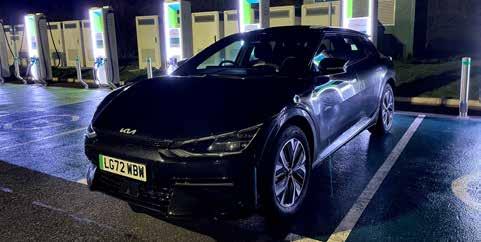
Can the charging infrastructure to cope with longer EV trips?

4-15 Business News
The latest from around the UK private hire sector
18 News Analysis
How Brexit is jeopardising UK car manufacturing

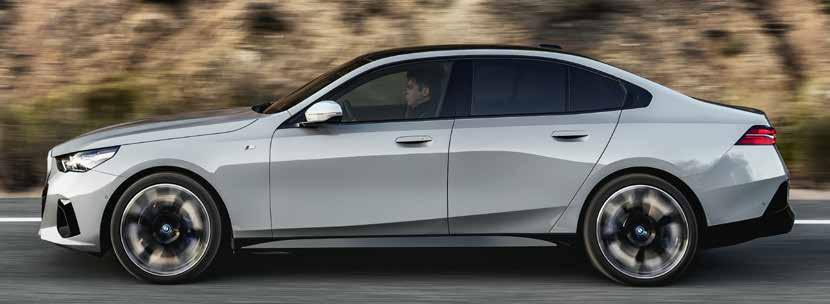
26 First Look New BMW 5-series and i5

32 Diary Date
Professional Driver Car of the Year judging day, 2023
REGULARS
28 The Knowledge 29 The Advisor 30 The Negotiator 31 The Insider
Kevin Willis, Peter Panayiotou, Mike Stone, Dennot Nyack, Dr Mike Galvin, Tim Scrafton
WEBSITE Martin Coombes 01959 547000
COMPANY ADDRESS
50 Beechcroft Manor, Oatlands, Weybridge, KT13 9NZ
SUBSCRIBE
Curwood CMS Ltd, The Barn, Abbey Mews, Robertsbridge, TN32 5AD 01580 883844 subs@prodrivermags.com
Batteries, Brexit and the existential threat to UK car manufacturing

2 JUNE 2023 contents
18 22 26 JUNE 2023 18 ANALYSIS: battery production
Government’s ambitious strategy of ending petrol and diesel new car sales by 2030. It follows the collapse earlier in the year of Britishvolt, the planed “gigafactory” that was intended to supply lithium-ion batteries Now group of car manufacturers, including Stellantis, Ford and JLR, wants the UK government to address trading agreements between the UK and EU, drawn up hastily in the aftermath of Brexit. The automakers fear that the current rules could result in the imposition of tariffs on imported battery packs, making UK manufacturing uneconomic compared to other European nations. closures at time when UK output has already tumbled to around half pre-Brexit levels. Production has collapsed since it hit a peak of 1.75 million cars year in the heady days of 2016. In 2022, UK car production tumbled to just 775,014 units – a fall of almost 10% even against Covidravaged 2021. This latest blow to the Government’s ambitions for an all-electric auto industry, shines stark spotlight on the damage, perhaps irretrievable, that Brexit has caused. It comes just months after the collapse of the proposed Britishvolt electric car battery venture, described at the time by former Aston Martin and Nissan UK CEO the auto industry in the UK”. While Britishvolt has subsequently been bailed out by Australian investor Recharge Industries, is likely to focus on other types of batteries and when does start production, not automotive batteries. This will leave most manufacturers without any source of UK-based supply something that is needed under the post-Brexit trading agreements. With the clock ticking toward the Government’s self-imposed deadlines for the end of petrol and diesel car sales, will the lack of battery capacity force the deadlines through Brexit and massive investment in battery capacity in the EU, doesn’t look good for the UK manufacturing sector. Can anything be done to right the ship before it completely capsizes? The need is pressing. What Stellantis Cooperation Agreement (TCA) which requires at least 45% EU or UK content for electric cars, and 60% for batteries. from January 1, 2024. Stellantis, the parent company of Vauxhall, Citroen, Peugeot, Fiat and Chrysler, wants this pushed back to 2027 – and the company has threatened to pull Port and Luton, jeopardising 5,000 jobs. Mark Bursa
HE MUCH-TRUMPETED ELECTRIC FUTURE OF THE UK motor industry has been cast into serious doubt after several manufacturers called on the Government to renegotiate post-Brexit rules on battery supply. Stellantis describes the new rules as “a threat to our export business and the sustainability of our UK manufacturing operations unable to meet these rules of origin”. The Rules of Origin date from December 2020, when Boris Johnson’s Government to fend off the immediate threat of tariffs – but in reality, all the TCA did was kick the can down the road. The Rules of Origin requirements of the TCA specify a six-year phase-in of the requirement for battery electric vehicles (BEVs) to have maximum of 45% content from outside Europe, reducing from 60% to 55% to 45% over the period. The EU does not seem minded to help Stellantis and co out. In report published in March 2023, the European Commission said it did not intend to revisit product-specifi rules beyond “technical adaptations”. The report said: “These rules strike a fair balance while contributing to strategic autonomy in essential sectors.” According to Professor David Bailey of Birmingham Business School: “The TCA requires that by the end of 2026 there has to be 55% local content for BEVs and that the “Now a group of car manufacturers, including Stellantis, Ford and JLR, wants the UK government to address trading agreements between the UK and EU, drawn up hastily in the aftermath of Brexit...” VOLUME 17 ISSUE 02 £4.95 BMW’s new all-electric i5 The road to good intentions Can the charging networks cope on a 700-mile road trip?
T
in England No.: 7086172 © 2023 All contents copyright of ProDriver Media Ltd.
Registered
Short circuit?
The more I test electrIc cars, the more I become aware of the increasing numbers of EVs on the road. But things have changed. Ten years ago, when we first started testing EVs and trying to push the limits of their range, the EV users we met were pioneering sorts, happy to give cheerful advice about the networks and the pros and cons of EV ownership. Today’s EV user is not necessarily a cheery “first waver”. As the numbers swell, these are car users under stress, needing to get somewhere and not needing any added anxiety.
Trouble is, there’s still plenty of anxiety. Nowadays there are still pros and cons – but the cons are rather different. Instead of range anxiety from the feeble range of the firstgen EVs, the latest models offer comfortably over 200 miles, allowing most British cities to be accessed with one or, at most, two recharges.
And this is where the trouble starts. The UK Government set the clock ticking on EVs with its announcement that new petrol and diesel cars would cease to be sold from 2030, with an extra 5-year stay of execution for plug-in hybrids.
The announcement was typical of the shambolic Boris Johnson government. Not backed with data, just hopes and promises that somehow, this would all be achieved and would work properly.
It’s not going so well at the moment. Installation of infrastructure is lagging seriously behind the sales curve of EVs. By the end of the year, there will be more than a million EVs on UK roads, but the charge infrastructure is chaotic. There are some good operators such as Gridserve, Osprey and Instavolt, which are installing chargers wherever they can. But the RAC does not believe the target of having at least 6 rapid chargers in every motorway service area by year-end is not going to be met.
Meanwhile the numbers of EVs is rising – it’s not uncommon to find all chargers fully occupied and drivers waiting to use them, adding more time to their journeys.
And when they get on a charger, there’s very little chance of it running at the designated speed. 350kW? You might get 120kW. Or 70kW. And as for a 50kW charger, which at full speed is just about useable, you might get half that. Which means a handful of miles in a 45-minute charge. OK for local use, but not if you’re travelling any distance. The charge points do not do what it says on the tin.
It’s not the charge point operators’ fault. The grid is not always able to cope with the extra pressure that EVs put on it. If it’s struggling with 750,000 EVs, how will it cope with
the five million that are expected on the road by 2030?
With a mish-mash of government funds, much of them left to local authorities to spend – or not – there is no joinedup strategy for EV charging. Motorway fast-charging if funded differently to on-street urban charging, and that is left to the whims of often poorly-advised or ignorant local councillors.
Operators meanwhile can charge what they like – with energy prices still through the roof, 69-79p per kW is common. That makes recharging a lot more expensive than filling up with petrol or diesel. And remember – the government takes a great lump of duty from the fuel – it only charges VAT on charge points. That lost revenue will need replacing somehow.
The effect is starting to turn people off EVs. We know anecdotally that many chauffeurs would prefer to stick with PHEVs as long-distance work via EV is increasingly difficult and expensive. And if there’s still a price differential (the new BMW i5 is £73,000 compared to a petrol 520i at just under £50,000), where’s the incentive to switch?
Meanwhile one of the lasting legacies of the dismal Brexit situation could be the end of most UK car manufacturing –unless the Government offers more bungs and sweeteners to the likes of Stellantis and JLR. That’s your money, being given to a wealthy multinational, because of the disastrous Brexit decision that has crippled our trading relationships with Europe and makes just-in-time supply chains very difficult to run.
Rejoining the single market would fix much of this, but it would appear the opposition party is as clueless as the incumbent government on this obvious solution.
There needs to be a long, hard look at the whole EV issue, led by people with greater competence than the current government. We all want cleaner air, and it’s clear that the latest EVs are in many cases technological tours de force.
But the problems are not going away. Maybe the Germans will get it right with their biofuel developments. Maybe a better battery technology will emerge, with less environmental manufacturing impact as well as longer range and faster charging.
Maybe. But it needs fixing quickly, if that 2030 deadline is to be met. Don’t hold your breath.
Mark Bursa Editor
3 JUNE 2023 comment
markbursa@prodrivermags.com
Wrexham’s Crown Cars joins fast-growing Take Me group
Mark Bursa
Take Me Group has made another acquisition, with Crown Cars of Wrexham joining the fast-expanding cab conglomerate.

The north Wales-based company was founded in 1983, and has been run from its base in Rhosllannerchrugog by Andy Roberts since 2016. It currently has a fleet of around 20 vehicles, and Roberts said: “Crown Cars is one of the leading providers of taxi hire in the Wrexham area. We have an extensive fleet of cars including both 6-seater and 8-seater vehicles, only using local drivers with the right knowledge.”
Andy Roberts took over Crown Cars in 2016, although the taxi business has been established since 1983.
Recent media attention on Wrexham has benefited the company, Roberts said. This is thanks to Hollywood actor Ryan Reynolds’
acquisition of the local football team and its subsequent return to the Football League, documented in the hit TV show ‘Welcome to Wrexham’. Roberts said: “We can see especially on match days that there is more and more work for drivers, and now that the club has been promoted to the football league, we feel more visitors will start to come to the town, which will benefit us, the pubs, hotels and general economy of the town.”
Competition watchdog to grill supermarkets over petrol and diesel price ‘profiteering’
Mark Bursa
Petrol and diesel prices are unnecessarily high, according to the UK competition watchdog.
The Competition and Markets Authority (CMA) said oil companies could not blame global factors such as the war in Ukraine for high prices, and accused retailers of taking bigger margins than before the Covid pandemic.
The watchdog said it would question the major supermarkets, which account for a significant proportion of fuel sales, over evidence that retailers have increased fuel prices to unnecessarily high levels as a result of weakening competition between the supermarkets.
The CMA said average 2022 supermarket pump prices were 5p a litre more expensive than they would have been had supermarkets maintained their average margins at 2019 levels. It added that it had seen internal documents from one supermarket group which specified significantly increased margin targets.
Campaigners have accused retailers of charging
Take Me Group CEO David Hunter said: “It is great that the Take Me team have worked so hard to add Crown Cars to the group. I know Andy and his team will bring new skills that we can all learn from, as well as our other Taxi business leaders sharing their best practises with him and the crew at Crown Cars.”
Hunter added: “This is how as a Group we get better with every single new company that joins us.
Each brings its own unique skills, and together we become stronger.” He added that more acquisitions are in the pipeline. “Keep your eyes peeled for what may happen over the summer. 2023 is shaping up to be just as busy as last year.”
Take Me is in the process of rebranding all its subsidiaries under unified Take Me branding, a process that will continue throughout the year and will include Crown Cars.
costs 15p a litre or so more at the pumps, much more than the historical gap of between 5p and 10p.”
The lobby group FairFuelUK has estimated that diesel drivers have paid on average 19.85p a litre more than petrol users since the start of 2023, while wholesale market prices for diesel have been only 2.4p per litre higher than petrol over the same period.
significantly higher prices for diesel, which costs about 10% more than petrol at the pumps, despite the fact that the wholesale market price is lower, leading to accusations of profiteering at the expense of diesel drivers.
The RAC estimates that on average forecourt owners are making double the profit from diesel users, which are often vans and trucks serving retail businesses, compared with the margins from sales of petrol.

RAC Fuel Watch showed diesel was 6p a litre cheaper than petrol on the wholesale market at the end of last month. The average pump price, however, stood at 159.43p while petrol was 146.5p. The motoring organisation said it believed drivers should be paying around 143p “at the very most” for a litre of diesel.
Steve Gooding, director of the RAC Foundation, said: “Diesel drivers could be forgiven for thinking they’re being taken advantage of. The wholesale price of the fuel is now below that of petrol yet still
Sarah Cardell, the chief executive of the CMA, said: “The rising cost of living is putting people and businesses under sustained financial pressure. The CMA is determined to do what it can to ensure competition helps contain these pressures as much as possible.
“Although much of the pressure on pump prices is down to global factors including Russia’s invasion of Ukraine, we have found evidence that suggests weakening retail competition is contributing to higher prices for drivers at the pumps. We are also concerned about the sustained higher margins on diesel compared with petrol we have seen this year.
“We are not satisfied that all the supermarkets have been sufficiently forthcoming with the evidence they have provided in our road fuel market study, so we will be calling them in for formal interviews to get to the bottom of what is going on.”
The CMA, which began studying the road fuel market in detail last year and has almost concluded its investigation, said it would conduct formal interviews with the supermarkets’ senior management and will issue a final report by July 7, 2023.
news APRIL 2023 4
ComCab takeover helps Addison Lee double profits in 2021-22 financial year
Mark Bursa
Addison Lee doubled its profits in the 2021-22 financial year, despite the impact of the Covid-19 pandemic and a chronic shortage of private hire drivers.

The business achieved an adjusted EBITDA of £19.1 million, up from £7.9m the previous year, on a turnover of £218.5m, helped by the acquisition in January 2021 of black taxi operator ComCab and a move towards an allelectric private hire fleet.
Addison Lee said having private hire, EVs, courier, and taxi all available digitally and on one platform, resulted in “unprecedented demand” for its services, with a 33% year-on-year growth in passenger revenue.
Addison Lee CEO Liam Griffin said: “We’ve had a strong year, borne out by these financial results. The addition of black taxi and the growth of our EV fleet means that the company is thriving. As the only large operator trusted to
hold a full 5-year licence from our industry regulator, we continue to be the clear partner of choice for passengers and London businesses looking for a premium, safe experience. We’re confident we’re perfectly positioned for continued strong growth.”
In a challenging labour market, Addison Lee has also enhanced its driver offer, with drivers now earning on average 30% more than pre-pandemic earning
Eddie Townson (1952-2023)

ProDriver magazine is saddened to hear of the death of Edward (Eddie) Townson over the May Bank Holiday Weekend. Eddie was a well-known and popular figure in the private hire industry, having served as Chairman of the Private Hire Board. Eddie was instrumental in securing Private Hire Licensing in London in 1998. Alongside his family, he successfully ran Carlton Cars in Welling from 1987 onwards.
Steve Wright, chair of the LPHCA, led tributes to Eddie, saying: “It is with tremendous sorrow that over the weekend I was contacted by Eddie’s family to say that he had sadly passed away. Eddie was a great friend, and a very special person, who worked for the Private Hire Industry tirelessly and selflessly as Chairman of the Private Hire Board and as a longstanding London PHV operator. He will be greatly missed by the many people who were fortunate enough to have met him.”
Everyone at Professional Driver sends their sincerest condolences, to Eddie’s family, friends and colleagues at this difficult time.
levels. The driver package now includes sick pay, life cover, and a driver pension scheme, as well as the AL Rewards scheme, launched in partnership with Collective Benefits to support drivers’ financial, physical, and mental wellbeing.
Griffin continued: “Our recruitment efforts have paid off and we’ve overdelivered on our target of recruiting 1,000 new drivers, adding more than 1,500 since the beginning of 2022. With more
than 5,000 vehicles on our fleet, we’re in a good position to offer our customers the best service in the industry.”
Addison Lee now has more than 1,000 Volkswagen ID.4 EVs in service, and it recently opened a new Fleet Hub in West London, complete with ultra-rapid charge points. Addison Lee has formed strategic partnerships with BP Pulse, ChargePoint and Bonnet to ensure drivers have access to reliable charging infrastructure.
Beyond the standard fleet, the firm is also introducing 400 zero-emission capable Audi A6 plug-in hybrid vehicles to its executive fleet, which will further enhance its credentials as London’s leader in sustainable ground transport services.
Addison Lee is also taking a digitalfirst approach to further improve the efficiency of its operations. It is now rolling out Prism, a digital solution that helps travel managers within Addison Lee’s customer base to manage their passenger car and courier programmes.
New offices for Midlands operator Local Radio Cars
A family-run West Midlands taxi firm has moved into larger premises to cope with growth.
Local Radio Cars, which was acquired by Andy Williams in March 2022, has since then doubled its driver numbers to around 100, and has moved to a new office in a shopping centre in the Birmingham suburb of Chelmsley Wood. The bigger premises are needed to house nine new recruits in the backroom team.
Williams said: “This move will allow us to be at the heart of the community and allow our customers to put names to faces. We want to retain the personal touch as we grow. Since acquiring Local Radio Cars, our team has invested heavily in advertising and incentives for customers and drivers.
The company services Chelmsley Wood, Smiths Wood, Castle Bromwich, Coleshill and the surrounding areas, and it is looking to grow further over the next couple of years. “Our ambition is to improve on our recent growth and create more opportunities for our community, either on the road or in the office,” said Williams.
news APRIL 2023 5
Bolt adds London black cabs to app as dedicated booking option
Mark Bursa
Ride-hailing app Bolt has added London black cabs as a dedicated booking option.
Black cabs have previously been available on FreeNow, following its acquisition of dedicated app Hailo, but Bolt is by far the largest platform to add black cabs to an app.
The move could accelerate moves by Bolt’s chief rival Uber to do the same. Uber’s UK boss Andrew Brem has said he would like to see black cabs available on the Uber app.

However such a move is likely to be resisted by the taxi trade body, the LTDA. A spokesman was reported as saying “We all know this will never happen in London, but it seems now they are struggling to compete, having been forced to raise their prices, they are considering their options. No thanks, Uber.”
But evidence suggests ride-hailing apps are continuing to experience record post-pandemic demand, and Bolt’s said signing up to the app would allow cab drivers to tap into this and boost
their fare potential, while also offering passengers more choice.
Bolt will add a £2 booking fee on top of the metered trip fare, with customers benefiting from a reliable service across London. Commission will be suspended for the first six months on the platform for drivers that sign up before April 30, 2023. After that, Bolt will charge a £2 commission from drivers on every trip. Furthermore, Bolt is offering passengers 15% off their first Black Cab trip, up to a £10 cap.
Bolt said the move would benefit traditional taxis in periods of low demand, and this should outweigh the tension between traditional taxis and newer ride-hailing apps which facilitate private hire vehicles. Bolt operates its platform in many traditional taxi markets across Europe, including Ireland.
Josh Ryan, Bolt’s country manager for UK rides, said: “We’re really excited to be creating this category in London, linking drivers into a much bigger passenger pool and offering passengers more choice. We have lots of experience of operating traditional taxi markets so we hope to be able to create a vibrant, mutually beneficial service that offers Londoners another way around in advance of the king’s coronation and warmer months.”
Bolt launched in London in 2019 and has expanded to 19 other UK cities. Across Europe the company offers a range of travel services including e-bikes, scooters, car-sharing, ride-hailing, and food delivery.
Zest wins TfL contract to set up electric charging points on public land in London
Transport for London has awarded electric vehicle infrastructure provider Zest a contract to roll out 39 new EV charging bays by the end of 2024.
The charge points will be built on 24 sites in south and south-west London, The 39 new bays will be installed at 24 locations spread across Bromley, Greenwich, Hammersmith and Fulham, Kingston, Lambeth, Lewisham, Merton, Richmond, Sutton and Wandsworth.
The charging infrastructure will be placed in parking bays near key routes used for essential road journeys typically made by high mileage, commercial users – including taxis and delivery vehicles.
Zest will provide and operate the charge points for 15 years, with no financial costs or operational overheads for TfL. Under the terms of the contract, TfL will receive a share of charging revenues and a ground rent for the use of its land. Zest is backed by the government-sponsored Charging Infrastructure Investment Fund (CIIF), the £420m public-private fund whose mission is to be the catalyst for large-scale EV infrastructure projects like this.
As part of its Electric Vehicle Infrastructure strategy, TfL’s modelling predicts that if current demand continues, the city will need at least 1,600 rapid charge points by 2025 and up to 3,900 by 2030.
To help achieve these numbers, TfL is looking at how to bring more of its own land into use for EV charging bays and is working with other members of the Greater London Authority, including the London
Fire Brigade, the London Ambulance Service, and the Metropolitan Police, as well as partners in the NHS and London Borough Councils, to increase the density of the rapid charging network across the London. This innovation sees TfL take public land to the private market. More than 100,000 plug-in electric cars and vans are already registered in the capital. With close to 13,000 charge points, London currently has 31% of all EV charging infrastructure across the UK, more than any other UK region.
London is on track to meet the target of 40,00060,000 charging points by 2030, but to facilitate this ambitious goal, London Mayor Sadiq Khan wants add 100 new rapid charge points. Around 880 of the EV charging points across the capital are rapid or ultrarapid charging points that deliver a full charge within 30 minutes - this includes 300 delivered by TfL. The number of rapid charging points across the capital also includes London’s 26 rapid charging hubs, which work much like petrol stations for electric cars.
David Rowe, TfL’s Director of Investment Delivery Planning, said: “More rapid charging points are key to encouraging people and businesses to make the transition to electric vehicles, giving drivers confidence that they have a place to power up in a short period of time.”
Zest CEO Robin Heap said: “The UK needs an injection of serious infrastructure to meet its net zero goals, and it is farsighted public sector organisations who are taking the lead. Placing rapid and ultra-
rapid charging points directly on to London’s highvolume arterial roads will make it easier for drivers to choose electric and improve the air quality for local communities. We’re looking forward to providing and operating these charge points in partnership with Transport for London.”
The Office for Zero Emission Vehicles announced in late March that London has been allocated £35.7m funding for Local EV Infrastructure (LEVI) Capital funding. This is additional to the £9.7m LEVI pilot funding awarded in the last financial year. This will see 400 fast charge points introduced in boroughs across north and west London, alongside additional government funding awarded to boroughs through the On-street Residential Charge point Scheme.
In 2021, TfL opened the Glass Yard charging hub in Woolwich where eight vehicles can recharge simultaneously from the charging points, receiving a full battery in around half an hour.
The hub in south London is part of TfL’s strategy to have a rapid charging hub in every one of the capital’s five sub-regions: north, south, east, west and central. The first EV hub was built in east London at Stratford International and construction of a hub at Baynard House in the City of London was completed last year, bringing six rapid charging points to central London.
In recent months, two further hubs have been brought to London – MFG Collier Row and Euro Garages’ hub at Heathrow North. These hubs house 14 rapid charge points between them.
news JUNE 2023 6 news
Eastbourne taxis go live on FreeNow app after successful Brighton launch
Mark Bursa
Hackney taxi drivers in the south coast town of Eastbourne will be able to take jobs via the FreeNow app from May 3.
The move follows a successful launch of the ride-hailing service in nearby Brighton in 2018. The company registered a 25% growth in demand and a 10% growth in trips in the Brighton during 2022.

Vincent Franco, hackney taxi driver and committee member of the Eastbourne Hackney Taxi Association, said: “I’m delighted that Eastbourne Hackney taxi drivers are able to use the FreeNow app. The app is easy to use and gives me access to a huge customer base from the UK and Europe. This is a great
advantage since it increases the chance to get more jobs from tourists and other visitors to the region.”
Mariusz Zabrocki, UK General Manager at FreeNow UK, said: “It is our job to continue responding to
Aberdeen is the city with the lowest risk of road accidents, according to Zego study
Mark Bursa
Aberdeen is the British city where you are least likely to have a road accident, a new study by taxi insurance company Zego has found.
Zego analysed ONS data to discover the number of road accidents in each UK city in 2021, both fatal and non-fatal. The number of accidents was calculated per 10,000 people to determine the ranking – with Aberdeen coming out as the clear safest, ahead of Swansea and Stoke.
Aberdeen reported the fewest accidents reported in 2021 (59), equating to just 2.79 for every 10,000 people. Indeed, four Scottish cities made the top 10, with Dundee in fourth, Glasgow in seventh and Edinburgh eighth.
Three Welsh cities also made the list – Swansea was second with 6.6 accidents per 10,000p people, while Cardiff and Newport took fifth and ninth places respectively.
Only three English cities made the top 10: Stoke-on-Trent, Bath and Milton Keynes. But at the opposite end of the scale, Doncaster was found to be the city with the greatest risk of accidents, with 36.23 collisions per 10,000 people.

A Zego spokesperson said: “Although the
increased demand for our service across the UK. Following the success of FreeNow in Brighton, Eastbourne is the next logical step for us. Not only does this expansion help us to meet the increasing demand for fast
and accessible travel in the area, but it also allows us to continue prioritising taxi drivers by offering them high earnings and other unique advantages of using our app.”
Customers in Eastbourne are being offered a one-off 50% discount code for a journey, capped at £8 using code LAUNCH50. The discount is valid for one week once deposited in Eastbourne.
The FreeNow mobility app, coowned by BMW Group and MercedesBenz Mobility, is now available in more than 150 cities across nine European countries. Users can access all types of mobility services within a single app including public transport, taxis, private hire vehicles, car sharing, e-scooters, e-bikes and e-mopeds.
factors that contribute to the safety of driving in these cities isn’t clear, it’s particularly interesting that four cities in Scotland make the list as well as three cities in Wales, suggesting that these countries are the least dangerous in the UK when it comes to road safety.”
“However, while the risk of accidents in these cities is low, there’s still a small chance of a collision. To keep yourself safe, it’s important to stay alert while driving so that you can identify any potential hazards to protect both you and other road users as well as watching out for any warning lights on your dashboard in order to remain in control of your vehicle.”
news
JUNE 2023 7
City RTAs/10,000 1 Aberdeen 2.78 2 Swansea 6.60 3 Stoke-on-Trent 7.85 4 Dundee 7.97 5 Cardiff 8.16 6 Bath 9.20 7 Glasgow 9.22 8 Edinburgh 9.73 9 Newport 11.09 10 Milton Keynes 11.38
Global taxi market recovering, but bookings down on 2019, says Taxi Butler report
Mark Bursa
Global taxi and private hire bookings are recovering monthon-month, but are still some way below peak-pre-pandemic 2019 levels, according to a new report from Amsterdam-based dispatch systems supplier Taxi Butler.

But the Global Taxi Booking Industry Report showed that Q1 2023 experienced a 13.6% decrease in bookings worldwide compared to Q4 2022, and fewer bookings compared to Q2 and Q3 2022, an indication that driver shortages are impacting bookings. The report revealed an average of 19% lower monthly bookings every month than in 2019.
However, March 2023 had 22% more bookings than January 2023, and 2.4% growth was noticed between January and March, with the biggest change occurring in March.
UK and Ireland showed a faster
Volkswagen reveals upgraded ID.3 EV with simplified model line-up Mark Bursa
Volkswagen has revealed a facelifted version of its ID.3 electric car, and is putting in new production facilities in Germany in order to ease supply restrictions on the car.
UK customers can now order the enhanced Volkswagen ID.3 for delivery later in the year, There are just two trim variants - the original Business, Style and Tour trim levels have been replaced by Pro and Pro S, priced £37,115 and £42,870 respectively.
The two trim levels each have different battery capacities: 58kWh for
week-on-week recovery than the rest of Europe, but in overall terms, the UK is lagging behind European markets compared to data from 2019 and 2022.
In Q1 2023, the UK experienced an average week-on-week growth of 1.4%, whereas EU markets saw an average week-on-week growth
of 0.7%. But EU markets saw 12.1% more bookings in Q1 2023 than in the same quarter last year, while the number of bookings in the UK fell by 6.6% than in the same quarter of 2022.
Compared to 2019, the picture looks worse, with UK and Ireland down 48.2% in Q1 2023 on Q1
2019, while EU bookings fell 36% comparing the same quarters.
Globally, the taxi industry has experienced 2.6% average weekover-week growth in Q1 2023 compared to 2022, but bookings were down 13.6% between Q4 2022 and Q1 2023. According to Taxi Butler, the most significant growth is being driven from North America and Australia/New Zealand.
Taxi Butler sales director Laurence Docherty said: “Despite the decline in bookings compared to previous quarters, the taxi industry shows signs of growth on a more granular level with positive week-over-week growth, and some regions surpassing pre-Covid levels. Some regions are coming out of the pandemic stronger than others, which is to be expected.”
n To see the report, click here: https://www.taxibutler.com/ quarterly-reports/q1-2023/
enlarged air intakes and a longerlooking bonnet through the removal of the black strip beneath the windscreen.
The new model also marks the introduction of option packs, which are available for both trims and group together popular options according to personal preferences. The Exterior Pack, for example, allows new two-part LED tail light clusters on the tailgate instead of reflectors.
Pro and 77kWh for Pro S. The 45kWh battery offered on earlier versions of ID.3 is no longer available. The 77kWh battery gives the ID.3 Pro S a predicted range of up to 347 miles (combined WLTP), while the ID.3 Pro has a top range of 262 miles using the same measure.
The ID.3 Pro S can be recharged at speeds of up to 170kW, allowing recharge from 5-80% in 30 minutes. ID.3 Pro has a charging capacity of up
to 120kW, so a similar recharge would tale 35 minutes.
The facelift brings a restyled front end, higher-quality materials and upgraded driver assist systems. The range of exterior colours has been extended to include Dark Olivine Green, and the use of animal-free materials underlines Volkswagen’s sustainability strategy for its allelectric ID. family.

The restyle gives crisp lines,
Volkswagen says it has listened to customer feedback regarding the ID.3’s interior, resulting in a more luxurious finish with soft, foambacked touch points throughout the cabin. A further upgrade in 2024 will see the 10in infotainment screen replaced by a larger 12.9in screen.
In a bid to ease supply issues, VW has announced it will be adding production capacity for the ID.3 at its Wolfsburg factory, in addition to production at Zwickau and Dresden. This should reduce waiting times for deliveries of the car.
news JUNE 2023 8


Who said a work life balance can’t always go your way? THE AWARD-WINNING NEW NISSAN ARIYA AVAILABLE WITH E-4ORCE ALL-WHEEL DRIVE* AN EXHILARATING 100% ELECTRIC COMPANY CAR WITH JUST 2% BIK.** INNOVATING TO SUPPORT YOUR BUSINESS DISCOVER MORE ABOUT THE NEW NISSAN ARIYA Model shown ARIYA 87kWh Performance e-4ORCE with optional two-tone metallic paint. ARIYA range 247-329 miles. CO2: 0g/mile. WLTP figures are for comparability purposes. Actual real world driving results may vary depending on factors including the starting charge of the battery, accessories fitted after registration, weather conditions, driving styles and vehicle load. e-4ORCE available on 87kWh versions. *e-4ORCE available on 87kWh versions. **BIK figures are based on HMRC’s quoted rates for tax year 2023/2024 (whilst not expected HMRC may withdraw or change). Information does not constitute financial advice. You may want to seek advice from a tax advisor.
Government could miss motorway services EV charger target by end of 2023, says RAC
Mark Bursa
The Government is unlikely to meet its target of having six or more rapid or ultra-rapid electric vehicle chargers at every motorway service area in England by the end of 2023, according to new research by the RAC.

Only 27 of 119 motorway services reviewed by the RAC (23%) on ZapMap currently have the target number of chargers to serve the UK’s estimated 760,000 battery electric vehicles.
The RAC’s research found there are around 400 high-powered charging units situated at motorway services capable of charging 682 electric cars at one time. This means there is currently an average of just 3.4 rapid or ultra-rapid chargers at motorway services.
Six motorway services in England don’t have any high-powered chargers. These are Leicester Forest on both sides of the M1, Tebay South on the M6, Carlisle Northbound on the M1, Strensham Southbound on the M5 and Barton Park on the A1(M).
However, Gridserve, the leading motorway service area charge point provider, said the report was “premature”, adding: “Gridserve is
laser focussed on delivering six or more high power chargers at all Moto and Roadchef locations by the end of the year.”
The company added in a statement: “This is not straightforward, and there are issues outside of our control, particularly relating to the timeframes for energising new grid connections. However, we have the funding, the supply chains, the partnerships, and the expert teams all in-place to meet Gridserve’s contribution to delivering the Governments 2023 target.”
The company said it had already delivered more than 70% of the high power electric super hubs identified in the RAC report. “Given we are less
than halfway through the year, and we have the considerable momentum with dozens of additional sites in and entering construction over the next few months, at least from Gridserve’s perspective, we would suggest that the RAC report is a little premature.”
The Government’s ‘Taking charge: the electric vehicle infrastructure strategy’ published in March 2022 set out an intention to accelerate the rollout of high-powered chargers on the strategic road network through the £950m Rapid Charging Fund.
The document explicitly states: “We will ensure that every motorway service area has at least six rapid chargers by the end of 2023, with some having more than 12.” Currently,
there are only six services in England which have more than 12 such devices. Latest charging statistics from Zapmap show the UK has 42,566 charging devices of which a fifth (19% or 7,928) are rapid or ultra-rapid. But only 5% of all these high-powered chargers are at motorways services. The Government says it expects there will be around 300,000 public chargers of all speeds as a minimum by 2030 and more than 6,000 high powered chargers along strategic roads by 2035.
Forecasts in the Competition and Markets Authority’s ‘Building a comprehensive and competitive electric vehicle charging sector that works for all drivers’ suggest that at least 280,000-480,000 public charge points will be needed by 2030.
RAC EV spokesperson Simon Williams said: “Our findings show there is much work to be done before the end of the year if the Government’s target of having six high-powered chargers at every motorway service area is to be met. Installing these types of units is not straightforward as connecting to the electricity grid is expensive and timeconsuming. More needs to be done to make this process simpler.”
EV users can save £260/year using public chargers overnight: Bonnet
Mark Bursa
Electric vehicle owners using public chargers overnight are on track to save up to £260 a year, according to new research undertaken by EV charging app Bonnet.

Bonnet reviewed the habits of more than 100,000 drivers using its app, looking at where and how they refuel their EVs, and found those taking advantage of smart off-peak energy tariffs, which are increasingly offered by public charging networks, have already saved hundreds of pounds this year.
Off-peak tariffs are currently offered in the UK by several major charging networks, such as GeniePoint and
Char.gy, allowing drivers to take advantage of cheaper rates overnight, though the exact hours and days vary by network. These smart tariffs are especially helpful for the estimated
third of drivers who can’t install a charger at home.
To undertake the analysis, Bonnet looked at all the recharging sessions undertaken through its app to create an average cost of those using peak tariffs, off-peak tariffs, and those combining off-peak with Bonnet’s Boost subscription – which further discounts driver costs by up to 15%.
EV drivers who used both off-peak tariffs and Bonnet’s Boost spent an average of £11.13 for a full charge – meanwhile those who didn’t take advantage of off-peak rates, and weren’t boost subscribers, spent a hefty £16.19 on average for a full charge - an increase of almost 50% (46.5%). Char. gy said its night rate (from midnight to
7am) was 29p/kWh, against the day rate of 65p/kWh. Assuming normal use, over a year, Bonnet’s data shows that EV drivers who take advantage of Bonnet’s Boost packages and off-peak tariffs can save £260 annually.
Patrick Reich, CEO and co-founder of Bonnet, said: “This data will be welcome news for those looking to go electric but worried about not having access to a home charger. With the rollout of these innovative smart tariffs at public chargers, drivers are able to save hundreds of pounds annually –even with historically high electricity costs.”
Bonnet has updated its app so drivers can easily find chargers with cheaper overnight rates.
news JUNE 2023 10 news
Osprey Charging Network adds 150kW charge points in Hull and Bridgend
Mark Bursa
Hull and Bridgend are the latest locations to receive new Osprey rapid electric vehicle charge points as part of the operator’s ambitious plans to have more than 1,000 rapid chargers in operation by the end of 2023.
In Bridgend, the new public charging sites are at two Marston’s Brewery pubs: the Cherry Laurel (two chargers) and Llangewydd Arms (three chargers). Three similar devices have been installed at Willerby Business Park in Hull [pictured, top].

The 75kW rapid charge points are compatible with every EV on the market today and can typically add 100 miles of range in just 35 minutes, depending on the model of the vehicle and its battery.
The chargers can accept contactless bank cards, Apple/Google Pay, the Osprey App and RFID card payments as well as payments through all major third-party payment methods including fleet cards. Osprey is one of the UK’s largest EV charging networks and has been ranked in the top 5 UK networks for customer satisfaction by Zap-Map for three years running.
Ian Johnston, CEO of Osprey Charging, said: “The electric transition is well underway and we’re here to provide a reliable and rapid public charging service for drivers, from Cornwall to Scottish Highlands. Each of our new locations is carefully designed to maximise space, accessibility and availability of chargers, working to the latest and highest standards.”
Government plans to stop any new smart motorways; campaigners demand UK should ‘scrap them all’
Mark Bursa
The Government’s decision to stop building more so-called smart motorways has been welcomed by safety campaigners, But it does not go far enough, they say, and are calling for hard shoulders to be restored to all UK motorways.
Prime Minister Rishi Sunak, who had pledged to stop building smart motorways as part of his Conservative leadership campaign, confirmed over the weekend that plans to convert 14 more stretches of motorway to “smart” status have been cancelled, citing cost as well as safety concerns.
In a statement the Department for Transport said the decision recognised a lack of public confidence felt by drivers, as well as financial pressures.
The government recently delayed a number of road schemes for up to 5 years as the transport budget is pumped into the bottomless pit marked “HS2”. This included a number of smart motorways that were scheduled to be converted during the third Road Investment Strategy period (2025 to 2030).
However, smart motorway schemes on the M56 (junction 6-8) and M6 (junction 21a-26) will be completed as they are already over threequarters constructed.
The government estimates the cancellation of the 14 schemes will save more than £1 billion, while allowing more time to track public confidence in the existing smart motorways over a longer period. Most of the savings will be spent on safety improvements to existing smart motorways. In a previously announced £900m package, 150 extra emergency refuge areas will be built, and technology to spot broken-down vehicles will be installed.
Around 10% of England’s motorway network has already been converted to smart motorway standard. On some of these, the hard shoulder has been replaced by an extra permanent running lane, with refuge areas for brokendown vehicles along the route. Others include a “dynamic hard shoulder”, where the hard shoulder becomes a running lane during peak traffic periods, with overhead signs advising whether or not the lane is “live”.
Data from National Highways shows there have been 63 fatalities on stretches of smart motorway between 2015 and 2019. And a BBC Panorama investigation showed near misses between broken down and moving vehicles on one stretch of the M25 had risen 20-fold since
the removal of the hard shoulder.
Motoring bodies want to see more action on smart motorways. The AA is calling for all existing schemes to now be converted back to permanent hard shoulders. AA president Edmund King said: “Drivers don’t trust them, the technology is not foolproof, and 37% of breakdowns on smart motorways happen in live lanes. And basically those drivers are sitting ducks.
And campaigner Claire Mercer, whose husband Jason was killed on a smart motorway in South Yorkshire, is also pushing for a return of the hard shoulder, saying: “It’s the existing ones that are killing us. And I’m not settling for more emergency refuge areas. So it’s half the battle, but we’ve still got half the battle to go.”
But the government quickly responded to reject these calls. A spokesman for the Prime Minister said: “Adding in hard shoulders would be extremely disruptive to the public trying to go about their day, both for road users for local communities, and that obviously would come at a significant cost to the taxpayer.”
The RAC called the move a “watershed announcement”. Road safety spokesman Simon Williams said: “Our research shows all-lane running smart motorways are deeply unpopular with drivers so we’re pleased the Government has finally arrived at the same conclusion. It’s now vitally important that plans are made for making the hundreds of existing miles of these types of motorway as safe as possible.
He added: “The possibility of converting all lane running stretches to the ‘dynamic hard shoulder’ configuration, where the hard shoulder is open and closed depending on the levels of traffic, could be one option the Government considers.”
Around 10% of England’s motorway network is made up of smart motorways – these include ‘all lane running’ schemes where the hard shoulder has been permanently converted to a live lane and ‘dynamic hard shoulder’ where the active lane only operates part-time.
The construction of smart motorways had already been put on hold in January 2022 to gather more safety data on their operation after a damning report by the Transport Committee.
Sunak said: “Many people across the country rely on driving to get to work, to take their children to school and go about their daily lives and I want them to be able to do so with full confidence that the roads they drive on are safe.”
news JUNE 2023 11
Inverclyde Council approves CCTV cameras following pressure from local operators
Mark Bursa
Inverclyde Council has reversed a ban on in-cab CCTV cameras following a series of attacks on drivers in the area.
In a landmark decision, councillors voted unanimously to allow operators to have cameras in their cabs, following pressure from local trade bodies and unions. In particular, one attack last August, which left a driver scarred for life, forced the change.
The council hopes the CCTV cameras will help prevent crime and assist insurance companies in investigating insurance fraud incidents.
Councillors also backed a motion from Cllr Martin McCluskey to instruct officers to run a public consultation on the use of dashcams in taxis and private hire cars, with the intention of integrating the outcome into the new policy at a later date.
Cllr McCluskey said: “I think it’s going
to make a really big difference to people and I know it’s something that for a long time operators and taxi drivers in the area have asked for. I don’t think it’s going to make things better just in terms of safety for drivers but I think it’s going to improve safety for passengers as well and hopefully also give those who are thinking of entering the trade a bit of reassurance.”
He added: “We have a shortage of taxi drivers in Inverclyde at the moment and it
would be good to see more people enter the trade. Hopefully this will provide people with more reassurance about their safety because I know that’s been a barrier in the past.”
A consultation on the installation of cameras in local cabs last September received unanimous support from the six major taxi operators in the area. All taxis and PHVs with CCTV will be required to display signage indicating that it is in operation and explaining the purpose of the recording.

Images stored in the CCTV system can be retained for a maximum of 31 days, with the policy also setting out requirements around the use of the recordings.
The approved document states that the systems should not be used to record conversations between members of the public as it is ‘highly intrusive’ and says that the CCTV should not have a sound recording facility wherever possible.
Mercedes-Benz reveals new E-Class with petrol and diesel PHEV options, but no EV
Mark Bursa
Mercedes-Benz has revealed an new and larger E-Class saloon, but the car remains a petrol or diesel model, with plug-in hybrid versions. As with the S-Class, there is no electric E-Class – the EQE is designed to plug that gap.

However, Mercedes claims that some of the PHEV versions will have an electric range of more than 60 miles. PHEV versions with both petrol and diesel engines will be available.
The new E-Class is 4,949mm long with a wheelbase of 2,961mm, 20mm longer than the previous model. This gives a larger passenger compartment as well as an increased boot capacity of 540 litres.
The front seats now have 5mm more headroom than in the preceding model, while rear passenger kneeroom and legroom are increased by 10mm and 17mm respectively. Rear elbow width is now 1,519 millimetres, 25mm more than the previous E-Class and almost S-Class level.
Half of the E-Class range will be fourthgeneration plug-in hybrids, with three PHEV models available at launch. A new battery means the electric motor’s output has been increased
from 15kW to 17kW and the boost torque to 205Nm. Diesel and petrol versions are also mild hybrids with integrated starter-generators (ISG).
Like the EQS and EQE, it has the option of the MBUX Superscreen, a glass screen that extends across the whole width of the car, in addition to the
high-resolution driver display in the driver’s field of vision. The car goes on sale in the Summer. Press pictures show a version with the traditional grille and “gunsight” bonnet-mounted three-pointed star, but it is unclear whether this version will be offered in the UK.
news 12 JUNE 2023
New EV charging trade body ChargeUK pledges to double UK network by year end

Mark Bursa
Eighteen of the biggest electric vehicle charging companies have joined forces to form a new UK trade association called ChargeUK, with a goal of doubling the size of the charging network by the end of 2023. ChargeUK, backed by major players including BP Pulse, Shell Recharge, Osprey, Ionity and Gridserve, will serve as the representative body for the UK’s EV charging industry. It will work with government and other stakeholders to help shape policies and regulations to help grow the UK’s charge point infrastructure.
Ian Johnston, head of Osprey (pictured), will serve as the chair of new trade body. He said: “The formation of ChargeUK is an exciting day and is a demonstration of the electric vehicle charging industry’s growing size and importance to the UK economy. Together we are investing billions of pounds to get more charge points in the ground
right across the country. These numbers reinforce our commitment to the UK’s Net Zero future.”
“We will continue to be a proactive partner to Government as we deliver a world-class charging infrastructure, giving the nation’s drivers confidence to transition to electric vehicles.”
Fiona Howarth, CEO of Octopus EV, said: “Charging infrastructure is the key to the EV revolution, and it’s great to see government and industry
LEVC reveals its next-generation all-electric London black cab platform
Mark Bursa
The next-generation LEVC London black taxi will be a fully-electric vehicle, the company has announced.
LEVC has released images of its next-generation all-electric platform, which will replace the current LEVC series hybrid TX taxi and VN5 van models in the next, which use a “range extender” petrol engine in addition to a battery-electric drivetrain.
The new all-electric taxis are likely to replace the TX within the next two years, and are likely to be assembled at LEVC’s plant in Coventry. Batteries will range from 73kWh to 120kWh, giving a range of up to 435 miles, as well as ultra-fast charging.
LEVC’s new EV platform is known as SOA, which stands for Space Oriented Architecture. Codeveloped with Chinese parent company Geely Holding Group, SOA is modular and scalable, and designed to optimise the interior space of vehicles
come together to supercharge the roll out. The Government has set the direction and investors are pumping in much needed capital. With over 23,000 public charging locations and rapid chargers almost doubling every year, UK drivers can enjoy the benefits of EVs: tech-on-wheels with low-cost fuel.”
The launch of ChargeUK was welcomed by transport decarbonisation and technology
minister Jesse Norman. He said: “The launch of ChargeUK shows how industry working together, alongside the Government, can release private investment, improve delivery, raise standards and promote the use of electric vehicle charging infrastructure for drivers across the country.
“Our commitment to decarbonising transport, backed by hundreds of millions in funding, has helped to unlock private sector investment, and the ambitious plans of ChargeUK’s members will support more people than ever make the transition to EVs.”
The 18 founder firms behind ChargeUK are Be.EV, Believ, BP pulse, char.gy, ChargePoint, Connected Kerb, ESB, Equans, Evyve, Fastned, Gridserve, Ionity, Mer, Osprey, Pod Point, PoGo Charge, Shell Recharge and Raw Charging. These companies have committed to a combined investment of more than £6 billion by 2030, which will fund “tens of thousands” of new chargers.
design that incorporates extra carrying capacity underneath the main luggage area, behind the rear axle.

SOA supports vehicle sizes from 4,860mm5,995mm in length and 1,945mm-1,998mm in width, with wheelbases from 3,000mm-3,800mm. SOA can also offer front-wheel-drive, rear-wheel-drive and all-wheel-drive layouts too.
built on the platform, including taxis and vans. It will also enabling LEVC to enter “new sectors”, the company said in a statement – suggesting private cars such as MPVs or SUVs could be built alongside the black cabs and vans.
Developed over the past 30 months at R&D centres in China, Sweden, the UK and Germany, SOA’s flexibility offers multiple seating and loadcarrying configurations. It can support a wide range of passenger-carrying and commercial vehicles, offering significant advances in range, efficiency, safety, charging time, durability and connectivity.
With a centrally-located battery, SOA delivers a fully flat floor with low step-in heights. Electric powertrain components are all fitted up front, freeing up additional space for the driver and passenger. SOA has an innovative rear suspension
Alex Nan, CEO of LEVC, said: “Today, LEVC enters the most exciting chapter in its history. It will bring our new mission to life, delivering smart, green, safe and accessible mobility to all, enabling us to transform from a high-end taxi manufacturer, launching LEVC into new sectors, with an extended range of state-of-the-art pure electric vehicles. Building on LEVC’s unrivalled heritage in producing the iconic London black cab, we are adapting our business to meet the rapidly accelerating demand for spacious, flexible electric vehicles.”
“Our rich history is combined with the resources of the Geely organisation to set our brand on an exciting new path, as LEVC today launches an adaptable architecture for an adapting world. With the combined strength of our new strategy and SOA, we will bring advanced zero-emission transportation to more customers than ever before.”
news
JUNE 2023 13
Fair Tax accreditation aims to build public trust for Wrexham Chauffeurs

Mark Bursa
Wrexham Chauffeurs has been awarded the Fair Tax Mark, joining the movement of businesses committed to financial transparency and responsible tax conduct.
Fair Tax Mark accreditation recognises businesses that pay the right amount of corporation tax at the right time and in the right place. Accredited businesses include listed PLCs, co operatives, social enterprises and large private businesses.
North Wales‑based Wrexham Chauffeurs was established by Geth Thomas (pictured) in July 2019, after years of experience in the private hire industry. The company offers transport across the UK, including to and from all airports, seaports and railway stations. It also provides
wedding cars, guided tours and a “White Glove” delivery service for transporting artwork or official documents.
Graham Drummond, head of communications, Fair Tax Foundation, said: “We’re really pleased to welcome Wrexham Chauffeurs to the Fair Tax community of businesses. The people of Wrexham can be proud
Ford reveals new all-electric E-Tourneo Courier for 2024 launch
Mark Bursa
Ford has released a new compact electric MPV called the E‑Tourneo Courier. The five seat vehicle is the latest fruit of Ford’s alliance with Volkswagen on EVs. Ford has committed to offering 10 EV models in Europe by 2024, as it targets zero emissions for all vehicle sales in the region by 2035. Ford is investing $50 billion globally through 2026 to achieve a production target of more than 2 million all electric vehicles in 2027.
The all electric Tourneo Courier model will arrive in 2024 in Europe, though Ecoboost petrol engined versions will be available before the end of 2023.
E‑Tourneo Courier will carry five adults and their luggage in comfort, with a 60:40 split rear bench and 44% more boot space than the outgoing Tourneo Courier. Occupants
that a local business is leading the way with its responsible tax conduct.”
“Year after year, our polling of the UK public shows they want to get behind businesses that can prove they’re paying their fair share of tax. Through the Fair Tax Mark, Wrexham Chauffeurs can demonstrate they’re doing just that.”
Polling commissioned by the Fair Tax Foundation from ICM last year found that three quarters of the UK public would rather shop with (74%) or work for (75%) a business that can prove it is paying its fair share of tax. Over three quarters (77%) of the public believe that all companies, whatever their size, should have to publicly disclose the taxes they do or don’t pay in the UK.
Across the globe, close to 40% of multinational profits ($970 billion) are artificially shifted to tax havens each year, leading to a $250bn reduction in corporate income tax revenue. Within this, the UK was found to suffer a staggering $110bn of profit shifting, leading to an estimated $21bn reduction in corporation tax revenues – which equates to £17bn of missing tax, or 32% of the total amount collected.
also gain improved shoulder room and headroom, as well as a range of convenient stowage options including a configurable centre console, hidden boot cubby and 44 litre ‘frunk’ in place of the internal combustion engine.
Electric range will be revealed closer to the on sale date. The vehicle offers both 11kW AC and 100kW DC charging options. A

typical 7kW overnight domestic charge from 10 100% will take 7.8 hours. At a DC fast charger, customers can add 54 miles of range in just 10 minutes and charge from 10 80% in under 35 minutes.
The petrol engined Tourneo Courier with a 125PS 1.0‑litre EcoBoost turbocharged petrol engine enters production later in 2023 at Ford’s plant in Romania.
news JUNE 2023 14
Cost of both home and public EV charging has stabilised after tough winter, says Mina report
Mark Bursa
The cost to charge an EV has stabilised over the past few months, following a year of climbing prices, according to new research from EV charging payment specialist Mina.
In its latest EV Report, Mina claims the average cost of home charging only increased by 1p in the last quarter, to 31p per kWh, while public charging tariffs increased by 4p, to 74p per kWh. As a consequence, the average pence per mile cost for driving an electric car stayed flat, at 9p per mile, while the average cost for an electric van rose only 1p, to 14p, compared to Autumn 2022.
It meant that the vast majority of journeys worked out higher in cost than the Advisory Electricity Rate, which although increased to 8p during the period still lagged behind the real outlay for most business journeys.
Mina’s research, based on more than 125,000 charges in the three months to February showed the energy market, although still charging high rates for electricity, has not experienced major inflation despite commentators warning that winter
could see further rises as demand grew for heating and power in the colder months.
“The cap on domestic electricity has certainly helped stabilise prices for home charging,” said Mina CEO Ashely Tate. “But businesses such as charge point operators, which are not subject to the cap, have also seen prices levelling out. And while we’d like to see these costs coming down over the summer months, at least companies running electric vehicles can at last plan costs with more certainty than before.”
Tate continued: “In fact, our research in the report shows that electric cars and vans are still on the whole extremely cost effective when compared to petrol and diesel – even though the cost of fuel has reduced in the past few months.”
The latest report also contains data on home charging habits and gives insights into how the domestic grid will cope as the number of EVs swells.
“We’re able to track exactly when drivers plug in at home, and measure their consumption too. So we’re able to understand demand really accurately, and when you overlay factors such as behaviour and need against grid capacity, a really clear, and
very positive, picture emerges about the future of domestic charging.”

Also looked at in the report is the higher Advisory Electricity Rate (AER), and the new process for calculating it. The report found that while the amount a driver can claim has increased, the single figure for such a complex area of driving costs is still not suitable.
It found that by using the AER, for one in five charges the business was paying too much, while for four out of five charges the driver was out of pocket
“Although the AER has been revised in the hope it will more accurately reflect drivers’ charging costs, and as our data shows, it aligns with a few more journeys than before - albeit still a small percentage,” said Tate.
“The problem is it will never be fair, and now more businesses are losing out if they use it. No matter how much effort goes into producing this single figure, somebody, somewhere is usually on the wrong end of it.”
You can download the full report free here: https://ev.mina.co.uk/mina-ev-report-winter-2022
news JUNE 2023 15
INCREMENTAL TRIPS
Are you the next Local Cab Operator?


• Receive more work - especially during quiet times
• Additional revenue opportunities for your drivers


• Join 150+ operators across 100+ cities
• Grow your fleet
TESTIMONIALS


The driver shortages have been really difficult, but we’ve actually had a lot of new drivers approach us who want to work for us and increase their earnings.
Amir Khan Manager 001 Taxis
The fact that Local Cab only uses drivers when they’re clear is a godsend. It’s been a struggle so it’s just handy that they have these jobs when it’s a little quieter.
David Sherwood General Manager Amber Cars

Local Cab is going better than I expected. It was straight forward getting it switched on and we’ve started to notice the extra bookings pick up.
Nomaan Hussain Owner Jet Taxis


www.autocab.com sales@autocab.com Live Operators In Pipeline for 2023
Batteries, Brexit and the existential threat to UK car manufacturing
The much-trumpeted electric future of the UK motor industry has been cast into serious doubt after several manufacturers called on the Government to renegotiate post-Brexit rules on battery supply.
The dispute is the latest blow to the Government’s ambitious strategy of ending petrol and diesel new car sales by 2030. It follows the collapse earlier in the year of Britishvolt, the planed “gigafactory” that was intended to supply lithium-ion batteries to much of the UK car sector.
Now a group of car manufacturers, including Stellantis, Ford and JLR, wants the UK government to address trading agreements between the UK and EU, drawn up hastily in the aftermath of Brexit. The automakers fear that the current rules could result in the imposition of tariffs on imported battery packs, making UK manufacturing uneconomic compared to other European nations.

This in turn could lead to UK plant closures at a time when UK output has already tumbled to around half pre-Brexit levels. Production has collapsed since it hit a peak of 1.75 million cars a year in the heady days of 2016. In 2022, UK car production tumbled to just 775,014 units – a fall of almost 10% even against Covidravaged 2021.
This latest blow to the Government’s ambitions for an all-electric auto industry, shines a stark spotlight on the damage, perhaps irretrievable, that Brexit has caused. It comes just months after the collapse of the proposed Britishvolt electric car battery venture, described at the time by former Aston Martin and Nissan UK CEO Andy Palmer as “an unmitigated disaster for the auto industry in the UK”.
While Britishvolt has subsequently been bailed out by Australian investor Recharge Industries, it is likely to focus on other types of batteries if and when it does start production, not automotive batteries. This
will leave most manufacturers without any source of UK-based supply , something that is needed under the post-Brexit trading agreements.
With the clock ticking toward the Government’s self-imposed deadlines for the end of petrol and diesel car sales, will the lack of battery capacity force the deadlines to be pushed back? With Britain isolated through Brexit and massive investment in battery capacity in the EU, it doesn’t look good for the UK manufacturing sector. Can anything be done to right the ship before it completely capsizes?
The need is pressing. What Stellantis and the other manufacturers want to see reviewed is the EU-UK Trade and Cooperation Agreement (TCA) which requires at least 45% EU or UK content for electric cars, and 60% for batteries. from January 1, 2024.
Stellantis, the parent company of Vauxhall, Citroen, Peugeot, Fiat and Chrysler, wants this pushed back to 2027 – and the company has threatened to pull production from its UK plants at Ellesmere Port and Luton, jeopardising 5,000 jobs.
Stellantis describes the new rules as “a threat to our export business and the sustainability of our UK manufacturing operations unable to meet these rules of origin”.
The Rules of Origin date from December 2020, when Boris Johnson’s Government scrambled together the TCA. This seemed to fend off the immediate threat of tariffs – but in reality, all the TCA did was kick the can down the road. The Rules of Origin requirements of the TCA specify a six-year phase-in of the requirement for battery electric vehicles (BEVs) to have a maximum of 45% content from outside Europe, reducing from 60% to 55% to 45% over the period.
The EU does not seem minded to help Stellantis and co out. In a report published in March 2023, the European Commission said it did not intend to revisit product-specific rules beyond “technical adaptations”. The report said: “These rules strike a fair balance while contributing to the EU’s overarching objective of achieving strategic autonomy in essential sectors.”
According to Professor David Bailey of Birmingham Business School: “The TCA requires that by the end of 2026 there has to be 55% local content for BEVs and that the batteries themselves have to be assembled
JUNE 2023 18 analysis: battery production
Mark Bursa
“Now a group of car manufacturers, including Stellantis, Ford and JLR, wants the UK government to address trading agreements between the UK and EU, drawn up hastily in the aftermath of Brexit...”
The rescued Britishvolt gigafactory is likely to be built, but won’t focus on car batteries
in the UK or the EU for the vehicle to qualify for tariff-free trade. This will pose a particular challenge for UK auto and industrial policy.”
This means car companies will not be able to source EV batteries from Far East suppliers in Japan, Korea or China after 2027. It will be able to source them from the EU – but this is no longer straightforward. While the TCA has got round the problem of tariffs – providing Rules of Origin are met –Brexit has created mountains of paperwork and customs delays. These are not helpful to Just-In-Time supply chains, around which the entire car industry has been built.
The optimum solution would be localised battery production, using components sourced in the UK and EU – basically, what the failed Britishvolt ‘gigafactory’ was supposed to provide.
Without it, the UK industry is in something of a hole. Prof Bailey puts it in stark terms: “Without a major effort to reorient the auto supply chain, UK car assembly will be increasingly be left assembling obsolete internal combustion engine cars and be dependent on imported BEV components from the EU to meet rules of origin rules going forward. That isn’t going to make much business sense.”
The workable model is the one that
Nissan is adopting – co-locating a battery supplier close to its plant, so the assembled batteries will qualify under the TCA’s Rules of Origin. But for that to happen, battery makers have to be tempted to make their investments in the UK.
And given Brexit’s barriers, why would they do that when there are ample opportunities to make investments close to EU plants. Elon Musk cited Brexit as one of the main reasons he chose Berlin rather than Britain for his European battery “gigafactory” in 2019.

Indeed, there are at least 15 other “gigafactories” either under construction or being planned throughout the EU. These include NorthVolt in Sweden; Saft/Stellantis
in France and Germany, Samsung SDI in Hungary and LG Chem in Poland. Most of them are strategically located to supply existing car factories – such as EnvisionAESC’s planned plant in northern France, which will supply Renault’s ‘ElectriCity’ group of three nearby factories, Douai, Ruitz and Maubeuge.
The EU is serious about batteries in a way that the UK Government is not. The EU is aiming to be independent in battery production by 2026, an ambitious target given that around 70% of electric vehicle battery components currently originate from outside Europe. And China is growing at an even more rapid rate – by 2030 China is expected to make more than twice as many batteries as every other country combined, according to consulting group Benchmark Minerals.
But seven EU member states are pumping €6bn into the European Battery Alliance, a project to build a third of global battery cell production capacity in the EU by 2030.
Individual member states are serious about this too, said Prof Bailey. “Germany has set up a €1bn federal support programme for EV battery production, while in Poland and Hungary special economic
CONTINUED ON PAGE 20
JUNE 2023 19
analysis: battery production
“Elon Musk cited Brexit as one of the main reasons he chose Berlin rather than Britain for his European battery ‘gigafactory’ in 2019. There are at least 15 other ‘gigafactories’ either under construction or being planned throughout the EU...”
Battery manufacture at Envision-AESC’s plant in northern France
analysis: battery production
zones have been set up, offering tax relief for EV production.”
Speaking in 2021, Maros Sefcovic, European Commission VP for Interinstitutional Relations, said: “I am confident that by 2025, the EU will be able to produce enough battery cells to meet the needs of the European automotive industry, and even to build our export capacity.”
Whether that export capacity will be heading to the UK is another matter. It’s likely that demand from EU plants will soak up all the supply from the new gigafactories. It may prove easier for automakers to move their production closer to the batteries, given the significance of the battery as a proportion of the EV’s costs.

Prof Bailey believes this is likely: “The danger for the UK is that auto assembly will move to where the batteries are available cheaply. And that raises an existential question over the future of UK auto going forward unless battery production is built up quickly in the UK.”
The SMMT’s Full Throttle report calculates that by 2030, when the ban on new combustion-engined cars comes into force, the UK auto industry will require at least 60 gigawatt hours of locally sourced batteries. Even this would only maintain annual production of 1 million new cars. Less than current capacity of 1.3m.
Are we nearly there yet? Far from it. Only Nissan has any form of installed battery capacity, and that is just 1.7GWh to support Leaf production in Sunderland. But Nissan is at least doing what the other EU-based manufacturers are doing, which is colocating with a supplier-partner (Chinese firm Envision-AESC). An investment of around £1bn has been earmarked to increase capacity to 9GWh by 2025, which will support production of 100,000 nextgeneration Leafs a year, and a further £1.8bn could take the Gigafactory up to 25GWh by 2030.
But that would be less than half of the required total, and would only supply Nissan. BMW, Toyota, Stellantis and JLR, as well as Ford, which makes ICE engines in the UK, have yet to announce firm plans to build UK gigafactories – and the clock is ticking.
Jaguar Land Rover’s only EV, the Jaguar I-Pace, is built by MagnaSteyr in Austria, not in the UK. JLR is, however, close to announcing its own battery plant at Bridgewater, which would supply all its UK plants. But this is dependent on receiving Government grants of up to £1 billion.
While the tabloid press trumpets this a “Brexit success”, claiming the site was chosen over one in Spain, industry observers know that a Spanish plant would make no sense for a company with no assembly line in Spain. And funding a multinational’s enterprise via taxpayers’ money is hardly a success. Furthermore, the plant is still nowhere near built – unlike many of the European factories that are already supplying EU-based plants.
BMW stopped making electric versions of the Mini at its Oxford plant in October 2022, and announced that production of the Mini EV models would be shifted to China.
Toyota pinned its colours to hybrids and hydrogen – neither of which look like the winning horse in the clean car race. Its first EV, the BZ4X, has been poorly received. And as we know, Stellantis boss Carlos Tavares is waving his axe over Ellesmere Port, though again, a substantial Government sweetener to help Stellantis build its own battery plant might change his mind.
Without localised production, it could leave the UK industry trying to make EVs using imported batteries from the Far East, which would not meet the TCA RoO rules. The EU tariff for failing to meet them is 10%
– so EV prices – already at a premium over ICE models – would inevitably rise.
Part of the problem is that the UK industry is heavily geared to internal combustion engines. There is a lot of capacity for petrol and diesel engines – capacity that will be superfluous in just over a decade’s time. Toyota in Deeside, BMW in Hams Hall, Ford in Dagenham, JLR in Telford and Nissan itself all invested heavily in ICE production – most of which is intended to serve UK and EU plants.
These plants cannot simply be retooled for EVs. Batteries require very different production techniques. Electric motors are simple, relatively unsophisticated and commodified devices that equally don’t require anything as complex as an engine assembly line. By 2035, these plants will be as redundant as Sony’s Cathode Ray Tube TV plant in Wales was in 2005, when TV technology moved irreversibly to flat screen technologies such as LCD and LED.
What’s worse is the need to get EV battery production up and running even faster than the 2030 or 2035 deadlines. EV demand is growing on one hand – sales increased by 40% in 2022 to 267,203 registrations (16.6% of all new car sales), while plug-in hybrid electric vehicles (PHEVs) made up 6.3% or 101,414 cars. EVs outsold diesels for the first time.
Notably, much of that growth is coming from Chinese-built vehicles, such as MGs, which don’t meet RoO rules but can still undercut UK- or EU-made vehicles as a result of far lower manufacturing costs in China.
It is clear that none of this would be happening if it were not for the immense disruption caused by Brexit. As long as the UK remains outside the Single Market, there will be no incentive for automakers to supply UK plants from EU facilities. It’s just too much of a hassle.
The tide of public opinion is clearly turning away from the failed Brexit project, but there seems little political appetite to rejoin even the Single Market, let alone the EU. It’s no surprise that the Conservative government that created the Brexit mess wouldn’t countenance this, but Keir Starmer’s Labour, fearful of a tabloid backlash and a risk of losing votes in proBrexit constituencies, has also ruled out this sensible move.
It’s quite possible that, unless a seachange in policy happens pretty quickly, the price of the failed Brexit experiment will be the entire British car industry. Brexiters’ blue passports and “sovereignty” won’t recharge their batteries.
JUNE 2023 20
CONTINUED FROM PAGE 19
“Toyota pinned its colours to hybrids and hydrogen –neither of which look like the winning horse ... Its first EV, the BZ4X, has been poorly received. And as we know, Stellantis boss Carlos Tavares is waving his axe over Ellesmere Port...”
How EnvisionAESC’s expanded battery plant next to Nissan’s Sunderland factory will look when it opens in 2025


To apply, please email our Operations Manager, John Bagshaw at info@belgravesoflondon.com and attach a copy of your CV. For further information please call 020 3355 3333 or visit belgravesoflondon com/careers 4x Company car chauffeurs (must be TFL licenced) 2x Day controllers We currently have oportunities for: In addition, we have oportunities for S-Class, VClass and Range Rover owner drivers. Come and join the team New high end luxury vehicles No rental fees Full training and career development opportunities Excellent rates of pay Bonus scheme
Is inter-city travel by EV as easy as with a petrol or diesel car? Not while the infrastructure struggles to deliver the advertised charge speeds. And then there’s the cost. Mark Bursa takes a Kia EV6 to Newcastle and back in order to test the networks
The road to good intentions
Mark Bursa
Electric car sales are booming, with 267,000 vehicles sold last year, up 40% on 2021. And as more and more EVs are introduced, that percentage will rise.
In 2022, one in six cars sold was an EV. By the end of 2022, there were more than three-quarters of a million EVs on the road, and the million units milestone is likely to be passed this year.
Great news for the environment – but there’s a problem. The rate of installation of charging infrastructure is lagging behind the growth in EV sales. The charge point rollout continues to lag behind EV uptake, with the SMMT estimating there was one standard public charger for every 36 plug-in cars on the road, down from 31 in 2021.
Not all charge points are equal, of course. There is a huge spread of technological capability, ranging from AC home chargers that “trickle charge” overnight at a rate of around 7kW, to DC rapid chargers that you might find on motorways, which typically run from 50kW right up to 350kW.
It is in the latter area that much of the high-profile investment has come, with operators such as
Gridserve, Ionity, Osprey and Instavolt installing banks of rapid chargers wherever they can find a suitable parking area, whether it be motorway services, pub car parks, McDonalds restaurants or garden centres.
These networks are becoming established with a view to making EVs viable for longer journeys, not just urban trips. With many EVs now boasting a decent range or 300 miles or more (on paper at least), inter-city EV travel should be relatively painless.
OK, even the fastest charger is going to take longer than a splash and dash at the petrol pumps, but most journeys from, say, London to Manchester are going to require a comfort break, and in theory, that should provide sufficient time to top up the battery.

Professional Driver magazine has sought to put the networks to the test. Even in the distant days of a decade ago, when 80 miles of range was as good as you could hope for from your Nissan Leaf, we took a car on a daring trip to the midlands, dicing with the recalcitrant and often broken Ecotricity chargers and overnight charging via three-pin plug. We have experienced “range anxiety” in full effect.
These days it’s less of an issue, so we set the bar higher. A return journey from Professional Driver HQ in Weybridge, Surrey, to Newcastleupon-Tyne, a journey of 304 miles that normally takes around 5 hours.
My chosen electric transport was
JUNE 2023 22
analysis: ev road trip
“The SMMT estimating there was one standard public charger for every 36 plug-in cars on the road, down from 31 in 2021…”
Instavolt McDonalds, Warwick
a Kia EV6 GT Line, with 77kW battery. This is a state-of-the-art EV, capable of a quoted WLTP range of 328 miles and the ability to use the fastest 350kW chargers to the full. Kia quotes a 10-80% recharge time of just 18 minutes on a 350kW charger, of the type increasingly being installed by the likes of Ionity and Gridserve.
I was not treating the trip as an endurance test. There would be no attempt to drive with maximum frugality in order to get there without charging (328 miles was greater than the planned journey, but it’s very rare that an EV delivers the WLTP range).
Instead the plan was to travel the same way as with a petrol or diesel car, with a planned refreshment stop en route where the car could be recharged.
The car was delivered with around 75% charge, showing 180 miles of range. The journey took place in late March, when the weather was still chilly, and this does have a negative effect on range.
The route plan would take us round the M25, up the M1 and A1(M) in the most direct way, with a stop after about 100 miles. A one-stop strategy looked feasible on paper, but that would depend on the charge point location.
The M1 corridor in the East Midlands is not particularly well served with rapid chargers. Many of the service areas have, at best, 50kW chargers, and the process of upgrading the old Ecotricity Electric Highway network to more capable Gridserve chargers is still ongoing. Leicester Forest East seemed an obvious target, 112 miles away and leaving 192 to go. However, traffic conditions intervened. The M25 was its typically clogged self, so a re-route via back roads took us on a route involving the M4 to Maidenhead, the A404 to Wycombe and the M40. Furthermore, it looked like there was further congestion around Leicester, so the M42 looked a better bet, bringing us out at East Midlands Airport and bypassing Leicester Forest East.
What’s more, I’d only reached Slough and the extra miles of detour meant my range was down to 164 miles. A one-stopper seemed out of the question, and with East Midlands via the M40 around 140 miles away, getting there without a stop looked rather risky.

So a two-stop strategy would be employed. A recharge at Warwick services, and then on to the freshly installed Gridserve charge station at Wetherby

CONTINUED ON PAGE 24

JUNE 2023 23
analysis: ev road trip
Gridserve Wetherby, outbound
Instavolt McDonalds, Newcastle
BP Milton Keynes
analysis: ev road trip
services on the A1(M), which has ample availability of 350kW superchargers.
Recent use of the motorway charging networks suggests that they are already becoming overloaded. When I took a BMW i7 to Cobham services, on a wet Wednesday afternoon in January, I found all 12 Ionity and Gridserve chargers occupied, resulting in a 10-minute wait for one to become available. Supply of chargers is lagging behind demand, backing up the stats.
And so it proved to be the case at Warwick. There are two Gridserve chargers there, but they are not the most up-to-date models, being 50kW devices that each allow two cars to be charged. There’s a catch, though. Two of the charge cables have ChaDeMo plugs, and therefore won’t fit our Kia EV6.
ChaDeMo is effectively the “Betamax” of charge cable. It’s neater, and capable of good performance – but it was really only adopted by the three Japanese brands that created it – Toyota, Nissan and Mitsubishi. And its use is rapidly dying out as the industry standardises on the CCS system – a bigger and chunkier cable, but one that most non-Tesla automakers are now using.
At Warwick, only one charge point was free – and you guessed correctly. It was a ChaDeMo. With the other cars looking set, it was a case of stick or twist. Do I wait for a charger to become available, or was there a nearby alternative? I consulted the everuseful Zap-Map, which pointed me to an Instavolt charging station just off the next junction, handily sited in McDonald’s car park. This boasted four DC chargers, each of 125kW, making it a much better bet than the Warwick Gridserve.
On arriving, my range was down to 82 miles. Wetherby Services was 140 miles away, so the plan was to charge up to 80% or thereabouts, giving us ample range to get to the next stop.
Two of the four Instavolts were free, and the system is very user-friendly – just contactless card payment and no need to faff around with apps, as with Ionity. Just plug in, tap and charge.
I ended up charging to 93%, which added 154 miles of range, giving us 232 miles. Not quite enough to get all the way to Newcastle, but more than adequate to get to Wetherby.
Did the 125kW chargers work at the advertised speed? No. In fact the power delivery seemed entirely dependent on how many cars were using the charging station. When only two of the four chargers were in

use, the charge point delivered at speeds of between 50 and 70kW. When all four were full, the speed dropped to 20-30kW. The recharge from 34-93% took 49 minutes, and delivered 48.23kWh of charge.
At 63p per kilowatt, this totalled £30.14, plus £6.03 of VAT. This is far from a bargain. An equivalent petrol car would use 3.85 gallons to cover 154 miles at 40mpg. At a 160p per litre petrol price, that would cost around £25.60 – almost £10 cheaper than the EV.
I pressed on, avoiding M1 snarl-ups and arrived at Wetherby 2 hours and 10 minutes later with 106 miles of range in the electric tank. The 144-mile journey used 126 miles of the 232 miles of range we left the Instavolt with, so the car outperformed its own expectations.
Newcastle was still 88 miles away, so a no-risk strategy was employed. I’d grab some food in the services while the car recharged on one of the large bank of Gridserve 350kW chargers.
Like Instavolt, the Gridserve system is a simple tap-and-charge one, without requiring apps or cards. This is one aspect of the charging experience that the networks have addressed. Ease of use is vital. Scanning QR codes and paying via apps are the last thing you need, especially when you’re wrestling with an unwieldy cable in the rain, at an uncovered charging point.
Gridserve’s chargers are billed as ultrafast 350kW jobs – and with very few cars on charge when I arrived at Wetherby, I was hoping for a quick top-up. I went for some food, and as it transpired, ended up spending an hour from the time I plugged in to my departure. Which is just as well, as if I’d been hoping for the 18-minute 10-80% recharge Kia claims the EV6 can handle, I’d have been disappointed.
In reality, a recharge from 43-100% took 41 minutes, delivering 47.5kWh at a rate of 73kW – about one-fifth of the billed maximum speed. Not bad, but hardly competitive in time terms with filling up with petrol. As for cost, Gridserve is a shade more expensive than Instavolt, at 66p per kWh. This meant the cost of adding 56% of charge, or 157 miles of range, came to £31.37, plus £6.37 of VAT, bringing the price to £37.64. So the total cost so far was £73.81 – though I’ve now got a full battery and 263 miles of range.
The remaining 87 miles of the journey uses 100 of those, an indication that when an EV is “full” the range depletes rather quickly at first.
The other downside is the fact that the journey has taken 8 hours. Some of that was due to traffic delays and diversions, and the search for a charge in Warwick wasted a further 20 minutes. The two stops took nearly two hours – in an ICE-engined cars that would have been 30-40 minutes for a
JUNE 2023 24
CONTINUED FROM PAGE 23
Ionity, Milton Keynes
single fuel stop and a meal.
Would the return journey be any better? I was down to 67 miles of range by the time I set off, so the first port of call was a local charger in Newcastle. Zap-Map identified another nearby Instavolt-McDonald’s pairing, and as that had worked rather well on the way up, I tried it.
Sadly the two Instavolts at the Newcastle Maccy D’s were less powerful – just 50hkW. And in reality, with two chargers in use, the device delivered at just 27kW. A McDonald’s car park in Byker is perhaps not the most attractive location, so once it got to 50% (122 miles of range) I bailed out, planning to return to Wetherby and use the Gridserves again.

The Instavolt took 49 painful minutes (and £15.35 inc VAT) to take the car’s charge from 29% to 50%. It would have taken the best part of an hour and a half to inch up to 80%. Given the underperformance in real-world terms of so-called ultra-fast chargers, it pays to target the fastest ones –at least 100kW – in order to get a full charge in minutes, not hours.
This point would be illustrated effectively when, an hour and a half later, I reached Wetherby with 35 miles of range left. Range anxiety? No, that’s plenty of headroom. This time, nine of the 12 bays were occupied. This seemed to have no effect on the performance of the 350kW chargers, which delivered this time at 71kW – a similar
speed to the earlier experience.
So once again a charge from 17% to 100% took 47 minutes, delivering 69.46kWh at 66p, giving a VAT-inclusive price of £55.01. Don’t you just hate it when the penny clicks over?
With 263 miles of range and a 235-mile journey back home ahead of me, again, a one-stop strategy wasn’t going to work. An electric splash ’n’ dash would be required once again, and this time the chosen location was Milton Keynes, where close to the M1 there is an EV charging hub including a BP Pulse station and a bank of 350kW Ionity chargers, probably the most effective of all the charge points networks.
Just over two and a half hours later, I arrive, to find the BP Pulse hub seemingly closed and in darkness. The Ionity chargers were working, though, and I plugged in with 88 miles of range left and 34% of charge. This might have been enough to handle the remaining 63 miles of my journey, but as I wished to avoid late-night squeaky bum time, I thought it best to be prudent.
The Ionity proved to be the fastest of all the chargers used on the trip, delivering 48.6kWh in 31 minutes, taking me from 34% to 91% and adding 166 miles of range, taking me back up to 229 miles. It cost £35.97, including VAT, with Ionity charging a little more again than Gridserve – 74p/kWh.
One hour and 45 minutes later and I’m home, though with three stops, the journey has taken even longer than the outbound leg – nearly nine hours, two-and-a-half of them at charge points. At the end, I still had 166 miles of range. The 63-mile journey used precisely that much range. Overall, I’d covered just under 700 miles, and the five recharges had cost a total of £180.14.
Compare that to a diesel of petrolengined car capable of 40mpg, covering 700 miles. A diesel would use around £127 of fuel, while a petrol engine would use £116 of regular unleaded at current pump prices.
And remember, a large portion of that goes into government coffers as fuel duty. Only the 20% VAT component is paid by charge point operators – the rest is clear profit. As EVs replace ICEs, the Government will want to replace that lost duty, and that could see a substantial hike in charge point prices.
This is hardly a ringing endorsement of the switch to EVs. With a 40-50% cost premium, the EV remains at a substantial disadvantage to the conventionallyfuelled car in price alone, never mind the convenience. The round trip took 17 hours,
many of them (at least five) spent waiting for the car to recharge.
For chauffeurs, these issues are likely to make many hesitant to shift to full electric. Chauffeurs are increasingly called upon to take long-distance, inter-city journeys (which for two passengers are probably cheaper than first-class rail plus taxis), but the option of a plug-in hybrid that can refuel conventionally on a long journey and run as an EV in a city still maty be a better option.
OK, I could have planned my trip more accurately and made sure the car was charged to 100% before setting off. That could probably have eliminated two of the stops. If I’d had access to an overnight charger in Newcastle I could have recharged overnight at a much cheaper rate. And If I had a subscription to Ionity or BP Pulse (which are available to car buyers, but not to motoring writers’ test cars) I could have taken advantage of cheaper rates rather than the charge point “rack rates”, bringing the cost down quite substantially.
What else have we learned? The Kia EV6 performed faultlessly. EVs are very effective motorway cruisers. They’re big, heavy and “planted” on the road.
Range anxiety is largely a thing of the past – but “charger anxiety” is not. The networks are inadequate and in danger of being overwhelmed by demand. The motorway service area honeypots need to be populated like Wetherby, with 12 ultrarapid chargers, not like Warwick, with its two inadequate chargers.
And charging time remains a problem. The chargers clearly do not deliver anywhere close to the advertised rates, and the idea that a car can be fully charged at 350kW in a handful of minutes is fanciful at best. You’re in for a 45-minute charge at best, with the charger chugging along at a fraction of its maximum capacity. And if you are carrying a paying passenger, that’s not really likely to be acceptable.
Until these issues are addressed, and we have ample chargers that do what it says on the tin, quickly and simply, people will be loath to make the switch. Some believe we could see demand for EVs hit a plateau until the charging infrastructure catches up.
Under normal market conditions, that might be no bad thing. But in the background is the 2030 deadline for the end of ICE new car sales (2035 for PHEVs). Which gives us just six and a half years to match demand with supply. The clock is ticking.
JUNE 2023 25 analysis: ev road trip
“The round trip took 17 hours, at least five of them spent waiting for the car to charge…”
High Five
BMW HAS FOLLOWED UP ITS ACCLAIMED i7 limousine with the reveal of the all-electric version of its new 5-series range, the i5.
The launch range will comprise a petrolengined 520i model priced at £49,850, with the electric i5 eDrive 40 costing £73,200, and the top-line i5 M60 xDrive weighing in at £96,840. Customer deliveries will start in October 2023, and plug-in hybrid versions will follow in the first half of 2024.
Also set to join the range in spring 2024 is a new BMW 5-Series Touring estate, which will also be available with all-electric drive for the first time (as i5 Touring), as well as with plug-in hybrid drive and pure combustion engine drive.


Images reveal the new eighth-generation
5-series follows the design style of the 7-series, with a big, imposing kidney grille outlined in LED light. Unlike MercedesBenz, which has developed a stand-alone EQE electric saloon with a completely different body style to the E-Class, both the petrol and electric 5-series models share the same basic body structure. The eighth-generation vehicle has grown in length by 97mm to 5,060mm. It’s also 32mm wider at 1,900mm and
road test JUNE 2023 26 BMW 5-Series and i5 Mark Bursa first look
36mm taller at 1,515mm. The wheelbase has been increased by 20mm to 2,995mm for improved seating comfort, especially in the rear.
Inside, it will be the first BMW in the UK to feature Veganza “vegan leather” upholstery as standard from launch on seats, dashboard and door panels. The BMW Interaction Bar first seen on the 7-Series carries over to the new 5-Series, and the 5-series saloon is now available with a panoramic roof for the first time in the model’s history.
The i5 eDrive 40 will offer an all-electric range of 361 miles (WLTP). The BMW 530e and BMW 550e xDrive plug-in hybrid models, due in 2024, are expected to offer an electric range of 49-56 miles and 54-62 miles respectively (WLTP).
Optimised aerodynamics deliver range improvements too. These include air flap control, an air curtain in the front apron, aerodynamic wheels and a smooth underbody, giving the new BMW 5-Series Saloon a very low Cd value of 0.23.
The air flap control can increase the i5’s electric range by up to 16 miles by only opening the cooling air intakes in the BMW kidney grille, the lower

first look
with integrated drive units on the front and rear axles to give electric all-wheel drive system. The rear motor generates 340hp, while the front motor produces 261hp. The system torque generated by both motors is 795Nm or 820Nm when M Sport Boost or M Launch Control is activated. This enables the new BMW i5 M60 to accelerate from 0-62mph in 3.8sec.
The new BMW 520i Saloon has a four-cylinder petrol engine producing 190hp and 310 Nm of torque, boosted to 208hp and 330Nm with the support of the 48-volt mild hybrid technology –24hp and 40Nm more than its predecessor.
In the i5, the battery has a particularly flat design and is fitted in the underbody of the BMW i5 to save space. It provides a usable energy content of 81.2 kWh. The BMW i5 M60 xDrive has a range of 282-320 miles (WLTP), while the BMW i5 eDrive40 has a range of 296-362 miles.
The latest version of adaptive recuperation helps to conserve or recover energy. The system can use navigation data and information from the driver assistance systems to adjust how much power is recuperated according to traffic levels. The driver can also select high, medium or low braking energy recovery in the BMW iDrive menu. Low recuperation triggers the coasting function – the BMW i5 rolls along without drive torque as soon as the accelerator is released.
When driving in ‘My Mode Efficient’, the range of the BMW i5 can be increased by up to 25% by limiting drive power and top speed, combined with reduced comfort functions.
cooling air intake, and brake cooling ducts as required.
Rear seat comfort has been a major area of focus. The backrests of the outer rear seats extend far into the door areas, increasing comfort. The rear seats can be heated using the Comfort Plus Pack. The entire rear seat backrest is now divided as standard in the ratio 40:20:40.

Despite the integration of the drive units in the rear axle, the all-electric BMW i5 models have a luggage volume that is almost equivalent to the petrol variant. The i5 has 490 litres of suitcase space compared to 520 litres on the 520i.
The BMW i5 eDrive40 combines advanced BMW eDrive technology with traditional rear-wheel drive. The electric motor is located directly in the rear axle and generates maximum output of 340hp and maximum torque of 400Nm or 430Nm with the Sport Boost or Launch Control function. The 0-to62mph sprint is covered in 6.0sec, while maximum speed is electronically limited to 120mph. Its combined power consumption is between 19.5 and 15.9kWh per 62 miles.
BMW i5 M60 xDrive offers a whopping 601hp
A Max Range mode is designed for situations where a planned charging stop is no longer possible. The maximum speed is limited to 60 mph; the air conditioning is deactivated; rear window heating is reduced; steering wheel and seat heating and ventilation are deactivated. The range gained in this way is shown on the Control Display, the speed and power scales are adjusted on the Information Display and the additional range is taken into account in the range forecast.
The Combined Charging Unit (CCU) of the BMW i5 enables AC charging up to 11kW as standard and optionally up to 22kW (standard on the i5 M60 xDrive). The battery can be charged with DC up to 205kW. This allows the charge level to be raised from 10-80% in around 30 minutes. In addition, the range can be increased by up to 97 miles in 10 minutes at a DC fast-charging station when starting with a charge level of 10%.
BMW i5 buyers can also access cheaper charging rates through the BMW Charging public charging. For drivers of a BMW i5, the monthly fees for the BP Pulse and the Ionity Plus package are waived for the first 12 months in the UK. These packages fix the cost of charging, for example Ionity high-power rates are currently 26p/kWh and BP Pulse DC charging is 55p/kWh (for stations up to 149 kW, under 90 minutes of charging).
JUNE 2023 27
Flatlining for the foreseeable future
Numerous recent conversations with those in the industry have clearly established one thing –most companies are undertaking less work than last year. This situation is not peculiar to this industry. Restaurants that normally require pre booking two weeks in advance are a third empty and accepting walk-ins.
We may not be in a technical recession but what we are all seeing is a long way from normal. The pattern of flattish demand has been about since shortly after the Covid bounce-back so it is somewhat disconcerting to see flat demand turn to reduced demand. Further evidence, if it was needed, can be discerned from the reduction in siren voices calling out driver shortages. Low demand has at least resolved, albeit temporarily, that issue. So how long will this last? Will next year see less demand than this year? What can we do? No doubt these questions and many more are being asked around the industry. Well let’s look at the causes.
Dr Michael Galvin https://mobility serviceslimited .com

amongst consumers and businesses. The outcome is less money to spend and more focus on saving where that is possible. The City of London used to say that taxis and barbers were the first victims of any downturn and the first sign of any upturn – I believe there is a lot of truth in that maxim.
These are serious, impactful issues. None of them are disappearing fast and few of them can be resolved or mitigated by the cab industry. So, I think the most optimistic among us would be thinking that this year is not going to see any improvement and we will continue to trend lower than last year.
What about next year? Will government prime the pump prior to an election? Will inflation halve, which would still maintain historically high rates of inflation. While inflation persists above 2% there is no realistic chance of interest rates being cut. At best I think we can predict a flat year next year, with trading similar to this year.
A LESS RELIABLE INDUSTRY
The driver shortage impacted service, of that there is little doubt. If a cab occasionally shows up late it is annoying. If it becomes the norm, and even sometimes if no cab arrives at all, then the public seeks alternatives. I have no doubt the reliability issues experienced almost everywhere have reduced demand and sent people back to their cars.
A MORE EXPENSIVE SERVICE
Galloping inflation, increased fuel costs, increased vehicle replacement and repair costs have pushed up fares and provided some welcome recovery from the deflation that has impacted and injured this industry for far too long but this will have burnt off some demand.
CONVENIENCE OF THE SERVICE
The impact of Low Traffic Neighbourhoods (LTNs), congestion charging, cycle lanes and various restrictions that impact picking up and dropping off are all contriving to push up the cost of the service and have made the service less convenient.
FISCAL AND MONETARY POLICY
If people have to pay more tax or end up in a higher bracket due to fiscal drag and if they are hit by interest rate increases the outcome is that they have less money to spend on holidays, eating out, celebrations etc. All of these directly hit this industry.
COST OF LIVING AND INFLATION
Higher tax, higher interest rates, increasing prices especially on essentials (food, electricity, gas) and wages not keeping up with inflation suck money out of the economy and reduce confidence
However, although it sounds crazy, that is an optimistic view. I would offer odds of no more than 50:50 on that outcome and given any serious event or systemic shock (more bank failures) we could see the decline continue and perhaps gain considerable speed and have a substantial impact.
WHERE TO FROM HERE?
Against that backdrop what does a responsible business do? The old adage ‘save on the way down and spend on the way up’ remains, in my view, good advice. I would also add take the opportunity to do all that is possible to improve your service and your reliability.
Nurture good staff, nurture good drivers and be ready for the upturn when it comes. Think the unthinkable what happens if this downturn continues at current levels or if it accelerated, acting quickly and seriously what cutbacks could you make? What would your plan be? It is worth preparing for the worst even if we hope for the best.
Preserving cash, keeping customers, keeping drivers and ensuring you have the right people will get you through a shallow downturn it may not see you through a prolonged and possibly deeper downturn.
From a political and regulatory perspective, the current government is unlikely to rush through any legislation – they have had thirteen years to do so and resisted the temptation, a new cab act won’t stimulate many votes! Likewise, a new government won’t see us at the top of their list of priorities either. So, there are no reprieves there.
We are on our own, and every decision will be important during the hopefully coming months but possibly the coming years. Its not only other peoples’ businesses that fail. The time to plan is now.
n www.mobilityserviceslimited.com
the knowledge
JUNE 2023 28
The evolving role of payment systems in passenger transport
I’M TRYING NOT TO MAKE THIS AN advertorial, but I am excited. This month I have been looking at how many of my clients use their payment technology, and how it can be supercharged in order to answer some of the problems operators have.
These include the transparency of the movement of OPM (other people’s money such as passenger fares) through their business; and achieving greater transparency in VAT management, while ensuring the smooth flow of funds for both operators and drivers.
In the ever-changing landscape of the transport industry, payment systems have become an integral part of how passengers pay for their fares. However, as an accountant, I was wondering how this technology can be employed to help my clients evolve their VAT obligations and produce more accurate and betterformed accounts that are easily understandable by the tax authorities (HMRC).
eazitax.co.uk
can offer multiple channels for payment, such as SMS, email, WhatsApp, QR codes, or online platforms.
These flexible options cater to the diverse preferences of passengers, enhancing convenience and accessibility. Moreover, the elimination of card readers or lengthy numbers to type in simplifies the payment process and reduces potential errors.
However, from a VAT perspective, payment systems offer several advantages that contribute to enhanced transparency and streamlined accounting. By allowing fares income to be processed outside of the VAT environment, operators can present accounts that accurately depict the movement of money. This transparency is beneficial for both the operators and HMRC, as it promotes clear financial reporting and simplifies the VAT assessment process.
Furthermore, operators can leverage the advantages of payment systems to optimize their VAT position.
Payment systems are now widely used by operators, but not necessarily as dispersal systems. This offers numerous advantages for both operators and drivers. These systems enable the secure storage of funds in the cloud, allowing operators to demonstrate proper money movement and produce accounts that reflect accurate financial transactions. One of the key benefits is the ability to receive direct payments from virtually all UK banks, streamlining the payment process and reducing administrative burdens.
These systems prioritise the guarantee of clients’ money. By leveraging open banking protocols, transactions are authorised without storing any banking or personal details. This eliminates the risk associated with storing sensitive information.
Speed is another significant factor. As an online checkout solution, these systems offer a fast and convenient way for customers to pay their fares. With bank transfers, customers can send funds directly from their bank accounts to the business account, eliminating the need for card details or data entry. This expedites the payment process, allowing operators to receive funds quickly and efficiently.
The utilisation of secure Open Banking protocols is instrumental in creating a seamless payment experience. By generating a secure payment request link, operators
The benefits extend beyond the confines of operator businesses. They also provide drivers with a reliable method for holding funds in the cloud. Drivers can effectively manage their finances, accessing the necessary funds when needed, while maintaining transparency and traceability. This ensures that drivers can operate within the UK tax environment without undue complications.
In conclusion, payment systems have not just revolutionised the way transactions are conducted, but as an accountant, we can leverage this technology to help our clients evolve their VAT obligations and produce accounts which more readily reflect their trading, so HMRC can see what is its money and what is drivers’ money, and which one attracts VAT.

By embracing these payment systems, operators can enhance financial reporting, simplify VAT assessments, and optimize their VAT position. Simultaneously, drivers can benefit from the streamlined flow of funds while maintaining compliance with the tax authorities. The widespread adoption of payment systems in the transport sector will lead to a better journey for operators and their accountants in explaining how they work to the tax authorities.
There, got that out of my system. You will be hearing more about this as I delve deeper into the subject, and I will of course share the results as I go on, both good and bad. All down to embracing tech, folks!
Gary Jacobs
Gary Jacobs runs Eazitax, an accountancy firm specialising in the taxi and private hire business
the advisor
JUNE 2023 29
Conduct unbecoming
The life of a professional driver can be hazardous. This description applies not only to the motoring requirements of the profession but to other factors including the danger faced from a minority of passengers. These factors are known to most adults in the UK except, it seems, to senior government ministers.
In an interview with Sky News’ Sophy Ridge on April 2, 2023, Home Secretary Suella Braverman said: “...what’s clear... vulnerable white English girls, sometimes in care, sometimes who are in challenging circumstances being pursued and raped and drugged and harmed by gangs of British Pakistani men who worked in child abuse rings or networks...There are many of these perpetrators still running wild...”.
In my previous article, (‘A matter of life and death’, May 2023 edition), I wrote of the threats to their safety, including murder, faced by professional drivers across the country. But here we have the Home Secretary, who is responsible for the security of the UK’s citizens and residents, stating in an offthe-cuff manner, remarks that many have called incendiary, which has the potential to put the lives of particular professional drivers in danger.
What do I mean? Although there are no precise figures for the ethnicity and race of professional drivers in the United Kingdom, figures from my union indicates that the majority of them are from an Asian background. The dangers faced by these workers, along with others, include false allegations, robbery, assaults and in some cases murder.
The vast majority of passengers are polite, helpful and good to be with. However, a small minority harbour racist sentiments, the constraints of which are lowered in certain circumstances, particularly when alcohol is involved. This includes users from all communities across the UK.
The sentiment expressed by the Home Secretary is one of those elements that lowers the constraints on the action of passengers and which releases hatred against others. The almost deliberate carelessness of the use of such words in a manner likely to inflame is unbecoming of her role.
Information on criminality including serious sexual assaults deserves to be reported and reported widely, for the profession wishes to secure the safety of their passengers and enhance the reputation of the profession.
It is correct that during the early part of the century certain cities such as Rochdale, Rotherham and Telford contained groups of Asian men who were engaged in the
grooming of young women, the majority of whom were white.
A number of these men worked as minicab drivers, a point highlighted in many newspaper reports. However, the 2010 convictions of a group of white men, and a woman, for abusing 30 children in the Cornwall received much less attention and was not referred to by Ms Braverman.
While it is extremely important that senior government figures speak up on such issues they must be extremely careful how they shape the information and where, when and how they impart it.
Despite being told by Sophy Ridge during the programme that her department’s own report stated that most grooming gangs were white and the link between ethnicity and grooming were not proven, she refused to clarify her statement. Following calls from a variety of figures for Braverman to withdraw her remarks she refused and doubled down instead.
In the April 22 edition of The Spectator, the Home Secretary wrote an article entitled “The truth can’t be racist”. Explaining her position and her refusal to row back on it she then used the “I can’t be racist” trope: “I’m the daughter of a Kenyan Catholic father and a Mauritian Hindu mother, and I have a Jewish husband who was born in South Africa...”
So that’s OK then. Because someone, no matter how senior, claims that they are speaking the truth does not make it so. Ask the families of the Rwandan victims of the Interahamwe, the killer gangs who were urged on by Government broadcasts to commit genocide against their neighbours. Believing that it is a truth that the world is flat does not make it true.
Further, the “truth” delivered in a negligent manner can, as well as “sticks and stones”, also break bones.
To see Braverman’s remarks on Sophy Ridge’s programme, follow the link:
https://news.sky.com/video/in-full-sophy-ridge-onsunday-12848255
n Dennot is an AGM trade union member and was a former representative of the GMB’s professional drivers. He is also an author and broadcaster with a strong knowledge of the private hire industry and an equality and diversity specialist.

email: dennotnyack@yahoo.com
mobile: +44 0740 625 276
the negotiator
The union view from our GMB representative JUNE 2023 30
Kwabena Dennot Nyack
Nothing negative about saying no
MANY MOONS AGO I WAS AN absolute monster when it came to covering work. A beast who would eat you, him/her and even my own grandmother to obtain another fare.
In context, this was way back at a time when I still clung onto a few strands of wispy hair, France beat Brazil in the ‘where’s Ronaldo’ World Cup final, fuel was 80p a litre and Mercedes Benz had not long since launched the first V-class, a boxy little number which was tighter on luggage space than Ryanair.
Kevin Willis
Everyday problems from the operator’s point of view...
This servitude was born from a desire to make my monthly car payments and survive another week in an industry I had, then, very little clue about. Believing client loyalty stemmed from always accommodating them, even with those latest of late calls. We ran ourselves ragged trying to please all and sundry.
However, all that changed once I learned the value of saying “no”. Where are my manners? I mean “No thank you”.
All of us, even today, have a fear of emails not pinging in to request a quote or ‘save the date’ promise. After all, being busy defines us. Only good drivers are busy and only the best drivers are so busy they manage to keep the wheels of others turning. We get brainwashed into believing that we are the arteries carrying the blood of our clients who, without us, would wither and die.
In truth, if I had a penny for every time I heard a driver say “my clients couldn’t live without me” I would be enjoying all the benefits that £1.48p brings me, in jiggle-jiggle hard cash!

You may want to sit down for this one. If you won the lottery this weekend and never had to sit in the front seat of a car ever again, your clients would move on with little to no disruption to their day/week/month. Honestly, how many clients called you during the Covid pandemic for no other reason than to ask “how are you all?” I’ll almost guarantee you heard nothing until the borders reopened and they tentatively enquired “Are you still in business?”
With the benefit of experience, for it took me years to realise this, I can honestly say that learning to say no has been one of the best business decisions I have ever made. Saying no to those who call once every two years needing an urgent job covered is easy.
Saying no to last-minute airport transfers is also a doddle. Actually, we now say no to most airport transfers as they take half a day to complete on a good day and few are willing to pay us for that. No longer are we fooled by the carrot-danglers who intimate (without actually saying it) how we will get a lot more work if we get them out of trouble now.
Obviously I am generalising. We have, as I am sure you do, some amazing clients who I treasure and protect as though they were my own offspring. With my new, Zammo inspired “just say no” outlook, we manage to not only retain the clientele who appreciate our service but also lay to rest those who had us on a list headed “Transport”.
Saying no more often has resulted in us doing less work. But less turnover doesn’t necessarily result in any drastic drop in profits. Prices have, at long last, risen to the point we do not need to be working 24/7. My car does fewer miles which cuts down on wear and tear costs and improves the residual value. Fuel costs are less so my environmental impact is reduced (yawn).
Finding more free time has me walking my dog, Ted, more often, so I am fitter. More importantly I have stopped cancelling weekends away with my family or restaurant bookings with my wife who also benefits by not being still awake at midnight talking to LA travel agents so much.
Okay, you got me, I am closing in on sixty years old so could be accused that all this stems from an older, less motivated me, whose entrepreneurship is jaded. All valid points, but the fact is that it just took me this long (and a pandemic) to appreciate my worth and for me to get my priorities straight.
Whenever quoting for work we all calculate the cost of a particular job based on several factors; duration, fuel consumed, congestion charge, parking etc. This enables us to formulate a figure that reflects a profit, plus VAT.
How many of you add in the cost of your knowledge, your expertise, your banter (or lack of it) when calculating the true value of your service? Take that first figure then increase it by at least 20%. True, you will lose some punters but, trust me, these people are collateral damage.
Be strong, because should you end up with 4 x jobs instead of 6 x jobs all at the new rate, then you are now doing less driving but earning the same amount of money. And, to answer the question of any lack of ambition, I use my extra time to visit loyal customers and/or look for new opportunities. New clients who, incidentally, all start at the new, improved rate.
My old gran used to say, before I ate her for lunch, “don’t work hard, work smart”. So if someone isn’t prepared to pay you what you are worth or willing to make you one of their first calls, just say no and take the dog for a walk.
the insider
n Kevin Willis runs Chirton Grange, contact@chirtongrange.co.uk – 07725467263
JUNE 2023 31
Car of the Year Awards 2023
Judging Day
Tuesday, August 22, 2023
Epsom Racecourse, Epsom Downs, Surrey
Join us this Summer four your opportunity to test and evaluate the latest cars for the taxi, private hire and chauffeur industry.

As a Professional Driver Car of the Year judge, you’ll be able to drive around 50 cars – and score them
on 17 points that encompass everything from looks to comfort, driveability, passenger space and even the boot. Your scores are used to help us choose our six category winners – and we present the awards at our legendary Professional Driver QSi Awards event later in the year.
Why not reward your best drivers with a day out too? Their expertise and knowledge will be very valuable!
To register as a judge click through on the website, below, or alternatively, just send an email to editor@ prodrivermags.com and we’ll make sure you’re on the list.
https://www.prodrivermags.com/car-of-the-year-home/

