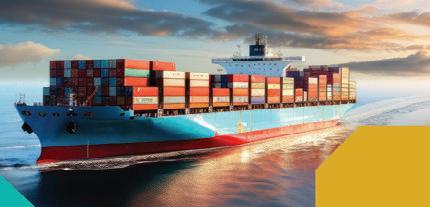
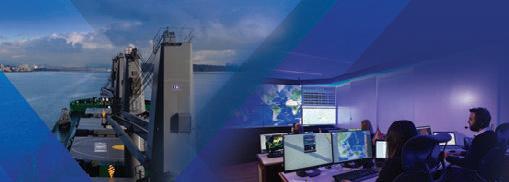
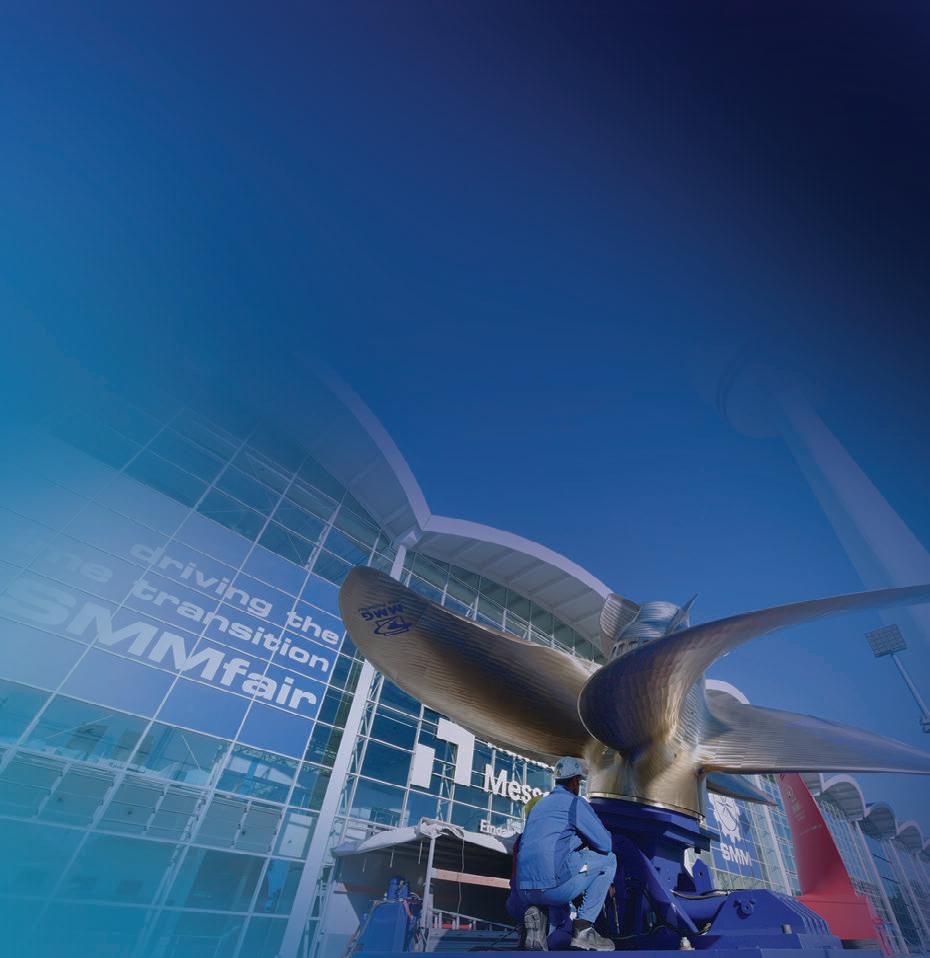
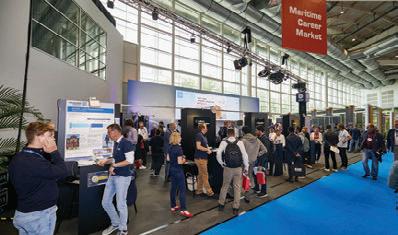
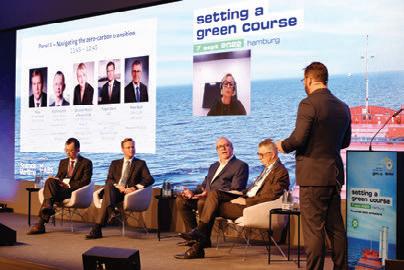
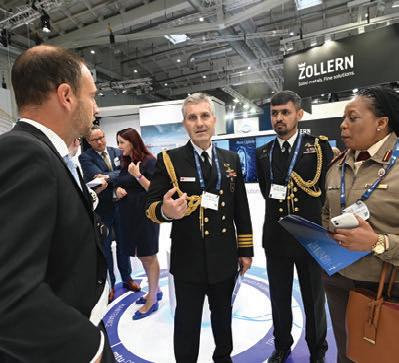
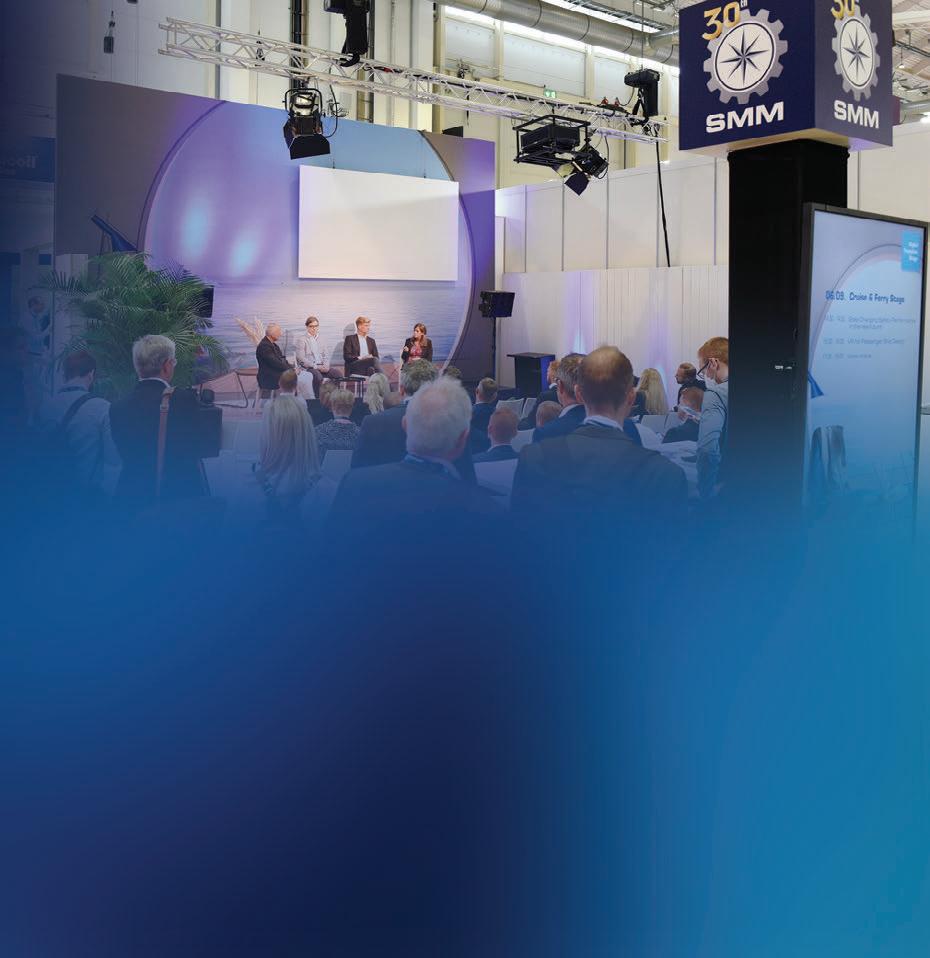
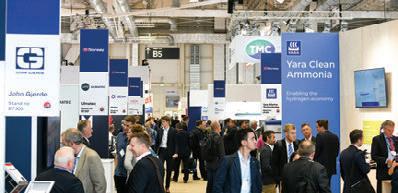
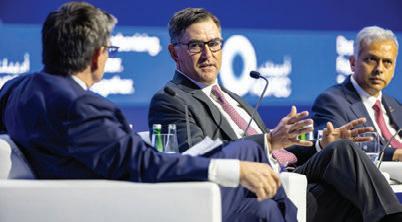
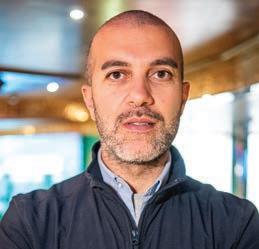
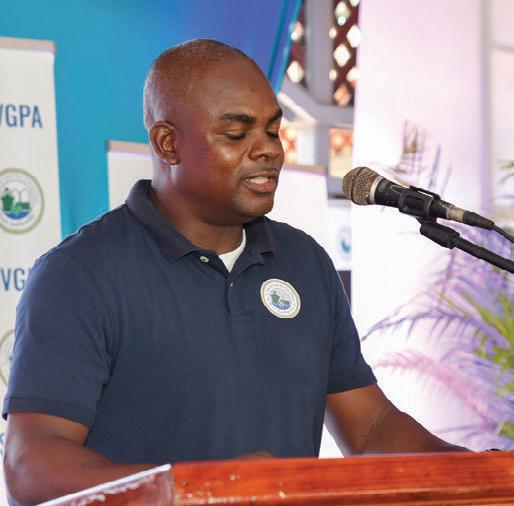
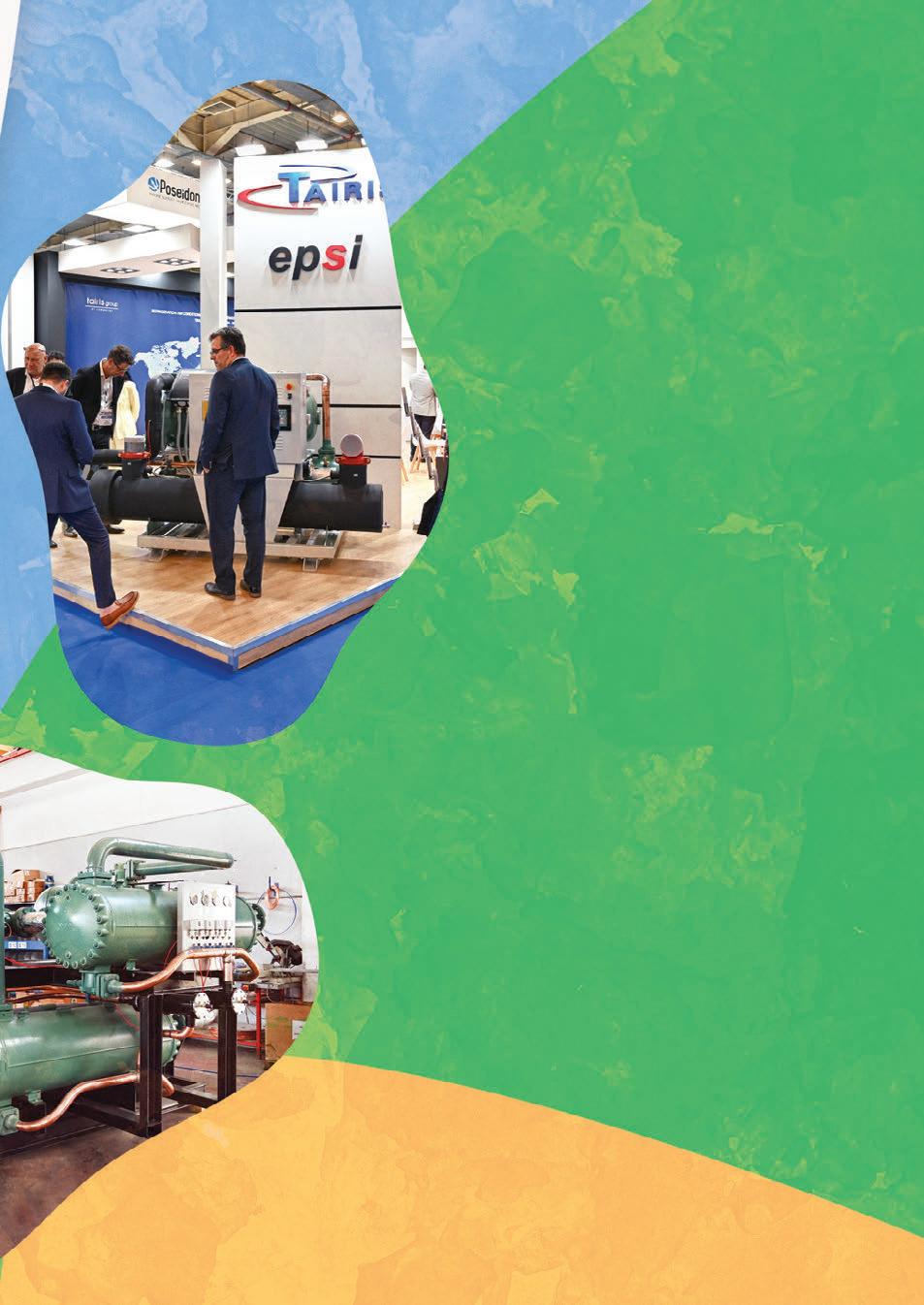
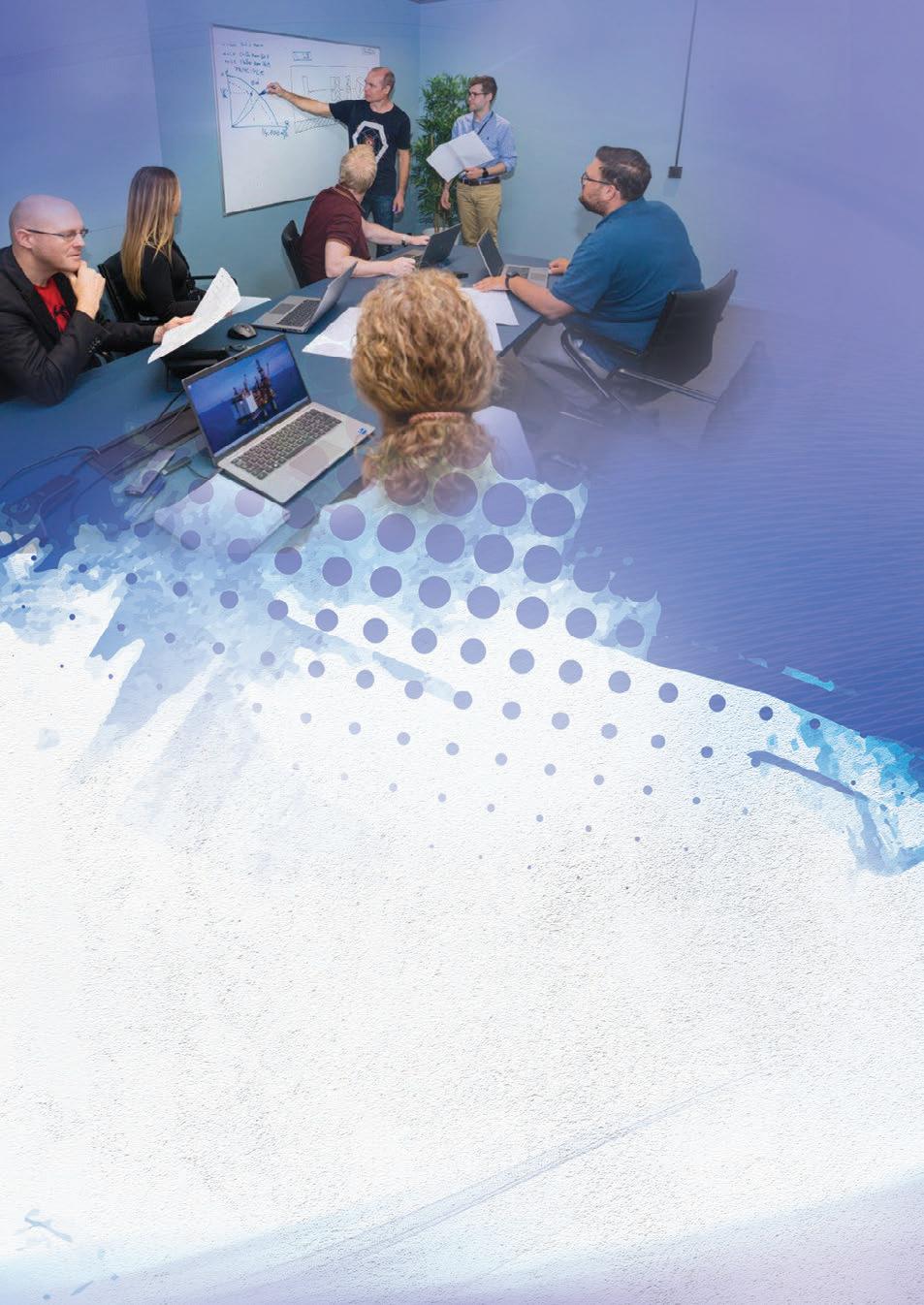
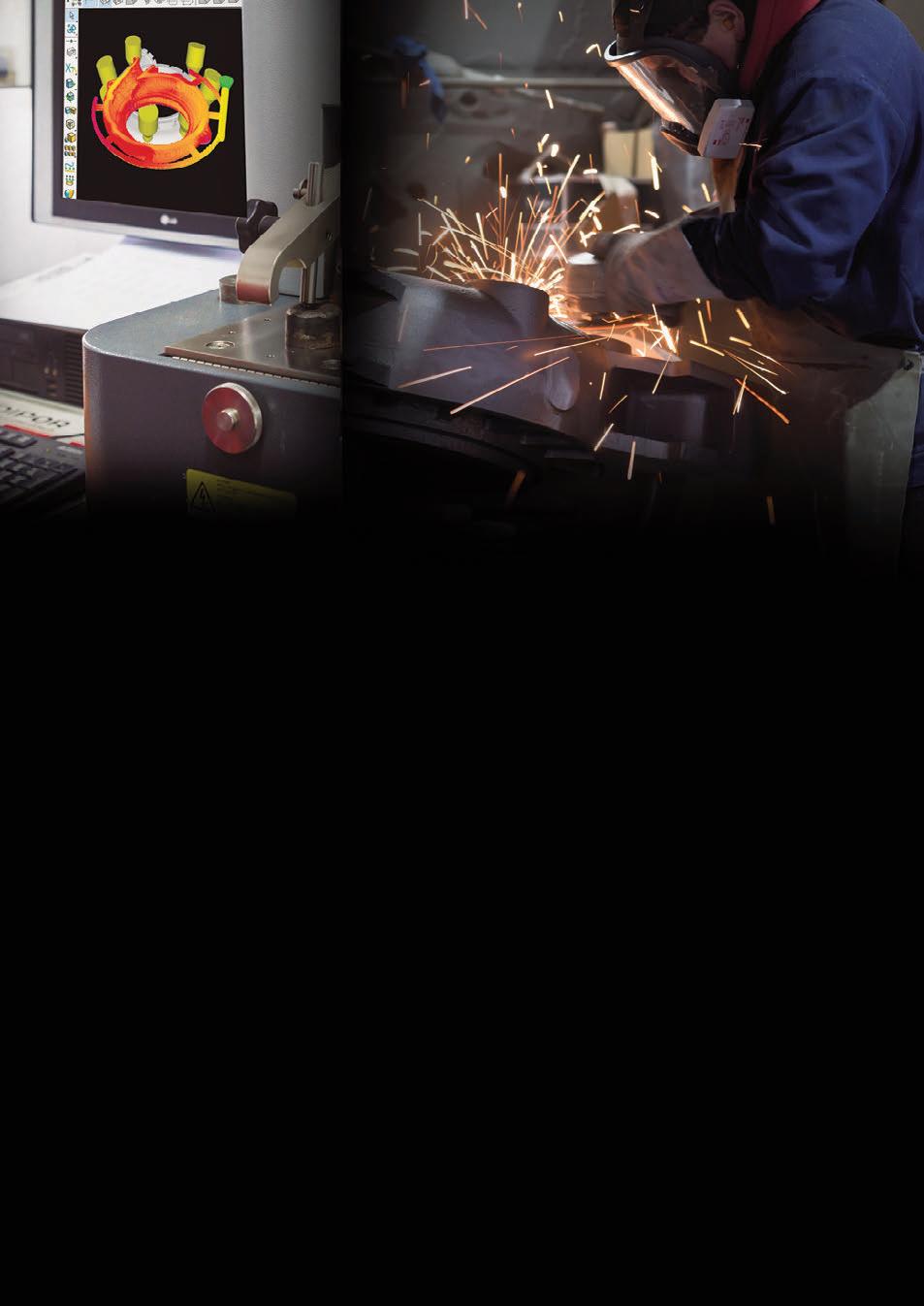
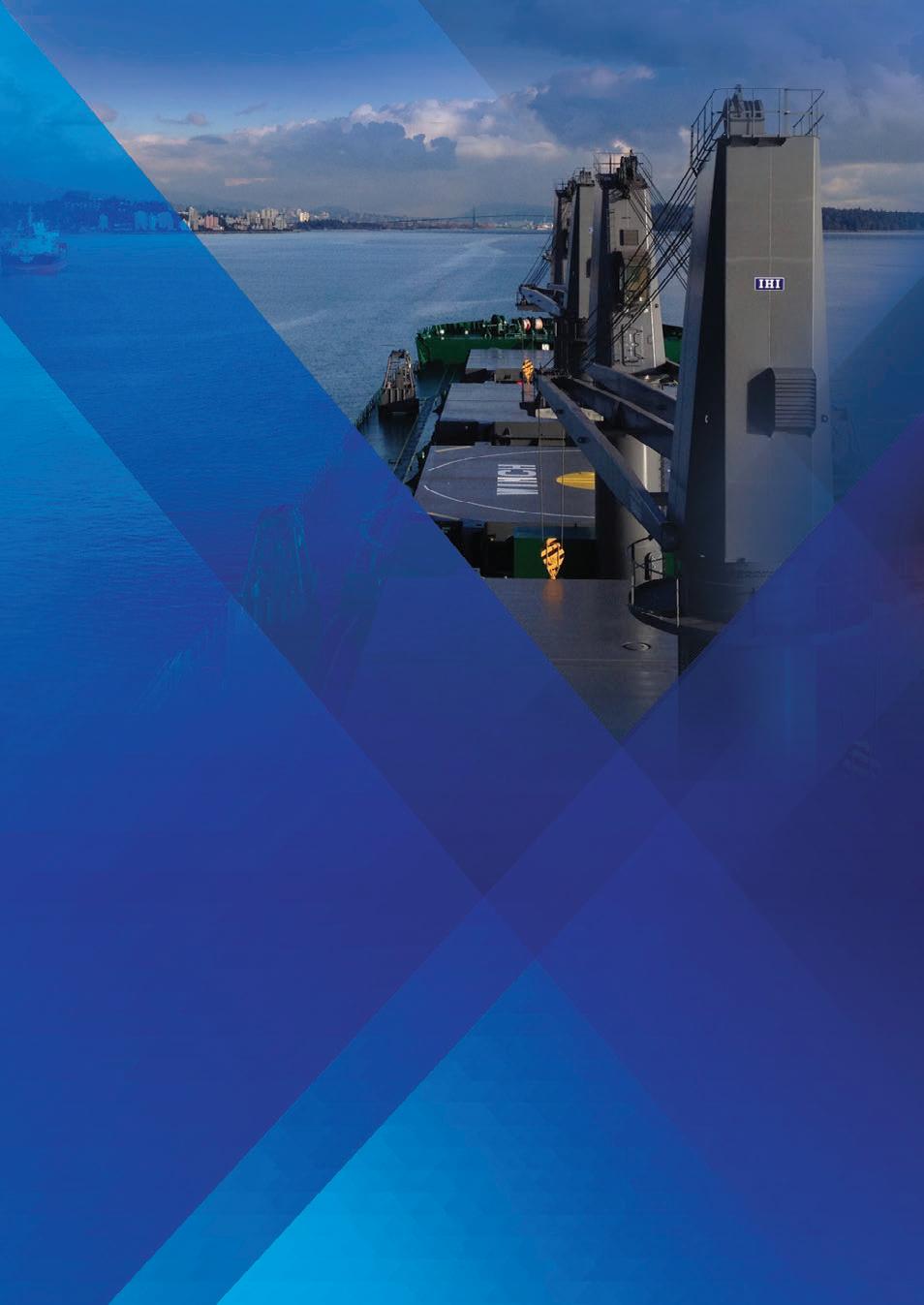
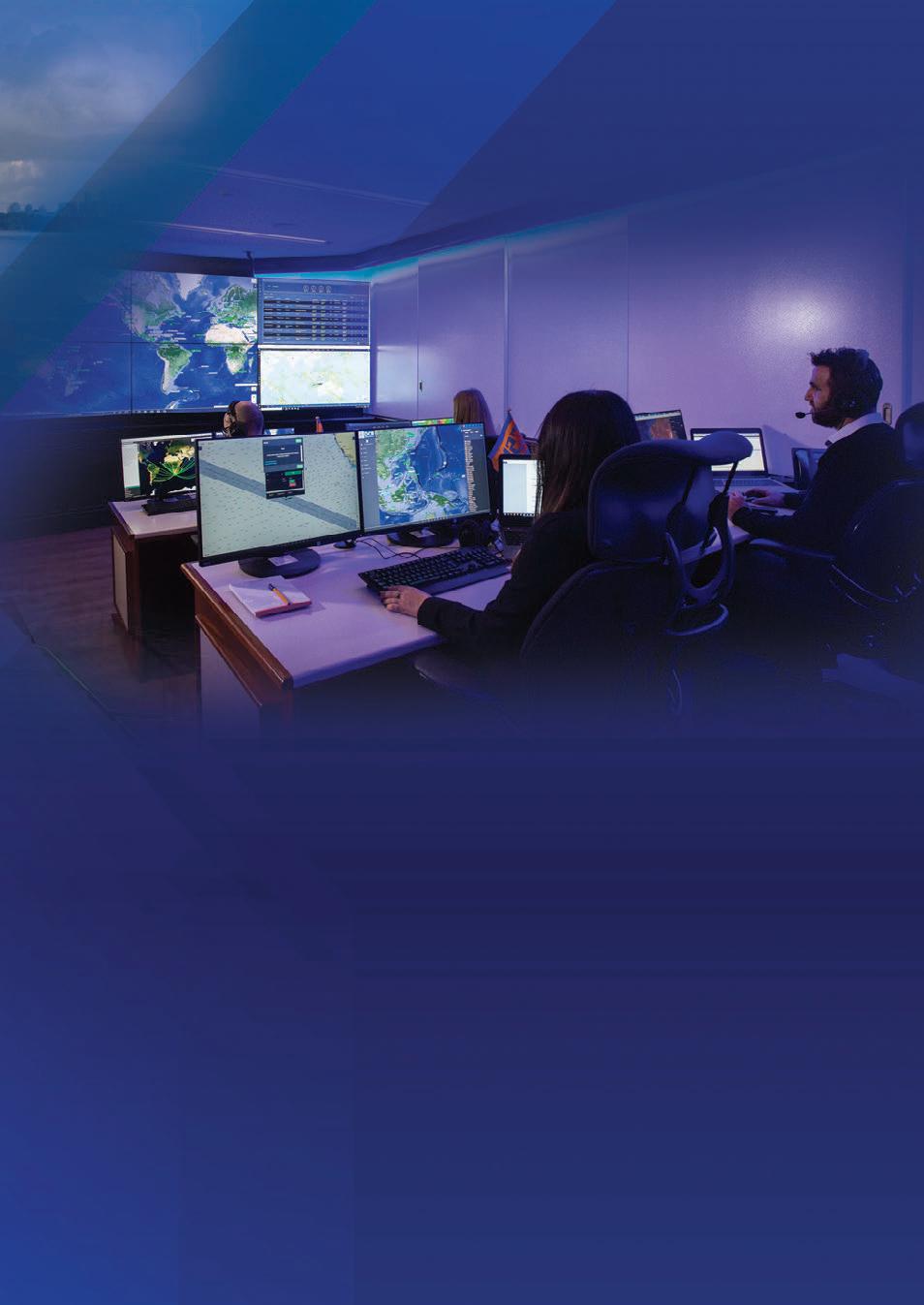
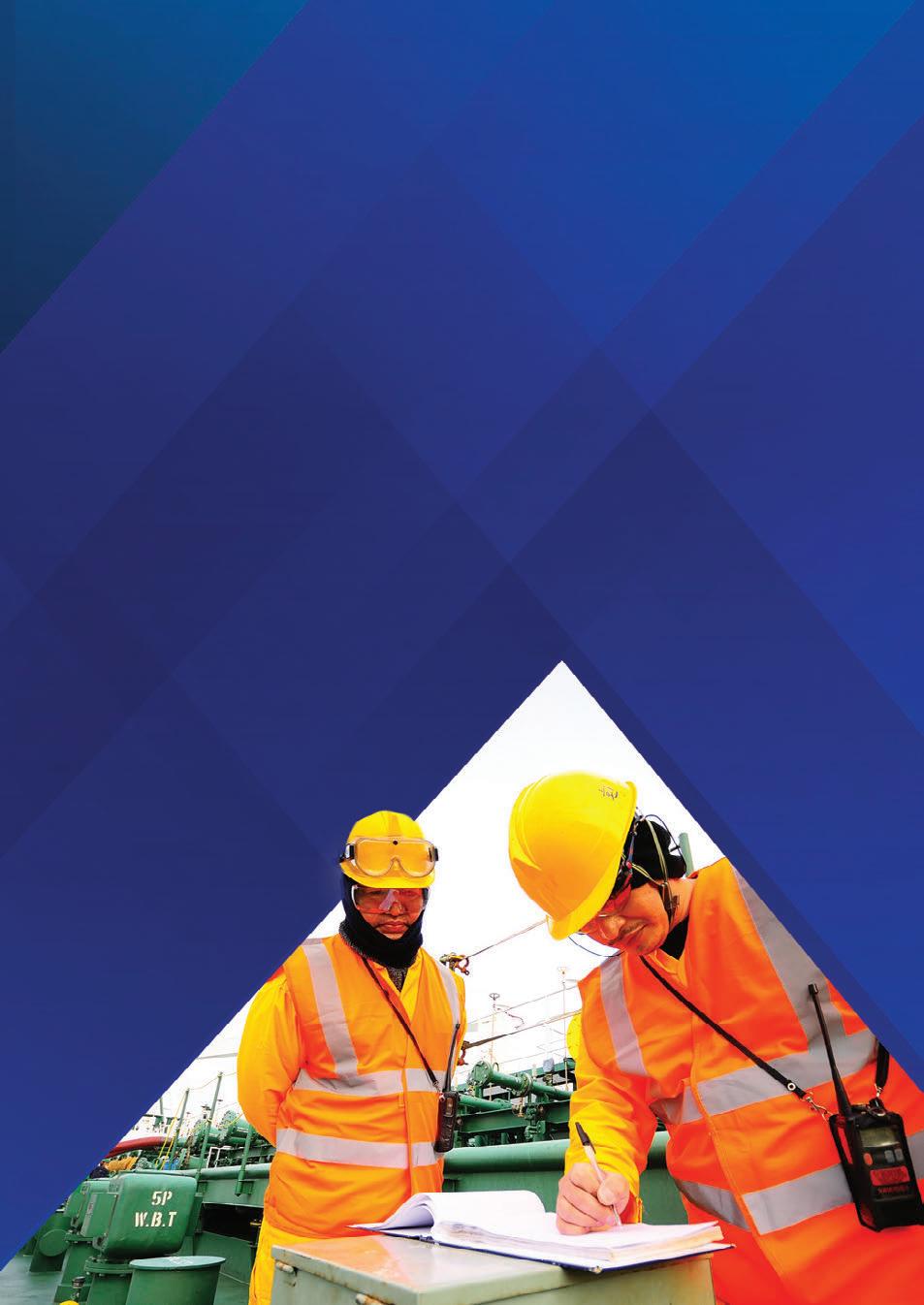
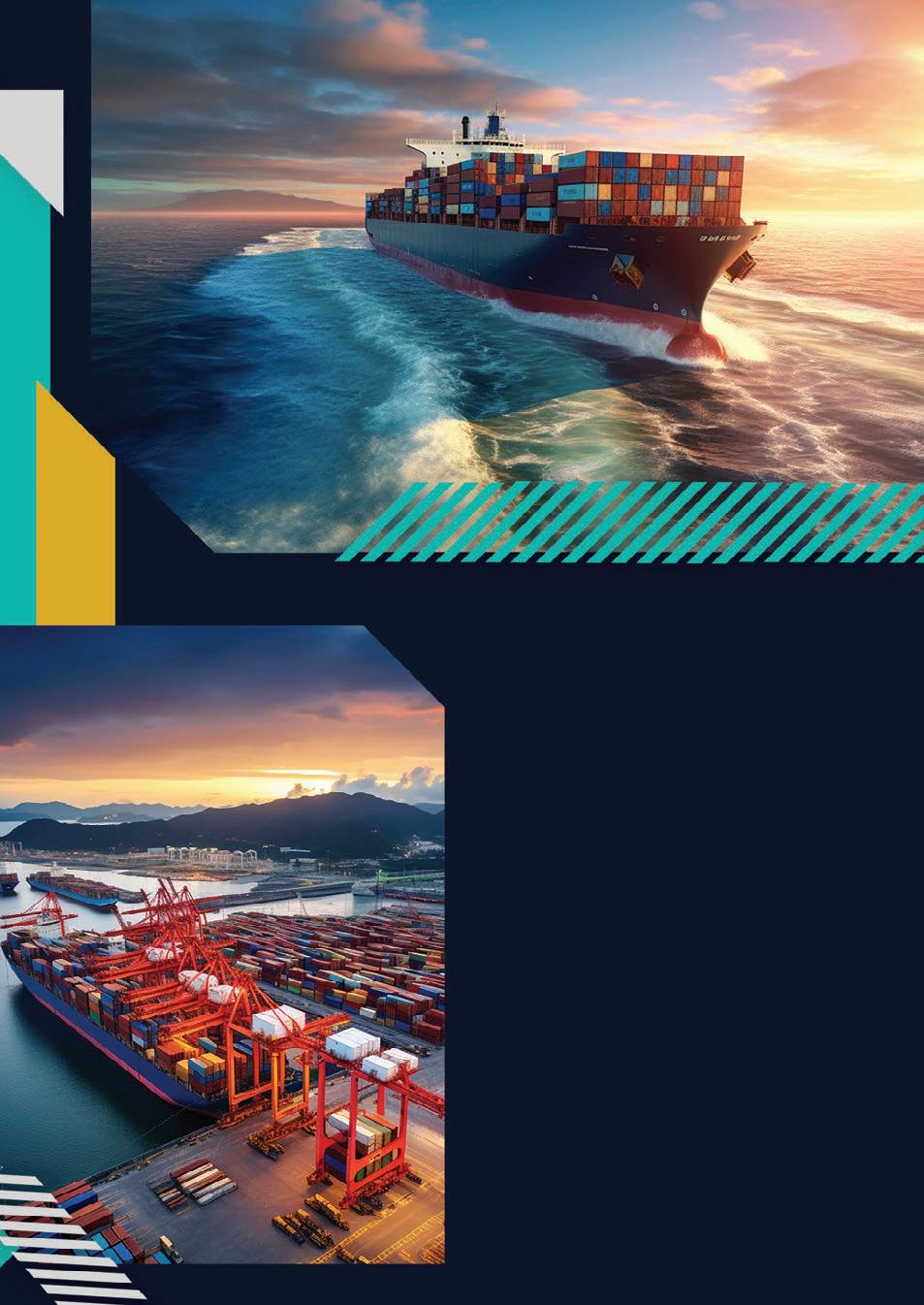
Running from 3rd to 6th September in Hamburg, SMM is the leading international maritime trade fair. This preview video captures the buzz on the exhibition floor, highlights the diversity of topics in the conferences and shares voices from varied participants.
Managing Director John White presents an ‘eventful’ edition.
Welcome, Dear Reader, to your latest edition of Inside Marine. For over a decade, many of you have been fortunate/unfortunate (delete as necessary) enough to meet some of my enthusiastic team at various events. You know that we enjoy partnering many prestigious maritime gatherings. This year is no exception, with previews for no less than three such events within this edition. I hope you will enjoy reading about SMM, ADIPEC and IceFish as much as we enjoy our relationships with them.
We are long-time partners with SMM and ADIPEC and have enjoyed attending these events, as well as partnering over many years. However, IceFish is a new one for us and we are sure it will only add to the vast portfolio of media partnerships we bringto you.
If this were not enough to keep you entertained and informed, you will also find a special piece on a new ITN Business programme dedicated
to ‘Navigating the Future of Shipping’. Our Editor has been working closely with them to give you an insight into things to come. We are, of course, also bringing you a deck full of advertisements, company reports, news and views from across the globe.
Somehow, we have also managed to find time and space to present to you a focus on the industrial world of shipbuilding. This has been a popular section amongst our readers for more than ten years.
I trust you agree, this is an eventful edition indeed. Given the amount of effort my team have put into it for you, we believe there is a little something for everyone here. Whether you gain new business partners, are better informed with what is going on in the maritime world, or just enjoy spending a few moments of your busy day enjoying a riveting read, we are proud to help connect the seven seas and five oceans with one voice.
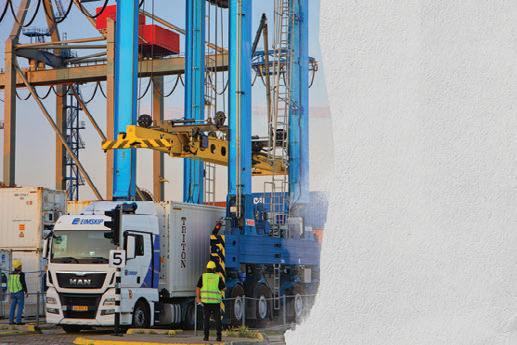
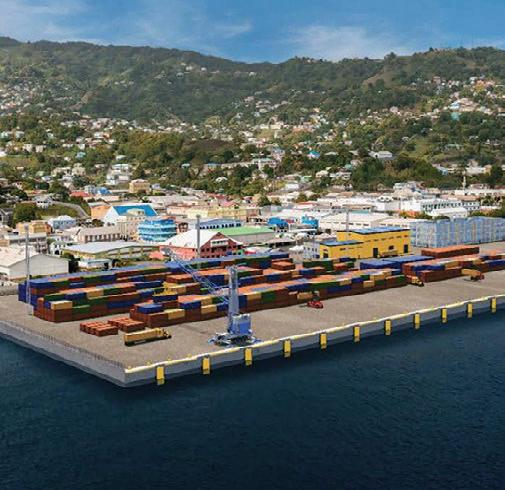
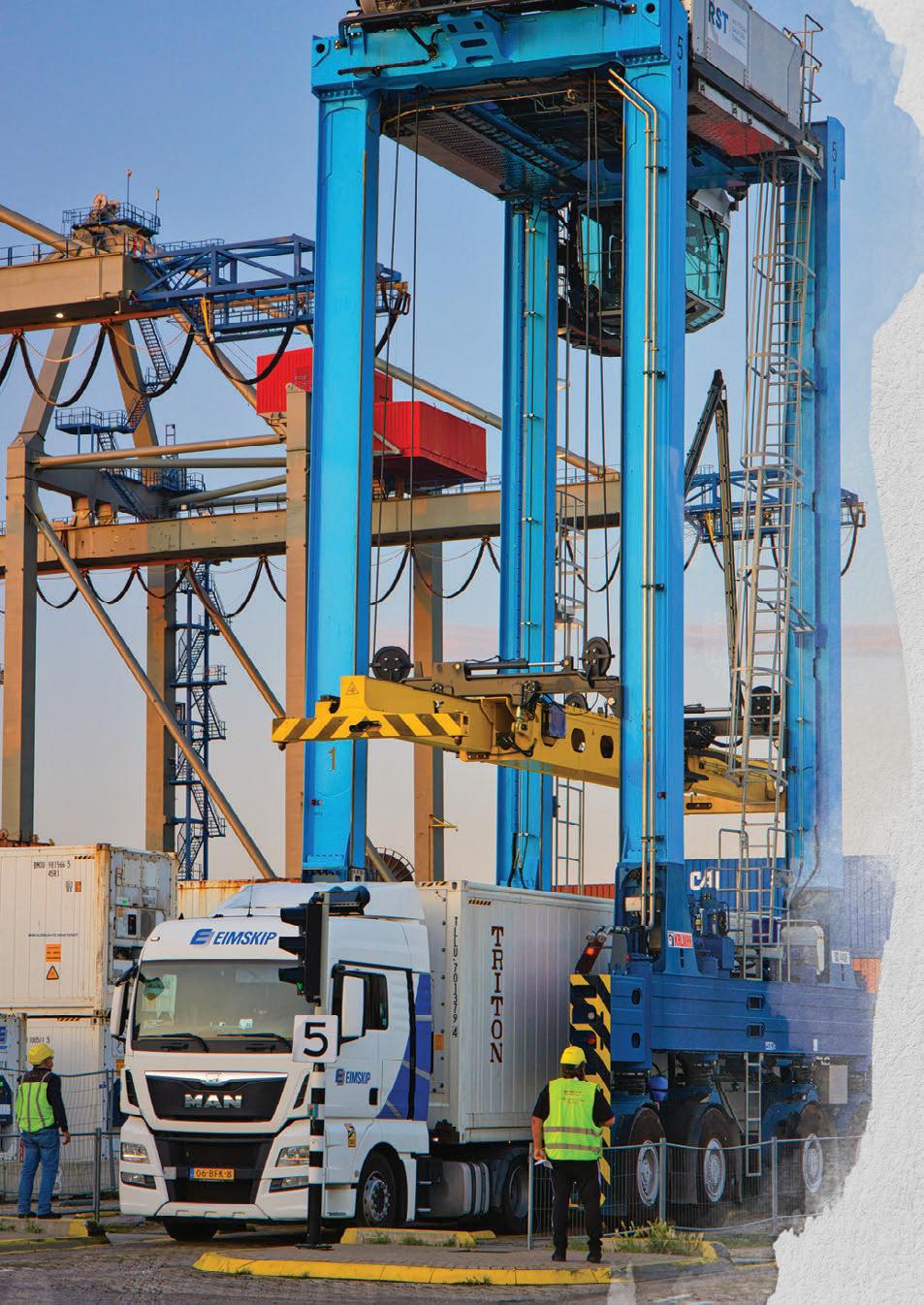
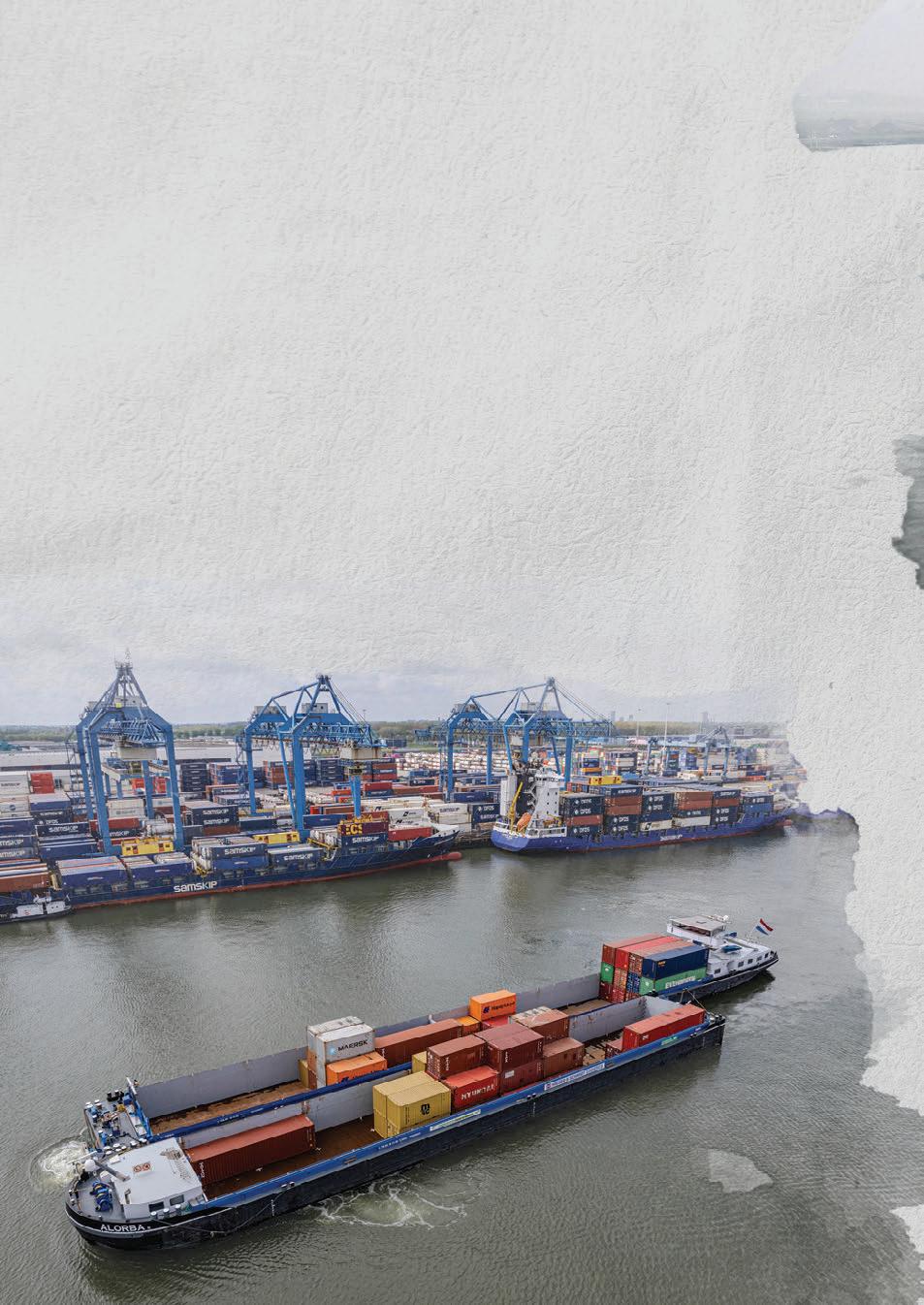
Rotterdam Shortsea Terminals
ENGINEERING
Latest developments from the US industry
American Offshore Services launches
second vessel supporting US offshore wind
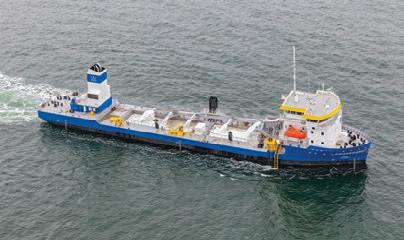
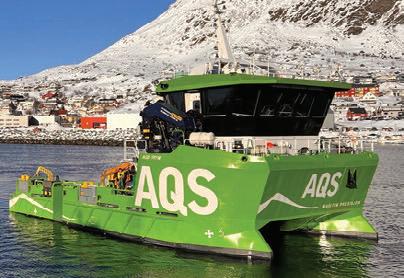
American Offshore Services (A-O-S) have announced the launch of crew transfer vessel (CTV) M/V Generater adds to a new series designed for the US market, built upon many years of experience for Northern Offshore Services’ (N-O-S) in the rough European waters.
M/V Generater is vessel number two in the G-Class series, designed to transport offshore wind technicians and equipment to the rapidly expanding offshore wind industry on the US East Coast.
Generater is a 99 ft, Jones Act-compliant catamaran to serve the US East Coast. Like sister vessel Gripper, she is an N-O-S in-house design with focus on comfort for crew and technicians. This makes it possible to stay offshore for 24-hour operations. The G-Class delivers superior sea performance, ensuring technicians arrive at the wind farm feeling rested and prepared to perform at their best.
Some of the design highlights are the soft bow, carefully sculpted hull and proprietary fenders, allowing the vessels to work in higher sea states with better stationkeeping ability when pushing onto turbine towers. Whether remaining offshore for
a week, or making multiple voyages in a day, the vessels are equipped to be selfsuffi cient and highly flexible. They offer enhanced efficiency and manoeuvrability, using only the power required in the current situation.
The technology has been developed over the last 16 years by A-O-S’ Swedish sister company N-O-S, today the world’s leading CTV operator.
The G-Class vessels are hybrid-ready, built to be quickly converted as soon as the industry calls for it. Two more vessels are under construction for delivery. n
innovation: media@insidepublication.com
Latest developments from the European industry
EUROPE
WEC Lines launches fast service between Dublin, Liverpool and Iberia
WEC Lines has launched a direct, weekly service with short transit times connecting Portugal and Spain with Ireland and the United Kingdom in one seamless, fully controlled operation.
The new weekly service will be performed by an 812-TEU owned vessel in a fixed-day rotation, departing Bilbao on Saturdays, arriving in Dublin on Mondays and Liverpool on Tuesdays, providing clients with a heightened level of flexibility and efficiency, such as rapid end-mile delivery.
This natural progression and evolution of WEC Lines’ services also allows the Dutch carrier to continue growing its trade between Spain and Portugal to Liverpool as demanded by its clients in both the dry and reefer market to offer increased frequency, faster transits and deliver reliability. Liverpool will now be called twice a week, as it is also a port of call in the existing NSC UK/PT service. Overall, WEC Lines commitment to the Irish Sea network will ensure a premium service to its clients.
In addition, this strategically designed route seamlessly integrates with WEC
Lines’ rail connections between Bilbao and Barcelona, Valencia, Madrid, Zaragoza and Agoncillo (La Rioja).
This is as well as its existing short sea linkages with Setúbal, Leixões, Vigo, Gijón, Las Palmas de Gran Canaria, Santa Cruz de Tenerife, Casablanca and Agadir.
The fully owned service connecting the Iberian Peninsula with Dublin and Liverpool safeguards complete and real-time information, thorough monitoring, and immediate operational actions throughout the entire transportation process. This is particularly relevant when shipping temperaturesensitive, food-grade or dangerous cargo. A wide range of equipment will be available, such as 20ft and 40ft DV/HC/HCPW, 45ft HCPW, 45ft reefers, 20ft and 40ft flats, and open top containers. n
ARABIA
Folk Maritime signs
MoU with Bahri Ship Management SAUDI
Folk Maritime Services Company, a PIF company and one of the region’s leading feeder and short-sea services provider, has signed a strategic memorandum of understanding with Bahri Ship Management, a business unit of Bahri, The National Shipping Company of Saudi Arabia and a global leader in logistics and shipping.
The agreement was signed by Poul Hestbaek, Chief Executive Officer of Folk Maritime, and Eng Khalid Alhammad, President of Bahri Ship Management, to strengthen collaboration on technical ship management, crewing and ship building supervision. The agreement contributes to the goals of Vision 2030 to build a robust logistics and maritime sector in Saudi Arabia that serves the region and beyond.
Highlighting the value of the partnership, Poul Hestbaek said: “The agreement marks a new era of collaboration as two Saudi-based entities join hands to strengthen the Kingdom’s logistics and maritime infrastructure.
“Bahri’s proven expertise in ship management and crewing, will enable us to strengthen our fleet and add tremendous value to our operations as Saudi Arabia’s pioneering
independent feeder and short-sea shipping operator.”
With two vessels in operation, Folk Maritime serves as a strong partner in driving feeder services along one of the world’s most pivotal shipping routes, the Red Sea. With support from Bahri Ship Management, the aim is to link Saudi Arabia to regional ports across the Middle East and North Africa.
Folk Maritime aims to further expand its fleet strength through new purchases, as well as building new vessels purpose-designed for regional trade.
The establishment of Folk Maritime is in line with PIF’s strategy for the sector, which seeks to create a fully integrated logistics ecosystem and lead to the recognition of Saudi Arabia as one among the top ten countries in the World Bank’s Logistics Performance Index. n
Latest developments from the Peru industry
PERU
Recycl8 completes first project with Port of Aberdeen
Sustainable technology firm, Recycl8, has completed its first commercial project with Port of Aberdeen.
The Aberdeenshire-based company Recycl8, in conjunction with Inverurie Pre-Cast, was responsible for manufacturing concrete blocks for defence at the South Breakwater of the North Harbour as well as slipway repairs for Port of Aberdeen.
The firm was chosen for the project due to its strong commitment to environmental sustainability – a key priority for Port of Aberdeen as it strives to be the UK’s first net zero port by 2040.
Recycl8 partnered with construction materials specialists, Breedon Group, to supply its patented solution of sustainable, lower carbon R8 Mix concrete for the project, which is the latest in a series of successful pours carried out this year by Recycl8 across a number of sectors.
Working with Port of Aberdeen marks another significant achievement for Recycl8; gaining a new client affirms the growing recognition within the marketplace of the necessity for sustainable concrete solutions.
“We are thrilled to have carried out our first small-scale marine project with Port of Aberdeen and to be able to offer a solution which contributes to the port’s environmental sustainability goals,” Mark Gillespie, CEO of Recycl8, said. “We believe that our R8 Mix is the future of sustainable construction.
“It is fantastic for Recycl8 to be involved in such an important infrastructure development in Aberdeen, and we look forward to continuing our relationship with Port of Aberdeen and supporting them in future marine projects.”
“Our vision is to become the UK’s first net zero port by 2040 and that requires new and innovative ways of working,” added Head of Engineering at Port of Aberdeen, John Wilson.
“We are investing heavily in becoming a leading exemplar in environmental stewardship and sustainability, and Recycl8’s slipway repair work supports that ambition.”
A special report on the launch of a marine-focused news programme.
Navigating the Future of Shipping
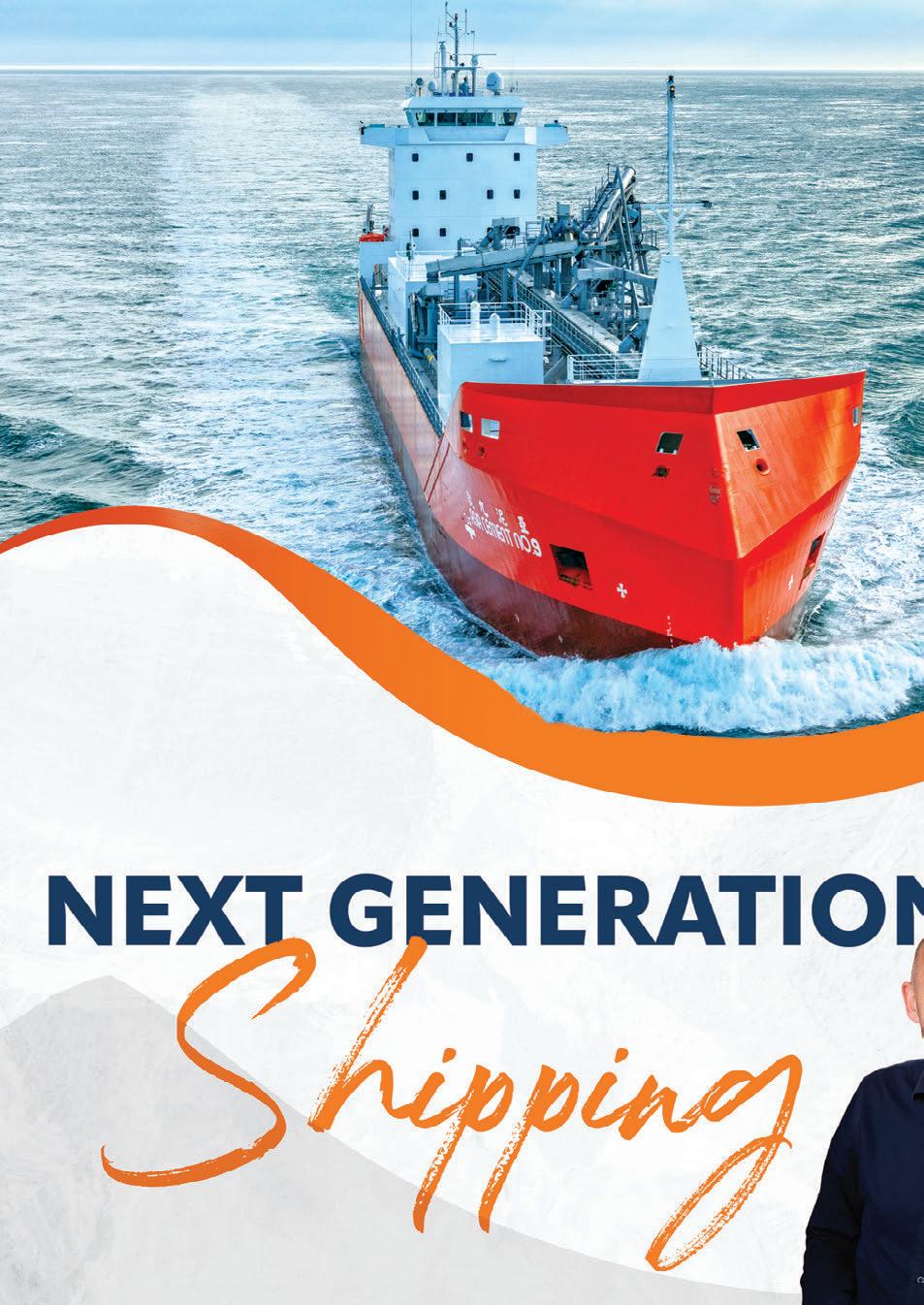
ITN Business will produce a news style programme, Navigating the Future of Shipping, to be launched on 8th October 2024. This launch is timed to coincide with the UK Chamber of Shipping’s first ever Annual Conference, to be held in London.
According to UNCTAD (UN Conference on Trade and Development) the global maritime industry is responsible for facilitating over 80% of the world’s trade, but also generates 3% of the total greenhouse gas emissions. How the industry will thrive in the future will be shaped by several global macro factors, such as co-operation on climate change and geopolitical stability, but also by the pace of technological uptake by those working in the industry.
This new programme from ITN Business will feature editorial contributions from senior opinion leaders from the UK Chamber of Shipping and BIMCO. The programme will explore how innovation and technology are playing a vital role in the shipping industry, helping it to address the challenges and opportunities of the global maritime sector.
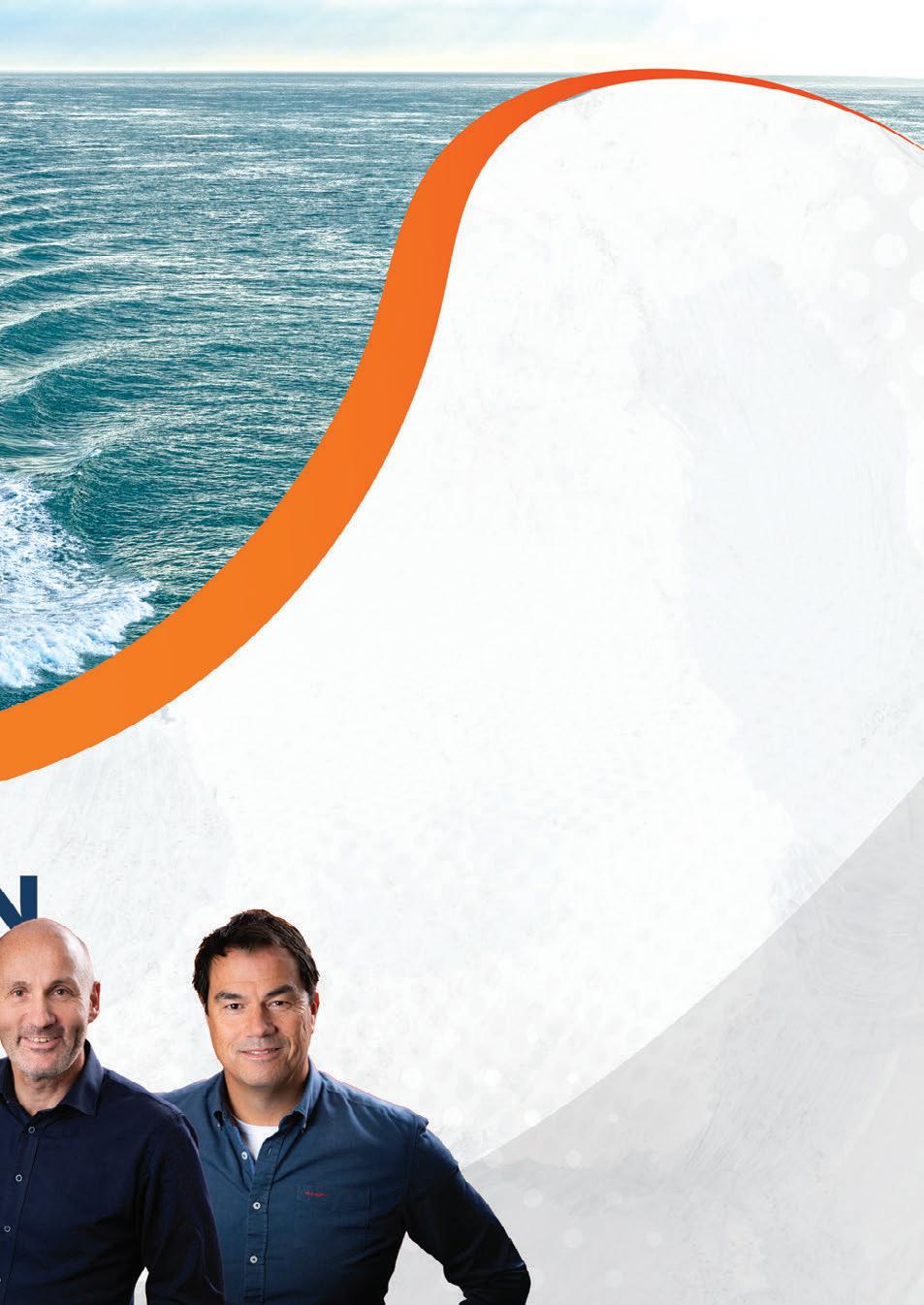
Presented by the news broadcaster and journalist Lukwesa Burak and produced in ITN’s London studio, the programme will be hosted on a bespoke page on the ITN Business content hub. Navigating the Future of Shipping will be supported by
a digital launch, as well as a marketing campaign and bespoke digital distribution across The Economist.
Showcasing sustainability
Navigating the Future of Shipping will feature organisations that are using technology to improve decision making, address safety issues and enhance operational efficiencies in global supply chains. The programme plans to share case study stories filmed on location, exploring how data and technology are enhancing shipping routes, reducing fuel consumption and driving the net zero agenda.
“Our programme aims to shine a light on the organisations that are transforming the maritime industry, with technology and innovation, and those addressing the challenges and opportunities within the sector,” said Nina Harrison-Bell, Head of ITN Business. “Featuring insights from industry leaders and real-world case studies, the programme will explore the future of shipping and its role in driving sustainability and operational efficiency.
“This is a unique opportunity for organisations to showcase their leadership and commitment to shaping the future of maritime.”
Lukwesa Burak
A news anchor and presenter at ITN Business and other media outlets, delivering accurate and engaging news stories to millions of viewers worldwide. Ms Burak has a Master of Science degree from the University of Leicester, a Bachelor of Honours degree from the University of Sussex and a Diploma from Switzerland’s Neuchâtel University. She has over 20 years of professional experience in news writing and journalism, working for prestigious organisations such as Al Jazeera, Sky News, Forces TV and BBC Radio Leicester.
The programme will feature the people at the heart of the shipping and maritime industry, showing how technology and innovation is supporting training and enhancing skillsets. n
Boosting African port efficiency
The African Development Bank has successfully concluded a two-day preparatory workshop on implementing the African Ports Connectivity Portal Project (APC-PP) to improve data collection and connectivity among the continent’s ports.
Held in Abidjan, Cote d’Ivoire, the workshop rallied together key stakeholders and experts from various organisations, including port management and maritime associations, the African Union Commission, regional economic communities, and port authorities from ten African countries.
The African Ports Connectivity Portal Project is supported by a $2 million grant from the Beijing-based Multilateral Co-operation Centre for Development Finance (MCDF). This grant will facilitate the creation of a comprehensive port data book, offering performance data for Africa’s ports and maritime transport sector, along with practical information on the continent’s leading ports. Additionally, the project will develop a secure, web-based tool for collecting,
storing and retrieving port data across the continent.
The initiative comes as a response to longstanding inefficiencies in African port operations, which have led to higher logistics costs and hindered economic growth. Many ports across the continent have suffered from underinvestment and lack of reliable port performance data, essential for effective planning and management.
To address these issues, the African Development Bank established the APC-PP to digitise and integrate data collection, thereby improving data quality and availability. The project will enhance port development planning, policy dialogue and regional infrastructure strategies, ultimately strengthening the capacity of African ports.
The next steps include implementing the web-based port data portal, publishing the port data book and enhancing collaboration with regional stakeholders to ensure the success of the APC-PP. A follow-up meeting is scheduled for August in Addis Ababa, where a committee of port experts will finalise the project’s implementation instruments. n
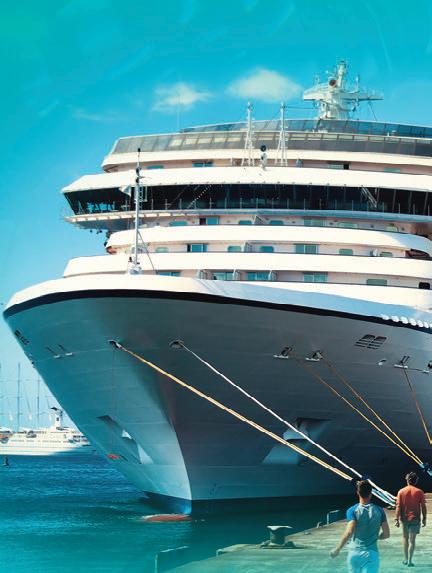
MSC Bellissima named Asia’s Best Cruise Ship
MSC
Bellissima, the first international cruise ship to serve Japan since 2020, has been named ‘Asia’s Best Cruise Ship’ at the Asia Cruise Forum staged in Jeju, South Korea.
Having resumed sailing international itineraries in April 2023 in Japan, MSC Bellissima and has since operated to China and South Korea.
The Asia Cruise Forum judging panel granted the prestigious accolade after a detailed review of customer service and operational performance of cruise vessels sailing on the continent. Judges also considered entities that had contributed significantly to the cruise industry's resurgence in Asia following the global pandemic.
Oliviero Morelli, President of MSC Cruises Japan and Korea, accepted the award from Mr Do-Hyung Kang, South Korea’s Minister of Oceans and Fisheries, at a gala ceremony hosted by Jeju Tourism.
“Receiving the title of 'Asia's Best Cruise Ship' at the Asia Cruise Forum is a tremendous honour for MSC Cruises.” said Mr Morelli. “This recognition strengthens
our presence in the local market and underscores our commitment to deliver unparalleled cruise experiences throughout Asia.”
MSC Bellissima also won the title of ‘Cruise Ship of the Year’ at the end of 2023 from the Japan Oceangoing Passenger Ship Association.
The GT 171,598 MSC Bellissima has a capacity of 5,655 guests and is well-known in the Asian market following the vessel’s involvement in Netflix TV’s hit Japanese film ‘In Love and Deep Water’. n
seven seas, five oceans, one voice
EVENT PARTNERSHIPS
A selection of forthcoming events, followed by previews of SMM, IceFish and ADIPEC.
25-28 September 2024
Monaco Yacht Show
At the Monaco Yacht Show, visitors are immersed in the excellence, innovation and refinement that define superyachting. In the idyllic setting of Port Hercule in Monaco, the world's premier destination for luxury yachting, visitors can participate in discussions shaping the future of responsible yachting.
[click here] for weblink
18-20 September 2024
IceFish
The 14th Icelandic Fisheries, Seafood & Aqua Exhibition (IceFish) is the longest running international fishing exhibition in Iceland. Celebrating 40 years, first held in 1984, this exhibition has developed into a showcase of every aspect of the commercial fishing industry and seafood sector.
[click here] for weblink
Bre
ind
13-22 September
Southampton International Boat S
Southampton International Boat Sho water sports enthusiasts and seriou advice and exciting opportunities. A on land and in Europe’s largest purpose-built thing from stand-up paddleboards to sail bo
[click here] for weblink
and
tors will mak the entire su Canada, the [click h
7 October 2024
k Americas
eakbulk Americas is the region's largest d longest-running trade event for the ustry. Over the course of three days, visike connections with representatives from upply chain, representing the key players in e US, Mexico and throughout Latin America.
12-14 November 2024
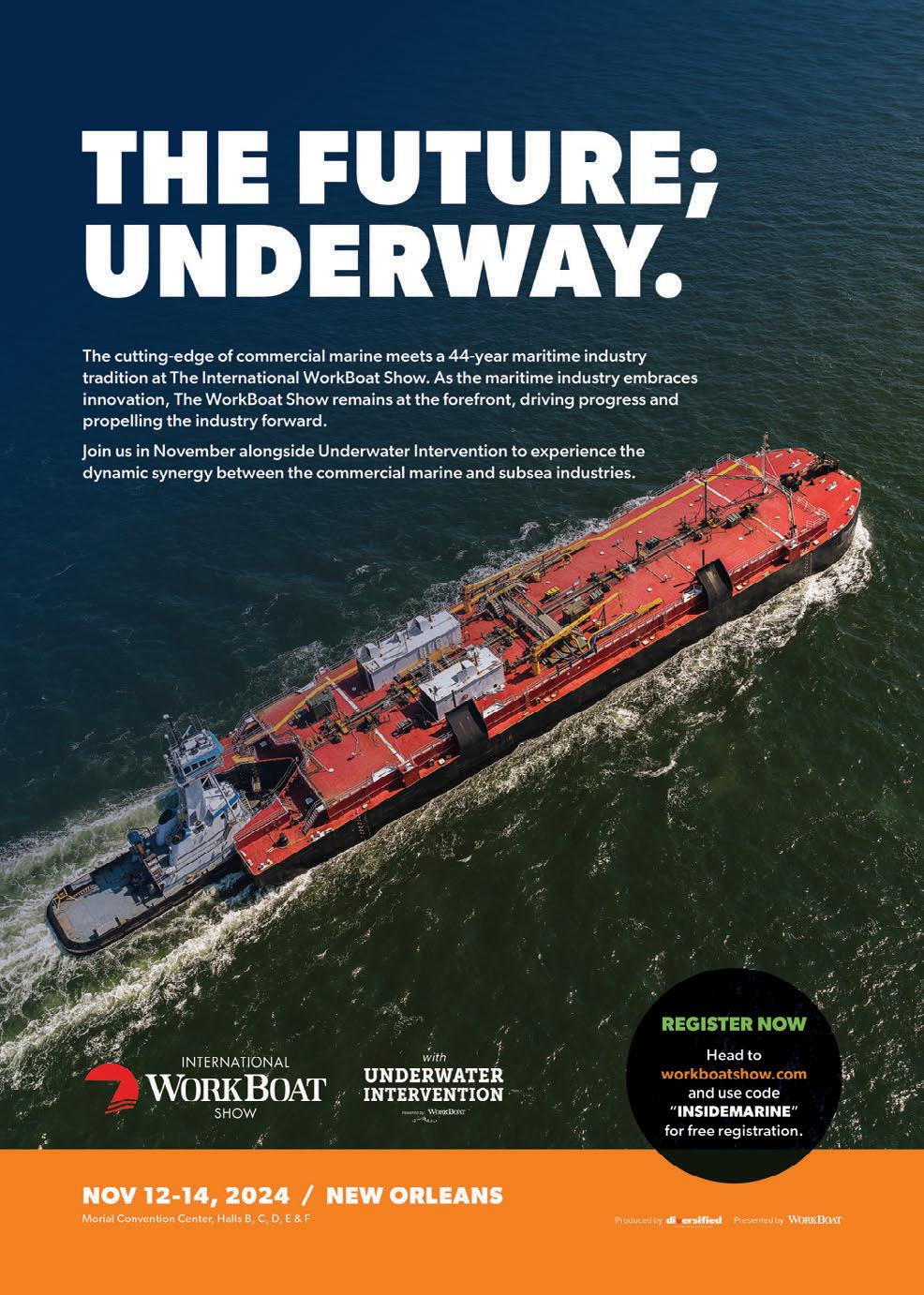
International WorkBoat Show
The cutting-edge of commercial marine meets a 44-year maritime industry tradition at The International WorkBoat Show. As the maritime industry embraces innovation, The WorkBoat Show remains at the forefront, driving progress and propelling the industry forward. here] for weblink
[click here] for weblink
r 2024 Show
ow is the place for families, us boat buyers, with expert A variety of marine brands t marina showcase everyoats and superyachts. Why not give your event exclusive coverage to thousands of readers and connections globally? Contact us: events@insidepublication.com
Claus Ulrich Selbach from Hamburg Messe und Congress previews SMM
SMM 2024
3 – 6 September 20 ww
As the world's leading trade fair and conference event for the maritime industry, SMM 2024 will bring together about 40,000 participants from over 120 countries. Held 3rd to 6th September in Hamburg, the event serves as a unique platform for business, the exchange of ideas and cooperation.
Claus Ulrich Selbach, Business Unit Director Maritime & Technology Exhibitions, Hamburg Messe und Congress explained more to Inside Marine.
SMM has seen six decades of innovation. How have you continued this trend into 2024?
Indeed, we are proud of the fact that the SMM has always managed to provide the shipping industry with decisive technological impetus throughout its history. This
024, Hamburg Germany, ww.smm-hamburg.com
is more than ever the case with the latest edition. After all, the aim is to shape the transformation of the industry towards climate protection and digitalisation with an ambitious timetable.
To this end, we have come up with two new formats for SMM 2024: firstly, the Future Fuels Area – which is already fully-booked. This is where leading companies will present the latest advances and innovations in the field of sustainable fuels. And secondly, the AI CENTER, which aims to revolutionise the use of artificial intelligence in shipping. Both initiatives demonstrate our commitment to leading the maritime industry into a sustainable and digital future.
Would you highlight the networking opportunities at SMM as key to the visitor experience? Or would you pick another feature of the event?
Networking opportunities are undoubtedly a key element of SMM. We offer a platform where professionals from all over the world come together to exchange ideas, forge partnerships and strengthen business relationships – for example at our popular Wine o'clock format with drinks and snacks. In addition, the diversity and quality of exhibitors across the entire value chain is an outstanding feature of SMM. Visitors have the opportunity to experience the latest products and technologies first-hand, making SMM an unrivalled meeting place for innovation and collaboration. And the companies in turn appreciate the fact that they enjoy exceptional visibility here as exhibitors, and that we as organisers have a feel for trends. You won't find that anywhere else in this form.
With digitalisation a hot topic within the marine industry, please share with our readers how your AI CENTER will reflect this market trend.
Our AI CENTER is dedicated to advanced AI technologies and their potential for maritime applications. Numerous companies and start-ups will present their innovative AI solutions here, ranging from optimising fuel consumption to improving operational efficiency. Another highlight is the presentation
Claus Ulrich Selbach from Hamburg Messe und Congress previews SMM.
of the ‘AI for the Oceans Award’, which hon ours start-ups that use AI to protect the oceans. These initiatives emphasise how SMM is driving digital change in the maritime industry – and setting new standards in the process.
As the largest event within the maritime sector, how do you craft your conference programme to both reflect the broad issues and help guide the industry?
We always develop our conference programme in close collaboration with industry experts and leading companies. This ensures that the programme covers the most important and urgent topics. Our agenda has produced a variety of panels, presentations and workshops that highlight both current challenges and future trends.
We attach great importance to practical solutions and innovative approaches that help the industry in a tangible way. This will be particularly evident this year at the
3 – 6 September 20 ww
international maritime conference for security and defence MS&D. Our new partner, the German Maritime Institute (DMI), is designing the programme closely to the needs of the industry: Topics include the current challenges for navies, multi-domain strategies, asymmetric naval tactics and trends in naval shipbuilding
SMM has pledged to be carbon neutral by 2040. How are you helping the maritime industry achieve sustainable operation?
This is a goal of the City of Hamburg, which also applies to us as a municipal company. We offer our exhibitors and visitors –beyond the maritime industry – numerous platforms to exchange information on the latest environmentally friendly technologies and best practices.
We are particularly proud of our ‘Hamburg Big Three of Energy Transition’: SMM, WindEnergy Hamburg and Hydrogen Technology Expo. The three world-leading trade fairs impressively demonstrate how we can work together to make our planet more sustainable. Be it through renewable energies, more efficient ship technologies or the clean use of hydrogen.
Launched in 2022, the Start-up Route is available again this year. How successful is this feature and how do you see it helping to build the industry?
The idea has proven to be a complete success and has shown how important innovative young companies are for the future of the maritime industry. We bring together more than 2,000 exhibiting companies and around 40,000 visitors from over 120 countries. The Start-up Route offers companies a valuable platform to present their smart ideas and technologies to an international audience.
However, established companies also benefit: they can receive new impetus and perhaps also forge new partnerships. Overall, this dynamic promotes the innovative strength of the entire sector and helps to ensure that the maritime industry remains competitive in the future.
EVENT PREVIEW
Claus Ulrich Selbach from Hamburg Messe und Congress previews SMM
SMM is also running other themed route tours around the event floor. Please explain how these tours help visitors and exhibitors connect.
Whether digitalisation, the environment, maritime security and defence, professions, or passenger shipping, the routes help visitors to quickly and efficiently find the exhibitors and innovations that are relevant to them. At the same time, exhibitors also benefit. It is a great opportunity for them to present their solutions directly to an interested audience. In this way, we promote direct dialogue and networking between visitors and exhibitors.
3 – 6 September 20 ww
Finally, on a personal note, which aspect of SMM are you particularly looking forward to?
I find AI very fascinating. Our discussions and presentations on artificial intelligence in a maritime context are an absolute highlight for me. AI has the potential to increase efficiency and safety in shipping enormously.
I also find it a bit provocative, but also very exciting, to talk about nuclear power. Simply because we also have to admit to ourselves: if we as an industry really want to achieve the goal of climate neutrality by 2050, we have to consider all options. At the moment, it looks like we will only achieve this if we
024, Hamburg Germany, ww.smm-hamburg.com
are open to innovative and unconventional solutions.
Inside Marine previews IceFish 2024
IceFish 2024
Scheduled for the 18th to 20th September, the 14th Icelandic Fisheries, Seafood & Aqua Exhibition (IceFish) is the longest running international fishing exhibition in Iceland. Celebrating its 40th anniversary, this exhibition has developed into a showcase of every aspect of the commercial fishing industry and seafood sector.
Amust-attend event for all commercial fisheries organisations and associated businesses, IceFish hosts the latest developments from the industry, showcasing new and innovative products and services. The event covers every aspect of the commercial fishing and seafood industry from catching and locating to processing and packaging, right through to marketing and distribution of the final product.
Aquaculture and the quest for 100% fish utilisation is on the increase. This topic is rapidly becoming an important part of the exhibition.
A broad appeal
IceFish started in 1984 and is the only established professional fishing and processing exhibition to only be held every three years prior to Covid in 2020. This has helped exhibiting companies to have new technologies, products and services to showcase at each event. In turn, this means visitors know they can rely on the exhibition to keep them informed of new developments from across the Icelandic and International market.
The 2022 IceFish was the 13th in the series and was the first international exhibition to be held in Iceland emerging from the Covid pandemic. At this time, parts of the world continued to have lockdown regulations or a travel ban. Yet, the exhibition still attracted just under 10,000 visitors from Iceland and 40 other countries.
However, IceFish is much more than just an event. The show boasts tandem events such as the popular Fishwaste for Profit Conference, now coming up to its 5th edition, and the 9th Icelandic Fisheries
Awards recognising excellence in the Icelandic and global fishing, aquaculture and seafood sector.
The IceFish exhibition covers every aspect of the commercial fishing, processing and aquaculture sector, and is rapidly expanding into the value added and byproduct areas.
Matchmaking events
IceFish features matchmaking events that have seen high levels of engagement during previous shows. Participants have all been ready to form business partnerships and explore new markets. 90 participants from 24 countries were in attendance at the previous event, totalling just over 100 meetings.
The 2024 meetings are planned to take place at the exhibition centre during the
event. This matchmaking programme is organised by the Sector Group Maritime Industries & Services of the Enterprise Europe Network Iceland and co-organised by Rannis. Registration and participation are free of charge for visitors and exhibitors attending IceFish.
These events offer a unique opportunity to establish new cross-border contacts and meet potential business partners. The matchmaking programme is targeted at companies, clusters and international decision-makers, as well as research and innovation stakeholders from the maritime sector.
Additional events are being co-ordinated in conjunction with the exhibiting companies and several embassies to host receptions during the show. n
Christopher Hudson from dmg events previews ADIPEC.
ADIPEC 2024
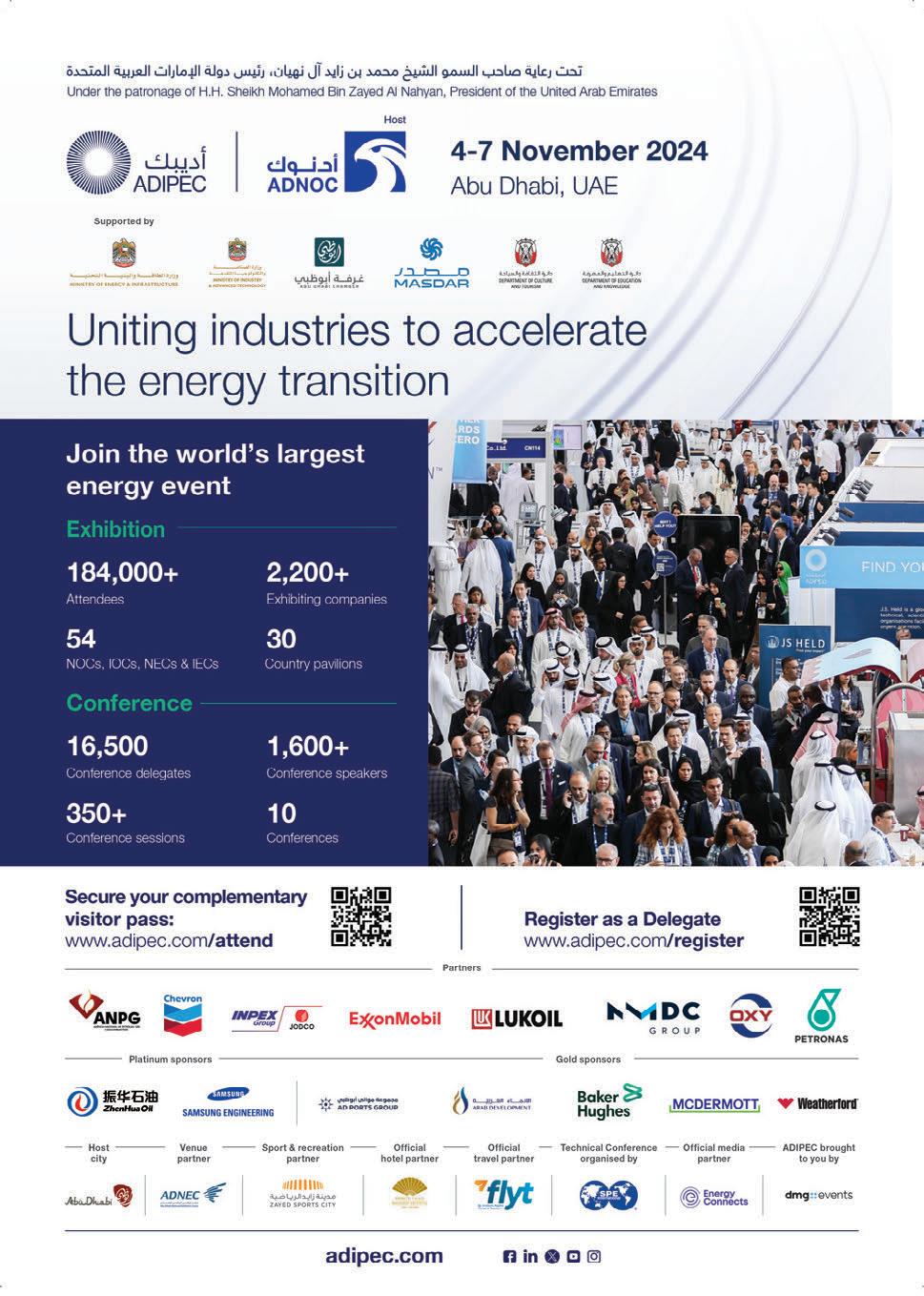
Held from the 4th to 7th November, ADIPEC offers a unique opportunity to network with the leaders, innovators, buyers and sellers who are taking the energy industry into the future. Visitors gain an international perspective with energy professionals from 164 countries and join the discussion on creating a responsible and resilient energy transition. President of dmg events
Christopher Hudson answered questions for Inside Marine.
Readers of Inside Marine will be particularly interested in the Maritime & Logistics area at ADIPEC. Please outline for us how this event will help to decarbonise the global maritime and logistics industries?
Today, all industries face a common challenge posed by the global energy trilemma, which is to support increased industrial productivity while reducing energy demand and emissions output. Recognising the importance of bringing together the wider global energy industry to accelerate efforts to resolve these complex issues, ADIPEC has made enabling the actions to overcome the new global energy trilemma a major focus of its 2024 edition.
As such, ADIPEC 2024 will gather the entire wider energy ecosystem – spanning energy, technology, infrastructure, finance, government, utilities, construction, EPC, maritime and logistics, and more – to facilitate collaboration, share innovations and platform solutions. The event will explore
opportunities for decarbonisation, improved efficiency, reduced cost and enhanced productivity.
The scale and significance of the global shipping sector specifically – it represents 90% of international trade while accounting for 3% of global CO2 emissions – shows the importance of ADIPEC’s Maritime & Logistics exhibition area.
Maritime and logistics are an essential part of the global economy, while also being a major consumer of energy and producer of emissions. With the IMO’s goal of achieving net zero greenhouse gas emissions for global shipping by 2050, the sector has a big challenge ahead. This will be met in large part through new technologies like artificial intelligence, as well as low- and zero-emissions fuels like green hydrogen.
By placing the ADIPEC Maritime & Logistics area beside our Decarbonisation and Digitalisation areas, we are facilitating the innovation and collaboration this large and central industry requires. Bringing
4-7 November, Abu Dhabi www.adipec.com
together industry leaders, regulators and decision-makers from the global maritime and logistics supply chain, alongside leading technological experts, will help accelerate tangible, collective progress and advance global decarbonisation commitments, plus improve the competitiveness of companies operating in the space.
ADIPEC is an opportunity to help shape the future of the shipping and maritime industry. How is the event enabling the promotion of the latest innovations and technologies for the sector?
For the energy-intensive maritime and logistics sector, reducing energy consumption and emissions output in line with the 1.5°C goal of the Paris Accords is no easy feat. This will require regulatory developments, new fuels, greater efficiency, better logistics
and, crucially, integration of cutting-edge technologies like AI that can provide improvement in efficiency and more. By platforming companies that are advancing applications of technologies like AI, blockchain, machine learning and the internet of things, ADIPEC is connecting those in the maritime and logistics sector to the innovators that can help them achieve enhanced performance, optimal efficiencies and reduced emissions. The ADIPEC Maritime & Logistics area connects the people, organisations and resources needed to advance the sector and its goals.
As part of ADIPEC’s maritime event, there will be a dock area with ships and demonstrations for visitors to experience. How important is it to offer these features on-site?
They say seeing is believing. With technology advancing so rapidly these days, along with new sustainability and safety standards for the maritime and logistics sector, the value of showcasing new products that respond to these new parameters cannot be overstated.
The ADIPEC Marina Showcase will enable fleet and equipment owners to demonstrate their latest vessels, platforms and equipment. Owners can show how they are integrating cutting-edge technologies to achieve better performance and advance sector goals. This feature will enable visitors to learn about and be inspired by the latest products, technologies, innovations and solutions that are driving the decarbonisation and advancement of the maritime and logistics sectors.
All of this shows the value of in-person events as irreplaceable in their ability to enable product demonstrations and testing.
ADIPEC also has a parallel Maritime & Logistics Conference. Do you have any previews or highlights for topics or speakers that you can share?
The maritime and logistics sector plays a crucial role in enabling everyday lives and livelihoods, making its decarbonisation critically important for all people and industries. In response to this need, the ADIPEC Maritime & Logistics Conference will convene pioneers, executives and regulators from the shipping world and beyond, fostering dialogues that drive cross-sector progress towards net zero,
Christopher Hudson from dmg events previews ADIPEC.
7 November, Abu Dhabi www.adipec.com
shaping the future of global supply chains and reinforcing a collective commitment to both people and the planet.
Some of the topics for discussion at the conference will include the readiness of ports for an alternative energy future, balancing the urgency of infrastructure developments with the availability of new fuels and the role of shipping in maintaining robust, sustainable global trade, particularly during geopolitical upheavals
These topics will be explored by high-level speakers, including CEOs, ministers, policy makers and technologists. Everyone is coming together with the common purpose of driving cross-sector progress towards net zero, shaping the future of global supply chains and reinforcing a collective commitment to both people and planet. By platforming visionaries on critical topics, the conference will harvest insights on the latest thinking, trends and solutions around reduced emissions, energy efficiencies and disruptive technology needed to advance the global maritime, logistics and shipping sectors.
What networking opportunities are available for marine companies attending ADIPEC, to help them connect with industry leaders, regulators and decision-makers from the global business community?
As the largest energy gathering in the world, ADIPEC 2024 will host 184,000+ attendees, 16,500+ delegates and 2,200+ companies. Within the Maritime & Logistics area, attendees can connect with companies and professionals from across the shipping value chain, including ship owners and operators, companies in chartering and bunkering, marine engineering contractors, freight and logistics suppliers, health and safety companies, LNG exporters and producers, port and maritime developers and authorities, ROV services and solutions, shipbuilders and ship management companies, shipping agents, associations and classification societies, and subsea suppliers.
As such, the opportunities for networking and collaboration are huge, giving attendees the chance to grow their businesses, secure transformative partnerships, gain industry insights, and be part of discussions that are shaping the future of their industry. n
seven seas, five oceans, one voice
Shipbuilding:
MAGAZINE FOCUS
An introduction to shipbuilding, with a special report on automation and a selection of news stories and innovations, followed by company profiles for: thecla bodewes shipyards oceanco savi royal bodewes lisnave cernaval group shipyards adriatic42
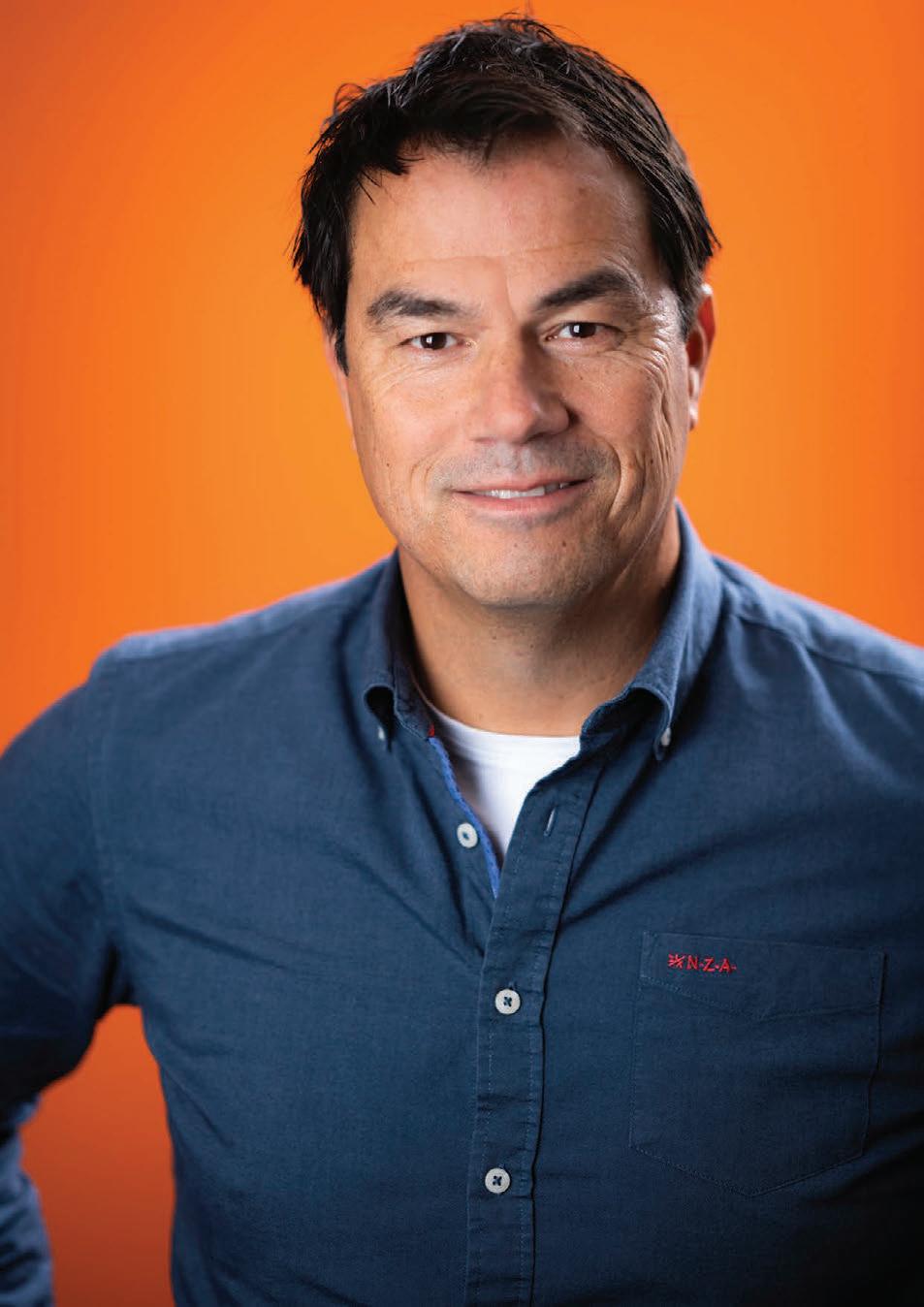
Scott Raeside from SSI examines a potential future for the shipbuilding process.
Automation in shipbuilding
is ready for a great leap forward
Manual intervention is still relied upon to drive machinery on the production floor, but intelligent 3D ship models can automate the process. Scott Raeside, Product Business Analyst at SSI, explores the topic in this Special Report for Inside Marine.
The ability to free up highly skilled workers to focus on complex production tasks rather than tedious and menial ones is a major win for any shipyard. In which case, why have so few shipyards been able to embrace this innovation? Part of the reason lies within the detailing and management of the production information generated to control shop floor machines, which can be time consuming and error prone. Automated robotic cutting, bending and welding of steel components in ship construction has been possible for years. Likewise, reducing the amount of time designers must spend interacting with mainly 2D production documentation or manipulating file formats allows both for better accuracy and more efficiency in creating and revising the model, as well as automating the manufacturing process.
Bridging these two realities
The level of complexity in every phase of construction and the workflow of a shipyard will always vary, but the desire to incorporate automation where possible remains constant.
For decades there has been a dependence on manually created outputs, which in turn drive manual tasks for the production team. This can mean updating multiple drawings based on time-consuming workflows to get the output data back on to the shopfloor, or manually measuring and marking up plate from a 2D drawing.
As an example, opening thousands of spool and assembly drawings, annotating, and validating them is slow and tedious. Such tasks represent a large time burn for designers and as a result, a more expensive ship design process.
Often the answer proposed to some of these manual workflow issues is to incorporate third-party software – in addition to the core 3D package used for ship design –which in turn may create bigger changes to shipyard workflows to ensure compatibility. On projects where schedules are aggressive and budgets are tight, this degree of upheaval is a non-starter.
Removing the need to introduce thirdparty software, or reducing the amount of user interactions needed to create an output, by driving this information directly from the 3D digital model software is an exciting move in the right direction.
Scott Raeside, Product Business Analyst at SSI
The next step
It would be unrealistic to suggest that it is possible to create such outputs with no physical intervention at all, but a strategy of ‘80% no touch’ is achievable and in sight.
The philosophy behind the ‘80% no touch’ approach is simple: we enable creation of the deliverables that are required to accurately build the ship. This includes traditional production documentation as well as an increasing capacity to drive machines on the shop floor based on data from the Marine Information Model (MIM).
The complexities of shipbuilding, nonrepeating production tasks and the fact that humans are still better suited to com plex cutting/welding/bending means we are still working towards complete and transparent automation.
But we do have the knowledge and information required to reduce some of the pain points. By using a rich 3D product model, it is possible to create more efficient production outputs and communicate directly with the machinery in place in most shipyards.
Automation will not eliminate the requirement for the user to interact physically with some of the outputs from the model, but the aim is to make it faster for them to
access, modify or verify information accurately and efficiently.
The ability to drive production machinery directly from information stored in the MIM creates the potential for tremendous efficiency and accuracy improvements. This approach can reduce, or in some cases eliminate, the risk of human errors.
Taking a shipbuilding project from concept to completion is a long and complex process. Task-specific software supporting the people and tools is the path innovative shipbuilders are taking to simplify this com plex process. Shipyards will always rely on the skills and expertise of people in construction, but if the process can be made easier, then the result will be more efficient and higher quality builds.
Decades of experience in the industry has led SSI to recognise that change is a reality and that solutions must adapt to the evolving needs of the shipyards.
A strategy of enabling operators to drive machinery with as little manual intervention as possible seeks to create production efficiencies. This approach will keep shipyards up to date with the latest technology and approaches that are available to support their projects. n
Kongsberg Maritime introduces new underwater mountable thruster
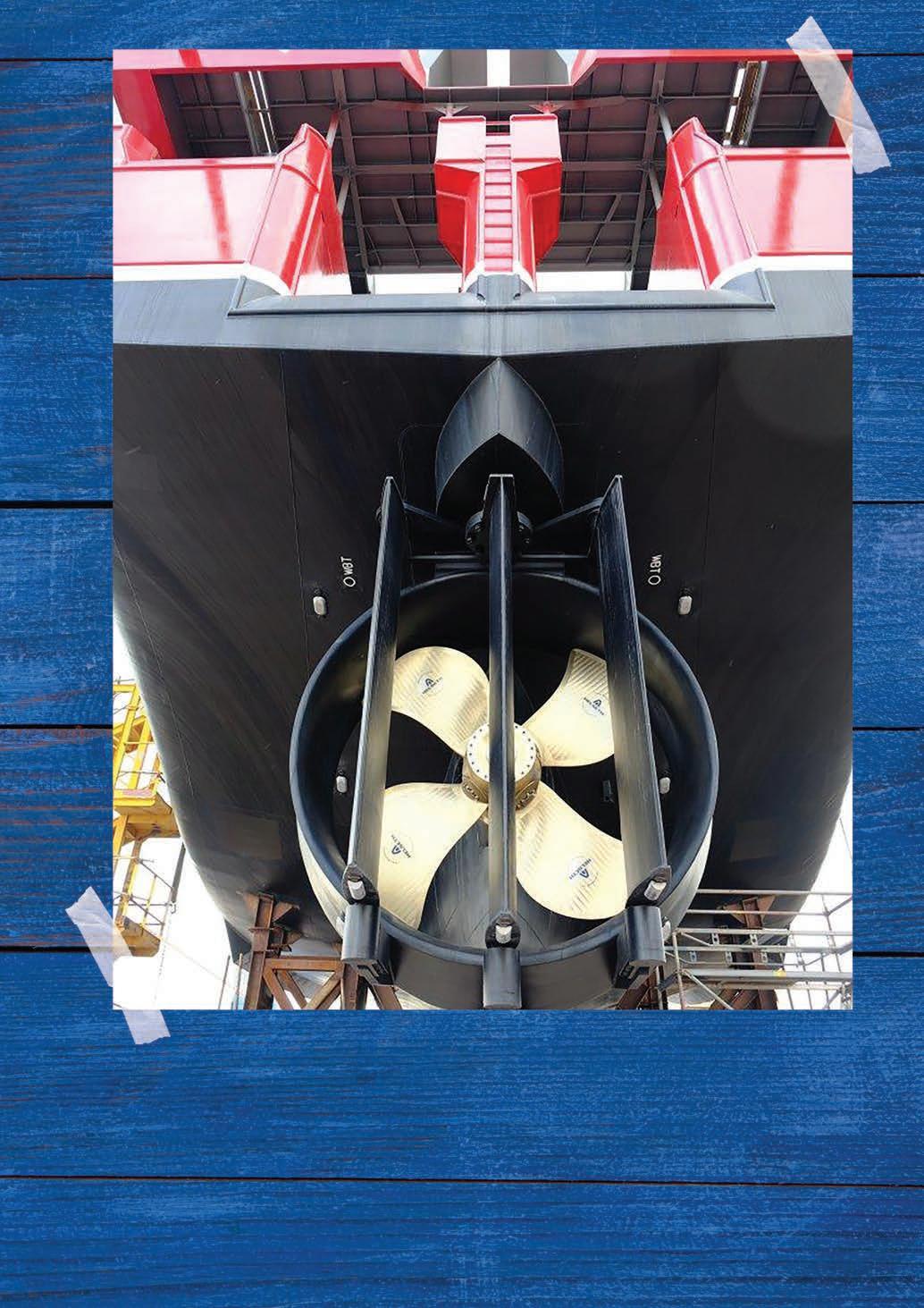
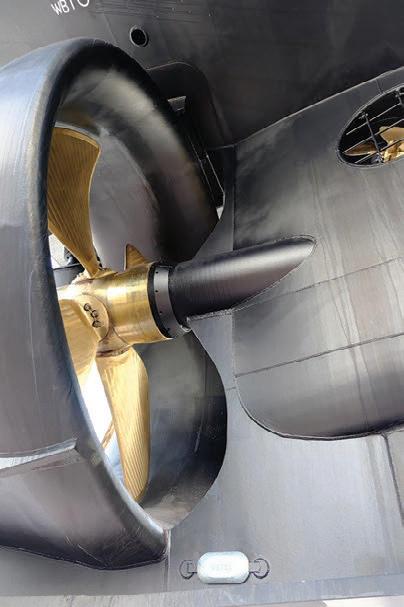
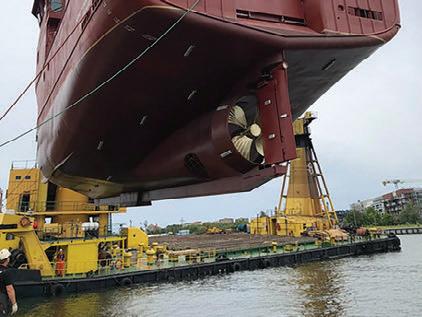
Kongsberg Maritime has introduced a new size of underwater mountable azimuth thruster with a 3.7 metre propeller and 4.2-Megawatt power output model joining the range.
Suited to a range of vessels including drill ships, windfarm vessels and production vessels, the UUC PM 355 features a permanent magnet (PM) motor, delivering 81 tons of bollard pull. The UUC PM 355, has a compact design with less space required in the machine room thanks to the integrated PM motor.
Kongsberg Maritime has more than 25 years of experience in the development of underwater mountable thrusters, which can be exchanged without the need for drydocking, while the vessel remains in the water. Installation of the UUC range can be done at depths up to 50 metres.
“Our UUC range of underwater mountable thrusters remains a popular choice across a range of offshore applications where minimising downtime is a priority,”
said Pasi Villanen, Product Line Manager at Kongsberg Maritime. “With this new UUC PM 355 thruster, we can offer increased thrust and simple installation, while reducing the amount of space required inside the vessel.
“The permanent magnet motor is common across much of our propulsion portfolio, and for this type of thruster, its responsiveness and efficiency make it the ideal choice for Dynamic Positioning operations.”
Other features of the new thruster included low noise operation, less lubricating oil volume and no oil-to-sea interfaces, a key component in environmental protection. n
Send us your news
We would love to hear your latest news . Why not share it with thousands of potential clients and readers in the next Inside Marine magazine?
Get in touch today: media@insidepublication.com
VINSSEN deploys innovative hydrogen fuel cell system
Maritime decarbonisation technology specialist VINSSEN Co, Ltd, is focused on hydrogen fuel cells and supporting systems. The company has successfully passed BV’s rigorous performance tests, a key step towards demonstrating the feasibility of hydrogen fuel cell systems onboard commercial vessels.
VINSSEN delivered a customised 60kW PEM (Proton Exchange Membrane) Fuel Cell System featuring key components that include a Fuel Cell Module (FCM), an integrated converter module, a battery system and a transformer. VINSSEN also incorporated a User Interface that was designed for easy control by vessel operators.
This project builds on VINSSEN’s Approval in Principle (AIP) Certification from Korean Register (KR) for its 250kW/100kW Maritime Fuel Cell Power Packs in March 2024 and September 2023.
In addition to recent progress as it relates to hydrogen fuel cells, VINSSEN received Type Approval for a 92kWh Lithium-Ion Battery System from KR and Korea Maritime Transportation Authority
(KOMSA), and subsequently delivered Korea's first fully battery electric passenger ferry ‘Garden Dream’ to the Suncheonman International Expo in May 2023.
Meanwhile, VINSSEN recently completed a Series C investment round totalling 15 billion KRW. The secured funds have been earmarked for product development, market expansion, and recruitment of key personnel. In order to facilitate international expansion, VINSSEN established a US branch office in Seattle in February 2024 to enter the North American market. This builds on VINSSEN's international presence since April 2022 at the K-Startup Center in Singapore that was launched by Korea SMEs and Startups Agency (KOSME). n
Latest innovations from the marine industry
Blue World completes successful testing of fuel cell system running green methanol
After months of preparation, Blue World Technologies announced the successful testing of the world’s first 200kW high-temperature PEM fuel cell module.
The test was completed at the newly established test facilities connected to the Blue World Aalborg Factory, where the fuel cells for the system are produced. The initial testing has been completed with great results, exceeding performance expectations.
With an electrical efficiency of up to 55% when reaching a commercial stage, the fuel cell system will typically provide a fuel saving of 20-30% which enables a costefficient use of green fuels. Additionally, the fuel cell system allows for up to 100% carbon capture for both utilisation in green fuel production and storage.
The first pilot system is a 1MW system for onboard power production. The system will be installed on one of AP Moller – Maersk’s large dual fuel-enabled methanol vessels and is expected during H1 2026.
Blue World will initially supply systems for auxiliary power and expects that its
maritime system will reach a commercial level in 2027. Eventually, the company will proceed to supply multi-megawatt propulsion systems for global shipping, which is where the fuel cell technology will provide the greatest impact on both the environment and climate. n
Daphne Technology’s SlipPure™ achieves Lloyd’s Register Approval in Principle
The advanced SlipPure™ system, which previously received AiP for its plasma-only configuration, now runs its full Plasma-Catalytic process. This technology improves efficiency by lowering plasma power consumption, enabling very high methane slip reductions at exhaust temperatures well below those required for catalyst-only solutions, in Daphne Technology’s view, making it both the most effective and efficient methane slip reduction system available. The SlipPure™ Plasma-Catalysis system is also Approved in Principle by DNV.
Daphne Technology’s innovative SlipPure™ system has been awarded Approval in Principle (AiP) from Lloyd’s Register (LR) for its Plasma-Catalytic technology, with LR witnessed results confirming its performance. This recognition marks a significant milestone in the fight against methane slip in the maritime and land-based oil and gas industries. To have your company’s latest product, technology or concept included
Methane slip is a major contributor to greenhouse gas emissions, with a global warming potential 28 times greater than that of CO2 over a 100-year period. Reducing methane emissions is crucial as it is responsible for at least a quarter of the current global warming.
As it has a much shorter atmospheric lifetime compared to CO2, cutting methane emissions now can lead to faster climate benefits.
Daphne Technology believes it is the only company actively developing a PlasmaCatalysis system for methane slip reduction. This advanced system integrates the company’s patented wavelet pulse power (WPP) supply technology to generate plasma and utilises a proprietary catalyst, ensuring unmatched performance and efficiency. n
GE T INVOLVED
THECLA BODEWES SHIPYARDS I PROFILE
Specialising in building all types of seagoing and inland navigation vessels, Thecla Bodewes Shipyards has completed a range of diverse shipbuilding projects, as well as repair and maintenance services. Project Developer Wilco Smit discussed the company’s sustainable designs, Salmo and Gadus, plus recent vessel launches. Report by Antonia Cole.
Over the past year, Vertom Group has increased orders from Thecla Bodewes Shipyards from four vessels to ten, Project Developer Wilco Smit said: “This shows how the interest in diesel-electric propulsion systems is growing. The technology is still fairly new to the dry cargo shipping industry, but it’s great to see the benefits of it being recognised.
“We are also building another two similar sized vessels for Carisbrooke Shipping using the diesel-electric propulsion system. These vessels have the potential to transform the industry, setting a new standard for sustainability.”
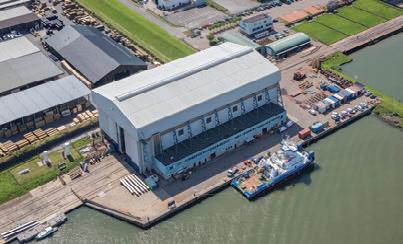
Thecla Bodewes Shipyards (TBSY) employs 115 people over four facilities in the Netherlands. Headquartered in Kampen, the company has three other sites in Harlingen, Meppel and Stroobos. Each location spe -
cialises in a different service, giving the company the resources and expertise to deliver high-quality projects.
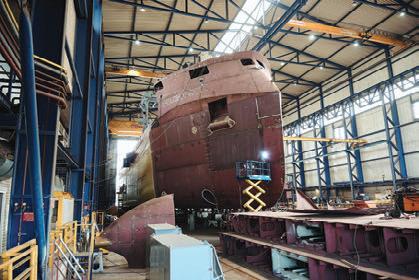
Large ships are built in Kampen, Harlingen and Stroobos, whereas repair and lengthening services take place in Meppel.
The company is able to build many types of vessel, from shallow draught pushers, water injection dredgers and day-passenger ships to low-profile coasters and project cargo vessels.
EEKELS
Thecla Bodewes Shipyards selects Eekels' award-winning Modular Propulsion Platform (MPP) to create vessels that minimise energy loss, fuel consumption and emissions. Eekels' groundbreaking MPP technology, already in operation with Vertom and ordered by Carisbrooke Shipping, has exceeded all expectations. With high-quality specialised knowledge, Eekels excels in developing, delivering and managing innovative and sustainable electrotechnical solutions.
Eekels values its partnership with Thecla Bodewes Shipyards and looks forward to their continued joint success in the future.
editorial mention
Beginning with initial designs through to completion, TBSY’s skilled and experienced team are able to deliver efficient and durable vessels.
“Our experts here at TBSY are dedicated to innovation and sustainability,” added Mr Smit. “All of our projects look to introduce the latest technology and industry devel -
opments. We are constantly investigating ways in which we can make shipping more sustainable for our clients.”
An innovative series
Thecla Bodewes Shipyards’ new SALMO series is a testament to the work the company is doing in terms of sustainable innovations. The line of 5,000dwt and 6,500dwt, diesel-electric propelled dry cargo vessels feature specially designed hulls and layouts, improving efficiency and limiting environmental impact. Through extensive research, TBSY developed the series’ advanced hull design that minimises resistance from the water and optimises fuel consumption. The propulsion system features
three large, high-efficiency generator sets to tailor power input for maximised effectiveness, as well as energy-saving technologies such as LED lights and smart automation, including power management.
“The SALMO series fulfils all the demands of a dry cargo vessel, but with an efficient cargo hold and high stowage numbers, alongside low fuel consumption and emissions,” explained Mr Smit. “As well as the vessel, we make the whole building process sustainable. We source materials responsibly and manage our waste effectively in construction. This is important to us as a company.”
In preparation for future sustainable developments, the SALMO series has been designed to accommodate alternative fuel sources. With a space for a fuel supply skid, fuels such as methanol, ammonia or hydrogen can be used to power the vessel.
“We have demonstrated our commitment to innovation and sustainability with the SALMO series,” continued Mr Smit. “The design is prepared for the future, and so are we. Our annual turnover is €70 million, and we are looking to expand that number as we continue to grow. The introduction
of the SALMO series will make a significant impact in helping us to achieve our goals of both growth and a more sustainable industry.”
Another new development is the GADUS dry cargo vessel. Also diesel-electric propelled, this series features an electric powered excavator on the deck enabling the vessel to load and unload at locations without sufficient infrastructure ashore.
The series will start with four identical 5,600dwt vessels, with the first vessel to be delivered to her owners in early 2026.
Delivering excellence
The company has its own project development department, featuring highly skilled naval architects, engineers and other specialised professionals. This means that Thecla Bodewes Shipyards does not have to rely on third-party engineering companies and has full control of the shipbuilding process. Therefore, clients can receive a fully customisable service, tailored to their individual requirements.
“We are able to design a ship based upon our customers’ specifications, meaning each vessel is made to suit their
needs,” said Mr Smit. “Additionally, we pay close attention to market innovations and requirements in order to develop our own vessels.
“This gives our clients the option to choose a standard vessel that still features our innovative technology and sustainable design. We give our customers options and allow them to choose the best solution for their needs.”
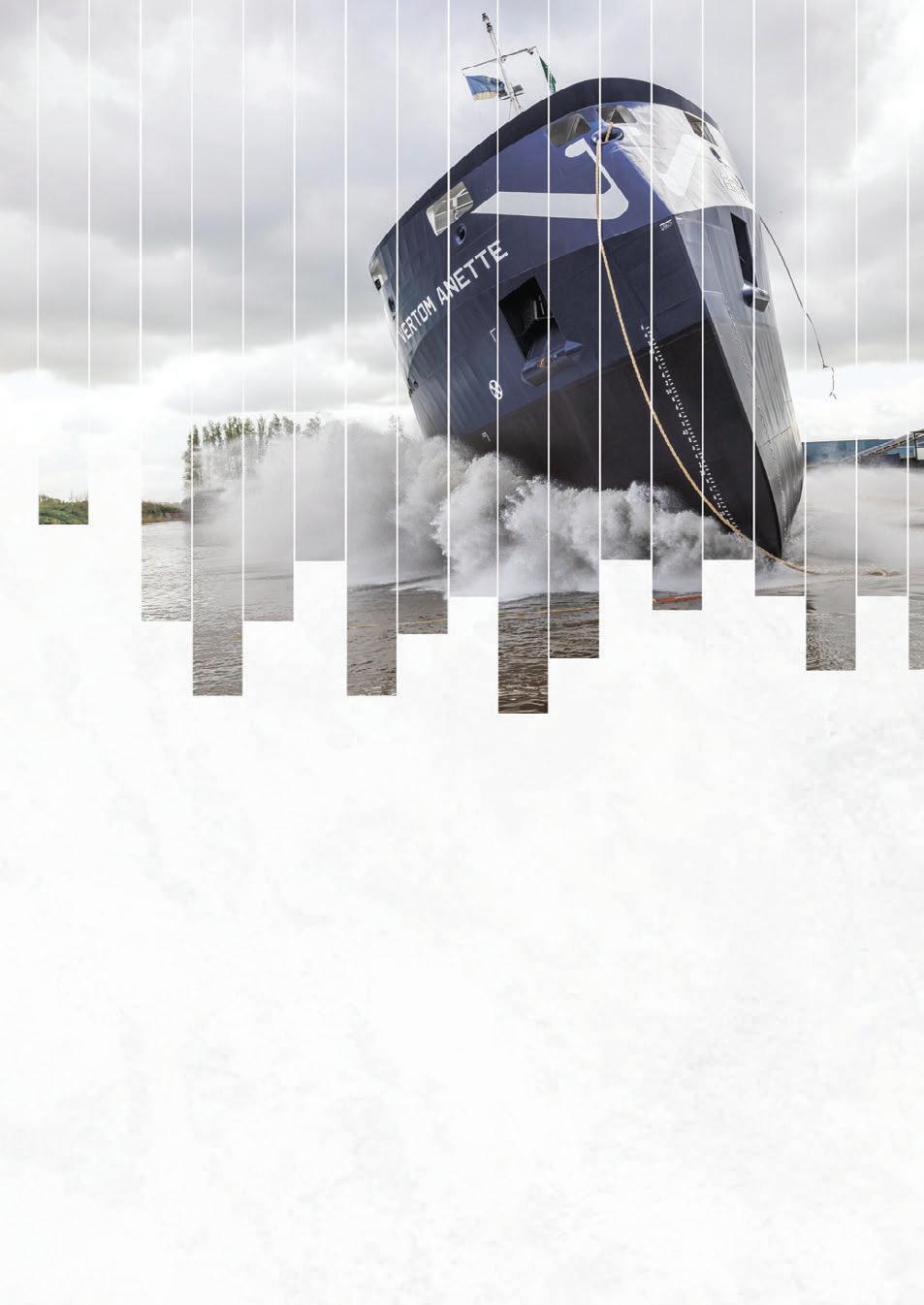
TBSY recently launched the 7,280dwt MV Vertom Lisa for the Vertom Group, a leading name in maritime logistics solutions. This vessel is the sixth in an order of 12 and is part of the LABRAX series, with advanced maritime engineering and environmentally friendly design.
Featuring the company’s diesel-electric propulsion system, it is a multi-purpose vessel with a specialised design. The MV Vertom Lisa performs 38% under the current current IMO phase three Energy Efficiency Design Index requirements due to its sustainable features.
The propulsion and advanced powermanagement systems combine to create
a vessel that minimises energy loss, fuel consumption and emissions. With a length of 118.6m and a width of 14.3m, the MV Vertom Lisa uses significantly less propulsion power than conventional vessels of a similar size.
“We are very detailed in our engineering approach,” added Mr Smit. “Especially during the design phase, we put a lot of effort in reducing the underwater hull resistance by all means. Every aspect counts to making a vessel truly sustainable. We also try to keep the number of parts as low as possible. This not only conserves resources, but makes the vessel more efficient and dependable.”
Preparing for the future
Thecla Bodewes Shipyards is looking to make building processes more sustainable through the introduction of automation in construction. This will make operations quicker and more efficient, reducing energy use.
Also, the company is researching alternative fuels and how they can be integrated
into existing and future vessel designs. Through this research, the company hopes to create more sustainable and safe solutions for customers going forward.
“There is a lot that we are working on to prepare for the future of the company,” explained explained Mr Smit. “Ultimately, our mission is to create sustainable options for the marine industry, and we are doing this with our partners and suppliers. We rely on our long-term relationships within the sector, maintaining transparency and honesty in all our business. Most of our suppliers are Dutch or European, which allows us to support the local economy and industry.
“Also, our strong relationships with suppliers enables us to serve our customers to a higher standard, which is essential to us. We develop alongside our suppliers and collaborate with each other on new
innovations and ideas. This is vital to our success as a company.”
Thecla Bodewes Shipyards is looking to t ake on more projects and expand further in the future. As sustainable technology and innovations evolve, Thecla Bodewes plans to stay ahead of the industry and prepare for a more environmentally friendly future of shipbuilding. n
Project Developer, Wilco Smit
AFUTURE-READY FLEET
Sarchitect is ready to play its part
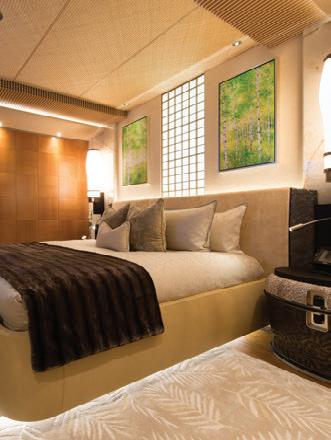
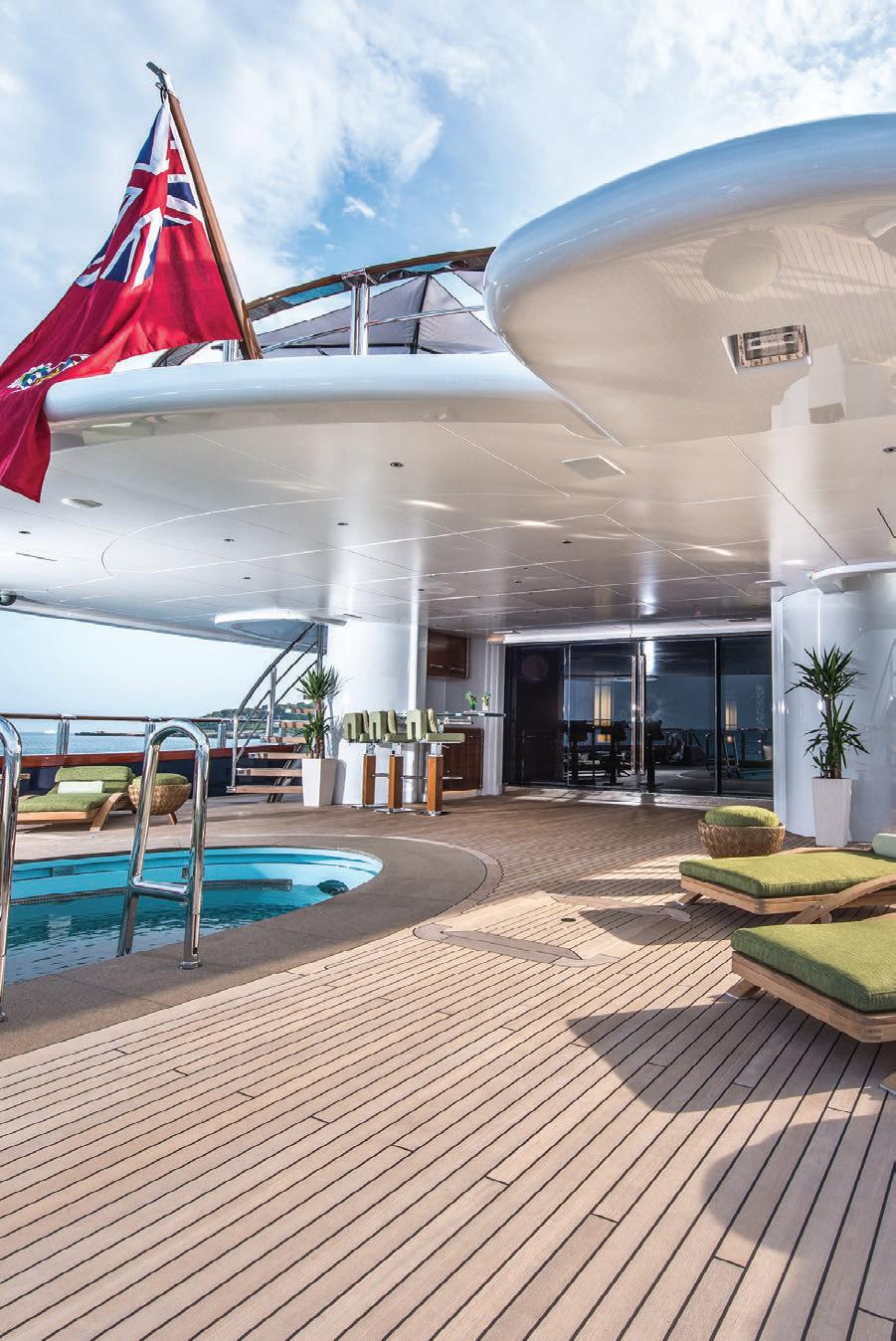
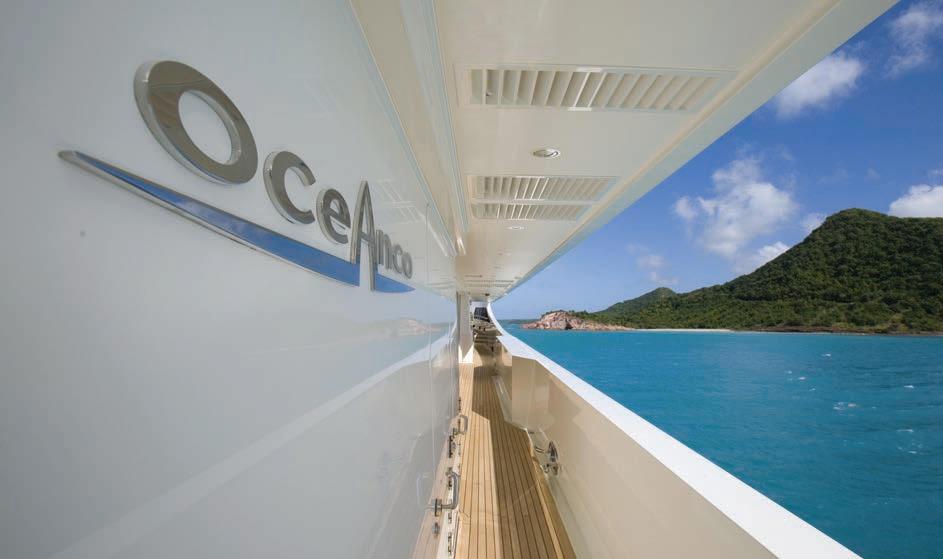
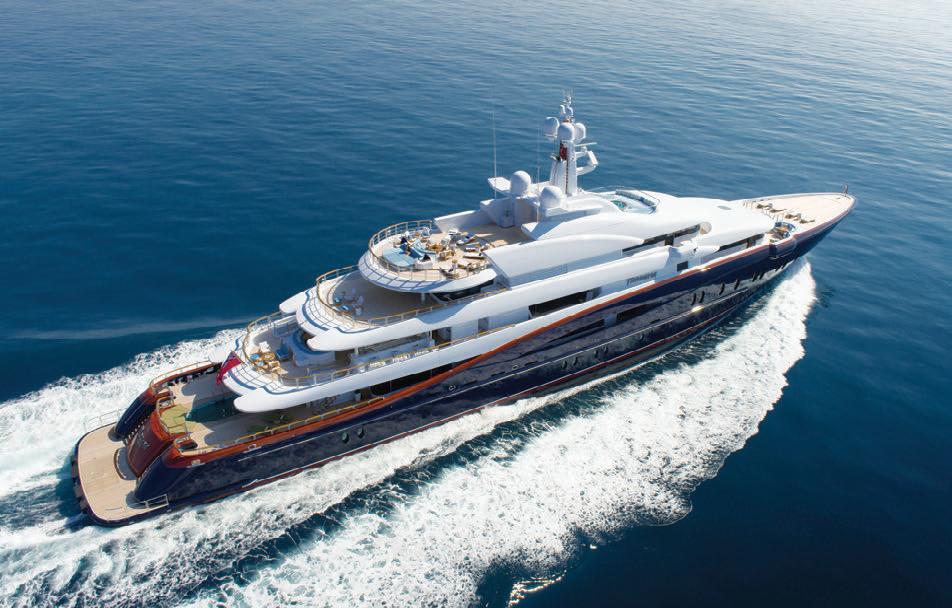
Through innovative yacht designs, Oceanco has made customers’ visions a reality for almost 40 years. Now, with the world tread ing a greener path, the yacht architect is ready to play its part in the journey to net zero. Report by Imogen Ward.
ince opening its doors in 1987, Dutchbased Oceanco, the company responsible for one of the world’s largest, most eco-friendly sailing yachts –Black Pearl – has established a reputation for unique yacht architecture with a twist.
Driven by an ambition to create and support the most advanced and inspiring yachts in the world, Oceanco is making waves in hopes of creating a more sustainable future.
With the support of clients whose views match perfectly with the company’s own, Oceanco has delivered industry firsts time and time again. From the world’s largest high-performance ketch, AQuiJo,
to the hydrodynamic efficiency
to the hydrodynamic efficiency and advanced hybrid propulsion of the first LIFE Design, Bravo Eugenia, Oceanco consistently designs vessels that dare to defy convention.
Platform collaboration
In line with the world’s desire for cleaner, greener vessels, Oceanco has partnered with Lateral to create the Energy Transition Platform. Made up of three stages, the Energy Transition
In line with Oceanco’s commitment to bringing forth a more sustainable industry, the H3 remodel saw its operational emis sions reduced by 60% – a figure that increases to an impressive 90% when alternative fuels such as HVO are utilised
Platform is designed to enable a full vessel transition from diesel-electric to 100% methanol.
The platform is encapsulated by the Aeolus design, which features futureproofing technology, including two Azipod electric propulsion systems (developed by leading electrification and automation manufacturer ABB), energy storage and DC Grid architecture. The design also features two MTU 16V2000 M72 diesel generators, three MTU 16V4000 M54 diesel generators and a diesel tank. Marketed as stage one of the Energy Transition Platform, this design can be utilised today.
According to the platform, stage two should be ready for implementation as the vessel reaches mid-life (or when technology has advanced enough). This would include the replacement of both MTU 16V2000 M72 diesel generators with HT methanol fuel cells.
Bergman Design House. All her power solu
Bergman Design House. All her power solutions are provided by sustainable power systems manufacturer MTU and supported by the sustainable technology of ABB.
Tomorrow’s Designs. These innovative designs were developed to exemplify
The Aeolus is just one of many designs available from Oceanco, known as Tomorrow’s Designs. These innovative designs were developed to exemplify what a yacht could be capable of when built with emerging technologies and a sustainable mindset.
Upgrading H3
The final stage of the platform would see the remaining diesel generators replaced by methanol internal combustion generators. Intended to be built today and ready for tomorrow, Aeolus’ exterior was designed by automobile designer Giles Taylor and flows nicely with the interior plans created by superyacht interior designer Njord by
One of the most recent investments that Oceanco made involves the iconic rebirth of superyacht H3. This development was a first for the yachting industry, marking 2023 the year for reinvention.
More than 20 years after the yacht first made its way onto the market, H3 has undergone a renovation that is likely to go down in history. The vessel was treated to 10.5m extension – which now houses a large pool with a rising dance floor – increasing the vessel’s size to a whopping 105m (there propulsion systems (developed by leading -
are currently only 70 yachts in the world longer than 100m).
Although impressive, a new swimming pool was not the main purpose of this refurb. The project was implemented to ensure H3 would be IMO Tier III compliant –placing her in the ranks of any newbuild for reliability, sustainability and innovation.
The new design also caught the attention of the World Superyacht Awards, winning the category award for Rebuilt Yachts during the 19th edition of the show that took place in May of this year in Venice, Italy.
alternative fuels such as HVO are utilised. Also, by choosing to rebuild rather than build new, the project saved carbon emissions equivalent to planting 10 hectares of forest every year for the next 20 years.
achieved through the rebuild of H3, especially with our new data showing
In a press release on the topic of the awards’ ceremony, Oceanco’s CEO Marcel Onkenhout was quoted saying: “We are very proud of what has been achieved through the rebuild of H3, especially with our new data showing just how impactful this ground-breaking project has been. It is always rewarding to receive recognition from the World Superyacht Awards and, with this particularly unique rebuild, I think it is fair to say that we are especially honoured.” sions reduced by 60% – a figure that to rather than build new, the project year for the next 20 years. the of
In line with Oceanco’s commitment to bringing forth a more sustainable industry, the H3 remodel saw its operational emissions reduced by 60% – a figure that increases to an impressive 90% when
Everything that Oceanco has achieved so far would not have been possible without the help of its amazing supply chain. Proud of its roots, a significant portion of Oceanco’s suppliers is located close by in the Netherlands and Europe.
This includes the crucial support of Van Driel – a specialist in customised cranes for the luxury yacht sector – who has more than 40 years’ experience providing customers with exact designs and builds that meet their every need.
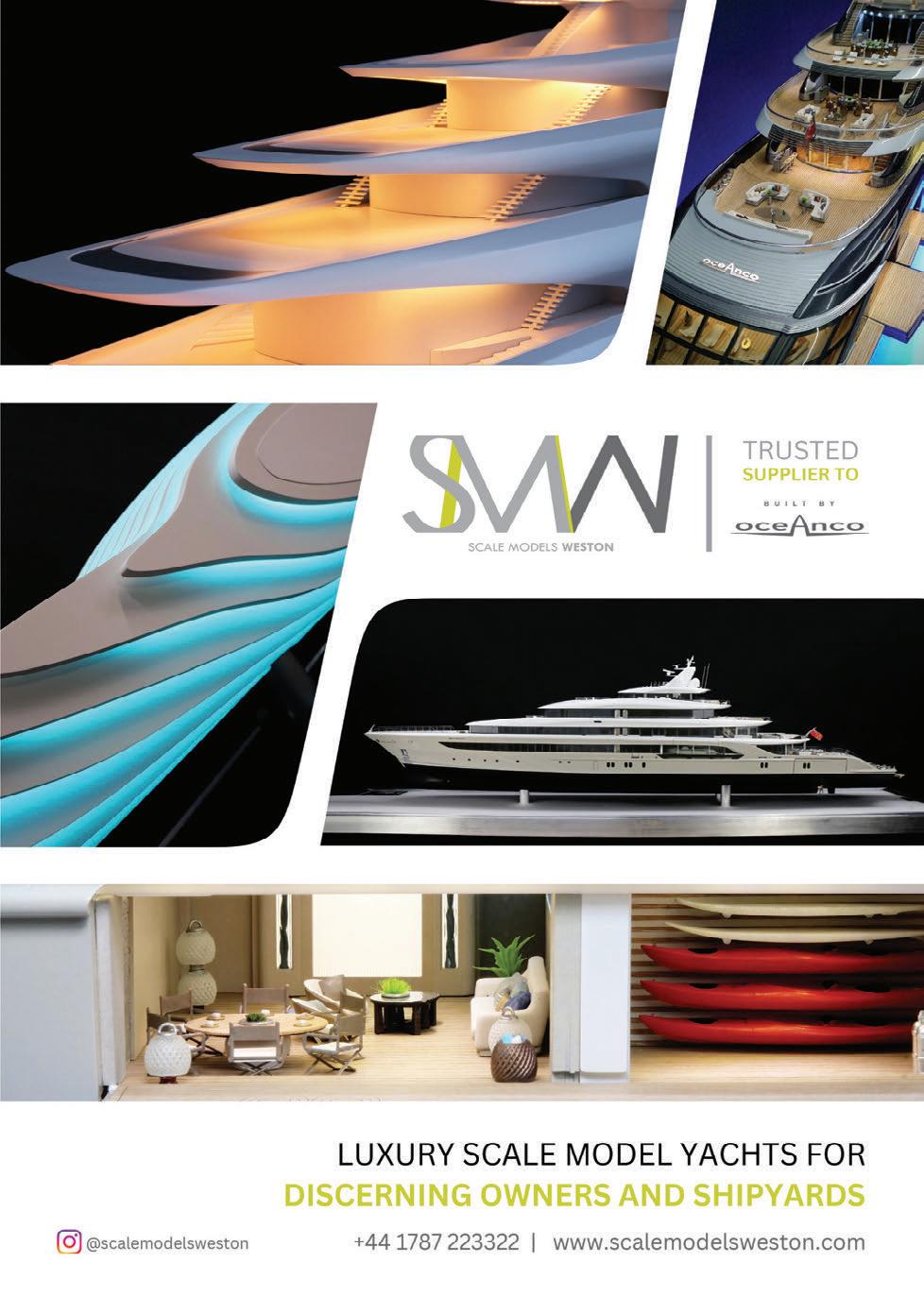
Another great supplier of Oceanco is Scale Models Weston. This first-class supplier utilises more than 40 years of experience to construct high-quality, professional scale models for the marine and architectural industries.
In May of this year, the company was awarded the ‘Made in Europe’ sticker in recognition of its commitment to regional manufacturing. Not only does this sticker highlight the company’s commitment to boosting
the local economy, but it also underlines European manufacturing excellence. Oceanco is committed to maintaining this quality in all its builds and intends to continue developing projects that are thought provoking and insight change. n also all
SAVI is an aficionado of maritime design with over 70 years’ experience. Expertly conducting ship repair, building and outfitting, the company has gradually evolved into a one-stop shop, which means it can offer multiple services to customers. Business Development Director (SAVI) & Managing Director (SAVI USA) Davide Rolleri explained more, in an exclusive interview with Inside Marine. Report by Imogen Ward.
Operating with an average annual turnover of €25-30 million, SAVI has developed a strong presence in the maritime industry, offering a diverse range of services relating to ship repair and refurbishment. Now, with 65% of its operations taken over by outfitting (its newest department), with the remaining 35% devoted to the three other departments of inox, insulation and flooring, the company is getting ready to expand.
“Over the past years, in particular, we have worked hard to promote our outfitting service, and as a result, we are now implementing this service on a global scale,” said Business Development Director (SAVI) & Managing Director (SAVI USA) Davide Rolleri. “Thanks to our outfitting expertise, we are now working with the major brands in the cruise and ferry segments.”
SAVI has been evolving alongside the market since it was established in 1950.
In the ‘90s the Italian-based company added stainless steel manufacturing to its repertoire – enabling it to manufacture plant dedicated to catering. This quickly evolved, with the company fitting out entire galleys, restaurants and buffets.
“Owner Fabio Bianchi chose to head in this direction to expand the offer because in the ‘90s he saw big opportunities in this niche area of the market,” explained
Mr Rolleri. “It also brought on board technicians who were particularly skilled in TIG welding, providing the company with a huge advantage.”
In 2006, SAVI diversified its capabilities once again, adding interior furnishing and outfitting to its portfolio. From flooring to furniture, SAVI quickly got to work putting its name to some amazing projects.
Unveiling SAVI USA
With its global presence fast-growing, SAVI recently made the strategic decision to open a new branch in America to better serve the market.
“We had plans to initiate the expansion several years ago, but Covid got in the way,” said Mr Rolleri. “Our technicians are receiving work visas for the US, and we are now receiving the first orders for SAVI USA. This is an incredibly exciting time for us.”
So far, SAVI has been awarded €18 million in contracts in the first six months of 2024, 95% of which are projects relating to refitting.
Antonio Talamo, Senior project manager
Francesco Fossa, Estimator
“Having a physical presence in the US is going to open new doors – it is already happening,” continued Mr Rolleri. “Only a few weeks ago, I received a call to say we could partake in the bidding process for an oceanographic vessel being managed by the University of San Diego.
“These opportunities will make us more competitive in the market and improve the production process for our customers.”
According to Mr Rolleri, SAVI has taken the time to carefully assess the US market , to ensure it is providing custom designs: “Every market is different, so we must design our interiors to match the varying demographics.
“For instance, when we are outfitting cruise ships for the Chinese market, we often install more shopping areas, whereas the US market prefers entertainment areas and casinos. We carefully adapt each project to those preferences but offer the full range for each market.”
Elson Miha, Supervisor
Stefano Al Bazzaz, Project Manager
SAVI I PROFILE
Committed to the clients
SAVI has always maintained a strong focus on its clients and works hard to ensure their needs are met at every stage of a project. The company even retains a strong element of flexibility to make sure this is possible. A recent example of this, would be SAVI’s work on a well-known British cruise line.
SAVI was awarded 100% of the installation work for the catering and public areas on the newbuild vessel, which was constructed in Helsinki, Finland.
“This project was highly customised by the client, with several modifications during the project realisation showing our high flexibility, and although we almost do not take on newbuild projects anymore, we learned a lot from the project and have maintained this relationship, ready for when it needs refurbishment in the future,” said Mr Rolleri. “These vessels tend to go through the refitting process every two to
four years, and as the original installers, we feel confident that we would be the perfect company for the job.”
SAVI makes sure to maintain open communication with clients to keep them informed and involved.
“Our projects in Finland were particularly challenging, so we made sure to have daily conversations with the yard to keep the client informed,” Mr Rolleri added.
A solid support system
The company’s ability to remain flexible would not be possible without the aid of its reliable supply chain. Most of which SAVI has maintained a strong relationship with for over 20 years.
“Of course, there are times when clients request the use of specific suppliers and subcontractors, so in these instances, we align with their wishes,” explained Mr Rolleri. “However, when we have the choice, we have
an amazing list of suppliers, partners and subcontractors who we place our trust in.”
The company also relies on more than 300 highly skilled technicians and abides by ISO 9001 and ISO 14001 certifications. As SAVI continues to grow, it is looking to further invest in its workforce.
“We have grown substantially over the last years,” commented Mr Rolleri. “When I first started working here, we had only five employees based at the office, now we have over 30, and a lot of them are quite young. We have been working in collaboration with the universities to encourage graduates to join our team, and this is something we intend to continue doing.
“With the aim of improving all our departments, we also plan to bring on at least five new employees in our technical departments. We are also currently renovating a huge new warehouse into offices to provide additional space for our employees to work from.
“Investing in our people is so important because they help make us better. In this job role I have been able to meet so many
interesting people, both employees and clients. This opportunity to meet new people and explore new places is what really makes SAVI a special place to work.”
For over 200 years, Royal Bodewes has built vessels that represent innovation and quality, specialising in the design and delivery of general cargo, cement carrier and customised ships. Business Development Managers Martijn Beunk and Gerhard Drenth discussed the company’s sustainable shipbuilding and tailored service. Report by Antonia Cole.
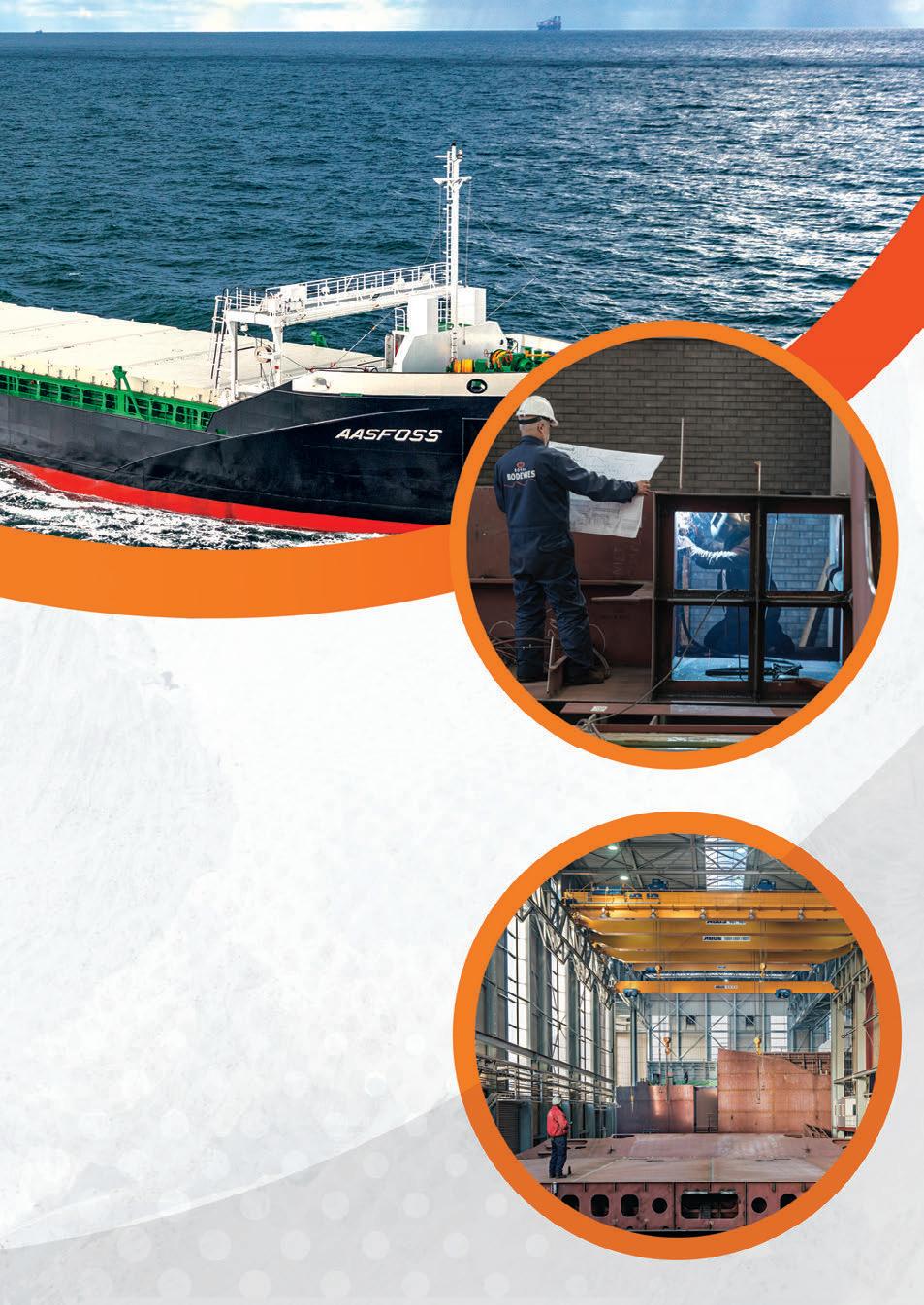
Despite global and industry challenges, Royal Bodewes has continued to grow, Business Development Manager Martijn Beunk said: “We expanded our facilities, renewing building halls and optimising production lines. Now, we own a nearby shipyard with our partners Passer ISDC and also rent another neighbouring yard. With these improvements, we can build nine ships a year.”
Founded in 1812, the company began as a manufacturer of wooden barges and coastal sailing vessels. Over the years, Royal Bodewes has developed alongside technological and industry advancements to become a leader of innovation. In 2016, it already built a hybrid multi-purpose vessel sailing on biofuels for Meriaura. Thereafter, in 2017, Royal Bodewes built an LNG Flex bunker tanker. In 2021, the company produced the world's first newbuild hybrid battery powered self-discharger, MV Aasfjell. This demonstrated Royal Bodewes’ ability to turn ideas into high-quality vessels.
velopment Managers Gerhard Drenth and Martijn Beunk
Working in close collaboration with clients, the company builds efficient and economical ships, suited to individual specifications. An in-house design and engineering team firstly creates detailed plans for the vessel with an accompanying 3D model. Then, through Royal Bodewes’ in-house shipbuilding process, prefabrication, logistics, assembling and painting of the vessel are completed.
Once the ship is launched, outfitting, carpentry and paint works are carried out to finalise the vessel. Sea trials become the final stage of production before the vessel is delivered to the customer, ensuring the ship is fully technically approved.
Endless possibilities
Based in the Netherlands, Royal Bodewes builds all ships locally. This not only reduces the company’s carbon footprint, but also supports the local economy and makes sure operations are carried out to a high standard.
“Not many companies are able to build everything within the Netherlands like we do,” explained Business Development Manager Gerhard Drenth. “It’s a real
suc cess story for us and shows our reputation for efficient and effective services. Many people look to Asia for shipbuilding, but we have people from across the globe looking to us.”
The company has delivered a vessel to Taiwan for shipowner U-Ming Marine Transport Corporation. The 115m long cement carrier was Royal Bodewes’ first order from Asia. Additionally, a new RoRo cargo vessel is under construction for a Polynesian shipping company, expanding Royal Bodewes’ global reach.
Companies look to Royal Bodewes to build their ships due to its high standards of quality and comprehensive service. With every order, the company strives to develop projects that exceed customer expectations.
“When a shipowner comes to us, they have a transportation need that they have to fulfil,” added Mr Drenth. “What we do is communicate with them to fully understand their requirements and then look for a solution. We offer a full turnkey service, meaning we can optimise every aspect of the ship to fit client specifications.”
The company’s Arklow Resolve recently won Netherlands Maritime Technology’s ship of the month, attesting to Royal Bodewes’ impressive capabilities. The ship is very efficient due to its innovative design. It is based upon the 5,000 tonne series but is a lengthened version. This means that it can hold 20% more cargo with the same engine, minimising fuel usage and emissions.
Greener and cleaner
Royal Bodewes is focused on integrating sustainability into shipbuilding, promoting a more environmentally friendly industry. The company has already built five ships with a fully battery powered hybrid system and has orders for seven more.
“There’s a lot of technical knowledge that has gone into the designs of these ships,” commented Mr Beunk. “We have put in a lot of work to see these ships become a finished product and the result
is very special. Our hybrid ships are exceptionally efficient and are created with the future in mind.”
The Hagland, RB 5,000 series are hybrid cargo vessels equipped with a battery package and an excavator on top for self-loading and discharging. This creates a process that emits zero emissions in port operations, as well as using less fuel during journeys.
Hagland Shipping has recently ordered four more of these vessels. The bulk carriers will have the same sustainable design, but will include additional features that further reduce emissions. Royal Bodewes is creating ships that optimise fuel-use and preserve the environment, preparing ship owners for evolving sustainability regulations into the future.
“Protecting the environment is a vital part of our daily operations,” continued Mr Beunk. “We are always looking for ways to make ships greener and cleaner. From a shipyard perspective, we are also optimising our energy-use in operations. We have installed solar panels at the
shipyard to generate our own renewable energy and mitigate our impact on the environment.”
Royal Bodewes plans to continue improving the facilities at its site to make them more sustainable. Additionally, the company is investing in people through active engagement within communities.
Later this year, Royal Bodewes will hold an open day to engage and educate the public on the shipbuilding industry.
“It’s important that we get young people involved and excited about the sector,” said Mr Drenth. “We are focused on the future and it’s in their hands. By going to schools and holding events, we hope to get young people enthusiastic about technical jobs like shipbuilding.”
Family values
As a family company in its seventh gener ation, Royal Bodewes has maintained many relationships over 200 years of operations. Around 90% of the company’s customers are also family
companies, aligning their values with that of Royal Bodewes and facilitating healthy working partnerships.
“We always try to establish long-term relationships with our partners and suppliers,” explained Mr Beunk. “By creating a sense of trust and reliability, we can serve our clients more effectively. Through collaboration and the sharing of knowledge, we have been able to develop innovative shipbuilding solutions. There is so much to learn from our partners, and we try to take advantage of this.”
The company has built up strong relationships with many suppliers, including Piet Brouwer Elektrotechniek which is working on several vessels with Royal Bodewes currently. To create high-quality vessels, Royal Bodewes
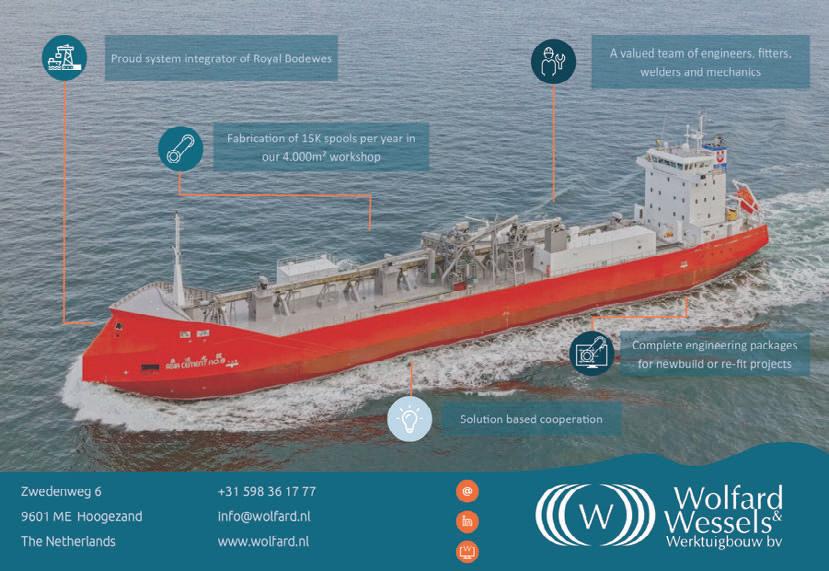
utilises the skills of companies like Wolfard & Wessels and Marine Service Holding, which develop ship engine rooms. ABC Engines, Wärtsilä, MAN and Berg Propulsion are also key suppliers that facilitate the execution of effective shipbuilding.
“Everyone is very enthusiastic here and we all work well together,” continued Mr Beunk. “Our market is very demanding, but having a good team eases the challenges.”
Royal Bodewes hosts a great, collaborative environment, Mr Drenth added, in conclusion: “We know that we need each other’s skills and expertise to be successful. I can’t build a ship on my own. All of our individual talents combine to create a successful operation .” n
With customers across more than 50 countries, Lisnave maintains a global presence in the shipping maintenance and repair sector. The shipyard provides a comprehensive range of services including steelwork, piping, electricals, machinery, turbocharger and propeller repairs, propulsion systems, cleaning, painting, retrofits, upgrades, and conversions. Commercial Director Luis Braga explained more to Hannah Barnett.
ASa shipyard, Lisnave has numerous advantages.
The company offers firstclass ship repair facilities, an optimal geographic location, fair and mild weather conditions and a wealth of experience to customers worldwide.
The facilities in Mitrena, Portugal, contain six drydocks and eight alongside berths which can simultaneously accommodate a substantial number of vessels of various sizes. This large capacity affords the company the flexibility to adapt to changes in arrival dates, ensuring a smooth service for customers.
“We stand out thanks to three things: flexibility, quality and delivery time,” said Luis Braga, Commercial Director.
“Our skilled labour force, combined with our team of over 30 project managers, ensures that all requested services are delivered promptly with the highest quality. The dedicated team is available 365 days a year to meet our clients’ needs efficiently.”
The company also plays an economically significant role in its location, providing jobs for nearly 500 in-house employees and subcontracting locally to over 2,000 individuals.
Recent developments
Lisnave is the kind of the company the keeps evolving and 2023 marked a “busy and challenging period,” according to Mr Braga.
2023 saw company turnover reaching €168 million, a significant increase compared to the previous year. This growth occurred despite a reduction in the number of vessels repaired (76 compared to 90 in 2022) and is attributable to the numerous upgrade projects undertaken.
Indeed, the year was filled with valuable and innovative projects, featuring several vessel upgrades including bulbous bow renewals, cold ironing retrofits and duct installations. Notably, Lisnave also successfully converted a bulk carrier into a juice tanker.
“That was a very interesting project,” Mr Braga explained. “The job consisted of installing the juice tanks, supplied by
the owner, inside the cargo holds. Then we had to do all the supports, the pipelines and the cooling lines all over the ship. This also included electrical installation, sensors and instrumentation , plus some other modifications. It was quite challenging.”
Lisnave already completed a similar conversion project for two vessels back in 2020. On that occasion, the company was not required to do the piping and electrical installation because the vessels arrived with those modifications already completed. So, this more recent project marked a significant step forward in the demonstration of the company’s skills and capabilities.
Facility upkeep
In 2023, Lisnave also proudly became a member of the Green Marine Europe Programme, which certifies the
environmental performance of leading shipyards, ports and shipowners. Additionally, the company successfully obtained a Safety Management System Certification in accordance with ISO45001.
Another significant milestone was the reorganisation of the company’s structure and the creation of a Facility Director position. The new management role is responsible, among other things, for ensuring the shipyard’s equipment and infrastructure remains in optimal performance conditions in terms of safety, operation and the environment.
“It is an important role,” said Mr Braga. “The shipyard itself is 50 years old and, of course, equipment needs maintenance, so we think keeping the facility in good shape is key. Maintenance and investments go together, so we have created this
position to give more importance to the continuation of the good condition of the shipyard. The Facility Director ensures that everything is working properly, so that the operations can use the shipyard to be able to perform accordingly.”
The power of partnership
In September, Lisnave will send delegates to SMM, the world-leading maritime event in Hamburg. The prestigious show presents a valuable opportunity to engage with existing, and prospective, clients and partners. Operationally, it also allows the company to explore innovative technical solutions and providers that can enhance the Lisnave competitive edge.
“In terms of exhibitions, our commercial policy is there are three exhibitions that are a must for us: Posidonia, Nor-Shipping
and SMM,” Mr Braga explained. “The difference between SMM and the previous two is that it is a little bit more technical. For SMM, alongside our commercial team, we also bring colleagues from operations, because there’s a lot to see in terms of technology, service providing equipment and materials. It’s an opportunity for us to investigate what’s happening in the market in terms of technical solutions. ”
Lisnave maintains formal agreements with a substantial number of specialised local suppliers, meaning the company can respond promptly to unexpected or additional work and thus avoid delays in vessel redelivery.
The high volume of work at the shipyard fosters strong relationships with these suppliers, as it ensures a significant and consistent flow of work. “Some of our local
suppliers know the shipyard quite well,” said Mr Braga. “So, there is a long-term relationship between us and that means that processes are often more agile.”
Forward thinking
Lisnave continues to adapt to the evolving dynamics of the global market. Each segment of the company has unique characteristics, meaning it can easily anticipate and respond to trends and requests.
“We have identified specific market segments where we will focus our investments in equipment and specialised labour, ensuring we can serve these clients most effectively,” said Mr Braga. “However, ship repair will remain our core business.”
The unique nature of the ship repair business is evidently one of the things
that make working at Lisnave so exciting. Another is the high levels of technical specification and knowledge that the job demands.
“Shipyards must be exceptionally attuned to a customer needs, as shipowners and ship managers are highly knowledgeable about the technical requirements of their fleets and the capabilities of shipyards worldwide,” Mr Braga concluded. “It is one of the things that I love about working here.
“I have also recently developed a passion for sales management, something I did not have 10 or 15 years ago Engaging directly with clients, understanding their needs, collaborating on solutions and building long-term relationships with benefits for both parties is immensely rewarding. For me, this is truly a dream job.”
n
Luis Braga Commercial Director
From its prime location near the Strait of Gibraltar, Cernaval Group Shipyards offers a range of expert repair services to vessels of all sizes. Commercial Director Enrique Perez told Hannah Barnett more about what makes the shipyard special.
ASa private company and family-run business, Cernaval Group Shipyards prides itself on its accessibility and excellent customer service.
“There are not many filters to get through to reach the decision maker,” said Enrique Perez, Commercial Director. “This helps the customer to feel comfortable. And this is how a commercial relationship becomes a friendly relationship.
“Shipping is a very face-to-face business. Customers like to meet us, before we work with them. This is how we develop a close relationship with the team, the crew and the owner’s representatives, who come here to oversee the repair.”
Steps to success
Cernaval Group Shipyards established a concession in the Port of Algeciras in 1995, with a small floating dock. By 1996, the company was regularly repairing
DRAAIJER TURBO SERVICE
At Draaijer Turbo Service, we specialise in the maintenance, repair and reconditioning of turbochargers. We have the largest inventory of new and reconditioned parts. Our philosophy is to repair or recondition whenever possible and replace with new parts only when necessary.
We prioritise close consultation with customers, focusing on the best service rather than profit. All work is handled in-house to ensure quality. With state-ofthe-art workshops in the Netherlands, Spain and Cameroon, plus a network of global partners, we keep your turbochargers running smoothly worldwide.
Draaijer Turbo Service is your trusted turbocharger expert.
vessels there. In 2008, the company brought its large graving dock into service. The 400 metres long by 50 metres wide dock was previously nonoperational and sunk in seawater. Its refurbishment proved a key milestone.
“After that, Cernaval started making noise abroad,” said Mr Perez. “We are very well located, but we were mainly serving ferries between Morocco and Spain. But after the graving dock opened, we escalated our presence into the international market.”
To meet the increasing size of the vessels passing through the shipyard, the company invested in a new floating dock in 2018. It was transported from South Korea to Algeciras in 2019 and took almost a year to install. The first vessel was serviced in the new floating dock in April 2020.
The company was thus able to unify the floating dock and the graving dock. “That means that we have now 40 years in the contract and can be here until 2057,” Mr Perez reflected. “That was the main target, though from my point of view, the biggest step was developing the graving dock.”
The shipyard offers repairs, maintenance, retrofits and upgrades to all commercial ships. And Cernaval is singular in its purpose. “We just focus on repairs,” Mr Perez explained. “We don’t get involved in new buildings or the super yacht sector. We service commercial ships of all sizes and can carry out repairs afloat and in drydock.”
These services include standard dry dockings, emergency repairs and planned repairs. The state-of-the-art facilities are
spread across four quays, totalling 270,000 square metres, and include more than one kilometre of layby berth. With 150,000 ships transiting through the Strait of Gibraltar each year, Cernaval’s location is undoubtedly a desirable one. “We are at one of the best points in the globe and can offer all kinds of services demanded by any kind of fleet,” said Mr Perez. “The world’s main container players, Maersk and CMA CGM, are established in Algeciras Port in their own container terminals and send plenty of work our way.”
Going green
Following new regulations from the IMO, ship owners are striving to reduce emissions from their vessels wherever possible. This means projects that focus on upgrades and retrofits are becoming ever more common at Cernaval.
“The next step is working with the gas carriers,” said Mr Perez. “So many vessels are now using dual engines, powered by electric or gas. And the gas carriers have a very specialised system to manage the loading of gas as cargo. So, we need a specific certification, a special isolated workshop and people accredited to work on this type of job.”
The company is also retrofitting to meet AMP standards, an air quality programme that focuses on reducing emissions from container vessels. Instead of running on diesel power while at berth, AMPequipped ships plug in to shoreside electrical power.
“There are only two ports in the world, New York and Shanghai, where the vessels need to be disconnected when they are in port to reduce noise and emissions,” said Mr Perez. “But there are an uncountable number of vessels that need
to be retrofitted to accommodate this.
Maersk has at least 700 ships in its fleet, it’s a huge number. So, customers need to adapt for when they go to these ports, otherwise a vessel is not allowed to enter.
“For us, this is a very good move. But all these retrofits can only be done in drydock, because it’s the only long period when the vessel stops in five years. When they are in charter, they cannot afford to stop for 20 days for the retrofit. So, the ship owners try to match the drydock period with the retrofit job to save money by doing everything at once.”
Cernaval has also recently invested in mobile cranes for removing and refitting hatch covers, adaptable to the capacity of a vessel, particularly container ships. “We have agreements with the major players and have invested millions in
these mobile cranes which allow us to be very competitive,” said Mr Perez. “We externalised this service until 2020, when we purchased a big mobile crane, which is able to remove and refit the biggest hatch covers on the biggest vessels we are capable of taking.”
Powering ahead
As the shipping industry matures and develops, Cernaval does so alongside it. The main goal for the company is a continued focus on the modifications and upgrades of its facilities in order to accommodate the increase in gas carrier traffic.
“We are entering a new era in the life of gas carriers,” said Mr Perez. “It’s really demanding. We have been approached from some very big shipowners that we
have not worked with before who are now moving gas carriers. The trading is from the United States to the Mediterranean or the Middle East, passing through the Strait of Gibraltar. And now fuel costs are racing up it makes sense to save money by deviating course as little as possible. So, we are using our strategical location to adapt to what these customers need. This is the future.”
Shipping may be a demanding business to work in, but Mr Perez has been in the industry since 1987 and would not have it any other way.
“If someone doesn’t like shipping, they don’t work in shipping,” he concluded.
“There are no days off here, every day is Monday. I tell job candidates: ‘You have to wake up very early and you don’t know what will happen that day, there is no routine,’ to emphasise the point.
“But I like working with people and I get to meet a lot of very important and interesting people. Ultimately, we are a service company, so we must give a good service. That means being available to customers 24/7, I don’t even wear a watch anymore because it doesn’t matter what the time is, I will answer the phone. Because if we don’t do that, there are others that will.” n
ADRIATIC42 I
Adriati
ence a and re era of Adriati
Rado A Jelena ments Marine
tic42 is renowned for its dedication, experiand quality. As a fresh face on the repair efit scene, the shipyard is experiencing an fgrowth and development. Chairman of tic 42 & CEO of Drydocks World Captain Antolović, PhD, and Marketing Consultant a Žutković discussed the latest develops, during an in-depth interview with Inside e. Report by Imogen Ward.
Adriatic42 officially opened its doors in October 2022, on the grounds of a former shipyard. Despite the rich history of its location, Adriatic42 set to work with its sights firmly focused on the future.
“With the birth of Adriatic42, the yachting industry in Montenegro entered a new phase of development, and the country acquired a unique facility to repair and refit mega yachts,” explained Chairman of Adriatic 42 & CEO of Drydocks World Captain Rado Antolović, PhD. “Our primary objective was – and still is – to provide the foundations for the shipbuilding industry’s rebirth with a focus on transformation towards a new sustainable ethos.”
Strategic development
Located in the prime location of Boka Bay, Montenegro (also known as one of the world’s safest ports), Adriatic42 is keen to take advantage of the country’s recent surge in development.
“Montenegro has grown significantly over the past ten years, with the opening
of numerous resorts and state-of-the-art marinas,” said Captain Antolović. “The two that are most significant to our shipyard are Porto Montenegro and Portonovi. Our proximity to these marinas puts us in a superior position when compared to other yards.”
With industry rebirth at the heart of its commitments, it was not long before Adriatic42 began the development of its infrastructure to facilitate this objective.
“So far, we have completed the first part of this investment, and we are currently working on the second,” said Captain Antolović. “With each completed phase, we acquire more space for boats on the hardstand and people onsite (employees and subcontractors). This has afforded us more opportunities, and the remaining investment will enable us to take on larger projects and increase our production capacity.”
Arguably the most important asset currently available at the shipyard is its floating dock. Measuring in at 180m by 37m, this dock can lift 10,000 tonnes –ensuring the largest yachts in the world can be accommodated.
“We have also invested in a new travel hoist that has a capacity of 720 tonnes,” said Marketing Consultant Jelena Žutković. “This is currently the largest in the area. Also, at our disposal are 100,000 square metres of hardstanding and 8,000 square metres of warehousing and workshops.”
“With these state-of-the-art facilities, and the experience of our staff, we are well-equipped to handle any project, big or small,” added Captain Antolović.
A portfolio of excellence
These facilities have enabled Adriatic42 to take on several impressive projects, including the vessel that started it all: the Black Pearl.
More recently, however, the company has provided an array of services for Heesen (a 47-metre-long full-displacement yacht), including cleaning, painting, and propellor and shaft refitting. The entire project took just over a month to complete and resulted in a very happy customer, captain and crew.
These examples are two in a long list of successful Adriatic42 projects – each one just as important as the next.
“Every project is unique and significant to us,” commented Captain Antolović. “Each vessel that comes into our shipyard receives our attention, with even the smallest details being considered. Currently, we are running at full capacity, and every vessel is special in its way.”
While client satisfaction is essential to Adriatic42, safety standards and environmental protection are also of equal importance. The company adheres to the strictest safety and environmental protocols. On top of this, the shipyard also invests in the latest, energy-efficient and environmentally friendly technologies and is committed to using renewable and cleaner energy sources.
A collaborative effort
Everything that Adriatic42 has achieved so far, would not have been possible without the support of its amazing suppliers and partners. The company collaborates with many companies to guarantee the delivery of high industry standards and hopes to expand its list of trusted partners on a more frequent basis.
“We would love to grow the list daily, and we are making great efforts to achieve that goal by entering into commercial agreements with numerous OEMs,” said Captain Antolović. “We also owe a debt of gratitude to Drydocks World Dubai and Porto Montenegro, our partners and investors, for their unwavering belief in us and their continuous support.
“Our job would not be possible without their vision and support above all else , and we thank them for making Montenegro a preferred destination in the world of yachting.”
When it comes to working with OEMs, Adriatic42 frequently opens its premises and remains present, supplying workspaces, offices and warehouses for
Chairman of Adriatic 42 & CEO of Drydocks World Captain Rado Antolović, PhD
“With these state-of-the-art acilities, and the experience of ur staff, we are well-equipped to handle any project, big or small”
- Captain Rado Antolović, PhD -
the personnel, suppliers and equipment of these companies.
“We would especially like to draw attention to one local company, Prento Yacht, which has so far successfully fulfilled each of our demands on time,” added Captain Antolović. “The company has demonstrated a strong dedication and professional work ethic.”
Another way that Adriatic42 intends to expand its network, is by attending events and exhibitions. This year, the company intends to take part in both the Monaco Yacht Show and the Cannes Boat Show as partners of Porto Montenegro Marina.
“Our goal is to introduce as many people as possible to the existence and possibilities of the shipyard, whilst also attracting new potential clients,” explained Ms Žutković. “Through these events, we also hope to expand our supplier network and collaborate with new brokers.
“Another added benefit is the ability to showcase our luxury yacht services and establish ourselves as a reputable player in the industry. We are excited about the
opportunity to connect with key stakeholders and highlight the unique offerings of Adriatic42.”
Onwards and upwards
As Adriatic42 continues to advance an industry-wide rebirth, it is also committed to achieving its own goals. The refit expert intends to become recognised in the Mediterranean refit yacht market as a desirable destination.
“We want everyone visiting or travelling through the region to see us as a valuable resource for high-quality yacht repairs and refits,” said Ms Žutković. “In line with this, our overarching goal is to become a leading shipyard in the region, offering top-quality services to our clients.”
As Adriatic42 continues searching for new ways to advance these goals, it intends to do so with caution and great conviction.
“Adriatic42 is like a newborn: it needs to be guided in the right direction,” said Captain Antolović, in conclusion. “Consequently, each day presents a unique set of challenges as we strive to continuously improve and advance our goals by taking on new tasks.
“Making anything from scratch – and attempting to do so correctly – is certainly challenging, but it also serves as motivation to work hard every day.” n
seven seas, five oceans, one voice
PORTS
st. vincent and the grenadines port authority rotterdam shortsea terminals port of fujairah port authority of the cayman islands algeciras port community the ports authority of the turks and caicos islands port of inverness
ST. VINCENT AND THE GRENADINES PORT AUTHORITY I PROFILE
St. Vincent and the Grenadines Port Authority was founded by an act of parliament in 1979. Operations began with the manual processing of cargo, before a dedicated terminal was built in the 1990s. The business expanded to include a purpose-built cruise terminal in the capital Kingstown. With another port under construction, CEO Carl James explained more to Hannah Barnett.
ITis expansion time for the St. Vincent and the Grenadines Port Authority.
Employing around 250 staff, the company has enjoyed year-on-year growth in terms of throughput and revenue over the last decade.
In July 2022, the Port launched its threeyear strategic plan – with a vision of becoming a ‘global port that is the hallmark of dynamism, excellence and innovation.’ The company is in the second year of the plan’s implementation and is already reaping benefits.
Infrastructure development
Joining the successful Kingstown Port, which is celebrating 60 years in 2024, and Campden Park Container Port and Kingstown Cruise Terminal, the company is developing a new cargo port at the northern end of the capital.
The new site will be larger than the two existing cargo ports combined.
“This new port will consolidate our activities,” said Carl James, CEO, “increasing our efficiency and safety, making us more climate resilient.
“On July 1st 2024, the country was impacted severely by Hurricane Beryl. Our cargo pier in Kingstown received significant damage, meaning we pivoted to utilize the Campden Park Container Port and the Kingstown Cruise terminal. This maintained our services for customers until repairs were completed. Hence, we welcome the new Port that will be more resilient to extreme weather.”
The company has invested over US$15 million in equipment for the new Port, ensuring it can efficiently deliver on all its operational processes.
“We are bringing value, enhancing productivity, streamlining activities, and helping our stakeholders get maximum benefits,” Mr. James explained. “We
will also significantly enhance our cybersecurity posture.”
The new Port is contracted to open in May 2025, but according to Mr. James, based on current progress, the company is “about a month or two ahead of schedule.”
People power
Every year, the company invests significantly in training, working with prestigious educational bodies like the Caribbean Maritime University and Lloyd’s Maritime Academy. Recently, the Port Authority modified its training policy to make it more accommodating and accessible.
“We are proud of our training initiatives,” said Mr. James. “Our expanded internship program with the technical vocational
schools works alongside IT, engineering, or other departments. Our mentorship program identifies potential future leaders and exposes them to management-type activities, building their capacity to take key positions in the organization in the future.”
This upskilling has led to a more motivated and capable team, crucial for driving the company forward. Apart from training, the company hosts team-building events such as annual fun days and awards, uniting the staff, under the theme ‘one team, one culture, one Port.’
Customer satisfaction
Port Authority delegates often travel to conferences, meeting partners and discussing the industry. The company prizes integrity and communication in its relationships with suppliers.
“We choose suppliers that operate ethically,” said Mr. James. “Once we start with business, we maintain a strong
r elationship by meeting commitments, making payments, and maintaining contracts. We follow the best business practices to ensure that our suppliers and stakeholders can trust us, developing a mutually beneficial relationship.”
The Port Authority favors a symbiotic relationship with customers, working closely with clients to understand their needs and ensure all concerns are addressed.
“Through our consultative approach, we reach out to customers, ensuring that any solution adequately addresses concerns, ” Mr. James explained. “. While we cannot always deliver exactly what is desired, we try to come as close as possible to an ideal solution.
“Our pricing is also lower than the majority of, if not all, of the Caribbean countries, and much of South America. Our tariffs are fairly aged, but through efficiency and an increase in volume we’ve maintained the Port as on ongoing concern.”
Carl James, CEO
Green initiatives
Due to its tropical location, the port is often exposed to hurricanes and other natural disasters, including volcanic activity.
The Port Authority is embarking on various green initiatives, including investing in solar energy and purchasing electrical equipment to significantly reduce emissions and enhance warehouse air quality. According to Mr. James, the company is challenged by carbon intensity indicator (CII) requirements from the IMO.
“In the Caribbean, we focus on short sea shipping,” he said. “A vessel may visit multiple ports to offload cargo and keep its generators running. These factors significantly affect its CII ratings.
“Our small islands have made little or no contribution to the atmospheric pollution causing climate change. We are held to the same standard, being punished for
a situation that was brought upon us, while also dealing with the direct impact of climate change from extreme weather. So, we’re suffering twice.”
Corporate responsibility
The Port’s commitment to corporate social responsibility (CSR) remains unwavering. It supports local arts, youth development, sports, and culture.
“In 2022, we adopted a rural community that was adversely affected by the 2021 volcanic eruptions,” Mr. James said.
“We worked with them on our annual Christmas toy drive for the children in that community. We plan to work with this community through educational programs , infrastructure development, and agricult ural assistance. Our goal is to empower the residents, providing the tools and resources they need to thrive.”
Additionally, the company sponsors multiple summer programs, including steelpan music workshops, maritime development, and heritage initiatives, offering full scholarships to the children of its staff who excelled at the primary exit exams. These programs enrich the lives of participants and promote cultural heritage and youth development.
“Our CSR activities benefit the community and align with our vision for a better, more inclusive society,” Mr. James added.
Impending plans
The company is undertaking an extensive consultation, alongside the government, regarding the use of existing Port facilities once the new Port is completed.
“We’re assessing how to use the lands that will be released,” explained Mr. James. “Is it for additional cruise vessels or a waterfront space for tourism? We want to redevelop this land to bring more business to the city and to enhance the waterfront.”
The company is facing the challenges of digitization, artificial intelligence, and the need to increase cybersecurity.
“We must constantly evolve to keep pace with these digital changes,” said Mr. James. “Our team must have a change mindset and not be too comfortable in one position – to be agile and nimble, remaining relevant to the industry.”
The Port Authority will introduce digital software to significantly enhance efficiency at the waterfront. It has already launched vessel birthing software and is contemplating new terminal operating systems and a fully functioning port community system. The company recently held a second annual symposium with stakeholders, where it discussed these complex issues.
“I like a challenge, and a port is a constant challenge,” Mr. James concluded. “Port changes might seem small, but they have large implications. Moving forward, we must be strategic with our decisions.
“The St. Vincent and the Grenadines Port Authority is on a transformational path. We are optimistic that these various initiatives will maintain us on that trajectory, bringing significantly increased value to stakeholders.” n
The largest dedicated shortsea shipping hub in Europe, Rotterdam Shortsea Terminals offers container handling and storage, as well as additional services, to solve demanding logistical challenges. CEO Arno Storm discussed the company’s improved sustainability measures and future investments. Report by Antonia Cole.
Established in 1977, Rotterdam
Shortsea Terminals (RST) operates on 64 hectares of terrain with 2,850 metres of quayside, suitable for ships with draughts up to 13.65 metres. It employs 310 highly trained people, who utilise their skills and experience to provide efficient and safe services.
Located in the heart of Rotterdam, the terminal is positioned to offer ideal accessibility through roads, waterways and railways, all connecting to the site. This makes operations more streamlined and convenient for all parties involved.
The terminal handles an average of 50 shortsea vessels per week, equating to 2,500 vessel calls annually. Through the terminal’s size, advanced equipment and
expertise in container handling, RST is able to effectively serve as a hub for many shipping lines.
“At RST, we are committed to excellence,” said CEO Arno Storm. “There are very high standards instilled within the company. We aim to anticipate the evolving needs of clients and exceed requirements efficiently and effectively. Through our dedication to continuous improvement, we are adapting the company to promote improved sustainability measures.”
People, planet, prosperity
Sustainability is a focus for RST, with it improving environmental targets to have reduced carbon emissions by 95%, for scope one and two, by 2025. In 2022,
RST minimised emissions by 26% and then, a further 20% in 2023. The company is already making significant progress towards its goals and is trying to maximise the positive impact of the terminal.
Approximately half of the company’s electricity usage is currently powered through green energy. There is a plan set in place to increase RST’s reliance on green energy to 100% by 2025. This will help to set a new standard of sustainability within the industry.
RST has also purchased six new hybrid straddle carriers for its fleet. These carriers will move RST forward towards achieving
environmental targets as they have improved efficiency and use 50% less diesel than a standard carrier. When fully electric carriers become available, RST hopes to invest in these too.
These carriers will be run on HVO 100 diesel, a fossil-free fuel made from 100% renewable sources. This diesel is a more environmentally friendly option, with up to 90% carbon reduction. By utilising more sustainable fuel sources, the company is minimising the emission of greenhouse gases.
“It is vital to our, and our community’s, future that we actively pursue an operation that
benefits people and the planet,” explained Mr Storm. “We aspire to transform RST into a truly sustainable container terminal and are working with others across the industry to achieve this.”
In collaboration with the Port of Rotterdam and Samskip, RST has launched its Green Shore Power Initiative. As the first sea-terminal in the Netherlands with shore power connection, RST is working to be a leader in the transition to sustainable energy sources. This project will greatly reduce harmful emissions and promote environmentally conscious operations.
As well as this investment into shore power, RST has installed 700 solar panels on buildings. This has allowed two of the company’s buildings to become carbon neutral and has greatly limited the overall environmental impact of operations.
Investing in innovation
RST has also been investing into the efficiency and quality of operations. The company has refurbished one of its older cranes, which will allow for a more reliable and structured service that better accommodates clients. RST is also in the process of acquiring a new gantry crane, as well as two ship-to-shore cranes.
“Previously, shortsea markets used smaller vessels, of up to 850TEU,” said Mr Storm. “Now, customer shipping lines are sizing up vessels to a 2,000TEU maximum. Due to the change in market circumstances, we have to adapt and expand the capacity of our operation to meet client requirements. We are further investing into ship-to-shore operations so that we can maintain our successful position within the market.”
In the next three years, RST is planning to invest between €35 and €40 million into the expansion and improvement of operations. This will not only make the facility more sustainable through improved efficiency, but it will advance RST’s ability to serve clients’ evolving needs.
The company has recently been collaborating with two software partners in the development of an automated storage planning software. Through the use of AI technology, the system will digitalise the vessel planning process at RST, making operations more efficient, reliable and effective.
As well as this, RST has collaborated with several parties in the development of a hydrogen-fuelled ReachStacker. Hyster, a manufacturing company, and the Port of Rotterdam have worked
with RST to create a pilot version of the ReachStacker, which will limit greenhouse gas emissions in operations.
Reinforcing relationships
In addition to equipment, RST has also been investing in staff. The company’s already skilled and experienced staff have been given training to further maximise the effectiveness of RST’s operation.
“Staff are the heart of RST,” explained Mr Storm. “It is important that we support them and work together to create the best outcomes. We have been working with our staff to limit waste in operations and enhance productivity.”
RST also works with partners to enable more efficient operations. To make the interchanging of containers from the rail terminal to RST more streamlined, the
company has been collaborating with Samskip to define 14 work streams that will minimise transit times.
“Our partners and suppliers are very important,” said Mr Storm. “We are all working together to deliver the best possible service to the client. Companies like Seamark, which provides reef monitoring services, allow us to attain the high standards that have made us so successful. At RST, we believe in collaboration and cooperation. By building up these relationships, we can achieve more.”
As RST continues to develop, it plans to work with partners across the industry
to improve the quality and capabilities of services. The company aims to consistently meet and exceed client expectations through innovation and technological developments, as well as by limiting environmental impacts and implementing more sustainable practices.
“We know what society is asking from us as a company,” concluded Mr Storm. “RST is demonstrating that it is serious about sustainability and is dedicated to becoming more environmentally friendly. It is important to us to be a responsible player within Rotterdam and that we work to make a positive impact on the environment.”
n
Port of Fujairah has been in operation since 1983, providing the infrastructure and resources needed to support the growing economic development of the UAE. Today, the port is known for its size, capabilities and its commitment to excellence. Report by Imogen Ward.
PORT
The year was 1983, and the newly constructed Port of Fujairah had just become operational for the first time. It was an exciting period, but it was just the beginning of what would become a long journey of success and development.
Making history, the port continued to expand exponentially – taking prime position as the second largest bunkering port in the world.
“Over the years we have established one of the biggest maritime hubs in the world providing a wide variety of services,” said Port of Fujairah’s Senior Manager of Business Development, in a previous interview. “The port acts as a one-stop-shop with over 400 different service companies offering bunkers, stores, crew changes, repair work, surveys and many others.”
Located in the Free Zone of Fujairah, UAE, the Port of Fujairah offers a full range of amenities, from nine main oil berths and 24 wing berths in the Port’s Oil Terminal to its five dry bulk and general cargo berths (three of which are solely dedicated to 600m long bulk loaders). And thanks to its close proximity to the Strait of Hormuz – an essential waterway that a fifth of the world’s traded oil is transported through – it has become geographically and strategically crucial in the global oil market as well.
Securing oil trade
The port is also home to a direct pipeline connection to Abu Dhabi oil reserves. This 370km-long line has a management c apacity of 1.5 million barrels per day and can successfully transfer more
than 600,000 barrels of oil from Abu Dhabi to Fujairah quickly and efficiently.
Five years ago, the port became home to Aramco Trading Company, an energy trader focused on refined products, blending components, bulk petrochemicals and polyolefins. It is also home to ADNOC’s crude export terminal, and the company’s Petroleum Storage Tank, which can store 35.2 million cbm across 82 tanks. Just last year, ADNOC also finished development of its crude oil storage caverns, adding a further 42 million cbm capacity to its ranks. Additionally, between 2010 and 2020 , the port’s overall volume tripled, with most operations focused on oil. The
number of vessels calling at the port also increased by 50% during this time.
Today, the port retains a strong presence with the oil market, with 15 oil terminals connected via its two matrix manifold systems – these are unique to the port and provide customers with full connectivity to all the port’s oil berths.
The matrix systems also allow clients to transfer products directly between storage terminals, providing ample opportunity for direct trades within the Fujairah storage network.
The infrastructure and the flexibility of Port of Fujairah highlight exactly why it is the ideal spot for oil-related activities.
“THE MATRIX SYSTEMS ALSO
ALLOW CLIENTS TO TRANSFER PRODUCTS DIRECTLY BETWEEN STORAGE TERMINALS, PROVIDING AMPLE OPPORTUNITY FOR DIRECT TRADES WITHIN
THE FUJAIRAH
STORAGE NETWORK”
“FUJAIRAH IS AN INVESTMENT FRIENDLY ENVIRONMENT, AND WE ARE ALWAYS EAGER TO TAKE ADVANTAGE OF THE SURROUNDING
LAND THAT IS AVAILABLE FOR GROWTH”
Exploring new opportunities
Three years ago, with the desire to enhance its capacity, Port of Fujairah began work on a $272 million upgrade and expansion programme. Initially planned to improve service and efficiency within the port, the programme went ahead as scheduled and was a huge success.
The renovation targeted a specific container terminal located at the port and included new infrastructure, increasing the terminal’s general cargo throughput to a whopping 1.3 million tonnes. The upgraded terminal can now also accom modate larger vessels thanks to its extended quay wall (now sitting at
1,000m) and is enjoying a new container capacity of 720,000TEUs.
As a result, the container terminal has grown by an additional 110,000m2, which includes 25,000m2 of multipurpose area primed and ready to handle general and RoRo cargo.
The terminal expansion was completed in partnership with Abu Dhabi Ports following the implementation of a 35-year concession agreement. As part of the agreement, Fujairah Terminals was established to help support the terminal’s day-to-day operations and enhance the infrastructure already present.
“We always want to be at least 25% ahead of the market,” said the Senior
Manager of Business Development, in a previous interview. “Fujairah is an investment friendly environment, and we are always eager to take advantage of the surrounding land that is available for growth.”
A bright future ahead
The port has witnessed a lot of success throughout its history (and more recently too), and it is in a strong position for further port development in the future –which is looking more likely, with the
port being such an important part of the economy of UAE and global trade more broadly. With state-of-the-art infrastructure, exceptional customer service and a strong commitment to its clients, Port of Fujairah has welcomed countless opportunities over the years.
From oil companies to ship operators, Port of Fujairah is renowned within the UAE and throughout the world as being the place to be for investments, trading and development. n
PORT AUTHORITY
THE CAYMAN ISLANDS I PROFILE
With the ambition of becoming a leading port within the Caribbean, the Port Authority of the Cayman Islands is setting the standard for efficiency, safety and customer focused operations. Port Director Paul Hurlston discussed the port’s recent developments and progress. Report by Antonia Cole.
The Port Authority of the Cayman Islands facilitates the success and economy of the island as a whole, Port Director Paul Hurlston said: “We have maintained our position as a top 10 cruise destination in the Caribbean. Cruises account for 30% of the ports overall business, handling an average of 1.5 million passengers a year.”
In 1977, the port facility was officially opened. Over the years, the port has undergone numerous upgrades including the development of both a north and south port. The South Cargo Pier is 440ft with a water depth of 20ft to 26ft and the North Cargo Pier is 200ft long with a water depth of 19ft to 26ft.
Overall, the port has a berthing capacity of a 6,000 tonne deadweight, 18ft draught and 400ft long vessel. This allows the
port to facilitate both the import and export of goods, as well as tourism passengers.
In the first quarter of 2024, the port received 164 cruise ship vessel calls, with a total of almost 524,000 passengers, and managed over 239,000 tonnes of cargo. The Authority is dedicated to providing a port that welcomes waterborne commerce, trade and leisure travel.
A place in the sun
Consisting of three islands – Grand Cayman, Cayman Brac and Little Cayman – the Cayman Islands are full of culture and natural beauty. The arts are a central part of the islands’ way of life, hosting several music festivals and a vibrant arts scene.
This is complemented by the islands’ variety of tropical beaches and coral reefs, offering tourists the opportunity to go snorkelling, diving and swimming. Combining music, beauty and good food, the Cayman Islands are an incredibly popular tourist destination in the Caribbean.
The cruise industry is a major driver of the Cayman Islands economy, as all major cruise lines call at the Cayman Islands, generating $6 to $8 million a year. However, the area is host to many delicate
ecosystems and marine structures that the Authority is committed to preserving within operations.
“We work alongside other government departments to ensure that the marine environment is protected at the highest possible level,” explained Mr Hurlston. “We want to make sure that it is there for future generations to enjoy. We are very careful with ship anchoring and only allow vessels to anchor in certain areas, to prevent them from damaging the reefs.”
As well as this, the Authority has continuously upgraded facilities to better support the tourism industry, Mr Hurlston added: “We continue to look at ways to upgrade our on-land facilities. Working with several cruise lines, we have been identifying areas where we can improve the fiscal aspect of our terminals. We are looking at passenger flow and how to expedite passengers on and off ships.”
Making a splash
In addition to tourism and cruises, the Port Authority is also responsible for managing the import and export of cargo. With five head handlers, three forklifts, two
cranes, seven tractor trucks and two RTGs, the Port is well-equipped to effectively handle containers, RoRo, Breakbulk and Bulk cargos.
The cargo lines that service the Cayman Islands are Hyde Shipping, Seaboard Marine and Tropical Shipping, with the majority of cargo coming from Jamaica, Alabama and Florida. Most of the Cayman’s goods are imported through the port, making cargo management an essential element of operations.
“Our biggest partners are the people of Cayman,” Mr Hurlston said. “We don’t just handle the containers, we also handle the cargo out of those containers, and we distribute it to the population. So, they are the port’s biggest customers.”
The Port Authority operates under a rota to balance port activities, due to limited space. To fully utilise all docking space,
from 6am-6pm the port is dedicated to cruise lines and the remaining hours are used for cargo operations.
“We are looking at enhancing our cargo facilities, by moving them further inland and building a new port,” Mr Hurlston continued. “This is in the early stages of development, but we are heading in the right direction. It is a long-term project that will be completed in phases. Currently, we are implementing a unique system that enables us to handle both cruises and cargo vessels in the same space.”
Smooth
sailing
Companies that provide freight agency services to and from the Cayman Islands are: SeaFreight Agencies, Cayman Freight Shipping Services, West Indian Shipping, Cayman Islands Shipping, Thompson Shipping and Hyde Agency. The Port
Authority’s relationships with these companies facilitates the efficient and effective movement of cargo in and out of the port.
This works to support the islands’ economy, as well as the people that live there, Mr Hurlston said: “Everything that is consumed here has to be imported; we produce little or nothing on the Islands in terms of consumer goods. So, 96 per cent of all imports come via the sea. We basically handle everything that is imported into Cayman.”
The Port Authority is dedicated to both supporting and protecting the residents
and visitors to the Cayman Islands. With a fleet of two harbour patrol vessels, the Authority is able to ensure safe and secure operations. Additionally, the Authority maintains marine navigation aids and provides staff training to make sure the port operates efficiently and without risk.
“I love ships, I have always loved ships,” Mr Hurlston said, in conclusion. “However, the reason why I love my job so much is probably the people that work here. We have a staff of 70, and I really enjoy seeing them grow and fully realise their potential.” n
The Port of Algeciras is located in the autonomous community of Andalusia, Spain. Primarily a transshipment port, its position in the Strait of Gibraltar and key east to west shipping routes establishes it as one of the busiest maritime trading hubs in the world. The Port is managed by the Algeciras Port Authority, COMPORT is a Commercial Association established for the Commercial promotion of Algeciras Port, together with the Port Authority. Chairman José Manuel Tejedor explained more to Hannah Barnett.
INboth English and Spanish, COMPORT is a compound word, made up from ‘community’ (comunidad) and ‘port’ (Puerto). The name reflects the ethos of teamwork and collaboration that runs through all operations at the Port of Algeciras.
“We are a community and like to showcase ourselves as such,” said José Manuel Tejedor, Chairman. “It’s like Formula One: when a car makes a pit stop, all the mechanics work together to make
the stop the shortest it can possibly be. This is how we present ourselves to a customer. All the companies within COMPORT co-ordinate to make the fastest, smoothest and cheapest port call for the client.”
A shared history
COMPORT was established in 1999: the companies integrated in the association offer a comprehensive range of services, covering all the logistics and ship services
Chairman José Manuel Tejedor
that a vessel visiting the Port of Algeciras may need.
The ongoing goal is to increase the flow of cargo and improve the competitiveness of the port and the companies operating within it. As a result, COMPORT members have travelled more than 1.4 million kilometres around the world over the last two-and-a-half decades to promote the port and its community.
With over 100,000 vessels traversing the Strait, and almost 30,000 vessels calling at Port of Algeciras each year, it is vital to offer a well-equipped site. Facilities include a shipyard, a refinery, a steel mill, a power plant, anchorage and Off Port Limits operations in the Strait.
In 2010, Algeciras Port developed a second container terminal, known as
TTI Algeciras, the first semi-automated terminal in Southern Europe and the Mediterranean area. Then bunkering infrastructure was added in 2013, with the new EVOS terminal (ex-Vopak).
“The opening of the second terminal was a big milestone,” Mr Tejedor reflected. “Unlike our APM terminal, TTI is public, so any company that reached an agreement with the terminal can use it. This opened up a lot of opportunities for us to cooperate with other companies.”
The port offers loading and unloading operations for containers, liquids and bulk cargoes, as well as skilled
repairs, both in drydock or afloat.
“In 2023, our Port moved over 100 million tonnes of cargo,” said Mr Tejedor. “And we have more than 5,000 workers employed in the port community, not including the Port Authority itself.”
Algeciras Port has several strategic development plans pending to keep increasing its capabilities. For example, it intends t o further expand in the south of the bay, establishing new outer anchorage and optimising the passage of vessels passing through.
“The objective is separating the vessels that are coming in and out for quick changes, repairs, water inspections and so on, from those coming in to drop anchor in the bay,” explained Mr Tejedor. “This development will improve efficiency and the safety of traffic in the Strait and also avoid vessels burning fuels outside while waiting to berth, reducing emissions.”
Algeciras Port Authority has also invested into AI software to further optimise the turnaround time of vessels, with emissions already reduced by 40% thanks to this innovation.
A special event
In September, COMPORT will attend SMM Hamburg, one of the most important dates in the maritime events calendar.
“For us, it’s a must,” Mr Tejedor said.
The biennial trade show brings together the wider shipping community, and offers attendees the chance to connect via seminars, workshops and networking events.
“SMM Hamburg gives us the opportunity to network with top-class clients,” said Mr Tejedor. “We always attend: Algeciras Port has its own booth with the intention to promote as much as possible what we are up to. We hope to keep the confidence of our current clients, and to attract more traffic by highlighting whatever is new in the port.
“The show is a vital opportunity to meet with shipowners, investment companies and those that need vessels to do various
services. It is a chance to talk in detail about repairs, crew changes, legal systems, ship chandlers, underwater operations and everything else that we do exceptionally well.”
Indeed, one of the particularly significant aspects of the Port of Algeciras, that will be no doubt be highlighted at SMM Hamburg, is that it operates 24/7.
“This is something we always mention,” Mr Tejedor agreed. “Customs is always open, which can be very important to know when it comes to time-sensitive things like collecting spare parts. Anyone can call at 3am and we will answer the phone in as friendly and efficient a manner as at 3pm. That’s really important too – not many ports have constant activity, certainly not in our area.”
A smooth future
Algeciras Port Community has a strong worldwide presence and will continue to expand internationally in the coming years, though there are not many areas in which the Port Community has not already established itself in some form.
“We work out our schedule every year, together with the Port Authority and it usually includes over 40 commercial missions all over the world,” Mr Tejedor explained. “So, there are few markets tha t we are not operating in. For example: this year, we are planning to make a trade mission to the Philippines, though we cooperate with many Filipino companies already.”
Alongside the high quality of its facilities, low cost of its services and 24/7 activity, Algeciras Port is known for taking on challenges and succeeding. For example, the Port of Algeciras kept operating smoothly during the constrains of the Covid pandemic. A mammoth undertaking, this involved navigating hundreds of crew changes alongside sanitation and testing protocols, all with the cooperation of the maritime authorities.
“We never say ‘no,’ though sometimes we might say ‘yes, but…’ and we always find a way,” said Mr Tejedor. “It does not matter what kind of operation it is, any vessel that needs help, we work out how to do it.
This is possible thanks to the skills and experience of the service providers in the port community. And the fact we also work closely with the maritime authorities and remain flexible.”
Indeed, COMPORT’s strong sense of community remains its guiding force and strongest asset.
“We think that if one of us fails, everybody fails,” Mr Tejedor concluded. “Because if a customer has a problem in the port, they are not going to think that that company they worked with failed, they will think the Port of Algeciras failed. They will not remember the company. That is why we all co-operate, to ensure the vessel will return.
“It can be a logistical challenge, but the challenges are the most exciting part of this job for me. As the chairman of COMPORT, it is my role keep the Port Community strong and keep it organised. We like to play smart, play hard and play together.” n
The Ports Authority of the Turks and Caicos Islands strives to provide professional, quality, and efficient maritime transportation facilities across four ports: Providenciales, Grand Turk, South Caicos, and North Caicos. Ports Director Delton Jones discussed the Authority’s developments, in conversation with Antonia Cole.
Over the past few years, the Ports Authority of the Turks and Caicos Islands (PATCI) has been redeveloping the port of Providenciales, Ports Director Delton Jones said: “The final designs have been completed and we have begun construction of phase 1 of the project. Thus far, it is about 25 percent complete and we’re making really good progress.”
The Authority employs almost 80 people across the four ports, with the majority based at the main port of Providenciales. All staff at PATCI are highly trained and dedicated to ensuring the security and safety of the ports, as well as supporting the Authority in building resilient and sustainable infrastructure.
Last year, PATCI saw a 6% growth in shipping, with vessel calls increasing from 775 to 825, plus the tonnage of imported cargo expanded by 14%. This demonstrates how the economy of the Turks and Caicos Islands is growing, which is why the
Authority has invested into port redevelopments. By upgrading port infrastructure, PATCI will be able to effectively manage services and support the growth of the Islands.
Port redevelopment
The Port of Providenciales has not been updated for several decades, making the new renovation of the port so significant.
With the Authority’s investments, the Turks and Caicos Islands should see substantial economic benefits as larger vessels will be able to berth, reducing shipping costs. Additionally, improved efficiency will reduce port operating costs, benefitting the local community.
“Phase 1 of our redevelopment project will involve the construction of a new general cargo terminal, with two berths and a RoRo ramp,” explained Mr. Jones. “The new dock will be approximately 114m `width. As well as this, the Authority is
going to dredge two larger berthing pockets and a turning basin to improve navigational safety.”
A new multi-purpose container yard with an area of approximately 1.1 acres will also be added, including a heavy grade concrete surface to allow container stacking of up to four containers high. Terminal roads will be constructed to ensure smooth traffic flow and drainage systems will be used to mitigate environmental hazards.
In phase 2, a second 125m long, 40m wide berth will also be constructed with another RoRo ramp. New lighting facilities will be installed throughout the port to guarantee safety in all operations.
“Although a lot of the redevelopment is focused on the port of Providenciales, we are also investing in the ports of
Grand Turk, South Caicos and North Caicos,” added Mr. Jones. “This will give them the opportunity to support the economic activity of their respective islands. For example, we have been improving the facilities at South Caicos to better support thee tourism industry there.”
Three stages of progress
These developments will ensure that the ports are prepared for the future. As the islands are situated in the middle of a hurricane belt, the Authority has also been increasing the resilience of the infrastructure in response to the changing climate. To protect against storm surges and harsh weather, the Authority has raised the port at Providenciales by a meter and facilities have been made more robust. In terms of the climate, PATCI is also working to limit its
impact and incorporate energy conservation into operations.
This is part of the Authority’s three stage plan for the port’s future, with the first platform being infrastructure development. Through the renovations and improvements across all four ports, the Authority is supporting the growing activity of the Turks and Caicos Islands.
Secondly, the Authority is investingin staff development,, Mr. Jones said: “What we’re trying to do is make sure that we have the right people, in the right place, at the right time. We have been training our employees, giving them the skills to deal with any challenges that may arise. By supporting our staff, we hope to see them motivated to embrace the new infrastructure improvements.”
Additionally, the Authority has been supporting community initiatives, especially in the maritime sector. Last year, PATCI sponsored a summer boat building camp on the islands. A local boat builder taught traditional boat building skills to a group of young people, passing down the islands’ knowledge for the future.
Lastly, the Authority is introducing new systems and procedures to the ports. This involves the digitalization of operations with technology such as AI. The introduction of online systems will facilitate new processes such as electronic billing, making the Authority much more efficient.
“These are the aspects of the ports that we want to bring forward and develop going forward,” continued Mr. Jones. “We want to progress the organization and make sure that all the ports, and members of the ports,
are adopting good practices in order to enhance the reputation of the Caribbean as a whole. These enhancements will show people that we are operating safe and secure ports with good environmental and social standards.
“We have already won a number of regional awards for our performance as a port over the past couple of years. We want to continue gaining this recognition.”
Connecting ports and people
As part of this initiative to secure the ports’ future, the Authority has introduced a Manager on Duty Program. PATCI has ports over four islands, so it is important to keep a sense of unity throughout the organization. The Manager on Duty Program aims to strengthen professional relationships across the ports between managers and line staff.
Within the program, managers are encouraged to visit workstations routinely and engage in conversations with staff on ideas for the improvement of the Authority and ports. This creates an environment that facilitates open communication between everyone in the Authority,
keeping all members of staff informed and involved in the ports’ operations.
“The program’s been really effective so far,” explained Mr. Jones. “Senior managers like myself have been listening to the views and opinions of the staff and we’ve learnt a lot. There’s a lot of talent within the Authority, so it’s important to involve everyone and hear all those ideas. This will ensure the longevity of the ports into the future and strengthen the Authority as a whole.”
PATCI is focused on long term projects and the future of the ports. Through this, the Authority has built up healthy relationships with contractors and suppliers. The Authority’s partners share similar values of social and environmental responsibility, which has led to many instances of repeat business.
“I love being able to build up these relationships across the industry,” continued Mr. Jones, in conclusion. “I feel like I am part of something bigger than me here and I look forward to our bright future.”
n
DirectorDeltonJones
Following the announcement of the Inverness and Cromarty Firth Green Freeport, the Port of Inverness has been busy implementing several key onshore renewable schemes. CEO Sinclair Browne divulged more, in an exclusive interview with Inside Marine. Report by Imogen Ward.
The Port of Inverness recently celebrated its 175th year as a trust port. Over this time, the port has developed considerably – adjusting to the evolving needs of the market. That same evolution is still visible today, as the port plans to invest: ready for the renewables market.
“Over the centuries, the port has adapted successfully to new conditions and challenges, and it is now ready to embrace the challenge of net zero,” CEO Sinclair Browne explained. “In line with this, we are part of the consortium that is charged with delivering the Inverness and Cromarty Firth Green Freeport. This project is primarily aimed at the energy transition, net zero and energy security.”
With the earliest references of a port in Inverness dating all the way back to the 13th century, it is safe to say that it has been around for a long time. However, it was not until 1847, that an act of Parliament established it as a trust port. Now, 175 years later, the port continues to operate as an independent statutory body.
Over this period, the port has adapted to several major developments, from the capitalisation of coal and the outstanding popularity of oil. Each milestone brought with it new expansion opportunities and potential for success.
Following the vast progression of green energy, and an industry-wide commitment to achieving net zero, the port has committed to expanding once again.
Green investment
As part of its commitment to the environment, the Port of Inverness has actioned its own net zero goals. With an achievable target of 2038, the port is already implementing exciting changes.
“We have already switched our harbour fleet to electric-powered alternatives, with support from a Scottish government incentive scheme,” Mr Browne explained. “There is also a 50kVA solar panel array positioned on our transit shed roof, which is something we are hoping to expand further in the future. The gradual replacement of our pilot boats is another top priority, which we think will have a really positive impact.”
In line with its work towards to the Inverness and Cromarty Green Freeport, the Port of Inverness is facilitating the development of onshore renewable energy, from wind farms to hydro pump storage schemes. Utilising its spare capacity, the port is currently planning to expand its facilities to accommodate this.
“As part of this project, the partners are looking to utilise Inverness as a point of entry for the import of all raw materials, before transhipping them along the
Caledonian Canal to various sites where bulk storage schemes are being proposed,” said Mr Browne. “The Caledonian Canal is over 200 years old, and this proposal endeavours to repurpose it back to what it was originally built for. “We are also looking to expand our facilities, creating a new nine-hectare laydown energy hub and a quay. We have now completed an optioneering exercise, and we have now finalised one option, which we are looking to progress to the pre- consultation stage. All going well, this new expansion should be ready in the next three years.”
“We are also looking to expand our facilities, cre a new nine-hectare layd energy hub and a quay”
As a result of this expansion, the port expects to receive an influx in cargo traffic, whilst offering new and existing port users additional port facilities and a blue energy hub – with space for companies from the offshore wind and onshore renewables sectors to set up office.
“We are in discussions with a number of parties, currently, who are interested in this new expansion area,” Mr Browne continued.
PORT OF INVERNESS I
Supporting renewables
As the port continues to evolve to meet the requirements of the renewables sector, it has dictated a need to increase the width of its entrance area.
Since 2013, the port has successfully imported more than 315 complete wind turbines with a generating capacity in excess of 950MW. “When the port first became involved with wind turbines, the blades were typically 35m in length,” Mr Browne added. “Now, the latest proposals are for blades for onshore wind farms of up to 80m in length.
“Additionally, with an increasing number of abnormal loads coming into port, especially now that wind turbines are increasing in size, we believe a reorganisation of our internal infrastructure to accommodate those loads would be of benefit. We have had several enquiries from turbine manufacturers and developers for new developments in close proximity to the port, and our plans are driven directly by these enquiries.
“We have identified a proposal, and it is now ready to move to the investment stage. With this being a short-term plan, we are quite confident in accomplishing it this year.”
These new developments are set to join an impressive roster of existing facilities: the port is currently home to six quays and extensive laydown facilities, including a
heavy lift pad. The port is also perfectly positioned in close proximity to the Highland capital of Inverness, an ideal location to promote Scotland’s green energy sectors.
Future-focused
Everyone at the Port of Inverness is excited to get involved with its development plans. However, Mr Browne stressed that the journey is not entirely smooth sailing: “There is a lot of economic uncertainty at the moment, and that has led to parties being more reluctant to make any major investment decisions. This has had
an impact on the progression of our plans, and getting through the consenting process has also taken a while.
“Despite this, we remain very positive. We have a lot of ongoing discussions with port users, which provide us with a degree of confidence going ahead.”
As it continues on this path for development, the port is also preparing to invest in its people. According to Mr Browne, additional workers are a crucial element for its plans: “We are expanding our workforce with several new roles. Currently, we are looking for a General
Manager, which is a brand-new post.
“We have had a lot of great response to the port’s growth, we have successfully identified a niche and have already taken on additional members of staff in the last 18 months, so we look forward to continuing bringing new people on board.
“We are really excited about the immense opportunities that are out there, and to be able to play our part via this port development is really exciting, and we hope that it will open the way to new markets and lots of future opportunities.” n
seven seas, five oceans, one voice
SHIP OPERATORS
canfornav swire bulk blue fleet group united group okee maritime odfjell mf shipping group celsius shipping
The Canadian Forest Navigation Group (Canfornav) has dedicated almost half a century to the provision of a world-class shipping operation. With a focus on the Atlantic handysize market, this vessel operator has taken the global ocean transportation market by storm. Inside Marine explores the company’s latest achievements, in a report by Imogen Ward.
Canadian Forest Navigation Co Ltd (Canfornav) has been operating from Canadian shores since its establishment in 1976. Though it initially entered the market through the exportation of lumber and paper products, the company soon embraced change –expanding its shipping activities to meet the needs of old and new clients alike.
Gone was the perception that Canfornav was limited to carrying forest products, and before long the company was chartering more ships than ever before –all larger and primed for the global market – each one ready to handle the very best steel, grain, and raw materials that Canada had to offer.
Now, the company is home to 44 vessels, each one a pivotal cog in the company’s day-to-day
operations. And with its voyages almost equal to the number of days in the year, it is no wonder Canfornav successfully delivers 7.7 million tons of goods annually, to more than 75 countries across the globe.
A fully rounded fleet
Canfornav maintains a strong focus on the handysize market, with 34% of its current fleet dedicated to this vessel type – the latest of which joined the ranks just last year.
Both M/V Merganser and M/V Pochard were launched into Canfornav’s fleet for the 2023 season and featured an impressive capacity of 39,700DWT and 37,780DWT, respectively. These two vessels are just the first in a lineup of new vessels anticipated to join the Canfornav fleet over the coming years.
The company’s 15 handysize vessels are also accompanied by a fleet of laker vessels, with an impressive capacity ranging between 26,700DWT and 37,000DWT. Currently, the ship operator owns 70% of its fleet, with the remaining vessels operating on extensively long-term charters.
Renewing for the future
As the entire industry heads towards greener pastures, Canfornav has also committed to making improvements to ensure its place in the future. All of the operator’s older vessels have been undergoing a transformation, with upgrades to their electronic flowmeters. This process has resulted in more accurate consumption figures for the vessels and is a major step towards improving the energy efficiency of Canfornav’s fleet.
Of course, coming from a ship operator known for being at the forefront of environmental change, this development makes sense. In the past, the company has made investments in the reduction of cylinder oil consumption, implemented new propeller technologies and has remained committed to the utilization of the latest anti-fouling products.
A team effort
As a team focused, solution-oriented business, Canfornav relies on a strong force of seafarers, employees, and suppliers to provide an exceptional service 24/7.
In Q1 of this year, the company celebrated a momentous occasion as its
“We wouldn’t be where we are today without these amazing companies”
President & CEO, Knud Jensen
laker vessel M/V Wigeon became the first vessel to pass through the MontrealLake Ontario section of the St. Lawrence Seaway, marking the start of the 2024 navigation season.
The 665-foot vessel cleared the Dwight D. Eisenhower Lock on March 22nd, as it made its way to Toronto, Canada, carrying sugar from Recife, Brazil. This would not have been possible if it were not for the dedication of the crews, who were hard at work ensuring M/V Wigeon could complete its course on time.
With an understanding that the crew is pivotal to its operations, Canfornav does everything possible to
ensure each voyage prioritizes health, safety, and wellbeing. Through extensive training and the provision of appropriate protective gear, Canfornav works tirelessly to provide its crews with a smooth-sailing experience.
Choppy waters
Of course, not everything is plain sailing, with conflict continuing to prevail in various parts of the world, Canfornav has witnessed several challenges that are shared by its fellow ship operators. The war in Ukraine has led to major disruption to shipping in the northern European region. The current state of the economy has also led many consumers and companies to feel unsure about what the future may hold.
Despite this, Canfornav remains optimistic about the future. According to its CEO Knud Jensen, the company is committed to helping customers with costs in every way possible, regardless of the highs and lows.
This continued loyalty to its customers is one of the many reasons that marks Canfornav as a fierce competitor within the shipping market.
“In the handysize segment, we are competing with huge companies that have fleets of more than 100 vessels; however, our smaller size is where we prosper,” said Mr. Jensen in conclusion. “We provide a more hands-on service that is personalized to the needs of our clients.
“We like to build relationships with them and do everything to ensure they are happy, because we wouldn’t be where we are today without these amazing companies.” n
Swire Bulk is a leading vessel owner and operator specialising in the transportation of dry bulk cargoes. During the last decade, the operator has developed an iron-clad reputation for efficiency, excellence and cost-effectiveness. Report by Imogen Ward.
Swire Bulk was established in 2012 as a dry bulk division of The China Navigation Company (known today as Swire Shipping). Over the years, Swire Bulk has been hugely successful, and in 2021, the decision was made to separate the two operations – enabling Swire Bulk to become a privately held company operating under the Swire Group.
The company is joined by a whole host of sister businesses, that together, account for more than 135,000 employees across the globe. And the group’s reach covers a broad range of industries and sectors, including property, healthcare, aviation and marine.
First class operations
From its headquarters in Singapore, Swire Bulk manages and operates a fully-fledged fleet of Handymax and Supramax vessels. Designed to be modern, efficient and eco-friendly, the company’s fleet is currently home to more than 150 vessels with an average age of just over four years.
“We are very proud to have the most modern and fuel-efficient Handysize fleet in existence,” said Swire Bulk’s Commercial Director, in a previous interview. “We’ve tended to focus our core, long-term charter fleet on much more modern, large deadweight, fuel-efficient ships.”
Thanks to the efficiency of its youthful fleet, Swire Bulk is also halfway to achieving its 2050 net zero target. This goal was developed in line with its parent company’s sustainability initiative SwireTHRIVE.
A supportive ecosystem
Based on the knowledge that, when it helps the world thrive, Swire also thrives, the company has implemented a comprehensive Sustainable Development Strategy. This revolves around three main focus areas: Thriving People, Thriving Environment and Thriving Communities.
To meet its commitment to its people, Swire Bulk is determined to respect and care for the human rights of its employees and other stakeholders –ensuring their wellbeing is prioritised and their potential is nourished.
The company regularly relies on its sister, Swire Shipping, to crew most of its fleet. The two companies work cohesively to ensure all seafarers are taken care of and are happy.
Swire Bulk is also determined to protect its surroundings by creating a resilient environment. As part of this commitment, the company recently participated in
a voluntary speed reduction initiative in Canada – designed to help protect the feeding, navigation and communication of killer whales.
This is not the only adjustment made by Swire Bulk to protect cetaceans. Just last year, the company announced a route deviation from the southern waters of Sri Lanka, to protect the feeding ground of endangered whales – marking the region as a ‘no go area’ for its fleet.
Swire Bulk is also partnered with the Endangered Species International (ESI) in the Philippines, where Swire Bulk’s seafarers volunteer alongside ESI to conduct conservation efforts and community engagement to help protect mangrove and costal reef, as well as endangered Philippine Forest turtles.
Green operations
In line with these commitments, Swire Bulk has also implemented a hybrid shipping strategy. Thanks to the flexibility of its fleet, the operator can transport an extraordinarily wide range of cargo.
Swire Bulk offers an exceptional tramp service that is under commoditised, which allows the operator to implement cargo combinations that are unique to the market. Swire Bulk also makes sure to utilise its space effectively – regularly using the decks of its ships to load project cargoes when the hold itself is full.
By providing a tramp service, Swire Bulk can make the most of its capacity, successfully reducing the number of voyages its vessels need to make. This has a significant impact on the company’s overarching emissions rates, allowing it to reduce its footprint whilst also bringing it one step closer to its 2050 emissions reduction target.
To ensure an accurate account of its reduction efforts, the company carries out active monitoring of fuel efficiencies. Each vessel is subject to a post-voyage Emissions Voyage Completion Report, which highlights the ship’s performance and provides insight into how the vessel can improve for future voyages.
“Through these simple measures, we have managed to consistently deliver a market-leading Energy Efficiency
Operational Indicator (EEOI) score compared to our peers,” said Swire Bulk’s Commercial Director, in a previous interview.
In fact, the company had been performing so well, that in 2023, it reset its EEOI target in favour of implementing a steeper reduction requirement to align with its 2050 net zero target.
Smart collaborations
In June of 2023, as part of its continued efforts to provide a sustainable operation, Swire Bulk made a joint commitment with K+S Aktiengesellschaft (K+S), who it shares a 30-year-long relationship with. The two companies announced a formal partnership to develop solutions designed to target decarbonisation.
Having already carried more than 31 million tonnes of cargo for the chemical company, Swire Bulk has appraised the formal partnership as a positive outcome for the decarbonisation efforts of both companies.
After completing 2023 with two new long-term charters, two new Executive Leadership members and a first-inclass EEOI score, Swire Bulk is enjoying a jam-packed 2024.
With one of the youngest fleets afloat, and a gleaming EEOI score, Swire Bulk is confident it will continue to be seen as the ideal partner of choice. n
A key market player since 1996, Blue Fleet Group offers chartering, operations, sale and purchase, plus more services within the shipping industry. With two offices, one in Athens, Greece, and the other in Beirut, Lebanon, the company is prepared to serve clients internationally.
Chartering Manager Cherif Khoury discussed Blue Fleet Group’s new investments, in conversation with Antonia Cole.
Blue Fleet Group has made a lot of progress over the past year, Chartering Manager
Cherif Khoury said: “Since we last spoke to Inside Marine, we’ve sold three Supramax vessels, bought another two and are in the process of buying a third. Our only original ship remaining is the Super Saka, which we bought two and a half years ago.
“The plan has now been set to own ten ships by 2030, and maybe going into tankers as well – as part of those ten ships.”
The company began with Mr Khoury’s grandfather in 1961, who established one of Lebanon’s first shipping companies. As Blue Fleet Group passed through generations, it grew in Lebanon and expanded into Greece,
chartering and managing vessels. In 2022, the company made the decision to re-enter as ship owners. Blue Fleet Group bought four Supramaxes and two Handysizes and traded them on the market, establishing itself within the sale and purchase sector.
Blue Fleet Group has now established a holding company, Blue Fleet Holding S.A., which will own all the ships belonging to the Group. Sale and purchase, as well as operations, post-fixing, crewing and technical departments are the focuses of the Greek office, with 15 employees. Chartering services are dealt with separately by the seven employees at the Lebanese office.In total, Blue Fleet Group manages six Supramax vessels, three of which the company
owns, and 25 Handysizes. The fleet’s deadweight ranges from 10,000 to 58,000 tonnes and carries more than 4,500,000 tonnes of cargo annually on international routes. With the exclusive control of over 30 vessels, the company occupies a significant position within the market and has built up many longstanding relationships
Head in the game
For over 30 years, Blue Fleet Group has been gaining experience in the sale and purchase of vessels. Focusing on Handysize, Handymax and Supramax vessels, the company has finalised a minimum of five deals a year. With a wealth of experience and connections across the industry, Blue Fleet Group is well-equipped to assist clients in satisfying individual tonnage requirements.
In addition to this, the company offers vessel management services through its professional team. Blue Fleet Group’s expertise allows it to anticipate difficulties ahead of a voyage and prepare accordingly, setting preventative measures to be carried out by the skilled crew.
Blue Fleet Group is dedicated to meeting the needs of each vessel, ship owner and charterer. Through efficient and streamlined operations, the company is able to deliver a full service to customers.
From preventing delays to organising cargo documents, Blue Fleet Group guarantees the effective management of vessels throughout voyages.
“We have built close relationships with many large traders,” commented Mr Khoury. “This is due to our efficiency and initiative. Louis Dreyfus is a company that we work with a lot, transporting wheat from Ukraine to Algeria. It’s about 30,000 tonnes of wheat and we make sure to have the ships secured for them within the allotted time frame, either
ships from owners we work with, or ships from the market.”
The company has also built strong relationships with sugar and rice traders internationally. For the past seven years, Blue Fleet Group has been working with a Lebanese rice trader, transporting approximately one million tonnes of rice a year. Through detailed preparations and advanced industry knowledge, the company is able to provide effective management services for a broad range of vessels and clients.
Finally, Blue Fleet Group offers chartering services and regularly takes contracts of affreightment in lots of 100,000 to 500,000 tonnes over an approximate three-month period, as well as long-term contracts of up to 1.5 million tonnes a year. As a member of the Baltic Exchange of London, the company is heavily involved within the ship broking sector and holds great knowledge about the industry. This, combined with Blue Fleet Group’s adaptability and high standards of quality, allows the company to ensure a reliable and effective service.
On the ball
“ There are so many ways in which we can impact a ship,” explained Mr Khoury. “We are owners, operators, managers and brokers. This allows us to gain knowledge and experience in every sector of shipping, meaning we can offer a more comprehensive understanding and service to our clients.”
To further improve services, Blue Fleet Group has undergone some major investments. The company bought two ships, two
months apart, expanding its fleet and capabilities. The Super Arteta, named after Mikel Arteta, and the Super Rice, after Declan Rice, both pay tribute to the family’s dedication to the Arsenal Football Club, based in London.
T he company is also in the process of investing in a third Supramax ship, with the Arsenal-themed name still to be decided.
These new ships will allow Blue Fleet Group t o engage in more opportunities and expand as a business, however, the integration of new ships requires a large financial and time investment.
Blue Fleet Group’s experience in buying vessels means that it is prepared to effectively introduce the new ships, Mr Khoury
added: “Becoming ship owners requires a lot of hard work and skilled organisation. Our knowledge, experienced team and past projects have prepared us for these investments into the company’s future.”
Scoring goals
As Blue Fleet Group continues to grow and expand, it plans to maintain longstanding relationships across the industry. The company uses one insurance broker for all ships and has an excellent, mutually beneficial relationship.
In terms of bunkering, Blue Fleet Group only works with a maximum of four companies. Being selective in the companies it works with allows Blue Fleet Group to set realistic expectations and operate reliably. This will help to ensure the success of the company’s new vessels.
As well as these investments, Blue Fleet Group has been researching environmental sustainability. Reducing the harmful emissions of ships is a factor that the company is very interested in. Blue Fleet Group’s two new ships both have scrubbers, which remove particulate matter and harmful substances from exhaust gas streams.
Additionally, the company is looking into innovative fin technology to improve the effectiveness of propellors, reducing fuel consumption. Blue Fleet Group has also
been discussing adding a silicone coating to ships. This makes the ship move faster and prevents cross contamination between environments as marine life cannot attach to the hull.
“The future of the company is looking bright,” commented Mr Khoury, in conclusion. “I am very proud to be a part of such a hardworking team and to be supported by such amazing partners. It’s good to know that I’m part of a company that puts doing the right thing first, not only in terms of sustainability, but with our people and crews too. We get calls thanking us for how well we treat our crews, and that’s really rewarding.
“Our crew members are the ones making sure the ships are well maintaine d and running smoothly. We are proud to say they do all this with great passion. Without them, business would be harder than ever.” n
The UNITED GROUP consists of four companies: United Heavy Lift, United Wind Logistics, United Engineering Solutions and United Heavy Transport. The individual divisions combine to deliver comprehensive maritime transport solutions. Managing Director Andreas Rolner discussed new vessels and future plans, in conversation with Antonia Cole.
United Heavy Lift (UHL) has recently completed the delivery of the newly built vessels UHL Fable, Managing Director Andreas Rolner said: “This milestone concludes our newbuilding series of 19 F900 Eco-Lifters, which is a really big achievement for us. The vessels have a reduced environmental impact, setting a precedent for more sustainable shipping within the sector.”
Founded in 2015, the UNITED GROUP is a global leader of the heavy lifting sector. The group is headquartered in Hamburg, Germany, with 12 overseas offices and approximately 150 employees.
The synergy between the four divisions of USG enables the company to offer clients a specialised and effective service that guarantees satisfaction. UHL is the largest division, focusing on the transportation of heavy and oversized project cargoes. With
a fleet of over 20 vessels, UHL serves various industries across the globe.
United Heavy Transport (UHT) provides integrated solutions and consulting services for maritime transport. Then, United Engineering Solutions (UES) supports the group through design services.
United Wind Logistics (UWL) specialises in the ocean transport of wind components including blades, nacelles, towers and foundations. Operating three deck carriers, UWL offers fully integrated logistic concepts for the offshore wind industry.
“At the UNITED GROUP, we are dedicated to providing safe, high-quality and environmentally friendly ocean transport,” added Mr Rolner. “Through each segment of the group, we work to deliver a service that meets all our customers’ individual needs, leading to long-term business relationships. ”
Updating the fleet
With the completion of UHL’s F900 Eco-Lifter fleet, the UNITED GROUP is prepared to offer sustainable and efficient shipping services to clients. The group aims to prevent environmental harm in operations, which is why it has invested into this low-impact fleet of vessels.
“The introduction of these ships allows us to make a significant impact on the sustainability standards of the industry,”
explained Mr Rolner. “We are giving our partners the opportunity to transport goods in a way that is environmentally friendly, as well as helping them to meet their own ESG targets. The shift to a more sustainable future is a collaborative effort and the completion of our Eco-Lifter fleet is a great step in the right direction.”
The UHL Fresh and UHL Fable are both new, state-of-the-art MPP heavy lift vessels, designed to complete journeys safely, quickly and sustainably. In the F900 Eco-Lifter, the main engine is IMO Tier III certified. So, up to 95% of NOX emissions will be washed out and diesel particles will be burnt off in catalysts. They also feature two 450 tonne cranes with a lifting capacity of up to 900 tonnes, in combination.
Additionally, the vessels offer especially low fuel consumption. Bunker consumptions of 7, 10 or 21 metric tonnes mean that the F900’s fuel usage is significantly lower than other vessels of a similar size. The two new Eco-Lifters also have the capability to run on
biodiesel, which lowers particulate matter and reduces hydrocarbon emissions. The use of biodiesel makes operation of the main engine carbon neutral.
“Both our new vessels will serve the global market, supporting the growing interest in eco-friendly breakbulk and heavy lift sea transportation,” continued Mr Rolner. “Now we’ve concluded the F900 fleet, we are already looking into the future. The UNITED GROUP is investigating new designs to improve vessels even further and create solutions for the next generation.”
Serving the customer
Currently, the UNITED GROUP is managing a wide variety of contracts. Many of which are long-term commitments, with some lasting until 2028. The company is looking to grow and develop its fleet further in order to support its growing success.
The UNITED GROUP has already completed an expansion of its overseas offices, extending global reach. This means that the
company can communicate with clients locally, facilitating improved and more effective customer service internationally.
“Providing a high-quality service that fully satisfies our customers is one of our top priorities,” commented Mr Rolner. “Not only is our fleet of F900’s young, with an average fleet age of three years, but it is also incredibly redundant. As all 19 vessels are sister ships, it offers an enhanced flexibility when it comes to delays. We can easily exchange vessels, resulting in a quick and effective solution.”
The company also aims to serve customers by being open and transparent about sustainability measures. Two years ago, the UNITED GROUP established an ESG department and has since released two sustainability reports. This fosters loyalty with clients aiming to minimise their own impact and promotes environmentally conscious values throughout the industry.
“We are committed to reducing our carbon footprint, as well as that of our customers,” added Mr Rolner. “Our goal is to be carbon neutral by 2050, and we are eager to do everything we can to achieve that.
Phasing out our older vessels has made a significant improvement already, but we are very future-focused and have a lot more planned in terms of limiting our environmental impact.”
Growing for the future
The UNITED GROUP offers an end-to-end service to customers, from advice on the intake of ships to guidance on preventing future delays. The company aims to get involved early in the project’s development, allowing it to optimise schedules for maximum efficiency.
This builds up trust with the client, leading to larger contracts. When the UNITED GROUP receives a longer contract, it is then able to adapt and invest into vessels to suit individual needs. For example, specialised lifting beams can be installed to support operations, leading to more effective shipping.
“We want to be the partner of choice for everyone that we work with,” said Mr Rolner. “When it comes to quality, flexibility and sustainability, the UNITED GROUP upholds stringent standards. However, we are always looking to improve into the future and make our segment greener.
“As we serve the renewable energy industry, it is important for us to stay up to date with sustainable innovations so that we can support our clients. Together, we hope to get closer to a more environmentally friendly future.”
Despite being a younger company, celebrating its 10th anniversary next year, the UNITED GROUP has already made a lot of progress in minimising its environmental impact. The group plans to continue this trend into the future, enhancing every aspect of operations.
“It’s been exciting to see how far we’ve come, and I look forward to what the next 10 years hold,” continued Mr Rolner, in conclusion. “We will continue investing into the latest innovations and utilising our skilled team to implement them. The UNITED GROUP is full of people who are committed to the group, and it’s great to see our hard work pay off.” n
OKEE Maritime is a young and innovative ship-owning company, supported by its sister-company OKEE Shipmanagement. Based in Hamburg, Germany, the group is focused on operating container vessels in regional feeder services, as well as product tankers around the world. General Manager Captain Dmytro Chekhovskyy discussed growth and future plans. Report by Antonia Cole.
Starting as a shipowner in 2016, OKEE Maritime (OM) acquired its first vessel, a 1,700 TEU container ship. Step-by-step OM had expanded to own another four container vessels, when it founded OKEE Shipmanagement (OSM) to steadily increase the technical knowhow and competence.
By 2020, OM had a fleet of nine vessels and was operating most of them through OSM, while continuing to cooperate also with other third-party managers. The development of both companies, OM and OSM, enabled the group to grow steadily and successfully.
“Using the expertise of OM and OSM, we have also been able to source and support marine tech start-ups that are helpful to our daily business,” said General Manager Captain Dmytro Chekhovskyy. “We have been very successful in this VC investing so far, which is important for the future of the company. At OKEE, we are always open to embracing new technology and innovations within the industry.”
OKEE also now has two MR tankers, which were bought in 2022, as well as some third-party container vessels under management.
Small and successful
With offices in Hamburg and Zurich, OKEE employs 16 people onshore and around 200 on board vessels. The group is comprised of three companies: OM, OSM and OKEE Dry Chartering (ODC). All investments are commercially managed by OM, with OSM acting as a technical manager on the group’s own vessels and third-party ships.
ODC then oversees the group’s dry chartering services, offering a highquality and efficient service. Overall, OKEE generates an annual turnover of approxi mately $50 million and has done so for the past couple of years.
“Although we have been successful, we are still a relatively small company,” explained Captain Chekhovskyy. “This factor, however, is our strength. We benefit from our smaller size, along with solid financials and a diversified and motivated team.
“We will probably not be forerunners in ordering new high-specification vessels, but there are still thousands of older vessels that are high-quality and very effective. It is much more sustainable to utilise existing vessels, upgrading them with modern technology, than it is to build an entirely new ship. We are able to wor k closely with technology companies to improve and optimise our vessels.”
The group was founded by Jan Wolff and Georg von Rantzau. Their good relationship and synergies between them stood as the starting point for OKEE’s cult ure of collaboration. The office is set up with everyone on one large table, fostering a sense of community and enabling effective communication.
“We all sit together, from technical to commercial managers,” added Captain Chekhovskyy. “Everyone has their own set of skills and talents, and with this setup, we can benefit from them all. There
are a lot of experienced people here, as well as many young people. This mix allows us to take the foundations of shipping and modernise them to suit the future of the evolving market.”
Doing it differently
As a group that focuses on innovation and development, two years ago OKEE completely renewed OSM. Only two years after its establishment, OKEE decided to reimagine the company’s structure and rebuild it from scratch.
“It was difficult at first, but it was a massive leap forward for the group,” commented Captain Chekhovskyy. “Wha t we have now is a company that we can effectively manage to provide excellent service. We have introduced a lot of new technologies and software, streamlining operations and improving capabilities. At OKEE, we are always striving to enhance
and refine our services, and we are not afraid to take action in order to do so.”
OSM is currently managing a selection of ‘heavy’ ships, one of which is 24 years old. This vessel is trading in the Indian Ocean, between small islands, and OSM’s services enable the ship to run efficiently and reliably. The company ensures that all the appropriate facilities, supplies and people are prepared to support the vessels operations.
The competitive OpEx still allows OKEE to provide larger salaries and better amenities for seafarers whilst away.
It is important to OKEE that it is properly supporting all crew that work on its vessels, especially since many internal employees have a background in seafaring. The company understands the requirements of the job and ensures that staff are well looked after.
“We also benefit from the fact that we are a diverse company in terms of our nationalities,” continued Captain Chekhovskyy. “We are able to speak the same language as many of the crew. A lot of the time, seafarers don’t feel confident enough to call management companies, due to the language barrier. This means
they are prevented from expressing their concerns or needs whilst at sea. We are available 24/7 for our crews, either by phone or message, which really highlights our dedication to crew wellbeing.”
Consequently, the phone usually does ring more often. However, this helps the team grow.
OKEE also has a new approach to purchasing, which sets it apart in the maritime industry. OKEE actively uses the second-hand market for vessel equipment, driven by both economic and environmental considerations. This strategy not only reduces costs but also contributes to sustainability by promoting the reuse and recycling of equipment.
OKEE has built up a robust relationship with several companies in India that supply fullyrenovated radio and nautical equipment. By opting for high-quality, refurbished items instead of new ones, OKEE is able to maintain the same high standards of service at a significantly lower cost.
Transparency and trust
The group is committed to being transparent in all operations, building trust with customers and suppliers. OKEE believes that trust is the foundation of long-term relationships and therefore, is honest and reliable in all projects.
“We strive to offer a more personal service,” said Captain Chekhovskyy. “Our focus isn’t on growing the company, it is on providing high-quality and reputable service to everyone we work with. We share our ideas and knowledge with our partners, so that we can all succeed together. We strongly respect our partners and are aware of the big variety of strength we find amongst our partners.”
Through regular calls and improvingly quick response times, OKEE is able to form reliable relationships with suppliers and partners, both new and old. The group’s strategy involves collaborating with other smaller companies and creating partnerships based on mutual respect and honesty.
Going forward, OKEE plans to maintain these relationships, whilst also taking on more third-party vessels for ship management. Additionally, the group will continue to utilise and integrate new technologies like AI, driving OKEE into the future.
“ We have built a solid foundation at OKEE, supported by talented staff,” added Captain Chekhovskyy, in conclusion.
“I enjoy facing the challenges of the shipping industry with my team and meeting new people from all around the world. I feel as though I have the opportunity to make a real positive impact on the sector at OKEE, which makes my work very rewarding.”
n
SETTING THE STANDARD FOR SUSTAINABLE SHIPPING
Odfjell SE is a world leader in the global market for seaborne transportation and storage of chemicals and other specialty bulk liquids. As an international outfit, the company takes a holistic approach to sustainability, treating it as a key part of its corporate social responsibility. Hannah Barnett spoke to Chief Sustainability Officer Øistein Jensen to learn more.
Chief Sustainability Officer Øistein
Jensen is pragmatic about the environmental footprint a business like Odfjell, alongside the wider shipping sector, has on the environment. The company’s impact statement recognises both the positive and negative impacts of the industry.
“We know our ships emit a lot of CO2, but shipping is also the most environmentally friendly way of transporting large volumes
over big distances,” Mr Jensen explained. “90 per cent of the goods we use every day have been transported onboard a vessel, it’s a global business. That means that we need to take a holistic perspective and look at our footprint in the total value chain. Odfjell is an organisation that is willing to go beyond; we set ambitious targets – and we provide impressive results.”
As a global company with 2,303 employees across 13 international locations,
Odfjell is based in Bergen and listed on the Oslo Stock Exchange, recording $1.19 billion in gross revenue last year. The company celebrates its 110th birthday this year, making sustainability a pertinent issue.
“We want to be around for another 110 years, at least,” said Mr Jensen. “Odfjell takes responsibility for the brand and our activity around the world. This includes accountability towards our customers, stakeholders and the silent stakeholder: the environment.”
Transparent reporting
Odfjell is focused on sustainability reporting that takes in the full scope of ESG, in line with the Corporate Sustainability Reporting Directive (CSRD). “We have been one of the most transparent shipping companies on sustainability for the last year, though there is still work to do,” Mr Jensen reflected.
In 2020, the company set ambitious climate targets like a 50% reduction in the carbon intensity of its owned tanker fleet by 2030, compared to its 2008 IMO baseline. It achieved that by 2023, as verified by the DNV. The company is now in the process of setting new targets, including developing a transition plan to be carbon neutral by 2050, at the latest.
New aspirations come with new challenges. “We need to design a ship that’s going to last for 30 years and has the capability to be carbon neutral,” said Mr Jensen. “We have also invested in our terminals, and we want to continue to improve reporting there, in collaboration with our partners.”
A level of reporting as sophisticated as Odfjell’s has helped the company be attractive to a skilled workforce. “People select us because they can go to our website and see our values and targets,” Mr Jensen added. “It’s difficult to calculate the KPI’s of all our efforts on sustainability, but I think realising that it is a factor in recruiting talented colleagues is a significant added value.”
Diversity of thought
Mr Jensen’s own role in the company has shifted in line with the company’s renewed focus. Back in 2020, he was the Chief of Staff, until it became apparent that sustainability required a more clearly defined role.
Rather than recruit, it made sense to appoint from the top, Mr Jensen said: “We set a clear intention that sustainability is something that we place high on the agenda.”
One of the most significant steps Odfjell has made so far was the establishment of a Sustainability-Linked financing framework in 2020, linking financing to its climate targets. In 2024 Odfjell launched a Transition Finance Framework. This serves as a strategic roadmap for the company’s investments in emission-reduction activities and ensures that funds invested go to projects linked to the transition plan. Odfjell was the first company in the Nordics to adopt such measures.
“The Sustainable Finance Framework allowed us to access money that was not
otherwise available,” explained Mr Jensen, “because we met with investors that didn’t initially want to invest in the shipping sector, because of its footprint. But they did invest with us, because of the sustainable finance element.”
The company recently appointed its first female captain, Lise Henriksen. She joined Odfjell as a Deck Cadet in 2010 and rose through the ranks.
“It’s not as if there was a decision before to not have a female captain, but it’s about availability,” said Mr Jensen. “Like many other roles in the shipping industry, there aren’t that many women applying for them, so we need to start building from the early stages. Lise is qualified like any of our male colleagues, and she’s a great role model for others.”
“Diversity is not just about gender, it’s also about diversity of thought. It’s about having
access to the wider population to make better decisions. It means calling on different people, so we can address projects and challenges from a variety of angles.”
Set for Scope 3
Norway is subject to the Norwegian Transparency Act, which demands traceability on a company’s impact, both environmentally and in the protection of human rights.
“Access to a sustainable climate and safe working conditions is a basic human right,
so the Transparency Act requires us to do due diligence on our suppliers,” Mr Jensen explained. “We are now screening suppliers related to ESG. To reduce the risk of us buying products with a bad footprint, whether that's in terms of environmental aspects or human rights, we need to screen how the products are sourced.”
Additionally, Odfjell is now measuring its Scope 1, 2 and 3 emissions. That means also asking suppliers to provide information on their direct emissions, as the company now must do for its own customers.
“Obviously, our Scope 1 is our customers’ Scope 3,” Mr Jensen added. “I think this connection through the value chain is going to be more and more important, as the CSRD requires disclosure of Scope 3. So, we have done lifecycle emission assessments of our vessels, and we are working with our biggest suppliers to see how they can also reduce their emissions on the products we buy.”
The company is already directly impacted by climate change. Mr Jensen revealed that flooding in Brazil and tornadoes in Houston recently affected Odfjell staff in the same week. In addition, a drought in the Panama Canal has meant ships forced to take
longer journeys, with considerable financial impact and higher emissions. But the company is still confident that it can make a difference.
“I feel privileged to be a part of a business that sets ambitious targets and is willing to go above and beyond,” Mr Jensen concluded. “I find that quite motivating. When my daughter asks me what I’m doing for the environment, I can talk about these things. We will not be judged by our ambitions; we will be judged by our actions. And we must work as a team.”
n
Chief Sustainability Officer Øistein Jensen
2024 is a special year for global ship manager MF Shipping Group. As the company continues to celebrate 30 years of operations, Inside Marine explores its latest achievements. Report by Imogen Ward.
Throughout the last three decades, MF Shipping Group has enjoyed success after success on its journey to becoming a leading partner in safe and sustainable ship management.
When it first opened its doors back in 1994, MF Shipping had just six ships to its name (a figure that has grown sustainability since). Today, the company manages an impressive fleet of 55 vessels and counting.
With 2024 marking 30 years since MF Shipping entered the market, this year has been one filled with celebrations. The ship manager has implemented several company days in countries across the globe. Filled with festivities, these days have included food, gifts and parties
as MF Shipping endeavours to thank its workforce for 30 years of success. The company also took the time to mix its celebrations with another important date: the start of DelfSail 2024. Whilst at the event (which took place in the home country of MF Shipping’s headquarters), the company mixed a jampacked weekend with crew sports, entertainment and celebrations.
Whilst these celebrations continue throughout the remainder of 2024, the company’s daily operations are also in full swing.
Sailing together
Its crew management, vital for successful operations, offers that all-important personal touch with regular visits to vessels to gain a better understanding of the needs and requirements of the crews. The company operates with an impressive retention rate of 98%, which comes as no surprise considering the close relationships built between officers, crews and management alike.
According to MF Shipping’s Technical Department Manager, in a previous interview, Health and Safety is also a priority – one that is reflected across all of MF Shipping’s services: “Our crew is our most important asset – shipping is a people business. The mental health and wellbeing of our crews is vital and to this end we have set up an independent mental health helpline for our crews worldwide.”
In line with this commitment, MF Shipping also offers quality management which covers safety, environmental and risk management. The company also carries out training as well as audit and compliance checks. Vetting, investigation and reporting are completed on all inspections and reported incidents as well.
Finally, to complete the portfolio, MF Shipping is experienced in technical, project and financial management. From design and construction, to accounts, MF Shipping can help decipher a client’s affordability, before designing, building and operating the vessel with ultimate consideration and care.
Adding to the fleet
This is exactly what MF Shipping did for its latest additions. With fleet numbers almost back to pre-Covid numbers, MF Shipping has just launched the second vessel from a new line of R-Class ships.
The R-Class range was developed in line with Thun Tankers’ desire to upgrade its fleet to future-ready status. The first ship, Thun Resource, was launched in November 2023 and features adaptive, energy-saving
propulsion; a UPS battery; and on-shore plug-in charging capabilities.
This launch was quickly followed by another: Thun Reliance, which is also the 22nd tanker under MF Shipping’s management, was launched in May of this year.
This ultra-modern build features all the same state-of-the-art features as Thun Resource and perfectly represents a new era of advanced and sustainable marine developments.
The R-Class series will include a total of six environmentally friendly vessels: all
of which will be launched over the next few years.
The construction of these new ships is just one prime example of how MF Shipping is bringing forth a greener, cleaner future within the maritime industry.
On course for 2030
With a determination to drive change and realise a more sustainable, future-focused ship management service, MF Shipping
has developed its Moving Forward Together strategy.
The strategy encompasses MF Shipping’s core values through three strategic pillars: Our people, Our Culture; Safe and Sustainable; and Digital Driven. Via these pillars, MF Shipping intends to foster a safe and inclusive workplace, deliver value to its partners, and ensure compliance with applicable international laws and regulations.
With the company’s belief that standing still is moving backwards, it is committed to grasping all opportunities that come its way, whilst applying forward-thinking solutions to the latest industry-wide challenges.
MF Shipping added its first LNG-powered vessels to its fleet almost ten years ago, including Greenland (the world’s first LNGpowered dry cargo vessel), and has not looked back since. From its work with the Clean Shipping Index and the Environmental Shipping Index to supporting a battery technology start-up and helping build the latest environmental shipping solutions, MF Shipping is doing all it can to make a positive impact on its clients and the environment that it operates within.
As MF Shipping travels its path of becoming a leading partner in safe and sustainable innovation, it intends to continue transporting ships and cargo all over the world, utilising future-oriented ship management and a care for people and the planet. n
Celsius Shipping was founded in 2012 as a fullservice ship owning company focusing on special opportunities and infrastructure-like investments within the maritime industry. Now, the company is entering a new era of sustainable shipping. Hannah Barnett learnt more from Founder Jeppe Jensen.
Two years ago, Celsius Shipping made a radical decision. The company sold almost 30 ships from its fleet of 64, starting with the bulk carriers and followed by most of the tankers. The company only kept hold of its newest vessels and it now has a further 18 newbuilds on order, mostly LNG carriers. Why?
“We did it because we thought it was the right thing to do,” said Jeppe Jensen, Founder. “This is our ESG commitment and what is driving Celsius right now. When we started seriously committing to the internal targets and goals that we have
set for reduction of emissions, one of the major items in the plan was to divest of older tonnage with high fuel consumption and look towards new modern eco ships.”
With office locations around the world, including Monaco, Copenhagen, Hong Kong, South Korea and China, Celsius is well situated to make a difference in the shipping industry. The group employs around 800 seafarers, alongside 60 onshore staff.
The company has invested approximately $5.8 billion into vessels since it was founded, and the average age of its fleet is 10
years, though that will decrease dramatically once all the newbuilds are delivered.
“We ordered our first LNG carrier with Samsung Heavy Industries in 2018, and there has been some evolution on the technical specification side since then,” said Mr Jensen. “We were one of the first companies to order LNG carriers with air lubrication and we now have it on all our ships.”
Air lubrication provides an approximately 5% saving on fuel, a significant amount for a large vessel. Celsius also works alongside trusted
partners to enable reliquefication solutions onboard in order to tackle BOG emissions.
Caring for crew
The company recently published its ESG report, broadly focusing on carbon emissions, health and safety, and employee wellbeing.
This means that alongside care for the environment, care for crew is paramount onboard Celsius vessels.
Accommodation is equipped with an indoor climate system, superior to
CELSIUS SHIPPING I
air conditioning as it ensures clean air at a constant temperature.
A large investment has also been made into designing new crew quarters with thicker walls to block out noise from the engine or other machinery and enable proper rest. “We also have Wi-Fi on our ships so the crew can connect with their families, which is very important at sea,” Mr Jensen added.
Having run onshore staff engagement surveys for some years, the company has now extended its reach to include offshore personnel too.
“It is equally important,” said Mr Jensen. “We want to know if our seafarers liked working on Celsius vessels, and we have had extremely good feedback. We have
also received a couple of ideas about how we could further improve, which was very welcome. It’s a constant process to find ways and means to improve life at sea.”
As a tonnage provider, Celsius does not operate its own lines or run its own trades, but rather strives to develop longterm relationships with charterers. This means it is vital to find ways to stand out
“It’s important that we constantly develop the design specifications and features of the ships to focus on lower emissions, higher efficiency and better conditions for crew,” explained Mr Jensen. “There is a very large order book and strong growth within the LNG sector. And, obviously, there’s competition for crew. So, focusing on wellbeing is one of the things an owner can do to maintain crew. They are our ambassadors and our engine room.”
Perfecting partnerships
Celsius works with partners that are similarly focused on ESG, encouraging the open exchange of information between both parties. Meeting frequently with partners and engaging in daily dialogue is part of an ongoing innovation process. The company favours long-term collaboration over shopping for the best deal.
“It’s nice to have partners that we consider colleagues, and it makes things much easier,” said Mr Jensen. “We think t hat rather than fighting for the last dollar on every deal, it carries much more value to have these kinds of relationships because trust allows a smooth operation.”
CelsiusShippingFounder,JeppeJensen
“It’s important that we constantly develop the design specifications and features of the ships to focus on lower emissions, higher efficiency and better conditions for crew”
- Jeppe Jensen -
In recognition of this collaborative approach, the company has begun a constructive partnership with China Merchants Industry. The resulting partnership came because of almost six months of investigation and analysis into the most suitable Chinese shipyard for the job.
“The wider China Merchants Group has seven shipyards, and we had a strong belief that they could build LNG carriers,” explained Mr Jensen. “The shipyard had built other smaller but similar ships before and the only complex part of an LNG car rier is the containment system to cargo tanks, which is obviously very important too.
“So, we sat down and developed a very good specification together. It took more than half a year before we were there. But now we have vessels on order at CMI and that has boosted our growth. The ships will be of a very high standard and will be delivered over the next two to three years. This was a pioneering new yard; we are helping them to help us.”
With existing orders at Samsung Heavy Industries, Celsius already had a large team in Korea and it has built another one in China to ensure the newbuilds pass all the regulations and technical vetting as certified by French company TGT.
Innovation and invention
As a relatively small company, decisionmaking at Celsius happens quickly. This also allows for innovation. For example, the company’s technical team invented innovative technology for filling up a vessel’s tank, called Filling Levels, which is in use in half of its newbuilds on order. The benefits of such innovation are numerous.
“It means more cargo can be carried in the same ship than before,” explained Mr Jensen. “We are always looking to develop new gadgets for our vessels with one target: to lower unit freight costs for the charterers. It is our responsibility to build ships that are as green as possible, but it is also a matter of creating a fleet that is competitive and attractive to charterers. Ultimately, our freight cost is how we are measured against our competitors.”
For Mr Jensen, leading a small, dynamic team and having the opportunity to implement real change is what makes Celsius an exciting company to run.
“I get a buzz from seeing all the smart people working hard in our office; I like doing deals with our partners, creating something new and growing together,” he concluded. “Employee wellbeing is not something we have just put in our ESG report, it’s important for people to see that we really mean it. This is a family company. And employees are part of the family. We all get on well and really like working together.” n
Feen Marine has manufactured inert gas systems and exhaust gas cleaning systems for more than a decade. Now, with its focus remaining strongly on improving the sustainability of the marine sector, Feen Marine has made several key investments that are sure to make a difference. Report by Imogen Ward.
Indonesia-based Feen Marine has been designing and building inert gas systems since it was founded back in 2013. From its inception, the company has gone on to develop a new system targeted towards Sulphur Oxide reduction. The SOxBOX is an exhaust gas cleaning system with a twist.
“We wanted to offer the market, the very best solution,” said Feen Marine’s Sales Director, in a previous interview. “The reality of the situation is that with ever stringent regulations, we are very busy helping clients abide by these regulations.”
Although the company was founded just over a decade ago, it was backed by the experience of Founder & CEO Bjornar Feen, who has been in the industry for almost 30 years.
Initially set up to produce exhaust gas cleaning systems, the company turned its hand to manufacturing scrubbers in 2014.
However, after several years of success, Feen Marine decided to split from the division, creating two separate entities.
Amongst Feen Marine’s accomplishments is a long list of successful orders. In the
FEEN MARINE I PROFILE
past, the company has successfully won a government tender – which involved the installation of EGCS on 15 VLCCs in Duqm, Oman. This was an incredibly successful feat, that aligned with the company’s low-cost, high-quality promise.
Today, the company operates from a large-scale, state-of-the-art manufacturing facility in Batam, Indonesia, where it relies on a hardworking workforce of 50 staff, who cover management, design, procurement manufacturing and services.
Feen Marine has successfully delivered more than 200 systems to shipyards in Singapore, Korea, China, Poland, Indonesia, Turkey, Philippines and Japan. The company has produced more than 60 scrubber systems for Feen Marine Scrubbers Inc, and over 130 scrubber systems under its HQ Group of company Feen Marine Inc.
Responding to regulations
Feen Marine’s SOxBOX scrubber is a success story in the making. Marketed as a new design of the EGCS with a substantially smaller footprint, up to 80% lighter installation, highly reduced commissioning times and significant cost reduction for engineering, it is an extremely efficient, great value solution.
The SOxBOX comes preinstalled with Feen Marine’s technology, specifically designed to provide a cost-effective experience. Additionally, the updated
design has also made the solution easier to install and has received a lot of positive reactions from the industry.
Following the continued success of Feen Marine’s SOxBOX Scrubbers, the company completed a sales agency agreement with Orient Marine Company Ltd at the end of 2023. The agreement ensured that Feen Marine’s SOxBOX Scrubber, Inert Gas System and Nitrogen Generator System could enter the Japanese market.
The new partnership is expected to have a positive impact on the efforts of both parties when it comes to
reducing society’s environmental impact. According to Orient Marine, it provides ship machinery that meets contemporary needs related to environmental regulations and next-generation fuels; Feen Marine’s products are a perfect fit for this green ethos.
A promising portfolio
Also on offer from Feen Marine is a collection of gas-related products. With the inert gas system one of the most important integrated systems for the safe operation of oil tankers, the company offers
inert and flue gas systems, inert gas, nitrogen generators and a range of services, to provide clients with a comprehensive high-quality package.
The company even offers optional product training, which involves an extensive course focused on equipment performance and management.
Feen Marine’s portfolio would not be complete without its very own inert gas generator. With an impressive capacity of 20,000Nm3/hr, this generator can operate with a standard discharge pressure of 0.12bar(g). The company is also
FEEN MARINE I
able to offer different pressures upon customer request.
For those looking for a generator in a different form, Feen Marine also offers a Membrane & PSA Nitrogen generator in a variety of capacities (from 5020,000Nm3/hr). The system can produce a very pure and dry gas and is a great choice for chemical carriers, KNG and LPG carriers, platform supply vessels, floating production storage and offloading vessels, and drill ships and rigs.
Going green
It is through the use of these products, that Feen Marine hopes to encourage its clients towards a more sustainable way of operating.
Sales Director Feen Marine Jan Fredrik Gulbrandsen in front of the Izki during installation at Oman Drydock
The company strongly believes that becoming more sustainable is the only way forward. This is reflected in the company’s own products (which seek to remove sulphur from exhaust fumes), and its internal waste practices. The company works hard to minimise its waste as much as possible by recycling or reusing its materials during manufacturing. By implementing these best practices, Feen Marine can provide the highest level of technology at the best prices. It intends to continue manufacturing these solutions until the time comes when cleaner and greener fuel solutions become a more practical option. n
Ibrahim Al Nahairi and Jan Fredrik Gulbrandsen signing contract of 15 VLCCs in Oman Shipping Company in Muscat
Fluid control expert Hoppe Marine is celebrating 75 years with new facilities, products, and partnerships. General Manager of Hoppe Marine Lothar Beinke, President of Hoppe America Ivo Beu, and Marketing Manager Sönke Manβen reflected on the company’s extensive history and discussed what the future might hold. Report by Imogen Ward.
Hoppe Marine is renowned globally for automated fluid control and measuring systems.
“The past 75 years featured so many highlights,” said General Manager of Hoppe Marine Lothar Beinke. “From technical milestones, inventions, and patents to acquisitions and growth, Hoppe has witnessed it all.”
In particular, the entrance of General Manager Helmut Rohde in 1990 was a key milestone – stimulating the development of many innovative products.
“Helmut is an incredibly innovative person, and most of his designs are still in our portfolio today,” continued Mr. Beinke. “His dedication transformed Hoppe from a measuring company into a system and service provider for complex fluid control solutions. With his technical support, we continue his work, implementing new ideas into the business model.”
In 2003, his son Marc joined the company, then in 2012 Helmut handed over full company control to continue his life’s work.
Lothar Beinke, who started 2016 as General Manger next to Marc Rohde, prefers smaller operations with the ability to create customer value without too many barriers due to a flat company hierarchy. For him, this is a key factor to grow and globalize the business. It started with the office opening 1996 in Korea, followed by China (2010) and Singapore (2016). This list expanded again at the start of 2024, following the exciting announcement that Hoppe had localized within the US market.
New opportunities state-side Hoppe America was a long time in the making. Having previously applied a lot of its attention to the Europe and Asian markets, Hoppe intended to diversify its reach, while actively seeking new vessel types to work on. America was the ideal place to make that vision a reality.
“We have a strong desire to grow, and we want to secure our place within the industry for years to come,” explained President of Hoppe America Ivo Beu. “In order to achieve that, we must diversify and find new markets.
“The US market is huge; we’re talking about the biggest economy in the world. So, it made perfect sense for Hoppe to set up shop here.”
“Ivo is also a huge asset to our plans,” added Mr. Beinke. “He is in Pennsylvania, he understands the procedures for opening offices in the States, and he understands the market. I have seen companies in the past try and struggle to localize in the States because they lack that local knowledge.”
Hoppe America has already opened its doors and is currently offering the complete Hoppe portfolio. So far, the new office has received a lot of positive feedback.
Expanding its portfolio
Hoppe has an extensive product range, some of which were the direct result of key acquisitions. The legacies of which remain alive thanks to Hoppe Marine’s
choice of branding – with each acquired product retaining its original name.
In 2010, the company acquired stabilization systems expert FLUME, adding the company’s first-class passive roll stabilization tanks to its range.
Designed to provide smooth sailing in all seas, this passive roll damping tank boosts onboard comfort and safety, while reducing vessel resistance. The tanks are customized to ensure the perfect pairing in every project. Also, retrofitting the FLUME system on existing vessels can be an option. Just last year, the company completed a further acquisition, adding S-two’s expertise in integrated valve remote control systems to Hoppe Marine’s product portfolio.
Also, the acquisition of S-two was a friendly one: the previous owners had no successor, and he knew that we
would take good care of his company,” explained Mr. Beinke. “We were fortunate to inherit the Smartship PowerBus as part
75 years of success:
In honor of its 75-year anniversary, Hoppe has designed polo shirts, featuring the new 75-year logo. The company hosted a summer beach party in Hamburg for employees and their families.
The company will also commemorate the anniversary at this year's SMM with special events, such as a stand party and a celebration with long-standing customers and partners.
General Manager Lothar Beinke
President of Hoppe America Ivo Beu Mona Wilhelm Project Developer Motion Control Systems
of the deal, and this has become a highlight of our portfolio.
“It’s an incredibly robust system with many advantages in safety, operation, and reliability.”
This unique system was designed to house a dual redundant serial ring bus and automatic data-rerouting for continuous operability.
“Following the integration of this new product, we began an active sales strategy,” continued Mr. Beinke. “We have now received our first big orders for container vessels, mega yachts and other specialized ships.
“Additionally, the system delivers cos t and time savings for the shipyard and less maintenance for the customer, plus increased safety and reliability.”
Important projects
Hoppe maintains a close relationship with its customers, relying on a technical exchange of information to adapt and enhance its offering.
“We depend on an internal tech group, which assesses new technologies and implements future trend analysis,” explained Mr. Beu. “Close tracking and participation in new and upcoming rules and regulations is also an important element for meeting the customer demands of the future.”
Several new product ideas have formed from this collaboration, including the company’s shaft power limitation system. Designed to help minimize fuel consumption onboard, this system was incredibly popular with Hoppe’s customers.
“We developed this system through an information exchange with our customers, in response to new incoming regulations,” added Mr. Beinke. “The product was a huge success, making more than 400 sales over a 24-month period.”
The company is also renowned for its ability to adapt and customize existing products for its customers. Recently, Hoppe completed a project for Pelagic
Wind Services, where it was tasked with equipping two new state-of-the-art CSOVs with INTERING U-Tank systems, an anti-heeling system with flow control, and a tank gauging system.
“This was a great project,” commented Mr. Beu. “It took around 18 months to complete – from order intake to delivery – and will help improve vessel performance and seakeeping behavior.”
More complex products are an increasing focal point for Hoppe, with roll damping systems an ever-popular choice amongst its customers. Currently, the company is installing these systems on a series of 20 large container vessels.
“These systems reduce the roll motion of a vessel, allowing an increased container intake and improving the overall operational efficiency of the vessel,” explained Mr. Beinke. “Additionally, we developed fully automatic tank level control for the new series.”
This automatic adjustment feature ensures the FLUME tanks operate at
maximum efficiency no matter the sea conditions. This guarantees a voyage filled with safety, comfort, and efficiency.
“The beauty of having such complex systems in our portfolio is their ability to push the boundaries of capability,” continued Mr. Beinke. “That is why one of our main objectives is to focus on more complex machinery.”
Hoppe intends to implement a higher degree of automation to enable better remote control of its systems. With 200 vessels already making the most of its land-based cloud server, Hoppe is confident this is the way forward.
“Every year, we inject 5 percent of our annual revenue back into R&D,” said Mr. Beu, in conclusion. “And for me, the more complex a solution, the better. I am a very technical driven person and being a part of Hoppe’s development, here in America, is incredibly exciting. From where I am sitting, the future is looking bright for Hoppe.”
n
Kort Propulsion offers complete packages of propulsion and manoeuvring devices to the marine industry. Known for pioneering the Kort Nozzle in the 1930s, the company has impacted the sector significantly. Managing Director Dave Parsons discussed product developments and future expansion, in conversation with Antonia Cole.
Next year will be Kort Propulsion’s 90th year in operation. Established in 1935, the company has evolved alongside the industry, garnering a wealth of experience.
“There are not many companies that have managed to reach this milestone,” said Managing Director Dave Parsons.
“This shows the strength and resilience of Kort Propulsion. We’ve been around for a long time, and we plan to keep operating successfully for the next 90 years. We are developing a new logo to celebrate
this milestone that will launch on our anniversary.”
The company is based in Erith, Kent, with production facilities in Dartmouth, Devon, as well as Romania. Designing and supplying nozzles, propellers, conventional and high-lift rudders, bearings, shafting, steering, and stern gear, the company offers a single-source package to clients including engine cooling with RW Ferstrum and Weka Marine supplying keel and box coolers.
Kort Propulsion has strong brand awareness and customers all around the world, from the UK to Australia. Primarily serving the coastal shipping, offshore, towage, inland waterway, dredging, fishing and ROV sectors, the company provides specialised products to suit a range of specifications.
“When I first started travelling around the world for Kort Propulsion, I saw the impact we had already achieved internationally,” revealed Mr Parsons. “We supply unique
products that optimise operations for clients and our team of experts are able to advise customers on choosing particular systems that best suit each vessel. This combination of high-quality products and service is what has given us our positive reputation for so long”
Optimising performance
Over the years, Kort Propulsion has increased its portfolio of nozzles to suit a wide range of applications. From 100mm diameter propellers for an ROV thruster to5,300mm and above for commercial vessels, the company
offers specialised solutions for various vessel types.
Fishing, tugboats, workboats, coasters, inland waterways craft, bulk carriers and other vessels can all benefit from significant improvements with the Kort Nozzle. Optimising performance, the Kort Nozzle provides ships with increased efficiency and power.
“Over the last five years, we’ve also introduced a new range of supporting products,” explained Mr Parsons. “We have triple rudders, flap rudders and steering nozzles. These can all be used alongside our other products to create tailored systems that improve the steering, handling and manoeuvring of vessels.”
Additionally, Kort Propulsion has expanded production facilities and introduced a range of Kort thrusters and Hercules hatches. All models of the thrusters can suit a range of system operating pressures, as well as being integrated with either closed or open loop hydraulic systems.
The Hercules hatches, Bureau Veritas type approved, are designed to be strong, durable, watertight and safe. Corrosion-resistant marine grade aluminium makes up the cover and flange ring, while the bushes and bearings fitted to the hatch are made from hard-wearing Ertalyte. Finally, the underside of the cover has a fuel- and chemical-resistant neo -
prene sealing ring to ensure the resilience of the hatch.
Kort Propulsion’s leading product is the Kort Nozzle, Mr Parsons added: “Our Kort Nozzle is known for its design and functionality around the world, but now we’ve got a range of other equipment to support it. We have built up a portfolio of high-quality products that all work together to create efficient systems. Supplying a complete propulsion package along with engine cooling from RW Fernstrum and Weka Marine.”
Specialised designs
The company is currently working on a variety of significant projects. With the capacity to work on anything from an 85m
mega yacht to small fishing boats, Kort Propulsion is able to provide solutions to any type of vessel. Despite the size of the project, the company’s service and support remain at the same high standard.
Kort Propulsion offers consultancy services in order to aid shipyards in designing the best system for a ship. Owners are able to identify their needs in terms of power, propulsion and speed, then Kort Propulsion calculates how to achieve these set objectives. The company’s skilled and experienced team creates effective solutions for each client requirement.
“We work hard to not only meet, but exceed the expectations of our customers,” commented Mr Parsons. “For example, we developed our Kort KP system for clients in the fishing industry. This allows owners to use less power whilst working with their existing fishing gear, seeing fuel consumption savings of up to 25 or 30 per cent.”
Systems from Kort Propulsion make ship propellers highly efficient, minimising energy loss and increasing durability. The company provides these solutions from a single source, making the process smoother and more efficient for customers.
Kort Propulsion offers these systems to a global market, with customers in the UK, Holland, Norway, France and many other countries. The company has aligned itself with international leaders, due to its strong brand identity.
“I did a presentation for a group of naval architects in India recently,” continued Mr Parsons. “They all told me that they had studied about Kort Nozzles during their maritime course, which was really fantastic to hear. It just shows our reputation within the industry for quality and innovation. Our name is worldwide and is continuing to grow.”
Kort experience
The next five years will see Kort Propulsion’s targets for further development actualised. With plans for a new facility to be launched in 2025, the company hopes to expand and improve capacity.
“We have grown consistently over the years and I expect to see this continue,” said Mr Parsons. “I learnt a lot about growing the company from my father, Norman Parsons. He told me how important it is to build good relationships across the industry.
“I watched him attend exhibitions, knowing and interacting with everybody. It showed me that the marine sector is all about relationships and I’ve continued this as I’ve taken over the company. We now have partners all over the world, which has helped us grow massively.”
By maintaining long-term relationships with key suppliers, Kort Propulsion is able to deliver reliable products and services. Both Tor Marine and Nogva Heimdal Propulsion have played a significant role in Kort Propulsion’s growth and success. Through trust, open communication and high-quality products, these relationships are allowed to thrive.
“I want to continue on my family’s legacy within this company for as long as possible,” continued Mr Parsons, in conclusion. “I enjoy meeting people from all around the world and giving them the signature Kort experience. From the first meeting to commissioning, we offer quality and complete service. I want to maintain this long into the future.” n
Founded in 1978, Tairis AEVE is a leading provider of refrigeration and air conditioning components to the global market. Antonia Cole explored the company’s technological advancements and high-quality service in a report for Inside Marine.
Headquartered in Greece, the family-owned company operates under a dual model of wholesale activities and manufacturing capabilities. Specialising in delivering refrigeration, air conditioning, heating and alternative energy source solutions, the company caters to both land and marine applications.
With the acquisition of EPSI SA in 2019, Tairis AEVE formed the Tairis group. EPSI is a recognised manufacturer of highquality HVAC systems and heat pump units exporting globally, everywhere from Europe to Africa.
“Tairis and EPSI joined forces to create something bigger and more impactful,” said the company’s CEO in a previous interview with Inside Marine. “We have the joint strength and combined knowhow to expand our field of expertise well
beyond the limits of simple refrigeration and A/C systems. We encompass the whole sectors of climate control, heat transfer and management.”
Combined, the sites of both companies amount to more than 4,200m2 of production facilities, 2,500m2 of logistic warehouse space and over 1,000m2 of office areas.
The group’s workforce totals 33 people and is headquartered in Egaleo, Athens, with the production facility situated nearby in the industrial park of Schisto, Perama.
As members of the BITZER Marine Service Network, Tairis also distributes parts for BITZER products on a global scale and offers repairs from its service centre. The company provides a comprehensive service including upgrades, retrofit solutions and guidance, delivering effective solutions to every customer.
TAIRIS
CAREL
With 30+ years of experience in Industrial Refrigeration and the use of CAREL products, PATRONAS.co offers a variety of custom solutions, able to cover the vast majority of marine applications.
Combining our deep know-how in industrial refrigeration with CAREL programmable controllers, we create tailor-made software solutions in a modular way, for all your application needs.
Our advanced HMIs allow fast and user-friendly control of the automation, while providing a very thorough and detailed view of the refrigeration unit, in real-time operation while at sea.
CAREL products maintain RINA certification and are represented in more than 75 countries. editorial
Improving efficiency
Tairis has positioned itself at the forefront of industry innovations through investments into research and development. Within the temperature control sector, environmental protection is an increasingly important topic and Tairis is constantly looking for ways to improve the efficiency of operations.
The company is actively working towards decarbonising the sector. Through the creation of products that require less energy and emit fewer carbon emissions, whilst also maintaining high-quality results, Tairis hopes to lead the industry in sustainable developments.
“The digitisation of our R&A/C sectors and ever-increasing demand for higher efficiencies and decarbonisation from most markets will drive sustainability in the industry,” added the CEO. “Digital connectivity has become critical for business continuity and growth, so in the years to come, internet and connectivity access will spill over to revenue outcome and business opportunities.”
Refrigeration and air conditioning will always continue to be necessities within society, securing Tairis’ position as a company. The willingness to invest in sustainability, technological advances and people will enable the company to be successful far into the future. Tairis’ resilience and capabilities will facilitate expansion and support the growth of international exports.
Adapting to the market
“Technologies that ensure the least carbon emissions will thrive in the next few years, as global legislation will demand it,” explained the CEO in a previous interview. “Green power production, power cogeneration and waste heat recovery are just a few technologies that can help achieve this goal.” Moving towards a more environmentally conscious operation includes the integration of more modern technologies and the inclusion of digitalisation in practices Digitalisation allows Tairis to streamline operations, becoming more efficient and therefore requiring less energy.
In addition to a modern and sustainable outlook, Tairis is also committed to providing a high-quality and time-efficient
service. With a skilled and experienced workforce, the company is able to achieve the fast and effective delivery of air conditioning and refrigeration systems.
The company holds a large inventory of stocked merchandise at all times, meaning orders can be shipped almost immediately to anywhere across the globe. This system limits waiting times and means clients can receive temperature control solutions as soon as possible.
In a previous interview, the CEO said: “It is a recipe for success, as we are in the advantageous position to produce systems on demand with little to no delivery times from suppliers. This is because the spares in the warehouse can be used, in a pinch, for wholesale or production.”
Regulations regarding refrigeration and air conditioning units have also evolved, meaning Tairis has had to adapt its inventory to accommodate to new standards. With a commitment to quality, safety and efficiency, the company only stocks the most effective systems. This guarantees customer satisfaction.
“Factors such as flammability and extreme pressure prevention are becoming increasingly important in the sector,” continued the CEO. “We are being called upon to design and accommodate to this new reality. The sectors are changing, and we intend to be ahead of that.”
Tairis offers a strong product portfolio, which makes it more resilient within the market and when facing global challenges. From compressors, valves and fans to pumps, piping, pressure vessels and more, the company is prepared to
solve even the most difficult of client challenges. With product details available on the company’s website, Tairis has opened up many new sales and marketing opportunities and supported the growth of the company.
Fostering partnerships
Cultivating strong relationships with both customers and suppliers is essential to the success of Tairis. Through being honest, reliable and transparent, the company has been able to build up many longstanding relationships within the industry.
“Celebrating the alliances we have already made is as much a part of our DNA as ever,” the CEO said, in a previous interview.
“We give our word in our dealings, and the importance of trust is never to be overlooked.
“Our vision is to be as close to our partners as possible, understand their needs and support them before, during and after the sale. Our after-sales and technical support are excellent, while our innovation and competitive aggressiveness help assert the Tairis brand throughout different markets.”
Tairis attended Posidonia 2024, where it was able to meet and share ideas with people from all over the industry. Through this, the company has been able to strengthen relationships and highlight innovations to the sector.
The main presentation was that of Tairis’ seawater chiller for accommodation air conditioning. Additionally, the company showcased a range of heat exchangers and spare parts, as well as announcing new partnerships.
These include the partnership with BITZER for BITZER Marine Service Network (MSN) and a distribution partnership with Danfoss heat exchangers for Greece, Cyprus and Malta. This positions Tairis well for future growth and to advance the refrigeration and air conditioning industries.
“We were honoured to welcome friends and partners,” added a representative from Tairis, in conclusion. “It was a pleasure to connect with so many passionate individuals and share our vision for the future of the maritime industry.” n
A designer and manufacturer of precision performance propellers, stern gear and propulsion products, Teignbridge Propellers offers optimised solutions for motor yachts, fast patrol boats, super yachts and tankers. Managing Director Mark Phare discussed expansion and specialised technology, in conversation with Antonia Cole.
Teignbridge Propellers utilises advanced industry technologies to provide the most effective solutions to clients, Managing Director Mark Phare said: “We use CFD, simulation software and finite element analysis in our projects to guarantee superior performance.
“Our investment into a new five-axis CNC Mazak milling machine has revolutionised the standard and quality of our propeller manufacturing capability. We are dedicated to innovation and using the best technology to secure the highest quality results.”
Established in 1974, Teignbridge has recently celebrated 50 years in business. Offering premium bronze propellers and
stern gear, the company’s wealth of knowledge and experience enables a detailed and attentive customer service.
Over four sites, Teignbridge employs over 150 people. The company is headquartered in Newton Abbott, UK, and has facilities in India, UAE and Indonesia, totalling over 65,000ft2 of floor space.
As the largest propeller and stern gear producer of its kind in Europe, Teignbridge’s turnover has grown steadily by 10% every year.
“With the foundry and factory in India, plus the new facility in Batam, Indonesia, our capacity is increasing in line with our planned growth,” added Mr Phare.
BIRD STAINLESS
We at Bird Stainless are proud to be a family-owned company based in the heart of the steel city of Sheffield.
Founded in 1987, we are a stainless-steel stockholder and precision grinders, specialising in centreless ground shafts. Situated on 2.6 acres, we have a large stockholding facility carrying over 2,500 tonnes.
Our in-house processing facilities consist of fourteen saws, five centreless grinding machines and two straightening presses.
“We have also started building a new factory at our Newton Abbot site. This 2,000m 2 factory unit will facilitate the provision of robotics for the foundry, a new fabrication shop, plus a number of CNC lathes and mills.”
Expansion into Asia
The foundry and factory in Gujarat, India, has been in operation for six years, making a significant impact on the success of the company. With a melting capacity of 3,000kg, the modern foundry is approved by IRS, LRS, BV, ABS DNV-GL, KR and more. This technologically advanced machinery enables Teignbridge to offer a high-quality service to customers.
“Our site in India has been very successful in achieving the strategic goals of the company,” explained Mr Phare. “We wanted to capture a significant portion
of the Indian domestic market and support the Made in India initiative, supplying to Indian Government projects. Then, we also wanted a competitive manufacturing plant in the Asia region. All these goals have been achieved, but there is still much more potential within this market to explore.”
The new factory in Batam also aligns with Teinbridge’s strategy to increase operations within Asia. Housing a modern machine shop, capable of manufacturing shafts up to 400mm diameter, stern tubes, couplings, brackets and rudders, the facility is equipped to satisfy demanding requirements. As well as propeller repair equipment, the site also has technical, sales and administration offices.
“Having a local facility supports domestic Indonesian Government projects and provides valuable support to
our many customers in this region,” continued Mr Phare. “The importance of Singapore is clear to Teignbridge and our facility is a short ferry journey away. This reinforces our growing activity there.”
In pattern making processes, the company uses the latest 3D printers and CNC machines to ensure the rapid and accurate replication of designed components. Modern moulding techniques are used to produce high-precision castings and a large range of CNC lathes and milling machines enable the versatility to meet individual customer specifications.
With several MRI Scanning Computerised Pitchometers, Teignbridge guarantees repeatable and high-quality manufacturing standards. Also, a fully integrated Enterprise Resource Planning software system facilitates effective operations.
Advanced machinery
Teignbridge has invested in a new fiveaxis CNC Mazak milling machine, with the capability to fully CNC machine all propeller surfaces to the thickness of a human hair. This results in an exact replication of the original design, better than ISO S Class tolerances.
“The CNC Mazak machine has revolutionised the standard and quality of our propeller manufacturing capability,” commented Mr Phare. “The finished product offers enhanced performance, no vibration and complete repeatability should a spare be required.
“As the machine is fully programmable and has a two-pallet system, it could be loaded with two propeller castings on a Friday afternoon, to then produce two fully machined propellers by Monday
morning. With a capacity of up to 2.2m diameter, it is an integral part of our growth investment strategy.”
Additionally, the company utilises StarCCM+ CDF software to design shaft brackets and rudders, ensuring maximum performance. Vessel rudders are subjected to propeller induced velocities, where the flow angle varies along the rudder span and chord, plus reduced velocity magnitude on the top of the rudder due to the hull boundary layer.
Teignbridge undertakes transient CFD simulations to assess the conditions surrounding the rudder. Monitoring the water flow along the leading edge, the company adjusts the blade section twist to align with mean inflow conditions. This reduces drag and enhances the vessels performance, typically by between 1kn and 2kn.
“We have a number of technologically advanced projects underway relating to electrically driven boats” added Mr Phare. “This includes work on The Mayflower 400 autonomous vessel, the world's
first full-sized, autonomous unmanned ship to cross the Atlantic Ocean.
“We are also undertaking research to develop extremely quiet propellers, suitable for military applications. Our R&D department has a number of grantfunded projects investigating new types of propulsion to support our global customer base.”
Overcoming challenges
The resilience of Teignbridge derives from its global reach, industry relationships and presence within a variety of marine sectors, including superyachts, military, leisure and commercial. Through strategically located facilities, the company i s close to most major markets and can offer local support.
“We have a small number of suppliers that have supported us for many years,” said Mr Phare. “As a large portion of our projects are custom-designed unique propulsion systems, we have very particular requirements. Therefore, we work very closely with our suppliers and
have established some very strong relationships over the years. We value their continued support.”
Teignbridge is currently completing its largest ever order of 17 Robert Allendesigned tugs, which are being built in Asia. The company’s UK facility is manufacturing all the stern gear, except the Kort Nozzles that are from a European partner.
Despite the challenge of producing 34 propellers and shaft lines in a short period of time, without impacting existing customers, Teignbridge has been successful and the last boat sets shipped by the end of August 2024.
“We can be proud of the Teignbridge team who rose to the challenge on this project,” continued Mr Phare. “The dedication of our staff has allowed us to complete various projects like this. We invest into our people and processes, having plans for expansion in the UK and overseas, as well as new R&D and machinery.
“I am very proud of our 50-year history of innovation, quality, growth and expertise. The Company is well positioned to continue on the same trajectory for the next 50 years. We are embracing the diverse propulsion systems being developed and expect to remain a global leader far into the future.” n
World leaders of the industry, Novenco Marine & Offshore develops and manufactures high-quality heating, ventilation, air-conditioning and refrigeration solutions for marine and offshore applications. CEO Palle Kristensen discussed the company’s growth and future plans, in conversation with Antonia Cole.
INaccordance with the company’s growth, Novenco Marine & Offshore has recently received its largest order, CEO Palle Kristensen said: “This project has the potential to be the biggest HVAC order ever completed in the marine business outside of the USA. It will create 6 x 2 gigawatts of wind energy off the Dutch and German coast.”
Established in 1947, Novenco has more than 75 years of experience in the industry. The company is dedicated to
providing reliable HVAC&R solutions that create a healthy indoor climate, improving people’s quality of life. Each project is tailored to satisfy individual c ustomer requirements, with the majority of services being completed in-house.
Novenco has offices in three countries: Norway, Denmark and China. Additionally , the company has a network of agents represented in 20 countries, providing a local service in the majority of key ship and offshore building regions. This means that Novenco can effectively communicate
and serve clients from around the world, generating an annual revenue of €70 million.
In practice, Novenco operates according to five key values: customer focus, performance, commitment, cooperation and respect. These values combine to form a service that is efficient , reliable and delivered to a high quality. With approximately 200 talented and passionate employees, the company strives to meet even the most demanding comfort and safety requirements.
A comprehensive service
One of the main sectors Novenco works within is the offshore industry. With harsh conditions, ranging from arctic to tropical, the offshore industry requires specialised designs and equipment. In compliance with strict requirements and regulations, Novenco has delivered projects for most major players within the market.
“We tailor our products to adhere to individual specifications,” explained Mr Kristensen. “Through open communication with our clients, our engineering department are able to adapt products to fit the customer’s needs. Whether it be heat load, air flow, pressure drop, noise or system solution calculations, our skilled engineers have the knowledge to execute challenging projects.”
Similarly, the naval industry also requires specialised equipment, from standardised marine equipment to shock compliant solutions.
The fact that Novenco is ISO27001 certified, which emphasizes the importance of identifying and assessing informatio n security risks, ensures that the company can deliver solutions and products to the naval industry and similar industries.
Another sector served by the company is merchant vessels. Novenco’s dedicated merchant department has worked on over 12,000 bulk carriers, container vessels, car carriers and LPG/LNG carrier s worldwide. Following each project from design to completion, Novenco’s team strives to deliver even the most complex systems according to set deadlines.
“ As a company, we are really versatile,” continued Mr Kristensen. “We are able to adapt our solutions to fit almost any kind of vessel. From research, fishing and dredging vessels to yachts, cruise ships and more, we are able to provide equipment that optimises our clients’ operations.”
Additionally, once a project is completed, Novenco offers a comprehensive after-sales service. This includes the provision of spare parts, commissioning, operator training, inspection, maintenance and repairs. The 360-degree customer view is vital to fully satisfy the customer, not only during the project, but also in the client’s operations.
Energy-efficient systems
Novenco also serves the renewable energy sector, contributing to the global transition into using cleaner energy sources. Offshore wind substations
are usually unmanned and contain equipment that generates a lot of excess heat. Therefore, Novenco’s reliable HVAC&R systems become essential in operations.
As well as supporting the renewable energy sector, Novenco is contributing to environmental protection by incorporating energy efficiency into products. The ZerAx® axial flow fan is, on average, 90% energy-efficient, which allows customers across a broad range of industries to operate their vessels more sustainably .
Furthermore, the new Novenco water flow control system also contributes to
significant energy savings. By replacing the existing 2- or 3-way valves with dynamic valves and installing a pressure transmitter, the customer can control the water systems more effectively resulting in a better energy performing HVAC system.
“We specialise in high-quality, energyefficient systems,” said Mr Kristensen. “We are leaders of the market, in terms of flexibility, effectiveness and service, that’s why we have been operating for so long. We are now taking our knowledge and moving into the future by focusing on sustainability. It is essential that we start the work now to provide a stable environment for future generations.”
Novenco’s factory in China is certified in accordance with ISO 9001:2015 for quality and ISO 14001:2015 for Environmental Management and the company has acquired relevant documentation regarding the energy efficiency of products. This focus on sustainability sets Novenco ahead of the market, as it demonstrates the company’s commitment to limiting environmental impacts.
“In terms of ESG, we are working very hard,” added Mr Kristensen. “This is an area that many people are very passionate about, especially the younge r generation. We want to take Novenco to a new level and the next generation is who will drive this change into the future. By laying the groundwork for sustainable operations, we hope to encourage young people to engage with the industry and innovate a better future.”
Continuing success
Novenco will continue to focus on energyefficient systems, upgrading ships to enhance sustainability and functionality measures across a range of industries. Due to the company’s success, Novenco is now planning to expand production facilities in China. This will improve production capacity and allow the company to serve more customers. As well as this, Novenco is going to digitalise product designs, transferring them into engineering programmes. The company will be able to manufacture
products anywhere in the world, meaning they can be manufactured in the country they will be delivered to. This will significantly reduce transport costs and emissions, as well as serving the naval sector which requires national products.
Novenco will continue using its own range of products in combination with a range of qualified third-party suppliers. The company has some key suppliers that it has worked with since the ‘90s, which it will keep doing so into the future.
“We have been with certain suppliers or a very long time,” said Mr Kristensen, in conclusion. “This gives us a confidence in the products we are supplying and gives to them a confidence in our reliability, which is important for us.
“I love collaborating with our team and meeting people from all around the world.
Together, we identify issues and provide solutions, which is really rewarding. I see a great future for Novenco. This makes me happy to go into work every day and contribute to that success.” n
MIT (Marine & Industrial Transmissions Ltd) is the prime supplier of new units, spares and servicing for marine gears, powershift transmissions and associated driveline and propulsion systems. The company has been successfully serving the marine and industrial sectors for the last 50 years. Hannah Barnett looked back at half a century of success with Finance Director Peter Fenton.
ASa veteran of sustainable practices, MIT (Marine & Industrial Transmissions Ltd) has been operating in the reuse and circularity arena since long before these were buzzwords.
“We are very much a service organisation,” explained Peter Fenton, Finance Director. “We look at the circularity of a product, so it can be used again and again. As well as repairs, we try and prolong the life of in-service transmissions. That can mean a full overhaul or selling refurbished units rather than replacing them.”
MIT was founded in 1974, at first solely as a distributor for US company Twin Disc. In 1998, Transfluid joined the list too. The company now represents more than 20 suppliers, and its key markets are largely the UK and Ireland.
In 2018, MIT was acquired by Swedish behemoth Axel Johnson International AB, which oversees 200 companies and 5,500
employees. This has marked a positive and productive turning point.
“Axel Johnson International is a large, family-owned company,” said Mr Fenton. “In our recent history, the acquisition has been the big change. But it is a very hands-off arrangement. No one is telling us how to manage day-to-day. We have a meeting once a month for about half an hour. It’s been very good for us, particularly for security through times like Covid.”
The company now has a turnover of £10 million, 52 employees, two service centres in Kent and Yorkshire, and a project office in Southampton.
Reduce, reuse and recycle
Much of what MIT does today, is driven by various forms of sustainability. This includes onsite recycling, using a hybrid or electric fleet of company cars and vans, and offering an electric car salary
exchange scheme to staff. The company is also ISO14001 certified in addition to ISO9001 and ISO45001.
MIT sells both new and refurbished units . In recognition of the energy transition, the company also offers a range of marine and land based electric propulsion solutions up to 130kW at a system level, from Bellmarine. However, it is still early days for growth in this sector.
“Our customers are definitely interested in both hybrid and fully electric powertrain solutions,” added Mr Fenton. “But in the UK market, there’s very little infrastructure to help drive that forward and no real government incentive. Like in automotive, electric in the marine sector is currently more expensive than the traditional diesel alternative because it’s a fledgling market. But we are moving in the direction of fully electric solutions, alongside our suppliers.”
As the company also promotes a successful and profitable overhaul solution aimed at prolonging the life of existing equipment, its sustainable credentials remain secure.
“When we receive a failed transmission, our expert team of engineers dismantle it and take the parts out that are still worth keeping,” Mr Fenton explained. “Those parts are cleaned and refurbished to get them back to as good as new and then we rebuild the gearbox. One of the key ways we are sustainable is by trying to keep units going for as long as possible.”
About 55% of what the company sells on is made up of refurbished products, while the sale of new units accounts for around 35%. The rest is made up by selling spares for customers to do their own maintenance to extend the life of their equipment, MIT has worked with high profile clients such as Irish Rail and the UK MOD on its fleet of fire trucks.
The company is IIP certified, a people management standard, for its apprenticeship schemes and is set to progress to the next level, including IIP Wellbeing. “We’re looking at what we can do for our staff,” said Mr Fenton. “Part of that is about sustainability. We want to keep our staff. We want to bolster their skills with training and for them to be happy in their roles.”
The forefront of change
Like many businesses taking a serious interest in their environmental footprint, MIT is in the process of putting together a comprehensive schedule of Scope 1, 2 and 3 emissions, complemented by an action plan to reduce them.
“We encourage our suppliers to be sustainable in the packaging they use,” said Mr Fenton. “They’re good with the product itself, a lot of it is metal. Where they do use plastics, we’ve tried to get them to use the best options available. We also try to group our logistics together.
From a financial perspective, it makes sense too. We’re always working to improve I think we’re good; but we can always be better.”
Parent company Axel Johnson International has also enabled MIT to
progress in its carbon footprint reporting All key suppliers are now required to sign up to the Axel Johnson International Code of Conduct. This covers areas such as employment regulations, sustainability and good corporate governance.
“The chairman of the company, Antonia Ax:son Johnson, is well regarded in government circles in Sweden and she’s on a number of environmental boards,” explained Mr Fenton. “She promotes sustainability reporting through the companies. So, we must comply with that, but Axel Johnson International makes it as simple as possible and we are embracing it.”
One of the chief objectives for the company is to demonstrate that sustainable practices can be financially beneficial too.
“We may be only 52 people, but we’ve got a Sustainability Manager,” said Mr Fenton. “I want us to be seen alongside Axel Johnson International as one of the companies at the forefront of sustainable change. Axel Johnson International
is very helpful in this; it offers lots of sustainability seminars online. I make sure there is always someone from our team on there.”
Unsurpassed knowledge
Another advantage of being part of Axel Johnson International is it gives MIT the ability to call on the resources of others in the group. However, from a service side, Mr Fenton remains confident none are better.
“We offer the full package,” he said. “From consultation, through supply, to service, maintenance, repair and overhaul. There is nobody else out there who does everything we do. There are companies with expertise in certain areas, but none that can match the
range and skills that we have. We’ve got technical knowledge that is unsurpassed in the industry.”
MIT will continue to develop its service team, intending to improve capabilities to take on still more diverse equipment, including increased complexity in electronics and larger projects. One of the company’s biggest challenges remains finding skilled engineers capable of working on the sheer variety of products it looks after.
“The variety of work we are involved in is vast but exciting,” Mr Fenton concluded.
“I’ve got a very broad remit of stuff I look after. And we’re a very dynamic team. I really want to make a difference to MIT. I want us to push forward and develop, alongside Axel Johnson International, in digitalisation, sustainability and the wellbeing of our employees.” n
IN A
Following years of successful operation led by dedicated management, CMW Foundries has been passed on to the second generation and is eager to grow. Commercial Director Manuel Mendes revealed what this means for the casting specialist, during an in-depth interview with Inside Marine.
Report by Imogen Ward.
Family-run CMW Foundries has undergone a multitude of changes during the last two years, including the transition from first to second generation management.
“The transition has brought some strategic changes and enhancements aimed at modernising the company and ensuring its sustainability and growth,” said Commercial Director Manuel Mendes.
“Although the generational shift has ensured the continuity of the company’s values and vision, it has also led to new ideas and technological investments to address modern challenges.”
CMW Foundries was founded in 1981, in Lousado, Portugal, to meet the demand for wear-resistant technical castings. Today, the company operates from three
CMW FOUNDRIES I PROFILE
foundries producing sand castings in high alloyed cast iron, steel, stainless steel and nickel-based alloys.
Despite the recent transition, CMW has maintained its core expertise in producing wear-resistant materials up to 10 tonnes for applications involving abrasion, impact, corrosion, high temperatures and mechanical stress.
Time for change
Keen to ensure the foundry is as modern as can be, CMW’s new management has pinpointed several areas of focus. With the rise of Industry 4.0, the company has committed to heavy investment in this area. New technologies with a focus on automation have been installed to better streamline its capabilities, whilst simultaneously enhancing production efficiency and quality control.
Over the last two years alone, the company has successfully increased its investments in machining and automation by 40%.
“Management is also focused on advancing our machining capabilities to provide fully finished and ready-to-install parts to our clients,” explained Mr Mendes. “Enhancements have also been made to working conditions to ensure a safe and productive environment.”
CMW has made significant improvements to its green credentials too, following the completion of a 2.7MW photovoltaic park at its MDF Tramagal industrial unit. This has played an important role in the company’s efforts to reduce its carbon emissions. With all of these investments well underway,
CMW has broken records after a hugely successful 2023 period. The year was groundbreaking for the casting specialist, resulting in a record business volume of €21 million.
“This milestone really underscores the effectiveness of our recent strategic investments and the improvements we have made to our operations,” said Mr Mendes.
Collaborating for success
Of course, this extraordinary achievement would not have been possible without the dedication of CMW’s staff, clients and its suppliers. According to Mr Mendes, this ecosystem is absolutely crucial. In particular, CMW’s partners are consistent in supplying the highest-quality materials and services, which allow it to maintain excellent production standards.
This is so important, especially at a time when the competition is so imbalanced. CMW has witnessed an increasing number of competitors positioned outside of the EU joining the market.
“Competitors from outside EU with huge subsidies leverages and lower production costs create unfair distortions of the market,” commented Mr Mendes. “This imbalance has put pressure on our pricing and margins: forcing us to focus on high-
value markets and adopt more advanced technologies to remain competitive.
“The lack of robust protection for the European industry has further compelled us to innovate and continuously improve our efficiency.”
World-class facilities
Despite this challenge, CMW has maintained its ability to stand out amongst the crowd. Operating witha strong combination of traditional values, expertise and innovation, CMW offers a flexibility second-to-none, providing customised solutions to all who need them.
The group CMW has three foundries, all located in Portugal. Across these sites, CMW has an installed capacity of 12,000 tonnes a year.
“We have an experienced team of met allurgical engineers who enable us to work with complex and rare alloys, such as Inconel, cobalt based, duplex and super duplex, high strength casted steel, stainless steel, heat resistant steel, high chrome cast iron, et cetera.” said Mr Mendes. “We also benefit from high moulding versatility with a green sand automatic moulding line (equipped with moulding boxes measuring 650 by 550mm), phenolic alkaline semi-automatic moulding
lines designed for medium to large castings and three hand-moulding lines perfect for custom and complex castings.”
The foundry also houses both induction and electric arc furnaces, which produce a range of castings from the smaller 3-4kg examples up to much larger products weighing in at 8-10T. Additionally, the site is equipped with state-of-the-art heat treatment processes to guarantee optimised materials.
CMW’s hand-moulding capacity also doubled after the company acquired a 40-tonne mixer – once more, enhancing its production capabilities.
CMW Foundries prides itself on offering comprehensive in-house services, starting
from the project phase. CMW is equipped with the latest CAD/CAM mod elling technologies, solidification and filling simulation software, plus various equipment for rapid prototyping and reverse engineering. The company also boasts its own pattern workshop, featuring two CNC machines, the largest measuring 5,000 x 2,500mm. All metallur gical and foundry activities are conducted on-site. Furthermore, CMW has a dedicated quality control department staffed with Level 2 certified non-destructive testing inspectors and unit equipped with advanced machining capabilities to deliver the castings to our customers ready to assemble.
The company is proud to be working on some amazing projects, utilising its clear expertise in wear-resistant materials, advanced technological capabilities and extreme versatility – all with the help of its hardworking and skilled workforce.
“Currently, we are involved in several key projects, including the production of complex and high-precision components for the offshore, dredging and mining, pump and valve, and shipbuilding industries,” Mr Mendes continued. “Our expertise and investments allow us to meet the stringent demands of these sectors, providing high-quality products with competitive delivery times.
“These products perfectly highlight our capabilities and versatility in delivering finished products that meet the diverse specifications of each industry.”
Future objectives
As CMW continues its quest for forwardthinking innovation, the company has outlined several overarching objectives it is working towards.
“Foundry is a capital-intensive industry, so we need to be continually investing
and upgrading our equipment and training,” said Mr Mendes. “Our future plans include continuous investment in automation and machining technology, expansion of our production capacity, and the strengthening of our commitment to sustainability through green initiatives and energy-efficient practices.
“We are also exploring new markets and growth opportunities to maintain our focus on quality and innovation. Increasing our international presence and continuing to lead in environmental practices are also among our primary objectives.”
According to Mr Mendes, the company remains optimistic, despite the current global challenges and geopolitical tension: “The hardships that come with high interest rates, war and tension across the globe have been difficult. However, we are extremely optimistic about the future.
“We are determined to continue offering high-quality products, whilst meeting the needs of our customers with excellence, and we are so grateful for the continued trust and support of all our partners and customers.”
n
seven seas, five oceans, one voice
TECHNOLOGY & SERVICES
columbia shipmanagement ocean aero one marine services seachef hospitality services gislaved folie eurochem international andinave group
Columbia Shipmanagement (CSM) is well-versed in the art of vessel operation. From technical and crew management to newbuild supervision and digital optimisation, CSM does it all. And with its headquarters firmly rooted in Cyprus –home to the third largest commercial fleet in the EU – it is no wonder that CSM is renowned for its expertise.
Established in 1978 by Heinrich Schoeller, CSM wasted no time in getting its name out there, successfully providing full management to its first ship just one year later From there, the company’s pace continued to advance, reaching an impressive 100 vessels within its management by 1986 (less than ten years after the company opened its doors for the first time).
New divisions were explored as the company’s success continued to skyrocket: CSM Deutschland joined the ranks in 1995, CSM Singapore at the turn of the century, and CSM Shanghai 14 years later (to name a few). Today, the company operates from an impressive 13 offices and counting – each one a quintessential part of its success – with a fleet of more than 400 vessels and is supported by an amazing team of more than 16,000 hardworking and dedicated individuals.
An optimised fleet
As the company has continued to expand its reach, strategic investments have been made in order to retain the quality and service that CSM is known for. One such
investment occurred just this year, following a pivotal partnership between the ship manager and software company Kaiko Systems.
The partnership formed in Q4 of last year, when CSM selected the tech company’s AI-driven software tool to optimise its operations. The software in question can maximise uptime and improving efficiencies by up to 45%, utilising SIRE 2.0 self-assess ment, collating hull inspections to identify trends, offering PER-PSC Self-Assessment to mitigate risk and enabling customers to digitise all their existing checklists, reports and company forms all in one place.
Mark O’Neil, Columbia Group CEO was quoted in a press release saying: “The integration of Kaiko Systems’ technology elevates our operational efficiencies to new levels, providing real-time insights into vessel condition. This not only
drastically improves performance but also reinforces our commitment to regulatory compliance and safety standards.”
The system was implemented on CSM’s ships using tablets from i.safe MOBILE, which are renowned for being some of the most advanced models on the market –equipping the vessels with the most advanced and reliable tools and technologies to ensure operations are conducted in a highly efficient and compliant manner.
Of course, the vessels would not be operational without a strong crew to lead them as well. And with applicant shortages present across the entire industry, CSM is working hard to help improve those rates.
Cadet Scholarship Programme
At the end of 2023, CSM signed a scholarship agreement and an MoU with the Cyprus Maritime Academy (the first in Cyprus to offer a four-year degree in nautical science).
Ever committed to enhancing skill placement within the maritime industry, CSM has agreed to the annual provision of three full-term scholarships to new cadets joining the academy, which also includes an on-board sea service practicum. Eligible cadets will need to be from a specific socioeconomic background and meet certain academic criteria.
With the degree open to Cypriot, European and international candidates, this amazing opportunity is expected to have a positive impact on the overall academic excellence present industry wide.
CSM is also offering potential future employment to any who take part in this practicum, once they have graduated the four-year course.
Steady expansion
With the desire to uphold its solid reputation as a worldwide top-quality ship manager, CSM has opened several new offices over the last year, including a new facility in Dubai.
The new office is expected to play an important part in enhancing CSM’s presence in the Middle East, boasting a whole host of services that the company is recognised for, including vessel digitalisation and optimisation, training, crew welfare and newbuild supervision.
The company also opened an office in Turkey last year, which led to an exciting new collaboration with leading shipping operator Transoba Denizcilik. The company will utilise CSM’s suite of digitalisation services to ensure compliancy with the latest guidelines and legislation.
Alongside its suite of digitalisation services, CSM Türkiye will offer solutions that guarantee the most cost-effective
operations as well as top-notch second party technical and crew management.
At the building’s inauguration the Group CEO was quoted describing exactly what new facilities like CSM Türkiye are all about, “working with our stakeholders, our clients and our friends, side-by-side, supporting their ability to grow through the delivery of Columbia Group services.”
The journey that CSM has travelled over the last year has been exceptionally exciting, and it is one that is set to continue for the foreseeable as the operator continues to find new and innovative ways to offer the ultimate ship management service. n
OCEAN AERO I
Ocean Aero has made its name pioneering hardware and software to revolutionize maritime exploration. Not content with merely creating the Triton, the world’s first Autonomous Underwater and Surface Vehicle (AUSV), the company is continuing to develop the vessel in new and innovative ways. Marketing Director Anastasia Flaherty explained more to Hannah Barnett.
The Triton, the flagship AUSV developed by Ocean Aero, is defined by its ability to collect data from both above and below the ocean’s surface, relaying it any time, anywhere.
“Versatility – specifically what we call ‘dual modality’ – is what sets us apart,” Anastasia Flaherty, Marketing Director, said. “The Triton’s ability to oscillate between surface and subsurface operation is unique. Not only does it yield better data collection, but it allows the Triton to avoid operational sur face threats. We are proud to be the world’s only AUSV.”
Ocean Aero builds and operates both the Triton and its communication platform, offering ready-to-deploy packages and custom payloads for an array of applications
The company operates with more than 60 full-time employees from a new, state-ofthe-art, 63,000 square foot facility in Gulfport, Mississippi, which was opened in October 2023.
Dual modality in action
Ocean Aero is the sort of company that is always striving to improve. As a result, the Triton has undergone continued development and evolution over the last few years. The latest generation of the AUSV includes a solar-panel clad wing sail and the subsequent ability to harness increased power, more efficiently than ever before.
“ To improve endurance, we’ve also made a lot of internal changes to power
distribution, internal comms networks, and edge processing capabilities,” Ms. Flaherty explained. “Our Obstacle Avoidance and Threat Evasion technologies are especially important; we use a vision-based computer approach that ties above-surface cameras together with underwater sonar sensing for full situational awareness and autonomous decision-making.”
The company’s projects vary greatly depending on the industry. Ocean Aero has technology suitable for a range of sectors including defense, research, and energy. For example, the Triton is advantageous in the defense industry as it can accelerate maritime domain awareness missions with a minimal logistics footprint,
while still carrying an array of tools in its agnostic payload bays. Easily transported by air or ground and deployable from ship or shore, the Triton offers a variety of mission sets performed independently and can connect seafloor to space for a more networked approach with other crewed and uncrewed systems
Selected for the toughest of missions in the most challenging environments, Tritons represent a significant force multiplier, thanks to the ability to evade and avoid detection by diving whenever the situation calls for it.
Work in the energy industry has included contracts with several major oil and gas firms. This has given the Ocean Aero
OCEAN
a chance to test and evaluate Triton pipeline inspection capability with real world trials. The results have been successful and promising.
One upcoming project of note within the energy sector involves using the Triton in the inspection of a pipeline more than 100 miles long. “Bathymetry and side scan sonar will be utilized to provide a persistent view of potential anchor strikes, sediment drift, human interference, and any other structural risks,” said Ms. Flaherty. “This level of continual evaluation will usher in an unprecedented option for security and maintenance requirements.”
The Triton also offers a disruptive solution for ocean surveillance and monitoring capabilities. Payloads, including visual and IR cameras, acoustic arrays, salinity, temperature, wind speed and direction, and bathymetry sensors can provide the intelligence, communication, cooperation, and
coordination required to surveil the ocean safely and effectively.
Tritons can operate without an escort or mothership and cost a fraction of crewed vessels. The AUSVs can be used to collect ocean data or record violations. They can also dive to collect water column data, avoiding detection and threats of collision or vandalism.
Energy transition ready
The Triton is a net zero vehicle - it operates using only wind and solar. What is more, the AUSV is consistently rechargeable using its 740W-capacity solar panels and lithiumion batteries.
“Not only can the Triton be used to conduct environmentally beneficial mission sets like habitat monitoring, seabed mapping, water chemical testing, early leak detection, and more,” Ms. Flaherty said, “but it does so without a carbon footprint in its wake.”
Much of the company’s continued evolution of capabilities is owed to strong supplier relationships.
“We like to form meaningful relationships with our suppliers, not just engage in transactional touch points,” she said. “We think of our suppliers as partners - without them our technology would not be whole. While all our suppliers are important to us, NVision, subCtech, Gocherman, Sonardyne, and Numerus have been particularly great partners.”
Of course, challenges remain. For example, size, weight, and power constraints dictate how much payload can be onboard, and for how long.
“Ocean Aero’s biggest challenges today are the same as those our customers face when evaluating activities at sea,” Ms. Flaherty added. “Over-the-horizon communications with high bandwidth data transfer requires marinizing emerging low-earth-orbit satellite devices. Configuring the Triton for even deeper missions will provide more coverage of our customers’ infrastructure. All of these challenges, and more, are on our product roadmap in the near future.”
Future perfect
As a result, Ocean Aero has mapped out its future with a solid dedication to continuing to better solve its customers’ problems. The company intends to do this by not only answering their needs but anticipating them.
This means developing technology with applications that customers can utilize to achieve their objectives, opening up a whole new world of effectiveness, possibility and innovation.
“We see swarms of Tritons in the future, acting as one, for wide-ranging, persistent, autonomous monitoring,” Ms. Flaherty concluded. “We see continued machine learning to make our vessels smarter. We see more data. We see better data. We see improved maritime decision making.
“Ultimately, we are solving problems that have not been solved before with technology that has never been made before – ever. This translates to more secure oceans, and subsequently a safer global community.” n
Monte Carlo-based One Marine Services is a multifaceted maritime enterprise supplying systems and equipment for communication, navigation, entertainment and safety, plus effective and integrated management for these systems. Managing Director Simone Gori discussed the company’s growth and services. Report by Antonia Cole.
ASa subsidiary of Fameline Holding Group, One Marine Services has access to a network of skilled and experienced people, plus resources, to deliver effective marine solutions. The company also works with its sister companies, One Tech and One Net Groups, to deliver high-quality, specialised equipment and services to clients.
One Marine Services offers clients a full package, including installation services and the provision of spares, as well as project management services for vessel upgrades and refits. The company works within the commercial, cruise, ferry and yacht sectors to deliver inte grated solutions that streamline management, prevent issues and provide technical assistance.
The company also offers mobile communications equipment, services and solutions, including maritime VSAT, plus others. This helps ships to improve communication, navigation and safety measures in operations. One Marine Services allows for the successful integration of this equipment, minimising risks, delays and costs for clients.
“Our main goal is to satisfy and exceed our clients’ needs,” said Managing Director Simone Gori. “Since 2021, we have seen a growth of 35 per cent in our internal revenue. This is due to our ability to work with, and support, our clients by offering individual and customised solutions.”
Synergised services
The company separates services into three main categories: navigation, communications and IT services. These combine to offer clients a complete, high-quality service that lowers risks, delays and costs. One Marine Services continuously integrates market developments into services to consistently offer the best possible options to clients.
“We provide installation and maintenance services worldwide,” explained Mr Gori. “Our professional and talented team work to provide the best solutions, tailored to each individual client.”
Due to One Marine Services’ position as part of a group, the company has access to a greater variety of specialised equipment at more competitive prices. In terms of navigation, this means that the company can offer the latest and most advanced equipment within the industry.
As well as utilising the sectors latest innovations, One Marine Services provides clients with a full maintenance and repair support contract on an annual fixed-price basis, plus drydock surveys and services.
Having a broad portfolio of tools, in combination with a global and knowledgeable service, means that clients are offered optimised navigation solutions quickly and efficiently.
In terms of connectivity, One Marine is aiming at ICT independence by deploying an Interoperable, Scalable and Modular infrastructure. This means that at a fleet level, the customer will not only be more flexible regarding vendors and contracts, but
also will get the most out of the technology available. This solution enables a future-proof infrastructure that is interoperable with different ISP’s, is scalable and modular.
In fact, One Marine enables different technologies to failover or aggregate seamlessly, improving online availability close to 100%.
One primary goal of One Marine is to provide real-time data insights to clients. By standardising the fleet's ICT, One Marine can collect and analyse vast amounts of data from each vessel. This data enables the company to offer predictive maintenance solutions, proactively addressing potential issues before they become critical. Clients benefit from increased vessel uptime and reduced operational costs.
Furthermore, this system enhances the user experience for the crew by implementing advanced management and welfare procedures, streamlining administrative tasks such as payroll management and certification tracking. Additionally, AI-powered chatbots provide instant support to crew members on common queries or concerns.
For shore staff, One Marine has a centralised digital platform that integrates all relevant information from various sources. This platform provides real-time updates on vessel status, crew
welfare reports, cyber security management and other critical data. By having access to comprehensive information at their fingertips, shore staff can make informed decisions quickly and efficiently.
Finally, the company’s IT services encompass software maintenance and cybersecurity. Maritime cyber risk management services safeguard vessels from cyber threats and vulnerabilities, in line with IMO recommendations.
One Marine Services uses advanced knowledge and expertise to guide ship owners through the adoption of a stalwart cyber risk management scheme, as well as providing IT solutions and services to maintain vessel cyber-safety.
Proactive partnerships
“We try and avoid the traditional working relationship with clients,” said Mr Gori. “In our work, we try to break down boundaries and really establish a partnership, as opposed to a transactional relationship.”
To achieve this, One Marine Services assigns a member of the company to each client to act as their point of contact. This means that the client can build a relationship with the representative and that service can be more personalised.
The company has also upgraded the software within the office to monitor client services, to proactively attend to client needs. One Marine Services can identify any expired services, then approach the client with a suitable solution.
“Our clients are very busy,” explained Mr Gori. “This is why we have these systems
in place to save them time. Our clients know they can rely on us, not just to provide exceptional services initially, but to consistently look out for them and build a relationship founded on trust and transparency.”
Every three months, One Marine Services arranges phone calls with clients to discuss any new requirements and evaluate the effectiveness of existing services. This is so the company can fully understand the client’s operation and how One Marine Services is working within it. The company aims to fully satisfy the needs of the client and this process allows for a more complete service.
Exciting events
As well as building relationships with clients, it is essential to One Marine Services to maintain relationships with suppliers, such as Alphatron Marine. Through suppliers, the company gains access to the latest innovative technology and industry developments.
“We maintain direct contact with our suppliers and partners,” said Mr Gori.
“Where possible, we like to meet in person and really develop those relationships. When exhibitions are taking place, we always take advantage of the opportunity to meet and discuss our ideas for improvement.”
One Marine Services will be attending SMM, the world-leading trade fair for the maritime industry. With over 2,000 exhibitors and 40,000 visitors from all over the world, SMM will be a significant
opportunity for the company to connect with people from across the industry.
“SMM will be great for us,” concluded Mr Gori. “We are looking to invest more into the German market and this will allow us to develop our relationships with people from around the world. I am excited to see lots of new and old faces. There are so many talented people within the sector and I’m looking forward to sharing ideas with them.”
Through these connections, One Marine Services hopes to grow in Asia, plus build even stronger foundations in Europe. Going forward, the company views environmental measures as increasingly important for the future of the industry.
Currently, One Marine Services is implementing a paperless system through the increased digitalisation of operations, greatly reducing waste. The company plans to improve environmental measures further in the future.
n
Seachef Hospitality Services is one of the world’s leading providers of integrated maritime hospitality management. The company’s comprehensive services cater to the needs of seafarers and ship owners alike, while also keeping crew wellbeing and cost efficiency in balance. Managing Director Yannis Petrakis explained more to Hannah Barnett.
Seachef HS is a trailblazer in integrated hospitality management for the maritime industry. Since its establishment in 1994, it has continuously monitored market needs and introduced new services and products.
Operations at Seachef HS can be complex. The company manages more than 500 vessels for over 100 clients across 750 ports worldwide. With a diverse pool of more than 1,200 catering crew members, the company strives to ensure exceptional service quality.
“Our team includes highly educated individuals in food and beverage studies who bring a distinct set of values to the vessels they manage,” said Yannis Petrakis, Managing Director. “Seachef HS continually invests in the training of the operations team to further enhance their capabilities in the day-to-day galley management and improve crew wellbeing levels.”
Despite so many moving parts, Seachef HS is proud to have maintained a remarkable seafarer satisfaction score of over 90% for more than 10 consecutive years.
Three decades of success
To celebrate its 30th birthday this year, the company has launched an extensive brand awareness campaign to highlight its rich history. This includes a new website, a heightened social media presence and a new office in Marousi, Athens.
The company also found time to mark the occasion at this year’s successful Posidonia event. “We were proud to participate in Posidonia as exhibitors, showcasing our expertise in culinary services,” said Mr Petrakis. “It was an excellent chance for us to network, connect with stakeholders and explore new opportunities.”
Seachef HS places a strong emphasis on building long-term customer relationships based on transparency and high standards of safety and quality. It utilises PAL ERP software to effectively organise vessel supplies and assist in galley management and victualling.
The company is an ISO 9001:2015 certified entity and adheres strictly to a Q uality Management System. It complies with HACCP, FDA and AQIS guidelines, as well as meeting MLC 2006 standards. To further enhance catering and housekeeping specifications, Seachef HS has established a Food Safety Management
System with continuous quality controls, fulfilling all obligations of the Maritime Labour Convention.
Nutritious and delicious
Seachef HS sets itself apart with its approach to crew wellbeing, which contributes to good health, high levels of satisfaction and optimal vessel performance.
All delicious and healthy dishes are prepared in a hospitable and hygienic environment. Through streamlined workflows and transparent accounting, Seachef HS reduces paperwork for senior officers, manages budgets without Cash to Master, improves efficiency on board a nd optimises a vessel’s funds. The selection process for the hospitality crew is rigorous, including theoretical and practical assessments as well as thorough document and certification checks
“We train and educate our cooks on proper menu-planning based on crew preferences, dietary needs, cultural backgrounds and regional cuisines,” explained
Mr Petrakis. “This ensures all crews have access to meals that cater to their dietary requirements and preferences. Our catering management concept revolves around taking good care of the crew, which is our top priority.”
All aboard
Given that Greek companies control over 20% of the world’s merchant fleet, it is little surprise that the Greek market holds immense importance to Seachef HS.
“We prioritise nurturing robust business connections with Greek owners and aspire to expand our presence and market s hare within this sector,” said Mr Petrakis. “We have observed a gradual shift in how Greek owners are managing the catering needs and victualling of their vessels.
“In the past, they predominantly preferred to handle such services internally. However, since the Ukrainian war and the adverse market conditions prevailing globally, many companies now recognise that it is more financially beneficial and effective for crew wellbeing to entrust these needs to third-party companies specialising in their field.”
The company works closely with its supply chain, striving to understand the needs and
objectives of its suppliers and partners. “We work together to find innovative solutions and achieve common goals,” Mr Petrakis explained. “Regular meetings, feedback sessions and collaborative brainstorming are integral parts of this process.”
Seachef HS places great emphasis on transparency and integrity in its interactions with other businesses. Honesty, fairness and reliability are the cornerstones of the company’s relationships, and it works especially closely with GenPro, the renowned maritime procurement business.
“GenPro’s commitment to quality, responsiveness and continuous improvement has always contributed to our operational efficiency and customer satisfaction,” said Mr Petrakis. “The team’s proactive approach to addressing challenges and willingness to collaborate closely has made the company an indispensable part of our supply chain.”
Future food at sea
Seachef HS is deeply committed to driving positive change in the maritime sector through its alignment with the United
Nations’ Sustainable Development Goals. The company aspires to foster a more equitable and sustainable world by 2030.
“Central to our efforts is our focus on people, particularly the safety and wellbeing of our 20,000 plus seafarers,” said Mr Petrakis. “Our aim is to minimise waste and offer wholesome meals, contributing to the physical and mental well-being of those we look after.
“We have implemented state-of-the-art filtration systems onboard to ensure our crew have access to clean and safe drinking water. We are also dedicated to reducing our environmental impact by minimising the use of single-use plastics and promoting responsible waste disposal practices.”
The main objective at Seachef HS is to continuously innovate and adapt to meet the evolving preferences and dietary needs of seafarers, while ensuring food safety and compliance with regulations. This involves leveraging cutting-edge technology and culinary expertise to enhance the quality,
variety and nutritional value of food provisions for crew members aboard vessels.
“Collaboration is key to driving positive change in the maritime food provision industry,” explained Mr Petrakis. “We actively seek partnerships with suppliers, industry organisations and other stakeholders to advance our shared goals of sustainability, innovation and social responsibility. We will forge strategic alliances that amplify our impact and contribute to a more sustainable and resilient maritime food ecosystem.”
For Mr Petrakis, it is the opportunity to create a positive impact on crew wellbeing through the company’s food provision services that drives him on a daily basis.
“Knowing that the quality, nutrition and variety of the meals we provide can significantly enhance the daily lives and morale of seafarers is incredibly rewarding,” he concluded. “Every day, I look forward to the challenges and creative solutions that come with ensuring our food provisions meet the highest standards of safety, sustainability and taste.
“The dynamic nature of the maritime industry means there is always something new to learn and improve upon, whether it’s adopting the latest food preservation technologies or sourcing ingredients from sustainable suppliers. It is a very exciting sector to be a part of.” n
Gislaved Folie specialises in the industrial production of polymer products, manufacturing plastic foils that integrate colour, form and functionality into customer surroundings. Sales Manager Robert Magnusson discussed the company’s range of products and new environmentally friendly foil, in conversation with Antonia Cole.
Founded in 1893 and produced the first foil 5th of December 1945, Gislaved Folie designs and manufactures foils to different applications such as walls, doors, ceilings, furniture, safety products and flooring. The company designs both solid colour and patterned foils that can also have either a gloss or matt finish. All of Gislaved’s foils benefit from a resilient surface layer that provides enhanced durability and longevity.
The IMO approved foils are laminated on metal, to be used on surfaces such as doors, walls or ceilings. With these foils, the company can change the appearance of a surface to replicate wood or marble, whilst maintaining the function ality of the original material. This means customers can combine efficient cleaning and maintenance with aesthetically pleasing designs.
As well as this, the company offers a self-adhesive repair kit. With this kit, customers can extend the lifespan of their products without having to invest
in new foils. This not only reduces expenses, but also minimises waste. All of the production process is controlled by Gislaved, from the creation of formulations to the design of prints, at the company’s head office in Gislaved, Sweden. The company strives to meet all customer requirements, so provides the option for the properties of products to be adapted to suit individual needs.
Gislaved’s high-quality foils can be customised to fulfil personalised functions and design specifications.
One of Gislaved’s most popular products is its portfolio of certified fire-retardant interior foils. A wide selection of the world’s leading cruise liners, ferries, commercial ships and oil platforms use Gislaved’s fire-retardant foil, the M-1320. It can be used in a variety of functions such as cabin bulkheads, as well as in public spaces such as bars and restaurants.
“Design is important in our products, we make sure to provide stylish foils that integrate into the overall appearance of a space,” said Sales Manager Robert Magnusson. “However, function and safety are vital. Our products improve hygiene through easier cleaning and our certified flame-retardant foils guarantee safety.”
Eco-friendly foils
As well as providing functional and modern foils for furniture and surfaces, Gislaved is committed to sustainability and environmental protection in operations. The company is always striving towards continuous environmental improvement and pollution prevention in the production of products.
To minimise environmental impacts, Gislaved has integrated a waste recycling process into its own. This not only limits the necessity for raw materials, but also greatly decreases carbon emissions and energy use in Gislaved’s operations.
The company continuously looks for ways in which it can reduce impacts on the environment. Throughout the planning and design processes of products, Gislaved considers environmental aspects such as carbon
emissions. This means that sustainability is integrated into every stage of a product’s development.
Gislaved ensures that environmental awareness is present within every layer of the company through employee education and training programmes in sustainability. This not only promotes environmentally conscious practices within the company, but also encourages workers to incorporate sustainability into their daily lives.
With an environmental management system, certified to ISO 14001 standards, Gislaved is prepared to adjust and develop practices to adhere to new
environmental requirements, laws, directives and ordinances.
“Not only are we staying up to date with evolving environmental standards, but we are constantly researching and engaging with new sustainable innovations within the market,” explained Mr Magnusson. “We aim to lead the foil industry in environmentally friendly practices. Our dedication and enthusiasm for sustainability will help us reach this goal. ”
Low-impact innovation
Gislaved has its own R&D department that enables it to utilise new industry innovations and evolve its product range.
The company’s experts work to progress the properties of foils, enhancing capabilities to better serve customers.
All aspects of Gislaved’s foils are produced internally, giving the company
complete control of formulations. From selecting raw materials to mixing pigments, every stage of the product’s development is carefully managed by the company. Not only does this benefit the environment through reduced transportation emissions, but it allows Gislaved to produce new products such as its newest film, FLORA.
This new PVC film has been created with an environmental focus. FLORA has a biological origin that limits environmental impacts and requires less carbon to produce. Using pine tall oil feedstock ethylene, from certified second-generation biomass, this product minimises the company’s reliance on valuable raw materials and protects biodiversity.
FLORA is a modern, environmentally friendly option that can be customised with Gislaved’s broad portfolio of designs. Maintaining the functionality of traditional PVC, this new option will support the global transition into adopting more sustainable practices. Not only will
Gislaved be able to act more environmentally consciously, but customers will also be able to integrate this new sustainable materia l into their own operations.
“Building a sustainable future is more important now than ever,” said Mr Magnusson. “FLORA is truly innovative and is a big step in promoting sustainability. Through creating environmentally friendly solutions like this, we hope to support everyone in doing more to protect and nurture the planet.”
Creating collaboration
The innovations that drive Gislaved forward are made possible by the company’s skilled and dedicated employees. The company has a focus on employee development that it achieves through training and annual reviews. Measurable targets are set to motivate the Gislaved team and lead the company in the right direction for active progression.
“Ensuring that our customers and our employees are satisfied with the company is essential for our success,” explained Mr Magnusson. “The talent within our workforce is one of our most valuable resources. Through open communication, we can make sure that everyone at Gislaved is working towards a common goal. When our targets are reached, then we can all share in the success.”
As well as building up healthy working relationships within the company, Gislaved recognises the importance of building longstanding relationships throughout the industry with partners and suppliers.
“Our partners are essential to our success,” said Mr Magnusson, in conclusion. “Without our connections throughout the industry, we wouldn’t be able to develop progressive innovations such as FLORA. By working together, we can continue to transform the industry for a better future.”
Gislaved will be showcasing the new FLORA film at SMM in September, as well as at Cruise Ship Interiors Expo in June. Through this, the company hopes to gain interest in FLORA and educate the industry on its benefits, as well as displaying new designs. n
Eurochem International was established by parent company Eurochem to respond to an increasing demand in the marine industry. Now, four years on, the chemical manufacturer has a portfolio of 60 marine-dedicated products which it is in the process of expanding. CEO Nicki Giannoutsos explained more, in an exclusive interview with Inside Marine. Report by Imogen Ward.
Eurochem International was established four years ago, after parent company Eurochem began investing more heavily into the marine industry.
“Our parent company was already offering products to the marine industry via private label, but they were interested in taking this side of the business even further,” said CEO Nicki Giannoutsos. “We operate from Greece, one the world’s largest ship-owning countries, so it made sense to offer our services to this industry in a more focused manner. Today, 95 per cent of our custom comes from Greek ship owners.”
Since its establishment, Eurochem International has developed quickly, gaining a reputation as a well-respected player in the market.
“We have some of the largest, most prestigious companies in our client portfolio,” Ms Giannoutsos revealed.
“At this point, our international network covers almost all requested ports globally, and we are still growing. We have worked hard to solidify our reputation in the market.
“Our parent company was already well-respected globally for being the
only non-US certified company worldwide to supply aviation and military-grade chemicals to US military specifications. This is a big deal for a European company, and we aspire to continue this legacy.”
Taking a leaf out of its parent’s handbook, Eurochem International is dedicated to producing all of its chemicals in-house. The company acquired several local blended facilities in other countries to accommodate this commitment. This has also had a positive impact on the cost-effectiveness of its operations.
“The average net return profit margin in Greece is anywhere between eight and 12 per cent,” said Ms Giannoutsos. “Our company is achieving around 25 to 30 per cent net profit per year. 20 to 30 per cent of that is achieved through exports, and our return on equity – based on our
net income from last year – is 0.9, which is huge, when you consider most companies are only reaching 0.2.”
The perfect portfolio
With an impressive range of 60 products designed for the marine industry, Eurochem International’s range has been a hit with customers. According to Ms Giannoutsos, its solvent- and water-based tank and cargo cleaners have been especially popular.
“Every time a bulk carrier or tanker has to load or unload cargo, they have to ensure the hold meets IMO standards,” explained Ms Giannoutsos. “Our solvent- and waterbased cleaners abide by all European and international legislations and are the perfect solution to ensure a sparkling finish.”
For those looking to invest in the longevity of their bulk carriers, Eurochem international
manufactures a preload hold barrier that acts as a protective film against dirt and grime. Once the hold is unloaded, the film can be easily washed away with water – taking the dirt and grime with it.
“The preload hold barrier has helped our customers save significant cleaning time, which has had a positive knock-on effect for the time spent at port,” said Ms Giannoutsos. “This has been really helpful for the ship owners, and it is a product that sells out a lot.”
The company also offers an entire product line dedicated to ballast water treatment. With industry trends shifting in favour of these systems, the company has witnessed a significant increase in sales.
Daring developments
The development of Eurochem International’s products is very much a team effort. As a family-run business, this ethos is a priority. The company also continues to abide by its commitment to sustainable practices.
“Even though we have grown a lot, we have tried to maintain the standards that were put in place when our parent company was first established,” Ms Giannoutsos explained. “All our management team are chemists, and we are committed to developing new eco-friendly solutions.
“In fact, we made the conscious decision to avoid using hydrazine-based oxygen scavengers. We have our own dedicated formulas for carbon removers and air cooler cleaners, which we actively promote to our customers.
“We never play with safety, and the toxic alternatives currently available on the market are not environmentally friendly and they are not good for the crews.”
The future looks bright for Eurochem International, with lots of exciting plans in the works. According to Ms Giannoutsos, the company is interested in advancing its welding work – having previously offered this as a complementary service.
“We would really like to invest more into our welding capabilities and have it more available for our customers,” said Ms Giannoutsos. “But I think most importantly right now, we are concentrating our efforts on the 2050 IMO emissions targets. We are trying to develop new fuel treatment chemicals in response to these.”
With the vision of expanding its ecofriendly offering, Eurochem International is developing this line of higher concentrated chemicals that can be used in smaller quantities but achieve maximum results. The line is currently in the research phase and is expected to hit the market by the end of this year.
Encouraging expansion
Having previously developed a strong network coverage in many ports across the globe, Eurochem International is also hoping to establish its own technical teams in the world’s largest ports. Starting with Singapore, UAE and Houston next year, the company believes this move will benefit its customers.
“The teams will be comprised of both engineers and chemists, and will be present in all the big ports, including Houston, Rotterdam, Singapore, UAE, South Africa and China,” Ms Giannoutsos explained. “If a vessel has a problem, these teams will be able to go on board and offer their services, providing a customised solution.
“I am excited to see these projects come together, because I am in love with my job. Aside from my family, there is nothing else in the world I love as much as this job. Whilst in the position of CEO, this job has become like my child: I have watched it grow and develop and I am so proud of everything that has been accomplished thus far.
“We have worked hard to create a company that is successful and that cares. That is what our customers love about Eurochem International: we remain close to them and treat everyone as if they are the biggest customer we have, because we would not be here today without them.” n
The Andinave Group is Ecuador’s largest integrated bulk cargo logistics operator and a vital pillar of the nation’s economy. With nine companies under its umbrella, Andinave manages a seamless port-to-client system that is the envy of South America’s west coast. Andinave’s CEO Alfredo Ochoa spoke to Andy Probert about the company’s emergence as an industry-leading innovator.
The Andinave Group has evolved from a shipowner and shipping agency to a fully integrated logistics platform.
Located in Guayaquil, Ecuador’s largest port and economic capital, the Andinave Group has a formidable structure of companies that offer comprehensive, integrated logistics solutions for maritime, port, transport and warehousing services.
“Andinave started its history with two general cargo vessels and has grown over the last four decades to become one of the most important logistics groups in Ecuador, employing 400 people and a key partner to our nation’s food and feed industries,” CEO Mr Alfredo Ochoa said.
End-to-end logistics
The parent company’s Andilogistics entity oversees the country’s only complete supply chain of integrated logistics for bulk cargo from port to client’s warehouses without needing third-party operators.
Andilogistics receives the cargoes at its terminals, unloads and carries them via land transport to its extra-port warehouses, and then takes the products to its clients’ plants. As freight forwarders, it also handles sea and air shipments through its NVOCC, Pacificlink.
“We are constantly evolving, offering services tailored to each commodity, ensuring efficient and timely delivery,”
ANDINAVE
said Mr Ochoa. The new integrative commitment enables it to mobilise a capacity of 6 million tonnes annually, 225,000sqm of storage space and 760,000 metric tonnes of bulk cargo storage.
Since 1983, the Andinave shipping agency has thrived as a leader in its sector, offering port agency services to all Ecuadorian ports.
At the group’s operational heart is Andipuerto. Since 1998, this concessionary company has run the largest dry bulk terminal in Ecuador for the Port Authority of Guayaquil on a 25-year tenure.
The 13-hectare terminal has one berth to support incoming ships up to 210m in length. The port handles upwards of 2.6 million tonnes of bulk and multipurpose cargo annually, 60% of which are agri-bulk products, 20% mineral products and the rest being general cargo. It also has a total storage capacity of 360,000 tonnes.
“Guayaquil receives 90 per cent of Ecuador’s sea-borne trade, excluding oil and gas, so Andipuerto represents a fundamental pillar of the group,” said Mr Ochoa. “We are vital in providing agriproducts to the shrimp industry, with 67 per cent of imports into Guayaquil arriving f or local clients.”
Under its Andigrain banner, the company provides port machinery for efficient operation at Guayaquil. It owns 60 units, including forklifts, tractors, front loaders, excavators, platforms and specialised bulk handling grabs.
Convector is another important segment of the chain. Its modern fleet of 50 trucks transports more than one million tonnes of bulk cargo annually from the port to the industry at large.
Located within the main port and logistics campus of Guayaquil, Andinave’s
Cargomar component operates multimodal facilities consisting of a container concession yard with an area of 20,000sqm and bulk warehouses with an area of 8,000sqm, with a total storage capacity of 32,000 tonnes.
Due to the limitations of the Guayaquil port, Andinave has invested heavily in recent years in establishing a vast complex of storage facilities in the city of Durán, where most of the mills in the agricultural industry operate. Its TLD-Durán operation consists of 18 horizontal warehouses and
s even silos for agricultural bulks, with a total storage capacity of 160,000 tonnes.
Andinave also owns the Ecuabulk river port terminal on the Guayas River, 5km south of Guayaquil. Established as Ecuador’s first bulk terminal in 1951, it expanded its wharf in 2019, providing greater competitiveness to the agriproductive and industrial sectors through innovative integral logistic services. It now operates a berth for ships up to 200m and has storage capacity of around 200,000 tonnes.
Pacificlink completes the operation, providing sea and air transport services, both for import/export, and for cargoes of all sizes and scope.
Business growth
“With dry bulk storage totalling 700,000plus tonnes and able to mobilise six million tonnes annually, we have become a leader in the market and an integral partner to our nation’s industry players,” Mr Ochoa continued. “Andilogistics focuses on integrating the best practices of port and extra-port activities to ensure excellent quality movement of bulk cargo for clients.
“It is a solution that simplifies the logistics process; a model built on efficiency and safety. There is no similar comparison in the country.”
Since its launch last year, Andilogistics has become a major part of the supply chain. As a platform, it enables clients
to order and efficiently receive tonnes of dry cargo from Andinave’s storage facilities daily.
Andinave is also proud to have developed software tools that seek to provide answers to clients and ship owners.
“We have developed the AndiApp that enables clients to track every grain of their cargo and improves operational efficiency,” said Mr Ochoa. “Clients can review the inventories of their cargo stored in our terminals in real-time.”
The company also has an IT tool that enables ship owners worldwide to discover fixed prices for chartering and delivering cargo into Guayaquil port.
“It is one of the first online tools in the industry for ship owners and clients, and helps ensure a smooth supply chain experience,” Mr Ochoa explained. “This approach has enabled the company and i ts clients to grow significantly. Being closely
located to them has enabled Andinave to maintain excellent relations and to be agile and flexible in meeting their needs.”
Andipuerto Guayaquil is also the first Ecuadorian port terminal to achieve EcoPorts PERS certification, the only port sector-specific environmental management standard. Andipuerto and five other companies under Andinave were among 100 companies to adhere to the Ecuador Zero Carbon Programme driven by the Environment, Water and Ecological Transition National Department of Ecuador.
Plans for the future
Mr Ochoa confirmed the company’s ongoing plans to maximise the potential of Guayaquil port terminal. Providing the highest quality treatment to each vessel serviced at the terminal has achieved an annual rating of 99.60% in customer satisfaction.
Andinave also wants to grow further, with proposals to extend its existing dock, build a second dock at Guayaquil and expand its warehousing operations.
“We plan to invest in sustaine growth,” said Mr Ochoa, in conclusion. “There is always room to improve efficiencies, reduce costs and offer a better service. That means continuing to be a valued supplier to Ecuador’s food and feed industries.
“If we don’t keep pace, then our clients will not grow, and their mills could be compromised. It is imperative that as partners, we think for the long term, and our customers and suppliers are always at the top of our minds.
“With drive, focus and timely investment, Andinave will continue to strengthen all the links in its supply chain and underpin Ecuador’s economy with a value-added approach.” n