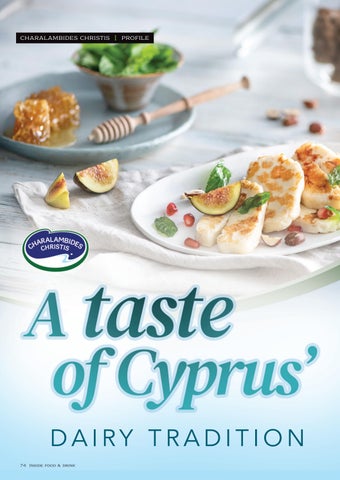
You’ll be back for more...
`
CAMELICIOUS
Global exporter of camel milk products
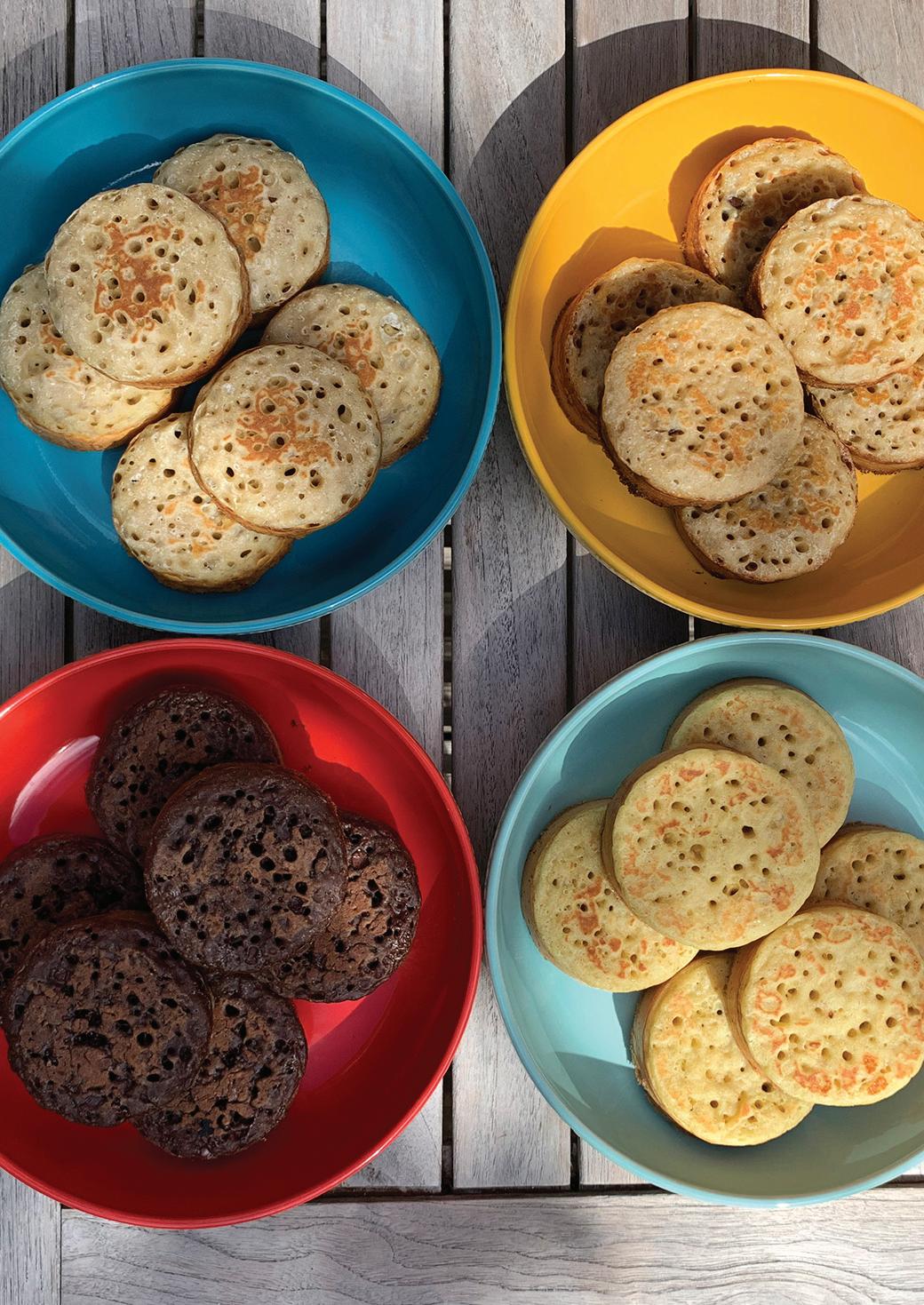
CRUMPETORIUM
Experimental crumpeteers making artisan crumpets
Sauces and condiments from Finland
FROM CROP TO CONSUMPTION
MAUSTAJA
inside ( ( F O O
& D i F
D & D R I NK
FD25 n JUL/AUG 2023
Regional scones
As part of our coverage of regional foods in this magazine, we are opening with a regional variation on the classic scone. The great debate revolves around the order of the accompanying ingredients. Should it be jam first, then cream? Or is it cream first, with the jam on top?
Managing Director
John White
Finance Director
Filomena Nardi
Editorial Manager
Phil Nicholls
Editorial Assistants
Imogen Ward
Hannah Barnett
Feature Writers
Andy Probert
Romana Moares
Richard Hagan
Colin Chinery
Business Development Manager
Darren Foiret
Research Editors
Jeff Johnson
Mark Simmonds
Judi Wheaton-Mars
Ginelle Lorenzo
Natalie Martin
Dane Coady
Becky Scrivens
Jamie McBride
Sam Ransome
Sales Director
Richard Brightmore
Sales Manager
Helen Leisi
Project Managers
Alexander Paterson
Tony Ingrouille
Kym Hamilton
Chris Renicar
David Earl
Connor Doddington
Lisa Smith
Carl Millican
Art Director
Ian Spencer
Art Editor
Philip White
Webmaster
Michael Stamp
Designers
Sarah Jones
Georgina Harris
Events Manager

Jasmine Lodge
Events Executive
Matthew Spalding
Marketing Executive
Adam White
T: +44 (0)1493 445121 +44 (0)1502 566216 E: media@insidepublication.com
: www.insidefoodanddrink.com © Inside Food & Drink 2023 No part of this publication in any form for any purpose, other than short sections for the purpose of review may be reproduced without prior consent of the publisher. Company Reg No: 06783092 • Company VAT No: 167 6757 57 2 Inside food & drink
W
It’s tough at the top
Welcome, Dear Reader, to your latest edition of Inside Food & Drink. As we approach the halfway point of 2023, I have noticed that my diet has begun to change with the se a sons. I find myself reaching now for more salad and fruit when I fancy a snack, compared to the winter warming toasted breads and crumpets.
However, with the wonderous variety of food and beverages available to many of us, I enjoy experimenting with my diet. I’m not one to have the same cereal for breakfast every day.
It is fortunate, therefore, that I am the owner of a company which has amongst its titles a food and drink magazine. As well as it being an excellent and thoroughly enjoyable publication to work on, it also has additional perks that my other titles do not, namely samples!
We count ourselves tremendously lucky to be the recipients of many of your new product launches that you kindly send for us to review. As the boss, I naturally ensure that a portion of each sample makes its

way to my office, for due diligence reasons, of course.
Recently, after enjoying some glorious Champagne De Saint-Gall, my editorial and marketing teams conducted a little regional food review which involved me being ‘forced’ to sample, amongst other scrumptious delights, whiskey, Cornish cream tea, crumpets and Eccles cakes.
Honestly, my days are so busy carrying out such chores!
Fear not, sharing is caring, as they say. Therefore, I am willing to share my team’s hard work with you. I would dearly love for you to sample the delights that we are proud to serve up within the pages that follow. Of course, we had a little help from you and your splendid businesses too, thank you. n
To have your company’s latest product, technology or concept included in Inside Food & Drink, contact us today
Inside food & drink 3
John White Managing Director
Managing Director John White shares with you the burdens of responsibility.
GE T INVOLVED
media@insidepublication.com




4 Inside food & drink 46 74 intro Charalambides Christis Camelicious 52 The Ocean Fish Group 60 Royal Mediterranean 68 Maustaja 03 Director’s comment 06 Country focus 10 Inside food & drink minds 12 Innovation focus 18 Matter of fact 22 Taste of the season 28 Latest news Producers 80 Deas EVENT PARTNERSHIPS 34 Upcoming events 36 Caffé Culture 40 PPMA Show

Inside food & drink 5 Contents 104 Aranow InterSystem AB Multi-Color Corporation i F D & MANUFACTURers & Services The Reflex Group Inox Meccanica 112 118 96 AB Garos 90 126
Latest developments from the UK’s industry

KINGDOM
Game-changing launch of the UK’s first aluminium bottled sodas
Anti-plastic campaigning soda brand, GUNNA Drinks, has launched the UK’s first range of aluminium bottled soft drinks. With around 70% of soft drinks currently bottled in damaging single use plastic (SUP), it hopes the move will be a catalyst for change in the sector.
Utilising a larger, resealable 500ml format, versus a standard 330ml can, GUNNA Drinks has initially launched three immune boosting lemonades in aluminium bottles, tapping into the burgeoning demand for functional food and drink. With aluminium being infinitely recyclable, the bottles have strong environmental credentials which, when paired with their wellness proposition, align with two of the biggest consumer demands in soft drinks right now and make for a compelling proposition for retailers.
In 2022, GUNNA launched a petition for the UK government to ban plastic bottles and is swiftly making a name for itself, challenging big soda brands to stop using SUP. It is estimated that an average of 35.8 million plastic bottles are used every day in the UK, with only 19.8 million recycled. Of this, only around 10% gets
recycled in the UK, while the majority is either incinerated, goes to landfill or is sent abroad.
“Putting the planet first is at the heart of GUNNA’s company ethos and we’re proud to be the first-to-market with aluminium bottled soft drinks,” Melvin Jay, founder of GUNNA Drinks, said. “We hope to see other brands follow suit and switch to an aluminium bottled format in place of the hugely damaging single-use plastic that is all too common. We’re confident that this new packaging option will be a gamechanger for our business, our customers and our planet.”
As part of its environmental credentials, GUNNA is proud to be double carbon negative. Each year GUNNA also invests in The Clean Oceans Project, picking up tonnes of competitors’ plastic waste from the world’s beaches. n
COUNTRY FOCUS
6 Inside food & drink UNITED
USA

US food labeling regulations may be overhauled
US lawmakers have proposed the Food Labeling Modernization Act. If put through, this act will impose stricter measures surrounding the word ‘healthy’ and unify the presentation of all food labeling.
Lawmakers in the United States have proposed a new Food Labeling Modernization Act of 2023. “Consumers deserve straightforward, easily accessible information about the ingredients and nutritional value of products they want to buy,” said Senator Richard Blumenthal. “With front of package labels, clearly marked allergens, and clarified guidelines to deter misleading claims, our measures will bring transparency and simplicity to Americans’ shopping experience.”
Food labeling regulations in the US have not been comprehensively updated for several decades. The proposed Food Labeling Modernization Act would establish a standardized front-of-package nutrition labeling system for all food products requiring nutrition labeling. It would also introduce guidelines for the use of the term ‘healthy’ and address deceptive marketing practices that confuse consumers.
The legislation has gained support from consumer groups such as Beyond Celiac, and the Celiac Disease Foundation
because if passed, it would introduce the requirement for manufacturers to disclose all gluten-containing grains in a product.
By improving food labeling requirements, the aim of the bill is to promote transparency, enable consumers to understand what they are purchasing and consuming, and facilitate healthier decision-making. The bill builds upon recent updates made by the Food and Drug Administration to the Nutrition Facts label and seeks to provide accessible information to empower consumers in making informed purchasing decisions.
“Times have changed, our shopping habits have changed, and the food industry is always evolving,” said House Appropriations Committee Ranking Member Rosa DeLauro. “It is past time that food labeling caught up. Improvements are desperately needed. Front-of-package labels are the future, and a welcomed change that will improve consumer knowledge of what is in the food they buy.” n
COUNTRY FOCUS Latest developments from the American industry Inside food & drink 7
COUNTRY FOCUS
Latest developments from the Indonesian industry

INDONESIA
Kerry opens state-of-the-art taste facility in Karawang
Kerry, a world leading provider of taste and nutrition solutions, has officially opened a new state-of-the-art taste manufacturing facility in Karawang, West Java, Indonesia. This new 50,000m2 facility significantly expands Kerry’s taste offering in Southeast Asia (SEA) by delivering localised products to its fast-growing markets.
The facility is the company’s largest greenfield investment in SEA and will encompass a manufacturing site, research and development pilot plant and a sampling hub. Its wide range of process technologies will enable the creation of authentic taste experiences, inspired by popular local and traditional cuisines.
The Karawang facility will support Kerry’s food and beverage customers in all food categories, including beverage, snacks and bakery, which are among the company’s fastest growing end use markets.
As part of Kerry’s Beyond the Horizon sustainability strategy, the company has prioritised sustainability initiatives across the entire facility and all utility equipment has been designed to the latest energy efficiency standards.
Dignitaries from Indonesia and Ireland attended the inauguration ceremony, including Nurul Ichwan, Indonesia’s Deputy for Investment Promotion, Ministry of Investment; H.E. Padraig Francis, Ambassador of Ireland to Indonesia; Tom Moran, Kerry Group Board Chairman; Edmond Scanlon, Kerry Group CEO; along with trade association leaders and community officials.
With an estimated value of close to €1bn and growing rapidly, the Southeast Asian Taste market presents an exceptional opportunity for companies prioritising development and innovation in the food and beverage industry. The Indonesian Government’s ‘Making Indonesia 4.0’ initiative has emphasised the significance of the food and beverage sector in propelling the nation towards becoming one of the world’s top 10 economies by 2030. n
8 Inside food & drink
Latest developments from the Polish industry

POLAND
One of Europe’s main recycling hubs for beverage cartons starts operations
In a joint investment of approximately EUR 29 million by Stora Enso and Tetra Pak, a new recycling line for post-consumer beverage cartons is starting operations in Poland. Stora Enso has invested approximately EUR 17 million into a new repulping line that will recover the carton fibres. Tetra Pak along with Plastigram Industries have invested a total of approximately EUR 12 million to build the new line.
Opening its doors to the public on the line has the potential to triple the annual recycling capacity of beverage cartons in the country - from 25,000 to 75,000 tonnes – and provides scope to absorb the entire volume of beverage car tons sold in Poland, as well as additional volumes from neighbouring countries, including the Czech Republic, Hungary, Slovakia, Latvia, Estonia and Lithuania. Featuring an annual capacity of 50,000 tonnes, the state-of-the-art line at Stora Enso’s production unit in Ostrołęka, Poland, handles solely beverage carton material separation, detaching fibres from polymers and aluminium. The fibres are then recycled into carton board materials, effectively contributing to material circularity by turning used paper-based packaging into new paper-based packaging materials.
This new paper recycling facility is complemented by Czech company Plastigram Industries, that, together with Tetra Pak, is industrialising a solution to recycle polyAl into new products.
The new line is set to ramp up recycling of beverage cartons throughout Central and Eastern Europe, signalling the beverage carton industry’s willingness to support the circularity goals of the proposed EU Packaging and Packaging Waste Regulation (PPWR), and showcasing the pivotal role of recycling in helping the green transition of the food packaging sector.
The packaging industry has already invested approximately EUR 200 million to increase the capacity for beverage carton recycling in the EU and plans to invest a further EUR 120 million by 2027.
Inside food & drink 9
COUNTRY FOCUS
n
INSIDE FOOD & DRINK MINDS
Inside Food & Drink asks the experts about their personal experience in the industry
minds inside Food & Drink
Question: What steps will your sector need to take to become more environmentally sustainable?

More brewers are grasping the sustainability angle because there is growing momentum and a greater public perception that businesses need to be environmentally sustainable. Wildcraft Brewery recognises these changing times. For example, its ingredients are locally sourced and foraged.
Mike Deal, Chief Brewer / Director, Wildcraft Brewery
The best thing that our sector can do is to look internally, to review emissions impacts, as well as review how to push these requirements down the supply chain for maximum impact. And then, if possible, it’s a great idea to help the customer to be more energy efficient and reduce C02 emissions together.
Ranj Azad, Sales Director, Nikodan Process Equipment
In my opinion, the sector has already done a lot to become more sustainable. The chicken houses are now equipped with such modern equipment that the dried manure can be sold to other parts of the world in the form of fertiliser pellets, or used to generate energy through combustion. This means that egg production is already relatively environmentally friendly. Particulate matter is still an issue, but it’s becoming increasingly easy to solve it from a technical standpoint.
Ton Gielen, General Manager, Egga Food
Sustainable efforts are underway across industry. For one, Manupackaging is ideally placed to respond accordingly as more countries adopt taxes on plastic materials.
“
Massimo Moroni, CEO, Manupackaging
The brewery space continues to move forward on the sustainable front by being open and collaborative across the industry, sharing ideas, and minimising its carbon impact as much as possible.
Abbie Gadd: Head of Sales & Marketing, Wye Valley Brewery
10 Inside food & drink
“
“
“
“
“
“
“
“
“
Thanks to SAGALEXPO, Portuguese companies are able to save time and money at large scale. In a single space, they are able to present their existing and new products to major international players, and to reinforce their presence in international markers without having to travel abroad to different countries –which in turn helps reduce air pollution.
José Frazão, CEO, SAGALEXPO International Export and Flavours of Portugal Fair 2023
More food needs to be organic. In some countries, food is being marketed as ‘natural food’, but it’s not actually organic. ‘Natural’ doesn’t actually mean anything good, it just means that certain very bad additives haven’t been used. The ingredients, however, aren’t organic certified and are not from organic agriculture. Organic is very important for sustainability and there needs to be additional market support for more farmers and growers to get organic certified.
Tereza Havrlandova, Managing Director, Lifefood
The whisky industry has been at the forefront of sustainability and protecting the environment for many years, as you will find most distilleries are based in rural location. The sector is leading the way for environmental responsibility and corporate governance.
Nigel Mills CBE, CEO, The Lakes Distillery
There are many steps that need to be taken, such as better access to renewable energy and clean fertilisers, and then how those vertical farm systems are utilised. Many companies are involved in leafy greens, but we can’t feed the world solely with leafy greens. There is still a lot that can and should done.
 Alexandre Van Deun, Co-Founder, Urban Harvest
Manager, Phil Nicholls. media@insidepublication.com
“ Inside food & drink 11 “ Get Involved
“
“
We would love to hear your answers, so send an email over to our Editorial
“
“
“
“
Limited edition
G’Vine

Gin launche
with brand ambassador Jaime Lorent
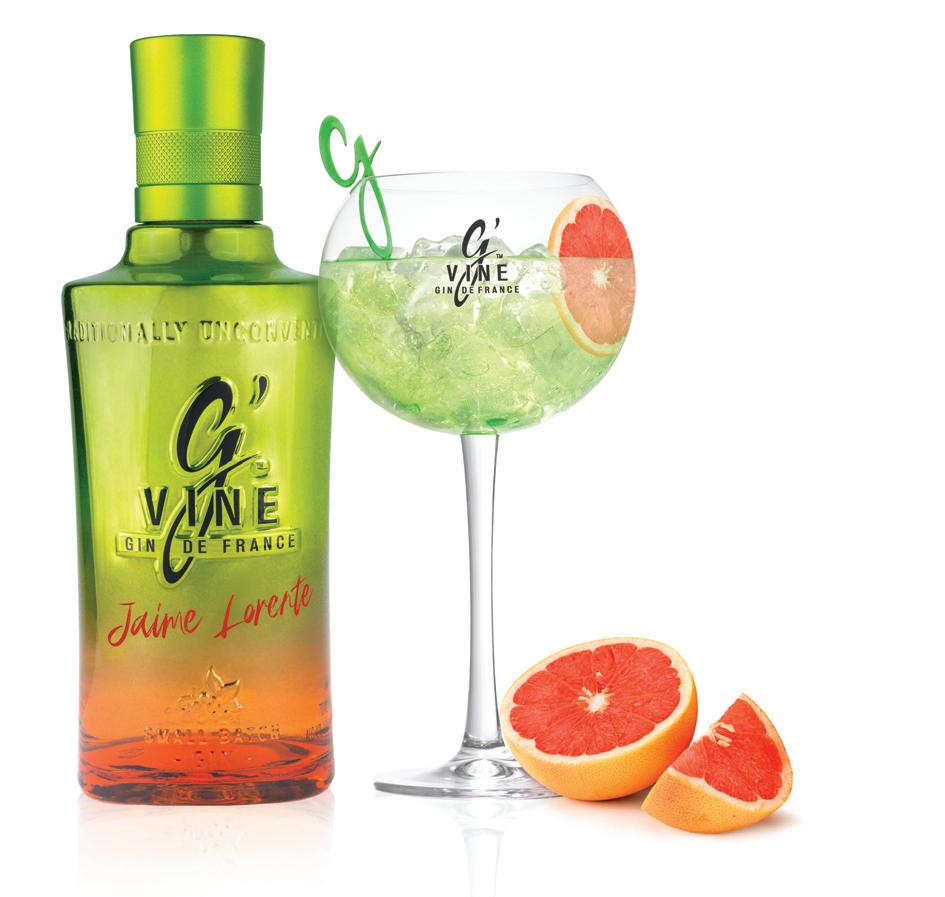
G’Vine, gin de France, the only gin in the world made from grapes and vine flowers, launched a limited-edition recipe and bottle in celebration of the third year of partnership between the ultra-premium gin and its Spanish ambassador, international actor Jaime Lorente.
12 Inside food & drink INNOVATION FOCUS
Latest innovations from the food and drink industry
For the first time since its inception in 2006, G’Vine has released both a new recipe and bottle design resulting from the partnership between Jaime Lorente and Jean-Sébastien Robicquet; G’Vine creator, master distiller and owner of independent French distillery Maison Villevert.
The G’Vine Jaime Lorente Limited Edition release marks the launch of the ’El Vividor’ (good living) campaign that pays tribute to those who know how to enjoy life to the full. This campaign is the Spanish regional arm of the international G’Vine campaign ‘Gin Your Way’, launched in 2022.
Since working together, Robicquet and Lorente found a great synergy in their personalities, sharing a passion for life and the importance of exploring creativity. To develop the gin, Lorente
travelled to France where, using Robicquet’s exceptional nose and palate, they developed a new recipe inspired by Lorente’s roots. The gin features ingredients that echo his childhood, and a design that reflects his elegant and rebellious personality.
The resulting gin combines the fresh and smooth finish of G’Vine and its spicy bouquet with rising notes of bell pepper, citrus and raspberry. These influences come together in a harmonious roundness awakened by a final note of pepper.
The synonymous green G’Vine bottle has also welcomed the Lorente flourish; a sweeping orange illuminates the base reflecting the vibrancy of his personality, elegant and rebellious, and his passion for the theme ‘El Vividor’ (the good living) which pays tribute to those who know how enjoy life to the full. n

Inside food & drink 13
ed te
Bells of Lazonby’s
‘We Love Cake’
launches its first vegan Cherry Bakewell Tarts into foodservice

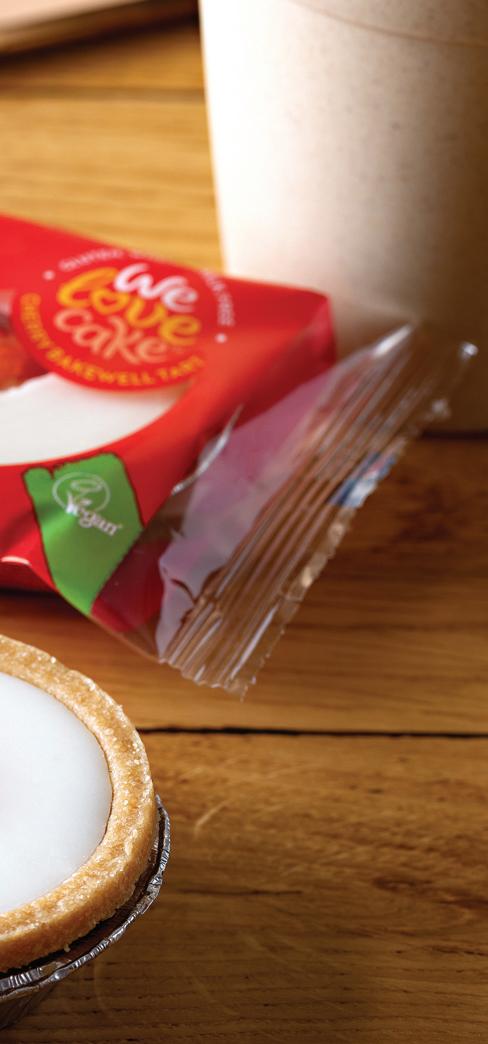
Bells of Lazonby’s ‘We Love Cake’ has launched a vegan and free-from Cherry Bakewell tart into wholesale and foodservice. A first for ‘We Love Cake’, the free-from take on the teatime Bakewell is gluten-, wheat- and milk-free as well as being vegan, while still offering the iconic taste of the renowned, classic British tart.
Individually wrapped and distributed exclusively by Central Foods, the new line will be stocked in cafes, independent stores and chains throughout the UK. The tarts are soon to be available in bulk-packs aimed at the catering service, for those looking to provide vegan options when catering.
“The Cherry Bakewell tart offering is an exciting innovation not just for the ‘We Love Cake’ brand but for the plant-based
14 Inside food & drink INNOVATION FOCUS Latest innovations from the food and drink industry
“It is the ultimate classic sweet treat, so it is fantastic to bring a vegan version to market. We are very proud of the product and can’t wait for people to try it”
category,” Head of Marketing for Bells of Lazonby Josh Boydell-Smith said.
“It is the ultimate classic sweet treat, so it is fantastic to bring a vegan version to market. We are very proud of the product and can’t wait for people to try it.”
Made on the edge of the Lake District by renowned family bakers since 1946; these delicious tarts are baked in small batches by skilled bakers. They promise to taste-match traditionally made Cherry Bakewells.
The individual tarts are also currently available to UK frozen wholesale, sold individually wrapped, exclusively via Central Foods.
The ‘We Love Cake’ journey began in 2002, when second-generation family business owner Michael Bell tried to live as a coeliac for a week. Unsatisfied with anything he ate, not least the free-from cakes he reluctantly attempted, by day two of the week-long trial he decided to build a dedicated gluten-, wheat-, and milk-free bakery. After years of honing gluten-free baking, he introduced ‘We Love Cake’ to the UK in 2012.
Inside food & drink 15
n
Latest innovations from the food and drink industry
Kerry unveils
Biobake™ EgR
Kerry, a global leader in taste and nutrition, has announced new product Biobake™ EgR, an innovative enzyme solution that decreases the number of eggs needed in a wide variety of baking applications. EgR enables European manufacturers to make the switch from caged to free-range or organic eggs without facing increased costs.
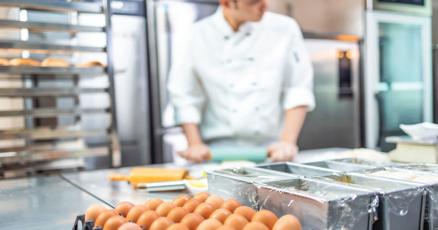

Kerry’s new enzyme system, developed for baked goods manufacturers to address the rising raw material costs of eggs, allows for a reduction in the quantity of egg used in recipes. The innovative enzyme system also provides a solution to regulatory concerns, with the European Commission proposal to phase out the use of cages in animal agriculture by 2027. According to statistics published in January 2023 by EuroStat, the price of eggs in the European Union was 30% higher on average in January 2023 than in 2022. Supply-chain disruptions are the main reason for these cost increases, exacerbated by geopolitical instability, global widespread avian flu, drought, and increasingly unpredictable and
extreme weather conditions, plus general inflationary pressures.
These factors have negatively impacted crop yields and applied financial pressure across the supply chain, creating challenges for producers and adding costs for the final consumer.
Finding solutions to reduce carbon impact is an important sustainability con sideration for manufacturers, driven increasingly by environmentally and ethically conscious consumers. Biobake EgR is a sustainable solution that not only eases the switch away from caged eggs, but also delivers potential CO2 emission savings of up to 14% when an egg reduction of at least 30% is achieved.
Egg reduction is a strategy being used by manufacturers to reduce final product costs, improve margins and overall profits. Biobake EgR is a versatile, clean, cost-optimised egg-replacement solution that delivers the functional properties of eggs in many different baking applications—and with no change to final product quality. n
INNOVATION FOCUS
16 Inside food & drink
Oatly launches soft serve ice cream in the UK
Oatly Group AB, the world’s original and largest oat drink company, has launched its latest innovation – Oatly Vanilla Soft Serve ice cream.

Oatly Vanilla Soft Serve is available to food service providers and is an innovative step forward in alternative dairy food innovation – providing the cold, creamy texture of soft serve ice cream, but made with oats. Oatly Vanilla Soft Serve is suitable for vegans and is soy- and dairy-free.
Oatly Vanilla Soft Serve was first previewed to UK customers during London Coffee Festival in April and is now available with a range of launch partners, including The Breakfast Club, and Fortnum & Mason –where you can experience Oatly’s delicious soft serve ice cream in The Parlour in the iconic department store in Piccadilly.
JENKI will be using the product to create a unique Matcha Soft Serve ice cream available in its Matcha bars across London, and plant-based restaurant chain, Neat Burger, backed by Leonardo DiCaprio and Lewis Hamilton, will also exclusively be using Oatly Soft Serve in its soft serve shakes.

“At Oatly, we’re committed to making it as easy as possible for people to incorporate more plant-based food and drinks into their everyday life,” said Bryan Carroll, General Manager for Oatly in the UK and Ireland.
“That means creating products for every occasion where you might typically find dairy. Food service is critical to that mission, and we’re delighted to have launched with like-minded brands that are recognising people want more than just dairy on offer.
“We have exciting plans for this product and look forward to bringing Oatly Vanilla Soft Serve to festivals across the UK this summer.”
Inside food & drink 17
n
Interesting and unusual facts from around the food and drink world
FACT M AT TER of

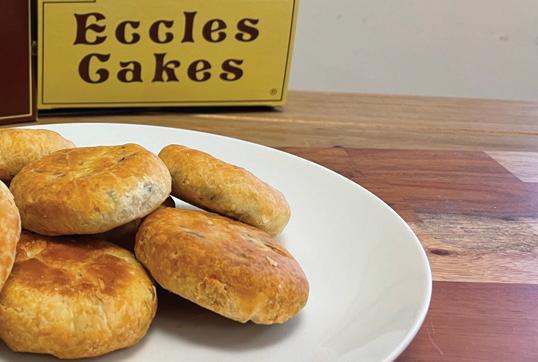
Eccles cakes are named after the town of Eccles, Lancashire. The first cake was sold commercially by James Birch in 1793.
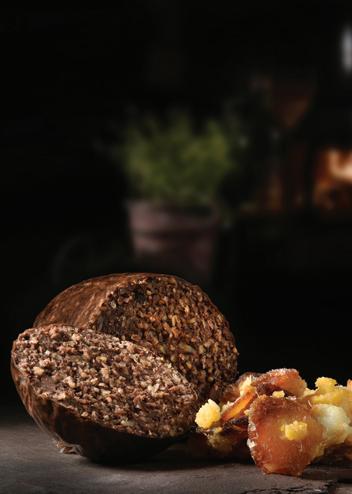
Haggis, the national dish of Scotland, is a savoury pudding containing sheep’s heart, liver and lungs. Haggis hurling is a sport in Scotland that requires the contestant to stand on top of a platform and throw a boiled haggis as far as possible.
Brummie bacon cakes originate from 19th century Birmingham. Scone-like in texture, these savoury snacks often consist of chopped bacon and cheese mixed into a simple dough.
Eton mess is commonly believed to have originated from Eton College. As the story goes, the dessert was served in the school’s tuck shop to students heading home for the summer.

18 Inside food & drink MATTER OF FACT
A fat rascal is a flattened bun filled with dried fruit and spices, that is decorated with glacé cherries and almonds. The cake originates from 19th century Yorkshire.
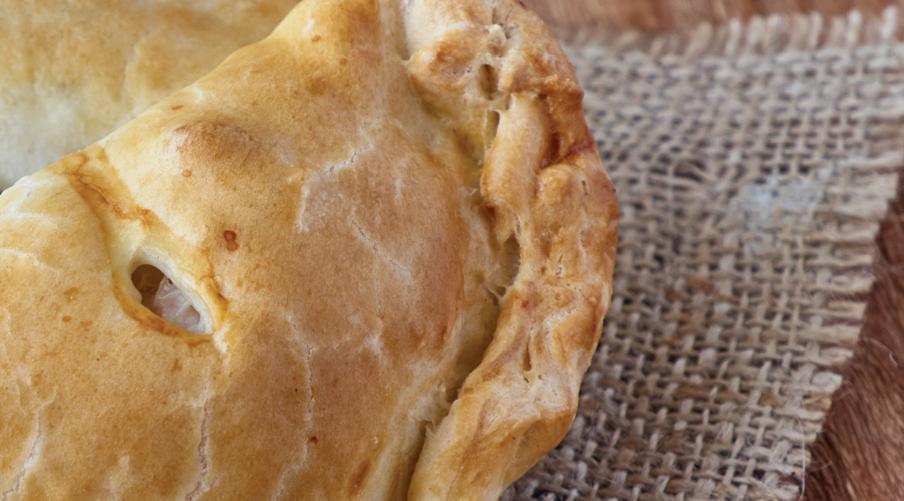
Devon cream tea is said to have originated in Tavistock Abbey, Devon, in the 11th century.
Parkin, a traditional ginger cake from Yorkshire, was traditionally eaten on the first day of winter. Nowadays, it is a staple for Bonfire Night.

Inside food & drink 19
Every problem is a gift, we would not grow without problems
– Anthony Robbins –
“ “
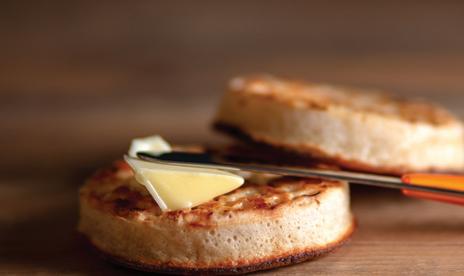
A crumpet is a type of griddle cake that has a visibly cratered surface.
Cornish pasties have 20 crimps.

Fantastic food and drin around the UK
From Cornwall to Scotland, and West Wales to East Anglia, Great Britain is a country that prides itself on its regional diversity. Nowhere is this better reflected than in some of the specialist delicacies that can be experienced when journeying the length and breadth of the country. Here at Inside Food & Drink, we recognise travel is not always option and sometimes you still have to scratch that itch. So, we tried some of the best regional options out there that do not require you to leave your postcode.
Arran Single Malt

Those who enjoy the finer things in life, such as a high-quality single malt whisky at the end of a long day, should look no further than Arran Single Malt. Made on the Isle of Arran, world famous for its whisky distilleries, this is a truly exclusive product.
Distilled via the traditional process, Arran Single Malt starts its life as Scottish rainwater at Loch Na Davie in the hills high above the distillery. The clear water cascades down the Easan Biorach burn through six waterfalls, each one purifying the water further. The barley arrives from maltsters on the mainland as whole grains. The grains are then milled by the company in the village of Lochranza.
Over the course of many years in its warehouses on Arran, the spirit inherits colour and flavour from the wood, meaning the quality of the casks is of the utmost importance. The Isle of Arran Distillery never adds caramel or strips flavour out of its whiskies using chill filtration and the purity of the water on Arran means the tastes is entirely natural and unadulterated.
“ This is a beautiful, smooth whisky. A clean, sweet, dram, like no other single malt I have tried. The traditional distilling process really pays off. I highly recommend it to both scotch lovers and those who aren’t sure. You will be when you try this ” – Jamie McBride, Project Manager.
Check out this amazing distillery or bag yourself a bottle here: https://www.arranwhisky.com/

22 Inside food & drink
OF THE
Regional specialities
TASTE
SEASON
i F D &
It is a truth universally acknowledged that anyone in search of the UK’s best afternoon snack, must be in want of a cream tea. The ideal place to eat one is in the West Country. Now The Cornish Scone Company is making it possible to experience the taste of Cornwall without having to go anywhere.
The company began when founder Karen Gilchrist’s father moved away from Cornwall, and she started sending cream teas to him in the post. The traditional Gilchrist family scone recipes have been handed down through generations and remain a closely guarded secret. All ingredients are, of course, locally sourced.
The cream tea hamper has all you need to experience a taste of Cornwall. The scones arrive in individually sealed plastic ensuring freshness, alongside a delicious strawberry jam, a generous serving of Rodda’s iconic Cornish clotted cream and a few Smuggler’s Brew tea bags to wash it down with. Savoury, vegan and gluten-free cream teas are also available.
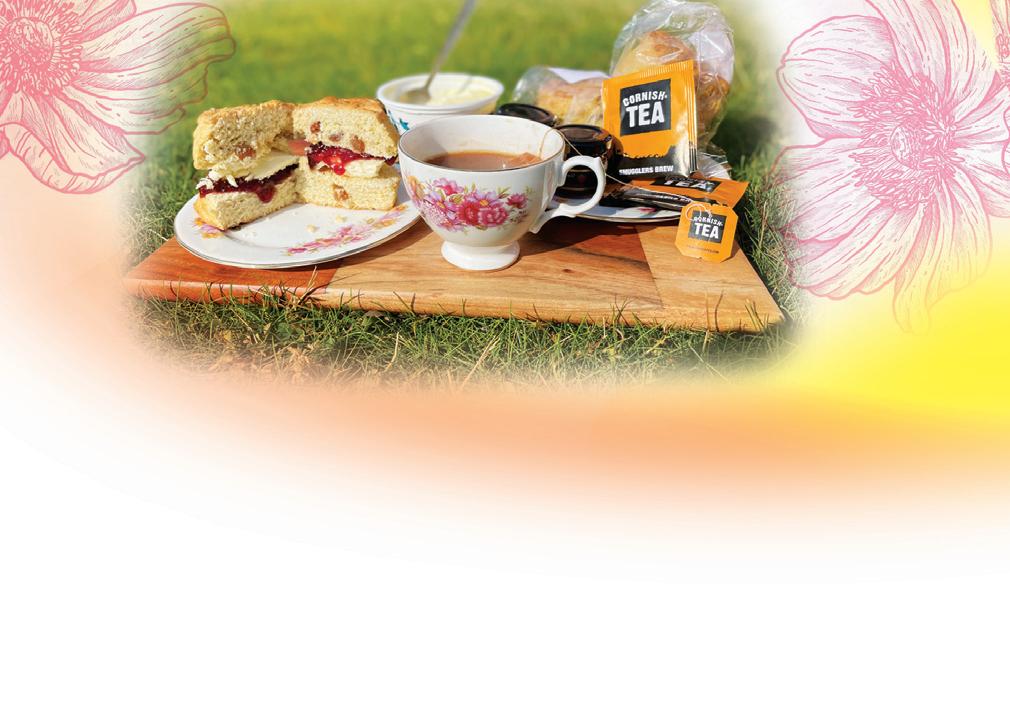
“This was a fantastic treat. I loved the presentation and receiving a full hamper of cream tea goodies was really exciting, though the taste was better still. It was such a fresh, light scone, you could tell it was home made. The jam was also excellent and the Cornish tea bags were a great touch. I thoroughly recommend The Cornish Scone Company, for taste, packaging and experience. Just like being on holiday!”
– Adam White, Marketing Executive
Inside food & drink 23
nk
i F D &
Order yours here: www.cornishsconecompany.co.uk
The Cornish Scone Company
TASTE OF THE SEASON
Regional specialities
There are few snacks more iconic in the north-west than the Eccles cake, named after the Lancashire town where they were invented. For the uninitiated, the delicious treat is made with currants, flaky pastry and butter (lots of it).
The Edmonds family has been involved in the manufacture of Eccles cakes since the 1930s, and the present company, set up in 1979, produces the leading retail brand, simply called Lancashire Eccles Cakes.
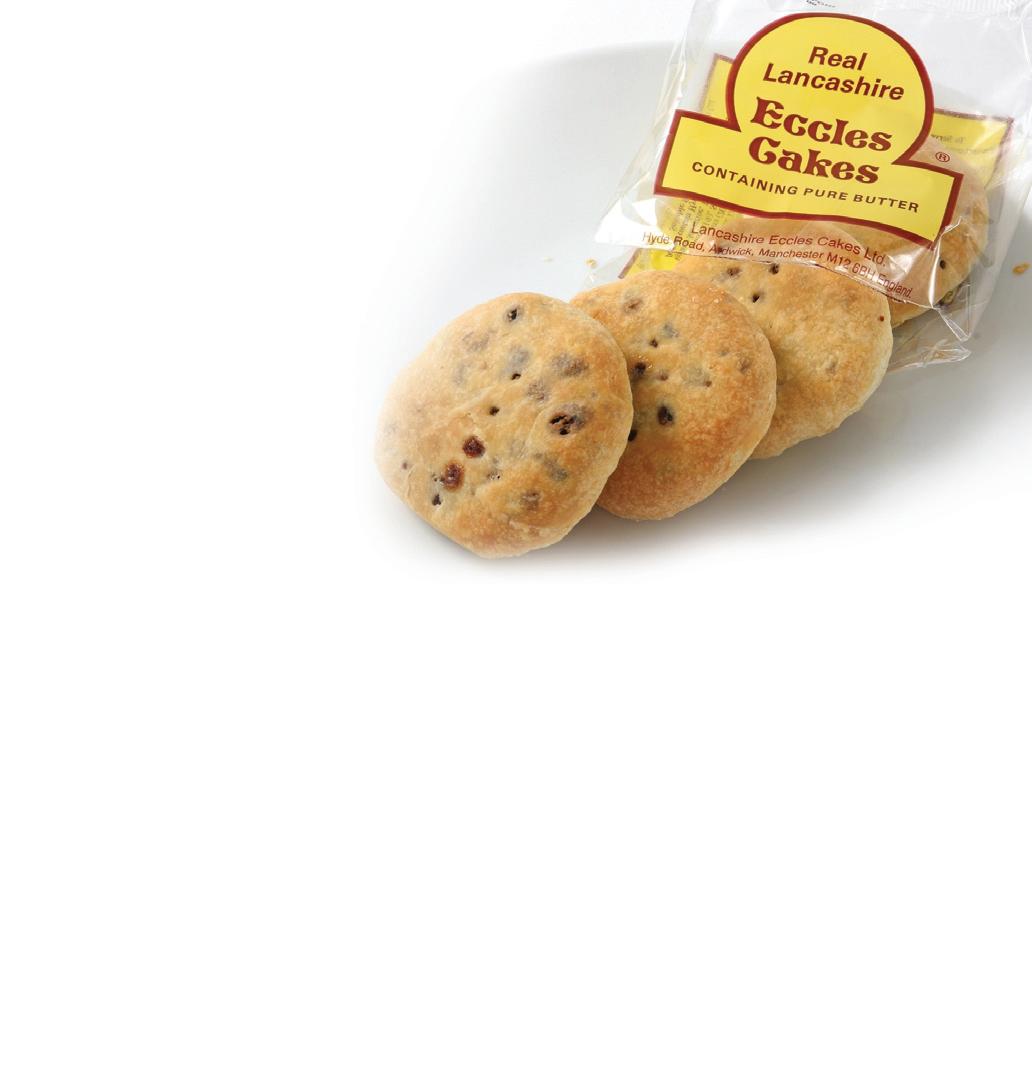
Still baked using the family recipe, Lancashire Eccles Cakes can be found on the shelves of all leading supermarkets, as well as in delicatessens and local corner shops. The company also exports to Europe and America, so you can still enjoy the taste of traditional, real Lancashire Eccles Cakes far from its home.
“
Lancashire Eccles Cakes makes the best Eccles cakes in the game. The packaging proudly announces the use of pure butter, and you can really taste it. A buttery, fruity, indulgent delight. The only issue is, I can’t stop after one!”
– Hannah Barnett, Editorial Assistant
Find out more: www.lancashireecclescakes.co.uk
24 Inside food & drink
i F D &
Lancashire Eccles Cakes
Crumpetorium
Is there anything more British than the crumpet? The Norfolk-based Crumpetorium thinks not and has taken the iconic treat to new levels. As self-styled ‘experimental crumpeteers’, the company produces delicious handmade, small batch, artisan crumpets in fabulous flavours with no added preservatives.
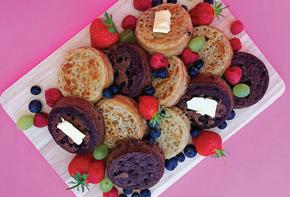


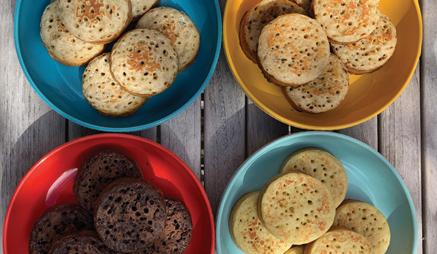
Ironically, the Crumpetorium’s story began with its founder Katrina Ajomal and her partner travelling to the other side of the globe. While there, they discovered that all the British people they talked to missed crumpets more than anything.
When Katrina arrived back in the UK, she decided to come up with her own range of original handmade crumpets and experimented with many wonderfully diverse flavours. From cheese to ginger; and feta to chocolate orange; alongside the classic crumpet, there is something for everyone here, including the flavours you did not even know you needed.
“ These are the best crumpets I have ever eaten. They arrived in the post beautifully wrapped and already smelt amazing, so you could tell they were freshly baked. The sweet and savoury options were all exceptional, I wasn’t sure about the ginger at first, but it was fabulous and ended up as my favourite. I am now a Crumpetorium convert! ”
–Sarah Jones, Graphic Designer.
Inside food & drink 25
Try some today at: https://www.crumpetorium.com/
i F D &


26 Inside food & drink

CoffeeTech start-up brings a fresh perspective and a greener outlook to the coffee break
CoffeeTech start-up ansā Roasting, is applying new green technology to redefine the way coffee lovers indulge in their favorite beverage. Its sleek, fully autonomous mini-roaster, designed to elegantly perch on any office countertop, introduces on-demand roasting of raw green coffee beans
“Beyond downsizing the industrial roaster, we set out to change the game on sourcing and roasting fresh, specialty-grade coffee, conferring a whole new level of enjoyment to coffee drinking while making it a more eco-responsible experience,” said Matan Scharf, ansā’s co-founder and CMO.
Bringing coffee ‘from shrub to cup’ encompasses a long and complex journey that involves extensive mileage, energy resources and layers of packaging. On the traditional route, coffee berries are cultivated, in dedicated fields in Central and

South America, Africa, or parts of Asia before being bulk packaged for their first voyage to an industrial roasting house in Europe or the US.
ansā is paving a greener path to the coffee experience, one that bypasses the intermediary and the need for capsule packaging, delivering bespoke raw green coffee beans directly to the consumer in 100% recyclable boxes.
The compact appliance ‘activates’ the beans, working from the core to the shell using a dielectric heating system. This process produces the characteristic aroma that arouses all the coffee-senses. Using computer vision algorithms, the ansā micro-roaster calculates the exact amount of energy to apply to each bean in real time for a perfectly homogenous roast.
“Our system works within minutes and autonomously,” explained Yuval Weisglass, co-founder, and CEO of ansā. “You can even tell it how much coffee you want, and by what time, seamlessly through the ansā app. Our micro-roaster can feature in any setting, such as a hotel lobby, restaurant, or café.”
28 Inside food & drink LATEST NEWS latest news
from around the food and drink industry
n
“ YOU CAN EVEN TELL IT HOW MUCH COFFEE YOU WANT, AND BY WHAT TIME, SEAMLESSLY THROUGH THE ANSĀ APP”
An innovative genetic chip guarantees the authenticity of Galician mussels
World aquaculture production of mussels reached 2.11 million tonnes in 2018, with an approximate value of $4,519 million, according to figures published in 2020 by the United Nations Food and Agriculture Organisation (FAO). In the European Union, these molluscs represent 34% of the total aquaculture production. Galicia, responsible for over 97% of the aquaculture in Spain, is the leading producer among EU countries of one of the two main species, Mytilus galloprovincialis, also known as the Galician or Mediterranean mussel.
Guaranteeing origin and traceability is especially important in the case of mussels, due to their importance in international trade and the long distances between where they are produced and consumed.
As part of the European SEATRACES project, led by the CSIC, with the aim of improving geographical identification of mussels, enhancing its management and preventing possible food fraud, the AZTI technology centre has led research consisting of a genetic study to analyse over two hundred samples of mussels of different geographical origins.
In total, using Next Generation Sequencing techniques, researchers identified 17 specific markers making it possible to accurately distinguish the geographical origin of the mussels.
On the basis of these markers, researchers at AZTI worked together with the University of Santiago de Compostela (USC) to develop a genetic chip with the genetic profile of the Mediterranean mussel species Mytilus galloprovincialis, offering producers and expert researchers a powerful genomic tool to identify, validate and assess complex genetic traits in this species.
The ability to accurately identify the geographical origin of mussels is very important for the sustainable management of aquaculture and fisheries, and also has implications for producers, food authorities and consumers.
To have your company’s latest news included online or in our Inside Food & Drink magazine, contact us today media@insidepublication.com

Inside food & drink 29
n
INVOLVED
GE T
latest news from around the food and drink industry
Amcor and Aludium bring a low-carbon aluminium product to market
Amcor Capsules, a global leader in developing and producing responsible closures for wine & spirits, and Aludium, one of Europe’s leading aluminium suppliers, have collaborated to bring an aluminium product to market with more than 50% reduction in carbon footprint compared to the average carbon footprint for primary aluminium sold in Europe.
Together, Amcor Capsules and Aludium have produced a leading, certified and independently verified low-carbon aluminium product for use in screwcaps. The new technology produces less than 4 tonnes of CO2 equivalent per tonne of aluminium, from raw material extraction right up until delivery. This saving is made possible thanks to the combined use of recycled content and the careful selection of low-carbon primary aluminium.
“We are passionate about bringing more sustainable products to market,” explained Bertrand Daru, Sustainability Director of Amcor Capsules. “We are already leading the market with 96 per cent of our products being recycle-ready. But we want to go further, our aluminium screw caps now
offer a more sustainable alternative for wine and spirits brands and distributors.”
“As a pioneer in offering certified lowcarbon aluminium alloys to the market, Aludium is delighted to work with Amcor to continue to push for greater sustainability in packaging solutions,” Michael Brandner,
Specialities Sales Director at Aludium
added. “Thanks to heavy investments in Aludium assets, technology and processes, we are helping customers and end users achieve their carbon reduction targets.”
The GHG emissions produced by this improved generation of aluminium are verified by a third party and certified according to ISO-14067-1:2018 and the Greenhouse Gas Protocol Standards. This certification process has been rigorously carried out between Amcor Capsules and Aludium to offer total transparency of the aluminium carbon footprint.
30 Inside food & drink LATEST NEWS
n
“ WE ARE ALREADY LEADING THE MARKET WITH 96 PER CENT OF OUR PRODUCTS BEING RECYCLE-READY ”
Rare coffee species from Sierra Leone’s rainforest on course to save climate-vulnerable coffee industry
Lost from cultivation for more than half a century, stenophylla coffee has been grown successfully in a pilot project in the east of the country following its rediscovery in the wild.
It took a five-year-long search by Daniel Sarmu (a Sierra Leonean forestry expert and the person running the pilot), before the first wild examples were found.
With rising temperatures and changes in rainfall threatening to wipe out more than half the current coffee production, developments in Sierra Leone offer hope for climate-resilient solutions for the world’s coffee drinkers.
The pilot project is driving ambitious plans to establish stenophylla as the flagship product of the county’s agricultural sector, a remarkable turnaround for a species once sold as Sierra Leone highland coffee but which had been quietly forgotten through history.
The Sierra Leonean project has implications for the world’s coffee market as it offers hope in the face of the dire threat
that climate change poses to the two species – Arabica and robusta – which produce the beans that go into almost all of the 400 billion cups of coffee drunk each year.
Grown commercially in more than 50 nations in an industry that generates more than 25 million jobs, these two species have a weak spot: vulnerability to climate change.
What stenophylla offers, which makes it stand out from the 129 other known species of coffee, is a double whammy of great taste and heat tolerance.
A five-acre plot was offered up by one community for a nursery, where seeds were successfully planted and germinated. More than 1,400 seedlings cultivated in the nursery have been planted out in the areas where the project managers hope they will be able to mature and grow a first crop of fruit. A further 6,000 seedlings planted out at the beginning of Sierra Leone’s rainy season.
Inside food & drink 31
n

from crop to consumption
EVENT PARTNERSHIPS
A selection of event previews, followed by interviews about the Caffè Culture Show and the PPMA Show.

i F D &
07-09 November 2023

Gulfood Manufacturing
Gulfood Manufacturing represents the pinnacle of the global food and beverage manufacturing industry evolution, offering a decisive destination for those seeking to accelerate the adoption of technology, plus improve efficiencies and productivity to meet new challenges.
15-16
Plant Bas
Pla pla – re utors, manu connects a global supp source and [click h

26-28
PPMA Show
September
2023
PPMA Show is the largest processing and packaging machinery exhibition in the UK. Showcasing the very latest in processing and packaging machinery, robotics and industrial vision systems, coupled with the latest innovations in materials, containers and packaging design.

08-10 August 2
Fi South America
Fi South America has become meeting point and the most com food ingredients in Latin Americ cuss R&D requirements and meet new n ingredients, food and beverage manufac
 [click here] for weblink
34 Inside food & drink
[click here] for weblink
6 November 2023
sed World Expo Europe
ant Based World Expo is the only 100% ant-based event for trade professionals etailers, foodservice, hospitality, distribufacturers and investors. The event and empowers businesses within the ply chain to successfully develop, d distribute plant-based products.
here] for weblink
28-30 November 2023 BrauBeviale

BrauBeviale has something for every beverage producer and bottler of beer, mineral water, soft drinks and juices, plus wines and spirits. Suppliers will present their products, solutions and services – from raw materials to filling, packaging and marketing at the point of sale.
[click here] for weblink
2023
the industry’s premier mplete event focused on ca. Find new suppliers, disnational and international cturers and distributors.
Why not give your event exclusive coverage to thousands of readers and connections globally? Contact us: media@insidepublication.com

Inside food & drink 35
Event Director Elliot Gard answers questions for Inside Food & Drink.
Caffè Culture Sh
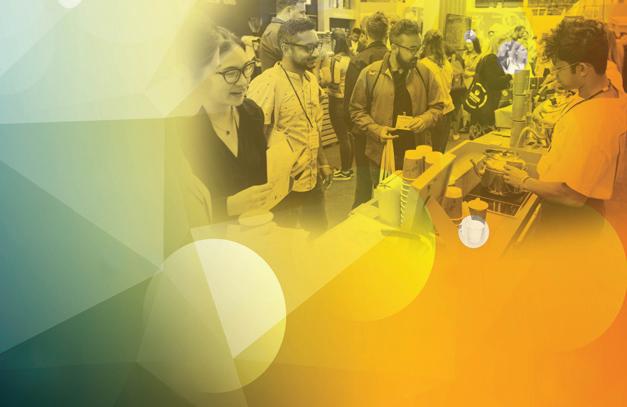
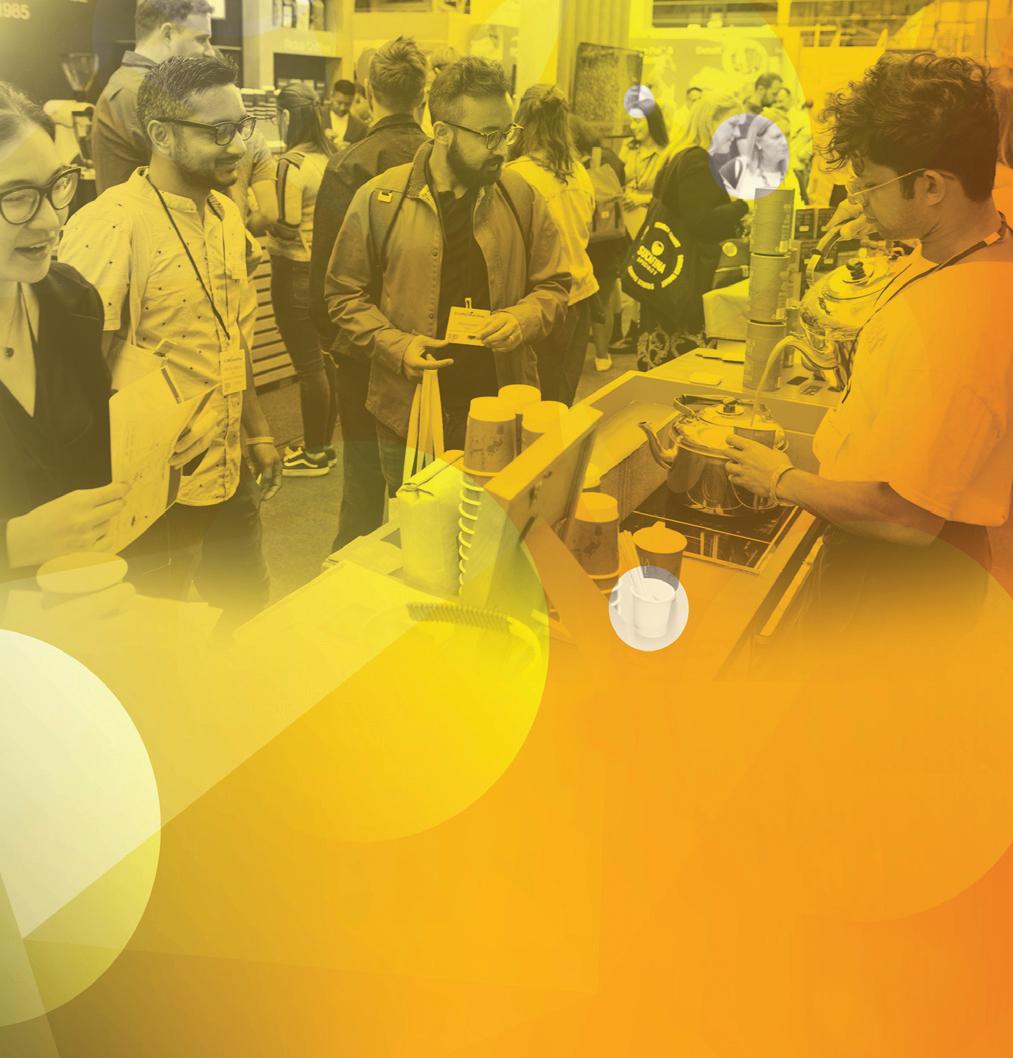
Caffè Culture takes place at the iconic Business Design Centre, London, on 3rd and 4th October 2023. This continues to be the only trade event that specifically caters for the UK's vibrant café and coffee bar market. Event
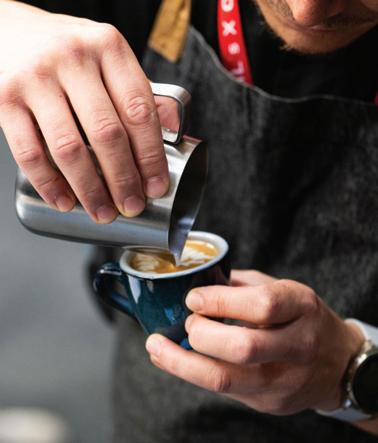

Director Elliot Gard told Inside Food & Drink what to expect from the show. Questions by Jasmine Lodge.
Looking ahead to the Caffè Culture Show, what does the event offer?

Caffè Culture is the UK’s foremost trade exhibition for the speciality coffee and café bar sector. It provides coffee shop owners and senior managers from the multiples and high street chains an unparalleled opportunity to source and test hundreds of high-end products and services. With the hospitality industry facing many critical issues, the show aims to provide practical solutions to overcome those issues.
How has the Caffè Culture Show evolved since the last show?
Improving the show on a yearly basis is a perennial challenge, so we regularly talk to operators in the market. Due to the perfect storm of inflation and the cost-of-living crisis, coupled with the crippling labour and skills shortage, a new two-day talks programme called Total Coffee has been launched to tackle these issues, run with United Baristas Founder Tim Ridley and providing a fantastic array of headline speakers. We have a new central feature – The Victoria Arduino Experience – a beautifully
EVENT PREVIEW
36 Inside food & drink
howdesigned coffee shop offering a multi-sensory journey using revolutionary technology. This year we launch FoodBev’s Coffee Innovation Awards to celebrate the fantastic operators within this space.
Two new championships for this year add drama to the show. Alongside the Speciality Coffee Association (SCA), we will host the Brewers Cup for the first time, whilst also working with the European Specialty Tea Association’s
(ESTA) to host the inaugural Tea Cupping and Matcha Latte Art competitions, to reflect the fast-growing specialty tea scene in the UK.
What visitor and exhibitor numbers are you targeting for this year?

We are targeting 3,500 trade visitors over the two days and 120 high-end exhibitors.
Inside food & drink 37
EVENT PREVIEW
Event Director Elliot Gard answers questions for Inside Food & Drink.
3rd-4th October, Lon www.caffeculturesh
What can visitors expect from their trip to Caffè Culture Show?
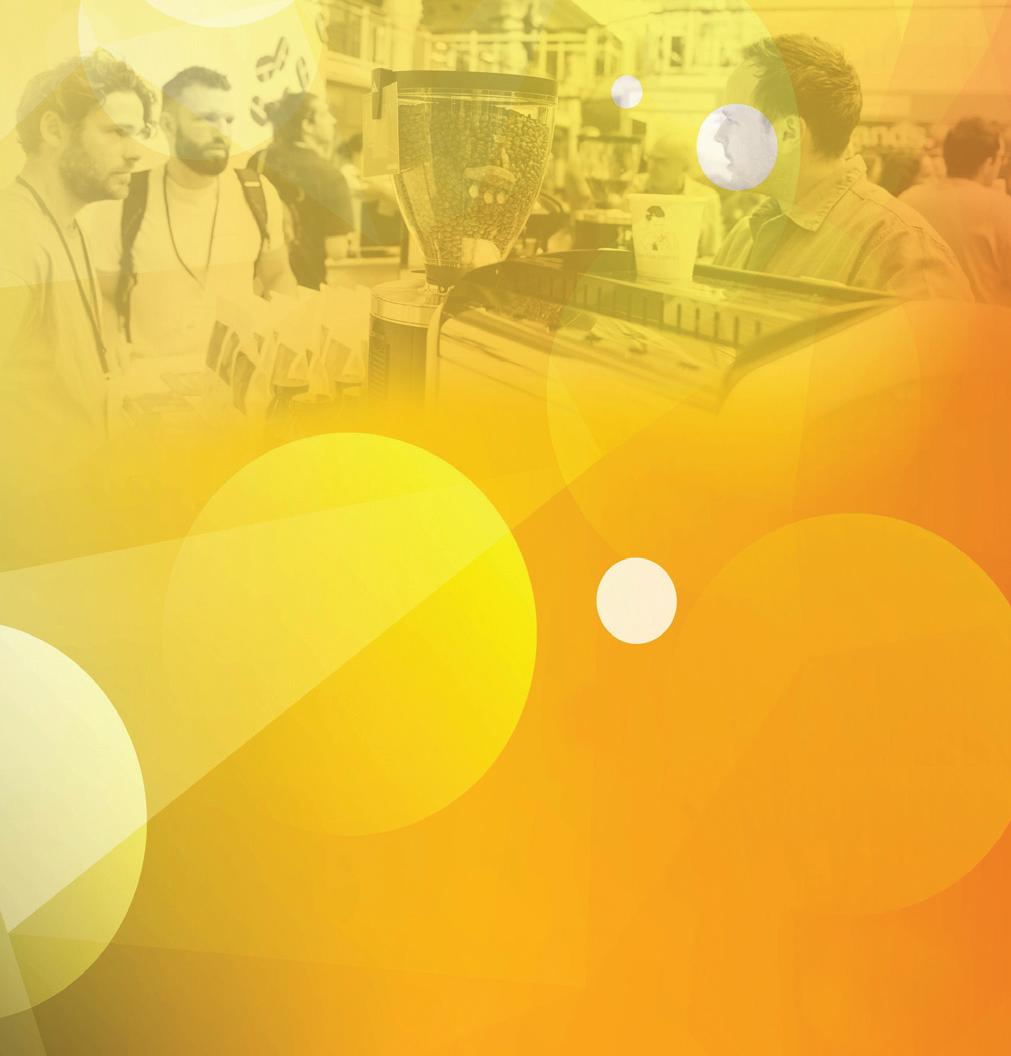
Our visitors will find the largest collection of speciality coffee roasters in any UK trade event in two of the show’s most prominent features – the Rocket Espresso Roasters Zone and Marco Brew Bar.
For business owners looking to expand, there will be hundreds of premium brands to source, test and order throughout the show. Those wanting more specialist coffee roasting knowledge can utilise our Roasters Forum, curated by the team at Sucafina Specialty.
What benefits can companies gain from exhibiting at Caffè Culture Show?

As a very targeted event with a clear visitor profile, exhibitors can secure new accounts from independent coffee shop owners and buyers from the multiples and high street chains. We’re also seeing more visitors from the wider hospitality sector, adding even more attractive business opportunities for our exhibitors.
The show is also a great place for start-ups and established brands to gain invaluable feedback from the trade.
Looking at the companies already booked for the event can you share any previews for this year?
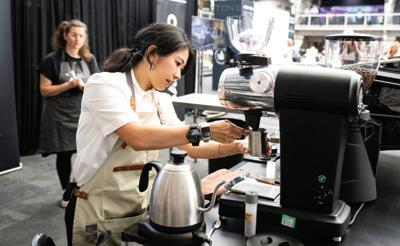
Reflecting the market, the show will have the largest collection of speciality roasters compared to any other trade event in the UK. However, the show is much more than that. We’re seeing a much bigger focus on specialty tea, and we have a vast amount of beautifully designed and technologically advanced espresso, brewing and coffee roasting equipment from around the world.
Food, bakery and the latest plant-based products feature heavily, plus all the necessary cutting-edge kitchen equipment for any hospitality business.
What do you consider to be the main industry challenges for the café and coffee bar market for the future?
38 Inside food & drink
Despite the predicted growth in the branded and independent coffee shop market, operators face range of challenges shaped by world events and the self-inflicted sanctions imposed on us with Brexit. Inflation, soaring energy prices, labour and skill shortages, coupled with a drop in consumer spending mean operators are hit from all directions. However, this industry continues to prove just how resilient and creative it is in overcoming these issues, no doubt fuelled and facilitated by shows such as Caffè Culture.
On a personal level, what aspect of Caffè Culture are you most excited about?
I’ve been involved with Caffè Culture for many years, but what I love most is seeing the show come together and meeting so many good friends. This industry is packed
with real entrepreneurs and characters, so I always look forward to catching-up with them to hear what they’ve been up to and how their brands have grown.
Is there anything else that you would like to share with our readers?
Caffè Culture has so much to offer businesses of all sizes. With so many premium brands exhibiting at the show, we have an unparalleled array of experts sharing their business insights. We also have many dynamic and interactive features from the industry’s most creative brands to inspire visitors. We understand how people are very busy, but even one day out at the show has the power to transform a business, so we can’t wait to welcome everyone this October.
Inside food & drink 39
UK
n
ndon,
how.com
Show Director Richard Little shares his insights with Inside Food & Drink.
PPMA Show
Running 26th to 28th
September in Birmingham, the PPMA Show is the UK's leading processing and packaging machinery event. PPMA has over 30 years’ history of attracting high-quality visitors. Show Director Richard Little explained the exciting features of the event to Inside Food & Drink. Questions by Jasmine Lodge.
Looking ahead to the PPMA Show, what do you see are the benefits of attending?

Albert Einstein said: “The only source of knowledge is experience.” The 350+ companies exhibiting have accumulated thousands of years of experience in packaging, processing and automation machinery. Visitors are encouraged to bring their problems and requirements to the show. There WILL be people in the show who know what to do and there will be plenty of machines actually doing it.
How has PPMA evolved since the last show? Have you introduced anything new this year?
EVENT PREVIEW
40 Inside food & drink
The PPMA Show has been evolving since 1988, but much of the evolution comes direct from our exhibitors. As always, there are new exhibitors joining us with their products and innovations. Overall, technology and changing labour, plus environmental requirements, have meant a very rapid evolution of products, with many on display at the show. Highlighting these changes, PPMA Show is allocating a great deal of time and focus to training and guest speaker slots in this year’s seminars.
What visitor and exhibitor numbers are you targeting for this year?
The PPMA Show only missed one year due to Covid-19, and we were delighted to see large numbers of attendees at our two post-Covid
shows. We are expecting visitors to be up on last year and those attending will be able to see more than 300 exhibitors this year.
Focusing on the food industry, what benefits can companies expect to gain from exhibiting at PPMA?

Roughly half our visitors tell us they are from the food industry, and that’s very much in the minds of exhibitors when they decide what equipment to showcase on their stands. The food industry has been clobbered by the lack of availability of labour, so all levels of automation will be on show to demonstrate how businesses can ease some of these challenges.

Inside food & drink 41
Show Director Richard Little shares his insights with Inside Food & Drink.
26th-28th Septembe
www.ppmashow.co
In addition, suppliers to supermarkets will be aware of the pressure for quality and compliance. There will be plenty of equipment on show to help in that regard, from metal detectors to label verification.
Looking at the companies already booked for PPMA, can you share any previews about the trends and new technology on display this year?

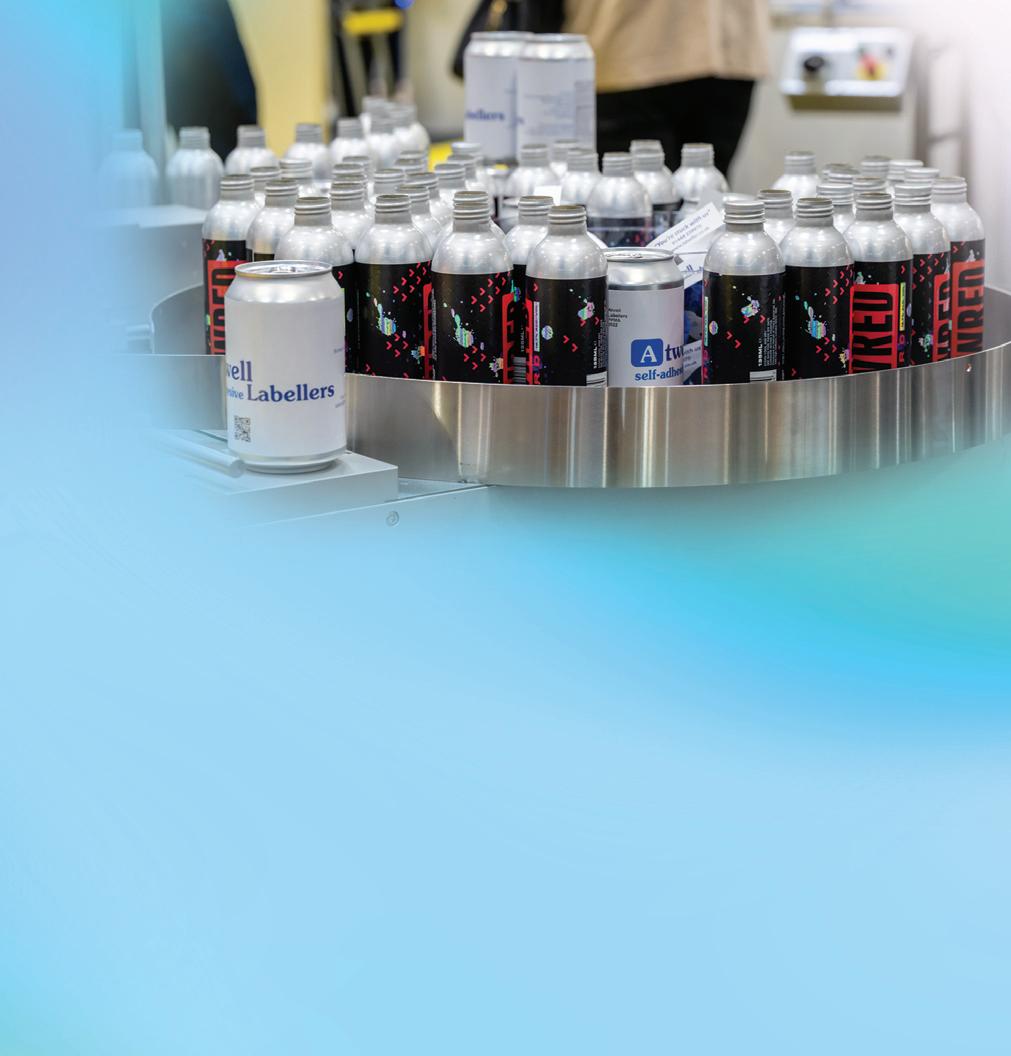
Exhibitors are reacting to pressure from the market. Machines are being adapted to run new sustainable materials, to include control and feedback systems minimising waste and maximising performance and consistency, and to allow efficient operation with fewer skilled staff.
Are there any other special aspects of PPMA that you would like to include in this feature?
The PPMA Group of Associations includes BARA (British Automation and Robotics Association) and UKIVA (UK Industrial Vision Association). This brings unrivalled access to robotics and industrial vision at the show and can be accessed 365 days a year via our website and app. In addition, we are proud of the PPMA BEST charity which supports STEM activities in schools and provides financial support for apprentices and students on degree-level engineering courses.
Could you tell us more about the 2023 Award Categories?
These are:
• Innovative Processing System
• Innovative Packaging Machinery
• Innovative Robotics Solution
• Innovative Vision Solution

• Outstanding Customer Service
• Apprentice of the Year
EVENT PREVIEW
42 Inside food & drink
er, Birmingham, UK
o.uk
What do you consider to be the main industry challenges within the food packaging sector? How far do events such as PPMA go in helping companies overcome such difficulties?
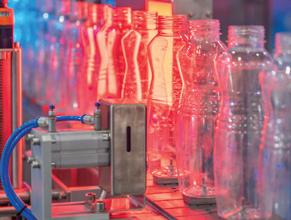
In the UK there are problems in sourcing suitably skilled and motivated workers, which combined with increasing energy costs, pressure to keep prices down and, laudably, pressure to use more sustainable materials, reduce waste and consumption of materials, including water. The PPMA Show provides an opportunity for people facing problems and pressures such as these to meet
other people who have the products and technologies to reduce these issues, if not solve them.
On a personal level, what aspect of PPMA are you looking forward to?
The PPMA Show is a fantastic networking event – not just for visitors. Over the years we have met companies who we have worked with, jointly developed solutions with and been inspired by. The PPMA has a disproportionate number of SMEs due to the immensely varied requirements of the market, and it’s great to discuss developments with like-minded, innovative people.
Inside food & drink 43 n
from crop to consumption
PRODUCERS
camelicious the ocean fish group royal mediterranean maustaja charalambides christis deas
i F D &
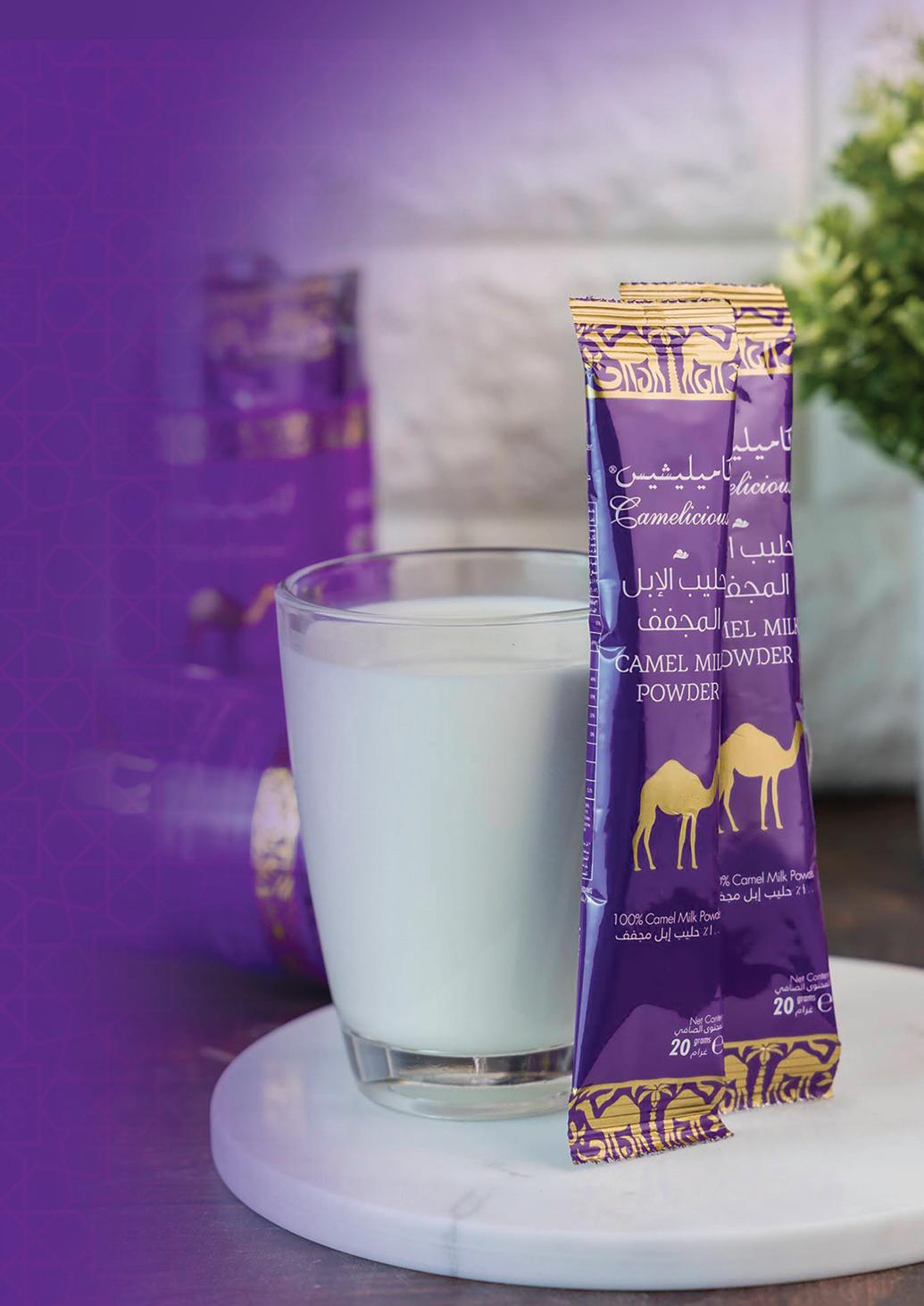
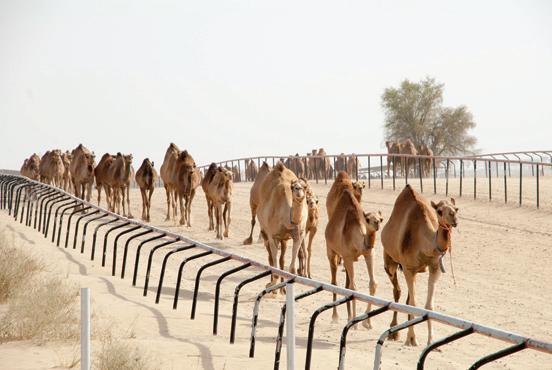
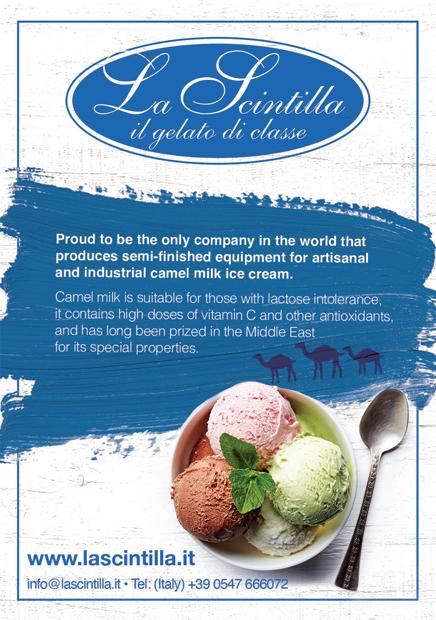
Camelicious is a camel milk farm in Dubai. Since starting operations in 2003, it has grown into a successful worldwide exporter. Camelicious produces fresh camel milk, powdered camel milk, camel milk ice cream and more. Sales Manager Muhammad Ashraf told Hannah Barnett how the company is cultivating a heritage product to meet the demands of a modern market.
The Bedouin have long included camel milk in their diet. The nomadic Arab tribe have historically inhabited desert regions, including Dubai where Camelicious is located. The city is nowadays more commonly associated with ultra-modern development and innovation. Camelicious is thus infused by a juxtaposition of old and new.
“Camel milk is a heritage item: it is the lifeblood of the Bedouin. We are bringing a culturally significant product to a contemporary setting,” said Muhammad Ashraf, Sales Manager.

Numbers and growth
These days, the camel milk business is booming internationally. “China contributes a major share for us, and we have new
46 Inside food & drink
CAMELICIOUS I PROFILE
Inside food & drink 47
CAMELICIOUS I PROFILE
footprints in Sweden and the Netherlands,” said Mr Ashraf. “We have revamped our operation in Poland and are growing steadily in the UK. We now have a very small sideshow in Malaysia as well. Even considering the negative impact of Covid, we have significantly expanded in the last few years.”
This is impressive considering the Camelicious factory, farm and office are all located in the same 15-square kilometre area in Dubai. “We are a compact unit,” as Mr Ashraf put it.
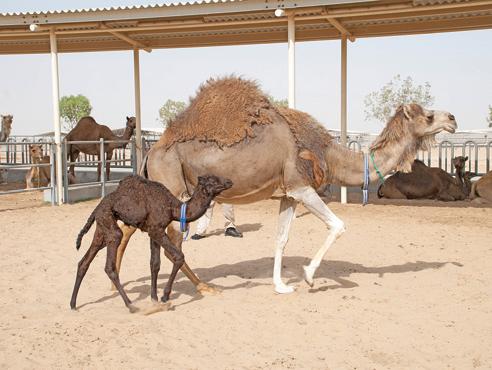
More impressive still, is that the company began production in 2003 with only 25 camels, while the herd today numbers 10,000. That is enough to produce 12 to

15,000 litres of milk a day. With over 650 employees keeping operations running smoothly, the company is going from strength to strength.
“We are aiming at 20 to 25% year-onyear growth from 2023,” said Mr Ashraf. “That is our goal. The signs are very good, and the first few months of this year have been excellent.”
The health benefits of camel milk are vast. It is 50% lower in fat than cow’s milk and higher in calcium; it is rich in Vitamin C. There are no known allergies to camel’s milk, and it is thought to be a good alternative for those with a cow milk protein allergy. Some studies suggest it may even be helpful to sufferers
48 Inside food & drink
of Type 2 diabetes. These are the messages that the company hopes to convey as it expands into new markets, with a large emphasis on the value of preserving traditional practices.
Sustainability and longevity

As Mr Ashraf explained, the farm is a result of the vision of Vice President and Prime Minster of the UAE, His Highness Sheikh Mohammed bin Rashid Al Maktoum. This association with a world leader means the company adheres strictly to high standards, including the maintenance of a sustainable operation.
“That is why we have our own solar energy farm in the factory,” said Mr Ashraf. “We are a net exporter to the grid; we sell to the network and don’t consume anything from it. Our energy footprint is nil.”
Camelicious received an A-Grade for hygiene from the Dubai Municipality. The company is fully ISO certified, FDA approved, 100% halal and vetted by the EU each year to maintain the appropriate
compliance standards to export there. All these things take time to establish and sustain, but longevity is one of the things Camelicious has on its side.
“We are the best in the world when it comes to camel milk,” Mr Ashraf enthused, “because of our breeding techniques, the farm-to-fork management system and because the facility that has been honed for the last 20 years. So, if any major competitor were to come in today, the learning curve for them would be very steep. There is nobody close to us in terms of structure, business, farming or production.”
Camelicious prizes longevity in its relationship with suppliers, too. The company has been working with its UK distributor for nine years and many partnerships in the GCC stretch back more than ten.
“We are into relationships that last,” Mr Ashraf said. “In this business, results take time. It’s not like cow’s milk where you try to sell volumes. This requires a different kind of mindset, because the
Inside food & drink 49
dividends are two or three years down the line. So we are looking for partners who take a longer-term view.”
The future of camel milk
Camelicious is as appealing to a specific sort of consumer as it is to a patient partner. With that longer-term view in mind, over the next five years the company hopes to double its turnover and expand its herd to more than 20,000, while continuing to cater to its niche.

“We produce roughly five to six million litres of milk a year, which is nothing when compared to cows,” said Mr Ashraf. “We are not taking over the world; we are looking for a very discerning customer
across the markets. Obviously, we cannot displace the global cow milk giants and that is not our mandate at all. Our objective is to provide a viable alternative, if people are looking for it.”
One of the markets Camelicious has set its sights on is the US. The company is planning to move into bricks-and-mortar retail there later in 2023. Another target closer to home is Saudi Arabia, which has the largest population in the GCC.
“The KSA is a very important market for us in the coming years,” explained Mr Ashraf. “It could be a primary driver of results. We are also working on a longterm plan in China, where there are some regulatory issues. We are in the process
CAMELICIOUS I PROFILE 50 Inside food & drink
of finalising a lot of documentation and government-related work there. Once that is done, there is no looking back for us.”
It is not only China: there are similar challenges involved in introducing the necessary regulatory framework to export camel milk to many different countries. This ongoing process with relevant government bodies across the world is one the company is accustomed to and can use its decades of experience to solve.

A newer challenge has emerged in the form of one of the largest consumer markets: young people. Specifically, how to sell a traditional, heritage product to a generation brought up with a smartphone in their hand? In response, Camelicious is undergoing a rebrand of all social media channels. The objective is to attract the attention of, and tap into, a vast potential customer-base.
“How do we market camel milk to Generation Z? They are the Instagram and Snapchat generation. Their attention spans are short,” Mr Ashraf reflected. “It’s not like attracting the Baby Boomers. We
are in a ‘one click, one photo, one message,’ kind of world. We have to work out how to be relevant in this context. But it is not a problem – it is what drives us.” n
Inside food & drink 51
The Ocean Fish group based in Cornwall is a well-established seafood processing company with a consolidated supply chain.

“My personal mission is to raise interest in the fish that we catch off our British shores,” said Retail Director Victoria Townsend.
Report by Romana Moares.
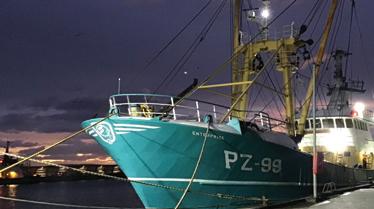
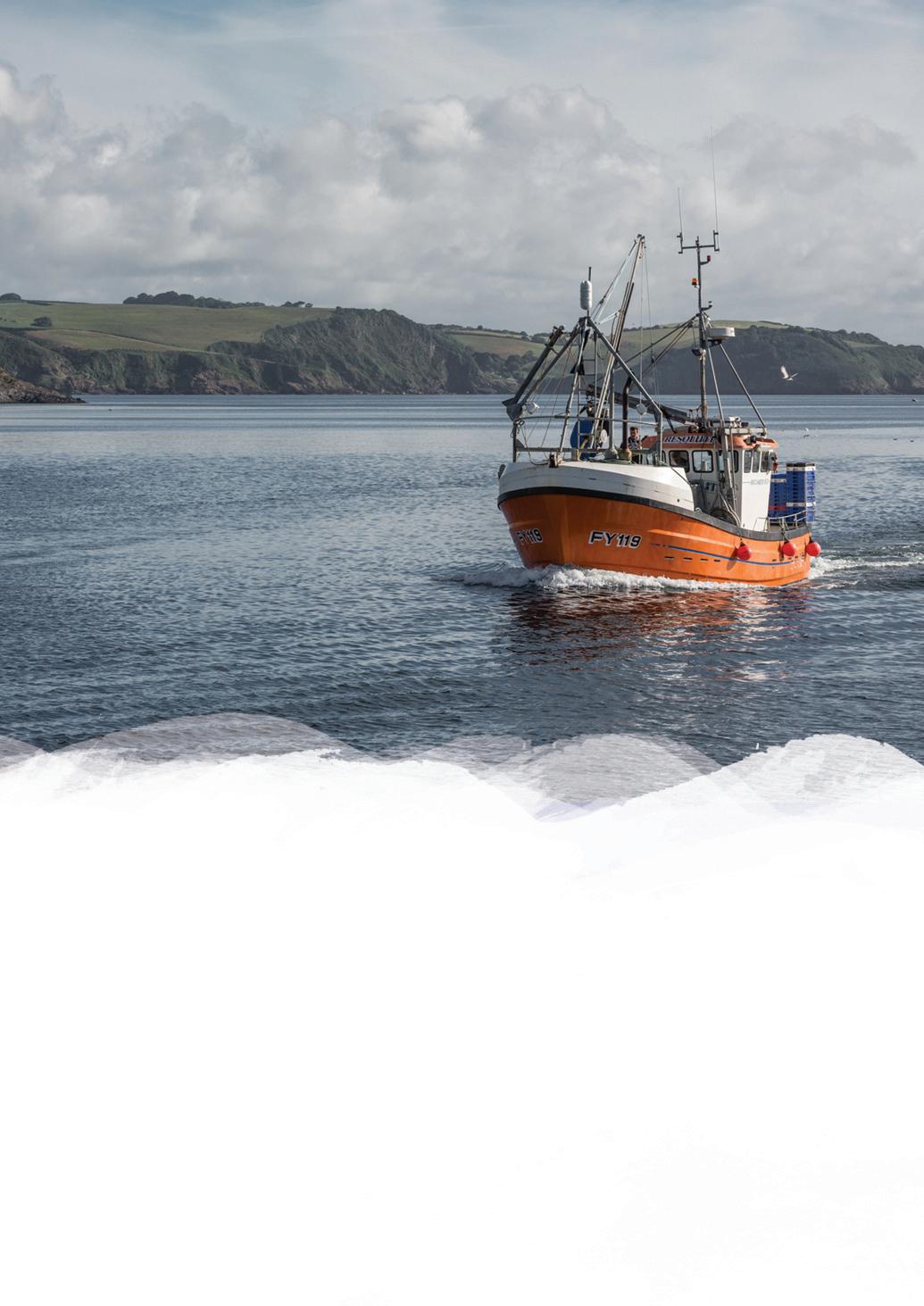
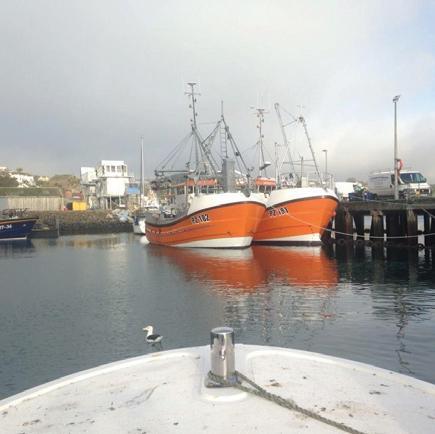
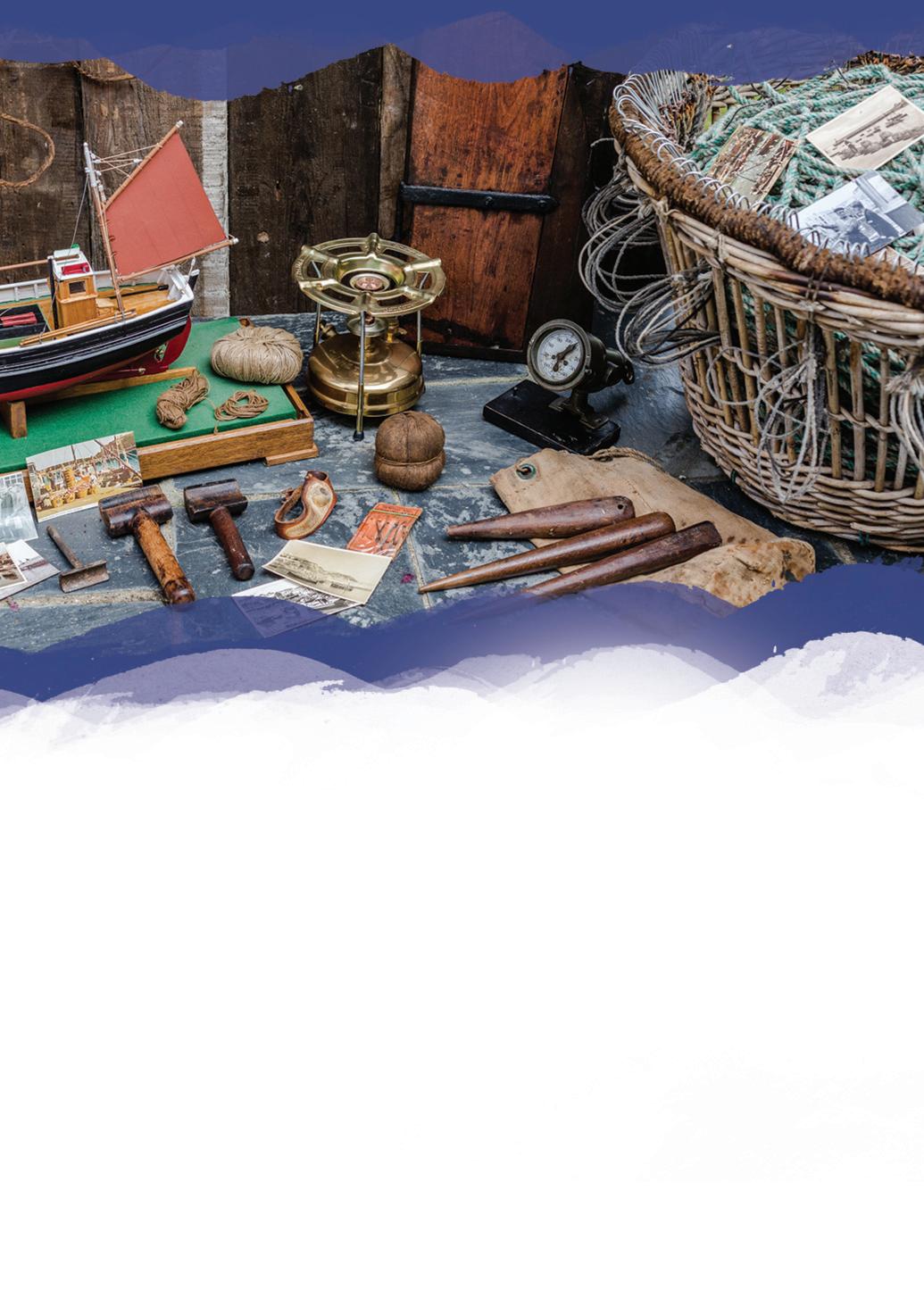
Ocean Fish is a seafood and fishing processing company based in Cornwall, with a fishing heritage dating back to 1740. For seven generations, the Lakeman family has been fishing out of the Cornish port of Mevagissey, which has been the family’s home for over 400 years.
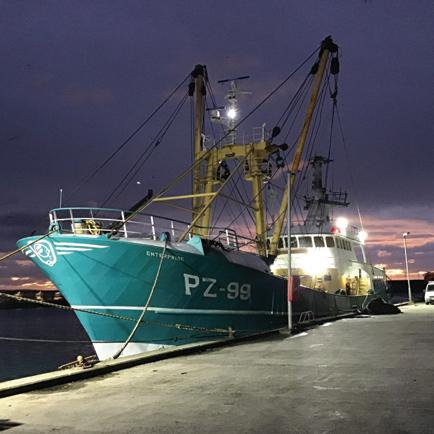
From sailing simple wooden fishing boats in the 16th century, the business has developed into a modern company operating a fully integrated supply chain model, with its own fleet of fishing vessels and trucks, market management, and fish processing factories.
From catch to customer
Ocean Fish supplies over 35 different species of fish, fresh and IQF or plate frozen products in bulk or retail pack formats. Fish can be supplied as whole, gutted, de-scaled, as fillets, butterfly fillets, or any other format to customer specification.
The company claims that the majority of fish is processed within 48 hours of landing while over 60% of the volume is guaranteed to be processed within 24 hours. Ocean Fish holds all the necessary accreditations including BRC Grade A, and meets the MSC Custom Chain of Custody as well as the ASC Chain of Custody standards.
52 Inside food & drink
THE OCEAN FISH GROUP I PROFILE
Retail Director Victoria Townsend explained that Ocean Fish Group’s business is split into three divisions – Ocean Fish Retail, Ocean Fish Wholesale and W Stevenson’s and Sons, which is the Group's catch sector subsidiary. “Through those three different divisions, we sell to major retailers and wholesale markets throughout the country and internationally,” she said.“Approximately 70 per cent of the fish that we catch through the Wholesale Division goes into Europe – to Portugal, Italy, Spain, France and onward from there – some as far as the Middle East and Singapore.
“Meanwhile, the Retail Division imports s pecies such as sea bass, sea bream, basa, cod and prawns for further processing and packing into UK retail.”
Expanding consumer choice
Ms Townsend pointed out that, surprisingly , it is not British fish that is most demanded by British consumers: “The reality is that most of the UK eats five species of fish, the majority of which is imported, and British fish don’t really feature in the UK supermarkets. This is something we’d like to change.”
Inside food & drink 53
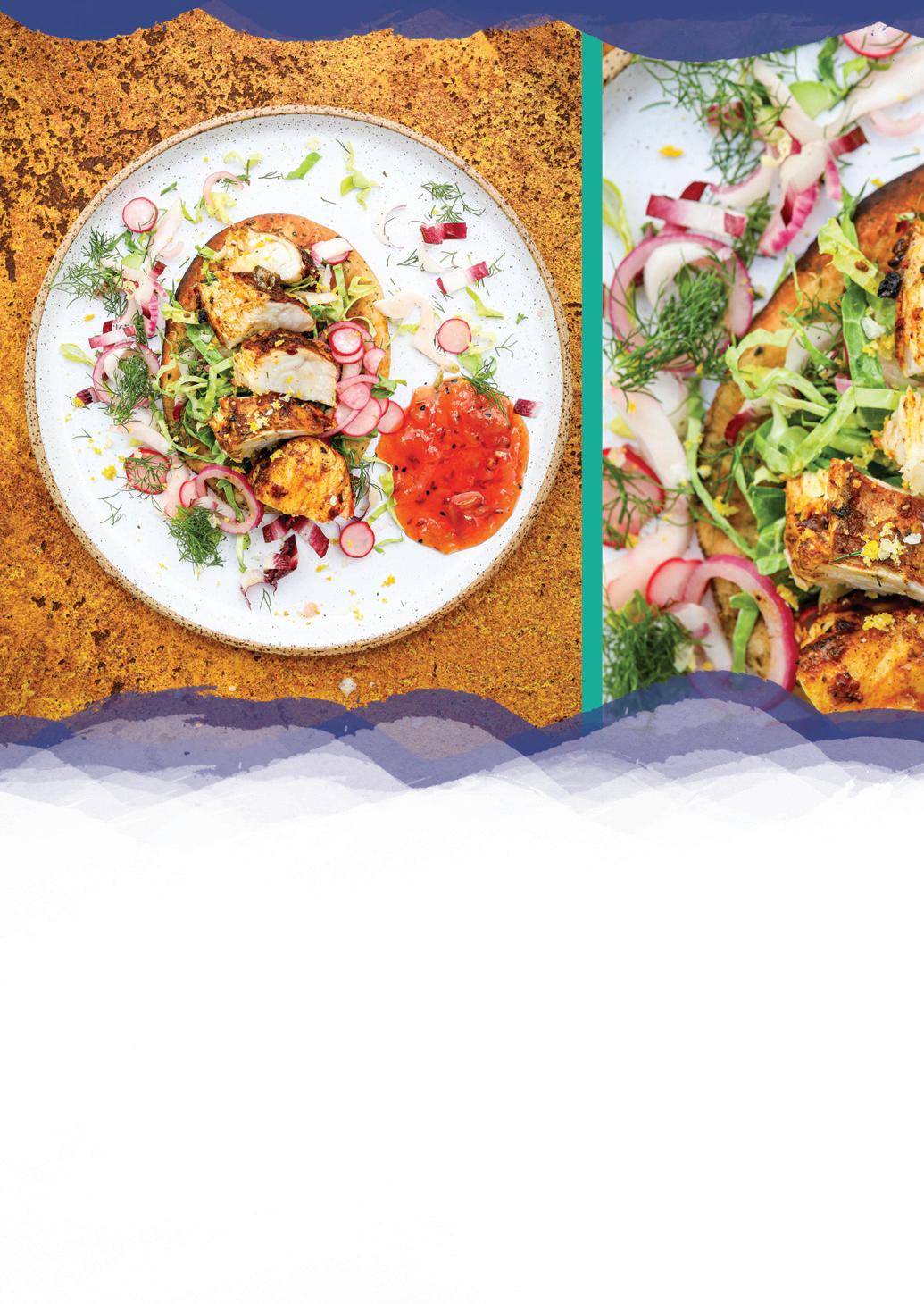
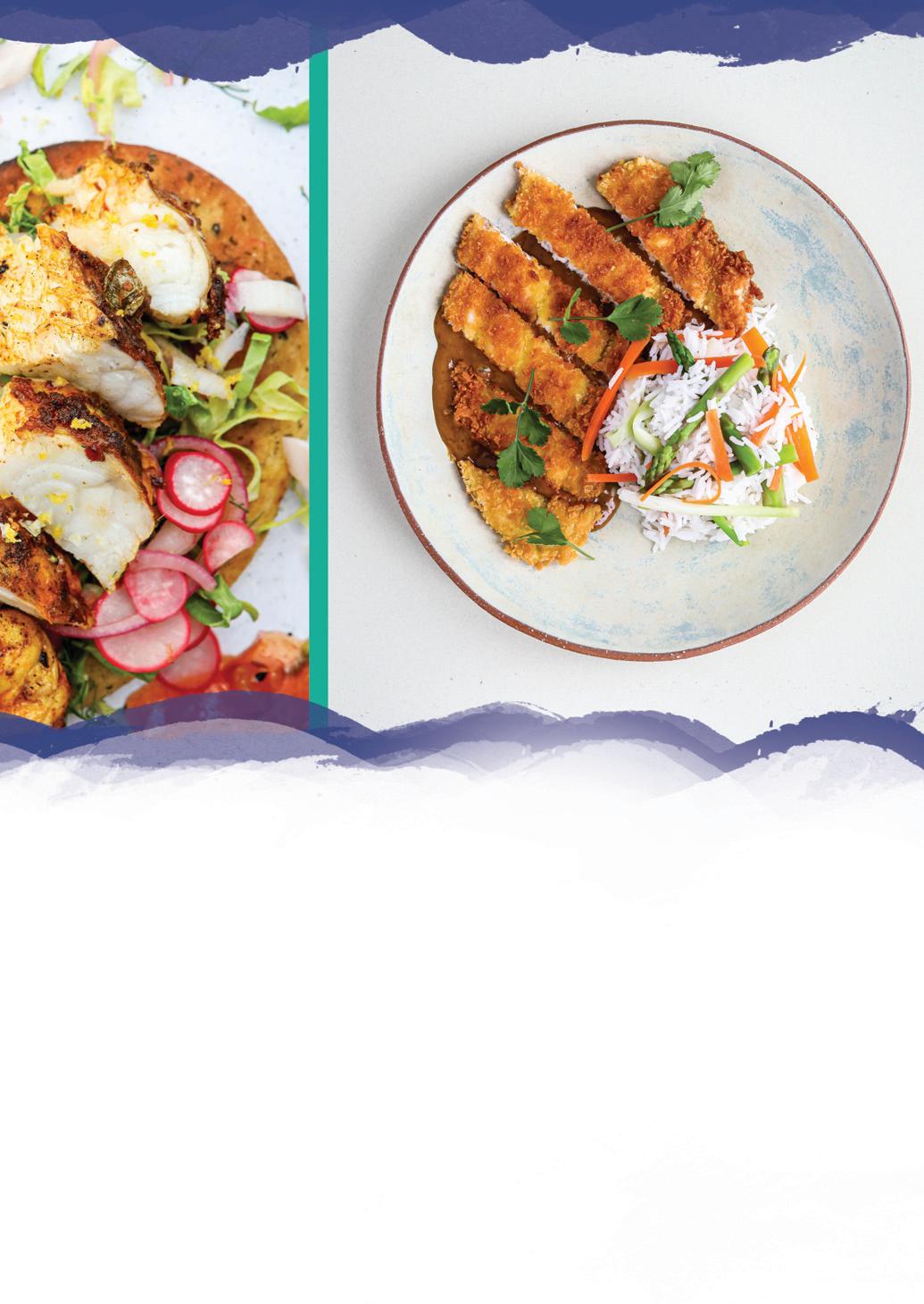
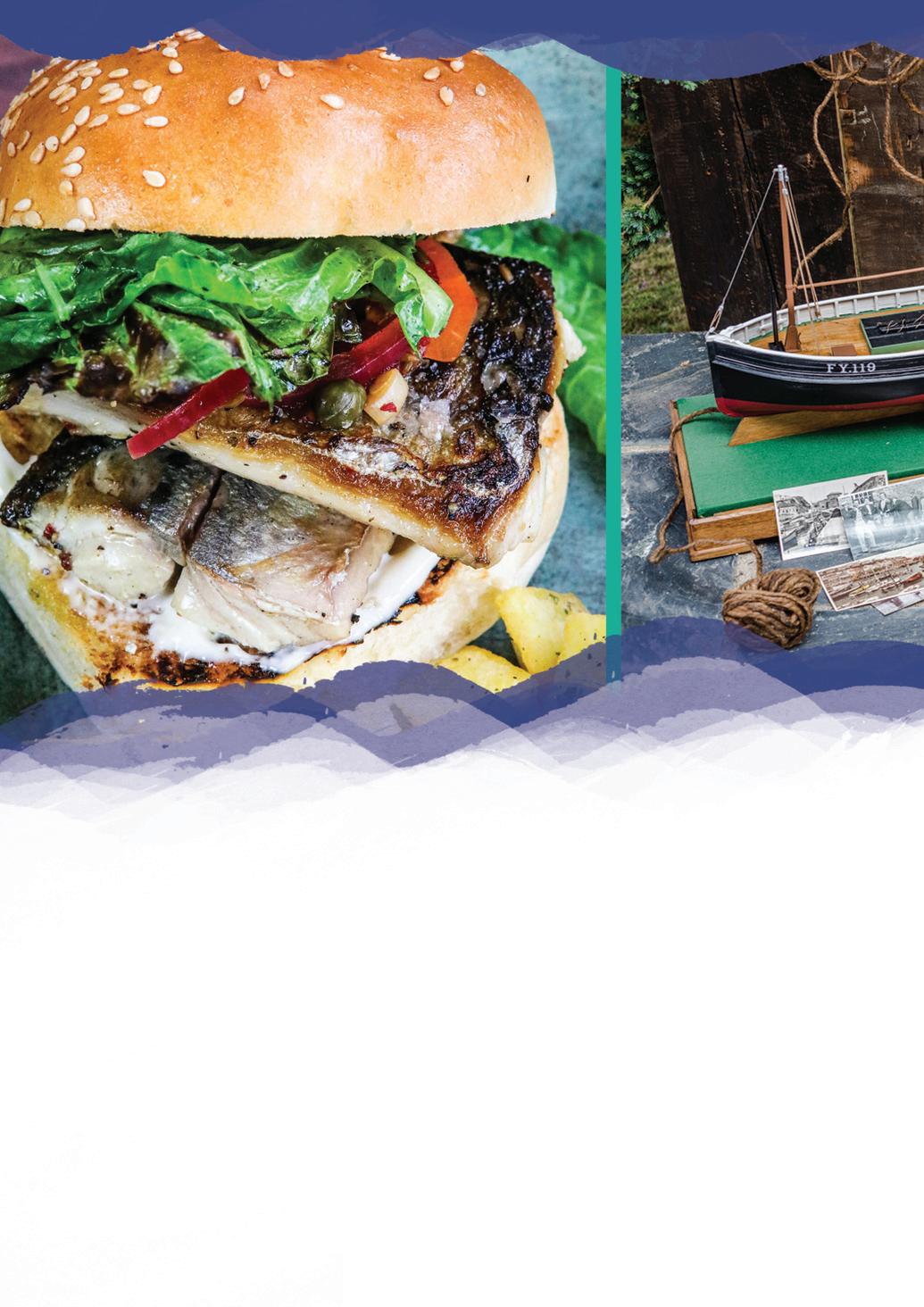
Ocean Fish strives to engage consumers on various fronts. The company has won numerous awards including the MSC award for 2022 Product of the Year with its Cornish sardines with mediterranean marinade and in 2022 launched a new range – Hook Line and Sinker, featuring British fish species with marinades and butters, all of which are easy to prepare and quick to cook.
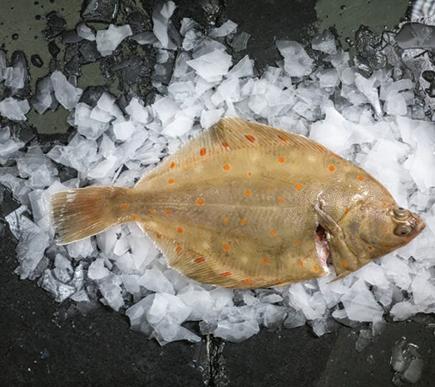
“We have a wealth of good quality species landed in the UK,” continued Ms Townsend, “such as hake, John Dory, pouting, whiting and many others. Unfortunately, supermarkets – as a rule
56 Inside food & drink THE
I PROFILE
OCEAN FISH GROUP
– don’t stock them, so consumers are only given a very limited choice.”
The company has had some success with Ocado, who have listed 27 lines of British fish on their online site. “They've been real advocates of supporting British fish and listing different species that you don’t normally see in the high street,” said Ms Townsend. “That has been a great success story for us.”
Ocean Fish is now looking to get into direct supply into supermarkets with its unique proposition of being a fleet market processing retailer, according to Ms Townsend: “It’s the most direct
supply proposition into any retailer that anyone can offer, and we also emulate that model on British fish for all other sourcing for imported species like sea bass, sea bream, basa, tilapia and prawns.”
Sustainable fishing
Ms Townsend confirmed that Ocean Fish is committed to the sustainable use of the seas and the protection of the marine ecosystem. The company is accredited by the Marine Stewardship Council, is a member of the Cornish Sardine Association and is actively working with the Seafish Authorities and taking part in many
Inside food & drink 57
discussions and forums in matters of sustainability prioritisation.
“A lot of focus has been put on the management of the southwest fisheries,” Ms Townsend explained. “Catches are monitored to ensure that landings are in line with sustainable catch limits for those fish managed by quota. One of the strengths of the southwest fishery is the diverse species landed but this can present challenges for certain species, as although data is collected on all stocks landed, not all stocks have full scientific stock assessments.
“The UK is currently developing longterm fisheries management plans for species not currently covered by
quota and our fishermen are actively; contributing in that data collection, working with CEFAS scientists on developing robust credible assessments to assess to stocks.
“We are hopefully, that this drive to better inform fisheries managers, to close knowledge gaps that exist, will improve the fisheries management and ensure that southwest fishery continues to be a leader in sustainability. I am hopeful that improved knowledge on the non-quota species will lead to an increase in consumer confidence in our fisheries and lesser-known British species such as pouting.”
THE OCEAN FISH GROUP I PROFILE 58 Inside food & drink
Funded to grow
Ms Townsend is determined to change this situation: “My biggest challenge is getting in front of supermarkets to try and persuade them to accept a new line in British fish, to list British fish on their shelves, to make them support the British fishing industry: an industry that is integral to the British Isles.
“As a lot of the supermarkets are closing, or have closed their fish counters, our proposition of supplying fish in pre-packed format could be very attractive to them. This would create an opportunity for the consumer to actually try a variety of fish that's landed on British shores.”
Pursuing these efforts may intensify, as Ocean Fish has very recently secured a substantial, eight-figure funding agreement with HSBC, which would enable it to create new jobs and modernise its fleet of vessels and support business growth.
“We are doing everything with a considered approach,” Ms Townsend concluded. “We are going to think carefully how we would invest the money - possibly on the fleet, new equipment, recruitment or better marketing. The ultimate goal is to make use of this great opportunity to revive the general interest in lesser-known British species of fish.
“In other words, we want to put British fish back on British plates.”
Inside food & drink 59
n
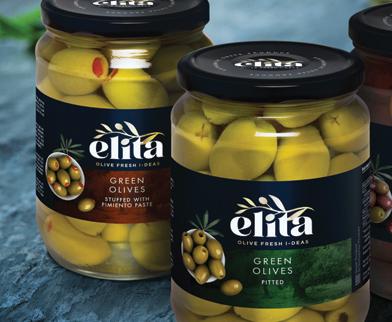
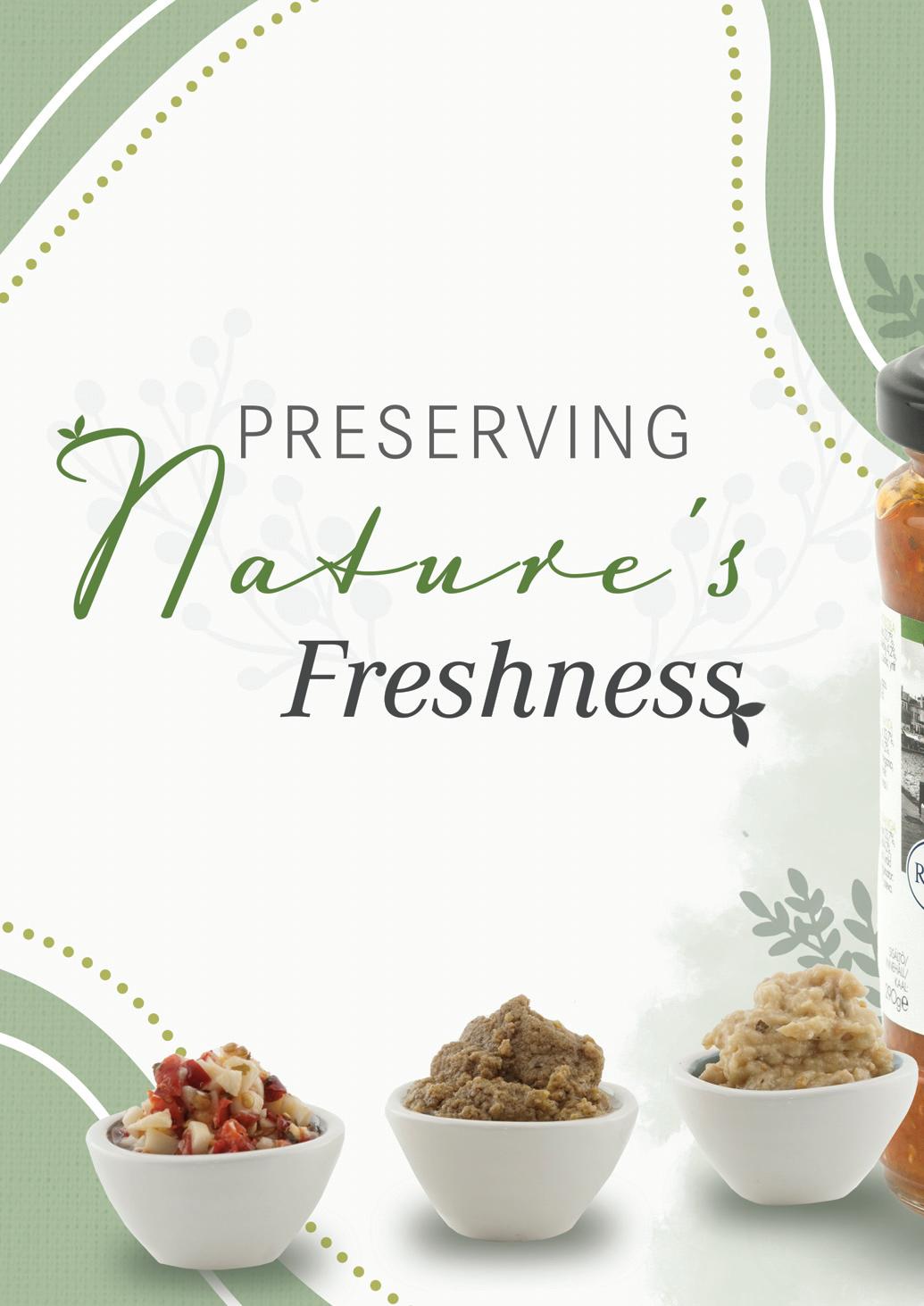
Royal Mediterranean has manufactured healthy and innovative preserved foods for more than 90 years. Serving customers in over 30 countries worldwide, the company has continued to grow and advance within the food industry. Business Development Manager Argyris Tsatsoulis discussed the company’s vision for growth and its current capabilities in conversation with Imogen Ward.
60 Inside food & drink
ROYAL MEDITERRANEAN I PROFILE
After opening its doors in 1925, Royal Mediterranean has continued to manu facture the very best quality Mediterranean food produce, giving everyone an opportunity to experience the delightful taste and health benefits of this diet. In line with the company’s mission to spread the Mediterranean diet, its products can be found in 30 different countries including New Zealand, Australia, USA and Mexico.
As a fourth generation, family-owned business, Royal Mediterranean always works hard to ensure its products are the very best quality. With a production facility located in the city of Xanthi in Greece and a second in Turkey, the company manufactures over 20 million jars of produce annually.
The pickle professionals
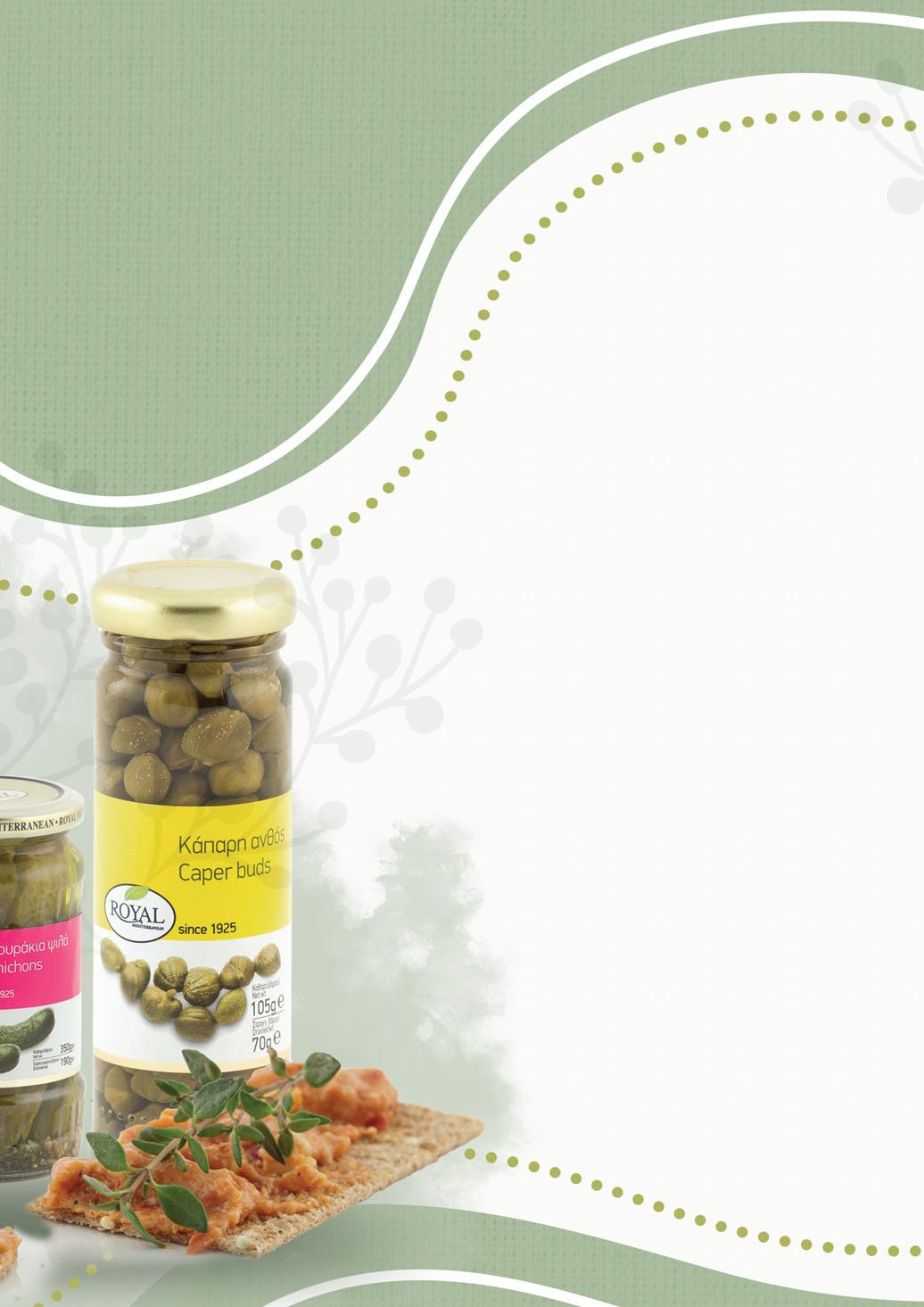
Royal Mediterranean specialises in pickled vegetables, creating innovative and deliciously nutritious products for its consumers. The company’s passion is apparent in every project it takes on. “One of the things I love about my job is the ability to meet and communicate with people all over the world,” said Business and Development Manager Argyris Tsatsoulis.
“We get to learn all about different cultures and customs, enabling us to produce recipes that best suit them.”
Inside food & drink 61

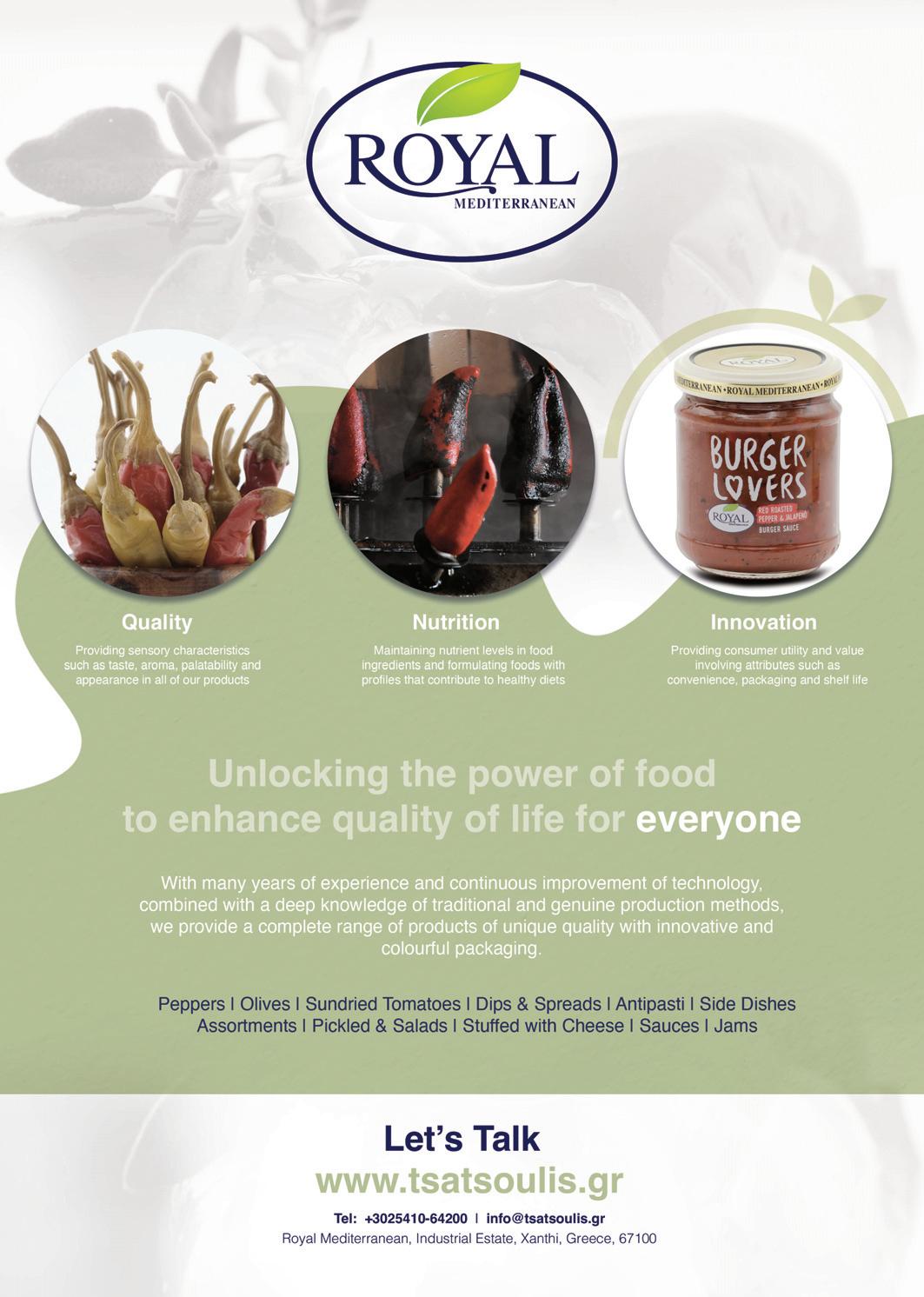
Each of Royal Mediterranean’s products has been created with quality in mind. The ingredients are grown and harvested using specialist methods and are the epitome of freshness. The highest possible standards are always maintained; all ingredients are selected carefully to ensure they follow these principles – creating delicious food products in the process.

After noticing a change in food consumption – with customers desiring less salt and fat in their foods, and an increasing demand for gluten-free products – Royal Mediterranean worked hard to adapt its recipes to ensure they reflected these trends. “One way that we adjusted the recipes of our products was to swap oil with marinated brine,” Mr Tsatsoulis said. “This change helps to reduce fat intake.”
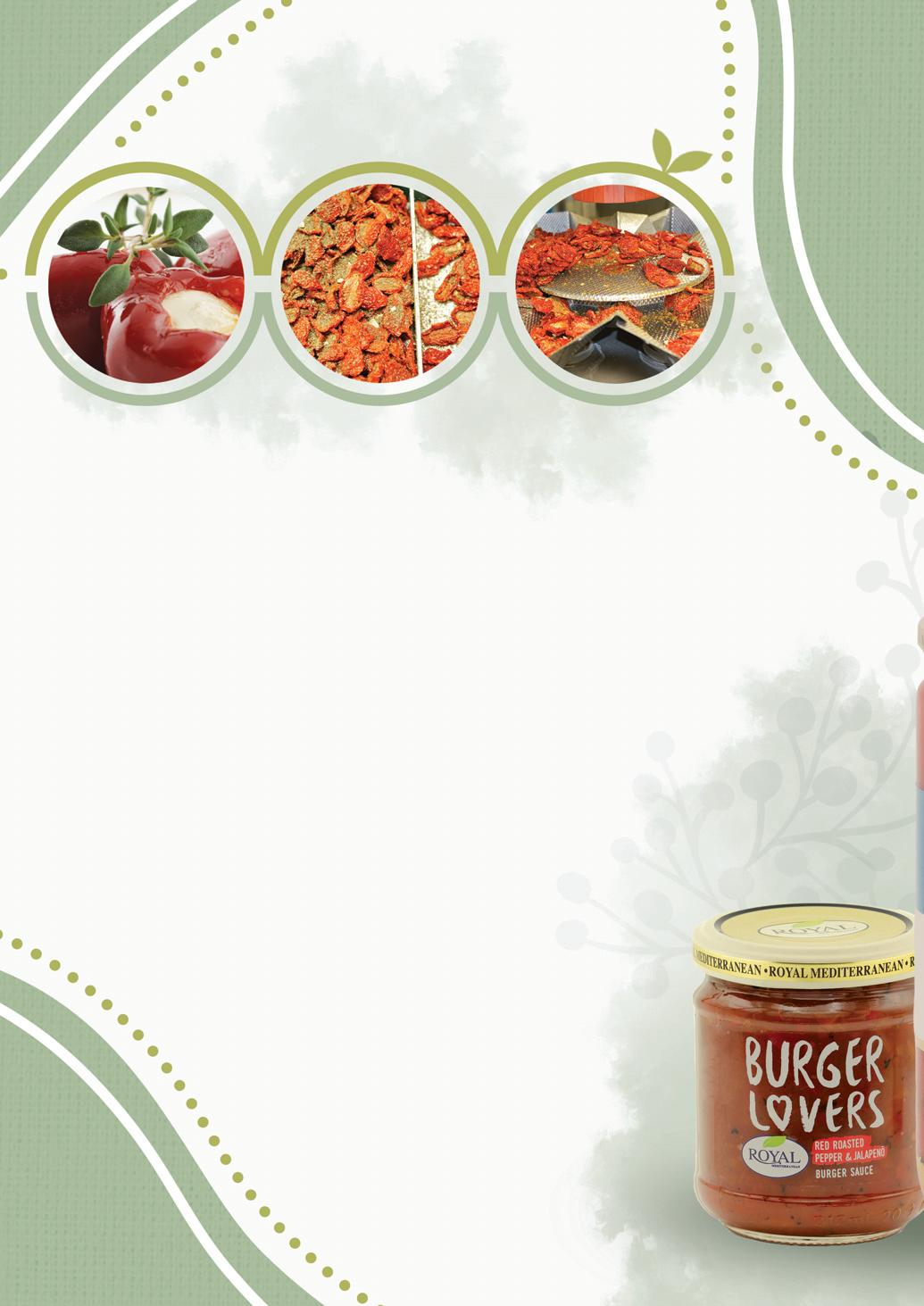
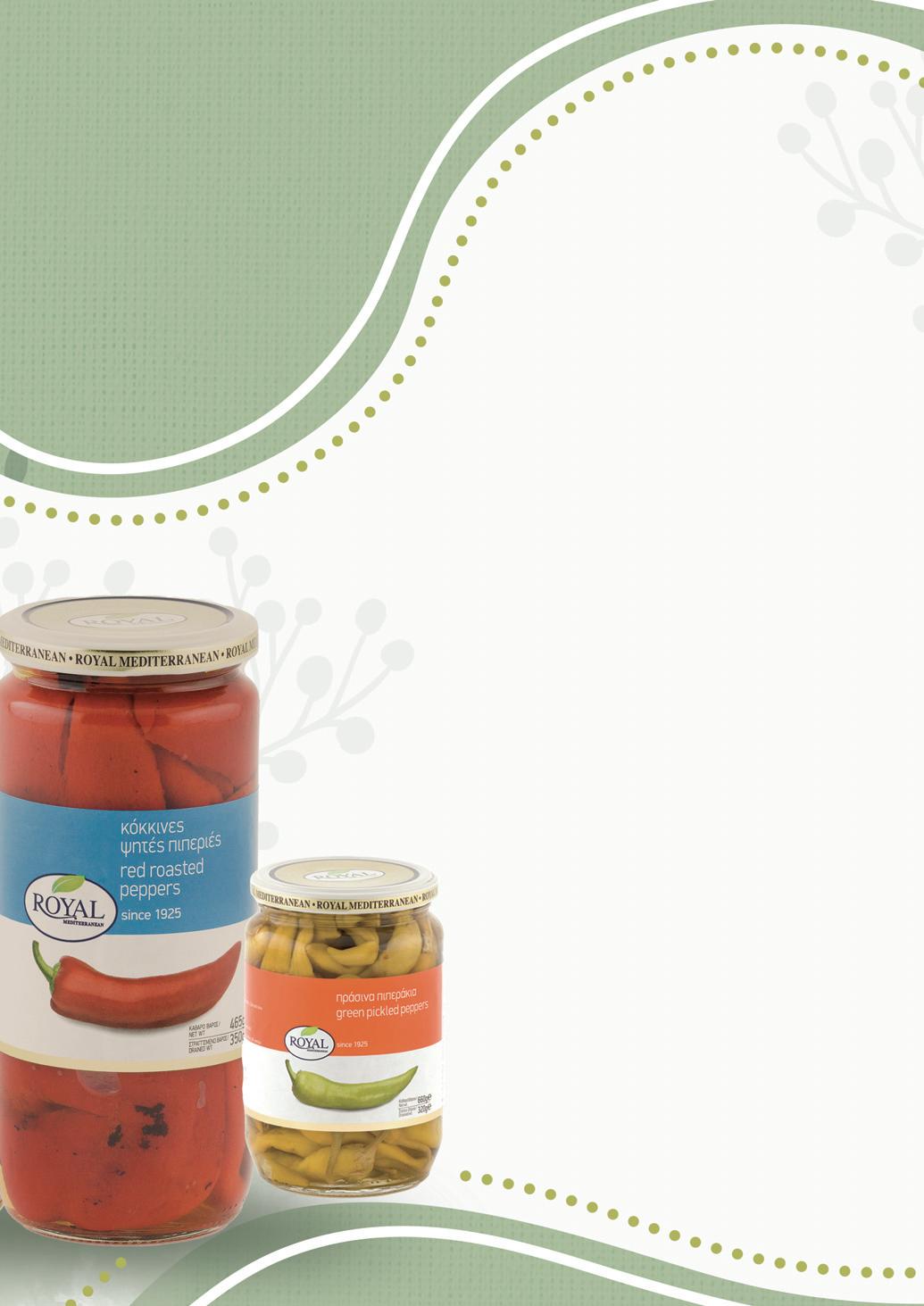
Included in Royal Mediterranean’s range is the top-selling Red Roasted Pepper that is available in 500ml
and 720ml jars. This highly popular product is a taste sensation, and received the 2018 and 2020 Superior Taste Awards from the International Taste Institute.
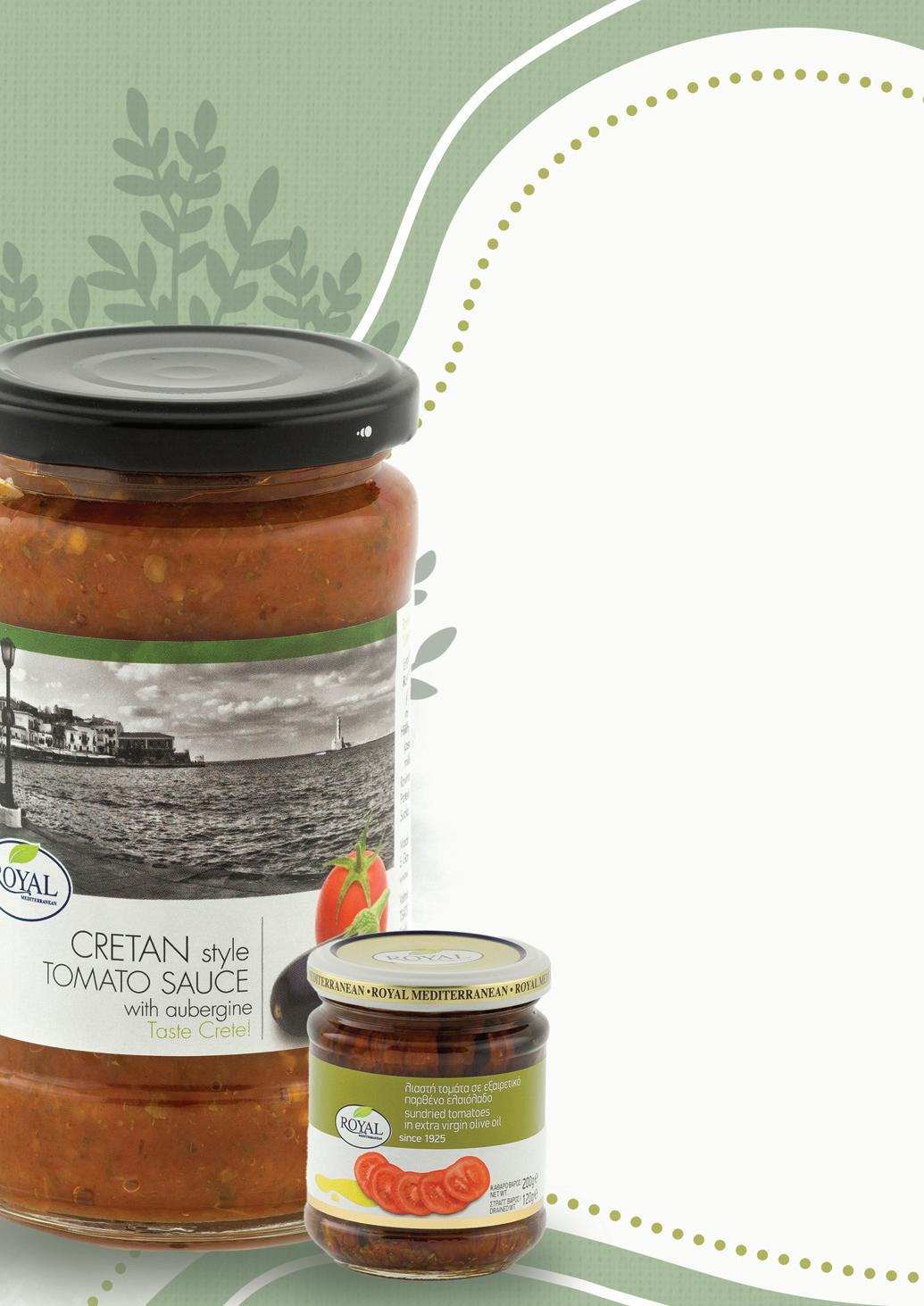
Other product lines from the company include the Sundried Tomatoes range. This selection offers sundried tomatoes in a variety of bases – giving the customers optimal choice. Bases include Herbs Brine, Extra Virgin Olive Oil, Balsamico Brine and Sunflower Oil.
The company also has a fantastic range of Antipasti Dips and Spreads for all occasions. These products vary from the excitingly unusual Roasted Eggplant & Greek Feta/Mizithra Spread, to the more conventional yet enticing Hummus, Harissa, and Garlic Spread with Herbs. All these creations are made using unique and innovative recipes to deliver the very best taste experience.
With modern living in mind, Royal Mediterranean has ensured that
64 Inside food & drink ROYAL MEDITERRANEAN I PROFILE
“Our business is still family-owned to this day, and we continue to incorporate pivotal values based on our expert knowledge; working hard to be dependable and protect our future”
its products are rich in nutrition. Whether as a quick snack or as an ingredient to optimise a deli cious meal, these products make it easier for customers to enjoy amazing foods without having to sac rifice valuable time.
Climate conscious
At every opportunity, Royal Mediterranean works hard to improve its environmental impact. From recyclable packaging to the implementation of recycling processes during production, the company invests in research targeting sustainability. More recently, Royal Mediterranean installed solar panels on its production facilities; this investment has enabled the company to switch to renewable energy sources.
The company has also recently invested in fleet renewal, acquiring new trucks and company cars that are more fuel efficient and economic. This venture is largely in aid of improving sustainability.
Despite Royal Mediterranean’s best efforts, external factors have affected its production capacity; climate change is one of the most prevalent factors. “Over the past few years,” said Mr Tsatsoulis, “we have witnessed severe weather conditions such as hail and heavy rainfall during the harvesting period. The impact of this weather is dramatic. Because of this factor, our crop yield is reduced for the entire year; as a result, we produce less harvestable produce.”
Inside food & drink 65
The company endeavours to maintain an efficient and sustainable operation –these values are reflected in every aspect of the business. Royal Mediterranean’s suppliers are also included in this quest for excellence. Throughout its lifetime, the company has had ample opportunity to work alongside many different suppliers. Due to this experience, Royal Mediterranean has made sure to carefully develop and sustain meaningful relationships with suppliers who align with its own values. “Our suppliers are a key part of our success,” Mr Tsatsoulis said, “we believe our long-lasting cooperation with suppliers is extremely beneficial – not just for them, but for us as well.”
On this topic, Mr Tsatsoulis also highlighted the importance of Royal Mediterranean’s employees: “We have an amazing group of professionals in the office who play a fundamental role in our success; I am always happy to see their
faces and enjoy every opportunity to cooperate with them to find the best possible solutions. I would also like to take the time to mention my cousin Spyros Tsatsoulis: we are continuously working together, and I am so grateful to have a counterpart who shares my mentality and extensive work ethic; it really helps to maximise productivity and inspiration.”
Growing opportunities
The success of Royal Mediterranean within the food industry is impressive. The company plans to further this success via expansion of its capabilities, and hopes to explore new product categories; Royal Mediterranean has purchased new machinery to accomplish this feat.
Despite recent global supply issues, Royal Mediterranean
ROYAL MEDITERRANEAN I PROFILE 66 Inside food & drink
remains strong in its plans for expansion. The company has successfully mitigated the impact of this supply issue with in-depth planning: it acquired all necessary materials well in advance. The company acknowledges the risk involved in this strategy; it retains a positive outlook for the future of the supply chain however.
Preserves – specifically marmalades –and condiments are the latest venture on Royal Mediterranean’s radar. The company has witnessed an increase in demand for these products and hopes to break into this market, maintaining its reputation as an innovative leader in the food industry.
The company also plans to distribute its products to as many consumers as possible. “Our main objective is to give more people access to the freshest, tastiest, cleanest and most responsibly grown products available,” Mr Tsatsoulis concluded. “Why do we do what we do? simply, because we care for everyone, and for our planet.
“We know it’s a big job, but we are up for the challenge. Our business is still familyowned to this day, and we continue to incorporate pivotal values based on our expert knowledge, working hard to be dependable and protect our future. Royal Mediterranean is proud to manufacture products of the very finest quality.”
Inside food & drink 67
n
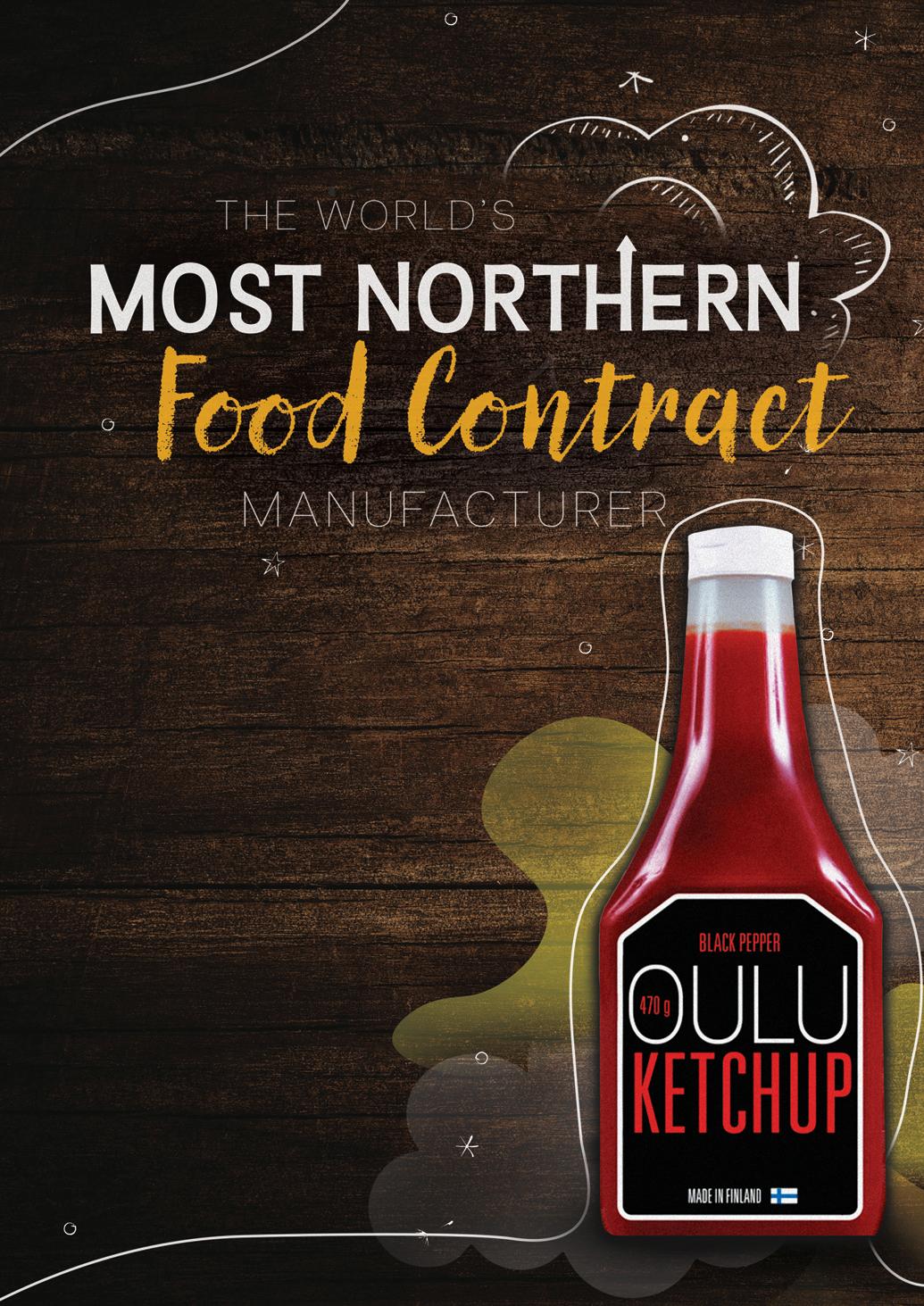
Maustaja Oy is the world’s northernmost and largest contract manufacturer in the Nordics and has taken the industry by storm ever since manufacturing its first product in 1972. Having previously been featured, Inside Food & Drink magazine took the opportunity to ask Sales Manager Pauliina Paavola about the latest company developments. Report by Imogen Ward.
68 Inside food & drink
MAUSTAJA I PROFILE
Maustaja Oy creates the very best, awe-inspiring sauces and condiments for 80 contract manufacturing partnerships. As the foundation for all the company’s operations, these relationships are crucial “We have a reputation for being reliable; t hat’s why we don’t have one-time customers,” said Sales Manager Paulina Paavola. “Our customer relationships last for years, and that’s because we are dependable, we stick to our promises, and we do what we can to provide the very best products to be worthy of our customers.”
Located in the Finnish municipality of Pyhäntä, Maustaja is renowned for its ketchup. A country-wide staple made from only the ripest of tomatoes, this sauce is a hit in the Nordic region. Also on offer, for those looking to contract a food manufacturer, are jams, mayonnaises, mustards and sauces.
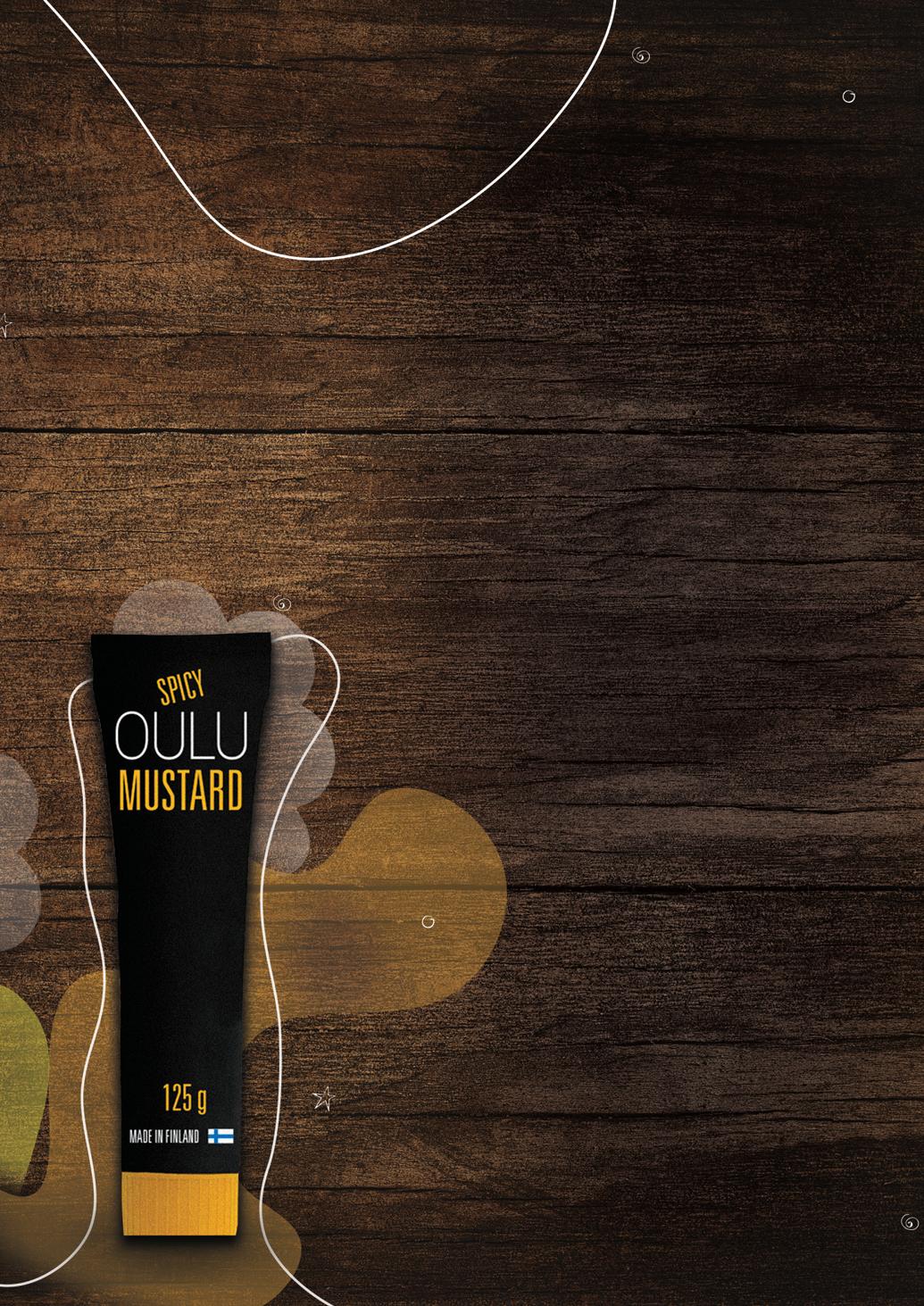
Winning the nation’s heart, Maustaja’s mustard accounts for 60% of the entire mustard production of Finland – that equates to an astronomical production rate of 10,000kg per day. Maustaja can adapt the product to meet the customers’ preferences. Whether a smooth mustard is required, or texture is key, company offers single or double ground, whole or crushed mustard seed and even powder-based mustards.
Always looking to impress, Maustaja designs and manufactures its products in alignment with the creative brilliance of its customers.
“Our service concept ensures that we do all the work for the customer,”
Inside food & drink 69
MAUSTAJA I PROFILE
Ms Paavola said. “We take their ideas and make them a reality; from the package development and manufacturing to the packing of the product. Upon client request, we even deliver the goods to the retail stores. Our service concept is a completely comprehensive journey that revolves around the customer’s initial idea.”
Currently producing four million kilograms of sauce each year, Maustaja is hoping to develop its capabilities with some exciting investments.
Product development
It has been two years since the company completed a €1 million investment into a brand-new PET blowing line. Previously, the company imported bottles from the UK, which was both costly and harmful to the environment. The introduction of this line enabled Maustaja to take a greater hold of the
value chain and reduce its CO2 emissions by an impressive 50,000kg.
With the success of this PET line, the company has developed three new bottle options for its customers.
“We have two different sizes of bottle at the moment, which we can produce in a range of colours,” Ms Paavola explained. “This summer we plan to add three more bottle options to the line. This will help increase our production capacity – we expect to produce five million bottles during this financial year.
“So far, our customers have shown a huge interest in our PET packaging. These bottles provide a lot of advantages: they can help reduce a company’s carbon footprint and they’re recyclable.”
The company also provides customers with a handy packaging selector, which helps them locate the perfect casing for any product. Using a filtering selection

70 Inside food & drink
process (by content, volume and material), customers can narrow down the 69 different packaging options to find the perfect one.
Product quality
This year, further product investments have been made at Maustaja. Standing at the forefront of innovation, the company has recently developed a new pouch product –
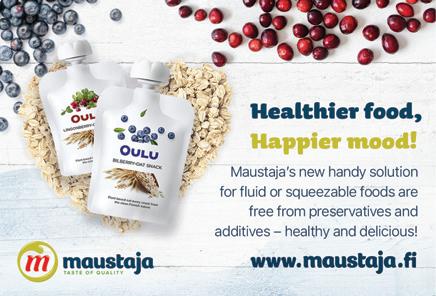


perfect for snacking. To accommodate the line, a new factory, costing an impressive €6 million, was constructed.
“Our new pouch design enables us to produce a greater range of food categories,” said Ms Paavola. “Previously we manufactured mostly sauces and condiments. The pouch line enables us to meet the growing food-on-the-go trend and significantly broadens our capabilities.”

Inside food & drink 71
In anticipation of the pouch’s success, the company has created new food options that are ready to market.
“Three of our new products are an overnight-style apple porridge, chia seed coconut pudding and an oat smoothie,” Ms Paavola said. “We have just presented these items for potential customers at the PLMA fair in Amsterdam.”
With the release of these products, Maustaja intends to extend the pouch range to provide its clients the very best selection
“Our plans are very much focussed on the new pouch investment,” said Ms Paavola. “We are answering the current market trends and giving our consumers extensive options at the same time. We want to continue to provide them with a wide range of choices. I do, however, think people should anticipate more plant-based products from us in the future too:as sustainability becomes more of an industry focus, that is an area we are definitely interested in developing further.”
Product accountability
Maustaja prides itself on providing a service that is quality-driven, food-safe and environmentally responsible. In line with this, the company has generated a list of sustainable goals.
By 2024, the company plans to use 100% renewable electricity. Highlighting Maustaja’s other goals, Ms Paavola said: “By the end of this year, we also plan to reduce our bottle waste by around 50 per cent. As a contract manufacturer, we do use a lot of plastics. We really want to reduce the amount of virgin plastic in our production –the implementation of our PET bottle line was the starting point for that.”


Sustainability is a shared commitment between Maustaja and its customers. The company cares about all its clients and is dedicated to helping them progress on their journey towards improved sustainability.
“Our customers expect a certain level of accountability and action when it comes to sustainability,” Ms Paavola explained. “They have their own environmental goals and requirements, and they trust that we will align with those commitments. This is something that is being assessed for our sustainability report.
“We consider every element in the process, from concept and packaging to the sustainability factor,” she concluded. “Thanks to our service concept, we provide a complete and comprehensive experience, and we do that better than any of our competitors.”
72 Inside food & drink
n MAUSTAJA I PROFILE
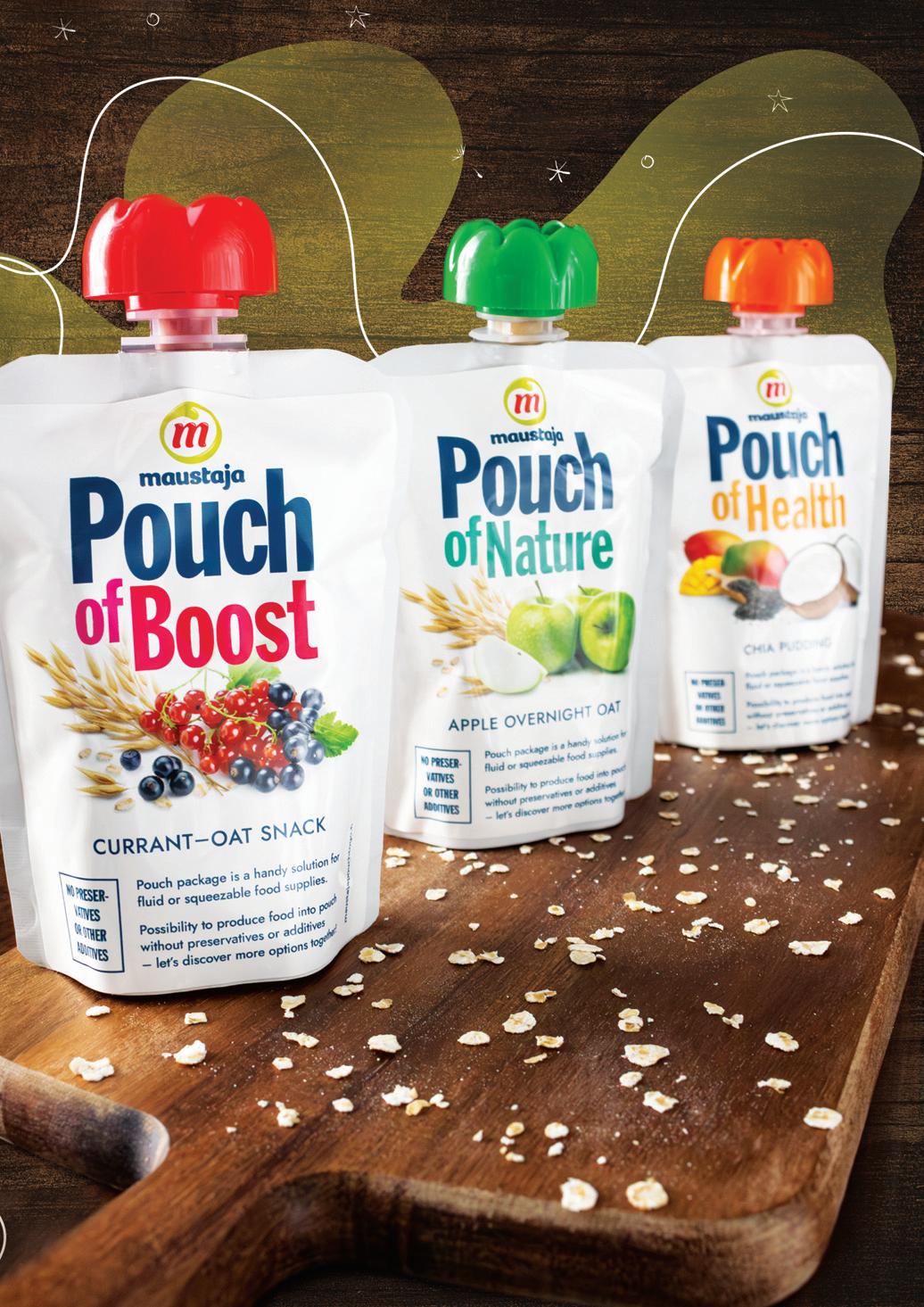
Inside food & drink 73
DAIRY TRADITION
74 Inside food & drink CHARALAMBIDES CHRISTIS I PROFILE
With a history dating back over seven decades, Charalambides Christis has evolved to become Cyprus' leading dairy producer. In the context of its rich heritage and innovative practices, the company continues to uphold its commitment to producing quality dairy products and contributing to societal well-being. Richard Hagan met with Managing Director Marios Konstantinou who shared the company's journey, its unrelenting commitment to quality and sustainability, and how it navigates evolving market trends while maintaining a people-centric culture.
Charalambides Christis, the largest dairy producer in Cyprus, stands as a beacon of Cypriot industry, blending a rich historical legacy with modern innovation and commitment to quality.

The company's ethos, as eloquently expressed by Managing Director Marios Konstantinou, is rooted in “creating new products, developing technologies, maximising productivity, improving services, responding to the needs of the public and satisfying the need for creativity.” This is the DNA that has defined Charalambides Christis from its inception to the present day.
All in the family
Founded in 1945 by Takis Charalambides and his son-in-law Evris Nikolaides as Charalambides Dairy, Charalambides Christis has weathered several transformations over the years. A significant turning point arrived in 2011, following a merger with Christis Dairies Ltd. The result was an exclusively Cypriot industry that proudly bears the name Charalambides Christis.
“In its current form, structure and composition, it has been operating since 2011, headed by the families of Alexis and Elena Charalambides and Melis Siakolas,” said Mr Konstantinou, who described the
Inside food & drink 75
merger as one of the largest in the Cypriot food sector's history and an important milestone in the company's evolution.
Today, Charalambides Christis employs 700 skilled staff across all of its divisions. Together, they produce a range of delicious, nutritious dairy products including fresh milk, flavoured milk, yoghurts, cream, sour cream and margarine. Of course, speciality Mediterranean cheeses feature heavily in the company’s portfolio, with mouthwatering varieties including Feta, Halloumi, Anari and Kefalotyri.
Modernisation investments
Charalambides Christis is not just grounded in tradition; it is equally dedicated to inno vation and modernisation. Over the past few years, the company has made
substantial investments to stay ahead of the curve, as Mr Konstantinou revealed: “More than €30 million has been invested to renew and modernise our infrastructure. This ensures that the products that leave our factory are of the highest quality and the safest for the consumer.”
This significant investment underscores the company's commitment to its vision for the future, leveraging advanced technology and rigorous quality control to uphold its reputation for quality.
Charalambides Christis’ commitment to quality extends to ensuring the welfare of the animals providing the raw dairy materials. “The company has proceeded in cooperating with a recognised accredited body, for the certification of the company and its suppliers, according to the
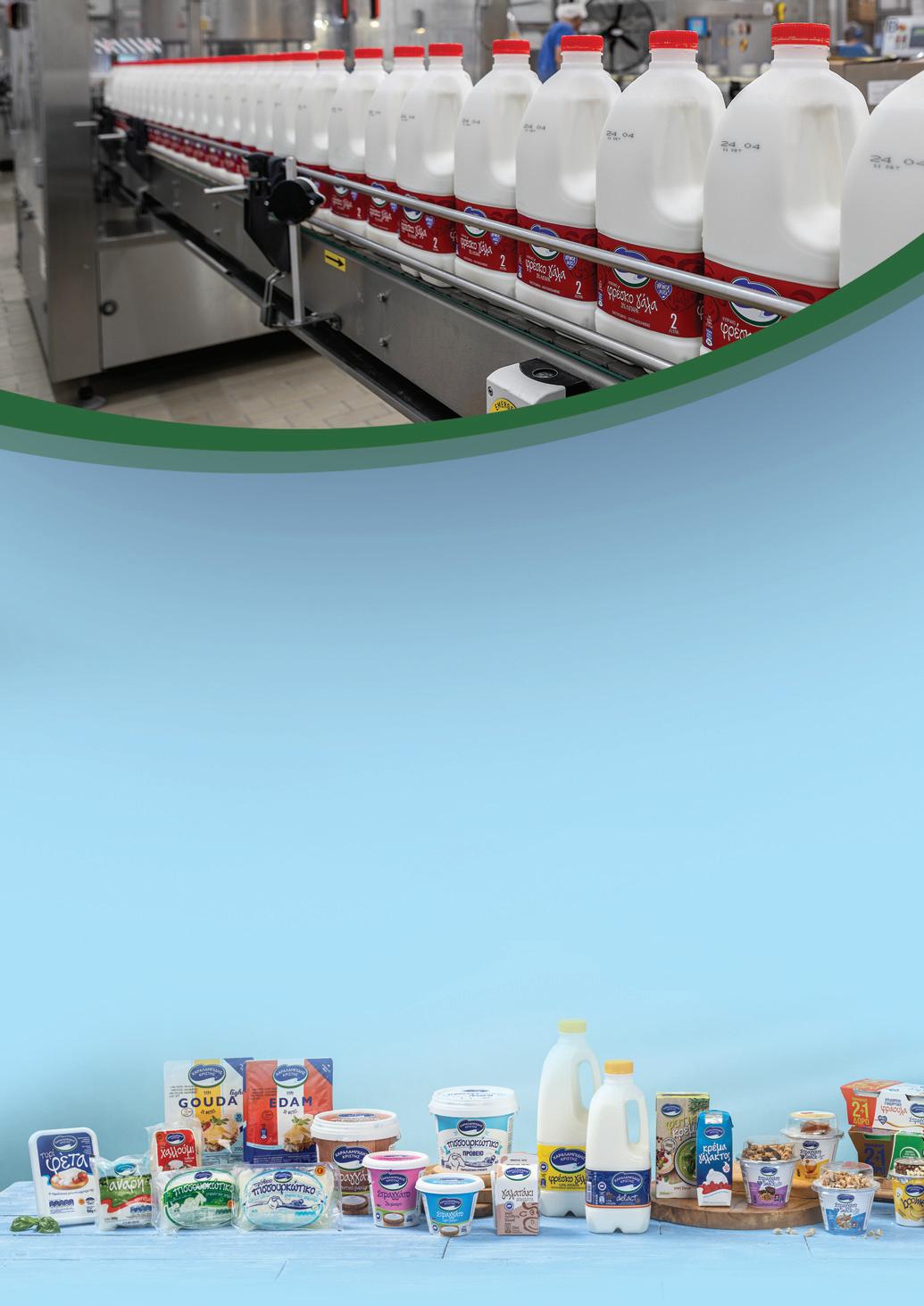
76 Inside food & drink CHARALAMBIDES CHRISTIS I PROFILE
private Animal Welfare Standard for the welfare of productive animals,” said Mr Konstantinou. “The company has invested in specially trained, qualified staff to monitor and support the farms, indicating a broader vision of quality that incorporates ethical considerations and consumer health.”
Engaging with the community

An integral part of Charalambides Christis' evolution has been adapting to emerging trends and consumer needs. The rise of home cooking, fuelled by popular TV cooking shows like MasterChef, has seen increased interest in the company's dairy products. Mr Konstantinou responded to this trend: “Our products, by their very nature, as dairy products, are integral to this trend.”

He cited the company’s engagement in interactive social media activities and partnerships with beloved chefs to provide recipe suggestions as evidence of its proactive approach to this trend.
“Consumers are rediscovering creativity in cooking at home,” he said. “As part of our marketing efforts, we set up a series of interactive activities on social media
Inside food & drink 77
under the umbrella of ‘Cooking Stories’, featuring challenges between well-known cooks and recipe suggestions from the public, as well as the exchange of ideas via SMS and more.”

The company’s involvement in the community extends beyond that, however Charalambides Christis has demonstrated active support for local athletes and sports initiatives as well. A testament to this is the sponsorship agreement that it signed with the Cyprus Olympic Committee in January 2023.
“We support various sporting disciplines as well as championship sport; we prefer to sponsor athletes who compete with consistency and ethics, always giving their best,” Mr Konstantinou said. “This reflects the company's belief in the spirit
of fair play and its commitment to giving back to society.”
One of Charalambides Christis’ other successful community endeavours in recent years is its corporate programme of social solidarity and practical contribution, ‘Symmetochi’ (Participation). With its basic message, ‘To Kalitero Sti Zoi Mas’ (The best in our lives), the programme aims to maximise the company’s contribution to socially vulnerable groups in Cypriot society.
Charalambides Christis is also tuned in to the trend towards dairy alternatives, recognising the growing number of lactose -intolerant consumers. “On the one hand, it gives millions of people with lactose intolerance a way out, but at the same time, it creates new
CHARALAMBIDES CHRISTIS I PROFILE 78 Inside food & drink
product categories and expands the market,” the MD explained. “We are constantly listening to what is happening and we’re responding to it. We already produce lactose-free products, and we certainly won’t stop there.”
He added that the company is optimistic that the growing market for dairy-free products is a net positive for it.
Sustainable success
A significant component of the company’s vision for the future is its commitment to sustainability and corporate social responsibility, as Mr Konstantinou explained: “Charalambides Christis has designed a comprehensive ESG (Environmental, Social and Corporate Governance) programme that is aligned with the 17

United Nations Sustainable Development Goals. This is a one-way street for sustainability and reflects our commitment to making a positive impact on society through our actions and initiatives such as this one.”
At the heart of Charalambides Christis is a deeply ingrained culture that is people centred. Mr Konstantinou outlined how this emphasis on culture, coupled with the company’s passionate pursuit of innovation, forms a vital part of what keeps him excited about coming to work every day.
Concluding, he summed up his daily experience at Charalambides Christis: “Every day, I am able to leave work feeling satisfied because once again we have achieved our goals, having supplied all of Cyprus with fresh, quality products!” n
Inside food & drink 79
Managing Director Marios Konstantinou
High-quality olives GLOBAL SCALE on a
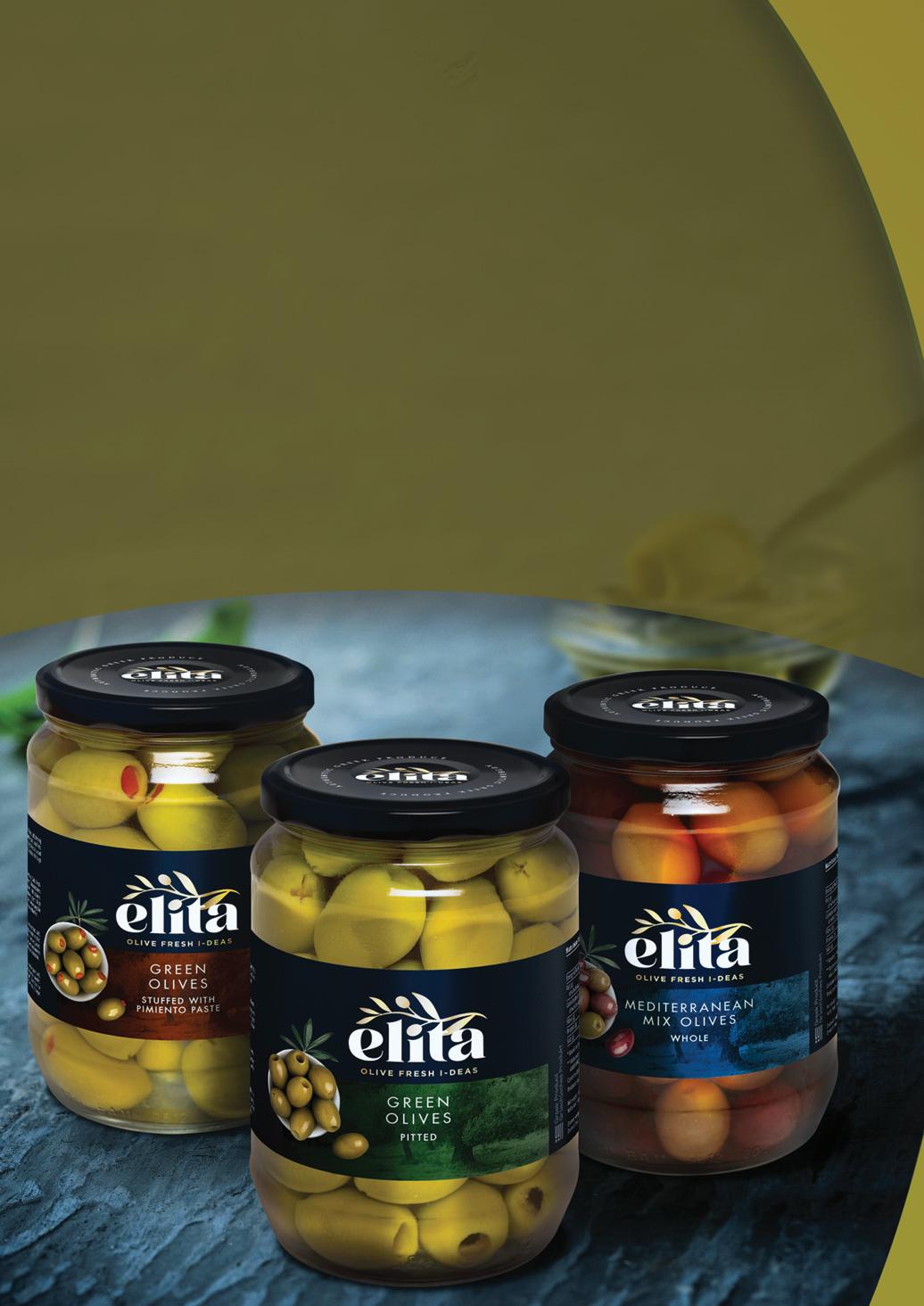
80
Inside food & drink DEAS I PROFILE
Deas SA is a family-owned company based in Greece, dedicated to premiumquality olives and a customer-oriented approach. Having placed these two strategic principles at the core of everything it does, the company has established itself as a leader in the Greek olive industry. Christos Deas, Export Manager, explained more to Hannah Barnett.
Wi th a turnover of €63.5m, and an impressive 24,000 tonnes of olives produced per year, Deas is a force to be reckoned with in the Greek olive industry. The company exports to countries from Japan to the USA, from Norway to Australia and everywhere in between, numbering more than 80 in total. The olives are sold in all forms: dated, pitted, stuffed, marinated, sliced and more.
According to Export Manager Christos Deas, it is the dedication to innovation and the willingness to take a risk that truly sets Deas apart. “The extent of our experience, depth of quality, and passion
for the product has established us firmly in the marketplace,” he said. “But what makes us stand out from our competitors is our creativity: we are always searching for new recipes to present our customers a unique product.”
Extensive facilities
Deas is based in the Kalives region in Halkidiki, Greece, an area known for its olives. It boasts well-equipped facilities, including a main office building and two factories covering an area of 40,000 square metres, staffed by a 400-strong work force.
Inside food & drink 81

“We are the leaders in the Greek olive industry,” said Mr Deas. “The business prides itself on expertise and a fanatical attention to detail, which we bring to an unrivalled customer base. And we invest in employee training because it increases staff motivation, improves productivity and the quality of work.”
Along with employees, the company has also invested in a new pasteurisation factory, based in the industrial area of Sindos, in Thessaloniki, Greece. The factory uses the latest automotive technology, with two innovative robots which are employed at various stages of the production process.
“One is at the beginning of the production line, where the product is removed from
pallets. That is now done automatically, without any human intervention,” Mr Deas explained. “And at the end, the product is put into new pallets by automation before it is loaded onto the trucks. Of course, the machines are all compliant with international standards and regulations.”
Quality products
The most popular product in Deas’ roster is its stuffed olives. “What makes them special is that they are hand-stuffed with the utmost care, following all hygiene protocols,” explained Mr Deas. “As an innovative olive processing and manufacturing business, we buy all our raw materials from approved suppliers. We
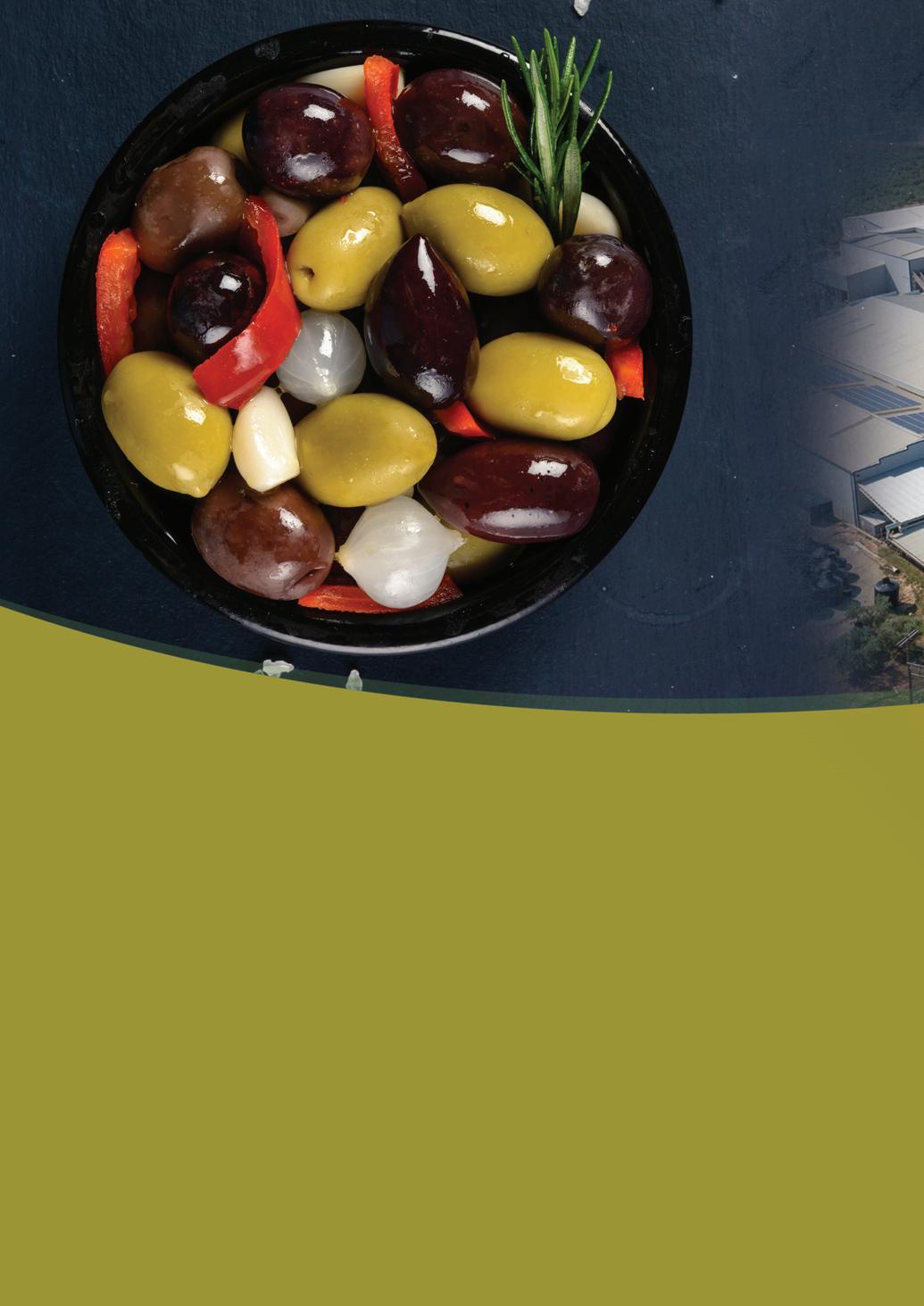
84 Inside food & drink DEAS I PROFILE
handle all our products with care, to retain and enhance their exquisite flavour. The olives are hand -harvested, which is the best method to ensure their final quality.”
Deas maintains an ethos that specifically focuses on the excellence of its goods, guaranteed by regular controls of the company’s ultra-modern facilities and innovative processing, storing and packaging methods. This is all done in compliance with the international standards and regulations.
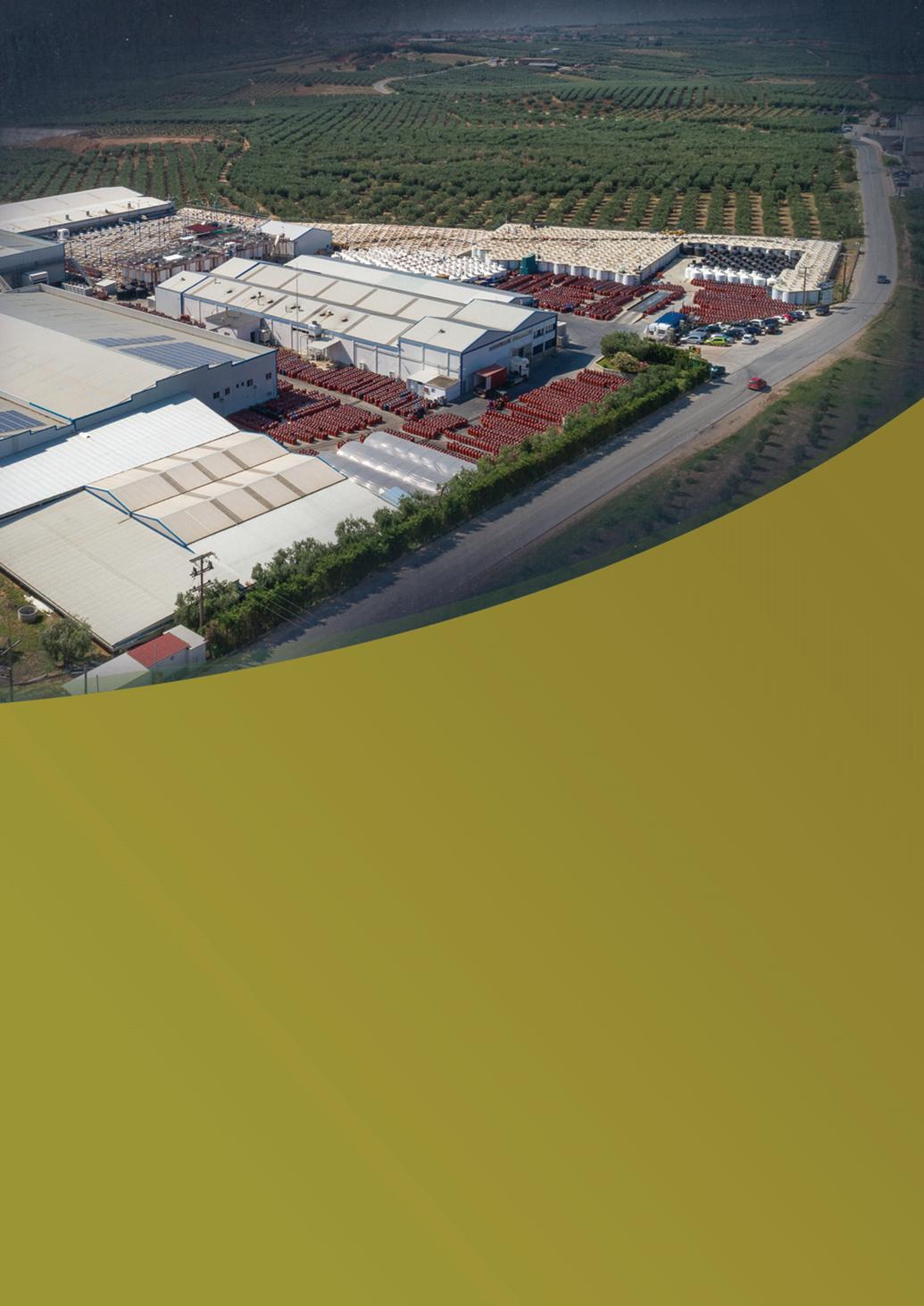
The company upholds a commitment to never compromise the safety and compliance of any products or services. “We focus on customer satisfaction, while keeping up with technology, operating
and installing the newest machines to keep ahead of competition and, of course, maintaining quality,” Mr Deas said.
Loyal relationships
Mr Deas was unequivocal that communication is key in any relationship, including a business one. With that in mind, the company is committed to building and maintaining a strong and reliable network of partners and suppliers.
The Export Manager revealed some of the ways the company maintains these international relationships; namely by opening up as many channels of communication as possible. “We try to get to know our suppliers better with face-to-
Inside food & drink 85
face meetings,” he said. “Email and phone are good, but can be impersonal. It’s very important to travel to other countries to meet suppliers and partners because you learn about their culture, and you can better understand how to communicate with them.
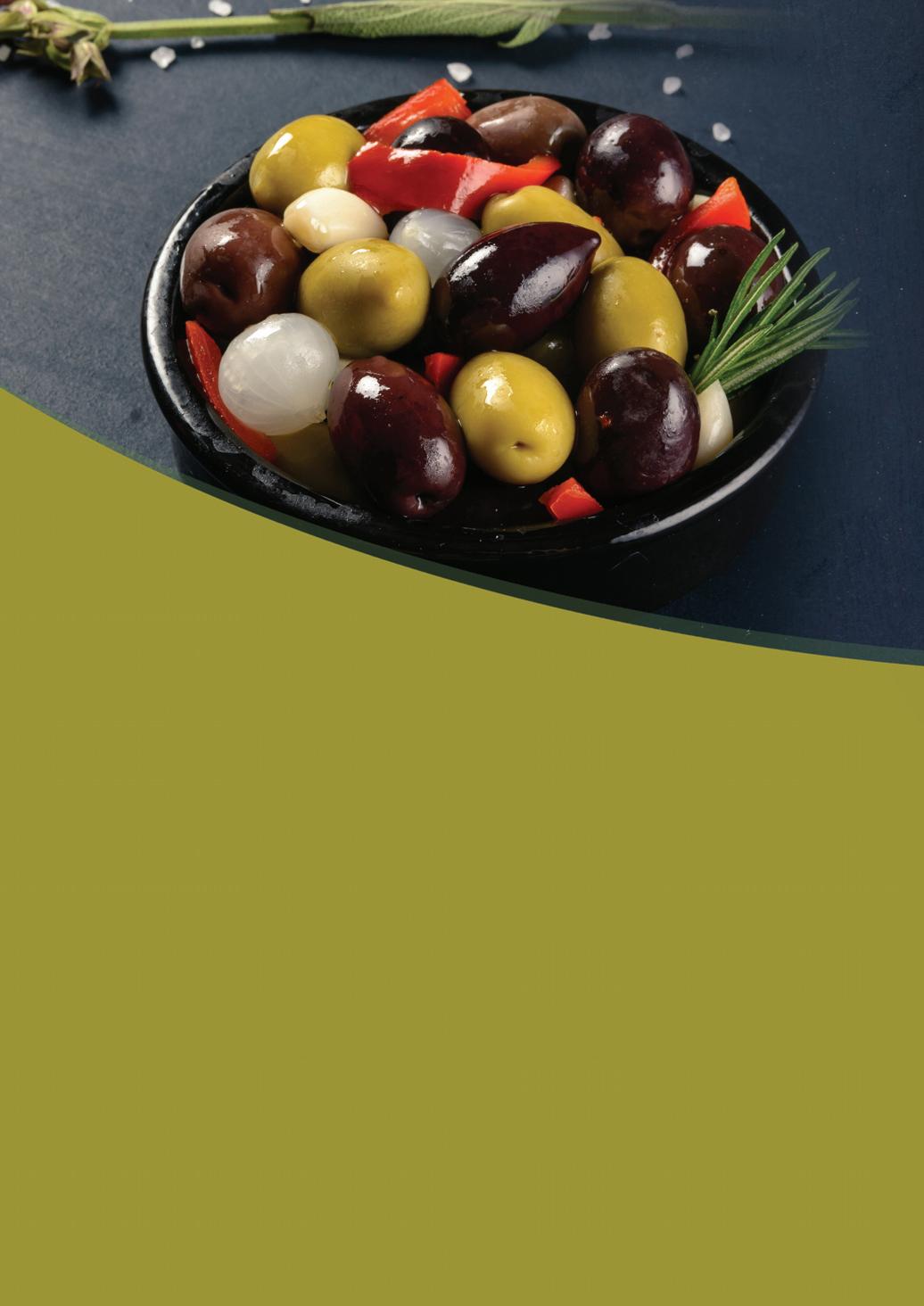
“We try to set clear expectations for our business relationships. We don’t only talk to our suppliers when we need something, or a problem has arisen. We let them know what our plans are, what changes might be happening in the company or product line and what new strategies we may be adopting too. I think consistency is the key to customer satisfaction. Our company has built trust with our customers. This has to be maintained by keeping to contracts and being on time concerning the production and delivery schedule.”
A bright future
With rapidly rising costs and a global pandemic, there is little doubt that the last few years have been turbulent
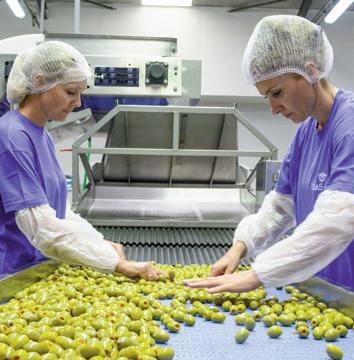
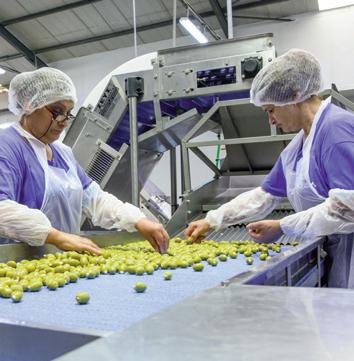
DEAS I PROFILE 86 Inside food & drink
across all industries. Mr Deas explained that the company keeps its strong position by constantly monitoring events in the global market and implementing certain strategic solutions. “By using and redefining a SWOT analysis at regular intervals, we try to remain competitive but also accessible to customers and the consumers of our product. ”
“The idea is to sell more to our target consumers, thus increasing overall market share,” Mr Deas continued. “Financial goals are some of the most useful goals we can have. I am ambitious by nature, which makes it equally important to have goals based on financial knowledge for business expansion. Of course, we will also continue to offer the best customer service, which means that consumers are
happier with the overall experience of buying our product.”
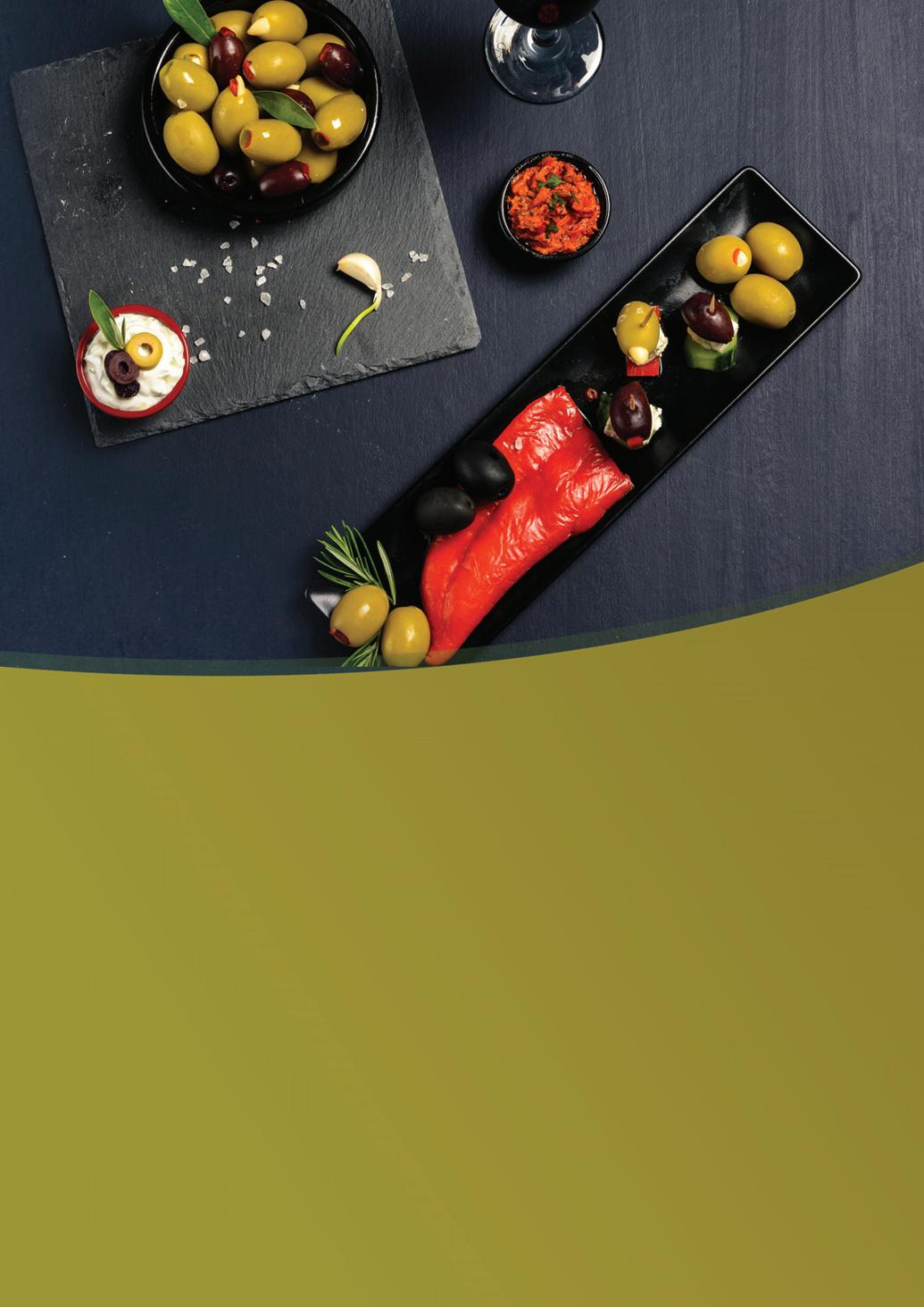
Working for Deas has provided the self-described ambitious Export Manager the opportunity to contribute to an everexpanding company in a substantial, meaningful, way.
“I get excited collaborating and working towards something big,” he reflected. “At the end of every day, I’m satisfied knowing that I have done my best to improve something. I feel happy when I work alongside my colleagues to solve problems and challenges. Teamwork fascinates me. You have to work with your team, not above them. Great leaders must recognise their employees and express their gratitude whenever possible.”
n Inside food & drink 87
from crop to consumption
MANUFACTURING & SERVICES
aranow ab garos multi-color corporation inox meccanica the reflex group intersystem ab
i F D &
Aranow specialises in primary packaging solutions for food, pharmaceutical, cosmetic and dairy products. The company offers customised solutions and cutting-edge machinery, boasting an extensive catalogue of equipment for packaging any type of product: solid, granulated, powder, viscous or liquid.

90 Inside food & drink
ARANOW I PROFILE
Chief Commercial Officer Paco Gibert explained more to Hannah Barnett.
The main thing that distinguishes Aranow from its competitors is the company’s specialisation in stick pack and flat sachet machinery to offer flexible packaging solutions. Responding to the needs of each sector, and often complemented with secondary packaging machinery, Aranow offers optimal results with complete lines.

“We are one of the few suppliers in the world that specialises exclusively in the design, manufacture and development of vertical, multilane packaging machinery,” said Paco Gibert, Chief Commercial Officer. “This has enabled Aranow to develop truly unique and innovative solutions.”
The company specialises in single dose packaging, the advantages of which are numerous. “There is the usability factor,” said Mr Gibert. “The customer can take a single portion with them anywhere.
The other advantage is that in developing countries, end users do not always have the economic means to buy the complete box of a certain product, so, they can buy just what they need. Also, with single dose packaging, we can reuse a lot more of the plastics, compared to blister packaging and so on.”
Expansion and growth
Aranow was founded in 2003, in the heart of the Barcelona Packaging Valley in Catalonia. The company was established with the mission to create single-serve packaging for the most demanding sectors, whilst upholding the strictest safety protocols.
Aranow sold its first machine, a stick pack, to the South African market. The second it exported to Morocco and the third to Mexico. ‘We were
Inside food & drink 91
ARANOW I PROFILE
born with international DNA,’ states the company website.
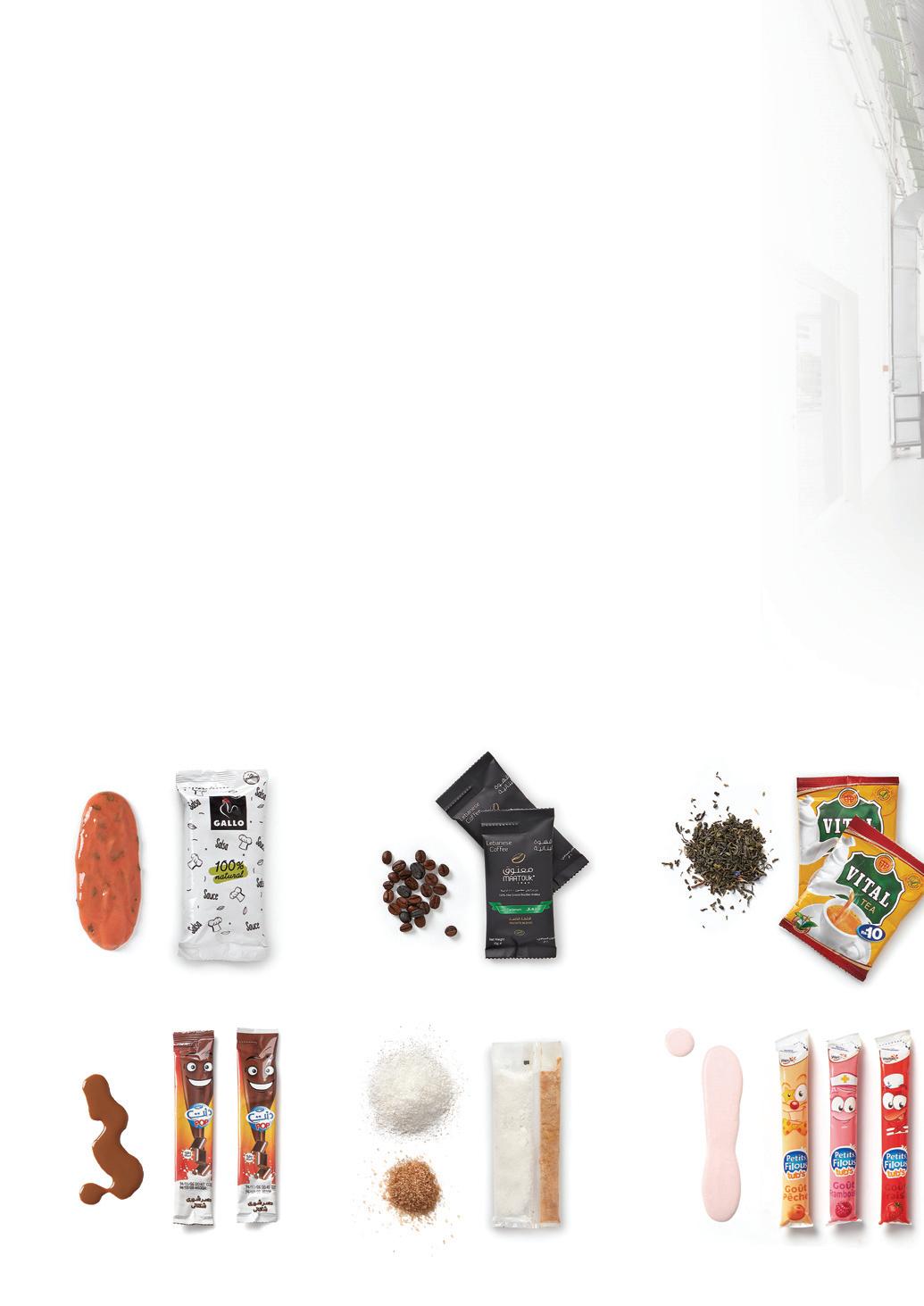
And the global footprint has extended to the present day. Aranow still exports 90% of its solutions and maintains an especially strong presence in Southeast Asia and South America.
Complementing this worldwide dominance, Aranow also shows signs of healthy growth, doubling its turnover in the last five years. The company expanded into new facilities in 2021, after finally outgrowing its original location. This has proved a shrewd move, increasing production capacity by a massive 80%.
“Before we moved, we were buying factories next to ours and trying to attach one to the other in order to fulfil our production demand,” explained Mr Gibert. “But we reached a point where our original factory
was not able to meet the demand that we were experiencing. Now, we can not only provide more machines to the market, but also improve the way that we make them by implementing the Aranow Production System inspired by lean manufacturing. This allows us to follow the appropriate quality and traceability standards together with a verification department using the best precision instruments.”
Alongside increased efficiency, the new HQ is also a hub of innovation. It includes some electrical and software simulation laboratories and state-ofthe-art product test rooms, equipped with temperature and humidity controls. These clean rooms allow all products to be tested in a controlled environment, helping the design teams meet bespoke customer specifications.
92 Inside food & drink
Innovation in Switzerland
Another significant investment into the cutting-edge came in 2022, with the establishment of an Innovation Centre in Neuchâtel, Switzerland, and the accompanying formation of Aranow Swiss, a sales office for central european countries.
The location is no accident. In recent decades, Switzerland has developed into one of the world’s most prominent hubs of industry innovation. The country has become an exceptional research ecosystem, recognised worldwide, especially for pharmaceutical packaging.
Through local partners like CSEM, Microcity and EPFL Innovation Park, Aranow Swiss focuses on innovation in equipment, production processes and business units. This includes research into advanced production techniques and smart technologies such as artificial intelligence to improve productivity.
“The purpose of the Innovation Centre is to work with recycled plastic films, to pursue
industry 4.0 and to have that flexibility in our machines to design personalised solutions for specific customer demands,” said Mr Gibert. “So, thanks to the centre, we are adding more value to our technology all the time.”
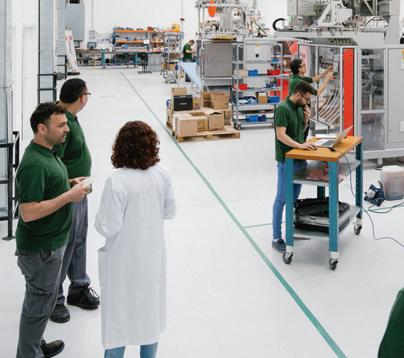
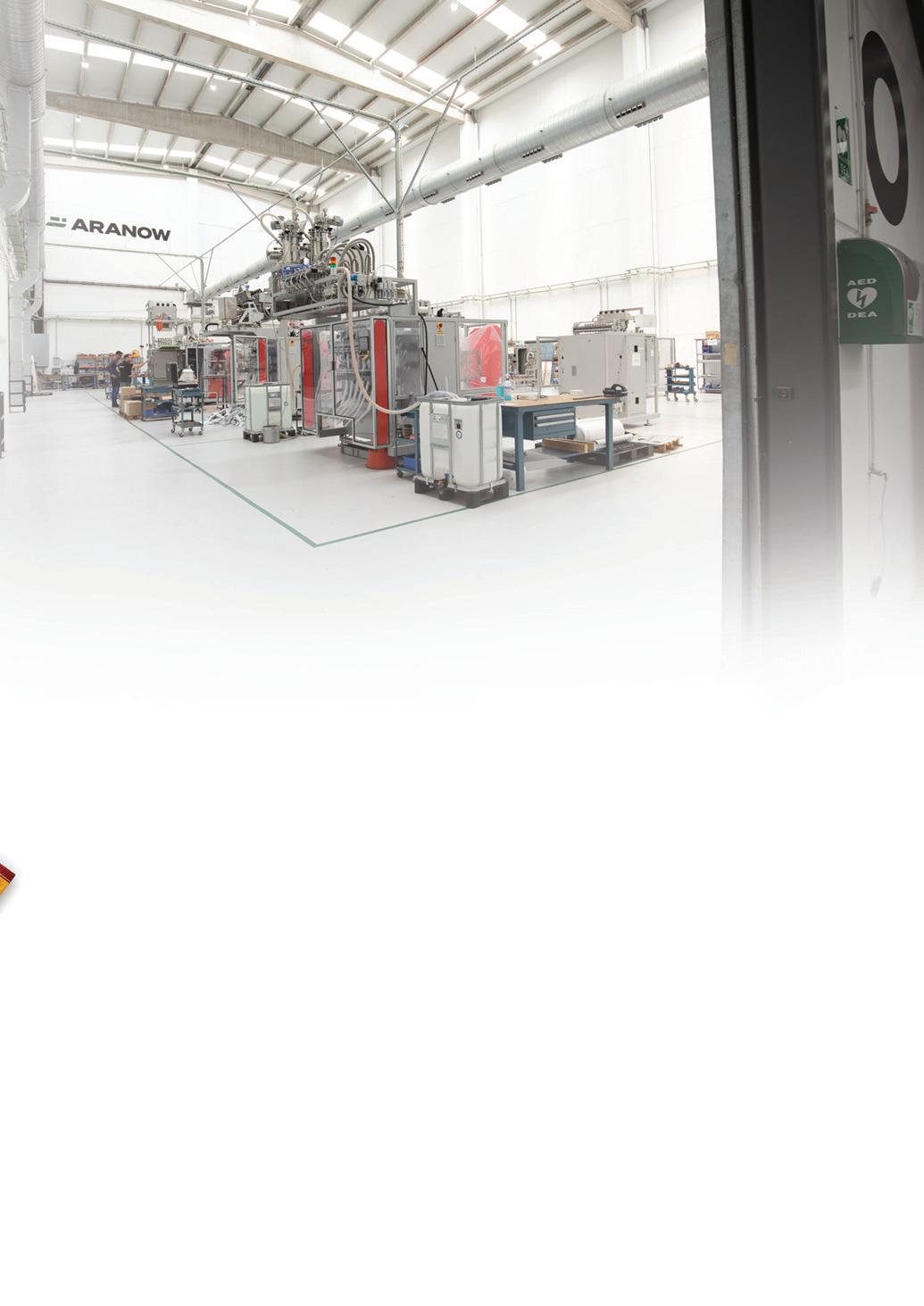
New designs
Innovation runs through the core of Aranow. The company recently attended Interpack 2023 to showcase some of its
Inside food & drink 93
most exciting designs. This included two multi-track machines with different production volumes, as well as a complete line that integrates secondary packaging. Visitors were able to discover first-hand the ease of access and low maintenance of the components.
As Mr Gibert emphasised, it is listening to views of customers that ignites the company’s innovative spark: “We developed these solutions after receiving feedback from the market. Customers were looking for flexibility in machinery. So, we have developed a unique solution that allows the customer to change the format or the dimension of the packaging sachet in less than five minutes.
“We have developed solutions for the transferring system from our packages to secondary packaging machines. That was
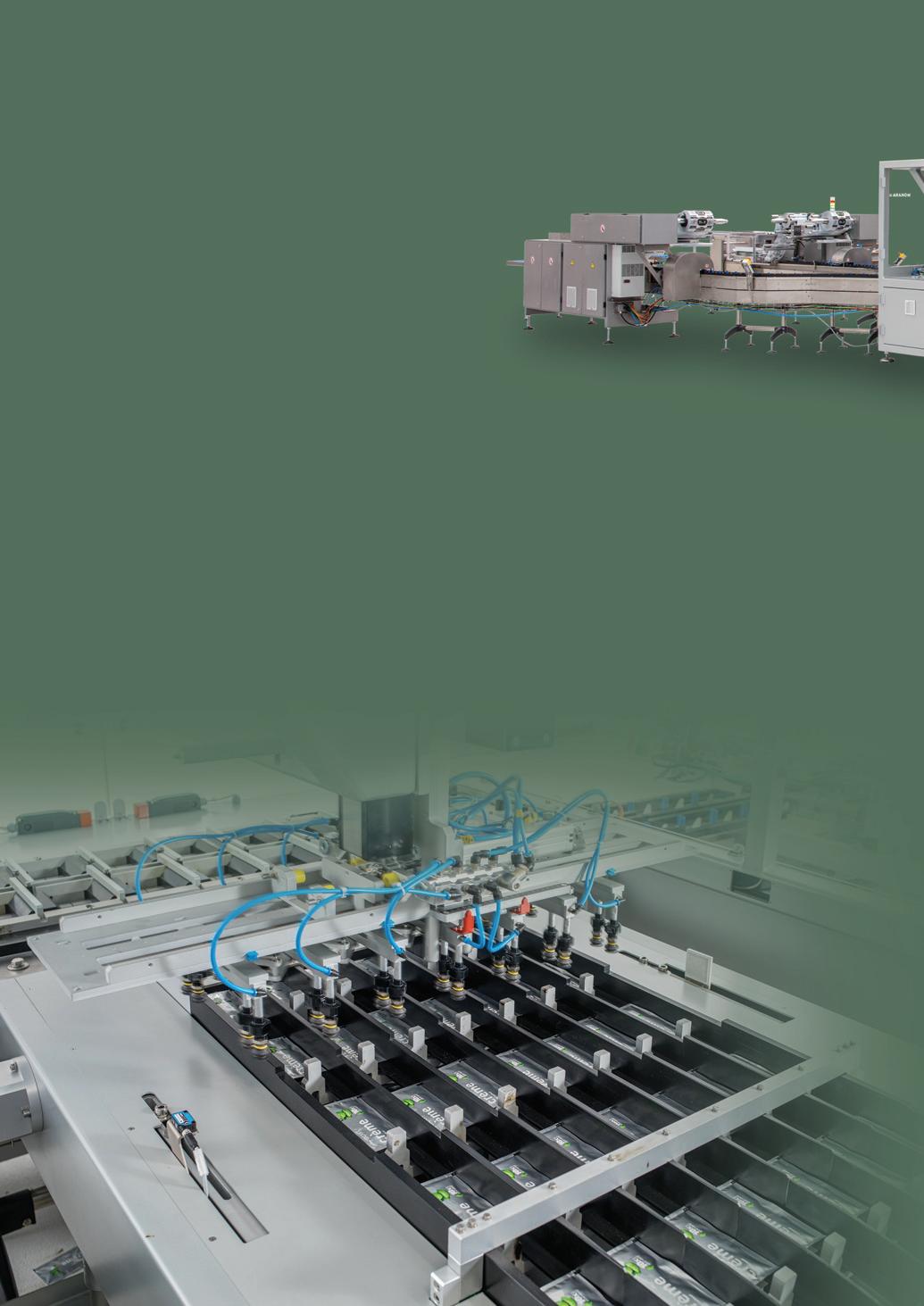
also created after receiving feedback from our customers: and we have some smaller innovations for smaller solutions. For example, the way we cut the film, or the way can we put nitrogen in the stick packs. It all helps the customer have a more efficient machine in the end.”
For specialists in primary packaging, a robust long-term relationship with secondary packaging suppliers is vital; as it is, for Aranow; maintaining the level of quality the company has made its name with. That is why all its secondary suppliers have
ARANOW I PROFILE 94 Inside food & drink
a contract devised by Aranow’s technical department which ensures the equipment of potential partners meet the same highquality level.



Looking ahead
Though the future looks bright for such a successful and innovative company, there are, of course, challenges too: mainly, in the need to reduce, and eventually completely stop the application of single-use plastic.
“ That’s why we are investing in the Swiss Innovation Centre,” reflected Mr Gibert. “ It has given us somewhere to partner with different plastic film suppliers. This means looking into different formulas of recyclable films; compost films – generally films with a smaller environmental impact.”
On the whole, the outlook is positive for the company and for the CCO himself. He concluded: “Aranow will continue to develop new solutions tailored to the needs of the contemporary consumer, investing in research and innovation as we have been doing for 20 years.” n www.aranow.com
Inside food & drink 95
HOME OF TECHNOLOGY-D EXCELLENCE HOME OF TECHNOLOGY-D EXCELLENCE
With more than 30 years’ experience, AB Garos is a master of specialist machinery for the food production industry. Project Coordinator Christian Norfjord discussed the evolution of the company. With Imogen Ward.
Drawing from prior experience in the meat processing industry, Swedish-based AB Garos understands the needs and requirements of its customers.
“The founder of Garos owned a sausage factory, and he knew how much potential was in machinery production,” Project Coordinator Christian Norfjord said. “Having that first-hand insight and knowledge was really key to working out how best to serve our customers. Now we have machines on every continent except Antarctica.”
Inspired by the industry, Garos began operating as a reseller of equipment for the Scandinavian meat processing sector. Taking a chance in the mid ‘80s, the company went on to develop its own machinery.

Now under the second generation of management, Garos continues to manufacture market leading technology for the meat industry.
“Our machines fit within our niche expertise,” Mr Norfjord explained. “We have mastered specific processes, from thawing to injecting and tumbling, and all our machines are adaptable to any company’s production process.”
Outshining the competition
Since Garos entered the market, it has evolved its products to meet the developing needs of its customers. The company produces a number of advanced products, including fully automated lines, injectors, tumblers and roller tenderisers.
96 Inside food & drink
AB GAROS I PROFILE
DRIVEN DRIVEN

Inside food & drink 97




98 Inside food & drink
AB GAROS I PROFILE
Currently on its fourth generation, the company’s brine injector (GSI) has been adapted to improve performance ratings. As one of the most advanced injectors on the market, the GSI is optimised to ensure precision and efficiency.
“When it comes to injectors, customers expect precision,” Mr Norfjord explained. “They don’t want the machine to do anything other than what it is programmed to do. You don’t want it to inject too much or too little, because then the end product is completely different to what
the customers expect. So, precision is key.
“The machines also have to be adaptable. Customers invest a lot of time and money to ensure that their products are perfect, so they need to be confident in the knowledge that our machines will successfully meet their specific needs.”
Most recently, Garos has updated its tumbler range with the GBT 600. This machine has double the capacity of the GBT 300 and incorporates all the fan favourite elements of its predecessor.

100 Inside food
drink
&
“Even before we launched the 600, we had customers asking for quotes, because the GBT 300 was such an immense success,” Mr Norfjord said. “The machine itself is so versatile as well: it can be used for tumbling, coating, mixing and marinating. We have customers that use it for mixing nuts and candies, some use it for salads and others marinate meat with it.”
The tumbler’s flexible nature ensures customers require fewer machines in their production lines – making them more efficient and sustainable. With a single machine capable of four different processes, Garos also intends to help customers save money, removing the need for multiple suppliers and the big price label that comes with multiple machine purchases.

Pioneering transportation
Ever innovative, Garos offers customers a unique transportation system. The Vacuum Filling System (VFS) automatically transports products to the next stage in the process, via a network of tubes. The VFS is customised
to fit any factory and is future-proofed for an improved demand in production (expansions can be added at any point).
“The VFS is by far the most efficient way to transport products,” Mr Norfjord said.
“When you compare it to more traditional transportation methods – using buggies or conveyor belts – which have limitations. Our system requires minimal maintenance costs and is extremely hygienic. Unlike conveyor belts, the VFS is space-saving and doesn’t require constant monitoring. Effectively, an operator can press the start button and then forget about it.”
With every new customer comes new and interesting challenges. From product weight to consistency, Garos customises its systems to account for these variables.
Built to last, all Garos machines also have an impressive lifespan, with the majority lasting more than 20 years. Mr Norfjord saw this as another way of helping customers maintain a more sustainable process:
“Thanks to our machines, the customers do not have to go through the process of
Inside food & drink 101
buying new machines on a regular basis, which helps to minimise the emissions generated from material procurement and manufacturing.”
First-class service
Maintenance comes part and parcel with the purchase of a Garos machine; each one is incredibly complex and requires a certain
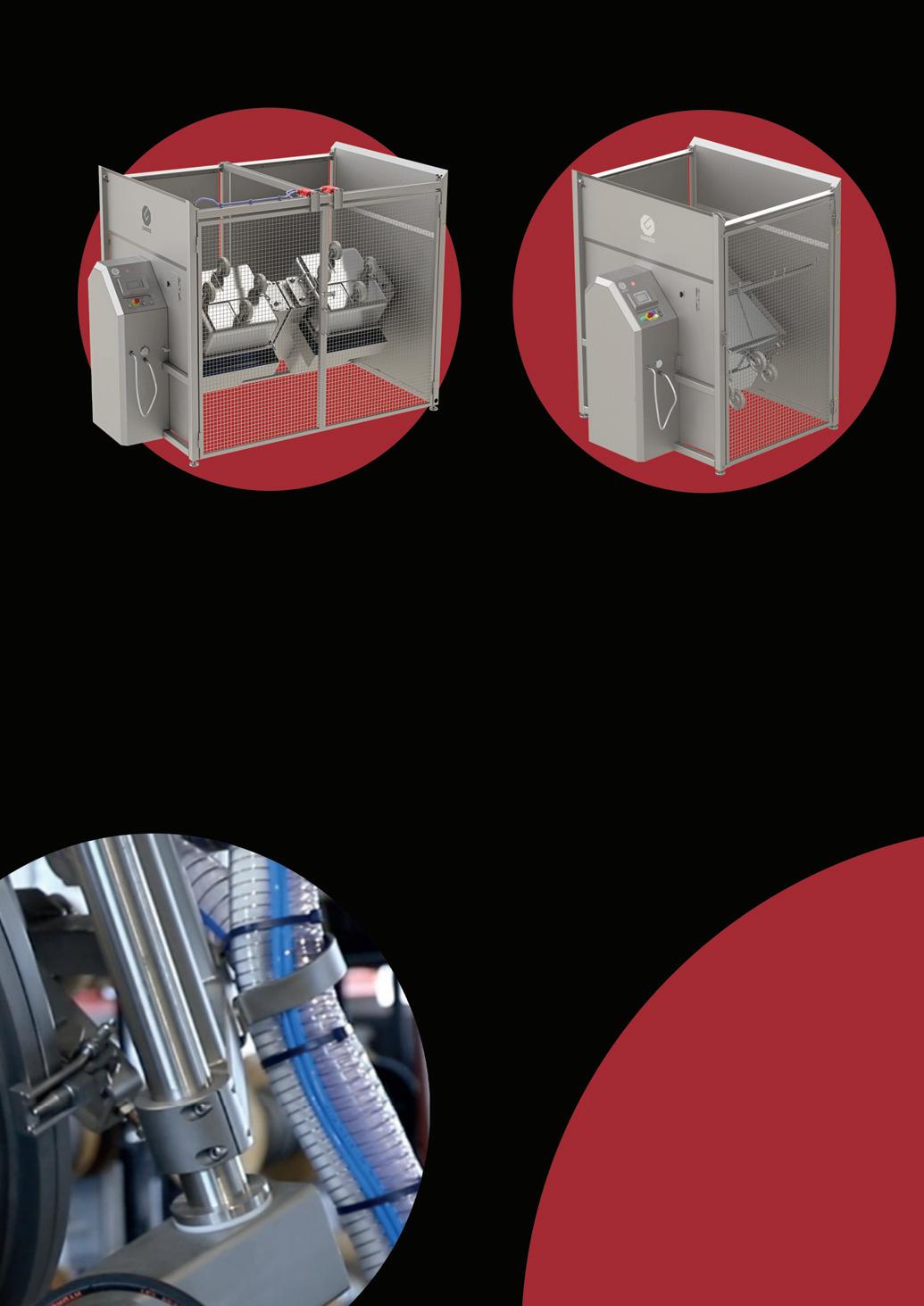
level of knowledge and understanding. “ Of course, the best people to service the machines are the ones that built it,” said Mr Norfjord. “We have service personnel who take on that role, we also have a solid network of partners all over the world that are trained to repair Garos machinery.
“Whether it’s a breakdown, service or software update, our professionals can be at the location within a matter of hours to solve the problem.”
The company believes in a more practical approach to training, opting to position employees in the factory where they can learn about the facility first-hand, and experience solutions being applied in real-time.
On the topic of sustainability, open communication is strongly encouraged at Garos. The company relies on the synergy of its workforce, to actively make conscious efforts towards improvement, including waste management and efficiency goals.
Looking to the future, Garos will continue to provide its customers with the very best food processing solutions. Development is
AB GAROS I PROFILE 102 Inside food & drink
an ongoing process, and the company is determined to uphold its commitment to ensuring excellence.
“We are always trying to develop our machines and look for better solutions, to make them more efficient and userfriendly,” Mr Norfjord concluded. “We are also focused on getting the Garos name out there, because we would like every production facility, big or small, to be able to benefit from solutions that are
modern, sustainable and will improve their production. We are just a small piece of the puzzle, but our machinery is integral. What we do plays a part in feeding millions of people, and we do that with innovation at the forefront.
“These days, food variety is greatly improved and that is in part due to the development of innovative machinery. Even the simplest products are backed by huge ingenuity.”

Inside food & drink 103
n
Multi-Color Corporation, otherwise known as MCC, is one of the largest label companies in the world, with a presence in numerous sectors including wine and spirits, food and dairy, beverage, beauty, healthcare, and specialist. David McCafferty, General Manager for Scotland, gave Hannah Barnett some insight into how the global label solution provider operates so smoothly.
With over 13,000 dedicated employees, running over 100 label producing operations in more than 26 countries, MCC makes a significant mark in its industry.
“We are the largest label producer globally,” said General Manager for Scotland, David McCafferty. “There are bigger companies, but they have different divisions in packaging, whereas we only manufacture labels. There's not much a consumer would purchase in the way of global brands that we don't supply labels for.”
104 Inside food & drink
MULTI-COLOR CORPORATION I PROFILE
The history
MCC certainly has the mileage to back up its global dominance. The company was established in 1916 and has grown, through various acquisitions, to service primary market segments in the North American, Latin American, EMEA (Europe, Middle East and Africa) and Asia Pacific regions.
“Certainly, in the UK and Ireland, we are the biggest label producer, with a full capability of all print technologies.,” said Mr McCafferty. “And we are vertically integrated, which is pretty unique in the label industry. So, we manufacture our own material.”
The company is now approaching the UK and Ireland market as a single entity, rather than operating as separate divisions. “There is a lot going on in these regions,” said Mr McCafferty. “In Scotland, the company is primarily focused on the wine and spirits sector, although we do plan to expand into other sectors with demand for complex label solutions.”
MCC also operates a site in England, two in Wales and two Ireland where it largely produces labels for the wine, beverage and pharmaceutical market, as well as
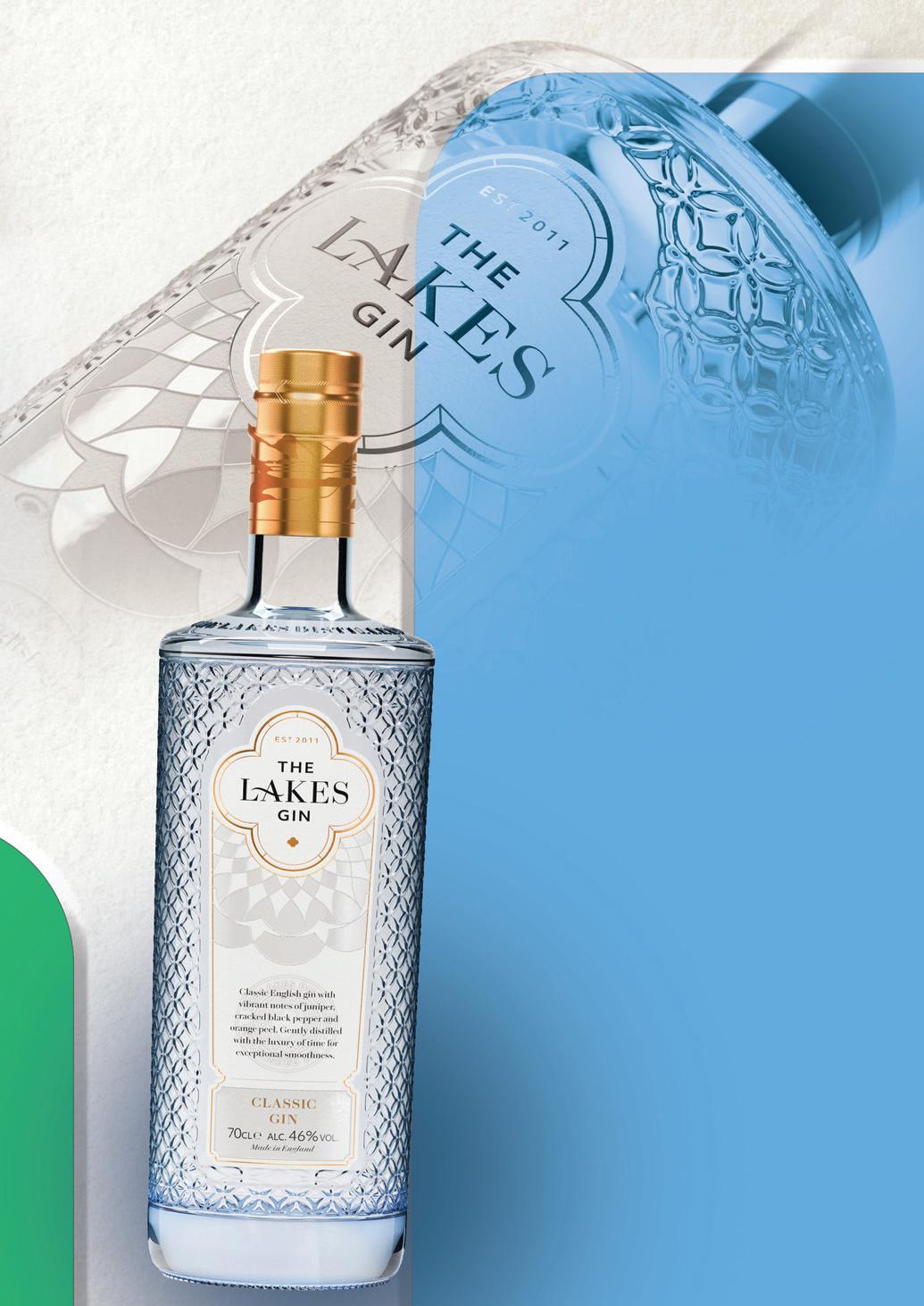
Inside food & drink 105

some specialist work in Cardiff for the oil and petrochemical industry.
“We are a global company,” emphasised Mr McCafferty. “So we are very focused on global brands. That said, we have the capability and autonomy to look after the smaller local companies too. That’s one of the challenges for sales. We don’t want to be so big that we scare the local customers, but we have the equipment that will allow us to produce one label or 100 million labels.”
A local partnership
One of MCC’s notable local projects is with The Lakes Distillery, a relative newcomer in its market. For its logo the distillery selected a quatrefoil, an ancient symbol chosen to reflect the values of the brand.
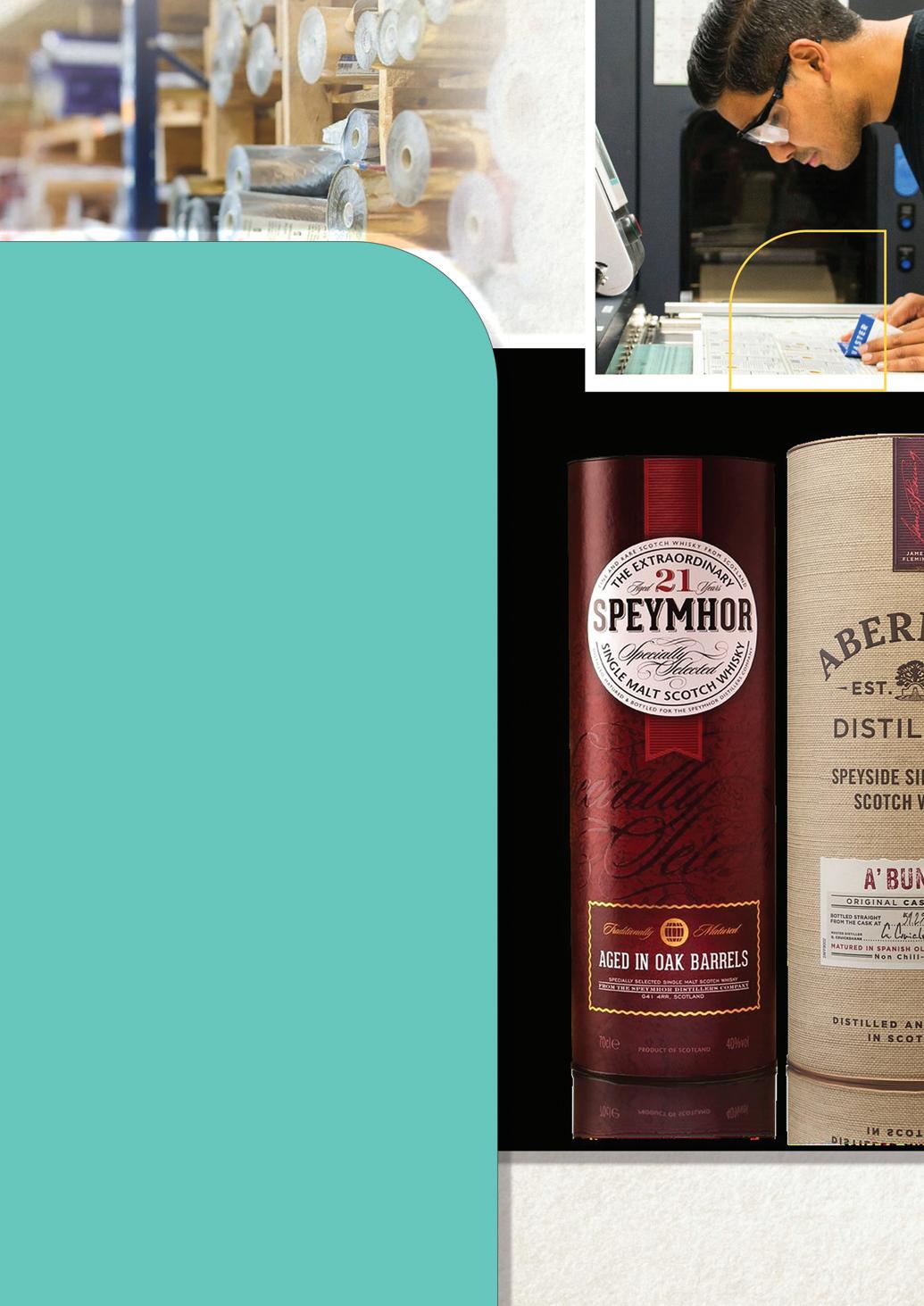
“We got involved with Lakes quite early on in the design process,” said Mr McCafferty. “We wanted to work with this company ever since it began, because its own branding and designs are fantastic; though some of the labels were pretty challenging to create.”
With MCC’s assistance, a design was developed featuring an intricate embossed effect with the highly embellished quatrefoil shape as a foundation. Printed digitally on an uncoated stock, a detailed copper foil was selected to reflect the handmade copper stills used at the distillery. An overlapping quatrefoil pattern was used to create an intricate ‘spirograph’ effect with
108 Inside food & drink MULTI-COLOR CORPORATION I PROFILE
a multi-tiered emboss, matt and tactile screen gloss varnish and foiling, in keeping with the bottle design.

Mr McCafferty outlined why a company like The Lakes Distillery experiences the best of both worlds working with MCC: that is, the security and capability of a large company, combined with a personal touch.
“We try to approach the customers as a team – it’s not just someone in sales,” he said. “So, behind each of the account managers, we have someone dedicated in customer service, someone dedicated to label engineering. And we also have a technical manager who will guide them through the process, set up the artwork, select
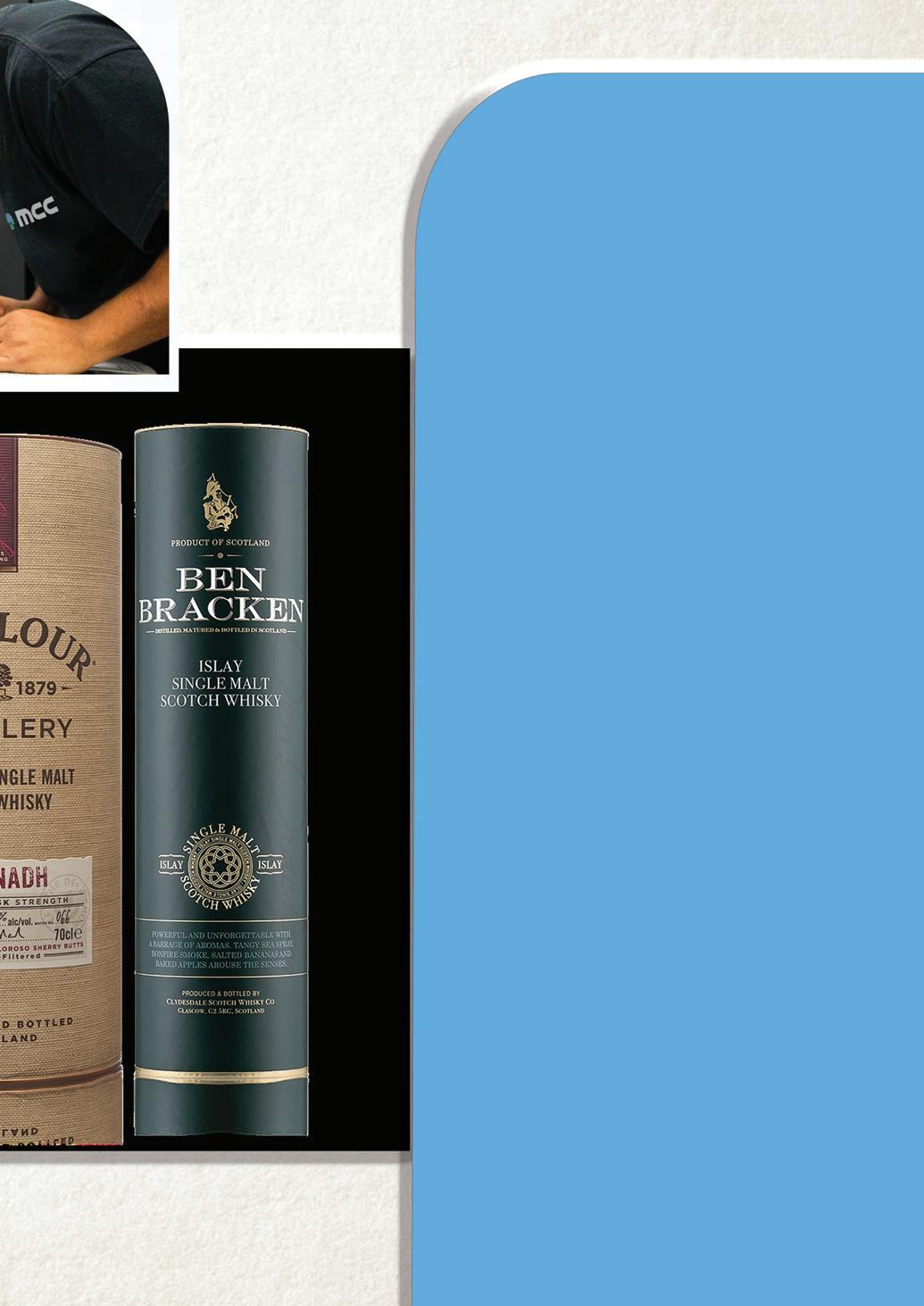
Inside food & drink 109
the best material and so on. I think that’s helped us build really good relationships.”
As a result of the company’s work with The Lakes Distillery, in September 2022
MCC invested £2.5 million into a new press for its Scottish site. And as Mr McCafferty explained, “the wider MCC group is happy to back investments aligned to customer and market requirements.”
The global label market is vast and remains fragmented. So, even as a major global player, there is substantial opportunity for growth, both organically and via acquisition. From an investor's standpoint, this is also an attractive proposition. The label is the last interface with the consumer, as well as the carrier of mandatory information, and therefore essential whereas other packaging, particularly secondary packaging, is often devalued or removed during a downturn or cost cutting.
A sustainable label
As such a vast global company, it is no surprise MCC is conscious of its environmental footprint. The company now
employs a Global Sustainability Director and is building a team dedicated to green concerns to work across the many regions it operates in.
MCC is committed to sustainable development that helps build a brighter future. “All of our daily processes to provide our customers with premium label solutions, and include integration of environmental, social, and governance (ESG) factors,” Mr McCafferty said.
MCC’s Research & Development team are constantly searching for innovations that meet today’s sustainability needs, according to Mr McCafferty: “We continue to innovate, to develop sustainable solutions across all packaging categories.” MCC already offers a wide range of ‘sustainable label solutions’.
At the same time, MCC works with a number of external bodies to improve its sustainability. These include: The Ellen MacArthur Foundation, which supports the transition to a circular economy, Sedex, to ensure a sustainable supply chain and Holy
MULTI-COLOR CORPORATION I PROFILE 110 Inside food & drink
Grail Project, focusing on digital watermark technologies.
MCC also joined the Business Ambition for 1.5C campaign led by the Science Based Targets initiative.
“Our long-term target is to reach net zero carbon emissions across the value chain by 2050,” explained Mr McCafferty.
The company is also expanding the use of LED lighting and solar panels for renewable energy, reducing water usage and improving recycling capabilities wherever possible. However, Mr McCafferty was keen to point out that it is vitally important for the company to remain aware of what sustainability really means.
“I think the biggest challenge, not just for us or our competition but also our customers, is understanding how sustainable things really are,” he explained. “For example, with a paper label, there’s lots
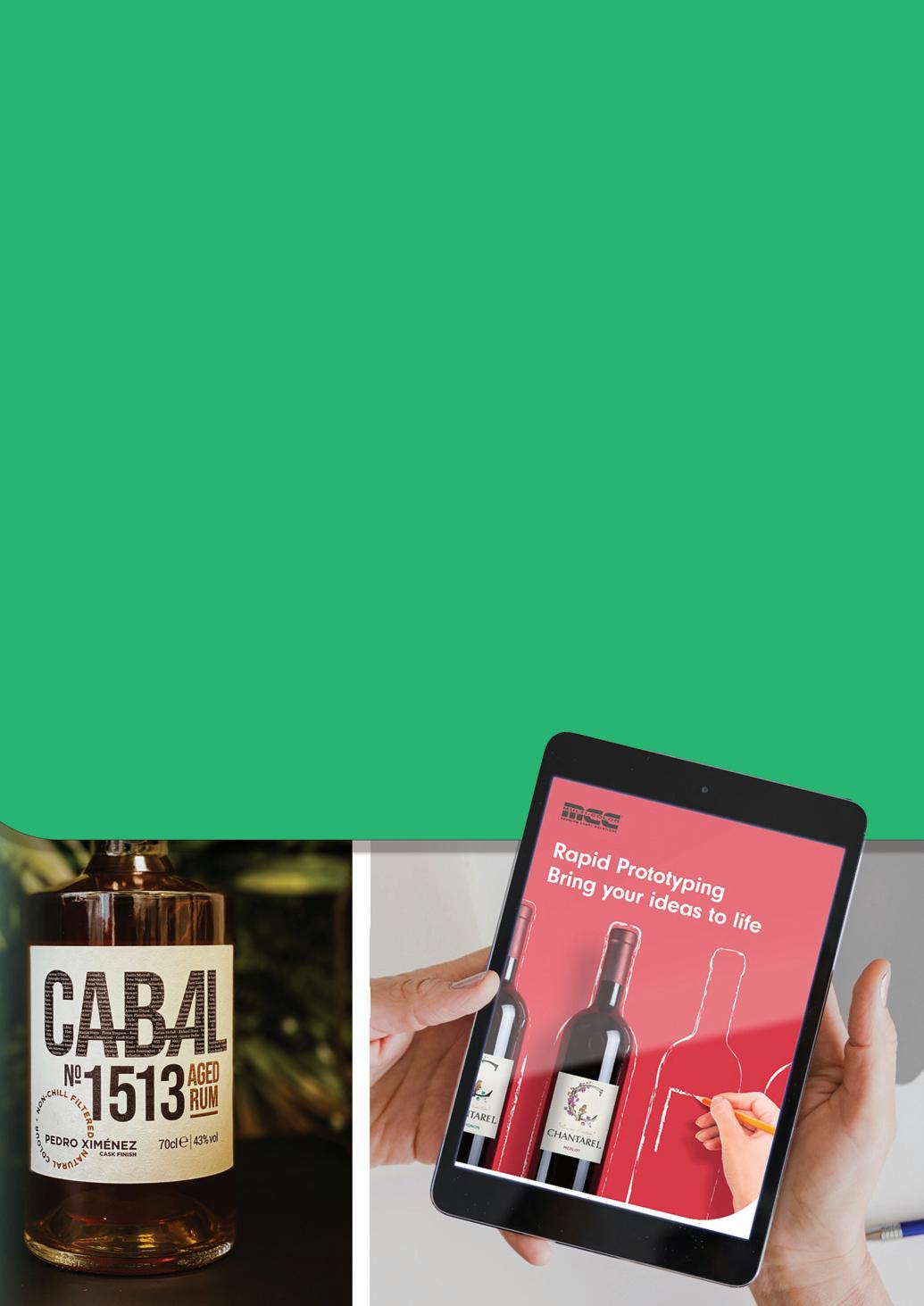
of material available made from recycled content. But the energy to manufacture it is far higher than standard material. So we need an understanding of the full lifecycle analysis of a product. And to ask: is it really sustainable?”
MCC is making all the right moves and looks set to continue growing steadily. Mr McCafferty was confident about the company’s potential and playing a part in its progress.
“We want to be number one in our industry,” he concluded. “And we want to be the employer of choice and to continue to grow. It is a challenging industry and an exciting company; one that likes to promote from within. I have been here 12 years and I’ve found that as the company grows, so do the opportunities.” n
Inside food & drink 111
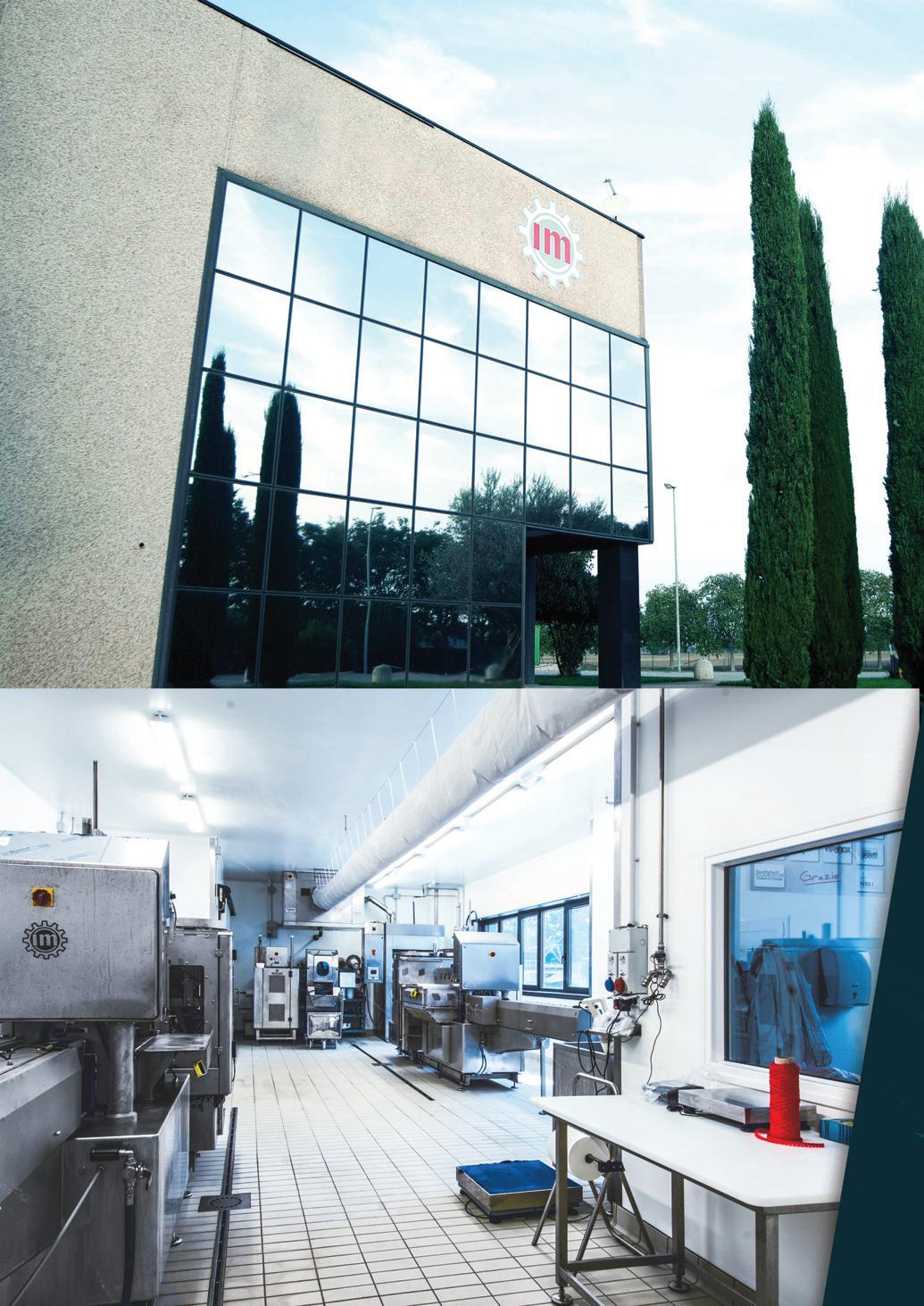
INOX MECCANICA I PROFILE 112 Inside food & drink
Inox Meccanica’s meat processing machinery is prominent in the food industry. Sitting on almost 50 years’ experience, the company strives to develop the very best technological food solutions. Chief of Sales Pietro Donegá and Marketing Manager Mele Leonardo divulged the latest news from its headquarters in Italy. Report by Imogen Ward.
From cold cuts to succulent sausages, Inox Meccanica is a master of meat. Each one of its machines is carefully designed and manufactured to meet the specific requirements of the customer.
“Inox Meccanica is different from other competitors in the market,” Chief of Sales Pietro Donegá explained. “We can customise the machines according to our clients’ needs, and we are among the few companies that actively do this. We specialise in whole muscle meat processing machinery and can tailor-make it to fit any space restrictions.”
Emerging onto the market in 1983, Inox took the industry by storm – developing the first automatic pressing, stuffing
and clipping machine. This machine is still renowned industry-wide, with its current iteration, PIC 99 B, a popular choice amongst many.
Curing industry-wide dilemmas

Since it was first introduced in 1987, Inox’s stuffing machine has been adapted to meet the evolving requirements of the market.
“Initially, we started with a semi-automatic process that required two operators: one to feed the meat into the stuffing machine , and another that stood at the end of the machine to clip the emerging products by hand,” Mr Donegá explained. “We wanted to develop a machine that would be capable of completing all these
Inside food & drink 113
jobs. “As part of this development we were also able to design a special stretching system that is very different to the ones produced by our competitors. As a result, we believe we have developed the very best automatic solution on the market.”

Adapting to the needs of its customers, I nox made several major adjustments to its stuffing machines. With the understanding that traditionally, these products are wrapped in both casing and netting, the company recognised how time

PIC 99 BCE Special Focus
Over the past five years, in response to customer feedback, Inox Meccancia has successfully optimised its PIC 99 BCE automatic stuffing machine with:
• Automatic tubes rotation system
• Automatic loading belt
• Adjustable electric pusher
consuming this process can be. To improve its customers’ manufacturing experience , Inox redesigned its machine to make simultaneous and automatic casing and netting possible.
The company is very flexible when it comes to customer requests: fully willing to adapt its offering, Inox has sourced several solutions for clients’ problems. The company is even bringing out at least four new machines over the coming year, in response to clients’ requests.
Any product adaptions are developed in the company’s Pilot Plant; this unique testing centre is home to an incredible team of R&D experts. The company also opens its doors to customers, providing them the opportunity to test the evolving products and request any additional adaptations.
“We can test every one of our machines in the Pilot Plant,” Marketing Manager Mele Leonardo explained. “Our focus is to realise the full potential of our products, using both our own technology and the
114 Inside food & drink INOX MECCANICA I PROFILE
technology of our partners, together with our technical development team to create the perfect end solution.”
The company’s renowned special washing systems were developed 35 years ago to solve a customer’s need for cleaning between production. These machines were designed with the environment in mind and operate with high standards of sanitisation, as well as energy and water efficiency.


Cutting into Industry 4.0
Alongside its machinery, Inox also invests in software that ensures a smooth operation for every customer. Keen to enter Industry 4.0, the company has been utilising Acty – an app that incorporates augmented reality to provide remote technical assistance – for the past four years.
“We supply all our machines with remote access capabilities,” said Mr Mele. “This enables us to check on our machinery
Inside food & drink 115
Pietro Donegá Chief of Sales (left) Mele Leonardo Marketing Manager (right)
direct from the office; 90 per cent of the issues that occur can be solved remotely.
“The app also includes a translator function to remove any potential language barriers. After-sales support is incredibly important to us, and our technicians are always on stand-by if a problem cannot be fixed remotely. Acty is an incredibly useful tool that was paramount during the Pandemic and is still essential to the service we provide today.”
Acty’s augmented reality features enable Inox to guide its technicians and partners in real-time. The app works in harmony with smart glasses, which allow the operator to see the machine through the eyes of the technician. The implementation of this app helps to reduce unnecessary travelling, resulting in a smaller carbon footprint and a quick technical turnaround.

Seasoning new partnerships
Relationships are an advantageous element of Inox’s corporate philosophy. In order to maintain a strong market
position, the company understands the importance of all its suppliers and partners. With a focus on expanding its presence in the US market, Inox has entered into a fresh new partnership revolving around the US-based company Sarca Food Equipment Technologies.
“This is a huge development for us.” Mr Donegá explained. “Sarca is a reseller of mechanical equipment: we now own half of this company, alongside a US partner. We see the US market as the biggest opportunity for the expansion of Inox. We already have Italian customers located in the US, so we have amassed a positive reputation, and we feel it is the right time to target the US and Canadian producers within this market.”
The company has chosen to market to the US its stuffing, tumblers, tying and washing lines – the last of which it highlights as incredibly versatile, providing food-safe and exceptional cleaning standards for a range of equipment within the food sector.
INOX MECCANICA I PROFILE 116 Inside food & drink
Another crucial partnership currently being formed by Inox, will see it working with a large UK-based net and twine company. This new relationship will expand Inox’s material offering and provide it with another market advantage. Going forward, the company is also looking to incorporate more of the value chain into its production capabilities. Not only is Inox developing new machinery, but it is also focused on creating its own materials too.
“We want to be able to provide a more comprehensive service to our customers,” Mr Donegá said. “Where we don’t just supply them with a machine but with a process. That is why we are currently developing new casings and clips. We are already working with exciting materials including our edible films, which reduce wastage and have been a hit so far, and we are developing more materials in line with the aim of becoming more sustainable.”
On the topic of sustainability, having previously adapted its machines to overcome the waste dilemma, Inox is also working hard to increase the production capabilities of its machinery. By processing longer, more standardised bars of meat, the company anticipates a further reduction in waste.

Despite being extremely busy with these exciting developments, Inox wanted to take the time to highlight the hard work of its employees. Crucial elements of its success, Inox would not be where it is today without the unwavering commitment of the Inox team.
“The human factor in our production is very important: its not enough to develop a good design – having those people to really fine-tune the equipment and bring a customer’s expectations to life is essential,” Mr Donegá concluded. “They have to be able to solve problems , and here at Inox Meccanica, that is what we do best.”
Inside food & drink 117
n
THE REFLEX GROUP I PROFILE


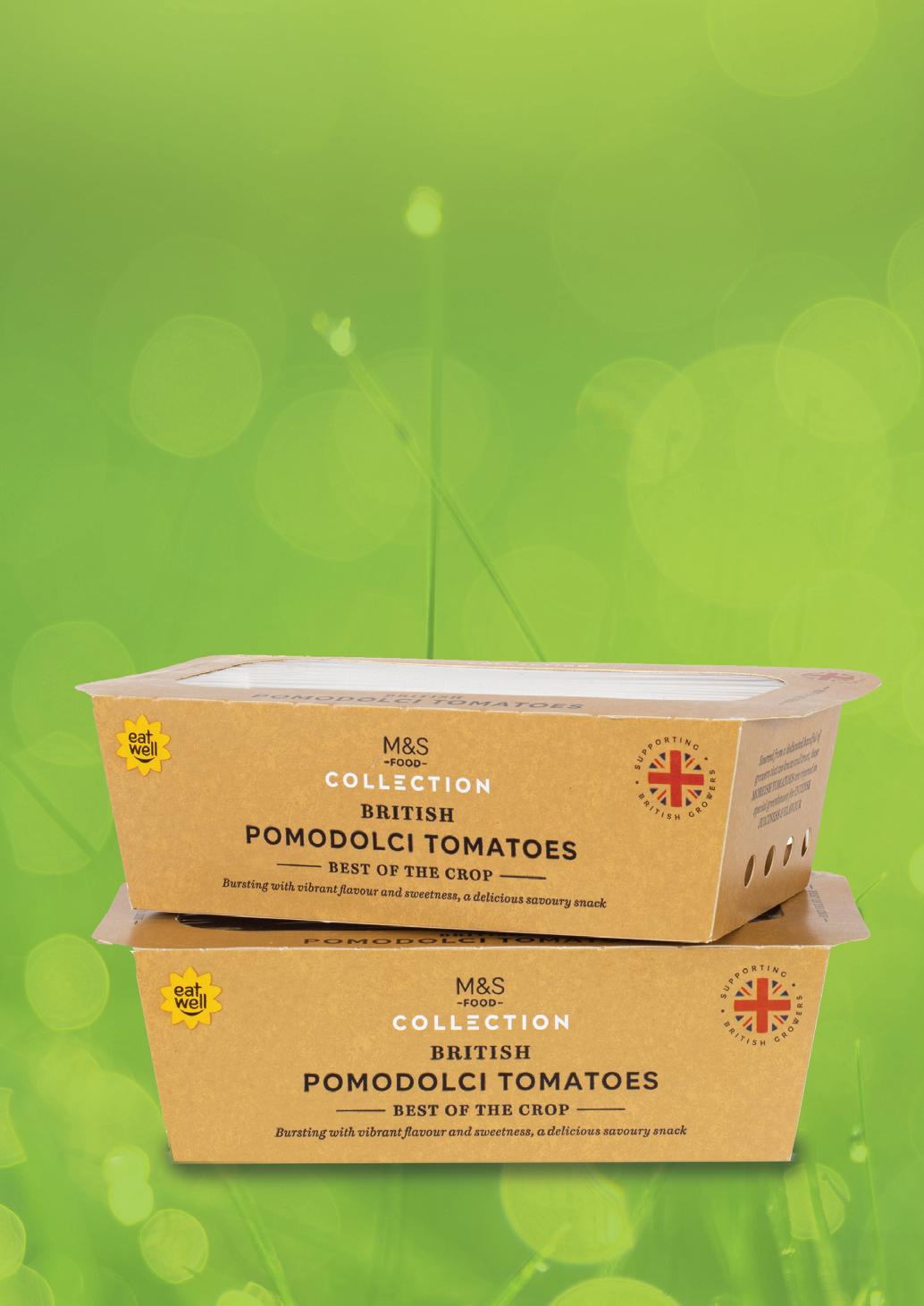
118 Inside food & drink
The Reflex Group is one of the UK’s largest labelling and packaging solution specialists –delivering the highest quality and most cost-effective packaging, produced on its state-of-the-art machinery. Innovations & NPD Manager Kevin Dudman and Sustainability Manager David Liversuch reviewed the group’s portfolio, awards and sustainability agenda, in conversation with Phil Nicholls.
ASa leading producer of labelling and packaging solutions, the Reflex Group is taking an active role in developing the sustainable solutions its customers need.

“Our focus remains on researching, developing and delivering innovative materials and print techniques in packaging and label markets,” explained Innovations & NPD Manager Kevin Dudman. “For example, our ability to use water-based inks and coatings in carton boards allows for environmentally friendly innovative solutions.”
Reflex began in 2002, with a single print site in the UK. Driven by the goal to be the world's most sustainable packaging company, Reflex steadily expanded into today’s operation with multiple facilities around the globe. The company has always worked with sustainability at the heart
of operations; continually finding new ways to offset carbon emissions and help support the environment and local communities.
Packaging with purpose.
An eye-catching label gives a product instant brand recognition. Reflex produces a huge variety of label products, across multiple sectors, for some of the world’s best loved brands. These labels can be f ound on all manner of food and beverage items, including tray-packed, bottled and even netted and bunched products. Other options include luggage and carcass tags, or small flash labels that help promotions stand out on the shelf. Reflex labels are also certified for use on pharmaceutical products.
For customers looking for more impact, Reflex Label Plus offers a premium label solution, delivering enhanced labelling for brands seeking premium finishes, materials and a bespoke service. These labels stand
Inside food & drink 119
THE REFLEX GROUP I PROFILE
out from the crowd, win awards and convey a premium brand message.
These deluxe labels are frequently presented on products such as beers, wines and spirits, cosmetics, pharmaceutical products and premium food packaging. Customers also have the option to work closely with Reflex’s in-house proofing studio, Proof+, who create label and packaging prototypes to help finesse the final design, use of colour, varnishes, foil, et cetera, before customers commit to a full print run: thus , saving clients’ money and time. This integrated way of working means an incredible final outcome.
The Reflex Group provides the full end-to-end solution, with offerings in each aspect of the packaging world. Options include flexible packaging, such as dynamic pouches that re-seal to keep food f resh, alongside bags and printed lidding films. Reflex also supplies an extensive range of protective packaging solutions, from specialist packaging tape to pallet wrap.
The Reflex Group also has its very own creative design studio Graphic Brands, that specialises in designing packaging and labels, helping brands ensure their labels are compliant and print ready with its compliance and artwork teams. This award-winning studio helps customers
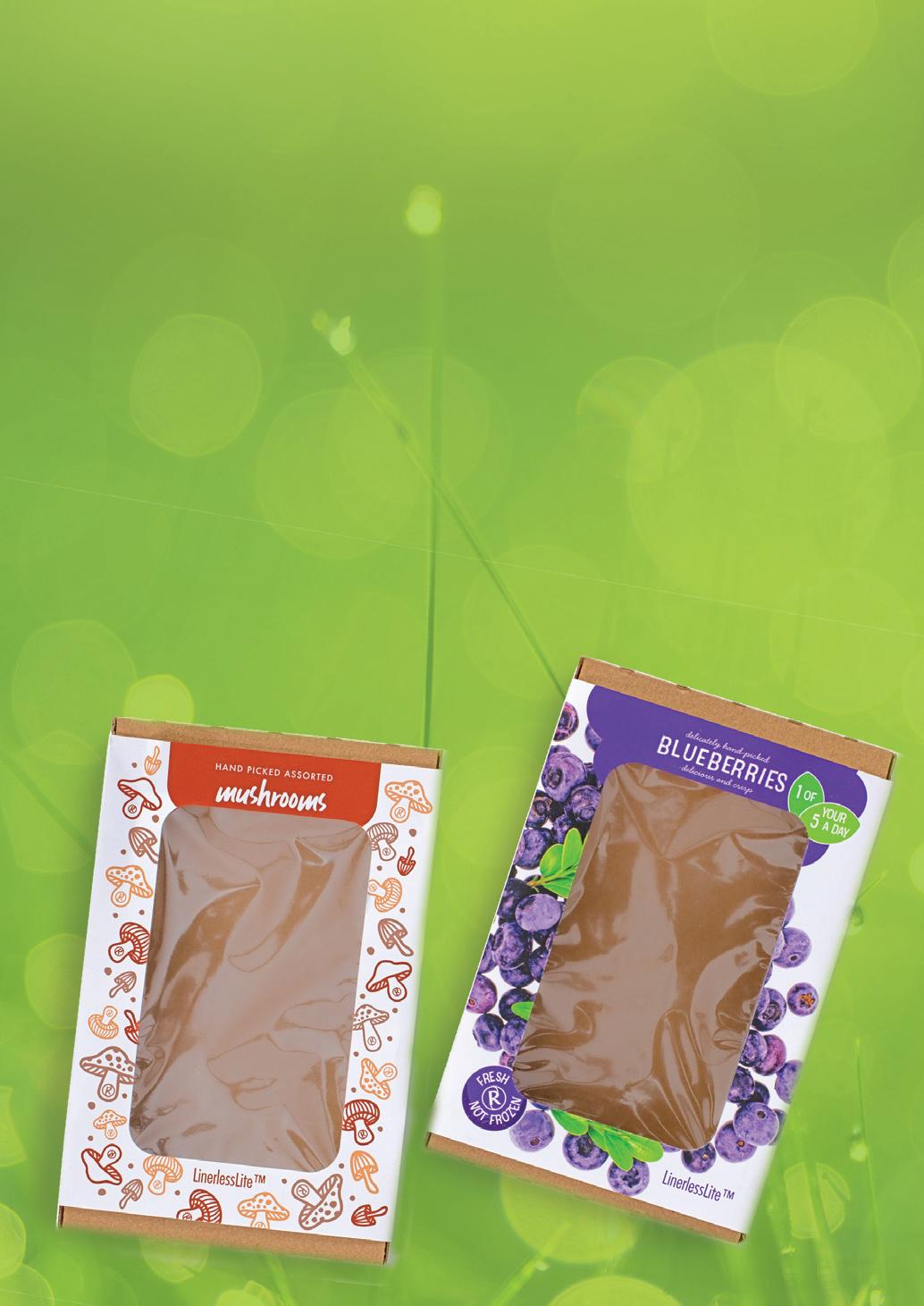
120 Inside food & drink
with every aspect of design and branding
These extensive services include CAD design, 3D rendering and creative product photography.
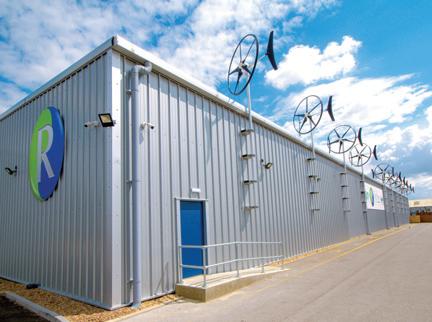
In consideration of the environment, Reflex offers many sustainable options to clients. Leading the way is the Reflex Pack Plus range, using up to 90% less plastic than traditional plastic trays, and featuring 100% recyclable board and film. Another sustainable option is the Linerless Labels range, which delivers additional environmental and financial benefits to clients due to the reduction of backing paper, reducing waste and allowing more labels per reel.
Reflex’s ongoing drive for innovation and sustainability can be seen in its latest products. 2022 saw the launch of the British Collection vine tomatoes from UK retailer Marks and Spencer, in a one-of-akind recyclable carton board punnet. This packaging replaced the traditional plastic sleeve that can be difficult to recycle, with an easy to recycle cardboard punnet and uses only minimal plastic film to preserve
freshness. Reflex adopted sandwich packaging to develop this new line, which uses 95% less plastic and helped the company r emove eight million units of plastic food packaging by the end of 2022.
New for 2023, Reflex Pack Plus introduces t hree new skillet packs perfect for the foodto-go market, offering lightweight, robust, plastic-free and sustainable packs. This new launch is helping to change the landscape of the food-to-go market, offering a sustainable and recyclable option for one of the fastest growing food sectors, and one that produces millions of tonnes of waste each year.
The Reflex Group hopes to continue to offer packaging options that help reduce this waste, including the introduction of Reseal-it: resealable film that keeps food fresher for longer.
Award-winning quality & ethics
The reputation of Reflex within the industry is clear from the sheer number of its awards: 2022 alone saw Reflex win the Environmental and Sustainability Award


Inside food & drink 121
at the Sammies, reflecting the company’s efforts to reduce the Food-to-go sector’s impact on the environment. This impact was reinforced by the FlexoTech 2022 award for being the Environmentally Sustainable Company of the Year.
Reflex also performed well at the prestigious Flexographic Industry Association (FIAuk) awards. At the 2023 event, Reflex took home an incredible five awards including best in show.
With such an award-winning pedigree, it is no surprise that Reflex stands out from the competition as a one-stop solution for a customer’s labelling and packaging requirements. This position is reinforced by the company’s sustainable options, with a range of environmentally-friendly packaging choices offered to customers.
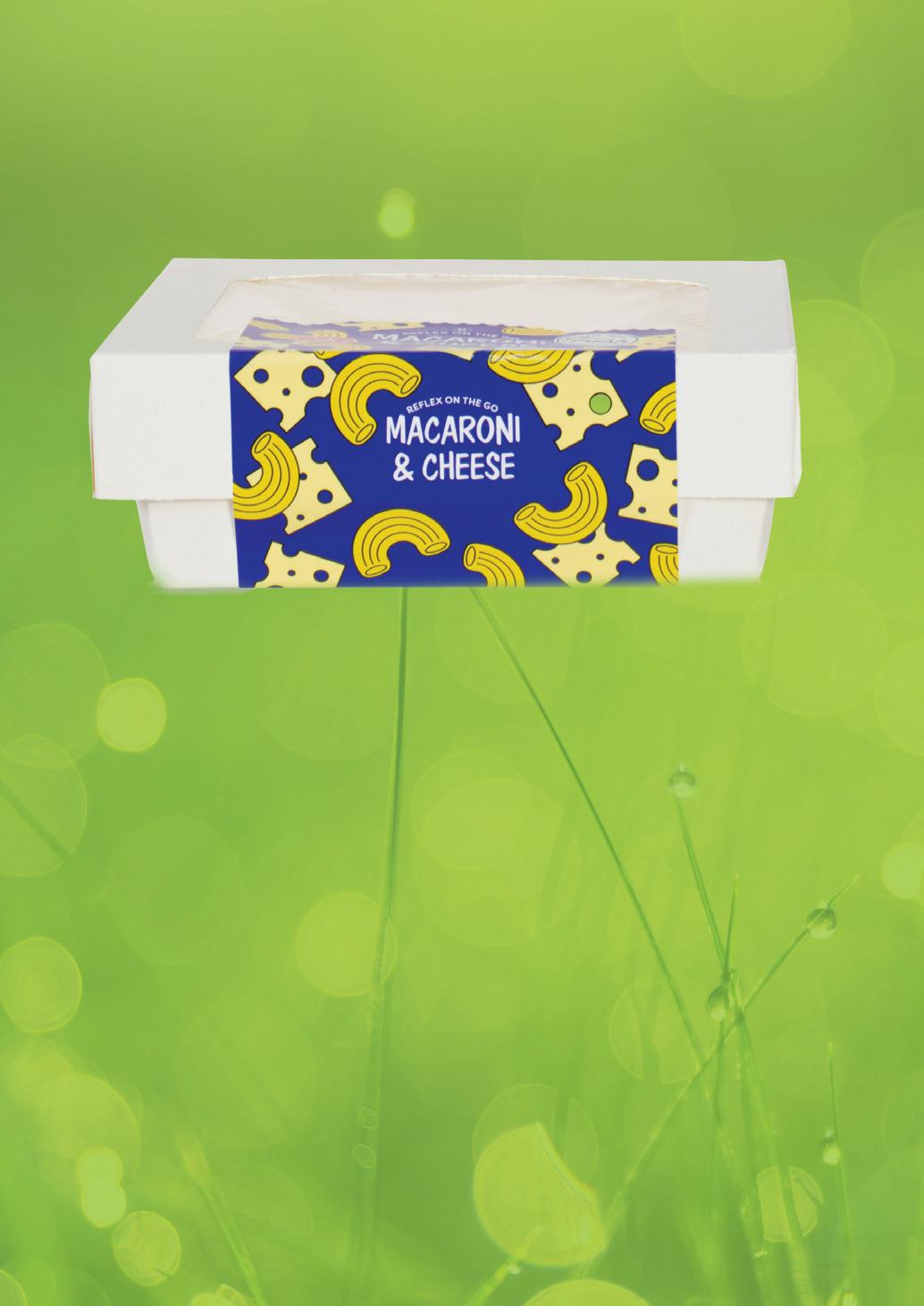
“Our paper-based label stocks focus on the use of recycled pulp to allow for the recovery of materials,” said Mr Dudman.
“We also offer customers flexible packaging options, such as our single-substrate packs. Another popular option is our Reseal-it labels that help consumers reduce their food waste.”
A sustainable industry
These labelling options from Reflex are fully aligned with the broader, consumerled trend for sustainability. A dedication to pulp-based paper and cardboard materials, combined with the use of PCW (post-consumer waste) in face materials, enhances the sustainability of Reflex’s output.
“ Reflex is at the forefront of using new and emerging materials and structures to meet the ever-changing packaging requirements of our customers,” Mr Dudman explained. “The ability to make quick and effective innovations and investments, along with our supplier relationships and
THE REFLEX GROUP I PROFILE 122 Inside food & drink
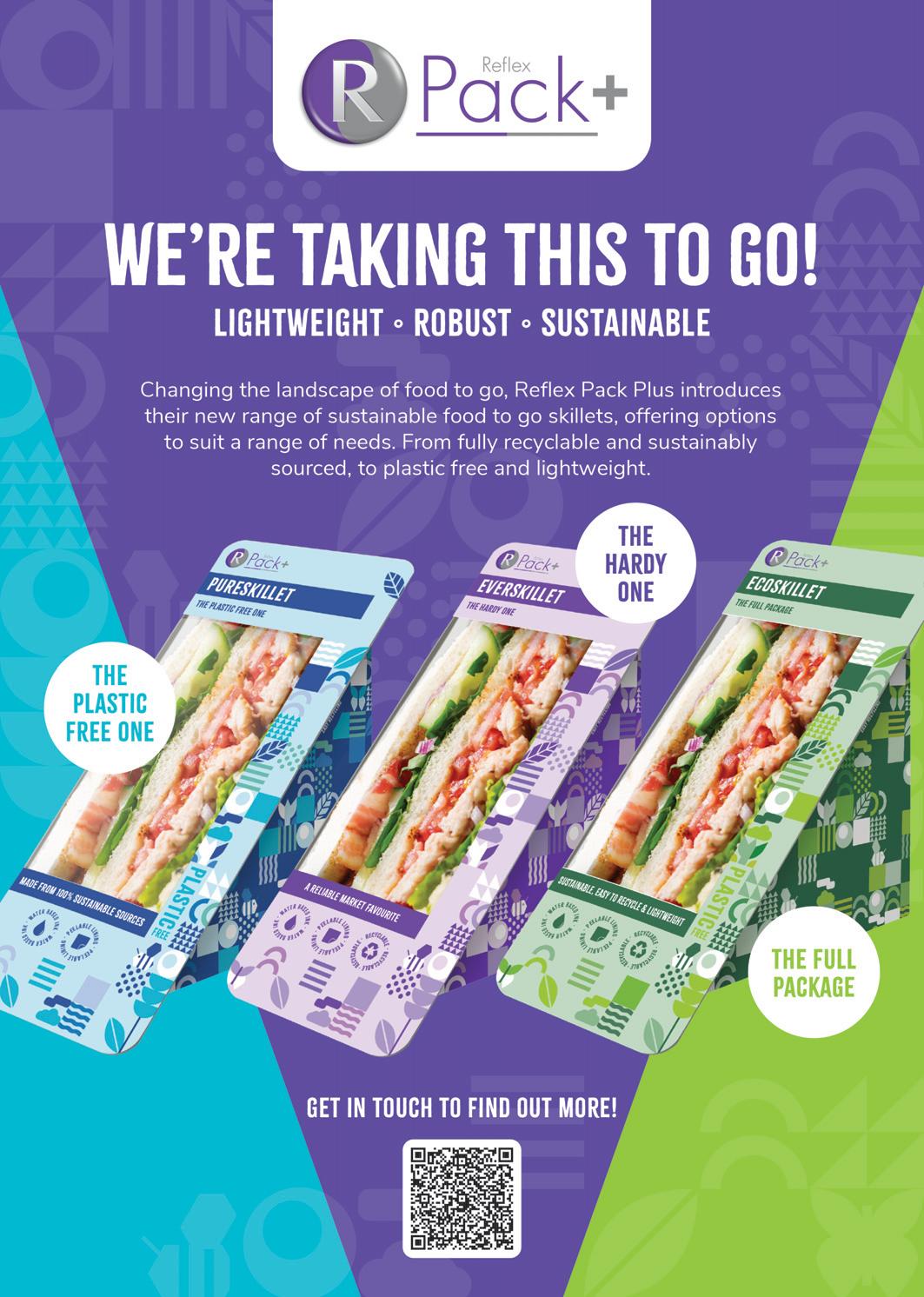
development opportunities, are what keeps Reflex at the cutting edge of packaging development.”
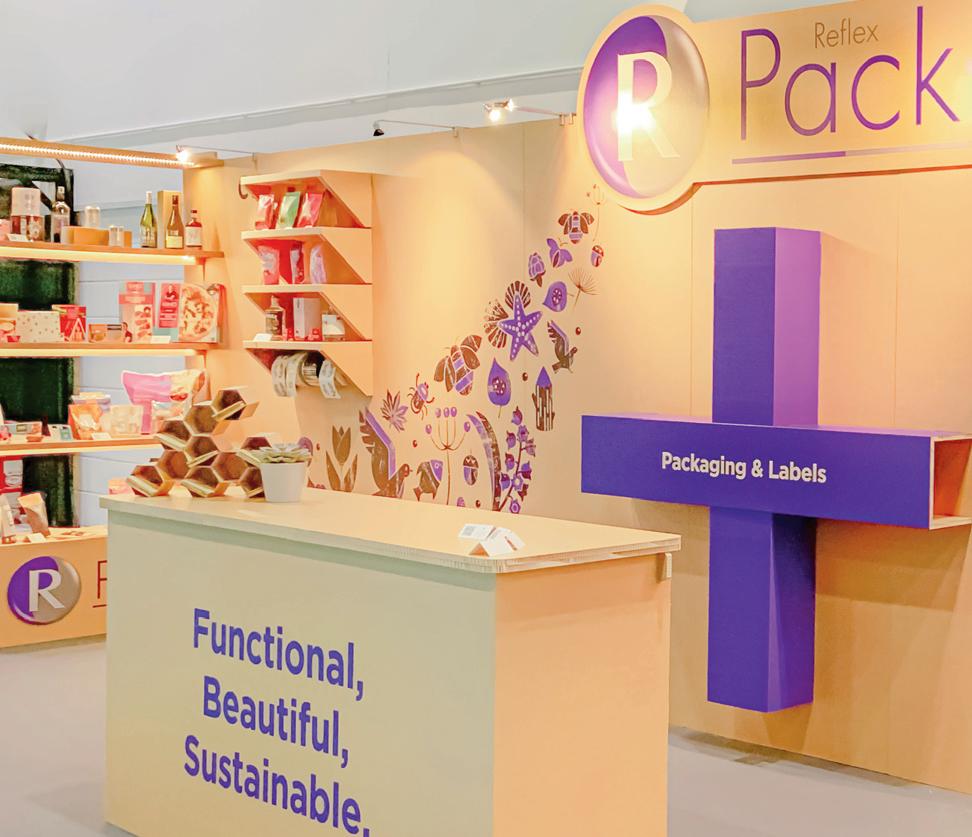
The company delivers sustainability not just with its products, but also in its operations. Reflex has embraced on-site renewable energy generation, with solar panels and wall-mounted wind turbines installed across multiple sites. The company tracks real-time energy use and aims towards a zero-to-landfill policy.
Reflex also endorses nature conservation with a tree-planting programme

supporting UK woodlands, with over 50,000 trees planted so far. Investments include state-of-the-art machinery to deliver efficient operation and waste reduction, plus deploying a fleet of hybrid and electric cars.
“At the local level, we are launching site bursaries in 2023,” added Mr Liversuch, “whereby each Reflex site can choose a sustainable community initiative to become involved with and to sponsor. This creates freedom at our sites for choosing partnerships that mean the
THE REFLEX GROUP I PROFILE 124 Inside food & drink
most to them, which encourages employee participation.”
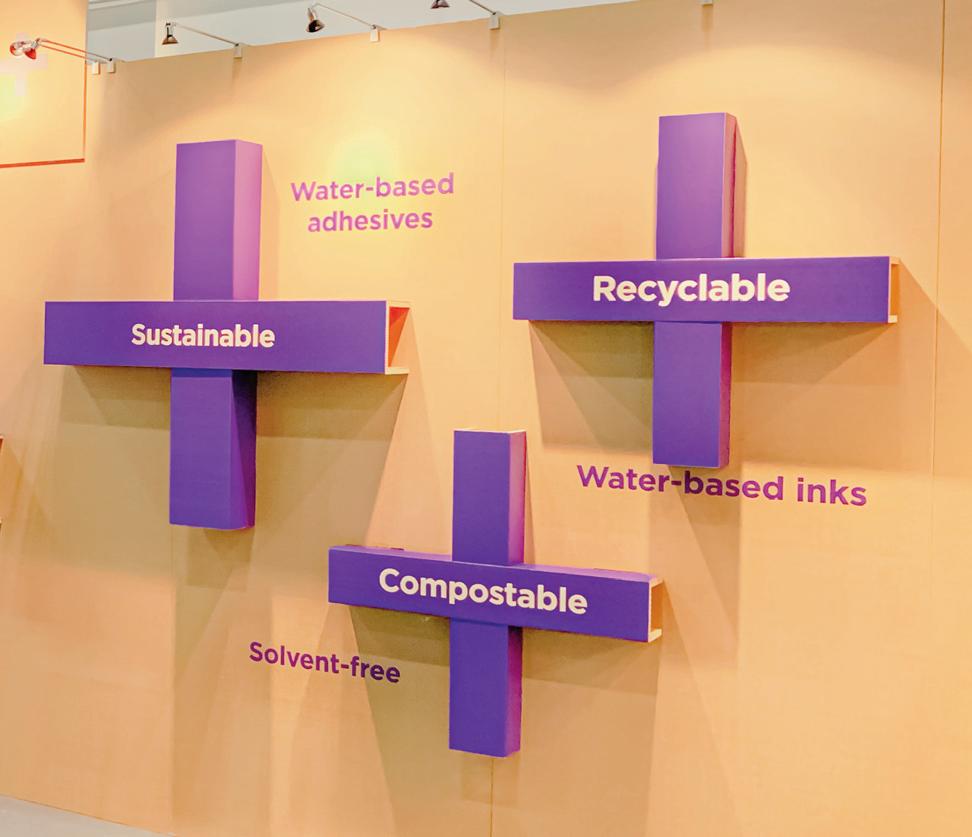
Working in this supportive environment has many rewards. “The varied nature of the Reflex Group business means that n o two days are ever alike,” concluded Mr Dudman. “There is huge personal satisfaction in developing a product and seeing it on the shelf, like the M&S Collections Tomato on the vine range. This gives me the drive to receive, create and execute a customer’s brief, along with supporting Reflex’s many production teams.” n

Inside food & drink 125
Reflex Woodland in Stronafian
WRAPPING UP THE PALLE TISING MARKE T
Over thirty years ago, InterSystem’s founder seized an opportunity to build a company based around his revolutionary new palletiser design. Today, the company has evolved into the market leader in northern Europe, boasting tens of millions of Euros in annual turnover and a unique position in the palletising market. Company CEO, Erik Johnsson, chatted with Richard Hagan about the business of palletising Europe’s goods.
InterSystem AB, based in Ängelholm in Sweden, supplies bespoke palletising solutions for consumer products. The company designs, builds and installs systems for palletising worldwide, including self-produced conveyors for light goods and pallet handling.
InterSystem’s automation solutions are based around the company’s signature, uniquely compact palletiser, around which
conveyor solutions, stretch wrappers and marking equipment are integrated. The company’s multi-palletiser is its most popular product, thanks partly to its compact dimensions and its high capacity. The machine allows the customer to palletise products from two separate production lines and produces two different pallets.
A big idea about downsizing
In the 1980s, InterSystem’s founder, Anders Persson, was employed at a company that was providing very similar solutions to those provided by InterSystem today. There, Mr Persson developed relationships with some of the company’s customers, and two of those in particular – one in Norway and one in Germany – requested a very compact palletiser, something which his current employer did not have available at the time.
Developing the design for such a palletiser in his spare time, Mr Persson realised that this could be a nice opportunity to start a business of his own. So, with the above-

126 Inside food & drink
INTERSYSTEM AB I PROFILE
Intersystem CEO, Erik Johnsson
Inside food & drink 127
INTERSYSTEM AB I PROFILE
mentioned clients in hand, Mr Persson took the plunge and left his employer to establish InterSystem AB in 1989. The company consisted of only himself, an electrician, a mechanic and a programmer who got to work building the first compact palletiser as Mr Persson had envisioned it.
The development of the new compact palletiser was a success, and the first two machines were soon sent to Norway and the third to Germany. On the strength of the high quality and robust performance of its products, InterSystem’s relationship with these export customers rapidly grew, leading to further orders for another ten machines. It was not, in fact until InterSystem’s fourteenth machine delivery that it delivered a system locally in Sweden.

Efficient production
InterSystem has developed a highly efficient production routine that ensures full quality control and optimal use of its own
space. Using a carefully selected roster of subcontractors to handle all of its manufacturing requirements, InterSystem’s facility is primarily responsible for design, assembly, testing, packing and shipping.
The company employs 70 highly skilled employees across all of its departments, with an additional 30 subcontractors on site from time to time, depending on current workflows. “We use expert subcontractors for welding, painting, motors, pneumatics and other requirements,” explained CEO Erik Johnsson. “We assemble and test every system at our facility, and then it has to be disassembled and shipped off to the customer’s facility where it must be reassembled and installed.”
Today, InterSystem builds 40 to 50 pall etisers a year – an impressive achievement.
Mix and match modularity
I nterSystem’s palletiser and other systems are standardised and specifically designed to be modular. This makes every project
128 Inside food
& drink
quite straightforward, primarily requiring InterSystem’s design team to arrange the customer’s specified modules, into the available space.
“It’s like Lego, because the different solutions and the different modules we have on the shelf all go together in any number of different ways,” said Mr Johnsson. “The modularity of our system makes layouts very easy and allows us to be super flexible for the customer. The build and the installation are easier, too. And if the customer wants to add capacity at a later stage, they can often do that.”
Flexibility and strong relationships are the keys to InterSystem’s success in the market, as Mr Johnsson noted: “Much of our business comes from repeat customers who return to us because of our highly flex ible offering and our commitment to deliver on time.”
In fact, repeat orders account for about 80% of InterSystem’s sales. “We are focused on quality, producing good projects and customer retention,” he added. Those efforts have delivered substantial yearly increases in turnover. Between 2016 and 2022, InterSystem’s turnover grew from €8 million to €20 million.
As it has done for several years now, InterSystem regularly exhibits at Interpack, where the company always looks forward to making new connections.
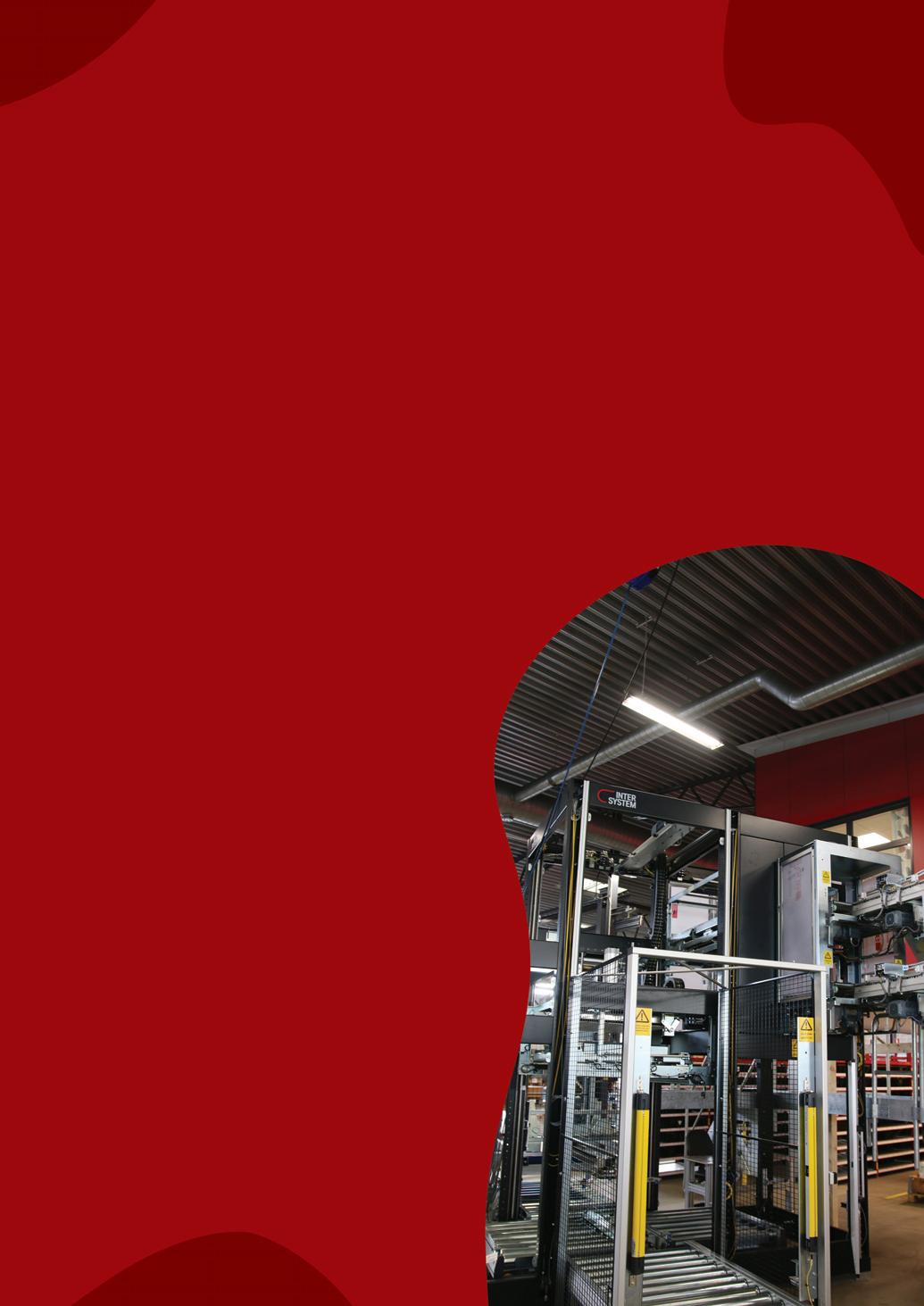
Sustainability in durable machinery
The durability of InterSystem’s products has been repeatedly proven during the company’s multi-decade lifespan. “We’ve
had customers come to us seeking a new machine, only for us to discover that they still have the same machine, fully operational, that we delivered 30 years ago,” Mr Johnsson recalled. “One particular customer, who I’m meeting soon, is buying their eighth machine from us, with their first machine having been bought in 1993 and which is still active!”
That durability record also helps to drive the company’s sustainability credentials.
Inside food & drink 129
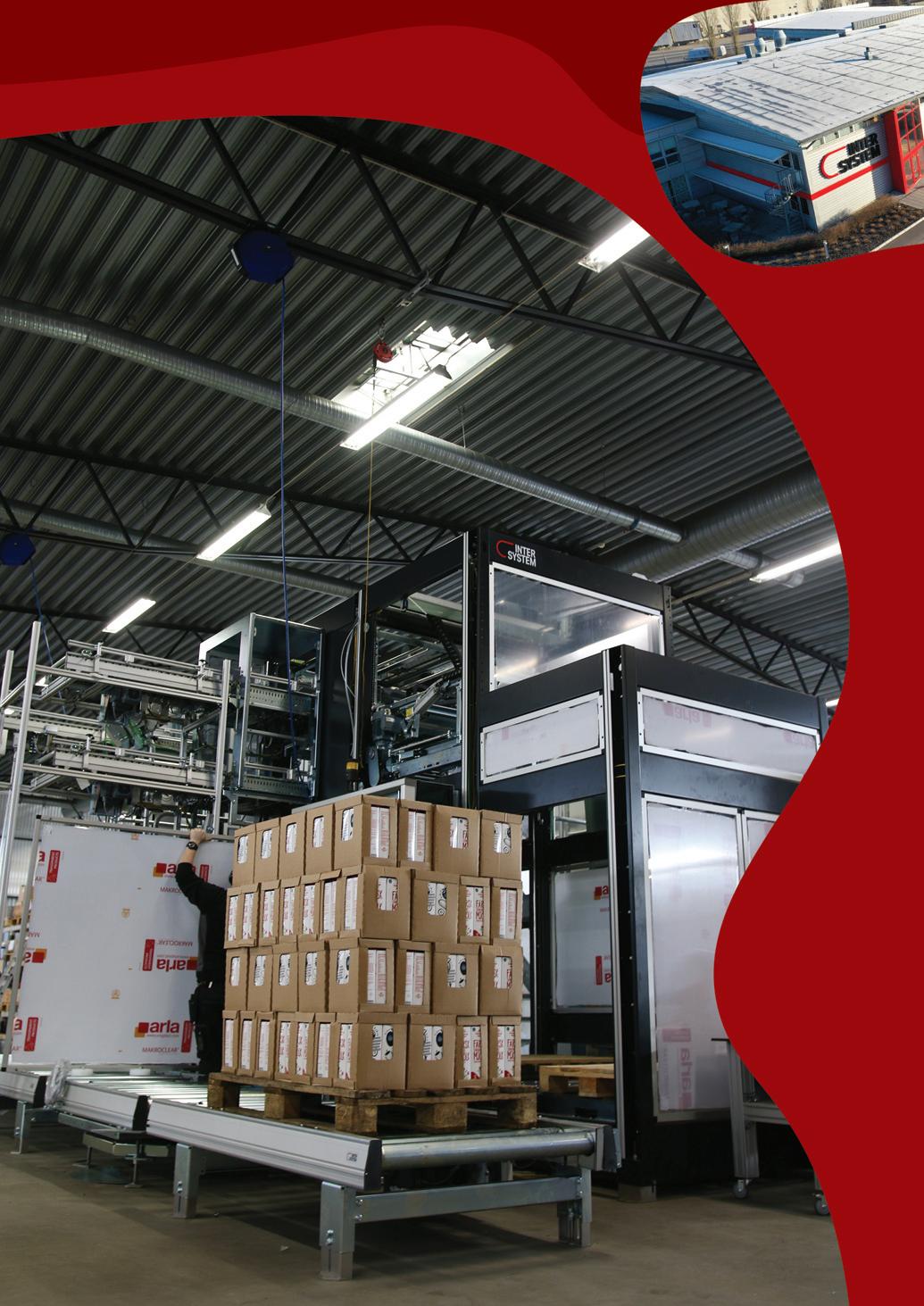
INTERSYSTEM AB I PROFILE 130 Inside food & drink
“Our machines are super sustainable since they boast long lifespans, partly because of their simple componentry,” the CEO explained. “Added to that, we build our systems using one of the most energy-efficient motors on the market; they’re small and efficient.
“And when a customer replaces a machine, the whole thing easily disassembles into its components and can be recycled. It’s also very easy to tear down because none of the parts are integrated with one another, such as in a car, for
instance. Our machines are connected in a simple manner and it’s very easy to separate them into the different materials for recycling.”
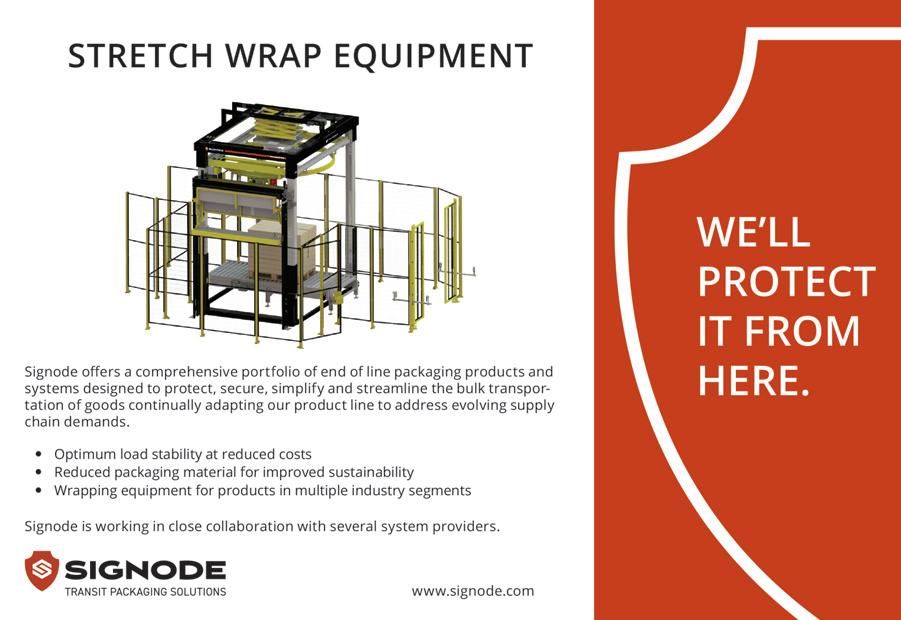
In closing, Mr Johnsson mentioned that InterSystem’s team is optimistic about the future and expects to see further growth of the company. “Getting the right people in and engaging them in the company, managing our teams and seeing people develop as we grow is my passion, and along with the customers and their projects, InterSystem is just the most exciting experience.” n

Inside food & drink 131