AN INDUSTRY MUST HAVE
Emerging innovation in road pit design poised to reshape the sector
From classroom to construction
The next generation of industry leaders has been given exposure to major projects
Time for action
New research has outlined the potential future impact of severe weather events on infrastructure


















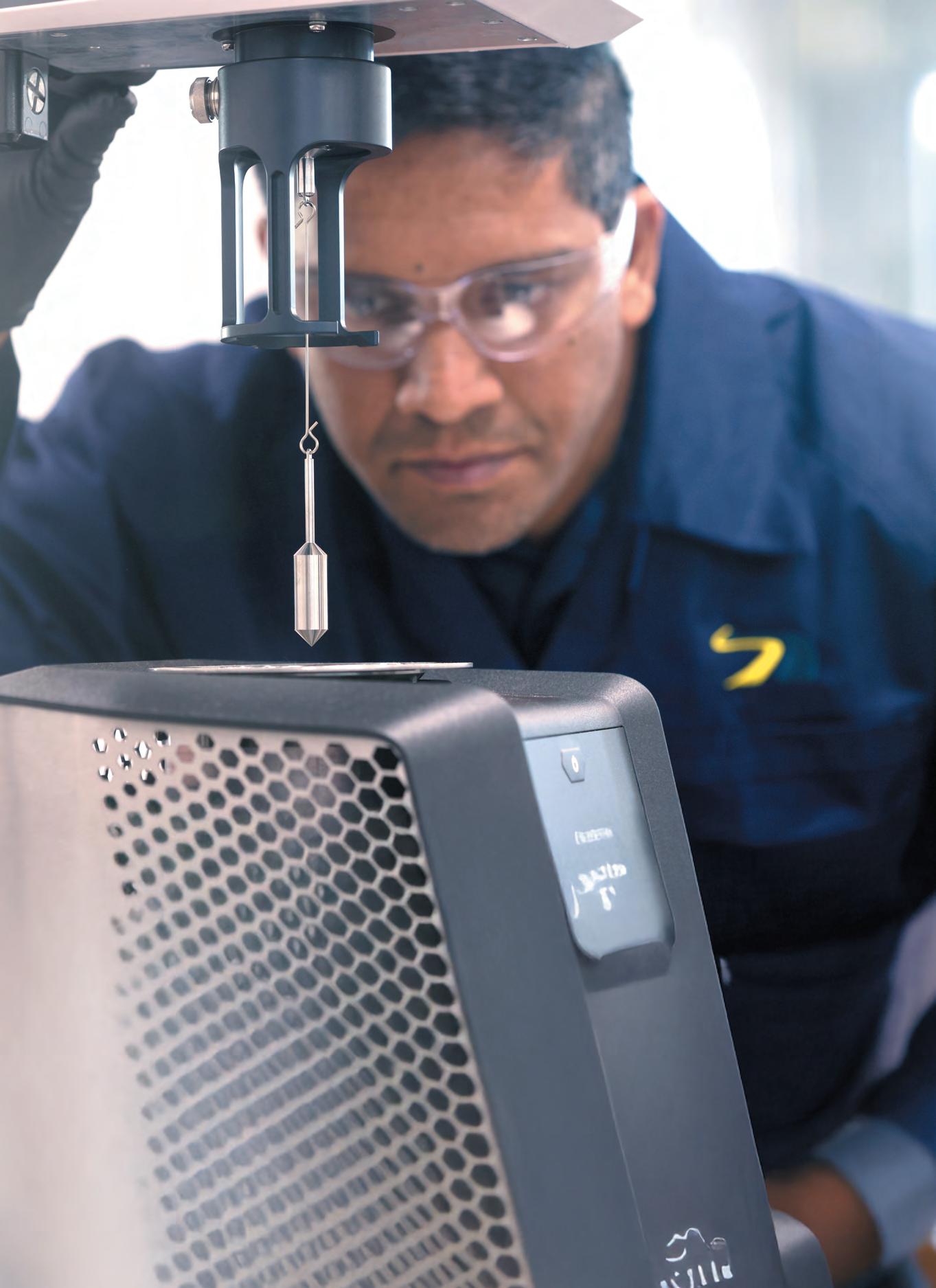
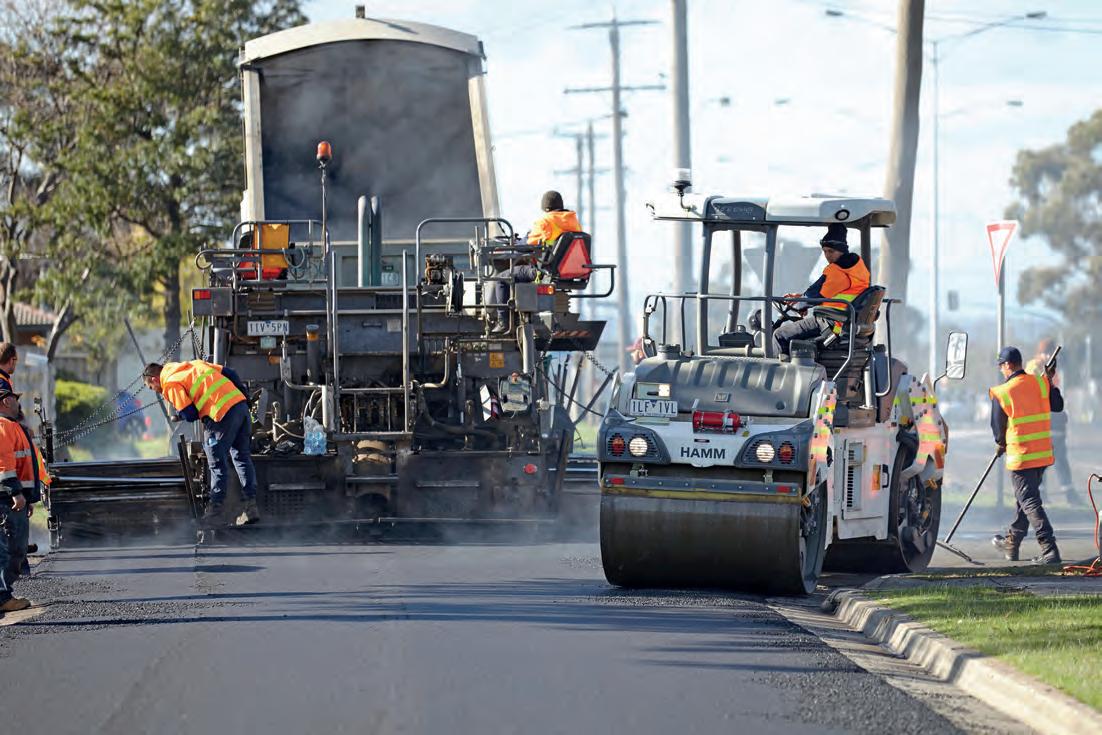
CLOSE TO OUR CUSTOMERS. For decades, HAMM oscillation has been the go-to compaction method for quality results on sensitive asphalt mixes like SMA and EME-2, especially around vibration sensitive assets like pipelines, bridge decks and buildings. Now HAMM has introduced Smart Compact Pro - another breakthrough in compaction efficiency that incorporates real-time density on the fly. Do you want to be known for producing quality pavements, quickly and with less re-work? Let Hamm help.

COVER STORY
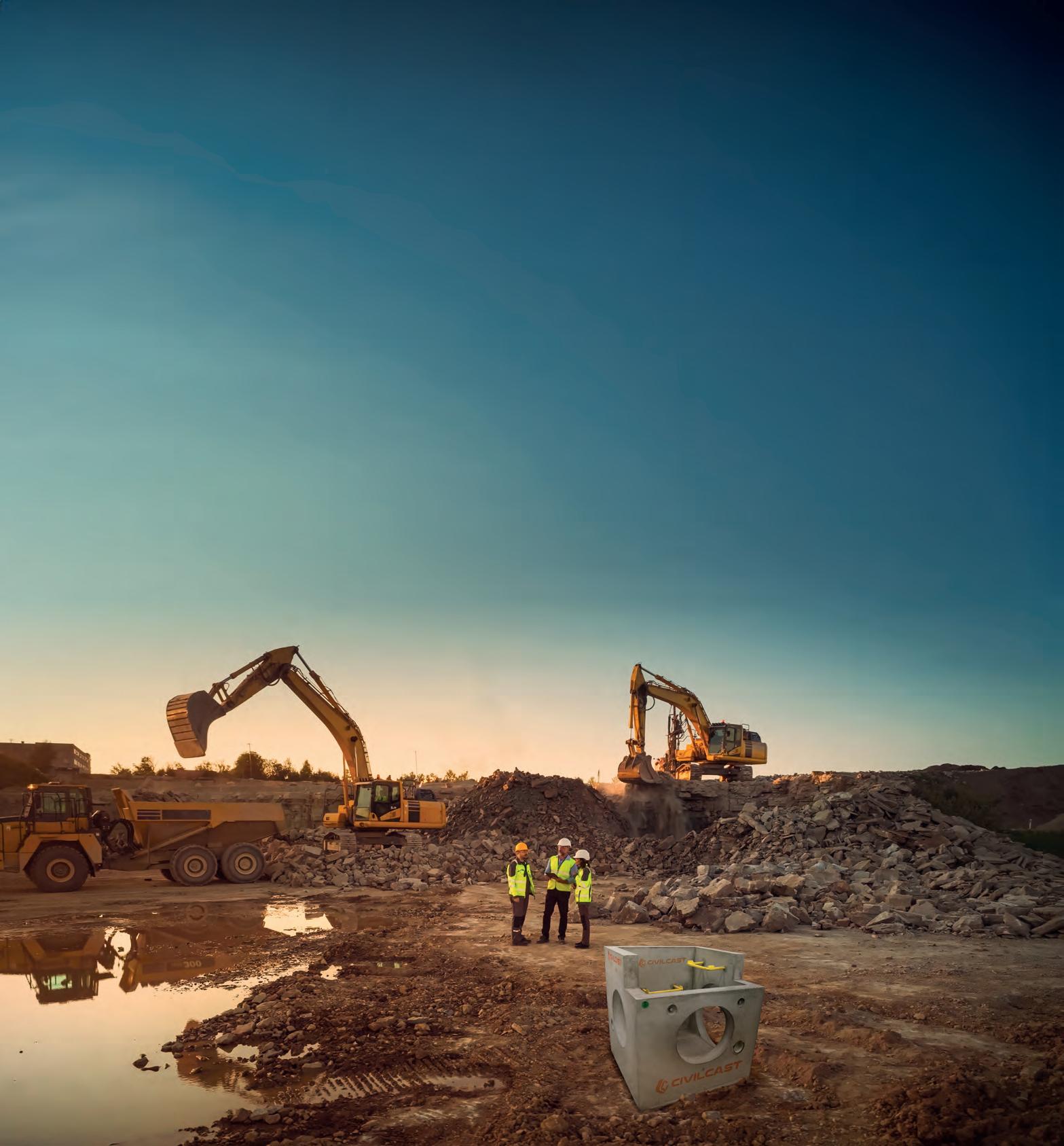
14 An industry must-have Civilcast’s new range of custom road pits are providing unparalleled quality and performance for what is an essential, albeit often understated, component in infrastructure development.
ROADS REVIEW
17 This month, we asked the industry’s decision-makers, ‘How is your organisation improving and optimising workplace safety?’
PROJECT REPORT
19 From classroom to construction Young women are reshaping the future of engineering, bringing fresh perspectives, handson experience, and a commitment to inclusivity to Australia’s infrastructure sector.
INDUSTRY RESEARCH
22 Time for action
New research has further highlighted the impact that weather events will continue to have on the structural integrity and resilience of commercial and transport infrastructure.
COMPANY PROFILE
24 COLAS: Globally connected ‘One COLAS Bitumen’ unites the company’s subsidiaries around the world, helping to improve quality, sustainability and innovation globally.
26 Quality runs in the family Sealants and Pavement Adhesives’ story is as compelling as its solutions.
SUSTAINABILITY
29 Celebrating 20 Years of Impact
This year, Sustainability Victoria is marking two decades as the state’s lead agency for accelerating sustainability and cutting waste and emissions.
32 Building futures
South Australia’s Torrens to Darlington (T2D) infrastructure corridor is one of the state’s most significant transport upgrades.
TECHNOLOGY
34 Creating a digital hub
Arcadis’ recent and ongoing works on the Warringah Freeway Upgrade have been greatly assisted by the collaborative, clashdetection and real-time coordination capability of Revizto.
Creativity and collaboration are flourishing across the industry, two things to keep an eye out for in this edition of Roads & Infrastructure magazine.
SAFETY
36 Protection, at its best Engineered for fast-paced environments, Meridian’s Archer Guard system is helping workers stay safe on bridge, arterial road, utility projects and more. Applications in the United States point towards success here in Australia.
38 Optimising site safety
The Wirtgen Group is further bolstering its commitment to safety, continuing its partnership with Strata Worldwide to deliver innovative Proximity Detection Systems.
MACHINERY AND EQUIPMENT
40 Quality at every step
Matthews Brothers Engineering’s range of quality spreader box units, backed by a stateof-the-art manufacturing facility and team, are making waves in the sector.
42 Value agreements benefitting business Equipment that continues to deliver value over the long term is one of the key pillars of productive operations, paving the way for a successful and stress-free ownership experience.
44 Smart air power
Inspired by a need for versatility, maximum utilisation, fuel efficiency, and durability in a single portable air compressor unit, Atlas Copco has created the X-Air 410-12 PACE.
46 Tried and tested
Proven in the field by councils across Australia, LiuGong machinery is earning a reputation for performance, reliability, and unbeatable value.
EVENTS
48 Fostering mental wellness
A new partnership reflects a growing movement within the construction industry to break down the stigma surrounding mental health and create safer, more supportive workplaces.
50 Time for trenchless
Auckland, New Zealand is set to become the next centre of the trenchless world in 2026, hosting International No-Dig Auckland.
ASSOCIATION SECTION
52 Beneath the vines
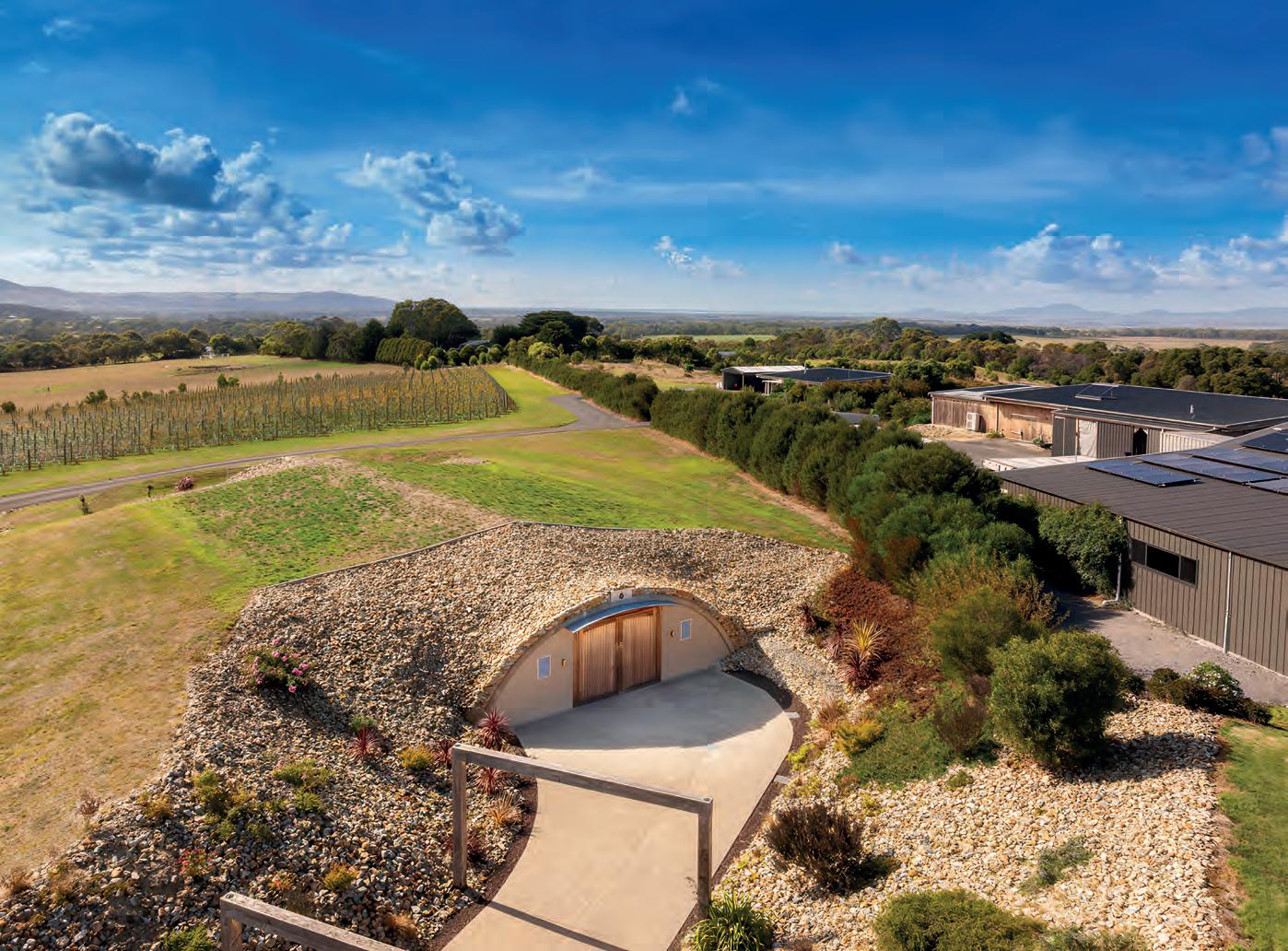
In the rolling hills of Victoria’s South Gippsland, a bold experiment in architectural innovation lies quietly hidden beneath the vineyards.
55 Recycling the Road Ahead
This year marks a major milestone for AustStab, as the association celebrates 30 years at the forefront of pavement recycling and stabilisation.
CONTRACTS AND TENDERS
58 Roads & Infrastructure provides an update on some of the contracts and tenders recently awarded or put to market across the Australian infrastructure sector.
CEO
Christine Clancy christine.clancy@primecreative.com.au
PUBLISHER
Sarah Baker
sarah.baker@primecreative.com.au
MANAGING EDITOR
Lisa Korycki lisa.korycki@primecreative.com.au
EDITOR
Tom O’Keane tom.okeane@primecreative.com.au
JOURNALIST
Jennifer Pittorino jennifer.pittorino@primecreative.com.au
HEAD OF DESIGN
Blake Storey
ART DIRECTOR
Bea Barthelson
BUSINESS DEVELOPMENT MANAGER
Loren Katie Logan lorenkatie.logan@primecreative.com.au
CLIENT SUCCESS MANAGER
Sabrina Zor sabrina.zor@primecreative.com.au
HEAD OFFICE
Prime Creative Pty Ltd
379 Docklands Drive, Docklands VIC 3008 Australia p: +61 3 9690 8766 info@primecreative.com.au www.roadsonline.com.au
SUBSCRIPTIONS +61 3 9690 8766 subscriptions@primecreative.com.au
Roads & Infrastructure Australia is available by subscription from the publisher. The rights of refusal are reserved by the publisher.
ARTICLES
All articles submitted for publication become the property of the publisher. The Editor reserves the right to adjust any article to conform with the magazine format.
COVER IMAGE Civilcast
COPYRIGHT
Roads & Infrastructure Australia is owned and published by Prime Creative Media. All material in Roads & Infrastructure Australia is copyright and no part may be reproduced or copied in any form or by any means (graphic, electronic or mechanical including information and retrieval systems) without the written permission of the publisher. The Editor welcomes contributions but reserves the right to accept or reject any material. While every effort has been made to ensure the accuracy of information, Prime Creative Media will not accept responsibility for errors or omissions or for any consequences arising from reliance on information published. The opinions expressed in Roads & Infrastructure Australia are not necessarily the opinions of, or endorsed by the publisher unless otherwise stated.

FUNDAMENTALLY LOCAL
EVERYWHERE WE LOOK, COMMUNITY plays an integral role in the infrastructure sector. Not only are the majority of projects delivered for the community, but community also helps to drive, support and mould infrastructure design and delivery.
It’s an often-understated area of the industry, which lacks the attention and plaudits. Which is why the November edition of Roads & Infrastructure magazine is dedicated to the communities that help to make the sector what it is today.
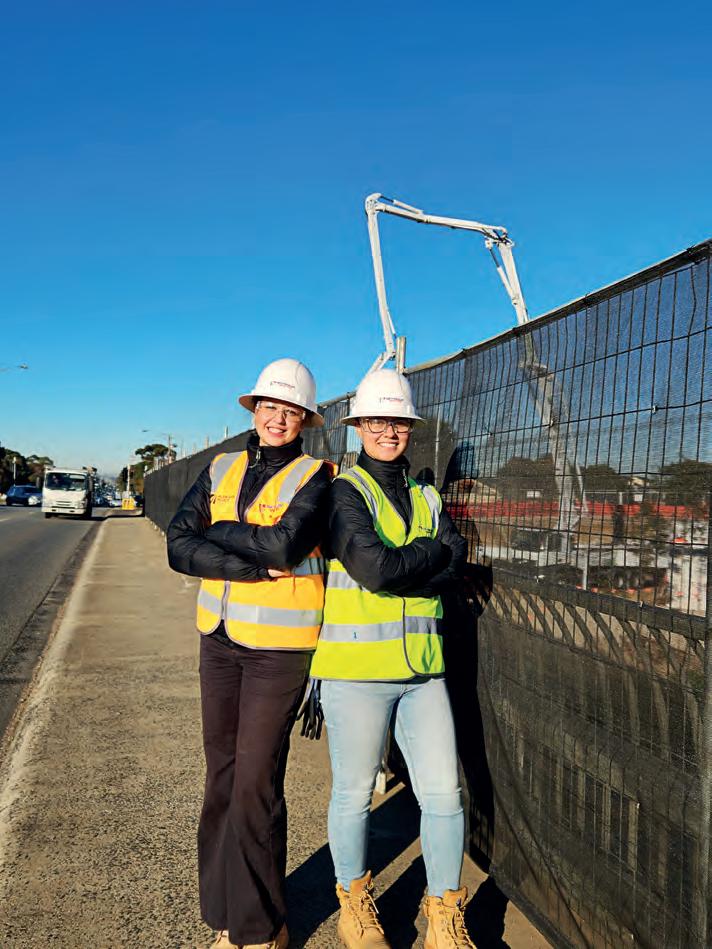
Young women like Alicia Pera and Winnie Wilson are reshaping the future of engineering, bringing fresh perspectives, hands-on experience, and a commitment to inclusivity to Australia’s infrastructure sector. Both Pera and Wilson found their way into engineering through a shared love of maths, science, and problemsolving. But it’s the hands-on experience they’ve gained through the Seymour Whyte undergraduate program which has truly shaped their career outlooks.
This initiative is not only helping to invite young community members into the sector, but it’s also helping to inspire the next generation of industry leaders.
Sustainability Victoria is also celebrating its established community of leaders in the sustainability and recycling space, with the organisation celebrating its 20th anniversary. Since its establishment in 2005, Sustainability Victoria has reshaped how Victorians think about resources and sustainable living. It’s also helped to create more sustainable project outcomes, benefiting local communities for generations to come.
Also in this edition, new research has outlined the full impacts that weather events such as La Niña can have on the long-term performance of transport, commercial and community infrastructure. Speaking with Bikash Devkota, PhD Candidate, UniSA STEM – University of South Australia, the Roads & Infrastructure magazine team finds out what’s required to ensure that these structures can last longer than the traditional 50-100 years.
For the Roads Review column this month, we invite leaders to detail how their organisations are helping to keep their workers, and as such members of the community safe.
This and much more, in the November edition of Roads & Infrastructure magazine.
Happy reading!
Tom O’Keane



TOM O’KEANE – EDITOR










$976M ROAD MAINTENANCE BLITZ UNDERWAY IN VIC
The Victorian Government has commenced works in Kyneton, that form part of the $976 million road maintenance blitz, the largest single year investment in road maintenance in the state’s history.
Over the next nine months, crews will complete thousands of projects on the state’s network, ranging from road rehabilitation and resurfacing, patching potholes and maintaining bridges, to installing traffic lights and signage.
The blitz will target the state’s busiest travel and trade routes. Major maintenance projects will be delivered as part of the funding, with 70 per cent of all funding going towards regional roads.
The key roads across regional Victoria to be targeted through this massive program of works include the Western Highway, Princes Highway East, Princes Highway West, Hume Highway and Calder Highway. Other works

will include upgrades to the Mornington Peninsula Freeway, Leakes Road, Normanby Road, the Warburton Highway and Boronia Road. Flora upkeep,
TRANSPORT AND INFRASTRUCTURE NET ZERO ROADMAP AND ACTION PLAN RELEASED
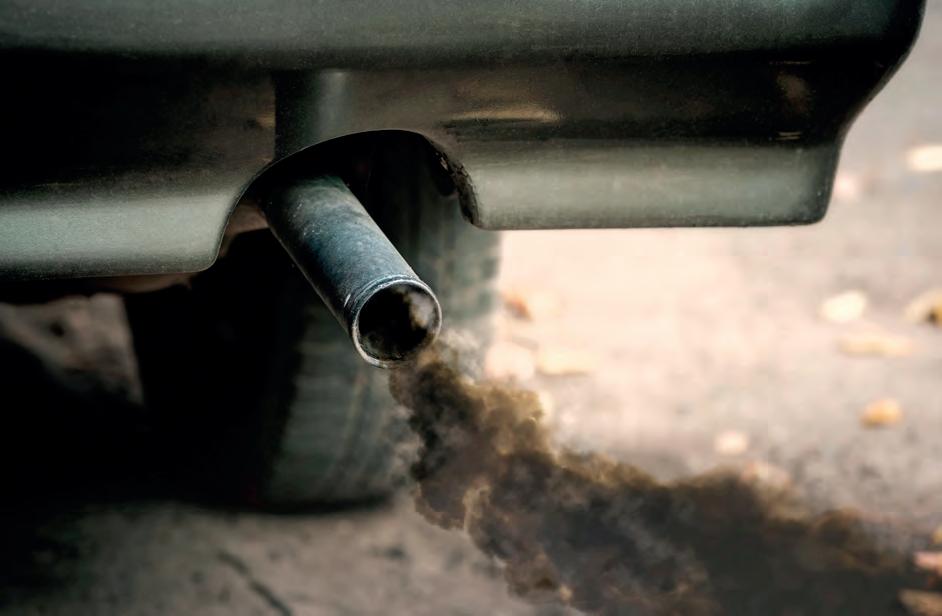
The Federal Government has lifted Australia’s 2035 emissions target to reduce emissions across transport and transport infrastructure and support the long-term target of net zero by 2050.
The target to reduce emissions by 62 to 70 per cent below 2005 levels by 2035 is also supported by the release of a Net Zero Plan, which sets out how the nation will achieve a fair, orderly and efficient transition to net zero.
In addition to the emissions target, six sector emission reduction plans have been outlined, alongside a plan on how to achieve these targets.
The six sectors are transport, electricity and energy, agriculture and land, the built environment and industry.
The Transport and Infrastructure Net Zero Roadmap and Action Plan (Transport Sector Plan) sets out how the uptake of cleaner cars, active and public transport,
general roadside maintenance, as well as inspections will also be delivered as part of the program. Traffic lights and electric signs will also be fixed.
and solutions for aviation, maritime, freight, rail and roads, will deliver emissions reductions, consumer savings and increased fuel security.
The Transport Sector Plan covers all transport modes and considers crosscutting issues including low carbon fuels, freight and supply chains, system-wide efficiencies and transport infrastructure.
There are five priority actions that will ensure the transport sector makes its full contribution to Australia’s emissions reduction goals.
These include an investment in enabling low and zero emissions transport infrastructure, electrifying and increasing transport’s energy performance, switching to low carbon alternatives to power transport where electrification is not feasible, innovation to expand cost competitive transport technology options and scaling up efforts to reduce embodied emissions in transport infrastructure.
The Federal Government will invest $1.1 billion in the Cleaner Fuels Program to encourage domestic production of low carbon liquid fuels, and $40 million to accelerate the rollout of kerbside and fast charging, to support the uptake of electric vehicles.
The plan sets out how Australia will achieve a fair, orderly and efficient transition to net zero. Image: stock.adobe.com/NAMPIX
As part of its State Budget 2025-26, the Victorian Government is investing $976 million in the Better Roads Blitz. Image: stock.adobe.com/Zireael
Compliant & Approved
Australian Standards Compliant
TfNSW Approved
VicRoads Compliant
Strength You Can Trust
FIRST METRO TUNNEL STATION OPENS
Construction is now finished on Victoria’s Town Hall Station, one of five stations being delivered as part of the Metro Tunnel project.
Town Hall Station sits under Swanston Street between Collins and Flinders streets, giving commuters direct access to Federation Square, Birrarung Marr, Southbank, the Arts Centre and St Paul’s Cathedral. Its main entrance will open onto a rebuilt City Square.

Each of the eight concourse columns is made up of a 7.5-metre concrete post plus three 6.5-metre steel branches extending to the ceiling.
The station will have nine retail and hospitality spaces, with four under City Square and five at Town Hall Place on Swanston Street.
Town Hall Station will have 44 escalators and 12 lifts when all entrances are open.
A new pedestrian underpass, connected to the heritage-listed Campbell Arcade and Degraves Street subway, will link Town Hall Station directly into Flinders Street Station, so you can change between the Metro Tunnel and the City Loop without tapping off.
Town Hall’s 18 metre-wide platforms are among the widest underground metro platforms in the world and its ‘trinocular’
design of three overlapping tunnels at platform level features a cathedral-like arched ceiling.
The total space excavated for Town Hall Station, including the platform and concourse levels, was 260 metres long and as deep as a five-storey building, up to 33 metres underground.
Building the station’s internal structures used more than 7000 cubic metres of concrete and more than 2200 tonnes of steel.
The station’s 18-metre-wide platforms are 220 metres long and 27 metres below street level.
With construction complete, Metro Trains crews will now train and test at the station.
WA’S TONKIN HIGHWAY EXTENSION AND THOMAS ROAD UPGRADE BEGINS
The $1 billion Tonkin Highway Extension and Thomas Road Upgrade in Western Australia is now underway, aiming to improve road safety, reduce congestion and strengthen freight efficiency.
The project will deliver a 14-kilometre extension of Tonkin Highway from Thomas Road to South Western Highway and duplicate 4.5 kilometres of Thomas Road.
Once completed in late 2028, the project will provide safer and more
efficient journeys for more than 60,000 vehicles expected to use the corridor daily.
It also aims to remove thousands of heavy vehicles off local roads, reducing pressure on communities in Byford, Armadale, Kelmscott and Gosnells, as well as deliver new grade-separated interchanges, underpasses and roundabouts to improve traffic flow and safety.
The works will also introduce new shared paths for cyclists and pedestrians along the entire extension, and equine crossings
designed in consultation with local users to complement the METRONET Byford Rail Extension, due to open in October 2025.
With early works including site establishment and traffic realignments underway, large-scale earthworks, bridge structures and interchange building will ramp up over the coming months.
The project is jointly funded by the Australian and Western Australian governments.

Above: Construction is now finished on all five Metro Tunnel Stations. Image: Victorian Government
The project will extend the Tonkin Highway from Thomas Road to South Western Highway. Image: Western Australian Government
MAJORS ROAD INTERCHANGE OPENS TO TRAFFIC
The $120 million Majors Road Interchange upgrade in South Australia is complete.
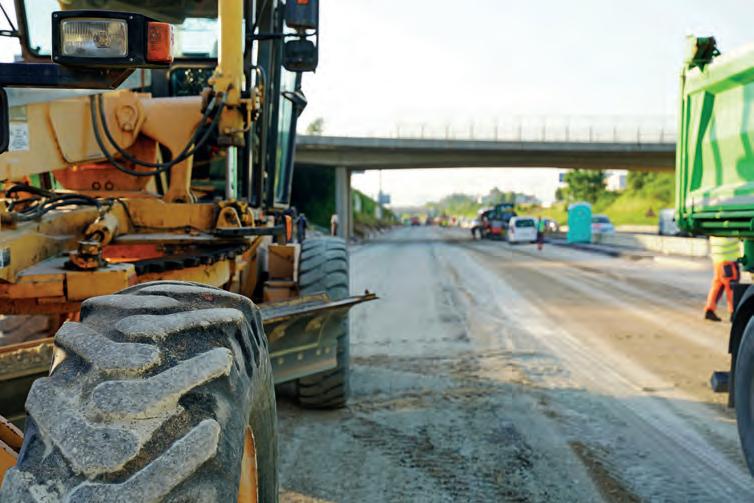
The newly widened Majors Road bridge has opened to traffic, improving travel on an important arterial road for connections between Lonsdale Road and Main South Road.
About 13,200 vehicles travel daily on Majors Road – anticipated to increase to around 14,700 during peak times by 2036.
The new on/off-ramps for the Southern Expressway at the Majors Road junctions are also now open to road users.
The Southern Expressway serves as the gateway to the Fleurieu Peninsula, carrying approximately 74,000 vehicles per day.
The project was jointly funded by the Federal and State governments, with both contributing $60 million.
The completed project will also see the delivery of 1.8 kilometres of new shared-use paths to connect two major cycling routes.
This will also increase access to
important community facilities, including
NEW DESIGNS RELEASED FOR LOGAN, GC FASTER RAIL PROJECT
Updated designs have been released for level crossing removals that form part of the $5.75 billion Logan and Gold Coast Faster Rail project in Queensland.
The project will remove five existing level crossings between Kuraby and Beenleigh to increase safety, reduce traffic congestion and improve cross corridor connections for local communities.
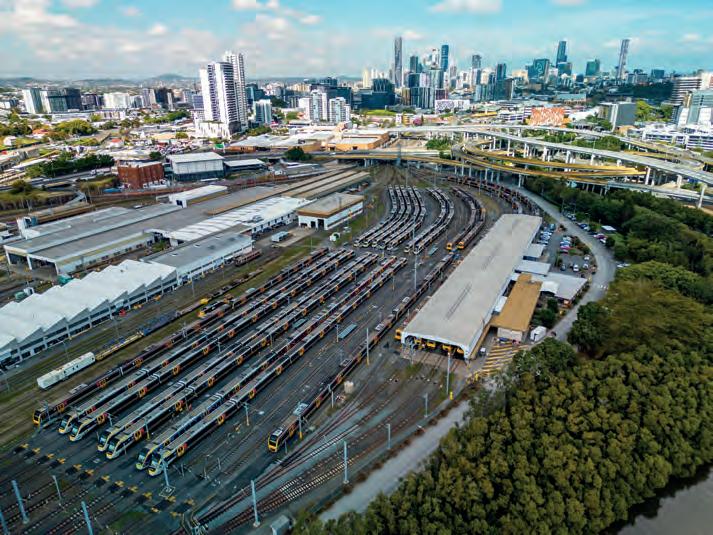
This will help to double the number of tracks from two to four between Kuraby and Beenleigh, remove level crossings, upgrade stations and deliver improved walking and cycling connections.
At Kuraby the level crossing on Beenleigh Road will be replaced by a road-over-rail bridge, with intersection upgrades to improve traffic flow and local connections.
Following feedback from the community, it’s proposed the station
The upgrade will deliver shorter and safer journeys through Adelaide’s southern suburbs for travellers and locals.
Speed limits on the on/off-ramps will remain reduced for a few weeks to allow the road surface to develop traction for safe driving at higher speeds.
and rail line at Bethania will be elevated above Station Road, removing the need to build a road-over-rail bridge.
Community engagement sessions have already begun, giving locals an opportunity to provide further input on the designs of both sites.
The release of these designs comes as
further site investigations have begun for the project.
Drilling rigs, survey and noise monitoring equipment have been used as part of site investigations between Kuraby and Beenleigh to inform detailed design and construction planning activities.
Glenthorne National Park–Ityamaiitpinna Yarta, Glenthorne Farm and O’Halloran Hill Recreation Park.
The Logan and Gold Coast Faster Rail project will double the tracks along the 20-kilometre corridor between Kuraby and Beenleigh. Image: stock.adobe. com/ymgerman
Image: stock.adobe. com/Redline Visuals


Challenges with noise and dust?
For us it’s no problem.
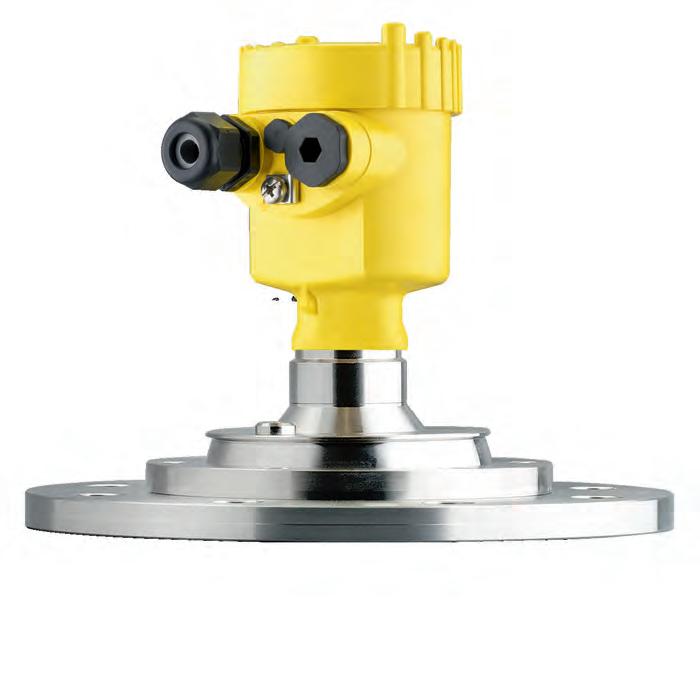

VEGAPULS 6X
The perfect radar level transmitter for measurement of bulk solids in all environments.
Everything is possible. With VEGA.
• Highest operational reliability, immune to noise, dust and abrasion
• Non-contact operation - safe, reliable and maintenance-free
• Easy measuring beam alignment with swivel bracket and aiming app
TBM BETTY REACHES THE END OF SYDNEY METRO TUNNEL
Tunnel boring machine (TBM) Betty has pushed through into a cavern deep beneath Westmead to complete the first tunnel at the western end of the 24-kilometre Sydney Metro West line.
The tunnel will link Westmead to the Sydney CBD with a 22-minute metro ride.
TBM Betty has been operational for 24-months, constructing a tunnel from Sydney Olympic Park, via the future Parramatta metro station.
During its dig, the machine chewed through 790,000 tonnes of earth and installed 30,000 concrete segments along the way to line the new tunnel walls.
TBM Betty is the first to finish its tunnel at both ends of the line, with others still to follow.
There is now just 3.5-kilometres of tunnel left to build to bring a marathon 30-month tunnelling program by six TBMs across the finish line.
The remaining sections of tunnel are being worked on by three TBMs.
TBM Dorothy is 1059 metres from its final breakthrough at Westmead, where it is due to arrive in the coming weeks.
At the opposite end of the alignment, TBMs Ruby and Jessie are making their way under Sydney Harbour to reach the Hunter Street terminus in the Sydney CBD by the end of the year.
With Betty’s mission complete, crews will now dismantle the TBM before it is lifted out of the station box piece-bypiece over the next seven weeks.
A crew of up to 150 workers at a time have spent three years constructing the 500-metre underground structures at Westmead.
Along with having the deepest station on the Metro West line, at up to 39 metres below ground, the Westmead site is made up of a crossover cavern
Above: Sydney’s metro tunnels are part of ongoing projects like the Sydney Metro West, which is building 24 kilometres of twin tunnels between Westmead and the Sydney CBD. Image: stock.adobe. com/Vadym
for future trains to switch tracks if required, a station cavern and turnback tunnels to allow trains to turnaround, to head back towards the Sydney CBD.
Sydney Metro West is targeting a 2032 opening and once operational will double rail capacity between Greater Parramatta and the Sydney CBD.
$128M BRIDGE PROGRAM TO STRENGTHEN TRANSPORT INFRASTRUCTURE
Joint funding from the Federal and State governments will aim to strengthen bridges across Victoria, boosting road network capacity and improving efficiency for freight operators and farmers.
The jointly funded program of works will allow heavier loads to move more efficiently, while also preparing the network for the future as part of Victoria’s High-Productivity Freight Vehicle Network.
In Geelong, four bridges on Corio Quay Road are being upgraded, supporting Geelong Port to continue to function as one of Victoria’s main grain export shipping hubs.
Along the Great Ocean Road, bridges at Skenes Creek and Wye River will be upgraded, along with two structures on Lavers Hill-Cobden Road.
Later this year, projects on the Princes Highway west will begin at Allansford, Dennington, Weerite, Narrawong, Yambuk and Dartmoor, improving key routes that support wind-farm and plantation timber businesses.
In Gippsland, the Bunyip River Princes Highway Bridge westbound at Longwarry North has been upgraded, with strengthening works on the Nerrena Road Leongatha Tarwin River Bridge almost complete.
Along the Hume Freeway the Wodonga Creek and Pranjip Creek Longwood upgrades are also nearing completion.
Victorian Minister for Ports and Freight,
Roads and Road Safety Melissa Horne said, “Stronger bridges mean a stronger freight network – allowing operators to carry more, more efficiently, and avoid costly detours.”
Works will be delivered thanks to a joint investment by the Federal and State governments of more than $128 million, with the former committing a total of $56.6 million to the projects.

MUST HAVE AN INDUSTRY
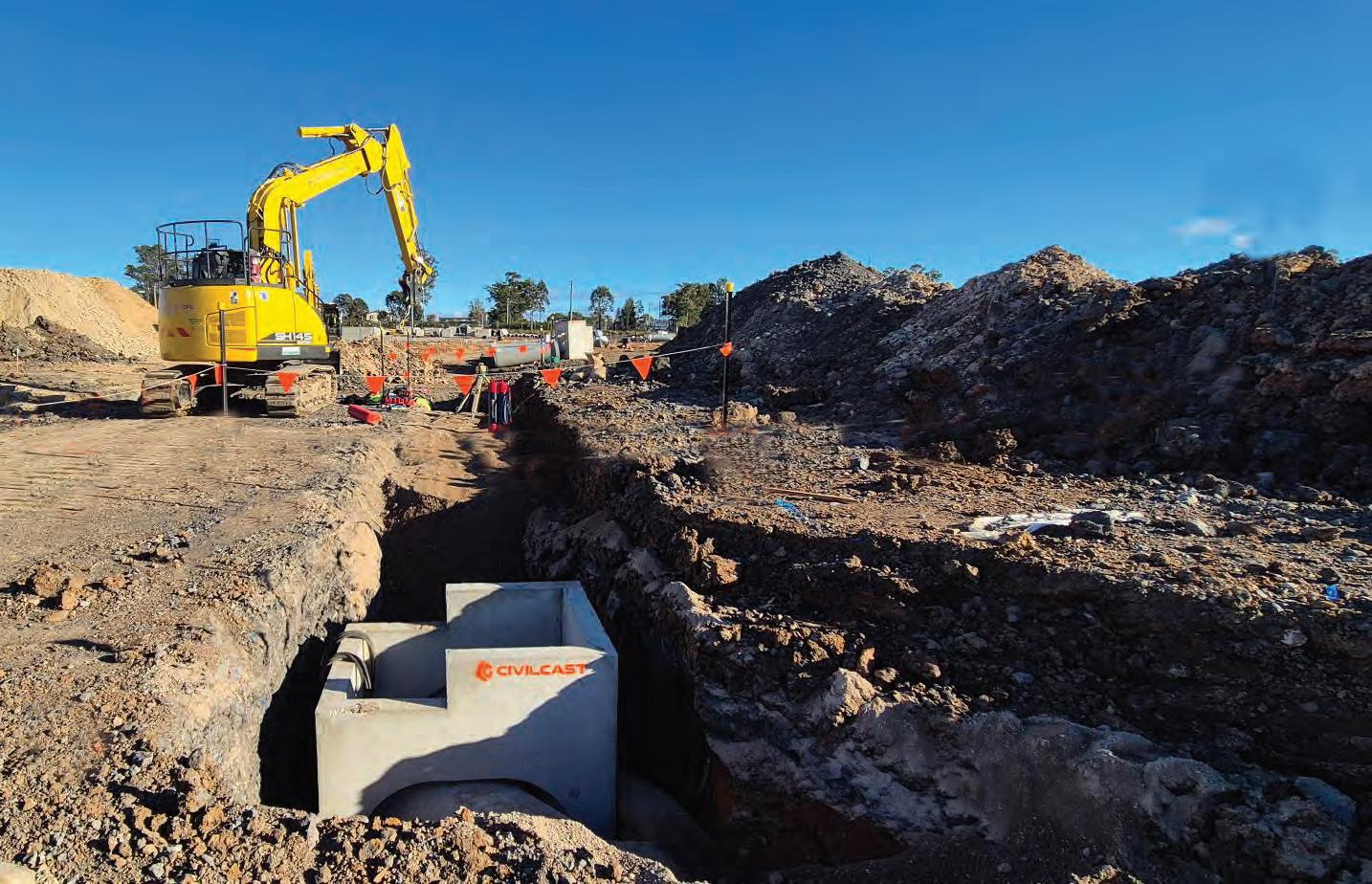
CIVILCAST’S NEW RANGE OF CUSTOM ROAD PITS ARE PROVIDING UNPARALLELED QUALITY AND PERFORMANCE FOR WHAT IS AN ESSENTIAL, ALBEIT OFTEN UNDERSTATED, COMPONENT IN INFRASTRUCTURE DEVELOPMENT. BRIAN LEE, CIVILCAST PRODUCT DEVELOPMENT MANAGER EXPLAINS.
In the world of road building and urban infrastructure, unseen components often shoulder the biggest risks. Road pits are a fundamental component – engineered for strength, reliability and compliance, and quietly protecting pavement, assets and public safety for decades.
For years, Civilcast has prided itself on delivering innovative precast, and steel infrastructure products and expertise, with every unit engineered to enhance performance, durability and compliance on projects across Australia.
Its road pits are no exception, as Brian Lee, Product Development Manager –Civilcast explains.
“From an actual product perspective and the cosmetics of the product, there’s inevitably similarities to what’s already out there,” he says.
“However, we strongly believe our offering is a higher quality product. That’s something that we’ve always prided ourselves on,
alongside delivering exceptional service and fast turnaround times.”
Civilcast’s road pits are designed and manufactured with longevity in mind and are engineered for durability, compliance and real-world constructability.
But what does this look like?
Lee says that for Civilcast’s road pits, delivering on these promises all started during early development and testing, with a strong focus on allowing project teams to move from drawing to manufacturing and delivery with confidence.
Civilcast’s early development process included extensive prototype testing at its dedicated facility, with oversight and certification from independent thirdparty engineers.
“The first step is proving that your product not only complies with, but surpasses the required structural integrity and durability standards. That can be done in two different ways,” Lee says. “The first is through
engineered design, leveraging advanced modelling and digital design tools.
“We wanted to go above and beyond standard requirements. Even slight deviations from specifications can trigger additional prototype and batch testing for some transport authorities. We have our own dedicated testing facility at Erskine Park, which was used to conduct a comprehensive and rigorous phase of product testing.”
This rigorous in-house approach allowed Civilcast to refine its product, ensure compliance with strict road authority standards, and guarantee high quality and durability from the outset. All under the supervision of an independent third party.
“The results were outstanding, proving we could deliver far beyond the requirements and expectations” Lee says.
“The performance and engineering compliance findings were compiled into a report using the data collected during testing.”
The success of this initial phase has enabled Civilcast’s road pits to meet relevant Australian Standards, including approvals from Transport for NSW (TfNSW) and compliance with VicRoads requirements.
“Compliance isn’t just about ticking boxes, it’s about safeguarding projects from delays and ensuring long-term reliability for asset owners,” says Lee.
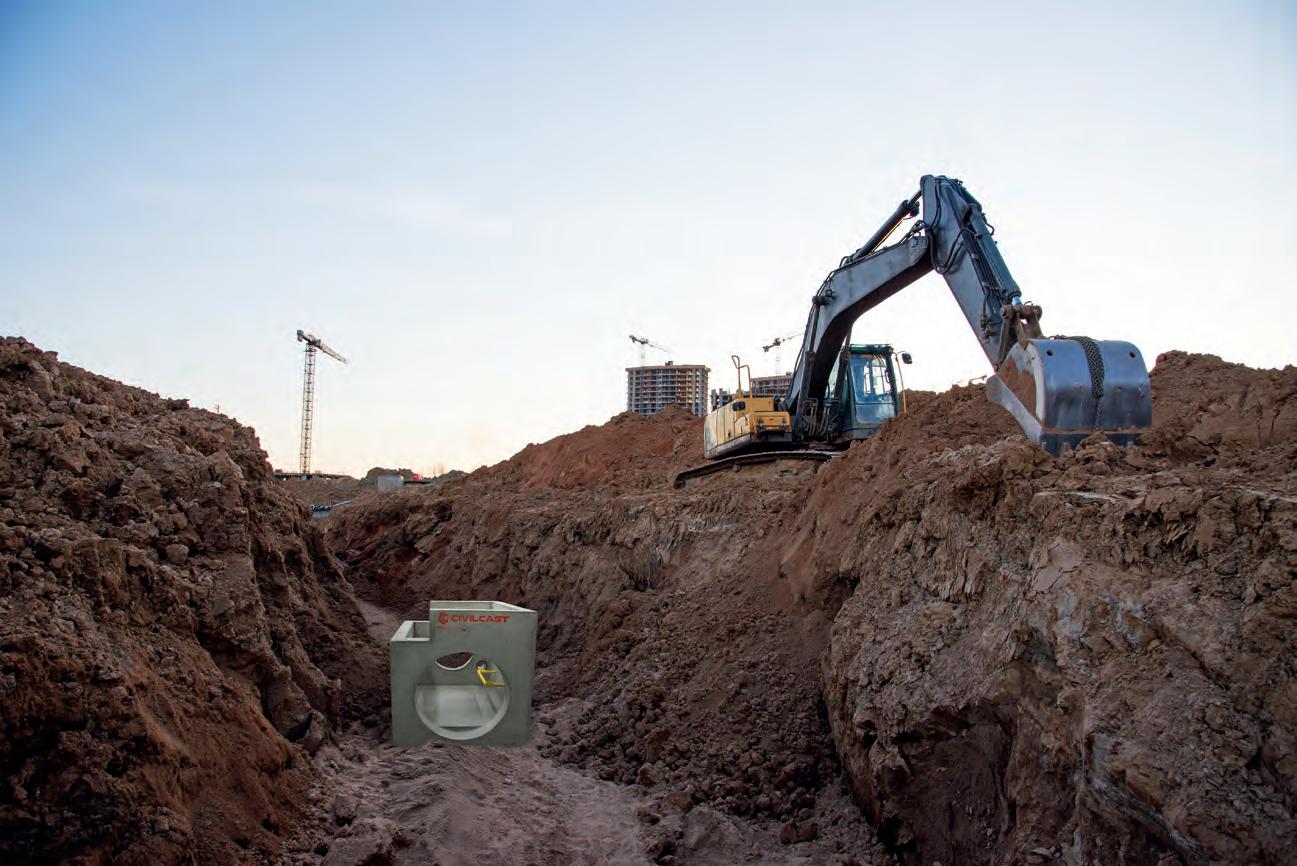
“When you specify a Civilcast pit, you’re specifying a product that has already been proven, tested and approved by the relevant authorities.”
Civilcast is renowned for satisfying and surpassing industry requirements. Its new road pits are no exception.
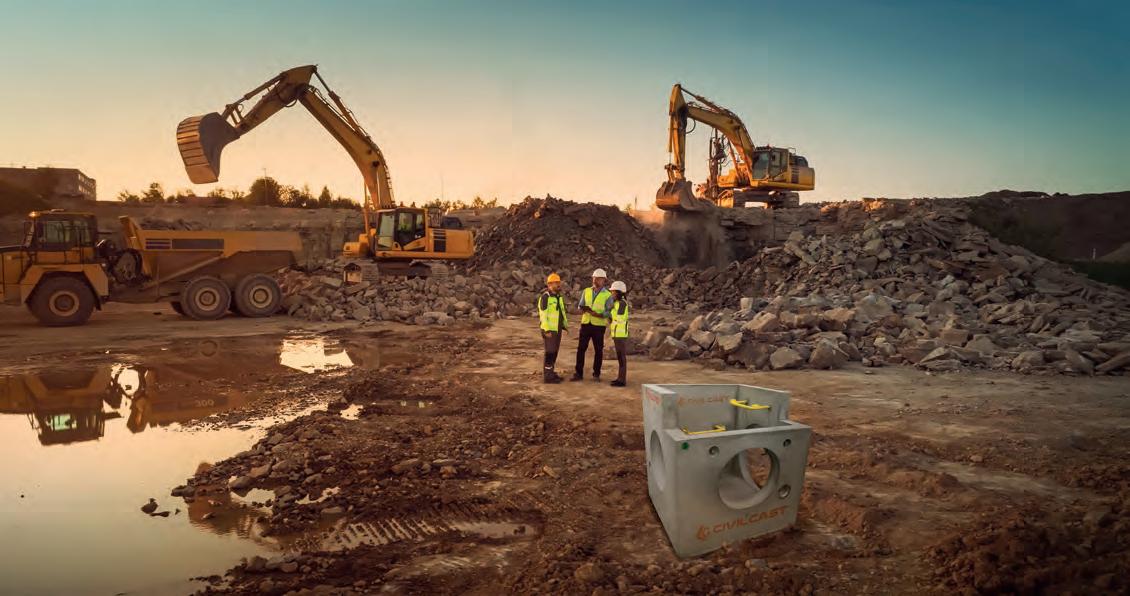
BEHIND DESIGN
Beyond satisfying some of the strictest compliance standards currently used by industry, Civilcast is also determined to provide a seamless and flexible design process.
Civilcast offers a range of standard sizes for fast turnarounds, plus the capability to produce custom units for non-standard depths, inlet configurations, access arrangements and service penetrations.
For design teams and contractors that need a tailored solution without the usual cost or lead-time penalty of cast-in-place alternatives, Civilcast’s road pits are an ideal option, Lee says.
“We get heavily involved from the very beginning, right at the RFQ (request for quote) stage. Sometimes we provide a standard solution based on the client’s design, while other times we suggest slight variations that can save them money. Compliance documents are always available in this case to help get approval on their end.”
Civilcast’s in-house design team can generate precise two-dimensional drawings, detailed three-dimensional views and lifting methodologies. All of which are delivered quickly and most importantly, accurately.
This not only streamlines approvals but also accelerates project workflows, getting pits onsite sooner and reducing overall project risk.
Having both testing and design in-house helps to establish a seamless process, allowing required adjustments to be quickly implemented and applied.
“If a change is needed, we can go back and
do prototype testing, adjust the design and test again along the way to make sure we’re satisfying the standard, all without involving external parties,” Lee says. “This helps make the process as efficient as possible.”
MANAGING MANUFACTURE
Much like its design and testing process, Civilcast also fully manufactures each road pit at one of its factory sites.
Viewed as an “engineering solution” rather than just a road pit, each unit benefits from high performance concrete mixes, controlled curing, and reinforcement designs engineered for site-specific loads.
Civilcast has also considered international best practice when it comes to mould design and technology. This included a trip to the United States, to learn and ensure that the company is optimising manufacturing quality and efficiency.
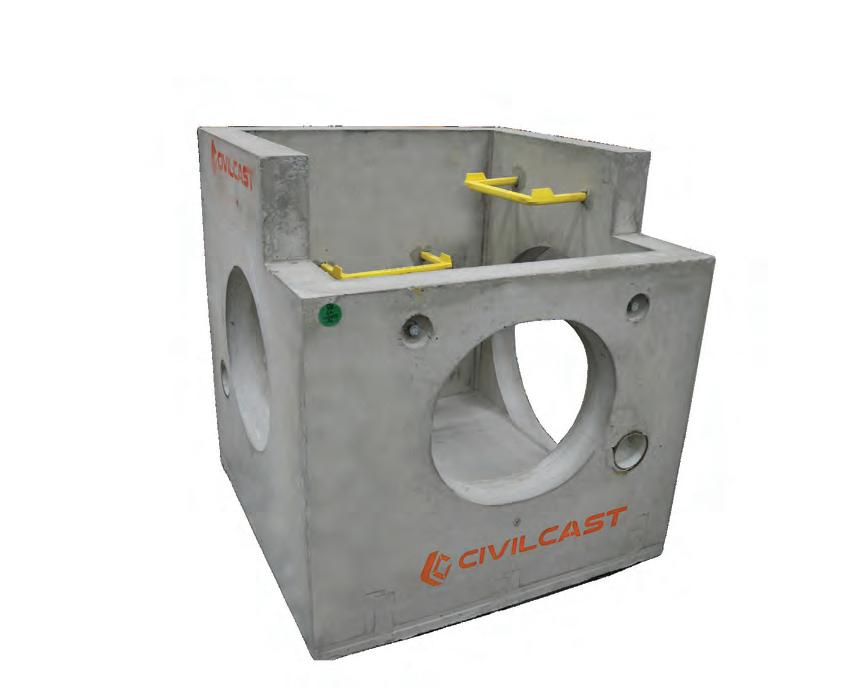
“Since then, we’ve acquired technology that’s allowed us to deliver a parallel wall in the pit, meaning it’s the same dimension at the base of the pit as it is at the mouth of the pit,” Lee says.
“That’s basically unheard of in the standard road pit range in Australia.”
Civilcast also offers several complementary products alongside its road pit range, including a vast range of options for steel grates, drainage lintels for inlets and more.
Once manufacture is complete, Civilcast’s
precast units arrive ready for installation with lifting anchors and neatly integrated cast-in features, making onsite handling safer and faster.
Access considerations are also front of mind. Civilcast road pits can be supplied ready to accept locking covers, accommodate service routing and provide options for safe, codecompliant access for maintenance crews.
While it’s still early days, Lee says feedback so far has been very positive, not only around the performance of the road pit, but also the full service and customer experience provided.
With hope to expand production capacity
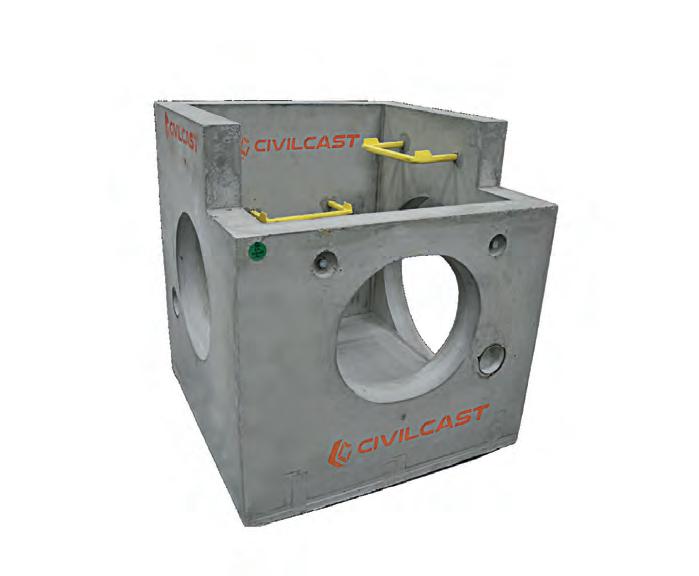
Right: Civilcast has undergone a thorough testing and evalution phase with its new road pit.
The new pits are expected to be deployed on some of the nation’s biggest projects.

ROADS REVIEW
THIS MONTH, WE ASKED THE INDUSTRY’S DECISION-MAKERS, ‘HOW IS YOUR ORGANISATION IMPROVING AND OPTIMISING WORKPLACE SAFETY?’

CADELL TAYE, CHIEF EXECUTIVE OFFICER – NATIONAL PRECAST CONCRETE ASSOCIATION AUSTRALIA
National Precast’s new microcredentials are aimed to improve safety in precast by giving engineers, inspectors, and factory workers structured, up-to-date and practical knowledge of not only precast operations, but also on safety legislation, hazard management, PPE, and Chain of Responsibility requirements. Modules such as Safety and Environmental Management in Precast and Lifting, Handling, Storage and Transport focus on high-risk, high-impact areas that directly affect factory and onsite safety. With a deeper understanding of standards, equipment, and safe operating and handling procedures, participants can identify hazards earlier, prevent quality concerns as well as maintaining compliance. This consistent, practical training strengthens workforce competency and ensures safer, defect-free outcomes across Australia’s growing precast and civil infrastructure projects.
Image: National Precast

HENRIETTA JUKES, EXECUTIVE GENERAL MANAGER - SAFETY & SUSTAINABILITY – KOMATSU
Komatsu Oceania is undertaking many programs to continually improve safety in the business. In February this year we were certified to ISO 45001 having prepared and implemented a robust safety management system after extensive consultation and input from all levels of staff in the business. We also implemented a ‘Just Culture’ program to ensure continuity of reporting and transparency. Komatsu adheres to the principles of Human Operational Performance (HOP), a philosophy for improving safety and productivity by focusing on how human and organisational systems interact, rather than solely on individual performance or blame. With our HOP programs in place, as well as many health initiatives, we are seeing improvement in all areas of safety across the business.
Image: Komatsu
PETER ALI, CHIEF EXECUTIVE OFFICER – MUNICIPAL
WORKS AUSTRALIA
Municipal works teams are elevating workplace safety through advanced systems, targeted training, and a culture of joint accountability. Safety is ingrained in routines through digital pre-starts, hazard and near-miss reports, and asset monitoring to reveal risks early. Toolbox talks, ongoing training, and competency assessments keep skills sharp and synchronise teams with updated standards. Onsite, machine-assisted lifting, improved PPE, traffic control technology, and lockout/tag-out protocols limit high-risk exposure. Leaders exemplify safe practices and promote mental health and fatigue prevention. The result is safer, more robust operations where staff are equipped to predict hazards and avert incidents.
Image: Municipal Works Australia
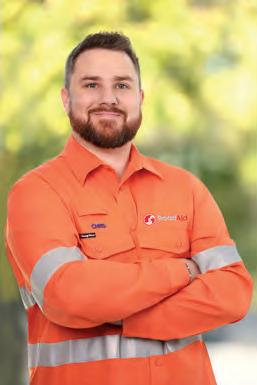
CHRIS COULDREY, DIRECTOR - E.B MANAGEMENT GROUP (ROADAID)
At RoadAid, safety isn’t just a requirement, it’s part of our culture. We’ve equipped all company vehicles with defibrillators to strengthen our emergency response, and our safety observers now wear distinctive pink vests, so their role is instantly recognisable on site. These small but meaningful changes help create safer, more responsive, and better-managed work environments across the assets we support.
Image: RoadAid


JILL MCCONAGHIE, MARKETING SPECIALIST – SRIPATH
Safety is built into everything we do at Sripath. From concept to application, we engineer safer additives that minimise risk. Every additive undergoes rigorous health and safety reviews to ensure that it is safe to handle in the field. Our Health & Safety Policy, reviewed yearly by our global management team, guides every stage of design, development, and manufacturing. Our leadership teams are actively engaged in monitoring, auditing, and investigating our safety protocols to ensure continuous improvement. We publish Safety Data Sheets on all our products on our website. Our innovations are grounded in the priority of protecting people and improving working conditions across the paving industry.
Image: Sripath
RUTH GRAHAM, EXECUTIVE DIRECTOR OF TRANSPORT POLICY – TRANSPORT FOR NSW
Roads are workplaces for a variety of workers, from maintenance, construction and emergency crews to bus, tram, taxi and delivery drivers. Making their workplace safer is a key part of a once-in-a generation review of the NSW Roads Act 1993 currently underway. As we shape this legislation, industry and stakeholder feedback is telling us safety is the highest priority and must be made explicit in the Act. To do this, we are looking to embed safe systems into the Act so the safety of all road users is identified as a primary consideration in this reform.
Image: Transport for NSW
If you or someone at your organisation is an industry leader and would like to be a part of this monthly column in 2025, please get in touch with Editor, Tom O’Keane: tom.okeane@primecreative.com.au
FROM CLASSROOM TO CONSTRUCTION
YOUNG WOMEN LIKE ALICIA PERA AND WINNIE WILSON ARE RESHAPING THE FUTURE OF ENGINEERING, BRINGING FRESH PERSPECTIVES, HANDS-ON EXPERIENCE, AND A COMMITMENT TO INCLUSIVITY TO AUSTRALIA’S INFRASTRUCTURE SECTOR.
In the evolving world of infrastructure and construction, fresh voices are rising from young women who are finding confidence in themselves and stepping into engineering roles.
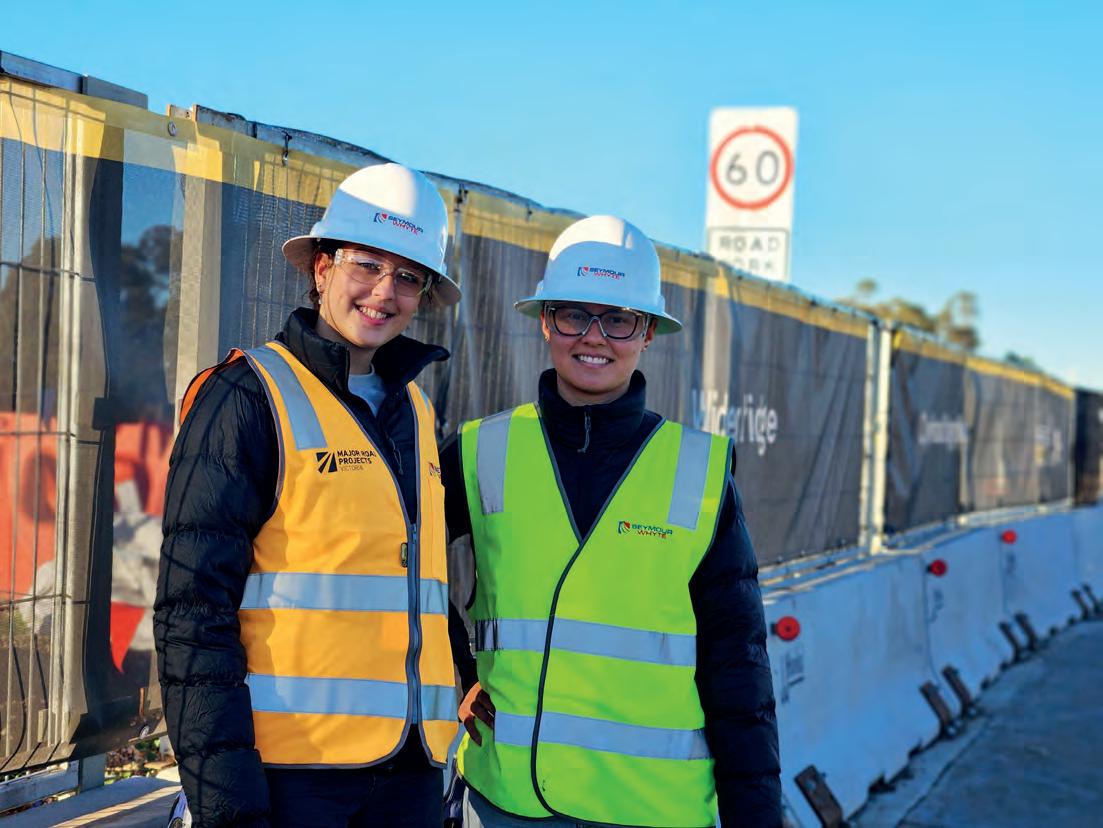
For Alicia Pera and Winnie Wilson, two driven undergraduates working with Seymour Whyte, their early careers offer a glimpse into a more inclusive and dynamic future for the civil construction industry.
Both Pera and Wilson found their way into engineering through a shared love
of maths, science, and problem-solving.
But it’s the hands-on experience they’ve gained through the Seymour Whyte undergraduate program which has truly shaped their career outlooks.
THE PROGRAM
The two are both currently working on the Clyde Road Upgrade Project, a significant Big Build Roads infrastructure project slated for completion in 2027, with Seymour Whyte acting as the delivery partner for the project.
Pera, now in the final stages of a double degree in architecture and civil engineering, began her initial placement with Seymour Whyte with a 12-week introduction, and has since evolved into a flexible undergraduate role that complements her studies.
“Working on site is completely different from university,” she says.
“Our coursework is mostly theoretical, so being on a project where I’m doing quality assurance, site inspections, procurement and
Images: Seymour Whyte
Both Alicia Pera and Winnie Wilson are currently working on the Clyde Road Upgrade Project.
hazard identification has been a massive learning curve.”
Wilson, in her first year of study, echoes that sentiment.
Since laying her career foundations with Seymour Whyte straight out of high school, she’s already had exposure to environmental engineering and a variety of site tasks.
“University teaches you basics like equations and theory, being onsite is where you learn how those things actually apply to a day-to-day job,” she says.
“It’s helped me understand how to prioritise tasks, manage time, and communicate effectively. That kind of growth is hard to replicate in a classroom.”
For both women, entering a traditionally male-dominated field wasn’t without its hesitations.
Pera admits she initially felt anxious about fitting into the construction site culture.
“There’s still a stigma around women in construction,” she says. “It is a
women in leadership roles on site. “My construction manager is a woman, and that was a huge motivator for me right off the bat,” she says.
“It made me think ‘that could be me’ one day. Seeing women in charge reshapes what you think is possible.”
Wilson’s experience has been shaped by early encouragement, both at school and through her family.
“My school was really supportive of Science, Technology, Engineering, and Mathematics (STEM) and always framed everything as a possibility,” she recalls.
“I also have a family member who is a chemical engineer for South East Water. She has worked all over the world and has even spoken at the United Nations, so obviously she has been a huge inspiration to me.”
For Wilson, increasing the visibility of women in engineering is key to changing perceptions.
“Everyone brings different ideas and passions to the table,” she says. “More diversity means better problem-solving and stronger teams.
“Young girls need to see that this path is not only possible but rewarding. Seeing other women in fields like these could inspire young girls in high school
“UNIVERSITY TEACHES YOU BASICS LIKE EQUATIONS AND THEORY, BEING ON SITE IS WHERE YOU LEARN HOW THOSE THINGS ACTUALLY APPLY TO A DAY-TO-DAY JOB.”
primarily male dominated field, but from day one, everyone on the team has been welcoming.”
She has felt right at home with the work and admits that she had to overcome some personal anxieties and confidence issues on the job.
Her experience highlights a crucial, often overlooked skillset in engineering: interpersonal communication.
“This type of role requires you to speak to everyone onsite, manage relationships, and resolve challenges on the fly,” she says. “Each day my confidence has increased, and I have learnt more than I could have hoped. It’s not just about technical knowledge. You have to be adaptable and collaborative, it’s a people-driven job.”
One of the most significant influences on Pera’s confidence came from seeing
to focus on engineering and remove the hesitation of picking a career path.”
Both agree that celebrating women in engineering is about creating a workforce that reflects the real world.
“We need to empower women who might be unsure about entering the field,” says Pera.
“If we show them that support exists, and that we’re out here doing it, we’ll help to build a more inclusive future.”
THE FUTURE IS BRIGHT
Looking ahead, both engineers are ambitious and hopeful.
Pera wants to continue building her skills across different types of projects, from bridges and roads to buildings and dams, with her long-term goal of becoming a project engineer.
The women are currently participating in the Seymour Whyte undergraduate program.
“I want to keep learning and expand beyond just one type of project,” she says. “At university they would often tell us we’ll end up as designers in consultancy, but there’s so much more to explore in construction.
“If other young girls are hearing a similar narrative, I think it’s important to spotlight construction in engineering fields.”
Wilson is leaning toward environmental engineering and hopes to continue working with Seymour Whyte on largescale projects.
“There are some amazing opportunities ahead, and I’d love to take on more responsibility over time,” she says.
Seymour Whyte’s growth extends beyond traditional road and bridge projects. With new opportunities emerging across the water, energy, rail, and defence sectors, the company is building diverse career pathways for young engineers eager to make an impact across Australia’s infrastructure landscape.
“At Seymour Whyte, every
undergraduate placement is an investment in the future of our industry,” says Courtney Hoops, General Manager of Victoria, South Australia, and Tasmania for Seymour Whyte.
“As part of the global VINCI group of companies in construction, energies and concessions, our people can access international career opportunities in over 120 countries and even become shareholders. For students and parents alike, it’s an exciting launchpad for a safe, rewarding, and world-class career in engineering.”
Seal Cracks Smarter

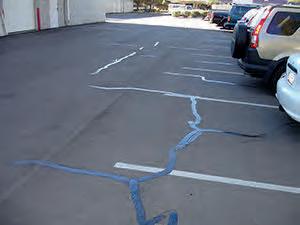
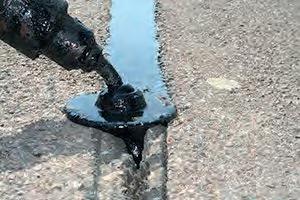
Crafco Polyflex is a hotapplied crack sealant trusted worldwide for longlasting road repairs. Now available in meltable packaging, you save time and eliminate waste — no box removal, no mess, just melt and pour.
Ideal for Australian road conditions
Ideal for councils, road authorities, and contractors
Shipped Australiawide from Melbourne and Brisbane
Crafco, leading pavement preservation since 1976.
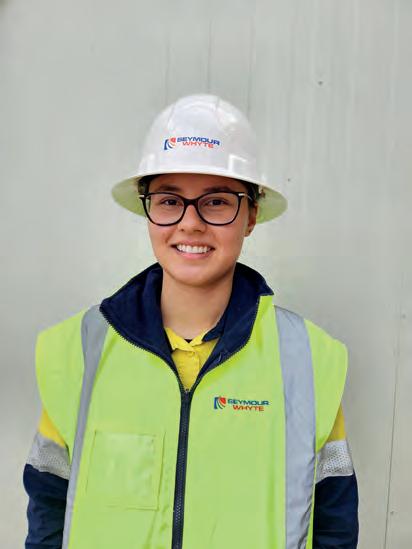
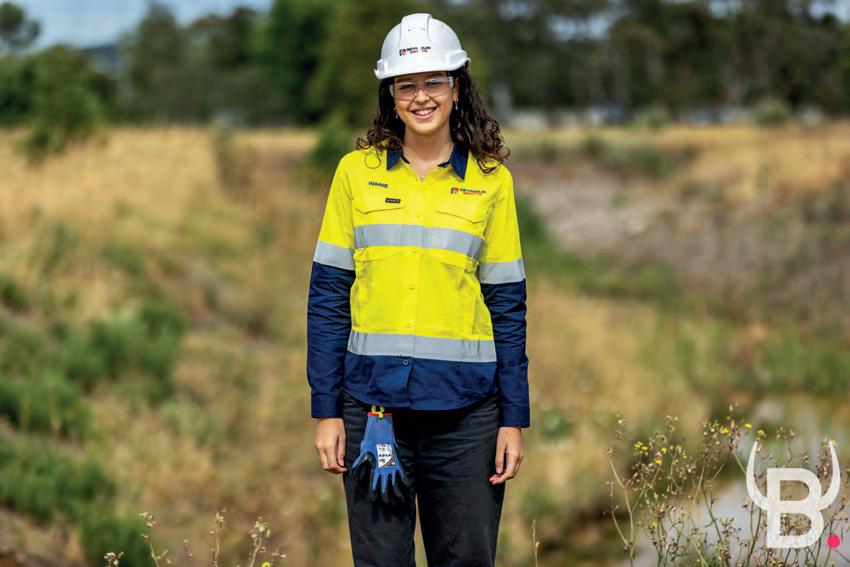
Alicia Pera is in the final stages of her double degree in architecture and civil engineering.
Winnie Wilson is currently in her first year of university studies.
TIME FOR ACTION
NEW RESEARCH HAS FURTHER HIGHLIGHTED THE IMPACT THAT WEATHER EVENTS WILL CONTINUE TO HAVE ON THE STRUCTURAL INTEGRITY AND RESILIENCE OF LIGHTWEIGHT AND TRANSPORT INFRASTRUCTURE CONSTRUCTED ON/IN EXPANSIVE SOILS.

Many aspects and considerations for infrastructure development have remained consistent for years. A key focus on engineering principles, cost efficiency, community and stakeholder alignment are among many essential –and obvious – concerns that need to be managed.
Environmental and climate change-related factors have, in principle, always been taken into account, but have seen rapid change in recent times.
Unforeseen and unprecedented weather events pose a serious threat to the longterm future of infrastructure delivery. While these risks are well known and have been acknowledged, many industry experts believe a much wider change is needed to cater for an issue that’s already on the sector’s doorstep.
It’s people like Bikash Devkota, PhD Candidate, UniSA STEM – University of South Australia, who are helping to provide greater certainty and knowledge around how climate change-related weather events could and are impacting structures.
Devkota became interested in the topic after noticing through the news and others’ research that La Niña events had become
more intense, frequent, and longer in recent decades.
La Niña refers to a weather pattern or event that results in increased average rainfall, as well as cooler than average sea surface temperatures. So, what does this have to do with infrastructure, you might ask?
Weather conditions brought on by patterns such as La Niña can have a significant impact on infrastructure resiliency and performance. In particular, prolonged rainfall, which can play havoc on clay soils and structure foundations.
“After seeing an increase in intensity and frequency, I started to think about how we could link La Niña events into geotechnical design,” Devkota says.
“When we look further into the climate cycles associated with La Niña, it can give us different moisture movement mechanisms, along with the suction profile, which will finally affect and in some cases cause the premature failure of infrastructures due to ground movement. That’s why I was also interested in how it can impact or influence changes in the industry’s current design practices.
“Our geotechnical structures can last
maybe 50, or 100 years. That’s why we need to account for this climate aspect well into the future.”
BREAKING IT DOWN
The research team was led by Devkota, and included Md Rajibul Karim, Md Mizanur Rahman, Hoang Bao Khoi Nguyen, and Simon Beecham.
Together, the team analysed more than 100 years of rainfall and climate data to track the impact of La Niña across Australia’s major regions.
Using a Braybrook research site in Melbourne’s west, Devkota and the research team collected data from literature and Australian Governmental websites, and used a finite element software program to simulate soil movement through what’s called a ‘SEEP/W analysis’.
“It helped us to access and understand climate data for the region across the past 27 years or so,” Devkota says. “From there, we can analyse the effect of different climate cycles within that period.”
One of the major weather patterns that arose during this period was the La Niña event that occurred at the break of the Millenium Drought (1997-2009), which
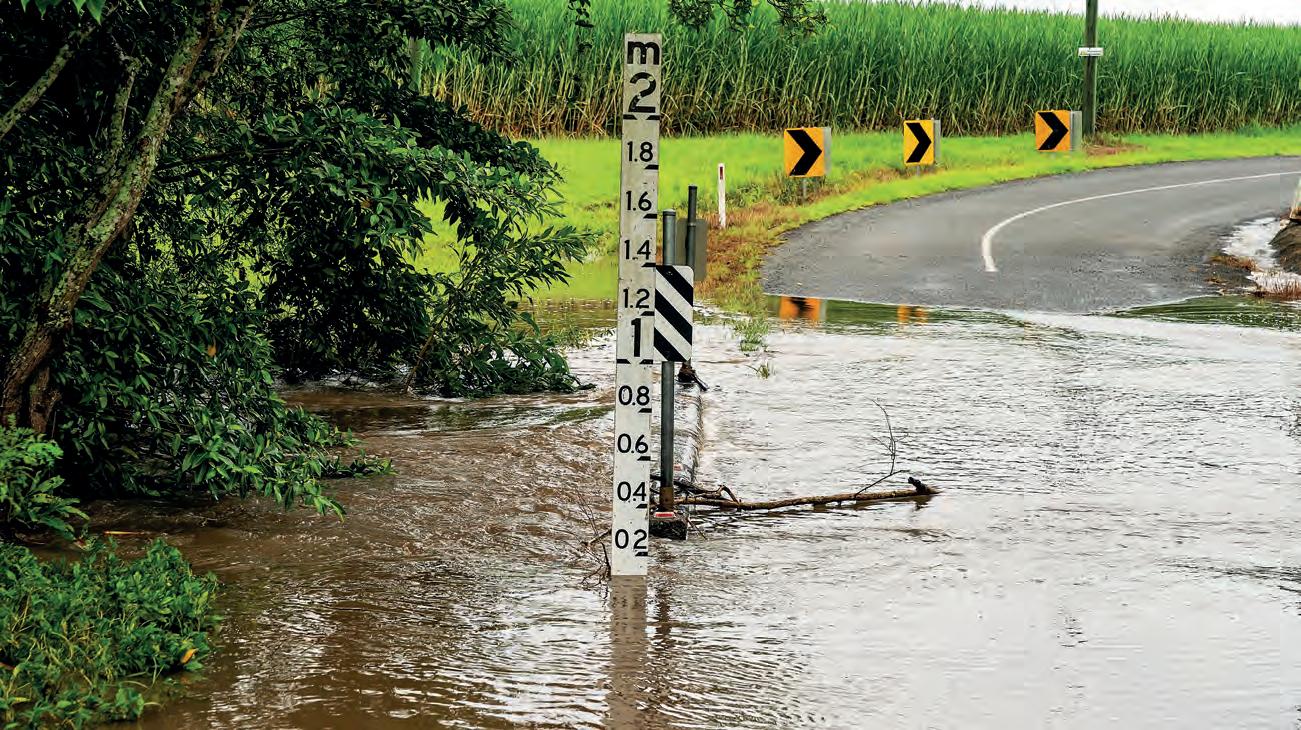
caused damage to thousands of houses constructed during the drought, as soils heaved after a prolonged dry period.
After conducting the analysis, the findings were clear.
“It was quite alarming,” Devkota says. “It showed that we need to take account right now, because if we are not incorporating changes into current design, into our geotechnical structures, they could potentially collapse in the future.”
Among the findings from Devkota’s research was that expansive clay soils are highly sensitive to rainfall fluctuations, making them vulnerable to swelling and shrinking during both La Niña and El Niño cycles, respectively.
He says homeowners, insurers and regulators need to consider long-term climate variability, not just short-term cycles, when assessing soil risks to building foundations. Devkota adds that there’s a greater need to update and rethink design standards and practices to incorporate local conditions and future climate cycles, perform more site-specific investigations, and avoid oversimplified assumptions in geotechnical design.
“Many industry practitioners, policy makers and other consulting authorities need to better integrate local climate and local geological factors,” he says. “What are the soil properties? What are the moisture movement patterns? They need to better account for the local climate.
“Local climate and soil condition can have a different impact if we’re using constant values of surface suction change and depth of suction change for major urban areas across Australia, as we are following in the current Australian practices, which may also not best represent local scenarios and in some cases may even magnify the ground movement, which will obviously affect the infrastructure.”
This research culminated in the publication of a paper in the Journal of Environmental Management, titled ‘The changing frequency of La Niña cycles and their effect on footing design in expansive soils’. When it comes to the future, Devkota says there’s plenty that the industry can be doing right now.
“We need to think and act right now,” he says. “If we’re not incorporating these future projections in the current design, it’s going to be difficult to get the full functionality of geotechnical structures and potentially risk making the situation worse.”
Image: stock.adobe.com/FiledIMAGE
Sustained rain can play havoc on foundational structures for infrastructure of all sizes.
Image: stock.adobe.com/Jackson Photography
The University of South Australia has been looking into the wider effects that severe weather events can have on transport and residential infrastructure.
COLAS has sites and expertise around the world, helping to increase innovation globally.

OCB: GLOBALLY CONNECTED
SAMI BITUMEN TECHNOLOGIES’ PARENT COMPANY, COLAS, HAS A SIMPLE BUT INSTRUMENTAL PRINCIPLE. ‘ONE COLAS BITUMEN’ UNITES THE COMPANY’S SUBSIDIARIES AROUND THE WORLD, HELPING TO IMPROVE QUALITY, SUSTAINABILITY AND INNOVATION GLOBALLY.
Having a global and dominant industry footprint is a big responsibility. It’s also one that COLAS takes seriously, aiming to ensure that it leaves a positive legacy for the sector, on top of providing high-quality and sustainable bitumen supply and products.
COLAS and its subsidiaries operate in more than 50 countries across five continents, making it one of, if not the, largest providers in the world of materials and services for the development of transport infrastructure.
One important aspect to achieving this mission is global coordination.
‘One COLAS Bitumen’ (OCB), an initiative started in 2018 by COLAS, aims to treat bitumen not just as a material used in road construction, but as a technical product requiring sourcing, transport, storage, transformation, and sales. OCB
brings together COLAS’ bitumen entities worldwide, including in Canada, the United States, Asia, Australia, Europe, the Middle East, Africa, and Latin America, to leverage knowledge, best practices and coordinate resources.
OCB annually supports the management of more than five million tonnes of bitumen globally.
Thierry Defrene, Bitumen Performance Director at COLAS says OCB helps to unite each of COLAS’ subsidiaries, even if they’re separated by culture and language.
“This is the very reason why we created the OCBs, because every business is very focused on responding locally to their own issues and matters,” he says. “The idea of OCB is to bring this to a next stage, to have exchanges around any opportunity or challenge that we might be facing.
“Once you’re able to pull and exchange
from a global system, there’s always something that has been done somewhere else that can be transferred or adapted.
Geographies, climate conditions, specifications, clients, and expectations are always different in different parts of the world. But the knowledge, expertise and problem solving in many ways is universal.”
Access to a global network of specialist bitumen businesses further supports the sharing and adaptation of solutions, many of which may be developed in differing regions.
This consolidation and exchange of expertise have already led to improvements and innovation in plant design, energy conservation, procurement, and product development.
Just one example is the success of the SAMIfalt EME (high modulus asphalt) binder across COLAS’ Australian subsidiary, SAMI
Bitumen Technologies. Initially developed in France, this technology has since been transferred and adapted to local conditions.
Another is COLAS’ continued mission to not only increase the sustainability of its products, but also of its transport and logistical methodologies. This includes fully evaluating the company’s transport process.
Driven by OCB, the company has invested in and embraced ‘green’ bitumen vessels powered by LNG (Liquefied Natural Gas), significantly reducing carbon emissions during product transport. Such actions have also earned global recognition, with COLAS being awarded Singapore’s Green Vessel of the Year award.
For Raphael Llobregat, General Manager of Continental Bitumen – a subsidiary of COLAS dedicated to bitumen in Europe, Africa, the Middle East and Latin America –such initiatives are aiding the operations of each company within the global network.
“One COLAS Bitumen is an aggregation of knowledge and expertise that put together, has tremendous power worldwide,” he says. “It’s more than a tool. It’s the strategy for the group to leverage its bitumen position.
“The platform allows for 24/7 use, facilitating communication and collaboration among different bitumen entities within the group. The global support and supply network benefits end users by sharing technologies, market intelligence, and best practices across different regions.”
Steve Moss, Director of Asphalt Supply and Technical Solutions at COLAS USA,
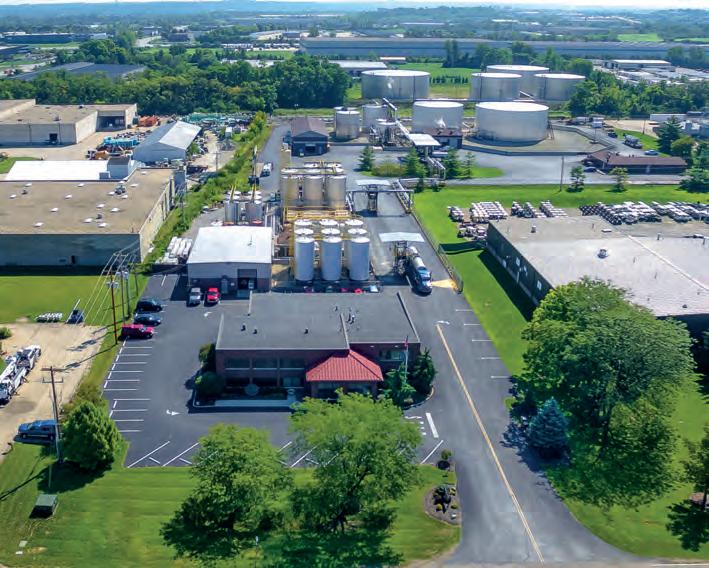
shining example of OCB in action.
“In the US, we are happy to have the global network supporting our initiatives such as low-carbon binder options,” he says.
“Being part of a globally connected network allows us to participate in the bitumen market, providing a unique view of the factors driving the market, not just locally, but worldwide.
“To me personally, it means I can approach our business challenges with confidence knowing that I have a team of experts that stretches across the globe whose experience and talent are just a phone call away.”




in the OCB platform continues to grow, with other subsidiaries often looking to their Australian counterpart to learn more about the development and structural success of the business.
Defrene says that the support of OCB has allowed SAMI to tackle what is a unique market, with requirements and market demands differing greatly from state to state.
“SAMI has a lot of history and a lot of know-how. The business has been developed really well with an excellent team of people and experts in all fields,” he says.
“Today, I look at Australia as being an entity that is critical to feeding the OCB, best practice and operational excellence in certain areas, while pulling from the best of the rest overseas.”
This includes a large commitment to the development of bio-components and compounds within emulsions and additives, helping to provide a positive influence on the broader market – the ultimate goal of the OCB platform.
“What’s exciting is that we have the platform, knowledge and technology to tackle any problem, anywhere,” Defrene says. “Not only does it provide opportunities for our staff to travel the world and embrace new markets, but it also shows an intent to develop and improve bitumen in the long term.”
Left: ‘One Bitumen COLAS’ is a common direction shared among all of COLAS’s subsidiaries, including SAMI, McAsphalt, and Tipco Asphalt, as well as Continental Bitumen.
Images: SAMI
Each of COLAS’ subsidiaries are in constant communication, helping to refine and perfect its pavement solutions and methods.
Facilities – such as COLAS’ in Hamilton, Canada – are the drivers behind the company’s global production prowess.
QUALITY RUNS IN THE FAMILY
SEALANTS AND PAVEMENT ADHESIVES ARE ONE OF FEW COMPANIES IN THE NATION THAT OFFERS BOTH MACHINERY AND SEALANTS, PROVIDING A COMPREHENSIVE OFFERING. AS ROADS & INFRASTRUCTURE MAGAZINE LEARNS, THE COMPANY’S STORY IS AS COMPELLING AS ITS SOLUTIONS.
For Kevin De-Simone, Sealants and Pavement Adhesives means much more than just a company and name.
Founded by his father-in-law – Murray Yardley – in 2002, the succession plan for Sealants and Pavement Adhesives was set in stone early, with De-Simone set to take over the business after learning the ropes.
Shortly after joining the company in 2022, De-Simone was thrust into the role of leading the company, following the untimely death of Yardley.
“I found the company really interesting when I came into the family,” DeSimone says.
“When the opportunity came up, Yardley said, ‘come on board, and we’ll do it over sort of five years, and then you should hopefully know enough to take it on yourself and grow the business to the next level’.
“That didn’t happen, but I like to think that I am following in his footsteps and doing everything that he’s taught me, to further grow the business.”
The company’s story has been one of substantial growth and achievement, hitting multiple milestones under De-Simone’s tutelage. The biggest of which has been the continuation of the company’s longstanding and continued partnership with Crafco, one of the world’s premier providers of packaged pavement preservation products for asphalt and concrete.
“Murray (Yardley) was previously working for another company that was a distributor for Crafco,” De-Simone says. “When that business closed, he started Sealants and Pavement Adhesives, which then became the sole distributor for Crafco.”
TRUE PARTNERSHIP
The partnership between Crafco and Sealants and Pavement Adhesives has opened the door for Australian customers to have access to a globally proven product.
Crafco has helped to preserve pavements around the world for more than four decades, thanks to its range of pavement, asphalt and concrete preservation products.
This consists of asphalt crack sealants and rejuvenators, concrete joint sealants, as well as patching products.
Not only does the company provide the sealant, but it also provides the compatible equipment. More specifically, Crafco’s range – provided by Sealants and Pavement Adhesives – contains sealant application equipment, modified asphalt crack sealants, silicon joint sealants, on top of a variety of other asphalt and concrete repair products.
Australia is one of 30 countries around the world that receive these products.
De-Simone says Sealants and Pavement Adhesives’ ability to provide both the sealant and the compatible machinery places the company in rare territory.
“We’ve practically built the business wholly and solely on Crafco, because they’re so good,” he says. “The machinery that we bring over here, are the number one machines in the United States. They’ve proven consistently, over a long time, that they are reliable and built to last.
Driven by its strong family ties, Sealants and Pavement Adhesives takes pride in delivering high quality products and training.
“The biggest point of difference that I believe we have, is we sell both the machine and the product. Most companies only do one or the other. And I feel that because we do both, we know both.
“We know exactly what the machine needs to do, and likewise, know exactly what the product needs to do within the machine. Customers aren’t buying the machine off me and then looking to buy the product or parts from somewhere else. It’s all only through me.”
De-Simone adds that the vast international network for shipping and support means the international distance is rarely felt on a day-to-day basis. Therefore, also helping to support Sealants and Pavement Adhesives’ support of its own customers.
“If there’s a problem with the machine, they’re really helpful and at times can deal directly with the customer to help them fix the problem, as well as all the training,” he says. “I believe
the early 2000s and still going strong to this day. That’s a testament to the longevity and support provided by Crafco and shows that these units are worthwhile investments that can stand the test of time.”
A number of standard resources are also provided to ensure that users can have operational support, year round.
“Every machine comes with a specialist manual that specifically goes
then we have the ability to involve Crafco if need be. We also have a range of spare parts, which can be shipped same – or next – day depending on what’s required.”
There’s even more room for growth, with De-Simone saying a lack of education around best practice use of sealant equipment, once rectified, will see the removal of a major barrier for a growing industry segment.
“EVERY MACHINE COMES WITH A SPECIALIST MANUAL THAT SPECIFICALLY GOES INTO HOW THE MACHINE OPERATES, THE SAFETY PRECAUTIONS, A VERY DETAILED TROUBLESHOOTING GUIDE WITH ALL THE MAIN FIXES IF A PROBLEM WERE TO ARISE, AS WELL AS A DETAILED PARTS
LIST.”
into how the machine operates, the safety precautions, a very detailed troubleshooting guide with all the main fixes if a problem were to arise, as well as a detailed parts list,” De-Simone says.
“That manual helps to solve the majority of potential issues fairly easily.
“The industry is slowly evolving and coming onboard the crack sealing side, but at the same time, I don’t think it’s being used to the full extent,” DeSimone says.
“By giving the industry a viable and proven option, we’re helping to contribute to that change.”
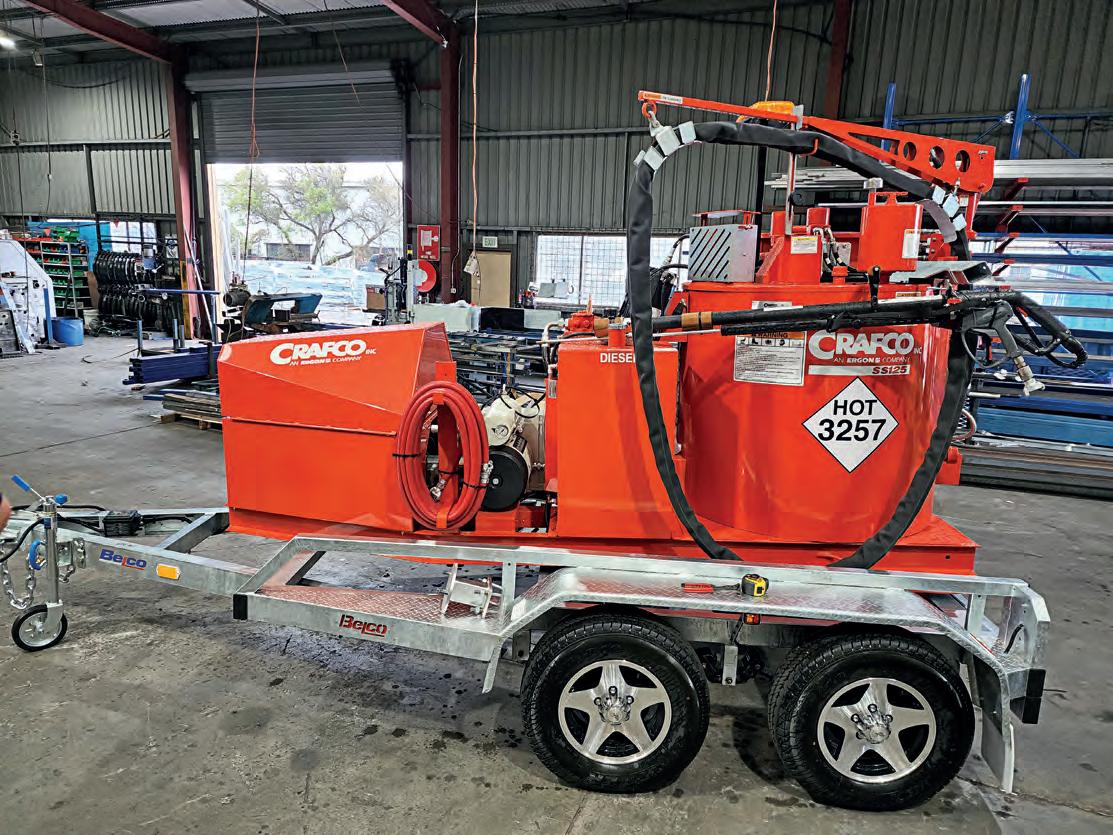
Image: Crafco
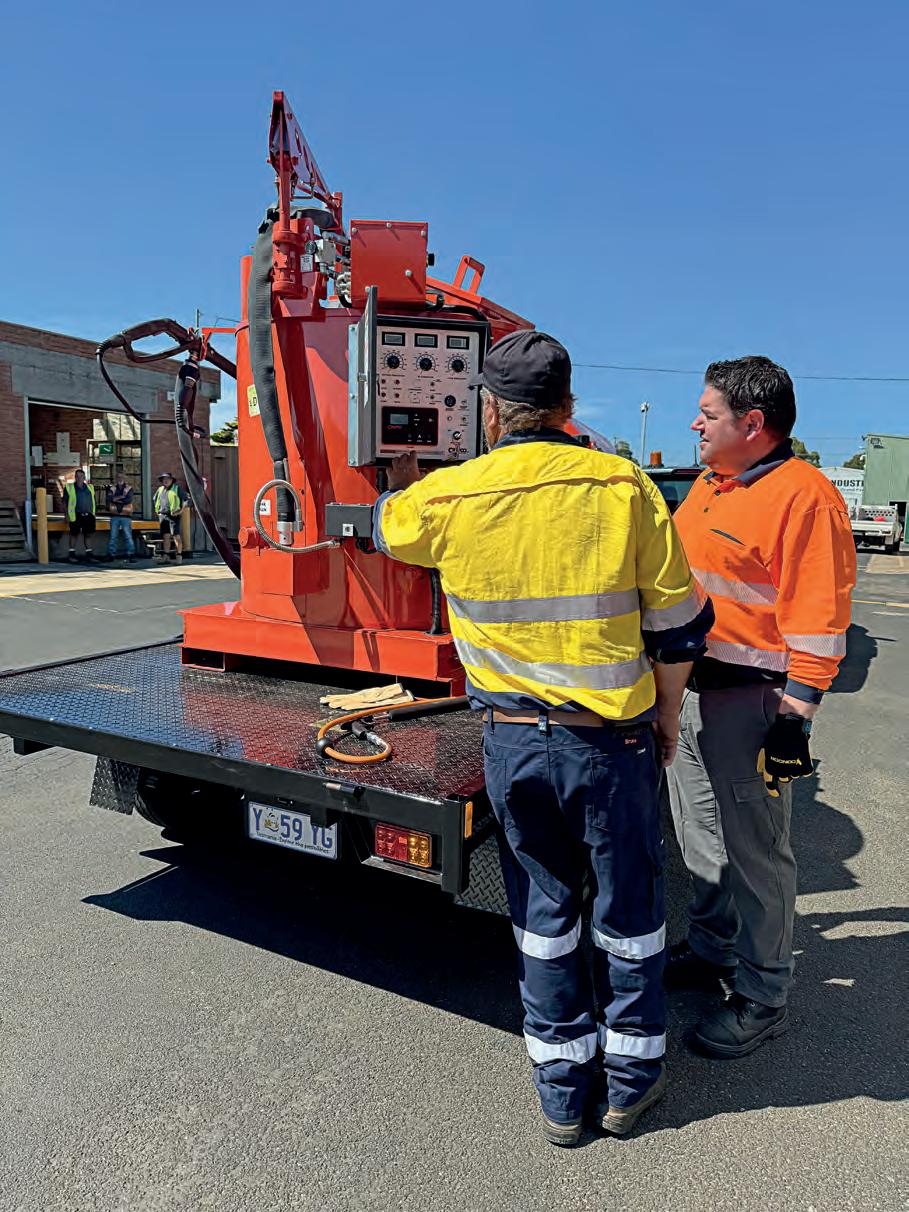
Sealants and Pavement Adhesives has long been the distributor of innovative Crafco equipment.
up-to 18 CPD hours
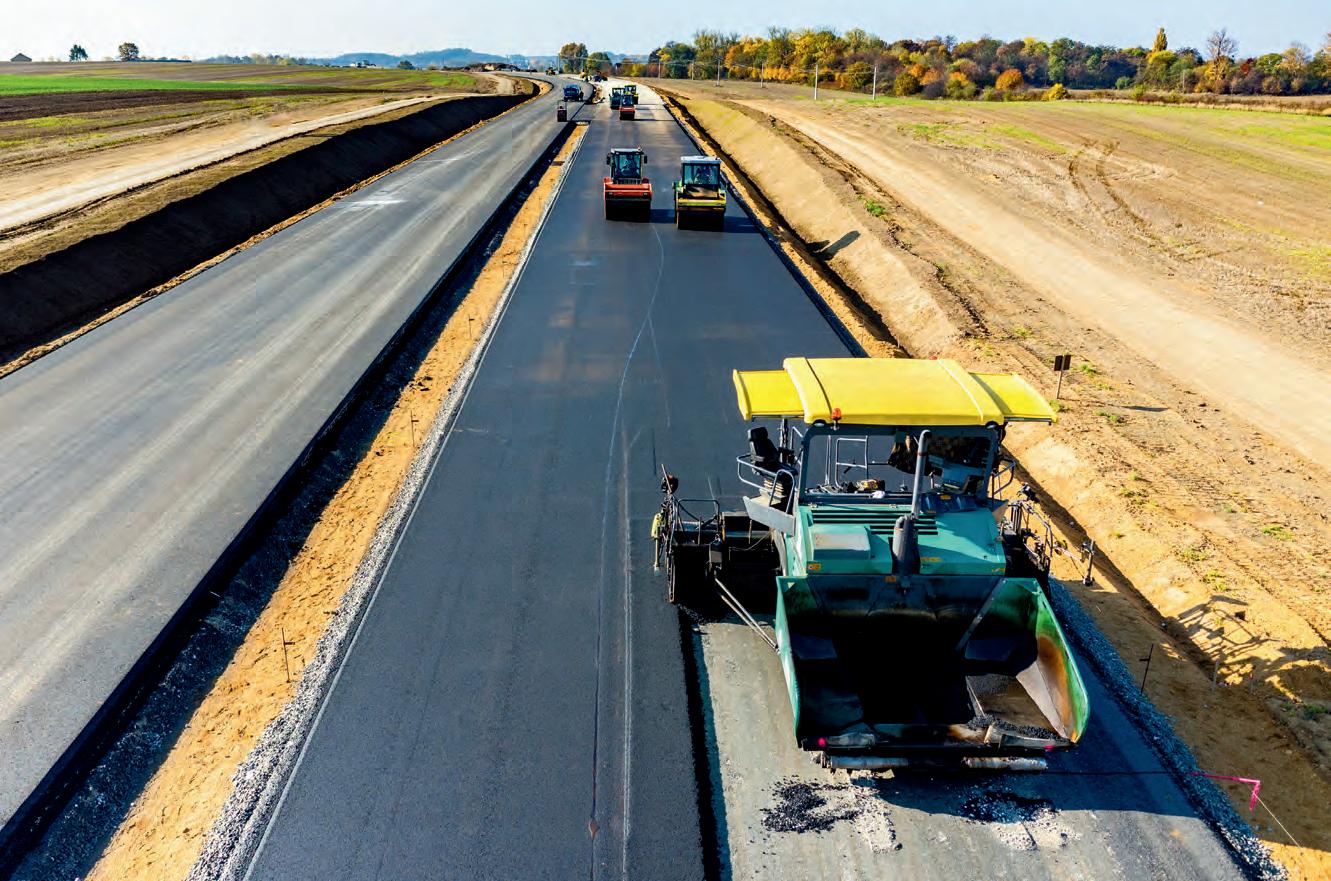
HIGH-QUALITY ASPHALT PAVEMENTS REQUIRE TECHNICAL EXPERTISE, PRECISE PLANNING, AND EXPERT ONSITE MANA GEMENT. FROM COMPACTION AND JOINT CONSTRUCTION TO MIX HANDL ING AND PAVING SEQUENCE PLANNING, EVERY STEP ENSURES SM OOTH, DURABLE ROADS.
afpa.asn.au/education-overview/
CELEBRATING 20 YEARS OF IMPACT
THIS YEAR, SUSTAINABILITY VICTORIA IS MARKING TWO DECADES AS THE STATE’S LEAD AGENCY FOR ACCELERATING SUSTAINABILITY AND CUTTING WASTE AND EMISSIONS.
Since its establishment in 2005, Sustainability Victoria has reshaped how Victorians think about resources and sustainable living – transforming policy into practice, supporting innovation across sectors, and delivering programs that have diverted millions of tonnes of waste from landfill.
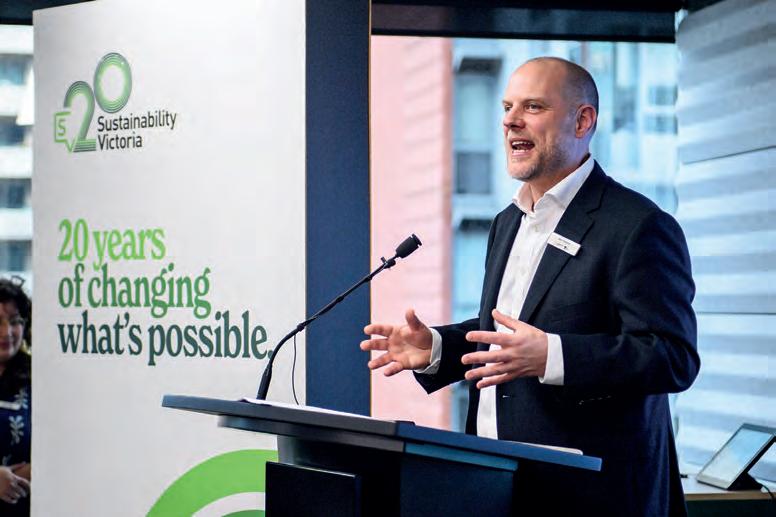
“This is a celebration of what’s possible when government, industry and community work together,” says Chief Executive Officer Matt Genever.
“We’ve seen ideas become infrastructure, behaviour change become habit, and innovation become impact.”
One of the most compelling examples of this transformation is Reconophalt – Australia’s first asphalt additive made entirely from recycled materials.
In 2018, Sustainability Victoria invested in a groundbreaking trial of Reconophalt, a recycled asphalt product developed by Downer and Close the Loop, with support from Hume City Council. The trial was part of a broader effort to accelerate the commercialisation of recycled materials and build confidence in their performance as alternatives to virgin resources.
Each kilometre of the trial road used 200,000 recycled plastic bags, 63,000 recycled glass bottles, 4500 toner cartridges and 250 tonnes of reclaimed asphalt.
The trial, laid on Rayfield Avenue in Craigieburn, proved that recycled materials could meet VicRoads specifications and deliver superior performance. Reconophalt offers up to 65 per cent greater fatigue
resistance than standard asphalt and better resistance to deformation under heavy traffic – while looking just like any other road surface.
“People expect to see pieces of plastic sticking out of the road,” says Stuart Billing, Downer’s Executive General Manager of Transport and Infrastructure. “However, it looks like any other asphalt, and that’s exactly what we like to see.”
FROM VISION TO IMPACT
The journey began in 2015, when Steve Morriss, founder of Close the Loop, visited a demonstration road in Texas made with recycled toner. Inspired by its potential, Morriss returned to Australia with a vision: to recycle toner – what he called a “dirty black powder” – into a polymer for asphalt.
Images: Sustainability
Victoria
Sustainability Victoria has played a key role in the adoption and acceleration of sustainable construction methods.
Downer saw the potential and partnered with Close the Loop to develop the formula. With support from Sustainability Victoria, the trial was funded, proving the concept and paving the way for broader adoption. Today, Reconophalt roads have been laid across Victoria, New South Wales and South Australia, including major upgrades such as the M80 and Monash Freeway.
A LEGACY OF INNOVATION
Over 20 years, Sustainability Victoria has supported the use of more than three million tonnes of recycled material in infrastructure and helped unlock over $500 million in co-investment from the private sector and Australian Government.
“We’ve been an early mover, investing to validate recycled materials against performance standards. This has laid the foundation for the work of newer public sector agencies like Ecologiq, driving the Victorian Government’s Recycled First policy, which mandates that all major transport projects optimise the use of recycled and reused materials,” Genever says.
Reconophalt is just one of many innovations backed by Sustainability Victoria’s grant funding. Others in the roads and infrastructure sector include Mordialloc noise walls made from recycled materials, ROBOVOID concrete void formers, Porous Lane permeable pavement and the beer bottle road – a circular economy initiative using recycled glass.
“By rethinking waste, Sustainability
be used in roads, buildings and benches.
The collaboration between Close the Loop and Downer on Reconophalt is an example of how partnerships can bridge the gap between ambition and execution, from early ideas to real-world applications,” says Genever. “These collaborations don’t just validate performance, they build confidence, unlock investment, and create shared ownership of sustainability outcomes.”
And, support from government can be pivotal in getting even the most
unconventional new ideas over the line, Steve Morriss, Founder of Close the Loop explains.
“Sustainability Victoria has helped with grant funding on numerous occasions and equipment as well. It’s helped give the whole project credibility. You know if the government sees fit to back a product, then it’s a valid technology. It gives our board the confidence to move forward.”
FROM RECYCLING TO CIRCULARITY
Recycling – and finding new life for recycled materials – is just the beginning.
With this foundation in place, Victoria is increasingly turning its attention to a truly circular economy, where materials are kept in use for as long as possible and waste is designed out from the start. It’s not just about how we divert from landfill, but how we rethink value, innovation, and impact for generations to come.
Circular products like Reconophalt, with 100 per cent recyclability at end-of-life, enhanced performance, and no increased environmental risk, are an important step on this road to circularity.
Morriss reflected on the journey from that dusty road in Texas.
“It really is an Australian and Victorian success story,” he says. “With a lot of help along the way from Sustainability Victoria.”
“BY RETHINKING WASTE, SUSTAINABILITY VICTORIA HAS ENABLED RECYCLED MATERIALS TO BE USED IN ROADS, BUILDINGS AND BENCHES.”

Sustainability
Victoria CEO Matt Genever.
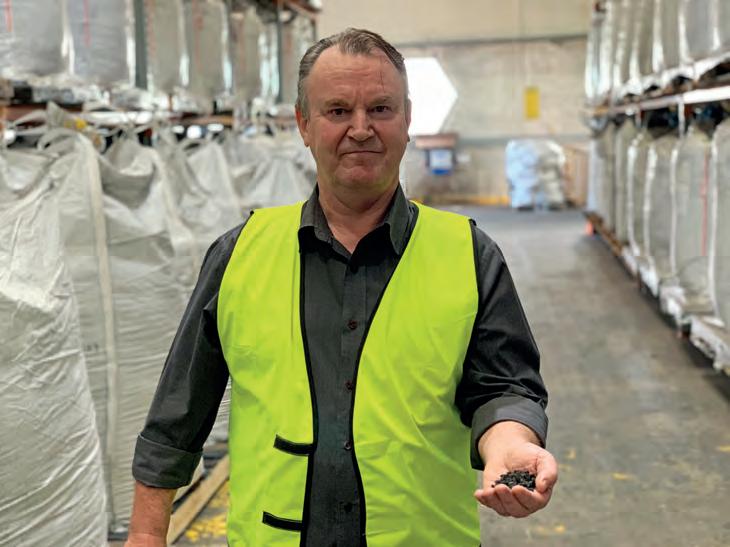
Steve Morriss, Founder of Close the Loop.
BUILDING FUTURES
SOUTH AUSTRALIA’S TORRENS TO DARLINGTON (T2D) INFRASTRUCTURE CORRIDOR IS ONE OF THE STATE’S MOST SIGNIFICANT TRANSPORT UPGRADES; IT’S ALSO
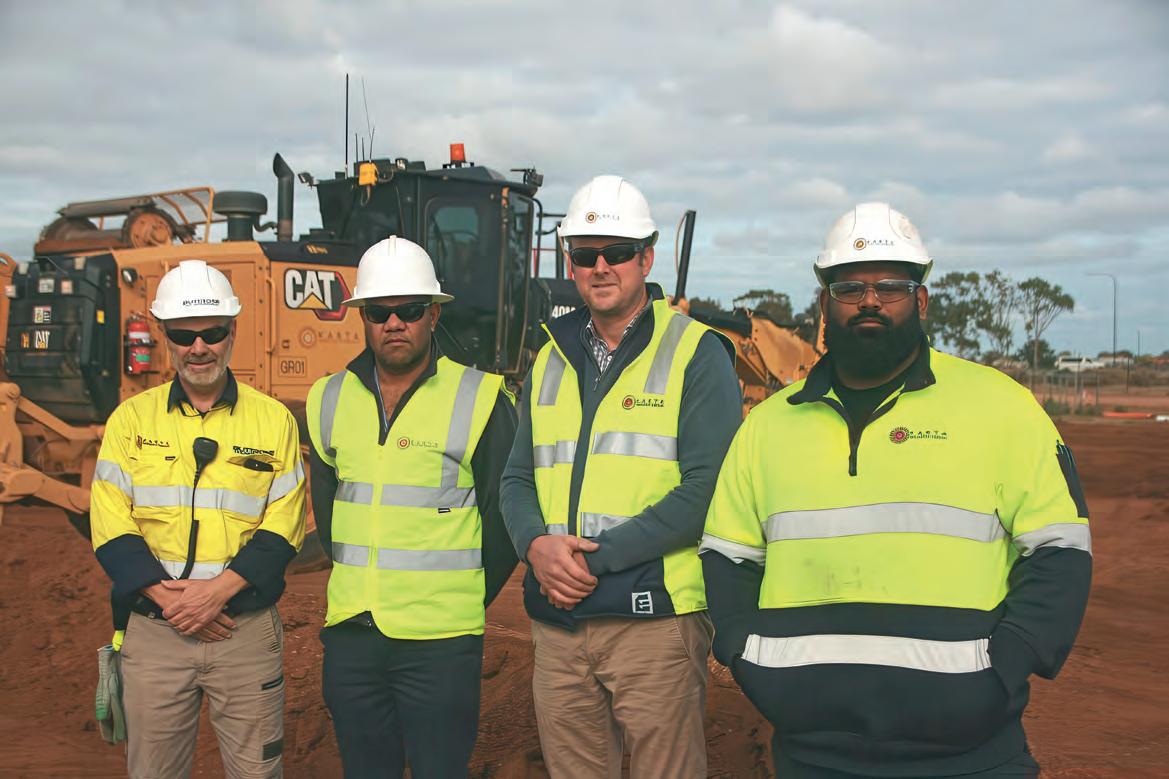
contractor, is playing a key role in the Torrens to Darlington (T2D) project, while providing critical opportunities for its Indigenous community.
The T2D project will complete the final 10.5-kilometre section of the North–South Corridor, South Australia’s most significant road project.
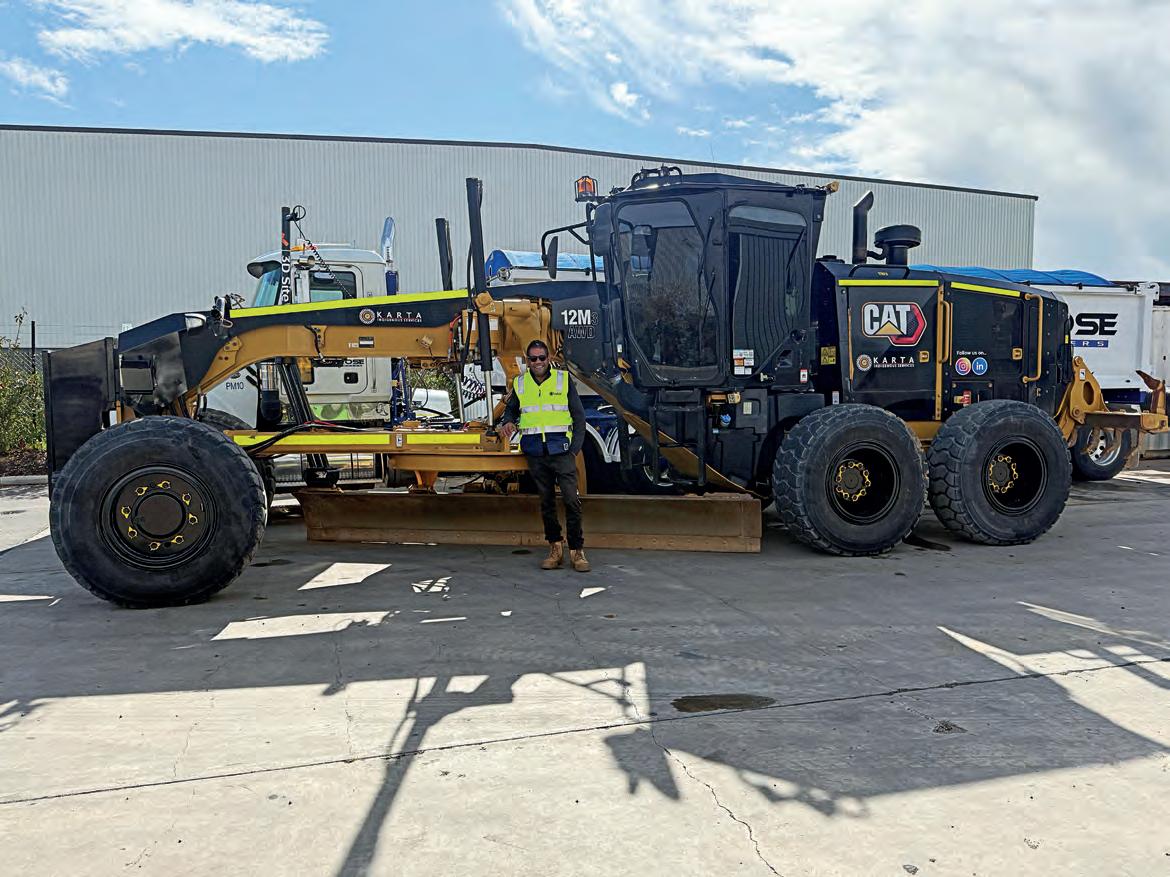
Karta Indigenous Services is responsible for works at the Gillman site and the precast laydown area.
The company’s workforce is 80 per cent Indigenous, with many team members entering the civil construction industry for the first time.
Through structured training, mentoring and on-the-ground experience, Karta Indigenous Services is equipping its crew with Tier-One capabilities, while setting a new benchmark for workforce development in the sector.
“For a lot of our young crew, this is their first job in civil. We’re giving them
(L-R) Martin Preece, Site Manager of Torrens to Darlington (T2D), Edwin Davey, Director of Karta Indigenous Services, Lee Szalnowski, General Manager of Karta
life,” says Edwin Davey, Director of Karta Indigenous Services.
Davey, who brings 25 years of experience across civil, mining and infrastructure, is proudly Larrakia, the traditional owners of the Darwin region in the Northern Territory, and Kokatha from the northern region of South Australia.
His leadership is grounded in a commitment to capability and community – values that are reflected in Karta’s approach to training and employment.
A UNITED ENVIRONMENT
Karta Indigenous Services’ training program is supported by Buttrose Earthmovers, a family-owned and operated South Australian earthmoving and civil construction company, well-respected in the industry.
Through this partnership, the Karta Indigenous Services’ team has received Tier-One level training across a range of
safety systems.
“Support from Buttrose has helped us build a workforce that’s not only capable but confident,” Davey says.
“We’ve got young people operating machinery, managing sites and contributing to complex infrastructure outcomes.”
Karta Indigenous Services’ supervisors and senior staff, many of whom are Indigenous themselves, play a critical role in mentoring the next generation. Davey says the results are evident in the field.
The team has delivered high-quality outcomes on the T2D project, with strong performance in safety, scheduling and environmental compliance. But Davey says the deeper impact is in the confidence and pride felt by its workforce.
“I’ve seen young men and women come in unsure of themselves,” he says. “Within months, they’re leading crews and mentoring others. That’s the kind of transformation we’re here for.”
Indigenous Services and Hippy Wanganeen, Managing Director for Munda Kinect.
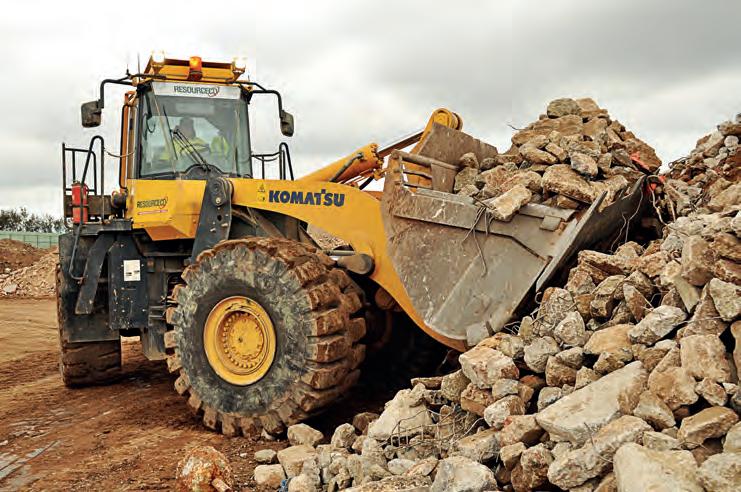
base layers, hardstands and access roads. Using recycled materials ultimately reduces waste and lowers emissions across the project, without compromising on quality.
“ResourceCo’s support has allowed us to deliver circular outcomes that align with South Australia’s sustainability goals,” Davey says.
He reiterates how the environmental focus complements Karta Indigenous Services’ broader social mission.
By integrating recycled materials and promoting circular economy principles, the company is demonstrating that infrastructure delivery can be both responsible and inclusive.
THE NEXT GENERATION
From apprenticeships to leadership development, Karta Indigenous Services is cultivating a new generation of Indigenous professionals who are shaping the future of infrastructure in Australia.
With support from Buttrose and ResourceCo, and alignment with the broader project team, Karta Indigenous Services has demonstrated that inclusive procurement and partnership can yield positive results.
“This isn’t just a good news story, it’s a blueprint,” Davey reflects.
“When you bring together capability, culture, and collaboration, you get outcomes that benefit everyone.”
Once finished, the Torrens to Darlington (T2D) project will provide a non-stop, traffic-light-free motorway stretching from Gawler in the north to Old Noarlunga in the south, removing 21 sets of traffic lights and significantly improving travel times and road safety.
The design includes two three-lane tunnels, a central open motorway section, and improved connections for cyclists, pedestrians, and public transport.
Jointly funded by the Federal and South Australian governments at an estimated cost of $15.4 billion, the project is expected
to begin major tunnelling works in 2026, with completion anticipated by 2031.
Ultimately, the T2D will enhance freight efficiency, reduce congestion, and strengthen connectivity across Adelaide’s metropolitan transport network.
As the Torrens to Darlington corridor continues to evolve, Karta Indigenous Services’ contribution stands as an example for what’s possible in infrastructure delivery.
The company is already exploring new opportunities across South Australia and beyond, with a focus on expanding its workforce and deepening its community impact.
“We’re just getting started,” says Davey.
“Our goal is to bring as many people with us as we can on our journey.”
Edwin Davey, Director of Karta Indigenous Services.
In collaboration with ResourceCo, Karta has incorporated over 30,000 tonnes of recycled material into the T2D project.
DIGITAL HUB CREATING A
ARCADIS’ RECENT AND ONGOING WORKS ON THE WARRINGAH FREEWAY UPGRADE HAVE BEEN GREATLY ASSISTED BY REVIZTO, A PLATFORM THAT’S ASSISTED IN THE DELIVERY OF WHAT
IS ONE OF AUSTRALIA’S MOST COMPLEX AND MAJOR INFRASTRUCTURE PACKAGES FOR AN ESSENTIAL CONNECTION.
Even for a global design and consultancy firm of Arcadis’ scale, there’s always room for improvement and growth.
It’s this very belief and vision that’s led to the company maintaining a global presence in more than 70 countries, while playing a key role in delivering some of Australia’s most significant infrastructure projects to date, and into the future.
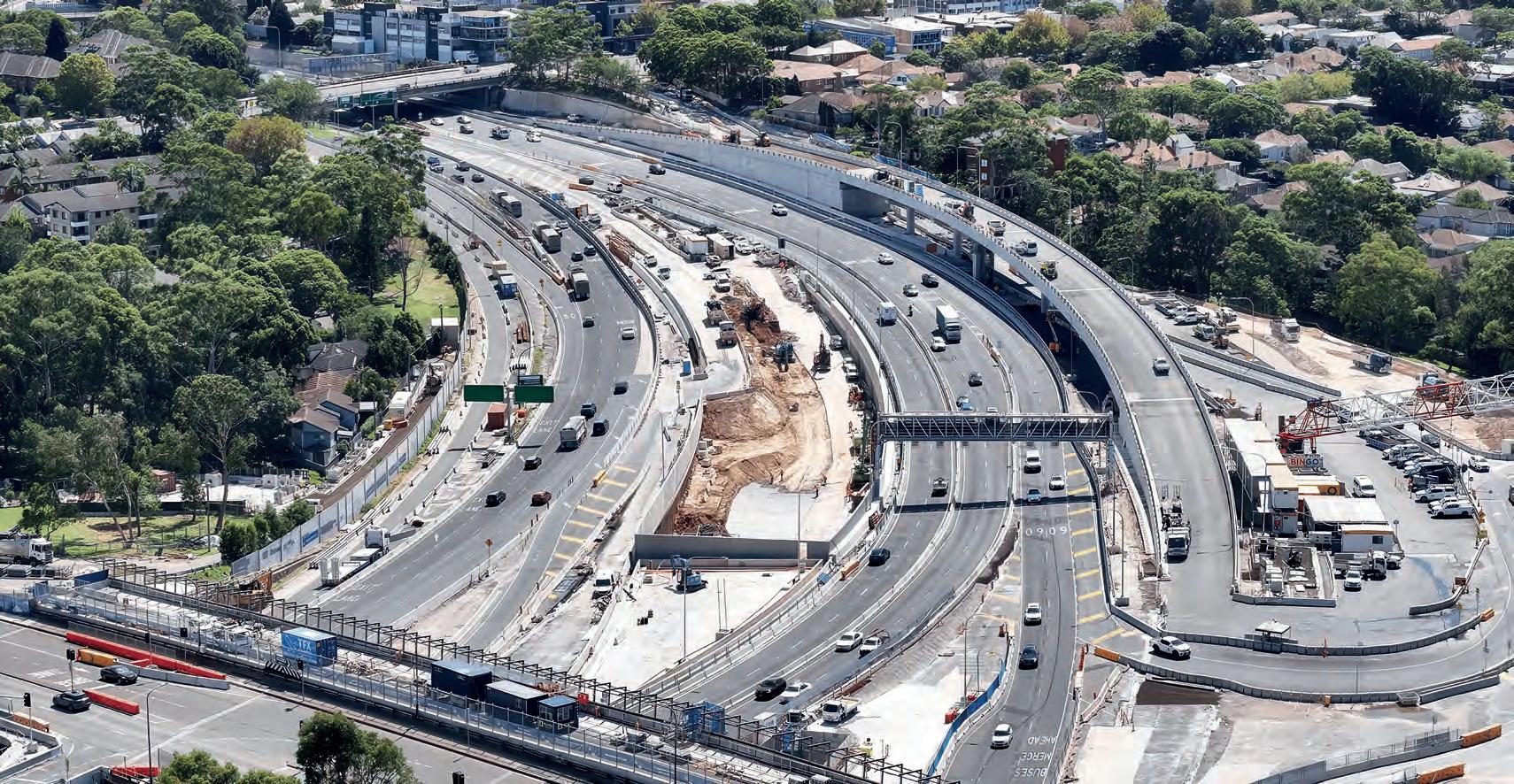
Included in this portfolio is the Warringah Freeway Upgrade, which is seeing Arcadis work with several major industry partners to deliver improved infrastructure for one of New South Wales’s essential arterial connections.
The Warringah Freeway is a major connection that links the Sydney Harbour Tunnel to the Gore Hill Freeway and ranks as the eighth busiest road in the state. It’s also one of the top 30 most congested road corridors in the nation.
To cater for future traffic demand, spurred on in part by an increase in traffic volume that will come with the future Western Harbour Tunnel, an upgrade is being
delivered to take the pressure off the Sydney Harbour Bridge, Sydney Harbour Tunnel and Anzac Bridge.
As part of a joint venture with Jacobs and CPB, Arcadis is helping to deliver improvements to four grade separated interchanges, upgrades to 10 bridges and the establishment of 7.2 kilometres of retaining walls.
During an internal examination, Arcadis assessed its array of construction and digital delivery software, used for its vast variety of ongoing projects in the transport, electric vehicle infrastructure, estates, precincts and energy spaces, among others.
At the head of this assessment was Mitch Medway, Global Digital Engineering Director, Arcadis.
“Arcadis’ journey with Revizto started back in late 2021,” he says. “I joined Arcadis back in 2019 and one of the things that we identified was where we had gaps in our technological ecosystem.
“We didn’t really have a solution that would enable us to do sophisticated model coordination and assign issues back to people
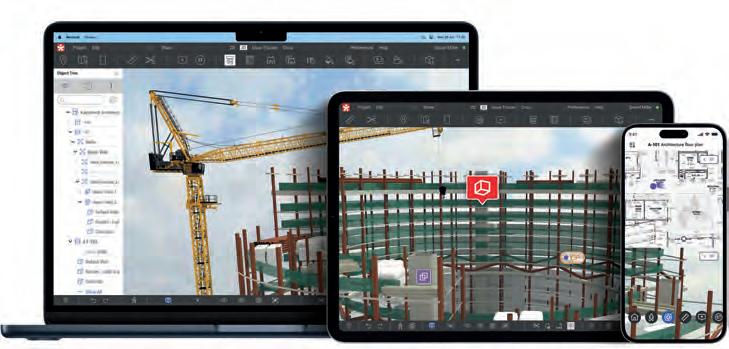
who were accountable for fixing those issues. Tools existed, but some of them just didn’t have what we needed, especially when we’re talking about tackling infrastructure projects at scale.”
Arcadis’ decision to adopt a new platform was also driven by a desire for clean workflows, interoperability with all of its tools, and an intuitive platform for both its own teams and joint venture partners.
All of which were an essential requirement before the commencement of works on one of the key infrastructure projects that now form part of Arcadis’ project portfolio.
“One of those key projects at the time of our initial adoption of Revizto was the Warringah Freeway Upgrade in Sydney,” Medway says.
In addition to Arcadis, each of the partners within the joint venture were existing Revizto users, helping to further streamline design and collaboration throughout the delivery of the project.
“We were fortunate that Revizto was already a known application with the stakeholders that were working on these projects. We weren’t just going in with a shiny
Image: Arcadis
The Revizto platform allows project stakeholders to conduct clash-detection, while also establishing a digital hub for changes and progress updates.
Above: Revizto was used by the joint venture delivering the Warringah Freeway Upgrade, one of the largest projects in New South Wales.
Image Revizto
new toy, it was already proven,” Medway says. “We’ve always said that we should definitely look to invest in not just what we believe, but where our clients do as well, because that alignment can, at times, be part of the criteria when it comes to actually picking teams and winning more work.”
Built on a gaming engine, Revizto provides a single source of truth through a highly accessible and flexible BIM (Building Information modelling) platform.
Revizto transforms how AECO (Architecture, Engineering, Construction, and Operations) teams work by bringing the entire project and project team into one collaborative hub, to visualise, review and verify projects across the full life cycle. Therefore, enabling faster decisions, reduced risk, and greater control by providing a user-friendly interface, ease-of-use, and fast onboarding for non-BIM skilled teams.
Architects, engineers, contractors, and owners can be all connected on one model, to assess both three- and two-dimensional spaces to identify potential clashes. Beyond providing accurate, critical and detailed modelling and information, the collaborative nature of the platform continues to be a standout quality throughout the project lifecycle thus far, as Medway explains.
“Revizto wasn’t just a design tool, it was a legitimate collaboration tool, and regardless of your role or the type of stakeholder that you were, that data was and is accessible to everyone,” he says.
“Just one example is the issue tracker inside of Revizto. Revizto collects the clash detection data, a process that can be automated to push into the issue tracker, which is more or less your repository or
regardless of the authoring platform, into one common area.
“If there’s alterations needed, that could take no more than five seconds for the model to be updated. That communication and those changes can happen in what is almost real-time.”
It’s this ‘single source of truth’ that’s helped Arcadis – within the joint venture – to establish a centralised hub, driven by the
“REVIZTO WASN’T JUST A DESIGN TOOL, IT WAS A LEGITIMATE COLLABORATION TOOL, AND REGARDLESS OF YOUR ROLE OR THE TYPE OF STAKEHOLDER THAT YOU WERE, THAT DATA WAS AND IS ACCESSIBLE TO EVERYONE.”
historical record of all issues that occur on the project. There we can search and retrieve that information, so can a project manager or anyone else involved in the project, who can access a visualisation of that data in clean form.”
The effectiveness of the tool also “greatly” aided communication between different disciplines.
“Those clean workflows are so important,” Medway says. “If I’m a structural engineer and I need to send information really quickly to a civil engineer on what is a complex interface, Revizto can synchronise that information,
expertise of each project partner, as well as a desire to deliver the best possible project outcome for the community.
“It’s invaluable to work within a collaborative digital hub, with every piece of information, point clouds, models, drawings and more in one spot,” Medway says. “Not only that, but also every person that’s working on the project.
“It’s always been about the whole project lifecycle. Having all that information in one hub is how we can enable the speed and efficiency required to de-risk these major projects.”
PROTECTION,
AT ITS BEST
ENGINEERED FOR FAST-PACED ENVIRONMENTS, MERIDIAN’S ARCHER GUARD SYSTEM IS HELPING WORKERS STAY SAFE ON BRIDGE, ARTERIAL ROAD, UTILITY PROJECTS AND MORE. APPLICATIONS IN THE UNITED STATES POINT TOWARDS SUCCESS HERE IN AUSTRALIA.
The transport and construction industries continue to have among the highest number of workplace fatalities in Australia, due to high-risk environments, but also the dangers posed by potential vehicle incidents.
Its Meridian’s opinion that workplace barriers have never been more effective. Meridian takes pride in engineering high quality barriers for work zones across virtually all industries.
Just one of the company’s flagship products is the Archer Guard, a barrier system designed for protecting workers on foot and surpassing standards. The toughest of these standards is the MASH (Manual for Assessing Safety Hardware) TL One, Two and Three requirements.
Barriers that achieve MASH TL-Three testing are certified to stop vehicles travelling at speeds up to 100 kilometres per hour, while also ensuring the safety of the driver upon impact.
after such impacts, requiring zero maintenance. This is thanks, in part, to the implementation of advanced kinetic energy absorption technology that helps to reduce the shock on impact.
This is further backed by a 25year warranty.
Not only is the barrier highly effective on impact. Eric Alms, President –Meridian Rapid Defense Group says he’s witnessed first-hand how effective the system can be in creating behavioural change from drivers, further increasing safety.
“A barrel, type three barricade, halffilled water barricade or cone doesn’t mitigate. It’s a visual signal to guide traffic, but it doesn’t mitigate traffic from the danger,” he says.
“I was out on site recently, and the minute we put our barriers up, the speed of the traffic dropped dramatically, but there was no change in the speed limit and signs. All the drivers
that created a change. Most of the time when there’s cones or lightweight barrels, no one slows down.”
Another major benefit has been the mobile nature of the system.
“When you look at our product, the number one differentiator is that it’s just stronger than what’s out there,” Alms says.
“The number two differentiator is that the deployment process is fast, easy and can be done by one person. You don’t need heavy equipment, and you can move it in and out very quickly.”
These benefits have been especially prevalent in the many projects where the Archer Guard has been deployed. Whether it be ramp closures, bridge work, full freeway closures, or underground and overhead work, the Archer Guard has emerged as a favourite for bridge contractors, engineering firms, paving companies, and utility companies.
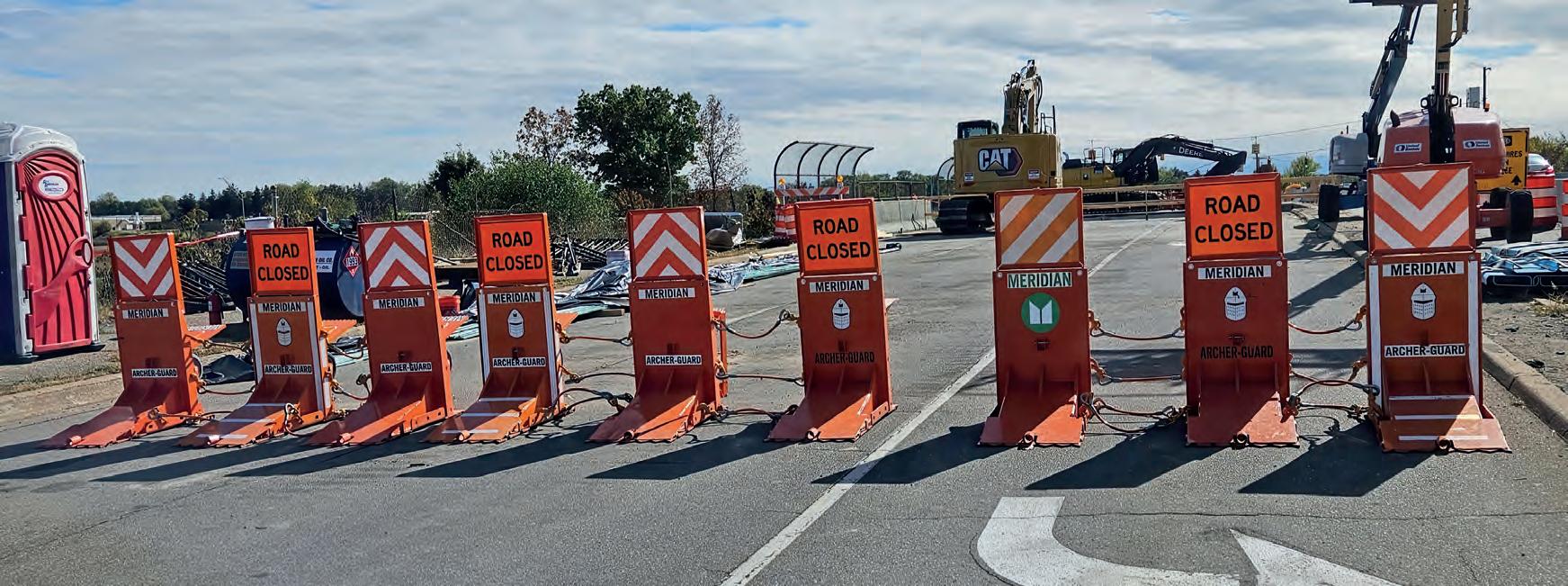
Not only do Archer Guard systems provide physical protection, they also play a psychological role in getting drivers to slow down around work zones.
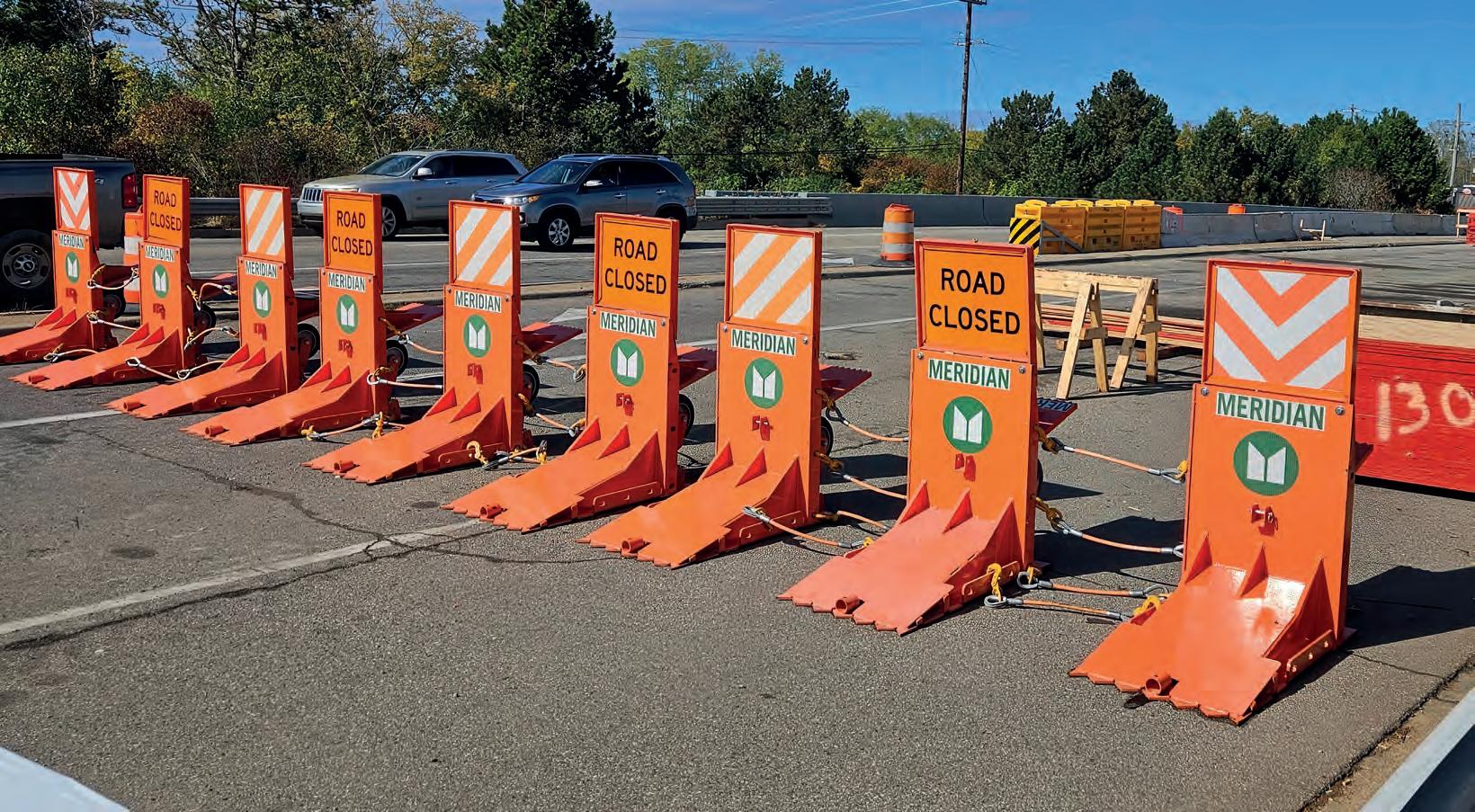
“THE NUMBER TWO DIFFERENTIATOR IS THAT THE DEPLOYMENT PROCESS IS FAST, EASY AND CAN BE DONE BY ONE PERSON. YOU DON’T NEED HEAVY EQUIPMENT, AND YOU CAN MOVE IT IN AND OUT VERY QUICKLY.”
that took place on the I-94 Freeway in Detroit, Michigan, a major connection for one of the United States’ most iconic industrial regions.
Here, the Archer Guard was used during a freeway closure, to allow a bridge demolition to occur.
Both sides of the freeway, as well as five on ramps were closed for this complex, three-day project.
Barriers were loaded in and out multiple times to accommodate changing work phases, helping to successfully deliver the works, while optimising worker safety.
Another example was a roadway utility and excavation project. The Archer Guard was deployed where a large hole was dug on one side of a three-lane, one-way roadway, leaving
one lane open to traffic.
The Archer Guard barriers significantly reduced vehicle speeds, aided by the visible deterrent it provided.
Alms says the Archer Guard’s effectiveness at both construction sites and public events shows why it’s important to use such a proven system in high-risk environments.
“When you’re saving lives every day in crowded spaces, it makes it very easy to ask contractors ‘if it’s capable of protecting thousands of people at a parade, why wouldn’t you protect five people at your work zone,’” he says.
“That potential lifesaving ability, that’s something that we’re very proud of.”
For each project, Meridian provides a full site of support services.
Rentals are managed directly by Meridian, not through distributors or resellers, ensuring high standards and customer support.
Alms says having no third parties involved also helps to ensure that each barrier system can meet and maintain specifications and safety standards.
The Archer Guard system has proven to be effective in both the United States and Australia.
Images: Meridian
OPTIMISING
SITE SAFETY
THE WIRTGEN GROUP IS FURTHER BOLSTERING ITS COMMITMENT TO SAFETY, CONTINUING ITS PARTNERSHIP WITH STRATA WORLDWIDE TO DELIVER INNOVATIVE PROXIMITY DETECTION SYSTEMS THAT ARE HELPING TO PREVENT INCIDENTS ON-SITE BETWEEN PERSONNEL AND MACHINERY.
According to Safe Work Australia, vehicle incidents were the leading cause of work-related deaths in 2024, accounting for 42 per cent of all workrelated fatalities.
In a sector where machinery and equipment are ever-present, the construction and infrastructure segment places a high priority on site health and safety.
But as these statistics reflect, current methods and solutions are not enough. Safety has long been front of mind for
the Wirtgen Group, which produces key machinery for the road construction and mining industries. It’s been a particular focus in the Group’s range of HAMM rollers, which have for years been equipped with technology aiming to eradicate the chances of incidents onsite.
This venture has mainly been oriented around the employment of PDS.
PDS stands for Proximity Detection System, and is a technology designed for machinery to detect nearby obstacles, people, or equipment to help prevent accidents.
PDS aims to enhance site safety and reduce the risk of incidents involving heavy equipment, in particular, a key reason why the Wirtgen Group has identified the technology as an essential tool for customers of its HAMM roller range.
Through an ongoing collaboration with PDS technology designer and provider Strata Worldwide, Wirtgen has done more than just install this technology. It’s aiming to surpass industry and market expectations, specifically the levels within the system. So, what are these levels? Craig Yeats,
Wirtgen is working closely with
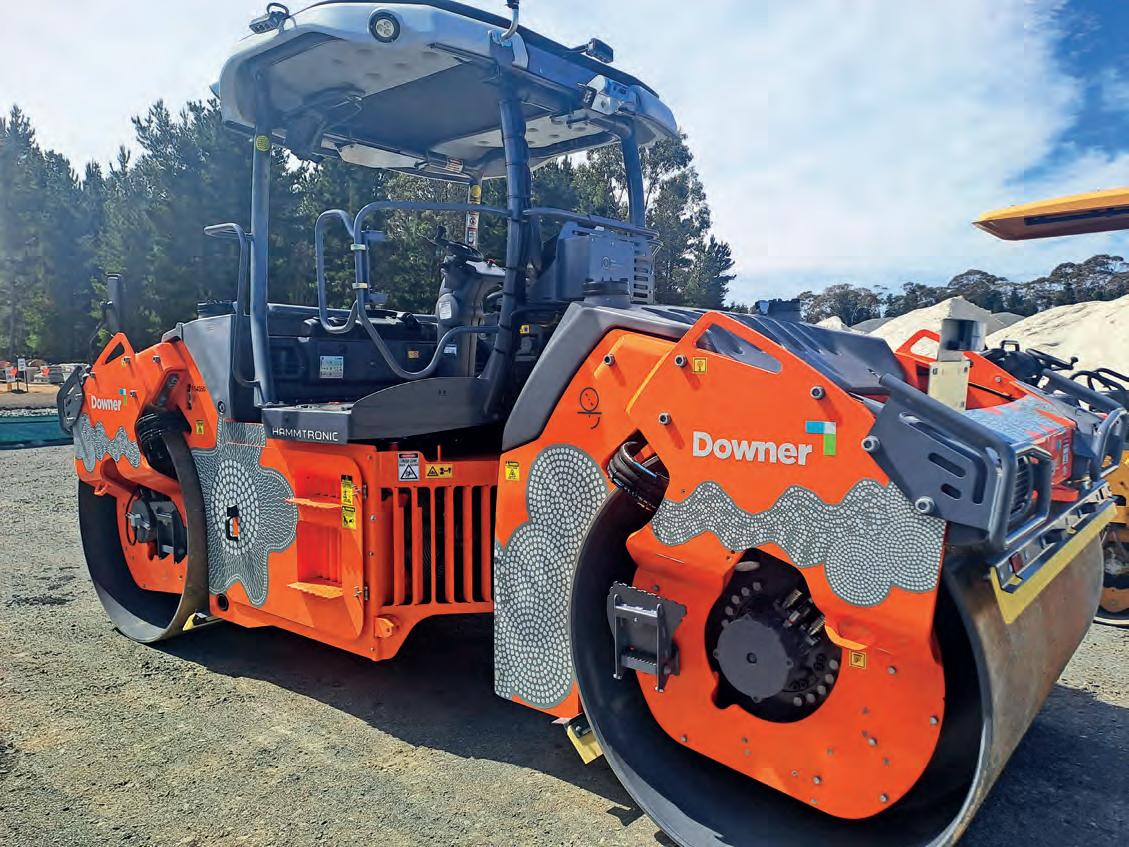
Strata Worldwide to increase the accuracy and effectiveness of Proximity Detection Systems.
Product Support Manager HAMM – Wirtgen Australia explains.
“Level seven and level nine refer to how much interaction a Proximity Detection System has with a machine,” he says.
“Most systems that are commercially available in the market these days, what we would say is a level seven system, have an alarm, or lights will flash, to let the operator know that they’re coming up against an obstacle or a person, or whatever that system is designed to pick up.”
“Level nine goes a step further, where the system will take control of the machine to prevent the unit running into people or plant or whatever the case may be.”
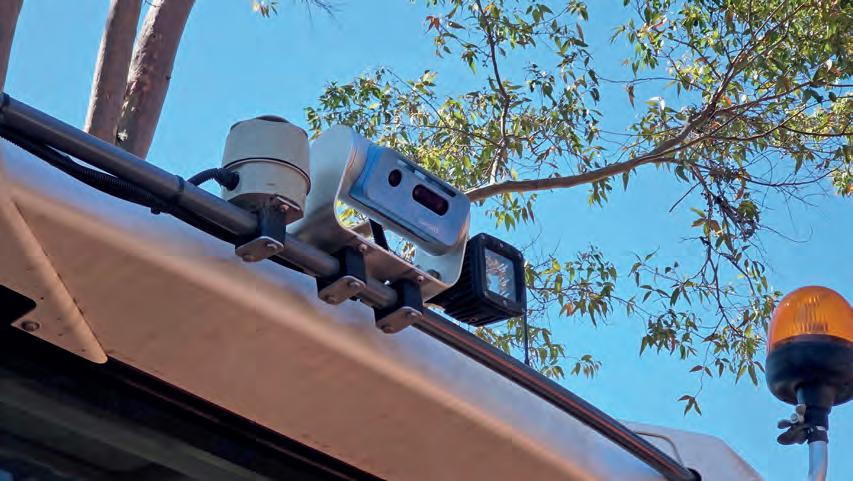
Calibrating and ensuring the accuracy of these systems is a must. Which is why Wirtgen is in constant communication with not only its customers, but also Strata Worldwide, to ensure constant improvement.
Initial testing is done in a controlled environment to ensure the system alarms or automatically stops the machine when required.
Once the system performs as expected in controlled conditions, live trials are conducted, ideally in closed or restricted environments to ensure safety and for further monitoring.
The purpose of these trials is to observe real-world performance and detect any unexpected behaviour, such as false alarms or system triggers in the absence of real threats.
“Validation occurs any time that we fit a system to one of our machines,” Yeats says.
“The beauty of these systems is that video images are recorded at the time of any incursion and uploaded to the cloud, these can be viewed and, in that way, validated.
“False alarms can occur for a variety of reasons. In those instances, it demands a response from the OEM and the PDS provider, to eliminate as far as possible. Any false alarms are compiled and trained out of the AI system. But inevitably, there are actual incursions that can trigger a PDS response. This requires action from the site. It’s about eliminating the incursions that are causing the alarms to occur.”
Each of these interactions are fully transparent, with regular discussions between hardware designers, software designers, and machine operators.
This approach is also flexible in terms of installing the system, based on whether the machine is ISO compliant, non-compliant or an older machine that may require more of a
It’s Wirtgen’s belief that widespread safety improvements could be achieved if PDS’ are more widely adopted.
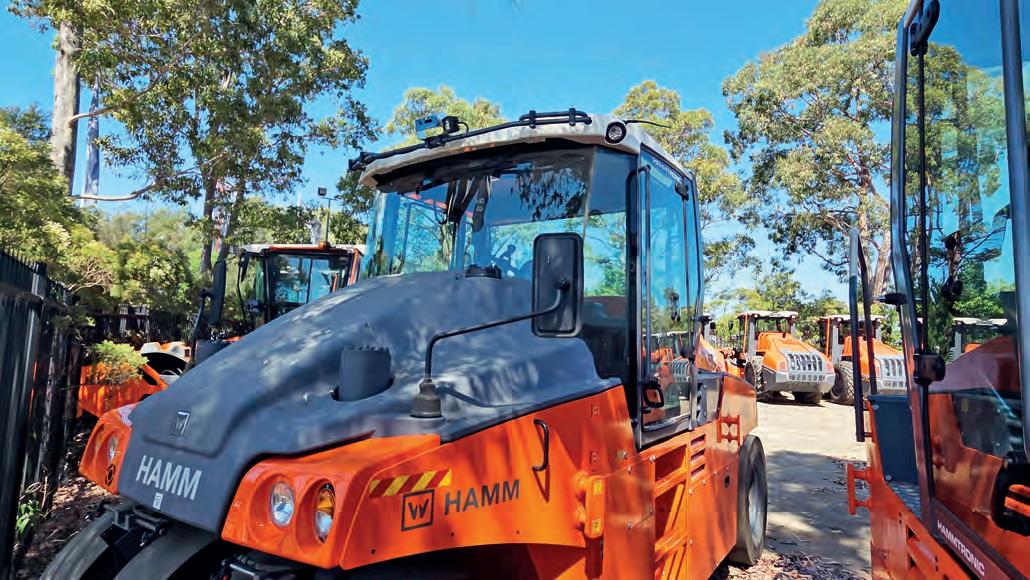
hands-on approach. Regardless, each unit is treated on a case-by-case basis.
Downer General Manager Simon Abrahams has been piloting AI level nine Safe Site Wirtgen PDS technology on HAMM Compaction equipment, supplied by Wirtgen Australia in conjunction with Strata over the last two years.
“We’ve fitted the technology to several machines, including two HD120 steel drum rollers, which we use on highly technical airport projects such as the Hobart International Runway Upgrade, Richmond RAAF Base, Sydney Airport, and others,” he says.
“Not only have we significantly improved safety and reduced risks around machine–pedestrian interactions, but we’ve also boosted productivity and enhanced quality.”
Wirtgen is helping to facilitate easier adoption by integrating the ISO standard into its equipment, simplifying third-party system integration.
Support for each system can also be provided with or without a technician onsite.
“Strata can offer that support remotely. As long as the machine’s running and there’s an operator sitting on it, they can do a software update in a controlled manner, and then test it, set it up again, test it again, all without actually being on site,” Yeats says.
“The more we validate this technology and show people that it works and it’s making a difference on site, the safer our industry is going to be, and the more people are going to want to adopt this technology.”
Yeats says the technology is no longer an investment to be considered – it’s a tool that should form the backbone of a company’s safety policy.
“The whole point of this is to protect people,” he says.
“Even if it just protects one or two people over the years from serious harm, then it’s worth its weight in gold, and paid for itself in no time.”
Images:
Wirtgen
PDS’ support differing levels, with some providing visual and audio cues, and others able to have control over the machine itself.
QUALITY AT EVERY STEP
MATTHEWS BROTHERS ENGINEERING’S RANGE
OF QUALITY SPREADER BOX UNITS, BACKED BY A STATE-OF-THE-ART MANUFACTURING FACILITY AND TEAM, ARE MAKING WAVES IN THE SECTOR. ROADS & INFRASTRUCTURE SITS DOWN WITH THE TEAM RESPONSIBLE TO LEARN MORE.
Matthews Brothers Engineering’s range of spreader boxes have been designed to suit a variety of vehicle and truck options.
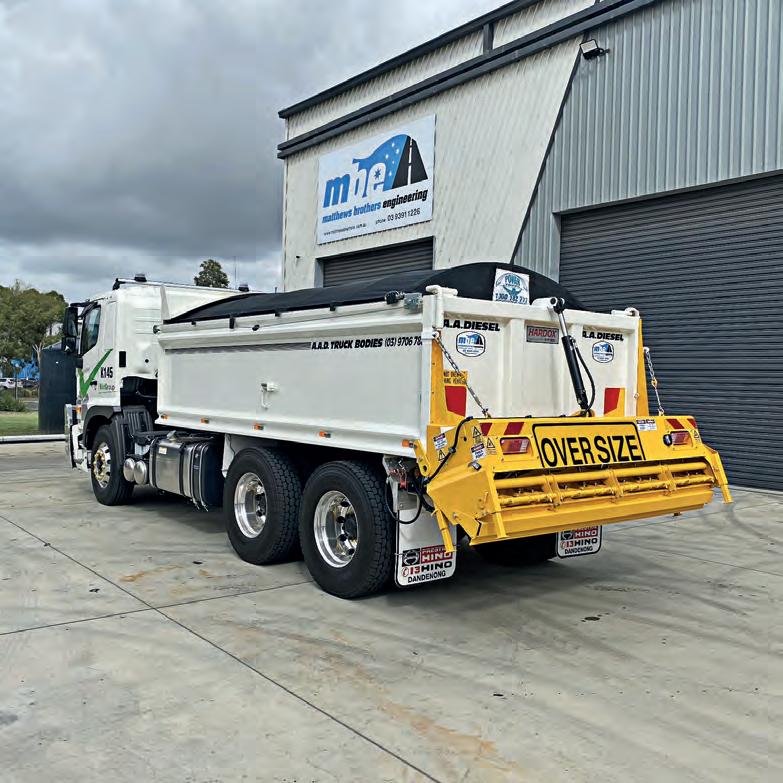
other aggregate materials for road works. Whether it’s sealing, repairs or construction, the spreader box has seemingly always been tied to the roads sector, as has road construction machinery and equipment manufacturer Matthews Brothers Engineering.
The company’s spreader boxes have been a staple of its offerings throughout the entirety of this century. Despite this, Matthews Brothers Engineering has
gone out of its way to constantly evolve and improve its spreader box design, driven off the back of industry engagement and feedback.
One of the biggest changes was Matthews Brothers Engineering’s decision to evolve from four gates to eight, allowing for greater control over material flow during operation.
The earliest spreader boxes also featured manual operation, which included handles and simple mechanics. The units have since advanced to include hardwired controls for the cabin, and more recently, advanced Bluetooth remote controls with unique frequencies, enabling
simultaneous operation of multiple units without interference.
Martin Barker, Production Supervisor – Matthews Brothers Engineering says these changes to the control panel are of “huge” benefit to medium-to-large scale operations.
“Because they’re all set up for a separate frequency, you could have multiple spreader boxes operating together, and there’ll be zero interference between one and another,” he says.
Changes to the manufacturing process have also occurred. Previously, components were often bought pre-made and then modified. Now, most parts are purposedesigned and laser-cut for a more precise and efficient assembly process. Matthews Brothers Engineering has also evolved its installation and fitting methods to better cater for specific truck and user needs.
Andrew Tidd, Fitter and Turner –Matthews Brothers Engineering has been at the business for 15 years. He says that the company is invested in trying new concepts, even if those don’t always make it to the final factory floor. A big part of this development can be attributed to being in constant communication with the company’s dedicated design department.
“We’ve gone through a number of versions and types,” he says. “We’ve even supplied front-mounted spreader boxes and some other options as well.
“Every now and then I’ll check in with the design team, as there might be a few iterations that they’ve been working on, to continually refine and improve the equipment we are producing.”
CHOICES ALL ROUND
Matthews Brothers Engineering provides both fixed and winged spreader box iterations, enabling greater flexibility of choice, depending on the requirements of the job at hand.
The former features a durable and robust design, often with larger cylinders and gates, making it sturdy and reliable for heavy-duty use. With a spread width of 2.7 metres, the fixed spreader box option provides consistent and reliable spreading performance. The fixed option also has fewer moving parts than a winged spreader, resulting in lower maintenance needs and greater ease of operation.
Alternatively, the winged design allows the spreader’s width to be reduced below 2.5 metres for transport, then extended up
to 2.9 metres for wider spreading onsite. Offering all the spreader advantages of a larger fixed unit, the winged spreader box can also adapt to different job requirements. This is due, in part, to additional air cylinders and mechanisms that ensure that users can find a balance between regulatory simplicity and a wider working footprint, with no oversized permits needed.
Barker says that the selection between fixed and winged depends on the requirements. But high quality and consistent performance is shared across both units.
“Each unit has eight individually operated gates. Each gate has a dedicated pneumatic cylinder, with the opening size set and controlled via a linear actuator to accommodate various sizes of aggregate,” he says.
But the choices don’t end there.
Matthews Brothers Engineering can also cater for a number of installation types, led by customer requirements.
The twin lifter installation provides full lifting functionality, allowing the spreader box to be raised entirely out of the way. Ideal for flexibility, users can tip the truck or use the spreader as needed.
Another installation type features a single hydraulic cylinder lifting from the centre. Simpler than the twin lifter, this option is primarily used for easier hook-up and removal but doesn’t lift as high. Customers can also select from a chain installation option if needed.
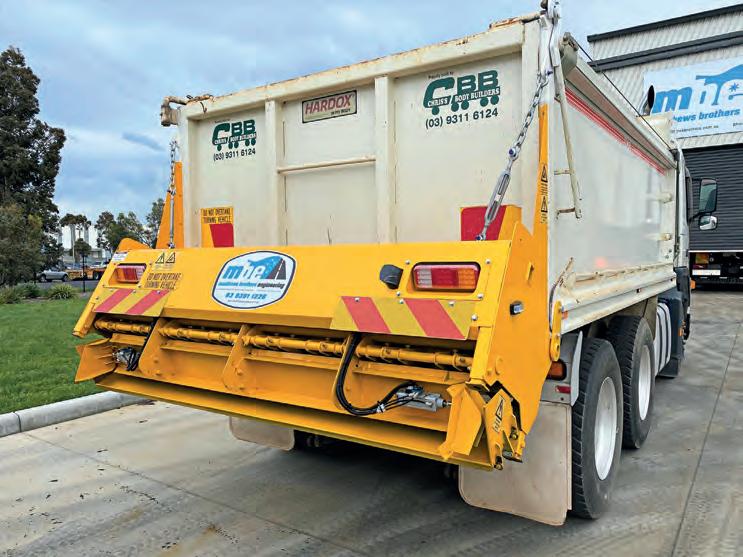
QUALITY ENSURED
Each of these box spreader iterations – like the rest of Matthews Brothers Engineering’s sprayers, tankers, coaters and more – involve multiple team members and departments collaborating to ensure quality.
Tidd helps by saying, “I make a point of getting around to the fitters, painters, and fabricators during the build.” That simple habit builds teamwork, keeps communication flowing, and ensures the final product stays consistent from start to finish.
“EACH UNIT HAS EIGHT INDIVIDUALLY OPERATED GATES. EACH GATE HAS A DEDICATED PNEUMATIC CYLINDER, WITH THE OPENING SIZE SET AND CONTROLLED VIA A LINEAR ACTUATOR TO ACCOMMODATE VARIOUS SIZES OF AGGREGATE.”
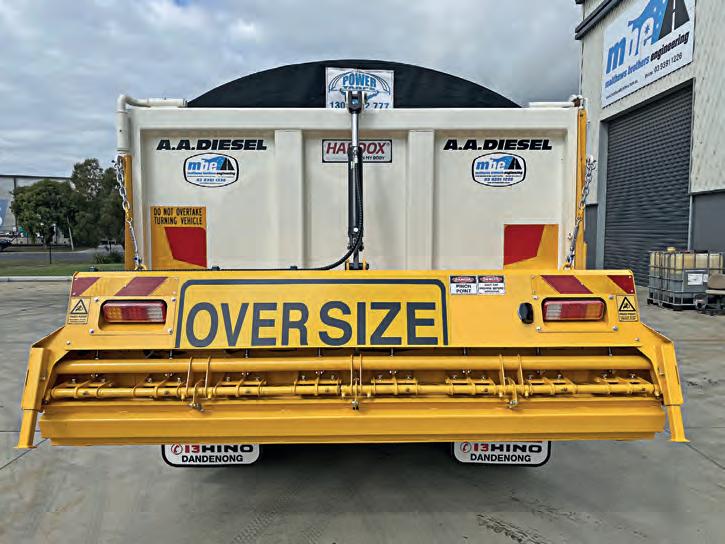
Before painting, a “dry fit” is performed, assembling parts to make sure everything fits together, helping to detect any potential problems early.
“It’s usually a pretty straightforward process,” Tidd says. “If anything needs tweaking here or there, the team will usually come to me to make sure everything is alright.
“It might be a part here or there just needs a little bit of adjustment, or if there were any issues with a component, we’ll change it out. We have a wide selection of parts on hand if that’s the case.”
Such scenarios are handled on the spot, with additional checks occurring before the product is finalised and hooked up with pneumatics and electronics.
Assistance is always offered for after-sales as well, with a dedicated staff member offering support, service and part supply.
Images: Matthews Brothers Engineering
Matthews Brothers Engineering’s team and facility are capable of tailoring and customising solutions to fulfil customer requirements.
From thorough customer engagement to detailed design and strong after sales support, customers are supported through the whole process.
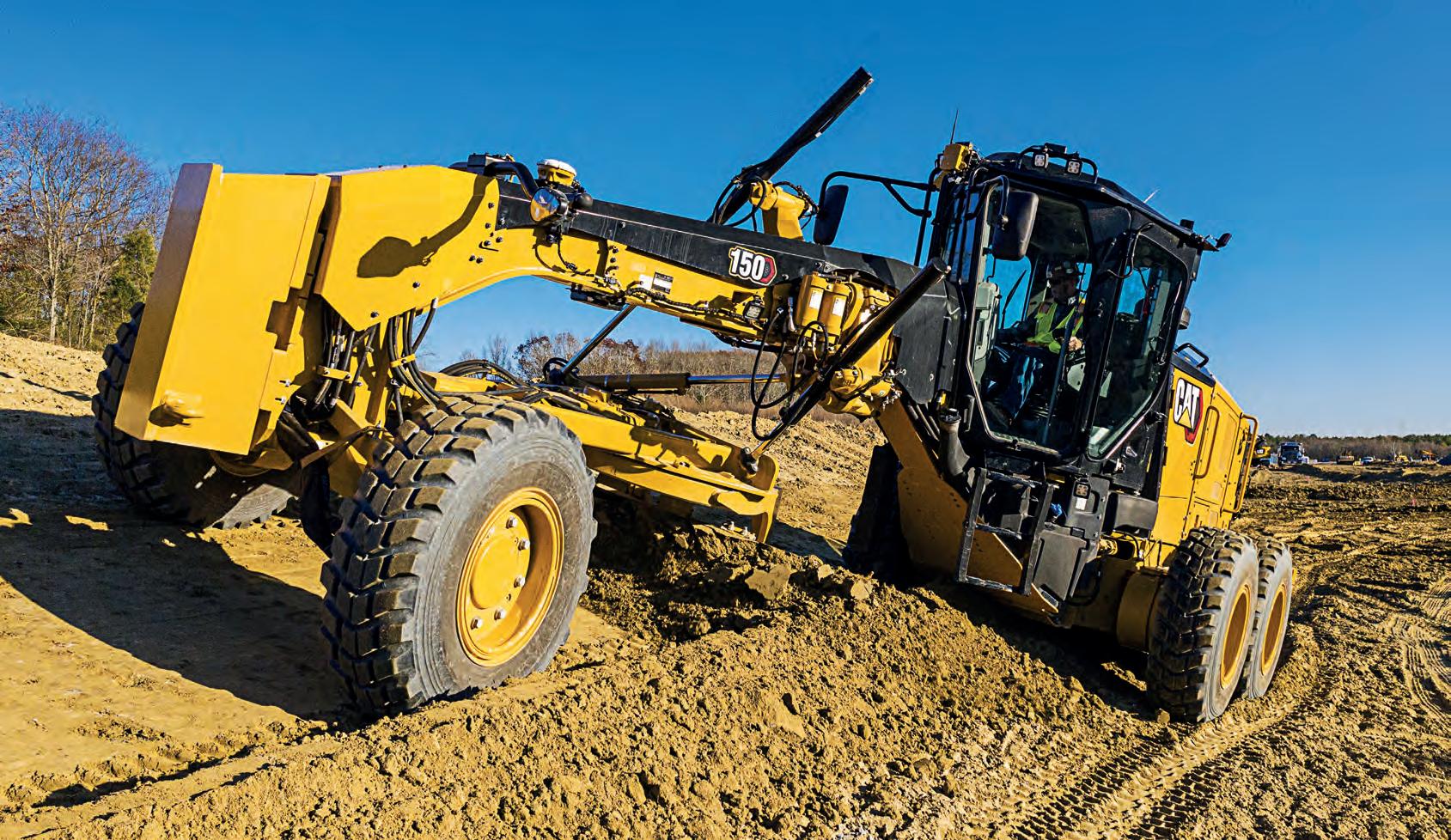
VALUE AGREEMENTS BENEFITTING BUSINESS
EQUIPMENT THAT CONTINUES TO DELIVER VALUE OVER THE LONG TERM IS ONE OF THE KEY PILLARS OF PRODUCTIVE OPERATIONS, PAVING THE WAY FOR A SUCCESSFUL AND STRESS-FREE OWNERSHIP EXPERIENCE, AND HELPING ENSURE MACHINE OWNERS GET THE MAXIMUM RETURN ON THEIR INITIAL INVESTMENT.
Cat CVAs (Customer Value Agreements) are designed to help customers keep assets in top-notch condition and ultimately help achieve lower ownership costs. The introduction of Cat CVAs to the Australian market has added to the growing suite of aftersales services available from Caterpillar dealers, with plans available for new, used, and rental machines. In fact, Cat CVAs can encompass a variety of plan types. Customers can work with their preferred dealer to select a plan that is in line with specific customer requirements – from a full-service equipment protection plan, to having maintenance kits delivered for installation. It’s all about helping customers get the most out of a machine.
It is also important to note that Cat CVAs are available for both new and existing customers, and can be purchased at any time, not just at the time of the machine purchase, meaning customers can get in touch with their Cat dealer at their convenience.
Across the full scope of Cat CVAs, the following are some of the key benefits customers can expect to tap into.
KEEP
DOWNTIME TO A MINIMUM
Minimal downtime means smooth-flowing and productive operations, with Cat CVAs helping machine owners schedule planned maintenance events. It’s one less thing to worry about when it comes to machine upkeep.
For instance, under a Cat CVA, customers can arrange to have genuine Cat parts delivered according to an agreed schedule, along with clear instructions to ensure that preventative maintenance is carried out accurately. Enjoy hassle-free maintenance and ownership with genuine Cat parts delivered right to you, right on schedule for planned maintenance.
DEALER SUPPORT
Having the right CVA in place delivers peace of mind in the event of a machine breakdown, providing expert dealer support quickly – to get customers back up and running and keeping downtime to a minimum.
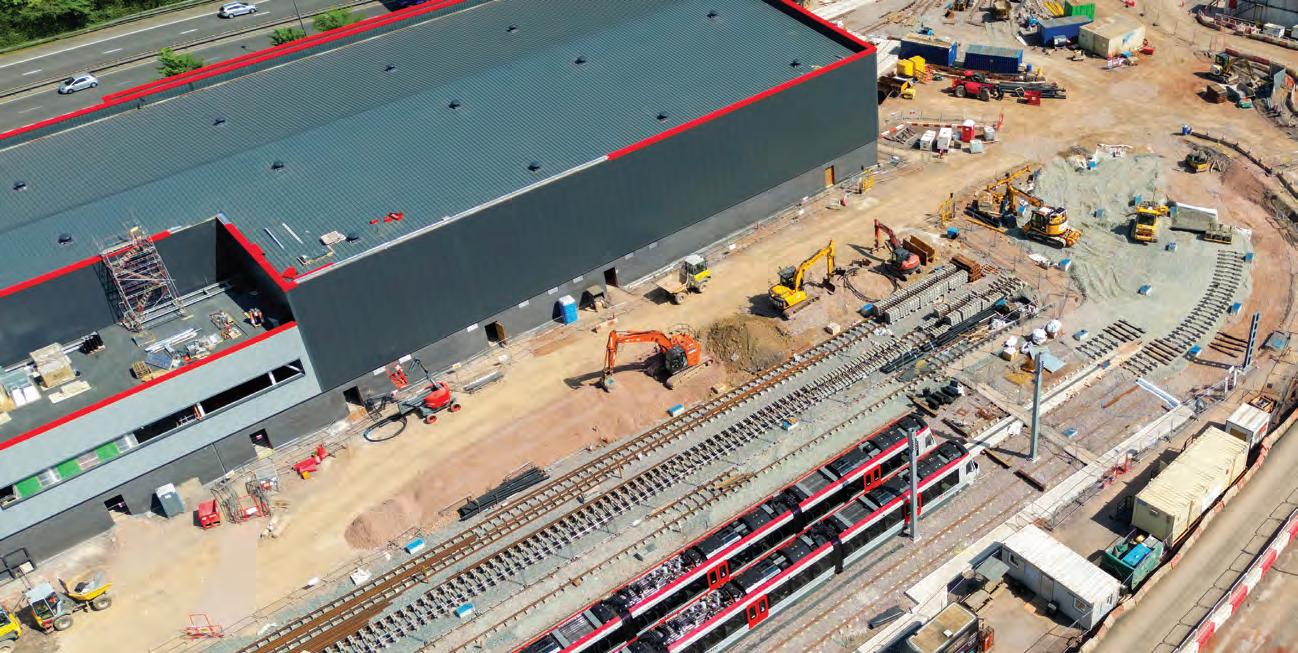
For example, an Equipment Protection Plan (EPP), which may be available with a Cat CVA, provides customers with access to a range of dealer support resources, including troubleshooting and diagnostics assistance, along with repairs for newer machines, using genuine Cat parts.
KEEP CONNECTED WITH DIGITAL TOOLS
Along with dealer support, Cat machine owners can secure additional peace of

mind via access to a range of digital tools, designed to deliver targeted insights into machine health and operations. Tools such as the VisionLink™ allow machine owners to take a proactive approach to machine management – such as providing insights into machine hours and locations and allowing for fluid health monitoring – all aimed to help keep a step ahead of potential problems. In addition, users can monitor their equipment health management with key health alerts and inspection results through Cat Inspect. Be it on site, on the road or in the office, customers can access a range of machine information anywhere and anytime.
CAT DEALERS ON HAND
Cat CVAs are available for both new and existing customers, covering a range of road
Caterpillar’s network of local dealers means customers always have a local touchpoint that can be accessed for support.
construction machines. With a variety of options and flexible elements, the best next step for operators is to work with their local Cat dealer. They can talk through the factors that are unique to an operation and recommend the best solution, based on customer needs and type of road construction equipment required.
With a Cat Customer Value Agreement, equipment is not only protected, as well as bottom line – but also operator’s peace of mind. Whether they’re buying a new or used Cat machine or looking to get maximum equipment life out of the one they already have, a CVA ensures it’s easy to own and ready to work.
For further information on Cat CVAs get in touch with your local Cat dealer or visit www.cat.com/CVA-au for more information.

CONTACT YOUR LOCAL KENNARDS HIRE SOLUTIONS EXPERT
Caterpillar has a variety of services, aimed at providing optimal support for its customers in the short and long term.

The X-Air 410-12 PACE is fitted with a Stage IIIA Caterpillar engine for maximum efficiency.
SMART AIR POWER
ENGINEERED FOR PERFORMANCE, RELIABILITY, AND A LOW COST OF OWNERSHIP, THE ATLAS COPCO X-AIR 410-12 PACE IS THE IDEAL MACHINE FOR THE ROADS AND INFRASTRUCTURE INDUSTRIES.
Inspired by a need for versatility, maximum utilisation, fuel efficiency, and durability in a single portable air compressor unit, Atlas Copco created the X-Air 410-12 PACE (Pressure Adjusted through Cognitive Electronics).
Designed to handle a wide range of demanding applications on the job site, the Atlas Copco X-Air 410-12 PACE is ideal for a range of works including demolition and surface reparation, utility and cable installation, drilling and ground engineering and general construction and roadwork.
A standout feature of the X-Air 410-12 PACE is its PACE technology that allows users to electronically adjust the working pressure and corresponding flow within a broad operating range.
PACE’s broad range means it can handle a variety of tasks, such as shotcreting, drilling, abrasive blasting, and powering various pneumatic tools that
would otherwise require multiple fixedpressure compressors.
Complete with a powerful Stage IIIA Caterpillar engine, the X-Air 410-12 PACE is designed for optimal fuel efficiency.
David Buttigieg, Brand Leader for Atlas Copco CEA, says the engine was selected for efficiency, especially compared to older engine generations.
“Utilising advanced technology, such as common rail or mechanically actuated electronic unit injection (MEUI) fuel systems, allows for better control over the injection timing and pressure,” says Buttigieg.
This results in more complete and efficient combustion of the fuel.
The Turbocharging and Aftercooling (TA) increases air density entering the cylinders, allowing the engine to generate high power output with a smaller displacement. This results in better powerto-weight and fuel efficiency, and the
engine’s electronic control unit (ECU) is programmed with fuel maps optimised to deliver the required power for the compressor with minimal fuel waste across its operating range.
ECO-MODE
The X-Air 410-12 PACE can also be operated in ECO-mode to significantly reduce fuel consumption.
Up to 50 per cent savings during no-load periods can be achieved by automatically lowering the engine speed when there is no air demand.
Buttigieg says PACE, ECO-mode and engine technology featured in the X-Air 410-12 PACE work together to support Atlas Copco’s commitment to sustainable work sites.
“The PACE electronic regulation system allows the operator to precisely match the compressor’s output to the exact requirements of the tools being used,” he says.
“This ensures the engine is never running harder or consuming more fuel than necessary for the task at hand.”
When in ECO-mode, the X-Air 41012 PACE automatically transitions the compressor from “unload” to a very lowidle “no-load” state during periods when air demand drops, such as waiting for a drill rod change. Ultimately cutting fuel consumption by up to 50 per cent during non-working periods.
Similarly, the Integrated Engine Technology utilises a fuel-efficient Caterpillar engine designed to meet environmental standards, helping lower the overall carbon footprint on the job site.
KEY FEATURES
Built to withstand harsh working conditions, the compressor features a durable and corrosion-resistant HardHat polyethylene canopy, providing optimal protection for the X-Air 410-12 PACE. By resisting dents, chips, cracks, and rust, the HardHat canopy keeps the compressor looking new and well-maintained for longer, minimising damage and maximising resale value.
The X-Air 410-12 PACE is designed to be easy to maintain, with a focus on minimising downtime and reducing the total cost of ownership.
Buttigieg says the body of the unit features large gull-wing doors that are
wide and provide easy access to all internal components and service points.
“Atlas Copco has grouped all essential service points, such as spin-on filters and drain points together, meaning they’re conveniently located to speed up the maintenance process,” he says.
“The X-Air 410-12 PACE also includes smart monitoring to provide diagnostics, track the compressor’s utilisation, and indicate when planned service interventions are due, ensuring maintenance is done proactively.”
In demolition and surface preparation works the X-Air 410-12 PACE can be used to operate pneumatic hand-held tools by providing the air power for tools commonly used in road repair and construction.
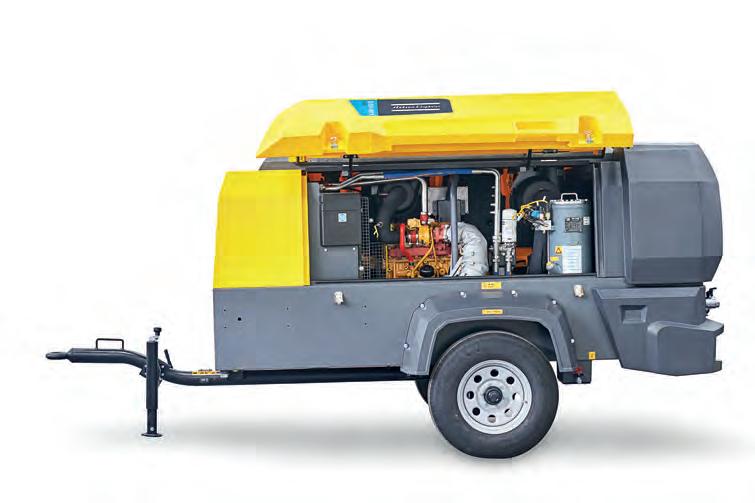
These include jackhammer and pneumatic breakers used for breaking up concrete, asphalt, or rock on roads, sidewalks, and foundations. As well as rock drills for drilling holes for blasting or ground engineering and chipping hammers used for lighter concrete demolition or scaling.
The X-Air 410-12 PACE can also be used for abrasive blasting, cleaning steel structures
The body features a
and corrosionresistant HardHat polyethylene canopy, providing protection for the X-Air 410-12 PACE.
like bridges and overpasses before painting or coating and preparing concrete surfaces for repair or for applying new protective layers.
Buttigieg says the X-Air 410-12 PACE is also ideal for shotcreting, used in tunnel construction, road embankment stabilisation, and bridge repairs to apply a layer of concrete for structural support or to line surfaces.
“The compressor’s ability to reach higher pressures is well-suited for this application, among many others,” he says. “The X-Air 410-12
PACE can provide the high pressure air stream needed to install fibre optic and telecommunication cables into pre-laid ducts along roadsides and through conduits under infrastructure.”
In addition to drilling, the X-Air 410-12 PACE can also be used for pipeline pressure testing for the construction of water, gas, or sewer lines alongside roads to test the integrity and leak tightness of the new or repaired pipes before they are put into service.
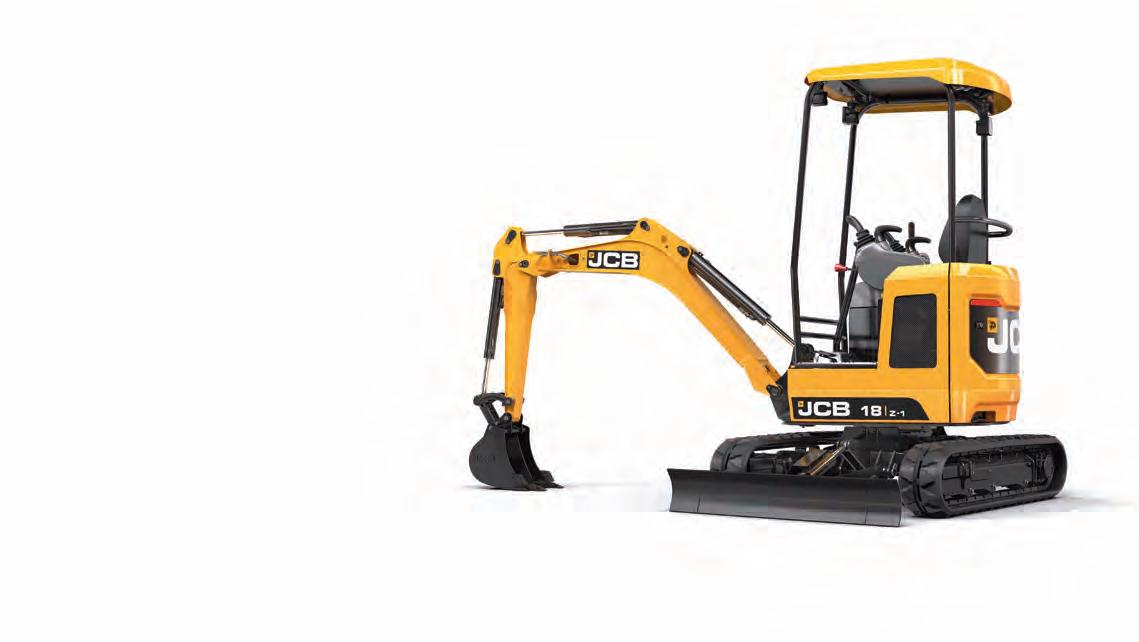

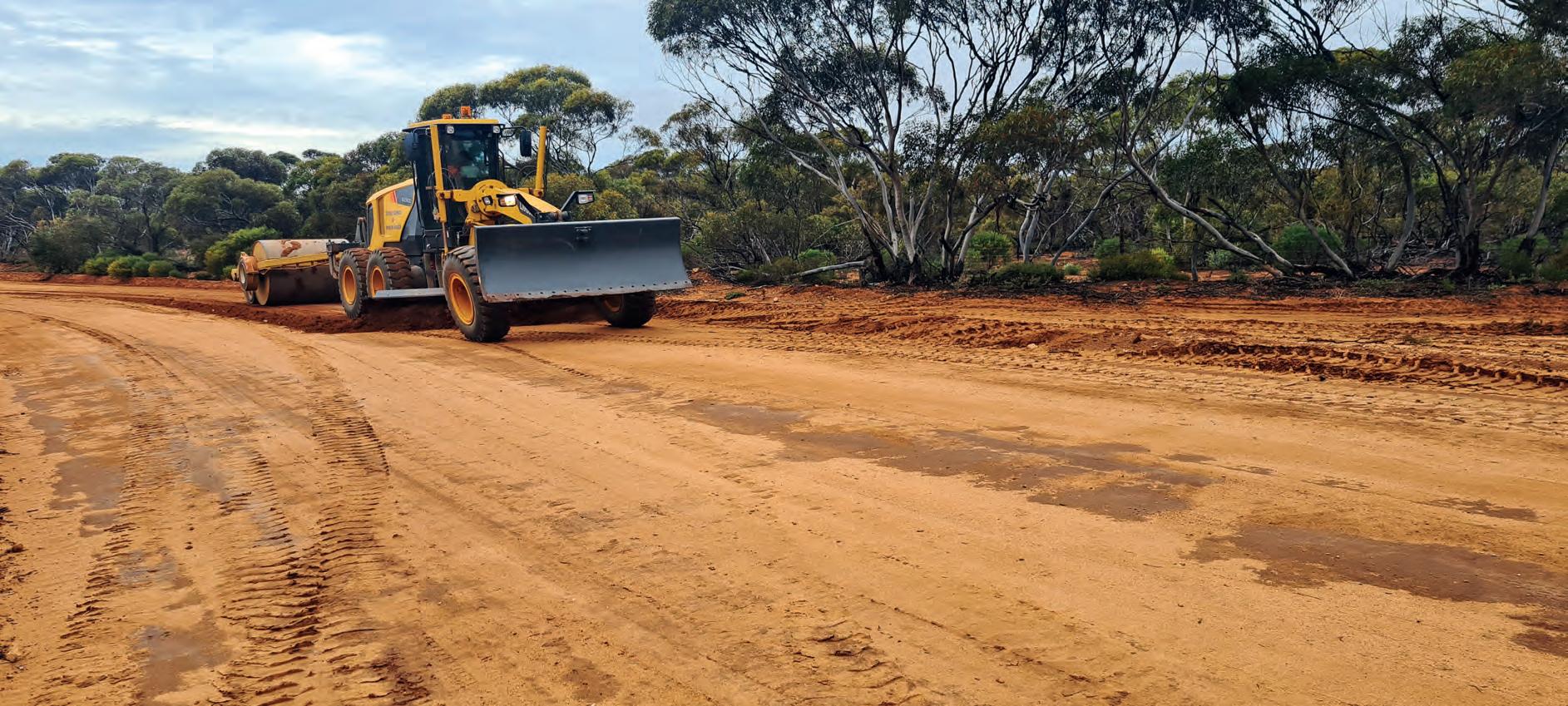
TRIED AND TESTED
PROVEN IN THE FIELD BY COUNCILS ACROSS AUSTRALIA, LIUGONG MACHINERY IS EARNING A REPUTATION FOR PERFORMANCE, RELIABILITY, AND VALUE.
LiuGong Australia has continued to make a strong impact in the roads industry nationwide, supplying reliable, high-performance construction equipment tailored to the demands of road building and maintenance.
With dealerships located across most major capital cities, contractors and councils involved in roadworks have convenient access to the full range of LiuGong machinery, ensuring minimal downtime and maximum productivity on the job.
Recently, local councils in both Western Australia and South Australia have expanded their fleets with LiuGong equipment, recognising the brand’s value in road construction and maintenance projects.
In a short period, both councils have experienced the LiuGong difference, machines that deliver efficiency, durability, and the capability to complete roadworks quickly and effectively.
OUT WEST
The Shire of Nungarin is one of the latest local governments in Western Australia to purchase a piece of LiuGong machinery.
Dave Nayda, is Works and Services Manager of the Shire, which oversees about 180 and 370 kilometres of bitumen and gravel roads respectively.
Upon joining the team, Nayda was excited to update some of the equipment onsite, immediately perusing LiuGong’s suite of machinery.
“Our fleet was in need of an upgrade, but when we looked at the cost of some other brands, we realised that was not possible,” says Nayda. “We did the price comparisons, and the savings were huge.”
After hearing feedback from other shires who use LiuGong loaders, Nayda and the team made the decision to purchase a 856H LiuGong wheeled loader, powered by a turbocharged and air-to-air intercooled, sixcylinder Cummins Stage III engine.
The wheel loader offers up to 217-horsepower, speeds of up to 40 kilometres per hour and a tipping load of five tonnes.
Other key features include a German countershaft and power shift transmission, which provides four forward speeds and three reverse speeds.
Quick hitch buckets are also now standard on LiuGong’s wheel loaders. The high specification model uses a 3.5 cubic metre bucket, while a three cubic metre size is used on the standard model.
The LiuGong 856H wheel loader also includes an auto-greaser.
“It can do a lot of clearing work along the sides of roads and loading of trucks with gravel,” says Nayda.
“It’s definitely as good as other machinery, if not better, for pushing power. It’s brilliant pushing the pile.”
Although the team was planning to upgrade a range of equipment when Nayda came on board, he says initially there were no plans to upgrade the shire’s old grader.
When they discovered it would cost $40,000-$50,000 in annual repairs and maintenance, resulting in considerable downtime, they knew a new machine was required.
After positive results from the wheel loader, the team also purchased a LiuGong
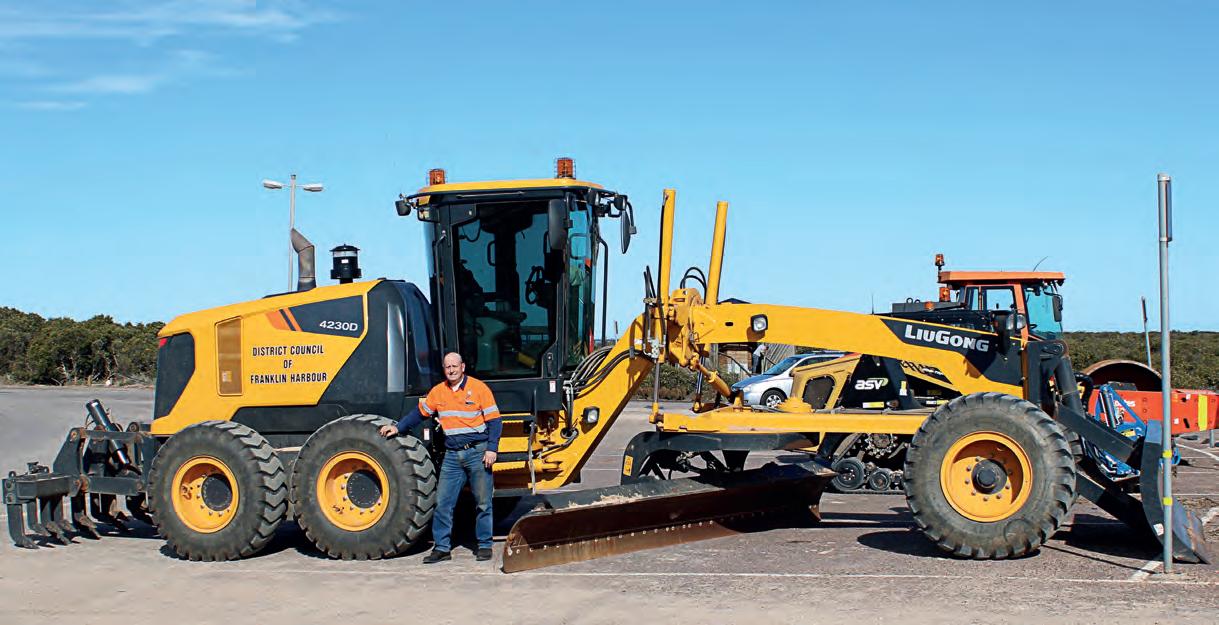
The Shire of the District Council of Franklin Harbour have recently added LiuGong machines to its fleets.
grader, making the shire one of the first in Western Australia to add a LiuGong grader to its fleet.
The 19-20 tonne LiuGong 4230D motor grader features a 9-litre Cummins engine which, Nayda says, has stayed as efficient as ever, even after chalking-up more than 650 hours of operation.
“It doesn’t lack any power and it’s doing a good job,” he says.
“The guys have all come out of other machines into the LiuGong and they are extremely happy.”
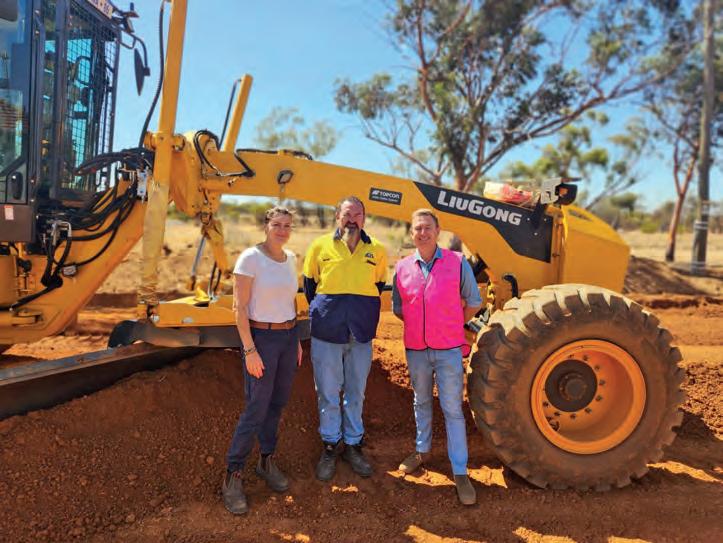
The LiuGong machines were purchased through local Merredin dealer, McIntosh & Son, which Nayda says has offered continuous support to the Shire of Nungarin.
“The support has been absolutely superb from the team at Merredin, and they continue to carry out our major machine services,” he says.
“THE GEAR RATIO SELECTION IS THE MAIN DIFFERENCE BETWEEN THE LIUGONG AND THE OLDER GRADER, WITH THE LIUGONG HAVING A SIX-SPEED TRANSMISSION INSTEAD OF 12 SPEEDS.’’
Nayda and the team are now looking to purchase a second LiuGong grader for the shire.
DOWN SOUTH
The District Council of Franklin Harbour recently purchased a LiuGong motor grader to be used for patrol grading of rural roads across the Eyre Peninsula of South Australia.
Darren Zechner, Works Manager of District Council of Franklin Harbour, says the LiuGong 4230D motor grader had a significantly lower capital investment compared with other brands.
“We couldn’t afford not to take a punt, and we have been pleasantly surprised,” he says. “If you can keep $200,000 in the bank and still get a machine that can do the job, it’s a win.”
The 4230D motor grader is primarily being used across the municipality’s 600-kilometre network of unsealed roads.
Impressed with the machine, District Council of Franklin Harbour also invited Adelaide-based LiuGong dealer, Lewis Ag & Construction to participate in a tender to replace a new grader in its fleet.
Zechner says the council was aware LiuGong machinery had increasing traction in the construction and mining industries.
Following a visit to LiuGong’s showroom, the council was impressed and excited about the build quality and flourishing future partnership.
The council’s other 20 tonne grader, now six years old, is used for constructing sealed roads and re-sheeting roads. Zechner says the LiuGong 4230D motor grader is a simplified machine when compared to others, something appreciated when it comes to maintenance.
“The gear ratio selection is the main difference between the LiuGong and the older grader, with the LiuGong having a sixspeed transmission instead of 12 speeds.’’
Zechner says earthmoving is about power and weight, two things displayed beyond a doubt in the 4230D motor grader.
Operator comfort is a high priority for LiuGong, understanding operators will be using its equipment for extended periods of time.
For the District Council of Franklin Harbour team, which is on the road for nine months of the year, operator comfort is a must.
Images:
LiuGong
Maintenance and support have emerged as standouts from the LiuGong service and experience.
The LiuGong 4230D motor grader is powered and turbocharged by an efficient 9-litre Cummins engine.
A multi-year initiative is being launched to provide mental health education specifically for the construction industry.
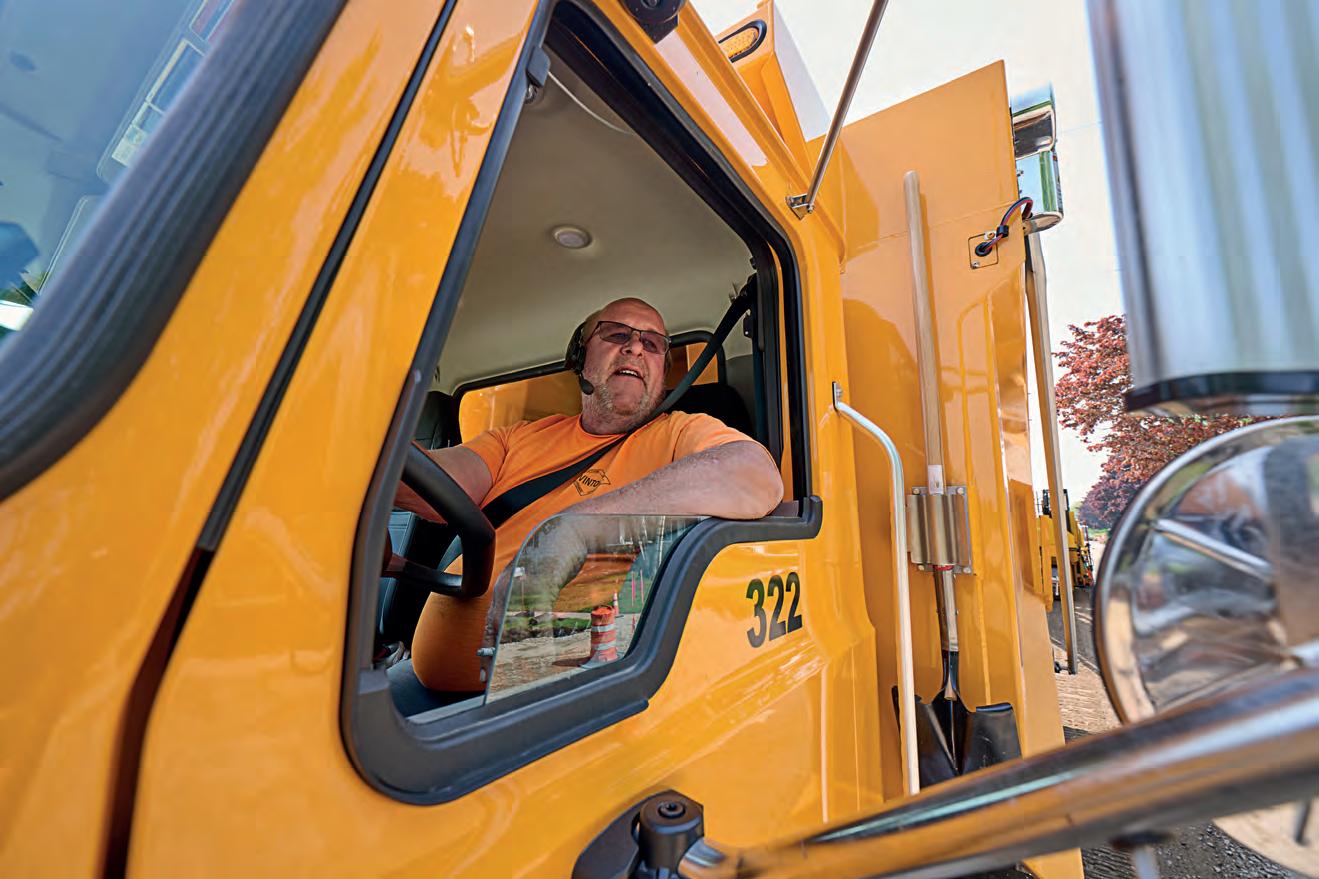
FOSTERING MENTAL WELLNESS
A NEW PARTNERSHIP REFLECTS A GROWING MOVEMENT WITHIN THE CONSTRUCTION INDUSTRY TO BREAK DOWN THE STIGMA SURROUNDING MENTAL HEALTH AND CREATE SAFER, MORE SUPPORTIVE WORKPLACES.
CONEXPO-CON/AGG and The Utility Expo, premier trade shows for the construction and utility sectors, have partnered with the American Foundation for Suicide Prevention (AFSP).
AFSP is the largest private funder of suicide prevention research in the United States and a leader on advocacy, education and community engagement to fight suicide.
Held every three years, CONEXPOCON/AGG is a must-attend event for construction industry professionals.
The show features the latest equipment, products, services and technologies for the construction industry, as well as sector education.
CONEXPO-CON/AGG is owned in partnership with NRMCA (National Ready Mixed Concrete Association), NSSGA (National Stone, Sand & Gravel Association) and AEM (Association of Equipment Manufacturers) and managed by AEM. The next CONEXPO-CON/AGG will be held March 3-7, 2026, in Las Vegas, Nevada.
The partnership between CONEXPOCON/AGG, The Utility Expo, and AFSP
will soon launch a multi-year initiative to provide mental health education, suicide prevention resources, and training tailored specifically to the needs of the construction industry.
The construction sector continues to face one of the highest suicide rates of any profession.
Through this collaboration, the trade shows will serve as a platform to raise awareness and equip industry professionals with the tools to foster a culture that prioritises mental health and wellbeing.
Megan Tanel, President and Chief Executive Officer of Association of Equipment Manufacturers (AEM), says the construction industry is built by people, and protecting their mental health is just as critical as ensuring their physical safety.
“By partnering with AFSP, CONEXPOCON/AGG and The Utility Expo will amplify essential conversations, deliver accessible training, and help make suicide prevention a standard of how we do business,” Tanel says.
AFSP will deliver specialised programming

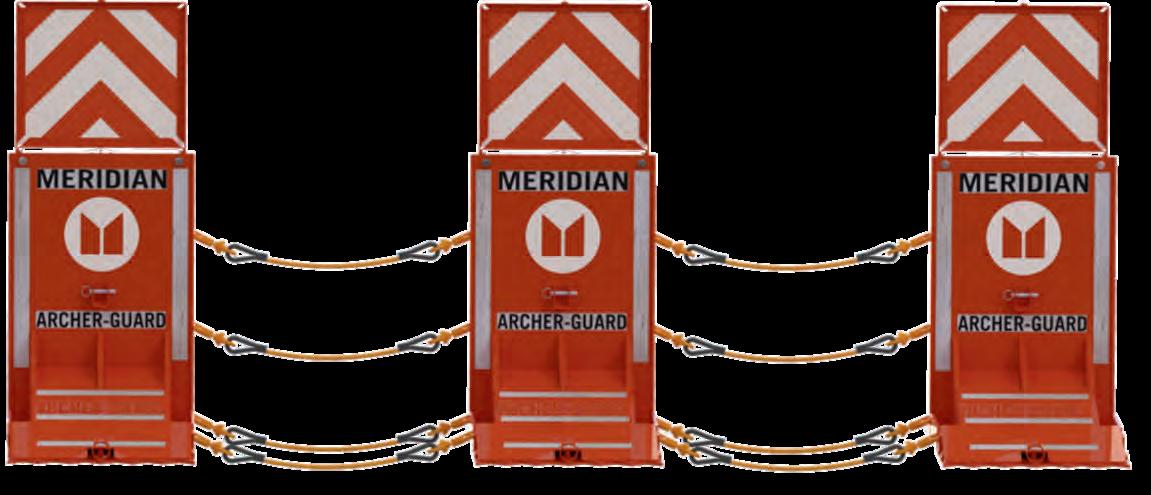
CONEXPO-CON/AGG builds on AFSP’s commitment to the construction industry and support of mental health in workplaces.
“By taking actions that help people thrive emotionally, and by providing programs and resources to ensure people struggling get the help they need – we can prevent suicide,” he says.
“We are proud of this partnership and the growing commitment of industries to join us in saving lives from suicide.”
Passed MASH TL1, TL2 & TL3
Passed MASH TL1, TL2 & TL3
Passed MASH TL1, TL2 & TL3
Certified performance up to 100 km/h
Certified performance up to 100 km/h
Modular work zone barriers to protect workers.
Modular work zone barriers to protect workers.
Certified performance up to 100 km/h
Compact safety zone — stopping distance from just 7.5 m
CONEXPO-CON/AGG and The Utility Expo are owned and produced by AEM, North America’s premier trade organisation representing off-road equipment manufacturers and its value chain partners.
AEM serves more than 1100 members companies across 200 product lines in multiple sectors including construction, agriculture, mining, utility, and forestry.
Compact safety zone — stopping distance from just 7.5 m
Compact safety zone — stopping distance from just 7.5 m
Single-person deployment for rapid setup
Single-person deployment for rapid setup
Single-person deployment for rapid setup
THE UTILITY EXPO
Reusable after impact
Reusable after impact
Reusable after impact
Proven reliability across all test levels
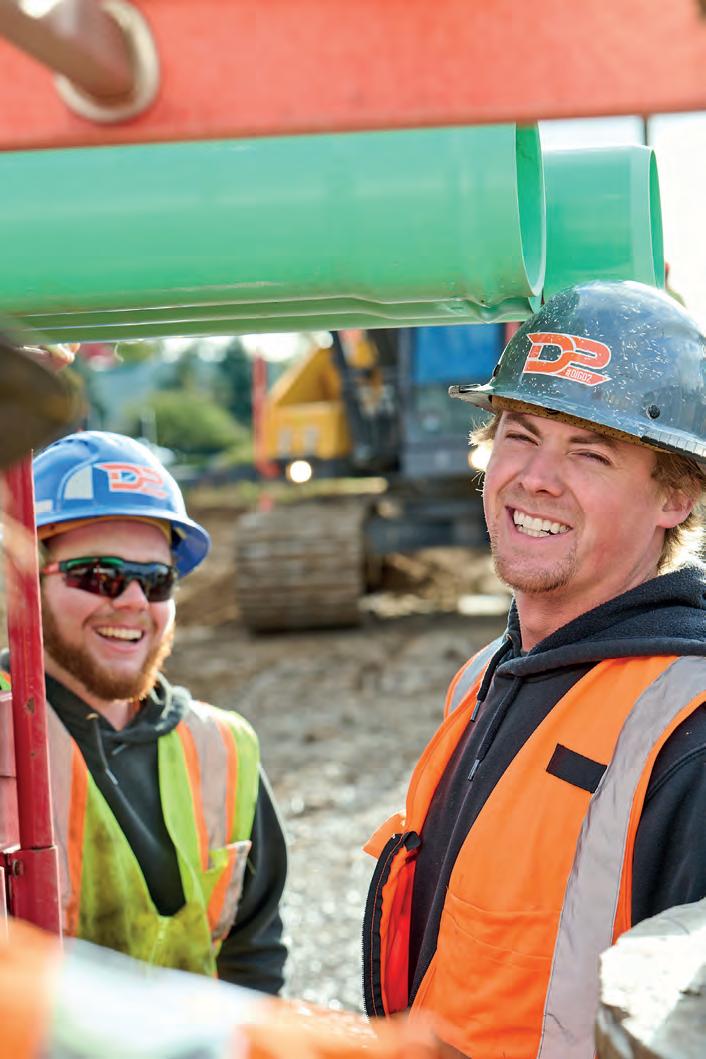
The Utility Expo is the largest event for utility professionals and construction contractors seeking comprehensive insights into the latest industry technologies, innovations and trends.
The biennial trade show, known for
Proven reliability across all test levels
Modular work zone barriers to protect workers.
equipment test drives and interactive product demonstrations, takes place in Louisville.
Proven reliability across all test levels
If you or anyone you know is experiencing a personal crisis help is available at Lifeline 13 11 14 or Beyond Blue 1300 22 4636
Archer Guard SYSTEM
Archer Guard SYSTEM
Archer Guard SYSTEM
The Archer Guard captures the vehicle and brings it to a controlled stop without harming the driver and occupants of the vehicle.
The Archer Guard captures the vehicle and brings it to a controlled stop without harming the driver and occupants of the vehicle.
The Archer Guard captures the vehicle and brings it to a controlled stop without harming the driver and occupants of the vehicle.
Scan to see the Archer Guard in action!
Scan to see the Archer Guard in action!
Scan to see the Archer Guard in action!


Modular work zone barriers to protect workers.
Modular work zone barriers to protect workers.
Modular work zone barriers to protect workers.
Compact safety zone — stopping distance from just 7.5 m
Compact safety zone — stopping distance from just 7.5 m
The Archer Guard captures the vehicle and brings it to a controlled stop without harming the driver and occupants of the vehicle. Compact safety zone — stopping distance from just 7.5 m

The Archer Guard captures the vehicle and brings it to a controlled stop without harming the driver and occupants of the vehicle.
The Archer Guard captures the vehicle and brings it to a controlled stop without harming the driver and occupants of the vehicle.
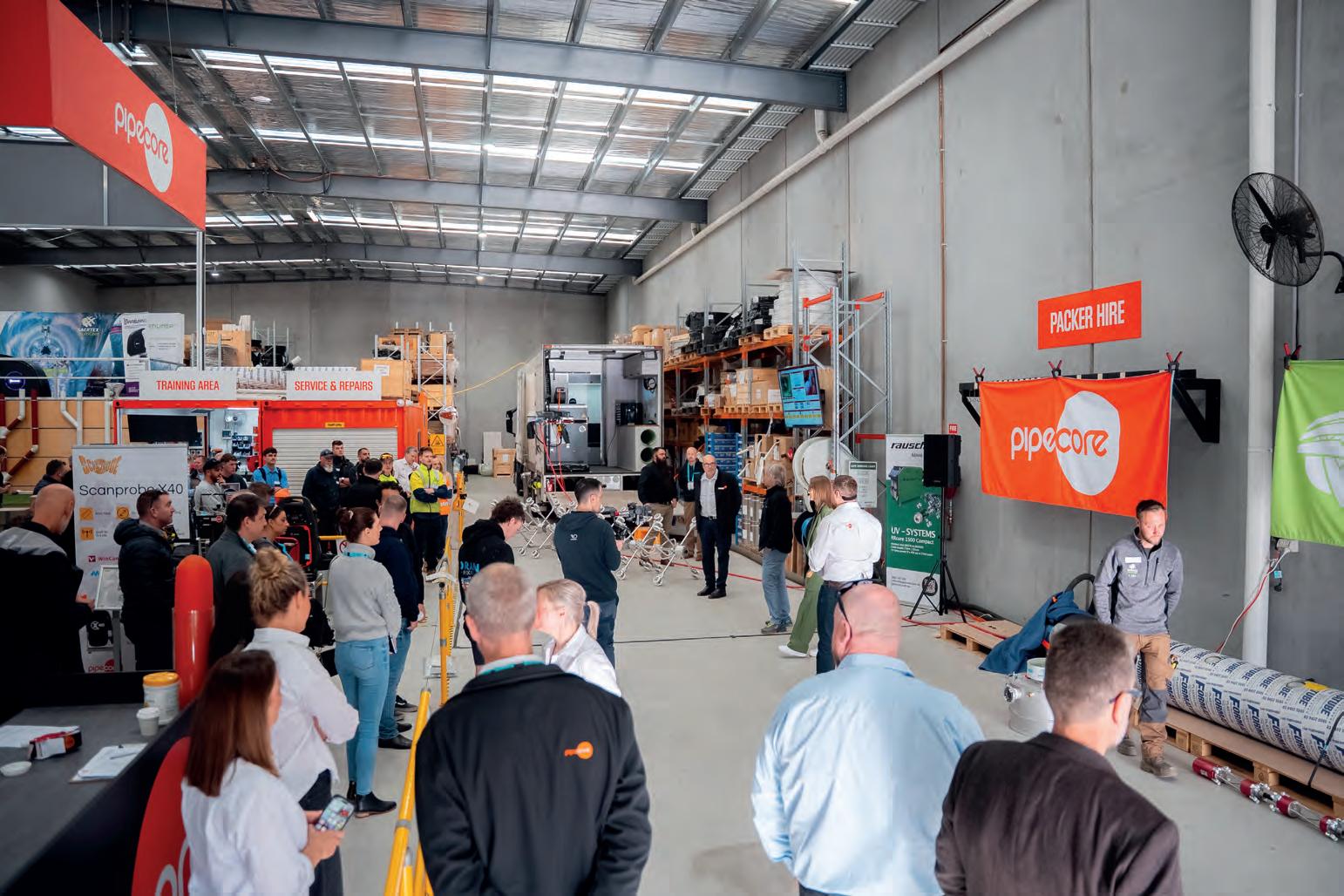
TIME FOR TRENCHLESS
AUCKLAND, NEW ZEALAND IS SET TO BECOME THE NEXT CENTRE OF THE TRENCHLESS WORLD IN 2026, HOSTING INTERNATIONAL NO-DIG AUCKLAND.
The global trenchless community will be packing up and heading to New Zealand next year, with International No-Dig Auckland set to bring together the biggest names in trenchless technology together under one roof.
Kicking off on October 28-29, 2026, Auckland will transform into the ultimate meeting point for industry professionals from Australia, the UK, the USA, China, Germany, Singapore, and beyond.
From cutting-edge products to worldfirst solutions, International No-Dig Auckland will give exhibitors the chance to showcase their latest technologies and
innovations to an international audience of trenchless professionals.
Companies will demonstrate how their solutions are transforming underground infrastructure, from advanced machinery and materials to digital tools and construction techniques. Delegates will have the opportunity to experience these innovations first-hand, connect directly with leading global suppliers, and see how trenchless technology is driving the next generation of infrastructure projects worldwide.
The world-class conference program will spotlight top international
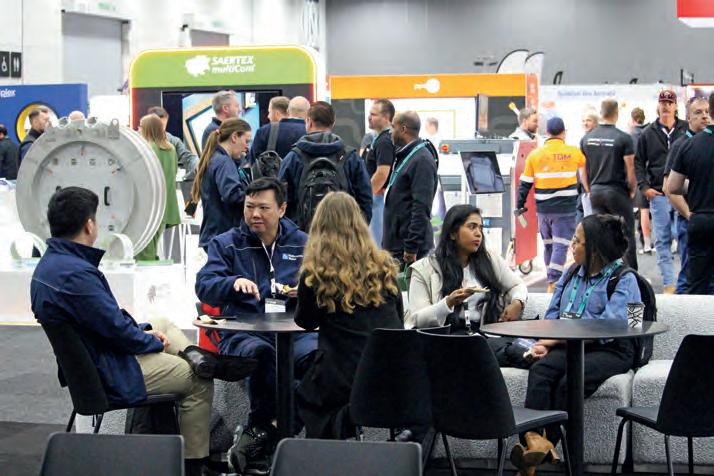
speakers and industry leaders, delivering in-depth sessions that tackle the biggest challenges and opportunities in the field.
It’s the place to gain knowledge, exchange ideas, and be part of the conversations shaping infrastructure projects today and tomorrow.
Beyond the conference halls, the event is the ultimate networking arena. International No-Dig Auckland is the place to forge meaningful relationships and turn connections into business opportunities that span continents.
Following the resounding success of the recent No-Dig Down Under event in Melbourne, which attracted a record attendance and featured cutting-edge product showcases, excitement is already building for Auckland.
The strong industry engagement seen in Melbourne has set the tone for what promises to be an even more dynamic and globally connected exhibition in New Zealand.
With growing international interest, the Auckland event is poised to become a landmark gathering for professionals shaping the future of trenchless technology worldwide. Event organisers invite exhibitors to showcase a stall
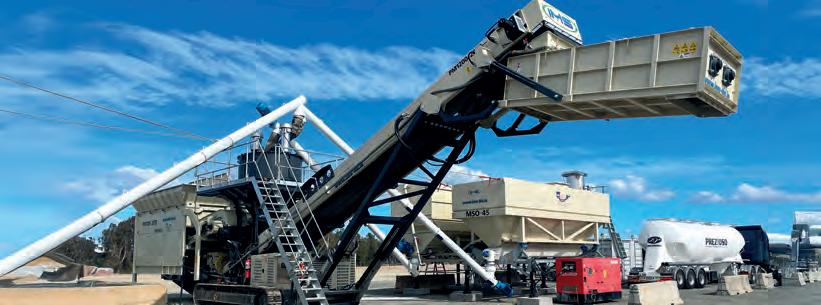
International No-Dig Auckland will run from October 28-29, 2026.
The event will give exhibitors the chance to showcase their latest technologies and innovations to an international audience of trenchless professionals.
on the global stage and be positioned among the leaders shaping the next era of trenchless technology.
Siobhan Rocks, General Manager of Events at Prime Creative Media, says the expo will allow attendees to experience everything the trenchless world has to offer.
“Exhibiting at International NoDig Auckland offers companies an unparalleled opportunity to demonstrate innovation, engage directly with industry decision-makers, and position their brand at the forefront of the global trenchless technology community,” she says.
Rocks says attendees have less than one year to look forward to the exciting event in New Zealand.
“What I love most is seeing conversations turn into collaborations,” she says.
“You’ll have someone from New Zealand chatting with someone from Germany, and suddenly they’re talking about tackling the same challenge in completely different ways.
“That’s exactly the kind of connection The International Society for Trenchless Technology (ISTT) has been building for years, a global network that learns from each other and keeps pushing the industry forward.”
Rocks says the ISTT will bring the industry together in a unique way.
“You’ve got experts from every corner of the world sharing what’s worked for them, swapping ideas, and realising how much we can achieve when everyone’s pulling in the same direction,” she says.
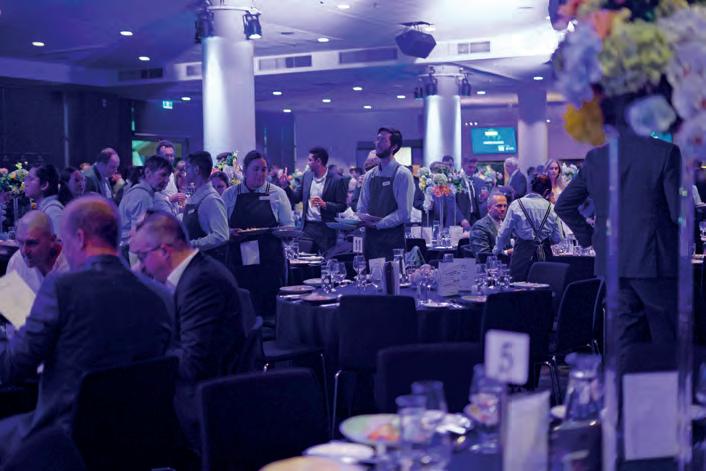
“EXHIBITING AT INTERNATIONAL NO-DIG AUCKLAND OFFERS COMPANIES AN UNPARALLELED OPPORTUNITY TO DEMONSTRATE INNOVATION, ENGAGE DIRECTLY WITH INDUSTRY DECISION-MAKERS, AND POSITION THEIR BRAND AT THE FOREFRONT OF THE GLOBAL TRENCHLESS TECHNOLOGY COMMUNITY.”



Event organisers invite exhibitors to showcase a stall on the global stage.
The world-class conference program will spotlight top international speakers and industry leaders.

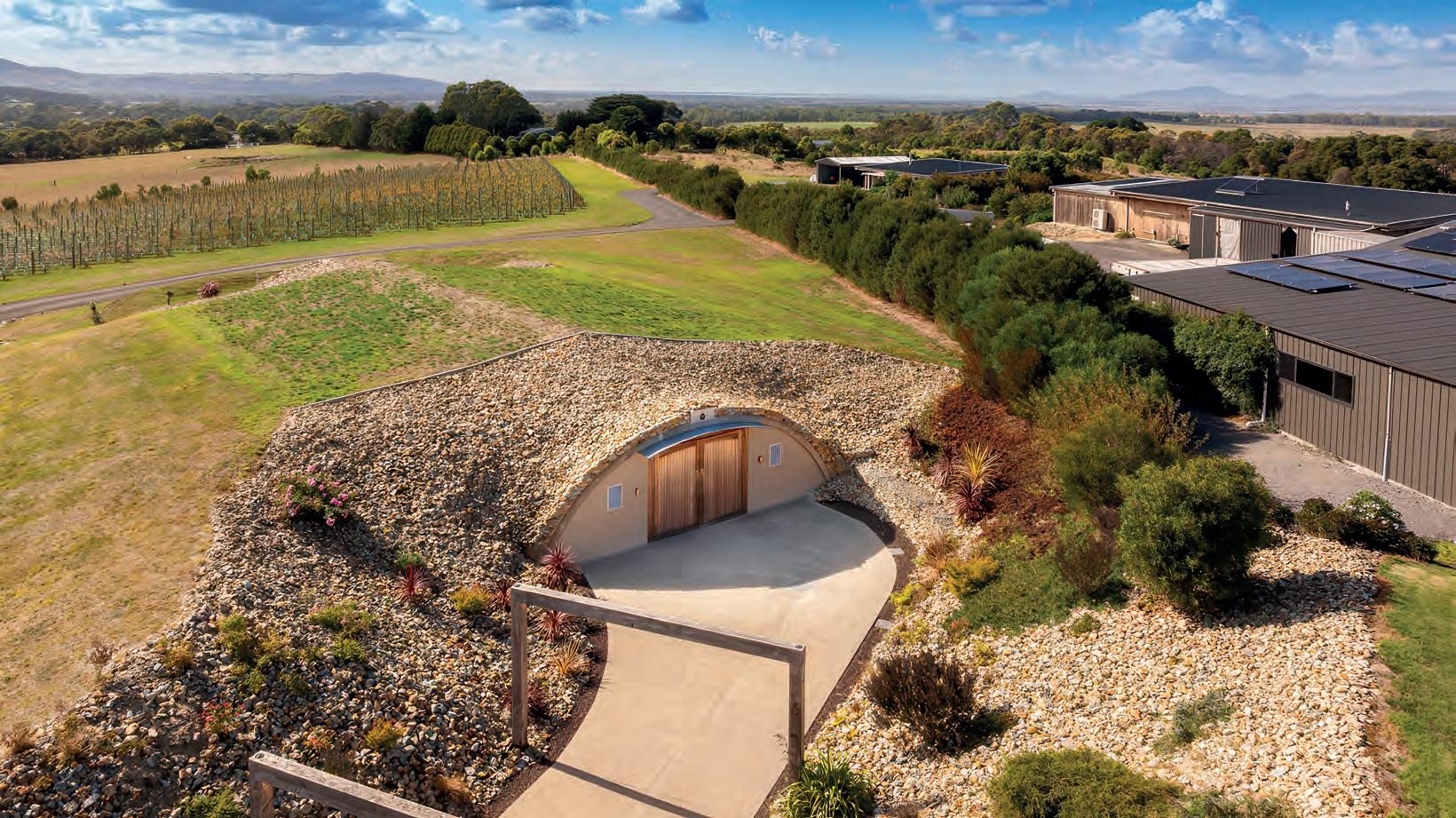
BENEATH THE VINES
IN THE ROLLING HILLS OF VICTORIA’S SOUTH GIPPSLAND, A BOLD EXPERIMENT IN ARCHITECTURAL INNOVATION LIES QUIETLY HIDDEN BENEATH THE VINEYARDS.
Partially buried within the earth, a precast concrete arch forms the foundation of a new cellar and tasting space at Gurneys Cider in Foster. Designed, engineered and manufactured by National Precast Master Precaster, Geoquest Australia, the structure redefines winery and cidery design, harnessing civil infrastructure technology to create a monastic, immersive experience, rooted in landscape and longevity.
REIMAGINING INFRASTRUCTURE FOR ARCHITECTURE
T he arched cellar is built using Geoquest’s TechSpan® system, an advanced precast
concrete arch technology originally developed for bridges, tunnels and mining applications. In a creative collaboration with Gurneys Cider, Geoquest adapted one of its existing arch sets – originally destined for a mine site – to become the structural heart of a space devoted to wine and cider.
“When we looked at how our arch system could translate from civil works to architecture, we saw an opportunity to do something both radical and respectful,” says Lukas Toman, Regional Manager of Geoquest Australia.
“This project allowed us to test the full potential of engineering-led design, creating a space that is structurally
robust, environmentally discreet and architecturally expressive.”
Embedded into the hillside and topped with a fully vegetated green roof, the arch virtually disappears from view. Inside, the structure creates a serene, climate-stable interior. It is ideal for wine and cider maturation and equally suited for tastings, events or even quiet reflection.
STRUCTURAL CLARITY, ARCHITECTURALLY QUIET
T he system draws on the geometric logic of the funicular curve, an ancient structural principle used in Roman aqueducts and Gothic cathedrals for its inherent strength.
PROJECT SNAPSHOT
PROJECT: Gurneys Cider
Underground Storage
LOCATION: Foster, Victoria
PRECASTER: Geoquest Australia
The result is a soaring, column-free volume capable of spanning up to 21 metres across without internal supports. Built with raw precast concrete, the interior maintains acoustic stillness and thermal stability.
“Stepping inside feels like entering a modern sanctuary,” says Toman. “There’s a real sense of groundedness, of intention. An architecture of quiet strength.”
ENGINEERING A NEW TYPOLOGY FOR WINERIES
Although new to the world of viticulture, Geoquest sees enormous potential for precast arches in rural and cultural architecture. Already proven in large-scale infrastructure projects, such as Australia’s
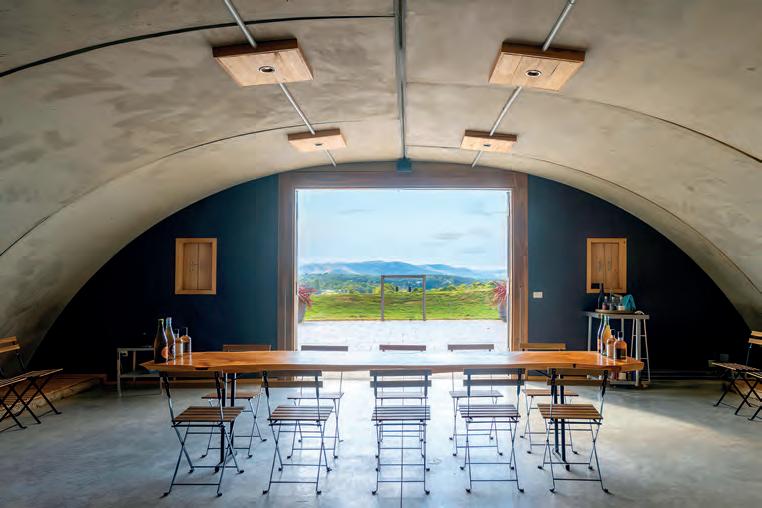
The arch system has been delivered by using precast to create a subsurface storage facility.
“THERE’S A REAL SENSE OF GROUNDEDNESS, OF INTENTION. AN ARCHITECTURE OF QUIET STRENGTH.”
largest precast arch on the Wilman Wadandi Highway, the arch system offers speed of installation, reduced environmental impact, and a 100-year design life.
Critically, the company’s investment in sustainable construction is helping redefine what concrete can be. Innovations such as steel fibre reinforcement, high-SCM (Supplementary Cementitious Material) mixes, and reduced-carbon concrete have been applied across transport and civil projects like Victoria’s Ison Road and now extend to new architectural expressions.
A FUTURE ROOTED IN RESILIENCE
From subterranean barrel halls to bushfire-resilient pavilions, this opens a new frontier in building with purpose.
The peak body for the precast industry agrees. According to National Precast’s Executive Advisor Sarah Bachmann, this project exemplifies the flexibility of precast for both function and form.
“Precast concrete offers unparalleled durability, structural integrity, material
BUILDING FOR THE LONG TERM
efficiency and design adaptability,” she says.
“That makes it a compelling solution for architects and developers seeking permanence, performance and environmental alignment. And this project is an ingenious application of what is ordinarily a system used in civil infrastructure.”
According to Bachmann, it also highlights how precast can move beyond pure function, becoming an integral part of the story of a place, while quietly contributing to sustainability.
Below: The works also exemplify how well precast can be implemented and incorporated into the natural environment.
Beneath 70 acres of vineyard at Gurneys Cider, a repurposed arch system forms the foundation for a cellar and tasting space of rare architectural clarity. Designed to blend entirely into the landscape, the structure offers a 21-metre-span precast volume with thermal mass, acoustic softness and a living green roof, an exemplar of low-impact, high-performance winery architecture.
Images:
The project exemplifies the effective use of precast concrete, for more than just infrastructure and transport projects.
The global stage for trenchless innovation
New Zealand International Convention Centre, Auckland 28 – 29 October 2026

EXHIBIT NOW
RECYCLING THE ROAD AHEAD
THIS YEAR MARKED A MAJOR MILESTONE FOR AUSTSTAB, AS THE ASSOCIATION CELEBRATED 30 YEARS AT THE FOREFRONT OF PAVEMENT R ECYCLING AND STABILISATION. AUSTSTAB’S 2025 CONFERENCE IN ADELAIDE SHOWCASED INTERNATIONAL EXPERTISE, LOCAL INNOVATION AND THE MATURING SOPHISTICATION OF A SECTOR THAT IS RESHAPING THE DELIVERY OF SUSTAINABLE AND RESILIENT ROAD INFRASTRUCTURE.
The AustStab Annual Conference 2025, hosted from 11-13 August at Adelaide Oval, was more than a technical gathering; it was a celebration of an industry coming of age. Delegates heard from experts across Australia and around the world, with international speakers from South Africa, Brazil, New Zealand and the United Kingdom sharing proven practices and highlighting innovations that could inform Australian infrastructure delivery.
Technical presentations reinforced the tangible benefits of in-situ stabilisation, with case studies showing how costs and carbon footprints can be
reduced without sacrificing durability. Sustainability was a central theme throughout the program, as speakers explored the need to embed carbon footprint measurement in treatment selection frameworks to ensure projects deliver long-term value, not just shortterm savings.
A PROGRAM WITH DEPTH
The three-day event carried the theme Recycling the Road Ahead – Resilient | Sustainable | Cost-Effective. A highlight was the international panel moderated by NTRO CEO Michael Caltabiano, which brought together global experts
Above: Some of the industry’s key leaders and thinkers converged for the latest AustStab Conference.
to discuss how lessons from abroad could be adapted locally. Delegates also participated in a half-day workshop co-facilitated with the Department for Infrastructure and Transport South Australia (DIT SA), which centred on specification harmonisation and sustainability leadership.
The conference also provided a launchpad for new AustStab technical resources and training programs, ensuring the next generation of
Images:
AustStab
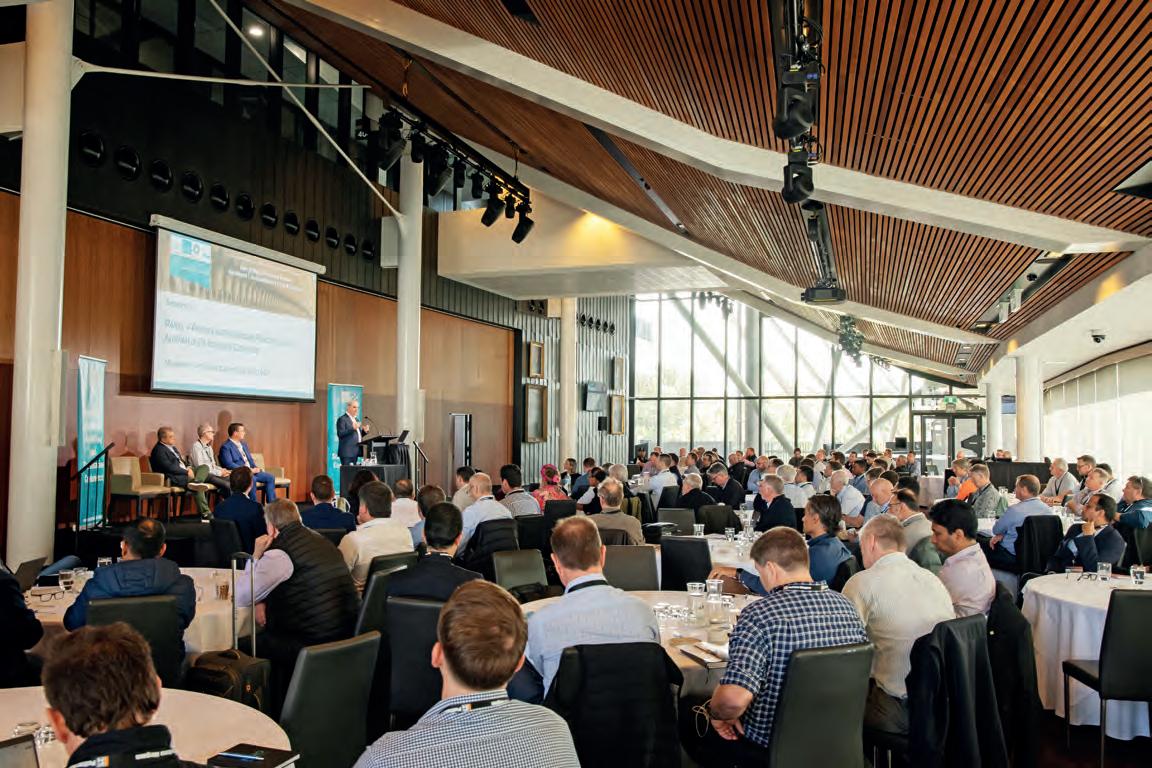
A TIMELINE OF AUSTSTAB’S 30 YEARS
1995 – AustStab founded as the national body representing pavement recycling and stabilisation.
2000 s – Expansion of member base; industry recognition of stabilisation as a cost-effective solution.
2010 s – Accreditation Scheme introduced, cementing AustStab’s role in quality assurance and industry standards.
2020 – Greater emphasis on sustainability and carbon reduction aligns AustStab with global infrastructure goals.
2022 – Launch of the inaugural Australian Pavement Recycling & Stabilisation Conference, as a full day event.
2023 – Second conference in Melbourne; membership growth and training suite expansion.
2024 – Third conference in Brisbane, with strong government engagement and case study-driven presentations.
2025 – 30-year milestone celebrated in Adelaide: largest conference to date, with international speakers, new resources and sustainability at its core.
practitioners have the knowledge and tools to deliver high-quality stabilisation works across Australia.
CELEBRATING INDUSTRY EXCELLENCE
The Gala Dinner and Awards of Excellence was a fitting celebration of the sector’s achievements. Awards recognised innovation in safety, sustainability, and technical excellence.
Work Health & Safety: TMR – RoadTek North Queensland was honoured for its stabiliser drum stand improving worker safety.
Excellence in Consulting, Research or Education: The AustStab Technical Working Group received recognition for its work optimising slag/lime binders.
“THESE WINNERS REFLECT THE COLLABORATIVE SPIRIT OF AUSTSTAB, INDUSTRY, GOVERNMENT AND RESEARCHERS WORKING TOGETHER TO RAISE STANDARDS, SHARE KNOWLEDGE AND DELIVER BETTER ROADS.”


Sustainability & Innovation: SPA and Frankston City Council were awarded for their leadership in sustainable in-situ recycling solutions.
These winners reflect the collaborative spirit of AustStab, industry, government and researchers working together to raise standards, share knowledge and deliver better roads.
The atmosphere was electric as the industry celebrated not only its technical expertise but also its growing sophistication.
BUILDING COMMUNITY BEYOND THE PODIUM
T he conference experience extended beyond the lecture theatre. Delegates connected at the pre-conference golf day and welcome drinks, while the gala dinner provided a vibrant atmosphere to celebrate achievements. Attendees repeatedly emphasised the value of these informal moments, the conversations, introductions and connections that help sustain collaboration long after the conference ends.
LOOKING TO THE FUTURE
As AustStab enters its fourth decade, the success of the 2025 Conference reaffirmed its central role as a driver of sustainable, resilient and cost-effective road infrastructure. With international insights, national collaboration and a clear sustainability agenda, the Association has demonstrated that pavement recycling and stabilisation are no longer alternatives, they are the cornerstone of a smarter, greener road network for Australia.
The awards gave the sector a chance to acknowledge those helping to improve and grow the industry.
The conference space hosted a variety of key discussions and forums, all focused on tackling industry issues.

September 2026
EXHIBIT IN 2026. BE SEEN. BE HEARD. BE CHOSEN.
CONTRACTS IN BRIEF
ROADS & INFRASTRUCTURE PROVIDES AN UPDATE ON SOME OF THE CONTRACTS AND TENDERS RECENTLY AWARDED OR PUT TO MARKET ACROSS THE AUSTRALIAN INFRASTRUCTURE SECTOR.
VICTORIA
Contract awarded for Yan Yean Road Upgrade
A contract has been awarded for the delivery of the Northern Package of the Yan Yean Road Upgrade – Stage Two project in Victoria, which will deliver safer and more reliable journeys for the 24,000 motorists that use the connection daily. Stage Two of the Yan Yean Road Upgrade will duplicate lanes between Kurrak Road, Bridge Inn Road and Doctors Gully Road across Yarrambat and Doreen, while also upgrading nine intersections. These works will aim to reduce congestion, improve safety and deliver more reliable travel times. The upgrade will also provide around 11 kilometres of new walking and cycling paths, offering safer and more accessible active transport options. Decmil has been awarded the Northern Package of works between Bridge Inn Road and Orchard Road. Major construction on the Northern Package is set to begin in November this year, while construction on the Southern Package is expected to commence in mid2026. The Yan Yean Road Upgrade – Stage Two forms part of the Federal and Victorian governments’ $3.14 billion Suburban Roads Upgrades – South Eastern Roads and Northern Roads program (contributions of $1.58 billion and $1.57 billion respectively).
Contract awarded for Swanson Dock West Remediation Project
The successful contractor for the second stage of the Swanson Dock West Remediation Project in Victoria has been announced. Following the successful completion of the Swanson Dock West Remediation Project – Stage One, McConnell Dowell will also complete the next stage. Swanson Dock West (SDW) is a critical international container terminal comprising of 944 metres of wharf with three container-handling berths, which were constructed in several stages between the 1960s and 1980s. The existing wharf is of varying forms of construction and some sections are close to or beyond the typical design life of 30 years. As a result, major remediation was needed. To maintain port operations during the works, a threestaged program was developed during the collaborative early contractor involvement stage. Stage One which has now been completed focussed on Berth One. It included top deck works, the removal of reinforced concrete deck, civil earthworks, minor underground services alterations, installation of new steel piles up to 46 metres long, and reinforced concrete plugs. This was followed
by full reinforcement, formwork and concrete deck rebuild, full replacement of the ship-toshore crane rail system, and top deck surface repairs to the existing concrete wharf. It also included the removal and remediation of the defective concrete wharf faces, wharf furniture removals, upgrade, refurbishment and replacements, and installation of a new cathodic protection system.
NEW SOUTH WALES
Early works contractor appointed for $128M
road project
Penrith City Council has appointed a contractor to deliver preliminary works on the proposed upgrade of Dunheved Road in Sydney. Georgiou Group will carry out the early works phase that will run for six to nine months. These works will help to prepare the site for the main construction phase and will consist of the completion of the final civic design, security utility approvals and investigations, site and geotechnical investigations, detailed traffic management planning, as well as sewer and drainage works. Dunheved Road is one of the busiest road corridors in Penrith. The proposed upgrade of Dunheved Road will look to reduce congestion, improve capacity and enhance safety along a four-kilometre section, between Richmond Road and the Christie Street/Werrington Road intersection. A new median separated, four-lane carriageway and shared user footpath will be situated along the four-kilometre corridor. An upgraded signalised intersection with dual left turn lanes into Richmond Road will also be delivered. Additionally, several other signalised intersections will be delivered at Greenbank Drive (west and east), Lavin Crescent, Henry Lawson Avenue, and John Batman Avenue. A new two lane eastbound bridge across Werrington Creek and new shared path bridge will also form part of the project. The Federal Government has committed $128 million to upgrade Dunheved Road through the Infrastructure Investment Program.
Contract awarded for first purpose-built NSW electric bus depot
A site at Macquarie Park will become Sydney’s first purpose-built electric bus depot, with the awarding of the contract to build the facility and release of new concept designs marking key milestones for the project.
Fulton Hogan Construction Pty Ltd has been awarded the design and construct contract to build the purpose-built depot which will feature both standard (75kW) and fast
(150kW) plug-in chargers to suit operational requirements. Construction of the $145 million depot, funded by the New South Wales and Federal governments, is expected to begin early 2026 and be operational in 2028. Subject to final design, the Macquarie Park depot, located alongside the M2 on Talavera Road, will operate about 150 buses that will service areas from the northwest suburbs to Ryde, Parramatta and the lower north shore. These new buses will support the existing Ryde and Willoughby bus depots that were opened in 1953 and 1958 respectively. The Macquarie Park depot will employ 160 staff, including drivers, maintenance workers and administration personnel. Each electric bus can travel up to 300 kilometres on a single charge, providing quieter, smoother and cleaner public transport that will progressively replace the entire diesel and gas fleet in Sydney over the coming decade. The Zero Emissions Bus Program will deliver more than 1200 new electric buses by 2028, with up to 300 hitting the road in coming months.

MULTI-STATE
Contract awarded for TAS, Gippsland works
A contract has been awarded for major works on the Marinus Link project in north-west Tasmania, and Gippsland in Victoria. Marinus Link (MLPL) is a proposed undersea and underground electricity and data interconnector between Tasmania and the Latrobe Valley in Victoria. MLPL has selected a joint venture of DT Infrastructure and Samsung C&T Corporation (TasVic Greenlink) as the preferred bidder in the project’s major civil and construction tender. The ‘balance of works’ contract is the final of three major contracts, and the selection of the preferred bidder marks a significant next step towards constructing this landmark renewable energy infrastructure project. The contract, currently in final negotiations with TasVic Greenlink, will cover the construction of converter stations in Heybridge and Hazelwood, the installation of equipment and the land cable civil works, which spans 90 kilometres across Gippsland. The preferred bidder recommendation follows a comprehensive evaluation process that considered capability, approach, and overall value. Construction is expected to commence in 2026, subject to final environmental and regulatory approvals. Stage One is scheduled for completion by 2030.
ATLAS COPCO
MS SOLAR LIGHTING TOWER RANGE

SUSTAINABLE ILLUMINATION
• Up to 5,278m2 Light Coverage
• 420Wp solar panel
• Compact design
• Robust HardHat® canopy
secure your stock today with our exclusive introductory offer!
• Mask down feature as standard
The new MS Solar Light Tower range delivers powerful, reliable illumination with zero emissions and minimal noise. Eliminate fuel dependencies and enjoy reliable lighting, regardless of grid access.
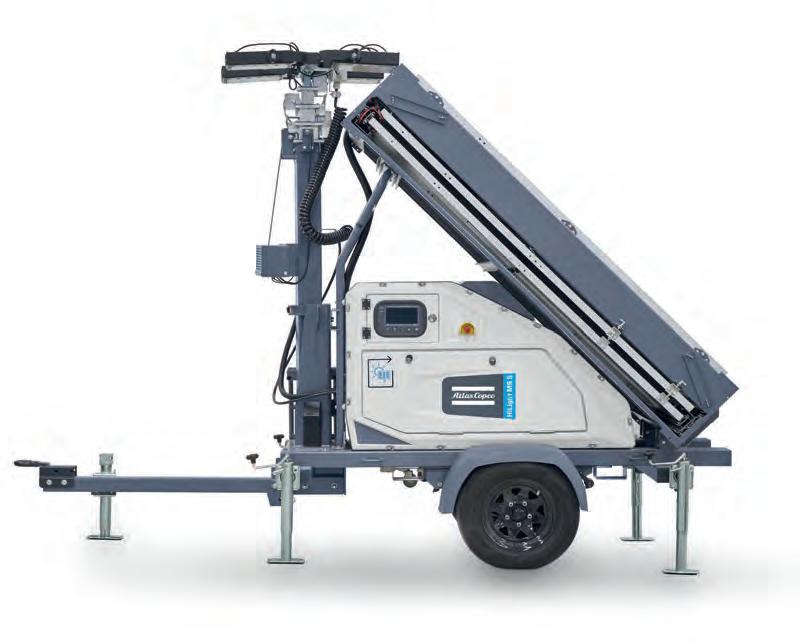
Perfect for construction sites, events, and remote locations. Experience significant cost savings and reduced environmental impact. Exclusively available through Atlas CEA, contact the team today to learn how solar power can light up your operations.
LIKE TO KNOW MORE? SPEAK TO OUR TEAM TODAY
PH: 1800 733 782 www.atlascea.com.au

Experience a new era of compaction excellence with the groundbreaking Dynapac Rhino range. Engineered to deliver exceptional performance and efficiency, the newly updated Rhino series sets the benchmark in compaction technology.
Featuring:
• Powerful Cummins engines for exceptional performance and fuel efficiency.
• Advanced operator cabin with enhanced visibility and ergonomic controls.
• Uncompromising reliability for long-lasting durability and minimal downtime.
• Industry-leading compaction technology for superior results.
• Versatile to suit a wide range of compaction projects.
With its unparalleled power, precision, and reliability, the new Rhino range from Dynapac is the perfect choice for contractors who demand the best in compaction equipment.
Experience the new Dynapac Rhino difference today!