


New infrastructure is assisting in the delivery of works across one of the nation’s fastest growing regions
A landmark report has outlined the challenges that lay ahead for delivery of Olympic Games infrastructure
One decade, many milestones
A major company milestone has inspired reflection for this homegrown provider









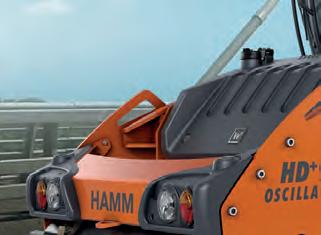
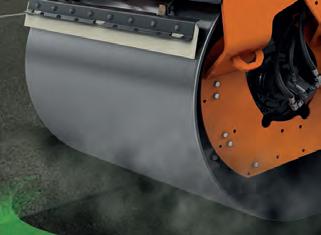



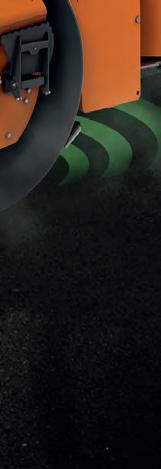



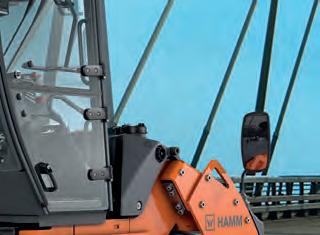
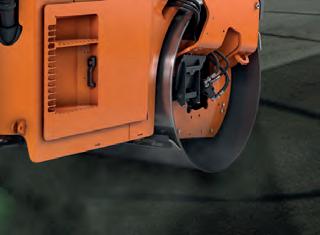


CLOSE TO OUR CUSTOMERS. For decades, HAMM oscillation has been the go-to compaction method for quality results on sensitive asphalt mixes like SMA and EME-2, especially around vibration sensitive assets like pipelines, bridge decks and buildings. Now HAMM has introduced Smart Compact Pro - another breakthrough in compaction efficiency that incorporates real-time density on the fly. Do you want to be known for producing quality pavements, quickly and with less re-work? Let Hamm help.
6 Unlocking a key corridor
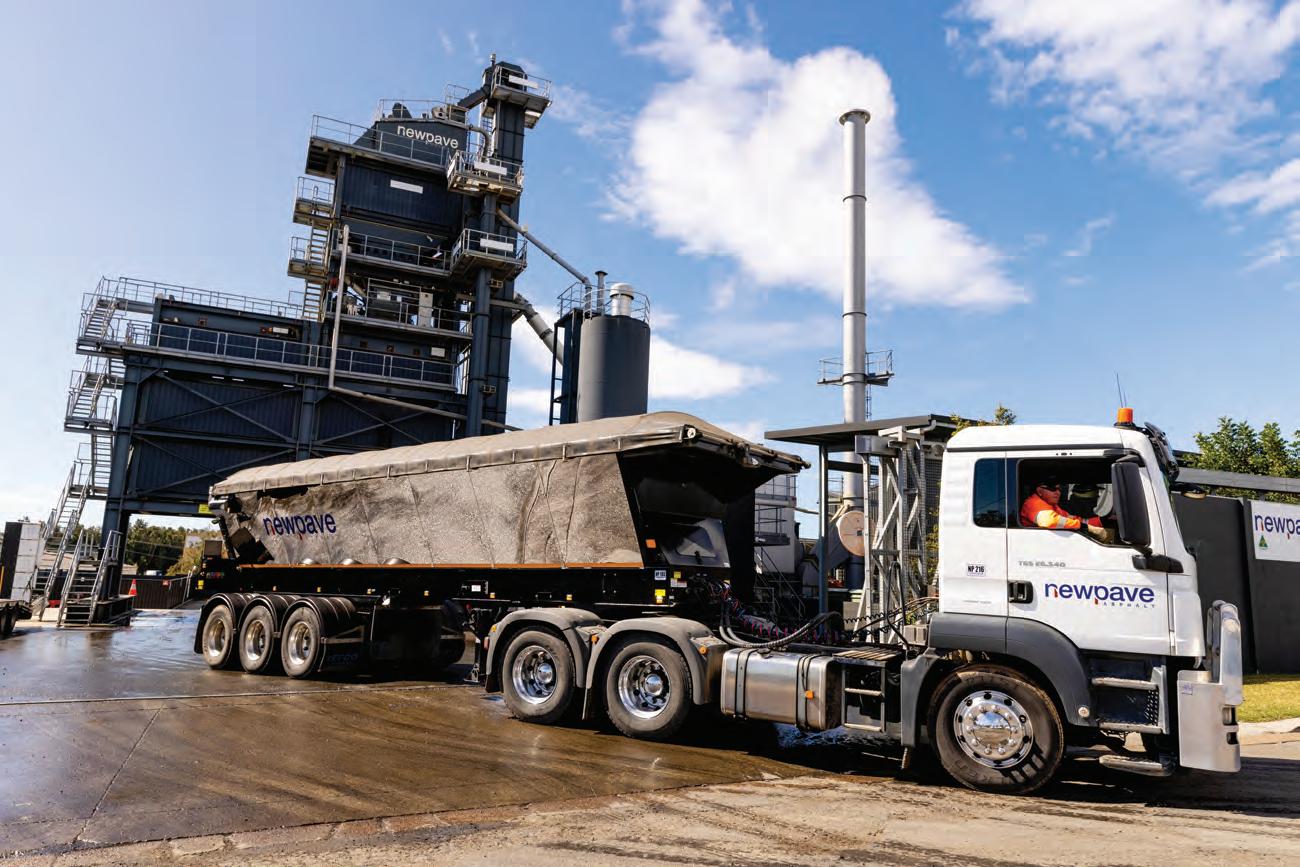
Newpave Asphalt’s brand-new asphalt plant in New South Wales is critical to a variety of projects in the Central Coast.
9 Protecting road workers
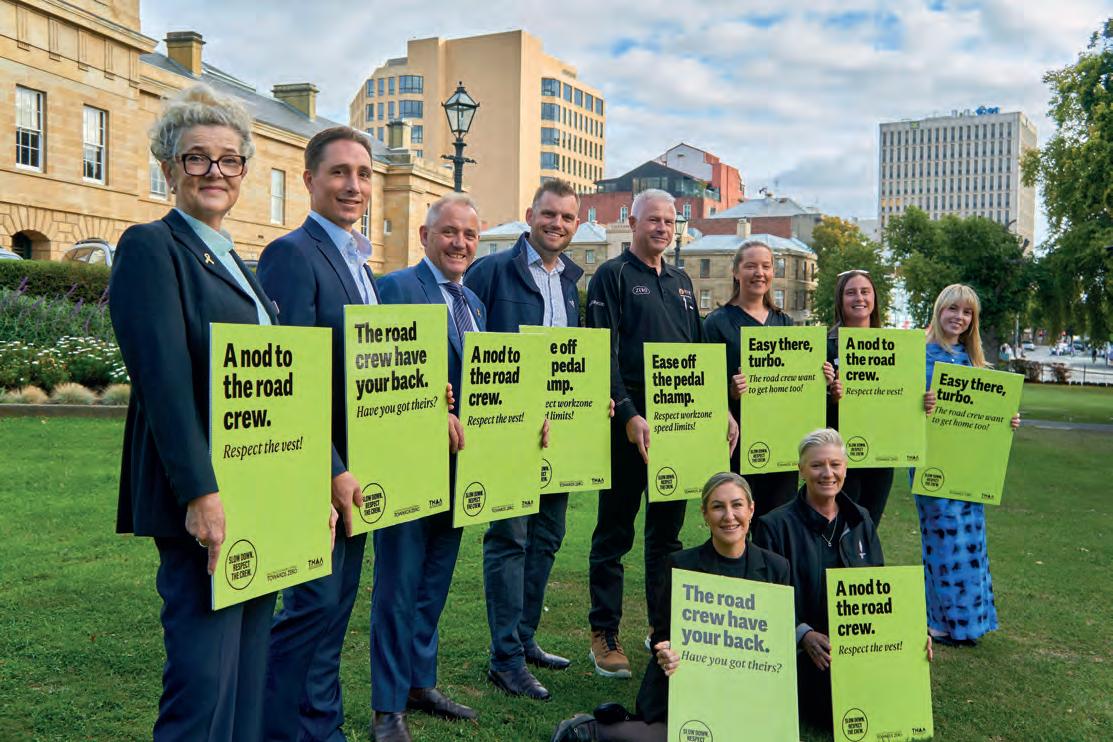
A new Tasmanian road safety campaign is being launched to address driver behaviour in roadwork zones.
10 One decade, many milestones
Accurate Road Profiling Services’ 10year anniversary is just one of its latest achievements, following year-on-year growth.
13 Purposeful building blocks
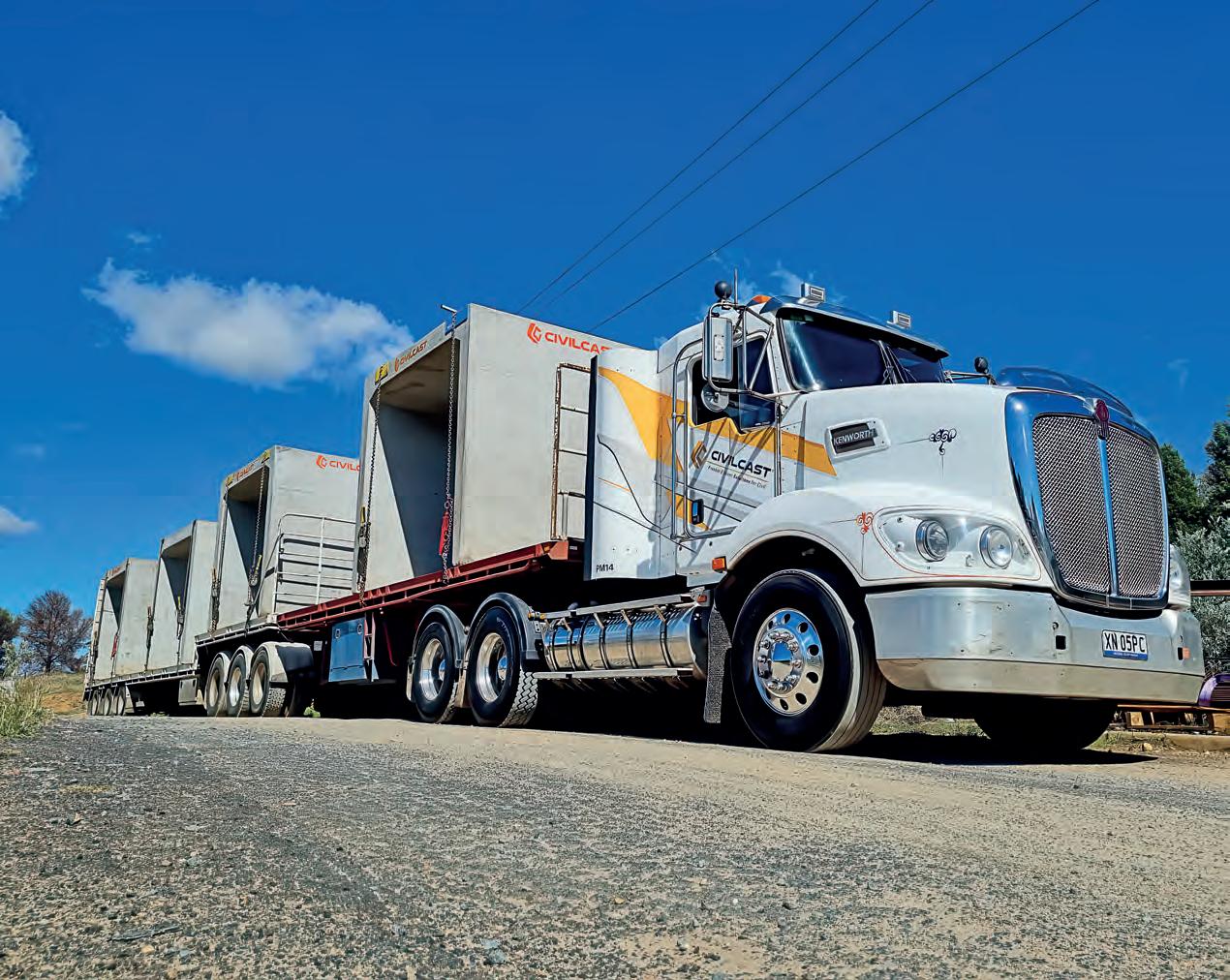
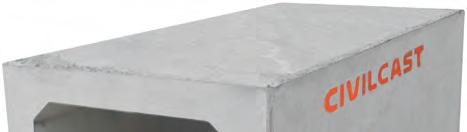
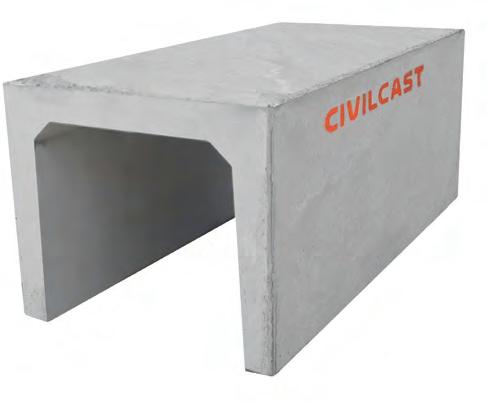
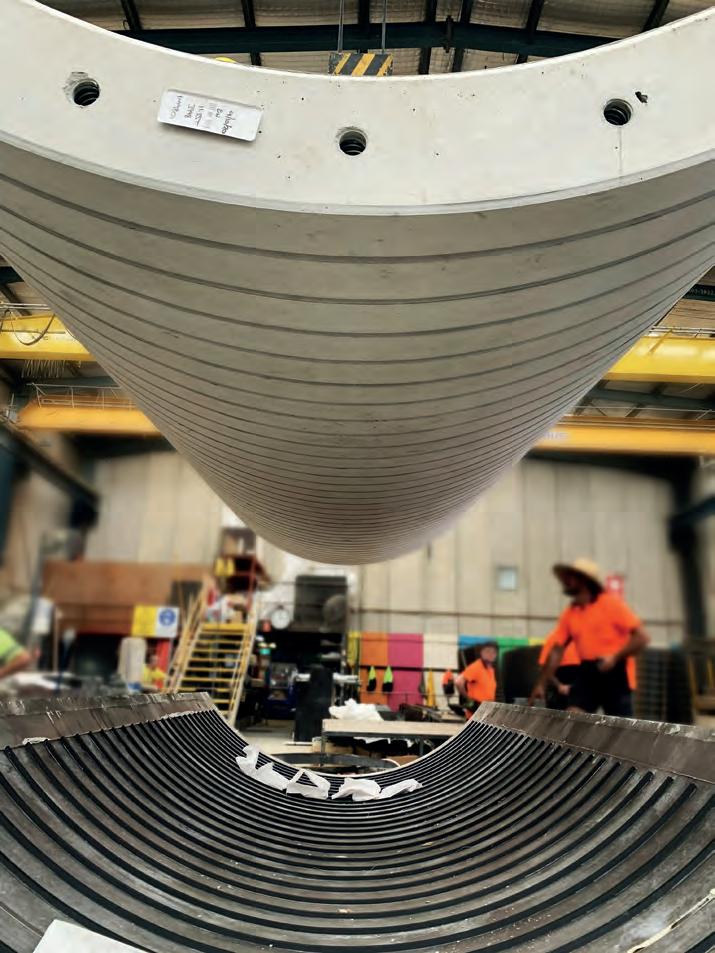
Civilcast’s custom culvert designs are assisting projects in residential, transport, and major infrastructure spaces.
Progress on the 2032 Olympic and Paralympic Games infrastructure is a key focus of this edition.
16 The missing link
SAMI’s new bitutainer facility in Darwin is set to transform bitumen transport and delivery throughout the Northern Territory.
19 Front and centre
Artificial intelligence’s shift from the experimental to the centre of fleet strategy was a critical discussion at Geotab Connect 2026.
22 Brisbane 2032: Taking stock
A landmark report from project advisory firm WT has outlined the challenges and opportunities that lie ahead for industry.
25 The winning formula Komatsu and the Atlassian Williams Formula One Racing team paid tribute to their partnership with a special guest at the manufacturer’s Fairfield site.
27 Handled with care
CEA’s heavy equipment distribution deal with SANY has now extended to telehandlers and material handlers.
30 Everything asphalt
Wirtgen Group equipment is key to All Ash Asphalt and its projects across some of Victoria’s largest infrastructure.
33 Contractor Capabilities Showcase
Roads & Infrastructure magazine, in partnership with the Australian Flexible Pavement Association, has proudly brought back the Contractor Capabilities Showcase for 2026, sponsored by SAMI Bitumen Technologies.
54 Capability statements
An overview of the capabilities and services of two fast growing organisations in the industry.
56 Laying the foundation
The National Precast Concrete Association of Australia’s key messaging will be spread at the upcoming Sydney Build Expo 2026.
58 Bigger and better
The 2026 Women in Industry Awards has evolved to reflect the positive changes that women create across many working sectors.

CEO Christine Clancy christine.clancy@primecreative.com.au
PUBLISHER
Sarah Baker
sarah.baker@primecreative.com.au
MANAGING EDITOR
Lisa Korycki lisa.korycki@primecreative.com.au
EDITOR
Tom O’Keane tom.okeane@primecreative.com.au
JOURNALIST
Sean Gustini sean.gustini@primecreative.com.au
HEAD OF DESIGN
Blake Storey
ART DIRECTOR
Bea Barthelson
BUSINESS DEVELOPMENT MANAGER
Loren Katie Logan lorenkatie.logan@primecreative.com.au
CLIENT SUCCESS MANAGER
Sabrina Zor sabrina.zor@primecreative.com.au
HEAD OFFICE
Prime Creative Pty Ltd
379 Docklands Drive, Docklands VIC 3008 Australia p: +61 3 9690 8766 info@primecreative.com.au www.roadsonline.com.au
SUBSCRIPTIONS
+61 3 9690 8766 subscriptions@primecreative.com.au
Roads & Infrastructure Australia is available by subscription from the publisher. The rights of refusal are reserved by the publisher.
ARTICLES
All articles submitted for publication become the property of the publisher. The Editor reserves the right to adjust any article to conform with the magazine format.
COVER IMAGE
Newpave Asphalt
COPYRIGHT
Roads & Infrastructure Australia is owned and published by Prime Creative Media. All material in Roads & Infrastructure Australia is copyright and no part may be reproduced or copied in any form or by any means (graphic, electronic or mechanical including information and retrieval systems) without the written permission of the publisher. The Editor welcomes contributions but reserves the right to accept or reject any material. While every effort has been made to ensure the accuracy of information, Prime Creative Media will not accept responsibility for errors or omissions or for any consequences arising from reliance on information published. The opinions expressed in Roads & Infrastructure Australia are not necessarily the opinions of, or endorsed by the publisher unless otherwise stated.

THE APRIL EDITION HAS always been a key issue for Roads & Infrastructure magazine, with the publication’s flagship Contractors Capability Showcase providing an essential resource for the industry, year after year.
We’re back bigger and better than ever in 2026, with close to 200 organisations making the most of this unique opportunity to be put in front of a national audience of key personnel from across our industry.
Milestones for small- to medium-sized organisations has also emerged as a key theme of the April edition, reflecting the industry’s continued growth and strong support for local businesses.
We speak with WT, which has released a landmark report detailing the sector’s progress in delivering the infrastructure required for the upcoming 2032 Brisbane Olympic and Paralympic Games.
Major barriers are preventing optimal efficiency on delivery of multiple projects, per data depicted in the report. However, it also points to potential opportunities, as well as case studies that could help to deliver what is one of the largest project pipelines in Australia’s history.
For our cover story, Newpave Asphalt discusses the opening of its latest asphalt plant and what it means for the business as it pushes to cater for an increase in projects, spurred by massive growth that’s forecast for the Central Coast region of New South Wales. The new plant, designed and delivered by manufacturer Intrame, represents yet another milestone in the partnership between the two organisations, which has helped to establish a strong network of sites near Newcastle and Sydney.
Accurate Road Profiling continues to punch above its weight, with the company’s 10-year anniversary reflecting a history of determination, as well as a unique knowledge of what the industry requires for projects. Accurate Road Profiling now houses more than 20 machines and an experienced team of operators, with a strong overarching theme of family helping to guide the company’s operations.
We also hear from SAMI Bitumen Technologies, about its expanded bitumen container site that is helping to transform access to high quality bitumen for projects in the Northern Territory.
This and much more, in the April edition of Roads & Infrastructure magazine.
Happy reading!
Tom O’Keane
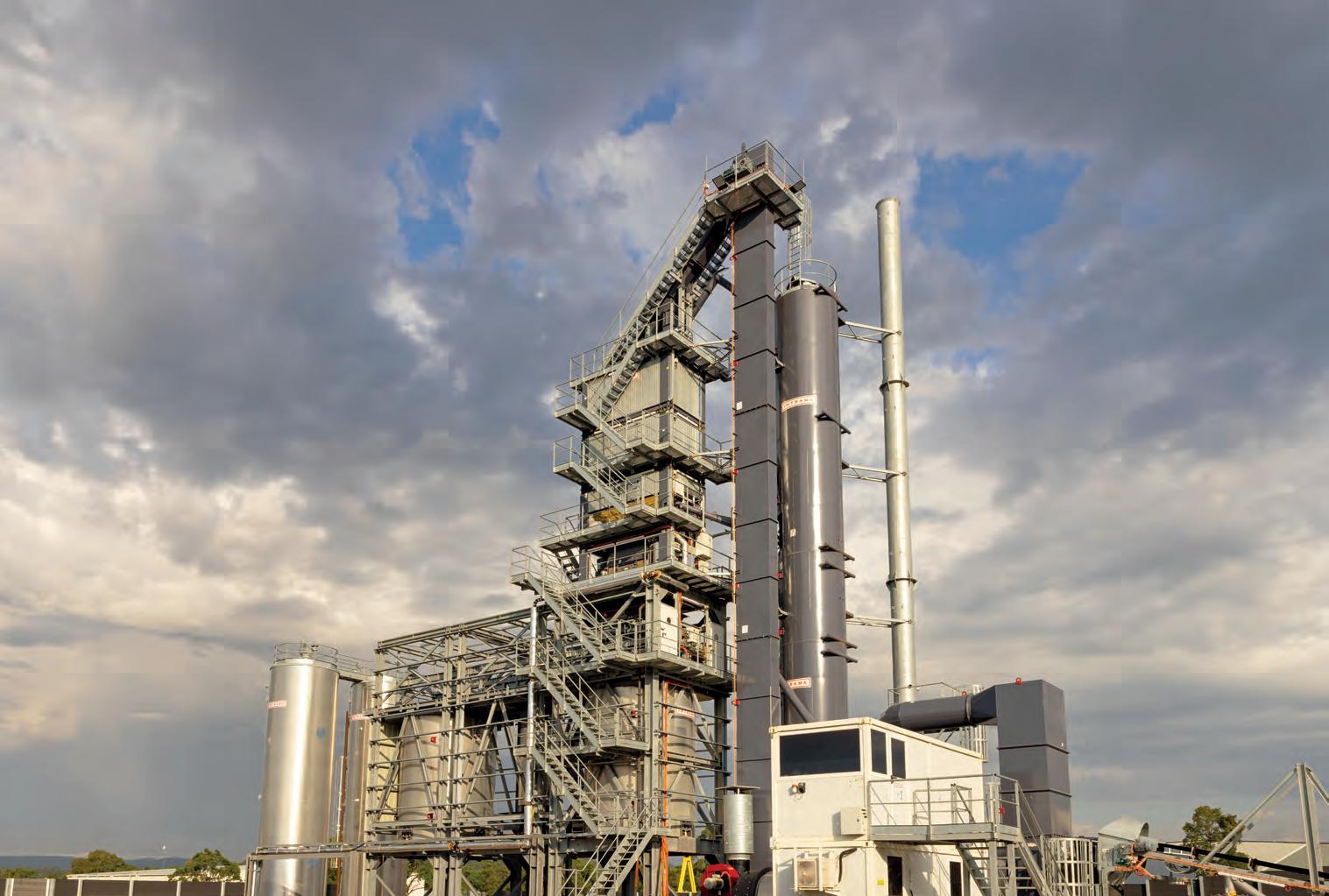
The plant will also open the door for new possibilities when it comes to the production of more environmentally friendly materials.
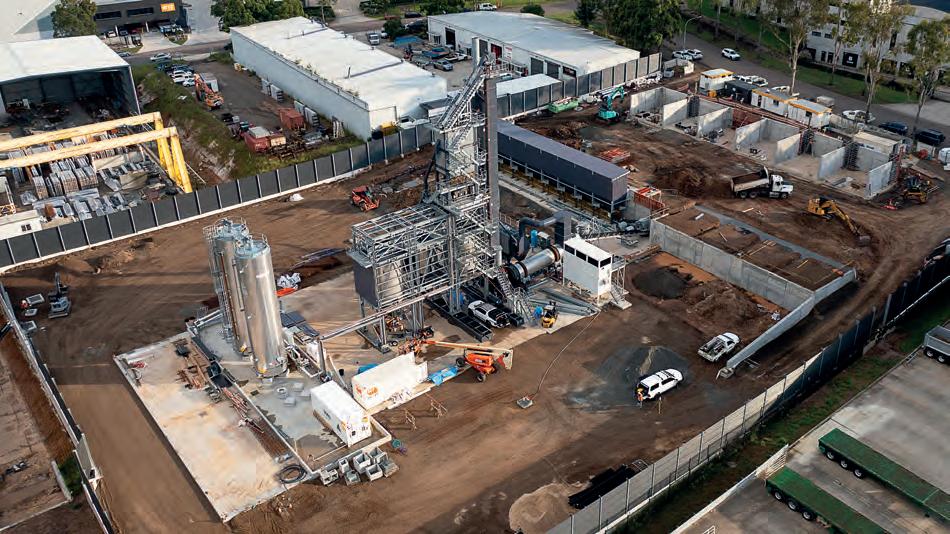
NEWPAVE ASPHALT’S BRAND-NEW ASPHALT PLANT IN WARNERVALE, NEW SOUTH WALES IS SET TO UNLOCK NEW POSSIBILITIES FOR PROJECTS THROUGHOUT THE CENTRAL COAST, ONE OF AUSTRALIA’S FASTEST GROWING REGIONS. THE TEAM RESPONSIBLE FOR ITS DELIVERY EXPLAIN WHY THIS SITE IS SO SPECIAL.
The Sydney to Newcastle corridor is one of the fastest growing regions in the country.
With a high population density of 624 people per square kilometre, as well as an estimated population of 5.5 million people (Infrastructure Australia), infrastructure demand is at an all-time high in the region. Multiple major works are underway to ensure that the region can satisfy current and future transport requirements.
Among these key projects are the High Speed Rail project – Sydney to Newcastle, and the $2.1 billion M1 Extension to Raymond Terrace.
Newpave Asphalt is ideally situated to make the most of this impending explosion in infrastructure demand. Based right in the heart of this corridor, the Australian-owned
business specialises in the manufacture, supply and construction of asphalt and other services to a variety of clients, from small road profiling jobs to some of the largest projects in the state.
Servicing the Central Coast and Hunter Valley regions, the company’s network of asphalt sites, as well as its NATA (National Association of Testing Authorities)-accredited laboratory, have played a role in establishing its reputation as a high quality and highvolume provider.
So has its constant ambition and eye for growth.
Three years ago, the Newpave Asphalt senior team identified a growing need in the market and began early planning for an additional asphalt plant. Utilising its existing partnership with globally renowned plant
manufacturer Intrame, the company’s discussions quickly evolved into site and plant configuration, as well as location selection, with the residential suburb of Warnervale emerging as a favourite.
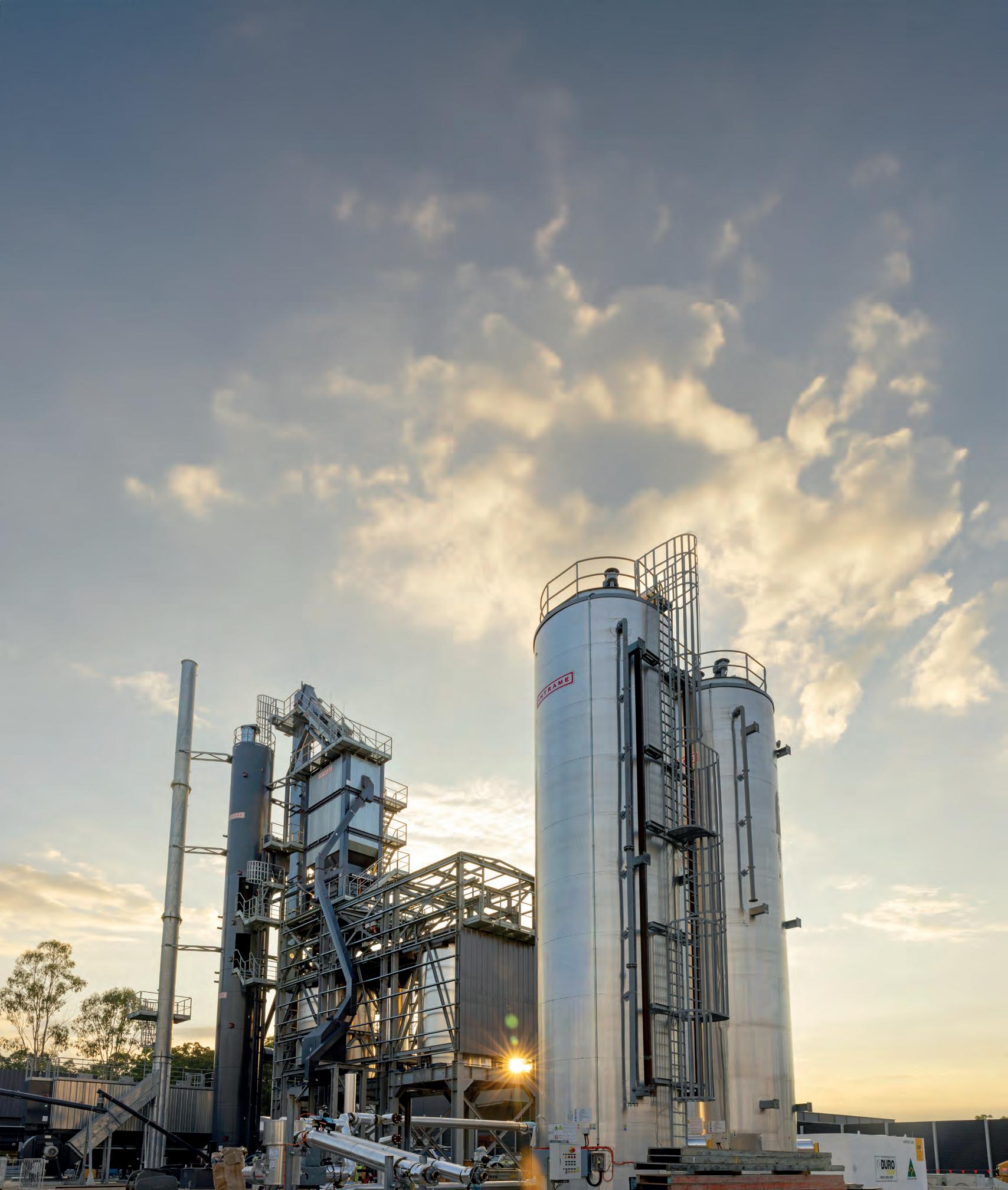
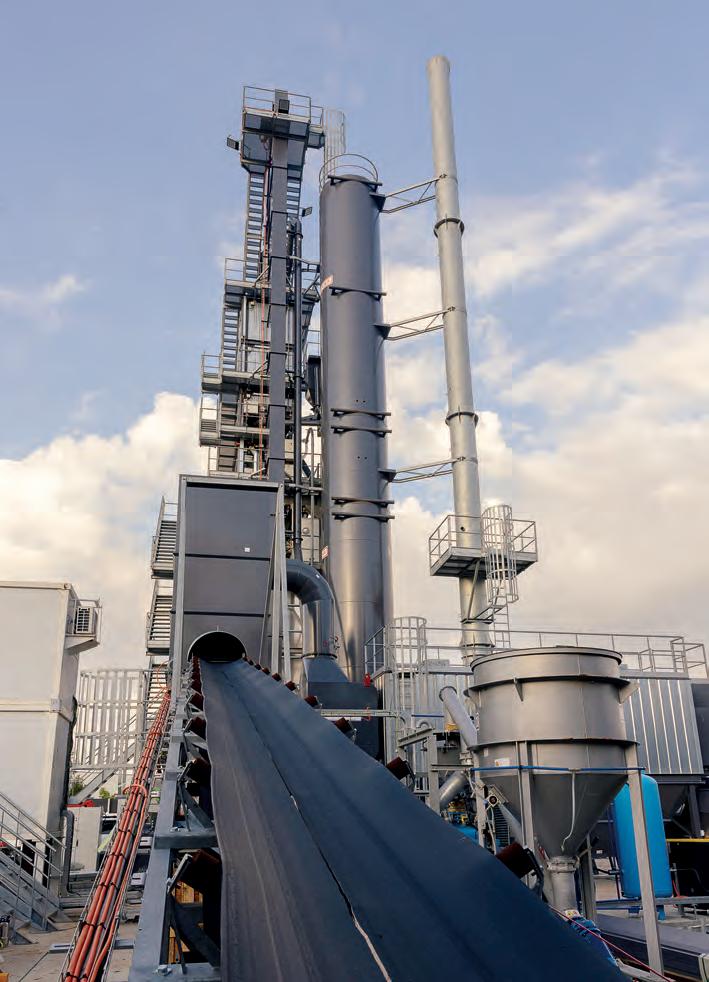
Newpave Asphalt’s brand-new Warnervale asphalt plant has a 120-tonne per hour capacity, with the potential to deliver more on demand. The plant features four, 20 cubic metre final mix silos.
The plant’s high storage and aggregate capacity – as well as the ability to use natural gas – helps to ensure that continuous production can be achieved. As Andrés Delgado, Business Development Manager, Intrame explains.
“The plant has big flexibility,” Delgado says. “That grants Newpave the ability to pivot on the spot and switch recipes or formulas for different inquiries.”
Peter March, Project Engineer – Newpave Asphalt says the segmented and highly controllable nature of the new plant helps to minimise interference and congestion between different production tasks, creating significant gains in efficiency.
“The asphalt and the supply of raw materials are completely offline,” he says. “So, we can be supplying the plant with raw material, all while taking product out. There’s very little interaction between the two, which creates a seamless operation. Having a site of this size is also a big help.”
The scale of efficiency is so great that several other plants in the region are also set to benefit, as Mark Gilson, Sales Manager –Newpave Asphalt explains.
“Our raw materials are identical to what we’re using at our other plant in Tomago. So, if we’re doing a job that’s some distance away, we can actually be utilising both plants,” he says.
As well as the Tomago and Warnervale sites, Newpave Asphalt has asphalt plants situated in Moree and Muswellbrook.
This network of sites, now boosted by the Warnervale plant, has full capacity to satisfy project needs, all while being located only 40 minutes away from Sydney and Newcastle.
“I think it was a very strategic play to ensure that we’re covering off on the opportunities presented by a growing market. Geographically, the Warnervale site, like our other locations, really ticked all the boxes,” Gilson says. “We have the unique capability to be reactive to local jobs, while also having backups for production on each of our sites.”
The plant will be located within an hour’s travel to both Sydney and Newcastle.
“WE
These benefits then flow down to the end customer, with greater production and transport efficiency benefitting the bottom line.
Reduced cartage distances, lower transport costs, and increased productivity due to better truck utilisation combine to offer a more cost-effective solution. Then there’s the increased reliability and lower risk of disruption provided by the combined network of asphalt plant sites.
Another new capability presented by the plant, as well as Newpave Asphalt’s evolution as a company, is the access to high quality, environmentally-friendly mixes.
The plant features a RAP (recycled asphalt pavement) system that will allow Newpave Asphalt to include up to 30 per cent recycled content in its mixes, reducing the demand for virgin aggregates and binders.
The plant is also capable of producing warm mix asphalt.
The incorporation of slag aggregates will provide another way to incorporate industrial by-products into asphalt, supporting circular economy outcomes while meeting performance requirements.
“Having EPA (Environment Protection Authority) approvals means that we’re now able to execute basically any job that comes
our ability to make those types of mixes,” Gilson says.
The new plant represents another key milestone in the growth of the relationship

manufacturer Intrame.
This is the second plant that’s been developed and delivered through this partnership, which Delgado says has grown stronger, with each interaction. “This plant represents a tailor-made design, rather than
an off the shelf option,” he says. “Newpave came to our factory around three years ago, when planning began, and said ‘this is what we need, this is what the market demands’, then we got designing.
“They’ve now made the journey many times, and their fresh ideas and feedback have also helped us to grow as a manufacturer.”
As part of the process, Intrame pre-a ssembled and tested the tower and key systems at its Spanish factory before shipment.
Once delivered, Intrame worked “hand in hand” with Newpave Asphalt around on-site adaptions, especially around piping, storage tank integration, and other changes to the plant’s configuration.
What followed was comprehensive training for operators and technical staff prior to commissioning.
“A real aspect of this relationship is commitment,” Delgado says.
“What we have with Newpave is the knowledge that either side knows what they’re doing. It continues to be a great collaboration.”

WT is a leading project advisory firm with more than 75 years’ experience. With deep sector expertise, we help clients navigate the growing scale and complexity of transport programs, inspiring confidence around budget, performance and delivery through independent advice. Learn more at wtpartnership.com.au



A new Tasmanian road safety campaign, ‘A nod to the road crew: slow down, respect the vest’, is being launched to address driver behaviour in roadwork zones.
The campaign aims to reinforce the importance of complying with temporary speed limits and traffic controller directions.
Delivered by the Traffic Management Association of Australia (TMAA) through the Tasmanian Community Road Safety Grant Program, the campaign responds to evidence that traffic controllers continue to face significant risk while carrying out essential work on the state’s roads.
The TMAA is the national peak body representing traffic management companies across Australia.
TMAA works collaboratively with governments, industry, and the community to improve safety, quality, and professionalism across the traffic management sector.
Recent national survey data indicates that more than half of traffic controllers encounter drivers who refuse to stop at least once a week.
Nearly half the controllers report near misses involving distracted drivers and more than four in ten report near misses involving speeding vehicles.
A small but serious proportion report being struck by a vehicle within the past 12 months.
Tasmanian traffic controllers report lower perceived safety at work than the national average.
The new campaign focuses on Tasmanian drivers, particularly young men, who are disproportionately represented in speed-related crashes and work zone noncompliance.
The campaign will consist of a 60-day social media campaign with placements geotargeted to active work zones and supported by partner networks across the state.
Rather than relying on graphic images and shock-based tactics, the campaign adopts a strength-based approach.
It positions road workers as the “unsung heroes who’ve got your back”. The road crew is looking out for drivers, so drivers should be looking out for them. The campaign shows slowing down and following lawful
directions as an act of competence, maturity and shared responsibility. It reinforces that temporary speed limits are mandatory, even when workers are not immediately visible, as road conditions within work zones can change rapidly due to lane shifts, uneven surfaces and restricted sight lines.
The initiative aligns with Tasmania’s Towards Zero strategy and supports a coordinated approach to enforcement, education and community awareness.
TMAA Chief Executive Officer Matthew Bereni re-emphasised that road safety is a shared responsibility.
“Every traffic controller out on our roads is there to keep the community safe. The Nod campaign is about mutual respect. Our road crews are looking out for drivers, and we’re asking drivers to look out for them,” he said.
“Slowing down in work zones isn’t optional; it’s a legal requirement and a sign of maturity and shared responsibility. A simple nod, a moment of patience, and a reduction in speed can prevent serious injury and save lives.”
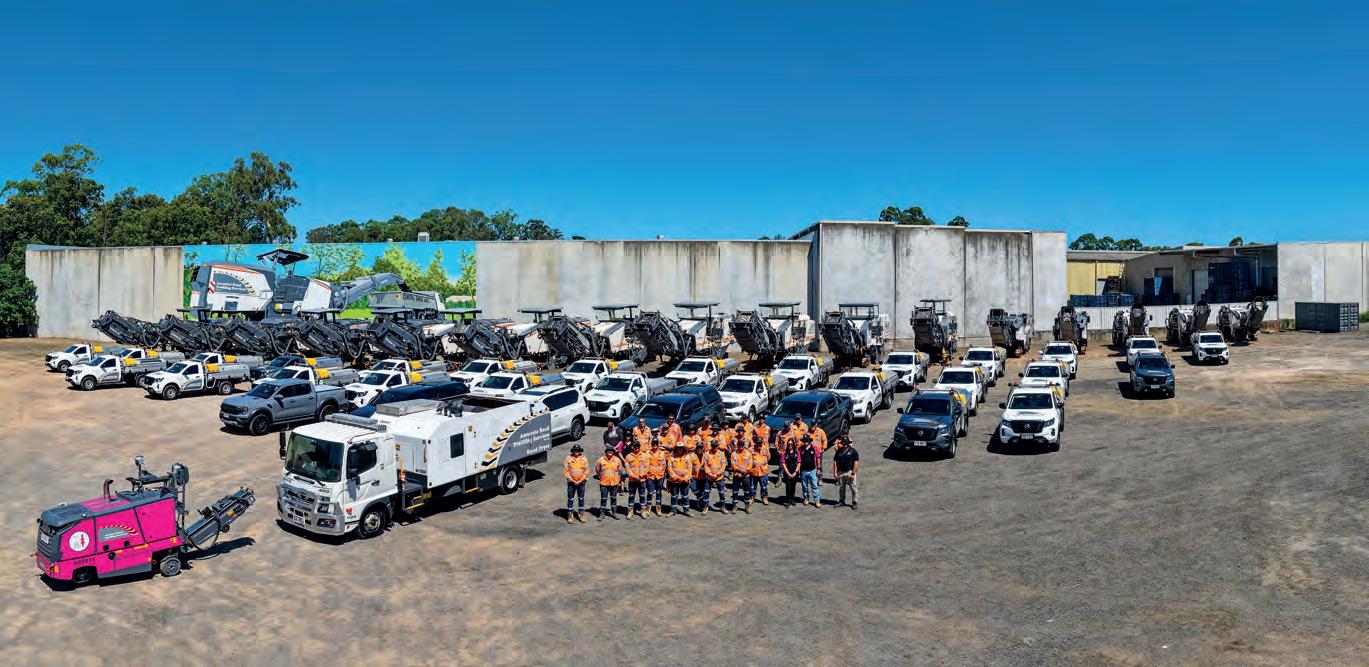
What does it take to go from two machines at inception, to a fleet of more than 20 machines, in less than a decade?
For Accurate Road Profiling Services’ owners Keith Baines and Tara Jones, the company’s upcoming 10-year anniversary has inspired reflection on this very point, with both still coming to terms with the speed and traction of the organisation’s success in the past few years.
Founded in Queensland’s Moreton Bay, Accurate Road Profiling Services has earned a reputation for high-quality outcomes for both large and small jobs throughout the southeast region of the state.
Backed by a specialised fleet of Wirtgen Group units, Accurate Road Profiling Services has delivered works on everything from major roads, airports and infrastructure projects to driveways and smaller patching jobs. This includes profiling works and other equipment services such as its road
dryers, trucks, bobcats, suction sweepers, water carts, low loaders and more. All units provided by trusted suppliers, which have been utilised on projects like the Gateway Arterial, Bruce Highway, Amberley Air Base, as well as the Brisbane, Townsville, Gold Coast and Cairns airports, to name a few.
Consisting primarily of Moreton Bay locals, supported by team members on the Gold Coast and Ipswich areas, the Accurate Road Profiling Services’ team, including Keith and Tara, is entrenched in not only the local community, but also areas across wider Queensland.
This focus not only ensures that the company’s foundational goal – to support people and businesses wherever they are located – stays intact, but also grants unique expertise to help find the right solution for every job.
“Without our people, and our loyal
customers and fantastic suppliers, we’re nothing,” Keith says. “We’ve grown so fast, but despite that we still think of ourselves as a family.”
As Tara explains, an ingrained sense of humility has enabled this sustained growth, which is a benefit to not only the business.
“It’s been really important to make sure that we remain humble for what we have and what we’ve achieved,” she says. “We’re always looking to give back, whether that’s to our employees or to a community organisation.”
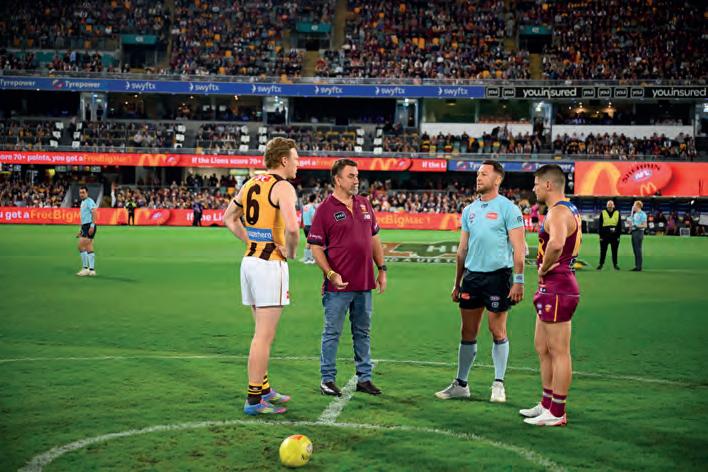
The company has become a strong sponsor and supporter of organisations such as the Brisbane Lions football club, Queensland Fire Service, several young athletes and sports men and women chasing their dreams, and also the Men’s Matter Raceday Charity.
One of Accurate Road Profiling Services’ marquee initiatives is its support of Breast Cancer Network Australia. At the heart
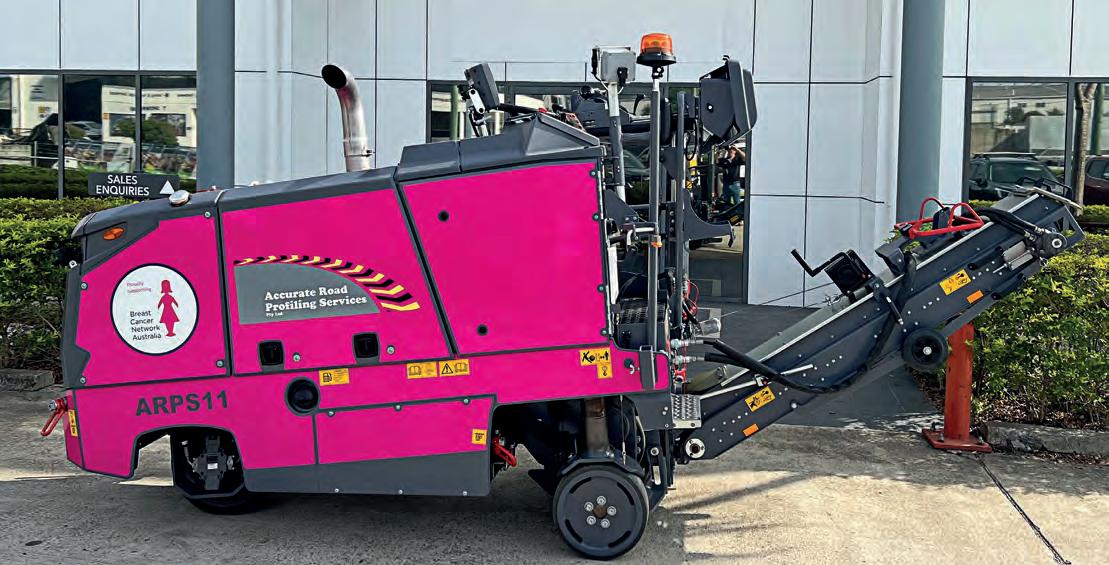
of this program is the company’s custom Wirtgen W35 profiler, affectionately known as the “Pink Lady.” This half-metre machine is wrapped in distinctive breast cancer pink livery, with all proceeds from its work being donated directly to Breast Cancer Australia.
As part of its 10-year anniversary celebration, Accurate Road Profiling Services is also hosting a special fundraising event in support of Breast Cancer Network Australia and aims to raise $50,000.
Machinery supplier Wirtgen arranged and supplied the pink livery. The global provider has been a staple of Accurate Road Profiling Services’ growth throughout the years, with the company’s entire fleet consisting of Wirtgen Group equipment, including the W 35 XRi, W 100 F, W 200 F, W 200 Hi, W 210 XP, W210 Fi and W210 XF milling machines and more.
“When it comes to profiling machinery, Wirtgen sets the standard across the world,” Keith says. “There is no one better at developing and producing road profiling machines.”
Having the latest technology and support of a global machinery manufacturer has opened many doors for Accurate Road Profiling Services’, but as Stuart Torpy, Managing Director – Wirtgen Australia explains, the company’s “forward-thinking” and proactive approach that keeps the Accurate fleet in top condition has laid the foundation for its own success.
“They know their stuff. They know what their customers need, and what their operators need,” Torpy says.
“With them, anything is possible, Keith’s not one to say ‘no’ to anybody. Going from two machines to 20 in ten years – you don’t do that without knowing what you’re doing. ‘Accurate’ has a high level of uptime and a high level of reliability, knowing that
we’re always there to help in any way that we can.”
Despite the major milestone – and time of reflection – Accurate Road Profiling Services continues to look to the future, with exciting developments having already taken place in 2026.
The company recently opened a brand-new depot in Townsville, opening opportunities to larger areas of Queensland, as well as northern New South Wales.
This expansion not only aims to strengthen existing customer relationships but also positions Accurate Road Profiling Services for further growth across the state, building on its status as one of Queensland’s leading milling contractors.
It’s yet another example of growth for a portfolio that comprises delivered works for the likes of Fulton Hogan, Austek,
Allens Asphalt and other providers.
Looking back, Keith and Tara admit that significant risk and belief was required to start the business. But both share few, if any regrets, and any of which are overshadowed by the hope and expectation that surrounds Accurate Road Profiling Services’ future.
“When we kicked the business off, Tara and I had a hope to build the business to a point where we could have five machines in the first five years. We’re now the second largest milling company on the east coast,” Keith says. “To go from zero to a fleet of more than 20 machines in ten years, it’s not too bad going really!”
Keep an eye out for Accurate Road Profiling Services and what exciting equipment and opportunities they next bring to the industry.
To donate to Accurate Road Profiling Services’ Pink Lady Event, visit: pink-ladyevents.bcna.org.au/arps-10-yearanniversary.
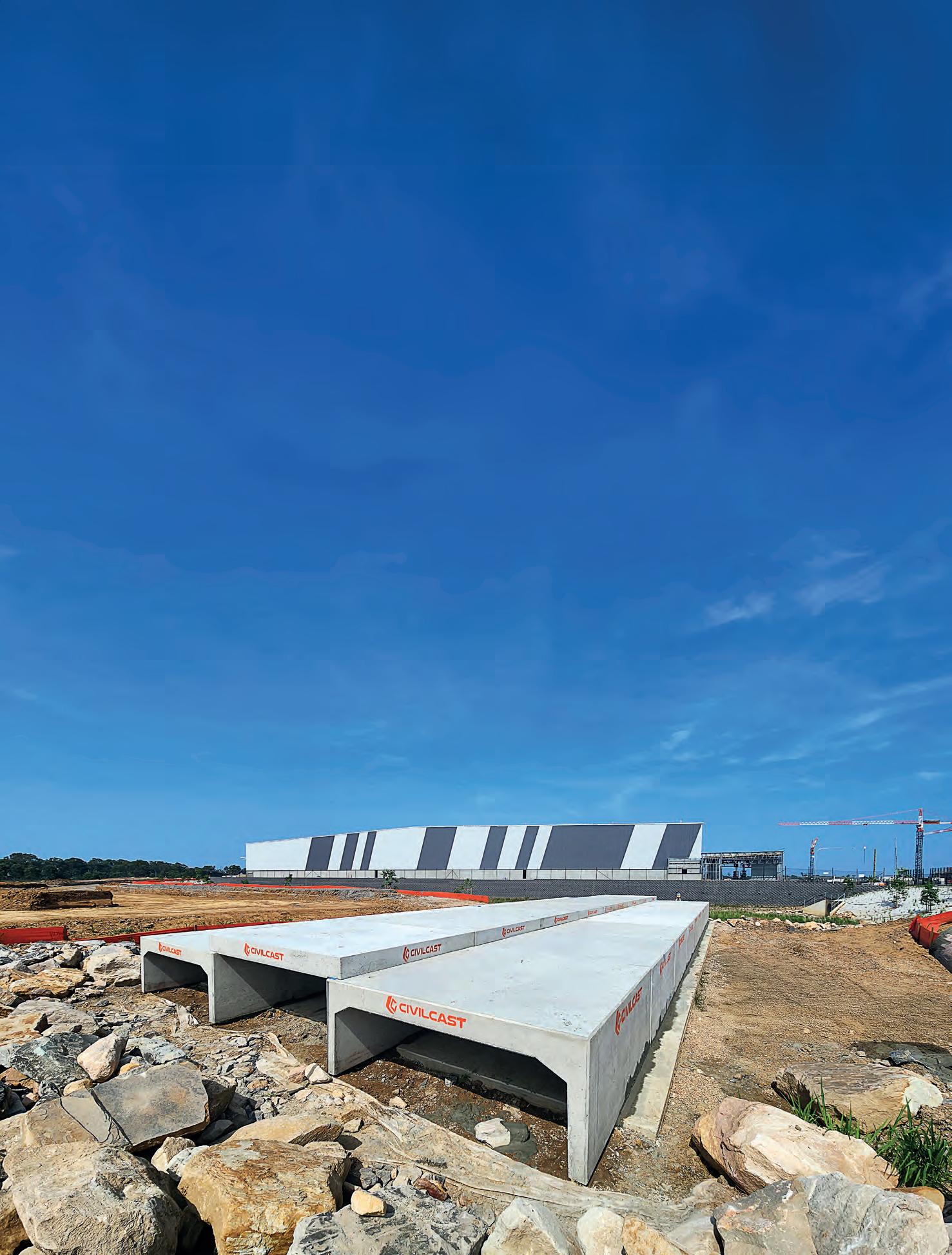

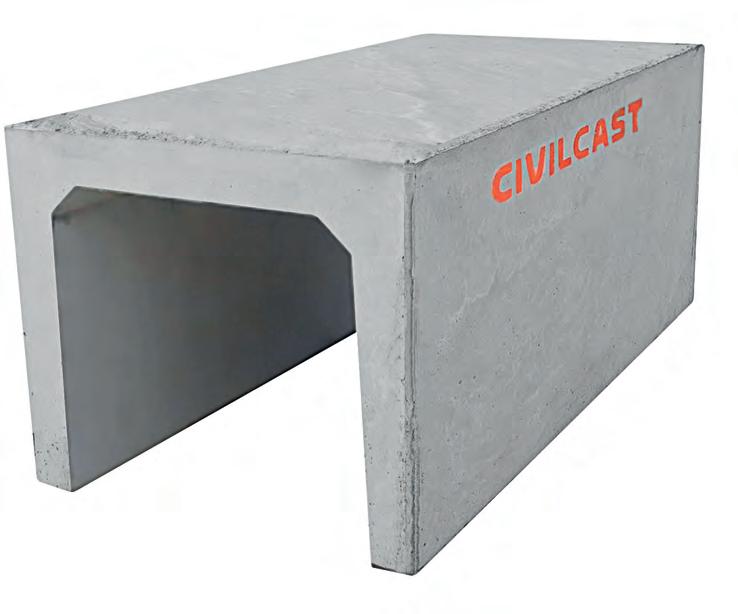
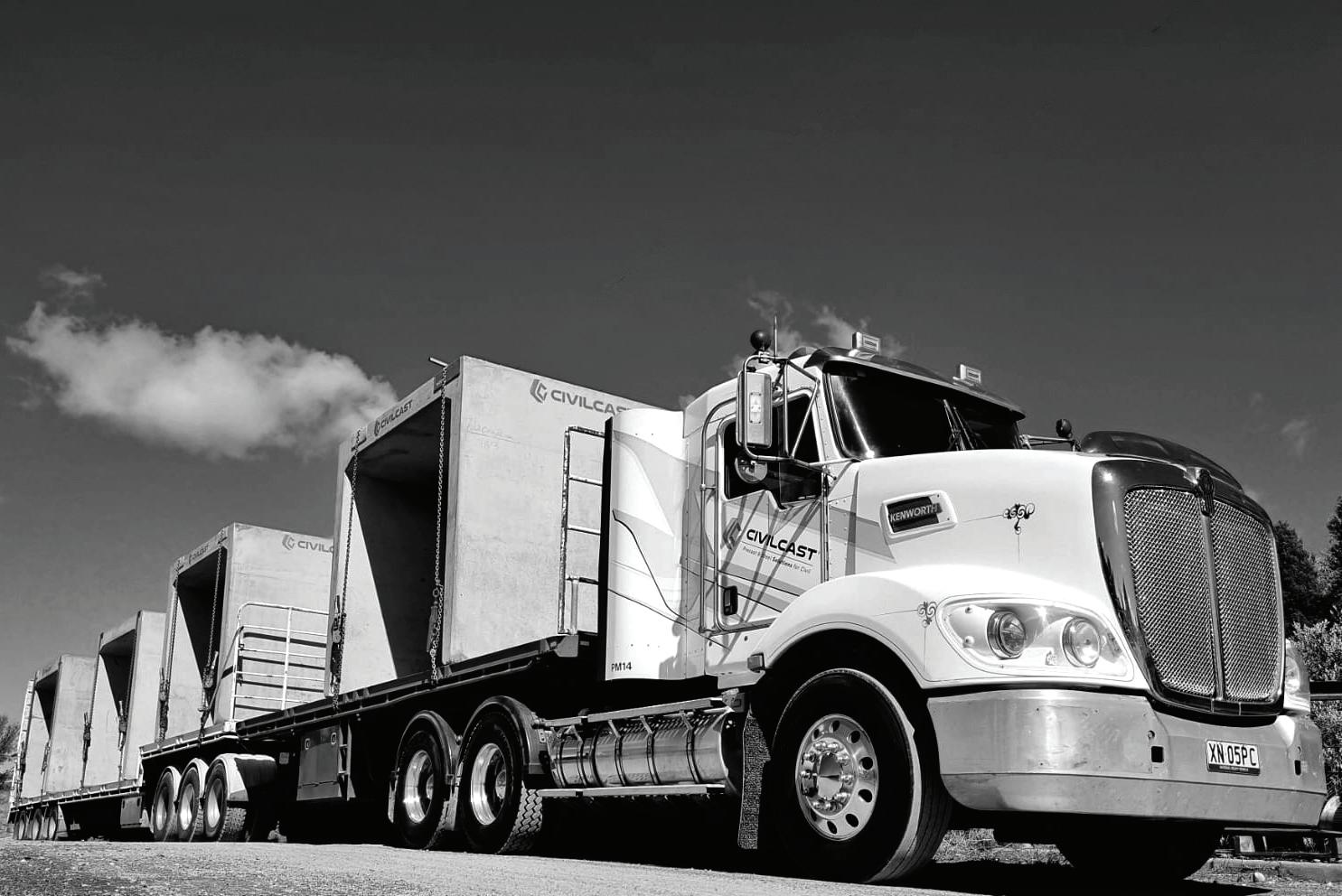
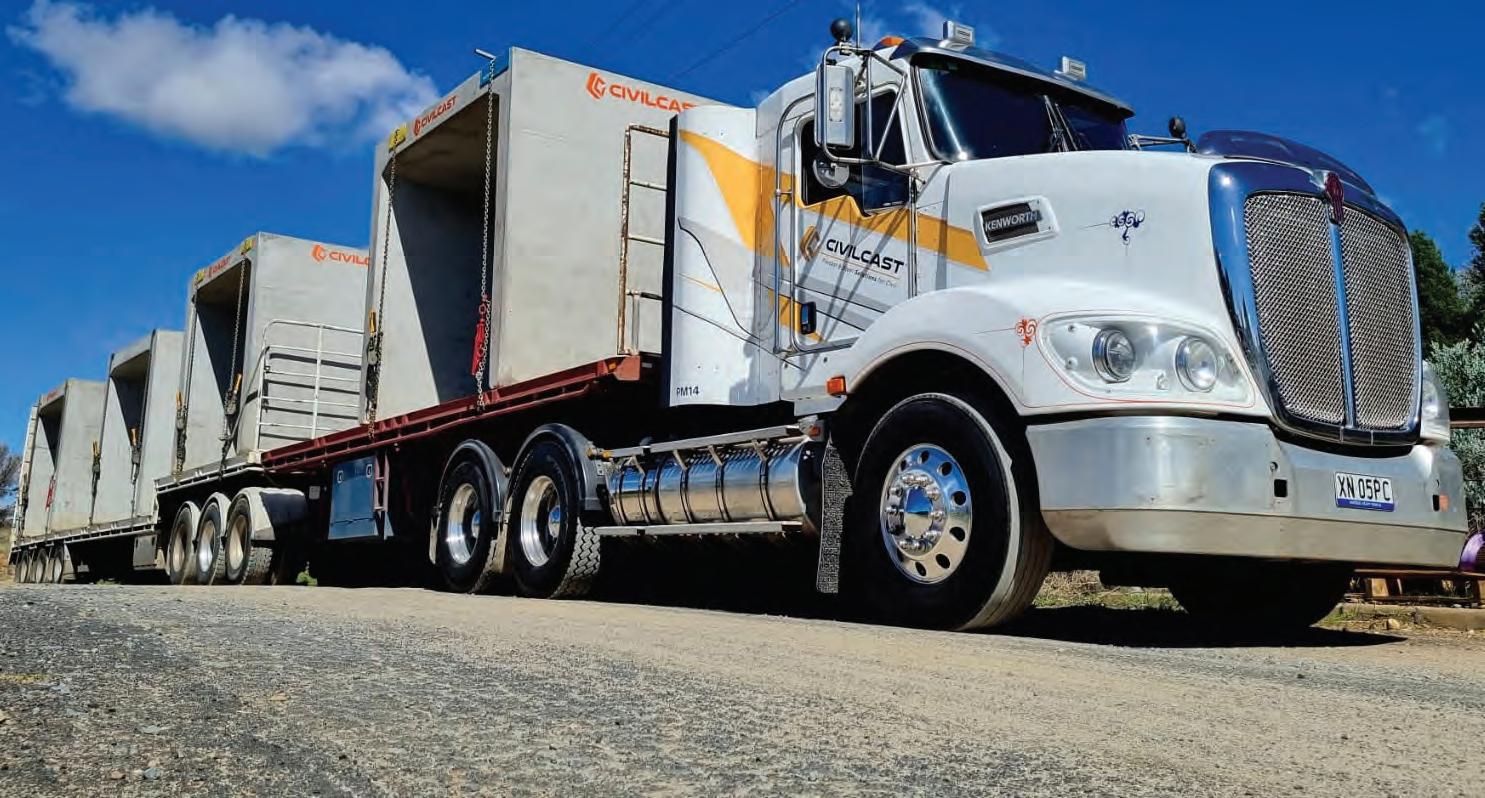
CIVILCAST’S BESPOKE CUSTOMISED CULVERT DESIGNS ARE HELPING TO DELIVER PROJECT-BY-PROJECT DESIGNS, ENSURING THAT RESIDENTIAL, TRANSPORT AND MAJOR INFRASTRUCTURE PROJECTS CAN SERVE COMMUNITIES FOR YEARS TO COME.
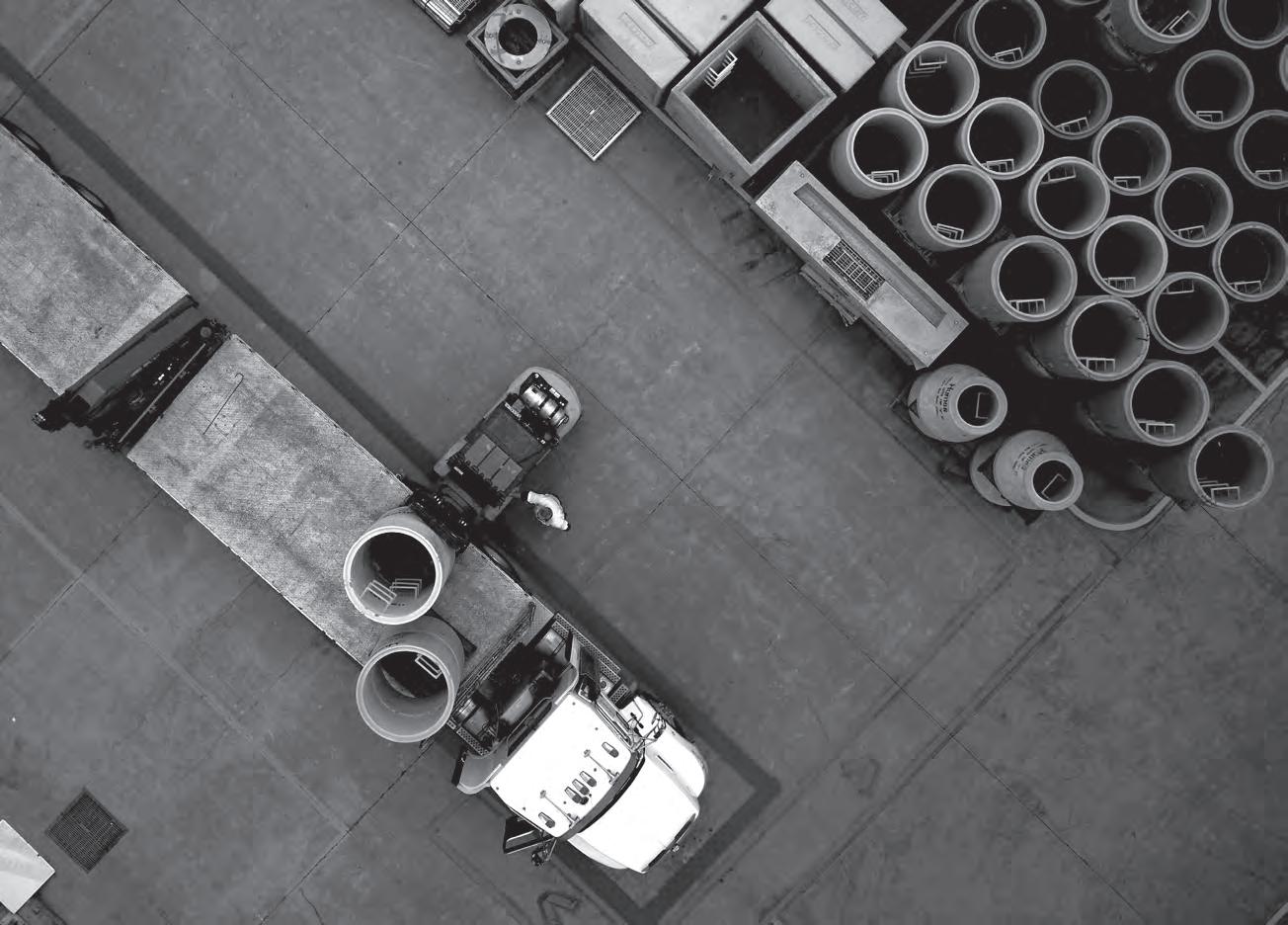
Every infrastructure project presents unique challenges. Gone are the days where standardised designs fit the bill across the board, with some projects presenting increasingly complex component requirements.
Culverts are no different. While standard culvert sizes can meet many requirements, complex site conditions often demand custom solutions to ensure structural integrity, hydraulic performance, and longterm durability.
Brian Lee, Product Development Manager – Civilcast has helped to oversee a foundational change to the way the company designs and delivers culvert components.
In fact, it’s Lee’s estimate that about 75 per cent of the jobs coming in require a customised element of some form, whether it be fill depth, penetrations or angles. He says this is particularly relevant for
residential applications that can require non-straight runs, such as culverts going around corners, additional pipe inlets and other infrastructure to penetrate the culvert from the side or the bottom – all aspects that a standard design would fail to accommodate.
One of Civilcast’s key strengths is its ability to quickly adapt to changing industry needs. This has allowed the company to pivot its process and design to cater for customised solutions.
As a result it has moved from one-off custom problem solving to a formalised engineering framework.
An in-house engineering team, backed by standard design rules for penetrations and angles and supported by trusted third-party certifiers, now allows the business to industrialise customisation –turning bespoke culvert requirements into a repeatable, fast and certifiable workflow.
Once a contractor or client has sent over project drawings and requirements, the Civilcast team commences its review of the proposed designs. It’s here that the team asks a key question, ‘can this be handled within standard parameters, or does it need custom engineering?’
For the majority of jobs, Civilcast’s in-house engineering team uses its vast combined industry experience, as well as standard engineering documents to quote the design.
For more complex projects and designs, the third-party certified engineer helps to develop and certify a solution.
Once designs are approved by the client, Civilcast uses its mould fleet and auxiliary mould equipment – such as leg cutters or block outs – to manufacture the units, applying the company’s quality systems and in-house concrete testing throughout.
Civilcast has developed a tailored and highly customisable approach for the design, manufacture and delivery of its culvert units.
Civilcast works closely with engineers and contractors to provide tailored solutions that fit specific site requirements.
By integrating detailed engineering during the design phase, precast units can be customised for specific hydraulic capacity and flow requirements, as well as higher load ratings for construction traffic or industrial applications.
These elements can also be integrated with headwalls, wing walls, or connecting structures, while also accommodating unusual site geometry or restricted access on-site.
Despite its development of what is now an established and successful production process, Civilcast is always looking for areas it can improve where possible.
“We’re growing our capability in terms of our mould fleet, and also the auxiliary elements that go in the mould to enable us to customise easier and faster,” Lee says. “That means spending more capex on the actual equipment to deliver a faster and better product.
“We’re working through the optimisation of our designs. Price on a culvert is very high on the agenda when it comes to a contractor pricing a job, so we’re looking at ways to optimise the design, to make it more efficient and obviously cheaper for our clients.”
This focus has also helped to open new markets.
“There’s a lot of culverts being used in the rail sector, so we’ve started the process of
getting approval for rail use as well. It’s a higher load rating, so more reinforcement is involved in the design,” Lee says.
Speed itself is a key differentiator of Civilcast’s service, an additional aspect that the company is constantly looking to improve, as Lee explains.
“It’s the pace of turnaround, really – to come up with a solution that makes the difference,” he says. “Once there’s custom elements in the job, our speed to respond to those requirements generally out-paces others in the market.
“Lead times can quickly become one of the biggest factors that affect performance and overall project delivery.”
While custom units may involve higher upfront design and production considerations, the long-term benefits often outweigh the initial investment. Tailored solutions reduce installation challenges, avoid costly remedial work,
No two culverts are the same, thanks to Civilcast’s highly experienced and trained engineering team.
and help to extend an asset’s lifecycle.
Lee says it’s why the popularity of these customised segments continues to grow, even beyond residential and infrastructure applications.
Custom culverts are now being used as construction progresses on the Wellington Solar Farm, reflecting wider interest in the renewable energy infrastructure segment.
The farm’s home state of New South Wales has become a state of particular strength for Civilcast, with Transport for New South Wales certification being received for the bespoke custom culvert designs.
“That enables us to work on some of the major road projects in that state, which we weren’t able to previously,” Lee says.
For more information contact Civilcast on 1300 012 278 or visit civilcast.com.au.

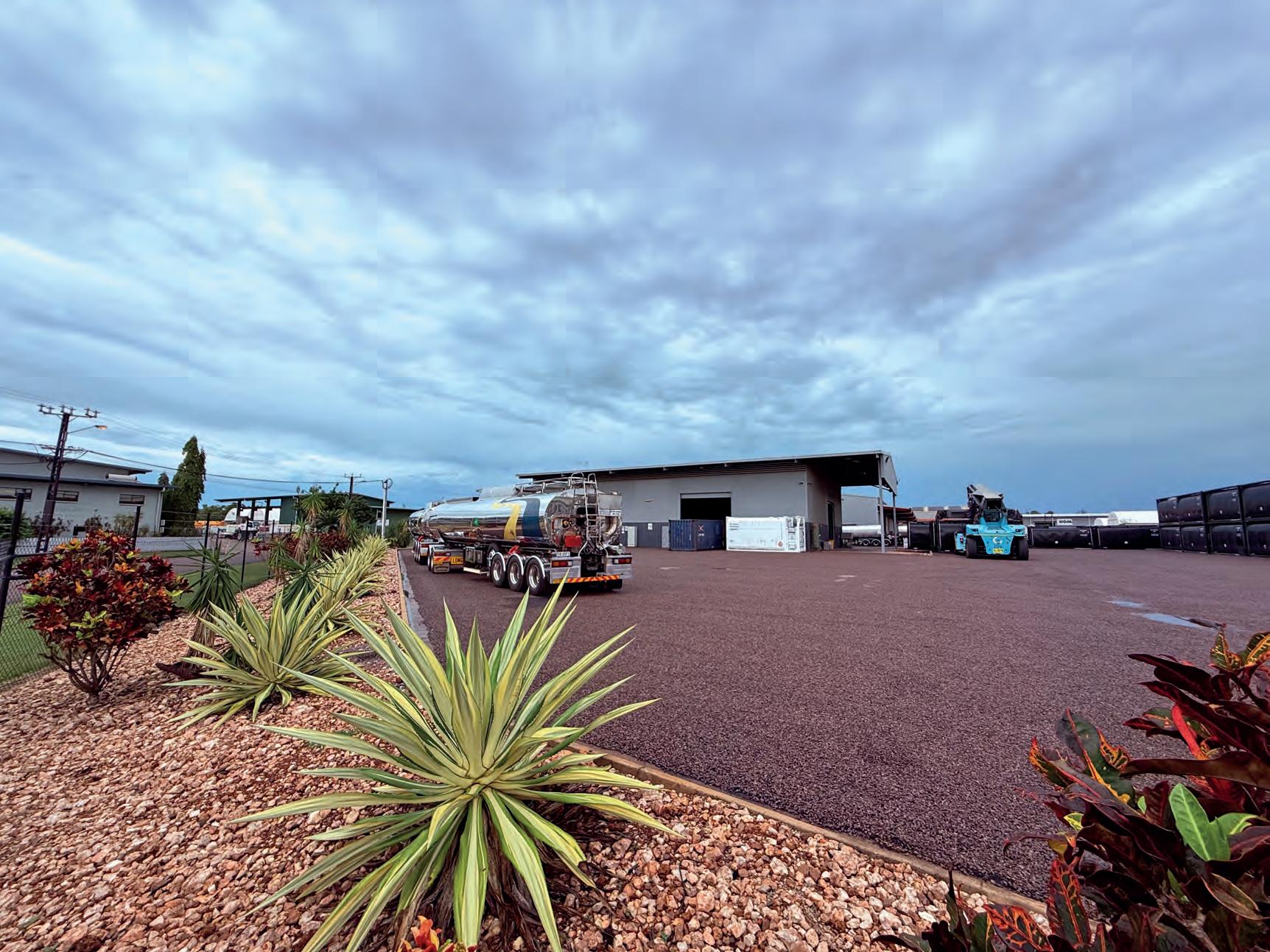
THE ESTABLISHMENT OF A NEW SAMI BITUMEN CONTAINER FACILITY IN DARWIN IS SET TO TRANSFORM BITUMEN TRANSPORT AND DELIVERY THROUGHOUT THE NORTHERN TERRITORY, OFFERING UNPRECEDENTED ACCESS TO ESSENTIAL MATERIALS FOR LOCAL PROJECTS AND BUSINESSES.
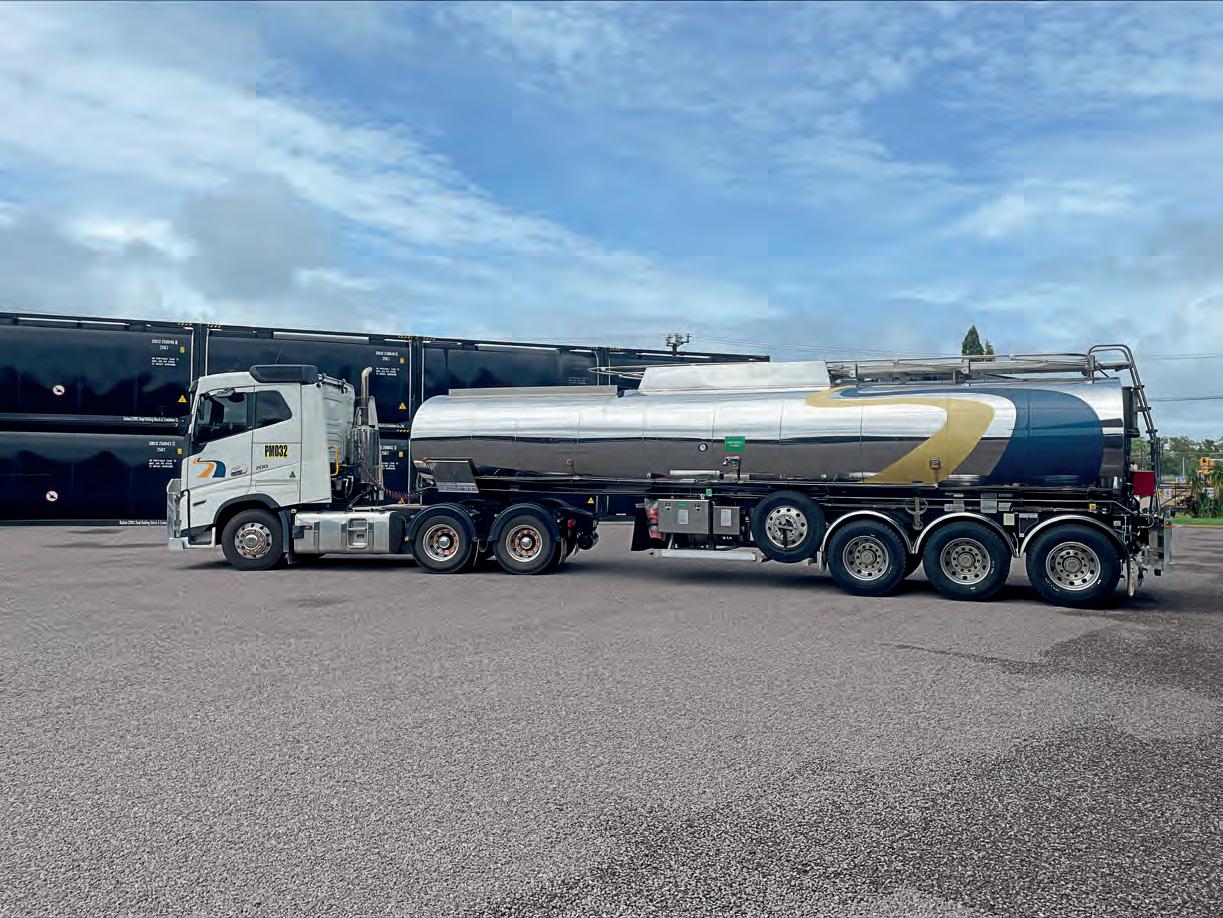
SAMI Bitumen Technologies’ ‘bitumen container’ is one of the industry’s most significant and recent developments in material logistics.
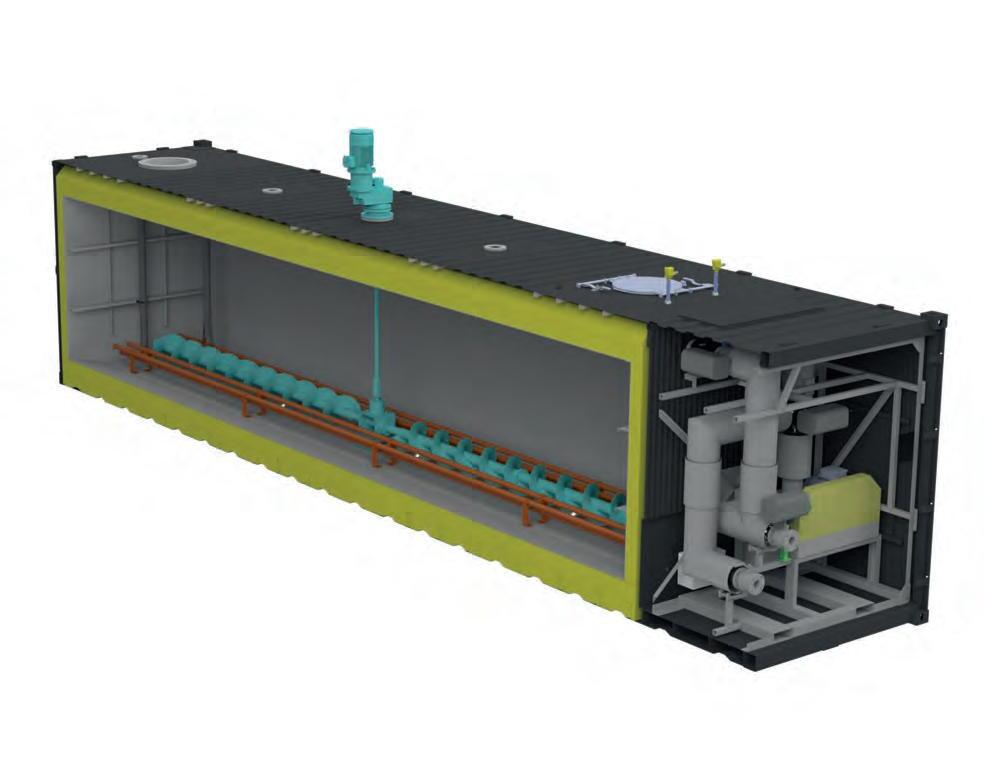
The SAMI bitumen container is a fully insulated, high‑capacity bitumen container that keeps product hot and mobile, allowing SAMI to deliver hot bitumen efficiently to virtually any location where transport is feasible.
Since the establishment of the service line in 2021 2 2, the offerings popularity has continued to increase project by project, year by year.
After recognising a legacy industry requirement and a gaping hole in the market, SAMI Bitumen Technologies began advancing plans for a dedicated bitumen supply in the Northern Territory.
The region had traditionally faced its challenges when it came to bitumen supply, predominantly caused by the closing of a local refinery.
As Pierre H enri Berard, Logistics and Supply Manager – SAMI Bitumen Technologies explains.
“Nobody has been set up in the Northern Territory, it relied purely on external
supplies from overseas,” he says.
He says some locations never had on the ground staff and resources to leverage from, let alone a reliable and consistent supply of high q uality bitumen.
SAMI Bitumen Technologies already had several bitumen import facilities across Queensland, New South Wales, Victoria and Western Australia, but nothing in the Northern Territory. It wasn’t long before the ball got rolling on the company’s newest ‘Bituhub’ depot in Darwin.
Major works on the brand new Darwin depot concluded in 2025, providing an additional 3500 tonnes of bitumen stock that will be stationed at the facility.
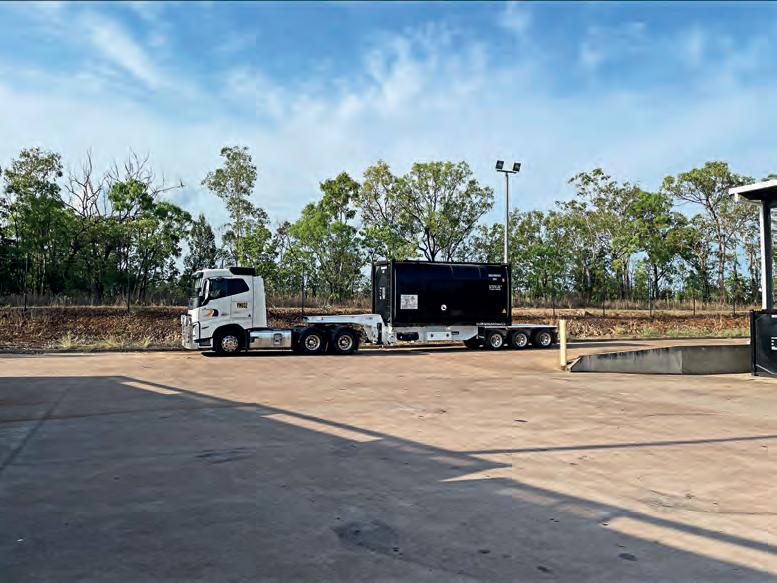
With a daily capacity of around 300 tonnes ready, each unit is supported by a specifically designed drop deck skid, helping to simplify handling while also increasing the maximum payload, which sits at around 30 tonnes per container.
A big milestone for the depot was
roll-out, meaning delivery relied on local know-how and perseverance, as well as the support of the company’s interstate contacts.
Colin Kerwin, NT Operations Manager – SAMI Bitumen Technologies oversees day-to-day operations of the site, taking customer orders, coordinating supply and even delivering the product himself. He says that despite some early hiccups, the site is now in full operation.
“We’ve now moved onto what is a more established site. Operational-wise, it’s all guns blazing,” he says.
well known throughout the industry, what we’re offering. There’s also plenty of places that have never had access to some of our specialised products, so it’s a big win for all the islands off the mainland and other remote locations around Australia.
“By their very nature, these projects are often remote and at the very least, very specialised. Customers are now coming up to us and asking ‘How would you do this? Could you offer a service?’”
the purchase and commissioning of a 100-tonne reach stacker, increasing ease of movement and interface with trucks on site. One of the biggest challenges faced by the team was weather.
Record rainfall was recorded in the Northern Territory during the project
Samuel Wright, Project Manager – SAMI Bitumen Technologies says having a local touchpoint is a major advantage for contractors, particularly when it comes to logistics.
“The ‘Territory’ was always importing containers and from there it would be up to the individual contractor to manage
“WE’RE THE ONLY BITUMEN SUPPLIER WITH BOOTS ON THE GROUND. SO, IF WE CAN BECOME A MAIN SUPPLIER UP HERE, THEN I THINK THE SKY’S THE LIMIT.”
the heating, transport, logistics and the whole process,” he says.
“What we’re now offering takes that problem away, we can deliver hot bitumen to their doorstep, like we now do across the rest of Australia.”
Services such as these form part of SAMI Bitumen Technologies’ ‘Project Division’, which Wright is a part of. This team specialises in coordinating, delivering and supporting the distribution of bitumen containers to projects of all sizes, around the nation.
“The growth has been great,” Wright says. “We’ve had the division for a couple of years and it’s really taken off. It’s now
And for local contractors, the new Darwin depot cuts the need to haul bitumen long distances from the East Coast, particularly from the Townsville refinery. Previously, most of the ‘Territory’s’ supply involved multi-day road tanker runs, increasing carbon emissions, fuel use, and ultimately price for the customer’s bottom line.
“We’re the only bitumen supplier with boots on the ground and the sky’s the limit,” Kerwin says.
Looking ahead, the Darwin depot team is gearing up for a strong year as volumes and demand build, with SAMI Bitumen Technologies aiming to become the ‘Territory’s’ main bitumen supplier.
At the same time, the company’s project delivery team is fielding more calls for remote and specialist work, both domestically and across the Pacific.
“This is really opening up an avenue that’s never been there for the region,” Wright says. “Some of our customers literally can’t believe how easy it is for them now.”
As Berard adds, “we’ve already seen the flexibility of this type of equipment in action, and it’s been ticking all of the boxes for the Northern Territory.
“We’re excited about developing and increasing the fleet across the region.”

placement associated sectors . testing laboratory
THE TRANSITION FROM TRADITIONAL TELEMATICS TO AN ARTIFICIAL INTELLIGENCEDRIVEN ECOSYSTEM IS NO LONGER DISCUSSED IN HYPOTHETICAL TERMS; IT IS THE OPERATIONAL REALITY FOR THE AUSTRALIAN FLEET INDUSTRY.
At Geotab Connect, the annual conference for connected vehicle technology provider Geotab, the overarching theme made one thing clear: Artificial Intelligence (AI) has moved from the experimental to the centre of fleet strategy.
From the opening moments of the conference to the final keynote, the message to fleet managers was consistent: the tools of the future are already here, and the window to master them is now.
During the opening session, Neil Cawse, Geotab Founder and Chief Executive Officer set the stage by framing AI as a non-negotiable evolution for leadership.
He challenged the industry to look past the “future-talk” and acknowledge the real-world impact happening on the ground today. For Cawse, the emergence of AI represents a pivotal moment for decision-
makers who must choose between being observers of change or architects of it.
“This isn’t a slide deck about the future; we’re living it right now, and it’s changing outcomes for people in the real world, in real fleets,” Cawse says.
“So, you have a choice. You can stand on the sidelines and watch the world transform around us, or you can get onto that roller coaster ride, grab the bar, and ride it with everything you’ve got.
“Learn the tool, become the expert, because it’s your leadership in your organisation that will determine whether your people thrive in the new world or get left behind. We’re going to bring back AI to people not as a threat, but as a partner.”
Despite this call to action, Cawse says the path to adoption is often paved with trepidation. Fleet managers frequently express fears regarding data privacy, the
potential for job displacement, and the sheer “vertigo” of trying to keep pace with exponential growth.
There is a legitimate concern that by automating decision-making, transporters might lose the human element that keeps drivers engaged and safe. However, the event’s key takeaways suggest that the greatest risk isn’t the technology itself, but the failure to adapt “linear intuitions” to an “exponential world.”
Closing keynote speaker Jason Silva addressed these fears head-on by reframing the relationship with technology. Silva is a Venezuelan-American futurist, filmmaker and television host best known for Brain Games and his digital series Shots of Awe. With a background in philosophy and media, he explores the intersection of technology, creativity and human consciousness.
In his keynote, he argued that humans have always been a “tool-making animal,” and that every major innovation – from the wheel to electricity – has pulled the rug from beneath their feet before eventually extending our capacity for greatness.
He suggested that the confusion felt by many in the industry today is a natural byproduct of a technological singularity that is reconfiguring our mental models.
“If you’re feeling overwhelmed, if you’re feeling confused about the rise of AI, these unfathomable technologies that are making the unthinkable thinkable, humility and awe is my invitation,” he says.
“Technology is concretised human imagination in the world; it is how we turn the human mind inside out and how we extend our capacities. We build the tools, and then those tools build us in turn.
“We have been in this symbiotic relationship, this self-reinforcing feedback loop, since the dawn of humanity, and we
have a responsibility to tune into that awe.”
The practical application is already saving lives. Case examples discussed throughout the event highlighted how AI acts as a digital coach, using predictive insights to give drivers the data they need to make split-second decisions.
It highlighted that when uncertainty is removed from fleet operations, AI is the key to fulfilling the most basic promise in transport: getting people home safely.
By simplifying workflows and using rewards-based coaching rather than
“LEARN THE TOOL, BECOME THE EXPERT, BECAUSE IT’S YOUR LEADERSHIP IN YOUR ORGANISATION THAT WILL DETERMINE WHETHER YOUR PEOPLE THRIVE IN THE NEW WORLD OR GET LEFT BEHIND.”
punitive monitoring, AI becomes a safety net rather than a surveillance tool.
Ultimately, Geotab Connect reinforced that AI is an “extended mind” for the fleet sector. The challenges of implementation are real, but hold the potential to transform a dangerous, high-cost industry into a streamlined, life-saving service.
As the sector moves forward, the benchmark for success will be defined by those who stop viewing AI as a competitor and start treating it as the most powerful partner they have ever had.
“At the end of the day, every head on your fleet carries something more important than cargo,” Cawse says.
“It carries a person, a parent, a partner, somebody. Why was that person walking out the door this morning? It was for the promise of ‘I’ll be home soon.’ That promise is why we do what we do, and to keep it, we have to see what others can’t through the power of these new tools.”

When performance matters and conditions are demanding, our culverts deliver.
Available in standard and custom sizes, our culvert solutions are engineered to meet your project specifications.
With fast production and reliable on-time delivery, we keep your project moving.
WT’s report aims to inspire change to legacy industry methods and practices, to enable more efficient project delivery.

A LANDMARK REPORT PRODUCED BY PROJECT ADVISORY FIRM WT HAS DETAILED THE CHALLENGES AND OPPORTUNITIES THAT LIE AHEAD FOR INDUSTRY, AS IT GEARS UP TO DELIVER THE UNPRECEDENTED INFRASTRUCTURE PIPELINE REQUIRED FOR THE UPCOMING 2032 BRISBANE OLYMPIC AND PARALYMPIC GAMES.
Queensland’s infrastructure, transport and construction industries are facing a monumental challenge.
Pressure is mounting as the nation edges closer to hosting the 2032 Olympic and Paralympic Games, in Brisbane.
This marks only the third time that Australia has hosted the Games, with the 1956 Melbourne and 2000 Sydney games emerging as highly regarded events.
Despite this history of success, unique and substantial challenges – some never faced on this scale – have presented barriers to the productivity and efficiency of delivery for
the $120 billion building and infrastructure pipeline for the Brisbane games. So, how can we actually identify where the problems lie?
WT’s report, From vision to legacy: a game plan for Brisbane 2032 and beyond provides a practical roadmap for delivering not only the 2032 Olympics, but also legacy infrastructure in a way that maximises value for southeast Queensland.
As WT Queensland State Lead Jack Shelley explains, this resource was developed not only to highlight ongoing issues, but also to identify the changes that could be made to greater support industry.

“There’s a lot of narrative out in the market around the challenges, but not really the levers that could be pulled and the ways to actually mitigate and manage these things moving forward,” he says. “That’s what our report is focused on.”
Just one of the key challenges is the sustained labour shortage, stemming from the COVID pandemic and enduring economic challenges being felt nationally and sector-wide.
Analysis conducted by WT, as part of its report, forecasts a rolling three-year average construction labour shortage of 27,200 workers in 2026-27, 43,400 in 2027-28 and 46,000 in 2028-29.
One obvious aspect that’s placing even greater strain on the current workforce is the spread of demand.
“All of these different government entities have massive pipelines of work, so they’re all trying to vie for the same resource pool and same contracting pool,” Shelley says.
“Queensland’s market faces a fundamental step change in the availability of labour and plant. That means traditional delivery models that worked at a smaller capacity level aren’t enough for a program made up of hundreds of projects.”
Such demand, as well as other factors, are contributing to price and risk profile escalation, creating greater uncertainty for contractors.
WT’s report points to the pipeline’s success depending on integrated planning across agencies, smarter bundling of work, and new ways of working – including digital tools and artificial intelligence – to keep costs, schedules and interfaces under tight control.
This includes the potential of more dynamic, on-the-fly budgeting and programming rather than milestone
As Shelley explains, it doesn’t help that these issues are exasperated by the large volume of concurrent works that are taking place across the entire project program.
“When we’re speaking specifically about infrastructure projects, it’s not just one project, it’s not one program, it’s hundreds of projects that are interdependently linked,” he says.
“The risk is that if one project fails, there’s a misalignment across that whole program, and therefore you end up with duplicated works, or you end up with clashing schedules or inconsistent procurement or mismanaged interfaces.”
These are similar to the challenges faced by developers of the recent London and Paris games, both of which offer key learnings that can be incorporated into the current Olympic infrastructure delivery.
More specifically, both London and Paris show the importance of early risk reduction, understanding the major risks on projects
“WHEN WE’RE SPEAKING SPECIFICALLY ABOUT INFRASTRUCTURE PROJECTS, IT’S NOT JUST ONE PROJECT, IT’S NOT ONE PROGRAM, IT’S HUNDREDS OF PROJECTS THAT ARE INTERDEPENDENTLY LINKED.”
as soon as possible and putting mitigation strategies in place upfront, rather than reacting later when problems are already baked into design, contracts or schedules.
London and Paris are also held up as examples of strong integrated planning and coordination. Duplicated works, clashing schedules, inconsistent procurement, mismanaged interfaces and more were all prevented by tight planning, sequencing and governance.
Despite the findings, Shelley says it’s not all doom and gloom.
He says the recent London and Paris games have demonstrated the biggest opportunity of all for Brisbane, to create a lasting infrastructure impact that will benefit the
community for decades to come. WT sees the next five to six years as an opportunity to “change gears” and establish a new normal for southeast Queensland – one built on resilient, well-planned infrastructure that can support a larger population, stronger health and education systems, and a more productive economy long after the Games are over.
Beyond the infrastructure itself, Shelley adds that the state has a great opportunity to set the standard for the delivery of major scale infrastructure moving forward.
“The state’s approach, which could include productivity commission outcomes, risk models, bundling, and stance on delivery could set the blueprint for how Australia operates in that mega infrastructure space for the next while,” he says.
“We’ve been around for 76 years, and we’ve worked across most of the major projects. We know what it takes to deliver these projects, and we’ve got that in-house expertise to be able to deliver the best quality outcome.”
To read the full report, visit: wtpartnership. com.au/insights/from-vision-to-legacy-agame-plan-for-brisbane-2032-and-beyondreport/.
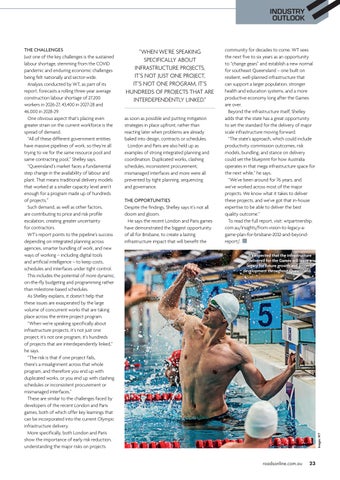
It’s expected that the infrastructure delivered for the Games will leave a legacy for future growth and project development throughout Queensland.








“Please watch the road”
Act on the most urgent risks in seconds.
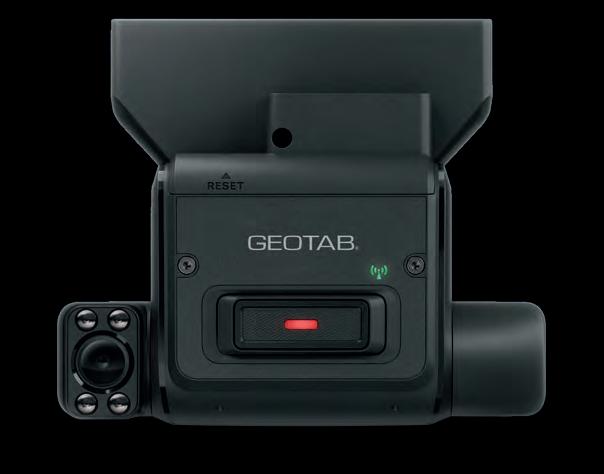
Geotab’s new all-in-one video telematics solution, the GO Focus Plus, automatically flags distracted driving, tailgating, hard braking and other serious events immediately, delivering instant in-cab voice feedback to enhance driver safety. For managers, patterns and urgent cases rise to the top for fast review and targeted coaching, all in one workflow that tracks follow-up and results. Spend less time searching and more time supporting every driver, addressing risk, encouraging improvement and recognising safer habits.
Ready to transform your fleet?
Visit www.geotab.com/au/ to learn how our telematics solutions can drive your business forward.
Komatsu has exercised a strong presence in Australia for more than 60 years. The original equipment manufacturer (OEM), specialising in heavy equipment for applications in the civil and road construction industry, has been widely regarded for its high-quality excavators, crushers, and transport equipment among many others. Throughout Komatsu’s history, its value proposition has been enhanced by various partnerships with other companies – such as the Atlassian Williams Formula One (F1) team.
Komatsu and Atlassian Williams have enjoyed a long history together, previously sharing a technical partnership throughout the 1990s. The two organisations reunited at the start of the 2024 F1 World Championship season with Komatsu becoming the team’s principal partner.
As part of this revitalised relationship, fourtime Grand Prix winner Carlos Sainz visited Komatsu’s Fairfield site in Sydney prior to the 2026 F1 World Championship season in March. This visit provided an opportunity for both organisations to highlight the importance of employee engagement.
Sainz began his visit with a photo alongside the OEM’s PC55 mini excavator, which was selected due to the model number mirroring Sainz’s own iconic racing number. The PC55 mini excavator is a small yet efficient machine in Komatsu’s product line – brought to the Australian market exclusively from Japan.
Featuring a powerful Komatsu 4D88E7 engine providing 38 horsepower and maximum digging depths of up to 3.8 metres, the machine boasts both power and precision for operators.
Sainz also participated in a Q&A session with more than 300 Komatsu employees and customers before taking a Komatsu HD605 rigid dump truck for a test drive around the facility.
This machine is made to optimise productivity and minimise downtime, part of Komatsu’s high-performance range of rigid dump trucks used in quarrying, mining and construction spaces.
According to Sainz, his visit to Komatsu’s
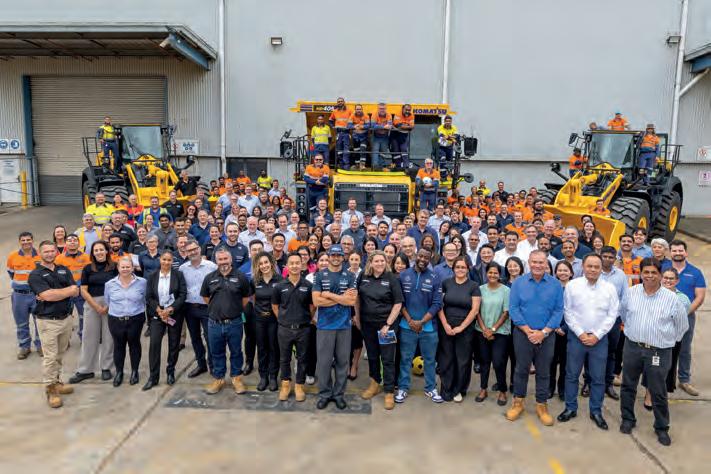
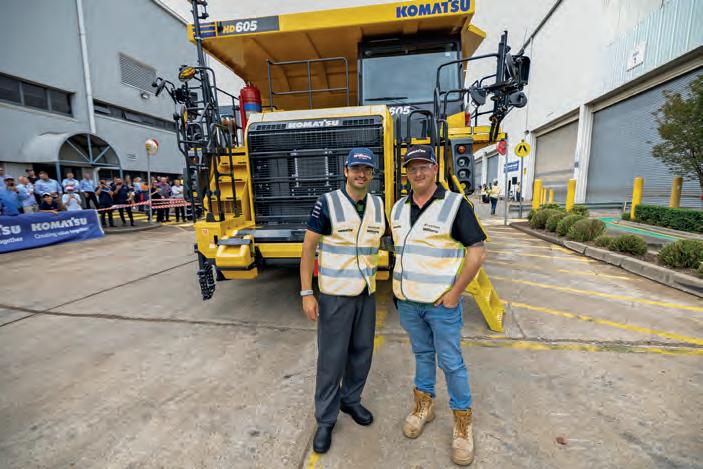
Fairfield site was a welcome event prior to his race in F1’s Melbourne Grand Prix.
“Coming back to a Komatsu facility was a great way to start the 2026 season,” Sainz says. “After my visit to Awazu, Japan, last year, I saw the impact this partnership had on Komatsu employees, and it was really nice to see that again here in Australia.”
Sean Taylor, Managing Director of Komatsu Australia, oversaw Sainz’s visit, emphasising how driver appearances are one of the many ways that the OEM brings its partnerships with the Atlassian Williams team to life. The events between the two organisations have engaged over 25,000 Komatsu employees in eight countries,
bringing regions together to create value.
“Welcoming the Atlassian Williams F1 team to Australia is always an honour for all of us here at Komatsu,” Taylor says. “Carlos Sainz’s visit to Sydney is now the fourth time we have hosted him on our soil, and to do so in front of so many employees and their family members demonstrates how important the partnership is to our workforce.
“As just one of many Komatsu subsidiaries around the world, I think I can speak for all of us when saying that the collaboration between ourselves and Williams is a valued part of our business. Being able to showcase that on a physical level is significant to us all.”

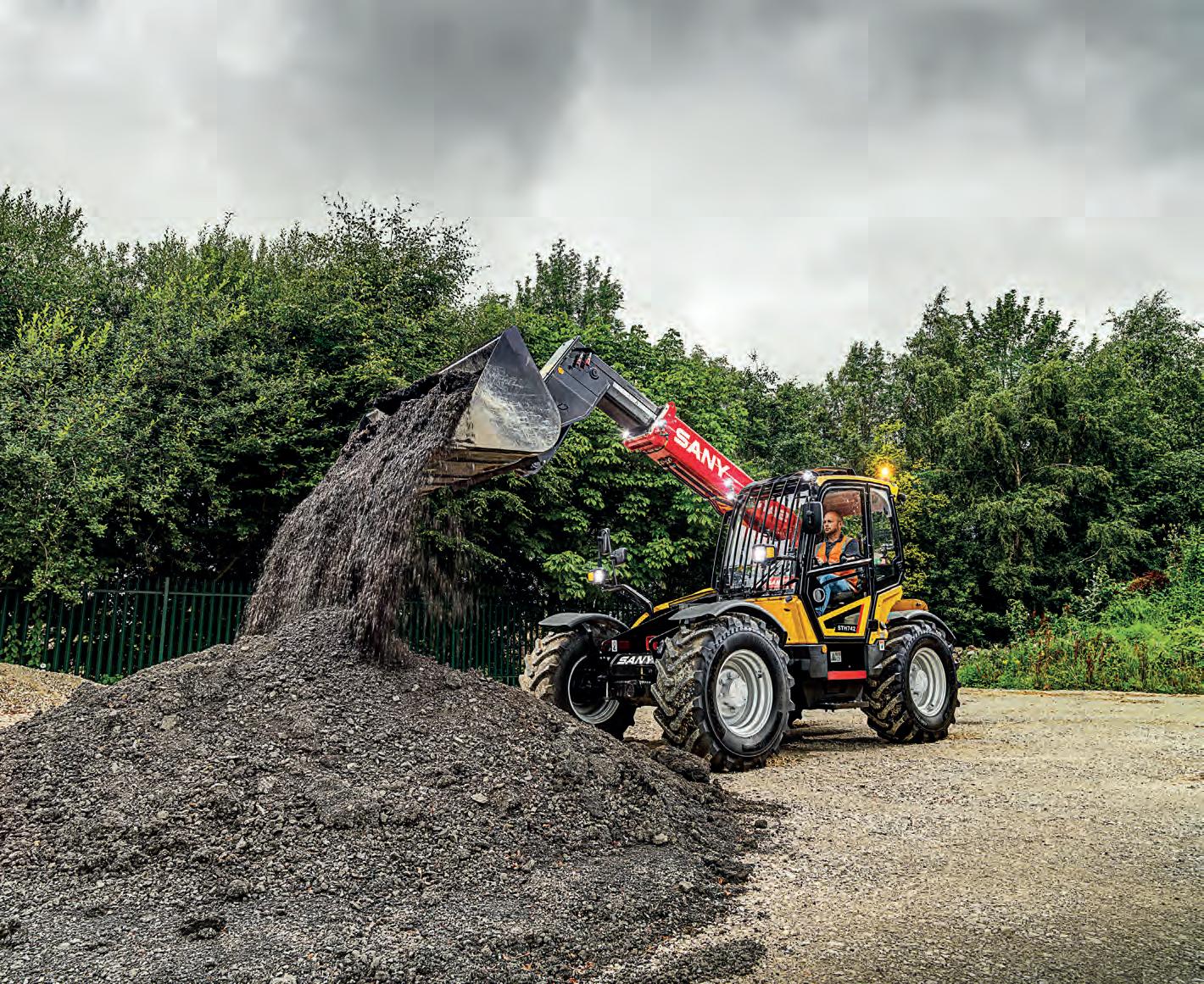
CEA’S HEAVY EQUIPMENT DISTRIBUTION PARTNERSHIP WITH SANY CONTINUES, NOW EXTENDING TO THE CHINESE MANUFACTURER’S IMPRESSIVE LINE OF TELEHANDLERS AND MATERIAL HANDLERS.
“For CEA it was critical we partnered with a brand which understands the needs of the local customer segments and can deliver quality products with a strong focus on future industry needs, ensuring the machines of tomorrow can meet the evergrowing demands of the core customer base,” Taylor says.
“Its global manufacturing expertise, fuelled by research and development centres across Asia, Europe and South America – along with its focus on electric and intelligent technology –perfectly complement our existing and growing portfolio.”
CEA’s rights to distribute SANY products began with the Chinese manufacturer’s excavators, but has since grown to an exclusive distribution deal for telehandlers and material handlers, which offer a
powerful combination of rugged durability and innovation.
Under the new distribution agreement, CEA will primarily carry 13 of SANY’s high-quality telehandlers, with the material handlers arriving in late 2026. These machines will be available at CEA’s Queensland sites in Mackay, Rockhampton and Brisbane, in addition to branches in New South Wales, Victoria, South Australia and Western Australia.
CEA will push these products by leveraging its heavy equipment expertise, trust within the market, and extensive knowledge of Australia’s growing material handling sector.
“CEA has had a long and informed history with the telehandling and material handling sectors,” Sealey says. “We know that the customer base demands safety,
operator comfort and productivity for the key segments they work in. The SANY equipment that we now distribute fits these niches very well.”
SANY’s telehandlers have been built to prioritise a low total cost of ownership for its users through fuel-efficient engines, while boasting agility and an impressive reach of up to 18 metres.
The SANY STH742 telehandler, for example, shines among the manufacturer’s range for its features and manoeuvrability. Operating at a weight of 8325 kilograms (kg), the machine is built with a fourcylinder Deutz Stage 5 TD 3.6-litre engine, which includes an engine-power rating of 55 kilowatts. This power, combined with a 2750-millimetre wheelbase and a 3850-millimetre turning radius over tyres enables nimble movements supporting a maximum lift capacity of 4200kg.
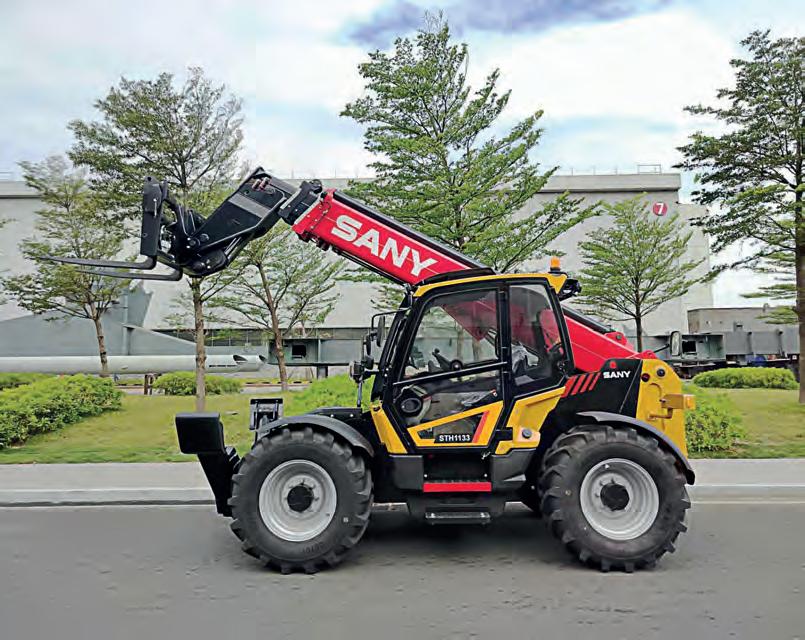
to avoid or reduce the severity of injuries in the unlikely event of overturns.
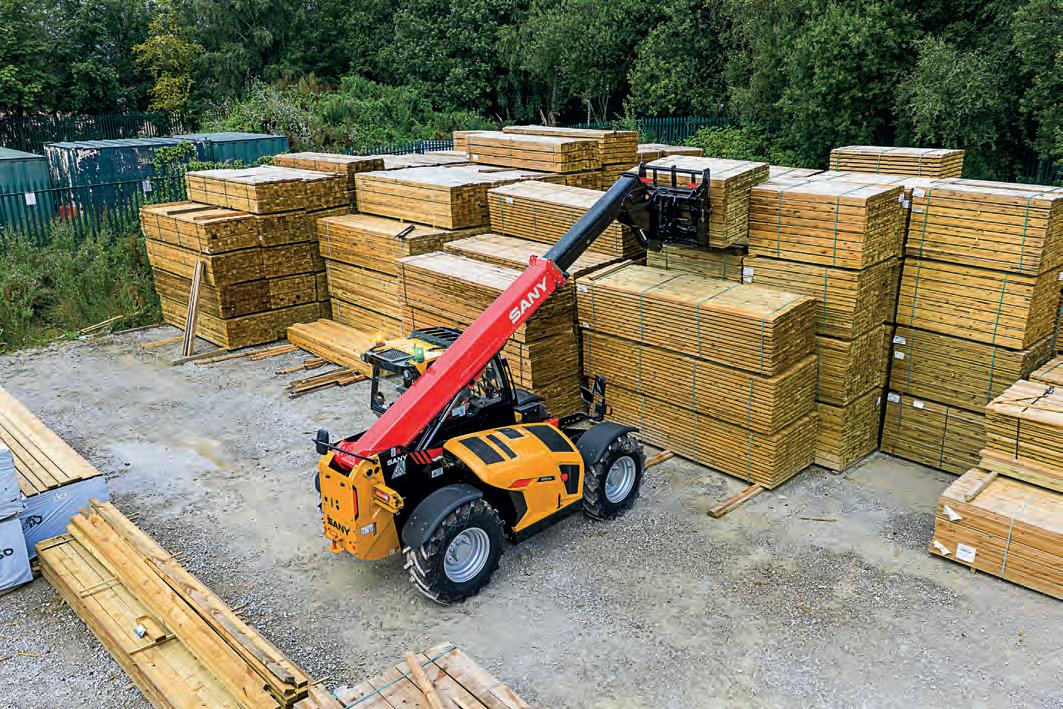
Similar capabilities have been built into SANY’s STH1133 and other machines within the range CEA is distributing, and are all generally equipped with attachments for versatile applications. Forks, buckets, jibs and 360 degree rotators suit the telehandlers for deployment across port, wharf, storage yard locations and a range of industries.
Safety is embedded into the telehandler’s designs with key systems such as the Roll-Over Protective Structure, otherwise known as ROPS, which brings effective engineering safety control to the machine
SANY telehandler chassis are also put through 500-hour rough terrain tests to ensure durability.
Meanwhile, SANY’s material handlers are designed as versatile powerhouses for bulk handling and recycling. The machines feature a compact undercarriage that allows for mobility in tight spaces, and are built with hydraulically-elevated cabs that offer operators an eye-level view of up to 6.12 metres for optimal visibility during
which, he says, is demanding diversity in machinery. The multi-functional designs of SANY’s equipment, bolstered by CEA’s amplification, will provide customers with solutions for their cross-industry needs.
“SANY’s telehandlers and material handlers have been engineered to provide a strong combination of high-efficiency performance and intelligent safety while retaining exceptional operator comfort,” he says. “Customers across Australia’s construction, roads, waste, agriculture and rental machinery industries will benefit from these quality products.
“I am confident they will be truly impressed with this line-up.”

TRAINING TRUSTED BY INDUSTRY
AfPA has been setting the standard for flexible pavement training in Australia for over 50 years. Asphalt, sprayed sealing, pavement maintenance, bituminous materials, specification administration, every course taught by industry practitioners, grounded in Austroads standards, and recognised for Engineers Australia CPD hours.
5–7

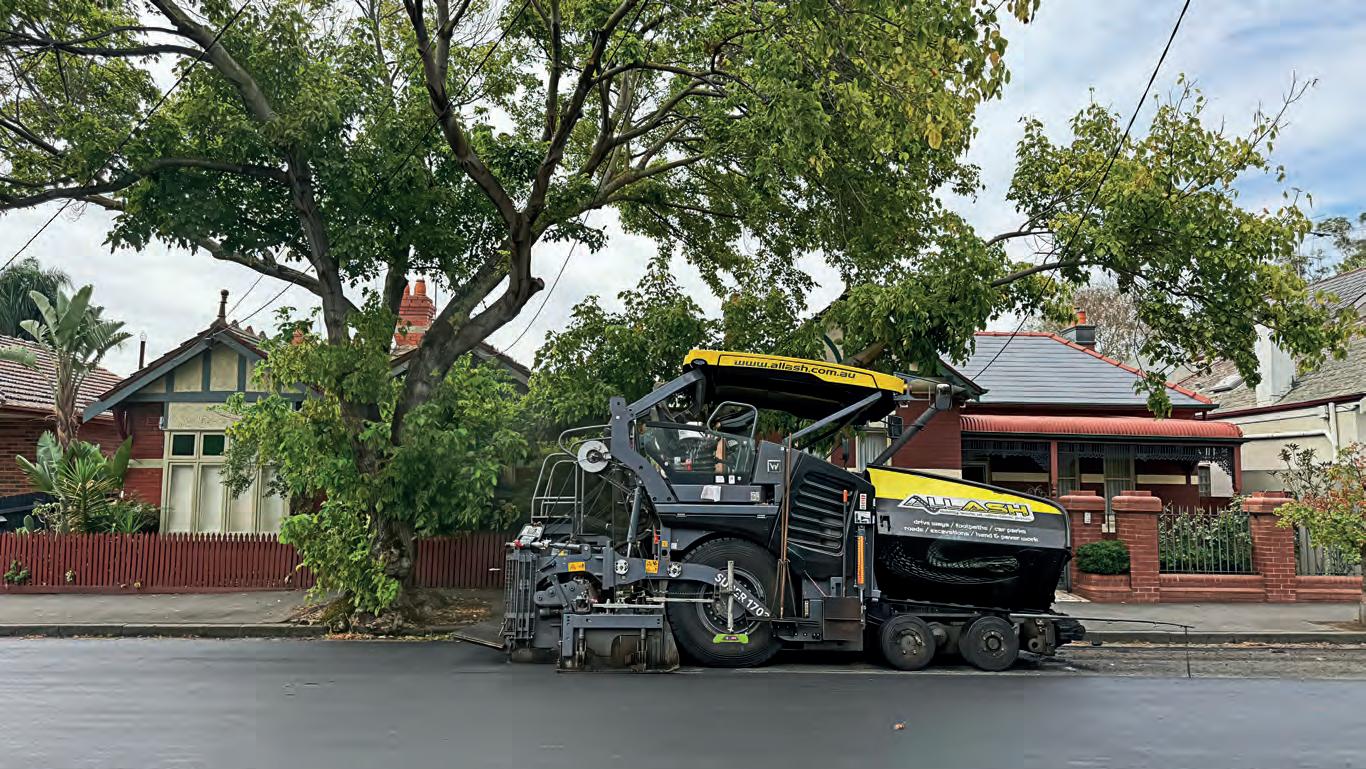
FAMILY IS AS SYNONYMOUS WITH ALL ASH ASPHALT AS WIRTGEN GROUP EQUIPMENT, WITH THE SMALL FAMILY OPERATION’S MACHINERY PROWESS AND RENOWNED REPUTATION CONTRIBUTING TO ITS SUCCESS IN SECURING WORKS ON VICTORIA’S LARGEST INFRASTRUCTURE PROJECTS.
All Ash Asphalt, or ‘All Ash’ as it’s well known, has carved its own path in what is a highly competitive segment of the industry.
Asphalt contractors are plentiful throughout Melbourne, but few can comfortably punch above their weight, as All Ash has been able to achieve since day one.
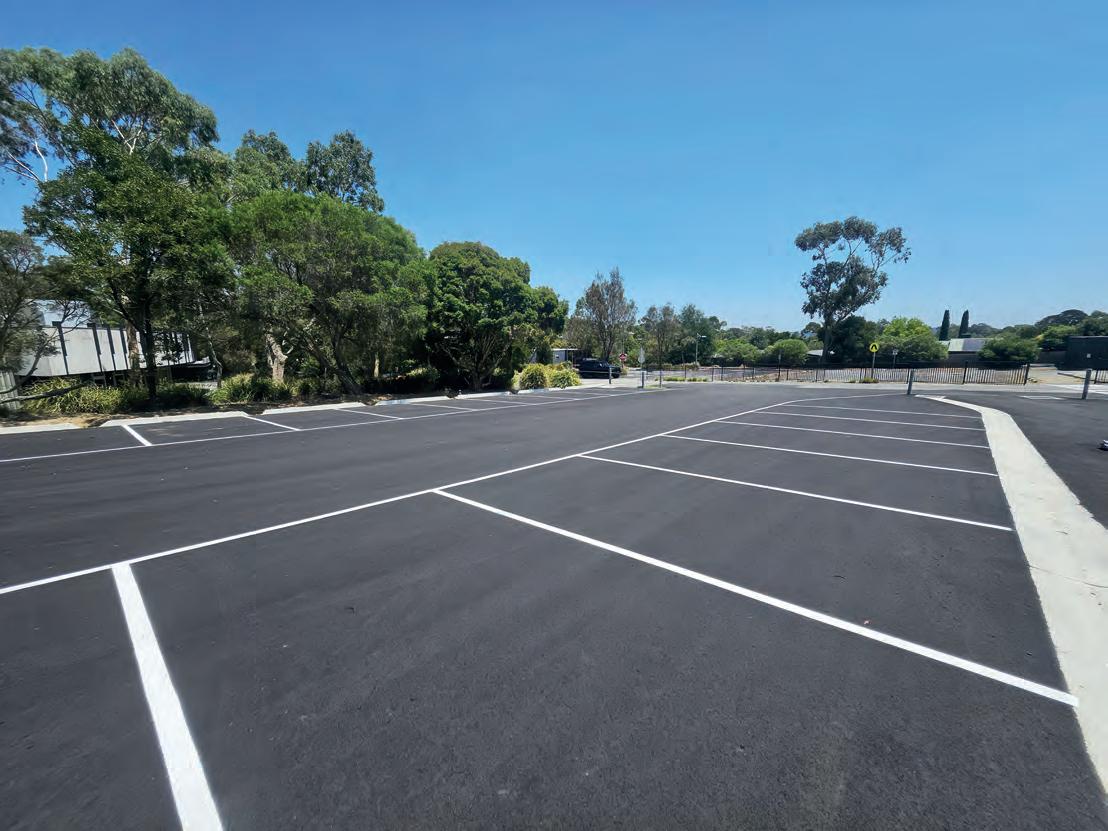
Founded 15 years ago, what started as a local council and small business-focused company has evolved into an organisation capable of delivering large-scale infrastructure works.
Director Steve Galea believes it begins with attitude and culture, aspects that he says have influenced the company’s success in winning works on the North East Link and Transurban project programs.
“I think that’s a big difference. We all care. The crew cares. We all take pride in what we do,” he says.
Galea admits that at the end of the day, a contractor is ultimately only as good as the tools they use. It’s why, a few years back, the company decided to make a change to its machinery fleet.
“We’re always trying to evolve and get better, that includes better technology and moving with the times, not being stuck in our ways. We want to always be open to learning and trying things differently,” he says.
All Ash made the switch to Wirtgen Group equipment three years ago, with the strength of the manufacturers’ after-sales support emerging as a significant benefit, namely the support of Paul Ridgeway, Applications Support Manager, Road Technologies – Wirtgen Australia.
Direct access to Ridgeway rather than going through a generic service centre immediately stood out, so did the fast response times and a willingness to help – even after hours – to keep paving jobs running.
All Ash’s first Wirtgen unit was the VÖGELE Super 1703-3, an eight-foot, wheeled class paver regarded as an all rounder.
Beyond the strong after-sales support provided, another aspect that drew All Ash in was the technological capabilities of the VÖGELE range – more advanced control systems, including sonic level sensors provided great potential.
But first the All Ash team wanted to learn how to optimise each feature.
To assist in this cause, Wirtgen Australia offered specialist training hosted at VÖGELE’s headquarters in Europe.
“We did a week-long training course in Germany with other customers, to make sure we knew more about their machine,” Galea says. “We learnt more about the
machine than just running it, it was enlightening to see how we could run it in the most efficient way.”
In another first for All Ash, the company gained access to tamper screed technology, an aspect of operation that Galea says will be difficult to reject in future.
“The quality and the tightness of the mat is unreal,” he says. “We’re using a lighter roller straight away, because the pre‑compaction from when it comes out is just ridiculous, it’s so good. You look at the mat, the roller goes on it, and you
can’t even tell the roller’s actually hit it yet.
“There’s less bumps when the roller stops as well, because it’s just so pre compacted. I did have my reservations in getting one, but at the same time I thought ‘you’ve got to move with the times’. You go look at Germany and Europe; they all use tamping screeds. Straight away you can see the difference with the mat quality and rideability.”
As always, cost and maintenance were also major considerations for All Ash.
Prior to the Wirtgen purchases, All Ash
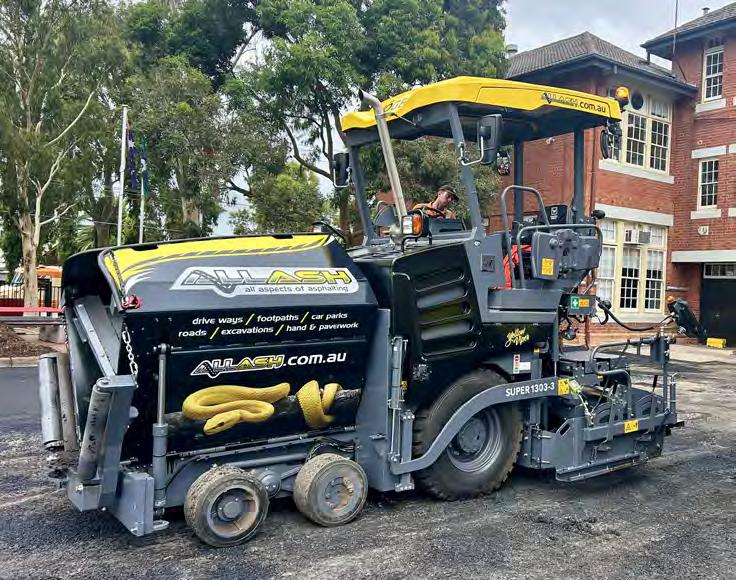
All Ash’s Wirtgen equipment features a unique company livery.
was experiencing significant wear and high replacement costs on its equipment, particularly floor and chains requiring replacement relatively early.
It was this wear that began the conversation around new equipment in the first place, prompting Galea and his team to reassess whether it was better to invest in new equipment instead of repeatedly rebuilding existing machinery.
A key early on was the discovery that VÖGELE’s components didn’t seem to wear out as quickly, reducing major rebuilds and large parts bills, with expectations that the robustness of the unit will provide improved cost–benefit balance over the life of the machine.
It’s features such as this that led to All Ash’s second Wirtgen Group equipment purchase, this time in the form of the VÖGELE Super 1303 3
Regarded as one of the most compact units in the range, the Super 1303 3 i s expected to open new doors for All Ash, especially when it comes to smaller, tight a ccess residential works.
All Ash is closely monitoring future Wirtgen developments, including the incoming Dash Five paver range, real time density measurement on rollers, as well as developments to the manufacturer’s advanced screed and sensor systems.
“It seems that every couple of years there’s a new machine or feature that we reckon could make our jobs a bit better and easier,” Galea says.



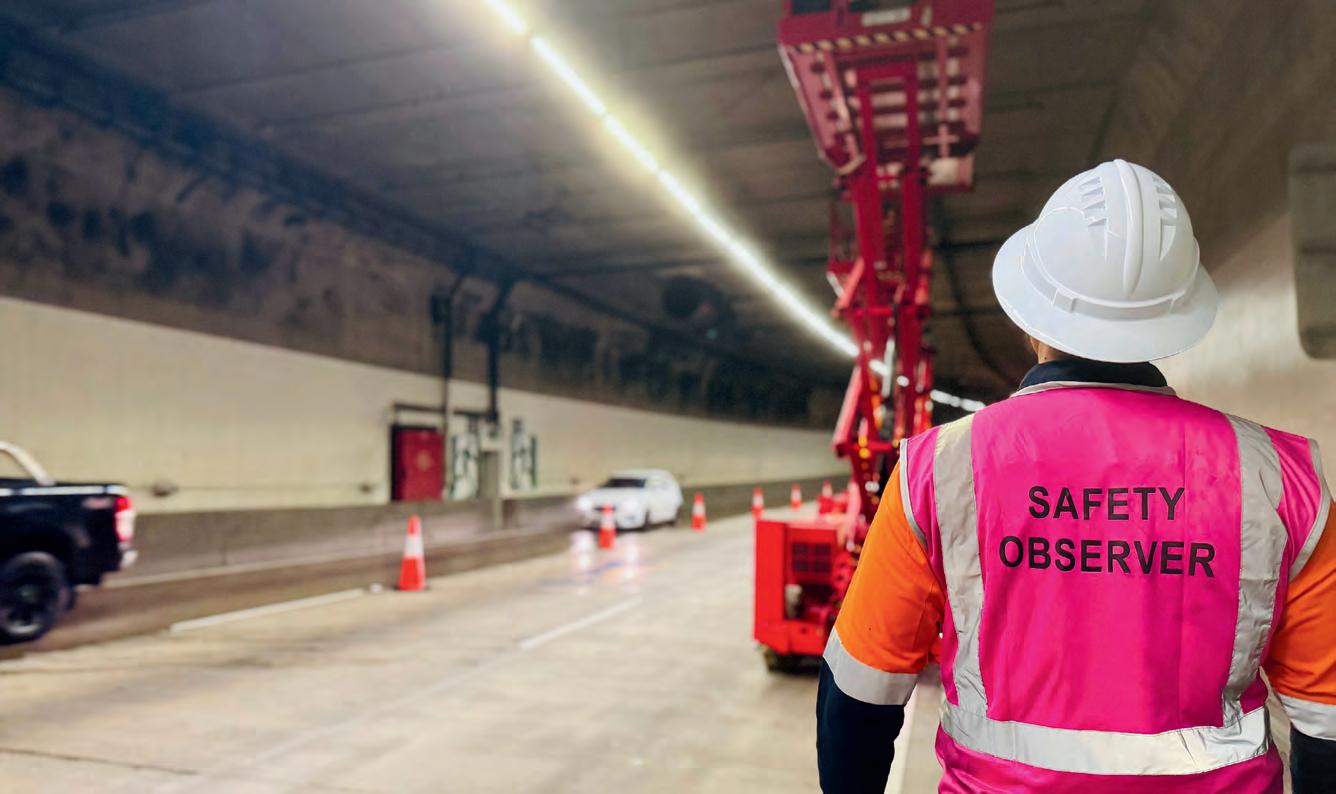
Founded in early 2022, RoadAid is a specialist operations and maintenance provider focused on complex road and tunnel environments. Since its establishment, the company has grown into a multi-state service provider operating across three Australian states.
RoadAid’s core focus is the delivery of road and tunnel operations and maintenance services, supplying competent field crews who understand the demands of live traffic environments and critical infrastructure. Typical scopes of work involve supporting clients with the delivery of maintenance work orders, which may require facilitating safe working environments in confined spaces and at height. Activities commonly include crack injection and leak repairs, cable replacement and pulling, and other tasks associated with maintaining the integrity and functionality of tunnel systems and associated infrastructure.
In addition to field delivery, RoadAid is increasingly engaged in operations consultancy, providing practical operational insight to support infrastructure owners, operators, and delivery partners.
A key enabler of RoadAid’s work is its investment in technical training and systems. The company runs an internal Learning Management System (LMS) to

with a structured introduction to tunnel environments. The module covers how tunnels are formed and constructed, typical layouts, and the range of devices that support tunnel operations – such as incident detection cameras (AID), quality assurance and other critical systems.
RoadAid crews also use well-equipped vehicles carrying defibrillators and comprehensive first aid kits, not to mention additional spill kits, ensuring that safety is embedded into every shift.
RoadAid’s values are built around a clear acronym used across the company: SHIRT – Safety, Honesty, Integrity, Respect and Teamwork. These are not treated as one-off onboarding slogans but as day-to-day operating principles that shape how people work on site, how they communicate and how decisions are made. The values are reinforced constantly: they come up in pre-starts, afternoon check-ins, phone calls and regular conversations, so that they remain practical and front-of-mind rather than abstract.
As aforementioned, ‘Safety’ sits at the front of SHIRT and underpins how projects are planned and delivered.
‘Honesty’ and ‘Integrity’ describe how RoadAid expects its people to behave when no one is watching. With crews dispersed across multiple states and operating in
conditions on site, issues they encounter and mistakes that may have been made. Integrity, in this context, means doing the right thing even when it is inconvenient: raising concerns early, being transparent with clients and managers, and following through on commitments.
‘Respect’ is about how individuals are treated, regardless of their role, background or experience. RoadAid deliberately creates an environment where people are not put down for making mistakes. Instead of blame, the response to errors is coaching and guidance: understanding what went wrong, learning from it and putting changes in place so it does not happen again.
‘Teamwork’ is central to how RoadAid delivers projects.
The business is sometimes considered as a team sport: there may be ‘major players’, but every person on the ground is part of getting the project over the line. That means giving everyone a voice, not just senior people or high performers. RoadAid sees its people as its core product, and the way they collaborate, support one another and represent the brand on-site is considered critical to delivering outcomes for clients.



In an era where sustainability is no longer optional, Mainstream Recycling is positioning itself at the forefront of Australia’s circular economy shift. Operating state-of-the-art, fully licensed facilities in Melbourne (Truganina) and Geelong (Breakwater), the company provides 24/7, year-round access to recycling infrastructure built for the demands of modern infrastructure and civil works.
At the heart of its mission is a simple but ambitious goal: keep waste out of landfills and return valuable resources to industry.
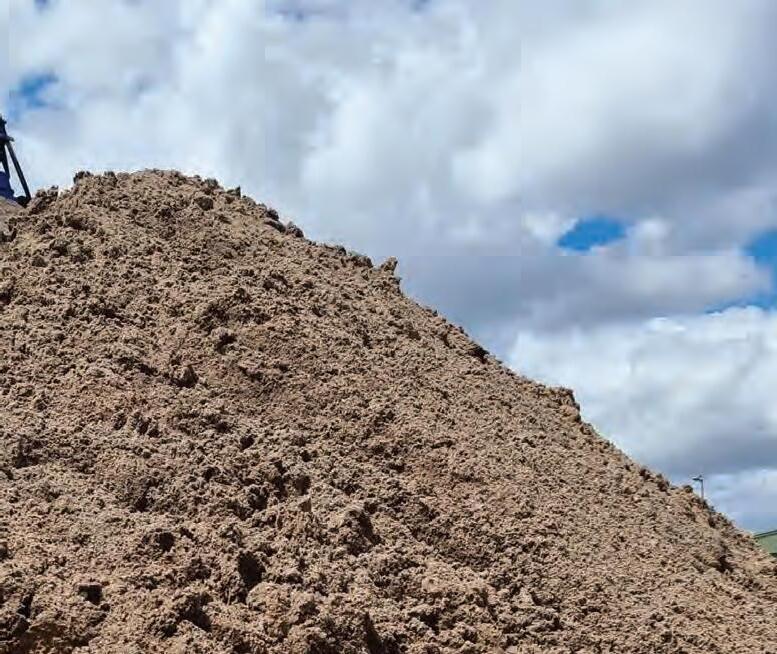
With sophisticated wash plant and screening technology, Mainstream Recycling is able to divert up to 98.6 per cent of incoming material, transforming what was once a disposal problem into high-quality washed sands, aggregates, and organic blends.
From major bulk excavations to small-scale potholing for safety barrier installations, low-level contaminated soils are a by-product of almost every infrastructure project. Mainstream’s advanced washing systems recover clean sand and aggregates, helping both contractors and councils reduce disposal costs while minimising environmental impact.
Client: Utilities Industry
STREET SWEEPER WASTE
Street sweeping is critical to maintaining functional, safe road networks, but the waste it generates is often overlooked. Using trommel screens, Mainstream transforms this material into organic blends used by wholesale nurseries.
Project highlight: Routine municipal sweeping recovery
Clients: Local Government Authority
digging (NDD) has become standard practice. Mainstream’s mud washing technology efficiently recovers NDD slurries, supporting asset identification and protection works across Victoria.
Project highlight: Multi site NDD mud recovery programs
Clients: Industrial Services, Civil Construction Industry
STORMWATER ASSET CLEANOUT MATERIAL
Keeping stormwater assets clear is vital to preventing flooding and prolonging infrastructure life. Mainstream uses a combination of washing technologies and trommel screening to separate out valuable organic material and sediment for reuse.
Project highlight: Western Roads Upgrade
Client: Infrastructure Industry
DRILLING MUDS
Major tunnelling, micro tunnelling and horizontal directional drilling (HDD) projects generate significant volumes of drilling mud. Whether bentonite or polymer based, Mainstream is equipped to process and recover these materials across multiple states.
Project highlight: SMAP Cable Project – Sydney, Melbourne (Torquay), Adelaide, Perth
Client: Infrastructure Industry
DRIVING VALUE BACK INTO THE COMMUNITY
By transforming waste into reusable products, Mainstream Recycling is helping reduce reliance on virgin resources at a time when sustainable procurement is more critical than ever. Its recycled materials feed back into landscaping, civil works, and construction supply chains – closing the loop on waste and enabling greener infrastructure delivery.
With underground utilities expanding rapidly, non-destructive
To learn more, visit https://tdgenvironmental.com/materialrecycling/
Mainstream Recycling transforms stormwater waste, NDD slurry, drilling muds, street sweeper waste and Category C/D soils into reusable sand, aggregates and organics.
With EPA-licensed 24/7 facilities across NSW and Victoria, we recover up to 98% of materials, reducing landfill and supporting sustainable infrastructure delivery.
Partner with us, Call 1300 330 294 today.

This year marks a decade of the Sydney Build Expo, an integral event on the calendars of Australia’s construction, engineering, architecture and development sectors. Over these past 10 years, the Sydney Build Expo has provided product exhibitions, training hubs, informational panels, and networking opportunities to those in these spaces. As
a result, the event has grown extensively, with this year’s convention expected to host over 28,000 attendees. This has been achieved in no small part by support from the event’s sponsors, such as the National Precast Concrete Association Australia (National Precast).
National Precast is a top-level organisation in the precast concrete
industry, having represented manufacturers, suppliers, and industry professionals since 1990. The association is committed to safer, smarter, and sustainable construction – goals which have proven attractive to many joining members such as Victoria, New South Wales, ACT and Queensland-based Advanced Precast.
“We followed what National Precast was doing for a long time before we officially joined,” says Brett Foster, National Business Development Manager at Advanced Precast. “We agreed with its core messaging of education and increasing the industry’s overall quality, but our managing director was more aligned with its involvement in unions and industry wide contracts, as well as tackling broader industry concerns..
“We believe that the precast concrete industry is much safer than others in the construction space, but it certainly comes with its own level of risk. We connected with National Precast 10 years ago to help contribute to boosting safety and awareness of these risks. We didn’t want to sit on the sidelines of industry change, so we went all in.”
Advanced Precast will be represented at this year’s Sydney Build Expo, with Foster helming the Future of Prefabrication: Redefining Speed and Quality in Construction forum as a panel moderator. He is excited to combine National Precast’s imperative industry messages with his own expertise at the important convention, aiming to inform attendees on the opportunities and challenges that lie ahead in for the industry.
“Precast isn’t just a product,” Brett says. “It’s a smarter way to build, delivering speed, quality and certainty from day one. It brings certainty to a high-risk industry by solving design and coordination upfront, not on-site.Most

construction challenges happen when decisions are left too late, prefabrication shifts that thinking earlier, where outcomes are better controlled.
“Different construction markets throughout Australia are at different maturity levels, so we can’t take what we know for granted – we need to
share it. This is why exposure to events like these is essential for everyone in the space, and it presents an awesome opportunity to share core messaging from National Precast.”
For Foster, the importance of this year’s Sydney Build Expo even extends to himself. Despite being in the industry for over 20 years, he believes that he still has a lot to learn.
“I’m looking forward to understanding the real state of the overall market at Sydney Build, and connecting with others,” Foster says. “Relationships are 90 per cent of what our industry is about. We’re not just selling products and processes – we’re learning from people, hearing what they have to say and seeing what we can change. Those insights are invaluable. I’ll be sharing National Precast’s passion for redefining how structures are delivered – faster, with higher quality, and fewer on-site risks.”
Cadell Taye, Chief Executive Officer –National Precast says the event provides the organisation with an opportunity
to represent its members to the wider construction and building community.
“Sydney Build offers us the opportunity to be able to advocate and represent our industry and our members to the broader sector,” she says. “We’ve got two of our board members who are going to be panel hosts at the event, having the opportunity for them to speak, represent, advocate and educate just resonated with us and what we wanted to achieve as an association.”
The convention is also expected to help position National Precast as a voice for the precast sector in front of a wider construction audience.
“I really just want to make myself approachable and make the association approachable to people,” Taye says. “Having people be able to come and ask ‘What do you do? What do you mean you represent on standards? What does that mean?’ And be able to actually answer their questions directly.”
Sydney Build is taking place on 29-30 April 2026, at the ICC Sydney.


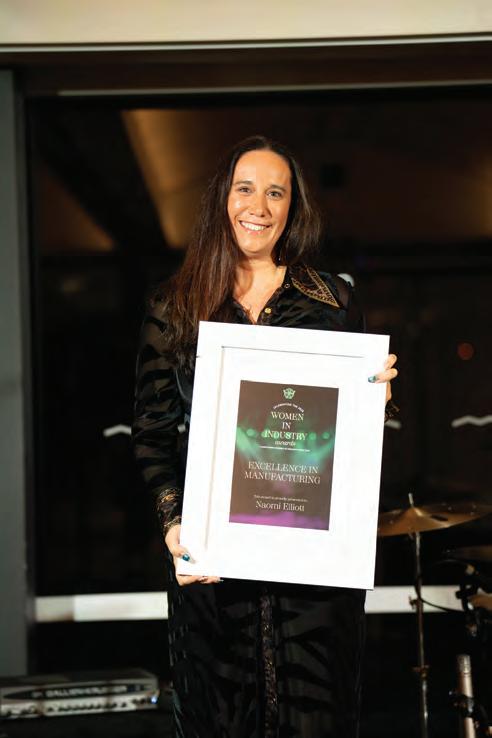
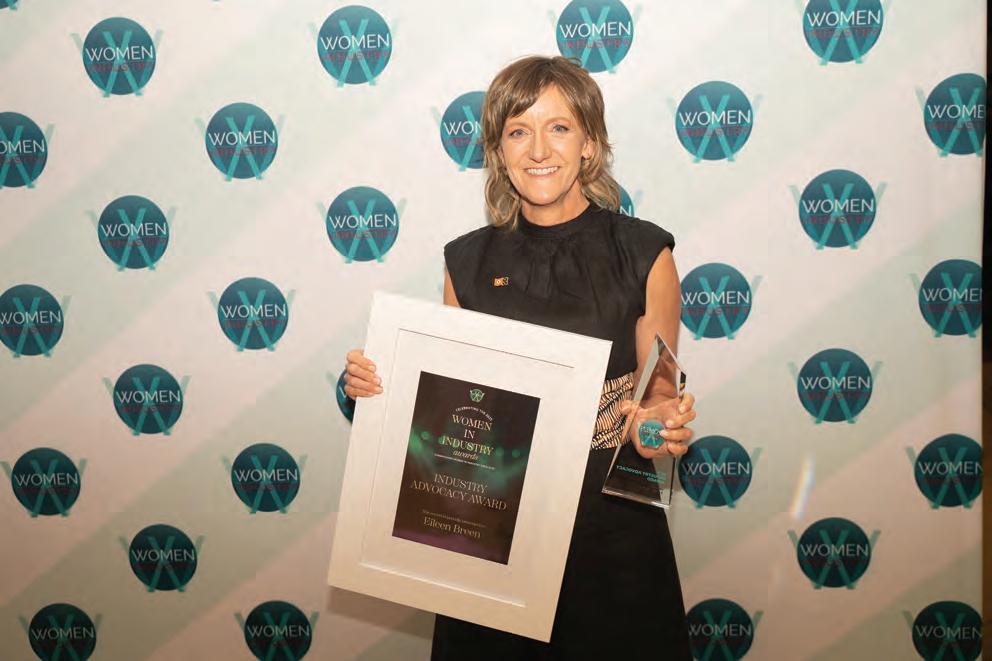
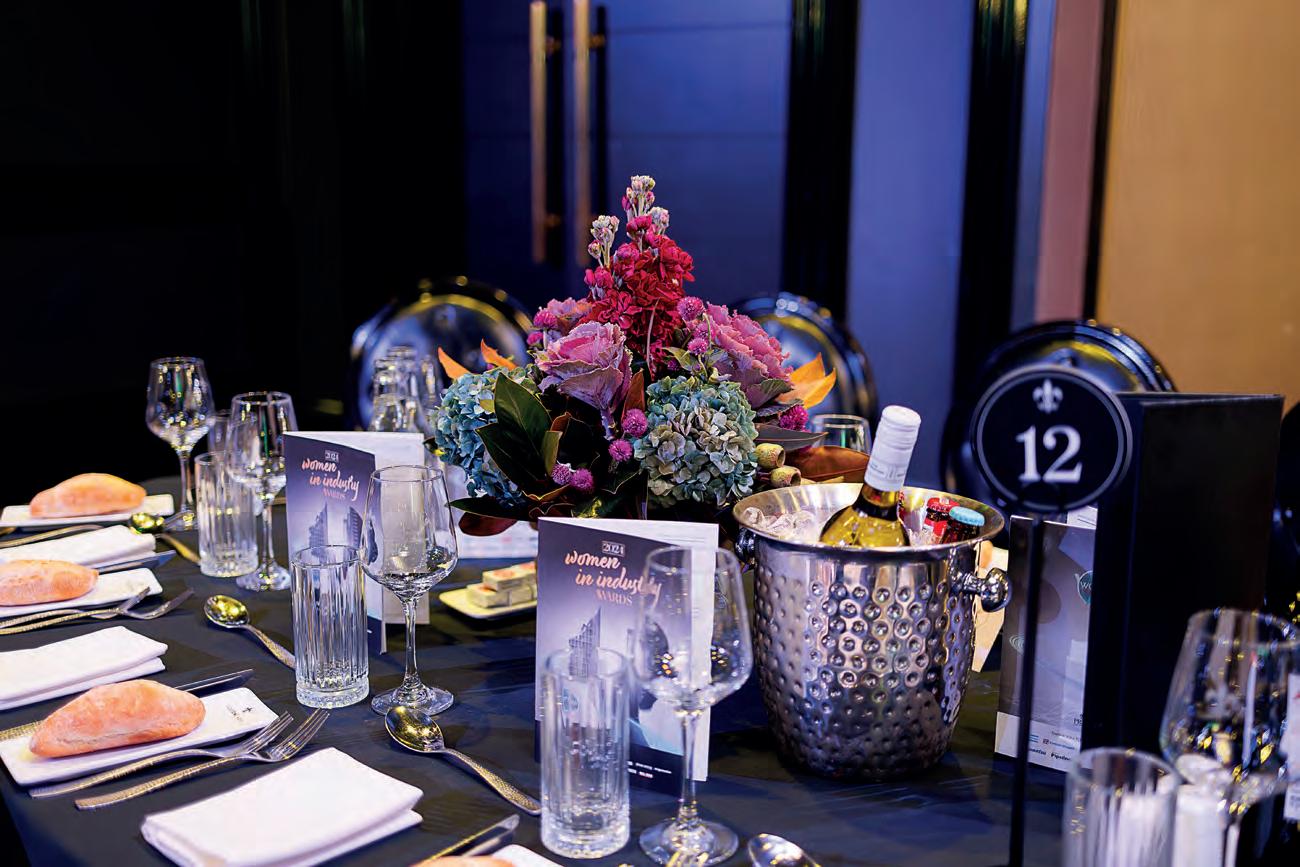
The Women in Industry Awards have been recognising the efforts and achievements of women in a range of crucial sectors for more than a decade.
THE
2026 WOMEN IN INDUSTRY AWARDS WILL FEATURE A NEW LOCATION AND FOUR NEW AWARDS CATEGORIES, REFLECTING THE POSITIVE CHANGES THAT WOMEN CREATE ACROSS CRUCIAL SECTORS.
The Women in Industry Awards event is returning in 2026 to celebrate the efforts and achievements of the many women across transport, mining, engineering, logistics, manufacturing and beyond.
The award ceremony has been recognising women in these spaces for more a decade, highlighting a consistent push to pay proper tribute to the hard work put in by this demographic to prop up integral Australian industries.
Many of these awards – such as the Excellence in Construction, Safety Advocacy and Tradeswoman of the Year awards – directly pertain to the infrastructure and construction spaces, which are notoriously known for being male-dominated.
In mid-2024, data from a report published by the Workplace Gender Equality Agency found that Australia’s overall construction workforce composition skewed heavily to men – who represented 74 per cent of employees.
Given this workforce skew, it is more important than ever to highlight the great work that women have been doing in these types of sectors.
Key winners from last year’s Women in Industry Awards included Tammy
O’Connor – the Founder and Managing Director of Western Australia-based KingKira Group – who took home both the Woman of the Year and Business Development Success of the Year awards.
This year, as more women work and succeed in these sectors, the Women in Industry Awards is evolving in response, with two key changes being made to this year’s event proceedings.
Firstly, this upcoming award ceremony will be held in a brand-new location –the prestigious Doltone House on the Darling Island Wharf in Sydney, New South Wales.
Additionally, the ceremony will boast four new award categories which have been carefully selected to represent a wider range of talent and skills in more industries.
“These moves make sense for the direction of the awards,” says Caitlyn Douglas, Head of Awards and Conferences at Prime Creative Media.
“Industries are growing, so naturally we wanted to expand the awards program to accommodate a wider audience.”
These new categories include the Marketer of the Year award, Excellence in Health and Medicine award, Tradeswoman of the Year award and
Rising Women in Leadership: C-Suite Executive award.
“To accompany the new location, these new awards will bring more opportunity to celebrate success,” Douglas says.
THESE ADDITIONS NOW MAKE A TOTAL OF 16 AWARD CATEGORIES AT THE 2026 WOMEN IN INDUSTRY AWARDS:
• R ising Star of the Year (30 years and under)
• B usiness Development Success of the Year
• I ndustry Advocacy Award
• Mentor of the Year
• Safety Advocacy Award
• Excellence in Manufacturing
• Excellence in Transport
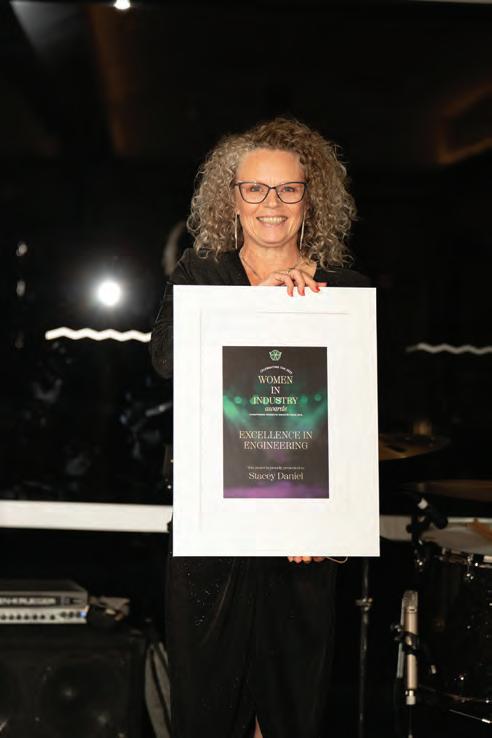
• Excellence in Engineering
• Excellence in Mining
• Excellence in Construction
• Excellence in Energy
• Woman of the Year (chosen from winners of the other award categories)
• Marketer of the Year
• Excellence in Health and Medicine
• Tradeswomen of the Year
• R ising Women in Leadership: C-Suite Executive Award

• Up to 5,278m2 Light Coverage
• 420Wp solar panel
• Compact design
• Robust HardHat® canopy
secure your stock today with our exclusive introductory offer!
The new MS Solar Light Tower range delivers powerful, reliable illumination with zero emissions and minimal noise. Eliminate fuel dependencies and enjoy reliable lighting, regardless of grid access.
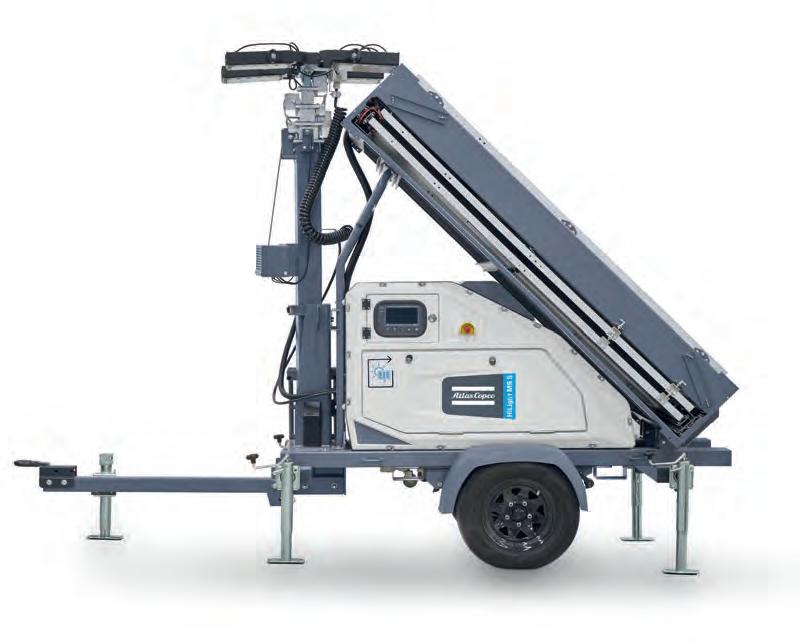
Perfect for construction sites, events, and remote locations. Experience significant cost savings and reduced environmental impact. Exclusively available through Atlas CEA, contact the team today to learn how solar power can light up your operations.
LIKE TO KNOW MORE? SPEAK TO OUR TEAM TODAY PH: 1800 733 782 www.atlascea.com.au
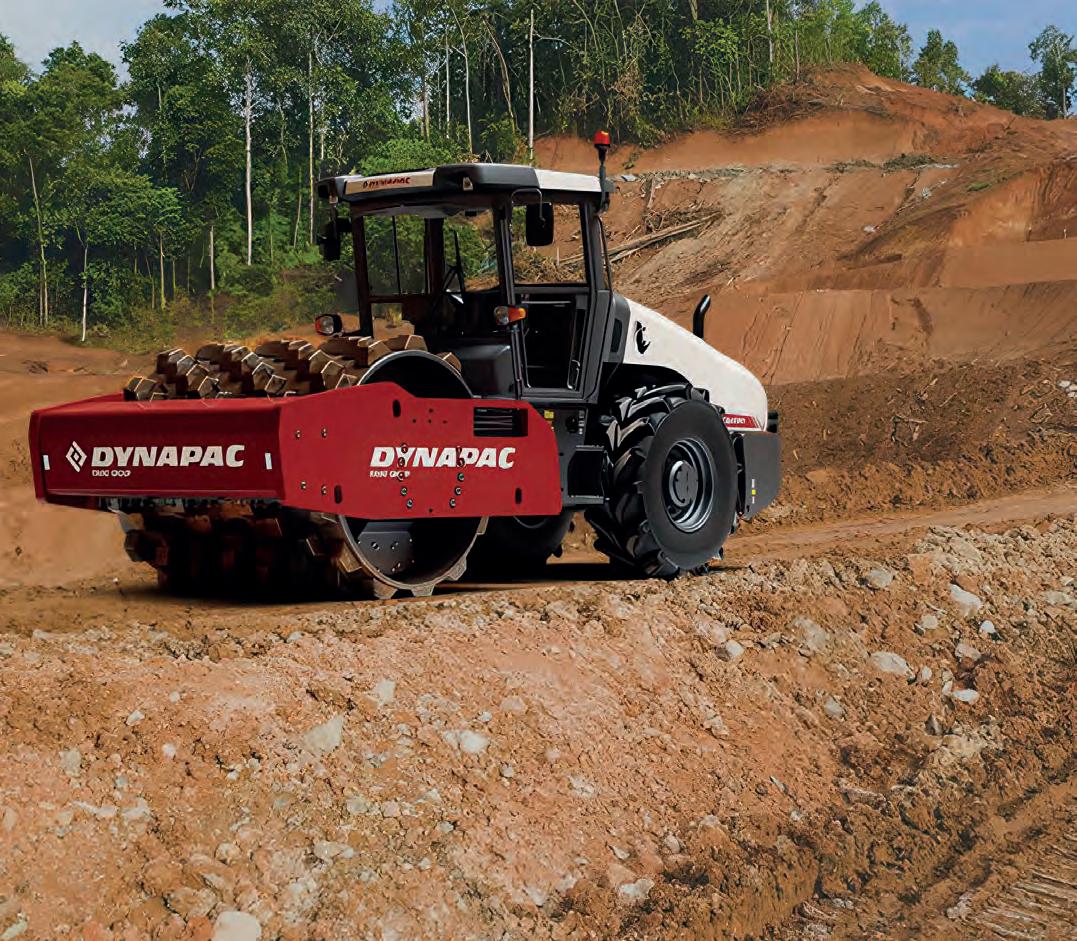
PROVIDING UNMATCHED COMPACTION POWER
• Mask down feature as standard TIME TO
REPLACE YOUR CURRENT ROLLER WITH A NEW ONE AT A GREAT PRICE TODAY!
Speak to your nearest Dynapac CEA branch today and secure a great deal on current inventory.
WHY UPGRADE?
• Improved compaction performance
• Lower operating and maintenance costs
• Increased reliability and uptime
• Modern operator comfort and safety
• Competitive pricing on new equipment
HURRY STOCK IS LIMITED!