construction Charting THE FUTURE OF equipment
David Small, the new executive general manager for construction and utility at Komatsu, provides insight into the company’s vision for the future of construction solutions.


Official Media Partner Major project updates Demolition and Waste Showcase ISSUE 11 APRIL/MAY 2024





4 Editor’s Note
6 Project Picks
COVER STORY
8 Charting the future of construction equipment
Komatsu’s new executive general manager for construction and utility underscores the company’s forward-looking vision for construction equipment solutions.
PROFILES
48 Sarah Brunton: tradie trailblazer
Sarah Brunton reflects on her journey as an electrician, shedding light on her passionate advocacy for the rights and safety of the nation’s electrical workers.
50 Emma Williams: building structures, breaking barriers
Emma Williams, assistant services manager at Multiplex, recounts her journey in the construction industry, culminating in the creation of her very own storybook.
OPINION
52 Global construction industry trends
Dr Gretchen Gagel unpacks her collaborative study on global construction industry trends.
ASSOCIATIONS
55 Fixing the skills shortage
Empowered Women in Trades’ Melinda Davis shares compelling ideas on creating opportunities for women in trades.
56 Gender bias and its real effects
The National Association of Women in Construction fosters crucial conversations to drive positive change and dismantle gender bias in the workplace.
57 Precast architectural marvel
The National Precast Concrete Association Australia highlights the Poly Centre, distinguished by its striking precast concrete façade.
58 Foundations and Frontiers
The Australian Constructors Association unveils a ground-breaking event – Foundations and Frontiers.
20 Unified powerhouse
Motion Australia presents the evolution of its heritage brands into a unified powerhouse.
24 Best-practice protection
3M’s Personal Safety Division promotes awareness of onsite hearing conservation and workers’ auditory health through its innovative fit-test system.
28 A sign of efficiency
Discover how the Dropbox Sign for Procore integration by TEAM IM is enhancing operational efficiency for construction businesses.
33 Accuracy from the get-go
Find out how Lowcock Builders has enhanced efficiency, accuracy and control in its projects with Topcon’s surveying and machine control technology.
37 Success framework for new aged care facility
Delve into the advantages of light gauge steel framing made from TRUECORE steel in ensuring timely and cost-effective construction.
41 Made to stand the test of time
BUMAX’s Nimeka de Silva explores how the company’s high-strength stainless-steel fasteners, available through Hobson Engineering, are redefining structural durability.
44 Sustainability takes centre stage
McConnell Dowell brings its innovative and collaborative approach to a level crossing removal project in Deer Park.
FEATURE
12 Circular solution
BINGO Industries showcases its new Patons Lane Wet Recycling Facility in Western Sydney, designed to change the treatment of construction and demolition waste.
16 A recycling revolution
Rino Recycling’s Daniel Blaser demonstrates how its new facility in Pinkenba, Queensland, plays a pivotal role in fostering a circular economy within the construction industry.
www.insideconstruction.com.au INSIDE CONSTRUCTION 3
REGULAR FOCUS
24 50 20 33 ISSUE 11 APRIL/MAY 2024
New wave of innovation
This edition is brimming with innovative solutions, ranging from waste management technologies to electrified machinery and resilient materials, empowering construction businesses to thrive with the latest advancements.
While the construction sector has long been home to innovators striving to enhance project delivery across Australia, recent months have seen a surge of transformative solutions poised to significantly change the way the industry operates, particularly in improving sustainability.
Our Demolition and Waste Showcase this month spotlights prime examples of businesses driving a circular economy in the built environment through cutting‑edge technology and processes. Two waste management companies are pioneering solutions to tackle the pressing issue of construction waste, introducing new facilities designed to revolutionise the recycling, recovery and reuse of resources in the industry.
Furthering the industry’s commitment to sustainability, one of the leading global manufacturers and distributors of construction equipment has announced the appointment of a new executive general manager for construction and utility. With over 25 years of experience, he envisions a promising future for the sector, marked by advancements in electrification, smart construction and hydrogen‑powered solutions.
Central to green construction is the creation of structures that withstand the test of time, reducing maintenance and redevelopment requirements along with associated emissions. A heavyweight fastener supplier reveals its partnership with the manufacturers of the “world’s strongest stainless steel bolts,” breaking new ground in structural durability.
Setting a higher standard for sustainable infrastructure design and execution, a major constructor,
as part of the Western Program Alliance, has successfully delivered a level crossing removal project. This project involved the construction of a new rail over road bridge and a new train station, harnessing collaboration and innovation to achieve phenomenal sustainability outcomes. The project’s sustainability lead explores the combination of products, processes and technologies that have resulted in a legacy of sustainable practices and continuous improvement.
Creating a platform for sharing solutions like these, the Australian Constructors Association announces a ground breaking event aimed at tackling the construction industry’s most significant challenges, from sustainability and productivity to the skilled labour shortage.
To cap off this edition, we feature two incredibly inspiring women who share their journeys, discussing the hurdles, achievements and milestones that led to their successful careers in the construction industry.

We hope you enjoy our April 2024 edition of Inside Construction.

4 INSIDE CONSTRUCTION Chief Executive Officer John Murphy Chief Operating Officer Christine Clancy Group Managing Editor Andrew Hobbs andrew.hobbs@primecreative.com.au Editor Ashley Grogan ashley.grogan@primecreative.com.au Sales Director Brad Buchanan bradley.buchanan@primecreative.com.au Art Director/Design Daz Woolley, Caterina Zappia Head of Design Blake Storey blake.storey@primecreative.com.au Design Production Manager Michelle Weston michelle.weston@primecreative.com.au Business Development Manager Nhung Nguyen nhung.nguyen@primecreative.com.au p: +61 0412 845 608 Client Success Manager Glenn Delaney glenn.delaney@primecreative.com.au Cover image credit Komatsu Head Office Prime Creative Pty Ltd 379 Docklands Drive, Docklands, Victoria 3008 Australia p: +61 3 9690 8766 f: +61 3 9682 0044 enquiries@primecreative.com.au www.insideconstruction.com.au Subscriptions +61 3 9690 8766 subscriptions@primecreative.com.au Inside Construction is available by subscription from the publisher. The rights of refusal are reserved by the publisher Articles All articles submitted for publication become the property of the publisher. The Editor reserves the right to adjust any article to conform with the magazine format. Copyright Inside Construction is owned by Prime Creative Media and published by John Murphy. All material in Inside Construction is copyright and no part may be reproduced or copied in any form or by any means (graphic, electronic or mechanical including information and retrieval systems) without written permission of the publisher. The Editor welcomes contributions but reserves the right to accept or reject any material. While every effort has been made to ensure the accuracy of information, Prime Creative Media will not accept responsibility for errors or omissions or for any consequences arising from reliance on information published. The opinions expressed in Inside Construction are not necessarily the opinions of, or endorsed by the publisher unless otherwise stated.
WELCOME
From the editorial team
Komatsu intelligent Machine Control (iMC)
The future today
Komatsu’s proven intelligent Machine Control (iMC) concept has now penetrated markets worldwide. Thousands of operators and owners enjoy the safety and precision of Komatsu’s exclusive technology, factory fitted on both dozers and excavators, and the outstanding improvement in productivity it brings to the jobsite. Customer productivity is the driving principle behind Komatsu intelligent Machine Control.
Call us today on Sales: 1300 074 249 | Support: 1300 445 978
komatsu.com.au
Project Picks
Project Picks
This month’s Project Picks showcases some of Australia’s largest ongoing projects, ranging from the construction of hospitals and education precincts to sports centres and airports.

The project’s fit-off is well advanced, and façade is getting closed up, swiftly propelling the project towards completion.
Fitzroy Gasworks Sports Centre, Victoria
Built Environs (McConnell Dowell Group’s vertical building company)
54.5 million
uilt Environs is delivering a unique vertical multi-purpose sports centre at the Fitzroy Gasworks site in Fitzroy, Melbourne with Development Victoria, the State Government’s property developer and major project agency. The $54.5 million project is a partnership between the Victorian Government which has contributed $49.5 million, and City of Yarra which has contributed $5 million. In response to the demand for sports facilities in built-up inner-city areas, the sports centre will include four multi-purpose courts for highball sports, a multi-purpose court for futsal, a gymnasium, café and lounge area, community facilities, change rooms, a foyer and a reception area. Its integration with the adjacent Wurun Senior Campus’ two courts will enable shared use of the courts to create a seven-court facility outside of school hours.
he project is heading towards completion in the third quarter of 2024. The façade scar is getting closed up, timber flooring has been loaded, fit-off is well advanced and commissioning will commence in the coming weeks.
he project was won off the back of a design tender. During this design phase, Built Environs opted to alter the incumbent steel design and changed to a reinforced insitu framed facility, which allowed for the overall height of the building to be reduced. This enabled the futsal court, originally positioned on the roof, to be brought into the facility and positioned on the ground floor. This change was fundamental to Built Environs being awarded this project and is a true reflection of creative construction, the contractor says.
Latrobe Regional Hospital Stage 3A, Victoria
Contractor: Built
Current value: $223.5 million (total estimated investment)
Details: The Latrobe Regional Hospital Stage 3A project saw the expansion of the existing hospital by 49.8 per cent to address the growing population across Latrobe City and the Greater Gippsland area. Delivered on behalf of the Victorian Health Building Authority, the 30,000-square-metre multi-storey extension now can treat more patients with the addition of two new wings and the Acute building expansion. The Acute building houses seven operating theatres, a central sterilisation services department, an intensive care unit and 32 recovery bays.
Status: Construction commenced in 2021 and works are being finalised.
Initiatives: Transforming the way the next generation of healthcare is built, this project leveraged Built’s digital engineering capability to manage risk, sequence services and design virtual reality prototypes to accelerate efficiencies. The inclusion of the Mental Health, Alcohol and Other Drug Emergency Department Hub into the Stage 3A program mid-delivery led to the development of a virtual reality prototype. In response to time constraints and challenges faced by hospital user-groups in interpreting 2D drawings, the virtual reality prototype enabled them to visualise the space’s functionality and ambience. This facilitated a swift design approval, offering assurance to user-groups to commence construction and deliver within the Stage 3A program. Built’s involvement in the project extended beyond construction and the project team built relationships with the local community through school tours, career talks and dinners to promote opportunities in the construction industry.

6 INSIDE CONSTRUCTION April/May 2024
REGULAR
(Image: Craig Moodie Photography)
An investment for the local community. (Image: Sarah Louise Photography)
Western Sydney International Airport – Terminal and Specialty Services, New South Wales
Contractor: Multiplex
Details: Multiplex is currently constructing the terminal precinct and apron for the Western Sydney International (Nancy-Bird Walton) Airport (WSI) project. This includes the main multi-storey terminal building, plaza, connections to the Metro rail station, bus station, taxi ranks and car park. Additionally, Multiplex is delivering the external ancillary buildings and services, the aviation fuel storage facility and 10 kilometres of fuel reticulation. WSI is expected to be fully operational in late 2026, providing full-service facilities for both domestic and international passengers and freight, with the capacity to accommodate 10 million passengers per annum.
Status: Multiplex has commenced the installation of the structural steel for the main terminal roof and the glass façade on the terminal pier. The team is also progressing on the seven fixed-link bridges to be used for passenger boarding and deboarding. Additionally, the installation of the baggage handling system in the basement has begun.
Initiatives: Multiplex is running its Jump Start initiative on the WSI project, a program for female high school students to give them exposure to the construction industry and facilitate pathways into trade and tertiary careers. To date, 97 female students from high schools in the WSI catchment area have participated in the program which includes site walks, workshops, mentoring and more.


The installation of cross-laminated timber has commenced on the CIT Woden Campus. (Image: Lendlease)
Multiplex is currently constructing Sydney’s newest airport terminal, set to open in late 2026. (Image: SKYview Aerial Photography)
The Canberra Institute of Technology Woden Campus and Public Transport Interchange, ACT Lendlease
Current value: ~$239 million endlease is the head contractor for the design and construction of the new Canberra Institute of Technology (CIT) Campus and Public Transport Interchange in Woden, ACT. Lendlease’s urban design and placemaking expertise is helping deliver a new integrated precinct in Woden, on behalf of the ACT Government, including: 22,500 square metres of digitally enabled campus, a public transport interchange, a youth foyer, and improved pedestrian connectivity, including a new boulevard linking the interchange to Woden Town Square.
nstallation of the timber is underway, forming the frame, floor panels and architectural finish. Construction will be completed to welcome students in mid-2025.
t the CIT Woden Campus, the main building’s structure, floors and architectural finish are crafted from cross-laminated timber sustainably sourced and manufactured in Australia. The campus is registered for a 6 Star Green Star Buildings v1 rating, targeting a 40 per cent reduction in upfront carbon. Lendlease has partnered with the ACT Government to encourage gender diversity throughout the project, including a focus on employing local trainees and apprentices and supporting women in construction and Indigenous enterprise participation.
www.insideconstruction.com.au INSIDE CONSTRUCTION 7
Charting the future of construction equipment
With ambitious plans and willing to leverage his extensive industry knowledge, Komatsu’s new executive general manager for construction and utility aims to play a pivotal role in supporting and advancing the construction sector into the future.
Drawing on more than 25 years of experience in the mining and construction sectors, David Small has assumed the position of executive general manager for construction and utility at Komatsu. Stepping into the role amid the company’s heightened focus on electrification and smart construction, he envisions a promising future for the construction industry.
Small’s journey at Komatsu, which began in 2005 as the construction sales manager for New South Wales, has been dynamic. Progressing through various roles in marketing services, he soon reached general manager positions in areas such as new equipment, aftermarket, parts and key accounts, spanning both the mining and construction sectors.
In his current capacity, Small aims to utilise his experience to analyse and navigate the trajectory of Komatsu’s customers, whether embracing hydrogen, battery or electric solutions. His overarching goal is to understand the underlying reasons driving these customer developments, ensuring that the company not only meets but exceeds expectations in a rapidly evolving market.
“Additionally, I intend to focus on identifying the necessary support mechanisms required to align with these evolving customer preferences,” says Small.

“Komatsu is continuously expanding and optimising its product range, underscoring our commitment to assisting customers in maximising the performance of their equipment.”
“The broad end‑to‑end experience I’ve gained throughout my career at Komatsu enables me to assist customers in extending the lifespan of their equipment, including exploring rebuild and repair possibilities.
“While the mining sector has been more attuned to new equipment sales into the aftermarket for optimising asset expenditure, I am keen to reintroduce this approach to the equipment side of Komatsu’s construction business.”
Entering this new role, Small’s focus extends to helping Komatsu’s customers integrate technology, specifically smart construction, to enhance equipment performance. The synergy between Komatsu’s technology and equipment, he emphasises, serves as a force multiplier for customers – an area he is particularly enthusiastic about driving forward. For instance, Komatsu recently acquired iVolve, a technology company that provides fleet management solutions for small
performance for quarry operations and large civil construction projects.
“Komatsu is continuously expanding and optimising its product range, underscoring our commitment to assisting customers in maximising the performance of their equipment,” says Small.
“We aim to provide a comprehensive package that transcends individual solutions, reinforcing our dedication to delivering value beyond expectations.
“To ensure success in bundling and packaging these solutions, attention is also directed towards training our local service teams and providing them with the necessary resources.”
In recent years, Small says the industry has witnessed the surging development of smart machines that enable monitoring, diagnosis and predictive maintenance, with Komatsu at the forefront of this evolution. Although machine components may still encounter failures, the purpose of these advances is to
8 INSIDE CONSTRUCTION April/May 2024 COVER STORY
equipment
Construction
David Small, executive general manager for construction and utility at Komatsu. (Images: Komatsu)

facilitate planned interventions, minimising the impact on adjacent parts and systems.
“Additionally, we are delving into smart learning, leveraging data to predict market size, market direction and enhance our forecasting accuracy,” says Small “This enables us to better predict equipment needs, resource scheduling and parts requirements.”
The challenges of the past few years, including the impact of COVID 19 and global supply chain disruptions, have highlighted the importance of proactive measures, such as those implemented by Komatsu. Through leveraging predictive analysis, the company is actively investing in expanding its product and parts inventories. Simultaneously, Komatsu is exploring alternative processes and building additional distribution centres with advanced technology for quicker product processing.
“Komatsu’s commitment to supporting our customers remains unwavering, and we are constantly evolving to meet changing market environments, address global challenges and ensure our customers have access to required equipment and parts precisely when they need them,” says Small.
Understanding the needs of customers, especially smaller contractors, remains a guiding principle for Komatsu. With electrified solutions starting to enter commercialisation, continuous improvement in support strategies from equipment partners becomes increasingly vital.
New challenges will come with the electrification of equipment, and Komatsu is diligently preparing for the changing
skill sets and regulatory requirements through its training academies.
As these solutions become commercially available, there is a growing enthusiasm among people to adopt them. Organisations are increasingly conscious of their ecological impact and footprint, prompting a search for offerings, such as electric machines, that can help minimise these effects.
“Customers in the Australian and Oceania market, including New Zealand, are early adopters of new technology,” says Small.
“We saw that with guidance control and smart construction.
“They actively seek the latest advancements and challenge us to bring innovations forward – hence, our focus on electrified solutions will intensify in the coming years.
“We are witnessing a demand for electric solutions, and while we are introducing new models, commercial viability and price points are critical considerations.
“The market, driven by both regulatory mandates and commercial incentives, will determine the pace of adoption.”
In response to this increasing demand, Komatsu is trialling several battery electric models in Australia, including the 3 tonne PC33e Electric Mini Excavator and 20 tonne PC210 Electric Hydraulic Excavator. These machines are being put to work with a select group of Australian construction customers, generating valuable data for Komatsu’s engineering teams. This data will be used to optimise the machines for the unique and harsh conditions of Australian applications.
machinery.
“We are witnessing a demand for electric solutions, and while we are introducing new models, commercial viability and price points are critical considerations.”
www.insideconstruction.com.au INSIDE CONSTRUCTION 9
Komatsu’s Smart Construction range utilises advanced data analytics to enhance the performance of customers’

Small, who led the construction team during Komatsu’s pioneering launch of hybrid excavators over 10 years ago, emphasises the company’s innovative approach and commitment to sustainability.
“Our commitment persists in striking a balance between environmental considerations and commercial viability.”
“Since launching our first hybrid in Australia, we have expanded the range considerably to cater to the unique requirements of the Australian customer base, including the quarry sector, where reported fuel and emission savings reach up to 40 per cent,” says Small. “Our customers tell us that hybrid is a great stepping stone technology, and with over 35 million hours globally, it is a proven technology that is available right now.”
Small anticipates a trajectory similar to the rapid advances seen in computer technology, foreseeing parallel progress in battery technology driven by substantial investments across various industries. This evolution is expected to contribute to the broader adoption of electric solutions in the equipment sector.
“Our commitment persists in striking a balance between environmental considerations and commercial viability,” says Small. “We remain mindful of the unique challenges posed by the electrification of equipment and are proactively working to address them.”
Over the next 12 to 18 months, Small expects to see the release of more electrified machinery by various global companies.
The transition from conceptualisation to commercial availability is imminent. However, he emphasises it’s crucial to consider the skill sets required for working on electric construction equipment.
of maintenance requirements, parts consumption and the ability to troubleshoot faults promptly are crucial,” says Small. “Assessing the availability of local skills becomes essential for a swift response to issues that may arise.”
As these advancements materialise, they will pave the way for a more defined trajectory in the evolution of electrification, shaping the industry landscape. This phase is instrumental in enabling a rapid shift towards the essential support and expertise needed to actualise fleet electrification, with Komatsu leading the way.
Electrification is not the only power innovation explored by Komatsu. The company is also conducting advanced trials with its mid range concept hydrogen fuel cell hydraulic excavator. This excavator emits only water and air while generating the energy needed for efficient operation.
“In essence, what I observe is Komatsu excelling in finding and implementing innovative ideas sourced from different corners of our global network,” says Small. “This collaborative effort ensures that we stay at the forefront of industry trends, such as electrification and smart construction, providing our customers with cutting edge solutions and an enhanced user experience.”
As the industry witnesses the unfolding of electric, hydrogen and smart construction solutions, Komatsu stands ready to provide seamless adoption, comprehensive support and unparalleled expertise, ensuring a future where innovation meets excellence in construction and utility.

10 INSIDE CONSTRUCTION April/May 2024 COVER STORY
Komatsu is trialling several battery electric models in Australia, including the 20 tonne PC210 Electric Hydraulic Excavator.

Bolt Tension | Anti-Vibration | Corrosion Resistance | Product Reliability | Traceability
FASTENERS SINCE 1935
QUALITY
hobson.com.au 2403131
Demolition and Waste Showcase
Circular solution
Already a major contributor to Australia’s circular economy, BINGO Industries has taken the next step in changing the landscape of construction and demolition waste with the launch of the Patons Lane Wet Recycling Facility in Western Sydney.
With an ambitious vision, BINGO Industries (BINGO) strives to pave the way for a waste-free Australia. Currently producing approximately 900,000 tonnes of recycled products annually which are reintegrated into the market, the recycling and waste management company is soon to launch its latest venture, the Patons Lane Advanced Wet Recycling Centre (AWRC).
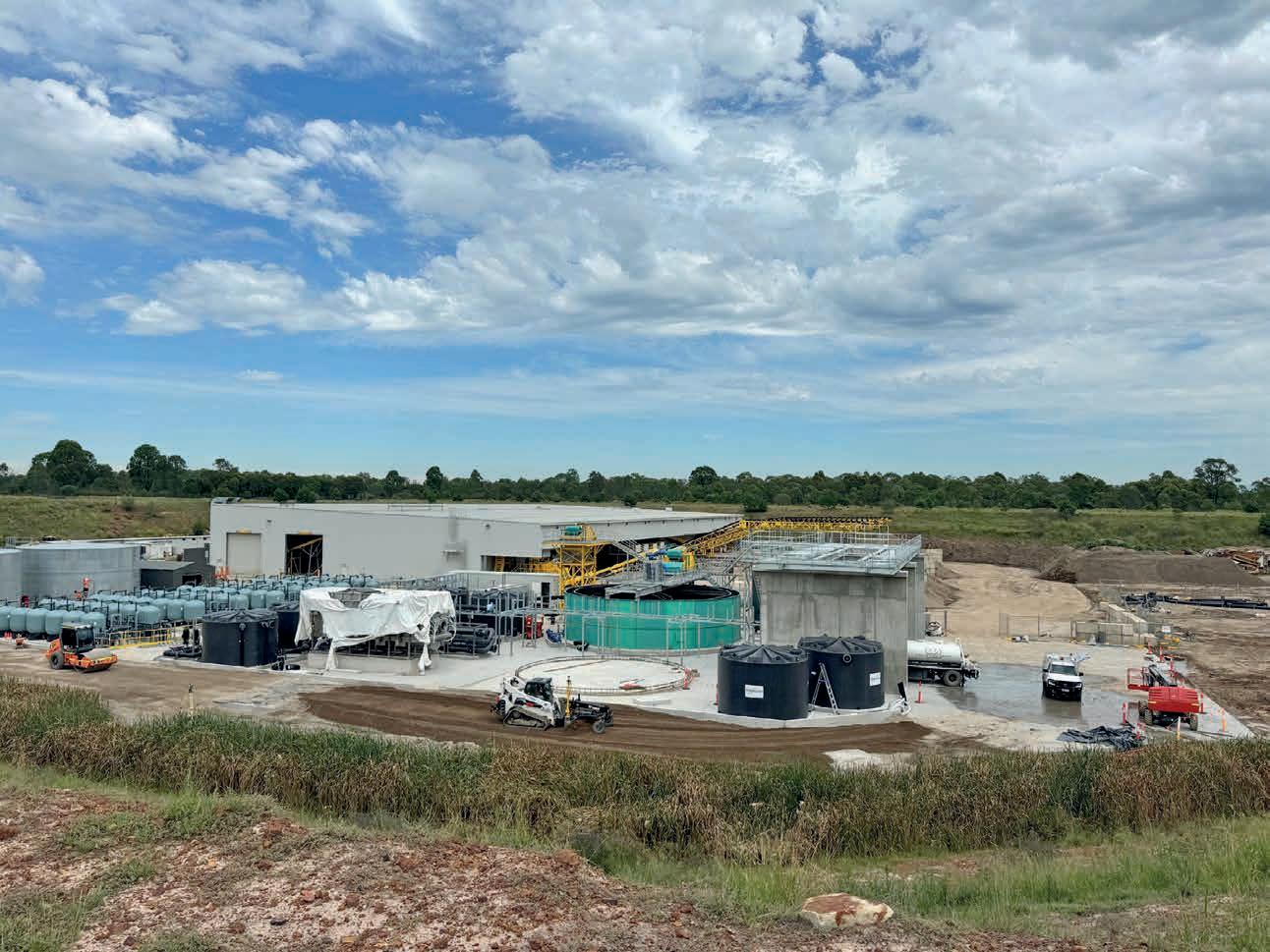
Set to commence operations by mid-year, the Patons Lane Resource Recovery Centre (RRC) became part of BINGO’s portfolio in late 2017. Complementing the company’s existing Eastern Creek Recycling Ecology Park and Landfill, the new AWRC facility is the first large-scale construction and demolition (C&D) waste wet recycling infrastructure project in New South Wales, targeting general solid waste (GSW) material.
Tara Osborne, general manager of strategy and innovation at BINGO, envisions Patons Lane as a game-changer in C&D waste recycling in NSW. By diverting GSW waste soils from landfills, this initiative
promises to revolutionise the management of C&D waste in the region.
“BINGO has committed a substantial amount of capital to the development of this cutting-edge recycling facility, with a primary focus on accommodating building and demolition waste,” says Osborne. “We’ve invested $20 million in the recycling centre and an additional $14 million in the water treatment infrastructure at Patons Lane.”
The Patons Lane facility and water treatment plant functions as a closed-loop wet washing system, incorporating optical sorters equipped with infrared technology to separate material streams. Employing sophisticated onsite water treatment technology, it efficiently recycles water within the facility, enabling the washing of contaminated landfill material and the recovery of clean, washed products.
“Our operations will yield two grades of washed sand – fine and coarse – along with four distinct aggregates and an engineered fill product from the water treatment process and recycling centre,” says Osborne.
12 INSIDE CONSTRUCTION April/May 2024
FEATURE
BINGO Industries’ Patons Lane Advanced Wet Recycling Centre under construction. (Images: BINGO Industries)
With a target of diverting up to 95 per cent of waste from landfill, Patons Lane will primarily aim to supply heavy industries, including major civil construction and infrastructure projects, with products such as recycled aggregates for road bases and recycled sand for use in asphalt and concrete production. Given the critical shortage of virgin materials in Sydney, it presents a sustainable circular solution for large-scale developers and contractors.
At the forefront of recycled product quality control and assurance processes, Patons Lane’s advanced wet washing technology captures contaminants from materials in the water and filter cake. This ensures the production of new, high-quality products that meet industry standards and specifications. Additionally, all recycled products undergo rigorous batch testing at both BINGO’s Eastern Creek laboratory and external laboratories to guarantee compliance and exceptional quality.
According to Osborne, those hesitant about using recycled products will notice a discernible difference in the quality of the materials they receive from this washing solution. Furthermore, the carbon benefits gained from using recycled products alone are significant, particularly in light of the evolving landscape of sustainability disclosure standards.
“The construction industry should consider the changing requirements for companies to report their scope three emissions, which include emissions from activities such as extracting and transporting virgin materials,” says Osborne. “It is important to weigh the environmental costs of procuring virgin materials against those of transporting materials that have been recovered and recycled through facilities like Patons Lane.”
Osborne further emphasises the transformative potential of this development, especially for Western Sydney’s growth trajectory. Situated within a burgeoning corridor supporting major infrastructure development in NSW, including the Western Sydney Airport, Patons Lane presents an exciting opportunity for regional advancement in circular practices.
As construction companies increasingly prioritise environmental, social and

“Our focus is on supporting our customers in achieving their circular targets, in addition to our own.”
www.insideconstruction.com.au INSIDE CONSTRUCTION 13
BINGO Industries’ Patons Lane Resource Recovery Centre will be able to process up to 200,000 tonnes of washed recycled products.
Demolition and Waste Showcase FEATURE

governance (ESG) standards alongside sustainability objectives, Patons Lane is a direct contributor to these aims, notably through its impact on landfill diversion and recovery rates.
“We are primarily a recycling company, and I believe Patons Lane presents an exciting opportunity, marking a significant leap from the current market offerings.”
“The majority of major construction and infrastructure projects now set substantial diversion and recycled content targets,” says Osborne. “This site is aiming for an impressive 95 per cent diversion rate, surpassing the state average of 77 per cent.”
The Patons Lane AWRC boasts an operational capacity of 220,000 tonnes for waste processing, with further recycling capacity onsite. This capacity indicates the potential to divert over 300,000 tonnes of material from landfills, underscoring the significant impact of the facility on waste reduction in NSW.
“Our focus is on supporting our customers in achieving their circular targets, in addition to our own,” says Osborne.
“BINGO has consistently pioneered investments in advanced infrastructure to bolster these efforts.
“We are primarily a recycling company, and I believe Patons Lane presents an exciting opportunity, marking a significant leap from the current market offerings.”
The benefits of using recycled products for construction projects are substantial, extending beyond environmental advantages to strengthen Australia’s circular economy. By diminishing dependence on virgin materials, diverting waste from landfills and curbing emissions, recycled C&D products emerge as pivotal components of the future. The Patons Lane AWRC not only provides customers with a recycling solution but also offers a sophisticated waste management option, guaranteeing the reintroduction of these materials into the market for reuse.
Targeting an ambitious 95 per cent waste diversion rate from landfill, BINGO’s Patons Lane Advanced Wet Recycling Centre will produce:
• Up to 20,000 tonnes of washed, cleaned recycled aggregates;
• Up to 200,000 tonnes of washed, cleaned recycled sand; and
• Approximately 100,000 tonnes of engineered fill.

14 INSIDE CONSTRUCTION April/May 2024
The filter vessel area.


Demolition and Waste Showcase FEATURE
Rino Recycling’s new multi-waste stream recovery centre in Pinkenba, Queensland integrates both dry and wet processes.
(Images: Supplied by Rino Recycling)
A recycling revolution
Rino Recycling’s new facility in Queensland signifies a significant stride towards a circular economy in the construction industry.
“At Rino, our ethos revolves around reclaiming, refining and reusing.”
Located in Pinkenba, Queensland, Rino Recycling’s (Rino) new state-of-the-art facility utilises advanced technology to transform a variety of construction, demolition and excavation waste streams, previously destined for landfills, into high-quality outputs. These resources are then reused in construction projects throughout the state, meeting the increasing demand for sustainable materials within Australia’s built environment.
Daniel Blaser, Rino’s general manager, highlights the facility’s ability to recycle various materials, including waste from skip bins, soil from pool excavations as well as concrete and rubble sourced from notable projects such as Brisbane’s Eagle Street Pier and Waterfront Place redevelopment.
“At Rino, our ethos revolves around reclaiming, refining and reusing,” explains Blaser. “Our new facility is purposefully designed to accommodate diverse waste streams, with our best-in-class technology allowing us to take co-mingled waste –no source separation required.”
Once materials arrive at the Pinkenba facility, they are directed to one of four feed points. Sophisticated machinery efficiently separates these materials, earmarking light components for reuse while refining heavier components before they undergo processing in the wash plant, yielding premium-grade outputs. Through this process, Rino achieves an over 95 per cent recovery rate, ensuring maximised diversion from landfill.
The facility combines both wet and dry processing to produce a diverse product line, including road base, aggregates, Class A fill, washed bedding sand, crushed rock, soil, shredded timber, rigid plastics and both ferrous and non-ferrous metals.
“We are steadfast in our commitment to delivering superior products,” says Blaser. “What truly sets us apart is our holistic approach.”
“We don’t just manage waste; we view it as a manufacturing process, relentlessly striving to generate products of unparalleled quality to meet the high standards of construction projects statewide.”
16 INSIDE CONSTRUCTION April/May 2024
Blaser explains that the most challenging aspect of recycling is achieving maximum product separation. Historically, co-mingled materials have often been consigned to landfills, primarily because recycling them requires a sorting process.
“Our high recovery rate stems from our handling of more challenging wastes that other recyclers often resort to landfilling,” says Blaser. “We operate without a landfill, ensuring that even the toughest materials are repurposed rather than discarded.”
“Our fundamental principle is to recycle everything possible, and we anticipate that, through collaborative projects currently in progress, we will soon achieve a recovery rate exceeding 99 per cent.”
Blaser emphasises the need for stronger consequences for businesses disposing of materials in landfills to improve recycling rates in Queensland and Australia.
“Ultimately, if we can recycle it, so could everyone else,” says Blaser.
“Our goal is to champion the circular
economy, lead its adoption in Australia and make it commercially viable.”
The sustainability benefits of Rino’s new facility are far reaching, conserving natural resources by decreasing the demand for virgin materials, protecting local ecosystems and maintaining diversity levels. Situated strategically just 13km from the CBD, the facility reduces road haulage needs, thereby alleviating road congestion and enhancing safety, all while lowering energy consumption by minimising transport emissions.
Blaser highlights these benefits, noting reductions in resource consumption, diversion of waste from landfills, decreased reliance on quarrying and the resulting lowered greenhouse gas emissions. Additionally, recycled materials possess lower embodied energy, making them a greener option for construction businesses targeting sustainable outcomes on their projects.
Further attesting to its commitment to sustainability, the facility is GreenStar certified, enabling governmental
“Our high recovery rate stems from our handling of more challenging wastes that other recyclers often resort to landfilling.”

17
Rino Recycling has set out to revolutionise construction and demolition waste handling in Queensland and provide a tangible solution for sustainable construction practices for future generations.
Demolition and Waste Showcase FEATURE

entities and businesses alike to fulfill their environmental, social and corporate governance (ESG) objectives.
“We offer reporting options on a per-project, per-week, per-month or per-year basis, allowing companies to fulfill all of their ESG requirements and report them to their shareholders,” explains Blaser.
“Our reports not only quantify greenhouse gas emissions saved but also provide insights into material recycling rates and the destinations of recycled products.
“Our goal is to champion the circular economy, lead its adoption in Australia and make it commercially viable.”
“This will be of significant importance under the new mandatory climate reporting obligations, commencing 1 July 2024.”
For example, Rino collaborated with the delivery partners responsible for Brisbane’s Eagle Street Pier Waterfront Place redevelopment, recycling all of the project’s waste material and providing comprehensive reports on the resultant products. These recycled materials were then used in other construction sites managed by the developer.
“It is a prime example of a circular economy initiative: they supplied the materials, we repurposed them, created usable products for their sites, delivered them and handled all the ESG reporting,” adds Blaser.
Previously, a stigma has been associated with the quality of recycled construction materials, which Rino now addresses through education on the high quality of products that can be produced and the associated emissions savings.
“One prevalent stigma surrounding recycling has been the assumption that products made
from recycled materials inherently lack quality compared to those made from virgin materials,” says Blaser. “However, our advanced technology and dedicated wash plant effectively remove contaminants, enabling us to consistently meet the same specifications as virgin-quarried materials.” This capability paves the way for governments and businesses at all levels to embrace a ‘recycled-first’ policy. As long as the recycled material meets the necessary specifications and remains cost-competitive, explains Blaser, it should be the preferred choice.
“It is predominantly about education,” says Blaser. “Recycled products not only hold their ground independently in terms of quality but also possess all the additional ESG benefits.”
Rino’s facility boasts a significant capacity of 1.5 million tonnes per year – equating to 1.5 million tonnes of waste in and 1.5 million tonnes of product out. Although the plant has only been operational for a few months, currently utilising approximately half of its capacity, Rino foresees reaching full capacity over the next 12 to 18 months.
With its recycled product quality on par and offering a like-for-like substitution for virgin-quarried materials, Rino provides infrastructure for all levels of government, developers and contractors to achieve their sustainability goals, representing a greener future for Australia’s construction industry and built environment.

18 INSIDE CONSTRUCTION April/May 2024
Rino Recycling’s design demonstrates that waste is not the end of the line but rather a raw material for the next generation of sustainable construction.
Unified powerhouse
Motion Australia has transformed its collection of heritage brands into a unified powerhouse, combining global expertise, expansive scale and cutting-edge solutions to propel success throughout the nation’s industrial and engineering landscape.
In a strategic evolution, Motion Australia (Motion) has transitioned its established heritage brands to a unified line of service for the industrial and engineering sectors. With a legacy spanning over a century, the company now offers a comprehensive, streamlined suite of solutions for industry in Australia.
Drawing on more than 30 years of experience across various segments and roles at Motion, Jeff Mrak attests to the company’s continuous growth. He emphasises that this strategic realignment directly addresses the increasing customer demand for an industrial supply partner capable of providing the complete package.
“Over the past decade, the demands of the Australian construction and infrastructure sectors have undergone rapid transformation,” explains Mrak, marketing manager for customer insights and market research at Motion.
“We are witnessing a surge in generational infrastructure projects, with a robust pipeline forecasted across the entire country.”
Motion plays a pivotal role in sustaining the momentum of these projects, actively supporting and supplying products for
infrastructure, rail and construction works across Australia. Their involvement extends from projects like Cross River Rail and Inland Rail to the Snowy 2.0 pumped hydro, supporting numerous businesses essential for the successful execution of these large-scale construction and infrastructure endeavours.
Discussing the broader scope of the construction and infrastructure landscape, Mrak highlights the crucial support Motion provides to contractors across various sectors, catering to diverse segments within the construction industry. “Motion is the trusted partner for businesses involved in developing power and energy solutions, manufacturing steel and timber, producing building materials and aggregates, recycling, and providing services in earthmoving, civil construction, road construction, mining, quarrying and water management,” he says.
“We engage at a granular level, contributing significantly to componentry work, supply, servicing and repairs across multiple operations that feed into the complex requirements of these projects.”
“Our comprehensive product offerings from leading brands and engineering servicing and
“With access to over 600,000 products in Australia and a global inventory exceeding 10 million items, we ensure our customers have access to the latest and most innovative solutions.”

Motion.
insights and market research
(Images:
Motion)
20 INSIDE CONSTRUCTION April/May 2024 FOCUS
Industrial solutions
Jeff Mrak, marketing manager for customer
at

hydraulic and industrial hoses and fittings, power transmission, fastener solutions, tools and maintenance, sealing and specialised isolation gasketing, as well as lifting, rigging and safety and vending options as required – ensuring we meet the diverse needs of businesses contributing to the ongoing success of construction and infrastructure projects across the country.
“We also offer major repair capabilities such as repairing drill rigs, and can supply complete ex-stock drill rigs from our operations in Australia.
“With access to over 600,000 products in Australia and a global inventory exceeding 10 million items, we ensure our customers have access to the latest and most innovative solutions.”
As construction demands continue to rise, Motion recognises the complexities inherent in many large-scale infrastructure projects, often constrained by labour shortages and supply chain disruptions. Mrak emphasises the company’s commitment to working closely with customers and contractors to effectively address these challenges. Drawing on its extensive capabilities in industrial and
engineering supply, the company actively engages with key project stakeholders to devise tailored solutions, ensuring the seamless fulfillment of project requirements. At the core of this effort is Motion’s expert team, wholly dedicated to providing leading, customised industrial engineering and product service solutions to keep customers and projects in motion.
“Our nationwide team is substantial, comprising specialists in specific product ranges and focused industrial segments – all with a shared commitment to guide customers toward optimal solutions,” says Mrak. “Further, we maintain a global network of suppliers that do an enormous amount of work in research and development, consistently driving product innovation and ensuring our continual access to the latest and most advanced solutions.”
Motion stands at the forefront of emerging solutions from its global manufacturing partners. The company’s mandate is not only to adopt these new approaches but also to educate its customers, ensuring their awareness of new products and fostering a proactive approach to advancements.
“While there are numerous areas we can engage in, our focus is truly on comprehending the customer’s requirements, with a steadfast commitment to safety.”
www.insideconstruction.com.au INSIDE CONSTRUCTION 21
Motion’s Head Office at Chullora in Sydney.

These innovations contribute to project success on multiple fronts, ranging from products and services that maximise safety and minimise maintenance requirements to solutions that improve the uptime of onsite equipment.
and supply opportunities, the company navigated challenges adeptly, ensuring major projects had access to critical resources. This capability extended beyond product availability, encompassing the mobilisation of expertise whenever required.
“When you partner with Motion, you partner with industry leading solutions, tailored to keep you moving.”
“While there are numerous areas we can engage in, our focus is truly on comprehending the customer’s requirements, with a steadfast commitment to safety,” explains Mrak. “We serve as the conduit between ongoing developments and the practical needs of our clients.”
“We’ve built an organisation founded on fostering long-term relationships with customers, deeply understanding their evolving needs, and delivering solutions that not only facilitate the successful execution of current projects but also ensure sustained success into the future.”
Motion takes pride in its robust organisational structure and globally interconnected supply chain. Operating with diligence, the company strategically draws from a vast network of global suppliers, many of whom boast extensive manufacturing operations worldwide. This deliberate approach ensures that Motion remains agile and is not limited by dependency on a single supplier.
Throughout the COVID-19 pandemic, Motion’s dedication to sustaining operations and providing essential supplies was evident. Leveraging a diverse array of suppliers
“The focus on infrastructure projects during this period underscores Motion’s commitment to supporting essential businesses and minimising disruptions in the supply chain,” says Mrak.
With over 200 locations, 12 state-of-the-art distribution centres equipped with modern technology and a network of 30 repair and service centres, Motion Asia Pacific is well-positioned to support the country’s largest contractors and projects on a national scale. Despite its expansive global reach, Motion prioritises local collaboration, forging close connections with on-the-g round teams across Australia, seamlessly harmonising its international capabilities with targeted implementation.
“Motion continues to strive to be the trusted partner for the Australian industrial landscape, contributing to the nation’s construction and infrastructure development,” says Mrak. “We’re reliable, we’re local, and we’re committed to ensuring our customers’ success.”
“When you partner with Motion, you partner with industry leading solutions, tailored to keep you moving.”

22 INSIDE CONSTRUCTION April/May 2024 FOCUS
Motion’s RTD32 drill rig.
One of Australia’s leading recycling and waste management companies
BINGO services the building & demolition and commercial & industrial sectors across the east coast of Australia
Our focus is to use sustainable, recycling-led solutions to divert valuable waste materials from land ll
BINGO supports our customers to achieve their sustainability objectives and maximise resource recovery


BINGO focuses on diverting waste material from land ll. Our network of advanced recycling facilities creates a range of recycled products that can be used in place of precious virgin material.
to learn more
Scan
Hearing protection
Best-practice protection
3M’s Personal Safety Division is actively promoting awareness of onsite hearing conservation and workers’ auditory health through its innovative fit-test system.
Despite regulatory efforts, occupational noise-induced hearing loss remains a prevalent issue within the Australian construction industry. The persistent need for hearing protection devices in the sector, driven by challenges such as dynamic work environments and the transient nature of the workforce, emphasises the urgency for proactive measures to address this enduring issue. This is where the 3M E-A-Rfit Dual Validation System plays a crucial role, providing a solution that not only upholds best practices but also surpasses traditional hearing conservation models, supported by education and science.
As a longstanding advocate for best-practice in hearing protection, 3M’s Personal Safety Division has consistently led efforts in the prevention of occupational noise-induced hearing loss across various industries. Going beyond the sale of hearing protection, this division collaborates with sites and businesses to drive success of their hearing conservation programs.
Julie Toseski, occupational hygienist –application engineer specialist at the 3M Personal Safety Division, highlights the 3M E-A-Rfit Dual Validation System as a key component in hearing conservation.
“The recent mandate aims to foster early detection and prevention of hearing damage among construction workers, placing a high priority on their health and safety,” says Toseski. “This, hopefully, creates a safer and more sustainable work environment industry-wide.”
Toseski highlights that 3M has been a pioneer in championing hearing conservation practices long before the mandate, driven by the company’s commitment to raising awareness and educating about the importance of correctly fitting ear protection in the workplace.
“We recognise that the most effective way to drive early detection and prevention is through education, a critical aspect for various reasons,” adds Toseski.
“First and foremost, education helps prevent hearing damage.
“The 3M E-A-Rfit Dual Validation System empowers workers to fully grasp the significance of properly fitting hearing protection, maximising the effectiveness of noise reduction, and ultimately preventing hearing damage and loss among workers.”
“Hearing protection needs to be looked at holistically, given there’s so much variability involved – every employee, job, head shape and ear canal is unique.”
“The 3M E-A-Rfit Dual Validation System rapidly assesses the effectiveness of 3M hearing protectors for individual workers,” explains Toseski. “It quantitatively measures the noise reduction (attenuation) provided by the hearing protector as it is worn during testing, offering valuable and instant insights into the level of protection each worker receives.”
Responding to significant concerns regarding noise exposure and its impact on workers’ health and following an extensive period of public consultation in 2022, the NSW Government has approved the implementation of Clause 58 – Audiometric Testing under the WHS Regulation 2017. From this date, businesses that frequently require workers to use hearing protection against hazardous noise exceeding workplace exposure standards are to conduct regular audiometric assessments for their workforce. The person conducting a business or undertaking (PCBU) is responsible for organising and funding these hearing tests.
Education can also instil a ‘sense of agency’ among workers, Toseski explains, nurturing an enhanced workplace safety culture, resulting in compliance with WHS regulations.
Furthermore, Toseski underscores the importance of educating workers about the long-term health impacts and consequences of hazardous noise exposure. This imperative involves not only raising awareness about auditory effects of hazardous noise exposure but also non-auditory effects, including the potential risks of cardiovascular diseases and cognitive decline.
“Promoting awareness among workers about these potential effects can help contribute to a worker’s sense of agency, where they are proactively safeguarding their health through the consistent use of properly fitted and proactively worn hearing protection when required,” she says.
In Australia, traditional hearing protection testing methods evaluate the attenuation a product offers for a general population in accordance with the AS/NZS 1270 standard. This generally involves assembling a group
24 INSIDE CONSTRUCTION April/May 2024 FOCUS

of individuals with no specialised industry knowledge or regular exposure to hearing protection. The data collected from these test subjects is then averaged to determine the SLC80 (Sound Level Conversion valid for 80 per cent of wearers). This means that one in five workers is still at risk.
The 3M E-A-Rfit Dual Validation System goes beyond the one-size-fits-all approach by enabling individualised hearing protection fit testing. As the fit of hearing protection can change daily, fit testing becomes crucial in confirming that each worker’s protection is correctly positioned over or in their ear, tailored to the unique size and shape of their ear canal and head.
The objective of this testing is to ensure the adequacy of attenuation for each individual, moving away from a generic assessment to a personalised one.
The system employs Field Microphone-inReal Ear (F-MIRE) technology, providing an objective means of evaluating attenuation.
During the assessment process, the tester wears a pair of modified 3M probed hearing protectors connected to a dual-element microphone. A broadband noise is emitted from a loudspeaker, and the microphone precisely gauges the signal both inside the ear canal and outside the earplug. Within just five seconds, the system calculates the variance between these measurements,
“The 3M E-A-Rfit Dual Validation System rapidly assesses the effectiveness of 3M hearing protectors for individual workers.”
www.insideconstruction.com.au INSIDE CONSTRUCTION 25
The 3M E-A-Rfit Dual Validation System assesses the effectiveness of hearing protectors for individual workers. (Images: 3M)
The 3M E-A-Rfit Dual Validation System empowers workers to fully grasp the significance of properly fitting hearing protection.

presenting the individual being tested with their Personal Attenuation Rating (PAR).
“We recognise that the most effective way to drive early detection and prevention is through education, a critical aspect for various reasons.”
“With E-A-Rfit technology, we’re able to help sites understand a lot more in regard to the level of protection their workers are receiving on an individual level, in real work conditions,” says Toseski. “Hearing protection needs to be looked at holistically, given there’s so much variability involved – every employee, job, head shape and ear canal is unique. The 3M E-A-Rfit Validation System allows us to eliminate some of that variability by focusing on each individual’s needs rather than those of a population.”
The system also provides the site with a baseline, which is crucial for understanding where hearing conservation programs stand.
After the first test, sites and employers can analyse the data to identify workgroups or similar exposure groups (SEGs) that may need more attention. This data-driven approach enables the implementation of targeted interventions, such as more regular testing or monthly toolbox talks, based on the performance of different SEGs.
Research indicates that hearing protection fit testing can significantly impact the effectiveness of hearing conservation programs. In 2008, the Occupational Safety
and Health Administration (OSHA) Alliance of the National Hearing Conservation Association and the National Institute for Occupational Safety and Health (NIOSH) highlighted the importance of individual fit testing in a Best Practice Bulletin. This bulletin emphasised that individuals who receive positive feedback during the fitting process are more likely to have a positive attitude towards protecting their hearing and to use hearing protection consistently and correctly at work. These positive outcomes have the potential to reduce noise-induced hearing loss in the workplace.
The 3M E-A-Rfit Dual Validation System addresses not only the immediate challenges of hearing protection in dynamic work environments but also the long-term challenge of keeping workers safe throughout their careers. It focuses on personalised fit testing to ensure the effectiveness of hearing protection for all workers. By combining technology, education and a hands-on approach to hearing conservation, 3M’s Personal Safety Division continues to lead the way in promoting a safer and more sustainable work environment for workers across various industries.
26 INSIDE CONSTRUCTION April/May 2024

ALL NEW TOPCON MC-MOBILE
Available now with unmissable launch deals!
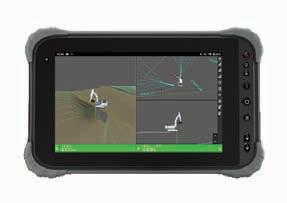
Topcon MC-Mobile 3-in-1 solution for excavators and compact track loaders
Excavators from $55K + GST installed CTLs from $60K + GST installed 3 YR WARRANTY* Use
Measure, design and build with a single system! Powered by Topcon Pocket3D software, MC-Mobile is a versatile machine control and survey rover solution in one.
• Compatible with Tokara remote suppoprt
• Works with a wide range of attachments and accessories
• Hardwire and hire options available
Terms and Conditions apply, visit www.aptella.com for full details. Warranty for serialised components only

| 1300
266
as survey rover aptella.com
867
Construction technology integration
A sign of efficiency

Empowering users to seamlessly send, sign and track contracts within a single platform, the Dropbox Sign for Procore integration by TEAM IM is enhancing operational efficiency for construction businesses globally.
“Within Procore, project managers can track the progress of signings, eliminating the need for physical document chasing and ensuring contracts are executed promptly.”
Formerly known as HelloSign, Dropbox Sign has streamlined the process of sending and requesting electronic signatures (e-signatures) for over a decade, strengthened by its integration with key technology partners. Now, Dropbox Sign seamlessly integrates with Procore, one of the industry’s leading construction management platforms.
Authorised Procore users can leverage the Dropbox Sign for Procore integration to efficiently select and send contracts, work orders and purchase orders, ensuring swift and secure document signing. This streamlined process, as noted by Volker Schaberg, chief technology officer at TEAM IM, saves contractors time, money and eliminates the burden of physical paperwork.
“The construction industry involves various stakeholders, including clients, main contractors, subcontractors and suppliers,” explains Schaberg. “Consider the intricate requirements of a project like constructing an apartment building.”
“The general contractor must collaborate with subcontractors for various services such as plumbing, framing, electrical work, heating, fire safety, security, excavation, concrete pouring and more.
“Each subcontractor is contracted for a specific scope of work, resulting in the generation of a multitude of documents, including specifications and contracts.”
The complexity of this process is underscored by the large amount of paperwork requiring signatures. In this context, e-signatures emerge as a highly beneficial tool within the construction industry, extending beyond subcontractors to include material suppliers and project owners, all of whom engage in contractual agreements.
TEAM IM, a long-standing partner of Dropbox Sign, has developed several integrations for the platform using its application programming interface (API). According to Schaberg, a critical factor in
28 INSIDE CONSTRUCTION April/May 2024 FOCUS
Image: Gorodenkoff/ stock.adobe.com
developing the Dropbox Sign for Procore integration was identifying the construction industry as the ideal customer, due to its mature market and volume of high-value documents that require sign-off.
“Procore, as one of the leading construction management platforms globally, orchestrates the collection of all construction management information and documents that then result in contractual commitments,” says Schaberg. “With a vast customer base exceeding 16,000, Procore fosters a sizable community, making the integration of Dropbox Sign for Procore an optimal solution to enhance efficiencies across numerous construction enterprises.”
Traditionally, obtaining signatures in the construction industry involved physical paperwork and manual follow-ups. However, with Dropbox Sign for Procore, users can digitally manage the entire signing process within the Procore platform, reducing costs and saving time.
“Within Procore, project managers can track the progress of signings, eliminating the need for physical document chasing and ensuring contracts are executed promptly,” says Schaberg. “In essence, this integration empowers users to effortlessly send documents for signatures without ever leaving the Procore platform.”
Dropbox Sign for Procore issues requests for parties to digitally sign contracts or orders, with the fully executed versions automatically saved back into Procore. E-signatures streamline workflows by eliminating the need for printing, signing and scanning documents, reducing productivity waste and enhancing efficiency. Contractors can then focus on their projects without the hassle of manual document handling.
TEAM IM, in partnership with Dropbox Sign and Procore, continuously evolves the integration, with the latest release unveiled at Groundbreak 2023, Procore’s annual construction technology conference. This release leverages Procore’s new Side Panel functionality, showcasing TEAM IM’s commitment to innovation and seamless user experience.
The new feature enables customers to conveniently access third-party integrations within the Procore platform alongside their existing tools, without switching applications.

Creating contracts or commitments within Procore remains as straightforward as ever, with the added convenience of initiating the signing process directly from the Side Panel. Monitoring signature requests is equally effortless within the Side Panel, which can be toggled open or closed adjacent to the item in view.
“Additionally, the Side Panel support is configurable, allowing customers to tailor it to be available for the specific Procore tools they need,” says Schaberg. “We’ve also integrated OAuth, a protocol facilitating third-party applications to authenticate with APIs.”
“This enhancement bolsters security and enables the transfer of the Procore requestor or signer’s identity to Dropbox, providing traceability to individual users within Dropbox Sign.”
TEAM IM actively seeks customer feedback to improve the product and remains open to incorporating new features that align with customers’ needs. Planned future developments of the Dropbox Sign for Procore integration include adding templates for personalised branding, enabling customers to customise the appearance of signature requests; as well as the ability to send reminders for signatures, providing users with more control over the signing process and further streamlining their workflow.
“We’re committed to ongoing collaboration with Procore and Dropbox to introduce new features and address customer needs,” says Schaberg. “The key is listening to our customers, understanding their priorities and continuously evolving the product to meet their goals.”
“We release updates regularly to ensure our cloud platform remains efficient and responsive to the dynamic needs of the construction industry.”
Among the beneficiaries of the product is DeMaria, a US-based construction company.
“In essence, this integration empowers users to effortlessly send documents for signatures without ever leaving the Procore platform.”
www.insideconstruction.com.au INSIDE CONSTRUCTION 29
Image: BlazingDesigns/ stock.adobe.com
FOCUS Construction technology integration

In November 2023, DeMaria adopted the Dropbox Sign for Procore integration by TEAM IM, in an effort to counter the usability challenges encountered with the lack of Procore integration in other e-signature platforms they previously employed.
“Dropbox Sign for Procore not only offers cost savings but also appears to be more reliable.”
Aaron Tassell, vice president at DeMaria, says that after evaluating various options, the company found Dropbox Sign to be user-f riendly, cost-effective and reliable.
“The implementation process was seamless, with excellent support from the TEAM IM team,” says Tassell.
“Since its rollout, our team hasn’t encountered any issues, and the user-friendly interface in Procore has facilitated smooth operations for our administrative and project management staff.
“Setup and configuration took about 30 minutes, followed by a brief tutorial, allowing for a quick transition to the system without major hiccups.”
While it’s only been a few months since adopting the product, Tassell says that DeMaria has already noticed increased efficiency compared to its previous solution.
“Dropbox Sign for Procore not only offers cost savings but also appears to be more reliable,” he says. “While it’s still too early to provide comprehensive feedback, initial responses from our staff have been positive.”
The Dropbox Sign for Procore integration by TEAM IM is designed to cater to construction businesses of any scale, accommodating clients who manage anywhere from 500 signatures annually to those handling 50,000 or more. Its adaptability and scalability render it ideal for industry requirements, improving document and contract processing times by up to 80 per cent. With contract completion rates accelerated by up to 96 per cent, the Dropbox Sign for Procore integration improves efficiency and minimises paper waste while bolstering security and document traceability.


30 INSIDE CONSTRUCTION April/May 2024
Image: Rawpixel.com/ shutterstock.com


• Co-mingled construction, demolition & excavation waste streams
• 95+% recycling rate = landfill diversion
• 475 tonnes/per hour = no job too big
• No source separation required = reduced intervention

• Best-in-class technology = maximum efficiency
• Fully integrated wet & dry processes = better quality products

• Ready to use high-spec aggregates, road base, sand & fill
• Equivalent to virgin-quarried = better environmental outcomes
• Supports circular economy objectives


45 Eagle Farm Road, Pinkenba Qld 4008 www.rinorecycling.com.au (07) 3260 2100 RINO
RECYCLING
INDUSTRY PARTNERS CERTIFICATIONS Pavements, materials and geotechnical
Protected? Find out with fit testing.
Help identify workers who are at risk of noise-induced hearing loss with the 3M™ E-A-Rfit™ Dual Ear Validation System.

Scan QR code to request for a demo:

Accuracy from the get-go

By integrating Topcon’s surveying and machine control technology, Lowcock Builders is realising enhanced efficiency, accuracy and control in its projects.
Lowcock Builders is a fourth-generation, family-owned construction business based in Bowen, Queensland. Specialising in commercial builds, director Jack Lowcock explains how deploying surveying and machine control technology has helped streamline workflows and increase accuracy on recent projects.
The company invested in the Topcon LN-150 robotic total station to enable the fast, accurate set out of designs without the need to offset from PDF plans or create profiles.
“Before the Topcon total station, we had a manual instrument that you needed two people to operate,” says Jack.
“The LN-150 is much more user-friendly as a fully-robotic, one-person setup.”
With Topcon’s FC-6000 field controller running MAGNET Field software, the LN-1 50 solution employs optical positioning technology to set out plans and check work with survey-grade accuracy. Now, contractors can utilise the Topcon LN-150 as a machine control solution with the newly released MC-Mobile system.
“When we first purchased the LN-150, I asked if it could work with machines, but at that time, it couldn’t, so we just used it for staking out and as-builts,” says Jack.
“Then, when we were ready to get a second system, our account manager from Aptella said that Topcon’s MC-Mobile was coming out and works with skid steers and excavators, which was just what we wanted.”
“With the Topcon system, you’re building accurately.”
The new Topcon MC-Mobile is designed for excavators and compact track loaders.
(Images: Aptella)

Components can be swapped between machines or used as a survey rover.
“The Topcon systems don’t stop.”
Installed on an ASV Posi-Track with a box blade and a 1.7-tonne excavator, the MC-Mobile system includes a prism mounted to the machine that locks onto the LN-1 50 total station for millimetre-accurate earthworks. The Android tablet runs Topcon Pocket3D software and can be used both inside the machine and fixed to a rover pole for setting out and checking as-builts.
With the ability to measure, design and build from a single system and switch components between machines, MC-Mobile has been designed to provide multiple benefits at every stage of a project and give contractors more control over their work.
Jack explains that with their own in-house drafting capabilities, Lowcock Builders uses the system for building and checking as-builts rather than designing plans.
“Although we don’t use the design aspects, it would be easy to create a design that works with the MC-Mobile system – all you need are a few known levels and you’d go from there,” he says.
Jack’s team loves the new technology, using it every day for their projects. Currently, it is building a car wash at Airlie Beach and a large commercial warehouse in Bowen which will become the company’s new office.
“The Topcon systems don’t stop,” says Jack. “I’ve got two supervisors trained up now and we use them for everything – staking out, levelling pads, all our civil sub grades, drainage, electrical, tilt panels, plumbing –literally nothing is built until it’s drawn up and set out with the Topcon system.”
To ensure everything is built to design, the team also conducts the set out for all subcontractors and trades. “We set out everything so we know it’s all correct and negate any rework or delays from things not being where they should be,” says Jack. “I had that happen once on a job a couple of years ago where the survey had been done and they were working away but it was all wrong.”
“It’s easier for us to control it from the get-go, that way we know what we’ve done and that we’re building to design.”

34 INSIDE CONSTRUCTION April/May 2024
Operators found it easy to pick up the technology and the setup has reduced manual labour, without the need for laser levels and screeds to keep checking levels.
Training and support from Aptella, Topcon’s Australian distributor, has helped the Lowcock Builders team confidently adopt the technology. Tokara, Aptella’s remote access platform, enables users to receive fast support over the phone, with technicians able to view and control the user’s tablet for on-the-job training and technical support.
“We haven’t had any major issues, but Tokara has been great for getting a quick fix to little
things with minimal disruption,” says Jack.
Overall, Jack’s team is getting great productivity gains from the technology.
“There’s no profiling, you can get onsite, set out two points and start digging right away while you set out the rest of the job,” he says. “It’s much faster and more efficient.”
“With the Topcon system, you’re building accurately,” he adds. “You could go ahead and get your fabricated steel and panels built straight off the model with the confidence to know that they’ll slot in perfectly because the job’s been built accurately from the get-go.”
“The LN-150 is much more user-friendly as a fully-robotic, one-person setup.”
Digital set out enables contractors to work accurately and efficiently.


The benefits and potential use of spray-on elastomers in building construction, vehicle fleet and equipment management are enormous.
Become an exclusive distributor of Bullet Liner™ polyurea coatings for part or all of Australia.
Let us help you open a red-hot market and build a great brand. If you’re a sharp-shooting entrepreneur or have a company working in:
• Materials handling
• Raw goods distribution
• Construction project management
• Roofing materials
• Transportation/equipment rentals
• Automotive aftermarket
This could be your next big thing!
TARGET A NEW REVENUE STREAM CONTACT US international@bulletliner.com
Steel framing
Success framework for new aged care facility
Designed and prefabricated offsite, light gauge steel framing made from TRUECORE® steel has facilitated on-time and on-budget construction of this critical aged care facility.
Located at Sunrise Beach in the Noosa Shire, Phase One of the Sunrise Beach Aged Care facility has now been completed. In an area where the demand for aged care is growing faster than in most other parts of Australia, the first 102 residents will be welcomed into their quality new homes early in 2024.
By utilising light gauge steel made from TRUECORE steel for the walls, trusses and bracing, the project achieved a host of benefits, including:
• P refabricated for rapid installation: Light gauge steel framing was designed a nd prefabricated offsite, requiring close collaboration between builder Badge Constructions and Ultimate Steel Framing from the project’s commencement. Items such as safety features, PWD rails and TV recess areas were all factored into the framing from the start, minimising errors and potential delays.
• Lightweight and strong fills the brief: The brief for the Sunrise Beach Aged
Care facility required the provision of a true “domestic” living experience with small clusters of private rooms centred around courtyards or views. With an impressive strength-to-weight ratio, light gauge steel framing made from TRUECORE steel supports wide spans that form the backbone of these light-filled villas.
• Termite-proof without insecticides: Light gauge steel framing made from TRUECORE steel is termite-proof and doesn’t require treatment from insecticides. For client Uniting Care Queensland, this was an important consideration for its residents. Additionally, TRUECORE steel won’t warp, twist or shrink even in Queensland’s tropical environment.
• Lightweight and easy to handle: Lightweight and strong, light gauge steel framing made from TRUECORE steel can be easily handled onsite with fewer tradespeople. Consequently, labour was split into smaller groups to work on multiple fronts, further speeding up onsite progress.
Project
BlueCare Sunrise Beach Aged Care facility, Queensland
Fabricator
Mitchell Crisp, principal at Ultimate Steel Framing
Builder
Kent Belcher, project manager at Badge Constructions
Architect
Pino Gentile, principal architect at Thomson Adsett
Client
Lavinia Dack, property group general manager at UnitingCare Queensland
Principal steel product
40,000 lineal metres of light gauge steel made from TRUECORE® steel
Photographer

Construction photos by Travis Cooke Badge Constructions, renders by Thomson Adsett Address 4 Grasstree Court, Sunrise Beach, Queensland
“Choosing steel has more than paid for itself in construction time savings.”
www.insideconstruction.com.au INSIDE CONSTRUCTION 37 FOCUS
Ariel view of Phase One of construction at the Sunrise Beach Aged Care facility.

Project highlights
“The ease of handling light gauge steel frames meant labour could be split into smaller groups to work on multiple fronts, again helping accelerate the rapid progress of the job.”
Reflecting recommendations set out by the Royal Commission into aged care quality and safety, each of the private accommodation rooms at Sunrise Beach Aged Care facility is designed to operate like a small household, offering residents a better lifestyle and superior quality of care.
Pino Gentile, principal architect at Thomson Adsett, articulates the design brief for the facility. “The design of the Sunrise Beach Aged Care facility responds to ‘Person Centred Care’,” says Gentile. “Homes are designed to provide residents with an authentic domestic experience and are modelled in small clusters of eight to nine private rooms. “Each room is located around a series of light-filled courtyards, or alternatively provides views of the adjacent national park.
“Residents can easily access common

areas and spaces in order to socialise or get food and drink from the house kitchen whenever they want to.”
Mitchell Crisp, principal at Ultimate Steel Framing, highlights the versatility of light gauge steel framing made from TRUECORE steel, which enabled his team to navigate the constraints of the limited onsite space. “Smaller cranes were used, saving costs and positioning packs in out-of-t he-way locations,” says Crisp. “The ease of handling light gauge steel frames meant labour could be split into smaller groups to work on multiple fronts, again helping accelerate the progress of the job.”
L ight gauge steel framing made from TRUECORE steel has the added benefit of staying straight and true. The framing is precision-made and remains accurate to measurements. Prefabricated light gauge steel frames made from TRUECORE steel also
38 INSIDE CONSTRUCTION April/May 2024
Steel framing FOCUS
Light gauge steel lends itself to structures that are designed for long life.
“The design of the Sunrise Beach Aged Care facility responds to ‘Person Centred Care’.”
benefit from having pre-punched service holes, allowing follow-on trades to feed services through the framing for a fast install without additional drilling.
Lavinia Dack, group general manager property at UnitingCare, expresses the team’s excitement regarding the accelerated construction pace achieved through the utilisation of light gauge steel framing. “Choosing steel has more than paid for itself in construction time savings,” she says.
The Sunrise Beach development is one of the largest applications of light gauge steel framing in the Noosa region, including over 40,000 lineal metres of TRUECORE steel.
Supplied by Australian steel manufacturer BlueScope and fabricated locally, TRUECORE steel supports UnitingCare’s commitment to using local suppliers.

Different parts of a project can progress concurrently as frames can be delivered in ‘packages’.
www.insideconstruction.com.au INSIDE CONSTRUCTION 39
Prefabrication of framework offsite also minimises the amount of onsite waste.
The Australian Bulk Handling Expo is returning 18-19 September 2024
AUSTRALIAN BULK HANDLING EXPO


bulkhandlingexpo.com.au
The Australian Bulk Handling Expo is designed for businesses who are bulk commodity producers and require the use of equipment for the movement of bulk goods, either domestically or internationally. The exhibition will feature suppliers showcasing innovative technology, equipment or services to bulk commodity manufacturers and producers.
ASSOCIATION PARTNER Melbourne Convention and Exhibition Centre
MEDIA PARTNERS MHD Supply Chain Solutions BOOK YOUR STAND TODAY IN CONJUNCTION WITH AUSTRALIAN BULK HANDLING EXPO
Made to stand the test of time
Available through Hobson Engineering, BUMAX’s high-strength stainless-steel fasteners are redefining structural durability, finding applications even beyond Earth’s atmosphere.
With a legacy spanning over a century, BUMAX is a pioneer in stainless-steel fastener production, earning acclaim for consistently delivering high-quality steel products and boasting the “world’s strongest stainless-steel bolts” in its impressive portfolio.
Nimeka de Silva, with over seven years of experience at BUMAX, attributes the company’s success to its steadfast commitment to innovative products, advanced manufacturing techniques and delivering unparalleled technical solutions. As the head of marketing, de Silva, is responsible for exploring various markets and identifying new opportunities to align solutions with emerging trends and needs. “BUMAX takes pride in crafting unparalleled products – innovations that have never been seen before,” says de Silva.
“My role involves evaluating the adaptability of our products across various market sectors and applications, understanding the problems they address and highlighting the advantages they bring to the table.
“Thanks to the high strength, durability and exceptional quality of our range, we continuously discover new and diverse applications, spanning from construction to infrastructure, and even extending into space aboard the International Space Station.”
As BUMAX expands its global footprint, its collaboration with Hobson Engineering – the authorised distributor for BUMAX products in Australia – has proven instrumental in advancing its position within the Australian market.
“We are actively working to increase our visibility on the international stage, and our partnership with Hobson Engineering plays a key role in this effort in Australia,” says de Silva. “Our collaboration is marked by a close working relationship, aimed at developing opportunities within the Australian market, especially within the construction and infrastructure sectors where we see the ability to introduce new design capabilities utilising stainless steel.”
Bolstered by their proven efficacy in challenging conditions, BUMAX’s fasteners are ideally suited for deployment in Australia’s

construction and infrastructure projects, particularly in coastal, tunnelling, offshore and wastewater environments. The nation’s evolving coastal society, with more than 87 per cent of the population residing within 50km of the coast, emphasises the need for corrosion-resistant, long-lasting materials like BUMAX.
Traditionally recognised for its corrosion resistance rather than its strength, stainless steel is frequently employed in exposed conditions, such as environments near saltwater. However, engineers often acknowledge compromises in terms of strength and mechanical properties in such applications.
In contrast, BUMAX disrupts this conventional wisdom. The company employs in-depth knowledge of stainless-steel materials and advanced manufacturing processes to enhance the strength and mechanical properties of its fasteners.
“Our offerings not only excel in corrosion resistance but also boast impressive strength levels and mechanical properties,” says de Silva.
“With our stainless-steel fasteners, any lingering drawbacks or disadvantages are eliminated.”
“With stainless steel, designing structures or building components to last well beyond 100 years becomes more achievable.”
www.insideconstruction.com.au INSIDE CONSTRUCTION 41 FOCUS
Stainless-steel fasteners
Nimeka de Silva, head of marketing at BUMAX. (Images: BUMAX)

“The world’s strongest stainless-steel bolts.”
“BUMAX takes pride in crafting unparalleled products –innovations that have never been seen before.”
“We provide a comprehensive product range spanning different types of stainless-steel materials, all marked by their exceptional strength and mechanical properties, compared to the industry standard.
“Some of the strengths and properties we are able to achieve are unparalleled by any other manufacturers.”
De Silva highlights a common limitation in global stainless-steel knowledge, stating that despite its widespread use, awareness about its various grades remains limited. While most people are familiar with one or two common grades, there are more than 200 grades beyond those most commonly known.
“Stainless steel is our specialty, and we take pride in offering an extensive range of various grades to suit a variety of applications and environments,” says de Silva. “When it comes to stainless-steel fasteners, we are recognised as experts in the field.”
BUMAX’s product range encompasses grades starting from A4/316, extending to duplex, super-duplex, nitronic, nimonic, super-austenitic and martensitic grades. Distinguishing itself from many companies in this field, BUMAX offers a source of unrivalled technical expertise coupled with premium product solutions, going above and beyond to meet the diverse needs of its customers, including offering reportedly “the strongest stainless-steel fastener in the world”
– the BUMAX ULTRA 159 – based on current industry standards.
“For the construction industry, our BUMAX 88, 109 and DX 129 grades are most likely the optimal choices for the majority of applications, matching the strengths of carbon steel commonly used in construction,” says de Silva. “The ability to produce stainless steel with equivalent strengths as carbon steel in diameters up to M36 is a unique aspect that sets BUMAX apart in the industry.”
Unlike carbon steel, stainless steel eliminates concerns about susceptibility to rust and corrosion, offering a superior alternative in construction applications. Engineers benefit significantly from this, gaining durability advantages that were previously challenging to achieve with traditional stainless steel.
Beyond its corrosion resistance and high strength properties, the BUMAX range boasts substantial sustainability benefits. Stainless steel’s exceptional durability surpasses materials like carbon steel that are prone to corrosion, thereby avoiding structural issues over time.
“One of the prevailing challenges is designing structures that last longer,” says de Silva.
“With stainless steel, designing structures or building components to last well beyond 100 years becomes more achievable.”
A key element in addressing this challenge revolves around minimising both the ongoing
42 INSIDE CONSTRUCTION April/May 2024
maintenance efforts and the associated costs of a structure over its lifespan. De Silva highlights that traditionally, structures have been designed with a focus on upfront affordability.
However, the true challenge emerges as costs accumulate over the structure’s life, driven by ongoing maintenance needs and the inherent risk of structural issues. This is now a growing concern in countries such as the US and UK, where older infrastructure traditionally utilised a higher proportion of carbon steel materials.
“While stainless steel does incur a higher upfront cost, this expense is offset over the structure’s lifetime,” says de Silva.
“The significantly reduced maintenance costs and prolonged structural integrity contribute to a substantial overall cost reduction.”
Moreover, an important sustainability aspect lies in the recyclability of stainless steel.
A large proportion of stainless steel comprises recycled material. This consistent, circular utilisation of stainless steel presents a compelling case for the use of BUMAX fasteners in projects targeting sustainability ratings or a net-zero impact.
“This is why we passionately advocate for the increased use of stainless steel in the construction industry,” says de Silva. “We’re currently supporting a number of research projects with various universities, exploring diverse facets of the built environment and the potential for greater utilisation of stainless steel.”
“BUMAX 88 and 109 are also supported by an Environmental Product Declaration (EPD) – we were one of the first fastener manufacturers to complete this product lifecycle assessment.”

BUMAX’s commitment to quality and sustainability is exemplified in projects like the Slussen area redevelopment in central Stockholm, where approximately 15,000 BUMAX fasteners were used for the Slussen sluice hatches. The selected fasteners comprised a combination of BUMAX 88 (A4/316L) and BUMAX SDX 109 (super duplex), chosen for their high strength and corrosion resistance, addressing the unique challenges presented by the brackish water from Lake Mälaren and the higher salinity of the sea water from the Baltic Sea, ensuring durability and performance in these harsh environmental conditions.
“A significant aspect of this project was the commitment of the client and general
contractor to achieving a 100-year design life for all elements,” says de Silva.
“This goal was successfully realised with the utilisation of our durable, high-strength stainless-steel fasteners.”
In today’s construction landscape, notably within Australia’s major infrastructure projects, it is increasingly common for clients to pursue designs with a lifespan surpassing 100 years.
“It wouldn’t be surprising if these expectations continue to rise in the near future, reflecting a shift in attitudes across the global construction industry towards prioritising long-term sustainability and resilience of buildings and infrastructure,” says de Silva.
The success of projects like the Slussen area redevelopment is a testament to BUMAX’s dedication to delivering superior performance and consistency, upheld through stringent quality control standards. With the support of Hobson Engineering in Australia, BUMAX is poised to seize opportunities in the construction and infrastructure sectors, ensuring the longevity of projects in Australia and beyond.
“We are actively working to increase our visibility on the international stage, and our partnership with Hobson Engineering plays a key role in this effort in Australia.”
www.insideconstruction.com.au INSIDE CONSTRUCTION 43
Fasteners made to last forever.
Level crossing removal project
Sustainability takes centre stage
Embracing innovation and collaboration as cornerstones of its approach, McConnell Dowell Constructors, within the Western Program Alliance, has redefined sustainability benchmarks through its delivery of a level crossing removal project.
“The LXRP goes beyond eliminating dangerous level crossings; it aims to deliver infrastructure that enhances the community.”
As part of the Western Program Alliance (WPA), McConnell Dowell Constructors (McConnell Dowell) has successfully completed the level crossing removal on Mt Derrimut Road in Deer Park, delivering a new rail over-road bridge and a new Deer Park Station for V/Line rail services. Raising the bar for sustainable infrastructure design and execution, the project is a testament to the outcomes that can be achieved through effective collaboration and innovation.
The WPA is one of the five ongoing program alliances established by Victoria’s Major Transport Infrastructure Authority (MTIA) to deliver the Level Crossing Removal Project (LXRP), under Victoria’s Big Build. Led by McConnell Dowell, the WPA comprises design partners ARUP, Mott MacDonald, rail authorities Metro Trains Melbourne and V/Line, and the LXRP. On the Mt Derrimut Road project, the WPA also collaborated with architects DCM and Hassell.
The major infrastructure upgrade program involves the removal of 110 level crossings across metropolitan Melbourne, including the one at Mt Derrimut Road.
As the constructor and leader of the WPA, McConnell Dowell commenced work on Mt Derrimut Road in late 2019, placing a significant focus on sustainability throughout the project’s lifecycle. Now, as the project reaches completion, it stands as a remarkable achievement, showcasing a harmonious blend of innovation, sustainability and positive community impact.
As the sustainability manager of the WPA at McConnell Dowell, Bo Christensen sheds light on the transformative journey of Deer Park Station.
“Before the commencement of this project, Deer Park Station embodied a typical railway station, prioritising functionality over commuter experience and aesthetic appeal with extensive asphalt and limited weather protection,” says Christensen. “Today, it is a beautiful piece of infrastructure, featuring a brand-new station, 150 new and upgraded car parks, a multi-bay bus interchange and pick-up/drop-off zones, as well as stunning and widespread landscaping.”
“The LXRP goes beyond eliminating dangerous level crossings; it aims to deliver infrastructure that enhances the community. The Mt Derrimut Road project, in particular
the approach to design, has surpassed expectations, with its commitment to sustainability a defining feature that resonates throughout the entire project.”
Driven by its goal to “deliver sustainable infrastructure that continues to support safe and healthy Victorian communities into the future”, the LXRP adopts a sustainability policy to ensure the principles of environmental, social and economic sustainability are integrated in all its projects. This includes self-assessment methodology, requiring projects to target positive outcomes from the areas of highest materiality from the Infrastructure Sustainability Rating from the Infrastructure Sustainability Council (ISC) and/ or Green Star Rating from the Green Building Council of Australia (GBCA).
Guided by this methodology, the WPA spearheaded various sustainability initiatives on the Mt Derrimut Road project. Christensen emphasises the strategic emphasis on key areas such as reducing materials and energy consumption, constructing climate-resilient infrastructure and designing environments that enhance overall liveability.
“At the top of the pile is materials and energy, because of their huge impact on climate change,” says Christensen. “Throughout the construction phase, we devoted significant efforts to reducing energy consumption, also exploring avenues to diminish the operational energy footprint of the infrastructure.”
To decrease energy consumption during the construction phase, the WPA employed 100 per cent Greenpower for all site compounds, aligning with McConnell Dowell’s commitment to using Greenpower across all its sites on the grid. The team installed a temporary 40-kilowatt relocatable solar system to further power the main site compound and a permanent 65-kilowatt solar array split between two continuous bus shelters in the car park, feeding directly into the Deer Park Station building. This will offset nearly 4,000 megawatt hours of electricity over the asset’s lifetime. As a permanent part of the design, the solar array enabled the WPA to exceed all energy targets for the project.
“As a new piece of infrastructure that consumes energy, we’ve significantly reduced its operational impact on the grid,” says Christensen.
44 INSIDE CONSTRUCTION April/May 2024 FOCUS
Further, the station features highly efficient LED lighting and dimmed car park lighting, reducing lighting energy use during ‘After Last, Before First’ scheduled train services – another operational energy-saving measure. Sensors have been installed throughout the project to dim lights when the space is unoccupied.
“We also successfully trialled an electric excavator on the site as part of McConnell Dowell’s ongoing initiatives to electrify plant machinery,” adds Christensen.
Building upon the comprehensive efforts to address energy consumption, the WPA’s commitment to sustainability extended to a meticulous focus on recycled materials, supported by the recently introduced Recycled First Policy.
“This policy greatly assisted the WPA in advocating for the inclusion of recycled materials in the project,” says Christensen. “Substantial effort went into the pre-design, design, procurement and delivery processes to identify innovators willing to partner on the Mt Derrimut Road project, join the journey, and, in some cases, take calculated risks.”
Christensen emphasises the broad impact of the LXRP program, providing substantial leverage to influence positive changes and fostering collaboration with businesses in the industry to implement such materials. This collaboration not only facilitates success for these enterprises but also encourages the next generation of new ideas and products. Actively seeking innovative solutions in the market, the WPA aims to set new standards for innovation in the projects they undertake, as demonstrated on Mt Derrimut Road.
“We’ve provided a gateway for innovators to enter a market that would otherwise be inaccessible,” says Christensen. “We serve as a valuable entry point for businesses struggling to penetrate the high bars set by the infrastructure or state government sectors.”
A prime instance of successful collaboration is evident in the Mt Derrimut Road project team’s partnership with Polyrok, Built Environs and Boral. Polyrok, a recycled plastic aggregate derived from post-consumer soft plastic packaging, was incorporated into a sustainable 40-megapascal 50 per cent supplementary cementitious materials (SCM) structural concrete mix, forming the foundation of the new station’s green roof. This combination of
recycled materials in a concrete mix marks an MTIA/LXRP first in a structural application, resulting in an up to 40 per cent reduction in the carbon footprint of the concrete, compared to conventional cement concrete.
“The Low Carbon Concrete Working Group (LCCWG), overseen by the MTIA and ecologiQ, played an indispensable role in bringing this innovative solution to fruition,” explains Christensen. “The swift implementation of this solution owes much to the diligent efforts of this group.”
A 50 per cent SCM mix was also employed for the precast panels forming the earth-filled structures throughout the station, developed and supplied by Reinforced Earth (RECO) in collaboration with a major concrete supplier. Through the LXRP, the WPA successfully obtained approval from the Department of Transport and Planning for the structural application of this mix. This solution is now available as standard practice across the LXRP.

While conducting climate impact assessments on operational assets is standard practice for infrastructure projects, considering the climate impacts on the community resulting from their use of the newly created assets is an emerging aspect the project addressed. This led to another collaborative milestone with the successful integration of Coolseal, marking another first for the MTIA and LXRP. Coolseal is a finish on the surface of the car park that mitigates the ‘urban heat island’ effect. This innovation brings about a significant positive impact for commuters and other car park users, notably improving cooling and enhancing overall commuter comfort.
“In projects of this nature, there’s an abundance of concrete, asphalt and steel – materials that tend to heat up in warmer temperatures,” explains Christensen. “As a commuter, this can be quite uncomfortable.”
While the conventional solution to reduce heat in areas like car parks involves planting trees, Christensen acknowledges that for this specific project, reducing the ‘urban heat island’ effect needed more than just trees.
“While we did extensive tree planting, we also introduced Coolseal with its light-coloured bituminous coating,” says Christensen.
“The efficacy of Coolseal lies not only in its colour but also in the intelligent technology within the mix itself.
“We’ve provided a gateway for innovators to enter a market that would otherwise be inaccessible.”
www.insideconstruction.com.au INSIDE CONSTRUCTION 45
sustainability manager of the Western Program Alliance at McConnell Dowell. (Image: McConnell Dowell)

radiation to bounce off during the day rather than being absorbed, resulting in a much cooler and comfortable environment for commuters.”
Beyond the integrated energy and material solutions, the project distinguishes itself through extensive landscaping, augmenting its unique features and overall appeal. The station features a diverse palette of endemic and indigenous plants, ranging from grasses to trees. The WPA team approached the project with water-sensitive urban design (WSUD) principles on all design elements of the project. This included hydroseeding a rich native seed mix, expected to quadruple biodiversity compared to standard planting over its two-year establishment period.
“The ground-level landscaping is expansive, and the project team took steps to ensure native grassland and vegetation was preserved during construction,” says Christensen.
explains. “Continuous, high-level engagement with stakeholders, involving them in the evolution of the process, ideas and products, ensures that everyone takes ownership of the success.”
“They say failure is an orphan, but success has many parents – we intentionally went into this trying to have as many parents as possible, and the outcomes unequivocally attest to our approach.
“The LXRP has facilitated extensive collaboration, fostering the development of processes and initiatives that extend beyond Mt Derrimut Road.”
“Every element is intricately woven and interlaced.”
In yet another MTIA and LXRP first, the WPA introduced a green roof design to the main station building roof, continuing the landscaping onto the built form. This design not only enhances aesthetics but also provides irrigation through rainwater captured from the green roof and provides a further cooling effect for commuters on the elevated train platform.
Reflecting on the multitude of innovative construction and design features integrated into the Mt Derrimut Road project, Christensen underscores the value of collaboration.
The project exemplifies such collaboration, with the reinforced earth wall panels supplied and developed by RECO standing out as a prime example, given the newly approved specification now in place. This showcases the concerted efforts of multiple stakeholders – the WPA, LXRP, DTP and RECO –collaboratively driving forward an innovative process poised to benefit the industry well into the future.
“The new Mt Derrimut Road, Deer Park Station provides comfort, strength, functionality, innovation and sustainability throughout the building,” says Christensen. “Every element is intricately woven and interlaced.”
The project, he asserts, is not just a completed endeavour but a legacy of sustainable practices and continuous improvement that will resonate in future projects.
46 INSIDE CONSTRUCTION April/May 2024 FOCUS
The curved ochre-winged roof adds to the distinctive green roof above the station.
(Image: Built Environs)


MEGATRANS is Australia’s largest integrated conference and exhibition dedicated to the logistics industry. MEGATRANS is an interactive expo, reserved for companies offering advanced technology technologies and services, grouped by their contributions to the sustainable supply chain.
IN CONJUNCTION WITH ASSOCIATION PARTNERS PROUD SPONSOR FLEETS OF THE FUTURE THE ZERO CARBON WAREHOUSE COLD CHAIN SOLUTIONS THE TRACEABLE SUPPLY CHAIN Will you be a part of the supply chain of the future? BOOK YOUR STAND TODAY megatrans.com.au Melbourne Convention and Exhibition Centre 18-19 SEPTEMBER 2024 Don't miss out, secure a prime position
Sarah Brunton: tradie trailblazer
With years of hands‑on experience across the construction, mining and oil and gas industries, Sarah Brunton now dedicates herself to nurturing and advocating for the next wave of electrical trades professionals.
Growing up in the Northern Territory, Sarah Brunton always had a penchant for adventure, enjoying travel and other outdoor pursuits. Throughout her education, Brunton was drawn to technical subjects, particularly those traditionally dominated by males such as metalwork and woodwork, driven by her affinity for practical work.
“I was often the only female in these classes,” she says. “As I progressed through high school, I encountered resistance when I expressed interest in pursuing similar subjects at a senior level.”
or welding wouldn’t serve her well in life, Brunton stood her ground. With the unwavering support of her mother, she not
only pursued these subjects but excelled in them. After finishing school, Brunton ventured to Queensland in pursuit of a trade, as opportunities were scarce in Darwin.
“My mind was open to various options, from electrical work to aircraft mechanics; my primary goal was simply to work with my hands and fix things,” she says.
“After a short stint with a company in
“Throughout my journey, I encountered numerous fascinating individuals and skilled tradesmen who generously imparted their technical expertise and invested their time in my development.”

48 INSIDE CONSTRUCTION PEOPLE Profile
Sarah Brunton, national technical officer at the Electrical Trades Union. (Image: Sarah Brunton)
more suitable position. She completed her electrical fitter mechanical trade training at a steelworks in Wollongong before setting her sights on new challenges and adventures.
Brunton’s career took her to mines and gas plants in the Pilbara, where she eagerly absorbed knowledge from seasoned professionals and tackled diverse technical challenges. Despite facing numerous obstacles along the way, she remained resilient and persistent, forging her path in the electrical trades industry.
“Throughout my journey, I encountered many fascinating individuals and skilled tradesmen who generously imparted their technical expertise and invested their time in my development,” she says.
“Their guidance not only enriched my understanding but also fuelled my desire to explore firsthand the experiences they shared, such as working underground or in remote regions across Australia.
“Consequently, I’ve consistently pursued such opportunities throughout my career.”
In 2016, Brunton’s career trajectory shifted as she transitioned into a role as a trainer, back in the NT. Motivated by a desire to contribute to the industries that had enriched her life with invaluable experiences such as travel, portable skills, qualifications and knowledge, she dedicated herself to educating apprentices in electrotechnology at the local TAFE. Brunton found herself tasked with training electrical students across various sectors, from construction to mining, all within one classroom setting.
Additionally, towards the end of this tenure, she took on another role with a registered training organisation (RTO), specialising in offshore safety training – a crucial skillset for those working on oil rigs and offshore.
“I cherished my time as a trainer, but the opportunity to step into my current role was too compelling to pass up,” says Brunton.
Now serving as the national technical officer at the Electrical Trades Union (ETU), Brunton advocates for workers across various industry sectors in the electrical field. Her responsibilities span developing technical content for the vocational education sector, contributing to Australian standards, and participating in federal government consultations to reform
qualifications, ensuring the continued excellence and safety of electrical trades professionals nationwide.
“As the first national technical officer at the ETU, I take immense pride in this accomplishment, particularly as a woman,” says Brunton. “I am also proud to participate in the way Australian standards are formulated, be a board member of the NT Electrical Licensing Board, and advocate for increased female participation in trades, particularly electrical.”
Brunton’s contributions have been recognised by the trades industry, with the Lady Tradies And Rocking Chicks organisation nominating her for the Tradie Trailblazer award at the 2024 Empowered Women in Trades Awards and Gala for her dedication to mentoring women in the electrical trades field. She expresses pride in being recognised as a finalist for this award, emphasising the importance of visibility in inspiring others: “If you can’t see it, you can’t be it.”
“As experienced women within various industries, including myself, continue to share our stories and experiences, we empower and inspire young women considering entry into trades,” says Brunton.
“This encouragement extends beyond electrical work to all technical trades.
“I urge women not to shy away from these opportunities, as they offer valuable and rewarding experiences.”
Contemplating her journey, Brunton admits that if someone had foretold her 25 years ago, as a 19-year-old apprentice, where she would stand today, she would likely have run in the opposite direction.
“I couldn’t have fathomed anything worse than writing long documents,” she says. “Yet, ironically, it has come full circle.”
Now, Brunton finds fulfillment in contributing to the broader scope of trades through the ETU and industry boards, lengthy documents included.
Throughout her professional journey, Brunton has encountered numerous closed doors and obstacles. However, she has learned to persist, whether by nudging them open or kicking them down – a philosophy she believes to be the key to success.
“As experienced women within various industries, including myself, continue to share our stories and experiences, we empower and inspire young women considering entry into trades.”
www.insideconstruction.com.au INSIDE CONSTRUCTION 49
Emma Williams: building structures, breaking barriers
In conversations with Emma Williams about her career in the construction industry, one can’t help but be captivated by her profound passion for the field.
When Emma Williams was studying at university, little did she anticipate that a seemingly straightforward request to draw a window would set in motion her journey towards a thriving career in construction. At the time, pursuing a degree in product design engineering – a blend of mechanical engineering and industrial design – she envisioned herself entering a design role within the manufacturing sector.
However, fate had other plans when a friend of a friend, Dan from Horizon Building Group, sought her artistic skills for a window project. Given her love for drawing, a significant aspect of her academic studies, she gladly accepted the task. What began as a favour of drawing a window, quickly evolved into a significant window of opportunity.
Williams began working regularly with Horizon Building Group, eventually taking a year off from university to work full time with the company as a project coordinator. “I contributed to multiple projects within the company’s portfolio, helping to deliver high-end architectural and restoration renovations throughout Melbourne,” says Williams. “Dan entrusted me with a wide range of responsibilities, letting me have a go at anything and everything.”
“He provided me with the autonomy to tackle any task and, with his support, allowed me to navigate and resolve challenges independently.”

During this experience, Williams unearthed a genuine interest in the construction industry, prompting her to seek her next opportunity. After a brief stint with commercial fitout company Leeda Projects, she accepted a role at Multiplex.
Williams embarked on her Multiplex journey initially through a work experience opportunity. Her dedication and competence led to successive promotions, ascending from cadet to graduate, project coordinator, services coordinator, and ultimately to her current position as an assistant services manager.
Reflecting on her decision to continue pursuing a career in the industry, Williams emphasises the “three P’s” – the people, the projects and the problem-solving – as significant influences.
“The construction industry is replete with diversity in terms of various projects, learning opportunities and individuals,” she explains.
“I am particularly drawn to the services area within the construction industry as it involves a collaborative effort of diverse individuals working towards a common goal, and projects spanning various sectors.”
“These dynamic aspects strongly align with my passion for problem-solving, my enthusiasm for continuous learning and my desire to work with a large, cohesive and talented team.”
For those unfamiliar with the intricacies of the services field, Williams offers a unique analogy. She likens structures to the bones in a human body, and services to internal components that enable proper functioning, such as the heart, brain and lungs.
“Much like our internal organs enable us to function, services encompass all of the things that make a building operate correctly and safely,” she explains. “This includes electrical works; heating, ventilation and air conditioning (HVAC) systems; security and alarm systems; escalators and lifts; and fire safety systems.”
Working in this field is multifaceted, with services delivery spanning from the initial design phase of a build to its commissioning and handover. Williams’ role involves collaborating with consultants, architects and engineers during the early stages of a project, progressing to designing the services for a building. This entails creating schematics, determining requirements and reviewing specifications.
Williams emphasises the significant coordination involved in her role, bringing all the services of a project together, identifying their interactions and ensuring they operate effectively. She also highlights the complexity of interfacing, a critical aspect in achieving the seamless operation of diverse components.
“Once all the services are installed in the building, we meticulously ensure their optimal functionality during the commissioning phase,” says Williams.
“We conduct thorough tests to demonstrate to both consultants and clients that every service is operating according to specifications and meeting the project’s requirements.”
Since joining Multiplex, Williams has been involved in various major projects. Notably, she worked on the $1 billion mixed-use M-City development in Victoria, involving the construction of three residential towers,
50 INSIDE CONSTRUCTION April/May 2024 PEOPLE Profile
Emma Williams, assistant services manager at Multiplex.
(Images: Emma Williams)

an international hotel and an office tower. Williams also worked on West Side Place Stage Two, the final phase of the $2 billion West Side Place precinct, and later contributed to Stage One.
While Williams boasts an impressive portfolio of achievements in the industry, her impact transcends the successful delivery of construction projects. She recently added another feather to her cap with the publication of her storybook, This Girl Built That Williams initially ventured into book illustration a couple of years ago when Suzie Hollott, national marketing manager at Multiplex, wrote a storybook titled The Building of a Building for families at Multiplex. Williams was given the opportunity to create the illustrations, collaborating with the children of Multiplex. Motivated by this experience, the concept of This Girl Built That took shape – a storybook designed to inspire primary school-aged children, particularly girls, to explore the wide range of job opportunities available within the construction industry. Through the portrayal of a diverse and representative workforce, she aimed to impart the empowering ethos, “if you can see it, you can be it”.
Recognising the significance of her initiative, Williams received the National Association of Women in Construction’s (NAWIC) Bright Ideas Grant in 2022, providing funding for the publication of her book. “The idea was to inspire the next generation to consider a career
in the construction industry,” says Williams. “Each page features a distinct female character engaged in diverse onsite roles.”
The illustrations showcase a variety of positions, including trades-based and office-based roles. From a scaffolder and crane operator to an engineer, project manager, mechanical commissioner and fire engineer, the characters represent a wide spectrum of construction professions.
“The intention was to highlight roles beyond the conventional ones associated with construction, such as carpenters, electricians or plumbers,” says Williams. “Instead, I chose lesser-known positions to expose young individuals to the extensive range of opportunities within the industry.”
As Williams continues to blend her love for illustrating with her passion for the construction industry, her Instagram page has gained a significant following.
Through her art and story, she remains committed to inspiring the next generation to consider rewarding careers in construction, just like hers.
To purchase a copy of This Girl Built That, visit www.emmawallacedesigns.com.au
To check out Emma Williams’ construction illustrations, visit instagram.com/emmawallace.designs
“The construction industry is replete with diversity in terms of various projects, learning opportunities and individuals.”
www.insideconstruction.com.au INSIDE CONSTRUCTION 51
Emma Williams’ new storybook, This Girl Built That
Global construction industry trends
Dr Gretchen Gagel shares insights from her collaborative study on global construction industry trends, exploring the current landscape of artificial intelligence, sustainability and inclusion.
“Each of us has the power, as leaders in our industry, to shape the future.”

In February 2024, I once again had the opportunity to share the results of a global study conducted with the US-based Construction User Roundtable (CURT) on key challenges and associated solutions in the construction industry. I initiated this study back in the 90’s because I wanted to understand what was keeping industry leaders awake at night and what they saw as critical opportunities to improve our industry.
This year, I chose to focus on three key topics – artificial intelligence (AI), sustainability and inclusion – and spoke with dozens of executive leaders within large contractors, engineering firms, and global clients such as Microsoft, Johnson & Johnson, and the US General Services Administration (GSA). I began my presentation of the study in Tucson with a picture of the infamous scene from Indiana Jones where he is running from a large boulder. These three topics – AI, sustainability and inclusion – are coming. We can’t outrun them and the organisations that adopt and adapt the fastest will outpace their competitors. Here are the study highlights on each topic.
Artificial intelligence
When asked, “How well is our industry leveraging AI?”, those interviewed for the study rated our efforts as 1.6 on a scale of one (low) to four (high). Clearly, there is room for improvement. Here are some of their comments:
• “ I’m seeing some cool things presented at conferences, but I’m not sure these ideas are being adopted.”
• “ There are pockets doing well, but it’s just the tip of the iceberg.”
• “ There are very few examples. This is not something our industry is rapidly adopting.”
• “ There is a lot of reluctance. Everyone wants to see someone else do it first.”
• “Clients aren’t willing to pay for it on their projects.”
The theme of the last comment persisted throughout the study: if the client isn’t willing to pay for it, we aren’t motivated to bring ideas to the table.
Participants mentioned several potential AI applications, ranging from analysing
jobsite photos for safety hazards and risks to optimising project schedules, selecting the right contract model and conducting intricate financial analysis.
A conference panel on AI by TDIndustries and its technology partner FactorLab stood out as a shining example of utilising AI to drive safety results.
Over a four-year period, TDIndustries collected 500,000 self-recorded videos of foremen and superintendents giving pre-job planning talks. The company used AI to analyse and rate 90,000 of these videos, identifying specific words and phrases that increased crew engagement and evaluating which foremen and superintendents needed more training. Over this four-year effort, TDIndustries achieved a significant reduction in their Total Recordable Incident Rate (TRIR) by leveraging AI to improve pre-job planning meetings and safety discussions. This is a great example of leveraging the power of AI.
Sustainability
Those interviewed rated our focus on sustainability at 2.3 on the same one to four scale, with many comments focused upon the fact that environmental, social and governance (ESG) standards, investors and the worldwide regulatory climate are driving a greater focus on sustainability.
• “Awareness is kicking in; pressure from ESG and publicly traded companies; it’s at the low end but will pick up significantly.”
• “ESG pulls it together, stating how you are really measuring it in an objective way so that you can continue to improve; we will stay on the path because it is the right thing to do.” Participants did, however, reflect the flip side of this message in that maybe we are saying all the right things but not achieving the desired results.
• “Most owners have huge sustainability commitments but it’s not coming through to the actual capital projects, it’s the dirty little secret.”
• “Challenge is about short-term costs; business demands as fast as possible at the lowest possible cost, and no one says that out loud. Contract partners, get bids, ask about sustainability, etc., – but start with the price.”
OPINION Industry trends CONSTRUCTION April/May 2024
• “ I am disillusioned with Lead ‘box checking’; there are a couple of things we have to do as a baseline, but we are rarely innovative.”
• “ We are trying but money is always going to get in the way; it’s nice to have sustainable energy, etc., but a desalination plant costs way more to operate than what you get out of it; good things cost more, and people don’t want to pay for it, they want the cheap thing that will last forever but that’s not great for the environment.”
• “ The struggle in construction is that we rarely do things together. We have different companies moving at different speeds with different agendas and no industry standardised platform. Twenty years ago in safety we developed standardised measurement – we understand it, can measure it, and can improve.”
At the International Women’s Forum conference in Helsinki last year, I came across a new term, “green hushing”, that captures the idea that corporations are not putting their ESG goals out there because many executives believe they are not actionable. When I asked one key construction industry executive about this, his response was, “Are the big goals actionable? Yes. It will require a mindset of possibility. If it’s important, smart people will rally around it and make it happen, being willing to endure the pain of investments.”
Clearly our industry has room for improvement, but ideas like this are encouraging.
Inclusion
I dove most deeply into inclusion because of the book I’m currently writing for Wiley Publishing US on women leading in construction. The study participants rated the inclusivity of the construction industry a 2.1 on a scale of one to four and generally believe that 1) we are making progress, and 2) much work remains. I shared the work of Australia’s Construction Industry Culture Taskforce (CICT) with the audience as I believe these efforts are bringing about change.
However, it is clear that work remains, as evidenced by these two quotes:
• “ It’s a traditional culture. The business is designed by men for men, and we can’t see the forest for the trees. Culture is killing off those that you’ve got. The younger they are, men 35-45, they are leaving; they are going too, overworked. People are a commodity. Not that the leaders don’t care, they don’t know what to do, so they don’t do anything. They lack vision and creativity, vulnerability – all the stuff that’s needed to shift to a more humanised culture. The machine is neverending, cash flow machine, project-driven, no vision of the industry as a whole.”
• “Aggressive is worse than rude. I will sit through locker room talk, but when people raise their voice, curse at me, that is where I draw the line. The last time I was physically threatened at work was 2001. He came over the table, and now it’s happening again in the last couple of years – post COVID-19, maybe more stress in the environment. I’m being cursed at by clients, physically threatened. Maybe it’s just the projects I’m on right now.”
We are making progress and more needs to be done.
The bottom line
I love the construction industry. We humbly build and maintain the assets of civilisation, and I believe we do not receive the recognition we deserve. Each of us has the power, as leaders in our industry, to shape the future, to embrace the boulders that are barrelling down upon us – AI, sustainability and inclusion – in order to help build a better industry.
Dr Gretchen Gagel is chair of Brinkman Construction (US) and a member of the Global Risk Committee for GHD Engineering, the National Academy of Construction (US), the Construction Industry Culture Taskforce (AUS), and the Associated General Contractor (AGC) of America National Diversity and Inclusion Committee. Gretchen is passionate about leading change in the construction industry and developing its future leaders. You can hear more from Gretchen on her Spotify podcast, “Greatness”.
“We humbly build and maintain the assets of civilisation, and I believe we do not receive the recognition we deserve.”
www.insideconstruction.com.au INSIDE CONSTRUCTION 53


US TO CELEBRATE
OF
ACROSS THE AUSTRALIAN INDUSTRIALS SECTOR
the
who work tirelessly to advance the mining, engineering, road transport, logistics, rail, bulk handling, infrastructure and waste management industries.
womeninindustry.com.au
ARE NOW ON SALE PROUDLY SUPPORTED BY Australia PROUDLY PRESENTED BY MHD Supply Chain Solutions
JOIN
THE BEST
THE BEST FROM
Celebrate
women
Thurs 20 June, 2024
TICKETS
Empowered Women in Trades
Fixing the skills shortage
Empowered Women in Trades’ Melinda Davis shares compelling ideas on breaking down barriers and creating opportunities for women in trades.
If you don’t know Empowered Women in Trades (EWIT) – we are all about creating more opportunities for women to pick up the tools and take advantage of the fantastic opportunities in skilled trades that men have been enjoying since, well, forever. EWIT has only been around for a couple of years but last year 5,000 women took part in our activities.
Despite our efforts (and those of many other wonderful organisations like ours), it has been slow going for a long time. Currently, only 3 per cent of tradies are female and that number hasn’t changed in more than 20 years.
In the meantime, the government’s Skills Priority List indicates that 100 per cent of trades are short of skilled workers. This figure is only going to get worse as construction demand increases. I doubt anyone would disagree that half the population is a great place to look for new workers, especially when they represent only 3 per cent of our current workforce.
Are things getting better?
I was pleased to see an article recently which highlighted the number of female electricians increased by 97 per cent in the last ten years. It’s a start, but it’s a small base to grow on (from 1,400 to 2,750) and it was a long time coming. That sort of glacial change isn’t going to make a dent in the 48 per cent of construction vacancies that went unfilled last year.
What can we do as an industry to change the situation I hear you ask?
There is no one way to fix this. The industry is demonstrating a desire to create opportunities for female tradies. Educational opportunities are on the rise, with organisations like EWIT, TAFEs, registered training organisations and pre‑apprenticeship programs already in existence and expanding in response to demand. The government is starting to provide incentives and programs supporting the development of a stronger female skilled trade workforce. As a community, we are becoming more open to the idea of women embracing this wonderful profession and picking up the tools. However, to connect all these pieces effectively, we need to coordinate each stage of the career pathway and make it easy for women to follow.
Here are five things we can do to improve:
1. Start at the beginning: Government, educators, parents and the industry must collectively support young women considering a career in construction. School‑based programs, internships and work experience are part of the solution. According to an industry survey, only 3 per cent of women working in trades reported receiving any encouragement from school, TAFE or university to consider a skilled trade.
2. F lexible education offerings: Offer flexible training options for people wanting to undertake further studies but unable to forego weeks of income for a pre apprenticeship course. Introduce evening or weekend classes that take longer but support those who need to earn an income in the process.
3. Change the way we recruit: An outdated job advertisement, featuring a checklist of skills required on employment marketplaces, will no longer suffice in attracting the best talent, particularly women. Research indicates that unless women feel competent in meeting 60 80 per cent of the job requirements in an advertisement, they won’t apply. Rather than fixating on specific skills, focus on the attributes needed for a role.
4. Create a welcoming environment: The industry needs to make more of an effort to welcome and accommodate women. That can be as simple as locks on toilet and changing room doors, providing other women as mentors and offering flexibility options. Currently, 90 per cent of the parental load in Australia is still carried by women.
5. Provide career planning and progress: Ensure that your organisation provides opportunities for career advancement and progression. Offering upskilling opportunities, increasing knowledge through professional tickets and providing mentorship are all ways to keep people connected to their careers. This is all achievable and in the long term, it will ensure a thriving construction industry in Australia for the future. At EWIT our aim is 30 by 30 – that is, 30 per cent women in skilled trades by 2030. We believe 30 by 30 is the solution the industry needs and will create a bright future for women in the process.

“The industry is engaged, demonstrating a desire to create opportunities for female electricians, plumbers, carpenters, welders and more.”
www.insideconstruction.com.au INSIDE CONSTRUCTION 55 ASSOCIATIONS
in Trades.
National
Gender bias and its real effects
The National Association of Women in Construction is actively working to dismantle gender bias in the workplace, fostering crucial conversations that not only aim to help understand but also to drive positive change.
By the National Association of Women in Construction.
At the National Association of Women in Construction (NAWIC), we strive to share our stories, amplify our voices and support each other on our journey to achieving great work. Through our social media platforms, events and often in our award nominations, we hear about experiences where NAWIC members –both cisgender and transgender, who identify as female – face greater challenges in the workplace solely due to their gender.
In our fortnightly instalments of Construction Convo’s, we aim to break down gender bias in the workplace and create opportunities to understand and create change. By sharing the lived experiences of our members, volunteers and partners, we open up conversations on how to take action and shift the culture.
“I wouldn’t have to hide that I was trying to start a family.”
This is something women often feel the need to conceal. So how do we fix this?
Creating a supportive work environment is essential to ensure that women feel comfortable when discussing their plans of starting a family. Here are some key strategies that can help achieve this objective:
• Implementing family friendly policies;
• Encouraging open communication;
• Demonstrating supportive leadership;
• P roviding parenting support programs;
• Organising training sessions that focus on diversity, inclusion and unconscious bias; and
• Acknowledging and celebrating family milestones within the workplace. By following these steps, we can cultivate a supportive workplace where everyone feels valued and supported.
“I wouldn’t constantly question myself and I would make sure everyone in the room had a chance to speak.”
balancing work and family responsibilities can add a layer of pressure as societal expectations tend to burden women. All these factors combined create an environment where women may struggle with feelings of insecurity and self-doubt, ultimately impeding their professional development.
The second part to this statement is allowing everyone to feel heard. This is a struggle for most women in meetings. In order to foster an inclusive work environment, it’s crucial to ensure that everyone in the meeting has the opportunity to speak up and feel like their voice is heard. The key is to create a supportive space that welcomes perspectives. It’s important to value and acknowledge contributions from all participants to reinforce their sense of worth.
“I would have got the board position because of my skills, not to improve the diversity lens on the board.”
At NAWIC, we have delved into the concept of the ‘tick box’ extensively. The term ‘tick box’ alludes to the practice of placing a female, in this instance, on a board or in a position without creating real action for change, but to simply appear ‘diverse’.
In 2011, Australia’s Reibey Institute found that over three and five-year periods, ASX500-listed companies with women directors delivered significantly higher return on investment than those without any women on their boards, showing a 6.7 per cent and 8.7 per cent increase respectively. In our recent Construction Convo’s post, we discussed self-doubt among women in the workplace, who often face feelings of insecurity due to the presence of gender bias and stereotypes. These factors can lead to doubts about their abilities.
“I wouldn’t have to hide that I was trying to start a family.”
Let’s break down this statement into two sections. The first – self-doubt. Women in the workplace often face feelings of insecurity that can stem from factors within the work environment and a lack of self-confidence. One of the contributors is the presence of gender bias and stereotypes, which can lead women to doubt their abilities and constantly feel the need to prove themselves. Additionally, the unequal opportunities and underrepresentation of women in leadership positions can give rise to imposter syndrome, where women question their skills and their value. The challenges of
Whether you feel you don’t have the skill set to sit on a board or believe you may have been considered a ‘tick box’, this is where real change can begin. Being a woman on a board has been statistically shown to benefit companies and organisations and shift the culture. You can create impact by supporting the introduction of more women to your board; being a role model or mentor to women; introducing human resources policies to support women; and highlighting gender pay gaps within your organisation and advocating for change.
You can join the conversation on our socials @ nawicau and keep up with our advocacy, events and opportunities at www.nawic.com.au
56 ASSOCIATIONS
Association of
INSIDE CONSTRUCTION April/May 2024
Women in Construction
National Precast Concrete Association Australia
Precast architectural marvel
Situated at the bustling heart of Sydney’s central business district, the Poly Centre stands tall as a remarkable architectural masterpiece, distinguished by its striking precast concrete façade.
Located at 210 George Street, the Poly Centre boasts an impressive precast concrete façade, establishing itself as a landmark integral to the city’s skyline.
The commercial tower merges contemporary design with functionality, epitomising modern architecture and efficiency. With its sleek precast design, state-of-the-art amenities and prime location, it stands as a sought-after destination for businesses of all sizes.
Design fused with functionality
The Poly Centre’s design, a testament to the creativity and vision of Grimshaw architects, rises 27 storeys high, commanding attention as it seamlessly blends glass, steel and over 500 precast concrete elements to create a stunning façade. The building’s sleek lines, sharp angles and reflective glass exterior give it a distinctively modern and dynamic appearance.
Extensive use of precast
National Precast Concrete Association
Australia Master Precaster, Advanced Precast, was selected to manufacture and supply the precast for the Poly Centre.
The 500-plus elements necessitated the fabrication of more than 10 moulds, each catering to different shapes and profiles. For the east façade, over 300 grooved wall panels, including numerous curved panels measuring between three and 31 square metres, were manufactured.
Additionally, the main façade features
135 arched and rectangular columns weighing between five and 17 tonnes, while four-square-metre grooved soffit panels with a triangular shape adorn George Street. All panels were manufactured using an off-white oxide.
Testament to sustainability
The Poly Centre stands as a testament to Sydney’s commitment to sustainable architecture. Recognising the importance of reducing its carbon footprint, the building incorporates numerous eco-friendly features. Choosing precast as a construction method for the project maximised the benefits of offsite manufacturing. This approach shifted
construction activities from a potentially cluttered and less secure onsite environment to a controlled, quality-focused factory setting. Here, superior manufacturing methods, employing local materials in production, were utilised, resulting in minimised waste. The structure absorbs carbon over its life, requires minimal ongoing maintenance and does not burn or emit fumes. Clever attention to detail ensures natural light floods the interior through energy-efficient glass panels, reducing the need for artificial lighting during the day. State-of-the-art water conservation systems, including rainwater harvesting and greywater recycling, minimise water consumption. These sustainable initiatives not only contribute to the wellbeing of the local community and environment but also create a healthier and more comfortable workspace for its occupants.
Architectural excellence
The Poly Centre at 210 George Street exemplifies Sydney’s commitment to architectural excellence, sustainability and urban sophistication. With its striking design, prime location, sustainable features and innovative amenities, this remarkable building has become an iconic landmark in the city’s skyline.

Project
The Poly Centre Location
210 George Street, Sydney, New South Wales Architect
Grimshaw Engineer
WSP Builder
BESIX Watpac
Master Precaster
Advanced Precast

The Poly Centre commands attention as it seamlessly blends glass, steel and over 500 precast concrete elements to create a stunning façade. (Image: Advanced Precast)
“The Poly Centre stands as a testament to Sydney’s commitment to sustainable architecture.”
NSIDE CONSTRUCTION 57 ASSOCIATIONS
By the National Precast Concrete Association Australia.
Foundations and Frontiers
This August, the Australian Constructors Association is gearing up to launch a ground-breaking event, with the goal of influencing positive change and reshaping industry practices for the greater good.
“It is a unique opportunity to be part of transformative change.”
There is a growing recognition that in its current form, the construction industry is not able to deliver the infrastructure and projects that are needed, when they are needed and at a price that can be afforded. The gap between the available workforce and the workforce needed is growing whilst productivity is stagnating and costs increasing. In a similar way to the threat posed by global warming, this is a matter of national importance that requires a coordinated national response.
To tackle these issues head-on, the Australian Constructors Association (ACA) is unveiling a ground-breaking event on 8 August 2024 at Doltone House in Sydney. It is called Foundations and Frontiers. You might be wondering, Foundations and Frontiers – why doesn’t it have the word construction in it? Well, this event is unique, and it is designed to stand out from the rest. In terms of significance, ‘foundations’ is symbolic of the rocksolid groundings of the industry while ‘frontiers’ represents our commitment to pushing boundaries.
In planning Foundations and Frontiers, two key considerations have been top of mind. First, we want attendees to leave our event feeling inspired and like they’ve learned something valuable. And secondly, that there is tangible change because of this event.

By Jon Davies, CEO, Australian Constructors Association. (Image: ACA)

If we were to compare Foundations and Frontiers to anything, it will be like the new Conference of the Parties (COP) and the World Economic Forum, and it will be the first of its kind in the construction sector. It is set to be the first truly tripartite annual forum for senior industry leaders including those from all corners of the industry, from the unions, and from both State and Federal governments, to influence change. But this will not just be a leadership event. We want this event to be inclusive; we want all of the industry to see and be involved in what we think will be an event recognised for years to come.
Foundations and Frontiers will focus on four key themes: defining excellence and achieving it, shaping the future workforce focusing on skills and culture, ensuring financial sustainability and
navigating the path towards a digital future. These discussions will take place in a unique setting, with plenary sessions held in the round, featuring TED-style keynote addresses and facilitated discussions involving VIP’s.
Innovative engagement will be at the forefront, with an event app to enable real-time interaction. Attendees will be able to pose questions, participate in polls and engage in interactive chats displayed on screens throughout the venue. Simultaneously, the industry’s leaders will attend smaller facilitated discussions in breakout rooms, distilling insights into actionable outputs.
The event will offer a unique opportunity to be part of transformative change, influencing how the construction industry operates for the benefit of taxpayers, asset owners and those working within it. This will not be the usual highly scripted opportunity to preach from the pulpit. This event will be a platform for open, informed conversations, launching initiatives, sharing success stories and demonstrating commitment to positive change.
Foundations and Frontiers is truly one-of-a-k ind, promising a dynamic space where ideas evolve into actions and progress is not just talked about but showcased. Teaming up with KPMG, the event aims to create an inclusive standalone experience, promising a day filled with insights and collaborative discussions.
Be part of the change. Join us at Foundations and Frontiers. www.foundationsandfrontiers.com.au
58 ASSOCIATIONS Australian Constructors Association INSIDE CONSTRUCTION April/May 2024
1300 211 954 Motion.com.au Agriculture | Food and Beverage | Mining | Manufacturing | Quarry and Cement | Waste Water


Framing that delivered an all-round vision within tight timeframes.
When this distinctive circular designed school required completion for the start of the academic year, light gauge steel framing made from TRUECORE® steel delivered.
Prefabricated and then assembled on site, impressively large roof truss and frame modules were craned to height, then safely and e ciently installed into their elevated positions.
The end result is a state-of-the-art learning space designed in the round and produced on time.
Visit truecore.com.au to learn more.


TRUECORE®, BlueScope and the BlueScope brand mark are registered trade marks of BlueScope Steel Limited. © BlueScope Steel Limited 2021 ABN 16 000 011 058. All rights reserved. Image courtesy of School Infrastructure NSW and Austruss. LEARN MORE
