

2 2


Changes to FPS have revealed non-compliance, regulator says don’t pay enough attention to donor experience, report finds
Summit helps fundraisers to seize the full potential of their legacy campaign
Annual digital assessment shows progress, but some concerns

As with many things in life, however, there were regional variations in the proportion of wills containing charitable gifts.
• Charities are perhaps the last places you would expect to find bullying and racism, but they are there. The Charity Commission has issued clarification of the respective responsibilities of itself and trustees where bullying is concerned, while Wellcome has issued a commendable mea culpa regarding its efforts to combat racism in its own organisation.
7 Remember A Charity Week uses tech to personalise the legacy message

Annual trends report shows a record number of charities named in wills
Commission issues bullying response following working group Act 2022: commission publishes guidance for first tranche of changes

In association with Your Expert Witness
15
15
3 3
Wellcome accepts it must do better to counter racism
45
Charitable thoughts...
Charities gird their loins to ride out the cost of living crisis
Copyright Your Expert Witness. All rights reserved. No part of this publication may be copied, reproduced or transmitted in any without prior permission of Your Expert Witness. Views expressed in this magazine are not necessarily those of the publisher. Printed in the UK by Magazine Printing Company
The
Subscriptions: 0161 710 2240 E-mail: ian@dmmonline.co.uk
will again be presented by Jennie Bond.
• In the wider charitable world, the cost of living crisis continues to dominate charities’ thoughts. The issue was to the fore in the analysis of giving carried by the Donor Pulse report and will also be a major item of discussion at the NPC Ignites conference in October. Soaring inflation is adding to charities’ difficulties at a time when income is squeezed – and more people need their help.
13
41
31
Anniversary conference will address cost of living crisis
23
• The legacy market has stood up well to the vicissitudes of the past couple of years: last year saw a record number of charities named as beneficiaries in wills. And although the amount of reported income was down on the previous year, it is thought that the actual figure is up.
2YWRCP
19
• Making the most of what charities have is boosted by the growing trend towards digitalisation. And while more and more charities are tuning into the digital world, and making digital giving easier, the trend is not universal. It is smaller charities who are tending to be left behind, a divide identified as worrying by Charity Digital’s Jonathan Chevallier.
46
9
• A busy period will be capped off in October, when the British Wills and Probate Awards take to the stage at the Grand Hotel in Birmingham, while being simultaneously livestreamed. The awards are now in their fifth year and
Free webinar will help charities build meaningful relationships

Advertising: 0161 710 3880 Editorial: 0161 710 3881
Suite 2, 61 Lower Hillgate, Stockport SK1 3AW
Free wills agency updates its website Legacy professionals look forward to awards

25 Charity
Report prompts warning on cyber security
39
CONTENTS 46237
35 Charities

In this issue...
form
Plc www.magprint.co.uk
These past few months have been busy ones for the charity sector – the legacy market included. The annual Legacy Strategy Summit was again a virtual affair, with a full programme devoted to guiding legacy practitioners towards maximising the benefit of legacies in the aftermath of the pandemic.
29
• September saw the annual Remember A Charity Week encouraging more people to leave gifts in their wills, with lawyers being encouraged to raise the issue with clients when a will is made.
“We truly appreciate that people have many choices regarding charities to support, but no one appreciates it more, or tries harder than we do, to get the very best possible use from every penny donated. Thank you for your consideration.”
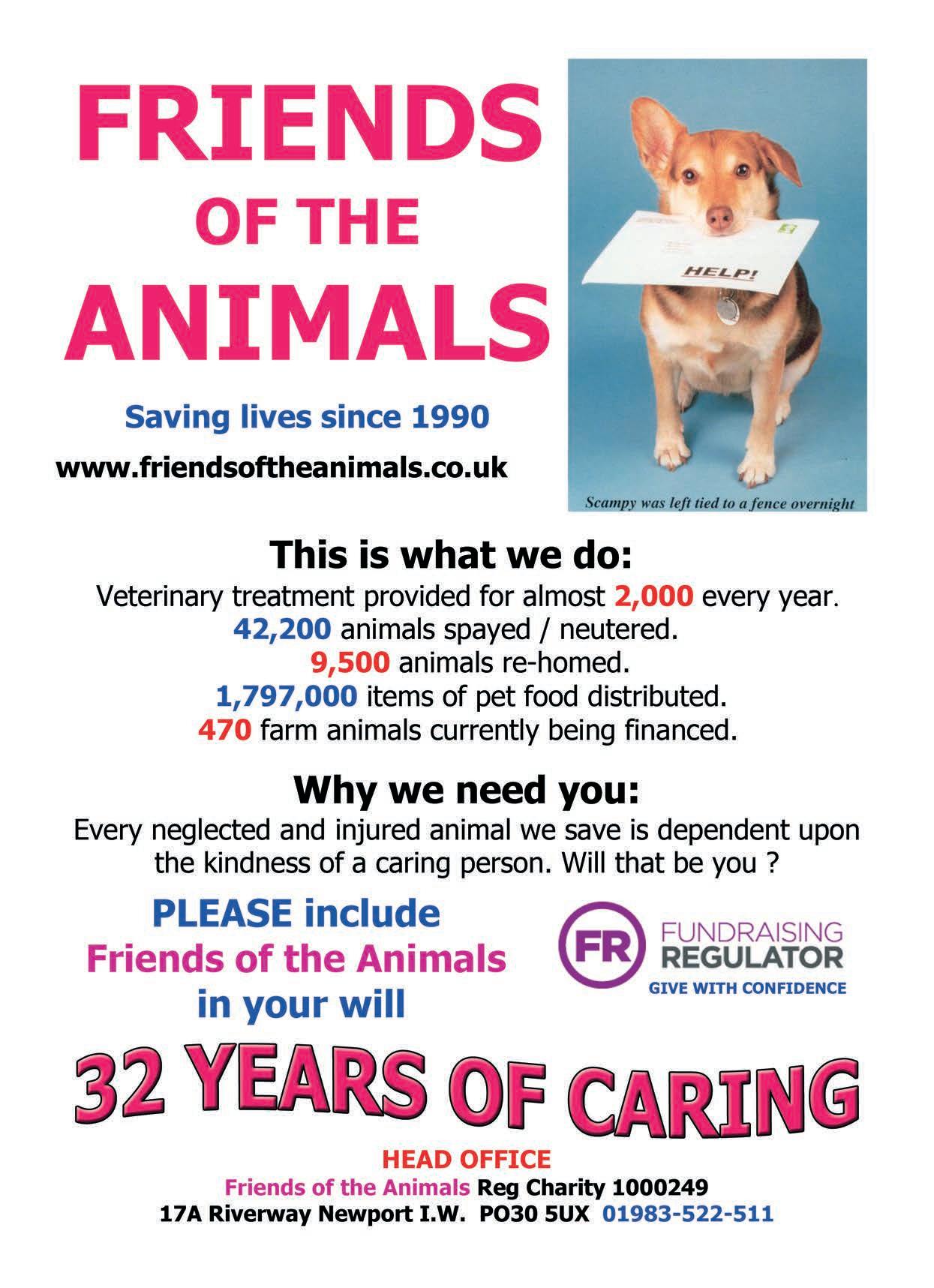
The photograph on the right of border collie Nipper was taken on the same day that he’d been taken to a vet’s to be put to sleep. Purchased as a ‘surprise’ gift, he was unwanted. The beautiful puppy was just eight weeks old and is just one of over 9,500 animals rescued by Friends of the Animals.
“But, happily,” said Helen, “we're a resilient team and together with the help of supporters, we barely skipped a beat and just kept on going.
Pictured below is the hook that 11-month-old Spaniel/Dachshund cross Darcy swallowed

There was a happy ending as –now renamed Stanley – he was rehomed with one of the charity’s voluntary drivers, who adores him.
while walking on the beach. The fisherman who carelessly discarded it could have had absolutely no idea of the immense suffering – or money – his actions that day cost. An X-ray revealed the hook was dangerously lodged in her oesophagus and the first vet she went to couldn’t remove it, so Darcy was referred to a specialist vet. Their first attempt – at a cost of £4,000 – failed to reach it, but the second attempt was successful and happily she made a complete recovery.
and we keep admin costs to a minimum. Very importantly, 96% of our staff are volunteers, which ensures as much of your gift as possible is spent on saving thewastothatanimals.”Pittedagainstconstantbattlesaveanimalstheactionofpersonwhoset fire to the front of the Charity's base.

Every day we make good things happen, but we can only do it with your help
Friends of the Animals began in March 1990 and had very humble beginnings. Veterinary treatment is invariably the charity’s biggest outgoing and to date they have spayed or neutered 42,200 andhaveThousandsanimals.morebeenwormedinoculated–

to Animal Welfare in 2014, takes up the story: “There have been many memorable cases, where we’ve saved animals’ lives against all the odds. Animals such as the puppy who slipped under the railings of a balcony – luckily bouncing off the conservatory roof which broke her fall. Then there was the dog who fell down a manhole in the road after someone had removed the cover, and poor Marshall, who had three broken legs and a severed ear.

5 5
often for the first time in their wasSinclairFounderlives!HelenMBE,whohonouredforServices
Gifts in wills fund almost one in two veterinary treatments and so legacies are an nosickunlessofAnimals“FriendsAnimals.Friendscarriedneuteringrescuelifelineabsolutetotheandspaying/workoutbyoftheHelencontinued:ofthehasapolicynon-destruction,ananimalisorinjuredwithhopeofrecovery,
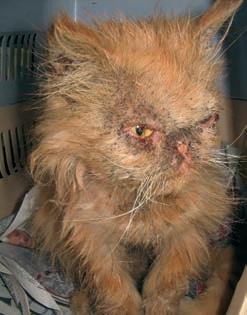
“Susie, a Labrador/Staffy cross (pictured above), was badly burnt in a house fire, but made a good recovery; and the dear little cat on the right had everything wrong with him, but survived and thrived.”

• To find out more about the work of ZANE visit www.zane.uk.com
ZANE: ZIMBABWE A NATIONAL EMERGENCY is a UK registered charity working to help the most destitute, vulnerable and impoverished people in Zimbabwe. It is the largest supplier of financial aid to elderly people in Zimbabwe who lost their life savings and pensions in the economic collapse and subsequent hyper-inflation.
[
Helping the forgotten people of Zimbabwe

This includes around 560 frail veterans and their widows who fought for the Crown. ZANE assists with rent, medical bills and food – and, crucially, also provides comfort, advice and support.


6 6
In addition, ZANE funds a clubfoot correction programme, successfully treating over 4,220 children to date. It funds the provision of prosthetic limbs for victims of landmine explosions and assists people with hearing loss. ZANE also funds education programmes including the provision of pop-up classrooms in highdensity townships for children who would otherwise not receive an education. It runs creative therapy workshops for women living in extreme poverty who are victims of political violence and trauma. Zimbabwe remains in a state of crisis. The economy teeters on the brink of collapse. Fuel shortages are commonplace and with food prices escalating, ZANE’s aid is needed more than ever by the most destitute people in Zimbabwe. q
Remember A Charity’s former director Rob Cope commented: “Giving charities their own personalised assets means they can start their own legacy conversations with supporters throughout the year. This dialogue can be crucial, not only in building awareness around gifts in wills, but in helping to break down some of the myths around gift size and flexibility, and inspiring supporters to take action.”
While the consortium’s consumer campaigns to grow gifts in wills run
7 7
throughout the year, activity peaks during Remember A Charity Week with promotion through the campaign’s partners, including its network of over 800 solicitors and will-writers.LucindaFrostick added: “The more charities that come together through Remember A Charity, the more activity we can deliver and the more we can spread the word about the phenomenal impact of legacy giving, inspiring the public to consider a gift in their will.” q
The charity’s chief executive Julie Hughes explained: “Legacies are a crucial source of income for the survival of The Elizabeth Foundation. A personalised campaign brings to life the needs of our beneficiaries and the importance of the work of the charity.”
[THE FIRST WEEK in September saw the 2022 edition of the annual Remember A Charity Week. In common with previous events, this year saw the addition of a number of novel features to promotional activity.
Earlier in the year, new customisable legacy assets were made available to participating charities, such as the poster made for The Elizabeth Foundation (right).

Remember A Charity Week uses tech to personalise the legacy message


A Charity’s director Lucinda Frostick commented: “The Will You? video is one of the many ways we engage with the public and the tools we offer members to drive change and support their own legacy programmes.”RememberA Charity followed the initial video with a humorous and nostalgic consumer-facing creative campaign, taking inspiration from one of the most iconic science-based TV shows from the 70s.
In the lead-up to the week, Remember A Charity launched an emotive video to celebrate the sector’s collaboration in growing the legacy market and helping charities open up conversations with supporters around legacy giving. The video was shared via Remember A Charity’s social channels, and was designed for the charity members of the group to share with their supporters, to spread the word about legacy giving.
The Will You? video highlights the longlasting impact of a legacy gift. It features a range of causes, asking the audience ‘will you make a difference by leaving a gift in yourRememberwill?’
8 8
[WILTSHIRE WILDLIFE TRUST is a charity working to build a sustainable future for wildlife and people in Wiltshire andThebeyond.trustwas formed in 1962 with just seven members, driven by a concern to protect local wildlife and natural habitats. Its very first nature reserve was Blackmoor Copse, Salisbury (pictured), now a Site of Special Scientific Interest (SSSI).
Building a sustainable future for wildlife and people for 60 years
One of the most powerful ways that the community has supported the charity is by leaving gifts in their wills. An astounding one in three animals that reside with them each year has had their care funded by legacies.

Over the last 60 years, the charity has witnessed changes to the populations of some of the country’s most iconic species. Whilst some have declined, others have recovered and flourished thanks to habitat restoration by trust staff and volunteers. Otters returned to Wiltshire in the 1990s, and species like water voles are being helped by the trust’s ongoing Bay Meadows project, which will both improve aquatic habitat and plant hundreds of new hedgerow plants and trees.
The home costs nearly £2m a year to run, and in the absence of any regular government funding, they are left almost completely dependent on donations and fundraising initiatives to keep going.
“This support can transform the lives of the hundreds of vulnerable animals who need our help each year – for as long as they need it. By leaving a gift, your love and compassion for animals can live on.” q
Leaving a gift in your will to Wiltshire Wildlife Trust will help them to continue this vital conservation and education work, manage more land for nature, and keep our natural habitats in the best condition for wildlife and people to enjoy for generations to come. q


• To find out how to make a lasting contribution, please visit edch.org.uk/legacies or contact Gillian MacAulay, Legacies and Individual Giving Manager on 0131 669 5331 or by emailing gillian@edch.org.uk
Legacies and Individual Giving Manager Gillian MacAulay explained: “We simply couldn’t keep going without this lifeline and there really are no words to describe what it means to us when we discover that someone has made that decision to include us in their will.
• To find out more visit
[SINCE ITS FOUNDING in 1883, Edinburgh Dog and Cat Home has relied almost entirely on gifts in wills to keep its doors open.

www.wiltshirewildlife.org/a-gift-in-your-will.Imagecredit–Beverley Heath Legacyprovidegiftsalifeline
Sixty years on, Wiltshire Wildlife Trust has over 23,000 members and 42 nature reserves covering 1,200 hectares across Wiltshire and Swindon. Their membership, alongside generous grants, legacies, donations and sponsorship, enables the trust to restore and manage vital wildlife habitats such as ancient woodland, rare floodplain meadows and chalk streams, and to run regular wellbeing and youth programmes to reconnect people with nature.
THE Smee & Ford Legacy Strategy Summit 2022 took place on 14 June online. It was enjoyed by the many participants as a fantastic day, providing legacy fundraisers with valuable insight into the latest trends in legacy giving and the new landscape of legacy fundraising.
Now in its 5th year, the one-day summit brought together legacy leaders and their teams from the UK and international charities, alongside industry experts, with content specifically researched to provide learning for all delegates, regardless of charity size or legacy income total.
The summit enabled legacy professionals to unlock the maximum value of bequests and discover ‘lost’ legacy estate value, as well as assessing the full potential of their digital marketing channels and online wills offering and establish effective new methods of pledger engagement and donor motivation.
Summit helps fundraisers to seize the full potential of their legacy campaign

Kelly Jones of The Church Urban Fund posted: “It was interesting to hear about how the pandemic has affected legacies and how it could change future trends.”
all of the stats which are so useful to know and taking tips from other legacy professionals on how they steward supporters.”
9 9
“A great event, thank you to all the speakers, hosts and organising team for sharing such amazing work and ideas,” wrote Caroline Robertson of The Brooke Hospice.
[
They also learned how to develop their stakeholder management skills with the senior teams and boards within their charity and grow the resource and size of their team to expand the potential and reach of theirOthercampaign.sessions allowed them to discover how older legacy campaigns can be revived and refreshed to reinvigorate their audience and income potential and to explore the pros and cons of acting as executors for legacyInspirationaldonors.
techniques and guidance were on hand from leading voices in the legacy fundraising sector, via live, interactive sessions and real-time debates, polls and Q&A sessions.
It was hard facts that impressed Lauren Alcock of the regional gifts in wills office of the Woodland Trust, who commented: “I liked hearing

Expressions of interest are currently being taken for next year’s event. q
It provided a full day’s interactive virtual programme designed with fundraisers’ needs in mind, with bonus pre-recorded sessions to watch back in their own time.


Life with MS can be tough. It’s unpredictable, and different for everyone. It’s often painful, exhausting and can cause problems with how we walk, move, see, think and feel. But thanks to support from kind people like you MS research has made huge leaps forward.
If you’d like to join Jackie and Laurence and be part of a community of people bringing us closer to stopping MS – whether that’s through providing information and support, continuing to fight for access to new drugs, or supporting vital future research – please think about supporting our work in the years ahead by including a legacy gift to the MS Society when you next make or update your will.
both agree: “That’s why we chose to support MS Society’s latest gifts in wills campaign, so we can let people know that including a gift in your will to stop MS could help finish the work that’s been started and transform the lives of thousands of people living with MS.”
With your support, the future is bright for people living with MS. Let’s finish the work we’ve started and stop MS together. q
We understand that making sure you protect the financial future of those you love is your priority when writing your will. But over 40% of our income comes from those who’ve also included a legacy gift to the MS Society, and no matter the size of your gift, it’s thanks to support from people like you, that we’re getting closer to stopping MS, transforming lives and making sure our children, grandchildren and future generations will live in a future free from its effects forever.
With ground-breaking discoveries and new knowledge gained on potential ways to repair myelin and protect nerves, along with new projects and clinical trials underway, there’s real momentum and hope on the horizon. We simply can’t afford to stop now as we invest in research to help find treatments that, for the first time, could stop and, maybe one day, even reverse the progression of MS.
11 11
Right now we are funding over 40 projects to help improve diagnosis and treatments, along with providing a wide range of services and support to make sure no one has to face MS alone.

Laurence and Jackie Llewelyn-Bowen’s mothers both had MS, and so they understand the enormous impact MS has on those living with the condition and their families. They understand that one of the greatest challenges is getting people to understand what MS is. Both Jackie and Laurence (pictured above) are excited about the idea of stopping MS, thanks to the forward thinking research that’s being carried out by the MS Society.

• For more information related to gifts in wills and the services we offer please call 020 8827 0374, email legacies@mssociety.org.uk or visit legacies@mssociety.org.uk/gifts-in-wills
From a world with MS to a future free from its effects forever – your will could take us there
[THERE ARE OVER 130,000 PEOPLE living with multiple sclerosis (MS) in the UK, and nearly 7,000 newly diagnosed cases each year.
Laurence tells us: “Including a gift in your will to the MS Society could make a huge difference to the future for those living with MS, supporting the vital research that’s needed to stop this condition.” They

[TODAY, ONE IN 700 BABIES in the UK are born with a cleft lip and palate, the most common form of birth

12 12
Thefamilies.Partially Sighted Society is a national charity that understands this; it has been providing help and support to anybody living with sight loss for over 50 years.

Thedefect.impact on a child’s life as they grow is profound. It may affect not only the way they look, but also their speech, hearing and dental development. And it can leave deep psychological scars.
By funding research, we continue to make headway into understanding why clefts occur and to deliver pioneering new treatments that deliver kinder, more effective and more efficient care for children with cleft lip andBypalate.supporting the development of cleft centres in low and middleincome countries we aim to give children born with clefts in these poorer countries the same opportunities available to children in the UK. Each donation takes us a step closer to reaching our goal. All gifts could have a direct impact on changing the lives of many hundreds of thousands of babies and children around the world.
Leaving a gift in a will is a meaningful way of helping The Partially Sighted Society to help others. Legacies leave a lasting impact on transforming the lives of those living with sight loss. q
Join the research effort
They are there to offer support for both the practical and the emotional impact of sight loss, by phone and in person. They also offer a range of social and support activities to alleviate the social isolation that comes with sight loss.
In the developing world, patients with clefts are frequently not operated on until later in life, if at all. As a result, they may be malnourished and unable to talk well or hear properly. Often, they will be social outcasts.
Please join us and help us prevent clefts for future generations. q
Practical support helps to alleviate the impact of sight loss
Until clefts are preventable, help is available worldwide
[THERE ARE TWO MILLION people in the UK living with sight loss and by 2050 the figure is set to double. Being diagnosed with any form of sight loss is lifechanging and devastating for both the individuals concerned and their
The society’s range of services includes the design, printing and provision of bespoke school exercise books for children, a specialist low-vision and sight test service, and the provision of aids and equipment to assist those living with sight loss to continue to live full and independent lives.

At CLEFT, our vision is of a future where clefts are preventable. Until we get there, we want to improve the lives of those born with cleft lip and palate – in the UK and in poorer countries around the world.

• The value of charitable estates in 2021
Reducing isolation amongst young cancer patients
The data included in the report refers to English and Welsh estates and therefore does not include Scottish or Northern Irish estates or cases.
[ PUBLISHED IN JUNE, the Smee & Ford Legacy Trends Report 2022 is an annual update on legacy trends and covers the period between 2017 and 2021.
• Reported and total legacy income
to the charity: “What’s extraordinary is that 83% of young people diagnosed with cancer experience loneliness during and after treatment, and nearly four in five of them want to interact online with other young people in similar situations.”
Smee & Ford have over 125 years of experience in the market and read through over 5,000 wills each week, identifying and reporting any charitable content. That has enabled them to build an extensive database of legacy giving in the UK.
There were regional variations in the proportion of wills containing legacies, with the national average being 14%. That figure rose to one in five in the South East and South West and dropped to one in 10 in parts of the North West and Wales.
13 13
“The overall picture for 2022 so far is a positive one, and if things follow the same trajectory we could see estate values reaching £19bn by the end of 2022, indicating another strong year for legacy income.” q
[ YOUTH CANCER TRUST provides secure online support activities and residential holidays for young people living with cancer in the UK. Both provide a safe place for young people to share their experience and reduce the sense of isolation that so manyAccordingface.

Young cancer patient Joely said: “I honestly don’t know what I’d have done without the support of Youth Cancer Trust these last few years, I’d have been in a very lonely place. You’ve made so much effort to keep us all together whilst going through treatment. To have friends and you for support at the touch of a button anytime has meant the absolute world! Thank you.” q
Some of the key findings of this year’s report include:
• Regional differences in the total number of charitable estates
Announcing the report, the company commented: “We have the most comprehensive data on legacy giving, which can be used to determine trends in the legacy market, which in turn can help you forecast potential future legacy income and plan your legacy marketing strategy.”

The report shows that last year saw the highest number of charities mentioned in wills for a decade, at 10,670: accounting for over 37,000 charitable estates – also up from last year.
While the value of charitable estates has increased – from £17.9bn to £19.8bn – the income reported from legacies fell to £2.7bn, although Smee & Ford estimate that the real total legacy is more than £3.2bn: a growth of 10.7%.
• For more information visit www.youthcancertrust.org

• The number of charitable estates mentioned in a will
Annual trends report shows a record number of charities named in wills
Nearly two thirds (59%) of wills containing legacies named either one or two charities. The highest number named in one will was 61.
Speaking at the launch of the report at the Legacy Strategy Summit, Smee & Ford’s head of data Mark Pincher commented: “In the first half of 2022 we have seen a similar number of charitable estates to 2021. Although overall estate values are higher than last year, the value of bequests are slightly down due to fewer highvalue estates identified so far.
1. and complete the online interview.
ALMOST FIVE MILLION surgical patients are admitted to hospital every year in England alone, so choosing to leave the Royal College of Surgeons of England a gift in your will can have a direct impact on the future of surgery and in maintaining and supporting the enhancement of surgical care for patients.
1. to ensure the will fully caters for your needs.
1. Go to the RCS England page at www.bequeathed.org/ rcsengland

1. return it. They will check it has been executed correctly and store
1. it securely free of charge.
To get in touch, you can email fundraising@rcseng.ac.uk or if you would like an informal chat, please call Nicola on 020 7869 6086. q
A small charity with a huge heart
[
KIDNEY KIDS SCOTLAND, a very small charity with a huge heart, has for the last 23 years supported Scottish children with renal and urology conditions. The main aim of the charity has always been to enable these children to receive treatment as close to home as possible and minimise disruption to the family unit.
In addition the charity helps hospitals all over Scotland, supplying them with much needed equipment and funding posts recognised as being essential. Chronic Kidney disease is a condition that has no cure and that children and their families must learn to live with.

IMAGINE your child only being able to drink 400mls in one day. That’s less than two cartons of juice – a can of juice is 500mls.
IMAGINE being a parent where you must be home before 8pm every single night to ensure your child gets their daily home dialysis.
IMAGINE LIVING WITH KIDNEY DISEASE
Kidney Kids Scotland can help in many ways
For more information about Kidney Kids Scotland please visit our website at www.kidneykids.org.uk, call 01324 555843 or email office@kidneykids.org.uk
14 14
RCS England have now partnered with Bequeathed and are offering a free will writing service. The Bequeathed service offers supporters a free, fully advised will from an accredited legal professional. It takes three simple steps:
Legacies can support any area of the college’s work; unrestricted contributions can be used wherever the need is greatest and many are in support of an individual project or surgical specialty. Ultimately, RCS England want to understand what their supporters would like their gift to achieve.

Sharing your vision
[
Make surgery your legacy with a free will writing service
IMAGINE not being able to take your family abroad or too far away from the hospital because your child cannot go without their dialysis. This HAS to happen in hospital 3 or 4 times EVERY week.
3. Receive your will in the post – sign it, have it witnessed and
IMAGINE your child spending their birthday and/or Christmas Day in hospital and not being able to see their friends from week to week. q
2. Have a 30-minute telephone/video appointment with a legal firm
IMAGINE your child missing out on school education, social activities, family members’ birthday celebrations, a sibling’s sports day or a family wedding because you need to make sure they receive their life saving dialysis treatment.
They are looking for someone who, in the industry’s opinion, has:
[CAPACITY MARKETING FOR CHARITIES – the organisation behind the National Free Wills Network and its associated Free Wills Month campaigns – has launched a new website. The new site brings a fresh look and feel, as well as simplifying the experience for the user and making the company's services more visible.
Help for those with failing sight

15 15
• Continually put their clients’ interests at the forefront of what they do
The charity produces bi-monthly news magazines and circulars in audio, braille or electronically, which members can read independently. It also encourages blind and partially sighted people to play a fuller part in society. q
options it gives us now and in the future. It's also great to do it under the new, simpler URL of capacitymarketing.com. Hopefully, the new site will enable more charities to hear about our services and as a result benefit from securing extra legacy income.”
which are decided by a panel of judges, this prestigious award welcomes industry professionals to nominate and vote for the person they feel should be honoured for going over and above in their sector.”
Broadcaster and journalist Jennie Bond will return for her fifth year to host the awards. Jennie appears regularly on a wide range of television and radio programmes – from light entertainment to documentaries –and is a former BBC royal correspondent. q
The organisers commented: “Unlike our other award categories,
• Produced something extraordinary that supports the industry
The National Free Wills Network comprises 188 charities, ranging from household names to those with a strong regional or local focus. The purpose of the network is to offer free will writing services to the charities’ known supporters. It is a paid-for wills programme whereby the charities pay for the wills to be written.
The awards comprise 25 categories, including the Industry Champion Award. That category is decided by those working in the industry, voting for which opens in late September. The category was established at last year’s awards, to great acclaim.
Reading, recognising friends and living skills are all affected as your sight is going – and it’s much harder if you live alone.
Along with the new look, Capacity has also taken the opportunity to launch its new domain – now located at capacitymarketing.com.
• Overcome challenges with minimal disruption to the outcome of • their work
Free Wills Month campaigns introduce new legators to participating charities, raising around £15m of future income for sponsoring charities per campaign. Of those legators, nine out of 10 are previously unknown to the charities. q
Legacy professionals look forward to awards
• Championed the wills and probate industry through their work and • conduct
Free wills agency updates its website
MD Richard Millar added: “Capacity recently marked its 20th anniversary [it was established in 2001] so it felt timely to refresh our central website. We are really pleased with the new look and the extra
Operations director Jon Allport commented: “The company is excited to launch the new website, which brings a more modern feel and approach. We know how important it is to communicate the correct message and we feel the new website succeeds in clearly articulating what we do, how we do it, and the value that we can bring to our clients, suppliers and customers.”
There are currently 888 solicitors offering their services in the scheme, which has seen more than 42,000 legacies leading to nearly half-a-billion pounds future income for network charities.
Presented by the publishers of online news title Today’s Wills and Probate, the 2022 awards will again be delivered as a hybrid event, with an in-person ceremony at the Grand Hotel in Birmingham simultaneously livestreamed via The British Wills and Probate Awards website at www.britishwillsandprobateawards.co.uk. They will be taking place on 20 October.
The National Federation of the Blind of the UK (NFBUK) keeps its members in touch with general information, help and updates on what’s going on.

• Made an exceptional and inspiring contribution to the industry over • the past 12 months
[FAILING EYESIGHT is nothing short of a personal catastrophe. Do you have a family member, friend or neighbour who is gradually losing their sight?
• For further information contact NFBUK on 01924 291313, email admin@nfbuk.org or visit www.nfbuk.org
[ENTRIES HAVE NOW closed for the 2022 British Wills and Probate Awards. The awards are celebrating their 5th year, having been introduced in 2018. The awards have become a mainstay of the wills and probate sector, highlighting achievement and recognising excellence in the sector.


The charity understand the wishes of its kind benefactors who have considered them in their Wills. A spokesperson said: “We know they want their generous gift to us to be used directly to save lives, provide the very best of care and to find loving
If you Will, we will
The Suffolk Punch Trust can only continue its work with the help of donations and legacies. As David Clarke, one of the trust’s directors, explained: “Your legacy, large or small, will make a huge difference to the work we carry out, enabling us to care for our horses and continue the breeding programme to secure this wonderful breed.”

q
That stud brought a rich legacy of equine and agricultural history which deserves to be saved for future generations to enjoy. The trust aims to achieve that through a successful breeding programme, supported by funding, education and the outreach facility of its visitor centre.
The Suffolk Punch is the oldest English breed of working horse, dating from the 16th century. Every Suffolk horse can be traced back to a stallion, known as Crisp’s Horse of Ufford, foaled in 1768. The Suffolk horse was developed for farm work and gained popularity during the early 20th century. As agriculture became mechanised, however, the numbers fell and the breed almost disappeared completely.
The aim of the trust is to help save the iconic breed from extinction through its established breeding programme. It is working towards increasing the numbers of horses through normal breeding processes and an artificial insemination programme.
“Sadly we cannot thank those who have enabled this wonderful achievement but are extremely grateful to all those who are currently considering helping us now and in the future to continue our work.” q
It also works to raise public awareness and is training a new generation of professionals to work with and understand the needs of the breed. The Suffolk Punch is incredibly versatile and is now often employed in forestry and ridden work.
18 18
LEGACIES MEAN SO much to the team at Last Chance Animal Rescue. These wonderful gifts have helped them to rescue, rehabilitate and re-home so many abandoned, abused and unwanted dogs, puppies, cats, kittens, rabbits and guinea pigs who otherwise would have had no future.
A new friend for Alan

[
“Legacieshomes.really do provide the gift of life and Last Chance Animal Rescue can now, after much planning and prudent use of funds, offer our life saving services to so many more needy pets. We are delighted to announce we now have a second rescue and re-homing centre in Kent, giving hope and a true last chance to so many.

Trust works to save iconic working horses
[THE SUFFOLK PUNCH TRUST is a registered charity, whose aim is to ensure the survival of the famous horse breed. It was founded in 2002 to save the historic Hollesley Bay Colony Stud.
The conclusion of the report is that: “The last three months have seen indications that the cost of living is starting to affect donors. Although overall giving has held up well, nearly three out of five people are feeling worse off than they were at the start of the year, and 55% are saying it’s harder to donate. When looking at people who are worse off, while only a few have stopped donating, 61% of them are already being more selective with their donations, giving less per donation or making fewer donations.”
A series of graphics illustrate how, despite the general recovery in donations in the months following the pandemic – led to an extent by donations to Ukraine – the squeeze on living standards is likely to be reflected in reductions in donating, whether that be more targeted giving, smaller donations or a cessation in giving altogether by some donors. The highest-hit segment of giving was that of regular donations, upon which the charity sector depends.
[THE COST OF LIVING CRISIS is taking a significant toll on the finances of people across all walks of life. Charitable donations have suffered a significant effect, with 78% of those who are struggling financially having reduced or halted their giving.
q
The report finds that the pressure on people’s disposable income is continuing to grow and it is going to carry on having an impact on the amount they are able to donate, more than their desire to donate. The solution is, the report finds, for charities to focus on what they can control to help keep donation levels high.

In his foreword, Enthuse founder Chester Mojay-Sinclare said: “Active donors continue to make up the bulk of those who are likely to donate, with 88% of recent donors planning to give again. For those who have not donated in the last quarter, 30% intend to donate in the next three months. In general this figure had been steadily increasing over the past few editions of this report – but this is a drop of 5% on the last quarter. It is another data point that indicates the cost of living is starting to bite on donors.”

Charities gird their loins to ride out the cost of living crisis
The effect of the reduction in donations is analysed by the latest Donor Pulse, the quarterly report from Enthuse, the fundraising, donations and events registration platform, which looks at the public’s changing attitudes to charities and giving. Trusted by thousands of charities in the UK and beyond, the report identifies key insights to help charities to develop a successful plan for the next quarter.

19 19


Cerebra help children to fulfil their greatest potential without barriers to their complete participation in family life and society, offering solutions and advice to help these children enjoy normal activities such as learning and playing. q
With your Will they will find a way –Cerebra’s way
Since 2001 the charity has been able to help some 50,000 children and their families find a better life together
21 21
CEREBRA IS DEDICATED to helping families who have a child with a brain condition discover a better life together. They work with families, academics and practitioners to fund life-changing research and empower lives.


[
They fund life-changing research. A premature baby is twice as likely to develop a life-changing brain condition and with 60,000 babies being
born prematurely in the UK each year, their aim is simple – to reduce this. So far the charity’s research has contributed to a fall in premature births to the extent that 500 fewer babies are being born too soon each year, protecting mother and baby from harm.

SINCE 1976 Devon Horse and Pony Sanctuary have rescued, rehabilitated and cared for many horses, ponies and donkeys – including local Dartmoor ponies. Since 1993 they have also taken in, when asked, retired police horses from the Metropolitan Police or the Avon and Somerset force. Those horses have come to the end of their working lives for one reason or another and the sanctuary provides them with a safe and ‘forever’ future.
Unfortunately, this is a pattern likely to continue and the charity’s outgoings are set to rise due to the constant influx of abandoned and stray dogs coming through their doors – as well as trying their hardest to help owners who can no longer care for their dogs. Not to mention the increasingly high numbers of dogs seized from illegal and low welfare breeders.
to recovery. Ensuring each individual dog gets the very best vet treatment – which is often not the cheapest option – will always remain a priority for the team at Hope.
the reason they can continue to say ‘yes’ to vulnerable dogs and their owners. q
Supporting this charity through promoting gifts in wills will help them to plan and will be
• For further information visit www.dhaps.org.uk
22 22
Every animal can give something back to help alleviate the stresses of life, so in reality helping them can also help us.
“Your legacy gift will help us to give the very best care and attention to our rescued horses, ponies and donkeys, both in the physical and emotional sense. We would like more people in need to spend time with these amazing animals and benefit as we and our amazing band of volunteers do every day and gain a little respite from the rigours of daily life.” q
• Find out more about Hope Rescue at www.hoperescue.org.uk or get in touch enquiries@hoperescue.org.uk

The police don’t have the resources to look after their retired horses, so all funds to keep those animals have to be raised by supporters of Devon Horse and Pony Sanctuary. They are away from the stresses of police life in a wonderful location on the edge of Dartmoor.

Another month facing a £40,000 vet bill
Former police horses are among those given sanctuary

Said the sanctuary’s Chris Hills: “This amazing place provides a haven of tranquillity, and we welcome visitors who may also need a little help and support to come and enjoy time with our horses and ponies.
Hope’s initial fundraising appeals often only cover a fraction of the total costs incurred in nursing dogs through
[OVER THE LAST FEW MONTHS Hope Rescue in South Wales have consistently faced extraordinarily high vet bills due to the number of very poorly dogs entering their care, many of which require ongoing investigations, treatments and surgeries.
[

Investigating alleged criminal offences is the responsibility of law enforcement agencies and reports relating to any threat to an individual’s safety should be shared with the police in the first instance, before notifying the commission in due course, as the commission is not a prosecuting authority.
Trustees must recognise that there is simply no place for bullying and harassment within – or by – charities. Trustees have a central role to play in ensuring their charity has clear policies, and that allegations are handled appropriately and in line with employment and other laws.
q
Those concerned about bullying or harassment are encouraged to take their concerns directly to the charity or its trustees whenever that is appropriate, and trustees are responsible for ensuring they have processes in place to hear those concerns and address the matter.

responseissuesCommissionbullyingfollowingworkinggroup
[IN AUGUST the Charity Commission clarified the respective responsibilities of itself and trustees in preventing and responding to incidents of bullying and harassment in charities. It follows a working group co-chaired by the regulator involving a range of charity sector and other representatives.
Under the commission’s serious incident reporting arrangements, charities should report the most serious actual or alleged incidents
The role of trustees
The commission’s safeguarding guidance sets out that charities with employees should have welfare, discipline and whistleblowing policies for staff, including clear policies and procedures on bullying and harassment.
“We are clear that we expect charities to take action to prevent and deal with incidents, but that we will intervene where there are concerns that trustees are not complying with their responsibilities, including in relation to safeguarding, to protect charities and the wider charitable sector.”
“We welcome the focus from the Charity Commission on its role as our regulator in this context. The clarification provided today on serious incident reporting and the role the commission will – and will not – play in those circumstances is a helpful step.
23 23
of bullying or harassment promptly for the regulator to assess. Workers and volunteers can also make reports to the commission.
Paul Latham, director of policy at the Charity Commission, commented: “There is no place
As a risk-based regulator focused on charity governance, the commission prioritises its involvement to address the highest risk of harm, for example where there are concerns that trustees have not addressed reported bullying or harassment that is widespread and systemic within a charity, or there are concerns about governance issues or potential mismanagement.
The commission has a range of possible responses to such cases – from providing regulatory advice to trustees to the opening of a statutory inquiry. Its focus is on the proper governance of the charity, and it seeks to ensure that the charity’s trustees are responding to the incidents appropriately, including taking necessary steps to prevent further wrongdoing and harm.
Intervention by the Charity Commission
Jane Ide OBE, chief executive of the Association of Chief Executives of Voluntary Organisations, added: “Bullying and harassment is unacceptable in any part of our sector and at any level of it. It is essential that we work collaboratively to establish a zero tolerance approach to bullying and harassment and to ensure that everyone working in civil society, whether paid staff or volunteer, feels safe and respected in their work.
“This is just one part of our sector’s response to the issue, though. We look forward to working alongside the commission and our colleagues across civil society to continue to inform, educate and support our sector in creating a safe and inclusive culture for all.”
for bullying and harassment in society, and there is certainly no place for it in the charitable sector. In a sector grounded on kindness and generosity, this kind of culture is unacceptable.
“I am grateful for the leadership shown by our sector group on this issue and am pleased that we have been working so collaboratively to better communicate the commission’s role and underline the role played by individual charities and the wider sector.
The commission has stressed that its role is not to resolve individual employment issues. Employment matters should generally be raised with the charity through their grievance procedures, followed by action in the employment tribunals if necessary.
Addressing bullying and harassment, which should never be accepted in the charity sector, benefits from collective recognition of the contributions required from individual charities, wider sector leadership, the regulator, government, and other experts. The group focused on the discussion and clarification of those respective roles and responsibilities and exploring ways those involved can take action to address bullying and harassment.
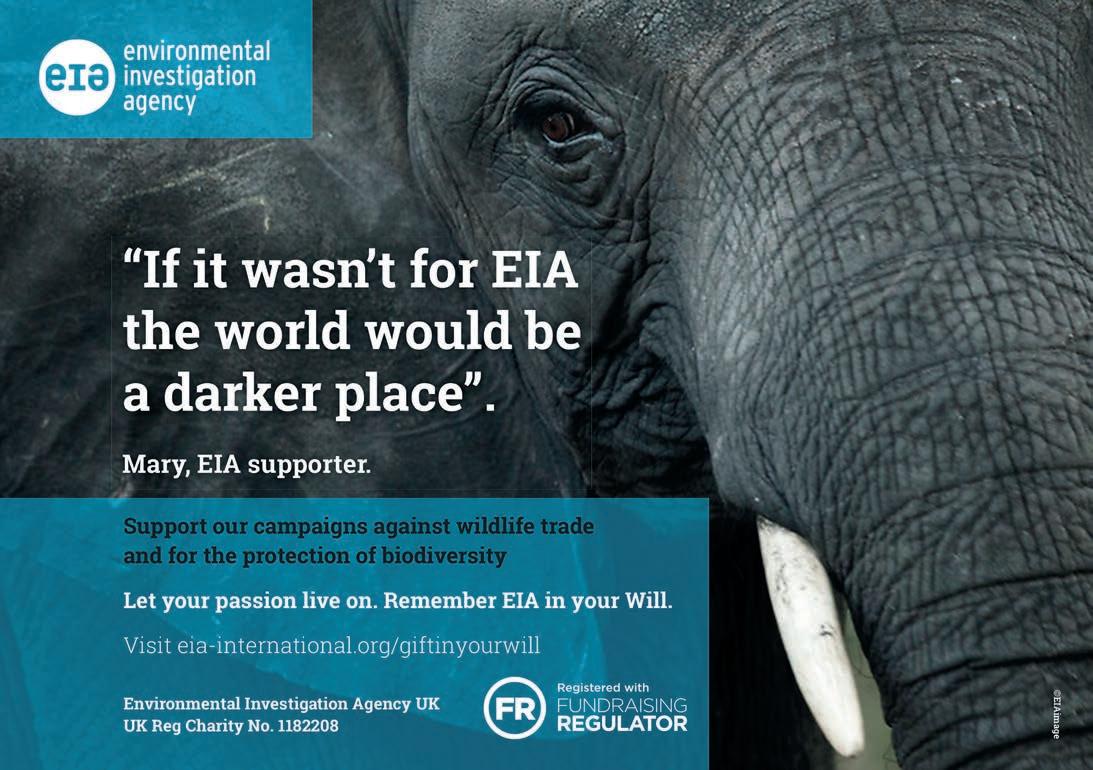
Its undercover investigations expose transnational wildlife crime – with a focus on elephants, pangolins and tigers – and forest crimes such as illegal logging and deforestation for cash crops such as palm oil. The charity works to safeguard global marine ecosystems by addressing the threats posed by plastic pollution, by catch and commercial exploitation of whales, dolphins and porpoises.

the slaughter of pilot whales in the Faroe Islands, to securing a global ivory trade ban at CITES, contributing to the Montreal Protocol on climate change and the adoption of the EU Timber Regulation to protect forests.
INVESTIGATING AND CAMPAIGNING against environmental crime and abuse is the 35-year struggle of charity Environmental Investigation Agency UK.

The scale of the problems they face can be disheartening and the truths they uncover can be shocking. Their programmes of work build on decades of campaign successes and nail-biting undercover investigations by a small group of tenacious activists, from documenting
More generally, they help to reduce the impact of climate change by campaigning to eliminate powerful refrigerant greenhouse gases, exposing related illicit trade and improving energy efficiency in the coolant sector.
Their field experience is used to provide guidance to enforcement agencies and they form partnerships with local groups and activists to support their work through hands-on training.
• For further information tel 0207 354 7960 or visit the website at eia-international.org

24 24
[
Charity campaigns against environmental abuse
The findings of their investigations are used in hard-hitting reports to campaign for improved governance and more effective law enforcement – such as its latest Running Out of Time report, which examines the fast-growing role of Vietnam as a hub for illegal wildlife trade and the country's failure to respond to the crisis.
A gift to EIA in your will is an investment in wildlife and habitat conservation. They have already achieved so much, with your help they will continue to keep the pressure on for generations to come. q
£0 to £25,000 £1,000
• and orders of the Charity Commission under various sections of the
• Mean that when a charity changes its governing document by
That statutory power is being changed by the Charities Act 2022. As a result, charities will be able to pay trustees in certain circumstances for just providing goods to the charity.
• If the donations that can be spent on new purposes – different to the
• Confer trust corporation status automatically to existing and future
Those powers will also be available to Royal Charter and statutory charities.
£25,001 to £250,000 £2,500 £250,001 to £1m £10,000 Over £1m £20,000
• corporation is, or in the future becomes, a trustee
The Act will:
Charity’s gross income in its last financial year
• Charities Act 2011
[ THE CHARITY COMMISSION has published its guidance on the Charities Act 2022 and the changes it makes to the 2011 Act. An overview of the new Act can be found at implementation-planwww.gov.uk/guidance/charities-act-2022-Thechangescomeintoeffectinstages,beginningthisautumn;andthecommissionhasalsopublishedshortsummariesofthechangesplannedtocomeintoforcethisautumn.Theyare:
Sometimes, charity trustees receive a request to make a moral, or ex gratia , payment from their charity’s funds or property, or to waive their right to receive funds or property. That most frequently occurs when a charity receives a legacy and there is evidence that the donor had changed their mind since making their will.
• Trustees to delegate the decision-making for ex gratia
• payments to other individuals or groups within the charity, for
Fundraising appeals that do not raise enough or raise too much
• 2011, the scheme will by default always be under a lighter touch
• table below)
q
Paying trustees for providing goods to the charity
• Services only – for example estate agency or computer
• There will be a simpler process for obtaining the commission’s
• like annual gross income and the amount of the request (see
• Services and associated goods – for example plumbing or
• new legal requirements
Charities will be able to use a new statutory power to change sections in their Royal Charter which they cannot currently change, if that change is approved by the Privy Council.
• making schemes for charitable companies
• painting services and any associated materials such as
• plumbing parts or paint
• Parliamentary process – known as the negative Parliamentary
• being under a moral obligation, to process requests for ‘small’
Maximum individual payment amount allowed without Commission authority
• Theprocedure.CharityCommission will be publishing similar summaries for the other parts of the Act as they come into effect up to autumn next year.
• act without the commission’s involvement if they comply with the
Other changes planned to come into effect in autumn 2022
• authority: that will replace the need for the commission to make a
• Confirm that the commission’s scheme-making powers include
Power to amend Royal Charters
Sometimes, appeals do not raise the amount needed to deliver the aim wanted, or raise too much so that there are funds left over; or circumstances may change and the charity cannot use the donations as theyTheintended.Charities
• Goods only – for example supplying stationery to the charity
If the payment exceeds the amount set out in the table the charity must continue to apply to the commission for authority to be able to proceed.
The Charities Act 2022 will introduce new powers which will enable:•Charities, where trustees could reasonably be regarded as
So, using the statutory power, trustees could be paid for:
• six months for donors to ask for a refund will no longer apply
• The current requirement in some circumstances for charities to wait
Making moral or ex gratia payments from charity funds
Charities already have a statutory power that they can use, in certain circumstances, to pay trustees for providing a service to the charity beyond usual trustee duties, or goods connected to that service.

• amounts without applying to the commission, based on factors
• scheme
• purposes they were raised for – are less than £1,000, trustees can
Act 2022 will reduce complexity surrounding what trustees need to do in these situations. For example:
• corporate charities in respect of any charitable trust of which the
• Parliamentary scheme, under section 73 of the Charities Act
25 25
• consultancy
• example the chief executive or a trustee sub-committee
Charity Act 2022: commission publishes guidance for first tranche of changes
• Update provisions relating to giving public notice to written consents
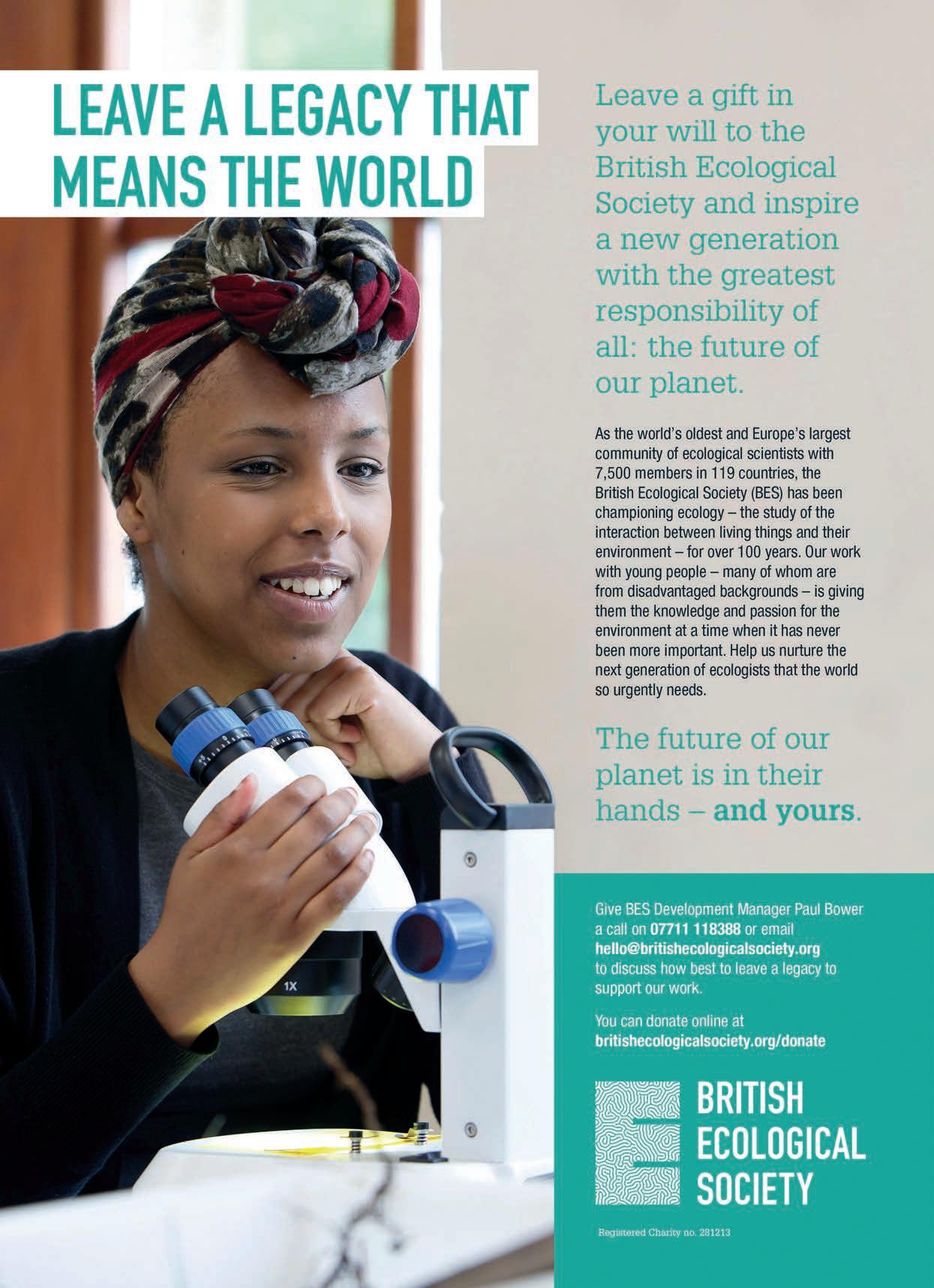
[ THE WORLD is facing huge environmental challenges: from climate change to plastics in our oceans. We need a new generation of ecological scientists to search for the solutions; however, getting a start in ecology is not easy, particularly if you are from a low-income background. Thankfully, the British Ecological Society (BES) – the world’s oldest ecological society – is doing something about it. Every summer BES takes 35 motivated young people from low-income backgrounds on their first residential ecology field course.
Expertise from the experts – support from mentors
The young people get to work alongside experts who are world leaders in their field and with support from mentors who are from similar backgrounds. They spend time with ecologists who are passionate about what they do.
“We take talented students from low-income and black and minority ethnic backgrounds and expose them to the relevance of ecology in our world and the breadth of opportunities and careers open to them,” explained Karen Devine, BES Director of Education and External Affairs.
All donations payable to British Ecological Society Ref: NextGen: BACS: Barclays Putney UK Sort Code 20-90-69. Acc. No. 70208736. SWIFT/BIC BUKB GB22. IBAN GB59 BUKB 2090 6970 2087 36
on task about mapping flooding locations locally. The students will then make decisions on where to build houses and flood defences. Evenings are spent discussing all they have learnt: then out into the night – bat detector in hand.
• Founded in 1913 The British Ecological Society is a Registere d Charity No 281283.

Ecology – the Next Generation summer school is not a holiday. A 6.00am start for bird watching is followed by a day spent out in the field and in the lab. A researcher might lead the group through an area of freshwater ecology, then Environment Agency staff will set a hands-


From council estate to director and ecology champion
The young people then think: I could be that person! “That changes everything,” said Karen Devine.
Hard work – raised aspirations
“We help give them the support and mentoring they need to launch their career, including research or working as an ecological consultant, having never considered taking a degree in ecology or the natural sciences or understood the rewarding careers on offer after theyThegraduate.”
John continued: “It’s great to see a lot of diversity at last. Ecology can be a very white, middle-class profession. From my visit I can see that the Ecology – the Next Generation summer school reaches out to young people who otherwise would not have the same access to support as some of their peers. That is very important: it can open up the eyes of kids to nature, ecology and wildlife.”
How you can help
The Ecology – the Next Generation summer school lasts five days and the young people are taught by leading ecological scientists. Successful applicants pay nothing to attend and they learn vital skills to help them build a career in academia and the green economy. The leading academics and consultants who teach the young people provide their services pro bono.
Cheque: British Ecological Society, 42 Wharf Road, London N1 7QS. Online: britishecologicalsociety.org/donate q
Donations will help BES expand the Ecology – the Next Generation programme so that more talented young people from low-income backgrounds can study and make our world a better place.
Phoebe Whitehead, who is studying at Oxford University and is a mentor, added: “I just love it. I was the first person in my family to go to university. I had no idea what I wanted to do and made bad decisions at first. I took a gap year and changed it all round. The young people on the summer school liked this, hearing that you can take time to think and dedicate yourself to what you’re interested in.”
Summer school develops the ecologists of the future
“It’s inspirational, really,” said John Condron, MD of ecological consultancy Ecology Resources Ltd – which he founded with his wife Naomi. John grew up on an Inner London council estate and is now a sponsor of this year’s summer school. John and Naomi have provided a £2,500 bursary for one of the participants to invest in equipment, books and field courses.
27 27

Although the Cyber Security Breaches Survey 2022 report from the Department for Digital, Culture, Media and Sport (DCMS) revealed the frequency of cyber attacks is rising, the number of organisations experiencing an attack or breach remained the same as 2021 levels. Almost a third of charities (30%) reported cyber security breaches or attacks in the past 12 months.
Report prompts warning on cyber security
29 29
Cyber Minister Julia Lopez said: “It is vital that every organisation take cyber security seriously as more and more business is done online and we live in a time of increasing cyber risk. No matter how big or small your organisation is, you need to take steps to improve digital
The National Cyber Security Centre (NCSC) has issued a note declaring it is not aware of any current specific cyber threats to UK organisations in relation to events around Ukraine, but is encouraging organisations to follow simple steps in its guidance to reduce the risk of falling victim to an attack.
The report also found that almost a third of charities (32%) were using at least one managed service provider but only 13% reviewed the risks posed by immediate suppliers.
[ CHARITIES ARE AGAIN being urged to strengthen their cyber security practices as new figures show that the frequency of cyber attacks is increasing across all sectors. More than a quarter (26%) of charities who suffer attacks said they now experience breaches or attacks at least once a week.
resilience now and follow the free government advice to help keep us all safe online.”
The DCMS said that the government is committed to protecting the UK from cyber threats, which is at the centre of its £2.6bn National Cyber Strategy, by investing in cyber skills, expanding the country’s offensive and defensive cyber capabilities and prioritising cyber security in the workplace, boardrooms and digital supply chains. q

[RONNIE IS Wales Ape & Monkey Sanctuary’s youngest chimpanzee, born on 23 July 1987 in a zoo in Germany. He grew up with his brother and, for many reasons, his brother was sent elsewhere by the zoo. Nobody wanted poor Ronnie.

The sanctuary’s Jan Garen takes up the story: “Sometime after, we were contacted and asked if we had space to take Ronnie. On 9 June 2007 after a long but smooth journey to Germany and back, Ronnie arrived here at the sanctuary in glorious Wales.
• For more info call 01639 730276, email info@ape-monkey-rescue.org.uk or visit the website at www.ape-monkey-rescue.org.uk


“Apart from his sign language, he loves eating, blowing raspberries and sunbathing. Red peppers are a firm favourite!” q

Ronnie from Germany
“Ronnie is a very cheeky loveable boy who has also learnt sign language over time. He makes certain hand movements which mean different actions but can tell you to take off your coat, glasses and hat! He has people in stitches when they visit. They find Ronnie fascinating, as do we.
“Ronnie was quick to make friends and has built up quite the relationship with our female chimp, Nakima. They get on like brother and sister! They
30 30
groom each other, play together and sleep in the same bedroom.
“We are starting to write to the charities that we have found are no longer logging into the FPS charity portal to let them know that they need to act so they are FPS compliant.”
Where full health cannot be achieved a safe home is offered to the donkey for the duration of itsNEDDIlife. is a comparatively small organisation with limited resources, and relies heavily on support from animal-lovers. A bequest will enable more donkeys to be freed from pain and misery.
31 31
Since its establishment in Cornwall, NEDDI has operated a sanctuary specifically for distressed donkeys. In 2001 the sanctuary moved to just the other side of the channel, where the resident donkeys enjoy more space and pasture than would otherwise have been possible.
This sanctuary helps donkeys from Britain, Europe and beyond

In a comment post, FPS manager Subodh Patel wrote: “People that use the FPS can choose to stop contact from any charity registered with the Charity Commissions in England and Wales or Northern Ireland. Charities need to set themselves up on the FPS charity portal if they receive a request through the service to stop direct marketing communications. We publish a list of charities that have persistently failed to access their FPS requests on our website.
Its policy is to try to offer actual, hands-on help to the animals in need, and to restore them to the maximum possible degree of fitness. Once brought back to full health, new homes are sometimes sought for the fit animals.
Charities don’t need to wait to hear from the regulator: they can check they are following good practice by using a few simple steps. Those steps are available to download from the regulator’s website at Ifwww.fundraisingregulator.org.ukacharityhastroubleloggingin, or is not sure whether their organisation is already set up on the FPS, they should get in touch with Subodh Patel for support at FPS@fundraisingregulator.org.uk; tel 0300 3033 517. q
“Recent changes to the FPS have enabled us to better identify those charities that are already set up on the portal – and which have previously logged in and accessed at least one request – but are no longer logging in when needed. By failing to access their FPS requests, these charities are not following the terms and conditions of the FPS or the code. They are also potentially not complying with data protection law, which is a serious charity governance issue.”
ESTABLISHED IN 1990, NEDDI offers care and safety to donkeys –and to a lesser degree, ponies – in Britain and Europe who have suffered neglect, cruelty or maltreatment or who are at risk of such treatment.

[
Changes to FPS have revealed non-compliance, regulator says
q
One of the reasons many charities are not logging in to act on their requests is partially linked to the pandemic, Subodh says.
In addition to rescuing such animals from undesirable situations, within the financial and practical constraints prevailing at the time, they work to try to change attitudes and to educate donkey owners into better practices. For example, since 2016 they have been assisting associates in Kenya to achieve those aims for the working animals there.
[EARLIER THIS YEAR, the Fundraising Regulator announced changes to the Fundraising Preference Service (FPS) in response to an independent review. As part of that work, the regulator found a significant number of charities which are already set up on the FPS charity portal but are not acting on requests to stop direct marketing communications.

“Every day I speak to organisations and I’ve found that, as staff
were furloughed and roles changed, handover of FPS compliance may not have been carried out appropriately. Now that much of this upheaval has ended, making sure you are accessing FPS requests when needed should be a priority.

“From mid-June, we start to move them onto pre-arranged rehab sites – no more than five cubs per site. Those are predominantly rural: often farms and smallholdings.”Thecubsarenow the responsibility of the rehabber that owns the property. Their job is to feed, water and clean out the pen and never to speak. A cautious cub is a cub that will live the longest: if you’ve made a cub tame, you’ve undermined their potential for a safe and long life.
“When they no longer return,” said Trevor, “we must hope they’re doing well. And we generally know they are, because we often see them around for months, or even years. Not that it’s any of our business. We’ve given them that all-important second chance and whatever befalls them, good or bad, is down to them.” q
Instead, it would be more straightforward to concentrate on what’s going on right now, as we are nearing the end of the annual cub season, with almost 300 fox cubs having come into our care. How does that work?
Their project is to reintroduce foxes to the wild

“Cubs grow fast and a brooder will only hold them for so long before their accommodation needs to be upgraded to steel vet cages. And they, too, are soon inadequate for curious, active youngsters who are developing speed and agility – albeit wobbly speed and agility!
IT WOULD BE TEMPTING to try to explain all that is The Fox Project, but that would look a little like a shopping list: wildlife information bureau, humane fox deterrence consultancy, wildlife ambulance service, wildlife hospital etc.
“The next step was day release in a two-storey chicken run and back in the warm at night for a bedtime bottle and a bowl of dog food. They loved that! And then they were moved to a larger foster pen, where muscles could develop and they could feel the weather.
[
“And that is where the serious work begins in encouraging cubs to revert to wild in preparation for late summer release. Given all the changes, our cubs should be growing suspicious of people in general; and their first instinct when a fosterer approaches is to run into the hutch provided. If they begin to get ‘waggy’ with the fosterer, we move them to another. And we keep doing that right through the summer.
Wynn was one of the first cubs the project received in 2021. He is pictured gazing thoughtfully out of his pen at the setting sun, perhaps quietly wondering how he can get out into the big, wide world and do what he wants, rather than what we Founderwant.ofThe Fox Project Trevor Williams takes up the story: “Wynn was picked up next to a dead sibling by a passing dog walker and we assumed they had crawled out of the den in search of a mother that, for whatever reason, had failed to return. He was a keen bottle feeder, and because baby animals need the company and warmth of others, he was grouped with Wendell, Wilfred, Calvin and Bertie.
After four to six weeks on site the cubs are used to the sights, sounds and smells of every other animal in the area and vice versa. That means they can safely be released without danger of attack. Come the night of release, the rehabber simply leaves the door open and walks away.
Trevor continued: “Timing for this final part of the procedure is governed by nature. Just as the breeding season fluctuates a little every year, so does natural dispersal, when wild-raised cubs – by now around five months old – will fan out from their home territory to locate their own: a vital process to avoid in-breeding and necessary if they’re ultimately to find a mate. Release of our cubs is timed to coincide with that point.”
Wynn and his chums were released from a smallholding in East Sussex. Initially, they all returned for support feeding, but it’s seldom needed for long. As they begin to use the instincts nature provided them with, the cubs return less and less frequently.
“As soon as Wynn and Co were weaned off the bottle, the bond with their feeder was broken and they were transferred to one of our team of fosterers. These volunteers have pens in their gardens where they can look after the needs of a litter of cubs without getting directly involved with them.
Colin was very pleased to announce that the charity’s headquarters had moved to Hollesley where the current horses will live and be cared for alongside the wonderful Suffolk Punch horses.
Heartbeat Homes for Horses, Sink Farm, St David’s Lane, Hollesley, Woodbridge, Suffolk IP12 3JR

34 34
• For more information on either charity please contact Tracey Pettitt, stud manager or David Clarke, finance director, on 01394 775495.
Sending out an SOS for the owls

Sink Farm is the colony stud for the Suffolk Punch Trust charity, who continue their important and essential work in preserving this unique breed. q

[
S.O.S. is funded purely by donations, and as a small charity the legacies it receives play an important role in enabling it to continue developing its resources in the interests of conserving owl and other bird of prey wildlife in the UK. q
The S.O.S. owl and raptor hospital at Stonham Aspal is unique in the region. It is specially equipped for the care and treatment of the many injured wild owls and other birds of prey it receives every year as a result of road traffic accidents, mishaps, starvation, trauma, disease, poisoning and sometimes even shooting or trapping.
S.O.S. is regenerating its wild owl nest box scheme that includes building, locating and curating long-lasting, environmentally-friendly nest boxes in appropriate locations to replace the gradual erosion of natural nesting sites.
[ IN 2019, following the retirement of managing trustee Colin Cooper, some of the Heartbeat horses moved to a new home at Sink Farm in Woodbridge, Suffolk.
ESTABLISHED IN 2001, the Suffolk Owl Sanctuary – known, appropriately, as S.O.S. – operates a comprehensive facility for the rescue, care and rehabilitation of owls across East Anglia. It also promotes the need for the conservation of endangered owl species throughout the UK with its Saving Britain's Owls initiative.

Many of the birds can be given a recuperative, short-term pick-me-up before being re-released into the wild. Those that are more seriously injured but stand a chance of recovery are given medical aid and/or surgery, as determined by their vet. The birds are then allowed space and time to fully recuperate in one of the secluded recovery aviaries, before being carefully returned to the wild.
Heartbeat horses on the move
[CREATING A GOOD EXPERIENCE for supporters is an important step when it comes to fundraising. The right communication between a charity and its supporters can mean the difference between a one-off donation, a monthly donation or even no donation at all.
The centre operates a 24-hour rescue service and there are more than 60 enclosures and aviaries, a hedgehog hospital, a seal/swan unit and intensive care facility. It also offers training courses on the handling, care and treatment of wildlife casualties.
Rescue centre offers a lifeline to injured wildlife
However,halfway.”Blackbaud found that most charities do not pay enough attention to the needs of their supporters: in fact, only 3% say they do this
That was the conclusion of the authors of a new report from Blackbaud, The Supporter Experience Report 2022, which analyses how donors’ experience influences their relationship with charities.

35 35
Spring and summer are especially busy, with hundreds of nestling birds being hand reared. Care is taken to rear all youngsters with minimum human contact. That prevents wild birds and mammals becoming too used to people, so giving them a good chance of survival in the wild.
“Part of creating this good experience comes down to how you interact with supporters,” say the report’s authors. “It is not simply a case of broadcasting your information but creating a communications channel that feels like an authentic dialogue between a charity and its audience. This means allowing them to tell you what they want or need from you. It is the charity’s job to meet them
To download The Supporter Experience Report 2022 visit www.blackbaud.co.uk/industry-insights.
q
3,500 wildlife casualties are now treated each year, with the aim of returning them to the wild. Among the many hedgehogs, foxes and familiar garden birds there are deer, otters, badgers and seals. All have been rescued and are rehabilitated. In addition, swans are treated regularly, along with buzzards, peregrines, herons and sea birds.

Good supporter experience is a matter of strategy. Blackbaud’s supporter experience experts know this, they are far more likely to prioritise long-term success over short-term financial targets and have a strategy that is fit for purpose.
Hessilhead is primarily a voluntary organisation. Its volunteers help in many ways: fundraising, building and maintenance, driving patients to the centre and daily cleaning and feeding. q
The report also highlighted a gap in the sector between those who were doing well with supporter experience and those who were yet to embark on that journey. According to Blackbaud, only a quarter of charities say they are ‘experts’ when it comes to supporter experience.
Indeed,always.thereport shows that feedback is under-utilised in the charity sector. Feedback is a great research tool for charities to find out what is working and what isn’t, but only a quarter of charities say they give their supporters the opportunity to feedback whenever possible or appropriate – 4% say they never do.
Once the trust was set up, new aviaries and enclosures were built. A membership scheme proved popular and many volunteers were recruited. The centre now occupies a 20-acre site, including woodland, marsh and open water. That gives a variety of release sites for its Approximatelypatients.
[HESSILHEAD WILDLIFE RESCUE TRUST is situated near Beith, in North Ayrshire. It was set up as a charity in 1986, although its founders Andy and Gay had been caring for injured and orphaned wildlife since 1970, when they rescued a fox cub from a gamekeeper and his dogs. As the number of casualties increased year on year, Andy and Gay needed financial and practical help.
Charities don’t pay enough attention to donor experience, report finds

The Humane Slaughter Association (HSA) plays a vital role in promoting the welfare of animals in markets, during transport and at slaughter, by providing funding and support for essential research.

In collaboration with Defra (the UK Government agriculture department) the charity recently funded a project to develop a more humane method for stunning pigs in commercial abattoirs. High concentrations of carbon dioxide are commonly used for stunning pigs at slaughter, but there has
been some concern that this can cause pain and distress.
GROWING NUMBERS of us are concerned about the welfare of animals that provide us with food. While many people recognise the importance of a good life on the farm, animals may also face welfare challenges ‘beyond the farm gate’.
Some electrical stunning devices are available, but they have not yet been thoroughly validated. For other animals such as octopus and squid (cephalopods), the situation is even more dire with no routine stunning methods available.
The pig issue
Practical and international
The HSA is funded solely by donations and legacies from members and supporters. With your help, they can continue to make practical and lasting improvements to the welfare of all food animals. q
Promoting animal welfare beyond the farm gate

Protecting crab and lobster welfare
36 36
The HSA is dedicated to bringing practical and lasting improvements to the welfare of food animals around the world. They work with the livestock industry and animal welfare scientists globally to deliver training and advice on the welfare of animals during transport and at slaughter. They are currently working with colleagues in China, the largest consumer of meat in the world, to deliver training and advice to undergraduate students and those currently working with food animals, to improve the welfare of millions more animals.
An alternative method – Low Atmospheric Pressure Stunning (LAPS) –was proposed to be more humane, but the research found that LAPS is unlikely to be a humane alternative to carbon dioxide. Whilst disappointing, this provides crucial evidence to protect the welfare of pigs at slaughter and to shift the focus of future research to find other potential improvements.
[
At present, crustaceans (crabs and lobsters) are often killed by boiling or carving without first rendering them unconscious or ‘stunning’ them.
The UK recently recognised that these species are sentient – in other words they are capable of both negative and positive experiences. Therefore, it is vital that we protect their welfare and minimise suffering. To achieve this, the HSA has provided funding to support two research projects which aim to identify and scientifically validate humane stunning methods for these species.
© Brianna Gaskill
Every year, it is estimated that millions of rats and mice are killed as ‘pests’ in the UK alone. Despite the large number of animals affected, until now very little information has been available on the welfare impacts of common control methods being used in the UK.
A study, co-funded by UFAW, found that glue traps and chemical rodenticides were amongst the worst methods of rodent control in terms of animal welfare impact. The research findings provided vital evidence at an opportune moment as the Glue Traps (Offences) Bill was being debated in parliament. Subsequently the Bill has been passed and glue traps will be banned for public use in England.
Comfortable environments for laboratory mice
A scientific approach to animal welfare
Traditionally, laboratory mice have been kept in barren cages and are housed at about 21ºC – but they actually prefer to be much warmer. UFAW-funded research showed that rather than turning up the temperature, the best way to allow mice to keep warm and enliven their environment was to provide materials like shredded paper so they could build a nest.

This provided enrichment and allowed them to regulate their temperature just as they would in the wild. The work has improved the lives of millions of mice who are now routinely given nesting material.
[ MOST OF US care deeply about animal welfare and want to do the right thing for animals, be it those we eat, those we experiment upon, or our much-loved pets. But simply caring about animals isn’t enough; to guarantee their welfare we also need to know what makes animals’ lives better orAtworse.theUniversities Federation for Animal Welfare (UFAW) their vision is a world where the welfare of every animal affected by humans is maximised through a scientific understanding of their needs and how to meet them. They strive to answer such fundamental scientific questions about animal welfare through funding innovative research as in the examples below.
37 37
These and other projects also provide invaluable PhD training for researchers around the world, demonstrating UFAW’s commitment to developing the next generation of animal welfare scientists.
Welfare impacts of rat control methods
The charity is also passionate about spreading the animal welfare science message. For instance, many breeds of companion animals suffer inherited conditions. UFAW compiled a database of these issues which is invaluable to professionals and pet owners alike in understanding which conditions affect which breeds – visit the website at www.ufaw.org.uk/genetics
UFAW is funded solely by donations and legacies from members and supporters. You can support science in the service of animal welfare by donating to support their work or leaving a gift in your will. q

Wild Futures’ holistic approach makes them unique – providing sanctuary to rescued
38 38
For some species, it is too late. The future of all that remains lies in our hands, so leaving a legacy to Wild Futures is the gift of life and a future for primates and our wonderful planet.
[ FFOREST UCHAF HORSE & PONY CENTRE – aka The Pit Pony Sanctuary – are a small group of volunteers in Wales who help all the needy horses and ponies they can with meagre resources.


“Over the years we have taken in numerous needy horses and ponies, including some old pit ponies. Our only surviving pit pony ‘Spike’ toiled in several small mines in the Swansea Valley. Although elderly, and needing tender loving care, he is in good health now and enjoying his life at the centre.

“We have been a charity since 1991, but our team has been doing this work since the 1960’s,” explained the charity’s founder Roy Peckham.
monkeys, supporting projects overseas, campaigning for primate welfare, educating to protect primates worldwide and promoting a sustainability and ethical ethos.
Legacies – the gift of life
They receive no government funding, so the generosity of those that remember Wild Futures is essential to enable them to continue their work. A legacy can be the gift of a life worth living and a wild and safe future for all. q

• For further information visit www.pitponies.co.uk
• For more information call 01503 262532, email giving@wildfutures.org or visit the webiste at www.wildfutures.org
[ANIMAL CHARITY Wild Futures rescues and offers sanctuary to monkeys who have suffered abuse and neglect. They are dedicated to protecting primates and their habitats worldwide – primates are endangered due to climate change, habitat destruction and the bush-meat and pet trades.

Giving horses and ponies the life they deserve
“Help us make success stories like Spike’s. Our donors change lives, and you can, too!” q
“We found pit ponies still at work in the small private mines in Wales and became their salvation by creating The Pit Pony Sanctuary
The evaluation of Wellcome’s anti-racism programme has now reported. It found ‘some positive behavioural and practice shifts’, but concluded that ‘there has been insufficient action taken to allow this commitment to take root’. It highlights evidence of microaggressions and other racist behaviours experienced by staff andWellcomegrant-holders.hasconsequently announced further anti-racism actions. They include a firm commitment to apply positive action principles to funding decisions, so that when applications are of similar merit Wellcome will favour those which broaden the diversity of the pool of people it supports. That will come into effect by September 2023.
Dr Jeremy Farrar, director of Wellcome, said: “Wellcome is still doing too little to use its power and influence to counter racism. We have fallen short of commitments made to colleagues and to the research community. As a consequence of us not doing more
Back in June 2020, Wellcome publicly recognised that it had perpetuated racism, acknowledging that there is structural racism within the organisation and the wider research system.
Wellcome accepts it must do better to counter racism
Wellcome pledged to become an anti-racist organisation, with a programme of work including the creation of anti-racist principles and an anti-racist toolkit, anti-racism training for staff and an external evaluation of progress as a research funder and employer.
The evaluation was conducted by The Social Investment Consultancy and The Better Org with advisory from Ngozi Cole of Lyn Cole Consultancy.
“We thank Wellcome staff and grantees who participated in this evaluation, particularly those for whom this process required an additional emotional and mental input. Anti-racism is a continual journey, which requires vulnerability, transparency, accountability and a commitment to changes to practice (and not just process).
“We wish Wellcome well on this journey, and look forward to seeing transformative changes to their internal operations, and their influence on the external global health funding landscape.” q
[AN EVALUATION of progress on anti-racism work at one of the world’s largest charitable trusts Wellcome has found ‘insufficient action’ on the ambitions the funder set out two years ago.
and not acting sooner, Wellcome remains an institutionally racist organisation.“Wellcome has played and continues to play a role in sustaining racism both in its own operations and in the wider research sector. I am sorry for the actions and inactions behind this, and the hurt and disappointment these have caused. It’s clear that unacceptable behaviour still exists at Wellcome. The leadership team, like so many of our colleagues at Wellcome, are determined to change this. We will do better.”
Tina Ajuonuma, founder and principal consultant at The Better Org, commented: “We are pleased to see Wellcome leadership’s acceptance of our report and its decision to accept several recommendations immediately, and applaud the organisation’s willingness to make the full report public and take accountability for taking restorative action in response to the report findings.
39 39

“By leaving a legacy to Paws2Rescue, no matter how small, you can rest assured every penny of your kind donation will be helping dogs, cats and other animals in desperate circumstances both now and in the future. Thank you.” q
They rescue animals –at home and abroad
“We aim to alleviate the day-to-day misery of these unfortunate animals by meeting their basic needs – food, medical treatment and sanctuary – and by supporting shelters in rural areas where resources are desperately needed.”
MAYBE YOU LOVE ANIMALS: maybe you have given a loving home to dogs or cats in need. Perhaps the suffering of animals through neglect, abuse or abandonment causes you pain. If you would like to help create a world that is kinder to all creatures, remembering Paws2Rescue in your will means you will help to alleviate the suffering of animals for years to come.
The mission Of Paws2Rescue is simple: to help animals in need wherever they are. As they are entirely staffed by volunteers, every penny they raise enables them to fulfil that mission over and over again.

programme uses purpose-made educational materials to foster compassion, teaching children to love and respect all living things.
40 40
Bobi before and after being rescued

“So, although our current aim may be to help animals in need wherever they are, our dream is to create a world where no more animals need our help.
But the key to truly ending the misery is to tackle its root causes. Therefore, Paws2Rescue also provide free neutering services for both stray and owned animals, encouraging owners to take responsibility for their pets’ health by preventing unwanted litters of kittens and puppies. Their Veterinary Scholarship Programme funds young people through their university studies to encourage more local vets to work in rural areas in Romania where the need is greatest.
Paws2Rescue’s Alison Standbridge explained: “Although we are a UK- based charity, we recognise that too many animals overseas suffer appalling neglect and cruelty. That’s why, as well as finding loving UK homes for unwanted dogs and cats, we undertake a variety of international projects to reduce the suffering of animals, with a particular focus on Romania and Moldova –countries where animals continue to suffer the most distressing abuses.
[
Alison continued: “Education is crucial to our mission: if future generations are brought up to hold the same antiquated, cruel attitudes towards animals as many of their elders, then the horrible abuses will continue. To break this negative cycle, our successful schools
• grow their digital knowledge and confidence.
41 41
Caring for chelonia
• findings to grant makers and recommend what they need to do
This year, the survey was extensively redeveloped to capture a snapshot of the sector at this pivotal moment of change and to discover where it needs help with digital to maximise its impact.
• to help them move forward with digital so that they can take those
q
Nissa Ramsay is the founder of Think Social Tech, providing independent research, learning and evaluation consultancy. She helps organisations design funding and support services, with a dedicated focus on digital skills development in the charity sector.
Annual digital assessment shows progress, but some concerns
• Understand the key trends in how charities’ use of digital has • changed over the past year, so that they can benchmark their • organisation.
• Gather data on what funding and support needs charities have
[ THE BRITISH CHELONIA GROUP publishes six newsletters a year containing details of meetings, short articles, news items and veterinary notes. Their journal Testudo is published annually and contains original articles and reviews on all aspects of turtles, terrapins and tortoises – their biology, conservation, welfare, veterinary care and husbandry. The group also organises symposia. As well as the yearly appeals in aid of specific international causes in chelonia research and survival, the BCG assists other worthy causes in support of its aims with grants. They invite grant applications from organisations and individuals engaged on the work of chelonia conservation – such as zoos, universities, zoologists and students in this country and overseas.

Introducingsector.the report on the Charity Digital website, the report’s authors Zoe Amar and Nissa Ramsey said: “The sector has had a tough time since we went into lockdown in 2020. In the 2022 Charity Digital Skills Report we wanted to find out more about what support the sector needs, as well as the funding and other resources that funders can provide, particularly for organisations of different sizes, at different stages of digital and for those led by and serving groups facing structural inequity.”
The report aims to:
A main result of the report is that 82% of charities see digital as more of a priority and 72% are using tools, skills, infrastructure and service delivery to progress with digital. However, those with a digital strategy in place is down from the previous year: from 60% to 56%.
Charity Digital CEO Jonathan Chevallier, who contributed to the report, struck a warning note regarding divergence between those with and those without a strategy. He commented: “It is worrying to see the growing digital divide between organisations who are approaching digital strategically and those who are at an earlier stage. I am particularly concerned that many organisations that are less developed digitally and most at risk of being left behind are small charities.” q
The report is published by Catalyst – a collective of individuals and organisations with a shared vision for a digitally enabled and resilient social sector. It is supported by Comic Relief, The Clothworkers’ Foundation, M-hance and Digital Wonderlab.
• more effectively.
[THIS YEAR’S Charity Digital Skills Report has been published, reporting on how charities have coped with increasing digital skills in the face of recovery from the pandemic. Established in 2017, the report acts as an annual barometer of digital skills, attitudes and support needs across the charity

Zoe Amar is widely regarded as one of the charity sector’s leading digital experts. She founded digital agency and social enterprise Zoe Amar Digital in 2013. Zoe is chair of the Charity Digital Code of Practice and co-authored The Charity Commission’s digital guidance for trustees, Making Digital Work
• Track progress made over the past five years and what it means for • the sector.
• Map charities’ digital priorities as we enter the next phase of the • pandemic. How important is digital in their future plans and where • do they see it in their future?
• Measure where charities have skills gaps and what they need to

You choose
• Neurology: funding initiatives to improve diagnosis and treatment, and
Now more than ever, benefactors to The National Brain Appeal can control where they would like their money to go. There are six specific funding areas for which individuals can make a legacy pledge:
Meta is a former National Hospital patient. She had successful surgery for a benign brain tumour there in 1988. Since then both her husband and sister were diagnosed with neurological conditions.

• provide facilities for those with on-going neurological conditions
Legacies represent up to one quarter of The National Brain Appeal’s annual income. “They are crucial to the fundraising work we do,” said chief executive Theresa Dauncey. “We’re extremely grateful for every legacy left to us. Leaving just 1% of your estate can make a very real difference and is an investment in the future. The more money we receive, the more support we can give to the National Hospital, which in turn improves the prospects for those affected by neurological disorders.”
• Hospital and the Institute of Neurology
Meta has made The National Brain Appeal a major beneficiary in her will

• Neurodegeneration: supporting projects which help people with


• Neurosurgery: providing state-of-the-art equipment and facilities for the

43 43
Penelope was diagnosed with multifocal motor neuropathy (MMN) in 2004 at the National Hospital for Neurology & Neurosurgery and attends a day care clinic run by a team of specialist nurses.
• conditions where there is progressive degeneration
• UK’s largest neurosurgery unit
• groundbreaking ideas into better results for patients
For those who do not specify a funding area, their gift can be put towards an area with the most urgent need. Without the generosity and foresight of those who leave a legacy, the charity simply could not support the number of vital projects that it is currently able to. q
The National Brain Appeal’s chief executive Theresa Dauncey


The charity dedicated to raising funds to advance treatments and research at the National Hospital for Neurology & Neurosurgery and the Institute of Neurology – together known as Queen Square – is The National Brain Appeal.

• Technology and innovation: supporting projects which translate

• Education and staff development: investment to provide the best
• Queen Square: new facilities and staff-led projects at the National

• For more information about legacies and the National Brain Appeal, contact info@nationalbrainappeal.org or view the legacy section of the website at nationalbrainappeal.org/legacy
The driving force behind the charity’s work is the aim to improve the outcome and quality of life for everyone affected by a neurological condition. They include brain tumours, stroke, epilepsy, dementias, MS, motor neurone disease and Parkinson’s disease: all of which have no cure as yet. They look to achieve that vision by funding state-of-the-art equipment, major building programmes and life-saving research – over and above what the NHS can provide.
Giving hope to the one in six
[ONE IN SIX PEOPLE in the UK has a neurological disorder: that amounts to 16.5 million mothers, fathers, sons, daughters, friends and colleagues – more than those affected by coronary heart disease, cancer and diabetes combined. It might be there from birth, be due to a slowly developing illness or the result of a brain injury.
“My own personal journey with MMN makes me want to give back in whatever way I can,” she said. “That is why I have left a gift in my will to The National Brain Appeal. I want to help to fund crucial research into all neurological conditions going forward.”
• opportunities and attract the best people in the field
She explained: “My husband was diagnosed with Parkinson’s and sadly passed away just a few months ago. My sister has multiple sclerosis – she’s been living with it for more than 25 years now. These are cruel diseases for which there is no cure and littleWithhope.”that in mind Meta has made The National Brain Appeal a major beneficiary in her“Thewill.lack of a cure for so many debilitating neurological conditions is a strong motivator for me to want to help,” she continued, “and by leaving a legacy I can be part of something that will provide hope for others.”
Penelope attends a day care clinic run by a team of specialist nurses
THE HORSE RESCUE FUND was founded at a time when many deliveries were still being carried out using horses – which at that time were destined for a bleak fate after they finished their working life.
A spokesperson for the charity commented: “All of our rescued horses are treated as individuals and – being one of the smaller welfare charities – our staff get to know the likes, dislikes and foibles of each horse in our care, so their treatment can be personally tailored to their needs.”
Tiggywinkles was founded by Les Stocker, who sadly passed away in July 2016. In a tribute, Les was described as ‘…a steadfast ambassador, achieving his goal to turn wildlife rehabilitation into a profession’. In another he was referred to as the ‘the spiritual heart of Britain’. He was awarded an MBE by The Queen and given the title Laureate in the 1990 International Rolex Awards for Enterprise, for his work in wildlife conservation and establishing Europe’s first wildlife teaching hospital. More recently, he gained the prestigious Honorary Associateship of the Royal College of Veterinary Surgeons.
Charity carries on the work of its founder
[
The charity’s byline is: Rescue, Rehabilitate, Rehome

[
44 44
In addition, their commitment to practical education plays a vital part in the conservation of wildlife. As an accredited centre, opportunities are available for students aged 16 and over to gain a City and Guildsapproved qualification via their Apprenticeship in Animal Care scheme.
They continued: “We never sell them, so we are able to ensure their wellbeing for the rest of their lives; and if their loaners’ circumstances change, they can always be returned to us. Horses do so much for humans – we try to repay some of that debt; they cannot speak, but we can.”
q
The charity is happy to commemorate all who generously remember the Wildlife Hospital Trust in their will by inscribing their name on a plaque in its Remembrance Garden. Gifts are also welcome in the form of a donation or by becoming a Friend of Tiggywinkles.
For more information visit the website at www.horserescuefund.org.uk or email info@horserescuefund.org.uk q

Funds are urgently needed to continue that work: legacies, covenants, individual donations or corporate funding are all most welcome. Members receive a biannual newsletter keeping them up to date with all the happenings on the yard at Woodstock Farm in Norfolk.
FOR OVER 30 YEARS the famous animal hospital known as Tiggywinkles has been working to rescue, treat and rehabilitate sick, injured and orphaned British wildlife. Over that time they have proved beyond doubt that most wild animal and bird casualties can be saved and returned to the wild.
That history explains why, as well as rescuing horses, ponies and donkeys in desperate need, the fund has campaigned for improvements at horse sales, in transit and for equine welfare generally. Indeed, they often work in conjunction with their fellow organisations on some of the largest equine welfare cases.
After rehabilitation and when they are fit, their animals are placed on loan in private adoptive homes to lead happy, useful lives. Some have gone on to win at prestigious shows, and even appeared on television!
Concern for working horses’ welfare leads to charity’s campaigning role
Although they specialise in hedgehogs – indeed, they derive their name from St Tiggywinkles, the name of their specialist hedgehog ward, inspired by the animal character created by Beatrix Potter – their wealth of expertise in the care of a wide range of species can now be passed on to others.
45 45
The dogs are trained to alert parents when the child’s sugar levels drop dangerously low or rise too high. This not only impacts on the child but also on the family’s ability to function as a unit, with the registered carer becoming the dog.
Hypo Hounds work is becoming nationally recognised and is literally saving the lives of children – one sniff at a time. q

In a free webinar on 8 September, How to build meaningful supporter relationships with data, Tory Cassie and James Glover of M-Hance explored how charities can engage with their supporters on a one-on-one basis, at scale, in order to build meaningful relationships and grow their charity. They showed those attending how to engage with supporters in real time through supporterled experiences, how to win supporters through personalised communications, and more.
• To find out more about the full programme of Charity Digital webinars visit charitydigital.org.uk/webinars
Participants learned how to earn loyalty faster with end-to-end journeys, how to build trust by complying with regulations and personal preferences and how to increase engagement with AI.
[THE MISSION of Three Counties Dog Rescue is to accept, care for and find homes for unwanted, lost and stray dogs and cats and to ensure their wellbeing afterwards. The charity was founded in 1971 and since then they have improved the lives of over 7,500 dogs and cats.

Free webinar will help charities build meaningful relationships
[ HYPO HOUNDS provide a viable health care alternative for children and their families by training a Diabetic Alert Dog to detect the subtle changes in the child’s blood sugar levels.

Every penny raised goes to improving the lives of dogs and cats. Three Counties Dog Rescue is run entirely by voluntary and unpaid helpers, who also meet their own expenses. q
Saving lives one sniff at a time
[ACCORDING TO THE Charity Digital Skills Report 2022:
Tory Cassie is a consultant and James Glover is head of solutions architecture at M-Hance, a Microsoft Gold Partner and leading provider of Microsoft Dynamics solutions tailored for the not-for-profit sector. They have worked with over 80 not-for-profit organisations,
“Charities need more support to learn about their users from website and analytics data”. Around 42% rate themselves as ‘poor’ at that and 40% as ‘fair’. With ‘hyper-personal’ becoming a new buzz word, ensuring supporters receive targeted and relevant communications that tailor to their needs has never been more important.

Before rehoming, all animals are vet checked, neutered, vaccinated, microchipped and kept in suitable conditions. Rehabilitation costs are a major part of the charity’s annual expenditure of over £200,000.
including Oxfam Ireland, Christian Aid, Concern Worldwide, Solent Mind, Tenovus Cancer Care and the Motor Neurone Disease Association – helping them to optimise fundraising campaigns, manage their volunteers, reclaim Gift Aid and VAT, track costs, control purchases and more. q
Healthy animals are never put down. As part of that non-destruction policy, several elderly dogs are kept in long term foster care. However, this means that the charity can incur large veterinary costs to maintain a dog’s health while they await a new permanent home. They now provide boarding and cremation services with profits supporting the Rescue.
Re-homing is their mission
The webinar was suited to all charities, but was particularly helpful to medium organisations looking to grow their capabilities, develop their skills, and progress to the next level in their data and personalisation journey.
46 46
OCTOBER SEES the 20th anniversary edition of think tank and consultancy New Philanthropy Capital’s NPC Ignites conference. This year’s conference takes place over three consecutive afternoons, on 11-13 October. Two afternoons will be online only, with an in-person event at Resource for London on the second afternoon.
Tickets for the event – one ticket gives access to all three days – are available from Eventbrite via the website at www.thinknpc.org/eventsand-training/npc-ignites-2022/. q
Anniversary conference will address cost of living crisis

q
Children England, and David Knott, CEO of The National Lottery Community Fund, will be taking questions on charities and the state.
Choosing to leave a gift in a will is an exceptionally personal way to help. One supporter who chose to leave a legacy to Oak Tree explained her decision: “My lifelong love for animals and the knowledge that my gift will help support and rehome unwanted animals at Oak Tree Animals' Charity in the future gives me a great sense of happiness. I wish more people would support animal charities like Oak Tree and be part of their incredible work. I want to help Oak Tree Animals' Charity continue its wonderful work for many years to come. It is comforting knowing that I will still be able to support animals long after I am gone.”
[
On the first day of the conference, delegates will be discussing ‘charities and society’, and what the climate crisis means for social charities. The panel will include Paul Farmer, CEO of Mind, Manny Hothi, CEO of Trust for London and Kester Russell, chair of trustees of TheOnCowshed.daytwoTorsten Bell, chief executive of the Resolution Foundation, will deliver the keynote address on the theme ‘navigating unprecedented economic change’. Kathy Evans, chief executive of
Legacies provide a lifeline at Oak Tree
[LEGACIES ARE VITAL to the animals of Oak Tree Animals’ Charity: they would not have been able to move to their current home at Oak Tree Farm, Carlisle in 1982 without generous gifts through wills. All donations, regardless of size, provide a lifeline to the animals at Oak Tree. More than half of the work carried out there is paid for by legacy gifts, and they couldn’t help the number of animals they do without them.

To find out more about Oak Tree Animals’ Charity, or to enquire about leaving a gift in your will, visit www.oaktreeanimals.org.uk or email fundraising@oaktreeanimals.org.uk


The predominant theme this year will be the cost of living crisis. NPC’s senior communications executive Gillian Scholes wrote: “We will be igniting thought-provoking discussions and tackling the biggest opportunities and challenges that lie ahead for all of us. One of the big topics for NPC Ignites this year is tackling the cost of living crisis. We think the cost of living crisis is as big a crisis as COVID-19, possibly bigger. We need the kind of mobilisation among funders that we saw at the start of the pandemic, yet right now we’re not seeing this. Our latest guide aims to help you understand the pressures facing people in poverty in Britain, and how to fund effectively to help charities adapt.”
The focus for day three will be ‘where philanthropy and grant-making go next’. Jason Arthur, director of Sir Lewis Hamilton’s foundation Mission 44, will discuss ‘shifting power in philanthropy’, and Fran Perrin, NPC trustee and founder and director of The Indigo Trust, will explore ‘maximising impact through open philanthropy’.
CLEFT

The
New European Distressed Donkey Initiative Ltd 31 The Fox Project 32/33
12
Royal College of Surgeons of Cancer Trust
Trust 29
FRAME
Youth Cancer Trust 13 Kidney Kids Scotland 14 Cerebra 20/21 Hypo Hounds 45 Blood Pressure UK 6 The Partially Sighted Society 12 National Federation of the Blind of the United Kingdom 15 The Respite Association 28 HEALTH & DISABILITY ZANE: Zimbabwe A National Emergency 6 OVERSEAS AID ECOLOGY British Ecological Society 26/27
MEDICAL RESEARCH

Suffolk Owl Sanctuary 34 Heartbeat Home for Horses 34 Hessilhead Wildlife Rescue 35 Humane Slaughter Association 36 Universities Federation for Animal Welfare 37 The Pit Pony Sanctuary 38 Wild Futures 38 Pet Rescue Welfare Association 39 Paws2Rescue 40 British Chelonia Group 41 The Horse Rescue Fund 44 Tiggywinkles 44 Three Counties Dog Rescue 45 Oak Tree Animals’ Charity 46
ANIMAL WELFARE
The Suffolk
range of charities which depend on legacies to carry out their valuable work is a broad one. Those that are represented in this publication are listed below, grouped according to the area of activity in which they operate.

47 47 INDEX
Prostate
Last Chance
Cancer Research 1 Pain Relief Foundation 2 MS Society 10/11
The
The
Punch Trust 18
Wildlife Trust 8 Edinburgh Dog and Cat Home 8 Shire
The National Brain Appeal
48
Concern for Animals 2 Friends of the Animals 4/5
Cancer Prevention Research
Wiltshire Horse
CHILDREN & YOUNG PEOPLE
Animal Rescue 18
42/43
16/17
Society 9
Devon Horse and Pony Sanctuary 22 Hope Rescue 22 Environmental Investigation Agency 24 Wales Ape & Monkey Sanctuary 30


England 14 Caring
The
Catholic
