Published by All Life Media, LLC. Pittsburgh Petconnections was created in 2012. Our mission is to publish a high quality, informative publication focused on the Human-Animal Bond. We support local businesses and also assist local non-profit businesses for pets and people, to give back to our great Pittsburgh communities.
MAGAZINE PUBLICATION STAFF
Carla Mader, Publisher
Marissa Paesang, Graphic Designer
April Minech, Assistant Editor
Bernadette Kazmarski, Kitty Korner Editor
ADVERTISING SALES
Robin Reinfeld, Director of Sales
412.780.2254
CONTRIBUTING WRITERS
Doug Knueven, DVM, CVA, CVC, CVCH
Pittsburgh Veterinary Specialty & Emergency Center
Kristin Hermann
April Minech
Bernadette Kazmarski
FROM THE PUBLISHER
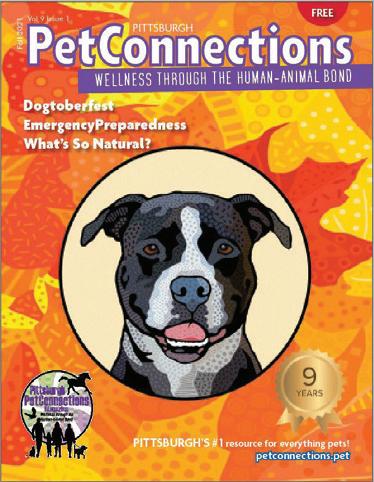
Welcome to our 9th year Anniversary Edition for Fall 2021 Volume 8 Issue 4
WE HOPE YOU ENJOY THIS ISSUE AS IT IS PACKED FULL OF INFORMATIVE ARTICLES AND RESOURCES FOR OUR PET PARENT READERS!
THIS ISSUE
There are many good reads inside! Read about Living with a Fearful dog, by April Minech. Dr. Doug writes about “natural” pet foods, Dr. Pardo covers Hip Dysplasia and Total Hip Replacement in the Dog. Read about Emergency Preparedness for you and your Animals by Bernadette Kazmarski. Also, Washington County Abused Animal Relief Fund (WAARF) is a new 501(c)3 organization created to assist local humane officers with funding. See their article inside! Kristin Hermann writes “On the Bit” and Dressage. Finally, a heartfelt tribute from our Sales Director, Robin Reinfeld for Koby.
NEWS & EVENTS
News
It’s our 9th year anniversary for PetConnections! We have been so blessed to have our very special sponsors, writers, and readers with us through our journey to become Pittsburgh’s go-to resource for pet lovers! THANK YOU!
This issue we welcome new, returning and Dogtoberfest sponsors! Hounds Town USA, Bowser Subaru, Robinson Animal Hospital, Asgard Raw Dog Food, Camp Bow Wow, J & D Waterproofing, UBS Financial Services, Denise Marasco Howard Hanna Realtor, Lucky Paws Pet Resort, Woody’s Dog Wash & Boutique, All Life Veterinary Clinics, Murray Avenue Apothecary, and Central Carpet Distributing.
We are working with our licensing partner dvm360TM magazine to pair great content! The partnership will mean online national and global exposure for PetConnections magazine!
“dvm360 TM is the veterinary profession’s No. 1 print resource for news, product resources, tools, and practice solutions. dvm360TM captures the voice of the profession and delivers relevant, real-world coverage while meeting the everyday clinical needs of small animal and equine veterinarians.”
We hope you enjoy this issue as it is packed full of informative articles and resources for our pet parent readers! PetConnections is published quarterly as follows: March, July, September, and special Holiday issue in early December! Our print copy distribution sites will be replenished every 6 weeks. Our online presence has always been much greater than in print with now over 400,000 impressions! To subscribe to your own personal copy of PetConnections, please contact us below.
Did you know? PetConnections has evolved into a full-service specialized pet media company, providing services for advertising in print and digital marketing platforms to help our sponsors grow their businesses. Contact us below for information on advertising or sponsoring!
Thank you for picking up this copy of PetConnections. Be well and we wish you a happy fall with your family and pets! Stay Safe!
Warmly,
Carla Mader Publisher
Please submit any correspondence to: pghpetconnections@gmail.com
Please check us out on the web & subscribe at: www.petconnections.pet Follow and “Like” us on Facebook!
http://www.facebook.com/PghPetconnectionsMagazine
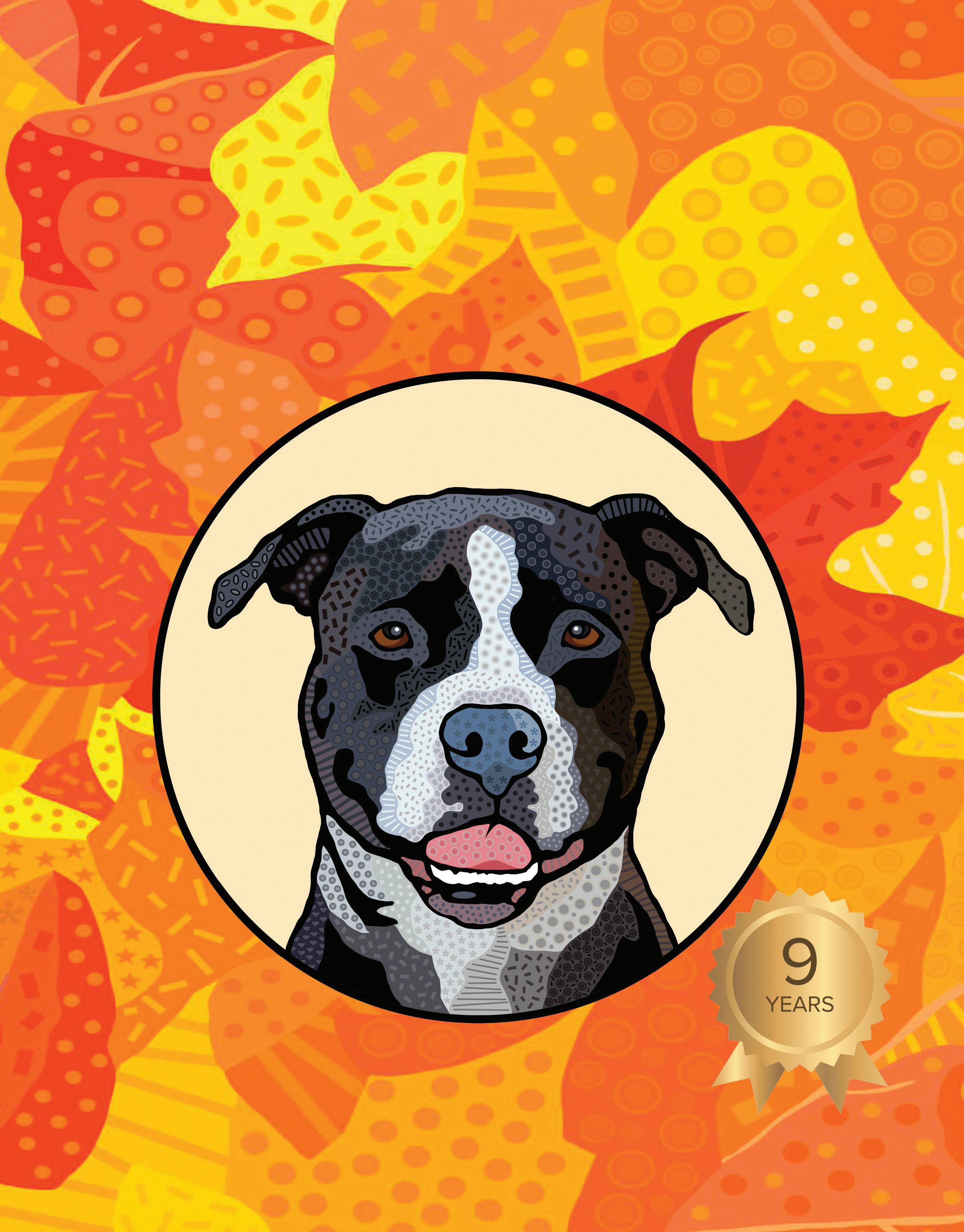
Cover photo by: April Minech
Lessons Learned:
Note: The owner wished to share this story to help shed light on the challenges faced when adopting a fearful dog; the names in this story have been changed to maintain their privacy.
Love can fix everything, or so we’re told, but when it comes to dog behavior, it’s certainly (and sometimes dangerously) a view through rose colored glasses.
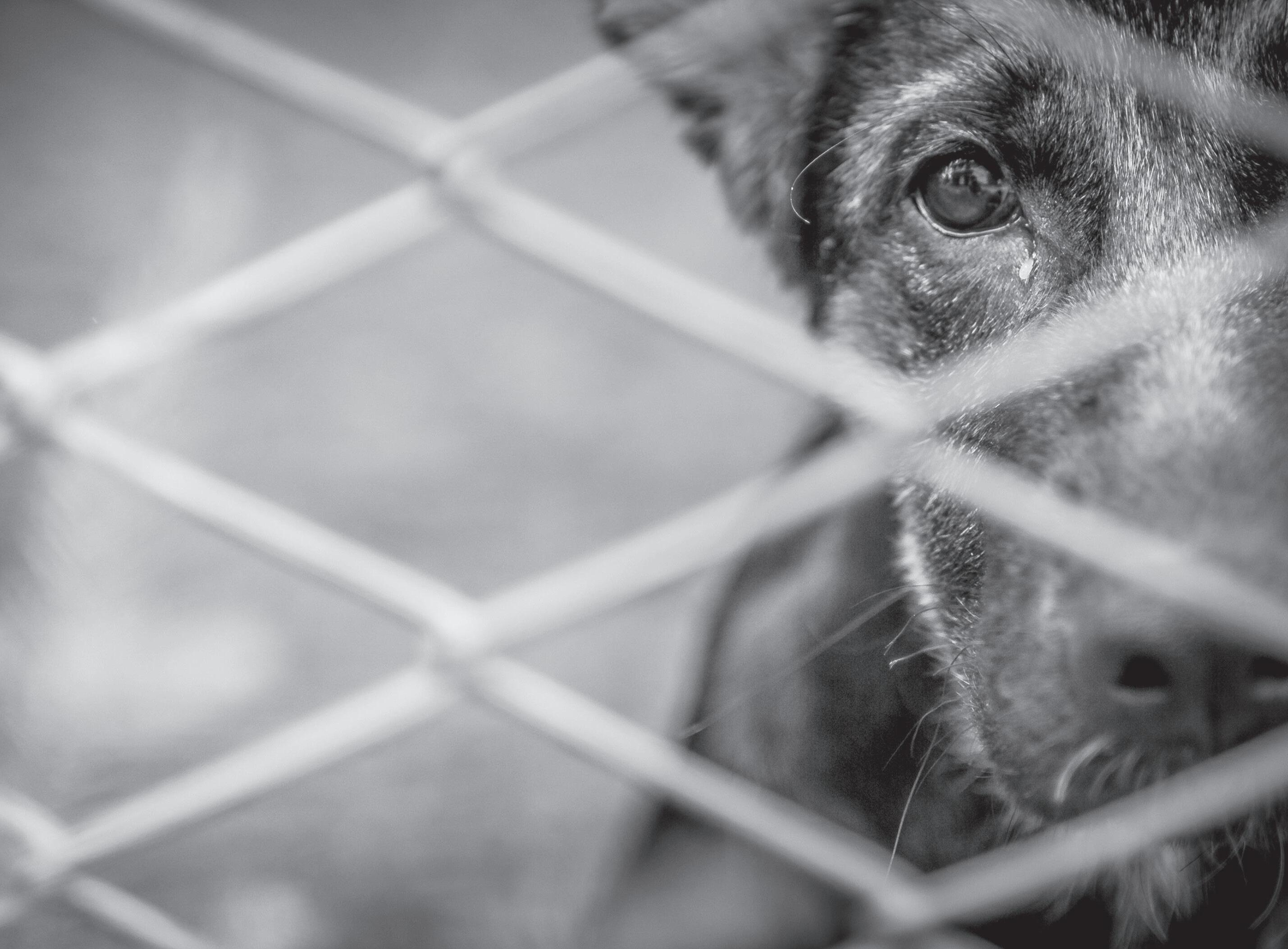
Kathy was going through a difficult patch in her life and hoped adopting and “saving” a dog would be comforting to her and a life changing opportunity for the dog. She drove to the local shelter and walked through the rows of adoptable dogs, most barking and wagging their tails at the sight of a new person. She came to a poor soul huddled against the back of his cage, shaking with fear and making no attempt to come greet her. “That’s the one,” she thought. “He needs a home the most, and I’ve got plenty of love to give.” The adoption papers were signed, the dog so fearful about getting into the car he wet himself, and Kathy drove home with tears in her eyes happy she was able to rescue this trembling ball of fur and give him the best life possible. While that’s what she succeededin doing, their path was very different from the one she imagined.
For the first few days, “Rolly” - shortened from his shelter name of Roland - remained closed down and hid under the coffee table in the far corner of her living room. “He wouldn’t come out to play with any of his toys or for treats or even to eat” explained Kathy. “I could walk up and put his leash on, but he was completely shut down and I had to pull his leash gently to encourage him to go outside to potty. He would go right outside the door, then almost knock me over trying to dart back into the house to his table.” While he appeared to be house trained and know what a leash was, he certainly didn’t enjoy it. And he wouldn’t eat anything when it was offered to him, so Kathy left his bowl out in case he changed his mind. “When I would get up in the morning it would be gone. So that’s how I fed him.”
Living With a Fearful Dog
By April Minech
That’s how it went for the first two weeks she says, each day talking to him gently and offering him everything she could think of. She called the shelter to make sure he was okay, and they confirmed what they had told her at the adoption, that it was normal for any dog to have an adjustment period and fearful dogs take longer than most. So she rededicated herself to inching along. Kathy was excited when small bits of progress started to show. “He started peeking out from the table when I was across the room, then he would take a few steps out and look around before ducking back in and I was so glad he was starting to be a normal dog!” she says. “I starting think about the days we could go for walks and car rides and maybe the dog park”.
Weeks turned into months, and Rolly still trembled when Kathy reached towards him; or heard a new sound or the mailman came on the porch. He had started coming close enough to Kathy so she could pet him, but he would freeze and just stand there, often running back to his safe spot under the table after a few strokes. “It felt like he wanted to make a connection with me but just couldn’t,” she lamented. And he still turned into a wet noodle when she put a leash on him, resigning to the fact he was being forced to go somewhere whether he liked it or not.
After 6 months, she was able to take him on a short walk for half a block if there wasn’t anyone else on the street. “If another dog or a person came into view, he would bark and lash out then try to dart home” Kathy explains. “I was starting to feel hopeless.” At the suggestion of a friend, she hired a trainer to see if Rolly could be helped.
Over the past three years, Kathy has continued to work with the trainer to stay on track handling Rolly’s quirks, even trying anti-anxiety medicine with him.
“I love my boy” she says, “and I’d do anything to help him. I was surprised by what our journey turned out to be. We’ve learned a lot together.”
“The trainer really helped me to look at things from Rolly’s perspective. I used to think what dog doesn’t want snuggles? Or treats and toys and walks?” Kathy says. “Rolly didn’t. And he kept telling me but I wasn’t listening.”Most importantly, the trainer showed her who Rolly was. For example, while she loved holding him and giving him kisses, Rolly didn’t like it at all but felt helpless so he tolerated her. Once she understood that and gave him more space, he continued to open up to her. And he probably hadn’t been beaten as she first suspected by his cowering; some dogs are just born that way.
Pet Memorial Sunday - SEPTEMBER 19TH (see page 28)
Pugtoberfest - SEPTEMBER 25TH (see page 20)
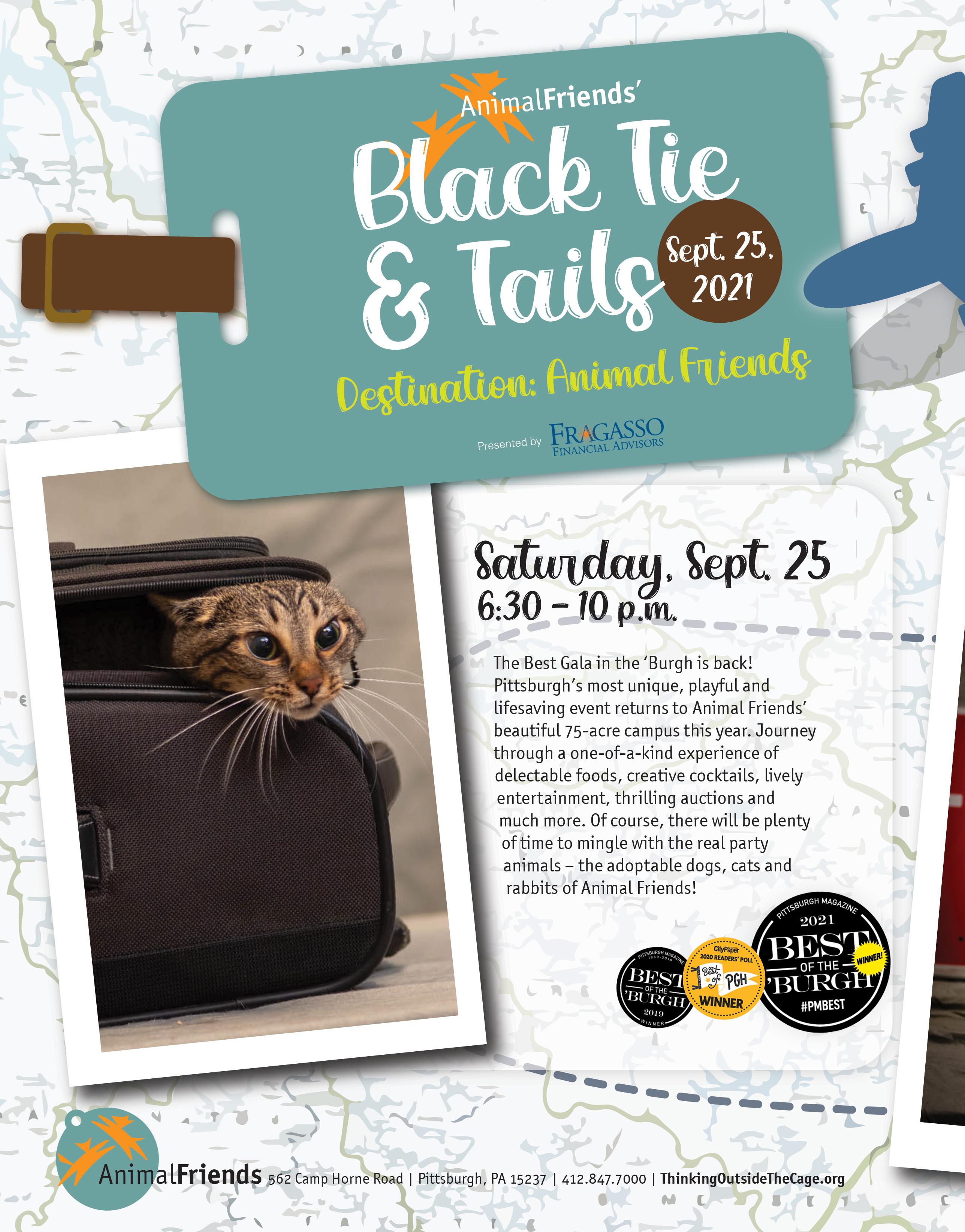
Animal Friends Black Tie & Tail - SEPTEMBER 25TH (see page 8)
Dogtoberfest 2021 - OCTOBER 2ND (see page 7)
The Pittsburgh Pet Expo - NOVEMBER 12-14TH (see page 18)
WAARF
Washington County Abused Animal Relief Fund
Every year hundreds of Washington County companion and farm animals fall victim to abuse and neglect at the hands of their owners. Those that are lucky are rescued from their situations by caring individuals. The cost of their rehabilitation often runs into hundreds if not thousands of dollars.
Washington County Animal Abuse Relief Fund (WAARF) was created in order to assist legitimate rescues and humane officers working in Washington County in paying for medical expenses incurred in the rehabilitation of rescued or legally seized animals. WAARF also assists in helping with medical expenses for K9’s employed by law enforcement in Washington County. Both active and retired K9’s are eligible for funding.
After many years of failed attempts to create WAARF, our newly elected County Treasurer Tom Flickinger agreed to its creation. It is the goal of WAARF to help in the rehabilitation of those defenseless animals who have fallen victim to abuse and neglect.
WAARF is a newly created 501c3 registered with the Pennsylvania Department of State. The current board consists of County Treasure Tom Flickinger , County Commissioner Nick Sherman, Hal Kestler, Esquire, Daniel Kennedy County Information Technology and musician, Veterinarians Mary Ann Bender and Paul Volz and myself Faith Bjalobok Ph.D. Fellow Oxford Centre for Animal Ethics and Founder of Fluffyjean Fund for Felines.
More information about WAARF can be found at https://waarf. org or on face book. The board is committed to working diligently in order to be able to provide financial assistance to as many abused or neglected animals as possible as well as their K9 counterparts.
Faith Bjalobok Ph.D.
SATURDAY, OCTOBER 7 H 11 to 4 p.m.
@ The Waterfront in Homestead (under the Homestead/Grays Bridge!)
HH H RAIN DATE SUNDAY OCT. 8th
OCT. 8th
DogtoberFEST 2019 featured 38 shelters and rescues showcasing their adoptable dogs and 60 vendors! CARMA A (Coalition to Adopt, Rehome and Match Abandoned Animals) is looking forward to the 2021 DogtoberFEST in October. It’s the best place to showcase adoptable animals to the public and prove that adoption is still the best option!
DogtoberFEST 2019 featured 38 shelters and rescues showcasing their adoptable dogs and 60 vendors! CARMA A (Coalition to Adopt, Rehome and Match Abandoned Animals) is looking forward to the 2021 DogtoberFEST in October. It’s the best place to showcase adoptable animals to the public and prove that adoption is still the best option!
Mark your calendars now for Saturday, October 2, 2021 from 11– 4 p.m. with a RAIN DATE on Sunday, October 3 (same time!) at The Waterfront in Homestead.
Mark your calendars now for Saturday, October 2, 2021 from 11– 4 p.m. with a RAIN DATE on Sunday, October 3 (same time!) at The Waterfront in Homestead.
DogtoberFEST
adoptable dogs and Match Abandoned October.
Mark your calendars RAIN DATE on Sunday, Look for Send us an 3rd
By Anthony Pardo, DVM, MS, DACVS
Hip dysplasia and resulting hip osteoarthritis is a common condition in some of the medium to larger breeds of dogs. Often, these dogs can be relatively asymptomatic, but for some, this condition results in significant loss of comfort and function. The hip joint consists of a socket (the acetabulum), and the head of the femur (the “ball”). Normally, these two components fit together tightly and allow for a normal range of motion in flexion, extension, and rotational movements. But, in hip dysplasia, there is excessive play or laxity in the structures that support the hip, leading to wear and tear on the joint cartilage surfaces, and exposure of the underlying bone. As the condition progresses, osteophytes (bone spurs) are formed, the socket fills in with fibrous tissue and bone and the joint capsule that surrounds the femoral head thickens. These changes result in reduced range of motion and exposure of nerve endings in the bone to abrasion that causes pain.
Some of the symptoms of hip osteoarthritis include difficulty jumping or rising from sitting and lying positions, reluctance to climb stairs or jump into the car or furniture. Affected dogs can exhibit a “bunny hopping” gait, and may not sit squarely on their back legs, preferring to roll to one side instead. Play activity may decrease, and they may act grouchy when handled around the hips. Unfortunately, there are several other conditions affecting the rear legs that can mimic these symptoms including torn cranial cruciate ligaments, pain in the lower lumbar spine or other progressive neurological conditions affecting the spinal cord.
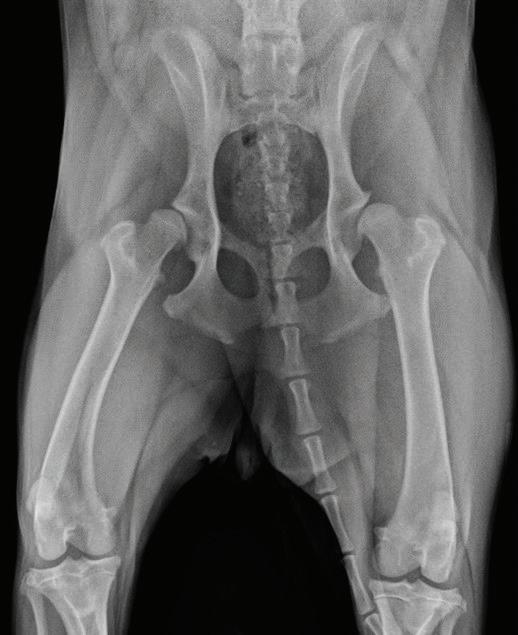
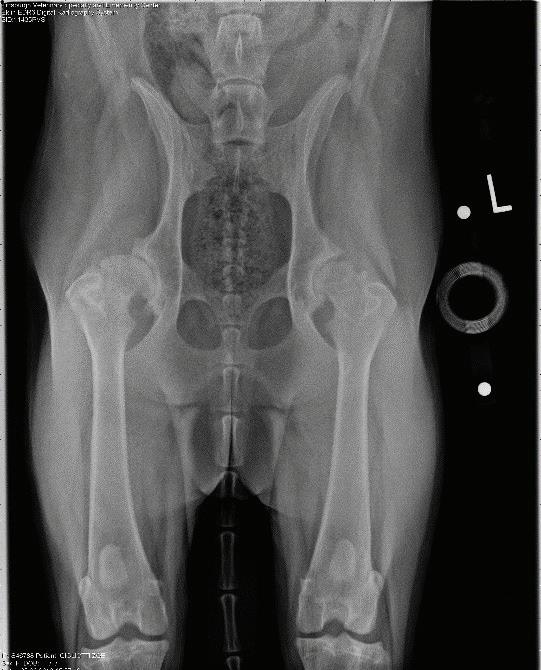
Fortunately, there is help for dogs affected by hip pain from osteoarthritis. First, a diagnosis needs to be made by your veterinarian. This will involve a physical examination and x-rays of the pelvis, if indicated. If you look at the x-ray below, we can see a pelvis of a young dog with hip dysplasia and significant laxity. In the second x-ray, we see a dog with more advanced arthritis in the hip joints secondary to hip dysplasia.
Treatment Options:
Medical management can be considered in the early stages to see if the dog can derive relief from pain thus restoring reasonable function. Medical management consists of weight management if overweight – excess weight can put a huge burden on the hips. In addition, pain can be managed with a combination of antiinflammatory drugs (NSAIDS – of which there are a number safe for dogs), Joint support supplements like glucosamine and chondroitin sulfate, and omega-3fatty acids (fish oils). Controlled and regular activity can maintain muscle mass and mobility but should avoid excesses. Physical therapy such as underwater treadmill exercises can also help maintain mobility and strength. The goals of medical management are mostly directed at managing mild to moderate disability and likely will not work adequately on the severely affected, or in high performance dogs.
Surgical options are directed at pain control and mobility. There are several options for young dogs, which we will not cover in this article. There are two options for mature dogs that we will discuss here - Femoral head and neck excision (Femoral head Ostectomy or FHO) and Total Hip Replacement (THR). In FHO, the femoral head and neck is removed, leaving a gap between the femur and the socket (acetabulum). Movement of the leg remains because the muscles that move the hip joint attach around the upper femur and not on the head. This procedure restores greater mobility and reduces the painful contact of worn bone on bone. FHO does not restore normal function and is best directed at smaller patients that can adapt better to this procedure. It can be done in larger patients when THR is not an option. Post-operative physical therapy is helpful in regaining and maintaining mobility and range of motion. There are few complications from this procedure, but the recovery is relatively long to reach an acceptable endpoint (several months).
Young Dog with Hip Laxity (Dysplasia) (Left)
Older dog with severe Hip osteoarthritis (Right)
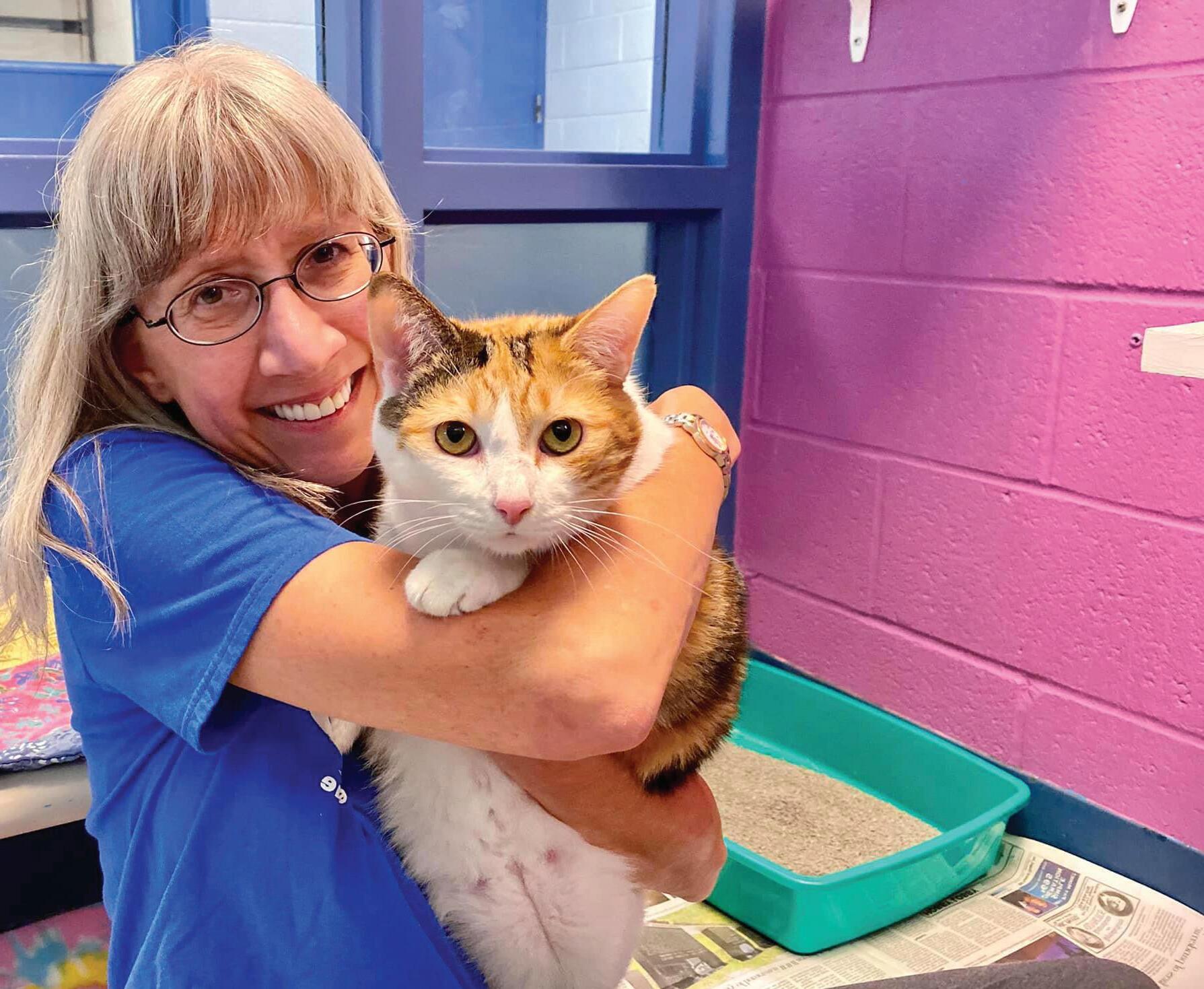
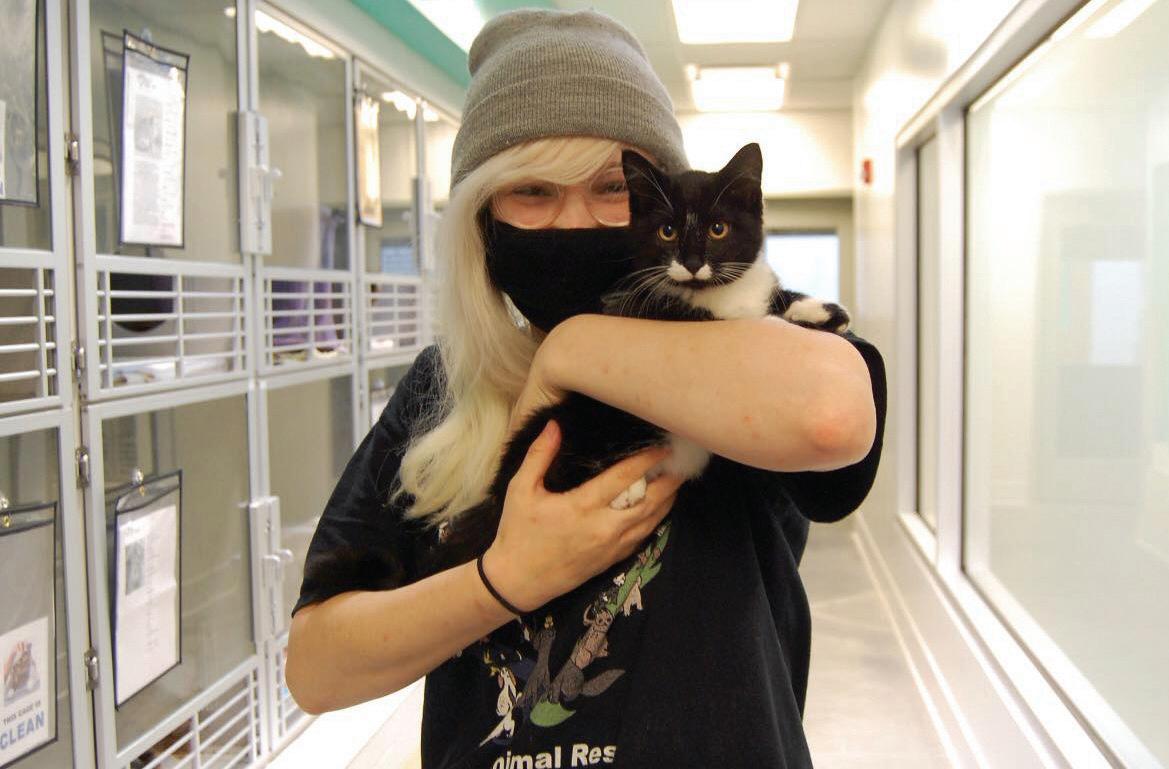
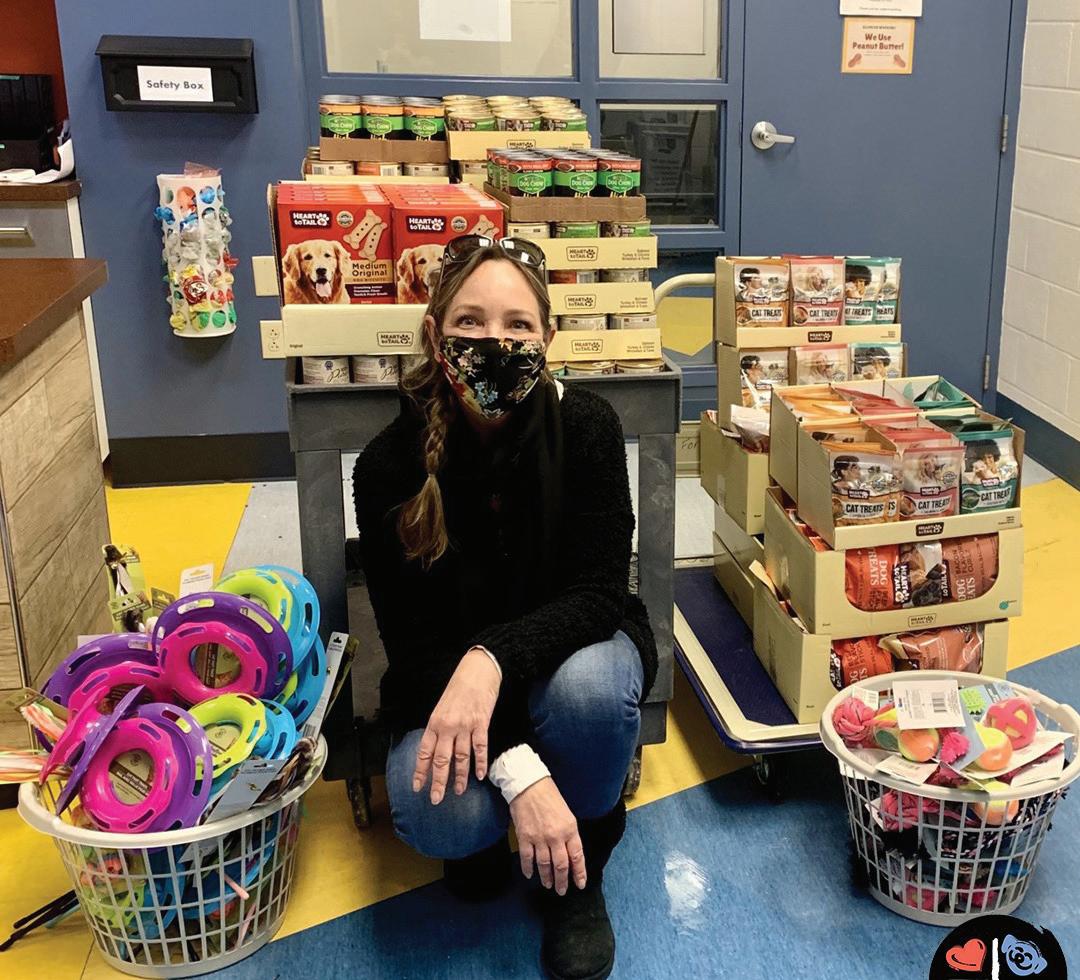
Share Your LOVE of Animals by Volunteering at Humane Animal Rescue of Pittsburgh
Volunteering is such a rewarding experience that provides a great sense of purpose and stewardship. With multiple opportunities and aspects of our volunteer program, finding a way to give back to your community and the animals we take care of is as simple as can be.
With our two shelter locations and Wildlife Rehabilitation Center, we rely on more than 800 volunteers for their time, love, and support. Compassionate, dedicated volunteers are essential to our programs and services across the organization, and it is important to us that volunteering be a meaningful experience for everyone who participates.
Where can you give your love? Getting your steps in by walking our dogs? Cuddling our cats? Opening up your home to an animal that needs a little more comfort while waiting for their fur-ever home, or are you one who likes to walk on the Wild Side? Learn more about all the different ways you can make an impact when you reach out to Humane Animal Rescue of Pittsburgh to find out where you can volunteer.
Making an Impact at Our Shelters
At our shelters, we have an enhanced safety and training program to provide new skills and learning, and to increase the adoptability of our animals. Our animal handling volunteers become more skilled in understanding animal behavior and communications and how to help modify behavior problems and fearfulness. Taking part in an info session, submitting an application, and providing requested background clearances, as well as completing Fear Free Certification are all part of our prerequisites to volunteering at either of our domestic shelter locations.
Much of this process is self-paced, and only takes a few weeks before you’re ready to start making a difference. After mentoring during your first few shifts you’ll be ready to commit to a weekly schedule with a minimum of 2 hours per week in a specific assignment recommended by the Volunteer Manager such as dog walking, cat cuddling and more. We ask that shelter volunteers be at least 16 or older; adults must be able to work independently without direct supervision or with minimal special accommodation. Volunteers under the age of 18 will need to volunteer alongside a parent or guardian.
Thinking About Being a Foster Parent?
Humane Animal Rescue of Pittsburgh turns away no animal in need. This results in an overabundance of cats, kittens, dogs, puppies, and small animals; especially during the warmer months. Thousands of homeless animals enter our shelters each year and many are not quite ready for adoption and require the love and care of a foster family to prepare them for their forever home.
We depend on a unique and dedicated group of foster volunteers to help us save more lives! By fostering a homeless animal, you can experience the joys of being a pet parent without the lifetime of responsibility.
When it comes to fostering we’re looking for volunteers who have spare space for these animals to be separate from your own pets (possible for up to several months), those who have enough free time to set aside for at least an hour every day.
It is important to understand that it can be very difficult to let go once you have become emotionally attached to the animals. Just know that the love you give means they are more likely to find a forever home!
To help you out, Humane Animal Rescue of Pittsburgh does provide all necessary medication and medical care, food and litter (when donations are available) and education on how to care for your foster animal.
Take a Walk on the Wild Side!
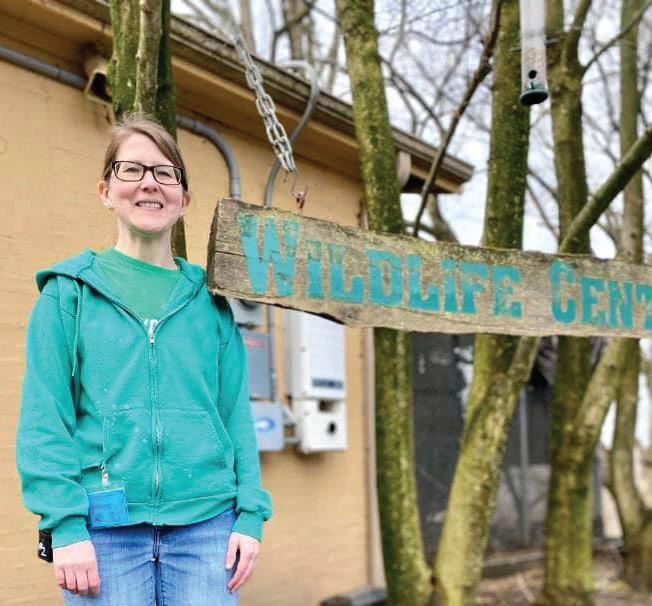
At our Wildlife Rehabilitation Center, volunteers receive hands-on experience working with Pennsylvania’s native wildlife and the satisfaction of helping these injured and orphaned wild animals, who probably would not survive otherwise.
Volunteering at our Wildlife Rehabilitation Center means you’ll be working alongside our menagerie of educational animal ambassadors which includes twenty-six wild and domestic animals who assist our Humane and Wildlife Education Department with a mission of teaching the public about the interesting habits and characteristics of these creatures. Several of these animals also serve greater roles in wildlife rehabilitation, fostering injured and orphaned patients of their shared species in our clinic. In fact, most of our ambassadors were once patients themselves, but sustained permanent injuries or impressions that prevent them from being reintroduced to life in the wild. Some of these educational representatives can attend off-site programs and events, while others remain on our Wildlife Rehabilitation Center’s campus.
Helping out at our location in Verona is as simple as taking part in an info session, submitting an application, and providing requested background clearances, as well as proof of Tetanus vaccination. Like our shelter volunteering, much of this process is self-paced, but should not take any longer than a few weeks. Training in certain areas must also be completed prior to the first shift. Mentoring during the first few shifts is also required for certain areas. Qualified potential volunteers will be asked to commit to a weekly schedule and a minimum of 4 hours per week in a specific assignment recommended by the Volunteer Manager and agreed to by the volunteer.
As noted before, volunteers must be age 16 or older; adults must be able to work independently without direct supervision or with minimal special accommodation. Volunteers under the age of 18 will need to volunteer alongside a parent or guardian.
Where Do I Sign Up
Ready to join the 800 individuals who have chosen to help us come to the rescue of thousands of animals per year?
Learn more about our open volunteer opportunities at our website at humaneanimalrescue.org/volunteer or email volunteer@ humaneanimalrescue.org to get started!
What’s so Natural about “Natural”
Natural
By Doug Knueven, DVM, CVA, CVC, CVCH
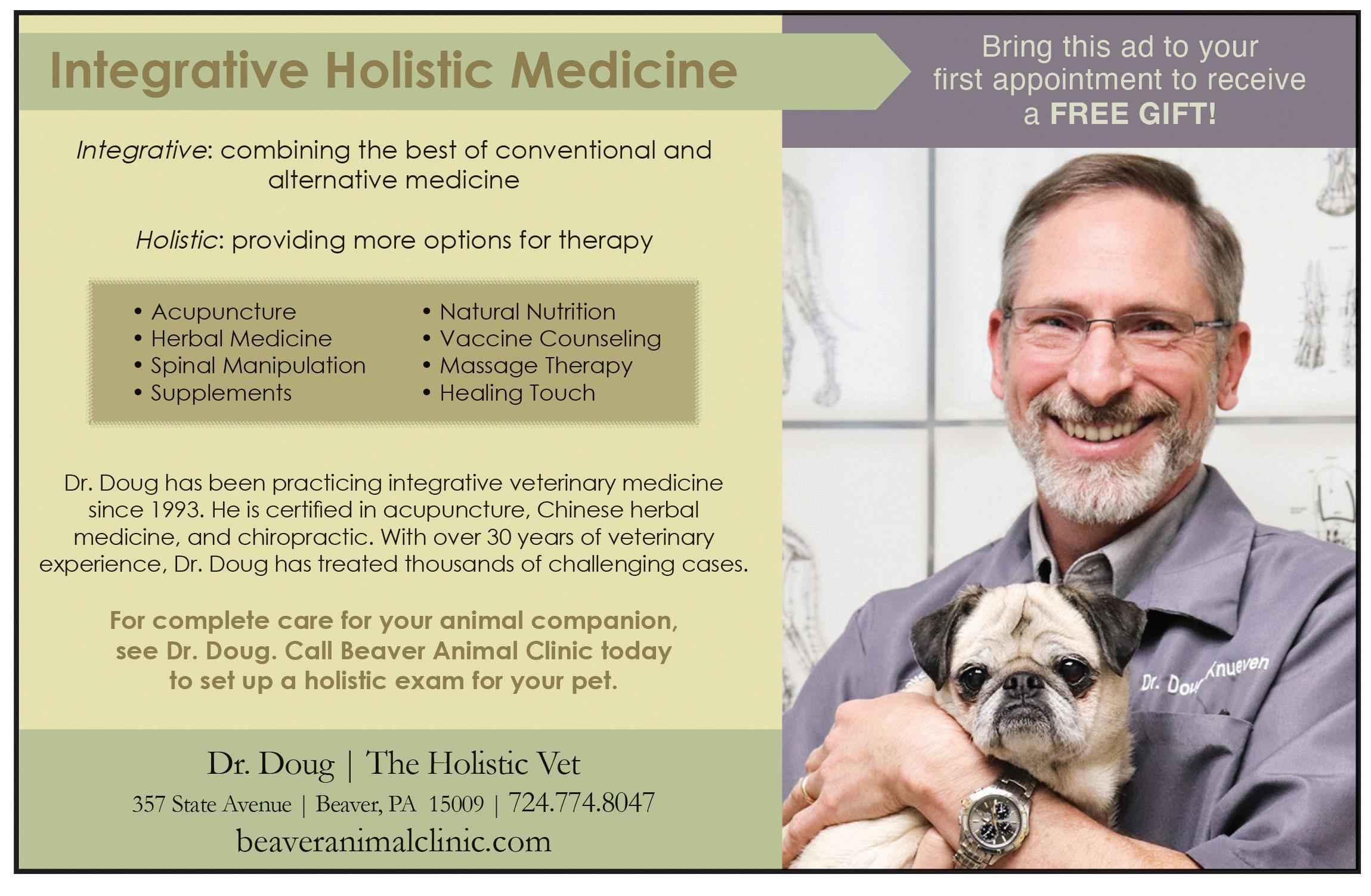
Holistic therapies are said to be natural because they work with the body’s natural mechanisms. For example, chiropractic adjustments gently realign the spine so the animal’s nervous and musculoskeletal systems can return to normal function. Herbs can modulate organ and tissue metabolism back to their healthy state. When acupuncture needles are placed in specific spots on the body, they send signals to the brain to release innate healing chemicals. Because natural therapies such as these work with the body, we see fewer side effects and more robust wellness than is seen with conventional veterinary care. So natural is good, right?
It does seem that the farther we stray away from Mother Nature, the more trouble we get ourselves and our pets into. For example, the unnaturally sedentary lifestyle of Americans not only negatively affects their health, it also leads to canine obesity and behavior problems. Feeding cats dry food goes against their nature to eat high-moisture, low-carb prey animals and contributes to obesity, diabetes, urinary crystals, and kidney disease. Yes, natural is better.
Unfortunately, the word “natural,” especially when applied to all things related to pet diet and health, has become a bit of a buzzword. We have natural pet foods with natural ingredients like natural flavors. There are also natural supplements, natural shampoos, and even natural pet magazines. It leads one to wonder what it really means to be natural.
The word natural can be defined as something relating to or derived from nature. This word is often thought of as the opposite of “synthetic.” Something is synthetic if it has been removed from nature and chemically manipulated by man. So, we consider grain which is grown in Mother Nature’s soil to be natural while plastic is synthetic. Of course, who eats corn on the cob without first cooking it or subjecting it to some other, more extreme processing? Since we’ve changed the corn from its natural state, is it still natural? And what of plastic? It is made from petroleum products which come from dead dinosaurs. What could be more natural than that?
So there seems to be a spectrum of naturalness. While we would all agree that an ear of corn is natural and a plastic cup is synthetic, where do we draw the line between the two? Is corn always natural no matter how it has been processed? The naturalness of corn ranges from an ear of corn, to ground corn, to corn flakes, to high fructose corn syrup, to “corn plastic” used in biodegradable packaging. I would suggest that somewhere in that progression, the corn has ceased to be natural.
The same thing can be said for natural pet foods. Sure, grain, potatoes, or any source of starch could be considered as natural ingredients. They may even be organic. But, after the high-heat processing and extrusion, their naturalness has been corrupted. Even more importantly, it is extremely unnatural for dogs or cats to eat large amounts of starch in any form. As far as I’m concerned, calling any processed kibble “natural” is extremely misleading.
The natural ingredients in natural pet foods often include natural flavors. Chemicals used as natural flavors are derived from more natural sources than are artificial flavors. However, the processing of the raw materials into the flavor chemicals results in unnatural end products that resemble MSG in character. If the natural flavors are so natural, why doesn’t the label just come right out and say exactly what they are? In my view, natural flavors are not natural at all.
Some natural pet foods are proud that there are no preservatives in their ingredient lists. Unfortunately, that can be another deceptive ploy. If a pet food manufacturer buys a raw material like fat, and then adds a preservative like ethoxyquin, then ethoxyquin must be listed as an ingredient. On the other hand, if the company buys fat that is already preserved with ethoxyquin, then the ingredient list does not need to include that chemical. Just one more way that even the ingredient lists on pet food labels can be misleading.
Pet foods are usually not as natural as the packaging would have us believe. Processed kibble and canned foods are certainly not what pets evolved eating and are by their very nature unnatural. I think that balanced, raw pet foods are the best choice when feeding pets and that natural, holistic medical care and lifestyle are ideal.
Pug Rescue Fundraising Festival in PA 2021
Pugtoberfest
Vendors Food Chinese Auction
Contests
Including Curliest Tail, Best Trick, and many more, plus the always anticipated & creative Costume Contests.
Suggested $5.00 donation per person to attend, children under 12 are free. Proceeds benefit Southwest PA Pugs with Special Needs and Guardian Angels Pug Rescue to pay for medical & ongoing expenses for our rescued pugs.
All dogs attending must be up to date on shots, leashed and under owner control at all times. Non-pug breeds welcome to come join in for a day of doggie fun.
Cat Around Town Cat Grooming 412-466-7877 (PURR) | cataroundtown.com
West:
Paws Here Awhile Pet Resort 724-573-4665 | pawshereawhile.com
Kitty Korner
Emergency Preparedness for You and Your Animals
By Bernadette Kazmarski
Weather emergencies have been all over the news in the past few years with extreme fires, floods, ice storms in typically temperate parts of the country, and catastrophic damage following violent storms. These, as well as transportation and industrial accidents, and emergencies involving our own health and welfare, all affect our animal companions’ safety as well as our own. As responsible animal caretakers we need to be prepared for as many circumstances as possible.
Emergency Situations to Consider
Weather
Summer brought us unpredictable and devastating tornadoes across the south and Midwest, and summer storms that turn into microbursts of destructive energy and torrential downpours. As the Atlantic hurricane season continues into autumn, winter will soon follow bringing ice and heavy snows that can trap us in our homes, often without power for days in freezing temperatures. It’s an ideal time to think about what we need to prepare to survive unpredictable conditions or even an evacuation.
Industrial accidents Our highways and railways serve trucks carrying dangerous loads, and our rivers are also paths of commercial transportation as well as our water supply. Accidents, spills, explosions and fires at pipelines, manufacturing facilities and power plants are not common but necessitate neighborhood evacuations, cause power outages and water shortages, and close roads and areas, often for weeks or months, during investigation and cleanup.
Your own health and circumstances
A consequence of these situations may be that you are trapped or need to evacuate, but it might also happen when you are away from home and can’t get to your pets. And not least of all, you may be injured or incapacitated in one of these emergency situations, or you may have an unrelated health emergency and be hospitalized for some period of time, leaving your pets unattended. Emergency preparation includes being ready to care for and move your pets as well as leaving instructions for a trusted person to do so if you can’t.
HOW AND WHAT TO PREPARE
The best time to prepare is now—not when you need to pack up your pets and run.
Someone to care for your pets
Arrange with a neighbor, friend or family member who is familiar with your pets to be responsible for your pets in case you are not home, or are not able to get home. Pre-arrange how/where you would meet and keep in contact. Post that contact information where it’s easy to find in your home if you are incapacitated and rescuers need to know.
Alternate living arrangements for you and your pet
Contact hotels and motels outside of your area about their pet policies and any restrictions on number, size and species. Ask if a “no pet” policy can be waived in an emergency situation. Also check for boarding kennels in case you need to board your pet if no shelter or hotel will allow pets.
Prepare an emergency kit
Gather all the materials you will need to care for your pet and place these items in a waterproof container that is easy to carry. Keep it handy and keep the contents up to date and make sure it is clearly marked as your pets’ emergency kit. Here’s a quick checklist of basic things to gather, and prepare for five to seven days:
• An animal-focused first aid kit which you’ve purchased or assembled yourself.1
• Your pet’s food and any medications, and bottled water.2
• Easily transportable pet beds, portable water and food bowl, toys to reduce your pets’ stress.3
• Information on feeding schedules, medical conditions and any behavioral problems in case your pet has to temporarily stay somewhere away from you.
• A copy of current vaccination records, and contact information of your veterinarian in the event you have to foster or board your pet and need to access records.4
• Current photos of your pet with your contact information in case he or she gets lost.
Some other helpful guidelines include:5
• Have crates, carriers or leashes for all of your pets that are sturdy and able to be secured.
• Keep dogs and puppies securely leashed when outside your home and when traveling in the car.
• Always transport cats and kittens in carriers.
• Make sure your pets are microchipped, and also wearing identification. Keep the contents of your first aid and emergency kits up to date and easily accessible by replacing items regularly— when you buy more food, take the food from the kit to use and replace it with newly purchased food. Do the same with medications and bottled water and any other consumable in the kit.
Keep in touch with anyone you’ve asked to care for your pets and let them know when you are away.
Remember when an emergency does occur keep yourself calm for your own and your pets’ sakes. Chances are it will not, but if it does you’ll be glad you took the time to prepare.
For more information
Several organizations step up to rescue animals after disasters, and all offer information on preparation, including informational flyers and stickers for your door or window indicating the number and species of your pets.
CAT RESOURCE GUIDE
Homeless Cat Management Clinic Schedule July through Decemeber
Our clinic is located at 207 Allegheny Street, Tarentum, PA 15084. At this time, we treat only cats at our clinics. You must call to register prior to any clinic.
CLINIC
REGISTRATION
BY PHONE: call 412-321-4060 and leave a message. Please include your name and phone number in your message. Someone will return your call and complete your pre-registration. HCMT is all volunteer and this may take some time. Clinics fill up quickly and it’s best to call at least two weeks in advance of the clinic you want to attend.
BY EMAIL: Email cathomeless@gmail.com with your name, number of spots you need and which date you are registering for. You will receive a confirmation email ONLY if you are registered. NOTE: dates may be added and are subject to change.
FREE
CLINICS (ferals only)
Sept 18 In loving memory of Tia’s dad Pat Tiani Jr., Oct 16 In loving memory of Art Stina, Nov 13 open for sponsorship, Dec 11 open for sponsorship
FAST TRACK CLINICS
Sep 4, Oct 2, Oct 30, Nov 27
Low-cost spay/neuter and animal services in and around Allegheny County
This is an ever-changing list of resources for pet owners in Pittsburgh and beyond including low-cost spay and neuter programs for pets as well as TNR for community cats, after-hours emergency care, help with veterinary bills, pet-friendly rentals in Pittsburgh and across the US and links to shelters for adoption and other services. This information is provided for reference only and subject to change without notice. Please contact the organization or agency before using their services.
Low-cost Spay and Neuter Organizations and Programs
TNR AND LOW-COST SPAY/NEUTER PITTSBURGH AREA
Homeless Cat Management Team
207 Allegheny St., PO Box 100203, Tarentum, PA 15084, 412-321-4060
http://www.homelesscat.org/
Feral Cats and Rescued Cats. Feral cats must arrive in a humane trap. Check the website for clinic dates. All appointments must be made by calling the phone number. No walk-ins. Ferals: $30.00 Fast Track, no-charge at free clinics. Rescued Cats: Females $55.00, Males $40.00 Both include rabies, earmite and flea treatments. Other services available.
City of Pittsburgh Free Spay and Neuter for City Residents
City of Pittsburgh offers five free spays/neuters to all city residents http://www.pittsburghpa.gov/publicsafety/animal-control/spay-neuter.html
Low-Cost Spay/Neuter Programs at Shelters in Allegheny and surrounding counties
Pet/friendly cats: $65 spay or neuter, includes pain medication – vaccines require are an additional fee.
Feral/Outdoor Package: $50, includes pain medication, rabies, FVRCP, ear tip and flea treatment. Cats must be feral and in a humane trap to receive this service.
Humane Animal Rescue
https://humaneanimalrescue.org/veterinary-care/spay-and-neuter-services/ East End: 66209 Hamilton Ave., Pittsburgh, PA 15206, 412-661-6452 North Shore: 1101 Western Ave., Pittsburgh PA 15233, 412-321-4625 Pet/friendly cats: $70 spay/neuter, rabies, FVRCP (distemper), microchip Feral/Outdoor Package: $50, includes pain medication, rabies, FVRCP, ear tip and flea treatment. Cats must be feral and in a humane trap to receive this service.
Beaver County Humane Society
3394 Brodhead Road, Center Township, PA 15001, 724-775-5801 https://beavercountyhumanesociety.org/tnr-and-owned-cat-surgery-prices Friendly cats: begin at $75. Feral cats: begin at $35 Visit website for more information.
Clarion Paws (Serves Clarion, Forest and Jefferson County) Mailing address: P.O. Box 804, Clarion, PA 16214
Current Location: 11348 Route 322, Shippenville, PA (Clarion River Hill, between Kronospan and Clarion Electric) http://www.clarionpaws.org/programs/spay-neuter/ Monthly clinics listed on website, submit an application. Pets or ferals: $65 spay, $45 neuter. Includes rabies vaccine, ear mite check and treatment and flea treatment. Optional services at an upcharge. Trapping and financial assistance through Spay Neuter program may be available to Clarion, Forest and Jefferson County feral/stray cat caregivers on a case by case basis.
Butler County Humane Society 1015 Evans City Road, Renfrew, PA 16053
https://butlercountyhs.org/clinic/
For current pricing and schedule information please give us a call at 724-789-1150.
Washington Area Humane Society 1527 Route 136, Eighty Four, PA 15330 http://washingtonpashelter.org/ Currently moving into new building.
Low-cost Spay/Neuter Organizations in Allegheny and surrounding counties (alphabetical)
These are organizations which are not day-to-day clinics but organize, host, sponsor or otherwise provide access to spay and neuter services.
Catnip Acres (Greene County)
https://catnip-acres.com/
To schedule a spay/neuter, please call 724-833-0954 and leave a message.
Fix ‘Ur Cat Spay & Neuter Clinic
Low Cost Spay Neuter Washington County, Inc., DBA Fix ‘Ur Cat 18 West Pike Street, Canonsburg, PA 1531
Call 724-405-7FIX (7349) for an appointment. Spay/neuter clinics are by appointment only. Pets: $60 for females, $50 for males Ferals: $50 Download and complete application, mail in for appointment. https://www.fixurcat.org/spay-and-neuter/
Fluffy Jean Fund (Washington County)
Packages at $65 and $85
Call Faith for Available Dates and Appointments (724) 941-5683 press 1
E-Mail: faith.b2@verizon.net http://fluffyjeanfund.weebly.com/ Fund for Feral Cats of Pittsburgh Reimburses partial funds to help spay/neuter feral cats
Pet/TNR: Spay $56, Neuter $37, visit website for details and scheduling. Also offers low cost vaccinations and basic medical treatments. https://spayaz.com/locations/pittsburgh-north-hills/
Find Local Low-cost Spay, Neuter and Veterinary Care on the Internet
Low-cost Neuter and Spay (search by zip) http://neuterspay.org/
Love That Cat (online search) http://www.lovethatcat.com/spayneuter.html
Spay USA http://www.spayusa.org/search.php
Spay and Neuter Early, a Humane Alliance Campaign http://www.whentospay.org/get-your-pet-fixed Get Your Fix.org http://getyourfix.org/
155 Dark Hollow Rd, Waynesburg, PA 15370
Equine Affairs
“On the Bit,” a nuance of dressage!
By Kristin Hermann
A horse on the vertical and working over its back differentiates dressage from other forms of riding. The horse’s nose is on the vertical when the horse flexes at the poll or atlas joint, and its nose is tucked in. And if the horse is tracking up, or taking a full stride under the seat of the rider, the horse is ‘coming through’ into the contact and “connecting back to front.” The horse connects over its back from the hind legs to the bit!
Asking a horse to be on the vertical or on the bit requires a lot of skill. Riders often try to pull the horse’s head in, which can block the hind legs from coming through the horse’s whole body. Certainly, pulling a horse’s head in is not correct. To ride correctly on the bit or the vertical, the horse needs to track up and step under to lift its back. But at the same time, the rider needs to flex or ask the horse to give at the poll. It is not easy asking the horse to move forward and flex at the poll, it does require riding skill.
Horse is taking a full stride, stepping under the rider and literally stretching into the contact.
Not only does asking for a forward rhythm and flexing at the poll require skill, but at the same time, the rider needs to allow the horse to stretch into the contact. As I often say, “who invented this stuff?”
So, how does one get the horse to take a full stride to use its back, flex at the poll, and then allow the horse to stretch into the contact? Well, that’s where the art of riding comes in. First, I teach riders how to “chew the reins out of the hands” at a halt to develop the feel of the horse giving and flexing at the poll. Then they learn how to do it at the trot or in motion on circles and straightlines. Once they can keep the horse on the vertical at the trot, they then learn how to flex a horse at the poll and put it on the bit at the canter.
Teaching riders to feel for flexion or giving to the bit at the halt and trot teaches them what to feel for to repeat the feeling continuously. The classical masters called the trot the foundation gait of training. Most of the training is done at the trot.
Longer stride, can equal a longer neck, if rider allows with elastic elbows. Horse accepting contact by flexing at poll. Now that this horse is “down and round” it needs to learn to go “under and up.”
Undertracking but flexed at the poll and a smidge behind the vettical. Horse needs to “come more through,” or take a longer stride to lift the back.
It is certainly easier to feel for flexion or putting the horse on the bit at the trot because it is an up and down gait instead of the walk and canter’s continuous forward and back motion.
Keeping a horse on the vertical or the bit at the walk and canter is more complicated than the trot because the horse gets longer and shorter each stride. Every stride at the walk and canter, the horse’s back and neck move forward and back, or what is called longitudinal motion. So now the rider has to not only keep the horse rhythmically moving at the walk or canter, they need to ask for flexion at the poll plus allow the elbows to follow the forward and back longitudinal motion of the horse’s back and neck!
So the rider is asking the horse to move forward with the leg, feeling the rhythm with the seat, asking for flexion at the poll with the hands, controlling direction by steering the shoulders, and now moving the elbows forward and back in timing with the horse’s rhythm. Phew, is there anything else?
Since dressage riders ride on contact, the elastic elbows have to follow; otherwise, the horse’s gaits may become constrained. I often say, how can I follow, ask, give, allow and listen to the horse simultaneously? It is so convoluted; it is like telling an artist how much red to add to white paint to make it pink.
There are many thoughts about how to put a horse on the bit or vertical. Most people are taught that the horse has to go forward. Ahhh, yes, the horse has to go forward ( to lift the back), but you could go forward for the next three years, and if you don’t know how to ask the horse to flex at the poll and soften the jaw, you will likely be hardpressed to get the horse on the bit. Getting the horse on the bit is not just forward, it is not just flexion at the poll, and it is not just seat. Getting the horse to accept contact to be on the bit is the combination of all the rider’s aids working in unison or, as on the bit is also called, “on the aids.” Yes, all three-rider aids: legs, seat, and hands!
Once we have the horse on the bit and coming through to accept contact with flexion at the poll, then there are discrepancies about whether the horse is above the bit, on the vertical, behind the bit, deep, and or in front of the leg or behind the leg… Yes, it is a complicated world we live in! Unfortunately, training horses is no different.
A trainer assisting the rider to get the horse round and on the bit.
Remembering Koby
By Robin Reinfeld
Saying goodbye forever to your pet is never easy but knowing that we gave him a life full of love and happiness, as he did for us, helps to ease the pain of his loss. We love you Koby!
Pet Memorial Sunday, Safely, With CCPC
Pet Memorial Sunday is a day to gather with others who’ve lost beloved animal companions, to share the space and grieve together for a while. Even during Covid, Deb Chebatoris, owner of Chartiers Custom Pet Cremation, has a plan for bringing people together, safely, no matter how things look in September, to help ease the aching emptiness of a significant part of their life.
“For 16 years I have hosted a Pet Memorial event,” she said. “Last year we managed an event where we were still together with a healthy social distance, and a portion of the usual program offered as online presentations, and this year we are planning a hybrid ceremony.” The annual event includes information on end-of-life issues from a veterinarian, on grief from a therapist, and a presentation of tributes for departed pets.
As always, anyone who is grieving the loss of an animal companion is invited to RSVP for this annual ceremony held on Sunday, September 19, 2021 as it’s celebrated partly virtually, partly live with social distancing. “We will be together, somewhat distanced, but visibly present as a community united in our grief,” Deb said. The most uplifting part of the event is the dove release. Deb explained, “They embody the spirit of our beloved, and as we watch them fly away, we begin to understand how to let go of our grief.”
“The attachment we form with our pets is remarkably strong, making their loss a uniquely hurtful experience,” Deb said. Chartiers Custom Pet Cremation has been providing comfort and compassionate care to families in the tri-state area for over 16 years. Deb knows the importance of a remembrance ceremony to assist human family members to deal with this huge loss. That’s one of the reasons she hosts the Pet Memorial Sunday ceremony each September.
If you would like to participate, go to www.ccpc.ws to RSVP for this free event. A pop-up will provide you a link to an event page. Your RSVP will register you and provide you with information about euthanasia, grief and renewal, and how tosubmit your 50-word tribute and picture.
Pet Memorial Sunday will be held September 19, 2021 at 2:30 p.m., Melrose Cemetery, 3064 Washington Pike, Bridgeville, PA 15017. RSVP with photo and tribute by September 10, 2021.
If you have questions, please call Deb at 412-220-7800.
The Garden of Faithful Friends at Jefferson Memorial
There is a special place in the southern suburbs of Pittsburgh that is open, cozy, and tranquil respite from the bustle of the surrounding community.
Affording beatific vistas of rolling hills and wooden glens that wrap around friendly nearby neighborhoods. Jefferson Memorial Cemetery has provided a a peaceful resting place since 1929 when it was founded by Harry C. Neel.
Jefferson Memorial Park was founded in 1929 and passed down to his only son, John D. Neel, who is credited with the growth and innovation that has made Jefferson Memorial what it is today. John’s eldest son, also Harry C. Neel, currently runs the business as President and CEO. Harry’s oldest daughter, Dagny V.N. Fitzpatrick, joined the sales department of Jefferson Memorial and is now Vice President in charge of Family Services. Harry’s second daughter, Whitney R. Neel, joined the Funeral Home team in 2013 and will become the family’s 1st Funeral Director upon completion of her mortuary degree in December 2016.
Jefferson Memorial Funeral Home Facts
• A fully handicap accessible facility
• 18,500 square feet of floor space, beautifully decorated in Williamsburg décor
• A chapel with vaulted ceiling and cushioned pews to seat up to 115 people
• 5 visitation rooms
• Hospitality room and lounge with parquet hardwood flooring
• A children’s room that offers parents and guardians the ability to express their condolences without a babysitter (adult supervision is required)
• Lighted parking lot that holds 178 cars with 6 handicap accessible parking spots
Jefferson Memorial Cemetery Facts
• Jefferson cemetery consists of 340 owned acres with 170 acres developed and 180 acres available for future development
• 1500 average annual interments
• 38 traditional ground burial gardens including 4 lawn crypt sections for double depth burials
• Mausoleum Crypt spaces constructed for casketed burial that includes
5 separate buildings and 4 private mausoleums
• 14 mausoleum cremation niche units
• 14 gardens that contain cremation niches
• 24 garden statues of bronze or marble
Unlike many cemeteries and funeral home’s today, Jefferson Memorial has a place dedicated to our furry friends that’s open, cozy and, tranquil – The Garden of Faithful Friends. Within the garden is the Faithful Friends Mausoleum, which houses crypt spaces for your pet, and unlike any other cemetery in the area, space for you and your pet. In that same building are niche spaces for pet and human cremated remains.
The mausoleum is an elegant visual feature that expresses meaningful sayings and showcases people with their pets. Like a full-service funeral home, Jefferson Memorial offers visitation opportunities to all pet families.
We at Jefferson believe that a pet who gave love and loyalty through life deserves the respect and dignity of having their remains placed in a lasting and final resting place, just as you would your human counterpart, for they too are a part of the family.
We have developed a distinctive pet room that consists of an arrangement room, a display room for caskets, urns and memorials, as well as a visitation room. Our before needs representatives and Family Service team aim to serve our pet families in every way we can.
We all love our pets and want to know they are in a safe and respectful place. Our Garden of Faithful Friends allows your pet to stay at your side forever. It truly represents our motto –Family is at the Heat of Everything We Do
For more information on how we can help you in your pets time of need, please reach out to our trained professional representatives at www.jeffersonmemorial.biz or call us directly at 412.655.4500