The Roman Empire conquers the Crescent City


Published by Outsource Digital Media Ltd
Publisher: Peter White
Tel: +44 (0) 1892 740869
Mob: +44 (0) 7973 273714 peter@outsourcedigitalmedia.com
Editorial:
Editor in Chief : David McKee dmckee@huntingtonpress.com
Editor EMEA: Damien Connelly damien@outsourcedigitalmedia.com
Columnist: Raymond Chan ymrchan@hotmail.com
Victor H. Royer
International Features Editor victor@outsourcedigitalmedia.com
Associate Editor EMEA: Andrew Behan a.behan@librasgroup.com
Las Vegas Correspondent: Ryan Slattery RyanSlats@gmail.com
International Correspondent: Lyudmyla Kyrychenko lyudmyla.kyrychenko@outsource digitalmedia.com
Production:
Designer: Stewart Hyde stewart@de5ign.co.uk www.de5ign.co.uk
Accounts: Helen Holmes accounts@outsourcedigitalmedia.com
IT Director: Pasha Kuzminskiy pasha@outsourcedigitalmedia.com
t’s a baleful phrase that we’re beginning to hear in the casino industry. When a government official quietly frets that such-and-such company is “too big to fail,” what they’re really saying is it’s “too big to regulate.”
After all, the industry has seen its share of business failures. Both Caesars Entertainment and Station Casinos went bankrupt during the Great Recession. Fortunately for them, the court system was clement and left the architects of the disasters in place.

There’s one good thing that has come out of the regulatory woes of Crown Resorts and Star Entertainment, down in Australia. Problems with the state occasioned turnover at the top. James Packer is long gone from Star, swept out by the new brooms of Blackstone Group. In the case of Star, Chairman David Star is an ex-chairman now, having conspired with CEO Robbie Cooke to undermine Star’s government-appointed minder and gotten caught.
“Caught” is what Crown and Star have in common, after being found turning a blind eye to money laundering and to unsavory patrons in their casinos. (There was more, but we’ll give you the abridged version.) But Australian’s government allowed both companies to grow so much that they exercise a virtual duopoly over the casino industry Down Under.
Thus, while both firms deserve to lose their gaming licenses, Australian authorities have hesitated, fearing the economic consequences. In this instance, government can be said to be reaping the fruits of its inaction, having let Crown and Star balloon to the point that they hold the continent hostage.
Economic karma, however, may be coming for Star. As this is being written, the company is reported to be just weeks, perhaps days away from total collapse. In addition to being criminal, it is also apparently incompetent, having posted over $4 billion in losses over the last two fiscal years. An official fine, for which Star has set aside $150 million, would be the straw that breaks Star’s back.
Already the wolves are at the door. Among other asset divestitures, Star recently unloaded its Sydney Event Centre for a bargain-basement $37.5 million and other fire sales may be coming. (Karma, as they say, is a bitch.)
If collapse is inevitable, who steps in? There’s the rub. Blackstone has expressed interest in what’s left of Star and the government is acting like it has no choice but to cave, although it would create a near-monopoly in the Australian casino industry by knuckling under.
But there’s good news: One potential savior of Star and industry alike may be Hard Rock International, which has been kicking the tires of the troubled company. A company in favor with gaming regulators everywhere, Hard Rock would be a welcome entrant. Let’s hope it prevails.
David McKee Editor


5 EMEA Foreword Europe will benefit from more casinos. By Damien Connolly
6 The Show Heard ‘Round the World ICE Barcelona was a triumph for the international industry. By Stuart Hunter
8 The Rebranding of Caesars New Orleans
Here’s a look inside the remodeled (former Harrah’s) property. By Ryan Slattery 16 Mixed Messaging
The U.S. gaming industry is riding high but facing challenges ahead. By David McKee
24 A Fool’s Errand
Please don’t play the ‘What if?’ game at my table. By Al O’Grady
27 A Dynamic Partnership 1xBet welcomes MMA champion Mark ‘Mugen’ Striegl as its new brand ambassador.
28 An Archipelago in Midstream
The current and future state of the Philippine land-based and online casino industries. By Shaun McCamley
35 That’s the Spirit! ICE is reinvigorated by Barcelona. By Kevin Feteke
36 Stealing the Spotlight … Yet Again DR Gaming Technology executives reflect on the inaugural Barcelona edition of ICE.
39 Riding the Wheel … of Fortune Casino Life speaks with IGT President of Global Gaming Nick Khin. By Victor H. Royer
45 To New Shores Light & Wonder expands its global reach with new products. By Victor H. Royer
49 The New Frontier of AI
Continued innovation will anticipate tomorrow’s needs. By Raymond Chan


Editorial Policy: The views and opinions expressed in Casino Life remain principally the views of contributors and do not necessarily reflect those of the editor or publishers.
The publishers wish to avoid inaccuracies and, whilst every precaution has been taken to ensure that information contained in this publication is accurate, no liability is accepted by the editor or publishers for errors or omissions, however caused.
Unless otherwise stated, articles appearing in this publication remain the copyright of the publishers and may not be reproduced in any form without the publisher’s written consent. Printed in the UK by Acorn Press.
List the capital cities of Europe and you understand how fantastic an asset for Europe they are. They’re on every tourist’s bucket list. Europe’s capitals need more casinos. Europe’s capitals are underserved by casinos. As Forbes noted recently, “London is back on the map when it comes to tourism. In some ways, it feels like a city on the cusp of entering a new cultural renaissance. Tourists are arriving, hotels are filling up, the creative industries are inspired anew and London’s West End theatre district – one of the main pulls for a visit to the capital – is buzzing again.” Inbound tourists to London spend 25 percent more on tickets to West End shows than inbound tourists to New York (Broadway). London has a great variety and range of casinos. Inbound tourists have the disposable income to boost capital-city economies, and in a small way have a positive nudge on Europe's slowly recovering economy. Europe needs to earn more from taxes without impacting the not-so-buoyant consumer sentiment, growing the tax take via growing. Casinos are a tried-and-tested method used in other jurisdictions to both grow tourism numbers and move the macroeconomic and fiscal needles. There are some fantastic projects – new builds and refurbs in


Damien Connelly, Editor EMEA
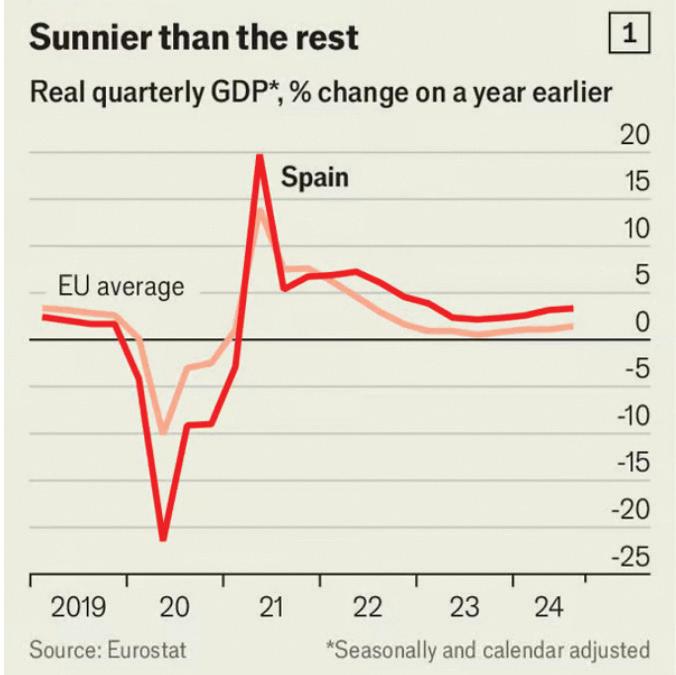
development. Soon to launch there are also positive changes coming onstream from the European Union, to help capital-market flows and aid pan-European business. Spain and Germany also offer exciting opportunities for growth and change. The Economist notes how Spain is now a benchmark for European economic recovery. Madrid is one of the European capital cities that would benefit from a casino offering to round out its tourist experience. Of course Las Vegas Sands tried to develop a casino resort in Madrid but that project failed. The project I think that might be the biggest game-changer is in London’s Leicester Square. Europe still battles perceptions of casinos and that project might help positively influence perceptions, along with some French projects and Greek projects. Wynn Resorts’ United Arab Emirates project could provide a boost as well.

Please join our LinkedIn Group and engage with our high-quality, industry-relevant community. https://www.linkedin.com/groups/1813053/
Damien Connelly
Editor EMEA
Stuart Hunter

Many Casino Life readers will have experienced for themselves the historic editions of ICE and iGB Affiliate – the first to be held at the wonderful Fira Gran Via Barcelona and the first to take place outside the United Kingdom. The 2025 editions succeeded in setting a new industry world record, attracting a total of 59,101 unique attendees, surpassing the previous high of 52,345 set a year ago in London. The ICE unique attendance of 50,019 represented an 11 percent, year-on-year uplift, with iGB Affiliate recording a total of 9,082 unique visitors, an increase of 24 percent on the previous highest, which was set last year.
This was a triumph for the international industry and was due to world-class exhibitors, content and features, all of which combined to attract industry professionals from 163 countries. Nine nations recorded four-figure attendance, with Spain topping the table with 8,954 visitors compared to the 2024 attendance of 1,483. Spain was followed by the UK (6,518), Malta (3,074), Cyprus (2,328), Ukraine (1,938), United States (1,730), Italy (1,496), Bulgaria (1,252) and Germany (1,157).
As show organizers, everything that we do is undertaken in partnership with our customers. We have launched comprehensive company-wide debriefs alongside exhibitor- and visitor-experience surveys conducted by a specialist, independent, external agency. We do this after every event that we stage, understanding in detail the response to the relocation that makes these surveys even more significant. This isn’t a vanity project – it’s about identifying those aspects of the exhibitor and visitor experience which we could improve upon.
The decision to move to Barcelona is an example of listening to and responding to requests, exploring what was possible, delivering accordingly, and – I hope – going above and beyond the expectations of our stakeholders. We make a point of being active listeners. The spectacle that attendees experienced in Barcelona was the result of acting on what our customers wanted, in order to meet their commercial objectives over the short, medium and long term.
We will be deploying the same listening strategy on the development program for both shows, as we work to build on the world-class platform provided by ICE and iGB Affiliate 2025. That process starts now.
連接亞洲娛樂行業 與驅動業務的樞紐



Here’s a look inside the remodeled (former Harrah’s) property.
By Ryan Slattery
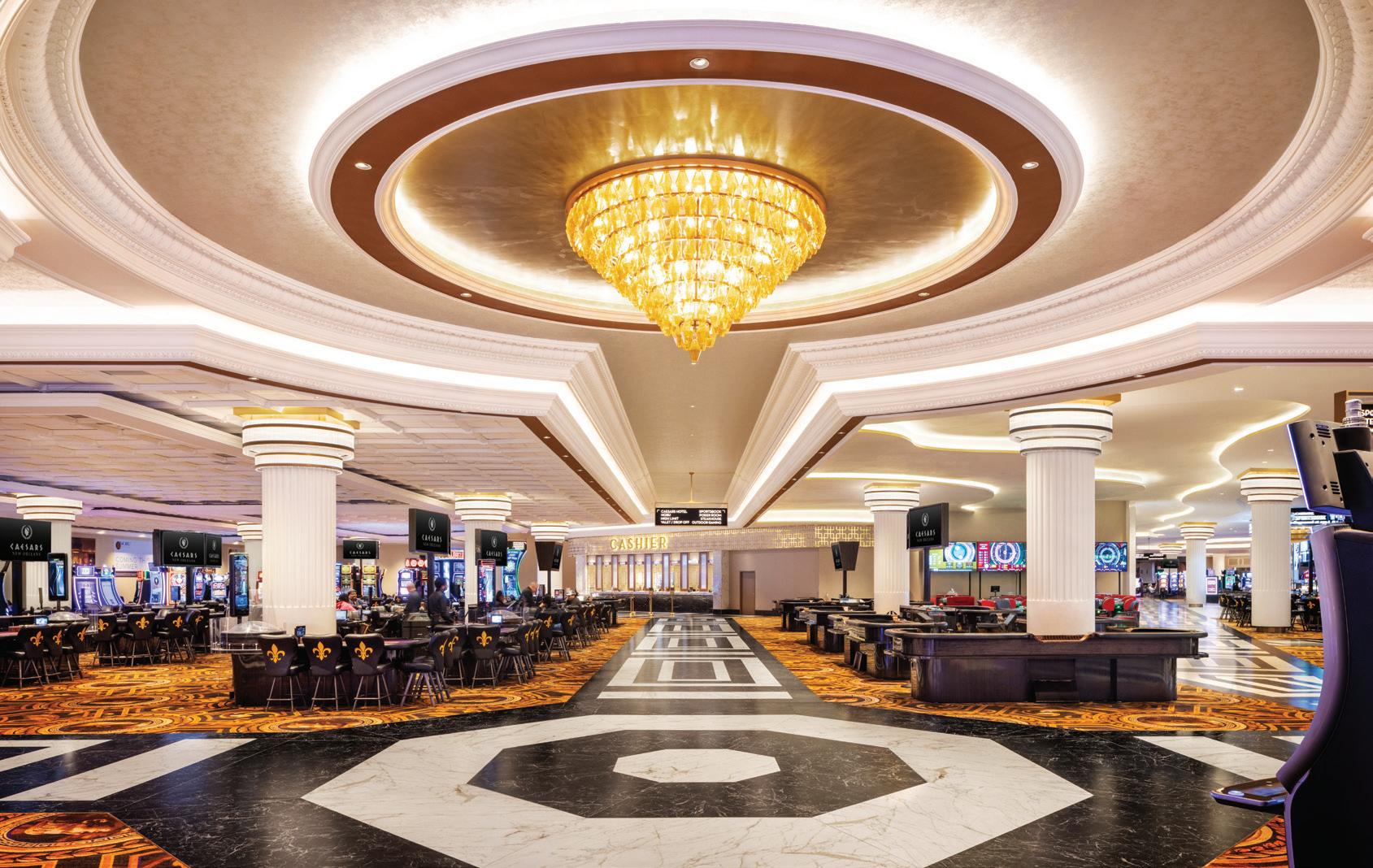
Late last year, Caesars Entertainment celebrated the completion of a massive, $435 million remodel that rebranded its downtown Harrah’s property into Caesars New Orleans. It was a monumental shift that saw the addition of a 340-room hotel tower, a state-of-the-art sports book, a larger casino with a high-limit room and several new restaurants, including Louisiana’s first Nobu.
“It’s a world-class resort in the heart of the Big Easy and we can’t wait for our guests to experience it,” said Anthony Carano, president & COO of Caesars Entertainment.
The grand-opening ceremony featured fireworks and a Mardi Gras float that depicted Caesar and his court riding into the new Caesars New Orleans. Following the ceremony, the second-line band led revelers into the resort’s center bar, Octavia. There, partygoers enjoyed a “Taste of Caesars New Orleans,” featuring bites from all six restaurants at the property.
Located on Canal Street just steps away from The French Quarter, the property originally opened as Harrah’s New Orleans in October 1999. The remodel and rebranding “touched every square inch” of the property, Samir Mowad, senior vice president and general manager of Caesars New Orleans told Casino Life.
There are now 150,000 square feet of gaming and dining space, with more than 1,300 slot machines, 120 table games, and a 20-table poker room. Mowad, a native of New Orleans, has been GM at the property since September 2020.
Let’s get right to the point. Why was Harrah’s New Orleans rebranded into a Caesars property?
If you go back to Harrah’s New Orleans, there was a 30-year lease with the city and Louisiana for the property. As we approached the end of that lease, we were interested in renewing, as opposed to having the license expire and go back up for bid. So we spoke with the state about doing a renewal. Part of that was the idea that there would be some sort of capital infusion to refresh the property.
It opened in 1999 and when we launched the Harrah’s brand, which was Mardi Gras-themed, it was the right brand. Gaming hadn’t proliferated across the country and wasn’t as popular as it is now.
Then you have to think about what’s happened over the last 25 years in New Orleans. The city has become so much more international. We now have direct, nonstop flights to Europe, and to both Central and South America. We’re one of the premier tourist destinations in America.
So as we thought about investing in the property,
and how to both improve it and potentially reposition it, the Caesars brand really made sense. Outside of Vegas, you could argue that New Orleans is our premier tourist destination city. The goal was to attract guests not only within the country but from around the world. While Harrah’s is a great brand, it does not resonate internationally the way Caesars does. I like to say we brought our best brand to the best city, but I may be biased because I live here. But it’s been a pretty good tagline.
Was it planned that you were going to rebrand Harrah’s into Caesars and obtain the naming rights for the Caesars Superdome, or did it all just happen that way?
That was more the stars aligning. The idea that we were going to rebrand to Caesars got approved by the state in 2019 at the same time sports betting popped up. That really led us to say, let’s also go after the naming rights for the Superdome. Like a lot of things, it was the right place at the right time. It just worked out for us.
So sports betting didn’t technically play a role, it just kind of fell in place. It was after all this got dreamed up and approved that sports betting was being legalized nationally by the Supreme Court. Louisiana was one of the early states to allow sports betting at a time when we were trying to launch Caesars Sportsbook, not only in Louisiana but across the country. Again, it wasn’t part of the original planning but it just helped make even more sense for bringing the Caesars brand to New Orleans.
Tell me about some of the upgrades you’ve done. What will loyal Harrah’s customers first notice when coming into the new, Caesars-branded property?
They will notice that pretty much everything is different. We have renovated every square inch of customer-facing space both inside and outside of the property. Outside, for example, if you know the old Harrah’s building, there was a lot of red brick. Now we are very much a Romanesque, white-gray Caesar look on the outside. On the inside, not only have we added a 340-room hotel tower but also several new restaurants. We’ve added Nobu. We’ve added an Emeril’s Brasserie. We have a celebrity food hall, which features Bobby Flay’s Burgers and


Buddy Valastro’s Pizza Cake – partnerships driven by Vegas. Then we have Nina’s Creole Cottage from Nina Compton, a local James Beard Award-winning chef doing some great takes on New Orleans classics.
How important is it having an Emeril’s restaurant on property?
We have a great partnership with Chef Emeril Lagasse and his team. As a local guy myself, I’ve personally seen the growth of Emeril from his days at Commander’s Palace to then opening up his flagship restaurant, and then starting to grow with his brand from there. We know people are coming into New Orleans looking for that local foodie experience. What a better partner than Emeril to work with? It’s just really been a home run.
New Orleans is one of my favorite food cities for sure. But I see there are a lot of Vegas influences. When we were expanding and upgrading our food and beverage offerings, we tried to provide a mix of some of the best of what you can get in Vegas, and at some of our other properties. That’s why we brought in Nobu as a complement to what the city has.


New Orleans is a big sports city, so it must have been important to pair it with a great sports book on the property. What did you do?
Obviously, we have the Saints and the Pelicans, but New Orleans is a championship city. With all of the great sporting events we host here it’s amazing. We just hosted the Sugar Bowl, which was one of the college football playoff games. We have the Super Bowl and we’ve hosted Finals Fours, and we have WrestleMania coming.
Everybody knows sports are a huge part of the fabric of this country. People want a place to go watch the games and that sports book is a real gathering place for us. The seating is in demand to watch games. That’s why we took the sports book to another level. Having the privilege to operate in downtown New Orleans gives us a much bigger platform to let people experience it and enjoy it.
How large is it and what is it like?
We’re about 160 seats, with both tables and sofa sections in the back. We have a huge video screen. I think it’s 140 feet long. I would argue the sports book is as nice as there is in the country, outside of Las
Vegas. We also have a fan cave behind the big video wall. It’s a private room that you can rent that comfortably holds around 16 people.
You’ve also partnered with former Saints quarterback Archie Manning. That’s worked out pretty well.
We’ve been partners with Archie for years now. As much as we look to reinvent a lot of what we do, what Archie stands for and who he is fits everything we’re known for. With sports betting and what that restaurant is, it just made sense to double down. One of the things that surprises folks, when they go to Manning’s Sports Bar & Grill, is that if Archie’s in town he’s there. He’s someone who still resonates with sports fans of all ages. With the combination of his boys [Peyton and Eli], and some of our original sports book commercials, it kind of put him back on the map in terms of being a cultural icon.
On the gaming side, did you do any expansions, bring in new games or add a highlimit room?
Yes. Our old high-limit room was more of a highlimit area that was a very small, secluded space, maybe about four tables. Now the new high-limit area we have around 60 or so games and three different table pits. There are private restrooms, a host area, a separate VIP desk and a private cashier cage back there. These are all things that we didn’t really have in our old high-limit area.
Was there a room remodel ahead of the rebranding?
We added a 340-room hotel tower from the ground up that’s brand new. We created suites that are on a level that we didn’t have before.
Now you also have a Fillmore concert venue. What type of shows and acts do you bring in there?
Live Nation is the operator. It's a great complement to what we do. They bring in every variety of music, much like any Fillmore in the country. We’ll really start to ramp up now that spring is coming. We have some exciting acts coming.


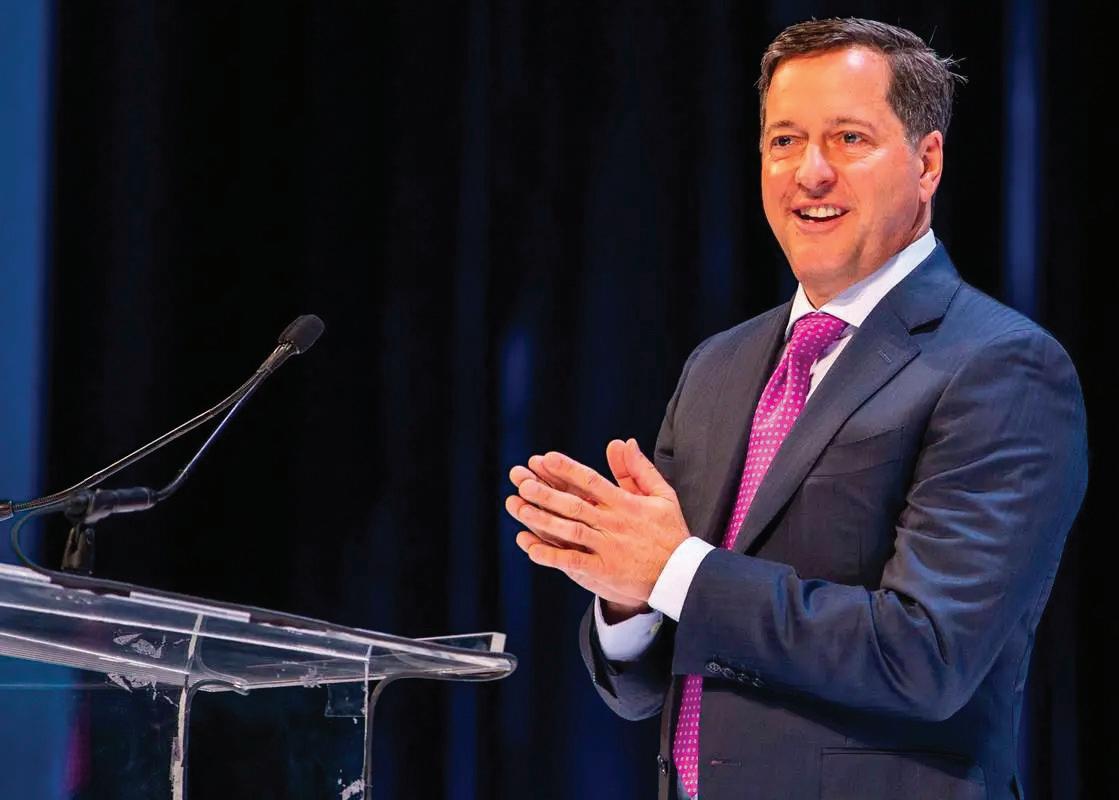
Bill Miller, President and CEO of American
Gaming Association
The U.S. gaming industry is riding high but facing challenges ahead. By David McKee
t’s American Gaming Association
IPresident Bill Miller’s job to be upbeat about the prospects for the industry he spearheads in Washington, D.C. However, he had good reason to sound upbeat at his annual “State of the Industry” webinar, delivered February 19.
The United States casino/iGaming/sports betting industry is riding a record high, coming off a year in which it saw $72 billion in revenue. That’s 7.5 percent growth from 2023. It also doesn’t include the winnings of tribal casinos, who have not yet reported their numbers.
That $72 billion, according to AGA Vice President of Research Dan Forman, included almost $14 billion from sports betting and $8.1 billion from iGaming. An accompanying graph showed a steady climb of revenue from 2014 to the present, Covid-plagued 2020 excepted.
“By all accounts, 2024 continues to tell a positive story,” Miller arguably understated. Gambling, he reported, had proven resilient against macroeconomic headwinds, “further evidence of public support for our industry. We take none of this success for granted.”
Indeed, Miller dwelt (not unjustifiably) on the menace of the underground and offshore gambling markets. “We’re engaging a constant battle against illegal gaming,” he said. In contrast to the sub rosa activities of those scofflaw operators, “Our industry walks through the front door in our communities.”
U.S. gaming, Miller said, welcomes regulatory oversight and sophisticated monitoring systems. He railed against “so-called skill game machines,” black- and gray-market slots that dot the American landscape, paying no taxes and subject to no regulation. These have been a particular bane in Missouri, Pennsylvania and Virginia, where they have cut into legal operators’ revenues.
Other objects of Miller’s wrath were currency exchanges and digital sweepstakes, the latter a very hot-button topic in his industry. He estimated that $73 billion had been lost in revenue to those and to offshore operators who are not subject to U.S. laws.
Legalized gambling, by contrast, engendered $15.5 billion in taxes to federal, state and local governments in 2024. Above and beyond that are the industry’s charitable efforts. Miller cited the Seminole Tribe, which provided $3 million in hurricane relief, and DraftKings’ donation of $2.5 million for technical education of veterans. He also pointed to International Game Technology’s creation of After School Advantage.
“Needless to say, the illegal market offers none of these benefits,” Miller declared.
Deeming bipartisanship essential to progress, Miller said educating the new Congress is a top priority. Bemoaning what he considered misguided and ill-informed legislation predicated on urban myths, he said, “political leaders still labor under such misconceptions.”
President Trump’s visit to Circa Resort in downtown Las Vegas, where he became the first sitting president to shoot craps, was sufficient to bring laurels from the AGA president. He enthused that Trump’s dice dealings were “a testament to our positive role in the economy.”
Miller also groused a bit about recently departed Attorney General Merrick Garland. “We were frustrated with the lack of action in the attorney general’s office previously,” he said grimly. He added that he hoped the Trump administration would treat gaming on the same, equal footing as other industries, citing the previous Trump White House’s inclusion of casinos in the CARES Act.
In his relationship with the new administration, Miller said his priorities would include heightened enforcement against illegal gambling, as well as raising the tax threshold on slot jackpots. It has been stuck at $1,600 for decades. He also lauded the efforts of Reps. Dina Titus and Guy Reschenthaler to lift the federal excise tax on sports betting.
“It’s bad policy that dates back to the Fifties,” Miller opined of that tax. Sen. Richard Blumenthal has lobbied for it to be used to treat gambling addiction under his GRIT Act, recently reintroduced in Congress. Miller, however, called for the impost to be repealed, not repurposed.

There were some clouds on the AGA’s horizon. Forman allowed that revenues have been in a slow decline in late 2024. Compared to 2023, Las Vegas is down 4.4 percent and Atlantic City two percent. No such adversity was reported for Chicago or Washington, D.C., gaming’s third- and fourth-largest markets respectively.
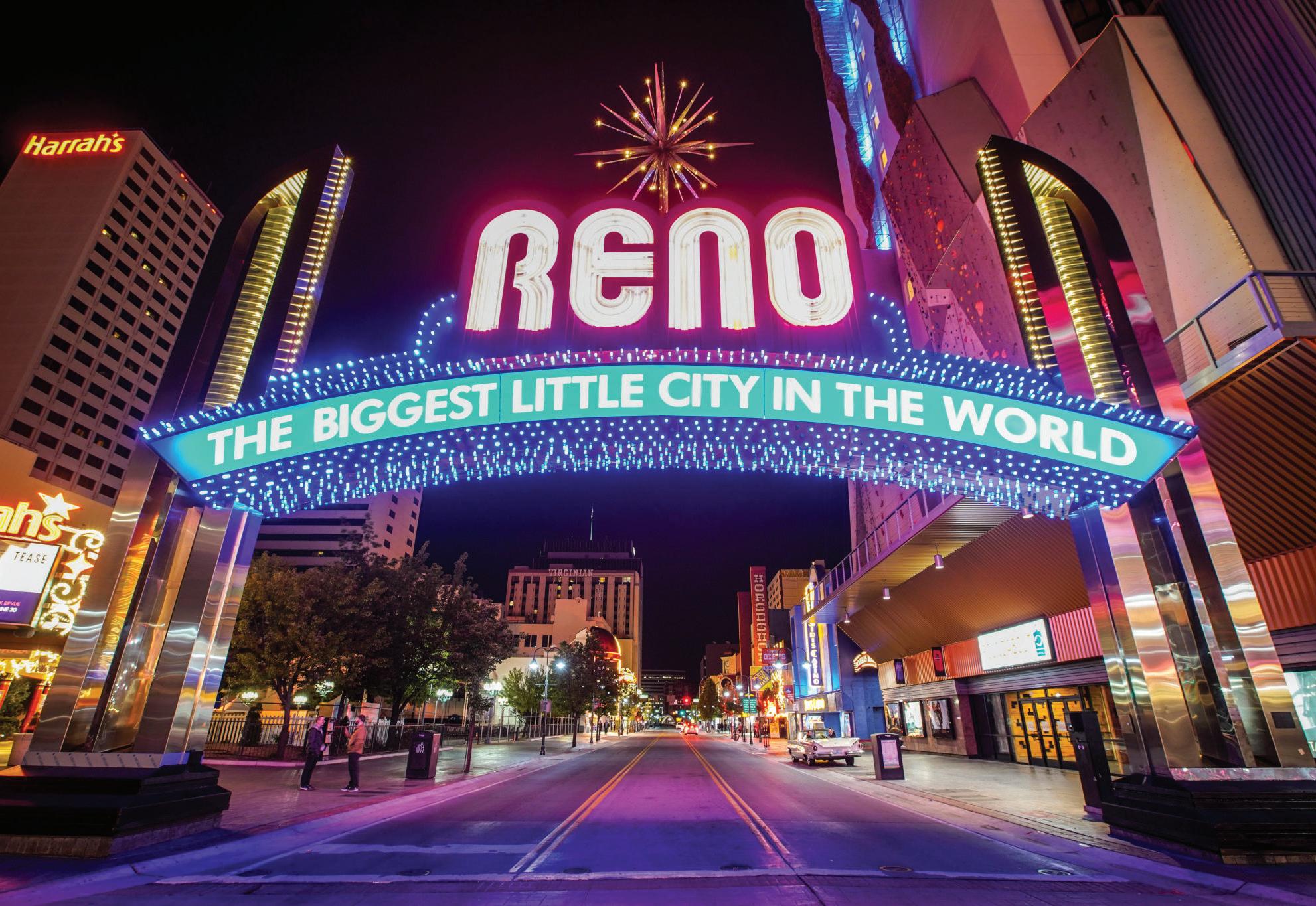
There was also some notable movement. While the Las Vegas Strip struggled, possibly a victim of its high prices, downtown Las Vegas leapt from seventeenth place nationally to thirteenth, while Reno climbed from thirteenth to eleventh.
Led by New Jersey, Michigan and Pennsylvania, iGaming was said to be setting new records. “We’ve had incredible growth in the last three years,” Forman said, cautioning that “growth is [now] harder to come by.” Still, 30 percent of industry revenue is now digitally derived. The brick-and-mortar players, too, are getting younger and younger.
For the first time, the AGA included the Indian Gaming Association and the Association of Gaming Equipment Manufacturers in its roundup. Speaking for the IGA, Executive Director Jason Giles passionately made the point that all tribal-gaming revenues are returned or reinvested in IGA’s indigenous constituency.
“Indian gaming has become the economic engine,” Giles said, adding that “This transition has neither been fair or equitable,” unevenly spread across the United States’ 574 sovereign Native American nations.


Giles pointed out that the monies derived from gambling go toward hospitals and schools, among other things, but are heavily taxed into the bargain. Between the federal government, the states and localities, Giles reckoned that his industry was paying back $12 billion a year.
The IGA boss praised the Joseph Biden administration’s Infrastructure Act for bringing upgrades to reservations across the country. He said he expected more jurisdictions to open to tribal gaming and for artificial intelligence to reshape casino floors, although he offered no specifics on that tantalizing prospect.
Windy generalities were the order of the day from AGEM’s Daron Dorsey. He said 2024 had been a year of growth despite “delays and disruptions” vaguely attributed to local politics. It had also been a year of mergers and acquisitions, with more such activity to come in 2025.
Dorsey was the only speaker to address the elephant in the room: tariffs. He said AGEM was studying the issue, along with trade policies at home

and abroad with an eye toward their implications for his constituents. He noted that game components cross borderlines, “sometimes many times” and hinted that trade wars would impact gaming markets and suppliers. (They’ve already blindsided iGaming provider Rush Street Interactive, walloped with a 19 percent valueadded tax in Colombia.)
Like Miller and, to some extent, Giles, Dorsey was hopeful of new-market opportunities in the U.S. His wish list for the nascent year also included modernized regulation and the elimination of illegal actors.
Miller, Forman and lobbyist Chris Cylke then adjourned to a virtual press room for a questionand-answer session with the assembled media. Questions were many, answers rather fewer. Miller’s responses tended toward the evasive and noncommittal, making one wonder why the press conference had been called in the first place.
The one issue on which Miller would be drawn out of his shell was the incursion into sports betting of prediction markets, flush off


their success during the U.S. presidential election. It is a phenomenon of some concern to legacy sports betting operators, who operate on a state-by-state basis, while prediction markets were taking Super Bowl bets nationwide, with scant federal regulation.
“It’s clearly something that’s of great concern to us,” Miller said of Kalshi (newly advised by Donald Trump Jr.) and its ilk. He said he was following federal actions on this front and would submit comments to the Commodity Futures Trading Commission shortly. He observed that state-wide sports betting supported 5,000 regulators and “significant tax revenues.”
Miller allowed that he was very fretful of the rise of the prediction markets and that the existing sports wagering industry “could all be washed away.” Noting that prediction markets transcend state governance, he said sports betting oversight shouldn’t be done at the federal level. Indeed, the Supreme Court had scotched that very thing when it overturned the Bradley Act (PASPA) in 2018.

The AGA prexy also seemed somewhat in denial about the prospect for state-level increases in gaming taxes, especially in light of steep federal budget cuts currently taking place. One such levy was recently fended off in Louisiana and another one is being pushed in Ohio. Even so, Miller insisted, “It’s still a little bit early.
“We follow closely the trends at the state level,” Miller insisted, evading the question by saying, “It’s incumbent to tell our story.” He did caution against the baneful effects of tax increases on gaming’s ability to invest locally, saying, “This didn’t happen in a vacuum.”
Left unmentioned was the prospect of gambling expansion made possible by states’ thirst for revenue. Budget desperation could open new states to iGaming, to casinos and even, in California, to tribal sports betting. As Miller would say, it’s early …yet.
Asked how to crack down on his bete noir, the illegal operator, Miller replied, “We’re not the arbiter of legality but we have raised the question with regulators across the country.”
One such illegal bookie is right at home, soonto-sentenced felon Mathew Bowyer. Miller’s opinion was sought on how hard the book should be thrown at Bowyer. He ducked the question but stressed

Get Into Casino Life & Sports Betting Operator TV and gain insights from Presidents, CEOs, Owners and Senior Management at the World’s Leading Resort Casino and Sports Book Operators along with latest developments from manufacturers and Suppliers along with Gaming Equipment and Systems providers from Senior representatives at a select number of leading organisations in the Global Gaming Industry.

the need for deterrence “so we can keep the integrity of the sports that are bet on.”
Staying with sports wagering, the topic of the latest NFL season could not be avoided. Sports books had a very bad football season. Just how bad? Forman allayed concerns, observing that hold by books was becoming progressively tighter. It had been around five percent when wagering was effectively confined to Nevada. Now it averages between nine and 10 percent.
Perhaps the most intriguing question posed to Miller concerned the increasing prevalence of iGaming vis-a-vis brick-and-mortar casinos. Is this a good or a bad thing? Is it an inexorable trend? “It’s certainly a hot topic,” Miller said, refusing to commit himself.
The AGA CEO noted the iGaming was expanding much more slowly than sports betting, largely due to those very fears that it would cannibalize terrestrial casinos: “Legislatures are proceeding with caution, as is appropriate.”
Where the AGA is concerned, caution is ever the watchword.


Please don’t play the ‘What if?’ game at my table. By Al O’ Grady
know I speak for a lot of dealers when I say that we are people watchers. We look at players and observe how they act and react to given situations. We notice both the how and the why. But there is one thing that several players do that constantly baffles me. They constantly play the “what if” game after the hand has been played.
IThe “what if” game is simply this. Let us say a player took a card, got a 10 and busted. After the hand has been played, a player will speak up and say, If you stuck on your hand the dealer would get that 10 and he would have busted, and we all would have won. This “what if” game is pointless. It is an incredible waste of time and energy, and serves absolutely no purpose.
Here is a ridiculous example: Let us say you are last to act (aka “the anchor”) and you have a hard 18 and the dealer shows a six. Naturally, you stick. This
is a no-brainer. Let us say the dealer’s down card is a 10. He has 16. Everyone is feeling good right now, expecting him to bust, but the dealer turns over a three for a 19. Everyone loses. The one playing the “what if” game sarcastically speaks up and says that if you took that card, you would have had a 21 and the dealer could have busted, and we all could have won. Let us see what the next card is.
He is not serious, because no one in his right mind would take a card on a hard 18. Yet people continually go through this “what if” game. Why? Are you going to take a card the next time you have an 18 against a dealer’s six? Of course not, so why do players constantly go through this pointless exercise? What purpose does it serve? Is this supposed to soften the blow in some way? Does it give your ego a boost knowing you are above the game in some way? Trust me, there are better ways. This is nothing but a fool’s errand.
Now let us change this scenario slightly. Instead of having a hard 18, you have a soft 18 (ace and a seven). Let us say you stick, which is the incorrect play. Again the dealer turns over his 10 for a 16 and then pulls a three for a 19. You and the rest of the table have lost. The “what-if” players are now in full swing. They say, You should have doubled down according to basic strategy. They make you feel so much better by letting you know that not only would you have won, but you would have won twice as much since your soft 18 would have been a 21. They watch the first card of the next hand to see if the dealer would have busted and, if he would have, they continue to berate your play.
On a certain level, it can be done as a form of constructive criticism for a novice player. Other players at the table may be trying to mentor the individual by showing him the rationale as to why his play was incorrect. I get that and I can accept that to a point; however, many times when the “what if” players are doing it only for their own satisfaction and not as a coachable moment.
This entire process can unnecessarily cause disharmony among the players at the table. As the saying goes, hindsight is 20-20. It is so true when it comes to blackjack. But players need to be constantly reminded that, just because they lost, it does not mean they played the hand wrong. Conversely, just because they won a hand, it does not mean they played it right either. After all, it is called gambling. Nothing is a sure thing in blackjack.
For those that take part in the “what if” game, is it going to change anything? The hand has been played and it is now history. Do you think the casino will allow you to replay your hand? Are you going to remember this hand exactly and replay it differently when the exact same situation arises six months from now? If so, in our first example when you have a hard 18 against a six are you going to hit? After all, you got a three last time.
The key thing is to play perfect strategy consistently. Yes, there are times when you will lose and the “what if” game will thrive. But perfect strategy does not mean you will win 100 percent of the time. It is simply the optimal percentage play over the long run.
What makes a dealer laugh at a player (we keep it to ourselves, of course) happens when someone makes the correct strategic play and loses the hand, but the “what if” player takes part in his useless exercise and notices that if the player had done the opposite the whole table would have won. Not only is the “what if” player wasting time and energy with the exercise, he also has it wrong too by going against basic strategy. Put another way, I am going to criticize your play with the “what if” game and then I am going to show you a sub-optimal, losing strategy that has been proven wrong by millions of hands of computer simulation. The “what if” game is made by losers, for losers.

So, what is the difference between a winner and a loser? A winner will credit his good luck when luck had nothing to do with it. A loser will blame his bad luck. Again, luck had nothing to do with it. A winner does not make excuses. He has a logical, well-laid-out plan and follows it. He knows there are times he will either win or lose. In either case he takes responsibility for his actions and does not blame others, but if he comes up short, he takes it like a man and walks out with his head held high. He does not play the “what if” game because, if he had to do it all over again, he would do the exact same thing.
A loser makes excuses. It is never his fault. It is the dealer’s fault, the continuous shuffler, the economy, the weather, the government or anything else he can pin it on. He plays hunches and ignores basic strategy and he constantly plays the “what if” game after a losing session, blaming other players for his demise. The “what if” game is a way of taking the sting out of a loss. If he would only channel that same energy into winning habits, he just might have a more enjoyable outcome at the end of the day. Please do not play the “what if” game at my table. Be a winner.
Good luck at the tables and do not forget to tip the dealer.

1xBet welcomes MMA champion Mark ‘Mugen’ Striegl as its new brand ambassador
In a significant expansion of its brand ambassador program, 1xBet, a global leader in sports betting, proudly announces the addition of Filipino mixed martial artist Mark ‘Mugen’ Striegl to its distinguished roster. This partnership, which was launched on January 14, marks a strategic move by 1xBet to connect more deeply with the vibrant sports community in the Philippines and beyond.

With an outstanding MMA record of 18 wins and five losses, Mark Striegl has captivated fans worldwide, not only with his skills in the ring but also with his charismatic presence outside of it. His championship title in the URCC Featherweight division and his gold medal in combat sambo at the Southeast Asian Games highlight his multifaceted talent and dedication to martial arts.
As 1xBet’s new brand ambassador, Striegl will be front and center in upcoming marketing campaigns and public engagements. His role will involve participating in a variety of promotional activities aimed at bringing exciting new content and exclusive opportunities to both sports fans and betting enthusiasts.
This collaboration with Mark Striegl underscores 1xBet’s commitment to fostering strong connections within local communities, particularly in the Philippines where MMA and sports betting have a passionate following. By partnering with a local hero like Striegl, 1xBet not only celebrates the spirit of sportsmanship and competition but also enhances its support for the sports that people love and follow fervently.
1xBet is excited about the opportunities this partnership with Mark Striegl will bring. It is anticipated to not only energize our existing offerings but also to introduce innovative ways to engage with fans and bettors. We invite everyone to stay updated on our platforms as we roll out new initiatives and events that promise to enhance the betting experience and celebrate the thrill of sports.
For the latest news and updates, follow 1xBet on our social media channels and stay connected with us as we embark on this exciting new chapter.
Established 17 years ago, 1xBet has grown to become one of the most respected names in the betting and gambling industry. With a platform available in 70 languages, and a user base of over three million monthly visitors, 1xBet offers an extensive array of betting options on sporting events and casino games. The company’s commitment to excellence is evident in its partnerships with top sports teams and athletes around the globe, including football giants FC Barcelona and Paris Saint-Germain, as well as UFC legend José Aldo and basketball player Chris Newsome.

The current and future state of the Philippine land-based and online casino industries. By Shaun McCamley
he Philippine gambling industry, long regarded as a significant contributor to the nation’s economy, is undergoing a period of dynamic change. With its dualpronged approach encompassing both land-based and online operations, the Philippines has emerged as a regional leader in Southeast Asia's gaming sector. However, evolving regulations, shifting consumer preferences and technological advancements are reshaping the landscape.
The land-based casino sector in the Philippines plays a pivotal role in the country’s tourism-driven economy. With iconic casino resorts like Okada Manila, Solaire Resort & Casino, City of Dreams Manila, and Resorts World Manila, the country attracts millions of local and international tourists annually. These integrated resorts (IRs) combine luxurious gaming spaces with entertainment, hotels, retail, and fine dining, appealing to high-rollers and casual gamblers alike.
At the heart of the Philippine gambling ecosystem is the Philippine Amusement & Gaming Corporation (PAGCOR), a government-owned and controlled corporation. PAGCOR operates as both regulator and operator, managing its own network of casinos while issuing licenses to private operators. This dual role has historically been a subject of debate, with some arguing that it creates potential conflicts of interest. Recent regulatory developments have seen increased oversight and stricter enforcement of rules to ensure the integrity and security of the gaming industry. PAGCOR has been instrumental in implementing anti-money laundering protocols and responsible gambling measures, aligning with international standards.
The contribution of land-based casinos to government coffers is substantial. PAGCOR remits a significant
portion of its revenue to the national treasury, supporting infrastructure development, social programs and disaster relief. In 2019, before the Covid-19 pandemic, the gross gaming revenue (GGR) from land-based casinos surpassed PHP 200 billion.
In 2024, the Philippine gambling industry achieved a record-breaking gross gaming revenue of over PHP 350 billion (approximately $6 billion), surpassing the previous year’s GGR of PHP 285 billion. This growth was significantly driven by the rapid expansion of the electronic-gaming sector, which includes eCasino, eBingo, sports betting and specialty games.
Looking ahead, the Philippines’ casino-gaming market is projected to continue its upward trajectory. Between 2025 and 2029, the market size is expected to increase by almost $4 billion, reflecting a compound annual growth rate (CAGR) of 10.4 percent. This forecast indicates a robust expansion in both landbased and online gaming segments.
Despite its strengths, the land-based sector faces challenges, including:
• Intense regional competition: Neighboring markets like Singapore, Malaysia and Macao continue to pose competitive threats.
• Infrastructure constraints: Poor connectivity and underdeveloped infrastructure in some areas hinder regional expansion.
• Regulatory uncertainty: Ongoing debates about PAGCOR’s regulatory reforms and its possible privatization create uncertainty.
Online gambling in the Philippines gained international attention with the rise of Philippine offshore gaming operators (POGOs). Introduced in 2016, POGOs catered primarily to international markets, particularly China, providing online casino games, sports betting and live-dealer experiences. However, due to various issues including tax evasion, illegal employment and links to criminal activities, the government began phasing out POGOs starting in 2022.
In their place, the government introduced a new regulatory framework for Philippine inland gaming operators (PIGOs). Unlike POGOs, which primarily targeted foreign markets, PIGOs are designed to operate domestically and cater to Filipino residents. PIGOs are required to be licensed by PAGCOR and

comply with strict regulations to ensure responsible gaming, and to prevent illegal activities.
PIGOs are expected to generate substantial revenue for the government through taxes and licensing fees while promoting a more regulated online gambling environment. Operators of large land-based casinos, such as Okada Manila and Solaire Resort & Casino, have already obtained PIGO licenses, integrating their online platforms with existing physical operations. This allows them to offer a seamless gaming experience across both channels.
The shift to PIGOs reflects the government’s strategy to harness the economic benefits of online gambling while addressing concerns about unregulated offshore operators. PIGOs contribute to job creation within the country and provide local players with access to legal online gaming options.

To support the transition from POGOs to PIGOs, PAGCOR has implemented enhanced regulations focusing on:
• Tax compliance: Ensuring that operators pay the correct taxes, with revenues allocated to infrastructure and social programs.
• Player protection: Introducing responsiblegambling measures, such as self-exclusion programs and spending limits.
• Technology and security: Requiring operators to adopt robust security measures to prevent data breaches and fraud.
While the shift to PIGOs is viewed positively, challenges remain, including:
• Public perception: Addressing lingering negative perceptions of the online gambling sector due to POGO-related controversies.
• Market maturity: Ensuring that operators develop engaging and diverse gaming options to attract local players.
• Compliance monitoring: Strengthening oversight to prevent illegal gambling activities from resurfacing.
The popularity of live-dealer games, which replicate
the experience of a physical casino through real-time video streaming, has been a game-changer for the online sector. Leading online casinos in the Philippines use advanced streaming technology to provide immersive gaming experiences, drawing players seeking a more authentic and interactive environment.
Mobile devices have become the primary medium for online gambling in the Philippines, driven by widespread smartphone penetration and affordable data plans. Operators have optimized their platforms for mobile users, offering seamless gaming experiences across devices.
The emerging social-casino segment is becoming increasingly important within the broader gaming industry due to its unique role as a bridge between traditional gaming and casual entertainment. Although social casino games do not involve real-money gambling, they offer a virtual experience of casinostyle games, and their significance is growing for the following reasons …
Social casino games generate significant revenue by offering in-game purchases such as virtual chips,

skins or power-ups. Players often buy these items for enhanced gameplay without the risk of monetary loss. Global social casino revenue surpassed $7 billion in 2023, and the Philippines is experiencing growth due to rising mobile penetration and engagement. Although players do not win real money, the psychological thrill of casino-style play continues to drive in-app purchases.
The social casino sector introduces casual gamers to casino-style games in a risk-free environment, often serving as a funnel that drives players toward real-money gambling platforms. Some players migrate to real-money gambling after gaining familiarity and confidence through social games. Conversely, social casinos allow operators to retain engagement with players who may not want to gamble with real money.
The social casino model leverages advertising and brand partnerships, providing additional revenue streams beyond in-app purchases. Ad placements, reward videos, and cross-promotional campaigns are becoming more common and lucrative. As the segment grows, collaborations between gaming companies and brands are expected to increase, boosting industry profitability.
Social casinos attract a diverse player base, including those who may not typically visit traditional or online casinos. By offering fun, interactive, and social gameplay, they appeal to players who prioritize entertainment over winnings. This broad appeal includes younger audiences and mobile-first users — key demographics for long-term growth in the gaming market.
Operators use social-casino games to enhance player loyalty and encourage cross-platform engagement. For example, players can earn rewards or loyalty points in social casinos that can be redeemed in landbased or online casinos. The integration of gamified features, leaderboards, and social sharing helps maintain user retention and engagement.
Emerging technologies like augmented reality (AR), virtual reality (VR) and metaverse gaming environments are expected to further boost the popularity of social casinos. These innovations create immersive gaming experiences that can rival traditional gambling platforms. As virtual spaces evolve, social casinos
may adopt more lifelike, interactive features, making them attractive spaces for both casual and serious gamers.
While the segment is thriving, it does face challenges, such as:
• Regulatory scrutiny: Some jurisdictions view social casinos as potential gateways to gambling addiction due to their casino-like features. Regulators may impose limits on in-app purchases or require clearer distinctions between social and real-money gaming.
• Monetization cap: As players do not spend real money to gamble, the spending ceiling may be limited to in-app purchases, unlike real-money casinos, which generate greater returns from high rollers.
In the Philippines, social casino games are expected to grow due to:
• High mobile-adoption rates: With a significant portion of the population having access to smartphones, the mobile-gaming market is booming.
• Increasing exposure to social-gaming platforms: Partnerships between local gaming operators and international firms could drive growth.
• Potential cross-promotion opportunities with real-money gambling: As more land-based and online casinos adopt digital-marketing strategies, social casinos could play a role in player acquisition and retention.
The emerging social casino segment is no longer just a casual pastime but a strategic pillar in the gaming ecosystem. It offers opportunities for operators to generate revenue, build brand loyalty and expand their player base, particularly among younger and non-traditional audiences. With advancements in technology and cross-platform integration, social casinos will likely continue playing a pivotal role in shaping the future of the Philippine gaming industry while complementing traditional and online gambling segments.
The adoption of blockchain technology and cryptocurrencies in online gambling is gaining traction globally, and the Philippines is no exception. Blockchain enhances transparency and fairness, while cryptocurrencies provide secure and anonymous transactions. Some local operators are exploring blockchain-based platforms to appeal to tech-savvy players and ensure regulatory compliance.
Artificial intelligence (AI) is being leveraged to enhance customer experience and security. AIdriven algorithms analyze player behavior to offer personalized game recommendations, detect problem gambling patterns and prevent fraudulent activities.
Despite the challenges, the future of land-based casinos in the Philippines remains promising. Key growth drivers include:
• Integrated-resort expansion: Several major projects are in the pipeline, such as the development of Entertainment City’s Phase II and regional casino hubs outside Metro Manila.
• Foreign investments: Liberalization of foreignownership laws is expected to attract international casino operators and investors.
• Tourism revival: As international travel resumes, the Philippines’ reputation as a gaming and leisure destination is likely to boost visitation and spending.
To stay competitive, operators must enhance their offerings by incorporating non-gaming amenities, such as family-friendly attractions, cultural events and wellness centers to broaden their appeal.
The online sector is poised for rapid growth, driven by:
• Regulatory clarity: Continued efforts to formalize the domestic online gambling market will provide a stable framework for growth.
• Technological advancements: Innovations such as VR and AR could revolutionize online casino experiences, providing fully immersive environments.
• Global expansion: Philippine-based operators may seek to expand their services to international

markets, leveraging favorable regulatory conditions and competitive service offerings.
The industry’s future is not without risks. Regulatory unpredictability, potential over-reliance on certain markets (such as China for POGOs) and societal concerns about gambling addiction are critical issues that must be addressed. Moreover, online gambling faces cybersecurity threats, including hacking and data breaches. Operators must invest in robust security systems and collaborate with regulatory bodies to ensure player safety.
To sustain growth and address challenges, the government and industry stakeholders should consider the following measures:
• Strengthen regulatory frameworks: Ensure consistent enforcement of rules to prevent illegal activities, protect consumers and maintain industry integrity.
• Promote responsible gambling: Expand programs focused on player education, self-exclusion options, and treatment for gambling addiction.
• Encourage technological adoption: Support the integration of emerging technologies to enhance competitiveness and security.
• Enhance infrastructure development: Improve transportation, telecommunications and tourism infrastructure to support regional expansion.
• Foster collaboration: Encourage public/private partnerships to promote innovation, investment and sustainable growth.
The Philippine land-based and online casino industries stand at a crossroads, with immense opportunities for growth alongside significant challenges. The country’s strategic location, skilled workforce and proactive regulatory environment position it as a regional powerhouse in gaming. However, achieving sustainable success will require balancing innovation with responsibility, attracting investments while safeguarding social welfare and maintaining a forwardlooking regulatory approach. With thoughtful planning and collaboration among stakeholders, the Philippines can solidify its status as a premier destination for both physical and digital gaming experiences, driving economic growth and enhancing its global reputation.
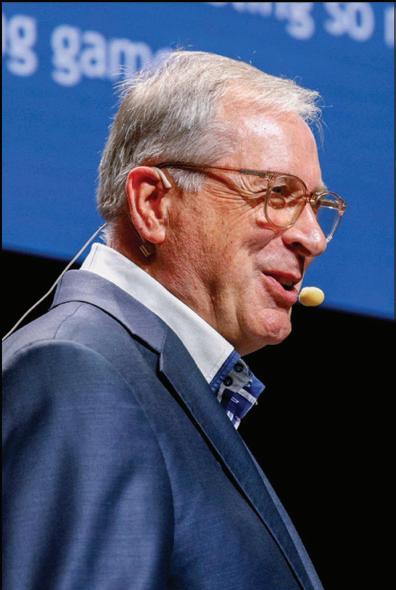
Shaun McCamley is a well-known figure in the gaming and casino industry with extensive experience in various aspects of casino operations, management and consulting. He has held several high-profile positions, and has been instrumental in the development and success of numerous gaming ventures around the world. McCamley's expertise spans areas such as casino management, gaming operations, digital gaming, regulatory compliance and strategic planning. He is often at the forefront of adopting new technologies and innovative practices in the gaming industry.

Sports Betting Operator provides technology features, news and new product information, keeping online gambling companies up to date with the fastest growing gambling sector in the world

A highly regarded team of Internationally experienced journalists, all of whom have a wealth of knowledge in online and land-based gaming involving, legislation, e-commerce, responsible gambling along with the latest online operating systems and solutions.

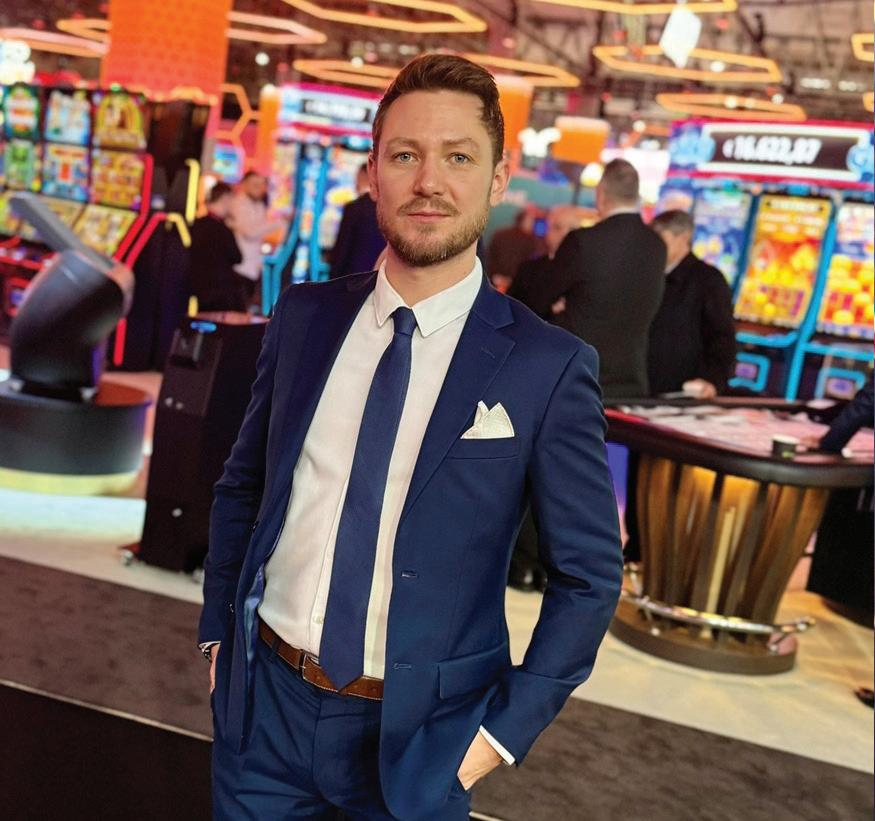
can vividly remember the very first time I set foot on an ICE show floor. It would go on to become a defining element of my future career. It was back in 2015 when rookie me, basically fresh out of college, stepped through the west entrance of ExCeL London to dive into the hustling and bustling industry we all call home. It’s fair to say I was hooked right then and there.
ISince then a few years have passed and I was almost certain I’d seen it all – only to be taught a very valuable lesson in humility come 2025. Clearly, I hadn’t seen it all. When that colorful circus of ours we call the gaming industry descended on the mild-tempered shores of the Catalan coast, it felt like my 2015 all over again.
Not only were there a new city, a new venue and countless delicious restaurants to try, but a whole new spirit emerged at Fira Gran Via Barcelona when tens of thousands of like-minded friends and colleagues from all over the world came together to celebrate ICE’s inaugural days in Spain. It’s fair to say that Clarion Gaming, the organizers of the show, made the perfect move by choosing Barcelona as their new, 120,000-square-meter hub of gaming – a whopping 20 percent increase in size compared to its final London edition. Fira Gran Via became the epicenter of gaming

Kevin Fekete
for more than 600 exhibitors across all sectors of the industry. They were putting their best foot forward and showing us once again why these shows still matter a great deal in an increasingly digitalized, “work-fromanywhere” world – possibly now more than ever.
From land-based to online betting and gaming, payment solutions to platforms, Artificial Intelligence to beautifully crafted gaming tables, the show, its educational tracks and forums, as well as side events like “Day 0 Networking” made a lasting impression on me. The same was true for everyone with whom I had the pleasure to speak. (For Pete’s sake, ICE even had a basketball court and esports arena!)
As the lights dimmed on ICE’s first chapter in Barcelona, one thing became abundantly clear to me: This wasn’t just a change of venue — it was the dawn of a new era for the industry as a whole. The energy, innovation and camaraderie felt at Fira Gran Via remind us why events like ICE remain irreplaceable. Barcelona didn’t just host ICE – it elevated it, setting a new benchmark for what’s possible.
Here’s to the future – brighter, bolder, and unmistakably Barcelona.
www.linkedin.com/in/kevinfekete/

DR Gaming Technology executives reflect on the inaugural Barcelona edition of ICE
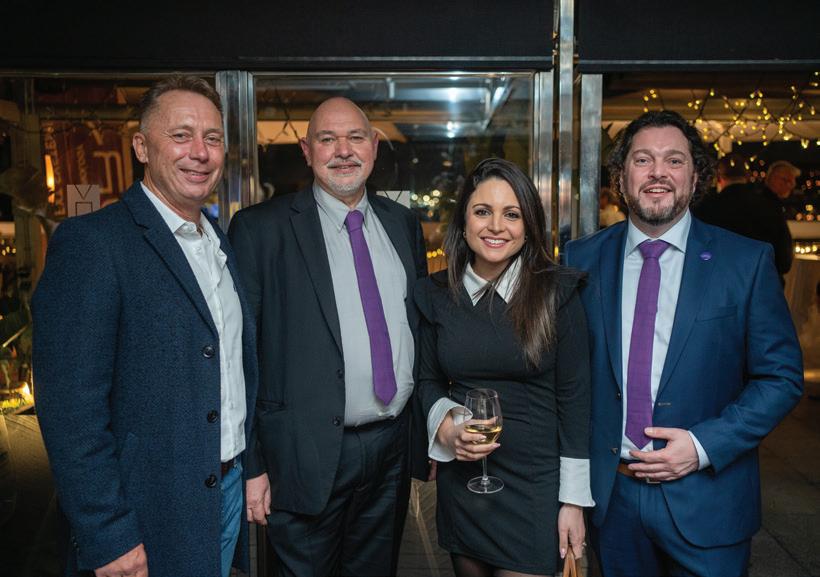
lobal casino-management-systems and jackpot-technology supplier DR Gaming Technology (DRGT™) made its debut, along with the rest of the world’s premier land-based (and online) service providers at the new home of ICE: Fira Gran Via, Barcelona in late January. Taking pride of place, at what was an extremely wellreceived booth location, were its world-class systems and jackpot technologies. A set of new class-leading web-based applications were – as was the case at G2E in Las Vegas in October and BEGE in Sofia in November – lapped up by all visitors to stand 3D35.
G“What Clarion delivered, at what for all intents
and purposes was a green-field event for them, us as exhibitors and the thousands of attendees at ICE Barcelona, was phenomenal. Our booth location was prime, the dedicated halls for both us and our online colleagues worked a treat, as did the logistics prior to, during and after the show. It was a job very well done,” noted Jurgen De Munck, the former CEO and now executive chairman of DRGT.
“Having lived in Barcelona for five years, I was really excited to return,” said DRGT CEO Marco Herrera. “However, I was a little anxious to see how well the city – and of course the new venue – would manage to match up to what we had all become accustomed
to at ExCel, London. I was blown away. In addition to the exhibition itself, as alluded to by Jurgen, we hosted an invitation-only customer event on Monday night and it too was phenomenal. The setting at 1881 per Sagardi was breath-taking, and the food and atmosphere second to none. The feedback from our attending friends and customers was fantastic. We’ve already made our booking for 2026.”
DRGT showcased three specific, new software add-ons at ICE 2025, as well as its updated drPlayerApp and all-new drStaffApp, all of which are aimed at providing casino operators (and their players) with quicker, easier, and more accessible tools to better manage their floors (and their gaming experience).
drServiceHub forms the foundation for both the group’s new drFloorManager and drAnalytics tools and provides a single avenue through which to manage all casino equipment, identify, and report on “significant events” as well as EGM maintenance. It also has the ability to group and filter different types of devices.
drFloorManager in turn shows a live, real-time view of the casino floor and is accessible from anywhere on any devices; detailing not only EGM game-play activity, but player activity too with an easy-to-use, ‘one click’ drill-down into individual player profiles.
drAnalytics, the jewel in the company’s current reporting crown, provides unparalleled data insights with intuitive reporting and an easy-to-use dashboard builder, an embedded formula editor (ideal for operator-specific KPI customization), and a range of versatile data visualization grids, pivot tables, charts, and trend indicators.
The company’s iOS and Android drPlayerApp includes several further updates and additions after its showing in Las Vegas in October (and several direct-user insights). It now leverages the outcomes of drAnalytics reports even better. The user-friendly and easy-to-navigate UX, and easy-on-the-eye UI, continue to push the boundaries of contemporary design, and lead the drive towards truly cashless tapand-play gaming, as well as to DRGT’s unparalleled player reward options, promotions, raffles, loyalty, and bonusing technology. And the all-new …




drStaffApp, also available for Android and iOS, provides staff with real-time gaming floor alerts and event notifications via end-to-end encrypted direct messaging, including real-time and daily results, big wins, flagged player arrivals, EGM occupancies, and AML exceptions to name but a few. It is all in the palm of their hand, anywhere and at any time.
“The two applications that drew the most interest were drAnalytics and our all-new drStaffApp, both of which are aimed directly at empowering operators to serve customers better,” reported Herrera. “We all know that the key differentiator for any business is how it engages, understands and services its customers. These tools take those differentiating capabilities to literally the next level. One of the main reasons I joined the company last year was its player-first design mantra, as well as its unwavering commitment to its customers to continue to develop and deliver tools that allow them to do that better than anyone else.
“I firmly believe we are meeting that mandate.” concluded the CEO. De Munck proudly agreed, adding that, “We’re off to Macao in May, and look forward to seeing one and all at G2E Asia in a couple of months.”

Casino Life speaks with IGT President of Global Gaming Nick Khin. By Victor H. Royer
ick Khin is responsible for managing all aspects of the Global Gaming business unit for International Game Technology (IGT), including studios, technology, sales, games and hardware, manufacturing and services, and systems.
NIGT has many new games, including new variations on Wheel of Fortune which were featured at G2E, and also presented at the recent ICE show in Barcelona. Please tell us about IGT’s presence at ICE and G2E, and about some of these featured games.
G2E was a terrific event for IGT. Our booth featured
more than 200 slot games, new cabinets and systems innovations, and was the perfect backdrop for highly productive meetings with our customers from around the world. We had new games across every product segment and also unveiled IGT Advantage X, the future-proofed iteration of our award-winning casino management system.
We dedicated a large section of our booth to a very vibrant “Wheel of Fortune Zone.” The space featured 11 new Wheel of Fortune slots games, three new Wheel of Fortune cabinets and our all-new Wheel of Fortune-branded electronic table games (ETG), video poker and video lottery terminal (VLT) games. This area was a hive of activity throughout the event.

Another key feature of our G2E showcase was our multi-level progressive (MLP) portfolio. The star of IGT’s MLP presentation was our Tiger & Dragon game family. The theme was recently named “Best Slot Product” in the 2025 GGB Gaming & Technology Awards and our customers were very eager to see the new, follow-up base game themes: Tiger & Dragon SuperGong and Tiger & Dragon SuperBonus.
We also extended the Tiger & Dragon theme to the wide-area progressive (WAP) space with Tiger & Dragon Super Arrow on the stunning SkyRise cabinet. Other standouts from our MLP portfolio were Money Gong and additional themes for the omnichannel sensation, Mystery of the Lamp.


In the core video category, Little Green Men Return was a favorite in game demonstrations. Our customers embraced its playful spin on the playerfavorite three-pot mechanic, and believed their players would quickly gravitate to its compelling art package and bonus features. Another core video hit was Wolf Run Wild Moon, a game that combines a strong theme with great math and attractive progressives.
Heading into G2E, we also revealed several new titles in our video poker and keno portfolios. One such titles was Extra Hot Poker for the PeakBarTop. The game set includes a new mix of single and multi-hand video poker games, player-favorite keno games such as Caveman Keno and Four Card Keno, and exciting IGT slot titles such as Lucky Buddha, Wolf Run Hot Roulette, and Money Storm.
What are the latest IGT cabinet designs? Which games are being featured on these new cabinets? G2E was the global debut of three new Wheel of Fortune cabinets, each one bringing something unique to our customers’ gaming floors. We also debuted the Sierra27 cabinet, which features sleek design lines and top-notch ergonomics. In the U.S., the Sierra27 will primarily be a VLT cabinet, but it will cross over into casino gaming in international markets.
Our Wheel of Fortune Trio cabinet features a massive physical wheel that extends across three
EGMs. This form factor is intended to emphasize social celebrations akin to those from our legacy “Super Spin” Wheel of Fortune cabinet. The new Wheel of Fortune Wheel cabinet maximizes the virtues of the DiamondRS cabinet and allows players and operators to benefit from its transmissive IGT DiamondGlass.
Operators enjoy its configuration flexibility, while players benefit from the added, onscreen entertainment that is not common in the mechanical-reel space. The SkyRise Wheel was the third, new, premium Wheel of Fortune cabinet that we showcased at G2E. Standing over 11 feet tall, the SkyRise Wheel quickly becomes an attraction in any setting. In addition to introducing new cabinets, we showcased some very compelling merchandising options, particularly for our premium titles.
Which do you think are the standout games and products IGT showcased at G2E?
With a game portfolio of such significant depth and breadth, it seemed that every segment had its own standout games. One such was Wheel of Fortune Video Poker. The game provides a nice balance of legendary IGT video poker with familiar Wheel of Fortune elements such as puzzle boards and wheel spins.


From our WAP portfolio, many of our customers were happy to see Whitney Houston I Wanna Dance With Somebody slots, a follow-up to Whitney Houston Slots that launched this summer on the SkyRise cabinet. Another standout was our Money Gong MLP game. Our customers found the play mechanics easy to understand and the execution well done.
In fact, we received such terrific feedback on Money Gong, that we’ve moved it up in our product-release schedule. As I noted earlier, Little Green Men Return was also well received, as was the totality of our Wheel of Fortune portfolio across segments.
Among the games shown at G2E were several innovations for electronic table games (ETGs). The Wheel of Fortune games were unmistakable, of course. Please tell us more about this venture into ETGs and other game titles which are also available on these platforms.
We put our impressive GameAce ETG offering front and center of our G2E booth. G2E was the global debut for our stand-alone Wheel of Fortune ETG game. I can confidently say that our customers loved

it; you could not miss the towering and vibrant Wheel of Fortune “Big Wheel” in our booth. The Wheel of Fortune “Big Wheel,” comes in three sizes, the largest of which towers at 12-plus feet. It can create a jackpot beacon on gaming floors and the game is easy to understand, making it approachable for all ETG players, from novice to advanced.
Wheel of Fortune complemented our other live and RNG table games for the GameAce – blackjack, roulette and baccarat. We launched the Mesa4K terminal earlier this year and the market is responding very well. We have more than 100 units in U.S. casinos and we are leading the market in terms of win per unit for automated roulette.
We attribute this success to our deep attention to detail and focus on the player experience. Our development teams have taken every detail into consideration – from the sightlines, to speed of play, to the presentation of historical outcomes and beyond. The Mesa4K terminal also includes high-


quality processing components, allowing players to enjoy up to four games concurrently with a terrific user experience.
Which games and products for the international market did IGT feature at ICE?
The IGT team really looked forward to ICE, as it draws attendees from all parts of the world. With the new host city of Barcelona we found a renewed energy at the show, and a strong attendance. At a high level our strategy for ICE is always anchored in market attunement.
We had many of the same standout titles that you saw at G2E, yet they were modified to meet the needs of local market opportunities. For example, ICE was the international trade show debut for Tiger & Dragon. In addition to showcasing it in pod configurations, like we did at G2E, at ICE it was presented in multi-game bundles on several cabinets. The Sierra27 cabinet was also another integral part of our ICE showcase.
The hardware is also making its international trade show debut and we believe there is significant market opportunity for this cabinet across EMEA. We also highlighted new content for Spain’s solones sector and quite a few multi-game packs, including new versions of IGT Unite for our customers in Eastern Europe.
In general, how would you sum up the current market and future for IGT in Las Vegas, and elsewhere in the world?
I am very optimistic about IGT’s gaming operations. We have the right products and people in place to drive growth, and position our customers for continued success. After G2E, our focus quickly shifts to bringing all our fabulous products to market, while also considering the very valuable feedback that we collected from operators at the event.

Finally, what would you consider to be the highlights of G2E 2024 for IGT?
The highlights of G2E are always our customer interactions, seeing colleagues from across the industry, and the opportunity to showcase the output of our employees’ hard work and tremendous talents.




Victor H. Royer
Marco Bettio, senior director of product management at Light & Wonder, is a seasoned gaming-industry professional with over two decades of expertise in product management and leadership. Since June 2023, Bettio has led the EMEA market for Light & Wonder, where he spearheads strategic initiatives to drive product innovation and to accelerate market growth across the region.
Bettio’s gaming career began in 1996 in slot operations at Casino di Venezia. In 2012 he joined IGT, where he held various management positions spanning the EMEA and LATAM markets. During his tenure, Bettio successfully led cross-regional teams, developed and executed product strategies, and played a key role in expanding market presence. Beyond his professional achievements, Bettio is passionate about traveling with his family, immersing himself in new cultures and exploring diverse literary
works as an avid reader.
Light & Wonder is a leading cross-platform, global-games company. Through three unique but complementary businesses, it delivers immersive content that aims to forge lasting connections with players, wherever and however they choose to engage.
Which games and products were featured at the ICE convention in Barcelona?
At ICE 2025 we showcased five distinct cabinet types, featuring content across multiple form factors, with a total of 34 distinctive game families. Here’s a glimpse of what we highlighted:
Huff n’ Puff continues its success as a beloved franchise with exciting new iterations like Huff n’ Even More Puff, Huff n’ Puff Money Mansion and Huff n’ Puff High Rise. Dancing Drums evolves with two fresh iterations: Dancing Drums Tower and

Dancing Drums Link, adding exciting new game-play elements to this iconic brand.
Lightning Gongs and Lion Link Fortune each introduce a suite of four games, incorporating innovative, secondarybonus rounds that enhance the mechanics players already love.
The fan-favorite Rich Little Piggies family expands with Rich Little Piggies/Hens Worldclass, which introduces a fourth pot, and Rich Little Sheep, which adds a Hold & Spin mechanic to the popular pots. Voodoo Jackpots debuts across three cabinet types. Its standout features include a central catalyst, two independent
free-game pots and a wheel that triggers features in multiple ways. The breathtaking art theme completes this exceptional offering. Lastly, Piggy n’ More Banking, a top-performing game reminiscent of Huff n’ Puff, returns with modernized game play and fresh features, sure to captivate both loyal and new players.
Please tell us about their newest features, and advances in game mechanics.
We’re proud to showcase a wide variety of game mechanics at ICE 2025, highlighting the evolution and extension of proven features like Hold & Spin, Wheels, and Multiple Pots. Here are some standout titles from our lineup:

Wu Jin Pen introduces a cascading-pots concept, offering a fresh take on metamorphic pots and delivering a unique experience for players. Lion Link Fortune elevates the popular Lion Link franchise with a secondary Hold & Spin feature and four distinct base games, taking the theme to an exciting new dimension. Lightning Gongs stands out with its innovative secondary bonus event, creating anticipation for players and offering the potential for significant wins.
Diamond Quick Hit Link represents the next iteration of a proven brand, introducing a game-in-game experience that keeps players engaged. Mighty Money Lock debuts with a Mighty Reels mechanic, adding depth and excitement to game play. S’more Money brings a playful twist, engaging players as they build S’mores while incorporating a new three-pots concept.
What are the latest cabinet designs? Which games are being featured on these new cabinets? At ICE 2025, we are excited to debut the new Cosmic Upright cabinet in the EMEA region. This great new design features a stunning, curved, 4K, 49-inch, portrait screen paired with an integrated,
27-inch, digital topper. The cabinet will launch with a dedicated library of games that modernize iconic franchises. Featured titles include: Dancing Drums Link, which takes the beloved Dancing Drums to the innovative, three-pots mechanic. Huff n’ Puff High Rise, building on the popular Huff n’ Puff franchise with elevated game play. Super Hot Flaming Pots is a dynamic and engaging new game. Invaders Attack Again from the Planet Moolah adds fresh excitement to a fan favorite. Ultimate Fire Link Triple Nova is a thrilling evolution of the Ultimate Fire Link brand.
Which do you think are the standout games and products Light & Wonder showcased at G2E 2024 and at ICE 2025?
Expansions of fan-favorite franchises like Huff n’ Puff and Dancing Drums delivered fresh game play mechanics that built on their established success. In our licensed games portfolio, we’re thrilled to present Dracula, inspired by the popular Frankenstein title. This game evolves the light-box feature into an engaging wheel mechanic, offering a captivating, new experience. On the innovation front, the cascadingpots mechanic introduced in Wu Jin Pen sets a new benchmark for metamorphic features, adding a compelling layer of excitement to game play.


Please tell us about the latest innovations for the digital and iGaming divisions of the company. The ICE booth design underscored our commitment to cross-channel strategies and player engagement, showcasing our biggest brands and top-performing titles across digital and gaming. A remarkable 70 percent of our iGaming content originates from our land-based portfolio, reflecting the strength of our proven performers.


Continued innovation will anticipate tomorrow’s needs. By Raymond

Chan
n today’s rapidly evolving technological landscape, generative AI stands at the forefront of innovation, promising to transform industries and redefine how we interact with technology. As we move further into 2025, the implications of this groundbreaking technology are becoming increasingly apparent.
Over the past two years, OpenAI's ChatGPT has taken the world by storm, revolutionizing how we communicate, create and solve problems. Much like the advent of the Internet, generative AI has seamlessly integrated into our daily lives, offering unprecedented access to information and creative tools. From enhancing productivity in the workplace to providing engaging conversational experiences, ChatGPT has become an essential part of countless users’ routines.
The ability of generative AI to produce human-like text, answer questions and assist with various tasks has transformed not only individual workflows but also entire industries. As businesses have adopted this technology, they have witnessed significant improvements in efficiency and creativity, making generative AI a staple in modern operations.
Recently, a new player has emerged in the generative AI landscape: a China-based company that has surprised everyone with its high-quality responses and remarkably low costs. This new generative-AI solution offers services at just 10 percent of the price of competing products, making it an attractive option for users and businesses alike.
What sets this AI apart is its open-source nature, allowing users to download it onto their own computers and train their models. This capability marks a significant shift in how generative AI can be utilized, as users can now tailor the technology to fit their specific needs without relying on external platforms.
The implications of this development are profound. Firstly, the cost barrier to accessing advanced AI capabilities has been dramatically lowered. No longer do individuals and businesses need to worry about prohibitive expenses associated with using generative AI services.
Secondly, security concerns are alleviated. By enabling users to operate their AI models in a stand-alone environment, sensitive data can remain on local machines. This means that proprietary information and personal data can be processed securely, reducing the risk of breaches that come with cloud-based services.
Most importantly, this new model allows users to leverage their own personal or enterprise-level data, which was previously unavailable online. By training AI on their unique datasets, individuals and businesses can create highly personalized tools that cater specifically to their needs. This shift transforms generative AI from a generic tool into a bespoke solution that can enhance productivity and creativity in ways tailored to each user.
Moreover, this opens up a new business model that has never been seen before. Users can transform their intangible wisdom into tangible assets by creating custom AI models or foundations. By sharing their insights and expertise with others, they have the potential to generate income while contributing to a collaborative ecosystem of knowledge.

Raymond is a software engineer by profession with a track record in corporate innovation and entrepreneurship. He co-founded two prosperous startups, TGG Interactive and Global Gaming Group in USA and Asia respectively, where he served as director and CEO to lead the electronic gaming businesses from 2007 to 2018. Earlier in his career, Raymond was a founding member of the business intelligence team at ETRADE from Morgan Stanley and played a pivotal role in designing the TiVo customer intelligence system in Silicon Valley.
While the possibilities are exciting, there is still work to be done. For instance, the development of training layers for specific purposes is essential to enable users to fine-tune their models effectively. This capability would empower individuals and organizations to shape their AI tools to genuinely benefit their unique contexts and challenges.
As we look to the future, the potential for generative AI to evolve into a technology that enhances human capabilities is immense. By addressing existing limitations and continuing to innovate, we can create AI solutions that not only meet the demands of today but also anticipate the needs of tomorrow.