Five Decades of Alumnae Memories
Five Decades of Alumnae Memories


THE NEWSMAGAZINE OF THE UNIVERSITY OF PENNSYLVANIA SCHOOL OF VETERINARY MEDICINE
School ofVeterinary Medicine UNIVERSITY OF PENNSYLVANIA ® THE NEWSMAGAZINE OF THE UNIVERSITY OF PENNSYLVANIA SCHOOL OF VETERINARY MEDICINE Inside Bellwether 52 2From the Dean 3Teaching &Research Building News 12Aquaculture Building Dedication 14V.M.D.Notes 27Equine Arthritis 29Special Gifts to the School No.52 • Spring 2002 No.52 • Spring 2002
Bellwether
Bellwether
Josephine Deubler,V’38–The School’s first female graduate
Page 4
Page 4 Inside Bellwether 52 2From the Dean 3Teaching &Research Building News 12Aquaculture Building Dedication 14V.M.D.Notes 27Equine Arthritis
Gifts to the School
29Special
Headline
A Message from the Dean
The University is celebrating the 125th anniversary ofwomen at Penn.In keeping with this,the present edition of Bellwether celebrates women at the School ofVeterinary Medicine, coupled with recognition ofthe 85th birthday of the School’s first woman graduate, Dr. Josephine Deubler, V’38.Dr. Deubler’s life personifies the struggle ofwomen to gain a footing in veterinary medicine,their acceptance into the profession,and the huge contributions women today bring to the care ofall types ofanimals.Not only was Dr.Deubler the first woman to gain a V.M.D.,she was the second veterinarian,male or female,to gain a Ph.D.at the School,doing so in 1943,and was the first woman to join the faculty. These are illustrious accomplishments,but what makes them truly extraordinary is that Josephine’s hearing was seriously impaired in her early childhood,the result ofan infection.Today, Josephine would receive special assistance with her studies through the Americans with Disabilities Act.No one cut her a break when she enrolled at the School in 1934.She succeeded very much on her own and is a role model that all succeeding generations ofPenn women can look to with enormous pride.
Dr.Deubler went on to make unique,and important contributions to the well being of companion animals throughout her long and distinguished career.We all love and revere her and wish her a very happy birthday on May 4th.It is the day ofthe Bucks County Dog Show,one of the largest and most prestigious outdoor dog shows in the U.S.,a stature that is in no small measure due to Josephine,or Dr.Jo as she is affectionately known in the dog fancy,for she has organized and run the show for the past 34 years.
Since Dr.Deubler graduated 64 years ago,she has seen remarkable changes in the prevalence of women in veterinary medicine.Like human medicine,veterinary medicine was for decades the exclusive preserve ofmen,maintained that way by overt discrimination.Women have not had an easy time gaining acceptance in the profession as
the case ofAleen Cust,the first woman to become a veterinarian in Britain shamefully illustrates*. Aleen Cust was admitted to the liberal New Veterinary College in Edinburgh in 1896,enrolling under the alias I.A.Custance to protect her mother,a member ofthe aristocracy who was scandalized by Aleen’s veterinary ambitions,from further embarrassment.She graduated in 1900 but the licensing body,the Royal College ofVeterinary Surgeons,found that it could license only “persons”and a woman did not fit that category**! So,as a non-person denied license to practice, Aleen Cust withdrew beyond the reaches ofthe Royal College,to the Galway in western Ireland, where she successfully cared for farm and companion animals and was much loved by her farming clientele.An exception was the local Catholic priest who was shocked that a woman should be engaged in gelding horses and urged his flock never to employ Ms.Cust.
Enlightenment came in 1919 when the British Parliament passed the Sex Disqualification Act,requiring the immediate registration ofqualified women in the professions.But it still took the Royal College another 3 years to overcome its prejudice,admit Aleen Cust,and award her a license,22 years after she qualified. Even then,many practitioners resisted having female students gain experience in their clinics and the Royal College went so far as to publish a statement saying that “in competition with men,women will always be under the most serious disadvantage.”Resistance also came from farmers and trainers who did not believe that women were competent to minister care to livestock and horses.
The first American women to receive veterinary degrees were Elinor McGrath who graduated from the Chicago Veterinary College in 1910 and Florence Kimball who graduated in the same year from Cornell.But male chauvinism kept the numbers ofwomen in the profession small.At Penn there was an informal quota for the number ofwomen admitted per year.To their credit,the School administration recognized this injustice and abolished the practice in the 60s.In doing so, they led the way among veterinary schools in the United States to admit large numbers ofwomen. It was a prudent move for the School then,which
attracted many exceptionally talented women from throughout the country.They quickly headed the Dean’s lists and won many ofthe School’s most prestigious awards.
By 1978 there were equal numbers ofmen and women in the class,and by 1985,70% ofthe class were women.This growth was part ofa general acceptance ofwomen in the professions for the numbers ofwomen medical students increased from less than 9% in 1970 to 46% by 1999.The emergence ofmanaged care in human medicine and the decreasing amount oftime physicians can spend with patients has probably left veterinary medicine as a profession uniquely attractive to women.Their numbers have blossomed as the attitudes ofsociety towards the care ofanimals have matured,as companion animal practice has expanded,and as the sophistication ofveterinary clinical care has made great headway.The School pioneered the advancement of clinical care through the development ofclinical specialization and residency training,creating an environment in which women could flourish. One result is that more women have trained for clinical specialty certification at Penn than at any school in the United States,and to this day the School has the largest number ofwomen in residency training ofany veterinary school in the world.
The School has also played a leading role in advancing the profession ofveterinary nursing to the enormous benefit ofveterinary clinical care.This is almost exclusively the domain of women,some extraordinary women.Presently, the School employs more veterinary nurses than any other veterinary institution in North America and is blessed with many who provide superlative animal care.
Women are now accepted in all fields ofveterinary medicine including the clinical specialties, research,administration and academia.Moreover, the demand and respect for female clinicians is rapidly growing as old prejudices die and society increasingly recognizes the compassion and intellect women bring to the practice ofhealing.The ensuing pages introduce a number ofour distinguished alumnae.We are enormously proud to share these stories and ofthe role Penn has played in advancing women in veterinary medicine.
Alan M.Kelly
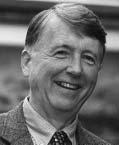 The Gilbert S.Kahn Dean ofVeterinaryMedicine
2 BELLWETHER 52
*Aleen Cust,Veterinary Surgeon,Britain’s First Woman Vet.Connie Ford,Bristol,Biopress,1900
**Veterinary Medicine,An Illustrated History,Dunlop and Williams,1995
Teaching and Research Building News
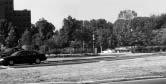

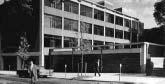
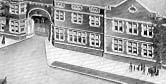
The fund-raising campaign for the new Teaching and Research Building is closing in on reaching the two-thirds completed mark.Since December 2001,additional gifts bring the total to $35.1 million.
Several significant new gifts for the new building include:
Mrs.Elizabeth Moran,a longtime friend and supporter ofthe School,made a gift of$1.5 million to name the Allam Auditorium in memory offormer dean, Mark Allam.This 300-seat auditorium encompasses,when divided,the Billhardt and Marookian classrooms.The auditorium will provide space for major lectures and events.It doubles the capacity ofthe largest space currently available and will be one ofthe largest spaces ofits kind at any ofPenn’s graduate or professional schools.Mrs.Moran is one ofthe countr y’s most successful Thoroughbred horse breeders and owners.One ofher horses won England’s prestigious Grand National and her yearlings fetch some ofthe high-

est prices.
Dr.Jules Silver,V’47,and his wife,Lucy Silver,have pledged $250,000 to name a lobby within the new Teaching and Research Building.A longtime supporter ofthe School,Dr.Silver’s career includes service as a bovine practitioner,researcher, and entrepreneur.This is one ofthe largest commitments so far by an alumnus for the new building and comes on the occasion ofthe 55th year anniversary of Dr.Silver’s graduation from the School.
The Richard King Mellon Foundation ofPittsburgh,Pa.has made a $1 million commitment for a research laboratory in the new building to support the Center for Animal Transgenesis and Germ Cell Research.The Foundation has been a longtime partner with the School in this area.In 1975,it endowed the Richard King Mellon Professorship ofReproductive Physiology,held since its inception by Dr.Ralph Brinster,V’60,a pioneer in transgenesis research.
$48 million goal
$35.1 million raised
BELLWETHER 52 3
CHARTING THE FUTURE
Quadrangle Building
Gladys Hall Rosenthal Building
Hospital
of Pennsylvania Site of Teaching & Research Building Planned Groundbreaking
Veterinary
of the University
The Teaching and Research Building site is bounded by 38th Street,Woodland Avenue,and Baltimore Avenue.
VeterinarySchool Buildings in Philadelphia
Memories and Realities
We chose these female graduates from a wide field to tell how diverse the opportunities have become over the last five decades for women in veterinary medicine.It’s a far cry from the experiences ofAleen Cust,which Dean Kelly mentions in his message.
We asked them questions – not about what helped them excel in their careers,but about what they remembered from their years at Penn.Specifically we asked:What’s a memorable moment from your years at Penn? What faculty member really impressed you? How? Can you point to a wonderful moment in your professional career to date? What advice would you give to women who want to pursue a veterinary degree?
While most were reasonably serious about their answers,a few were playful or iconoclastic.Several recalled missteps – one into icy water – and sexism.Only one woman has fallen in love with fruit flies.And only one married a favorite professor.
We chose women who graduated between 1949 and 1996,women who ventured beyond “standard”veterinary medicine,women like the women in veterinary medicine today.
Elizabeth Trainor,V’49
Retired
When Trainor was a teenager,she found a summer job at Angell Memorial Animal Hospital in Boston and later came to Penn to study veterinary medicine.After graduation,she returned to Angell for the following eight years.
She fell in love with Bill Trainor,a professional dog handler,left Angell to marry and then took offa year to travel to shows with her bridegroom.
“That’s how I became interested in the problems that breeders and exhibitors had. Through Bill,I came in contact with show dogs that were used at stud.I handled breedings, whelpings and puppy rearings and became interested in reproduction,which led to my setting up a private practice limited to canine reproduction.”She later maintained an Ameri-
by Susan Perloff
can Kennel Club-approved frozen canine semen facility in Oxford,Mass.
She remembers Dr.David Detweiler,the physiology professor whose enthusiasm for his own subject was so great,his presentation so fascinating,that Trainor learned from listening. “I seemed to absorb so much that I had trouble taking notes.”She was delighted,as a student in her junior year,to be elected to the honorary Phi Zeta fraternity.“Most people are elected to it as seniors,and I was one ofthe few women on campus.That was a special moment.”
Four years ago,after the death ofher husband,Trainor started judging Portuguese water dogs,which she had been raising for a number of years,as well as golden retrievers,poodles and dachshunds.Since then she has earned the credentials to judge four more breeds.“This is what I’m doing now,still learning.I’ve also started taking classes at my local state college, since as a senior I can take them tuition-free. Before and during vet school I had blinders on, studying only subjects that were in my field. Now I’ve taken philosophy,psychology,music appreciation and computer applications. Learning keeps me young,”says this woman who’s been out ofschool for more than 50 years.
Like other women profiled in this issue of Bellwether,Betty Trainor says “Go for it!”to women interested in veterinary medicine. “When I went for it,people just did not expect women to do this.Now it’s an excellent profession for a woman,primarily because ofthe variety ofchoices available after graduation.By nature,women relate well to animals,and women’s basic nurturing skills are helpful to animals and to running a practice.The love of animals is why most ofus got involved.”
Elizabeth Atwood Lawrence,V'56,Ph.D.
Professor Emerita,Center for Animals and Public Policy, Department of Environmental and Population Health, Tufts University School of Veterinary Medicine
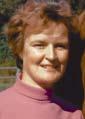
When Elizabeth Lawrence studied veterinary medicine in the early fifties,female students were prohibited from going on farm calls with practitioners.Not one to take NO for a NO,Lawrence betook herselfto the dean’s office,eventually earning women the right to one week ofthe men’s scheduled four weeks.
The Penn faculty members who impressed Lawrence most were two “kind and gentle”
men who treated women as ifthey were equals – which,at the time,they were not:Dr.Walter LaGrange and Dr.Frantisek Kral from Czechoslovakia.
Lawrence tells female veterinary aspirants, “You can make a difference ifyou stick with it. Don’t go along with the status quo.Ifyou have ideas about animal welfare or rights,stand up for your convictions.Do something.You can have an influence for the better.”In person and via the Internet,she often mentors young people who want to be vets or who want to study human-animal relationships.
For 15 years after graduation,Lawrence ran a veterinary practice in Westport,Mass.“I realized that ifyou want to be active in wildlife conservation or improving the welfare of domestic animals,it isn’t enough to know animals biologically.You need to know how people perceive animals.”So she earned a Ph.D.at Brown in cultural anthropology.At this time Tufts opened its vet school,where she began teaching.
Since 1981,she’s been focusing on the study ofhuman-animal relationships, becoming a principal pioneer in the field. She is especially proud ofwinning the Distinguished Scholar award ofthe International Association ofHuman-Animal Interactions Organizations..
Officially retired,Lawrence teaches in the vet school and in the master ofscience in animals and public policy program.She has researched human attitudes toward animals in American rodeos,showing how the sport of rodeo metaphorically recapitulates the taming ofthe wild,the conquest ofthe West.
Katherine Albro Houpt,V’63,Ph.D.
College of Veterinary Medicine,Cornell University Director,Animal Behavior Clinic, “Go for it!,”says Houpt to women who are considering veterinary medicine.“It’s a good profession for women because it’s relatively easy to combine with child-rearing.Schedules are more flexible than in other professions.” She mentions the so-called M-shaped curve for
4 BELLWETHER 52
Cover Story
Elizabeth A.Lawrence
women in professions:a steep rise in a career just after graduation,followed by a dip for the birth ofthe first child,then another sharp rise, a dip for second child and then a rise again.
The first time Penn accepted Houpt to the vet school,she turned it down because she was getting married.She had second thoughts,and like many women,she says,she broke an engagement to attend professional school,“and I felt I was entering a convent.The first person assigned to show us around campus was Dr. T. R.(Richard) Houpt.In my first physiology course,I got a C.In my second course,I worked very hard and received an A so Professor Houpt would notice me.I married my favorite professor between junior and senior year.”
In a platonic way,Houpt also was keen on the late Donald Lee,an anatomy professor, “who accepted me despite my having turned down vet school once a few months earlier.I still cannot smell formaldehyde without feeling good,because when I smelled it on campus,I was where I wanted to be with people I liked.”
The first rise on Houpt’s M-curve was working with her husband after graduation, and having a child was the first dip.While she was in the hospital,Penn ruled that spouses could not work together,so her second rise was a small-animal practice in West Philadelphia.“I learned I loved it,although I had not paid attention to those lectures,since I wanted to be a researcher.I found part-time research work, too, dipped for a second child and went back to graduate school in biology.”
When her husband was offered a job at Cornell,where the couple could work together, Houpt herselfbegan climbing the academic ladder.She sees gaining tenure at an Ivy League university as the most difficult challenge ofher career – becoming the first female full professor at Cornell's College ofVeterinary Medicine.
A pioneer in animal behavior,Houpt calls horses “my great area ofresearch.”Currently she’s studying cribbing:a horse grasps a horizontal object,arches the neck and aspirates air. Many devices keep horses from cribbing,says Houpt,but most produce pain – one is a shock collar,one a muzzle.“But the devices don’t address why a horse cribs.And ifwe can stop a horse from cribbing,what does it do with that time? Eat more? Stand around? What kind of diet reduces the frequency ofthis behavior?” Stay tuned.
Joan O'Brien,V’63
1929-1990
Joan O’Brien was the first female V.M.D. professor at Penn Vet School.The female profs before her were Ph.D.s.
Her classmate,Katherine Houpt,remembers:“Joan had three children when she started vet school,and she was sort ofthe class mother.Before every exam,she invited my roommate,Eleanor Brandt,and me over for dinner and to study.Joan always knew less than half the material at dinner,I knew 80 percent and Eleanor knew 100 percent.I went to bed at 11, and they stayed up.Joan was a quick learner –by the time ofthe exam,Joan knew it all.”
When Joan Hendricks,V’79,joined the Penn Vet faculty,Joan O’Brien was the only female full professor.“She was remarkable for her warmth,”Hendricks says.“She would seem warm in any setting,but for an academic,clinical setting,she was really wonderful.She took a number ofpeople under her wing.She did that mentoring thing that you always hear about but that people don’t do much.
“At one point,several years into the horrible probationary period as a faculty member,Joan took me aside and told me that people were saying I was doing a good job.She was telling me to keep my chin up.No one can ever get too much positive feedback.In the absence of positive feedback,you assume you’re failing,so what Joan did was wonderful,and she did it for several people.
“But she was also very good at being tough. She took people aside and told them negative things,too.That kind offeedback is at least as helpful.Other people were capable ofgiving you negative feedback,too,but hearing it from Joan was especially useful.Since you knew she loved you,you knew that what she said would be in your best interest.It’s not something you usually say about a co-worker – that you know they love you – but we said it about Joan.
“Even today,when something wonderful happens in the School,we mention Joan and say she would have liked it.When we’re really moved,we send a message to her.We salute her.”
Jeffie Roszel,V’63,Ph.D.
Retired
Roszel and her sister were USO performers, spending two years in Japan after World War II.
There she met her husband,Ron;the couple settled in New York until the bride decided to pursue veterinary medicine.“I could have gone anywhere,”she says,“but the school you attend is very important,so I came to Penn.”
When Roszel enrolled in 1959,she was a married woman and 33 years old,and was one offive women in a class of45 students.“Some faculty were not too enthusiastic about female students,”she says.“But I won over Dr.Boucher after he watched me milk a cow.He became my mentor.”The Roszels lived up the street from school,and their house reportedly was “the place to study for exams.”
One faculty member at Penn remembers Roszel as “Quite handsome and tall.You could tell that she had been a show girl.”Someone else remembers Roszel’s talent for blowing smoke rings within smoke rings,not popular today but an impressive feat 40 years ago.
While in school,Roszel became interested in cytology.After graduation,she studied at Temple University with Dr.Irena Koprowska and earned a Ph.D.She was one ofthe first cytopathologists in veterinary medicine.She joined the Penn faculty as in instructor in pathology in 1967 and two years later was appointed assistant professor.In 1971 she and her family moved to Tulsa,where she joined the Oklahoma State University College ofVeterinary Medicine.In 1996 she retired as a professor ofpathology.She says,“The years spent at Penn were the happiest years in my life.”
Maron Calderwood-Mays,V’68,says Roszel sparked her interest in pathology.“Jeffie Roszel was a faculty member and role model,especially because she did all sorts ofthings before coming to vet school;she was in the military and she was a fashion model.After I graduated, I remember going to a picnic at New Bolton Center.I was sitting on picnic blanket with my second baby.Jeffie’s son was 10 or 12,and she had such a maternal side.Someone I thought ofas 100 percent professional turned out to have a completely different nature out ofthe classroom.You kept quiet about your family in those days.”
Maron Calderwood-Mays,V’68
Veterinary diagnostic pathologist Calderwood-Mays was part ofthe first class with a female population oftwo digits:10. (Eleven were admitted,but one dropped out
BELLWETHER 52 5
Memories and Realities
sophomore year.) Accommodations for women on night duty were make-shift,she remembers: a small room in the small-animal hospital, steam pipes clanking in the ceiling,next to the men’s bathroom,from whence every sound could be heard.And the school allotted three lockers in the activities area,not nearly enough space for 10 young women to stash their stuff.
She remembers getting a good grade on her first general-pathology exam in Dr.John McGrath’s course,which she liked.“I should have realized then that pathology was my field,” she says,“but I didn’t.The school suggested I stay for a pathology residency,but I was too eager to get my hands on real animals,not on bits ofanimals,so I said no.”
The no didn’t last long,though.She joined a small-animal practice in Lansdowne,Pa.,for three years,and when her husband found work in Gainesville,Fla.,she earned a Ph.D.in cancer-immunology in the pathology department at the University ofFlorida College ofMedicine,then became a faculty member at the College ofVeterinary Medicine.
She joined a private diagnostic lab which,after an acquisition,became part of SmithKline Beecham Clinical Labs.Calderwood-Mays calls this “a dream job,”doing diagnostic veterinary pathology.After yet another corporate sale,Calderwood-Mays and her partner quit and started Florida Vet Path,Inc.She also consults with Marshfield Laboratories,of Marshfield Wis.“I visited there once in June. ‘You can’t fool me,’I told them.‘I’m willing to visit,but it’s too cold.I’m not moving.’So Fed Ex brings me slides.”
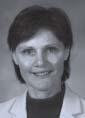
Calderwood-Mays’advice for women considering a career in veterinary medicine is to get an excellent,well-rounded education first. “Don’t just take animal science.Also take philosophy,religion,and languages.These classes can prepare you for the many opportunities in veterinary medicine right now.You want to be able to step into any specialty.”
Catherine Carnevale,V’72
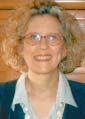
Director,Office of International and Constituent Operations, Center for Food Safety and Applied Nutrition,Food and Drug Administration,Washington
Carnevale believes that veterinary medicine enables women “to do a multitude ofthings. We gain a broad scientific knowledge in many different subjects and species.My career has not followed a traditional veterinary medicine path,in that I have dealt primarily with human food safety and international trade.Yet I felt the education and philosophy we received at Penn prepared us to venture offinto non-traditional areas.
In vet school they told us our education gave us the option ofdoing a variety ofthings, but I didn’t quite believe it.It seemed like most students went to vet school because they wanted to practice.I certainly did.The truth is,a veterinary degree is a great door opener.”
When Carnevale chose Penn,she says,“had I gone elsewhere,I would have been the sole woman.At that time few schools had women students and,ifso,only one or two.The University ofGeorgia,the state contract school for Maryland where I lived,annually admitted 10 students from Maryland,so I expected to go there.”
During her interview for Georgia, eight men sat at a table,asking questions ranging from whether she thought she could put her arm in a cow without standing on a chair (Carnevale was 5'6") to how many books she’d read in the past year; she guessed 30.“They asked me to name the last two books I’d read,which were essentially dimestore novels.Then on the spot,they asked me to compare them to the classics.I never thought I had a chance,so I relaxed a bit despite the bizarre line ofquestions.”
Meanwhile,Carnevale visited Penn,where she met associate dean Don Lee,whom she asked about the school’s attitude toward female students.“He told me that Penn began as a Quaker-based school and therefore had a tradition ofseeing men and women as equals.That was the great answer! He looked at my record
and didn’t see any reason why I couldn’t get in. When I went back for a formal interview,I had Dr.Lee again,and we just chatted.”
After Penn accepted Carnevale,she phoned Georgia,and learned she was accepted because another student in the Maryland 10 chose to go elsewhere.“Nevertheless,the gentleman I spoke to was quite frank.He discouraged me from attending,saying I’d be the only woman in the class and would probably not be happy there.”So she told her parents she dearly wanted to go to Penn,which she did,although it cost about four time more than Georgia.
When Carnevale graduated from Penn,she applied to several practices.She ended up at an excellent practice,an AAHA hospital outside of Philadelphia.Dr.Lee had recommended her to the practice owner,though she didn’t learn of his involvement until later.“When I found out, I asked him whether he realized that I had been an average student.But Dr.Lee said that how you do as a student does not predict how you do when you get out.He had faith I’d do well.”
Midge Leitch,V’73
Owner,Londonderry Equine Clinic,Cochranville,Pa.
In 1979,Dr.Leitch’s final year on the faculty at New Bolton Center,a new intern arrived. “We were immediate kindred spirits,”she says, ofDean W.Richardson,now chiefofsurgery at NBC.“Dean is perhaps the brightest person I’ve ever known,and when he arrived he was fairly convinced ofhis expertise.Fortunately I had seven years' experience on him!”
“For a couple ofweeks,we had very combative arguments in barn rounds.One day I was paged:‘Dr.Leitch,228,please.Dr.Leitch, 228.’So offI marched to the office ofDr. Charles W.Raker,the first head ofequine surgery at New Bolton,and a monumental force in the lives ofpeople who worked in the clinic during his tenure.Ifyou heard his or his secretary’s voice over the intercom,it would raise your heart rate,blood pressure and peristalsis. It might mean simply a request to get the next horse in the stocks for an exam,or it might mean one had been caught in some malfeasance.
“Dr.Raker told me that students had suggested that Dr.Richardson and I should be separated,as we appeared to dislike each other so much.Completely caught offguard,I responded that I thought we enjoyed a wonderful
6 BELLWETHER 52
Story
Cover
MaronCalderwood-Mays
Cathy Carnevale
repartee,that he was the best intern I’d seen, and that I found the challenge stimulating.In typical fashion,I had been completely unaware that the students had been intimidated and I had hoped the same was not true for Dr. Richardson.Apparently it was not.
“The fondest dream ofany teacher is to have a student surpass her.Dean Richardson done that,and I like to think that in some small way I helped him formulate his approach to clinical problems.”
Trained as a surgeon at New Bolton Center, Leitch rarely performs surgery now.She has a sport-horse practice,working on lameness problems,training issues that include a veterinary aspect, preventive medicine and the long-term rehabilitation of horses with injuries. She specializes in competitive horses in the disciplines of dressage,driving, jumping,and threeday eventing.She travels often with the U.S.Equestrian Team, including accompanying them to the Olympics in Seoul,Atlanta and Sydney.
Leitch thinks a veterinary career is a lifestyle choice.“At 5 PM,you don’t push your chair under your desk and close the door on your profession.”Some types ofveterinary practice are easier to control than others and permit more flexibility in one’s personal life.“I made a career choice that required professional flexiblity,necessitating concessions in other areas.Now sometimes I think it might be nice to have a family;though I can’t imagine what family could or would want to cope with the demands ofmy professional life.So my advice to women intent on a professional career is to investigate carefully its requirements.Certain careers within veterinary medicine are not especially compatible with a reasonable family life.”
Leslie Dierauf,V’74
Conservation Biologist,U.S.Fish and Wildlife Service,Santa Fe, N.M.
As habitat conservation plan-coordinator for the Southwest,one current project involves metro Austin,Texas,which needs to help con-
serve two neo tropical songbirds and seven cave invertebrates (spiders).And she’s working on a scheme involving 5.8 million acres in Pima County,Arizona,which includes Tucson, where a six-inch bird,the Cactus ferruginous pygmy-owl,and 80 other associated plants and animals need protection.
“The fun part is helping communities and individuals understand how great it is to be a steward ofthe land or water where they live,” Dieraufsays.“It’s a bigger picture.That’s why I moved from direct hands-on animal care,where I saved whole groups ofanimals at a time,to the bigger picture,where I can save habitat that saves more than one group.When communities invest time and money in these plans,they embrace them when they’re finished.”
A pivotal moment in vet school for Dierauf was in anatomy,when Dr.Isidore Gersh was teaching microanatomy.One day he came to class 15 minutes early and started writing on the blackboard.
“He filled the entire board,and everyone was madly scrambling to write it all down.As soon as he finished writing it,he erased it.”Pause.
“What I learned was that you should probably listen instead of taking notes.Dr.Gersh was one ofmy favorite professors,even though I got many low grades from him.We were on pass-fail,so it really didn’t matter.”
For three years,the Class of1974 took classes with the Class of1973.“It was wonderful having the class ahead as friends;they gave us great insight into what to expect.They were struggling for grades,and we weren’t.We didn’t have to panic,and we realized that we were saved from that layer oftension.We were lucky.”
To de-stress,Dieraufoften “spent time in the hay”with baby lambs and baby foals.That, plus eating fried mushrooms at the Brown Derby in Kennett Square.
Dieraufspent 1990 as a AVMA Congressional Fellow,following which she worked for the U.S.House ofRepresentatives for more than two years.In 1992,Penn’s School ofVeterinary Medicine invited her to give a “distin-
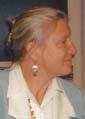
guished alumna”presentation,called Through the Looking-Glass:One Woman’s Perspective on Pubic Policy.“I had memorized the presentation,and it was being filmed.I dropped all 356 ofmy file cards.I bent over and picked up a few at a time.One woman told me afterwards that she loved that I dropped the cards,that it made her realize I was human.”
Later Dieraufco-founded the Alliance of Veterinarians for the Environment and won the 1998 AVMA national animal welfare award. CRC Press recently published the second edition ofher unique textbook, Handbook of Marine Mammal Medicine.
To women interested in a veterinary future, Dieraufhas pithy advice:“Love math and chemistry.Ifyou don’t,you ain’t gonna get it.”
Cindy Bossart,V'78
Small-animal practitioner,Fort Lauderdale
A turning point in Bossart’s life happened on a freezing day in vet school,three inches of snow falling,on a large-animal rotation.“I was doing rectals on cows,and that’s how I was keeping warm.After I had my arm up a cow for 10 minutes,the farmer asked how her ovaries felt.I said I didn’t know yet,I needed to be in there another 10 minutes.I wished I had two arms up two cows,it was that cold.That’s when I decided I needed to live in permanently warm weather.”
Another pivotal experience came in the first class ofaquatic veterinary medicine in Woods Hole,Mass.After a mother shark died,Bossart delivered the babies,raising them in a tank and teaching them how to feed.“Sharks are precocious when born,”she says.“When I released them into the ocean,they swam around my feet for two seconds,then swam away.No loyalty there! Those sharks taught me to be interested in reproduction.”
The woman who answers the phone “Dr. Cindy”runs a five-woman doctor practice in a 6,000-square-foot facility with two surgical suites,laser equipment,endoscopy and ultrasound.There’s an on-site frozen semen lab and a whelping room plus a separate isolation building.She’s been with the practice since 1978, owned it since 1988.She runs a reproduction clinic for dog breeders and breeds and shows collies.At the 2002 Westminster dog show,her homebred rough collie won best ofbreed,the first Westminster breed ribbon for her.
BELLWETHER 52 7
Leslie Dierauf
Midge Leitch
Memories and Realities
The practice ofveterinary medicine used to be harder for women,says Bossart;“So women should go for it.”Practicing what she preaches, she has housed two girls,now young women, who want to grow up to attend veterinary school,in University City.One,now a college junior,has lived with Bossart every summer since age 14.“Veterinary medicine is fun,interesting, challenging and always changing.Ifpeople understood that,they’d get better at it every day.”
Joan C.Hendricks,V
’79,Ph.D.
Henry and Corinne R.Bower Professor of Small Animal Medicine and Section Chief,Critical Care,Veterinary Hospital,University of Pennsylvania
During vet school,sometimes Hendricks read about animals,sometimes she examined them and sometimes she listened to songs about them.“Dr.Peter Hand used to do a skit and play guitar and sing about anatomy,”she remembers. “He punned and sang ‘Thank God,I’m a neuroanatomist,’a la John Denver.I was fascinated that a professor came to that level ofcommunicating with students.I loved being part ofthat. Vet school was the most amazing group I’ve ever been part of.Vet school graduation was the only graduation I felt I belonged at.”
Hendricks was an early participant and the first woman in the NIH-funded V.M.D./Ph.D. veterinary scientist program at the School.Later she was instrumental in establishing the Center for Veterinary Critical Care at VHUP,bringing Emergency Service,Intensive Care Unit and Anesthesia under one umbrella.She is a full professor and the first woman at the School to be named to an endowed professorship.
“Once upon a time,”says Hendricks,“critical care wasn’t a specialty.Ifemergencies came in at night,stafftried to keep the animal alive until the daytime people came in.But times were changing.I was working with Dr.Ken Drobatz, then a resident,now head ofthe emergency service,on a dog with a septic abdomen.Everyone came together.We worked for weeks on this young,otherwise healthy Labrador retriever;we tried all kinds ofnew medicines and treatments.Once we determined the dog had swallowed a deli toothpick,we surgically removed it.It was the first time we realized we could all work together and make a difference. The day she went home with her big tail wagging was an absolutely glorious day.”
Fruit flies are Hendricks’current love. “They’re fabulous.They are inexpensive and
plentiful.Emotional attachment is rare,though possible,”she teases.“My assistant named some.I was doing a sabbatical to study genetics,and I thought it would be fabulous to learn scientifically iffruit flies have a state like sleep. To summarize two years ofwork:they do. There are hundreds ofmutations,and some of the same genes alter sleep in both flies and mammals.”Earlier Hendricks studied sleep in bulldogs,which are “adorable,expensive and sickly,”so she switched from four legs to six.“I have more pet bulldogs than pet flies.”
When a young woman asks Hendricks about a career as a vet,the reply is No problem. “There are no barriers to getting into school today.Some women are interested in saving every bird and kitty.Veterinary medicine is a cute thing for a little girl to aspire to,and it can contribute as a second income.But women in the field today have to focus on business,too. You have to earn a living and earn respect and earn perqs – by focusing on business.Women still lag behind men in academic rank and positions ofcontrol.Go where the money and power are! Value what you do.”
Amy Marder,V’79
Director,Behavioral Service,Animal Rescue League of Boston Owner,New England Veterinary Behavior Associates,Lexington, Massachusetts
At the Phi Zeta honor society annual meeting in 1978,Marder heard a lecture given by Dr.Alan Beck,then a candidate for a faculty position.“That lecture changed my life,”she says.“He got me interested in utilizing behavior to help the community.I knew then that I wanted to work with the public and animal shelters.”
But Marder's interest in behavior started years before she started her veterinary career. Majoring in biology and animal behavior as an undergraduate at Penn she went on to become an exhibits writer at the Academy ofNatural Sciences in Philadelphia.One ofthe exhibits she wrote was on the Nobel Prizes which had been awarded in 1976 to three animal behaviorists.She intended to combine behavior with veterinary medicine when she went to veterinary school.But when she got there,she found that “most vet schools,including Penn,had little to offer”in her chosen field.She hoped she could change that one day.After graduating, she did an internship in general medicine and surgery at a private practice in California and
then worked as a general practitioner in Southern California.But her interest in behavior persisted.When she learned that Penn had hired Dr.Victoria Voith,a leader in the field ofclinical animal behavior and Dr.Alan Beck to head the new Center for the Interaction ofAnimals and Society,her attention was drawn back to her alma mater.The next year she became Penn’s and the nation’s first resident in veterinary behavioral medicine.
After leaving Penn,Marder moved to the Boston area.She started a housecall practice in behavior and became a clinical assistant professor at Tufts University School ofVeterinary Medicine and the animal behavior consultant for Angell Memorial Animal Hospital and the MSPCA.For fifteen years,she served as the staffpet columnist for Prevention Magazine.
But Marder had learned that the number one reason that people give their animals up to shelters was a behavior problem.“It was great helping owned animals,but I really wanted to help the animals that really needed help,the unowned ones.I also wanted to get to the owners at risk and offer help before they made that final decision”
Marder was offered the opportunity to use her expertise within an humane organization at the ASPCA in New York City.A meeting with Dr.Alan Kelly,dean ofPenn Vet and also a board member ofthe ASPCA,convinced her to take the chance.“It was my dream job”says Marder,“except for the fact that it was in Manhattan”.She returned to Boston full-time after two and one halfyears.
“I am really proud ofand excited about what I’m doing now,”Marder says.Her private housecall practice has grown into a large behavior center in Lexington,Massachusetts, employing three veterinary behavior consultants,a psychologist and four dog trainers.She also heads the behavioral service department at the Animal Rescue League ofBoston.“In my private practice,I help owned animals stay in their homes.Through my work with the Animal Rescue League’s five animal shelters,I’ve started programs that not only help to keep
8 BELLWETHER 52
Cover Story
Amy Marder
animals in their homes,but help the animals in the shelter get behaviorally ready for new homes.”
When asked,“What would you tell women wanting a career in veterinary medicine?”she answered:“It’s a great job! My veterinary education opened many opportunities for me and allowed me to go in many paths:medicine, behavior,writing,education,working with the humane community,government animal control and legislation.But don’t expect to be rich, just pleasantly comfortable.”
Grace Karreman,V’82
Owner,Pacific Marine Veterinary Services,Nanaimo,British Columbia
A woman interested in aquaculture should use a veterinary education as an entrée,says Karreman.“You could be a nutritionist,fish biologist or cattle farmer and go into fish farming,but veterinary training is second to none. Vets are taught to solve problems,and this is a new field with new problems.”As for the reality ofaquaculture:“It’s a man’s world,so you should be yourself.Have confidence.Be patient and be gracious.At all times,maintain a sense ofhumor.”(Even in this man’s world,the majority ofveterinarians six out of11 in aquaculture in British Columbia are women.)
A sense ofhumor? Grace Karreman? Just ask about the time she skidded offthe frosty dock ofa marine net-pen site into 45-degree water.“You have to be prepared to be wet and cold ifyou work in aquaculture on the north end ofVancouver Island.”
When dry,Karreman consults with fishfarm companies,hatcheries,marine net-pen sites and processing plants,making routine preventive visits and handling outbreaks or problems.“You have to be extremely aware of environmental issues,not just environmentalists’issues but water-quality issues,too,such as the chemistry ofthe water,the bacteria content,how diseases are passed in the water and so on.And wild fish.”Special projects can be as esoteric as hatcheries where fish may get nitrogen supersaturation;or gas-bubble disease, similar to the bends in divers;or the lack of quality offish in processing plants,which may be due to disease,nutrition or handling.
On the 93-percent-mountainous Vancouver Island,most ofKarreman’s clients,are located in fjords,with access only by boat or floatplane,her common commuting modes.British
Columbia has 20,000 miles ofcoast line. “That’s more coast than Norway.We have more potential and warmer water,so fish can grow faster than in Norway,but we’re way behind Norway in fish farming.”This from a woman who sailed the east coast ofVancouver Island with her sheep dog,Molly,as first mate and sous chef.
Karreman has helped develop software to manage fish-health information plus Webbased databases.Because the farming sites are so far apart,the only efficient way for these farflung scientists and farmers to communicate is via the Internet,she says.The Web database has three primary stakeholders:private farms;the Canadian Department ofFisheries and Oceans, which cares for wild fish and salmon that return to saltwater;and the B.C.Ministry of Fisheries,which has fish-culture facilities that raise trout to be released into lakes.“Now that we all talk the same language,”Karreman says, “and we’ve made this major effort across the province,it gives me a high to get the cooperation to pull this together.”
Laurie Landeau,V ‘84,WhG ’84
Associate Director,Aquavet® Program,Woods Hole, Massachusetts.Equine and Aquatic Animal Veterinarian, Cambridge,Maryland.
Before vet school,Landeau worked at New Bolton Center on an engineering project involving the biomechanics ofhorse hoof.For two summers,former dean Mark Allam taught her to drive carriages.“I wish he were still around,sharing the front seat….I was honored that he was interested in teaching me to drive. But most important was his telling me about veterinary medicine,that he thought it was going to be a popular and positive career for women,even before there was an explosion of women in this field.He said it was a flexible degree,that it was well-suited for women who wanted to have it all.The time I spent with him,talking about his philosophy ofveterinary medicine in some ways those drives were lifetransforming,because I’ve stayed with both those things.I became a veterinarian,as I always wanted to do,but I followed a nontraditional path.And I continued to drive carriages.I’ve broken my own horses,shown several ofthem to multiple championships,taken part in various fundraising carriage drives to benefit the vet school,and I ended up owning 10 carriages and four sleighs.”
Landeau was the first person in the country to earn a joint V.M.D./M.B.A.-degree.The M.B.A.helps her manage her father’s business and the start-up research laboratory where she and her husband (Robert J.Maze,a Penntrained Ph.D.parasitologist) are working with two protozoal parasites ofoysters.
For 15 years Landeau has taught in the summer Aquavet® program at Woods Hole,an intense course for aquatic animal medicine, organized by Penn,and open to all veterinarians and veterinary students on a competitive entry basis.The rest ofthe year she splits her time between New York,where her family business is located,and Maryland,where she is “an equine practitioner on a selective scale.”She handles veterinary medicine for her own 32 primarily Appaloosa horses and for farms belonging to a few friends.Her Appaloosa stallion stands in North Carolina.
In Maryland Landeau and her husband raise oysters to try to create parasite resistance in oyster populations,an issue which is ofvital importance to the livelihood ofmany Chesapeake Bay families who have seen the oyster crop devastated by parasitic diseases.“The ultimate purpose is not to raise oysters but to develop and elucidate reasons for disease resistance,”she says.
Ava Logan,V'85
Associate Director,Animal Health,Department of Laboratory Animal Medicine and Science,Pharmacia,Chicago.
Logan never considered a career in broadcasting,but a professor at New Bolton Center recommended it while Logan was a student giving grand rounds on a horse.“The professor came up to me afterwards and told me what a nice voice I had and that I should be doing radio.I took it as a compliment.”Happily she ignored his advice.
“I know that more women are getting in to veterinary medicine today,and I just encourage them to ‘go for it,’she says.“The career is diverse,veterinarians are involved not just in private practice but also in government,industr y, research and other areas.You have to work hard.In my case,‘working hard’involved four years ofveterinary school plus three years of clinical residency and a concurrent postdoctoral fellowship (research) in immunology.
“You can learn about research only by doing it and interacting with other researchers.Ifyou want to move forward in the veterinary
BELLWETHER 52 9
Memories and Realities
specialty oflaboratory animal medicine,you have to take (and pass!) your specialty (American College ofLaboratory Animal Medicine) boards after completing your residency and studying for one to three additional years,all while holding down a full time job.It was a rigorous undertaking,but I don’t regret it.My career is quite rewarding,helping to develop drugs for unmet medical needs,has provided a way for me to pay back all the loans I accrued along the way,and is giving me a good standard ofliving.”
As a student, Logan admired biochemistry professor Adelaide Delluva. “She was a terrific teacher and always encouraging.She came in one day with a great big,floppy purple hat.I loved it. I told her she looked great in it,and she gave it to me.I tried not to take it,but she insisted.I don't wear it often,but it's still in my closet.”
During her residency,Logan worked with John Cebra,Ph.D.,immunology professor,who was invited to Taiwan to set up immunology labs at a new center for molecular biology in Taipei.For two months,Logan worked with
Honor for Dr.Deubler
him abroad,and,as a result oftheir work,she submitted an abstract for a poster that she presented the following year at an international conference in London,all ofwhich was an utter delight.
While in her current position,she has collaborated with a pathologist and published papers on marmosets,specifically the clinical parameters ofmarmoset wasting disease.
Bridgette Jablonsky,V96
Farm Manager,Hanover Shoe Farm,Hanover,Pennsylvanias
Jablonsky was involved in standard-bred racing even before vet school,and she once aspired to be track veterinarian.When in school she became interested in reproduction and spent two rotations in the neonatal unit. “When I graduated,this job was available.No matter what your aspirations are,Hanover Shoe Farm is ideal.Imagine being drafted by the NY Yankees.It’s the pinnacle.There’s no place higher,no place more prestigious.”She is the first female farm manager at Hanover,the largest standard-bred breeding farm in North America.
Her population waxes and wanes with the season:peak population,with a potential for 1,300 horses,begins about mid-June,when all the current foals are born,and lasts until August,when the first yearlings are sold.From
November through early February,population goes down about 1,000,all on a 3,000-acre spread.The numbers include the 500 farmowned and boarding mares that live on the premises.
Jablonsky suggests that women should not let anything – such as size or gender – deter them from veterinary medicine.“For reproduction and palpating mares,you would think someone taller would be good,”she says.“But with skill and determination you can overcome many things that are viewed as an obstacle,including being five feet tall, as I am.
“When I interviewed at Hanover. they said their only worr y was that I was too small physically to do it.‘Give me a try,’I told them,‘you can always fire me.’For my first three years after graduation,I worked with the previous farm manager.When he retired they promoted me to his position.”
At School,she was pleased to work with Dr. Tulleners,who “took a group ofstudents under his wing,students involved with independent study.He helped us on his personal time,and he was always keen about cultivating students who had special interests.”At the time,her interest was surgery.

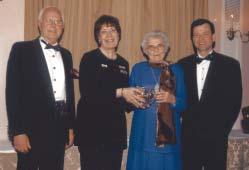
On the eve ofthe 2002 Westminster Kennel Club dog show Dr.Josephine Deubler,V’38 was honored by her peers and presented with the Nature’s Recipe Pet Foods 2001 Hall ofFame Award.This award is given to an individual who has made a significant contribution to improving the quality of the dog show sport and is presented in recognition oflifetime achievements by dedicated show dog enthusiasts.The award is presented periodically and Dr.Deubler joined a select group.She received an engraved crystal bowl and a donation will be made to a charity ofher choice.
“All our horses are given Hanover as a surname.Ifyou see a horse with a Hanover name win a race,you knew him before he was a horse,you knew him as a follicle.You go back that far with him.Chances are,you saw him being born,you raised him,you treated his sicknesses.The first Hanover horse I knew well won two million-dollar races in one year,both under the time of1:50,which is the speed barrier.He was highest priced yearling ofhis year and sold for $250,000;he’s back here now to stand at stud in our stallion born.His first yearling will sell this year.I love this stuff.
“Every time I do a pregnancy test on a mare,I get a great sense ofaccomplishment. I’m helping create life.”
10 BELLWETHER 52
Cover Story
Bridgette Jablonsky
(l to r) Peter Green,who gave the speech summarizing Dr.Deubler’s achievements,Arlene Arden,Dr.Deubler,Mark Miller,Nature’s Recipe.
Ava Logan
New Technologies to Monitor Infectious Disease Outbreaks
Outbreaks ofinfectious diseases are a constant danger to the agriculture industry.
Pennsylvania has experienced first hand the devastation such an outbreak causes.The poultry industry remembers well the avian influenza epidemic in 1983.To prevent reoccurrence ofan epidemic ofthat magnitude, researchers at the School are relying on technology high in the sky and on powerful computers equipped with sophisticated software.
At New Bolton Center, Dr.Sherrill Davison, V’83, Dr.Robert Eckroade, Susan Casavant and Stephen Gallo have applied Global Positioning System (GPS) and Geographic Information System (GIS) technology to assist Pennsylvania’s poultry community in controlling diseases to minimize economic loss.
GPS/GIS technology has many applications because it can accept a great number ofdifferent parameters which then can be analyzed with the help ofpowerful software programs. Law enforcement offices use this technology to track incidents ofcrime in specific geographic areas;health officials and epidemiologists employ it to monitor health problems in specific populations or geographic areas;emergency management officials utilize it to cope efficiently with the consequences ofa natural or man-made disaster.
“GIS is a computer-based tool for mapping and analyzing data to predict outcomes and planning control strategies,”says Dr.Davison. “This technology has been used not only in city and county governments,but also in farming, public safety,community health surveillance, marketing,and telecommunications companies.”The program allows for tracking ofmultiple parameters and analysis oftrends.
The group has mapped the location of commercial poultry flocks,feed mills,processing plants,rendering plants,hatcheries and as many components ofthe live bird market as possible in the Commonwealth.To collect the data,surveys were developed and sent to all poultry clients.Geocoded addresses (matched to a commercially available street database) and driving directions were used to determine the location ofeach farm or facility in addition to the use ofGPS receivers that provide longitude and latitude coordinates from satellite signals.
H istorically,the Pennsylvania poultry industr y has experienced outbreaks ofdiseases such as avian influenza,Mycoplasma gallisepticum,and infectious bronchitis.These out-
breaks affect many flocks through a wide geographic area and the economic impact can be devastating.In the past,to determine the potential area ofthe spread ofthe disease, someone needed to locate the poultry flocks near infected flocks by driving through the area and visually locate poultry facilities.“This was very time consuming and it took a while to collect these data,”says Dr.Davison.“The use of GPS/GIS technology allows for easier and quicker access to the location and identification ofsurrounding poultry facilities.
“Our application permits a more rapid response in control efforts for avian influenza
mountains may limit disease spread.“On the other hand,during the 1997-98 outbreak of avian influenza,wind was a factor in the transmission ofdisease to neighboring farms,”says Dr.Davison.“Ifdata on wind direction in future outbreaks is collected,we can include this information as part ofthe epidemiological study.Temperature and humidity data may also be useful parameters in the analysis of spread ofdisease.”

and other diseases.”The system facilitates the analysis ofdata such as type and number of birds affected or the companies involved.It allows the integration oftravel routes for feed, bird and egg trucks,schedule ofservice personnel,etc.into the program.The role ofenvironmental factors can be analyzed as to whether the spread ofdisease is mechanical in nature (i.e.personnel or vehicles) or whether wind or water play a role.
GIS technology allows for the creation of maps which show geographic features ofan area.These may either be beneficial or detrimental to disease control.Rivers,highways,
ArcView,created by the ESRI corporation,is the widely used GIS software employed by the poultry researchers.This software takes information stored in spreadsheets and databases and creates layers ofspatial features in map form which are linked to the original database tables.Information can be identified,queried,and analyzed to visually represent a situation. Buffer zones around an infected flock can be created in seconds along with a list ofthe farms within the zone in order to implement rapid surveillance testing and a possible quarantine in the specific area.During the most recent outbreak of avian influenza in Union,Snyder and Juniata counties (Dec. 2001),the NBC researchers used their GIS application and the evolving database to assist the poultry community in controlling disease and minimizing loss.The group increased its database by mapping farm and plant locations by geocoding addresses,obtaining latitudelongitude coordinates by GPS and mapping facilities by driving directions. They were able to produce an inventory of poultry and support facilities in the counties and recommend steps to contain the disease. The poultry group was able to view maps of farms that were depopulated,under surveillance testing,or scheduled to go to market soon.With this information,a complete picture ofthe outbreak situation was viewed on a daily basis.
The database for the poultry industry is growing.Additional information continues to be gathered about components ofthe live bird
(continued on page 28)
BELLWETHER 52 11
L ockheed MartinMissles and Space
New Aquaculture Building at New Bolton Center Dedicated
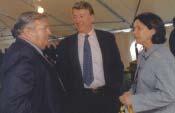
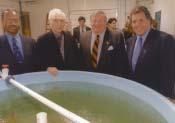
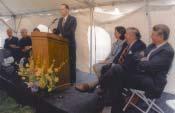
The aquaculture program at the School has a new home in the Fairchild Aquaculture Laboratory at New Bolton Center.The new building was dedicated on Wednesday, April 3,2002.Among the speakers at the ceremony were S amuel Hayes,secretary ofagriculture,Commonwealth of Pennsylvania; Manuel Stamatakis,chairman, Delaware River Port Authority (DRPA);and Robert F.Fairchild,a member ofthe School ofVeterinary Medicine’s Board ofOverseers and a lead donor to the building fund.Additional funding for the building was provided by the DRPA and the School.
The 2,500 squarefoot-building has 12foot ceilings and is equipped with airhandling and exhaust systems to control airflow. It accommodates four groups offour 330-gallon tanks,each 5-foot in diameter and 21⁄2foot deep.Each group oftanks has its own filtration and water system.There is also a small laboratory for onsite testing ofwater samples.
Penn’s aquaculture program,a multidisciplinary effort by the School ofVeterinary Medicine,the Wharton School,and the School ofEngineering and Applied Science,began in 1997 when the DRPA awarded a grant to study the feasibility ofstate-of-the-art closedsystem fish farming.A former cow barn in the Veterinary School’s Quadrangle Building was converted into an aquaculture facility with large tanks,pumps,filters,and sophisticated monitoring equipment.The fish raised there were mainly hybrid striped bass,but the group also
looked at raising flounder,tilapia and shrimp.
To work more closely with specialists in food animal husbandry,nutrition,microbiology and toxicology the aquaculture program moved to New Bolton Center a year ago.The group, under the leadership of Dr.Leon Weiss,professor ofcell biology,is working closely with Drs.David Galligan, V’81, and James Ferguson,V’81, ofthe School’s Center for Animal Health and Productivity to apply principles ofration formulation and least-cost diet formulation,common in the dairy industry,to aquaculture.To that end,the group’s current research project centers on the development of a more efficient way to feed fish.Farmed fish are raised on fish meal which is relatively expensive,though a fish is more efficient than a chicken converting feed into bodyweight. Planned studies include ways to better prevent and control infectious disease in the fish.
Other members of the group are Dr.David Nunamaker,V’68,professor oforthopedic surgery,who is overseeing the raising of hybrid striped bass in New Bolton Center’s farm pond,another aspect ofthe program; Dr.Lester Koo,V’90,a veterinary pathologist and aquaculturist who recently joined the faculty;and Christopher Weaver,a research specialist in aquaculture. Students interested in aquaculture are offered elective courses in aquaculture and fish diseases and a number are actively involved in the pond fish farming project at New Bolton Center.
The School ofVeterinary Medicine’s interest
in aquatic veterinary medicine dates back to 1976 when it established Aquavet®,a joint program with Cornell University.Each May students from all over the United States and Canada come to Woods Hole,Mass.for two Aquavet sessions.Many ofthose working in aquatic science and the aquaculture industry today are alumni ofthe Aquavet program.
New Overseers
The School’s Board ofOverseers has three new members: Dr.Steven W.Atwood, V’80, Mrs.Gretchen Jackson,and Dr.Robert W.Stewart,V’68 were recently appointed.
Steven Atwood has a mixed animal practice on Martha’s Vineyard,Mass.He recently was elected chairman ofthe State Board ofVeterinary Medical Examiners in Massachusetts.Dr.Atwood served as a board member ofthe Veterinary Medical Alumni Society from 1996 to 1999.He was instrumental in securing a gift of$2 million for the new Teaching and Research Building from a grateful client.
Gretchen Jackson,a Penn alumna, together with her husband Roy,is a longtime supporter ofNew Bolton Center and the University.Mrs.Jackson always liked horses;as a teenager she taught riding at a summer camp and later hunted,often with the Huntingdon Valley Hunt pack in Bucks County.She no longer rides and is involved in race horses as a result ofhaving acquired a broodmare some time ago.Mrs.Jackson serves on the board ofthe Pickering Hunt Club and the Springside School.She is also on the advisory board ofthe YMCA Broad Street House and works with truancy children.She has a great beliefin the positive benefits ofhuman-animal interaction and relationships.
Robert Stewart is a partner in Wright Veterinary Medical Center,a companion animal practice in Bethlehem,Pa.He has served on the board ofthe Veterinary Medical Alumni Society for seven years and served as president from 1999 to 2001.He is a recipient ofthe School’s Centennial Award ofMerit in 1984 for outstanding contributions to veterinary medicine.His son,Robert,Jr.,is a 1999 graduate ofthe Veterinary School.
12 BELLWETHER 52
Pennsylvania Secretary of Agriculture Samuel Hayes addresses the audience during the dedication.
Mr.Alfonso Jackson,Minority Business Development Agency,US Department of Commerce,Dr. Leon Weiss,Mr.Robert Fairchild,Mr.Manuel Stamatakis near one of the tanks in the Fairchild Aquaculture Laboratory.
Mr.Fairchild,Dean Kelly and Christine Connelly, chair,Board of Overseers.
On Being Vava’u’s Veterinarian
By Wendy McIlroy,V’86
When I sold my equine practice in Ashland,Ohio,I really didn’t expect to work as a veterinarian again.I’d moved on to my next (ad)venture – as a Professional Association ofDiving Instructorscertified scuba diving instructor with Beluga Diving in the South Pacific,on the archipelago of Vava’u,Kingdom ofTonga.
I spend most days in or on the water either teaching diving or guiding certified divers,introducing them to the remarkable creatures that inhabit our underwater world.It is a serene, beautiful environment,and I enjoy sharing it with others.In the winter (July-November),we play host to South Pacific humpback whales,which calve and breed in our quiet waters.The Kingdom ofTonga is one ofthe few places in the world where it is permitted to snorkel with the whales,and people come from all over the world for this incredible experience.Although we rarely come face-to-face with whales when scuba diving (they don’t like the bubbles),being serenaded by whale song adds a special dimension to our dives.
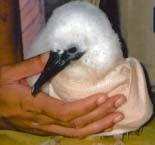
But once a vet always a vet. My very first case was a baby booby with a broken and infected wing.OK, hmm,what can I do with that? Well,I have some iodine solution in my travel kit.And these wooden spoons might work for splints. Anyway,six-weeks later,the booby,named Pepper,was terrorizing my neighbor’s dogs,eating them out ofhouse and home,and learning to fly.I was one for one!
After numerous requests for veterinary services,I realized I could not remain a simple diving instructor.You see,there is only one official veterinarian in the Kingdom ofTonga. He is located in Tongatapu,the southern island group,and he works for the government.I live in Vava’u,the northern island group,180 air

miles away.So I set up meetings with the Governor ofVava’u,the Minister ofAgriculture,the Minister ofHealth,and,ofcourse,Sio,the veterinarian.Each time I dressed in a long dark skirt,modest blouse,and a ta’avala,the matlike thing Tongans wear around their waists as a sign ofrespect. They asked for copies ofmy veterinary licenses and diploma,which I gave them,and they said “OK”.That was
the “toys”we are so used to in the United States? This is not the veterinary medicine I’d practiced at home.My diagnostic ability now depends entirely on my senses—no lab tests, radiographs,ultrasounds.It’s really back to basics.It can be extremely frustrating.But in a way,it’s that much more rewarding.Like when you spay a dog on the back ofan overturned dingy,elbowing away the four other dogs sniffing around and checking out what you’re doing,and the owner (the local doctor,no less) “forgets”your instructions and lets her outside that night and she takes offfor three days— and she still doesn’t dehisce, or bleed out,or die,or any ofthe other terrible things you’d imagined.Well,it makes you feel pretty good, and pretty amazed at the resilience ofthese tough island animals.
it.Except for the fact that the business license required to open a practice would cost far more than I expected to make in a year.
So I decided to keep it unofficial,charging no fees.I brought a few surgical instruments, my stethoscope,ophthalmoscope,sterile gloves, drapes,and some assorted pharmaceuticals, and set up shop.I gradually learned the complications involved.First,how to sterilize instruments? Even the local hospital doesn’t have an autoclave,or an X-ray machine,or much ofanything else—truthfully,the only way you’d get me in there is unconscious.So I boil the instruments.Not ideal,but you learn to make do.And by the way,expensive German stainless steel instruments do rust.
Second,how do you do things without all
Since I am not officially “in business”,my payment for services rendered comes in the form ofgifts.Handpainted t-shirts,dinners, bunches ofbananas—a “bunch”in this case being the ENTIRE bunch,taller than I am.Having all ofyour bananas ripen at the same time is like having zucchini in your garden.You make anything banana-related you can think of.You give some to your friends.The local pigs get the rest.Did I mention the pigs? In Vava’u,they wander the streets.They’re more common than dogs,and can really do a job rooting up your yard.Most people have fences around their property to keep the pigs out.
Living in a tropical paradise has its charm. And right now I wouldn’t trade it for anything. Will I be here forever? Probably not.Will I go back to “standard”veterinary practice? I have no idea,but ifI do,it will be with a renewed sense ofwhat’s important,and with a new respect for the body’s resilience.
Dr.McIlroy may be reached via e-mail at <doctorwen@yahoo.com>.
For more information on Beluga Diving,visit <www.belugadivingvavau.com>.
BELLWETHER 52 13
Aerial View of the Vava'u Island group, Kingdom of Tonga.
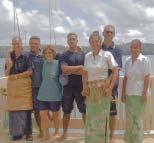
Beluga Diving staff.Dr.McIlroy is third from left.
V.M.D.NotesV.M.D.NotesV.M.D.NotesV.M.D.NotesV.M.D.Notes V.M.D.NOTESV.M.D. NOTESV.M.D.NOTESV.M.D.NOTESV.M.D.NOTESV.M.D.NOTES
Pepper with a freshly bandaged wing.
Class Notes
1965
Charles J.Driben’s son,Ian,is a member of the Vet School’s Class of2005.
1967
Michigan Governor John Engler reappointed Patricia A.O’Handley, associate professor of small animal medicine at the Michigan State University College ofVeterinary Medicine,to the Michigan Controlled Substances Advisory Commission in 2001.She represents the Michigan Board ofVeterinary Medicine,ofwhich she is a member,on the Commission,which monitors indicators ofcontrolled substance abuse and diversion and recommends actions to address identified problems ofabuse and diversion.Dr.O’Handley also serves on the City ofEast Lansing,Mich.,Commission on Housing.
1968
In December 2001,the U.S.Department of Agriculture appointed H.Wesley Towers,Jr.,to a two-year term on its Foreign Animal and Poultry Diseases Advisory Committee.The Committee will advise the USDA on the most effective and efficient disease control plans and policies to effectively prevent the introduction offoreign diseases and eliminate any that should develop in the United States.Dr.Towers is also a member ofthe National Animal Health Emergency Management System Steering Committee,which is a joint state-federal-
VMD/DVM Employment Opportunities
We have created a simpler web address for our veterinary employment opportunities database site,it is: www.vet.upenn.edu/jobsearch
The old address, www.vet.upenn.edu/studentresources/ employment,will still work.
industry effort to improve the United States’ ability to deal successfully with animal health emergencies
1969
In the February 25,2002,issue of New York magazine, Arnold S.Lesser was named a “Best Vet”for surgery.Dr.Lesser practices at Ultravet Diagnostics in Mineola,N.Y.He specializes in treating growth deformities in dogs.
1970
Steven E.Weisbrode,immediate past president ofthe American College ofVeterinary Pathologists (ACVP),was recognized for his service to the ACVP during its annual meeting in December 2001.Dr.Weisbrode is a professor ofveterinary pathology at The Ohio State University College ofVeterinary Medicine.
1971
Robert B.Alexander’s daughter,Kimberly,is a member ofthe Vet School’s Class of2005.
W. Southard Jones,Jr.’s son,Luke,is a member ofthe Vet School’s Class of2005.Dr.Jones’ daughter,Courtney,graduated from the Vet School in 1999.
1972
After 26-years at Angell Memorial Hospital in Boston,the last 13-years as chiefofstaff, Paul C.Gambardella has taken a new position as director ofOredell Animal Hospital in Paramus,N.J.
1975
Frank C.Moll’s daughter,Jennifer,is a member ofthe Vet School’s Class of2005.
1978
Linda Rhodes has recently founded a consulting company called AlcheraBio,which works with companies worldwide that have new technologies in development for human health,and helps them identify how those technologies can also benefit animals.AlcheraBio then works with the companies to bring their new technologies to market,either through licensing or additional development work.After graduating from Penn,Dr.Rhodes
worked in clinical dairy cattle practice,followed by earning her Ph.D.in physiology at Cornell University,and a post-doc in yeast genetics.She has spent over 15-years in the pharmaceutical industry in both human and animal drug discovery and development.
1979
In August 2001, Amy R.Marder joined the Animal Rescue League ofBoston as Director of Behavioral Services.Dr.Marder also has a private practice,New England Veterinary Behavior Associates,in Lexington,Mass.,which is limited to companion animal behavior.
1983
Steven J. Berkowitz was profiled in the February 2002 issue of The Horse ofDelaware Valley for coming to the aid ofa horse pulling an Amish buggy that was hit by a car in Lancaster,Pa.,on Christmas Day 2001.Dr. Berkowitz practices at Unionville Equine Associates in Oxford,Pa.
1984
In the February 25,2002,issue of New York magazine, Amy J. Kantor was named a “Best Vet”for surgery.Dr.Kantor practices at West Chelsea Veterinary Hospital in New York City. She specializes in orthopedic and soft-tissue surgery.
1990
Lauren R.Brinster is a new diplomate of the American College ofVeterinary Pathologists.
Michelle G.Schessler has been boardcertified in canine/feline practice by the American Board ofVeterinary Practitioners.Dr. Schessler practices at Allegheny South Veterinary Services in Bridgeville,Pa.
1991
Ruth Sullivan is a new diplomate ofthe American College ofVeterinary Pathologists. Dr.Sullivan is a scientist in the Department of Pathobiological Sciences at the University of Wisconsin-Madison School ofVeterinary Medicine.
14 BELLWETHER 52
V.M.D.NotesV.M.D.NotesV.M.D.NotesV.M.D.NotesV.M.D.Notes V.M.D.NOTESV.M.D. NOTESV.M.D.NOTESV.M.D.NOTESV.M.D.NOTESV.M.D.NOTES
Class Notes
1992
Bradford G.Bentz has been board-certified in equine practice by the American Board of Veterinary Practitioners.Dr.Bentz is an assistant professor ofequine internal medicine at the Oklahoma State University College ofVeterinary Medicine.
Lowell T.Midla has recently been appointed by The Ohio State University College ofVeterinary Medicine as a clinical assistant professor in its food animal ambulatory program. According to Dr.Midla,he looks forward to “[giving] the students a quality background in food animal medicine and surgery”in his new position.Dr.Midla and his wife, Joanne Wampler Midla,V’91,have two daughters, aged four and two.
1995
During the Delaware Veterinary Medical Association’s annual meeting in December 2001, Mary A.Bryant was honored with the Veterinarian ofthe Year Award.She is Delaware’s alternative delegate to the American Veterinary Medical Association.A board member ofthe Delaware VMA since 1996,Dr. Br yant is also a member ofthe National Commission on Veterinary Economic Issues task force on gender issues.
1996
Bridgette S.Jablonsky was profiled in the March 31,2002,edition of The Evening Sun of Hanover,Pa.Dr.Jablonsky is the manager of Hanover Shoe Farms,the largest Standardbred breeding farm in North America.She supervises more than 60 employees and the care of seven stallions and 510 broodmares.According to Dr.Jablonsky,“I love my job.I love going to work every single day.”
1998
Thomas N.Garg’s brother,Christopher,is a member ofthe Vet School’s Class of2005.
In the March 15,2002,issue ofthe Journal of the American Veterinary Medical Association, Bethany J.Grohs,a member ofthe Environmental Protection Agency’s Environmental
Response Team,was interviewed about the task force she served on during the cleanup effort when anthrax-tainted mail closed offices on Capitol Hill last fall.Dr.Grohs was interviewed several times about the cleanup efforts on CNN’s NewsNight with Aaron Brown.After the September 11 terrorist attacks,she also served for a time at Ground Zero with the Environmental Response Team.According to Dr. Grohs,“Throughout the response to terrorism, veterinarians have brought a lot to the table when decisions are being made.Veterinarians speak the medical language and are skilled at communicating scientific issues but are also very approachable and trusted,which makes them a valuable resource.”
In the February 25,2002,issue of New York magazine, Heather Peikes was named a “Best Vet” for dermatology/allergies.Dr.Peikes practices at Veterinary Internal Medicine and Allergy Specialists in New York City.She is the only board-certified dermatologist currently practicing in Manhattan.
Deaths
1931
Roy D. Hoffman on January 28,2002.
1942
Col.William E.Rothe on December 28, 2001.
1943
Lee W.Derrer on December 23,2001.
F. Murray Iobst on January 19,2002. H.Glenn Ricker in 2001.
1945
Jack Krauss on November 16,2001.
1947
Robert R.Monahan on December 9,2001.
1949
Arnold R.Gilman on March 28,2002.
1952
Warren A.Evans on March 8,2002.
1959
George A.Keck on March 22,2002.
1960
C.Spencer Streett on December 20,2001.
1965
Raymond E.Kenny on November 30,2001.
1966
Ronald C.Farrell on January 19,2001.
Share news with your classmates about a new position or accomplishment, wedding or birth announcement,by sending your class note today! We accept pictures,too,featuring alumni gatherings, whether it’s from a wedding or minireunion.Be sure to identify everyone in the picture.Pictures will be returned only upon request.Send all your submissions to:
BELLWETHER 52 15
V.M.D.NotesV.M.D.NotesV.M.D.NotesV.M.D.NotesV.M.D.Notes V.M.D.NOTESV.M.D. NOTESV.M.D.NOTESV.M.D.NOTESV.M.D.NOTESV.M.D.NOTES
E.Liss Director ofAlumni Relations and Annual Giving University ofPennsylvania School ofVeterinary Medicine 3800 Spruce Street Philadelphia,PA 19104-6047 Fax (215) 573-3544 E-mail lissj@vet.upenn.edu Visit the School of Veterinary Medicine’s web site at www.vet.upenn.edu School ofVeterinary Medicine UNIVERSITY OF PENNSYLVANIA ®
Joshua
Mobile Clinic with Daughter in Driver’s Seat
by Joan Capuzzi Giresi,C’86 V’98
It’s a classic case ofdaughter knows best:She owns the small-animal practice and her veterinary sidekick,“Dad,”defers to her on the key medical and business decisions.Truly, everyone is happy.
Each week, Barbara J.Flickinger,C’81 V’85, farms out a handful ofcases that come into her busy housecall practice to her father, George L. Flickinger,Jr.,V’58 GR ’64.Barbara gives George daily reminders for his “to do”lists, advises him on how to handle certain pets and owners,and brings him up-to-speed on the latest treatments and vaccine protocols.
“She guides me and confirms things that I’m not absolutely certain about,”says George.
Though George has a 27-year head start over Barbara as a veterinarian,he is a novice by comparison.Rather than entering practice after veterinary school,George,68,earned his Ph.D. in pathology and joined the faculty at Penn’s School ofMedicine,where he held a research and teaching position in reproductive biology through the Department ofObstetrics and Gynecology.He did not practice veterinary medicine until 1980,when he started a small housecall service for homebound pet owners in eastern Montgomery County,Pa.,at the request ofa woman who trained dogs for the disabled.
Meanwhile,Barbara earned her veterinary degree and spent a few disillusioned years working in small-animal general and emergency practices.When George left Penn in 1991 to establish a human in vitro fertilization program for the Presbyterian Hospital System of Dallas,he asked Barbara to take over his budding housecall practice,which,by that time consisted of75-or-so clients.
Such were the humble beginnings for Housecall Veterinarian,based in Spring City, Pa.The practice flourished over the next five years,and when George returned to Pennsylvania in the mid-1990s,Barbara implored his help.She even sent books to him in Texas so he could refresh his veterinary knowledge.“She expected me to read them entirely,”George recalls with a chuckle.
To relieve some ofhis daughter’s work burden,George agreed to join the practice,but with one caveat.
“I told her I would work within my limitations.I wouldn’t do surgery.But I would do the mundane things,like deworming and ear problems,”he says.
George accompanied Barbara on calls for the first few months because,he says,“I wanted to learn how to do things her way.”
Fortunately,“her way”and his way are not very far afield.“The clients seem to accept both ofus because our styles are similar,”says Barbara.
The practice operates within a 15-mile radius ofBarbara’s Phoenixville-area home, which is equipped with a pharmacy,lab,x-ray machine and surgery suite.There,Barbara does workups and surgery two days a week,with the help ofher technician/receptionist.She also makes eight-to-ten housecalls daily for the balance ofher six-day work week.George,who works as independent contractor,handles the wellness visits three days a week.The office faxes the medical records for each day’s appointments to his West Chester home,so he doesn’t need to go into the office regularly.
George does,however,phone in frequently to trade interesting stories with Barbara about his housecalls,seek her guidance on cases and, in his unobtrusive way,offer his opinions and ideas.
“My father’s given me advice from his
lifetime ofexperience,”Barbara says,“but overall the decisions on the management ofthe practice are mine and he doesn’t interfere.”
Today,Housecall Veterinarian is near maximum handling capacity,at 1,200-some clients. Barbara,42,is limiting its growth to two new clients a week.Generally,George handles newpatient appointments,most ofwhich are wellness visits.Then Barbara does their subsequent visit.The clients,many who are elderly,infirm, disabled or have multiple-pet households,seem to relish the idea ofa father-daughter practice.
“It’s sort ofcomplementary that it’s a housecall practice as well as a family practice, because ofthe intimacy,”explains Barbara,who spends time with her father outside ofwork, even vacationing in Costa Rica with her parents a few years back.
The clients are not the only ones who are enriched by the familial nature ofthe business: Father and daughter benefit from a shared intimacy that transcends the typical coworker relationship.Thoroughly entertained by her father’s folksy humor,Barbara’s adoring laugh often punctuates George’s sometimes corny anecdotes and amusing observations about his patients and their owners.Likewise,George finds working with Barbara gratifying.For one thing,it enables him to experience “the pride I get in her when I listen to clients tell how they think she does such a great job.”
AlumniConnections
To find a former classmate and to sign-up for a permanent e-mail forwarding service: Join the University ofPennsylvania Alumni OnLine Community for free at <www.alumniconnections.com/olc/pub/UPN>.After you register,you can search the On-Line Directory,which is a great resource for personal and professional networking and an easy way to keep up-to-date on fellow alumni.You can also sign-up for a permanent e-mail forwarding service,which will forward messages received at your permanent Penn address to the e-mail address ofyour choice.
To update your alumni record: You can update your record via the University of Pennsylvania Alumni On-Line Community OnLine Directory.You may also contact Elizabeth McNamara at (215) 746-7461 or via e-mail at <emcnamar@vet.upenn.edu>.
V.M.D.NotesV.M.D.NotesV.M.D.NotesV.M.D.NotesV.M.D.Notes V.M.D.NOTESV.M.D. NOTESV.M.D.NOTESV.M.D.NOTESV.M.D.NOTESV.M.D.NOTES 16 BELLWETHER 52
Jon Adams/hi5photos
Smokey:The Golf BallRetriever
by Robert L.Ticehurst,V’34
This is the story ofSmokey,who was not a Labrador,golden,or Chesapeake Bay retriever, but a golfball retriever.He appeared on my family’s New Jersey doorstep in 1973.No one in our neighborhood had ever seen him before and every time our wonderful cat went outside,Smokey would chase him.I chased him away several times,but he kept coming back.When we went away on a three-week vacation,he was waiting for us upon our return. We had a lovely little miniature wirehaired dachshund,Beetle,who had been sent to us by a dear friend and fellow veterinarian,Robert E. Ticehurst,from Cornwall,England.We didn’t need or want another dog,but Smokey decided that we did,so we took him in and were never sorry afterward.Housebroken and loving,he proved to be a great asset to our family.One morning,after letting him out to run (we either had no leash laws or nobody bothered with them),we were sitting at breakfast when the front doorbell rang.I went to the door and found Smokey,who was ready to come in. Shortly after he adopted us,my wife,Alice,was walking Beetle,on leash,alongside the woods on the 12th fairway ofour country club,which was right behind our home.Smokey, unleashed,was walking with them.Suddenly, he went into the woods,came out and dropped
To make a gift or for information on supporting the School of Veterinary Medicine: Make a gift with your credit card through a secure online transaction at <www.upenn.edu/gifts>.For information on supporting the School,visit the Alumni & Friends web site at <http://alumni.vet.upenn.edu> or contact Joshua E. Liss at (215) 898-1481 or via e-mail at <lissj@vet.upenn.edu>.
To request a transcript and/or proof of graduation: For information on requesting a transcript,visit the Office ofthe University Registrar’s web site at <www.upenn.edu/registrar/trans.html> or call (215) 898-7511.For information on requesting a certification ofgraduation,which does not require a transcript,contact the School’s Office ofStudent & Curricular Affairs at (215) 898-3525 or via e-mail at <student-affairs@vet.upenn.edu>.
a golfball at Alice's feet.She commended him, gave him a dog biscuit and he went back into the woods and got another ball.This became a daily routine,and some days he would find 25 to 30 golfballs.
A few years later,we purchased a home in a golfcourse community in Central Florida and, upon my retirement,became snowbirds,divid-
had friends over for small parties and we would send our golf-playing guests home with two- or three-dozen new or almost new golf balls.I also returned hundreds ofballs back to the pros at each course.And when Smokey passed away,we were left with enough golf balls to last us several years.
The public relations agency for the American Animal Hospital Association,ofwhich I was an officer at the time,heard ofSmokey and passed on his story to United Press International who sent a reporter to interview us and meet Smoke.The story was published,and we received several clippings from friends across the country as well as Europe (in Stars and Stripes).Later,one ofTampa’s TV stations came to film Smokey.We still have this tape. Although Smokey has been long gone now,we have a photo montage ofhim which hangs where I see it every day.We never tried to replace him,we couldn't have.We still miss him.
ing our time between the two homes.Old Smoke had a great time retrieving golfballs on both courses.But never did he take a ball from a fairway or rough,always from the woods,and ifI could see the ball he wasn't interested in it and would go deeper in the woods to find one. During the 13 years that he spent with us,he found approximately 8,000 golfballs.We often
To post an open veterinarian position on the Veterinary Employment Database: Employment opportunities requiring a graduate degree in veterinary medicine may be posted at <www.vet.upenn.edu/jobsearch>.
To obtain a Penn Alumni Card: The Penn Alumni Card offers a myriad ofbenefits, including access to the Penn Libraries.The charge for the card,which is valid for 10 years,is only $20. Alumni Cards are issued at the PennCard Center, which is located in the Franklin Building at 3451 Walnut Street.In order to receive the card,alumni are asked to show a form ofphoto identification (a valid driver’s license,passport,etc.) and complete an Alumni Card Request Form.It then takes only a few minutes to take a photo ofthe alumnus/alumna and for them to receive their Alumni Card.As an added convenience,alumni can also obtain an Alumni Card by mail.For more information or to download a request form,visit the “Obtaining a PennCard”web page at <www.upenn.edu/penncard/obtaining.html>.
Dr.Ticehurst,89,received the School of Veterinary Medicine's Bellwether Medal in 2000 for his “thoughtful compassion and contributions to society in general and the School ofVeterinary Medicine in particular.”The Ticehursts have moved recently from Central Florida to Maryland to be closer to their family.
Alumni Relations and Annual Giving Staff
Joshua E.Liss
Director ofAlumni Relations and Annual Giving (215) 898-1481
Fax (215) 573-3544
E-mail <lissj@vet.upenn.edu>
Elizabeth McNamara
Annual Giving Coordinator (215) 746-7461
Fax (215) 573-3544
E-mail <emcnamar@vet.upenn.edu>
Please address any correspondence to: Office ofDevelopment and Alumni Relations University ofPennsylvania School ofVeterinary Medicine 3800 Spruce Street Philadelphia,PA 19104-6047
V.M.D.NotesV.M.D.NotesV.M.D.NotesV.M.D.NotesV.M.D.Notes V.M.D.NOTESV.M.D. NOTESV.M.D.NOTESV.M.D.NOTESV.M.D.NOTESV.M.D.NOTES BELLWETHER 52 17
Dean Kelly (r) and Dr.and Mrs.Ticehurst.
North
American Veterinary Conference Alumni Reception
More than 100 School ofVeterinary Medicine alumni and their guests attended an alumni reception at the North American Veterinary Conference in Orlando on January 13,2002.Penn alumni enjoyed the opportunity to renew old friendships and make new ones in the Sunshine State.Dean Alan M. Kelly gave alumni an update on recent activities at their alma mater.
Support Penn’s Veterinary Student Scholarship Fund in 2002
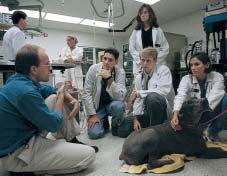
“…this [scholarship] is a reminder ofthe generous nature ofthe community I am about to enter…. I am flattered that a group ofveterinarians,most ofwhom I am sure have their own debts,have remembered what it is like to be a student,and how much this scholarship can mean to a student.”
–Karen Oberthaler,V’02
Alumni support ofthe Veterinary Student Scholarship Fund is more critical than ever before as scholarship aid is vital to attracting and retaining the best students.
Your gift will support the training offuture veterinarians and is an investment in the future ofthe veterinary medicine profession.
Make your gift in support oftoday’s students before June 30! For your convenience,gifts to Penn can be made in several ways:
1. By telephone w ith a credit card.Call the Office of Development and Alumni Relations at (215) 8981481.
2.Through a secure online transaction with a credit card at <www.upenn.edu/gifts>.
3.By transferring appreciated securities to Penn. For transfer instructions,please contact the Office ofthe Treasurer at (215) 898-7254.
Mean total educational debt for 2001 graduates at all U.S.veterinary medical colleges:
Mean total educational debt for 2001 graduates at Penn:
*JAVMA,Vol 220,No.2,January 15,2002.
$67,819*
$100,000
“Pursuing a career in veterinary medicine is often a trying ordeal,both academically and financially. The generosity ofthose who have come before cannot be appreciated enough as the aid is greatly needed by current students.I only hope that such generosity and support will continue,as there are undoubtedly some that would not make it without.”
–David Champaigne,V’02
4.By sending a check made payable to the Trustees ofthe University ofPennsylvania to: Office ofDevelopment and Alumni Relations University ofPennsylvania School ofVeterinary Medicine 3800 Spruce Street Philadelphia,PA 19104-6047
MAKE YOUR GIFT IN SUPPORT OF TODAY’S STUDENTS BEFORE JUNE 30!
18 BELLWETHER 52 V.M.D.NotesV.M.D.NotesV.M.D.NotesV.M.D.NotesV.M.D.Notes V.M.D.NOTESV.M.D. NOTESV.M.D.NOTESV.M.D.NOTESV.M.D.NOTESV.M.D.NOTES
32nd Annual Canine Symposium
The 32nd Annual Canine Symposium was held on Saturday,January 26 at VHUP.
The event was generously supported by Pedigree®.Six faculty members gave presentations on an array ofmedical problems in dogs
Following are summaries ofthe faculty presentations:
My Pet has Changed: Understanding Aging-Related Behavior Changes in Dogs
Dogs,like people,may experience dementia as they age.Fortunately,explained Dr.Ilana Reisner, assistant professor ofbehavioral medicine and director ofthe behavior clinic at VHUP,the behavior changes associated with age-related degeneration – termed “cognitive dysfunction syndrome”(CDS) – can be managed through medication,and environmental and behavioral modification.Dr.Reisner discussed the prevalence,pathogenesis,clinical manifestations,diagnosis and treatment of CDS.
The clinical signs ofCDS result from a number ofdegenerative changes,including the death ofbrain cells secondary to oxidative damage.This leads to subsequent cerebral and cerebellar atrophy,and ventricular enlargement.The brain tissue is further compromised by decreased local blood flow and deposition of beta-amyloid protein.Mental capacity is physiologically altered by neurotransmitter and receptor dysfunction.“The brain pathology impairs the way affected dogs think and function.This results in behavioral changes,”said Dr.Reisner.
The signs ofCDS,which was first recognized in dogs about 10 years ago,include anxiety;disorientation (i.e.,apparent confusion and memory loss,staring,aimless wandering, getting “stuck”in corners);inappropriate elimination (i.e.,“accidents”in housetrained dogs, failure to adequately signal at the door,inappropriate elimination in view ofowners, indoor elimination shortly after being outdoors);changes in social behavior (i.e.,social detachment,irritability,decreased interest in interaction);changes in sleep-wake patterns
(i.e.,evening restlessness,decreased nighttime sleep,more frequent and deeper daytime sleep);and changes in activity level (i.e., decreased activity or increased activity with repetitive behaviors).
It is important to differentiate behavioral problems associated with CDS from those of other physical causes because,Dr.Reisner explained,“in the elderly dog,we can see behavioral changes that are manifestations of physical problems.”
For example,decreased responsiveness,similar to that ofCDS,can be caused by the expected sensory impairment ofold age. Impaired mobility can result from osteoarthritis,cardiovascular disease and hormonal disorders.Inappropriate elimination can be a symptom ofurinary tract or systemic disease,or of neurological impairment.
Nevertheless,CDS is a significant problem, particularly in light ofthe fact that there are some 18 million pet dogs over seven years of age in the U.S.In a recent prevalence study that surveyed owners of180 dogs between the ages of11 and 16,28 percent ofowners of11-12year-old dogs,and 68 percent ofowners of1516-year-old dogs,reported one or more categories ofcognitive impairment.In another study,75 percent ofowners ofolder dogs reported that their pets exhibited at least one sign ofCDS,yet only 12 percent ofowners said they had spoken to their veterinarian about it.
CDS is probably underreported by owners, said Dr.Reisner,because “people sometimes don’t complain about behavioral problems that they view as normal and almost inevitable in old dogs.”
Unfortunately,Dr.Reisner pointed out, CDS worsens with age,hence the need for timely diagnosis and treatment.A diagnosis of CDS,which is based on clinical signs,cannot be made until underlying medical causes for the behavioral changes have been ruled out or accounted for.
The choices for drug therapy for CDS are varied and diverse.Perhaps the most widelytouted is selegiline (Anipryl®),which enhances dopamine function in the brain.In a recent study of200 dogs with CDS,selegiline administration significantly improved their activity levels,sleep-wake cycles and elimination habits.
Other drug categories used in the treatment ofCDS include vasodilators,calcium-channel blockers,antidepressants and sedatives.Antiox-
idants (vitamins E and C,selenium),which scavenge free radicals and thereby reduce tissue damage,have been used with some success.In several studies,Hill’s Prescription Diet® b/d™ –an antioxidant diet designed to reduce brain tissue damage – was associated with improvements in social interaction,discrimination tests and activity level in cognitively-impaired older dogs.
In dogs suffering from CDS,psychopharmacology must be combined with environmental modification.For example,said Dr. Reisner,senescent dogs that are eliminating indoors should be treated like pups:Restrict access to indoor areas,do not rely on signaling behavior,reward outdoor elimination and modify feeding schedules.
In conclusion,she added,behavioral problems in elderly dogs rarely exist in isolation,so any concurrent medical problems must be diagnosed and treated.Behavioral changes should be closely monitored,and veterinary visits increased to every three or four months, she stressed,because “our aged pets deserve our full commitment and care.”
Chemotherapy for the Canine Cancer Patient
Chemotherapy has served to expand both the length and quality oflife for dogs with cancer. Dr.Jennifer Baez,V’92, assistant professor ofoncology at VHUP,described the pathogenesis ofcancer,and chemotherapy and other treatment options in dogs.
Cancer,the manifestation ofuncontrolled cell growth,occurs as a result ofgenetic damage and/or changes in a cell.Such changes can be caused by innate genetic factors,as in the case ofcertain cancer-prone breeds like boxers, German shepherds,golden retrievers and Scottish terriers.In these breeds,oncogenes – genes that initiate the cancer process – have been inadvertently selected for over time.Cancer can also result from DNA damage by hormones and carcinogens (chemical,physical,radiation, foreign bodies,viruses).In healthy animals, cells that are damaged undergo apoptosis,or natural cell death.Cancer cells,however,have lost this ability and therefore grow uncontrollably.The course and rate ofthis growth is determined by cancer tissue type (i.e.,hemangiosarcoma vs.thyroid carcinoma).
Cancer is a significant disease in dogs,said
BELLWETHER 52 19
32nd Annual Canine Symposium
Dr.Baez.Nearly one-quarter ofall dogs,and 45 percent ofdogs older than ten years ofage,will die ofcancer.The incidence ofcanine cancer appears to be on the rise,which could be partially accounted for by increased life span and better diagnostic methods.
Treatment strategies for cancer in dogs differ somewhat from those employed in people. In the latter,the goal is a cure,and very aggressive regimens are often used,resulting in severe side effects that may require intensive supportive care.In dogs,on the other hand,the goal of therapy is to extend a good quality oflife,so treatments are generally less aggressive.
Treatment is based on histologic grade, which determines tumor aggressiveness and disease progression,or staging.Low-grade tumors,which are slow to metastasize,generally carry a good prognosis and are often treated with radiation and/or surgery.High-grade tumors,conversely,are fast to metastasize,and are normally treated with chemotherapy and/or surgery to prolong survival.Cancer is staged using a variety ofdiagnostic tests,such as blood work,radiography,ultrasound,CT and MRI.
Surgery is most effective when a tumor is low-grade and/or when it is localized with no evidence ofmetastasis.Further,the tumor should be in an area where there is enough skin and tissue to secure adequate tissue margins. Radiation,which damages and kills rapidlydividing cells,can be used as primary therapy or to purge surgical margins ofany remaining tumor cells.Radiation works best in cancers that are sensitive to it,when metastasis has not yet occurred,and when tumor location is not proximate to tissue that,ifdamaged by radiation,could be life-threatening for the patient.
Chemotherapy is employed when cancer is present in multiple locations.It is most effective for cancers that are sensitive to chemotherapy,in cases where only microscopic disease is present,and in patients that are otherwise healthy and feeling good.Chemotherapy works at different stages ofthe cell cycle to halt replication ofrapidly-dividing cells,which includes cancer cells.Many classes ofchemotherapy exist,each working by a slightly different mechanism.
Chemotherapy can be used as a primary agent,such as for lymphoma,or as an initial treatment to shrink a tumor prior to surgery or radiation.Chemotherapeutic agents can be
administered systemically,intralesionally,via inhalation or intracavitarily.Many new chemotherapeutic agents are available or under investigation for use in animals.
Resistance to chemotherapy is the most common cause for treatment failure,as cancer cells can develop mechanisms for excreting or inactivating the drug.Chemotherapy delivers the bad with the good,as it damages other rapidly-dividing cells like bone marrow,intestinal and,occasionally,hair cells.Side effects of chemotherapy include low white blood cell counts,vomiting,diarrhea,and hair loss.But, Dr.Baez said,“Our canine patients are amazingly tolerant ofthe procedure.”
A fourth,newer,treatment modality exists for the treatment ofcancer in dogs:biotherapy, which includes immunotherapy,angiogenesis inhibition and growth factor modulation.Biotherapy,Dr.Baez declared,is where the future ofveterinary oncology likely lies.However,she added,“Because cancer is so multifocal and complex,there is never going to be a single magic bullet to cure cancer.”
Interventional Radiology –a New Tool for Difficult Cases
An established tool in human medicine, interventional radiology has tremendous potential for the treatment ofserious maladies in pets. Dr.Chick Weisse,V’98,resident in surgery at VHUP,described several interventional radiology procedures and their potential applications in a variety ofserious medical conditions in dogs.“These techniques have revolutionized disease treatment in human medicine,”Dr.Weisse said ofinterventional radiology procedures,“and now we’re looking at their potential applications in veterinary medicine.”He is working closely with Dr.Jeff Solomon,an interventional radiologist at the Hospital ofthe University ofPennsylvania, who donates his time and expertise.
Interventional radiology utilizes fluoroscopy to visualize the placement ofcatheters,stents, balloons,and coils into blood vessels and other tubular structures.These procedures are still largely experimental in animals.As a diagnostic and treatment modality,interventional radiology has many potential advantages over conventional techniques like surgery:minimal invasiveness,minimal anesthesia time,decreased morbidity/mortality,reduced hospital stay and
lower cost.Interventional radiology is under investigation at VHUP for many different applications in animals.
Dr.Weisse presented the case of“Prince”, the Yorkshire terrier,whose respiratory distress was incited by degeneration ofhis tracheal cartilages.Interventional radiology was successfully employed to place a stent to keep the trachea open.
In large-breed dogs prone to intrahepatic portosystemic shunts,it is a debilitating condition in which a shunt carries non-detoxified blood from the portal supply directly into the systemic circulation.Affected dogs suffer neurologic conditions such as seizures and head pressing as well as urolithiasis and stunted growth.Surgery for this condition carries a reported 15%-66% percent mortality rate. Under fluoroscopy,a contrast agent is used to aid in passing a catheter into the shunting vessel.Thrombogenic coils are then passed into the shunt to occlude blood flow and return the circulation to normal.
Embolization can be used to obstruct blood supply to tumors,reduce hemorrhage,and provide pain relief.Currently performed to shrink uterine fibroids in women as an alternative to hysterectomy,embolization would be particularly useful in animals with fibroids or other tumors that are so invasive as to render surgery ineffective.
For malignant tumors,a procedure called chemoembolization can be performed to localize drug concentrations to the desired site by delivering chemotherapeutic agents directly into the vessels feeding a tumor.Embolizing particles are then deposited into these vessels, thereby reducing blood supply to the tumor and hampering the tumor’s ability to excrete the drug.Dr.Weisse presented the case of “Bobo”the cocker spaniel,who had a nonresectable tumor eroding through the orbital bone into the nasal cavity and skull.
Chemoembolization was delivered through a catheter placed in the femoral artery and fed up into the superficial temoporal artery in the head.Three weeks later,the tumor was almost undetectable.In another case,a dog with osteosarcoma had one affected leg amputated. When a second tumor later appeared,amputating the other affected leg was not an option.A catheter was inserted into the femoral artery and a microcatheter then fed into the circumflex humeral artery.After embolization was
20 BELLWETHER 52
performed,an angiogram confirmed that the blood supply to the tumor was successfully terminated.A palliative rather than a curative approach,chemoembolization may need to be repeated iftumors grow back.
Interventional radiology is a safe alternative to surgery for a variety ofother procedures, said Dr.Weisse.Angiograms can be used to locate internal areas ofhemorrhage,and embolization can then be performed to control bleeding.To dissolve blood clots,thrombolytic drugs can be delivered to the thrombus site via catheterization and fluoroscopy.Interventional radiology can also provide less invasive means for inserting nephrostomy and gastrostomy tubes,and performing liver biopsies.
New Perspectives on Osteoarthritis
Debilitating though osteoarthritis may be, the disease occurrence and course can both be influenced by environmental modulation. Dr. Gail K.Smith,V’74,professor oforthopedic surgery and chairman ofthe department of clinical studies at VHUP,discussed the pathogenesis ofhip dysplasia and subsequent osteoarthritis,and presented a yet-unpublished,landmark study conducted at NestlePurina that clearly demonstrated an association between dietary regulation and development of joint disease.
Hip dysplasia,which was first described in 1935,is a condition in which the femoral head (“ball”) does not fit tightly into the pelvic acetabulum (“socket”).Excess wear develops in the joint,leading to synovial membrane inflammation,cartilage damage,subchondral bone sclerosis,and formation ofbony proliferations called osteophytes.Osteoarthritis can occur in other joints as well,and is a significant source ofdiscomfort.
“We care about osteoarthritis because it causes pain and disability in dogs and in people,”Dr.Smith explained.
Hip dysplasia is a polygenic trait and therefore very complex.The breeding community has taken great efforts to reduce the incidence ofthe disease through careful breeding.However,said Dr.Smith,in spite ofthese efforts, they have not been very successful.In a prevalence study reviewing Orthopedic Foundation for Animals (OFA) figures from 1981-1988,21 percent ofsurveyed German shepherds had hip
dysplasia.During the subsequent eight years, that figure was 23 percent.Likewise,the occurrence rates for Rottweilers,and Labrador and golden retrievers – which hovered in the range of24 percent –did not significantly fall over time,as might have been expected ifselective breeding were effective.In a study ofAiredale terriers in Berlin,the prevalence rates ofhip dysplasia in 1981,1991 and 1996 were 45,50 and 45 percent,respectively.A Finnish study of 10,335 German shepherds between 1981 and 1997 also showed no genetic headway in reducing the occurrence ofhip dysplasia.
“Genetically,we’re not getting anywhere fast,”Dr.Smith concluded.“But can we do things environmentally? The answer is yes.”
Limiting the forces on a joint that is genetically predisposed to hip dysplasia and/or osteoarthritis can reduce the occurrence and severity ofdisease,he said.Several studies in the past have shown that restricting weight gain,growth rate and exercise can produce small decreases in the occurrence ofdegenerative joint disease.
Our understanding ofhip dysplasia may be revolutionized by a longitudinal study conducted at Nestle-Purina for which Dr.Smith was a coinvestigator.It demonstrated for the first time that limiting a dog’s intake ofcommercial dog food throughout its life significantly reduces the occurrence and severity of hip laxity and/or osteoarthritis.The study, which has not yet been published,tracked 24 paired littermates ofLabrador retrievers maintained at Nestle-Purina for 14 years.For each pair ofdogs,one was fed ad libitum for 15 minutes daily,while the other (“limit-fed”) dog was fed 75 percent ofthe quantity the first dog consumed.To increase the reliability ofthe results,the hips were uniformly scored using several different diagnostic methods.
At two years ofage,16 ofthe dogs fed ad libitum,and only seven ofthe leaner,limit-fed dogs,had hip dysplasia.Other joints were affected by diet as well:At eight years ofage,19 dogs in the ad-libitum group,and 12 dogs in the limit-fed group,had osteoarthritis ofthe shoulder.In fact,68 percent ofthe ad-libitum dogs and ten percent oflimit-fed dogs had both hip and shoulder affected,and 77 percent ofthe ad-libitum dogs and ten percent ofthe limit-fed dogs were affected in any two joints. Clearly dietary restriction has a protective effect on other joints as well.
The study also demonstrated that the incidence ofhip dysplasia increases linearly with age such that normal hip conformation at two years ofage is not necessarily predictive ofhip dysplasia risk in later years:About halfofthe dogs with normal hips at two years ofage became dysplastic later in life.The study concluded that for dogs kept lean there was a 6:1 reduction in hip osteoarthritis by two years of age and a 2:1 reduction by end oflife.The study also showed that leaner dogs that experience hip dysplasia generally have a lower severity ofthe condition,and dysplastic dogs that are kept lean maintain better use oftheir limbs, require less pain medication… and have a better quality oflife.
Canine Eye Diseases and their Treatment
A dog’s eyesight is subject to a variety of potential problems. Dr.Elaine Holt,lecturer in ophthalmology at VHUP,discussed several common inherited ophthalmic conditions in dogs. Dogs’vision differs somewhat from that of people because ofunique architectural features ofthe canine eye.Dogs have fewer cones – the photoreceptors for color vision,and so cannot perceive color as well as people can.Dogs’eyes are adapted to seeing light and movement.The canine retina is comprised primarily ofrods, the photoreceptors that detect dim light and movement.They also have a reflective layer called the tapetum lucidum,which appears as iridescent green.It is thought that this reflective layer “allows the retina to get sort ofa double exposure oflight back to the eye,”Dr.Holt explained.
Progressive retinal atrophy (PRA) is a common disease inherited in several breeds,
BELLWETHER 52 21
Mark your calendar! 33rd Annual Canine Symposium Saturday,January 27,2003
32nd Annual Canine Symposium
including the cocker spaniel,Irish setter, Labrador retriever and miniature schnauzer.A disease ofthe rod photoreceptors,PRA typically presents as loss ofnight vision and usually progresses to complete blindness.An irreversible condition for which there is no treatment,PRA can be diagnosed by fundic exam,electroretinogram and,in some breeds,genetic testing.
Vision loss in dogs can also be caused by glaucoma,a disease ofthe optic nerve that usually presents in dogs as an elevation in intraocular pressure.Glaucoma usually results from an anatomic or physiologic abnormality in the drainage angle,rendering it unable to siphon offfluid from the aqueous humor.Fluid then builds up in the anterior chamber,causing the eye to stretch.The disease,which usually affects both eyes,irreversibly damages the retina and optic nerve.Common in cocker spaniels,Basset hounds and Chow Chows,acute glaucoma presents with pain,ocular cloudiness/redness, pupillary dilation and vision loss.Glaucoma is diagnosed with either a Schiotz tonometer or a Tonopen,handheld instruments used to measure intraocular pressure.Topical and systemic drugs are available to decrease intraocular pressure,but medication alone is rarely successful over the long term.Surgical treatment –cyclophotocoagulation – employs a laser to destroy the aqueous-producing organ,the ciliary body.This is more often an eye-saving, rather than a vision-saving,procedure.Alternatively,enucleation can be performed to remove the eye.
The most common cause ofblindness in dogs is cataracts,which are opacities in the lens ofthe eye caused by irreversible alterations in the lens metabolism,such as diabetes mellitus. Not all cloudy lenses are cataracts,Dr.Holt cautioned.Nuclear sclerosis,a normal old-age change characterized by hardening ofthe lens, can be mistakenly diagnosed as cataracts.Not preventable or treatable with medication, cataracts can be surgically removed by a process called phacoemulsification:Ultrasound is applied directly to the lens to shatter the lens fibers,which are then aspirated out.Eighty percent successful (complications like glaucoma and retinal detachment occur in about one in five cases),phacoemulsification returns functional vision to the eye,but without an intraocular lens implant the ability to focus is poor.
Keratoconjunctivitis sicca (KCS),“dry eye,” is a common canine problem to which toy
breeds,like Lhasa apsos and shih tzus,are prone.In cases ofKCS,the lacrimal (tear) glands are unable to produce adequate moisture for the cornea.Signs ofKCS include ocular redness and cloudiness,thick discharge and recurrent eye infections.KCS is diagnosed with the Schirmer tear test,which measures tear production.Most affected dogs respond well to medical treatment,which includes cyclosporine – a tear stimulant,artificial tears,antibiotics and anti-inflammatory drugs.
The eyelids can also be the source ofocular problems,Dr.Holt added.Entropion – inversion ofthe eyelid(s),occurs commonly in wrinkled breeds like bulldogs,shar peis,Chow Chows and Rottweilers.Entropion is damaging to the eye because it allows the hair from the face to rub against the surface ofthe eye,leading to excessive squinting,tear production and corneal Ulcers.Entropion is repaired with surgery to evert the affected eyelid(s).
Antibiotic Resistance: Malice in Wonderland
Ever since Ehrlich reported in 1907 that Trypanosoma brucei became resistant to pararosaniline after repeated exposure,we have had a sense ofthe resistance faculties ofbacteria. Dr.Shelley Rankin,research assistant professor in microbiology at the School,discussed the unique mechanisms ofbacterial resistance.
Bacteria are single-celled organisms with a cell wall,cell membrane,single chromosome, DNA fragments called plasmids,protein-producing ribosomes and,in some cases,flagella that provide motility.Plentiful and ubiquitous, bacteria exist in greater quantity on a human hand than people exist on the entire earth.And no natural environment is too harsh for them –from hot springs to Antarctic ice.Earth’s very first inhabitants,bacteria are its true pioneers. As such,they have developed sophisticated survival skills.
Dr.Rankin uses a single word to describe the staying power ofthese hardy organisms:MALICE (Microorganisms Always Live In Challenging Environments).Perhaps their biggest environmental challenge is each other,she said. “They are competing for food sources.Ifthey can produce something that is going to kill their neighbor,then they will get all ofthe food.”
Millions ofyears ago,soil bacteria developed the genetic mechanisms to produce their own
antibiotics to fend offthese hungry neighbors. In turn,the neighbors developed resistance mechanisms to allow them to survive these assaults.This micro-armory consists ofeverything from barriers to nets,pumps to explosives.These sinister mechanisms have also hampered man’s every attempts to use antibiotics. Case in point:penicillin.The first penicillin extract was produced in 1940.Within a year,a substance was identified in in E.coli that could inactivate penicillin.Sulphanilamide resistance was also reported in Streptococcus.Subsequently,some bacteria were found to possess surface modifications that decreased their permeability to fluoroquinolones,others to modify their binding sites in order to resist antibiotics like rifampin and vancomycin.And still others were found to have enzymes like beta lactamases that could inactivate or modify certain antibiotics.
At one time,it was thought that a random gene mutation produced an independent event ofresistance to one drug.Today,we know that the acquisition ofresistance involves more than a simple mutation.Rather,it involves several key players:R-plasmids,autonomous DNA elements,promote the transmission ofresistance mechanisms.Transposons are mobile DNA elements that can move genes to a plasmid for later transmission to other bacteria.Integrons, which are present on transposons,constantly accept new genes,which further helps to build the armory ofdrug resistance.
When we overuse antibiotics,Dr.Rankin explained,we create an environment in which the few bacteria that possess antibiotic resistance can flourish and propagate.“There is this pool ofgenes subject to selection pressure,with the potential for further evolution.”
The hospital environment,where antibiotic use is heaviest,has hosted the development of staphylococcus that can inactivate the penicillinase-resistant methicillin.And triclosan,an antibacterial agent present in many household items like deodorant,toothpaste and carpeting, is not helping the situation.Triclosan’s ubiquity,Dr. Rankin said,will undoubtedly promote the evolution ofmulti-drug-resistant organisms.Though we try to keep up with their progress,bacteria may always be one step ahead ofus,she said.
“We will never win.There is nothing we can throw at them that they haven’t already encountered in their 3.2 billion years on earth.”
—Joan Capuzzi Giresi,V’98
22 BELLWETHER 52
2002 Penn Annual Conference
As the country’s oldest continuing education conference for veterinarians and veterinary technicians,the 102nd Penn Annual Conference,held on January 30-31, 2002,at the Adam’s Mark Hotel in Philadelphia,attracted 740 veterinarians and 235 veterinary technicians.In addition,100 faculty, 125 technicians,and 75 fourth-year students attended from the School ofVeterinary Medicine.
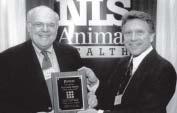
Internationally recognized speakers addressed a wide range oftopics to veterinarians in the Small Animal,Equine,and Food Animal sessions.Some ofthe areas covered this year included Current Diagnostic and Treatment Methods for Dogs with Shoulder,Elbow, and Hip Disease;Equine Lameness Diagnosis; and Differential Diagnosis ofVesicular and Encephalitic Disease.Small animal technicians had a specialized two-day seminar that covered the understanding and management ofcanine aggression to people,cardiopulmonary disease, and pain management.Many sessions were standing room only.
The first day concluded with a well-attended Dean’s Reception hosted by Dean Alan Kelly.During the reception,Dean Kelly presented gifts to Ashra Markowitz, assistant dean for student affairs,and Debra Lefferts, associate director ofstudent affairs,to publicly recognize and show appreciation for the many years that their office successfully organized the Penn Annual Conference.Management ofthe Conference was returned to the Office ofDevelopment and Alumni Relations this year.
The Office ofDevelopment and Alumni Relations hosted several popular alumni and donor appreciation events:“Successful Retirement Planning for Veterinary Professionals Luncheon,”the “Rush Shippen Huidekoper Society Breakfast,”and a “Pacesetter and Class Agent Luncheon.”
The Conference gratefully acknowledged the financial support ofsponsors,patrons,and exhibitors who sold out our exhibit hall.
The 2003 Conference is scheduled for January 29-30,2003,at the Adam’s Mark Hotel in Philadelphia.Please bookmark the web site, <http://alumni.vet.upenn.edu/pennannualconference.htm>,and check your mail in the fall for the 2003 Penn Annual Conference brochure.
BELLWETHER 52 23
Hill’s Pet Nutrition,Inc.
Antech Diagnostics
Innovative Veterinary Diets
Mark your calendar! 2003 PennAnnual Conference January 29 and 30
NLSAnimal Health
Dr.Gail Smith,Chair,Department of Clinical Studies-Philadelphia,presents plaques to sponsors and patrons of the Penn Annual Conference.
In the exhibit hall
DVMPharmaceuticals,Inc.
Dr.Colin Harvey,professor ofsurgery and dentistry,gave several presentations at the British Veterinary Dental Association meeting in Birmingham,U.K.,the 10th Anniversary meeting ofthe Spanish Veterinary Surgical Association meeting in Madrid,and in Fukuoka,Osaka,Sapporo and Tokyo for the Nippon Animal Hospital Association in 2001. In December 2001,he was awarded a US patent for use ofa drug as a method to prevent further development ofdental resorptive lesions in cats.He was also elected secretary of the American Veterinary Dental College.
Ron Menaker,a member ofthe School’s Board ofOverseers,has been appointed chairman ofthe board ofdirectors ofthe American Kennel Club.
Dr.E.Neil Moore,professor ofphysiology, gave a talk entitled “Understanding Cardiac Electrophysiological Changes in Animals and their Relevance in the Clinic”at a symposium on “Bridging Biomarkers — From the Animal to the Clinic”presented at the annual meeting ofthe International Life Sciences Institute meeting in Cancun,Mexico.
Dr.Sue McDonnell, adjunct associate professor ofreproduction behavior,spoke at the AAEP meeting in San Diego,Calif.in November.She also made a presentation at the IERS Conference on Equine Reproduction in Solvang,Calif.which followed the AAEP meeting.In February Dr.McDonnell gave courses at Equine Canada,the University ofMinnesota College ofVeterinary Medicine and in Norrkoping,Sweden.
Medicine ofHebrew University,the only veterinary school in Israel.
Roxanne Bachman,oncology nurse,spoke at the February New Jersey Veterinary Technician Conference about chemotherapeutic agents. Ms.Bachman has been nominated for president ofthe Veterinary Oncology Nursing Society.
Bruce Rappoport, associate dean for New Bolton Center,was elected president ofthe Pennsylvania Livestock Association and appointed chairman ofthe Pennsylvania Farm Show Horse Division.
Dr.Daryl Biery,professor ofradiology,and Dr.Margret Casal, assistant professor ofmedical genetics,gave day-long presentations in Pittsburgh in March at a seminar for veterinarians, veterinary technicians and dog breeders.The event was organized by the Western Pennsylvania VMA and the Pennsylvania Veterinary Medical Association.
Dr.Charles Benson,professor ofmicrobiology, has received a 3-year subcontract from a
and TV stations in large urban markets.Dr. Otto received a five-year grant from NIH to study hypoxic regulation ofnitric oxide synthesis.She presented lectures at the North American Veterinary Conference in Orlando,FL in January and spoke about the search and rescue dogs at the World Trade Center to the Midwest Veterinary Conference in Columbus,OH and the Long Island Veterinary Medical Association.Dr.Otto was re-elected as Vice President ofthe American College ofVeterinary Emergency and Critical Care.
Dr.James D.Lok, associate professor ofparasitology,received a new NIH grant to study the role ofinsulin-like signal transduction in the development ofparasitic nematodes.
Rosettes &Ribbons
some recent accomplishments of note at the School
Dr.Gary Althouse, associate professor ofmedicine,gave an invited talk on “Troubleshooting Semen Quality”at the 9th Annual Iowa State University Swine Disease Conference held in November 2001.He also gave an invited talk on “Boar Stud Audits”at the annual conference ofthe American Association ofSwine Veterinarians in Kansas City in March.Dr.Althouse has been elected as presidentelect for the Society for Theriogenology – a 2,400 member international veterinary organization with a focus on theriogenology.
Dr.Yvonne Elce,lecturer in surgery,New Bolton Center, Drs.David Puerto and Janna Norris,lecturers in surgery,VHUP,are now a Diplomates ofthe American College ofVeterinary Surgeons.
Ashra Markowitz, assistant dean for student affairs,has assumed responsibility for student financial aid
Dr.Alexander Reiter,lecturer in dentistry, became the 15th member ofthe European Veterinary Dental College (EVDC);he is one of the very few individuals that are Diplomates of both colleges,the American Veterinary Dental College and the EVDC.
Barry Stupine,vice dean,in March addressed the Friends ofHebrew University about progress at the Koret School ofVeterinary
grant with the University ofUtah to do bioprospecting for new alternatives to antibiotics.
Dr.Shelley Rankin, has been appointed assistant professor ofmicrobiology and will have,as one ofher responsibilities,the supervision of the VHUP Clinical Veterinary Microbiology Laboratory.In April,Dr.Rankin presented some ofthe results ofthe investigation into Salmonella Newport by the Salmonella Reference Center (at New Bolton Center) at a daylong seminar in Atlanta,sponsored by the CDC. Drs.Charles Benson, Donald Munro and Helen Aceto,V’97 also participated in the seminar.All four attended the Conference on Emerging Diseases which preceded the seminar.
Dr.Cynthia Otto, associate professor ofcritical care medicine,received grants from the AKC Canine Health Foundation for the study of search and rescue dogs that worked at the disaster sites ofthe Pentagon and the World Trade Center.The three-year project has received a lot ofmedia attention and Dr.Otto was interviewed by a number ofnational newspapers
Dr.Daniel Morris, assistant professor ofdermatology,lectured in Tokyo and Osaka for the Japanese Association ofSmall Animal Practitioners.He then traveled to Australia to deliver the keynote address on “The host/pathogen relationship ofcanine Malassezia dermatitis”at the 1st annual Australasian veterinary dermatology conference in Sydney.
Dr.Charles Vite,research associate in neurology,was awarded a two-year continuation of his grant by the NIH – National Institute of Neurological Disorders and Stroke.This research uses nuclear magnetic resonance techniques to study the therapy ofcentral nervous system disease in naturally-occurring animal models oflysosomal storage diseases.Dr.Vite is completing his one-year term as Chair ofthe Neurology Examination Committee for the ACVIM.
Dr.Gail Smith,V’74,professor oforthopedics, and chair,Department ofClinical Studies, Philadelphia,made presentations at the Western States Veterinary Conference in Las Vegas, Nev. and at a Nestle-Purina-sponsored
24 BELLWETHER 52
symposim at the Veterinary Orthopaedic Society meeting in March.This meeting was also attended by Drs.Amy Kapatkin and Michelle Powers who both gave scientific presentations.
Dr.Robert Eckroade,associate professor of poultry pathology,has been appointed a member ofthe organizing committee ofXIII Congress ofthe World Veterinary Poultry Association’s Conference scheduled for Denver,Colo. in 2003.He was a member ofthe organizing committee for 5th International Symposium on Avian Influenza held in Athens,Ga.in April. Dr.Eckroade was appointed by the U.S. Department ofAgriculture in December 2001 to a two-year term on its Foreign Animal and Poultry Diseases Advisory Committee.The Committee will advise the USDA on the most effective and efficient disease control plans and policies to effectively prevent the introduction offoreign diseases and eliminate any that should develop in the United States.
Dr.Jean-Pierre Saint-Jeannet,assistant professor ofdevelopmental biology,received a threeyear research grant from the Deafness Research Foundation for a project entitled:“Control of inner ear development by Sox proteins”and a five-year research grant from NIH/NIDCR for a project entitled:“Control ofneural crest development in Xenopus”
Dr.Helen Aceto,V’97,lecturer in animal health economics,received a grant from the Pennsylvania Department ofAgriculture to evaluate carcass disposal techniques and their application in emergency management disease control;this is a follow-up on the UK foot and mouth disease crisis.Dr.Aceto was an invited speaker this spring at the annual conference of the Pennsylvania Association for Sustainable Agriculture – “How to Maintain Herd Health and Water Quality,and at both the Western and Eastern Pennsylvania Grazing and Forage Conferences – “Biosecurity on Your Farm.”
Dr.Donald A.Abt,V’61,Professor Emeritus of Aquatic Animal Medicine,received the first Cape Cod Patricia Lambert Wildlife Veterinarian Award.The award,sponsored jointly by the Humane Society ofthe United States,the International Fund for Animal Welfare,the Cape Cod Museum ofNatural History and the Massachusetts SPCA,was established to honor the memory ofPatricia Lambert a Cape Cod resident and wildlife advocate.Dr.Abt was honored and recognized for his 25 years of directing and organizing Aquavet® and for his service to the Cape Cod Stranding Network,of which he is president.
University-wide Honor for Blood Bank Team
The University ofPennsylvania honored Donna Oakley,director ofthe Penn Animal Blood Bank, Wendy L.Hatchett and Kym Marriott,technicians in the blood bank,on April 15,2002 with a Models of Excellence Award for designing and implementing the volunteer canine blood donor program.
More than a decade ago,Donna Oakley, then head nurse,VHUP,developed the concept ofvolunteer canine blood donors to meet the transfusion needs ofthe critically ill patients at the hospital.The motto “Pets Helping Pets”was chosen and the program gained the support ofmany dog clubs,breeders and individuals in the region.They came to VHUP with their dogs for regular donations ofblood.Driving to the city was inconvenient for many and Donna developed the concept of a bloodmobile that would go out to groups ofdonors.Funds were raised from individuals,clubs and the Bernice Barbour Foundation and the bloodmobile became a reality in 1982.Since then it has gone out many times a week to collect blood from dogs
throughout the Delaware Valley and there have been more than 3,000 canine blood donors in the program;currently there are about 1,000 active donors.Donna,with the assistance ofKym and Wendy,has fine-tuned and expanded the program and VHUP can now supply blood and blood products to area veterinarians.
The Penn Animal Blood Bank is unique –it is based on volunteer participation and it comes to the donors with the bloodmobile. This would not be possible without the creativity,hard work and organizational talent of Donna Oakley,Wendy Hatchett and Kym Marriott.
Penn’s Models ofExcellence Program was established two years ago by the president, provost,and executive vice president.It is designed to support the values ofthe University,to present models ofoutstanding staff member practices and achievements for emulation,and to recognize and celebrate outstanding staffmember contribution to the University’s mission – above and beyond job expectations.
BELLWETHER 52 25
Alpha Psi Remains Vibrant
Alpha Psi,the national social-professional fraternity for students in veterinary medicine,is the only veterinary fraternity that is still active at the University ofPennsylvania.Penn’s chapter was founded in 1908. Our historic house is still located at 4002 Pine Street,and is always open to alumni.The number offraternity members and our enthusiasm are strong,and our future looks bright. Members have been extremely active working on the many repairs and improvements needed for the aging house but there is still much to be
 by Robert L.Mankowski,V’04 2002-03 Alpha Psi President
done to in order to preserve this West Philadelphia landmark.
We are currently working with the School of Veterinary Medicine’s Office ofDevelopment and Alumni Relations to rebuild a database of
Class of 2003 White Coat Ceremony
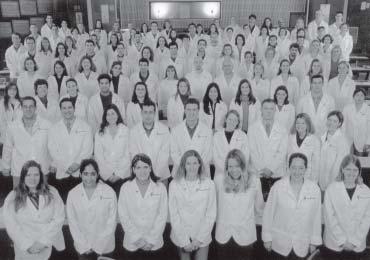
Atradition from medical schools has been introduced at the School ofVeterinary Medicine.The School’s first White Coat Ceremony was held for the Class of2003 on December 14,2001.The ceremony marks the end ofthe students’training in the classroom, and the beginning oftheir clinical rotations where they will apply the knowledge they have learned during the first two-and-a-halfyears of their four-year veterinary education.
Sponsors ofthe ceremony included the Pennsylvania Veterinary Medical Association, and its local constituent associations:Capital City,Cumberland Valley,Lehigh Valley, Schuylkill Valley,and Western Pennsylvania Veterinary Medical Assocations;the University ofPennsylvania Veterinary Medical Alumni Society;the Class of2003;and the School’s Student Chapter ofthe American Veterinary Medical Association.Matthew Ryan,Speaker ofthe Pennsylvania House ofRepresentatives,provided United States/Pennsylvania flag lapel pins for the students to wear on their white coats.
Alpha Psi alumni.We are eager to contact alumni for advice and for possible support.All alumni and anyone interested in helping or contacting Alpha Psi,please contact me via e-mail at <robertlm@mail.vet.upenn.edu>.
26 BELLWETHER 52
Developing Gene Therapy for Equine Arthritis
Osteoarthritis is a major cause ofincapacity and economic loss in animals and people.While there are multiple drugs available to alleviate the pain to some degree, the goal ofresearchers is to find ways to control the progression ofthe disease in affected joints. There is little doubt that osteoarthritis (OA) is a consequence ofboth mechanical and biological events.The defining event in OA is generally agreed to be the physical deterioration of articular cartilage.Normal function ofa joint demands normal articular cartilage and articular cartilage is not capable ofhealing when it is structurally damaged.Thus the major goal of treatment and prevention ofOA is preservation ofarticular cartilage.This goal demands a detailed knowledge ofthe events involved in degradation ofarticular cartilage matrix and modern molecular techniques have enormously expanded understanding ofthese pathways. Both degradation and synthesis ofarticular cartilage involve a complex interaction of cytokines,growth factors,receptors,receptor antagonists and other peptides that affect the highly specific components ofcartilage matrix. All ofthese elements are gene products and as such there is obviously interest in both controlling and producing them by gene therapy.Gene therapy for arthritis has many attractive potential advantages.
Many ofthe factors controlling cartilage synthesis and degradation have potent,and often undesirable,effects in many different tissues,making their systemic use impossible. Local delivery by gene therapy might result in desirable local effects.Most ofthese active peptides have very short half-lives precluding effective tissue concentrations by conventional administration methods.Recombinant proteins manufactured and purified in bulk for pharmaceutical use are extraordinarily expensive and generally impractical for prolonged use.The concept ofgene therapy is to make the cells residing within the joint serve as “local producers”for a desired (therapeutic) gene product.
Dr.Dean Richardson,professor and chiefof surgery at New Bolton Center,is investigating gene therapy as a treatment to slow the disease progression.He is working with horses because they,like humans,commonly suffer from traumatic arthritis.A horse’s joints are quite large, allowing for multiple biopsies,evaluation of joint fluid,and observation by arthroscopy.
Richardson and his colleagues investigated
the use ifa retroviral vector to deliver marker genes into cultured synovial cells followed by transfer ofthose multiplied cells from tissue culture back into the horse.They found that the transfer worked and the engrafted cells with the marker genes expressed in the synovial lining for up to five weeks and the cells remained viable for at least six weeks.
In the second phase ofthe study the marker genes were replaced by potentially therapeutic genes for the interleukin 1 receptor antagonist (EcIL1Ra),a protein that specifically blocks the activity ofinterleukin 1,a cytokine that is one ofthe most important mediators ofarthritic damage.It was found that the level oftransferred gene product was not high enough to be truly therapeutic.Retroviral vectors are cumbersome and expensive to develop,therefore the group looked for another gene delivery method.
In the continuation ofthe study an adenoassociated viral vector (AAV) was used.This vector holds many advantages including its safety,an ability to infect non-dividing cells and stably integrate its genetic material.It can therefore potentially be used for direct injection.The researchers constructed an AAV into which they
New VHUP Kitchen
VHUP’s wards – 20 years old – are being renovated and reconfigured to enable clinicians and staffto provide even better care to the patients.As part ofthe renovation,a modern and more efficient kitchen was installed.The suite includes an office for Charlotte Higgins, nutrition nurse,and storage space for many of the special diet foods needed at VHUP.The reconfiguration and renovation ofthe kitchen space was made possible though the generosity ofHill’s Pet Nutrition,Inc.
inserted a marker gene coding for green fluorescent protein (GFP).These markers can be readily identified in fresh or cultured tissue.
The study demonstrated that the AAV-GFP safely infected the synovial lining and the superficial layer ofintact articular cartilage and that the transferred genes were functional.The expression ofthe transferred genes persisted for at least six to nine weeks.It appears that delivery ofgenes to cells employing AAV is vastly more efficient than using a retroviral vector.There were no signs ofinflammation or lameness in the horses injected with the AAVGFP construct,even in those horses receiving multiple injections.
According to Dr.Richardson,this is the first time that it has been shown that AAV-mediated gene transfer to articular cartilage in vivo is feasible.The group is constructing an AAV-EcILRa to deliver therapeutic genes to the joints and will tests its efficacy in the near future.The group is also working on a second therapeutic gene construct that may be valuable in inhibiting inflammatory activity in a joint as well as one containing a growth factor to help stimulate cartilage matrix production.
BELLWETHER 52 27
Dr.Kathy Michel,assistant professor of nutrition, shows some of the kitchen’s features to Harcha of Hill’s.
Dr.Michelle Harcha of Hill’s Pet Nutrition,Inc.and Dr.Gail Smith,chair,Department of Clinical Studies,Philadelphia,cut the ribbon to the new kitchen.
Charlotte Higgins,nutrition nurse,in her office adjacent to the kitchen.
Animal Crackers
Most Popular Breeds
The American Kennel Club registered 1,081,335 dogs in 2001.Labrador retrievers lead the list with 165,970 followed by golden retrievers with 62,497 individual registrations. Labradors have been in first place since 1991 but poodles ruled for 21 years – 1960 to 1982 –and still are in the top ten along with German shepherd dogs,dachshunds,beagles,Yorkshire terriers,boxers,Chihuahuas and Shih Tzu.
The statistics do not list varieties – only breeds,(nine breeds are divided by color,size or type ofcoat).Ofthe 150 breeds,otterhounds and foxhounds are among those with fewer that 100 registered.
The AKC and parent club web sites are extremely helpful in educating potential puppy buyers.<www.akc.org> provides a wealth of information including just about everything you might want to know about the different breeds and breed clubs,dog events and more.


V.M.D.or D.V.M.
There are 27 Colleges ofVeterinary Medicine in the United States which are accredited by the American Veterinary Medical Associa-

tion.Ofthese,26 award a D.V.M.Only the University ofPennsylvania grants a V.M.D. (Veterinariae Medicinae Doctoris) degree.
The University ofPennsylvania graduates can be recognized by their degree.Through 2001,the V.M.D.has been awarded to 5,727 graduates (1,757 women and 3,970 men), beginning with the first class in 1887.
To be grammatically correct,if“Dr.”is used before a name,the academic degree is not included after the surname.It should be Dr. John Doe,or John Doe,V.M.D.,never Dr.John Doe,V.M.D.
Veterinarian is a noun,veterinary is an adjective.There is a veterinary school,not a veterinarian school.
Book Review
A Breed Apart. The Art Collection ofthe American Kennel Club and the American Kennel Club Museum ofthe Dog by William Secord. Antique Collectors Club Books.$80.00
This is the coffee-table book for all dog lovers.Full-color reproductions of400 works representing 247 artists and 112 breeds are examples ofcanine art beginning with the 17th century.Biographies ofall the artists are given.
New Technologies to Monitor Infectious Disease Outbreaks
(continued from page 11)
market system (dealers,haulers,flocks,markets,etc.) The ArcView database is used for storage,analysis and display ofthe poultry industry data.The information is updated on a continuous basis.

In the short time since its inception,the GIS database has been applied to the epidemiology ofnephropathogenic bronchitis,Mycoplasma gallisepticum (MG) and avian influenza.In addition,the Penn GIS researchers were able to minimize the risk ofthe spread ofdisease to susceptible flocks by advising the industry on placement ofpotentially positive MG infected birds moved to Pennsylvania from out ofstate. This application ofGIS technology can serve as a model not only for the poultry industry in other states,but for other food ani-
mal industries in Pennsylvania and nationwide. It can also be helpful to monitor outbreaks of diseases like Foot and Mouth disease and Bovine Spongiform Encephalopathy (Mad Cow Disease) in other parts ofthe world.The implementation ofGIS technology in the agricultural community to control disease,limit economic losses and protect elements ofthe food supply is vital.
At New Bolton Center,researchers are now applying this technology to inventory and map dairy and swine facilities in the Commonwealth.The beefcattle and sheep industry are also prime candidates for GIS technology.The work at Penn is supported by grants from the Pennsylvania Department ofAgriculture.
There are many works from the early 20th century.This was the heyday oflarge kennels and portraits ofdogs were very much in demand. Millie the English springer spaniel,“first dog” at the White House under former President George H.Bush is shown.There are pictures and notes about collars,which in the early days could be offensive and defensive weapons.A number ofsmall bronzes are pictured.
William Secord is a leading authority on canine art.
Bellwether
University ofPennsylvania School ofVeterinary Medicine
Editor
Helma Weeks
Photographers
Jon Adams
Addison Geary
Doug Thayer Writers
Dr.Josephine Deubler
Joan Capuzzi Giresi,V.M.D.
Wendy McIlroy,V.M.D.
Susan Perloff
Robert L.Ticehurst,V.M.D.
Alumni Relations Liaison
Joshua E.Liss
New Bolton Center Liaison
Jeanie Robinson-Pownall
We’d like to hear your praise,criticisms,or comments.Please address your correspondence to:
Helma Weeks
University ofPennsylvania School ofVeterinary Medicine
3800 Spruce Street Philadelphia,PA 19104-6010 (215) 898-1475
hweeks@vet.upenn.edu
None ofthese articles are to be reproduced in any form without the permission ofthe editor of Bellwether
©Copyright 2002 by the Trustees ofthe University ofPennsylvania.
The University ofPennsylvania values diversity and seeks talented students,faculty and stafffrom diverse backgrounds.The University ofPennsylvania does not discriminate on the basis ofrace,sex,sexual orientation, religion,color,national or ethnic origin,age,disability,or status as a Vietnam Era Veteran or disabled veteran in the administration ofeducational policies,programs or activities;admissions policies;scholarship and loan awards;athletic,or other University administered programs or employment.Questions or complaints regarding this policy should be directed to:Executive Director, Office ofAffirmative Action and Equal Opportunity Programs,3600 Chestnut Street,Sansom Place East,Suite 228,Philadelphia,PA 19104-6106 or (215) 898-6993 (Voice) or (215) 898-7803 (TDD).
28 BELLWETHER 52
SpecialGifts to the School
The following have made gifts to the Veterinary Hospital of the University of Pennsylvania in memory of a special pet: Amy L.Anderson,V.M.D.in memory of“RICO”
Mr.Salvatore A.Amato in memory of“BUTCH”
Mrs.Robin Bausback in memory of“MOLSON GOLDEN”
Mr.Edward R.Benjamin in memory of“SHADOW”
Ms.Barbara A.Blair in memory of“TAISHO”,“ZIMMER” & “KUMA”
Ms.Vivian F.Bonaventura in memory of“HEIDI”
Mrs.Ruth S.Bossler in memory of“HAROLD”
Ms.Mary Brightwell Arnold in memory of“MOG WAI”
Mr.and Mrs.Donald R.Brunner in memory of“LADY”& “TIMBER”
Brady Appraisal Associates in memory of“PRISCILLA”
Mrs.Beth Bradley-Johnson in memory of“AIKE”& “YOYO”
Mr.Sanford A.Bristol in memory of“MISS KITTY”
Eisen-Brower Family in memory of“RAGS”& “AZZY”
Bucks County Area Agency ofAging in memory of “FRECKLES”
Mr.and Mrs.Leonard D.Buter in memory of“TIFFANY”
Ms.Frances R.Byers in memory of“LADDIE”
C.A.Hall in memory of“OLIVER”
Ms.Jo Etta Campbell in memory of“BEAR”
Ms.Cindy Caine in memory of“KITTY”
Mr.and Mrs.Alfred Cavallaro in memory of“TROOPER”
Mr.and Mrs.Ronald Chadwick in memory of“INDY”
Mrs.Maria B.Chingo in memory of“BRANDY”, “BIANCA”,“WOLF”& “LUPA”
Ms.Linda E.Cicalese in memory of“MUPPET”
Ms.Virginia B.Clark in memory of“MIKEY”
Ms.Sandra Kay Cohenour in memory of“GRUNT”
Ms.Mary Lee Cooke in memory of“SALTY SAILOR BROWN”
Mr.Gerret V.Copeland in memory of“WILLIAM”
Mr.and Mrs.William J.Corcoran in memory of “BARNEY”
Marjoire M.Corr in memory of“SHADY”
Ms.Elizabeth C.Crawford in memory of“COFFEE”
Mr.and Mrs.Peter Cronin in memory of“SAMANTHA”
Ms.Carol A.Crook in memory of“MAJOR”
Ms.Kimberly A.Davison in memory of“JEZEBEL”
Ms.Doris Weyl Day in memory of“TIGER”,“PATRICK”, “TIMOTHY”& “ELIZABETH”
Ms.Geraldine M.Delissio in memory of“SHELBY”
Father Douglas Dempster in memory of“NOELLE”
Ms.Sharon J.Dicker in memory of“JOSIE”& “SADIE”
Mr.and Mrs.Roy J.Dietz in memory of“SOLELY”
Mr.and Mrs.Anthony DiLolle in memory of“B.J.”
Ms.Deborah Diserens and Mr.James Taylor in memory of “RUBY”
Mr.and Mrs.David Erdman in memory of“LINNHE”& “TRACIE”
Mrs.Karen Fishman in memory of“JESSIE”
Mr.and Mrs.Michael S.Ford in memory of“CHANCE”
Mr.and Mrs.Jeffrey Gelfand in memory of“BART”
Ms.Loretta Goldberg in memory ofher deceased animals
Dr.Doris Goodman in memory of“TAPOOZ”
Ms.Madeline Gately in memory of“MUFFY”& “CHAUNCY”
Ms.Georgina C.Gaughran in memory of“CELESTE”, “PAULA”,“WHITEY”& “NICKEY”
Mr.and Mrs.Howard C.Gurmankin in memory of “MACKEY”
Mr.Martin C.Gutowski in memory of“BUSTER”
Dr.and Mrs.Robert C.Hallock in memory of“ABNER”
Ms.Michele Hamilton in memory of“SCHROEDEE”& “CIRE”
Mrs.Meredith Heckler in memory of“MOLLY”& “NELLIE”
Ms.Lily Hoge in memory of“POMEGRANATE”
Mr.and Mrs.Daniel E.Holben in memory of“CORKY”& “INDY”
Mr.David McB.Howell in memory of“BEAU”
Ms.Kelly A.Ivemer in memory of“VELVET”& “BABY TIGGER”
Mr.and Mrs.Joseph Jantorno in memory of“BAILEY”
Ms.Jill A.Johns in memory of“JEN”
Ms.Carol S.Kahn in memory of“KATIE”
Ms.Laurie A.Klein in memory of“STELLA”
Mrs.Maria Komoroski in memory of“MAX”
Mr.and Mrs.Joseph B.Kopaczewski in memory of “SCHNAPPS”
Mrs.Patricia Lafferty in memory of“HENRY”
Dr.Elizabeth A.Lawrence in memory of“PRINCESS”
Mrs.Wendy Mace in memory of“RUNWAY”
Gerald I.Magid in memory of“SAM”
Mr.Bruce H.Mann and Ms.Elizabeth Warren in memory of“TREVER”
Mr.and Mrs.George P.Markham in memory of “MCDUFF”
Ms.Angela Martello in memory of“SMEAGOL”
Mr.and Mrs.David May in memory of“SPIKE”& “MILO”
Dr.Tomi J.McCann in memory of“BUDDY”& “PEDO”
Mr.and Mrs.James R.McDonald in memory of“JOSH”
Mrs.Catherine D.Meddaugh in memory of“SPIKE”
Ms.Heidi Ann Melley in memory of“PITA”
Mr.and Mrs.William A.Meyers,Jr.in memory “JULIE”
Mr.James L.Miller in memory of“RICK”
Mr.and Mrs.Millhollen in memory of“HERSHEY”& “NUTMEG”
Ms.Joanne E.Minner in memory of“SHIRLEY”
Mr.Thomas E.Morrissey in memory of“BRITTNY”
Ms.Kris Olsen in memory of“HAGAR”
Dr.Bernard Paiewonsky in memory of“MAXWELL”
Ms.Janice F.Palmer in memory of“PUTTER”
Mrs.Donna Parris in memory of“SHIRLEY”& “SMUGGLES”
Ms.Emma Parris in memory of“SHIRLEY”& “SMUGGLES”
Dr.Laura S.Picciano in memory of“MISCHIEF”
Mr.and Mrs.Duarte E.Pinto in memory of“SANDY”
Mr.and Mrs.Leo A.Polisano in memory of“STAR”
Mr.and Mrs.Paul J.Potera in memory of“JULIE”
Mrs.Diane Primavera in memory of“ASHLEY”
Mr.and Mrs.Thomas Profico in memory of“GINGER”
Dr.and Mrs.Birge D.Reichard in memory of “GUINIVERE”
Mr.Brian J.Richards in memory of“JACOB”
Jeanne M.Rogers and Barbara L.Black in memory of “FAWN”,“PUNKIN”,“TISH”, “MISSY”& “BRANDI”
Mr.and Mrs.Gregg A.Runyen in memory of“MEGGIE”
Mrs.Eva Russo in memory “BUSTER”
Mr.Dennis Rutowski in memory of“SLAMMIE”
Ms.Anitra Salgado in memory of“JOVI ROCKS”
Mr.and Mrs.William J.Sauerwine in memory of “JEFFREY”
Mr.and Mrs.John Scala in memory of“BABY”
Dr.M.L.Sheer in memory ofCH.FOX LAIR INDIEN AUDACIEUX
Ms.Marion A.Shonert in memory of“MICKEY”
Mr.Philip L.Spinelli in memory of“TIGGER”& “NICHOLE”
Elizabeth M.Starr in memory of“LUCKY”
Dr.and Mrs.Philip D.Stein in memory of“BENNIE”
Ms.Tawn J.Stokes in memory of“MERLIN”
Mr.and Mrs.James L.Stowell in memory of“MOLSON”
Ms.Jennifer Sutherland in memory of“SCRUNGY”
Ms.Vicki A.Ungar in memory of“MAX”
John R.Walter,Jr.V.M.D.in memory of“BEAR”
Mr.and Mrs.G.David Wargo in memory of“NISSA”
Ms.Carol Levin Watson in memory of“T.J.”
Mr.and Mrs.Toby Watton in memory of“REX”
Wanda May Webb in memory of“CLARENCE”
Dr.and Mrs.Michael J.Whitworth in memory of“LADY”
Ms.Emily M.Williams in memory of“LIBBY”
Mr.and Mrs.Thomas G.Wilson Sr.in memory of “TRIGGER”
Winston Exetor Fund in memory of“NIKKI”
Mr.and Mrs.Kenneth R.Yeager in memory of“JIGGS”
Ms.Karen S.Zeyn in memory of“THAI”
The following have made gifts to the Veterinary Hospital of the University of Pennsylvania in memory of “MISS MAGGIE”:
Rob Butler
Wendy Jones
Joy McDaniel
Josie Portales
Hilda Roberts
Paula Snell
The following have made gifts to the Veterinary Hospital of the University of Pennsylvania in memory of Jack Glover:
Steven J. Mayover
Helen Mae Mullen
Mr.and Mrs.Owen Regan
Mr.and Mrs.Geoffrey Wilson
The following have made gifts to the Veterinary Hospital at the University of Pennsylvania in memory of those listed:
Mrs.Frances C.Adams in memory ofJoseph G.Shute, V.M.D.
Mrs.Jenevere Carrozza in memory ofMario Carrozza
Mr.John J.Coyle in memory ofDarrell G.Nelson
Ms.Sandra Langbein in memory ofAndy Crozier
Mr.and Mrs.Raymond Leonard in memory ofIsrael Magid
Mrs.Regina McCann Hess in memory ofMichael Goldman
Mr.and Mrs.Louis G.Rubino in memory ofPatsy Rubino
Mrs.John Sacuto in memory ofJohn M.Sacuto
The following have made gifts to the Veterinary Hospital of the University of Pennsylvania in honor of a special pet:
Ms.Antoinette M.Armstrong in honor of“NATASHA”
Mr.and Mrs.Robert John Bradford in honor of“TOM”
Mr.Sanford A.Bristol in honor of“SPENCER”
Mr.and Mrs.Franklin B.Brown in honor of“OLIVER”
Mr.and Mrs.Ralph Burns in honor of“KISER”
New Scholarship Established
The Bernice Barbour Foundation announced the establishment ofa scholarship at the School that covers one student’s expenses and tuition for three years.“This is a very generous scholarship,”says Dean Alan M.Kelly.“It is the largest single scholarship ever that we will be able to award to a student.We are very grateful to Eve Lloyd Thompson and the Bernice Barbour Foundation for their generosity.”The School will select three candidates from the Class of2006 for the scholarship and the Foundation then will interview the students and select one.
BELLWETHER 52 29
SpecialGifts to the School
Mr.Robert F.Harchut in honor of“ROCKY”& “MAX”
Mr.and Mrs.Joseph Jantorno in honor of“BAILEY”
Carmen Kane in honor of“NIKKI”
Ms.Felice S.Kelem in honor of“OLIVER”
Ludwigs Corner Veterinary Hospital in honor of“BAILEY” Mr.and Mrs.James E.Mills in honor of“SHILOH”, “KEDRYN”,“MADISON”,“DANA”& “DEMELZA”
Ms.Lois W.Morgis in honor ofCH.CAMARADE’S DIAMOND’S SKYBIRD H.T.
Mr.Joseph Norris in honor of“MIRIBU”S SILVER SUNSHINE”
Ms.Catherine L.Nowery in honor “DAISY”& “TEDDY”
Mr.and Mrs.Robert L.Quigley in honor of“SAMMY”
Mr.and Mrs.James Sharkey in honor of“BLAZE”
Mr.L.Ray Stillman in honor of“GRETCHIN”
Mr.and Mrs.Michael J.Tener in honor of“D.J.”& “TEDDY”
The following have made gifts to the Veterinary Hospital of the University of Pennsylvania in honor of those listed:
Mr.and Mrs.Vincent J.Ardire in honor ofDr.Jeffrey S. Christiansen
Ms.Bonnie Brzozowski in honor of Edward Brzozowski
Ms.Denise Carr in honor ofDr.Judith Durkee
Ms.Sherrie J.Eakin in honor ofDr. Avery Bennett
Mr.and Mrs.John Falcichio in honor of Dr.Michael McDonnell
Mr.and Mrs.Martin D.Haber in honor ofJo Ann Duarte and Dru Greenberg
Mr.and Mrs.Benard Jacobs in honor of The Oncology Department,Dr.Craig Clifford and Dr.Lisa Barber
Ms.Laurie A.Klein in honor ofDr. Shoenfeld
Ms.Jean S.Madsen in honor ofMrs.R.V. Clark and Mrs.Edith Young
Robert E. Spivak in honor ofAllen K. Fox’s 65th Birthday
Mr.and Mrs.William J.Stone in honor ofAlan Schreier,V.M.D.
Mr.and Mrs.Newton Weiss in honor of Mr.and Mrs.Joseph Bamberger
Mr.Donald P.Whiteley in honor of Surgeons & Staffwho operated on “BUDDY”
The following have made gifts supporting Dr.Beth Callan’s Research in honor of those listed:
Ms.Linda G.Burka in honor ofDr.Beth Callan
Mr.and Mrs.Richard G.Placey in honor ofDr.Beth Callan,Dr.Lisa Barber,and Dr.Shannon Parsons
The following have made gifts to the Feline Cancer Research in memory of a special pet:
Ms.Kaye Bard Paletz in memory of“MACY”
The following have contributed gifts to the Special Species Clinic Fund in honor of those listed:
Mr.and Mrs.Denis Roark in memory of“D.J.”& “Adair”
The following have contributed gifts to the Emergency Service Fund in honor of those listed:
Ms.Victoria Carto in honor ofthe retirement ofDr. Lawrence Abrams
The following have contributed gifts to the Clinical Studies Research Development Fund in memory of those listed:
Loren Sanders Glenn in memory of“BARIN”
Lou and June Kestenbaum-Zeiger in memory of“MAX”
The following have made gifts to the Neurology Research fund in memory of a special pet:
Dr.and Mrs.Donald Schotland in memory of “GALAHAD”& “MISSIE”
The following have made gifts to the Josephine Deubler Genetic Disease Testing Laboratory in honor of those listed: Montgomery County Kennel Club in honor ofDr.Urs Giger
The following have made gifts to the Josephine Deubler Genetic Disease Testing Laboratory in memory of a special pet:
Ms.Phyllis N.Sewall in memory of“LACEY”
The following have made gifts to Feline and Canine Genetic Center in honor of a special pet:
Dr.Sharon Johnson in honor of“MICHELLE”
The following have made gifts supporting Soft Coated Wheaten Terrier Research in memory of a special pet:
Ms.Ruth Bryden in memory of“KATIE”
Ms.Kindy French in memory of“LIBERTY BELLE”
Mr.Richard B.Tomlinson in memory of“EINSTEIN”
The following have made gifts supporting Dermatology in honor of those listed:
Janice Lee Staples in honor ofDr.Heather Peikes
The following have contributed gifts to the Dean’s Fund in memory of a special pet:
Ms.Elizabeth M.Bianchi in memory of“NOVA”
Mr.and Mrs.Keith Bizony in memory “LACY”
Mrs.Kathy G.Callahan in memory of“BEN”
Mr.Benjamin Cloud and Ms.Lori Stewart in memory of “CAMBER”
Mr.and Mrs.J.Colin Hinckle in memory of “HOMER/HENRY”
Ms.Lily Ann Hoge in memory of“BOOMER”
Mrs.Jean Humphreys in memory of“EMMA”
Mr.Robert C.Magley in memory of“CHELSEA”
Dr.and Mrs.Jeffrey Meyer in memory of“PIRATE”
Mr.and Mrs.Arthur J.Mohr in memory of“BANDIT”
Ms.Donna M.Pasquella in memory of“HOUDINI”
Mr.and Mrs.Joshua A.Penman in memory of“ALEX”
Ms.Sheryl M.Simmons in memory of“JUBAL”
Ms.Joanne C.Zmuida in memory of“MURPHIC”
Kindy French contributed gifts to the Clinical Studies Gift Fund in honor of those listed:
Dr.Lynne Cabaniss
Dr.Krista Kasprenski
Dr.Betsy Dayrell-Hart
Dr.George (Bud) Siemering
Dr.Barbara Kummel
Dr.Kim Cronin
Dr.Monique Maniet
Dr.Bill Bush
Dr.David Saylor
Dr.Nancy Bromberg
Dr.Susan Hackner
Dr.Kristina Schwensen
Dr.Jeffrey Wortman
Dr.Karin Sorenmo
Dr.Lisa Barber
Dr.Amy Kapatkin
Dr.Meryl Littman
Dr.Paul Orsini
Dr.Michael Goldschmidt
Dr.Colin Harvey
Marsha Finkelman
Kathleen Dunn
The following have contributed gifts to the Humanitarian Fund in honor of those listed:
Jeanne R.Willig in honor ofJustine Lee
The following have made gifts supporting Oncology Research in memory of a special pet:
Ms.Beth A.Maurer in memory of“MAX”
Ms.Alison Seward in memory of“GENTILLE”
The following have contributed gifts to the Dean’s Fund in honor of those listed:
Ms.Beth E.Liddle in honor ofDr.Dan Morris
Ms.Rebecca A.Rij in honor ofRyan R.Flynn
Mr.and Mrs.Bruce Singer in honor ofLorrie Holt
The following have contributed gifts to the Dean’s Fund in honor of a special pet:
Jacob Himmelstein in honor of“FRANKIE THE CAT”
Scott Horsnall in honor of“MAGGIE”
Mr.and Mrs.James M.Sharkey in honor of“BLAZE”
Ms.Janet D.Thompson in honor of“NAPOLEON”
The following have contributed gifts to the Dean’s Fund in memory of those listed:
J.P.Burlein,V.M.D.in memory ofDr.Glenn Stevens
Dinah Flack,V.M.D.in memory ofSir Mack ofMorendini
Mr.and Mrs.Joseph M.Hess in memory ofMichael Goldman
Mr.and Mrs.Arthur McDowell in memory ofJack Glover
Dr.Brooke Roberts in memory ofDr.Mark Allam and Dr. Jacques Jenny
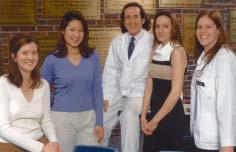
Mr.George R.Ruddick,Jr.in memory ofMr.Jean Caplan
The following have contributed gifts to Veterinary Student Scholarship Fund in memory of those listed:
Mr.Joel R.Bigger in memory Joan B.O’Brien,V.M.D.
Charles E.Brown,V.M.D.in memory ofFrances Berg
Dr.Gerald C.Campbell in memory ofWarren D.Campbell
Dr.Shelley M.Dubin in memory ofSebje Sjogren
Dr.Nicholas H.Fisfis in memory ofMr.and Mrs.Harry Fisfis
Teresa L.Fitzgerald,V.M.D.in memory ofJay Jasan,V.M.D.
Mr.and Mrs.Allen K.Fox in memory ofLorraine English William S.Gardner,V.M.D.in memory ofE.Gregory MacEwen,V.M.D.
Barbara L.Henderson,V.M.D.in memory ofThomas A. Henderson
Charles D.Knecht,V.M.D.in memory ofDean Mark and Lila Allam
Mrs.Susan S.Leiper in memory ofIsaac Tomlinson Tyson
T.W. Shoemaker,V.M.D.in memory ofMr.Harry Shultz
The following have contributed gifts to Veterinary Student Scholarship Fund in honor of those listed:
Joseph C.Glennon,V.M.D.in honor ofGail Smith,V.M.D. and Dean Richardson,D.V.M.
Mr.Lawrence F.Heileman in honor ofDr.Carolyn McDaniel
Mr.and Mrs.Martin M.Kaplan in honor ofDr.Josephine Deubler
30 BELLWETHER 52
The Armour Lewis Foundation has awarded five scholarships to senior and junior students for the 2002 academic year.The recipients are (l to r): Colleen Kane,V’03,Karena Joung,V’03,Micah Brodsky,V’02,Kimberly Johnston,V’03,Annette LePere,V’02.
The following have contributed gifts to Veterinary Student Scholarship Fund in memory of a special pet:
Kimberlee B.Glenn in memory of“AUBIE”
David M.Green,V.M.D.in memory of“FREDD”
Mr.Lawrence Holt in memory of“GUNNER”
Deborah A.Keim-Beynon,V.M.D.in memory of“TANYA” & “BLITZ”
Ms.Eleanor M.Stewart in memory of“MEG”
The following have contributed gifts to the M.Josephine Deubler Scholarship Fund in memory of those listed:
Mr.Dale C.Deubler in memory ofDr.James A.Deubler
The following have contributed gifts to the Karen Spiegle Memorial Scholarship Fund in memory of those listed:
Dr.Maurine K.Kelly in memory ofMargaret McDaid
The following have contributed gifts to the E.R.Marookian Research Scholarship Fund in honor of Dr.Edgar R.Marookian:
Mr.Edward Robert Bazarian
Mr.and Mrs.Steven Feldman
The following have contributed gifts to the Jay Jasan Memorial Scholarship Endowment Fund in honor of Jay Jasan,V.M.D.:
Mr.and Mrs.Albert O.Botto
The following have made gifts to Friends of New Bolton Center in memory of Robert and Maryann Camac:
The Baer Family and Gary Corwin
Mr.& Mrs.Wayne L.Davis
Robert and Helene Dixey
Ms.Lena M.Dugan
Mr.& Mrs.Edward Fair
Mr.& Mrs.Ronald Gant
Mr.& Mrs.Biddle Gunn
Francis and Patricia Higgins
Carla and Bill Lewis
Mr.& Mrs.Neale Yorke Lewis
Walter and Barbara Liptrap
Mr.& Mrs.Vincent C.Malfitano
Mr.& Mrs.George Marenic
Mr.& Mrs.James E.McGoldrick
The Middleton Family ofAudubon,New Jersey
Jack Morris and Cheryl Demo Morris
Joan W.Pratt and the late Leonard Pratt
Ms.Laurel P.Smith
Ralph G.Smith,Inc.,Richard H.Smith,Vice President
Ms.Susan L.Stan
Mr.John W.West
Mr.& Mrs.Edwin M.Wilson
Harry and Carol Wiltsee
The following have made gifts to Friends of New Bolton Center in memory of James Armstrong:
Frank and Lily Cannone
Mrs.Margaret E.Swift
Mr.Wilton C.Marvin
Ms.Marge F.Stellabotte
The following gifts were made to Friend of New Bolton Center in memory of those listed:
Nancy Brennan,V.M.D.in memory ofConnie Eileen Brennan
Dr.& Mrs.Luis A.Colon in memory ofWilliam B. Boucher,V.M.D.
Eichi K.Koiwai,M.D.in memory ofPhyllis O.Koiwai
Mr.William L.Pape in memory ofMarshall W.Jenney
Mrs.Mary Schlachter and the Delmarva Region ofUSPC in memory ofLuke M.Schlachter
Mr.Donald A.Swartz in memory ofGretchen WolfSwartz
Dr.& Mrs.George D.Vernimb in memory ofDr.Mark W. Allam
Amy K.Worrell,V.M.D.in memory ofDr.Eric Tulleners
The following gifts were made to Friends of New Bolton Center in memory of a special animal:
Ms.Janet L.Dilworth in memory of“PICASSO”,her faithful dressage friend
Ms.Brenda Fessler in memory of“CHAPS”
Ms.Rebecca Julian ofCornerstone Farms in memory of “TIDDLY WINKS”
Edward Mersky,V.M.D.in memory of“EDIE MAY”
Ms.Claudia C.Rash in memory of“JAKE”
Ms.Lois Ryan ofQuality Tack Service in memory of “DEZERAY”a 15/16 Arabian mare – much loved and deeply missed
The following gifts were made to Friends of New Bolton Center in honor of a special person:
Ms.Mary H.Kimball in honor ofMr.& Mrs.Richard L. Berek
Dr.Richard O.Davies in honor ofDr.Elaine Hammel
The following gifts were made to Friends of New Bolton Center to honor a special animal and to thank a special person: Geoffrey and Anne Case in honor of“CARBONADA”and in gratitude for the wonderful care their mare received at New Bolton Center.
Mrs.Mary Kay Schultz in honor ofDr.Eric Parente and his stafffor treatment of“BEN”
The following gifts were made to The Dr.M.Lynn Sammons Award in Bovine Medicine in memory of Dr.M.Lynn Sammons: Employees ofWillow Creek Animal Hospital
Kristin N.Heffner,V.M.D.in honor ofWillow Creek Employees and Doctors
Mr.& Mrs.Howard M.Sammons
Dr.Lenora S.Sammons
The following gifts were made to the Dr.Ginnie Lieblein Memorial Scholarship Endowment in memory of R.Ginnie Lieblein Estate ofVictor F.Peters
Mr.Walter C.Wells
The following gift was made to the Equine Sports Medicine Fund by Hammer Creek Farm to honor: Hart and Joan Beaver Edward Mersky,V.M.D.
The following gift was made to the Equine Research Fund: Daniel F.Vernon,V.M.D.in memory of“HAT”
Scholarships
Through contributions to the Veterinary Student Scholarship Fund from alumni and friends,$1,000 scholarships were awarded to each member ofthe Class of2002.The Estate ofRoy Coult made possible scholarships to each member ofthe Class of2002 and 2003 on the Dean’s List
A.Brady Beale,V’02, Jason Cordeiro, V’03, Tony Ebling,V’03 and Heather Jones, V’02 each received SCAVMA Community Service Grants.The Harrisburg Kennel Club awarded a scholarship to Kathy Heim,V’04. Sarah Doech,V’02 is the recipient ofthe Ginny Leiblein Memorial Scholarship.The William Boucher Scholarship was awarded to Linda Nelson,V’04
Erin Mairs,V’02 received the Hart Clinical
Recent Gifts of Note
Mary Roemig-DeYoung, through her estate,provided $284,000.00 for additional endowment ofthe Humanitarian Fund at VHUP.
The Chichester DuPont Foundation made a gift for equipment in the new Scott Equine Sports Medicine Building at New Bolton Center.
The School is pleased to acknowledge Pfizer Animal Health for its generous gift of $5,000.00 through its Veterinary Services Special Grant.The grant enabled the School’s audio-visual department to purchase a new digital camera,slide scanner, and other slide production materials.This equipment will enhance our faculty's ability to produce teaching materials ofthe highest quality for students.We are most grateful to Pfizer for their continuing support ofour School and our students.
The Devon Dog Show Association contributed to the Friends ofVHUP Fund.The Montgomery County Kennel Club supported the Josephine Deubler Genetic Disease Testing Laboratory.
Proficiency (IDEXX) Scholarship.Nestle Purina PetCare Company provided a scholarship to Amy Parkman,V’04.The American Lifestock Insurance Scholarship was presented to Tracy Norman,V’02 Margaret Weil, V’05 received the National Italian American Foundation scholarship.The Pennsylvania Veterinary Foundation awarded six scholarships:the Wayne Mountan Scholarship to Meredith Daly,V’03; the Richard H.Detwiler Scholarship to Tony Ebling,V’03; the PVMA Auxiliary Scholarships to Amy Hinze,V’03 and Jeffrey Schar,V’03; the Palace H.Seitz Scholarship to Jennifer Jones,V’03; and the Samuel Scheidy Scholarship to Ericka Krick, V’02 Anna Russau,V’03 received a Western States Veterinary Conference scholarship.
BELLWETHER 52 31
Upcoming Events
June 2002
29
4:00 p.m.
Scott Equine Sports Medicine Building Dedication followed by a dinner marking the 50th anniversary ofNew Bolton Center
New Bolton Center
Kennett Square,PA
For information,contact Patricia Hall at (610) 4445800 x2500 or via e-mail at <phall@vet.upenn.edu>.
July 2002
14 6:30-8:30 p.m.
Alumni Reception
American Veterinary Medical Association Annual Convention
Presidential Ballroom B
Gaylord Opryland Resort
Nashville,TN
For information,contact Joshua E.Liss at (215) 8981481 or via e-mail at <lissj@vet.upenn.edu>.
September 2002
21 School of Veterinary Medicine Open House New Bolton Center
Kennett Square,PA
Celebrate New Bolton Center’s 50th anniversary by attending this popular event.For information,contact Jeanie Robinson-Pownall at (610) 444-5800 x2182 or via e-mail at <jeanierp@vet.upenn.edu>.
October 2002
12
Parents and Partners Day 2002
Philadelphia and New Bolton Center campuses
Parents and partners ofthe School ofVeterinary Medicine’s first-year students receive an overview of veterinary education at Penn.For information,contact Amy M.Bogdanoffat (215) 898-4234 or via email at <bogdanof@vet.upenn.edu>.
January 2003
11-18
Pennsylvania Farm Show 2003 Farm Show Complex Harrisburg,PA
Visit the School ofVeterinary Medicine’s booth at the largest indoor agricultural event in America.For information,contact Jeanie Robinson-Pownall at (610) 444-5800 x2182 or via e-mail at <jeanierp@vet.upenn.edu>.
29-30
2003 Penn Annual Conference Adam’s Mark Hotel Philadelphia,PA
For information,visit <http://alumni.vet.upenn.edu/ pennannualconference.htm>.
A call for NBC memories
New Bolton Center celebrates its 50th birthday in 2002.
We are collecting stories and reminiscences about New Bolton Center.
Share your New Bolton Center memories with us.We would like to hear from those of you who were at New Bolton in the last five decades.
Please send your “memories”to Jane Simone via email <jsimone@vet.upenn.edu> or via mail to her at New Bolton Center,382 West Street Road,Kennett Square,PA 19342-1692
University of Pennsylvania
School of Veterinary Medicine 3800 Spruce Street Philadelphia,PA 19104-6008
BELLWETHER 52 SPRING2002 Visit the School’s web site at www.vet.upenn.edu Nonprofit Organization U.S.Postage PAID Philadelphia,PA Permit No.2563
Printed on recycled paper.
Alumni
http://alumni.vet.upenn.edu
For updated event listings, please visit the
& Friends web site at
