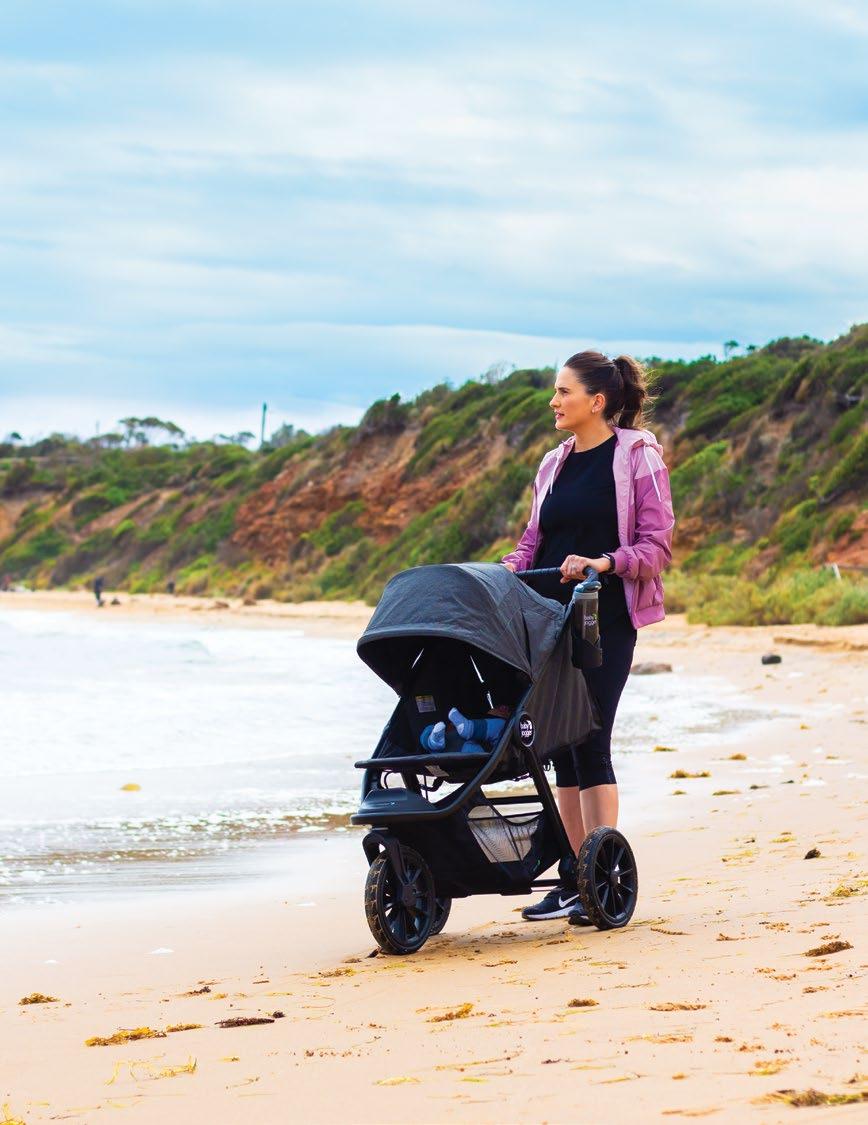
www.peninsulakids.com.au PENINSULA KIDS AUTUMN 2020 PENINSULA KIDS FREE LOVING FAMILY LIFE ON THE PENINSULA AUTUMN 2020 GIVEAWAYS How to deal with an Radical Toddlers! COLOURING COMP
Sat

2 Peninsula Kids – Autumn 2020 MORNINGTON
CUP DAY
| Mornington
BRING THE WHOLE FAMILY FOR A GREAT DAY OUT AT NEDS MORNINGTON CUP DAY. WITH PLENTY OF FREE KIDS RIDES AND ACTIVITIES, INCLUDING FACE PAINTING AND ANIMAL FARM - RACEGOERS OF ALL AGES ARE SURE TO ENJOY A FANTASTIC DAY OUT. Join the Mornington Racing Club as a Six Month Member and receive 2 Annual Passes for Mornington Racecourse and Ladbrokes Park for the rest of the 2019-20 season! Includes access to Neds Mornington Cup Day Join today at mrcmembership.com.au
MONTH MEMBERSHIP MORNINGTON RACING CLUB JUST $80 WAS $165
21 March
Racecourse
SIX
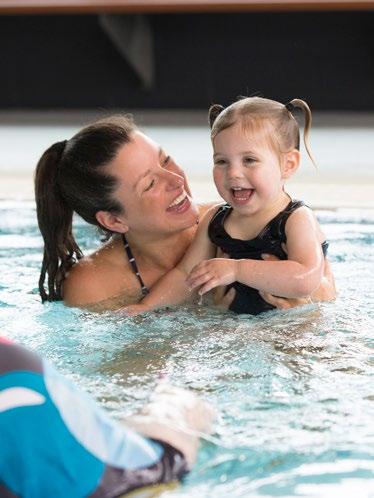
want your child to develop a lifelong love of water.
to swim at PARC
a personalised service,
to your child, with the added benefit of unlimited access to our AquaPlay™, slides and pools all year round.
your water baby by joining the PARC Swim Fam today! To learn more about swimming lessons at PARC visit parcfrankston.com.au/parc-swim parcfrankston
Cranbourne Road and Olive Grove, Frankston info@parcfrankston.com.au | www.parcfrankston.com.au Our vision is that every child can swim
We
Learning
provides
tailored
Grow
Cnr
Cover Photo

Front cover kiddos: Sebastian & Marli

Mt Martha – Nunns Walk
Photo: Danielle B Photography daniellebphotography.com.au
Editor and Publisher Melissa McCullough melissa@mpnews.com.au
Design Sam Loverso sam@mpnews.com.au
Advertising
Miriam Doe 0421 085 974 miriam@mpnews.com.au

General Enquiries info@peninsulakids.com.au
ed’s letter...
 Editor Melissa McCullough

Hello from Peninsula Kids magazine autumn 2020 edition!
As the school year is well and truly in full swing now, I’d like to take this opportunity to commend all the kids and/ or parents going through the motions of something new. School drop-offs. New school drop-offs. Entering a different pod or year level. Sending your little one off to kindy and having your first days without having a little buddy by your side. I see you. I hear you. I am you.
This year I’ve had one start at a new school which also required me to learn the ropes of drop-offs and pick-ups by car. (Oh the horror!) And my other one started his first year at school without his sister for support. I am happy to report that although there have been a couple of bumps, we are doing OK!


I hope you and yours are as well. <3
As well as new school ventures, for a lot of us there are new before or after school activities. And weekend sport! Whatever you do, do your best and have fun. In the words of Grantland Rice, “It's not whether you win or lose, it's how you play the game.”
Congratulations to the King Swim colouring competition winner, Vinon! We hope you are enjoying your prize pack and swim voucher.
Check out the awesome colouring competition for Autumn brought to you by Kidz Shed indoor play centre and café on page 97.
We love seeing the entries come in – so grab your textas and send us in your artwork.
Don’t forget - clocks go back an hour on Sunday, April 5th at 3:00am. Have a happy Easter!
 Advertising Miriam Doe
Design Sam Loverso
Advertising Miriam Doe
Design Sam Loverso
All material is copyright, and may not be reproduced without the express permission of Mornington Peninsula News Group, or the original copyright holder in the case of contributions. Copyright of contributed material rests with the contributor. Disclaimer: The authors and publisher do not assume any liability to any party for any loss, damage, or disruption caused by errors or omissions, whether such errors or omissions result from negligence, accident, or any other cause. This publication is not intended as a substitute for the medical advice of physicians. The reader should regularly consult a physician in matters relating to health and particularly with respect to any symptoms that may require diagnosis or medical attention. Peninsula Kids is produced quarterly. 15,000 copies distributed between Mordialloc and Portsea. Registered address: 63 Watt Road, Mornington 3931 Proudly published by www.facebook.com/MorningtonPeninsulaKids


Year 7 2022 Enrolments www.padua.vic.edu.au If you have a child in Grade 5 and would like them to attend Padua College from Year 7 2022, enrolments open on Monday 2 March 2020. Enrolments close Friday 15 May 2020. For enquiries, please contact the Registrar on 5978 2701 or email enrolments@padua.vic.edu.au Visit our website to enrol online or to book a school tour
TAKING
Cherry Lane is family owned and run 62 place centre. At Cherry Lane we strive to provide high quality care that has a safe and warm atmosphere which reflects the home environment.
• Play based curriculum built around the early Years framework.
• Nappies, wipes, nappy rash cream and sunscreen.
Lane is family owned and run 62 place centre. At Cherry Lane we strive to provide quality care that has a safe and warm atmosphere which reflects the
• Laptop program for the kinder room once a week.
• Music and movement program for all rooms.
• Nutritious meals cooked daily on premises.
• Regular Outings and Excursions.
• Vegetable garden and chickens.
• Large outdoor areas.
based curriculum built around the early Years framework. Nappies, wipes, nappy rash cream and sunscreen. program for the kinder room once a week. and movement program for all rooms. Nutritious meals cooked daily on premises. Outings and Excursions. Vegetable garden and chickens. outdoor areas.
We have a funded kindergarten program with our qualified kindergarten teach who attends the service 5 days a week.
• A 3 year old Pre-kinder room.
• A Toddler room for 2 to 3 year olds
a funded kindergarten program qualified kindergarten teach who the service 5 days a week.
• A Babies’ room for 3 months to 2 years. Opening Hours: 6.30am
Want to come in for a tour? No need to make an appointment, just drop in when you are free.
6 Andrew St, Seaford
old Pre-kinder room. room for 2 to 3 year olds room for 3 months to 2 years. Opening Hours: 6.30am to 6.30pm Andrew St, Seaford Phone:
come in for a tour? No need to make an appointment, just drop in when you are free.
Klauer St Dandenong-FrankstonRd HadleySt StreetAndrew Hartnett Dr Cherry Lane Children’s Centre Lorna St Cherry Lane Children’s Centre
ENROLMENTS NOW
cherrylanecentre@hotmail.com • www.cherrylanechildrenscentre.com.au
to 6.30pm
Phone: 9786 2880
Cherry Lane Children's Centre is turning 10 in 2020! KlauerSt Dandenong-FrankstonRd HadleySt StreetAndrew Hartnett Dr Cherry Lane Children’s Centre LornaSt CherryChildren’sLaneCentre
TAKING ENROLMENTS NOW
home environment.
9786
Cherry Lane Children's Centre is turning 10 in 2020!



www.peninsulakids.com.au 7
Successful Child-Centred Co-Parenting in Divorce Making sure your children thrive and grow should be the goal and for both parents.
Explaining Death to Children Some guidance to help you talk with your child about the death of a family member.
Regulating Your Child’s Mood So they can feel more in control of their emotions and gain confidence.
Friendships 5 Years Into Expat Life Being 11,000 miles away from family and friends can make or break you! Contents Spotlight 10 Child Online Safety Puts Aussie Parents Under Pressure Mums and dads report feeling guilty, anxious and embarrassed when it comes to their kids’ online behaviours. 14 How to Deal with an Entitled Teen Strategies to help bring young people back to basics. 18 What Being a Parent of a Child with a Rare Disorder Has Taught Me Why a family trained themselves differently and transformed the way they approach illness, health and healing. 22 Radical Toddlers Toddlers are developing at a rapid rate and have not yet learned control of self. 26 Redefining Motherhood Releasing guilt and being the parent you want to be. 28 How Healthy Finances Can Help Create a Healthier You 5 ways to improve your finances AND your wellbeing. 30 Writing Through It How creative writing can help children process stress and anxiety. 28 22 14
32
34
36
38



Local (and not so) 40 Life's a Picnic! 42 Royal Botanic Gardens 44 Let’s Go See a Show…Without the Drama! 46 Day Tripping - Itinerary Five Celebrate 48 Buggy Birthday 50 Fun Days to Celebrate in Autumn Education 56 Good Screen Time: Scratch Jr for Parents 60 Managing Student Stress: A Guide for Teachers and Parents 62 The Power of Learning a Second Language in the Early Years 65 Focusing on Our Schools Recipes 74 Healthy Recipes with Linda Martinucci Health 80 The 10 Most Frequently Asked Kid’s Nutrition Questions 84 Getting to Know Grommets Pregnancy & Baby 88 Skin Hydration and Breast Feeding 90 The Myth of Baby Sleep Regressions 94 12 Essentials for Your Labour Toolkit Creative 97 Kidz Shed Colouring in Competition 98 Speckled/Marbled Eggs Contents 88
CONTRIBUTORS
thanks go to the gorgeous and talented group of contributors who breathe life into every issue by
their best with us. In Every Issue Party Planning Things We Love Little Bites Book Reviews Ask the Experts ERICA LOUISE melbourne.kidtown.com.au Pg40 REBECCA FRASER www.storycraftworkshops.com.au Pg30 JO & CARL VIOLETA www.violetafinance.com.au Pg28 KIM NORTON www.rainbowlighttherapies.com.au Pg60 BROOKLYN STORME www.allpsychedup.com.au Pg36 DAVID HAWKINS Pg56 80 8 Peninsula Kids – Autumn 2020 90 65 OLIVIA WILSON www.the wilsonsofoz.com Pg38 74
REGULAR
Special
sharing




www.peninsulakids.com.au
Girls
first-hand why we are the school of choice for girls in Bayside. Meet our expert teachers, view our state-of-the-art facilities and see our school in action. OPEN DAYS Friday 8 May • Friday 21 August Or book a school tour on a day that suits by registering at www.mentonegirls.vic.edu.au
Empowering
Experience
By Kimberly O'Brien
Australia’s mums and dads report feeling guilty, anxious and embarrassed when it comes to their kids’ online behaviours, according to new research from internet parental control service FamilyEye by Yomojo.

A national survey of more than 1,000 adults with children aged up to 18 years found more than two-thirds (70%) of parents report feeling anxious and guilty for not knowing what their children get up to online. A further seven-in-ten Aussie parents also admit to letting their kids browse the internet unaccompanied.
The survey found 73 per cent reported feeling out of their depth when it comes to educating their children on internet safety – with one-third of Aussies anxious or embarrassed about the issue, particularly when it comes to the topic of chat room strangers, sexually explicit and violent content.
But while many parents feel at sea, when it came to seeking advice on navigating kids’ internet safety the survey found two-thirds turn to their partner (33%), friend (15%) or family (9%), and good-old Google* (20%).
Study finds two-thirds of parents feel guilty about their kid's internet use.
Child psychologist Dr Kimberley O’Brien acknowledged the proper management of smartphone and internet use – and at times, misuse –can be an unexplored territory for modern-day parents.
“Opening the lines of communication between parent and child is pivotal. A close relationship encourages free-flowing dialogue and the opportunity for children to express their worries and concerns, especially when it comes to cyber safety”.
The survey also unveiled parents’ online concerns, which saw them
rank too much time playing video games (30%), viewing violent videos online and exposure to bullying (26%, respectively) as the top three. Interestingly, a relatively minor amount of those polled (6%) went on to cite viewing pornography as a concern.
“Even the most responsible parents report that constantly monitoring their child’s online activity is a massive challenge. This leaves many parents feeling guilty and uncertain about what their child may have been exposed to without their knowledge,” Dr O’Brien said.

continued next page...
Even the most responsible parents report that constantly monitoring their child’s online activity is a massive challenge
Asked to nominate the top concern when it came to their children’s development, 59 per cent cited physical and mental health, 20 per cent education, 12 per cent social media use and the effects of long-term technology – and 10 per cent bullying.^ Furthermore, almost six-in-10 respondents confirmed the use of an online monitoring tool to facilitate safer internet consumption – and, only 2% of those polled noting they ‘disagree with monitoring’ kid’s internet use.
The nation’s parents also agreed 10–13 years was the most popular age (48%) at which to purchase a child their first smartphone (or tablet), followed by 5–9 years (24%) and 14–16 years (15%).**
* Reported as ‘online sources’ – breakdown includes: parenting websites (47%), forums (18%), social media channels (18%), news media (10%), other (6.5%) and celebrities and digital influencers (0.5%). A further 11% turn to parenting experts (doctors and child psychologists). ^ 6% reported ‘other’. ** 10% reported under 5 years, while 3% reported over 16 years.
About the Report

Pure Profile commissioned research on behalf of FamilyEye®. The research was conducted online in March 2019, among a sample size of 1012 Australian parents with children aged up to 18 years (representative by state and gender).
About FamilyEye®
FamilyEye® by Yomojo® is an internet parental control service, offering powerful monitoring solutions to keep children safe. FamilyEye™ is app controlled, allowing parents to protect, monitor, track and empower their kids. Joining the Yomojo family is quick and easy, sign up today at yomojo.com.au or phone 1300 YOMOJO (1300 966 656).
Dr Kimberley O’Brien is one of Australia’s most trusted and recognised child psychologists. Counting more than 20 years’ experience working locally and internationally, Dr O’Brien is a parenting, child health and mental health expert and co-founder of the Quirky Kid Clinic.
TopTips forParents
Be mindful when children are on playdates – While you may have your own rules at home, this might not apply at your child’s friend’s house. Check in with their parents to set boundaries around internet use before a playdate.
2 3
1 4 5
Be consistent in parenting when it comes to online rules – It’s important for parents to live by the same rules and disciplines when it comes to online usage. Have regular conversations with your partner to ensure consistency – this will help your child clearly establish guidelines. Use a parental control app –
Set boundaries by using a parental control app to help track, monitor and protect your child’s safety online. Keep laptops and phones where you can see them – To ensure your child is safe online, it’s always best for them to use devices where visible –such as in the family lounge room, rather than their bedroom.
Set limits on your own screen use – Be a good role model on healthy habits for your child – this also allows more uninterrupted time together.
12 Peninsula Kids – Autumn 2020
Book
*T&Cs apply kingswim.com.au
At its heart, learning to swim is about fun. We learn as children so we can spend a lifetime safely and confidently enjoying all that water has to offer.
your FREE introductory lesson today!*

www.peninsulakids.com.au 13 Making a difference today for a sustainable, thriving tomorrow Years 7 - 12 Open Evening Thursday 19 March Cornish College offers education of a different kind – one which inspires the heart, the mind and the person. Book Now www.cornishcollege.vic.edu.au/discover-cornish www.cornishcollege.vic.edu.au For more information contact admissions@cornishcollege.vic.edu.au or call 9781 9000.
How to deal with an
 By Michelle Mitchell
iven 963 million people go to bed hungry every night and 150 million children under 14 years of are engaged in child labour worldwide, we can safely say that our teens lives aren’t that bad. “Try convincing my daughter of that!” one mum recently said to me. “She hasn’t stopped making demands since she woke up this morning!!”
Parents regularly speak to me about their teenager’s shocking sense of entitlement. On a bad day, they feel like they exist to meet their teenager's every desire and whim, which is not a cool job description for any parent. On a good day, they are frustrated by their teen's general disregard for time, money and things. Research tells us that the number of teenagers refusing to help around the house has almost tripled from 5.6 per cent in 1992 to 15.8 per cent in 2006 . On the other hand, the amount of time 8 to 18-year-olds spend watching TV, playing video games or surfing the internet

has increased dramatically to around 7.5 hours a day. That’s 53 hours a week!

Before we get up in arms about this generation, I’d like to stop and see the world through their eyes for a minute. They are a generation who aspire to the good life, as found in their ‘news feeds’ every day. But ordinary can never measure up to the highlight reel of happy faces and special places they see. Kids are asking themselvesWhat can’t my life look like theirs? What is wrong with my family? Shouldn’t my life be better than it is?
This ‘perceived perfection’ is coming at a cost to our kids who are becoming restless, ungrateful, disappointed, anxious and unable to handle their everyday real lives. That’s why we have to work really hard at bringing young people back to basics; where hard work meets outcomes, money doesn’t grow on trees and we all live on an equal playing field. My hope is that these three strategies will help you do just that.
continued next page...
www.peninsulakids.com.au 15
Make Room for Life Lessons
Small incidental lessons are powerful ways of teaching teens respect. Any instances where you are in the ‘driver’s seat’ are moments you can use to your advantage. Here’s a great example that shows how easy it is to teach your children that your time is valuable….

I forgot my PE uniform and I really, really need it before my class this afternoon or I’ll be in big trouble please, please bring it and meet me at the office at lunchtime
Mum then drove up to the school and took the uniform to the office. Instead of feeling resentful for having to bring the uniform up or feeling guilty because her kid was the one who forgot it, she proudly said to the school receptionist, “I’m getting the washing done tonight for bringing this up!” to which the receptionist replied, “Good on you. You wouldn’t believe how many mums come up here saying it is their fault that their kid forgot it!”
Let Them Say No
Teens don’t like to hear the word ‘no’ - so don’t say it. Put the ball in their court. Give them a set amount of money each week and expect them to manage their own purchases including entertainment and take-away food. This will force them to make conscious choices and set priorities. If they want take-away on the way home from school, the answers is always, “Sure darling. Got your money?”

Outsource Them

Part time jobs are priceless! I can’t think of a better way to guide a young person than to teach them the value of hard work. If you prefer your teenager to earn money at home, but are tired of arguing about jobs, why not outsource them? Why not get them to do jobs for neighbours or other family members? They are more likely to work hard for someone they are less familiar with.
It’s a challenge not to jump when our teens demand their own way, but we have to remember that our responses will teach them how to treat us. I encourage parents to keep a look-out for everyday opportunities to challenge entitlement and reinforce respect and connection. We will notice they are all around us if we keep an eye out for them.
•
•
16 Peninsula Kids – Autumn 2020
You are interrupting my afternoon
need the washing done tonight – three loads and hung out Deal!
What’s in it for me?
I
ummmm........ MUM DAUGHTER
I'll do it tonight
OK
Michelle Mitchell is the founder of Youth Excel. For more great parenting advice, check out Michelle’s new book “Parenting Teens in the Age of a New Normal” (Ark House $24.99), now available at all good book stores. Visit www.michellemitchell.org
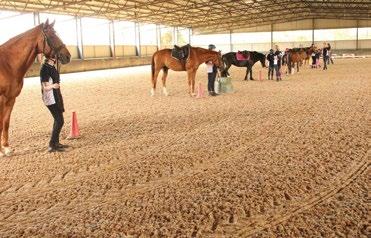
• Pony Club Rider Centre
club without
own ponies
• Children can do pony
having their
Standard riding lessons for all ages and abilities
5 Star Equestrian Centre
www.theequineclub.com.au
1390
Dandenong Hastings Road, Cranbourne South Head to the website for enquiries and bookings


WHAT BEING A PARENT OF

18 Peninsula Kids – Autumn 2020
A CHILD WITH A RARE DISORDER HAS TAUGHT ME
 By Marcio Dias Lopez
Being a father has been an adventure. Eight years ago, my wife and I decided to have a child. Like most parents, this has been a huge learning experience for us. I remember the first moments with our newborn son in the delivery room, the routine checkup, the first bath, and my difficulty dressing that tiny new being in my arms. The thrill of introducing him to his mother for his first breastfeeding.
The news that rattled us
While still in the hospital we received the news that our son had a mucus-protein deficiency in the cells. This meant that he was ordinarily okay; however, if he ever became ill, he could not take regular medication. It then became very clear that we had a problem; how could we take care of our son alone woithout doctor's support?
In this society, we have been taught to look for everything outside ourselves. We should seek everything from a ready-made recipe, be it a way to educate, or a way to care for someone. Like most new parents, it was about how to care for our child, with a form and structure of how to do it.
continued next page...
www.peninsulakids.com.au 19
The first fever
Fifteen days after his birth, my son had his first fever. That was frightening. We responded by giving him a bath and keeping track of his temperature. Someone advised us to see an oriental medicine doctor. So, we made a decision and took our little baby to a doctor who was also trained in Eastern medicine.
I remember when I went to visit this doctor, and he greeted us with a smile and told us, “Be grateful for him; you have received a beautiful gift”. We had not yet understood what the doctor was talking about, as we could only see the impossibility of treatment by regular medicine as a problem. Everything began to clear in our minds when the doctor said that if we developed the ability to receive our child as a gift, everything would become easier.
He also said that our son was useful to nature, because he was alive and if he was not so, he would die, and this applies to everyone. The doctor also pointed out that we had to consider that everything that happens to a child during the day can get worse at night, and, also at night the doctors would be sleeping, so we would need to learn how to help him ourselves.
His advice that we would have to learn something more than general western knowledge about how to deal with a child made complete sense to us. Later on, research studies of oriental medicine came about, such as techniques for health treatments using massage, acupuncture, herbs, etc. We discovered other alternative techniques like biological body reading from embryonic tissues, body bioenergy and biomagnetism. We studied further, and trained ourselves differently from the traditional western perspective of medicine, and transformed the way we approach illness, health and healing.
Change of behavioral patterns
When my son was three, we were playing with him outside the house and we learned a great lesson from him. I had a sudden headache and an upset stomach; he came over and ran his hand over my head, and told me to calm down and that the pain would go away. He told me my pain, “likes agitation.” I looked at him with great surprise, I calmed myself as he instructed, and the pain disappeared. I observed from my son, that he was always calm, and never restless. We realized that he was never sick; he was always in good health. We came to understand that we could not heal those who were already healed. We realized that we could empower our child to realize which choices could contribute to his life, rather than controlling his diet, his clothing, and his playing.
Our son knows that he has choices, and that the choices that make his body lighter are those that will contribute to his life, and those that make his body contracted and heavy are the ones that will not be a contribution. These light and heavy things make sense in his world in order to be around people, his friends or even to choose something to eat or dress.
What did we learn from him?
That life is made of choices, and that our choices create peace or restlessness, lightness or heaviness in our body; and on top of this, that in life, there is no problem, no disease, but rather, a fixed point of view supporting it. He taught us that we do not need to seek anything outside ourselves, but instead, calm down and realize what is required from each moment. We need to realize that there are many ways to assist our bodies and minds in a healing way that we often are not aware of. Upon realising this, we may even resort to something outside of ourselves, but to empower our body to balance and function as it was biologically designed to be.
Marcio Dias Lopes is a lawyer, bio-medic, and a professor at Pontificia Universidade de São Paulo, where he also gained his PhD and Masters in Social Relations. He is also a professor of Chinese Medicine and has held many positions in the area of integrative and complementary practices in the area of health and social wellbeing. As a facilitator of Right Voice For You, a specialty program of Access Consciousness, Marcio encourages others to step onto the stage of their life by embracing all their differences and different experiences, and use it to your advantage!
www.marciodiaslopes.com.br
20 Peninsula Kids – Autumn 2020


www.peninsulakids.com.au 21 peninsulahotsprings.com 140 Springs Lane, Fingal | 5950 8777 | Open 7am to 10pm daily discover a tranquil escape
Spa Dreaming Centre at
Hot Springs is a blissful adults-only space designed for
16 years and over.
little ones
The
Peninsula
guests aged
Take time away from your
and rejuvenate with geothermal bathing and private baths or surrender your body and mind with relaxing spa treatments and nourishing dining packages. Journey between our tranquil and social spaces with Bath House bathing included with all Spa Dreaming Centre experiences.
By Dr Karen Phillip
When our baby enters the toddler world, things radically change. Parents believe that their now two to three-yearold child is capable of informed decisions. They are not. Two to three-year-old children are now acting more independently and talking to us reasonably well, using the toilet and eating independently; however, their brain is about 6 – 8% matured. We often hear stories that parents are struggling with their child at home while the preschool and grandparents tell us how wonderful they are. They are well behaved most of the time, tolerant, occasionally impulsive of course, but still pleasant to have around. Parents seem surprised at times and may wonder why their child is a little more reactive and defiant at home.
Understand the reason
There is a reason for everything, including the reason a young child acts the way they do at home. Overwhelm is often the reason. Overwhelm occurs when parents negotiate with their developing toddler. Negotiation is undoubtedly excellent, but negotiation of multiple choices can quickly overwhelm a little child. Negotiation with two choices only (perhaps three) is needed for their mind to process. As an example, the child wants something to eat. The parent, being kind and considerate, opens the cupboard or refrigerator and asks what the child would like. This is often overwhelming for the child. Of course, sometimes continued next page...
22 Peninsula Kids – Autumn 2020







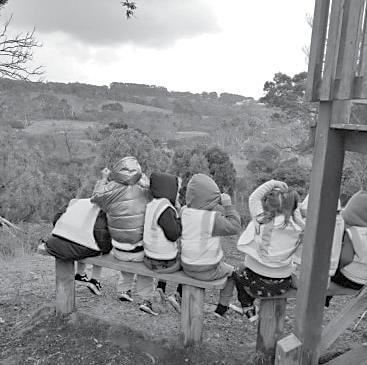
Frankston House Sanctuary of Early Learning 1-3 Vera Street Frankston Email: info@frankstonhouse.com.au Phone: 9783 1117 www.frankstonhouse.com.au Mt Eliza House Sanctuary of Early Learning 41 Baden Powell Place Mt Eliza Email: info@mtelizahouse.com.au Phone: 9787 0788 www.mtelizahouse.com.au With over 20 years experience, we are committed to continuous quality care and to ensure a full balanced development for each child in our expansive natural learning environment. Your most precious people are our priority Curiosity and wonder lead to a natural desire to learn Sanctuary of Early Learning
the child knows what they want and can state or select this; however, often the child doesn’t know what they want, and selection is just too much. The toddler can then become overwhelmed, struggle to choose from too many options, become frustrated, upset and angry.
A tantrum erupts. The parents are left wondering what happened; they were offering anything the child wanted as a selection, yet a tantrum follows.
Processing at warp speed
The young brain of the child is processing at warp speed to comprehend all the choices they have. Sometimes a child may be able to choose yet other times they act out like Godzilla on a horrible day. Why has my gorgeous, loving toddler become a little monster?


When we can offer two things to the child, their selection becomes far
may get a no for both. If this happens you give one more choice, then say if they can not choose, you will do it for them. This is often the time they let you know or show they you precisely what it is they want; they will make the decision, not you.
If they want something inappropriate you can answer "Yes, I understand that is what you may want", and "Yes you may be able to have that after or later on and right now this is your selection and if you can’t decide or be silly then I will make a choice for you." They want to make the choice, and they usually do. (Remember young children have no concept of time so after or later on maybe tomorrow or …..). This independent choice part of child development is healthy and required, regardless of how frustrating parents find it. The toddler’s brain is developing as it should. What needs to be remembered is that
24 Peninsula Kids – Autumn 2020
The reason a child erupts is not that they are bad, not because they are naughty or unloved, not because they haven’t been raised correctly or
First are the clothes choice
Choosing clothes and shoes is one very frustrating and funny time for parents. Of course, most toddlers have no colour or dress sense, yet they know what they prefer and what they like. Now you can have the continued argument of what they should wear, or simply give them two choices, three maximum, and you layout their items to select. Or just let them go if it is just an ordinary day without any special event.
I remember one of my kids, a smart, driven toddler, who wanted to choose his own clothes and outfits. The day of his brother’s christening, I had to guide him toward shoes instead of wearing gumboots; he had interesting choices. I didn’t bother arguing if my child wanted to wear purple socks, green shorts and an orange t-shirt to playgroup, which he sometimes did. The other mums would smile and ask, "Did he choose his outfit today?" "Yes", I would respond, "and doesn’t he look sensationally handsome." As we all know, pick your battles and use your common sense to guide, not fight.
When a child erupts, what do we do?
How do we respond to the tantrums? We stop, wait or redirect. If a child is throwing a tantrum because they can’t get their own way, rather than anger or sending the child to their room to ‘think’ about their behaviour (which we know they can’t do), the parent can redirect them. Redirecting means changing the subject or topic of frustration completely. Perhaps you could ask what their favourite character is doing currently such as


-"I wonder what Fireman Sam may be doing right now" or "Do you think Peppa Pig is playing in the mud right now and getting dirty?" or "Gosh, maybe Nana might knock on the door in a minute", before walking to the door to see if she is there.
-Perhaps it may be "Could you help mummy put some water into the water play trough please, I have to do it right now?" before you walk toward the door and say, "Oh well I guess I will have to do it all by myself" if they don’t come.
-Maybe you might see the toy on the floor and say, "Wow, I wonder if I can build this up to the roof" and you start to construct.
-"I wonder if this blue car can speed faster than the red car", and push away
-Or, look at the cooking corner and say, "Oops, is the food burning on the stove? I have to fix it quickly to make sure it’s ok. Can you help me, please?"
Many of these types of statements allow the child to think outside of themself. They can transfer their thoughts to something other than them and redirect their mind quickly; hence the tantrum stops.
Clear rules
All toddlers need clear rules and boundaries. Parents often become tired after hard long days and can let rules slide at times. This confuses a child and their understanding of rules and boundaries become jaded and cloudy. One of the toughest parts of parenting is consistency in boundaries. If you said it, you enforce it. Therefore, if you say "If xxx happens, xxx will occur" it needs to occur. So being mindful of words becomes imperative.
Rules and boundaries should be discussed one at a time, never three or more, as the child’s brain is unable to process and they will absolutely forget or not even hear it. Remember the one-step rule: one thing each year of the child’s age to a max of four or five regardless of how old the child is. This works for adults too: we tend to max out at four or five. Telling them or reminding them of rules, in excess of a one or two, can overwhelm them and create frustration for you and for your child.
Overwhelm is so common an issue yet one often missed. Small choices; few options. This way, their mind has a chance to process. Then add redirection and your little one can be who they are meant to be: the kind, considerate, loving, gorgeous little person you created.
Dr Karen Phillip is the author of Communication Harmony. For many tips on how to eliminate all conflict from your home, your relationships with partner, kids, everyone, please have a read of her latest book Communication Harmony. It is filled with techniques and strategies that will lead you to a more calm, happy and connected life with those you love. It is easier than you think! drkarenphillip.com
www.peninsulakids.com.au 25
By Megan Dalla-Camina
arenting is hard. Being a mother is hard. Yet we hardly talk about it. We love our kids, but it’s not all rainbows and butterflies is it? You may even secretly question if you will ever regain your life and sense of self as a woman, amidst the juggle of daily life.



No one really prepares you do they? They hand you the baby in the hospital and wish you luck. Nothing prepares you for it all: the crying, endless sleepless nights, sickness and all that comes with it – not to mention the teenage years.
And then there’s the guilt – mother guilt.
Arianna Huffington, Founder of The Huffington Post said ‘they take the baby out, and they put the guilt in!’ and it often feels like that.
We worry about everything. If we work outside the home, we agonise over the time away from our kids. If we’re at home, we may be thinking that we should be in the paid workforce. And then there’s the invisible damage we think we are doing to our kids day in and day out – even when we’re trying our hardest to do the very best we can.
We can also struggle with the question of are we even doing it right in the first place? Not to mention the judgment and sideward glances everyone seems to have about our choices. It’s enough to leave you breathless. But it doesn’t have to feel so hard. Here are some simple ways you can make the most of the time you have, be the mother you want to be, and leave the guilt behind you.
We’re all so distracted these days, with our heads and minds in our emails, social media and lengthy to-do lists. When you’re with your kids, be present. It’s really not about the amount of time, but being present in the time you have. Put your phone away. Turn the TV off. Do some activities together, even if it’s just the stuff that must get done like cooking the dinner or doing some gardening. When you’re there, really be there.
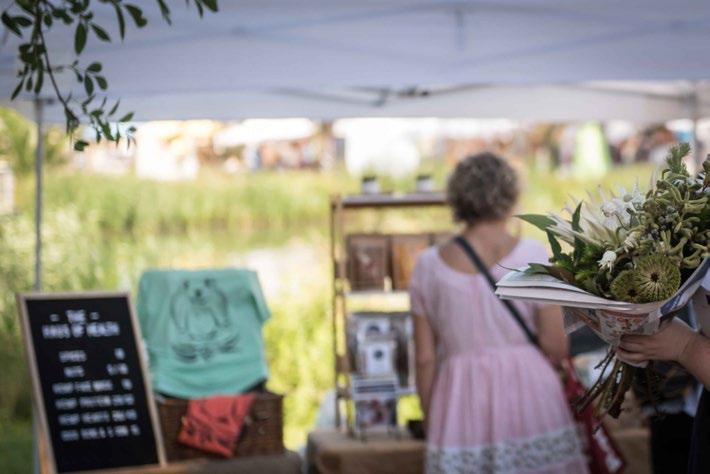
Mother guilt comes from worrying about all of the things that you think you aren’t doing, like school events you’ve missed while working or looking after smaller siblings. You can spend all of your time and energy on those thoughts, or you can choose to shift your mindset and focus on the things you know you’re doing right (no matter how small they are). Look at all the times you are there, the fun you have, the events you make it to. And let that guilt go.


Our role as mothers is to meet the unique needs of our children in the best way we can. Every child is different. With two siblings, one might need a lot of reassurance and constant encouragement, and the other may be fine left to her own devices. Being attuned is all about the art of listening and noticing, and it’s something that women and mothers are especially good at. Spend some quiet time with your children each week – it could just be ten minutes alone time – to ask how they’re going and really listen for the answer.
Stop being so hard on yourself. It’s ok to admit that it’s hard, raising little humans. Remind yourself that you’re doing your best and create space to look after yourself. Making time for a bath, to read your favourite book, have some quiet time in nature, or catch up with a girlfriend who makes you laugh, are all important ways to nurture yourself. Make sure that you aren’t neglecting what you need, and what you love, whilst you’re tending to your children. The more restored you are, the more you have to give to them.

Motherhood is filled with unique challenges and also filled with so much light and joy. Becoming the mother, and woman, you want to be, is about parenting on your own terms, defining success for yourself and doing it your way. It's also about looking after yourself, your needs and your life in the process. Remember, you don’t stop being you when you have kids. Try and find that balance, even if it’s in the smallest moments.w
www.peninsulakids.com.au 27
a women’s mentor and coach, and the author of Simple Soulful Sacred: A Woman’s Guide to Clarity, Comfort and Coming Home to Herself (Hay House). For more visit megandallacamina.com PROUDLY BROUGHT TO YOU BY THE UNT O LD EVENTS C O. Supporting small is now more important than ever. Discover the unique treasures of your local market this weekend... EMU PLAINS MARKET, BALNARRING Emu Plains Reserve, 9am to 2pm SAT 21st March & SAT 18th April LITTLE BEAUTY MARKET, FRANKSTON Beauty Park, 9am to 2pm SAT 28th March & SUN 26th April WWW.UNTOLDEVENTS.COM.AU support your local makers! ENROL NOW instagram.com/mtmarthaschoolofdance facebook.com/mtmarthaschoolofdance www.mountmarthaschoolofdance.com.au OFFICE: 5974 1498 with over 30 years experience FOR 2020 KINDER DANCE R.A.D. CLASSICAL JAZZ / HIP HOP ACROBATICS CONTEMPORARY VCE DANCE
Megan Dalla-Camina
How healthy finances can help create a healthier you
 By Jo & Carl Violeta
As parents, we know how hard it is to look after yourself sometimes. With sleep deprivation, breaking up fights between siblings and toilet training, it’s rare to sit down and drink a cup of coffee while it’s still warm, let alone take time out for some serious self-care.
Looking after tiny humans is fun, it’s rewarding, but it’s also hard-work and time-consuming, and sometimes, well, it’s overwhelming. We give so much of ourselves to others. But it’s also important to pay attention to our own wellbeing. When we think of wellbeing, we traditionally think of activities like yoga, meditation and massages, but a surprising way to boost your emotional wellbeing is by creating a solid financial plan. Yep. Getting your money and your budget sorted can make you feel amazing and reduce stress levels.
Research by the Financial Planning Standards Council found that people ‘who had sought financial advice reported significantly higher levels of
both financial and emotional wellbeing than those who had no advice at all or simply limited advice’.
The research also found that having your finances in order can ‘instil confidence about reaching a wide spectrum of life goals’.
Also, having enough money to at least meet minimum needs is required for a baseline level of happiness.
Reducing unhealthy levels of stress can benefit our emotional and physical wellbeing. Financial issues are rated as one of the top causes of stress. Unfortunately, millions of Australians report experiencing financial stress.
The reasons for experiencing financial stress can vary. Some of the most common causes are debt, home loans, retirement, supporting the family and budgeting.
Although we, like many other parents, are still working towards finding balance and carving out time to look after our wellbeing, we do have the finance side of things sorted. And you can too!
5 ways to improve your finances AND your wellbeing
1. Create a realistic budget. Having a realistic budget in place can allow you to spend more money on the things that make you happiest. Budgeting empowers you to spend smarter. It’s important to feel good about yourself first, so you can help support others. Finding room in your budget to set aside a small amount each month for some selfcare can help you achieve that.
2. Save an emergency ‘buffer’ fund. Having money tucked away in case of unexpected expenses can help alleviate some of the distress and worry associated with emergencies.
3. Give yourself the gift of peace of mind by getting your superannuation sorted. On average, women live longer than men; however, most women will retire with significantly less superannuation (super) than men. In fact, the average super account balance for men is almost double the average balance for women. Set aside a few hours to review your super balances, find lost super and assess whether it’s appropriate to consolidate your balance and potentially plan to pay extra into your super.
4. Don’t go it alone. Connection with others is a key to resilience, well-being and achieving goals. We exercise together as a couple, one of the trainers at our gym recommended it. She explained that exercising with others improves motivation and can make working out more fun. The same principle can be applied to managing your finances and achieving money goals. Managing your finances and
budgeting can be perceived as boring, and if you’re trying to save you may need to make some sacrifices. Connecting with other like-minded parents, who are working towards similar goals can help. Facebook groups can be a great place to discuss money goals and ideas with other parents. The members in our Facebook group the ‘Mindful Money Mummies’ keep each other accountable, share money saving tips and resources, encourage each other to reach our goals and even share the odd bargain when we find it.
5. Once you have a solid financial plan and feel in control of your money, you might like to consider supporting charitable causes and giving to those in need. Giving creates a sense of meaning, a feeling of being connected to something greater than ourselves, which is an essential component of happiness and resilience.

If you are experiencing financial stress and/or hardship financial counselling could help. Financial Counselling Australia offers a free financial counselling phone line 1800 007 007


Jo and Carl Violeta are self-confessed numbers nerds, parents of an energetic toddler and a super switched-on teenager, and co-founders of the award-winning business, Violeta Finance. They are a husband and wife team who are passionate about empowering their community with financial education, love the odd glass of wine, and get a kick out of helping families achieve their homeownership and financial dreams.

www.peninsulakids.com.au 29 ARTHURS SEA T MORNINGT ON PENINSULA *
By Rebecca Fraser
Stress is our body’s way of responding to any kind of demand or threat. When we sense danger or challenging situations, our body triggers a natural ‘flight or fight’ response, releasing chemicals designed for survival.
In today’s fast-paced world, stress has become quite the social issue. In fact, a recent survey by Medibank found just under five million Australians are suffering from stress. Causes were varied, but the main culprits included lack of sleep, work pressures, social media, housing affordability, and trying to juggle too many things at once.
It seems we have so many balls in the air that managing family, paying bills, and a myriad of other responsibilities and pressures, has become a real balancing act. No wonder we’re feeling stressed!
But it’s not just adults feeling the weight. Children are equally susceptible to feeling overwhelmed by the emotional toll of stress and anxiety. While we’d like to think our children are enjoying the most carefree period of their lives, their reality can be quite the opposite. Children are impacted by what is going on around them: in their family lives, their social lives, the horrific images they see on the world news or the internet.

– Summer 2019/20
Their worries can be as broad as ours: illness of a loved one, separation anxiety, family upheaval, academic and social pressures, overhearing arguments about financial pressure or job insecurity, or the constant barrage of bad news such as climate change, threat of war, environmental disasters and terrorism.
As adults, we mostly have the emotional maturity, experience, and context to navigate many triggers of stress in our own lives, and if our mental health is suffering, we can access support and resources to help us cope. Children are not yet equipped with such skills, so they need our support. There are several ways parents can help children cope with and work through stress and anxiety…one of them can be as simple as picking up a pen and paper!
Creative writing as a stress-busting strategy.

The social and emotional benefits of creative writing have been celebrated for years. When it comes to writing through trauma, stress, and anxiety many studies have concluded that writing:

• Provides a constructive escape.
• Helps to release and regulate feelings and emotions.
• Allows for self-reflection.
• Helps to organise thoughts.
• Fosters an intellectual process — the act of constructing a story about a traumatic event helps someone break free of endless mental cycling.
•Is a powerful tool for social and emotional wellbeing.
In fact, just 15 to 20 minutes of writing a day can make a real difference to overall stress levels!

So how can we support our kids to write their way through their emotions?
Take, for example, the recent Australian bushfire crisis. Even if you weren’t living in a fire-impacted area, the nation collaboratively grieved at the loss of human life, homes and property, livestock and wildlife. The sensory signs were everywhere: the smell and sight of smoke in the air, the images of scorched wildlife, the bravery and sacrifice of our firefighters, the close watch on weather conditions. The bushfires demonstrate a high-anxiety event evoking fear, anger, and helplessness in many.
Here are some ways kids can use writing to express or unpack their emotions:
• Rewrite a story with the ending they would have liked to have happened. Perhaps the horses escaped the property before it was engulfed by flames. Maybe someone invented a rainmaking machine to put out the fires. Perhaps a fireman is a superhero in disguise (Aren’t they all?).
• Craft a poem or song lyrics that captures images or feelings. If your child is happy to share their work, it’s a great way to tap into their inner thoughts.
• Keep a journal which is a cathartic way to write through emotions. Gift your child a blank notebook or diary to document their thoughts and ideas.
• Write a letter expressing gratitude or sympathy. For every tragic bushfire story, there’s one of hope, courage, selflessness, and community. People and organisations from all walks of life stepped up to donate their time, resources and dollars. Talk about these stories with your children. They may feel inspired to pen a letter to a wildlife association, the CFA, or even the local crochet group making mittens for koalas. This positive action can also help alleviate feelings of helplessness.
While the bushfire crisis has been used as an example of how creative writing can help children cope with stress and anxiety, these strategies can be applied to any source of stress. Psst. They’re equally effective for adults too!
www.storycraftworkshops.com.au visit library.frankston.vic.gov.au/whats_on or call 9784 1020
Rebecca Fraser operates StoryCraft Creative Writing Workshops for aspiring authors of every age and ability. Visit
By Tanya Somerton
In the simplest form I would define co-parenting to be a child-centred parenting method. I am sure you have heard the saying 'It takes a village to raise a child'. Everyone in the village does not live under the same roof and neither will you! When considering separation, our children are paramount. If you are anything like me, I stayed longer then I should have in my unhappy marriage because I put my kids first. This is a broken strategy because children learn from their parents. They learn how to be in a relationship and how to be an adult from watching us. They learn the best and worst. So, staying because of the children is not the answer. Being a happy individual and learning how to co-parent with your ex- spouse will have a lifelong influence on how your kids make future decisions, not to mention improving your own happiness. Making sure your children thrive and grow should be the goal and for both parents to have the same goal need not be difficult if you follow these simple steps.

Explaining divorce and why.
Explaining divorce and why to your children is important from the start. They need to know that mummy and daddy are taking this step because they still care for each other but have different goals and aspirations. Research shows that the kids will have questions around how this decision will affect them and it’s important to tell them neither parent will abandoned them. Reassure your kids by creating a safe environment to communicate and express themselves. The important thing for you to understand is that divorce is not a one-time event for them but a long-
child-centred
term process. Some children may adapt and adjust sooner while others may take time. Everyone is different. Be prepared to have several such talks. If possible, talk together as parents. Show the kids you are both ready to work in their best interests and that the divorce may lead them to have a much better relationship with each parent as there is less stress and no pretence.
Be present for your children - physically and emotionally. The quality of time you spend with your child matters more than the quantity. Children don’t recall the number of ‘things’ they received as a child but rather events and memories. Children, whether young or old, need their parent to be present. Take the time to know their schedules and work it in, wherever possible. Most importantly limit your work, or playing on your mobile phone, when you do spend time together. Parents need to be emotionally present and attuned showing the kids that they are taking a genuine interest in their lives. Actively involve yourself during the time you spend with them. Make them feel heard and important.
Support your partner’s role and never badmouth them. No matter how bad the situation was in your relationship with your former partner, be of support if they are willing to co-parent your child.

co-parenting in divorce



Your child needs reassurance. Do not speak negatively about them or their parenting methods or allow anyone else to bad mouth them in front of the kids. A child is a combination of both and how you speak of your ex-partner may result in them looking at themselves in the same way. Have a co-parenting schedule, so things are clear between you and your partner. Keep away the previous hostilities from your parenting responsibilities. Remain flexible to accommodate whenever you can. Respect each other so that the children will feel reassured and confident. It may be difficult in the beginning but over time things will fall into place.
Do not involve your children in adult problems and decisions. Children are called children for a reason. It’s not their job to help solve problems or come up with solutions. No matter how tempered or frustrated you are with your ex or life, involving the kids puts additional stress on their little shoulders. They are not your best friend or counsellor. Speak with those who can help support you and give a non-judgemental response.
Maintain your own health and well-being. A healthy mind and body will make things far less complicated. How you feel will carry into your attitude and your attitude will carry on in your efforts. Your children depend on you and that is why your mental, physical and emotional health matters.
Find support.
There will be times (even many) where things may not go according to plan with your former partner and it can result in tensions rising. Make a point of having someone to speak with (not your children) so that you have help and support; someone who can give you unbiased advice seeing both sides clearly. A good friend, a counsellor, your GP or a support group, even online such as the Divorce Angel Facebook group where you can be free to ask for assistance and have a safe space to heal. Like all things with separation and divorce, co-parenting will be a journey of bumpy roads and flat tyres but when you arrive at your destination it will be worth the hassle.
Tanya Somerton is the founder of ‘Divorce Angel’, whose business is to facilitate a seamless and amicable divorce and separation with the aid of her ‘Army of Angels.’ Tanya provides a step by step process which limits cost and conflict that sees you achieving your most financially beneficial outcome possible, now and for the future. She is also the author of The Jelly Bean Jar – Empowering Independence Through Divorce. If you are looking to prevent any mistakes and save money, this book is a must. Purchase your copy tanyasomerton.com/ shop/the-jellybean-jar. For updates visit the Divorce Angel Facebook page or join our support group on facebook.com/groups/divorceangel
For more details on Divorce Angel visit the website www.tanyasomerton.com.
By Sharon Muscett
Overthe last 9 years I have worked alongside thousands of individuals experiencing the realities of death, giving me privileged insight into how to cope with grief and loss. Many of these individuals are children, who have lost a family member. What astounds me with children is their bravery and acceptance when handled in the right manner. Therefore what to say and do, when a family member has died, is most important.
Here is some guidance to help you talk with your childabout the death of a family member.

DO:

Tell the truth to your child about what has happened, and sooner rather than later. This will help the child to understand why they are seeing sadness and tears around them.
Using words such as ‘died’ or ‘dead’ is much better than saying, ‘passed away’ or ‘gone to sleep’. This helps with their grieving process. Show your feelings to your child. This is crucial that they see your sadness as well. They are learning about loss from you.
Allow your child to express their feelings to you. Be prepared for a variety of emotional responses. We all grieve differently. Tell them they may feel all sorts of things – sad, angry, upset, confused – and it may be for a while. Tell them that is ok and they can share that with you whenever they feel like it.
Take time to answer any questions they have. Be prepared for questions like ‘Why did they die?’ Answer simply and honestly, for example ‘Grandpa’s heart stopped beating’ or ‘Grandpa got old and he died’. Its ok to answer ‘I don’t know’ to questions they may ask. It is not easy to have all of the answers.
Tell them it’s ok to cry. Cry together. It is healing. Tell them they are ‘tears of love’ for the person who has died. Coming from that place of love makes a fundamental difference to them.
Spend time with your child and focus on the love you have for the person who has died. Share stories and memories with one another. Even ones that will make you both laugh. It can be a bonding time, and a healing time.
If they like writing, buy them a journal. I call it a ‘love journal’. Encourage them to write about their feelings, write stories of things they used to love doing with their loved one. They can express how they are feeling. It is their personal journal.
DON’T:
DO NOT hide your feelings from them. It is natural that you would want to protect your child but seeing your reaction will show them it is normal and healthy to cry and feel sad. They are learning from you about loss.
DO NOT hesitate tell them. Again it is natural to want to protect them, but this will leave them confused when they see your sadness and tears and they do not understand why.
DO NOT sugarcoat what has happened. Don’t use words like, ‘passed away’ or ‘crossed over’ or ‘sleeping’: the latter will set about future concerns for going to sleep, or they may expect them to wake up.
DO NOT shut down your child’s feelings, whatever their response is. Allow them to feel safe to express their emotions with you.
DO NOT give them too much information all at once. Gauge how they are receiving the information. If needed, give it to them in short amounts to give them time to process.
DO NOT be afraid to share stories and memories of your loved one with them. It is normal you may not want to talk about the person who has died, thinking it will make them sad. In actual fact, sharing stories and memories aids in their healing journey.
DO NOT change the subject just because your child walked into the room. It is important that death is not seen as this ‘taboo’ topic. You may have to change your wording, but do not stop the conversation altogether.
DO NOT put a time limit on the grieving process – your child’s as well as yours. You as a family will all grieve in your own individual way. Understand there will be days when one family member is up, whilst the other is down. That is ok.
I have found that children who understand that death is a natural part of life, are better prepared and better equipped to make sense of death when it happens.
As parents, our role is to help them understand as best they can. This not only brings comfort, but provides the tools to help them cope with other losses that life may invariably bring.
Sharon Muscet is one of Australia’s foremost experts on healing and loss. She is the founder of ‘The Love in Death’ movement, an award-winning thought leader, international speaker, published author and funeral celebrant. Her latest book ‘7 Life Lessons Learned Through Loss’ shares powerful stories of love, hope, transformation and legacy. Sharon is dedicated to sharing life lessons, transforming the fear of death and celebrating the power of love. E: connect@sharonmuscet.com W: www.sharonmuscet.com
Kids Cookie Decorating Class
Dates: Friday 3rd April 2020
Saturday 4th April 2020
Tuesday 7th April 2020
Times: 10 00 am – 1.00 pm
Location: Rosebud Memorial Hall 994 Point Nepean Road Rosebud, Victoria
Cost: $75.00 / child
$65 00 for 2 or more children
Age: 6 to 12-years old
Come and join us for a 3 hour fun packed class of cookie decorating Each child will receive 6 cookies to decorate and express their creative side.

We will teach you…
Royal icing consistencies
Piping and flooding techniques
Wet on wet techniques
Creating fondant moulded shapes
What is included…
Bottle of Water
Decorating tools and equipment
Recipe card
Aprons
What you need to bring…
Smiley happy face.
$15.00 DISCOUNT if booked before 20th March 2020
For bookings phone 03 9850 4067 or email us enquiries@melbournecookieco.com.au Spaces limited!!

www.peninsulakids.com.au 35
• • • • • • • • •
Regulating Your Child’s Mood
By Brooklyn Storme
Hereat the practice we receive a high number of referrals from doctors and paediatricians seeking our help in supporting children with emotional, and also behavioural, regulation. Sometimes children and parents don’t know what to expect when coming along to a session so I thought now might be a good time to give you that information.
When you attend counselling for the first time, we will often encourage parents to be present for part of and, sometimes, for all of the initial session. This can help to settle children that might be otherwise nervous or anxious about coming along. It’s helpful for your counsellor to meet you both and to observe how you interact with each other. During that first meeting, we will speak about the reason for referral, provide information about counselling, explain the counselling process, and make a plan to support your child in achieving their goal.
Often from there, the counsellor will create a plan that he or she can use to help support your child in addressing their concerns. In subsequent sessions, it is common practice for parents to attend the first few minutes of the session to provide feedback to the therapist about their child’s feelings or behaviour and to update the counsellor on any progress that their child may have made. Often, parents will then leave the session and be invited back in the closing minutes of the session this time for the

so they can feel more in control of their emotions and gain confidence.
therapist to update the parent on the achievements made in the session, to provide education to parents on new tools and strategies that they have shared with the child and to provide guidance on what to do at home before the next appointment.
Counsellors also often use a screening tool or a short assessment with the child. We do this because it provides us with information about what might be happening for your little one and gives us insights into their functioning at school, home and with their friends. Also, therapists will provide the child with a workbook or display book where they can keep their homework, information sheets, tools and strategies.
Emotional regulation is a big term because it encompasses so many different things. If your GP or Paediatrician writes ‘emotional regulation’ on the referral, you can ask them to explain what they mean so that you have clarity over their concerns and recommendations. At its most basic form though, emotional regulation simply means the capacity and propensity of the child (in this case) to adequately and effectively manage their feelings across different situations and in ways that are appropriate or expected for their age.
If your child has difficulty with managing mood, there are a number of tools and techniques that you can use to help them at home. One way is to use Kimochi faces and these are readily available online and in most bookstores. They are felt balls about the size of a golf ball, soft, and have different expressions to indicate different emotions. Helping your child recognise what feeling goes with what facial expression can be helpful, especially for children that struggle to understand these things.
There is also Calm Down Yoga and again, there are a number of places on the Peninsula that offer yoga for children. The children learn a range of breathing techniques and with practice, become more proficient at learning about the relationship between their breath and how they feel in their body. These new learnings can support your child in managing their mood by empowering them to calm themselves down before reacting to triggers in the world around them.
In the classroom, your child might find it helpful to have a key ring with a collection of laminated cards, each one showing a different emotion ie a happy face, an angry face. They can use this card to show peers and educators how they are feeling. This type of communication is a powerful way for children to feel that they have been seen and heard and allows for educators to accommodate the mood of the child and intervene accordingly.
It’s important to note that if you feel that your child struggles to express and receive emotional content, it’s a good idea to seek advice from a trusted health professional. Sometimes, difficulty regulating emotion can be an indicator of other conditions and so it’s recommended that you speak with your Paediatrician or Psychologist if you have any concerns.
Ph: 8765 2434
 Dr. Brooklyn Storme, PhD is the Director and head psychologist at All Psyched Up, a mindfulness-based allied health practice on the Mornington Peninsula. When she’s not at work, she’s usually teaching Gabe new tricks or spiking up his purple Mohawk.
Facebook: allpsychedup
By Olivia Wilson
Dr. Brooklyn Storme, PhD is the Director and head psychologist at All Psyched Up, a mindfulness-based allied health practice on the Mornington Peninsula. When she’s not at work, she’s usually teaching Gabe new tricks or spiking up his purple Mohawk.
Facebook: allpsychedup
By Olivia Wilson
Do you ever wonder how on earth your children seem to have easily constructed a group of so many friends, each and every one so different in many ways? Children seem to have a talent for making friends regardless. I love that about them. I love the attitude they have toward making friends, and hearing the shouts of, “Sure, come and join in.” I can’t help but wish adults were more like that!
I often chat to my children about how different our lives are to what we left behind in the UK, and it always comes back to ‘friendships’, mine and theirs. We all still pine for our ‘mates from home’ and talk fondly of the friends we miss.
Recently I’ve been aware of the importance of true friendship to them. I can see the kind things they do for their buddies, and I hear the way they talk about them too. I can see how, over time, they have carefully filtered their friendship group and worked really hard to nurture particular friendships, which I’m certain they’ve done without really intending to. How amazing is that!
I love that they have embraced every minute since we arrived down under, I know I never imagined that we’d still be here 5 years on, and I definitely hadn’t considered that we’d be building a future in Melbourne. But watching us all with our newest friends makes it seem so worthwhile.

Being 11,000 miles away from family and friends can make or break you!
The past 5 years have made us rely on each other for things that maybe in the UK we would have leant on someone else for. It has made us raise resilient kids who shine through new beginnings and it has taught us we’re pretty good at making new friends after all. For me, it has reinforced how much more important my friends, new and old, have become to me.
It’s no secret I’ve always been precious about my friends back in the UK. It has been the constant pull for me to up sticks, go back and slot into that old life we had before. The friendship thing has been hard for me, and still is today.
This summer however, I feel like I have turned a corner. I have realised for the first time since arriving in Australia, I can stop searching. I don’t need to keep looking, because I am completely content with the awesome men and women I call my friends here, and I am determined to make an even bigger effort to let them know just how much I appreciate them.
For a long time, friendship here was about making sure I have someone to help me, and if they come with a sense of humour that’s a bonus! I
was looking for the friends I could text: “can you grab him from school, I’m running late” or “are your kids free to play today” because let’s face it, I took my two away from their friends and I’m feeling the guilts.
As an ‘expat’ the hunt for real friends can feel overwhelming.
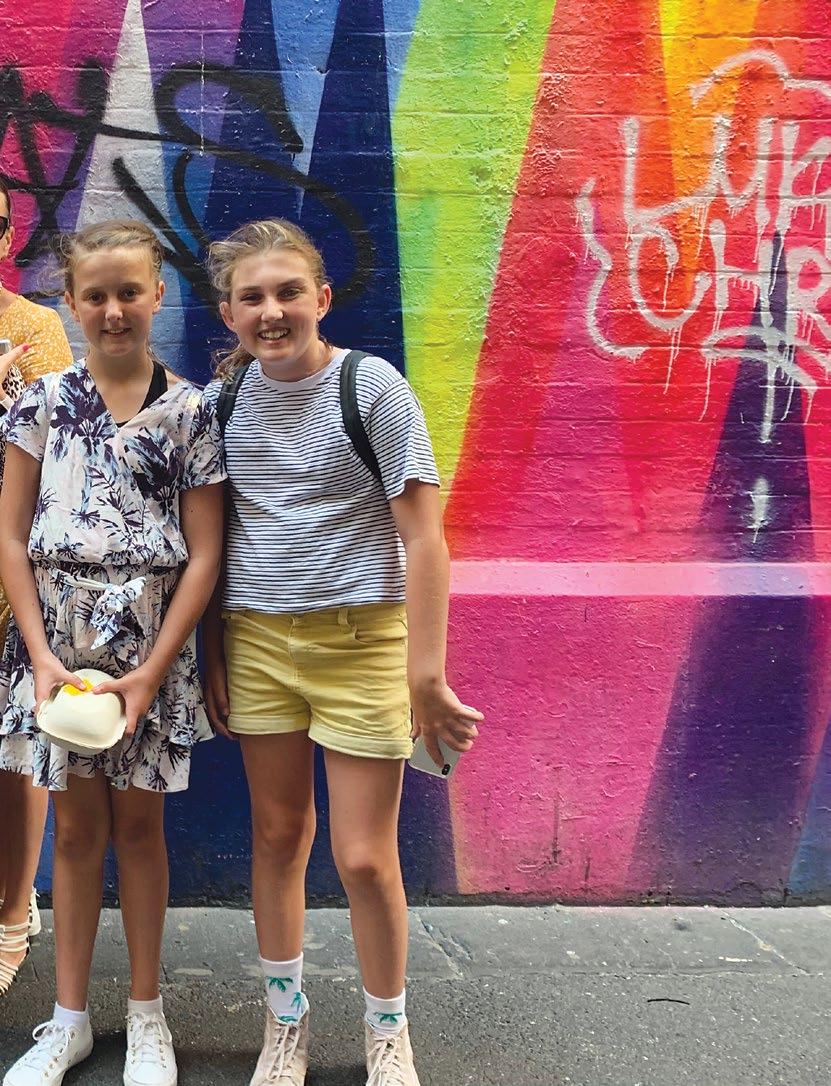
Friend hunting is like online dating only with a much more critical audience, and ‘mums’ are far less willing to give you a go!!!
“Should I be funny Liv?”
“Should I be serious Liv?"
“She’s English, she’ll be a laugh.” ***(Not always the case BTW)
“I have to like her because her kids are in my kids class.”
“She has lots of friends so I should try and join her crew.”
“Oh god I don’t even like Taylor Swift but now I am broke, and at her concert because I needed to fit in.”
**(Yes, I’ve tried most things when it comes to sussing out potential friends.)
I remember laughing with my girlfriends in the UK about getting a T-shirt printed with “I love gin, be my friend” and just wearing it to the park to see if I could ‘pull’ a mama.
5 years down the road, I’ve got friends who I can really call friends.
Now I have friendships that have grown, and mean so much more than the random play date because our kids like each other, or the “can you grab her for me please” text messages.
I have made sure that I’m not swapping numbers with someone just because I feel pressured into it. I’m not hanging with people just because our kids get on.. although that helps massively. I am happy to have created a group of ‘gal pals’ who are amazing, not just because they offer me support, but because they are interesting, talented, kind, generous, creative, funny, smart, brave…. and will drink wine with me at the drop of a hat!
The thing is, I was basing everything on first impressions and of course, “what do my kids get out of this?” However, friendships aren’t about first impressions, and my friendships shouldn’t be about what the kids can gain from it, it should be about me too!!
New friendships shouldn’t be one bit like online dating, they are about far more than that. They are built over time, between people who don’t feel any pressure at all to be anything other than themselves.
So, if you are new to a country, the new mum at a school gate, or you’re looking to switch it up a bit, my advice is, give it time. No great thing is created suddenly, and all great achievements take time. You’ll know when you’ve found your crew!
Olivia is a thirty-something British mum of two living in Melbourne. Having grown up with a father in the army and being moved all over the world, she is a lifelong 'expat', and thoroughly enjoys the adventures that come with a fairly nomadic life overseas. Follow her adventures as a 'modern day parent far from home', and share her family's exploration of Australia at www.thewilsonsofoz.com
On

Instagram @the_wilsons_of_oz and on Facebook @thewilsonsofoz
Life’s a
 By Erica Louise
Arthurs Seat Eagle, one of the Mornington Peninsula's much-loved tourist attractions, has introduced a Picnic Package, giving couples, friends and family members the chance to enjoy a freshly prepared picnic at one of the many stunning spots located around the Arthurs Seat Summit.


Four years have passed since the Arthurs Seat Eagle opened to the public after its $20 million refurbishment. Since then, thousands of visitors from near and far have booked to fly high above the Mornington Peninsula, inside one of the Eagle's state-of-the-art gondolas.
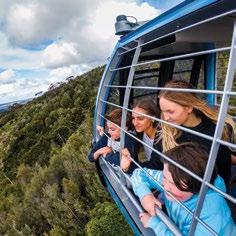
The Arthurs Seat Eagle offers arguably the best views across Port Phillip Bay. On a clear day, you will see Melbourne's city skyline, Port Phillip Heads, across to the You Yangs and Mount Macedon. Although most pleasing to the eye would undoubtedly be the beautiful blue hues encircled by the Bay's sandy shores below.
Most visitors who choose to take flight on the Arthurs Seat Eagle, book a return journey from the base to the summit. Passengers are encouraged to explore the Arthurs Seat's 314-metre summit, home to beautiful gardens filled with indigenous and exotic flora and fauna, walking tracks, lookout points and several William Ricketts sculptures.
To entice you to stay at the Arthurs Seat Summit a little longer, the Arthurs Seat Eagle's Picnic Package gives you another reason to enjoy the serenity whilst pleasing your taste buds, with a fresh lunch prepared using locally-sourced ingredients.

Local
Such foods available include pies, wraps, snacks, baked goods, cold and hot drinks. Vegetarian and gluten-free diets can be catered for.

Book your preferred time and date, and select your picnic goodies online so that your basket is ready for your collection at the Summit Cafe when you arrive. Wicker baskets come with crockery, cutlery, and a picnic blanket to complete your experience.
Note that the Arthurs Seat Eagle Picnic Packages are limited, and must be collected no later than 2pm on the day you wish to visit.


The Arthurs Seat Eagle Picnic Package is an ideal experience to book in for a special occasion. Make the most of your time at the Shire of Mornington's magnificent, mountainous locality and swoop over to the Arthurs Seat Eagle's website to book. Each package includes a return gondola flight for two adults, however there is no reason why you couldn’t add on extra tickets for your child/ren and share your picnic package.


Erica hails from the United Kingdom, and has been living in Australia for 15 years. She has two sons 5 & 10 years. She writes, edits and runs the social media pages for KidTown Melbourne, a website showcasing all the fun things to do with kids in Melbourne. www.melbourne.kidtown.com.au
Brand new children’s gardening club!
We have exciting news at the Enchanted Adventure Garden this Autumn. In April we will be starting our very own gardening club for those small people that love to be outside getting their hands dirty!

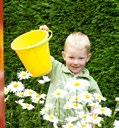


Our Little Seedlings programme is aimed at pre school age and toddlers and will run weekly on a Thursday morning during Term 2.

Starts April 16.
For more details and to book your spot: www.enchantedmaze.com.au or phone 5981 8449

www.peninsulakids.com.au 41
55 Purves Road, Arthurs Seat enchantedmaze.com.au
As the summer months come to an end and autumn hits, Cranbourne Gardens are transformed into a sunset-hued wonderland of changing colours and cascades of crisp leaves. The school holidays are the perfect time for parents' little ones to be immersed in the glory of autumn flora, and get out and about to make sure no-one goes stir crazy when stuck at home!
Aside from exploring amazing plant collections and beautiful landscapes, the Gardens have plenty of wonderful events and programs running to keep little ones entertained these next school holidays, so rug up and venture into the cool but comfortable autumn air for some time out in
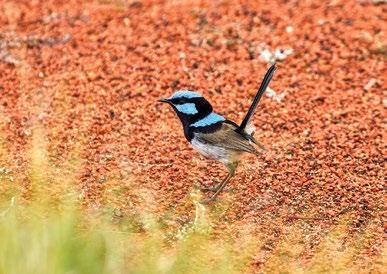


Surrounded by striking native plants, little ones can spark their sense of curiosity in the great outdoors with an adventure on an imaginary ocean at Cranbourne Gardens as they sail away with Boats by Polyglot Theatre! There'll be mysteries of the deep and castaways to rescue them along the way as they board colourful boats. A flurry of feet will begin the voyage as children work together as a crew and navigate their own special path. For something a little more cruisy, kids ride free on The Explorer Bus at Cranbourne Gardens during the school holidays! Families will get to experience the weird and wonderful sights, sounds and smells of the amazing flora and wildlife that call Cranbourne Gardens home. As well as getting to spot some amazing plants (and if lucky, some native animals along the way), this tour, designed for families, will help uncover why plants are so important for our planet. The best part? Kids (and grownups) will get a chance to roar like dinosaurs along the way!

Rustic Farm Setting Many Animals for “Hands on” Experiences Playground, Picnic Areas (BYO Food) Free Cuppas & Gas BBQs 490 Stumpy Gully Rd Balnarring www.rhsfarm.com.au Phone 5983 1691 Open 10am - 4pm SCHOOL HOLIDAYS
- 13 April 2020 Pony & horse rides $3 & $5 EASTER EGG HUNT 10-12 April $8, Bookings essential at Trybooking.com.au PIG Racing Daily 11am & 2pm
28March
On the topic of wildlife at Cranbourne Gardens, little ones will love the birds in the Australian Garden tour! Kids will discover how the striking native birds chirping throughout the Gardens have shaped the forests and flora of Australia for thousands of years, from New Holland Honeyeaters (Phylidonyris novaehollandiae) to Spotted Pardalotes (Pardalotus punctatus). This is the perfect opportunity to discover the wonders of Cranbourne Gardens' native birdlife! Another wonderful school holiday program Cranbourne Gardens has to offer is Welcome to Luk. Little ones will love celebrating the Indigenous season of Luk (Eel Season), where they’ll get a chance to explore fishing techniques used by Aboriginal people, as well as discover plants used for tools, getting creative with eel racing, ochre art, dancing and more. This is a fun, activity-filled way for little ones to connect with the natural world and indigenous culture.
While Cranbourne Gardens boasts a sizable car park, it’s also possible to access the Gardens without a car. A brand new, free, shuttle bus will run daily between Cranbourne Gardens and the Cranbourne train station, for hassle-free travel, making it easier than ever to explore the diverse and wonderful Australian flora of Cranbourne Gardens. See times and departures at rbg.vic.gov.au/shuttle!
To find out more about what’s on during the autumn school holidays or book into a program, visit rbg.vic.gov.au/whats-on.

Autumn Kids Programs
CRANBOURNE GARDENS

GREAT OUTDOOR SEATING AREA
WHICH INCLUDES A JUMPING CASTLE & PLAY EQUIPMENT FOR THOSE WARMER DAYS


SPECIALISING IN CHILDREN’S BIRTHDAY PARTIES
Independently owned & operated, Dedicated toddler area for under 3 years of age, Safe, friendly & healthy environment for children & adults
Yummy home made food Extensive menu
Gluten and dairy intolerances catered for

OPEN FOR DINNER FRIDAY NIGHTS TILL 7pm
222 Marine Pde, Hastings Ph: 5906 5900 www.kidzshed.com.au
 By Rebecca Fernando
Let’sGo See a Show! ...withouttheDrama
Taking children to a live show allows them to experience one of life’s greatest cultural pleasures and hopefully develop a passion for the arts that will last a lifetime. But sometimes the unpredictability of children can hinder the easy-going performance you were hoping for. Here are some tips to try to make the transition from house to theatre seat a bit smoother.

1. Typically, toddlers through age 4 do best with shows that include lots of opportunities for participation and are short – 30 to 50 minutes. Many older preschoolers (ages 4 or 5) can enjoy a longer children’s performance – 60 to 75 minutes. Also, audiences of shows created for children will expect some noise and wiggling – it’s all part of the experience.
2. Plan to arrive at least 30 minutes before the show. Visit the Frankston library or Cube 37 gallery if you have extra time.
3. Bring a cushion/coat to sit on – booster seats are not available at children’s performances as the theatre doesn’t have enough for every seat.
4. Little babies need to be held in the theatre. Capsules or prams cannot be brought into the theatre seating, so try a baby wrap or a baby carrier instead.
5. Theatre seats can flip up – don’t let your little one stand on the seats as they will fall down the back.


44 Peninsula Kids – Autumn 2020
Visit mprg.mornpen.vic.gov.au/events Exhibition entry: adults $4 concession $2 children under 5 free Civic Reserve, Dunns Rd, Mornington ph 5950 1580 FREE KIDS ACTIVITY SPACE SCREENPRINTING AND COLLAGE SCHOOL HOLIDAY WORKSHOPS
YOUNG AT ART PROGRAM FOR PRE-SCHOOLERS
CURRENT EXHIBITIONS
MONTHLY
SEE
6. Merchandise – be aware that merchandise may be available for purchase. Prepare your child either way if this is something you will or won’t be participating in so it doesn’t end in tears. Maybe compromise by borrowing a new library book!




7. If your child is anxious about visiting the theatre, read them the social script, which is available on the Frankston Arts Centre website and provides details and pictures of what to expect at the theatre.


8. Understand that sometimes your child might not react to the show when it is happening. Some children clap and join in and some children will sit quietly and absorb everything and then chat about it all afternoon.
9. Make a day of it! Find somewhere to have lunch, a treat, or a play after the show. Frankston Botanic Gardens playground or the Frankston Waterfront playground are both great options close by to get the wriggles out after sitting still.
10. For food, bring dry snacks in containers and a drink bottle with water. Deal with the noisy tricky wrappers at home and just enjoy the food in the show. Arrive early before the show if your kids would like to have an ice cream or you’d like a coffee, as they can’t be taken inside the auditorium but are well worth making a part of your special visit.
11. Talk to your child about the performance by telling them about the characters, giving an overview of the story, or listening to music in the same style or from the same composer. If the performance is based on a story, read it together in advance.

12. Try following up on your outing by reading a related book or planning an art, music, or dance project. Provide dress-up clothes, props, and other materials so children can re-enact the performance –or create their own, unique one!
91-STOREY TREEHOUSE

www.peninsulakids.com.au 45 image by freepik - www.freepik.com
a play by RICHARD TULLOCH adapted from the book by ANDY GRIFFITHS & TERRY DENTON LIVE ON STAGE!
Rebecca Fernando has been the ticketing services team leader at The Frankston Arts Centre for 15 years. She is also a mum to two beautiful young kids who she takes to the theatre often.
The
By Julia Swift
Autumn colours are starting to appear on the trees, weather can start to cool, but sunny days are still plentiful and it’s a perfect time to get out and about on the Peninsula with the family.


Here is a great way to spend the day.
We started our day at 10am – opening time at Moonlit Sanctuary Pearcedale.
Moonlit Sanctuary is a hidden Australian gem on our doorstep. I haven’t been here since I was a kid, and had to take a step back this morning and have a bit of a proud moment that we do have such an amazing place to showcase our beautiful Australian animals here in our backyard.
The sanctuary plans the day out well for you. They offer animal presentations very much in line with the order you’d walk around the grounds; this saves time and backtracking and allows plenty of time to slow down and take everything in. Perfect for animal watching.


When you first arrive and purchase your tickets, make sure you also grab a tub of animal food per child for only $3.
46 Peninsula Kids – Autumn 2020
Also take time to check out the many encounters they offer from koala petting, holding a python to walking a dingo! It is recommended that you arrange all of these at the gate on arrival or when purchasing your tickets online to avoid having to head back to the ticket booth during your visit.
The presentations and encounters are at set times (and days), so be sure to check online to make sure you don’t miss something that you are super keen to see.
First up we got nice and close to a super cute wombat who was doing his thing: just strolling his enclosure. Wandering further up the track we went through native bushland, past different species of birds, reptiles, koalas and emus. At 11.30 be sure to check out the animal training session which shows how the park works to train their animals, which comes in handy not only for the afternoon show, but for completing medical checks on some of the larger animals.
Here we met Humphrey a tiny squirrel glider and Percy an inquisitive quoll. Both equally cute and hand raised since birth. Next we walked among the roos and wallabies and my daughter, Char, got a chance to hand feed these shy yet friendly native animals. This was a great experience that she just loved.
We then headed up to check out the Tassie devils and dingos. Char seemed to tire at this stage, but I was glad we’d got around the whole grounds.
At this point you have two options, grab lunch at the onsite café, dispensing a range of burgers, salads and sandwiches, and stick around for more of the presentations and afternoon action show if your kids are willing. Or make tracks for lunch in Mornington. We spent about 2.15 hours at Moonlit Sanctuary. At about 12.30 we arrived at Wildgrain in Mornington for a spot of lunch. Wildgrain is the’ new kid’ on the block; opening only this January.
A charming and welcoming dining room awaited, decked out with lush green plants and a calming and beautiful colour scheme.
Not a huge menu, but hubby was more than happy with his burger option, I with my salad option and Char with the kids meals on offer.
Paired with a glass of wine or their signature cocktails, it makes for a great stop to chill and chat with the kids about the morning.
Next up we headed down the road along the scenic Nepean Hwy to Seawinds gardens in Arthurs Seat where splashes of autumn colours in the many trees will meet your eyes.
This is a perfect place to take a ball and let the kids run around to burn all energy acquired from lunch. Or even try your hand at some amateur photography of the family/ kids. The autumn leaves just make the most perfect backdrop for this.
From here head back into the main township of Dromana and find a little café or ice cream shop for an afternoon treat before heading home.
A perfect way to spend an autumn day on the Peninsula.
Julia is a flight attendant and local Mornington Peninsula mum of two young kids. Travelling is her passion, and now with the kids it's just a fine balancing act of travelling on age appropriate trips, the whole family can enjoy. Follow Julia’s travel adventures, tips and local findings at www.mumsgottatravel.com or on instagram @mumsgottatravel
T H E M O U N T
M A R T H A B R I A R S
M A R K E T 450
For more info visit - craftmarkets.com.au

www.peninsulakids.com.au 47
Nepean Hwy
, Mount Martha Parking $4
NEXT MARKET: 2 2 N
LATER DATES: 2 6 T H A P R I L & 2 4 T H M A Y
MONTH
D M A R C H
SFOURTH OUNDAY F THE
"The birthday boy was obsessed with everything creepy and crawly, and by the end of planning his party, so were we. There were ladybugs made out of Babybel cheese. The tarantula/caterpillar/snake-adorned cake, cupcakes, and cookies were all the handywork of Tracey Cakes. The kids got to go on a real life bug hunt and captured everything from butterflies to crickets and grasshoppers. Before they set out for their bug hunt, they got a little bit of practice playing a game of bug bingo where they dug for plastic bugs in dirt-filled buckets. As a sweet memory, the little ones took home "bugs and kisses" - plastic mason jars topped with various types of bugs and filled with Hershey's Kisses and bug tattoos. Needless to say, the birthday boy had a very happy BEE day."

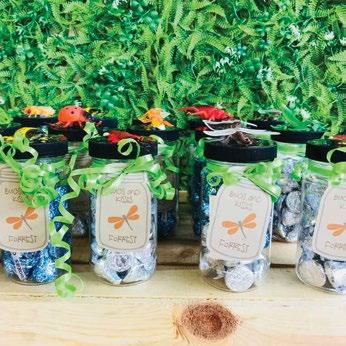


Styling by @freshandfancy




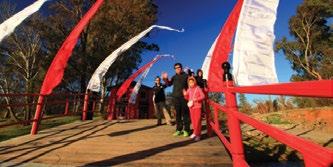



www.peninsulakids.com.au 49
March 14th – Pi Day
Every year there comes a certain day that shares numerical values with Pi, and on that day there is a celebration of Pi with every kind of Pie you can imagine. You see, pies are round, and Pi is circumference over diameter, a number that, while being functionally infinite, also happens to be a constant in every circle ever. Pi day celebrates the long history of this fantastic number, and the long journey science has taken (and is still on) to seek the end of a number known to be infinite in length.
April 13th – High Five Day

The High Five was purportedly invented by Dusty Baker and Glenn Burke in 1977. These two Los Angeles Dodgers members were celebrating a particularly important success in that game on October 2, and it just seemed appropriate to clap their hands together over their heads. The world must have agreed, since the high five has since become generally ubiquitous, appearing in every culture the world over since.
Fun Days

May 3rd – World Laughter Day
World Laughter Day is an annual event celebrated worldwide to raise awareness about laughter and its many healing benefits, as well as about thousands of community groups around the world who regularly practice comedy that promote wellness and overall well-being.
May 4th – Star Wars Day
Source: daysoftheyear.com
“May the Fourth be with you” was first used by Margaret Thatcher’s political party to congratulate her on her election on May 4th, 1979, and the saying quickly caught on. However, the first celebration of May 4th took place much later, at the Toronto Underground Cinema in 2001. This first official Star Wars Day’s festivities included a costume contest and a movie marathon. Since then, Star Wars Day has gained popularity and is celebrated by Star Wars Fans worldwide.

50 Peninsula Kids ATE 2-for-1 ENTRY 2-for-1 ENTRY W O W ! ! T h a t m a k e s a f a n t a s t i c f a m i l y d a y o u t e v e n b e t t e r V A L U E F O R M O N E Y ! ! 3/2 Amayla Cres Carrum Downs VIC 3201 ph. 9773 6799 * $ 1 4 2 - f o r - 1 E n t r y P u b l i c S e s s i o n 9 a m - 4 p m M o n - F r i S k 8 h i r e A d d i t i o n a l - L i m i t o f o n e p e r f a m i l y N o t v a l i d f o r g r o u p o r p a r t y b o o k i n g s V a l i d M a r c h 2 8 t o A p r i l 1 7 2 0 2 0 T & C ' s a p p l y
to celebrate in.... Autumn
partyPLANNING
#Dava KIDS PARTIES
The Science Shed
The Science Shed comes to your home for your next birthday party! Children can dress up in real lab coats and safety glasses and experience their own hands on experiments. Science, slime and much more. 0419 882 765 or info@thescienceshed.com.au www.thescienceshed.com.au

Dava Kids Parties
Great value at $14.95 per child with an indoor and outdoor play area. Includes individual hot food box, plus two food platters, juice and soft drink, lolly bag, balloons, napkins and party hats. Mon-Sat.
E: davafunctions@taverns.com.au

Ph: 5975 1555
www.thedavahotel.com.au


Mornington & Seaford
Mornington Hotel
Let us take care of your child’s next birthday party at the Mornington Hotel
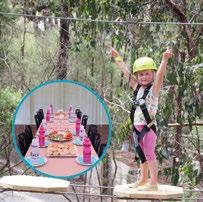
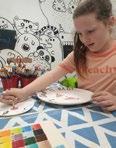
917 Nepean Hwy Mornington

Ph: 5975 2015
www.morningtonhotel.com.au
Kidztown
The biggest and most exciting themed kids party venue to hit the Mornington Peninsula. www.facebook.com/kidztownmornington

Ph: 8759 1431 or
M: 0403 795 562
Stardust Fairies

Captivating & igniting the magical seed of imagination & sparkalicousness.
Specialising in themed birthday parties, corporate, craft parties,workshops, face painting, markets & events.
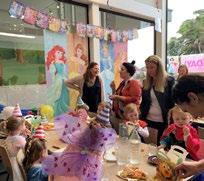


Call now or visit our magical website.
M: 0414 470 522
Fairy Freckles and Friends
We are professional fun makers that come to you! Specialising in face painting, balloon twisting, magic shows, games and roving characters, fully equipped to add some sparkle to your next kid's party or special event.

M: 0407 326 726
www.fairyfrecklesandfriends.com.au

Charlie SillyPants Parties
Melbourne Madness
The
The Ultimate kids show!
Come on an adventure full of Magic and laughter with Charlie SillyPants and friends! Parties, pre-school and childcare. www.melbournemadness.net p: 0411 957 185

Enchanted
Let us help you celebrate your next birthday! We have party options available for children of all ages.
E: groups@enchantedadventure.com.au

Ph: 5981 8449 www.enchantedmaze.com.au
Creativity and fun all rolled into one. Optional upgrades to include a host, or to choose from our other pottery range. 1 Watt Rd Mornington E:
www.peninsulakids.com.au 51
KIDZTOWN PARTY VENUES
Messy
www.stardustfairies.com.au Pottery Parties at The
Shed!
2080 FORMOREINFORMATION,CALL 0359752080 OPTIONAL UPGRADES FROM $ 25 PER HEAD Include: - 90 mins of fun -childs choice of pottery within our $ 15 range -paint, gla e and firing of pottery -food in pri ate area -play in our playcentre -min oo 8 -ma 12 POTTERY PARTIES - ersonal party host $ 60 - ottery within $ 20 range add $ 5 per head - ottery within $ 25 range add $ 10 per head - ottery within $ 30 range add $ 15 per head 9 30 - 11 am 11 30 - 1 pm 1 30 pm- 3 pm 4 - 6 pm wee days
themessyshed@hotmail.com Ph: 5975
ultimate kids’
0411 957 185 www.melbournemadness.net
show! Come on an adventure full of magic and laughter with Charlie SillyPants and friends. Parties, preschool and childcare. M:
Pa Experiments 01 R Explosions 02 Ty Explore 03 Fu Slime 04 N! Surprise 05
EAT I GIGGLE I PLAY 614 The Esp anade, Mount Martha I 5975 1555 @thedavahote indoor & outdoor play -area
Adventure
Garden
Love things we GOTOpeni foryourchanceto WIN!

Real Pretty Kind’s Electric Breton
Enjoy REAL soft 100% jersey cotton knowing it’s KIND to those who made it and to your fellow tween-teen community with $1 donated to the Alannah + Madeline and Buttery Foundations to kick bullying and negative body image to the curb with each
The Electric Breton T-Shirt comes in a classic dark, inky navy tripe on white; in Real Pretty Kind’s signature ‘Every (Tween) Body’ flattering box style.

www.realprettykind.com

Sun Bum
Sun Bum® is a lifestyle brand with its core in premium sun care products. It has successfully fused influences from board sport, beach lifestyle and fashion with a mission of providing serious skin protection. Established in Cocoa Beach, Florida, in 2010, Sun Bum currently distributes its products to select stores across the United States and around the globe. If you’re after products that you can trust and use on your babies (and even the whole family), look no further than Baby Bum. Safe, conveniently sized and made with love, making it a top pick for anyone with sensitive skin conditions. They love ‘em, we love ‘em, and we hope you love ‘em too. For more information about Sun Bum go to www.TrustTheBum.com

The Gruffalo’s Child LIVE!


If you loved The Gruffalo, don't miss the sequel, which returns following previous sell-out Australian tours! Join the Gruffalo’s Child on her adventurous mission in this magical musical adaptation of the much-loved picture book.
One wild and windy night the Gruffalo’s Child ignores her father’s warnings about the Big Bad Mouse and tiptoes out into the deep dark wood. After all, the Big Bad Mouse doesn’t really exist... does he?
The team behind The Gruffalo, Room on the Broom and The 13-, 26-, 52-, 78 & 91-Storey Treehouses return with The Gruffalo's Child, bringing together physical theatre, music and puppetry to deliver songs, laughs and scary fun for children aged 3 and up, and their adults… www.artscentre.frankston.vic.gov.au
The Rubik’s Cube

The Rubik’s Cube is the classic colour-matching puzzle that’s a great mental challenge at home or on the move. Turn and twist the sides of the cube so that each of the six faces only has one colour. Over “43 Quintillion” (that’s 43 with 18 zeros to you and me) moves are possible with this original 3x3 Cube, but there is only one solution! With lots of practice you can solve it in under 10 seconds! The Rubik’s Cube is incredibly addictive, and has fascinated fans since it arrived in 1980. A must for puzzle lovers, the aim is to twist and turn the Rubik’s Cube to return it to its original state, with every side having one solid colour. For those who struggle to master this challenge - or simply lack the patience – just look up the easy to follow Solve it Guides online at www.Rubiks.com Available at all leading toy retailers.
RRP: $25.00
www.crownandandrews.com

52 Peninsula Kids – Autumn 2020
Brother Moon
By Maree McCarthy Yoelu, Illustrated by Samantha Fry
Brother Moon is a powerful story lovingly told by a great-grandfather to his great-grandson.
Beneath the dark sky of the Northern Territory, Hippy-Boy is captivated when Great-Grandpa Liman tells him the mysterious story of his brother and how it guides his connection to Country.
Great-Grandpa is a masterful storyteller and, as the tale unfolds, he finally reveals his brother is the moon — a wonder of the universe. Hippy-Boy learns how his greatgrandfather uses the phases of the moon when he goes hunting and fishing, and why it is important for us all to have an understanding of the natural world.
RRP: $24.99
Thrones! The Musical Parody

Winter is coming…to Melbourne! David Venn is proud to announce the Victorian premiere of Thrones! The Musical Parody, taking the Melbourne International Comedy Festival by bloody, sexy snow storm from 25 March – 19 April at St Kilda’s Alex Theatre.
March 25th show – 8pm
RRP: $79.00 each ticket www.thrones.com.au


Me First
In the new book Me First, time management specialist and mum of three, Kate Christie, provides a practical guide to help you recover lost time, as well as recover your lost sense of self. By following her proven 5-step process, Kate shows how to create better habits to ensure you have a successful career, an engaged family, and at least 30 hours per month to invest in some quality ‘me’ time. Packed with practical exercises, proven techniques, and life changing-stories from women around the world, Me First empowers readers with the tools needed to better invest your time in what matters most, while still having plenty of time for you. RRP: $27.95
Mum’s Elephant

Maureen Jipiyiliya Nampijinpa O'Keefe grew up in the remote community of Ali Curung in the NT. Her family lived a bush life. They didn't own much but her mother had a very special 'elephant'. It was her mother's most prized possession and she gave it tender loving care. When her mother's friends were around, they had real tea-parties with the elephant. Often her mother would sleep with it beside her bed.
RRP: $17.99
Girls Can Fly
By Ambelin Kwaymullina & Sally Morgan
Girls Can Fly is an inspirational, young teen book from award-winning Aboriginal writer and artist Sally Morgan and her equally talented daughter Ambelin. Together they have written short, poignant sayings full of advice that comes from their life experiences.

Mother and daughter have written a beautiful, thoughtful and inspiring book.
An early draft of the manuscript was given to the participants of the Kimberley and Pilbara Girls program and their feedback and suggestions were taken in. An acknowledgement, information about and photographs of the girls are featured at the back of the book.
RRP: $16.99
Counting our Country
is a bilingual counting book from Jill Daniels, a Ritharrnu and Madarrpa artist who lives in Ngukurr in South-East Arnhem Land in the Northern Territory.

Jill’s paintings of animals found on her country celebrate her distinctive style and bold use of colour. Children will love counting the animals from 1 to 10 as they turn the pages. Each double-page spread features the name of the animal in Ritharrnu, Jill’s traditional language, and in English. A guide on ‘How to pronounce the Ritharrnu animal names’ appears at the back of the book and encourages readers and young children to see if they can say them. Counting our Country recognises the value of developing cultural literacy by introducing language and art in the early years.
RRP: $12.99
The Logitech K380 Multi-Device Bluetooth Keyboard
Brings the comfort and convenience of desktop typing to your computer, smartphone and tablet. Express yourself anywhere in your home, office or in a cafe, and connect with up to three devices, instantly switching among them with the Easy-Switch™ buttons. The keyboard works with Windows, Mac, Chrome, Android and iOS, automatically adjusting the keys and shortcuts – making your typing experience familiar and comfortable. The scooped keys ensure smooth and ultra-quiet typing, while the minimalist layout keeps your mouse close at hand for less reach and a better body posture.
RRP: $79.95. The new rose colour version of the Logitech K380 Multi-Device Bluetooth Keyboard is available on Logitech.com and JB Hi-Fi.
Bubbay’s Desert Adventure
 By Josie Wowolla Boyle and Illustrated by Fern Martins
Bubbay is lonely, with only the starts as friends. He lives in the outback tending his goats and sleeps under the stars. One night, Bubbay wishes for something he has never had – the stars hear him and, with the help of the magical Gubarlee and such as kangaroo, emu, crow and bower bird, Bubbay begins a quest to make his wish come true. A story full of magic, combined with richly textured illustrations.
RRP: $17.95
Books available in all good book shops and from www.magabala.com

www.peninsulakids.com.au 53


Good forParents

 By David Hawkins
Do you ever worry when your children are zombie-like in front of the TV, mobile phone or tablet?

This seems to be a concern for many modern parents as digital screens are literally all around us. Now, I’ll admit upfront that I’m not against kids using screens but lately I’ve been realising that we have become a family of tech consumers. And I want my kids to be tech controllers. Imagine if our children learned that they can do more than just absorb what is playing on a screen. Instead, they can create it. I decided to explore this with my kids using a completely free app called ScratchJr.
continued next page...

56 Peninsula Kids – Autumn 2020
Education
YOUR EVENT GUIDE
Seaford
Handmade Market
Third Sunday of the month 9am–1pm
March to June
The Big Picture Fest
Monday 16–Sunday 22 March
Block Party: Friday 20 March, 4–10pm Frankston City Centre


Waves and Wheels Film Festival
Cinema on the Beach
Friday 27–Sunday 29 March 5.30–10.30pm
Frankston Waterfront, Frankston Check website for prices


Party in the Park
Tuesday 7 April 9.30am–1.30pm Cruden Farm, Langwarrin

Street Art Walking Tour

Sunday 19 April, 10 May and 14 June (monthly) 11am or 1.30pm, 1.5 hours
Frankston City Centre, Frankston Check website for prices
Seaford Farmers Market


Third Sunday of the month 8am–1pm Broughton Street Reserve Station Street, Seaford
Seaford Scout Hall Station Street, Seaford
Frankston Sunday Market
Every Sunday 8am–1pm 79-83 Young Street, Frankston
Little Beauty Market*
Monthly until April 9am–2pm Beauty Park High Street, Frankston See website for dates
www.peninsulakids.com.au 57
1300 322 842 visitfrankston.com visitfrankston
* Check website for upcoming dates, entry fees and times. Subject to change without notice.
2020 2020 MAR APR
That was the sound I made when I thought about having to teach my kids about computer programming. I had no idea what coding was and only vaguely remember the early '90’s when I knew how to type C:\>RUN.EXE into DOS to be able to play Duke Nukem. Computer code now surrounds us. We need it to start our modern cars, to play a song on Spotify and to “tap n’ go” with our credit cards. There are few areas of our lives that aren’t touched by programming these days.
Creating codes for these high-end uses is complicated and requires a lot of knowledge and training.
Yet, at its simplest, coding or programming is just making a recipe for a machine to follow.
Enter ScratchJr: a free-to-download and use app for mobile devices such as iPads and tablets that allows children to easily create “their own interactive stories and games”. It has been created through a collaboration between Tufts University, MIT and the Playful Invention Company with the intention of empowering kids who are 5-7 years to become the storytellers and technology controllers.
ScratchJr uses an image-based interface to allow young children, who may not yet be able to read, to take control and create their own game or animation. All they have to do is tap and drag. It is so easy to understand that even us oldies can work it out!
Kids start by choosing a background image and some fun characters from a colourful cartoon library. Then the programming begins. Each command is depicted by a large colourful block that can be dragged into the ‘programming area’ (otherwise known as the big blank space) and jigsaw-pieced together with other blocks to create a recipe (otherwise known as a programme).
Yellow blocks are ‘triggers’ that start the animation. Blue blocks are for ‘motion’ and tell the characters how and where to move. Pink blocks change the ‘look’ of a character by making it bigger or smaller, appear or disappear, or even adding a speech bubble.
Green blocks let you add sound. Yellow blocks ‘control’ the other commands and red blocks tell the programme what to do at the end. Work out what you want your character to do and then choose blocks that create the command programme. If it doesn’t work the first time, move a block out and put another one in.
It really is that simple.
I’ve now started a weekly afternoon ScratchJr session for my sons and their friends, ranging from 4 to 8-year olds. Everyone brings along a tablet or iPad and we spend 45 minutes creating kid-driven content. What makes this so easy for me is the amount of great lessons and teaching aids available online. The ScratchJr website has 9 walkthrough lessons that introduce all of the actions that you can command in the app; these are very achievable and allow the kids to get to know what each block can do.
There are also some lesson groups aimed at schools and some assessments, all of which can be used at home.
When you’ve exhausted the official content, just type “ScratchJr lessons” into Google search and discover lots of ideas and plans created by other users and teachers. There are also books of ScratchJr projects that you may be able to borrow from your local library.
By helping our children begin to create little animated stories we help them take the first step on an important journey that can open up a world of opportunities for their future; for them to understand that they have the power to be in control of their technology.
David Hawkins is a Peninsula-based stay-at-home-dad who realised that he needed to improve his Dadding. So he set himself the simple task of being an Awesome Dad. He now challenges all dads to be awesome dads, by doing something out-of-the ordinary with their kids.
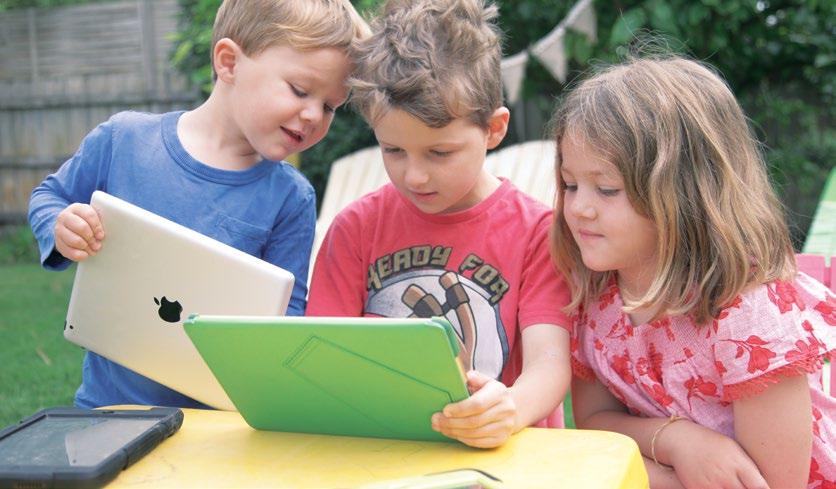
58 Peninsula Kids – Autumn 2020
”Aaaaaaggggggghhhhhh!”
$80 off Ortho-K fitting fees upon presentation of this ad before 1st Sept 2020
In Australia, the recent Sydney Myopia Study found 31% of 17-year-old children were myopic, double the prevalence reported just 18 years ago.

-MYOPIATHE GROWING EPIDEMIC
“Evidence is mounting that myopia (short sightedness) is growing around the world, with a recent study estimating that on average, 30% of the world is currently myopic and by 2050, based on current trends, almost 50% will be myopic, that’s a staggering 5 billion people”
At 20/20 Sight’n’Style, our aim is to use all scientifically validated methods to slow the rate of myopia progression. One effective option is Orthokeratology (ortho-k): The process of wearing a custom designed contact lens only while sleeping. The lens is removed each morning and the result is good vision all day with no contacts or glasses. Ortho-K also slows down the progression of myopia in most studies, by 50+ %.

Other options include Daytime Soft Ortho-K contact lenses, Myopia Control Spectacle Lenses, Atropine Eye Drops and Vision Therapy. Please contact our clinic to organise an assessment to see if we can help reduce Myopia progression for your child.
Myopia causes people to have difficulty seeing distant objects clearly. Even low levels of myopia significantly increase the risk of serious eye disease as we age High levels of Myopia increase the risk of developing Cataract by 5 x Glaucoma by 14 x Detached Retina by 22 x and Macular Disease by 41x

www.peninsulakids.com.au 59
GEORGE & SUZANNE SAHELY - BEHAVIOURAL OPTOMETRISTS 161 Main St Mornington Ph 03 5973 5520 www.sightandstyle.com.au
Mornington
Celebrating 20 years of servicing the
Peninsula in 2020
A GUIDE FOR TEACHERS AND PARENTS
By Kim Norton
When parents and teachers work together to identify and implement stress management strategies for our kids, it not only improves the general wellbeing and quality of life for that student, but also for that of the teacher, fellow classmates and family members.
The first step is to identify what stress looks like in our kids. From there, triggers or stressors can be identified and suitable strategies put in place to manage them via a Stress Management Action Plan.
Regular, open communication between the teacher and parent/carer will see this Stress M.A.P come to life, a plan that can be adapted as the individual matures and shared with other teachers, relevant support staff and family members.

So, what can stress look like in our students?
1. Nail biting / nail picking.
2. Withdrawing from activities. Not wanting to participate in activities or socialising with friends as they once did.
3. Stomach aches.
More than the usual number of stomach aches with no medical reasons.
4. Hair twirling/pulling. Some of our kids will pull out strands of hair, eyebrows and/or eyelashes when stressed.
5. Irritability and anger. Sudden or more frequent bouts of irritability or anger.
6. Acting out.
Acting like the “class clown” or going out of their way to distract other students.
7. Lack of concentration and focus.
8. Not eating. Refusing to eat either a snack or lunch.
9. Headaches.
Frequent headaches that are reported to have no medical explanation.
10. Excess fidgeting.
11. Perfectionism.
Spending more time than is considered necessary on one piece of work or part thereof to make sure it is “perfect”.
12. Avoidance.
Avoiding tasks, certain classes or school events that will cause stress like trying out for the school choir even though they love to sing at home and can sing quite well.
13. Loss of confidence.
14. Clinginess or separation anxiety. Clinging to a parent or specific teachers.
15. School refusal.
Parents/Carers having trouble getting the student to school and/or the student has a high absence rate.
STRESS
M A P
What can you do?
Observe and listen. A child will not always be able to say, “I am stressed”. Look for signs as already mentioned, observe their body language and listen to what they have to say. Statements like “I don’t feel well” or “I have a sore stomach” or when a child is continually apologising this can often be code for “I am stressed”. Once symptoms have been identified, develop an action plan.
Stress M.A.P. (Management Action Plan).
Developing a Stress M.A.P or Management Action Plan in conjunction with the family/school and any specialists, can provide our kids with the tools necessary to manage their own stress, develop resilience and generally improve their quality of life. Some stressors or triggers are unavoidable like a school test, so empowering our kids with the tools needed to manage their stress as soon as symptoms arise can prove invaluable in ensuring good mental health and general well-being.
1. Know the symptoms.
Help your child understand how their stress makes them think, act and feel. Often they feel it in their body eg: fast heartbeat, tapping foot, tense shoulders, tics etc.
2. Pinpoint the initial symptom.
What is the very first response to the stressor eg: fast heartbeat.
3. Identify triggers/stressors.
Can include: Lack of sleep, parental divorce, nightmares, speaking in front of the class, negative thoughts, death in the family, upcoming tests. It is imperative that teachers and parents share this information with each other.

4. Investigate suitable strategies that will combat that trigger. Breaking out into a spot of Yoga in the middle of the classroom is not always a suitable strategy, but, visual cues, frequent movement breaks, and fidget tools just might be. Teachers and parents can discuss here what works best at home/school.
5. Implement strategies at the Initial symptom (not at full meltdown stage).
Can include: breathing exercises, hand mudras, visualisations, a good bedtime routine, mindfulness and meditation.
6. Evaluate at regular intervals
Symptoms are likely to change as the individual matures and faces new triggers like NAPLAN or puberty so it makes sense that strategies will have to be modified as well.
If you are struggling with the development of a stress management plan for yourself or for your child/student, please seek guidance from a professional Counsellor or Psychologist.
Kim is the founder of Rainbow Light Therapies and is a Holistic Counsellor specialising in stress and anxiety management for kids, teens and adults. Kim provides a unique, intuitive and individualised therapy approach through individual, small group and family counselling sessions at her studio in Langwarrin. Also working with special needs kids, Kim is an NDIS registered provider and runs workshops for people of all abilities on various topics throughout the year. Please see www.rainbowlighttherapies.com.au for more information.
www.peninsulakids.com.au 61
THE POWER OF LEARNING A SECOND LANGUAGE IN THE EARLY YEARS
 By Melissa Schoorman
L earning a second language is an exciting experience for young children and can assist them in becoming better thinkers, better communicators and citizens of the world. Research indicates that the best time to begin learning a language is early in life as 95 percent of brain development occurs before a child transitions to Prep. So, why is it important for children to learn a second language?
Learning a second language promotes rapid brain development

Learning another language promotes language acquisition and helps to develop essential areas of children's brains. It also encourages our children to think more creatively, connect and synthesise ideas and problem solve. Language skills are localised in the frontal areas of the left-hand side of the brain. Research suggests that bilingual speakers have an increased number of brain cells as they are absorbing new speech patterns and words, harnessing brain potential for literacy skills and many other complex thinking tasks.
Learning a second language significantly enhances English literacy skills
There are bodies of evidence to suggest that learning a second language also enhances English literacy. Children can use their insight as to how English works compared to other languages in terms of speech patterns and pronunciation, which can help accelerate their ability to read, write and contextualise words in text. Language learners enhance their skills and strategies for decoding whilst exploring and making meaning from words. As children become increasingly exposed to new systems and patterns from a secondary language, their brains become more
flexible and competent within their own ability to adopt literacy skills into their daily lives. Learning a second language can also provide a new beginning and success for learners who have struggled with English. This has been shown to be beneficial both in terms of English language development and for the selfesteem of learners.
Learning a second language improves memory, accuracy and concentration
Learning a second language strengthens children's memory for sequences and their ability to concentrate and build connections. It can significantly lengthen their stamina for learning, particularly with regards to concentration which can have a direct impact on their academic results. If a child can develop concentration skills, they are more likely to excel in many areas of the curriculum. This in turn develops a passion for learning and a belief in their ability to develop new skills.
Learning a second language increases an awareness of other people and cultures
Learning a second language from an early age can help develop empathy and compassion for others, as we immerse ourselves in a world foreign to our own. Learning another language can spark a child’s curiosity for other cultures and opens their minds to a diverse way of living. This promotes harmony and respect in the schoolyard and beyond.
62 Peninsula Kids – Autumn 2020
Miss Melissa Schoorman is the Head of Wardle House, Deputy Principal of Toorak College
HOTDOG! #7 SHOW TIME! BY
ANH DO
5+yrs, Scholastic, p/b, $12.99 Hotdog and his friends want to win the Toy Town Talent Show, but the competition is tough! Do they have what it takes to impress the crowd?

OLIVIA’S SECRET SCRIBBLES: BOX CAR RACERS
BY MEREDITH COSTAIN
6+yrs, Scholastic, p/b, $9.99
*It’s Recycling Week at school!!!* Matilda and I have made box cars.* Our idea is so super-amazing that our whole class is going to make box cars so we can have a race!!!* But why hasn’t Bethany made a box car? And why is she acting so sad?
DON’T BUTT IN BY
 HEATH MCKENZIE
3+yrs, Scholastic, h/b $17.99
Baboon’s wearing new pants and he wants to tell everyone all about it! But doesn’t he realise . . . it’s rude to BUTT IN?!
ON MY WAY
BY SOPHIE MASSON
3+yrs, Scholastic, p/b, $15.99
On my way to school, Mumma, guess what I saw?
A pig chasing a wig! A goat rowing a boat!
A delightful story about all the extraordinary things you can see on your travels.
THE POPPA PLATOON IN SAVING PRIVATE RABBIT
 BY DANNY KATZ
7+yrs, Scholastic, p/b $12.99
For her ninth birthday, Major Poppa takes Abbie and her best friends to a Fluffy Furry Fuzzy Friendship Bear Party at a shopping mall. When one of Abbies friends loses her Fluffy Furry Fuzzy Friendship Bunny, Abbie must go on a solo rescue mission.
LIARS #5 ARMAGEDDON
BY JACK HEATH
10+yrs, Scholastic, p/b $14.99
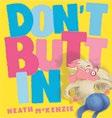


Jarli has lost a day. His missing memories may reveal the identity of Viper—who just announced a plan to DESTROY the town of Kelton. Doug is trapped in Viper’s hidden prison. He’s been given up for dead by his family and friends...but he has a daring plan to ESCAPE. Jarli and his friends are close to unmasking Viper, but the master criminal has spies everywhere.

THE DAYS OF IN BETWEEN BY
PETER VALENTINE FENTON
9+yrs, Scholastic, p/b, $16.99
12-year-old Toby heads to the coast for a summer holiday. A terrifying incident on the old wharf begins a dramatic chain of events within the small coastal town-revealing secrets and creating ripples through both Toby’s and Tara’s families.
THE VERY SUPER BEAR BY
 NICK BLAND
3+yrs, Scholastic, h/b $17.99
There’s a monster in the jungle and it’s gobbling up the trees! It sounds like a job for THE VERY SUPER BEAR! Can The Very Super Bear and his sidekick, Bruce the Goose, save the jungle from the cranky, yellow monster?
THE DINKEY DONKEY BY
 CRAIG SMITH
3+yrs Scholastic, h/b $17.99
The Wonky Donkey has a daughter in this hilarious sequel to the runaway hit! Wonky Donkey had a child, it was a little girl. The Dinky Donkey follows the same formula that made its predecessor a worldwide hit. Readers will love the antics of this stinky punky plinky-plonky winky-tinky pinky funky blinky dinky donkey!
GIRLTOPIA: THE GIRLHOODS
 BY HILARY ROGERS
11+yrs, Scholastic, p/b $14.99
Girltopia is a city run by women and girls—and it’s an amazing place. There’s hardly any crime, transport is free, and lots of girls are getting a taste for change. Clara and her friends are now part of The Girlhoods, a rebel group who suspect that someone is behind the release of the virus that has affected the men and boys. Clara’s bravery is tested to its limits.
CELESTE THE GIRAFFE LOVES TO LAUGH
BY CELESTE BARBER & MATT COSGROVE
3+yrs, Scholastic, h/b, $17.99
Celeste was a friendly, happy little giraffe. She had a kind heart and she made others laugh. But Celeste sometimes worried that she wasn’t enough. It seemed like other animals did much cooler stuff. Join Celeste the Giraffe on her hilarious journey as she finds out what it is that makes her unique.

THREE

 BY STEPHEN MICHAEL KING
3+yrs, Scholastic, h/b $24.99
One, two, three . . . Every day was a hop and a skip for Three. He was happy to walk from here to there, wherever his nose led, or wherever his legs took him . . . all the way to new friends.
Book Reviews
Prize pack of the reviewed books, go to; www.peninsulakids.com.au/giveaways Win! School Aged Pre - School

64 Peninsula Kids – Autumn 2020 For more information visit toorakcollege.vic.edu.au 2021 SCHOLARSHIPS NOW OPEN APPLICATIONS CLOSE 16 MARCH 2020 Toorak College turns dreams into reality. OPEN NOW DISCOVER TOORAK OPEN DAY 21 MARCH 2020
A Peninsula Kids' special feature to guide you through some of the peninsula and surrounding areas' best educational facilities for your child's schooling from early learning through to high school.


www.peninsulakids.com.au 65
SPECIAL
FEATURE
Balcombe Grammar


At Balcombe Grammar School we pride ourselves on our strong sense of community spirit – we are a connected community. Our School is small enough for each student to be personally known and recognised, yet large enough to offer an extensive range of opportunities that assist our students to grow and develop into well-rounded young adults. This year we launched our Learning and Wellbeing models, which are visible throughout our School Community. They remind us daily

of some key factors that are essential when aspiring to provide a stimulating and supportive learning environment both inside and outside the classroom. At Balcombe Grammar, we are committed to providing a learning environment which nurtures and challenges each student to discover their potential, passion and purpose. We are looking to build on our innovative and community-focused initiatives which play a pivotal role in assisting our students to develop
the fundamental skills necessary to form strong connections and thrive in our ever-changing world. Balcombe Grammar is moving into a very exciting time in its short 13-year history and we encourage you to arrange a time to visit and tour our beautiful school. During this visit you will have the opportunity to meet our caring staff, wonderful students and most importantly see our school in action.
www.balcombegrammar.vic.edu.au 389 Nepean Hwy, Mount Martha VIC 3934 5970 1100
BALCOMBE GRAMMAR
Animal assisted intervention, a student’s best friend
Meet Luna, therapy dog in training and a most popular member of the Padua College community! Luna joined the local Catholic secondary college as a pup in 2019 and is valued by all for her even temperament and friendly disposition. She is also great fun to be around.
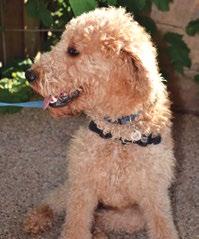


The benefits of Animal Assisted Interventions (AAI) have long been recognised in healthcare settings so it is no surprise that the attraction to and advantages of using therapy dogs is particularly compelling when children are involved. Consider the potentially stressful situations that students can encounter, from their very first day at school and Year 7 immunisations through to assessments, oral presentations and final exams.


Research shows that AAI can diminish stress by reducing blood pressure, improving
neurohormone levels and increasing resistance to anxiety. Eye contact and touch are potent triggers of the neurohormones dopamine and oxytocin. Oxytocin lowers the heart rate and blood pressure, relieves stress and can alter mood over time, while dopamine boosts mood and long-term memory.
“Luna provides a wonderful sense of calm and comfort, diverting attention away from stressful situations,” explains Mo Cromar, Pastoral Associate and Counsellor at Padua College and Luna’s handler. “She brings a smile to many faces when on campus and has often ‘sniffed’ out a student or staff member whose struggles may have gone unnoticed.”
Through presence and interaction, Luna complements the work of the College Wellbeing team, assisting to stabilise

emotions, improve student selfworth and trust, and assist with developing socialisation and communication skills.

AAI at Padua College actively embodies the charism of St Francis of Assisi who is the patron saint of animals and the environment. St Anthony of Padua, after whom the school is named, was a follower of St Francis and our Gold Houses all represent the Franciscan tradition.
AAI explicitly exemplifies the College values of welcome and hospitality, the building of positive relationships, finding different ways to work with those in need, and creating hope and connection with the world.
For more information on Padua College or to book a school tour, please visit www.padua.vic.edu.au
PADUA COLLEGE
www.padua.vic.edu.au 62 Oakbank Road, Mornington VIC 3931 2 Inglewood Crescent, Rosebud VIC 3939 1585 Frankston - Flinders Road, Tyabb VIC 3913 5976 0100 5982 9500 5978 2700
MENTONE GIRLS' GRAMMAR

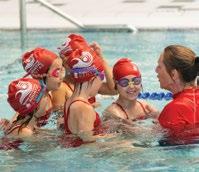
We believe children are never too young to be challenged as we help them achieve their goals driven by a genuine love of learning. As an open-entry school, we accept students of all talents and abilities, faiths and cultures. We are consistently ranked among the top schools in Melbourne and our students regularly win prizes for sporting, artistic and academic endeavour. We also have an impressive track record of VCE success and university entry. This is why since 1899, generations of students, staff and parents have been proud to be part of our vibrant learning community.
Our beautiful beachfront location has inspired our WAVES priorities. These key principles guide the way we meet the particular learn- ing needs of girls by contributing to their Wellbeing, Achievement, positive Values, Enterprising nature and Success. These priorities contribute to the unique culture and success of our school,
as well as our personalised approach to learning.
In our Early Learning Centre (ELC), specialist early childhood teachers recognise the different ages and stages within each class and provide tailored activities so every girl has power over her own learning.
We provide a highly developed program of intentional teaching based on the principles of the International Baccalaureate (IB) Primary Years Program (PYP) which supports a unique blend of inquiry and play-based learning. We can see the benefits of our education, not only in how ready our girls are to enter Prep, but how advanced their reading and writing skills are, as well as their social and emotional confidence. This is why we are currently rated as “Exceeding National Quality Standards” in the national ELC Frameworks Accreditation.

The PYP framework is extended in our Junior School as students develop more complex


intellectual, emotional and social skills. They are exposed to a diverse program of inquiry and challenged in many areas from music and STEM (science, technology, engineering and mathematics), to financial and digital literacy, cultural understanding, leadership and social enterprise. They are encouraged to try new things, take-risks and be bold, tapping into their interests and passions. Teachers develop a rich picture of every student’s learning successes, strengths and challenges, and each girl is supported to grow and develop to her full potential. As a result, our Junior School is recognised as one of the best in the state and consistently ranked well above state and national averages in the NAPLAN literacy and numeracy testing. Most importantly, our students develop confidence, capability and self-worth that are great assets to them in their senior years and beyond.
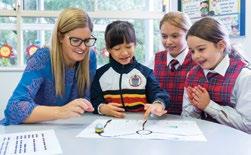
www.mentonegirls.vic.edu.au 11 Mentone Parade, Mentone VIC. 3194 9581 1200
Quality teaching, a focus on student wellbeing and an inspired curriculum
Cornish College has always offered something unique in education.
The College educates for a sustainable future, engaging students beyond textbooks and encouraging them to consider how their decisions impact the world. Its 100-acre setting provides Early Learning to Year 12 students with the space to stretch their legs and their curiosity.
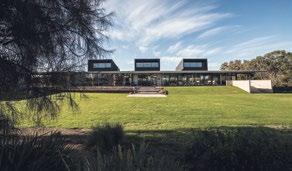

Underpinning this is a holistic education that sees students engage deeply across disciplines, critically evaluating problems and finding creative solutions. Such skills are vital, says Principal Nicola Forrest.
“At Cornish College, we develop the heart, the mind and the person,” Nicola says.
“Our unique learning environment and well-rounded education ensures our students become the best people they can be. Our powerful curriculum and passionate teachers develop critical thinking skills in our students, empowering them to make a difference today for a sustainable tomorrow.”
The College offers a diverse, comprehensive curriculum.
Early Learning draws upon the Reggio Emilia approach where children are collaborative learners. The College is also an International Baccalaureate Primary Years Programme (PYP) school. Enriched by sustainability education – including the EcoKids garden and Dhumba-dha biik walks to connect students with the land – and cocurricular opportunities, the primary curriculum combines concepts and inquiry, ensuring students engage deeply with their learning.
Deep, transferrable learning continues throughout the secondary school, with a curriculum that focuses on concepts beyond the topics. This, combined with an emphasis on building the skills for inquiry, ensures students apply their knowledge and skills across disciplines.
The senior program provides flexibility for students’ career pathways, with the option to complete VCE over three years, creating space for wellbeing and

cocurricular opportunities. Senior students also enjoy a new Senior Studies Centre – a powerful learning environment. Cornish College is hosting a Years 7 to 12 Open Evening on Thursday 19 March for families seeking secondary education. Families can tour the campus, develop an understanding of the rich curriculum on offer and meet future teachers and friends.
“Our Open Evening will be a fantastic way for families to see how we’re making a difference in education right now, and why this difference is so important,” Nicola Forrest says. There are also regular school tours, which can be booked via the College’s website www. cornishcollege.vic.edu.au
To book for the Years 7 to 12 Open Evening, visit www. cornishcollege.vic.edu.au/ discover-cornish


For more information, call Admissions on 9781 9000 or email admissions@cornishcollege. vic.edu.au

CORNISH COLLEGE
*Dhumba-dha biik, Boon wurrung language for “Talk Country”, is used with permission.
www.cornishcollege.vic.edu.au 65 River End Rd, Bangholme VIC 3175 9781 9000
Cornish educates for a sustainable, thriving future
Creating a caring, engaging and inspiring environment
My name is Peter Quigley and I’m very fortunate to be the Principal of Moorooduc Primary School.


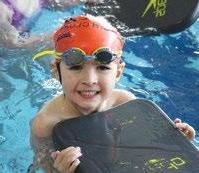


Moorooduc is a unique, small school located in a lovely rural environment. I am looking forward to the 2020 school year and am excited by the promise that every student will be a happy and successful member of the Moorooduc community.

As a school we strive to create a caring, engaging and inspiring environment where all students learn and fulfil their potential socially, emotionally and physically, to become responsible lifelong learners in a changing world. All members of our learning community collaborate closely together with a focus on teaching and learning and student results, inside a highly effective engagement and wellbeing program.

Relationships are central to the work we do. We actively work with parents to create the best outcomes for our students and provide multiple opportunities for them to work closely with teachers and contribute in a positive way to our community. Parents can engage in policy decisions through our school council or become a part of the extremely hard working Parents’ Association who plan and run many community building and fund raising events.
Students are actively encouraged to develop leadership skills throughout the school, with an active student representative council and student led lunchtime programs.
2020 is an extremely exciting year, our refurbished Visual Arts/Science room is now fully operational and we have a new junior playground planned for midway through this year.
Our school has developed a strategic program of interventions that ensures that all of our students are extended with engaging and challenging learning tasks.
Our gifted program sees students collaborating with students across a range of schools on advanced programs and projects.
I firmly believe in the capacity of all of our students to make their mark on the world, and am committed to providing an education that will positively influence their lives and provide opportunities for a successful future. At Moorooduc primary school there is a commitment from all staff to ensure every child can be the best they can be.
I look forward to having the opportunity to show you around our school in the near future.
Please contact the school to organise a tour.
MOOROODUC PRIMARY SCHOOL
moorooducps.vic.edu.au Derril Rd, Moorooduc VIC 3933 5978 8330
Tyabb Railway Station Primary School, steaming ahead
As the principal of Tyabb Railway Station Primary School, I am extremely excited to be part of such a vibrant and hardworking school. We are fortunate to have a strong community that works together to provide an excellent education for every child.

We are passionate in our desire for our students to succeed.
We are committed to providing an education, which will enable each student to realise their potential, both academically and socially.
Here at Tyabb Railway Station Primary School we aspire to provide you with an environment that instils a lifelong passion for learning. It is our hope that all our students embrace the many opportunities


which are available to them at our school.
We encourage our students and families to see school as an adventure and an opportunity to face challenges and celebrate personal success.
Emma Slater
UNDER NEW MANAGEMENT
Clever little monkeys
For 25 Years Charlie Pagnoccolo has owned Clever Little Monkeys. With the help of his fabulous staff he has provided a high quality, caring and nurturing program giving children opportunities to develop to full potential.

My name is Sarah Grech and I began my childcare journey working for Charlie at Clever Little Monkeys 25 years ago.
I have now come back and bought Clever Little Moneys. The staff and I would like to continue the best childcare, providing new and innovating experiences for families. We believe children’s education programs and parent input should go hand in hand. You can be involved in making decisions about your child’s experience.
Parents are supported. Your child will be cared for and made to feel safe and secure.
Through positive guidance they will develop their self-confidence, becoming strong in their social and emotional wellbeing.


Come and say hello and see what we can do for you and your family. Can’t wait to speak soon. Sarah
www.careforkids.com.au 5 Killingholme Dr, Mornington VIC 3931 5977 0774 CLEVER LITTE MONKEYS
88 The Crescent, Tyabb VIC 3913 5977 4324
RAILWAY STATION PRIMARY SCHOOL
www.tyabbrailps.vic.gov.au
TYABB
Competent, capable, active learners early childhood at Woodleigh School

Woodleigh School’s Early Childhood Centres are communities where children are viewed as competent, capable, active learners. We ‘Value Childhood’ and have high expectations for all children, families and educators, and operate with the belief that learning can happen anywhere, anytime.

Value Childhood is an understanding of how special, unique and fleeting childhood is. It is letting children be children; knowing the educational and social importance of play and discovery – the value of imagination and struggle. It is the development of individual learning programs that challenge and engage. Where students’ best efforts are expected and acknowledged, both in and beyond the classroom.
We believe that children learn in collaboration with others. Along with their families and educators,


children attending our Minimbah and Penbank Centres belong to a community of learners who work in an optimistic, progressive environment.
We believe in the individuality of children and strive to support students to feel empowered to express themselves in whatever way feels right for them. We embrace originality and the joy of creative expression. Our preschool provides inclusive programs that recognise the varied cultural backgrounds, abilities, interests, needs and learning styles of all children. We believe children learn best through meaningful play. Our program is play-based and child-centred. It offers children the opportunity to make choices, take responsible risks, learn in collaboration with others and develop their curiosity and thinking skills. All are skills that we believe are essential for lifelong learning and nurturing
a fulfilled and confident child. Relationships are the cornerstone of our program. Children in our Centre are viewed within the context of their family and culture and as such we strive to work in partnership with families to support the learning and identity of all children.
There is a genuine sense of mutual respect between staff, children and families and this is reflected in the strong caring community who share a common goal: to give children the fundamental right to an education that prepares them for life as well as school.
If you would like to know more about Woodleigh School’s Early Childhood programs at our Minimbah (Frankston South) and Penbank (Moorooduc Campuses), please contact our enrolments office on (03) 5971 6100 or email enrol@woodleigh.vic.edu.au

WOODLEIGH
SCHOOL
www.woodleigh.vic.edu.au 460 Mornington-Tyabb Rd, Moorooduc VIC 3933 485 Golf Links Rd, Langwarrin South VIC 3911 3 Minimbah Ct, Frankston VIC 3199 5978 8425 5971 6100 9788 6488
ADVENTUROUS MINDS
are excited by their learning. Curious and energised, they see a ground for innovation, originality and vision. They embrace new discoveries, test their boundaries and master challenges as they grow.

BOOK YOUR PLACE AT ONE OF OUR REGULAR INFORMATION SESSIONS OR CAMPUS TOURS
EARLY CHILDHOOD TO YEAR 12 REAL WORLD. REAL EXPERIENCE. REAL UNDERSTANDING. 5971 6100 woodleigh.vic.edu.au
www.woodleigh.school/enrol
Are you wondering why everyone is talking about reducing carbohydrates and sugar? Are you curious to learn more about intermittent fasting, keto or paleo and whether it could benefit you in some way?
Linda Martinucci has created Simply Swap Foods to share the message that it really is simple to swap to a better way of eating and live your best life full of vibrant energy no matter how old you are.
WHY SWAP FOODS?
When approaching middle age, Linda noticed her weight was increasing plus energy levels and mental clarity were at an all-time low. Frustrated by all the confusing and conflicting health and dietary messages, Linda embarked on a journey to research the latest scientific medical studies around nutrition and health and was amazed at the findings. Incorporating some of her discoveries into everyday life resulted in a remarkable transformation for both Linda and her husband; they lost 35kg of excess weight between them over eight months. As a side benefit, they found they no longer suffered from afternoon brain fog and had energy levels return that they hadn’t felt for decades.
THE SECRET TO SUCCESS
One of the keys to success and staying motivated was continuing to enjoy their traditional favourite meals and desserts. With delicious cakes and desserts still on the menu, there was no reason to seek out the unhealthy alternatives. Linda has developed lots of recipes that are low in refined sugar and naturally lower in carbohydrates so your insulin levels remain steady and you don’t feel hungry all the time.

WEIGHT LOSS + FEELING GREAT = MOTIVATION
The benefits of going back to eating real food - dropping excess weight, increased energy and huge improvement in mental clarity - are just some of the reasons why it's easy to stay motivated. Transitioning to a healthier way of eating for life doesn't have to involve lots of deprivation with Linda’s indulgent recipes.
JOIN THE SIMPLY SWAP FOODS COMMUNITY



Linda is sharing her recipes and information to give help and hope to anyone looking to improve their eating to feel their best or for health reasons. Close your eyes for a few minutes and imagine a world where you’re at your perfect weight and in perfect health. This doesn’t have to be imaginary; this can be your reality starting today with just a few small steps.
For more information, check out the website: www.simplyswapfoods.com.au and see Linda and David’s amazing transformation pics. Follow Simply Swap Foods on Facebook and Instagram for regular updates, photos and recipes.

You really can have your cake and feel great too!
*As always seek the advice of a qualified health professional before drastically changing your diet
74 Peninsula Kids – Autumn 2020
Recipes
Your path to feeling great and living your best life
www.hawkesfarm.com.au Farm Gate Open 7 Days .COM.AU
Seedy Zucchini Bread


A delicious low carb bread with added vegetable for extra fibre. Stores well in the fridge up to one week or can be sliced and stored in airtight container in freezer for up to 2 months. This dense loaf makes great ham and cheese toasties and is also delicious topped with smashed avocado and feta for a quick breakfast or lunch.
*Only 2g Net Carbs per slice compared to 15-25g carbs for store bought multigrain bread
Ingredients
4 large eggs (65g)
¼ cup light tasting olive oil
1 ½ cups almond flour
½ cup pepitas, roughly chopped
½ cup sunflower seeds, roughly chopped
¼ cup chia seeds
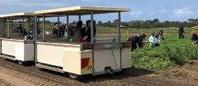
¼ cup sesame seeds

2 tsp baking powder
1 tsp salt
1 medium zucchini, grated (200g)
Method
Preheat oven to 170°C and line a loaf tin (approx. 25cmx13cm) with non-stick baking paper.


1. Whisk eggs and olive oil in a large bowl then add almond meal and whisk together a little more.
2. Add chopped pepitas and sunflower seeds, chia seeds, sesame seeds, baking powder and salt to wet ingredients. Stir with a large spoon until combined.
3. Fold grated zucchini through mixture.
4. Spoon into prepared loaf tin and bake for 40 - 45 minutes until lightly browned on top.
5. Cool in tin for 15 minutes then remove and allow to cool completely on wire rack before cutting.
www.peninsulakids.com.au 75 www.hawkesfarm.com.au | 661 Boneo Rd, Boneo | Ph 03 5988 6785 Farm Gate Open 7 Days Autumn Open Day! April 11th 2020, 11am - 3pm Vegetable picking, tractor rides and family entertainment!
PREP COOK TOTAL SERVES 15 45 60 18
A classic easy favourite recipe with juicy berries.
*Only 4g Net Carbs (3g sugar) per serve compared with average 25-50g net carbs (15-25g sugar) for standard version
Ingredients

2 cups almond meal flour
½ cup dessicated coconut

2 tsp baking powder
¼ cup natvia sweetener
1½ cups blueberries, fresh or frozen

½ cup butter, melted
2 tsp vanilla essence
3 large eggs (65g)
¼ cup coconut milk or other preferred milk

Blueberry Muffins

Preheat oven to 180°C and grease and line 12-hole muffin tray with paper cases. Mix dry ingredients together well in a large mixing bowl, ensuring no lumps.
2. Add blueberries to dry mixture and ensure they are coated with dry mix.
3. In a separate bowl, whisk together melted butter, vanilla, eggs and coconut milk.
4. Add all wet ingredients to dry ingredients and fold well to combine.
5. Spoon mixture evenly into prepared muffin tray and bake for 20-25 minutes or until muffins are lightly browned and spring back lightly when touched in centre.
6. Remove from oven and cool on wire rack.
7. Store in airtight container in the fridge.
76 Peninsula Kids – Autumn 2020
www.hawkesfarm.com.au Farm Gate Open 7 Days
PREP COOK TOTAL SERVES 15 25 40 12
Strawberry ChiaJam
This recipe is fast to prepare and keeps well in the fridge, perfect for kids sandwiches or for spreading on your favourite cake with cream. Such a better alternative to sugar laden jams and spreads. Also works well with raspberries or blueberries (or a combination).
*Only 2g Net Carbs (1g sugar) per serve compared with average 10-20g net carbs/sugar for store bought jam spread
Ingredients
250g strawberries, fresh or frozen
2 tblsp natvia sweetener
1 tblsp water
2 tblsp white chia seeds
1 tsp vanilla essence
Stevia drops (optional)

Method


1. Add strawberries, natvia and water to a small saucepan and gently heat to a simmer.

2. Once simmering, add chia seeds and stir in well.
3. Simmer gently on low heat until thickened, stirring occasionally (around 5-8 mins)
4. Remove from heat and stir through vanilla essence.
5. If fruit pieces are still large, mash with a potato masher until desired consistency is reached or puree with a stick blender/nutri-bullet if a smoother consistency is preferred. Taste and add a few stevia drops if you prefer a sweeter taste.
6. Can be stored in fridge for up to 2 weeks.
www.peninsulakids.com.au 77
www.hawkesfarm.com.au | 661 Boneo Rd, Boneo | Ph 03 5988 6785 Farm Gate Open 7 Days Autumn Open Day! April 11th 2020, 11am - 3pm Vegetable picking, tractor rides and family entertainment!
PREP COOK TOTAL SERVES 15 8 23 16
So decadent, this is a perfect dinner party dessert. Make in advance and warm in the microwave before serving with low sugar vanilla ice cream for extra deliciousness.
*Only 3g Net Carbs (2g sugar) per piece compared with average 20-40g carbs/sugar for standard version

Ingredients
½ cup almond meal flour (60g)
¼ cup cocoa powder
2/3 cup natvia sweetener
½ tsp baking powder

½ cup dark chocolate (min. 70% cocoa), chopped
¾ cup butter (170g)
3 large eggs (65g)
50g walnuts, chopped
Chocolate Fudge Brownies
Method
Preheat oven to 170°C and grease and line square 20cm tin with non-stick baking paper.
1. Place almond meal, cocoa, natvia and baking powder in a medium bowl and stir to combine well, ensuring no lumps. Combine butter with half the choc chips in small bowl or jug and melt on high in microwave for 30 seconds. Whisk together and heat further 10 second intervals if needed until melted together and glossy. Place eggs in a separate large bowl and whisk for 1 - 2 minutes until frothy. Add the chocolate mixture to the egg mixture in two batches and whisk together after each addition until well combined.
4. Add the dry ingredients to egg mixture in two batches and mix until the batter is well combined, thick and glossy. Fold in remaining chopped chocolate.

5. Pour batter into prepared pan and sprinkle top evenly with chopped walnuts, pressing in slightly if needed.
6. Bake for 15 - 20 minutes until brownie springs back lightly when touched on outside and is still a little wobbly in the middle. Cool completely in tin before removing to cut into pieces.
78 Peninsula Kids – Autumn 2020 www.hawkesfarm.com.au Farm Gate Open 7 Days
PREP COOK TOTAL SERVES 15 20 35 20
Mum'sChickenfried
(aka MFC)
This is a massive hit in our household for both little kids and big kids.
*Only 2g Net Carbs (1g sugar) per serve compared to 30-50g carbs for 10 x fast food nuggets
Ingredients
1kg chicken thighs, boneless
1 large egg (65g)
2 tblsp coconut milk (or other preferred milk)
½ cup almond meal flour
1 tblsp mixed italian herbs
1 tblsp chicken salt
½ tblsp smoked sweet paprika
½ tblsp chinese five spice

Shortening of preference for frying – butter, coconut oil, extra virgin olive oil, ghee, lard
Method
Chop chicken thighs into cubes, roughly 3cm each. In a medium size bowl, whisk together egg and milk. Place chicken cubes into bowl and stir to combine with egg mixture.

Place almond meal, herbs, chicken salt, paprika and five spice into a large snap lock bag and shake to combine.
Add chicken pieces to spices in snap lock bag and shake really well to coat pieces evenly.
Heat frypan until hot and use preferred shortening to fry chicken pieces in batches, turning regularly.
6. Once pieces are cooked all the way through, remove and drain on paper towels. Serve immediately or freeze cooked pieces for up to 3 months stored in airtight containers in single layers divided by baking paper.

April 11th 2020, 11am - 3pm
Vegetable picking, tractor rides and family entertainment!

Farm Gate Open 7 Days
www.peninsulakids.com.au 79
www.hawkesfarm.com.au | 661 Boneo Rd, Boneo | Ph 03 5988 6785
Autumn Open Day!
PREP COOK TOTAL SERVES 10 20 30 6
By Karina Savage
How do I get my fussy eater to try new foods?
1. Offer them healthy foods throughout the day. Toddlers have small tummies; therefore, snacks can provide up to 50% of their nutrition. Dinner is only one sixth of their day, so if they don’t eat vegies then, include them in other meals and snacks.
2. Serve meals earlier rather than later. Tired, distracted or anxious children eat poorly.
3. Keep snack times consistent rather than a rolling buffet of food on offer all day.
4. Eat at the table with them and remove as many distractions from eating as possible (NO screens). We are our children’s role models and eating together will help to improve their variety and acceptance of foods – over the years.
5. Persistence and repetition are KEY. When introducing new foods, it may take up to 10-15 attempts before they accept a new food. We probably needed to have coffee or wine 10-15 times before we developed a taste for it – right? Whilst it is easy to get disheartened and stop offering the food after the first 4 or 5 times, do keep trying. Just put a teaspoon of the “test food” on the plate (and don’t make a fuss) …. but make sure that you are also eating it!

How can I get them to eat more veggies?
1. Make it fun: make the food appealing to children. Remember a child’s whole world revolves around having fun!

2. Incorporate it into snacks – ie chopped veg as part of a platter or giving them home-made muffins that contain grated zucchini or carrot. Other options include hommus or pesto dip with vegie sticks or crackers.
3. Get them involved in food preparation: this will help over time.
4. Don’t make a fuss; the more you push, the more they will run!!
5. Be a good role model; always eat them yourself and show you enjoy doing so (without going over the top!)
Note: Hiding pureed veg in food or smoothies is fine, but also make sure they are given and encouraged to eat pieces of vegetables.
How do I increase calcium in my kids?
• Calcium is richest in dairy products such as milk, yoghurt (Vaalia kids and Vaalia My First is good source of calcium) and cheese. Non-dairy sources of calcium include milk substitutes (such as soy and almond milk) which often have calcium added to them. Tinned salmon (with bones), sardines and tofu (made with calcium) are other good sources. The dark leafy greens that contain calcium are bok choy, collard and kale. Almonds are a good source and seeds such as poppy, sesame and chia are also rich in this important mineral.
Are probiotics useful?

• Probiotics can be very effective in certain situations to build immunity and protect gut health. Probiotics come in all different forms. There are those that are found naturally in foods such as yoghurt and other fermented foods such as sauerkraut. In terms of probiotic supplements, there are probably only a handful of strains that I would actually recommend. Lactobacillus Rhamnosus GG (LGG) has been shown to be beneficial to strengthen immunity and helping to outgrow allergies. This is also the probiotic found in Vaalia Kids yoghurt.
What are some great kids’ dinner ideas?
• Honey soy chicken (I use organic) with noodles, steamed broccoli and capsicum
• Homemade pizzas with a side salad
• Homemade sausage rolls plus side salad
• Good quality sausages (more than 80% organic beef) with side of pasta and chopped veg
• Omelette (with finely diced veg) or scrambled egg with vegetables on the side
• Kids fried rice
• Baked beans on grainy bread with side of chopped raw vegetables
• Chicken schnitzels with roast potatoes, steamed broccoli and raw capsicum
My child isn't eating much meat. How do I get enough iron into their diet?
• Iron is found in both animal products and plant foods. Aside from liver and kidney, red meat is highest in iron, followed by pork, poultry and fish. Often young children do struggle to eat meat, therefore using the vegetarian sources of iron can be very helpful. Vegetarian sources include eggs, legumes, spinach, wholegrains, cereals that are fortified with iron, dried fruit, nuts and seeds. Whilst the iron from the vegetarian sources isn’t as well absorbed, you can significantly help this (by up to 70%) by eating Vitamin C with it. Foods such as citrus, strawberries, tomato, red capsicum, broccoli and parsley are high in Vitamin C and will help absorption of iron.
Health
continued
page...
next
Supporting children 0-12 years with learning delays and disabilities and their families to thrive
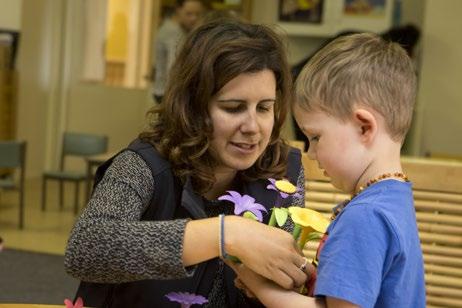
▪ Across the Peninsula & beyond
▪ Direct Service
▪ Individual programs
▪ Small group sessions
▪ Support Coordination
▪ NDIS Plan Management


▪ Community Sessions
▪ Premmies
▪ Biala & Me
Open Monday - Saturday (03) 5975 1820
www.bialapeninsula.org.au
Do children need supplements?
• If children are eating a healthy balanced diet, they theoretically shouldn’t need a supplement. Having said this, we know that 1 in 5 young children are low in iron, so in some cases specific supplementation is required. If you have a super fussy eater, they may benefit from a multivitamin; however if your child is only slightly fussy, then they shouldn’t need one. The only times I would generally recommend a supplement is either if they are iron deficient, or when they are becoming ill – extra zinc and Vitamin C can be useful at this time to help a speedy recovery from sickness.
How do I improve my child’s gut health?

• We can boost our children’s immune system by making sure they eat plenty of plant foods on a daily basis. We need to be regularly including foods such as fruit, vegetables, oats, grains, nuts, seeds and legumes - using them both in main meals and snacks. Not only are these foods rich in many vitamins, minerals and antioxidants, they also provide invaluable fibre. Fibre, otherwise known as a prebiotic, is incredibly important for nourishing our gut cells and therefore supporting a healthy robust immune system. Another way to supplement their natural gut flora is to give them foods naturally rich in probiotics such as Vaalia kids yoghurt and

82 Peninsula Kids – Autumn 2020
1 Elizabeth Street ▪ Mornington ▪ 3931
What are the best packaged kid’s snacks?
• This is a great question as I feel society really has succumbed to an acceptance of giving our kids refined packaged carbs on a regular basis. Foods such as rice crackers, puffed potato sticks, potato crisps and rice wheels are all snacks that fit into this category. I don’t have much respect for those types of foods because they are very processed/refined and rarely resemble the food that they originally came from. They release sugar quite quickly into the bloodstream (high GI) and we know that this is linked to weight gain and poorer metabolic health. These foods usually contain very little fibre and nutrients. Better choices of “packet” carbohydrate snacks include lightly salted popcorn, dried legumes (chick peas, Fav-va beans), vita wheat crackers,

rye cruskits with avocado, wholegrain breakfast cereal dry (such as Weetbix bites, sultana bran buds). Another good snack to consider which will satisfy their appetite is Vaalia Kids yoghurt which is a source of protein and provides valuable nutrients such as calcium and probiotics.
How much milk should they be drinking?
• Milk contains nutrients essential for their development, including calcium. By the age of three, children should have a maximum of 350ml milk total per day. Drinking any more than this may displace important nutrients obtained from other foods such as plant foods.
www.smartbite.com.au


www.peninsulakids.com.au 83 Creating Beautiful Smiles On The Peninsula For 30 Years Expertise In Child And Adult Orthodontics Early Assessment Of Dental Development And Facial Growth Ideal Age Of Initial Assessment 7-9 Years Early Intervention Where Appropriate For Best Outcome No Referral Necessary Specialist Orthodontist Dr Peter A. Scott is a specialist orthodontist offering orthodontic care for children, teens and adults alike in both the Mornington Peninsula and inner Melbourne areas. He is also a consultant orthodontist at the Royal Childrens Hospital. 13 Beach St Frankston Ph: 9783 4511 www.drpeterscottorthodontist.com.au www.facebook.com/drpeterscottorthodontist
Karina Savage is a Paediatric Gut Health
Dietitian and mum of two from Smartbite Nutrition.
WHAT ARE GROMMETS?
Grommets are tiny tubes that are surgically inserted into the eardrums to treat a build up of fluid in the middle ear. This condition is known as glue ear. Grommets can be made of plastic or metal. They don’t hurt, and they allow air to enter the middle ear and drain the fluid to the back of the nose and throat.
WHEN ARE GROMMETS USED?
Grommets might be recommended if you or your child has had repeated ear infections complicated by glue ear for at least 3 months. This may have lead to trouble hearing, balance problems or ongoing irritability. They might also be recommended if you have had repeated ear infections since they usually reduce the incidence of infections occurring.
WHAT IS GLUE EAR?
Glue ear is a common childhood condition although it can also affect adults. In someone who has glue ear, the eustachian tube which connects the middle ear to the back of the throat is unable to drain excess middle ear fluid. This fluid builds up and becomes thick and ‘gluggy’ over time. If glue ear lasts for longer than 3 months and causes significant hearing loss it is usually treated with grommets. Grommets are also known as ventilation tubes, drainage tubes, Shepard’s tubes, Collar button tubes or T-tubes .
HOW ARE GROMMETS INSERTED?
Grommets are inserted duringa minor surgical procedure known as ‘myringotomy’. The procedure is done under general anaesthetic, so if it's your child that needs grommets, they won’t feel anything and you should be able to take them home the same day. The build-up of fluid is suctioned out before the grommets are inserted so hearing is generally quickly restored.
WHAT SHOULD I EXPECT AFTER SURGERY?
It is normal for there to be a small amount of oozing or bleeding from the ear for a day or two after surgery. Mild pain after surgery can be relieved using over-the-counter pain relief such as paracetamol. Pain relief should be administered following the instructions on the package.

How do I look after my child’s grommets?

One of the complications of grommets is ear infection from water, especially if it is dirty. Water can enter the middle ear cavity, so it is best to keep the ears dry until the grommets fall out and the eardrums heal. Follow your surgeon’s instructions on how to protect your child’s ears from water while the grommets are in place.
CAN GROMMETS FALL OUT?
Grommets usually fall out naturally within 6 to 12 months, depending on the size, shape and material of the grommet. Once the grommet falls out the hole in the eardrum will usually heal quickly. In some children the fluid may build up again causing glue ear and re-insertion of grommets tubes might be needed. Contact your doctor if there is a lot of pain, or if the oozing or bleeding continues for more than five days. There could be an ear infection or a small tear in the eardrum.
HOW LONG DO GROMMETS STAY IN THE EAR?
Grommets usually stay in the ear for 6 to 12 months and fall out naturally. Regular ear checks will help to monitor for when the grommets have fallen out. How long does it take for grommets to work?
Hearing is usually restored quickly after grommets have been inserted. A hearing test soon after the surgery will confirm that hearing has been restored. If hearing is not back to normal, your child may need to have it further investigated.

84 Peninsula Kids – Autumn 2020
9781 2727 www.centraldentalfrankston.com.au Offering Caring and Quality Dentistry Since 1977 125 Beach St, Frankston
All insurances accepted. HCF, CBHS, NIB preferred provider. Medicare Child Dental Benefit Scheme bulk bill.
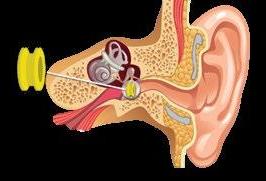


www.peninsulakids.com.au 85 GROMMET 5975 5166 134 Tanti Ave Mornington smile@peninsulaortho.com.au www.peninsulaortho.com.au Specialist Orthodontists Dr Andrew Pepicelli Dr Andrea Phatouros Dr Daniel Sable Peninsula Orthodontics loves working with families. Our experienced team will provide you with an individual treatment plan to deliver only exceptional results Capture that perfect smile you will always treasure. No referral required
LUCAS DENTAL CARE S PECIALISTPAEDIATRIC DENTISTS

Can I avoid braces for my children?
Crooked teeth are caused by 3 major factors; Habits, Trauma/tooth loss and Genetics.
1. Habits: As a child grows there are a few factors that can impact “normal” growth of the jaw and teeth. Thumb sucking, tongue thrust/ forward tongue posture and constant use of a “dummy” are habits that form during infancy, which then can create a ripple effect that won’t become noticeable until many years later. Although these are “soothing” (and even helpful to tired parents!) habits that seem harmless, if they extend well into toddlerhood, they can often lead to the child developing crooked teeth and/or misaligned jaws as they grow older.
2. Trauma/tooth loss: Healthy habits are paramount. Eating well and brushing twice daily can help children avoid early baby tooth loss. Losing teeth often means that the remaining teeth will slowly shift which can block out the later eruption of permanent teeth.
In the unfortunate event of trauma such as jaw or mouth injury, teeth can be lost or forcefully moved out of place creating issues down the track. A consultation with a dentist or an orthodontist following trauma/tooth loss is advised.
3. Genetics: We have about as much control over how our teeth and jaw develop as we do over the colour of our hair or our eyes! Therefore, not much can be done as a parent if your child is coded to have a smaller/retrusive jaw for example.
To sum up, try to stop habits that can be detrimental to the normal development as soon as possible. Make sure your child eats healthy and has good oral hygiene a well as ensuring your child wears a well fitted mouth guard. If you and your partner both have had braces in the past, there is a good chance that your child will need them too. If you are ever in doubt, do ask for help and advice!
George Shenoda
Oral Health Therapist (BOH Otago Uni)

PGCDT (Post Grad Melb Uni)
Peninsula Orthodontics
134 Tanti Ave Mornington

86 Peninsula Kids – Autumn 2020
134 TANTI AVENUE, MORNINGTON 3931 Dr James Lucas Dr Caroline Howarth Dr Giselle D’Mello and introducing Dr Sara Shayegan
9334 lucas dental care proudly sponsors polyglot theatre
Ask The Experts!
597 5
I’m pregnant. Should I keep a check on my pulse during exercise?
The advice from expert bodies is moving away from heart rate monitoring whilst exercising in pregnancy. A more practical way to monitor the intensity of exercise is the Borg rate of perceived exertion (RPE). This is a scale of exertion that you assess yourself and is a score from 6 to 20, with 20 being your absolute maximum. Depending on your level of fitness prior to becoming pregnant and your fitness levels during your pregnancy, your training zone should fall somewhere between 12 to 14, this is of ‘somewhat hard’ intensity but with plenty of reserve. Of course, there are other factors that will affect your ability to exert yourself such as fatigue, which will alter significantly during your pregnancy.
EXAMPLES YOUR EXERTION
None 6 Reading a book, watching television
Very, very light 7 to 8 Tying shoes
Very light 9 to 10 Chores like folding clothes that seem to take little effort
Fairly light 11 to 12
Somewhat hard 13 to 14
Walking through the grocery store or other activities that require some effort but not enough to speed up your breathing
Brisk walking or other activities that require moderate effort and speed your heart rate and breathing but don’t make you out of breath
• Providing Specialist Orthodontic Services to the Mornington Peninsula with three locations in Rosebud, Mount Eliza and Hastings.
• The very best in Orthodontic care and technology

- clear braces, Invisalign, lingual (hidden) braces.
• Treatment provided in a relaxed environment.
• Highest quality care provided by our Orthodontist.
NO REFERRAL NEEDED.
CONTACT US TO FIND OUT HOW WE CAN HELP YOU ACHIEVE THE SMILE YOU ALWAYS WANTED.

9787 3849 CALL
Hard 15 to 16
Very hard 17 to 18
Bicycling, swimming, or other activities that take vigorous effort and get the heart pounding and make breathing very fast
The highest level of activity you can sustain
Very, very hard 19 to 20 A finishing kick in a race or other burst of activity that you can’t maintain for long

The talk test is another simple gauge of exercise intensity. The intensity of exercise is considered ‘moderate’ if the woman can comfortably hold a conversation, or ‘vigorous’ if the woman needs to pause for breath during conversation. The latter is not advised during pregnancy.
It is important to exercise around 150 minutes a week during pregnancy and taking part in cardiovascular and strength-based workouts is highly recommended, unless you have any pregnancy complications that indicate otherwise.
Jo & Jolyon Ford
@pregnancywellbeing
@bodybumpbaby
www.ranzcog.edu.au/womens-health/patientinformation-resources/exercise-during-pregnancy
“Lighten up, just enjoy life, smile more, laugh more, and don’t get so worked up about things”
CALL NOW FOR MT ELIZA, ROSEBUD & HASTINGS BOOKINGS
122 Mt Eliza Way, Mt Eliza & 1533 Point Nepean Rd, Rosebud West 140 Salmon St, Hastings
mteliza@hanksorthodontics.com.au

www.peninsulakids.com.au 87
YOUR EXERTION BORG RATING OF
-Kenneth Branagh
US ON
Pregnancy & Baby
By Dr Giulia D'Anna
Breastfeeding
really changes the skin as the levels of oestrogen are pumping and fluctuating. Oestrogen is responsible for collagen formation and can have a big impact on hydration too. Most women that are breastfeeding will notice how dry their skin becomes. It is really important to make sure that you keep your water consumption levels at around two litres a day to assist in this department.
Oestrogen can also induce elevated pigmentation levels in the skin, called Melasma. This is hormone-driven, and needs special care. Using a Vitamin C serum can help protect the skin with it’s potent anti-oxidant properties. I recommend using this every morning right after cleansing. Vitamin C is naturally-occurring, brightens the skin, and evens out your skin tone with continued use.
As a new mum, I am sure that you are washing your hands to keep your baby safe. What this does though, is suck the moisture tight out of your skin, leaving you feeling a little lizard-like. It kind of sounds crazy that using water would dehydrate the skin, but washing hands is usually done with soap or detergents. These detergents remove all the naturally occurring oil on the skin that usually keeps the moisture locked in. So to combat this, moisturise, moisturise and then add some more moisturiser! When cleansing your skin at night, look for a cleanser that has AHA’s included in the ingredient list. Alpha-hydroxy acids help to remove dead skin cells and other debris from the surface of your skin. They can also assist in reducing hormonal breakouts too.
There are some skincare items that should be avoided, and in particular this is Vitamin A or retinoids.
These are considered the holy grail in anti-ageing ingredients, but are not considered safe during either pregnancy or breast feeding. Usually Vitamin A helps to up-regulate the skin cell cycle and prevents the breakdown of collagen. Vitamin A is linked to birth defects when ingested in high amounts, and although this would not be reached with topical application, it is best to avoid any Vitamin A whilst breastfeeding.
Some women intervene in their skin health with cosmetic injectables, but this is not possible whilst pregnant or breast feeding. To combat the lines that slowly creep in over this time, professional treatments like lactic acid peels are the perfect pick-me-up. Lactic acid peels sound scary, but really they are just a liquid exfoliation. By removing the dead skin cells on the top layers of the skin, all the great products you use on your skin can really soak in and lock in hydration and moisture, as well as encourage the skin cycle to speed up. This makes for radiant skin.
Dr. Giulia D'Anna graduated from the University of Melbourne in 1996. After commencing her own dental practice in 1998, her interest in cosmetic facial procedures led to further training and study within the field of non-surgical cosmetic injectables and dermal science. She now practices in both fields, with expertise in facial rejuvenation and enhancement procedures. Dr Giulia D'Anna is the founder of Idental & Dermal Distinction.

Everything


Pinky’s


Boobie
Created

“Making
you breastfeed your baby.




Boobie Bikkies® - just grab and go Individually wrapped cookies come in three delicious flavours


•Vanilla
• Orange and Cinnamon
www.boobiebikkies.com.au

www.peninsulakids.com.au 89 GLUTEN & DAIRY FREE Coupon valid until 31 May 2020. Not valid for samples or subscriptions SPECIAL OFFER! Order Online at www.boobiebikkies.com.au and use coupon code MPK19 at the checkout for free postage!
your baby needs comes from you – your loving touch, your nourishing milk and immune boosting protection against illness. You are giving so much, sometimes you need a boost.
Bikkies® – a boost for you
by Pinky McKay, IBCLC Lactation Consultant and best-selling author, Boobie Bikkies®, all natural and organic
and
toasted
cookies
Boobie Brekkie, delicious natural
muesli that is wheat, dairy, egg, sulphate free and vegan, will nourish you as
FREE Ebook
• Coconut, Date and Seed (Gluten and Dairy Free) More Mummy Milk Naturally”
DOWNLOAD:
By Pinky McKay
The4 month sleep regression, the 12 month sleep regression, the 18 month sleep regression – what is happening?
Of course, any time your baby’s sleep suddenly seems to go pearshaped, you wonder what am I doing wrong?
The term ‘sleep regression’ sounds more helpful than the patronising label ‘accidental parenting’ which implies you have done something to create your wakeful baby but you didn’t even realize you were doing something ‘wrong’. It sounds a little bit ‘scientific’ too, as though the person advising you has done their homework about infant sleep.

But here’s the thing: your baby isn’t having a ‘regression’. Sleep isn’t a milestone – even though it certainly feels like an achievement when your baby starts snoozing for several hours at a stretch. By the way, ‘all night’ in infant sleep studies means five hours sleep in a row – not eight hours like an adult or twelve hours like some baby books will tell you.
The real, measurable, important milestones that signal your baby’s actual development can influence your baby’s sleep, or lack of it. So, when your baby, who has been sleeping in peaceful blocks, suddenly starts waking more frequently, it usually means he is approaching a real developmental milestone – he is not ‘regressing’, he is ‘progressing.’
continued next page...
Born at The Bays Hospital

Trusted by generations for over 80 years
The Bays has one of the finest maternity units in the region.
Each year we bring around 500 new babies into the world. It's a great start in life for the next generation.

When you choose to have your baby with us you'll be taken care of by the finest professionals in the latest facilities.

The first days of your baby's life are unforgettable. Spend them at The Bays.

Our Obstetricians
Book your maternity tour on 5976 5262 or online at thebays.com.au
The Bays Hospital Vale Street, Mornington VIC 3931 Phone 03 5975 2009 Dr Petra Porter - (03) 5976 5266 Dr Sarah Roberts - (03) 5970 5353 Dr Amy Swanson - (03) 5970 5353 Dr Kelly Griffin - (03) 5970 5353 Dr Andrew Griffiths - (03) 5976 5257 Dr Keith How - (03) 5976 6630
Developmental milestones can be physical (rolling, crawling, cruising, walking), emotional (separation anxiety) and neurological. Neurological milestones are outlined in ‘The Wonder Weeks’ , a book by Dutch researchers, psychologists Franz Plooij and Hetty Van Der Rit , who observed many children in their homes over a number of years. They describe the ‘wonder weeks’ as critical periods of development that change the baby’s perception of his world. For instance, at 26 weeks, babies start to perceive distance. This means that as you walk away, your baby is now more aware of the distance that separates you and he will yell at you because the increasing distance between you and him is confusing and a bit scary.

As babies approach any new developmental phase, their perception of the world changes so, although this can be just a blip on the radar for some babies, more sensitive babies will need extra reassurance and can become quite clingy or generally unsettled at these times. Because babies process information during their sleep – circulation to the brain almost doubles during REM sleep – it’s perfectly normal for them to wake more often as they are approaching new milestones. For instance, at around four months (the four month sleep ‘regression’ that everyone talks about), babies are becoming much more aware

of the world: they are babbling (this is the beginning of language acquisition), exploring things with their mouth (soon that will include their feet too as they suck their toes), they are recognizing familiar people (and becoming anxious around strangers – separation anxiety is kicking in), and many babies are starting to roll over so they wake because they have unintentionally rolled onto their belly and this has woken them. They are confused and upset because they really wanted to be sleeping but that tiny brain processing information has resulted in some extra ‘practice’ of their new skill. All of this adds up to a very busy little brain that finds it difficult to switch off.
As well as often having difficulty getting to sleep in the first place or resettling after being woken by their busy brains and bodies, when he wakes confused, your baby will call for help from the most important person in his world – you.
Of course at any time if your baby suddenly becomes unsettled or wakeful, it’s important to check that there isn’t a medical reason for this or an impending illness such as sore ears or a urinary tract infection (babies generally wake when they wee if they have a UTI because it hurts), or if your baby has recently started family foods she isn’t upset by food sensitivities.
92 Peninsula Kids – Autumn 2020
Once you have ruled out illness as a reason for sudden changes in your baby’s sleep patterns, consider your baby’s development: what new skills is your baby learning? Is she a bit more clingy during her awake times? Does she seem more sensitive right now? And try to see her wakefulness as a positive – she is not regressing, she is progressing. Your baby is learning and developing in leaps and bounds. She isn’t waking because you have done anything wrong. You aren’t encouraging ‘bad habits’ you are helping your baby feel secure as she grows through these intense developmental stages. You don’t have to justify your baby’s behavior with fancy labels or reasons for her waking (except perhaps, to yourself if it makes you feel better). The good news is that, as your baby masters each new milestone, there will be spells of sound sleep again – until the next developmental leap!









Pinky McKay is an internationally certified lactation consultant (IBCLC) and bestselling author of Sleeping Like a Baby, Parenting By Heart and 100 Ways to Calm the Crying (Penguin Random House). She is also the creator of Boobie bikkies all natural and organic health food cookies for breastfeeding mums. www.pinkymckay.com

www.peninsulakids.com.au 93 MORNINGTON | ELSTERNWICK | 03 5975 0266 | CAPEZIOAUSTRALIA.COM
PKM_Capezio_Autumn_2020.indd 1 30/01/2020 3:44:34 PM
Footwear & apparel for all styles of dance
Chocolate Grove • 48-50 Aster Avenue Carrum Downs VIC 3201 • Phone: 03 9775 1888 www.chocolategrove.com in Melbourne’s South East! YUMMY EGGCENTRICS RANGE! AMAZING CHOCOLATE NOVELTIES! EASTER EGSS FROM 17g TO 1kg SPECIAL AUSTRALIANA EGG PACK MILK CHOCOLATE GOLD BAR (200g) CHARACTER BUNNIES & HARES
Essentials for your Labour
By Yvette Julian-Arndt
MASSAGE ROLLER: We know that a big part of the birth partner's role involves massage. Given that labour can be long, using massage tools can help save their hands and give you a variety of sensations to manage different types of pain. There is a range of wooden rollers on the market, but a great hack is to cut about 30cm from a pool noodle.
ESSENTIAL OILS: Using the senses in labour is great for distraction, calming and to relieve pain. Essential oils can be used in an electric burner or diffuser, on a tissue for inhalation, in the bath or mixed with a carrier oil for massage. Lemon is a great energiser; lavender promotes relaxation and Clary Sage can encourage contractions. Essentials oils are also a great way to personalise the birthing space or hospital room when used in a spray bottle. Be sure to use quality oils from a supplier you trust.
HEAT PACK: Heat is a simple and effective pain relief option and works on our sensory receptors to reduce the perception of pain. Options include wheat bags, rice socks, gel packs or hot water bottles. Be sure to check with your hospital to see what kind they allow or provide.

AFFIRMATIONS: Affirmations are a great tool to reduce fear and replace negative thoughts with positive ones. We have been programmed by society to think childbirth is something to be feared. We can change this belief and re-condition the mind to know that birth is a safe, positive experience and have you saying, “I CAN DO THIS”. You can place cards around the birth space and read the words for inspiration and distraction during the tough parts of labour. Audio tracks are also available so you can listen to affirmations to help you feel uplifted and empowered. Birth partners can also get ideas from the statements to encourage and support you.
BATTERY OPERATED CANDLES: The environment we labour in can have a big impact on how labour progresses. Bright lights trigger the neocortex which can inhibit the release of oxytocin, the most crucial hormone for a smooth and effective labour. Oxytocin also synergises with melatonin a hormone that regulates our sleep cycle. So, creating a dimly lit room can help make contractions stronger and more effective. Due to fire risk real candles are not allowed in hospitals so by using battery operated candles you can create the same warm, calm and private birth space.
ANTI-NAUSEA BANDS: Some women experience nausea and vomiting in labour especially during the most intense part called transition. Though this is often a good sign that birth is close, relieving the symptoms can help you push through. Antinausea bands which are often used for motion sickness and work on an acupressure point on the wrist, can be found in most chemists.
TENS MACHINE: TENS stands for Transcutaneous Electrical Nerve Stimulation and is a drug free form of pain relief. A labour TENS machine consists of a battery-powered unit connected by leads to four pads that stick to your back. The electrical pulses interfere with pain signals reaching your brain and stimulate your body to release your own natural pain-relieving hormones called endorphins. It can also help you to feel in control of your labour and offers a distraction from your contractions. TENS machines can be purchased or hired.
ENERGY BALLS: Just like a marathon, birth can be like an endurance event. Think of a marathon runner who needs to take in gels, sugars and protein to feed the muscles. As the uterus is a muscular organ it also needs fuel for optimum function.
94 Peninsula Kids – Autumn 2020
Yvette Julian-Arndt is a mum to two gorgeous boys and with her husband loves living on the Mornington Peninsula. As the owner of Project Birth, she is passionate about educating and inspiring couples for this life changing event and runs The Positive Birth Course in Frankston. Find out more at www.projectbirth.com.au or join her on Facebook and Instagram for more great labour and birth tips
Made up of a combination of protein, good carbs, healthy fats and high fibre they are designed to boost energy. They are perfect when you don’t feel like eating as you can take small bites over a period of time. You can find them in most supermarkets or health stores.
WATER BOTTLE: It is important to stay hydrated during labour so get yourself a good water bottle with an inbuilt straw. This way your partner can hold it up to your mouth to take small sips regularly in whatever position you are labouring in.


EMERGENCY ESSENCE: Flower essences work through the human energy fields, which in turn influence mental, emotional and physical well-being. The Australian Bush Flowers Emergency Essence helps with panic, distress and fear and can have a calming effect on a labouring woman. It can be found in participating chemists and most health stores.
FOCAL POINT: During contractions have a scan image of your baby in a frame propped up near you to focus on, reminding you what all the hard work is for and that you will meet your little miracle soon! You can also use one of your baby’s soft toys or first outfits.
MUSIC PLAYLIST: Music is a great tool to divert the mind from discomfort and fatigue. Certain songs can invoke good memories and promote positive feelings. Picking the right music can allow you to find your optimal mindset and inspire you to keep going. When making up a playlist you will need to include a variety of relaxation, energising, motivational and sensual or love songs to keep the oxytocin flowing! Listen through headphones when you feel the need for privacy or internal focus and play out loud when you and your birth partner are working together, so they feel the positive effects too.

Boats by Polyglot Theatre


 Cranbourne Gardens


School Holidays


Get ready for an adventure on the imaginary high seas!
www.peninsulakids.com.au 95 AT PAUL SADLER SWIMLAND Survival Skills are the foundation of our LEARN TO SWIM program LEARN TO
IT’S A SKILL FOR LIFE – AND COULD SAVE YOURS 30K+ SWIMMERS A WEEK! WE TEACH Paul Sadler Swimland Carrum Downs 149 Hall Rd Carrum Downs (03) 9782 9444 carrumdowns@paulsadlerswimland.com paulsadlerswimland.com.au LEARN FROM THE SURVIVAL SPECIALISTS
SWIM
Wed 1 Apr – Sat 4 Apr
FREE
Ian Potter Lakeside Precinct, Australian Garden See times at rbg.vic.gov.au/schoolholidays


96 Peninsula Kids – Autumn 2020 Checkoutournewwebsite www.optimakids.com.au 36 Milgate Dr Mornington I E: ambsoptima@gmail.com Optima Health & Fitness @optimakids Fully Accredited Child Care Facility YOU DON’T HAVE TO BE A GYM MEMBER BUT YOU KNOW YOU SHOULD! Check out ournew website... w w w.optimakids.com.au Weare now OfferingOCCASIONAL CA R E EnrolToday &receivea FREE trialsession *Planned Program : Activities for multiage groups, Babies, Toddlers, 3 & 4 year olds. *Rest / Sleep times provided ENROL NOW FOR OCCASIONAL CARE OPEN WEDNESDAY & FRIDAY 9:10am - 2:10pm MORE DAYS COMING SOON, ENQUIRE TODAY Creche open Monday to Friday 9:10 - 12:10 Call Amber today (during staffed hours) 5911 7147
Colour me in for your chance to win Kidzshed family passes.
1ST PRIZE – 6 month family pass (up to 4 children)
2ND & 3RD PRIZES –family pass for 1 entry into KidzShed (up to 4 children)
Email entries to info@peninsulakids.com.au or PM your artwork to facebook.com/MorningtonPeninsulaKids Winner chosen 15/5/2020.
Prizes must be collected from Peninsula Kids offices, 63 Watt Road Mornington (during office hours, 9am-5pm)

Name ....................................................................................... Email ........................................................................................ Age...............................
www.peninsulakids.com.au 97
How to do it:
- 1 cup of warm water in separate bowls for each colour choice
1. In a small bowl or cup stir together water, vinegar, food colouring and butter.

You'll Need:
- 2 tsp white vinegar
- 10 drops food colouring
- 1 Tbs melted butter
2. Using a spoon, dunk the egg into the bowl a few times then completely submerge the egg for 4-5 minutes.

- Hard-boiled eggs
- Spoon
3. Remove egg and gently pat dry to remove excess butter.
4. Check our your eggcelently marbled colourful eggs!

5. Leave them out for the Easter Bunny to hide. (DON’T EAT THEM.)

98 Peninsula Kids – Autumn 2020


E njoy o u r f r ee Easte r e n tertainment i n c ent r e ! V isit o ur w ebsite fo r mo r e info r matio n . Saturday 11 April from 10am www.rosebudplaza.com.au