PENINSULA KIDS


Good Mum vs Bad Mum which one are you?

FREE
LOVING FAMILY LIFE ON THE PENINSULA WINTER 2022
Colouring Comp!





PLUS! Try our selection of chocolates! SPEND OVER $35 TO SPIN & WIN WITH OUR CHOCOLATE WHEEL! NEW Treasure Chest Prize filled with our chocolates!
Tastebuds! FREE
Lemon Bursts Beat to the Beets White Banana Wattleseed Macadamia Dark Orange Surprises Hazelnut Fudge Vegan Raspberry Riots Vegan Sultanas
SChool holiday FUN Test YOUR
TASTINGS

www.peninsulakids.com.au 3 2012–2022 CELEBRATING 10 YEARS Think forward. Think Cornish. cornishcollege.vic.edu.au Enter Prep in 2023 Limited vacancies for girls
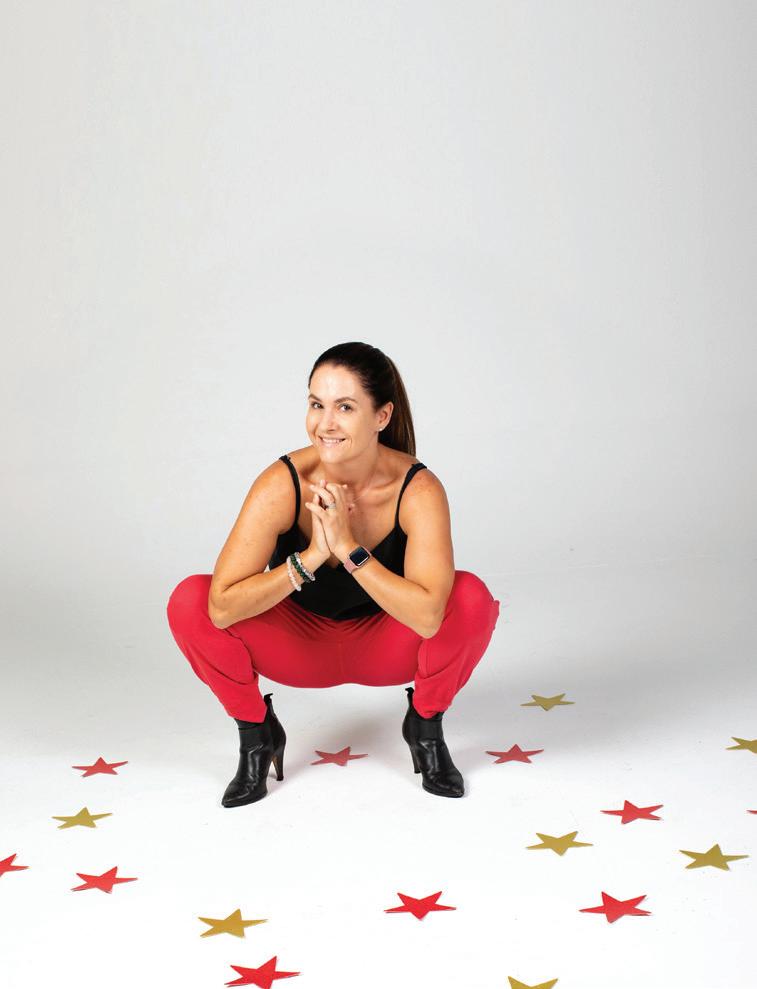
Cover Photo Cover Model: Holly
Location: Danielle B Photography studio daniellebphotography.com.au
Editor and Publisher
Melissa McCullough melissa@mpnews.com.au
Design Sam Loverso sam@mpnews.com.au
Advertising Miriam Doe 0421 085 974 miriam@mpnews.com.au
General Enquiries info@peninsulakids.com.au

All material is copyright, and may not be reproduced without the express permission of Mornington Peninsula News Group, or the original copyright holder in the case of contributions. Copyright of contributed material rests with the contributor.


Disclaimer: The authors and publisher do not assume any liability to any party for any loss, damage, or disruption caused by errors or omissions, whether such errors or omissions result from negligence, accident, or any other cause.
This publication is not intended as a substitute for the medical advice of physicians. The reader should regularly consult a physician in matters relating to health and particularly with respect to any symptoms that may require diagnosis or medical attention.
Peninsula Kids is produced quarterly. 15,000 copies distributed between Mordialloc and Portsea.

Registered address: 63 Watt Road, Mornington 3931 Proudly
www.facebook.com/MorningtonPeninsulaKids www.instagram.com/mornpenkids
Editor Melissa McCullough
Welcome to the winter 2022 edition of Peninsula Kids magazine.

My first thought when sitting down to write this letter was, ‘Is this year flying by or what?’ Perhaps it is because we’re back to filling up our schedules with after school activities, sport on weekends, and dinners out with friends. Maybe we’re just not used to life moving so quickly because it has sort of felt on hold for a few years. With so much to catch up on I’m thankful the kids are once again doing all the things that make them happy. (And the things that make Mum and Dad happy, too.)
So, get out there and explore. Go for walks or rides, or skate around. Try the café you’ve been meaning to get to; their pancakes ARE that delicious. See that show that everyone is talking about. Be together and make awesome memories. Live.
You won’t regret it.
Congratulations to the winner of our autumn colouring in competition. We hope Gianna had a very happy Easter after talking home a gorgeous hamper of chocolate goodies courtesy of Chocolate Grove. (www.chocolategrove.com)
To celebrate the opening of the new Woolworths store located at Mornington Central we are giving away five $50 Woolworths gift cards. Grab your textas and flip to page 67 for your chance to WIN!

Until next time, keep warm and carry on.

Advertising
Miriam Doe


4 Peninsula Kids – Winter 2022
Design Sam Loverso
published by
Winner Gianna - age 10


www.peninsulakids.com.au 5 McMahons Road, Frankston VIC 3199 | 03 9784 0200 | johnpaul@jpc.vic.edu.au | jpc.vic.edu.au Discover our community of vibrant learning Apply now for Year 7 2024 Apply online via jpc.vic.edu.au Applications for Year 7 2024 are due by Friday 19 August 2022 Become a part of John Paul College’s community of vibrant learning. At the heart of John Paul College is the desire for the full flourishing of each student, across religious, physical, cognitive, creative, emotional and social domains. Bus service available to Carrum, Bonbeach, Carrum Downs, Skye, Chelsea, Seaford, Patterson Lakes and Sandhurst.
2022
AUSTRALIAN EDUCATION AWARDS
EXCELLENCE AWARD
2022
AUSTRALIAN EDUCATION AWARDS


EXCELLENCE AWARD

Spotlight
10 Do You Mean It?
The four stages of an effective apology.
12 From Playground To Office
Styling tips for busy mums.
16 Nature Play
There is a tidal wave of evidence highlighting the benefits of nature play for young children; Particularly on their well-being.
20 Refresh Your Finances
Jo & Carl Violeta suggest looking at five things to go into the new financial year stronger.


22 Conversation Starters For The Whole Family

Use these conversation starters to help every family member work through their feelings and manage their emotions more effectively fostering trust and strengthening family bonds.
24 Teaching Kids How To Compost
Not only is it a lesson in environmental awareness but you’re building sustainable habits from a very early stage.
26 Inclusion Matters
One in six Australian children experience social exclusion and the physical, emotional, and mental effects of this can be lifelong.
28 The Big Chill
The health benefits of swimming in winter.

12 12
28
Contents
20 22



8 Peninsula Kids – Winter 2022 In Every Issue 32 Party Planning 34 Little Bites 36 Things We Love 41 Days to Celebrate 48 Book Reviews 56 Ask the Expert JO & CARL VIOLETA www.violetafinance.com.au Pg20 REGULAR CONTRIBUTORS Special thanks go to the gorgeous and talented group of contributors who breathe life into every issue by sharing their best with us. LINDA MARTINUCCI www.simplyswapfoods.com.au Pg50 Cover DANIELLE BUSUTTIL www.daniellebphotography.com.au YVETTE O’DOWD www.facebook.com/groups/ SouthernNaturalParentingNetwork Pg30 & 64 KIM NORTON www.rainbowlighttherapies.com.au Pg22 Contents Local 30 Slide on Down and Let the Jumping Fun Begin Education 40 The Importance of Choosing the Right Primary School 42 Focus on Education 47 Reading Builds Resilience Among At-Risk Kids Recipes 50 ‘Simply Swap’ Recipes With Linda Martinucci Health 54 Good Mum vs Bad Mum 58 Good Mood Food 60 How to Keep a Well-Stocked Medicine Cabinet at Home Pregnancy & Baby 62 Five Things Women Need to Know About Their Pelvic Floor 64 Granny’s Guide to Bonding Creative 67 Colouring Competition 62 30 54 50
FINAL 2023 PLACES AVAILABLE ENROL NOW MOUNT ELIZA EARLY CHILDHOOD TO YEAR 12 T (03) 9788 7200 www.toorakcollege.vic.edu.au


Do meanyouit?
THE 4 STAGES OF AN EFFECTIVE APOLOGY
By Jaemin Frazer
When someone hurts you, you must protect yourself from them in case they hurt you again. This person is now dangerous. It makes sense that trust is lost. To trust a dangerous person is foolish. It is wise to be guarded instead.
Therefore, the idea that it just takes time to rebuild trust is naïve and simply untrue. Often time makes things worse. The mistrust and guardedness only increase. This person is still dangerous. To let them back in means they could hurt you again at any moment. The only way to trust someone again is if they are no longer dangerous. The only way a person could no longer be dangerous is to properly fix the damage caused to the relationship in the first place. All you need to rebuild trust again is an effective apology. The moment this happens, safety is restored, and the walls can come down.
Unlike the childish one-word apology, the adult apology requires four crucial steps to ensure you get back to ground zero in your relationship and are not stacking issues on top of issues.
1. Understand exactly WHAT you did wrong and how that made the other person feel.
To apologise effectively, your first responsibility is to communicate clearly that you accurately understand the mistake made. If you’re not sure exactly what you did wrong or why the other person is even upset with you, your apology makes no sense. What are you apologising for? If you do not agree that the accusation is accurate, rather than trying to placate the other person with the words they want to hear, you are far better off to push back and review the data until you are on the same page.
2. Understand and communicate WHY you behaved that way.
The next logical step is to communicate that you understand why you did it. If you are going to fix things and become safe again, it will require some self-awareness as to what was going on for you that made you dangerous in the first place. If you don’t know why you did it, how could you possibly prevent it from happening again in the future?
3. Genuinely empathise for HOW you made them feel.
Step three is the place for empathy. Humble yourself, step into the other persons shoes and see how it would feel to have been treated this way. Feel their pain and acknowledge that if someone had done this to you, you would also be hoping for a sincere apology. If you are actually sorry and you want to fix things, now is your chance to show it. When someone has accepted responsibility for their behaviour and is honestly sad they’ve hurt you, it makes it so much easier to accept their apology.
4. Make a believable plan as to why this is unlikely to happen again.
The final step in an effective apology is to talk about the future. Even if you’ve done the first three steps perfectly, you are not off the hook until you present a believable plan for your future interactions with the person you are apologising to.
To remove guardedness, all we actually need is a believable plan and the sense that it is unlikely to happen again. For this stage to be effective it must be believable to both parties. There is no point overpromising and underdelivering or you will be back apologising again tomorrow. It is your responsibility to put forward a believable plan about how and why things will be different in the future so that the other person can be confident the issue is unlikely to happen again. Conflict resolution may not be easy, but it’s certainly not complicated. When issues are not resolved completely there’s an inevitable build-up of resentment, guardedness, and erosion of trust. When these steps are followed, the walls come down, forgiveness can be given freely, and trust rebuilt. The space between you is clean again. We good? Yeah we are good.
Jaemin Frazer is the author of Leverage – How to change the people you love and get the relationships you deserve (Major Street Publishing $32.95). He is the founder of the Insecurity Project and specialises in helping entrepreneurs, leaders and business owners eradicate insecurity so they can show up to life unhindered by doubt, fear and self-limiting beliefs. He is widely recognised as one of Australia's best life coaches and a leading voice globally on the subject of personal insecurity. You can find out more at www.jaeminfrazer.com

www.peninsulakids.com.au 11
FROM PLAYGROUND TO OFFICE:
StylingTips FOR BusyMums
 By Carolina Giraldo
Working mums are a force of nature.
There are so many factors that go into one day, let alone an entire working week. Meetings and homework. Reports and lunchboxes. Presentations and the playground. It may seem as though transitioning your outfit from playground to office would be at best inconvenient and at worst, completely unrealistic.
Thankfully, style connoisseur and working mum of two, Carolina Giraldo, founder of Carolina Lifestyle, has been there and done that. Here she shares her top 7 tips for styling your wardrobe, so you can confidently pivot your runway from asphalt to office, effortlessly.
STRIP BACK AND TAKE STOCK
It’s often overlooked but this one simple tip is the foundation to your wardrobe; ensure you wear your clothes, and they don’t wear you. Do a wardrobe purge and bin or donate anything that you haven’t worn in 6+ months (except if it’s a special occasion piece) and get rid of anything that doesn’t fit properly. Having a closet cleanout allows you the space to focus on what fits, what you like, and what you wear most often. Then, from here, you can start to fill in the gaps.

YOU DON’T NEED TO REINVENT THE WHEEL
Once you’ve done an inventory of what you have, it’s time to fill in the gaps. With all this new wardrobe space it can be tempting to go all out and buy that little black dress you’ve been eyeing for months, or that fabulous kaftan for a holiday you’ve yet to book. But these pieces won’t be your everyday go-to’s. Start by taking note of what styles, colours, and shapes suit your body. From here you can base your new pieces upon this blueprint, knowing they will fit, flatter and match what you already have.
MAKE YOUR CLOTHES WORK FOR YOU
As the saying goes, ‘dress for the job you want, not the job you have’. This makes sense in theory, however, in execution with the added complexities of a working mum, it’s not so cut and dry. The key here is to find a level playing field between the playground and office. What similarities can you find between the two and what is the lowest common denominator? Depending on your job and its expectations, this will be different for everyone but by comparing the two, it’s easier to draw similarities and distinctions, allowing you to levelup basics and pare down formalities.
continued page 14...


www.peninsulakids.com.au 13 www.peninsulakids.com.au Visit platypusjunction.com.au or call 1300 261 685 + Brand new with natural and engaging environments flowing indoor to outdoor + Child-focused learning spaces from nursery to kindergarten + Experienced, private early learning centre offering nurturing and child-focused routines NEW CENTRE – 200 Warrandyte Road, Langwarrin South
VERSATILITY
Building on the point above, when finding a happy medium between playground and office, go for pieces that can work in multiple ways. A wide-leg pant in a neutral colour can be dressed down with a pair of flats and blouse or dressed up with heels and a blazer. A classic for a reason, a trench coat is a chic addition to any casual outfit and can be styled open or closed.
ACCESSORISE LIKE YOU MEAN IT!

Now we’ve got the basics down, it’s time for some fun! Bold, colourful or animal print accessories like scarfs, bags, sunglasses, and jewellery are the secret weapons of your wardrobe. A patterned scarf or bold earrings are easy to throw on in the morning and will compliment any neutral pieces, without having to plan around them. A pair of statement sunglasses combine form and function, adding a sleek finishing touch to any outfit.
ADAPT THE FLAT

Flats are a fantastic option for mums on the go, however, they may not be the best choice for your workplace. In this case, adapt your flats. Grab your favourite, tried and true’s and see if the brand has another, more premium version available. Gold or silver details are a great addition as they’re simple, yet impactful, adding a sophisticated element to your look. Sneakers are another go-to and in this case, white leather is a great option as they’re easier to clean than suede or synthetics and if kept in good condition, add a sporty, chic element to a more formal outfit.

INVEST IN A BLAZER
A tailored, well-made blazer is one of the most flexible pieces in your wardrobe. Patterned, plain or colourful, they work on top of just about anything including turtlenecks, singlets, blouses, and t-shirts, pairing perfectly with denim jeans or a pair of black trousers. Adding instant structure and intention, effortlessly, blazers are a wardrobe staple. Whether oversized or more tailored, both work well with a slim pant and pump heel.
As a busy, working mum, the last thing you need to add to your never-ending to-do list is to pack a separate change of clothes to take you from playground to office. It’s just not feasible, nor is it necessary with the tips shared above! With a bit of focus and strategic shopping, your wardrobe doesn’t have to be one or the other. If you can be both, why can’t your wardrobe?
www.carolina.net.au

14 Peninsula Kids – Winter 2022
We assist eligible adults and children in Frankston and on the Mornington Peninsula to access Covid-19 vaccinations.
The service can help with:
• Questions about COVID-19 vaccination and boosters, including current advice on when to be vaccinated after a Covid-19 infection
• Accessing appointments to a special low sensory clinic held at the Frankston Community Vaccination Hub
• Vaccination at home if health or other barriers prevents eligible people attending an existing vaccination provider
• Transport to and from the vaccination provider of choice. A support worker can also be provided
• Respite funding for a loved one when a carer attends for vaccination
• Respite funding for carers who might need to rest after vaccination
• Options to manage fear of needles or concerns about vaccination
• Assistance to arrange specialist Outreach Vaccination clinics in the community
www.peninsulakids.com.au 15 COVID-19 Peninsula Health Community Health Covid-19 Vaccination Information and Practical Support Phone: 0422 596 161 or email: COVIDvaxsupport@phcn.vic.gov.au Funding for this service is
the Priority Communities Unit, Department Familes, Fairness & Housing.
provided by
By Hannah Candy

Atidal wave of evidence highlighting the benefits of nature play for young children, particularly on their well-being, development and learning, has been picking up momentum for some time now. Connecting with nature helps us to understand and care for ourselves, each other and our Earth. Playing in and with nature is a simple yet powerful tool that can provide huge benefits that contribute to happy and healthy children.
continued page 18...


AV13-21 Your child's future comes FiRST at ... • e!':�sr1,-, '-' 1� Early Learning 12484814-AV13-21 PAKENHAM ENDEAVOUR HILLS HASTINGS FRANKSTON STH NARRE WARREN NTH 5922 2040 9700 1922 5979 2831 9783 3390 Opening July 2022 Childcare, Early Education and Kindergarten • Bush and beach kinder • Incursions and excursions • Music and movement • Yoga sessions • Cooking • Swimming lessons FUTURE BUILDERS FUTURE ENGINEERS FUTURE ENVIRONMENTALISTS FUTURE CHEFS FUTURE PAINTERS FUTURE MUSICIANS FUTURE BOTANIST info@fel.vic.edu.au ABOUT CHILDREN, BEING CHILDREN
Nature play gives young children the opportunity to connect with the natural world. If we want them to know this place first over a digital world we need to allow for outdoor play opportunities; to know what soil in their hands feels like, what summer flowers smell like and what a hollow tree looks like. These natural experiences are a sensory experience that help to build a knowledge and experience of nature.
Can I jump from this log to that one over there? Outdoor play helps children to build trust in their own capabilities. When they don’t make the leap between logs, or the swing between branches, they quickly learn to trust their own limits. They then come to know that we as adults trust them as capable. We are building solid foundations for their further development. Learning to trust their physical capabilities like running, jumping, swinging can give children greater confidence in social, emotional and
Play is where children get to make their own decisions. Learning to make choices in a child’s life is a big step in their journey to independence. As adults we need to allow this to happen by stepping back to permit unstructured play. When I watch and listen to the children playing in the tree house I don’t feel the need to turn everything into a learning opportunity or activity. Being outside in nature can help adults to sit back and quietly observe how children are making choices for themselves.
While we need to support independent play, children still need an adult to ‘hold space’ in order for them to reach a state of free flow play where they feel safe. Our presence is important to their play and sense of security. When children need us either physically or emotionally we are right there for them again.


18 Peninsula Kids – Winter 2022
When play is taken outdoors I get the sense that this same ‘holding of space’ dynamic happens, this time with Mother Nature being the one who can allow children to feel safe and secure in their play. It is in the fairy tree house, the mud kitchen or the chicken pen that I witness children feeling comfortable enough to let their play ‘go, to’ exactly where it needs to be. Experiences outdoors are a doorway into connecting with Australian Indigenous perspectives. Through stories, songs and language children can learn about the Indigenous culture relevant to the area they are playing in and the traditional connections to the land. We have the opportunity to foster a deep appreciation, respect and care for the unique Australian land and animals. Naturally, these experiences will help future generations to bridge the gap between Australians and promote reconciliation and harmony.
Hannah runs nature-based play sessions aiming to connect children to nature through a balance of engaging activities and unstructured play. Sessions include nature inspired craft, imaginative play, music and sensory activities. Sessions run weekdays from 9:30 - 2:30 in the Western Port area. As group sizes are very small bookings are essential. Contact Hannah for more information and to make a booking on 0479 060 355 or check out her facebook page @Bushkinda


www.peninsulakids.com.au 19 Come and join the fun! Our multi-award winning classes will introduce you and your baby (or babies) to a world of sensory delights, where you can learn about your baby's development, spend quality time with each other and enjoy meeting other new parents Sensory and learning development classes from birth to 13 months: Babies of the Peninsula... Mornington Thursday Somerville Friday MFTTA STADIUM - CIVIC RESERVE RECREATION CENTRE 350 Dunns Rd Mornington MORNINGTON PENINSULA & FRANKSTON CITY TABLE TENNIS ASSOCIATION INCORPORATED MORNINGTON PENINSULA & FRANKSTON CITY TABLE TENNIS ASSOCIATION INCORPORATED AFFORDABLE NON CONTACT SOCIAL PLAY AND COACHING SPINNEROOS 6-12 Y.O. MIXED AND GIRLS ONLY FRIDAY NIGHT JUNIORS M: 0498 003 788 E: mftta@outlook.com W: mftta.org.au
REFRESH YOUR FINANCES TO GO STRONGER
INTO THE NEW FINANCIAL YEAR
By Jo & Carl Violeta
As busy parents, it's hard to keep track of dates and plan for the future when we’re dealing with the day-to-day realities of looking after kids, balancing our budget, paying the mortgage, and trying to make ends meet.
With a new financial year around the corner, it is a great time to hit pause, grab a cuppa, and revisit your finances. Here are five things to look at that might help you save money and achieve your money goals in the next financial year.
REDEFINE YOUR MONEY GOALS
Review your money goals from the previous financial year and reassess your priorities for the year ahead.
Make sure your money goals are SMART: specific, measurable, achievable, relevant, and time-bound.
For example: “I want to put aside $10,000 into my savings account by the end of the next financial year so that I can buy a new car without debt.”
A savings goal is just one example of a financial goal. Others might include:
• Building your financial knowledge
• Buying a home
• Building your superannuation
• Starting to invest
• Paying off debt
REVIEW YOUR BUDGET
Download your last three months of bank statements (take a deep breath) and go through them line by line to understand where your money is going.
Create a budget to track income and expenses. Ideally, you should be earning more than you spend so you can use the surplus to build your savings or to pay down debt.
Need to reduce expenses? Perhaps you can cull a streaming service or eat at home an extra night per week.
There might be a cheaper deal for your utilities or health insurance (if you have it). Find out what deals are on offer on some comparison websites. Then call your providers and tell them you’re shopping around; they may offer you a better deal to keep your business.
REVIEW AND (POTENTIALLY) REFINANCE YOUR HOME LOAN
If you own your home, it’s smart to review your mortgage every 6-12 months to make sure you’re still getting the right deal for your circumstances.
Refinancing your mortgage to a lower interest rate could save hundreds of dollars on your repayments every month.
Be mindful of exit fees and penalties though, and check that the new mortgage has all the features you want and need (such as the option to make extra repayments).
You could also try negotiating with your current lender directly. Call them, let them know you’re shopping around, and ask for a better rate.
REVIEW YOUR SUPER

Set a retirement savings goal. Most people need about two-thirds of their current income per year to maintain their lifestyle. Then create a plan to start growing your account.
Use the myGov app to find out if you have any ‘lost super’ that the Australian Tax Office is holding. Then authorise your current superannuation fund to conduct a search on your behalf using ‘SuperMatch’.
If you have multiple super funds, consolidating them makes it easier to track your super and means you're only paying one set of fees. Finally, consider paying a portion of your savings into your super account. Talk to your accountant about ‘contributing extra to super’. With this option, your employer deducts extra money from your pre-tax pay and pays it into your super account.
IMPROVE YOUR CREDIT SCORE
If you’re looking at borrowing money, getting a home loan, or refinancing your mortgage, you might want a good credit score. Your credit score is a number that represents your money borrowing reputation. The higher the score, the more trustworthy a borrower you’re considered to be.
A poor credit score could prove a challenge when applying for financing.
ASIC’s MoneySmart website lists reputable services where you can find out your credit score for free.
20 Peninsula Kids – Winter 2022
Unfortunately, there’s no magic fix to instantly improve your credit score. However, these strategies may help:
• Pay credit cards and bills on time
• Try paying off any debt that has gone to collections

• Lower your credit card limits
• Limit the number of credit enquiries you make (the number of loans you apply for)
Start the new financial year strong
These five actions can help you know exactly what’s coming in, where it will be spent, and what you’ll do with the rest (because there WILL be leftovers!) over the next financial year.
We’ve shared general information here to get you started, but we also recommend speaking with your financial planner, accountant, or mortgage broker (or all three), depending on your goals.
These finance professionals can offer personalised advice to help you refresh your finances and achieve your money goals in the new financial year.
Jo and Carl Violeta are self-confessed numbers nerds, parents of an energetic toddler and a super switched-on teenager, and co-founders of the award-winning business, Violeta Finance. They are a husband and wife team who are passionate about empowering their community with financial education, love the odd glass of wine, and get a kick out of helping families achieve their homeownership and financial dreams.
Conversation Starters for the Whole Family
By Kim Norton
Conversation starters that warrant more than a one-word response open the door for a healthy exchange of daily events, ideas, feelings, and thoughts. It gives each family member permission to not only share the events of their day but also their thoughts and feelings on what transpired, what they could have done differently and how it did or did not affect them.
With eyes glued to mobile phones, kids coming and going and parents having to work after hours, this healthy exchange of information is being lost not only to our kids and teens but also to adult family members.
Texting, and texting in abbreviation, has become the norm replacing the valuable exchange of ideas and information through discussion and reflection. One-word responses have become the norm to our questions and emojis have replaced all forms of the written word in text. Ask the usual question of “Did you have a good day today”? and you will get the obligatory “yup” or “nah” or thumbs up emoji when asked in text. Ask “Tell me something that made you happy today”? and you will evoke a much more emotional response.
Using conversation starters like those listed below can help every family member work through their feelings and manage their emotions more effectively fostering trust and strengthening family bonds. It also allows for building on vocabulary and communication skills as well as having the potential to be informative and lots of fun.
Give it a go. Make the time to sit down with the family either at dinner or in the car ride home from school. Put down the phone. You might just be surprised what you learn about them, and yourself.
Some examples to get you started include:
1. What is your biggest wish?
2. What is your biggest fear?
3. What do you daydream about?
4. What are you thankful for today?
5. If you could change one thing in your life, what would it be?
6. If you could change your name, what would you change it to?
7. What is the one thing you like most about yourself?
8. If you could be a colour, what colour would you be?
9. If you had one day when you could do anything at all, what would you do?
10. What are three things you couldn’t live without?

22 Peninsula Kids – Winter 2022
11. If you could invent a rule that people HAD to obey, it would be?
12. If you were an animal, what would you be?
13. If you had a super-power, what would you want it to be? Why?
14. If you could be invisible for a day, where would you go? What would you do?
15. If you had a time machine, would you use it? What time would you visit and why?
16. What was the best gift you ever got?
17. What will you do when you are old? (PS: How old is “old”?)

18. What is the one thing you will never ever do?
19. The problem with being you is that?
20. If you had $10 million, what would you do with it?
21. If you had to go live on a deserted island, what would you take with you?
22. What did you dream about last night?
23. What goals do you have for the next week, month, 3 months etc?
24. What do you think you are good at?
25. If you had three wishes, what would you wish for?
26. Give me an “I am” statement.
27. What is something you are looking forward to?
28. How is (insert friend’s name)?
29. Describe yourself in 3 words.
30. Tell me something that made you happy today.
Kim is the founder of Rainbow Light Therapies and is a Holistic Counsellor specialising in stress and anxiety management for kids, teens, and adults. Kim provides a unique, intuitive, and individualised therapy approach through individual, small group, and family counselling sessions both online and at her studio in Langwarrin. Also working with special needs kids, Kim runs sessions and workshops for people of all abilities on assorted topics throughout the year. Please see www.rainbowlighttherapies.com.au for more information.
Teaching Kids how to
By Alan Chan
Composting is great fun, as well as an engaging and educational task for children. Not only is it a lesson in environmental awareness but you’re building sustainable habits from a very early stage. The next time you’re at the dinner table, have a discussion with your children about why composting is helpful for the environment and the amazing benefits and rewards that can be reaped from upcycling food scraps. The size, sight (and contents!) of the compost bin might be a bit daunting and unappealing at first, but there are some things you can do to help them on this journey.

PERSONALISED COMPOST BUCKET
Get the kids a small plastic bucket and give them the responsibility to fill it with kitchen scraps for carrying to the compost. Having ownership of the bin makes it more personable and fun; you can also encourage your child to decorate the compost bucket with some stickers or markers. The idea of the compost bucket is to keep this in the kitchen as you prep food for family meals, and once it’s full it can be taken out to be emptied into the compost bin.
TURN COMPOSING INTO A GAME
The compost bin should include a mixture of brown ‘crunchy’ materials such as dried leaves, sticks, newspaper and cardboard. It should also be a mixture of household green waste such as fruit, vegetable scraps, and grass clippings. Use a trip to the park as an opportunity to find leaves and sticks –count them, compare shapes and colours, and take a pick-up stick to make collecting fun. Count each one together as you place into the compost bin and use the opportunity to talk about how leaves and scraps will become soil to nourish new plants and trees. If you have a bokashi bin or aboveground compost, you can set up a mini garden or herb garden for the kids, and use the compost as fertiliser.
WORM FARM COMPOSTING
Make your own worm farm compost bin out of a plastic bin by drilling holes on the top, base and sides of the bin. Kids are fascinated by worms and this is a great idea to introduce them to composting in a really hands-on way. Get your child a magnifying glass so they can spot the worms in the bin – they will love this! It’s easy to buy live worms to kick start this project; the bags normally come in 500 or 1000 worms. You will need 500 worms to get yourself started as well as bedding such as newspaper torn into strips. Keep the bedding evenly moist by misting it with water using a spray bottle. Kids will love feeding the worms with fruit and vegetable scraps. Place these scraps in your child’s compost bucket or use a favourite bowl and let the kids place the scraps into the worm farm, spreading the food waste evenly.
READ CHILDREN’S BOOKS ABOUT COMPOSTING
A great way to engage children about composting from an early age is to expose them to fantastic literature on the topic. Reading books to children is not only fun but very engaging and helps kids understand the concepts of waste, recycling, and upcycling. Some of my favourite books about composting are:
• Compost Stew by Mary McKenna Siddals
• Composting: Nature’s Recyclers by Robin Koontz
• Save The Scraps by Bethany Stahl
• The Little Composter by Jan Gerardi
• Green Machine: The Slightly Gross Truth about Turning Your Food Scraps into Green Energy by Rebecca Donnelly
• What’s Sprouting in My Trash? A book about composting by Esther Porter
• Compost: A family guide to making soil from scraps by Ben Raskin
PLANT FLOWERS AND VEGETABLE SEEDLINGS
Once you’ve established your compost bin and your compost is ready to use in the garden, encourage your kids to plant their favourite flowers using the homemade compost. Popular and easy to grow flowers include pansies, marigolds, sunflowers and daisies. Something really bright and colourful can help inspire and encourage children to do more composting as they can see the benefits of this in the garden and watch their flowers grow and flourish. Alternatively, children can plant vegetable seedlings such a tomatoes, lettuce, chives and dill in the garden bed using the compost. They can do a fun experiment together by comparing seedlings grown in the compost and one without and allow them to spot the difference in growth each week. Get your kids to take photos and do drawings of their plants. The magnifying glass will come handy here again!
Take these helpful hints and allow your children to join the journey of home composting. Take your time, enjoy the journey, and know that it’s important to have regular discussions about waste so you can maintain this excitement for children to keep caring for the planet for many years to come.

Alan Chan of @plant.jungle is a millennial plant-fluencer, obsessed with creating and growing his own indoor jungle. Via Instagram he shares tips, tricks, and lifestyle hacks for gardening in small spaces, propagation, and plant care. Alan, aka the ultimate green thumb, has created a feel-good space online that welcomes and nurtures any like-minded plant lovers.
Alan is working with the eco conscious team behind plant-based meal delivery service, Soulara, to ensure we’re thinking twice about our impact on the planetnourishing ourselves with whole foods before giving back to the planet in a more sustainable way. One for the mums and dads who might be too busy herding their pack of hungry herbivores to even get around to prepping dinner. www.soulara.com.au
Discover more at your local Library
Hastings Somerville Mornington Rosebud Sorrento Seed Library

Free Seeds to help grow your garden

www.peninsulakids.com.au 25
Learn a new Language Technology Classes Haynes Manuals with Mango Languages through our eLearning Portal Get help with your devices Access to a wide range of Motorcycle and car manuals Free Talking Books Available on CD or download to your phone or tablet through the BorrowBox app
INCLUSION MATTERS
By Louise Larkin
As a kid there is nothing more exciting than being invited to a friend’s birthday party or a play date. Lots of fun, games, and laughter. It’s what childhood memories are made of. However, what happens to the hundreds of kids who miss out on these important childhood experiences each year because they may appear ‘different’ and are excluded?
One in six Australian children experience social exclusion. The physical, emotional, and mental effects of this can be lifelong. It can affect children’s sleep, educational achievements, behaviour and cause depression and anxiety. Children become aware of their social rejection from around the age of eight.

Sadly, the pandemic has added another complex layer to social exclusion. The quality of social connectedness was lost due to the social distancing during the pandemic. Social connectedness is one of the predictors of mental health and provides a protective layer to ensure a good mental health.
Without this layer the quality is lost. Social connectedness is a core human need and improves physical health and, mental and emotional well-being.
Friend In Me is a charity that is on a crusade to break the cycle of exclusion and prevent the negative effects in childhood and adulthood. This organisation wants to reduce the feelings of loneliness and isolation that children can experience by bringing families together to meet, share, laugh and connect with each other.
Their goal is to have reached 5,000 families by 2025. By 2030 Friend In Me wants to make sure that no child is left behind.
To make long-lasting change, the foundations of inclusion and disability awareness need to flow into all parts of the community.
Friend In Me’s vision is to see inclusion become a part of the everyday, for everyone. There are many opportunities for the community to be more inclusive and remove the stigma around a child being ‘different’. There are simple ways that families can make sure every child is included in their community.
TRUST A PARENT WHEN THEY SAY THEIR CHILD HAS A DISABILITY - Just because you can’t see the disability doesn't mean the child doesn't have it. When a family discloses a disability to you they are entrusting you with private and confidential information; it isn't your role to then tell others.
DO YOUR RESEARCH - The best starting point is to talk to a pediatrician or your therapist about a particular behavior or diagnosis to get a better understanding what this means. In order to better understand any diagnosis or behvaiour it’s best to research thoroughly. Be very wary of information found on Facebook and no researched based strategies.
BE SENSITIVE - with the language that you use. Although people may seem ok with the diagnosis there is still grieving that occurs.
Parents need to be regulated to then co-regulate with their children. Young children cannot self-regulate.
Teach children that all brains work differently - All behaviour is a form of communication that needs to be investigated and not dismissed as "naughty behaviour". Discuss openly and early the child's feelings and how they make their body feel. For example, “my body is feeling tense, I'm getting angry." Remember it’s baby steps.
ADVOCATE FOR ALL CHILDREN IN ALL ENVIRONMENTSHave high expectations for all children. You may need to make modifications for each child based on their abilities, but all children are capable.

26 Peninsula Kids – Winter 2022
For more information visit www.friendinme.org.au
Sanctuary of Early Learning

Your
With over 20 years experience, we are committed to continuous quality care and to ensure a full balanced development for each child in our expansive natural learning environment.


Frankston House Sanctuary of Early Learning 1-3 Vera Street Frankston E info@frankstonhouse.com.au
9783 1117
frankstonhouse.com.au
Eliza House Sanctuary of Early Learning 41 Baden Powell Place Mt Eliza E info@mtelizahouse.com.au
9787 0788 W mtelizahouse.com.au
House Sanctuary of Early Learning 6-10 Govan Street, Seaford E info@seafordhouse.com.au
8796 3000 W seafordhouse.com.au
P
W
Mt
P
Seaford
P
most precious people are our priority Curiosity and wonder lead to a natural desire to learn
TheBIGchill
By Fenwick Ridley
Agrowing number of cold-water swimmers swear by the mental and physical benefits

WHEN YOU'RE CHILLED, YOU'RE MORE STRESS-RESISTANT
Initially, cold water swimming puts stress on the body both physically and mentally, but just as stress causes an adrenalin surge (which culminates in a person’s fight or flight response), it also kick-starts the immune system and activates the body’s defences. Just think, every time you repeat your cold-water swimming experience, you’ll have more control over your stress response, which will ensure you’re in better shape to cope with stress when you’re out of the cold water too.
CHILLED TO THE BONE, BUT GREAT
While cold water will increase our capacity to cope with stressful situations, it also reduces inflammation as well as our risk of depression too. While it’s easy to focus on the cold, it’s what happens afterwards—the surge of endorphins—that’s the real secret. You can expect heightened alertness, improved concentration and a mood lift following each cold-water swim, because, as well as activating your endorphins, cold water swimming is also a form of exercise, which is proven to help mental health.
RE-WIRED CIRCULATION
Plunge into cold water and while you may only feel the electricity of liquid burning cold, your blood is on the move! Essentially the cold water allows your blood and oxygen to flow faster around your skin, your vital organs, and your body in general. It solidifies in that overwhelming sense of warm flush you feel when you get out and warm up. Basically, cold water swimming is a win for your heart health!
HOW TO GET STARTED?
Ever heard the phrase 'you have to learn to walk before you can run'? Well, the exact same goes with cold water swimming. Before you get carried away, understand that every cold plunge will be an individual experience and your body can react differently every single time depending on external factors.
In the beginning, it needs to be a staged activity; keep it small calm and collected. Enter the water in a normal state; there's no need to 'warm up' prior as then you're heightening your body temperature, which can lead to cold water shock.
On the 1st or 2nd run, you may not last long and that's normal; don't fret, you'll get there in time. A lot of people think they can go from swimming laps in a normal pool to cold water and that's simply not the case. Swimming in lower temperatures can burn up to triple the amount of energy and is not to be taken lightly.
As you enter, don’t focus on swimming; just focus on being in a small space, taking measures on the body's change into cooler conditions and allowing the body to go through a huge change in temperature and energy.
Try to avoid following your instinct and splashing your chest; instead, go for your arms and especially your face, as this is known to have a calming effect and can reduce your heart rate by approximately 1025%. By instantly splashing your chest, you'll heighten your gasp reflex and that's when we see people go into panic mode.
Next up, I advise a blowing out technique for getting your breath under control. This shouldn't be a massive breath in, but a strong one; there's no need to completely fill the lungs.
Stay in until you've had enough. If you get to a point where your hands are numb, you’ve gone too far. Take it one step at a time.
THE HEALTH BENEFITS OF SWIMMING IN WINTER

THE EXIT
When leaving the water, bear in mind that your body temperature will continue to drop even once you're back on land. Take this activity slowly and your body will reward you afterwards.
To dry off, gently pat yourself down with a towel, avoiding any vigorous drying techniques as this can lead to sensitive skin and itching. Get yourself cocooned in clothes and a good quality change robe. Warming yourself from the inside out is crucial.
Next up, it's time to get a bit of fuel in to replenish all that energy you've just burned off. For this I recommend something like a hot chocolate, as it acts as a delivery system for sugar, along with that liquid heat. Warming back up can take longer than the swim itself, so don’t plan to rush off; give yourself time to relax and enjoy those post plunge benefits. Your post dip response will depend on what you've done prior. For example, were you stressed, dehydrated or not properly fueled? These elements can kick us out of the water sooner and cause us to shiver for longer afterwards.
Whilst this may all sound a bit daunting, the euphoric feeling does become addictive and the positive mentioned above, outweigh any rocky starts. So long as you start slow and don't have too many expectations, it will become an enjoyable ritual that you can't live without.
GET THE RIGHT EQUIPMENT
Part of what has made cold water swimming so popular is its simplicity. Below are a few additional items that can make it a little more enjoyable.
1. Changing Robe
Unlike towels, which aren’t the best insulators, throwing a Red Paddle Co waterproof changing robe into the mix is ideal for changing and warming up comfortably.
2. Swimming Cap
Not only are swim caps helpful for managing long hair and keeping you warm, but they are often brightly coloured which will help keep you nice and visible. I recommend silicone over latex as it’s more environmentally friendly.
3. Swimming Tow Float
Like a brightly coloured swimming cap, using a swimming tow float helps with more than just visibility on those murky weekend swims. They can also add as a perch to hold onto if you or your family members need a breather; some even hold a drink, snack, or mobile phone!
Bring the Friends
Inviting family and friends along can turn cold water swimming into a social event as much as anything else.
Fenwick Ridley is an ice swimmer, adventurer, cold-water junkie and a Red Paddle Co ambassador. www.red-equipment.com.au
Slide on down&let the jumpingFun begin!
Kidds Day at Inflatable Land Mornington
By Yvette O'Dowd
Entertaining a toddler when it is too cold and wet outside can be challenging. They need lots of big movement to develop strong muscles and bones but playgrounds aren’t always practical in winter.
The Kidds Days at Mornington Peninsula Inflatable Land offers a wonderful retreat for babies, toddlers and adults to explore in a safe indoor play space. It's the perfect solution.


We visited on a Wednesday morning. My daughter and I took along her nineteen-month-old son. We were impressed by how accessible the building was, with dedicated parents’ parking right by the door on weekday mornings. Inside we found a multi-functional venue including an onsite cafe. We were greeted by smiling staff who made us feel welcome.
With a focus on the very young, this play space is designed for babies, toddlers and preschoolers under school age. Open from 9.30am to 3.00pm, it fits perfectly around school drop-off and pick up for families with older children. Parents groups are welcome.


They have thought of everything, with socks available for purchase if you forget to bring your own for the no-shoes play space! There are change tables in all toilets, making them accessible for every parent, and they have even provided spare nappies, just in case. There are healthy toddler meals on the menu as well as old favourites like party pies and cocktail frankfurts!
Our little one didn’t need to be asked twice if he wanted to play! This age has a short attention span so having lots of activities to move between meant he could explore at his own pace and experience new challenges when he was ready. It was his first time in this kind of play environment and he couldn’t quite believe his luck! There was no chance of boredom with a selection of options to choose from.
The balls were a big hit as was the climbing tower with a fun slide just the right size. The soft play zone offered opportunities to climb, jump, crawl and balance which kept our toddler focused for quite a while. Large foam blocks were great fun to build up - and knock down.
Ride-on toys, trikes and cars could zoom around the track and there is a jumping castle just the right size for little ones. A train table, play kitchen, cubby house and dedicated baby play area mean there is something for everyone. Our little one really enjoyed a mini basketball hoop at just the right height - it's the little things that make a big difference!
It was great to see crawling babies being able to play in a safe space with a range of toys to engage them. The relaxed atmosphere meant they could stop for a quick breastfeed on the go before resuming exploration.
Burning up all that energy meant it was soon time for morning tea. We enjoyed a sweet treat with a coffee and a chai, while chicken nuggets (and sauce!) went down well with the little one. High chairs were readily available and there were plenty of tables occupied by parents and grandparents also taking a break. The cafe also provides alcoholic drinks for the grown-ups after 12pm. The seating was right beside the play area so children can be easily supervised while adults sit and chat.
It was hard to believe we had been there for two hours when our little one finally began to tire and it was time to go home for a nap. Kidds Day was a great activity for our little climber who loves exploring and trying new things.
$12 - Kids 1 to 4
$5 - Babies under 12 months
34 Milgate Dr, Mornington
W: inflatablelandmornington.com.au
Local




Fairy Jasmine Entertainment

Specialising in fairy and princess themed birthday party entertainment packages. Packages may include singing and dancing, party games, magic tricks, face painting, and balloon twisting. Various characters available including Elsa and Anna.


M: 0400 510 813

W: fairyjasminesentertainment.com
Alaska’s White Castles
A boutique hire company with a difference offering magnificent white bouncy castles, balloon garlands and stunning preserved flowers. You're next event will look absolutely dreamy whilst offering guests a whole lot of fun.

E: Hello@alaskaswhitecastles.com.au
M: 0422 204 611
W: alaskaswhitecastles.com.au

*** COMING SOON!
***
Mad Scientist Escape Room
Just for Kids (Ages 7-12)
Pit your wits against the evil Professor Prism. Perfect for birthday parties.
Locked in Escape Rooms Mornington.
W: lockedinescaperooms.com.au


The Science Shed
Looking for a party with a difference? Children love the magic of science as the Scientist shows the audience some fun & engaging tricks of Science in your home, local park or hall.


E: info@thescienceshed.com.au


Mornington Inflatables
While the kids are entertained on our supersized fully supervised inflatable playground, adults can kick back and relax in our fully licensed bar. Parties can be catered or uncatered.
E: inflatablelandmornington@gmail.com


W: inflatablelandmornington.com.au
Hopscotch Kids Party Toy Hire

*2 DAYS FOR THE PRICE OF 1*
Ditch the iPad for a launch pad this weekend. Hire a jumping castle online and you get to keep it for the whole weekend!!
32 Peninsula Kids – Winter 2022
Pa Experiments 01 R Explosions 02 Ty Explore 03 Fu Slime 04 N! Surprise 05
partyPLANNING
A L L S K 8 H O U S E P A R T I E S I N C L U Find us on social media! H o t & c o l d f o o d D r i n k s A d m i s s i o n & S k 8 h i r e L a r g e 2 0 0 0 s q m C o v i d - S A F E v e n u e VGREAT ALUE!!CATERED PARTIES JUST $25p/person I n v i t a t i o n s T a b l e c l o t h D e c o r a t i o n s 3/2 Amayla Cres Carrum Downs Vic 3201 P: 03 9773 6799 E: info@sk8house.com.au T O D A Y B O O K O N - L I N E S t r e s s - f r e e p a r t y f u n f o r e v e r y o n e !
from $210
Party Packages Available
partyPLANNING
Fairy Freckles and Friends
We are professional fun makers that come to you! Specialising in face painting, balloon twisting, magic shows, games and roving characters, fully equipped to add some sparkle to your next kid's party or special event.

M: 0407 326 726
W: fairyfrecklesandfriends.com.au
Top Fun Shack
The Shack is back! All your kids (& big kids) entertainment at the one location. Party packages available, bookings essential.
A: 1223 Pt Nepean Rd, Rosebud
E: info@topfunshack.com.au

P: 5912 2444
W: topfunshack.com.au
Kidzshed
Kidzshed


Book your next kids themed party with us!
Book your next kids themed party with us!


Amazing packages including use of the party room, hot & cold food, host, invites & more.
Amazing packages including use of the party room, hot & cold food, host, invites & more.

Venue also available for private hire.
Venue also available for private hire.
A: 222 Marine pde Hastings P: 5906 5900
A: 222 Marine Pde Hastings
E: kidzshed@gmail.com
M: 0409 875 944 E: kidzshed@gmail.com
P: 5906 5900
M: 0409 875 944
33
OUTDOOR SEATING & PLAY AREA! GLUTEN FREE FOOD OPTIONS! BOOK YOUR NEXT PARTY WITH US! GIFT VOUCHERS AVAILABLE! kidzshed.com.au
Parties
Parties GREAT VALUE! $17.95 per child Minimum 10 children. GF options available Mon - Sun excluding P/H. Add On Party Platters available upon request (extra cost). Welcome to bring your own entertainment or we can organise for you (extra cost). Contact: Kera Zaltsberg, sales@ryehotel.com.au, Phone: 0411 732 332 All Rye Hotel Parties include: - Unlimited access to our playground/outdoor courtyard for 2 hours - Catering & Soft Drinks included for each child - Party Hats & Serviettes - Full access to hotel meals, coffee/tea/bar facilities (at extra cost) Catered Party Pack includes: - Party box per child - 2 x chicken nuggets, 1 x party pie, pizza platter for table, hot chips - Chefs fruit bowl, soft drink - Lolly bag to T/A
Birthday
Birthday



4 6 •Rye Kids Menu Cubby House Coffee Hotspot Healthy Lunches Delicious Breakfast Best Bites Inno 1008 Mornington-Flinders Rd, Red Hill (opposite Primary school) P: 5989 2171 www.nordie.com.au Kids MealsONLY $5 on Sundays - June, July, August - T&C Apply 2415 Point Nepean Road, Rye, VIC 3941, P: 5985 2277 Eat & Play Eat & Play at Rye Hotel at Rye Hotel 2 4 2871 Point Nepean Rd, Blairgowrie hey@pandablairgowrie.com.au P: 59 888 261 www.pandablairgowrie.com.au PANDA CUBS CLUB $5 KIDS MEALS Monday to Friday 4.45pm-5.45pm •Blairgowrie ...& beyond! I www.banksbrewing.com.au 195 Main St, Mornington P: 5923 8868 www.burgerheaven.com.au 5 2415 Point Nepean Rd, Rye P: 5985 2271


3 5 9 7 I •Mornington Hastings• •Seaford • Mt Eliza •Red Hill 8 GREAT FOOD FOR BOTH ADULTS & CHILDREN!! YUMMY HOME MADE FOOD LOTS OF GLUTEN FREE OPTIONS 222 Marine Parade Hastings P: 5906 5900 www.kidzshed.com.au 9 8 6 Perfect location for a family feast across the road from Rye pier & park. P: 0477 202 265 www.mrbentley.com.au FAMILY PACK 4 x Burgers 1 x Lge chips 1 x Onion rings 1.25lt Coke $65 Peninsula Kids is showcasing the wonderful places available on the peninsula and bayside region to take the family out for a stress-free bite to eat! Let our map guide you and your hungry guppies. Here you'll find a few of the best, affordable cafes and venues ...enjoy! 7 31 Ranelagh Dr, Mount Eliza www.thefamishedwolf.com.au 31 Ranelagh Dr, Mount Eliza thefamishedwolf.com.au Great value kids menu starting at HungryliketheWolf??? Hugerangeofburgers www.commomfolkcoffee.com.au
Tings
V2 Hybrid Fitted Nappy Covers
Each cover is lined with 4 layers of soft and absorbent bamboo terry for ultimate comfort and reliability. Each of the designs have adjustable hip and rise snaps and super soft elastics for maximum comfort and no red marks! These innovative hybrid fitted nappy covers (available in OSFM: Fits 4-17kg LOSM: Fits 10-22kg) feature a built in water-resistant PUL outer, so no additional cover is required! Featuring a waterproof tummy panel to prevent wicking at the front, keeping bub comfy and dry, extra length in the wingspan, 3 columns of rise snaps on both sizes - for an improved fit and an even bigger LOSFM shelldesigned to fit up to 22kg!
RRP: $25.95 www.monarchstore.com.au
Folli’s Natural Eyelash Growth Serum

Developed with non-toxic chemicals, Folli’s Natural Eyelash Growth Serum is suitable for those with sensitive eyes or who wear contact lenses. Designed to stimulate eyelash growth both safely, and effectively, their unique vegan-friendly formula ensures users can avoid the harsh chemicals often involved with lash lifts, eyelash extensions, or even mascara use. The Folli Natural Eyelash Growth Serum is available online for $88.00 once-off, or $66.00 for a monthly subscription.
www.hairfolli.com
GLO-UP Girls™
Show your #GLO with the newest, glowy-ist, on-trend fashion dolls to hit the toy store shelves in forever - the GLO-UP Girls™. Welcome to the world of GLO-UPwhere we believe a little #GLO-tivation is all you need to achieve your goals! With super cool fashions, surprise transformations and a face mask for YOU with every Doll, the GLO-UP Girls™ empower tweens to explore and celebrate who they are today and who they are becoming. Which GLO-UP Girl are you? Collect them all, share them with your besties, and get your GLO on! Suitable for 6+ years, the GLO-UP Girls™ are available for approx SRP $39.99ea at Target. For further information on GLO-UP Girls™, visit: www.gloupgirls.tv; Instagram @gloupgirlst

Ookkie Skateboards
First of their kind in the world, Oookie skateboards boast a handle so parents can hold onto their toddlers to help teach them the balance they need to learn how to skate, while the little riders can also hold onto their very own handle. These boards for beginners can also help develop core strength and stability, with some little skaters using them as young as 10 months old.
Revolutionising how kids learn to skate, the Ookkie is also a great alternative to prams for many families, as it’s easy to set up and packdown, fitting into the boot of any car. Ookkie aims to encourage families to get out and about in the great outdoors whilst kids learn to skate in the safest way possible.

Ookkie skateboards are available to purchase online for $179.95 each and are available in five colours.
Safety Helmet & Pad set RRP: $59.95
www.au.ookkie.com
hannahpad Pads Set
Environmentally friendly, cost-effective and pretty, these washable, reusable sanitary pads are a perfect way to rethink how you manage your menstrual period each month. hannahpad offers an alternative to using traditional methods which often end up in landfill. These pads are certified organic, come with a 100% organic cotton top layer, internal cotton layers and an external waterproof coating, and designed to prevent leakage.

Mini Starter (4 Pads)
RRP: $82.80
www.floraandfauna.com.au


The Floor is Lava!
Easy to play and learn. Promotes physical activity. Bright, colourful pieces. Kid and family friendly for indoor and outdoor play!

Age: 5+ Players: 2-6
RRP: $39.99
Exclusive to Kmart.
Edward the Emu at FAC

The award-winning creative team from Monkey Baa Theatre Company are back with a brand-new take on another much-loved tale, Edward the Emu. More than an adaptation, this is a unique imagining of two beloved picture books, Edward the Emu and Edwina the Emu, combining the plights of both emus in one heartfelt, clever and funny new tale.
Friday 12 August, 11am or 6pm Family pass (4 tickets) RRP: $100 www.artscentre.frankston.vic.gov.au
36 Peninsula Kids – Winter 2022
we
Our Stories
This brand new book series for kids aged 5+ has just arrived in all your favourite bookstores!
‘Maku’ was written and illustrated by Indigenous actor and artist Meyne Wyatt. Maku is in Year 3 and he dreams about one day being a movie director. He goes for a weekend away on Country with his Nan and Pop and finds some great ideas for his movie from the stories they tell him about the land.
‘When Granny Came to Stay’ was written by awardwinning Melbourne author, Alice Pung and it is a funny story about Granny’s visit from China and the way her ‘Pangzi’ (aka Fatty) realises maybe Granny’s not so bad after all..
Our Stories: Maku and Our Stories: When Granny Came to Stay are published by Macmillan Australia. RRP $12.99


www.panmacmillan.com.au
Wild Dog book pack

All books published by Wild Dog Books, available at all good booksellers. www.wdog.com.au
You Matter- Be Your Own Best Friend –by Sue Lawson, Sue Hindle & Prue Pittock

We all have days when we feel not quite right,and we all experience these feelings in our own way.
You Matter: Be Your Own Best Friend will show you simple things you can do to help yourself feel better.
It’s fun to use, easy to do, and you just might find it becomes your second best-friend!
Spike Surfs by Robert Lorenzon

Hi, my name is Spike.
When Rob chose me at the lost dogs home, he didn’t know I was going to become a surfing champion. Find out how I did it. A story of friendship and devotion.
We Are Australians by Duncan Smith and Nicole Godwin, with paintings by Jandamarra Cadd

For those born in Australia, it’s easy to take citizenship and its responsibilities for granted. But there is much more to being an Australian citizen than having a passport and the right to vote.
Talking About a Revolution
With her trademark optimism, sass, boldness and search for answers, across a collection of new and revisited essays, Yassmin Abdel-Magied explores resistance, transformation, and revolution.

RRP: $34.99
www.penguin.com.au
Vintage Knits

Camp Canberra by Krys Saclier and illustrated by Cathy Wilcox

How do Australian children learn about politics, democracy and currency? They go to Canberra: the nation’s capital city.
Join the student of Mount Mayhem Primary School as they travel from the National Gallery to Questacon, through engaging collage illustrations.
Emergency! Emergency! Vehicles to the Rescue by Rhiân Williams and Tom Jellett

Fire trucks, police cars and ambulances too! Here come the vehicles to rescue you.
A delightful picture book about the people who keep us safe and the vehicles getting them where they need to be.
Our Library by Donna Rawlins
The doors to our library are open. Every day something exciting happens.
Join Suzy and the children for a week of busy, bouncy, noisy, wiggly-jiggly, friendly fun. Which day is your favourite library day? Come in. Everyone is welcome!

People of the past knew the magic of a handmade garment—the uniqueness, the custom fit, the time and care taken by the knitter. In today’s world of mass-production, we crave the individuality and satisfaction that comes with creating a piece of clothing from scratch.
The new book, Vintage Knits, presents a curated selection of 25 vintage patterns taken from Australian books, newspapers and magazines of the 1930s, 40s and 50s, tested and updated to make them practical for today’s knitter. It features vintage material from these original publications with contemporary full-colour photographs of the garments as they have been recreated today.
RRP: $39.99
www.bookshop.nla.gov.au
Mickey Mouse Funhouse
Disney Junior Mickey Mouse Funhouse Communicator

Now, Disney Junior fans can give Mickey Mouse a call and get their Funhouse adventures in full swing with the Mickey Mouse Funhouse Communicator. This adorable light and sounds communicator is designed with Mickey Mouse’s iconic ears and features a lenticular Funny face screen that lights up. Enroute to their imaginative adventure, kids will love using the communicator to talk to Mickey Mouse. Press the button on the side to activate lights, sounds, and Mickey Mouse phrases. Kids can slide the communicator open and press the button for additional fun sounds and phrases. Ideal for little hands and big imaginations, the Mickey Mouse Funhouse Communicator is great for on the go fun.
RRP: $15
Disney Junior Mickey Mouse Funhouse Diecast Vehicle Mickey Mouse
Take a spin to Funhouse Forest with the Disney Junior Mickey Mouse Funhouse diecast vehicles. Made of sturdy metal, these 3-inch-scale vehicles look just like the colourful, self-driving cars from the Disney Junior animated series. Mickey Mouse comes seated in his red convertible coupe, ready to take off for new adventures with his friends. Great for imaginative play, kids will love rolling Mickey Mouse to new magical places inspired by the show, or that they dream up on their own. A fun addition to any Disney fan’s collection, why not collect them all: Mickey Mouse, Minnie Mouse, Goofy, Donald Duck Roadster, and Mickey Mouse Roadster (each sold separately).
RRP: $12
Disney Junior Mickey Mouse Funhouse toys are available from Big W and all good independent toy stores for kids aged 3 and up.

www.peninsulakids.com.au 37
Tings we
Gobble Monster

NexCube
Are you ready to try your hand at beating the World Record for fastest cube puzzle completion? NexCube offers unparalleled, ergonomic sliding action with adjustable elasticity designed to fit any cuber's personal style. With a flick of the wrist, users can customize flexibility to meet the needs of even the most adept speedcuber. Display stand is included.

Age: 8+ Single Player RRP: $10.00 Exclusive to Kmart.
Your objective is to collect the most toys! Pull out the tongue, place the gobbler on the middle of the table and place all the toys onto the tongue, evenly divided. Take a card from the pile and act! Be careful of the gobbler! When he strikes, the active player will have to put back all their toys. The player with the most toys at the end wins!
Age: 4+ Players: 2-4 RRP: $39.99 Exclusive to Target.
Phlat Ball

Throw a disc, catch a ball! The Phlat Ball V4 miraculously turns from disc to ball when thrown! So squash it flat, toss it to your mate and enjoy the dual-action fun of flinging a disc, then catching ball!
Age: 6+ Players: 1+ RRP: $29.99 Available at leading retailers.
V-tech Switch & Go Light Projection Dinos
Stomp into the cool, crazy world of prehistoric creatures that turn into vehicles with the Switch & Go Flare the T-Rex and Spark the Velociraptor. The Dinos breathe fire with awesome light and sound effects. Check out the animated dino eyes. Time for a quick getaway? Transform the dino easily into a zippy Race Car. Check out its lightning trail! An animated Race Car driver makes the change from Dino to Race Car complete. Fiery lights and sound effects bring your Switch & Go world to life. There's two to choose from: Flare the T-Rex and Spark the Velociraptor. Collect them both! (Each sold separately). Switch & Go Light Projection Dinos are suitable for children 3-8 years, and available now at Kmart, good toy stores and online retailers.
RRP: $27.95 www.vtech.com.au
CoComelon bath-time
Jurassic World Dominion
Jurassic World Zoom Riders
Jurassic World Dominion Edition Zoom Riders are highly-detailed pull-back powered cars. Featuring thick tread, all-terrain wheels and Jurassic World iconic hubcaps – perfect for racing and battle play! With seven ferocious dinosaur species to collect, just pull them back and watch them zoom to see which dinosaur wins the race.
RRP: 3pk $12
Jurassic World: CAPTIVZ
The fan-favourite Jurassic World CAPTIVZ Dominion Edition Slime Egg includes one Pop N’ Lock dinosaur, biosyn lab-inspired blue slime, battle token and collector battle guide.

Single Egg: RRP: $7
Frostbland is an Australian leading cosmetic distributor, is proud to announce the release of a new range of gentle, clean and fun bath-time products aimed at toddlers inspired by the kids global hit show CoComelon. The collection includes CoComelon Bubble Bath; CoComelon 3- in-1 Shampoo, Conditioner & Body Wash; CoComelon Conditioning Shampoo; and CoComelon Conditioning Detangler.

Designed to be gentle on little ones’ skin, all products contain beneficial ingredients such as shea seedcake extract - an effective anti-bacterial barrier for skin against pollution, and allontoin pro-vitamin B5 - a highly nourishing skin moisturiser. They are also free from nasties such as parabens, silicones, mineral oil, artificial colorants and sulphates. Available at Chemist Warehouse. RRP’s: from $11.49 - $12.99
V-tech Sunshine Days Tummy Time Piano

Introducing the Sunshine Days Tummy Time Piano. Meet the four animal characters by pressing the soft fabric keys, triggering fun sounds and melodies. The flashing lights, bright colours and patterns provide visual stimulation and the sun self-discovery mirror develops selfawareness. Baby can play their piano lying down or sitting up, allowing for great tummy time fun whilst encouraging motor skills and hand-eye coordination. With seven happy sing-along songs, fun and engaging phrases and 22 jolly melodies, your child will always be entertained.
Sunshine Days Tummy Time Piano is suitable for 3-24 months, and available from July at Kmart, good toy stores and online retailers.
RRP: $34.95 www.vtech.com.au

38 Peninsula Kids – Winter 2022
For enquiries
Email: talk@talkinghens.com.au
Visit: TalkingHens.com.au
Talking Hens
Opening Hours: Thursday to Monday 10am to 4pm
3590 Frankston-Flinders Rd
Merricks, Vic 3916
Closed: Tuesday and Wednesday
Manypeople either own backyard hens or know of someone who does. The growing popularity has largely been due to families wanting to become more self-sustainable. So why is keeping backyard hens so good for your family?

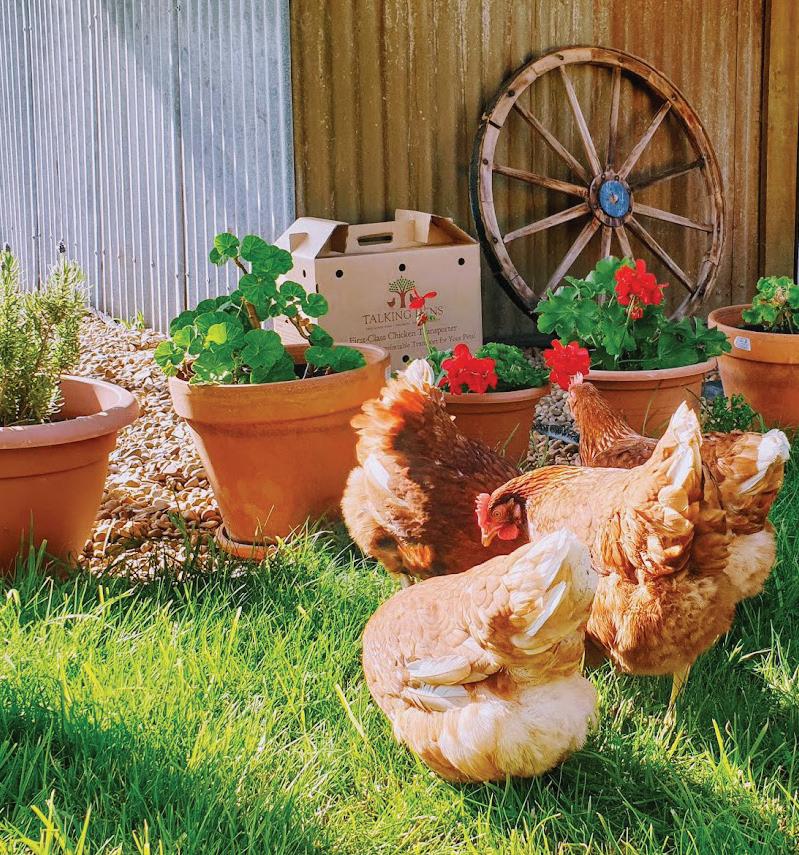
Well, hens make for fantastic pets! Our breed of hens are Hy-line Browns which are extremely friendly and placid. They love company and like nothing more than to spend time interacting with their owners. We hear lots of entertaining stories from our customers such as their hens going on school runs, on swings with the kids, and happily jumping up onto their laps.
Good egg-laying breeds like our Hy-Line’s also quickly pay for themselves by providing your family with highly nutritious and delicious eggs throughout the year. Their eggs are high in protein and minerals but low in calories. You also have peace of mind knowing exactly how your hens are treated and what food they have eaten.
Of course, you can’t get more “local” food than what you get from your own backyard! When combined with a vegetable garden, your family becomes far more self-sufficient and able to live more sustainably. If you really had to avoid social contact, your hens and vegetables could keep your household well fed over the long-term.
Opening Hours: Thursday to Monday 10am to 4pm
Talking Hens
3590 Frankston-Flinders Rd
For enquiries call
Email: talk@talkinghens.com.au
Closed: Tuesday and Wednesday
Merricks, Vic 3916
Hen ownership also teaches children some important, practical lessons about life. Not only do they need to be responsible for feeding and providing water for their hens but they must collect eggs daily and keep the coop clean and safe. Excess eggs can also be sold or given away to friends and neighbours which is a great way of benefiting others in your local community.
Visit: TalkingHens.com.au
We will be holding our annual Winter Series Presentations on Backyard Hens - Please visit our facebook page for more details.


Part 1 - Coop considerations with backyard chickens.
Sunday 19 June 2022 at 2pm
Part 2 - Coop fit out - do’s and don’ts for your hens.
Sunday 10 July 2022 at 2pm
Part 3 - Common illnesses within the flock.
Sunday 21 Aug 2022 at 2pm
Visit our farm: 3590 Frankston-Flinders Rd, Merricks
Call Jason: 0406 691 231
OPEN Thu to Mon 10am - 4pm (Closed Tue & Wed)
www.TalkingHens.com.au


www.peninsulakids.com.au 39 Talking Hens is a family business that enjoys backyard hens. We specialise in friendly, egg laying hens with quality products to keep them happy and healthy. There’s nothing like the friendship and entertainment that you receive from our laying hens - a pleasure to be shared! Looking for backyard hens but unsure where to start? Talking Hens 3590 Frankston-Flinders Rd Merricks, Vic 3916 Opening Hours: Thursday to Monday 10am to 4pm Closed: Tuesday and Wednesday For enquiries call Jason 0406 691 231 Email: talk@talkinghens.com.au Visit: TalkingHens.com.au BACKYARD HENS KEY TO INCREASING
The importance of choosing the right Primary School
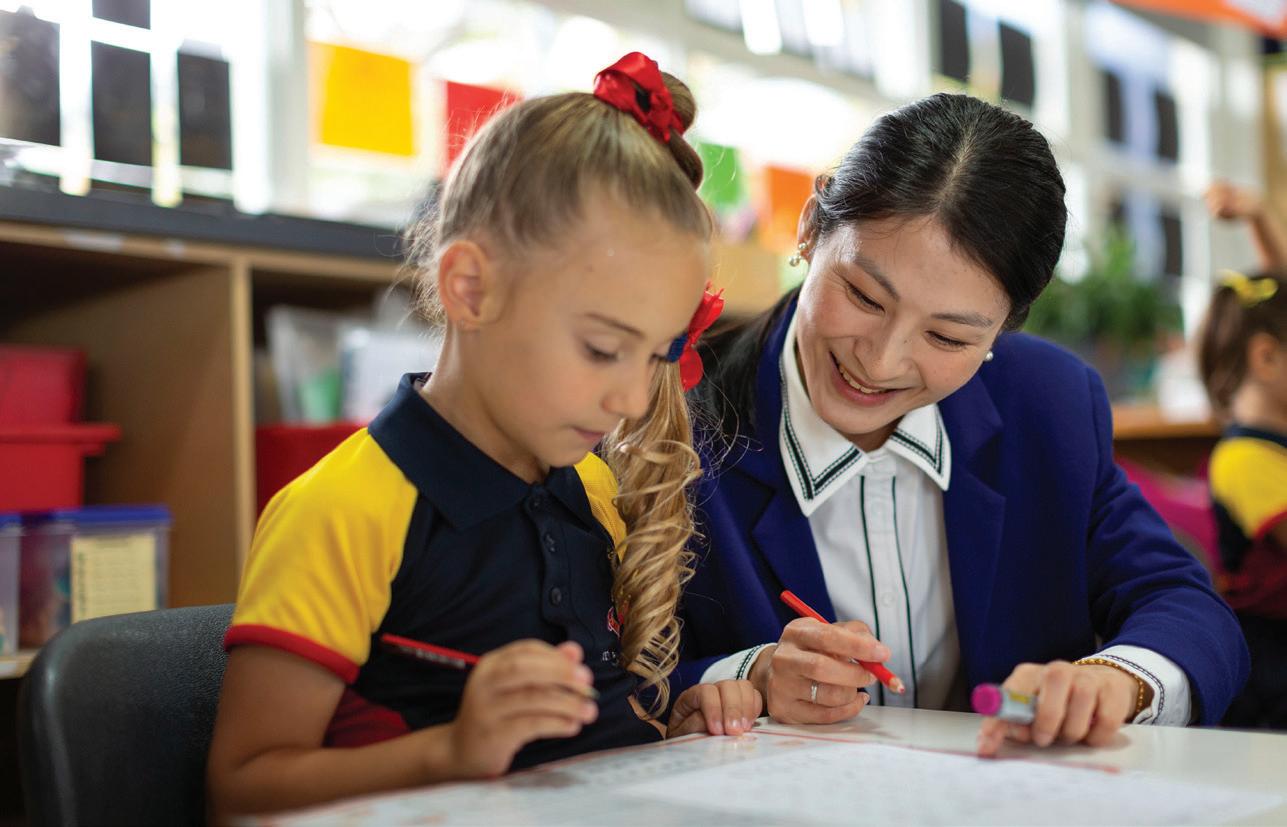
By Miss Melissa Schoorman
Over the last couple of years children have been required to navigate the challenges of learning across two varied environments, both at home and in the classroom, and this experience looked different from school to school.
UNICEF discovered that, globally, more than 1.6 billion children have suffered some loss of education in the last two years due to the COVID-19 pandemic, which has made choosing the right school for your child more important than ever. Parents want to give their child the best opportunities to set them up for their future, so every education decision is an important one. Right from the beginning, choosing a Primary School is the first step to laying a secure educational foundation, so where do you start?
We’ve created a guide to help families navigate these intricate decisions including our tips for how to choose a Primary School in Melbourne, the significance of early education and our tips for creating a cohesive and consistent education journey for your child. There are around 2277 schools in Victoria, including independent schools as well as government schools, all with their own unique resources and capabilities. So how do you know which one is the right fit for your child?
Here are some important aspects to consider when choosing a Primary School for the early years of your child’s education.
HOW IMPORTANT IS EARLY EDUCATION?
When children are around the age of eight-years-old they have already begun to develop an understanding of their self identity and their identity as a learner. Children will decide how valuable and competent they are in these early years and this belief becomes increasingly difficult to change the older they become. Often adults who viewed themselves as not particularly smart as children will still view themselves in the same light regardless of any achievements.
Children’s sense of self also directly impacts their ability to engage in activities. Children who have a positive outlook on themselves are more likely to participate in social and academic activities, whereas children who have developed a more negative sense of self typically struggle in these environments due to their lack of confidence. As children spend a significant amount of time at school, it is crucial that their education provides a safe and encouraging environment where they can feel supported to grow into more confident learners.
Furthermore, when it comes to education, families often buy into the idea that Senior School, especially Years 11 and 12, are the most important years of a student’s education. Whilst VCE is a very important step to further education, research shows that an “academically effective Primary School gives children's development a significant boost” which combats the myth that Primary School is less important than Secondary School. In fact, Primary School is arguably the most important period of a child’s education as this is when children develop and solidify their identity as learners, which in turn impacts their future approach to learning.
During this important phase, children develop independence, social skills, communication and are introduced to skill learning which is exclusive to primary education. The accelerated development growth during this period of a child's life only adds to the urgency of choosing the right school, so how do you pick the right primary school for your child?
SETTING THE FOUNDATION FOR YOUR CHILD’S LEARNING
When choosing the right primary school for your child, it’s important to understand that the decisions you make now could have an impact on decisions down the track, including the decisions around selecting a Secondary School.


FACTORS TO CONSIDER WHEN CHOOSING A KINDERGARTEN OR PRIMARY SCHOOL
1. Your personal views, preferences and priorities when choosing a school.
Remember your child’s educational needs may have changed over the last couple of years due to the major disruptions they experienced towards their learning.
2. The teaching philosophy of the school.

This will help to provide insight into the teachers’ approach to learning and help to define acceptable classroom behaviour.
3. Are the classes single stream, composite or multi-age?
Some children thrive in composite and multi-age classes as the younger students have older peers they can work alongside and the older students have the opportunity to be leaders. However, some children do prefer to be around others with similar learning abilities, it is about finding the best fit for your child’s needs.
40 Peninsula Kids – Winter 2022
Education
4. Does the school have programs for students who are either above or below the expected level?
Children learn at different paces and it is important to know whether your child will be correctly supported, regardless if they need extra help or require more advanced work.
5. What specialist classes do Preps participate in? What specialist classes are there beyond Prep?
Specialist classes such as music can help promote memorisation, coordination, a sense of achievement and other benefits that can be carried across into other classes.
6. Is wellbeing included in the curriculum? Are there any other wellbeing support offerings?
By offering wellbeing classes and other areas of support in a school, children will begin to develop a deeper understanding of how to take care of themselves and others. This support will help students be more relaxed in class and promote confident learners.
7. Research and utilise resources.
There are useful resources such as the good schools guide to find a list of schools in your local area. Also talk to your child’s current teacher as they will have an in-depth understanding of your child’s educational needs.
8. Attend school open days and ask plenty of questions.

days to celebrate!
Leave the Office Early Day
The day encourages people to take some time on a workday for themselves and do things that relax them. Another plus side of cutting out of work early? You avoid peak traffic hours!
Did You Know…
…an average office worker spends about 50 minutes a day looking for files and other work-related documents?


9. Consider the follow on effect for secondary school. Transitioning from Primary School to Secondary School can be daunting for some children. This can be made less overwhelming when children have attended a school that offers both primary and secondary education as the child is already aware of the school’s expectations and requirements.
10. Learn about the enrollment process including deadlines and age requirements.
11. Submit your application well in advance to ensure you secure your child’s place and avoid waitlists, we recommend 18 months to 2 years.
The years children spend in Primary School are formative to their development as learners. Our approach to learning is perfectly summarised by Pat Barbieri, Director of Early Learning at Toorak College, “when children experience a sense of security, belonging and sound wellbeing, they have the confidence to explore, the curiosity to question and the intrinsic motivation to learn.”
Melissa Schoorman is head of Wardle House and Deputy Principal of Toorak College. If you would like to learn more about our ELC to Year 12 program for your child, visit them online or book a campus tour to see if Toorak College could be a good fit for you and your family.
19 JULY
Stick Out Your Tongue Day
When children stick out their tongue at adults, it is seen as an act of disobedience. In Tibet, however, sticking out one's tongue is considered to be a polite form of greeting.
Did You Know...
...that the human tongue can have anywhere from 2,000 to 8,000 taste buds?

5 AUG
Work Like a Dog Day
An idiom that comes from the hard work that working dogs - hunting dogs, rescue dogs etc - put in during the day. Put in extra hours at work, and who knows, you may be able to get in your boss’s good books, and lets face it, you did leave work early on June 2nd after all!
Did You Know...
...that there are dogs that can't bark? Basenji is a type of hunting dog that makes yodel like sounds.
Bow Tie Day
A type of necktie, the bow tie became a part of a fashionable man's wardrobe in the early 19th century. It is believed that tie evolved from another type of male neckwear called the cravat and was thought to be worn by people who did not care much about what others thought of them

Did You Know…
Source: www.timeanddate.com
…that a very fashionable person is known as a clotheshorse?
www.peninsulakids.com.au 41
2 JUNE 28 AUG
WINTER
WINTER 2022 EDUCATION FEATURE


FEATURED IN THIS ISSUE 42 Peninsula Kids – Winter 2022
Love is life at St John's
St John’s Catholic Primary School has been nurturing young lives in the Frankston area since 1967. The Frankston region has grown and changed over time and through the motto ‘Love is life’ so has St John’s. Today we have a thriving and contemporary approach to education designed to meet the needs of all the students in our care.
Seated in idyllic settings in the heart of Frankston East, the school offers a wide variety of opportunities to engage with learning and with life for all the community it cares for. From a rich sports and PE program to the Coding and Robotics program, Sacramental programs and student development and wellbeing initiatives. St John’s is committed to providing opportunities for all students to achieve their full potential.
We strive to open up pathways of learning for all our students and work very closely with our Catholic counterparts and with John Paul College. This ensures learning achievements are carried over into secondary school life and


ST JOHN'S PRIMARY SCHOOL
enables students to be recognised for their learning capabilities and appropriately challenged.

St John’s is committed to not only providing contemporary flexible learning spaces for students to learn in but also to ensure staff are well trained in utilising the spaces to their best advantage. These spaces are recognised as physical, social and virtual spaces that enable and promote learning and the learning capacity of all those involved in them. Our staff use appropriate strategies and learning approaches to maximise student potential. Coupled with thinking strategies based on Growth Mindsets and Resilience this creates a powerful learning combination and enables students to not only participate in their learning but to understand how they learn and apply appropriate strategies for their own learning capacity.

Learning, amidst all the distractions of our time, can be a difficult thing for many students.
We aim to provide students with the tools they will need to navigate an

uncertain but highly digitised future. We challenge them to explore and consider the deeper questions and big ideas so they can interpret and make meaning of their life, the world and their social context. In this way, they can interact, at a human level with the world, because, if we fail to teach our kids how to continue to make positive connections in their lives, we lose some of our own humanity.
At St John’s, we believe that if you want a child to grow up and understand the human person and how ‘Love is Life’ is so important, you can’t tell them how they should do it, you have to teach them to yearn to live a life of love.
We welcome you to make a booking and come and see what we do for yourself and consider what we might be able to do for your child.
sjfrankstoneast.catholic.edu.au

toorakcollege.vic.edu.au 73-93 Old Mornington Road, Mount Eliza, VIC 3930 9788 7200
www.sjfrankstoneast.catholic.edu.au Jayne St, Frankston VIC 3199 9789 9794
43
Developing a love of mathematics - the Balcombe approach


At Balcombe Grammar we are very proud to be recognised as a ‘Maths Active School’ by the Mathematics Association of Victoria. This accreditation which was received by the school in 2015 is a high honour, and it is great recognition of both the quality of our primary teachers and Mathematics Program, but what does it mean?

First and foremost, it means students learning in a ‘Maths Active School’ are engaged in the learning of Mathematics, they understand how to manipulate a range of concrete materials and they participate in problem solving and mathematical investigations. In a ‘Math Active’ classroom you will see students, who are excited by and innovative in their use of Mathematics, experiment with the invention and practice of mathematical ideas. Students will discuss the mathematical concepts they are using with their peers and teachers. Probably most importantly of all it means
when asked, students can explain the purpose of the mathematics they are using.
Balcombe Grammar School supports the ongoing professional learning needs of its staff. Annually we are visited by an expert teacher of Mathematics, Michael Ymer, who curates targeted professional learning activities for our primary staff over two days. Michael’s visit also allows us to engage our parent and wider community by running sessions to explore the role of Mathematics in our modern society, important concepts to reinforce in our students and the best methods to achieve this task.
The Mathematics Association of Victoria has recognised that our Mathematics curriculum is appropriately structured to maximize learning and teaching, while our use of assessment informs teacher practice and enhances students’ learning outcomes. This accreditation also


acknowledges the fact that our Mathematics sessions promote active and effective participation of both the students and the teachers. The use of technology in the Mathematics Program at Balcombe also pays a large role in enhancing student learning outcomes.
Students are encouraged to develop a love of Mathematics as they build a solid foundation in basic numeracy. Through the use of investigations, students are guided by the teachers to apply these mathematical skills to solving problems in real life simulations. The students are ‘hooked’ into these investigations through storytelling, visual stimuli, and collaboration with their peers. They love Mathematics.
balcombegrammar.vic.edu.au

BALCOMBE GRAMMAR balcombegrammar.vic.edu.au 389 Nepean Hwy, Mount Martha VIC 3934 5970 1100
EXCELLENCE AWARD AUSTRALIAN EDUCATION AWARDS 2022 EXCELLENCE AWARD AUSTRALIAN EDUCATION AWARDS 2022 44
New vision redefines learning
A new vision for Learning and Teaching at John Paul College will see the school’s focus extend beyond academia to incorporate life skills and personal wellbeing, better preparing students for life after school.


Kara Baxter, Deputy Principal of Learning and Teaching, said the vision was developed to provide a more holistic framework for learning.
“One of the key ideas behind our new vision is that learning is not just about knowledge and content, but growth, including emotional and intellectual growth. Staff, students and parents all contributed to the development of this forward-thinking vision throughout 2021.”
“Our vision includes three elements: ‘Knowledge’, including helping students develop a curiosity and passion for learning; ‘Capabilities’, or the ability to apply knowledge to real life situations and adapt to change; and ‘Self’, which includes developing emotional wellbeing, resilience, leadership, social awareness and independence.”
To coincide with this, a new innovative Professional Learning Model has also been launched to support the implementation of the vision and to ensure our teachers are working to continuously improve their practice. The model encompasses a multitude of different elements and strategies, seeing to strengthen teachers capacity
to effectively identify and address their students’ learning needs. The model also allows our staff to develop through focusing on Collaboration, Feedback, Research and Individual Growth.
In addition to the vision, the College recently introduced a new elective, ‘STEAM’, available at Year 9. The subject, which integrates Science, Technology, Arts, Engineering, and Mathematics, was developed to provide students with foundational skills for future careers in a rapidly evolving world. This year’s STEAM students are working on projects including solar panelled boats, propelled cars and robotics tasks.
Year 7 & 8 students also have a dedicated ‘STEAM Week’ coming up in late June where they will participate
in hands-on projects that demonstrate how STEAM can make a difference in their homes and community.
“New jobs are emerging every day because of technological advances,”
Principal, John Visentin said. “Skills developed by students through STEAM provide students with the foundation to succeed at school and beyond.”
The College is continually expanding, with a new double storey Learning Building, due for completion this year. The building will include; 11 classrooms, independent study nooks, multiple outdoor learning, creative activities and student breakout areas.

With so many opportunities on offer, apply now for Year 7, 2024 at jpc.vic. edu.au. Applications are due by Friday 19th August, 2022.


toorakcollege.vic.edu.au 73-93 Old Mornington Road, Mount Eliza, VIC 3930 9788 7200
JOHN PAUL COLLEGE
jpc.vic.edu.au 161 McMahons Rd, Frankston VIC 3199 9784 0200
Learning and Teaching Team – Lauren Moore, Kara Baxter, Caitlyn Jarrett, Tanya Moran.
45
Inspiration starts here
A Kindergarten to Year 12 school, our curriculum provides a depth of learning necessary for students in the 21st century.


Peninsula Grammar holds its place as the preeminent school on the Mornington Peninsula. An openentry, coeducational school, located one hours drive south of Melbourne, the School is situated on 80 acres of gently sloping natural bushland and is renowned for the depth of opportunity it affords each child. With an exceptional record of academic achievement, a strong sporting program proud of producing world champions, and a performing arts program with an unsurpassed record of distinction, the School is inherently proud of its rich culture of excellence.

Privileged to be located in one of the most sought-after corners of the country, extending across Mount Eliza, with stunning views of Port Phillip Bay, the School is renowned for its evolving landscape and the considerations it makes when building new learning environments.


Its most recent building, ALATUS, is designed to combine technology and critical thinking in a purposebuilt environment that challenges students to rethink their learning and discover fact from fiction. Our state-of-the-art Science Centre provides a pre-tertiary context of exploration where theoretical studies and laboratory experiences work hand in hand to deepen student’s inquisitive nature and innate understanding of the scientific world. With three gymnasiums, two outdoor heated swimming pools, soccer ovals, grass tennis courts and three more ovals, the School sets the
benchmark for natural beauty and exceptional learning environments. Our new bespoke extra-curricular program, Little Giants is designed to help our Junior School students of today grow into the giants of tomorrow. This pioneering program encompasses a myriad of subjects, across disciplines, to inspire students from Prep to Year 4 to find and foster their passions sooner.
Register for a personal tour to discover the possibilities that await your child. Visit:

peninsulagrammar.vic.edu.au/ book-now/

PENINSULA GRAMMAR www.peninsulagrammar.vic.edu.au 20 Wooralla Dr, Mount Eliza VIC 3930 9788 7777
46
Reading builds resilience among at-risk
 By Leonie Segal
As children settle back into a new school year, families are being encouraged to read to their children at home, as new research from the University of South Australia shows that reading aloud can triple a child’s resilience at school, particularly for children at-risk.
Focussing on early primary-aged children who had suffered abuse or neglect, the study explored factors that could modify the negative effects of adverse life circumstances, finding that one of the biggest predictors of resilience in both boys and girls in struggling families was being read to at home.
While reading to children at home has long been associated with school readiness and scholastic outcomes, this is the first study that has shown the benefits of reading to mitigate some of the detrimental trajectories of child maltreatment.
In Australia in 2021, nearly 300,000 children aged 0-17years had one or more child protection notifications with 105,000 the subject of an investigation and nearly 50,000 the subject of substantiated abuse or neglect. The study found that victims of child maltreatment are generally more developmentally vulnerable than their peers at the start of school.
Lead researcher, Professor Leonie Segal says there is an acute need to support these children and their families, before the children start school, with reading being a key factor for success. “A good start to school is predictive of later outcomes, so it’s vital that we not only identify those at risk early on, but also find ways to support children’s emotional, social and physical development, before they start school,” Prof Segal says.
“Reading out loud can create many positive outcomes for children. As a shared experience between parent and child, it encourages connection, while also directly contributing to child development through exposure to words and stories.
“Children in families that are struggling to create a nurturing environment will especially benefit from reading with a parent or carer, improving their resilience and keeping them developmentally more on track, despite their adversity exposure.”
The study analysed data covering 65,083 children who had completed the Early Australian Development Census (AEDC) at 5 to 6 years old, when starting primary school, identifying 3414 high-risk children who had experienced maltreatment.
Boys were found to be developmentally behind girls, particularly those who had been exposed to abuse or neglect. Prof Segal says the education sector must look at strategies to better support boys in early learning environments. “Our study found that boys had a much higher risk of being developmentally behind than girls, as did children living in remote or rural areas, and those with a physical, sensory, or learning disability. All these groups need far greater supports,” Prof Segal says. “Paying particular attention to boys, especially those who are victims of child maltreatment is critical. Encouraging parents to read to their boys while valuable, is not enough, the onus is on the education sector to identify other mechanisms to support boys.
“This could include recruiting more male educators into early childhood settings and ensuring learning approaches are sensitive to the specific needs of boys. “Males currently make up less than five per cent of the early childhood education workforce, with their presence in primary schools also declining. Boosting the gender balance among educators could be an important step to helping boys.
“Understanding which attributes can help young children to be more resilient – or conversely which factors can put them at greater risk –can form the basis of interventions for child victims of maltreatment to improve life trajectories. “Every child deserves the chance for a bright future. We must not overlook those most at risk.”
Leonie Segal is a professor at University of South Australia.
Book Reviews
BEWARE, BEWARE THE DROP BEAR
 BY HEATH MCKENZIE
3+yrs, Scholastic, h/b, $17.99
For many long years, tales have been spread, stories all full of horror and dread. Tales about creatures covered in hair that lurk in the branches - you’d better beware! You’d better look up ... You’d better run fast ... for maybe the drop bears have found you at last!
FAMILY TREE
 BY JOSH PYKE
3+yrs, Scholastic, h/b, $19.99
It started with a seed, and that seed was me. And, over time, laughter filled my garden... A heartfelt celebration of family, community and the seasons of life, to cherish and to share. The official story chosen for ALIA National Simultaneous Storytime 2022 celebrated all across Australia and New Zealand!
NO ONE REALLY KNOWS A CANE TOAD
BY LAURA SIEVEKING
3+yrs, Scholastic, h/b, $17.99
Cane toad. Brain toad. Riding on a train toad. If you think you know cane toads, then think again! A hilarious book about cane toads, like you’ve never seen them before!

ZOO HOUSE BY
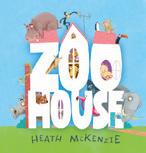 HEATH MCKENZIE
3+yrs, Scholastic, p/b, $15.99
One morning young Oscar jumped up, wide awake,
He headed for breakfast, but stepped on a snake!
What will Oscar do when he wakes up to find his house... is a ZOO?!
THE UNDERDOGS
 BY TRACEY WEST & KYLA MAY
7+yrs, Scholastic, p/b, $14.99
Welcome to Barksdale, where all the dogs strive for perfection. Every shopkeeper claims to be the ‘best groomer’ or sell the ‘best biscuits’. And at Barksdale Academy, the pressure is on for one pup to be named Best in Show. Duke’s cousin Coco, a French bulldog visiting from Paris is cool, funny, and charming – especially compared to the Underdogs. So when it comes time to choose teams, it’s no surprise she ends up on Team Awesome instead of with her cousin Duke and his friends.
SCHOOL AGE
FARTBOY #7 TOENAILS OF TERROR
BY ADAM WALLACE & JAMES HART
6+yrs, Scholastic, p/b, $14.99
It’s quiet…too quiet in Sparkletown and Fartboy has to face his most disgusting villain yet! TOEJAM! The mime making, noise hating, toenail cradle catching baddy. It’s up to the FARTASTIC hero and his friends to save the day. Will Fartboy break the silence and rescue the citizens of Sparkletown?

WORST WEEK EVER: TUESDAY


BY
EVA
AMORES & MATT COSGROVE
8+yrs, Scholastic, p/b, $15.99
Have YOU ever had a BAD WEEK? Justin Chase sure has, and THIS is it! He barely made it through MONDAY, but now it’s... TUESDAY! His cat is still missing, probably abducted by aliens. His dad is more embarrassing than ever. He’s unexpectedly gone viral online in the worst possible way. And when school photo day collides with the Super Science Spectacular, it’s destined to blow up into a hair-raising, teeth-shattering disaster of epic proportions!
ELLA DIARIES: DOLPHIN DREAMING
BY MEREDITH COSTAIN
7+yrs, Scholastic, p/b, $14.99
Warning: You are about to read my utterly biggest secrets. Can I trust you? OK then. I'm Ella, and this is my diary. Ella dreams that one day she could see a dolphin in the wild. And when she and Zoe meet Mila, Ella's dream might come true! But their holiday at misty point isn't all ice-creams and boogieboarding. Ella and Zoe make a terrible discovery!

KID YOUTUBER
 BY MARCUS EMERSON
8+yrs, Scholastic, p/b, $14.99
Davy Spencer might be the new kid in school, but that doesn’t mean he can’t start as the most POPULAR kid. With the help of his two best friends, Chuck and Annie, Davy throws himself into making viral YouTube videos with hilariously disastrous results. If he can pull this off, then everybody at his new school will know his name before even meeting him.
PRE-SCHOOL a prize pack of the reviewed books go to www.peninsulakids.com.au/giveaways Win! $1599 $1499 $1799 $1999 $1599 $1799 $1499 $1499 $1499
To be known is to be seen and heard, valued for your contributions, skills and ideas.
At Woodleigh, we know our students.
When we are known, we can be ourselves – take risks with our learning, try new things and make new connections. The adventure of learning is more engaging, more challenging and more rewarding when we are known.

To learn more about Years 5 and 6 at Woodleigh and our smaller, caring campuses, scan the QR code below, or email our Enrolments Team – enrol@woodleigh.vic.edu.au We’d love to get to know you.

BOOK YOUR PLACE AT ONE OF OUR REGULAR INFORMATION SESSIONS OR CAMPUS TOURS
www.woodleigh.school/enrol
www.peninsulakids.com.au 49
Key features of Simply Swap Foods:
* Low carb
* Keto friendly
* Diabetic friendly
* Premium ingredients to support our health
* Nothing artificial
We’re officially gluten free!!
We’re so excited to announce that we have gluten-free certification on the following products:

- Voluptuous Vanilla Cupcakes
- Cheeky Chocolate Cupcakes
- Hug in a Mug Chocolate
- Hug in a Mug Vanilla

- Perfect Porridge – Vanilla bean and Cacao
Looking after your health is at the forefront of everything we do, so we ticked every possible box before putting this gluten-free claim on our products. Previously we had the “may contain traces of cereals” on our packaging as some of the ingredients we used had that claim. However we’ve worked hard behind the scenes to find fully gluten-free ingredients plus have had everything confirmed through lab testing. So any coeliacs out there can now trust our products to be safe for them to enjoy!
New stockists
We’re on more and more retail shelves so check our stockist page on our website which is updated each week.
Current retail stockists include:
Mt Eliza Village Fruits, Mt Eliza
Gluten Free Foods, Mornington
Hamper Yourself/Peninsula Gourmet Emporium, Dromana
100 Mile Foodie Café, Somerville
Everyday Health Store, Hampton
Nourish, Balnarring
Pickadeli, South Melbourne Market Food Hall
* No GM ingredients
* Plant based sweeteners used
* Pet friendly (no xylitol used)
* Super easy to prepare at home
* Great taste
* Made with love on the Mornington Peninsula
Current online stockists include:
Keto Direct www.ketodirect.com.au
Keto The Aussie Way www.ktaw.com.au
Yo Keto www.yoketo.com.au
LoveLowCarb www.lovelowcarb.com.au
Healthy Tummies Pantry www.healthy-tummies-pantry-pty-ltd.square.site
After experiencing health problems three years ago, Linda changed to a low-sugar real food diet and was amazed at the outcome. Over a six month period, she lost 15kg of stubborn weight that she’d struggled with for decades, her energy levels improved to an all time high and her mental clarity returned in abundance. Her husband joined her in this mission and also lost 20kg in 6 months and felt fantastic. One of the keys to their success was not feeling deprived of their favourite foods, especially cakes and porridge. Linda launched her business “Simply Swap Foods” in November 2020 to help others on their journey to a healthier way of life. She loves sharing her recipes, story and knowledge about the benefits of reducing sugar and just eating real food. All Linda has done – with time and research – is ‘simply swapped’ some foods in her diet and she hopes to show others just how easy it can be and how fantastic you can feel. You really can indulge yourself and feel great too!

Recipes COM.AU
indulge
yourself and feel great too!
Sweet Ginger Salmon
This dish is really fast to prepare and enjoyed by the whole family. With a slightly sweet oriental flavor, this is on regular rotation in our house.

Method
1. Combine soy sauce (or aminos), rice wine vinegar, ginger, garlic, sesame seeds and fish sauce in a small bowl.
2. Place fish fillets in small, flat container and pour marinade over top. Turn fish to other side to coat both sides with marinade.
¼ cup soy sauce (or coconut aminos)
Ingredients
2 tlbsp rice wine vinegar
1½ tblsp fresh ginger, grated
3 tsp fresh garlic, crushed
2 tsp sesame seeds
2 tsp fish sauce
500g boneless salmon fillet, skin on
1 tblsp sesame oil
¼ cup tomato sauce (low or no sugar)

2 tblsp lemon juice

Shortening of preference for frying – butter, coconut oil, extra virgin olive oil, ghee, lard.


3. Cover and return to fridge to marinate for 30 minutes.
4. Heat a fry-pan over medium high heap and add sesame oil to pan.
5. Add fish skin side down and let cook until crisp, roughly 4 minutes depending on thickness.
6. Pour marinade evenly over fish pieces then turn to cook other side, roughly another 4 minutes depending on thickness.
7. Remove fish from pan and add tomato sauce and lemon juice to pan. Simmer for a few minutes to thicken.
8. Spread glaze over fish to serve.
PREP COOK TOTAL SERVES 10 PREP COOK TOTAL SERVES 4
(+ 15 min to marinate )
This indulgently creamy low-carb cheesecake is great to make ahead for dinner parties. Use any berry that you have on hand –raspberries or blueberries work really well.
Ingredients
BASE
2 cups almond flour
¼ cup desiccated coconut
¼ cup natvia sweetener (or similar granulated sweetener)
¹∕³ cup butter, melted
1 large egg, lightly whisked
FILLING
1 cup pure cream
450g cream cheese
¹∕³ cup natvia sweetener (or similar granulated sweetener)


2 tsp vanilla essence
1 cup berries, fresh (if frozen, allow to defrost first)
Any Berry Cheesecake
Method
Preheat oven to 180°C and grease sides and bottom of 20cm springform cheesecake pan with butter or cooking spray. Line bottom of pan with non-stick baking paper.
1. Place almond flour, coconut and natvia in a medium size bowl then add melted butter and egg. Mix to combine well.
2. Using the back of a metal spoon, press mixture evenly into bottom and sides of pan.
3. Bake for 15-20 minutes or until golden brown and firm.
4. Remove from oven and cool (can place in fridge if wanting to cool fast)
5. Place cream in a small bowl and use hand beater to beat until firm peaks form.
6. Place cream cheese, natvia and vanilla in another medium bowl and beat using hand beater until smooth and silky.
7. Fold whipped cream into cream cheese mixture then gently stir through berries.

8. Spoon filling into the cooled base then place in fridge to chill for at least 4-6 hours or overnight if possible.
9. Serve decorated with lots of fresh berries on top.
PREP COOK TOTAL SERVES PREP COOK TOTAL SERVES 30 12
MugJaffaCake
Our “Hug in a Mug” mug cake mixes are available on our website and in stores. We update the list of stockists regularly. These mug cakes are delicious on their own for a dessert treat or change them up with the addition of a few key ingredients.

Ingredients
40g Chocolate “Hug in a Mug” Mix (1 serve)
1 tblsp butter (or coconut oil/ghee)


1 large egg, beaten (room temp)
½ tblsp orange rind
½ tblsp orange juice
Method
1. Place butter in mug and microwave on high until melted (approx 30-45 seconds)
2. Add all other ingredients to mug and stir until fully combined
3. Microwave on high for 90 seconds. Rest for 5-10 mins (it’s hot!)
4. Serve in mug or bowl topped with your favourite toppings eg. cream, sliced orange, berries, nuts
PREP COOK TOTAL SERVES 2 PREP COOK TOTAL SERVES 1 (+ 10 min rest time )
Good Mum vs Bad Mum
The Social Implications of Working Motherhood on our Health So which one are you...
GOODor BAD? GOODor BAD?
By Dr Ali Young
Asworking mums, we are thrust into determining how we fit into this paradigm of good vs bad? The concept of being either a good working mum or a bad working mum can be arguably embedded in our psyche as we move into the working mum world. Yet who decides what is good and what is bad?
As a society, one that is edging very slowly towards gender diversity in the workplace, there is still a discord, in my belief, in the expectations placed on working mothers. “Good mums” can work as if they don’t have children, and parent as if they don’t have a job.

If we are able to compartmentalise ourselves in the workforce, without kids interfering with the way we perform our profession, then we are doing good in society.
“Bad Mums” find themselves at times in that messy middle, having moments where we need to finish early, or god-forbid, alter our work hours so we can parent and work effectively.
What we aren’t exploring in depth as a society is how the stress of juggling both of these separate elements in our life is impacting our health. How does being in this constant framework of flux impact on the way our brain perceives our health? And how does it contribute to the mental load of mothering and home life that we are working within daily?
Our amazing brain is designed to handle stress. We have systems in our body that keep us safe when we need to respond to get away from predators, or think hyper-focused when in a tricky situation. The thing with this amazing part of our brain is that it isn’t supposed to be on ‘alert’ all the time. The last two years have primed our brains to be on high alert. Add in to this navigating the stressors of mornings, getting kids where they need to go, showing up in your workplace without vomit on your pants from your baby and with a focus on the job at hand… to only realise you need to pump at lunchtime, try and eat, and not take too long so you can have a shorter day and get the kids before the sun goes down. It’s a chronic form of low grade stress that is impacting on our health.
We know that stress affects everyone differently, yet if you look down this list, how does stress show up for you? And is this stress causing you to have more of those “I’m a bad mum” thoughts?

Pain, including back pain
Headaches
Upset stomach
Health
• Forgetfulness
• Lack of energy
• Lack of focus
• Overeating or not eating enough
• Easy to anger
• Difficulty sleeping
• Drug and alcohol misuse


• Loss of interest in things you once enjoyed
I speak with 100’s of mum’s each month, and they are commonly struggling with figuring out how to dial down stress responses so they can be calmer in their day, more connected with both their peers and their families, and find some joy again. The hot tips that I give them are pretty simple, yet if we can master one or two of these, it can go a long way to dialling down our stress response, and allow our health and self to restore again.
1. Move your body (even for 10 minutes in the morning whilst the kids watch bluey), to wake up your brain and get your synapses firing.
2. Drink more water (and maybe a bit less of that sweet nectar of the gods - coffee).
3. Write that next day list before you go to bed… it can gift you a better quality sleep (and whilst you’re at it, hit the hay 30 minutes earlier).

4. Connect with a friend.
5. Call in support – partner, professional – however you can get it.


For society as a whole to allow working mothers to thrive within their family units and support the next generation, honouring how we can de-stress this generation of mothers, without the mum-guilt, is where the magic lies for all of us.
Dr Ali Young is a chiropractor and author of Work.Mama.Life. She works with women in her online courses, and is passionate about supporting working mum’s to reclaim their health, find their self and have ripple effects on the next generation of humans inheriting our planet.
www.peninsulakids.com.au 55 Specialist Orthodontists Dr Peter Scott and Associates are specialist orthodontists offering orthodontic care for children, teens and adults alike in both the Mornington Peninsula and inner Melbourne. Dr Peter Scott is also a consultant at the Royal Children’s Hospital. Creating Beautiful Smiles on the Peninsula for over 30 years Expertise In Child And Adult Orthodontics Early Assessment Of Dental Development And Facial Growth Ideal Age Of Initial Assessment 7-9 Years Early Intervention Where Appropriate For Best Outcome No Referral Necessary Interest free payment plans available 13 Beach St Frankston Ph: 9783 4511 www.drpeterscottorthodontist.com.au www.facebook.com/drpeterscottorthodontist
LUCAS DENTAL CARE

Ask The Expert!
My child snores at night. Is this something I should be concerned about? At what age should I seek an expert opinion and who should I take my child to see?

Snoring is usually the hallmark sign of paediatric obstructive sleep aponea (OSA) in preschool aged children. Parents of children with undiagnosed OSA may also report their children sleeping in unusual positions, restlessly changing positions, late onset bed-wetting, poor weight gain, excessive sweating, night terrors, and mouth breathing. Paediatric obstructive sleep apnoea is a common sleep disorder that if left untreated, can cause significant shortterm and long-term complications. These complications include poor academic performance at school, attentiondeficient disorder type behaviour and failure to thrive. Therefore, a timely diagnosis is important to reduce the negative effects of this condition in children.
Diagnosis of OSA should be made by a medical professional and often involves a specialised sleep study. Therefore, if your child snores frequently and on a regular basis, it is recommended that you see a medical practitioner or sleep physician regardless of your child’s age.
An orthodontist can assist by screening and assessing if there are any dental-facial or teeth related factors that may be contributing to or worsening the OSA. If the orthodontist finds any signs or symptoms that suggest the risk of OSA, they can provide you with a referral for your child to see a sleep physician, ENT surgeon, or provide adjunctive orthodontic treatment. Holistic management of OSA in the paediatric patient involves a team-based approach with several different medical specialists working together and is tailored specifically for each individual child.
56 Peninsula Kids – Winter 2022
(Melb), DDS (Dist) (Melb), DCD (Ortho) (Melb) Specialist Orthodontist Peninsula Orthodontics 134 Tanti Avenue, Mornington 134 TANTI AVENUE, MORNINGTON 3931 Dr James Lucas Dr Caroline Howarth Dr Giselle D’Mello and introducing Dr Sara Shayegan 597 5 9334 lucas dental care proudly sponsors polyglot theatre
Dr
David Zhang BOptom
S PECIALISTPAEDIATRIC DENTISTS
David completed his Doctor of Dental Surgery from the University of Melbourne and achieved Dux of Class four years in a row. His passion in orthodontics also allowed him to obtain the Mervyn Townsend Memorial Prize for top student in Orthodontics. Prior to returning to the University of Melbourne for his specialist orthodontic training, he served as a general dentist in various regional and metropolitan communities in Victoria including the Mornington Peninsula.
Throughout the years that David practiced dentistry, he has built a reputation for developing excellent rapport with his patients and takes pride in providing orthodontic care to create beautiful smiles for his patients. He has taught and mentored dental students at the University of Melbourne with an aim to invest in the future generation of dental practitioners.

David brings a wonderful energy to our team, and you will often hear his laughter or singing in the clinic. Outside of Peninsula Orthodontics, David enjoys reading, go-karting, archery, and spending time with his wife and son.

www.peninsulakids.com.au 57 5975 5166 134 Tanti Ave Mornington smile@peninsulaortho.com.au www.peninsulaortho.com.au Specialist Orthodontists Dr Doug Lee Dr Andrea Phatouros Dr David Zhang Peninsula Orthodontics loves working with families. Our experienced team will provide you with an individual treatment plan to deliver only exceptional results Capture that perfect smile you will always treasure. No referral required
Dr David Zhang is a specialist Orthodontist committed to providing the highest quality orthodontic care and treatment for adults and children alike.
Dr David Zhang
peninsulaortho.com.au
BOptom (Melb), DDS (Dist) (Melb), DCD (Ortho) (Melb)

To Help The Whole Family Beat The Winter Blues
By Gabrielle Newman
A diet rich in fresh, colourful fruit and vegetables, fish, seafood, nuts, legumes, whole grains and foods that you often find are commonly eaten on the low-carb Mediterranean diet provide your body with lots of antioxidants and phytonutrients. Olive oil, an important staple of the Mediterranean style, can help reduce inflammation. Add more olive oil to your diet by using extra virgin olive oil as a base for salad dressings or to sauté a selection of rainbow vegetables.


Studies revealed that those who stick to a Mediterranean-style diet are 33% less likely to develop depression. It’s also been proven effective for weight loss!
Gabrielle Newman is the Nutritionist and Recipe Developer for The Fast 800, an online programme devoted to helping people live healthier, better-quality lives by offering healthy recipes, meal plans, organisational resources and a science-based framework for a healthy lifestyle. For more healthy lifestyle tips and recipes, head to: thefast800.com
 By Pharmacist Montana Grenfell
As every parent knows all too well, kids are constantly coming home with bumps, bruises, scratches and sniffles - it’s all part the chaos of childhood. But when your little ones are unwell or in pain, it’s important to be able to act fast and provide them with relief. This is why having a well-stocked medicine cabinet full of essentials is critical for every family So if you’re wondering where to start, there is no need to look no further.

PAIN RELIEF MEDICINE. There’s nothing worse than seeing your child in pain, which is why having children’s paracetamol or ibuprofen on hand is a must. Popular household name brands such as Panadol and Nurofen, and generics like APOHEALTH have specific ranges for children’s pain and fever - suitable for babies up until age twelve. Ibuprofen and paracetamol can be used to treat pain and discomfort caused by fever, teething, cold and flu, headaches or the general aches and pains that kids sometimes develop.
ANTIHISTAMINE. If your child suffers from the irritated eyes, runny nose and non-stop sneezing that often comes with hay fever or allergies, it’s essential to have a reliable antihistamine on hand. Brands like Children's Telfast (fexofenadine hydrochloride) offer non-drowsy, long-lasting relief so your little one can feel like themselves again. However, when it comes to allergies, if your child experiences no relief after three days, or if symptoms worsen, make sure to call your GP.
NASAL SPRAY. Nasal congestion can make it extremely tough for babies and little ones to breathe and can often be distressing to watch as a parent. Particularly as we enter into the colder months, it’s worth keeping a saline nasal spray and aspirator on hand. Products like FESS Little Noses Spray or Children’s Fess and brands like Flo Kids can alleviate congestion, soothe inflammation and assist children with blocked, stuffy, itchy or dry noses. If you’re unsure which product is best for your child’s needs, just have a chat to your local pharmacist.
COUGH SYRUP. A nasty cough can be taxing on little bodies and can sometimes be indicative of an underlying condition like asthma or a chest infection. Always speak to your healthcare professional before treating a cough. However in many cases they may simply recommend a reliable cough syrup. It’s important to know over-the-counter cough and cold medicine should not be given to children under four years, and for ages four to six, it should only be given under a doctor’s advice. Visit your local pharmacist or GP for guidance on the best cough syrup for your child
NAPPY RASH CREAM. A good barrier cream is essential for not only nappy rash but other minor skin irritations like eczema and dermatitis. Creams that contain zinc oxide, like QV Baby Barrier Cream or Sudocrem, are effective and gentle when it comes to soothing skin and helping prevent redness and irritation.
DON’T FORGET THE FIRST AID ITEMS
Whether it’s a minor cut or a nasty graze, having an organised and wellstocked first aid kit is a must. Here’s what you’ll need for when your little ones get up to mischief.
THERMOMETER.
A forehead thermometer usually works best when you’re trying to measure the temperature of a child who just won’t sit still!
BAND AIDS. It’s always a good idea to have a range of sizes stocked. Small round band aids work well for little cuts in tricky spots, while large rectangular ones are great for larger grazes. If your child has sensitive skin or is allergic to adhesives, opt for the sensitive skin range instead.
CREPE BANDAGES & TAPE.
If a larger band aid isn’t able to do the job, a roll of crepe bandage and some medical tape can be used to dress a scrape or graze.
TWEEZERS.
A simple but all-important item to have in the event of a painful splinter.
Things to consider for children’s medications
The most important rule when shopping for children’s medications is to ask your healthcare professional for advice. Your GP or pharmacist will be able to instruct what time of day a medication is best taken, and which over-the-counter medicines can or can’t be mixed with others. (If your child is already taking a specific medication, it may not be safe to introduce another).

When storing medicine at home, make sure to keep it out of your children’s reach. Equally important, when administrating medicine be sure to carefully measure this out ; correct medicine syringes and droppers are essential to ensure that your child is receiving the right amount.
Finally, if you give your child medication and it doesn’t seem to work, your child’s condition worsens, or you notice unexpected side effects, this is the time to visit your doctor.
• Providing Specialist Orthodontic Services to the Mornington Peninsula with three locations in Rosebud, Mount Eliza and Hastings.
• The very best in Orthodontic care and technology
- clear braces, Invisalign, lingual (hidden) braces.

• Treatment provided in a relaxed environment.
• Highest quality care provided by our Orthodontist.

NO REFERRAL NEEDED. CONTACT US TO FIND OUT HOW WE CAN HELP YOU ACHIEVE THE SMILE YOU ALWAYS WANTED.
“Lighten up, just enjoy life, smile more, laugh more, and don’t get so worked up about things”
www.peninsulakids.com.au 61
122 Mt Eliza Way, Mt Eliza & 1533 Point Nepean Rd, Rosebud West 140 Salmon St, Hastings mteliza@hanksorthodontics.com.au
NOW FOR MT ELIZA, ROSEBUD & HASTINGS BOOKINGS
Montana Grenfell is a pharmacist from Chemist Discount Centre. www.chemistdiscountcentre.com.au
CALL
-Kenneth Branagh
US ON
9787 3849 CALL
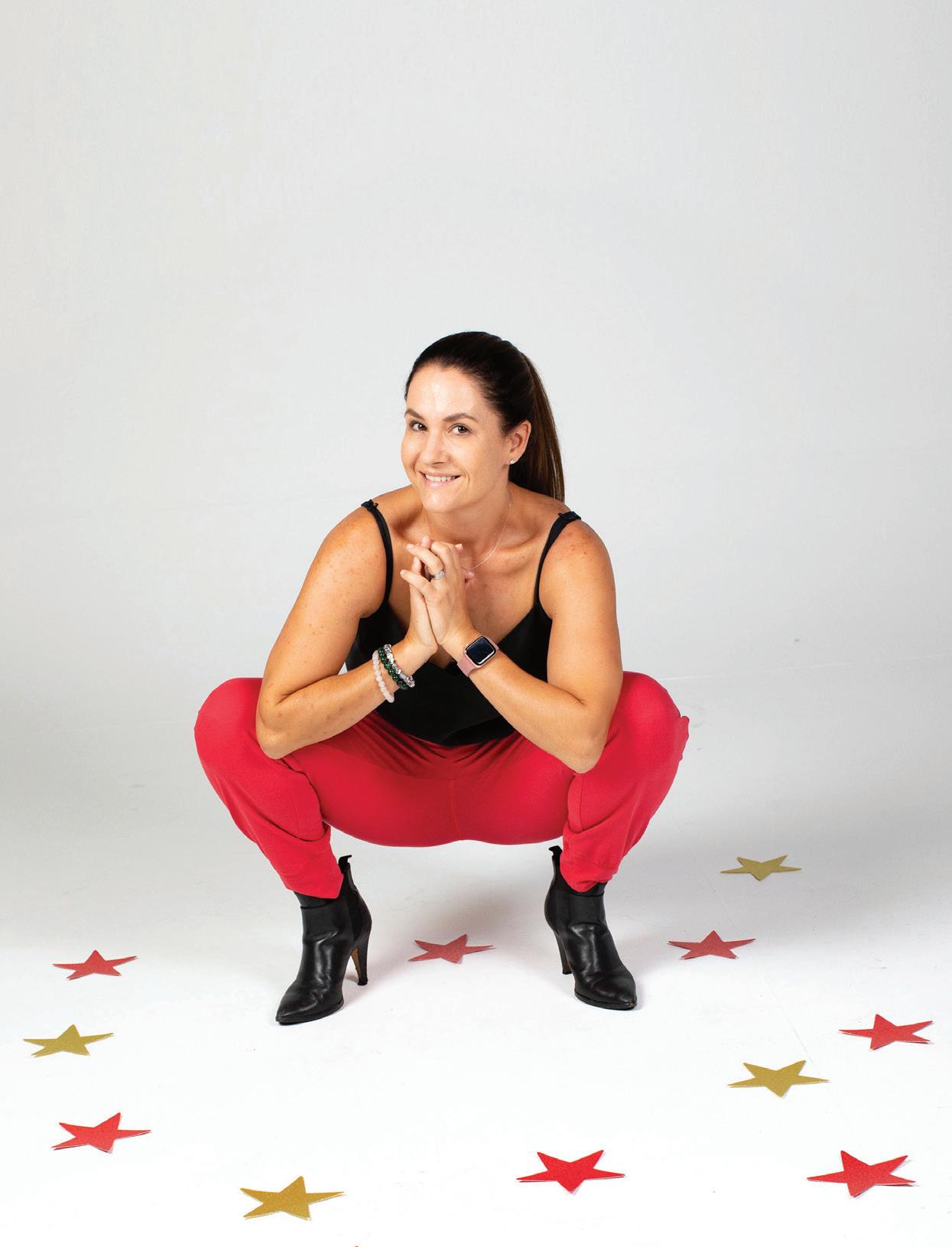 By Jen Dugard
There are many topics that are not openly talked about and as women we can find ourselves guessing about what is normal or not normal. We might also find ourselves ignoring warning signs or suffering from things we were never told about.
Your pelvic floor (PF) happens to be one of those ‘topics’. If you become pregnant or have a baby then hopefully your pelvic floor awareness will grow but what if you don’t have babies or no one talks to you about your pelvic floor…. What then?
Let’s jump into FIVE things that women need to know about their pelvic floor, but don’t!
It's an internal muscle and you cannot tell it is working well from external touch or feel. Sometimes it is mistaken that feeling the abdominals inside the hip bones can offer feedback on pelvic floor. This is incorrect. This is the Transversus Abdominis (TA) you are feeling contract. Yes, the TA is designed to co-contract with the PF but in many people, especially postpartum women, it does not. So, we cannot use this as a reliable test.
You might need to learn to relax it – some women have a hypertonic or overactive pelvic floor. This could be you if you had a hard time pushing your baby out or ended up with an emergency c-section after trying to push. Other symptoms of a hypertonic PF could be re-occurring UTI’s, painful sex, glute or lower back pain.
This could also be you if you are a younger or highly trained woman that has never had babies. We are seeing more and more young women with symptoms of a hypertonic pelvic floor and are suffering with the above symptoms. With the right support and treatment, it doesn’t have to be this way.
You could be pushing out - research suggests that 50-60% of women bare down (push out) on their pelvic floor instead of drawing it up (the correct movement) when they are simply told how to do their pelvic floor exercises verbally or they read them from a brochure. This means that a woman who thinks she is ‘strengthening’ her pelvic floor through regular exercises could be weakening them. Imagine this same woman then goes into the gym and loves to lift a bar bell – she loads up the bar thinks she is drawing up at the hardest point of the exercise and now pushes out underload – not ideal!

It helps you to orgasm – not experiencing an orgasm may have nothing to do with your PF at all (you may need a good chat with your partner) however your superficial pelvic floor is linked to your ability to orgasm. If it is not able to contract well enough orgasm may be difficult or not happen at all.
When it is damaged it may not be painful – for women that have had babies their pelvic floor muscles may become stretched and weaker. This may lead to symptoms of incontinence which is common but not something you should just accept and live with forever. Unfortunately, many women do live with incontinence and continue to do exercise that may further weaken their pelvic floor because it’s not painful. Annoying yes, but if they are driven by an aesthetic or performance based goal they could ignore the symptoms and as a consequence they may get worse down the track or lead to other contraindications such as prolapse that may have been prevented.
To combat all the above the most effective way you can properly understand YOUR pelvic floor as a woman is to book an appointment with a Women’s Health Physiotherapist (WHP). If you are a pregnant or postpartum woman making sure you have a WHP or Pelvic Health Physio as part of your care team is vital and can make a huge difference to your delivery and post-birth experience. If you are a woman who hasn’t had children OR who had babies many years ago and has never seen a WHP if you have any symptoms at all seeing a WHP could be a game changer for you.
As Fitness Professionals we call our WHP our ‘eyes on the inside’ and those who are experienced in working with pregnant and postnatal women know that we cannot do our best possible job in appropriate exercise prescription without their support.
To find a Women’s Health Physiotherapist in your area you can head to the ‘find a physio’ section over at www.mumsafe.com.au/physios
Jen Dugard is the founder and creator of MumSafe™️ - the go-to website for mums to connect with Personal Trainers that are certified, experienced and partner with Women’s Health Physiotherapists so that you know you are in very safe hands.
Bonding
By Yvette O'Dowd
Bonding. Attachment.
These are words we use to describe things which are connected. Secure attachment is strong, unlikely to break apart.
We also use these words to describe the connection between adults and children, primarily mother and baby in the first instance. (Or another primary caregiver who takes on that role.) Here we will discuss the maternal/infant bond as that is the biologically-typical mammal model. A human infant needs an enormous amount of support to reach the stage of independence; more than any other species on earth. Taking on that commitment, ahead of all other possibilities, is the greatest demand there is. If we just look at raising a child to “breeding age” (puberty) we are looking at 12-15 years. Brain maturity is reached around 25 years.
A mother bonds with her infant during the postnatal period. Bonding probably begins in pregnancy but it is during the immediate skinto-skin period after birth when it really kicks in. It is a process which develops over the following days and weeks.

Through the bonding process, a mother becomes so committed to the care and protection of her child that she will put their needs above all others, including her own. It is this bond which ensures she will take whatever action is required when her child is threatened, without
needing to engage the logical, thinking brain which might need time to process the danger and consider if it is in the mother’s best interest to take a risk.

Bonding is a two-way process. The baby needs to bond with their mother just as much as she does with them.
Bonding is enhanced through the release of the hormone oxytocin. This happens in babies, mothers, fathers and other carers when they see, hear, feel and smell each other in a caring situation. Breastfeeding enhances bonding because it brings all these together frequently throughout the day. However, this doesn't mean that those who are not breastfeeding cannot bond with their baby. Loving care also includes feeding by cup, spoon or bottle, bathing and nappy changing, carrying and skin-to-skin contact. Fathers and other non-lactating parents find their own special ways to bond with their breastfed babies. Babies bond with parents, grandparents, siblings and extended family and carers. The strength of the primary bond does not reduce the development of other secure attachments.
The mother-baby bond is the strongest your baby has in the early years. Breastfeeding is an intense relationship and it is important for babies to be close to their breastfeeding mother, both physically and emotionally. That doesn't mean they cannot form bonds with other people at the same time but it does mean the mother is generally
64 Peninsula Kids – Winter 2022
Granny’s Guide
going to be the person they seek first. They are not excluding fathers or grandparents. It is not a rod a mother has created for her own back. It is a natural part of the breastfeeding process. As a child grows, often in the third or fourth year, they naturally build stronger relationships with others in their circle. Weaning prematurely from the breast, removing a child from the family bed before they are ready, or other interventions will not mature the infant brain more quickly but can be traumatic for both mother and child.
Children who have secure attachment will become distressed when separated from their primary caregivers and be relieved when reunited - even crying when they see them. However, separation anxiety only begins to develop later in the first year, around 9 months, as the infant brain begins to understand their mother is a separate entity. Prior to this they function as though they and their mother are a single unit. Separation anxiety peaks around 18 months and gradually eases, when the brain develops further and the infant is able to understand that the parent will always return. This child will be happy to see their primary caregiver return, prefers them over others and will turn to them for comfort when frightened or unsure. This is normal behaviour and does not mean a child is too reliant on their mother or will never become independent. In fact, infants whose needs are quickly and reliably responded to go on to be confident children and adults.


10.30am

SPECIALISING

After the morning milking we separate milk and cream, churn cream to butter, grind wheat to flour and bake some bread. Bread and butter tasting at noon


Yvette O’Dowd is not your typical grandmother! This mother of three and 'Granny' of three has been a breastfeeding counsellor since 1992. In 2014, Yvette established the Southern Natural Parenting Network, incorporating South Eastern Babywearing Group. With 11,000 members world-wide, the group supports parents interested in breastfeeding, babywearing, co-sleeping, baby-led weaning and modern cloth nappies and other aspects of gentle, natural parenting. www. facebook.com/SouthernNaturalParentingNetwork

www.peninsulakids.com.au 65
5906 5900 KIDZSHED.COM.AU 222 MARINE PDE HASTINGS OUTDOOR SEATING & PLAY AREA MONDAY - CLOSED (Except during school holidays) TUESDAY - FRIDAY 9AM - 3.30PM (Later for parties by arrangement) SATURDAY - SUNDAY 9AM - 4PM
INDOOR PLAY CENTRE & CAFE Rustic Farm Setting Pony Rides Many Animals for “Hands on” Experiences Playground, Picnic Areas (BYO Food) Free Cuppas & Gas BBQs Special School Holiday Activities 490 Stumpy Gully Rd Balnarring www.rhsfarm.com.au
5983 1691 Open daily 10am - 4pm* *Closed on Thursdays and Fridays outside of school holidays
HOLIDAYS
JUNE 2022 – 10TH JULY
OPEN DAILY 10am-4pm*
IN KIDS BIRTHDAY PARTIES
Ph
SCHOOL
25TH
2022
MILKING
COW
& 2pm daily during the school holidays


66 Peninsula Kids – Winter 2022 CP300522V3PK N TO YOUR SK8 CLASS = 6 HOURS OF ROLLER SKATING FROM JUST $20 * * C o n d i t i o n s a p p l y - s e e w e b s i t e f o r s e s s i o n t i m e s a n d p r i c i n g d e t a i l s G E N E R A L S E S S I O N S | S K A T E C L A S S E S | P A R T I E S | P R I V A T E F U N C T I O N S 3/2 Amayla Cres Carrum Downs VIC 3201 ph 9773 6799 WE ARE OPEN EVERY DAY DURING THE SCHOOL HOLIDAYS FOR GREAT VALUE FAMILY FUN!
COLOUR ME IN FOR YOUR CHANCE TO WIN A $50 WOOLWORTHS GIFT CARD!

To celebrate the opening of the new Woolworths store located at Mornington Central, we are giving away five $50 Woolworths gift cards, one each to the 5 best judged entries.
Email entries to info@peninsulakids.com.au or PM your artwork to Facebook @MorningtonPeninsulaKids
Winners chosen 30/06/2022. Prizes must be collected from Peninsula Kids offices, 63 Watt Road Mornington (during office hours, 9am-5pm)
Name

www.peninsulakids.com.au
.......................................................................................................................... Age................. Email ...........................................................................................................................
At Peninsula Grammar, the formative years are shaped by a belief in the whole child to know success across any endeavour. Our teaching philosophy, world-class facilities, and extracurricular programs like Little Giants are all designed to inspire the children of today to become the leaders of tomorrow. peninsulagrammar.vic.edu.au





When I grow up, I want to be a baby doctor. Or a pastry chef. Or an illustrator. – Lexi, Year 3.
