

FREE PENINSULA KIDS LOVING FAMILY LIFE ON THE PENINSULA WINTER 2021 Effective Communication Tips for Mums why firstborns RULE the WORLD Staggering screen time Why cooking from a young age is so important Importance of Skinto Skin Contact The


2 Peninsula Kids – Winter 2021 ID E AL FOR KIDS A GED 5-12





www.peninsulakids.com.au 3
Cover Photo Models: Amelia
Location: The Briars, Mount Martha
Photographer: Danielle B Photography daniellebphotography.com.au
Editor and Publisher
Melissa McCullough melissa@mpnews.com.au
Design Sam Loverso sam@mpnews.com.au


Advertising Miriam Doe 0421 085 974 miriam@mpnews.com.au
General Enquiries info@peninsulakids.com.au

All material is copyright, and may not be reproduced without the express permission of Mornington Peninsula News Group, or the original copyright holder in the case of contributions. Copyright of contributed material rests with the contributor.


Disclaimer: The authors and publisher do not assume any liability to any party for any loss, damage, or disruption caused by errors or omissions, whether such errors or omissions result from negligence, accident, or any other cause.

This publication is not intended as a substitute for the medical advice of physicians. The reader should regularly consult a physician in matters relating to health and particularly with respect to any symptoms that may require diagnosis or medical attention.
Peninsula Kids is produced quarterly. 15,000 copies distributed between Mordialloc and Portsea.
Editor Melissa McCullough
Hello from the winter edition of Peninsula Kids magazine. As I write this note, a few new Covid restrictions have been put in place. I was about to make comparisons referencing this time last year and how wonderful it is for things to be mostly back to normal, but alas….

Hopefully this won’t last too long. It is winter on the Mornington Peninsula and that means hot, travel coffee, bustling markets, and lots, and lots of footy. This is my first year as a footy mum by way of my daughter. I cannot express the admiration and awe I have for the team out there giving it their all. You go girls!

Not sure if I would be game to roll around in the rain and mud, but hand me a chai latte and a fluoro, ground marshall vest anytime.

Thank you to Moonlit Sanctuary (www.moonlitsanctuary.com.au) for sponsoring the colouring competition in the autumn mag. I must give an enormous shout-out to all the spectacular artists who sent in their entries. There were so many amazing pictures to look at and I loved receiving every single one of them! There can only be one winner, though, so congratulations to five-year-old Chloe, for all her amazing effort!
Advertising
Miriam Doe

I would also like to give an honourable mention to three-year-old Pippa, the ‘enthusiastic colourer’. Just gorgeous, Pippa! Check out our latest colouring comp on page 83. Cannot wait to check out your work!


Be safe and warm everyone!
www.facebook.com/MorningtonPeninsulaKids www.instagram.com/mornpenkids Our winner, Chloe!
Design Sam Loverso
Registered address: 63 Watt Road, Mornington 3931 Proudly published by Fantastic effort Pippa!
Ninja or Cheerleading... Which will be your chosen sport for Camp Odyssey 2022?
Ninja or Cheerleading... Which will be your chosen sport for Camp Odyssey 2022?


Coming to The Ranch, Boneo, hang out and learn from your favourite ninja coaches including Charlie Robbins and Barefoot Dan from Australian Ninja Warrior! A camp you do not want your child to miss!
Coming to The Ranch, Boneo, hang out and learn from your favourite ninja coaches including Charlie Robbins and Barefoot Dan from Australian Ninja Warrior! A camp you do not want your child to miss!


Ages 8-16yrs. Beginner to Advanced.
Ages 8-16yrs. Beginner to Advanced.

www.peninsulakids.com.au 5 START YOUR JOURNEY AT CAMP ODYSSEY
Visit our website now to secure your spot for Camp Odyssey 2022. BECOME THE MOST P H E N O M E N A L ATHLETE START YOUR JOURNEY AT CAMP ODYSSEY
www.odysseysports.com.au
Visit our website now to secure your spot for Camp Odyssey
BECOME THE MOST P H E N O M E N A L ATHLETE
www.odysseysports.com.au
2022.
MONTESSOR I
The world renowned teaching methods of Maria Montessori – Montessori Cycle 1


Piccolos
Music to inspire
Dedicated hall for music, dance and indoor sports, all weather outdoor sports area and large natural playgrounds
Focus on Holistic Education
Social, emotional, ethical, and academic education.
Valuing ‘Respect’
Embracing kindness and caring for others, animals and our environment.
Developing ‘the love of learning’
Self-directed ‘hands on’ activities and collaborative experiences.
Creating Confidence
118 Overport Road, Frankston South Phone 03 9787 6730 to visit our school


Email: admin@piccoloschildren.com.au www.piccoloschildren.com.au
Open from 7:30am – 6:30pm, Ages 2.5 - 6 yrs
Montessori
Long day care
Developing concentration
Healthy meals
Incursions & excursions
Piccolos beautiful natural learning environment

Developing life skills

Learning to read while learning to write
Expression through song and dance
Family rebates and benefits apply Integrated 3 & 4 year old Kindergarten Promoting nature and care for its inhabitants


Lasting friendships
Understanding numeracy
– Winter 2021
e pl
Enrol now for 2022
Spotlight
10 Effective Communication Tips for Mums

Top tips for improving communication with your tween daughter by Amanda Stokes.


12 The Key to Healing Our Mother Wounds Science has shown that trauma can leave a chemical mark on a person's genes, which is passed down to subsequent generations.
16 5 Ways To Get Rid of Negative Thoughts and Thrive Instead
Actionable tips that can help overcome limiting beliefs, self-destructive thoughts, and instead shift your mindset to a more empowered and constructive place.
20 Why First-Borns Rule The World
Whether you are first or last, first of two children, an only child or a twin, or stuck in the middle of a large tribe, your position affects your life in many ways.
24 Neurodiversity
Advocates for neurodiversity reject the idea that children (and adults) who are on the spectrum or have ADHD and other neurobiological differences are disabled.
26 Staggering Screen Time
How much time do you think you spend each day with your eyes glued your to devices? Studies show it is as high as 17 years of our lives.
Contents
26 10
20
28 What I’ve Learnt Living With a Bipolar Mum Erika Cramer’s earliest memory is from when she was just five-years old.


8 Peninsula Kids – Winter 2021 Local 32 Creative Makes 34 School Holiday Lifesavers Frankston City Libraries Celebrate 36 Holy Moly Golf Club Parties Education 44 School Road Safety 46 The Catalyst to Confidence 49 Focus on Education 56 SpongeBob Activity Pages Recipes 58 'Simply Swap' Recipes with Linda Martinucci Health 64 Digestion Issues or a Sore Tummy? 66 More "Stress Busters" for Kids and Teens 68 Why Cooking From a Young Age is so Important 72 Ask the Experts Pregnancy & Baby 74 Mental Wellness Planning For Birthing Families 78 The Importance of Skin to Skin Contact 81 Why is Your Baby Fighting Sleep Creative 82 Fingerprint Trees Contents REGULAR CONTRIBUTORS Special thanks go to the gorgeous and talented group of contributors who breathe life into every issue by sharing their best with us. LINDA MARTINUCCI www.simplyswapfoods.com.au Pg58 Cover DANIELLE BUSUTTIL daniellebphotography.com.au YVETTE O’DOWD www.facebook.com/groups/ SouthernNaturalParentingNetwork Pg78 In Every Issue 33 Little Bites 39 Party Planning 42 Things We Love 45 Days To Celebrate 54 Book Reviews 83 Colouring Competition 58 74 STEFANIE POOLE www.stefaniepoole.com Pg74 68 66 56 KIM NORTON www.rainbowlighttherapies.com.au Pg66


www.peninsulakids.com.au 9
Effective Communication Tips forMums
By Amanda Stokes
Ioften think it’s an odd thing that the only experience we have when we become a parent is that of having been a child to one. It’s worth reflecting on. So much of who we become as a parent is based on our own experiences. If your own parents were overly authoritative, you may have gone the opposite way; alternatively if your parents lacked structure and boundaries, you may have a similar parenting style because you know no other way.
I run with the mantra that we are all doing the best job we know how, but when we know better we can be better.
Here are my top tips for improving communication with your tween daughter:

1.KNOW YOUR COMMUNICATION STYLE.
Are you reactive? Do you blow up easily? Are you an ‘I told you so’ parent? Are you a pushover? Do you worry your daughter won’t like you and so you try to appease her by treading on egg shells? Now think of how your daughter treats you. Is she rude and argumentative? Is she dismissive? There is often a correlation between the way we talk to our girls and the way they respond. It’s imperative we become self aware here. If you know that you get angry easily, then don’t be surprised if your daughter returns fire. If she responds with a snarky tone and you deliver snarky right back at her, then it’s no shock that you’ll often find yourself in a battle of words. Monkey see monkey do, and if you do what you’ve always done, you’ll get what you’ve always get.
2. PRACTICE THE PAUSE.
Once you’ve figured out how you’re communicating with your daughter, exercise the pause, whether that be by counting to 10, or asserting a personal boundary by saying “I’m feeling really angry/frustrated/ so we’ll talk about this when we’ve both cooled down”. The pause is powerful because it buys time and it allows for you both to return to the conversation without the heat. A volcanic eruption can’t be stopped, it needs to run its course and when we’re fired up, we lead with emotion and often say things we don’t mean. The pause is also an effective way to role model a more positive calming strategy for our daughters.
3.
BE CONSISTENT.
It can be so hard when life is hectic, and you’re juggling so many balls, to be consistent in our parenting approach, but consistency is key. If you allow something one day and then don’t allow it the next, these mixed messages impact whatever it is you’re trying to achieve. We also want to avoid being the nagger. Having to ask over and over to have jobs done, and having these requests fall on deaf ears, can lead to an escalation in our tone and frustration. A great way to work around this, is to just use one word. If you want the dishwasher done, just say “dishwasher” and give a time frame for that job to be completed in, say within 30 minutes. What this does is it makes our children feel like they have some autonomy over the ‘when’. It’s a great step towards them further developing their growing independence. Setting up a shared Family Agreement - Chapter 1 in The Tween Mother’s Tool Book: Raising Strong Daughters, can help with dealing with the consequences of non-compliance.
Whatever you do, it’s important not to be too hard on yourself. The best thing about life, is that tomorrow always gives you a fresh day and a new opportunity to start over.
For more tips on raising strong daughters, Amanda’s new book The Tween Mother’s Tool Book: Raising Strong Daughters, an activity based guide promoting connection, reflection and effective communication between a mother and her daughter is available now from www.raisingstrongdaughters.com.au You can also follow her on Instagram at www.instagram.com/raisingstrongdaughters_

www.peninsulakids.com.au 11
It can be so hard when life is hectic, and you’re juggling so many balls, to be consistent in our parenting approach, but consistency is key.
The key to healing
By Sheila Vijeyarasa
Our mother is our first love. For nine months in utero, we are but one. There is no one else in our life with whom we have such a primordial relationship. In the womb, we begin a process of inheriting an imprint from our mothers of what it means to be a woman. When a mother gives birth, a process of separation between the mother and daughter begins.
I have come from a line of strong women. Strong because they have had to endure difficulties. My mother had an arranged marriage and migrated to a new country leaving behind her whole family at a young age. My grandmother’s husband died suddenly of a heart attack when she was in her forties. On one hand I was gifted the generational virtues of my female elders;- strength, tenacity and resilience, - and on the other, I inherited their ‘mother wounds’.
Science has shown that trauma can leave a chemical mark on a person's genes, which is passed down to subsequent generations.

Epigenetic gene expression means that the feelings, traumas and memories of previous generations may be experienced in my life as true, even though the environment is different. The core belief of the ‘mother wounding’ is ‘There’s something wrong with me’. When I would say to myself, ‘Am I worthy?’ I came to realise that this was not my voice, but a voice from many generations ago.
All of us have mother wounds, to some extent; the generational differences and the discord with the patriarchy through generations means no one really escapes this fate. What varies is how significantly the impact presents itself in your life; it may be a shadow that you need to walk with, or the wound may run deeper and require deeper healing to transform your life.
our Mother wounds
What do we think happens to the emotional states of our mothers when they are forced to abandon their purpose, their childhood dreams?
A rage builds. And when the rage is suppressed it transmutes into states of depression, neediness, shame and unease. In these states, our mothers emotionally abandon us because they have been abandoned themselves. There is a fracture in our emotional connection to the person we are most primally connected to – our mother. This triggers instinctual fears within us in ways that no other relationship will. To survive we abandon ourselves and our own emotional needs in the way that our mothers did, and we enter a multi-generational cycle that is amplified and compounded with each generation. This is the impact of ‘The Mother Wound’.
My romantic relationships became the great testing ground for the mother wounding.
A strong independent woman, I would crumble into a needy, excessively insecure, co-dependent mess when I was in a relationship. I was anxiously attached when dating. I could not find a man who could love me when I was in my full power. I would stand shoulders squared demanding to be equal yet, how could they love me when I was yet to love myself in my full power. My relationships became the battle of the egos. Eventually to ensure that these men did not run away, I made myself less. I knew that I was copying an entrenched maternal pattern handed to me, yet I did not know how to address it.
continued next page...

We all want to fall in love. Yet no one likes to fall. We reach for a myth of romantic love and run from the fear of the romantic subjugation handed to us by the mother’s story. I was looking for a man to save me from the life I had created. When I would fall in love, I would anxiously attach to him, to his friends, to his spiritual beliefs, to his routine, even to his favourite chocolate bar. I placed an inordinate amount of attention and focus on the relationship. For me, holding on to my romantic relationships became my purpose.
In order to heal our ‘Mother Wounds’ we must get curious and ask questions:
1. What is your relationship like with your mother? And her relationship with her mother?
2. What do you know about your mother’s childhood and adolescence?
3. How do you sacrifice yourself in romantic relationships to hold on to love?
4. Do you lose your commitment to your purpose when in romantic relationships?
5. What is your womb trying to tell you? Are your periods heavy and painful?
6. How can you let yourself be more fully seen in your life?
7. What gifts are you most grateful to your mother for?
It was challenging when I realised that I had to take responsibility for the relationship I had created between my mother and myself, but when I took responsibility, a shift happened. The shift saw the dissolving of my judgement of my mother and how I wanted her to show up in my life. I realised that stepping into my power did not have to mean stepping away from my mother. But I did need to shed the social stereotypes of a woman that I thought I needed to be: silent, sacrificial and obedient.
Even though my mother saw me, I still felt unseen and that gave me an excuse in life to act out, to not be responsible, to be angry, to be a victim. She had been my scapegoat from all I lacked. The worst thing I realised was that my mother had never been seen by her own daughter. She was rejected by me. I needed to stop and witness her gifts, as gifts and strengths, not weaknesses.
I see now that I have a mother who has exceptional intuitive abilities, a pious heart, a great sense of humour, a generous spirit and a mane of curly hair, all gifts that she gave to me that I now embrace as my own. When I stopped rejecting who I was in the world I could finally stand in my power and call myself a professional medium. I could say the words out loud without wincing and expecting a negative response. I had to fully embrace my feminine nature, my intuitive gifts and heal the deep wound of the feminine. When I accepted, harnessed and used my intuitive abilities, I noticed that my mother did too. I started to feel differently about my mother and our relationship. We were seeing each other for the first time through new eyes.
Through the lens of respect, reverence and acknowledgment, our gifts became visible to ourselves and each other.
It is important for all of us, if we are lucky enough to still have time to do so, to ask questions about our mother’s lives, inviting them to share their dreams and ambitions. And to understand the impact and limitations that this has created in both our lives.
Sheila Vijeyarasa is the author of Brave: Courageously live your truth (Rockpool Publishing, $29.99). She is a powerful psychic medium, transformational coach and keynote speaker. Sheila reveals your truth; your purpose, by tapping into spiritual wisdom. She combines spiritual wisdom with executive leadership coaching to empower you to go out and transform your life. Find out more about Brave at www.rockpoolpublishing.com.au
14 Peninsula Kids – Winter 2021

www.peninsulakids.com.au 15 At the heart of John Paul College is the desire for the full flourishing of each student, across religious, physical, cognitive, creative, emotional and social domains. Join us at our Open Day on Wednesday 21 July to hear from our Principal, take a student-led tour of the College grounds and chat to our experienced staff. Register your attendance via jpc.vic.edu.au Enrolments for Year 7 2023 close on Friday 20 August 2021 Visit us at our Open Day
By Maz Dela Cerna
Once we start doubting ourselves and our abilities, it can be easy to fall into a cycle of negativity and our destructive thoughts can spiral. What we focus on grows, and the more we focus on fear and doubt, the worse it becomes. Here’s five actionable tips that can help overcome limiting beliefs and self-destructive thoughts; instead shift your mindset to a more empowered and constructive place.

MAKE A LIST OF ALL OF THE THINGS YOU HAVE ACHIEVED


When overwhelmed with limiting thoughts, we tend to forget all the things we have already achieved.
Take a moment and write a list of all the things you have accomplished that you are proud of. No matter how big or small, it will do wonders to remind yourself of what you have already been capable of.

16 Peninsula Kids – Winter 2021 3000 sqm of every workout you’d want 10 day gym trial full access for $25 Mon-Fri Creche Sessions Sign up for our 6 week challenge and LOSE 10kg FREE TRIAL & ASSESSMENT PRIVATE & GROUP LESSONS ALL YOUR SWIMMING NEEDS No contract options UNLIMITED HIGH INTENSITY FUNCTIONAL TRAINING from $35/week EXPERIENCED TEAM HEALTHY SALT WATER POOL REGULAR FEEDBACK FOR YOUR CHILDS PROGRESS NDIS ARRANGEMENTS superswim@inputfitness.com.au 224 Cranbourne Rd Frankston 9789 3566 224 Cranbourne Rd Frankston Call 9789 3566 Body Bump classes Classes from 3 mnths Am I good enough? What do people think? Who am I to think that I can achieve this? Will I be alone forever?
1
to get rid of negative thoughts and thrive instead

REMIND YOURSELF OF ALL THE THINGS YOU HAVE OVERCOME THAT YOU ONCE THOUGHT YOU COULDN’T GET THROUGH
How many times have you been in a situation where you thought you were not going to see the light at the end of the tunnel? What about the break-up that left you in pieces, that time you lost a loved one or maybe you didn’t get the job position that your heart was set on? Remember when you once thought you couldn’t make it through. Did you overcome it? Did you surprise yourself with your own strength? How did you pick yourself up?
continued next page...
2
THINK OF THE PEOPLE IN YOUR LIFE THAT LOVE YOU THE MOST. HOW WOULD THEY DESCRIBE YOU?
When we are stuck in self-doubt, we tend to focus on our flaws and imperfections rather than our strengths. Stepping outside of our own minds and seeing ourselves from the perspective of our loved ones can give us insight as to why they love us and remind ourselves of the great qualities we possess. The people that love us the most see the beauty we have in our character. They see us in a light that isn’t jaded with the limiting beliefs we can have for ourselves. Take a moment and really think about why it is they love you and how they would describe you.
SHADOW WORK


Shadow work is a process of being able to face the subconscious parts of ourselves, the parts we tend to not want to face or admit: trauma, greed, anger, jealousy, and our deep-seated fears. It’s bringing our “shadow side” to the light and understanding where it stemmed from and showing compassion for ourselves while we admit and accept responsibility for the part we played.
It isn’t easy to look at ourselves in this way and admit to things we aren’t proud of. But it is an important step towards healing. Becoming self-aware and understanding why you my say or do certain things, and digging deep into where it stemmed from, can be life changing. It requires us to look deep into our childhood, our past relationships, our upbringing, family dynamics and life experiences. Some of things you may find can even surprise you. For example, I realized I had a limiting belief around money because I grew up in a household where “Money is bad. The rich are greedy, and the poor only get poorer.” I realized I made a lot of decisions based on this subconscious belief without being aware I was limiting myself from achieving the things I wanted.
GREAT VALUE FAMILY FUN FOR EVERYONE! OPEN EVERY DAY DURING SCHOOL HOLIDAYS


*


18 Peninsula Kids – Winter 2021
3 4
FEAR AND TRUTH CHART
This is a tip my own mentor shared with me. I have found it has helped me every time I find myself in a wave of toxic thoughts and puts things in a much more positive perspective. Grab a piece of paper and draw a line down the middle. On the left write down all the negative or fearful thoughts you may have about yourself and, on the right, look at the situation without your emotions and write down the truth in a positive light. For example, I will never meet the person of my dreams and I will be alone for the rest of my life – I haven’t yet met the right one, but I am learning lessons along the way that are helping and preparing me for when they do come into my life.
Maz Dela Cerna, author of I Deserve Better, is a renowned self-development coach, author, blogger and YouTuber. As the founder of the Phoenix Rising Collective she coaches people around the world to uncover and remove their self-limiting beliefs and self-destructive thoughts. Find out more at www.mazdelacerna.com

www.peninsulakids.com.au 19
5
why first-borns RULE the
By Michael Grose

To better understand the power of birth order, parenting expert Michael Grose has written a timely update to his ground-breaking national bestseller Why First-borns Rule The World. Sixty years ago a family of four children was the norm; today nearly 60 per cent of Australian families comprise two or less children.
In Why First-borns Rule The World Grose analyses the latest studies on birth order from a range of families, and each member’s likely personality and disposition.
In this era of small, planned families, birth-order theory is more relevant than ever. We are now witnessing the emergence of children with easily defined birth-order personalities. When families are small and the age gap between siblings is two years or less then competition for a space in the family is at its most fierce.

These are ideal conditions for birth-order theory to come to life. Now more than ever birth-order theory adds a clearly defined, easily identifiable dimension to children’s personality development.
Why birth-order theory works.
Birth-order theory works so well because we are social beings trying to find a spot in our social groups. The first social group we belong to is our family. Within our family we compete with our siblings for different places, positions and niches. When one position, say the responsible child, is filled then we look for another. So younger children tend to define themselves according to whatever territory is left over once the eldest has staked their claim. When we understand that the prime motivation of any child is to find their special place in the family then birth order begins to make sense. It is folly to try to understand a child’s personality development or behaviour without taking into account the personalities and interests of others in the family. When you understand the rules of birth order and consider all the variables then an accurate picture begins to form of a child’s birth-order personality.
WORLD

Birth-order theory is about understanding your place in your family constellation and its impact on your life. Whether you are first or last, first of two children, an only child or a twin, or stuck in the middle of a large tribe, your position affects your life in many ways. It will influence your levels of achievement at school. It will help determine the job you choose and even how long you work. It will help determine the spouse you choose. Your birth-order position and your partner’s will have an impact on the success of your partnership. It will also have an impact on the choice and number of friends that you have. It will influence your health and wellbeing, even determining your likelihood of heart disease, according to an Italian study published in the New Scientist. Yes, first-borns are more prone to heart disorders than any other position, presumably as this group experience more stress and anxiety. But your birth order is a predictor not the sole determinant of your future success, health and wellbeing. As cognitive beings we can decide how we act, feel and behave at any stage in our lives. We are not at the whim of genetics or locked into behaving in predetermined ways. So, birth order presents possibilities not certainties. But the possi-bilities and patterns are intriguing!
Answer this question to test your knowledge of birth order: For each of the following descriptions, note which relates to the (1) first-born, (2) middle-born, (3) youngest or (4) only child?


(a) I don’t know how he does it; his room is a mess but whenever he wants something he knows exactly where it is.
(b) That girl is a real manipulator. Charming as anything but she knows how to get her own way. Joan will be a great sales- person one day.
(c) Phil is a budding scientist. He is fantastic at maths, but he drives people crazy with his precision and dedication to perfection.

(d) Ella has heaps of friends. She is hard to sum up but she is terrific with people and a first-class negotiator. She’ll end up a diplomat some day, working for her eldest brother who is bound to be prime minister.
(e) Dushan gets on better with older people than his peers. Many people think he is self-centred as he is not very good at sharing.

www.peninsulakids.com.au 21 continued next page... Fabiola Curavic Smallprint Mornington Peninsula m: 0420 971 324 smallprint mornington peninsula smlp_mornington www.smallprint.com The perfect gift this Father’s Day Sterling silver Hand made to order Order by July 31 to receive a 10% discount.
Answers: (a) 1 (b) 3 (c) 1 (d) 2 (e) 4
If you picked (a) as being a first-born then you know that first-borns may not always have things in order but they like to have things under control. Their room or desk may be messy but they know where everything is. It’s a first-born trait. If you recognise yourself in (b) then chances are that you were the youngest in your family who became adept at putting more capable elder siblings in your service. You may have been a charmer but you knew exactly what you were doing. If you have an eye for detail, and accuracy in everything you do is important, then you may recognise yourself in Phil in (c). Middle kids are generally the most gregarious individuals and make great negotiators–like Ella in (d), they make great ‘people’ people. If you picked Dushan in (e) as an only child you may be aware that sometimes these children just don’t have the same opportunities to share their time, space and possessions as other children.
Best Start. Best Life.
From next year, Victorian Government approved services will be offering five hours a week of funded three-year-old kindergarten programs led by qualified teachers.

Funded kindergarten is available in different settings including stand-alone kindergarten facilities, long day care centres and some schools. Find the best fit for your family!
To identify funded kindergartens, look for the kinder tick.
mornpen.vic.gov.au/kindergarten
Not every child will fit these characteristics. Sometimes first-borns seem more like youngest children and second-borns may seem more like first-borns. As you will discover, second-borns can function like firstborns – in fact, there can be more than one first-born in a family. But more about this later. There are many variables in birth-order theory but once you understand the basic concepts then it is easy to account for many of the differences. For instance, a former office manager was the fourth of five children but she functioned like a first-born. She was efficient, well-organised and paid attention to fine details. She was adept at making up systems and procedures that helped the office run like clockwork. These are typical first-born traits so I was a little surprised to find that she was not the eldest. After a few conversations I soon learned that she was treated like a first-born in her family. There was also a five-year gap between her and her elder sibling, which effectively gave her first-born status over any sibling who followed. She was given plenty of responsibilities around the
22 Peninsula Kids – Winter 2021
When it comes to early learning, research shows two years are better than one.
house; however, there were few expectations for her younger brother to take on any responsibility at home. With a sibling to follow and a mother who worked full-time it fell on Jasmine to shoulder much of the parenting of the younger sibling. Cooking, bathing and babysitting were just some of the extra responsibilities that she took on. With this background it is little wonder that Jasmine was an organisational wizard. From a young age she learned how to juggle a number of different tasks, prioritising jobs and working systematically through a series of set tasks until each job was finished. She may have been born later in the family but she functioned like a first-born who was used to being in charge and in control of most situations involving others. Why is it that in the same family one child can be outgoing and playful, another uptight and anxious, despite sharing the same environment, gene pool and parenting styles? The answer is birth order, and it unlocks the key to who we are from childhood to adulthood.


Michael Grose is one of Australia’s leading parenting and educational writers and speakers. He is the author of 12 books for parents, including the best-selling Why First-borns Rule the World. Currently he supports schools in Australia and internationally to build strong partnerships with their parent communities. Michael was elevated to the PSA Speaker Hall of Fame in 2013 when he won the Educator Award for Excellence. He was the first person to conduct a parenting seminar for a nation’s leaders when he ventured into Parliament House, Canberra, in 2004 and addressed politicians on both sides of the political fence about how to behave so your children will too. parentingideas.com.au

www.peninsulakids.com.au 23 OUTDOOR SEATING & PLAY AREA! GLUTEN FREE FOOD OPTIONS! BOOK YOUR NEXT PARTY WITH US! GIFT VOUCHERS AVAILABLE! Monday- closed Tuesday - Friday 9am-3.30pm Sat & Sun 9am-4pm WINTER IS OUR BUSIEST TIME, MAKE SURE TO CALL US AND RESERVE A TABLE, BOOTH OR PARTY ROOM. 222 MARINE PDE HASTINGS P:5906 5900 KIDZSHED.COM.AU Rustic Farm Setting Pony and Horse Rides Many Animals for “Hands on” Experiences Playground, Picnic Areas (BYO Food) Free Cuppas & Gas BBQs Special School Holiday Activities 490 Stumpy Gully Rd Balnarring www.rhsfarm.com.au Ph 5983 1691 Open 10am - 4pm* *Closed on Thursdays and Fridays outside of school holidays Open daily 10am-4pm COW MILKING 10.30am & 2pm daily throughout the school holidays
ToreadmoreofMichael’sbook,lookoutforthegiveawayon ourThingsWeLovepage42!
Neurodiversity
Neurodiversity
By Rebecca Perkins
Understanding what it means to have a neurodivergent child. Nothing beats the euphoric feeling of welcoming your newborn child into the world. You dream of a bright future with no boundaries. And why not?
However, when you are told that your child is not ‘typical’, your preconceived idea of a seemingly perfect world has to change. With more information and research to hand it is becoming easier to recognise and diagnose kids (and adults). As a result, hundreds of Australian children are diagnosed with Autism, dyslexia and ADHD each year.

Many families walk through the ‘neurodiversity door’ with some fear and apprehension whilst they seek to learn more and try to find access to the hard-to-find information and support.
The negative way that neurodiversity is often reported and spoken about throughout society has led to many misunderstandings, confusion and a lack of acceptance. Thankfully, this is slowly changing, but there is still a very long way to go.
What is the Neurodiversity Movement?
Popularised by Judy Singer in 1998, the Neurodiversity Movement is a societal shift that highlights there are variations of the brain and that nothing is classed as ‘abnormal’.
Advocates for neurodiversity reject the idea that children (and adults) who are on the spectrum or have ADHD and other neurobiological differences are disabled. They passionately believe that their brains just work differently from others and celebrate this.
The goal of this movement is to embrace neurodivergent people as part of the mainstream, accept their differences and appreciate them for their uniqueness and their many wonderful abilities.
HERE ARE THREE WAYS YOU CAN EMBRACE YOUR NEURODIVERSITY JOURNEY.
ACCEPTANCE - TAKE YOUR TIME
Once your child has received a diagnosis you need to take as much time as possible to learn and read information from positive sources. It’s important to learn about the Neurodiversity Movement and what this means for you and your family.
Talk to your child about their diagnosis in a positive way using ageappropriate language. There is no need to over complicate things. It is really important when discussing a diagnosis with your child that you let them know about the many positives. Highlight that they are wonderful for having a fantastic unique brain.
When talking with family and friends, be mindful that you don’t need others to fully understand the ins and outs of your initial diagnosis. However, you do need them to understand that neurodivergent kids are wonderful, have many fantastic abilities and that they are just as worthy of acceptance as anyone else......Positivity is key.
AWARENESS – WALK THE TALK
We need to teach everyone in our lives that it is OK to be different. As parents, we tend to focus too much on the deficits and do not appreciate the strengths of neurodiverse individuals.
By creating knowledge and understanding this will result in a positive ripple effect of increased awareness, acceptance and appreciation for our neurodiverse children; The key to the new mainstream way of thinking.
Be proud of who your child is. Talk openly with teachers, family and friends to make sure they have a better understanding about what neurodiversity means and how they can support your child.
Take the lead and the rest will follow.
APPRECIATION – CELEBRATE DIFFERENCES
Be comforted by the fact that a diagnosis is not a negative thing: it is just different. Accept that, with your unwavering support, your child will absolutely be happy and can achieve their goals.
We, as parents, need to learn how to reframe our thinking that neurodivergent children can be happy and achieve their goals and dreams.
Neurodivergent children often have incredible abilities, hopes and dreams. Sometimes they do things that they may not be proud of and may find difficult because their brain is simply different. But how does that differ to any other child?
There are so many incredible people that have shown that it is not only possible to manage their symptoms but that they can stand out from the crowd. This includes Jamie Oliver (celebrity chef), Justin Timberlake (singer/actor), Emma Watson (actor) and Sir Richard Branson (Founder Virgin Airlines/entrepreneur) to name but a few. Make no mistake, there will be challenges and you will need to be prepared to take these by the horns.
You are never alone as there is a whole community behind you. Always remember: Don’t look back, you are not going that way. Embrace the wonderful future in store for you.
Rebecca Perkins, Founder My Special Child www.myspecialchildonline.com
24 Peninsula Kids – Winter 2021
Neurodiversity

www.peninsulakids.com.au 25
Don’t look back, you are not going that way. Embrace the wonderful future in store for you.
Staggering screen

time
By Georgia Dixon
Howmuch time do you think you spend each day with your eyes glued to Instagram, Facebook, Netflix and TikTok?
A couple of hours? Maybe three? Well, thanks to the growing popularity of unlimited mobile data plans, the real figure is even more than that. Like, a lot more.
We surveyed Aussies to find out how many hours on average they spend looking at their phones per day. We compared this to general wellbeing statistics, like life expectancy and sleep patterns and came to a pretty sobering conclusion: we’re spending almost 17 years of our lives on our phones.
What we found
In our research, we discovered that the average Aussie spends 5.5 hours per day on their phone, which equates to 16.6 years, based on the average age we get our first phone (around 10 years old1) and average Australian life expectancy2. That translates to 33 percent of our waking life3.

As you might’ve expected, younger generations are leading the charge when it comes to how many hours we’re sinking into our devices. While those born before 1965 are reporting an average of three hours of screen time per day, that number effectively doubles among Gen Xers and Millennials. But it is those in the Gen Z cohort that are really taking advantage of those unlimited data plans, reporting an average screen time of 7.3 hours each day.
How to reduce screen time
Smartphones have become so much a part of our daily lives that, for most people, it’s impossible to go without for more than a few hours without glancing at their devices. However, to ensure you maintain a healthy relationship with technology, it’s important to set a few guidelines.
33%
The average Aussie will spend almost 17 years of their life on the phone (that’s 145,800 hours over a lifetime or 33% of their waking hours). The daily average of hours that Aussies spend looking at their phone is 5.5 hours per day.
“Most of us have boundaries around when and where we eat food. The same thoughtfulness can be applied to consuming technology,” explains Kim Anenberg Cavallo, Executive Director and co-founder of Unplug Collaborative, the team behind the National Day of Unplugging.
“Create an engaging, tech-free zone in your home where screens are non-existent and mobile devices will not follow you.”
This space should be an ever-changing hub of tech-free goodies, Kim says. Fill it with board games, puzzles, books, magazines, crafts and whatever else will feed that part of the brain that’s so used to being constantly bombarded with new links, images, videos and games.
“Make sure your tech-free zone has the element of surprise built in by swapping out the games and books regularly,” Kim said.
Methodology
We surveyed 1,000 Australians about their mobile phone screen time, then factored in the average number of years that we own a smartphone, and compared that to current average life expectancies, and calculated against the average number of waking hours (about 16.7 hours).
33%
33%
Sources used:
The average Aussie will spend almost 17 years of their life on the phone (that’s 145,800 hours over a lifetime or 33% of their waking hours).
The average Aussie will spend almost 17 years of their life on the phone (that’s 145,800 hours over a lifetime or 33% of their waking hours).
1. TechCrunch, “The average age for a child getting their first smartphone is now 10.3 years,” May 20, 2016.
2. Data World Bank, “Life expectancy at birth, total (years) – Australia,” Accessed 25 March, 2021
The daily average of hours that Aussies spend looking at their phone is 5.5 hours per day.
The daily average of hours that Aussies spend looking at their phone is 5.5 hours per day.
3. Sleep Health Foundation, “The sleep habits of an Australian adult population,” 24 September, 2015.

4. Pew Research Center, “Where Millennials end and Generation Z begins,” January 17, 2019.
Screen Time by Generation
Screen Time by Generation
Silent 1928 - 1945 2.8hrs
Silent 1928 - 1945 2.8hrs
Boomer 1946 - 1964 2.9hrs
Boomer 1946 - 1964 2.9hrs
Genration X 1965 - 1980 6hrs
Genration X 1965 - 1980 6hrs
Millennial 1981 - 1996 6.7hrs
Millennial 1981 - 1996 6.7hrs
Generation Z 1997 - 2012 7.3hrs
Generation Z 1997 - 2012 7.3hrs
Gen Z spend the most time on their phone followed by Millennials, then Gen X. This significantly drops for Boomers and Silents.
Gen Z spend the most time on their phone followed by Millennials, then Gen X. This significantly drops for Boomers and Silents.
Create an engaging, tech-free zone in your home where screens are nonexistent and mobile devices will not follow you.
Screen Time by Generation Silent 1928 - 1945 2.8hrs
What I’ve learnt living with a bipolar mum What I’ve learnt living with a bipolar mum
 By Erika Cramer
Igrew up in the United States with my mum, who was a single parent. We lived on food stamps and when things were good, they were great. However, my mum suffered from bipolar disorder. When she stopped taking her medication she would become very unwell, with severe paranoia, anger and mania setting in. My earliest memory of her condition was when I was
five years old. I was in a foster home at the time and I remember being picked up by a social worker and going to visit mum in a psychiatric unit at a mental health institution. I saw others there who were really sick, and found their behaviour distressing and unfamiliar; but I didn’t really understand why my mum was there, or why she wasn’t living with me at home. continued next page...
28 Peninsula Kids – Winter 2021
Our Occasional Care & Creche sessions give parents the choice and flexibility of short or long sessions during the week!


At Optima Kids our qualified staff provide high- quality child care to assist the needs of busy Peninsula parents.
Government accredited, quality childcare available to everyone. Children from 6 weeks to 12 years.

CONTACT
E: ambsoptima@gmail.com

P: 5971 4741

PAY or BOOK ONLINE
ADDRESS 36 Milgate Dr, Mornington
CHILDCARE AT @optimakids Optima Kids
www.optimakids.com
AWESOME
Not a ‘normal’ mum
Bipolar disorder is associated with severe mood swings, ranging from depressive lows to manic highs. My mum would be tracking along OK, and then would go off her medication. It took about three days off her medication, before she would become a person I didn’t know. I would be sitting in the living room watching cartoons, and she would come into the room yelling and beating me up, to the point the neighbours would call the police.

Another time, when I was still in kindergarten, she left our home naked and walked quite a distance before the police arrested her. She was really unwell at the time, but the kids at school heard about it and made fun of her. I would end up fighting lots in the playground defending her and spent a lot of time going in and out of detention. Because I didn’t really understand her condition, I simply thought I was in trouble a lot, and I was the reason I kept ending up in foster homes. I thought this was all pretty normal until I was eight years old. Then, I wished so badly for my mum to be like the other mums at school. I could see how much she fought for me, how she always tried to get better and how she struggled. We didn’t have an extended family support network. I was the only person that she had, so I felt all her love and her pain. I learned how to look after her and myself when need be, but it took its toll.
The effects of a life dragged up
Being in and out of different homes with no stability meant I lashed out a lot at others. I struggled to focus in school or take direction well in class so my grades suffered and I was always getting in to trouble for fighting. On a positive side, I was very social and made friends easily. My experiences helped me become someone who can easily build community, have compassion for others, and see the best in people that society has marginalised.
While my journey to become the person I am today is fraught with bumps in the road and, at times, total sideswipes (I broke my back at 23 in a car accident and had to learn to walk again, before being widowed at 24) I now consider my childhood and life as a young adult as my training. As a mum myself, I realise our parents are doing the best they can with what they know.
What I know now
Often, when you're suffering from a mental illness you have limited information on what's happening to you. You’re unaware of your triggers and why these episodes happen. As a society, we desperately need to discuss mental ill health so much more, so we can strip the stigma away and support people better. Seeking help is critical, and the only way for everyone involved to heal, whatever the modality; whether it’s counselling and talk therapy, or yoga, meditation or coaching. I think it’s also really important to remember that mental illness can be triggered through trauma and hardship. As hard as it can be, we need to remember that it isn't easy for the person suffering either.
Life in a foster home
At first, the foster homes were fun. It felt like I was on a perpetual sleepover, making new friends and going on a bit of a holiday. Going to different schools made me outgoing and I learned how to become a people person. Then, when I was five, the sexual abuse started. This trauma stayed with me for a long time. As I grew older, it got harder. Seeing my mum dragged away broke my heart. I had a lot of anger towards the system – the police, the social workers, the nurses at the institution and the doctors who experimented with mum’s medication. I felt abandoned, helpless and incredibly sad, which manifested on the outside as a defensive, tough kid who could fight her way out of troubles.
Now, my mum is my best friend. I understand her and how her condition affects her. I have worked incredibly hard with professionals to shift my blame, fear and frustration from my childhood self, and embrace her for what she is – someone who didn’t have the tools to deal with the cards she was dealt. I now have two beautiful sons, and look at them and know they won’t be recipients of the intergenerational trauma that befell my mum and then me. I know better than anyone, that it’s never too late to rewrite your story.
Erika Cramer, The Queen of Confidence, is an international confidence coach and popular 5-star podcast host. After surviving many traumatic experiences, Erika is a beaming and beautiful example of how you can heal your personal story to transform trauma into triumph. She is also the author of the new book, Confidence Feels Like Sh!t. Find out more about Erika at www.thequeenofconfidence.com
30 Peninsula Kids – Winter 2021


www.peninsulakids.com.au 31
By Marnie Louanne
If you’re like me and have an ultra-creative kid in your life, then look no further than Creative Makes in Hastings.

Creative Makes has become my six-year-old’s safe space where she has made new friends (hi Abby and Abby) and enjoys the process of creative expression, thanks to her craft teacher, Melissa Cupidon.


Mel tells me that she has always enjoyed being creative and ever since she was small, she has loved making things and seeing the joy that creativity brings, and now she is instilling that joy in my daughter, Poppy, and I couldn’t be happier.
While I always enjoyed art at school, the primary school art class has to cater for all levels of ability and interest, whereas for Poppy, heading to craft each Thursday night brings her together with like-minded kids to do what they love best: getting the creative juices flowing.
Not only do they paint, but they’re using all sorts of media that they wouldn’t get exposure to in the school art room, gelli printing, for example.


I guess it’s a bit like attending PE but then being the half full forward on the local footy team at the weekend, Creative Makes helps kids tap into their niche and express themselves in a way that suits our little creatives best, and we haven’t looked back.


Poppy is now into her second term of Mini-Makers at Creative Makes, having tested out their school holiday program over summer and coming away with a pretty awesome dream catcher that now hangs proudly above her bed.


Each week Mel encourages the kids step-by-step through the process of art, and that’s what it’s all about: the process. “I love the process just as much as the end product, getting messy is so much a part of the creativity that the end product simply isn’t as satisfying without the mess,” said Mel. Mel holds a Certificate III in Early Childhood and began to apply her creativity working in an early childhood setting with preschool children.
“I truly enjoy reliving the feelings of discovery I felt when I was young watching the children explore and create freely and without inhibition.” I love our car rides home with Poppy telling me everything she did at craft: the colours, the conversations she had, and sometimes the mess she made. Being creative isn’t just fun; the kids are also learning at the same time. I’m excited at her excitement at learning what her little hands can do, problem solving, colours and textures. I love seeing her pride when her finished artwork comes home and we find the best position in the house to display it. Mel is joined at the Creative Makes studio by artist, Jade Lees-Pavey and together they’re fostering curious and imaginative minds of all ages, sharing their passion for creativity.
Creative Makes isn’t just for the young people in our lives. They are also serving up adult classes in life drawing, ceramics, mixed media and more. I promise you, you don’t even have to have picked up a paint brush to attend. It’s all about the process and creative expression and I encourage you to give it a go. There is nothing that says perfect is best and I think it’s high time I got a babysitter on a Monday night and turned my hand to a term of life drawing.

“I’m all about people getting creative together. I can’t count the number of times that I have been told ‘I’m not crafty’ by adults, but I beg to differ,” said Mel. Being creative is more than just the end product, it is the time itself and the process we’ve gone through and I couldn’t think of a better way to spend some time, and I think Poppy would agree.
Creative Makes is located at 6 High Street, Hastings. Creativemakes.com.au
P: 0425 867 919
FB: facebook.com/melscreativemakes
Insta: @_creativemakes_
Local
– Winter 2021





1 • • • • • 4 dog friendly 6 2 YUMMY HOME MADE FOOD LOTS OF GLUTEN FREE OPTIONS 3 1/131 Nepean Highway, Seaford Ph: 9024 0138 E: info@38southseaford.com.au *Closed Mon & Tue nights for dinner Breakfast Lunch & Dinner *Open 7 days from 7am Look out for & try our great FAMILY DEALS 5 222 Marine Parade, Hastings P: 5906 5900 W: kidzshed.com.au 2871 Point Nepean Rd, Blairgowrie P: 5988 8261 W: pandablairgowrie.com.au hey@pandablairgowrie.com.au 1008 Mornington-Flinders Rd, Red Hill (Opposite red Hill Primary school) P: 5989 2171 W: nordie.com.au
School Holiday Lifesavers
School holidays can get expensive, but not when you’re signed up to the Frankston City Libraries School Holiday eNews and you’re the first in line to book for their free school holiday program.
Frankston City Libraries delivers an array of school holiday activities with a mixture of both in-person and virtual events and caters for a broad age group. Their school holiday program is traditionally booked out weeks in advance.
From special Storytime and movie sessions, to science shows, arts and crafts, and author meet-and-greets, Frankston City Libraries is your onestop-shop for school holiday fun and frivolity.
Not only does Frankston City Libraries have a great school holiday program, but they’re also late fine free!
“If you haven’t visited your local library in a while, now is the time with Frankston City Libraries removing late fines and offering an extensive program of events and activities,” said Frankston City Libraries Manager, Tammy Beauchamp.
“If you thought you may have had a library late fine, we’ve wiped them all and we’d love to see you in one of our libraries soon.
“We have a huge range of comics, graphic novels, junior fiction and young adult books in the collection, as well as eBook and eAudiobooks on your phone or device via our library apps, BorrowBox and Libby.
There’s no need to be paying for your audiobooks and eBooks. “We also have movie and music streaming services free with your library membership.”
You don’t have to live within the Frankston City municipality to become a member of Frankston City Libraries and you can be a member at as many libraries as you like. If you work in, play in or visit Frankston, it’s as easy as signing up via the library website today.
Frankston City Libraries offers a range of programs from their muchloved Storytime sessions, FrankTALK author meet-and-greets, STEM activities, crafts and event technology classes for those who’d like some help with their new device or advice on choosing the right device for their needs.


So much has changed in libraries and it might be time to pop in and say hello to the team. They’ve also got the latest popular releases in a special one week loan collection called Read Now (lt’s ok, you can renew your book twice if you don’t finish it within the week).
Frankston, Carrum Downs and Seaford libraries all have free Wi-Fi, public computers and study spaces. If you have someone in your life studying, make sure you check out Studiosity, the library’s online 24/7 tutor. The Studiosity tutoring service caters for Grade 3 right up to first year post-graduate university, and it’s free with your Frankston City
34 Peninsula Kids – Winter 2021
Frankston City Libraries

Libraries membership.
Studiosity can also assist with job seeking. The platform allows you to upload the job advertisement along with your resume and cover letter, and Studiosity’s specialists will help you to tailor your application to the job advertisement.

Frankston Library is open until 7pm weeknights and Carrum Downs is now open until 10pm every Thursday night, thanks to the Libraries After Dark program. Libraries continue to work closely with vulnerable people in our community and if you have someone who can no longer visit their library, Frankston City Libraries offers a Home Library Service.
If you’d like any information on what the team at Frankston City Libraries can offer or to sign up to receive the library’s School Holiday eNews, please contact the team on 9784 1020 or visit the library website at library.frankston.vic.gov.au


www.peninsulakids.com.au 35


36 Peninsula Kids – Winter 2021 Celebrate Peninsula Kids – Winter 2021
Holey Moley

Bayside Entertainment Centre 21 Wells Street, Frankston holeymoley.com.au
Cake: Hype Cakes & Donuts


Shop T6, 100 Hall Road, Carrum Downs hypecakes.com.au
Golfers: TJ, Archie, Kobi, Hunter, Jay, Harry, Lachlan


www.peninsulakids.com.au 37


38 Peninsula Kids – Winter 2021 1585 Frankston - Flinders Road, Tyabb VIC 3913 5978 2700
Is your business the perfect compliment to any party?


If the answer is yes, we would love to hear from you!
More than ever, families are wanting to make all their celebrations special and memorable. There is certainly plenty to catch up on!
Every issue Peninsula Kids showcases businesses that would like to engage with families that have a party to plan.

www.peninsulakids.com.au 39 8 Park Street, Frankston, VIC 3199 9783 3424 Peppermint Exciting Flavours To Try! Chocolate Grove 48-50 Aster Avenue Carrum Downs VIC 3201 P: 03 9775 1888 chocolategrove.com shop.chocolategrove.com Salted Caramel Freeze Dried Raspberries Honeycomb Hundreds & Thousands Spot On NEW colate ebratio partyPLANNING PENINSULA KIDS To be involved in our feature, please contact Miriam 0421 085 974 or email miriam@mpnews.com.au 0414 470 522 stardustfairies.com.au Captivating & igniting the magical seed of imagination & sparkalicousness. Specialising in themed birthday parties, kindergarten incursions, school holiday workshops, craft parties, face painting, markets & events.
partyPLANNING
OUTDOOR SEATING & PLAY AREA!
GLUTEN FREE FOOD OPTIONS!
BOOK YOUR NEXT PARTY WITH US!
GIFT VOUCHERS AVAILABLE! kidzshed.com.au


Kidzshed
Kidzshed
Fairy Jasmine Entertainment

Enchanted
Adventure Garden
Book your next kids themed party with us!
Book your next kids themed party with us!
Amazing packages including use of the party room, hot & cold food, host, invites & more.
Venue also available for private hire.
Amazing packages including use of the party room, hot & cold food, host, invites & more. Venue also available for private hire.
A: 222 Marine pde Hastings
A: 222 Marine pde Hastings P: 5906 5900
E: kidzshed@gmail.com
M: 0409 875 944 E: kidzshed@gmail.com
P: 5906 5900
M: 0409 875 944
Specialising in fairy and princess themed birthday party entertainment packages. Packages may include singing and dancing, party games, magic tricks, face painting, and balloon twisting. Various characters available including Elsa and Anna.
M: 0400 510 813
W: fairyjasminesentertainment.com
Let us help you celebrate your next birthday! We have party options for children of all ages.
E: groups@enchantedadventure.com.au

P: 5981 8449
W: enchantedadventure.com.au
BookNow!
Faerie
Crystall-the Magical
The Ranch
Faerie Crystall - the Magical
Faerie Crystall-the Magical
Sunny's Face Painting
at Garden Babies
at Garden Babies
at Garden Babies
The Ranch is ideal for parties!
A Magical party set in an enchanted garden at our NEW Seaford location!
A magical party set in an enchanted garden NEW SEAFORD LOCATION
A magical party set in an enchanted garden NEW SEAFORD LOCATION

Call Sunny’s face painting for hours of fun and excitement as children are transformed into fairies & superheros leaving them smiling from ear to ear.


We have mountainboarding, pony rides and horse trails, an animal nursery and other adventure activities.

Contact 0420646244
M: 0420 646 244
E: sunnysfacepainting@hotmail.com
There's something here for everyone.
M: 0420 646 244 www.gardenbabiesfairyart.com


W: gardenbabiesfairyart.com
www.gardenbabiesfairyart.com
M: 0422 021 301
FB: facebook.com/sunnysfp
P: 5988 6262
W: theranchmp.com.au

40 Peninsula Kids – Winter 2021
partyPLANNING
The Science Shed
The Science Shed comes to your home for your next birthday party! Children can dress up in real lab coats and safety glasses and experience their own hands on experiments. Science, slime and much more.


E: info@thescienceshed.com.au

M: 0419 882 765
W: thescienceshed.com.au
Fairy Freckles and Friends
We are professional fun makers that come to you! Specialising in face painting, balloon twisting, magic shows, games and roving characters, fully equipped to add some sparkle to your next kid's party or special event.


M: 0407 326 726
W: fairyfrecklesandfriends.com.au
Charlie Silly Pants Parties

Acro Kids Parties
Celebrate with Acro Kids!
Acro, Parkour and Ninja Parties for all occasions. Enquire today!
M: 0477 079 970
W: acrokids.com.au

Have a “Very Silly Christmas” by having the silliest magician in Magicland
The ultimate kids’ show! Come on an adventure full of magic and laughter with Charlie SillyPants and friends. Parties, preschool and childcare.
M. 0411 957 185

W: melbournemadness.net
Charlie SillyPants at the kids’ next party!
You receive $50 off a 1 hour party/show or it’s only $100 for a 30 minute live ZOOM party.


Checkout Charlie SillyPant’s crazy shows on his Youtube channel.

www.youtube.com/c/ charliesillypants/ www.facebook.com/ charliesillypants
W. charliesillypants.com.au
Seeking something different?
A quality art and craft pARTy takes birthday fun to a whole new level.


It's just not a pARTy without ART! Book today!

M: 0404 848 226
W: robynsroom.com.au/creative-parties
www.peninsulakids.com.au 41 I n d i v i d u a l l y s e r v e d f o o d & d r i n k A d m i s s i o n & S k 8 h i r e I n v i t a t i o n s T a b l e c l o t h & d e c o r a t i o n s A L L S K 8 H O U S E P A R T I E S I N C L U D E : Find us on social media! GREAT VALUE!! CATERED PARTIES JUST $25 p/person 3/2 Amayla Cres Carrum Downs Vic 3201 P: 03 9773 6799 E: info@sk8house.com.au T O D A Y B O O K O N - L I N E L a r g e 2 0 0 0 s q m C o v i d - S A F E v e n u e S t r e s s - f r e e p a r t y f u n f o r e v e r y o n e ! *Capacity limits & conditions apply see website for details Kidztown The biggest and most exciting themed kids party venue to hit the Mornington Peninsula. www.facebook.com/kidztownmornington P: 8759 1431 M: 0403 795 562 KIDZTOWN PARTY VENUES Mornington & Seaford Robyn’s Room
Pa Experiments 01 R Explosions 02 Ty Explore 03 Fu Slime 04 N! Surprise 05
Tings we
Why First-Borns Rule The World
 By Michael Grose
To better understand the power of birth order, parenting expert Michael Grose has written a timely update to his ground-breaking national bestseller Why First-borns Rule The World (1 June). Sixty years ago a family of four children was the norm; today nearly 60 per cent of Australian families comprise two or less children.

In Why First-borns Rule The World Grose analyses the latest studies on birth order from a range of families, and each member’s likely personality and disposition.
RRP: $34.99 www.penguin.com.au

Hannah & Henry Classic Nappy Bag
Winner’s Stable

Perfect for pony princesses, equestrian lovers, and just plain horsecrazy kids, the new range from Winner’s Stable lets this unique breed experience the fun, fashion, whimsy, and love of horse play.
Collectable Horse
These Collectible Horse figures stand 18cm tall, ideal for both play and display, and features a beautiful, sculpted body with realistic horse detail. Each horse comes in a dynamic pose and features signature markings.
RRP: $10.00
Doll and Horse
Take the reins and ride into exciting adventures with a spirited duo from Winner’s Stable. These 11-piece Doll and Horse sets are a beautiful start to any horse collection. Each doll stands 12cm tall and is accompanied by her beautifully accessorised 18cm tall horse companion.

RRP: $25.00
For more info, visit justplayproducts.com/brands/winners-stable and to join in the fun visit: Instagram: @winners_stable and Facebook: @winnersstable
VGood Spreads
This bag is the best perfect companion for any busy Mum, whether you’re going to work, the shops, the gym or taking the kids to the park! It is crafted using 100% cruelty free vegan leather on the exterior and durable nylon lining for the interior. It is 100% wipeable and features 10 spacious compartments, 2 sleek pockets outside for your phone or keys, a privacy pocket with zip for your valuables and insulated pockets for baby bottles. It has a hidden pocket for easy laptop/ipad storage. It is wearable 3 ways: over shoulder, cross body or tote.


RRP: $179.00 www.hannahhenryapparel.com
are the new nut-free alternative to peanut butter and choc-hazelnut spreads. VGood PeaNOT Butter looks, tastes and spreads just like peanut butter, and HazelNOT Choc a delicious chocolate spread, but they are made from chickpeas. RRP: $6.00
VGood Chickpea Twists
are an affordable, crispy crunchy twisted snack made with over 90% chickpeas, in Smokin’ BBQ, Sea Salt and Tomato Basil flavours. Featuring a clean ingredient list with all-natural seasonings, packed naturally with fibre and over 20% plantbased protein, allergen friendly, 60 calories, and a 5-star health rating - VGood Chickpea Twists actually do deliver on health, without compromising on a delicious taste. RRP: $4.00
VGood has already secured placement in IGAs nationally and its PeaNOT Butter has been shortlisted in the top three for ‘Best Allergy Friendly Product’ at the World Food Innovation Awards 2021. www.vgoodco.com


Pete the Sheep
Monkey Baa’s award-winning musical hits the Frankston Arts Centre stage on Friday 18 June! Imaginatively told by four performers playing shearers, dogs and sheep, this hilarious musical comedy explores the challenges and rewards of being an individual whilst being part of the flock! Based on Jackie French and Bruce Whatley’s quirky and classic Australian picture book, Pete the Sheep. Friday 18 June, 10.30am & 1.30pm Tickets: $28 - $30 Book at thefac.com.au or call 03 9784 1060

Blankids
Design a blanket customised with your child’s name!

Designing blankets that help babies and children feel cosy, loved and special is an important part of the Blankids’ ethos. Every child is unique and when it comes to choosing a blanket that offers snuggly style with a personalised touch, Blankids makes the process easy - and print, cut, sew and ship beautifully individualised name blankets from their Brisbane factory. RRP: starting from $40.00 depending on size. www.blankids.com.au
Disney Villainous
The Worst Takes It Allis a new strategy board game perfect for gamers, families, and Disney fans alike. It pits players against each other as powerful Disney villains all trying to advance their evil schemes.
Whether you’re playing with a group of devoted Disney fans, classic strategy gamers, or with your family, Disney Villainous is perfect for any game night and makes a great gift for Disney lovers


From Ravensburger, the game is for 2-6 players, aged 10+, and available now from EB Games, Zing, Gameology, The Games Capital, Gamesworld, Toyworld, Mr Toys, and all good Game Stores.
RRP: $109.99
In Your Dreams
Have you ever woken from a dream and felt that there was meaning to it? We often brush these thoughts aside and waste an opportunity to dig deeper, but learning to decipher what our dreams really mean is a skill that you can learn.
In the new book, Inside Your Dreams: An Advanced Guide to Your Night Visions (Rockpool Publishing), best-selling author of Dreams, Rose Inserra, has written a practical, advanced guide into all aspects of dreaming.

Rose’s unique dream interpretation techniques offer awareness about your inner self and healing through actioning your dream images in your waking life. She shows how to unlock the mysteries of your dreams and the messages they hold for greater insight into your conscious waking life, your subconscious and the collective unconscious.
RRP: $29.99

Switch & Go Dinos Micro Crew
Switch & Go Dinos are a special breed of dinosaurs that transform from cool vehicle to fearsome dinosaurs in a few easy steps. You get two toys in one!
Each character plays
different sound effects as you push them along, and when you switch from dino to vehicle and back. Press the action buttons to activate dinosaur facts and sound effects. Each Switch & Go Dino comes with an educational flash card, so you can learn all about your dino friends. Switching between the two different modes promotes motor skill development, with exciting sounds and facts that encourage imaginative and independent play. Switch & Go! There’s four to choose from. (Each sold separately). Switch & Go Dinos Micro Crew are suitable for children 3-8 years, and available now from Kmart, good toy stores and online retailers.
RRP: $15.95
www.vtech.com.au
Popping Surprise Seal
Meet the fun and playful Popping Surprise Seal. This happy and mischievous seal really is baby’s best friend. Place Seal’s ball on his tail to see him perform his trick and to hear fun sounds and playful melodies. Seal also magically moves, wobbles and flips his tail. Press one of the three shape buttons to hear fun phrases, colours, sing-along songs, melodies and sounds. Bop his nose to make him move and to hear fun phrases and sing-along songs. Featuring 3 catchy songs and fun melodies, Seal helps develop motor skills and teaches cause and effect relationships. Popping Surprise Seal is suitable for toddlers from 12 months to 3 years, and available in June from Big W, good toy stores and online retailers.
RRP: $39.95 www.vtech.com.au


Kokey Koala and the Bush Olympics
20 years ago Trixie Whitmore published Kokey Koala and the Bush Olympics children’s ‘adventure’ picture bookjust in time for the Sydney Olympics.

Now, after her passing last year, Trixie’s family has republished the book in hardcover as a tribute and legacy to the late author. And it’s just in time for the Tokyo Olympics!
RRP: $24.99 (hardcover) and $19.99 (softcover). It is also available from online bookstores. www.kokeykoala.com.au
Bubble Bands

The super stretchy, extra squishy bubble rings can make you loop all kinds of things including a colourful bracelet, necklace, charms, rings and even pen holder! Stretch them, flex them- they are fun to wear and easy to make! Simply choose your colours and use your imagination to create anything with Bubble Bands. The Bubble Bands are not like any finger looping bracelet you have seen before! They have a unique squishy design with slime inside and are extra-large. Each box comes with 100 bands in an assortment of colours, 10 clips and a looping tool.
RRP: $19.99
Whether you’re a driver or cyclist in Victoria, remember to slow down in school speed zones around school times. Be alert to signs reminding you that you’re in a school zone and slow down, as kids are unpredictable and can be hard to see.
SPEED LIMITS IN SCHOOL ZONES

You’ll be subject to different speed limits depending on the type of school zone, so pay extra attention to the signage to make sure you’re staying safe for yourself and the kids when on the road.
40KM/H IN MOST CASES
In most cases, the speed limit in a school zone is 40km/h if the original speed limit is less than 80km/h, and 60km/h when the original speed limit is 80km/h or higher.
Advance warning signs tell you when you’re approaching but not yet in a school zone. They will tell you the applicable speed limit when you enter the zone.
PERMANENT 40KM/H ZONES
In permanent 40km/h zones, the speed zone, as the name suggests, is always 40km/h. Permanent school zones are usually marked by a fixed, painted (not electronic) sign that tells you to stay at 40km/h (or applicable speed) at all times.
TIME-BASED ZONES
In these zones, speed limits apply between 8 and 9.30am and 2.30 and 4pm on school days. The signage will tell you the times during school days when you need to adhere to the stricter speed limit.
VARIABLE ZONES


In these zones, the speed limit can change depending on time and traffic conditions. Electronic signs alert you to the applicable limit.
SIGNAGE
Get to know the different types of signage for more information about staying safe around schools.
40KM/H
SIGN
All school zones are signposted in Victoria. The 40km/h sign is probably the best indication you’re entering a school zone, so watch out for these and slow down immediately.
CHILDREN’S CROSSINGS
If the flags are up at a children’s crossing, you’re required to stop for pedestrians who are crossing or waiting to cross. You need to remain stationary until the crossing is completely clear. These stopping rules apply even if there’s not a crossing supervisor on duty.
YELLOW EDGE LINES

Look out for yellow edge lines that warn you against stopping or parking near the line.
NO STOPPING SIGNS
If there’s a 'No Stopping sign', you’re forbidden from stopping at the kerb regardless of your reason.
TIPS FOR STAYING SAFE IN SCHOOL ZONES
In addition to driving slowly and under the speed limit, use these general tips to stay safe in school zones.
SUPERVISE
Supervise your children and hold their hands around roads.

REDUCE TRAFFIC


Reduce traffic congestion by walking or busing to school.
PAY ATTENTION TO SIGNAGE
Always be alert to changing signage and follow the applicable speed limit and rules.
MEET YOUR CHILD
Meet your kids on the same side of the road where they’ll be waiting rather than having them cross the road to you.
KERBSIDE DOORS
Remind kids to use kerbside doors on cars and not the doors on the traffic side.
44 Peninsula Kids – Winter 2021
View the full regulations on the Victoria government site www.vicroads.vic.gov.au/safety-and-road-rules/vehicle-safety/child-restraints By realinsurance.com.au Education
WINTER DAYS
June 4th
Hug Your Cat Day

Go on, give your feline friend a big hug. You never know, the hug might just be the thing to stop them from plotting against you! If you don’t have a cat, but always wanted to have one, maybe today is the day to adopt a furry companion from the animal shelter.
Did You Know…
…that cats have 5 toes on their front paws, but only 4 toes on their back paws?
June 25th
Take Your Dog to Work Day
Studies have shown that bringing pets to work can increase productivity. The unofficial holiday was created by Pet Sitters International, encouraging dog adoption and to celebrate the love and joy dogs bring to the lives of their pet parents.

Did You Know…
… that in ancient China, royals would carry little dogs in their sleeves to keep warm?
July 21st
Junk Food Day
Let go of your diet and indulge in all your favourite unhealthy snacks without any guilt because it is Junk Food Day. Junk food is a term used to refer to food that has a lot of calories but very little or no nutritional value. Try a potato chip sandwich for lunch and a waffle burger – a burger between two waffles – for dinner

Did You Know…
...that the fairy floss machine was invented by a dentist?
August 16th Tell a Joke Day
Make everyone around you giggle by telling a joke today. Whether it be verbal or practical, the main purpose of a joke is to entertain by providing humour, even though jokes can sometimes be used to make serious commentary like in the case of satire.


Did You Know…
…that the study of laughter and humor and their therapeutic effects on the human body is known as Gelotology?
www.peninsulakids.com.au 45
Source: www.timeanddate.com
to celebrate mprg.mornpen.vic.gov.au FREE entry Civic Reserve, Dunns Rd, Mornington ph 5950 1580 EXHIBITIONS FREE CHILDREN'S ACTIVITIES Y YOUNG AT ART SESSIONS FOR PRE-SCHOOLERS SCHOOL HOLIDAY WORKSHOPS Every child is an artist Pablo Picasso
By Melissa Schoorman
In a world where children are flooded with unfiltered information and seek instantaneous gratification from social media and digital technologies, it is pertinent to remind our children that patience and persistence are crucial to success and to confidence.
For tween and teen girls, we know confidence levels can drop by up to 30% between the ages of 8 to 14. During these pivotal years, girls’ emotional intelligence levels develop rapidly, allowing them to become more observant and critical of themselves and others. They hone in on biological and societal signals that overwhelmingly deduce that they should be careful, strive for perfection and avoid risks. With confidence closely related to self-esteem, resilience and growth, educators and parents should strive to surround girls with opportunities and situations that allow them to feel both comfortable and challenged. John F Kennedy once said, “Every accomplishment begins with the decision to try”. And while some believe that not all children can be confident at a young age, we need to shift our definition to ensure we are not simply referring to confidence being outward and extroverted. Developing confidence should be centered on one’s inner confidence and self belief, and can be perpetuated by encouraging students to take healthy risks, lean into new challenges, embrace unfamiliar opportunities and rebound and recalibrate when things go wrong. After all, we all must accept that it is impossible to build confidence by only repeating what we know we are already good at, or worse, trying nothing new at all.
Within a school environment, educators nurture a variety of ways for every student to build their confidence. These include making eye
contact, not shying away from conversations with adults and older students, being able to accept compliments and acknowledgements with pride and presenting in front of their peers. For our students, especially young girls, we provide opportunities where they defer less to “opting out” or “freezing” due to their fear of failure and judgement. Instead, they learn to realise and appreciate that the most rewarding things in life are often the most difficult.
The ultimate risk, especially for young girls, is the risk of being their authentic selves. With a girl’s brain more prone to worry and able to anticipate consequences, it can be counterintuitive to let their guard down. Helping students understand how they learn whilst identifying the crucial role of their amygdala (a component of the limbic system in the brain which influences and controls emotions) ensures students become familiar with the flight or fight response and appreciate that rehearsal, consolidation and practice prepares them for success. Participating in a broad range of extra-curricular activities - being part of a netball team, participating in a debate, singing in a choir, learning how to cook, getting involved in a volunteer group - not only helps girls acquire new skills but also helps them find their interests and unlock their true potential.
Ultimately, it is the creation of a positive outlook, patience and persistence backed with ample opportunity that allows our children to endure failure, navigate unfamiliar territory and grow in confidence as a learner and, more importantly, as a human.

46 Peninsula Kids – Winter 2021
Melissa is the head of Wardle House and Deputy Principal at Toorak College.
With




Frankston House Sanctuary of Early Learning 1-3 Vera Street Frankston E info@frankstonhouse.com.au P 9783 1117 W frankstonhouse.com.au
Eliza House Sanctuary of Early Learning 41 Baden Powell Place Mt Eliza E info@mtelizahouse.com.au P 9787 0788 W mtelizahouse.com.au Seaford House Sanctuary of Early Learning 6-10 Govan Street, Seaford E info@seafordhouse.com.au P 8796 3000 W seafordhouse.com.au
Mt
over 20 years experience, we are committed to continuous quality care and to ensure a full balanced development for each child in our expansive natural learning environment.
Your most precious people are our priority
Sanctuary
new Seaford centre opening in early 2021. Register your interest now.
Curiosity and wonder lead to a natural desire to learn
of Early Learning Brand
Nurturing young learners so they can develop their sense of self and connection to others while exploring the world around them.

NOW FOR 2022 EARLY LEARNING PREP EXCELLENCE AWARD AUSTRALIAN EDUCATION AWARDS 2020
toorakcollege.vic.edu.au/visit ENROL
A Peninsula Kids' special feature to guide you through some of the peninsula and surrounding areas best educational facilities for your child's schooling from early learning through to high school with some now offering online virtual tours of their facilities. Go to: peninsulakids.com.au


www.peninsulakids.com.au 49
Student Wellbeing
At Balcombe Grammar School our well-founded approach to positive relationships provides students with the greatest opportunity to learn to their fullest potential. The wellbeing of our students is a whole-school priority where we encourage a healthy environment that is supportive and is one that prioritises the physical, emotional, and spiritual wellbeing of all members of our school community.

We build positive connections through our nurturing wellbeing curriculum, events, and activities.


Programs such Balcombe Buddies provides students with opportunities for cross-age learning, working, and play. By offering these valuable vertical interactions, Balcombe students learn empathy, role modelling, leadership and problem-solving; skills which supports positioning them for ongoing positive relationships and interactions.

At Balcombe we guide the whole child through their school journey, helping them to navigate relationships. We value and respect the need for positive interactions but also understand students sometimes make mistakes. Through these opportunities, Balcombe seeks to teach, learn, maintain, and restore positive and productive relationships, using Restorative Practices.
Balcombe students live the School’s values of Optimism, Inclusion, Curiosity, Compassion and Confidence through their daily learning and social interactions. Practices such as Circle Time are used to explicitly teach these values through games, discussions and problem solving. We support students with social and emotional challenges, assisting them to build connections, have fun, and practise regular gratitude, respect, and mindfulness. Our students learn valuable social
skills and are provided a safe space in which to share their opinions and learn to have a voice.
Our wellbeing programs help embed positive mental and physical health outcomes into the curriculum and are informed by current best practice in psychology and neurology. They are refined and updated regularly to ensure they continue to remain in line with advances in these areas. The broad range of wellbeing experiences at Balcombe helps to develop social and emotional proficiency, which ultimately supports a students’ academic achievement.
W: balcombegrammar.vic.edu.au

BALCOMBE GRAMMAR www.balcombegrammar.vic.edu.au 389 Nepean Hwy, Mount Martha VIC 3934 5970 1100
A vibrant learning community
John Paul College is a coeducational Catholic Secondary School in Frankston, with a commitment to maintaining an environment and culture where all members of the College community experience a sense of belonging and are recognised as unique. At the heart of the College is the desire for each student to flourish across religious, physical, cognitive, emotional and social domains. Students enjoy coming to school as their personal narrative is known, respected and valued. A diverse and rich curriculum is provided in all year levels to ensure interests, talents and aspirations are catered for and nurtured.
We aim to challenge students; to inspire them to achieve, to explore, to understand different ways of thinking and to take advantage of the many opportunities that are available to them. An array of extracurricular activities are on offer at John Paul College, including sports, debating, public speaking, community service, youth ministry, social justice, chess club and performing arts.


John Paul College offers students the opportunity to experience community life in a faith-filled environment. Each student is invited to develop their personal faith through sacramental celebration, prayer, liturgy, year level retreats, social justice initiatives, fundraising efforts and optional immersion programs to the Philippines, East Timor and India.
The College grounds are large and beautifully landscaped, providing plenty of space for students to learn and socialise. The state-of-the-art facilities include a modern and well-appointed Resource Centre, sporting grounds and courts, Individual Learning Centre, VCAL dedicated classrooms and fully equipped Science laboratories.
The Ngargee Centre for Performing and Visual Arts is a wonderfully appointed space; comprising modern facilities for music, drama, dance, media and fine arts. Involvement in the Arts provides students with the platform to develop their creativity and confidence.
Investing in the future of our students, the College has developed a Masterplan after


extensive consultation with staff, students, parents and the College Board. The plan outlines the continued development to facilities over the next 15 to 20 years, ensuring our 14 hectare grounds and buildings meet the demands of an advancing curriculum. The Stage 1 Building Works of the College Masterplan will commence mid-2021. Designed by leading Melbourne Architects, ClarkeHopkinsClarke, the works include the development of a new double storey Learning Hub and extensions and development of the Food Technology Building.
Sporting opportunities are wide and varied for students at all year levels in both individual and team competitions. Students of all skill levels are encouraged to participate through the House Swimming, Athletics and Crosscountry carnivals and those who excel are supported to go on to higher level competitions at regional, state and national levels.
Discover what makes John Paul College a place to learn, grow and thrive by registering to attend our July Open Day, register at jpc.vic.edu.au
 JOHN PAUL COLLEGE
www.jpc.vic.edu.au 161 McMahons Rd, Frankston VIC 3199 9784 0200
ST JOHN'S PRIMARY SCHOOL
Love is life at St John's
Over this Christmas period, we encourage everyone to pause and reflect on the year that was. Consider the sorts of things that you are grateful for now that 2020 is coming to a close and the sorts of things you are looking forward to for 2021.
As a Catholic School, the Faith and person of Jesus Christ is central to our mission. We live out St John’s repeated call to follow the commandment Jesus gave to us all ‘to love one another as he loved’. That message challenged the people of Jesus’ time and continues to challenge people today. His message of hope and love cannot be heard loud enough in our world and it is our children that we must love and fill with hope to overcome some of the challenges
we have inadvertently set them. Challenges in our environment, challenges to peace in the world and certainly challenges in establishing a great deal more understanding in our lives.
At St John’s we have high expectations of our children, both in relation to their learning and their behaviour. We expect them to be well mannered and respectful of all members of our school community and do the best they can in their learning. We are also there to help them when they fail, to pick them up and encourage them to continue in the face of adversity. This can be seen in everything we do, from our House Team Athletics days to the Social Justice programs we run and in the day to day interactions with the children in our care.


Our aim is to ensure that all students experience what success feels like and we offer a wide range of specialist classes to challenge different skills and intelligences, from language skills to our highly successful Digital technology and coding and robotics program which all students from Foundation to Grade 6 are able to experience.


We believe that students should learn how to foster a love of learning. To become lifelong learners, problem solvers, risktakers and above all, to believe in hope, justice and doing the right thing by others. If this sounds like something you would like for your child. Give us a call and let us help you shape your child’s future.
 Derek Bruitzman (Principal)
www.mentonegirls.vic.edu.au 11 Mentone Parade, Mentone VIC. 3194 9581 1200
www.sjfrankstoneast.catholic.edu.au Jayne St, Frankston VIC 3199 9789 9794
A Curated Early Learning Experience
Throughout Toorak College’s Early Learning Centre, educators recognise play as complex and dynamic and believe developmental play is the engine of each child’s learning and development.


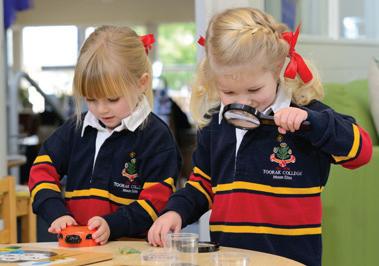
To the untrained eye, play provocations can be simplistic and repetitive, however, they anything but. Home corners, which may include communication tools such as phones and computers or construction tools, encourage children to practise their oral language and interpersonal skills as well as dabble as engineers and scientists. Areas such as our pretend play corners, which may include community themes such as vet centres or hospitals, or may revolve around fantasy concepts such as space or mythical creatures, help children push their imagination and share their ideas with others.
At Toorak, play provocations are meticulously crafted and the intentionality of play that underpins each child’s experience is highly purposeful and curated. Every day, our students immerse themselves in play-based activities which are coupled with the intentional teaching of literacy and numeracy and complemented with a range of specialist classes, including STEM-X, creative arts, performing arts, library and health and wellbeing.
In our Kindergarten and PrePrep Early Learning studios, our program is supported by the deliberate design of
aesthetically pleasing learning environments, both indoor and outdoor, where materials and spaces are created with the intention of engaging our children’s curiosity, creativity and problem solving instincts. Rigorous planning underpins our Early Learning program to ensure that each child is supported and nurtured as they develop their sense of self, their connection to others and their love of learning.

We invite you to see our Early Learning Centre in action by booking a tour or attending one of our Discover Toorak events:


www.toorakcollege.vic.edu.au/visit


TOORAK COLLEGE
toorakcollege.vic.edu.au 73-93 Old Mornington Road, Mount Eliza, VIC 3930 9788 7200
MOVE THAT MOUNTAIN
BY

THE GENTLE GENIUS OF TREES BY
 PHILLIP BUNTING
4+yrs, Scholastic, h/b, $19.99
What could we clever humans ever learn from trees? Take an unashamedly anthropomorphic wander through the woods to learn a few life lessons from our foliaged friends.
HOW NOT TO ANNOY MUM BY DAVE HUGHES
& HOLLY IFE
3+yrs, Scholastic, h/b, $17.99
Follow Mum as she spends the day with her kids, and laugh along with all the hilarious things they say and do! Dave Hughes and Holly Ife have written a clever follow up to How Not to Annoy Dad with the perfect guide for HOW NOT TO ANNOY MUMS EVERYWHERE! (Definitely, maybe, not entirely based on real life...)

THE FLYING ANGEL
BY VICKI BENNETT
4+yrs, Scholastic, h/b, $24.99 World War II. 1945. A group of nurses is handpicked to rescue injured soldiers from the frontline in Papua New Guinea, and transport them safely back home to Australia. Known for their courage and compassion, the soldiers call them... the Flying Angels. This is a story inspired by the life of one remarkable nurse, Sister Marie Eileen Craig.
 KATE
KATE
& JOL TEMPLE
3+yrs, Scholastic, h/b, $24.99
There are two sides to every story... A whale has become stranded on the beach, but the tiny puffins are far, far too small to help. When Move That Mountain is read in reverse, the puffins realise they are not too little to help; together they can fix the problem. A heart-warming and inspirational story about how even the smallest voice can make a big difference.

MICHAELA MASON’S BIG LIST OF 23 WORRIES BY ALEXA MOSES

8+yrs, Scholastic, p/b, $15.99
I've been making lists ever since I could write. By writing my worries down, I'm removing them from my mind and leaving them on the paper. My secret worry list is the big boss of lists. Right now, there are 23 worries on it. New school. New town. 23 worries! Can Michaela Mason handle it?
EVERYTHING WE KEEP
 BY DI WALKER
10+yrs, Scholastic, p/b, $18.99
How do you leave a family behind?
Thirteen-year-old Agatha has been in and out of foster care for years now, but her latest new life lived with precision with Katherine, Lawson and their dog, Chief, has proved to be the salvation that Agatha needed. But when the social worker says it’s time to return to her parents, her world comes crashing down. “Home” has always made her anxious and ashamed …and she can’t understand why now she is being forced to go back.
BEDTIME IS BORING BY
 DAVID CAMPBELL
3+yrs, Scholastic, h/b, $17.99
Billy Bunny REALLY doesn't want to go to bed. He's NOT tired! Not even a little bit. It may be bedtime, but Billy is NOT going quietly...
See if Billy wins the bedtime battle in this hilarious sequel to Stupid Carrots, written by (a quite tired) David Campbell.
TIMMY THE TICKED OFF PONY #3 THE GREAT ESCAPE FARTIST
 BY MAGDA SZUBANSKI
6+yrs, Scholastic, p/b, $16.99
Timmy has really hit ROCK BOTTOM! He’s been sent to THE PITS - the darkest, scariest place under Earth! He needs to find a way out. But only one pony has EVER managed... a GREAT ESCAPE. Now Timmy’s planning a GREATER escape!
200 MINUTES OF MYSTERY BY

 JACK HEATH
10+yrs, Scholastic, p/b, $14.99
10 stories. 10 mysterious situations. 10 brave kids. 20 minutes to solve.
Kane's parachute fails during a skydive. Is someone trying to kill him? Fang is investigated by secret police. Can she prove she isn't a traitor? Omar is buried alive in a coffin. How will he escape?
COCO AND THE BUTTERFLY BY
LAURA BUNTING
3+yrs, Scholastic, h/b, $19.99 Coco and her family have moved to a new home in the country. Coco is missing the big busy city. Tabby Valley has no buzz at all—if you don’t count the bugs (Number 1 on her Least Favourite Things List). But Coco is about to find out that change can be full of beautiful surprises.

SCHOOL OF FISH – FINTASTIC FOUR
 BY LOUIS SHEA
6+yrs, Scholastic, p/b, $15.99
There's a new kid at Shipwreck Primary! But there's also something fishy about her. Can Finn the Shark and his buddies work out who she is, and could she possibly be the answer to their problems with Blake the bully? With Great White Shark teachers, treacherous undersea races and dangerous fishermen nearby, it's never a dull moment in this School of Fish!
HARMONY BY RICHARD YAXLEY
12+yrs, Scholastic, p/b, $18.99
In 1914, Tom Stott falls in love with Gracie O’Donnell, but their love is thwarted by circumstance and war. Tom finds himself part of the blood-soaked landings at Gallipoli, while Gracie marries another. A deception, born in a place and time on the brink of war. It isn’t until American teen Noah Clifford joins his mother Deborah, his grandfather Will and his great-grandmother Gracie in Australia that the secrets of the past are revealed.

Book Reviews
Prize pack of the reviewed books, go to; www.peninsulakids.com.au/giveaways Win! School Aged Pre - School


www.peninsulakids.com.au 55 BOOK YOUR PLACE AT ONE OF OUR REGULAR INFORMATION SESSIONS OR CAMPUS TOURS www.woodleigh.school/enrol MORNINGTON PENINSULA • EARLY CHILDHOOD TO YEAR 12 5971 6100 woodleigh.vic.edu.au ADVENTUROUS MINDS SCHOLARSHIPS recognise students who are passionate about their learning. Creative thinkers, who strive for excellence and are dedicated to their community, are encouraged to apply. Opportunities exist for students entering Years 5, 7 and 10 in 2023.
 ©2019 Viacom International Inc. Created by Stephen Hillenburg.

www.peninsulakids.com.au 57 ©2019
Viacom International Inc. Created by Stephen Hillenburg.
Linda is very proud to introduce the range of Simply Swap Foods premix products to help on your journey to a healthier eating style with reduced carbs and sugar. Check out the product range online at www.simplyswapfoods.com.au and follow Linda on her Facebook and Instagram pages for regular recipes, photos and information. Linda has also created a free recipe ebook containing 16 favourite sugar-free/low-carb recipes which is available for download on her website.

Simply Swap Foods products are all:

* Low carb
* Keto friendly
* Diabetic friendly
* Premium ingredients to support our health
* Nothing artificial
* No GM ingredients
* Plant based sweeteners used
* Pet friendly (no xylitol used)
* Super easy to prepare at home
* Taste great
* Made with love on the Mornington Peninsula

VOLUPTUOUS VANILLA CUPCAKES
Containing premium ground vanilla beans, these are so easy to prepare and are perfect for anyone wanting to minimise their sugar intake at family celebrations. Delicious on their own or fold through some berries for extra indulgence.
PERFECT PORRIDGE –VANILLA BEAN AND CINNAMON
A delicious blend of flaxseed meal, chia seeds and sweet spices which can be enjoyed hot or cold any time of day. Add some whipped cream and berries for a very indulgent treat.
PERFECT PORRIDGE –VANILLA BEAN AND CACAO
With lots of fibre from the flaxseed meal and chia seeds plus antioxidants from the pure organic cacao, this blend is full of nutritious goodness and can be enjoyed hot or cold. Really yum topped with full-fat Greek yoghurt and summer berries.
CHEEKY CHOCOLATE CUPCAKES
Containing pure organic cacao full of antioxidants, these are a decadent dessert treat that look amazing on a dessert platter alongside fresh berries and whipped cream.
About Linda
After experiencing health problems three years ago, Linda changed to a low-sugar real food diet and was amazed at the results. Over a six month period, she easily lost 15kg of stubborn weight that she’d struggled with for decades, her energy levels improved to an all time high and her mental clarity returned in abundance. Her husband joined her in this mission and also lost 20kg easily in 6 months and felt fantastic. One of the keys to their success was not feeling deprived of their favourite foods, especially cupcakes and porridge. Linda launched her business “Simply Swap Foods” in November 2020 to help others on their journey to a healthier way of life. She loves sharing her recipes, story and knowledge about the benefits of reducing sugar and just eating real food. All Linda has done – with time and research – is ‘simply swapped’ some foods in her diet and she hopes to show others just how easy it can be and how fantastic you can feel. You really can indulge yourself and feel great too!
Recipes
.COM.AU
indulge yourself and feel great too!
Cauliflower Rice
Many supermarkets are now carrying “riced” cauliflower in the fresh food and frozen sections. Very simply, “riced” means that the vegetables are chopped up very finely to resemble the size of rice. You can do this quickly at home in a food processor or chop coarsely by hand for a chunkier style. A great accompaniment to any main meal, particularly stir-fries, casseroles or curries. I highly recommend using a quality stock powder such as the premium organic San Elk range - makes all the difference with this dish!

Ingredients
1 small onion, finely chopped
3 cloves garlic, crushed
600-800g cauliflower, riced

¼ cup water

2 tsp chicken stock powder (eg. San Elk brand)
Salt to taste
Shortening of preference for frying – butter, coconut oil, extra virgin olive oil, ghee, lard


Method
1. Heat large fry pan or wok and use 2 tblsp of shortening to fry onion on high heat until soft.
2. Add garlic to pan and stir through then add all other ingredients.
3. Turn heat down to medium and turn mixture often with wooden spatula to cook.
4. Once vegetables are tender and cooked, season to taste then serve.
PREP COOK TOTAL SERVES PREP COOK TOTAL SERVES 20 4
This indulgent creamy cheesecake is one of our household favourites. Works well with any berries you have on hand.
Ingredients
BASE
2 cups almond flour
¼ cup desiccated coconut
¼ cup natvia sweetener (or similar granulated sweetener)


1/3 cup butter, melted
1 large egg, lightly whisked
FILLING
1 cup pure cream
450g cream cheese
1/3 cup natvia sweetener (or similar granulated sweetener)

2 tsp vanilla essence
1 cup blueberries, fresh (if frozen, allow to defrost first)
Blueberry Cheesecake

Preheat oven to 180°C and grease sides and bottom of 20cm spring-form cheesecake pan with butter or cooking spray. Line bottom of pan with non-stick baking paper.
1. Place almond flour, coconut and natvia in a medium size bowl then add melted butter and egg. Mix to combine well.
2. Using the back of a metal spoon, press mixture evenly into bottom and sides of pan.
3. Bake for 15-20 minutes or until golden brown and firm.
4. Remove from oven and cool (can place in fridge if wanting to cool fast)
5. Place cream in a small bowl and use hand beater to beat until firm peaks form.
6. Place cream cheese, natvia and vanilla in another medium bowl and beat using hand beater until smooth and silky.
7. Fold whipped cream into cream cheese mixture then gently stir through blueberries.
8. Spoon filling into the cooled base then place in fridge to chill for at least 4-6 hours or overnight if possible.
9. Serve decorated with lots of fresh blueberries or other berries on top.
PREP COOK TOTAL SERVES PREP COOK TOTAL SERVES 30 12
Chocolate Brownie in a Mug
A super easy refined sugar free cake that’s delicious on its own or extra yum when topped with zesty cream cheese icing.
Perfect for when that chocolate craving hits you hard. Most mug brownie recipes I’ve found use egg so are quite light and can be a bit “eggy”. My version is dense and decadent and only takes 5-10 minutes to prepare in the microwave.
Ingredients
2 tblsp almond meal flour
½ tblsp cocoa powder
3 tsp natvia sweetener (or similar granulated sweetener)

1 tblsp almond butter
1 tsp vanilla essence
¼ tsp baking powder
2 tblsp coconut milk (or other preferred milk)

Method
MICROWAVE VERSION
1. Grease one large mug with lots of butter and cooking spray.
2. Place all ingredients in your mug and stir well with fork or small whisk until well combined. Wipe down sides of mug if needed.
3. Place mug in microwave on high for 90 seconds.
4. Allow to cool when removed from microwave as brownie will be very hot.
5. Eat straight from cup with cream/coconut cream or serve in a bowl with added berries or sugar free ice cream.
OVEN VERSION
1. Preheat oven to 180°C (fan forced).
2. Grease a small ramekin with lots of butter and cooking spray
3. Place all ingredients in a small mixing bowl and stir well with fork or small whisk until well combined.
4. Pour mixture into small ramekin and bake for 15 minutes.
5. Allow to cool when removed from oven as brownie will be very hot.
6. Eat straight from ramekin with cream/coconut cream or serve in a bowl with added berries or sugar free ice-cream.

PREP COOK TOTAL SERVES PREP COOK TOTAL SERVES 10 1
This recipe can be made super fast in a Vitamix or high speed blender. If you don’t have one, whisk it really well in a bowl to give your arm muscles a good workout!
Ingredients
½ cup almond meal flour (firmly packed)
2 tblsp coconut flour
½ tsp baking powder
2 eggs
½ cup coconut milk (or other preferred milk)


½ cup blueberries, fresh or frozen
Butter for cooking in pan
Blueberry Pancakes

Method
1. Place all ingredients except blueberries in your blender and mix until a thick batter forms. Alternatively, place in a large bowl and whisk until similar consistency is achieved.
2. Mix blueberries through batter.
3. Melt butter in heated frying pan and pour spoonfuls of mixture (around 10cm) into hot pan. The smaller they are, the easier they are to flip without breaking.
4. Wait until pancake has lots of bubbles and looks firm before flipping. Cook on second side a few more minutes then remove from heat.
5. Melt extra butter in pan before each new batch to ensure no sticking. Turn heat down so they cook well without burning.
6. Serve with warmed berries and whipped cream/coconut cream plus add some sugar free maple syrup for even more indulgence.
PREP COOK TOTAL SERVES PREP COOK TOTAL SERVES 10 6-8
Vanilla Jam Sandwich Cake
This is a much healthier version of a traditional sponge cake. So yum when filled with sugar-free berry jam and whipped cream, this cake has been included at many family celebrations and everyone loves it!
Ingredients
1 x pack Simply Swap Foods Vanilla Cupcake Mix
½ cup salted butter, melted (125g)
3 large eggs
½ cup preferred milk
½ cup sugar-free berry jam (available at supermarkets or recipe on my website)
1 cup pure cream
1 tblsp natvia sweetener (or similar granulated sweetener)


Method
Preheat oven to 170°C f/forced and grease and line 20cm cake pan.
1. Pour entire dry mix contents into a large bowl and stir to mix well.
2. In a separate bowl, whisk together melted butter, eggs and milk.
3. Pour wet ingredients into dry ingredients and fold together gently.
4. Pour mixture into lined cake pan and bake for 35-40 minutes or until cakes spring back when lightly touched in centre (or a skewer inserted into centre of cake comes out clean).
5. Leave cake in pan for 10 minutes before removing to cool on wire rack.
6. Once cake is completely cold, use a long bread knife to cut horizontally in half.

7. Spread jam evenly on bottom half of cake.
8. Make whipped cream by placing cream and natvia in a bowl and use electric hand beater to beat until thickened. Spread whipped cream on top of jam then replace top layer of cake.
9. Ice with dark chocolate icing (recipe below) and decorate with your choice of berries.
SIMPLE DARK CHOCOLATE ICING
80g dark chocolate (min. 70% cocoa)
1 tsp coconut oil
1. Melt chocolate by breaking into pieces and placing in microwave safe bowl with coconut oil on high for 1 minute. Remove and stir. If not fully melted, microwave further 30 secs at a time if needed. Stir well once melted.
PREP COOK TOTAL SERVES PREP COOK TOTAL SERVES 10 12
or sore tummy?
By Dr Joanna McMillan
Sore tummies are common in kids and it can be really hard to identify what exactly is causing the problem. Food is often the first thought and indeed many sore tummies are the result of a digestion issue. Wind, caused by trapped gas, constipation, food intolerances or allergies, eating or drinking too much can all result in abdominal pain, as can medical causes such as gastro or appendicitis.
Your first step therefore is to assess whether your child needs medical help. If you are at all unsure, the pain is severe, the pain doesn’t go away, or becomes a chronic problem, see your GP. And if there is blood in your child’s poo or vomit take them to accident and emergency at your local hospital.
Putting these more serious medical causes aside, what can you do to identify digestive issues and prevent repeat sore tummies?
Here are my top tips:

Check out their poo
Constipation is common in kids and can easily go unnoticed, especially once your kids are toilet trained and going on their own. The pain will come and go, may be accompanied by cramping, bloating, nausea and/or a loss of appetite.

Ask your child how often they go and about the state of their poo. Passing a few hard dry pellets might mean they tell you ‘yes I’ve had a poo’ but this means they are constipated. Check out the Bristol Stool Chart online and ask your child which one their poo most looks like… honestly that’s the easiest way to get your answer!
The cause can be dietary, but it may also be practical. Lots of kids don’t want to do a poo at school and so hold it in. That makes for dryer poos that are hard to pass and constipation results. This can become an ongoing cycle as it may be painful for the child to have a bowel motion and so they avoid it even more.
Health
At the other end of the scale diarrhoea can also cause tummy pain. This of course may be the result of an infection or food poisoning but can also be due to food intolerances of allergies. If the diarrhoea is accompanied by fever and/or vomiting it’s likely to be the former, whereas if the problem doesn’t go away or is a frequent problem, consider a problem food or foods. Ask your GP for a referral to a specialised clinic for proper testing and diagnosis.
Fibre up their diet
If your child is frequently eating highly processed foods from a packet or from a fast-food chain, rarely eats their vegies, doesn’t like brown bread and prefers a fruit roll over a piece of actual fruit, that sore tummy is very likely related to a lack of fibre.
Fibre is key in preventing constipation of course, but it is also essential for the development and maintenance of a healthy, diverse gut microbiome. That will not only help with bowel movements, but also impacts on their immunity and has even been linked to fewer allergies and intolerances.
Ensure the whole family are eating a diet rich in vegies, fruit, wholegrains, legumes, nuts and seeds (allergies allowing) delivering a diversity of fibre types.
Mull over their milk
Milk is a key food for kids, especially younger kids, yet it can be the source of digestive problems. Consider the quantity of milk your child is consuming as well as the type and how they are drinking it.
Milk is the only source of nutrition in the first 6 months or so, but it continues to be a major contributor of nutrients for toddlers and preschool children. After weaning' the problem can be quantity. If kids are drinking lots of milk that can displace those fibre-rich foods they need for a healthy gut. If this is the case give them their milk separate to meals and not before to ensure they are hungry at mealtime for solid foods.
Secondly, there are nutritional differences between milks. Cow’s milk is by far the most common of animal milks, but in fact the earliest domesticated animal milk came from goats. Interestingly goats’ milk and the cheese and yoghurt made from it, were the main dairy foods in traditional Mediterranean diets, touted as being one of the healthiest in the world. There are also several reasons why goats’ milk may also be easier to digest:
· Compared to cows’ milk, goats’ milk has smaller fat globules that make it easier for digestive enzymes to break them down.
· Goats’ milk also has a greater percentage of short and medium chain fats. These are more readily used as fuel by the body.
· It has more of the short chain carbohydrates, called oligosaccharides, also found in human breast milk, that act as prebiotics to fuel the gut microbiome.

· And goats’ milk is naturally A2. This relates to the type of beta-casein proteins found in the milk. The A1 type, found in most cows’ milk (unless specifically labelled as having only A2 proteins) has been associated with digestive issues in some people. In kids with less developed and mature guts, this may be more of a problem. Ensuring only A2 proteins may help with some digestive problems.
Note that if your child has an allergy to cows’ milk, goats’ milk may be equally problematic. It does also contain lactose and may not be suitable for those with lactose intolerance. For other digestive issues however, it can offer a good alternative. It has all the protein and calcium of cow’s milk and seems to be easier to digest. It might be worth a go.
Bubs® Australia provides nutritional support to parents seeking to give their children a well-rounded diet full of important vitamins and minerals with a range of Organic Baby Food Pouches and new Vita Bubs™ range including Vita Bubs™ Vitamin C + Zinc specifically designed to support immune system health. More information about the Bubs® Australia product range can be found at www.bubsaustralia.com
More “Stress Busters” for Kids &Teens
 By Kim Norton
Following on from 'Top9 Stress Busters for Kids and Teens', which appeared in Peninsula Kids magazine Autumn edition, here are some further “Stress Busters” to help our kids manage their stress and anxiety.
1. Zentangles
The Zentangle Method is an easy-to-learn, relaxing, and fun way to create beautiful images by drawing structured patterns. These structured patterns help to promote relaxation and improve insomnia. Pop on some relaxing music or a guided meditation and just let your mind wander. See zentangle.com for more information.
2. Reiki

Reiki is a subtle energy technique used for stress reduction and relaxation, promoting healing on a mind, body and spiritual level. Our kids and teens can sit comfortably and watch the big screen TV or play on their iPad whilst the Reiki session takes place or, better yet, they can learn this ancient healing art for themselves through purposely designed workshops just for them.
3.
Chakra Balancing and Chime Healing
These sessions are designed to balance the Chakras by using sound. Kids in particular love this type of healing because they can actually feel the healing taking place. Nine chimes are placed on the Nine main chakras of the body and intuitively played until the right resonation is heard and felt, bringing about a sense of balance, peace and relaxation.
4.
Practise Gratitude
Think of Five things you are grateful for right now. Keep a Gratitude Journal and try to write down Five things you are grateful for each and every day. When you are feeling stressed, concentrate on these Five things only.
5.
Colour in
Not just for kids and not just a passing fad, colouring in is a great meditative tool. It is calming and reflective and can be quite “telling”. Just lose yourself in the moment and let your mind wander. Once finished, take note of the colours you chose and the strokes you used. A Colour Therapist, like myself, can help you to decipher what your chosen colours mean for you.
66 Peninsula Kids – Winter 2021
Mixed
Girls only
6. Listen to Music
Music can help you to tap into your emotions and memories so if you want to recall a treasured moment in time or to just generally lift your mood, crank up the volume and listen to your favourite upbeat tunes.
7.
Brain Gym
Brain Gym movements unite the brain, body and the senses to improve overall brain function. When you can access more areas of the brain, and use those areas more effectively, learning challenges and the stress and anxiety associated with them can disappear altogether, increasing confidence and self-esteem.
8.
Hand Mudras
Yoga for the hands and your very own built in “fidget tool”. Hand Mudras help to link the brain to the body by directing energy flow and influencing different parts of the body. The Gyan Mudra is one of these hand gestures that is particularly good for calming an anxious mind (and for replacing the nasty habit of fingernail biting).
9.
Mandalas
Mandalas are circle-like drawings that involve repetitive movements and focussed attention which can provide a creative, safe place for emotional release and meditation. They are also a lot of fun!
10.
Earth Yourself
Get out into nature and go barefoot. Eat a healthy balanced diet consisting of earth-based foods and exercise regularly. Tai chi, Yoga and Qi Gong are all free-flowing forms of exercise that are favoured at Rainbow Light Therapies.
11.
Practise Mindfulness
Used as a tool to manage stress and anxiety, staying in the moment and practising mindfulness can help to distract, and prevent your child from worrying about what could happen next. Games like “Eye Spy” on the way to a medical appointment or practising a mindfulness meditation are just two types of mindfulness that can be used by kids of all ages.
For a personalised stress and anxiety management plan for your child and family, please do not hesitate to contact me to arrange an appointment.
Kim is the founder of Rainbow Light Therapies and is a Holistic Counsellor specialising in stress and anxiety management for kids, teens, and adults. Kim provides a unique, intuitive, and individualised therapy approach through individual, small group, and family counselling sessions both online and at her studio in Langwarrin. Also working with special needs kids, Kim runs sessions and workshops for people of all abilities on various topics throughout the year. Please see www.rainbowlighttherapies.com.au OR www.youtube.com/c/rainbowlighttherapies for more information.
8 WEEKS OF FUN
Program includes kit bag, Spinneroos shirt with your name, bat and balls. FUN, FRIENDSHIPS, MOTOR SKILL DEVELOPMENT.
To register and more information Spinneroos.com.au

Table Tennis, the Non- Contact and indoor Olympics and Commonwealth Games sport the whole family can play


FRIDAY NIGHT IS JUNIORS NIGHT
6.00pm-7.30pm school terms.
FUN ACTIVITIES, GAMES, COACHING, COMPETITION.
www.peninsulakids.com.au 67
and
Encouraging females of any age and ability in a non judgemental and friendly environment. Includes 3 free lessons, all equipment supplied MORNINGTON PENINSULA TABLE TENNIS ASSOCIATION Mornington Sports Complex 350 Dunns Rd Mornington M: 0498 003 788 E: mptta88@gmail.com
As the health industry has boomed, so has the number of health foods that are available to consumers, but Australians are still suffering from poor diets as a result of eating too many processed foods that are high in salt, saturated fat and sugar .


Leading dietitian and Mayver’s ambassador, Susie Burrell, says this is why teaching our children about healthy eating and lifestyle choices from a young age is so important.
“Habits are developed from a very young age and it’s no different with food, so creating an environment at home that encourages healthy discussion around food and its varying nutritional benefits is a great place to start,” Susie says.

68 Peninsula Kids – Winter 2021 Expertise In Child And Adult Orthodontics Early Assessment Of Dental Development And Facial Growth Ideal Age Of Initial Assessment 7-9 Years Early Intervention Where Appropriate For Best Outcome No Referral Necessary Specialist Orthodontist Creating Beautiful Smiles On The Peninsula For Over 30 Years Dr Peter A. Scott is a specialist orthodontist offering orthodontic care for children, teens and adults alike in both the Mornington Peninsula and inner Melbourne areas. He is also a consultant orthodontist at the Royal Childrens Hospital. 13 Beach St Frankston Ph: 9783 4511 www.drpeterscottorthodontist.com.au www.facebook.com/drpeterscottorthodontist
age is so important
Why cooking from a young
“To help your family foster a healthy relationship with food from a young age, it helps to never label food as bad or good.

“Instead discuss why some foods might be considered something only to enjoy once or twice a week and highlight the benefits nutritious foods can provide in your children’s day-to-day activities, like riding a bike, weekend sports or making sure they’ll stay awake during school.”
Susie adds that another great way to help teach your children about making nutritional choices is by making it fun.
“Cooking with kids can be a really enjoyable experience and provides a gateway to discuss the nutritional benefits of preparing recipes with fresh, whole foods with your children, while making special memories too.”
continued next page...

www.peninsulakids.com.au 69 134 TANTI AVENUE, MORNINGTON 3931 Dr James Lucas Dr Caroline Howarth Dr Giselle D’Mello and introducing Dr Sara Shayegan 597 5 9334 lucas dental care proudly sponsors polyglot theatre LUCAS DENTAL CARE S PECIALISTPAEDIATRIC DENTISTS
muffins or something more savoury like Mayver’s Simple Chicken Satay Noodles, cooking at home means you and your family can enjoy learning about and of course eating delicious, nutritious food.”
Try some of Mayver’s delicious recipes to cook at home with your family like the PB&J Banana Bread Muffins, the Simple Chicken Satay Noodles which is sure to go down a hit with everyone in the family, or Sam Wood’s Chocolate Stuffed Peanut Butter Cookies.

PB & J Banana Bread Muffins
Time: 60 minutes | Serves: 6
Gluten Free / Dairy Free / Vegetarian / Sugar Free
Ingredients
Wet Ingredients:
1 ½ cups ripe smashed bananas
1/3 cup plant based milk (almond, coconut, soy)
½ cup Mayver’s Skin On Peanut Butter
1 flax egg (1.5tbsp flax powder mixed with 3 tbsp water)
Dry Ingredients:
1 ½ cups spelt flour


1 ¼ cups + 2 tbsp coconut/cane sugar
1 tsp baking powder
½ tsp sea salt
¼ cup raspberries (fresh/frozen/dried)
Toppings:
Raspberry chia jam
Extra Mayver’s Skin On Peanut Butter
Method

1 Preheat oven to 180C/380F.
2 Smash the bananas in a bowl until smooth. Add in all the wet ingredients together and stir to combine.
3 In a separate bowl, mix the dry ingredients together. Add the dry ingredients to the bowl with the wet ingredients and mix to combine.
4 Fold in the raspberries to the mixture.
5 Evenly separate mixture into each muffin tin tray and bake muffins in the oven for 45-50 minutes (check to see if ready by poking knife/skewer through the centre and if it comes out clean, its ready).
6 When finished baking, transfer muffins to cooling rack and let them cool completely to room temperature.
7 Once cooled, top each muffin with a teaspoon of the raspberry chia jam and extra peanut butter.
This recipe was provided by @growthegrin www.instagram.com/growthegrin

Chocolate Stuffed Peanut Butter Cookies
By Sam Wood
Time: 40 minutes (plus 5 hours freezing time)
Serves: 10
Ingredients
100g Mayver’s Hazelnut, Cashew and Cacao Spread
1/2 cup coconut sugar
100g butter, room temperature
3/4 cup Mayver’s Smooth Peanut Butter
1 free-range egg
1 tsp vanilla extract
1.5 cups wholemeal flour

1 tsp baking powder
1 tsp ground cinnamon
Method

1 In a silicon ice cube mould, add 2 teaspoons of the Hazelnut, Cashew & Cacao Spread to each hole until you have filled 10. Place in the freezer for 5 hours, until hardened.
2 Preheat the oven to 175 degrees Celsius, on a fan forced setting. Line a baking tray with baking paper.
3 Add the coconut sugar and butter to a large mixing bowl and use an electric mixer to cream.
4 Next, add the peanut butter, egg and vanilla and beat with the electric mixer until combined.
5 Add the flour, baking powder and cinnamon to the bowl and mix together until a cookie batter is formed.
6 Roll a heaped tablespoon of the batter into a ball and using your thumb, make an indentation in the centre.

7 Place one piece of the frozen nut butter into the indentation and enclose.
8 Roll the cookie into a ball, place on the baking tray and gently press down to flatten.
9 Repeat with the remaining mixture.
10 Place the tray in the oven to cook for 15-17 minutes, until golden.
11 Remove from the oven and enjoy.
Mondays 9.30am – 11.00am


JOIN THE HOLIDAY FUN
Suitable for ages 3 and under COST: $2 (includes morning tea)
For enquiries and to register please contact Bentons Square Community Centre 5977 2468
www.peninsulakids.com.au 71 LITTLE
PLAYGROUP
FISH
A relaxed and friendly playgroup for local families to bring the “littlies” into the big room to let loose with the array of play equipment
u n e 2 8 : M o u n t a i n b o a r d i n g , G i a n t S w i n g , A r c h e r y J u n e 3 0 : M o u n t a i n b o a r d i n g , P a m p e r P o l e , R o c k C l i m b i n g J u l y 2 : G i a n t S w i n g , R o c k C l i m b i n g , A r c h e r y J u l y 5 - 7 : W I N T E R C A M P ( o v e r n i g h t ) J u l y 9 : M o u n t a i n b o a r d i n g , C r a t e s t a c k , A r c h e r y Horse Riding optional www theranchmp com au 5988 6262
J
Ask The Experts!
• Providing Specialist Orthodontic Services to the Mornington Peninsula with three locations in Rosebud, Mount Eliza and Hastings.
• The very best in Orthodontic care and technology - clear braces, Invisalign, lingual (hidden) braces.
• Treatment provided in a relaxed environment.
• Highest quality care provided by our Orthodontist.
NO REFERRAL NEEDED. CONTACT US TO FIND OUT HOW WE CAN HELP YOU ACHIEVE THE SMILE YOU ALWAYS WANTED.

CALL US ON

9787 3849
“Lighten up, just enjoy life, smile more, laugh more, and don’t get so worked up about things”
-Kenneth Branagh
CALL NOW FOR MT ELIZA, ROSEBUD & HASTINGS BOOKINGS
122 Mt Eliza Way, Mt Eliza & 1533 Point Nepean Rd, Rosebud West 140 Salmon St, Hastings mteliza@hanksorthodontics.com.au


What are orthodontic elastics? Do I need them if I get braces?
Elastics are small rubber bands that are worn during orthodontic treatment to help coordinate the upper and lower teeth to improve the bite. They come in a variety of strengths and sizes. The Orthodontist will determine when the elastics are commenced during treatment, the frequency of wear (full time or night only) and their specific position in the mouth. They are generally removed for eating and tooth brushing. Elastics can be used to assist with
1. Bite correction
2. Space closure
3. Moving specific teeth faster and more efficiently Most patients whom commence orthodontic treatment with braces or clear aligners will need elastics at some point during their treatment. It is very important to wear them as prescribed by your Orthodontist to ensure the best results from your orthodontic treatment.
George Shenoda
Oral Health Therapist (BOH) Otago, (PGCDT) Melb Peninsula Orthodontics 134 Tanti Avenue, Mornington
72 Peninsula Kids – Winter 2021
What is tonsillitis and how do I know if my child has it?

Tonsillitis is an inflammation of the tonsils glands at both sides of the back of your throat that help protect you against infection. If you have tonsillitis, your tonsils will probably be swollen and sore. It’s most common in children but anyone can have it. It is usually caused by a virus, or occasionally by bacteria, and often follows a cold. You can’t be immunised against tonsillitis so you can’t prevent it, although good hygiene can help.
People with tonsillitis often feel unwell and they may have a sore throat, red, swollen and painful tonsils, sometimes with white patches, fever, difficulty swallowing, headache, swollen lymph nodes in your neck. There may be other cold symptoms, such as a runny nose, cough or sore eyes. Younger children may have nausea, vomiting or stomach pain. Keep in mind that not every sore throat is due to tonsillitis.
Tonsillitis can be treated with paracetamol which can reduce discomfort, and any fever or headache. People with tonsillitis should rest, and drink plenty of fluids to prevent dehydration. Ice cream, jelly and other soft, cool foods can soothe a sore throat. Ice blocks and ice chips, or gargling salty water, may help.
You should contact your doctor if a sore throat doesn't improve in a few days or causes difficulty breathing or swallowing, a persistent fever or severe pain, particularly if it’s mainly on one side of your throat.
Some people who have recurring bouts of tonsillitis will be offered surgery to remove their tonsils. The operation is known as a tonsillectomy.

healthdirect.gov.au

www.peninsulakids.com.au 73
5975 5166 134 Tanti Ave Mornington smile@peninsulaortho.com.au www.peninsulaortho.com.au Specialist Orthodontists Introducing Dr Doug Lee Dr Andrew Pepicelli Dr Andrea Phatouros Dr Daniel Sable Peninsula Orthodontics loves working with families. Our experienced team will provide you with an individual treatment plan to deliver only exceptional results Capture that perfect smile you will always treasure. No referral required
Mental wellness planning for birthing families
 By Stefanie Poole
Pregnancy and birth are more than a physiological experience. Preparing mentally and emotionally for parenthood is one of the most important things you can do. Your mind is incredibly powerful and can have a profound effect on your body, your identity, how you birth, parent, and connect with your community.
continued next page...
Baby, Toddler & School Readiness Classes
Why Choose Gymbaroo?

As GymbaROO has been a part of many families’ lives for over 30 years, there are now thousands of success stories of GymbaROO graduates who have developed into extremely well rounded, happy, confident and flourishing individuals. These children, some of whom are now adults, began GymbaROO as tiny babies and continued with the program until school age. Their parents also reinforced our program at home.
So many have achieved academic excellence, have enjoyed an exciting variety of leadership roles and have gone on to reach elite levels in their chosen sports.
GymbaROO stands out as being the ONLY parent-child program in the world that specialises in research-based, neurodevelopmental, fun learning environments for babies to school aged children and their parents. It is also the only program in the world that has integrated key developmental activities, essential for complete development in each age and stage of development, into a comprehensive and all-encompassing program.

There are presently hundreds of thousands of parents involved in the GymbaROO program, all of whom are very excited for their children’s future as more and more evidence is being documented confirming the long-term benefits of our program!


Enquire about classes for Neurotypical kids. Call or email for information Scan QR code and book for Seaford or Mt Eliza Main hall, Mt Eliza Community Centre, 90-100 Canadian Bay Rd, Mt Eliza Mt Eliza Seaford Gravity zone 25 Oliphant Way Seaford Call Sharon on 0444 581 446 or email mteliza@gymbaroo.com.au Like us on Facebook
We ALL have mental health and research shows the importance of cultivating positive mental health for ourselves and our families. So, why is it that more families are not adequately prepared for the mental, emotional, and spiritual aspects of pregnancy, birth, and beyond?
WHAT WE KNOW;
• Up to 1 in 3 mums experience the birth of their baby as traumatic (panda.org.au)
• Suicide is one of the leading causes of maternal death in Australia during pregnancy and the 12 months following birth (panda.org.au).
• Up to 1 in 10 women struggle with antenatal (before giving birth) depression and more than 1 in 7 new mums experience postnatal depression. (panda.org.au)
• 1 in 5 Australian mothers are not receiving critical perinatal (from conception of a child through to the first year after birth) mental health checks (QLD Study in the Australian and New Zealand Journal of Public Health).
With statistics such as these, it’s clear that maternal mental health is a public health issue that affects not only women and birthing people, but also their children, families, and communities.
It’s time we start supporting families to create and maintain mental wellness. One way to begin is with mental wellness planning.
WHAT IS A MENTAL WELLNESS PLAN?
A Mental Wellness Plan will help you identify how, who, and what you will need to maintain mental wellness through pregnancy, birth, and beyond. It’s a proactive approach to maintaining your mental health and wellness and is a guide for helping you prepare for any mental health issues before they arise. It does not replace, but rather complements, your birth plan. Your Mental Wellness Plan can be shared with family, friends, and health care providers; allowing them to better support you.
WHO SHOULD CREATE A MENTAL WELLNESS PLAN?
• Parents wanting to gain more knowledge, awareness, and strategies for maintaining mental wellness during parenthood.
• Anyone who has experienced mental health issues prior to pregnancy or are currently struggling mentally and emotionally.
• Anyone who would like a deeper understanding of their mental and emotional health.
WHEN TO CREATE YOUR MENTAL WELLNESS PLAN?
Ideally, mental wellness planning should start at preconception or during pregnancy. However, it is never too late to start. Similar to a birth plan/preferences, your mental wellness plan will help you voice your desires and wishes as they relate to your mental and emotional health.
WHAT TO CONSIDER IN YOUR MENTAL WELLNESS PLAN:
• Explore your unique definition of mental wellness.
• Your plan to stay mentally and emotionally healthy during your parenting journey.
• How you will care for yourself so you can care for your baby (i.e. sleep, nutrition, self-care, time for yourself, rest, setting boundaries, exploring expectations of self and others.)
• Possible risk factors for perinatal mental health issues such as; previous history of mental illness, history of trauma, limited supports, living away from family or home country, loss of a child through stillbirth, miscarriage or other circumstances, challenges with infertility.
• What resources are available to support your mental health and how to access them.
• What types of supports will you need to create and maintain mental wellness for yourself and your family.
• What has worked, and not worked, for you in the past with regard to mental health support.
• What you look and feel like when you’re at your best mentally and emotionally.
• What you look and feel like when you’re not at your best mentally and emotionally.
• Strategies you can use to stay mentally
• A mental health safety plan if you have experienced a mental health crisis.
• Your mental health rights and how you can voice them.
HOW TO CREATE YOUR MENTAL WELLNESS PLAN?
• The first step is to commit to your mental wellness and clarify the meaning of mental health and wellness for you and your family.
•Explore your answers to the above prompts which will help you begin to create
76 Peninsula Kids – Winter 2021
• If you have a supportive family member, friend, or health care professional, you can ask them to help you and share your needs and desires with them. Collaboration and communication with your birthing team is key.
• If you would like personalised one-on-one support to create your unique Mental Wellness Plan and gain more knowledge, awareness, and strategies for maintaining mental wellness during parenthood, get in touch. Head to www.stefaniepoole.com or check out my Birth Education For A Healthy Heart & Mind class to get started.
If any of the information in this article brought up any emotions for you, or you’re in need of support, please contact:
Lifeline 24hrs: 13 11 14
Beyond Blue 24 hrs: 1300 22 4636
Perinatal Anxiety and Depression Australia (PANDA) Mon-Fri 9am-7:30pm: 1300 726 306

Be inspired to discover your creativity
Our studio is a fun and friendly space for people who would like to explore their creativity, no matter their age or skill level! We will guide you to discover your unique creative self.

Pre-Primary and Primary Kids classes
A comprehensive timetable of School Holiday Classes
Adult Art and Creative classes

Family Workshops
Group classes and Private lessons (NDIS compliant)
Online and in-store Art and craft supplies

Custom workshops
location: 6 High Street Hastings VIC 3915 website: www.creativemakes.com.au
email: melscreativemakes@gmail.com | phone: 0425 867 919
facebook/melscreativemakes | instagram/_creativemakes_
Stefanie Poole is a Mental Health Doula™ who combines her many years of experience within the mental health field to bring birthing families innovative, holistic support with a specialised focus on mental and emotional health and wellbeing. She is the founder of Birth Education for a Healthy Heart & Mind ™ and Mumma Bees ™, Peer Support and Training for Birthing Families. She lives on the Mornington Peninsula with her husband, son, and fur babies. You can connect with Stefanie here: www.stefaniepoole.com
Instagram: @the_stefanie_poole @mumma_bees
Adventure awaits these school holidays!

Fun for the whole family with activities across our 25 acre park including mazes, themed gardens, Tube Slides, Canopy Walk, brainteaser puzzles & Sky Scramble. Join the happiness hunt at Enchanted Adventure these winter school holidays to help find Wally & his friends! Contact



www.peninsulakids.com.au 77
our
experts or visit our website to plan your next family day out. (03) 5981 8449 enchantedadventure.com.au Enchanted Adventure Garden Arthurs Seat Where’s Wally? © DWA Dist. Ltd.
adventure
Importance of SkintoContactSkin
 By Yvette O’Dowd
Touch is an overlooked sense, yet one which is incredibly powerful in the bonding between parent and child.
Ashley Montagu wrote about this in his acclaimed book "Touching: The Human Significance of the Skin" in 1971:
“Among the most important of the newborn infant's needs are the signals it receives through the skin, its first medium of communication with the outside world”
Mothers and those supporting them have had to relearn the secrets of skin contact in this modern world. Science has identified and named behaviour lost to maternal and infant care, as it was institutionalised in the 20th century. Mammals keep their babies close because it keeps them alive: regulating temperature, stimulating breathing, and supporting frequent breastfeeding. Separating the mother-baby dyad (something that consists of two elements or parts.) - through rigid management strategies of schedules and independence - makes no sense biologically.
In the 1990s Nils Bergman, a Swedish specialist in perinatal neuroscience, studied skin to skin contact between mother and baby in the neonatal period and introduced the concept of "Kangaroo Care" into neonatal intensive care units (NICU) to complement or even replace incubation for preterm infants. He had observed the practice in South American communities who could not afford this expensive equipment yet kept their most vulnerable babies alive and thriving.
Also in the 1990s, another Swedish researcher Ann-Marie Widstrom studied the innate abilities of newborn infants to seek the breast instinctively when left uninterrupted after birth, in what became known as “the nine stages of newborn instinctual behaviour” or, as parents often know it, "the breast crawl."

US International Board Certified Lactation Consultants (IBCLC) Dr Christina Smillie and Suzanne Coulson popularised baby-led attachment and laidback breastfeeding (also known as biological nurturing) in the early 2000's and changed how mothers and professionals approach latching, with the baby taking the lead and mothers allowing them the skin contact they need to navigate to the breast instinctively, even months after birth.
continued next page...
Guide
Granny’s
The


www.peninsulakids.com.au 79
• Practice kangaroo care at home: your baby doesn’t need to be born prematurely to benefit from spending time in direct skin to skin with their mother, father and other family members. Dress them in just a nappy, remove clothing from your own chest area and snuggle baby close. Cover their body with a light wrap or blanket, leaving their head and face “visible and kissable”. You can do this sitting up or lying down but adults should not fall asleep while holding their baby this way.
• Baby massage is a simple way to connect with your baby: a simple hand or foot massage at nappy change time or a full body massage after a bath is a lovely experience which can be shared on a regular basis. You will find directions online or look out for books or videos on the subject.
• Babywearing: at home, you can go topless with your baby tucked in a stretchy baby carrier. Out of the house, even the contact of their face against your upper chest is a valuable experience for your little one.
• When breastfeeding: allow as much skin contact as possible with your baby. Parents who are feeding with a bottle can open or remove garments to allow touch to be apart of their feeding relationship at times when it is practical.
• Consider your baby’s clothing: limit using footed suits and mittens to allow your infant to experience their environment through touch. Babies use their hands when breastfeeding as an aid to seeking and latching onto the breast. Try not to restrict this behaviour with mittens or wraps as they will become more frustrated.
The days of wrapping babies up in a bundle of tight swaddles are gone. We now understand how important it is for newborns to connect with their parents and carers through the largest organ in the human body: their skin.


Yvette O’Dowd is not your typical grandmother! This mother of three and 'Granny' of three has been a breastfeeding counsellor since 1992. In 2014, Yvette established the Southern Natural Parenting Network, incorporating South Eastern Babywearing Group. With 11,000 members world-wide, the group supports parents interested in breastfeeding, babywearing, co-sleeping, baby-led weaning and modern cloth nappies and other aspects of gentle, natural parenting. www. facebook.com/SouthernNaturalParentingNetwork

80 Peninsula Kids – Winter 2021
There are simple ways parents can maximise skin contact with their babies:
WHY IS
YOUR BABY FIGHTING SLEEP
1 An Overtired Baby
An overtired baby will fight sleep more readily due to a build up of the stress hormone cortisol which makes it much harder for them to calm and settle for sleep. Be aware of your babies tired signs (e.g yawning, rubbing eyes, staring blankly) and ‘awake windows’ to help you avoud your baby becoming overtired.

2 Baby Takes Longer To Calm
Some babies take longer to wind down and to reach a state where they can fall asleep more readily. Consider singing, gentle rocking and patting to assist with the calming process.
3 Baby Not Awake For Optimal Times
Every baby at different ages has a different optimal period of time when and how long they should be awake. These vary day to day as well. See the Daily Sleep and Feed Pattern Guide (right) to find suggestions for your baby.
4 Baby is Over Stimulated
Reflect on your babies time before sleep and ask yourself what does their lead up to sleep look like? Are they doing physically active experiences or are they slowing down and engaging in books? Take a look at your babies sleep environment, is it calming and relading or are there excessive lights and noices that could stimulate your baby? Less is definitely more.
5 Baby has Separation Anxiety
If your baby is around the 8 month mark they might be starting to experience separation anxiety. This is due to something called ‘object permanence’ when they realise that things and people exist when they are our of sight. This can present challenges for sleep and settling.
6 Baby is Experiencing Developmental Leap
Babies experience 10 major developmental leaps during the first 20 months of their lives. This can cause some disruption in their settling and sleep patterns, resulting in them potentially needing some extra support and reassurance. It can help having an understand of why their sleep is affected during these stages of development.
DAILY SLEEP & FEED PATTERN GUIDE
Below are typical night-time and daytime sleep needs for babies aged 0-2.
A baby who is fighting or resisting sleep will typically as a result have substantially less than these amounts.
0-12 Weeks (Age)
No. of Daytime Sleeps
3-16 Months (Age)
No. of Daytime Sleeps
3 times
Awake 1 and half hour at 3 months. Play up to 2 hours at 6 months.
No. of feeds per day
5-6 15 - 16 (ish) Total hours of sleep in a 24 hour period
12-15 Months (Age)
5 - 6 times
Awake up for 10 mins after some feeds for newborns. Play up to 1 and a half hours.
No. of feeds per day
6 - 10
16 - 18 (ish) Total hours of sleep in a 24 hour period
6-12 Months (Age)
No. of Daytime Sleeps
No. of Daytime Sleeps 2-3 times
Toddlers may cut back to 2 sleeps a day or even manage with one long sleep a day
Awake 2 hours at 6 months. Play up to 3 hours at 12 months.
No. of feeds per day 5
Awake Approx 3-4 Play A feed then sleep pattern should be encouraged overnight
Family foods plus milk from a cup

14 - 15 (ish) Total hours of sleep in a 24 hour period 14 - 15 (ish) Total hours of sleep in a 24 hour period
18-20 Months (Age)
Toddlers may drop their late afternoon sleep and have only one long sleep per day.
2-3 Years (Age)
Toddlers may have one sleep per day, but it can vary enormously in length. Some will continue to need an afternoon nap even after the commencement of kindergarten.
www.completelybaby.com
www.peninsulakids.com.au 81
Creative
Fingerprint Trees
By Georgie Doherty
Yellow and red make orange! White and red make pink!
Creative kids love the sensory texture of paint on their finger tips. A simple finger tip can be used to decorate an entire tree, complete with beautiful autumn leaves or blossom. It is also a wonderful activity to preserve your child’s fingerprints; we all know they grow up so fast!
This Fingerprint Tree activity will encourage your child to learn about nature and the environment, while promoting aesthetic awareness and building important fine motor skills. Explore colour mixing, pattern, shape, and texture with your child as they learn about the seasons and create their own imaginative collection of trees for each.


You’ll need:
Coloured A4 Art Paper
Oil Pastels or Crayons
How to do it:
Select two oil pastels for the tree, one dark and one light. I’m using grey and black. Draw a tree on the coloured paper with the lighter oil pastel.
Draw wiggly line details with the darker oil pastel over the top. This will create bark texture.
Choose a winter, spring, summer or autumn tree to
Liquid Paint x 3 Colours
Paper Towel
create. Select three harmonious colours of liquid paint to use for the tree leaves. Squirt each paint colour on a paper plate, the size of a 20 cent coin.
Paper Plate
Starting with the darkest colour, use your finger to dab paint over the bottom branches to create leaves.

As you work your way up the tree switch to your medium colour, then your lightest colour to create fingerprint leaves. Look at the way the colours mix on the page. You can also experiment
Continue to create a tree for each season; summer, autumn, winter and spring.
For the full Fingerprint Tree video tutorial visit www.artwithgeorgie.com/fingerprinttree
artwithgeorgie.com instagram.com/art_with_georgie facebook.com/artwithgeorgie
Georgie Doherty is a qualified art teacher, educator and mum based on the Mornington Peninsula. She is the founder of Art With Georgie, an Online Art Club helping families foster creativity in their home through fun, engaging online art lessons for kids. Art With Georgie also offers children’s school holiday art camps, term art classes and creative activities for birthday parties. Georgie is also mum to Eve, a one in a million baby who was born with a rare genetic condition called Interstitial Lung Disease and severe Pulmonary Hypertension. She is an advocate for lung research and awareness, hoping to inspire others with her story and journey into motherhood.
82 Peninsula Kids – Winter 2021
&
MAJOR PRIZE: : 1 x Show Up ‘n Style, RRP $39.99
1 x Doll and Horse Set, RRP $25, 1 x Collectible Horse, RRP $10
RUNNER UP PRIZE: 1 x Doll and Horse Set, RRP $25

Email your entry to info@mpnews.com.au
or PM your artwork to facebook.com/MorningtonPeninsulaKids Winner chosen 16/08/2021. Prize must be collected from Peninsula Kids offices at 63 Watt Road Mornington VIC., unless otherwise stated.

www.peninsulakids.com.au 83
Email
Age ...........................
Name .............................................................................
.............................................................................


84 Peninsula Kids – Winter 2021
