
GROUNDEDget AUTUMN 2023 outwit thenits FREE SIMPLY SWAP FOODS R ECIPE S LOVING FAMILY LIFE ON THE PENINSULA IPS for helping REDUCE Kids SCREEN TIME T POWER WILL
PENINSULA KIDS


Pregnancy and birth are exciting and challenging events for a family. At Peninsula Private Hospital, we understand this and deliver the ultimate boutique private maternity experience. Combining kindness, care, and expertise, we support you from pregnancy, birth and beyond. Want to learn more about having your baby at Peninsula Private Hospital? Scan the QR code to download a free Maternity Information Pack.

At Cornish College we believe education goes hand in hand with exploration. Beginning with our 3 Year Old Early Learning program and continuing through to Year 12, our students are encouraged to identify problems and seek out solutions, cultivating their creativity as well as their entrepreneurial spirit.

Book a school tour cornishcollege.vic.edu.au/school-tours
For more information
T: 9781 9000
E: admissions@cornishcollege.vic.edu.au
Cover Photo Zoe


Location: Mt Martha Danielle B Photography studio daniellebphotography.com.au
Editor and Publisher
Melissa McCullough melissa@mpnews.com.au
Design Sam Loverso sam@mpnews.com.au



Advertising Andy Jukes 0431 950 685 andy@mpnews.com.au
General Enquiries
info@peninsulakids.com.au
All material is copyright, and may not be reproduced without the express permission of Mornington Peninsula News Group, or the original copyright holder in the case of contributions. Copyright of contributed material rests with the contributor.


Disclaimer: The authors and publisher do not assume any liability to any party for any loss, damage, or disruption caused by errors or omissions, whether such errors or omissions result from negligence, accident, or any other cause.
This publication is not intended as a substitute for the medical advice of physicians. The reader should regularly consult a physician in matters relating to health and particularly with respect to any symptoms that may require diagnosis or medical attention.
Peninsula Kids is produced quarterly. 15,000 copies distributed between Mordialloc and Portsea.
Registered address: 63 Watt Road, Mornington 3931
Greetings from the autumn 2023 edition of Peninsula Kids magazine!

I’ve done the maths – this is our 35th issue of the mag spanning over eight years. Over that time our little glossy wonder has evolved and grown and with each new issue I brim with more pride and admiration for the amazing crew that works on the mag. Peninsula Kids is something to be proud of. From every word written, each image taken and all of the promotions within, we thank you for coming on this amazing ride with us and hope you enjoy flipping through the pages as much as we love filling them.
Congrats to colouring competition winners from the summer mag! Hudson, Jordan and Tim each won an Arthurs Seat Eagle prize pack! www.aseagle.com.au
We sailed across the sky in the summer edition and now we’re sailing across Port Phillip Bay aboard Searoad Ferries for autumn! www.searoad.com.au
For your chance to win this amazing prize, grab your textas and head to page 67.
PS – Don’t forget to pull out the instructions for your oven and turn your clocks back one hour at 3:00am on Sunday, 2 April 2023.
www.facebook.com/MorningtonPeninsulaKids www.instagram.com/mornpenkids AUTUMN
 Sam Loverso
Anne-Marie Tunks
Advertising Andy Jukes
Sam Loverso
Anne-Marie Tunks
Advertising Andy Jukes


2022

AUSTRALIAN EDUCATION AWARDS
AUSTRALIAN EDUCATION AWARDS


10

12
Our everyday choices make a massive impact on the world around us. So, making a change does start with all of us.
For those struggling with separation and/or divorce the holiday periods can be troubling and triggering.

Experts from the Triple P - Positive Parenting Program - have a few simple strategies to create a healthy creen time balance.

Parents and carers recognise that many young people will discuss suicide and self-harm online. The #chatsafe guide aims to give parents confidence to talk about these sensitive and complex topics.
14
Activities that “ground” or connect us to the earth and to the current moment help to connect the body and mind allowing us to feel less stressed, and enable us to focus and concentrate.
Understaning things are essential and others are not, children can make informed decisions on 'wants and needs' and how to spend their money.


Biotuff encourages Australians to take the leap to become more environmentally conscious. "Social media is currently flooded with masses of New Year's resolutions," Nadia Steele from Biotuff says. "From leading a healthier lifestyle to spending less money, but with many across the globe feeling the impact of climate change, having an environmentally driven houselold should be a prime thought for many of us. Our everyday choices make a massive impact on the world around us. So, making a change does start with all of us."

Like businesses, families and households can also develop an environmental plan. Reduce, recycle and reuse should be the mantra! For example, consider reducing the number of times you use the household car, starting a compost pile, or being more vigilant with your recycling. Looking around your home and seeing where you could increase your environmentally friendly actions is a beautiful way of living. "Choosing to walk or bike to work a few days per week or starting up a carpool system can help reduce your emissions and help the environment," Steele says. "Plus, it sets a wonderful example to our children and allows them to see the important role we all play in helping our environment."
Other ideas include:
•Choosing more sustainable products for your everyday life
•Refuse disposable coffee cups and invest in a reusable option
•Stop purchasing non-biodegradable or compostable plastics
•Consider eco-friendly refillable water bottles
•Replace old light bulbs with energy-saving options
•Planting native trees
•Conserving more water
•Recycle consciously and correctly
Locally communities can band together to increase their eco-friendly stance and create a more sustainable and environmentally friendly suburb. Starting a weekly or monthly litter run, contacting the local council about native tree restorations, and researching what your local council needs to lead a more sustainable future is a significant step forward. "Communities that band together on an environmental front have been proven to increase interest in eco-friendly activities and encourage others to get involved," Steele says. "It's as easy as volunteering your time for local clean-ups and conservation projects."


Changing the way we purchase and use products and choosing sustainable options can make an impact. The more popular biodegradable and compostable products become, the more widespread they will be utilised in everyday life. "It's as easy as switching out some of your everyday items, such as plastic wrap, nappy bags, sandwich bags, and even dog waste bags, with a biodegradable, compostable option," Steele says. "Businesses can also opt for better packaging with biodegradable, compostable mail bags and recyclable preferences."

Another way everyday households can help the environment is to consider their water usage and cut down as much as possible. "Installing water-saving devices is one way a home can cut down on their water wastage," Steele recommends. "Also keep vigilant with any possible leaks, and fix them accordingly."
Cutting back on the amount of rubbish you generate is also important. Use reusable items and make a stance again the number of throw-away things you buy and consume. Also, ensure you are recycling all the products you can correctly. Supporting environmentally friendly businesses is also a must for the future of our planet. "Choosing to no longer purchase certain items can hugely impact the amount of rubbish you create," Steele says. "This can easily be monitored every week on your rubbish collection day on how full your bin is."
It doesn't need to be a life-changing choice. Becoming a more environmentally conscious household starts with simple steps that can significantly impact our precious world. "Just making small changes over a period of time can help you and your friends and family reduce their carbon footprint and help the earth," Steele says. "If we all make collective steps to become more eco-friendly in our everyday approach, our earth will benefit as too the lives of our future generations." www.biotuff.com.au

t he school holiday periods are both a wonderful and difficult time for families. For those parents who work, annual leave can be an issue. For those struggling with separation and/or divorce the holiday periods can be troubling and triggering. Many families will take advantage of the break and want to travel. So how does this all work when you are separated or divorced? Well, that depends on many factors.
If you have Court Orders for parenting in force, those will need to be followed unless any changes are agreed between you and the other parent. The same applies for Parenting Plans. Parenting Plans, while not legally enforceable, should be followed unless otherwise agreed. If you want to deviate from your Court Orders or Parenting Plan and there is no agreement from the other parent, you should consider obtaining legal advice. There can be serious consequences for noncompliance of a Court Order.
If you are separated or divorced and have not discussed parenting arrangements for Christmas, you should be aware that, each year the Parenting Order Application “cut off” date is by 4:00pm on the second Friday of November. This year it is Friday 10th November 2023. Applications filed after this date are not guaranteed to be heard before Christmas. You can seek to file an urgent application. However, because “Christmas is close, and we cannot agree,'' is unlikely to be considered an urgent application and the usual urgent application considerations apply.

The other difficulty you face is that parties seeking to apply for parenting orders must attempt family dispute resolution (mediation) before filing an application unless an exemption applies. This process can be slow, and usually a private family dispute resolution practitioner can assist you quicker. There is no law or rule on how the arrangements for how the school holidays should operate. However, there are many ways families choose to do this. Each family is different and has different needs so you will need to come up with a mutually acceptable arrangement. A practice some families choose is that the children spend one week with one parent and the following week with the other parent. At Christmas time, some parents choose to share between Christmas Eve and Christmas morning and Christmas afternoon until Boxing Day. This arrangement typically alternates each year. It really depends on how the usual 'spend time' arrangements occur and what you consider works for your family on special occasions and school holidays. Always keep in mind the best interests of the children when making these arrangements.


Again, if there is a parenting order which details how and when you can travel, this should be followed. If you need to deviate from the order, then it must be agreed in writing by the other parent or by further Consent Order. We recommend any variations to Orders be agreed in writing, such as in a section 64D Parenting Plan that varies the existing Orders.

If there is no agreement, you should not travel. Any travel which has not been agreed could make you the subject of a recovery order (meaning the Federal Police will be directed to return the children to the other parent). If consent is being unreasonably withheld, you should obtain legal advice specific to your circumstances.


Breanna is an associate at Australian Family Lawyers which has expert advice on hand to explain the best way divorced and separated parents can successfully negotiate travel arrangements during the holiday season whether they’re travelling locally or internationally. Please contact us for advice specific to your circumstances. www.australianfamilylawyers.com.au

There is no law or rule on how the arrangements for how the school holidays should operate. However, there are many ways families choose to do this.
How many times have you looked at your kids and thought OMG “they are off with the pixies” or they just seem to be lost in their own little world and frustrated you think “why do they not hear a word I say?” Chances are that they are in a state of stress or overwhelm and cannot hear you (as opposed to consciously ignoring you) and they need help with “grounding” themselves.
Activities that “ground” or connect us to the earth and to the current moment help to connect the body and mind allowing us to feel less
stressed, less tense, more balanced, centered and calm and enable us to focus and concentrate. Let’s face it, we all need help with that from time to time and our kids are no different.
Simply choose 1 or more of the following activities for your child, or yourself, and try to incorporate one or more into your everyday routine to help regulate stress, to encourage the body and mind to work together and to stay in the moment and focus (or at least help our kids to listen for longer than 30 seconds ).

CHECK OUT SOME POPULAR EXAMPLES OF GROUNDING ACTIVITIES LISTED ON PAGE 16
continued page 16...

At Padua College we offer an education for life, one that encourages students to utilise their God-given talent, be the best that they can be, and make a positive impact on the world.
Mornington Peninsula families are warmly invited to join one of our campus tours to explore the rich curriculum, sporting, cultural and spiritual life that our College can offer your child.

Meet our staff, see the school in action, and learn more about our new Year 7-8 Centre at Mornington and smaller class sizes.
Open: 1 February 2023

Close: 12 May 2023
Enrol online

Some popular examples of grounding activities include:

Just concentrate on your breath. Every time your mind wanders just bring it back to your breath. Breathe in and breathe out. One minute is all it takes to reset the mind and calm the body. You should get about 16 breaths in one minute for a healthy adult or about 25 breaths in a primary school aged child so just count your breaths. Breathe in, one, breathe out. Breathe in, two, breathe out and continue for one minute.
Some examples of these include: red jasper, obsidian, onyx, ruby, garnet, and hematite. Generally, any crystal that is red, brown, or black in colour will work. Clear and cleanse all crystals via moonlight or burying in the earth. Make sure to charge and programme your crystals by telling them what to do. Carry the crystal with you in a gem pouch, place it under your pillow or wear it as jewellery.
Visualise the 4 sides of a box and breathe in for the count of 4, hold for the count of 4, breathe out for the count of 4. Repeat 3 more times. For our younger kids they can try 3 count breathing instead. Use a pinwheel or party blower to make practising this technique a lot more fun.
Look around and name 5 things you can see, 4 things you can feel (or touch), 3 things you can hear, 2 things you can taste and 1 thing you can smell.
Fill a spray bottle with bottled or purified water, some sea salt and your favourite grounding oil. Grounding oils include any oil with “wood” in the name like cedarwood and sandalwood and others like lavender and frankincense. Use individually or in a blend and spray around yourself and/or your space.
6. Play “Noughts and Crosses”
7. Bathe in sea salt
8. Listen to a guided meditation
9. Play a memory match game
10. Practise belly breathing
11. Swim at the beach
12. Lay on the grass
13. Do a progressive muscle relaxation exercise
14. Make a list (such as a to do list, or shopping list)

15. Exercise
16. Play “Eye Spy”
17. Chakra balancing
18. Walk barefoot on the sand
19. Use flower essences
20. Eat plant-based foods
21. Have a reiki session
22. Five finger breathing
23. Listen to music

24. Play “Simon Says”
25. Sing at the top of your lungs
26. Colour in

27. Draw a mandala
28. Blindfold taste test
29. Have a drink of water
30. Visualise/wear red brown and black colours
31. Name five things you are grateful for
32. Walk barefoot on the grass
33. Dance (alone in the kitchen is fine)
The above activities are also suitable for our ADHD and/or our autistic kiddos who may have trouble with focus and concentration. Regardless of your child’s age or ability, or yours, there are grounding activities that can help us all stay calm and focussed and able tackle the task at hand.

Try them for yourself and see how you go.
Kim is the founder of Rainbow Light Therapies and is a Holistic Counsellor specialising in stress and anxiety management for kids, teens, and adults. Kim provides a unique, intuitive, and individualised therapy approach through individual, small group, and family counselling sessions both online and at her studio in Langwarrin. Also working with special needs kids, Kim runs sessions and workshops for people of all abilities on assorted topics throughout the year. www.rainbowlighttherapies.com.au.
Manypeople either own backyard hens or know of someone who does. The growing popularity has largely been due to families wanting to become more self-sustainable. So why is keeping backyard hens so good for your family?

Well, hens make for fantastic pets! Our breed of hens are Hy-line Browns which are extremely friendly and placid. They love company and like nothing more than to spend time interacting with their owners. We hear lots of entertaining stories from our customers such as their hens going on school runs, on swings with the kids, and happily jumping up onto their laps.
Good egg-laying breeds like our Hy-Line’s also quickly pay for themselves by providing your family with highly nutritious and delicious eggs throughout the year. Their eggs are high in protein and minerals but low in calories. You also have peace of mind knowing exactly how your hens are treated and what food they have eaten.
Of course, you can’t get more “local” food than what you get from your own backyard! When combined with a vegetable garden, your family becomes far more self-sufficient and able to live more sustainably. If you really had to avoid social contact, your hens and vegetables could keep your household well fed over the long-term.

Hen ownership also teaches children some important, practical lessons about life. Not only do they need to be responsible for feeding and providing water for their hens but they must collect eggs daily and keep the coop clean and safe. Excess eggs can also be sold or given away to friends and neighbours which is a great way of benefiting others in your local community.
Visit our farm: 3590 Frankston-Flinders Rd, Merricks

For enquiries call 0406 691 231
Open: Daily 10am to 4pm (Closed Wednesday)
www.TalkingHens.com.au

How to manage kids’ screen time is front-of-mind for many families across the country. Understanding the challenges, experts from the Triple P – Positive Parenting Program - have a few simple strategies to create a healthy screen time balance. Heightened screen time has become increasingly normal for young children and teenagers, with a new research review showing a 52% spike in children’s screen time between 2020 and 2022. According to the Australian Institute of Family Studies (AIFS), most Australian children spend more time on screens than is recommended.
The Gonski Institute for Education’s report Growing Up Digital Australia Phase 2 also revealed that more than four in five children own a screen-based device and 65% of parents agreed that ‘negotiating digital technologies use causes conflicts in our home’.
Author of Teen Triple P and Triple P International’s Head of Training, Associate Professor Alan Ralph, said that excess screen time can impact young developing brains. “The experiences that children and teens have each and every day, creates important learning and new neural pathways,” Dr Ralph said. “Excessive screen time not only leads to sleep disturbance and lack of physical activity, but also a potential decline in critical thinking skills; this can happen in adults as well as children and teenagers.”
With these challenges in mind, Triple P is offering up the following top tips on a positive approach to screen time to avoid conflict and build a happy household.

Managing screen time includes the whole family. Kids pay attention to what their parents or carers say and do, so by modelling positive behaviours like limiting the time we ourselves spend on devices, conflict and resistance are less likely to occur when you ask your child to put down the screen, it will also help them to feel included and represented.


Research suggests that children under five should have a maximum of one hour, and 5-17-year-olds should have a maximum of two hours of recreational screen time daily. Try scheduling screen time so the expectations are clear about when and where it is and is not OK to use screens; like during family meals or the critical hour before bedtime.
The easiest way to reduce screen time is by replacing the time you normally spend on a device with something else like physical activity or time outside, so your child can engage their brain in different and new ways whilst also spending quality time as a family. This will also help increase everyone’s mood and energy levels, so it’s a win-win!
Many people, regardless of age, feel the need to turn their socialisation, so cutting this form of communication out without constructive conversations as to the ‘why’ can lead to conflict within families, especially in the holiday period when children may not be seeing their friends every day. Have open and honest conversations with your child or teen, so they don't feel blindsided or unsupported in their feelings, remembering that change can be hard and overwhelming.
It’s OK not to get it perfect from the start, so try looking at it as an ongoing learning opportunity for the entire family rather than a quick fix; this will help reduce the stress associated with any changes you make. Praise your child on what they have achieved, rather than what they have not. Change takes trial, error, and time. “These tips are not a one size fits all solution; they are interchangeable to suit your family’s needs. If you are overwhelmed or seeking extra support, Triple P has a variety of free online programs available that may be of assistance,” Dr Ralph said.
Delivery of the Triple P – Positive Parenting Program - to parents and carers of children in Australia is supported by funding from the Australian Government Department of Health and Aged Care under the Parenting Education and Support Program.

Parents and carers can access free, easy-to-use, online parenting support 24/7 at the website.

8 WEEKS OF FUN!
8 WEEKS OF FUN!
Program includes kit bag, Spinneroos shirt with your name, bat and balls.
Program includes kit bag, Spinneroos shirt with your name, bat and balls.
FUN, FRIENDSHIPS, MOTOR SKILL DEVELOPMENT.
FUN, FRIENDSHIPS, MOTOR SKILL DEVELOPMENT.
Children aged 5 12 years.
Children aged 5 � 12 years.
Dates & Times
Run during school terms on Friday afternoons from 4:30pm 5:30pm
Dates & Times Run during school terms on Friday afternoons from 4:30pm 5:30pm Please see website for dates.
Please see website for dates.
Find out more & register! spinneroos.com.au
Find out more & register! spinneroos.com.au
FRIDAY NIGHT IS JUNIOR NIGHT!
FRIDAY NIGHT IS JUNIOR NIGHT!
6pm � 7:30pm during school terms.
6pm � 7:30pm during school terms.
FUN ACTIVITIES, GAMES, COACHING, COMPETITION.
FUN ACTIVITIES, GAMES,
Encouraging females of any age and ability in a non judgmental and friendly environment.
Encouraging females of any age and ability in a non judgmental and friendly environment.

Includes 3 FREE lessons, all equipment supplied.
Visit our website for more details and to register today!
Includes 3 FREE lessons, all equipment supplied. Visit our website for more details and to register today!
MORNINGTON PENINSULA & FRANKSTON CITY
TABLE TENNIS ASSOCIATION
MORNINGTON PENINSULA & FRANKSTON CITY
Civic Reserve Recreation Centre
TABLE TENNIS ASSOCIATION


350 Dunns Road, Mornington, 3931.
Civic Reserve Recreation Centre
m: 0498 003 788 e: MFTTA@OUTLOOK.COM
350 Dunns Road, Mornington, 3931.
WWW.MFTTA.ORG.AU
m: 0498 003 788 e: MFTTA@OUTLOOK.COM

Aguide to how parents and carers can help young people communicate safely online about suicide is now available in 11 languages.
The #chatsafe for parents and carers guide recognises that many young people will discuss suicide and self-harm online, and that their carers may worry about this, so the guide aims to give carers confidence to talk about these sensitive and complex topics.
The first part of the guide outlines the importance of talking to young people about suicide in general, and when carers may raise the topic of suicide. It also provides tips on how to do so, including: don’t panic, be calm and honest, provide a safe space, and don’t feel you need to have a solution.
The second part of the guide is designed for carers to support young people to communicate safely online about suicide. It gives examples of what language is helpful, what language is unhelpful, and outlines questions you could ask a young person who is thinking about communicating online about suicide or self-harm. What to do next, including where to go for help and how to care for yourself, is covered at the end of the guide.
The guide builds on the original #chatsafe guidelines – a set of world-first, evidence-informed guidelines designed to directly support young people to communicate safely online about suicide.
Here are some things you can do when talking to a young person about the topic of suicide:
• Be calm and consider the things you would like to say first. It might help to write down your thoughts, feelings and things you would like to get across before starting the conversation.
• Be honest.
It is okay to tell the young person that the conversation feels awkward or uncomfortable. They may also feel that way and this models that it is safe to be vulnerable and honest. There is a reason why you would like to start this conversation, so be honest about what that reason is.
• Be direct and clear in your language. Avoid using vague language that might make it difficult for your young person to understand what you are trying to say.
• Give them time to express themselves in a nonjudgmental environment. Ask them how they are feeling and if there is anything they would like to get off their chest. Remember, they might not be ready to talk right away, but if you decide to park the conversation, let them know you will come back to it when they feel up to it. Let them know you will be ready to listen when they are ready to talk.

• Try not to be reactive or panic.
Your young person might say something that makes you worry or feel concerned. Try to sit in that moment with them and show them that you are there for them and that you are willing to listen. Remember that it is also okay if you feel stuck and do not know what to do.
• You do not need to have a solution.
Young people have told the #chatsafe team that sometimes it helps just to talk to an adult who simply listens without judgment. Often, young people might not need an answer to their problems in order to feel some relief. Simply having an adult listening to them, showing they care and not jumping to solutions can be really helpful.
• Provide information.
Let them know about support services and resources that can help.
• Make a plan together about what you will do next, if it is appropriate.
Remember you can speak to support services yourself for advice about how to best support your young person.
• If you are worried about your young person, ask them directly if they are thinking about suicide.
If you are concerned that they might be experiencing suicidal thoughts or feelings, it is important to ask them in a clear and upfront way.
• Leave the conversation in a supportive way.
Let your young person know that you appreciate them sharing their feelings, or that you will be there to listen when they feel ready to share. Validate their experience by reminding them that it is courageous to talk about difficult feelings. It is also a good idea to agree to a time to check in with each other again and let them know that you are there for them when they need it.
The #chatsafe program is funded by the Australian Government, under the Department of Health’s National Suicide Prevention Leadership. The translations were funded by the William Buckland Foundation.
www.orygen.org.au/chatsafe



Vision
Mornington Secondary College is committed to creating happy, healthy and resilient young people who are respectful lifelong learners.

Mission
Our learning community works collaboratively to build positive connections, achieve our best and value learning for life.
Open Night Thursday 9th March 4.45pm 7.00pm Weekly tours available via our website https://mornsc.vic.edu.au

 By Jo & Carl Violetta

Want to help your kids build money management skills?
An important first step is teaching them the difference between 'needs' and 'wants'.

Teaching kids about needs and wants is important in building their financial literacy. When children understand that some things are essential for survival and others are not, they are better equipped to make informed decisions about how to spend their money.
Let's explore some tips and tricks you can use to teach your kids about needs vs. wants.


First, let's get clear on the meaning of the terms 'needs' and 'wants'. Needs are things that are necessary for survival and well-being, such as food, shelter, and clothing. Wants are nice to have, but aren't necessary for survival or well-being, such as toys, gadgets, and snacks.

$ $ $ $ $ $ $ $ $ $ $ $ $ $ $ $ $$
Here are some fun and easy ways to teach kids the difference between needs and wants:


Point out the difference between needs and wants in everyday situations. For example, when choosing clothing, explain that a warm coat is a need, while a designer shirt is a want.
Create a list of items and ask your child to categorise them as wants or needs. This can be done using a whiteboard or a piece of paper.


Play a game where you list items and ask your child if it's a need or a want. For example, ask if a bed is a need or a want. This will help your child to understand that some things are essential for survival while others are not.

Teach your child that values should determine wants and needs. For example, if your family values education, buying books and school supplies is a need, while buying the latest toy is a want.
Use a chart to visually show the difference between wants and needs. You can do this by drawing a line down the centre of a piece of paper and labelling one side as "Wants" and the other side as "Needs". Then, have your child cut out pictures from magazines or advertisements and place them on the appropriate side.
Teaching your kids the difference between needs and wants is essential in building their financial literacy and helping them manage money better. Financial literacy is a vital skill for children to learn, as it sets them up for success in adulthood. It helps them to understand how to budget, save, and invest their money wisely. By teaching kids the difference between needs and wants, you're laying the foundation for future financial success.
Jo and Carl Violeta are self-confessed numbers nerds, parents of an energetic toddler and a super switched-on teenager, and co-founders of the award-winning business, Violeta Finance. They are a husband and wife team who are passionate about empowering their community with financial education, love the odd glass of wine, and get a kick out of helping families achieve their homeownership and financial dreams.

On a Sunday unlike any other we wake, drink coffee, eat breakfast, and find ourselves with no scheduled plans. No morning sport, no catch-ups with friends at a local winery, no birthday parties to ferry the kids to and from. Our minds are awash with ideas to fill the self-proclaimed well spent day that will lead us into a week of content. There are very varied views on how our time should be spent with cave-dwelling preteen and teen leaning toward thoughts of movie theatres, indoor arcades, or the ever-popular more screen time <grumble, grumble>. I swear they’re vampires. Alas, my husband and I are scheming for something different.
The morning is bright, with yarns of multi-coloured clouds crocheting across the sky and the temperature is comfortable. In the parents' opinion it is the perfect day to be outdoors without worry of squinty eyes and sweaty brows. We are due for a road trip.
We set our sights on The Elements Coastal Activity Park nestled in the Wyndham Harbour, Werribee South; a bit over an hour’s drive from the peninsula.

The Elements Coastal Activity Park encompasses a walkable neighbourhood, a timber playground where little ones can blow off steam, an 18-hole mini golf course, the crowd and kid-pleasing eatery 3030 Boulevard, sandy beaches, foreshore tracks to wander and a sparkling marina.


Putting all systems in place to leave home around 10am, (you think the ‘where’s your shoes’ thing ends as the kids get older? It doesn’t), we figure we’ll first play a round of golf then lunch at 3030 Boulevard. From there we can explore the foreshore and marina at our leisure.

We arrive at the gorgeous Wyndham Harbour, proceed through the entrance to The Elements, visit the immaculate toilets (IYKYK), and into the pro shop constructed from an upcycled shipping container, a recurring theme throughout The Elements and, might I add, very cool. The surrounds are stunning with a careful design that makes The Elements camouflage into its backdrop. Their practice is an environmental construction having created a biodiversity hub by the sea flourishing with native and indigenous flora and grasses.

The foundations are fashioned from materials reclaimed from the marina nearby and the design includes 100-year-old railway sleepers, rescued and reused from the old Geelong rail. They’ve even built cosy habitats for our bird and bat friends.

Each player chooses a ball and club, and we head back outside to the Coffee Corner for sustenance for our 18-hole journey. You won’t find any windmills or Simpson’s sofas here; the course rejects all things plastic, but instead embraces the natural surrounds of earth, sky and sea. Small hills, curves and valleys create a golfing green that would give Greg Norman a run for his money to get a hole-in-one. Aimed at ages five and up, it took four of us over an hour to make our way through the course, which was loaded with a fair amount of ribbing and guffaws while rescuing our wayward balls from rock outcrops, and valleys of chip bark along the way.
For lunch at 3030 Boulevard we settle into a picnic table overlooking the bay. The vibe is coastal, fresh and family-friendly. The kids order lemon, lime and bitters while Mom and Dad opt for an adult beverage. While we wait for lunch the kiddos free range and play provided outdoor games such as cornhole and Jenga. The food is delicious, and the service is quick. Soft shell crab, burgers, hand-tossed pizzas, salads and loaded fries fill our bellies. There is also the option to pre-order from the golfing green to have goodies ready to go upon arrival or get it takeaway to have on the picnic lawn.

After lunch we walked around Wyndham Harbour, checked out a second set of toilets, (as you do), and admired the boats. Just behind the sailing school at The Elements, you’ll find a little cove with access to a beach where you can feel the sand between your toes while you take in the sweeping view of the city.
We had a pretty quiet ride back home; our drowsy minds and bodies filled with this breath of fresh air in Melbourne’s southwest.
Everyone’s welcome to BYO hamper and sprawl on the lawn and The Elements is pet-friendly. Opening hours are weather dependant - please call or check their socials for updates.

The Elements await you seven days a week.

COFFEE CORNER & MINIGOLF


7am–4pm Mon to Thurs • 7am-Sunset Fridays • 8am-Sunset Sat & Sun


Near corner of Wedge Road and Frankston-Dandenong Road, Carrum Downs
Perfect for all ages
Features:
• Picnic and BBQ facilities including shelters and seating.
• Accessible play equipment.


• Play types: sand, nature water, and sculptural.
• Improved pathway to existing reserve toilets. New toilets to be constructed in 2023.
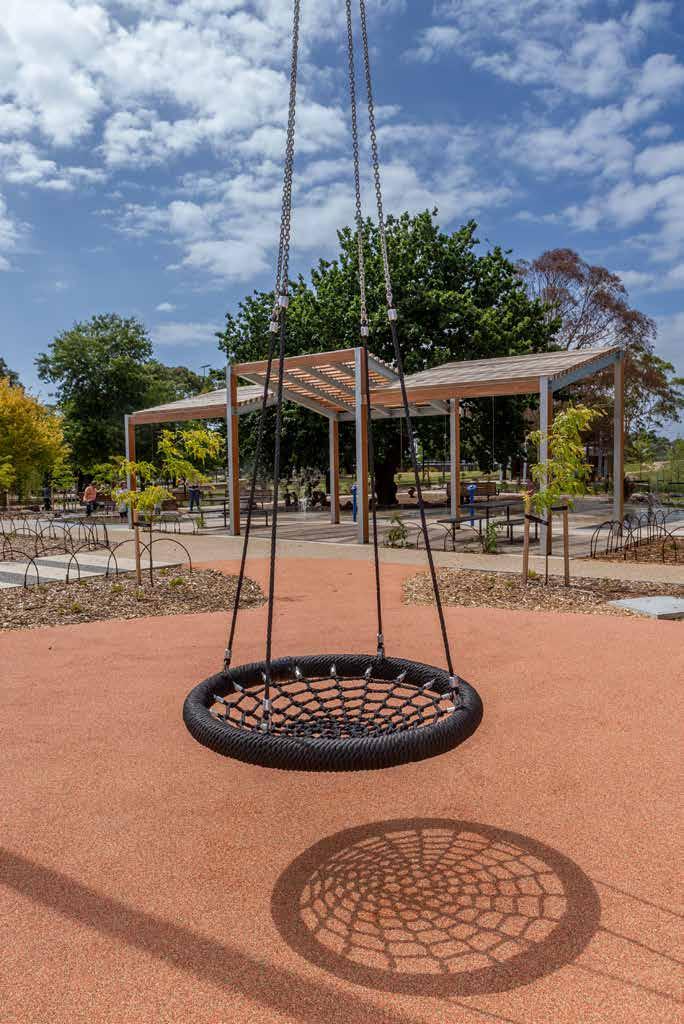
• Giant basket swing
• Traditional swings
• Trampolines
• Drinking fountains
• Sail and tree shade
• Parking
Cranbourne Road, Karingal
Perfect for all ages
Features:
• On-site parking.
• Accessible play equipment.
• Play types: water, sand, nature, sculptural.

• Extensive natural tree shade and shelters.
• Improved accessibility and connections between existing Ballam Bumps play space, public toilets, and car park.



• Drinking fountains
• Giant basket swing
• Traditional swings

• Carousel
LOTE 4 Kids is a language learning tool that encourages children to read, speak and interact with another language. With free access to 50+ languages, including the newly launched AUSLAN sign language books, it’s the perfect tool to accompany your child’s school learning.
ourlibrary.mornpen.vic.gov.au/LOTEstorytime

BROLGA RESERVE PLAY SPACE


Lyrebird Drive, Carrum Downs
Perfect for age: One – 12 years


Features:
• Fenced play area

• Junior and senior play with some nature play
• Tree shade
• Picnic shelter and tables and seating
• Street parking

ORWIL RESERVE PLAY SPACE


Corner Orwil Street and Cricklewood Avenue, Frankston
Perfect for age: One – 12 years
Features:
• Fenced play area
• Junior and senior play with some nature play
• Shade sails and tree shade

• Picnic and BBQ shelter
• Street parking
• Seating


Talk to your parents or family members about your name. Ask them why they gave you your name and what it means. With a little bit of research you may be able to find out about the lives of your ancestors.
Did You Know…
…that the study of the history, origin, and meaning of proper names is called onomatology?
Have a go yourself at making this American invented breakfast consisting of an English muffin topped with bacon or ham, poached eggs, and hollandaise sauce, or if you're too busy in mornings you can have it for dinner!

Did You Know…
…that spinning an egg can tell you whether it is raw or hard-boiled? A hard-boiled egg will easily spin, while a raw egg will wobble.

Get the family together and make cleaning a fun chore. Put on some fun music and dance while you clean. Give out rewards for milestones crossed - fastest time taken to clean, best organiser, and room with the least amount of dust.
Did You Know…
...that many cultures have a day assigned to cleaning during a year? Eg: Iran for Norooz, India for Diwali


Fancy yourself a musician? Take the first step towards fulfilling your dreams and go and buy yourself a musical instrument. If you already have an instrument, what about starting to learn to play it?

Did You Know…
…that historians believe that the flute was one of the oldest musical instruments created by humans?
Source: www.timeanddate.com
ACROSS
2: Baby ducks (9)
6: Chicken or the ____ (3)
10: Baby cow (4)
11: Easter is on this day of week (6)


12: Carry your eggs in a _____(6) Hides your easter eggs (5)
DOWN
1: April showers brings May_______(7)
2: Milk & ice cream are ______ (5)
3: Hen watches over her baby ______ (6)
7: Baby ____is called a kid (4)
8: Baby sheep (4)
9: Looking for Easter eggs in backyard (4)
13: Warms the earth from space(3)

OUTDOOR
BOOK
Kidzshed
Kidzshed
Book your next kids themed party with us!
Book your next kids themed party with us!
Amazing packages including use of the party room, hot & cold food, host, invites & more.
Amazing packages including use of the party room, hot & cold food, host, invites & more.

Venue also available for private hire.
Venue also available for private hire.
A: 222 Marine pde Hastings
P: 5906 5900
A: 222 Marine Pde Hastings
The Science Shed comes to your home for your next birthday party! Children can dress up in real lab coats and safety glasses and experience their own hands on experiments. Science, slime and much more.


E: info@thescienceshed.com.au
E: kidzshed@gmail.com
M: 0409 875 944 E: kidzshed@gmail.com
P: 5906 5900
M: 0409 875 944
M: 0419 882 765
W: thescienceshed.com.au
Kidztown
The biggest and most exciting themed kids party venue to hit the Mornington Peninsula.
FB: facebook.com/kidztownpartyvenues

P: 8759 1431
M: 0403 795 562
An escape room experience for kids. Can you help Alex the laboratory assistant stop the evil Professor Prism from destroying the world? Perfect for birthdays.
2/2a Carbine Way Mornington
W: lockedinescaperooms.com.au

The ultimate kids’ show! Come on an adventure full of magic and laughter with Charlie SillyPants and friends. Parties, preschool and childcare. M. 0411 957 185


W: melbournemadness.net
Have a “Very Silly Christmas” by having the silliest magician in Magicland Charlie SillyPants at the kids’ next party!
You receive $50 off a 1 hour party/show or it’s only $100 for a 30 minute live ZOOM party.
Seeking something different?
A quality art and craft pARTy takes birthday fun to a whole new level.
It's just not a pARTy without ART! Book today!
M: 0404 848 226
W: robynsroom.com.au/creative-parties
Peninsula Kids is showcasing the wonderful places available on the peninsula and bayside region to take the family out for bite to eat!


Let our map guide you and your hungry tribe. Here you'll find some of the best affordable cafes and venues....ENJOY!


Good To Play is designed to entertain children and, at the same time work to enhance their creativity and artistic skills. Whatever your child’s interest, choose from boxed sewing kits, scratch art, mosaics, tattoos, string art, puzzles, stickers crayons and more which are each designed to bring out the creative side in every child.
A4 Scratch Book – Secret Garden


Coloured scratch-art paper that will take your scratch art to the next level.
Available in A4 size and contains vibrant colourful garden scenes with super fine scratch lines.
RRP: $23.95 goodtoplay.com
Join 8 year old Grace and her family on their adventurous and often funny expedition around Australia!

Following CDP’s successful national tour of Magic Beach, Alison Lester AM’s classic book comes to life on stage, with songs, fun, (and quokkas!) for children aged 3-10 and their adults.
Suitable for ages 3-10 years and their families.
Thursday, 13 April 2023 | 12:00 PM to 12:55 PM Family (four tickets) $100 artscentre.frankston.vic.gov.au
A playful crazy socks brand, Proudly born in Australia, that creates colourful socks with the aim to inspire creativity and self-expression. These gorgeous multi-coloured socks feature the iconic and colourful Care Bears and have quirky, eye-catching custom elements, for example, a plush tummy stitched onto the socks or a colourful padded rainbow. Guaranteed to put a smile on anyone’s face!

Available in kids and adults sizing (for ages 6-99 years) and toddlers (ages 3-5 years).
RRP: $35.90 madmia.com
Oh la la! Claris The Chicest Mouse in Paris Embarks on her Newest Adventure. She may be pint-sized, but Claris the mouse has been on more adventures than most! This year, Claris will also embark on another très chic adventure – onto the shelves of toy stores around the globe.
The pint-sized Parisian mouse will feature in a très belle collection of Premium Plush Toys, Stationery Essentials, Accessories, Nursery and Dining products, to bring the brave and bold mouse to life for everyone to enjoy.


As a business that was created by women, The Kind Collective is on a mission to add vegan, consciously driven and multi-purpose cosmetic products to everyone's beauty repertoire.

This is why The Kind Collective makes products that are more than pretty - they're active, nourishing and cuttingedge. They're cruelty-free, are 100% vegan and PETA accredited.
We are proudly Australian owned, and our hero cosmetic products are Australian made, using nourishing, native ingredients mindfully selected. thekindcollectiveaustralia.com

Crazy Aarons Thinking Putty is world famous –because it is non-toxic, won’t dry out, won’t leave your fingers sticky, and is fantastic for stretching, moulding, bouncing, tearing, popping and is here, in Australia, finally!!

Thinking Putty is not only a great tactile toy for kids, it’s a great sensory toy for people of all ages. It provides a sensory experience that can help to ease anxiety and even shift mood. Playing with Thinking Putty helps build hand and finger strength through physical play with unique, unexpected tactile properties and provides relaxing, yet stimulating, interaction for anyone with sensory integration issues.
Suitable for ages 3+ years, Crazy Aaron’s Thinking Putty is available now from Toy World, News Express and other great independent toy retailers.
Snug as a Bub & Co.’s snuggly swaddles + bedding are crafted from the finest organic cotton muslin essential for bub & mum-to-be.

The swaddles are incredibly versatile and can be used as a swaddle, light blanket, pram cover, mat, change pad cover or burp cloth; making them the perfect gift for expectant mothers.
The products are designed to give babies the upmost comfort and welcome them to the world of pure luxury, with blankets featuring six layers of muslinlightweight yet warm.
All products have gone through a rigorous testing regime and are a GOTS CERTIFIED Muslin - with the added benefit that all pieces are handwashable, safe, and designed to last.
RRP: $18.95

snugasabub.co
A 'Choose Kindness' keyring with all proceeds going to Dolly's Dream and their important anti-bullying programs. Programs supported include the Dolly's Dream Family Tech Plan, Dolly's Dream Support Line (with a focus on supporting parents and young people in rural and regional Australia), and Dolly's Dream anti-bullying workshops.


Pop it on a school bag and choose kindness with us!
Keyring RRP: $2.00
dollysdream.org.au I smiggle.com.au
Get ready for Easter with we might be tiny! We're giving away 2x Easter packs, each including 2 adorable Easter Bunny Baskets, a set of Easter Stampies, an Easter tote, and an Easter Recipe Booklet from We Might Be Tiny. Each basket is made from 100% food-grade silicone (yes, even the convenient carry handle), this special, limited-edition Easter Bunny Basket sets you up with a cracking time (without damaging any of the precious chocolate eggs). While it’s durable and will be your Easter bestie for years to come, it’s also unbelievably flexible and free from nasties. Make edible memories with your tiny human in the kitchen and DIY this year’s Easter goodies with a set of Easter Stampies. They guarantee super-cute cookies, creatively crafted gems and delicious bring-alongs straight from the heart.

Enter for your chance to win an Easter pack and make this holiday a memorable one for your family!
Bunny Basket RRP: $35
Easter Stampies RRP: $26 wemightbetiny.com.au

Konec mobile has teamed up with imoo to bring wearable fun to families. The imoo kid's smartwatch pack features a Watch Phone Z1, a 180-day Konec Mobile SIM plan with 12GB of data and a Spencil backpack featuring artwork by 15-year-old Jesse Sutton, a contemporary Indigenous artist from the Kalkadoon people of Mount Isa, Queensland. With the Konec Wearable 180 plan, parents can stay in touch with their child on the go without requiring them to carry around a smartphone. T&Cs apply.

RRP: $239
konec.com.au

Supporting families with stage-based play essentials for children and multi-channel content for parents. The company is best known for its awardwinning subscription Play Kits program. Designed with the support of experts from a wide range of disciplines, including paediatrics, occupational therapy, neuroscience, Montessori educational philosophy, and more, each play essential is built to last and made with easy-onthe-environment materials including FSC-certified wood, organic cotton, OEKO-TEX® fabrics, handcrafted felt, recycled paper, soy-based ink, water-based paints, and even bio-based plastics. All products also ship carbon neutral with efficient packaging to reduce waste. The Play Kits are available from ages 0-24 months and deliver at 2-3 month intervals with subscriptions starting at $130 per Play Kit. The award-winning Play Gym is also available ($235, ages 0+ months). Designed by experts and crafted with sustainable, natural materials, The Play Gym provides an entire year of play and learning for a baby’s developing brain.
lovevery.com.au
A reimagination of the classic metal scooter with LED lights, FLOW ELEMENT LIGHTS is built with an all-aluminium design that’s strong and smooth and fills the days with fun for the kids and teens of tomorrow!
Stylish, chic, and light-weight with vibrant colour options, FLOW ELEMENT LIGHTS features a patented folding system, a 4-height adjustable T-bar with foldable handles, trendy anti-slip grip tape, a strong rear brake, and bright lightup 125mm wheels to deliver robust rides—all with a fun-tastic glow!

Be in your ELEMENT and go with the FLOW!

With millions of Aussie kids back in the classrooms, students will benefit this year from a pared-back Australian curriculum with a stronger focus on English phonics and more targeted approach to mastering essential mathematical facts, skills and concepts.
Dr Selina Samuels, Chief Learning Officer at Cluey Learning, said the revamped Australian curriculum will be welcomed by teachers given how busy the school days are with an already jam-packed curriculum. “Teachers often note how difficult it is to cover all the concepts in sufficient depth with room for differentiation and engagement,” she said. “Simplifying the curriculum does not mean making it simpler but instead will better enable students to embed the key foundational skills and knowledge and build their confidence as learners.”
One core change will be a greater phonics-based approach in teaching children to read. “Systematic phonics instruction has been shown to be particularly effective for younger readers, giving them skills to decode unfamiliar words,” said Dr Samuels. “Phonics instruction should be supported by an emphasis on reading comprehension, so students learn reading fluency and understanding.”

With regard to the greater emphasis on mastering core mathematical skills, Dr Samuels said this was an important revision. “It is very important children acquire strong mathematical foundations early. A secure understanding of number and numerical patterns enables them to tackle more complex and abstract concepts as they progress. Students need to be fluent with numbers and to know how to apply appropriate problem-solving strategies.”
There will also be a lifting of standards for mathematics in Year 1. “In addition to securing an understanding of number and numerical patterns in the early years, there will be a focus of learning times tables to get better at addition, subtraction, multiplication and division. Fluency and computational speed also give students greater confidence with maths.”

Dr Samuels said there can be tell-tale signs a student requires additional academic support such as tutoring. “For younger children, statements such as, ‘I hate maths’ or ‘I’m just bad at English’ may suggest there’s a fundamental problem that needs to be addressed.
continued page 38...


We are so excited to be offering childcare, kinder and early education throughout Melbourne, to our little learners at FiRST early learning.
Our stunning, early learning centres offer a safe, fun and loving environment for children to enjoy.
FiRST early learning operate five centres across Melbourne and all services are carefully designed and created to provide high quality education for children aged 6 weeks to 5 years.


We understand that the first 5 years of every child’s development and learning is of the utmost importance. We provide enthusiastic, qualified, experienced and loving educators together with Bachelor qualified kindergarten teachers that deliver the steps needed for quality educational

curriculums to build and prepare your child for the next stages in their lives.
At FiRST, we lay the steppingstones to nurture, build, and develop secure and trusting relationships with our little learners and families.
Every change, growth and milestone are celebrated and encouraged. Our environments are safe and stimulating, mixed with natural materials to offer the children exciting play spaces where they can build their creative thoughts and imaginations.

No matter what age and ability your child is when they take their first steps into our classrooms, FiRST ensures that every child and family will feel welcome and happy in our home away from home environment.
Our educators understand each child as an individual with a range of needs, wants, interests, abilities and languages.
FiRST will provide, encourage and further develop your child’s interests, ideas, theories, needs, sense of self and engage with your child in helping them to become the best they can be.
We offer swimming lessons, (bush and beach) kinder, library visits, yoga, music, science, cooking, intergenerational visits with our older friends and much more.

We are excited to offer an excellent service and we look forward to meeting you all.
Please email info@fel.vic.edu.au


Equally, if they’re refusing to engage in class, they may need additional support to build their confidence.”
For high schoolers, Dr Samuels said a student who routinely avoids doing homework in a certain subject, dismisses its relevance or the teacher’s ability may be avoiding revealing their own confusion.
“Equally, a student who’s very anxious about a subject, even if their performance is reasonable, may need additional support to build their confidence and self-efficacy. For high-ability students who are coasting, tutoring can challenge them so they don’t identify education with ‘being bored’.”
Dr Samuels said starting tutoring early in the year gives students more time to establish good learning routines and ensures the academic support aligns with what they’re doing in class. “Leaving tutoring until later in the year, perhaps in response to a poor assessment, means the tutoring is focused on fixing what was done wrong and is retrospective. It can be more effective to be proactive in building strong skills and knowledge to underpin the challenges a student will encounter during the year.
“Tutoring can also build confidence by giving students the opportunity to ask questions and making them feel positive about themselves as learners. A student who is positive about learning is more likely to seek out opportunities to learn throughout their lives.”
Cluey Learning Cluey Learning delivers personalised online tutoring support for students in Years 2 -12, across Math, English and Chemistry. All content is mapped to the Australian National Curriculum and is based on the unique learning needs of each individual student. Cluey has supported over 17,832 Australian families, run over 519,000 sessions and has been rated 4.7/5 by parents and students.
Dr Selina Samuels is the Chief Learning Officer at online education company Cluey Learning. She has been in education for over three decades and has been working with schools since 2013 to establish and provide digital education programs across a range of subjects and year levels. Qualifications: BA (Hons), LLB, PhD, MEd.
Read with kids daily and encourage them to point out and name objects in their environment. Practise counting, recognising letters and writing their name with them regularly.
YEAR 1 YEAR 4 YEAR 7
Practise counting, identifying numbers and reading with kids regularly. Encourage them to express their own ideas and thoughts in simple sentences whilst writing.
Listen to your child read out loud. Read widely - fiction, nonfiction, magazines, anything that your child is interested in.
Support your child in organising their homework schedule or study plan but be mindful of creating a foundation of independent study.
YEAR 2 YEAR 5 YEAR 8
Help your child develop comprehension skills by asking questions as you read together. Asking ‘how did the person feel?’ helps kids think critically and teaches empathy.
Ask questions and connect with your child’s teacher about the best way to help them at home.
Encourage your child to create schedules and plans to deal with the increased workload.
YEAR 3 YEAR 6 YEAR 9
Stay positive and check on your child’s emotional wellbeing, especially in the lead up to NAPLAN. Run through spelling and times tables regularly.
Help your child increase organisational skills and self-reliance.
Talk to your child about elective choices and how this might affect workload and future study options.
Talk to your child about what they might like to study during senior years and following graduation. Make sure they understand how their selection might impact ATAR results.
Encourage your child to compile study notes. This is a great habit for Year 12. Find a system whether it’s visual cues, colour coding etc. Remind them that all mistakes are learning opportunities.
YEAR 10 YEAR 11 YEAR 12
Consolidate effective study habits. Take advantage of after-school study programs, groups and tutoring.


Balcombe Grammar School, in partnership with families, provides the resources, programs, culture and ethos in which students feel comfortable in striving for their personal best.

Founded in 2007, the welcoming and supportive culture that we enjoy today is due to our community understanding and embracing our mission, vision and values. At Balcombe Grammar we pride ourselves on our strong sense of community spirit – we are a connected community. Balcombe Grammar is committed to providing a learning environment that nurtures and challenges each student to discover their potential, passion and purpose. Importantly, our School is small enough for each student to be personally known and recognised, yet large enough to offer an extensive range of opportunities which assist our students to grow and develop as well-rounded young people.
Our Active Community Program (F - 9), Year 7 Journeys Program and Year 9 STRIVE Experience ensures that our students have ample opportunity to form positive


relations with both the school and wider communities and develop invaluable ‘soft skills’.


Balcombe Grammar is a member of Southern Independent Schools and participates in sporting and cultural competitions and events through this organisation. Furthermore, Balcombe Grammar is a member of Ecumenical School’s Australia (ESA), a collegial network of schools that are united in the advancement of richness in education.

Our Strategic Plan 2020 and Beyond is an exciting and future focused plan that looks to build on our innovative and communityfocused initiatives which play a pivotal role in assisting our students to develop the fundamental skills necessary to form strong connections and thrive in our everchanging world.
Please take some time to explore our website as it will provide you with an overview of our academic, pastoral and co-curricular programs; however, to truly discover whether our school is the right fit for your family,
we encourage you to arrange a time to visit and tour our beautiful school. During this visit you will have the opportunity to meet our caring staff, wonderful students and most importantly see our school in action.
We look forward to welcoming you and your family to Balcombe Grammar School.
W: balcombegrammar.vic.edu.au
Toorak College offers comprehensive ELC learning programs for Kindergarten and Pre-Prep children located in and around the Mornington Peninsula.


We provide a nurturing and engaging co-educational environment. Our range of learning experiences promote social, emotional and academic growth and allow children to actively engage with each other and their teachers in purposeful and meaningful ways.
“To enlighten is to give someone greater knowledge or understanding. When a young person enters our Early Learning Centre, they develop their sense of self, understanding of others and find their connection to the world around them”, says Miss Melissa Schoorman, Head of Wardle House and Deputy Principal of Toorak College.


Our tailored Early Learning program, Project Enlighten, focuses on this significant period of growth for a young learner by expanding the experiences of 3 and 4 year old children through a breadth of
learning opportunities that will form their foundation of understanding. Project Enlighten is influenced by the principles and practices of Reggio Emilia, in which children are recognised as capable and resourceful. Every day, children in our Early Learning program are filled with excitement as they explore environments that are varied and engaging, with an emphasis on creativity and playbased learning.
Integrated into Project Enlighten is the explicit teaching of literacy and numeracy. Skills and talents come from many different areas so we complement our program with a diverse range of specialist classes that assist in developing each child’s academic and personal growth. These classes are taught by specialist teachers and include:
• STEM-X programs: Science, Robotics, Construction and Technology
• Creative Arts: Visual Art, Movement and Out and About
• Performing Arts: Music, Drama and Dance
• Language and Cultural Appreciation: Mandarin and Library
• Health and Wellbeing: Physical Education, PMP, Mindfulness and Nutrition

Highly regarded across the Mornington Peninsula, Toorak College offers a range of programs to suit every child and every family. Offering inclusive and in-depth Kindergarten and Pre-Prep programs for young children, Toorak College is passionate about developing a community of creative, curious and compassionate learners.
Register by phone or website, to join our Director of Early Learning, Ms Pat Barbieri, for a tour of our Early Learning Centre.
P: 9788 7200
W: toorakcollege.vic.edu.au
Curious, compassionate and connected
Padua College is celebrating its 125th anniversary of providing students on the Mornington Peninsula with a rich holistic education for life, one that values mind, body and spirit.


Established in 1898 by the Mercy Sisters, Padua College is a vibrant learning community of academic excellence and outstanding pastoral care, where students are encouraged to discover and utilise their talents so that they can reach their full potential and make a positive impact in the world.


Comprised of three junior campuses (Year 7-9) at Mornington, Rosebud and Tyabb, and a senior campus (Year 10-12) at Mornington, Padua’s multicampus structure provides students with individual care within their smaller ‘House’ communities, where each student is known by name. Students also benefit from the extensive facilities of the larger College network and a greater range of subject and cocurricular offerings.
Excellent staff, smaller class sizes, and learning spaces designed to support the delivery of optimal education outcomes provide the perfect environment for students to excel in areas of curriculum, leadership and in the sporting, cultural and religious life of the College.
An engaging and inclusive curriculum, characterised by innovative and
quality teaching and learning practices, provides for both tertiary and vocational pathways. Padua’s Learning and Teaching Framework is designed to enhance student engagement and learning outcomes though evidence-based teaching practices, and to inspire a life-long love of learning.
Each student is encouraged to realise and fulfil their potential by participating in the wealth of experiences and co-curricular activities. These range from weekly sports, debating, chess, art, and music to College productions, student technology leadership and environmental sustainability groups. As a Maths Association of Victoria accredited school, students are provided with additional opportunities to extend and enrich their learning with maths talent quests and competitions such as the Da Vinci Decathlon.
Year 7 students are supported in their transition to secondary school life by their Homeroom teacher and House Co-ordinator for the duration of their time on the junior campuses, while transition camps and sports rally days assist in building strong, positive relationships with peers and staff. Student connections and resilience are further developed through the College eXcel program with fortnightly wellbeing workshops.
Excursions and incursions, camps and cultural tours are integral to the teaching and learning programs offered at Padua. The Aspire9 program, for example, includes two camp experiences that are tailored to engage Year 9 students at a critical point in their high school journey, aimed at developing self-aware learners capable of critical thinking skills and collaboration.
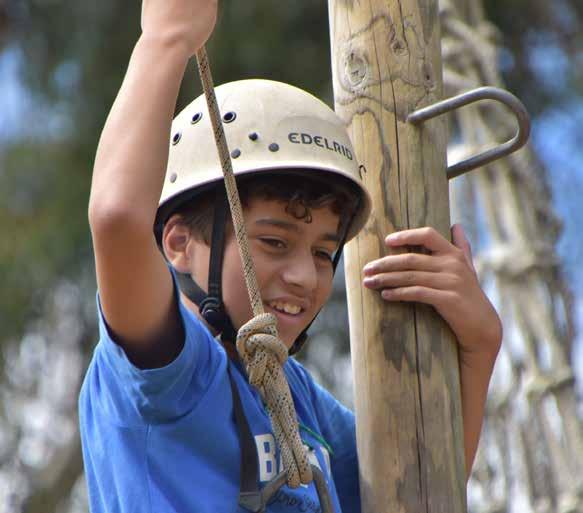
In keeping with its Catholic, Mercy and Franciscan heritage, Padua offers an extensive and active Social Justice program which aligns with the College philosophy of developing the whole person in an environment of community and service and working for a just and peaceful world.
Padua College has a state-of-the-art Performing Arts Centre and Senior Learning Centre, with a dedicated Year 7 and 8 Centre opening in 2024 at Mornington. Spacious grounds at all campuses include natural bushland and wetlands, which provide an ideal environment for students to participate in the very best that education has to offer. Visit the college website to book into a campus tour and learn more about what Padua College can offer your child.
W: padua.vic.edu.au

At Woodleigh School, we do things differently. Because if you want to make a difference in the world, you have to be different.
In a constantly changing world, young people need different skills from what their parents did growing up. No matter what path they take after school, they need to be adaptive, creative, curious, compassionate, skilful, resilient and have a sense of adventure to take responsible risks.
One of the key programs that deliver these lessons is our Homestead Program.
Homesteads are a distinctly Woodleigh ‘thing’. Other schools have ‘houses’ where students compete in inter-house athletics, swimming, or drama. But at Woodleigh, Homestead is where you get your sense of belonging. It’s a home away from home that you share with a group of multiage students from Years 7 to 10. And just like in a large extended family, you cook together, eat together, play together and clean together, all under the mentorship of dedicated Homestead tutors. While that might sound chaotic to
some – trying to get 80 people to live and work in the same space –an overall culture of student agency and respect creates a space where everyone feels they belong.
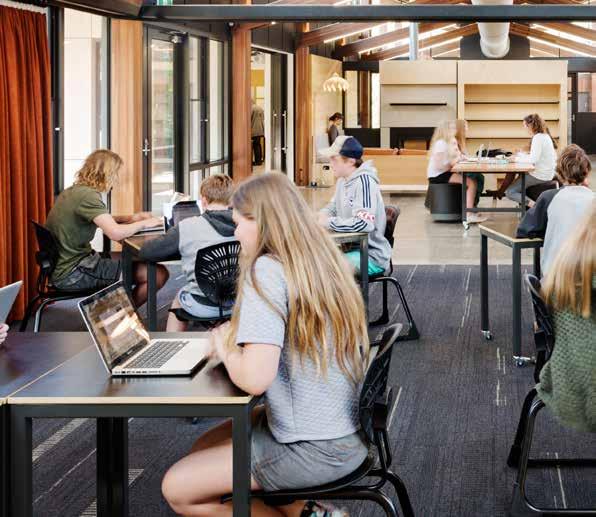
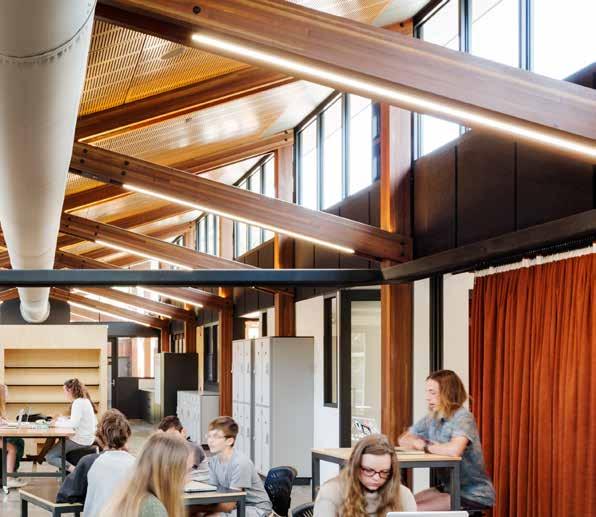
Our Homestead program begins in Years 5 and 6 at our two Junior Campuses, Penbank in Moorooduc, and Minimbah in Frankston South, with dedicated Homesteads for senior primary students. The 5/6 Homesteads at Minimbah and Penbank feature large spaces that house teaching, activities, cooking and communal gatherings. Students have a real sense of pride when they enter the Homestead in Year 5 and immediately get a say in how the Homestead runs. There is a true sense of respect and democracy as students draw up a Homestead agreement that ensures everyone feels seen, heard and respected. And if that agreement is breached – which can and does happen – students have a say in how to make it right.
The Homestead Program continues at our Senior Campus in Langwarrin South, as students get sorted – Harry Potter style – into their Homestead. There’s a tangible sense of pride and
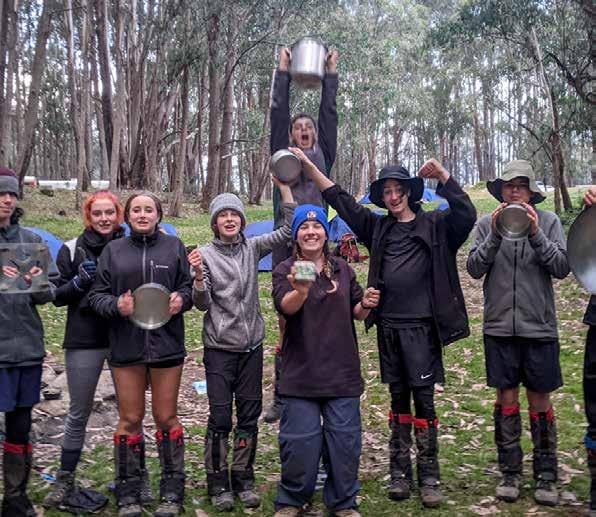
identity wrapped up in which Homestead you call home. Sure, you spend time visiting your friends and attending classes in other Homesteads, but your Homestead is where you find your equilibrium and balance.
And while the Homestead Program is founded on relationships, Homesteads aren’t just groups of people: they are award-winning buildings – modern, innovative learning and gathering spaces that shape-shift according to the needs of the moment, the lesson at hand, and the curriculum being taught.
Come on down for a tour to see our Homesteads in action, or join our Principal, David Baker, at an Information Session to learn more about why Woodleigh's Homestead Program makes such a difference to the wellbeing and learning outcomes of our students.
Gareth Bolch Deputy Principal – Community, Culture and Student Experiences

A: 485 Golf Links Rd, Langwarrin Sth
P: 5971 6100
FB: @woodleighschoo1
Insta: @woodleighschool
W: woodleigh.vic.edu.au
 By Jackie French picture book, $26.99
From the award-winning creators of Flood, Fire, Cyclone, Drought, Pandemic and Earthquake ... Grass and wheat-lands spread to the horizon, and so did we, with too few ibis to control us. We could rage across the land. We ate the grass, the leaves, the wheat ...
 By James Foley y/a, $15.99
Max is a mole on a mission. With Helen Hippo and June Bug by his side, Max must stop the evil Goldfish-Finger from stealing a priceless, solid gold fishfinger. This dangerous, top-secret mission will involve explosions, a naked mole rat, and being flushed down a giant toilet. Will Max and the team defeat the fiendish fish? Time to rock and mole!
M is for my marvellous mum. Let's spell out why ... A beautiful book exploring all the ways in which mums are marvellous.

 By Andy Marino
y/a, $15.99
December, 1961 - Marta is a young girl who saw thirty miles of barbed wire appear across her city overnight, separating Berlin into West and East - with Marta's home on the Communist Bloc-controlled eastern side. January, 1989 - Now a spray-painted concrete monolith, the Berlin Wall bisects the city. Kurt, a young East Berliner, often wonders what those living on the other side must think of their unseen neighbors. Do they hate the people of East Germany as completely as Kurt has been instructed to hate them? Inspired by real events, Escape from East Berlin tells two stories of daring bids for freedom from the Eastern Bloc, set decades apart and relayed in alternating perspectives. Triumph and tragedy intertwine in this examination of both the earliest and final days of the Berlin Wall.

picture book, $18.99
My mummy is a unicorn! She makes magic every day when she takes me on a rainbow road to school, and then we play. Join in the fun as mother and child use their imaginations to create a magical day full of fantastical adventures.
 By Alan Gratz y/a,
$17.99
In this thrilling historical adventure set during World War II, Steve Rogers (AKA Captain America) and his young sidekick, Bucky Barnes, encounter threat like none they've ever seen -- a Ghost Army. The dead of this war and wars past are coming back to life, impervious to bullets, flames, or anything else the Allies can throw at them. The armies rise from the ground in the night and seem to disappear without a trace. How can Cap and Buck fight something that's already dead? And just what does the mysterious Baron Mordo--sitting in his castle atop nearby Wundagore Mountain--have to do with this?
In the city where Leon lives, superheroes -- and supervillains -- are commonplace. So how does an ordinary kid like Leon, who has no superpowers himself, become the superhero he wants to be? When all his classmates suddenly become obsessed with a new phone app that turns them into zombies, Leon gets his chance to prove that using his brain and following his heart can save the day.

$16.99
By Peter Lantos y/a,The Boy Who Didn't Want to Die describes an extraordinary journey, made by Peter, a boy of five, through war-torn Europe in 1944 and 1945. Peter and his parents set out from a small Hungarian town, travelling through Austria and then Germany together. Along the way, unforgettable images of adventure flash one after another, catching butterflies in the meadows â" and as Peter realises that this adventure is really a nightmare â" watching bombs falling from the blue sky outside Vienna, learning maths from his mother in Belsen. All this is drawn against a background of terror, starvations, infection, and inevitable, death, before Peter and his mother can return home.

 By Stephen Shaksan y/a, $10.99
Best friends are the best! But who is the best? Is it Pizza or Taco? The question is debatable! They both love water slides. They both are friends with Hot Dog and Hamburger. In fact, maybe they should have a debate and get their friends to vote for who's the best! Can their friendship survive the race for top spot on the popularity food chain? Cast your vote!
 By Maggie Stiefvater y/a, $26.99
The majestic conclusion to Maggie Stiefvater's Dreamer Trilogy. This is the story of the Lynch family. Niall and Mor escaped their homeland for a new start, and lost themselves in what they found.
Declan has grown up as the responsible son, the responsible brother--only to find there is no way for him to keep his family safe.
Ronan has always lived on the edge between dreams and waking... but now that edge is gone, and he is falling.
Matthew has been the happy child, the brightest beam. But rebellion beckons, because it all feels like an illusion now.
This world was not made for such a family--a family with the power to make a world and break it. If they cannot save each other or themselves, we are all doomed.
An empowering story about finding your identity and the courage to fight for it. Aaliyah is an ordinary thirteen-year-old living in the Midlands, she's into her books, shoes, K-pop and she is a Muslim. She has always felt at home where she lives until a terrorist attack in her area changes everything. As racial tensions increase and she starts getting bullied, Aaliyah decides to begin wearing a hijab to challenge how people in her community see her. But when her school bans the hijab and she is intimidated and attacked for her choices, she feels isolated. Soon Aaliyah realises that other young people from different backgrounds also struggle with their identity and feel alone, scared and judged. Should she try to blend in or can she find allies to help her fight back? Channelling all of her bravery, Aaliyah decides to speak out. Together, can Aaliyah and her friends halt the tide of hatred rippling through their community?

 By Clare Hayes y/a, $15.99
A laugh-out-loud, rapid-fire story about imperfect families, enemies, friends, and loyalty Growing up in rural Australia is anything but boring. Just ask 12-year-old Earl Grey. Dead mice on dinner plates, horses in hallways and goats in the lounge room are all part of the experience. Earl’s parents aren’t the sharpest knives in the drawer either, but with his best mate Bruiser by his side, Earl can navigate almost any situation. The question is: can Earl outrun his arch nemesis, Division A basketball captain Slam Dunk, before he’s beaten to a pulp? To stand a chance, Earl decides he’ll need a solar-powered racing caravan with rocket boosters. When he takes a job shovelling horse poo at the racecourse for a mobster who quit the mafia to take up antiquing, Earl learns the value of good connections and finds out how far $27 goes towards a survival plan.
$22.99
From the internationally bestselling author of A Dog's Purpose and A Dog's Way Home comes Love, Clancy: Diary of a Good Dog, a deeply moving story with a brand new cast of characters, including one very good dog.


 By Nettie Lodge, $24.95
An Anthology for Animals (written and illustrated by Nettie Lodge) is an A to Z collection of poems and illustrations that brings the animal world to life. Each animal has its own story about its character, its origin and its place in nature to inspire young zoologists. Through inquiry and the joy that all animals bring to our world, TELL TAILS shines a light on the rare, the endangered, the vulnerable, the mighty and the most loved animals in the world.
 By Julia Lawrinson
$14.99
By Roger Priddy 0-2yrsFarm Sweet Farm is the first title in a new series from Priddy Books. Young children will love learning about the farm in this interactive lift the flap book. With colorful illustrations and clear photographs of the animals, Farm Sweet Farm is the perfect book for children to get to know farmyard animals.
 By Julia Donaldson
$14.99
Who can you hear in the deep dark wood? Is it Snake, hissing in the leaves? Or Owl, hooting in the trees?
Journey through the deep dark wood with Snake, Owl, Fox and Mouse and discover who is making the growling noise!


Juvenile non-fiction, $24.99
Our city is big. The universe is bigger. An astronaut from the other side of the world will fly over our home, at night. We will see a tiny light and we’ll know it’s him. But will he be able to see us?
One girl, one boy? A true story.
Illustrated by
Margaret Krajnc $24.99When Tom moves next door, Meg is excited to have a new neighbour.
But she soon realises that Tom is different to the other kids she knows.
A gentle and fun story about autism, encouraging children to not exclude others who see the world in ‘different ways’.
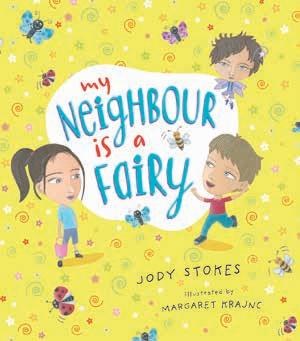
For your chance to take home a prize pack of the reviewed books go to www.peninsulakids.com.au/giveaways
By Ann-Maree Thompson,illustrated by Jan
Thompson $24.99In this story (for both children and adults) you will meet Bernie (a Superb Parrot) who will take you on an adventure to find the mysterious Bunyip (waawii).

This educational resource, centred around the Bitterns in Rice Project, opens up conversations around embracing our indigenous culture and sustainability.
Come and meet Australia’s Bunyip Bird!
All our products are:
*Sugar free
*Gluten free
By Linda Martinucci*Low-carb/Keto
*Dairy free
Three simple ways to start improving your health and the health of your family:
1. Stop eating and cooking with seed oils ie. vegetable oil, canola oil, soybean oil, rice bran oil.
Seed oils are highly refined and created through synthetic chemical extraction in factories. They are high in omega-6 fatty acids which is needed in our diet however most western diets have way too much and this can lead to inflammation and chronic disease. Easily replace with healthier options like ghee, lard, coconut oil and olive oil which you can buy in bulk or stock up on when on special.
Most of us know that traditional “junk food” isn’t great for our health but did you know that many of the advertised healthier options can be just as bad? I get really angry with the big food companies who use clever marketing to trick us into believing some foods are healthy when they’re actually full of ingredients linked to chronic disease. My grassroots way of trying to change our broken food system is to simply not spend my money on supporting those sorts of products. If enough of us do that, then food manufacturers might start to make more food that supports good health not just good profits.
Keeping it simple is the best way to eat. Any meal that has good healthy protein, fresh above ground vegetables along with healthy fats will fill you up and give you energy and health benefits. To find out the latest information on healthier eating for life, check out the fantastic Road Show event below.
*Free from artificial ingredients
*Free from seed oils or starches

*Super moist and taste amazing
*Really easy to prepare
All created with love on the Mornington Peninsula
The Conference has an impressive list of rockstar speakers including Dr Peter Brukner OAM, Dr Avi Charlton, Dr Ron Schweitzer, Tracey McBeath and many more - an incredible opportunity to learn from the best.

Tickets are on sale and will sell out fast so get in early; www.rlmedicine.com/the-low-carb-road-show-melbourne Delicious low carb meals will be served throughout the day plus you’ll receive a goodie bag and workbook along with lots of giveaways and door prizes.
Simply Swap Foods are proud to be a Silver Sponsor of this amazing event and will be there with yummy product samples for you to try.

Wondering about whether a low carb eating approach could help you and your family? Want to learn the most up to date health and nutrition advice from the experts?
Then get your ticket to this full day conference hosted by the founders of Real Life Medicine - Dr Lucy Burns and Dr Mary Barson. These two fabulous women with impressive qualifications specialise in helping people reclaim their health and lose weight through a holistic approach which addresses both food and mindset.


New Maxwell
available, perfect for someone special! (find these online, at our markets and at selected retail outlets).

With a background as a food writer and cookbook author, Linda Martinucci has spent the last 15 years following nutrition studies and medical research aimed at the best way to fuel our bodies for optimal health.
In 2017, Linda made the decision to overhaul her eating style and was amazed at how much better she felt by simply reducing carbohydrates and increasing healthy fats. Taking her husband, David, on the journey with her, he not only experienced weight loss, but had energy he never thought possible, and all inflammatory aches and pains disappeared.
One key to successfully transitioning to this new lifestyle was being able to indulge in favourite desserts from time to time, particularly at family celebrations. Every Simply Swap Foods ingredient has been carefully selected for good nutrition and health benefits; Linda doesn't compromise when it comes to your health. With these products and recipes, you really can indulge yourself and feel great too!
Swapping to a low carb eating style doesn’t mean you have to deprive yourself of favourite foods like pizza. This super easy pizza crust is quick and easy to make and tastes just like you expect a good pizza to taste. Top with a lot of your favourite healthy real food pizza toppings!
1½ cups mozzarella cheese, grated (170g)

¾ cup blanched almond meal


2 tblsp cream cheese
1 large egg (min 70g)
Pinch salt
1 tsp mixed dried Italian herbs
Preheat oven to 200°C.
1. Place the grated cheese, almond meal and cream cheese in a medium size microwave proof bowl. Microwave on high for 1 minute.
2. Remove and stir then put back in to microwave on high for another 30 seconds.
3. Add the egg, salt and herbs and mix gently with a fork to form a dough.
4. Place dough between two large sheets of baking paper and use rolling pin (or hands) to press dough into desired size and shape (base should be 3mm-5mm in thickness, a thinner crust will be crispier). Use a fork to prick holes all over the base.

5. Slide the baking paper with pizza base onto pizza tray, pizza stone or baking tray and bake in pre-heated oven for 12-15 minutes or until golden brown. To make base crispier, flip the base over (onto baking paper) once the top has browned. Take care not to overcook as it browns quickly towards the end of cooking time.
6. Remove from oven and top with your favourite pizza toppings eg. Tomato pizza sauce, salami, mushrooms, olives, peppers, bacon, herbs and more mozzarella.

7. Place back in oven for 5-10 minutes to heat up the toppings and melt the cheese until golden.
8. Pizza bases can be cooked and frozen for later use. (Uncooked bases are not suitable to freeze.)
This sweet treat is a delicious variation using our Vanilla “Hug in a Mug” mug cake mix. Tasting just like a traditional cinnamon teacake, enjoy on its own or top with simple cream cheese icing for a very decadent low-carb treat. Perfect to share as no-one will guess it’s low-carb and sugar-free and you can rest assured that all the ingredients in this yummy mug cake support good health! (Also note - Mug cakes can be baked in an oven if preferred on moderate temp for 15-20 minutes in ovenproof mug or ramekin).

1 pack Vanilla “Hug in a Mug” Mix
2 tblsp butter (or coconut oil/ghee)
2 large eggs, beaten (70g, room temperature)
2 tsp cinnamon
1 tblsp natvia (or similar granulated sugar-free sweetener)


Cream cheese icing

30g cream cheese
1 tsp natvia (or similar granulated sugar-free sweetener) (extra cinnamon for decoration on top)
1. Place 1 tblsp butter (or coconut oil/ghee) in each standard size mug and melt in microwave 30-60 seconds.
2. Pour half pack of mug cake mix into each mug then add one egg into each mug (half a pack is approx. 40g or ¼ cup mix).
3. Stir really well to combine wet and dry ingredients.
4. In a separate small cup or bowl, mix together cinnamon and natvia.
5. Spread approx. ¾ of cinnamon/natvia mix evenly over top of each mug cake then use a skewer to swirl the spices through the mix until partially combined. Pour remaining ¼ of cinnamon mix on top of cakes.
6. Microwave one mug at a time for 90 seconds. Let each cake rest for a few minutes then turn onto plate, cakes will be hot. Invert cakes so top is back on top.
7. Let cool for 5-10 minutes then top with cream cheese icing and extra cinnamon.
8. Cream cheese icing – place cream cheese and natvia in small cup or bowl and microwave for 10-20 seconds until softened. Stir together well.
Preheat fan forced oven to 170°C and line a 23cm x 8cm loaf tin with non-stick baking paper.
This is a delicious savoury loaf, perfect to accompany soup or in a sandwich with lots of healthy butter.

1½ cups blanched almond meal

¾ cup grated tasty cheese

¼ cup grated fresh parmesan cheese
½ tsp salt
1 tsp baking powder
4 eggs, lightly beaten (room temp, large 70g)
¼ cup melted butter
1 cup grated and squeezed zucchini (approx 120-130g weight)
1. Place all dry ingredients into a bowl and mix together, ensuring no lumps remain.
2. Place eggs and melted butter in another bowl and whisk together well.
3. Fold wet ingredients into dry ingredients.
4. Grate zucchini and squeeze excess liquid through a nut bag or using your hands.
5. Fold zucchini through mixture.
6. Spoon into lined loaf tin and bake for 40 mins until top is golden brown, firm and skewer inserted into center comes out clean.
7. Remove and let cool in baking tin 5 minutes before turning onto wire rack to cool completely before slicing.
8. Store in fridge for up to 5 days in airtight container.
My mother introduced me to Osteopathy. I had no idea what it was. She was a part of a Homeopathy group and realised the potential of ‘alternative health’. It sounded like a kind of medicine and because I was always pulling things apart and looking for the cause, not the effect, I decided to dig deeper. I realised I was on the right path when I discovered Osteopathy is about looking for the cause; in other words, treating people and not the condition. Asking questions such as “Why is something happening to my body?”, “How can I do something about it?” “Where is it coming from?” and “What or which came first?”

In the 1800s Andrew Taylor Still, the founder of Osteopathy lost his wife and three children to meningitis and was so angered with the medical profession that he went in search of an alternative. Realising the innate healing capacity of the human body, Taylor Still studied the structure of the human body in detail, and in 1874 created a new science which he named Osteopathy. This newly created practice began by treating all sorts of illnesses and diseases and not just musculoskeletal pain.
Fast forward to 2023 and, of course, mainstream allopathic medicine has advanced since that time to a greater understanding of the body treatment with the ‘panacea’. I was brought up where taking
paracetamol was unheard of and the doctor was only called if the patient was bed bound. In my childhood home, it was common to allow the body to rest and heal itself. And so, I suppose, Osteopathy has always been a part of my life. We have come a long way since 1874 and now Osteopathy works alongside medicine to treat, support, and manage patients’ needs.
From the moment we are born (depending on the type of delivery), or even before that, our genetics and how we lay in the womb all dictate our structure. Throughout early childhood and teenage development how we hold ourselves against gravity, what exercise we do and even what we eat to the point where our growth plates fuse also determines our structure. With these compensations already set in, the habits arrive, and we get physically stuck in our ways. These compensations can ultimately affect our function and physiology causing all sorts or sprains and strains, aches and pains.
Ben a four-month-old baby came to see me after eventually being delivered by Emergency C-section and a very long protracted labour that didn’t progress. The baby was reported to be head down for around seven months and then lifted out through the abdominal wall. One problem that can occur when this happens is that if the baby does get extended and lengthened as they come through the birth canal, their bodies maintain their banana shape as if in utero which can in turn lead to a lack of spinal movement and in Ben’s case the inability to turn his head to the right. After two very gentle Osteopathic treatments weekly, then another after two weeks, Ben was able to fully rotate his head.
Joan a 46-year-old mother, was making her son’s bed one day, flicked the doona and got stuck and was in acute pain in her lower back. She described it as the worst pain she has felt since childbirth. After documenting her history and ruling out red flags, I examined her active and passive movements. I noted she had an inflamed facet joint in her lower back due to her natural hypermobile body. After 10 days and three treatments, she was 95% improved. Key to her continued healing was working on the strength of her trunk, so it wouldn’t happen again. I saw her monthly for six months while she built on her core strength and noted she has had no back problems since.
From babies that have torticollis (twisted neck) from birth trauma to reflux or colic, to the times when we don’t feel ‘straight’ or ‘wonky’ or can’t move our neck, even when we have a headache, feel tight or have unexplained pain, these are the times when Osteopathy may help.
Osteopathy helps find the body’s ‘normal’ by stimulating the body's healing systems to help improve and promote self-healing mechanisms. In effect being a catalyst for the body to boost its own responses. Pain and problems arise as symptoms, made up of all the predisposing factors that the body holds, the chronology of life events (from emotional to physical trauma).

Osteopathy puts the structure of the body back together in a way that the function can work as optimally as possible. If you feel physically good, you feel emotionally good most of the time. It really can be a case of mind over matter.
For example, with lower back pain, Osteopathy improves the spinal movement by draining the inflammation, improving the nutrition to the area, and stabilising the joints. This allows the body to move as best it can whilst allowing health to restore. In another example, when a
baby has reflux, it could be caused by a compressed nerve at the base of the skull or a strain pattern that needs to be gently unwound. There are many different moving parts that need to be addressed to bring the body back to ‘normal.’


How does Osteopathy do this? Osteopathy uses a series of handson techniques from very gentle cranial techniques that are used on children and more sensitive bodies to visceral and functional techniques treating the myofascia, to cracking and articulation of the joints. The Osteopath determines which techniques work with what body type and uses them accordingly. Osteopathy doesn’t have to be a one-off. It treats acute and chronic pain but can be used as maintenance to make sure you are always functioning at your optimum. No matter how old or young you are, Osteopathy may help the newborn to the great-great grandmother adapt to find health and be the most functional and healthy that they can be. With a little helping hand.
Danny is an expat Brit osteopath, now based in South Yarra. 'Curious by Nature' founder, 'Super Soups' author and media spokesperson for health and wellbeing related to osteopathy. www.southyarraosteopathy.com.au.com
Our multi-award winning classes will introduce you and your baby (or babies) to a world of sensory delights, where you can learn about your baby's development, spend quality time with each other and enjoy meeting other new parents

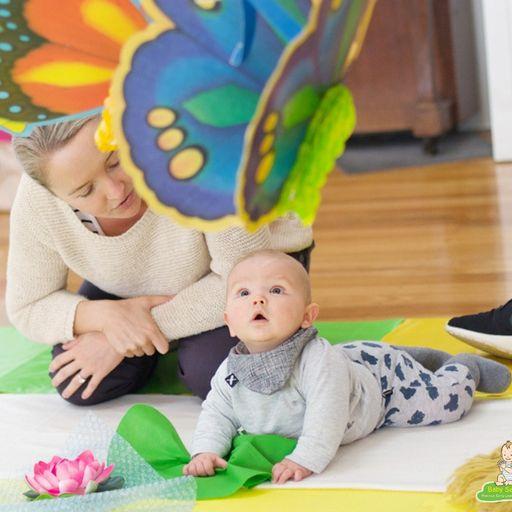



Support local, support handmade, support innovation, support love, support small business... support your local market!
EMU PLAINS MARKET : MAR 18 | 9-2
EMU PLAINS RESERVE, BALNARRING www.emuplainsmarket.com.au
LITTLE BEAUTY MARKET : MAR 25 | 9-2 BEAUTY PARK, FRANKSTON www.littlebeautymarket.com.au
Love supporting small businesses? Why not check out our interest store of curious goods!
103 MAIN STREET, MORNINGTON | WWW.ALBERTANDDAPHNE.COM.AU
Our studio is a fun and friendly space for people who would like to explore their creativity, no matter their age or skill level! We will guide you to discover your unique creative self.

A comprehensive timetable of School Holiday Classes

Adult Art and Creative classes



Family Workshops
Group classes and Private lessons (NDIS compliant)
Custom workshops
Home of Melissa Cupidon Art
location: 6 High Street Hastings VIC 3915
website: www.creativemakes.com.au
email: melscreativemakes@gmail.com | phone: 0425 867 919 facebook/melscreativemakes | instagram/_creativemakes_
At this time of the year, parents of school-age children are settling into the new school year – and all the challenges that this brings. While some of these challenges are easy to deal with, one of the biggest facing parents is the ever-present threat of head lice which seem to be part-and-parcel of the school experience for many children. Being at school means children are returning to the environment where head lice proliferate, and parents are often at their wit’s end trying to find ways to get rid of them.
Catching head lice does not mean your child has done anything wrong or is not hygienic. Statistics vary but indicate generally that between 20-30 per cent of primary school students are likely to get head lice at some stage. A single infested head can successfully infest a whole classroom and when the children return home, they often unwittingly pass the infestation on to the rest of the family.
Head lice are wingless creatures which cannot fly or even jump but move from host to host by crawling or climbing. Close contact between children therefore gives them great opportunities to spread but it is important to understand that head lice are not confined to children. In fact, anyone can get head lice but they are more common in children because of their close contact.
Head lice do not carry disease, but we need to get rid of them.

If your child has head lice, you might notice your child itching and scratching, especially around the back of the neck and behind their ears. A bad case of head lice can lead to itchy dermatitis on the scalp, crusted sores and enlarged lymph nodes in the neck. But this isn’t common, and your child can avoid it if your treat their head lice as soon as possible.
When you look closely at your child’s hair, you might see small, ovalshaped, white or brown-black nits attached to the root of the hair, near the scalp. You might also see live head lice. Live head lice move fast so to spot them you might have to part your child’s hair very quickly.
Having found head lice, the next step is to try to get rid of them and fast.
Your community pharmacy stocks special combs as well as shampoos, conditioners, creams and other products to treat head lice infestation. There are chemical-based treatments available as well as a number of treatments which are based on essential oils such as anise, rosemary, lavender, and tea tree oil. There also are a range of herbal products.
The wide variety of active ingredients available is due to the fact that head lice are very adaptable and can develop resistance to some chemicals. For this reason it is important to talk to your community pharmacist about what is the right product for you or your child.
Your pharmacist has the experience and training to make sure you get the best treatment.

After selecting a treatment, it is important that following its use, you test to see if the lice are dead. This is because you need to be sure that what you are using is working on the lice. While resistance is an issue, many treatment failures are due to inadequate time in contact with hair and scalp, inappropriate application methods, or the use of ineffective products. Ask your pharmacist to recommend an evidence-based product – that is: one that is proven to be effective – and also to show you how to apply it effectively.
Whatever head lice treatment is chosen, a fine toothcomb is essential to get the nits out.


If live lice are found in the combings after treatment, it’s possible that the head lice are resistant to the particular product, and retreatment should begin as soon as possible with a product from a different active-ingredient group. If the lice are dead, treat again in seven days using the same product. If the treatment has worked, the lice will be dead within 20 minutes. It is possible a head lice product could cause a reaction and should be used with care by women who are pregnant or breastfeeding, children less than 12 months old and people with allergies, asthma or who have open wounds on the scalp.
Your pharmacist can advise you on how best to treat head lice and which products may work best for you or your children.
www.guild.org.au


Making the right food choices can make a difference in everything from weight control to heart disease - and experts say doing it often comes down to one thing: willpower. So it's good to have willpower, but it's not like you can flip a switch and have more when you need it. In fact, some surprising physiological and psychological factors cause willpower to rise and fall. Remember these unexpected willpower boosters and reducers the next time you're faced with a healthy - eating challenge.
Willpower decreases when you get fewer than seven hours of sleep.
Not only does a lack of rest make you grouchy, but it also causes the hormones that regulate your appetite to go all over the place. When you're tired, your body's levels of ghrelin (a hunger-stimulating hormone) and leptin (a metabolism-regulating hormone) can become off - balance. That increases your appetite, causing you to eat more and crave greasy and sugary foods. So, get a full night's worth of shuteye to avoid overeating and choosing unhealthy nibbles the next day. A perfect example is we tend to get hungry at night, this really is our body telling us we are tired, not hungry, so be mindful of this next time and take yourself to bed.
Willpower increases when you feel good about yourself. Surprisingly willpower is at its strongest when you're already feeling good about your body image and health. This is because willpower uses so much of our emotional resources and there aren't enough left when we're feeling stressed, angry or sad.

Willpower decreases when you're going through premenstrual syndrome or ovulating.


Our estrogen levels surge just after ovulating and before we get our periods, causing our bodies to release stress hormones like cortisol. This triggers a fight - or - flight response - our bodies think harm's coming our way, so they tap our fat stores for a quick burst of energy. This makes us crave carbs and fats, the ideal fuel for a fight - or - flight situation. Toss in the sometimes fluctuating moods that come with PMS and willpower can bottom out completely because we may think that eating will make us feel better. What to do? Question whether you're really hungry before you grab that chocolate bar. Be accountable and honest with yourself.
Willpower increases when you eat something good for you. It's easier for your body to break down foods that are rich in natural vitamins, fibre, and protein than those that aren't so nutritious. And the less work your body has to do, the more energy you have - which makes you less likely to indulge in treats that weigh you down. On the flip side, choosing foods high in fat, sugar, simple carbohydrates and salt only make you crave more of that unhealthy stuff. It's harder to have willpower when you're eating foods that tell your brain that they're making you feel good. You can become 'addicted' to the positive feelings you get from eating those foods. Stick to healthy eats and you'll crave junk less often.
Willpower decreases when you're taking care of your kids. When you're careening from one child - related activity to another, your focus is on one thing: your kids. And who has time to think about themselves, let alone eat well, when you're a busy parent?
It is potentially much easier to make the most convenient choice for a meal versus the healthiest one. Caring for children might leave you feeling burnt out, exhausted, or stressed - maybe even all three - which creates the perfect situation to say sayonara to willpower.
Willpower increases when you're busy, but not stressed. Sometimes we snack when we're bored at home or the office. Keeping your day filled with tasks to tick off your to - do list - interspersed with enjoyable activities, like meeting a friend for a walk, will keep you focused on things other than food and help you stay strong against mindless snacking.
Willpower decreases when you're super-stressed.

When you're under pressure, working on a huge project for your job or dealing with a family member's illness etc, your body releases hormones to help you handle it. The downside? Those hormones may trigger cravings for high-carb foods - your body's way of trying to increase your energy levels while you're stressed. But stress actually weakens your willpower in another way.


Willpower decreases as you keep saying "no."

Every time you turn down a doughnut or piece of choccie throughout the day, your willpower to resist the next offer lowers. Willpower is strongest in the morning. We all head off to work feeling confident about eating right and as the day wears on it becomes easy to justify temptation. By quitting time, we're ready to reward ourselves with saying yes to, say, a big scoop of ice cream. Willpower is like a muscle, when it's overworked, it weakens.
Willpower increases when you're not too strict. Having a bite of cake or sip of a shake proves to yourself that you can enjoy a reasonable portion without bingeing. That self - trust entitles you to more treats every once in a while. If you never, ever indulge, though, you're denying yourself happiness. Our bodies are natural pleasureseekers and if we keep denying pleasure, our bodies will scream for it. So constantly saying "no" increases the chances that you'll binge.
Willpower decreases when your spouse tempts you. When your husband frequently picks up pizza on the way home and suggests you go to restaurants and places with limited healthy food options, your willpower may spin out of control. Being with others who give in to temptation makes it easier to do the same. Even if they're not trying to sabotage your eating - well efforts, bringing high - fat, high - calorie foods into your home can weaken your willpower. Instead of giving in, encourage your spouse to purchase treats that they like but you don't.
Julie Cox is all about empowering ladies and children to live a healthy, active lifestyle through fitness and nutrition. A single mum of a beautiful 9 year old girl, she has been in the health and fitness industry for 17 years specialising in pre and post natal care for mums mental health, nutrition and fitness. She also coaches women to reach their goals and personally trains clients as well as one on one training and group fitness.
• Providing Specialist Orthodontic Services to the Mornington Peninsula with three locations in Rosebud, Mount Eliza and Hastings.
• The very best in Orthodontic care and technology
- clear braces, Invisalign, lingual (hidden) braces.

• Treatment provided in a relaxed environment.
• Highest quality care provided by our Orthodontist.


Abdominal separation occurs when the growing uterus causes the two long, parallel muscles of your stomach to separate from each other. These muscles run from your chest to your pelvis, just under the skin, down the middle of your belly.
Abdominal separation is partly due to the pressure of your growing baby, and partly due to the hormonal changes that take place during pregnancy. It usually starts in the second half of pregnancy.
Abdominal separation is more common in women who have had more than one child, are aged over 35 or who are having twins or triplets (or more). It can also occur in a smallstatured woman who is having a larger-than-average baby.
9787 3849
“Lighten up, just enjoy life, smile more, laugh more, and don’t get so worked up about things”
-Kenneth Branagh
Healthy leg veins have one-way valves to help blood flow back to your heart. When you walk, your calf muscles pump the blood up towards your heart, and the valves stop it falling back down towards the lower parts of your body, such as your legs. Varicose veins develop when these oneway valves don't work as well as they should. This means that your blood flows back down your legs and pools in your veins. This stretches the vein walls and causes the veins to swell, twist and bulge. If they become large enough, you can see them under your skin.
www.pregnancybirthbaby.org.au
Why do I have missing teeth and what can I do about it?

Some people are born without some of their permanent teeth, and this condition is called congenitally missing teeth. Genetic factors cause congenitally missing teeth and this condition is often seen in generations of a family. So, if mum, dad and/or grandparents have missing teeth, it is quite common that this can pass on to future generations.
The most common missing teeth are:
• wisdom teeth
• Upper lateral incisors (the teeth either side of the front teeth)
• Second premolars/bicuspids in the upper and lower jaws (in front of your first big molar tooth)
As there are many reasons for a missing permanent tooth, the best way to visualise what is happening is often through a set of dental x-rays.
When it comes to a missing permanent tooth, there are typically three options for correction or treatment:
• preserve the primary tooth for as long as possible
• replace the missing tooth with a prosthetic tooth
• orthodontically close the space
There are several ways in which orthodontics can be used to help when a child has a missing permanent tooth. For example, orthodontic treatment can create a space in the area where a tooth should have grown. This type of treatment is used to make the appropriate space for a dental implant or bridge. Another option is to close the space where the missing tooth should be positioned. You can also opt to preserve the primary (baby) tooth and replace this if need be in the future.
Your general dentist or local Orthodontist would need to complete an assessment and discuss the possible treatment options for each individual.
 Joanna Levins Oral Health Therapist
BOH Latrobe University
Joanna Levins Oral Health Therapist
BOH Latrobe University
Peninsula
Orthodontics134 Tanti Avenue Mornington
The time to plan for your 4th trimester is while you are still in the 3rd. There are options you might like to consider in both your birth plan and breastfeeding plan, which can help things go more smoothly during the first 12 weeks of the postnatal period.
While things beyond your control will happen during your labour, delivery and hospital stay, researching and discussing options well before your baby arrives means you can approach obstacles knowing you have made informed decisions.

The important points in your birth plan have nothing to do with warm socks and lavender oil. The interventions which might be offered during labour and delivery can impact the immediate postnatal period. While some are practiced protecting maternal and infant health, offers may be done routinely and may not be necessary in your situation.
The Baby Friendly Health Initiative (BFHI) is a joint World Health Organisation (WHO) and UNICEF project that aims to create a healthcare environment where breastfeeding is the norm, and practices known to promote the well-being of all mothers and infants are promoted. The Ten Steps to Successful Breastfeeding are the global criteria against which maternity facilities are assessed and accredited.
In a Baby Friendly accredited facility, breastfeeding is encouraged, supported, and promoted. Breastfed babies are not given breastmilk substitutes (infant formula) unless medically indicated or it is the parents’ informed decision. Regardless of feeding choices and circumstances, every woman is supported to care for her baby in the best and safest way possible.
Baby Friendly accreditation is a quality assurance measure that demonstrates a facility’s commitment to offer the highest standard of maternity care to mothers and babies. Attaining accreditation signifies that the facility is committed to evidence-based, best-practice maternity care and ensuring that every mother is supported with her informed choice of infant feeding during her transition to motherhood.
In Australia, just 26% of maternity facilities are BFHI accredited (2022) compared to 96% in New Zealand. (2018)
If you are not birthing in a BFHI accredited facility you might need to be more proactive about your goals around breastfeeding, uninterrupted skin to skin other birth and other routines which can create barriers to breastfeeding.
Your newborn will be ready to breastfeed soon after birth and there is no time in between for you to figure out how it all works! Pregnancy is the ideal time to learn how your body produces milk, how breastfeeding works and what you can do to make it work well for you.
Understanding attachment and the ways babies can be positioned as well as how milk production is established in the first weeks will help avoid the most common reasons parents are not able to reach their breastfeeding goals. It helps to plan for beyond your hospital stay as some challenges will need follow-up support once you are home.
Things you might like to consider including in your written breastfeeding plan:
Our goal is to exclusively breastfeed our baby. If supplementation is medically indicated, we have expressed colostrum available. Other supplementation in the form of infant formula must have explicit consent from the birthing parent and/or her support person.
Our preference is not to use teats or dummies.
Our plan is uninterrupted skin to skin contact for at least the first hour after birth, unless medically contraindicated. If the birthing parent cannot do so, their support person will do so. If the baby is not immediately able to be placed skin to skin, our goal is that they do so as soon as they are stable.
Our preference is our baby is given time to initiate the first breastfeed without assistance. If support is required, a hands-off approach is preferred. Please ask before touching my breast or the baby if necessary.
In the case of an emergency caesarean or other medical intervention, our baby is to be held skin to skin by the birthing parent’s support person until they can be held skin to skin by the birthing parent.
If our baby has not initiated breastfeeding within the first hour after birth, please support us to hand express colostrum at that time and every 2-3 hours until our baby breastfeeds.
Please delay any routine tests or perform them while our baby is held skin to skin. We would like to remain skin to skin during any transfers.
If our baby’s weight loss is causing concern, our plan is to improve milk removal from the breast by better attachment and more frequent breastfeeding. If supplementation is medically indicated, our antenatally expressed colostrum is to be used in the first instance plus any postnatally expressed colostrum. Supplementary feeds will be given by syringe or cup. Informed written consent is to be received prior to our baby receiving infant formula.
The Australian Breastfeeding Association is well known for its breastfeeding helpline service. However you might not be aware their support begins before your baby is born.
Choose between a Breastfeeding Education Class held in your local community or join other parents from around Australia at a Breastfeeding Education Live online session.
Breastfeeding Education Classes are a 3-4 hour workshop-style session, designed for expectant parents to prepare for breastfeeding in the vital days, weeks and months after their baby's birth. These sessions aim to expand upon the knowledge gained at hospital antenatal classes, to give up-to-date information and insights into breastfeeding a baby and parenting in the early days
Breastfeeding Education Live - Online sessions are an interactive 1.5 hour webinar session. Ask our presenters questions and chat with other parents during this engaging live session as you learn and practice how breastfeeding works. Then join a Q&A session with a breastfeeding mother.
Key topics covered:
•Getting your baby positioned and attached for breastfeeding
•Reading your baby's feeding and other cues
•Knowing how to tell if your baby is getting enough milk
•Accessing support and resources to help you with your baby

•Access additional resources any time:
•Pre-recorded videos
•Information sheets
continued next page...
You will also find a wealth of information online at breastfeeding. asn.au where current evidence-based articles and other resources are available. Everything you need to know – and lots of things you didn’t know that you need to know!

Many hospitals employ a dedicated professional specialised in lactation, a board-certified lactation consultant with an IBCLC qualification. Some midwives also have this extra qualification, as do some child-health nurses and allied health professionals. However, services are often limited, and many mothers find they need the support of an IBCLC in private practice.
It can be useful to make a connection with the right practitioner for you during pregnancy and access any antenatal resources they offer. Discussing concerns or pre-existing medical conditions can help you feel prepared, and you can establish a relationship before your baby arrives.

Be aware that the term lactation consultant can be used by anyone, but the IBCLC qualification requires extensive study, practice hours and examination. To find out more visit iblce.org
In recent years, expressing colostrum in late pregnancy and freezing it has become popular. While generally only advised for known risks of baby needing supplementary feeds in the first few days (eg: babies born to mothers with gestational diabetes), many people choose to store colostrum "just in case".
If expressing antenatally is comfortable for you, you are at least 36+ weeks pregnant and you have been given the all-clear by your midwife or doctor, then go for it! Be aware that the variations between mothers in the amount they can express at this stage varies and average just a few millilitres. Again, this is not an indicator of your milk supply. If expressing colostrum is stressful or frustrating, don't feel you must continue. Your milk will be there when your baby feeds and/or your midwife will help you express postnatally if needed.
There are many reasons why babies deserve the right to their own cord blood but one of these may only become apparent in the second half year.
Parents sometimes experience pressure to end exclusive breastfeeding prematurely by introducing solids before six months due to concerns around infant iron stores. In the past, artificially iron fortified rice cereal and other manufactured baby foods and infant formula were promoted as a solution to anaemia in infancy. It is important to look at this history from the perspective of practices last century.
Babies were more likely to quickly have the umbilical cord cut after birth. They were unlikely to be breastfed exclusively and solids were being introduced from as early as a few weeks after birth without scientific evidence of need. Commercial baby foods were not nutritionally balanced and infant formula composition was experimental. Nutrition in pregnancy was not always well understood and some pregnant women followed a “reducing diet“ in hope of a smaller baby and easier delivery!
We now understand that iron from breastmilk is easily absorbed and much higher levels must be added to formula for babies to achieve recommended amounts. And we also understand that iron stores are supported by the blood remaining in the umbilical cord. Delaying cord clamping allows the blood to return to the baby as nature intended. A simple step now can make a big difference later.
Being prepared to be your own advocate in the period before and after your baby’s birth by informing yourself and having plans in place for any hurdles you might encounter is an important step many new parents wish they had thought of earlier.
Yvette O’Dowd is not your typical grandmother! This mother of three and 'Granny' of three has been a breastfeeding counsellor since 1992. In 2014, Yvette established the Southern Natural Parenting Network, incorporating South Eastern Babywearing Group. With 11,000 members world-wide, the group supports parents interested in breastfeeding, babywearing, co-sleeping, baby-led weaning and modern cloth nappies and other aspects of gentle, natural parenting. www.facebook.com/SouthernNaturalParentingNetwork
Award winning Aquatic Playground
Leisure pools, including a toddler pool Awesome 114-metre Constrictor waterslide, and

A delicious Café with options for the kids, and coffee for mum and dad!
Learn
Kids of all ages will be entertained for hours with our range of fun activities. info@parcfrankston.com.au
PARC Swim membership offers
A weekly swimming lesson
Unlimited access to PARC outside of lessons for play and practice
Classes from 6 months old to adults
A uniquely structured program that groups by age and skill level, and Heaps of fun in the water!

What does your baby’s poo say about their health?
There are so many different types of baby poo and it can be scary seeing different coloured poo and not knowing what’s happening with your baby. So here is my guide to understanding what is happening with your baby poo.

Normal poo:
•Sticky, black poo - Normal for a baby's first poo and is called meconium.
•Dark green poo - Normal in the first couple of days. Also normal in babies starting solids and can be caused by green foods or ironfortified foods.

•Mustard yellow poo - Normal and most common in breastfed babies.
•Dark yellow/ greenish yellow poo - Normal for formula-fed babies.
•Brown/ Orange/ Greenish Brown - Normal when starting solids.
SPECIALISING IN KIDS
BIRTHDAY
KIDZ SHED WIGGLES

MONDAY - CLOSED (Except during school holidays)
TUESDAY - FRIDAY 9AM - 3.30PM (Later for parties by arrangement)


SATURDAY - SUNDAY 9AM - 4PM

When to call your baby’s health care professional:

•Red poo - Could be caused by dark red foods or some medications. However, it could also be blood in the poo.
•White, light grey, or pale poo - Not normal and could be a sign of a liver or digestive problem.
•Black poo - Not normal after the first few days (once meconium has passed).
No matter what your baby's poo looks like it's always super important to have all the right products nearby. This includes a barrier cream to protect the skin and prevent it from drying out, a fresh nappy as well as fragrance-free and alcohol-free baby wipes like WaterWipes. Purer than cotton wool and water, WaterWipes are an excellent product to help clean up your babies poo!
Plus a toy to keep your baby distracted!





Winning entry will receive one Ferry travel aboard Searoad Ferries between Sorrento and Queenscliff RETURN for one standard vehicle, 2 adults (including driver) and up to 3 children (up to 15 years of age.) Value $194. Email entries to info@peninsulakids.com.au or PM your artwork to facebook.com/MorningtonPeninsulaKids. Drawn on 19/05/2023. Winner notified by email. Prize must be collected from Peninsula Kids offices during office hours, 9am-5pm located at 63 Watt Road Mornington VIC.
Name

At Woodleigh, we challenge young people to be adventurous with their learning – to take risks, to go beyond their comfort zone and break new ground. When young people have choice to pick their own path, their school journey is more challenging and more rewarding. This is how they learn to thrive.
To learn more about Woodleigh School, scan the QR code below, or email our Enrolments Team –enrol@woodleigh.vic.edu.au
