

FREE
LOVING FAMILY LIFE ON THE PENINSULA AUTUMN 2022
Toy Clutter for busy mums Hair Hacks
PENINSULA KIDS
Tackling
At Peninsula Grammar, the formative years are shaped by a belief in the whole child to know success across any endeavour. Our teaching philosophy, world-class facilities, and extracurricular programs like Little Giants are all designed to inspire the children of today to become the leaders of tomorrow.




peninsulagrammar.vic.edu.au


When I grow up, I want to be a baby doctor. Or a pastry chef. Or an illustrator. – Lexi, Year 3.
your inner explorer
your inner explorer
Experience the Cornish College difference
Experience the Cornish College difference

At Cornish College we believe education goes hand in hand with exploration. Beginning with our 3 Year Old Early Learning program and continuing through to Year 12, our students are encouraged to identify problems and seek out solutions, cultivating their creativity as well as their entrepreneurial spirit.
At Cornish College we believe education goes hand in hand with exploration. Beginning with our 3 Year Old Early Learning program and continuing through to Year 12, our students are encouraged to identify problems and seek out solutions, cultivating their creativity as well as their entrepreneurial spirit.
2012–2022 Discover
Book a school tour cornishcollege.vic.edu.au/school-tours
Book a school tour cornishcollege.vic.edu.au/school-tours
2012–2022
For more information
For more information
T: 9781 9000 E: admissions@cornishcollege.vic.edu.au CELEBRATING 10 YEARS
www.peninsulakids.com.au 3 Discover
T: 9781 9000 E: admissions@cornishcollege.vic.edu.au CELEBRATING 10 YEARS
Cover Photo Cover Model: Gus
Location: Danielle B Photography studio daniellebphotography.com.au
Editor and Publisher Melissa McCullough melissa@mpnews.com.au
Design Sam Loverso sam@mpnews.com.au

Advertising Miriam Doe 0421 085 974 miriam@mpnews.com.au
General Enquiries info@peninsulakids.com.au

All material is copyright, and may not be reproduced without the express permission of Mornington Peninsula News Group, or the original copyright holder in the case of contributions. Copyright of contributed material rests with the contributor.


Disclaimer: The authors and publisher do not assume any liability to any party for any loss, damage, or disruption caused by errors or omissions, whether such errors or omissions result from negligence, accident, or any other cause.
This publication is not intended as a substitute for the medical advice of physicians. The reader should regularly consult a physician in matters relating to health and particularly with respect to any symptoms that may require diagnosis or medical attention.
Peninsula Kids is produced quarterly. 15,000 copies distributed between Mordialloc and Portsea.


Registered address: 63 Watt Road, Mornington 3931
Autumn 2022 is here, and we hope you enjoy reading through the pages of this edition as much as we have loved putting it together.
It was two years ago around this time that Covid-19 began creeping into our lives. And then it steamrolled us. I remember thinking, “Meh, so what if they shut school a week earlier for the holidays.”
Little did I know that over the next two years the kids would miss countless weeks of in school learning and that the eventual return to school in 2022 would be coupled with at-home testing twice weekly. Oh, these kids will have stories to tell when they are older!
Life as we used to know it is returning. Here’s hoping we stay on this trajectory!

“The new dawn blooms as we free it. For there is always light if only we’re brave enough to see it, if only we’re brave enough to be it.”
— National Youth Poet Laureate Amanda Gorman
Let’s safely get out there and get living! Autumn is teeming with activities for families – from planning birthday parties and booking live theatre tickets at the Frankston Arts Centre, to making the most of the school holidays. It’s time to take back our fun!

Thanks to the Enchanted Adventure Garden for sponsoring our summer colouring in competition and congrats to our first prize winner, James, who won his family an annual general membership and to our second prize winner, Olivia, who will enjoy a day full of fun at the garden. www.enchantedadventure.com.au


Advertising Miriam Doe

www.facebook.com/MorningtonPeninsulaKids www.instagram.com/mornpenkids
Proudly published by
PS-Don’t forget to turn your clocks back at 3:00 am on Sunday, 3 April!
 Design Sam Loverso
Editor Melissa McCullough
Design Sam Loverso
Editor Melissa McCullough
AUTUMN 2021 AUTUMN 2022 COVID -19 YO,
AUTUMN 2022, I'M REALLY HAPPY FOR YOU, I'MA LET YOU FINISH,
BUT
AUTUMN 2021 WAS ONE OF THE WORST SEASONS OF ALL TIME!
First prize James - age 5
Runner up Olivia - age 12
PADUA COLLEGE 2022 DISCOVERY TOURS

Prospective families are invited to come and experience a taste of the curriculum, sporting, cultural and spiritual life that Padua College can offer your child.
Meet our staff, see the school in action and learn more about plans for building a new Year 7-8 Centre at Mornington and smaller class sizes.

Register your interest for a 2022 school tour
Open: 1 February 2022
Close: 13 May 2022

www.peninsulakids.com.au 5
2024 ENROLMENTS YEAR 7
online
Enrol


Contents
10 Hair Hacks For Busy Mums
Three easy-to-do hairstyles easily tackled during the morning rush that make mums look like they haven’t just screamed at the kids five times!

14 8 Ways to Save Money When You Have a Baby on The Way
A new baby can put a strain on the household budget. With your expenses likely to increase, here are some tips to save the dollars.
16 Tackling Toy Clutter

The skills and understanding to organise and maintain collections of toys take many years to develop and the fact that parents feel overwhelmed by the mess shows that children are often unable to deal with the clutter independently.
20 10 Ways to do Money Differently in 2022
With borders reopening and a sense of optimism for 2022, these simple tips will ensure your finances also enjoy a happy new year!
22 A Letter From Olivia And Jack
Olivia and Jack share some cyber safety tips with you and your family to help keep you safe online.
24 Loving a Parent With an Addiction
What you need to know and support resources to contact if a loved one you know has, or had an addiction.
26 Stop The Giant!
A game that will allow you to play with your little ones. You are the Giant; an enormous, slow-moving creature who has to be stopped from standing up by some little heroes.
www.peninsulakids.com.au 7 12 10 16
26





In this Issue 36 Days to Celebrate 38 Things We Love 47 Book Reviews 67 Colouring Competition 90 58 52 Contents JO & CARL VIOLETA www.violetafinance.com.au Pg14 REGULAR CONTRIBUTORS Special thanks go to the gorgeous and talented group of contributors who breathe life into every issue by sharing their best with us. LINDA MARTINUCCI www.simplyswapfoods.com.au Pg52 Cover DANIELLE BUSUTTIL www.daniellebphotography.com.au YVETTE O’DOWD www.facebook.com/groups/ SouthernNaturalParentingNetwork Pg16 STEFANIE POOLE www.stefaniepoole.com Pg24 KIM NORTON www.rainbowlighttherapies.com.au Pg56 DAVID HAWKINS Pg26 41 64 32 67 Peninsula Kid Local (and not so) 30 Oh, What Fun it is to Slide 32 Take a Walk Through Time Education 40 Inspiring Girls 41 Focus on Education 48 How to Find the Right Tutor for Your Child Recipes 52 ‘Simply Swap’ Recipes With Linda Martinucci Health 56 Sensory Breaks 58 Setting up Kids Sleep Routines for Success at School Preganancy & Baby 62 Wind Down Rituals 64 Ultimate Guide to Maternity Bras Creative 66 Hotel Transylvania Cape

www.peninsulakids.com.au 9 You can grow up to be anything you want like a police officer or ballerina teacher. Collins - Kindergarten 2023 & 2024 ENROLMENTS NOW OPEN Our ELC and Junior School programs encourage all students to strive for their personal best and pursue their passions with confidence. MOUNT ELIZA EARLY CHILDHOOD TO YEAR 12 T (03) 9788 7200 toorakcollege.vic.edu.au
Hair Hacks for busy mums


As we make our way through another school year, Aussie mums once again find themselves time-poor, especially in the morning as they hurry to get the kids ready for school. Who do they look after last? Themselves! Here are three easy-to-do
“Mum rush” hairstyles you can tackle during the morning rush that will make mums look like they haven’t just screamed at the kids five times!
Peninsula Kids – Autumn 2022
#1 the sleek ponytail

Getting to the end of the week and you’ve not had time to wash your hair? Don’t stress, the sleek ponytail is the ideal look for dirty hair!
Mother of one, and Hollywood celebrity, Khloe Kardashian looks stunning in an easy ponytail. Ex Home & Away actress and mother of one, Kate Ritchie, rocks a super cute sleek ponytail.


How to achieve a sleek ponytail in minutes

Using a brush or comb, tightly pull all your hair back into a ponytail. Depending on the length of your hair and your preferred style, you can choose where to place the ponytail whether it’s a high or a low ponytail, both can be achieved the same way.
Smooth out all the lumps and bumps in your hair. To keep everything in place, we recommend using hair gel or hairspray. Put one (or both) in and then comb it through keeping it all smooth and slick.
Feeling extra? Why not try pairing your sleek ponytail with some bling. Check out the perfect accessory by Billini X Natalie Anne, the Isabelle Diamante Headband.
#2 the messy bun
The messy bun might just be the holy grail of easy mum hairstyles. It’s quick, easy and the perfect solution for time-poor mums!
American model, TV personality and mother of two, Chrissy Teigen, rocks a killer messy bun!


So how can you achieve a cute messy bun in three minutes or less? Believe it or not, dirty hair actually makes for the perfect bun.
The natural oils in your hair help to keep the bun in place without it slipping out of place.

There’s no need to use a brush or comb with this fab style. Just use your fingers to pull your hair up as this will give your bun more texture and volume.
To keep your bun in place, you can use dry shampoo or texture spray to add additional texture and volume to your hair. Want to spruce it up a little? We’ve got you covered, why not pop in some bling such as the stunning Billini X Natalie Anne Emily Star Hair Pins? continued next page...
 Kate Ritchie and her sleek pony tail.
Khloe Kardashian with a stunning pony tail.
Elsa Pataky with a super cute messy bun.
Chrissy Teigen rocks a killer messy bun!
Kate Ritchie and her sleek pony tail.
Khloe Kardashian with a stunning pony tail.
Elsa Pataky with a super cute messy bun.
Chrissy Teigen rocks a killer messy bun!
#3 Overnight Braid Beach Waves
Looking for cute beach waves while in a rush? Put the kids to sleep, braid your hair and wake up with beach waves! Seriously, is there a hairstyle Chrissy Teigen can't pull off!!??


Check out how you can achieve this look in five minutes by following these easy steps: Before bed, damp your hair and spray on a Hi-Lift Leave-In Conditioner Spray Treatment. Then, blowdry your hair until it's about 90% dry (air-drying is also an option, however, it is not suitable for those prone to frizz and flyaways.) Then, leave the front pieces of your hair out and separate your hair into three equal sections. From here, create a regular braid (tip - don’t make it too tight as this prevents hair volume and can make your hair look flat.)
Leave 3-4cm of your hair at the bottom of the braid out to prevent fuzziness and then secure your braid with a hair tie. Note, the roots and the back of your hair should look baggy.
In the morning, unravel the braid and shake out your hair from the roots. To keep the look lasting longer, use a texturising spray to keep waves intact all day! Done! Now you can achieve a cute beachy wave while sleeping! www.ozhairandbeauty.com

12 Peninsula Kids – Autumn 2022
Chrissy Teigen and her beach waves.




www.peninsulakids.com.au 13 ‘Flatz’ Milk Chocolate Eggs Spot On • Honeycomb • Hundreds & Thousands Peppermint • Plain Chocolate • 120g Chocolate Shop & Living History Centre 48-50 Aster Avenue, Carrum Downs VIC 3201 chocolategrove.com shop.chocolategrove.com Home of Milk Chocolate Koala 250g 50 MILK CHOCOLATE EGGS! ‘EggCentrics’ Milk Chocolate Honeycomb • Shredded Coconut Fizzy Sherbet • Popping Candy Freeze Dried Strawberry • Freeze Dried Raspberry • 130g Milk Chocolate Bullion Bar 200g ‘Deggs’ Easter Treats for Canines! (Carob 45g) 12 MILK CHOCOLATE EGGS! Australiana Egg 350g Milk Chocolate Egg Gift Pack 60g NEW! NEW! NEW! NEW! NEW! Come and Try our NEW Range of Unique Treats! Plus lots more in our Chocolate Shop! Pen_Kids_Ad.indd 1 24/2/22 2:56 pm
8 ways to savemoney when you havea baby on the way
By Jo Violeta
Having a baby is one of the most fulfilling experiences in life. It’s also one of the most expensive experiences you’ll ever encounter.
A new baby can put a strain on the household budget. Not only are your expenses going to increase, but your income will likely decrease. A scary thought, right? But the arrival of a new baby doesn’t mean you must abandon your savings plan and money goals. Here are 8 ways to save money when you’re preparing for your newborn:
1) Buy second-hand
I wish I’d known what was ‘really necessary’ and what wasn’t before my first bub. I bought everything new and didn’t need half of it! For my second child however, I was far savvier. I scoured eBay during my pregnancy and found lots of brand-name bargains, many still with the tags on.
Second-hand is a smart strategy for special occasion clothes. You can pick up a beautiful dress or a tiny suit for a fraction of the retail cost and chances are its previous owner only wore it once or twice.
If buying second-hand cots, prams or car seats, you’ll need to check that the items comply with current safety standards. Even if a secondhand item is in good condition, it may be less safe than a newer model. Keep in mind that second-hand goods bought from a private seller usually aren't covered by consumer guarantees.
2) Road test your pram & carrier
Do your research before buying a pram. Ask around for recommendations. Test prams out, make sure that you can fold and unfold it easily it. I tested prams at a baby expo, which gave me the opportunity to try a variety of prams one after another and compare them. When I bought my pram, I considered its weight, ease of use, size, warranty and whether it was suitable for newborns and toddlers. Also check that you will be able to return it and receive a refund in case you get it home, give it a test run and discover that it’s just not right. Our baby carrier was an absolute sanity saver with our youngest, Marcus. It was quick and easy and allowed him to feel settled and connected, whilst I was able to move around and get stuff done. It’s an excellent way to manage if you have both a young baby and a toddler, as it keeps your hands free to play and attend to the older child. Some of our friends only used a carrier and never purchased a pram. Many local communities have babywearing groups that meet at libraries and other various community venues and offer the opportunity to try on different baby carriers. Try searching on Facebook or Google to see if there is a group in your local area. This way you can try before you buy and make sure you have the right carrier for your needs.
3) Australian Breastfeeding Association
If you’re breastfeeding, consider joining the Australian Breastfeeding Association (ABA). You’ll have access to a huge variety of discounts including breastfeeding related products. The ABA membership also offers half-price hire fees for breast pumps and access to free information and support.

4) Wait to purchase
If you’re going to have a baby shower, or have particularly clucky and generous friends and family, wait to see what presents you receive before buying stuff for your baby. That way you’ll save doubling up.
5) Test before buying up big
If you’re going to use bottles to feed your baby (whether it be formula or expressed breast milk) only buy one or two bottles initially. You need to be sure that bubs will drink out of that bottle design and may need to test a few different brands until you find the right one. A friend of mine bought 10 bottles of a certain brand because everyone raved about them, but unfortunately her son wouldn't drink from them. It took a few attempts before she found a brand he liked.
6) Don’t buy too many baby clothes in advance
Babies grow super-fast. It can be hard to coordinate what size they’ll need for which season. Newborns can have sudden growth spurts at any time of the year. For example: when I was pregnant with our eldest Eva, I bought her a beautiful (and very expensive) coat. But sadly, by the time winter came, she had outgrown it.
7) Reconsider baby shoes
We have a super cute collection of never worn sneakers for our youngest. They were never worn because he didn’t really need shoes and even when we did try to put them on him they just fell straight off. Baby shoes look gorgeous, but before you whip out your credit card, consider whether you really need them.
Be inspired to discover your creativity
Our studio is a fun and friendly space for people who would like to explore their creativity, no matter their age or skill level! We will guide you to discover your unique creative self.

Pre-Primary and Primary Kids classes
A comprehensive timetable of School Holiday Classes

Adult Art and Creative classes

Family Workshops
Group classes and Private lessons (NDIS compliant)


Online and in-store Art and craft supplies

Custom workshops
8) Shop around for better deals on household expenses
Towards the end of both of my pregnancies, I was in full-on nesting mode. I spring-cleaned the entire house. We also spring-cleaned our finances. We went through every ongoing expense to see if we could save by negotiating a better deal. We contacted our utility and insurance providers. Before I started maternity leave, we refinanced our home-loan, reducing our interest rate and monthly repayments. By dedicating an afternoon to ringing around, we literally saved hundreds of dollars a month.
Do you have any other useful tips for saving money in the lead up to, and during the first year of, having a new baby? Please feel free to join our Facebook group and share your tips with other parents. There are plenty of great money-saving conversations going on in there.
Jo and Carl Violeta are self-confessed numbers nerds, parents of an energetic toddler and a super switched-on teenager, and co-founders of the awardwinning business, Violeta Finance. They are a husband and wife team who are passionate about empowering their community with financial education, love the odd glass of wine, and get a kick out of helping families achieve their homeownership and financial dreams.
www.peninsulakids.com.au 15 location: 6 High Street Hastings VIC 3915 website: www.creativemakes.com.au email: melscreativemakes@gmail.com | phone: 0425 867 919 facebook/melscreativemakes | instagram/_creativemakes_
(03) 5981 8449 enchantedadventure.com.au 55 Purves Road, Arthurs Seat 3936 Plan your next birthday party with us!
By Yvette O'Dowd
Tackling Toy Clutter
Tackling Toy
Alarge source of visual clutter in family homes is kid's toys. Messy bedrooms, playrooms and family rooms create lots of stress for adults and children. The skills and understanding to organise and maintain collections of toys take many years to develop and the fact that parents feel overwhelmed by the mess shows that children are often unable to deal with the clutter independently.
Novelties.
Organised toy storage is certainly part of the solution but before organising you must first declutter. And that means taking a closer look at the main culprits sabotaging your efforts to maintain previous systems and routines. Let's take a look at that mess and identify the likely suspects. They might surprise you!
Craft Kits..
It’s hard to escape the pieces of plastic and paper given to children wherever they go. Fast food meals. Community events. Birthday parties. School. Supermarkets. The majority of these trinkets are not intended or designed to become permanent parts of your child's environment. Some are given to tempt you to shop. Others are designed as "Shut Up Toys", strategically placed near adult stress points like checkouts, gift shops and even alongside lollies and chocolates. "Pester power" is a recognised marketing strategy and it is no coincidence you find it hard to say no to them.
STRATEGIES:
• Set boundaries before these things come into your home.
• Create specific storage for items like this and apply a one in/ one out rule.

• Routinely edit and remove broken or torn pieces automatically.
• Use these items to create entertainment packs for car trips, waiting rooms etc.
..and assorted pre-packaged projects, ready for the child to unpack and assemble, are quick gifts shining from shelves, promising aunts and uncles, grandparents and parents "hours of entertainment". Once opened (and usually realisation that adult supervision and assistance is needed to get a result anything like the "suggestion" on the box) the contents are often set aside unused and scattered. Those which are painstakingly assembled become treasured creations claiming undisturbed display space - often in the middle of the dining table!
STRATEGIES:
• Have a supply of lidded storage boxes in sizes to hold the contents of kits.
• Discourage unboxing during parties and events, waiting until you have the time to focus.
• Set up a display space for creations, with limits on exhibition periods. Add a construction date discreetly to art works. Pop a note on your calendar to discard.
• Encourage photographing creations rather than displaying them long term.
• Routinely deal with left over supplies by adding to existing craft supplies, donating to childcare, preschool or schools etc. Discard packaging and instructions.
16 Peninsula Kids – Autumn 2022
Granny’s Guide
Collectibles.
Childhood interest in collecting peaks around the middle primary years. From toddlers gathering rocks, sticks and seashells as soon as they can walk, to adults curating the toys of their own childhood in boxed mint condition, collecting is another human trait which marketing has tapped into. "Collect the whole set" is the constant message, from supermarket collectibles to collector cards to figures promoting the latest movies. Pocket money purchases are supplemented by pleas for gifts on birthdays and other celebrations. Interest is keen only until the next big thing comes along.
STRATEGIES:
• Review collections regularly through the year.
• Create display and/or storage systems to honour the collection.
• "Give back to nature" collections of natural materials.
• Embrace the learning that comes with collecting: organisation, cataloguing, sorting and researching are all useful life skills.
Lost and Found.
Its the key piece to a game, puzzle or ... something. Separated and possibly not even identifiable, the bits of plastic or card roam around the play space, surviving all clean ups as everyone agrees if it is vaguely familiar and necessary.
STRATEGIES:
• Assign a labelled Lost and Found container in a central location and create the habit of placing such items there when tidying or decluttering. Teach children to look here first when they cannot find missing pieces.
• When a game or puzzle is found to be incomplete and unable to be used, use a post it note with the date and details of what's missing. Quarantine away from regular storage until parts are located or a determined time has passed.
• Don't donate incomplete games or puzzles!
UFOs (Unidentified Found Objects).
Gumnuts. Interesting stones. Acorns. Seashells. Sticks. Marbles. Bottle caps.
When not hidden in pockets risking the health of your washing machine, these random gatherings appear on every surface and in every container. And they are usually Very Special.
STRATEGIES:
• Create a set display/storage space for gathered items.
• Review and edit collections at the beginning of the next month/ season.
• Encourage instead the creation of temporary artwork on the beach, the bush or the playground rather than bringing everything home. Leave for others to discover.
• Suggest the gathering of rubbish instead and keep a bag handy to bring to the nearest bin. Keep a running tally of how much is collected.
Homeless items.
Unplanned and unanticipated toys coming into an existing toy storage system. Patiently awaiting a permanent home as they are moved vaguely from surface to surface, room to room by everyone attempting to "put this away".
STRATEGIES:
• Plan ahead before birthdays, Christmas and other occasions when new toys can be expected. Routinely declutter and donate in anticipation.
• Try to stick to one or two types of storage containers which you can rely on being able to purchase. I like the Ikea Kallax and Trofast units and containers.
• Keep a few extra empty containers available so you are prepared.
• The container sets the boundary: remove the old to add the new if space is tight.


next page...
Storytime at Our Library
It is never too early to introduce your child to the magic of books at your library. Storytime sessions are tailored to suit different age groups and are free. We have Baby Time, Toddler Time and Preschool Storytime.
Check our website for branch program times. ourlibrary.mornpen.vic.gov.au/storytime

www.peninsulakids.com.au 17
FREE www.peninsulakids.com.au
continued
Bloody Big Things.
Anything and everything too big to fit on shelves, in cupboards or within storage boxes; taking up floor space, getting in the way and visually overwhelming. Often presented by triumphant family members who do not live in your house. Includes everything intended to be sat on, ridden or left set up because it takes so long to set up.
STRATEGIES:
• If possible, be upfront with family and friends that you are struggling to manage toys and ask that they check with you before giving large surprises.
• Be cautious about accepting hand-me-downs you can't store easily.
• Assign clearly-marked "parking spots" for mobile toys like doll prams, bikes and scooters. Keep these clear from other items.
• Set limits about how many dolls houses, garages etc can be out at any time. Create storage elsewhere for items to rest when out of rotation.
• Pass on anything which uses more time to set up than it is used.
Craft Supplies.
Pom poms. Paddle pop sticks. Feathers. Googly eyes. Coloured paper. Colouring books. Markers. Coloured pencils. Glue sticks. GLITTER. Stickers. Everything which promises some creativity and peace which doesn't include screens.
STRATEGIES:
• Create an adult managed storage space for craft items out of reach of toddlers.
• Decant materials which come in bulk packs allowing small quantities for use.
• Assign a place where crafting is allowed: ideally NOT your dining table.
• Set limits on how many options are out at one time. Less is more.
• Make it easy to pack up and support this being done while skills are developing.
Rubbish.
(see also craft supplies ... and kits) (see also UFOs) (see also Lost and Found)
Artwork. Party bags. Giveaways. packaging. Promotional items. Torn books. Broken plastic. Dried out markers. Food wrappers. Bits of paper. School notices. Teeny tiny little things you can't even identify!
STRATEGIES:
• Have systems in place to manage what comes into the house. Say no at the source.
• Make it simple to put rubbish in the right bin. Have bins in bedrooms and playrooms and teach the process of separating rubbish. Use labels. Have a small bin on the craft table.
• Accept your role as overseer and manager and regularly do a "5 minute pick up"with your children for rubbish. Make it fun.
Outgrown playthings.
Baby rattles. Stacking rings. Soft toys. Last year's Christmas must-have. Generally everything currently in a storage box or sitting on a shelf. The toys they DO still play with are the ones scattered on the floor, the bed, the table!
STRATEGIES:
• Keep a donation box in each bedroom and the playroom; out of reach of toddlers and younger children. Older children can take more responsibility.
• Edit toy collections as you do wardrobes; seasonally, before birthdays etc.
• Passively observe what your child currently plays with and what they don't.
• Choose language when talking to children about outgrown toys. "Do you play with this?" will likely get a "YES!" response. "Show me your favourites?" will get more useful information.

• Talk about giving toys to children who don't have any when donating. Avoid saying toys will be "thrown away" or "gotten rid of". Respect emotions.
So, before you read the riot act again, take a fresh look. Gather a garbage bag and donation box and tackle the clutter before you organise the keepers. Assign everything a real home and look at macro organising better suited to developing brains. Open boxes rather than closed. Pictures on labels as well as text. Broad categories that allow quick pick ups rather than painstaking sorting. Include regular review of what is and isn't currently in favour and accept your role as manager of toy inventory and supervisor of pack up.
Yvette O’Dowd is not your typical grandmother! This mother of three and 'Granny' of three has been a breastfeeding counsellor since 1992. In 2014, Yvette established the Southern Natural Parenting Network, incorporating South Eastern Babywearing Group. With 11,000 members world-wide, the group supports parents interested in breastfeeding, babywearing, co-sleeping, baby-led weaning and modern cloth nappies and other aspects of gentle, natural parenting. www. facebook.com/SouthernNaturalParentingNetwork
18 Peninsula Kids – Autumn 2022
Our Occasional Care & Creche sessions give parents the choice and flexibility of short or long sessions during the week!


At Optima Kids our qualified staff provide high- quality child care to assist the needs of busy Peninsula parents.
Government accredited, quality childcare available to everyone. Children from 6 weeks to 12 years.
CONTACT
E: ambsoptima@gmail.com

P: 5911 7147

PAY or BOOK ONLINE
ADDRESS 36 Milgate Dr, Mornington
CHILDCARE AT @optimakids Optima Kids
www.optimakids.com
AWESOME
1. REVISIT EVERYDAY FINANCES
A budget (I prefer the term ‘spending and investment plan’) is one of the five foundations on which financial security and independence are built. But things change over time, so it needs regular updates.
Incomes change with promotions, new jobs, bonuses, or redundancies. Meanwhile, spending changes with marriage, divorce, growing your family, moving house etc. Adjust your plan to your new reality. If costs have risen, look for savings elsewhere. If your income grows (go you!), you may have more to save or invest.
If you don’t know how, my book On Your Own Two Feet has you covered!
5
5. MONITOR ONLINE SPENDING
Online shopping is booming, but don’t let your spending boom unchecked too.
Jumping from site to site, you may not realise how much your credit card is racking up. Check it and pay it off regularly to avoid a nasty debt accruing. Also weigh up buy-now-pay-later schemes. Sure, they break your purchases into more manageable instalments. But the costs spiral if you pay late or miss instalments. Will they affect your credit rating?
7. SAVE SURPLUS CASH
7
Anyone able to keep working during lockdowns likely saved money – lots of it. All those meals out with friends, coffees, lunches, family outings, and daily commutes really add up!
Use those savings wisely. You could:
• Pay off debts –high-interest ones like credit cards
• Pay down the mortgage
• Pre-pay the full year on council rates or insurances (which generally attracts a discount)
• Make extra super contributions
• Build new investments (e.g., buying managed funds, shares, investment properties)
2. CONSIDER REFINANCING
Interest rates at record lows, but is your mortgage rate? Lenders won’t offer discounted rates unless you ask!
Given recent property value gains, you should have more equity in your home as leverage.
If possible, keep your loan-to-value ratio (LVR) below 80 per cent (i.e., your total loan amount is less than 80 per cent of your property’s current value). This will put you in a stronger negotiating position.
WAYS 10
2 TO DO MONEY DIFFERENTLY IN 2022
By Helen Baker
8
8. ANALYSE INVESTMENT GAINS
Speaking of surpluses, you may have more than you realise. Investment markets have skyrocketed; sharemarket and property prices have soared. What will you do with those gains?
Consider whether it’s time to cash out or if you can leverage them to fund new investments. Also, how do those gains impact your tax liability? Gains are nice, Capital Gains Tax not so much.
20 Peninsula Kids – Autumn 2022
3. TRAVEL TEMPTATIONS
If you’re like me, border closures have left you with seriously itchy feet. But don’t book your next trip on a whim.
You may need proof of vaccination; particularly challenging since every country, and each Australian state and territory, has its own requirements. As do airlines. You may also need to quarantine on arrival and/or on return.
There may be fewer flights than pre-COVID, reducing availability. And prices will likely be much higher. Check your travel insurance carefully too – sudden changes due to public health restrictions may not be covered.
4. LIVING ARRANGEMENTS
With borders reopening, many Aussies may look to change where they live: moving interstate or overseas; returning from abroad; a tree or seachange; upsizing or downsizing to more appropriate digs. Others feeling isolated may want to move in with their partner or family, while lockdown stresses may dissolve some partnerships.
If new living arrangements are on the cards, consider not just the costs involved but how those new arrangements will impact your finances and your and their estate planning.
WITH BORDERS REOPENING AND A SENSE OF OPTIMISM THESE SIMPLE TIPS WILL ENSURE YOUR FINANCES ALSO ENJOY A HAPPY 2022. TO OUR HEALTH, CAREERS, AND HAPPINESS. GIVEN THE PANDEMIC SHAKE-UP WE’VE ALL ENDURED, I SUGGEST FINANCIAL HEALTH SHOULD BE TOP PRIORITY.
Helen Baker is a licensed Australian financial adviser and author of the new book, On Your Own Two Feet: The Essential Guide to Financial Independence for all Women (Ventura Press, $32.99). Helen is among the 1% of financial planners who hold a master’s degree in the field. Proceeds from book sales are donated to charities supporting disadvantaged women and children. Find out more at www.onyourowntwofeet.com.au

6. SUPER CATCH-UP
If you lost work or withdrew super funds due to COVID, your superannuation took a hit. Now that you’re (hopefully) working again, try to replenish those funds. Super catch-up rules (what the ATO calls “carryforward unused concessional contributions”) enable you to make additional contributions without attracting extra tax. Not replacing that money could lose you as much as $200,000 towards your retirement.
9. PLAN NEXT CHRISTMAS, BIRTHDAYS AND MOTHER’S DAY
It might seem strange to think about next Christmas while prepping for/recovering from this one. But come Boxing Day, retailers slash prices to offload unsold holiday items – decorations, wrapping paper, cards, and non-perishable foods. Those discounts can be 50 per cent or more!
Why pay full price next year when you can have the same items so much cheaper now? Put some gifts away for birthdays, Mother's Day etc.
10. VISIT ADVISORS
Have you ever met with a financial adviser or seen your adviser recently? Now’s the time to fix that. Quality advice generally pays for itself.
Yes, we’d love to see your smiling face! But importantly, lots has changed that you may not be aware of: super contribution rates and indexing levels, small business support, insurance terms, and tax rates to name a few. In money matters, ignorance is never bliss. Quality advice generally pays for itself and helps avoid a costly mistake. So, visit your adviser to keep informed of your options and make 2022 a financially healthy year!
www.peninsulakids.com.au 21
9
A Letter from Olivia &Jack
By Lisa Rothfield-Kirschner
Hello Friends, Our names are Olivia and Jack, and we’d love to share some cyber safety tips with you and your family to help keep you safe online. Last year, we got our first device, a tablet from our grandparents, for our birthday! We were so excited and couldn’t wait to use it. So one night, when our parents were asleep, we snuck into the kitchen to take the tablet. We downloaded a game onto it, and after we started playing it, another player wanted to play a game against us, and we thought we should - but we shouldn’t have! The other player turned out to be a cyberbully, and it was scary. He called us mean names, and we didn’t know what to do. So, we spoke to our parents, who made us feel better and taught us how to be safe online. Thanks to mum and dad, we became cyber smart. Here are our cyber safety tips for you to become cyber smart too:
• Ask your parents and teachers to teach you how to stay safe online

• Use your devices with a trusted adult’s permission, and it is better if you are being supervised.
• Keep and use your device in a shared area like the kitchen bench.

• Sometimes parents use parental controls and filters, and these help keep you safe from bad people and cyberbullies.
• Make sure you spend time away from your devices, get outside and run around.
• Never give your personal information (like full name or where you live) to anyone online and only chat with people you know, like grandparents.
• Never respond to any emails, app messages, or text messages sent by people you don’t know. If you receive a nasty message, you should tell your parents, save, screenshot or print out the message and never forward them to other kids.
• It’s best not to share photos online.
• Always tell a parent or teacher immediately if you are unsure about something that happened online.
• Never download a game or app without permission!
• Always be polite and respectful to others online and try to stay calm if something bad happens. The internet is a wonderful tool to help you learn about the world, but it’s especially important to be safe.
22 Peninsula Kids – Autumn 2022
Top Tips for Parents, Educators and Caregivers

Social networking, entertainment and educational activities are the most popular activities online for children and young people, and there can be many positive outcomes of this use. Young people are increasingly exposed to an open and collaborative online culture, which allows them to access information, maintain friendships and relationships with family, and create and share content (Collin, Rahilly, Richardson, & Third, 2011). Protecting children from cyberbullying can be challenging as it can happen in your home without your knowledge. Unfortunately, many children are reluctant to speak up.
Ninety-seven per cent of households with children under 15 years have access to the internet, with an average number of seven devices per household. (Australian Bureau of Statistics [ABS], 2016).
Look out for the following behaviour which can indicate that your child is being cyberbullied:
• Unwilling to share or talk about online activities and mobile phone or device use.
• Anxiety or anger after using devices
• Avoidance or withdrawal from social activities they once enjoyed
• Reluctance to go to school or hang out with friends
• Difficulty sleeping
• Low self-esteem
Build a supportive relationship with your child, so they come to you for help should they experience a negative situation online. Make sure they understand that they won’t get into trouble when sharing their experience with you.
Activity for Children

Take a piece of paper and draw around your hand, then take a pencil and on each finger write the name of a trusted adult that you feel comfortable talking to about anything that is upsetting or worrying you. Some suggestions could be your Mum, Dad, Grandma, Granpa, Aunt, Uncle, neighbour, famuly friend, teacher, sports coach or another adult in your community. Keep this list on your fridge or somewhere to remind you of who your trusted adults are.
My Trusted People
Some practical tips and recommendations to help parents, caregivers, children, and schools prevent and stop cyberbullying.
1:) Keep devices in a common area of the home and avoid using devices in your children’s bedrooms. Use parental controls to monitor usage.
2: Talk regularly and specifically with your children about online issues. Ask them if they know someone that has had a negative online experience. Let them know that they can come to you for help if anything is inappropriate, upsetting, confusing or dangerous.
3: Continue to build trust with your children. Set time limits, explain your reasons for them, and discuss rules for online safety and internet use. Try to set the rules together to encourage cooperation.
4: Teach your children what they should do if they experience cyberbullying threats or comments online. Do not delete any messages. Instead, save, screenshot and print messages and report to law enforcement.
5: Stay calm and don’t blame your children. Foster an environment of understanding and try to get as much information as you can so you can help. Tell your child it is not their fault.
6: Don’t punish your child by taking away their device or they may not tell you if it happens again. Also, don’t tease or make them feel like they are overreacting. The emotional pain of being bullied can have long-lasting effects.
7: If appropriate, talk to your child’s teacher or the school counsellor. Aiming for a productive relationship with your child’s school is very important to deal with any cyberbullying issues that may arise. Try to familiarise yourself with the school’s internet and related policies.
8: If your child is experiencing behavioural difficulties that you and the school are unable to deal with, seek professional help from a psychologist or counsellor.
9: Many social networking sites such as Facebook, Twitter, Instagram and YouTube specify that users must be at least 13 years old. It’s a good idea to check all apps and sites that your child uses beforehand.
10: Get the police involved if there are threats of physical violence.
Note: The eSafety commissioner now has powers to make online service providers accountable for the safety of people who use their services www.esafety.gov.au/whatson/online-safety-act. The Office operates a world-first reporting scheme to deal with serious cyberbullying that affects Australian children. There is also a reporting function for Australians who come across illegal content online, and the Office is taking the lead on tackling imagebased abuse through an online portal and reporting tool.
www.peninsulakids.com.au 23
Mum
Grandpa Grandma Teacher
Loving a parent with an addiction
 By Stefanie Poole
If a loved one you know has, or had an addiction, here is what you need to know;

1. You are not to blame and you can stop the cycle. You did not cause your loved ones addiction. You are not to blame. The cycle of addiction can end with you. You hold the power. Do the inner work, practice selflove and compassion and know healing is possible.
2. Find an outlet and a safe space: Sometimes it can be hard to put into words how you are feeling. You may like to try a creative outlet like art, music, writing, dance, sports. The creative process can be cathartic and help to redirect your emotions. If you can, try to create a safe space away from the chaos. This could be your bedroom, a friend of family members home, a local park or library. Anywhere you feel a sense of peace and safety. If you feel unsafe at home try to speak with other family members or call a national line like 1800RESPECT; (1800 737 732) Australia only.
3. Educate yourself on the nature of your loved ones addiction: Knowledge is power. Do your own research. Make sure you are accessing factual information. The more information you know about your loved one’s addiction the better you will be able to support them.
4. Reach out for your own support: Don’t bury your emotions or pretend nothing is wrong. Research, explore and ask questions.
Find a trusted family member, friend or health professional to share your concerns with (below is a list of some resources to get you started). If you are a parent struggling with an addiction, here is what you need to know;
1. You are NOT your addiction. Your kids need you. You have what it takes to fight this and make it through these tough times.
2. You are not alone: Around 1 in 20 Australians has an addiction or substance abuse problem. (healthdirect.gov.au). While it can feel you’re facing the battle alone, there are others with similar challenges.
3. There is help available (for you and your children): There are a variety of resources available once you take the first step to ask for help. Below is a list of services that can assist you.
Stefanie Poole is a Mental Health Doula™ who combines her many years of experience within the mental health field to bring birthing families innovative, holistic support with a specialised focus on mental and emotional health and wellbeing. She is the founder of Birth Education for a Healthy Heart & Mind ™ and Mumma Bees ™, Peer Support and Training for Birthing Families. She lives on the Mornington Peninsula with her husband, son, and fur babies. You can connect with Stefanie here: Insta: @the_stefanie_poole @mumma_bees www.stefaniepoole.com
Reach Out for Help (support and resources)
ADF (Alcohol and Drug Foundation): 1300 85 85 84
DirectLine: 1800 888 236

www.adf.org.au
Turning Point: www.turningpoint.org.au
Gambling Support: 1800 858 858
Youth Drug and Alcohol Advice (YoDAA): 1800 458 685 www.yodaa.org.au
National Alcohol and Drug Hotline: 1800 250 015
Family Drug Support: 1300 368 186
Hello Sunday Morning app
Lifeline (mental health) 13 11 14
Alcohol Anonymous: 1300 222 222 www.aa.org.au
Narcotics Anonymous Victoria: 1300 652 820 www.navic.net.au
Al-anon: 1300 252 666 www.al-anon.org.au
Alateen (for teenagers): 1300 252 666 www.al-anon.org.au
Books that explain addiction to children: Willingway.com/books-explain-addiction-children/ Canyonvista.com/20-books-explain-addiction-children
24 Peninsula Kids – Autumn 2022





www.peninsulakids.com.au 25 www.peninsulakids.com.au
One of the easiest ways to give your kids a head start in life is simply to play with them. Luckily, that’s what 'do dads' do best!
Rough & tumble play has been shown to help children manage their emotions, display fewer negative behaviours, and to become more popular with their friends.


Let’s take a look at another simple and super fun game that you might like to try out with your kids.
By David Hawkins
If you have been playing along with me the past few issues, then you and your children have been having a blast in a big, active, rumble and tumble way.
The three games that we’ve looked at so far are great for kids who are a bit older and stronger, probably from around two years of age and up. But what about the younger kids? How can we give them the amazing benefits that come from taking part in rough and tumble play with their dad, their uncle or grandfather?

Stop the Giant is the perfect game that will allow you to play with your toddlers. Older pre-schoolers love it too. You are the Giant; an enormous, slow-moving creature who has to be stopped from standing up by some little heroes.
continued next page...
Peninsula Kids – Autumn 2022


www.peninsulakids.com.au 27 WWW.THERANCHMP.COM.AU | (03) 5988 6262 | 810 BONEO RD, CAPE SCHANCK YOUR ADVENTURE AWAITS! THE RANCH IS AN ADVENTURE PARK ON 200 ACRES OF ROLLING HILLS ON THE MORNINGTON PENINSULA OFFERING FUN AND ADVENTURE FOR THE WHOLE FAMILY INCLUDING: Horse riding Adventure activities Mountainboarding Animal nursery Group bookings Events Accommodation & camps 'Jar Bar' & catering Kids parties www.sk8house.com.au S e e w e b s i t e f o r a l l s e s s i o n t i m e s a n d p r i c i n g d e t a i l s OPEN EVERY DAY DURING SCHOOL HOLIDAYS EASTER FUN FOR EVERYONE! (except Easter Sunday) G E N E R A L S E S S I O N S | S K A T E C L A S S E S | P A R T I E S | P R I V A T E F U N C T I O N S 3/2 Amayla Cres Carrum Downs VIC 3201 ph 9773 6799
Rough and tumble play doesn’t have to be a BIG event all of the time. In fact, research shows that children benefit from little bits of play, on a regular basis. You can play Stop the Giant for a few minutes in the lounge room, at the park, on the trampoline; anywhere at all.
Start the game by lying face-down on the floor. Your child’s task is to do whatever they can to stop you from being able to make it up onto your feet. Perhaps they will sit on your back. They may lay on your legs. They might hang off your arms as you rise up. There is no wrong way to stop the Giant, as long as it is successful.
Stop the Giant really gives kids the chance to think creatively and strategically. As you start lying flat, they can work towards stopping you from moving your limbs or lifting up off your front. If you make it to your hands and knees, your child could try to bring you back down by removing your supporting arms and legs. If you rise up to your knees, the approach could be to topple you over by weighing you down. The best thing about this game is the ability to adjust what you are doing to meet the physical capabilities of your child. For those who are just learning to walk, you can move very slowly and avoid knocking them over too easily. For the older toddler, you can shake and twist with the intention of sending them tumbling over.
Here are the top tips for making the most out of the Stop he Giant game:
Step 1 Take turns at winning

You know that there is no way that your child can actually stop you from standing up. But the magic of Stop the Giant is that this game gives children the feeling of being able to overcome insurmountable odds. When you let your child win, you allow them to imagine that they are a superhero – like Superman knocking over a towering robot. But only let them win about half of the time. You want your children to earn their victories.
Step 2 Play safe
As the dad, it is your job to set safety boundaries that ensure that neither you nor your children will get hurt. Helping your child understand how to play without hurting others will make sure that they are popular at school and other kids want to play with them.

28 Peninsula Kids – Autumn 2022
Step 3 Never get angry
Playtime should always be fun and never involve aggression, shouting, shaming, or telling off. It is very important that dad-play is a safe space emotionally as well physically. If you get an accidental foot in the testicles, take a breath and explain calmly how that action hurt you and how your child can try to avoid doing that again.

Step 4 Celebrate!
When you let your kids win, turn the moment into a BIG celebration. Clap, cheer, spin them in the air, get them to run and tell Mum what they just achieved. Play a part in their imagination and support the development of their confidence.
JUNIOR TABLE TENNIS


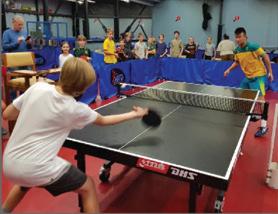


• Every Friday during school terms
• 6.00pm -7.30pm
• Lightning League

• Coaching
• Fun games
Meet our Olympian and club ambassador Heming Hu
David Hawkins is a Peninsula-based stay-at-home-dad who realised that he needed to improve his Dadding. So he set himself the simple task of being an Awesome Dad. He now challenges all dads to be awesome dads, by doing something out-of-the ordinary with their kids.
Mixed and Girls only
8 WEEKS OF FUN
Program includes kit bag, Spinneroos shirt with your name, bat and balls. FUN, FRIENDSHIPS, MOTOR SKILL DEVELOPMENT.
To register and more information Spinneroos.com.au
Ideal For Beginners Every Thursday and Friday during school terms 4.30pm to 5.30pm Starts Term 2 2022.
MORNINGTON PENINSULA AND FRANKSTON CITY TABLE TENNIS ASSOCIATION.
Mornington Sports Complex 350 Dunns Rd Mornington
M: 0498 003 788 E: mptta88@gmail.com
W: mftta.org.au
www.peninsulakids.com.au 29
Oh,What Fun it is toSlide! Slide!
By Melissa McCullough
Finally, something both kids can agree on – let’s spend a day of the school holidays at Peninsula Aquatic Recreation Centre (PARC) in Frankston

Overflowing with activities, PARC is the perfect option for a care-free day out during the school holidays. Kids and their carers are both catered for while under PARC's roof. From the AquaPlay playground and leisure pools to the incredible waterslides, kids are guaranteed to be entertained for hours while mum and dad splash out on a yummy coffee or snack from the on-site cafe.
In addition to all the standard fun offered by PARC, Splash Town comes to life most school holidays. The giant, inflatable course is set up in the main pool and the Splashy sessions are included free as part of your entry but must be booked in advance as they are super popular for ages 6 and over only, and numbers for each session are capped. On certain days you might be greeted by other roving entertainment such as a face-painter or balloon twister. We grabbed a couple of activity sheets and spotted a few ‘Where is Hydro Playing’ posters around the centre, which are a great addition for the littlies.

We booked in advance for a Thursday afternoon session on the obstacles and arrived early to grab a spot to stash our belongings. There are plenty of lockers for hire in the pool area if you’re on your own and don’t want to leave your wallet, keys and phone just lying around.
After checking the kids in for Splash Town we had a few minutes to take a dip together in the warmed pools. At this point we realised that child 2.0 was sans his swim shorts <smh> and off Dad dashed back home to retrieve them.
(Please tell me I’m not the only parent this has happened to.) Good thing we arrived a bit early!
Back on track – the Splash Town session begins, and the kids are each fitted with a swim vest, given safety instructions, and asked to do a brief swim, which I think helps the lifeguards assess who might need a little extra care. And then away they went. Over, under, sliding, and through the obstacles over and over again for their allotted time. Parents are also allowed on the course, if they booked in, and I am kicking myself for not giving it a try! It looked like SO much fun, and the kids definitely loved the challenge.
But wait..there’s more!
The kids were busting out of their bathers to hit the slides, their favourite attraction at PARC. The wait-time wasn’t too bad, and we all took turns swapping raft partners for the trips down the swirling, snaking tubes. After my umpteenth time up and down I retreated to official photographer status and waited for them to spill out from the tubes with beaming smiles from the wild ride.
From there we did some open pool swimming and had a snack from the café. There is definitely plenty to keep the whole family entertained for hours, and this day out will not break the bank. Plus, it’s local. Winning!
Other kids club activities are also available throughout the holidays. Check out the website for full details. parcfrankston.com.au
30 Peninsula Kids – Autumn 2022
Local


www.peninsulakids.com.au 31 The kids will be entertained for hours with our range of fun activities, including: • Our awesome Aquatic Playground complete with waterslides. • Leisure pools for all ages, including a toddler pool. • A delicious Café with options for the kids, and coffee for mum and dad! And loads more! PARC has your ultimate family fun day sorted! info@parcfrankston.com.au I 9781 8444 Cnr Cranbourne Road and Olive Grove, Frankston parcfrankston www.parcfrankston.com.au/funparc School Holiday fun at PARC Be sure to check out our website and social media for information on our next School Holiday Program.
By Melissa McCullough
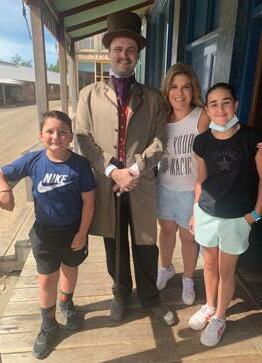
Wehad a fun-filled Sunday taking part in all the classic activities that continue to bring visitors to Ballarat's Sovereign Hill.


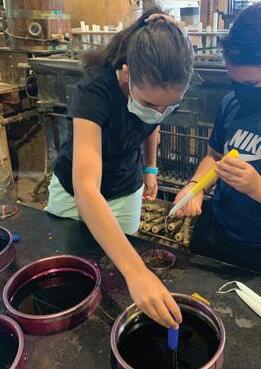
Standard entry includes a plethora of engaging activities such as panning for real gold, shopping 1850s-style, visiting hotels, churches, schools and taking in a live theatre show. Meet the Butcher in his shambles down on the diggings; stop by and say, ‘Top of the morning!’ to Pol the Sly Grog Seller and learn how this widowed Irish mother makes ends meet. Observe confectionery making, blacksmithing and printing demonstrations and look out for the Redcoats as they march up the hill. You can also get to know the locals by striking up a conversation with any one of the costumed goldfields characters who are happy to chat and pose for a great photo. Some of the other traditional activities of the goldfields attract an additional cost. Travel in a horse-drawn coach around the township and diggings, dip a candle in your favourite colours, take an underground mine tour, or have your ‘oldtime’ photo taken wearing traditional clothing from the era to complement your visit to Sovereign Hill. And while all of these are worthwhile, you can absolutely fill a day without the addons. There are wide open spaces for kids to play, climb and use their imaginations amongst play equipment including an amazing tube slide, and plenty of picnic tables overlooking the Post Office Lake.

Just $22 per family was well worth it to explore a labyrinth of tunnels and original mine shafts hidden below Sovereign Hill and experience what life was like for a miner. Our mine car was full of giggles and whispers during our one minute of pitch dark descent to the caverns below and our guide was informative and engaging with the group. We also had our photo taken - and that photo – I mean, c’mon… how great is that? (NB: the steely looks are historically accurate, though it was difficult not to smile!) ��
Offering a variety of dining options, we visited the Hope Bakery for a scrumptious sausage roll, the New York Bakery for afternoon tea, and Spencer's Sweet Shop to grab Sovereign Hill’s famous raspberry drops to take home.

continued page 34...


 Peninsula Kids – Autumn 2022
The Science Shed
The Science Shed comes to your home for your next birthday party! Children can dress up in real lab coats and safety glasses and experience their own hands on experiments. Science, slime and much more.

E: info@thescienceshed.com.au

M: 0419 882 765
W: thescienceshed.com.au
Alaska’s
White Castles
A boutique hire company with a difference offering magnificent white bouncy castles, balloon garlands and stunning preserved flowers. You're next event will look absolutely dreamy whilst offering guests a whole lot of fun.


E: Hello@alaskaswhitecastles.com.au
M: 0422 204 611
W: alaskaswhitecastles.com.au
KIDZTOWN PARTY VENUES
Mornington & Seaford
Kidztown
The biggest and most exciting themed kids party venue to hit the Mornington Peninsula. www.facebook.com/kidztownpartyvenues


P: 8759 1431
M: 0403 795 562
Charlie SillyPants Parties
Have a “Very Silly Christmas” by having the silliest magician in Magicland
The ultimate kids’ show! Come on an adventure full of magic and laughter with Charlie SillyPants and friends. Parties, preschool and childcare.
M. 0411 957 185

W: melbournemadness.net
Charlie SillyPants at the kids’ next party!
You receive $50 off a 1 hour party/show or it’s only $100 for a 30 minute live ZOOM party.


Checkout Charlie SillyPant’s crazy shows on his Youtube channel.

www.youtube.com/c/ charliesillypants/ www.facebook.com/ charliesillypants
W. charliesillypants.com.au

Kidzshed
Kidzshed

Book your next kids themed party with us!

packages including use of the party room, hot & cold food, host, invites & more. Venue also available for private hire.
Book your next kids themed party with us! Amazing packages including use of the party room, hot & cold food, host, invites & more. Venue also available for private hire.
A: 222 Marine Pde Hastings
A: 222 Marine pde Hastings P: 5906 5900
E: kidzshed@gmail.com
M: 0409 875 944 E: kidzshed@gmail.com
P: 5906 5900
M: 0409 875 944
Robyn’s Room

Seeking something different?
A quality art and craft pARTy takes birthday fun to a whole new level.
It's just not a pARTy without ART! Book today!
M: 0404 848 226
W: robynsroom.com.au/creative-parties
www.peninsulakids.com.au 33 H o t & c o l d f o o d D r i n k s A d m i s s i o n & S k 8 h i r e I n v i t a t i o n s T a b l e c l o t h & d e c o r a t i o n s A L L S K 8 H O U S E P A R T I E S I N C L U D E : Find us on social media! VGREAT ALUE!!CATERED PARTIES JUST $25p/person 3/2 Amayla Cres Carrum Downs Vic 3201 P: 03 9773 6799 E: info@sk8house.com.au T O D A Y B O O K O N - L I N E L a r g e 2 0 0 0 s q m C o v i d - S A F E v e n u e S t r e s s - f r e e p a r t y f u n f o r e v e r y o n e ! *Capacity limits & conditions apply see website for details party
OUTDOOR SEATING & PLAY AREA! GLUTEN FREE FOOD OPTIONS! BOOK YOUR NEXT PARTY WITH US! GIFT VOUCHERS AVAILABLE! kidzshed.com.au
PLANNING
Amazing
Pa Experiments 01 R Explosions 02 Ty Explore 03 Fu Slime 04 N! Surprise 05
FRANKSTON ARTS CENTRE
FRANKSTON ARTS CENTRE

AGUESS HOW MUCHA I LOVE YOU
RAZ MUSIC THE GRIGORYAN BROTHERS 'A BOY CALLED SAILBOAT'
Film screening with soundtrack performed live Post-s how Q&A w ith fil m wr iter/di rector

Saturday 26 March, 6.30pm I Rated PG



Tickets: $20-$45

Acclaimed guitarists Slava & Leonard Grigoryan perform their soundtrack live for the screening of the heart-warming, award-winning family movie 'A Boy Called Sailboat'.

Book at thefac.com.au or 03 97841060
CDP KIDS
GUESS HOW MUCH I LOVE YOU


Monday 9 May 12pm & 2pm
(The 12pm performance will be a Relaxed Performance)
Tickets: $28-$30 (Family of 4 $100}
A playful st ory of love and nature that's fun for the whole family, with beautifu l puppetry, music and lau ghter. Book at thefac.com.au or 03 97841060

34 Peninsula Kids – Autumn 2022
LIVE
SamMCBratneyand
cclpKi<ls
A play by Richard Tulloch J{dapredfrom1/iebook.tby
AnitaJeram
ON STAGE


www.peninsulakids.com.au 35 Support local, support handmade, support innovation, support love, support small business... support your local market! EMU PLAINS MARKET : MAR 19, APR 9* | 9-2 EMU PLAINS RESERVE, BALNARRING www.emuplainsmarket.com.au LITTLE BEAUTY : MAR 26 + APR 23 + MAY 7* | 9-2 CRN HIGH & YOUNG ST, FRANKSTON www.littlebeautymarket.com.au ALBERT & DAPHNE Love supporting small businesses? Why not check out our interest store of curious goods! 103 MAIN STREET, MORNINGTON | WWW.ALBERTANDDAPHNE.COM.AU PROUDLY BROUGHT TO YOU BY THE UNT O LD EVENTS C O. *not our usual 3rd/4th Sat of the month
l Want You to be Happy Day


I Want You to be Happy Day inspires people set aside their definition of happiness and to find out what makes their loved ones happy and do those things for them.
Did You Know…
…that many believe that the phrase "happy as a clam" originates from the fact that open clams give an impression of a smiling clam?


Something on a Stick Day

A day to have fun with your food and to celebrate delicious and easy-to-eat dishes on a stick. In many cultures, snacks and roadside food are served on a stick or a skewer.

Did You Know…
…that the ancient Greeks used sticks or skewers to cook their meat?
Scrabble Day
Scrabble is a word game where 2 to 4 players place tiles, each having a single letter, on a board such that the tiles form words. Like a crossword puzzle, the words have to be built on a 225 square Scrabble board from top to bottom or from left to right.

Did You Know…
…Oxyphenbutazone is a medication used to treat arthritis and is the highest scoring single play word in Scrabble.
Put a Pillow on Your Fridge Day
The origins of Put a Pillow on Your Fridge Day are unknown, but common wisdom is that the holiday gives a modern day twist to the old tradition of putting linens in the pantry to bring luck. Why doing so will bring luck is anyone's guess.



Did You Know…
...that historians believe that pillows have been used by people to rest their heads while sleeping since 7,000 BC?


36 Peninsula Kids – Autumn 2022 Rustic Farm Setting Pony Rides Many Animals for “Hands on” Experiences Playground, Picnic Areas (BYO Food) Free Cuppas & Gas BBQs Special School Holiday Activities 490 Stumpy Gully Rd Balnarring www.rhsfarm.com.au Ph 5983 1691 Open daily 10am - 4pm* *Closed on Thursdays and Fridays outside of school holidays SCHOOL HOLIDAYS 9th APRIL 2022 – 25th APRIL 2022 OPEN DAILY 10am-4pm* PIG Racing! Daily 11am & 2pm EASTER EGG HUNT 15th -18th April Pre booking required. See web site for details 5906 5900 KIDZSHED.COM.AU 222 MARINE PDE HASTINGS OUTDOOR SEATING & PLAY AREA MONDAY - CLOSED (Except during school holidays) TUESDAY - FRIDAY 9AM - 3.30PM (Later for parties by arrangement) SATURDAY - SUNDAY 9AM - 4PM SPECIALISING IN KIDS BIRTHDAY PARTIES INDOOR PLAY CENTRE & CAFE Source: www.timeanddate.com to celebrate
3 MAR 28 MAR 29 MAY 13 APR


Frankston House Sanctuary of Early Learning 1-3 Vera Street Frankston E info@frankstonhouse.com.au P 9783 1117 W frankstonhouse.com.au Mt Eliza House Sanctuary of Early Learning 41 Baden Powell Place Mt Eliza E info@mtelizahouse.com.au P 9787 0788 W mtelizahouse.com.au Seaford House Sanctuary of Early Learning 6-10 Govan Street, Seaford E info@seafordhouse.com.au P 8796 3000 W seafordhouse.com.au
over 20 years experience, we are committed to continuous quality care and to ensure a full balanced development for each child in our expansive natural learning environment. Now offering 3 and 4 year old Kindergarten for 2022
most precious people are our priority Curiosity and wonder lead to a natural desire to learn Sanctuary of Early Learning Brand new Seaford centre NOW OPEN and taking enrolment.
With
Your
Tings we
Happy Money Journey Pack
Live life on your own terms without stressing about money. The Happy Money Bundle is your all-in-one guide on how to change your beliefs about money and make better decisions. With this two-book combo, you can break down how you spend, save and invest, and how those things build your future. Includes The Happy Money Journey book and My Happy Money Journey workbook.

The Happy Money Journey is a step-by-step guide on how to change your beliefs about money so that you can start making good money decisions and living life on your own terms (and no one else’s!).
It’s the simplest way to kick your money goals for 2022 — and beyond!
www.cloverfinancial.com.au
RRP: $31.30
Rummikub
Simply Swap Foods
Need a hug? These delicious mug cake mixes will warm you up and leave you with a smile as you know you're nourishing your body from the inside out with premium immune-boosting real food ingredients. keto friendly/low carb, nothing artificial, wheat and grain free, source of dietary fibre, plant based sweeteners, no added sugar, no maltitol or xylitol (we love our dogs!), and no seed oils or starches. One pack makes two large decadent mug cake. www.simplyswapfoods.com.au


RRP: $7.50 each
Test Match Cricket

The original and authentic, all-action cricket game! Bringing the excitement of all forms of cricket (Test, One Day, 20/20) to your own family room! Overarm bowling can be fast or slow. A heavy ball is now standard to enable easier and more accurate batting. The batsman works with a trigger action for a faster response and the fielders can even "catch" the ball between their feet! Create your own teams for some great cricket action and watch every ball and run from your very own VIP lounge. Best of all, it's guaranteed not to get washed out.
Age 6+ Players: 2 Available at all leading retailers.
RRP: $44.99
With brilliant simplicity, Rummikub provides hours of amusement, and each game is different. Players try to place runs or groups (e.g., sequences of consecutive numbers or strings of the same number) of their tiles down in the play area. The winner is the first player to use all their tiles and by accumulating the highest score.

Age 6+ Players: 2-4 Available at all leading retailers.
RRP: $24.99
Sequence
Sequence is a board and card game.

The board shows all the cards (except for the Jacks) of two (2) standard 52-card decks, laid in a 10 x 10 pattern. The four corners are free spaces and count for all players equally. The players compete to create rows, columns, or diagonals of S connected checkers placed on the cards that the player has laid down. Two-eyed Jacks are wild, while one-eyed Jacks allow an opponent's checker to be removed. The game ends when someone has reached a specified number of connections.
Age 7+ Players: 2 Available at all leading retailers.
RRP: $39.99
Unsolved Case Files Harmony Ashcrofy
Solve the 3 objectives to determine who is innocent and who is guilty. Look through all evidence, except the bonus envelopes. Go to the website located on the inside front panel of the folder to determine your first objective. After reading the case, players will solve 3 objectives to move through the case. Solutions to objectives can be checked on the online answer key. Players will be given more evidence online after solving each objective.

If you are stuck the online answer key can also offer hints. Once players feel they know who did it based on the evidence they check their solution on the online answer key. Once all three objectives have been solved and you have the evidence to convict the killer, you've won! Age: 14+ Players: 2-8 Available at all leading retailers.
RRP: $39.99
Arabella’s Alphabet Adventure by Suzy Zail

Arabella’s Alphabet Adventure is the most beautiful and most borrowed book in the library - but only ever by children. Tired of having her pages torn by sticky fingers, Arabella slips into the Very Serious Book section of the library and takes an adventure within the pages of an African travel guide. But will Arabella realise that where she belongs is closer than she thinks? Set in a library, this book (about a book) is all about the power of words and finding out where you belong.
Published by Walker Books Australia.
Available online and at your favourite bookstore.
RRP: $25.99
38 Peninsula Kids – Autumn 2022
Guess How Much I Love You at the FAC
Join the enchanting adventure of Little and Big Nutbrown Hare as they discover the magic and colour of the seasons, in a dazzling new stage adaptation of Sam McBratney’s beloved Guess How Much I Love You books.
This playful story of love and nature unfolds on stage in a show that’s fun for the whole family, with beautiful puppetry, music and laughter for children aged 3 years and up.

Monday 9 May, 12pm & 2pm Family of 4: $100 www.thefac.com.au
Mothertongues by Ceridwen Dovey & Eliza Bell

After sharing their artistic frustrations at the school gate, two women decide to take a risk: to co-write a book about early motherhood. Off-colour, offbeat, off their heads, they begin – but then, what is motherhood if not messy, non-linear, multi-authored and potty mouthed?
Together they gather scenes and songs, poems and text messages, insights and ephemera, alive to both the playfulness and the danger of co-creation. From the salvaged scraps of their daily lives they make an intimate collage of absurd mothering, failing mothering and moving mothering, imagining themselves into a future where women don’t always have to choose between art and motherhood.
*Release date April 12th! www.penguin.com.au
RRP: $34.99
Rewilding Kids Australia

by Melissa Mylchreest, is a content-rich, mindful activity book with fun facts, nature- based activities and plenty of colouring opportunities for kids aged 7 to 12 years, so you can marvel at amazing animals and plants in their natural habitats. Rewilding is a growing trend both in Australia and around the world, which encourages people to immerse themselves in nature. The pandemic has also prompted many parents to make rewilding a postlockdown priority for their kids, after weeks spent inside and on screens. This book is every Australian kid’s answer to rewilding. It offers a unique combination of fun facts on Australia’s flora and fauna with nature-based activities, organised like a travel guide with state and territory chapters.
The KidPower™ Collection
With autumn here, let your kids learn and have fun while staying safe with The KidPower™ Collection. This collection has been carefully created with your little ones in mind, featuring pure essential oils to encourage feelings of positivity wherever your child may be whether it’s at home, school or even on the playground. We all know how kids are full of energy and tend to play and explore all day, let your child shine bright by encouraging feelings of confidence with the KidScents® KidPower™ Roll-On while they have a blast playing with the Feather Colouring Book and Crayon Set. Pop everything in the Feather the Owl Backpack and they are ready to face the day! After all the fun, get them ready for bed using the KidScents® Bath Gel and Slique Toothpaste. Tuck the kiddos in by creating a soothing environment with SleepyIze™ essential oil blend. For more information visit www.youngliving.com.au



Cubo Ai
Want to win your new favourite baby monitor? The Cubo Ai baby monitor offers leading A.I technology which enables unique functionality and incredibly proactive safety detection features that notify parents of face covered events, rollover events and danger zone risks such as a wondering toddler entering the forbidden zone. With built in peaceful sleep functions including lullabies, night light, 18hr playback, auto photo capture and temperature sensors, the Cubo Ai helps parents feel confident that their babies are safe and sound when its naptime. Available via the official Cubo Ai website or on Amazon Australia. www.au.getcubo.com


Steph Pase Planners

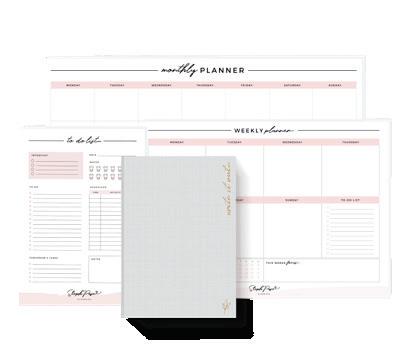
Take control of your life with the Steph Pase Planners Self Care Bundle valued at $99! Boost your productivity, focus and accountability by organising your whole week in detail with the Steph Pase Planners Weekly Planner, never miss an event with the Steph Pase Monthly Planner, and keep on top of your tasks with the Steph Pase to do list! Steph is also throwing in her famous Steph Pase Blush Signature Planner valued at $69.95 which includes sections on productivity, health, budgeting, life admin and new challenges and even includes a removable shopping list notepad, reset checklist and a meal planning section in each weekly spread. More products available at www.stephpaseplanners.com.au
Hello Chooki
Designed to be a trendy accessory for your little one’s outfit whilst keeping their clothes and chest dry and clean from all that dribble & food, Hello Chooki’s Bandana Bibs make the perfect accessory to add to a new parent or baby gift. Made with Organic Bamboo Terry and Organic Bamboo Jersey, these incredibly soft Bandana Bibs are available in exclusive designs.
It also features three snap buttons to grow with your child and is highly absorbentperfect for dribbling and teething. Available in set of 2 (same print).


Purchase online: www.hellochooki.com.au
RRP: $26.95


www.peninsulakids.com.au 39
Inspiring Girls
The importance of relatable role models
By Toorak College
We constantly hear that women need more role models and that one of the main reasons women aren’t choosing careers in science, tech and engineering is the lack of role models in these spaces. For young women, seeing truly is believing and relatable female role models not only encourages them to explore what’s possible but inspires girls to take ownership of their futures.
Over 50 years ago the draw-a-scientist study (DAST) was first conducted and only 28 of 5,000 students (0.06%) drew a female scientist. When it was repeated in 2018, 24% of the students drew a female scientist. While this is progress, it also confirms how entrenched gender stereotypes continue to influence society and how vital it is to continue to raise the visibility of female role models, particularly in fields long dominated by men.

ROLE MODELS MATTER
Research shows that role models have an amplified benefit for women for three reasons:
•role models represent and expand what women think is possible
•role models inspire women to be more ambitious and aim higher

•role models demonstrate the mindsets and behaviours of how to rise
DISRUPTING THE FEED
Numerous studies have shown that attitudes and beliefs can be influenced by a wide range of factors, including changes in an individual’s social environment. This notion was confirmed by a recent study by Cambridge University and The Female Lead which saw teenagers follow four inspirational women such as activist Greta Thunberg, actress and activist Jameela Jamil, athlete Serena Williams, and former US first lady Michelle Obama on Instagram. By simply following four inspirational female role models, the teens’ social media feeds changed drastically to be more positive, more diverse and more aspirational with 93% of teen girls saying their outlook improved; they were experiencing higher self-esteem and found they were setting more ambitious goals for themselves. If you are looking for female role models who can diversify your social media feed but don’t know where to start, The Female Lead has put together a comprehensive list for you.

SHINING THE SPOTLIGHT ON FEMALE ACHIEVEMENT
Women tend to underestimate not only their abilities but their ambition, more than their male counterparts. This leads to women entering a race already behind with females less likely to put their hand up for opportunities and roles until they believe they are 100% ready. Hearing stories of women starting businesses or taking career risks empowers other women to back themselves and their ideas and to take a leap of faith.
In 2019 only 34 of the world’s top 200 universities were led by women and in the libraries of these universities, you will struggle to find many stories of women making history. Since the Nobel Prize was established in 1895, less than 60 women have been honoured with the prestigious international award. So when scientists Jennifer Doudna and Emmanuelle Charpentier won the 2020 Nobel Prize in chemistry, it made headlines. With statistics like this, it's clear that the ripple effect of visible female role models – past and present - impacts not just our beliefs about women’s ability to rise or to hold power today, but what we project for female leaders in the future.
EMPOWERMENT AND ROLE MODELS AT SCHOOL
In addition to well-known role models, students should have access to a diverse range of people who inspire them: peers, teachers, family and friends, members of the local community. Diversity matters, in all its forms as we each have different stories and pathways, personalities and perspectives, beliefs, and behaviour.
Inspired and armed with belief, girls will quickly see that anything is possible.
Education
AUTUMN 2022 EDUCATION FEATURE


FEATURED IN THIS ISSUE

www.peninsulakids.com.au 41
Planning for a bright future at Padua college
Padua College is at an exciting time in its 125-year history with construction of an impressive new Performing Arts Centre (PAC) at its Mornington Campus nearing completion, and plans for a brand new Year 7-8 Centre underway in preparation for 2023.


The PAC features a magnificent double-volume theatre with seating for over 350 patrons, state-ofthe-art recording studios, and dedicated performance and practice spaces for music, dance and drama students. This 2,500sqm facility will offer Padua students and staff the opportunity to hold large scale productions onsite along with the infrastructure and technical resources to best support its excellent Performing Arts Department.
Following extensive consultation with education professionals, staff, parent and student communities, the College recently announced plans for the construction of a new Year 7-8 Centre at Mornington


The 3,600sqm Centre is designed to provide the perfect environment for 550 junior students with the inclusion of ample green spaces and the incorporation of a loggia to offer sheltered areas for play. Modern, spacious classrooms will be created with the option to open onto central areas and adjoining classrooms to provide flexible learning spaces for students. “When combined with a reduction in maximum class sizes to 25, this facility allows our talented staff to teach in an environment that facilitates the delivery of optimal educational outcomes,” explains Business Director David Lawn.
An architectural atrium at the heart of the building will form a central gathering space for break-out areas, performances and assemblies. The Year 7-8 Centre ground floor will be occupied by a standalone administration centre, leadership offices, a Learning Enhancement hub, junior Science and STEM rooms, seminar rooms, and student kitchenettes
and facilities, with student lockers, offices and 18 classrooms appointed on the first floor.
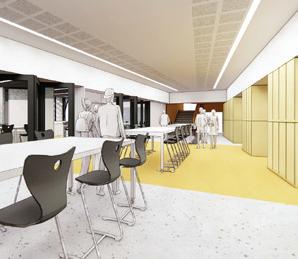
“Our buildings must keep pace with modern teaching pedagogy and support our new Learning and Teaching Framework,” says Principal Anthony Banks. “This Centre will be a wonderful way to mark Padua College’s significant 125th Anniversary in providing a comprehensive and inclusive curriculum, characterised by excellent teaching, where every student is encouraged to utilise their God-given talents, to make a positive impact on the world and to be the best they can be.”
The College is hosting a series of Discovery tours in early 2022 and you’re invited to visit and learn more about what Padua can offer your child. Tour bookings can be made via the college website.
P: 5976 0100
E: enrolments@padua.vic.edu.au
W: .padua.vic.edu.au
PADUA COLLEGE padua.vic.edu.au 62 Oakbank Road, Mornington VIC 3931 2 Inglewood Crescent, Rosebud VIC 3939 1585 Frankston - Flinders Road, Tyabb VIC 3913 5976 0100 5982 9500 5978 2700
Curious, compassionate and connected
Toorak College offers comprehensive ELC learning programs for Kindergarten and Pre-Prep children located in and around the Mornington Peninsula.


We provide a nurturing and engaging co-educational environment. Our range of learning experiences promote social, emotional and academic growth and allow children to actively engage with each other and their teachers in purposeful and meaningful ways.
“To enlighten is to give someone greater knowledge or understanding. When a young person enters our Early Learning Centre, they develop their sense of self, understanding of others and find their connection to the world around them”, says Miss Melissa Schoorman, Head of Wardle House and Deputy Principal of Toorak College.

Our tailored Early Learning program, Project Enlighten, focuses on this significant period of growth for a young learner by expanding the experiences of 3 and 4 year old children through a breadth of
learning opportunities that will form their foundation of understanding.
Project Enlighten is influenced by the principles and practices of Reggio Emilia, in which children are recognised as capable and resourceful. Every day, children in our Early Learning program are filled with excitement as they explore environments that are varied and engaging, with an emphasis on creativity and playbased learning.
Integrated into Project Enlighten is the explicit teaching of literacy and numeracy. Skills and talents come from many different areas so we complement our program with a diverse range of specialist classes that assist in developing each child’s academic and personal growth. These classes are taught by specialist teachers and include:
• STEM-X programs: Science, Robotics, Construction and Technology
• Creative Arts: Visual Art, Movement and Out and About
• Performing Arts: Music, Drama and Dance
• Language and Cultural Appreciation: Mandarin and Library
• Health and Wellbeing: Physical Education, PMP, Mindfulness and Nutrition

Highly regarded across the Mornington Peninsula, Toorak College offers a range of programs to suit every child and every family. Offering inclusive and in-depth Kindergarten and Pre-Prep programs for young children, Toorak College is passionate about developing a community of creative, curious and compassionate learners.
Register by phone or website, to join our Director of Early Learning, Ms Pat Barbieri, for a tour of our Early Learning Centre.
P: 9788 7200
W: toorakcollege.vic.edu.au
TOORAK COLLEGE
toorakcollege.vic.edu.au 73-93 Old Mornington Rd, Mount Eliza VIC 3930 9788 7200
A supportive environment
The disruption that the Global Pandemic has presented over the past two years and continues to present has created significant challenge for schools and our society.
Our students’ social connectedness and ability to learn has been tested like never before, and here at Balcombe we continue to be in awe of our student’s ability to display great resilience, independence and optimism in these uncertain times.

Although our students have impressed us greatly, we know that a supportive environment will assist them to flourish. At Balcombe student support is found both in and out of the classroom through strong triangular partnerships (parent, child, staff) and the implementation of key support initiatives. These initiatives include:
Academic Advancement Program
A Secondary support program, led by a dedicated team of staff, which is accessible for all secondary students throughout the school year. Students can access either before

or after school support in the areas of academics, study skills and wellbeing.

Targeted student support
A before school support initiative for Primary students in the key areas of literacy and numeracy, provided by a dedicated staffing team. Furthermore, our commitment to providing an extremely supportive Learning Assistant to student ratio across the school is a key priority that provides benefit to many students.
Small senior class sizes
Our Year 10 – 12 class sizes have been reduced to ensure our students are ‘really known’ by their teachers and are provided with high quality feedback and support.
Average senior classes sizes are Year 12 (11.6 students), Year 11 (12.6 students) and Year 10 (15.8 students).


Wellbeing support
From caring and professional staff to external facilitators, together with external support programs such as
SchoolTV and Happy Families, our community is kept well-informed in what are rapidly changing times. In addition to these strategies the SKODEL student wellbeing checker and student data dashboards enable our Wellbeing Team to proactively support our students. Engaging in passions outside of the classroom
Our students are encouraged to participate in the many cocurricular opportunities which exist outside the classroom including those linked to Sport, House, The Arts and Service. Opportunities such as our School Production ‘Mamma Mia’ and our SIS sport/ cultural program provide our students with opportunities to connect outside of the classroom and engage in their passions.

2022 will be challenging in different ways to 2020 & 2021 and at Balcombe we believe it is vital that we continue to be as adaptable as possible to support one another as best as we can.
balcombegrammar.vic.edu.au
BALCOMBE GRAMMAR balcombegrammar.vic.edu.au 389 Nepean Hwy, Mount Martha VIC 3934 5970 1100
Love is life at St John's
St John’s Catholic Primary School has been nurturing young lives in the Frankston area since 1967. The Frankston region has grown and changed over time and through the motto ‘Love is life’ so has St John’s. Today we have a thriving and contemporary approach to education designed to meet the needs of all the students in our care.
Seated in idyllic settings in the heart of Frankston East, the school offers a wide variety of opportunities to engage with learning and with life for all the community it cares for. From a rich sports and PE program to the Coding and Robotics program, Sacramental programs and student development and wellbeing initiatives. St John’s is committed to providing opportunities for all students to achieve their full potential.
We strive to open up pathways of learning for all our students and work very closely with our Catholic counterparts and with John Paul College. This ensures learning achievements are carried over into secondary school life and
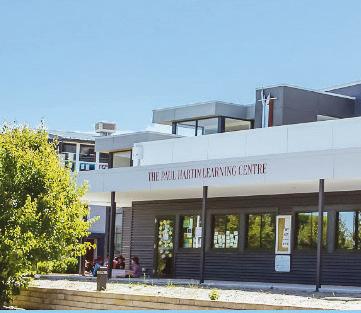


ST JOHN'S PRIMARY SCHOOL
enables students to be recognised for their learning capabilities and appropriately challenged.

St John’s is committed to not only providing contemporary flexible learning spaces for students to learn in but also to ensure staff are well trained in utilising the spaces to their best advantage. These spaces are recognised as physical, social and virtual spaces that enable and promote learning and the learning capacity of all those involved in them. Our staff use appropriate strategies and learning approaches to maximise student potential. Coupled with thinking strategies based on Growth Mindsets and Resilience this creates a powerful learning combination and enables students to not only participate in their learning but to understand how they learn and apply appropriate strategies for their own learning capacity.

Learning, amidst all the distractions of our time, can be a difficult thing for many students.
We aim to provide students with the tools they will need to navigate an

uncertain but highly digitised future. We challenge them to explore and consider the deeper questions and big ideas so they can interpret and make meaning of their life, the world and their social context. In this way, they can interact, at a human level with the world, because, if we fail to teach our kids how to continue to make positive connections in their lives, we lose some of our own humanity.
At St John’s, we believe that if you want a child to grow up and understand the human person and how ‘Love is Life’ is so important, you can’t tell them how they should do it, you have to teach them to yearn to live a life of love.
We welcome you to make a booking and come and see what we do for yourself and consider what we might be able to do for your child.
sjfrankstoneast.catholic.edu.au
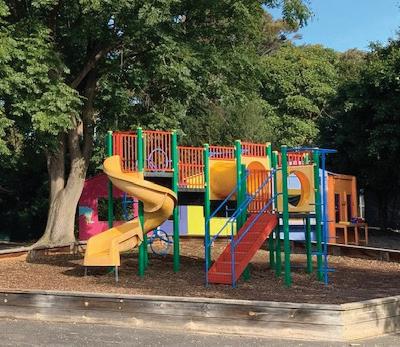
toorakcollege.vic.edu.au 73-93 Old Mornington Road, Mount Eliza, VIC 3930 9788 7200
www.sjfrankstoneast.catholic.edu.au Jayne St, Frankston VIC 3199 9789 9794
Inspiration starts here
A Kindergarten to Year 12 school, our curriculum provides a depth of learning necessary for students in the 21st century.


Peninsula Grammar holds its place as the preeminent school on the Mornington Peninsula. An openentry, coeducational school, located one hours drive south of Melbourne, the School is situated on 80 acres of gently sloping natural bushland and is renowned for the depth of opportunity it affords each child. With an exceptional record of academic achievement, a strong sporting program proud of producing world champions, and a performing arts program with an unsurpassed record of distinction, the School is inherently proud of its rich culture of excellence.

Privileged to be located in one of the most sought-after corners of the country, extending across Mount Eliza, with stunning views of Port Phillip Bay, the School is renowned for its evolving landscape and the considerations it makes when building new learning environments.


Its most recent building, ALATUS, is designed to combine technology and critical thinking in a purposebuilt environment that challenges students to rethink their learning and discover fact from fiction. Our state-of-the-art Science Centre provides a pre-tertiary context of exploration where theoretical studies and laboratory experiences work hand in hand to deepen student’s inquisitive nature and innate understanding of the scientific world. With three gymnasiums, two outdoor heated swimming pools, soccer ovals, grass tennis courts and three more ovals, the School sets the
benchmark for natural beauty and exceptional learning environments. Our new bespoke extra-curricular program, Little Giants is designed to help our Junior School students of today grow into the giants of tomorrow. This pioneering program encompasses a myriad of subjects, across disciplines, to inspire students from Prep to Year 4 to find and foster their passions sooner.
Register for a personal tour to discover the possibilities that await your child. Visit:

peninsulagrammar.vic.edu.au/ book-now/

PENINSULA GRAMMAR www.peninsulagrammar.vic.edu.au 20 Wooralla Dr, Mount Eliza VIC 3930 9788 7777
CHATTERPUSS IN DEEP WATER
BY JOSH PYKE
3-7yrs, Scholastic, h/b, $17.99
Glenn the hen wants a moment’s peace, so she’s taking Chatterpuss to the beach! But when Glenn needs help as she dives in, will chatty Chatterpuss sink or swim?!
A funny and uplifting picture book about the unlikeliest of friends.


LLAMAS IN PYJAMAS
BY MATT COSGROVE
3-7yrs, Scholastic, h/b, $17.99
Book-loving Dharma the Llama is the best babysitter in town. But when she has to look after two unruly little llamas, will bedtime be a battle or a fairytale ending?

I DON’T WANT TO READ THIS BOOK
BY MAX GREENFIELD
3-7yrs, Scholastic, h/b, $19.99
Words, sentences, and even worse, paragraphs fill up books. Ugh! So what's a reluctant reader to do? Laughout-loud fun out for every child (and parent) who thinks they don’t want to read a book.
WHO’S A GOOSE?
BY SCOTT STUART
3-7yrs, Scholastic, h/b, $17.99
There’s a barrel of monkeys and giraffes in a tower, A loud band of gorillas, and frogs in the shower. Then there’s these two, who are called Bill and Bruce . . . and one of them is definitely a very silly goose! A hilarious animal rhyming story by best-selling children's book creator, Scott Stuart.

THE NERD HERD – OUTFOXED
 BY NATHAN LUFF
7-10yrs, Scholastic, p/b, $14.99
Individually they're meek, mild and soft. But together, with their combined talents, they're a herd. The Nerd Herd. Barny the lamb has been kidnapped and taken to the den of Mrs Fox. It's now up to his friends, Shaama Llama Ding Dong and Billy the Kid to save him.
But will Shaama and Billy be able to get to their buddy before he becomes a lamb dinner? And if they do, how will they outfox the fox?
SCHOOL AGE
WORST WEEK EVER: MONDAY


 BY MATT COSGROVE
8-12yrs, Scholastic, p/b, $15.99
Justin Chase sure has and THIS is it! His mum has just married a vampire. His dad is driving a giant toilet on wheels. His cat has probably been abducted by aliens. A psychotic bully is making his first day at a new school miserable. And right now, he’s hanging off the edge of a 10-metre high diving tower in front of his entire class, wearing nothing but rapidly disappearing crocheted swimmers.
THE BAD GUYS: EPISODE 14
 BY AARON BLABEY
7-9yrs, Scholastic, p/b, $15.99
Pop quiz! You are on the roof of a skyscraper. Every floor of that building has nasty things that just don't like you. And you really need to get to the basement. Whaddaya do?! (And no, you can’t just join the B-Team and fly away in their glamorous new spaceship.) Think quick, Chico, because the multiverse is getting worse! It’s The Bad Guys
Episode 14 ...
STUNT KIDS SERIOUSLY STACKS IT
 BY JACK HEATH, 9-12yrs
Scholastic, p/b, $17.99
Levi is pretty sick of starring in Dad's stupid TV show, Kid Kablam. Because Levi is the kid who gets KABLAMMED! So far he's been knocked down, blown up, and attacked by wild animals. And Dad has one more scene planned-the most dangerous stunt so far. Hope he doesn't STACK IT!
MEET ELLA – TOOTH TROUBLE
 BY REBECCA McRITCHIE
5-7yrs, Scholastic, p/b, $7.99
Ella has lost her first tooth! But now there is a big gap in her smile. And she whistles when she talks! How can she go to school like this on school photo day?
MEET ELLA – BIRTHDAY SURPRISE
 BY REBECCA McRITCHIE
5-7yrs, Scholastic, p/b, $7.99
Ella wants to make a chocolate cake for Zoe’s birthday. It’s a surprise! But what happens when Ella makes a mistake? Will the birthday surprise be ruined?
a prize pack of the reviewed books go to www.peninsulakids.com.au/giveaways
PRE-SCHOOL
Win! $1599 $1499 $1799 $1799 $1799 $1999 $1599
$1799 $799
$799
Book Reviews
How to find the right tutor for your child
There are many reasons why you might want to send your child to a tutor. Perhaps they are having a bit of difficulty with Maths or English classes at school. At the other end of the spectrum, maybe they are already ahead of their classmates and need more advanced mental stimulation.
Whatever the case, finding the right tutor for your child takes some serious research and consideration. To help match your child with the best individual tutor or tutorial program, answer these questions as you mark off the checklist.
How does your child learn best?
Everyone thrives in different environments. So while some students get the most out of learning in a traditional classroom, others need complete silence and solitude to absorb information. There are also children who learn better by listening to teachers, while others prefer to read all the information from a textbook. Others still are great at memorisation, so rote learning is easy for them. Make sure you understand what type of learning environment your child prefers, as this will help steer you in the right direction of a tutor.
What are the benefits of group tutoring versus one-on-one?
There are many different environments in which a tutor can help your child. If your child learns better alongside other children, then a group setting may be more appropriate. Group tutorials may also be less expensive than hiring a one-on-one tutor. However, if your child needs more focused attention to learn, then a one-on-one environment may reap greater benefits than learning in a group. It all depends on where they thrive, and you may need to test out both tutorial types to choose one that fits best. Make sure you understand what type of learning environment your child prefers, as this will help steer you in the right direction of a tutor.
Would face-to-face or remote learning be more appropriate?
Living in the age of COVID-19 means we are working and learning very differently. When lockdowns are in force, parents are working from home while students are learning remotely. The good news is that this gives you more options for tutors. Again, it depends on the environment in which your child will truly thrive. Face-to-face learning may be more appropriate for the subject type if there needs to be lots of interaction between tutor and student. Remote learning, however, may be best if your child performs best at home or if constant drop-offs and pick-ups aren’t always possible.
What are the tutor’s teaching credentials?
Not all tutors are created equal, and because you want your child to get the most out of their education it’s important to reference- check any potential candidate’s credentials. Most tutors will be more than willing to speak to you about their experience and share references. And if you decide to go with a group class, you should be able to find reviews for the tutors online.
What is your budget?
Tutors can deliver exceptional results in a short amount of time, but they do tend to come at a price. Even with government support packages, the cost of having a regular tutor can place a burden on you financially.
Does the tutor offer a trial period?
It’s important to work out your budget before you start the search for tutors. It’s also recommended that you ask about any trial periods. After all, if your child doesn’t ‘click’ with a particular tutor, then you will want to pair them up with someone else as soon as possible. It may take a few attempts, but with this checklist in hand you’ll hopefully find the right tutor for your child in no time.
Every parent wants their child to succeed in school. Sometimes a tutor can be the best support to help boost their education and improve the way they absorb information.
Real Insurance hopes this checklist comes in handy for finding the right tutor for your child.


Real Insurance makes it easy to find insurance for you and your family - whether it’s life insurance, car insurance or everything in between. Get a quote today or call us on 136 036. Peninsula Kids – Autumn 2022
are expressive and imaginative. Original, passionate and persistent.
Adventurous Minds create and innovate, They are ready to find a different path, an original vision.

www.peninsulakids.com.au 49 MORNINGTON PENINSULA • EARLY CHILDHOOD TO YEAR 12 5971 6100 woodleigh.vic.edu.au
MORNINGTON PENINSULA • EARLY CHILDHOOD TO YEAR 12 5971 6100 woodleigh.vic.edu.au BOOK YOUR PLACE AT ONE OF OUR REGULAR INFORMATION SESSIONS OR CAMPUS TOURS www.woodleigh.school/enrol
ADVENTUROUS MINDS
John Paul College reduces carbon footprint for a brighter future
Frankston’s John Paul College has a long standing commitment to sustainability and the environment. The College’s mission statement calls the community to honour the integrity of creation through careful stewardship. The next phase of this commitment is upgrading to energy efficient lighting that will significantly reduce CO2 emissions.
The College is focused on putting Pope Francis' ecological encyclical, Laudato Si, into action, along with the wider church throughout the world. The Pope has called all Catholics on a journey "to create the future we want: a more inclusive, fraternal, peaceful and sustainable world."
“The lighting upgrade is just step one in our vision for creating a more sustainable College for generations to come,” Principal, John Visentin said.

“Young people are passionate about preserving our planet’s resources and we have been inspired by that and want to play our part through action and education.”
“Stage one of the College’s sustainability plan involved changing over 1200 fluorescent light fittings to LED fittings with self dimming sensors over the Christmas break,” David Brennan, College Facilities and Operations Manager, explained. “The upgrade is a small victory for College sustainability, maintaining the correct lux level of lighting for our learning spaces and student productivity, whilst also reducing our annual energy usage by 94% and CO2 emissions by 379 tonnes.”
Stage two of the sustainability plan, planned for this year, will be centralising and automating all heating and cooling controls to prevent unnecessary power usage. Stage three is generating clean, renewable energy with the installation of solar panels.
Sustainable design, including the use of solar panels, has also been integral to the College’s 10 year masterplan, which includes a new double storey Learning Building and a Food Technology Building currently under construction.


The College Masterplan ensures that as a community, JPC continues to deliver the highest quality learning conditions to current students, and those students who will join in the years to come. It is an exciting time to be a part of the next stage of growth at John Paul College.
For more information about John Paul College’s masterplan
50 Peninsula Kids – Autumn 2022
Learning Building Visit jpc.vic.edu.au Collaboration Space
David Brennan College Facilities and Operations Manager
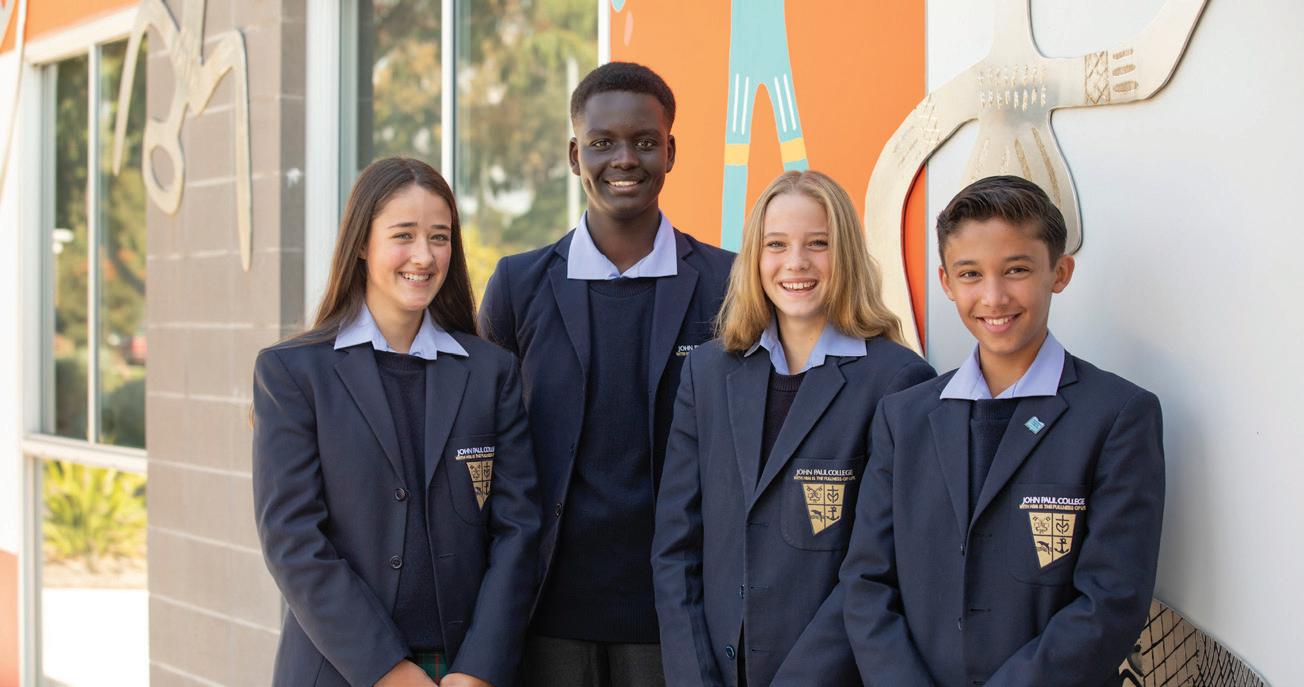

www.peninsulakids.com.au 51 McMahons Road, Frankston VIC 3199 | 03 9784 0200 | johnpaul@jpc.vic.edu.au | jpc.vic.edu.au Building for our future Our ten year Masterplan has commenced, with the expansion including the development of a new double storey Learning Building and a Food Technology Building. These additions provide students now and into the future with more collaborative and specialised spaces that support 21st century learning at the College. Delivering engaging learning environments Book a College Tour today Visit jpc.vic.edu.au Food Technology Building
Key features of Simply Swap Foods:
* Low carb
* Keto friendly
* Diabetic friendly
* Premium ingredients to support our health
* Nothing artificial
Did you know that the average Australian consumes somewhere between 14 and 16 teaspoons of added sugars each day?
Often this “added sugar” is invisible in the foods we eat but it all adds up and has an impact on our overall health. Many chronic diseases are now being linked to excess sugar consumption and the World Health Organisation (WHO) says we should be limiting our added sugar intake to 6 teaspoons per day for optimal health. Some examples of foods and drinks containing 6 or more teaspoons of sugar are*:
- 60g serve Nutri Grain (6 tsp sugar)
- 200g low-fat fruit yoghurt (6 tsp sugar)
- Muffin break banana berry muffin (9 tsp sugar)

- Bakers delight apple cinnamon scroll (7 tsp sugar)
- 240ml glass of coke (6 tsp sugar)
(*source – www.sugarbyhalf.com)

We want to help you on your journey to less sugar in your life and that’s why we’ve put lots of work into our range. All our products are low-carb/sugar-free/keto, made of only real food premium ingredients, and best of all taste amazing, just like the traditional versions. We also share lots of easy recipes on our website and social media pages so follow along for support in your health journey.

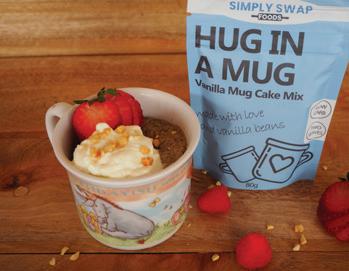

* No GM ingredients
* Plant based sweeteners used
* Pet friendly (no xylitol used)
* Super easy to prepare at home
* Great taste
* Made with love on the Mornington Peninsula
And don’t forget to download our free recipe eBook containing 16 favourite sugar-free/low-carb recipes.
Products can be ordered online at www.simplyswapfoods.com.au and we’re offering all Peninsula Kids readers an extra 10% off the entire range this season (just enter code PENKIDS at checkout). You’ll also find Linda and David at local markets around the PeninsulaBonbeach Farmers market (2nd Sunday), Boneo Community market (3rd Saturday) and Mt Eliza Farmers market (4th Sunday). Come along and say 'Hi' and we can chat about all things sugar-free and low-carb!
After experiencing health problems a few years ago, Linda Martinucci changed to a low-sugar real food diet and was amazed at the results. Over a six month period, she lost 15kg of stubborn weight that she’d struggled with for decades, her energy levels improved to an all time high and her mental clarity returned in abundance. Her husband joined her in this mission and also lost 20kg in 6 months and felt fantastic. One of the keys to their success was not feeling deprived of their favourite foods, especially cakes and porridge. Linda launched her business “Simply Swap Foods” in November 2020 to help others on their journey to a healthier way of life. She loves sharing her recipes, story and knowledge about the benefits of reducing sugar and just eating real food. All Linda has done – with time and research – is ‘simply swapped’ some foods in her diet and she hopes to show others just how easy it can be and how fantastic you can feel. You really can indulge yourself and feel great too!
Recipes COM.AU
indulge
yourself and feel great too!
Low-Carb Granola
20 16
(approx 40g )
Nutty and sweet, serve with your favourite milk or full fat Greek yoghurt for a taste sensation. Great to prepare ahead for breakfast on the run and really yum with fresh berries on top!

Ingredients

Method
1 cup shredded coconut
1 cup coconut flakes
1/2 cup flaked almonds
1/3 cup flaxseed meal
1/3 cup pepitas
1/3 cup sunflower seeds
1 tablespoon cinnamon
1/2 cup natvia (or similar granulated sweetener)


80g macadamias, roughly chopped
50g walnuts, roughly chopped
1/3 cup coconut oil, melted
1 tsp vanilla essence
Preheat oven to 160°C and grease and line large biscuit trays with non-stick baking paper.
1. Mix all dry ingredients together in large bowl.
2. Add coconut oil and vanilla essence to dry ingredients and mix well.
3. Spread mixture evenly over lined biscuit tray.
4. Bake at 160 degrees for 10 minutes then remove from oven and turn mixture. Bake further 10 minutes then mix again. Bake further 5 minutes at a time, checking constantly until golden brown and toasted.
5. Allow to cool completely before storing in an airtight container.
PREP COOK TOTAL SERVES PREP COOK TOTAL SERVES
Classic Tasty Burgers
(approx 45g
This recipe is super easy and perfect for a low-carb breaky plate or dinner. A good alternative to bacon when looking to accompany eggs plus cooked burgers freeze really well and can be reheated easily in the microwave.

Method
1. Place all ingredients in a large mixing bowl and use wet hands to combine and squash cream cheese into mince. Don’t overmix as it works well to keep small lumps of cream cheese throughout mixture.
2. Shape 45g size balls of mixture into burgers and put on a plate.
3. Heat frypan with preferred shortening and add burgers to pan.
Ingredients
500g pork mince
1 large egg
¼ cup fresh sage, chopped finely ¼ cup fresh chives, chopped finely 125g cream cheese, broken into chunks

Slices of tasty cheese (optional)

Salt to taste
4. Cook until browned and firm on one side then flip and continue to cook other side until golden brown. (Cheese option - place half a slice of tasty cheese on top of each burger and cover with frypan lid to melt in pan or alternatively microwave burger for 30 seconds to melt cheese).
5. Remove from heat and serve.
PREP COOK TOTAL SERVES PREP COOK TOTAL SERVES 15 15
Shortening of preference for frying – butter, coconut oil, extra virgin olive oil, ghee, lard )
Perfect Porridge Pancakes
5 8 (medium size )

Use our versatile porridge mixes to make fast low-carb healthy pancakes which will fill you up for hours with nutritious flaxseed meal and chia seeds! These can be made in bulk and frozen in layers in an airtight container (use baking paper between each layer to separate easily). Both varieties of porridge work beautifully in this recipe so choose between vanilla bean and cinnamon or vanilla bean and cacao which can be ordered on our website.

Method
1. Place all ingredients into a medium bowl and whisk together until smooth.
2. Rest mixture for 5-10 minutes to thicken slightly.
3. Melt shortening in heated non-stick frying pan and pour spoonfuls of mixture (approx 10cm rounds) into hot pan. The smaller they are, the easier they are to flip without breaking.
4. Wait until pancake looks firm then flip to other side. Cook on second side a few more minutes then remove from heat.
½ cup Perfect Porridge mix (80g)
Ingredients
2 eggs, beaten
½ cup coconut milk (or other preferred milk)

Shortening of preference for frying – butter, coconut oil, extra virgin olive oil, ghee, lard
5. Melt extra shortening in pan before each new batch (if needed) and turn heat down so they cook well without burning. Continue until all mixture is used.
6. Serve topped with whipped cream/coconut cream, warmed fresh berries and chopped nuts. Sugar free maple syrup is a yummy addition on top also!
PREP COOK TOTAL SERVES PREP COOK TOTAL SERVES
By Kim Norton
Often referred to as brain breaks or movement breaks, sensory breaks are movements that incorporate sensory activities to help our children calm down, focus, learn and self-regulate. These movements unite the brain, body, and the senses, improving overall brain function in areas such as concentration, memory recall, reading and writing, organisation skills, physical coordination, and more. When you can access more areas of the brain, and use those areas more effectively, learning challenges and the stress and anxiety associated with them can disappear altogether, increasing confidence and self-esteem.
The type of sensory breaks that would best suit your child can be determined by an Occupational Therapist who will design a sensory diet to suit. This diet may include a variety of movement and sensory breaks that can be performed in each of the child’s environments. eg: school, at home and grandma’s etc. The type and frequency of breaks will depend on the individual’s sensory preferences.
Breaks and tools for the classroom to help with general learning can include:

1. Fidget chair bands (Bouncy Bands)
2. Sit on a wobble stool or cushion
3. Use fidget toys
4. Sit with a weighted lap pad
5. Play games like “Duck Duck Go”
6. Wear noise cancelling headphones
7. Practise brain gym movements

8. Do regular simple stretching exercises incorporating breath work
Examples of general sensory breaks can include:
9. Use a battery-operated toothbrush
10. Practise breath work
11. Play with playdough/theraputty
12. Make a calm-down bottle
13. Suck on a lollipop
14. Jump on a trampoline
15. Blow on a party blower
16. Meditate
17. Throw a ball
18. Climb a tree
19. Go for a bike ride
20. Blow bubbles
21. Go for a walk/run
22. Yoga moves
23. Chew gum
26. Listen to music
24. Blow up a balloon
25. Lift light weights
26. Use a straw
27. Go swimming
28. Play “Simon Says”
29. Do push ups
30. Go barefoot in the grass/dirt
31. Punch a punching bag or pillow
32. Crawl through homemade tunnels
33. Jump into a body sock
34. Swing on a sensory swing
35. Bear hugs with Mum or Dad
36. Wheelbarrow walking
37. Squeeze a stress ball
38. Use a skipping rope
Health
If you think your child would benefit from having a personalised sensory diet written for them, please seek the services of an Occupational Therapist who will assess your child and devise a diet to suit. Otherwise, simply adopt some of the activities listed above into your child’s daily routine, supporting their ability to self-regulate all their emotions including the stress and anxiety associated with any sensory struggles.
Kim is the founder of Rainbow Light Therapies and is a Holistic Counsellor specialising in stress and anxiety management for kids, teens, and adults. Kim provides a unique, intuitive, and individualised therapy approach through individual, small group, and family counselling sessions both online and at her studio in Langwarrin. Also working with special needs kids, Kim runs sessions and workshops for people of all abilities on assorted topics throughout the year. Please see www.rainbowlighttherapies.com.au for more information.

Dr Peter Scott and Associates are specialist orthodontists offering orthodontic care for children, teens and adults alike in both the Mornington Peninsula and inner Melbourne.



Dr Peter Scott is also a consultant at the Royal Children’s Hospital.
Specialist
Creating Beautiful Smiles on the Peninsula for over 30 years


www.peninsulakids.com.au 57
Orthodontists
In Child And Adult Orthodontics Early Assessment Of Dental Development And Facial Growth
Age Of Initial Assessment 7-9 Years Early Intervention Where Appropriate For Best Outcome No Referral Necessary Interest free payment plans available 13 Beach St Frankston Ph: 9783 4511 www.drpeterscottorthodontist.com.au www.facebook.com/drpeterscottorthodontist
Expertise
Ideal
Setting up kids sleep routines for success at school
By Dr Stephanie Centofanti and Dr Alex Agostini

Late night movies, gaming marathons and impromptu sleepovers may feature on the weekends and holidays, but once in a new school term, UniSA sleep experts say it’s important to settle kids back into a regular sleep routine.

Dr Stephanie Centofanti and Dr Alex Agostini from UniSA Online say modifying sleep routines now will allow enough time for children’s body clocks to adjust to a new schedule before school starts. “Just like jet lag, changing to a new sleep routine can take time,” Dr Centofanti says.
Throughout the school holidays, families and children have relaxed their schedules, perhaps sleeping in drawing the mornings and staying up later at night. But with the school term upon us, it’s important to start settling back into regular routines. Easing kids into consistent and predictable routines helps them avoid difficulties associated with sleepiness, irritability and paying attention in the first weeks back at school. So, it’s important that parents start the process now.
Making small changes to your child’s routine over time – perhaps moving their bedtime by five or ten minutes each night - can adjust their biological rhythms more easily. And if you have kids who sleep in, make sure you wake them a little earlier each day.
Research shows that a good sleep routine is important for children’s emotional, physical, and mental health*, especially post the school holidays. With the uncertainties surrounding schools amid COVID-19, a consistent sleep routine can help managing stress and anxiety. Dr Agostini says maintaining a consistent routine each day is vital for healthy sleep. “Having a relaxing pre-bed routine and going to bed at the same time every night can teach the body when it’s time to fall asleep. This can make falling asleep easier, leading to a longer and more restful night’s sleep,” Dr Agostini says. “We recommend parents sit down with their children to design a pre-bed routine that will be relaxing for their child. This might include a bath, reading a book, listening to music, or even talking about tomorrow’s plans.
The important thing is getting kids involved in this process to ensure their buy-in.
“Technology use can be a big issue when it comes to getting enough sleep, so it can help if the whole family decides to put down all phones before bed. “Setting clear boundaries around technology use is critical so that it doesn’t creep into the late evening hours when kids should be preparing for sleep.
Remember that sleep needs change with age and are different for every child. Take cues from your child’s behaviour and sleepiness levels over the first few weeks of school and adjust their bedtime routines accordingly. “Nobody wants a cranky kid in the morning – a regular, predictable and relaxing bed routine will help get your child off to sleep and start the day in the best way possible.”
TOP TIPS FOR CHILDREN’S SLEEP:

Exercise in the sunshine during the day
Avoiding bright light in the evening
Cut technology at night (blue light impedes sleep)
Choose lighter meals in the evening
Keep the bedroom dark, cool and quiet
Get kids involved in designing their own bedtime routine. Set a good sleep routine and stick to it (for example, bath, quiet time, stories).
*Globally, almost one in seven children and adolescents (aged 10–17 years) experience a mental health disorder.


www.peninsulakids.com.au 59 134 TANTI AVENUE, MORNINGTON 3931 Dr James Lucas Dr Caroline Howarth Dr Giselle D’Mello and introducing Dr Sara Shayegan 597 5 9334 lucas dental care proudly sponsors polyglot theatre LUCAS DENTAL CARE S PECIALISTPAEDIATRIC DENTISTS
Technology use can be a big issue when it comes to getting enough sleep, so it can help if the whole family decides to put down all phones before bed
With 30 years of experience on the Mornington Peninsula we’re excited to open our BRAND-NEW facility in Mt Eliza once completed!
•Celebrating 30 Years•Innovative Design
•Bush Kinder Program
•Animals and Activities
Little Grasshoppers centres have unique inspired layouts designed to allow children in our care to learn, develop and grow to their full potential. We strive to educate and involve our children as much as possible in all aspects of their early learning journey through engaging activities and experiences


Our Bush Kinder and Community Explore programs give the children the opportunity to explore the surrounding community and learn more about the natural environment.


Kaye Ellis - Licensee & Owner
For enrolment enquiries please call (03) 5978 0808 option 1
60 Peninsula Kids – Autumn 2022 The Coolstores 1/475 Mooroduc Hwy MOOROODUC Main Street 309 Main Street MORNINGTON Parwan 15 Parwan Crescent MORNINGTON
Eramosa 70 Eramosa Rd West SOMERVILLE
MTELIZA COMINGSOON
My name is Doug Lee. I am the new owner of Peninsula Orthodontics, and am excited to be joining the team of dedicated, experienced practitioners. Together we will continue to provide the very best quality care achievable, to families residing on the Mornington Peninsula and beyond. Offering a full range of orthodontic treatment options, using contemporary and digital technology. This means that Peninsula Orthodontics is well equipped to deal with both children and adult orthodontic issues. We aim to offer a range of solutions. The team at Peninsula Orthodontics aims to make the journey of orthodontic treatment an enjoyable and fun one, supporting our patients young or mature through their transition y to emerge as confident people proud to face the world with their new smiles once treatment has concluded.

Completing my dental degree at the University of Melbourne in 1991 and then my masters in 1995, I will be drawing on 25 years’ experience as a specialist orthodontist, having run a highly successful practice in the eastern suburbs of Melbourne. I have also worked as a clinical demonstrator at the University of Melbourne Dental School. Continuing education is also vital in providing our patients with the optimum care.
Living on the Peninsula for 13 years, together with my wife Julia (a local dentist) and my two children. As such, I have become immersed in the local lifestyle and I am looking forward to working In Mornington.
We welcome referrals from your dentist, or you can always contact our friendly team on 59 75 5166 directly for an appointment to discuss your expectations and your unique treatment possibilities. Or if you prefer you can visit our website for further information.
Let us embrace the smile in you!

www.peninsulakids.com.au 61 5975 5166 134 Tanti Ave Mornington smile@peninsulaortho.com.au www.peninsulaortho.com.au Specialist Orthodontists Dr Doug Lee Dr Andrea Phatouros Dr David Zhang Peninsula Orthodontics loves working with families. Our experienced team will provide you with an individual treatment plan to deliver only exceptional results Capture that perfect smile you will always treasure. No referral required .
DR DOUG LEE BDSc, MDSc (Melb)
peninsulaortho.com.au
FROM NEWBORN TO THE TERRIBLE TWOS
By Kristy Griffiths
We’ve all heard the term, “wind-down routine”, but what is it exactly? Well, it’s just that. A routine you use to wind your baby down in preparation for sleep.
It seems like we should be able to put a baby or a toddler in their cot, turn out the lights and that’s that. But if you think of us as adults, we struggle to simply lay down and go straight to sleep (ok, maybe not the case for the sleep-deprived parents, but you get the gist). We usually need a night routine with specific activities or habits that help encourage our minds to settle down and prepare for switch off. Babies and children are no different, especially since they thrive on routine. A good wind-down routine for babies starts with minimising activities that continue to stimulate their minds. If you’ve ever tried to put your baby to sleep soon after playing in an environment with harsh lighting and loud noises, you may understand what I mean.
Essentially a wind-down ritual is a consistent routine that prompts your little ones to know that sleep is coming. These rituals are going to look different for every family and each child. However, there are a few core elements that you can incorporate to form a good foundation from newborns to toddlerhood.

THE BASICS:
a swaddle, sleeping bag, sleepsuit, or pyjamas
a dark or dim room
white noise
cuddles or a massage
The wind-down ritual does not need to be extensive, it just needs to be consistent. Consistency allows your baby to learn the cues that will help them to know that it’s bedtime. The more consistent you can be, the more your little one is going to expect it and the less likely they will put up a fight.
As your newborn becomes more accustomed to the basic wind-down rituals, you can begin to add on more elements like story time that will continue to settle down your growing baby and prepare them for sleep. Here are just a few elements that you can start to incorporate.
SOME ADD ONS:
a warm bath
applying lotion, powder or cream, singing a lullaby
reading a book
snuggling or rocking saying good night to the stars/ pets/family members.
Remember, you don’t need to incorporate all of these suggestions to have a successful wind-down routine.
For example, the wind-down ritual of a newborn may include a massage, swaddle, and a warm room with white noise that may only take a few minutes to settle them down, whereas the wind-down of a toddler may look like a sleepsuit, dim lighting, and reading a book of their choice for a longer length of time. The older and more stimulated, they are, the longer the wind down routine may need to be.
If you are going to introduce a wind-down ritual into your baby’s routine, I would recommend investing in a high-quality product from an early stage, with features that will grow and adjust as your little one does. The Cubo Ai is a baby monitor has incredible features that cater to all stages, from newborn toddlers. Cubo Ai’s built-in lullabies work wonders for toddlers and the white noise and nature sounds are perfect for those first years. The two-way audio will soon become your best friend when it comes time to reminding your little one to settle back down after you have left the room.
62 Peninsula Kids – Autumn 2022
Wind down routines won’t just make the sleep process easier, but it also makes it more enjoyable; it’s an opportunity for you and your baby to enjoy quality, bonding time together.


However, don’t expect your baby to sleep like an angel as soon as you implement a ritual. A wind-down routine won’t be your saviour if you aren’t following age-appropriate waking windows. These awake windows are great guides, suggesting how long your baby should be awake depending on their age. Understanding this guide could be the difference between an easy settle or a difficult settle.
At the end of the day, consistency is key; the more often you use your wind-down routine, the quicker your little one will see this as their new norm and bedtime will become a lot more enjoyable for you all.

• Providing Specialist Orthodontic Services to the Mornington Peninsula with three locations in Rosebud, Mount Eliza and Hastings.
• The very best in Orthodontic care and technology
- clear braces, Invisalign, lingual (hidden) braces.

• Treatment provided in a relaxed environment.
• Highest quality care provided by our Orthodontist.

NO REFERRAL NEEDED. CONTACT US TO FIND OUT HOW WE CAN HELP YOU ACHIEVE THE SMILE YOU ALWAYS WANTED.
CALL US ON
9787
3849
“Lighten up, just enjoy life, smile more, laugh more, and don’t get so worked up about things”
-Kenneth Branagh
For your chance to win, go to"things we love" on Pg 38
122
www.peninsulakids.com.au 63
Kristy Griffiths, Cubo Ai Ambassador & Expert Child Sleep Teacher.
Mt
Way, Mt Eliza
Nepean Rd, Rosebud
Eliza
& 1533 Point
West 140 Salmon St, Hastings
NOW FOR MT ELIZA, ROSEBUD & HASTINGS BOOKINGS
mteliza@hanksorthodontics.com.au CALL
Maternity bras sound complicated but soon you will be an expert. There are many changes to your body throughout pregnancy and breastfeeding, and one of them is coming to terms with changing the style of bra you are used to wearing.
Over the course of the motherhood journey, your breasts will undergo a multitude of changes and require additional support. Specialists in maternity bras, Bendon Lingerie, design with maximum comfort, support and ease of use; specifically meeting the needs of pregnant women. They are there to celebrate and support you by providing you with the maternity bra styles and information you'll need.
Why is it important to purchase a maternity bra?
Pregnant women very quickly outgrow their regular bras, and while it may be tempting to make do with the bras you have, your breasts will require some comfier support. Both during and after pregnancy, the breasts undergo numerous changes such as enlarging, becoming heavier, denser, and more sensitive. Even though not all women gain weight, the diaphragm and rib cage will expand to allow room for the baby to grow. Therefore, while every woman is different, it’s not uncommon to go up two to four band sizes (the measurement around your body under your breasts) and two to four cup sizes during pregnancy. Therefore, it’s paramount that you are wearing a professionally fitted bra specifically designed to allow for growth and comfort.

While it is personal choice, we highly recommend wearing a soft cup wire-free bra during and after pregnancy. As your breasts are constantly changing during pregnancy and breastfeeding, you may find that having no underwire is a lot more comfortable. Wires can push into where the milk ducts are forming, which can cause discomfort and may cause damage/block milk flow leading to mastitis which is very painful and prevents feeding.
When do I know it’s time for a maternity bra?
Every woman is different, every pregnancy is different, and your breasts will change in a way that's unique to you. Depending on how you grow, you may need to go bra shopping several times throughout pregnancy.
We recommend you have your first maternity fitting when your bras start to feel uncomfortable and your breasts start to change – typically this tends to be just after your first trimester (first three months).
During the second and third trimesters (six-nine months), we recommend coming in store for a follow-up fitting, as you will most likely need to go up a size to keep up with your expanding bust and allow for baby growth in your diaphragm. Typically, women will grow at least another cup size a few days after birth when your milk comes in.
WHAT ARE THE FEATURES OF A MATERNITY BRA?
Bendon Lingerie fit experts are professionally trained at providing you with a well-fitted bra that allows for growth, comfort and suits your personal preferences that you can wear throughout the day, and night.
A bra that allows the cup to be opened with one hand can be helpful when holding the baby in the other and preparing to breastfeed-drop hooks are ideal
Shoulder straps generally have some cushioning and minimat stretch
This cup should be large enough to give adequate coverage and depth to provide proper support
Maternity bras should be wire-free
BENDON LINGERIE MATERNITY BRA MUST-HAVES:
BENDON CLASSIC COMFORT MATERNITY BRA

Available in sizes 10–18, C-F cup.
Customers said:
"This bra ticks all the right boxes - it is a lovely style, practical, supportive and comfortable to wear. I highly recommend."
- Carla. F
“I love the style and fit of this bra, has all the support you need with the added bonus of it being a bit sexy.” - Gabby
“My fav nursing bra after purchasing a few from Bendon’s maternity selection. Comfortable, durable and as pretty as maternity bras get. Purchased one of these bras with other Bendon maternity bras and loved this one so much, purchased another a week after :)" - Kirstin
me. BY BENDON ELODIE MATERNITY BRA
Available in sizes 10–16, C-G cup.
Customers said:
"Of the various brands of nursing bras that I've purchased, this is my favourite - in fact I just purchased another 3! The material is so soft & comfortable, the cups have no seams so there's no rubbing or need for nursing pads. It's also kept its’ shape well & hasn't stretched so that it still fits well even after 18 months of use. Highly recommended! " - Karen. G
“Super comfortable nursing bra that holds everything in. Had the same bra 5 years ago and still the most comfortable one I’ve tried and loving the expander on the new design.” - Michelle. H
Wide sides and shoulder straps to support the growing breast tissue
Additional hooks for growth
“As a larger busted woman, it’s very difficult to find comfortable supportive maternity wire free bras. This bra ticks every box! So soft to touch, supportive and I'm finally not in pain! Will be buying another!” - Kate. F
“After wearing the wrong size bra for years including 32 weeks of pregnancy I finally got fitted and found a bra that didn’t leave red marks all over! The clips are super easy to use for when baby needs a feed quickly and I don’t rush home to take my bra off at the end of the day.” - Shai-Nika. C
me. BY BENDON SIMPLY ME MATERNITY BRA
Available in sizes XS–XL.
What you'll love:
• Easy feeding with pull-aside cups
• Modal cotton fabric is smooth and soft against the skin
• Adjustable straps let you tailor it to your perfect shape Internal support when feeding
• Extra long hook and eye adjustment to guarantee the perfect fit during the different stages of pregnancy and nursing as your size changes
me. BY BENDON ZOE MATERNITY BRA
Available in sizes 10–16, C-G cup.
Customers said:
"This bra is comfortable and accommodating for the extra weight that comes with pregnancy. Super cute when paired with matching bottoms." - Hannah R
bendonlingerie.com.au/women/bras/maternity
www.peninsulakids.com.au 65
Creative

What you will need:
•Needle •Scissors •Chalk
•Head band•Black felt •Black thread
•Black fabric (suggest finding an old sheet from around the house)
•Hot glue gun (please ensure an adult is present for this part of the process)
Transform from Drac to bat by creating your very own cape inspired by Hotel Transyvlania.


Difficulty: Moderate - Age Range: 6-12 - Duration: 30 mins - Approx cost: $19
Before you get started: Read over the instructions below carefully before starting the project. Find a clear space to work on and wear a pair of clothes that can get a little dirty. Make sure you have all the right materials ready to use.

Step 4: For the cape, cut the black material to your preferred length. The cape should be long in length, and shorter in width. You can measure the height of your child if you want this to be personal to them.


*Tip: measure your child just above their ankle.
Step 1: Fold one A4 piece of felt in half. Using chalk, mark a curve to form Dracula’s pointy collar.
Step 2: Grab your scissors, (we recommend you supervise your children while doing this step) and cut the felt by following the chalk outline you have drawn.

Step 3: Carefully fold the felt in half over the headband band. Once you have fold this over the head band, glue each side together to form a collar.
Step 5: Grab your needle and thread through your black thread. Hand sew the material to the bottom of the collar to create a cape - we recommend an adult manages this component.
Step 6: Fold over the top corners of the cape to create arm holes. Ensure the fold leaves a hole that is roughly 3 x the size of your arm.

Step 7: Secure the arm holes with a small stitch. Alternatively, you can use pins and hot glue gun the fabric while the cape is not being worn.
By DIY expert @brookestyless
Watch Hotel Transylvania 4: Transformania
now exclusively on Prime Video
streaming
66 Peninsula Kids – Autumn 2022
COLOUR ME IN FOR YOUR CHANCE TO WIN A CHOCOLATE GROVE GIFT HAMPER.

1ST PRIZE – An assortment of delicious chocolate grove products presented in a beautiful hamper- Valued at $50
Email entries to info@peninsulakids.com.au or PM your artwork to facebook.com/MorningtonPeninsulaKids
Winner chosen 08/04/2022. Prizes must be collected from Peninsula Kids offices, 63 Watt Road Mornington (during office hours, 9am-5pm)
Name .......................................................................................................................... Age.................

www.peninsulakids.com.au
Email ...........................................................................................................................
www.peninsulakids.com.au 67


68 Peninsula Kids – Autumn 2022 75 Mornington-Tyabb Rd, Mornington, VIC 3931 Call 1300 287 786 Email info@aurrumkids.com.au www.aurrumkids.com.au Mornington Aurrum Kids is a high-quality centre featuring large windows to capture sunlight and warmth in the classrooms that open onto the playground featuring all weather surfaces and covered decks. 3 and 4 year old Kinder available in 2022. 2022 enrolments lling fast, contact us for a tour and availability now At Aurrum Kids our vision is to provide the best childcare education and environment. BOOK A TOUR NOW Mornington limited vacancies in all rooms for 2022
