PENINSULA

FREE JANUARY 2023
the
Peninsula Playing With Fire • Meow To The Rescue • Spinning Spits • A Storyteller’s Journey Coastal Reflections • That Hoodoo You Do • Escape On Tap • The Thirty-Three Trees
Living & visiting on
Mornington


PENINSULAE ssence | 3 January 2023 5983 5348 balnarringdentist.com.au Call now to book your COMPLIMENTARY ALL-IN-5 consult with one of our dentists SPECIAL OFFER ALL-IN-5 for the same price as All-in-4 LOOK & FEEL YOUNGER WITH A BRAND NEW SMILE
published by
10. Playing With Fire
The Frankston Fire Spinners and Drummers Group is a creative arts movement that aims to connect and support members, share skills, and learn new moves.
18. Meow to the Rescue
In 2018 three friends formed Meow Rescue which has now grown into a not-forprofit organisation with fantastic volunteers and foster carers that has found forever homes for many hundreds of cats and kittens.
28. Spinning Spits


Ross Fountis, aka The Dizzy Greek, has achieved a cult following on social media; he has been interviewed on prime time breakfast radio and has even made it to the UK via the Daily Mail, all on the back of his passion for rotating spit-style barbequing.
34. A Storyteller’s Journey
Mount Martha local Shaun Grant is a highly acclaimed screenwriter whose films have premiered at the world’s most prestigious film festivals, including Cannes, Toronto and Sundance.
38. Coastal Reflections
Mornington painter Liz Fitzgerald has lived on the Mornington Peninsula her whole life and it is the key source of inspiration for her coastal scenery artworks in vibrant blues and greens juxtaposed with earthy tones.
44. That Hoodoo You Do

Despite having a day job, Point Leo musician Tim Stout has been singing, songwriting and playing music professionally for 45 years.
Writers: Andrea Louise Thomas, Joe Novella, Muriel Cooper


Photography: Yanni, Gary Sissons
Creative: Sam Loverso, Dannielle Espagne
Publisher: Melissa McCullough
Advertising: Andy Jukes, 0431 950 685 andy@mpnews.com.au
Phone: (03) 5974 9000
Registered address: 63 Watt Road, Mornington 3931

W: peninsulaessence.com.au
FB: @peninsulaessence
Insta: @peninsulaessence
All material is copyright, and may not be reproduced without the express permission of Mornington Peninsula News Group, or the original copyright holder in the case of contributions. Copyright of contributed material rests with the contributor.


Disclaimer: The authors and publisher do not assume any liability to any party for any loss, damage or disruption caused by errors or omissions, whether such errors or omissions result from negligence, accident or any other cause. This publication is not intended as a substitute for the medical advice of physicians. The reader should regularly consult a physician in matters relating to health and particularly with respect to any symptoms that may require diagnosis or medical attention.
Peninsula Essence is produced monthly. 30,000 copies (mix of home delivery and bulk dropped at an extensive network of outlets across the peninsula).
66. Escape on Tap
There are many ways to escape, but when Russell and Nicole Matthews decided upon Escape Brewing for the name of their business in Capel Sound, they saw it as their escape from the corporate world.
4 | PENINSULAE ssence January 2023
This product is from sustainably
and
PEFC Certified
year
comes
season
Every Month 6. Peninsula Styles 88. Crossword contents Cover photos may be purchased via
Leading Arts Eat & Drink History ISSUE 82 Focus On 90 PENINSULA PRO P ERTY EXPERTS THE ESSENCE ON THE PENINSULA 76 75 72 58 86. Focus on Balnarring Historical facts, café recommendations and what to do in one of Victoria's most popular peninsula holiday destinations. 99. The Thirty-Three Trees On the prominent corner at the junction of Stumpy Gully and Frankston Flinders Roads at Balnarring sits St Mark’s Anglican Church which celebrated its centenary in 2014 and several of the pines that crowd the grounds in front of the church may also have passed their centenary.
Proudly
managed forests
controlled sources. www.pefc.org
Cover image by Yanni Every
from mid - December the carnival
to town. During the busy Christmas holiday
on the Mornington Peninsula, the sleepy town of Rye is transformed into a tourist mecca, with visitors enjoying the beach by day and the famous Wittingslow Carnival by night.
yannicreative.com.au/peninsula-essence-covers

PROVINCIAL HOME LIVING
The gorgeous Kasbah Verandah Chair combines beauty and comfort and is carefully woven from rattan with subtle detailing around the base adding to its beauty. A comfortable cotton canvas cushion completes the chair and a matching side table is also available.

HomeCo. Peninsula 1128 – 1132 Nepean Hwy, Mornington & 147 Ocean Beach Road, Sorrento provincialhomeliving.com.au
SORRENTO FURNITURE
The Stressless® Fiona is a modern design with beautiful simple lines. Careful thought has been put into construction in order to provide absolute comfort. Available in a selection of upholstery choices and wood finishes to suit your home.
42 Watt Rd, Mornington 5975 0344
sorrentofurniture.com.au

PENINSULA Styles
PRODUCTS FROM THE PENINSULA WE'RE SURE YOU WILL LOVE
MAIN STREET EYECARE
Find a fashion-forward look in Mariposa. These polarised sunglasses offer a distinct, oversized, and feminine appeal. Patented and proprietary lens technology is delivered through SuperThin Glass lenses for the sharpest optics and colorful views. 7 / 68 Barkly Street , Mornington 5975 3235

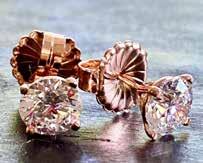
We can't take our eyes off these rose gold diamond studs featuring 3.02ct tw of the most breathtaking diamonds.
Suite 6 (Upper Level)
38A Main Street, Mornington 1300 230 430 diamondcoco.com.au
6 | PENINSULAE ssence January 2023
DIAMOND COCO
We’re excited to announce the completion of our fresh new store. You’ll find our friendly team and a large fresh food department o ering everything from Australian fruit and veg to The Odd Bunch range.

We have a great, convenient range that is easy to shop. You’ll fall in love with our new deli, with cured meats sliced to order. We’ve got everything you need for the perfect platter, plus a fantastic selection of Australian and imported cheeses.

Walk past our in-store bakery and explore the delicious range of bread, including crusty loaves, sliced white and wholemeal rolls. Our artisan-style breads are divine and are made with Australian wheat flour.

There’s so much to see and try at your new Woolworths, we suggest heading over to the seafood counter. Seafood is a big part of our fresh food o ering and we’ve a range of great value, locally sourced favourites.

You’ll also find a BWS store nearby – it’s a great place to pick up any beer, wine or spirits while you’re shopping at Woolworths. Ask the BWS team for the latest specials and their recommended picks – there are some fantastic local craft beers and Australian wines available.


Just a small taste of what you’ll discover at our fresh new Woolworths Rosebud Plaza.

You’ll find us located at Rosebud Plaza, cnr Boneo Road & McCombe Street.


Your new neighbourhood food store Discover a fresh new bakery, delicatessen, fresh fruit & veg department and more at our fresh new Woolworths Rosebud Plaza. ROSEBUD PLAZA NOW OPEN CNR BONEO ROAD & McCOMBE ST Cut fresh for you Ask a friendly team member to cut and wrap any heavy fruit or veg. Bread baked daily for you Our new bakery offers artisan-style bread and sweet treats every day of the week. Sensational seafood Discover your new local seafood market. 100% Australian meat All our fresh beef, lamb, pork and chicken is Australian grown. CP191223V1PE
What's on?Upcoming Peninsula Events

2 JANUARY
THE BOY FROM OZ
The Boy from OZ tells the story of the life of legendary Australian entertainer and songwriter, Peter Allen. From humble beginnings in the 1950s, growing up in the Australian town of Tenterfield, to his catapulting rise to fame as a global phenomenon. Showing at Frankston Arts Centre for a strictly limited season this January. www.artscentre.frankston.vic.gov.au

20 - 26 JANUARY
MORNINGTON ART SHOW
Mornington Art Show is held in January each year and displays around 800 paintings for sale. Come along to the Peninsula’s largest art show and support Australian Rotary Health research. www.morningtonartshow.com.au

15 JANUARY RED HOT SUMMER 2023 TOUR
Featuring a line-up of Aussie music icons including Paul Kelly, Bernard Fanning & more at Mornington Racecourse. Get in quick, tickets are selling fast! www.redhotsummertour.com.au

21 JANUARY GRAINSHAKER PORTSEA SWIM CLASSIC

The Portsea Swim Classic is one of Victoria’s largest and most iconic open-water swims. Held at Port Phillip Bay, Portsea, and organised by World Series Swims, swimmers can choose from the 1.5km Portsea Swim Classic or 2.5km Portsea Swim Classic Gold in an around-the-buoys format. www.portseasurf.com.au/portseaswim-classic
* Check with venue for any restrictions.
10, 12, 17 & 19 JANUARY DOLPHIN DISCOVERY WORKSHOP

From Sorrento 11am & 1pm
In this fun and interactive workshop kids will learn all about Port Phillips’s unique dolphins and other amazing marine life, including seals & whales! Play games, see dolphin skulls and meet Bella Burrunan the dolphin. www.searoad.com.au/schoolholiday-ferry-fun
1 - 29 JANUARY
GIN HIGH TEA

Enjoy a relaxing high tea at Bass and Flinders distillery, located in the Dromana industrial area. The Gin High Tea includes a Gin and tonic of choice on arrival, a delicious mix of savoury and sweet items to share, and a choice of Gin paddle with 4 handcrafted gins, tonic and ice to mix your own gins at the table. Further details and bookings can be made via their website.
www.bassandflindersdistillery.com
8 | PENINSULAE ssence January 2023
*JANUARY '23
Independent living Maintain an independent lifestyle in one of our vibrant retirement living communities Community support and wellbeing Remain connected with social groups, outings and carer services Help at home Get assistance with personal and clinical care, household chores, assistive technology and transport 5 1 4 3 unitingagewell.org Residential care Specialist 24/7 care and support and respite stays are welcome. Andrew Kerr Care Community in Mornington offers generous, stylish spaces, well appointed bedrooms and a vibrant lifestyle program Call the Uniting AgeWell team today to find out how we can support you to live well with choice, independence and peace of mind as you age. Living well with choice and peace of mind Local care and support tailored just for you with Uniting AgeWell 1300 783 435


Visit www.centennialliving.com.au or call 1300 098 000 for a brochure AFFORDABLE, SAFE & SECURE with a Seaside Location 2 bedroom units from $365,000 TOP RATED VILLAGE SCAN ME A Retirement Village with a Holiday Lifestyle
PLAYING WITH fire
By Muriel Cooper Photos Supplied
It’s thought that fire is one of the reasons why humans evolved to be as smart as we are. We have been using fire for hundreds of thousands of years; as light to keep away predators, to cook and to stay up later, giving us time to think and plan.
Fire is also recreational, symbolic, spiritual, and a form of entertainment. These elements drive the Frankston Fire Spinners and Drummers Group as they swirl and twirl trails of fire on the Frankston foreshore in a spectacular and mesmerising display.

The group is a creative arts movement that aims to connect and support members, share skills, and learn new moves. Their numbers vary from a few to a hundred. Sometimes it’s all fire spinners and drummers; at other times a mixture of fire spinners, belly dancers, clowns, photographers, and other performance arts.
continued page 12...
10 January 2023
Photo: Kyle Butterworth

PENINSULAE ssence | 11 January 2023
Fire spinning, also known as fire dancing or fire performance, is believed to have originated among the Māori people of New Zealand and then spread across Polynesia. It seems like a natural extension to set fire to the poi or tethered weights used in Māori dancing. The spinning balls make wheels of fire in the darkness.
Fire spinner Aimee Ingram-Healey, the founder of the Esoteric Arts School, has been involved in the Frankston group for around eleven years and is an administrator for their Facebook group, the main way they connect.
"Fire is a very primal thing," says Aimee. "We tried to master it long ago, but it still masters us."
Fire provided us with light and peace to ask the big questions. Where did we come from? Why are we here? Storytelling began sitting around the fire, and images in fires have inspired humans over the eons. Seeing demons and angels, castles, and other worlds.
Aimee says, "You’re making friends with the demons as well as loving the angels in the fire. Fire spinning can be more than entertaining and fun. It helps to control your own inner fire, so there’s a spiritual content, and it’s definitely meditative."


Fire has been an aid to meditation across every culture, whether it’s focusing on the single flame of a candle or breathing in incense. Our major festivals, including Diwali, Hanukkah and even Christmas, which originated as the Pagan festival Samhain, revolve around fire, the bringer of light.
Aimee says fire plays into body awareness too. "Your body is moving, and you ask it where it wants to go. You feel connected to yourself – letting the fire dance with you and knowing where your body is in space."
If you’re keen to try fire spinning and performance, it’s best to start without the fire component. A good quality hula hoop and staff make for a safe and inexpensive start. You can then progress to more sophisticated equipment like poi, fans and snakes. Equipment with LED lights is a safe alternative before moving on to playing with real fire. Aimee urges enthusiasts to join them on the foreshore for proper information and instruction before using fire.
The Frankston group encourages kids to join in. "We’re big on safety, and our motto is Be safe, be fair, be kind," says Aimee.
"Often the kids who reach out to the group have been bullied, and learning fire spinning helps their confidence and selfesteem," says Aimee.
12 | PENINSULAE ssence January 2023
continued
14...
Fire is a very primal thing. We tried to master it long ago, but it still masters us
page
Photo: Kyle Butterworth
Photo: Steven Kuiter

PENINSULAE ssence | 13 January 2023
"We’ve had lots of parents come up and thank us for the work we’ve done with their kids."
The group promotes self-care within their community and offers members support and an opportunity to be who they are. Fire spinners see themselves as unofficial fire wardens, educating on the dangers as well as the wonders of fire. Safety is paramount, and the group encourages anyone who is tired not to take part, as this is when accidents can happen.
Frankston fire spinners and drummers meet spontaneously on the Frankston foreshore on any Friday when the weather is good, mostly from New Year’s Eve through to March or April, but on any fine Friday night you’ll likely find them there.


They are happy to talk and even to educate you in a few moves if you’re interested.

Also, if you connect with them on the foreshore, you’ll be allowed to join their closed Facebook group. This is where you’ll discover events and find news from other groups. There is one in Mornington, which meets monthly, and others are dotted right along the Eastern seaboard. Aimee hopes to do a road trip one day, visiting fire spinning groups as she goes.
Fire spinning can add a dramatic aspect to an event or festival. Call Aimee for bookings.


14 | PENINSULAE ssence January 2023
SPREAD YOUR ADVERTISING ACROSS THE PENINSULA Book into the next issue Call Andy 0431 950 685 andy@mpnews.com.au
FB: @Frankston-Fire-Spinners-and-Drummers
Photo: Steven Kuiter
Photo: Adriano Carrido
Photo: Kyle Butterworth
At Woodleigh, we challenge young people to be adventurous with their learning – to take risks, to go beyond their comfort zone and break new ground. When young people have choice to pick their own path, their school journey is more challenging and more rewarding. This is how they learn to thrive.

To learn more about Woodleigh School, scan the QR code below, or email our Enrolments Team –enrol@woodleigh.vic.edu.au

PENINSULAE ssence | 15 January 2023
AT ONE OF OUR REGULAR
SESSIONS OR CAMPUS TOURS
BOOK YOUR PLACE
INFORMATION
www.woodleigh.school/enrol
in
Running Tuesday to Sunday, the gates open at 6.30 pm giving you plenty of time to head down early and soak up the evening atmosphere in this stunning location before the movie commences. The outdoor cinema is an iconic part of the Australian summer and an ideal place to enjoy a unique experience in the great outdoors. With a signature mix of hot new releases, all-time classics and family favourites there’s something for everyone this season. Entertain the whole family and catch the new superhero blockbuster Wakanda Forever and the animated adventure Strange World. Look out for the new Tina Turner biopic I Wanna Dance With Somebody and the all-star cast in the highly anticipated thriller The Menu for a memorable night out.


Sit back and relax as the sun sets over the horizon and stars begin to twinkle, all from the comfort of your bean bag. You can also treat yourself to a night of indulgence with a VIP experience in the Tim Tam Lounge, including luxe bean loungers, bottomless popcorn, waited service from the Lounge Genie and a Tim Tam treat.
You’re welcome to bring a picnic spread or you can order some mouth-watering dishes from the hot food truck including tasty falafel bowls and gourmet hummus. Enjoy a drink from the great selection of Oxford Landing wines, BentSpoke Brewing Co beer and Manly Spirits G&T’s at the fully licensed bar, where you can also stock up on all your essential movie snacks like Bulla choc-tops, lollies and freshly popped popcorn. Whether it’s date night, family night or catching up with friends, Sunset Cinema is this summer holidays ‘must-do’ experience!
Visit the website to check out the program, pre-purchase tickets and see full event info.
16 | PENINSULAE ssence January 2023
Summer’s
full swing and it’s time to savour the warm evenings at the Sunset Outdoor Cinema, now screening at The Briars, Mount Martha.


PENINSULAE ssence | 17 January 2023 Gates open 6.30pm, movie commences at last light Dec 21 — Jan 20 The Briars, Mount Martha Thu 19 Jan Blueback Fri 20 Jan I Wanna Dance With Somebody *program subject to possible change Wed 4 Jan The Menu Thu 5 Jan Top Gun: Maverick Fri 6 Jan Sat 7 Jan Strange World Sun 8 Jan Dirty Dancing Don’t Worry Darling Tue 10 Jan Thu 12 Jan The Menu Fri 13 Jan The Princess Bride Sat 14 Jan Black Panther: Wakanda Forever Tue 17 Jan Top Gun: Maverick Don’t Worry Darling
MEOW TO THE rescue
By Muriel Cooper Photos Gary Sissons & Supplied
Look at that cute face – those eyes! Why is it that cats get such a bad rap for being – well – catty? Kelly Davidson from the cat rescue organisation Meow Rescue has some answers and wants to dispel those myths.
In 2018 nurse Kelly and three friends, Louise Cook, a veterinary nurse, Kylie Harris and Tiff Edwards, all with different backgrounds in animal rescue, decided to come together and do something to make a difference in the community. They put in $250 each and formed Meow Rescue. It’s now grown into a not-for-profit organisation with fantastic volunteers and foster carers that has found forever homes for many hundreds of cats and kittens. Kelly says smaller animal rescue organisations are the backbone of the rescue community.
"We’ve found homes for many cats and kittens that were considered unadoptable and bound for euthanasia." Cats with special needs such as diabetes or seizures can live long and happy lives with proper care and attention.

So why do cats get such a bad rap? The irrational superstition about black cats still persists, and Kelly says they are often the last to be adopted and the first to be euthanised. But cats also have a reputation for being distant and fickle. Is that really true?
Anthrozoologist at Bristol University in the UK, John Bradshaw, in his book ‘Cat Sense: How the New Feline Science Can Make You a Better Friend to Your Pet’, says cats, like humans, can hold a grudge.

continued page 20...


PENINSULAE ssence | 19 January 2023 your local wildlife sanctuary your local wildlife sanctuary
But he said they do apologise. How? Here is what to look out for:
• Approaching you (it’s a little gesture, but it means they feel safe)
• Head butting and rubbing

• Purring
• Blinking
slowly
Cats have more complex emotions and emotional needs than you might think. They can form strong emotional bonds just like humans or dogs and do so in the wild, where mother cats will often raise kittens together in groups.
They still have strong instincts to hunt, and we’ve encouraged that in them for thousands of years as mouse catchers. In evolutionary terms, it’s a bit much to expect them to change overnight. Meow Rescue is excellent at identifying good mousers and will often advertise a cat as a ‘Barn Cat’ to keep rodents down for farmers.
Like other preconceived notions about them, cats do have a conscience and feel guilt or remorse. Kelly says, ‘When my cats knock something off the counter, they go running.’ So how do you discipline a cat? Kelly says setting boundaries and positive


reinforcement is the key, "Not banging or yelling or instilling fear, That won’t get the best from any pet. You can train a cat just like you train a dog."
Once you care for them the way a kitty needs to be cared for, you’ll form a bond with your cat that will be intensely rewarding.

How to have a happy cat? Cats need safety and look to their humans for it in the same way they would look to their groups in the wild. Kelly says, ‘They need to feel comfortable, safe and loved. Providing for their needs, including enriching activities like a scratching post, yummy food, love and cuddles, will help to keep your cat safe indoors as well. Cat enclosures help them experience the outdoors while keeping them safe and out of trouble, as will simply keeping the doors closed. Cats are more inclined to stray when they aren’t desexed, as they will go looking for a partner when they are in heat.’ Because of this, Meow Rescue usually has extra kittens to take care of in the new year.
Is there any harm in a bit of catnip? No. Kelly doesn’t know how it works, but it makes ‘happy hormones in their head.’ Can they have too much? No to that too. No need, as Kelly says, for a ‘Catnip detox centre.’
20 | PENINSULAE ssence January 2023
Like other preconceived notions about them, cats do have a conscience and feel guilt or remorse
continued
page 22...


PENINSULAE ssence | 21 January 2023 OZ
DESIGN FURNITURE MORNINGTON
Cats, like other companion animals, are not only a delight; they’re an investment in your good health. You could find yourself less depressed, coping with grief better, and making new friends and connections. Especially if you teach your cat to walk on a lead and take it for walks around the neighbourhood. Your blood pressure might go down too.
Companion animals played a role in relieving people’s stress and loneliness during Covid-19. Meow Rescue, like other animal welfare organisations, is still seeing the aftermath, with an increase in the number of surrendered animals. This is often due to hasty and poor choices, including buying kittens on the internet that are not desexed. People have found themselves with not one pet but a whole litter. Meow Rescue can take the kittens and desex the mother cat free of charge so she can return to a safe home. Buying only neutered cats from the likes of Meow Rescue will help solve the problem.
Kelly tells of a cat about to have kittens wandering by chance into the home of one of their foster carers. What a great synchronicity. Perhaps it’s their sixth sense, or, as Kelly says with a smile, "Perhaps they just smelled the extra cat food."

The organisation is completely staffed by volunteers, and foster caring is not the only way to help. One volunteer, on retiring, decided to volunteer her time as an administrator.
She changes microchipping details and keeps their database up to date. Kelly says, "She is amazing and a lifesaver for us, giving us valuable time to spend on other things."



You can volunteer to transport animals to and from foster care, volunteer time on adoption day, to man stalls on market day and for fundraising events. Foster carers are always appreciated.
Meow Rescue helps in other ways with community food banks, donating food and litter within the community, especially during Covid-19, and having desexing days where cats can be neutered.
Meow Rescue has cats and kittens ready for adoption on the Peninsula. If you’d like to enquire about a cat or kitten for adoption, volunteer for Meow Rescue, have an animal to surrender or donate to the cause, contact Meow Rescue.
E: meowrescueinc@gmail.com P: 0414 429 336 meowrescue.com.au

22 January 2023
Cats, like other companion animals, are not only a delight; they’re an investment in your good health


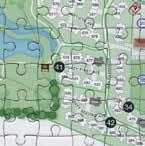

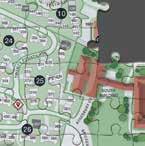


PENINSULAE ssence | 23 January 2023 The final pieces of the jigsaw are falling into place at Village Glen Retirement Community, on the magnificent Mornington Peninsula New Lakeside Apartments New Jake’s Bar, Palms dining room and CJ’s lounge New cinema and library Health and Wellness Centre Golf Cafe Caravan Storage 9-Hole Golf Course Croquet Lawn and Bowling Green The Hub is the heart of Village Glen, already home to the village shop and hair salon, and the now newly completed facilities offer residents so much more. It’s designed to be a place where residents and their guests can gather to relax, converse and rest in a beautifully appointed and furnished communal precinct. WWW.VILLAGEGLEN.COM.AU 335–351 Eastbourne Road, Capel Sound VIC 3940 FOR MORE INFORMATION CALL US ON 03 5986 4455


WINNER 2021 HIA Eastern Victoria Custom Built Home $1.5 - $2 million WINNER 2022 HIA Victorian Custom Built Home $750,001 - $1 million AVAILABLESOON WINNER2022 WINNER2021
As a boutique design and builder committed to delivering high-quality custom homes, Beachstone Homes is thrilled to be recognised once again by the HIA for their stunning new homes.

Based in Mount Eliza and servicing the Mornington Peninsula, they can build from prepared plans or undertake the entire process from initial design brief through to completion.
With over 25-years of experience in building and development, a professional team, and an on-line client portal, they are well placed to assist you with your new dream home.
Contact Beachstone Homes today! beachstonehomes.com.au © 2022, Beachstone Homes. All rights reserved. Beachstone Homes logo, and images are subject to copyright laws. All other trademarks are the property of their respective owners. DEC 22 CDB-U 61486 CCB-L 61268 AWARD WINNING HOMES BUILT FOR LIFE info@beachstone.com.au


SPINNING spits
By Joe Novella Photos Yanni
People become famous for all kinds of crazy reasons in this modern day and age. Being a dab hand on the BBQ is not one of them; well, not until now. Ross Fountis, aka The Dizzy Greek, has achieved a cult following on social media. He has been interviewed on prime time breakfast radio; he has even made it to the UK via the Daily Mail, all on the back of his passion for rotating-spit-style barbequing. continued page 30...

28 January 2023
has the Peninsula covered with umbrellas -from small beach umbrellas to our giant cafe 5x5M umbrellas.




PENINSULAE ssence | 29 January 2023 • Sun Lounges • Market Umbrellas • Massive range of Rattan • Cushions • Lamps • Jewellery • Artworks, and much more! • Indoor/Outdoor Furniture • Homewares • Giftware • Tables • Chairs • Lounges • Bar Tables and Stools NEW CONTAINERS ARRIVING REGULARLY 2/1 Colchester Road, Rosebud | kibuimports@gmail.com | 5986 6778 Come in and visit us today to view some of our new stock or find us on NEWINGTON AVE BONEO RD COLCHESTER ROAD
DISCOVER THE PENINSULA’S BEST KEPT
Kibu
It all started when Ross joined the $85 Bunnings Jumbuck Mini Spit Society on Facebook back in 2020, when we were all trapped in the Covid nightmare. And, just like the rest of us, Ross was looking for anything to brighten up his days. The Facebook group describes itself as, "Just a group of people who share the common love of cooking a piece of meat on the $85 dollar Bunnings mini spit. Nothing more nothing less."
That's right, a group made up solely of fans of the Bunnings (or as the group like to call it 'The Big Green Shed') Mini Spit BBQ. It's an exclusive group of spinners (a term for aficionados of the rotating spit form of cooking) and not everyone can join. In fact, it's a bit like the cult classic movie 'Fight Club' where group members must abide by certain rules. First and foremost, you have to have the Bunnings Mini Spit to join; other brands are not welcome. You must cook with charcoal briquettes; Ross uses the Heat Beads® brand. Thirdly, you must also have a meat-related nickname— the creator of the group being 'Mr Crackleman', while other notable members include 'Albert Einswine' and Happy 'Grillmore'.
Ross joined with the moniker 'Dizzy Greek' on account of the feeling he gets when watching a piece of lamb spin as it cooks. When he joined, the group had under 100 members and such was Ross's passion for the group, he had his daughter, a budding tattoo artist, tattoo '$85 Jumbuck, Dizzy Greek, Melbourne' on the back of his ankle.


That's when everything 'blew up', according to Ross: "I spoke to Ross and Russ on 3AW who wanted to talk to me about the Facebook group and my tattoo, and after that everything unfolded. We started to get heaps of people join the Facebook group and I started to get asked to do other media." The $85 Bunnings Jumbuck Mini Spit Society on Facebook now has close to 72,000 members and as a result of its growth, the Big Green Shed has regularly sold out of the $85 Mini Spit.
So how did this fascination and passion for rotating spit-style BBQ start? "I come from a Greek family. We grew up in the southeastern suburbs of Melbourne and, typical of Greeks, there were a lot of us, and we got together almost every weekend. So, I had heaps of cousins and uncles and aunties and we'd get together often
30 | PENINSULAE ssence January 2023
In fact, it's a bit like the cult classic movie 'Fight Club' where group members must abide by certain rules
and when we did, there was always a lamb on a spit rotating in the backyard, watched over by my Papous Spiro or Illias (grandfathers). That's how I learned, by watching my grandfathers, what they did, how they prepared the meat, managed the heat, what herbs to use. There is nothing like gyros from a Greek backyard BBQ, wrapped in pita with some salad and tzatziki. The best!"
For the uninitiated, 'gyros' means 'to turn' in Greek; it is the meat that is shaved off the rotating spit. Souvlakia or souvlaki is grilled meat that is put on skewers. Since achieving fame on radio, print and social media, Ross has been busy setting up his own Facebook page and website, where he shares cooking tips and sells accessories to complement the Mini Spit. "I have lower back problems and the Bunnings Mini Spit is low to the ground, so I designed a stand and with the help of F&J Metal Fabrications, we started knocking them out. We also sell wheels so you can make your spit more mobile, plus wind breaks and meat trays."

Ross has even set up a temporary shop front in Seaford to show his wares and hopes, in time, to make it his full time gig. "Right now, Dizzy Greek is just a side hustle, I have a concreting and home renovation business but one day I want to be full time in the BBQ industry because that's where my true passion lies.
continued next page... visitmp

homegrown f lavours
PENINSULAE ssence | 31 January 2023
.org/BCStrail
distillers
Meet the new generation of brewers, cider makers and
up close and where they practice their craft.
Follow our ‘Beer Cider + Spirits Trail’ and Explore More of the homegrown flavours of the Mornington Peninsula. Scan the QR code to download your free trail today.
That is mainly because I worry that we're losing the heart and soul of Aussie culture which is the backyard BBQ. When I was growing up, the backyard BBQ brought everyone together, it kept families and friends together, and I want my kids to experience that.

"So, I think it's important to teach the next generation about barbequing and get them passionate about it before it's totally lost, which would be real shame. That's what I'd like to do going forward; spread the love. I'm determined not to let an Aussie tradition fade away."
When Ross isn't spinning meat, or doing live streams on his social media pages or working in his businesses, he loves taking his family down the road to the Peninsula for some time out. "I love the Peninsula. Love it! We used to go as kids when the Greek Festivals happened on the foreshores at Rye and Sorrento. Thousands of Greeks gathered together, meat spits turning everywhere and music playing; it was unreal. The sounds. The smells. Nothing like it anymore unfortunately. Nowadays I like to chill out fishing for squid from Mornington Pier, or take the family to grab a gelato and check out Main Street."
It's clear that Ross's passion is the spit BBQ, but it's one born of the love of family and tradition. A tradition he intends to keep alive to be enjoyed by the generations to come. dizzygreek.com


32 | PENINSULAE ssence January 2023 AWARD WINNING
SERVED
ALL SUMMER Try the full range of TWØBAYS beers at our Dromana taproom, or wherever you are on the Peninsula this summer. Award-winning beers stocked in all great venues and bottle shops across the Peninsula. OPENING HOURS: Saturday 12 – 6pm + Sunday 12 – 5pm (Open every day from 27 December – 8 January 2023) Unit 1, 2 Trewhitt Court, Dromana, Victoria 3936 03 5910 0880 | WWW.TWØBAYS.BEER TRIPADVISOR ‘HIDDEN GEM’ AWARD-WINNER Scan to book a table
BEERS
COLD


 By Cameron McCullough Photos Gary Sissons
Sitting on the judges’ couch at the Peninsula Film Festival this year will be a face not as familiar as other on-screen personas.
You may have walked past him in Mount Martha or seen him at a local café with his wife.
His name is Shaun Grant, and he is a highly acclaimed screenwriter
whose films have premiered at the world’s most prestigious film festivals, including Cannes, Toronto and Sundance.

Shaun’s journey from a childhood in blue collar Kyneton, to the judges’ couch on the peninsula he now calls home, was one of twists, turns and chances of fate.
“It didn’t start out this way,” said Shaun.
continued page 36...
Arts
A STORYTELLER'S journey

“While I always knew I wanted to be a film maker, my mother convinced me there was no money in it and I eventually became a schoolteacher.”
Shaun still thinks teaching is the “most important job in the world” but working in that role left him with an unscratched itch.
Eventually the pull became too much, and he enrolled in film school in his late 20’s.
It was there he wrote a film script as an assignment. It was a life changing script that would end up being produced into his first feature film: ‘Snowtown’.
Directed by Justin Kurzel in his directorial debut, the film was based on the real-life murders of 12 people in South Australia in the 1990’s.
Described by SBS’s Fiona Williams as “a gripping, discomforting watch”, it went on to win multiple awards including “Best Adapted Screenplay” at the Australian Academy of Cinema and Television Arts Awards.
The next film he worked on with Justin was an adaptation of the Booker Prize winning Peter Carey novel ‘True History of the Kelly Gang’.
A wild and engaging re-telling of what Shaun describes as “one of the greatest Australian novels ever written”, ‘True History of the Kelly Gang’ does not attempt to embrace historical accuracy, but an abstraction on the story we all know so well.
Shaun had now moved to Los Angeles to work, and it was while there he wrote the script for his most recent film, ‘Nitram’.
“The inspiration for ‘Nitram’ came after two mass shootings in the United States. I really felt ‘enough is enough’. I had the idea to write a film taking you inside the life of someone who shouldn’t have access to guns. Take you into a gun shop with that person and show you what happens.”
‘Nitram’, Martin spelled backwards, is the story of Martin Bryant the notorious mass killer who murdered 35 people and injured 23 others at Port Arthur in April 1996.
‘Nitram’ is the third film he has collaborated on with Justin and is the third in what he refers to as his ‘wrath trilogy’.
Uncomfortable, confronting, but meaningful, the film world premiere took place at the Cannes Film Festival, the first Australian film to do so in a decade.
‘Nitram’ went on to win eight AACTA Awards in 2022, including “Best Film and Best Original Screenplay”. ‘Nitram’ also saw Shaun win his sixth Australian Writers Guild Award for “Best Original Screenplay”.
It was controversial. Some survivors and relatives were against the film.
“I don’t take their concerns lightly and understand that some people didn’t want to see it,” said Shaun.
“I think I have tried to always delve into the psychology of why.”
“And I do believe that some of those who were against the film had an understanding of why we made it once they saw it.”
Shaun has been involved in numerous other projects including films ‘Penguin Bloom’, and ‘Jasper Jones’. In television, Shaun has written for multiple series, including ‘Deadline Gallipoli’, ‘Slide’, ‘Janet King’ and Netflix’s ‘Mindhunter’ for which he, and the show’s writing team, received a Writer’s Guild of America nomination for “Best Drama”.

It was Covid-19 that finally brought Shaun to the peninsula; part of an Australian exodus from Los Angeles as the pandemic took hold.
“I love it here. I work from home, so my environment is important for inspiration,” said Shaun.

36 | PENINSULAE ssence January 2023
I think I have tried to always delve into the psychology of why
“I have a park behind me, and the sea in front. What more could I want?”
Shaun has his hands full working on a television project with Justin; a five-part series based on another Booker Prize winning novel, ‘The Narrow Road to the Deep North’ by Richard Flanagan.

And, of course, judging at this year’s Peninsula Film Festival.
"I’m excited to be part of the Peninsula Film Festival as I love both the Mornington Peninsula and film. Put those two things together and I’m in!” said Shaun.

“I’m excited to see all the talented filmmakers we have here and hope lots of the locals come out to offer support, not just film but the local community.”
The Peninsula Film Festival runs from 3 to 5 February.
The short films will be showcased at Rosebud’s Village Green on Saturday 4 February.
For tickets or more information visit the website.
peninsulafilmfestival.com.au
delicious flavours
Wine Food Farmgate reveals the Mornington Peninsula’s most delicious secrets.

Explore More of the handpicked, hand caught and handmade flavours of the Mornington Peninsula.
Scan the QR code to download your free trail today.
PENINSULAE ssence | 37 January 2023
visitmp.org/winefoodfarmgate
COASTAL reflections


38 January 2023
By Andrea Louise Thomas Photos Gary Sissons
painter Liz Fitzgerald has lived on the Mornington Peninsula her whole life. It’s her key source of inspiration. “I grew up on the beach. I cannot imagine living away from the coast. Coastal landscapes are an endless source of awe,” she says.
Mornington

Liz loves the variety and changeability of the Peninsula and how accessible those differences are. One doesn’t have to travel far to be in a completely different environment: bay beaches, back beaches, hinterland, wetlands, forests, bushland. There is no sameness. Biodiversity abounds.
In high school, she started taking art classes as well as graphic communication. Art and writing were her favourite subjects. Her mother suggested she study graphic design as she noticed Liz always liked to draw as a means to describing the world around her.

continued next page...

PENINSULAE ssence | 39 January 2023
Expect to pay around half the price SUITE 6 UPPER LEVEL 38A MAIN STREET, MORNINGTON www.diamondcoco.com.au FOR AN APPOINTMENT CALL 1300 230 430
I want to give a sense of a place without overtly setting the scene so the viewer makes his/her own interpretation
She studied graphic design at Caulfield Institute of Technology (now Monash). The graphic design course included photography, life drawing and illustration. Liz worked as a freelance designer for three or four years, but felt teaching would be better suited to life with a young family. Completing a Diploma of Education at the University of Melbourne, she started a 25-year career teaching secondary school Visual Arts and Technology. “I loved teaching!” she says.
Liz made a gradual shift to becoming a full-time artist. It was an alignment of many things. Her transition from full-time teaching to part-time teaching when her children were grown gave Liz more time for painting and exhibiting.


Predominantly, Liz paints coastal scenery in vibrant blues and greens juxtaposed with earthy tones. These are semi-realistic impressions of place, what she calls ‘abstracted representation’. Seascapes and landscapes dominate, but Liz also paints abstracts. “Abstraction is a challenge. It’s so elusive – it keeps me coming back. It’s so exciting to get it right. It’s like finding that missing piece of the puzzle,” she says.
Beginning a painting of a place, she will have visited, sketched and/or photographed the scene and often journaled about it too. A journaled notebook filled with beautiful paintings and narration about her thoughts and feelings about the place as well as its challenges accompanies her. For Liz, the feeling a piece evokes is more important than what’s on the canvas.

40 | PENINSULAE ssence January 2023
“When I photograph a scene or do a sketch of it, the light changes. Sometimes I’ll do several versions at different times of the day. I’ll get a completely different mood, colour palette and different shadows,” Liz says.

Keeping her work loose and interpretive is the aim, but not without considered mark making. “I like a bit of ambiguity – it’s why I rarely identify a location in my landscape works - so people don’t go in with a preconceived notion. Also, memory is connected to familiarity. I want to give a sense of a place without overtly setting the scene so the viewer makes his/her own interpretation,” she says.
One of the best things about being a creative person is the opportunity to be grounded in the moment, uncluttered by thoughts of the past and future. “When I paint, I go to a different state of mind. I am totally present. For me, painting is a kind of meditation,” she says.

continued next page...

PENINSULAE ssence | 41 January 2023
Painting is a totally immersive experience for her and, therefore, mainly unplanned. It’s a constant process of addition and subtraction. Liz prefers her work to emerge and loves to discover what reveals itself.
Liz used to work from a little garden studio at home, which was lovely, but had its limitations. In May 2021 she moved to her current studio in Mornington that she shares with three other female artists. The support and camaraderie are wonderful.


In addition to painting, Liz loves printmaking and, in the past, darkroom photography. She likes the element of surprise when the paper is peeled off the printing surface or the image emerges. She enjoys making things that reveal themselves in unexpected ways.

Liz is planning an exhibition for late 2023 after travelling to Europe. She’s currently busy working on commissions keeping a mix in her artwork between figurative, imaginative and abstract. You can view her paintings online or come to visit her studio by appointment. Insta: @lizfitzgerald_art lizfitzgeraldart.com.au

42 | PENINSULAE ssence January 2023
When I paint, I go to a different state of mind.
To subscribe phone Mornington Peninsula News Group on 03 5974 9000 or complete the details below. $48 twelve month subscription (12 issues) or $30 six month subscription (6 issues) Name ....................................................................................................Ph.............................................................................. Address ..............................................................................................................................Post code.................................. Visa Mastercard Card number ...........................................................................................Exp........./.......... Post to Peninsula Essence Subscriptions PO Box 588, Hastings Vic 3915 6 AND 12 MONTH SUBSCRIPTIONS ARE NOW AVAILABLE Select preferred subscription period & Peninsula Essence magazine will be mailed to you in a sealed plastic bag each month. Handing the Peninsula to you! #4050046901registered savings off MARCH 2020 PENINSULA Living & visiting on the Mornington Peninsula Mercurio Fixer Uppers Adventure Sustainable Fashion The Mariner Making An Celebrating Culture Healing Colours Seafood Dream Team Dalywaters Mr
I am totally present. For me, painting is a kind of meditation
PENINSULAE ssence | 43 January 2023 1/4 Torca Terrace, Mornington 439 Chapel St, South Yarra www.kustomtimber.com.au | (03) 9645 3857 Premium European Oak Timber Flooring Professional Installation Guaranteed Quality.
THAT HOODOO you do
By Andrea Louise Thomas Photos Jai Seales & Gary Sissons
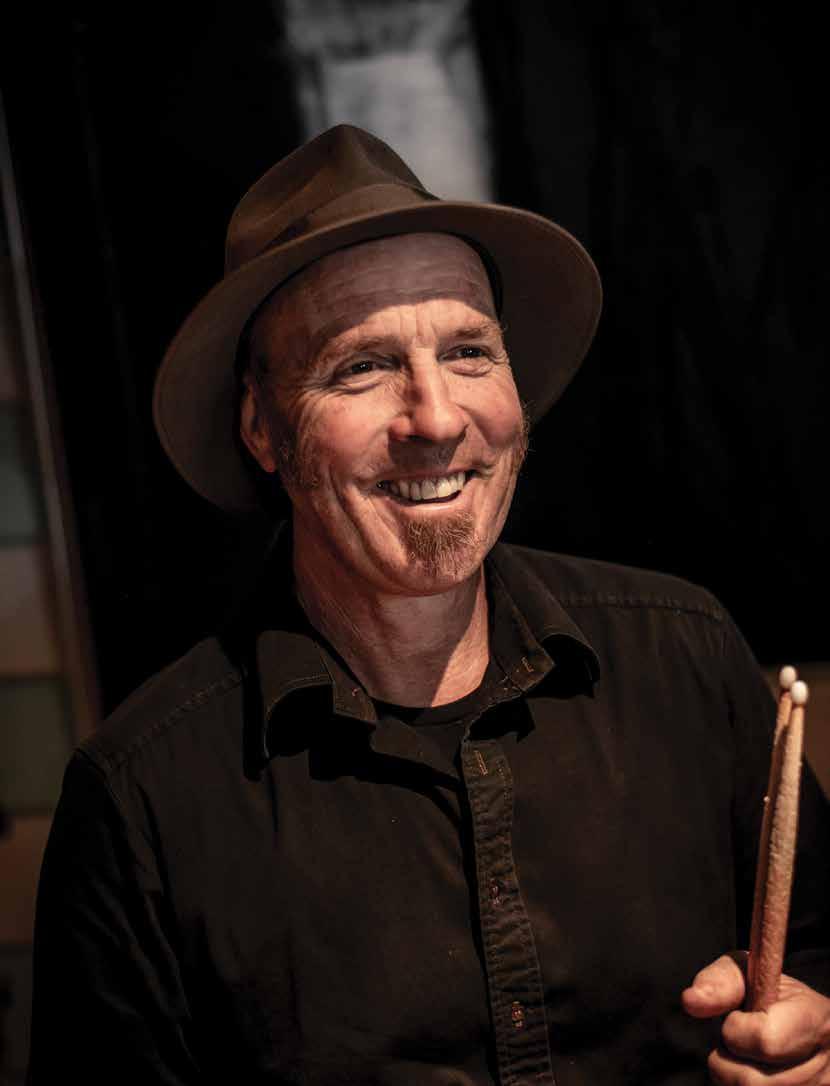
Point Leo musician Tim Stout has always lived a double life divided between his love for music and the practicalities of making a more reliable living. Only once in his entire music career was he employed full-time as a musician working for a couple of months as the drummer in a production of Godspell at The Athenaeum Theatre in Melbourne. Despite having a day job, he’s been singing, songwriting and playing music professionally for 45 years. He’s a virtual musical missionary.
During lockdowns Tim set a goal to play six songs at 6pm every night live on Facebook. He never missed a single night. He brought presence, joy and connection to his listeners, many of whom relied on that musical buoyancy to get through the days. In fact, he exceeded the 262 days of lockdowns producing over 300 consecutive nights of music. He still does it on a Thursday. Tim is a man who gives with his music whether he gets money for it or not.
continued
44 | PENINSULAE ssence January 2023
page 46...


PENINSULAE ssence | 45 January 2023 1387 POINT NEPEAN ROAD ROSEBUD VIC 3939 PHONE: (03) 5986 8898 FAX: (03) 5986 5055 150 METRES MELBOURNE SIDE OF BONEO ROAD • FREE LOCAL DELIVERY • LOCALLY OWNED ROSEBUD HOMEMAKERS COMFORT SLEEP Verve Accord Queen Mattresses COMFORT SLEEP Verve Serene Ultima Queen Mattresses SLEEPTECH Zoned Pillowtop Queen Mattresses SOFA BEDS Inner Spring Mattress Range of Colours $1199 $479 from $1199 $1499 Visit ROSEBUDHOMEMAKERS for your furniture and bedding needs
Though he runs his own building company, Stout Build, Tim is busier than ever playing gigs as frontman of the popular blues band, The Hoodoo Men. He sings, and plays guitar though he is also a talented drummer. In fact, the drums were his first instrument. Hanging out at his Mum and Dad’s milk bar in Mordialloc, Tim was always drumming on something. It drove his Mum crazy, but a local music teacher heard him, took him for a drum lesson, came back and said, “The kid’s got it!”
With that comment, Tim began studying music. He learned the drums, then guitar, then they got a piano at home and he learned some piano too. He started to play the drums in his church band in primary school. At 15 Tim joined a local band as their drummer and they started playing professional gigs. He couldn’t even drive yet! Fortunately, his Mum was happy to transport him with his drum kit to gigs.

Tim wanted to study music at the Victorian College of the Arts, but a paperwork mishap foiled that plan. Later, he went to the Council

Though drums were Tim’s first instrument, his musical versatility gave him choices
46 | PENINSULAE ssence January 2023
of Adult Education to learn jazz piano. Though drums were Tim’s first instrument, his musical versatility gave him choices. He starting singing from behind the drumkit and found he really liked that too.
He sang and played guitar professionally with a band called King Cactus for fifteen years.

Meanwhile his day job was restoring antique furniture where he learned valuable carpentry skills. Renovating houses was the next string in his bow. He started working in the building industry, continued next page...

Dr Peter Scott and Associates are specialist orthodontists offering orthodontic care for children, teens and adults alike in both the Mornington Peninsula and inner Melbourne.


Dr Peter Scott is also a consultant at the Royal Children’s Hospital.

PENINSULAE ssence | 47 January 2023
Specialist Orthodontists
Creating Beautiful Smiles on the Peninsula for over 30 years Expertise In Child And Adult Orthodontics Early Assessment Of Dental Development And Facial Growth Ideal Age Of Initial Assessment 7-9 Years Early Intervention Where Appropriate For Best Outcome No Referral Necessary Interest free payment plans available 13 Beach St Frankston Ph: 9783 4511 www.drpeterscottorthodontist.com.au www.facebook.com/drpeterscottorthodontist
then he completed a Certificate IV in Building and Construction Management. After 20 years in the industry he’s just obtained his builder’s registration for his business.

Local music legend Marty Williams used to run muso nights in Balnarring and at Baha in Rye. He organised local musicians and created opportunities for them to gig and share their work. He also encouraged them to write their own songs. This was an impetus for Tim to rekindle his love for writing original music. It was a welcome change after fifteen years of playing other people’s music. He formed a band called Jam Roots through that connection.
Though Tim has been writing songs for decades, amazingly he didn’t record his first album until he was in his late 40's. He has since recorded three albums and currently, his latest album, Tim Stout Live at MBAS recorded at the Melbourne Blues Appreciation Society, listed under Timothy John Stout, is #5 on the Australian Blues and Roots Airplay Chart. It’s an intoxicating collection of earthy soul stirring original blues songs.
From the beginning, Tim most identified with African - American blues, funk, soul and reggae. He loves how raw and evocative it is.
He wants his own audiences to get those feels. Tim joined blues band, Greg Dodd and the Hoodoo Men in 2016, but Greg took off to travel around the world. Tim took over the band in 2019. He had written lots of new songs and with a fresh guitarist onboard, they recorded an original album called Found the Blues (under The Hoodoo Men on Spotify). It got as high as #4 on the Australian Blues charts in 2020.
The band spent nine months on the Australian Blues and Roots Airplay Chart through exposure on community blues radio shows. Tim booked a lot of gigs for the band on the strength of that. Most of those gigs had to be cancelled due to COVID, but audiences remembered the band and now they are busier than ever.
Check out upcoming gigs on facebook to go and check them out live, or have a listen on Spotify or Soundcloud.
FB: @thehoodoomen

48 | PENINSULAE ssence January 2023
visitmp.org/golftrail fairways + greens Promoting world-class courses alongside spectacular vistas, the Mornington Peninsula’s Golf Trail represents an enticing year-round challenge for all golfers. Explore More and play your way around the Mornington Peninsula Golf Trail. Scan the QR code to download your free trail today.


PENINSULAE ssence | 49 January 2023 AUSTRALIAN MADE ENERGY EFFICIENT HIGH PERFORMANCE QUALITY GERMAN DESIGN LOCALLY MADE AND OWNED CONTROL YOUR COMFORT Factory 1/ 7 Lyall Street, Hastings Phone: 5909 8040 or 0412 221 767 Email: contact@livingdesigndoubleglazing.com.au www.livingdesigndoubleglazing.com.au YOUR PERFECT CHOICE with energy efficient uPVC windows and doors featuring aluplast-technology Locally made aluplast windows and doors as featured on THE BLOCK 2022
TWO
Torie Mackinnon and Jodi Neary have been named as the recipients of the 2022 Mornington Peninsula Regional Tourism Legend’s Award and the inaugural Emerging Leader Award respectively.
As the Managing Director of Moonraker Dolphin Swims for 20 years now, Torie Mackinnon has made a profound impact in championing marine tourism on the Mornington Peninsula.
Alongside her passion to bring awareness to the underwater wildlife that call the region home, she has been at the forefront of making the second-generation family-owned and operated business a leader in sustainable and eco-friendly marine tours.
Moonraker Dolphin Swims has been recognised at Victorian, Australian and Global Awards ceremonies, and has been inducted into both the Victorian Tourism Awards Hall of Fame for Eco Tourism, and Eco Tourism Australia’s Hall of Fame for 20 years of accreditation at Australia’s highest level.
At the age of 17, Torie was the youngest person in Australia to obtain a captain’s certificate and in 2012, was named Telstra Victorian Young Business Woman of the Year.
AWARDED AND CELEBRATED
The Tourism Legend’s Award recongises an individual’s commitment to their own organisiation and acknowledges their contribution to and leadership within the tourism industry as a whole.
Holding the position of Owner/Managing Director at the Ranch Mornington Peninsula for over six years, Jodi Neary has been making strides within the region’s outdoor attraction and adventure scene.
The Emerging Leader Award announced in 2021 is presented to someone who exhibits the qualities of a future leader and will make considerable contribution to the industry throughout their career.

The CEO of the Mornington Peninsula Regional Tourism Board, Angela Cleland, said "It is a great pleasure to have two inspiring tourism leaders recognised with these esteemed accolades.

"Both Torie and Jodi have made exceptional contributions to driving tourism on the Mornington Peninsula, all whilst creating memorable and enjoyable visitor experiences."
W: visitmorningtonpeninsula.org
50 | PENINSULAE ssence January 2023 WWW.LARDNERS.COM.AU Level 1, 65 Mount Eliza Way, Mount Eliza, VIC 3930 Tel: 9787 4511 Email: reception@lardners.com.au Talk to us about your needs in: • A D VICE • G U I D A NCE • S U P P O R T • Family Law • Commercial Law • Wills & Estate Planning • Seniors Law • Powers of Attorney • Criminal Law • Property • Conveyancing • A DV IC E • G U I DA NC E • SUPP O R T not just lawyers (Incorporating Prudent Legal)
TOP TOURISM
LEADERS
That’s why we’ve been nurturing trusted connections with our employees, clients, residents and their families for nearly 30 years.
Through our range of tailored aged care services, we are committed to helping people realise their wellbeing goals and lead meaningful lives.


We focus on every person as an individual so we can provide the best possible care and help them find the smile in every day.
Talk to us today and discover the Regis difference.

PENINSULAE ssence | 51 January 2023 regis.com.au | 1300 998
100
1 Wyuna Street, Capel Sound VIC 3940
TO DISCOVER REGIS ROSEBUD
Regis Rosebud
SCAN
At Re gis, we believe a good life is built on great relationships.
Torie Mackinnon
Jodi Neary


Antique Bed Specialists DISCOVER... Antique cast iron beds, iron beds, brass beds and timber beds. We also stock a range of antique furniture that complements our range of beds. Contact Ph: 0419 356 855 E: antiquebeds8@bigpond.com W: antiquebedspecialists.com.au discover ANTIQUES, JEWELLERY, COLLECTABLES & MORE DISCOVER... An exclusive selection of antiques and decorative items for interior decorating and garden settings, ranging from the mid 19th Century through to 1970. Contact Ph: 0414 950 450 W: antiqueandretrowarehouse.com.au Antique & Retro Warehouse


J Edwards Jewellery DISCOVER... Fine bespoke jewellery, vintage and antique jewels. custom design, valuations, repairs and remodeling. Contact Ph: 0458 991 212 FB: jedwardsjewellery J. EDWARDS JEWELLERY Open: THURSDAY-SUNDAY 10AM-5PM PLUS MOST PUBLIC HOLIDAYS Location: 14 MORNINGTON-TYABB ROAD, TYABB Tyabb Packing House


discover ANTIQUES, JEWELLERY, COLLECTABLES & MORE White Out of the Box DISCOVER... Beautifully designed quilts, cushions and throws, cotton nightdresses, a range of perfumes, body and bath products, and more. Contact Ph: 0417 596 781 E: hello@whiteoutofthebox.com.au W: whiteoutofthebox.com.au DISCOVER... Quality furniture, paintings, porcelain and objects of beauty. From Georgian pieces through to Mid Century design. Contact Ph: 0460 875 041 Antique by Design


Silver Screen DISCOVER... Original movie posters and collectables, including Sideshow figurines, a huge selection of Pop vinyls, Disney, Beatrix Potter and much more. A large range of DVDs. Original movie stills and comics. Contact Ph: 0427 133 497 FB: SilverScreenAtThe TyabbPackingHouse Open: THURSDAY-SUNDAY 10AM-5PM PLUS MOST PUBLIC HOLIDAYS Location: 14 MORNINGTON-TYABB ROAD, TYABB Tyabb Packing House
SUMMER EXHIBITIONS AT MORNINGTON PENINSULA REGIONAL GALLERY
Pop into the Mornington Peninsula Regional Gallery over summer for an exhibition celebrating the region, Front Beach, Back Beach, as well as a show that pairs internationally renowned British artist Julian Opie with Melbourne artist Judith Alexandrovics.
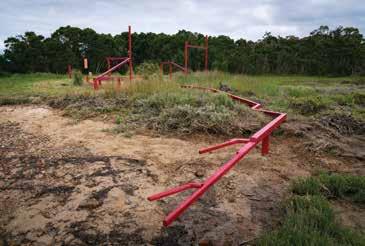
Until 19 February, MPRG is displaying Front Beach, Back Beach, an exhibition that is the result of a public art project that was held around the Mornington Peninsula in November. Following the multi-sited public art event that commissioned leading contemporary Australian artists to respond to fifteen sites and stories that have shaped the Mornington Peninsula, the exhibition brings together objects and documentation of the projects, interweaving and overlaying new perspectives from across the Mornington Peninsula.
Artists featured in Front Beach, Back Beach include Amanda Shone, Anna Breckon & Nat Randall, Geoff Robinson, Gold Santino, Hiromi Tango, James Geurts, Kait James & Jarra Karalinar Steel, LAST Collective, Lisa Waup, Lucy Bleach, Maree Clarke, Rebecca Jensen & Aviva Endean, Shane McGrath, Taree McKenzie and Vera Moller.
Front Beach, Back Beach was developed in partnership with Public Art Commission with major federal government funding from the RISE Fund.
MPRG Director Danny Lacy says, ‘Front Beach, Back Beach was a great success with many locals and visitors to the peninsula enjoying our programs and activities. From artist Lisa Waup’s paragliding sails at Portsea to local artist Vera Moller’s Submarine Garden at Flinders Pier, we were able to place art in unique and unexpected places to captivate a new audience. We are pleased to now bring aspects of the public art project inside the gallery walls for people to enjoy here over summer.’
Also until mid-February, MPRG is displaying the third iteration of the Collection+ exhibition series where works from the MPRG collection are paired with works by a major international artist. This time, MPRG is showing Julian Opie with the work of late Melbourne artist Judith Alexandrovics.
Julian Opie is a contemporary London-based artist whose instantly recognisable work often depicts figures and landscapes reduced to their essential outlines and flat colours fields.
Yet within the uniformity of his linear figures, their unique style and movement is captured in the simplification process.
Judith Alexandrovics is a Melbourne artist whose work is represented in the MPRG collection and whose oeuvre spans the decades since the early 1970s until 2019, the year prior to her passing. The exhibition will showcase her detailed etchings and aquatints, as well as a selection of her larger paintings, which are often the result of her etching studies. Many of the etchings on display have been posthumously reprinted from the original plates, with the permission of Judith’s family, by Trent Walter at Negative Press.
By drawing together this unlikely combination, we can see common threads throughout their work, both artists have observed and thoughtfully documented people in the landscape, particularly groups of people in the urban environment, the main thematic focus for this exhibition.
Exhibition curator Angie Taylor says, ‘Both Opie and Alexandrovics create a snapshot of people in unremarkable moments such as walking through the city, making their way to work, waiting for the tram or train, walking or waiting with an anonymous group of others. It is a fascinating portrayal of being in the presence of a group but not known to each other.’
MPRG also has a range of school holiday workshops for kids and teens, including a soft sculpture workshop inspired by artist Hiromi Tango and paint your own sneakers with teenager James Campbell of JCSoles. They also have a program for VCE students with artist Vera Moller who will explain concept development in her own creative practice and how to create sculptural works for various installation formats.
Head to the MPRG website to find out more about their exhibitions, workshops and events.
A: Civic Reserve, Dunns Road, Mornington P: 5950 1580
W: mprg.mornpen.vic.gov.au
56 | PENINSULAE ssence January 2023



PENINSULAE ssence | 57 January 2023
Judith Alexandrovics, People are Individuals 1975 (detail), aquatint on cardboard, Gift of the artist 1977
LAST Collective, Notes on Light and Air (Shoreline Score)
LAST Collective
Lucy Bleach, On this Shore
Vera Moller, Submarine Garden
Vera Moller
Home to a vast array of artisans, the Mornington Peninsula and Bayside regions brim with galleries, arts centres, and merchants to keep cultureseekers and craft collector's appetites satiated.


Visit one of the many available exhibitions, take in a show, or if you’re lucky, bring a piece of art home to enjoy in your own home, framed with precision.
Everything you need to fill the space, whether in the mind or on your walls is at your fingertips in this innovative, creative corner of the world.
58 | PENINSULAE ssence January 2023 COLLECTION+
FREE ENTRY Open Tuesday–Sunday 11am–4pm EXHIBITIONS / ARTIST TALKS / WORKSHOPS / KIDS PROGRAMS / ONLINE ACTIVITIES AND MORE –Julian Opie Walking in the rain, Seoul 2015 colour screenprint ed. 11/50 National Gallery of Victoria 10 DECEMBER19 FEBRUARY CURATED BY ANGIE TAYLOR MORNINGTON PENINSULA REGIONAL GALLERY
Judith Alexandrovics /Julian Opie
THE ESSENCE ON THE
PENINSULA
A COMMUNITY FOCUSSED GALLERY SUPPORTING BOTH ESTABLISHED AND EMERGING LOCAL ARTISTS


The Teal House Gallery opened last December, curated by Steve Broughton, Melissa Sotelo & Dr Brigid Burke, having had a number of successful exhibitions featuring local & emerging artists throughout the year.

The Teal house also offers a great creative space for workshops such as life drawing classes, contemporary music and vision (seensound.com) mentoring, art for therapy and Fabric Collage workshops. In the new year curator Steven Broughton will be running classes for contemporary landscape and seascape with oils.
Feel free to contact us if you have a workshop you would like to offer our community at the Teal House Gallery.
The Teal House Gallery is open:
Tues Wed & Friday 12.00pm until 5.00pm Thursday 12.00pm until 8 .00pm Saturday 2.00pm until 5.00pm
A: 6-8 Skye Road, Frankston
FB: @Tealhousegallery
W: thetealhousegallery.com
PENINSULAE ssence | 59 January 2023
Storm at the Sea by Steven Broughton
A COMMUNITY FOCUSSED GALLERY 6-8 Skye Road, Frankston www.thetealhousegallery.co m
LARGE SCALE AND HIGH-QUALITY ABORIGINAL ART AT EVERYWHEN GALLERY


Titled Grand Design, Everywhen Artspace's summer show is a carefully curated selection of contemporary paintings on canvas and bark, as well as sculptures by leading artists from around Australia.
"In the 14 years we've been showing Aboriginal art on the Mornington Peninsula, we've regularly presented an exhibition of high-quality work in January," says Everywhen's co director Susan McCulloch. "It's a great time to showcase some of the best of Australian Indigenous art. This year we decided to also feature works of large scale."
Notable in this exhibition, she says, is a one of the last paintings by Kunmanara (Pepai) Jangala Carroll, supplied by the artist's estate at Ernabella Arts.
"We're hugely honored that Mr Carroll's family and his art centre Ernabella Arts entrusted us with such a significant painting," says Susan. " In 2022 Sotheby's New York set an auction record for Mr Carroll's work and it's now extremely rare. We were very early supporters of Mr Carroll's work from 2009 and got to know him personally quite well. He was a Western Desert man who had married Alison Milyiki Caroll, a community leader at Ernabella, and moved some 500k from his community to his wife's country. His paintings always depicted his birthplace of Ilpili near Mt Liebig, NT."
Another work of note says Susan is the first collaborative Star and Moon Dreaming painting by famous Kimberley artist Mabel Juli and her granddaughter Atlanta Mercy Umbulgurri. "In 2021 Mrs Juli decided to pass her dreaming stories and the rights to paint them to her granddaughter Atlanta - a very talented 25-year-old. Atlanta has produced her own works under her grandmother's tutelage; however this is the first time the two have painted a canvas together."
Equally striking are large scale glowing works by APY artists including Alison Munti Riley, Atipalku Intjalki, Janice Stanley and Michelle Lewis from Ernabella Arts; those by Daisy Barney, Rosalind Tjanyari, Priscilla Singer, Raylene Walatinna and Yatjiki Cullinan from Iwantja Arts and Betty Campbell from Mimili Arts.
Textured ochre paintings from the Kimberley include those by the late Ned Johns, grandson of the famous land rights leader Vincent Lingiari; Jimmy McKenzie, son of the late Queenie McKenzie and soft hued works by Nancy Noonju.
Western Desert works include a subtle painting by leading artist Candy Nelson Nakamara and a strikingly patterned work by younger generation artist Renita Brown Nungurrayi.
Representing the famous painting region of Utopia are bush medicine works by Bernadine Kemarre; women’s ceremonies by Janet Golder Kngwarreye and Lizzie Moss Pwerle; gloriously coloured bush plum works by Belinda Golder Kngwarreye and yam dreaming paintings by Jeannie Mills Pwerle.
Barks and larrakitj (ceremonial poles) from Buku-Larrnggay Mulka in North-East Arnhem Land feature waterlilies and plants while sculptures are by Mornington Peninsula-based Palawa artist Dominic White and mimih spirits by Maningrida's Samson Bonson.
Grand Design runs until February 7. View online or visit gallery.
Everywhen Artspace - Open January, 7 days a week 11am-4pm A: 39 Cook Street, Flinders P: + 61 3 5989 0496 W: everywhenart.com.au
60 | PENINSULAE ssence January 2023
Mabel Juli & Atlanta Mercy Umbulgurri, Garn'giny Ngarranggarni (Star & Moon Dreaming), ochre on linen, 120 x 120 cm
167 x 198 cm
Iwantja Women's Collaborative, Ngura (Country), acrylic on linen,

PENINSULAE ssence | 61 January 2023
FAC'S GUIDE TO A SEASON OF ENTERTAINMENT
When Frankston Arts Centre’s Head of Programming, Heidi Irvine, chose the works for the 2023 Season, she specifically looked for pieces that brought hope, passion, inspiration and joy as a counterpoint to the pandemic. Some favourite companies return and some new ones emerge creating a theatre season with something for everyone – drama, comedy, cabaret, dance and music, all with a common thread - storytelling.
The 2023 season begins Sunday, March 26 with Wallflowering. A married couple who were once prize-winning ballroom dancers are now middle-aged. Times have changed and their divergent ambitions threaten to rock their boat. Dance is a metaphor for romance as well as the lens through which they see their idealised selves. Touching, funny, relatable and with some knock out dancing to boot, this is a great season opener.
Easter school holidays bring two very different shows: Thursday, April 13: Are We There Yet? is a humorous, lively adaption of Alison Lester’s much-loved picture book following a family on their caravan odyssey across Australia. Monday, April 17: Bunkasaurus, is a genuinely original physical theatre and shadow puppetry spectacular featuring two hilarious nincompoops bumbling around a box factory. Imagination and illusions abound.
Friday, May 5: First Nations company, Karul Projects presents Silence, an innovative, original contemporary dance production that shines a light on the notion of treaty. They use dance, physical percussion, theatre, projection and animation as the move through history. From the very dust, they rise. Powerful. Essential theatre.
Sunday, May 7: Melbourne International Comedy Festival Roadshow is an annual favourite picking out the best of the comedy festival and sending them into regional Victoria. This show always sells out, so get your tickets early.
Saturday, May 13: Garry Starr Performs Everything is a wacky, funny, smart, high energy physical theatre and observational comedy work that takes the audience on a journey through every form of theatre from Shakespeare to Japanese Noh.
Saturday, May 20: Sydney Dance Company’s [ab] intra is a visually arresting, emotionally affecting contemporary dance piece looking at the intense nature of existence, impulse and the human visceral response. It features an engaging soundtrack incorporating cello and electronica.
Friday, June 2: An Evening with the Melbourne Symphony Orchestra: Elgar’s Cello Concerto takes the audience back in time to Europe around World War One in a series of beautiful emotive pieces. The evening features five different works. Bring tissues. But don’t despair there’s a comedic piece in there.
Wednesday, June 7: Euphoria shines a light on small town country living and all its eccentricities in this heart-warming new Australian play critics are lauding for its exquisite acting, brilliant direction and clever story. An outstanding must-see theatre piece.
Friday, June 23: shake and stir’s production of Roald Dahl’s The Twits is a hit with kids filled with equal measures of wacky humour and disgusting nastiness, but the real heart of the story is transformation through good intentions. There are tricks and pranks, mischief and mayhem in this hilarious family favourite.
Tuesday, June 27: The Sunshine Club is an upbeat swinging Australian musical set in 1946 following an Aboriginal returned soldier who, despite serving his country, comes home to find some haven’t changed. He opens his own ballroom where he can dance with his girl and all are welcome. A real feel-good story celebrating simple pleasures.
Friday, July 7: The Alphabet of Awesome Science follows a couple of mad professors (a word nerd and a science freak) as they race through the alphabet creating 26 experiments for 26 words in 52 minutes! High energy hijinks!
Tuesday, July 11: Paradise or the Impermanence of Ice Cream is unlike any other theatre piece. It’s an existential deep dive into life and death and what matters in between. In a tour de force performance Jacob Rajan plays eight different characters. Hilarious and heart rending. Do not miss this.
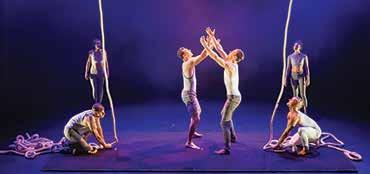
Thursday, July 20: By a Thread examines the ties that bind us. Seven circus acrobats share space and 30 metres of rope in breathtaking routines that frequently lift them right off their feet. Like falling dominoes, each affects the other.
Friday, September 8: Possum Magic is a thoroughly engaging, visually fantastic piece of theatre that faithfully brings to life an Australian classic. All kids must see it.
Thursday, September 28: Personal is insightful, funny and illuminating. Lost in Walmart, five-year old Jodee can’t understand why her mother doesn’t answer the lost child announcement. Then, she realises her mother is deaf. This play travels through Jodee’s life as the only member of an all deaf family.
Friday, October 6: The Divine Miss Bette is pure joy - a celebration of life, music and the impact of a spectacular personality – Bette Midler. With back up dancers and a live band, this performance will surely captivate.
Thursday, November 16: Otto and Astrid’s Joint Solo Project is a satirical crazy rock cabaret featuring a hilariously dysfunctional brother and sister who are punk pop rock stars. They want to tour solo, but no one wants to tour with them. So, they only have each other much to their chagrin. A whole different kind of musical comedy - sharp, witty, fun.
62 | PENINSULAE ssence January 2023 June 2022






PENINSULAE ssence | 63 January 2023
MORNINGTON ROTARY CLUB ART SHOW JANUARY 2023
January 2023 sees the Rotary Club of Mornington welcome the return of its annual Art Show to the Peninsula Community Theatre, corner Wilson Road & Nepean Highway, Mornington.
This year will feature some 750 paintings covering all categories including oils, acrylic, watercolour, and pastel. The judge for this year’s show is well respected Melbourne artist Susan O’Brien. The photography section will be judged by Yanni from MPNews group.
Our two feature artists this year, Gabrielle Young & Mike Kowalski, are well known local artists, and highly successful in their chosen fields. They are both regular exhibitors at the Art Show.

In addition, four artisans will present examples of their creations, including ceramics & sculpture.
Works from VCE students at Balcombe Grammar, Mornington Secondary College, Toorak College & Padua College will also be on display, illustrating the depth of talent & enthusiasm of senior students in exhibiting their artworks.
Our Patron for the 2023 Art Show is The Bays Hospital Mornington. We are delighted to have them at the forefront of this important local community event.
“The Bays Mornington Art Show Gala Opening Night”
Thursday January 19, from 7pm-10pm.
Tickets are $35 per person & includes finger food, drinks, musical entertainment & the opportunity to be the first to peruse & purchase fine new artwork to grace your walls.
Tickets are available online from our website: www. morningtonartshow.com.au

The Art Show runs daily 10am to 5pm, from Friday January 20 until Australia Day January 26 inclusive. Entry is $10. Works will also be able to be seen & bought online from our website from January 22 to January 29.
W: morningtonartshow.com.au
64 | PENINSULAE ssence January 2023
Dragonfly Trio II - Gabrielle Young Flinders Overlook - Mike Kowalski


ART SHOW Mornington 20 Jan – 26 Jan 2023 (Gala Opening Night 19 Jan) Open 10am – 5pm PENINSULA COMMUNITY THEATRE Cnr Nepean Hwy & Wilsons Rd, Mornington Online Art Sales available 22 – 29 Jan 2023 at morningtonartshow.com.au
ESCAPE ON tap

 By Andrea Louise Thomas Photos Yanni
Thereare many ways to escape, but when Russell and Nicole Matthews decided upon Escape Brewing for the name of their business in Capel Sound, they saw it as their escape from the corporate world. Russell was an accountant, working in finance, food production, operations and logistics. Nicole was working in corporate sales and marketing. Their complementary skill set was helpful in setting up the brewery business.
Eat & Drink
66 January 2023
C M Y CM MY CY CMY K
continued
page 68...

PARTNER IN PLANNING PTY LTD ABN: 25 147 390 734 ARE AUTHORISED REPRESENTATIVES OF A PARTNER IN PLANNING (AUS) PTY LTD AUSTRALIAN FINANCIAL SERVICES LICENSE 476202 HAVE YOU BEEN PUTTING OFF RETIREMENT PLANNING? WE DON’T BITE www.partnersinplanning.com.au 1300 880 100 326 Main Street MORNINGTON Partners In Planning N ot All F inancial Planners Are Built The S ame™ Self-licensed. No in house products. Not owned or controlled by the banks or insurers. We firmly beleive in our motto: Not all financial planners are built the same
For patrons, they wanted Escape to be a getaway – from the rat race, from the city - a place to make their own. The building is a true flex space that can be organised and configured according to need. It can be dressed up for functions or weddings or be a casual relaxed space with its rustic, industrial feel.
Escape is a big family-friendly place seating 80 people indoors. The outdoor beer garden has numerous tables with umbrellas. Even dogs on leads are welcome. There’s a basketball hoop for those in need of a bit of action. Inside, there is a pool table beyond the taproom where bingo and trivia nights add some extra fun to the events calendar.
Curious patrons can look through a large cut-out in the central wall to see the brewing equipment or they can book a brewery tour to understand more about the whole process. Craft brewing is an interesting and tricky business of prepping, brewing and fermenting. For consistency there has to be the right balance of temperature, timing and pH.
The taproom has eight very different brews on offer from a lager to a chocolate porter. Each beer is named after an iconic peninsula location. The taproom also dishes up a variety of tasty food. Two of their beers, The Sound Red IPA and The Belgian Golden Strong Ale won bronze medals at the Australian International Beer Awards in their very first year of production!
“Every beer has its own personality. One person’s beer is not another’s. As with food, everyone has a different palate. People are
attuned to different flavours. Perfect beer is in the eye of the beholder. We make eight different beers so we have something for everyone, but I believe sentiment and flavour create the ‘perfect beer’” Russ explains.
Putting their product on the retail market, Russ and Nicole made the decision to can their beer instead of bottling it because cans have a superior seal and keep flavour better. Also, the beer is never light struck. For those wondering if the metal of the can changes the flavour of the beer, it does not.
Initially, it was difficult to get the business up and running. Their planning permit was approved in February 2020; a month later, lockdowns and restrictions began. Their equipment arrived in August, but delays on building materials and restrictions, such as limitations on number of tradespeople on site slowed production. They started brewing in November 2021 and the taproom opened in February 2022.

Russ and Nicole started from scratch with an empty shell. (On their website there is an interesting time lapse video showing how it all came together.) Despite everything, their dream for the business never diminished. “Beer production is Russ’ passion,” Nicole says. It all began when Russ started home brewing. Then Nicole also got interested while Russ studied beer production in Melbourne. “Every beer comes from the same ingredients (malt, hops, grain, yeast) but what we love is the infinite variety they can produce. You could have two breweries side by side using the same

68 January 2023
Every beer has its own personality. One person’s beer is not another’s. As with food, everyone has a different palate
ingredients and they would still produce different beers. There are thousands of types of these four ingredients each with its own flavour,” Russ says.
Some ingredients are sourced locally and some from overseas depending on the beer. For example, with the Red IPA, the hops come from America; for the Munich-style lager, the hops come from Germany. The grains are Australian. The colour comes from the grains and the amount of grain (sugars) determines the strength. Flavour comes from the combination of all the ingredients.
For an escape into a welcoming space and a chance to imbibe a delightful variety of quality craft beer and eat some tasty food, Escape Brewing is the go. Originally open noon - 8pm Friday to Sunday, those days and hours are extended over summer. Why not be part of their expansion?




escape.beer

PENINSULAE ssence | 69 January 2023
FRANKSTON AUCTION MART ‐ Fabulous range of new, used & ex-display home furniture & homewares ‐ Over 50 years in Frankston City BUY DIRECT OFF THE FLOOR 46-52 New Street, Frankston Mon to Fri 9.30am - 4.00pm Sat 10.00am - 3.00pm Phone 9783 9613


WHOLESALE WINES DIRECT TO PUBLIC AT WHOLESALE PRICING
HASTINGS RETAIL STORE
TASTINGS, BOTTLE AND CASE SALES
2080 Frankston - Flinders Rd, Hastings
Tuesday to Saturday 10am to 7pm
9596 4278 DROMANA WAREHOUSE STORE
AND CASE SALES ONLY
Unit 5, 3 Trewhitt Court, Dromana Industrial Estate
Thursday, Friday & Saturday 10am until 5pm
9596 4878 Sterling Vineyards Prosecco NV Our Price $10 RRP $30 Viscossi 2019 Red Hill Pinot Noir Our Price $12 RRP $49 Momentum 2018 Clare Valley Shiraz Our Price $5 RRP $19 Yalumba The Y Series 2018 Pinot Grigio Our Price $7 RRP $14
NEW
WINE
LOCATION:
HOURS:
PHONE:
BOTTLE
LOCATION:
HOURS:
PHONE:
Wine Lovers Warehouse is the direct to public arm of our wholesale business specialising in restaurant, hotel, and function wines for over 17 years.
Wolf Blass Adelaide Hills High Altitude Chardonnay Our Price $12 RRP $25
T’Gallant Encore Sparkling Rosè Our Price $8 RRP $11

Yalumba Eden Valley 2018 Viognier Our Price $10 RRP $27


Hidden Ridge 2020 Heathcote Shiraz Our Price $10 RRP $25

FREE
We opened up the warehouse three days every week to the public, selling our wines and suppliers at trade prices and no retail mark ups. It is our commitment to remain open servicing the needs of our Wine Lover community into 2023 and beyond. Come along and say hello, grab a bottle or a case, and bring in this publication for a free bottle of bubbles with any purchase. BRING ALONG THIS AD FOR A BOTTLE OF BUBBLY One per customer until end of January 2023
COVID-19 put a big handbrake on our wholesale business and so we made a decision to transform and stay alive, supported by our friends and the local community, which we will be forever grateful. DIRECT TO PUBLIC MEANS YOU SAVE! See our full range on our website WINELOVER.COM.AU
WHOLE ORANGE & GINGER CAKE
Makes a 23cm cake
INGREDIENTS:
2 large oranges (about 350g)
300g caster sugar
3 eggs, at room temperature
300ml light olive oil 150g self-raising flour
METHOD:
50g shredded coconut 150g almond meal 1 tbsp ground ginger 20g fresh ginger, finely grated
Bring a pot of water that is big enough to fit two oranges to the boil. Slip the oranges in and allow them to bob around for at least an hour to an hour and a half. You want them to be soft enough that you can insert a knife into them easily. Drain and allow to cool. Trim the knobbly ends off and cut them into quarters, discarding any pips. Place the whole lot into a food processor or blender and blitz until they turn into a smooth pulp. You can always do this the day before and leave it in the fridge overnight.
Preheat your oven to 170c fan-forced and grease and line a 23cm springform tin then set aside.
In the bowl of a stand mixer beat the eggs and sugar together until thick and pale. This should take at least 5 minutes. Turn the mixer down and slowly pour in the olive oil in a thin and steady stream, followed by the orange pulp. Beat together until combined.
In a separate bowl, whisk together the flour, coconut, almond meal, ground ginger and fresh ginger until combined. Then fold this through the batter.
recipeCREME FRAICHE FROSTING

70g creme fraiche 150g icing sugar, sifted juice of 1/2 - 1 lemon sliced crystalised ginger (optional)
Spoon into your prepared cake tin and smooth the top evenly. Pop into the oven for about 65 - 70 minutes, or until a cake tester or skewer inserted into the middle of the cake comes out clean. If you find that your cake is browning just a little bit too much at the 60 minute mark, simply pop a sheet of foil over the top and return to the oven to continue to bake.
When your cake is ready, allow to sit in the tin for 10 minutes before removing and allowing to cool completely on a wire rack before icing.
To make the icing. Simply whisk the icing sugar, creme fraiche and lemon juice in a bowl until the desired consistency is reached. I would start off with the juice of 1/2 a lemon first and then see how you go from there.
Using a spoon, dollop the icing on top and then spread out towards the edge. Sprinkle over some thinly sliced crystalised ginger if you so desire. This cake will keep well in an airtight container in the fridge (once iced) for 5-6 days.
72 | PENINSULAE ssence January 2023
aminikitchen.com


PENINSULAE ssence | 73 January 2023 Stressless Stella C2 & 2.5 with headrest in Aster Off White, brushed. 20% OFF STRESSLESS SALE STARTS BOXING DAY 42 Watt Rd, Mornington I 5975 0344 | sorrentofurniture.com.au Sale

WANT TO LEARN ABOUT BACKYARD HENS?

Open weekend 18th and 19th March 2023
The growing popularity of owning backyard hens has largely been due to families wanting to become more self-sustainable. So why is keeping backyard hens so good for your family?
Well, hens make for fantastic pets! They love company and like nothing more than to spend time interacting with their owners. We hear lots of entertaining stories from our customers such as their hens going on school runs, on swings with the kids and happily jumping up onto their laps.

Of course, you can’t get more “local” food than what you get from your own backyard! When combined with a vegetable garden, your family becomes far more self-sufficient and able to live more sustainably.
Hen ownership also teaches children some important, practical lessons about life. Not only do they need to be responsible for feeding and providing water for their hens but they must collect eggs daily and keep the coop clean and safe. Excess eggs can also be sold or given away to friends and neighbours which is a great way of benefiting others in your local community.
We are holding our 4rd Annual - Open Weekend on the 18th & 19th of March 2023 from 10am to 4pm. It’s a great chance to visit the farm and see what keeping backyard chickens is all about.
There will be a range of fun activities for the kids such as a petting zoo, face painting, craft activities, presentation on backyard hens and more!

Come visit us!
A: 3590 Frankston Flinders Rd, Merricks
P: 0406 691 231
W: TalkingHens.com.au

Looking for backyard hens but unsure where to start?
Talking Hens is a family business that enjoys backyard hens. We specialise in friendly, egg laying hens with quality products to keep them happy and healthy.

There’s nothing like the friendship and entertainment that you receive from our laying hens - a pleasure to be shared!
Talking Hens
3590 Frankston-Flinders Rd
Merricks, Vic 3916
Opening daily: 10am to 4pm
Closed: Wednesday's
Open weekend 18th and 19th March 2023
For enquiries call 0406 691 231
Email: talk@talkinghens.com.au
Visit: TalkingHens.com.au
PENINSULAE ssence | 75 January 2023


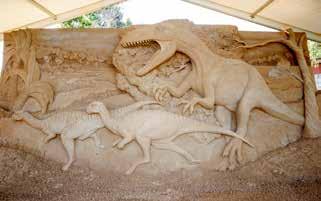


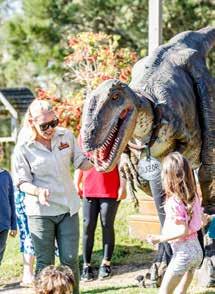


Be


ADVENTURE AWAITS AT DROMANA HABITAT


Dromana Habitat is an artisanal precinct celebrating the eclectic mix of makers and producers calling the Dromana Industrial Estate home, putting this abundant pocket on the map.


You'll find a tasting room and bar from the sparkling masters at Rahona Winery, a hidden cellar door by family-run winery Rhino Tiger Bear and a one-stop-shop for ocean-fresh offerings from Peninsula Fresh Seafood. Plant lovers will enjoy Verdant Dwelling and the oh-so-aromatic Red Hill Candle Co. Wander about the offerings at Bass Surfboards and Everwear Denim. Take home some delicious cheese from The Vegan Dairy and Boatshed Cheese. Not to mention, the well known TWØBAYS Brewing Co, Bass & Flinders, JimmyRum and Jetty Road Brewery to explore.


Leave the freeway and find the source at Dromana Habitat
Insta: @dromanahabitat_ Business opening hours and encounters: W. dromanahabitat.com.au

DISCOVER YOUR CREATIVITY


At Creative Makes we help people discover their creativity through a wide range of classes including, pottery, kids art classes, adults art classes, life drawing, collage, watercolour, paint and sip sessions, and kid's art parties.


All our classes are designed to guide people, at any stage of their creative journey, in an encouraging and supportive environment, without judgment or expectations.
Whether you are a complete beginner or have already started on your creative path, our facilitators bring their experience and enthusiasm for all things art and craft to the Creative Makes studio.
Our guest facilitators embrace this same ethos, and this allows the Studio to be a place of Creative Freedom. In the after-school classes the students are encouraged each week to think about their own individuality, so their work will be uniquely theirs. Learning through experimentation and exploration of different mediums, such as painting, drawing, printing, and collage.
You will experience this same exploration during our adults’ classes, encouraging a sense of adventure and connectedness.
78 | PENINSULAE ssence January 2023 location: 6 High Street Hastings VIC 3915 website: www.creativemakes.com.au email: melscreativemakes@gmail.com | phone: 0425 867 919 facebook/melscreativemakes | instagram/_creativemakes_
inspired
discover your creativity
studio is
fun and friendly space for people
would
creativity,
age
We will guide you to discover your unique creative
Pre-Primary and Primary Kids classes A comprehensive timetable of School Holiday Classes Adult Art and Creative classes Family Workshops Group classes and Private lessons (NDIS compliant) Custom workshops Home of Melissa Cupidon Art
to
Our
a
who
like to explore their
no matter their
or skill level!
self.
A: 6 High Street, Hastings P: 0425
W: creativemakes.com.au A collective of Mornington Peninsula makers and trades – connected by purpose, passion and process. TO MEET THE HABITUERS VISIT DROMANAHABITAT.COM.AU BASS AND FLINDERS DISTILLERY TWØBAYS BREWING CO LITTLE REBEL COFFEE ROASTERY
DENIM
867 919
EVERWEAR
VALLEY
RAHONA
JIMMYRUM
DISTILLERY
BOATSHED CHEESE
VERDANT DWELLINGS
MP CHEESE MERCHANTS
RHINO TIGER BEAR
RED HILL CANDLE
CO
JETTY ROAD BREWERY
BASS SURFBOARDS
COME AND EXPLORE THE 126x94 Pen Ess Mag DROMANA HABITAT Ad V1.indd 1 9/12/22 10:01 am
PENINSULA FRESH SEAFOOD THE VEGAN DAIRY
THERE’S ALWAYS SOMETHING ON AT THE ARTHURS SEAT EAGLE!
Spend summer time soaring the heights of the Mornington Peninsula with scenic views across Port Phillip Bay towards Melbourne, the coast and beyond

In recent years, the Eagle has become known for its seasonal festivals and events. With extensive interior renovations complete, it’s time for the exciting Eagle Summer Festival to begin and the buzz in the air is palpable!
From 26th December until 26th January you can enjoy a varied schedule of fun filled family friendly activities running every day!
Eagerly awaited by locals and holidaymakers alike, the Summer Festival showcases the best of the Peninsula in a magnificently breathtaking setting. Partnering with local businesses and community groups, the Eagle has put together a program that features local talent and creative collaborations.
From face painting, Lego and kung fu sessions, to balloon twisting, kids dance programs and magic shows, there’s always something on for everyone these holidays! Get competitive with outdoor activities set up at our revamped beachy base station, try kids yoga, or join in our collaborative painting class!
At the summit station enjoy a quality, casual dining experience at the newly refurbished Eagle Café. With amazing views from nearly
every table and an expansive outdoor deck, there’s plenty of room to sit with a coffee and a snack or even a local wine or beer… while the kids enjoy a holiday crafting session or roving musical performance!
Arthurs Seat Eagle is open from 9am until 6pm every day of the Summer Festival. To book tickets and see the full Summer Festival events schedule, go to www.aseagle.com.au
Arthurs Seat Eagle – there’s always something on these summer holidays!
W: aseagle.com.au


MORNINGTON PENINSULA'S SINGLE MALT WHISKY DISTILLERY
Mornington Peninsula has its own family owned and operated Single Malt Whisky distillery, Chief's Son, located in Somerville just five minutes off Peninsula Link.


Their tasting room is a hidden gem in an industrial area where you can sit and sip the nectars of the barrel, whilst being guided through a range of whiskies, all the time learning how whisky is made, what makes their whisky so unique and other whisky banter whilst overlooking the working distillery floor and barrel bond area.
Tours by the Distillers are a truly unique experience with their insights, the opportunity to get up close and personal with the still, taste whisky straight from the barrel and anything else special the distiller might have hidden away - it doesn’t get much better than that!
Come and congratulate them on their most recent win at the Australian Distilled Spirits Awards, you may even get to sample the award winning spirit - if there is any left!


Distillery tour, cheese platters and whisky tastings direct from barrel and still

Whisky Tasting

Mon-Fri 10am-4pm Sat & Sun 11am-4pm
Whisky Tours Fri, Sat at 11am
Check website for extra days in January. 25/50 Guelph St, Somerville (03) 9013 0859
chiefsson.com.au
80 | PENINSULAE ssence January 2023
Bookings:
GET INVOLVED:
Whisky tastings
Meet the distillers
Master classes – private and corporate, onsite and offsite
Bottle sales
Social events
DECEMBER - JANUARY


PENINSULAE ssence | 81 January 2023
Looking

1. Discover the Emu Plains Market at twilight. Unlike any other market you have ever been to the EPM twilights offer a festival like atmosphere featuring an amazing array of food, live entertainment, fun for the kids & of course 250+ of the very best stallholders Melbourne has to offer! Catch this iconic twilight on January 21 from 3pm to 8pm
W: emuplainsmarket.com.au
2. Visit the prettiest market around: Little Beauty Market has quickly become the creative hub of Frankston showcasing 100+ talented makers hand-picked for their uniqueness. Catch a special twilight market on 28th Jan from 3pm to 8pm to experience all the sights and sounds this beautiful market has to offer.
W: littlebeautymarket.com.au
3. Awesomeness everyday at Albert & Daphne: Drop in to the Untold Events Co bricks and mortar store in the heart of Main Street, Mornington all summer long! Explore locally made goods as well as curated treasures from across the globe. Open daily at 103 Main Street, Mornington W: albertanddaphne.com.au
UNIQUE AND UNEXPECTED
As you wander along the glamorous Sorrento shopping strip you simply have to visit Marlene Miller Antiques, an Aladdin’s cave of unique and unexpected treasures.


As soon as you walk into the shop there is so much to see, with two stories of antiques and bric-a-brac from lovely old tools, crystal and fine china to fur coats, hats, dining furniture with chairs by Jacob and Josef Kohn (established in 1849), hat boxes, old leather suitcases with great labels, as well as a great variety of lovely lamps to give your home that special ambience.
Upstairs hosts a range of books dating back to the 1700’s, prints and paintings. Known by reputation for her fabulous jewellery with lots of old (including Gold Rush jewellery which was actually made during the Gold Rush)and mourning jewellery which was created to mourn the death of a loved one and became popular in the 1800’s, along with newly created hand-made pieces by Melbourne’s top jewellers.
Marlene Miller Antiques has been in Sorrento since 1985 and has been in her present purpose-built building for over 10 years.

Make it a point to visit this eclectic store as a part of your vist to the Mornington Peninsula over the summer.


82 | PENINSULAE ssence January 2023 Support local, support handmade, support innovation, support love, support small business... support your local market! EMU PLAINS TWILIGHT MARKET JANUARY 21 | 3PM-8PM EMU PLAINS RESERVE, BALNARRING www.emuplainsmarket.com.au LITTLE BEAUTY TWILIGHT MARKET JANUARY 28 | 3PM-8PM BEAUTY PARK, FRANKSTON www.littlebeautymarket.com.au ALBERT & DAPHNE Love supporting small businesses? Why not check out our interest store of curious goods! 103 MAIN STREET, MORNINGTON | WWW.ALBERTANDDAPHNE.COM.AU PROUDLY BROUGHT TO YOU BY THE UNTOLD EVENTS CO.
CO! 128 Ocean Beach Rd, Sorrento m: 0438 537 757 e: marlenemiller3@bigpond.com Specialising in antique jewellery, as well as newly-made jewellery by Melbourne’s top jewellers
HAPPY NEW YEAR FROM THE UNTOLD EVENTS
P:
M:
A: 128 Ocean Beach Road, Sorrento
5984 1762
0438 537 757
for some super fun things to do this January? Here’s the Untold Events Co. MUST DO list!
PENINSULAE ssence | 83 January 2023
CREATE YOUR STORY WITH BLACK FINCH


Situated in the heart of Sorrento is a newly opened contemporary jewellery store, Black Finch. Upon entering the space there is an immediate sense of the striking, playful and luxurious nature of the brand. Filled with beautiful coastal light, handmade fine jewellery and artisan sculptures, the responsestay and look a little closer.
Founded over 15 years ago by master jeweller Raymond de Zwart, Black Finch has called inner-city Melbourne home. However, with a growing community and evolving team Raymond and Creative Director Davina Adamson, have recently opened a second location in Sorrento. Working alongside a skilled team of trained artists, jewellers and designers the brand aims to deliver an elevated experience for those seeking a unique piece of fine jewellery. "The pieces we make play with colour and form to create beautiful and unexpected outcomes that are highly personalised," said Raymond.
Browse the sculptural display cabinets to explore the collection of everyday fine jewellery, ready-to-ship engagement rings and wedding bands. It’s the perfect opportunity to try on and layer pieces with the assistance of a Black Finch stylists. Along with the dreamy pieces you’ll find in the retail space, there’s nothing the Black Finch experts love more than guiding clients through their own custom design adventure.
Davina adds, “You are the dreamer, we are the dream-weavers.” Each client brings to the team personal tales of romance, celebration and milestones to honour; which is artfully translated through a play of colour and timeless design. The process is a collaboration; where clients can share, discuss intent, and review design sketches. Watching the rainbow assortment of in-house diamonds and precious stones be laid out in front of you is when the piece begins to take on a life of its own. Gazing into the magic of each stone allows clients to form an attachment, carefully
84 | PENINSULAE ssence January 2023
visitmp.org/events events + markets Markets, masterclasses, festivals, music, and much much more for you to explore. Explore More summer events, live music, festivals and Mornington Peninsula entertainment. Scan the QR code to find out more.
selecting their perfect stone collection to tell their personal story. You leave a consult knowing your Black Finch custom alchemises one's personal story, through interesting form and gemstones with a little extra personality.


Feeling a deep responsibility when designing and producing future heirlooms, Black Finch pursue principled material sourcing and design practices. Working with 100% recycled gold, ethically sourced sapphires, and guaranteed conflict-free diamonds, makes each design even more beautiful. Each piece from Black Finch comes with an independent third-party valuation certificate, as well as insured shipping and a lifetime guarantee from the brand.

Black Finch create true heirloom pieces that will be cherished and passed down for generations to come. Whether you’re looking for an everyday piece, or an eye-catching engagement ring, make Black Finch Jewellery your first point of call.
Open Monday to Sunday, 10-5pm or book a custom consultation.
W: blackfinch.com.au
Contemporary Fine Jewellery Studio with a love of colour and design. www.blackfinch.com.au Shop C 85-99 Ocean Beach Rd, Sorrento, 3943

PENINSULAE ssence | 85 January 2023
on
Balnarring

The population of Balnarring area in 2021 was 5149 (including Balnarring, Merricks, and Somers).
The median house price for Balnarring is $1,395,000 and the median rent is $697 per week.
Balnarring Beach, also known as Tulum Beach, lies at the mouth of Merricks Creek and overlooks Phillip Island. Racehorses are trained on the beach early in the morning six days a week.
From 1857 onwards, the Government created a number of Land Acts designed to open the land, offering blocks to smallscale farmers. The Parish of Balnarring was surveyed in 1865, as part of the "Agricultural Area of Mount McMahon". Most of the selectors were orchardists although dairy farmers also took an interest in the area. In the 1920s, the construction of cool stores at Red Hill increased their ability to trade their produce further afield.
The formation of the Balnarring village came with the opening of the post office in 1866, a school in 1871, and a church in 1881.
On 23 August 1899, the Balnarring Mechanics' Institute was opened by the Hon. F.S. Grimwade (MLC North Yarra, 1891–1904). It was a timber hall, used as a community hall and social centre by the community until the 1960s. A new hall was built in 1969. In 1970 the Mechanics' Institute building burned down, and in 1979 a reserve was declared in its original location.
Just to the east of Balnarring on the coast in neighbouring Somers are the Coolart Wetlands. This nature reserve surrounds the historical Coolart Homestead which was built in 1895 and includes a lagoon where thousands of Australian white ibis nest every year, plus attractive picnic and BBQ areas.
The Balbirooroo Community Wetlands border the commercial centre, and include a lagoon and walking trails.
Balnarring Beach holds the award for the "Cleanest Beach in Victoria" from the Keep Australia Beautiful committee.
In 1924, the Harley Davidson Motor Cycle Club built a clubhouse at the beach and it is still there today. The club members met at the Cheero Tearooms at Balnarring presumably after they had been beach racing at Balnarring Beach. The local council prohibited beach racing around 1930, so the club members then used Bob and Frank Myers property (who were local members) for racing. In 1926 Milledge Bros. Pty Ltd of Elizabeth St Melbourne purchased 2 lots of land from the Balnarring Beach Estate for the use of the Harley Club. Milledge Bros. were the importers of Harley Davidsons at the time. Club rooms were built on this land and were opened in December 1928. From 1930 until the mid-1950s Mr. K.J. Rattray Wood of East Brunswick was listed as the owner of the land and he rented it to the Harley Club. Today, although the board over the gate still says 'The Harley Club' the house is privately owned. This is certainly an unusual piece of Mornington Peninsula's history.
Coffee Safari

Freshly brewed coffee is a must-have for weekends. Here are a few places to check out when you're in this beautiful part of the world.
Phase Two SHOP 11, BALNARRING VILLAGE
3050 Frankston-Flinders Road
With a flavourful all-day menu, locally roasted coffee and friendly service, this cafe has become a firm favourite in Balnarring Village and is loved by locals and weekend visitors alike.

Village People Balnarring
SHOP
15, BALNARRING VILLAGE
3050 Frankston-Flinders Road
A great spot to chill out for breakfast with excellent coffee and vegan options available. An outdoor seating area under the trees is also available.
86 | PENINSULAE ssence January 2023
Focus On
Balnarring is a town situated on the Mornington Peninsula, approximately an one hour and 15-minute drive from Melbourne. The Aboriginal meaning for Balnarring is "camp in open places"


PENINSULAE ssence | 87 January 2023 • No more mud in your gutters • No more vermin or birds in your roof • Protect your most valued investment -your home, your building • Gutters stay clean - no more cleaning • Save money and cleaning time • 25 year guarantee 1300 220 869 SUMMER SPECIAL - FREE GUTTER CLEAN WITH EVERY INSTALLATION 25% OFF! *Valid until 28/02/2023
DOWN ACROSS
US cotton state
Unfilled jobs
Took on
Duck's mate
Hiking holidays
Presented with
Wood-smoothing sheet
Cyberspace personas
Visual spectacles
Small computer
Inborn skill
Tidy, spick & ...
Padlock clasp
Actor, ... Irons
Keen
Place
An ... but a goodie
Aural orifice
Actress, ... Paltrow
Geometric shape
UK racecourse
Telephonists
Thabo Mbeki's former party (1,1,1)
Escape clauses
Coronets
Cuban capital 60. Conclude 61. Ache
False pretences 64. Former Chinese leader, ... Zedong 65. Typist's complaint (1,1,1)
Liberates (4,4)
Explorer, ... Polo 72. From Edinburgh 75. Chamber 77. Grape variety, pinot ... 78. Male deer 79. Yemen's neighbour 81. Mail sack 83. Beaten with rod 84. A person 86. Stink 87. Robbery 90. Spiral nail 92. Actress, ... Winslet 93. Subside 95. Republish 96. Dodges (duty) 98. 365 days 99. Pacific nation 100. Fable writer 101. Failures 102. Crest 103. Star of 30 Rock, ...
Baldwin 104. Sudden invasion 106. Rent out again 110. Contains 113. Actress, Mary ... Hurt 115. Las Vegas is there 116. Providers of loans 117. Regard favourably 118. Unsuspecting dupes 119. Perhaps 122. Family vehicle 125. Hades 126. Descriptive nickname 127. Masculine 129. British physicist, ... Hawking 130. Tropical root vegetable 131. From Bangkok 132. Sworn promise 133. Cash points (1,1,2) 134. Latest 137. Rubbish 138. Thought of 142. Emirate, ... Dhabi 143. Negotiable (1,1,1) 145. Fascinates 146. Proportion 149. Communicating 151. Slogged 152. Casual garment (1-5) 154. Restricts to stereotype 156. Curve 157. Protecting 159. PA, per ... 161. Inhabit in ghostly form 163. Large stork 168. Denied 171. Body part 172. Cupboard 176. Whip (yolk) 177. Sew 180. Jolly laugh (2,2) 181. Military subdivision 183. Christian festival 187. Stacked 188. Despoil 190. Historical-records collection 191. Crisp sugary confections 192. Furiously 193. Muddle 194. Join (contest) 195. Precook 196. More disobedient 197. Biofuel
1. Stop! (nautical) 2. In vain, to no ... 3. Attachment (3-2) 4. Tots up 5. Hangs loosely 6. Waistcoats 7. Passionate 8. Ballroom dance (3-3) 9. Bandage (up) 10. Words of encouragement (3,4) 11. Post haste (1,1,1,1) 12. Declaim 13. Copy outline of 14. Handsome 19. Serpents 20. Different 25. Farmhouse cooker 26. Early anaesthetic 27. Israeli port, ... Aviv 29. Put on ... & graces 31. Onto 32. Judaism follower 33. Drummer, ... Starr 34. Rug 36. Vigorous exercise classes 39. Uninformed 40. Greek Cupid 41. Therapies 42. Puritanical 44. Boo & ... 46. Pap 47. Reverberate 49. Norse navigator, ... the Red 50. Wow 51. Ship's lowest decks 53. Ball/stick game 54. Qualifying rounds 55. Emblem of Wales
Nuclear 59. Overseas 63. Depict 66. Metal chimneys 67. Cigarette puffer 68. Peerages 70. Country, Saudi ... 71. Smile, say ...! 73. Frozen cover 74. Sounded (horn) 76. Prima donna (5,6) 80. Dimension 82. Interrupting cough 85. Has to repay 88. Improperly 89. Thick syrup
90. Neuter 91. Stretched (for) 94. Ventured 97. Invalidates 104. Replay 105. Dictator 106. Roof beam 107. Weak (excuse) 108. Inequitable 109. Stringed instruments 111. Fasting period 112. Become involved (4,2) 113. Decapitate 114. Suppresses (feelings) (5,2) 120. Non-believers in God 121. Groups of troops 123. Addis Ababa natives 124. Attacks 127. Ripe 128. Celebratory yells 135. For a particular purpose (2,3) 136. Extinct reptile 139. Persians 140. Painting stand 141. Click (fingers) 144. Against 147. ... & Eve 148. Longing 150. Flower stalk 153. Elderly 155. Pass (legislation) 158. Sketches 160. Great Salt Lake state 162. So be it! 164. Government bill 165. Thrilled cry 166. Ransacks 167. Foils 169. Supplement, ... out 170. East-northeast (1,1,1) 172. Encryption 173. ... & scraping 174. Gold lump 175. Flag 177. Acute 178. Lay oneself open to 179. Nile River city 180. Macho guys (2-3) 182. Electroshock weapon 184. Flooded 185. Coordinate (3,2) 186. The R of RSPCA 187. Cure 189. Dublin republic
88 | PENINSULAE ssence January 2023
57.
1.
6.
11.
15.
16.
17.
18.
21.
22.
23.
24.
28.
30.
32.
35.
37.
38.
40.
43.
45.
47.
48.
52.
53.
56.
58.
62.
67.
69.
Corner Puzzle
PENINSULAE ssence | 89 January 2023 See page 104 for solution
operating for 2 years. over 30 homes that we manage on the peninsular. boutique by design and family-run treat our owners homes like our own.


Property management, no worries
this is a professional,

Discover a boutique, familyfriendly, comfort-plus lifestyle village – with just 46 Villas that’s what Peninsula Lifestyle Retirement Village in Baxter offers. Each Villa offers retirement luxury living with Caesarstone benchtops, air conditioning, built -in-robes, double glazed windows, high ceilings and European appliances. Share stories with other residents over a cuppa in the community centre or get creative with those who share similar interests.
With the warmer months inspiring summer getaways, Ready Set Stay is over the moon for its clients who have already received countless bookings.
and family-run.
short-term
have a
an eye for
design. After years

for

Run by sisters Tammy and Jade, who alongside their experienced team are proud to offer a professional, fullmanagement service. They provide their expertise in short-term property management, Airbnb management, vacation rentals, and medium-term rentals as well as offering their skills in interior design, photography, marketing, housekeeping, urgent maintenance and booking management. It’s destined to be a busy summer, with an abundance of people treating themselves to a Peninsula vacation after recent travel restrictions. Consider the potential of turning your furnished Peninsula property into a booming holiday rental. It can become a reality for you with the assistance of Ready Set Stay. The best bit is that it costs nothing to come on board. Ready Set Stay is your hassle-free passive income partner. READYSETSTAY.COM.AU

Whether it be a craft morning, a game of indoor bowls, darts, billiards or simply enjoying a movie or sports event on our big screen.
Tone up in the gym, while away hours in the potting shed and raised vegetable gardens or simply relax with a book from the library.
Discover Independent Living with a sense of community complete with security for peace of mind. There’s something for everyone.
90 | PENINSULAE ssence January 2023
REPLACE THE WINTER BLUES WITH REDS W readysetstay.com.au FB readysetstay E info@readysetstay.com.au WE CAN MANAGE READY SET T: Tammy, 0401 490 423 or E: info@readysetstay.com.au W: www.readysetstay.com.au
to
Are expert a sufficient ment? need shoot Jade and
hassle-free Block to Set bonds, between. your Peninsula property into a thriving holiday rental without lifting a finger. It sounds almost too good to be true. Ready Set Stay is a new player in short-term property management on the Mornington Peninsula, and
full-management service. It’s boutique by design
Sisters and
property management professionals Tammy and Jade
passion
property and
interior
of renovating and renting their own Peninsula holiday homes, they have a consolidated their knowledge and expertise to launch Ready Stay. Operating for 2 years now as a boutique business, Ready Set Stay have over 30 homes managed on the Peninsula. Both Tammy and Jade make sure
treat each property like their own.
to nance.
PENINSULA PROPERTY EXPERTS
- MICHAEL PRENTICE


PENINSULAE ssence | 91 January 2023 “A Conscious effort is made at all times to provide the correct advice and uphold our industrywide reputation for integrity and professionalism.”
Since 1946 A NAME SYNONYMOUS WITH REAL ESTATE ON THE SOUTHERN PENINSULA FOR OVER 75 YEARS TWO HIGH EXPOSURE OFFICES LOCATED AT RYE AND SORRENTO 2395 Point Nepean Rd, Rye 03 5985 2351 78 Ocean Beach Rd, Sorrento 03 5984 4177 enquiries@prenticerealestate.com.au prenticerealestate.com.au
ounded
is well
We
PRENTICEREALESTATE.COM.AU PENINSULA PROPERTY EXPERTS
F
in 1946 by William (Bill) Prentice, Prentice Real Estate Pty Ltd.
recognised as the longest serving independent, Family owned and operated agency on the Mornington Peninsula. Having gained a wealth of knowledge in all aspects of local Real Estate over this 75 plus year period, handed down through three generations, we know that we can offer our clients the best in expertise and advise with their property transactions.
have two high exposure offices at Rye and Sorrento, both of which are managed by fully-licensed second and third generation members of the Prentice family. Michael Prentice, Officer in Effective Control, is based at the Rye branch and heads up a team of passionate, caring, locally based individuals whose collective years of experience in the area is without peer. Our philosophy is simple: We are committed to excellence in the services we offer, and upholding an industry-wide reputation for integrity and professionalism that has, for three generations, been a trademark of this company. Should you wish to have an obligation free chat about your next property move, we would welcome your call.


92 | PENINSULAE ssence January 2023


BUYER’S AGENCY OF THE YEAR
BUYER’S AGENT OFTHE YEAR
With over 20 years experience servicing Somerville, Frankston and the Mornington Peninsula, you can be assured that when you engage Walsh Conveyancing to act on your behalf in the sale or purchase of your home, one of the most important financial transactions of your life will be handled by an experienced professional with the skill, care and attention it deserves.

Buying a property is one of the most important and stressful decisions you will make in your lifetime. When purchasing a property in Victoria, there are a number of legal and contractual processes that must be undertaken.
Walsh Conveyancing will take care of all legal paperwork ensuring that you are making the right decisions.


Whether you're upsizing, downsizing or moving into Aged Care, Walsh Conveyancing bring a wealth of experience, guidance and support for you through these times. We’ll be with you every step of the way supporting you through the sales process. P: 5977 5111 WALSHCONVEYANCING.COM.AU
- CHRIS WALSH

Professional, experienced and affordable conveyancing services.
Whether you’re upsizing, downsizing or moving into Aged Care, Walsh Conveyancing bring a wealth of experience, guidance and support for you through these times. We’ll be with you every step of the way supporting you through the sales process.
READY TO GET STARTED?
Call us on 5977 5111 or visit www.walshconveyancing.com.au
94 | PENINSULAE ssence January 2023
Taking the stress out of buying or selling your home.
PENINSULA PROPERTY EXPERTS
“My experienced team and I bring an open, honest and professional service”.
Melbourne’s new CBD on the coast. Victorians now know there are real benefits to living and working away from the CBD. The Mornington Peninsula has emerged as one of the best places to chase this lifestyle, combining beautiful coastal and country surrounds with an air of Melbourne style.
Award-winning local real estate agency Nichols Crowder has seen demand for shops, warehouses and offices in the region grow exponentially over the past year. Low vacancy rates in the area are great news for business owners, investors and the community alike, signaling stability now and in the future.

While many think residential when they think of the Mornington Peninsula, the commercial and industrial properties available may offer lower costs and higher returns due to the nature of the category and market averages.
And if you want proof of the market’s growth, Nichols Crowder saw the average sales price of industrial buildings over 250 sqm increase by 19.6% in 2020-21. A trend expected to continue.
Talk to the local experts at Nichols Crowder to learn more about the many benefits of investing in the Mornington Peninsula.

For further details contact: Nichols Crowder Mornington Office 4/230 Main Street Mornington P: (03) 5925 6005
MICHAEL CROWDER 0408 358 926


NICHOLS CROWDER.COM.AU

PENINSULAE ssence | 95 January 2023
“Our passion has helped us grow into the leading commercial and industrial property agents in Melbourne’s South East”.
- MICHAEL CROWDER
The Crowder family has been selling and leasing real estate on the Mornington Peninsula for three generations. This is where we live, where we’ve raised our children and where we know commercial and industrial property best. Leaders of the South East nicholscrowder.com.au Carrum Downs 1 Colemans Road 9775 1535 Mornington 4/ 230 Main Street 5925 6005 Moorabbin 358 South Road 9559 3888 Part of the Peninsula PENINSULA PROPERTY EXPERTS
Real Estate Revolutionised


Over the past few years, we have seen unprecedented changes in all facets of our lives due to the pandemic. Every industry has had to learn to adapt and change the way they interact with their market if they want to thrive moving forward and none more than the real estate sector.
Lockdowns across Melbourne and Victoria meant that the traditional home inspection and property appraisal were no longer possible. It became a case of being inventive or even reinventing to continue to sell and lease property. Harcourts Mornington is a leading example of getting it right. They have been rewarded for their investment in leading edge technology along with what can only be described as the Peninsula’s most unique and exciting real estate office.
I had heard about the office from a few different industry sources over the past few months all with the same feedback of “wow you have to go and see this office in Mornington”. So I had to see it for myself, and caught up with Tony and Cameron at their office located in the heart of town at 95 Main Street Mornington. Brilliantly positioned amongst the banks, post office and newsagency in the busiest pocket, the old real estate adage of location, location, location, rings loud and true. Teeming with people up and down the sidewalk, during my visit I observed a constant stream of inquisitive eyes looking over 20 or so properties on offer in their window. Uncluttered and modern LED backlit A3 window cards feature
properties ranging from $500,000 to over $4,000,000 and is supremely effective, as I witnessed again and again with those browsing the window walking in to make further inquiries, surely the perfect outcome for both the agent and seller? Thankfully, it seems the use of TVs that are almost impossible to view through the day that quickly scroll through properties and agent selfpromotion are a thing of the past. Stepping inside, as you feel compelled to do from a peek through the windows, you realise this is no ordinary real estate office and Tony and Cameron are no ordinary estate agents. They should be applauded for their courage and willingness to reject the outdated real estate design of cramped impersonal cubicles to embrace the ideal of people first. It has led to a unique, warm, and harmonious approach to a workplace where the staff love to come to work and strive for excellence. To quote Tony, “Cam and I realised early on returning to the office was going to be a challenge for everyone. We wanted our people to have a workspace where they wanted to be, not had to be.” No doubt they meant it, it’s evident in every detail big or small throughout. Challenges they took in their stride by creating multiple workspaces separated with casual lounge and dining spaces where staff and clients can meet, discuss and collaborate.

A decision to embrace the building’s 100 year history ultimately proved to be a masterstroke. By incorporating its past instead of covering it up or painting over it as is so often the case, they have managed to take you on a journey of its many incarnations. You find yourself noticing more of the details they have retained and preserved, from the striking large, exposed steel beams, small repairs and additions over the decades and my favourite little piece, newspapers from the early 1960’s used in the concreting are retained and preserved on view.

The clever use of different material used throughout creates a brilliant contrast from industrial elements to the natural warmth and feel of marine ply with hanging plants throughout. An almost eclectic collection of custom chairs and sofa provide balance against the exposed polished concrete floors. Stunning one-off pieces of aboriginal art adorn the walls with everything brought together with wonderful mood lighting. Suspended cable trays weave their way around through the office like train tracks around pipes, and under beams and carry cutting edge technology including a custom built server and IT cloud ensuring complete control over the security and ownership of all data.


Communications are now on all digital platforms and the most reliable and sophisticated software and

applications available on the market ensure their clients have access to every resource and tool on offer to get their home sold. The outcome is complete flexibility for both the team and their clients being able to access anything they need 24/7 from anywhere through the privately operated independent cloud service.
Ultimately, I have to say Tony and Cameron have nailed it. Their team truly love coming to the office and as a result are some of the happiest and most focused people I have met since we all started returning to the office post pandemic. A number of clients came and went and I immediately noticed how relaxed and comfortable every one felt. I’m in no doubt that the team at Harcourts Mornington approach every aspect of the business of selling and leasing real estate with the same refreshing and people-first focus, certainly, well overdue for an industry so often maligned for its treatment of its employees and the public.
So, if you find yourself in Main Street Mornington with a few minutes to spare, drop in for a sticky beak. Tony and Cameron are always happy to say ‘hi’ and show you around.
03 5975 3000


mainstreetmarketmornington www.mainstreetmornington.com.au Home Grown Home Baked | Handmade | Home Grown Handmade Hand Baked for supporting our community market. STREET MARKET Victoria's running EVERY WEDNESDAY 9 - 3 MAIN STREET | MORNINGTON Home Baked | Handmade | Home Grown THANKS LONGEST
The Thirty-Three Trees
By Ilma Hackett - Balnarring & District Historical Society
The small, white, weatherboard church is overshadowed by old pine trees. It occupies a prominent corner at the junction of Balnarring, Stumpy Gully and the Frankston Flinders Roads at Balnarring. This is St Mark’s Anglican Church. It celebrated its centenary in 2014 and several of the pines that crowd the grounds in front of the church may also have passed their centenary. The oldest were planted in 1918.
A church is built
In the early years of the 20th century Balnarring was a rural community with a population of about 500. It was made up of grazing properties, farms and orchards. It had no centre as such. The central Van Suylen property had been subdivided during the 1890s, and as reported in the Mornington Standard in 1908, "The Balnarring district . . . has changed considerably during the last few years, and been cut up largely into smaller holdings and settlements." On the corner of Buckley’s Road (Balnarring Road) and the Frankston-Flinders Road there now stood a general store on one of these smaller holdings. Some short distance further north, a Mechanics Institute Hall had been built opposite the school with the sports reserve a little further north from the school. Roman Catholic settlers had built a church on land at the corner of Buckley’s Road and the track that ran from Bittern to Dromana. Those of the
Anglican and Presbyterian faiths could worship at the small Union Church that was built at Merricks some thirty years earlier. Here services were held for the two groups on alternate Sundays.

However, Balnarring was growing at a faster rate than Merricks and the Anglicans were looking for a more central location. Land at the tip of the triangle formed by Stumpy Gully Road, Balnarring Road and the Frankston-Flinders Road had been granted to the Church of England in 1868 and in 1912 a Vestry of seven was formed at Balnarring with Thomas Cole as secretary and the Reverend Cyril Eva as vicar. Shortly afterwards the group applied for a grant to help build a church at Balnarring. The simple, rectangular, weatherboard construction with its steeply pitched and gabled roof was completed two years later. An unusual feature was its twin porches on one long wall. One was the entry porch; the other, the vestry. The dedication service was held on April 26th, 1914.
Two months later, in a distant European country, the heirpresumptive to a foreign throne, and his wife, were shot dead during a state visit. Europe was plunged into chaos and another two months on Australia found itself involved in a war that would be long and bloody. Britain had declared war against Germany and, so, member countries of the British Empire also found themselves at war. Including Australia.
PENINSULAE ssence | 99 January 2023
continued next page...
Above: St Mark's dedication day, 26 April, 1914.
Top:
Above: Ron Stone's Welcome Home certificate.

“For King and Country”
Young men from the district began to join the Australian Imperial Forces; they enlisted for “King and Country”. Some joined because friends and brothers were going. Three of Jim and Euphemia Cavanagh’s sons joined up, two boys from the Myers family and two of the Stone brothers. Some possibly went for the adventure but most felt a duty. Farm labourers, a blacksmith, a groom, a baker, became soldiers. Vic Ford was just eighteen when he signed up, as was Ron Stone. Ernie Warnecke was a year older when he enlisted in 1917. He died that same year - not on the battlefield, not overseas. He caught meningitis at the Recruits Depot and died in the Fairfield Hospital. Most were young men and unmarried but there were one or two who left a wife behind. As each man went away he was given a public farewell by the community in the local hall.
They were sent to all the main theatres of war. To Turkey and Gallipoli - Private Ben Hintze went missing in the chaos of the landing. His family spent months trying to find news of him. “Missing in action”, until that final letter from his sergeant; “Killed in action”. Private Fielding survived Gallipoli but died in an Egyptian hospital from pneumonia. Graham Myers spent long months gravely ill in a British hospital when he caught influenza while serving in France. He was one of the many Balnarring young men who experienced the horror of the Western Front. Myers came home. John Cavanagh did not. Lance -Corporal Berryman saw action in Palestine, where he died whilst on a reconnaissance mission. Seven of those young men who went from the Balnarring area did not return.

The Home-coming
Each of those who did return was given a joyous, public ‘Welcome Home’ organised by a special committee of the Balnarring Progress Association. The women decorated the hall with greenery and flags for each home-coming. There were speeches, an official presentation and a concert followed by supper and a dance. The official presentation consisted of a framed Address of Welcome Home, beautifully hand-lettered on parchment, and an inscribed gold medallion. Money raised from these Welcome Home celebrations went towards the purchase of an Honour Board to occupy pride of place in the Balnarring Hall. This was unveiled, on 26th November, 1920 by Major Balmain, career soldier and owner of Coolart. Major Balmain was a British officer who had been with the 15th Kings Own Hussars. He came to Australia as an aide-de camp to the Governor General in 1904 where he married Alison, the daughter of George Fairbairn. Fairbairn purchased the Coolart Estate as a wedding gift for them. When war broke out Balmain had rejoined his regiment and fought with distinction on the Western Front. The committee decided it was more appropriate to present him with a gold-mounted walking stick with an additional gold band, suitably inscribed, instead of a medal, but of equivalent value.
continued next page...
100 | PENINSULAE ssence January 2023
Ron Stone's gold medallion presented on his return.


PENINSULAE ssence | 101 January 2023
SPECIALS CAMBERWELL | CARRUM DOWNS | GLEN WAVERLEY | ROSEBUD | HAMPTON CONTACT US for a FREE Measure & Quote Connect with us #Carrum Downs Store Only Luxury Bremworth # Wool Carpets and a huge range of Timbers and Oaks available in store PLUS! • CARPETS • TIMBERS • LAMINATES • VINYL • TILES • BLINDS • ENGINEERED FLOORS • HYBRIDS • PLANTATION SHUTTER S • FLOOR SANDING & POLISHING • WALLPA PER OPEN 7 DAYS Shop 9/991 Point Nepean Rd, Rosebud Shop 2/544-546 FrankstonDandenong Rd, Carrum Downs 1300 069 340 www.mikescarpets.com.au 3 ROOMS HYBRID 3 ROOMS WOOL CARPET FULLY INSTALLED $1900* FULLY INSTALLED $1990* *conditions apply *conditions apply PRESENT THIS AD TO REDEEM THIS OFFER PRESENT THIS AD TO REDEEM THIS OFFER
Above: St Mark's corner, 1930.
Honour Boards and memorials


St Mark’s church also organized an Honour Board with the names of the men from its congregation who had enlisted in the war. It hangs there today honouring the seventeen men, including Major Balmain whose family had been benefactors of the new church. His father-in-law, as a Peace Offering when the war ended, wrote off the church’s debt to him, money he had loaned the church when it was being built. Balmain’s name had been omitted, at his request, from the board designed to hang in the Balnarring Hall. That was for the enlisted men. Twenty-six names were on that board which was made of treated mountain ash, designed and made by Robert Prenzel of South Yarra. It was the committee’s second choice of design as the first was too big for the number of names submitted. The board was ordered to be completed by 25th October 1920 and delivered to the railway station at Bittern. The total cost was £30/-/-.
Peace Celebrations saw Balnarring combining with Bittern to hold a Sports and Picnic Day at the Balnarring Sports Reserve with refreshments provided in the Mechanics Hall opposite. A general celebration of the end of the war. Later the Progress Association obtained a Trophy Gun, a small machine gun that was mounted on the edge of the stage in the hall. (At the beginning of World War II this was confiscated, as was the old duelling pistol that was also on display.)
There was no town square in Balnarring, no focal point where a cairn or other public memorial might be erected. Nor were trees planted to form an Avenue of Honour anywhere along one of the roads that passed through the district.

102 | PENINSULAE ssence January 2023 continued next page...
Above: World War I Honour Board, in St Mark's Church. continued next page...
Discounted for pensioners and low income health care card holders. Also claimable with some private health funds IT’S TIME TO BOOK A MOLE MAP MONITORS SKIN FOR ANY NEW OR CHANGING MOLES Rosebud Skin Cancer Centre 1079 Point Nepean Rd, Rosebud Ph 5986 1600 Mornington Skin Cancer Centre 93 Tanti Ave, Mornington Ph 5975 9544 Cranbourne Skin Cancer Centre 74 - 76 High St, Cranbourne Ph 5995 1036 For early detection and treatment of melanoma


PENINSULAE ssence | 103 January 2023 continued next page... Your dream kitchen awaits... Dream Doors Kitchens is the home of the amazing kitchen facelift. We can update your doors, handles, benchtop, and splashback, giving your kitchen a brand new look without having to replace the existing cabinets. Faster Keeping your existing cabinets means your kitchen can be done in as little as 3 days Cheaper Keeping your existing cabinets can save you thousands over a brand new kitchen Better Locally owned and Australian Made, backed by a 10 year warranty, plus we manage all the trades. WE ALSO SPECIALISE IN WARDROBES Visit www.dreamdoors.com.au to find out more DDK Melbourne South & Peninsula Call Bevan on 0414 060 481 or call 1800 373 263
St Mark’s trees


However, the members of St Marks church decided to plant memorial trees at the front of their church. Church records show that thirty-three ‘ornamental’ trees were ordered from the State Nursery, one for each man from the district who had served in the war. These were duly received and working bees held to prepare the land and then plant the trees. But were the trees, in fact, pine trees? Miss Cole recorded in her small history of the church that the memorial trees did not include the cypresses planted along the front fence which were put there at a much later date. Enquiries brought differing opinions. A spokesperson from the National Trust Heritage Trees said pines could be classed as ornamental trees; others said European trees were more common. No-one who grew up in the Balnarring area remembers trees other than pines being around the church.

Today it is difficult to pinpoint just which trees are the original trees. There have been several attempts to identify the oldest trees in order to attach a name to each. Margaret Hindson a member of the both the Balnarring Historical Society and the St Mark’s congregation undertook research work. It was not an easy task. The names on the Honour Rolls together with the names of those
given a Welcome Home as recorded in the Progress Association Minute Books totalled more than the thirty-three specified by the church records. And what of someone like Corporal Taylor? An Englishman, he had been working as a groom at Coolart when he enlisted. He did not return to Australia after the war but remained in England when discharged, leaving a ‘wife’ and child behind in Balnarring. Yet Taylor’s name is on the Honour Board. There was also the problem of those whose names appeared on other Honour Boards within the wider Balnarring district. Were they among the thirty -three counted?


A Lone Pine replacement

The ageing pines present a problem. Their life span is finite. They will fall or need to be removed. Some years back there was talk that some or all of the trees might be removed as part of road works for that very difficult intersection, once called “Six Ways Junction”, where several roads come together. But the church and its memorial trees have heritage listing. The Balnarring Historical Society organized the acquisition of a Lone Pine seedling to be planted in the church grounds as an eventual replacement for the pines.

104 | PENINSULAE ssence January 2023
Main
•
79
St, Mornington
5977 0708 www.ideasbythebay.com.au
Above left: St Mark's 1946.


Above right: St Mark's 1969.





PENINSULAE ssence | 105 January 2023
continued next page...
As Individual
You
Now stocking Paul Taylor Eyewear 7/68 Barkly Street, Mornington
Eyewear
As
Are
Joan Backhouse, a member of both the church and the historical society, took delivery of the seedling from Bill Burgess of Legacy. It was formally presented to the Church on January 25th, 2009 when a “Blessing of the Tree’ was held by the then vicar, the Reverend Jennifer Furphy. Joan tended the young pine until it could finally be planted in the church grounds. It grows there today, to the east of the building.
The original thirty-three trees planted in 1918 may or may not still be there. However, the trees that dwarf the church today, and which have been there for a very long time, do symbolize the years of World War I and the men from Balnarring who volunteered to fight.


References: Minute Books of the Balnarring Progress Association
Phyllis Cole: Days to Remember
World War I Records
Photographs:
From the collection held by the Balnarring & District Historical Society
Above: The Lone Pine plaque. Below: St Mark's today, with memorial trees.
106 | PENINSULAE ssence January 2023


