PENINSULA
CHASING VISTAS

FREE APRIL 2023
Living & Visiting on the Mornington Peninsula
world. Women's Spirit • Youth United • Bayside Harmonies In Their Element • Super Coffee • Casualties On The Home Front
Photographer
Stephen Laurence's work conveys an appreciation of the natural


5983 5348 balnarringdentist.com.au Book your COMPLIMENTARY ALL-IN-5 consult with one of our dentists. A brand new smile is CHEAPER THAN YOU THINK! ALL-IN-5 DENTAL IMPLANT for the SAME PRICE as All-IN-4 A BRAND NEW SMILE WORTH SHOUTING ABOUT!
Writers: Andrea Louise Thomas, Joe Novella, Muriel Cooper
Photography:
Yanni, Gary Sissons
Creative: Sam Loverso, Dannielle Espagne

Publisher: Melissa McCullough
Advertising: Andy Jukes, 0431 950 685, andy@mpnews.com.au
Phone: (03) 5974 9000
Registered address: 63 Watt Road, Mornington 3931 W: peninsulaessence.com.au
FB: @peninsulaessence
Insta: @peninsulaessence
Leading
10. Women's Spirit
Run by a group of passionate and accomplished women, The Women's Spirit Project is a volunteer-led initiative that aims to inspire and empower women experiencing disadvantage.

18. Youth United
No one is more aware than Maree Strong of the effect Covid has had on children and young adults. Her youth group ‘Youth United’, is an integral part of the Western Port community.
Arts
24. Chasing Vistas
Tootgarook photographer Stephen Laurence has travelled to 44 countries on six continents, but still believes that every postcode on the Peninsula has something special about it.

30. Bayside Harmonies
Male voices have so often been associated with work or war but now choral music that began in Wales' green valleys floats across the blue waters of Port Phillip Bay.
Eat & Drink
39. In Their Element
All material is copyright, and may not be reproduced without the express permission of Mornington Peninsula News Group, or the original copyright holder in the case of contributions. Copyright of contributed material rests with the contributor.
Disclaimer: The authors and publisher do not assume any liability to any party for any loss, damage or disruption caused by errors or omissions, whether such errors or omissions result from negligence, accident or any other cause. This publication is not intended as a substitute for the medical advice of physicians. The reader should regularly consult a physician in matters relating to health and particularly with respect to any symptoms that may require diagnosis or medical attention.
Peninsula Essence is produced monthly. 30,000 copies (mix of home delivery and bulk dropped at an extensive network of outlets across the peninsula).
Elements Eatery operates on a unique hospitality vision: to deliver a locally-inspired food experience that promotes healthy food choices, celebrates local produce and embraces an environmentally conscious approach to poolside dining.

44. Super Coffee
Grant Williams set out to create an instant coffee that didn’t taste like instant coffee that could be enjoyed anywhere.
Focus On
56. Focus on Portsea
Historical facts, café recommendations and what to do in one of the most popular peninsula destinations.
History
61. Casualties on the Home Front
All four Bartram boys enlisted in World War I, three were killed. Their brass plates are a feature of Frankston’s Avenue of Honour.
Every Month
6. Peninsula
4 | PENINSULAE ssence April 2023 39
50
Proudly published by This product is from sustainably managed forests and controlled sources. www.pefc.org PEFC Certified Cover image by Yanni
Styles 58. Crossword 10 ISSUE 84
contents
HOLIDAY GUIDE easter

MAIN ST EYECARE
The be val de loire range of sunglasses from Sabine Be feature a round, oversized acetate frame remincient of the glamorous looks of the sixties. Handmade in France.

7/68 Barkly Street, Mornington 5975 3235
OZ DESIGN FURNITURE

Invite bold styling into your home with the Emile Console. Made from gorgeous rustic reclaimed elm, this light wash timber can be integrated into any interior style. With enough storage space, this is the perfect piece to get creative with your styling. Discover the Emile living and dining room collections. HomeCo. Peninsula 1128, Showroom D4/1132 Nepean Hwy, Mornington 8560 1137 ozdesignfurniture.com.au

KIBU IMPORTS
These rattan trunks make a great addition to any space, perfect for storage or even as a bespoke coffee table.

PENINSULA Styles
PRODUCTS FROM THE PENINSULA WE'RE SURE YOU WILL LOVE
2/1 Colchester Rd, Rosebud 5986 6778 kibuimports.com.au


QUIRKIE SU
Quirkie Su make loveable, unique wares from upcycled and new materials from their studio at St Andrews. Their range of stunning woolen jackets, available in a range of colours, are perfect for the cooler months. Find Quirkie Su and other traders at Emu Plains Market. Emu Plains Reserve, Balnarring emuplainsmarket.com.au
6 | PENINSULAE ssence April 2023

MORNINGTON
What's on?
APRIL 15 EMU PLAINS MARKET
Meet the makers that are causing a craft revolution under the stringybarks! The EPM brings together the community for a monthly festival-like feast of art, food, design and culture set within the picturesque emu plains reserve, Balnarring. emuplainsmarket.com.au
APRIL 22
NEDS MORNINGTON CUP


Set up trackside with mates for a guaranteed great day out. There will be food trucks galore and a DJ pumping out tunes. Or enjoy the atmosphere in the Neds Garden Bar or the threecourse menu in the Gunnamatta Restaurant. Be sure to book your experience early. tickets.mrc.net.au
APRIL 15

HAND BUILT PLATE AND MUG SET

In this super fun 2 hour workshop you'll learn how to hand craft and decorate the perfect breaky set using hand building techniques such as pinching, slab rolling and coiling. After the workshop your set will be fired in a beautiful house glaze and ready to collect three weeks later once it's been through the kiln. stoker.studio/creative-studioall
APRIL 29
PETS' DAY OUT

Discover which pet would be best suited to your family and meet the charities that can help you adopt them. Get the lowdown on the newest trends in pet training and grooming, or enter your pet into the popular pet parade. Pets' Day Out is a fun and free annual community event that delights animal enthusiasts of all ages. Ballam Park, Frankston. discoverfrankston.com/petsday-out
APRIL 21 - 30 DRIFT FESTIVAL
DRIFT will bring the Peninsula’s venues, places and spaces to life with art of all disciplines, including performance, music, visual arts, film, public art installations, multimedia and projections, writing and literature and local food and wine. driftartsfestival.com.au


APRIL 29


AUSTRALIAN PLANTS SALE
Held by the Australian Plants Society Mornington Peninsula Inc, this event features native and indigenous plants from local and regional growers, workshops on plant maintenance, and a bookstall. Located at The Briars, 450 Nepean Highway, Mt Martha, Entry is free. apsmorningtonpeninsula.org

8 | PENINSULAE ssence April 2023 www.emuplainsmarket.com.au Emu Plains Reserve, Balnarring # iheartepm $4 parking to support Westernport Rotary & Emu Plains Reserve. Sorry, no four legged friends. ATM on site! join us under the stringybarks Bring the whole family for amazing live music, incredible food, local beer & wine, fun for the kids, workshops and the best collection of market stallholders in Melbourne! SATURDAY 16TH FEB 9AM TO 2PM
APRIL 2023
MORNINGTON CUP DAY
Mornington Racecourse | Saturday 22 April

Step out in style at Neds Garden Bar, the top spot to play on Neds Mornington Cup Day, where members and the public can indulge in an all-inclusive food and drinks package while enjoying a prime trackside location and live music in an elevated garden party atmosphere. Neds Garden Bar is the ideal place to immerse yourself in every memorable moment.
Book today at mrc.racing.com
The top spot to play on Neds Mornington Cup Day

WOMEN'S spirit
 By Joe Novella Photos Yanni
Allover the Greater Frankston and Mornington Peninsula regions, there are individuals and groups of people doing amazing things. One such group is the Women's Spirit Project, an incredibly passionate and accomplished group of women who run and manage a grass roots, volunteer-led initiative that aims to inspire and empower women experiencing disadvantage by transforming their lives through fitness, health and wellbeing activities.
The Women's Spirit Project (WSP) was started in Frankston by Jodie Belyea, an experienced community development professional, in 2018. "Working in a community centre in Frankston and at various other community service providers, helped me to understand the magnitude of the trauma women and their families faced through abuse. Establishing the WSP with women from our Frankston community was a no-brainer; a natural progression for me as a local woman, a professional and passionate community change maker."

Jodie herself experienced the trauma of abuse first-hand. "The WSP was an idea formed by my lived experience," she said. "I experienced family violence and sexual abuse as a child, teenager and young woman." But the experience did not defeat her and she found the courage to create something that would leave a lasting impact on her community.
"I had a 25-year career in the community sector where I learnt about the value of fitness, health and wellbeing activities along with counselling and other ways to work with trauma. I learned what works and what doesn’t. My work experience gave me a real understanding of the value of the benefits of being in the outdoors: walking, yoga, meditation, art and journaling as therapeutic tools that don’t cost a fortune but are not accessible to those who need them the most. And those learnings formed the platform upon which the WSP was built."
continued next page...
PENINSULAE ssence | 11 April 2023
According to Jodie, we've seen acceleration in the issues facing women since the onset of the pandemic in 2020. "The stats from Frankston and on the Mornington Peninsula in terms of rates of domestic/family violence, attempted suicide by women, loneliness and isolation, and experiences of anxiety and depression, were, and are, alarming. They are not reducing; they are climbing, particularly since COVID19."
To combat the increasing challenges women face, the WSP has grown its volunteer base and has expanded its service offerings to include a much bigger corridor in the south east including the local government areas of Kingston, Frankston and the Mornington Peninsula. Programs on offer include Catchup and Connect Walks, Leadership and Professional Development Training for Women, International Women’s Day Walk, Meditate and Swim event, Frank to Schanck 60km Walk and others; many of them are free to join.

The WSP's flagship program is 'Spirit Of Transformation' – an 11-week program that improves wellbeing by building self-esteem, resilience, connection and life skills through activities including goal-setting, problem-solving and conflict resolution, yoga, journaling, small group activities, mindfulness, walking and talking, as well as facilitating referrals to community support services. The program is currently scheduled to run in the Cities of Kingston and Frankston from March to June, with the WSP hoping to secure sufficient funding to bring another program to the Peninsula as well.
However, none of these programs are cheap, so to keep them as 'free' or 'low-cost' events, the WSP needs to raise funds to complement the already generous contributions from philanthropic trusts, individual citizens, local businesses and government groups. One such event is the upcoming documentary ‘I AM ENOUGH’,
12 | PENINSULAE ssence April 2023
We've seen acceleration in the issues facing women since the onset of the pandemic
Women's Spirit Project members and volunteers joined by Councillor Despi O’Connor, Mornington Shire Council and Councillor Sue Baker, Frankston City Council. (Photo Supplied)
filmed by local filmmaker Thomas Barnes. Planned for 2 June, it will share the stories of women who have transformed their lives by joining WSP programs.

"Keeping the WSP going is a must in order to continue supporting women in our region," said WSP Project Manager Birte Moliere. "No other organisation or programs exist of this nature, offering a free/accessible range of fitness, health and wellbeing programs and opportunities for women to connect and recover from trauma in its various form in the Frankston, Kingston and Mornington Peninsula regions. This is a unique and impactful organisation and model of recovery not on offer elsewhere in Victoria from our research; it is filling a gap and meeting a need."
As well as being a godsend for many women in the south east and Mornington Peninsula regions, the WSP provides fantastic opportunities for volunteers to make a real and lasting impact
on the lives of women less fortunate than themselves. The WSP regularly posts volunteering opportunities on their website for those interested in joining 'Team Teal' and, according to many of the volunteers, such as Lesley St Clair-Paul, volunteers receive as much as they give. ‘The impact of volunteering with WSP, for me is not an act of ‘giving’; it is a true gift of ‘receiving’. I get to be a part of an amazing, strong, very supportive, resourceful and united local community," said Lesley.
Diana O'Malley, another volunteer adds, “As a volunteer in the Women's Spirit Program, I gained leadership skills and invaluable experience in working as a team. I hope the Women's Spirit Project continues to grow and develop so that many more women can benefit from this unique program.”
The WSP has attracted support from high profile people including Federal MP Peta Murphy who has been named as WSP's ambassador, but its success is still heavily reliant on support from
PENINSULAE ssence | 13 April 2023
IMAGE: Mike Green, Room with red 1986, screenprint, 57.2 x 77.5cm (detail), MPRG Collection. Gift of the artist 2022. DEBORAH KELLY CREATION 1 MAR—21 MAY MIKE GREEN STANDING ON THE INSIDE 1 MAR—21 MAY JULIE BLYFIELD FLOWERS OF THE SEA 1 MAR—21 MAY TUES—SUN 11AM—4PM FREE ENTRY SUPPORTED BY CIVIC RESERVE, DUNNS RD, MORNINGTON MPRG.MORNPEN.VIC.GOV.AU MORNINGTON PENINSULA REGIONAL GALLERY continued next page
the general public, grant providers and local businesses in the form of donations and funding.
"My vision," said founder, Jodie Belyea, "outside of empowering more women through our program offerings, is to secure the support of federal, state and local government to obtain support to roll out and fund these sorts of programs for women, men and young people."


And if anyone is any doubt about just how important a service the Women's Spirit Project is providing to those women who need
help in our community, the words of those who pass through the programs resonate most of all. "It took some time but I have finally recovered my capacity to trust a little more, and smile. This was missing due to experiences of severe family violence and being very isolated with no supports. This program has enabled me to reach out for help and get the supports I need to be able to deal with the trauma of family violence." KW.
womensspiritproject.org
14 | PENINSULAE ssence April 2023


PENINSULAE ssence | 15 April 2023 Come and see the best of Retirement Living at Village Glen on the magnificent Mornington Peninsula Open day on April 22 10am-3pm WWW.VILLAGEGLEN.COM.AU 335–351 Eastbourne Road, Capel Sound VIC 3940 FOR MORE INFORMATION CALL US ON 03 5986 4455 LIVE ALL MORNING


16 | PENINSULAE ssence April 2023March 2023 • Indoor/Outdoor Furniture • Homewares • Giftware • Tables • Chairs • Lounges • Bar Tables and Stools NEWINGTON AVE BONEO RD COLCHESTER ROAD FACTORY 2 BONEO ROAD 2/1 Colchester Road, Rosebud | kibuimports@gmail.com | 5986 6778 Come in and visit us today to view some of our new stock or find us on contact EASTER WEEKEND sale


PENINSULAE ssence | 17 April 2023 • Sun Lounges • Market Umbrellas • Massive range of Rattan • Cushions • Lamps • Jewellery • Artworks, and much more! OPEN 7 DAYS ALL SUMMER STOCK REDUCED! GOOD FRIDAY EASTER SATURDAY open EASTER SUNDAY EASTER MONDAY

The best way for children and young adults to become involved is to turn up at one of the Youth United meetings
YOUTH united
 By Muriel Cooper Photos Yanni
Twentyyears ago, Maree Strong had a vision of how she wanted to run outreach groups for children and young adults, ‘I was shy, so I told other people about it, but no one listened, says Maree with a chuckle, ‘so I had to do it myself.’

Maree’s five children attended youth groups, but Maree’s vision, although spiritually based, was also about more – learning life skills like communicating, getting along with one another, and focusing on what they had, rather than what they didn’t have. ‘My aim was to give them a lifeline for the future,’ she says. Although not overtly religious, spiritual practices like reflection and gratitude have been preserved.
Now, twenty years on, Maree’s youth group ‘Youth United’, based at the Uniting Church in Hastings, is an integral part of the Western Port community.

‘The first night, I got eight children; after that, it just blossomed. I could not have visualised where it was going to go. It started with one group, then went to two, and kept going.’
Maree’s groups are not just about spirituality and learning life skills, they’re about having fun, like shaving cream surfing. Money is always tight, so when the conditions are right, a tarpaulin is put down and covered with shaving cream, and bubble bath soap for everyone to surf along, an activity Maree hopes to reintroduce now that Covid restrictions have eased. Karaoke is another popular activity.
Meetings begin with craft (Maree strongly believes in creative activities), and then there’s gratitude and reflection. ‘And food,’ Maree says. ‘There’s got to be food.’ Meetings end with Milo and a game, ‘Usually keeping something off me,’ she says with a laugh. Life isn’t always fun, though; ‘There’s always trauma and sorrow in life,’ she says. During reflection, the participants listen to and support one another.
Maree believes one of the most important life lessons is learning to believe in yourself. ‘Sometimes kids look down on themselves. If you don’t like yourself, then you can’t move forward,’ she says. So, what’s her secret? Maree says being consistent, having a gratitude circle and developing self-confidence and self-trust. showing kids that the trust they put in her, they can put in themselves.
continued next page
PENINSULAE ssence | 19 April 2023
Maree and the participants also go out into the community. Before Christmas, they potted plants and gave them out as small acts of kindness, and a group visited the residents and staff at The Bays Nursing Home, dispensing gifts, and cheer. ‘It changed them quite a bit,’ says Maree, ‘and they enjoyed it so much they’re talking about doing it again.’
Another activity Maree hopes will return is ‘Carols by Afternoon Light’ at Christmas, which Maree organised just before the pandemic. The children and young adults wrote a play, and other faiths joined in an ecumenical performance followed by a barbeque that highlighted the importance of community.
One activity held every year without fail is that Maree invites the children and young adults to her home for a meal.
No one is more aware than Maree of the effect Covid has had on children and young adults. ‘So many of them are anxious and shy
now,’ she says. ‘My focus for them is on hope; sadly not such a big thing in their lives these days. You need to be part of something.’
Maree includes parents, and participants must have a parent’s permission to attend. She runs a drop-in group on Fridays for parents and children and has even organised a singles group for parents without partners. Money, craft items, and food are donated so that the activities can be free of charge.
Maree’s efforts were rewarded recently when she became reacquainted with one of the participants who is now twenty. She spoke glowingly about her time with Maree and said, ‘For me, it’s just family.’
Maree acknowledges the assistance she’s had along the way. ‘Over the years, people have helped, supported, and trusted me,’ she said. ‘It’s made such a difference. For me, it’s all about community.’
The best way for children and young adults to become involved

20 | PENINSULAE ssence April 2023
is to turn up at one of Youth United’s meetings. They are:
• Mondays from 6.30PM grades four to nine.
• Every second Tuesday at 6.30PM is for those children who like a quiet group.
• Wednesday nights at 6.30PM is the main group meeting.
• Sunday nights are for years ten and up.
• Friday afternoons are a drop in time for both parents and children

For more information, call Maree on 0424 249 601

Donations are always welcome. The best way to donate is to drop off your donation at one of the meetings. Financial donations dedicated to Youth United can also be made to the Uniting Church:

Rev. Nigel McBrien
0456 298 267
Email: westerportuniting@gmail.com
PO Box 25 Hastings Vic 3915

PENINSULAE ssence | 21 April 2023
Expect to pay around half the price SUITE 6 UPPER LEVEL 38A MAIN STREET, MORNINGTON www.diamondcoco.com.au FOR AN APPOINTMENT CALL 1300 230 430


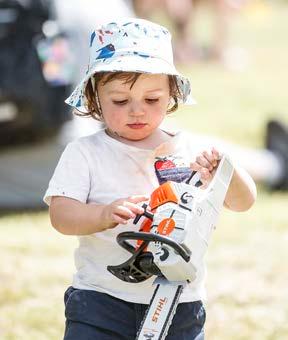


Photos Yanni 95th REDHILL SHOW Saturday 11 March 2023 | Labour Day Weekend ENTER you EXHIBITS NOW! | Red Hill Show Grounds | 8.30 - 5pm ill sh ow.com.au Create your own show experience! Proudly supported by our major sponsors: Mornington Peninsula Shire, 3MP Radio, Hillview Quarries, Gendore Tractors, Balnarring Bendigo Bank Robot Trading, Hastings Mowers, Mornington Mazda & MP News Group. Mornington Peninsula Paddock - New Horticultural Stage & Activities - Cider & Mead Show - Woodchop Australian Mountainboarders - Exhibits - Animals galore from the smallest rats & ferrats to horses Sheep Shearing - Working Dogs - Kids Workshops - Gumboot Throw - Tractors - Local Live Music Art & Craft Stalls - Food Trucks - Kids sports games- Face painting - Carnival Rides and much more... 14 & FREEUNDER KIDS RED HILL o c o m a u BOOK ONLINE and save via our website - ALL RIDES & ACTIVITIES FREE with entry ticket 22 | PENINSULAE ssence


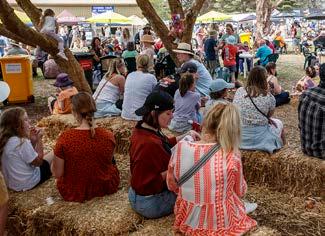



April 2023

CHASING vistas
By Andrea Louise Thomas Photos Yanni

Tootgarook photographer Stephen Laurence has travelled to 44 countries on six continents. World travel has been on his mind since childhood. He used to paste images from travel magazines inside his schoolbooks and dream of going to faraway places. First on his bucket list was Mount Everest. It did not disappoint. There he realised he wanted to be a professional photographer. He spent the next four years circling the globe chasing images.
One of Stephen’s favourite childhood memories is ‘Slides Night’. His parents were avid travellers. As a family of fifteen, they couldn’t all travel together for practical and financial reasons, but his Dad was a keen travel photographer. He’d have his negatives developed into slides to share pictures of Europe, Canada and Australia with the children. Occasionally, his parents would return with a couple of foreign travellers too!
Stephen grew up on the family’s fully self-sustained farm in Yarram, South Gippsland surrounded by family, farm animals and nature. It was a very grounded, present existence. They had no television, so ‘Slides Night’ was the children’s view on the outside world; when they weren’t outdoors, that is. Living without TV meant the family became very close and the kids developed a deep appreciation of the natural world.
continued next page
PENINSULAE ssence | 25 April 2023
Stephen’s Dad, uncle and sister, Sharon, were all camera buffs. They loved talking about cameras and their accessories. They were more than happy to share how to use them. For Stephen, it was an incidental education that proved very useful later in life. ‘Slides Night’ also provided an education on how a photographer frames and views the world. Images and traveller’s tales planted a seed.
That seed grew as Stephen got older and started to take his own photos at 13 on a point and shoot camera with the old disposable flash bulb. He can distinctly recall the excitement he felt waiting for the film he’d mailed away to be developed and returned in prints. Sometimes he couldn’t remember what was on that roll of film because it had been a while since he’d finished
shooting it. When the package arrived, he couldn’t get it open fast enough.
At high school Stephen was interested in maths and sciences. In fact, he went on to achieve a degree in Physics from RMIT, but photography was always his creative outlet. He worked a wide variety of jobs: senior information analyst, boutique farm stay proprietor, outdoor instructor, image reviewer, ballroom/Latin dance instructor and digital marketing coordinator. However, professional photographer is the title that makes his heart sing.
After four years travelling abroad Stephen began his formal education in photography. He achieved a Diploma of Photography

26 | PENINSULAE ssence April 2023
I try to bring a bit of joy, colour and happiness to people.
at the Photography Institute and a Certificate IV in Photo Imaging at Melbourne Polytechnic. These courses covered everything: shooting on 35mm film, developing and printing in a darkroom, working with digital photography and using editing software like Adobe Photoshop and Lightroom.
His studies in science and geography at high school ignited his passion for landscape photography. Living in British Columbia, Canada, in his early twenties with its majestic mountains, forests, coastline and sea provided ample inspiration for a budding photographer, but that was just the beginning. He also lived in London, and Cape Town; each were launching pads for exploring their respective continents.
continued next page
Dr Peter Scott and Associates are specialist orthodontists offering orthodontic care for children, teens and adults alike in both the Mornington Peninsula and inner Melbourne.


Dr Peter Scott is also a consultant at the Royal Children’s Hospital.
Specialist Orthodontists


Creating Beautiful Smiles on the Peninsula for over 30 years

PENINSULAE ssence | 27 April 2023
Expertise In Child And Adult Orthodontics Early Assessment Of Dental Development And Facial Growth Ideal Age Of Initial Assessment 7-9 Years Early Intervention Where Appropriate For Best Outcome No Referral Necessary Interest free payment plans available 13 Beach St Frankston Ph: 9783 4511 www.drpeterscottorthodontist.com.au www.facebook.com/drpeterscottorthodontist
Spending four years travelling the world opened his eyes to different cultures, customs, religions and the sheer diversity of the human race.
Stephen's favourite locations for landscape photos are: Mount Everest, Patagonia, Tasmania and the Mornington Peninsula. The back beaches from Cape Schanck to Point Nepean are his favourite Peninsula locales. He finds the ruggedness invigorating. The wild sea, the light changing colour hourly over rocks and sand, the indigenous plants and timeless natural beauty endlessly captivate him.

“My work revolves around living on the Peninsula. I love it down here. I feel privileged to call this place home. There are so many photographic opportunities nearby. The rocky coast, beaches, hinterland forests, grasslands, wetlands and wineries.


It’s incredible. Every postcode on the Peninsula has something special about it. Sometimes, I don’t even take photos. I just enjoy being in it. My camera keeps me company when I go for a walk,” he says.
Relaxed, simple and naturalistic is how Stephen describes his style. “Whether it’s the clear crisp sunsets of winter, vibrant colours of spring and autumn or the isolation on a long walk where I have the whole landscape to myself, I try to capture the feeling of a place. I’ll adjust exposure, shutter speed or filters to convey that emotion. I try to bring a bit of joy, colour and happiness to people,” he says.
stephenlaurence.com
28 | PENINSULAE ssence April 2023
Photos: Stephen Laurence
Discover your inner explorer
Experience the Cornish College difference
At Cornish College we believe education goes hand in hand with exploration. Beginning with our 3 Year Old Early Learning program and continuing through to Year 12, our students are encouraged to identify problems and seek out solutions, cultivating their creativity as well as their entrepreneurial spirit.

Book a school tour cornishcollege.vic.edu.au/school-tours
For more information
T: 9781 9000
E: admissions@cornishcollege.vic.edu.au
PENINSULAE ssence | 29 April 2023

BAYSIDE harmonies
By Muriel Cooper Photos Yanni
Choral
Music that began in Wales' green valleys now floats across the blue waters of Port Phillip Bay. It’s ‘Singing in The Pub’ at Kirk’s on the Esplanade in Mornington with the Peninsula-based Australian Welsh Male Choir (AWMC). The choir was formed by Welsh ex-pats working at the then Lysaght Steel Mills in Hastings in the seventies and will celebrate its 50th anniversary next year.

Male voices have so often been associated with work or war, and Welsh male choirs are no different, originating in Welsh factories and coal mines. King Henry VIII banned the Welsh language in 1536, and by the late 19th century, it was still forbidden, only allowed to be used to sing hymns in church. So it was in the churches that the choirs originated. They sing four-part harmony, with two groups of tenors and two of basses. The result is thrilling. Pianist Michelle Nguyen, also a pianist at Opera Australia, provides a perfect accompaniment.
Singing in pubs is a Welsh Male Choir tradition. Glasses of beer or wine in hand, the choir members slowly emerge from the crowd and begin to sing, not in Welsh, but in Zulu! Male choirs are popular in Africa, and this song is hair-raising. Glass of shiraz in hand, the Musical Director, Tom Buchanan, recently awarded an OAM, calls the tune, and the choir responds with electrifying harmony that vibrates in the chest. This is followed by everything from Welsh favourites like Calon Lân (a pure heart), a song made famous by Tom Jones, to musical comedy to pop songs like Let It Be Me. At the end of the set, the choir melts back into the crowd.
continued next page
PENINSULAE ssence | 31 April 2023
The effect of this music is difficult to describe. Perhaps Richard Llewellyn put it best in his novel ‘How Green Was My Valley.’’ “Sing, then. Sing, indeed, with shoulders back, and head up so that song might go to the roof and beyond to the sky. Mass on mass of tone, with a hard edge, and rich with quality, every single note a carpet of colour woven from basso profundo, and basso, and baritone, and alto, and tenor, and soprano, and also mezzo, and contralto, singing and singing, until life and all things living are become a song. O, Voice of Man, organ of most lovely might.”
It’s not necessary to speak Welsh to sing in the choir. Most members are not native Welsh speakers. Vice-President Jeff Selby, exhausted after being a paramedic and working in family violence, says, ‘I was looking for something joyful to do and was listening to some choral music on the radio when I said to my wife, “I’d like to do that.” She said, “What’s stopping you?” Apart from fear, I asked myself, “Can I really sing?” Synchronistically, Jeff saw an ad for AWMC members. ‘I went along and was made to feel truly welcome.’
Jeff’s wife, Helen, formed the Mornington Peninsula Welsh Ladies Choir, and they have an overseas trip planned next year.

Jumping with enthusiasm, choir member Colin Hughes doesn’t stop smiling the entire night. ‘It’s the best medicine,’ he says.
The choir are constantly pushing the boundaries. They’ve travelled to Africa, The Philippines, the UK, China and Taiwan and sung
in the Royal Albert Hall as part of a gathering of choirs that numbered 900. Remembering it now raises the hairs on Jeff Selby’s neck.
'A week before the Royal Albert Hall, the choir performed in a most unusual venue – the community hall of a tiny town in Dartmoor called Bratton Clovelly The bridge was so narrow that we had trouble getting the bus over it. Our president James Marrs remarked that singing in that small hall was just as important as the Royal Albert. It’s about community.’
Covid has affected the choir as it has many other organisations and it’s always looking for new members. Why don’t men sing? Even in Wales, choir members are increasingly in the older age group. There are reasons for this. Songs need to be relevant to younger men, and the song list has something for everyone. Jeff says overseas and outback tours with an element of adventure are a great way to entice younger men to join.

For more information about Singing In The Pub, joining the choir, or donating to their Pub Tour of Australia, visit their website awmc.org.au, or phone their secretary on 0425 725 525.


32 | PENINSULAE ssence April 2023
Male voices have so often been associated with work or war.


AUSTRALIAN MADE ENERGY EFFICIENT HIGH PERFORMANCE QUALITY GERMAN DESIGN LOCALLY MADE AND OWNED CONTROL YOUR COMFORT Factory 1/ 7 Lyall Street, Hastings Phone: 5909 8040 or 0412 221 767 Email: contact@livingdesigndoubleglazing.com.au www.livingdesigndoubleglazing.com.au YOUR PERFECT CHOICE with energy efficient uPVC windows and doors featuring aluplast-technology Locally made aluplast windows and doors as featured on THE BLOCK 2022
WEST MEETS EAST AT EVERYWHEN
Significant paintings in ochre from the Kimberley's Red Rock Art and glowing acrylics from the Utopia region of Central Australia demonstrate two very different styles of Aboriginal art at Everywhen Artspace this month.
In 1993 former Museum Victoria exhibitions officer Kevin Kelly became manager of Waringarri Arts, Kununurra. Here he worked with Rover Thomas, Queenie McKenzie and other famous founding Kimberley artists. In 1997, Kelly and his wife Jenny established Red Rock Art to provide a space for artists not represented by the Kimberley's community art facilities.
Until 2016, Red Rock Art worked with up to 40 artists from the Great Sandy Desert to Wave Hill – in effect creating a parallel school of Kimberley ochre painting. Included in Everywhen's exhibition are rare works by Jimmy McKenzie, Jock Mosquito, Lloyd Kwilla, Nancy Noonju, Nellie Gordon and Ned Johns.

In contrast to the earth-toned Kimberley works, paintings by the women artists of Utopia, 230km northeast of Alice Springs, have become famous for their vibrant colour. Subjects include women’s ceremonies, plants used for bush medicine and food, and representations of important women's sites.

Included here are senior artists Jeannie Mills Pwerle and Emily Pwerle and younger painters Belinda and Janet Golder Kngwarreye, Bernadine Kemarre, Charmaine Pwerle, Rochelle Bird Mbitjana and Selina Teece Pwerle.

West meets East runs from April 8-24. Everywhen Artspace

A: 39 Cook Street, Flinders, Vic 3939 T: 5989 0496 Open daily: 11am-4pm W: everywhenart.com.au

34 | PENINSULAE ssence April 2023
Janet Golder Kngwarreye, My Country, acrylic on linen, 91 x 152 cm
Support local, support handmade, support innovation, support love, support small business... support your local market! EMU PLAINS MARKET : APR 15 | 9-2 EMU PLAINS RESERVE, BALNARRING www.emuplainsmarket.com.au LITTLE BEAUTY MARKET : APR 22 | 9-2 BEAUTY PARK, FRANKSTON www.littlebeautymarket.com.au ALBERT & DAPHNE Love supporting small businesses? Why not check out our interest store of curious goods! 103 MAIN STREET, MORNINGTON | WWW.ALBERTANDDAPHNE.COM.AU PROUDLY BROUGHT TO YOU BY THE UNTOLD EVENTS CO.


JEWELLERY SERVICES • Wedding and engagement rings made to order • Remodeling using recycled gold • Repairs • Restoration • Personal designs My hours are Sunday 10 am to 5 pm By appointment during the week www.monicaszwaja.com.au | 0419 564 363 monicaszwa ja JEWELLERY DESIGNER AND MAKER BASED ON THE MORNINGTON PENINSULA Fellow member of The Gold and Silversmiths Guild of Australia I am under the umbrella of Deco Heaven. Visit us at shop 18 at the Tyabb Packing House Opening hours - Thursday to Sunday from 10 am to 5 pm Deco Heaven is having a 40% Sale www.decoheavan.com.au | 0418 513 971 14 Mornington-Tyabb Rd, Tyabb VIC 3913

42 Watt Rd, Mornington I 5975 0344 | sorrentofurniture.com.au SORRENTO FURNITURE custom designed lounges RETIREMENT SALE SOFAS ARM CHAIRS RECLINERS 40% OFF ALL FLOORSTOCK STRESSLESS AND MUCH, MUCH MORE
NEW LOCATION FOR GALLERY AND ACCLAIMED ARTISTS

Nissarana Galleries welcomes more internationally acclaimed artists as it opens its new gallery at 367 Bridge Road, Richmond. This spectacular new gallery, established in a beautiful heritage building, will add to the growing number of eclectic and cutting edge businesses that grace the iconic Bridge Road in one of Melbourne’s most famous inner suburbs.
Open 7 days a week this is a must location for all who wish to contemplate and acquire art works by some of Australia’s well known contemporary artists as well as acclaimed international artists from Europe and the USA.
Artworks on exhibition are by Colin Passmore, with his beautiful painterly works depicting abstractions of the natural world, Debra Hutton’s dreamlike abstract impressions of iconic destinations in Europe and Australia, Zetta Kanta’s stunning new collections of tapestry’s using golden and white silks and wools of deep ochres and oceanic blues. Also you can ponder the breathtaking paintings by Visuddhacara Philip Ayres with oceanic and earthly themes in a myriad of colour of the finest details.
Nissarana Galleries is also proud to announce it is the Australian representative of Robert Mars and Ashvin Harrison. Robert’s is based in the USA and his paintings of cultural identities and icons are acclaimed in all major art centres as well as being featured in Forbes magazine. These paintings are a must for anyone wishing to add a lift of modernity to their lives as well as investment. Ashvin’s exceptional charcoal, ink and acrylic masterpieces are high in impact with skillful artistry and dramatic movement created by his techniques his applications of colour and style. Having made a significant name for himself and his works throughout the USA and Europe he has now decided to exhibit his works in his home country and has chosen Nissarana Galleries to be his representing gallery. There is no denying that this new Bridge Rd gallery will be a special place for those wishing to contemplate and purchase outstanding art pieces both in 2 and 3 dimensions. Representing approximately 100 established career artists for more than 10 years Nissarana Galleries is one of Australia’s most respected art galleries supplying artwork to Collector’s, Interior Designers and those wishing to find that perfect piece to enhance their living and work spaces.
Visit the galleries or view online at www.nissaranagalleries.com.au
Visit the galleries or view online at www.nissaranagalleries.com.au

NISSARANA GALLERIES
367 Bridge Rd., Richmond VIC
5 Hastings St., Noosa Heads QLD
M: 0438 187 190
E: info@ngmornington.com.au
W: www.nissaranagalleries.com.au
PENINSULAE ssence | 37 April 2023
‘ Eagles of the Sea’ by Visuddhacara Philip Ayres

IN THEIR element
Photos Supplied
Part of the state-of-the art Yawa Aquatic Centre, Rosebud, Elements Eatery is a destination café with a difference.
Centrally located in Rosebud at the end of the freeway extension, Elements operates on a unique hospitality vision: to deliver a locally- inspired food experience that promotes healthy food choices, celebrates local produce and embrace an environmentally conscious approach to poolside dining.
Elements Eatery is operated by experienced hospitality professional and talented local foodie Tracey Fleming, best known for her success as founder of Blue Mini: eatery, emporium, events and Boneo Road Roasters coffee.

The inspiration for the Eatery draws on the vibrant local seaside community and the diverse landscapes of the Mornington Peninsula, a region bordered by pristine coastal waters, but with a rich agricultural heart.
continued next page
PENINSULAE ssence | 39 April 2023
Eat & Drink
The welcoming architecture was designed using local materials and timbers that celebrate and encapsulate this beachside, coastal spirit. With an indoor capacity of 80 seats, and an additional 40-seats outdoors for walk-in customers, patrons have the benefit of two distinct hospitality experiences: casual dining at Elements Eatery or pool-side service at the Elements Grab & Go Kiosk – both with menus offering quality meal options at affordable prices and healthy eating for all.
The Eatery area is serviced by a professional hospitality team delivering friendly and snappy service for groups and individuals to enjoy a morning coffee, relaxed lunch or takehome meal after a gym or swim session. There is also plenty of space for wheelchair and pram access in the spacious building.

Offering a ‘healthy choice’ selection, they use Mornington Peninsula grown produce and suppliers as the base for menu planning; Hawkes Farm potatoes, Somerville Egg Farm eggs, Bakers Boys breads, Dalia’s fruit & vegetables, and Mornington Peninsula Granola muesli, to name a few.

Launching an exciting, new menu in April to take you through the cooler months, there will be plenty of colour, new flavours and twists on the traditional.
Alternatively, the Grab & Go Kiosk is more relaxed, offering families and casual swimmers a welcoming and inclusive space to enjoy healthy food options while poolside or a quick coffee on the go.
In line with Yawa’s strong commitment to environmental sustainability, Elements Eatery has a philosophy to reduce, re-use and re-cycle and chooses ecosensitive packaging.

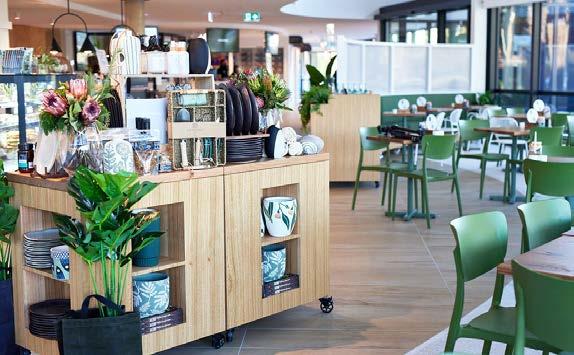
The multifaceted organisation also offers catering providing healthy choice menus to the children’s parties hosted weekly by Yawa, along with off-site catering to local organisations which have included hamper boxes, simple sandwiches, hot food items and grazing tables. Reach out to discuss your personalised requirements.
Already an award wining venue, Elements were finalists in the Café category of the Mornington Peninsula Shire Best Bites awards in 2022 and they look forward to celebrating more over the coming years.
Come and see why Elements Eatery is a perfect year-round destination café for all ages. Open daily. Please check website/social media for seasonal changes.
elementseatery.com.au
40 | PENINSULAE ssence April 2023
Enjoy a morning coffee, relaxed lunch or takehome meal after the gym or swim session.
EVENTS KIOSK
“Wominjeka”
Welcome to Elements Eatery, located within the state of the art Yawa Aquatic Centre, Rosebud.

We offer a bright and welcoming dining area with plenty of space for high chairs, wheelchairs, pushers and walkers. A seasonal plated menu is offered alongside plenty of options to 'grab & go', including salads, wraps, sushi, muesli, focaccias and bagels. Open from 6am Monday to Friday (8am on weekends) for your early coffee fix.
Have you considered an event poolside?
Did you know we can do offsite catering or that Yawa hosts birthday parties with catering by us? Please visit our website for some ideas if planning catering for an upcoming meeting, event or any private function. Flexibility from our standard offerings are also available.
Our Kiosk serves a select menu to the poolside, everything being served in recyclable and sustainable packaging. Think smoothies, nachos, Pure Pops, protein bites, toasties and fresh sandwiches and wraps.
We welcome you to be part of Elements - the perfect year-round destination café for all ages.


"One would not normally expect to find anything outstanding at a cafe located in an aquatic centre. This is a brilliant exception; delicious items and refreshingly different options, though the standard cafe fare of scrambled eggs etc is on offer as well. Coffee is good, too. Plenty of indoor seating in a modern, airy environment and a friendly service to top it off. Worth coming over just for this, no need to go for a swim." Google review - Sami
100 Besgrove Street Rosebud VIC 3939
e: eat@elementseatery.com.au / w: elementseatery.com.au
03 5982 6020
Mornington Peninsula
T’Gallant Encore Sparkling Rosé Our

WHOLESALE WINES DIRECT TO PUBLIC AT WHOLESALE PRICING

Granite Rose Estate 2022 Mornington Peninsula Chardonnay
Yalumba 2018 Eden Valley Viognier


Our Price
$10 RRP $27
John Luke 2021 Victorian Pinot Noir Our Price

HASTINGS RETAIL STORE
WINE TASTINGS, BOTTLE AND CASE SALES

LOCATION: 2080 Frankston - Flinders Rd, Hastings
HOURS: Tuesday to Saturday 10am to 6pm
PHONE: 9596 4278
DROMANA WAREHOUSE STORE
BOTTLE AND CASE SALES ONLY
LOCATION: Unit 5, 3 Trewhitt Court, Dromana Industrial Estate
HOURS: Thursday, Friday & Saturday 10am until 5pm
PHONE: 9596 4878
RRP
Price $10
$14
RRP
$10 RRP $19 Our Price $10
$45
DIRECT TO PUBLIC MEANS YOU SAVE!
Wine Lovers Warehouse is the direct to public arm of our wholesale business specialising in restaurant, hotel, and function wines for over 17 years.


COVID-19 put a big handbrake on our wholesale business and so we made a decision to transform and stay alive, supported by our friends and the local community, which we will be forever grateful.
We opened the warehouse every week to the public, selling our wines and suppliers at trade prices and no retail mark ups. It is our commitment to remain open servicing the needs of our Wine Lover community into 2023 and beyond. Come along and say hello, grab a bottle or a case. Try before you buy at the Hastings store guarantees you will be satisfied with your choices.
WINELOVER.COM.AU Momentum 2017 McLaren Vale Cabernet Sauvignon Our Price $8 RRP $19 John
Heathcote Shiraz Our Price $10 RRP $27 Hidden
Heathcote Shiraz Our Price $10 RRP $24
Shiraz
Price $15 RRP $44 Try Before You Buy At The Hastings Store
Luke 2019
Ridge 2020
Taylor Ferguson Fernando 2016 Barossa
Our

April 2023 44
SUPER coffee
By Andrea Louise Thomas Photos Gary Sissons
GrantWilliams is an avid adventurer – a lover of traveling, surfing, diving and running marathons. He’s a man very much into nutrition and fitness. He’s also a lover of great coffee. Whether surfing in Tahiti or journeying into Outback Australia, in the more remote places, he found a good cup of joe was hard to find. This sparked an idea.
Though a fully qualified carpenter, Grant says, “I knew carpentry wasn’t for me long term. I wanted to do something that was my own, that wasn’t tied to a place and that was creative.” He was travelling around Australia looking for a new place to call home when he got stuck in COVID quarantine in Western Australia. There he had his lightbulb moment.
Grant’s aim was to create an instant coffee that didn’t taste like instant coffee - a portable premium coffee that could be enjoyed anywhere. He also wanted a twist; a coffee that was nutrient rich to boost performance. That’s the twist!
Through rigorous research, Grant discovered the virtues of coffeeberry, the fruit coffee beans come from. It’s a nutrient-dense superfood packed with antioxidants, yet it is discarded in the quest to get to its seed, the coffee bean. There are only two seeds in each fruit and it’s a labour-intensive process getting to them.
Twenty-five million tonnes of coffeeberry goes to waste every year because it’s considered worthless by the coffee industry. So it’s thrown into waste piles that decompose and ferment, releasing
mycotoxins. They leach into the earth and local waterways destroying native ecosystems.
An environmentalist at heart, Grant thought there must be a way to solve this problem. More research ensued. Eventually, he found a way to up-cycle coffeeberry helping offset the impacts of the coffee industry. He would infuse the coffeeberry into his coffee, creating a nutrient rich instant coffee - delicious, nutritious, natural and, most importantly, portable. His business, Viveberry, was born.
Coffeeberry is considered by many to be a ‘superfood’. It has the highest antioxidant level of any food and is packed with polyphenols - which research suggests protect against free radical damage and oxidative damage providing protection against high cholesterol, cardiovascular disease, insulin resistance, type 2 diabetes, and unhealthy weight gain. Further research suggests it can also promote brain function, slow aging and protect brain cells.
Viveberry is manufactured in line with Grant’s ecofriendly values. Product packaging is recyclable. He also supports international environmental organisation, '1 % For The Planet'. Members, like Grant, contribute one percent of their annual revenue to support environmental causes. He is committed to constantly evolving his business in ways that help the environment. Home compostable and/or reusable packaging is the next step in that direction.
Grant has created just what he wanted. “Viveberry is adventure ready. It’s a coffee for anywhere in the world or on the go. You just need to add hot water,” he says. It can be enjoyed hot or cold, with
continued next page...
PENINSULAE ssence | 45 April 2023
Coffeeberry is considered by many to be a ‘superfood’. It has the highest antioxidant level of any food.
milk or without. He likes sachet coffee because it’s dynamic. It can be used in lots of ways and it’s an easy source of nutrition. Grant’s coffee sachets offer a boost of energy, super nutrients and have a smooth, rich flavour.
To get that flavour for his coffee, Grant chose single origin Columbian coffee beans. These beans have notes of chocolate, nuts, herbs and fruit with a citrusy acidity. Columbian beans make a medium bodied coffee with a silky finish and just a hint of the tropics. Viveberry also has ginseng, monk fruit and MCT oil – a potent combination that offers "all boost, no crash" according to Grant.
“Instant Vive is an easy, delicious and environmentally conscious
instant coffee for all occasions - on the job, the next big adventure, the next ultramarathon or just the next time you’re craving a coffee that’s good for you and the planet,” he says.

Grant’s Viveberry mission is accomplished. He’s recently partnered with Sunshine Community. Their organic coffee is infused with lion’s mane and chaga mushrooms. More nutrient magic. All products can be purchased online or you might find Grant at a local market talking to folks about Viveberry – his eco-conscious coffee with a kick.
viveberry.com
sunshinecommunity.com.au
46 | PENINSULAE ssence April 2023
Backyard hens key to increasing self-sustainability
Manypeople either own backyard hens or know of someone who does. The growing popularity has largely been due to families wanting to become more self-sustainable. So why is keeping backyard hens so good for your family?
Well, hens make for fantastic pets! Our breed of hens are Hy-line Browns which are extremely friendly and placid. They love company and like nothing more than to spend time interacting with their owners. We hear lots of entertaining stories from our customers such as their hens going on school runs, on swings with the kids, and happily jumping up onto their laps.
Good egg-laying breeds like our Hy-Line’s also quickly pay for themselves by providing your family with highly nutritious and delicious eggs throughout the year. Their eggs are high in protein and minerals but low in calories. You also have peace of mind knowing exactly how your hens are treated and what food they have eaten.
Of course, you can’t get more “local” food than what you get from your own backyard! When combined with a vegetable garden, your family becomes far more self-sufficient and able to live more sustainably. If you really had to avoid social contact, your hens and vegetables could keep your household well fed over the long-term.
Hen ownership also teaches children some important, practical lessons about life. Not only do they need to be responsible for feeding and providing water for their hens but they must collect eggs daily and keep the coop clean and safe. Excess eggs can also be sold or given away to friends and neighbours which is a great way of benefiting others in your local community.
Visit our farm: 3590 Frankston-Flinders Rd, Merricks

For enquiries call 0406 691 231
Open: Daily 10am to 4pm (Closed Wednesday)
www.TalkingHens.com.au

Looking for backyard hens but unsure where to start?
Talking Hens is a family business that enjoys backyard hens. We specialise in friendly, egg laying hens with quality products to keep them happy and healthy.

There’s nothing like the friendship and entertainment that you receive from our laying hens - a pleasure to be shared!

Talking Hens 3590 Frankston-Flinders Rd Merricks,
daily: 10am to 4pm Closed: Wednesday's For enquiries call 0406 691 231 Email: talk@talkinghens.com.au Visit: TalkingHens.com.au
Vic 3916 Opening
48 | PENINSULAE ssence April 2023
RACE DAY MORNINGTON Mornington Racecourse Sunday 9 April
EASTER
Mornington Racecourse will be hopping with anticipation on Sunday 9 April as the course erupts in an Easter celebration for the whole family at Easter Race Day.

A Clip Clop Club Day with Clyde will also welcome an egg-stra special floppy-eared friend bringing along the MRC’s annual Easter Egg Hunt extravaganza with thousands of ever-tempting chocolate eggs tucked away throughout the front lawn for young racegoers to find on the day.
Five sessions will take place between races, ensuring non-stop thrills for every-bunny.
Kids get one (1) hunt to collect your eggs, with proceeds raised from the Easter Egg Hunts to be donated to Camp Quality via the MRC Foundation.
Please note, there will be age-appropriate groups with sessions for children 5 years and under and sessions for all ages (up to 12 years).
Entry for the Easter Egg Hunt is free for any Clip Clop Club members, and just $10 for non-members, with entry available to be booked in advance.
The fun doesn’t stop after the egg hunt! Kids can relish in the day’s many ride, activation and entertainment offerings including a bubble artist, live DJ, face painting, cups and saucer ride and more. A seven-race card will provide ample entertainment and delight for parents and keen punters.
The lawn bar will be serving up refreshing soft drinks, as well as crisp sips for the adults, to help the chocolate go down with a host of nearby food trucks offering extra treats. Gunnamatta restaurant will also be open for those looking to elevate their race day with bar meals being served all day.
PENINSULAE ssence | 49 April 2023
EXPLORE THE MAGIC OF OUR OWN BASS COAST BACK YARD WITH WEEKEND PROMOTIONS AND FAMILY GETWAYS.
HERE’S FIVE REASONS TO LOVE HOLIDAYS WITH THE BEACH HOUSE PEOPLE - INVERLOCH.


Family and pet friendly holiday houses in Inverloch, Cape Paterson, Venus Bay, Kilcunda, San Remo. For all budgets and family sizes.
Pristine beaches, beautiful coast lines, unspoiled nature and wildlife, farmer’s markets, walks & trails, cafes, wineries and more!


Exclusive reader promotions: Stay a minimum of 2 nights from May 1st to September 1st and get 1 night free (excludes public holidays 2023 only). Please quote PEN2023.

12 noon Sunday checks-outs from May to September 1st 2023.
View all houses online at www.thebeachhousepeople.com.au and book directly to avoid the big bnb website charges.
Inverloch . CapePaterson . yaBsuneV . adnucliK . naS R e mo .
1300 343 295 hello@tbhp.com.au Inverloch.Cape Paterson.Venus Bay. Kilcunda.San Remo. www.thebeachhousepeople.com.au
. adnucliK .
R e mo .
Inverloch . CapePaterson . yaBsuneV
naS


GO TO ASEAGLE.COM.AU FOR MORE INFORMATION FESTIVAL 7-24 APRIL HOLIDAY GUIDE easter
HELP THE EASTER BUNNY FIND THE MISSING CARROTS



With so much going on, the Easter Bunny has had a hard time of keeping track of everything. He needs a constant supply of carrots to give him the energy he needs to keep on delivering eggs.
Unfortunately, he has lost his carrots. He last remembers seeing his basket of carrots at Locked in Escape Rooms in Mornington. Anyone who plays an escape room game there during the school holiday period has a chance to find a carrot and go into the draw to win some cool Easter prizes.
At Locked in Escape Rooms these Easter School holidays there is a complimentary Easter Egg hunt included in every escape room experience. Book in with a group of family and friends and see if you can solve the mystery each unique experience has to offer. Will you be able to escape in time? Or achieve the fastest escape rate of all time?


Escape rooms are immersive games where players solve puzzles and complete challenges to escape a themed room within a set time limit. The experience is designed to be challenging, collaborative, and thrilling, offering a unique and engaging form of entertainment for players of all ages.
If you haven’t discovered this latest form of entertainment, Mornington has one of the best venues to offer the experience. Get together a team, choose a themed story, book your session, and jump right in. School holidays are a busy time and bookings are essential. Head online to secure your spot.
A: 2/2A Carbine Way, Mornington W: lockedinescaperooms.com.au


Book on our website 2/2a Carbine Way, MORNINGTON • 0413 010 431
HOLIDAY GUIDE easter
ART RED HILL RETURNS WITH LIVE EXHIBITION


Art Red Hill is back with a full in-person live event this year at Red Hill Consolidated School. The show will run from Friday, May 5, over the weekend of May 6-7.

Art Red Hill is a highlight on the arts calendar on the Peninsula. The show has been running for more than 40 years and features art for sale across a wide range of formats, including oil and watercolour paintings, prints, photography, sculpture, ceramics, glass and found items. In addition to traditional artworks, there will also be a selection of crafted items including jewellery, knitted wear, textiles and other wearable art.
The show is a great family event. Little ones can explore their own creativity in the children’s tent, which will be full of fun activities in which they can take part.
The opening night on Friday, May 5, held in the Red Hill Consolidated School hall, is always a highly anticipated social event. This is a chance to view and buy the art early, but also to connect with other members of the community and enjoy local wines, food and live music. Follow Art Red Hill on Instagram or Facebook for more details and ticket information. In addition to the live show, art will be simultaneously available for sale online at www.gallery247.com.au

All proceeds raised from Art Red Hill will go towards the Red Hill Consolidated School for essential educational tools, support and upgrades. Art Red Hill is run by volunteers and kindly supported by local sponsors, the major being RT Edgar Real Estate.
RED HILL CONSOLIDATED SCHOOL
A: 341 Arthurs Seat Rd, Red Hill
W: www.artredhill.redhillcs.vic.edu.au
FB: ArtRedHill INSTA: artredhill
ART Red Hill
The Peninsula’s premier art show, Art Red Hill returns with a live exhibition in 2023!
A great weekend activity and family event with delicious food and beverage options and a Children's Tent full of fun activities!
Where - Red Hill Consolidated School
341 Arthurs Seat Rd, Red Hill
More Info - www.artredhill.com.au
PENINSULAE ssence | 53 April 2023
OPENING NIGHT FRIDAY
5 MAY
HOLIDAY GUIDE easter
MAINTAIN YOUR INDEPENDENCE


With a tailor-made Acorn Stairlift you can stay right where you arekeep your home, keep your freedom and retain your independence


At Acorn we want to make sure that you get the perfect stairlift solution for your individual needs. Our unique rail system means that we can fit an Acorn Stairlift to all types of staircase, and what’s more, we can do so within a matter of days rather than weeks.


A visit from one of our friendly surveyors will allow you to see what sets Acorn Stairlifts apart from any other stairlift company. After assessing your individual needs, our surveyor will instantly be able to give you the peace of mind of knowing exactly how affordable an Acorn Stairlift can be.
We have led the way with our design and innovation and Acorn Stairlifts are the first stairlift manufacturer to be awarded the Arthritis Foundation’s Ease-of-Use Commendation.
54 | PENINSULAE ssence April 2023
FRANKSTON AUCTION MART ‐ Fabulous range of new, used & ex-display home furniture & homewares ‐ Over 50 years in Frankston City BUY DIRECT OFF THE FLOOR 46-52 New Street, Frankston Mon to Fri 9.30am - 4.00pm Sat 10.00am - 3.00pm Phone 9783 9613 Rustic Farm Setting Pony Rides Many Animals for “Hands on” Experiences Playground, Picnic Areas (BYO Food) Gas BBQs Special School Holiday Activities 490 Stumpy Gully Rd Balnarring www.rhsfarm.com.au Ph 5983 1691 Open daily 10am - 4pm* *Closed on Thursdays and Fridays outside of school holidays School holidays 7th APRIL 2023 – 23rd APRIL 2023 Open daily 10am-4pm* PIG Racing! Daily 11am & 2pm EASTER EGG HUNT 7th -10th April Pre booking required. See website for details


PENINSULAE ssence | 55 April 2023
on Portsea
Portsea is located approximately 110 kilometres drive south of the Melbourne CBD, and is the most westerly settlement on the Mornington Peninsula.
The official population of Portsea is 787 according to the 2021 census. The size of Portsea is approximately four square kilometres.
In 1840, a freed convict by the name of James Sandle Ford took up a parcel of land which he named Portsea, after Portsea Island which is an island incorporated by Portsmouth in England.
As Melbourne grew in the late 1830s there was a growing demand for lime which was used as a mortar in building. Limestone was plentiful in the area and from 1840 a number of kilns were established.
In the early 1850s a ship entered Port Philip carrying passengers stricken with typhus. A quarantine station was established in 1852, just west of the present town of Portsea. In the 1990s, the Quarantine Station housed 400 Kosovars, refugees from the Bosnian War. The former Quarantine Station was opened to the community as part of Point Nepean National Park in December 2009
A fort with barracks was built at Point Nepean in 1882 to defend the headlands of Port Phillip Bay during a period when there was a fear of invasion. After World War II, the facilities housed the Officer Cadet School (OCS) Portsea and later the School of Army Health from 1951 to 1998. The area was opened to the public in 1988 upon the formation of the Point Nepean National Park.
CoffeeSafari

On 17th December 1967, Prime Minister Harold Holt disappeared, presumed drowned, while swimming at Cheviot Beach which is part of the Point Nepean National Park in Portsea. Mr. Holt, aged 59, departed Canberra on Friday 15th December and flew to Melbourne in a RAAF VIP aircraft and later drove his maroon Pontiac Parisienne to Portsea on the Mornington Peninsula for a relaxing weekend at his family home. The most likely scenario was that Holt was caught in a strong rip off Cheviot Beach and was swept out to sea and drowned. In 1969 a plaque commemorating Holt was bolted to the sea floor off Cheviot Beach after a memorial ceremony. It bears the inscription: 'In memory of Harold Holt, Prime Minister of Australia, who loved the sea and disappeared hereabouts on 17 December 1967.'
Located on the narrowest section of the peninsula, the northern section faces the calm waters of Port Phillip Bay, and the southern side faces Bass Strait. The often turbulent surf beaches on the ocean side are broken up by rugged headlands and cliffs, steep dunes and the impressive London Bridge rock formation.
Median property price is $3,400,000, and weekly median advertised rent is $1300.

The Portsea Pier is the home to the spectacular weedy sea dragon, as well as many other fish species, including numerous pufferfish.
Freshly brewed coffee is a must-have and the Mornington Peninsula's coffee haunts are second to none. Check out these when you're visiting!
Le Capucin
3770 POINT NEPEAN ROAD
Enjoy premium coffee and a fresh croissant or something from the French-inspired cafe menu. Dine inside, on the terrace, or take a short stroll and picnic on the beach.
Limani
3760 POINT NEPEAN ROAD
Find a cozy spot in front of the fire for a coffee, glass of wine, something from the all-day breakfast menu or a Mediterranean-inspired morsel.
Portsea Hotel
3746 POINT NEPEAN ROAD
With sweeping views of Port Phillip Bay, The Heads and Queenscliff, the Portsea Hotel offers upmarket pub classics, wood-fired pizzas and fresh Australian seafood. Finish with a coffee and bask in the gorgeous setting.
Baked In - Portsea
145 HOTHAM ROAD
Savour excellent coffee, flaky baked goods, açai bowls and more in the inviting outdoor dining area.
56 | PENINSULAE ssence April 2023
magazine will be mailed to you in a sealed plastic bag each month.

What to do


Cool off at a bay beach or ride the surf at the ocean beach. After a day out in the water slow down with friends on the green lawns of the Portsea Pub. Learn to scuba dive amid sea dragons and rays around Portsea Pier. Glimpse the lifestyles of the rich and famous who reside in Portsea's millionaire mansions or explore the fascinating labyrinth of nineteenth-century tunnels and fortifications in the Point Nepean National Park.

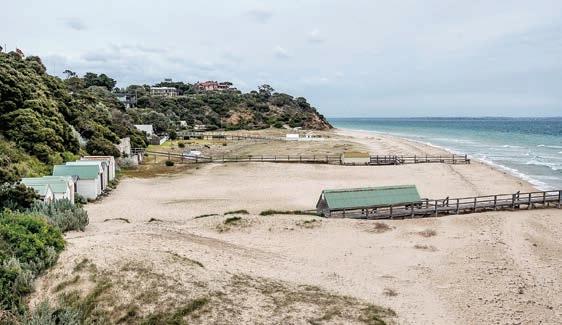

Photography: Yanni


PENINSULAE ssence | 57 April 2023
To subscribe phone Mornington Peninsula News Group on 03 5974 9000 or complete the details below. $48 twelve month subscription (12 issues) or $30 six month subscription (6 issues) Name ....................................................................................................Ph.............................................................................. Address ..............................................................................................................................Post code.................................. Visa Mastercard Card number ...........................................................................................Exp........./.......... Post to Peninsula Essence Subscriptions PO Box 588, Hastings Vic 3915
SUBSCRIPTIONS
AVAILABLE
6 AND 12 MONTH
ARE NOW
Peninsula Essence
Handing the Peninsula to you! Bedshed * recommended FREE MARCH 2020 PENINSULA Living & visiting on the Mornington Peninsula Strictly Uppers Spirit Of Adventure Sustainable Fashion The Tale An Ancient Making Impact Celebrating Healing Harmonies Colours Of White Team From le Dalywaters Mr Planck, Sir LIVING
Select preferred subscription period &
1. Arched bridge over valley
5. Silver bar
9. Phrase
12. Fair-haired ladies
16. Scions
17. Pilot's code for I
18. Cater to 20. Washday load
22. Hot water burn 23. Leanness 24. Corps de ballet 26. French farewell, au ... 27. Ration 28. Cross-dressers
31. Established custom 32. Cadence 34. Radio crackle 36. Ceylon, ... Lanka 37. Imitate
40. Artificial conception (1,1,1)
42. Short tubular pasta
43. Relation (2-3)
45. Frequent patrons
47. Scent, ... cologne (3,2)
49. Daub 50. Sledge
52. Flee to wed 54. Reconnoitre 55. Beer tankard 56. Engine part, spark ... 58. Positive battery pole 59. Rate 60. A distance 61. Crux 62. I ... if I could
63. Told porkies
64. Heavy (steps)
67. Tart
68. Soon, in the ... future
69. Tooth covering
72. 60s drug (1,1,1)
95. Silly talk
96. Sex And The City's Mr
Big, Chris ...
97. In disguise
100. Green with ...
102. Rink
103. Hooting fledgling
104. Dapper
106. Ethiopia's Addis ...
108. Conger
109. Paddle
110. Victor Hugo's ... Misérables
112. Small vegetable marrow
116. Japanese currency
118. Defy
120. Actress, ... Thompson
121. Smith & Wessons
123. Loan shark
125. Carbonated beverage
126. Former chat show hostess, ... Winfrey
127. Rancour
128. Gloomy
129. Frogman
130. Hard alloy
131. Yell of pain
132. Biblical king
134. Continually provides
136. Phones
139. Person asking questions
141. Method of working, ... operandi
142. Frozen solid
144. Travellers
146. Harness-racing horse
147. Dessert, ... pie
148. Sticky substance
149. Femme fatale
151. Crack army force (1,1,1)
152. Recaptured
155. Spanish rice dish
158. Deeply desire
159. Kinsman (5,8)
162. Farm birds 164. Eagerly 165. Intertwine 166. Innkeepers
170. NZ native
171. Beginning of the day
172. Shout (4,3)
173. Edible organs
174. Electroshock weapon
175. Bouquet
176. Whiskies & ...
177. Remove contents of 178. Dwelt
1. Basses, sopranos & tenors
2. Quitting throne
3. Irrevocable
4. Series of three
5. Well researched (2-5)
6. Fish lung
7. At that moment
8. Passport-holders
9. The ... of Capri
10. Favours owed (1,1,2)
11. Most demented
12. Trade ban
13. Hindrance
14. Car sport (4,6)
15. Anaesthetise
19. Benefit
21. Drink, ... spumante
25. Coronation robes fur
26. Take umbrage
29. Chargers
30. Military helmet (3,3)
33. Intrude
35. Slaughterhouse
36. Very careful
38. Saunters here & there
39. Tinting
41. Dirge (7,5)
42. Specialist
44. Heartbreak
46. Straightens
48. Resounds
49. Towed
51. Auction participant
53. Inters
55. Spread out
57. Flit (about)
60. In vogue, ... mode (1,2)
65. Achievements
66. Senior
70. Stockings fibre
71. Butcher's axe (4,7)
73. Ruling families
75. Impulse
76. Encroaching
77. Tidy
78. 100-year celebration
83. In vain, to no ...
84. Perform (role)
85. Entrance (3,2)
86. Bus terminus
89. Fah, soh, ...
91. Catch glimpse of 92. Jumping over 96. Large tacks
98. Debauched Roman emperor
99. Diplomacy
101. Sighs sleepily
103. Spinster (3,4)
105. Junior
107. Anti-state revolutionaries
111. Engraver
112. Haggard
113. Wards off
114. Pencil rubber
115. Self-indulgent exercises (3,5)
117. Tribute
119. Major computer firm (1,1,1)
120. Fabled land of gold (2,6)
122. Slaver
124. Flying saucer (1,1,1)
132. Sleeping through winter
133. Sales agent
134. Nudged
135. African nation, ... Leone
137. Persona ... grata
138. Dachshunds (7,4)
140. Cost estimates
141. Timidly
143. Autocrat
145. Competitive music festival
150. Poorest of the poor
153. Parched
154. Four-sided shapes
156. Study of body structure
157. Cigarette igniter
158. Servile flatterers (3,3)
160. Obligation
161. Singer/actress, ... Turner
163. Wink, bat an ...
166. Parti-coloured
167. Wagers
168. 0.4047 hectares
169. Blow with palm of hand
58 | PENINSULAE ssence April 2023
74. Settling (of earth) 78. Bawl 79. Uncouth boy 80. East-northeast (1,1,1) 81. Debonair 82. Section of journey 85. Came ashore on foot 87. River mammal 88. Unfeigned 90. Allow air in 91. Daze 92. Chain loop 93. Mexican dip 94. Fruit pulp
DOWN ACROSS Corner Puzzle
See page 65 for solution
PENINSULAE ssence | 59 April 2023
PROTECT YOUR HOUSE FROM FALLING LEAVES
• No more mud in your gutters
• No more vermin or birds in your roof


• Protect your most valued investment


-your home, your building
• Gutters stay clean - no more cleaning


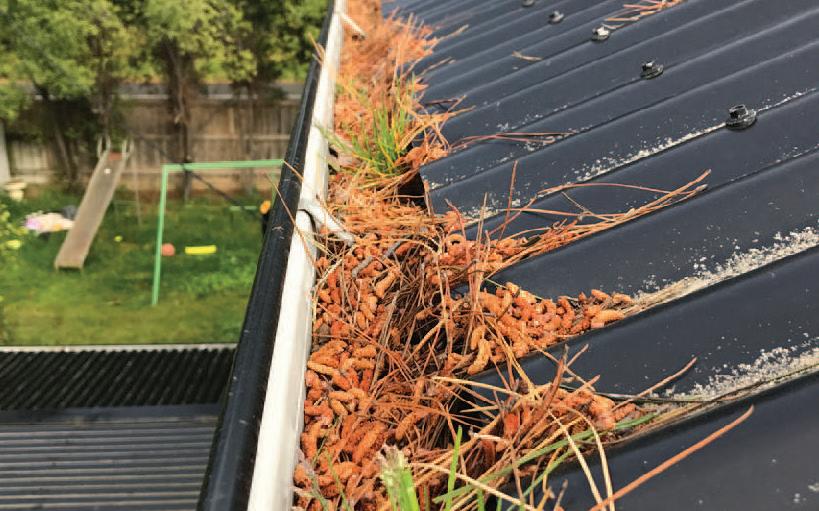
• Save money and cleaning time
• 28 year guarantee
*Valid Until 30/4/23
60 | PENINSULAE ssence April 2023
Conditions apply
AUTUMN SPECIAL
Casualties on the Home Front
By Peter McCullough
LONGbefore the extensive and frightening casualty lists monopolized the Melbourne papers in the years 1914 –1918, there were occasional casualties which occurred in a training context. The town of Hastings was saddened by two of these. Both occurred long before the Gallipoli landings and both were the consequences of the perceived threat of invasion of the Mornington Peninsula.
The Hastings Battery
The threat of invasion by the Russians and/or French, whether real or imaginary, sparked a flurry of activity in various parts of the Peninsula in the 1880’s. Tensions rose when a Russian trawler paid a visit to Western Port. Accordingly, on 15 December 1889, a resolution was passed at the conclusion of a meeting of the Fishermen’s Union in Hastings, calling for the formation of a Hastings Battery.
In July 1890 the Governor–in–Council approved of the formation of a Victorian Rangers Battery at Hastings. With Lieutenant David Ham in charge and four Armstrong 40–pounder rifled breech–loading guns that were moved by bullocks, the locals gave it the name of the “Ham and Beef Battery.”

In 1904 the Hastings Battery transferred from the Victorian
Rangers and became known as the 6th Battery of the Australian Field Artillery. The forty pounder breech–loading guns were replaced with twelve–and–a–half–pounders, to be converted to fifteen pounders.
Francis Incigneri
NOT as well–known as the death of Trooper Benton which occurred some 12 years later, was the death of Francis Incigneri which occurred in the grounds of Hastings State School in 1893.
In April 1882 Josiah Ingamells assumed his responsibilities as Head Teacher at Hastings State School. He was the second person to fill this role, succeeding John Bettesworth Flemyng (1872-1882). Both men were “builders”, held in high esteem by their staff and the community at large. Taking a cue from the establishment of the Hastings Battery, Ingamells formed a school cadet unit under Captain Henry. These cadets were involved in camps and drills, both in school hours and after school, and on Friday nights from 7pm to 8.30pm. Older boys had rifle practice, and the ability to handle a gun was greatly valued in the colony at that time.
Among the many Italians who came to Hastings as fishermen in the second half of the nineteenth century was Giuseppe Incigneri.
continued next page...
PENINSULAE ssence | 61 April 2023
Above: A drill on the Hastings Foreshore with one of the forty pounders.
History
Born in Catania, Sicily, in 1838, he jumped ship at Queenscliffe in 1856, lived there for some years as a fisherman, and then came to Hastings where he purchased land in 1866. Giuseppi’s first wife, Annette Wells, who he married in 1866, died three years later without having children. He remarried, to Annie Larkin, in October 1871 and they had ten children, extending from Mary Santa (born 1872) to Matthew Joseph (born 1891). One of the girls, Antoinette (born 1889), lived only two months with the cause of death recorded as “suffocation”; what would be called “cot death” in more recent times.

In her short family history “To Have a Little House” Angela Incigneri details the death of Giuseppi and Annie’s third son, Francis, who was born in 1880:

“Young Francis was as enthusiastic a cadet as he could be. Among his friends in the unit were Frederick Cussworth, Frederick Perrott, James Mentiplay and William Thornhill. Although he had left school, Joseph was also a cadet and had made the rank of Sergeant. On 25th August, 1893, twelve of the cadets, including Francis and Joseph, were with their teacher at rifle practice in the schoolyard. They fired first at a distance of 100 yards and then started to move
back to the 150 yard mark,while Thornhill tried a last time at 100 yards. Cussworth, Perrott, and young Francis were the “markers” who checked the results of the shots, and all three moved in to see if Thornhill had hit the target. They were standing in front of the target when James Mentiplay shot from 150 yards. In the confusion and trauma afterwards no one was quite sure why James had shot but, as Francis turned to give the results of Thornhill’s shot, he was hit in the neck. Cussworth reached to support him and take him to get help, and together they walked about ten paces. Francis whispered “Scotty, leave me go” and dropped to the ground dead.
Someone ran to tell his parents, and the body was carried back to the house. This death of a second child hit the family hard. Giuseppi was still too shocked to speak more than a few words at the inquest the next day. Coming just three years after Antoinette’s death and concurrent with the financial problems which were gripping the country, Francis’ death had a deep effect on the family. Gradually, life resumed but Giuseppi was reputedly never the same again.”
(In fact Giuseppi Incigneri died at the age of 58 on 11 August, 1896.)
On the following Monday, August 28, 1893, The Argus carried a report on the magisterial enquiry into the tragedy:
“Mr. D. J. Ham JP held a magisterial enquiry at Hastings on Saturday on the body of cadet Francis Incigneri who was shot during rifle practice on Friday by another cadet named James Mentiplay. The evidence showed that the deceased who, with three others, was acting as marker, was in front of the target taking a score when Mentiplay fired the fatal shot. Mentiplay gave evidence, and although his statement was very conflicting, he was emphatic that he did not see anyone near the target when he fired.
Mr. Ham recorded a verdict of accidental death, and added a rider that the system of allowing boys of tender age to carry and use deadly weapons was one which required amending.
62 | PENINSULAE ssence April 2023 continued page 64...
Left: Giuseppe Incigneri. Above: The Incigneri home in Victoria Street, Hastings, demolished in 1977.


Cleaning services we offer: Contact us to learn more 1300 303 286 BOOK A CLEAN www.ehsdeepclean.com.au ∙ info@ehsdeepclean.com.au not just a clean, but a cleaning service. Contact us to learn more 1300 910 971 BOOK A CLEAN www.essentialhomeservices.com.au ∙ contact@essentialhomeservices.com.au Cleaning services we offer: Carpet Cleaning Pressure Washing Windows & Solar Panels Vacate & Deep Clean Disinfection Treatments Carpet Clean Window Cleaning Deep Clean Vacate/Move In Clean Environmental Purification Regular Cleaning


64 | PENINSULAE ssence April 2023 128 Ocean Beach Rd, Sorrento m: 0438 537 757 e: marlenemiller3@bigpond.com Specialising in antique jewellery, as well as newly-made jewellery by Melbourne’s top jewellers Eyewear As Individual As You Are Now stocking Paul Taylor Eyewear 7/68 Barkly Street, Mornington
Major Henry subsequently held a military enquiry into the accident, and had forwarded his report to the commandant.
Cadet Incigneri was accorded a military funeral yesterday.” – The Argus, Monday, August 28, 1893.
Giuseppi provided an affidavit to the enquiry, (pictured).
The 1890’s had been difficult for Head Teacher Josiah Ingamells: Hastings had been hit hard by the Depression and pupil enrolments had declined leading to a reduction in his pay. However the accident in the school ground near the creek was “the final straw.” Although the magisterial enquiry absolved him of all blame, Mr. Ingamells wrote, “...the onus of the accident is almost more that I can bear.” In September his health failed, and he sought a month of leave. Early next year he successfully applied for a transfer to Ballarat East State School, departing Hastings on 21 March, 1894.

In the period following the death of the young cadet, a teacher (Miss Hollier) drew a memoriam consisting of a “framed card” which was displayed in the school. The spot in the school ground where the boy died was also commemorated for many years in the form of a small garden plot. Sadly, a search at the school has failed to find any trace of the “framed card” and the memorial garden has long since disappeared.
continued next page...
Left: Mr Ingamells with some of his Hastings pupils in 1882.
Above: The affidavit provided by Giuseppe to the Magesterial Inquiry.

PENINSULAE ssence | 65 April 2023 SPREAD YOUR ADVERTISING ACROSS THE PENINSULA Book into the next issue Call Andy 0431 950 685 andy@mpnews.com.au
Gunner E. K. Benton

Some 12 years after the State School tragedy came the death of 19–year–old Ernest Kempster Benton. The Hastings Battery had become an important part of the community, and many men had volunteered to man it. This included the three Benton boys (Arthur, Ernest, and Albert) who were enthusiastic members. The Mornington Standard of 29 April, 1905 conveyed the news of the tragic death of Ernest:

“The Easter encampment in Bittern in 1905 was marred by a tragic mishap on Monday afternoon. Everything in connection with the breaking up of the camp went well, as far as the main body of the brigade was aware, until the Hastings station was reached, at about 10 minutes past 3. Here was found a squad of men belonging to the Hastings Half–Battery, which had gone home by road. Lying on a stretcher they had with them Gunner E. K. Benton, son of Mr. G. Benton of Hastings, who had some 20 minutes before met with a horrible accident. At the Hastings gun shed when the Half-Battery got back, an employee of the contractor who had lent horses for the encampment had tied one of the animals to a guy–rope supporting the flagstaff. Gunner Benton went to release the horse, which drew back. As a result of the strain on the guy–rope, the pole came down, and struck the unfortunate soldier with great force on the top of the head. The services of a local doctor were not procurable, so it was decided to carry Benton, who was unconscious, across to the station to await the arrival of the last Artillery train, on which Surgeon–Major Cuscaden was known to be a passenger.
As soon as the train arrived Major Cuscaden examined the sufferer, and to the sorrow of all around, expressed the opinion that Benton would not live long. Major Cuscaden considered that it would be the most humane course to have the patient put into the train and brought to the Melbourne Hospital, although it was not likely that he would live to the end of the journey of about two and a half hours’ duration. He survived the journey, but died at half past 6pm from a depressed fracture of the skull.
The funeral took place at Hastings with full military honours. The coffin, which was brought to Melbourne by train, was wrapped in the folds of the Union Jack, and placed on a platform mounted on one of the 15–pound guns. At 10.30am the cortege started from the railway station, headed by a firing party from No. 6 Battery, marching with reversed arms. The gun bearing the coffin followed, the horses and harness being draped with black and white ribbons and rosettes. The pallbearers marched on either side of the gun. A vast concourse of vehicles and horsemen, from all parts of the peninsula, brought up the rear.”
The flagpole which was responsible for the death of Gunner Benton was retained and in due course was erected in the war memorial precinct in Tyabb. A plaque explaining its significance was placed alongside the flagpole in 1984. Last year the Mornington Council decided to embark on a tidying up exercise in the war memorial area. To the dismay of members of the Benton family, the historic flagpole was replaced by a metal version. And so the plaque now commemorates a flagpole which, presumably, resides in the bowels of the McKirdys Road tip!

References:
“Hastings People and Places”, Vol 1 Hastings-Western Port Hist. Society Inc. 2004
“To Have a Little House”, Angela Incigneri. 2000
“The History of Hastings Primary School”, Hastings Primary School Council. 1981
66 | PENINSULAE ssence April 2023
Top: Gunner E. K. Benton.
Above: The plaque at the Tyabb Memorial referring to the original flagpole.
Below: The Tyabb Memorial with the new metal flagpole.


