Fall 2020 1 ® NFPA-The Leader of the Paralegal ProfessionTM THE NATIONAL PARALEGAL ® NFPA-The Leader of the Paralegal ProfessionTM REPORTER For more information visit www.paralegals.org or find us on facebook @NFPAparalegals FALL 2020 Vol. 45 No. 3 ® ROLE OF A CALIFORNIA LEGAL TRUDYFOUNDINGVPOMOREEQUITY:ASSISTANTDOCUMENTTHANAREFRAININTERVIEWSMEMBERSEELEY CONVENTIONANNUAL2020-VIRTUAL

2 NATIONAL PARALEGAL REPORTER ® #PARALEGALS PLUGIN REGISTRATION BEFORE SEPTEMBER 18 WILL BE DISCOUNTED SEE PAGE 27 FOR FULL DETAILS NETWORKING (WED., OCT. 21) ........................................................... $0 CONTINUING EDUCATION SEMINARS & WORKSHOPS [THURS., OCT. 22] MEMBER ALL DAY........................................................................................ $150 NON-MEMBER ALL DAY ............................................................................. $270 STUDENT ALL DAY ....................................................................................... $150 KEYNOTE ONLY (MEMBERS) $25 KEYNOTE ONLY (NON-MEMBERS) $50 BOARD MEETING ................................................................................. $0 REGION MEETINGS (FRI., OCT. 23) .................................................... $0 POLICY MEETING [SAT., OCT. 24 & SUN., OCT. 25] LOCAL ASSOCIATION CREDENTIALED OFFICER (FIRST) $175 LOCAL ASSOCIATION CREDENTIALED OFFICER (ADDT’L) $125 POLICY MEETING OBSERVER (MEMBER) $85 POLICY MEETING OBSERVER (STUDENT) ................................................. $35 2020 NFPA OCTOBERCONVENTIONANNUAL22-25 HOSTED BY THE MINNESOTA PARALEGAL ASSOCIATION REGISTER NOW online HTTP://WWW.PARALEGALS.ORG/CONVENTION
NITA SERRANO, RP®, AACP, PRESIDENTFRP
President’s Message
Many of you were recruited to as sist the Futures Task Force to re view and update the governing documents, some assisted the strategic plan committee and others helped change the culture of NFPA. You all attend ed the Town Hall Meetings and gave up countless hours of your time to help get the work done in order to ensure that NFPA remains a member-driven Federation, while strengthening NFPA and ensuring its future as the lead ing voice of the paralegal profession.
It has been an honor to serve as your President the past two years and to be a part of the changes and transformation of NFPA. While at times, it has been challeng ing we have faced these obstacles head-on. I am encouraged by the steps we’ve taken and invigorated to face those new obsta cles with as much zeal and enthusiasm as we have responded in this past year. For example, we hired a new manage ment company, with the assistance of Bloch&Reed. Because of the strate gic methods employed to identify a management partner that would meet NFPA’s unique needs, we were able to identify and partner with Man agement Headquarters. Management Headquarters has proven they are not afraid of the challenges that lie ahead as NFPA looks to strengthen our place in the paralegal world. They have worked with us to streamline many of our pro cesses and are assisting the board in be ing more strategic-focused and not get ting into the weeds or bogged down.
This year due to the COVID-19 pandemic we are holding our first ever 100% virtu al convention and policy meeting, virtu ally hosted by the Minneapolis Paralegal Association. While we cannot be in Minneapolis in person, MPA, the Convention Committee and MHQ have worked hard to plan this virtual convention follow as close to a normal schedule as possible. We are excited to utilize technology, try something new and still gather together! I’d like to thank Mianne Besser, Secretary and Director of Operations, Mackenzie Kelley, MPA’s Convention Coordinators Maren Schroeder and Amy Conrad for their hard work in planning the convention. You all have done a fantastic job regroup ing and planning the virtual convention. Don’t worry, you will get to visit Minne apolis and the Mall of America! MPA has also graciously agreed to host the 2021 Joint Conference. Keep an eye on the NFPA website and NYCU for updates.
This year has been all about changechanges to our processes, changes to our governance structure, updating our Strategic Plan and holding our first ever 100% virtual convention. I know that NFPA’s Member Associations and delegates have risen to the challenge and volunteered your time and tal ent to work with NFPA, Bloch&Reed and MHQ to move NFPA forward.
This is not the first time that NFPA has been challenged, but we are resilient and will continue to roll with the punches in or der to ensure that NFPA remains relevant and the Leader of the Paralegal Profession! I look forward to continuing this jour ney with you and moving NFPA forward.
Fall 2020 3
A Sincere thank you to Dara Rudick and the entire MHQ Team and Michael Reed and Jaime Nolan of Bloch&Reed for their support, training, and guidance this year. I also want to thank my fellow board mem bers and all of their committee members for your hard work, dedication and sup port over the last two years. We could not have accomplished all of the things we have without your dedication and support.
RONELL B. BADUA,
4 NATIONAL PARALEGAL REPORTER ®
While it may seem like our physical connectedness is temporarily void, we are now staying more socially con nected when you share your personal stories, professional insights and accomplishments in the National Paralegal Reporter. We learn from one another and ultimately help us do better, stay current and uplift each other. This is the long-lasting impact this pandemic has brought. We will get through this together. Stay safe and healthy. Take care. Live Aloha
AACP VICE PRESIDENT & DIRECTOR OF MARKETING TABLE CONTENTSOF PRESIDENT’S MESSAGE 3 VP MARKETING MESSAGE 4 NJAC NEEDS NFPA MEMBERS 5 THE UNTOLD STORY BEHIND SOME OF THE INGREDIENTS IN YOUR PRESCRIPTIONS 6 ETHICS IN THE TIME OF COVID-19 10 ROLE OF A CALIFORNIA LEGAL DOCUMENT ASSISTANT 12 DEVELOPING LEGAL TECHNOLOGY SKILLS TO ADVANCE YOUR PARALEGAL CAREER 14 PARALEGAL LICENSURE IS A SOLUTION 16 NEW CREDENTIALED NFPA PARALEGALS ..... 19 WHAT IS A SURETY BOND? ............................ 20 THE PASSION AND ART OF WRITING ............ 22 EQUITY: MORE THAN A REFRAIN 24 NFPA ANNUAL AWARDS RECOGNITION 26 NFPA RESPONDS TO EMERGENCY SITUATIONS… CERTIFICATION FASTTRACK 30 NFPA RESPONDS TO THE SUNSETTING OF THE WASHINGTON STATE LLLT PROGRAM 32 30 YEARS LATER: VPO INTERVIEWS FOUNDING MEMBER TRUDY SEELEY ............ 34 GREATER LEXINGTON (40 YEARS) ................ 30 VERMONT PARALEGAL ORGANIZATION 34 MARYANN IVIE, RP - OREGAN 26 LAURA A. KEHOE, CRP - DALLAS ................... 30 LOTTIE WATHEN - INDIANA.............................. 38 BOARD SPOTLIGHT 39 Fall 2020 Vol. 45 No. 3
Aloha! This is one of the most beautiful times of the year – every leaf speaks bliss to the landscape across the country as we en joy the crisp air and cozy atmosphere.
VP Marketing Message
All the while we anxiously wait for fes tive occasions that bring us comfort.
The legal industry has seen a number of impacts from the pandemic and NFPA’s Editorial Team is committed to appeal to our members by providing current and relevant content. More than ever, we are reaching out to you to share your story, accomplishments or knowledge. Personalized content is engaging – it ap peals tenacity, talent and passion that paralegals have in the delivery of legal ser vices and commitment to the profession.
Personally, I have been amazed by the incredible amount of time and out reach from readers who contribute to this quarterly magazine. This issue, celebrates nostalgic milestones, features NFPA updates and shares information helpful to your professional development.
Magazines tell stories and shed light on experiences…we want to hear from you.
• Are there ways the existing rules block you from doing work that you are in fact competent to carry out? We are hoping to discuss these questions, in an open-ended way, with paralegals who work in a range of different prac tice areas. If for any reason, participants feel more comfortable speaking can didly, NCAJ will anonymize interviews.
• What kinds of legal advice and other services should members of your pro fession be empowered to provide, and under what circumstances?
The National Center for Access to Justice is a non-profit organization that works to support the creation of a more equitable justice system. NCAJ believes the rules prohibiting non-lawyers from using the law to help others make it impossible for millions of Americans to get the legal help they need. NCAJ also believe that people other than lawyers can provide high-qual ity legal advice and services in many situa tions. Many states are vigorously debating reforms that could improve this situation-but these policy discussions have gener ally failed to include the perspectives of non-attorneys who are already working with the law, or with people in need of le gal help. Learn more about NCAJ by vis iting their website at https://ncforaj.org. This is an opportunity to truly be the “Leader of the Paralegal Profession!!” Share your insight and be part of the discussion. For planning purposes, interested participants should con tact Lori Boris, RP, MnCP at VPPI@ paralegals.org for further information.
Fall 2020 5
Early this year, NF PA’s Vice President & Director of Position and Issues, Lori Boris, RP, MnCP was invit ed to visit Fordham University in New York City to partici pate in a consortium of legal profession als put on by the National Center for Ac cess to Justice (NCAJ). This group was to bring together a discussion on how to go about helping lower-income Americans to get the legal help they need. The con versation was to include lawyers, legal ed ucators, and paraprofessionals of various types. Unfortunately, like most things this year, it was cancelled due to the pandemic. This consortium is now going virtual and needs NFPA member input. Chris Albin-Lackey, Legal and Policy Director, NCAJ, has reached out to the NFPA, again. Chris is looking to bring together a group of NFPA members to share their perspec tives (see his questions below provided by Chris). The National Center for Access to Justice will be compiling a report that will gather thoughtful, practical perspectives from non-attorneys in key professions-paralegals, social workers, librarians, activ ists, and others-- on how non-lawyers can help bridge the justice gap. More specifical ly, we will ask people to talk with us about whether there are particular kinds of legal work they would like to be able to engage in, with or without an attorney’s supervision.
National Center for Access to Justice Needs NFPA Members
The key questions we want to discuss are:
Drug prescriptions are filled for people who take these same medicines daily with out even batting an eye, or truly knowing what they are taking. More importantly, most individuals are not even aware that their prescriptions are made up of many ingredients, not just one. Also, the aver age consumer has no clue that the drugs they are prescribed could be subject to unclean manufacturing, misbranding, misuse, and pharmaceutical corruption.
6 NATIONAL PARALEGAL REPORTER ®
One situation involved Nippon Fine Chemical’s drug manufacturing facility in Hyogo, Japan in December of 2015. When an FDA investigator visited, there was rea son to be concerned about the quality con trol in this laboratory As it turns out, the FDA investigator had reason to be wor ried about the performance of Nippon’s quality control laboratory at its Hyogo facility. During the inspection, the inves tigator found records of complaints the company had received from its custom
A long line of trust is involved ranging from patients trusting their doctors to prescribe safe drugs to the doctors trust ing their sales representatives who make assertions of the drug’s efficacy. This line is further extended to the pharmaceutical industry trusting the FDA to giving the public verification of its approval of drugs that are being distributed. One large is sue is the unfamiliarity of what an active pharmaceutical ingredient is, as well as the importance of each of these types of ingre dients being safe and pure. Extending that further, is what happens when these ingre dients have adverse impact on the user of the drugs they are in and who is ultimate ly liable if injuries and damages occur?
The Untold Story Behind Some of the Ingredients in Your Prescriptions
HOW SAFE IS THE MEDICINE YOU ARE TAKING?
By Ramona Atkins, JD
It is often difficult to monitor the man ufacturing of drugs or their biproducts when the process is taking place in a for eign country. Safety in the chain of drug flow from a foreign manufacturing plant to the United States is a top priority. The drugs must pass stringent quality control standards. Further, FDA inspectors must be allowed to access facilities that are manufacturing and shipping drugs to the United States. FDA inspectors have been denied access to the manufacturer’s quali ty control laboratories and procedures for testing and analyzing raw materials, inter mediate products, and final drug products.
POTENTIAL LEGAL ISSUES WITH ACTIVE DRUG INGREDIENTS AND THE DRUGS YOU MAY BE TAKING There are several issues that can happen with many drugs’ active ingredients. One issue surrounds the foreign manufactur ing of these ingredients. Another issue is repacking misconduct of the active ingre dients by pharmaceutical packing compa nies. Yet another issue includes the failure to maintain traceability of the API through out the supply chain. Finally, the possibil ity of drugs being counterfeit is high as well. There is often not enough oversight UNITED STATES MONITORING OF FOREIGN DRUG INGREDIENTS
THERE IS A SPIDER IN MY PRESCRIPTION
Countries such as India and China now supply over 40% of APIs used in the U.S. Also, the Food and Drug Administra tion, hereinafter referred to as the FDA has indicated that 80 percent of all ac tive pharmaceutical ingredients used in medications consumed by U.S. patients are imported from other countries (Pub lic Citizen). So, what does this mean for you and the drugs that you take?
An active pharmaceutical ingredient is de fined as “… the term used to refer to the biologically active component of a drug product (e.g. tablet, capsule). (Science Daily)” These active ingredients are made using raw materials through chemical and physical means. (mdtvalliance). The AI active ingredient) is the specific com ponent responsible for the desired effect it has on the individual taking it. What many individuals and those in the chain of trust often are unaware of is the fact that the active pharmaceutical ingredi ents are not always safe or pure. Further, many of these active pharmaceutical in gredients, hereinafter referred to as API are manufactured in foreign countries.
THE IMPACT OF OUTSOURCING TO MAKE YOUR PRESCRIPTIONS
APIs are commonly referred to as ‘bulk pharmaceuticals’ are usually created in foreign countries and thereafter shipped to where they are manufactured. Today, the great majority of API manufacturers are lo cated around Asia, specifically in India and China. This has led to more and more com panies to outsource API manufacturing to such places, which has the main benefit of eliminating the need to invest in unbe lievably expensive equipment and infra structure (http://www.mdtvalliance.org/)

An API re-packer failed to investigate complaints about a sub-potent API. The re-packer did not conduct any cleaning validation studies to show that their clean ing procedures for non-dedicated pro duction equipment at B&B Pharmaceu ticals were adequate to prevent potential cross-contamination between re-packaged API and high potency drugs like testoster one, progesterone, estrogen and opioids. They also did not provide critical infor mation about the quality of the API drugs or where they obtained them and their components. This in turn compromised the supply chain accountability and trace ability putting patients/consumers at risk.
RE-PACKERS MISCONDUCT OF ARTIFICIAL INGREDIENTS
The Spectrum and Enovachem warn ing letters also state these companies list glycerin among the products they re package. In 2007, the FDA issued final guidance intended to alert pharmaceuti cal manufacturers, pharmacy compound ers, re-packers, and suppliers to the po tential public health hazard of glycerin contaminated with diethylene glycol (DEG), a poison which may be deadly to patients. Lapses in supply chain over sight, including incomplete information on certificates of analysis, was one of the factors that allowed contaminated drugs to enter the supply chain in the past.
Other pharmaceutical companies where this same issue occurred include Enoyachem and Spectrum both of which failed to maintain traceability of the APIs used throughout the distribution chain.
“The FDA declared Nippon’s drug prod ucts to be “adulterated” because company employees limited the FDA’s inspection of the Hyogo facility, including by refusing to permit the FDA investigator to enter the quality control laboratory (Public Citizen).”
After nearly eight months of delay, in Au gust of 2016, the FDA placed an import alert which allowed them to detain all the company’s drug products at the border.
It is important to be able to identify any drug’s original manufacturer to make sure that the drugs meet high quality stan dards that patients deserve. An issue of concern is where improper repackaging or lack of supply chain oversight of API causes serious compromising of drugs that are distributed to drug manufacturers, compounding pharmacies, outsourcing facilities or where there is a lack of sup ply chain oversight. Because of this issue, adverse events can occur once the fully manufactured drug reaches the patient.
Who would ever think that any medicine one is taking could possibly be the wrong one, or not have an active ingredient in it? Also, even if a specific medicine did have correct active ingredients, there is still a possibility that an incorrect dose should be given. Many do not take the necessary precautions to make sure the medicines they are prescribing or administering are authentic. Examining the outer box of medications for the necessary authen tic ingredient(s), or “if the vial is missing the lot number, these could be signs of a counterfeit drug. For example, when the FDA was investigating a claim regard ing Botox, they instructed Allergan to view the outer carton and vial display to make sure the active ingredient “Botuli num Toxin Type A” instead of Onabotu linmtoxinA “was on it. (Fda.gov/drugs)
HOW THIS IMPACTS THE CORONAVIRUS Because we depend on active pharma ceutical ingredients from China, this is problematic to Americans. There is con cern that we may be setting ourselves up for unsafe medicines especially if China tries to produce a lot of medicine in a short period of time right after they were shut down due to Covid-19. As a result, Pres ident Trump indicated that “The corona virus brought home the core elements of our medical-supply chain are just as stra tegic to our national security” as “nuclear submarines and aircraft carriers are, and have to be treated with the same kind of approach, which is to say that we have core domestic manufacturing capabilities.”
PUT CONSUMERS AT RISK
Fall 2020 7 ers about finding “glass, hair, cardboard, metal, product discoloration, and a black spider” in Nippon’s drugs. The company refused to provide the agency with copies of these customer complaints, and a qual ity assurance manager prevented the FDA investigator from taking photographs of equipment used to manufacture drugs distributed in the U.S. (Public Citizen)
As an additional perk to revamping the in ternational pharmaceutical landscape, the CEO of the Serum Institute of India Ltd. Adar Poonawalla may be the most import ant figure in the global vaccine race who isn’t working in a laboratory:” The Indi an vaccine entrepreneur plans to save the world from coronavirus — and then rad
COUNTERFEIT DRUG PRESCRIPTIONS

Perhaps tightening or eliminating the reigns on the foreign manufacture of ac tive ingredients in our drugs will help us improve and regroup our inspection pro cesses. Moving manufacturing of drugs to the United States could potentially as sist the Food and Drug Administration in keeping an eye on branding and improve
10. Amgen – $762m for “misbranding and improper use for treatment and illegal kickbacks and false prices for various drugs (pharmaceutical technology).”
5. Abbott Laboratories – $1.5bn for “Abbott targeting elderly dementia patients and dwarfed the associated risks related to drug usage that was found in clinical studies. The com pany trained its sales team under various programs to promote De pakote to healthcare providers and nursing home employees. It made agreements with pharmacy provid ers for the payment of rebates on the increased use of Depakote in nursing homes (pharmaceutical technology).
4. Johnson & Johnson – $2.2bn for “of fering payments to healthcare pro viders for their unlawful marketing targeting elderly patients with de mentia (pharmaceutical technology).”
When it comes to negligence and product liability lawsuits regarding drug manufac turing, the paralegal can play an import ant role in research as well as document preparation. Armed with the knowledge that pharmaceutical companies have a duty to deliver safe products/drugs and for warning about potential risks, today’s paralegal is extremely helpful in helping to research cases involving negligence and the remissive mistakes that the Unit ed State Food and Drug Administration has made. The paralegal’s role in assisting with the gathering information regarding the foreign manufacture of active drug ingredients as well as the ultimate deliv ery, usage and efficacy of drugs is key in helping establish liability in the chain of pharmaceutical manufacturing and distri bution. The process often puts millions of Americans at risk of injury by both action involving approval and inaction of some times not putting drugs on an alert list. The cases a paralegal can be involved in vary in terms of reasoning behind the lawsuits. The following lists some of the largest pharmaceutical lawsuits to date from largest to smallest and a brief reasoning behind the judgments:
7. Merck – $950m for “misbranding Vioxx for rheumatoid arthritis in the interim three years before receiving the FDA’s approval for the indication in 2002. False and misleading claims regarding the cardiovascular safety of the drug to increase its sales was also shown (pharmaceutical technology).”
8 NATIONAL PARALEGAL REPORTER ® ically remake the international pharma landscape. Poonawalla also wants to pres sure companies and governments to start changing the landscape, using the moral example of Covid-19 — and the global need for inexpensive vaccines on a massive scale — to illustrate the flaws in the cur rent system, which he believes hamper the availability of life-saving protections in the developing world and access to low-cost drugs in wealthier countries (politico).”
6. Eli Lilly and Company – $1.4bn for “Eli Lilly misbranded the drug Zyprexa for the treatment of demen tia or Alzheimer’s dementia, agita tion, aggression, hostility, depres sion and generalized sleep disorder in elderly patients (pharmaceutical technology).” The company trained its sales force to unlawfully promote off-label uses and spent resources to promote the drug in nursing homes and to provide rewards for doctors for prescribing them to patients for the unapproved uses. False claims were submitted to federal insurance programs such as Medicaid, avoid ing insurance coverage for off-label uses (pharmaceutical technology).”
2. Takeda Pharmaceutical – $2.4bn “The company was found guilty of hiding the bladder cancer risks related to the drug. Also, Patients alleged that the company misled the public and assert ed on the benefits of the drug over looking its side effects based on clinical trials (pharmaceutical technology).”
INVOLVING
3. Pfizer – $2.3bn as “Healthcare provid ers received payments for “prescribing these drugs to patients for off-label use. Also, false claims were submit ted to government healthcare pro grams, bypassing the insurance pro grams (pharmaceutical technology).”
THE ROLE IN LAWSUITS DRUG MANUFACTURING
8. TAP Pharmaceutical – $875m for “fraudulent drug pricing and marketing practices for its pros tate cancer drug, Lupron and for charging for free samples of the drug (pharmaceutical technology).”
PARALEGAL’S
9. Bayer and Johnson & Johnson – $775m for “misleading marketing and patients were not informed adequately regard ing the risks related to Xarelto and the resulting life-threatening complica tions (pharmaceutical technology).”
1. GlaxoSmithKline – $3bn as “It failed to report certain safety data to the FDA and reported false drug pric es to underpay rebates owed under the Medicaid Drug Rebate Program. Antidepressant drugs Paxil and Well butrin were misbranded, and health care providers were provided various rewards by the company to recom mend them to the patients for off-la bel uses. The company also failed to produce safety data for Avandia, a di abetes drug that left concerns among patients over its cardiovascular safe ty (pharmaceutical technology).”

REFERENCES:
Fall 2020 9 traceability within intranational facilities. Finally, the previously mentioned lawsuits will hopefully encourage pharmaceutical companies to ethically promote, as well as provide truthful material facts about the drugs and side effects that they offer.
sever
RAMONA ATKINS, JD is the author of al study guides, tests banks and courses on Business Law. She is a full time faculty at Purdue University Global School of Social and Behavioral Sciences. cine-price-big-pharma368114?cid=apnazine/2020/07/19/coronavirus-vachttps://www.politico.com/news/maginspection/foreign-drug-manufacturer-blocks-fda-citizen.org/news/outrage-of-the-month-http://www.mdtvalliance.org/es/2014/06/140605093305.htmhttps://www.sciencedaily.com/releas suits/com/features/biggest-pharmaceutical-lawhttps://www.pharmaceutical-technology.sion-botox-found-united-statesty-and-availability/counterfeit-verhttps://www.fda.gov/drugs/drug-safeproductionbriefing-trump-weighs-forcing-u-s-drug-https://about.bgov.com/news/health-care-
EMERGING ISSUES More than 10,000 diverse expertise categories Personal assistance and follow-up from experienced regional referral advisors Most referrals made within 24 business hours Challenge History Reports and FREE, CLE-approved Webinars No charge for our referral services unless you designate or engage an expert we refer Call 800-523-2319, or visit TASAnet.comofthousandsBehindsuccessfulcases,you’llfindTheTASAGroup. When quality and variety choosingparalegalsmatter,trustTASAwhenanexpert.
• THE MORAL CORRECTNESS OF SPECIFIED CONDUCT.
EXAMPLE Parent-1 seeks to terminate time-sharing during the pandemic because Parent-2 is employed in healthcare. Parent-1 feels the mi nor children are at risk based on Parent-2’s employment and as such
Ethics in the Time of COVID-19 By Yanna Llorente requests Parent-2’s time-sharing to be terminated until the pandemic subsides.
As we have all encountered during this pandemic, tensions are very high and naturally, people are quick to make judg ments. There is a fine line when we are faced with clients who request to take aggressive legal action against the oth er parent for something that is litigious, often intending to harass the other par ent, and which ultimately undermines the best interest of the children involved.
The court shall order that the paren tal responsibility for a minor child be shared by both parents unless the court finds that shared parental responsibility would be detrimen tal to the child.” (Emphasis added)
2. THE BRANCH OF KNOWLEDGE THAT DEALS WITH MORAL PRINCIPLES. It is often issues relating to adults which confront us with the ethical dilemma of certain actions. No doubt in the legal field and as paralegals, many of us have faced ethical concerns arising in our cas es that question the proper course of ac tion. There are many times when it is important to err on the side of caution and seek outside opinions, even calling the Bar Ethics Line with in-house coun sel if ever necessary reassurance or a Bar ethics rule is needed for reference. The concerns brought forth today, how ever, relate to the many minor children intertwined in the court process during family law litigation. Particularly in light of COVID-19, child custody is sues and child support have become in creasingly dynamic ethical conundrums.
It is with this in mind that paralegals and counsel must make a point to remind cli ents of the most integral aspect of disputes between parents: the minor children in volved. In any ethical dilemma in which minor children are on the receiving end, the moral principles which should gov ern the actions of the parents must be considered and great weight should be given to the conduct of our clients and the impact it will have on their children.
As far as the laws of Florida provide, Flor ida Statutes, §61.13, are clear in the pro tections of children when dealing with custodial disputes. A reading of §61.13 outlines many legal considerations to be taken into account when parenting of minor children is to be adjudicated and the statutes specifically state as follows:
I believe every parent does generally have the best interest of their children in mind, but it is common for clients to experience emotions, such as anger and contempt to wards the adverse parent, which often leads clients to behave in rather vindictive ways.
10 NATIONAL PARALEGAL REPORTER ® ETHICS | eTHiks | 1.NOUNMORAL PRINCIPLES THAT GOVERN A PERSON’S BEHAVIOR OR THE CONDUCTING OF AN ACTIVITY.
“The court shall determine all matters relating to parenting and time-sharing of each minor child of the parties in accordance with the best interests of the child… It is the public policy of this state that each minor child has frequent and continuing contact with both parents after the parents sepa rate or the marriage of the parties is dissolved and to encourage parents to share the rights and responsibili ties, and joys, of childrearing. There is no presumption for or against the father or mother of the child or for or against any specific time-sharing schedule when creating or modify ing the parenting plan of the child…
When we realize these patterns of behav ior are present in the mindset of a client, it is appropriate to ease them into recol lecting their thoughts with a more positive frame of mind, rather than the displace ment of blame and finger-pointing that is prevalent in nearly every custody dispute.
EXAMPLE: Parent-1 dealing with prolonged un employment and requests to suspend child support obligation owed to Par ent-2 based on the financial effect the pandemic has had on employment and income.
1See Generally, Chapter 61, §61.13, Florida Statutes.
During this [now practically coined] un precedented time of COVID-19, we must provide good guidance and careful coach ing to clients to promote the best interest of the children. Such guidance and coach ing should prevail regardless of whether or not the best interest of the children over comes the interest which the clients seek to obtain for themself. Parties to family law proceedings should be reminded that although their self-interest and trauma are well-understood during the process of custody and divorce, their minor chil dren do see, hear, and feel incredible stress during tumultuous family breakdowns.
CONCLUSION The disturbances of COVID-19 have sus pended minor children in a limbo-real ity, with the future so unclear the incon sistency of their day-to-day appears to them a perpetual abyss of uncertainty. The ways of COVID-19 life has thrust upon them school closures, face coverings, so cial distancing, and the recent extension of all these protocols into the 2020-2021 school year in many states. Accordingly, it is our obligation to uphold the ethical standards in our work, which as members of the legal profession we owe to the pub lic, the court, our professional colleagues, our clients, and the far-too-many minor children involved in the legal system.
NEW OXFORD AMERICAN DICTIONARY. Examples are generic based on regular family law issues in the courts during COVID-19. Names used are strictly fictional.
Fall 2020 11
YANNA LLORENTE is the Solutions Man ager and Paralegal at Lasley Family Law in Tampa, FL. She devotes her skills exclusively to the areas of marital and family law. She is involved in the legal community and promotes the interest of minor children when ever possible. Although she does not have children of her own at the time of writing this article, she has taught the art of Ballet to children for many years which allowed her to see minor children develop on a day-to-day basis. The impacts of trauma, inclusive of family disputes and breakdowns, were always evident in the classroom (even in an art form that does not involve speaking).

In July 2018, the California State Bar’s Board of Trustees directed formation of the Task Force on Access Through Inno vation of Legal Services (ATILS) after The California Justice Gap Study: Measuring the Unmet Civil Legal Needs of Califor nians (Justice Gap Study) found that 85 percent of Californians received no legal assistance or inadequate legal help to re solve the civil legal issues they experienced.
The Working Group will commence in April 2020 and is expected to deliver its final report and recommendations to the Board of Trustees no later than July 31, 2021. In maintaining the State Bar’s Stra
According to results from the Justice Gap Study, uncertainty surrounding whether or not their problem was a le gal issue, concerns about cost, fear of pursuing legal action, and not knowing where to go for help were top reasons why Californians did not seek legal as sistance for their civil legal problems.
The State Bar’s California Paraprofession al Program Working Group is charged with developing recommendations for consideration by the Board of Trustees for the creation of a paraprofessional li censure/certification program to increase access to legal services in California.
WORKING GROUP
A regulated paraprofessionals program can expand the pool of available and affordable trained, capable providers, of legal assis tance and can help narrow the justice gap.
Role of a California Legal Document Assistant
EMERGING ISSUES
In 2000, California enacted new legislation that authorized non-lawyers to prepare legal documents for consumers perform ing their own legal work. California Legal Document Assistants are required to com ply with Business and Professions Code §§ 6400-6415, which governs registra tion procedures and conduct of business. They must complete the legally required education, maintain a $25,000 bond, and register with the county in which they work. California Legal Document Assistants are required to have a con tract with each client which must state the scope of their duties, their status as a non-lawyer, and a disclaimer stating that they are prohibited from providing le gal advice or opinion. Legal document assistants are regulated by the Califor nia Department of Consumer Affairs.
12 NATIONAL PARALEGAL REPORTER ®
DO-IT-YOURSELF DIVORCE As the do-it-yourself divorce idea be came more widely accepted, the do-ityourself divorce centers became very successful and spread over the Coun try. More services were added, such as bankruptcy, personal injury settlements, guardianships, name changes, and re straining orders against domestic abuse. Paralegals jumped on the bandwagon and began calling themselves “Indepen dent Paralegals” adding to the services they were providing. They started prepar ing their own brochures instead of using the Nolo book, advising consumers as to their legal options, and selecting the court forms needed for filing. This came to the attention of family law attorneys and many independent paralegals were charged with unauthorized practice of law (UPL) while others were forced to close their businesses. The California legislature also took notice and decided to recognize and regulate this new profession.
CALIFORNIA LEGAL DOCUMENT ASSISTANTS
The Task Force on Access Through Inno vation of Legal Services is charged with identifying possible regulatory changes to enhance the delivery of, and access to, le gal services through the use of technology, including artificial intelligence and on line legal service delivery models. Among the State Bar’s strategic objectives is to explore options to increase access to jus tice through licensing paraprofessionals.
When Nolo Press published its first selfhelp legal book, How to File Your Own Di vorce in California, in 1971, I don’t think anyone could imagine the huge change to the legal community that this would bring. Two years later, a chain of divorce selfhelp centers opened to assist consumers who were using the book. These cen ters operated as legal secretaries, taking their directions from their customers who were acting as their own attorneys. These legal secretaries made it clear to their customers that they were not attor neys, would not provide legal advice, and would only provide secretarial services.
By Rhonda S. Harrigan
CALIFORNIA PARAPROFESSIONAL PROGRAM
The matters I assist with are as varied as the cases in the courts. I have helped with family law matters, criminal expunge ments, small claims court matters, name change, adoption, probate, etc. Legal Doc ument Assistants can also assist with wills, trusts, and the accompanying documents such as powers of attorney and medical directives. I love the variety of the work and that no two days or cases are the same. I also keep my Paralegal designation through pro bono work I do with a lo cal non-profit that provides legal ser vices to the low-income community. My work for that organization is super vised by the attorneys who work there.
In February 2019, I registered as a Legal Document Assistant in my home coun ty of Sacramento, California. I continued to work in the law office until July when I decided it was time to cut the cord. While not the best timing, (who would have en visioned a world-wide pandemic in early 2020) overall it was a great move for me.
RHONDA HARRIGANS. has been in the legal field of Sacramento for more than 18 years as both a legal secretary and paralegal. She is now a registered legal document assistant. Rhonda is a board member on the Sacramento Valley Paralegal Association, Sacramento County Bar Association and Sacramento County Bar Foundation board of directors.
Fall 2020 13
tegic Plan goals and objectives, each rec ommendation is expected to balance the dual initiatives to ensure public protec tion and increase access to legal services.
LEGAL DOCUMENT ASSISTANTS
In 2018, I began looking into the Le gal Document Assistant arena be cause my boss of 10+ years was getting ready to retire and being within a few years of retiring myself, I was looking for something I could do on my own.
The freedom of having my own schedule and being able to work on one matter at a time (not doing ten things at once), has been a blessing. As long as I have my laptop, cellphone and wi-fi, I am able to work pret ty much anywhere. So, that week in Tahoe last month? Yeah, it was a partial work ing vacation, it didn’t slow me down a bit.
There are many different avenues that a paralegal can take towards a career in the legal field. The Legal Document As sistant is just one of so many options available. It can also be a decent side gig for those looking for some extra income.
Legal Document Assistants fill a need in the access to justice by helping a niche mar ket. Low income consumers have pro bono legal clinics to help them, the wealthy can afford to pay attorneys’ fees, but the middle class either cannot afford to pay or do not want to pay high attorneys’ fees. They also do not always need legal advice and can represent themselves, but the court forms can be rather intimidating to them. That is where the Legal Document Assistant comes in. We can walk them through the forms and the filing process at an affordable fee.

As legal tools like e-discovery and com pliance software have become more common, they’ve expanded paralegals’ roles and amplified their responsibili ties. Understanding what these technol ogies do and how they are best utilized can help paralegals take the next step in their careers in two ways: by showcas ing technological know-how to reduce costs, and improve operational efficien cy in their respective legal departments.
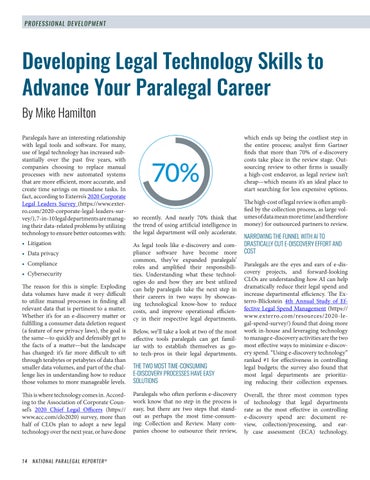
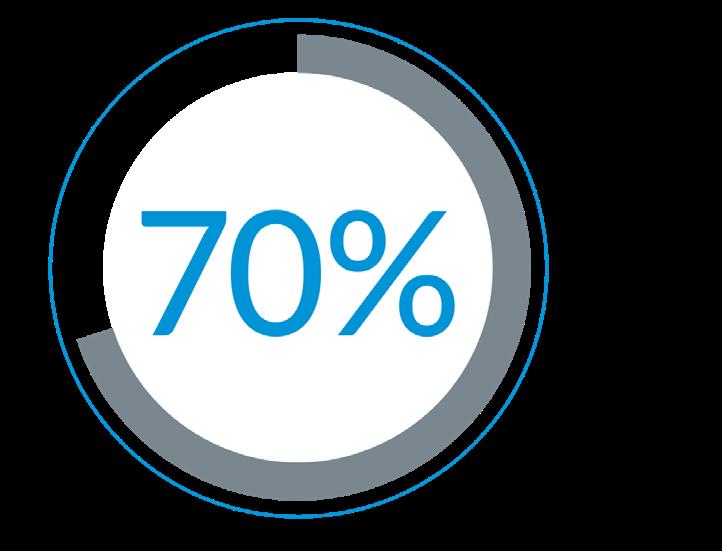
THE TWO MOST TIME-CONSUMING E-DISCOVERY PROCESSES HAVE EASY SOLUTIONS Paralegals who often perform e-discovery work know that no step in the process is easy, but there are two steps that stand out as perhaps the most time-consum ing: Collection and Review. Many com panies choose to outsource their review, which ends up being the costliest step in the entire process; analyst firm Gartner finds that more than 70% of e-discovery costs take place in the review stage. Out sourcing review to other firms is usually a high-cost endeavor, as legal review isn’t cheap—which means it’s an ideal place to start searching for less expensive options.
14 NATIONAL PARALEGAL REPORTER ® so recently. And nearly 70% think that the trend of using artificial intelligence in the legal department will only accelerate.
The high-cost of legal review is often ampli fied by the collection process, as large vol umes of data mean more time (and therefore money) for outsourced partners to review.
NARROWING THE FUNNEL WITH AI TO DRASTICALLY CUT E-DISCOVERY EFFORT AND COST Paralegals are the eyes and ears of e-dis covery projects, and forward-looking CLOs are understanding how AI can help dramatically reduce their legal spend and increase departmental efficiency. The Ex terro-Blickstein 4th Annual Study of Ef fective Legal Spend Management
Below, we’ll take a look at two of the most effective tools paralegals can get famil iar with to establish themselves as goto tech-pros in their legal departments.
lyview,e-discoveryrateofOverall,ingmostlegalrankederymosttoworkgal-spend-survey/)www.exterro.com/resources/2020-le(https://foundthatdoingmorein-houseandleveragingtechnologymanagee-discoveryactivitiesarethetwoeffectivewaystominimizee-discovspend.“Usinge-discoverytechnology”#1foreffectivenessincontrollingbudgets;thesurveyalsofoundthatlegaldepartmentsareprioritizreducingtheircollectionexpenses.thethreemostcommontypestechnologythatlegaldepartmentsasthemosteffectiveincontrollingspendare:documentrecollection/processing,andearcaseassessment(ECA)technology. Developing Legal Technology Skills to Advance Your Paralegal Career Paralegals have an interesting relationship with legal tools and software. For many, use of legal technology has increased sub stantially over the past five years, with companies choosing to replace manual processes with new automated systems that are more efficient, more accurate, and create time savings on mundane tasks. In fact, according to Exterro’s 2020 Corporate Legal Leaders Survey technologyhalfwww.acc.com/clo2020)sel’singThisthoselengesmallerthroughhasthethe(afulfillingWhetherrelevanttodataThe••••technologyingvey/)ro.com/2020-corporate-legal-leaders-sur(https://www.exter,7-in-10legaldepartmentsaremanagtheirdata-relatedproblemsbyutilizingtoensurebetteroutcomeswith:LitigationDataprivacyComplianceCybersecurityreasonforthisissimple:Explodingvolumeshavemadeitverydifficultutilizemanualprocessesinfindingalldatathatispertinenttoamatter.it’sforane-discoverymatteroraconsumerdatadeletionrequestfeatureofnewprivacylaws),thegoalissame—toquicklyanddefensiblygettofactsofamatter—butthelandscapechanged:it’sfarmoredifficulttosiftterabytesorpetabytesofdatathandatavolumes,andpartofthechalliesinunderstandinghowtoreducevolumestomoremanageablelevels.iswheretechnologycomesin.AccordtotheAssociationofCorporateCoun2020ChiefLegalOfficers(https://survey,morethanofCLOsplantoadoptanewlegaloverthenextyear,orhavedone By Mike Hamilton PROFESSIONAL DEVELOPMENT
COLLECTION
Fall 2020 15 utilizing technology to assist with not only e-discovery, but enterprise-wide Legal Governance, Risk, and Compliance efforts. With a legal and business back ground, HAMILTONMIKE experiencedis and passionate about creating thoughtful, out-of-the-box educational resources that help keep legal teams interested and on top of emerging need to know e-discovery and privacy issues. Mike has spent the last 10 years working with legal departments to identify cost effective solutions for e-discovery and privacy practices. Mike graduated from the University of Oregon School of Law in 2010.
The right technology solutions answer the most expensive e-discovery concerns, and “learn” from the users while they’re utiliz ing the technology to become more accu rate over time. For the collection process, Smart Early Case Assessment technology is most effective at identifying responsive data prior to beginning the collection pro cess, because it is able to make connections between potentially relevant data types that otherwise may not have been uncovered.
EARLY CASE ASSESSMENT
MEANS UNDERSTANDING WHAT LEGALTECH CAN OFFER E-discovery presents many challenges for paralegals, with new regulatory obstacles around seemingly every corner. The role of the “e-discovery paralegal” hardly ex isted 10 years ago; 10 years from now, it will likely be common to see paralegals
PROFESSIONAL DEVELOPMENT
Early Case Assessment technology helps to “narrow the funnel” by culling useless data earlier in process, leading to a more concise and accurate data set to review. Whereas federal judges such as Hon. Xavi er Rodriguez are expecting around 85% accuracy for older identification process es like predictive coding, some Smart/ AI technologies are seeing accuracy rates closer to 100%. For this reason, it is no surprise that Exterro’s 2020 Judges Sur vey tifySmartferwidees-survey-ediscovery/)(https://www.exterro.com/2020-judgfoundthat,bymargins,federaljudgeswouldpretoseein-houselegalteamsutilizeECAtechnologytoquicklyidenresponsivedatapriortocollection.
CONTINUING EDUCATION FOR PARALEGALS
REVIEW For paralegals, a less-daunting set of data to review is just one benefit of AI—which makes in-house review more manageable. During the review process itself, AI can be utilized to identify relationships with in the data sets (and help group the data in parent-child format) to find respon sive ESI after only a small percentage of the data set has been reviewed. In a prac tical sense, this means that a paralegal may only need to review as much as 5% of the data corpus before the AI—watch ing and “learning” in the background—is able to understand what the reviewer is looking to accomplish. From there, the remainder of the corpus can be scanned by AI to find the most responsive data.
Paralegal Licensure is a Solution
As stated in The Vermont Joint Commis sion on the Future of Legal Services report, almost three quarters (72%) of Vermont’s civil docket is comprised of small claims, collections, landlord- tenant disputes, di vorce, and parentage cases. What’s more, according to the Vermont Access to Jus tice Coalition, eighty percent (80%) of all cases in Vermont’s docket today have one or more self-represented litigants.
The Vermont Joint Commission on the Future of Legal Services, at the urg ing of Vermont Supreme Court Jus tice Reiber, provided its Final Report and Recommendations to the Vermont Bar in September of 2015 on how to in crease access to justice for Vermonters.
In fact, they may not even realize that a merits hearing is dispositive on their matter. This creates backlog for the court docket as judges are spending their time talking litigants through the evidentiary rules and process and ul timately postponing hearings until the appropriate evidence can be obtained.
EMERGING ISSUES
The number of questions about forms and the litigation process that the VPO has received pales in comparison with the number of questions our State court clerks field from pro se litigants on a dai ly basis. Not only are court clerks inun dated with legal questions (placing court clerks in the position of potentially dis pensing legal advice), once pro se liti gants get before judges in merit hearings, they often have no idea how to submit their documents into evidence, nor do they always have the “evidence” or docu ments helpful or necessary to their case.
Now imagine a Vermont judicial system in which there is a pool of non-lawyers available (paralegals in particular) who have met certain educational and work experience criteria in a particular area of law, who have been specifically trained in Vermont law for divorce, child support, collections, and landlord-tenant disputes, who have passed an examination on those specific areas of law and have been licensed by the Vermont Supreme Court to assist litigants in those limited legal specialties.
16 NATIONAL PARALEGAL REPORTER ®
By Carie Tarte, RP®, Lucia White, CP and Corinne Deering, RP®
STATISTICS TELL US VERMONT IS READY
Access to justice at its core involves ba sic fundamental rights for Vermonters and the stakes are high: losing housing in foreclosure or evictions, losing custo dy of a child, losing assets in a divorce, or losing money in a collections action. In 80% of these cases, where fundamental rights are on the line and the stakes high, Vermonters are representing themselves.
Members of the VBA Paralegal Section, Carie Tarte, RP®, Corinne Deering, RP®, Lucia White, CP, and Lynn Wdowiak, in conjunction with Dan Richardson, then-President of the VBA when the Joint Commission Report was issued, now ex amine whether or not Vermont is ready for paralegal licensure and whether or not paralegal licensure is an appropriate solu tion to Vermonters’ lack of access to justice. This is the first in a two-part series that explores why Vermont is ready for some form of voluntary paralegal licensure and how paralegal licensure can increase Ver monters’ access to justice. The second part, written by Attorney Dan Richardson and Paralegal Lynn Wdowiak, will run in the Vermont Bar Journal’s Spring edition, and will review why paralegal licensure may not be an appropriate answer for Vermont.
The main solution thus far in Vermont has been to make the necessary forms and information available on-line. While this increases access to the forms and statutory language, it does little by way of increasing access to “justice.” It is the equivalent of offering to increase transportation options for someone by providing him or her with a free, but completely disassembled car.
The Vermont Paralegal Organization (“VPO”) has received many requests from pro se litigants over the years asking for assistance on how to complete these online forms and guidance as to how and in what court the forms should be filed. Such requests for assistance to the VPO must go unfulfilled, as they would put paralegals in a position of providing le gal advice, and hence, engaging in the unauthorized practice of law (“UPL”).
Within the Joint Commission’s Report was the Legal Education Committee’s strong recommendation that Vermont adopt a paralegal licensing program. Un fortunately, this recommendation has since languished, but the problems with access to justice in Vermont remain.
While Vermont does have the paralegal resources and overwhelming need to in crease access to justice, it does not have the staffing or infrastructure to establish an elaborate, lengthy and financially imprac tical process for paralegals to obtain licen sure. One of the major criticisms and likely detractors to the full success of the Lim ited License Legal Technician (LLLT) pro gram in Washington State is the prohibi tive educational and work requirements.1
THE RESOURCES EXIST IN VERMONT-TO AN EXTENT Utilizing a pool of licensed paralegals taps into an already existing resource in Ver mont. According to the Economic and Labor Market of the Vermont Depart ment of Labor, as of 2018, there are ap proximately 670 paralegals in Vermont. While not all of the State’s paralegals would opt to undergo voluntary licen sure, a larger majority may if the process is straight forward and not cost-prohibitive.
Because of the extensive requirements just to sit for the examinations, very few paralegals in Washington have opted to obtain LLLT status. As a result, the costs to implement the LLLT program far exceed the income from participating paralegals.
These fictitious licensed paralegals would be capped at what they could charge for services to assist pro se litigants, and while they would not have to work un der the direct supervision of an attorney in their designated specialized legal field of license, they have available a Vermont licensed attorney to consult with through a “collaborative agreement,” similar to those used between a physician and phy sician’s assistant. Such a system could work to substantially increase access to justice for those Vermonters with no in tention of hiring an attorney to assist them because they are both too “rich” to qualify for legal assistance through grants and other funding, and too “poor” to be able to afford the services of a lawyer.
Fall 2020 17
Even if only ten percent (10%) of Ver mont’s paralegal population were to be come licensed, it would mean the avail ability of more than 60 licensed paralegals to assist the pro se divorce litigants in ac curately and timely completion their 813 Financial Affidavits, or to assist pro se ten ants in appropriately compiling the neces sary documentation for their merits hear ing in their dispute with their landlord.
In addition to helping pro se litigants iden tify and prepare forms, a Vermont licensed paralegal could help increase judicial effi ciency by explaining to litigants rules like service of documents on all parties and what evidence may or may not be relevant to their case. He or she could also help lit igants organize and outline their case. Lit igants who appear in court prepared with this type of information would allow judg es to focus on the contested issues without spending as much time on the process.
Utah, the second state to develop a para legal licensure program, has requirements similar to Washington’s LLLT program, but much less daunting. Utah has approved Licensed Paralegal Practitioners (“LPP”) to obtain licensure in specific family mat ters, small claims, and forcible entry and detainer. Utah’s program was enacted in November 2018, so there is little informa tion on its current impact. Like the LLLT, applicants in Utah are required to have at least an associate degree. However, the course requirements are far fewer - an eth ics course plus a subject matter course for each area in which they plan to practiceand the pre-application work requirements are half that of the Washington model.
Vermont licensed paralegals would ob viously have rates considerably lower than those charged by a lawyer. It is like ly that most Vermont paralegals would remain employees of law firms or cor porations, in addition to offering limit ed legal assistance to the public under a licensing program. Having a licensed
Any paralegal licensure in Vermont would need to be straight forward, attainable, and essentially self-funding. Paralegals would pay for their course requirements and would pay similar licensing and renewal fees as attorneys (application fee, examina tion fee, character and fitness/background check fee). They would also be required to obtain their own malpractice insur ance, as well as meet continuing legal ed ucation requirements on a biennial basis.
As Vermont’s Bar Counsel, Michael Ken nedy, noted in his December 9, 2017 blog about paralegal licenses, “we shouldn’t make perfect the enemy of good.” In oth er words, “the goal shouldn’t be to pro vide people who can’t afford lawyers with access to something that walks, talks and looks like a lawyer. It should be to pro vide them with something that is better than they have now-which is nothing.”
Paralegals with the requisite education, experience and specialty training to be come licensed paralegals would not have to carry the heavy debt from law school in order to become a licensed paralegal. At most, they would be paying course fees, li censing fees, examination fees, continuing education fees and malpractice insurance fees. As long as these fees remained rea sonable and attainable, paralegals desiring to become licensed in specialty fields to as sist with access to justice would be able to charge lower, more reasonable rates to the public who cannot afford to hire a lawyer.
Article appeared in Vermont Bar Journal and is reprinted with permission of the Vermont Bar Association.
The Empire State Alliance of Paralegal Associations, Inc. (“ESAPA”) recently an nounced that the majority of paralegals in New York State support voluntary certifi cation. As a result, ESAPA unanimously voted to proceed with creating a statewide voluntary certification program. ESAPA anticipates implementing the full program in January of 2021. While other states immediately surrounding Vermont may not be actively pursuing a licensure, regulation or certification pro gram for paralegals, states in other parts of the country are establishing these pro grams or further investigating forms of regulation, certification or licensure.
EMERGING ISSUES
Certification of paralegals could be a stepping stone to licensure or regulation, also furthering access to justice, as long as the requirement of full attorney su pervision is modified. A model in which paralegals are not required to remain un der the supervision of attorneys in limit ed areas is preferable to one which con tinues to require attorney supervision.
It is the wave of the future across the Unit ed States and soon more and more states will be following suit, in one way or anoth er, to develop solutions to the gap in justice for lower income litigants and to establish standardized criteria for a professional that is in a position to help fill the gap. All of this is not to say that licensed paralegals are the only answer, but it is to say that licensed paralegals can and should be an answer.
Through paralegal licensing, albeit in a lim ited fashion, the public is thereby protect ed from the unauthorized practice of law. In many cases, unrepresented litigants are forced to seek information and assistance from the internet, legal software packages, and in the worst case, independent, unli censed, “non-lawyers” offering services without any oversight from an attorney.
® paralegal offer limited services can ben efit the law firm by providing indepen dent revenue, as well as freeing up the attorney’s time for more complex matters.
Many other states are looking at forms of licensure, regulation, or certification of paralegals to increase access to justice.
Moreover, it is unlikely that paralegals would go through the time and expense to become specially trained, to invest in malpractice insurance, and to take an exam, only to be in the same situation in which they are currently functioning under direct supervision of an attorney.
NOTES: Prior to sitting for the licensing exam ination, paralegals in Washington State interested in becoming LLLT must first complete a minimum associate level degree with 45 of the credits completed in an ABA-approved paralegal program in courses defined in the LLLT regulations plus an additional 15 credits through the University of Washington School of Law in the specific areas of law they wish to become licensed in, and work a minimum of 3,000 hours under the supervision of a licensed lawyer.
ABOUT THE AUTHORS CARIE TARTE, RP®, AIC, is the VBA Paralegal Sec tion Chair and a Senior Paralegal with the firm of Maley and Maley, PLLC in Burlington, where she assists with personal injury matters. In 2013, Carie obtained both her Registered Paralegal (RP) designation by passing the Parale gal Advanced Competency Exam (PACE)
By allowing licensed paralegals to practice in specialty areas, these trained profes sionals would be available to assist those people who might otherwise be forced to seek alternative cheaper, less reliable methods of obtaining help. Ensuring that paralegals meet the requirements of holding a limited license to practice in specialty fields would go a long way to re ducing the unauthorized practice of law.
Seeking a standard of education, experience, and qualifications to be a licensed member of the paralegal profession only protects employers and the public, and at the same time can increase access to justice with the assistance of qualified professionals.
18 NATIONAL PARALEGAL REPORTER
Paralegals can already seek voluntary cer tifications from nationally available pro grams where all of their work currently requires attorney supervision. Adding another option for certification does not seem like it would address the current abundance of pro se litigants because it does not represent a substantial change in our current system. If attorneys are not currently accepting the types of mat ters that have an abundance of pro se liti gants, it is doubtful that having a certified paralegal on staff would change that dy namic, since ultimately, attorneys would be required to supervise (and charge for the supervision of) the paralegal’s work.
Some states may establish a state cer tification, with a modified supervision requirement, in order for trained para legals to actually “practice” in a specified limited capacity, thereby allowing further access to justice. As long as full attorney supervision is still a requirement, howev er, the system is simply operating under the existing parameters, thereby denying lower income litigants access to justice.
Questions about NFPA’s certification programs or how you can obtain your paralegal credentials can be submitted to certifications@paralegals.org
Nicole Morrisey, RP® - Deerfield, NH
NFPA wishes to congratulate the newly minted NFPA-Credential Holders!
Alex Tabatabai, CRP™ - Gaithersburg, MD
Michele Suris, CRP™ - Round Lake Beach, IL
Additionally, there is one additional CRP™ in Illinois who opted out of publication.
Marissa Bozeman, CRP™ - US Army Peggy Busceni Grady, CRP™ - Lake Villa, IL
Eric Jogerst, CRP™ - US Army James Keeling, CRP™ - US Army Agata Kiejzik, CRP™ - Hawthorn Woods, IL
Michael Hoselton, CRP™ - Brightwood, OR
Sandra Lamonica, CRP™ - Chicago, IL
Christian MasudaCastro, CRP™ - US Army Monica Moore, CRP™ - Dallas, TX
Victoria Hartogh, CRP™ - Paletine, IL
Maria Aparicio, CRP™ - US Army Sheila Bailey, CRP™ - Auburn, WA Caroline Baxter, CRP™ - Dallas, TX
LeeAnn Cargile, CRP™ - Spokane, WA
Tea Godfrey, CRP™ - Portland, OR
Jordon Grimes, CRP™ - US Army
Chris Sorum, CRP™ - Concord, NH
Nydia Colon, CRP™ - Waukegan, IL
Lindsay Degastyne, CRP™ - Christiansburg, VA
Victoria Hartogh, CRP™ - Palatine, IL
CORINNE DEERING, RP®, is a ParalegalSeniorwith the firm of Paul Frank + Collins, P.C. in Burlington, where she assists with sationworkers’defenseinsurancelitigation,compenandper sonal injury matters. In 2000, Corinne obtained her Registered Paralegal (RP) designation by passing the National Federation of Paralegal Associations’ (NFPA) Paralegal Advanced Compe tency Exam (PACE). Corinne has also served in many capacities on the Board of Directors of the Vermont Paralegal Organization and has been a member since shortly after its inception in 1990.
Jeane Bird, CRP™ - Big Chimney, WV Autumn Blake, CRP™ - Salem, OR
Fall 2020 19 and her Associate in Claims designation by passing four examinations through the Insurance Institute of America.
Kellie Manzone, CRP™ - Bridgewater, MA
Brandi Moses, CRP™ - Plano, TX
Christopher Teran, CRP™ - Denton, TX
LUCIA WHITE, CP, is the hasBurlington.Hand,RaubvogelSaundersgalPropertyanManagerPracticeandIntellectualParalewithDunkielElliott&PLLCinLuciaworkedex tensively in child welfare and currently volunteers at the legal clinic at Steps to End Domestic Violence. She hasbeen president of the Vermont Paralegal Organization since 2017.
Janese Bodin, CRP™ - Antioch, CA
David Dobson, CRP™ - US Army Kathryn Eickhoff, CRP™ - Hot Springs, AK
Danielle Sepanski, CRP™ - Kenosha, WI
Nicholas Piper, CRP™ - US Army Tracie, Reynolds, CRP™ - Antioch, IL
Tammy Summers, CRP™ - Veradale, WA
New Credentialed NFPA Paralegals
Heidi Sanchez, CRP™ - Lakewood, WA
Nathaniel Speier, CRP™ - Tacoma, WA
Christopher Fitzgerald, CRP™ - Lake Forest, IL
Susan Gary, CRP™ - Parker, AZ
Courtney Tharp, CRP™ - Brownsburg, IN Mary Vogt, CRP™ - Grayslake, IL
Anna Deux, CRP™ - Scottsdale, AZ
Ranae York, CRP™ - Yakima, WA
20 NATIONAL PARALEGAL REPORTER ®
WHY DO COURTS REQUIRE SURETY BONDS?
A surety bond may be required for a range of activities including gaining a contractor’s license to appealing a court case to obtaining a mortgage broker li cense. But what exactly is a surety bond? What is suretyship in general? And how is surety different from regular insurance?
Let’s start at the highest level: what exact ly is suretyship? Suretyship in its simplest form is created when one party guarantees the performance of another party. The surety bond is what guarantees the per formance. The parties to a surety bond are the principal, the person or organization primarily bound by the bond given by the surety; the obligee, the party to whom the bond is given and is therefore protected against loss due to the guarantee of per formance; and the surety, the party who answers to the obligee in the case of a lack of performance who then is indemnified by the principal after payment for failure to perform an obligation to the obligee. The surety is the party that becomes ob ligated to the obligee upon failure of the principal to perform. This seems like a standard insurance occurrence. But what makes the surety agreement unique is that after the surety pays for that failure to perform, the principal indemnifies the surety for the amount paid on the claim by the principal. Underwriters strong ly consider the principal’s ability to in demnify the surety in making their deci sion on whether to bond the principal. The bond is the surety’s form of vouch ing for the principal’s trustworthiness and ability to perform while functioning as a form of protection for the obligee. The surety, however, is not expecting any losses on these bonds. Either the principal per forms as expected, and nobody suffers any losses, or the principal fails to perform and the surety is indemnified by the principal.
Court bonds, such as appeal bonds, may be required in court proceedings to enable a party to pursue a remedy in court. Fiduciary bonds guarantee the faithful performance of court appoint ed fiduciaries such as executors, ad ministrators, guardians, and trustees.
What is a Surety Bond?
Despite indemnity differentiating surety from general insurance, there are mul tiple similarities between the two. They are both risk transfer mechanisms, state insurance commissioners regulate them both, and both provide for financial loss. The main difference is who pays for that loss ultimately. In regular insurance, the insurance company pays; in surety, the principal is ultimately responsible.
An appeal bond, also known as a super sedeas bond, is the bond a losing party is required by the court to file in order to se cure its right to appeal and stay a judgment.
By Colonial Surety Company
The bond amount is the amount of which the surety’s obligation on the bond ex tends to. The surety’s obligation usually does not exceed the bond amount even if damages for failure to perform exceed this amount. A financial guarantee bond, how ever, obligates the surety to pay a certain amount if the principal does not perform.
Medicare and Medicaid bonds are an ex ample of these. They are very carefully un derwritten due to this hazardous nature.
These surety bonds may not be the most well-known aspect of the court system, and often fly under the ra dar of even seasoned lawyers, but are important parts of the legal system.
An estate bond is also referred to as a pro bate bond, fiduciary bond, administrator bond, personal representative bond, or executor bond. This bond is required by a court and protects the interests of the estate and its beneficiaries in accordance with state law. The requirements of this
PROFESSIONAL DEVELOPMENT
A conservator is appointed to assist with the financial needs of a minor, dis abled, or elderly person and may be re quired to obtain a conservator bond to protect the interests and affairs of the conservatee in accordance with the ap plicable state law. The requirements of the bond may vary from state to state.
While both state and federal courts require appeal or supersedeas bonds, the amount of those bonds may vary by jurisdiction.
WHAT IS SURETYSHIP?
Surety bonds usually do not terminate un til the obligation has been fulfilled or com pleted. A bond such as an estate bond might cover obligations extending over years while a blasting permit might be fulfilled in one night. Underwriters have to consider the length of the obligation in their deter mination as to whether the principal is like ly to complete the obligation adequately.
GET A SURETY BOND ONLINE TODAY
A referee is a person appointed by a court to sell real estate or other assets at issue in a litigation and may be required to ob tain a referee bond to secure the referee’s obligations as required by the applicable state law. The amount of the referee bond may be set by the court, and is generally based on the value of the assets in dispute.
A trust is a document created by a settlor that provides how property and assets within a trust are managed and distrib uted to trust beneficiaries. A trustee may be required by the trust document or a court to obtain a trustee bond to protect the interests of the trust beneficiaries. The amount of the trustee bond is usu ally determined by the trust document.
COLONIAL SURETY COMPANY is an NFPA Corporate Partner
on the following •topics:Professional Development • Work/Life Balance • Technology • How To – Tips and Tricks • Ethics • Diversity and Inclusion • Project Case Studies • Day in the Life of… • Flashback to…honoring how far we’ve come as a profession! • News from the local associations –awards, pro-bono activity, etc. Articles can be 750 to 1,000 words with appropriate images, charts, etc. Text submitted as a word document and images as high resolution .jpg or .pdf files. All material should be emailed to Ron Badua at vpdmkt@ paralegals.org
The Reporter has long been a valued tool providing inarticles of interest to the entire NFPA membership. are encouraged to write
SURETY BOND UNDERWRITING PROCESS
Colonial offers a direct and digital way to obtain surety bonds. We are the insur ance company — which means no agent, no broker, and no middleman. We make it easy to obtain your bond instantly. The steps are easy — get a quote online, fill out your information, satisfy under writing requirements, and enter your payment method. Print or e-file your bond from your office. It’s that simple!
communication
If the underwriter can’t approve the bond based on the principal’s given qualifi cations, collateral might bridge the gap to gain them approval. Many bonds are written on this basis and provide pro tection in the case of failure to perform.
So how exactly is the underwriting done on surety bonds? Each company has its own guidelines and criteria but the same basic factors are taken into account by most surety companies. First, they look at capacity: whether the prospective prin cipal has the skill and ability to perform. Then they look at capital: does the compa ny have the financial condition to justify approval of the risk here? Lastly, they look at character: are there any indications that the applicant isn’t of good character and unlikely to perform due to those reasons?
A receiver is a person appointed by the court to receive assets, property, and control of a company pending final de cision of a lawsuit. A receiver may be required to obtain a receiver bond to se cure the receiver’s obligations as required by the applicable state law. The amount of the bond is generally set by the court.
You
Fall 2020 21 bond may vary by state and county where the descendant lived at the time of death.
depth, thoughtful
A guardian is appointed to assist with fi nancial needs of a minor, disabled, or el derly person and may be required to obtain a guardianship bond to protect the interest and affairs of the ward in accordance with the applicable state law. The requirements of the bond may vary from state to state.

PROFESSIONAL DEVELOPMENT
I have found reading challenging material such as opinions and briefs, paying atten tion to the tone, structure and vocabulary are useful. You develop an understanding of how certain documents are structured. Being a sports fan, I approach writing like refereeing a football game. If it’s done well, it goes unnoticed. If it’s done poorly, it creates havoc. Consider your writing as painting a picture. Each word is a color on your palette. Word-choice matters. Take
nuances of fine creative writing at first. Just get started and put some words together.
The Passion and Art of Writing
REVIEW FOR CONTENT
KNOW YOUR AUDIENCE
Are you writing for a client? An adver sary? The court? Make sure you un derstand your reader’s point of view, so you don’t aim too high or too low.
Don’t worry too much about sentence structure, spelling and grammar, or the Legal writing has a specific framework that begins with a strong foundation; grammar, spelling, vocabulary, and tone are our essentials. Whether you are writ ing demand letters, motions, discovery, or letters to clients, these foundations are keys to bringing out what you want to say. Judges, lawyers, and Legislators in their work use words to persuade, in form, advocate, and argue. We, as Para legals, provide their foundation through our writing skills. The stronger our writ ing, the more powerful their arguments are. Specific rules and structures should be followed. It is our job to provide the base for which the attorney’s case is made. The written word is one of the most import ant tools for those in the legal profession. In the past, this was a task done exclusively by attorneys. Today, more supervising attor neys are passing the job to their Paralegals.
One of the first things all Paralegals should have is confidence and a strong voice. When you are writing, you create an image with your words. It represents a level of competence that will avoid any misunderstanding of your point.
No one will read a piece of work if the beginning doesn›t lure them in, so make sure that you begin strong. Stating your ob jective is an effective way to do that. Also, the final sentences will be the last impres sion in the reader’s mind. Make sure your words are powerful enough so that the reader remembers them. You can even restate the objective if you say it in a new way.
ENVISION Before you type even one letter, envision a clear idea of what you want to say. Vo calize your objective out loud and be as specific as you can: “I want this employ er to see that I am perfect for the job,” or “This client must understand the deci sion that came out of the meeting.” The better you can articulate your objective, the easier it will be to write down, and the more effective the writing will be.
OUTLINE At one point or another, we all have writ er’s block. The most difficult for me is the horrible “P” word – procrastination! I really procrastinate. But when I sit and prepare an outline, the juices get flowing and the writing easier. This kind of or ganized structure in your legal writing will help guide the reader through your text. Simply put, it promotes readability.
AVOID BEING TOO WORDY When you avoid unnecessary words, your work will seem more fluid.
WRITE Now that you have your objectives firmly in your mind, secure them on paper or on the screen. In other words, create your canvas. It is easier to edit writing, rath er than come up with something new, so just try to get words out as a starting point.
CONSIDER THE BEGINNING AND THE ENDING
the reader on a guided tour to your out come. All professions require an element of articulation whether done verbally or in writing. Paralegals especially need to develop their communication skills if they are to find success in the legal profession. The following are some skills to consider.
Go back to the beginning and re-state your objective. Now read what you have just written. Does it say what you want it to say? Don’t worry about how pretty the lan guage is; just make sure the ideas are in place.
22 NATIONAL PARALEGAL REPORTER ®
HEADINGS Your headings organize the argument sec tion into primary and subsidiary parts. Headings should be concise and concluso ry statements about a legal issue written in a complete sentence. This also goes to the idea of omitting wordy words as noted below.
By Mary K. Mayer, CRP
MARY K. MAYER is is a CORE Registered Para legal with the Yavapai County Public Defend er’s Office in Prescott, Arizona. Mary has been in the legal field for over 30 years and is passionate about the law. She is a former Board Member and current Member of Arizona Paralegal Associa tion. mkmayer88@gmail.com
RESOURCES: • 9 Steps to Better Writing for Paralegals … et al. by Gail Armatys, Jul 16, 2013 3:18:00 PM, Blogger Through Parale gal.Edu, Center for Advanced Legal Studies; • “Advanced Writing Skills for Paralegals,” an on-demand course taught by Joe Zavaglia, Esq.; February 20, 2015, • Legal Writing for Paralegals: 3 Ways to Improve Your Writing, By Legal Studies Categories; The Writing Center, Georgetown University Law Center 2018, Writing Effective Point Headings. •• PROFESSIONAL DEVELOPMENT
PROOFREAD Of course, always make sure gram mar, punctuation, word choice and for mat are in order. Take time to proofread for grammar and fact checking cites. Whether you are new to the field or a veter an, I hope some of these reminders will in spire a new passion for great legal writing. It is very rewarding when you know you have produced a well-written document. And remember, every excellent Paralegal knows how to write well. Legal writing can be intimidating, even for the most seasoned legal professional, but it doesn’t have to be.
Fall 2020 23 USE PASSIVE VOICE TO DIMINISH THE OTHER SIDE Although you should be using active voice, using a passive voice is useful in this context. “The defendant breached the contract.” vs. “The contract was breached by the defendant.” Passive voice creates distance between you, your client, and what’s occurring. It makes them an object in the sentence rather than the reason for the sentence. Unfavorable facts should always be noted in the passive voice. Ac knowledge it, diminish it, and move on. READ THE DOCUMENT ALOUD My co-workers must wonder if I’m crazy because I talk to myself. (No comment.) However, usually it is because I am read ing aloud the content of my writing so I can hear mistakes like sentence frag ments or run-on sentences that might have been missed when writing. A sen tence should sound complete and express only one main idea. Make sure your sen tences are grammatically sound. You may want to have other people read and edit your work if you are unsure about this. READ IT BACKWARDS
BE
This takes all context away from each individual word and makes spelling errors leap off the page. Nothing says «I don›t really know what I›m doing» more than spelling or grammar errors. UNIQUE We are all bombarded with the written word copiously. You will need to stand out. And purple Wingdings as a font choice is not the way. Consider replacing clichés like ‘leap off the page’ with something fresh and original, like ‘stand out like goose bumps in the arctic.’ Be yourself and let your rareness shine through your words.
24 NATIONAL PARALEGAL REPORTER ®
WHY EQUITY IS IMPORTANT Equity further denotes identifying ineq uitable systems, course-correcting and building equitable systems that are de signed to work equally for everyone. His torically and currently, many of our sys
THE MEANING OF EQUITY
In order to be truly inclusive, it is imper ative to operate within an Equity lens, the process for analyzing and diagnosing the impact of the design and implemen tation of policies on marginalized or un der-represented individuals or groups, and to identify and eliminate potential barriers. Equity requires the fair treat ment, access, opportunity, and advance ment of everyone, while identifying and eliminating barriers that have prevented the full participation of marginalized or under-represented individuals or groups.
REBUILDING EQUITABLE SYSTEMS
Building equitable systems is extreme ly important as old inequitable systems are dismantled to accommodate the increase in diversity. Now more than ever, we live in a world where a per son’s identities intersect, which creates its own unique challenges and barriers related to disadvantages and privileges. For example, the experiences of a white LGBTQ+ individual compared to a person
The first component is Supremacy; the ideology that one cultural group is bet ter than another cultural group. This is largely a dynamic related to power, ac cess, and a perception of superiority.
The third component is Privilege; the un earned advantages and benefits gained by members of a group that has supremacy. This is exemplified by being able to speak the way you want and wear what you want to wear, without judgment or recrimination.
By Sybil Taylor Aytch, RP®, M.Ed. and Stefanie Trujillo
Equity comprises three components.
DIVERSITY, INCLUSION AND EQUITY
It is not possible to have true Diversity and Inclusion without Equity. Equity is itself the bellwether of the Diversity, Inclusion, and Equity model. While Diversity pro vides a quantitative representation, and Inclusion is added to the mix to allow one to be accepted as their true and au thentic self, Equity denotes our deepest understanding of its nuances and intrica cies. It recognizes the historical legacies and current realities of discrimination and prejudice experienced by marginal ized or under-represented communities.
To further grasp the meaning of Equity, it is important to understand that the term is not synonymous with Diversity, Inclusion, Equality, or Justice. In fact, many have con fused Equality and Equity, yet they have two very distinct meanings. Equality is let ting everyone in, while Equity is giving ev eryone the tools they need to succeed after being let in. Essentially, Equality is giving ev eryone shoes, while Equity is giving everyone shoes that fit. We must be very clear on the meaning of each of these terms in order to address inequities and reach viable solutions.
The second component is Power; the so cial capital gained by being a member of a group that has supremacy. This is demon strated in the workplace by better eval uation assessments and better access to mentors and other resources for success.
Rebuilding equitable systems requires an understanding of the data behind the sys tem and/or community sought to be re built. This undertaking includes examin ing a model such as World Trust, which identifies the history, culture, and identi ty of the system/community and under stands internal and external factors, such as the personal and institutional manifes tations of bias (The System of Inequity).
The word “Equity” is often seen and heard in news articles, classroom settings, and certainly all over social media. But is it being heard and seen in your workplace, and is it being promoted and included in the framework of your firm’s Diversity and Inclusion initiatives? For those who come from marginalized or under-repre sented communities, or those who care about advancing these communities, “Eq uity” is more than merely another refrain.
Equity: More Than a Refrain
tems were built to sustain inequity. Because these systems are doing exactly what they were designed to do, contemporary events heavily highlight significant disparities in education, health, wealth, and justice.
Many, if not all internal and external con tributing factors are the core of what perpetuates inequalities. In order for change to occur and the dismantling pro cess to commence, these contributing fac tors must be discontinued at both the internal and external level. The tools and resources needed to build an equitable system must also be identified and uti lized so that the same services are pro vided for everyone, regardless of identity.
Fall 2020 25 DIVERSITY, INCLUSION AND EQUITY
STEFANIE TRUJILLO is a member of NFPA’s theMembershipViceandEquityInclusionDiversity,andCommitteeservesasthePresidentofforRockyMoun tain Paralegal Association. She is a proud mother of two boys, paralegal, social justice advocate, and author.
Furthermore, many of the initiatives un dertaken in the workplace did not result in creating a more diverse or inclusive en vironment. An employer merely attending the same diversity and inclusion trainings for years, with no actionable steps, or at tending the same job fairs, without the hiring of any diverse candidates, are exam ples of failed initiatives (Stanfield, 2018).
IN THE PAST
Leaving equity out of the equation was detrimental to its success. It was not un til recently that Equity was deemed a nec essary component to ensure measurable success in Diversity and Inclusion work.
WHY
oppression, adding the intersection of race decreases access to necessities such as healthcare for those of color because there is no shared privilege based on supremacy. As a society, it is prudent to be more aware of intersectionality so that we can become more innovative in identifying and dismantling inequitable systems. In the workforce, some of the most recent examples of eliminating gender-based bias includes extending paid leave to all parents, regardless of gender. Reviewing resumes without the candidate’s name has helped eliminate some racial and eth nic bias during the recruitment process. DIVERSITY & INCLUSION EFFORTS FAILED
MOVING FORWARD
SYBIL AYTCH,TAYLORRP®,M.ED. is Coordinator of NFPA’s Award.Localthe2002tee.EquityInclusion,Diversity,andCommitShewastherecipientofOutstandingLeadershipSheisa paralegal, author, and instructor, and has written and presented to profession al organizations on leadership, profes sionalism, ethics, diversity, inclusion and equity, technology, utilization, assessment, and social justice.
An action is a thought made manifest (Coel ho). Progress cannot be effectuated in address ing disparities in education, health, wealth, employment, and justice until we examine and remove the exclusionary barriers in all communities. Closing these gaps requires that we do the work every day, everywhere, and on every level, with Equity resounding as more than a mere refrain, but as a chorus in our quest for a more just and equitable world.
RESOURCES The System of Inequity. Retrieved from more-info/the-system-of-inequityhttps://www.racialequitytools.org/ continued on page 26...
Simply giving one access (equality) is not enough. Providing access along with the tools necessary to thrive in the environ ment (equity) was the missing element.
Without Equity, the unique challenges and needs of certain identities are ignored, thereby, passively demonstrating privi lege and not creating the changes sought.
Prior diversity and inclusion efforts failed all of its participants and yielded poor re sults. This supposition was based on the no tion that “Diversity” and “Inclusion” were initially only synonymous with race and had heavy negative connotations. Most, if not all, efforts were geared towards some people, not transforming the environ ment to include all people (Hecht, 2020). There was no celebratory distinctions re lated to the differences across races, and no shared history about people of color, who invented and contributed to society, was introduced. Rather, oppression was the main highlight of the trainings, which re sulted in feelings of resentment, or blame, depending on an individual’s identity.
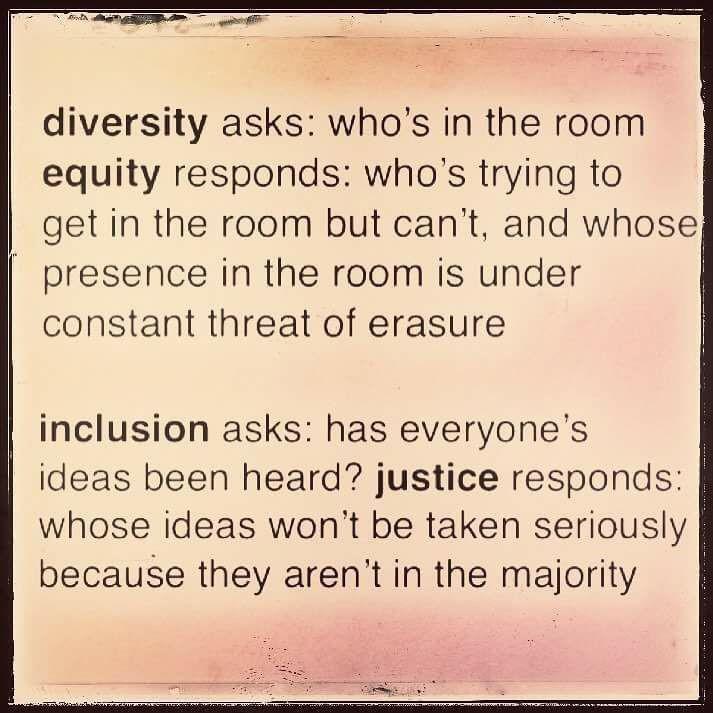
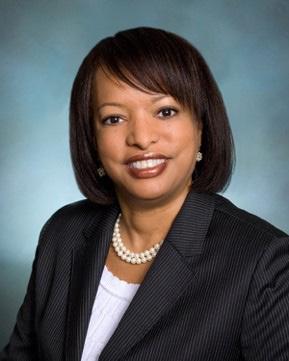
This award recognizes an NFPA member in honor of the Hon orable William R. Robie and his dedication to the paralegal pro fession, the expansion of the delivery of legal services and equal access to justice for all Americans. Sybil Taylor Aytch, RP®, M.Ed. Barbara H. Peppersack Christine Hansen
•
•
• Laura A. Kehoe, CRP
•services. Kimberly Kasper, MnCP
26 NATIONAL PARALEGAL REPORTER ®
• Kasie Sweeney
Anthony Sipp
PARALEGAL OF THE YEAR AWARD -
NFPA Annual Awards Recognition
•
This award recognizes an individual NFPA member whose onthe-job achievements have contributed to expansion of the para legal profession, including contributions to his or her employer, colleagues and the paralegal profession in general.
This award recognizes an individual NFPA member for outstand ing local leadership contributions to his or her local association. Amy Conrad JUSTICE CHAMPION AWARDThis award recognizes a practicing parale gal whose conduct, actions, and activities demon strate extraordinary dedication to diversity and inclusion as defined in NFPA’s Position Statement on Diversity, Inclusion, and Equity Maren Schroeder, RP®, MnCP Aaron B. Bath, CEDS, RP®
•
• MaryAnn Ivie, RP®
•
Julianne Di Benedetto
•
•
resources continued Bhasin, Ritu. The Authenticity Principle: Resist Conformity, Embrace Differences and Transform How You Live, Work, and Lead. (Melanin Made Press, 2017). Coehlo, Paulo. Like the Flowing River (Sant Jordi Asociados, 2009).
This scholarship covers the costs of a review manu al, an online review course, and the exam fee for the Paralegal CORE Competency Exam™ (PCCE). This scholarship is sponsored by the Paralegal Education Group.
Hecht, Ben. (2020, June 16). Moving Beyond Diversity Toward Racial Equity. Retrieved from cial-equitymoving-beyond-diversity-toward-rahttps://hbr.org/2020/06/ Stanfield, Tayna. (2018, June 28). Four Reasons Your Diversity And Inclusion Initiatives Are Failing (And How To Fix Them Now). Retrieved from https://medi um.com/wesolv/five-reasons-your-diver sity-and-inclusion-initiatives-are-failingand-how-to-fix-them-4cc0afae95da
• Jamie Holzer, MnCP
• Cynthia Surber
NFPA honors and congratulates the 2020 award and scholarship nominees. Winners will be announced at the NFPA Annual Convention. Nominees who have made tremendous con tributions to the paralegal profession have been announced for the following categories: WILLIAM R. ROBIE LEADERSHIP AWARD -
This award recognizes an individual paralegal who has exhibited extraordinary dedication to the delivery of quality legal services to a portion of the population that cannot afford to pay for legal
OUTSTANDING LOCAL LEADER AWARD -
PCCE SCHOLARSHIP -
•
INDIVIDUAL PRO BONO AWARD -
DIVERSITY, INCLUSION AND EQUITY
The NFPA Convention Committee has decided to use Whova (https://whova. com/) as our Convention platform. This will allow us to share schedules, speak er information, exhibitors, and sponsors with our virtual attendees. CLEs, Work shops, and meetings will use Zoom, and the login links will be embedded right into Whova. You’ll receive access a few days prior to the convention to get com fortable with the functions and features. We’re also excited for the networking fea tures of Whova! Attendees can use the community forum to organize their own informal happy hours or coffee dates (just like we do in-person), by posting their own Zoom links. You can get a free Zoom account that allows for 40 min ute “meetings” without paying a dime.
EXHIBITORS AND SPONSORS
Make sure you visit our exhibitors and sponsors in the Whova platform. There will be opportunities for virtual “meet ings,” raffles, and information from our supporters. The first 300 registered attend ees will receive a “swag box” in the mail prior to the Convention with goodies from NFPA and MPA, as well as our exhibitors and sponsors. Quantities are limited! Reg ister early to ensure you get your box!
The Minnesota Paralegal Association has worked closely with NFPA to put together a great virtual convention experience for everyone! While we may not see each other in-person this year, we’re looking forward to connecting with our colleagues online.
POLICY MEETING
WELCOME RECEPTION
The Minnesota Paralegal Association will host a Minnesota-themed virtual happy hour on Wednesday, October 21st. This will allow folks that aren’t familiar with Zoom to check out the features and make sure their system is set-up correctly. Expect an interactive experience with a game or two and some fun facts about Minnesota. Other social events will be scheduled throughout the weekend and posted to the Whova app.
Thursday, October 22 We are excited that most of our speakers committed to the virtual environment, and we were able to secure two new CLEs in the virtual format! This year, CLEs include a full track on Corporate Law and a full track on Litigation,; additionally, you’ll see Immigration, Intellectual Property, Eth ics, Technology, and Diversity, Equity, & Inclusion. Keep your eyes on the Conven tion website (www.paraleglas.org/conven tion) and Facebook group moreasfacebook.com/groups/396086911068866),(https://www.wellasNewsYouCanUsefordetailsabouttheCLEspeakers.
NFPA UPDATES
CONVENTION PLATFORM
CLES AND WORKSHOPS
PARALEGALS PLUGIN -2020 NFPA ANNUAL CONVENTION
Saturday, October 24 Sunday, October 25 NFPA’s Parliamentarian, Ramona Hill, will return this year! She is excited to work with us in this new format, and is assisting the Convention Committee with develop ing virtual procedures for the policy meet ing. Tom Stephenson, NFPA Vice Presi dent and Director of Membership, will be working with the Convention Committee and Ms. Hill to provide pre-convention training for everyone to understand the “What’s” and “How-to’s” of Policy Meeting.
Fall 2020 27
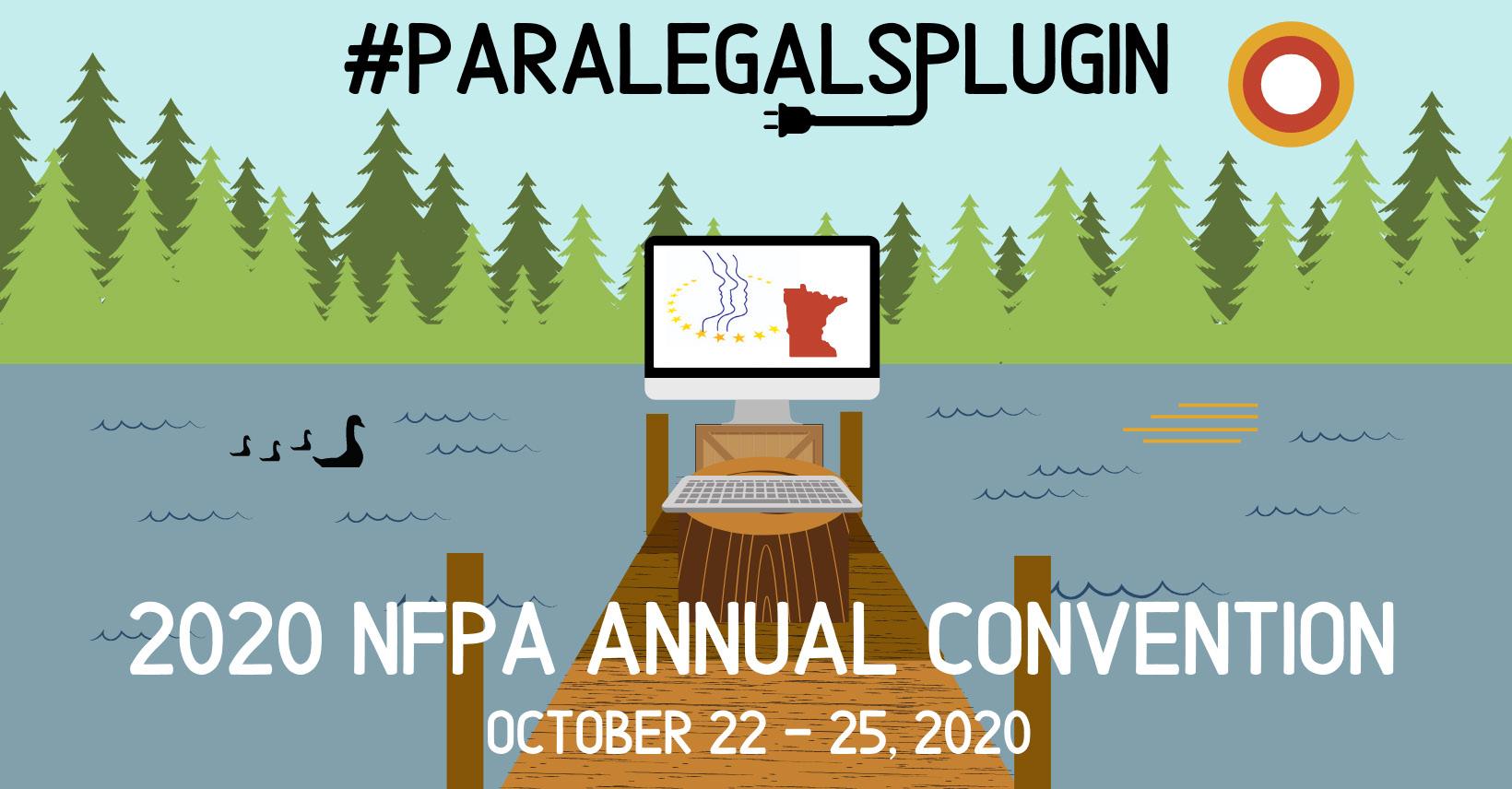
The Boundary Waters contains more than 2,000 backcountry campsites, 1,200 miles of canoe routes, 12 different hiking trails, and is popular for canoeing, canoe touring, fishing, back packing, dog sledding, and enjoying the area’s remote wilderness character.
Break and Visit with Exhibitors 2:30
Keynote - Minnesota Supreme Court Justice Paul Thissen 12:30
The Boundary Waters attracts over 150,000 visitors per year to Northeast Minnesota.
Break/Networking 6:00
Board of Directors Meeting
28 NATIONAL PARALEGAL REPORTER ® NFPA UPDATES
CONVENTION CHARITY
When you register, you’ll have the op portunity to donate $5.00 to the 2020 Convention Charity, the Friends of the Boundary Waters Wilderness. The Friends of the Boundary Waters Wilder ness is a non-profit organization formed in May 1976, with a mission to “To pro tect, preserve and restore the wilderness character of the Boundary Waters Canoe Area Wilderness and the Quetico-Supe rior Ecosystem.”
Concurrent Education Sessions (4 each) 3:30
Break and Visit with Exhibitors 1:00
SCHEDULE AT A GLANCE - SESSION DETAILS ARE ONLINE AT HTTPS://WWW.PARALEGALS.ORG/I4A/PAGES/INDEX.CFM?PAGEID=3823 All times Wednesday,CentralOctober 21, 2020 TBD Virtual Happy Hour hosted by MPA Thursday, October 22, 2020 8:30 a.m. Concurrent Education Sessions (4 each) 9:30 a.m. Break and Visit with Exhibitors 10:00 a.m. Concurrent Education Sessions (4 each) 11:00
Concurrent Education Sessions (4 each) 2:00
The Friends have played a pivotal role in maintaining the wilderness by advocacy and litigation and increasing the size of the wilderness area and limiting motor usage in accordance with the Wilderness Act. It has also had a major role in estab lishing the nation’s first acid rain laws to protect Minnesota’s aquatic ecosystems, increased buffer zones for aircraft flying over wilderness areas, and raised public awareness on the issues surrounding cop per-nickel and other non-taconite min ing and logging near the wilderness area. a.m. a.m. p.m. p.m. p.m. p.m. p.m. p.m. p.m. p.m.
Break and Visit with Exhibitors 11:30
Break and Visit with Exhibitors 3:45
Student Workshop and Member Workshops https://www.paralegals.org/i4a/pages/index.cfm?pageid=38245:00

Fall 2020 29 NFPA UPDATES Friday, October 23, 2020 9:00 a.m. NFPA Region Meetings 10:30 a.m. Morning Break 10:45 a.m. NFPA Region Meetings 12:00 p.m. Networking/Lunch Break 1:00 p.m. NFPA Region Meetings 4:00 p.m. Dinner Break/Virtual Happy Hour 6:00 p.m. Delegate Caucus (if needed) Saturday, October 24, 2020 9:00 a.m. Policy Meeting - Call to Order 10:00 a.m. Morning Break 10:15 a.m. Policy Meeting Continues 11:45 a.m. Grab your lunch! 12:00 p.m. Awards Presentation | NFPA In Memoriam 1:00 p.m. Break 1:15 p.m. Policy Meeting Continues 2:45 p.m. Break 3:00 p.m. Policy Meeting Continues 5:00 p.m. Adjourn Policy Meeting 6:00 p.m. Delegate Caucus (if needed), networking Sunday, October 25, 2020 9:00 a.m. Policy Meeting - Call to Order 10:15 a.m. Break 10:30 a.m. Policy Meeting Continues 11:30 a.m. Passing of the (virtual) Torch to 2021 Annual Convention Host Coordinator/ Oregon Paralegal Association 11:45 a.m. Installation of Officers and Board of Directors 12:00 p.m. Adjourn Policy Meeting 2:00 p.m. Board Meeting LOOKING AHEAD We spent a lot of time telling you about all of the AMAZING things Minnesota has to offer, and we were so disappoint ed our friends won’t have the opportunity to join us this fall. However, we are excited for you to join us in the Spring of 2021 for Joint Conference -- where paralegals will make a splash in the land of 10,000 lakes, if COVID-19 allows.
Force include: VPDM, Tom Stephenson, ILAP; VPDPC, Linda Odermott, RP®, OCP; Region I Di rector, Brenda Cothary; Region II Direc tor, Lisa Lynch, CRP™, CEDS; Region III Director, Tracey Woosley, RP®; Region IV Director, Cathy Allard, CP; Region V Di rector, Becky Reedy; Consultant, Michael Reed, Founding Partner, Block|Reed; with additional input and guidance from: In terim Executive Director, Dara Rudick, CEO, MHQ LLC; Certifications Manager, Leslie Johnson; President, Nita Serrano, RP ®, AACP; Treasurer, Lori Wagner, RP ®, IRP; and VPDPD, Theda Yandell, RP ®. FASTTRACK FEES • PACE® & PCCE® Application Fees reduced to $250 • PACE® & PCCE® Reapplication/Retest Fees reduced to $150 • PACE® & PCCE® Renewal Fee reduced to $50 • 60 Day Extension or Retroactive Exten sion fee reduced to $15 NFPA UPDATES
“I can’t get access to my transcripts.” “My former law firm is not responding to my requests for verification.” “I can’t get my documents notarized.” “I can’t get copies of my divorce decree.”
“The Courts are closed.” “I’ve been furloughed at my work.” “My state is currently under Stay-AtHome Orders.” These are just some of the state ments we heard from applicants as COVID-19 began impacting the para legal profession and our certifica tion program applicants, in particular.
Responding to administrative, financial, economic and accessibility issues created by COVID-19, the NFPA Board took ac tion by creating the Certification FastTrack Task Force (“Task Force”). The Task Force is made up of Board Members and advisors who are tasked with collaboratively creat ing the FastTrack Pilot Program (“Fast Track”) in order to respond to the emergen cy situations created by Covid-19 and its effects on NFPA’s Credentialing Programs. It was also designed to increase the num ber of Paralegal Advanced Competency Exam® or PACE® candidates temporarily by reducing bureaucratic and confusing procedures and reducing costs associat ed with the RP® and CRP™ Credentials.
THE EFFECTS OF THE
By Jessica Kubiak, RP® and Linda Odermott, RP ®, OCP
30 NATIONAL PARALEGAL REPORTER ®
EFFECTS ON THE NFPA CREDENTIALING PROGRAM • Reduction in certification fees • Streamlined application process • Reduction of document requirements • Attestation of candidates to NFPA requirements • Audit 5% of applications and renewals • Suspension of the $25 processing fee • Streamlined Appeal Process Questions or comments about the FastTrack program should be sent to certifications@paralegals.org. Members of the
NFPA Responds to Emergency Situations… Certification FastTrack
The FastTrack program was unanimously approved by the NFPA Board and rolled out within six weeks. The Board also in structed staff to track and report any issues discovered during the pilot time frame. This six- month pilot program allowed the board to be nimble and quickly respond to the extreme situations facing many of our members and paralegal credential candidates by suspending the regular cer tification program and instituting the Fast Track program in its stead, then NFPA will re-evaluate the success of the Pilot Program. FASTTRACK Task
cfm?pageid=3634.www.paralegals.org/i4a/pages/index.https://
LINDA ODERMOTT, RP®, OCP is the current DirectorPresidentViceandofParale gal Certification. In 2012, she received her RP® creden tials from NFPA and in 2017, Linda received the OCP credentials from the Oregon Parale gal Association (OPA). She currently works with attorneys at the law firm of Dunn Carney in Portland, Oregon, in the firm’s litigation and real estate practice groups. In 2015 and 2016, she was awarded the Paralegal of the Year Award from OPA and in 2015,she also received the Certification Ambassador Award from NFPA. Find out more details or apply index.cfm?pageid=3813https://www.paralegals.org/i4a/pages/here
Fall 2020 31 STRATEGIC PARTNERSHIPS Prometric Offers Proproctor® Option to NFPA Certification Candidates • Two ways to take the exam • In a Prometric Testing Center • Through a remotely‐proctored, inter net‐enabled location of your choice using your computer’s camera and microphone • 24/7 testing capability anywhere in the world, including your own home • Link to video Demo of the ProProctor® experience • Click here to check if your computer meets the requirements to use ProProc tor® before scheduling • No additional fees to choose the remote proctoring option Paralegal Education Group (“PEG”) & NFPA jointly offer Free Review Courses - PACE® and PCCE® • Exclusive to NFPA and PEG • Six-month program • Go Live Date scheduled for June 1 • Member-only, no-cost benefit • Offering PACE® and PCCE® On-De mand Review Courses • Access through NFPA Website Member Only Content (NFPA login required) WASHINGTON STATE SUPREME COURT SUNSETS LLLT PROGRAM IMPACTS LLLT STUDENTS Due to the deadlines created by the Wash ington State Supreme Court’s decision to sunset the LLLT Program, many LLLT students must take the Paralegal Core Competency Exam® or PCCE® in the next few months. NFPA is in contact with the LLLT Programs and have extended an in vitation for each program to participate in NFPA’s Assurance of Learning Program. The Assurance of Learning Program offers students application discounts and early eligibility options to take the exam, at no cost to the schools. Stu dents impacted by this change should contact their LLLT Program to deter mine if the program is participating in NFPA’s Assurance of Learning Program.
JESSICA KUBIAK, RP® is employed with Daray Law, LLC. as a Paralegal in the JessicaRelationsDomesticpractice.isanOhio State Bar Certified Paralegal since 2011, A PACE Certified Paralegal since 2018 and a notary public for Cuyahoga County. She is the current president of the Cleveland As sociation of Paralegals (CAP) as well as the CMBA Liaison and the NFPA Prima ry for CAP. Jessica is the current NFPA Certification Public Relations Coordi nator, a member of NFPA’s Legislative Committee, a member of the Strategic Planning Committee and the Co-Chair for the Ad Hoc Committee for the Status of the Paralegal Profession.
For more details about the Assurance of Learning Program go to
NFPA UPDATES
Founded in 1974, as the first nation al paralegal association, NFPA is an is sues-driven, policy-oriented professional association directed by its membership, comprising of nearly 50 paralegal associa tions and representing a range of approxi mately 8,000 diverse individual members. NFPA’S the Sunsetting of the Washington State
( St__Sup__Ct__Sunsetting_LLLT(1).pdfgals.org/files/NFPA_Statement_on_WA_https://www.parale ).
POSITION STATEMENTS AT ORG/I4A/PAGES/INDEX.CFM?PAGEID=3302HTTPS://WWW.PARALEGALS. NFPA Responds to
The National Federation of Parale gal Associations, Inc. (NFPA) believes that paralegals can and should play an integral role in the delivery of cost-ef fective legal and law-related services.
32 NATIONAL PARALEGAL REPORTER ®
READ MORE ABOUT
The NFPA has adopted several position statements regarding Non-Lawyer Prac tice and supports legislation and adop tion of court rules permitting non-law yers to deliver limited legal services. In early June 2020, NFPA was dismayed to learn that the Washington State Supreme Court had voted to sunset the Limited Li cense Legal Technician (LLLT) program and that a response in time for the appeal was urgent, needing to be submitted by June 16, 2020. A team led by NFPA’s Vice President & Director of Positions and Is sues Lori Boris, RP®, MnCP and consist ing of Region I Director Brenda Cothary (member of the Washington State Paralegal Association), NFPA’s American Bar Asso ciation Liaison and Pro Bono Coordinator Christine Flynn and Regulation Coordi nator Cynthia Bynum, MBA, collaborated and drafted a statement in opposition, and completed it in time to be submitted with the appeal. The LLLT Board has expressed sincere appreciation for NFPA’s efforts. We are hopeful that the Washington State Su preme Court will reconsider its decision. Individuals throughout the United States struggle to afford legal assistance. The LLLT was created to offer affordable op tions for legal services, particularly in certain practice areas with high demand. As early as 2005, NFPA advocated for the LLLT program. NFPA extends its hand to Washington State to collaborate with law yers, local and state bar association, legal aid providers and the judiciary to sustain and expand the program. Read NFPA’s Statement to the Supreme Court of Wash ington State in opposition to Sunsetting of LLLT Program.
LLLT Program NFPA NEWS
THE GREATER LEXINGTON PARALEGAL ASSOCIATION CELEBRATES A MILESTONE 40 YEARS OF SERVING MEMBERS
This year the Greater Lexington Parale gal Association (GLPA) is proud to cel ebrate its 40th Anniversary of serving the paralegal community. The GLPA is made up of paralegals and students from various fields of law who share a com mon interest in sustaining and promot ing the paralegal profession in our area.
The GLPA was initially assembled in 1980, at that time known as the Lexing ton Paralegal Association, by a small group of determined paralegals com mitted to expanding their profession. In 1990, the LPA was accepted by the NFPA and became a member. In 1993, the LPA board voted to expand its membership and include paralegals working outside of Lexington but in the surrounding area. The LPA was then renamed the Greater Lexington Paralegal Association. Since its inception, the GLPA has served as a resource for paralegals to collabo rate on ideas and methods by connect ing members through social events, virtual forums and discussion boards.
Central Kentucky is home to multiple schools with prestigious Paralegal pro grams (Sullivan University, Eastern Ken tucky University and Morehead State University) and the GLPA is committed to serving students and future paralegals by providing student discussion panels at universities multiple times each year and offering a student scholarship at our annual Christmas luncheon. The GLPA offers a discounted student member ship to allow students the opportunity to participate in CLE’s, network with oth er paralegals and access our job bank.
NFPA NEWS
Fall 2020 33
Demonstrating the ability of this pro fession to quickly evolve and adapt, the GLPA has offered Zoom CLE’s to mem bers in lieu of in person CLE’s during the COVID-19 crisis. The association hopes to officially celebrate this milestone at the annual holiday luncheon held in De cember. Due to the COVID-19 pandemic and social distancing regulations the as sociation was unable to safely gather in July to celebrate this milestone anniver sary. The GLPA looks forward to serving its members and cultivating the paralegal profession for many more years to come.
Defense for the last 10 years and holds the Certified Kentucky Paralegal Desig nation through the Kentucky Paralegal Association.
Greater Lexington Celebrates 40 Years
In addition to serving its members, the GLPA is devoted to and excels in the area of philanthropy and serving the surrounding community. For the last several years our association has sponsored a nursing home gift drive. At Christmas, members volun teer to fulfill a wish list for an elderly res ident providing gifts for many who would otherwise not receive a gift at Christmas.
HEATHER HOLBROOK Member of the Greater Lexing ton MalpracticeinsivelySheRepresentative.NFPAtionsStudentAssociation,ParalegalRelaChairandPrimaryhasexcluworkedMedical
Additionally, a successful teddy bear drive was sponsored by the GLPA to provide a stuffed animal for local law enforce ment to keep in their vehicle to provide to small children during times of crisis.
My fact-finding mission with Vermont Paralegal Organization (VPO) founding member Trudy Seeley turned into a delve into the transformation of our profes sion from a paralegal who has lived it all. Trudy obtained her BA in Philosophy from Western Washington University, and moved to Middlebury, Vermont, to a family farm where she raised six chil dren. She took weekend classes through Woodbury College, which she was al lowed to attend without paying full tuition. After graduation, she began her parale gal career in 1985 at a Burlington firm. The profession was new. Trudy relates: “I stopped in the office about 8 times be ing told they don’t use or know what to do with paralegals.” A firm founder saw her in the waiting area yet again and in structed the manager to put Trudy to work since she’s around so much anyway. The job wasn’t glamorous or sexy. But it was the start of a career that brought her from leaky underground storage tanks to a pharmaceutical compliance department.
Trudy recalls that a main focus was ed ucating lawyers and firms on the use of paralegals. “[O]ur ‘mission’ was not at all appreciated by all lawyers, so we had to be very careful about what we said around our lawyer bosses.” Like today, some para legals were integral parts of firms; others were regarded as errand people with all the “crap jobs.” VPA strove to educate lawyers and managers so all paralegals were regarded as essential team members. It was also important to have different des ignations, i.e., Senior Paralegal and Junior Paralegal, which could not come, with out defining what a paralegal could do. This became the over-arching focus of the VPA. When asked about licensure initia tives, Trudy offered wholehearted support:
The cost of membership for 1-5 years was $25.00, and $15.00 for less than a year. The first meeting was November 10 at Vermont Law School: a five-hour brown bag. Tru dy, Interim President, stated: “I think we have come to realize that this field is still so new to Vermont, that there isn’t really a job description, there are no standards of education, there aren’t any statistics out there about pay scale, perks, available positions, or opportunities for indepen dents. And we’re realizing that if we don’t stand up, and get our act together, and take an active voice in these issues, someone else is going to decide our future for us.”
NFPA NEWS
By Carie Tarte, AIC, RP®
AN INVITATION TO JOIN
Trudy started working evenings copy ing receipts for a class action law suit because the office had one photo copier, and ended providing the firm founder content for parts of his book. Early on, Trudy networked with paralegals about issues they encountered. Paralegals had no group identity. “If we didn’t have any standards around our term ‘paralegal,’ how would we gain legitimacy or respect?”
Long before social media or e-mail, Trudy contacted her fellow paralegals. With her investigative skills, Trudy called on Woodbury, and obtained a roster of program graduates. The Ver mont Bar Association provided her with a state-wide list of law firms. With a list of over a thousand contacts, Tru dy crafted a cover letter and question naire and a database to record responses.
Founding Member Trudy Seeley
VPA’s first Bylaws looked very much like our mission today: to establish and maintain high standards of education, conduct and integrity among parale gals, to foster, advance and promote the paralegal profession, and to facilitate communication within the Vermont paralegal community and within lo cal, state and national bar associations.
34 NATIONAL PARALEGAL REPORTER ® 30 Years Later: VPO Interviews
On March 22, 1990, Trudy’s wrote: “Would you be interested in being involved in the creation of a Vermont Paralegal Associa tion (VPA)? Many of us have long thought a forum to discuss our needs, share infor mation and generally provide support for our burgeoning profession would be well worthwhile.” She ended with a prophetic statement: “What it becomes will be entirely up to the people who become involved in it.”
EDUCATING LAWYERS
TRAVEL TO TAIWAN
ACTIVE IN RETIREMENT
We appreciate Trudy’s vision and pas sion to provide Vermont Paralegals with the forum and voice we have today.
NFPA NEWS Fall 2020 35
TRUDY HAS THIS ADVICE: “WHATEVER PULLS AT YOUR SOUL-JUST DO IT AND TRY TO FIND A PLACE THAT WILL LET YOU GROW. FOLLOW YOUR PASSION AND YOUR WORK WILL BE BOTH STELLAR AND SUPER REWARDING.”
CARIE TARTE is a Senior Paralegal for the personal in jury firm of Maley and Maley, PLLC in Burlington, Ver mont She earned her RP® designa tion in 2013 from NFPA, as well as her Associate in Claims (AIC) designation from the Insurance Insitute of America. She is a past-president of the Vermont Paralegal Organization and is the current Paralegal Section Chair for the Vermont Bar Associ ation. She obtained her Bachelor of Science. in Paralegal Studies from Rivier University.
Within its first year, the VPA became the VPO and Trudy remained involved for ten years. Life circumstances afforded Tru dy the opportunity for change. Her firm had begun a succession planning pro cess which gave much of Trudy’s work to young lawyers. The farm was no longer prospering, and her youngest graduated high school. Trudy decided to seek new adventures as an English teacher in Tai wan. She didn’t know Chinese, but taught in a full-immersion school. She traveled around by motorcycle, absorbing all that the culture had to offer. In her first year, Trudy survived an earthquake that took the lives of 4,000 people. This did not deter her. Trudy advanced in her teaching ca reer, receiving a Teacher of the Year award. Trudy returned to the U.S. when her daughter-in-law was preparing to give birth. She worked for a pharmaceutical company, first in their legal department, then in compliance. Regulations forced the company to separate compliance and legal and Trudy saw a way to advance: “In the legal department, there were lawyers and then everyone else. In the Compliance Department, you could advance to Manag er, Senior Manager, Officer, and Director.” Trudy became a Senior Manager, speaking to sales representatives around the country about regulations. Trudy later moved to San Diego, near her daughters. For nine months, she worked as an independent con sultant, training on reporting requirements.
“I can go to a faith healer, a chiropractor, homeopath, or masseuse for advice and treatment for what works right for me.”
People looking for legal help shouldn’t be limited to just the services of a lawyer.
Now retired, Trudy lives with her rescue dog, Zach. She serves as a Court Appoint ed Special Advocate (CASA) for children in foster care, builds structures and scen ery at the San Diego Model Railroad Mu seum, and runs trains for the public once a month. She sits on the board of the San Diego Model Railroad Association and belongs to the National Model Rail road Association. Before the pandem ic, she was playing in a local badminton club, swimming with a seniors’ group, and taking guitar and yudelele lessons.
The most important piece of advice I would give is one an attorney gave me many years ago. When you start to stress out, take a minute and ask yourself, what is the ab solute worst outcome of this issue that is causing you stress? Is what you stressing about life or death? Probably not. Pretty much anything short of death is fixable.
WHAT HAS BEEN YOUR MOST MEMORABLE MOMENT OF YOUR CAREER SO FAR?
Obtaining an NFPA credential has shown my employers I am serious about my ca reer and being a leader in the profession. I have used information from the Reporter in various areas of my job, from locating out of state vendors through their adver tising in the Reporter, to picking up hints that help me work smarter, not harder.
Paralegals have, and continue to, lead the way in lowering the cost of litiga tion for clients across the board. In ad dition, paralegals are being seen in some jurisdictions as a way to increase access to justice for simpler issues that have very real effects on the lives of people.
WHAT ADVICE WOULD YOU GIVE A STRESSED OUT PARALEGAL?
MaryAnn Ivie, RP
I was trial paralegal for the defense in a wrongful death case featured on what was then called CourtTV. It was quite the experience having to be doubly aware of your every movement and fa cial expression throughout a week and a half long trial, as well as having to avoid tons of cables strewn across the courtroom and two camera operators.
I think the rise of the position of technol ogy in the legal field is the most fascinat ing thing to watch. Attorneys in general tend to be conservative and are not known for being early adopters. The newer re quirements that attorneys to be techno logically competent is having interesting effects on the evolving practice of law. WHAT IMPACT DO PARALEGALS HAVE IN THE DELIVERY OF LEGAL SERVICES?
IF I WEREN’T A PARALEGAL, I WOULD BE. . . A knitwear designer. A PARALEGAL IS . . . A magical being able to tame ram paging attorneys, wrestle mountains of paper into submission, and cor ral wayward clients with a smile. ASSOCIATION
OREGON PARALEGAL
HOW HAS BEING AN NFPA MEMBER BENEFITTED YOU PROFESSIONALLY?
WHAT DO YOU ENJOY THE MOST ABOUT BEING A MEMBER OF YOUR LOCAL ASSOCIATION? My local association has so many learn ing opportunities, from CLEs to pan el discussions and a helpful newsletter. Over the years, these have been very beneficial. OPA also has a variety of so cial and networking events and it is great to know such a wide group of peo ple in every age category with such a varied experience of being paralegals.
WHAT IS THE COOLEST/MOST IMPORTANT TREND YOU SEE TODAY (IN THE LEGAL FIELD)?
36 NATIONAL PARALEGAL REPORTER ®
I BECAME A PARALEGAL BECAUSE . . . I fell into being a paralegal way back in 1984, before the title was in common us age. My first paralegal job title was actually “Executive Assistant to the VP of Legal” at a utility company. They needed someone to help manage litigation on the in-house side, and they wanted someone with some understanding of how utilities work and are regulated. I had quickly grown tired of my position as a utility analyst (first job out of college) and this seemed like a good “stop gap” while I figured out what to do with my life. I loved being a paralegal from the start and have done so ever since.
SPOTLIGHTS: REGION I
®
WHAT ADVICE WOULD YOU GIVE AN ASPIRING PARALEGAL? Join and get involved with your area paralegal association. It is not enough to be a member on paper, you have to get your hands dirty. As with any thing else in life, you only get out of your membership what you put in.
DALLAS AREA PARALEAL ASSOCIATION
The use of computer programs and ar tificial intelligence in the management of voluminous amounts documents.
WHAT IMPACT DO PARALEGALS HAVE IN THE DELIVERY OF LEGAL SERVICES?
Fall 2020 37
WHAT MEMBERSHIP BENEFIT IS IMPORTANT TO YOU AND WHY? Hands down, the most important benefit is the networking. Through NFPA, I have met wonderful people from across the country. I know I can contact my friends with questions if I need help or advice. I BECAME A PARALEGAL BECAUSE . . . I have always had an interest in the law. However, I knew I did not want to go to law school. Being a paralegal allows me to still be involved in the legal world but not have the stress of being an attorney.
WHAT HAS BEEN YOUR MOST MEMORABLE MOMENT OF YOUR CAREER SO FAR? Traveling from Dallas to New Orleans to attend oral arguments at the United States 5th Circuit Court of Appeals was fasci nating. Watching how the panel of judg es conducted themselves, the back and forth between both parties and strategy in the use of limited time was interesting.
WHAT DO YOU ENJOY THE MOST ABOUT BEING A MEMBER OF YOUR LOCAL ASSOCIATION? In enjoy the friends I have made more than anything. You cannot assign a monetary value on these relationships.
TM
I am particularly proud of the role that paralegals play in reducing le gal fees charged to clients in an effort to make legal services accessible for all
SPOTLIGHTS: REGION II
A PARALEGAL IS . . . The glue that holds a law firm together!
WHAT IS THE COOLEST/MOST IMPORTANT TREND YOU SEE TODAY (IN THE LEGAL FIELD)?
IF I WEREN’T A PARALEGAL, I WOULD BE. . . Likely working with animals. If I had the money, I would start a Courthouse Dogs program in Dallas. I could combine my passion for the law and love of dogs!
Laura A. Kehoe, CRP
WHAT IS THE COOLEST/MOST IMPORTANT TREND YOU SEE TODAY (IN THE LEGAL FIELD)?
Remember to be kind to yourself and know that this is just what you do and not who you are. You will make it through it, but don’t be afraid to ask for help if you need it.
This is a tough topic to summarize as it var ies widely depending on the area of law in which a paralegal works. From client con tact to drafting pleadings to doing research to preparing for trial, paralegals are a huge part of the legal team. Many times parale gals are able to make a huge contribution in providing quality legal work at a lower cost.
IF I WEREN’T A PARALEGAL, I WOULD BE. . . An event planner. I have helped sever al people plan weddings in the last few years ago and loved every moment of it.
SPOTLIGHTS: REGION III
Working primarily in family law these days, my days vary greatly. There are days when I spend the bulk of it work ing on discovery or drafting motions and others where it feels like I talk to cli ents all day long. I love that the attorney and I work well together, and she values my contribution. That is the best part of working on a case from start to finish.
Network, network, network. It is so im portant to seek the advice of seasoned pro fessionals and don’t give up. Your first posi tion may not be the one you truly want, but give it time and work hard because getting your foot in the door is goal number one.
WHAT IMPACT DO PARALEGALS HAVE IN THE DELIVERY OF LEGAL SERVICES?
Lottie Wathen, IRP INDIANA PARALEGAL ASSOCIATION
38 NATIONAL PARALEGAL REPORTER ®
HOW HAS BEING AN NFPA MEMBER BENEFITTED YOU PROFESSIONALLY?
WHAT IS A TYPICAL WORK DAY LIKE FOR YOU?
There have been a lot of great moments, as sisting at trials with great verdicts, helping a hysterical client calm down after a bad rul ing, but one moment stands out above all others. It was spending time decompress ing after we had to file an appellate brief at the Rotunda (back when you had until midnight to physically drop it off). We (2 attorneys, me and a legal assistant) shared a bottle of wine and talked and laughed for quite a while. It was one of those times when you truly feel like you are a part of a team and that what you do matters.
I think that the access to justice move ment is one of the most exciting trends I have seen in nearly 30 years of work ing as a paralegal. The limited licens ing of paralegals to help deliver legal services to the underserved is fantastic.
I BECAME A PARALEGAL BECAUSE . . . It was totally unplanned. I answered a blind ad for a clerical position. It turned out to be a law office and I was hooked. I was taught how to be a paralegal and within a year decided to begin my para legal education. That was 28 years ago.
WHAT DO YOU ENJOY THE MOST ABOUT BEING A MEMBER OF YOUR LOCAL ASSOCIATION?
WHAT HAS BEEN YOUR MOST MEMORABLE MOMENT OF YOUR CAREER SO FAR?
A PARALEGAL IS . . . like a diamond – multi-faceted, spar kles when the light is shining on him or her and tough as nails (when necessary).
I love having a network of paralegals where I can turn if I need assistance with forms, new areas of law, etc., but more important to me are the friends I have made by being involved with the IPA.
WHAT ADVICE WOULD YOU GIVE AN ASPIRING PARALEGAL?
WHAT ADVICE WOULD YOU GIVE A STRESSED OUT PARALEGAL?
WHAT MEMBERSHIP BENEFIT IS IMPORTANT TO YOU AND WHY? I am not sure which benefit is the most important, but one of my favor ites is the National Paralegal Reporter.
It is difficult to measure all of the benefits as they are numerous. The quality of the webinars as well as the live CLEs at the conferences I have attended is top notch. The opportunity to interact with paralegals from across the nation has been incredibly helpful – for my legal knowledge, but also for my confidence level and my ability to make a difference in my local association.
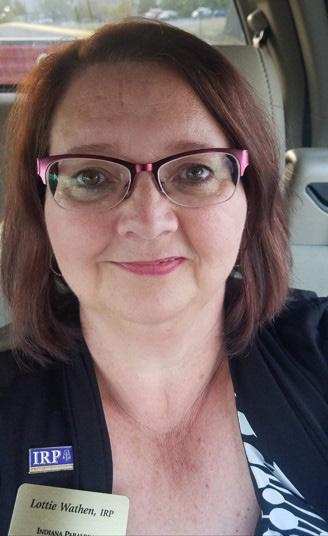
WHAT IS THE BEST PIECE OF ADVICE YOU HAVE RECEIVED?
A typical day for me involves reading and editing medical contracts to ensure com pliance with state regulatory requirements, filing contracts with regulators, and work ing with medical providers and our team to ensure excellent service for our members.
WHAT ADVICE WOULD YOU GIVE SOMEONE WHO WANTS TO PURSUE A LEADERSHIP ROLE?
WHAT MADE YOU BECOME A PARALEGAL?
Working for a baseball team in some capacity. A PARALEGAL IS . . . An essential member of a legal team.
WHAT IS THE LAST EXPERIENCE THAT MADE YOU A STRONGER PERSON?
WHAT IS A TYPICAL WORK DAY LIKE FOR YOU?
The last experience that made me a stron ger person is serving on the NFPA Board during a time of change. Change is hard for a lot of people, including me, and experiencing all of the changes within NFPA in the last year has taught me pa tience, perseverance, and commitment.
WHAT IS YOUR TOP GOAL DURING YOUR TENURE AS A REGION DIRECTOR?
WHAT HAVE YOU LEARNED ABOUT NFPA THAT YOU DIDN’T KNOW BEFORE BEING A BOARD MEMBER?
REGION I DIRECTOR
SPOTLIGHTS: BOARD MEMBER
HOW HAS YOUR VOLUNTEER WORK INFLUENCED YOUR CAREER? My volunteer work has influenced my career because I have been able to devel op new skills, both as a paralegal and as a leader. These skills have benefitted me personally and professionally and helped me grow to be the person I am now.
IF I WEREN’T A PARALEGAL, I WOULD BE. . .
I would advise someone who wants to pursue a leadership role to know their lim its. It is very easy to take on too much re sponsibility and want to do more, but each person has their limits and needs to know when to say “no” and to delegate respon sibilities. A good leader is someone who knows when they have reached their limits.
Last week I expanded my knowledge of Zoom and hosting Zoom meetings. Technology is definitely not my forte, so being put in a position to host/lead meetings via Zoom has required me to learn new skills in the technology arena.
WHAT DID YOU LEARN LAST WEEK?
I wanted to be a lawyer, but once I got to law school I realized that not everyone had the same mindset as me – wanting to help people. I love the law, I love continuing to learn and grow, and I love helping people.
I have learned there is a lot of work that must go on behind the scenes to make NPFA successful. The NFPA Board is a hard-working and dedicat ed group of individuals who have a pas sion to make the association succeed
My most cherished moment as a leader was in 2018 when I received the William R. Ro bie Leadership Award. To be recognized by my peers as a leader in the paralegal pro fession was an amazing accomplishment.
Fall 2020 39
WHAT HAS BEEN YOUR FAVORITE/ MEMORABLE MOMENT OF YOUR LEADERSHIP RESPONSIBILITIES?
The coolest trend is the expansion of legal roles for paralegals. It makes me proud to see so many jurisdictions making strides towards allowing paralegals to provide services directly to the public and work to wards relieving the access to justice crisis.
Becoming a paralegal seemed like a great fit!
IF I COULD NAME THE AUTOBIOGRAPHY OF MY LIFE, IT WOULD READ . . .
My goal as Region Director is to grow Region I. I want to bring in new associations and help cur rent associations gain new members.
Brenda Cothary
WHAT IS THE COOLEST TREND YOU SEE TODAY IN THE LEGAL FIELD?
The best piece of advice I have received is to learn how to communicate effectively with all types of people in various situations. As a leader, you are a constant communicator, which requires forethought, insight, intel lect, and empathy. If you can’t connect with people, you truly have lost an opportunity.
WHAT DO YOU ENJOY MOST ABOUT VOLUNTEERING ON THE NFPA BOARD? I enjoy volunteering on the NFPA Board because I want to contribute to a career that I care about and desire to see flour ish. I want to see the profession expand and paralegals recognized for the profes sional, intelligent individuals they are. My work on the Board helps define and ex pand paralegal roles and responsibilities.
A Lot of Irons in the Fire
40 NATIONAL PARALEGAL REPORTER ® NFPA UPCOMING EVENTS AS 2020 COMES TO A CLOSE OCTOBER 22 - 25 2020 CONVENTIONANNUAL-ONLINE SEPTEMBER 22 INTERESTREGULATIONCERTIFICATIONAMBASSADOR,REVIEWANDASSOCIATIONLEADERSHIPTRAININGCOORDINATORSFORMSDUE SEPTEMBER 24 2024BIDSCONVENTIONDUE NEW A liate Membership For Aspiring Managers Let the IPMA help elevate your career Learn the ins and outs of management in the legal industry Participate in live webinars and have access to dozens of recorded sessions Network with industry leaders and connect with other aspiring managers Receive a discount on IPMA’s Conference and Managerial Skills Seminar Have access to unlimited online managerial resources such as core competencies and job descriptions Utilize the mentor program and learn from managers all over North America theipma.org info@theipma.org 404-467-6757. . Who Quali es for A liate Membership A liate Member Bene ts Join Today! A liate members are case managers, senior paralegals, litigation support analysts or senior docketing personnel aspiring to become managers. A liate members must have two or fewer duties listed on the IPMA membership application. You can nd the membership quali cations here: www.theipma.org/membership_quali cations 2019 IPMA A liate AnnualMembershipDues:$149


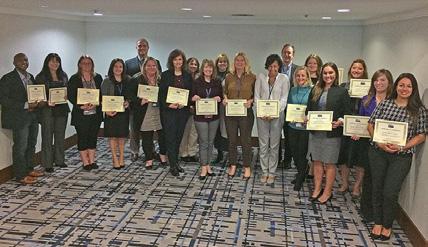
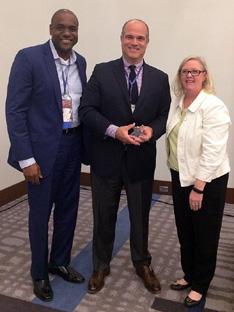
NFPA UPCOMING EVENTS Be a step above the rest Join the Paralegal Division of the State Bar o_f Texas PD provides many benefits for career growth: •Networking with paralegals across the state • Powerful CLE opportunities such as Texas Advanced Paralegal Seminar (TAPS) • Professional Development • Professional magazine with substantive articles and updates from across the nation THINK ABOUT IT...... an organization designed just for YOU! ENHANCE YOUR CAREER by becoming a part of PD today. Go to www.txpd.org and see for yourself or contact the PD Coordinator via email at pd@txpd.org or call (806) 443-2209

42 NATIONAL PARALEGAL REPORTER ® Earn your Paralegal Studies certificate completely online from Duke University. Our self-paced non-degree program gives you the skills to enter the paralegal field in one year. Already in the industry and looking to enhance your skills in a specialty area of law? Check out our Paralegal Specialist Certificates and earn your certificate in six months. Learn More http://www.learnmore.duke.edu/certificates/paralegalToday!paralegalonline@duke.edu Advertiser Directory The TASA Group (800) 523-2319 / www.TASAnet.com Contact: Heather Williamson Since 1956, The TASA Group has helped thousands of attorneys identify a variety of quality expert witnesses for their cases, in virtually every category – no charge unless an expert is designated or engaged. We are the Industry leaders through personal service and inno vative services - free, expert-led CLE webinars and Challenge History Reports that help attorneys work more efficiently and effectively. IME Doctor VA, WV, NC - Dr. Robert Brown Unique Credentials for Enhanced Case Analysis • Civil, Administrative & Criminal Case Evaluations • Complex Cases with Large Volume of Records • State and Federal Court Case Evaluations • Travels when needed to conduct IMEs in VA, WV, & NC Colonial Surety Company colonialsurety.com800-221-3662 Colonial is the leading provider of court and fiduciary bonds. Our powerful online tools increase efficiency for attorneys while lowering costs for their clients. You can instantly quote, purchase, and print or e-file bonds—whether in the office or at the courthouse on a mobile device NATIONAL PARALEGAL REPORTER DIRECTORY LISTING Perfect opportunity to keep your contact information in front of NFPA members all year long. • Up to 60 words, including contact information and logo. • Directory is in print and on the NFPA website. • $800 for four issues/ $200 per issue • Contact the Reporter at info@paralegals.org

866-330-0056www.calu.edu/gojurisprudencewww.calu.edu/golegalstudiesPennsylvania/www.cobblestonesoftware.com / Contact: Bradford Jones / sales@CobbleStoneSoftware.com CobbleStone Software provides award-winning contract management software built for legal professionals to simplify and automate contract administration. CobbleStone’s contract management software provides a user-friendly contract repository to store all contracts and versions, proactive email & calendar notifications, easy searching & reporting, user dashboards, contract authoring from templates, automated workflow, compliance & milestone tracking, electronic signatures, and much more. CobbleStone’s software benefits thousands of users in large and small organizations throughout the public and private sector. For information visit www.cobblestonesoftware.com! Publisher: National Federation of Paralegal Associations, Inc. Managing Editor and Advertising Manager: Rachel Daeger, rdaeger@ Postmaster:raybourn.comDelivered to current resident or occupant as addressed if Publishingpossible. Policy: Articles printed in the National Paralegal Reporter express the opinions of the individ ual authors and do not necessari ly represent the formal position of NFPA. Acceptance of advertising does not constitute NFPA endorsement. National Paralegal Reporter, ISSN 1058-482X, is published quarterly for $33 per year by the NFPA, 400 South 4th Street, Suite 754E, Minneapo lis, MN 55415; call 317-454-8312; or email info@paralegals.org. Readers are invited to submit article queries, material for consideration for publi cation, and replies to previously pub lished articles to vpdmkt@paralegals. org. For information about article and advertising guidelines and deadlines, go to: providerCorporateTrademarks/Servicelegal,PCCCOREStandardnerMarksareProfessionNFPAgal,er,reserved.ParalegalrightandPeriodicalalsindex.cfm?pageid=3285.www.paralegals.org/i4a/pages/Allmateriaresubjecttoeditorialrevision.postagepaidatBerne,INadditionalmailingoffices.Copy©2020NationalFederationofAssociations,Inc.AllrightsNationalParalegalReportNFPA,PACERegisteredParaleRP,PACE,thePACEdesignlogo,-TheLeaderoftheParalegalandtheNFPAdesignlogoallRegisteredTrademarks/ServiceofNFPA;NFPA-Yourpartinyourprofession,PACE–TheforExcellence,ParalegalCompetencyExam,PCCE,Exam,CORERegisteredParaCRPandPCCEdesignlogoareMarksofNFPA.SponsorlogosandCLElogosusedwithpermission.
Cal U’s programs are delivered 100% online, allowing students to complete their studies from any computer with Internet access. PACE and PCCE certified paralegals are eligible for advanced standing in our 1-866-595-6348programs. California
convenient, online delivery of quality academic programs in undergraduate and
California University of Pennsylvania, founded in 1852, provides graduate Legal Studies. University of