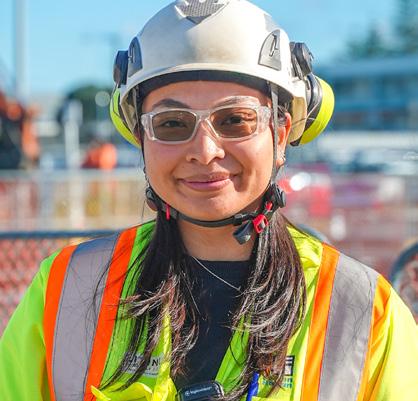
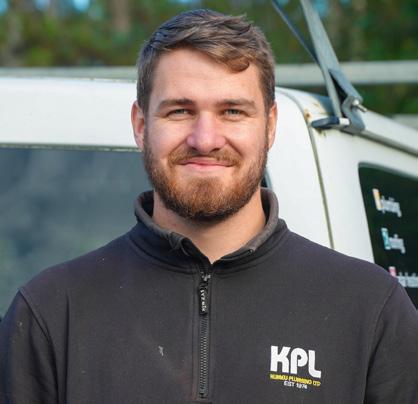
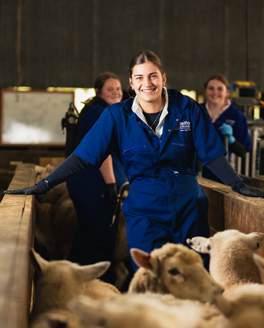
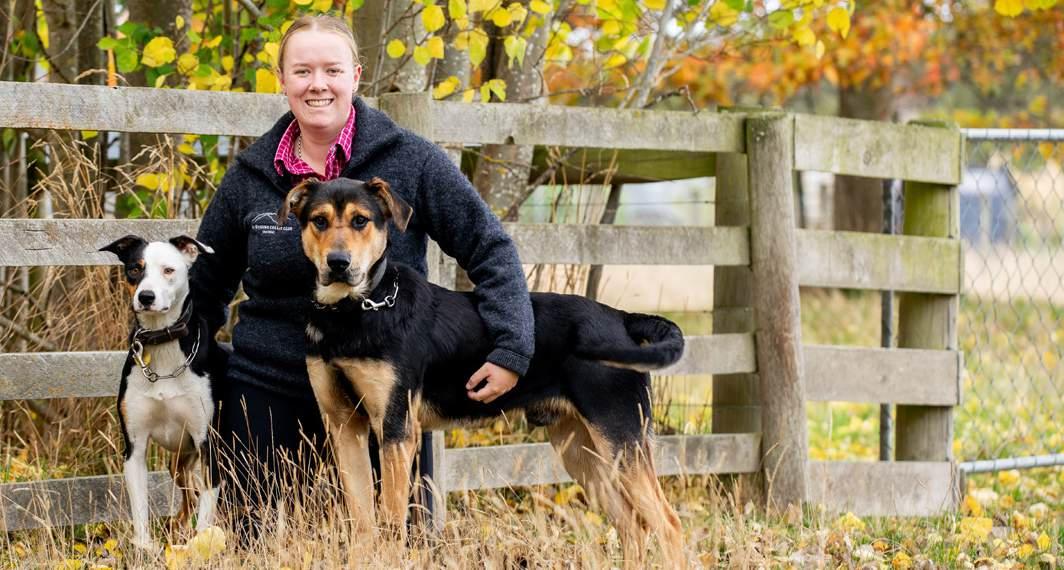
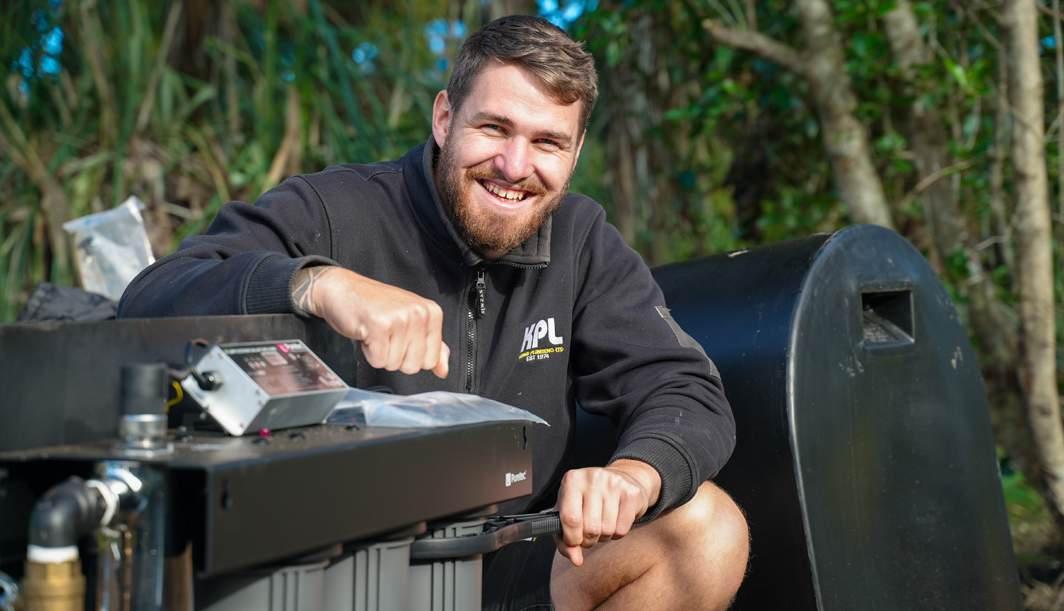
PLUMBER – PAGE 25 JAIMEE VALERIO SITE ENGINEER – PAGE 23 July 2026 |
HARRY
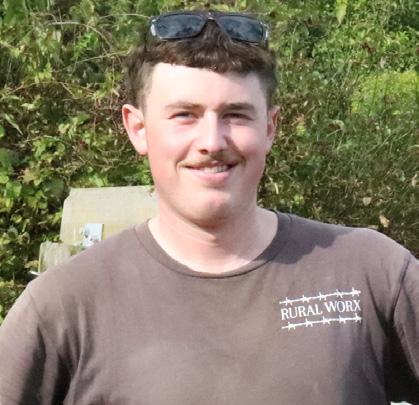
ALEX 17
“I just didn’t get round to it”
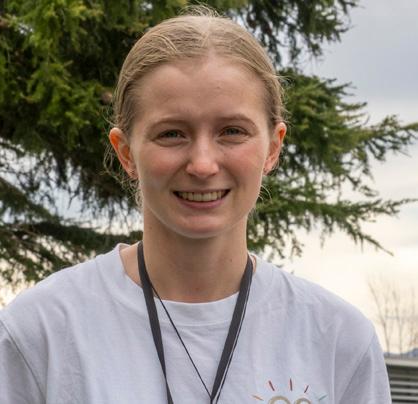
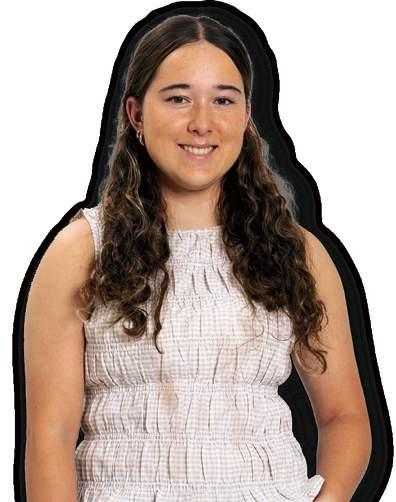
SOFIA 15
“I missed out at intermediate school”
*Funded for males and females aged 9 through 26 years. Providing you get at least one dose before your 27th birthday all following doses will still be free. Non-residents (e.g. people on student visas) are eligible for funded GARDASIL 9 providing they get at least one dose before their 18th birthday.
GARDASIL® 9 (Human Papillomavirus (HPV) 9-valent Vaccine, Recombinant) is a Prescription Medicine, funded for males and females aged 9–26 years – restrictions apply. Normal charges will apply for other patients. GARDASIL 9 has risks and benefits. Ask your doctor if GARDASIL 9 is right for you. For more information about GARDASIL 9, refer to the Consumer Medicines Information available from www.medsafe.govt.nz
GARDASIL 9 is a vaccine. In females (9-45 years), it helps prevent: cervical, vulvar, vaginal, and anal cancers; abnormal and precancerous cervical, vaginal, vulvar and anal lesions; genital warts and infection caused by the HPV types in the vaccine. Immunisation does not remove the need for screening for cervical, vulvar, vaginal and anal cancers, as recommended by your doctor. Women should still get routine cervical cancer screening.
In males (aged 9-45 years), it helps prevent anal cancer and precancerous anal lesions; external genital lesions, including genital warts and infection caused by the HPV types in the vaccine. Each vaccine contains inactive proteins from HPV types (µg = micrograms): 6 (30 µg), 11 (40 µg), 16 (60 µg), 18 (40 µg), 31 (20 µg), 33 (20 µg), 45 (20 µg), 52 (20 µg) and 58 (20 µg).
IMPORTANT SAFETY INFORMATION
GARDASIL 9 should not be given if you or your child have had an allergic reaction to GARDASIL or GARDASIL 9 or to any of the listed ingredients for GARDASIL 9.
Tell your doctor if you or your child has a bleeding disorder, an illness with a high fever, a weakened immune system (e.g. due to medicines, a genetic condition, or human immunodeficiency virus [HIV] infection), takes or plans to take any other medicines, including those that you can buy without a prescription, or had any vaccines in the last 4 weeks.
If you are pregnant or planning to get pregnant tell your doctor. You should not get GARDASIL 9 during pregnancy.
POSSIBLE SIDE EFFECTS
Tell your doctor immediately or go to the nearest hospital if you experience wheezing, shortness of breath, or difficulty breathing; pinkish, itchy swellings on the skin; skin rash, itchiness; or swelling of the face, lips, tongue or other parts of the body. Allergic reactions are rare but serious. Common side effects are pain, swelling, redness, itching and bruising at or around the injection site, headache, fever, nausea, dizziness and fatigue. Fainting can occur. These are not all of the possible side effects of GARDASIL. If you have side effects, talk to your doctor, pharmacist or healthcare professional. Merck Sharp & Dohme (New Zealand) Limited, Auckland is the Sponsor of GARDASIL 9. NZ-HPV-00062 V1. NP25082.
Actor Portrayal
MANAGING EDITOR
Oliver Lee
SUB-EDITOR
Sara Carbery
CONTRIBUTING WRITERS
Diana Clement, Sara Carbery, Peter White. PHOTOGRAPHERS
Sarah Allen, Sandra Henderson, Sarah Marshall, iStock, Joanne McCloy, Marty Melville, Pete Nikolaison, Zach Stark, Telford, Richard Wells.
DESIGN & LAYOUT
Mervyn Hurley
HNZL 2014 Limited.
PRINTER
Webstar, Auckland.
PUBLISHER
T: +64 274 599 503
E: oliver@oliverlee.co.nz
W: oliverlee.co.nz
ISSN 2463-3380 (Print)
ISSN 2463-3399 (Online)
COPYRIGHT:
LEAVING SCHOOL
ELECTRICAL APPRENTICE
Pre-trade course gives Whangārei head boy a head start in his Fonterra apprenticeship.
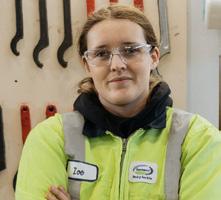
APPRENTICE MECHANICAL ENGINEER
Dreaming big: From tinkering on old cars to maintaining machinery on-site with Fonterra.
LABORATORY SCIENTIST
Helping people behind the scenes at Wairarapa Hospital’s jack-of-all-trades laboratory.
PSYCHOLOGY STUDENT
An interest in mental health and giving back to the community leads to a conjoint BSc/LLB.
What makes a good fencer? Effort, an eye for detail and a willingness to get stuck in.
A love of spuds: The Canterbury potato farmer with a passion for growing the industry.
PRE-ANALYTICAL TECHNICIAN
First in line at Awanui Labs: Meet the technician ensuring accuracy of patient testing.
FIELD SERVICE TECHNICIAN | ALEX GREEN
On the tools repairing and servicing Komatsu’s big machines.
16 NOTICEBOARD
Key dates, websites and events to help you navigate life after school.
18 BARBER | ABISHAI DOHARE
From Whanganui to Auckland: Meet the artist cut out for a career in barbering.
19 APPRENTICE MARINE ENGINEER | MARLEY COBURN
All aboard for wharf-side apprenticeships with Titan Marine Engineering.
20 ACCOUNTING TECHNICIAN | KAMILA TURDAKHUNOVA
Making a difference with numbers at the Environmental Protection Authority.
FINANCIAL ANALYST | PRASHANT PATEL
Commerce graduate makes sense of the numbers at Auckland Council.
JAIMEE VALERIO
Making inroads: How Fulton Hogan’s graduate programme led to a rewarding role on-site.
VETERINARY RECEPTIONIST | MACKENZIE-MAY WOODROW
Studying at SIT’s Telford campus opens a world of opportunity in the rural sector.
ERIC GRUYTHUYSEN
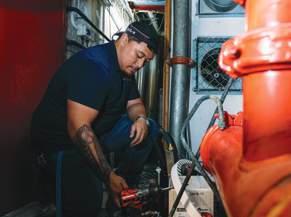
The pipe dream that came true for this award-winning plumber from Ngatea.
26 SPOTLIGHT ON STUDYLINK
Making sense of student allowances and loans.
28 KIWISAVER KNOW-HOW
How drip-feeding a few dollars a week can help set you up for your first home.
29 THE SEVEN EMPLOYABILITY SKILLS
From communication to resilience: What are the skills employers are looking for?
30 DODGING THE BETTING TRAP
How to steer clear of the gambling apps that set you up to lose.
THEMOSTOPENDAY
HEAD START WITH PRE-TRADE
SWITCHED-ON APPRENTICESHIPS AT FONTERRA
writer PETER WHITE // photographer SARAH MARSHALL
For MIGUEL SHORTLAND-MENDEZ, gaining a New Zealand Certificate in Electrical Pre-Trade (Level 3) (NZCEP) has helped him advance quickly through the early stages of his apprenticeship.
Miguel (18) is an electrical apprentice based at Fonterra’s Kauri site, near Whangārei. He started his apprenticeship a year ago, after leaving school at the end of Year 12 to do a pre-trade course at NorthTec.
“Doing the pre-trade course has put me ahead on my paperwork so I am really well into the second year of my apprenticeship,” says Miguel.
“It is like getting a head start and gives you an advantage over others who may not have done a pre-trade. It was very important as it allowed me to begin getting hands-on experience in the theory and practical.
“It meant when I came to Fonterra, I wasn’t as green as they initially thought which meant I could learn more complicated theories.”
The standout, white walls of the co-operative’s plant at Kauri contain some of the most advanced processing equipment in the world.
Miguel says being able to work on that equipment is hugely beneficial.
“It may be looking at flow meters, or a whole range of electrical motors, and recently during our winter maintenance shutdown I got to install some new Variable Speed Drives (VSDs), which are like motor-control computers.”
Miguel says all the variety of work he has working at the Fonterra site gives him an advantage over being a residential electrician – particularly working with the Programmable Logic Controllers (PLCs).
“It is a sought-after trade, so later on after I finish my apprenticeship it gives
me greater options for future job opportunities. I would like to stay on with Fonterra, as it is such a good company to work for, with a goal to pursue more industrial work in the future.”
Miguel appreciates the support he has received from his managers and peers at the co-operative.
“They have given me so much support and allowed me the opportunity to be flexible with increasing my hours, particularly in the shutdown when there is no milk, and we are not making any product.
“I was able to learn more about the plant and get to help install some of that world-leading technology.”
Miguel studied Maths, English, Physics, PE and Music in Year 12 at
Excellere College in Whangārei. He was head boy that year, an honour he is immensely proud of.
“Although at work I am there to learn not lead, I do believe it gives me an opportunity to carry the responsibility of what it was like to be head boy at work and understand that people are depending on me to do what I need to do.”
Career opportunities across the trades are positive for young workers with the right attitude and qualifications. Miguel’s advice for school leavers –practise listening more than speaking.
“Nowadays we like to input our ideas, but we don’t always know what we are talking about. So, it is better to listen more than you speak.”
‘‘ I WOULD LIKE TO STAY ON WITH FONTERRA, AS IT IS SUCH A GOOD COMPANY TO WORK FOR, WITH A GOAL TO PURSUE MORE INDUSTRIAL WORK IN THE FUTURE. ’’ MIGUEL SHORTLAND-MENDEZ
writer SARA CARBERY photographer SARAH ALLEN
LEARNING ON THE JOB FAST-TRACK APPRENTICESHIP WITH FONTERRA
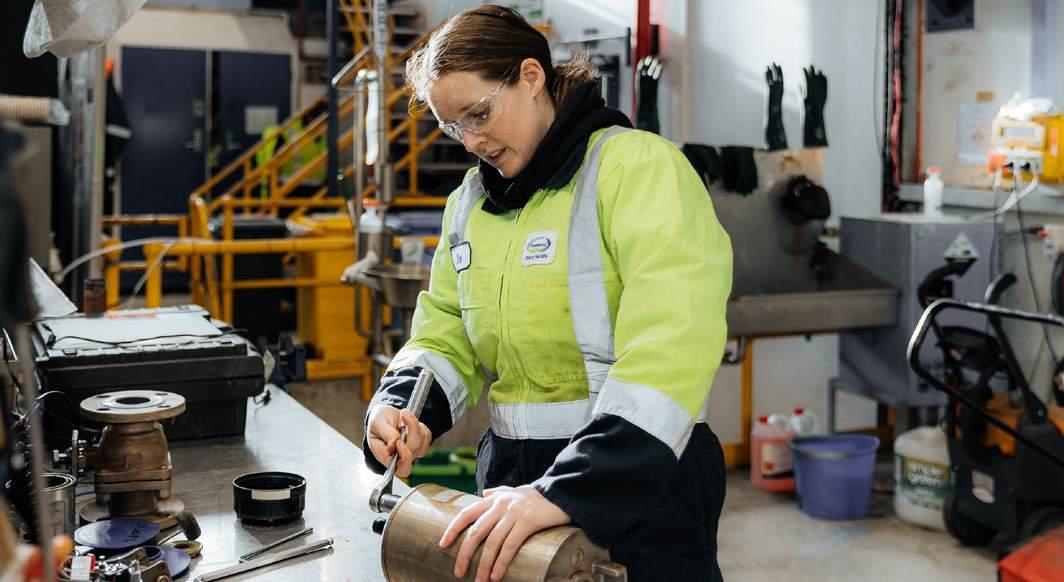
ZOE ARMITSTEAD is an apprentice mechanical engineer at Fonterra’s Whareroa plant in Taranaki.
Focused on machinery maintenance across the dairy cooperative’s Hāwera site, Zoe’s role involves everything from replacing mechanical seals on pumps, to attending plant breakdowns.
“It’s really fun to be able to go into work and not know how to do something and then come out and you’re like, ‘I actually know how to do that now’. ”
One of the things Zoe enjoys most about her job is the variety.
“I could come in in the morning and be inside the factory pulling a pump out to be replaced, and I could end the day in the workshop re-kitting valves.”
This variety of hands-on experience enabled Zoe to complete the paperwork for her apprenticeship 18 months early. Last month she clocked up the minimum apprenticeship hours needed, and she now holds a New Zealand Certificate in Mechanical Engineering (Trade) Maintenance Engineering, Level 4.
Zoe is currently working towards a New Zealand Certificate in Mechanical Engineering (Advanced) Level 5.
“Fonterra is playing a major role in my apprenticeship by offering further training to me after I finished my apprenticeship early,” says the 22-year-old. “They have also offered further training to develop my in-depth knowledge of different things within Fonterra by bringing in outside companies to develop their people’s knowledge.”
The variety and breadth of knowledge Zoe is gaining means she will be qualified to work in a wide range of roles in the future.
“Once you’ve finished your apprenticeship, you can pretty much do anything because you’ve had experience within every plant.”
Growing up on a dairy farm in Taranaki, Zoe learned how things work and how to fix them from her dad. “We have old farm cars that I would spend weekends pulling apart.”
She enjoyed practical subjects at school, and in Year 13 at Stratford High School took Home Economics, Geography, Wood Technology, Maths and Gateway.
Through the Gateway programme Zoe worked at a local engineering firm one day a week and during the school holidays. This gave her an understanding of what engineering involved before committing to an 8,000-hour, four-year apprenticeship.
Maths has also been helpful, she says, and Design & Visual Communication (DVC) and Metal Technology would have been useful subject choices too.
“I would have had a baseline of reading and creating drawings and more of an understanding of fabrication practices.”
If you have a curiosity to learn and an interest in hands-on engineering work and solving problems, go online to learn more about mechanical engineering apprenticeships at Fonterra.
If you’re successful in becoming an apprentice, Zoe’s advice is to make sure you ask questions, take photos as evidence for your papers and ensure you keep on top of your paperwork.
“And take all the opportunities you can,” she adds. “You never know what might come of them. It’s okay not to have a set plan but have an idea of what you would like to do and ask questions.”
‘‘ ONCE YOU’VE FINISHED YOUR APPRENTICESHIP, YOU CAN PRETTY MUCH DO ANYTHING BECAUSE YOU’VE HAD EXPERIENCE WITHIN EVERY PLANT. ’’ ZOE ARMITSTEAD
LIFE AT OTAGO IS ABOUT MORE THAN STUDYING.
LIVING IN ONE OF OUR 15 RESIDENTIAL COLLEGES, SURROUNDED BY THE BEAUTY AND ENERGY OF DUNEDIN, IT’S FRIENDSHIP, COMMUNITY, AND SUPPORT FROM DAY ONE.
YOU’LL FIND YOUR PLACE, YOUR PEOPLE, AND A UNIVERSITY EXPERIENCE THAT FEELS LIKE HOME. EXPERIENCE IT FOR YOURSELF.
‘‘ WE DISCOVER CANCERS AND THINGS LIKE THAT. WE HELP PEOPLE FIND WHAT THEY HAVE SO THEY CAN GET THE RIGHT TREATMENT . ’’ ALENA HOJDELEWICZ
TESTING FOR HEALTH HELPING PEOPLE FROM BEHIND LAB DOORS
“I like science and I like helping people in the background. I know I am creating an impact in people’s lives,” says ALENA HOJDELEWICZ.
The 22-year-old is a medical laboratory scientist at Wairarapa Hospital.
“Basically, we do every test that your doctor asks for. We don’t just deal with blood, we deal with everything,” says Alena.
“At Wairarapa Hospital we are considered a core lab, like the jack-of-all-trades of labs, as we do everything. What I enjoy most is that I help people. That is why I signed up to be a medical laboratory scientist.”
Alena has a Bachelor of Medical Laboratory Science from the University of Otago.
“I chose this field to contribute meaningfully to healthcare through scientific accuracy, traceability and ethical practice. I am especially passionate about histology and transfusion medicine, areas where precision and diagnostic clarity directly support patient outcomes. I bring strong analytical skills, attention to detail and a commitment to quality in every aspect of laboratory work.
“In my final year of study, I specialised in transfusion science (New Zealand Blood Service) and histology (Awanui Labs). Both of these placements were highly insightful. They allowed me to broaden my understanding of not only the disciplines themselves, but different technical and organisation structures.”
The Awanui Labs placement was spread across various laboratories around New Zealand. Alena says it was really helpful getting to know the various systems, especially as she is now working in a rural lab.
One of the disciplines Alena liked studying, and she deals with in day-to-day work, was transfusion science.
“It is when you give blood to people who need it after accidents and things. You are the one providing them the right blood, so you don’t put them in a worse situation than they already are.
“There is heaps of responsibility in what I do because the tests we do, like haematology, impacts on how patients are treated. We discover cancers and things like that. We help people find what they have so they can get the right treatment.”
writer PETER WHITE photographer PETE NIKOLAISON
Alena is a member of The New Zealand Institute of Medical Laboratory Science Inc. (NZIMLS).
It provides continuing education, professional examinations for medical laboratory technicians, and profession-related seminars and events to ensure members continue to provide high quality diagnostic laboratory services for New Zealanders.
In Year 13 at Taranaki Diocesan School for Girls, Alena took Physics, Chemistry, Biology, PE, History and Statistics.
Initially she wanted to train to be a physio, as she loved PE so much, but before her Health Science first year in Dunedin she changed her focus.
“I was at the open day for Health Science, talking to the physio people about the cell and molecular biology (CELS) paper that I liked in the course. Next door were the medical laboratory scientists who overheard me and asked if I would consider them.
“The rest is history. I signed up for it and I have not regretted that decision. There are always career opportunities in Health Science.”
A PASSION FOR PSYCHOLOGY WHO WE ARE AND WHY WE ACT THE WAY WE DO
“Psychology helps us to understand how people behave, think, feel and the reasons why they behave the way they do,” says ELIANA COMPETENTE.
Eliana (22) is in the fifth year of her Bachelor of Science/Bachelor of Laws (BSc/LLB) conjoint degree at the University of Auckland. Doing a conjoint degree allows students to complete a BSc and LLB in less time, and with fewer points, than it would take to complete the two degrees separately.
So why do a conjoint degree? Eliana says in Year 13 at Lynfield College she was considering doing Law and Global Studies but then decided to do Psychology as she was always interested in mental health.
“It has been a passion of mine and I wanted people to know that if they were struggling with mental health that there was help available,” says Eliana.
“Studying psychology would help me give back to my community as well and live a life that is able to help others struggling with their mental health. The law side came about because I like understanding how the world works and how laws govern people. The knowledge you gain through law school is so invaluable.”
“ Everyone is so unique and special, so being able to understand that and unpack that is really inspiring. ”
ELIANA COMPETENTE
Eliana says what fascinates her about psychology is you get to know why people act the way they do, how they have grown up, and what part of their family or experiences in life have led them to behave how they do now.
“Everyone is so unique and special, so being able to understand that and unpack that is really inspiring.”
Clinical psychology is the area Eliana wants to specialise in. As part of pursuing this, she volunteers in different mental health spaces like Anxiety New Zealand Trust and with weekly elderly home visits.
When she finishes her conjoint degree, Eliana plans to do an Honours year and then hopefully a Master’s degree or PhD in clinical psychology.
“There are varied career options available from studying psychology. Clinical or forensic psychology or behavioural analysis, where you can support people with disabilities. Psychology is so applicable in so many workplace environments, like HR, how companies are structured, how we can ensure workers have intrinsic motivation to do well in their jobs and have the support processes in place for that.”
Medical Laboratory Scientists and Technicians work in clinical laboratories across the country testing patient samples to aid doctors in their diagnosis and patient care. We need enthusiastic and curious individuals with strong attention to detail and keen analytical skills to join our team. With a wide range of specialities to choose from there are many paths available to find and follow your passion.
Start your journey today by enrolling at either The University of Otago or Auckland University of Technology
Eliana is studying at the University of Auckland’s Faculty of Science. She recommends school leavers consider studying there.
“I like being able to study other science courses as well in my degree. I also love the space in the science building. It is an open space with lots of windows and is a nice place to study in. There are usually lots of people around, so it is nice to be able to see other fellow science students.”
In Year 13 at Lynfield College, Eliana took Statistics, English, Japanese, History and Advanced Chemistry. During that time, she knew a career in psychology was what she wanted to do.
Her key advice for school leavers keen to study psychology is to be open-minded and always stay grounded in empathy and curiosity.
HEALTH EXPERIENCES
BUILD A CAREER IN FENCING OUTDOOR WORK REQUIRING AN
New Zealanders are known for having a ‘number eight wire’ can-do attitude, but most of us wouldn’t know how to tie fencing wire, let alone build a fence.
, though, is someone who does.
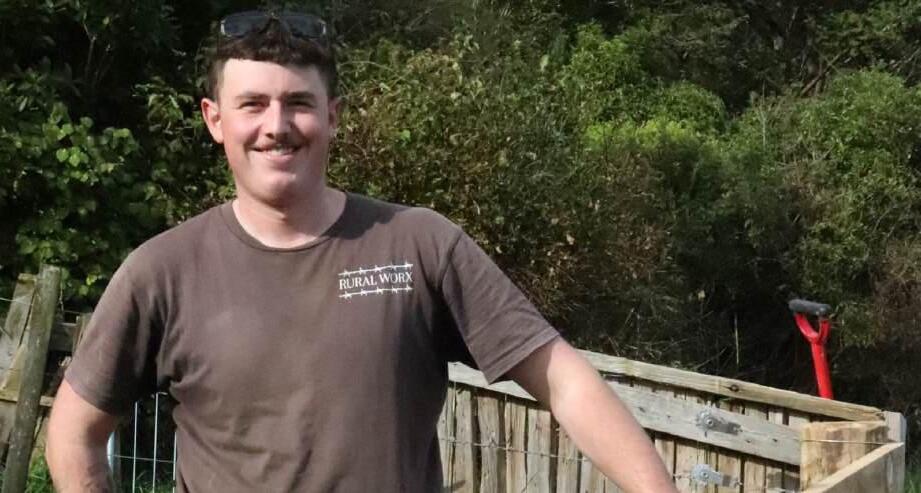
The 21-year-old is a fencer with Rural Worx, a commercial and rural fencing company based in Ōtaki, on the Kāpiti Coast.
Charlie pursued a career in fencing after his dad bumped into a fencing contractor he knew at the supermarket.
“Rob asked if my dad knew any young fellas leaving college who might be interested in working for him building residential fences… I went round and talked to him and started working for him a week later.
“I found I enjoyed it and thought it’d be a good way to keep fit and learn about things for when I have my own property and livestock to maintain. Joining the Rural Worx team a year later meant I could learn even more about different types of fencing.”
Digging posts, tying and tensioning wire, stapling battens, digging in stays, screwing in rails, attaching palings – fencing is physical work that requires patience, accuracy and attention to detail, says Charlie. He likes the variety of work, being outside and the social interaction he gets in his job.
“I enjoy not working in the same office every day, stuck behind a desk, and meeting and interacting with new people.”
Charlie holds New Zealand Certificates in Fencing (Level 3 and Level 4) from NorthTec, nationally recognised qualifications developed in association with Fencing Contractors Association NZ (FCANZ).
A finalist for FCANZ’s Emerging Talent – Youth Award in 2025, Charlie was recognised for his commitment to fencing as a career and for demonstrating excellence in the workplace.
“It was definitely a great feeling that my bosses and the judges felt that the work that I had put in was worthy of making the final list,” he says. “It made me want to work harder to get my skills broader and better.”
So, what makes a good fencer? “Consistent effort, an eye for detail and a willingness to just get stuck in, no matter the job or the weather.”
In Year 13 at Ōtaki College, Charlie took Outdoor Education, PE, Sports Studies and Gateway.
writer SARA CARBERY photographer RICHARD WELLS
“I also did courses for credits like getting my forklift licence, first aid certification, and community and workplace fire and emergency management.”
Although Maths was never Charlie’s “strong suit” at school, he says it’s important in fencing and much easier for him now he’s applying it in a practical sense rather than learning it in a classroom.
If you’re interested in fencing as a career, Charlie’s advice is to “Put yourself out there to fencing contractors and show your willingness to work, and when/if you get the opportunity, actually follow up on what you claim.”
‘‘ I ENJOY NOT WORKING IN THE SAME OFFICE EVERY DAY, STUCK BEHIND A DESK, AND
’’
CHARLIE SIMPSON
A CAREER IN POTATO FARMING
PASSIONATE ABOUT GROWING THE INDUSTRY
writer PETER WHITE // photographer JOANNE McCLOY
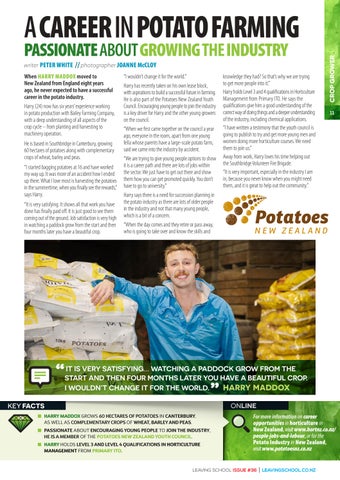
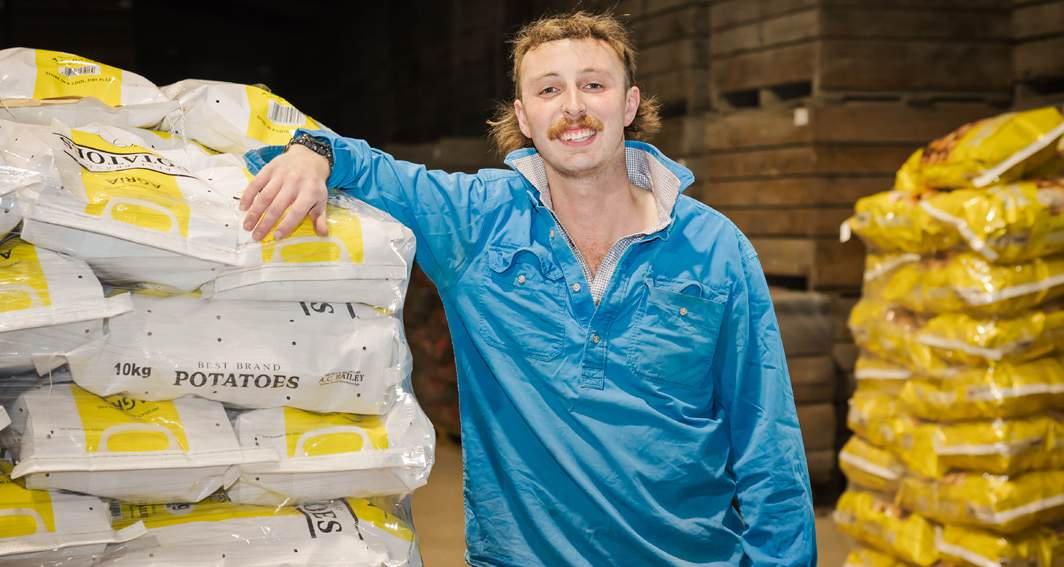
When HARRY MADDOX moved to New Zealand from England eight years ago, he never expected to have a successful career in the potato industry.
Harry (24) now has six years’ experience working in potato production with Bailey Farming Company, with a deep understanding of all aspects of the crop cycle – from planting and harvesting to machinery operation.
He is based in Southbridge in Canterbury, growing 60 hectares of potatoes along with complementary crops of wheat, barley and peas.
“I started bagging potatoes at 16 and have worked my way up. It was more of an accident how I ended up there. What I love most is harvesting the potatoes in the summertime, when you finally see the rewards,” says Harry.
“It is very satisfying. It shows all that work you have done has finally paid off. It is just good to see them coming out of the ground. Job satisfaction is very high in watching a paddock grow from the start and then four months later you have a beautiful crop.
“I wouldn’t change it for the world.”
Harry has recently taken on his own lease block, with aspirations to build a successful future in farming. He is also part of the Potatoes New Zealand Youth Council. Encouraging young people to join the industry is a key driver for Harry and the other young growers on the council.
“When we first came together on the council a year ago, everyone in the room, apart from one young fella whose parents have a large-scale potato farm, said we came into the industry by accident.
“We are trying to give young people options to show it is a career path and there are lots of jobs within the sector. We just have to get out there and show them how you can get promoted quickly. You don’t have to go to university.”
Harry says there is a need for succession planning in the potato industry as there are lots of older people in the industry and not that many young people, which is a bit of a concern.
“When the day comes and they retire or pass away, who is going to take over and know the skills and
knowledge they had? So that’s why we are trying to get more people into it.”
Harry holds Level 3 and 4 qualifications in Horticulture Management from Primary ITO. He says the qualifications give him a good understanding of the correct way of doing things and a deeper understanding of the industry, including chemical applications.
“I have written a testimony that the youth council is going to publish to try and get more young men and women doing more horticulture courses. We need them to join us.”
Away from work, Harry loves his time helping out the Southbridge Volunteer Fire Brigade.
“It is very important, especially in the industry I am in, because you never know when you might need them, and it is great to help out the community.”
FIRST IN LINE AT THE LAB
ENSURING ACCURACY OF PATIENT TESTING
writer SARA CARBERY
photographer SANDRA HENDERSON
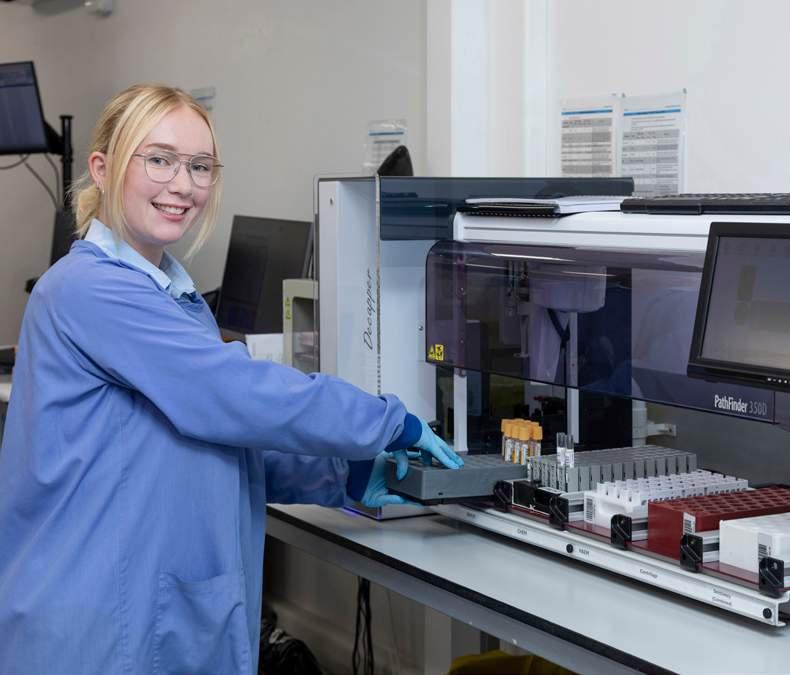
Helping people ‘behind the scenes’ is what GEMMA HANN loves most about her job at Awanui Labs in Taranaki.
As head of department for specimen reception, Gemma leads the team of pre-analytical laboratory technicians who are responsible for receiving, validating and preparing samples for analysis –a critical role that ensures accuracy of testing.
She also oversees the logistics staff who transport specimens, supplies and equipment.
“Our job is one of those unseen roles,” says Gemma. “Doing what we love in terms of patient care, and knowing we aren’t the face of diagnostics and treatment, is what is most rewarding for me.”
When she began at Awanui Labs three years ago, Gemma had no scientific background beyond Level 2 Biology.
“My people skills carried me into the role where I passed myself off as a blank canvas. I wasn’t coming in with knowledge, but I also wasn’t coming in with any bad habits.
“I wanted to be the sponge that would absorb all the information I could.”
After four months with the company, Gemma was given the opportunity to study towards a Diploma in Applied Science, the qualification needed to become a pre-analytical technician.
Funded by Awanui Labs, Gemma completed her study online through Ara Institute.
“Awanui Labs played a huge role in my training and development by giving me the opportunity to complete studies while working.
“Getting practical learning on the job, while also gaining theory through study and daily lab tasks, is what guided me into not only my pre-analytical tech role, but also into a leadership role.
“When the opportunity arose to apply for HOD of specimen reception, I knew this was my time to really challenge myself and step outside my comfort zone.
“I was still learning but knew I wanted to help others do as I had done.”
If you’re interested in exploring a similar career path, Gemma’s advice is to visit a nearby lab and ask for a tour.
“I guarantee you won’t get turned away.”
KEY FACTS
‘‘ GETTING PRACTICAL LEARNING ON THE JOB, WHILE ALSO GAINING THEORY THROUGH STUDY AND DAILY LAB TASKS, IS WHAT GUIDED ME INTO NOT ONLY MY PRE-ANALYTICAL TECH ROLE, BUT ALSO INTO A LEADERSHIP ROLE .
GEMMA HANN
■ GEMMA HANN IS A QUALIFIED PRE-ANALYTICAL TECHNICIAN AND A HEAD OF DEPARTMENT FOR SPECIMEN RECEPTION AT AWANUI LABS IN TARANAKI
■ SHE COMPLETED A DIPLOMA IN APPLIED SCIENCE AT ARA INSTITUTE WHILE WORKING AT THE LAB.
She also recommends taking science subjects at school, in particular biology.
“Working in a medical laboratory is about all branches of science, but biology stands out for me as it gave me a solid foundational understanding of the human body, which helped me recognise what different specimen types represent, in terms of organs, systems and disease process.
“This helped me appreciate the significance of what we handle, the importance of accuracy, contamination prevention, and the impact the pre-analytical phase has on diagnostic outcomes.”
While you don’t always need a straight academic pathway for a role like Gemma’s, the 27-year-old admits “it sure does help!”
Her advice is to “really try” at school.
“You don’t have to be an academic genius with excellence all round, but you do need to try. Make goals, even if your goal is to make a goal.
“And when things are not quite going to plan, just remind yourself, it’s never a stop sign; it’s just a little speedbump.”
■ GEMMA RECOMMENDS TAKING SCIENCE SUBJECTS AT SCHOOL, IN PARTICULAR BIOLOGY, IF YOU’RE INTERESTED IN EXPLORING A SIMILAR CAREER PATH.
For more information on career opportunities with Awanui Group, visit www.awanuigroup.co.nz/careers and for details on training to become a pre-analytical technician at Ara Institute, visit www.ara.ac.nz
START YOUR CAREER IN LABORATORY HEATH SCIENCE WITH AWANUI LABS
Gain employment with a highly regarded national organisation
Be supported to study to upskill your role
Awanui Labs is part of Awanui Group, New Zealand’s largest network of human and veterinary pathology laboratories. We offer entry-level roles in Patient Service and Specimen Services, giving you the chance to gain real healthcare experience while building a pathway into laboratory health science.
With support from Awanui and in partnership with Ara Institute of Canterbury, eligible employees can study toward a Level 5 Diploma in Applied Science while still working.
This pathway includes:
▲ 18 months part-time study
▲ Approximately 6-8 hours per week in addition to work
▲ Delivered by Ara Institute of Canterbury
▲ No exams assignment and practical-based learning
▲ Full academic and pastoral support throughout Previous healthcare experience is not essential. We’re looking for reliable, caring people who are willing to learn and available to work 20+ hours a week.
Become a Registered Phlebotomist or Pre-Analytical Technician
SET YOURSELF UP WITH A CAREER IN THE TRADES
Calling all Māori and Pasifika whānau in Tāmaki Makaurau Auckland! Have you ever thought about a career in the skilled trades? Apply for our MPTT Scholarship Programme today and you’ll get to train for FREE in your chosen trade.
Plus you’ll be eligible for a sweet package of support designed to help you get tooled-up and trade-qualified, the best way to succeed in the trades. If you’ve already been accepted into a pre-trades training course with one of the providers below, scan the QR code to learn more about how our scholarships work.
SCAN THE QR CODE TO LEARN HOW OUR SCHOLARSHIPS WORK maoripasifikatrades.co.nz/apply-now
Construction
Hairdressing Health & Wellbeing
Bakery Refrigeration & Aircon
MPTT Partner Training Providers across Auckland:
Plumbing, Gasfitting & Drainlaying
EARTH-MOVING ENGINEERING REPAIRING AND SERVICING THE BIG MACHINES
writer PETER WHITE // photographer ZACH STARK
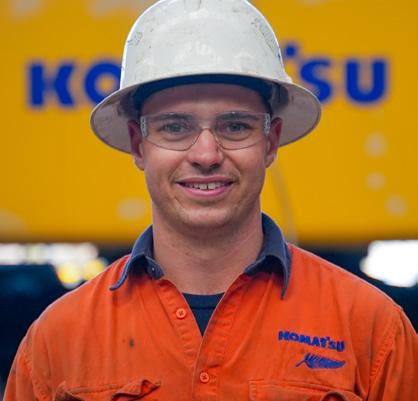
“I like being outdoors and hands-on. I love what I do. It just widens the horizons having a good trade behind you,” says ALEX GREEN.
Alex (24) is a field service technician with Komatsu, based in East Tāmaki in Auckland. He recently completed his New Zealand Certificate in Heavy Automotive Engineering (Level 3 and 4), with a strand in Plant and Equipment. The qualification teaches practical skills required for repairing and servicing heavy plant and equipment, including construction, off-road and earth-moving machinery.
With his future career options firmly in mind, Alex this year began studying for a New Zealand Certificate in Automotive Electrical Engineering (Level 4).
“We can’t fully step aside from the hydraulics side of things, but I just think the way things are going with the future equipment, the electrical side of things is playing more of a role in day-to-day workings and day-to-day troubleshooting.
“It is definitely handy to have. At the moment, I love being on the tools and love being on the road dealing with people but progression-wise, I would love to get into the technical support side of things.”
Before applying for an apprenticeship with Komatsu four years ago, Alex worked as a fleet manager, co-ordinating and carrying out all routine service, checks and repairs on small machinery and light vehicles.
“When we had an open day at Komatsu, I liked the look of the facilities, and the team was very friendly and accommodating. I thought about what I wanted to focus on for a career path.
“I really liked the mechanical side of things, maintaining the gear, figuring out problems and resolving them, so Komatsu was the ideal place to go.”
Alex has no hesitation in recommending school leavers consider an apprenticeship with Komatsu.
“The Komatsu training within the industry is definitely a cut above the rest, in pumps, hydraulic systems, engines and components, and even a business management certificate.”
Now he is qualified, Alex enjoys giving back by mentoring the younger workers.
“There is new technology coming on all the time so having some new faces around you learning the new stuff is awesome.”
Alex has done both his apprenticeships through industry training organisation MITO.
“The whole process has been seamless and is so user-friendly for apprentices. I did like how I could have my phone and laptop all synched up.”
In Year 13 at Tuakau College, near Pukekohe, Alex took Physics, Statistics, English, Manufacturing and Product Design, and PE. He considered doing engineering at the University of Waikato but after committing himself fully to his final year at school – coaching a hockey team and being deputy head boy – he did not fancy four more years of academic study.
Alex has zero regrets about his career choice.
“Every day is different, never a dull moment. I think one of the things I am most grateful for is consistent growth opportunities within the company or through an external training program.
“So when I no longer want to be on the tools, I will be prepared with the skills required to either go into management, leadership or technical support.”
‘‘ I LOVE BEING ON THE TOOLS AND LOVE BEING ON THE ROAD DEALING WITH PEOPLE. ’’ ALEX GREEN
DAIRY INDUSTRY
If you are interested in career opportunities within the dairy industry, visit www.godairy.co.nz
Term 3 holiday 2026: 25 September– 12 October 2026
Term 4 holiday 2026: No later than 19 December 2026 through to no earlier than 28 January 2027
Term 1 holiday 2027: 9 April –27 April 2027
Term 2 holiday 2027: 2 July –19 July 2027
Information sourced from Ministry of Education, visit www.education.govt.nz
* Accurate at time of print. Please check providers’
FEELING DOWN?
Leaving school is one of the biggest transitions we make in our lives, and it’s a time when anxiety, worry and depression can surface. www.thelowdown.co.nz is full of ideas and people who can help you get unstuck and get to a better place.
These websites will help you find a job!
Allied Work Force – www.awf.co.nz
Trade Me Jobs – www.trademe.co.nz/jobs
JobSpace – jobspace.co.nz
Student Job Search – www.sjs.co.nz
JOB HUNTING AND LOANS
If you are about to leave school and you’re looking at tertiary study, there’s going to be a lot to think about. If it’s anything to do with financial support
come
if we have the courage to pursue them.
opportunities to develop your skills in new and interesting ways as well as providing valuable real-world experiences – all important attributes to your CV when applying for your first job!
For more information, visit: www.volunteeringnz.org.nz/ volunteers/finding-volunteer-roles/
Are you interested in a career in the Primary Industry Sector?
Visit www.agribusiness.school.nz for more information.
UNIVERSITIES
NEW ZEALAND
If you are thinking about studying at one of the eight universities in New Zealand in 2027 visit: www.thinkingaboutuni.nz which has all the information at your fingertips.
LIFELINE available 24/7
0800 543 354 www.lifeline.org.nz
YOUTHLINE available 24/7
0800 376 633 or free text 234 www.youthline.co.nz
WHAT’S UP? available 24/7
0800 942 8787 www.whatsup.co.nz
ALCOHOL DRUG HELPLINE
0800 787 797 available 24/7 www.alcoholdrughelp.org.nz
It’s always important to make sure that you are on the electoral roll and ready to take part in national and local elections. How else can you be sure that you are ready to have your say on the big issues affecting you and your family?
vote.nz
LEARN TO DRIVE
The beautiful thing about learning is that nobody can take it away from you.
B. B. King
NCEA
NATIONAL CERTIFICATION OF EDUCATIONAL ACHIEVEMENT
The NCEA Exams start on Tuesday 10 November and run through to Friday 4 December. Visit www2.nzqa.govt.nz/ncea for everything you need to know about the 2026 exams and timetable
CREATIVITY AND CONNECTION
ARTIST CUT OUT FOR A CAREER IN BARBERING
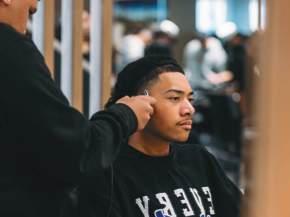
“Being a barber teaches you way more than just cutting hair,” says ABISHAI DOHARE. “It teaches you a lot about people and about yourself.”
Abishai found his way into barbering accidentally, during the final year of a creative media degree at UCOL.
“I cut my dad’s hair randomly one day and I’ve been hooked ever since,” says the 25-year-old. “It went hand-in-hand with the artistic stuff I was doing.”
While finishing his degree and practising on his mates’ hair, Abishai chatted to his barber, who offered him an apprenticeship through HITO.
“Since then, I have fallen in love with it.”
Abishai completed his two-year apprenticeship and worked for another 18 months at Monaghans Barbershop in Whanganui, before moving to Auckland in February. He now works as a senior stylist at Whistle & Flute Barber Studio, an award-winning barbershop in Kingsland.
“I’m learning a lot in terms of technique,” he says, “but I’m also learning about business, people, psychology – things that I can take on to further my career.”
As well as being an outlet for his creativity, Abishai enjoys the connections and interactions barbering brings.
“I enjoy having really good conversations with my clients, having a laugh, hearing what they’ve been up to, their future endeavours – it’s lots of fun!”
Artistic from a young age, Abishai took Print Making, Photography, Art Design, Design and Visual Communication (DVC), Maths and English in Year 13 at Whanganui High School.
He went on to complete a Bachelor of Creative Media at UCOL in Palmerston North, focusing on design and illustration, before beginning a barbering apprenticeship through HITO.
At the end of his apprenticeship, which was a mix of on-the-job training, coursework, and week-long block courses, Abishai graduated with a New Zealand Certificate in Commercial Barbering (Level 4). So, what makes a good barber?
Hospitality is huge, says Abishai, who has grown in confidence since becoming a barber. “My boss Matthew tells us it’s how you make the person feel in the chair, how they feel about themselves when they walk out. It’s about making them feel welcome.”
You also need to be a good listener. “You can share your ideas but it’s important to listen to what they want, not just go with what you think.”
For the past few years, barbering has been Abishai’s main creative outlet but since moving to Auckland he’s been doing life drawing sessions at the tattoo studio next door. “It’s been quite cool to get back into it.”
He has also been developing his online presence and looking at what Whistle & Flute can do creatively.
In the future Abishai would like to move more into the editorial space, styling for magazines, fashion shows and the like.
His advice for school leavers: “If it feels right to you, go for it. Don’t worry about anyone else’s opinion and don’t just do something because someone told you to do it.
“Keep an open mind and learn as much as you can. You’re never too good to stop learning.”
‘‘ I CUT MY DAD’S HAIR RANDOMLY ONE DAY AND I’VE BEEN HOOKED EVER SINCE. IT WENT HAND-IN-HAND WITH THE ARTISTIC STUFF I WAS DOING.’’ ABISHAI DOHARE
■ ABISHAI DOHARE IS A SENIOR STYLIST AT WHISTLE & FLUTE BARBER STUDIO IN AUCKLAND
■ HE COMPLETED A TWO-YEAR BARBERING APPRENTICESHIP WITH HITO AND GRADUATED WITH A NZ CERTIFICATE IN COMMERCIAL BARBERING (LEVEL 4)
■ ABISHAI ALSO HOLDS A BACHELOR OF CREATIVE MEDIA FROM UCOL, FOCUSING ON DESIGN AND ILLUSTRATION
ENGINEERING A CAREER WORKING WITH BOATS
writer PETER WHITE photography ZACH STARK
“I really wish that school kids were better informed about marine engineering and apprenticeships in general,” says MARLEY COBURN.
The 17-year-old is an apprentice mechanical engineer (fitter/machinist) with Titan Marine Engineering in Freemans Bay, Auckland.
In February, he left Auckland Grammar School at the start of Year 13 to take up his apprenticeship.
Marley waited until he had his apprenticeship confirmed before deciding to leave school.
He says his family was not convinced about his career path at first, but he knew he wanted to go into a trade – an office job was of no interest to him.
“I was interested in boats and engines and when I heard about marine engineering, I thought it sounded more interesting than automotive, was a bit more niche and had a wider range of jobs.”
Titan Marine Engineering provide marine and industrial engineering services to clients from New Zealand and around the globe.
“We do maintenance on lots of ships that come in, many from Fiji and the islands. We also do fabrication and welding, such as fabricating and welding in a whole new hull section,” says Marley.
“Recently, I have been doing lots of fitting, including dropping all the anchor chains and anchor wires to inspect. We were also doing the seals for the propeller shafts, working on valves and I have got to do some engine work as well – plus doing oil changes which I was pretty pleased about.”
What Marley loves about coming to work every day is the variety of work in marine engineering.
“There is always something new and different to do most days. I am also working with my hands, which I enjoy.”
Marley’s apprenticeship is organised through industry training company Competenz.
“We have a guy come in every Wednesday after work, which is really helpful. He does a study group with us so he can answer questions and help us with our paperwork.
“My apprenticeship is meant to take four years but if you can get the paperwork done you can make it shorter. The key is finding the time for it and keeping on top of it.”
In Year 12, Marley took English, Maths, Physics, Geography and Industrial Design, which has been very helpful.
He showed some initiative to get an interview with Titan Marine Engineering.
“I found their website by luck really when I was searching online for marine engineering. I emailed them and they got back to me, asking me to come in for an interview.
“They told me they preferred people with no prior experience so they could train us from the ground up. They were looking for hard workers.”
Marley’s advice to school leavers – if you see something you like, then just go for it.
“The worst thing they can say is no. The trades are having a bit of a boom at the moment, with new government funding based around getting high school students into trades, so career options are good.
“The marine industry is a good area to get into as it is a global industry. You can go quite far with it.”
ONLINE FOR MARINE ENGINEERING ■ MARLEY LEFT AUCKLAND GRAMMAR SCHOOL AT
‘‘ THEY TOLD ME THEY PREFERRED PEOPLE WITH NO PRIOR EXPERIENCE SO THEY COULD TRAIN US FROM THE GROUND UP. THEY WERE LOOKING FOR HARD WORKERS. ’’ MARLEY COBURN
GREEN ACCOUNTING
writer PETER WHITE
MAKING A DIFFERENCE WITH NUMBERS
KAMILA TURDAKHUNOVA loves working with numbers. It is the foundation of her role as an accounting technician with the Environmental Protection Authority (EPA), based in Wellington.
Kamila, who arrived from Uzbekistan in 2014, started working for EPA in March last year. EPA is a New Zealand Crown entity responsible for regulating activities that affect New Zealand's environment.
She loves the variety in her work as an accountant and finance business partner within the organisation.
“My role and responsibilities within the finance department is to make sure all journals that we do for the month end are correct, all expenses and revenue are accounted for,” says Kamila.
“I also process different Mastercard transactions for when managers go out and spend money on different projects.
‘‘ WE ALL SHARE THE SAME HOPE – TO PROTECT AND RESTORE THE ENVIRONMENT FOR FUTURE GENERATIONS. ’’ KAMILA TURDAKHUNOVA
Explore the accounting and finance world and receive valuable information and resources to broaden your skills and understanding. You will be invited to networking and careers events and have access to exclusive employment opportunities. What are you waiting for? Sign up to be a Chartered Accountants ANZ student member today.
“For the month end, I also help my general manager of my assigned cost centre with forecasting and budgeting and preparing estimates for the government that are sent to the board and to the Ministry for the Environment.”
Kamila knows there is much more to accounting than just crunching numbers. She enjoys working on a project to make the accounting system Oracle more automated.
“I am working on invoicing. We want to get rid of manual processing like it was done in the past and make it more automated.
“It is quite interesting to see how IT people work and lead them as they are not accountants.”
The environment is something Kamila genuinely cares about.
“As a young person, you naturally think about what the future might hold. While environmental challenges can feel daunting, it’s motivating to know that even in a numbers-focused role, working with the Environmental Protection Authority means you’re still contributing to something meaningful.
“We all share the same hope – to protect and restore the environment for future generations.”
Kamila has a Bachelor’s degree in Accounting and Finance from the Institute of the Pacific United (IPU), based in Palmerston North, and is a full Accounting Technician with Chartered Accountants Australia and New Zealand (CA ANZ) – a membership organisation representing more than 140,000 financial professionals.
Kamila recently completed studies to achieve a Chartered Accountant (CA) designation and qualification and hopes to receive that in August this year.
She says becoming a CA is a very big opportunity to grow her career.
“I always felt that I am capable to go further in my role from being an accountant, or a bookkeeper, as I was before. Getting my CA is crucial to that.”
Kamila’s advice to school leavers – do not be afraid to ask questions and reach out to CA ANZ, as they have really good programmes for students.
“There will always be people willing to help.”
https://www.charteredaccountantsanz.
CHARTERED ACCOUNTING
MAKING SENSE OF THE NUMBERS
“A large part of accounting is presenting the information in such a way so other users can use that information to make decisions, rather than just being good at numbers,” says PRASHANT PATEL.
The 23-year-old is an associate financial analyst with Auckland Council. He has been with the local authority for just over two years.
“A large part of what I do is bridging the gap between finance and the business, so I support non-financial users like project managers and unit managers with understanding the financial information,” says Prashant.
“That helps them make some informed decisions. It is tailoring the reporting to a format that is more understandable to people that I work with and explaining the numbers in terms of the projects that they lead, rather than purely presenting numbers against a financial benchmark.
“It is that context behind the numbers that brings more meaning to the users.”
What Prashant likes the most about his role is dealing with so many different parts of the business. It is not just being confined to finance but learning about all the other aspects of Auckland Council.
“Auckland Council works across a wide range of things, like resilience and infrastructure, parks and community facilities, policy planning and governance – that whole diversity you get to explore.”
Like all recent graduates, Prashant has been challenged in his role but has taken strength and confidence from that.
“As a graduate, it was exciting exploring different areas of finance and discovering where my interests truly lay. Experiencing a variety of roles gave me valuable insight into the breadth of opportunities available.
“Moving between roles and constantly learning new things was both dynamic and rewarding. It pushed me to grow, build adaptability, and gain confidence working across different environments.”
Prashant is working towards becoming a qualified Chartered Accountant. He has earned his Merit Certificate, achieving top results in a CA program subject, and says he is less than two years away from
achieving his goal to join Chartered Accountants Australia and New Zealand (CA ANZ) as a full CA member.
“It would be such a big deal for me. I still have foundation papers to do and some core papers to go through. The next path is working with my managers and seeing how they can support me while working and studying at the same time. I am very grateful to have the support I have at work.”
Prashant has a Bachelor of Commerce in Accounting and Finance from the University of Auckland.
“During my time at university, I built a strong foundation in financial analysis, management
writer PETER WHITE photographer ZACH STARK
accounting and strategic planning. My studies in accounting developed my ability to interpret and communicate financial performance, while my finance major sharpened my skills in budgeting, forecasting and investment analysis.”
Throughout his five years at Lynfield College, Accounting was Prashant’s favourite subject.
It was the career path he always wanted to go down.
“I felt it was the right choice for me and something that really resonated with me. It felt natural to me and really inspired me to keep going with accounting.”
CHARTERED ACCOUNTANTS ANZ STUDENT MEMBERSHIP
Explore the accounting and finance world and receive valuable information and resources to broaden your skills and understanding. You will be invited to networking and careers events and have access to exclusive employment opportunities. What are you waiting for? Sign up to be a Chartered Accountants ANZ student member today.
■ PRASHANT PATEL IS AN ASSOCIATE FINANCIAL ANALYST WITH AUCKLAND COUNCIL
■ HE GRADUATED FROM THE UNIVERSITY OF AUCKLAND WITH A BACHELOR OF COMMERCE IN ACCOUNTING AND FINANCE
■ PRASHANT ALSO HOLDS A MERIT CERTIFICATE FROM CHARTERED ACCOUNTANTS AUSTRALIA AND NEW ZEALAND (CA ANZ), AND IS WORKING TOWARDS BECOMING A QUALIFIED CHARTERED ACCOUNTANT
‘‘ AS A GRADUATE, IT WAS EXCITING EXPLORING DIFFERENT AREAS OF FINANCE AND DISCOVERING WHERE MY INTERESTS TRULY LAY. ’’ PRASHANT PATEL
PROJECT MANAGEMENT AND PROBLEM SOLVING OVERSEEING JOBS ON-SITE
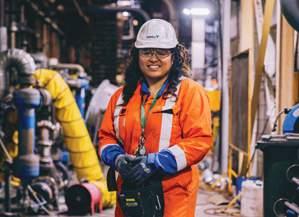
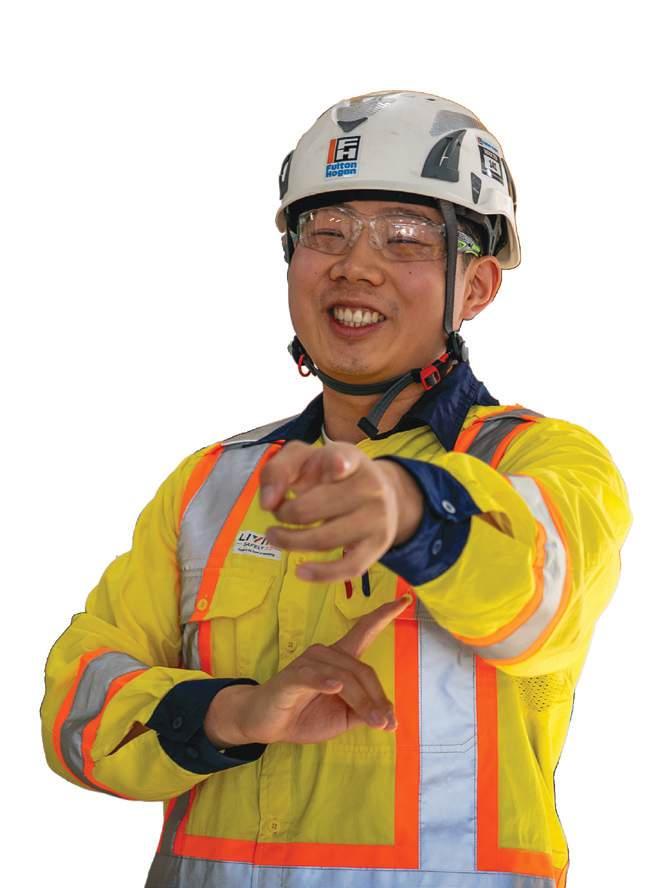
JAIMEE VALERIO is a site engineer for Fulton Hogan, currently working on a project at Auckland Airport.
“I manage crews on-site, plan their work activities, and ensure they have the resources and information they need to carry out their tasks effectively. I am also responsible for overseeing design scopes,” says Jaimee.
“So, I pretty much do lots of problem-solving.”
Jaimee (27) describes herself as the middle person between designers and the ground team.
“I look at all the drawings that the designers give us and communicate with them if we find any issues and try to solve them.
“I also help on-site by communicating to our team what needs to be done. I try to break down the designs we have to make them a lot easier to understand. If anything does happen on-site, I help how to solve it and see how we can do things safely and in the correct way.”
What Jaimee loves most about her engineering role is working with her crews and being able to come up with solutions.
‘‘ THE GRAD PROGRAMME WAS REALLY GOOD AS IT GAVE ME AN OPPORTUNITY TO EXPLORE THE DIFFERENT OPTIONS THERE ARE.
’’ JAIMEE VALERIO
“I just like growing that relationship with my team and growing confidence from them trusting me. I do like how busy it is too. It helps drive me because every day is quite different. Never a boring day on-site.”
Jaimee joined Fulton Hogan in 2021 as part of the company’s graduate programme. It offers a structured pathway to develop skills, gain practical experience and apply knowledge in real-world settings.
The programme gave Jaimee the opportunity to help decide what interested her and what she really wanted to do.
Building relationships and connections with people in the various departments of the company – and learning the background behind each area – gave her a better understanding of Fulton Hogan.
“Coming straight from uni, I didn’t really know anything about the industry and where I wanted to go or what I wanted to do.
“The grad programme was really good as it gave me an opportunity to explore the different options there are.
“In Fulton Hogan, we do a lot of different work. We have an asphalt plant, the labs, different projects that are running, like people doing the airport, the motorways, the water projects and many more.”
Build something real
Get stuck in from day one. Learn on the job, earn while you do it and be part of a crew building things that matter.
Scan to get started.
Jaimee has a Bachelor of Engineering (Honours), majoring in Construction Engineering, from Auckland University of Technology (AUT).
At Westlake Girls’ High School –where she focused on Calculus, Physics, Hard Tech and Design in Year 13 – she initially considered building rather than engineering.
“One goal I really had was to be able to build my own house. That eventually changed to engineering when I learned that it had more of an impact on the community.
“I wanted to say I was part of a major project from the start to finish. That gave me the drive to actually go out and do the engineering degree I have.”
Jaimee’s advice to school leavers –just give things a go, say yes if you get an opportunity, and take everything as a chance to learn.
■ JAIMEE VALERIO JOINED FULTON HOGAN AS PART OF THEIR GRADUATE PROGRAMME IN 2021 AND IS CURRENTLY WORKING ON A PROJECT AT AUCKLAND AIRPORT
■ AS A SITE MANAGER, SHE IS THE MIDDLE PERSON BETWEEN THE DESIGNERS AND THE PEOPLE WORKING ON THE GROUND
KEY FACTS ONLINE
For more information on career opportunities with Fulton Hogan, visit www.fultonhogan.com/join-our-team
■ JAIMEE HOLDS A BACHELOR OF ENGINEERING (HONOURS), MAJORING IN CONSTRUCTION ENGINEERING, FROM AUT
and for more information on studying Engineering at Auckland University of Technology, visit www.aut.ac.nz
For more than 30 years, the Graeme Dingle Foundation has helped more than 400,000 young people pack skills for life. With your support, the next generation can too. Donate today and help us Move Mountains for Youth.
dinglefoundation.org.nz
FOCUS ON FARMING HONING SKILLS WITH HANDS-ON LEARNING
writer PETER WHITE photo credit TELFORD
MACKENZIE-MAY WOODROW is happy to be back living at home after a three-year hiatus: two years studying at Telford campus –Southern Institute of Technology (SIT), based just outside Balclutha, followed by a year farming.
The 20-year-old enjoyed her time studying at Telford and qualified with a Certificate in Farming Systems and Equipment (Level 3) (Sheep, Beef and Dairy) in 2023, and a Massey Diploma in Agriculture (Level 5) in 2024.
“To go into the farming industry was the goal, whether that was in the agri-business, rural professional space or out on farm doing shepherding.
“Telford gives you a great opportunity to get out on farm and build relationships with people in the community, as well as building your base skillset with the week-long shearing and fencing courses, safety training with motorbikes and four-wheelers, learning about growing and pastures and much more.”
Meeting students from all over New Zealand at Telford was a great opportunity to build networks, says Mackenzie-May.
“The Telford experience was a mix of a third classwork, a third placement and a third practical on the Telford farm. It was awesome to get the variety of placements and see the different farming systems that each farmer has.”
“The whole vibe on campus is all about helping you. If you have a question, just ask it.
“Everyone who goes there are like-minded people that want the same goal. I think that is why it works so well.
“The tutors are there to help you – they are on your side, they want you to progress, they want you to succeed.”
After Telford, Mackenzie-May went farming for a year.
“I loved it. I had a great experience on a sheep, beef and deer high country farm above Geraldine.”
Added to her background in farming, she now has hands-on experience across various farming systems.
And since February, Mackenzie-May has worked as a receptionist/stock management advisor at Aorangi Veterinary Services in Timaru.
“People’s animals can be like their kids, so to see the happiness from making sure their dogs and cats are healthy is a good feeling,” she says.
“It is really good to see people in the community every day and their animals. I also like the stock management role, to see what goes in and what goes out. And I enjoy the revenue side of things too.
“There is good variety in the job.”
For school leavers looking for a career in agriculture, Mackenzie-May recommends studying at Telford.
Taking Accounting, Maths, Art, Agriculture and Woodwork in Year 12 at MacKenzie College in Fairlie, South Canterbury, MacKenzie-May says halfway through the year, a friend’s sister went to Telford and raved about it.
Telford offers three-day taster camps where students travel to Balclutha and experience first-hand the different learning options available.
“It gives students an opportunity to learn what it’s all about and meet the tutors, instead of taking a big leap of faith without seeing it for yourself first.
“I went on a taster and made my decision straight after that.”
“ To go into the farming industry was the goal, whether that was in the agri-business, rural professional space or out on farm doing shepherding. ”
For more information on studying at Telford, visit www.sit.ac.nz/campus/Telford
A THREE-IN-ONE TRADE PLUMBING, GASFITTING AND DRAINLAYING
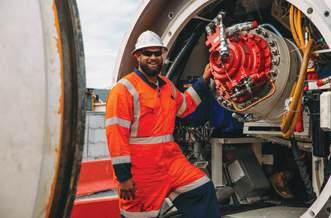
“It is like a puzzle, putting all the pieces together to finish a job and making it look like a piece of art,” says ERIC GRUYTHUYSEN.
Eric (25) recently became a qualified plumber, gasfitter and drainlayer.
In June, at the 2026 NZ Plumbing Awards hosted by Master Plumbers, he was awarded one of three Plumbing World Scholarships, presented annually to Masterlink apprentices who consistently deliver quality work and show real growth, both in their trade skills and as people, over the year.
“I was surprised when I heard I had been nominated but I am very happy to see my determination and the work that I put in was actually recognised.”
What made his achievement even more remarkable was he spent four months away from work, recovering from ankle surgery after a football injury.
Despite the major setback, Eric increased his apprenticeship
completion from 66 to 97 percent within 12 months and passed both his plumbing and drainlaying registration examinations.
“I didn’t want to fall behind. I think a lot of people, if they get that time off, are going to take a break and just relax if they can’t walk. I wanted to make sureI kept everything on track and did what I could to keep advancing my own career. If I couldn’t really help out in my job, then I could help get my apprenticeship papers done and get the company another qualified plumber.
“Kumeu Plumbing gave me great support and just helped me out when I needed something.”
What Eric loves most about his role is helping people with their plumbing issues that can cause so much stress.
“There is the satisfaction of doing a good job, like when I am doing a hot water cylinder and it looks amazing,
even if no one is probably going to look in the cupboard and notice.
“Plumbing and gas work are the most enjoyable parts because that is where you are going to see all the cool bits and pieces, like the showers and bathrooms, copper work and cylinders.
“It takes a lot of thinking to work out, like all the pipework in the walls and making it all work within the regulations.”
Masterlink is 100 percent owned by Master Plumbers. It is the largest New Zealand-owned, nationwide mentored apprenticeship programme specialising in plumbing, gasfitting and drainlaying.
Eric is grateful for the help he received during his apprenticeship, especially from his regional manager Callum after his ankle surgery.
writer
“He could see I was really trying to put in the work. He made sure if I needed anything he was always there and able to help out while I was off.
“In general, Masterlink have been very helpful. Now I am trying to pass on the learning that I have made to the younger guys at our work.”
In Year 13 at Hauraki Plains College in Ngatea, Eric took Biology, PE, Outdoor Education, Maths, English and Business.
He considered bioengineering before getting a trade became his focus.
Eric says career opportunities for young people entering the trades are plentiful, with a shortage of apprentices in many trades.
“It keeps you thinking, it keeps your mind active and keeps you out of trouble!”
PETER WHITE photographer ZACH STARK
STUDYLINK IS HERE TO HELP
WHO’S GOING TO FUND YOUR STUDY?
Tertiary study is an investment, and unless you’re planning on winning it big, you need to think about how you’re going to pay for it. That’s where STUDYLINK can help. StudyLink is a government agency that can help you pay for study with Student Allowances and Loans. Check out their website studylink.govt.nz to find out about the support you can get, how to apply for it and manage it online.
STUDENT ALLOWANCE
This is a weekly payment to help with living expenses – you don’t have to pay it back. How much you get depends on:
– your income
– your living situation – your parents’ income (if you’re under 24).
STUDENT LOAN
The Student Loan can help with study costs. You may be able to get a loan for: – compulsory course fees – course-related costs (help to pay for study materials like books, stationery, tools and computer items)
– living costs (help to pay for day-to-day living costs, if you can’t get a Student Allowance). You’ll have to pay this back once you’re earning over a certain amount.
CHECK WHAT YOU CAN GET
It’s never too early to start working out what your study will cost and how you’ll pay for it.
Use StudyLink’s eligibility test to work out what kind of help you could get while you’re studying –studylink.govt.nz/eligibilitytest
USING REALME® TO MAKE STUDENT LIFE EASIER
Using a RealMe verified identity when you apply for your Student Allowance or Loan means you won’t need to send proof of your identity. You can also accept your student loan contract online – quick and easy.
Set up your RealMe verified identity early so you’re ready to apply. realme.govt.nz
APPLY BY 16 DECEMBER AT STUDYLINK.GOVT.NZ
YOU DON’T NEED TO WAIT ‘TIL YOU GET YOUR NCEA RESULTS IN JANUARY TO APPLY!
IT’S BEST TO APPLY BY 16 DECEMBER TO MAKE SURE YOU’RE SORTED WHEN YOUR STUDY STARTS.
AROUND 120,000 STUDENTS WILL BE APPLYING, SO THE EARLIER YOU GET YOUR APPLICATION IN, THE FASTER IT WILL BE SORTED OUT FOR YOU.
DON’T WORRY IF THINGS CHANGE YOU CAN UPDATE YOUR APPLICATION DETAILS, LIKE YOUR EDUCATION PROVIDER OR COURSE, OR EVEN WITHDRAW YOUR APPLICATION AT ANY TIME.
■ TAKE STUDYLINK’S ELIGIBILITY TEST TO SEE WHAT HELP YOU CAN GET
■ APPLY TO STUDYLINK BY 16 DECEMBER – DON’T WAIT FOR YOUR NCEA RESULTS
■ PROVIDE YOUR SUPPORTING DOCUMENTS QUICKLY KEY FACTS
IT’S MORE IMPORTANT TO GET YOUR APPLICATION IN ON TIME, EVEN IF YOU HAVEN’T DECIDED ALL THE DETAILS YET.
A LITTLE GOES A LONG WAY NEVER TOO POOR FOR KIWISAVER
You’re never too poor for KIWISAVER. Even students working part-time will benefit from saving tiny sums of money in KIWISAVER. A few dollars a week drip fed into KIWISAVER now will grow into thousands of dollars way faster than you’d expect. That’s the power of compounding, which is your money growing while you sleep. provided you contribute too. Even if you’re just working a few hours part-time.
If you’re working part-time, KiwiSaver is peanuts. You only have to put away a minimum of 3.5% of what you’re earning. So, if you earn $100 in the week it’s just $3.50 – less than one single energy drink or coffee. You won’t even notice that if it’s transferred to KiwiSaver automatically by your employer before you receive your pay in the bank.
Why? You probably don’t think about yourself in 10, 20 or 30 years’ time. If you start saving that small percentage from your very first partor full-time pay packet, you’ll thank yourself big time in a decade when, believe it or not, you might start to think about buying a house. It happens. By then you’ll have a good chunk of a deposit saved without much effort.
The other reason to start early is that you get into a good habit. If you learn to put money aside BEFORE spending, you will find it easy.
The best part about KiwiSaver? It’s basically a cheat code for free money. Once you’re 16, your boss has to chip in an extra 3.5% alongside yours,
25c for every dollar you put into KiwiSaver overall, up to a maximum of $260.72 each year.
“Even students working part-time will benefit from saving tiny sums of money in KiwiSaver. ”
Pro tip: Check your pay carefully. Some employers include their KiwiSaver bit in your “total pay”, which isn’t a great deal for you. If you’re earning the minimum wage, it’s illegal for them to do that. Your 3.5% employer match has to be paid on top of your hourly pay, not taken out of it.
If you have extra money, such as birthday money or cash from a summer job, you can make additional voluntary contributions direct to your KiwiSaver provider any time. There’s a very good reason to do that if you can. That’s because the government chips in
To get the $260.72, you need to contribute around $20.05 per week, or $1042.86 over a year.
It doesn’t matter if you drip feed your money to your KiwiSaver provider every week or pay a lump sum once a year, you still get the government money. You can also make one-off payments via online banking by choosing the
IRD payment option and then “KiwiSaver member account” as your payee type. The money will be forwarded to your KiwiSaver account.
If you wonder why you’re contributing to KiwiSaver at such a young age, those small regular savings keep growing. When you want to buy a house, you can withdraw your KiwiSaver savings, your employer’s contribution and investment growth, to contribute to your deposit.
The very best advice is instead of saying “I can’t”, look for excuses to invest that moneyto your KiwiSaver each week. Your future self will be grateful.
KiwiSaver isn’t just about retirement or buying a house. It’s also a simple way to learn how money works in real life. How saving, consistency and patience all add up. It teaches you how to balance spending and saving in a real-world way, without feeling overwhelming.
SEVEN SKILLS EMPLOYERS WANT PRESENT YOURSELF IN YOUR BEST LIGHT
Have you ever wondered, ’What is that magical power some people have that gets them a job?’ The answer isn’t magical – the key is that these job seekers demonstrate they have the employability skills employers are looking for.
The world of work is rapidly changing. While new jobs will be created in the future, others will disappear or become automated.
Employers seek workers who have the skills, confidence and the ability to adapt to new technologies and other market opportunities. The good news is that you will have many of these skills already. These skills can be learned in daily life by doing work experience or volunteer work, playing sport, helping your whānau, taking up a hobby or taking part in school and community activities.
WHAT ARE EMPLOYABILITY SKILLS?
Employability skills, or soft skills, are the personal qualities and attitudes you have that make you ready for work, such as getting to work on time or following instructions. Employers tell us they need young people to be work-ready – if you have the right attitude, the technical skills can be taught.
SEVEN EMPLOYABILITY SKILLS EMPLOYERS
WANT
Employability skills include:
1. POSITIVE ATTITUDE: A positive attitude is not just about being bubbly. It means showing that you’ll happily do the work asked of you, and you’ll stay upbeat when the work gets hard.
2. COMMUNICATION: Good communication skills are when you follow instructions well and ask questions when you’re confused. Being able to explain things clearly is a bonus for employers.
3. TEAMWORK: Playing or working well with others is not just a bonus on the rugby ground or during that science project, it’s something employers value.
4. SELF-MANAGEMENT: Getting to work on time and dressed appropriately is just one part of self-management. Not getting angry at others when you’re frustrated and managing stress are top skills that will get you a job.
5. WILLINGNESS TO LEARN: Learning doesn’t stop once you leave school. Employers want to know that you can learn new technologies or new skills. Being keen to learn is a good bet for getting a job.
6. THINKING SKILLS: Employers rate thinking skills the highest when looking at your CV. Do you like to solve problems? Can you make a good decision? Do you think before you act?
7. RESILIENCE: Have you got grit? When something knocks you down, do you get back up again? This is resilience. Employers need you to have this skill to cope when things go wrong at work.
SHOW OFF YOUR EMPLOYABILITY SKILLS ON YOUR CV
Include employability skills in the skills list, work history, interests and achievement sections of your CV to wow employers.
■ SKILLS LIST: Bullet point up to five employability skills on your CV, with an example of how you got them.
■ WORK HISTORY: List volunteer work or paid work experience in your work history in a way that showcases your skills.
■ INTERESTS AND ACHIEVEMENTS SECTIONS: What you do in your spare time is a powerful indicator to employers of your range of skills.
Remember: If you can show these skills on your CV, you are on the right track to getting an employer interested in hiring you.
photo credit iSTOCK
DODGING THE BETTING TRAP
HOW TO STEER CLEAR OF GAMBLING DEBTS
writer DIANA CLEMENT
photography credit i STOCK
Gambling is everywhere. Here’s what you need to know.
As you leave school, two things change fast. You get more freedom, and you get access to money. Using that money on betting (also known as gambling) is increasingly common.
It’s easy. You have 24/7 access on your phone, live betting during games, and constant notifications. Add in influencers and viral content, and betting starts to look like just another part of entertainment. It all starts to feel normal.
You’ll see live sport advertising, showing odds on screen, commentary and half-time promos. Then there’s the TikTokers and YouTubers celebrating a big win, or meme pages sharing betting slips.
Posts are designed to feel authentic, which makes them more powerful than traditional ads because they come from people your own age and social circles. But it’s actually the companies influencing you. What you rarely see are the losing bets, or the money influencers and even fellow students are paid to promote these platforms.
HOW GAMBLING HOOKS YOU IN
Getting hooked often starts with free bets and sign-up bonuses. These bets aren’t free. The aim is to pull you in. Early wins can make you think you’re going to keep winning.
The odds are set so the platform always wins in the long term. Gambling companies aren’t charities. A few people might get lucky, but the system is designed so that doesn’t last.
The sad fact is that in 2026 many students end up in financial trouble through gambling. The stress, anxiety, and lack of sleep that comes with debt can hit hard, especially when money has been borrowed from friends or taken out as loans.
GETTING HOOKED OFTEN STARTS WITH FREE BETS AND SIGN-UP BONUSES. THESE BETS AREN’T FREE. THE AIM IS TO PULL YOU IN.
Gambling can quickly damage friendships, if you owe people or mates are pushing you to join bets.
Listen to Ty’s story on The Bet: Tinyurl.com/ TyGambling. When the 22-year-old Hamilton student first started gambling, she had fun. But that soon escalated into an addiction, with thousands of dollars lost that she couldn't afford to spend.
Be especially careful with offshore betting platforms. Gambling is 18+ in New Zealand, and while Betcha, run by the TAB, is legal in New Zealand, most other platforms aren’t regulated here. And they don’t always play by the rules. If something goes wrong, you will have little in the way of consumer protections, which means withdrawing money or resolving disputes can be much harder.
KNOW THE WARNING SIGNS
An occasional small bet isn't likely to hurt if it's part of your entertainment budget.
The signs to watch out for are:
Betting more than you planned
Trying to win back losses
Friends pressuring you to bet with them during games
Lying about how much you’ve won or lost or hiding your betting from friends and family
Using money that you need for essentials
If that’s you, you’re not alone and there are people who can help. Gambling Helpline Aotearoa offers a 24/7 Youth Gambling line on 0800 654 659, with younger counsellors often available. They can listen, talk through challenges, connect you with budgeting services and help you find support groups such as GamAnon.
The Gambling Helpline also provides downloadable self-help resources at https://gamblinghelpline. co.nz/resources
Controls that help reduce harm include:
Setting deposit limits or self-exclusion: TAB offers this
Asking your bank to block gambling transactions: many banks can do this
Deleting apps or removing saved payment methods
THE BOTTOM LINE
Gambling can be fun, especially with your mates.
A good rule of thumb: if losing the money would affect your ability to buy food, pay bills, travel,
Gambling Helpline Aotearoa offers a 24/7 Youth Gambling line on 0800 654 659. The Gambling Helpline also provides downloadable self-help resources at gamblinghelpline.co.nz/resources
Find your future flavour at Fonterra.
Going to University?
Let us know what interests you, and we'll keep you updated on our Internships and Graduate Programs. Scan the QR code to enter your details and we’ll do the rest.
Interested in Apprenticeships?
Into Mechanical, Electrical, or Heavy Automotive? Trade up to a great future at Fonterra. Scan the QR code and we'll let you know when applications open.