The ARTIFICIAL INTELLIGENCE Issue


TECHMAG OAO
ISSUE 2 MARCH 2023 AFRICA www.oaoinvestments.com XOLISWA MAHLANGU CHANGING THE FACE OF EDUCATION HOW TO USE AI FOR SDG HOW TO DISCOVER A PROBLEM YOUR BUSINESS CAN SOLVE YURI TANGUR LEGAL IMPLICATIONS OF ARTIFICIAL INTELLIGENCE CELINA LEE OPTIMISM IN AFRICAN AI DR KEVIN MURAGIJIMANA REVOLUTIONISING AFRICAN HEALTHCARE
ACCELERATING THE ADOPTION OF NEW TECHNOLOGIES IN AFRICA





WHAT DRIVES US? YOUR SUCCESS! OAO TECHNOLOGY www.oaoinvestments.com/oao-tech


C COVER Yuri Tangur AI Implications Celina Lee Evanglism of Data Science Zamokuhle Aja-Okorie How to Use AI for SDG Xoliswa Mahlangu Changing the Face of Education Dr Kevin Muragijimana Revolutionising African Healthcare 8 12 14 16 30 Business The Power of ChatGPT Creating Business Value With AI How To Use AI for Sustainable Development Goals Machine Learning vs Artificial Intelligence Ethical Development of AI 21 24 26 28 18 ontents 16 4 12


Women in technology Stella Kimani Feature 32 RISK Deep Fakes What They Mean for Your Organisation 14 governance and private law 5 Editor’s Letter Publishing Panel Subscription & Advertising IN EVERY ISSUE 32
ditor’s Note E



How do we see Africa bridging the gap between where we are currently and the AI that is upon us?
Technology
With China being the leader in AI development and holding the most AI patents, followed by the US albeit now lagging behind, it still leaves a huge gap in relation to the rest of the world contenders in this sphere.
Innovation in technology can look different depending on where you are geographically situated in the world, especially the African continent, where somewhere in a rural area; access to clean running water is a scarcity and makeshift innovations are implemented for pure functionality. As compared to innovation in a large populous city where fast-food companies are looking to streamline systems to offer meal drop-off by drones, or even hospital pharmacies using drones to deliver medication from one hospital to another, thus saving time, money and human capital.
The African Dilemma
But what happens to the human capital that was being used for this purpose of getting something from one point to another, the African
dilemma in the age of technological advancements? Although the Ethics of social issues in the African context of lacking in basic human rights such as education, primary health care, water and sanitation. A combination of our youth, education in technology and timing may well be the answer.
Solution
Africa is the continent with the youngest population worldwide. As of 2022, compared to a global average, the continent has the fastest-growing youth population in the world, with 60 per cent of its population under the age of 25. With a decline in youth population in other continents, this could work to Africa’s advantage.


Africa is currently standing at the intersection of Youth and development, and the acceleration of technology adoption on the continent. How we adapt to the fast pace of change and adopt technology in schools and universities may be the key to bridging the gap between the historically slow adoption of technology (innovation) the high unemployment rate, and obsolete skills in the future.
Given these statistics, education in AI development amongst the
youth will make for a promising future for Africa and its contribution to Artificial Intelligence. The generation that was born into the technological age, given the correct guidance, mentoring and support in education may well be the answer to Africa’s elevation in AI development and a positive socioeconomic impact not on the continent but on the world.
A solution where the past meets the present for a better future and progression of the continent and a recognised contribution to the world.
Ke Nako! (It is time)
TALK TO ME... @OAO-TechMag OAO Investments techmag@oaoinvestments.com
Aphiwe Sabela
Art Director
Zamokuhle Aja-Okorie
Graphic Designers
Erin Van Aswegen
ENQUIRIES: info@oaoinvestments.com
EXECUTIVE TEAM
Founder & MD Zamokuhle Aja-okorie Chief Marketing Officer Mariam Hoosen
The trademark OAO TechMag is the property of OAO Investments (Pty) Ltd © 2012. All rights reserved. No material may be reproduced in part or in whole without written consent from the copyright holders. OAO Publishing does not accept responsibility for damage to or loss of freelance material submitted for publication. All financial advice published in the magazine has been prepared without taking into account the financial situation, objectives or needs of the reader. OAO TechMag, OAO Investments and its employees do not hold any responsibility for any losses and or injury incurred by anyone acting on the information provided in this magazine. All opinions expressed are held solely by the contributors and are not endorsed by OAO TechMag

7
OAO
Implications of Artificial Intelligence for INTERNAL LEGAL & COMPLIANCE DEPARTMENTS





Working in the Compliance Team for a technology-driven company in Africa is never dull, and never simple. Over the past few months, our department (like other compliance departments all over Africa) has received a number of questions about the legal and compliance implications of Artificial Intelligence (AI). We have Open AI’s revolutionary ChatGPT language model to thank for this. ChatGPT has recently gained significant attention for its potential to disrupt established ways of working and teaching, and businesses all over Africa are considering ways to take advantage of emerging opportunities to utilise AI to build efficiency and efficacy into business processes. This article speaks to some practical challenges posed by AI and the ways in which existing Data Governance and compliance processes can enable better business decisions around AIadoption.
For internal legal and compliance teams, the use of AI has brought about a revolution in the way private law operates, particularly with regard to contracts. However, it has also presented challenges such as determining who bears civil liability in

cases where AI behaves unexpectedly, and how institutions can e minimise AI-related risks through contractual agreements that align with their risk appetite. To do so, it is crucial for internal legal and compliance teams to partner with stakeholders to ensure that they are aware of the potential risks and to consider seeking external advice where appropriate. The precise legal challenges AI will introduce (whether new or ampli nature of the business or institution and how AI is implemented which is important to consider as part of risk management initiatives. On 26 January 2023, the National Institute of Standards and Technology (NIST) published an AI Risk Management Framework (RMF), roadmap, and playbook (suggested ways to use the RMF) amongst other resources which may support those initiatives, especially in the absence of mandated regulatory frameworks. The RMF organises AI risk management into four functions: govern, map, measure, and manage. The govern function is infused throughout the other three functions, underscoring its importance.
LEGAL
YURI TANGUR 8
SOUTH AFRICA
AS REGULATIONS CONTINUE TO EVOLVE, COMPLIANCE EFFORTS MUST REMAIN ADAPTABLE TO MINIMISE RISKS AND ENSURE THAT THE ORGANISATION IS IN COMPLIANCE WITH APPLICABLE REGULATIONS

COVER STORY YURI TANGUR
“ 9
Dedicated AI Regulation in Africa has been slow despite increased AI adoption but is gaining traction. In addition to specific AIrelated legislation, the use of AI may also impact other areas of law, such as those related to discrimination and privacy. As regulations continue to evolve, compliance efforts must remain adaptable to reduce risks and ensure that the organisation is in compliance with applicable regulations. This includes monitoring for new regulations and supporting businesses in implementing adequate controls. This is particularly important in the context of data protection legislation, where considerations such as lawful grounds for processing, further processing limitations, and retention limitations must be taken into account. However, AI also has the potential to optimise existing compliance programs through the use of automated solutions and improved data governance. This could result in smoother audits and a more proactive approach to emerging regulatory obligations.
Automated decision-making can significantly reduce the operational workload for companies, but it may also pose risks to individuals and compliance. To address these risks, companies should begin by understanding the regulatory boundaries surrounding automated decision-making. In many cases, this will involve navigating complex and nuanced regulations in different countries. One method to manage privacy legislation across multiple jurisdictions is by subscribing to provisions with the highest standards possible and addressing outlier requirements on a case-bycase basis. Data governance can play an important role in mitigating these risks by ensuring
that data used for automated decision-making is accurate and reliable, and by minimising the risk of bias and discrimination.
The use of AI raises ethical concerns since it depends on the quality of the data it's trained on. To ensure that the data used for AI is accurate, complete, and unbiased, diligence in selecting and verifying the data is required. This can be accomplished by establishing data governance processes that ensure the ethical development and deployment of AI. These processes include assessing the quality of the data, providing clear explanations of the decision-making process, and creating ethical guidelines and principles for AI development and use. Regular monitoring and evaluation of AI would also improve the likelihood of ethical behaviour. Although there may always be a margin of error, it is necessary to assess whether the risk is acceptable.
AI may put a strain on the existing rights of data subjects by making it difficult for individuals to exercise control over their personal data. Several difficulties include the need to provide clear information on how it is collected and processed, giving individuals access to their data and allowing them to correct inaccurate information, erasing information, informing them about who their information will be shared with, and addressing objections to the processing of their personal information within specified timeframes. Standardised processes for data subject requests and clear procedures for responding to those requests may need to be revised in light of those challenges. By establishing clear data management policies and procedures, organisations can ensure that personal data is
collected, processed, and stored in a transparent and compliant manner. This can help individuals to exercise their data subject rights more easily and effectively, ensuring that their personal data is protected and used appropriately. An efficient response to data subject requests may also build consumer trust.
AI has become increasingly important for businesses that would like to extract the most value from their data. However, adopting AI tools without proper data governance risks compromising the privacy, security, and ethical use of business data. Data governance (with its focus on integrity, confidentiality, and availability) can also enable better results from the use of AI tools, as the quality of the data used to train AI models directly affects the accuracy and reliability of outputs. Africa-based companies, with their unique vantage point, have an unparalleled opportunity to learn from the experiences of other regions and develop effective strategies. By doing so, these companies can position themselves to thrive in an increasingly dynamic and competitive global marketplace.
Yuri Tangur is an admitted attorney and serves as legal counsel for compliance and privacy at Valenture Institute. His professional background encompasses a diverse range of areas including regulatory compliance, privacy law, intellectual property as well as risk management.
10




ubscriptions & Advertising
11 For subscriptions: Scan the QR code or Call +27 87 265 5406 Monday-Thursday 9am-4pm CAT Email publishing@oaoinvestments.com or subscribe online at www.oaoinvestments.com/publishing SUBSCRIBE to OAOTechMag. Enjoy every issue delivered to you. Advertising Looking to expand your footprint to our stakeholders? Place your brand in OAOTechMag For advertising: Contact advertising@oaoinvestments.com View our media kit www.oaoinvestments.com/oaotech/ oaotechmag/
S
CELINA LEE
CELINA



 LEE,
LEE,
CEO AND CO-FOUNDER, ON THE FUTURE OF AI, THE CHALLENGES, OPPORTUNITIES AND BUILDING AFRICAN SOLUTIONS
The case for optimism in the AFRICAN AI SPACE
Africa finds itself at an inflection point, an event horizon. As a continent, we find ourselves subject to a number of complementary or conflicting trajectories, compounding uncertainty and making it difficult to see clearly what the future holds. A period of international aid and Western policy direction is coming to an end, as a new wave of ‘for Africa, by Africa’ optimism is bubbling up across the continent. At the same time, we are seeing a booming youth population, and the growing wealth and international clout of the African diaspora. Add to this mix growing interest in mineral extraction in Africa driven by the global electric vehicle boom, and you have a wild time for the continent.
And in the global landscape, the economy has receded from the bull markets and bloated tech stocks of COVID lockdown. However, the new generation of AI startups and large language models is making its presence felt. With $3.6B invested in 269 AI startups in the US already in 2023, and GPT4 making an even bigger splash than its predecessor ChatGPT, demand for AI and data skills is hotter than ever, and here to stay.
In fact, 2022 saw a 295% increase in demand for data skills, according to DevSkiller. And a recent report from Women in AI highlighted just how much AI is changing the labour market worldwide: “According to the World Economic Forum (2021), 97 million new jobs will emerge by 2025, with a majority requiring skills in artificial intelligence, engineering, product development, and emerging programming languages.”
The question that every organisation on the continent needs to be asking themselves is: Are we ready for the future where AI tools and data science skills are not a nice-to-have but a competitive necessity to stay in the game?
The exploding global demand for skilled individuals will hit Africa hard, for better or for worse. The answer is up to us.
Consider the digital divide we are facing on the continent. As Nigerian human rights lawyer and advocate Chioma Nwaodike points out in a blog-post:
“Only 28.2% of people in Africa have access to the internet. As data is the prerequisite asset allowing AI systems to function, questions about connectivity and unequal access to data also must be considered. For instance, in Nigeria data is expensive and internet connectivity variable. These disadvantages developers and AI entrepreneurs. Without reliable core infrastructure, affordable data plans, and easy access to technologies, current digital divides will only be exacerbated with the rise and continued advancement of AI.”
At Zindi, we are betting on the ingenuity of our thousands of users across the continent to find ways around these challenges. From Johannesburg to Tunis, Lagos to Nairobi, our 60,000 users find their way around high data costs, unreliable internet speeds, expensive equipment and even rolling blackouts in order to compete, connect and grow themselves in their chosen field. They show up in force to work on the very real challenges faced by African organisations, businesses and governments. And they build models and innovations that can compete with the best in the world.
WOMEN IN TECHNOLOGY
12
Zindi recently hosted more than 1000 students from a wide range of academic disciplines at UmojaHack Africa 2023, brought together by a desire to learn and develop their skills in the AI space. These are the next generation, the ones that recognise that a university education isn’t enough to get ahead in the globally connected world we live in, who see the challenges Africa faces in connectivity, in education, and in access to opportunity, and decided that they are the ones to do something about it.
Speaking at the event, Avishkar Boopchand, Senior Research Engineer at DeepMind and Director for Deep Learning Indaba 2023 said: “We need Africans to build African solutions to African problems. I’m really excited by the young, talented, and enthusiastic population on the continent. We’re not encumbered by old technology and an aging population; we can leapfrog the developed world, learn from their mistakes and leverage tech innovation to solve problems and drive growth. Our core strength is our strong communities - organisations like Zindi, Deep Learning Indaba, and Data Scientists Network (DSN), to name a few. This is an extremely powerful, continentwide community of like-minded people that will shape the future of the continent.”
Over the past four years, we have awarded nearly $500 000 in prizes to hundreds of young, ambitious and incredibly smart technologists all over the continent, and supported many more through our mentorship and community ambassador programmes. We have run hundreds of community events, and seen thousands of young Africans build their first machine learning model using skills and support they got from Zindi. Our hope and our belief is that this investment in Africa’s future will bear fruit, in the form of a new generation of talent to fuel new startups, capable and data-savvy institutions, and well-resourced governments. The community on Zindi gives me a lot to be optimistic about, and it should for you too.
ARE WE READY FOR THE FUTURE WHERE AI TOOLS AND DATA SCIENCE SKILLS ARE NOT A NICE-TO-HAVE BUT A COMPETITIVE NECESSITY TO STAY IN THE GAME?

THE EXPLODING GLOBAL DEMAND FOR SKILLED INDIVIDUALS WILL HIT AFRICA HARD, FOR BETTER OR FOR WORSE. THE ANSWER IS UP TO US.

ZINDI CELINA LEE 13
“
What they mean for your organisation DEEPFAKES
Imagine a staff broadcast video distributed throughout your organisation to all staff sent from your email address.
This is the impact, of deepfakes where cybercriminals use artificial intelligence to manipulate video, audio or both in your likeness and replace it with someone else’s likeness. Making you appear as if you have said or done something that never took place. These synthetic videos use artificial intelligence and machine learning algorithms to analyse and mimic your behaviour, facial expressions, and speech patterns being impersonated. The result is a highly convincing, but entirely false, representation of you.
AI poses various threats and deepfakes fall into this category. With websites such as deepfakesweb.com anyone can create unethical video content using deepfake technology that poses a risk to your organisations security.
As a decision maker in your organisation, it is crucial to stay informed of the latest advancements and threats in technology that can impact your organisation. It is essential to understand what they are and what they mean for your organisation.
THE DANGER TO YOUR ORGANISATION
The implications of deepfake videos for your organisation are significant and far-reaching. Firstly, deepfakes can be used to spread misinformation, create hoaxes, and manipulate public opinion. This can
be especially dangerous in political campaigns, where deepfake videos can be used to spread disinformation and undermine public trust in candidates and institutions. In business, deepfakes can be used to spread false information about your company or its products, leading to reputational damage and financial losses.
Another potential risk posed by deepfakes is related to the use of these videos in cybercrime. For example, deepfake videos can be used in phishing scams, where criminals use fake videos to impersonate executives or other high-level employees to gain access to sensitive information or steal money. Deepfakes can also be used in extortion and blackmail, where criminals threaten to release damaging deepfake videos unless a ransom is paid. Moreover, deepfakes can also have a significant impact on the privacy of employees and customers. Deepfake videos can be used to spread false information about individuals or to extract sensitive information from them. This can lead to privacy breaches and reputational damage for both employees and customers.

DEALING WITH THE THREAT
Meta launched a deepfake detector challenge that encouraged researchers and developers to make machine learning algorithms capable of detecting deepfakes and fight them. Researchers managed to reach more than 80% accuracy in identifying synthetic videos. Bad actors’ technology continues to improve post the challenge and this poses a risk to your organisation. In
light of these risks, it is essential for your organisation to take proactive measures to protect itself from the potential consequences of deepfake videos. Some steps you can take include:
1. Implementing strong cybersecurity measures to prevent cyberattacks that use deepfake videos
2. Educating employees and customers about the dangers of deepfakes and how to identify them
3. Monitoring online platforms and social media for any false or misleading information about your company or its products
4. Adapt business processes to account for deep fake threats such as payment approval processes
5. Establishing a plan to respond to deepfake videos that could impact your organisation, including legal action where appropriate
6. Act Quick! Being attacked publicly requires a prompt response to prevent reputational damage. Follow the steps in the plan listed above
In conclusion, algorithms are improving and deepfake videos are a rapidly developing technology that has the potential to cause significant harm to organisations. As a decision maker, it is essential to be aware of the risks posed by deepfakes and to take the necessary steps to protect your company and its reputation. Comprehensive prevention and preparation is a priority for dealing with deepfakes. By staying informed and proactive, you can ensure that your organisation is prepared for the challenges posed by deepfakes and other emerging technologies.
BUSINESS
14
REPRESENTUS, A NONPROFIT ANTI-CORRUPTION AND GOOD GOVERNANCE GROUP, CREATED A VIDEO FEATURING KIM JONG UN USING DEEPFAKE TECHNOLOGY. THE DEEPFAKE VIDEO WAS USED TO ENCOURAGE AMERICANS TO VOTE


“ 15
HOW AI IS CHANGING THE FACE OF EDUCATION
Welcome to the future of education! The advancements in artificial intelligence (AI) have brought about a revolution in the education system. Artificial intelligence profoundly impacts the education system, and its transformative potential is gaining widespread recognition. With the integration of AI into classrooms, students and teachers can experience a significant shift in how they learn and teach.
AI-powered tools can personalize the learning experience for each student, catering to their individual needs and providing tailored learning paths. By analysing student performance data, AI can create custom data-driven learning paths to ensure that students are challenged at their level and can progress at their own pace. This tailored approach can provide a more authentic learning experience for students. Teachers can also leverage this information to improve and customize their teaching strategies.
Let's look at how AI is used in classrooms today. Imagine a classroom where students can access a personalized learning platform that adjusts to their needs in real-time. Teachers can track their student's progress and customize their teaching strategies based on data-driven insights. This level of engagement is possible with the help of AI. Students can use AI-
powered tools to check their grammar, spelling, and syntax. These tools can also suggest ways to improve the clarity and coherence of their writing. Students can also use AI-powered tools to analyze large datasets and extract insights.AI can enhance students' creativity. For example, students can use AIpowered tools to generate artwork, music, or poetry. These tools can provide new ideas and inspiration. Finally, AI can be used to help students with problem-solving. Students can use AI-powered tools to analyze complex problems and find solutions. These tools can also help students learn how to think critically and systematically. Introducing and mass adopting such technologies in our country could greatly assist with our quality teacher shortages. Fewer quality teachers would be able to meet the needs of many students by focusing on custom learning paths.



Schools worldwide recognize the importance of teaching coding and robotics from an early age. From grade R to grade 9, South African schools are busy preparing to teach students the basics of programming and how to build robots. They are developing fun and engaging ways to teach concepts like computational thinking, sequencing, loops, conditionals, variables, and debugging. These skills are essential for problem-solving, critical thinking, and
EDUCATION 16
XOLISWA MAHLANGU
XOLISWA




MAHLANGU, HEAD OF DIGITAL LEARNING AND TECHNOLOGY, ON THE FUTURE OF EDUCATION

MAHLANGU
EDUCATION XOLISWA
innovation and can benefit students in various subjects and careers. Robotics involves programming a physical robot to perform tasks and can be a great way to engage students in handson learning. In addition, robotics can help students understand the practical application of coding and provide opportunities to collaborate and develop teamwork skills.
The benefits of teaching coding and robotics are numerous. Students develop critical thinking, problem-solving, and analytical reasoning skills. They become more creative and innovative in finding solutions to complex problems. They also learn computational thinking, which can be applied to various fields of study. Moreover, students learn to work in teams, fostering collaboration and teamwork skills. This move is helping to prepare students for the demands of the future workforce.
At university, AI can play a significant role in assisting students with their academic work. With AI-powered tools, students can receive personalised feedback on their assignments, ensuring they are on the right track. AI can also help students identify areas where they are struggling and provide targeted support.
AI can also assist graduates as they begin their job search. By analysing their resumes and online profiles, AI can help graduates tailor their job applications to specific roles, increasing their chances of landing a job. In addition, through personalised learning platforms and training programs, AI can help graduates develop skills and knowledge.
C-level executives can leverage the
power of AI in their skills development programs. AIpowered tools can help identify skills gaps and provide personalised training to their employees. This can improve productivity, efficiency, and overall job satisfaction, benefiting both the employee and the organisation. AI can be used to map skills across the organisation, identifying skills gaps and areas where training is needed. This can help organisations prioritise training and development programs that will have the most significant impact. They can create new custom skills programs that use the power of AI to assign new hires to the correct mentors and projects based on data collected about them.AI can be used to create adaptive assessments that adjust to the individual's level of knowledge and skill. These assessments can provide immediate feedback, and personalised recommendations for improvement.AI can be used to create gamified learning experiences that make learning more engaging and enjoyable. By incorporating game elements, such as rewards and competition, AI can motivate individuals to learn and develop new skills.AI can be used to predict future skills requirements based on industry trends and changes in the labour market. This can help individuals and organisations prepare for the skills they will need in the future.
Government can improve education using AI by investing in technology and teacher training. Providing teachers with the necessary tools and training can help students develop the skills needed to succeed in the future workforce. Officials can also leverage AI to create personalised learning paths for students and improve access to education for students with disabilities or language barriers.
In conclusion, AI is changing the face of education, and its benefits are numerous. Students are experiencing a more personalised learning experience, and teachers can leverage AI to provide a more engaging and authentic learning experience. The introduction of coding and robotics as subjects in schools is helping to prepare students for the future workforce, and AI is assisting students at the university level and beyond. Clevel executives and government can also leverage AI to improve skills development and education accessibility. Organisations, governments, and educators can leverage AI to enhance skills development, job readiness, and accessibility to education. As we look to the future, AI has the potential to revolutionise the education system, and we must embrace its transformative potential. It is an exciting time to be a student, a teacher, and a member of the education community. The future is bright, and AI is leading the way!
Xoliswa Mahlangu is a selfproclaimed Tech Fairy and experienced software engineer who heads digital learning and technology for the Sifiso Learning Group. She is passionate about demystifying coding and robotics for kids of all ages. Xoliswa has taught computing across a number of phases, spoken at numerous youth and women in tech events, mentored several young people, and developed a curriculum for computing for grades one to eleven for the group. She is responsible for implementing EdTech solutions and training teachers as they start on their coding and robotics journeys. She holds a Master of Engineering focused on Software Engineering.
18
THE POWER OF CHATGPT: Revolutionising Business Communication & Automation
Artificial intelligence is transforming the way businesses operate and communicate, and one of the most exciting developments in this field is the emergence of chatbots. Chatbots have been around for a while now, but they've recently taken a huge leap forward in terms of capability, becoming more human-like in their interactions and more versatile in the tasks they can perform. One of the most advanced and innovative chatbots on the market today is ChatGPT, and in this article, we'll be exploring the many benefits of using this cutting-edge technology in your organisation.
WHAT IS CHATGPT?
ChatGPT is a chatbot developed by OpenAI, one of the world's leading artificial intelligence research organisations. It's based on a powerful language model that's been trained on a massive dataset of human conversation and information, so it can understand and respond to a wide range of questions and requests. The result is a chatbot that's incredibly versatile and capable, able to perform a variety of tasks, from answering customer queries to automating routine business processes.
Exhausted
THE BENEFITS OF CHATGPT FOR BUSINESSES
Improved Customer Service: One of the biggest benefits of using ChatGPT in your organisation is the improvement it can bring to your customer service. With its advanced language processing capabilities, ChatGPT can quickly and accurately answer customer queries, freeing up your customer service team to focus
BUSINESS
on more complex issues. This can help you resolve customer issues faster and more efficiently, improving customer satisfaction and loyalty.
Increased Efficiency: ChatGPT can also help to streamline your business processes, freeing up your employees to focus on more strategic tasks. For example, it can be used to automate routine tasks such as scheduling appointments, sending reminders, and processing orders, which can save you time and increase your productivity.
Cost Savings: By automating routine tasks and improving customer service, ChatGPT can help you save money. You'll be able to reduce your staffing costs by freeing up your employees to focus on more important tasks, and you'll also be able to avoid the costs associated with dealing with customer complaints and inquiries.
Better Data Management:
ChatGPT can also help you to manage your data more effectively. With its advanced language processing capabilities, it can quickly and accurately process large amounts of data, making it easier for you to make informed business decisions. This can help you to optimize your processes and improve your bottom line.
this can result in incorrect or biased responses. To minimize this risk, it's important to carefully evaluate the data that ChatGPT is trained on, and to regularly review and update this data as needed.
Another risk to consider is the potential for privacy concerns. ChatGPT stores and processes large amounts of data, which could include sensitive information about your customers and your business. To minimize this risk, it's important to implement robust security measures to protect this data, and to ensure that it's only used for the purposes for which it was collected.
THE FUTURE OF CHATGPT
Its future in organisations is very promising. As businesses continue to adopt artificial intelligence and automation technologies, the use of chatbots like ChatGPT is likely to become even more widespread. Here are some ways in which ChatGPT is expected to impact organizations in the future:
1. Increased Adoption: ChatGPT's versatility, accuracy, and ability to automate routine tasks make it a highly appealing technology for businesses of all sizes. As more organizations recognize the benefits of using ChatGPT, its adoption is likely to increase.
Improved User Experience:
and improve customer service.
3. Integration with Other Technologies: ChatGPT is likely to become more tightly integrated with other technologies, such as customer relationship management (CRM) systems, to provide an even more comprehensive solution for organisations. This will allow businesses to leverage the power of ChatGPT to improve a variety of business processes and customer experiences.
4. Greater Personalisation: In the future, ChatGPT is likely to become more personalised, with chatbots being able to tailor their responses to the specific needs and preferences of each customer. This will allow organisations to provide a more personalised experience to their customers, which is likely to result in improved customer satisfaction and loyalty.
Overall, the future of ChatGPT is very bright, and organizations that adopt this technology are likely to reap significant benefits. Whether it's improving customer service, streamlining business processes, or managing data more effectively, ChatGPT has the potential to transform the way organizations operate and communicate.

20
reating Business Value with AI
“How AI is forging a path to a future-fit company by driving outcomes, realizing value and unleashing AI’s potential.”
With the disruption caused by the Covid epidemic we were faced with the challenge of changing our business processes. Business paradigms shifted, we had to navigate unchartered territories and the unknown became the new norm. Digitalization was key to the success of changing business models and the evolution of work.

The challenges faced brought about opportunities for Artificial Intelligence (AI) to play a formidable role in meeting them. AI has the power to change your business model and provide new revenue and value-producing opportunities for your stakeholders and the community you serve. Operationalising AI
gives you the opportunity to forge a future-fit path that drives business value.
AI provides business value in multiple ways such as boosting efficiency in process automation, increased service speed and consistency, machine learning to accelerate R&D processes to name a few. The Cognitive Model proposed by IBM categorises the business value of AI in three ways Knowledge, Automation and Engagement. The model is a framework that outlines how AI systems can be used to augment human decision-making processes. It is based on the idea that AI can help businesses make more informed and intelligent decisions by analysing data, identifying patterns and trends, and providing insights that would otherwise be difficult or impossible to discern.
STRATEGY C
21
How AI is forging a path to a future-fit company by driving outcomes, realising value
21
ad unleashing AI’s potential
The Cognitive Model Picture
Your Biggest Asset
Your employees are your biggest asset in successfully implementing and scaling AI in your company. Specialised and dedicated teams will have to be built by business leaders. The teams will need to focus on high-value strategic deliverables that are specific to their teams. A unique set of skills in AI will be required in the various teams, for example Machine Learning (ML) engineers, data scientists, compliance officers, risk and governance personnel.
A culture change that will establish the new working AI norm to drive return on investment will be required in implementing successful AI transformation. Thoughtful change management will be required. By implementing a change management strategy employees will be exposed to the possibilities AI will offer not only in the workplace but also their careers.
Benefits of AI for Business
Implementing AI solutions can bring significant benefits to businesses. Some of the key benefits are:
1. Enhanced Decision-making: By providing real-time insights and recommendations based on data analysis, AI can help businesses make more informed and intelligent decisions. This can lead to better outcomes, increased efficiency, and reduced costs. In Kenya, the online retailer Jumia uses AI to optimize its inventory levels. By analyzing sales data and predicting
demand, Jumia is able to ensure that it always has the right products in stock, reducing the risk of stockouts and lost sales.
2. Improved Customer Experience: AI can be used to analyse customer data and provide insights into customer behaviour, preferences, and needs. This can help businesses personalize their offerings and improve the customer experience. In Nigeria, the online retailer Konga uses AI to personalize its customer experiences. By analyzing customer data, Konga is able to recommend products and services that each customer is most likely to be interested in, increasing the likelihood of repeat purchases and customer loyalty.
3. Increased Efficiency: AI can automate routine tasks and processes, freeing up employees to focus on highervalue activities. This can increase efficiency and reduce costs. In Ghana, the beverage company Kasapreko uses AI to optimize its supply chain. By analyzing data on supplier performance and delivery times, Kasapreko is able to ensure that it always has the raw materials it needs to produce its products, reducing waste and minimizing operational costs.
4. Innovation: AI can help businesses identify new opportunities and areas for growth. By analysing market trends and customer behaviour, AI can help businesses stay ahead of the competition.
5. Automating Routine Tasks: AI can help businesses
automate routine tasks, freeing up time for employees to focus on more important tasks that require human judgment. For example, chatbots can help businesses automate customer service, freeing up customer
service agents to focus on more complex issues. In the banking sector, AI can help automate fraud detection, reducing the workload of fraud analysts and enabling them to focus on more complex cases. In South Africa, Nedbank has implemented an AI-powered chatbot called Avo. Avo can handle up to 1,500 customer queries simultaneously and has helped the bank reduce call centre traffic by up to 50%. Similarly, Standard Bank has implemented an AIpowered chatbot called Tobi, which has helped the bank reduce the average customer query resolution time from several hours to just a few minutes.
6. Enhancing Cybersecurity: AI can help businesses enhance their cybersecurity
22
“
By implementing a change management strategy employees will be exposed to the possibilities AI will offer not only in the workplace but also their careers.
by detecting and preventing cyber threats in real-time. For example, AI can analyse network traffic to identify patterns that indicate a potential cyberattack, enabling businesses to take proactive measures to prevent the attack before it can cause any damage. In South Africa, the financial services company Old Mutual uses AI to enhance its cybersecurity. By analyzing network traffic in realtime, Old Mutual is able to detect and prevent cyber threats before they can cause any damage, protecting the company's sensitive data and ensuring the security of its customers' information.
Identifying Business Challenges and Opportunities
The first step in creating business value with AI is to identify business challenges and opportunities. This involves analysing the current state of the business, understanding the needs of customers, and identifying areas where AI can make a difference. Some common business challenges that AI can address are:
1. Data overload: As businesses collect more and more data, it becomes difficult to analyse and derive insights from it. AI can help automate the process of data analysis and provide realtime insights.
2. Manual processes: Many business processes are still manual, which can be timeconsuming and error-prone. AI can automate these processes, saving time and improving accuracy.
3. Customer engagement: With the help of AI, businesses can personalize customer experiences and provide better customer service.
4. Operational efficiency: AI can optimize operations and reduce costs by identifying
inefficiencies and suggesting improvements.
By identifying these and other challenges, businesses can determine where AI can provide the most significant value.
Building an AI Strategy
Once businesses have identified the areas where AI can make a difference, the next step is to build a comprehensive AI strategy. This involves defining the goals of the AI implementation, identifying the data sources required, and selecting the right AI tools and technologies. Some key considerations when building an AI strategy are:
1. Define goals and objectives: What are the business objectives that AI should help achieve? What are the key performance indicators (KPIs) that will be used to measure success?
2. Identify data sources: What data is required for the AI implementation? Is the data available and in a format that can be used by AI?
3. Select AI tools and technologies: There are a wide variety of AI tools and technologies available, including machine learning, natural language processing, computer vision, and robotics. The right tools and technologies depend on the specific use case (how a user interacts with a system or a product to achieve a particular goal).
4. Ensure data privacy and security: With the increasing use of AI, data privacy and security are becoming more important than ever. Businesses need to ensure that data is protected and that AI is used in an ethical manner.
Implementing AI Solutions
Once the AI strategy is defined, the next step is to implement AI solutions. This involves building or buying the required AI models and integrating them into existing business processes. Some best practices for implementing AI solutions are:
1. Start small and iterate: AI implementation can be complex, so it's essential to start with a small pilot project and iterate as necessary. This allows businesses to identify and address issues before scaling up.
2. Involve stakeholders: AI implementation affects many stakeholders, including employees, customers, and partners. It's essential to involve these stakeholders in the process and address any concerns they may have.
3. Monitor and measure: To ensure that AI is providing the intended value, it's important to monitor and measure its impact on an ongoing basis. This involves tracking KPIs and making adjustments as necessary.
4. Provide training: AI implementation often requires new skills and knowledge. It's important to provide training to employees to ensure they can use AI effectively.
AI has the potential to transform businesses across Africa by automating routine tasks, providing insights into customer behaviour, personalizing customer experiences, enhancing cybersecurity, and reducing operational costs. As businesses continue to face new challenges in today's rapidly changing market, AI can help them stay ahead of the game.
23
ZAMOKUHLE AJA-OKORIE
How to use AI for
SUSTAINABLE DEVELOPMENT GOALS
how to discover a problem your business can solve
Artificial Intelligence as one of the most exciting and promising technologies of our time is rapidly changing the way businesses operate, providing a wealth of opportunities for organisations to tackle some of the world's most pressing problems. However, with this potential comes the responsibility to use AI ethically and sustainably, so that it serves the greater good and supports the United Nations' Sustainable Development Goals (SDGs). The United Nations' 17 SDGs are a call to action for businesses to use their resources and expertise to help create a better and more sustainable future for all by 2030. We look at how businesses can leverage AI to support the SDGs and how you can discover the problem your business can solve.
As a business executive, you may be wondering how you can use AI to support the SDGs and contribute to a more sustainable future. The answer is simple: by using AI to solve pressing social and environmental problems. AI has the potential to revolutionise many industries, from healthcare to finance and energy. For businesses, AI offers the opportunity to solve pressing social and environmental problems by automating
processes, reducing waste and increasing efficiency, making a positive impact on the environment. At the same time, AI can help to improve the lives of people around the world by providing access to education, healthcare, and employment.
One of the key benefits of AI is that it can be used to analyse vast amounts of data, making it possible to identify patterns and insights that would be impossible to detect by human analysis alone. This data-driven approach can be used to support the SDGs in many ways, for example, by analysing data on energy consumption to identify ways to reduce greenhouse gas emissions, or by using data to track the progress of global health initiatives.

Another advantage of AI is that it can help to scale solutions to global problems. For example, AI-powered chatbots can provide access to health information and advice to people in remote or underserved communities, helping to address SDG 3 on Good Health and Well-being. Similarly, AIpowered algorithms can help to improve the efficiency of supply chains, reducing waste and supporting SDG 12 on Responsible Consumption and Production.
SUSTAINABILITY
“ 24
ARTIFICIAL INTELLIGENCE HAS THE POTENTIAL TO MAKE A SIGNIFICANT CONTRIBUTION TO THE ACHIEVEMENT OF THE UNITED NATIONS’ SDGS. BY USING AI TO AUTOMATE PROCESSES, REDUCE WASTE AND INCREASE EFFICIENCY, BUSINESSES CAN PLAY A VITAL ROLE IN CREATING A MORE SUSTAINABLE FUTURE FOR ALL.
HOW YOUR BUSINESSES CAN USE AI TO SUPPORT THE SDGS
Step 1: Identify the SDGs that align with your business values and goals.
your business values and goals.
For example, if your business is in the agriculture sector, you may be interested in SDG 2 on Zero Hunger and SDG 6 on Clean Water and Sanitation. If your business is in the energy sector, you may be interested in SDG 7 on Affordable and Clean Energy and SDG 13 on Climate Action.
Take the time to review the 17 SDGs and think about which ones resonate with your business values and goals. This will help you narrow down your options and focus your efforts on the SDGs that matter the most to you and your business.
Step 2: Identify the problems that need to be solved.
Once you have identified the SDGs that align with your business values and goals, the next step is to identify the problems that need to be solved to achieve these goals. It is important to consider the SDGs in the context of your business and to look for opportunities to use AI to address these challenges. For example, if you are interested in SDG 2 on Zero Hunger, you may identify the problem of food waste as a significant barrier to achieving this goal. If you are interested in SDG 7 on Affordable and Clean Energy, you may identify the problem of energy access as a significant challenge.
Research the problems that need to be solved to achieve the SDGs you have identified. Read academic studies, talk to experts
in the field, and gather data and insights that can help you better understand the problem and its impact on society.
Step 3: Use AI to solve the problem.
The final step is to use AI to solve the problem you have identified. For example, if you identified sustainable investment strategies as a problem, AI can be used to identify and evaluate sustainable investment opportunities that align with SDG 17 on Partnerships For The Goals and help businesses make informed investment decisions. If you have identified food waste as a problem in SDG 12 on Responsible Consumption and Production, you may use AI to develop a food waste management system that helps reduce food waste by predicting demand and optimizing supply chain management.
Step 4: Develop a plan to implement AI. This can involve working with AI experts, investing in research and development, and partnering with other organizations to share knowledge and resources.
One important consideration when using AI to support the SDGs is to ensure that the technology is used in an ethical and responsible manner, with consideration for the rights, safety, and well-being of all stakeholders. This includes considering the potential impact of AI on employment and ensuring that
the technology is accessible to everyone, regardless of their background or location.
Artificial Intelligence has the potential to make a significant contribution to the achievement of the United Nations’ SDGs. By using AI to automate processes, reduce waste and increase efficiency, businesses can play a vital role in creating a more sustainable future for all. To get started, it is important to identify the SDGs that align with your business values and goals, identify the problem your business can solve, use AI to solve the problem, develop a plan to implement AI, and ensure that the technology is used in an ethical and responsible manner. Once these steps are executed you will truly be on solid ground for AI initiatives that are aligned with the United Nations SDGs. Incorporating AI into your business strategy is a smart move, not only to support the SDGs but to drive growth and improve competitiveness.

OAO TECHNOLOGY ZAMOKUHLE AJA-OKORIE 25
Machine Learning Artificial Intelligence VS what’s the difference
Machine Learning (ML) and Artificial Intelligence (AI) are buzzwords that have become ubiquitous in the technology industry in recent years. However, despite their close association, the two are not the same. Business executives, particularly those involved in technology, need to understand the difference between these two concepts, as well as the
implications of each, in order to make informed decisions about the deployment of technology in their organisations.
Machine Learning is a subset of artificial intelligence that is concerned with the development of algorithms and statistical models that enable computers to learn from and make predictions on data. It is based on the idea that computers can be taught to
perform tasks that would otherwise require human intelligence, such as recognising patterns, making decisions, and solving problems, by using data to train models. ML algorithms are designed to find patterns in data and use these patterns to make predictions about new data. They automatically adjust themselves to improve their performance over time.
26
EDUCATION
AI, on the other hand, is a broader concept that encompasses machine learning, as well as other areas such as robotics, natural language processing, and computer vision. AI refers to the development of computer systems that can perform tasks that typically require human intelligence, such as perception, reasoning, decision-making, and understanding natural language.
While machine learning is focused on enabling computers to learn from data, AI is concerned with creating computer systems that can perform a wide range of tasks that typically require human intelligence. In practice, machine learning is often used as a tool to achieve AI, as machine learning algorithms are used to train computer systems to perform tasks that would otherwise require human intelligence.
The business applications of machine learning and AI are vast and varied. Machine learning algorithms are being used in a wide range of industries, including finance, healthcare, retail, and transportation, to automate various processes and improve decisionmaking to increase efficiency and reduce costs. For example, machine learning algorithms can be used to analyse financial data and make predictions about market trends, to analyse medical records and make diagnoses, or to optimise supply chain management.
One of the most popular applications of ML in business is predictive analytics. Predictive analytics is the use of statistical models and algorithms to make predictions about future events based on historical data. Predictive analytics is being used by businesses across a wide range of industries, from retail to finance, to make data-driven decisions about
pricing, marketing, and product development.
Uses/Benefits
In the field of AI, the applications are even more diverse. AI systems are being developed to perform a wide range of tasks, from driving cars to understanding natural language to playing games. AI systems are also being used to automate a wide range of processes, such as customer service, financial analysis, and marketing.
One of the main benefits of machine learning and AI is their ability to automate complex tasks that would otherwise require human intelligence. By automating these tasks, organisations can improve efficiency and reduce costs. Additionally, machine learning and AI systems can analyse vast amounts of data and make predictions and decisions that are beyond the capabilities of human intelligence.
AI is being used to improve the customer experience by enabling companies to provide more personalised and intuitive experiences. AI-powered chatbots, for example, are being used by businesses to provide customers with instant support and answers to their questions. AI-powered recommendation systems are being used to suggest products and services that are relevant to customers based on their previous purchases and interests.
Another application of AI in business is the development of smart products and services. Smart products are products that are equipped with sensors and connected to the internet, allowing them to collect data and communicate with other devices. AI is being used to analyse the data collected from these products to provide businesses with insights
into customer behaviour and preferences.
Another advantage of machine learning and AI is their ability to scale. As the amount of data that organisations collect continues to grow, the need for systems that can analyse and make sense of that data becomes increasingly important. Machine learning and AI systems can analyse vast amounts of data in real-time and make decisions faster and more accurately than humans.
Challenges
However, there are also challenges associated with the deployment of machine learning and AI in organisations. One of the main challenges is data quality. In order for machine learning and AI systems to be effective, they need access to high-quality data. If the data used to train these systems is of poor quality, then the resulting models will also be of poor quality. This can lead to incorrect predictions and poor decisionmaking.
Another challenge is that of ethics and bias. Machine learning algorithms are only as good as the data that they are trained on, and if the data used to train these algorithms contains biases, then the algorithms will also contain biases. This can lead to decisions and predictions that are unfair or discriminatory.
Finally, there are also privacy concerns associated with the deployment of machine learning and AI. The large amounts of data that these systems need to work effectively can include sensitive personal information, such as medical records, financial information, and location data.
27
ETHICAL DEVELOPMENT cial intelligence
he ethical development of artificial intelligence (AI) is a topic that has been on the rise in recent years. As businesses seek to leverage the its of AI, they must also navigate the ethical challenges that come with developing and deploying intelligent systems. AI has the potential to revolutionise the way we live and work, but it must be developed in a way that is ethical and respects human rights.
The ethical implications of AI are numerous and complex, but some of the most pressing concerns include bias, transparency, and privacy. These issues are not just theoretical - they can have real-world consequences that can impact individuals and society as a whole.

AI is a powerful tool that can be used to automate tasks, make predictions, and even make decisions. However, AI is only as good as the data that it is trained on. If the data is biased, the AI will also be biased. This is where the ethical development of AI comes in. It is important to ensure that the data used to train AI is unbiased and representative of the entire population, not just a subset.
Although the common belief is that computers are impartial. That is not true. People are shaped by culture and experience, which leads people to internalise certain assumptions about their surroundings. The same applies for AI as it is built by people who teach it how to think. Bias in AI systems can arise from a variety of sources, including the data used to train the system, the algorithms used to make decisions, and the designers and developers behind the technology. Biased AI systems can perpetuate discrimination and inequality, making it essential for businesses to identify and mitigate bias in their AI applications.

Transparency is also critical for ethical AI development. As AI systems become more complex, it can be challenging to

ETHICS
understand how they arrive at their decisions. Transparency ensures that AI systems are accountable and can be audited to ensure that they are fair and reliable.
Finally, privacy is a crucial ethical concern in the development of AI. As AI systems collect and process vast amounts of data, it is essential to protect the privacy of individuals and ensure that their personal information is used only for legitimate purposes.
One notable example of AI bias in South Africa was the controversy surrounding the use of facial recognition technology by law enforcement agencies. In 2019, the Information Regulator (South Africa) found that the use of facial recognition technology by the South African Police Service (SAPS) was illegal and violated the Protection of Personal Information Act. The SAPS had been using the technology to identify wanted criminals, but the system had been found to be racially biased, with a higher rate of false positives for black individuals.
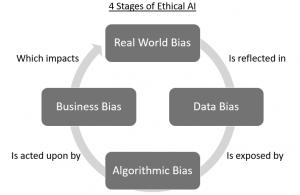
Anthony J. Bradley vice president of Gartner has proposed a framework consisting of four stages of ethical AI, which are: real-world bias, data bias, algorithm bias, and business bias. These four stages describe the different types of biases that can occur at various points in the development and implementation of AI systems.
These stages of ethical AI highlight the need for a holistic approach to addressing biases in AI systems. It is important to consider the societal and historical context, the quality and representativeness of the data, the design of the algorithms, and the incentives and goals of the organisations involved in AI development and deployment.
banks were more likely to deny credit to black borrowers than to white borrowers with similar credit profiles. As a result, there was a huge social media uproar as a result of the findings. The controversy stemmed from the inherent biases within those people in the banking industry, their practices and systems.
2. Data bias: This stage refers to the biases that can be introduced into AI systems through biased training data. If the training data is not representative of the real-world population or if it contains biased labels or annotations, then the resulting AI system may be biased. For example, if a hiring algorithm is trained on historical data that reflects gender or racial biases in hiring, then the algorithm may perpetuate those biases.
3. Algorithm bias: This stage refers to biases that can be introduced into AI systems through the design of the algorithms themselves. For example, if an algorithm is designed to optimise for a specific metric such as revenue or efficiency, then it may inadvertently discriminate against certain groups or individuals.
4. Business bias: This stage refers to biases that can arise from the incentives and goals of the organisations that develop and deploy AI systems. For example, if a company prioritises profits over ethical considerations, then it may be more likely to deploy biased AI systems.
To ensure the ethical development of AI, it is important to have clear guidelines and regulations in place. Governments and regulatory bodies should work together to develop these guidelines and ensure that they are enforced. Additionally, businesses that use AI should be transparent about their use of the technology and the data that is used to train it.
Bias in AI systems can arise from the data used to train the system and the algorithms used to make decisions. Businesses should proactively identify potential biases and take steps to mitigate them. For example, they may need to collect more diverse data, use different algorithms, or adjust the weighting of certain factors in the decision-making process.
3. Foster transparency and accountability
Transparency is critical for ensuring that AI systems are accountable and can be audited to ensure that they are fair and reliable. Businesses should be transparent about the data used to train their AI systems, the algorithms used to make decisions, and the logic behind those decisions.
4. Protect privacy
AI systems can collect and process vast amounts of data, making it essential to protect the privacy of individuals. Businesses should take steps to ensure that personal information is collected and used only for legitimate purposes, and that appropriate safeguards are in place to protect data from unauthorised access or use.
5. Engage in ongoing monitoring and evaluation
The ethical implications of AI are complex and ever-changing. Businesses must engage in ongoing monitoring and evaluation of their AI systems to ensure that they remain ethical and that any emerging ethical risks are identified and mitigated.
By following these best practices, you can develop and deploy AI systems in your organisation that are not only innovative but also ethical and responsible. Ethical AI development is not only the right thing to do, but it is also critical for maintaining the trust of customers, employees, and society at large.
1. Real World Bias: It involves biases that people and systems impose on the relevant portion of the real world. An example in South Africa was reported in a study published in 2021, which found that the algorithms used by some South African banks to assess creditworthiness were biased against black borrowers. The study found that the algorithms used by the
So, what can businesses do to ensure that they develop and deploy AI systems ethically? Here are some best practices to consider:
1. Start with a clear ethical framework
Before embarking on any AI project, it is essential to establish a clear ethical framework that guides the development and deployment of the technology. This framework should address the ethical implications of AI and provide guidance on how to identify and mitigate ethical risks.
2. Identify potential biases in data and algorithms
The development of ethical AI is a shared responsibility. While businesses must take the lead in developing and deploying AI systems responsibly, it is also essential for policymakers, regulators, and other stakeholders to engage in dialogue and collaboration to ensure that AI is used in ways that benefit society as a whole. AI’s ethical development is critical for ensuring that this transformative technology benefits society while minimising its potential harm. Businesses that prioritise ethical AI development can differentiate themselves in the marketplace.
29
INTERSECTION OF AI AND HEALTHCARE: A CEO's Perspective
Artificial Intelligence AI is currently the popular buzzword in the technology industry, with various businesses globally implementing it in their operations. However, one area where AI has shown significant impact is in the healthcare industry, it is revolutionising healthcare, and Dr Kevin Muragijimana, CEO and Founder of DoctorAI Ltd. is at the forefront of this movement in Africa.


Dr Muragijimana's love for IT started in high school, where he learned how to use Adobe Photoshop and Adobe AfterEffects, editing photos and videos. Despite his passion for IT, he did not want it to overshadow his childhood dream of becoming a doctor. He has found the solution to marrying his two passions through DoctorAI and in his studies. Dr Muragijimana is studying for a Master of Science in Health Informatics at the University of Rwanda and doing online courses in Health Informatics at John Hopkins University.
As a practising medical doctor who qualified in Rwanda and worked in France and Denmark, Dr Muragijimana has first-hand experience with the challenges facing doctors in making accurate
diagnoses and decisions. He created DoctorAI to provide doctors with a second brain to support their decision-making “We created DoctorAi from pain, a pain that we had as medical doctors after realising how people see us as gods who don’t make mistakes, seeing how Doctors are getting jailed for human mistakes and many who are leaving the career. We thought to ourselves that it's time to accept that with this system errors will keep happening, that Doctors are humans, and the systems they work in are not infallible. As a society, we must decide whether we wish to punish and blame those who dedicate their lives to helping others or to ensure that we create an open and supportive environment where both patients and doctors feel safe.” DoctorAI was born from the idea of interconnecting the two: support Doctors and provide them with a second brain to support their decisions in order to save more lives and prevent mortality from medical errors.
DoctorAI's main competitive advantages are the device, accuracy, speed, client, model coverage, and free features. It can be used by doctors, hospitals, or other healthcare institutions, and its AI models are for radiological and laboratory images. Doctors have
reported that AI supports them in decision-making and reduces unnecessary referrals, making medical acts more accurate and efficient.
One of the biggest challenges that DoctorAI faced when integrating AI into its business processes was adoption and regulations. To overcome these problems, they had to prove the efficiency of their models and how they are more accurate than the most experienced and knowledgeable doctors.
AI reduces the manpower needed to deliver DoctorAI's services, allowing them to focus more on improving the quality of their services. Dr Muragijimana's business advice to others considering implementing AI into their operations is to focus on the quality of their products and models because, with AI, people may only trust you once. Release the product when it is at its most efficient.
AI's main role in the future of the healthcare industry is to reduce medical errors and morbidity & mortality associated with those errors. DoctorAI is well prepared to stay ahead by producing new AI models that meet the system's requirements and aid in saving more lives.
30 the
AFRICAN AI IN ACTION
RWANDA DR KEVIN MURAGIJIMANA
DR MURAGIJIMANA ON HOW HIS LOVE FOR TECHNOLOGY AND CHILDHOOD DREAM ARE REVOLUTIONISING AFRICAN HEALTHCARE





COVER STORY DR KEVIN MURAGIJIMANA
Adopting AI has aided DoctorAI to make improved business decisions that have yielded a return on investments. Their AI models have reduced the manpower needed to deliver their services. Upon inception, they were a small team that could not afford to pay salaries. They focused on creating AI models that could generate revenue to hire new employees.
In balancing the benefits of AI with potential privacy and security concerns, DoctorAI takes steps to ensure that its AI systems are ethical and unbiased. They
have a research team in charge of keeping their AI models aligned with the needs of the health system. They also have an official in charge of legal affairs who keeps their inventions ethical and in line with privacy and confidentiality rights. The company also ensures that its employees are trained and equipped to work effectively with AI, with training playing a significant role in its overall AI strategy. Their employees, especially those in the tech team, are trained by their CTO, who is also the lead developer.
Dr Muragijimana's work with DoctorAI is a testament to the transformative power of AI in the healthcare industry. By providing doctors with a second brain, Dr Muragijimana and his team are improving the accuracy and efficiency of diagnoses and decisions, ultimately saving more lives and preventing medical errors. African businesses should take note of this impact entrepreneur's success story and consider incorporating AI into their operations to reap similar benefits.
32
“
WE CREATED DOCTORAI FROM PAIN, A PAIN THAT WE HAD AS MEDICAL DOCTORS AFTER REALISING HOW PEOPLE SEE US AS GODS WHO DON’T MAKE MISTAKES
feature STELLA KIMANI on DATA SCIENCE

In today's world, technology is an integral part of almost every industry. With the rise of data-driven decision-making and digital transformation, it's no surprise that companies across the globe are turning to technology to solve complex problems. But what does it take to thrive in the technology sector, and how can women navigate the challenges of this fastpaced and dynamic industry?
To find out, we spoke to Stella Kimani, a Bachelor of Commerce Finance graduate from Kenyatta University, who has also completed a Data Science program from Moringa School. Stella currently works at PwC Kenya, where she specializes in projects dealing with social impact (Development) and leverages data analytics to solve clients' problems in this space.
Stella's journey into technology began in 2020 when she started working on data science problems after attending the Moringa Bootcamp. While she doesn't work in a technology company per se, Stella utilizes technology to offer solutions to clients. As a Program Data Analyst, she supports clients to implement complex projects across the East Africa Region through project set-up support, project monitoring and reporting, and benefits management. Stella is a core part of the team working on tools and technology to simplify project tracking and implementation while maximizing the benefits derived from these projects.
PwC's competitive advantage lies in its data-driven approach. With extensive experience in all aspects of data collection, cleansing, and management, as well as
the development of analytical algorithms and visualization tools, PwC believes that effective data and analytics are comprised of four key components, all of which are supported by PwC's industry expertise and experience.
But as a woman in technology, Stella has also faced unique challenges. One of the biggest challenges she has noticed is the lack of representation of women in the tech industry, particularly in leadership roles. The lack of representation can lead to feelings of isolation and a lack of mentors for younger women starting out in the tech space.
To overcome these challenges, Stella advises women looking to pivot into technology to inform themselves and do the work, create a solid foundation in math and programming, create a portfolio of projects, find a mentor, and join a community. These steps can help women gain the skills, experience, and support they need to thrive in the technology sector.

Looking to the future, Stella is well-positioned to continue leveraging data and analytics to solve complex problems in the social impact space. With a commitment to diversity, equity, and inclusion, Stella is excited about the possibilities of using technology to make a positive impact in the world. As technology continues to transform industries across the globe, it's clear that women like Stella will play a critical role in shaping the future of technology and driving innovation in the years to come.
WOMEN IN TECHNOLOGY
33
KENYA
1000 students across Africa to build AI MODELS FOR CLIMATE CHANGE

Zindi, the professional network for data science in Africa, recently hosted UmojaHack Africa 2023, a two-day event that aimed to tackle some of the continent's biggest challenges using machine learning. As the largest pan-African machine learning hackathon, the event brought together over 1,000 students from 345 universities in 36 different countries to build machine learning models focused on climate change.
The hackathon featured a number of challenges, with the Rubik's Cube Reinforcement Learning Challenge, Cryptojacking Detection Challenge, and Carbon Dioxide Prediction Challenge standing out as the most popular. The winners of each challenge received cash prizes and online learning licenses, with students from Algeria, Tunisia, and Kenya taking top honors. Several key organizations sponsored the event, including DeepMind, Kaggle, and MPOWER Financing. These sponsors offered expert advice and shared datasets to make the event a success, helping to ensure that the students had access to the resources they needed to tackle the challenges at hand.
According to Celina Lee, CEO and co-founder of Zindi, the event is critical for unearthing and upskilling emerging data talent in Africa. With a projected shortage of data talent worldwide in the coming years, initiatives like UmojaHack Africa are becoming increasingly important for helping to meet the growing demand for skilled


professionals in the field. She said, “We are thrilled with the turnout and enthusiasm of the students who participated in UmojaHack Africa 2023 this year, and look forward to seeing these rising stars develop into successful professionals on the Zindi platform.”
The event also served as a platform for building a strong community of like-minded individuals, with students participating from dorm rooms, computer labs, and student hubs across the continent. As Avishkar Boopchand, Senior Research Engineer at DeepMind, noted in his address to participants, building strong communities is key to driving positive change and shaping the future of the continent.
UmojaHack Africa 2023 demonstrated the immense potential of machine learning to drive positive change in Africa. By bringing together talented students from across the continent and providing them with the resources they needed to tackle some of the biggest challenges facing the region, the event highlighted the importance of investing in emerging data talent and building strong communities to drive growth and solve complex problems. As the largest pan-African machine learning hackathon, UmojaHack Africa is poised to become an even more important platform for fostering innovation, collaboration, and impact across the continent in the years to come.
HACKATHON ZINDI
attracts

MISSION TO ACCELERATE THE ADOPTION OF NEW TECHNOLOGIES IN AFRICA OAO TECHNOLOGY ©2023 OAO Investments. All Rights Reserved www.oaoinvestments.com
