
62#8 A U G 2 2 EXERCISERIMPAC TE MANA READY FOR THE EXERCISEYEAR TROPIC TWILIGHT
Contents04 Exercise RIMPAC 11 TE MANA ready for the year 14 Lifting crashed airframes 16 New Navy padre 20 A new kind of reservist 24 Tongan siblings in the Navy 26 Exercise Tropic Twilight 33 Ships’ badges 35 15 rounds
Published by: Defence Public Affairs HQ NZ Defence Force Wellington, New Zealand Editor: Andrew Bonallack Email: navytoday@nzdf.mil.nz
04
Design and Layout: Defence Public Affairs Printed by: PrivateBluestarBag 39996, Wellington Distribution: Email: navytoday@nzdf.mil.nz
Contributions are welcomed, including stories, photographs and letters. Please submit stories and letters by email in Microsoft Word or the body of an email. Articles up to 500 words welcomed, longer if required by the subject. Please consult the editor about long articles. Digital photos submitted by email also welcomed, at least 500kb preferred. Stories published in Navy Today cannot be published elsewhere without permission. Copy deadline is the 15th of the month for the following issue. Subject to change. Views expressed in Navy Today are not necessarily those of the RNZN or the NZDF. Defence Careers: Phone: 0800 1FORCE (0800 136 www.defencecareers.mil.nz723)
– Chaplain Jacqui Fuller, our newest padre. “It feels like everything I’ve done previously, and all of my life’s experiences, have been in preparation for this role.”
Changing Address? To join or leave our mailing list, please contact: Email: navytoday@nzdf.mil.nz
Photographer: CPL Naomi James 16
Navy Today is the official magazine of the Royal New Zealand Navy. Established to inform, inspire and entertain serving and former members of the RNZN, their families, friends and the wider Navy Community.
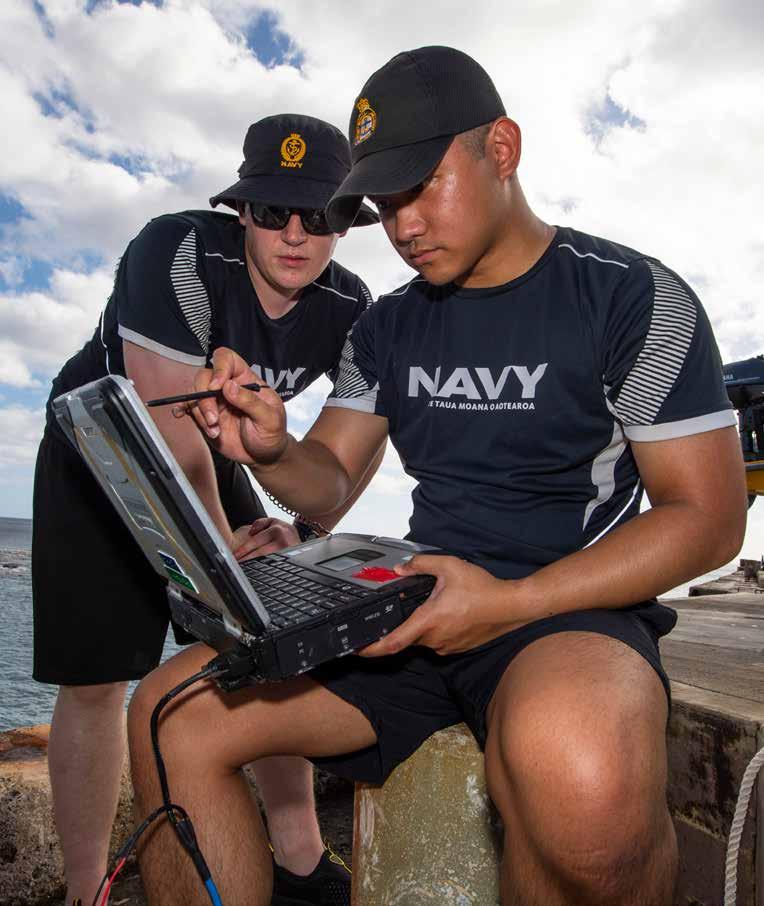
Front Cover: AHSO Joshua Phillips (back) and AHSO Nicoli Demafilez (front), HMNZS MATATAUA, check the results of a hydrographic survey during Exercise Tropic Twilight in Niue.
NZNavyNZDefenceForcenavy.mil.nz 26 2 | Navy Today #268


HMNZ Ships MANAWANUI and WELLINGTON are now at sea for Operation Mahi Tahi, involving Pacific fisheries patrols, mapping explosive remnants of war and working closely alongside our partners in the nearer South West Pacific. I am especially happy to see WELLINGTON, who has had a very busy and disrupted programme throughout the last couple of years, getting some overseas port calls.
Yours Aye Chief of the Navy
HMNZS CANTERBURY will soon be working up for its mission to the Kermadec Islands and preparing for the High Risk Weather Season. CANTERBURY is highly valued by Government and our neighbours – she provides confidence that we are able to assist in what appears to be an increasingly more regular natural disaster environment. HMNZS TAUPO is on a continual roll of Junior Officer of the Watch training. Her critical contribution to regenerating our Navy belies her size; she and her Ship’s Company definitely represent ‘punching above their weight’. When I spoke at the IndoPacific 22 conference in Sydney in May, I told Naval leaders of the Indo Pacific how well the RNZN is suited to operating in the Pacific. We are geographically close, we are a trusted partner, and we work with other nations as kaitiaki – guardians – in the Pacific region. I said that we have a reputation as a blue-water Navy that contributes to global security and prosperity. With the upgraded HMNZS TE KAHA already home, and HMNZS TE MANA returning home last month, we are well on the way to restoring the Navy’s combat capability. Their new technology and equipment, once properly introduced in to service, and
Navy Today #268 | 3
HMNZS MATATAUA teams are finishing Mine Countermeasures training in Exercise RIMPAC in and out of San Diego, conducting bathymetric coastal surveys during Exercise Tropic Twilight in Niue, then on to Tonga, Fiji and Tuvalu for charting surveys, collaborating with the Fiji Hydrographic Service and working on Operation Render Safe, joining MANAWANUI in Tuvalu for an unexploded ordnance survey. This work alongside our Pacific partners is critically important to making our neighbourhood safer and enabling prosperity.
Rear Admiral David Proctor Chief of Navy supported by well-trained and ‘worked up’ sailors, will mean our frigates are ready to provide high-end maritime security alongside partners and allies, here in the Pacific, and wherever we are directed around the globe. This momentum is exciting. Last year, on a number of occasions, we had well over a third of our sailors at sea or serving overseas at the same time, something not seen for over a decade. And here lies a ‘rub’ that I am keenly aware of – now is an exceptionally challenging time for our sailors and their whānau. Remuneration has not kept pace with inflation, and this compounds other pressures that are felt especially hard in the uniquely and ever more expensive Auckland environment. I am prioritising my time and mahi to bringing improvement to my shipmates. To you, the sailors, keep telling me what you need to enable you to continue serving and striving to be the ‘best you’. I use your messages in my korero with my seniors. And with the support of all leaders in Te Taua Moana o Aotearoa, and we are all leaders, I believe we have an opportunity to regenerate our people capability and our Navy. I pledge to do my very best to deliver the resources sailors need to prosper, both professionally and personally. I am immensely proud of what the Royal New Zealand Navy brings to our country – it remains my privilege to Serve. He heramana ahau Kia ora! It is great to see our Navy and our people ‘out there, doing the mahi’ here in New Zealand and overseas, reproving ourselves and our new capabilities, alongside our partners and allies, and making a difference here at home and alongside neighbours and partners in the Pacific. We are emerging from a period of focus against COVID-19, and while the virus remains prevalent, our focus is now on regenerating our core – our people!
As I write this, HMNZS AOTEAROA’s role at Exercise RIMPAC is coming to a close. Her Ship’s Company have demonstrated she is an outstanding ship and RAS platform; indeed, I hear she is the preferred refuelling platform in the exercise. Ahead of her is an Operation Crucible deployment through South East Asia.


At time of writing, AOTEAROA had carried out 20 replenishments at sea (RAS), as part of Combined Task Force 173 (Replenishment Task Force), consisting of seven ships. It’s AOTEAROA’s first time at RIMPAC, the biennial US-led maritime exercise based out of Pearl Harbor, Hawaii. Two years ago, HMNZS MANAWANUI participated in a scaled-down atsea-only RIMPAC due to the COVID pandemic, but this time personnel from 26 nations and 38 surface vessels were able to go ashore in Honolulu.
4 | Navy Today #268
HMNZS AOTEAROA has firmly established itself as a leading maritime sustainment capability, fuelling ships from all nations during the Rim of the Pacific Exercise 2022 off Hawaii. RIMPAC, which concluded on 4 August, is designed to provide participating nations with opportunities to practise working together, while achieving their own national objectives.
Lieutenant Commander Richard McGinily is the Executive Officer on board. “Our crew undergo extensive training prior to conducting RAS operations, to mitigate any risks and ensure that operations are conducted safely in accordance with all regulations and operating procedures,” said LTCDR McGinily.
HMNZS AOTEAROA: THE RIMPAC SUSTAINER


EXERCISE RIMPAC Navy Today #268 | 5 “Exercises such as RIMPAC provide a great opportunity for the crew to develop more partnerlessonsandtheirconsolidateexperience,trainingidentifyanylearntfromnations.”MembersofHMNZSAOTEAROA’sMāoriCulturalGroupperformatRIMPAC.AOTEAROA’s‘tanky’,LMT(P)HaydenGreaney,assiststheCanadiansaboardHMCSVANCOUVER(FFH331).AbleSeamanBoatswainsMateLiamBicopoulosaboardHMASCANBERRA(L02)firesaline-throwingprojectileacrosstoHMNZSAOTEAROA.Photo:RoyalAustralianNavy.Oppositepage:Frombacktofront,HenryJ.Kaiser-classfleetreplenishmentoilerUSNSPECOS(T-AO197),LewisandClark-classdrycargoandammunitionshipUSNSWASHINGTONCHAMBERS(T-AKE11),RoyalAustralianNavyreplenishmentshipHMASSUPPLY(A195),HenryJ.Kaiser-classfleetreplenishmentoilerUSNSHENRYJ.KAISER(T-AO187)andHMNZSAOTEAROA(A11)sailinformation.


USS WILLIAM P. LAWRENCE (DDG 110) receiving marine dieso fuel, as well as aviation fuel from HMNZS AOTEAROA while underway at sea.
Clockwise from left: Crew on board HMCS VANCOUVER haul on the line during a Replenishment at Sea with HMNZS AOTEAROA. A French Aérospatiale Alouette III touches down on the flight deck of HMNZS AOTEAROA during a cross deck exercise.
6 | Navy Today #268
View from bow to stern of HMNZS AOTEAROA during a dual replenishment with USS WILLIAM P. LAWRENCE (110) to port and USS SPRUANCE (DDG 111) to starboard for concurrent delivery of fuel while underway.


HMNZS MATATAUA has made a hefty investment into RIMPAC 2022, with divers and hydrographers ready to mix with the best in the world. But weeks of preparation and behind-the-scenes work have to happen before a specialist gets anywhere near the water. Navy Today catches up with Lieutenant Commander Simon Marston, Detachment Commander, in San Diego.
RIMPAC 2022: AMATEURS DISCUSS TACTICS, PROFESSIONALS DISCUSS LOGISTICS
It’s early into the six weeks of RIMPAC and the 34 personnel from HMNZS MATATAUA are busy. There’s specialists from the Expeditionary Reconnaissance (ER) and Mine Counter Measures (MCM) teams including divers, hydrographers, logistic support and engineering personnel, engaging with their counterparts from around the world, and doing what they do best against threats in the littoral domain. ER and MCM teams use highly advanced systems such as the Very Shallow Water Mine Countermeasures Diving Equipment, Autonomous Underwater Vehicles (AUV) and a range of other very specialised equipment that enable search, detection and neutralisation of underwater threats. But there’s been a lot of groundwork leading up to this point, says LTCDR Marston, including the nomination of a foreign liaison officer. “Lieutenant Jordan Markham was embedded into the Naval Surface and Mine Warfighting Development Centre early into the RIMPAC 2022 exercise. The staff inside this HQ were led by Rear Admiral Christopher Alexander, US Navy, and were incredibly welcoming to the foreign liaison officers attached to the HQ which included personnel from New Zealand, South Korea, Singapore, and Japan.”
ADR Caleb Belsham and ADR William Collings conduct light salvage training.
LT Markham describes it as an “awesome learning experience”, making key friendships in a short space of time. “The mine warfare space is a very specialised area of warfare and has a small community of experts globally.” The depth of logistics for RIMPAC 2022 required some long hours for Deputy Logistics Officer, Lieutenant Sam Hardy.
MATATAUA’s ReconnaissanceExpeditionarydetailonUSS PORTLAND’s loading ramp.
ADR William Collings conducting helicopter casting (Pouncer operations) in order to prosecute a floating contact mine.
EXERCISE RIMPAC Navy Today #268 | 7
LT Markham’s role was to provide alternative viewpoints to the collective thinking within Headquarters, and conduct concept of operation planning within the mine warfare elements of RIMPAC 2022. “This role allowed LT Markham to expand his knowledge of mine warfare practices, both from the perspective of friendly and enemy force tactics and procedures. While this knowledge gain was extremely beneficial it was the networking opportunities provided by working in the HQ that was truly invaluable. With MATATAUA’s Mine Countermeasures Team undertaking a fast turnaround post-RIMPAC and heading to South Korea for a multinational Mine Warfare Exercise, discussions with the Korean lead planner during RIMPAC were very valuable.”


BY THE NUMBERS: 34 MATATAUA personnel comprising: 13 Divers 10 Hydrographers 6 person Operations & Liaison Detachment 5 person Logistics Detachment 4 Zodiac 470 inflatable boats 5 tonnes of equipment LS HSO Hoang Williams (RAN) and AHSO Georgia Teneti practise a dry run of deploying an Autonomous Underwater Vehicle from a helicopter. A shared moment with partners before
“It hasn’t been completely smooth sailing,” says LTCDR Marston. “Some suppliers weren’t able to provide some items at late notice due to global supply constraints, and the differences between the RNZN and USN equipment have occasionally made for rapid alterations existing to plans and quick trips to procure supplies to maintain outputs.”
Autonomous Underwater Vehicle exercise.
“Time was short,” he says. “Logistics planning for RIMPAC 2022 began in earnest following the Final Planning Conference in Hawaii in March 2022.
Supply Specialists handle the paperwork throughout the exercise, one staying on shore and another embarking with the team in USS PORTLAND (LPD 27), working long hours to ensure the required paperwork for every activity is completed to meet US Navy requirements and ensuring the teams have what they need, when they need it.
But nothing beats getting back on the scene internationally, says LT Hardy. “COVID-19 and Operation Protect put a pause on numerous training exercises over the last two years. Seeing our sailors over here, in the water, demonstrating their skillset among international partners is huge. There’s nothing like seeing the smiles on the faces of junior MATATAUA personnel and hearing their stories after a successful evolution. It makes all the long hours and weekends at work worth it.” an
MATATAUA sent an advance party of five personnel to California a few days early. “It meant the main body of MATATAUA personnel could be briefed and immediately knew what was happening,” says LTCDR Marston. “With multiple US Navy facilities in Southern California being utilised during the exercise, the advance party visited all seven, confirming access requirements, exercise areas, food locations as well as meeting suppliers and obtaining equipment.”
TwoNew Zealand.Logistics
Ten weeks might sound like a fair amount of time, but when you think of all the small things that makes this come together! Everything from obtaining individual US visas, gaining permits from the US State Department to ensure we comply with US shipping regulations for military equipment, liaising with the RNZAF around flight movements, preparing and freighting equipment, and regularly liaising with different parts of the US Navy around changes to the exercise programme –that time goes quickly. There’s been a number of 80-hour weeks and a lot of weekends to get this across the line.”
Logistics can even come down to whether MATATAUA’s electrical equipment is the right voltage to operate in the United States. Two Marine Technicians deal with that issue, as well as maintain the outboard motors, provide specialist advice on gas cylinders, fuel and how to prepare the motors for transport back to
8 | Navy Today #268


RIMPAC
2022: PROFILE
I am originally from Christchurch and as a teenager about to leave high school I didn’t really know what to do with myself. I was searching for something to do with being out on the water and the Navy seemed like the obvious choice. Since joining the Navy and becoming a Diver I haven’t looked back. The friendships, the experiences, the job – it’s like no other.
The team have been aboard USS PORTLAND, integrating with the different teams. We have been working mostly with the US Marines Corps Explosive Ordnance Disposal, conducting Reacquisition Dives to find and identify mines to give that information for the Task Group to act accordingly. Once identified we then have the opportunity to conduct a Mine Exploitation, using explosives to render the electronics package safe and remotely lifting and towing it to a beach where the mine is stripped to help better understand how it works. We have been learning and also teaching our way of doing things, helping the US Marines with surf zone clearance and conducting live underwater demolitions. For a lot of us, including myself, it has been the first major trip since the borders have opened up since the pandemic. It is good to be out doing real world scenarios, working with our various partners around the world and integrating together as MATATAUA.
EXERCISE RIMPAC
Able Diver Michael Pitt
ADR Michael Pitt sets up the TALON 5 Unmanned Ground Vehicle (UGV), a bomb disposal robot, prior to a Mine Exploitation serial.
I’m currently with the Expeditionary Reconnaissance (ER) team of HMNZS MATATAUA on Exercise RIMPAC 2022 in San Diego. The team have spent the first two weeks ashore acclimatising and building bonds with the other participating nations, showcasing what MATATAUA has to offer to the Task Group. We utilise rebreather and underwater navigation, underwater vehicles and sonar technology, as well as knowledge and experience to give the Task Group Commander an idea of our capabilities and limitations, and then get tasked accordingly. We have had the opportunity to conduct helicopter-borne countermining procedures, which involves jumping out of a helicopter and placing explosives on free-floating or moored mines near the surface. We’ve dived on a wreck with the Australian and American divers, and we get to see how other countries operate within the Mine Counter Measures (MCM) environment with their different equipment and procedures, learning things that we can take back or add to our way of doing things.
Navy Today #268 | 9


The New ZealandRoyal Navy had the privilege of heading a bespoke team to embed as Task Group 170.1, Sea aroundpersonnelthousandsandwarships,involvingCommandCombat(SCC),multiplesubmarinesaircraft,andofmilitaryfromtheworld.
RIMPAC
Led by Captain Steve Lenik, the SCC battle staff was augmented with five Royal Navy personnel, one US Marine Corps Legal Officer, two Maritime Patrol and Reconnaissance Aircraft liaison officers, and five US Naval staff. This diverse team had the honour of embarking on the Ticonderoga-class guided missile cruiser, USS MOBILE BAY(CG 53). As the SCC, the RNZN was in charge of the multi-day War At Sea exercise.
2022: SEA COMBAT COMMAND
10 | Navy Today #268
Left: The RNZN Sea Combat Command staff aboard USS MOBILE BAY, as they ‘RAS’ with HMNZS AOTEAROA during RIMPAC 2022. From left, CDR Andy Hunt, CAPT Steve Lenik, CDR Kane Sutherland, LT Jodi Greenhalgh, LTCDR Christiaan Robertson, LT Nikita Leeks, LT Simon Hollingsworth and LT Shauna Bradley. CAPT Lenik (left) and some of his team get to grips with the exercise on board USS MOBILE BAY.
Peeling off the wharf was exciting, as we reversed past rows of warships, most of which we would have the pleasure of working alongside in the coming weeks. A multitude of gunnery, anti-submarine warfare, and surface action group exercises followed where the RNZN deeply integrated with multinational warship teams. Jet aircraft blasted by on their way to and from the firing range, with aircraft carrier USS ABRAHAM LINCOLN (CVN 72) regularly featuring on the horizon. Following an action-packed three weeks at sea, the SCC team returned to Pearl Harbor for a wrap up and end of exercise discussion. After a reluctant farewell from our MOBILE BAY family, the SCC team was able to revisit local hot spots. The collective favorite was Electric Beach, where swimming with turtles was a common occurrence. Overall, the development opportunities presented to us as a team were invaluable, with a greater appreciation for task group integration and management. We also had the chance to exercise our commitment to the RIMPAC values, projecting the RNZN as capable adaptive partners of our Pacific neighbours. Full speed ahead!
Specifically, the SCC’s primary responsibility was to execute AntiSubmarine Warfare and Anti- Surface Warfare command and control over 14 warships (including one autonomous ship). The role required the Task Group to assure sea control of the contested maritime battlespace – and ensure the aircraft carrier wasn’t sunk in the process! The key to tactical success was the integration of capabilities from the various warfare commands within the Task Force; for example, the Carrier-Based Air Wing, components of Information Warfare effects and Air Component Command Information Surveillance Reconnaissance (ISR) assets were all at the disposal of the SCC as the ‘Supported Commander’. As we were to find out, this opportunity highlighted the RNZN’s capacity to fulfil roles that are highly valued among multi-national Task Forces in our strategic area of interest. Furthermore, it demonstrated that we are a trusted partner in our region.
By LT Shauna Bradley


KEEPING THE TE MANA TEMPO TE MANA READY FOR THE YEAR

12 | Navy Today #268
TE MANA, and her sister ship HMNZS TE KAHA have both been upgraded and are now on a par with New Zealand’s allies, says Rear Admiral David Proctor, Chief of Navy. “This provides us with an effective and future-proofed combat capability well into the 2030s.” Photography: PO Chris Weissenborn
On 8 July HMNZS TE MANA and her 175-strong Ship’s Company enjoyed a substantial ceremonial homecoming to New Zealand, following a three-year frigate systems upgrade in Canada.
In the months ahead, TE MANA will undertake a series of trials, tests, and exercises, allowing for the progressive release of the ship’s operational capabilities. At time of writing this includes a deployment to Brisbane, Melbourne and Hobart, and port visits to Wellington and Tauranga.


Hawea, who is also serving, said she had no idea the proposal was coming. “I was shaking. I loved it. It was perfect,” she told Stuff News.
Will you marry me?
Navy Today #268 | 13 SURPRISE ENGAGEMENT
Biddle had been in Canada for about a year of TE MANA’s three-year Frigate Systems Upgrade, and had spent that time planning his proposal, including the tricky logistics of getting the right ring at the right size. According to Stuff News, who were on board for the arrival, POSCS Biddle bought two silver rings, telling Hawea it was so they could have matching rings – and he could get her ring size without any suspicion. He then bought the engagement ring during a visit home in February and had it resized during TE MANA’s stopover in Hawaii. On Calliope Wharf, as Hawea ran towards POSCS Biddle, he dropped to one knee and asked her to marry him, bringing out the ring.
therenervousness,tobutwasaloton
He was about to propose to his partner of three years, Takimoana Hawea, and he hadn’t been quiet about it – the entire ship knew about his POSCSplan.
the line for Jacob Biddle as HMNZS TE MANA arrived at Devonport.
The answer was yes, with Hawea leaping into an embrace as POSCS Biddle put his arm in the air, eliciting cheers from his crewmates.
Hawea also had no idea the lunch she had planned for Biddle’s return would also be her engagement celebration, which their whānau was all in on.
Petty Officer Seaman Combat Specialists aren’t prone


14 | Navy Today #268 Recovering an aircraft wreck is the start of questions being answered. But first you have to find it. AN EXERCISE IN RECOVERY

MANAWANUI Bridge Watchkeeper Lieutenant Nicole Ruddiman says the diving detachment from MATATAUA can operate safely to 50 metres. “Divers 1 and 2 go down but only Diver 1 goes out to the airframe to attach strops,” she says. “Diver 2 remains in the wet bell to manage the tether and is able to respond to an emergency if Diver 1 needs a rescue or assistance back to the wet bell. Divers rotate around depending on maximum time at depth before needing to conduct stops for decompression on returning to the surface. We’ll send rotations of divers down until the airframe has all strops attached, and is hooked onto the crane hook.”
When HMNZS MANAWANUI’s crane lifted a battered yellow aircraft body from the sea near Whitianga last month, it was hard not to have a sense of déjà vu. Six years ago MANAWANUI’s predecessor, a dive tender (MANAWANUI II) with embarked divers, recovered the plane of 2degrees CEO Eric Hertz, as well as the bodies of Hertz and his wife Katherine. Today, the recovery is an exercise. The airframe, from a genuine plane crash, had been deliberately placed on the sea floor to test the locating and recovery expertise of the Ship’s Company and the embarked personnel from HMNZS MATATAUA.
After being given the signal to lift, the crane operator on the ship slowly and carefully raised the plane and gently lowered it onto the deck.
While MANAWANUI’s Commanding Officer, Commander John McQueen and his crew knew the area where the plane had been lowered to the seafloor, 30 metres down, the MATATAUA Search, Salvage and Recovery detachment of hydrographers and divers were kept in the dark. They were then given a narrow search area and tasked to locate the plane. Within hours, the multibeam echo sounder aboard MANAWANUI, combined with the specialist knowledge of the hydrographers, identified the outline of an object that matched the characteristics of the missing plane. The next step was for the divers to launch the ship’s Remotely Operated Vehicle (ROV) to conduct a detailed search with its cameras. On gaining visual confirmation of the plane, the operators could guide the ROV over the wreck, gathering detail to assist the Usingdivers.theship’s wet bell, a two-person dive team were lowered through MANAWANUI’s moon pool.
LIFTING CRASHED AIRFRAMES Navy Today #268 | 15
CDR McQueen said this was a major milestone for MANAWANUI and the culmination of significant training and system testing since the ship’s arrival in 2019. “It has shown the benefit of well-trained people operating complex equipment with cohesion and within a dynamic underwater environment.”
The Navy thanks the Civil Aviation Authority for providing the airframe on the proviso that it be disposed of at a recycling facility after the exercise. As the airframe involved the death of a pilot, family approval was obtained to transfer the airframe to the New Zealand Defence Force. All registration markings were digitally removed from the images.


16 | Navy Today #268

Failing her MARS-L rifle training initially was a tough moment. “I’m not used to failing! But I failed first time, got a warning, and that was a big issue for me. I just wasn’t used to that feeling, and I had to grapple with it. I passed before graduation and that was a huge accomplishment for me. I’d certainly tell anyone, if I can do it, you can do it.”
The idea took hold, and on 25 June Jacqui Fuller graduated from Junior Officer Common Training (JOCT) intake 22/1, passing out from the 23week course with 32 other officers. She was the oldest at 57 (the youngest was 18).
She says the JOCT course was challenging, although she thought it was going to be the physical side that would be an issue. “For me, the biggest challenges were more emotional and mental. Your memory is not what it is at 18. You have to zone in, use a lot of mental fortitude. You’re doing different courses, there’s a lot of facts and figures, and you’re trying to remember everything.”
She’s been a chaplains’ programme manager at Alphacrucis College in Penrose, training students to work as chaplains in different sectors of the community. Prior to being ordained she worked in the prison community. As an ordained minister, she has worked in a church context in Auckland for many years, providing pastoral care. She and a current Navy chaplain, Lloyd Salmon, trained together years ago and it was CHAP Salmon who persuaded her to come on board. She started at Devonport Naval Base as a contracted chaplain to get a taste for Navy life. “I went out to sea for a scattering of ashes ceremony, and did a service on Sunday. I had a lovely time connecting with young recruits.” She noticed that women made up around 30 per cent of recruits, but there was no female chaplain. “That really got to me, that there was nobody representing women. There’s some things only women can speak to women about.”
New Journey For Navy Chaplain NEW NAVY PADRE Navy Today #268 | 17
Being a chaplain, you’re always on a journey, says Jacqui Fuller. But the idea of becoming a Navy Chaplain was a bit “out there” when an old classmate of hers, already in Navy, was set on convincing her otherwise.
She’s now settling into work life at Devonport Naval Base. “I’m here, in the moment, and eager to get into my job. I’m meeting people on base, catching up with my junior officer classmates, and starting providing services for the sailors. I’m hearing what’s in their hearts about their well-being. There’s a lot of needs out there, a lot of work to do, a lot of issues, and I will be part of Passingthat.”
CHAP Fuller came to New Zealand from South Africa in 1992 with her husband and two children, settling in Auckland. “I became a Christian at 21, and had a very active Christian life.”
She remembers how Lloyd would tell her, c’mon, you’ll be fine. “There were some moments when I thought: Lloyd, what were you thinking! But I’m not a quitter. I’m thankful I persevered.”
JOCT means she can be deployed on Navy ships. “I want to experience that and understand what it’s like to go overseas. Being a chaplain for people on board a ship would be quite a privilege.”
She says this new adventure came at a time where she had a gap in her life and room to explore something new. “I never wanted to look back and think what could have been. I was going to put heart and soul into this and if it worked, it worked. If you had said to me a couple of years back, when I started this process, that I would be here now, I would have never imagined it. Now it feels like everything I’ve done previously, and all of my life’s experiences, have been in preparation for this role. I think I’m going to love being a chaplain for the Navy.”
DID YOU KNOW?
Navy padres are ordained chaplains, who on enlistment undertake the Junior Officer Common Training course. Although nominally a midshipman during the course, after graduation they wear a unique rank slide which indicates they are chaplains – equivalent in rank to the person they minister to, be it a Rear Admiral or an Ordinary Seaman.

18 | Navy Today #268 1 2 5 8 9 4


2. Chief of Navy RADM David Proctor, pictured with CDR Muzz Kennett, hosted a breakfast at the Wardroom for 100-year-old World War II veterans Norma Bucknell, WRNZNS and Cyril Hicks, Fleet Air Arm.
310
4. ASTD Hannah Thomas, Swimmer of the Watch, completes a man overboard exercise in HMNZS AOTEAROA.
8. POSCS Sloan Paniani, CPOSCS Clint Whitehead and POSCS Charles Green, HMNZS AOTEAROA, pose in whites as the ship enters Pearl Harbor.
7. New recruit MID Maddison Hartley, JOCT 22/2, and her classmates get sized for footwear at the kit up store.
9. The recruits of JOCT 22/2 contemplate the slightly heated waters of the Fleet Pool, as they prepare for their Provisional Swim Test (swim 50 metres, tread water for three minutes, while wearing overalls).
Navy Today #268 | 19
5. A fast meal during an ‘Action Messing’ exercise in HMNZS TE MANA for ENS Hannah Van der Horst.
10. Sailors prepare to undertake a Damage Control evolution aboard HMNZS AOTEAROA. 6 7
PEOPLEOUR
6. OET Jacques Meech shows the Chief of Navy’s coin, presented to him for his actions in helping ensure a safe homecoming for HMNZS TE MANA on the wharf.
3. Sailors on their first ever overseas deployment, heading to Exercise RIMPAC in HMNZS AOTEAROA.
1. AMT(P) Toby Richards prepares to greet family and friends as he disembarks HMNZS TE MANA on her arrival back in New Zealand.


20 | Navy Today #268
A newly-designed training programme for Naval Reserves, NRCT, achieved its first key milestone at the end of April, bringing together 24 officers and ratings for a 10-day residential phase in TheAuckland.NRCTcourse is part of the Navy’s effort to revitalise the Reserve training capability and to strengthen the contribution of the Naval Reserve to the wider NZDF. The course has been designed to ensure reservists are trained to the same standard as their Regular Force counterparts, but in a way that works around their civilian employment. The NRCT’s first residential phase was held at Devonport Naval Base and the Tamaki Leadership Centre (TLC) at Whangaparāoa. It began on 22 April with a swim test at the HMNZS PHILOMEL pool and a formal welcome at Te Taua Moana Marae, Devonport Naval Base, before moving to TLC.
The revamped Naval Reserve Common Training course (NRCT) for officers and sailors produces personnel that can seamlessly transfer in and out of the Regular Force – and it’s not just Maritime Trade Operators any more. Navy Today finds out what’s new and exciting in creating reservist talent.
Naval CommonReserveTraining


There are a lot of ‘firsts’ with this course. This year has seen ab initio reserve officers and ratings recruited for the first time in several years, and the trade options can now extend beyond Maritime Trade Operations. Specialisations now include Medical, Legal and Public Affairs. It is also the first time the Navy has trained officers and ratings together. The aim is to boost the Naval Reserve by at least 100. Warrant Officer Electronic Warfare Specialist Roger Sheehan, of the Naval Reserve Initial Training and Leadership School, a component of the Leadership Development Group, has been a driving force behind the development of the NRCT training capability.
A NEW KIND OF RESERVIST
“This course delivers the same content as Junior Officer Common Training and Basic Common Training over a longer period of time and through several channels including in person, remote learning and MS Teams, to accommodate the civilian career demands of Naval Reserve personnel,”
Navy Today #268 | 21
WOEWS Sheehan says. “This flexibility has helped us to overcome the challenges COVID-19 has presented. The residential phase had been scheduled for earlier in the year, but was delayed more than once by COVID, and we’ve had several other challenges because of that. Until now, the majority of training has been conducted in unit, or with specific online learning modules aimed at quickly developing general service knowledge.”
Twelve reserve senior ratings oversaw the training, led by Lieutenant Commander Dave Debney, RNZNR. It saw officers and ratings from the four Reserve Units getting to grips with all the hallmarks of ab initio training, with drill, early morning activities, PT, daily Colours and Sunset ceremonies, all packed into a schedule of deliberately tight timings, late nights, cleaning stations and ironing. As well, there was time in the classroom covering subjects including the military justice system, the Law of Armed Conflict, sexual ethics, resilience and Lead Self. A dawn service on Anzac Day at TLC was a fitting opportunity to put their ceremonial drill to the test.
Sixteen officers, including seven commissioned from the ranks, and eight ratings are undergoing training this year. They were joined by two new Regional Naval Officers and Lieutenant Rebecca Nelson, RNZNR, newlycommissioned to support her work for charity Te Kiwi Maia.


22 | Navy Today #268
Petty Officer Marine Technician (Electrical) Paul Johnson was the principal developer of the NRCT’s online learning capability, which could also be offered to the Officer Training School and the Recruit Training Squadron to use while their schools experienced COVID isolation requirements. “The first residential phase was quite deliberately a very busy week,” says WOEWS Sheehan. “It’s the first time we’ve seen trainees all together and it’s designed to see how they operate when fatigued and under a bit of pressure. They came together quickly as a team and the progress made over the week was pretty impressive.”
The residential phase culminated with the presentation of rank slides by Captain Lisa Hunn, Course Champion, and Captain Chris Stevens RNZNVR (Assistant Chief of Navy (Reserves)) on the Devonport Naval Base waterfront on 1 May, following a church service led by Naval Chaplains Rob Thomson, RNZNVR and Mike Berry, RNZNR. Training will continue in unit at weekly parade nights and at weekends for the remainder of 2022, with training including weapons training, sea survival, and damage control still on the agenda. The course, which started at the end of January, will see ratings graduate in December, while the officers will have two further very concentrated residential periods to advance theirLead Teams capability before graduating in April 2023.
She has a background in communications and public affairs and saw this as a cool opportunity to try something new. “I was watching service people under pressure with Operation Protect (the Defence Force contribution towards protecting New Zealand from COVID-19). I thought, I have skills as a civilian, what can I do to Midshipmancontribute?”PhilBarclay, who attested on 26 January at HMNZS PEGASUS in Christchurch, is a former journalist who now operates as a communications consultant. He’s always had an interest in the military, he says.
PUBLIC –OFFICERSAFFAIRSthefirstoftheirkind
“I first enquired about enlisting when HMNZS CANTERBURY (F421) visited Timaru in the 1990s and I covered its arrival as a reporter, but at the time there wasn’t the public relations speciality. Last May, a good mate in the Naval Reserve suggested over a beer that I should consider joining, which coincided with the Public Affairs Officer roles being advertised.” He went online a week later to find out more. As well as helping with Naval public relations in their locality, the pair could be asked to deploy overseas to fill a Public Affairs role, says MID Hape. “That’s what the whole purpose is. We’re available. We will be a surge capability, available to do regular force roles for a stint,” she says.
Midshipman Jennifer Hape, who is the Deputy Director Domestic Engagement at Naval Staff in Wellington, says she wanted to join the Defence Force from a young age. “At the time I didn’t see a trade for me and there didn’t seem to be a lot of women in the Navy in general.” Working within Naval Staff, she was inspired by the “instant family” vibe in Defence and the female role models around. “Navy really embraces your talents and what you bring to the role.”

Commander Matt Penny, Strategic Asset Manager (Naval Patrol Force) for Defence Logistics Command (Maritime), says the Irish team weren’t expecting much more than a technical mission.
“From our point of view, a ship is a physical asset but is also a spiritual conduit to extend the interests of our nation.” The Irish were welcomed onto Te Taua Moana Marae with a powhiri. “This began the spiritual journey of asset transfer and their understanding of CDRwhakapapa.”Pennysays there are likely to be more visits and new visitors from the Irish Navy to inspect these ships. “It is important for new visitors to see their people accepted as tangata whenua of Te Taua Moana Marae, it provides assurance that we look after our guests like whānau.”
“The visit formed the genesis of a relationship to share lessons and offering alternative ways of doing business between our Navies. The networks and potential relationships will be enduring based on shared ideals, culture, and a similar journey of Oncereinvigoration.”theupgrade and modification work is completed on the vessels, the two vessels are expected to be commercially sea-lifted to the Republic of Ireland in late March or April 2023.
XXXXXXXXIRISH REVIEW THEIR SHIPS
Four members of the Irish Naval Service (INS) came to Devonport to inspect their ships, but left as ‘iwi
Irish make a connection in New Zealand
The team were introduced to RNZN’s training philosophy and facilities, visiting the seamanship training facility and wet-side trainer, sea safety and damage control facility, the Marine Engineering Synthetic Training Environment (MESTE), Bridge Simulator, and Navigation school.
The official conclusion of the visit was undertaken at the RNZN museum. “The INS contingent were able to absorb RNZN history and find a common connection to our respective values, cultures and traditions of Naval service.
compatibleofincludesregenerationandvesselscommissionedpartBuiltandThevesselsCIARAService’sTheoperationalmillionundertakingforLake-classannouncedInex-HMNZSonDevonportDavidandChiefCommanderCommandercommunity.Navy’sRoyalconnectiondiscoveringheramana’,atotheNewZealandcultureandTonyO’Leary,LieutenantAonghusO’Neachtain,ElectricalArtificerCathalFordeChiefRadarRadioTechnicianWhoriskeyspentaweekattheNavalBaseviewingprogresstheirnewlyacquiredpatrolvessels,PUKAKIandROTOITI.MarchtheNewZealandgovernmentthesaleofthetwoInshorePatrolVesselsNZ$36million,withNewZealandbetweenNZ$16-$19toregeneratethevesselstoanseaworthinessstandard.shipswillreplacetheIrishNavalLÉORLA(P41)andLÉ(P42),twoPeacock-classpatrolwhicharenearly40yearsold.purchaseispartofaregenerationbuild-upoftheIrishNavy.inWhangareibyTenixDefenceasoftheProjectProtectorfleetandin2009,theLake-classweredesignedtobesupportedmaintainedinNew Zealand.Thework,byBabcockNZ,modernisationandupgradesequipmentsothevesselsarewiththeIrishfleet.
Navy Today #268 | 23

Her favourite Tongan proverb is ‘Holo pe tu’u, ko e naglu e fasi’. “This means ‘Stand firm and the waves will break’.”
“What makes me proud in being a Tongan is that my people migrate here, Australia, USA and other countries and make something of themselves, so they can provide for those family members who still remain back home due to elderly family members not being able to travel or just not having the opportunity or chance to move out and explore.
Something I miss about being home is being surrounded by my family. Like many others I have learnt to adapt and maintain a healthy work ethic. Joining the RNZN would have to be one of the best decisions I have made.”
Able Writer Mele ‘Ake and her brother, Able Chef Paul ‘Ake, joined the Navy together in 2020. She was 19 and he was 17. Mele was his ‘rock’ during Basic prettyeruptionmissionCANTERBURYtimes.”sailorstomuchPaulbrothergreatfinanciallybecause“IraisedSheofreallyof“IMelejoiningcherish“It’sTraining,CommonsaysPaul.amemoryI’llforever,withmysister.”remembersgraduationdayvividly.ranuptomylittlebrotheronthedayourgraduationcryingaswewereproudtofinallybecalledsailorstheRoyalNewZealandNavy.”andherbrotherareTongan,inOtarainSouthAuckland.joinedalongwithmylittlebrotherIwantedtohelpmyparentsandIthoughtitwouldbetoserveourcountrywithmyatmyside.”sayschefinghastaughthimsoaboutworkinginateam.“IlovecookandIloveseeingsmilesascomethroughtheslideformealHeservedonboardHMNZSduringtheship’srelieftoTongafollowingthevolcanicinJanuary.“Timescangethecticbutyoulearntoenjoyit.
“To me it means no matter the situation, no matter how bad it may seem, if you stand firm and keep your head up nothing will break you down. You will overcome those obstacles, trials of life and they will be the ones broken. Not you.”
Mele, as a Ship’s Writer (operational administrator), describes her role as “behind the scenes”, dealing with Navy personnel’s documents, promotions, leave, awards and postings.
He spent two years living in Tonga before joining the Navy. “I’ve seen what life is like back in the homeland, the life my parents lived before migrating to New Zealand. It makes me proud of where I come from.”
‘Holo pe tu’u, ko e naglu e fasi’. ‘Stand firm and the waves will break’.
Sister and brother stand firm in the Navy
24 | Navy Today #268
“I am quite fluent in my cultural language and I am proud that I grew up hearing Tongan at home and at church because it gives me the opportunity to communicate with my family back home.”

Able Chef Paul ‘Ake and his sister, Able Writer Mele ‘Ake

least depths over the sea bed, find any hidden dangers, and show an accurate shape of the ocean floor and coral reefs. This information will assist any future work to improve the infrastructure at the three locations. Tropic Twilight involved a team from the NZ Army’s 2nd Engineering Regiment, who upgraded facilities at Niue High School, and a hydrography team from HMNZS MATATAUA. MATATAUA’s task, at the request of the Government of Niue, was to conduct a full bathymetric survey of the areas off the Alofi wharf, Niue’s only commercial port, and the two boat ramps in Avatele and Namukulu – Niue’s three main access points to the sea. This will determine the
26 | Navy Today #268
Photos: Hydrographers from HMNZS MATATAUA conduct coastal and harbour surveys in Niue.
Last month a team of civilian doctors and nurses, New Zealand Defence Force personnel and a seven-tonne generator were flown on a Royal New Zealand Air Force C-130 Hercules to assist with a COVID-19 outbreak and power outages on Niue.
Photography: CPL Naomi James NZDF FLIES TEAM TO SUPPORT NIUE IN COVID OUTBREAK
The deployment jumped the date slightly for Exercise Tropic Twilight, a scheduled New Zealand Defence Force humanitarian aid and assistance activity in Niue.
Personal Protective Equipment, including gloves and masks, were on board the aircraft, along with 5,000 rapid antigen tests supplied by the Ministry of Health to support the Government of Niue with its COVID-19 response. The generator was taken over following disruptions to the island’s power supply.

Flight Sergeant Pete Nicholas was deployed to Tonga as a part of the New Zealand response to the volcanic eruption in January. “One of the initial challenges with Tonga was not being able to put boots on the ground and managing the COVID requirements,” said F/S Nicholas. “Lessons learned from Tonga included being flexible in what we’re doing. Like all plans, you start out with an initial concept and end up making multiple changes prior to implementation.”
Colonel Mel Childs has recently assumed the role of Commander DJIATF. ”Being ready to respond, to assist where required, be it in New Zealand, in the Pacific or further afield, I believe, is every sailor, soldier and aviator’s core role,” said COL Childs. “The opportunity to be posted to a unit where the primary task is to deploy to be a force for good is exciting, and I know will be extremely rewarding.”
HE WAKA EKE NOA WE ARE ALL IN THIS TOGETHER EXERCISE TROPIC TWILIGHT Navy Today #268 | 27
In December 2021 LT Kaiwai was deployed on Operation Solomon Islands Assist, as the J3 Maritime Planner. His role was to support the integration of HMNZS WELLINGTON into the headquarters of the combined task group. “The way some things are done in Navy is not the way things are done in the Army and we had to work towards finding some middle ground,” said LT Kaiwai. “This deployment set us up well for future integration of ships and non-land based units into HQ DJs because we had to merge two cultures to be more effective.”
The Deployable Joint Inter-Agency Task Force (DJIATF) is the first group to be called upon when a security or weather event occurs in the region or beyond and the New Zealand Government requires NZDF involvement. Ranging from humanitarian assistance and disaster relief, to stability operations and coalition support, DJIATF are often among the first NZDF personnel on the ground working with partner nations and other government agencies to respond. Maintaining operational readiness requires DJIATF personnel to maintain their deployability and for the unit to conduct regular training and exercises in order to be prepared for any task. As a part of readiness training members of the DJs team recently completed the close combat shooting package (CCSP). Lieutenant Payton Kaiwai is posted to DJIATF as the Deputy Operations Officer. “It’s the little things, like just getting your grip right,” said LT Kaiwai of the CCSP training. “I put more rounds down range in that week than I have in my entire career and I noticed an improvement with time on tools.”


Our main reprieve from work has been snorkelling in the crystal clear water surrounding the island, which is filled with the black and white Banded Sea Krait and native Katuali (species of sea snake) as well as loaded with coral and the many tropical fish surrounding the coral. We are also sure to spend a lot of our free time exploring the island and its many attractions, from visiting the local bee keeper, the ‘Niuean honey man’, to the many walks and sea tracks that can be found on the island.
Able Hydrographic Systems Operator
Being asked to go on Exercise Tropic Twilight had us younger ratings nervous and a little apprehensive, due to it being staged in a whole other country.
All in all the trip has been amazing and something I would love to do again. I look forward to the rest of this deployment, where we will visit Tonga and Fiji, where I’m sure we will find more to explore.
FIRST DEPLOYEDTIME
One thing we have noticed here is how friendly and welcoming the local population are, and how they often go out of their way to help us accomplish our tasks and make our operation all the more pleasant. Throughout our time here they have shown us some of the special spots on the island, and have tried to help us with one of our biggest off-duty challenges, which was to catch and release a coconut crab (we have so far been unsuccessful), and to teach us to climb and harvest coconut trees, followed by the painful process of opening them to extract their milk and flesh.
28 | Navy Today #268
For some of us, it is our first deployment overseas, and the prospect that the past few years of training would finally be put to the test, and used for overseas survey, left us pretty excited –especially after the last few years being filled with lockdowns and self-isolation. We had all been to sea before and were all used to accommodation on board a ship, but the accommodation here in Niue doesn’t rock you to sleep, nor does it have the luxury of hot water and air-conditioning. The temperatures around midday sit at around 28 degrees and the air is thick with humidity, making a lot of us almost constantly a little uncomfortable. Working closely with the NZ Army is new for most of us as well. Both services had to quickly adjust to each other’s terminology and slang. For example, the Navy calls cleaning at the end of the day “cleaning stations” while the army call it “fatigues”. We are all able to efficiently work together and get along, despite the odd joke and jab at the others’ respective service. Our main goal while on the island is to set up and monitor a tidal site, as well as survey the main wharf and the island’s two boat ramps. The work is hot, but at the end of it we will have something to be proud of and plenty to show for the weeks spent on this amazing island.
Joshua Phillips, HMNZS MATATAUA, talks about his three-week experience on Exercise Tropic Twilight in Niue.
Joshua Phillips
Able Hydrographic Systems Operator

This month, 105 years ago, William Edward Sanders, the only New Zealander to win the Victoria Cross in a naval action, died while engaging a German U-Boat during World War I. Sander’s legacy is noted in the naming of Ryman Healthcare’s William Sanders Village in Devonport, on land that already holds memories for hundreds of sailors.
The Sanders Legacy in Devonport
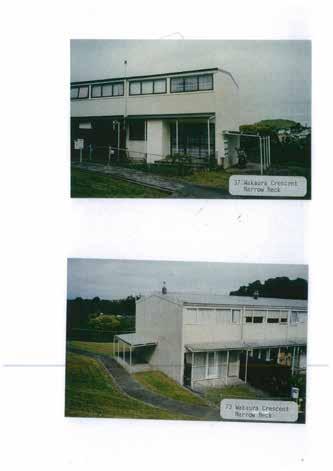
In acquiring a 150-year lease in 2014 from Ngāti Whātua o Ōrākei to build a retirement village just south of Ngataringa Road, Ryman Healthcare is the latest in nearly a century and a half of commercial European activity on this land. Between 1875 and 1936 the site was a brickworks owned by twins Richard and Robert Duder, before the Army occupied the site in 1942, taking down the prominent chimney and transporting the bricks to Camp Takapuna. In 1953 the Government acquired the site under the Public Works Act and the Royal New Zealand Navy created the Wakakura Naval Housing Estate, with 88 two-storey units in place by 1955. Most sailors of over 20 years’ service are familiar with the Navy apartments on Wakakura Crescent.
“The flats were for naval ratings. When you first got married, you were likely to go to Wakakura, and as your family got bigger, you were offered Navy housing. My first-born was born while we were in those flats.
Lieutenant Commander William Edward Sanders VC, DSO, RNR
Navy Today #268 | 29 OUR HISTORY WILLIAM SANDERS VILLAGE
“In those days you were able to live up to seven years in Navy accommodation, which gave you enough time to raise a decent deposit for a house.” If you were posted to a ship, your family stayed there. “If you went to somewhere like Singapore, on a two-year accompanied posting, you got priority for accommodation when you got back.”
An image of the historic Duder brickworks.
That includes Lieutenant Commander Brian Stokes when he was a married rating. The apartments were basic, but they had everything you needed, he says.


The village, running along Ngataringa Road between Lake Rd and Wesley St –is not yet finished (Wakakura Crescent no longer exists). When it reaches completion – expected in the first quarter of 2023 – it will have 120 care rooms, 77 serviced apartments, 164 independent apartments, and around 400 residents.
The William Sanders Village today. The Navy apartments at Wakakura Crescent, which housed sailors for nearly 50 years.
Fast-forward to 2014, and Ryman’s lease for the land is formally announced, and construction plans published two years later. From the start, Ryman invited suggestions for a name for the village from the Devonport community. “We wanted names that had a strong local connection to the area,” said Ryman Healthcare Head of Communications and External Relations NZ, David King. “William Sanders’ name appealed as he went to school locally, he had the association with the Navy and he is the only New Zealander to win a VC in a naval battle. Our Ryman Board has the final say, and they loved it.” The name was announced in 2018, and on 13 May 2019, the first residents moved in.
WILLIAM SANDERS VILLAGE
30 | Navy Today #268
In 2003 the Navy apartments were demolished and the vacant 4.2 hectares of land was passed to Ngāti Whātua.
The village’s naval legacy continues with the naming of apartment blocks, including ‘Prize’ (Sander’s ship) and Leander, Achilles and Neptune (Leander-class light cruisers with New Zealanders on board during World War II). Other blocks are named after Devonport personages.


A keen rugby player, he is looking forward to playing for the Navy rugby side. “I love being outside hunting, fishing and diving. And now I’m in the Navy, I am exactly where I need to be.”
“Of the three Services, I always felt the Navy was the most active on deployments and that suited me just fine.”
He says he would advise anyone who is considering the Navy as a career to join with an open mind, have the will to learn and to make the most of everything that is on offer. “Don’t ever be afraid to make mistakes. I’ve made a few during this course but every one of them has been a key learning experience. The instructors here want you to succeed and have been generous with their time and their explanations and that’s made me a better sailor.”
And with family members who have previously served in the Air Force and the Army, he now completes the military trifecta, graduating from Basic Common Training on 25 June.
Navy Today #268 | 31
The former Tauraroa Area School student is looking forward to putting into practice what he has learned during the 18-week course. The training certainly had its fair share of challenges, he said. “The rules and regulations were bit of a wake-up call and I also had to learn to control myself when being told to do something I didn’t particularly like.
“But the changes I have seen in myself, both mentally and physically, have been a real highlight. I have grown up hugely from who I was when I came through the gate at the start of this year.”
For Ordinary Seaman Combat Specialist Blair Thomas, it was his love of the ocean and the prospect of adventure that influenced his decision to join the Royal New Zealand Navy.
MILITARY SERVICE RUNS IN THE FAMILY
Ordinary Seaman Combat Specialist Blair Thomas
PROFILE
OSCS Thomas, 20 and from Invercargill, was brought up with family stories of service and adventurous careers and always knew he wanted to follow in their footsteps.

Ordinary Seaman Combat Specialist Kya Ratana-Keepa
A challenge was being in barracks in confined spaces, where – like on ships – personal space is at a minimum. She had to work on her self-confidence and fitness. “The training has definitely helped me find out who I am and has shown me that even when things may seem like you can’t do it or you can’t keep going… you can.” She wants to work her way up the ranks and hopes to be deployed overseas for Humanitarian and Disaster Relief work. “I want to help provide resources for people who are struggling to get the basic needs to survive.” She has a strong interest in environmental conservation and hopes to join a group with similar interests. Ahead of her is her Basic Branch Training as a Seaman Combat Specialist, who are experts in the control and conduct of all seamanship operations, including gunnery, vessel boardings, security, weapons and seaboat handling. “This is something I’m really looking forward to. SCS has such a wide range of jobs.”
She had come straight from Whakatāne High School, and had been working in a supermarket part time. “I’ve enjoyed the amount of personal growth I’ve had,” she says. “I like the hands-on work in the Navy and my highlight would be meeting new people and learning new skills.”
The 18-year-old graduated from Basic Common Training intake 22/1 on 25 June, joining the Navy’s ranks as an Ordinary Seaman Combat Specialist. “You have to keep an open mind to try new things and don’t be afraid to be yourself or come out of your comfort zone.” She passed the 18-week course (normally 16, extended with COVID) with 64 other trainees (43 men and 22 women), saying that everyone starts off not knowing anyone, but you end up great friends. OSCS Ratana-Keepa says she joined for the opportunities and experience that came with a Navy career. “I wanted to have a chance to do something for my country and make my whānau proud and serve the people who have done so many good things for me to get where I am.”
32 | Navy Today #268
Joining the Royal New Zealand Navy is not something you want to come to half-hearted, says Kya Ratana-Keepa, Whakatāne.
A PASSION FOR OPPORTUNITIESNEW

Why are the Basic Common Training divisional badges set in pentagonal frames?
Answer: The two BCT divisions, (a) Achilles and (b) Leander, take their names from the famous New Zealand cruisers HMNZS ACHILLES and HMNZS LEANDER of World War II. The badges the trainees wear are the same as those of the cruisers.
(a)(c) (d) (e) (f) (g) (b)
Source: Wilson KF: Royal New Zealand Navy ships’ badges (2018).
SHIPS’ BADGES Navy Today #268 | 33
WINSPHOTO-WALLSREALISTICAWARD
SNAPSHOTHISTORY:
The pentagonal frame comes from a range of Royal Navy designs from 1919. (c) Circular frames were for capital ships – battleships and battlecruisers – because they encircled and protected England; (d) pentagonal frames were for cruisers who sailed on the five seas; (e) a shield pattern for destroyers, who protected the capital ships, and finally an offset (f) square or diamond for auxiliary ships. A diamond is the heraldic symbol for a maiden, and the auxiliary ships were considered the ‘maids of all work’. All frames were topped with the corona navalis, the Naval Crown. In later years the convention was dropped and the circular frame became the standard. This is why HMNZS ENDEAVOUR I and II had an offset square frame for their badges, while (g) ENDEAVOUR III had a circular frame. Badges are sometimes incorrectly called crests; the unattributed answer to that is: Waves have crests; ships have badges. A contractor tasked with providing the ‘real’ look of the insides of an Anzacclass frigate has won an industry award for the work. As part of last year’s upgrade of the Navy’s Sea Safety Training Squadron’s Damage Control Communication Training Unit, signage company Big Ideas Group were asked to replicate the internal elements of HMNZS TE KAHA. They took hundreds of photographs of the real thing, then stitched them together to create a wall skin of images, to mimic control rooms and engine spaces within a frigate. Big Ideas Group received a silver award at the New Zealand Sign and Display Awards this year, with judges commenting how real the result looked. “The execution was very clever and of a very high standard.”
As well as the photo-realistic walls, the simulator injects machinery noise, lighting and visual graphics commensurate with what would be found on board an operational platform. The result makes the user feel like they are actually on board a vessel, dealing with a Damage Control incident.


This free workshop is about healing through art. It’s open to serving and former Injured, Wounded or Ill (I.W.I) NZDF personnel, and NZ Army Families of the Fallen. You don’t need to be an experienced artist – come along and two art therapists will help you tell your story. There are limited spots, so apply by 23 September 2022 at: 29 & 30 OCTOBER 2022 ART METRO, CHRISTCHURCH ART WORKSHOPRECOVERYINartinrecovery@nzdf.mil.nz Help us support our military families Complete our NZDF Military Families Survey – the aim is to check in with military partners, to help build understanding about areas where we can better support our Defence whānau. Open to partners of NZDF military members 18yrs+ and single parent military members. It includes serving partners. The survey is anonymous, and should only take around 20 minutes. To access the survey or find more information: Scan the QR code Online at Force 4 Families: force4families.mil.nz Pick up a paper copy of the survey from your local Defence Library or Defence Community Centre https://tinyurl.com/FamilyNZDF Are you a partner of a military member of the NZDF or a serving single parent? We would love to hear from you Please share this with other military partners/serving single parents you know

15 ROUNDS 020601 12 03 14 05 WITH COMMANDERLIEUTENANTGINATKINSON15 ROUNDS High school Pukekohe High School. Job title and description: IC (In Charge) of the Expeditionary Reconnaissance Team within the Military Hydrographic Group at HMNZS MATATAUA.
A valuable life/Navy lesson for me is? I saw this written on the wall at Niue High School the other day but it struck a chord with me: “Be Yourself. Everybody else is already taken.” I reckon it’s a pretty good mantra to live by.
First ship posted to: Technically I wasn’t posted to her, but whilst studying at the University of Otago I spent several weekends at sea as a midshipman with the reservists in Dunedin on HMNZS MOA, which was the Inshore Patrol Craft based in Dunedin at the time. I wasn’t really qualified in anything so I can’t recall what I actually did onboard.
Favourite holiday destination: Anywhere warm, sunny, and beachy, with the family. Favourite song: Tricky. There are so many. Probably ‘Your Song’ by Elton John, it’s a goodie. We used it for our wedding song – which is probably the only time I have got my husband onto a dance floor!
1011
Outside of work, what’s something you enjoy doing? Hanging out with my fabulous daughters, Madison, Isabelle, and Evelyn. They know I’m a pushover if they suggest we go out for an ice cream or a hot chocolate at one of the local cafes.
In a nutshell, we’re a team of hydrographers that are prepared to deploy at short notice to conduct Rapid Environmental Assessment for Humanitarian Aid and Disaster Relief, amongst other things.
0913
What’s something about you that not many people know? My neighbours probably already know this, but I’m learning to play the bagpipes with the Navy Pipes and Drums, under the tutelage of the Pipe Major, the talented Anton Hodson. This is a little bit of a plug, but for all you closet bagpipe or drum players out there in and around the Navy base, come join us!
04 Best deployment(s): The deployment I’m on at the moment is pretty awesome. Our team is in Niue for Exercise Tropic Twilight, then we head to Tonga, Fiji, and Tuvalu for further surveys for Operation Mahi Tahi. There’s no better way to escape the NZ winter than to spend it ‘drogging’ in the Pacific!
Navy Today #268 | 35
Date joined: I joined on 29 Jan 2003 under the Chatham Scheme, which is one of the university schemes for Junior Officers. For those Chatham Scheme non-believers, I joined on completion of my degree on 01 Feb 2006 when I undertook the full Junior Officer Common Training.
15 How would you describe the Navy in 10 words or less: Busy, challenging at times, but rewarding!
08
Hometown: A wee village called Patumahoe, just on the outskirts of Pukekohe, South of Auckland.
Favourite movie: ‘Love Actually’ – especially at Christmas! ‘The Princess Bride’ is a close second.
07 Favourite book: I have a partiality towards historical fiction, so anything by Phillipa Gregory is a fave.
Favourite album: Ohh, I can’t choose!


NZDF SAFETY AWARDS Let's recognise those who have improved health and safety in the NZDF this year. Nominations close 9 September 2022. Visit the Safety page on the ILP, or email NZDFSafety@nzdf.mil.nz
