ROYAL NEW ZEALAND SIGNALLERS

Celebrating 100 years HELPING UKRAINE
Our continuing effort
28 MĀORI BATTALION
When medals are reunited with whānau
ISSUE 539 FEBRUARY 2023 TŪ KAHA COURAGE TŪ TIKA COMMITMENT TŪ TIRA COMRADESHIP TŪ MĀIA INTEGRITY
Turning the leaf and gaining purpose
Compliments of the Season and welcome back!
It can be awkward and possibly a little untrue to say it’s great to be back at work. Like you, I relished time over the break and it was disappointing when it came to an end. I hope you had the chance to relax, spend quality time with people you enjoy, and for more active-relaxers like me – that you got the chance to do a few overdue projects.
Like muscle-memory the jolt to an earlier wake time, a transition to uniform and the habitual trip to HQ felt as if ‘leave’ was a distant, rather than recent vacation. But like much of my career, the return to work was enjoyable and gave hope of a better year. I’m not sure about your experience, but my workplace was abuzz. Excited conversations echoed from staff who were clearly rested. Recollections of small and grand holidays, stories of fish fought and sun-‘rays’ caught, and unsurprisingly – the families reunited with and weight gained in over-indulgence. In that cacophony I was reminded about why I serve – the people and purpose of our organisation.
One of the great positives of a good break is the chance to pause and consider things. I’m conscious that despite our two to four weeks of uneventful summer holiday, that our world didn’t sit still. In Aotearoa we experienced a spate of weather events and waterborne
SMA.NET LOOKING BACK
fatalities, continental America was struck by tornados, hurricanes and blizzards, and among many global humanitarian crises, the illegal war in Ukraine persisted and lives continued to be lost. It made me seriously reflect on the necessary role of armed forces in the protection, security and defence of those in need.
Purpose. People finding and defining purpose is essential to a productive life. As SMA, it’s one of my few ‘pet peeves’ when soldiers tell me they don’t have purpose (reason for being) or worse, leaders, or a command has not directed one. From just a moment of research we can draw various examples from many walks of life. The Welsh city football clubs (Wrexham AFC’s) bus driver finds passion in conveying ‘their’ team to games (see Disney it’s a laugh); a desk-bound Cryptographic specialist at NSA knows she keeps forward intelligence officers safe; the S&S rigger in RNZAF Whenuapai saves the life of a parachutist every jump. The point is, it’s not the size or importance of a responsibility that determines its value, but the contribution your part plays in the outcome or military effect.
As this year kicks off, I wanted to provide a perspective and maybe some initial ‘shape’ to your important roles in Army. I seek to remind you of the importance of
purpose and a straight-forward way to derive it. To do this I’d like you simply to ask two questions:
“What is the role and function of my organisation, unit or team?” and “what is my part in that?”
Sounds familiar right!
The NZ Army’s purpose is to advance NZ’s interests on land. As a system we are tasked to train and sustain, ready Land Forces that provide our Government enduring policy options. Together the fundamental role of land power is to shape, deter, and, where necessary, defeat threats. Our purpose seems pretty clear to me.

If you can link your primary job to the goals of your unit, you have a purpose, and you’d be surprised what clarity that brings. An established identity and clear purpose in the land force will help you wake up every day. It will entice you to put the uniform on and to be focused and productive in your very important job. We are Ngati Tū.
Get after it. SMA
Troops bathing in Hutt River, 1915–18. The spot became known as Soldiers’ Pool.

The Army News is published for the Regular and Territorial Force and civilian staff of the New Zealand Army. Editor: Judith Martin Ph: 021 240 8578 E: armynews@nzdf.mil.nz www.army.mil.nz Printing: Bluestar, Petone. Design: Vanessa Edridge, DPA, NZDF Editorial contributions and letters are welcomed. They may be sent directly to Army News and do not need to be forwarded through normal command channels. Submit them to The Editor, Army News, DPA, HQ NZDF, Private Bag 39997, Wellington, or by email. Deadline instructions: Army News is published on the third Tuesday of each month, except January. Please have all contributions to the editor by the first of the month. Nothing in the Army News should be taken as overriding any New Zealand Defence Force regulation. Readers should refer to the relevant service publication before acting on any information given in this newspaper. ISSN 1170-4411 All material is copyright, and permission to reproduce must be sought from the editor. Cover: A machine-gunner trains at night on the 7.62 mm MINIMI LSW. Photo: Corporal Sean Spivey ISSUE 539 FEBRUARY 2023 NZDefenceForce NZArmy NEWS HRH Princess Anne honours signallers as they celebrate 100 years 03 PEOPLE Armoured Fighting Vehicle driver: TPR Nadia Amaral 09 Medals returned to 28 Māori Battalion whānau 10 OPERATIONS Op Tieke 04 TRAINING Officer Cadets graduate 13 Reserve Force graduation 18 Exercise Iron Maiden 21 SPORT Cycling 22 Rugby League 23
Photo: Ray Randall Collection, Upper Hutt Libraries Heritage Collection
WO1 Wiremu Moffitt 16th Sergeant Major of the Army
A MESSAGE FROM CHIEF OF ARMY
One of my concluding comments in this column just prior to the Christmas break concerned Exercise Torokiki and noted that the exercise demonstrated Army had reached a key stage in its regeneration. I mentioned we were well positioned to both lift our aiming mark and increase the level and complexity of our training in 2023. I spoke to the quality of our people, our training system and the equipment we both hold and are bringing into service. As we look to all the great opportunities that 2023 will provide us both here in NZ and around the world, and there are many, the one thing that is going to really lift our performance, to regenerate the force and get us well and truly back in the game, is our attitude.
Defined in many ways our attitude, in this case to our profession, is influenced by our personality, beliefs, values, behaviours and motivations. I’m not talking about smiles, hand-shakes, and sugar coating everything but rather our ability to get after every circumstance, including challenges, with an absolute belief in who we are as an Army and an optimism for success that is infectious.
It’s knowing that what we do matters and it does make a difference. Every month this paper captures the quite outstanding work you do here in New Zealand, throughout our region, and around the world. And yet, too often, we beat ourselves up about all that’s going wrong. Colin Powell maintained that ‘perpetual optimism is a force multiplier’ and he is 100% correct. Focussing on what’s going right, where we are succeeding, and having absolute confidence in the direction we are heading directly impacts our well-being, motivation, performance, and sense of self-worth. This doesn’t mean we stick our heads in the sand and ignore the reality of what’s going on around us but it does require that we have an unwavering belief that problems can be solved, differences resolved, and that our future is ours to own.
It’s about not accepting the status quo but being prepared to go that little bit further, faster, and higher and to take a chance instead of just assuming/accepting extra effort is not worth it. We will acknowledge and build on what we get right, be honest about those areas where we can improve, and we will demonstrate a willingness to change when change is required.
As an Army we accept that things don’t always turn out how we want and we must always be open to new ideas and concepts.
In the short-medium term don’t let shortages of people in key areas and slippages with the introduction into service of key capabilities –and this will happen – hold us back nor drag us down. Regardless of the ‘cards we’re dealt’ it’s important we remain positive, focused on what we can control and treat every circumstance as an opportunity. Resiliency – our ability to bounce back from adversity and never give up – will be as important to us over the next 12–24 months as we undertake regeneration as it is when we deploy on ops.
And it’s important, as individuals and as an Army, that the environment we create over the next 12–24 months is one where we can continue to strive for professional excellence. Where we can take pride from the support we provide, the training and operations we undertake, and the relationships we enhance – particularly with our Pacific partners. Where our families are supported and our people are given the chance to excel on the sporting field, academically, and with their own professional development.

And it’s important that the environment we create is one where all our people not only enjoy what they do but look forward to the camaraderie, the opportunity, even the humour.
2023 is moving year. The foundations for regeneration have been established and the programme for the next 12 months set. Our requirement, with total confidence and an absolute belief in our direction of travel, is to focus on the positive, grab the opportunities being created, and to do so with an attitude that demands success.
Welcome back to work team, all the best for the year – let’s get after it.
Major General John Boswell Chief of Army

ROYAL VISIT TO HONOUR SIGS
Her Royal Highness (HRH), the Princess Royal, Princess Anne will attend the Royal New Zealand Corps of Signals (RNZSigs) Centenary event at Linton Military Camp in Palmerston North on 15 February. Princess Anne is Colonel in Chief for the Corps and the Royal New Zealand Nursing Corps.
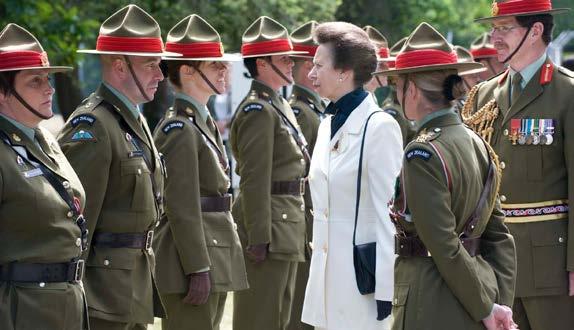

The centenary celebrations include a parade, a cultural welcome, Royal Salute and inspection.
HRH will attend a Service of Remembrance at Pukeahu National War Memorial in Wellington where she is expected to lay a wreath and pay her respects at the United Kingdom Memorial.
During her visit to the Wellington region Princess Anne will visit the Riding for the Disabled Association in Pauatahanui for whom she is Patron, to view ride demonstrations, tour facilities and meet staff and service users and unveil a plaque to commemorate her visit.
Her New Zealand visit included Christchurch where she will be briefed about the Christchurch rebuild and rededicate the Citizens’ War Memorial in Cathedral Square.
She will also visit the Royal Agricultural Society of New Zealand (RAS) at the Canterbury Agricultural Park, the home of the Canterbury Agricultural and Pastoral Association. She is to receive an update on the role of New Zealand’s agricultural and pastoral showing movement, and the sheep and wool industry.
HRH will unveil a plaque in the Canterbury Agricultural Park Show Saviour garden, in commemoration of the support shown to the Canterbury Agricultural and Pastoral Association by the public during the years when shows were not held due to the Covid-19 pandemic.
Army News centenary coverage: Page 6

ARMY NEWS 03
Help shape
part in the review of our Defence policy. DEFENCE.GOVT.NZ/ENGAGE HAVE YOUR SAY AT
our future Defence strategy Take
HRH Princess Anne inspects the Royal New Zealand Nursing Corps guard during her last visit to New Zealand. She is accompanied by the then-Chief of Army, Major General Lou Gardiner (dec).
OP TIEKE
TEACHING SKILLS TO TAKE THE FIGHT TO THE ENEMY
By Judith Martin
The passion shown by Ukrainian soldiers and their commitment to fight for and defend their country is what struck Major Tom Kelly most about his time as Senior National Officer of the New Zealand contingent responsible for preparing soldiers for combat from the Armed Forces of Ukraine.
Major Kelly and the Infantry Training Teams from 1 and 2/1 RNZIR returned home just before Christmas last year.

Equally impressive was the fervor shown by the Kiwi soldiers delivering the training who were determined to produce competent, capable soldiers able to help defend their homeland, he said. “The trainers on the ground were the unsung heroes of this mission. They put their everything into making the Ukrainians just that bit better, a little bit harder to kill and that little bit better at killing the enemy.”
Relaxing in New Zealand after his deployment Major Kelly, OC Whiskey Company, 1 RNZIR, says the training aspect came naturally to the soldiers and officers deployed on Op TIEKE.

“Those who deployed have a wealth of experience delivering infantry training, and some have been instructors at TAD and Depot Coy, so it wasn’t new to them – it’s their bread and butter. There were just the nuances of the British and Ukrainian doctrine which had to be acknowledged.” The training, which is continuing throughout 2023 is in the Salisbury Plains, United Kingdom.
The training is divided into modules, with the initial module being a basic introduction to soldiering and survivability, through to live field firing at section level.
A New Zealand Corporal and Lance Corporal would have up to about 10–18 Ukrainian soldiers to teach.
They cover tactics, learning to fight in open, close and urban environments, including trench warfare. Range practice involves shooting out to 300 metres, as well as live field firing. The Ukrainians practiced using British SR 80 weapons and AK 47s.
The average age of the Ukrainian soldiers was 34, with about a quarter of them currently serving. The remainder had recently been mobilized to fight for their country.
For the soldiers delivering the training it was about the small wins that happened daily.

“Seeing the Ukrainians pick up a new skill and apply it. Seeing things start to click.”
He says it was a tough time farewelling the Ukrainians at the end of the training with some likely to deploy to the front lines within days.
“We had a barbecue and a prizegiving and handed out certificates and awards to the top soldiers and top shots. In the weeks before that we took part in the Ukrainian National Day, and also the Ukrainian Defenders Day parade which is similar to our Anzac Day where the Ukrainians honour their fallen.
“The Ukrainian soldiers have a strong drive to fight for their country. A lot of them have had their villages and family homes
devastated in the war, and they were switched on and keen to get be there and get after it. Although we only had 35 days with them that sense of drive and passion to defend their homeland produced a confident and capable soldier at the end of it.
“We always said we wanted to produce a Ukrainian soldier who was hard to kill, battle worthy and who could understand the rigors of dismounted, close-quarter combat, and enemy artillery. We weren’t there to make the perfect trained soldier, we were there to ensure they had the skills to survive, and take the fight to the enemy.”
04 ARMY MISSION
The return of trench warfare: one of Major Kelly's troops, 2LT Nathan Chisnall, see next page.
Photos: Peter Livingstone Photography, Australian Defence Force
Ukrainian godson for Gisborne soldier following UK training stint
By Dave Williams, DPA
Lance Corporal Kamalani TureiaSiataga deployed to the United Kingdom to help train new Ukrainian troops but returns with plenty of Ukrainian friends and also as the godfather to the son of a Ukrainian soldier.
LCPL Tureia-Siataga said the start to training was quite difficult but as they got to know the translators better it improved. He began to make friends with those involved, many of whom came from farming and labouring backgrounds.
“I’ve made so many Ukrainian friends. I’m also keeping in touch with my Ukrainian soldiers, just to
find out how they and their families are doing,” he said.
On the last day of training the second and final rotation, one of the Ukrainians approached LCPL Tureia-Siataga.
“He came up to me and asked if I could be the godfather to his baby boy, who was born while he was doing the training.”
It was a special honour, LCPL Tureia-Siataga said.
“Once this is all over and done with we can try and meet each other again and share a beer. Whether that’s in New Zealand or Ukraine, who knows.”
It was LCPL Tureia-Siataga’s first operational deployment and he felt it was for a just cause.
The Ukrainians were training in the UK because they loved their homeland and wanted to defend it, he said.
“We are teaching them survivability and lethality and it’s a huge help to our Ukrainian brothers and sisters.”
They were really hard-working and really keen to learn, he said.
“In five weeks they learned so much. They try to pick every single bit of information we’ve got to offer.”
By Dave Williams, DPA
But it wasn’t long before they began to understand the purpose of New Zealand Army training and see how it would help them become better on the battlefield, says Lieutenant Lundon Williamson.

LT Williamson served in TimorLeste in 2010 and Afghanistan in 2012.
However, this was a vastly different deployment.
“They also have a greater understanding of how the military works and being able to work under someone else’s command, and [are] capable of delivering similar training to their countrymen in Ukraine.”
LT Williamson said it was an enjoyable deployment and meant the NZ Army was able to get back on the global stage and develop its training staff.
New
Zealand
Army Second Lieutenant
Nathan Chisnall was struck by the return of trench warfare training and Ukrainians’ desire to defend their homeland as he helped train hundreds of new soldiers for the war in Ukraine.
By Dave Williams, DPA
Second Lieutenant Chisnall, from Whangārei, was in the Army team who spent three months in the United Kingdom as part of an international programme that aims to train around 10,000 Ukrainians at British Army camps so they can return to fight the Russian invasion of Ukraine.

“They were motivated. None of my guys pulled out of the field pretending to be sick,”
2LT Chisnall said.
“These guys had every reason to do that, but they would crack on even if they had an injured shoulder, or couldn’t see properly out an eye.”
The training included how to fight in urban environments, and close and open country, including trenches. According to media reports the conflict in Ukraine is descending into the type of warfare normally associated with World War I. That stood out for 2LT Chisnall.
“We know about it. We do it, but it’s not the most fun thing digging trenches and we thought it was a thing of the past. But we had to really get stuck into trenches.”
2LT Chisnall, 1 RNZIR, said many people were keen to deploy to the UK to train Ukrainians after two years working in Managed Isolation Facilities.
“It was the perfect deployment in that we can see the value of what we are doing by teaching basic infantry skills. There wasn’t a high risk factor either, so it was the ideal scenario to contribute to something worthwhile,” he said.
The New Zealanders, with the help of translators, trained two rotations of Ukrainians.
The first rotation were mainly civilians and had minimal military experience. Most were blue-collar workers.
“We were building a trench one day and we’d been shown how to revet and make sure a trench stays up. They just sat down and started smoking.
“We offered to show them how to build the revetment and they just cracked up and said ‘half of us are builders’, before picking up the tools and getting stuck into it.” Most soldiers from the second rotation had seen combat and were easier to train, 2LT Chisnall said.
“There was some difficulty with the language at the start. But as we progressed through the deployment we started to pick up the language and that assisted with us teaching.
“A lot of the soldiers were in their late 20s to late 40s and their experiences varied across both courses. Some had previous combat experience, but the majority were civilians.
“Initially there was a bit of friction and hesitancy to learn, that comes with the Ukrainian culture. You have to develop a rapport with them first before they start to take in what you are teaching them.
“We got that at the start of both rotations. It was probably a question of ‘why are these soldiers from the other side of the world trying to teach us how to fight?’.”
“But as we progressed through the course they began to grasp what our intent was and what we were trying to do for them. Towards the end of the course everything was working like a well-oiled machine.
“They now know how to work as a team, [are] well disciplined, more receptive to being given orders and being able to follow them.
“I did make some good friends working alongside the Ukrainians. Not just the soldiers themselves but the translators and personnel from the other armies.
“Five weeks of training soldiers, it’s hard not to become emotionally invested in them.”
He also found it very satisfying to be able to help Ukraine defend itself.
“Hopefully everything we taught them will be continually reproduced on the battlefield.”
ARMY MISSION 05
At first, the Ukrainians – some of who had already been in battles against Russian invaders – wondered why soldiers from the other side of the world were telling them how to fight.
100 YEARS OF SIGS
Planning for the anniversary started in June 2019 for the Corps that can count several names that are marked in military history within its ranks, most notably Lieutenant Colonel Cyril Bassett, who, as a Corporal, won the Victoria Cross at Gallipoli.
It was intended the anniversary year of when the Corps was formed would be marked in March 2020, but the global Covid-19 pandemic and the New Zealand Army’s 175th anniversary commemorations meant the anniversary date was delayed to 1 June 2021.
The Colonel-in-Chief, Her Royal Highness the Princess Royal is visiting the Regiment to mark the occasion.
Regimental Colonel, Colonel Kate Lee, said it was important that even though the ability to mark the milestone had been delayed it was still vital to ensure it was suitably noted.
“It is only right to commemorate, celebrate and connect with past and present members of the Royal New Zealand Corps of Signals and acknowledge the importance of signallers within operations over the past 100 years.”
The centenary is being marked with a raft of celebrations, including a formal parade.
Military signals became a component of the New Zealand Army in the early 1900s. In 1911 Post and Telegraph Corps was formed and then in 1913 it was absorbed into the NZ Army Engineer Signal Service along with the NZ Signal Corps formerly known as the Cycle and Signalling Corps.
On 1 June 1921 the Post and Telegraph Corps became the New Zealand Corps of Signals.
There were nine signal units that operated during the Second World War and in July 1947 King George VI gave the Royal prefix to the unit and it became the Royal New Zealand Corps of Signals.
From climbing telegraph poles to utilising state-of-the-art equipment as a network enabled Army, the Corps has come a long way from its inception, and is an essential part of a military operation.

The Corps prides itself on being able to improvise and adapt in order to overcome the challenges of getting the message through, from Lieutenant Colonel Bassett VC at Gallipoli to the present day providing support by delivering reliable military communications during natural disasters and when deploying to the South West Pacific and throughout the world.
THE PAST
Wellington-based Bill Russell was a signaller in the Malayan Emergency in the late 1940s. His memories are still vivid.
From the air, the jungle looked similar to the New Zealand bush.
That’s where the similarity ended. It was hot, there were thousands of insects, animals and little in the way of fresh drinkable water and what there was had to be treated.
We arrived in Malaya to relieve 2 NZ Regt who were based in Northern Malaya, all fresh and raring to go. New gear not yet broken in, fresh white skin (or fresh brown skin) not yet acclimatised.
The Emergency had just ended and 1 NZ Regt (Pearce Bn) had just moved into a brand new camp called Terendak Camp just outside Malacca.
Training in the local jungle to get experience, bush craft courses, compass bearing marches; it was second nature later but initially it was all new.
The battalion spent three tours on the Malay-Thai Border, each of approximately one month. There was no physical border, but marker pegs every kilometre or so along the notional border.
As a signaller, it was my job to get communications back to battalion HQ. Being attached to Delta company my call sign was 4. A Coy, B Coy and C Coy call signs were 1, 2 and 3 respectively and the Colonel was call sign 9. On one patrol A company did not report in for three days and HQ was getting worried, no signal. Finally, A Company did call in with an
The Royal New Zealand Corps of Signals
is celebrating its centenary this month.
extremely strong signal. The RSO was most impressed and asked what sort of aerial the signaller was using. A Company replied it was a folded dipole. That confused the RSO and others who knew a bit about aerial theory and the call went back to verify “folded dipole” over. The operator for A Company came back and said “Hullo 1, I verify folded dipole, folded round every damn tree in the area – Out!”
It was a further three days before A Company reported in again.
Everyone carried seven days’ rations into the jungle, sometimes 10 days. In addition, they carried a poncho, a change of clothes plus their personal stuff. As a signaller, I carried a radio set called an A 510 which weighed about 5 kg, plus two sets of two batteries. The batteries were the size of a present day Big Jim camping lantern. The RSO said to give the batteries to other platoon members, but strangely their packs were always full so sorry mate, can’t help!
All up it would have weighed at least 35 kg, maybe more.
Getting communications in the jungle was not easy, partly due to the terrain and also the tree canopy. The aerials used were mainly wire aerials know as dipole or end fed. As the aerials were cut to the frequency used, common

length was 68 feet each side, so finding a space of 40 metres in a straight line was not easy! The aerials were erected by throwing a bobbin attached to a length of string over the most suitable branch and then pulling up the aerial after it. Throw the bobbin too hard and it would wrap itself around the branch many times rendering it useless. Many years from now, some archaeologist is going to find these bobbins hanging over the lower branches of a tree in primary jungle and wonder which civilisation did that object belong to.
In those days we worked frequencies around the five or six megacycles range known as High Frequency or HF. That frequency has some advantages but some severe disadvantages. It’s on the fringe of international shortwave broadcast stations and Radio Indonesia and Voice of America would constantly come in over the top of us, if our frequency drifted. After 6pm the ionosphere would come down effectively blocking all communications and distorting the signal so much as to be unreadable. Morse code (CW) was the norm later in the day especially if working over long distances, from the border back to base camp which would be anything from 100 to 300 miles. Speeds of 10 to 15 words per
minute were the norm for CW, for it was the rule that the max speed was to be that of the slowest user.
On some Royal Signals networks, I experienced 28 words per minute, very fast and it was flawless.
The Battalion that came after us was to implement a relay system using VHF sets, sited on hill tops which are less prone to atmospherics but had a shorter range hence the relay system developed by 1 RNZIR. It was to ensure a 24-hour coms system and better still using the voice medium. Being the radio operator gives me a sense of pride when I look back on it, but that pride was missing when I was labouring up some very steep hills in Northern Malaya, or wading through swamp with seven days’ rations, one A 510 radio and four spare batteries as well as personal effects and a rifle etc.


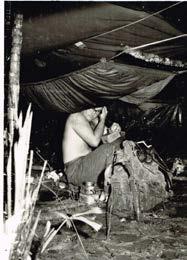
Today, one can work via satellite, nobody uses CW, and batteries are very much smaller and, not to mention it, much lighter.

and non-military initiatives and involved British, Commonwealth and Malayan forces fighting together. Within a few years the communist guerrillas were forced to retreat into rugged, jungle areas. The New Zealand forces excelled at penetrating these jungle enclaves and hunting down the enemy. These operations were a hard grind that involved lengthy patrols in harsh conditions. During the course of the Emergency, 15 New Zealand soldiers died.
Source: Defence historian John Crawford
The murder of three British plantation managers in the Malayan province of Perak in June 1948 sparked the Emergency which lasted until 1960. The threat posed by Communist guerrillas and military operations to counter that threat, however, continued for years after the official end of the Emergency. Close Commonwealth defence arrangements were in place at the time, hence the commitment of the New Zealand Armed Forces to Malaya. From 1951 until 1956 New Zealand officers and NCOs had a key role in the great track record established by the 1st Battalion, Fiji Infantry Regiment. The Navy also played its part with HMNZS Pukaki bombarding suspected Communist positions in 1954. In 1955 the British Commonwealth Far East Strategic Reserve was established. New Zealand along with Australia and United Kingdom contributed forces to the Reserve, which had as its primary function preparing to defend Malaya against invasion by Chinese forces. The Reserve’s forces had a secondary role of assisting in the defeat of the Communist guerrillas in Malaya. New Zealand’s initial Army contribution was a Special Air Service Squadron, which was later replaced by the 1st and then the 2nd Battalion, New Zealand Regiment. The Malayan Emergency was a difficult and drawn-out conflict that claimed the lives of more than 11,000 people. The toll would have been even heavier had the Communist guerrillas not been faced by what is widely seen as a textbook counter-insurgency campaign. The multi-faceted and highly effective security response included both military
100 YEARS OF SIGS
What makes a signaller? What kit do they use, and how do they prepare to do their vital job?
Army News spoke to signaller Corporal Roger Schroder to find out.

The dirt, dust and devastation wreaked by the 2020 Australian bushfires is something CPL Schroder, RNZSigs won’t forget in a hurry.
He was part of the Kiwi team which crossed the Tasman to offer much-needed help to the Australians as fire whipped through forests, bush and towns, destroying trees and animals and endangering lives. When he wasn’t ensuring communication systems were as good as they could be in the inhospitable environment, he was, as soldiers do, lending a hand wherever it was needed.
On Kangaroo Island, south west of Adelaide, a lightning strike in a ravine in Flinders Chase National Park set a fire ablaze.
“I was enjoying the last of my summer break in Palmerston North when I received a message from LT Neal, my 2SIGSQN troop commander, alerting me that Joint Command and Reconnaissance Team was being stood up on notice to move and that we would be assisting with the Australian bushfires.
“I prepared the required gear and corresponding paperwork over
the next few days to get a pallet of equipment over to Adelaide. This was a unique situation in terms of communications gear due to the prevalent use of civilian means by civil defence and the firefighters. All communications were through unclassified means such as publicly accessible GIS mapping websites, WhatsApp and mobile phone calls. Satellite phones were also part of the PACE plan. The military radio equipment was cut away and only an HSS130 Satellite unit, RCAN with a 4G cradle point and a BGAN was identified as needed along with unclassified and restricted clients for use by the NZ contingent headquarters.
“The gear was packaged and labelled before being shipped by C130 from Ohakea along with two sections of Royal New Zealand Engineers, their command element and a support team. We eventually arrived at the airfield and it was absolutely booming with aircraft, vehicles and personnel. The vast field had been cut right down to the dirt and you could see fire ravaged bush around the perimeter. Surrounding highway junctions were closed off with cones
and ‘ROAD CLOSED’ barriers, preventing the public from venturing west into the hot zone. The firefighters had a large camp setup just inside the gate – rows upon rows of tents and mobile amenities surrounded by temporary fencing and dust cloth. The entire field was a complete dustbowl, with sand and grit billowing around.
“As we drove deeper into camp we found the ADF area, a few 11x11 tents housing various command posts and stored equipment and nearby leaguer of ASLAV, Bushmasters, Unimogs, 40M trucks and plant such as graders, bulldozers and JCB,” says CPL Schroder.
The plan was to keep pushing west and clear debris and fallen trees from main routes – opening them up for civilian services and support teams. Further to this was to fell any hazardous trees, bury carcasses, generally clean-up and remain available for further tasking. There was an issue however.
“The Australian SIGS were having difficulty achieving communications via green means due to the shorter
range of VHF, retrans issues, the terrain and the fact that civilian services did not have access to military comms. GRN black means radios were being used but this was only for voice, and most communication was happening via WhatsApp groups and data. This was a major health and safety concern and was preventing EST1 from entering areas that were still burning or contained active hot spots. After spending some time in the BGAN interface I was able to configure the bearer to automatically connect on power-up, and provide data to mobile phones using WiFi and connecting to the internet via satellite. I presented the solution to LT Geen and we promptly demonstrated to MAJ Purdy. He was extremely happy. Less than 24 hours in country and NZDF was able to provide equipment that enabled access for EST1 across the whole island.”
What are the first actions a deployed signaller takes?
For redundancy others within the deployment undertook training on the BGAN and each time C/S V1 went firm it would be placed on the top of the CP ASLAV to provide communication.
“We did several recon trips to different areas further to the West, and due to the danger we were forced to drive in convoys. We would come across the occasional roadside blaze, and LT Geen would report it in. Further along the way we found multiple koalas sitting on the roadside with varying degrees of burns. One friendly fur bundle seemed very happy to see us, and calmly walked over to an Australian soldier and attempted to climb his leg. Another we found hadn’t faired so well having been singed and blinded by the fire, this one was understandably irate and put up quite a struggle when we wrapped a blanket around it and placed it in the vehicle.”
weapons and additionally will have capabilities for HF, VHF, UHF radio. Satellite voice and data equipment allows for the establishment of strategic channels and computer systems that will enhance the commander’s command and control capabilities. The detachment can operate either vehicle mounted or on foot. The remainder of the gear is ancillaries, antennae and masts, equipment such as a generators and fuel.
The detachment is mostly self- sustaining aside from rations, ammo and fuel. They have all the required equipment to power, support and maintain C4 operations in the field.
What are the signalspecific obstacles/ challenges often encountered in a warzone or disaster relief scenario?
Royal New Zealand signallers were attached to the High-Readiness Task Unit (HRTU) and the Joint Command and Reconnaissance Team (JCART) deployed to the Solomon Islands early last year. They were part of the (NZ) Defence Joint Inter-Agency Task Force (DJIATF) team which travelled to Solomon Islands to help quell disorder. HRTU and JCART signallers provided key tactical and strategic level voice and data communications from theatre back to New Zealand. The team included CPL Schroder.
Signals operating instructions, communication access requests, satellite access requests, and cryptographic cyphers are all necessary to operate radio or access coalition satellite networks when deployed. Without these in place, nothing will work or transmissions would be less than secure. There is also the possibility that transmitting without proper planning can
interfere with local radio, television or even air traffic control channels. All of this is checked and meticulously planned before deploying from New Zealand. Meetings were held to help plan and shape the mission, including the intended plan required for signals.
“The JCART team left for Honiara a few days before the HRTU in order to reconnoitre the area. HRTU travelled via RNZAF C130 Hercules, bringing vehicles, supplies and equipment along with the remainder of the contingent on an 8 hour flight to the Solomon Islands,” says CPL Schroder.

“Once in country the first thing that became apparent was the sheer heat and humidity. The
group assisted in unloading the aircraft and moving stores to the headquarters location. From there I liaised with JCART Signals Detachment commander CPL Ryder and we established our communications and assigned personnel to tasks. A command post roster was revised to incorporate the detachment and we began our standard operations of providing services and maintaining communication. Between the Royal NZ Signallers and the Regimental Signallers of 1RNZIR Signals Platoon we were able to provide HF, VHF and UHF voice communication for the local tactical net. Strategic links were established via satellite voice and data channels.”
Usually a quick orientation of the area and situation update occurs with the commander. A signaller will want to know what factors from planning may have changed that will influence where equipment is set up. There are certain caveats of using comms equipment that will make setup in an area better or worse, so the wants and needs of the commander are balanced against technical requirements of the equipment needed to establish loud and clear comms as quickly as possible. Before deploying, detailed planning is conducted and paperwork is submitted. All equipment is checked and checked again to ensure that it operates as intended. And orders are presented so every individual knows the plan. Once in location security of the area, defensive positions and bug-out path options are identified. The signaller already knows where to place their satellite equipment so that man-made or natural obstacles are not blocking the view of the sky. EMI sources have been identified, such as pylons or transformers, and radio antenna farms are ideally situated away from these to minimise interference. Power sources are identified, and logistics, security and shift rosters for 24/7 operations arranged. There are many things to think about, and it is all part of the planning process and standard operating procedures.
What equipment is taken?
A typical RNZSigs detachment carries standard FSMO and
Some environments may present unique threats to the mission –such as natural wildfires forcing a shift of the command post location quickly, extreme heat or cold and even simple things like insect-borne endemic diseases present in the locale. These are all obstacles that can be mitigated against whether it be by direct actions or priorpreparation. Once comms are established it is generally business as usual. A Sig’s base may be a building, a ship at sea constantly moving or a hole in the ground providing services to the infantry – either way the requirement and conduct of the work is generally the same. It is part of a signals detachment commander’s job to make sure the team is safe and as well as can be.
08 ARMY PEOPLE
Signaller CPL Schroder ( second from left) in Solomon Islands.
FROM CIVVY TO ARMOURED FIGHTING VEHICLE DRIVER –TROOPER NADIA AMARAL
As told to Army News editor, Judith Martin
Civilian life became a little too mundane and predictable for Trooper Nadia Amaral’s liking.
Now she drives a Light Armoured Vehicle for Scots Squadron, QAMR.
“I didn’t want to spend the rest of my adult life sitting behind a desk, nine to five. I was looking for some action. Something exciting. Something I could wake up every morning and be proud of. The Army, specifically QAMR, was just what I was looking for.
“When first joining the Regiment, you get placed as either an NZLAV driver or gunner. I am an NZLAV driver for Scots Squadron.
Besides a 16-week Basic Training and a 18-week Corp training, I did the NZLAV Drivers Course. It’s a 5-week long course, where you learn the ins-and-outs of the vehicle and how to drive it. Although it was a challenging and full-on course, it was definitely a lot of fun tearing it up in Waiouru.
“Being in an NZLAV crew can be quite challenging, especially if you’re quite new. Everyone has their individual roles within the vehicle and finding your feet in the crew can take some time. Communication is definitely key.

“Being out in the field is definitely the highlight of the job. Constantly being switched on and under the pump as a driver, although tiring, is thrilling.
“Who wouldn’t want to operate an Armoured Fighting Vehicle? The more people who join QAMR, the better. Although females are slowly making their way into QA, we want more!”
ARMY PEOPLE 09
“Being out in the field is definitely the highlight of the job. Constantly being switched on and under the pump as a driver, although tiring, is thrilling.”
NEVER TOO LATE Missing medals claimed by whānau
By Judith Martin
As nearby Lake Rotorua sparkles under a brilliant blue sky they troop in to Te Papaiouru Marae.
Most of the small whānau groups are proudly clutching sepia-toned photographs of young Māori soldiers who are no more. They are solemn but there is an air of expectancy as they mill around the immaculate marae, quietly chatting and waiting to be told how things will pan out for the rest of the day.
About 1,800 people are here to collect the medals of their soldiers – mostly their fathers, grandfathers and uncles – all 90 of whom who fought with 28 Māori Battalion in World War II but on their return home never claimed what they were due.


The crowd gathers near the meeting house entrance and is told by the Master of Ceremonies, former Army Marae manager WO2 Morrie Morrison, who is on his home turf, there are a lot of presentations to get through and while many would love to perform a waiata after receiving their medals they are to “save that for the journey home or else we will be here to midnight.”
Amongst the crowd is the last surviving 28 Māori Battalion soldier Sir Bom Gillies, and Willie Apiata VC. There are a raft of MPs present– Kiritapu Allan, Kelvin Davis, Meka Whaitiri and Willie Jackson, who all have some connection to the Battalion.
The New Zealand Army is out in force to ensure everything glides along seamlessly. In a hall adjacent to the meeting house Warrant Officer Kimiora Tamepo and Captain Barry Samu (3/6 RNZIR) check lists and identities to ensure medals are going to the correct people.
The Rotorua ceremony is one of several being held throughout the country.
After World War II former Service personnel had to apply for their medals on their return to New Zealand, which were then mailed to them. Some objected to not having the medals presented personally, others weren’t interested, and others felt claiming medals was, in those times, somewhat conceited. The result? A huge amount of medals lay unclaimed. It is estimated that about 15 percent of the 900 men who served in C Company, 28 Māori Battalion, never applied for their medals.
David Stone, from Te Mata Law, has worked tirelessly to ensure as many medals as possible are presented to the whānau of the men who served.
Representing the Chief of Army at the presentation, Colonel Trevor Walker says it is an emotional and joyful occasion. “I can feel the aroha here, and feel privileged to be part of the ceremony.”
The NZDF Archives team had worked long and hard to identify who was due medals, he says.
Archives team leader, former Army officer Geoff Fox says the work has been a team effort. “It’s very gratifying to ensure medals go to whoever earned them, or their family. Veterans, alive or dead, should be given due recognition.”
Donna Burgess of Rotorua is at the ceremony with her sisters Lynette Graham, Maureen Stewart and Rosemary Davis, and a granddaughter, Kelly Stewart. They are the daughters of Ngaiterangi McMillan, a 28 Māori Battalion member who fought in Italy, and also served with JForce.
The women say they are “delighted and excited” to be at the ceremony, and are very proud of their dad’s service.
“We were all young when we lost dad to leukaemia, he was only 42 years old. Dad never spoke of the war to us but we have many very fond memories of him. He was one of those fathers that would take us to church every Sunday, he made sure he would attend all our sports games and helped us every day after school with our homework.
It was hard to lose Dad when we were all so young but every moment with him and every memory of him is priceless. Dad was a very proud and involved parent, we love and miss him dearly,” says Donna.
10 ARMY PEOPLE
Sir Bom Gillies and Willie Apiata, VC. At left is 28 Māori Battalion Colours bearer Warrant Officer Class One Lyall Mooney. WO1 Mooney has a special, if complicated, connection to the marae and battalion, See the March issue of Army News
Whānau wait to be called up to receive their loved one's medals.


ARMY PEOPLE 11
Whānau of Ngaiterangi McMillan, from left, Donna Burgess, Kelly Stewart, Lynette Graham, Maureen Stewart and Rosemary Davis claimed the medals of their father and grandfather.
Rhys Ngatuere, his wife Aroha and children SummerRose and Skylah came to collect Walter Ngatai's medals.
Warrant Officer Class Two Kimiora Tamepo checks the register.
WO2 (Ret) Aaron Morrison connects with the whānau and keeps order.
Photos: Petty Officer Chris Weissenborn
EXERCISE BEERSHEBA
Exercise Beersheba at the end of last year gave Queen Alexandra’s Mounted Rifles the opportunity to fire
The exercise saw QAMR’s two Sabre Squadrons, Support Squadron and QAMR’s Reserve Squadron (Waikato Mounted Rifles) deploy in two day blocks where they moved through multiple ranges. The two concurrent static firing lines enabled each Squadron to solidify crew drills, fire control orders and application of fire at ranges of up to 2800m. This was enhanced by the inclusion of troop level engagements which allowed junior commanders to demonstrate their ability to step-up into combined arms fire support roles in support of Combat Team operations.
A third activity was centred around Russell Range (MTR), and provided variable moving targets to be utilised during the conduct of a pairs FMX. This practice consolidated NZLAV gunnery whilst testing crews on their reaction to contact, task element drills and accuracy and timely delivery of reports and returns.


While an unseasonable week of adverse weather played havoc with visibility at times, the heavy rainfall provided saturated ground which reduced the risk of fires and allowed crews to fire various types of ammunition for longer periods without delays.
Exercise Beersheba proved to be a valuable experience for personnel from all trades within QAMR, and was an excellent step forward in the regeneration of operational capability. The associated bonus was that personnel who had not previously been exposed to the effects of service ammunition on various target types were able to appreciate how much battlefield damage a single NZLAV can inflict when employed in roles and positions that complement their strengths.
While the exercise was planned and executed by QAMR’s internal planning and support staff, it was augmented with enduring support from Waiouru Range Control staff, Fire and Emergency crews and logistics.
12 ARMY EXERCISE
NZLAV service Sabot and High Explosive Incendiary ammunition. Held in unison with Exercise Torokiki it provided the Regiment with varied and valuable training to close off the calendar year.
Photos: CPL Rachel Pugh
THE ARMY’S NEWEST OFFICERS
Officer Cadet Jarrod Wilson was presented with the Sword of Honour by the Chief of Defence Force Air Marshal Kevin Short when the Army’s newest officers graduated in front of family and friends in December 2022.


The Sword of Honour is awarded to the Officer Cadet who best displays the qualities of leadership, initiative, integrity, motivation, academic ability and physical fitness, and who is assessed as having the greatest potential as an Army Officer.
Other awards:
The Australian Chief of Army’s Prize for Tactics:
OCDT Matthew Foss
This is awarded to the Officer Cadet gaining the highest aggregate marks in tactics.
The Lieutenant Colonel John Masters ONZM, MC, Peers Award:
OCDT Wilson
This is awarded to the course member within the NZCC who is assessed by their peers as being the student who consistently demonstrated the core qualities of the NZDF and best displayed comradeship as a valued peer on the NZCC towards their fellow students.
Commander Training and Doctrine Command (New Zealand) Prize:
OCDT Toyah Churton
This is awarded to the Officer Cadet gaining the highest aggregate marks in Education and Military Studies.
Sergeant Major of the Army’s Prize:
OCDT Chancellor Alatimu
This is awarded to the Officer Cadet for best performance across all aspects of field training.
The Lieutenant Tim O’Donnell, DSD, Memorial Leadership Award:
OCDT Foss
This is awarded to the Officer Cadet who has best exhibited the attributes of leadership.
The Sultan of Brunei’s Prize:
OCDT George Tonga
This is awarded to the best Mutual Assistance Programme Officer Cadet.
Governor General’s Medal:
OCDT Foss
This is awarded to the Officer Cadet gaining the highest aggregate marks in all subjects.
ARMY PEOPLE 13
OCDT Jarrod Wilson received the Sword of Honour from CDF, Air Marshal Kevin Short.
Chief of Army Major General John Boswell reviews the guard.
1. While covering some training up in the mountains, I took this shot as we pulled away from the team. The whole day I was blown away by the scale of the landscape, and I think my awe is reflected in the tiny people scaling the mountain.

2. While working, we are sometimes challenged to work around elements of the job that can’t be shown in images. On this day, our reservist medical team was doing a ‘hospital takeover’ caring for real patients and working together as an NZDF team. The challenge here was to capture our talented nurses and doctors at work, while respecting the patient’s privacy, while not making it look too obvious that we were hiding someone.


3. When on the job, my favourite task is telling the action-packed story in a single photo. This image is of officer cadets in the middle of clearing a building and I was in the right place at the right time to catch the moment right before they stormed upstairs.

14 ARMY PEOPLE
Defence Public Affairs photographers have selected their favourite Army-related images to share with Army News readers, and here they explain how they got the shots.
1 2 3
These images are the work of Ohakea-based photographer Corporal Rachel Pugh.
CPL Rachel Pugh
NEW PATCH FOR PADRES
The Army’s chaplains have a new uniform patch.


The patch features the taiaha, a crook, and mountains.
The taiaha is a Māori weapon which is a symbol used by the NZ Army. The orientation of the taiaha in the NZ Army Crest is in the combatant position as the blade is the predominant attaching part of the weapon. A chaplain is a warrior and may wield a weapon but is also a non-combatant therefore the chaplains’ patch depicts the taiaha in the position of whakatā – rest.
The crook is the instrument of a shepherd, which symbolizes the provision of pastoral support. The mountains symbolise journeys, assistance, and the three mountains which can be viewed from Waiouru, the Army’s spiritual home. They also symbolise each of the three single services as Army chaplains serve in a tri-service directorate.
Purple and black are the colours of the Royal New Zealand Chaplains Department. They are seen in the chaplains’ stable belt (which is partially seen within the design) and in their preaching scarf. These are religious colours – in the church purple is a Bishop’s colour and black is the colour of a cassock worn by a priest.
DACM CORNER –UPCOMING CAREER BOARD CHANGES
There will soon be a significant shift of practice when it comes to soldier and officer career boards, as a result of the ongoing Army Career Management Review. Officers and soldiers across all levels of leadership and command have informed the review, through many workshops and information engagements, in order to ensure a fair, transparent, and effective career management system.
While the changes are positive to all members as we are putting in place a more transparent and fair Career Board process, DACM acknowledges as these new processes unfold there is a potential for mistakes to occur.
DACM requests patience and understanding should this be experienced. If this does occur, please contact your Career Manager or your One-Up to discuss the issue and seek further guidance.
From early February 2023 the Army Career Board process will change in that:
• Career boards are refocused to two separate boards; Promotion and Extension (PEB) and Development. The PEB will focus only on promotion gradings and extensions of service, and be conducted in February/March 2023. The PEB promotion grading will be decided based on previous PDRs (two-years) and, if relevant, an extension of service will be decided based on performance, potential, and the Army’s needs. The later Development Boards will use
promotion clearance gradings and engagement dates, alongside organisational needs and individual requirements to inform individual member development needs and opportunities. There will be clear and fair business rules guiding the application of promotion gradings and extensions of service across all Army ranks.
• A Development Board will discuss and plan member career paths and subsequent development requirements. This board will look two to four years ahead. These discussions and decisions will be supported by the information provided in the ‘career management’ tab of the PDR and discussions with DACM Career Managers.
• All the PEB’s decisions will be informed by a strategic analytic dashboard currently being developed in conjunction with Workforce Planning.
The membership of each board is a significant change with the inclusion of independent members, and clear business
rules. Designated board members will ‘vote’ on outcomes with all board members’ recommendations being noted and recorded.
• As requested through recent workshops and engagements, officers and soldiers will be informed of the board outcomes through an email notification and supporting individual conversations when required. The PEB outcomes will be a promotion clearance grade and, if relevant, an end of engagement date.
• Medical and fitness gradings will not be discussed at any boards. If a member is ‘falling short’ of these readiness requirements it should be captured in the PDR and reported as a Lead Self performance issue. It remains the responsibility of unit commanders and leaders to manage poor performance. Even if a member’s promotion grade is elevated, they are to still meet trade, medical, fitness, and coursing requirements for professional advancement.
• For Reserve Force members, only those with 20(+) training days are to be considered at the PEB, which will be conducted in conjunction with the Regular Force members. All the above highlight the importance of accurate reporting and commentary made in the PDRs.
If there are any questions on the process or upcoming changes, please engage with your respective career manager. If you are unaware of who your career manager is, look for them on the Army Command site on ILP, under the Army Career Management tab.
ARMY PEOPLE 15
Our people
CULTURAL COMPETENC E
By Lieutenant Colonel Sheree Alexander, People and Culture Lead for
NZ Army
The reason for Rongomaraeroa o ngā hau e whā, the marae of Ngāti Tūmatauenga in Waiouru, facing the opposite direction to all other maraes in Aotearoa NZ is well known. Less well known is why the tangata whenua of Rongomaraeroa o ngā hau e whā are positioned on what would traditionally be the manuhiri side for a pōwhiri.
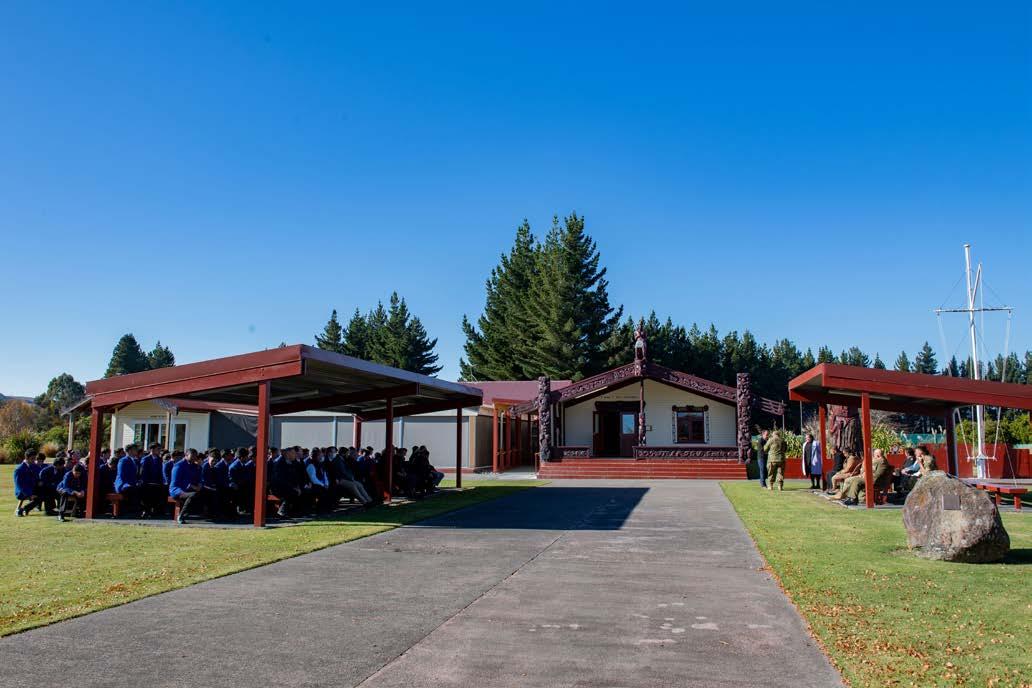
The reason for this is that, as soldiers, we always stand ready to depart onto a battlefield. The NZ Army is operating outside of tradition here, but that alone does not grant us the authority to establish uniquely Ngāti Tūmatauenga protocols for procedures on our marae. For several decades the NZ Army has endeavoured to meet bi-cultural obligations by melding western organisational constructs with Māori artefacts to create the culture of Ngāti Tūmatauenga. I have found that the western lens is literal in its interpretation of cultural situations. The bias that this lens generates can be compounded when viewed in or from the context of a hierarchal organisation (such as the NZ Army). When viewed only through a western hierarchal organisational lens, the protocols that exist on our marae can be perceived as contradicting policies around equality, inclusion, and diversity. Through a western lens your position on a marae during a pōwhiri directly translates to what roles you will be permitted or considered competent to fill outside of a marae.
There have been discussions recently about what protocol will be applied at our marae and who has the authority to impose it upon us in our own home, in our own organisation. Any loss of voice in that space can make people feel like they are less equal and that they no longer belong, which would be the opposite of Ngāti Tūmatauenga’s reason for being.
For over half my life my family has been Ngāti Tūmatauenga. I was the only Kiwi on a long course in England, there I was made to feel more like an outsider than my deployments to Afghanistan. On my deployments I was surrounded by Kiwis, in the UK I was not. I was fortunate to deploy to Gallipoli
in 2022 for Anzac Day, and the familial ties between the NZ Army/Ngāti Tūmatauenga, the RNZN, and the RNZAF enabled us to build a cohesive team that perfectly blended our military and cultural traditions in order to put on a commemorative service that exceeded the standard of all other services that week. That success was shared equally across the team, but I was proud to say I was the Contingent Commander during that success. However recent discussions about marae protocol have made it seem like I can work for the NZ Army but I do not have a place within Ngāti Tūmatauenga.
It has taken some unpicking to work out where that frustration, hurt, and even anger has come from. I am expected to be the same as my peers – wear the same risks on operations, carry the same weight, achieve the same output, but still I am fighting to be seen as equal. The phrase ‘she only got the job because they needed a female Commanding Officer’ has reached my ears more than once during my time as CO, 2CSSB. I have shared ideas at meetings that are only taken on board when a male subsequently raises it. There are individuals in our organisation that would take a seat on the pae because of their rank not their Te Reo Māori or Te Ao Māori competence, and not see the subject matter experts that they have displaced. This is replicated in meeting rooms when the same individuals take a front seat at the table, without consideration for who else is in the room and without looking back for advice.
The frustration was never really about who gets to speak from the pae, it stemmed from what that symbolised with regards to who is automatically permitted a voice within our organisation, and who has to fight for their voices
to be listened too or to be allowed to take a seat at the table. This can be seen as an unconscious bias or even an intentional hurdle that hinders individual career progression. The recent Wāhine Toa Wānanga has improved my cultural competence with regards to Te Ao Māori in the context of Ngāti Tūmatauenga and I have gained a few takeaways. The first takeaway is simply a reminder that not filling a perceived leadership role in one specific process does not diminish your mana as a leader. In fact, stepping back and allowing or mentoring someone else to take the spotlight can increase your standing as a leader. The second takeaway is a caution about understanding the lens through which we are viewing an activity and actively counter biases when we interpret what has taken place. There is benefit to be gained from weaving the hierarchal organisational constructs of the NZ Army and cultural richness that is within Ngāti Tūmatauenga closer together but the start point must be acknowledgement of individual biases and improved cultural competence at all levels. Finally, there will be many reasons why individuals will wish to or elect not to fulfil roles during formal or informal processes on our marae and outside its grounds, it is important to respect and support those decisions without judgement. I remain open to the possibility that there will be a time where a wāhine toa of Ngāti Tūmatauenga is skilled in Te Reo Māori, is proficient in Te Ao Māori, has the support of their whānau, and the need (not just want) to take a position on the pae during a pōwhiri. This will be an exceptional circumstance, but she will have my backing to ensure that the matter is judged on competence, not on rank and
not on gender. That is all this has been about – competence – to be judged for our actions and choices, not pigeonholed based on looks or disregarded due to unconscious biases.
Though this piece is centred around matters that have arisen within the NZ Army/Ngāti Tūmatauenga, it is likely that the lessons are applicable to soldiers and officers engaging with personnel from other countries and cultures. In the past, the NZDF has prided itself on our ability to engage and rapidly build strong connections with other non-western based cultures. Such success is unlikely to continue if we lose our self-awareness and cultural competence.
These thoughts show my lens and my point of view, they are not intended to reflect the perspective of all wāhine within the NZ Army/ Ngāti Tūmatauenga. However they are formulated from discussions with a number of NCO wāhine within 2CSSB, WO wāhine, as well as those held during DCA’s Wāhine Toa wānanga. These discussions have been invaluable and the support from these wāhine is appreciated, as is the patience of the tāne toa who have allowed me the space to challenge ideas and arrive at this point without jumping in to lecture me on what my position should be.
16 ARMY PEOPLE
The importance of understanding the ‘why’ not just the ‘what’
ARMY ENGINEERS SET CONDITIONS FOR REGENERATION

Last September more than 100 engineers from 2 Engr Regt and SME conducted a variety of training activities around the country, to set the conditions to sustain our regeneration. Ranging from tactical exercises, training camps, courses and construction tasks, these activities contributed to the initial phase of regeneration for the Corps. It started with deliberate regrouping in April 22 and many 502 checks in the following months, as the Corps tackles our training deficiencies.
The RNZE Corps regeneration is focused on getting the NZ Army’s sappers back into soldiering and military engineering after two years of Operation Protect, says 2 ER Commanding Officer, Lieutenant Colonel Mike Nochete.

“The main challenge for RNZE is the breadth of training required to supervise complex military engineering tasks such as assault demolitions, boating and construction, whilst providing a progressive pathway for our junior commanders to become confident and competent to deliver engineer effects safely.”
Ex HARBINGER 22
Ex HARBINGER saw Linton-based sappers develop their weapon proficiencies with two weeks of live firing in Waiouru across several ranges. The activity incorporated a deliberate build-up of competencies from static range weapon confidence to an urban live field shoot and night fighting section shoot.
SPR Brandon Hewetson-Hayes who deployed as a section member said he hadn’t touched many of the weapons since his basic training in 2020. But he found everyone keen to get back into training and said “teamwork enabled us to pull on the experience of the group” to ensure everyone got through.

ARMY EXERCISE 17
Reserve Force Graduation
By Sergeant Caroline Williams
Challenged physically, mentally and emotionally, the six week course changed their outlook on life and set in motion habits, friendships and memories that would remain with them for a lifetime.
PTE Anthony Lensen, year 10 Dean at Marcellin College in Auckland, has encouraged many of his students to look at the Defence Force as a career option but thought he needed to walk the talk and signed up to get a firsthand experience to share with his students.
“If you are going to lead others you must lead by example,” he says, on reflection of joining.
“Some of them thought it was pretty cool I was doing this, and I think others were just glad I wasn’t at school for a few weeks,” he laughs. There’s no denying his experience has been life changing though and he comments that, “Oh, how much you could pack into life if you applied the same discipline and ethics into your everyday life.”
Reserve Force recruit training consists of two modules. Module

one (MOD 1), normally run from a Reserve Force unit prior to commencing initial training, gives the recruit an insight to the army battle rhythm and also where they learn the basic structure of the NZ Army, rank structure, and parade skills. This gives the recruit a unique opportunity to stay in a military environment, build friendships with fellow recruits, and confirm if the Reserve Force is what they envisaged.
Module two (MOD 2) is the main part of a recruit’s initial training and is based at TAD. This is the foundation course where soldiers are taught basic soldiering skills including drill, leadership, learning management systems (LMS), first aid, weapons training, navigation, radio communication, and fieldcraft. The training culminates in a five day field exercise in the Waiouru training area where a large part of the course is put into action. Training is blended, face-to-face learning and student online learning.
MAJ Nigel Cole, Officer Commanding KRITHIA Company
Q & A RESERVE FORCE
(for RTF 167), TAD, said due to the condensed nature of the RTF MOD 2 course, the days are long so that recruits can achieve the required learning outcomes. Commenting that recruits adapted well to the training intensity, he went on to say, “The TAD staff understand the time pressure of the course, the diversity in age and gender of the ResF recruits, and manage the training expectations appropriately.
“Having TAD RF personnel staff the course, with ResF supplementary staff, enabled the smooth running of the course. Due to their experience, and understanding of the training outcomes and expectations, they successfully managed the specific challenges a ResF course presents compared to an RF course,” he said.
“RTF 167 qualified 108 recruits out of 110 who marched in. This was an excellent result, and a credit to the soldiers and officers on RTF 167. The opportunity for ResF Platoon Commanders and Non-Commissioned Officers to work alongside RF counterparts
How to transfer to the ResF?
Members who are cleared to transfer to the ResF on release from the RF can choose to transfer to either the Ready Reserve (RR) or the Standby Reserve (SBR).
What is the RR and your obligations?
The RR are those reservists who are posted to a ResF infantry battalion or an integrated unit in 1 (NZ) Bde, TRADOC or JSG, and who regularly attend training. The RR contributes to Army operational outputs.
In the RR you are expected to commit to 20 days training per year (work and family commitments dependent), which will generally be one weekend per month, as well as the occasional weekday evening. You will retain your military kit except those items deemed as returnable IAW NZP23 Chap1 Sect 7.

A regular column answering your questions about the NZ Army Reserve Force (ResF).
What questions do you have?
Send queries to timothy.sincock@nzdf.mil.nz
What’s happening?
was a valuable training opportunity, and all who attended would testify to that,” MAJ Cole said.
On completion of MOD 2, recruits engage in Corps training, including, infantry, medical, logistics, or combat engineer training.
ResF soldiers and officers are volunteers who are paid for the hours they work, usually spending
What is the SBR and your obligations?
If you want to stay engaged with Army, but can’t commit to the RR, then you can ask to be posted to the SBR.
You will receive an offer of service for two years, with no requirement to attend any training. This allows you a period of time to settle into civilian life. At any time you can ask to transfer to the RR or the RF. You will be required to hand back your military kit, with the exception of Scale Army 107 IAW NZP23 Chap1 Sect 7 and your ID Card. The SBR is managed centrally from Army General Staff, who will send out semi-regular communications to you.
Your commitment is to keep Army updated on your contact details and intentions, and to maintain your security clearance.
After two years you can ask to transfer to the RR or to the RF, or to remain in the SBR or to be released.
twenty plus days annually, training with their respective ResF unit. They have the opportunity to deploy and engage in short term regular force engagements, such as the NZDF support to the operation of Managed Isolation Facilities.
Your questions answered:
Can you provide a SITREP on the updated ResF Pay Progression Model (PPM)?
I note that the HR Toolkit has not been updated.
Answer: The ResF PPMs cannot go live until the following have occurred:
1. All ResF Trade Band Models /PPMs have been approved by the ATRB and sent to HRSC for loading.
2. Once all pay models have been loaded, HRSC will conduct testing.
3. If the testing is successful the new PPM will be published on the HR tool and get activated.
CA Directive 02/21 dated 8 Dec 21 directed that all ResF Trade Band Models /PPMs to be completed and approved by the ATRB NLT 1 Jun 22. There are several Corps that have not completed this for various reasons. Respective Corps have been urged to provide priority and urgency into this so that benefits of REM 22 to the ResF are realised without prolonged delays.
Did you know…
We have Seamless Transfer Regular Force Engagements (STFRE) available for ResF. If you are available for full-time or part-time STFRE, tell your commander (for RR) or AGS. SBR.Cell@nzdf.mil.nz at DACM (for SBR) now.
WO1 Timothy Sincock has assumed the role of the Reserve Force Sergeant Major (Army) WEF 12 Dec 22.
Please direct your ResF Q&A related queries to WO1 Sincock at timothy.sincock@nzdf.mil.nz
18 ARMY PEOPLE
For the 108 graduating Reserve Force recruits that arrived at The Army Depot (TAD), Waiouru Military Camp on 12 November 2022, it was a challenge they were looking forward to.
PTE Fergus Matla, RNZIR was awarded the Top Student trophy when the Army’s latest group of Reservist recruits marched out in Waiouru in December last year.


Other awards:
Top TF Instructor
LCPL Sunny Ding
Top Shot
PTE Hunter Moon
Top soldier each Platoon
Bassett VC PTE Matla
Judson VC PTE Benjamin Ward
Hume VC PTE Moon
Sergeant Major of the Army Award
PTE Thomas Oldham
ARMY PEOPLE 19
Assistant Chief of Army (Reserves) Colonel Amanda Brosnan reviews the guard.
Prize winners receive their certificates from COL Brosnan.
Lieutenant Colonel Kate Hockings-Mackie is the new Commanding Officer of 1st Combat Support Regiment. She takes over from LTCOL Jared McGregor.
“I feel extremely humbled and privileged to have taken command of 1st Command Support Regiment.
1 CSR is a vibrant and diverse unit with highly trained, skilled and motivated soldiers and officers,” she said.
“2022 was a memorable year for 1 CSR, our personnel took on some big tasks, demonstrating resilience and professionalism under some challenging conditions. Through these shared experiences, 1 CSR grew together, and became a more cohesive team, able to adapt as needed. After two years of Operation Protect the unit is reconnecting with its core business. Looking ahead into 2023, there are some exciting and new changes on the horizon, and this will offer
the unit an opportunity for further growth and development, while continuing to provide our people with purpose.
“These opportunities will keep the unit engaged, whilst continuing to master our roles as communicators, intelligence professionals and enablers, delivering command support to the battlespace. This includes celebrating the Royal NZ Corps of Signals Centenary, the delivery of NEA capabilities, continuing to deploy on operations, re-establishing our connections and engagements with our partners on offshore exercises and exchanges, and supporting our personnel in their individual professional military education and careers.”
The incoming Commander of Queen Alexandra’s Mounted Regiment is Lieutenant Colonel Jacob Murray. He takes over from LTCOL Edward Craw.
“I am very honoured to be given the opportunity to command QAMR, and have a chance to serve with a dedicated and professional group of New Zealanders in such an esteemed unit,” said LTCOL Murray. “QAMR has an unrivalled history within the NZ Army and it is poised to play a central role in the regeneration of land combat capability, in accordance with Army’s Capstone Orders.
“2023 will be a busy, but exciting time for the unit. Exercise Talisman Sabre will enable QAMR to both familiarise personnel with tactical tasks up to Squadron level, as well as providing a welcome opportunity to develop interoperability, and conduct joint land combat training, within both the Australian Battle Group, and Combat Brigade constructs. In parallel, the unit will work with the Protected Mobility
Project to begin the process of introducing and integrating the Bushmaster PMV capability as the vehicles arrive in New Zealand.”
CHANGES OF COMMAND
2023 is an exciting time to be part of 16th Field Regiment, says the new CO of the Regiment, LTCOL Sandra Patterson.


“With the conclusion of Operation Protect, 16 Fd is afforded great opportunities within the Army Regeneration Plan and the CA’s intent statement and Capstone concept. Alongside this, 16 Fd has new capability planned, or coming online in 2023. During my tenure a key focus of mine will be ensuring that 16 Fd is aligned with this intent and on the right path to enable the Army of 2025 (and beyond); specifically how we can enable Army to fight and win on combat operations.
Army Regeneration provides the opportunity for 16 Fd to not just return to business as usual as it was prior to Operation Protect, but deliberately develop better ways to train towards our outputs and focus on what’s important. 16 Fd is the integrator for the NZ Army. The key value we add to Army is planning and integrating fires and effects (including joint fires from aircraft,
ships and platforms including from partner nations) in support of manoeuvre and we have some unique skills to enable this across the spectrum of operations.
“Whilst people think of 16 Fd being just artillery we are actually a toolbox of many capabilities including planning functions (JFECCs, JFTs, effects planning support to DJs), weapons/ delivery systems (guns, mortars, and trained personnel who can call-for-fire from partner weapon platforms, aircraft and ships) and STA capabilities (UAS and counterfires radar). The art to using this toolbox of capabilities is planning, orchestration and integration to support manoeuvre with a tailored package depending on the situation.
“As part of the Army Regeneration Plan 16 Fd will continue to conduct foundational OS Bty training up to combined arms live firing, demonstrate
interoperability with our key partner nations, develop a sustainable Bty JFECC capability and achieve operational release of the new digital Fire Control System (including digital integration with partner nation systems). We will also be looking to modernise our trade structure and better integrate our STA capabilities within the unit. In 2023 we are likely to have two key overseas exercises to enable our training objectives – one in Fiji and one in Hawaii as part of a US Bde-level exercise. These are exciting opportunities for the soldiers of 16 Fd to have adventures overseas and build relationships with our partners. In addition, we will also have a number of live-firing exercises in NZ and our JTACs will continue to maintain their currency working with ADF, US and Canadian Aircraft.”
LTCOL Vanessa Ropitini takes over command of 2 CSSB from LTCOL Sheree Alexander.
“I am privileged to be the CO of the unit I have called ‘home’ for a big part of my military life. It is both a scary and exciting time to be coming into command for a number of reasons. Everyone is acutely aware that we are navigating the effects of high attrition and hollowness. Being in this role for Army’s regeneration and having to
balance unit outputs with personnel issues allows me the opportunity to shape and influence how the unit moves forward. I am very lucky to have highly motivated and capable staff throughout the battalion, and most importantly in key positions, as they will play a really big part in what we achieve. Whanaungatanga! (Collectively strong).”
Next month: 10 questions
20 ARMY PEOPLE
Photos: Eddie Paku
LTCOL Murray accepts the Colours. LTCOL Craw (slightly obscured) is second from left.
with LTCOL Sam Smith, the new CO of 2/1 RNZIR
EX IRON MAIDEN
The recent 38th annual Taupo Ironman event gave an NZDF medical team the opportunity to use their skills in a real-life situation in Exercise Iron Maiden.
The Deployable Health Organisation contributed Regular Force and Reservist doctors, nurses and medics to support the treatment of patients at the event. The conditions treated ranged from trauma and fatigue to gastro intestinal conditions, cardiac and respiratory conditions.


The Officer Commanding, Northern Health Support Squadron, Lieutenant Commander Sarah Taylor said the ongoing opportunity to support the event was valuable to Defence Health, as while the injuries and medical conditions seen are able to be simulated, the ‘human factor’ is difficult to simulate using training aids.
The unit also allowed for greater engagement between Regular and Reservist medical staff, and for staff to work alongside clinical experts.
A total of 36 patients were treated, some from on the IMNZ course, with two of these patients requiring higher medical aid and subsequently referred on to hospital. The majority of medical care was relatively minor and
predominantly related to the effects of dehydration and fatigue.
The 37-strong Defence team included logisticians, a command element and chefs.
LTCDR Taylor said the annual Iron Maiden exercise is the biggest exercise that is run specifically for the NZDF Reservist Medical team.
“The Northern Health Support Squadron (NHSS) Valkyrie Troop use it as an opportunity to put their significant training programme to use by supporting real patients. It is also a great opportunity for the collective team of NHSS to work together.
“Due to specific nature of being a territorial force, often when they have parades and exercises they are completed after hours or in the weekends, where the RF team may be required for other duties. By programming this into the entire unit’s training programme we get to prove our synergy as one team, while also providing opportunities for TF from other units to play an active role.”
The Physical Training Instructor, based at Linton, said she originally joined the Army in 2014 as a movement operator, until she trade changed to become a Physical Training Instructor in 2020.
“I had always been a bit of a fitness nut, even on recruit course I was quite intrigued by PTI’s.
“I’ve always been quite active, I’ve ridden horses my entire life, which was my sport growing up.
“My parents were race horse trainers and I competed in endurance, and my partner was into rugby and league when he started in the Army.”
CPL French’s partner, Sergeant Abe Erihe, 34, is also in the Army as a PTI, currently working in Linton in the rehab team, so she said exercise was important to both of them.
This was the duo’s first baby and she said they were excited, but initially they were not sure how much physical activity she would be able to undertake while pregnant.
Prior to getting pregnant, CPL French had just competed in a bodybuilding competition, so said mentally going from that to being pregnant was tough.
At an initial appointment with
their midwife the pair said they got great advice, with the midwife saying CPL French could carry on training how she was before falling pregnant.
“The advice we were given was that if you weren’t active before pregnancy, it can be dangerous to then start all of a sudden start being active whilst pregnant.
“However, because I was very active before pregnancy, we were advised to not change anything and regress as we needed, specific to my pregnancy.”
Alongside a booklet about training while pregnant in the New Zealand Defence Force, CPL French said she had learnt a lot through her pregnancy.

“Having that in the back of my mind also helped when other pregnant people came through.
“I could show them regressions. Some of them thought they could do nothing core, but I would say ‘oh you can do these things’.
“It was actually really interesting, there were certain movements I couldn’t do, my core didn’t want a bar of it, then some of the other girls came through and I would say you can do this and they would be able to do it fine.
“People would say ‘I can’t do strength training’, and I would say yeah you can, you just have to regress the movement a little.
“So it was a learning for me and then I passed that on to other people.”
She said for battle PT classes her colleagues were happy to swap with her and take those and let her take some of their other classes in place.
“I ran a brigade event and I had heaps of support and heaps of interest, people coming up and asking how I’m doing and when I’m due. “
“I still jump in with our corps doing workouts. I feel like I’m holding baby back quite a bit, so I didn’t really show until about 25 weeks.”
As part of their PTI uniform was a red bomber jacket, CPL French said it wasn’t until about 32 weeks you could see she was pregnant.
“I exercised right though, it’s all new for me as well just listening to my body, some days I will really want to work out and then others I don’t so I just rest.
“It’s really rewarding for me when people reach out and say it’s inspired them watching me and it’s
motivated them to keep their active lifestyle up as much as they can.
“That’s one of the things with the PTI role that’s rewarding.”
SGT Erihe said having a pregnant partner had broadened both their knowledge on that topic in the health and fitness space, which he said he enjoyed about the job.
“There’s so many avenues in
“It was my first major event since finishing Army Recruit Course. Up until the event I had been working on building my fitness and bike skills back up, and the race was going to be the perfect test for this. I was fortunate to have plenty of support in the build up to the event from my unit (JMPU), my coaches (Endurance Sports Performance) and the brands I work with (Cube Bikes NZ, Uvex NZ and Tailwind Nutrition NZ).
“The course for the event was 160km with 1,728m of vertical climbing. The race was amazing! I gained some really valuable race experience as some of the competitors were pro cyclists or Commonwealth Games representatives and I was able to learn from them. The race was pretty hard, the pace was on the
the industry, from strength and conditioning, rehab, the female avenue and nutrition, it’s cool in that way, you learn a lot.”
CPL French went on maternity leave in August and delivered a healthy baby girl in September.
entire way and the weather was rather wild. In the end, I finished 8th in Elite Women and 5th in my age group in a time of 4hrs and 34min. I was fairly happy with this result. It was good to see where my strengths and weaknesses were and I was able to figure out what I need to work on going forwards.”
PTE Clark trained for Elite Criterium Nationals and will compete in the Elite Road Nationals in this month, and is looking at attending the Oceania Championships.


“I have just finished a week-long pre-season training camp with my team Black Magic Women’s Cycling to help in the build-up for these events. At the moment, it’s back into some solid training to start the 2023 season with a bang!”

22 ARMYSPORT
A passion for fitness and a supportive working environment are just some of the things Corporal Ashley French, 28, credits for her being able to carry on exercising and taking fitness classes while pregnant.
Racing in the BDO Lake Taupo Challenge was a big deal for trainee Military Police Private Charlotte Clark.
SINGAPORE FUND
In January 1990, the Welfare Funds administered by Headquarters New Zealand Defence Force South-East Asia were remitted to New Zealand and paid out on a pro rata basis to the single services. The Singapore Fund was established by the Chief of General Staff on 1st April 1990 to administer.

Since then a capital amount has been maintained to provide a separate identifiable source of income to the fund, and the only income derived from this account by way of interest is available for distribution.
The aim of the fund is to provide financial assistance to individuals and teams participating in an approved activity. Income from the fund may be made available by way of a grant, a loan or a combination of both to assist eligible persons. Applications for funds are to be

SAPPERS’ ASSOCIATION [NZ] INC
forwarded through the applicant’s chain of command to the Secretary of the Singapore Fund, (Mr. D. Pilgrim), Army General Staff. The guidelines for applications to the Singapore Fund can be found in the NZ P20 Chapter 9 Section 5. The Secretary is also available to answer any inquires (DtLn: 347 7180).
We intend to hold evening social functions as follows:
1. Decade 2005–14 Do
For those who joined the RNZE between 2000 & 2019, sometime in 2023.
2. Decade 2015–24 Do
For those who joined the RNZE between 2010 & 2024, sometime in 2024. Location TBC
Find your mates who have left the army to attend.
Contact: Vail Hubner, Membership Clerk clk.mbr.sprnz@mail.tidyhq.com
+64274978651
https://sprnz.tidyhq.com – Menu / Sappers / Join $60 for Life Membership
ARMYSPORT 23
 A soldier in the field phase of a recent exercise in Fiji.
Photo: Petty Officer Chris Weissenborn.
A soldier in the field phase of a recent exercise in Fiji.
Photo: Petty Officer Chris Weissenborn.
