AUR

vol. 64, no. 2, 2022 Published by NTEU ISSN 0818–8068
Australian Universities’Review
Let’s aim higher
Editor
Dr Ian R. Dobson, Monash University
Cover image
Dr Chau Chak Wing Building University of Technology, Sydney. Image: Michael Evans.
Production
Production Coordination: Jessica Brinsdon
Editorial Assistance: Anastasia Kotaidis
Design & layout: beige.com.au
Contact
Australian Universities’ Review, c/- NTEU National Office
PO Box 1323, South Melbourne VIC 3205 Australia
Phone: +613 9254 1910
Email: editor@aur.org.au
Editorial policy
Australian Universities’ Review (AUR, formerly Vestes) is published by the National Tertiary Education Union (NTEU) to encourage debate and discussion about issues in higher education and its contribution to Australian public life, with an emphasis on those matters of concern to NTEU members.
AUR publishes articles and other contributions, including short commentary and satire.
Although some contributions are solicited by the Editor or the Editorial Board, AUR is pleased to receive contributions independently from staff and students in the higher education sector and other readers.
Articles will be assessed by independent referees before publication.
Priority is given to contributions that are substantial, lively, original and have a broad appeal. Responses to previously published contributions are encouraged.
AUR is listed on the Australian Government’s register of refereed journals and is included in Scopus.
It is presumed that authors have followed the standard scholarly ethical practices involved in seeking to have their work published. Authors should take their lead from the Australian Code for the Responsible Conduct of Research and the Committee for Publication Ethics.
Subscriptions
AUR is availalbe free to NTEU members on an opt-in basis (you need to let us know; update your details online at nteu.org.au/members). Paid subscriptions available for Australian and international subscribers. Full details at aur.nteu.org.au/about.
Advertising
Advertising rates are available on application to aur@nteu.org.au
AUR
Australian Universities’ Review
Editorial Board
Dr Alison Barnes, NTEU National President
Professor Timo Aarrevaara, University of Lapland
Damien Cahill, NTEU General Secretary
Professor Jamie Doughney, Victoria University
Professor Jeff Goldsworthy, Monash University
Dr Mary Leahy, University of Melbourne
Professor Kristen Lyons, University of Queensland
Professor Dr Simon Marginson, University of Oxford
Dr Neil Mudford, University of Queensland
Jeannie Rea, Victoria University
Cathy Rytmeister, Macquarie University
Errol Phuah, CAPA National President
Contributions
Full submission details are available at aur.nteu.org.au/submissions. Please adhere to the style notes. Contributors should send digital manuscripts in Word format via email to editor@aur.org.au
Contributions should be between 2,000 and 7,000 words, although longer articles will be considered. Articles should be accompanied by an abstract preferably not longer than 150 words.
The author’s full contact details should be provided, including email address and phone number.
Contributions are sent to a minimum of two referees, in accordance with Australian Government requirements for peer blind review.
Book reviews
Books for review should be sent to the Editor. Our policy is to review books dealing either with tertiary education or with matters pertinent to issues in tertiary education.
Book reviews should be between 200 and 1200 words; review essays may be longer.
Replies and letters
AUR welcomes letters of response to articles published in the journal. Longer responses to articles are also encouraged.
Responses should be a maximum of 1,000 words, and should be received within a month after the publication of the journal so that they can be properly considered by the Editor and the Editorial Board for the following issue.
Archive
This issue and all previous issues back to 1958 can be viewed on our website at aur.nteu.org.au/archive.
Style
Download the AUR Style Guide at aur.nteu.org.au/submissions.
Use ‘per cent’ rather than ‘%’ in the text. Use ‘%’ in tables and figures. Use ‘s’ rather than ‘z’ in words such as ‘organise’, ‘analyse’, ‘recognise’ etc. Use a single space at the end of sentences.
Use single quotation marks. Use double quotation marks for quotes within a quote. Indent quotes of more than 50 words.
Dates thus: 30 June 2020.
Authors should ensure that the material cited in the text matches the material listed in the References. Neither male nor female pronouns should be used to refer to groups containing persons of both sexes. Do not use numbered sections. Do not use underlining.
Do not use footnotes, endnotes or any headers or footers except for page numbers (bottom of page, centred). Avoid use of abbreviations, except for well-known organisations or processes.
Tables & figures
Tables and figures should be incorporated into the text close to where they are first referred. In general, ‘tables’ comprise data, and ‘figures’ comprise everything else (graphs, photographs, etc.).
Do not refer to position of tables/ figures (e.g. ‘above’, ‘left’).
Tables and figures should have separate numbered sequences, with titles above for tables, and below for figures.
Figures should be prepared for black and white print. Graphs with coloured bars are often illegible in black-andwhite print.
AUR is available online to view and download at nteu.au
In accordance with NTEU policy to reduce our impact on the natural environment, this magazine is printed using vegetable-based inks with alcohol-free printing initiatives on FSC certified paper by Printgraphics under ISO 14001 Environmental Certification.
Post packaging is 100% degradable biowrap.
References
References to be cited according to APA Publication Manual 6th ed.
References in the text should be given in the author–date style: King (2018) argues ...
or as various authors (King, 2018; Markwell, 2007) argue ...
Two co-authors should be cited in the text as (Smith & Jones, 2013).
More than two authors cite as (Jones et al., 2017).
Page references should be thus: (King, 2018, p. 314).
Use page references for direct quotations.
The reference list should be placed in alphabetical order at the end of the paper, utilising the author–date system.
For a reference to a book: Gall, M., Gall, J. & Borg, W. (2003). Education Research: An introduction (7th ed.). New York: Allyn & Bacon.
For a journal reference: King, D.A. (2004). What different countries get for their research spending. Nature, 430, 311–316.
For a chapter in a collection: McCollow, J. & Knight, J. (2005). Higher Education in Australia, in M. Bella, J. McCollow & J. Knight (Eds). Higher Education in Transition. Brisbane: UQ Press.
For a web reference:
Markwell, D. (2007). The challenge of student engagement. Retrieved from http://www.catl.uwa.edu.au/__data/ page/95565/Student_engagement_-_ Don_Markwell_-_30_Jan_2007.pdf.
Do not include retrieval dates for web references unless source material changes over time (e.g. wikis).
National Tertiary Education Union
NE U T
C000000 From responsible sources MIX
vol. 64, no. 2, 2022
Published by NTEU ISSN 0818–8068
Australian Universities’ Review
3 Letter from the editor
Ian Dobson
4 Vale Lynn Meek
Leo Goedegebuure
6 V L Meek
Arthur O’Neill
ARTICLES
7 Restructures, redundancies and workforce downsizing: Implications for Australian higher education sector post COVID-19
Alison Owens, Susan Loomes, Margot Kearns & Peter Mahoney
The reach of COVID-19 continues to be immense. Institutions highly dependent on international students in particular have been impacted.
15 COVID-19 disruption to research and research training in Australia: Gender and Career-Stage Inequalities
Alison M. Downham Moore
COVID-19’s impact on research has been monumental. This paper examines the disruptions caused and considers the longterm impacts.
27 How the Kingdom of Bhutan played the Australian Government – and won
Joanne Barker
The Endeavour international scholarship scheme was a winner for the tiny Kingdom of Bhutan. Was it a winner for Australia?
33 Zoomed – A personal reflection on the long, slow destruction of Australia’s university system
Louise Johnson
COVID’s impact has often been highly personal. This personal reflection wonders whether COVID became a smokescreen for our new neoliberal universities.
40 Rethinking universities’ foreign interference obligations: Lessons from the High Court
Matt Simpson & Andrew Tarnowskyj
The Foreign Influence Transparency Scheme Act (2018) requires those who engage with Australian political systems on behalf of a foreign principal to register. How could this impact universities?
50 Occupational health and safety (OHS) and integrated management: A desktop-based review across higher education OHS, business and general management courses in Australia
Nektarios Karanikas & Lilyan Tyson
This paper is a review of OHS and business and management programs in Australia and considers ways the career of future OHS professionals could be enhanced.
61 Hybrid-flexible (HyFlex) subject delivery and implications for teaching workload: A ‘small data’ analysis of one academic’s first-hand experience in 2021 and 2022
Roger Dawkins
COVID-19 has changed aspects of how universities provide teaching. Hybrid-flexible teaching is one outcome of this, being a way to simultaneously deliver a subject in three modes.
BOOK REVIEWS
70 Overcoming Managerialism? How??
Overcoming Managerialism: Power, Authority and Rhetoric at Work, by Robert Spillane and Jean-Etienne Joullié
Reviewed by Thomas Klikauer and Catherine Link
73 Intelligent design??
How to Be a Design Academic, by Alethea Blackler and Evonne Miller (Eds.)
Reviewed by Neil Mudford
77 Organising during COVID-19
Organising during the Coronavirus Crisis – The Contradictions of Our Digital Lives, by Mike Healy
Reviewed by Thomas Klikauer
79 A life in the academy
My Accidental Career, by Brenda Niall
Reviewed by Bob Birrell
81 Are universities a lost cause?
The Dark Side of Academia: How Truth Is Suppressed, by The Secret Professor
Reviewed by Brian Martin
vol. 64, no. 2, 2022 1
82 Destructive Management Leadership: a review essay
Destructive Leadership and Management Hypocrisy: Advances in Theory and Practice, by Selin Metin Camgöz & Özge Tayfur Ekmekci
Reviewed by Thomas Klikauer
88 AI, AI, Oh??
Future superhuman: Our transhuman lives in a makeor-break century, by Elise Bohan
Reviewed by Neil Mudford
93 Universities and the common good
Transforming Universities in The Midst of Global Crisis: A University for the Common Good, by Richard Hil, Kristen Lyons & Fern Thompsett
Reviewed by Natalie Osborne, Griffith University
95 Crisis! What crisis?
Transforming Universities in the Midst of Global Crisis: A University for the Common Good, by Richard Hil, Kristen Lyons & Fern Thompsett
Reviewed by Eva Crowson and Sharon Stein, University of British Columbia
AUSTRALIAN UNIVERSITIES’ REVIEW vol. 64, no. 2, 2022 2
Letter from the editor
Ian Dobson
This issue comes to you following a somewhat troubled period, and I don’t just mean COVID-19. The NTEU website was hacked in mid-2022, a practice that is becoming far too common. As an ex-Medibank Private client, and a current Optus one, I guess that nothing surprises me anymore. Of the myriad problems created by the NTEU hack, one was that Australian Universities’ Review was off-the-air for quite some time, something not good for authors wishing to find out how to submit papers, etc. However, we’re back!
In my last letter from the editor, I reported the sad news of the passing of Lynn Meek, a stalwart of Australian higher education research. This terrible news reminded me of a Vale written by Lynn, concerning another highly-influential scholar known to many of us, Professor Grant Harman (Meek, 2014). In this issue, Lynn has been remembered by two people with close connections to AUR. Leo Goedegebuure was a member of the AUR editorial board until recently and was a long-time friend and colleague of Lynn’s. Occasional contributor Arthur O’Neill was also a friend, and Lynn was also his supervisor when he wrote his (mature-aged) PhD. In their separate Vales, both remember Lynn fondly, as does anyone who met him. This is especially the case for those who worked with him, were taught by him, or were simply lucky enough just to hang around with him from time to time. V. Lynn Meek is missed by all.
On to this issue’s articles! We open the show with a pair of COVID-19 pieces. The first is by Alison Owens, Susan Loomes, Margot Kearns and Peter Mahoney. Based on 20212022 financial data, it would seem that ‘…some institutions have actioned disproportionate staff cuts… often badging this downsizing as organisational restructure’. Surely not our Australian universities! Meanwhile, Alison M. Downham Moore of Western Sydney University has examined pandemic impact on disruptions to university research training and its pipeline. Restoration will require targeted federal government policy changes.
Joanne Barker provides us with an analysis of the Australian government’ Endeavour international scholarship program. The tiny Kingdom of Bhutan did quite well, apparently. How did they do it?
In a piece that reflects some of the realities of the paper by Alison Owens and her colleagues, Louise Johnson, formerly of Deakin University reports on redundancy forced on her after 40 years’ service. She asks ‘…was COVID-19 a ruse, a smoke
screen for an acceleration of politicisation, corporatisation, marketisation and casualisation …’?
Matt Simpson and Andrew Tarnowskyj are a pair of lawyers from LK Law who have looked at the Foreign Transparency Scheme Act (2018) and its potential impact on Australian universities and their need to comply with the Act. Universities may need to rethink their registration obligations, a situation arising from a recent High Court of Australia decision. Occupational health and safety and how this could be improved by adapting an integrated management concept, to allow management systems to share and exchange information. Nektarios Karanikas and Lilyan Tyson undertook a desktop study to see what is being taught about these issues by Australian universities, and what is not.
Finally, Roger Dawkins looked at aspects of the COVID19 impact on education provision by Australian universities. This paper considers hybrid-flexible teaching (HyFlex), and how it is likely to continue and expand, even post-COVID.
By now, readers will have realised that AUR is big on book reviews. This issue presents nine reviews of eight books, including two by editorial board member Neil Mudford (on design academics and transhuman lives), and we have three management-focussed reviews from WSU’s prolific Thomas Klikauer and colleagues. Bob Birrell and Brian Martin each provide a review about university people (Brenda Niall and The Secret Professor, respectively), and Eva Crowson and Sharon Stein of the University of British Columbia, Canada, and Natalie Osborne of Griffith University have reviewed Transforming Universities in Midst of Global Crisis by AUR contributors Richard Hill, Kristen Lyons and Fern Thompsett. Kristen is also a member of the AUR editorial board (for her sins).
Finally, thanks are due to the hard-working NTEU staffers who make the production of AUR possible. Their role has been particularly difficult this year, but as always, they have come through with flying colours.
Until next time!
Ian R Dobson is Editor of AUR, and an adjunct member of the Professional Staff at Monash University.
Meek, V.L. (2014) Vale Professor Grant Harman (1934–2013). Journal of Higher Education Policy and Management, 36(2), 115-116. DOI: 10.1080/1360080X.2014.884672
AUSTRALIAN
REVIEW vol. 64, no. 2, 2022 Letter from the editor Ian Dobson 3
UNIVERSITIES’
Vale Lynn Meek
Leo Goedegebuure
On March 13 Australia lost a great higher education researcher. It always is a moot point who was the best and brightest but Lynn Meek by any account would be considered a leading scholar in our field. I am very grateful to Ian Dobson to be able to provide an opportunity in this journal to reflect on Lynn. I have done so in a more formal way in the journal he edited for over eight years (https://www.tandfonline.com/ doi/full/10.1080/03075079.2022.2054149) but I take this opportunity to provide a more personal account. I do this by focusing on Lynn as a scholar, a mentor, a supervisor and a friend.
In higher education research, our field is widely spread when it comes to theories, dogmas and beliefs. Lynn was a true sociologist at heart, raised in the traditions of Anthony Giddens. It was evidenced from the start in his thesis on the University of Papua New Guinea, became probably even more pronounced in his often neglected study of higher education in Gippsland, aptly titled Brown Coal or Plato and still so relevant today (https://catalogue.nla.gov.au/Record/1318871) and has driven his work over the many years he was part of our community. He did have his dibs into neo-institutionalism and together we had great fun exploring evolutionary thinking to the tricky issue of diversity in higher education systems, culminating in The Mockers and the Mocked (https://www. amazon.com/Comparative-Perspectives-DifferentationConvergence-Diversity/dp/0080425631). But at heart Lynn always remained a sociologist and did not have much time for the fads and fashions that have been part of our field of study over the last twenty years or so.
He never was one for the spotlight and in fact hated presenting at conferences. Admittedly, this was not his forte. What was, was his ability to bring divergent arguments together, to get people to accept that views might be different but that collectively we could achieve a lot, and to chair complex meetings, quietly but very strongly. The best example of this without a doubt is the Changing Academic Profession project of which he was part and parcel since the start in 1992 (https://www.springer.com/series/8668). If diplomacy
was ever needed, it was to get 30+ people with massive egos to agree on a common research approach and questionnaire – the United Nations in a smaller setting but with the same dynamics. Lynn was brilliant at that. He even managed to defuse the China-Taiwan contestation, though today it remains a moot point. But the real point of course is that he was not only an exceptional scholar, respected by his peers, he also was a diplomat in the true academic sense.
He also was mentor throughout his life. Leaving aside the family side – which is not for the journal but still an integral part of his life he always was there for his colleagues. Be it as a director of a research centre, head of a school, or (deputy) chair of an academic board, he would always make time for a conversation and follow that up with good personal advice. Many times, in our current hectic world, we tend to forget these “little” things, but end of day this is what makes our institutions work and our people thrive.
As for the research students I think I can speak on their behalf that Lynn was the best supervisor one could get. He cared. Whatever else was going on, he would take time out to read drafts, provide detailed comments, sit down with them, discuss and provide great suggestions for improvement. In that sense he has touched a vast number of lives and helped them. In this time and age of productivity, completion records and the like, he did not care about that – he cared about his students. This is always what academe should be about but what it has lost over the last years. But not to Lynn.
Finally, I need to write about him as my dear friend. This is hard and even after five months I still get emotional. I don’t think it is often that you have a personal bond for 35 years that completely transcends work – leaving family aside. We met in 1987 in The Netherlands when we were running the EAIR conference in Twente. A massive merger operation was on in Holland, and it was much in line with what was happening with the Dawkins reform in Oz. So, Lynn came over to share his insights. I’ve said this many times over to as many of the colleagues that would want to hear: I thought we’d see this classic Australian surfer girl rocking up in Holland.
AUSTRALIAN UNIVERSITIES’ REVIEW vol. 64, no. 2, 2022 4 Vale Lynn Meek Leo Goedegebuure
Not so. Here comes this scruffy American-Aussie and we hit it off immediately. Together we’ve travelled the world for fascinating projects, most noticeably for us the reformation of the South African higher education system, which was a real challenge. But to end on a high note, the most memorable call I got was from the Dutch Royal Academy. Lynn and I had been successfully getting grants for academic stays in our two countries for a number of years. The call was that we were the only two applicants for the programs for that period and it had become a bit embarrassing to only fund us. In a way that sums it up: niche work and success. But also, a lifelong partnership that got me to move my family to Australia in 2005 and Lynn and Di to move from Armidale to Melbourne in 2008 for the LH Martin Institute.
A man for all seasons!
Leo Goedegebuure is a professorial fellow at both the University of Melbourne and RMIT University.
Contact: leo.g@unimelb.edu.au
AUSTRALIAN UNIVERSITIES’ REVIEW vol. 64, no. 2, 2022 Vale Lynn Meek Leo Goedegebuure 5
V L Meek
Arthur O’Neill
At some time in the mid or late 1970s (memory dims) this American bloke, enrolled as a doctoral student at Cambridge University, sought approval to undertake a research study of the University of Papua New Guinea, my employer of the day. Maybe we didn’t know what we were letting ourselves in for (I, for one, had not the faintest idea what sort of carnivore a sociologist was) but why not agree? UPNG took its first students into a Preliminary Year of studies in 1967; and the offer of undergraduate degree programs started in 1968. We reckoned UPNG had evidenced its repute by the time Lynn Meek arrived. If you want to know what he made of us and of the sort of institution we helped to make, I suggest you get on the internet and buy the printed version of his thesis: The University of Papua New Guinea: A Case Study in the Sociology of Higher Education (QUP, St Lucia, 1982).
One of the things you learn from this study and from Lynn’s later work on the pre-Dawkins Gippsland Institute of Advanced Education – Brown Coal or Plato? (ACER Research Series No. 105, March 1984) – is the double indemnity that comes from close acquaintance with the methodological brand called ‘participant observation’. For researchers you are an informant – lent a sympathetic ear in exchange for confidences. For denizens of these institutional woods, researchers intrude on their sacred groves, though they can be imagined having their uses in advancing various causes. It’s a tricky business this participant observation, easy to run off the rails and end up in a partisan ditch or, worse, to confound the subject of your study with the object of your research. But Lynn ranks high indeed as an exponent of what was, at first, a gift of anthropology to social inquiry and what became in Lynn’s early studies an enlightening fieldwork method.
At the start of 1988, having obtained indifferent results in a BA pass degree thirty years earlier, this 51 years old Australian bloke sought approval of the University of New England to undertake full-time PhD research under Lynn’s supervision and with Grant Harman as co- or back-up supervisor. My subject was to be the education of alternative health practitioners – chiropractors, osteopaths and traditional
acupuncturists – and my method was participant observation. Full of uncertainty about my quality and qualifications I was going to have a bet on being up to the task. And Lynn was prepared to have a bet on me. He was always ready to comment, discuss, advise, but never to influence me to fall off the wagon (I had given up the grog in pursuit of my study).
Lynn didn’t offer me an easy ride, and he did not take an easy supervisory ride either. In the following three-and-a-half years (I submitted in July 1991) he never let up as informed and informing supervisor; and he never told me what to do or how to do it. He eschewed parasitical relationships between students and their supervisors. Lynn didn’t want dependants.
John Kleeman, a colleague and friend at UNE, once talked about a company of owls nesting in a tree on his small farm. Walking on one of his fields in the early evening, he saw a line of owlets on a branch of the tree with a parent owl perched behind them. The parent moved sideways and in turn each of its progeny fell off the branch. One fluttered to the ground at John’s feet. After a while it got upright and flew away, not to be seen again by John.
The last thing Lynn would ever do is impress a course of action or demand an alteration of approach. His signal worth was to question but never to impose; and to make plain that a supervisor was there to assist, not to tell a student what to do. Lynn helped me find manners of thought that were fitting to the study of academic tribes. It was up to me to do the job of researching and reporting.
But he did oblige me to fly.
Arthur O’Neill says that undertaking a PhD degree with Lynn Meek as his principal supervisor was the best thing to have happened to him during his employment in higher education institutions (including nine years at UPNG); and second-best was being made redundant many years ago by his last employer, La Trobe University. According to Arthur the first served to promote a flowering of intellect and the second to preserve it by his removal from that particular academy.
Contact: arthurjhj65@live.com.au
AUSTRALIAN UNIVERSITIES’ REVIEW vol. 64, no. 2, 2022 6 V L Meek Arthur O’Neill
Restructures, redundancies and workforce downsizing
Implications for Australian higher education sector post COVID-19
Alison Owens
Australian Catholic University
Susan Loomes
Griffith College
Margot Kearns
Notre Dame University
Peter Mahoney
Australian Catholic University
This paper reports on research conducted with staff employed in the Australian higher education sector during the COVID-19 pandemic. The sector has been significantly impacted, particularly those institutions heavily reliant on revenue from international student enrolments. Universities moved swiftly to introduce cost-savings measures such as, deferring capital works spending and reducing non-salary expenditure, scaling back casual and fixed term staff and cuts to executive staff salaries, followed by rounds of redundancies, early retirement offers and termination of staff, often framed as organisational restructuring. However, financial data for the 2021-22 period indicate that some institutions have actioned disproportionate staff cuts related to net income, often badging this downsizing as organisational restructure. This information is discussed in terms of the potential implications for the higher education sector in planning for, and meeting workforce needs, as it seeks to regenerate a sustainable business model post-pandemic.
Keywords: COVID-19, higher education workforce, restructure, job loss, workforce planning, succession planning.
vol. 64, no. 2, 2022 Restructures, redundancies and workforce downsizing Alison Owens et al. 7
AUSTRALIAN UNIVERSITIES’ REVIEW
Background and introduction
The impact of COVID-19 saw Australian higher education institutions losing $1.8 billion in 2020 (Kelly, 2022) with the pipeline effect of lost international student enrolments over the three years of an undergraduate degree indicates a continued drop in international student fees across 202223. In the COVID-19 context, universities moved swiftly to introduce cost-savings measures such as, deferring capital works spending and reducing non-salary expenditure, scaling back casual and fixed term staff and cuts to executive staff salaries. This has been followed by rounds of redundancies, early retirement offers and termination of staff, often framed as organisational restructuring. This paper reports on recent research conducted with staff employed in the Australian higher education sector during the COVID-19 pandemic.
A cross-institutional survey (n = 113) and individual interviews (n = 14) conducted in 2021-22, generated qualitative and quantitative data that reflect the impacts these sudden workforce changes have had on individual careers. Now financial information for the 2021-22 period is available, findings indicate that some institutions have actioned staff cuts disproportionate to net income, often badging this downsizing as organisational restructure. The overall estimate of lost jobs in the higher education sector over 2020-2021 is variable, with the Australia Institute reporting 20 per cent (Kelly, 2022) and Larkins (2022) 8 per cent, with both authors acknowledging the difficulty of accurate reporting given methodological challenges including how casual staff are reported and data lags (Norton, 2022). Regardless of the exact count of jobs lost, findings from this research reflect a workforce that is deeply divided in terms of perceptions about: the fairness of employment decisions; the quality and integrity of university leadership and decision-making through the pandemic; the capacity for the sector to recover; and, long term career opportunities in the sector. This data is discussed in terms of the potential implications for the higher education sector in planning for, and meeting, workforce needs as it seeks to regenerate a sustainable business model post-pandemic.
Universities have been operating in complicated and shifting contexts for several decades responding to globalisation, technological innovation, marketisation and massification of higher education (Doidge & Doyle, 2020; Fitzgerald, White, & Gunter, 2012). These influences have profoundly re-shaped academic work and disrupted traditional career pathways (Macfarlane, 2016) with casual staff constituting 31 per cent of the Australian academic workforce pre-COVID-19 (Baré, Beard, & Tjia, 2021) and only one in three employees at Australian public universities holding secure, ongoing jobs (Kniest, 2021a, 2021b). Accompanying the transition of Australian universities from a government funded, public service industry to a competitive,
market-driven model of higher education has seen significant growth in the non-university provider sector with 141 Australian institutions currently operating (TEQSA, 2021). However, this market-driven business model has succeeded largely on the international student enrolment dollar that is no longer dependable income for the sector as a consequence of COVID-19. The pandemic has therefore exacerbated ‘uncertainty, risk and change,’ (TEQSA, 2021, p. 11) for the Australian higher education sector.
The impact of COVID-19 on the higher education sector has been dramatic, involving decreased revenue, numerous lockdowns, the switch to fully online digital learning for all students in the sector, working from home for staff and a lack of government financial support. Initial strategies of deferring major capital works, executive staff salary cuts, redundancies, early retirements and the delay of scheduled staff salary increases may not have been sufficient to combat the predicted financial shortfall by institutions. Some universities, such as, the Universities of Sydney, Newcastle and Adelaide reported better than expected 2020 revenues and Monash University, for example, recording ‘an operating surplus for 2020 of $259 million, which was $29 million more than the $230 million operating surplus reported in 2019’ (Kniest, 2021a, p. 23). Indeed, in 2021, several universities returned substantial net operating profits reflecting flaws in the financial projection data (Larkins, 2022; Matchett, 2022) used to justify significant workforce reductions, recently described as knee-jerk responses that will have a long-term impact on the quality of teaching, research and student support (Roffee & Kimberley, 2022).
With staff salaries consuming approximately 57 per cent of a higher education institution expenditure, reducing staff costs was an obvious cost-cutting strategy (Marshman & Larkins, 2020). Throughout 2020, voluntary redundancies, early retirement schemes, natural attrition and terminations resulted in 17300 lost jobs across universities (Universities Australia, 2021) almost equivalent to the predicted 17500 job losses modelled by Tjia, Marshman, Beard & Baré (2020) who also estimated a 25 per cent reduction in casual staff. It is now emerging in 2022 financial data for universities, that in many cases these staffing cuts were not strongly justified.
It appears that some universities have used the uncertain and unpredictable environment created by the pandemic as an opportunity to undertake academic and administrative structural reforms. These reforms were not directly driven by financial stresses induced by 2019-2021 changes in student fees income and investment returns. Faculties and departments have been restructured, subject offerings reduced, and other curriculum reforms implemented, leading to very significant staff reductions in some universities. Many universities are expected to report a strong financial recovery in 2022 (Larkins, 2022, p. 1).
AUSTRALIAN UNIVERSITIES’ REVIEW vol. 64, no. 2, 2022 8 Restructures, redundancies and workforce downsizing Alison Owens et al.
Sadly and significantly, those who have lost their jobs risk not only loss of income but loss of career (Barnes, 2021, p. 2). This COVID-19 inspired shedding of staff has created even greater instability for the higher education staff holding already insecure roles on casual and fixed term contracts (Doidge & Doyle, 2020). In this research project we were interested to investigate the implications for the sector in terms of attracting and retaining quality staff post-pandemic.
Further to this, as the university sector faces a rapidly aging workforce whose numerous older members were preparing for retirement prior to the COVID-19 pandemic (Loomes, 2014; Loomes, Owens, & McCarthy, 2019), the strategic importance of developing and retaining a younger, talented and dedicated academic workforce is imperative. If early career academics, (the future of the university workforce) who, pre-pandemic, successfully attained teaching and research positions, or post-doctoral research positions, ‘were often on contracts, and daunted by future work prospects’ (Bosanquet, Mantai, & Fredericks, 2020, p. 747), how much more daunting will a career in academia appear to them in a market of lay-offs and redundancies? Perhaps the bigger question from the perspective of the higher education sector is, where does this position universities hoping to recover their full business model post-pandemic? Where will universities find staff to provide a quality learning and teaching experience for international and domestic students?
This research reports on a broad-scope, cross institutional survey of Australian higher education employees to obtain qualitative and quantitative data to determine the common experiences and potential impacts that these sudden workforce changes have had on individuals’ careers and career planning. This research seeks to better understand how staff feel their university managed the rapid downsizing, how they were personally impacted and what they believe will be the implications for the higher education sector going forward. This data is discussed in terms of the potential long-term implications for the university sector in meeting future workforce needs. This research addressed a gap in the knowledge around the impacts of the COVID-19 pandemic on universities, as other research studies have focused on the financial impact, the disruption to learning and teaching, and the organisation of work and university structures (Baré et al., 2021; Baré, Beard, & Tjia, 2020; Croucher & Locke, 2020; Davies, 2020; Doidge & Doyle, 2020; Marshman & Larkins, 2020; Parker, 2020; Ross, 2020; Thatcher et al., 2020). No studies have yet explored the impact on career experiences,
career planning and aspirations for higher education workers in Australia and the implications for the university workforce.
Methodology Research question
How have the sudden workforce changes resulting from COVID-19 impacted the careers of staff working in the higher education sector and what are the long-term implications for universities in terms of meeting future workforce needs postCOVID?
Sub questions:
1. Have the sudden workforce changes resulting from COVID-19 affected the career pathways of workers in the higher education sector?
2. How have the sudden workforce changes resulting from COVID-19 impacted staff who are still working in the higher education sector?
3. How well have universities managed their workforce throughout the COVID-19 pandemic and how are staff feeling in relation to working in the higher education sector long-term?
4. How will the impacts of COVID-19 influence longterm operations of Australian universities and private providers?
...as the university sector faces a rapidly aging workforce whose numerous older members were preparing for retirement prior to the COVID-19 pandemic..., the strategic importance of developing and retaining a younger, talented and dedicated academic workforce is imperative.
This research project involved the distribution of an anonymous, cross-sectional online survey offering 18 questions implemented via Qualtrics in 2021-22. The survey was comprised of predominantly closed questions seeking quantitative data reflecting: the employment status of respondents pre- and post-pandemic, relevant demographic information, current employment and employment planning for a possible future career in higher education. In addition to the closed question responses, this survey offered questions inviting written comments to facilitate exploration of individual experiences of the pandemic in relation to employment, planning and expectations around a long-term career in higher education.
The survey was distributed from October 2021 to March 2022, seeking feedback from all categories of employees working in higher education institutions when the COVID19 pandemic was first reported to the World Health Organisation on 31 December 2019. Survey distribution occurred through a combination of purposive and snowball sampling methods using: a) researcher networks (e.g. Linked
AUSTRALIAN UNIVERSITIES’ REVIEW vol. 64, no. 2, 2022 Restructures, redundancies and workforce downsizing Alison Owens et al. 9
In/Outlook/Social media), b) advertising the survey link through professional associations media/memberships (e.g. Higher Education Private Provider – QUALITY Network (HEPPP-QN), NTEU Sentry, Advance Higher Education). A total of 113 responses were received before the survey was closed in March 2022. The representativeness of this data is limited as it was not possible for the researchers to either randomly or comprehensively sample the entire Australian higher education workforce (currently estimated at 183,830, (Larkins, 2022). However, it is possible through statistical analysis to consider how demographically (un-) representative the data is by comparison with the annual Australian Higher Education Workforce reporting for 2021. For example, approximately 20 per cent of our surveyed respondents lost their jobs over 2019-2021, whereas Larkins (2022) calculated that approximately 8 per cent of the higher education workforce lost jobs over this period with over 65 per cent of these jobs lost to casual staff. Our survey respondents were therefore disproportionately affected by lost work compared with the overall statistics for the sector. However, Larkins (2022) also reports that the percent range of total jobs lost per institution is highly variable, ranging from 11 to 20 per cent.
To supplement these data with experience-based individual accounts of COVID impact on careers and on the sector, we invited survey respondents to volunteer for online (Zoom or Teams) individual interviews (approximately 30 minutes) and completed 14 interviews with staff working in the sector as COVID hit. Twelve interview questions sought to explore in more depth the changes in the sector and the impact of these changes on individuals. In analysing and reporting this data, the researchers hoped to generate a more nuanced narrative of the higher education workers’ individual experiences of the pandemic in terms of their employment and their planned career trajectories. Qualitative data generated from surveys and interviews was independently analysed by each of the four authors who then reconvened to discuss and reach agreement on key themes and representative quotes for reporting. From these data, the researchers sought to identify the challenges that are likely to confront the university workforce and the higher education sector more broadly. This may inform university planning for post-COVID operations with particular relevance to workforce planning, including succession planning to develop a more sustainable higher education industry.
Discussion of Results Survey
Of the 113 respondents, almost 75 per cent were aged over 40 years with 73 per cent of this over 40 cohort aged over 50 years. Sixty-one per cent of respondents were female. Responses were collected from all states and territories except
Tasmania and the Northern Territory with the majority (68 per cent) from NSW. To contextualise this, NSW represents 40 per cent of the higher education industry (TEQSA, 2021) and women were recently estimated to make up 58 per cent of the workforce (Australian Government Department of Education Skills and Employment (DESE), 2019).
Most recent work roles for respondents included a broad range of positions including ongoing and sessional academic staff (levels A-E), administrative staff, learning support staff (e.g., laboratory facilitators, academic advisors), research fellows, professional staff, technical staff and senior executives. Thirty per cent of participants were professional staff with the remainder being academic staff.
Almost 20 per cent of survey respondents were no longer working for a university or private provider either in a fulltime or part-time capacity in 2021 and indicated that they ceased this employment in 2020 or 2021. Seven of these staff had not found other employment while others had found varied employment in other sectors. Forty-five per cent of the staff who had lost higher education employment had experienced either voluntary or involuntary redundancy.
Over 60 per cent of 113 respondents had been employed in higher education for over ten years with almost 28 per cent having completed more than 20 years of service. Almost 19 per cent of respondents could be categorised as early career staff with 1-5 years of experience. Only 22 per cent of total survey respondents indicated they held tenured or ongoing positions when COVID-19 impacted the sector, with 45 per cent of respondents indicating they were employed fulltime reflecting very heavy reliance on fixed term and short term or sessional contracting in the sector.
Over one quarter of respondents who were no longer employed in higher education indicated they had no desire to return to the sector. Fifty per cent said they would return and 23 per cent were unsure if they would return to working in the sector.
Thirty-six per cent of respondents indicated that their institution’s strategy in responding to the pandemic was to implement workforce restructure with the remainder indicating pay cuts (for executive staff (18 per cent), all staff (7
Table
Employer University 86.2% Private Provider 7.3% Both University & Private Provider 6.4% Still Working for a University or Private Provider Full-time 64.0% Part-time 16.2% Neither 19.8% AUSTRALIAN UNIVERSITIES’ REVIEW vol. 64, no. 2, 2022 10 Restructures, redundancies and workforce downsizing Alison Owens et al.
1: Employment profile
per cent) or pay freezes for all staff (9 per cent) or ‘other’ (16 per cent)). It is evident in financial data for the period 20202021, that while widespread workforce restructures delivered job losses estimated at 8 per cent across the university sector, the sector experienced a net financial loss of only 4.5 per cent (Larkins, 2022). Almost one-third of survey respondents were ‘unsure’ if their institution’s strategies were fair with the remainder of responses evenly split between ‘fair’ and ‘unfair’. Fifty-five per cent felt they were adequately supported by their institution and 45 per cent did not feel adequately supported. In answering the question if they thought that their employment situation might have been improved by a government support intervention for the sector, the responses were also almost evenly split between yes and no. These dramatically polarised opinions about fairness of strategies and adequacy of support provided by institutions or government reflect the uncertainty that characterises the current mood of the academic workforce reflected in other studies (Creely et al., 2021) and identifies overall ambiguity regarding leadership strategies to address the pandemic.
In answering qualitative questions in the survey, respondents who were still employed in higher education indicated the main impact of COVID-19 on their work was in terms of increased workload (often related to decreased staffing) but mostly related to the task of pivoting teaching, learning and assessment to online delivery. There was also extensive commentary about the pressures working from home introduced in terms of loss of social contact, managing family obligations and being more ‘available’ to students who needed more support in the context of the pandemic. The negative impact of working from home on the wellbeing of teaching staff has been noted and described in terms of ‘confinement and repetition’ with staff feeling ‘unsettled, distracted, overwhelmed and lacking focus,’ and ‘being conflicted between various roles’ (Creely et al., 2021, p. 19). Such negative impacts were observed in 34 comments from our survey results most frequently described as ‘isolation’ and ‘disconnection’. While a significant proportion of staff indicated that they were pleased to be able to work from home as this made work more convenient, they also noted that this convenience was qualified by the greater volume of work associated with converting teaching materials and assessment to online formats, developing knowledge and skills to enable this very quickly, as well as increased administrative work generated by online arrangements.
Finally, respondents identified the following potential challenges for higher education providers beyond COVID-19: achieving a workable blend of online and face to face models; achieving adequate numbers of international students to sustain the sector; achieving adequate funding to sustain the sector; re-contracting and retaining staff; rebuilding the academic workforce; and maintaining flexible working arrangements.
Interviews
Interviews were conducted with 14 volunteers from the higher education workforce who had also completed the survey and indicated an interest in providing more qualitative accounts of their experience during COVID. Staff were drawn from academic as well as professional staff positions and were predominantly at executive or professorial level of appointment as well as three early career teaching or laboratory staff. Two respondents were from non-university providers with the remainder from the university sector.
The respondents had ten to 30 years of work experience in Australian higher education. When asked to describe changes to their work that had occurred since the start of 2020, every respondent mentioned increased workload in the context of a ‘race to get online’ and the pressure of ‘always being available’ or ‘being on tap’ due to the visibility of an online presence. Challenges for students and the staff who support them were not restricted to academic issues but also personal wellbeing issues, research logistics, practicums and so on. There was some recognition that flexibility to work from home and also greater innovation in online delivery of learning were positive outcomes from the pandemic, but these were mitigated by the pressures of increased workload.
When asked if they thought these changes were due to COVID-19, the responses were more diverse. Several respondents conceded that the race online was COVID19 initiated but also suggested that some institutions opportunistically restructured to address pre-existing financial problems with consequent redundancies, retirements, nonrenewed contracts and terminations that shortened careers for several senior staff interviewed and impacted career development for research-active academic staff.
Participant 4
I think many of these changes were made under the guise or excuse of COVID-19. The university was already in financial trouble.
Participant 7
COVID-19 and the savage restructure pushed me out.
Participant 9
COVID was a good reason to make radical changes some of which were definitely not required by the pandemic. Revenue wasn’t too badly hit.
This aligns with a recent report into university finances that concluded that some COVID-19 related university administrative reforms have been more opportunistic than financially imperative (Larkins, 2022) and perhaps underscores the current enterprise bargaining claim by the National Tertiary Education Union (NTEU) to restrict the number of restructures a university may implement within the life of an industrial agreement (National Tertiary Education Union, 2022).
AUSTRALIAN UNIVERSITIES’ REVIEW vol. 64, no. 2, 2022 Restructures, redundancies and workforce downsizing Alison Owens et al. 11
When respondents were asked to judge the impact of these changes on their work as either negative or positive, the majority indicated a negative impact with senior staff describing burnout, stress, loss of self-esteem and lost income dramatically impacting them as a result of redundancies that they were not ready for.
Participant 6
For me, my career has come to a halt or even an end because of COVID-19.
Participant 14
I had the rug pulled from under my feet. I was not ready to hang up my shingle.
For ongoing teaching staff, the impact was more nuanced:
Participant 1
I think a bit of both, it was such an intensely high workload for a period of dramatic change, that was negative. Positively, in that I engaged more broadly with people across the university as part of that whole program of digital uplift. We formed multi -skilled teams in training sessions, so I was working with technologists and designers on curriculum.
But for casual teaching staff, who bore over 60 per cent of the burden of lost employment over COVID-19 (Larkins, 2022), the impact was strongly negative:
Participant 5
Absolutely negatively… it has forced me to reconsider my academic career going forward because I’ve now seen the dark side of the university sector.
When asked about their future employment prospects in the higher education sector, negative views predominated among senior staff who had lost their positions due to their late career stage and concerns regarding recovering international student enrolments. Other respondents with tenure were more positive about career prospects and even predicted a surge in demand for staff in the sector as normal operations and the return of international students.
Participant 11
I think universities will be scraping the ground for staff by end of 2022 so my prospects will probably improve. It’s already getting hard to recruit.
In contrast, the two respondents who were interviewed from non-university providers were distinctly positive about their own career prospects and the future of the higher education sector, generally.
Participant 2
We have achieved our five-year target in the last two pandemic
years. We shall go beyond that next semester. I am very confident.
Participant 3
I think the higher education sector is on an upward trajectory of growth. I don’t feel there is any impact. We are actually expanding; opening a campus in [other areas].
This positivity is supported by reports that private providers have been able to pivot more nimbly to changing sector conditions with more flexible staffing, new online delivery options, lower costs and a cheaper fee structure (TEQSA, 2021). Respondents from university settings were less optimistic about the future of the sector. A common theme was the need for a returned international student cohort but there was little confidence that international students would return in significant numbers from the university staff point of view. However, non-university provider respondents were optimistic, pointing out that they had held strong numbers over the pandemic as students moved from the expensive university sector to the more affordable private provider options.
The career prospects for early career academics were deemed particularly bleak by several respondents.
Participant 8
If you manage to keep your job, there are not as many options to move around. The prospect of promotion won’t be around for a little while.
Participant 11
If I had to advise younger people, would they take my career path, I would caution them against it because it will only be the very cream of academic level applicants who get a tenured position in the future.
When asked about the prospects of their specific institution, responses were predominantly negative or, at best, uncertain:
Participant 3
There has been too much change without thinking through the widespread ramifications. The massive staff turnover has left the institution with very little corporate knowledge.
Participant 7
We’re building all these fabulous new buildings, there’s just no one in them.
When asked if they intended to persist in the sector, senior staff mostly declined and less senior staff expressed concern over lack of job security.
Participant 5
Universities should take people off casual contracts and put them either on longer term three-year contracts or ongoing positions because that would add to security of employment for academics. That certainly has been one of the reasons why I’m considering
AUSTRALIAN UNIVERSITIES’ REVIEW vol. 64, no. 2, 2022 12 Restructures, redundancies and workforce downsizing Alison Owens et al.
leaving. I have had 10 years of short term contracts and I’m a bit over it.
Senior staff pondered the sustainability of the sector given university leadership structures and the demands of academic work:
Participant 9
Even before COVID-19, Vice Chancellors focused on the length of their tenure, so five years. Not many are concerned about what happens in twenty years. Strategic Plans are five years, and some are for ten years. Nothing of a 20-year vision. Who is looking at longevity? They focus on deliverables within their tenure time.
Participant 1
Getting young people into work at universities will be a challenge. There is often a requirement to be a practitioner first, and then you need a doctorate, these people are 30 when they are entering the workforce at basic lecturer level! If you have been a classroom teacher for that eight years, you are already on that $120,000 salary.
Conclusion and Recommendations
In answering the research questions posed for this paper, it is evident the sudden disruptions of COVID-19 have affected the career paths of higher education staff, particularly in the university sector where large numbers of senior staff have lost employment due to redundancies and early retirement. Sessional staff have also lost employment and in many cases, commitment to the sector. Remaining staff have suffered from increased workload, work role complexity and negative impacts on their personal wellbeing. Job losses at the senior executive levels of the university workforce imply lost corporate knowledge and experience, while job losses at the junior level of the workforce (such as, sessional teaching staff) present barriers to rebuilding an adequate higher education workforce. In combination, this lost expertise and commitment presents a significant challenge to rebuilding a higher education workforce, not to mention the potential negative impact on the overall student experience, student retention and completion rates when unhappy staff front student cohorts.
There is deep division, uncertainty and a degree of cynicism among higher education workers as to how well their institutional leaders have navigated the pandemic. It is clear from university financial data for 2020 and 2021 (Larkins, 2022) that some universities have cut staff more aggressively than others and there are uneven financial impacts for individual institutions as a result. Further to this, there are potentially also uneven reputational implications for particular institutions. TEQSA has observed that “some institutions will navigate the changes induced through COVID-19 more effectively than others,” (Wells Advisory, 2021, p. 11) and it will be interesting
to learn whether all Australian universities are able to rebuild a sufficiently expert and committed workforce to sustain their former business models.
This research reflects significant anxiety in terms of how well the sector might recover from the dramatic drop in international students and address the associated doubts regarding career security and career progression in the Australian higher education workforce. As TEQSA has observed, ‘higher education student pipelines are multi-year, and so with three years of impact (2020, 2021 and 2022 a certainty) so far, the pipeline will take an absolute minimum of the same number of years to re-build (2023, 2024 and 2025) (Wells Advisory, 2021, p. 5). With the growing number of leaner and more competitively priced non-university providers surviving COVID-19 in better shape than many university providers, the newly emerging post-COVID-19 higher education market could be permanently reshaped. Those universities willing to engage in long term workforce planning and succession planning may remain more resilient and sustainable in the increasingly disrupted and competitive higher education market.
While it is acknowledged that many institutions are implementing good practices, such as monitoring staff feedback, consulting broadly prior to implementing change plans and providing flexible working arrangements, the recommendations drawn from this research provide universities and non-university providers with further strategies to support a sustainable and committed workforce. These recommendations are relevant at the level of department as well as whole of institution:
1. Develop a sector-wide focus on long term strategic planning (beyond the typical five years) with a stronger focus on workforce and succession planning.
2. Implement improved staff recruitment and retention strategies.
3. Convert casual and contract positions to achieve greater tenure and job security.
4. Implement strategies to support and reward existing staff including, providing for career progression opportunities within the institution.
5. Support bottom-up as well as top-down strategies for social engagement to foster a sense of belonging for staff.
Alison Owens is Academic Lead for Scholarship and Professional Learning, Australian Catholic University
Susan Loomes is the Director, Student Engagement and Success, Griffith College, Gold Coast, part of Navitas Group
AUSTRALIAN UNIVERSITIES’ REVIEW vol. 64, no. 2, 2022 Restructures, redundancies and workforce downsizing Alison Owens et al. 13
Margot Kearns is an Emeritus Professor, Notre Dame University, and an academic governance consultant
Peter Mahoney is a Lecturer in Science at the School of Behavioural and Health Sciences at Australian Catholic University
Contact: Alison.Owens@acu.edu.au
References
Australian Government Department of Education Skills and Employment (DESE). (2019). Higher Education Statistics: staff data. Retrieved from https://www.dese.gov.au/higher-education-statistics/ staff-data
Baré, E., Beard, J., & Tjia, T. (2020). Does the extent of casualisation of the Australian academic workforce provide flexibility to beat the COVID-19 hit? Insights. Retrieved from https://melbourne-cshe. unimelb.edu.au/lh-martin-institute/fellow-voices/does-the-extent-ofcasualisation-of-the-australian-academic-workforce-provide-flexibilityto-beat-the-covid-19-hit
Baré, E., Beard, J., & Tjia, T. (2021). Unis offered as few as 1 in 100 casuals permanent status in 2021. Why aren’t conversion rules working for these staff? The Conversation. Retrieved from https:// theconversation.com/unis-offered-as-few-as-1-in-100-casualspermanent-status-in-2021-why-arent-conversion-rules-workingfor-these-staff-172046#:~:text=Using%20these%20ratios%2C%20 between%2048%2C000%20and%20110%2C000%20 people,10%2C000%20casual%20jobs%20were%20lost%20by%20 late%202020
Barnes, A. (2021). Confronting 2021 in a Covid World. Advocate, 28(1).
Bosanquet, A., Mantai, L., & Fredericks, V. (2020). Deferred time in the neoliberal university: experiences of doctoral candidates and early career academics. Teaching in Higher Education, 25(6), 736-749. doi:10. 1080/13562517.2020.1759528
Creely, E., Laletas, S., Fernandes, V., Subban, P., & Southcott, J. (2021). University teachers’ well-being during a pandemic: the experiences of five academics. Research papers in education, 1-22. doi:10.1080/026715 22.2021.1941214
Croucher, G., & Locke, W. (2020). A Post-Coronavirus Pandemic World: Some Possible Trends and Their Implications for Australian Higher Education. Retrieved from https://melbourne-cshe.unimelb. edu.au/__data/assets/pdf_file/0010/3371941/a-post-coronavirusworld-for-higher-education_final.pdf
Davies, A. (2020, 4 June 2020). Australian universities to close campuses and shed thousands of jobs as revenue plummets due to covid-19 crisis, The Guardian.
Doidge, S., & Doyle, J. (2020). Australian universities in the age of Covid. Educational Philosophy and Theory, 54(6), 668-674. doi:10.1080 /00131857.2020.1804343
Fitzgerald, T., White, J., & Gunter, H. (2012). Hard Labour? Academic Work and the Changing Landscape of Higher Education. Bingley, UK: Emerald Group Publishing.
Kelly, C. (2022, 30 January, 2022). ‘Looking down the barrel’: Australian Universities face nervous future post-Covid. The Guardian. Retrieved from https://www.theguardian.com/australia-news/2022/ jan/30/looking-down-the-barrel-australian-universities-face-nervousfuture-post-covid
Kniest, P. (2021a). The year the government abandoned unis. Advocate, 28(1).
Kniest, P. (2021b). The changing university workforce landscape.
Advocate, 28(1).
Larkins, F. (2022). Australian university staff job losses exceed pandemic financial outcomes. Retrieved from https://melbournecshe.unimelb.edu.au/lh-martin-institute/fellow-voices/australianuniversity-staff-job-losses-exceed-pandemic-financial-outcomes Loomes, S. (2014). The Recruitment and Selection of Senior Academic Leaders in Australian Universities. (DBA). University of Wollongong, Wollongong.
Loomes, S., Owens, A., & McCarthy, G. (2019). Patterns of recruitment of academic leaders to Australian universities and implications for the future of higher education. Journal of Higher Education Policy and Management. doi:10.1080/13600 80X.2019.1565296
Macfarlane, B. (2016). From identity to identities: a story of fragmentation. Higher Education Research & Development, 35(5), 10831085. doi:10.1080/07294360.2016.122264
Marshman, I., & Larkins, F. (2020). Modelling individual Australian universities resilience in managing overseas student revenue losses from the COVID-19 pandemic. Retrieved from Melbourne: https://melbournecshe.unimelb.edu.au/
Matchett, S. (2022, May 24). Buckets of money at big Sydney unis. Campus Morning Mail.
National Tertiary Education Union (2022, 6 July, 2022). [ACU Members’ Meeting].
Norton, A. (2022). University job losses in the first year of COVID. Retrieved from https://andrewnorton.net.au/2022/02/10/universityjob-losses-in-the-first-year-of-covid-19/
Parker, L. (2020). Australian universities in a pandemic world: transforming a broken business model? Journal of Accounting & Organizational Change, 16(4), 541-548. doi:10.1108/JAOC-07-20200086
Roffee, J., & Kimberley, N. (2022). Coronavirus and the crisis in hgiher education: Post-pandemic universities. Australian Universities Review 64(1), 3-5.
Ross, J. (2020). Economic ramifications of the COVID-19 pandemic for higher education: a circuit breaker in Australian universities’ business model? Higher Education Research & Development, 39(7), 1351-1356. doi:10.1080/07294360.2020.1825350
TEQSA. (2021). National Register. Retrieved from: https://www.teqsa. gov.au/national-register
Thatcher, A., Zhang, M., Todoroski, H., Chau, A., Wang, J., & Liang, G. (2020). Predicting the Impact of COVID-19 on Australian Universities. Journal of Risk Financial Management, 13(188). doi:https://doi.org/10.3390/jrfm13090188, Tjia, T., Marshman, I., Beard, K., & Baré, E. (2020). Australian university workforce responses to COVID-19 pandemic: reacting to a short-term crisis or planning for longer term challenges? Retrieved from https://melbourne-cshe.unimelb.edu.au/__data/assets/ pdf_file/0006/3501987/HE-Response-to-COVID-19-2020-09-25Final-rev.pdf
Universities Australia. (2021). 17000 Uni jobs lost to COVID-19. Retrieved from https://www.universitiesaustralia.edu.au/mediaitem/17000-uni-jobs-lost-to-covid-19/
Wells Advisory. (2021). Forward impact of COVID-19 on Australian higher education. Retrieved from Melbourne: https://www.teqsa.gov. au/latest-news/publications/forward-impact-covid-19-australianhigher-education-report
AUSTRALIAN UNIVERSITIES’ REVIEW vol. 64, no. 2, 2022 14 Restructures, redundancies and workforce downsizing Alison Owens et al.
COVID-19 disruption to research and research training in Australia
Gender and Career-Stage Inequalities
Alison M. Downham Moore
Western Sydney University
This article surveys available evidence of disruptions of the COVID-19 pandemic to Australian university-based research and to the research training pipeline, considering both the long-term implications of this disruption, as well as the disproportionate impacts on higher degree research candidates, early-career researchers and women academics with carer responsibilities. Drawing on existing global and local research studies, media reports, internal institutional documents, policy and advisory documents, data from the Department of Education, Skills and Employment, the Australian Bureau of Statistics and the Australian Research Council, the article argues that specific targeted management interventions and federal policy changes will be needed for the equitable and sustainable restoration of research capacity in the challenging funding environment beyond 2022.
Keywords: Australian research; research capacity; COVID-19 impact on research; responses to COVID-19; women and early-career researchers
Introduction & Background
Building on the previous edition of AUR with its focus on COVID-19 impacts on Australian universities (Roffee & Kimberley, 2022), this article considers the long-term effects of the continuing pandemic on the research pipeline from postgraduate to early career to established researcher stages, and with particular reference to gender equity. There are strong indications of an ongoing and significant impact of the disruptions caused by the COVID-19 pandemic on Australian universities’ research capacity and performance, albeit unevenly distributed across different disciplines and among diverse academics according to gender, carer status and career stage. As the editors of the Journal of Higher Education Policy & Management have recently noted, 2022 is not yet ‘post-pandemic’ for Australia’s higher education
system (Bentley & Graham, 2021). The ramifications of this impact for Australia’s knowledge landscape over the next three to five years will likely depend upon both federal policy and institutional interventions to regenerate capacity throughout the research-training and career pipeline, while addressing the disproportionately severe detriments incurred by early-career researchers (ECRs), women academics with carer responsibilities, and research degree research (HDR) candidates compared to the academic cohort as a whole.
In its first section, this article sketches the Australian university funding landscape during the global COVID19 pandemic, examining available evidence of an overall decreased research capacity in Australian universities since 2020. It considers the extent to which Australian universities appear to have attempted to preserve research capacity in their determinations of cost-saving measures faced as they
AUSTRALIAN UNIVERSITIES’ REVIEW vol. 64, no. 2, 2022 COVID-19 disruption to research and research training in Australia Alison M. Downham Moore 15
were with the budget deficits brought about by the pandemicrelated international border closure.
Next, the article considers whether loss of research capacity has disproportionally affected early-career researchers and women academics, particularly those who are carers, and considers evidence of the impacts on research degree completions and wellbeing.
The final part of the article questions whether these various impacts may be expected to lower Excellence in Research for Australia (ERA) ratings in certain disciplinary fields and not others, or to lower international rankings for Australian institutions over the coming years, and critically examines the prognosis of an automatic return to pre-existing research capacity and performance measures after the pandemic.
The conclusion proposes management strategies and government policy changes that may help to regenerate research capacity sustainably and equitably in key areas most likely to result in downstream improvements in research performance measures.
Methodologies and Sources
This narrative article is based on a review of 41 existing global and local peer-reviewed works of scholarship, 11 media reports, 24 institutional and organisational policy or external consultant advisory documents, three datasets from the Department of Education, Skills and Employment (DESE), two from the Australian Bureau of Statistics, and three from the Australian Research Council (ARC). It is informed by the researcher’s primary disciplinary expertise in global historical medical humanities and gender studies and by their emergent practical and scholarly expertise in research governance and management. It is informed by the ethical values of distributed and connected leadership (Bolden et al., 2015; Hayward, 2015), and of research mentoring and enabling (Phillips & Denison, 2015), which underpin its perception of university workers and students as more than mere resources to be managed, and instead as effectively constituting the university itself.
Results
Several higher education researchers in Australia proposed in 2020 that the impacts of the COVID-19 pandemic risked long-term damage to national research capacity (Croucher & Locke, 2020; Johnson et al., 2020; Littleton & Stanford, 2021). In May 2020, a report prepared for the federal government by the Chief Scientist, Dr Alan Finkel, in collaboration with 13 academic and scientific leaders, predicted that Australia’s research workforce would be severely impacted for several years after the pandemic, that it would likely have a disproportionate impact on women
and early-career researchers, and that it would result in losses in industry innovation – given that universities in Australia conduct 43 per cent of all applied research – with the consequent detriments to the entire economy (Australian Academy of Science, 2020). Experts evaluating the impact of the pandemic measures on Australian universities in 2020 estimated a reduction in the university research workforce of 11 per cent (some 5,100 to 6,100 researchers), inclusive of research degree candidates, research assistants, academics and research leaders (Larkins & Marshman, 2020).
University research capacity in Australia was bound to be impacted by the pandemic-caused student enrolment losses, given that it was estimated that at least 20 per cent of university research was funded by neither external grants nor directly by the federal government but was instead subsidised by student fees (Wells Advisory, 2021; Larkins & Marshman, 2020). In their increasing turn towards a model of a corporate enterprise, Australian universities have become increasingly reliant on international student income to sustain research and remain viable with decreased federal support, while benefitting from unrecognised free labour that many academics commit regularly in excess of their official work hours (Blackmore, 2020).
In 2016 revenue from international student income for universities in the state of New South Wales (NSW) first exceeded that of all other income sources, including that from domestic students, prompting the assessment of this arrangement as a ‘regional concentration risk to future revenues’ by the Audit Office of NSW (2016, p. 33). International student fees in Australia before the pandemic were 27.4 per cent of total student fees (Ferguson & Spinks, 2021) and during the pandemic between 2019-2021, new international student enrolments halved (Wells Advisory, 2021). National expenditure on research stood at 1.79 per cent of GDP before the pandemic, well above the OECD average of 1.49 per cent, but it dropped to a mere 0.48 per cent in 2020 (Bebbington, 2020).
The connection between the pandemic budgetary impacts from the loss of international students and research capacity is particularly suggested by the substantial overlap between some of the more research-intensive universities being among those suffering the greatest deficits due to their high international student load before the pandemic (Wells Advisory 2021), especially the Australian National University (ANU) (which suffered a loss of 17.4 per cent), the University of Melbourne (a 7.8 per cent loss), and the University of New South Wales (an 8 per cent loss) (Larkins & Marshman, 2021). Europe’s U-Multirank (funded by a combination of corporate and European Union (EU) income), reported in 2021 that Australian and UK universities suffered the largest global losses of income during the COVID-19 crisis, losses of 21 per cent and 14 per cent respectively, due to the
AUSTRALIAN UNIVERSITIES’ REVIEW vol. 64, no. 2, 2022 16 COVID-19 disruption to research and research training in Australia Alison M. Downham Moore
high levels of international student income both countries relied upon, noting that research-intensive universities in both countries were the hardest hit because they have also tended to be the most attractive to international students (U-Multirank, 2021). As education scholar Jill Blackmore notes, the ‘precarious arrangement’ of Australian universities prior to the pandemic became fractured by COVID-19 both through the loss of international student income, and because of the new and often untenable workload demands placed on an already over-hours academic workforce (Blackmore, 2020).
Many Australian university executives do appear to have sought to avoid detriments to research capacity, devising multiple strategies to mitigate budgetary losses apart from academic redundancies, including halting infrastructure development, reducing operating costs and executive salaries, freezing new hiring, mandating banked leave purchases for staff, and drawing on financial reserves, including property sales (Marshman et al., 2020; Thomson, 2020; Australian Property Journal, 2020). Still, most universities also sought redundancies of continuing and fixed-term academics as a cost saving measure to offset 2020 and 2021 budget deficits, citing as reasons the impact of the pandemic border restrictions on international student enrolments, and not being supported by the federal JobKeeper program. The largest number of redundancies of continuing and fixed-term academics (not including casual staff) occurred at the University of New South Wales (-726 full-time equivalent (FTE)), Monash (-628 FTE), RMIT University (-583 FTE), while several others dissolved around 400 full-time positions, including University of Technology, Sydney (-489 FTE), La Trobe (-482 FTE), ANU (-470 FTE) and Griffith (-428 FTE) (Hare, 2022).
In February 2021, the peak body of Australian universities, Universities Australia, announced that universities nationally had lost a total of 17,300 jobs (both academic and professional) and an estimated AU$1.8 billion in revenue due to the COVID-19 pandemic thus far, with ongoing deficits predicted into 2021, and referred to the long-term detrimental impact this would have on Australia’s ‘knowledge reservoir’ (Universities Australia, 2021). Academic job-losses initially most heavily impacted casual teaching academics who are not an especially significant group for research outputs and grant success (though they may become so over their ongoing development).
However, full-time continuing and fixed-term teaching/ research and research-only academic jobs were also lost. This
contrasted with the practice in the US system where tenured academic staff were most often given a temporary pay reduction to offset the budget deficit produced by the pandemic measures, although untenured staff were summarily dismissed there as well (Woolston, 2021). It also contrasted with the practice in both the UK and especially in continental European universities where budget impacts were both smaller than in Australia and where universities were far more supported by state income assistance programs than in Australia.
The European University Association in May 2020 reflected on the likely impact of the COVID-19 pandemic and drawing on the lessons of the 2008 global financial crisis, recommended new financial rescue packages prioritising research and innovation ‘as fundamental areas for future development’ (European University Association, 2020, p. 6). In practice, the EU countries do appear to have preserved all permanent academic jobs during the pandemic, though it was predicted that many unsecured positions would not be converted into permanent roles (Matthews, 2020).
This international comparison is significant for its suggested consequence for Australian universities’ performance in international rankings, such as those conducted by the Times Higher Education (THE), Quacquarelli Symonds (QS), the Shanghai Academic Ranking of World Universities (ARWU) and others. These bodies compare universities worldwide, often based on research citations sourced from Scopus and on reputational surveys (Barron, 2017). If Australian research capacity and publication output have been damaged disproportionately relative to other OECD countries, it is likely that our universities’ international rankings will suffer for several years to come, even assuming repair of the damage inflicted on research capacity. Wells advisory modelling for TEQSA (Australia’s ‘Tertiary Education Quality and Standards Agency’) notes that the roughly 20 per cent reduction in Australian research outputs they estimate during the pandemic will not be immediately evident in international rankings but will likely result over the next few years from 2022-2025 in a 35 per cent drop in QS ranking across Australian universities (Wells Advisory, 2021).
Many teaching/research academics in universities around the world lost research time during the pandemic lockdowns in transferring course offerings to online form and in the increased need for home-support of their children’s schooling – a burden that was disproportionately born by women academics (Radecki & Schonfeld, 2020). But the effect of
AUSTRALIAN UNIVERSITIES’ REVIEW vol. 64, no. 2, 2022 COVID-19 disruption to research and research training in Australia Alison M. Downham Moore 17
most universities also sought redundancies of continuing and fixed-term academics as a cost saving measure to offset 2020 and 2021 budget deficits, citing as reasons the impact of the pandemic border restrictions on international student enrolments, and not being supported by the federal JobKeeper program.
this on research capacity is likely less than that resulting from the loss of many entire academic research positions as also occurred in Australia due to management responses to the loss of international student income and due to the omission of universities from the JobKeeper allowance provided by the federal government to other industries.
Anthony Welch notes that the impacts of COVID-19 on higher education systems have been highly uneven globally, and while Australia, Canada, UK and New Zealand all relied heavily on international student income which was disrupted by the pandemic, both the UK and Canada provided compensation to universities to support research activity in the face of lost international student income; but Australian universities both were the most reliant of all nations on international student income, had the longest border closures, and less government compensation for lost income relative to the rest of the Anglosphere (Welch, 2022).
There are divergent accounts of the number of total academic jobs lost in Australia to date (Wells Advisory, 2021; Littleton & Stanford, 2021; Norton, 2022a). However, a consideration of the specific kinds of positions lost suggests it is likely that early-career academics have been disproportionately impacted relative to established researchers. Among the continuing academic jobs abolished in 2020-2021, by far the largest category were teaching/research academics, representing 1,837 full-time positions, or 5.9 per cent of total full-time academic jobs. Casual teaching-only positions were even more heavily targeted, causing financial distress to many individuals. But from the perspective of how research capacity was impacted, the casual teaching staff dismissed represented only 324 full-time equivalent (FTE) staff, although 245 FTE research-only staff were also dismissed (Norton, 2022b).
Casual employees are often also hired in Australian universities to replace the teaching duties of continuing academic staff on competitive research grants via ‘teachingrelief’ items in grant budgets; thus, casual staff contribute indirectly to the support of high-quality research even when they are themselves only teaching. The largest group of full-time academic redundancies in Australia were among Lecturer-level teaching/research staff (referred to in Australia as Academic Level B), representing 1009 positions (Norton, 2022b). It may be assumed that full-time teaching/research and research-only academics occupying Academic Levels C-E (referring to senior lecturers, associate professors and professors, respectively) are those most likely to generate high research outputs and competitive grant success, as these levels tend to correlate with mid-career and senior academics with established research track-records. It may be then that Level B teaching/research academics were targeted for redundancy because their loss was assumed to be less damaging for an institution’s research capacity, or simply because they constitute the largest category of continuing academics (ARC, 2021).
However, data from the Department of Education, Skills and Employment (DESE) on academic positions indicates that while Level B did see the largest decrease between 2020-2021 (-6.1 per cent), redundancies were also significant at Level C (-3.6 per cent) and at Levels D/E (-3.7 per cent), suggesting that research capacity was indeed reduced substantially across the university sector. DESE data indicate that younger academics were by far the most affected. Moreover, Level A (Associate Lecturer) positions were also significantly dissolved (-3.9 per cent) (DESE, 2021, Table 1.2), which may indicate a loss of research capacity even more than Level B. The Higher Education Industry Academic Staff Award excludes the use of Level A fixed-term contracts for teaching-only staff (Fair Work Ombudsman, 2020), and in practice, many Level A positions are postdoctoral Research Associate roles, though Level B salaries are sometimes also assigned to fixed-term Research Fellow contracts. The COVID-19-related budget cuts in universities in Australia, the US and the UK have been observed to target research postdoctoral positions heavily due the insecurity of these roles in most systems globally (Gilbert, 2021). While the loss of more junior Level A and B researchers may not be as significant for citations metrics, ERA rating and international rankings (relative to senior research staff), it may still represent a significant loss of capacity to execute research, particularly if Research Associates and Fellows are embedded within collaborative group projects where they have a critical role. The current centrality of postdocs in scientific research, despite the image of them as junior scientists, was acknowledged in a 2014 report of the US National Centre for Biotechnology Information (National Academies, 2014). Indeed, in many science, technology, engineering and mathematics disciplines in Australia, and in some social science disciplines, Level A and B researchers, as well as research degree candidates, are often embedded in this fashion in large group projects (National Academies, 2014). The loss of these researchers, along with disruptions to research degree candidatures, may thus continue to exert longrange detrimental effects on Australian universities’ research outputs.
Because the upcoming 2023 ERA refers to publications in the period 2016-2021, it is likely that some research groups in many universities will see a reduced rating that reflects the negative impact on research capacity and outputs during 20202021, unless the disruption is taken into account by ERA assessors. The reduction in research outputs may continue beyond 2022, resulting in impacts on the subsequent ERA as well. Some field of research (FOR) codes will undoubtedly be more affected than others. Internal data from some universities indicates a more than 50 per cent reduction between 20202021 in Non-Traditional Research Outputs (NTROs) in creative practice disciplines where live performance is a key output (School of Humanities and Communication
AUSTRALIAN UNIVERSITIES’ REVIEW vol. 64, no. 2, 2022 18 COVID-19 disruption to research and research training in Australia Alison M. Downham Moore
Arts, Western Sydney University, 2021). This reflects the general pandemic reduction of entertainment arts and creative industries in Australia which the Australian Bureau of Statistics estimates to have been a 11.4 per cent between 2019-2020 (Australian Bureau of Statistics, 2021; and Eltham & Penninton, 2021). Impacts on STEM research (in science, technology, engineering and mathematics) is uneven as well. As the authors of a 2022 article in the journal PLoS One have shown, the pandemic has resulted in a decrease in nonCOVID-related biomedical research publications of 10 to 12 per cent, and reduction in non-COVID-related clinical trials of 24 per cent (Riccaboni & Virginer, 2022). Given the high citation rate of COVID-related scientific publications during the pandemic, biomedicine-related FOR codes in Australian universities (which are citation-assessed in the ERA) may receive higher ERA ratings, while international rankings will likely change little since the rerouting of medical research toward COVID – the ‘covidisation’ of research – is a global phenomenon (Pai, 2020). Nonetheless, the capacities of medical researchers, especially women with carer responsibilities, have also been impacted at every stage of the research-training and early-career pipeline (Matulevicius et al., 2021; Johnson et al., 2021).
At stake in Australian executive management decisions to down-size the number of academic staff, faced with the budget deficits relating to the pandemic measures, was the question of whether to reduce whole areas of low performing research or student enrolment, or to reduce a percentage of staff in many areas. The latter would be likely to have detrimental impacts on research rankings and ratings in multiple disciplines, especially in the ERA where critical mass in assessed FOR codes tends to produce higher ratings, certainly in citation-based disciplines, but also in the peer-review disciplines, due to the possibility it provides to select only the very highest quality pieces of scholarship for the 30 per cent peer-review sample. Based on analyses of the historic UK Research Assessment Exercise (RAE – now called the Research Excellence Framework, REF), a branch of mathematical socio-physics proposes that high research quality assessment is most common in a specific critical mass number of individuals in a research group, which varies between disciplines (Kenna & Berche, 2011). International ranking systems include both reputational and metric output measures, and so are also likely be impacted by reduced research productivity and critical mass. This being so, Australian research may be particularly disadvantaged due to its disproportionate losses of full-time academic positions during the pandemic relative to other OECD countries. Because the loss of undergraduate students was what caused the dramatic budget deficit in Australian universities in the first instance, it is possible that change executives may have been inclined to target discipline groups with low undergraduate student enrolments, rather than those with low
research performance, resulting in research capacity impacts being poorly predicted or even measured post-hoc. Academics involved in teaching large student cohorts could not easily be dismissed without causing immediate staffing problems for those teaching programs, thus aggravating curriculum provision that was already disrupted by the precipitous demand for online-only pedagogy. Some institutions clearly targeted low-enrolment areas of undergraduate teaching at the cost of high-quality research and research degree provision, the most striking example being the University of Western Australia which unusually dissolved its entire research discipline of Anthropology and Sociology, abolishing eight full-time teaching/research positions and converting twelve others to teaching-only positions, with the administration citing low undergraduate student numbers as the reason rather than poor research performance (Styles, 2021; Campus Morning Mail, 2021). Indeed, the University of Western Australia’s Anthropology and Sociology field of research (FOR) codes (1608 and 1601) had each achieved a rating of 4 (above world standard) in the 2018 ERA (ARC, 2019). But with few remaining research-employed staff now left to publish under these FOR codes, the university will undoubtedly receive a downgrade in future ERA ratings, if they proffer these codes for assessment at all: A clear loss to the Australian research landscape.
Beyond the university sector, disproportionate pandemic impacts on women’s work of all kinds have been observed throughout global economies, including throughout the higher education sector. A UK study conducted by the Institute for Fiscal Studies in 2020 reported women workers of all kinds to have been more commonly furloughed or made redundant than men. They also found working mothers to be commonly undertaking nine hours per day childcare during the pandemic lockdowns (Andrew et al., 2020). From 2020 Australia’s Workplace Gender Equality Agency (WGEA) warned that the COVID-19 pandemic was impacting women more than men because they were more often frontline healthcare workers, were disproportionately burdened with increased carer responsibilities, faced greater financial precarity, and were more exposed to domestic violence during the lockdowns (WGEA, 2020). A report commissioned by the Grattan Institute in 2021 also found Australian women to have absorbed a far greater burden from the COVID19 pandemic lockdowns, both because of the gendering of job losses, and because women assumed the lion’s share of increased unpaid domestic labour (Wood et al., 2021).
There is now a vast and still-growing body of evidence indicating that pandemic lockdowns and the need to transform face-to-face teaching offerings rapidly to online among teaching/research academics had a disproportionate impact on women academics’ research outputs and career success during the pandemic, particularly among women
AUSTRALIAN UNIVERSITIES’ REVIEW vol. 64, no. 2, 2022 COVID-19 disruption to research and research training in Australia Alison M. Downham Moore 19
carers of school-aged children (Andrew et al., 2020; Guy & Arthur, 2020; Hermann & Neale-McFall, 2020; Beech et al., 2021; Deryugina et al., 2021; Donoso & Valderrama, 2021; Johnson et al., 2021; Kasymova et al., 2021; Matulevicius et al., 2021; Minello et al., 2021; Urio et al., 2021; Walters et al., 2021; Staniscuaski et al., 2021; Bowyer et al., 2022; Cohen Miller & Izekenova, 2022; Watson et al., 2022). This impact entailed suddenly increased carer-responsibilities when schools and childcare centres closed and supporting grandparents became unavailable due to their need to shelter given their higher risk of severe morbidity from COVID-19 infection; along with abruptly increased teaching workloads produced by the demand for fully online instruction in those universities which had not hitherto offered this systematically. A small 2021 survey and interview-based study of 121 women academics with school-age children in the UK found that most reported being ‘overwhelmed’ by the massive increase in both their teaching workload and child-care time during the lockdowns (Kasymova et al., 2021).
Research on the impact of school closures in the UK has found that it was mothers of school-aged children who bore the primary burden of supervising learning at home and increased childcare time (Hupkau & Petrongolo, 2020). Other studies have shown that women’s research outputs globally in 2020 were lower than men’s and lower than previous women’s levels (Amano‐Patiño et al., 2020; Gabster et al., 2020). Auto-ethnographic scholarship by Australian women academics who are mothers of school-age children and from diverse cultural, racial and disciplinary backgrounds, has indicated severe disruptions to research activity, professional self-esteem, and career progression, but also with adaptive and resilient psychological responses (Bowyer et al., 2022). However, because time to publication following research activity can vary drastically between disciplines and publishers (from three months to as much as three or four years), with promotions and grant success following downstream from outputs, the true impacts of the pandemic on women’s research capacity and opportunity may not be discernible for many years to come.
The COVID-19 impacts appear to have markedly exacerbated existing long-term unequal research opportunity and outputs between men and women in academia (King & Frederickson, 2021), and a growing body of scientific and scholarly policy analysis has called for universities and government to address the impact on women’s academic career opportunities following the pandemic (Ross, 2020; Fulweiler et al., 2021; Langin, 2021; McMillen, 2021; Staniscuaski et al., 2021). Women academics in Australia are more likely than men to be employed at Level B (Lecturer), while men are more likely than women to be employed at Levels C-E, representing Senior Lecturer, Associate Professor and Professor levels (ARC, 2018), so the disproportionate
reduction of Level B staff during the pandemic likely also contributed to a gendered impact.
The Australia Institute’s Centre for Future Work reported in 2021 that a 24.8 per cent reduction in total tertiary education jobs had occurred among women, compared to a 16.1 per cent reduction among men (Littleton & Stanford, 2021). This was undoubtedly not the intention of university management executives or research policy advisors which have, in many cases, sought to increase research opportunities for women academics in recent years (National Health and Medical Research Council, 2021). However, like the broader question of research capacity in general, gender equity was likely to have been a subordinate consideration in executive cost-cutting decisions in Australian universities in 20202021. Among Australian university academics, women constitute a varying proportion of staff according to ARC disciplinary field, with higher numbers of women than men in Education, in Studies in Human Society, in Psychology and Cognitive Sciences, in Law and Legal Studies, in Language, Communication and Culture, and in the Medical and Health Sciences (ARC, 2018). The disproportionate impacts on women academics with school-aged children are therefore likely to be reflected in research capacity in the humanities and social sciences (HASS) and medical/health fields more than in the STEM, or economics and commerce fields where men are still in the majority.
Research degree candidates were another significant casualty of the pandemic on which there is also a growing corpus of international research (Kariotis, 2020; Börgeson et al., 2021; Plakhotnik et al., 2021; Pyhältö et al., 2022; Tienoven et al., 2022; Covington & Jordan, 2022). The Australian Bureau of Statistics reported that, in 2018, as much as 56 per cent of human resources devoted to research and development in Australia were research degree candidates, while academic staff constituted 30 per cent and other supporting R&D staff 14 per cent (Australian Bureau of Statistics, 2020). Postgraduate by research candidates may be researchers in training, but they are still researchers, so impacts of the COVID-19 pandemic on their capacity to conduct research must also be considered in relation to the research-training and development pipeline. Because only around 36 per cent of PhD candidates in Australia receive scholarships, casual teaching and research assistant roles are a common form of income support for most (Bentley & Meek, 2018; Le, 2021), which meant that the dismissal of casual academics in Australian universities during the pandemic created immediate financial hardship for many PhD candidates. Before the pandemic around one third of research degree candidates were international enrolments (Bentley & Meek, 2018), meaning that the border closures also had similar negative impacts on these researchers as they did on international undergraduate students who found themselves locked either in or out of Australia. Those locked
AUSTRALIAN UNIVERSITIES’ REVIEW vol. 64, no. 2, 2022 20 COVID-19 disruption to research and research training in Australia Alison M. Downham Moore
in Australia were cut off from family, unable to undertake paid work, and unable to access JobKeeper support. A group of PhD researchers at the University of Sydney surveyed 1020 of their peers in April 2020, finding that 75 per cent of respondents reported financial hardship due to loss of part-time work, 5 per cent considered themselves homeless or on the brink of becoming so, while 45 per cent reported their intention to abandon their studies unless more support in the form of extensions of candidature and scholarships was provided by the institution (Johnson et al., 2020). Nonetheless, most universities preferred to deal with extension requests on a case-by-case basis, with only a few, such as the University of Melbourne and Monash University, rapidly offering automatic extensions to all candidates (Le 2021), while some other universities later followed suit.
Impacts were felt at the master’s level too, since specialist MA programs, which typically have low enrolment numbers due to their specialist nature, were abolished by some universities in the belief that they were unprofitable according to a purely economic rationalist view of research degree provision. In many Australian and international universities, research candidates during the COVID-19 lockdowns found themselves cut-off from support services, such as hot-desk areas on campus and social activities with peers, as well as unable to meet the conditions of their candidature, such as conference participation and access to libraries and other fieldwork needed for their projects, resulting in higher demand for extensions on thesis submissions, and reports of high anxiety, depression and social isolation found in surveys of research degree candidates (Wang & DeLaquil, 2020). Disruptions to postgraduate candidatures have been a global issue during the pandemic and Australia is not exceptional in this regard. However, the disruption to research degree candidature, alongside the loss of Level A and B academic positions leads to a decline at both of the early stages of the research training and career pipeline in numerous fields of Australian university research. In combination with the contraction (or in the University of Western Australia case, wholesale abolition) of research groups particularly in the HASS sector, the damage to research capacity is therefore not likely to be repaired without deliberate university management and government policy interventions.
Discussion
It seems likely that the pre-pandemic levels of subsidisation of Australian university research provided by high international student enrolments will not be seen again, at least for the next few years. Some analysts predict that Chinese students, who constitute the largest cohort of international students in Australia prior to the pandemic, will not ever return to Australian universities in their previous numbers due to
the reduced demand for international education with the expansion of Chinese universities and their growing capacity to compete with international providers (Bebbington, 2020; Wells Advisory, 2021). International education works on a three-year ‘pipeline model’, unlike other industries disrupted by the pandemic, such as tourism (Wells Advisory, 2021, pp. 2, 5-6). Research training too clearly has a pipeline structure, meaning that the impacts on HDR candidates are likely to have long-term effects on knowledge expertise and research capacity at the ECR and established researcher levels.
The 2021 Wells Advisory report commissioned by TEQSA on COVID-19 impacts on Australian higher education stated that the research-intensive universities face a ‘core challenge’ of needing ‘to address long-held assumptions about the necessity to cross-subsidise research from teaching activities’ and instead ensure economic sustainability through other means (Wells Advisory, 2021, p. 22). For the entire sector, it recommended as ‘critical’ that institutional planning entail ‘greater diversity and risk tolerance in future revenue and expenditure scenarios’ (Wells Advisory, 2021, p. 33). Even before the pandemic, both in Australia and internationally, some higher education researchers and sector leaders have referred to the need for increased profiling and prioritisation to meet the funding challenge of ongoing higher education massification (Jongbloed & Vossensteyn, 2015).
Since the pandemic, some have suggested the need for most universities to reduce their range of disciplines and become more specialised to ensure sustainability (Bebbington, 2020; Wells Advisory, 2021). However, reduction of disciplines carries the negative risk of reducing course offerings available to students, of particular concern for students in regional universities (Wells Advisory, 2021, p. 40). Such is the situation now in Western Australia that students must travel at least 2000km to study the key disciplines involved in mediating and documenting corporate and government impacts on Indigenous Australians (Anthropological Society of Western Australia, 2021). Rio Tinto’s June 2020 destruction of an ancient and sacred Aboriginal site at Juukan Gorge in the Pilbara region is a stark reminder of the need for ongoing work in this area (Business and Human Rights Resource Centre, 2020).
Prior to the pandemic, education represented Australia’s third largest export industry (Bentley & Meek, 2018), so the loss of international student income was particularly consequential for the higher education sector. Given that some of the loss of research capacity and performance in Australian universities resulted from the lack of federal JobKeeper support for the higher education sector to compensate for this loss of income during the COVID-19 pandemic, it might be expected that its regeneration postpandemic would be funded by federal investment. Indeed, A$1 billion in support funding was provided by the federal
AUSTRALIAN UNIVERSITIES’ REVIEW vol. 64, no. 2, 2022 COVID-19 disruption to research and research training in Australia Alison M. Downham Moore 21
government to universities in 2020-2021 to mitigate the negative effects of the pandemic on research specifically (Wells Advisory, 2021). But this funding was accompanied by federal announcements of increased pressure on universities to prioritise research relating to six newly designated National Manufacturing Priorities, which referred to several areas of downstream manufacturing in industry partnership: space, medical products, resource technology and critical materials processing, food and beverage, and defence. The shift was announced in the form both of changes to ARC funding schemes aimed at aligning them with the then government’s research commercialisation agenda, proposing to convert 70 per cent of ARC funding available for Linkage projects aligned to the National Manufacturing Priorities (ARC, 2021) though, for now, it appears this change has been suspended. Changes were also announced to Research Block funding allocations to tertiary institutions aimed at incentivising industry-funded internships and partnerships in postgraduate training (DESE, 2022a), which now also look to be suspended by the new ALP federal government.
Nonetheless, the post-election environment appears even more to fit the category of a VUCA (volatile, uncertain, complex and ambiguous) context as defined in higher education management leadership research (Bolden et al., 2015). The 2022 world is one of rising inflation, global disruptions to the flow of goods and services produced both by ongoing COVID-19 impacts and by the Russian war of aggression against Ukraine, ongoing stressors on the public health system, and ongoing impacts of climate-change related natural disasters such as Australia suffered both in the 2020 bushfires and in the 2022 and 2023 flood disasters – both events of unprecedented scale and destructiveness. In such a context, Australian universities would clearly be unwise to rely on substantial ongoing state financial support to fund the renewal of their damaged research capacity and performance given the immense competing demand for federal resources from other major sectors. Nonetheless, in our increasingly knowledge-based economy, research capacity underpins the growth and sustainability of every other industry and sector.
Conclusion
Given the ongoing constraints on federal funding for higher education in the current context of global inflation and ongoing negative impacts on the economy, the detriment to research discussed here will need to be addressed judiciously by tertiary institutions through targeted new recruitment aimed at increasing research capacity and performance in accordance with each institution’s unique profile and strategic specialisation. Australian universities are likely to face continuing long-term financial pressures, along with increased pressure to maintain quality standards and
rebuild competitiveness for international student markets. The rebuilding of research capacity will therefore need to be strategically focused on recruiting research-performative early-career academics, mindful of gender equity, in key areas where external grant or industry income is both likely and where higher ERA ratings and international rankings are possible due to existing relative critical mass. Investing in vibrant local research cultures through seminar series, collaboration and networking events, research fellowship programs and research infrastructure investment, would begin to address the loss of capacity, while also providing an encouraging support structure for HDR candidates, with downstream improvements in HDR candidate wellbeing and completions (Spronken-Smith et al., 2018; Hanover Research, 2014). Academic staff recruitment to renew research capacity will also need to be compatible with undergraduate teaching needs which continue to provide the largest portion of university income. This will require a renewal of integrated scholarly identities and research-led teaching that works against the grain of the recent historical pattern of separation of teaching and research roles in Australian universities. As Andrew Norton remarked, it is the separation of teaching and research in federal funding policy of the past thirty years which has resulted in common misalignments of these respective academic roles (Norton, 2022b). If programs have seen a steady decline in undergraduate enrolments dating from before the pandemic, alongside high research performance and research degree enrolments (such as was the case for Anthropology and Sociology at UWA), these fields might still be considered for investment in research capacity rebuilding and pedagogic renewal. This would require acceptance of the view that not every function within every group in the university needs to return an immediate short-term profit, and with a view to the long game of improving ERA ratings and international rankings in those fields and building capacity for success in external federal and industry funding. Such a strategy may also be compatible with growing postgraduate program quality and completions, including micro-credential qualifications that would respond to 21st century curriculum challenges identified by education researchers in relation to the increased need for professional continuing education in knowledge-based societies (Trilling & Fadel, 2009; Jongbloed & Vossensteyn, 2015). Moreover, if these investments were to include upgraded, fully online and asynchronous forms of graduate training, they would be resilient to further disruptions of the kind caused by the COVID-19 pandemic, which may not be the last of such events. Robust systems require duplication, as higher education policy scholars have long observed, though duplication is often avoided in the new public management styles of administration that have prevailed in university executives globally since the 1980s (Clarke 1983; Hood, 1991).
AUSTRALIAN UNIVERSITIES’ REVIEW vol. 64, no. 2, 2022 22 COVID-19 disruption to research and research training in Australia Alison M. Downham Moore
The pressure to diversify funding sources has a been a feature of higher education systems in most countries, including Australia since the late 1970s, as a result of their continual and ongoing massification, placing strain on the capacity of the state in most countries to fund the growing demand for university degrees (Jongbloed & Vossensteyn, 2015). Higher Education policy scholars have long recognised the importance of multiple income sources for institutions as systems become increasingly massified and unpredictable developments become more common, avoiding ‘putting all of one’s eggs in one basket’ and ‘planning for the unplanned’ (Clarke 1983, pp. 270-2). Fragility indeed resulted from the overreliance on international student income to subsidise research and made Australian universities uniquely vulnerable to the research capacity losses with the COVID19 pandemic international border closure and the federal government refusal to compensate tertiary institutions for their consequent deficits. Even after the change of federal government and the record $20 billion higher education funding for 2022-23 announced in July 2022 (DESE, 2022b), Australian universities will need to think strategically about remedying the loss of research capacity to restore resilience. Developing research cultures and strengths will require continued financial planning that includes multiple income sources beyond either student fees, direct federal funding or national competitive grants. Industry funded research and research-training partnerships suggest an important pathway to sustainable growth of the knowledge economy but are unconventional for many disciplines or unfamiliar to many academic researchers. Universities clearly needed to significantly increase their number of industry funded research programs and research degree enrolments to thrive in the policy environment introduced by the federal government in 2021-2022 (DESE, 2022a). They will still need to do so following the change of government, given the VUCA contexts of our time. However, any gains won by universities through such funding and the corresponding federal support it may attract risk being unsustainable or inequitable if institutions are not equally focussed on nourishing vibrant research cultures and postgraduate support systems, building critical mass in high-performing areas of integrated teaching and research scholarship, maintaining discipline and skillspecific research training for postgraduates in those areas most impacted by the disproportionate gender impacts of COVID-19, and repairing lost research capacity among ECRs and parenting women academics through targeted support schemes for these groups.
Alison M. Downham Moore is Associate Dean of Research in the School of Humanities and Communication Arts, and substantive Associate Professor of History & Medical Humanities at Western Sydney University.
Contact: Alison.Moore@westernsydney.edu.au
References
Amano‐Patiño, N., Faraglia, E., Giannitsarou, C. & Hasna, Z. (2020). The Unequal Effects of Covid‐19 on Economists’ Research Productivity. University of Cambridge Faculty of Economics & Institute for New Economic Thinking. Cambridge-INET Working Paper Series No: 2020/22: Cambridge Working Papers in Economics no. 2038. Retrieved from https://www.repository.cam.ac.uk/ bitstream/handle/1810/310888/cwpe2038.pdf?sequence=1
Andrew, A., Cattan, S., Costa Dias, M., Farquharson, C., Kraftman, L., Krutikova, S., Phimister, A.& Sevilla, A. (2020). How are Mothers and Fathers Balancing Work and Family under Lockdown? IFS Briefing Note BN290. UK Economic and Social Research Council/Nuffield Foundation.
Anthropological Society of Western Australia. (2021, July 16), ASWA response to UWA proposal to discontinue Anthropology and Sociology. Retrieved from https://www.anthropologywa.org/docs/ aswaasuwaresponse.pdf
Australian Academy of Science, Rapid Research Information Forum. (2020, May 8). Impact of the pandemic on Australia’s research workforce. Retrieved from https://www.science.org.au/covid19/ research-workforce
Australian Bureau of Statistics. (2020). Research and Experimental Development, Higher Education Organisations, Australia, 2018. Retrieved from https://www.abs.gov.au/ausstats/abs@.nsf/mf/8111.0
Australian Bureau of Statistics. (2021). Australian Industry. Reference period 2019-20 financial year. Retrieved from https://www.abs.gov.au/ statistics/industry/industry-overview/australian-industry/latest-release Australian Property Journal. (2020, September 21). Commercial Property Sales and Leasing: WSU joins uni sector assets sell off. Retrieved from https://www.australianpropertyjournal.com. au/2020/09/21/wsu-joins-uni-sector-assets-sell-off/
Australian Research Council. (2018). State of Australian University Research 2018-19. Section 1: ERA 2018 National Overview Gender. Retrieved from https://dataportal.arc.gov.au/era/ nationalreport/2018/pages/section1/gender/
Australian Research Council. (2019). ERA Outcomes: University of WA. Retrieved from https://dataportal.arc.gov.au/era/web/ outcomes#/institution/UWA
Australian Research Council. (2021, December 14). New direction for the Australian Research Council to help secure Australia’s recovery. Media Release. Retrieved from https://www.arc.gov.au/newspublications/media/media-releases/new-direction-australian-researchcouncil-help-secure-australias-recovery
Audit Office of NSW. (2016, June 6). Universities 2016 Audits. Retrieved from https://www.audit.nsw.gov.au/our-work/reports/ universities-2016-audits
Barron, G.R.S. (2017). The Berlin Principles on Ranking Higher Education Institutions: limitations, legitimacy, and value conflict. Higher Education 73, 317–333.
Bebbington, W. (2020, October 6). Leadership Strategies for a Higher Education Sector in Flux. LH Martin Institute, Fellow Voices. Retrieved from https://melbourne-cshe.unimelb.edu.au/lh-martin-institute/ fellow-voices/leadership-strategies-for-a-higher-education-sector-influx
Beech, H.H., Sutton, A. & Cheatham, L. (2021). Parenting, Privilege, and Pandemic: From surviving to thriving as a mother in the academy.
AUSTRALIAN UNIVERSITIES’ REVIEW vol. 64, no. 2, 2022 COVID-19 disruption to research and research training in Australia Alison M. Downham Moore 23
Qualitative Social Work 20(1-2), 625-631.
Bentley, P.J. & Graham, C. (2021). Letter from the Editors. Journal of Higher Education Policy & Management 43, 557-558.
Bentley, P.J. & Meek, V.L. (2018). Development and Future Directions of Higher Degree Research Training in Australia. In J, C. Shin, B. M. Kehm and G. A. Jones, eds. Doctoral Education for the Knowledge Society: Convergence or divergence in national approaches? 123-146. Springer.
Blackmore, J. (2020). The Carelessness of Entrepreneurial Universities in a World Risk Society: A feminist reflection on the impact of COVID-19 in Australia. Higher Education Research & Development 39 (7), 1332-1336.
Bolden, R., Jones, S., Davis, H. & Gentle, P. (2015). Developing and Sustaining Shared Leadership in Higher Education. LH Martin Institute, Stimulus Paper. London: Leadership Foundation for Higher Education.
Börgeson, E., Sotak, M., Kraft, J., Bagunu, G., Biörserud, C. & Lange, S. (2021). Challenges in PhD Education due to COVID-19, Disrupted Supervision or Business as Usual: A cross-sectional survey of Swedish biomedical sciences graduate students. BMC Medical Education 21, article 294.
Bowyer, D., Deitz, M., Jamison, A., Taylor, C.E., Gyengesi, E., Ross, J., Hammond, H., Ogbeide, A.E. & Dune, T. (2022). Academic mothers, professional identity and COVID-19: Feminist reflections on career cycles, progression and practice. Gender, Work & Organization 29(1), 309-341.
Business and Human Rights Resource Centre. (2020, June 9). Australia: Rio Tinto mining blast destroys ancient Aboriginal sacred site. Retrieved from https://www.business-humanrights.org/en/latestnews/australia-rio-tinto-mining-blast-destroys-ancient-aboriginalsacred-site/
Campus Morning Mail. (2021, July 14). UWA Proposed Cuts ‘Intellectual Vandalism’. Retrieved from https://campusmorningmail. com.au/news/uwa-proposed-cuts-intellectual-vandalism/
Clarke, B. R. (1983). The Higher Education System: Academic Organization in Cross-National Perspective. University of California Press.
Cohen Miller, A. & Izekenova, Z. (2022). Motherhood in Academia during the COVID-19 Pandemic: An International Online Photovoice Study Addressing Issues of Equity and Inclusion in Higher Education. Innovation in Higher Education, 1-23.
Covington, N.V. & Jordan, L.M. (2022). Impact of the COVID19 Pandemic on PhD Students in Communication Sciences and Disorders. Perspectives: Policy and Practice in Higher Education 7(2), 512-522.
Croucher, G. & Locke, W. (2020). Melbourne Centre for the Study of Higher Education, Discussion Paper. Retrieved from https://melbourne-cshe.unimelb.edu.au/__data/assets/pdf_ file/0010/3371941/a-post-coronavirus-world-for-higher-education_ final.pdf
Department of Education, Skills and Employment. (2021), Higher Education Statistics: 2021 Staff full-time equivalence, table 1.2: FTE for Full-time and Fractional Full-time Staff by Current Duties Classification, 2012 to 2021. File ref. D22/19261. Retrieved from https://www.dese.gov.au/higher-education-statistics/resources/2021staff-fulltime-equivalence
Department of Education, Skills and Employment. (2022a). University Research Commercialisation Plan. Retrieved from https://www.dese. gov.au/university-research-commercialisation-package/resources/
university-research-commercialisation-action-plan
Department of Education, Skills and Employment. (2022b). Budget 2022-23. Retrieved from https://www.dese.gov.au/about-us/corporatereporting/budget/2022-23-budget#toc-higher-education-researchand-international
Deryugina, T., Shurchov, O. & Stearns, J.E. (2021). COVID-19 Disruptions Disproportionately Affect Female Academics. NBER: National Bureau of Economic Research. Working Paper 28360. Retrieved from https://www.nber.org/papers/w28360
Donoso, G.R. & Valderrama, C.G. (2021). Academic and Family Disruptions during the COVID-19 Pandemic: A reflexive from social work. Qualitative Social Work 20(1-2), 587–594.
Eltham, B. & Pennington, A. (2021). Creativity in Crisis: Rebooting Australia’s Arts and Entertainment Sector After COVID. The Australia Institute. Retrieved from https://australiainstitute.org.au/ report/creativity-in-crisis-rebooting-australias-arts-and-entertainmentsector-after-covid/
European University Association. [Thomas Estermann, Enora Bennetot Pruvot, Veronika Kupriyanova and Hristiyana Stoyanova] (2020). The Impact of the COVID-19 Crisis on University Funding in Europe: Lessons learnt from the 2008 global financial crisis. Retrieved from https://eua.eu/downloads/publications/eua%20briefing_the%20 impact%20of%20the%20covid-19%20crisis%20on%20university%20 funding%20in%20europe.pdf
Fair Work Ombudsman. (2020). Higher Education Industry –Academic Staff – Award 2020. 11.2 Restriction on the use of fixed term employment. Retrieved from https://awardviewer.fwo.gov.au/award/ show/MA000006#P207_16182
Ferguson, H. & Spinks. H. (2021). Overseas students in Australian higher education: a quick guide. Social Policy Section. Australian Parliament House. Retrieved from https://www. aph.gov.au/About_Parliament/Parliamentary_Departments/ Parliamentary_Library/pubs/rp/rp2021/Quick_Guides/ OverseasStudents#:~:text=Overseas%20student%20fees%20as%20 a%20proportion%20of%20university%20revenue&text=As%20 shown%20in%20Table%206,2019%20(latest%20year%20available)
Fulweiler, R.W., Davies, S.W., Biddle, J. F., Burgin, A J., Copperdock, E.H.G., Hanley, O.C., Kenkel, C.D., Marcarelli, A.M., Matassa, C.M., Mayo, T.L., Santiago-Vàsques, L.Z., Traylor-Knowles, N. & Ziegler, M. (2021). Rebuild the Academy: Supporting academic mothers during COVID-19 and beyond. PLoS Biology 19(3), article e3001100.
Gabster, B.P., van Daalen, K., Dhatt, R. & Barry, M. (2020). Challenges for the Female Academic during the COVID‐19 Pandemic. The Lancet 395(10242), 1968–1970.
Gilbert, N. (2021). UK Academics Seethe over Universities’ CostCutting Moves: A survey of faculty and staff members uncovers anger and fear over job cuts and other measures following the pandemic. Career News. Nature 596, 307-308.
Guy, B. & Arthur, B. (2020). Academic Motherhood During COVID‐19: Navigating our dual roles as educators and mothers. Gender, Work & Organization 27(5), 887-899.
Hanover Research. (2014). Building a Culture of Research: Recommended Practices. Retrieved from https://www. hanoverresearch.com/media/Building-a-Culture-of-ResearchRecommended-Practices.pdf
Hare, J. (2022, February 13). Pandemic-hit unis cut up to 27,000 jobs in a year. Financial Review. Retrieved from https://www.afr.com/workand-careers/education/university-jobs-slashed-as-pandemic-forcesstudents-away-20220211-p59vqn
AUSTRALIAN UNIVERSITIES’ REVIEW vol. 64, no. 2, 2022 24 COVID-19 disruption to research and research training in Australia Alison M. Downham Moore
Hayward, S. (2015). Connected Leadership: How to build more agile, customer-driven business. Pearson.
Hermann, M.A. & Neale-McFall, C. (2020, Fall). COVID-19, Academic Mothers, and Opportunities for the Academy. American Association of University Professors. Retrieved from https://www. aaup.org/article/covid-19-academic-mothers-and-opportunitiesacademy?link_id=15%26can_id=bd7618762993cd3381e3f54 24dddd52d%26source=email-the-covid-19-crisis-2%26email_ referrer=email_967969%26email_subject=the-covid-19-crisis#.
Yt4ElSjP14L
Hood, C. (1991). A Public Management for All Seasons? Public Administration 69(1), 3-19.
Hupkau, C. & Petrongolo, B. (2020). Work, Care, and Gender during the COVID‐19 Crisis. Centre for Economic Performance and London School of Economics and Political Science, Paper #002. Retrieved from http://eprints.lse.ac.uk/104674/3/Petrongolo_work_care_gender_ during_covid_19_crises_published.pdf
Johnson, R.L., Coleman, R.A., Batten, N.H. & Spencer, E.E. (2020). The Quiet Crisis of PhDs and COVID-19: Reaching the Financial Tipping Point. Research Square.
Johnson, T.P., Feeney, M.K., Jung, H., Frandell, A., Caldarulo, M., Michalegko, L., Islam, S. & Welch, E.W. (2021). COVID-19 and the academy: opinions and experiences of university-based scientists in the U.S. Humanities and Social Sciences Communications 8, article 146.
Jongbloed, B. & Vossensteyn, H. (2015). In Conclusion: Doing More with Less. New Ways of Providing and Financing Higher Education in the Post-Massification Era. In Ben Jongbloed and Hans Vossensteyn eds., Access and Expansion in Post-Massification: Opportunities and Barriers to Further Growth in Higher Education Participation. Routledge, 238-253.
Kariotis, T. (2020). COVID-19: The Impacts on Graduate Research Students. Retrieved from https://timothy-kariotis.gitbook.io/covid19impacts-on-gr-students/
Kasymova, S., Place, J.M.S., Billings, D.B. & Aldape, J.D. (2021). Impacts of the COVID-19 Pandemic on the Productivity of Academics who Mother. Gender, Work & Organization 28(52), 419-433.
Kenna, R. & Berche, B. (2011). Managing Research Quality: Critical Mass and Optimal Academic Research Group Size. IMA Journal of Management Mathematics 23(2), 195-207.
King, M.M. & Frederickson, M.E. (2021). The Pandemic Penalty: The Gendered Effects of COVID-19 on Scientific Productivity. Socius: Sociological Research for a Dynamic World 7, 1-24.
Langin, K. (2021, February 9). Pandemic hit academic mothers especially hard, new data confirm. Policy changes are needed to aid female scientists. Science Insider. Retrieved from https://www.science. org/content/article/pandemic-hit-academic-mothers-especially-hardnew-data-confirm
Larkins, F. & Marshman, I. (2020, September 21). COVID-19 pandemic research funding shortfalls and workforce reductions modelled for individual Australian universities. LH Martin Institute, Fellow Voices. Retrieved from https://melbourne-cshe.unimelb.edu. au/lh-martin-institute/fellow-voices/individual-university-researchfunding-challenges
Larkins, F. & Marshman, I. (2021, November 21). Impact of the pandemic on the 2020 financial health of 37 Australian universities. LH Martin Institute, Fellow Voices. Retrieved from https://melbourne-cshe. unimelb.edu.au/lh-martin-institute/fellow-voices/australian-unis-andthe-pandemic
Le, A.T. (2021). Support for Doctoral Candidates in Australia During the Pandemic: The Case of the University of Melbourne, Studies in Higher Education 46(1), 133-145.
Littleton, E. & Stanford, J. (2021). An Avoidable Catastrophe: Pandemic Job Losses in Higher Education and their Consequences. The Australian Institute Centre for Future Work. Report commissioned by the National Tertiary Education Union. Retrieved from https:// australiainstitute.org.au/wp-content/uploads/2021/09/An-AvoidableCatastrophe-WEB.pdf
Marshman, I., Baré, E. & Beard, J. (2020, September 28). As universities face losing 1 in 10 staff, COVID-driven cuts create 4 key risks. The Conversation. Retrieved from https://theconversation.com/ as-universities-face-losing-1-in-10-staff-covid-driven-cuts-create-4-keyrisks-147007
Matthews, D. (2020, May 28). European Universities Spared Coronavirus Cuts − for now. German universities report no redundancies, while Dutch staff enjoy a pay rise. Some think the pandemic has vindicated Europe’s low-fee model. Times Higher Education, World University Rankings. News. Retrieved from https:// www.timeshighereducation.com/news/european-universities-sparedcoronavirus-cuts-fornow
McMillen, L. (2021, July 27). The Pandemic Hit Female Academics Hardest. What are colleges going to do about it? The Chronicle. Retrieved from https://www.chronicle.com/article/the-pandemic-hitfemale-academics-hardest
Matulevicius, S.A., Kho, K.A., Reisch, J., & Yin, H. (2021). Academic Medicine Faculty Perceptions of Work-Life Balance Before and Since the COVID-19 Pandemic. JAMA Network 4(6): e2113539.
Minello, A., S. Martucci & Manzo, L.K. (2021). The Pandemic and the Academic Mothers: Present hardships and future perspectives. European Societies 23(sup 1), S82–S94.
National Academies. (2014). The Postdoctoral Experience Revisited. Washington DC: National Academies Press. Chapter 2, The Disconnect Between the Ideal and Reality. Retrieved from https://www.ncbi.nlm. nih.gov/books/NBK268771/
Norton, A. (2022a, February 10). University Job Losses in the First Year of COVID-19. Higher Education Commentary from Carlton. Retrieved from https://andrewnorton.net.au/2022/02/10/universityjob-losses-in-the-first-year-of-covid-19/.
Norton, A. (2022b, February 11). Universities had record job losses, but not as many as feared – and the worst may be over. The Conversation. Retrieved from https://theconversation.com/universities-hadrecord-job-losses-but-not-as-many-as-feared-and-the-worst-may-beover-176883
National Health and Medical Research Council. (2021). NHMRC’s Gender Equality Strategy 2018-2021. Reference G12. Retrieved from https://www.nhmrc.gov.au/about-us/publications/nhmrcs-genderequality-strategy-2018-2021#block-views-block-file-attachmentscontent-block-1
Pai, M. (2020). Covidization of Research: What are the Risks? Nature Medicine 26, 1159.
Phillips, S.D. & Dennison, S.T. (2015). Faculty Mentoring: A practical manual for mentors, mentees, administrators and faculty developers. Stylus Publishing.
Plakhotnik, M.S., Volkova, N.V., Jiang, C., Yahiaoui, D., Pheiffer, G., McKay, K., Newmann S. & Reiβig-Thrust, S. (2021). The Perceived Impact of COVID-19 on Student Well-Being and the Mediating Role of the University Support: Evidence from France, Germany, Russia, and the UK. Frontiers in Psychology 12
AUSTRALIAN UNIVERSITIES’ REVIEW vol. 64, no. 2, 2022 COVID-19 disruption to research and research training in Australia Alison M. Downham Moore 25
Pyhältö, K., Tikkanen, L. & Anttila, H. (2022). The Influence of the COVID-19 Pandemic on PhD Candidates’ Study Progress and Study Wellbeing. Higher Education Research & Development, 1-14.
Radecki, J. & Schonfeld, R.C. (2020, October 20). The Impacts of COVID-19 on the Research Enterprise: A Landscape Review. IIthaka S+R Research Report. Retrieved from https://sr.ithaka.org/ publications/the-impacts-of-covid-19-on-the-research-enterprise/
Riccaboni, M. & Verginer, L. (2022). The Impact of the COVID-19 Pandemic on Scientific Research in the Life Sciences. PLoS One 7(2), e0263001.
Roffee, J. & Kimberley, N. (2022). Introduction: Coronavirus and the crisis of higher education: Post-pandemic universities Australian Universities’ Review 64(1), 3-5.
Ross, J. (2020, May 21). Pandemic ‘Risks Reversing’ Australia’s Research Gender Equity Gains. Women’s careers suffer as they pick up the pieces at work and home. Times Higher Education, News. Retrieved from https://www.timeshighereducation.com/news/pandemic-risksreversing-australias-research-gender-equity-gains
School of Humanities and Communication Arts, Western Sydney University. (2021, December 7). Research Report [A/Prof Anna Pertierra] for HCA School Meeting (internal document).
Spronken-Smith, R., Cameron, C. & Quigg, R. (2018). Factors Contributing to High PhD Completion Rates: a case study in a research-intensive university in New Zealand. Assessment & Evaluation in Higher Education 43(1), 94-109.
Staniscuaski, F., Kmetzsch, L., Soletti, R.C., Reichert, F., Zandonà, E., Ludwig, Z.M.C.,. Lima, E.F., Neumann, A., Schwartz, I.V.D., MelloCarpes, P.B., Tamajusuku, A.S.K., Werneck, F.P., Ricachenevsky, F.K., Infanger, C., Seixas, A., Staats, C.C. & de Oliveira, L. (2021). Gender, Race and Parenthood Impact Academic Productivity During the COVID-19 Pandemic: From Survey to Action. Frontiers in Psychology 12: Section Gender, Sex & Sexualities.
Styles, A. (2021, July 9). Anthropology ‘will be no more’ at UWA as uni slashes school of social sciences first. WA Today. Retrieved from https://www.watoday.com.au/national/western-australia/ anthropology-will-be-no-more-in-wa-as-uwa-slashes-school-of-socialsciences-first-20210708-p5884r.html
Thomson, M. (2020, June 18). WSU proves job cuts are not inevitable. NTEU Advice to Members: COVID-19 novel coronavirus. Retrieved from https://www.nteu.org.au/covid-19/article/WSU-proves-jobcuts-are-not-inevitable-22124
Tienoven, T.P. van, Glorieux, A., Minnen, J., te Braak, P. & Spruyt, B. (2022). Graduate students locked down? PhD students’ satisfaction with supervision during the first and second COVID-19 lockdown in Belgium. PLoS One 17(5), article e0268923.
Trilling, B. & Fadel, C. (2009). 21st-Century Skills: Leaning for Life in Our Times. Hoboken: Wiley.
U-Multirank. (2021). Universities in Australia and UK more Afflicted by COVID-19 Crisis than EU and US Universities. Press release. Retrieved from https://www.umultirank.org/press-media/pressreleases/universities-in-australia-and-uk-more-afflicted-by-covid-19crisis-than-eu-and-us-universities/
Universities Australia. (2021, February 3). Media Release: 17,000 Uni Jobs Lost To COVID-19. Retrieved from https://www. universitiesaustralia.edu.au/media-item/17000-uni-jobs-lost-tocovid-19/.
Urio, P.J., Murphy, S.P.Moses, I., Chua, C. & Darkwa, I. (2021). Exploring the Gendered Effects of the COVID-19 Pandemic on Academic Staff in Tanzania. Alliance for African Partnership Perspectives 1, 61-71.
Walters, C., Mehl, G.G., Piraino, P., Jansen, J.D. & Kriger, S. (2021). The impact of the pandemic-enforced lockdown on the scholarly productivity of women academics in South Africa. Research Policy 51(1), article 104329.
Wang, L. & DeLaquil, T. (2020). The Isolation of Doctoral Education in the Times of COVID-19: Recommendations for building relationships within person-environment theory. Higher Education Research & Development 39(7), 1346-1350.
Watson, R., Singh, U.G. & Nair, C.S. (2022). Experiences of female academics in Australia during COVID-19: Opportunities and challenges. Journal of University Teaching & Practice 19(1), 176-198. Welch, A. (2022). Covid Crisis, Culture Wars and Australian Higher Education. Higher Education Policy, 1-19.
Wells Advisory. (2021). Forward impact of COVID-19 on Australian higher education. October. Report for TEQSA. Retrieved from https://www.teqsa.gov.au/latest-news/publications/forward-impactcovid-19-australian-higher-education-report
Wood, D., Griffiths, K. & Crowley, T. (2021, March). Women’s Work: The impact of the COVID crisis on Australian women. Grattan Institute Report No. 2021-01.
Woolston, C. (2021, April 30). Job losses and falling salaries batter US academia: Surveys reveal a disquieting picture of institutions under financial stress. Career News. Nature. Retrieved from https://www. nature.com/articles/d41586-021-01183-9
Workplace Gender Equality Agency. (2020, May 11). Gendered Impact of COVID-19. Retrieved from https://www.wgea.gov.au/publications/ gendered-impact-of-covid-19#:~:text=Early%20evidence%20 related%20to%20job,at%20risk%20of%20domestic%20violence.
AUSTRALIAN UNIVERSITIES’ REVIEW vol. 64, no. 2, 2022 26 COVID-19 disruption to research and research training in Australia Alison M. Downham Moore
How the Kingdom of Bhutan played the Australian Government –and won
Joanne Barker
The Australian Government’s Endeavour international scholarship program had strategic interests in international education at its core, but uneven and strategically incompatible outcomes emerged over the 16 years of its existence. An unexpected outcome was the dominance of the small Himalayan nation of Bhutan as a substantial beneficiary of the program. This research draws on official Endeavour recipient data for the years 2007 to 2019; on qualitative interviews with scholarship program stakeholders in Australia, and on two unpublished reviews of the program obtained under Freedom of Information (FOI). Combined, they reveal the workings of an ambitious scholarship program into which significant public monies were invested, but which was hampered by its adherence to a poorly-defined concept of ‘merit’, inadequate consultation with stakeholders and a failure to connect with international education priorities in a way which might have resulted in more valuable outcomes for Australian international education providers.
Keywords: Australian international scholarship programs; Endeavour program; Australian Department of Education; Australian international education policy; Bhutan.
Introduction
The Australian Government’s prestigious two-way international scholarships and fellowships program, Endeavour, survived governments of both persuasions during its 16-year lifetime but was quietly axed in 2019 (Anderson, 2019; Crace, 2019). Research into the Endeavour program reveals some surprising outcomes for a program which had been established to support strategic international partnerships in education. As the years progressed it became clear that that citizens of the tiny Kingdom of Bhutan were disproportionately successful in winning awards under this program. Bhutan was a substantial beneficiary of the program on an expenditure basis and was by far the largest beneficiary on a per capita basis. In 2012, the number of Endeavour scholarships allocated to Bhutan was more than three times those allocated to each of China and India.
The Endeavour program was located in the Education portfolio of government and always operated separately to the Australia Awards program which has an aid focus (formerly in AusAID, now in the Department of Foreign Affairs and Trade [DFAT]). Endeavour had structural and soft power similarities to the United States’ Fulbright program and had no aid or development objectives. Recipient data for the years 2007 to 2019 reveal the names and citizenships of 6,600 awardees of Endeavour scholarships and fellowships, including individuals from Australia and around 100 foreign countries, funded at a cost of more than $500m to the Australian Government (Barker, 2022; Department of Education, Skills and Employment, 2022).
How were the people of Bhutan so successful in winning Endeavour awards? This paper argues that it was an unintended consequence of the ‘merit’ focus of scholar selection. The Endeavour program used selection regimes which allocated
AUSTRALIAN UNIVERSITIES’ REVIEW vol. 64, no. 2, 2022 How the Kingdom of Bhutan played the Australian Government – and won Joanne Barker 27
scholarships purely on merit with no sub-quotas by country or other equalising selection markers. Stakeholders interviewed for my research believed that people inside Bhutan – possibly the government – established support mechanisms to assist applicants to prepare strong applications for Endeavour awards. The resulting, successful paradigm reeled in almost 300 long-term scholarships for the citizens of Bhutan.
Bhutan as a country of strategic interest to Australia
The Kingdom of Bhutan is a landlocked country in the eastern Himalayas with a population of around 750,000 in 2019 (slightly more than Australia’s Gold Coast region). It is the only country in the world to use a ‘Gross National Happiness Index’ as means of measuring national progress. Happiness in Bhutan was perhaps enhanced by the success of its citizens, disproportionate to its population size, in securing Australian Endeavour scholarships, for which it consistently punched well above its weight. An analysis of Endeavour awardee data covering the period 2007 to 2019 shows that citizens of Bhutan were the beneficiaries of the second-largest amount of funding under Endeavour (after Vietnam) and were particularly successful in securing high dollar-value long-term awards such as master’s degrees and VET diplomas. The Australian Government also supports Bhutan with aid scholarships under the separate DFAT Australia Awards program, but this has not been examined in this paper.
The rationale for the Endeavour program was not aid. It was launched in 2003 with goals intended to establish better engagement with prospective international students, to enhance partner country relationships and to provide better support for the international education sector in Australia, particularly universities (Nelson, 2003). As a non-aid scholarship and with characteristics similar to the Fulbright program, Endeavour sought to support Australian strategic interests by attracting high-achieving scholars from around the world.
The observations made by my research participants focused on the dominance of Bhutan in the context of a program which they believed should have supported Australia’s strategic education interests. Their concern focused on the lack of strategic return to Australia in allocating a large proportion of funding to a country with which Australian international education interests were not strongly engaged. Stakeholders did not understand why a larger proportion of the awards was not made to countries where there were more likely to be greater strategic dividends for international education.
The merit principle
Ten of the 12 participants in the ‘bureaucracy’ cohort for my research spontaneously mentioned the disproportionate
representation of Bhutan in the awarding of Endeavour scholarships. They connected Bhutan’s success to the principle of ‘merit-based’ scholar selection which the Department of Education doggedly pursued throughout the life of the Endeavour program (all names are pseudonyms):
One of the downsides of the merit-based scholarship [and] the way it was set up … was that there was no quota per country, and there was no country across the region that was excluded. But what it meant was that there is now a cohort, a huge cohort of alumni from Bhutan, because ... word-ofmouth happened, and they got very good at knowing how to write a good scholarship application (‘Bridget’).
A government insider gave a succinct summary of the dominance of Bhutan in the program:
For a long time, the best-performing country in terms of outcomes was actually Bhutan….and [if the purpose is] strategic intent and [relationship] building, and all this money is going to, well it’s a delightful country, don’t get me wrong, they’ve got a Happiness Index, that’s bloody brilliant. But we were getting [only] a handful of students from China and India … at a time when surely, they were our most important strategic places (‘Katrina’).
The Bhutan situation was described as being ‘for no good return whatsoever’:
In my experience, Endeavour scholarships got awarded to whichever part of the world had the best-placed person who knew how to write applications. So, you’ve got hundreds out of Bhutan for no good return to Australia whatsoever, because someone up there knew how to prepare the applications better than anybody else (‘Neil’).
Research participants recalled that when Department of Education officials were challenged about the dominance of Bhutan in the program, they responded that selection was purely on merit. But the robustness of the merit principle was questioned because decisions were made on the basis of written applications alone, without an interview even for PhD candidates. It was argued by some that even if merit was paramount, it could not be the only consideration in selection, because it led to unbalanced outcomes. ‘I remember one year when I was in [key strategic country], and Bhutan got three-quarters of the total scholarships. And that’s just maladministration in my view’.
While it is not accurate that Bhutan ever received threequarters of the annual Endeavour allocation, this comment probably refers to 2012, when applicants from Bhutan received 91 individual awards while China was awarded only 28 scholarships and India was awarded only 27. Significantly, the majority of awards allocated to Bhutan in that year were long-term high-value scholarships, while most of those awarded to India and China were short-term low-value fellowships.
AUSTRALIAN UNIVERSITIES’ REVIEW vol. 64, no. 2, 2022 28 How the Kingdom of Bhutan played the Australian Government – and won Joanne Barker
Department insiders recall that there was internal dissent about the 2012 result, and in what was possibly a knee-jerk response, the outcome the following year was very different. The scholarship whisperers in Bhutan were clearly surprised by their country’s reversal of fortune in 2013, when Bhutan’s share dropped from 91 awards in 2012 to just one award a year later, an event regarded as newsworthy in Bhutan (Bhutan Broadcasting Service, 2012). Undaunted, Bhutanese application efforts were again richly rewarded for the intake of 2015 (Bhutan Broadcasting Service, 2014) and in 2016 (Barker, 2022). Even in Endeavour’s final intake of 2019 when only two PhD awards were made across the entire world, one went to a Bhutanese applicant.
It could be speculated that the Canberra decision makers had forgotten the declared purpose of the Endeavour program, as originally envisaged, to enhance partner country relationships and to provide better support for the international education sector in Australia (Nelson, 2003).
Bhutan’s strategy for success with Endeavour
As I have shown, Bhutan was a dominant beneficiary of funding under the Endeavour program, a situation which persisted in varying degrees for about 10 years. In overall dollar terms of program expenditure, Vietnam was a larger beneficiary, but its population is more than 100 times the size of Bhutan’s population, and Vietnam is a long-standing and important partner for Australian international education interests. In per capita terms, Bhutan’s dominance of the Endeavour program is stark. A citizen of Bhutan had a far greater chance of gaining an Endeavour scholarship than a citizen of any other country in the world (Figure 2). What evidence exists about how and why Bhutan was so successful? A former Australian government official speculated that mechanisms had been set up for this purpose: The Bhutanese had developed a team within their department of education that helped people write their grant applications. And Endeavour, its greatest merit, I think in terms of so many things, apart from all the wonderful people that did different things, it was a great development opportunity for Bhutan ... once they sorted out the formula, I’m sure they just took it and the template was punched out (‘William’).
Two other former officials offered similar explanations, saying:
I think that they got good at putting applications in, and I think they did put good applications in. But I think there was somebody there that was coaching students to put good applications. There was probably a market in doing it (‘Jane’).
Certain countries ... were really successful, because one institution or individual understood how to use the program as
part of their international engagement and created a clear process to help applicants apply and access the program. Bhutan … is an example of this (‘Eleanor’).
An Australian academic who had lived in Bhutan for several years praised the country for its self-sufficiency and creative approach towards harnessing Australian funds for the education of its citizens:
[The Bhutanese] are much more self-reliant than a lot of the developing countries that I work in. They’ve been self-reliant since the dawn of time, and they’re quite capable of doing anything and everything they need to do. And they’ve used aid in the way countries have always used aid, it’s free money (‘Duncan’).
Essentially agreeing with this is the view that the deliberate harnessing of Endeavour funds by Bhutan was an opportunistic but entirely legitimate pursuit, used to their advantage:
Full credit to Bhutan. They just went ‘hello, come in spinner’. What a great chance ... we can get [Australia] to fund our whole international education development opportunity, and we’ll get as many scholars as we can on this program to enhance Bhutan’s future (‘William’).
An Australian international education stakeholder said that the program’s weaknesses in promotion and marketing meant that it was largely unknown in many parts of the world, which opened up niche opportunities for other regions to reap the benefits:
It’s one thing to design the policy intervention …. it’s another to deliver on the ongoing marketing… And so you ended up with much more demand from some [regions] than others, and some who had higher quality applicants than others, because there just wasn’t the resourcing or the understanding in [other] markets (‘Eleanor’).
Australia’s management of the Endeavour program
Every research participant who mentioned the Bhutan anomaly emphasised their high regard for Bhutan and its people, but they were bewildered by the dominance of this tiny nation in a program which was originally intended to strengthen the strategic international education interests of Australia. It is unclear what steps were taken to address this, if any:
[Endeavour] was becoming a laughingstock. Every meeting I would go to, they would say, you know, ‘there’s something wrong with the process because the Bhutanese [scholars] are always getting up’ (‘Maria’).
A particularly public display of the dominance of Bhutan in the program occurred at an Endeavour networking event
AUSTRALIAN UNIVERSITIES’ REVIEW vol. 64, no. 2, 2022 How the Kingdom of Bhutan played the Australian Government – and won Joanne Barker 29
held in Canberra, highlighted by the distinctive and beautiful Bhutanese national dress:
The students were asked to dress up in their national costume. And it was very obvious to everyone ... that there was a really large number of Bhutanese students. It was a … physical trigger for people to ask the question, what is going on here when you’ve got this apparently strategically important relationship with China? ... It was a clear indication of a lack of strategic oversight of the program (‘Brian’).
A person in a managerial role inside the Department of Education reveals a sense of frustration that the concept of ‘priority countries’ was not taken seriously in the selection regimes for Endeavour awardees:
Where are our priority countries, if it’s about trying to get international students to come in on their coattails, then why are you giving it to all these countries where there are hardly any international students, like Bhutan? Every year I’d say, why are there so many [scholarships awarded] there? So few to China? So few to India… it just didn’t make sense. (‘Jane’).
The inequitable allocation of scholarships to particular regions was a focus in two reviews of the program which I obtained under Freedom of Information provisions. The two documents, apparently the only strategic-level evaluations undertaken, were:
• Department of Education, Employment and Workplace Relations internal review (undated, but evidently from 2010), and
• KPMG review (2015).
The internal review of 2010 points out that Vietnam and Bhutan were the largest country recipients of the long-term masters and PhD awards in the 2009 round. In the same year, ‘high-profile research-intensive countries for which we would compete internationally for researchers’ such as ‘China, India, Singapore, Japan, Korea and Taiwan’ did relatively poorly (Department of Education, Employment and Workplace Relations c. 2010, p. 4).
The KPMG review highlights several beneficiary countries which had ‘not been identified as a key strategic partner of Australia for research and foreign engagement’ (KPMG 2015, p. 15). Listed in alphabetical order, these non-strategic but significant beneficiary countries are identified as Bangladesh, Bhutan, France, Iraq, Italy, Sri Lanka, Sweden and TimorLeste (KPMG 2015, p. 16). The particular case of Bhutan is highlighted:
In the last nine years more scholarships/fellowships have been offered to applicants from Bhutan compared to China, despite China being identified as a key strategic partner of Australia for research and foreign engagement. It is noted that historically, the program has been focused more on individual merit with a limited focus on geography or strategic relationships [my emphasis] (KPMG 2015, p. 16).
Both reviews refer to the potential for better targeting of the scholarships which could have been achieved by having country sub-quotas. Former staff of the Department of Education recalled that they had urged that such a system be implemented, in a way which would not have compromised the integrity of the program:
We could have used it better in a bilateral sense …for example… ten scholarships have been quarantined specifically for Chinese students. So … you get X number of applications from China and then you pick the best ten. So it’s still merit-based. And that would have helped the bilateral relationship and [we] would have been able to use it more than this broader scholarship that [has] benefited Bhutan, which in the grand scheme of countries, is a very minor player in Australia’s international relations (‘Bridget’).
The lack of country quotas also led to the side-lining of Australian universities in their efforts to support the program in their offshore engagement activities. The lack of quotas for any region made this impossible:
They couldn’t say, ‘hey Professor Someone, promote this amongst your team. You know, we’ve got 10, up to 10 available for PhDs’. They couldn’t say that. So they’re just going out there promoting in a really generic catch-all way (‘Charlotte’).
Despite the efforts of departmental staff, the recommendations of official reviews and the advice of Australian education providers, there is no evidence that any system of country prioritisation was ever implemented.
Analysing the cost
The allocation of Endeavour awards to recipient countries is a more compelling story when viewed through the lens of scholarship expenditure and not on the basis of head count alone.
My research makes informed estimates about Endeavour program expenditure by combining two publicly available data sets. The first data set was the list of names, citizenships and program categories undertaken by each Endeavour recipient (Department of Education, Skills and Employment, 2022). The second source was the annually published Endeavour program guidelines which outlined financial entitlements and maximum program costs by award type (Department of Education and Training, 2018). Combining the two sources enabled an indicative cost to be calculated for each individual award made under the program.
The first data set facilitates a simple head count of Endeavour awardees and creates the illusion that India (with 540 recipients) was the largest overall recipient, but which does not convey that 489 of the awards made to India were for short-term fellowships. Similarly, a simple head count of the awards made to Bhutan (298 recipients) disguises that
AUSTRALIAN UNIVERSITIES’ REVIEW vol. 64, no. 2, 2022 30 How the Kingdom of Bhutan played the Australian Government – and won Joanne Barker
Figure 1: Aggregated Endeavour scholarships and fellowships expenditure ($m) by country, 2007-2019 (incoming cohorts).
Source: Data derived from Endeavour recipient lists at Department of Education, Skills and Employment (2022), combined with guidelines at Department of Education and Training (2018) and manipulated by researcher.
Figure 2: Endeavour scholarships and fellowships number of awards (head count) to top 24 countries, solid line showing number of awards granted by country per capita, 2007-2019 (incoming cohorts).
Source: Data derived by combining Endeavour recipient lists at Department of Education, Skills and Employment (2022), with guidelines at Department of Education and Training (2018) and manipulated by researcher with assistance from Alan Olsen.
$$10 $20 $30 $40 $50 $60 South Korea Canada Brazil Iran Cambodia Mongolia Mexico PNG USA Malaysia Thailand Sri Lanka Nepal Philippines China India Indonesia Pakistan Bangladesh Bhutan Vietnam $ millions 0 100 200 300 400 500 600 Mongolia Iraq Mexico Germany South Korea PNG Iran Brazil UK Nepal Italy Philippines Canada Sri Lanka Malaysia USA Thailand Indonesia Bangladesh Bhutan China Pakistan Vietnam India Number of Awards Per Capita
AUSTRALIAN UNIVERSITIES’ REVIEW vol. 64, no. 2, 2022 How the Kingdom of Bhutan played the Australian Government – and won Joanne Barker 31
273 were long-term high-cost awards. Aggregating the cost of individual awards made to India and Bhutan reveals that it was substantially cheaper to provide 489 short-term low-cost fellowships to India (one to six months in duration), than it was to provide 273 long-term awards to Bhutan (two years to four years in duration). Bhutan therefore emerges as the second highest country recipient (after Vietnam) in terms of expenditure, and India is in sixth position (Figure 1).
Using the lens of population size, the disparity is widened further. By estimating Endeavour expenditure allocations on a per capita basis (using 2019 population figures) we see the magnitude of difference of Endeavour expenditure per million of population in key recipient countries. Bhutan has a population of around 750,000 people, while India and China both have populations in excess of 1.3 billion. Viewed this way, Bhutan received around 372 Endeavour awards per million of population during the years for which data is available, while India received 0.4 awards per million and China received 0.2 awards per million, as shown in Figure 2.
The end of Endeavour
Broader findings emerging from my research show that scholarship stakeholders became more bewildered about the Endeavour program as time went on. Those in universities could not understand the ‘shifting and fiddling’ from year to year, including wild fluctuations in the numbers of awards offered annually. They did not understand why a vocational education and training (VET) category continued to form part of an elite scholarship program, or why Bhutan was in many years the largest beneficiary of the program. From 2014, the attention of stakeholders was increasingly diverted towards the New Colombo Plan (NCP), a new program which offered some of the same things Endeavour already provided but was located in DFAT and had more focused and specific objectives. Unlike Endeavour, the NCP embraced bilateral partnerships and introduced robust consultation mechanisms with universities. It targeted specific countries and was aimed at a specific outgoing recipient pool. During its early years, NCP had a committed and visible champion in Foreign Minister Julie Bishop, capturing the attention of the international education sector, researchers and the general public.
Endeavour limped on for another five years until 2019, unchampioned, misunderstood and largely unknown in many parts of the world. The confidence of stakeholders had been lost years earlier. There was barely a murmur of dissent in Australia when the end finally came. The reaction in Bhutan, and any impact on its Gross National Happiness Index, is unknown.
Joanne Barker’s PhD (Barker, 2022) in public policy at RMIT University examined concepts of value and evaluation in a government-funded international scholarship program. Contact: joanne.barker@rmit.edu.au
Acknowledgements
Thank you to Alan Olsen for valuable help with data manipulation. My PhD research was funded by a Research Training Scholarship from the Australian Government.
References
Anderson, K. (2019). Soft-power advantage is damaged by dumping Endeavour scheme. The Australian, 10 April 2019.
Barker, J. (2022). A Trying Endeavour: A Case Study of Value and Evaluation in an International Scholarship Program. PhD thesis, RMIT University. https://researchrepository.rmit.edu.au/esploro/outputs/ doctoral/A-trying-endeavour-a-case-study/9922140571401341?institu tion=61RMIT_INST
Bhutan Broadcasting Service (2012). Only one Bhutanese awarded Endeavour scholarship. 19 December 2012, http://www.bbs.bt/ news/?p=21321.
Bhutan Broadcasting Service (2014). Australia to continue investing in Bhutan’s education. 7 December 2014 http://www.bbs.bt/ news/?p=47157.
Crace, A. (2019). Australia to fund regional student repopulation by axing scholarship scheme. The Pie News, 3 April 2019.
Department of Education, Employment and Workplace Relations (c. 2010). The Endeavour Awards – Australia Awards 2011. Unpublished review of the Endeavour program obtained in 2021 under FOI request to the Department of Education, Skills and Employment.
Department of Education and Training (Australia) (2018). Endeavour Leadership Program (ELP) Guidelines 2019. Retrieved from https:// internationaleducation.gov.au/Endeavour%20program/Scholarshipsand-Fellowships/Applications/Documents/Endeavour%20 Leadership%20Program%20Guidelines%202019%20Round.pdf. Viewed 25 September 2019.
Department of Education, Skills and Employment (2022). International education website. Retrieved from https:// internationaleducation.gov.au/scholarships/scholarships-andfellowships/2019/pages/applications.aspx. Viewed 5 August 2022.
KPMG (2015). Endeavour Scholarships and Fellowships Program Review. Unpublished review of the Endeavour program obtained in 2021 under FOI request to the Department of Education, Skills and Employment.
Nelson, B. (2003). Engaging the World through Education: Ministerial statement on the internationalisation of Australian education and training. Australian Government, Canberra.
AUSTRALIAN UNIVERSITIES’ REVIEW vol. 64, no. 2, 2022 32 How the Kingdom of
played the Australian Government – and won Joanne Barker
Bhutan
Zoomed – A personal reflection on the long, slow destruction of Australia’s university system
Louise Johnson
After 40 years as a hardworking and productive academic, here I was on a Zoom call fronting two senior colleagues telling me I no longer appeared on the new ‘organisational chart’. In short, I was being made redundant. It was no surprise really, as another 40,000 professional and academic staff were to suffer the same fate. And really by then I was over what university life had become: stressed, thankless, driven by meaningless metrics and bereft of social values. But how did we get to this and was COVID-19 but a ruse, a smokescreen for an acceleration of the processes of politicisation, corporatisation, marketisation and casualisation which had brought my beloved system to its knees. Here then is a personal/political reflection on what has occurred in Australian universities over the last few decades – their long slow agonising destruction.
Keywords: Australian universities; Covid-19; politicisation; corporatisation; marketisation; casualisation
The day was crisp and cold, but as usual, there was a lockdown routine: rise after the daily dose of Radio National, breakfast and then the long coffee walk.
It was 8.30 when the Zoom invite came through. Time to meet the dean and head of school – 9.30. One hour to prepare for one of the biggest conversations ever. What to do? Check emails of course, see how the students are faring. Wonder if the trade union should be involved. Eventually decide that this would be wise and sent off a ‘help’ email at 8.45 which a week later still has not been answered. And so there they were, their faces floating on the screen: she reading like a robot from a prepared script – the better not to stuff up the process or let any emotion or humanity show; he to answer short questions with short answers – yes geography would stay but it would be smaller … and sure, an honorary position could be done ... And then, of course, there are the counselling services...
The situation was ‘serious’. COVID-19 had created a real problem for the university and the Vice Chancellor had decided to handle it by being ‘strategic’ which meant there was a new ‘operational plan’ and a set of ‘principles’… (T)hen a statement that in the new faculty plan, there was a matching of people to positions and my name was not on the plan. And that was it. I was officially invisible, cast from the plan, the place, the citadel of knowledge to which I had devoted over half my life. This after 40 years. It is a personal loss – of face, of salary, of purpose, of esteem, of place. But it is also an institutional loss … of deep knowledge, of a great deal of experience, of living the history of a university where my first job was to ‘build a bachelor of arts’ and then create whole new areas of study – Australian Studies, Women’s Studies, Cultural Studies, Asian Studies – and do ground-breaking thinking … which has changed the way the discipline, a host of students and at least some
AUSTRALIAN UNIVERSITIES’ REVIEW vol. 64, no. 2, 2022 Zoomed–Apersonalreflectiononthelong,slowdestructionofAustralia’suniversitysystem Louise Johnson 33
of the world now thinks about and plans cities. But clearly this is not noteworthy or deserving of any acknowledgement.
We are now in the ‘consultation’ phase so I can argue against the need for my discipline no longer to need any leadership – as the position, not just me, has to be rationalised out of existence.
Excerpt from the ‘Redundancy Diary’, 2 June 2020.
Nearly two years on, the system which declared me redundant continues to suffer. Today it is news that six Australian Research Council (ARC) grants in the humanities have been vetoed by the Acting Minister because they ‘do not demonstrate value for taxpayer’s money nor contribute to the national interest’ (Lamond, 2022). This after endless internal and external reviews and assessments, including of nebulous nation-building contribution. A few months ago, it was that after extensive ‘feedback’ and ‘suggestions’ for improvement, the Deakin University vice-chancellor who had overseen the previous exodus of 600 full time staff and thousands of casuals, was about to ‘reimagine’ the university again, this time with 400 fewer staff and a whole new configuration of professional areas.
The details of each institutional response to the financial ‘crisis’ precipitated by COVID-19 matters of course, but it is part of a much larger agenda which can only mean the long, slow killing of our precious university system. This has been a much predicted and documented phenomenon, eloquently described earlier by Ian Lowe (1994), Bill Readings (1996), John Biggs and Richard Davis (2002), Richard Hil (2012), Hannah Forsyth (2017) and Raewyn Connell (2019).
So, the despair is nothing new and it does not cancel out the many positive developments that have occurred in Australian higher education. There has been a laudable expansion of the system, as year 12 completion rates have soared from 46 per cent in 1985 to 78 per cent in 2010 along with the numbers of students. From a mere 3,000 elite members of the newly formed nation in 1911 attending one of the six state capital-based institutions, there was an expansion to 31,750 more technologically and scientifically attuned graduates at the end of World War II. As the long boom began and government support grew for a new generation of outer suburban and regional universities, numbers grew to 151,000 students at the end of the swinging 1960s, surged again to 230,000 in 1989 and thence to over a million in 2019, contributing to the much vaunted ‘clever country’ (Forsyth, 2017; Universities Australia, 2019). There have been new principles of equity, inclusion and openness along with innovative technologies that have allowed many to attend university who were previously unable to do so because of income, location, disability, family or work commitments. Dedicated centres and scholarships also supported the growth in Aboriginal and Torres Strait Islander participation while international
education has grown to become the nation’s third largest income earner and support a more globalised curriculum.
But, in the chaos engendered by COVID-19 there has been a loss not only of this international student income but of around 35,000 ongoing staff along with an estimated 100,000 casual staff by September 2021 (Darwin, 2020; Marshman & Larkins, 2021; Universities Australia, 2021). This may not seem too many out of a combined workforce of 130,000 full time equivalent (FTE) staff (DESE, 2020a). However, one analysis of these latest convulsions showed that staff losses – in the order of ten per cent across the system – were disproportionate to the overall financial loss of around five per cent, with the difference made up by smart investments, deferred expenditure, bigger domestic enrolments, higher income from fees and charges and a one-off government grant of $1 billion for research (Marshman & Larkins, 2021). In short, the staff cuts were well beyond what was necessitated by the supposed income crisis. So, what else is going on in our universities and why would a highly productive, tenured female geography professor and many, many others, be made redundant when there really was no need?
The situation was ‘serious’. COVID-19 had created a real problem … in the new faculty plan, there was a matching of people to positions and my name was not on the plan. And that was it (Excerpt Redundancy Diary, 2020).
The implications of such staff cuts go well beyond the fate of one person and involve the loss of highly qualified and experienced teachers and researchers in areas that all contribute to the national good, be it in the sciences, health, business or the arts. But it comes at the end of two decades of ‘reform’ which means that the post-pandemic Australian university will join the ranks of other high tech, on demand, casualised operations, with an Uberised labour force producing narrowly trained students and research tailored to the immediate needs of industry and a few economically useful national priorities. The country and its citizenry will be all the poorer for it. My argument is that such losses derive from the trends that came together to see me Zoomed on that cold June morning: a politicisation and corporatisation of the academy, its capture by the rhetoric and reality of marketisation, a related epidemic of casualisation and a concerted ideological assault on the arts and academic freedom.
From government oversight to politicisation and control
The model adopted in the mid-19th century from England, Ireland and Scotland for Australian universities was of a selfgoverning autonomous system with independent institutions. But from the time of their inception, governments have played key roles, primarily via direct funding but also through endless reviews (including Murray, 1957; Martin, 1965, Dawkins
AUSTRALIAN UNIVERSITIES’ REVIEW vol. 64, no. 2, 2022 34 Zoomed – A personal reflection on the long, slow destruction of Australia’s university system Louise Johnson
White Paper, 1988; West 1998; Nelson 2002; Bradley, 2007; Lomax-Smith 2011; Kemp-Norton 2014), quality assurance mechanisms and national policy priorities. All these actions by government have shaped individual institutions, their internal operation, staff priorities, research and teaching agendas as well as administrative systems. Many are understandable and perfectly reasonable, but the more recent shift from oversight to politicisation and control is one that threatens institutional and individual freedom at a time when it is needed most.
Over the 20th century there were shifts in priorities related to the demands of war and the economy. Thus, during World War I, the original elite and merit-based student body was broadened to include returned soldiers while research was linked to the needs of the military. After World War II, the New South Wales University of Technology (later UNSW) and Melbourne Technical College (later RMIT) were established to focus research and teaching on technological and applied areas of study. During the Cold War, the Murray Report (1957) aligned the system to Prime Minister Menzies’ prevailing national priorities – academic freedom to protect democracy and federal funding to support a dual system of high-level enquiry and professional education within universities and separate technical training in colleges of advanced education (CAEs) (Forsyth, 2017). Here then were national political and educational priorities etched onto the tertiary education system.
But as we moved into the latter part of the 20th century, governments assumed a more direct role in university functioning. A key mechanism was the ‘quality’ agenda: realised through managers and bureaucratic processes, external accountability against standardised measures and an extension of quality measures from teaching to research and thence to institutional comparisons, nationally and internationally.
Emerging from the management of factories after World War II, Quality Assurance (QA) was imported into universities in the 1980s and over the 1990s performance was increasingly linked to funding. By 1995 each institution had to compile an annual educational profile complete with a quality improvement plan within a standardised Australian Qualifications Framework. This in turn was used by government to evaluate performance and negotiate triennial funding. By 2000 this role was transferred to the Australian University Quality Agency (AUQA) to oversee five yearly audits and monitor university compliance, performance
and quality standards. There has also been an extension of anxieties over ‘quality’ from teaching and curriculum to research, with the introduction of the Excellence in Research (ERA) agenda from 2010.
While no one would dispute the need for ‘quality’ within the academy, it is not clear if there was a quality problem which needed to be fixed. Perhaps the problem was proving it, beyond the obvious esteem universities enjoyed and the rigour with which they appointed staff, accredited courses and assessed students and the peer review system which ensured high quality research. Without a doubt, many, many hours of valuable academic and professional staff time are now devoted to ensuring ‘compliance’ and generating the policies, processes, statistics, surveys and documentation required for the various audits, reviews and reports now demanded internally and by government. All of this is done via everpresent metrics. Measurement is king and reputations of individuals, departments and whole universities stand or fall – or so is the fear – based on a good report by AUQA or in the ERA, reports by students of teaching quality, graduates of their destinations and, most feared of all, international agencies comparing institutions across the globe. All universities now extol their own excellence and quality along with their rankings in any or all of the various national or international league tables. It is a zero-sum game as each individual struggles to meet the ever-rising expectations, institutes and departments – the ever-growing performance targets, and universities – a higher prized place on one or other league table.
In a way none of this ‘busyness’ would matter – beyond the opportunity costs of devoting so much time and effort to measurement – if it was really about teaching quality or generating innovative and community enhancing research. But it is not. It has become primarily about process, quantification of simple performance measures and their use to rank individuals and their various collectives to thereby drive the choices of individual academics – to pass or fail a student, to appoint one staff member over another, to pursue one research project or publication outlet compared to the other. In short, such measures are a threat to academic freedom, the fearless pursuit of truth, ground-breaking and socially important research and honest assessment.
I can recall as each summer ‘break’ approached the decision to either spend the time working with colleagues on a grant application (preferably the holy grail of the ARC Discovery, (success rate 19 per cent) (ARC, 2022), along with the risk of
AUSTRALIAN UNIVERSITIES’ REVIEW vol. 64, no. 2, 2022 Zoomed–Apersonalreflectiononthelong,slowdestructionofAustralia’suniversitysystem Louise Johnson 35
Without a doubt, many, many hours of valuable academic and professional staff time are now devoted to ensuring ‘compliance’ and generating the policies, processes, statistics, surveys and documentation required for the various audits, reviews and reports now demanded internally and by government.
government veto) or writing a publication or two, the decision based on how I was tracking against the latest metric of my ‘performance’. Had I generated enough points in my Workload Allocation Model (WAM) via income, publications and graduate student completions to ensure that I was ‘research active’ and therefore not to be punished next teaching semester with more students? But maybe the best research project was one with a community group to enhance well-being, the most urgent writing task an evaluation of a local policy initiative, the greatest need to update teaching materials. All these were not to be counted and were therefore discouraged. In short, the WAM was driving increased productivity in certain directions to meet politically set priorities: for national and international educational reputation against externally set metrics.
So, interfering in the ARC and setting national priorities for research is not new, but what is, is the singling out of individuals, the narrowness of the agenda and a devaluing of those fields which don’t look relevant through the politicisation of scarce funding.
There has also been the long-term withdrawal of government funding for universities. Thus, despite the growth in absolute dollar allocations, the level of funding has declined since the dizzy heights of the 1990s when it stood at 60 per cent of university income, to be 40 per cent in 2008 (Shah, Nair & Wilson, 2011). There was also the infamous decision at the height of the pandemic, as new international student arrivals were blocked and others were told to return to their home countries, to rule universities out from accessing the support offered to other businesses. Denying public institutions access to funding from the Government’s JobKeeper scheme meant that the full force of income loss was to be weathered by each institution in its own way. And the easiest way was of course to sack staff, which they did in their thousands.
The earlier fall in federal funding had been countered by the rise in international student enrolments – from 35,290 in 1994 to 442,219 in 2019 (DESE, 2020b) – and the desperate search for fee paying programs, the quest for non-government funding for research and the development of the university as an entrepreneurial incubator: in short a move to become more like a corporation than a teaching and research organisation.
Corporatisation
The Dawkins reforms of 1988 created the Unified National System, as CAEs and other colleges were merged into universities. Apart from the sheer agony and disruption this created for many of those managing and living the change, the institutions which emerged were very much larger than their predecessors. And in the neo-liberal climate, they were also to be run differently, moving decisively away from collegial governance and peer review, to externally mediated quality
assurance mechanisms and an explosion in the number, salaries and power of university managers. These managers were now tasked with finding new ways of paying for the expansion in students and research output and filling the gaps left by the funding cuts that were to follow.
The 1960s and 1970s had witnessed not only an expansion of free university education but its internal democratisation and radicalisation with the rise of the Free University, the critique of existing knowledge orthodoxies, the election of middle managers and the replacement of professorial boards by elected academic boards. The 1980s saw an assault on all these initiatives (Connell, 2016). As institutions became larger and more market oriented, there was a centralisation of power in a managerial elite. The scholar dean was replaced by the manager dean (Shattock, 2014) while Forsyth charts the related ‘pro-vice-chancellor (PVC) epidemic’ (Forsyth, 2017, p. 227) as senior, expensive managers were recruited by executive search agencies to oversee elaborate processes, large staff cohorts and gigantic budgets in teaching, research, people and culture, marketing, internationalisation, student services. Their bloated divisions in turn were divided into smaller areas for lesser but still well-paid managers – with student services needing separate overseers to look after recruitment, enrolment, progression, housing, graduations and employment. This concentration of power and resources into vast professional areas – now comprising over 62 per cent of university staff – and managers, creates a hierarchical and divisional model drawn effectively from the corporate world. Their pursuit is also one of income, even profit, over all other imperatives.
And so there they were. She reading like a robot from a prepared script – the better not to stuff up the process – he to answer short questions with short answers (Excerpt from Redundancy Diary, 2020)
Marketisation
The neo-liberal ascendancy from the 1980s saw the Hawke Government urge universities to become more entrepreneurial by commercialising research and allowing ‘the market’ to adjudicate. The federal government also encouraged the establishment of several private tertiary institutions – Bond, Melbourne Business School, Notre Dame and Melbourne University Private.
The neo-liberal argument was that higher education primarily produced a private benefit – graduates usually had higher starting salaries than non-graduates and entered closely guarded professions whose income levels usually exceeded those outside. In this new formulation, higher education was no longer a social good but was a product to be sold, an asset that individuals benefited from and therefore should pay for. While Gough Whitlam had famously abolished fees in
AUSTRALIAN UNIVERSITIES’ REVIEW vol. 64, no. 2, 2022 36 Zoomed – A personal reflection on the long, slow destruction of Australia’s university system Louise Johnson
1972, the new agenda meant that higher education was now a commodity. To pay for it, the federal government adopted an income-contingent loan scheme.
This change in the meaning and obvious cost of higher education had far reaching consequences. In a deft sleight of hand, universities were redefined from institutions that were fundamental to a civilised society to shops that sold a selfindulgent commodity which students had to pay for (Biggs & Davis, 2002).
The effective re-introduction of tertiary fees has led to many generations of students who graduate with huge levels of debt. In 2019-2020, the average was $23,685 with an overall national encumbrance of $66.4 billion, taking on average 9.3 years to pay back! (Parliament of Australia, 2019-2020). My own children have debts ranging from $24,000 to $42,000 while the partner of one of them, who pursued a law career, now owes the federal government more than $100,000. These are all young people in their 20s and early 30s, who desperately want to enter the housing market and start families while also pursuing careers. Their level of debt, while seemingly invisible and of no concern at the time of degree choice, is now a serious limit to their futures.
As customers, the relationship between student and academic staff has changed consequently. Students have been known to challenge grades on the basis that they are clients and owed a good result, academics have been pressured to keep pass rates high so as not to lose valuable fee income, while the attractiveness of a subject may well be boosted by unchallenging content and assessment. The quest for popular fee-paying courses directs attention away from challenging academic content towards skills and competencies.
Those subjects and courses that do not generate the right number of students to pay their way may well be discontinued, regardless of their social or academic value. For example, the latest round of COVID-justified cuts over 2021 has seen sociology removed from Curtin University in Perth, the whole Faculty of Arts at the University of Sydney decimated, Chinese and Indonesian languages closed at Deakin University and human geography severely trimmed at the University of Melbourne. There will undoubtedly be far more closures of disciplines and departments as the cuts roll on. It is important to consider just how much arts and the social sciences are being singled out in this exercise, as government payment structures change to disadvantage them – as ‘Society and Culture’ moves from Band 2 costing $6,904 per subject to Band 4 costing $14,500 from January 1, 2021 (Australian Government, 2020). Once ‘the market’ starts to drive the offerings of universities, then decisions are made solely on numbers: student popularity, some notion of ‘employability’ or alignment with national priorities – for mining engineers, statisticians, nurses, teachers and clinical psychologists rather
than environmental managers, lawyers, accountants or those in the creative arts.
Finally, the market imperative now driving so much of what universities do means that they have been designated incubators of economic growth, particularly in regional areas. Increasingly universities are urged to seek research and other funding from the private sector and industry – for professorial positions, for applied research, even curriculum initiatives such as those in Western civilisation sponsored by the Ramsay Foundation. Engineering at Deakin University, slated for closure in the 1980s, was revived and transformed into a highly applied operation, fostering business start-ups, with industry working with university students, staff and graduates in applied research, commercial opportunities and product development, all on the Geelong Waurn Ponds campus. There are many other examples within this university and all others. Thus, with a Federal government agenda that starves universities of core funding and directs them to align with industry, commercialisation and their localities, university growth will come via partnerships and science parks (Gunasekara, 2004). The proportion of academic staff in these new enterprises who are ‘tenured’ is falling, as casualisation sweeps across the system, further compromising academic freedom.
Casualisation
Before the COVID-related staffing cuts hit, there had been a number of high-profile cases of ‘wage theft’ brought by individual workers in universities. Dragged before the Fair Work Commission here were cases in which casual academics had been underpaid for teaching and marking work. Such cases were usually dismissed by the sector as one offs, but as their numbers mounted and as staffing cuts grew, the sheer scale of casualisation was laid bare. Estimates vary but upwards of 60 per cent of academics were employed on a contractual or sessional basis in 2020, up from 20 per cent in the 1990s. Up to 80 per cent of some courses are taught by a casual academic (Wardale, Richardson & Suseno, 2019). By October 2021, 21 universities were under investigation by the Fair Work Commission. It is, as Damien Cahill (2021) wrote in the Australian Financial Review, the universities’ ‘dirty little secret’. It is a model of exploitative labour relations which creates an insecure, overworked, female dominated, income starved workforce without a career structure. It is a workforce which cannot offer the depth of knowledge and fearless pursuit of truth that has been the cornerstone of the tenured academic system. This is a further threat to academic freedom, for once your job or pay rate depends on the whim of a manager or even the mood of an administrator, then your vulnerability is clear (Evans & Stone, 2021). It is akin to the piece rates that typified 19th century sweated clothing
AUSTRALIAN UNIVERSITIES’ REVIEW vol. 64, no. 2, 2022 Zoomed–Apersonalreflectiononthelong,slowdestructionofAustralia’suniversitysystem Louise Johnson 37
production, as marking or lecturing is paid by the task rather than the time taken to do the job (Hare, 2021).
The relationship possible between tenured staff member and student is no longer possible. The dedicated teacher, who works six days a week, answers emails at all hours, spends far more than the allotted one hour per 4,000 words on a piece of assessment, is in the office when you come to visit and who deeply knows and cares about their subject and your understanding of it, cannot be afforded or countenanced in the new system.
One hour to prepare for one of the biggest conversations ever. What to do? Check emails of course, see how the students are faring. (Excerpt from Redundancy Diary, 2020)
There had been numerous assaults on – or reviews of –tenure, long presented by university managers as inhibiting ‘flexibility’ despite the remarkable stability of enrolment trends and the deft manipulation of internal load and funding by senior managers to create surplus or famine at any desired point across their institutions. But such reviews are no longer necessary, tenure has been destroyed by stealth.
Assault on the arts
The trends described above – of increased government politicisation, marketisation and corporatisation along with the erosion of tenure and the explosion of casualisation – mean that Australia’s universities are undergoing what Symes and colleagues call ‘vocationalisation’ as they become institutions whose main goal is economic, serving the labour needs of emerging industries. They do not see this as a problem but inevitable, with the consequence being that disciplines like sociology and history are basically assimilated into applied areas of study (Symes et al., 2000). I must disagree and raise three points about the value of the arts:
1. We live in a society and culture, not only a world ruled by technology and economics. To understand and contribute to this world, we have to know where it has come from, how it operates and to be able to create and enjoy all that humanity can offer. For this you need the arts.
2. While it seems that the future is to be shaped primarily by science and technology, these elements do not exist and cannot be utilised in isolation from the human and social sciences.
What the COVID-19 pandemic has taught all who have chosen to look, is that the health sciences – be they medicine, nursing, epidemiology or virology – were not enough to understand how this virus emerged (for this we need environmental scientists and ecologists), spread into different cohorts and regions (for which we needed the expertise of sociologists and urban geographers) and was managed
effectively by public health measures and vaccinations (here we needed psychologists, anthropologists, communication and media experts) while getting us all through the various government responses needed a very large injection of culture.
3. Finally, the humanities and social sciences solve real problems which cannot be apprehended let alone addressed via the sciences and technologies alone. Social inequality, housing market failures, the future of work and the emergence and management of new viruses all require a broad range of academic approaches to solve.
But what we have seen over the last decade has been a systematic attack on these areas of study, through their demonisation as producing worthless graduates who do not get jobs – though the employability rates of arts graduates is far higher than that of those with a science degree – a differentiation of government funding rates to systematically privilege those students who do a narrow range of subjects and professional degrees and finally the ignoring of the plight of universities before COVID and policies to force their greater reliance on external, industry funding for their survival.
In her thoughtful history of the Australian university system, Hannah Forsyth concluded:
…more rules, paperwork, administration and a PVC epidemic (is) poisoning and corrupting the authentic, passionate pursuit of knowledge and learning. The university system is left with wasteful research funding schemes, overpaid senior executives and ‘star’ researchers, with DVCs employed to improve ‘quality’ via QA systems that take academics away from teaching and research into endless meetings and form filling while their casual colleagues struggle to scrape by…all this creates a world that teaches everyone from the top to bottom to play the system rather than focus on the actual quality of teaching and research (Forsyth, 2017, p. 227).
To her analysis it is necessary to add the politicisation of the academy and the ideological attack on the humanities and social sciences which has been fully exposed and progressed by the COVID-19 pandemic. The personal cost to me of redundancy has not been overly great – I was over the horrors of an increasingly corrupted system – but the cost to our nation of the trends I have described is immeasurable and must be reversed.
Louise Johnson is an honorary Professor in the Alfred Deakin Institute of Citizenship and Globalisation, Deakin University, Geelong, Australia, and an honorary Professorial Fellow in the Faculty of Architecture, Building and Planning, University of Melbourne, Australia. Contact: louise.johnson@deakin.edu.au
AUSTRALIAN UNIVERSITIES’ REVIEW vol. 64, no. 2, 2022 38 Zoomed – A personal reflection on the long, slow destruction of Australia’s university system Louise Johnson
References
ARC. (2022). ARC Selection Report: Discovery Projects, 2022, Canberra.
Biggs, J. & Davis, R. (eds). (2002). The subversion of Australian universities. Wollongong: Fund for Intellectual Dissent.
Bradley, D., Noonan, P., Nugent, H., & Scales, B. (2007) Review of Australian higher education: Final Report, Canberra: Department of Education, Employment and Workplace Relations (DEEWR).
Cahill, D. (2021). ‘Wage theft is Australian universities’ dirty little secret’, Australian Financial Review, 17 October.
Connell, R. (2016). What are good universities? Australian Universities’ Review 58 (21) 67-73.
Connell, R. (2019). The good university: What universities actually do and why it’s time for radical change. Clayton: Monash University Publications.
Dawkins J. (1988). Higher education: A policy statement. Circulated by Hon J.S. Dawkins, MP, Minister for Employment, Education and Training.
Darwin, J. (2020). ‘This is how many jobs each Australian university has cut – or plan to – in 2020’, Business Insider Australia 18 September.
DESE. Department of Education, Skills and Employment (2020a) Selected higher education statistics – 2020 Staff data Australian Government.
DESE, Department of Education, Skills and Employment (2020b) International Student Data 2019. Time Series-International Student Enrolments in Australia, 1994-2019. Australian Government (dese.gov. au Accessed May 2022).
Evans, C. & Stone, A. (2021). Open minds: Academic freedom and freedom of speech in Australia Melbourne: Black Inc.
Forsyth, H. (2017). A history of the modern Australian university. Sydney: NewSouth Publications.
Gunasekara, C. (2004). The third role of Australian universities in human capital formation. Journal of Tertiary Education Administration 26 (3). 329-343.
Hare, J. (2021) ‘Wage theft is systemic: 21 universities under investigation’, Australian Financial Review, October 20.
Hil, R. (2012). Whackademia: An insider’s account of the troubled university. Sydney: New South.
Kemp, D. & Norton, A. (2014). Report of the Review of the demand driven system. Canberra: Department of Education.
Lamond, J. (2022). ‘Ministerial interference is an attack on academic freedom and Australia’s literary culture’, The Conversation, January 1.
Lomax-Smith J. (2011). Base funding review: Final report. Canberra: DEEWR.
Lowe, I. (1994). Our universities are turning us into the ignorant country. Sydney: University of New South Wales Press.
Marshman, I. & Larkins, F. (2021). ‘After two years of COVID, how bad has it really been for university finances and staff?’ The Conversation ,December 9.
Martin, L.H. (1965). Tertiary education in Australia: Report of the Committee on the future of higher education in Australia to the Australian Universities Commission.
Murray, K. 1957. Report of the Committee on Australian universities. Canberra: Government Printer.
Nelson, B. (2002). Higher education at the crossroads: An overview paper. Canberra: Australian Government Publishing Service.
Parliament of Australia (2020). Updated HELP statistics 2019-2020. Readings, B. (1996). The university in ruins. Cambridge, Mass.: Harvard University Press.
Shah, M., Nair, S. & Wilson, M. (2011). ‘Quality assurance in Australian higher education: historical and future development’, Asia Pacific Education Review 12: 475-483.
Shattock, M. (Ed.). (2014). International trends in University governance: Autonomy, self-government and the distribution of authority. London and New York: Routledge.
Symes, C. with Boud, D., Mcintyre, J., Solomon, N. & Tenant, M. (2000). Working knowledge: Australian universities and ‘real world’ education. International Review of Education 46 (6), 565-79.
Universities Australia. (2021). Media Release 3 February.
Wardale, D., Richardson, J. & Suseno, Y. (2019). ‘Casual academics aren’t going anywhere, so what can universities do to ensure learning isn’t affected?’ The Conversation. 8 April.
West, R. (1998) Learning for life: Review of higher education financing and policy: Final. Canberra: Australian Department of Employment, Education, Training and Youth Affairs.
AUSTRALIAN UNIVERSITIES’ REVIEW vol. 64, no. 2, 2022 Zoomed–Apersonalreflectiononthelong,slowdestructionofAustralia’suniversitysystem Louise Johnson 39
Rethinking universities’ foreign interference obligations
Lessons from the High Court
Matt Simpson & Andrew Tarnowskyj LK Law
The Foreign Influence Transparency Scheme Act 2018 (FITS Act) requires persons or entities, including universities, who engage with the Australian political landscape on behalf of a foreign principal, to register under the scheme. The High Court of Australia’s recent decision in LibertyWorks Inc v Commonwealth of Australia [2021] HCA 18 may cause universities to rethink their registration obligations. This article: (i) considers the elements of the legislation which trigger an obligation to register; (ii) examines the High Court’s decision in LibertyWorks v Commonwealth, with particular emphasis on those parts of the judgment most likely to impact universities; and (iii) concludes by considering common activities undertaken by universities that might attract a requirement to register, and analyses the impact the FITS Act is likely to have on universities seeking to comply with the legislative regime.
Keywords: Foreign interference, LibertyWorks v Commonwealth, foreign principals, registerable activities
Introduction
The Foreign Influence Transparency Scheme Act 2018 (FITS Act) is Commonwealth legislation which came into effect in December 2018. At its core, the FITS Act requires a person or entity who engages with the Australian political landscape on behalf of a foreign principal to register under the scheme. Since the legislation was enacted, most Australian universities have developed policies and procedures to ensure that they comply with their registration obligations under the statutory regime. The High Court of Australia’s recent decision in LibertyWorks Inc v Commonwealth of Australia [2021] HCA 18 (LibertyWorks v Commonwealth) is likely to cause universities to rethink those obligations.
The case provides, for the first time, insight from Australia’s highest court on the scope of the legislation, suggesting that its application is broader than intended. Universities engage in an extensive range of academic, research and commercial
pursuits, and do so often with an international focus. As such, universities need to consider their registration obligations with respect to the FITS Act in a variety of contexts. This article commences by outlining the history and purpose of the FITS Act and considering the main elements of the legislation which trigger an obligation to register, including whether:
(i) a person is a foreign principal; (ii) conduct in Australia is undertaken on behalf of a foreign principal; and (iii) such conduct comprises an activity or arrangement requiring registration. The article will then examine the High Court’s decision in LibertyWorks v Commonwealth, with particular emphasis on those parts of the judgment most likely to impact upon the interaction between the FITS Act and universities. The article will conclude by analysing common activities undertaken by universities that might attract a requirement to register under the FITS Act and discussing the impact the FITS Act is likely to have on universities seeking to comply with the legislative regime.
AUSTRALIAN UNIVERSITIES’ REVIEW vol. 64, no. 2, 2022 40 Rethinking universities’ foreign interference obligations
&
Matt Simpson
Andrew Tarnowskyj
The FITS Act
The FITS Act is designed to address the risk of foreign interference. Foreign interference can be distinguished from foreign influence in that the latter refers to open and transparent activities undertaken on behalf of a foreign principal that influence government and political systems and processes. Such activities are not in and of themselves detrimental to Australia’s interests and amount to routine acts of statecraft. However, foreign influence will amount to foreign interference if it is undertaken using covert, deceptive, corrupting or threatening means to damage or destabilise the government or political processes of a country (Parliamentary Joint Committee on Intelligence and Security, 2018). The promulgation of legislation to address the threat of foreign interference is not a new concept.
The Foreign Agents Registration Act (FARA), on which the FITS Act is based, has been in operation in the United States since 1938. The introduction of the FITS Act in 2018 coincided with an increase in the prevalence of foreign interference in Australia (Parliamentary Joint Committee on Intelligence and Security, 2018). In the most recent Annual Threat Assessment, the Director-General of The Australian Security Intelligence Organisation (ASIO) warned that ‘espionage and foreign interference has supplanted terrorism as [Australia’s] principal security concern’ (ASIO, DirectorGeneral’s Annual Threat Assessment, 9 February 2022, p.3). Not only are Australian universities not immune from the threat of foreign interference, they are likely targets (ASIO, 2018). ASIO has identified foreign powers clandestinely seeking to shape the opinions of members of the Australian public, media organisations and government officials to advance their own countries’ political objectives, including through the recruitment and co-opting of influential and powerful Australian voices to lobby decision-makers. Almost every sector of the Australian community is a potential target for foreign influence but this is said to be particularly true in relation to the university community, among other individuals and organisations (ASIO, 2020).
To safeguard against the threat posed by foreign interference, the Federal Government developed the Counter Foreign Interference Strategy, of which the FITS Act formed part. The object of the FITS Act is ‘to provide for a scheme for the registration of persons who undertake certain activities on behalf of foreign governments and other foreign principals, in order to improve the transparency of their activities on behalf of those foreign principals’ (FITS Act, section 3). It seeks to achieve this object by imposing registration and other obligations on persons who undertake or agree to undertake certain activities on behalf of foreign principals. A liability to register under the FITS Act arises where: (i) there is a ‘foreign principal’; (ii) conduct in Australia is undertaken ‘on behalf
of’ a foreign principal; and (iii) such conduct comprises one or more registerable activities (FITS Act, 2018, section 18). These are involved questions and answering them requires the interpretation of a range of definitions and related provisions in the legislation, and their application to a variety of activities. Each is considered in turn below, with particular focus on those aspects most likely to impact universities.
The first relevant consideration under the FITS Act is whether an entity is a ‘foreign principal’. A foreign principal is defined to mean a foreign government, a foreign political organisation, or entities and individuals related to them. There are then a cascading series of definitions which describe what is meant by each concept. The definition of a foreign government is broad enough to capture all levels of government (FITS Act, 2018, section 10). This includes the national government of another country or the instrumentalities of that government, as well as governments of parts of foreign countries, or their instrumentalities. A foreign political organisation is defined to include a foreign political party or a foreign organisation that exists primarily to pursue political objectives (FITS Act, 2018, section 10). An organisation is a foreign political organisation if its primary purpose is to pursue the political objectives associated with governing a foreign country, even if the country does not have a system of registration for political parties (FITS Act, 2018, section 10).
Foreign government related entities include companies or other organisations which have foreign government ownership or decision-making control. For example, where the foreign party is a company it will be deemed a foreign principal where a foreign government or foreign political organisation holds more than 15 per cent of the voting power in the company, can appoint at least 20 per cent of the directors, or if the directors are accustomed, or under an obligation to act in accordance with the directions, instructions or wishes of the foreign principal (FITS Act, 2018, section 10).
Non-corporate entities will be deemed to be foreign principals where the members of the executive committee (however described) are accustomed, or under an obligation (whether formal or informal), to act in accordance with the directions, instructions or wishes of a foreign principal or where a foreign principal is in a position to exercise total or substantial control over the entity (FITS Act, 2018, section 10). A ‘foreign government related individual’ is defined to mean an individual who is neither an Australian citizen nor a permanent Australian resident who is related to a foreign principal that is a foreign government, foreign government related entity or foreign political organisation by reason that the individual is accustomed, or under an obligation (whether formal or informal), to act in accordance with the directions, instructions or wishes of the foreign principal and/or the foreign principal is in a position to exercise, in any other way, total or substantial
AUSTRALIAN UNIVERSITIES’ REVIEW vol. 64, no. 2, 2022 Rethinking universities’ foreign interference obligations Matt Simpson & Andrew Tarnowskyj 41
control over the individual (FITS Act, 2018, section 10). Australian universities are likely to encounter and have dealings with entities that meet the definition of foreign principals on a regular basis. An overseas university is capable of being a foreign principal. This could occur where it is accustomed to act in accordance with the directions of a foreign government or where the foreign government is in a position to exercise substantial control over the overseas university. A company for whom an Australian university agrees to undertake research might be a foreign principal where a foreign government owns shares in the company. It is also possible that an Australian university, in organising an international conference on climate change, might engage with an entity that is a foreign principal by virtue of its meeting the definition of a foreign political organisation.
The second consideration in determining whether an obligation to register arises is whether a person is acting ‘on behalf of’, or enters into an ‘arrangement’ with, a foreign principal. The circumstances in which a person may undertake an activity on behalf of a foreign principal are broadly defined under the FITS Act. A person undertakes an activity on behalf of a foreign principal if they do so in the service of, on the order or at the request of, or under the direction of, the foreign principal (FITS Act, 2018, section 11). An arrangement with a foreign principal is also broadly defined. An arrangement can be formal or informal, written or verbal, and includes an ‘arrangement of any kind, whether written or unwritten’ (FITS Act, 2018, section 10). The foreign principal does not need to pay the person to undertake the activity, or provide any other advantage to the person, but at the time the arrangement is entered into, both the person and foreign principal must have known or expected that the person would or might undertake the registrable activity. While overt acts such as entering into a memorandum of understanding with an overseas university or engaging in formal contractual relations with an overseas company will meet the definition of an arrangement, there are circumstances where less formal collaborations or engagements might meet the definition of an arrangement.
The third relevant consideration relates to the types of conduct that amount to ‘registerable activities’ under the FITS Act (FITS Act, 2018, sections 20-23). They include activities for political or governmental influence, parliamentary lobbying on behalf of a foreign government and certain activities in respect of former Cabinet Ministers. Universities are less likely to engage in parliamentary lobbying on behalf of a foreign government or activities involving former Cabinet Ministers on a regular basis therefore those activities will not be considered further in this article. Table 1 below sets out the types of activities and foreign principals in respect of which activities for political or governmental influence will attract registration obligations.
Table 1: Activities in Australia for political or governmental influence (FITS Act, 2018, section 21)
Item Activity
1 Parliamentary lobbying:
(a) in Australia; and
(b) for the purpose of political or governmental influence
2 General political lobbying:
(a) in Australia; and
(b) for the purpose of political or governmental influence
3 Communications activity:
(a) in Australia; and
(b) for the purpose of political or governmental influence
4 Disbursement activity:
(a) in Australia; and
(b) for the purpose of political or governmental influence
Foreign principal
(a) A foreign government related entity; or
(b) A foreign political organisation; or
(c) a foreign government related individual
Any kind of foreign principal
Any kind of foreign principal
Any kind of foreign principal
The first point of note is that to be registrable, each of the activities listed in Table 1 must be carried out for the purpose of political or governmental influence. A person undertakes an activity for the purpose of political or governmental influence if the sole or a substantial purpose of the activity is to influence, amongst other matters, a process in relation to a federal government decision (FITS Act, 2018, section 12). Federal government decisions include decisions made by Cabinet, a Minister, a Commonwealth entity and/or a Commonwealth company. It can be a decision of any kind in relation to any matter whether or not the decision is final and whether or not the decision is a formal decision. A person also undertakes an activity for the purposes of political or governmental influence if the sole or substantial purpose of the activity is to influence the public, or a section of the public in relation to one of these processes (FITS Act, 2018, section 12). As to the particular activities captured by the FITS Act, ‘general political lobbying’ includes any lobbying of a Commonwealth public official, a Department, agency or authority of the Commonwealth or political parties or candidates (FITS Act, 2018 section 10). ‘Communications activity’ includes the communication, distribution or production of material or information to the public (FITS Act, 2018, section 13), and a ‘disbursement activity’ is triggered when a person disburses money or ‘things
AUSTRALIAN UNIVERSITIES’ REVIEW vol. 64, no. 2, 2022 42 Rethinking universities’ foreign interference obligations Matt Simpson & Andrew Tarnowskyj
of value’ (FITS Act, 2018, section 10). To comply with the FITS Act, those who become liable must register within 14 days (FITS Act, 2018, section 16). The Secretary of the Attorney-General’s Department is required to publish certain information regarding registrations on a publicly accessible website (FITS Act, 2018, section 41). Once an activity or arrangement is registered, there are ongoing requirements to report any material changes in circumstances, including updating information to ensure that it is not misleading or inaccurate (FITS Act, 2018, section 34). Registrations need to be renewed every 12 months if the registrant continues to undertake registrable activities for a foreign principal (FITS Act, 2018, section 39). If a registration is not renewed after 12 months, it will automatically expire (FITS Act, 2018, section 33). Serious penalties are imposed for failing to comply with the obligations imposed by the FITS Act. For example, it is a criminal offence to fail to register or renew a registration, carrying with it a term of imprisonment between 12 months to 5 years, depending on whether the omission was intentional or reckless, if the person knew they had to register, and whether the registrable activity was actually undertaken (FITS Act, 2018, section 57).
There are a number of exemptions to registering under the scheme (FITS Act, 2018, Part 2 Division 4). If any of the exemptions apply, potential registrants do not need to register even if they undertake activities on behalf of a foreign principal. Exemptions exist for the provision of humanitarian aid or assistance (FITS Act, 2018, section 24), the provision of legal advice or legal representation (FITS Act, 2018, section 25) and religious activities (FITS Act, 2018, section 27). An exemption also exists for registered charities that undertake registrable activities on behalf of a foreign principal in pursuit of the charity’s purpose (FITS Act, 2018, section 29C). The registered charities exemption only applies to parliamentary lobbying, general political lobbying and communications activities. It does not apply to disbursement activities. For the exemption to apply to a university, the university must be registered as a charity with the Australian Charities and Notfor-profits Commission and undertake activities in pursuit of a charitable purpose under the Charities Act 2013 (Cth). In addition, the university must disclose to the public both the fact that it is undertaking the activity on behalf of a foreign principal and the identity of the foreign principal. Of particular relevance to universities and their personnel is an exemption that applies where a person is undertaking general political lobbying on behalf of a foreign principal for the purpose of political or governmental influence, and the activity relates to a government decision making process in which the foreign principal is required by law to participate (Foreign Influence
Transparency Scheme Rules, 2018, r (2)). This exemption is likely to be enlivened where, for example, a university or its personnel make representations to the government on behalf of a foreign principal. Such representations may include, for example, providing information to the Department of Home Affairs on behalf of a foreign principal to influence a decision regarding a visa application. Unlike its US counterpart, the FITS Act does not include an exemption for universities, academics or researchers. In a submission to a parliamentary committee, the Commonwealth Attorney-General’s Department explained why universities and academics were not exempt from the operation of the scheme when it stated that ‘universities are no different to any other organisation. If [a] university is closely affiliated with a foreign government … then it is appropriate for a person to register if they undertake registrable activities in Australia on behalf of the university for … political or governmental influence’ (Attorney-General’s Department (Cth), Submission No 5.5 to Parliamentary Joint Committee on Intelligence and Security, Review of the Foreign Influence Transparency Scheme Bill 2017, 2018).
LibertyWorks v Commonwealth
The case of LibertyWorks v Commonwealth provides valuable insight into the interpretation of the FITS Act by Australia’s highest court. The case centred on a Conservative Political Action Conference (CPAC) event organised by the plaintiff, LibertyWorks Inc (LibertyWorks). LibertyWorks is a private think-tank ‘with an aim to move public policy in the direction of increased individual rights and freedoms, including the promotion of freedom of speech and political communication’ (at [1]). In 2018, LibertyWorks agreed to collaborate in organising a CPAC event in Australia with the American Conservative Union (ACU). LibertyWorks was assisted by the ACU in hosting the CPAC event, which included providing the details of potential speakers for the CPAC event. In August 2019, prior to the holding of the CPAC event, the Deputy Secretary of the Attorney-General’s Department contacted the President of LibertyWorks advising that the ACU appeared to fall within the definition of a foreign principal and that the CPAC event appeared to be a communications activity for the purpose of the FITS Act. As such LibertyWorks was asked to consider registering its arrangements with the ACU under the FITS Act. This was followed by written notice requiring LibertyWorks to provide information and documentation for the Deputy Secretary to determine whether registration was required under the scheme. LibertyWorks commenced proceedings
AUSTRALIAN UNIVERSITIES’ REVIEW vol. 64, no. 2, 2022 Rethinking universities’ foreign interference obligations Matt Simpson & Andrew Tarnowskyj 43
Unlike its US counterpart, the FITS Act does not include an exemption for universities, academics or researchers...
in the High Court seeking a declaration that the FITS Act was constitutionally invalid. While LibertyWorks accepted that the ACU is a foreign principal – it being a foreign organisation that exists primarily to pursue political objectives – and that the CPAC event constituted a communications activity, it argued that the registration requirements imposed on individuals who engage in communication activities on behalf of a foreign principal under the FITS Act burdened the implied freedom of political communication as obligation to register would have a chilling effect on people who want to be part of the general political discourse and would therefore have a deterrent effect on political speech (at [69]).
The implied freedom of political communication is an implication drawn from the Australian Constitution and originates from the establishment of systems of representative and responsible government. It operates as a restriction on legislative power meaning that the Commonwealth and State governments cannot make laws that impermissibly burden the implied freedom. To be valid, a law that places a burden on political communication must have a legitimate purpose, which is to say that it must be compatible with the constitutionally prescribed system of representative government. In addition to having a legitimate purpose, the law must be proportionate to the achievement of that purpose. That is, the law must be suitable, necessary and adequate in its balance in its response to the perceived mischief it was designed to address (see McCloy v New South Wales (2015) 257 CLR 17).
In the result, five of the seven High Court judges in LibertyWorks v Commonwealth found that the provisions of the FITS Act requiring a person to register where they engage in communications activities on behalf of a foreign principal did not impermissibly contravene the implied freedom of political communication. The jointly written judgment of Chief Justice Kiefel and Justices Keane and Gleeson found that whilst the provisions amounted to a modest burden on the freedom of political communication, the purpose of the FITS Act was legitimate and the provisions were suitable and necessary to achieve that purpose (at [77] and [84]). In separate judgments, Justices Edelman and Steward each reached the same conclusion (at [238] and [291]). The two dissenting judges, Justices Gageler and Gordon, each found that the FITS Act was not fit for purpose. They reasoned that the scheme of registration established by the FITS Act has incidents which burden political communication by a registrant to a substantially greater extent than is necessary to achieve the object of improving transparency. Both judges focussed on the fact that the FITS Act establishes two separate repositories of information. The first being the publicly accessible website and second being a repository of information maintained by the Secretary containing additional information provided by registrants which is not made public, but which can be shared with certain government agencies and law enforcement authorities. Justice
Gordon expressed the view that ‘a non-public register does nothing to minimise the risk of undisclosed influence’, rather ‘[i]t does the opposite.’ According to her Honour, a non-public register ‘is in darkness, not sunlight’ (at [130]). The ultimate outcome of LibertyWorks v Commonwealth was that the FITS Act was found not to be invalid. However, that finding must be considered in the context of the narrow basis upon which it was challenged. As is its usual practice when Commonwealth legislation is challenged, the High Court considered only those aspects of the FITS Act challenged by LibertyWorks for the reasons advanced by LibertyWorks. It did not examine in detail the validity of all aspects of the FITS Act. Nonetheless, several of the judges remarked on aspects of the Act which were not the subject of challenge. While the comments are therefore not strictly binding on either those responsible for administering the FITS Act or another court that might be called upon to determine the validity of a different provision, they serve to highlight several features of the Act which those who may be required to register under it would do well to heed.
The High Court’s decision emphasises a number of important points about the application of the FITS Act to universities. Several of the judges expressed concern that the extended meaning of acting ‘on behalf of’ meant that the regulation of registrable activities is not as confined as the ordinary notion of ‘on behalf of a foreign principal’ might suggest. Justice Gordon observed that activities undertaken on behalf of a foreign principal, as defined in the FITS Act, extend well beyond any ordinary understanding of an agency or employment relationship. The consequence, her Honour explained, is that activities of a collaborative kind that are instigated or principally pursued by the person liable to register (not just those undertaken at the behest or direction of a foreign principal) are captured by the scheme (at [142]). Similarly, Justice Steward expressed concern that the inclusion of the term ‘arrangement’ had gone ‘too far’ and led to ‘unintended consequences’ (at [266]). His Honour stated that the definition of an ‘arrangement’ was broad and had the potential to capture circumstances where individuals are truly acting in their own interests but may nonetheless become liable to register under the scheme by mere association with a foreign principal. Justice Steward therefore concluded (at [296]):
if a person does not truly act for a foreign principal, there is no need for transparency; there is no covert source of foreign influence to disclose. It follows that it is arguable that the extension of the FITS Act to those with nothing relevantly to disclose, to those who have nothing relevantly to hide, and to those who act only for themselves, but who, in each case, are nonetheless associated with a foreign principal by participation in an arrangement, is a manifestly disproportionate legislative solution to the aim of minimising undisclosed foreign political influence.’
AUSTRALIAN UNIVERSITIES’ REVIEW vol. 64, no. 2, 2022 44 Rethinking universities’ foreign interference obligations Matt Simpson & Andrew Tarnowskyj
His Honour held that it was therefore arguable that by reason of the broad definition of ‘acting on behalf of’ a foreign principal the FITS Act was invalid but expressed no final view because LibertyWorks did not contend for invalidity on this specific basis (at [297]).
The reasons of Justices Edelman and Stewart also suggest the concept of a foreign principal might capture foreign academics and overseas universities and that common university activities, such as holding conferences and publishing academic work may be registerable under the scheme. Justice Steward recognised that the FITS Act could apply to an academic who prepares a paper with the intention of delivering it at an international conference and that a foreign academic could be a foreign principal. His Honour said (at [275]):
an Australian academic who prepares a paper (that constitutes a communications activity for the purpose of political or governmental influence) under an arrangement or understanding (perhaps to deliver the paper at an international conference) with a foreign academic (who is a foreign principal) who proposes to prepare her or his own paper might be liable to be registered.
Justice Steward also considered that activities such as making a submission to government or jointly hosting a conference might be registerable activities. His Honour said (at [274]):
A person, for example, might enter into an arrangement to collaborate with a foreign principal, on equal terms, to make a submission to government concerning a matter of public policy. A person might form an equal alliance with a foreign principal to pursue a commonly held political point of view. A person might jointly host a conference with a foreign principal concerning political or governmental issues. Each of these activities might well constitute registrable activities.’
Similarly, Justice Edelman considered that the FITS Act could extend to the publication of research by academic researchers. His Honour said (at [215]):
The regulation of registrable communications activity might, therefore, extend to communications by academic researchers in Australia whose public research output is conducted with funding from any company in which more than 15 per cent of the issued share capital is held by a foreign organisation that exists primarily to pursue political objectives. If the funding of those communications meant that they were undertaken ‘under an arrangement’ then they would be registrable communications activities if the academic had a substantial purpose to ‘affect in any way’ a section of the public, such as an academic audience, in relation to processes in relation to a federal government decision.
Both Justices Edelman and Steward also considered the extent to which the broad definitions of ‘acting on behalf of’ and ‘under an arrangement’ could be read down pursuant
to section 15A of the Acts Interpretation Act 1901 (Cth). That section provides that Commonwealth legislation is to be interpreted according to the presumption that Parliament intended that the legislation bear a meaning which is constitutionally valid. In other words, if it is possible to construe ‘acting on behalf of’ and ‘under an arrangement’ in a way that does not result in an impermissible burden on the implied freedom of political communication, then that construction should be adopted. Justice Stewart rejected a submission that the term ‘arrangement’ in s.11(1)(a)(i) should be read down by reference to the words ‘on behalf of’ in s.11(1), reasoning that it would be circular to construe the words of a definition by reference to the term defined (at [276]). Justice Edelman on the other hand considered that the possibility was at least open to read down the term ‘under’ in the phrase ‘under an arrangement’ to be constitutionally valid (at [217]). However, as LibertyWorks had not raised the broad definitions of ‘acting on behalf of’ and ‘under an arrangement’ as independent grounds for invalidity, no final view was expressed as to whether a reading down could cure the ostensibly unconstitutional provisions.
Scope of FITS Act with respect to university activities
Universities engage in a broad range of academic, research and commercial pursuits. As such, they need to consider their registration obligations under the FITS Act in a variety of contexts. Set out below are examples of common activities undertaken by universities that might attract a requirement to register under the FITS Act, as well as a consideration of the impact the FITS Act is likely to have on universities seeking to comply with the legislative regime.
Research publications and conferences
As suggested in LibertyWorks v Commonwealth, there is scope for the FITS Act to apply in respect of conferences and research publications. In the case of the former, the facts of LibertyWorks v Commonwealth demonstrate that the holding of a conference can amount to a ‘communications activity.’ As to the latter, the view was expressed in LibertyWorks v Commonwealth, in the passage by Justice Stewart extracted earlier, that ‘an Australian academic who prepares a paper … with a foreign academic (who is a foreign principal) who proposes to prepare her or his own paper might be liable to be registered’ (LibertyWorks v Commonwealth, at [275]). In each instance, consideration will need to be given to whether the activity was undertaken ‘on behalf of’ a foreign principal, and whether the activity was undertaken ‘for the purposes of political and governmental influence’. As observed in LibertyWorks v Commonwealth, the FITS Act redefines the long-established understanding of acting on behalf of
AUSTRALIAN UNIVERSITIES’ REVIEW vol. 64, no. 2, 2022 Rethinking universities’ foreign interference obligations Matt Simpson & Andrew Tarnowskyj 45
another person and it expands it to capture circumstances where individuals are acting independently and advancing their own interests. Accordingly, an Australian university academic might enter into an arrangement to collaborate with a colleague from an overseas university to publish papers on public health responses to COVID-19. An Australian university might partner with an overseas university to co-host a conference regarding climate change. In each case, it is possible that the Australian academic and the Australian university might be acting ‘on behalf of’ a foreign principal. A more difficult question concerns whether in each of the examples, the Australian academic and the Australian university are undertaking the activities ‘for the purposes of political and governmental influence’. Under the FITS Act, a person undertakes an activity for the purpose of political or governmental influence if the sole or a substantial purpose of the activity is to influence a federal election, a federal government decision, or a section of the public in relation to either of those matters (FITS Act, 2018, section 12). The Explanatory Memorandum to the FITS Act states that a purpose which is ‘slightly connected or trivial’ will not be the sole or a substantial purpose. It then gives the following example (Revised Explanatory Memorandum, 2018 [237]):
[I]f an academic enters into an arrangement with a foreign principal to study a particular area and produce original research and analysis then this will be the primary purpose of those activities. The fact that it is possible that the results of the research will be conveyed to the government in future to inform policy development would … not fall within the definition [of political or governmental influence].
While it is trite that slightly connected or trivial reasons are not substantial reasons, there are likely to be situations in which publishing research or holding a conference in order to influence a federal government decision, or a portion of the public in relation to a federal government decision, is not a slightly connected or trivial purpose. In many instances it may in fact be a purpose, in which an assessment of whether it is a substantial purpose must be made.
Research Grant Applications
University personnel regularly engage with overseas universities and other international partners for the purpose of undertaking collaborative research, and other educational activities. Such projects may benefit from Commonwealth funded research grants. Applications for research grants made to the Australian Research Council (ARC) and the National Health and Medical Research Council (NHMRC) are likely to involve ‘general political lobbying’ under the FITS Act. As previously outlined, lobbying ‘for the purpose of political or governmental influence’ includes any lobbying the sole, primary or substantial purpose of which is to influence a process in relation to a federal government decision.
A federal government decision in turn includes the decision of a Minister. ‘Lobbying’ includes any communication with a public official for the purpose of affecting ‘in any way’ the process, decision, or outcome. An application for grant funding from the ARC or the NHMRC will likely meet this definition because the legislation governing those bodies requires submissions in support of the grant application to be made to a Chief Executive Officer (a Commonwealth public official), who then makes recommendations to the Minister for their decision on funding approval (see Australian Research Council Act 2001 (Cth) section 3 and National Health and Medical Research Council 1992 (Cth) section 51(2)). A registration obligation is most likely to be triggered by the application being made under an arrangement with the foreign principal. If, when the grant application is made, the university and the foreign principal were collectively progressing a current or proposed research project (i.e., an arrangement), which when entered into, both the University and the foreign principal knew might involve a grant application, then the grant application must be registered.
While the requirements to register might be satisfied when dealing with Commonwealth grant applications, it is equally likely that the exemption contained in Foreign Influence Transparency Scheme Rules, 2018, r 5(2) will apply such that the activity or arrangement does not need to be registered. The exemption will likely apply because the activity relates to general political lobbying on behalf of a foreign principal for the purpose of political or governmental influence, and the activity relates to a government decision-making process in which the foreign principal is required by law to participate.
Research Centres and Institutes
University-associated research centres and institutes will attract the same registration obligations as their host universities. To date, there have been registrations under the FITS Act by three such bodies. When considering the types of activities requiring registration by universities, it is instructive to consider the activities that have been registered by these bodies.
First, the Griffith Asia Institute, a research centre within the Griffith Business School at Griffith University, has registered various communications and disbursement activities in respect of the Ministry of Foreign Affairs (Japan). The communications activities relate to workshops involving ‘strategic thinkers,’ a closed dialogue involving policy experts and academics, and trilateral symposiums between Australia, India and Japan. The disbursement activities relate to the provision of an honorarium to the invited speakers and funding for hosts in respect of the communications activities.
Second, the United States Studies Centre at the University of Sydney has registered general political lobbying in respect of the US Department of State. The centre, which was established
AUSTRALIAN UNIVERSITIES’ REVIEW vol. 64, no. 2, 2022 46 Rethinking universities’ foreign interference obligations Matt Simpson & Andrew Tarnowskyj
by the American Australian Association with the support of an endowment from the Australian Government, registered an arrangement entered into with the US Department of State, to conduct a range of activities in Australia collectively titled ‘Indo-Pacific Strategic Futures: Conference and Simulation’. The objectives and expected outcomes of the activity included publishing and disseminating a paper from the conference proceedings to inform US, Australian and regional policymakers about regional geo-strategic and geoeconomic policy options.
Third, the Perth USAsia Centre at the University of Western Australia has registered communications activities in respect of both the Ministry of Foreign Affairs Tokyo and the US Department of State. The activities relate to the holding of symposiums and workshops which were funded in part by foreign principals.
Confucius Institutes
There are Confucius Institutes in 13 Australian universities. They are established by partnerships between Australian and Chinese universities and are funded by the Chinese International Education Foundation (formerly Hanban), an organisation affiliated with the Chinese government. The institutes typically offer Chinese language and cultural programs. To date, no Australian university has registered a Confucius Institute under the FITS Act. It is of note that, on 26 February 2021, the Acting Secretary of the Attorney-General’s Department issued a provisional transparency notice under section 14B(1) of the FITS Act to the Confucius Institute of the University of Sydney. The notice stated that the Confucius Institute of the University of Sydney had been deemed a foreign government related entity. The notice, however, was revoked 28 days later with the Department stating that ‘[f]ollowing consideration of changes made to the Confucius Institute’s governance arrangements after the provisional transparency notice was issued, the Acting Secretary was no longer satisfied, on the information available, that the Institute meets the definition of a foreign government related entity’ (Attorney-General’s Department (Cth), Transparency Notices, <https://www. ag.gov.au/integrity/foreign-influence-transparency-scheme/ transparency-notices>).
It is not clear from the provisional transparency notice what it was about the Confucius Institute’s governance arrangements that caused the Acting Secretary to form the view that the institute was a foreign government related entity, or what change to the governance arrangements caused the Acting Secretary to reverse that view. Whether
or not a Confucius Institute meets the definition of a foreign government related entity, an Australian university with links to a Confucius Institute may nonetheless have registration obligations under the FITS Act. The university’s partnership with a Chinese university and/or the Chinese International Education Foundation, either of which may be a foreign principal, underpinning the creation of the Confucius Institute may constitute an arrangement requiring registration.
That could occur where at the time the arrangement was entered into it was contemplated that the Confucius Institute would undertake registerable activities. For example, the Confucius Institute of the University of Adelaide, established in partnership with the University of Shandong, hosts an Australia China Emerging Leaders’ Summit which brings together Australian and Chinese delegates with a focus on enhancing the understanding between the two nations. If the substantial purpose of such an activity was to influence a federal government policy or decision, then a registration obligation would likely arise.
Compliance burden
While the various definitions in the FITS Act may appear highly descriptive and therefore clear in their application, determining whether there is an obligation to register under section 18 of the FITS Act often requires a fact-finding investigation to be undertaken. The resulting compliance burden on universities is potentially significant.
The area in which investigation is most likely to be required is in determining whether an entity is a foreign principal for the purposes of the legislation. Where a university is dealing directly with a foreign government or foreign political organisation, the answer to whether the entity is a foreign principal will be straightforward. However, there is a raft of individuals and entities with whom universities and their staff regularly deal where the answer will be less obvious. As identified earlier, overseas universities may meet the definition of a foreign principal where the executive committee of the university is accustomed, or under an obligation, to act in accordance with the directions, instructions or wishes of a foreign principal or where a foreign principal is in a position to exercise total or substantial control over the entity.
To make an informed assessment on these matters, the overseas university’s relationship with its government needs to be considered. Relevant considerations may include any
AUSTRALIAN UNIVERSITIES’ REVIEW vol. 64, no. 2, 2022 Rethinking universities’ foreign interference obligations Matt Simpson & Andrew Tarnowskyj 47
While the various definitions in the FITS Act may appear highly descriptive and therefore clear in their application, determining whether there is an obligation to register under section 18 of the FITS Act often requires a fact-finding investigation to be undertaken.
legislation establishing or regulating the university, the structure and operation of the government of the country in which the university operates and the relationship between the university and the foreign government. As is the case in Australia, most universities in the United Kingdom are public bodies in that they receive public funds and are publicly regulated. They nonetheless exercise a high degree of independence from government and are therefore unlikely to satisfy the definition of a foreign principal. A similar case can be made for those universities in the United States which are public bodies. The status of public universities in countries such as China is less clear. Different considerations may apply depending on whether the university falls under the supervision of the Ministry of Education, or whether it is supervised by a branch of defence such as the State Administration for Science, Technology and Industry for National Defence or the People’s Liberation Army. Factors which may suggest a Chinese university falls under the definition of a foreign principal include being subordinate to or having close links with China’s defence industry, having been granted top secret security credentials, engaging in defence research, or training for military or security personnel. Similar issues may be encountered in determining whether a foreign company is a foreign principal on the basis that a foreign government holds voting power in the company or is in a position to appoint members to its board of directors.
To answer such questions a foreign company’s constitutional documents and an understanding of the regulatory environment in which it operates may be required. Such materials and information are not always publicly available. Less obvious is the answer to the question of whether a company’s directors are under any obligation to act in accordance with the wishes of a foreign government. In order to comply with the FITS Act, universities may need to develop an effective compliance regime that involves (i) ascertaining the identity of the university’s international collaborators; (ii) determining the status of those collaborators under the FITS Act including by reference to material such as any legislation governing their establishment, available information concerning the composition of their boards, shareholdings and decision-making organs; and (iii) implementing systems for gathering further information with respect to these matters.
Conclusion
At the time of writing, 101 individuals and entities had registered under the FITS Act. The registrations are in respect of 205 foreign principals and 395 registerable activities. While no university has registered to date, the case of LibertyWorks v Commonwealth may cause universities to rethink their
registration obligations. The High Court’s decision emphasises several important points about the application of the FITS Act to universities. Firstly, acting on behalf of a foreign principal can include situations where a party is acting purely in their own interest and can include situations where a person collaborates with a foreign principal on equal terms to pursue a matter of common interest. Secondly, the concept of a foreign principal is broad, and can potentially include foreign academics and overseas universities. Thirdly, common universities’ activities, such as holding conferences and publishing academic work may be registerable under the scheme.
Armed with this new perspective, universities must consider whether there are situations where all factors are present such that an obligation to register arises. In respect of research publications and conferences, the key questions are likely to be whether a foreign collaborator is a foreign principal and whether a substantial purpose of disseminating research or holding a conference is for political or government influence. The registration of conferences and publications by university associated centres and institutes confirms there are circumstances where a substantial purpose of such activities is for political or governmental influence. In respect of Commonwealth grant applications, the relevant considerations will be whether a research partner is a foreign principal and whether there are any arrangements which, when entered into, both the University and the foreign principal knew might involve a grant application. It is likely, however, that ARC and NHMRC grant applications will be exempt from registration as such activities relate to a government decision-making process and the foreign principal is required by law to participate in that process.
The compliance burden placed on universities by the FITS Act is likely to be substantial. In large part, this is the result of what Justice Steward described as the ‘unintended consequences’ of the broad reach of the legislation (LibertyWorks v Commonwealth, [266]). While the vast majority of university activities will ultimately not require registration, determining whether an obligation to register arises will often require a fact intensive investigation to be undertaken.
Matt Simpson is a Principal at LK Law, a specialist investigative dispute resolution practice.
AUSTRALIAN UNIVERSITIES’ REVIEW vol. 64, no. 2, 2022 48 Rethinking universities’ foreign interference obligations Matt Simpson & Andrew Tarnowskyj
Andrew Tarnowskyj is a Senior Associate at LK Law, a specialist investigative dispute resolution practice. Contact: atarnowskyj@lk.law
References
Attorney-General. (2018). Submission No 84 to Parliamentary Joint Committee on Intelligence and Security, Review of the Foreign Influence Transparency Scheme Bill 2017. Australian Government.
Attorney-General’s Department (Commonwealth). (2018). Submission No 5 to Parliamentary Joint Committee on Intelligence and Security, Review of the Foreign Influence Transparency Scheme Bill 2017. Australian Government.
Australian Security Intelligence Organisation. (2018). ASIO Annual Report 2017-18. Australian Government.
Australian Security Intelligence Organisation. (2020). DirectorGeneral’s Annual Threat Assessment (2020). Australian Government.
Australian Security Intelligence Organisation. (2022). DirectorGeneral’s Annual Threat Assessment. Australian Government. Foreign Influence Transparency Scheme Act 2018 (Commonwealth). Harmer, A. (2018). Evidence to Parliamentary Joint Committee on Intelligence and Security, Parliament of Australia, Canberra, 31 January 2018. Australian Government.
House of Representatives. (2017). Parliamentary Debates (Hansard), 7 December 2017. Australian Government.
Law Firms Australia. (2018). Submission No 10.2 to Parliamentary Joint Committee on Intelligence and Security, Review of the Foreign Influence Transparency Scheme Bill 2017. Australian Government.
Parliamentary Joint Committee on Intelligence and Security. (2018). Advisory Report on the Foreign Influence Transparency Scheme Bill 2017. Australian Government.
Parliamentary Joint Committee on Intelligence and Security. (2018). Parliament of Australia, Advisory Report on the Foreign Influence Transparency Scheme Bill 2017. Australian Government.
Parliament of Australia. (2017). Revised Explanatory Memorandum, Foreign Influence Transparency Scheme Bill 2017 (Commonwealth). Australian Government.
AUSTRALIAN UNIVERSITIES’ REVIEW vol. 64, no. 2, 2022 Rethinking universities’ foreign interference obligations Matt Simpson & Andrew Tarnowskyj 49
Occupational health and safety (OHS) and integrated management
A desktop-based review across higher education OHS, business and general management courses in Australia
Nektarios Karanikas & Lilyan Tyson
Queensland University of Technology
Apart from the regulatory compliance required by the law, the literature suggests that genuine occupational health and safety (OHS) management that cares for workers can bring tangible benefits that extend to several business objectives. Also, studies demonstrate promising gains from adapting an integrated management concept to enable different management systems to share and exchange information and practices and mutually realise the overall organisational mission and vision. The desktop review of 34 OHS and 177 business and management courses in Australia revealed none-to-little reference to integrated management in these degrees and considerable under-representation of OHS in business and management courses. Although further research is warranted to investigate reasons for the findings of this study and extend it to other countries, its results can raise awareness of the opportunities to enrich curricula and arm future generations of OHS professionals and business managers with the knowledge and skills of an inclusive and balanced consideration of various organisational objectives.
Keywords: occupational health and safety, integrated management, business management, health and safety management
Introduction
Occupational health and safety (OHS) or work health and safety (WHS) refers to the wellbeing of individuals within the working environment with an emphasis on recognising, evaluating and controlling the risks and hazards that may cause harm to those in the workplace (Alli, 2008). Without adequate implementation of OHS measures, workers are at risk of injury (e.g. falling), physical and psychological stress, illness (e.g. infections, musculoskeletal or mental health disorders), or in extreme cases, death (Safe Work Australia (SWA), 2021b).
Although Australia’s workplace fatality rate has decreased by 50 per cent from its peak in 2007 and the serious claim frequency rate has decreased by 23 per cent from 2009-10 to
2018-19, statistics still reflect a deficit in effective OHS risk controls, with 194 fatalities and 120,355 serious claims for work-related injuries or illness in 2019-2020 (SWA, 2021b). Measures to ensure physical safety often focus on immediately visible problems (e.g., injuries) whilst the risks causing health damage over a longer duration of time can be underestimated. This is evident, for example, when considering asbestos, its carcinogenic properties, and the effects improper OHS management had on those who worked with this toxic material in the past, including mesothelioma and other lung diseases (Pira et al., 2018).
Psychological safety is equally important as a condition in which workers feel included and safe to learn about, contribute to and challenge the status quo concerning OHS without fear of being embarrassed, marginalised, or penalised
AUSTRALIAN UNIVERSITIES’ REVIEW vol. 64, no. 2, 2022 50 Occupational health and safety (OHS) and integrated management Nektarios
&
Tyson
Karanikas
Lilyan
(Clark, 2020). Psychological safety is correlated with and dependent on the social and organisational environment in the workplace. Nevertheless, although under OHS legislation, health extends beyond the physical, to the psychological wellbeing of individuals, mental stress was the fourth most frequent mechanism of serious injury claims between 2019 and 2020 (SWA, 2021b). Businesses must attend to the control of the individual, interpersonal and organisational hazards threatening the mental wellbeing of workers, such as job stress, lack of support, or poor workplace relationships, to meet ethical and legal safety obligations adequately (SWA, 2014).
Two principal groups of actors in ensuring OHS are (senior) management and OHS professionals. Regarding the latter, the OHS professional capability frameworks issued by the Australian OHS Education Accreditation Board (AOHSEAB, 2013) and International Network of Safety and Health Practitioner Organisations (INSHPO, 2017) consider the necessity for OHS professionals to consider and understand business processes, environment and commercial factors and contribute to sustainable business practices, integration of safety into operations and overall business performance, besides necessary OHS-specific knowledge and technical expertise. As such, these frameworks suggest OHS should not be an add-on to organisational strategies and operations. OHS experts must consider not what could seem ideal from an OHS perspective, but what is feasible and in harmony with the overall business aims and priorities.
On the other hand, OHS is not always visible in the Australian business management context. For instance, in an earlier report from a global benchmarking project about Australian management practices and productivity, OHS is not mentioned, although there are references to general worker management aspects such as culture and engagement (DIISR, 2009). Similarly, a 2017 report by the Australian Government on management and organisational capabilities of businesses refers to several key performance indicators (e.g., financial measures, production targets, inventory amounts, delivery time, energy consumption and quality) but misses any reference to OHS (ABS, 2017). Nevertheless, the crucial role of managers’ and leaders’ commitment to safety has been consistently covered in the literature (Daniel, 2018; De Boer, 2021; Lloyd, 2020), as is the concept of integrated business management (Lee, Shiba, & Wood, 1999; Noble, 2000; Sroufe, 2018).
Study motivation and objectives
Over time, the literature about OHS and higher education has focused principally on internal university operations (Griffin, 2015; Jabbari et.al, 2019; Liu, 2015; Wenham, 1996) and on specific areas such as laboratories (Breysse, 1966; Lestari et al., 2019; Orr & Ghee, 1985; Schenk, Taher,
& Öberg, 2018), fire safety (Ibrahim Yakubu et.al, 2018) and campus accommodation (Ma et al., 2019). A few studies have investigated the inclusion of safety management in higher education degrees, mainly patient safety in healthcare (Flanagan, Nestel, & Joseph, 2004; Kiesewetter et al., 2016).
Regarding the construction sector, the research by Cameron and Fairlie (2004) in the United Kingdom identified a lack of direction within accredited construction degree programs regarding OHS education of undergraduates, with only half of the British universities recognising its importance and the other half viewing OHS education as an ad hoc study area when necessary. In the same sector, Smallwood (2004) concluded that tertiary construction OHS education should be shaped and steered through the active participation of the various regulatory and industry stakeholders.
However, the OHS literature reviewed in the following sections shows that, apart from the regulatory compliance required by the law, genuine OHS management that cares for workers can bring tangible benefits that extend to several business objectives. Also, the literature indicates promising gains from adopting an integrated management (IM) approach. Under this approach, different management systems would come closer to each other, share and exchange information and practices and mutually realise the overall organisational mission and vision. Consequently, IM suggests that there must always be consultation about quality, security, production, etc. in the context of OHS functions and vice versa.
The above means that, on the one hand, business managers and leaders must know their ethical and legal responsibilities for OHS, and, on the other, they must have the knowledge and skills to foster a collaborative environment towards integrated instead of siloed management systems. Similarly, OHS professionals should be aware of other management areas, which could be achieved by understanding the contributions of other business functions to organisational success and actively support IM-like approaches.
Nevertheless, the authors of this study could not locate in the literature any research in Australia or internationally that maps the extent to which universities offering business and general management degrees, which prepare future organisational leaders, and OHS courses, that offer necessary knowledge and skills to OHS professionals, encompass what the literature suggests. Therefore, this research focused on the Australian context as a case study and aimed through a desktop-based data collection and analysis to offer a first exploratory picture about the degree to which:
• OHS and integrated management are included as topics in the publicly available information of business and general management courses in higher education.
• Integrated management is included as a topic in the publicly available material of OHS higher education courses.
AUSTRALIAN UNIVERSITIES’ REVIEW vol. 64, no. 2, 2022 Occupational health and safety (OHS) and integrated management Nektarios Karanikas & Lilyan Tyson 51
The Australian OHS legal landscape
Amongst various OHS initiatives and programs, the reduction in rates of workplace injuries, illnesses and fatalities may be partially attributed to government interventions, such as the complete banning of asbestos in 2003 or introducing the model Work Health and Safety Act 2011 (SWA, 2011), adopted by most of Australia’s jurisdictions. The WHS Act 2011 supplies governments with a legislative framework to ensure and promote OHS for all those involved in the work environment. The Acts and Regulations, supported by Codes of Practices, outline the responsibilities of those running a business and undertaking paid or voluntary work. Safe Work Australia is the national government organisation that assists in the development of OHS policies and best practices through collecting and analysing data and evaluating the effectiveness of legislation.
In general, each person conducting a business or undertaking (PCBU) has duties under WHS laws, including maintaining a safe workplace environment, providing staff with adequate facilities, monitoring the safety and health of workers and ensuring safe systems of work are in place (SWA, 2021a). Similarly, officers, meaning those individuals that have major sway over part or whole of the business, inclusive of financial decisions, have responsibilities under WHS laws, most prominently due diligence to ensure their business satisfies the requirements outlined by WHS laws (SWA, 2020). To demonstrate and maintain legislative compliance, officers must keep up to date with WHS legislation, have current knowledge of the dangers within their business, ensure adequate protocols and controls to manage risks and create reporting processes for WHS issues and incidents (SWA, 2021a).
The implications of failing to meet OHS standards go beyond the immediate effects of workplace incidents and accidents on workers, their families, and the community. PCBUs, officers and workers can face legal sanctions in cases of negligence (i.e. Common Law) or breaches of the Acts and respective Regulations (i.e. Statute Law). Besides the different categories of charges foreseen in legislation based on the severity of an offence, in several Australian states and territories, industrial manslaughter has been added. For example, conviction for industrial manslaughter in Queensland might lead to up to 20 years imprisonment for individuals and a $10 million fine for PCBUs (Queensland Government, 2019).
OHS and other business objectives
When considering WHS legislative requirements and ethical responsibilities, one must also account for additional business objectives (e.g. productivity, efficiency, security,
and quality), which are also important for business viability. Therefore, organisations must contemplate how these objectives can affect OHS management and vice versa, as all those objectives often share the same pool of resources (e.g., humans and infrastructure). For instance, safety and productivity might compete, particularly when the prioritisation of one objective overrides the focus on the other in the workplace. The trade-offs involved in meeting productivity goals through a decreased emphasis on safety create hazardous working environments (Dekker, 2011). The following paragraphs of this section refer to indicative studies on the relationship between OHS and other business objectives.
Karanikas, Melis, and Kourousis (2018) surveyed two Australian aircraft manufacturing facilities and found that workers could put production requirements over the safety of themselves and others. However, the researchers concluded it is possible for safety and productivity to be balanced, possibly through further awareness and training to establish and promote such an equilibrium. Kodithuwakku Arachchige et al., (2021) analysed the impacts of poor OHS standards on productivity and found a correlation between occupational injuries and poorer productivity because of prolonged worker absence, financial loss from employee pay-outs, and impaired performance of workers upon returning to work because of long-term effects of injuries.
Furthermore, Steel, Godderis, and Luyten (2018) performed a systematic review of the economic values of OHS interventions from 2007 to 2017 and revealed an economic attractiveness to the investment in OHS because of increased productivity. In an earlier study, researchers found that an emphasis on safety in the workplace can save money through staff retention, heightened productivity, and less expenditure on workers’ compensation (Miller & Haslam, 2009). Similarly, Sousa et al. (2021) reviewed 36 studies from 1945 to 2018 and established that in the cases of optimal OHS implementation and investment, businesses that properly addressed OHS responsibilities had a higher probability of producing better financial outcomes than those that neglected or failed to address OHS optimally.
Efficiency in the workplace is another objective. It refers to the business’s ability to use resources such as time, materials, or labour without waste or, from a different angle, produce more or create something of higher value, with the same or lower amounts of resources (Girón Blanco & Dederichs, 2018). (Note: https://dictionary.cambridge.org/dictionary/english/ efficiency).
Sexton et al. (2018) investigated efficiency in the high stress environment of an operating room and identified cognitive workload as a factor that influences performance. The researchers suggested training in areas of anticipation and team building to reduce the cognitive workload and pressures
AUSTRALIAN UNIVERSITIES’ REVIEW vol. 64, no. 2, 2022 52 Occupational health and safety (OHS) and integrated management Nektarios Karanikas & Lilyan Tyson
on individuals. Those recommendations were based on their findings that further knowledge about processes and familiarity with other staff created a more supportive environment with higher perceived psychological safety, which improved the efficiency of the operating room team. Gausvik et al. (2015), in the healthcare setting, determined that a healthy working environment that includes collaboration, communication and shared decision making, assists with maintaining a maximally efficient working space by protecting the psychological safety of employees, increasing job satisfaction, and providing staff support.
When researching the interlinks between quality and safety, quality of work-life (QWL) is a common subject of discussion. QWL encompasses job satisfaction, hours, job security, and working environment, and has been tied to staff performance and the standard of business and services (Elizur & Shye, 1990). From the perspective of work outputs, Koy, Yunibhand, and Turale (2021) compared the practices of staff working 12-hour shifts versus those working 24-hour shifts. The results showed higher patient satisfaction, better quality of care, decreased missed care and fewer adverse events for staff rostered for only 12 hours when compared with the 24-hour shift workers. Although Koy et al. (2021) also considered the financial benefits to extended shifts beyond 12 hours, their study findings confirmed that a lack of attention to the safety and health of staff could negatively impact the quality of their performance.
Similarly, the survey by Motalebi, Sal Moslehian, and Hasanzadeh (2021) found that low noise levels, exposure to natural light and adequate physical space can contribute to the wellbeing of staff and their job satisfaction and, therefore, their performance. Misiurek and Misiurek (2020) expanded on the relationship between safety and quality in the workplace in the construction industry, suggesting that when including safety as a vital element in the 5S system, a workplace of higher quality is created. The 5S system (i.e., Standardise, Sort, Shine, Set and Sustain) is an approach to improving workplace quality that aims to elevate productivity and reduce non-value time by optimising the organisation of the workplace (Omogbai & Salonitis, 2017).
Regarding security, Karanikas (2018) discussed its relationship with safety, highlighting their common goal to protect and enhance the system’s integrity, including hardware, software, infrastructure, intangible, capital and human assets. The review by Salama and Gangwani (2021) concluded about the necessity for security in the workplace for women in the hospitality industry, particularly in hotels that often involve solitary work hours at night. The researchers emphasised the threats on physical and psychological safety and highlighted the need for OHS training and programs to ensure that businesses maintain their responsibility in maintaining both the security and safety of their staff.
M. J. Smith (2018) concurred with the need for security to increase worker safety in his analysis of workplace violence events in the United States. The particular study considered violence by strangers, most explicitly robbery, violence by clients or customers, violence from co-workers and violence by personal relationships, meaning domestic situations that flow into the workplace. Furthermore, Blando et al., (2013) investigated how the invoking of security programs influenced the perceived safety of nurses. Their research revealed that even with the presence of security programs and guards, it was the capabilities and response time of the security staff that largely contributed to the nurses’ perceptions of safety. Also, there was increased perception of physical safety when equipment, such as metal detectors, had been integrated into the hospital’s security program, reflecting a pertinent allocation of finances to OHS.
Towards integrated management
Based on the literature presented above, it can be claimed that the separate consideration and management of the various business objectives might negatively impact organisations and their employees. Productivity, efficiency, quality, security, safety and other objectives are all interrelated, with each one affecting and influencing the others. Nevertheless, management systems might fail to consider the relationship between the various objectives, and privilege some over others, which can decrease the safety of employees or limit the quality, efficiency or productivity of a business (Marilena, Oana, & Stefan, 2018).
Integrated management system (IMS), or multiple management systems (MMS) as it is sometimes called, is a managerial approach that encompasses all business objectives. IMS promotes the integration of environmental, quality, occupational health and safety, and social responsibility management systems to increase the competitiveness of a business by improving its sustainability, maximising efficiency and minimising profit loss, while protecting the physical and psychological safety of staff (Sousa et al., 2021). Zuluaga, Albert, and Winkel (2020) addressed the need for an IMS with a focus on the construction industry, concluding that focusing centrally on one element of management, for example productivity, other elements like safety and efficiency suffer. Moreover, Zeng et al. (2011) identified several other benefits of adopting an IMS, including a decrease in paperwork, lower management costs and less complexity of internal management.
Additionally, the simpler certification processes associated with integrating management systems (e.g. ISO 9001 on Quality Management with ISO 45001 on OHS Management) were found to be a major benefit in addition to the market competitiveness of certified businesses. Arguably,
AUSTRALIAN UNIVERSITIES’ REVIEW vol. 64, no. 2, 2022 Occupational health and safety (OHS) and integrated management Nektarios Karanikas & Lilyan Tyson 53
the most important asset identified by Zeng et al. (2011) was the IMS’s ability to promote continuous improvement within the business even after the initial systems’ integration process. Abad, Dalmau, and Vilajosana (2014) concur with this finding, highlighting the greater capacity to achieve multiple objectives under an IMS and emphasising its benefits on workers as the latter build greater competence and demonstrate higher motivation.
One challenge of IMSs is the lack of a shared definition of integration and what it means to implement an IMS appropriately (Silvestri et al., 2021). However, the systematic guidelines and proposed frameworks outlined by standards such as the ISO 45001 and the ISO 9001 are similar in methods, structure and implementation process, which facilitates their integration (Heras-Saizarbitoria & Boiral, 2013). Furthermore, there has been no definite guidance on which of the two avenues for introducing an IMS, sequentially or simultaneously, is most appropriate and viable for specific business contexts (Domingues, Sampaio, & Arezes, 2015).
Ikram, Sroufe, and Zhang (2020) identified several other barriers to IMSs, categorising them into six main groups: implementation, social and legal, resources and management, cultural, economic and people. Implementation barriers refer to the lack of guidelines and a misunderstanding of how to enact an IMS. Social and legal challenges refer to the deficiency and/or absence of legislation and the lack of support schemes. Under the culture category, Ikram et al. (2020) identified lack of communication and poor teamwork as major issues when attempting integration. Economic barriers included training, audit and certification costs, whilst the resource and management category identified the lack of time and managerial support as heavily weighted issues. Furthermore, the challenges falling under ‘people’ were the lack of employee motivation for change and an absence of staff awareness of IMS, which ties back into the lack of education and training, which illustrates the confounding effects of these barriers (Ikram et al., 2020).
Methodology
This study involved an online search to collect and analyse data available on Australian universities’ websites in December 2021. The list of all universities (N=42) was retrieved by the Study Australia website. For each university, we first located the webpage with the list of all undergraduate and postgraduate courses. Then we used the keywords ‘safety’, ‘business’ and ‘management’ to identify OHS, business and general management courses, respectively. We did not use the term ‘health’ in the search as it would return numerous results outside the scope of this study (e.g., health management), and health and safety are always mentioned together in the
context of OHS/WHS. However, we included the Health, Safety and Environment degrees as they include OHS.
Also, we considered all general business and management degrees regardless of any additional terms used in their titles (business administration, business management, etc.), and we excluded degrees labelled as ‘international’ as this research’s scope was the Australian context. Moreover, to avoid duplicate entries, executive degrees were included only when other ‘nonexecutive’ courses were not offered under exactly the same course title (e.g. Executive MBA was included when there was no MBA). Furthermore, we focused on the main business degrees (i.e. no double or specialised degrees) and we excluded non-general management courses (e.g. project management, human resources management, public management) and any research degrees on OHS, business and management. Also, we excluded honours bachelor courses if there were regular courses available (non-honours) as the former are extended courses of the latter, mainly complemented with research components.
Regarding OHS/HSE courses, we first checked whether there were individual units dedicated to integrated management. Then, we visited the webpages of all management units (e.g., OHS management) and searched their information/outline content by using the term ‘integr’. For the units that included this term and referred to integrated management/objectives, we recorded the unit code and type (i.e., core or elective/major/minor/restricted choice). This variable was used to assess whether the opportunity to learn about integration is offered to all students of each course. Also, we recorded the Faculty under which each course was nested. As the OHS academic discipline, in general, falls either under the (Public) Health or the Business domain, we classified the hosting Faculties under these two domains even when they included other disciplines (e.g., a Law and Business Faculty, was classified as Business). We did not find any cases where those two domains were under the same Faculty, and we recorded separately cases where OHS courses were nested in other disciplines (e.g., Social/Humanities). This variable was used to:
• Indicate whether the inclusion of integrated management would be found with different frequencies across different disciplines.
• Gain an understanding of the discipline/domain (i.e. Health, Business or other) to which each university had nested each OHS course. This would possibly indicate how the higher education sector in Australia views OHS.
For the business and general management courses, we first identified any units explicitly about IMS or OHS. Then, we also visited the webpages of targeted units and searched their information/outline content by using the terms ‘integr’ (management units) and ‘safety’ (management and human resources units) as, historically, OHS activities interlink with
AUSTRALIAN UNIVERSITIES’ REVIEW vol. 64, no. 2, 2022 54 Occupational health and safety (OHS) and integrated management Nektarios Karanikas & Lilyan Tyson
Table 1: Distribution of the courses surveyed
human resources areas (Boyd, 2003). We note that the search for human resources units included the ones referring to people/human management in general (e.g., managing human capital) but excluded units focusing on other related areas, such as organisational behaviour and leadership.
For the units that included the terms above and referred to integrated management/objectives and OHS/WHS respectively, we recorded the unit code and type (i.e., core or elective/major/minor/restricted choice) for the same reasons stated above. Additionally, we recorded the title/type of the unit referring to OHS (e.g., health & safety, human resources or law). We excluded business and management courses which offered an OHS path/unit but required prior studies in OHS such as a diploma or certificate.
The last variable recorded was whether any graduate certificate or graduate diploma degrees were expectedly nested under a master’s course. A ‘nested’ value was decided when the master’s, diploma and certificate courses had exactly the same study area title as, typically, such postgraduate diploma and certificate courses offer a subset of the units of their parent master’s degrees. All collected data were transferred to SPSS v. 28 and then analysed descriptively to calculate frequencies. Depending on the distribution of the values, we conducted Chi-square or Fisher’s Exact tests to explore statistically significant differences with a level of α=0,05.
Results
The distribution of the 211 courses surveyed across 40 Australian universities is presented in Table 1. Two universities (i.e., Carnegie Mellon University and the University of Divinity) offered no OHS, business or general management degrees.
None of the outlines of the management units of the 34 OHS degrees referred to the concept of integrated management (IM). When considering the whole sample (i.e., nested and not nested courses), most of the degrees were offered by a health-related faculty/school (n=20, 58.8 per
cent), ten courses were hosted by a business-focused faculty/ school (n=10, 29.4 per cent), and four degrees were delivered by the social sciences faculty/school of the University of Wollongong (n=4, 11.8 per cent). When excluding nested degrees, the percentages reported above remained unchanged, as exactly half of the OHS courses were nested under a higher qualification degree. The Fisher’s Exact test did not reveal statistically significant differences of the distributions of OHS course level (i.e., bachelor’s, postgraduate diploma, postgraduate certificate and master’s) across the types of hosting faculties/schools (n=34, p=0.995).
Across all 177 business and management degrees, IM was mentioned in the outlines of only six units across five degrees (three bachelor’s, one postgraduate certificate and one master’s) delivered by only three universities. In those five courses, most of the IM-mentioning units were core (n=5), and one unit was included in a major study area of an undergraduate course. Out of the 40 universities offering the 177 business and management courses of any qualification level, ten universities (25 per cent of all universities with business and management courses) and 126 courses (ca 71 per cent of all business and management courses reviewed) had no unit referring to or specifically about OHS. In the rest 51 business and management degrees, 81 units were OHS-specific or mentioning OHS. More specifically, in the particular subset, there were 16 OHS-dedicated units (ca 20 per cent), 46 Human Resources units mentioning OHS (ca 57 per cent), 17 Law units referring to OHS (21 per cent) and two units from other areas (i.e., Managing professional sport and Managing risk and opportunity) mentioning OHS in the Master of Management course at the University of Technology Sydney.
Only nine out of the 81 OHS-related units were core while the rest 72 OHS units (dedicated or related) were optional (e.g., part of a major, electives, restricted options). All 13 universities that offer OHS courses also offer business and management degrees. In the specific subset, when excluding the University of Wollongong as the only institution hosting
Study area Total Bachelor’s Graduate certificates Graduate diplomas Master’s Total Nested Not nested Total Nested Not nested OHS 34 4 9 9 0 11 8 3 10 Business 69 30 19 10 9 12 6 6 8 Business administration 77 9 17 17 0 13 12 1 38 General management 31 4 9 8 1 2 2 0 16 Subtotal of all business and management courses 177 43 45 35 10 27 20 7 62 Grand total 211 47 54 44 10 38 28 10 72 AUSTRALIAN UNIVERSITIES’ REVIEW vol. 64, no. 2, 2022 Occupational health and safety (OHS) and integrated management Nektarios Karanikas & Lilyan Tyson 55
the OHS degrees under a School/Faculty other than Health or Business, the universities had more dedicated or related OHS units in at least one business and management course, regardless of qualification level, when their OHS degrees were hosted by a business rather than a health faculty/school (100.0 per cent vs 62.5 per cent, respectively).
Overall, Chi-square tests revealed significant differences of the distribution of OHS units (dedicated and related) across the course level, with business and management bachelor’s hosting such units more frequently, followed by master’s degrees (N=208, df=3, X=37.219, p<0.001). When clustering the OHS units, business and management master courses recorded the most dedicated OHS units (ca. 69% of all OHS-dedicated units in business and management courses), followed by undergraduate degrees (ca 31 per cent of these units); no OHS-specific unit was found for postgraduate diplomas and certificates. The picture was different for OHS-mentioning units, which were more frequently found in bachelor’s degrees (ca 52 per cent), followed by master’s courses (ca 23 per cent). Also, nested postgraduate certificates and diplomas in business and management were the same likely to refer to OHS as non-nested courses (n=78, p=0.321).
Discussion
The complete lack of reference to integrated management (IM) in OHS degrees signals that their graduates might be unaware of its benefits (Abad et al., 2014; Sousa et al., 2021; Zeng et al., 2011; Zuluaga et al., 2020). Moreover, OHS graduates could develop a mindset of OHS being the ultimate organisational priority if courses do not highlight the interdependencies of various organisational objectives. Although, from a moral responsibility perspective, there have been advocates of a ‘safety first’ approach (Healy & Dugdale, 2009; Pearson, 2003; Sneddon, 2016; Zhu, 2018), research suggests that this is rather unfeasible within dynamic organisational environments, especially under resource constraints (Karanikas & Hasan, 2022), and can also generate negative effects on other important business decisions and outcomes (Levy & Levy, 2009; S. D. Smith, 2019).
Therefore, instead of promoting a balanced approach to the various organisational objectives, OHS courses could unintentionally exacerbate the competitiveness between such objectives for resources, funding and priorities and encourage local trade-offs at the work floor with possibly adverse consequences (Dekker, 2011). However, the literature suggests that safety personnel must pursue winwin situations by reconciling management and workforce needs and co-designing ‘balanced’ solutions through honest engagement and active participation (Provan, Dekker, & Rae, 2017). Furthermore, our findings suggest the expectations set by the Australian OHS Education Accreditation Board
(AOHSEAB, 2013) and the International Network of Safety and Health Practitioner Organisations (INSHPO, 2017) regarding the business-oriented OHS professional capabilities are not visibly met by the Australian OHS courses reviewed.
Someone could partially attribute the above to the fact that most Australian OHS degrees are hosted in healthfocused Faculties/Schools; still, IM is entirely missing from OHS degrees delivered by business-focused Faculties/Schools and largely missing from business and management courses. Nonetheless, the nesting of OHS courses by Faculties/Schools with different focus indicates the diversity to which OHS is viewed in the Australian educational context. On the one hand, a health or social focus might suggest a more humancentred approach to OHS, and, on the other hand, a business focus might promote the consideration of OHS as a ‘valueadding’ and/or ‘compliance-mandate’ organisational aspect.
However, we should consider that OHS professionals rarely have authority over operations and strategic business decisions, meaning that, according to Australian laws, they do not bear the duties of officers and directors. Overall, OHS staff contribute to identifying hazards in the workplace and assist employers and employees with risk elimination and mitigation (NAP, 2000). Thus, the concept of integration becomes more important for business managers who are tasked with steering organisations towards success and sustainability. The literature encourages a focus on general management practices (Bloom et al., 2012) and additional benefit analyses based on non-financial gains, including employee engagement, achievement of business objectives, productivity improvements, quality and the value of safety goodwill and reduced employee turnover (Allen, Bryant, & Vardaman, 2010; Tappura et al., 2015). Therefore, the very low representation of IM in business and management courses means there might be missed opportunities regarding IM, as mentioned for the OHS degrees above.
Even more interestingly, business and management graduates might be completely unaware of the role and significance of OHS along with their legal obligations as approximately three quarters of these courses mention nothing about OHS and only less than 10 per cent of the degrees offer a unit dedicated to OHS. Although it is a positive sign that OHS is mentioned as part of human resources and law units, still this may reduce the perceived importance of OHS and render it as just ‘another’ area amongst other topics covered in such units. Furthermore, the inclusion of OHS only in a human resources unit promotes a focus on managing workers, which again might downplay or obscure the organisationwide responsibilities for OHS (Daniel, 2018; De Boer, 2021; Lloyd, 2020) and the effects of the poor design of work systems on staff (Karanikas et al., 2021). As might be expected, the law units that refer to OHS, emphasise legal compliance without considering the multifaceted elements of
AUSTRALIAN UNIVERSITIES’ REVIEW vol. 64, no. 2, 2022 56 Occupational health and safety (OHS) and integrated management Nektarios Karanikas & Lilyan Tyson
effective and sustainable OHS management (e.g., social and engineering aspects).
Even more alarmingly, as the distribution of OHSdedicated and OHS-mentioning units across the study plans showed, most of these units are optional. Therefore, it cannot be guaranteed that graduates from these business and management courses would ever hear anything about OHS if not enrolled in the respective major or choosing a relevant elective, etc. On the other hand, it could be encouraging that most of the OHS-relevant units were offered in undergraduate courses where foundational knowledge is built, with the caveat that these units were mostly discussing OHS as part of other areas covered and were not OHS-specific. Nonetheless, when considering that business and management degrees rank highly and their graduates are in high demand, according to the Australian Business Deans Council, it is imperative to revisit their focus on OHS amongst other knowledge areas.
Study limitations and future research
The findings of this research cannot be generalised to the international sphere as we only considered the Australian higher education sector. Extension of such exploratory research to other countries could allow comparisons and stimulate discussion and studies about any international similarities and differences. Additionally, the specific research was limited to desk-based review and focused on explicit or evident references to OHS or IM in the courses reviewed and the outlines of the units targeted. As such, during our study, we have possibly missed cases in which OHS and/or IM are mentioned during the delivery of other units, despite not being included in the respective outlines, or without any synonyms of the term ‘integration’ being used. However, we believe it is unlikely that there are other units, missing from our dataset, that mention OHS in their outlines, as we were intentionally relaxed when deciding which unit outlines to review. Also, ‘integration’ is the common term used in the literature for systems and business objectives, as shown in the studies presented above in the respective section of the paper. Nevertheless, this and similar desk-based analyses should be followed up by research involving course and unit coordinators to shed light on the reasons for including/excluding OHS and IMS as dedicated or relevant topics in the curricula and, possibly, examine the use of different terminology.
Furthermore, due its nature, our desk-based research did not include the examination of the content and directions provided by the units currently dedicated or referring to OHS and IM. Hence, future research could engage education providers to reveal what exactly is delivered in these areas and through what pedagogical approaches, whether and how respective knowledge and skills are evaluated and how any feedback from students is actioned. Also, future studies could
engage experienced OHS professionals and business managers to collect data about the perceived value of including IM and IM/OHS, respectively, in higher education courses.
Moreover, as we excluded specialised management courses (e.g., human resources and project management), future research could include such degrees to acquire a more holistic picture of the degree to which OHS and IM are covered in specialised degrees. This could also extend to the courses offered in other disciplines (e.g., engineering, health) as OHS and IM constitute broad and global concepts, and business managers and leaders can emerge from any specialisation, regardless of individuals holding business and management degrees. This is highly important as reportedly only about 40 per cent of principal managers in Australia have management/ business specialist skills (ABS, 2017).
Conclusions
The literature repeatedly points to the need for abandoning siloed management systems and transitioning to more integrated management (IM) concepts under which various organisational objectives run symbiotically to ensure business viability and sustainability. Occupational health and safety (OHS) is one major organisational area, which apart from social and moral mandates, produces organisation-wide benefits and is subject to various laws and regulations, the breach of which can inflict severe consequences for organisations and their officers and directors.
Our desk-based review of Australian university courses and unit outlines revealed significant gaps in mentioning IM approaches in OHS and general business and management degrees and under-representation of referring to OHS as a topic in the latter courses. This suggests that the respective tertiary education degrees might not have capitalised research on the benefits of IM systems, while also OHS might not be consistently considered as a principal organisational area in business and management studies.
Although further research is warranted to examine the degree to which the findings of this study reflect actual practice in universities, investigate respective reasons and extend such studies to other regions, the results of this research can raise awareness of the opportunities to incorporate IM and OHS in higher education courses to arm future generations of OHS professionals and business managers with the knowledge and skills of an inclusive and balanced consideration of various organisational objectives.
Nektarios Karanikas is an Associate Professor in Health, Safety and Environment Discipline and Coordinator of the postgraduate OHS Diploma in the School of Public Health and Social Work, Faculty of Health, Queensland University of Technology, Queensland, Australia.
AUSTRALIAN UNIVERSITIES’ REVIEW vol. 64, no. 2, 2022 Occupational health and safety (OHS) and integrated management Nektarios Karanikas & Lilyan Tyson 57
Contact: nektarios.karanikas@qut.edu.au
Lilyan Tyson is a graduate of the Bachelor of Behavioural Science in the School of Psychology and Counselling, Faculty of Health, Queensland University of Technology, Queensland, Australia.
References
Abad, J., Dalmau, I., & Vilajosana, J. (2014). Taxonomic proposal for integration levels of management systems based on empirical evidence and derived corporate benefits. Journal of Cleaner Production, 78, 164173. doi:10.1016/j.jclepro.2014.04.084
ABS. (2017). Management and Organisational Capabilities of Australian Business. Retrieved from https://www.abs.gov.au/statistics/economy/ business-indicators/management-and-organisational-capabilitiesaustralian-business/latest-release
Allen, D., Bryant, P., & Vardaman, J. (2010). Retaining Talent: Replacing Misconceptions With Evidence-Based Strategies. Academy of Management Perspectives, 24(2), 48-64. doi:10.5465/ AMP.2010.51827775
Alli, B. O. (2008). Fundamental Principles of Occupational Health and Safety (2nd ed.). Geneva: International Labour Office.
AOHSEAB. (2013). OHS Professional Capabilities. Retrieved from https://www.ohseducationaccreditation.org.au/wp-content/ uploads/2013/06/OHS-Professional-CapabilityStatements-8-10-121.
pdf
Blando, J. D., O’Hagan, E., Casteel, C., Nocera, M.-A., & Peek-Asa, C. (2013). Impact of hospital security programmes and workplace aggression on nurse perceptions of safety. Journal of Nursing Management, 21(3), 491-498. doi:10.1111/j.1365-2834.2012.01416.x
Bloom, N., Genakos, C., Sadun, R., & Reenen, J. V. (2012). Management Practices Across Firms and Countries. Academy of Management Perspectives, 26(1), 12-33. doi:10.5465/amp.2011.0077
Boyd, C. (2003). Human Resource Management and Occupational Health and Safety: Routledge.
Breysse, P. A. (1966). University program in laboratory management and safety. Journal of Chemical Education, 43(11).
Cameron, I., & Fairlie, N. (2004). The Exposure of British Construction Management Degree Students to Health and Safety Learning and Assessment: Are we Fulfilling our Duty of Care? In S. Rowlinson (Ed.), Construction Safety Management Systems (pp. 272287): Routledge.
Clark, T. R. (2020). The 4 stages of psychological safety: defining the path to inclusion and innovation. Oakland, CA: Berrett-Koehler Publishers, Inc.
Daniel, L. (2018). Practical guide to safety leadership: an evidence-based approach. New York: Routledge.
De Boer, R. J. (2021). Safety leadership: a different, doable and directed approach to operational improvements. Boca Raton: CRC Press.
Dekker, S. (2011). Drift into Failure: From Hunting Broken Components to Understanding Complex Systems: Taylor & Francis.
DIISR. (2009). Management matters in Australia: just how productive are we? Findings from the Australian Management Practices and Productivity global benchmarking project. Retrieved from Australia: https:// vital.voced.edu.au/vital/access/services/Download/ngv:65677/
SOURCE201
Domingues, J. P. T., Sampaio, P., & Arezes, P. M. (2015). Analysis of integrated management systems from various perspectives. Total Quality Management & Business Excellence, 26(11-12), 1311-1334. doi:1 0.1080/14783363.2014.931064
Elizur, D., & Shye, S. (1990). Quality of Work Life and its Relation to Quality of Life. Applied Psychology, 39(3), 275-291. doi:10.1111/j.1464-0597.1990.tb01054.x
Flanagan, B., Nestel, D., & Joseph, M. (2004). Making patient safety the focus: Crisis Resource Management in the undergraduate curriculum. Medical Education, 38(1), 56-66. doi:10.1111/j.13652923.2004.01701.x
Gausvik, C., Lautar, A., Miller, L., Pallerla, H., & Schlaudecker, J. (2015). Structured nursing communication on interdisciplinary acute care teams improves perceptions of safety, efficiency, understanding of care plan and teamwork as well as job satisfaction. Journal of Multidisciplinary Healthcare, 8, 33-37. doi:10.2147/JMDH.S72623
Girón Blanco, J., & Dederichs, T. (2018). Lean maintenance: a practical, step-by-step guide for increasing efficiency. Boca Raton, FL: Productivity Press, an imprint of Taylor and Francis.
Griffin, O. R. (2015). A view of campus safety law in higher education and the merits of enterprise risk management. Wayne Law Review, 61(2), 406.
Healy, J., & Dugdale, P. M. (2009). Patient safety first: responsive regulation in health care. Crows Nest, N.S.W: Allen & Unwin.
Heras-Saizarbitoria, I., & Boiral, O. (2013). ISO 9001 and ISO 14001: Towards a Research Agenda on Management System Standards. International Journal of Management Reviews, 15(1), 47-65. doi:10.1111/j.1468-2370.2012.00334.x
Ibrahim Yakubu, E., Sulzakimin, M., Norliana, S., Seow Ta, W., & Adejoh Ahmodu, A. (2018). Building Users’ Appraisal of Effective Fire Safety Management for Building Facilities in Malaysian Higher Education Institutions: A Pilot Study. Traektoriia nauki: mezhdunarodnyĭ ėlektronnyĭ nauchnyĭ zhurnal, 4(12), 2001-2010. doi:10.22178/pos.41-2
Ikram, M., Sroufe, R., & Zhang, Q. (2020). Prioritizing and overcoming barriers to integrated management system (IMS) implementation using AHP and G-TOPSIS. Journal of Cleaner Production, 254, 120121. doi:10.1016/j.jclepro.2020.120121
INSHPO. (2017). The Occupational Health and Safety Professional Capability Framework: A Global Framework for Practice. Retrieved from https://www.inshpo.org/storage/app/media/docs/INSHPO_2017_ Capability_Framework_Final_V2.pdf
Jabbari, A., Khorasani, E., Asgari, H., Mardani, R., & Taleghani, Y. M. (2019). Designing a safety management system for higher education centers. Journal of Education and Health Promotion, 8(1). doi:10.4103/ jehp.jehp_373_18
Karanikas, N. (2018). Revisiting the relationship between safety and security. International Journal of Safety and Security Engineering, 8, 547551. doi:10.2495/SAFE-V8-N4-547-551
Karanikas, N., & Hasan, S. M. T. (2022). Occupational Health & Safety and other worker wellbeing areas: Results from labour inspections in the Bangladesh textile industry. Safety Science, 146, 105533. doi:10.1016/j.ssci.2021.105533
Karanikas, N., Melis, D. J., & Kourousis, K. I. (2018). The Balance Between Safety and Productivity and its Relationship with Human Factors and Safety Awareness and Communication in Aircraft Manufacturing. Safety and Health at Work, 9(3), 257-264.
AUSTRALIAN UNIVERSITIES’ REVIEW vol. 64, no. 2, 2022 58 Occupational health and safety (OHS) and integrated management Nektarios Karanikas & Lilyan Tyson
doi:10.1016/j.shaw.2017.09.001
Karanikas, N., Pazell, S., Wright, A., & Crawford, E. (2021). The What, Why and How of Good Work Design: The Perspective of the Human Factors and Ergonomics Society of Australia. Paper presented at the Advances in Ergonomics in Design, Cham.
Kiesewetter, J., Gutmann, J., Drossard, S., Salas, D. G., Prodinger, W., Dermott, F. M., Kiesewetter, I. (2016). The learning objective catalogue for patient safety in undergraduate medical education – A position statement of the committee for patient safety and error management of the German association for medical education. Gms Journal for Medical Education, 33(1). doi:10.3205/zma001009
Kodithuwakku Arachchige, S. N. K., Chander, H., Knight, A. C., Burch V, R. F., & Carruth, D. W. (2021). Occupational falls: interventions for fall detection, prevention and safety promotion. Theoretical Issues in Ergonomics Science, 22(5), 603-618. doi:10.1080/146 3922X.2020.1836528
Koy, V., Yunibhand, J., & Turale, S. (2021). Comparison of 12 and 24-hours shift impacts on ICU nursing care, efficiency, safety, and work-life quality. International Nursing Review, 00, 1-9. doi:10.1111/ inr.12715
Lee, T. H., Shiba, S., & Wood, R. C. (1999). Integrated Management Systems: A Practical Approach to Transforming Organizations. United States: John Wiley & Sons Inc.
Lestari, F., Bowolaksono, A., Yuniautami, S., Wulandari, T. R., & Andani, S. (2019). Evaluation of the implementation of occupational health, safety, and environment management systems in higher education laboratories. Journal of Chemical Health and Safety, 26(4-5), 14-19. doi:10.1016/j.jchas.2018.12.006
Levy, H., & Levy, M. (2009). The safety first expected utility model: Experimental evidence and economic implications. Journal of Banking & Finance, 33(8), 1494-1506. doi:10.1016/j.jbankfin.2009.02.014
Liu, X. P. (2015). Elementary Analysis on the Application of Safety Education in the Safety Management of Colleges and Universities. In S. Yingying, C. Guiran, & L. Zhen (Eds.), Proceedings of the International Conference on Management, Computer and Education Informatization (Vol. 25, pp. 168-171).
Lloyd, C. (2020). Next generation safety leadership: from compliance to care. Boca Raton, FL: CRC Press.
Ma, J., Yang, Z., Zhou, X. L., & Gao, W. (2019). Study of DRR Education in Safety Management of Apartments in Universities. In L. P. Mun (Ed.), Proceedings of the 2019 4th International Conference on Social Sciences and Economic Development (Vol. 314, pp. 443-446).
Marilena, G., Oana, C., & Stefan, F. (2018). Theoretical Contributions on Occupational Health and Safety Management Systems in Higher Ethnic Education. Fiabilitate şi durabilitate, 1(21), 311-315.
Miller, P., & Haslam, C. (2009). Why employers spend money on employee health: Interviews with occupational health and safety professionals from British Industry. Safety Science, 47(2), 163-169. doi:10.1016/j.ssci.2008.04.001
Misiurek, K., & Misiurek, B. (2020). Improvement of the safety and quality of a workplace in the area of the construction industry with use of the 6S system. International Journal of Occupational Safety and Ergonomics, 26(3), 514-520. doi:10.1080/10803548.2018.1510564
Motalebi, G., Sal Moslehian, A., & Hasanzadeh, E. (2021). The most effective indoor environmental quality factors related to worker satisfaction and performance: a case of the administrative office building at Ferdowsi University of Mashhad. International Journal of Occupational Safety and Ergonomics, 27(2), 358-370. doi:10.1080/1080
3548.2019.1582886
NAP. (2000). Safe Work in the 21st Century: Education and Training Needs for the Next Decade’s Occupational Safety and Health Personnel Committee to Assess Training Needs for Occupational Safety and Health Personnel in the United States. Retrieved from https://nap. nationalacademies.org/catalog/9835/safe-work-in-the-21st-centuryeducation-and-training-needs
Noble, M. T. (2000). Organizational Mastery with Integrated Management Systems: Controlling the Dragon: John Wiley & Sons Inc.
Omogbai, O., & Salonitis, K. (2017). The Implementation of 5S Lean Tool Using System Dynamics Approach. Procedia CIRP, 60, 380-385. doi:10.1016/j.procir.2017.01.057
Orr, E. W., & Ghee, W. K. (1985). Safety in the Chemical Laboratory: Risk Management: A Growing Concern in University Chemistry Laboratories. Journal of Chemical Education, 62(1). doi:10.1021/ ed062pA7
Pearson, J. (2003). Safety first. Port Melbourne, Vic: Echidna Books.
Pira, E., Donato, F., Maida, L., & Discalzi, G. (2018). Exposure to asbestos: past, present and future. Journal of Thoracic Disease, 10(Suppl 2), S237-S245. doi:10.21037/jtd.2017.10.126
Provan, D. J., Dekker, S. W. A., & Rae, A. J. (2017). Bureaucracy, influence and beliefs: A literature review of the factors shaping the role of a safety professional. Safety Science, 98, 98-112. doi:10.1016/j. ssci.2017.06.006
Queensland Government. (2019). Work Health and Safety Regulation 2011. Retrieved from https://www.legislation.qld.gov.au/view/html/ inforce/current/sl-2011-0240
Salama, A. F., & Gangwani, S. (2021). A Critical Review of Safety and Security Laws for Working Women in Hospitality Sector in KSA. Journal of Legal, Ethical and Regulatory Issues, 24(7), 1-5.
Schenk, L., Taher, I. A., & Öberg, M. (2018). Identifying the Scope of Safety Issues and Challenges to Safety Management in Swedish Middle School and High School Chemistry Education. Journal of Chemical Education, 95(7), 1132-1139. doi:10.1021/acs.jchemed.8b00054
Sexton, K., Johnson, A., Gotsch, A., Hussein, A. A., Cavuoto, L., & Guru, K. A. (2018). Anticipation, teamwork and cognitive load: chasing efficiency during robot-assisted surgery. BMJ Quality & Safety, 27(2), 148. doi:10.1136/bmjqs-2017-006701
Silvestri, A., Falcone, D., Gianpaolo Di, B., Forcina, A., & Gemmiti, M. (2021). Global Performance Index for Integrated Management System: GPI-IMS. International Journal of Environmental Research and Public Health, 18(13), 7156. doi:10.3390/ijerph18137156
Smallwood, J. (2004). Tertiary built environment construction health and safety education. In S. Rowlinson (Ed.), Construction Safety Management Systems (pp. 288-304): Routledge.
Smith, M. J. (2018). Workplace Violence, Security & Safety. Professional Safety, 63(8), 26-27.
Smith, S. D. (2019). Safety first? Production pressures and the implications on safety and health. Construction Management and Economics, 37(4), 238-242. doi:10.1080/01446193.2018.1537501
Sneddon, H. F. (2016). Safety first. Green Chemistry, 18(19), 582-585. doi:10.1039/c6gc90086k
Sousa, S. R. d. O., Melchior, C., Da Silva, W. V., Zanini, R. R., Su, Z., & da Veiga, C. P. (2021). Show you the money – firms investing in worker safety have better financial performance: insights from a mapping review. International Journal of Workplace Health Management, 14(3), 310-331. doi:10.1108/IJWHM-11-2020-0200
AUSTRALIAN UNIVERSITIES’ REVIEW vol. 64, no. 2, 2022 Occupational health and safety (OHS) and integrated management Nektarios Karanikas & Lilyan Tyson 59
Sroufe, R. (2018). Integrated Management: How Sustainability Creates Value for Any Business: Emerald Publishing Limited.
Steel, J. M., Godderis, L. M. D., & Luyten, J. P. (2018). Productivity estimation in economic evaluations of occupational health and safety interventions: a systematic review. Scandinavian Journal of Work, Environment & Health, 44(5), 458-474. doi:10.5271/sjweh.3715
SWA. (Safe Work Australia). (2011). Model Work Health and Safety Bill: Safe Work Australia,.
SWA. (2014). Preventing Psychological Injury Under Work Health and Safety. Retrieved from https://www.safeworkaustralia.gov.au/system/ files/documents/1702/preventing-psychological-injury-under-whslaws.pdf
SWA. (2020). Who is an officer? Safe Work Australia, Retrieved from https://www.safeworkaustralia.gov.au/resources-and-publications/ guidance-materials/who-officer
SWA. (2021a). Duties under WHS laws. Retrieved from https://www. safeworkaustralia.gov.au/law-and-regulation/duties-under-whs-laws
SWA. (2021b). Key work health and safety statistics. Retrieved from https://www.safeworkaustralia.gov.au/resources-and-publications/ statistical-reports/key-work-health-and-safety-statistics-australia-2021
Tappura, S., Sievänen, M., Heikkilä, J., Jussila, A., & Nenonen, N. (2015). A management accounting perspective on safety. Safety Science, 71, 151-159. doi:10.1016/j.ssci.2014.01.011
Wenham, D. (1996). Post incorporation: health and safety management in colleges. Journal of Further and Higher Education, 20(1), 93-99. doi:10.1080/0309877960200110
Zeng, S. X., Xie, X. M., Tam, C. M., & Shen, L. Y. (2011). An empirical examination of benefits from implementing integrated management systems (IMS). Total Quality Management & Business Excellence, 22(2), 173-186. doi:10.1080/14783363.2010.530797
Zhu, A. Y. (2018). Responsible product innovation: putting safety first. Cham, Switzerland: Springer.
Zuluaga, C. M., Albert, A., & Winkel, M. A. (2020). Improving Safety, Efficiency, and Productivity: Evaluation of Fall Protection Systems for Bridge Work Using Wearable Technology and Utility Analysis. Journal of Construction Engineering and Management, 146(2), 04019107. doi:doi:10.1061/(ASCE)CO.1943-7862.0001764
AUSTRALIAN UNIVERSITIES’ REVIEW vol. 64, no. 2, 2022 60 Occupational health and safety (OHS) and integrated management Nektarios Karanikas & Lilyan Tyson
Hybrid-flexible (HyFlex) subject delivery and implications for teaching workload
A ‘small data’ analysis of one academic’s first-hand experience in 2021 and 2022
Roger Dawkins
Western
Sydney University
The COVID-19 pandemic has had broad ranging impacts on the delivery of education at universities. In this context, hybrid-flexible teaching, or HyFlex (HF), has been offered at my university as a mode of delivery ostensibly suitable to what is ultimately a disrupted teaching environment. HF involves the delivery of a subject simultaneously in three modes: synchronous face-to-face, synchronous online and asynchronous. In this article I adopt a ‘small data’ research approach and examine my personal memos documenting my own implementation of a HF version of one undergraduate subject in two consecutive iterations. Existing research on HF is clear that students appreciate the convenience afforded, and while there is some general mention of the impact of HF on teacher workload, I set out to develop detailed insights by documenting and reflecting on my own experiences. Conclusions I reach are that attendance becomes complex and problematic in HF subjects, impacting curriculum design, teacher confidence and workload. Also, it is not practically possible to adapt existing synchronous subjects to HF without significant redesign, and this is to develop timely feedback interventions and create a sense of belonging for students. Hybrid-flexible learning is predicted to continue and expand in higher education, making the detailed account outlined here a valuable example.
Keywords: Alternative modes, blended learning, online learning, hybrid learning, HyFlex, flipped learning
Introduction
The COVID-19 pandemic has had broad ranging impacts on the delivery of education at university. In this context, hybrid-flexible teaching, called HyFlex (HF), has been offered at my university as a mode of delivery ostensibly suitable to what is ultimately a disrupted teaching environment. In this article I adopt a ‘small data’ research approach: I examine my implementation of a HF version of a flipped and blended
undergraduate subject in 2021 and 2022 in terms of its impact on teacher workload.
What is HF delivery? Why did I implement it and how?
A comprehensive guide to HF is Beatty’s (2019) 250-page e-book, Hybrid-flexible course design: Implementing studentdirected hybrid classes. HF is defined as ‘multi-modal courses which combine online and onground (classroom based) students’ (p. 6). Beatty acknowledges HF is not new – in fact, it been discussed in educational literature dating back
AUSTRALIAN UNIVERSITIES’ REVIEW vol. 64, no. 2, 2022 Hybrid-flexible (HyFlex) subject delivery and implications for teaching workload Roger Dawkins 61
to 2006 (see Beatty, 2006). Many studies define HF as ‘hybrid-flexibility’ also noting the range of delivery modes involved: face-to-face synchronous, online synchronous and asynchronous (Kohnke & Moorhouse, 2021); and faceto-face synchronous and online synchronous – with no asynchronous mode (Malczyk, 2019). ‘The HyFlex (hybridflexible) model was developed by Beatty […] and is described as a combination of hybrid, i.e., combining both online and face-to-face modalities, and flexible, as students may choose whether to attend face-to-face sessions’ (Raes, 2021, p. 140). In some studies, face-to-face synchronous students and online synchronous students all interact via the online platform – that is, all students, regardless of location, use the online platform for the duration of the class (Kohnke & Moorhouse, 2021). Other studies locate the teacher in the face-to-face mode but with an assistant operating the online teaching technology (Raes et al., 2020).
At my university, HF was initially offered to volunteer subject coordinators at the end of 2020 as an experimental mode of delivery. Volunteers were asked to consider implementing HF in autumn 2021 and encouraged to submit ethics applications to record and analyse their teaching experiments. I volunteered, despite not having a specific teaching problem I was attempting to resolve with my implementation of HF. It was offered to me, and other volunteers, as a mode of delivery the University had already decided was valuable, and my role was – generally – to explore this so-called ‘value.’ I do not recall the specific objectives being concretely explained to me by the University. Looking at my reflective memos, the first workshop I attended focussed on the most apparently novel aspect of HF delivery, which is managing synchronous face-to-face students and synchronous online students, using the new hybrid teaching spaces on campus. The overall rationale for HF was presupposed; my sense at the time (and this was also because the University was coming out of multiple lockdowns in Sydney, meaning there were many weeks of online-only teaching), was that HF was thought to allow for a more engaging experience for online students, and this was because they would be sharing an actual classroom space with actual face-to-face students. Other suggestions (anecdotal) at the time were that HF would ease the burden of subjects having to suddenly move online again in the future due to further potential lockdowns. Moreover, given Beatty was also suggested by the University as a key HF resource, it would seem that the University’s rationale was aligned with Beatty’s findings: namely, that HF would better serve fully online students without abandoning face-to-face students.
In 2020 I was interested in the impact of HF on curriculum design and delivery, and in turn, workload. This focus was less out of selfishness than it was a response to what already seemed taken for granted – and noted in HF research: that students
generally like HF because of the convenience it afforded them regarding their attendance. In addition, however, I noted an early stumbling block in my implementation of HF that also contributed to my focus on workload. I expect I am like many colleagues in my institution who teach a two-semester calendar year in so far as I begin preparation for autumn teaching (first semester, which commences in March), and in January: after the end of year shut-down period when the University is closed for business. For me it is challenging in a practical sense to start preparing much before January; my time is consumed at the end of second semester with marking and results preparation and meeting the University’s deadlines for results processing and tying up loose ends in my research at the end of the calendar year. In terms of the ‘stumbling block’ I mentioned, I recall a conversation with an educational advisor in my school when I was asking for advice about my imminent HF experiment, particularly regarding developing curriculum that suited synchronous students (face-to-face and online) and asynchronous students. Juggling face-to-face students and online students at the same time in a physical classroom did not concern me, even without an assistant operating the technology; what perplexed me, somewhat, was how to accommodate these different modes of attendance in my curriculum. The educational advisor’s advice was to follow Beatty’s suggestion: one should design HF courses as if they were fully asynchronous, ‘asynchronous first,’ as this is the most useful basis for accommodating any other mode of attendance (Alexander, 2020). I took this advice as valuable, given it was a product of a HyFlex expert’s experience. Yet at the time I was less than two months away from the beginning of semester, so I conceded that I could only adapt my existing subject to HF delivery. In terms of my approach, it followed that I began wondering about the impact of a hybrid-flexible approach on existing curriculum in a subject and in terms of teacher workload.
The subject I used as the basis of this experiment was a level two undergraduate subject in the humanities discipline. The subject is an elective, meaning that students can take it voluntarily – in other words, it is not a required subject that is part of the core. In addition, the subject is available to any student at the University, and the only pre-requisite is they have completed the required amount of credit points in level one subjects. It is a creative industries subject, meaning students are required to complete a creative practical task that also demonstrates their understanding of key theoretical issues. The subject was first launched in 2019, and since then approximately 40 students enrol each autumn. Also, it is a flipped subject, meaning students are provided each week with online rich-media lecture content (not recorded lectures), readings and digital activities, and they are expected to engage with these materials before attending a 90-minute tutorial. In 2019, this subject was only offered on-campus to face-
AUSTRALIAN UNIVERSITIES’ REVIEW vol. 64, no. 2, 2022 62 Hybrid-flexible (HyFlex) subject delivery and implications for teaching workload Roger Dawkins
to-face students. With the pandemic in 2020, it was moved fully online. And in 2021, it was offered as HyFlex in three modes: synchronous face-to-face, synchronous online and asynchronous. The University has been clear that students are to be informed they can switch mode whenever desired. The research in this article pertains to the 2021 implementation of this subject and considers its 2022 iteration in response to findings from 2021.
In this article my research question is: What is the impact of HF on my curriculum design and delivery, and in turn, my workload? I explore this question based on my recorded observations in reflective memos. A memo is defined as any writing used to reflect on and understand the research (Maxwell, 2022). Ravitch and Riggan (2012, p. 153) explain that a ‘reflexive memo can be an early-stage approach to research design that helps you to identify and engage with aspects of your relationship to your research, but it can also extend well into the research process as it unfolds over time’ (quoted in Maxwell, 2022). The purpose of memos is also to detail setting and context (Phillippi & Lauderdale, 2018). Memos are not intended to be comprehensive or archived separately, and following Corbin and Strauss (2012), they are not intended to be shared – they are contextual, personal reflections of the primary researcher. I completed these memos twice: in 2021, and again in 2022, when I reflected on the impact of the second iteration of the HF subject based on my findings from 2021. Existing literature contains little concrete guidance on the content of memos and field notes (Phillippi & Lauderdale, 2018, p. 382), so I adopted a simple process. From Corbin and Strauss (2012, p. 3), I used memos to identify and develop the dimensions of the study, my concerns and key questions. This is also described in secondary research as developing a storyline. I recorded memos weekly, according to the following structure: (1) what specific activities were completed in relation to the preparation and delivery of HF content;
(2) observations in relation to the above; and
(3) what new activities need to be completed in the following weeks?
My analysis of my reflective memos is what boyd and Crawford (2012, p. 670) would call a small data approach to my research question, following also the example of Veinot (cited in boyd & Crawford, 2012). This approach, that may involve (as it does here) focusing on a single individual, is noted as a method more suitable in some research contexts than Big Data analysis. In my case, I follow boyd and Crawford’s recommendations and analyse a data set that fits the research question being asked. Most significant in the context of my research question are the intricacies of my decision-making process in response to my curriculum development as it unfolded over the course of my experience. I could not have told this story by ‘farming millions of Facebook or Twitter accounts’ – or analysing the experiences of tens or even hundreds of HF instructors in HE.
In what follows I develop insights from my experience, over the past two years, designing and implementing a HF version of the undergraduate subject I coordinate. First, I outline findings from a literature review, focused specifically on my research question of workload. Next, I will draw on my memos to analyse my specific experience in 2021 and 2022. Finally, I will offer some conclusions designed to be practically relevant for colleagues experimenting in future with the implementation of HF at their institutions.
Literature review
What does current research have to say about the impact of HF on teacher workload? Does HF curriculum require initiatives specific to this mode of delivery, which therefore result in an increase in typical teaching workload?
Many studies identify a range of key benefits of HF for students including flexibility, equivalency, student choice, reusability and accessibility (Beatty, 2014). Other positives include the ability to accommodate a wider range of student learning preferences and the advantage of empowering and encouraging students to take control of their own learning (Beatty, 2014). A recent study, Kohnke and Moorhouse (2021), describes how students choose their mode of attendance each week based on how safe they felt attending class in person, in terms of COVID-19. Related is how students choose their mode of attendance based on their personal needs such as family and/or work commitments (Malczyk, 2019).
Beatty’s (2019) e-book notes an unavoidable cost for faculties/schools of designing subjects that support multiple modes of student participation, and this is because of the additional workload required. It also seems that his suggestion that teachers more regularly ‘check in’ with students to provide assessment opportunities is new/novel and unique to HF. On this theme of additional time required to engage students in HF modes, Beatty also notes the need in subject planning to ‘explicitly support an active and engaging learning community shared by all students regardless of participation mode’ (p. 49). And Beatty’s own literature review notes some general claims from researchers regarding the heavy workload involved with HF curriculum design and implementation. Few articles from the period of Beatty’s e-book until today discuss hybrid-flexible delivery in terms of workload. Dinu et al. (2021) explore the impact of the pandemic on academics, and their findings show an increase in time spent preparing and delivering fully online courses – but this is primarily in terms of the additional time required to transition face-toface materials to fully online. Finn et al. (2022) analyse the impact of COVID-19 on the research activity and working experience of clinical academics. The authors acknowledge the additional time required to rapidly produce teaching
AUSTRALIAN UNIVERSITIES’ REVIEW vol. 64, no. 2, 2022 Hybrid-flexible (HyFlex) subject delivery and implications for teaching workload Roger Dawkins 63
and assessment materials for online delivery. Zorkić et al. (2021) make some general comments about the increased workload for teachers during a transition to online learning and they note the negative impact of hybrid modes of learning on the certainty and clarity of teachers’ roles. There is some discussion about teachers’ anxiety due to their perceived lack of technical skill when teaching online. These studies are primarily concerned with the increased workload stemming from the event of the transition from face-to-face to online teaching in response to COVID-19 lockdowns. They make the valuable point that adapting face-to-face curriculum to online is time consuming because the latter requires a different and specific approach.
I also consulted a systematic literature review provided by Advance HE, called Flexible learning: A literature review 2016-2021 (Loon, 2021). Advance HE is a member-led charity that works with universities with an aim to improve higher education. My institution, like many, encourages its academic and professional staff to apply to become a fellow with Advance HE, and the literature review is a HF resource provided by the University. It aims to ‘identify and summarise flexible learning trends, issues and impacts from 2016 to the end of 2021’ (p. 6). It adopts an integrated systematic review and ‘draws on the work of Littell, Corcoran, and Pillai (2008), Loon et al. (2019, 2020, 2021), and Torraco (2016)’ (p. 6). Eighty-four papers were included, and most of the articles reviewed were from the UK (p. 7). When I searched the document for the keyword ‘workload,’ no results were returned. After consulting the data set accompanying the literature review, I performed a keyword analysis of abstracts that appeared relevant to workload issues and identified two articles.
Kauppi et al. (2020) analysed the construction of hybrid learning spaces for university students today. The authors suggest design principles that should be considered when developing courses, such as reported structured cycles combining individual and group tasks, as well as tasks that concern process and content (p. 1113). Relevant is the authors’ claim, not until the very last sentences of the article, that ‘as higher education is changing towards online education, it is of great importance to emphasise that “teachers are designers” […]. Hybrid learning spaces can indeed foster in-depth learning and even sustainable development, but leveraging the hybridity requires careful designing’ (p. 1114). This is a point similar to one I have made myself in previous research, namely that teachers are more than teachers today: they are designers and content strategists, copywriters and user-experience experts – among other things (Dawkins, 2016).
Another article which focuses specifically on the impact of COVID-19 on teachers in terms specifically of the shift from classroom to online/flexible (FL) learning in a Philippine state university is by Tarrayo et al. (2021). Amongst the problems,
advantages and disadvantages, and points for improvement in FL, the authors note the desire of participants in the study for school administration to be sympathetic, non-judgemental and realistic in executing plans for FL. ‘The administration should take care of faculty members’ well-being, for they play a great role in the implementation of FL’ (p. 11). Suggested here, in my reading, is an extraordinary burden on teaching staff and their desire for additional support.
In summary, existing research discusses the impact on teachers of a sudden shift online. As would be expected, research also identifies the common opinion that online is convenient for students. Some research talks about how the role of teachers has changed and is changing, and this is often in terms of technological expertise. Suggested is that universities are responding to a disrupted context with technological innovation, and they are responding fast – as are teachers on the educational frontline. What is missing from research, however, is a detailed account of exactly what teachers are doing that is taking more time and changing their roles. There is some anecdotal mention of this in relation to online, but a complete absence of detailed discussion when it comes to hybrid-flexible delivery (HyFlex). Let me attempt to shed further light on these questions with my own, small data, account of my delivery of HF in 2021 and 2022.
Delivering HyFlex: 2021
For the HF subject I delivered, the following structure of classes was suggested by the University and timetabled accordingly: one synchronous HF class at 11 am (face-toface and online), and a second synchronous class (face-to-face only) at 12:30 pm.
My early memos note my acknowledgement, and attempt to address, the challenges designing subject content that accounts for the three modes of delivery and attendance. I make a note of my intention to adapt my original subject, which was a flipped, blended and synchronous subject (faceto-face and online), to HF mode (simultaneous synchronous face-to-face and online, and asynchronous). Based on the workshop mentioned above, I reasoned that the inclusion of asynchronous activities for students attending in asynchronous mode would enhance student presence (Stavredes, 2011). I set out, then, to maintain the skeleton of the subject as it had been originally designed, as a flipped and blended subject with synchronous face-to-face and online tutorials, but with the addition of weekly asynchronous activities specifically for students who wished to study in asynchronous mode. My rationale was that I did not have the time, nor ability to gain approval for wholesale assessment changes and take Beatty’s advice and redesign this subject as ‘asynchronous first.’ Also noted is my attempt with these asynchronous activities to create meaningful opportunities for feedback for students.
AUSTRALIAN UNIVERSITIES’ REVIEW vol. 64, no. 2, 2022 64 Hybrid-flexible (HyFlex) subject delivery and implications for teaching workload Roger Dawkins
From Carless and Boud (2018), effective feedback involves a shift from learners being passive recipients of feedback to those with the ability to integrate feedback into their learning process. Moreover, I reasoned that this would be best achieved through activities that followed a reflective model.
Regarding the initial weeks of the subject’s thirteenweek schedule, my memos document several observations. The biggest issue was the complexity of keeping track of attendance. It became clear that far more was required than simply recording a roll of attendance. In this subject – and the majority of others in this discipline – attendance is not compulsory, and in the iteration of the subject being discussed there was no grade awarded for participation in class (historically this has been a vexed issue at the University). I decided in the very first class to ask students to use on online form, every week, to nominate their mode of attendance for that week. Noted in my memos, however, is that many students would fail to follow these instructions. Naturally, this made it hard for me to distinguish between absences or asynchronous participation.
In addition, in the first weeks of the subject the asynchronous tasks for those choosing this mode of attendance in a given week (and who these students were, I did not know), were not being completed. I did not keep a record of the completion rate since attendance was vague for the reasons noted earlier, but I do recall there were only a few. Anecdotally too, I noted some confusion for students about whether they were required to complete asynchronous activities if they swapped modes, for example from asynchronous to synchronous. And I also noted the ease with which students could get out of sync in this regard, and as a result unsure of what was required of them and when. Reflecting now on this issue, the flexibility of attendance in a HF subject is not as practically applicable as it seems on paper, and was understandably confusing for all involved.
My memos note my decision to change tack in the third week of the subject. I decided to follow the suggestion from the school educational designer and mandate a weekly asynchronous activity for all students that was due to be completed before class. I initiated what I have called foundation activities, which are tasks students would use to demonstrate achievement of a given week’s learning objectives. Furthermore, since for some students the activities were to be a substitute for synchronous check-ins, I reasoned that these tasks were also an opportunity for me to provide valuable feedforward feedback (Hattie & Timperley, 2007), and engage in a dialogue with students, while also facilitating a dialogue between students each time they were asked in these tasks to reflect on other students’ work. I was seeking opportunities to foster students’ sense of belonging via the development of their connectedness to other students (Kahu & Nelson, 2018). All students, regardless of their mode of
attendance, were to complete the foundation activities, and these would be discussed and extended in class. Any further commentary from class would be uploaded to the Learning Management System (LMS) at the conclusion of each class – either by students themselves or me. By week 6, I note my dissatisfaction with the students’ engagement with the foundation activities.
A final issue noted in my memos from 2021 is again related to attendance. Recall that the following classes were timetabled: one synchronous HF class at 11 am (face-to-face and online), and a second synchronous class (face-to-face only) at 12:30 pm. The face-to-face classes were scheduled for students who nominated that mode as their preferred way of studying, and the online class was scheduled primarily for interstate students and overseas students. This messaging was communicated to students prior to week one via the University’s online enrolment system. I was aware of the University’s desire for students to have flexible attendance, and thus for students to have the opportunity to opt into the online class at their own discretion, and I communicated this objective to students by emphasising illness and similar extraneous factors as reasons for opting out of face-to-face and into online. As was to be expected, attendance in this subject declined in all modes after approximately week 4. A novel problem for HF, however, was the disruption caused by an imbalance in declining attendance across the modes. In my memos I note occasions when there were more students online than in the face-to-face classes, and one occasion when only one student attended the second face-to-face class. This was because of a perfect storm of absence generally and other students in the cohort deciding to attend the earlier class online. It is accepted that small class cohorts can lead to enhanced student engagement, but miniscule cohorts of two, or three, and sometimes only one, do not foster dynamic learning environments. I did not anticipate students in one face-to-face class would decide to attend online at a different time (I assumed students timetabled classes around other commitments), but I noted this as an organisational oversight (mine) that left the subject with very low to miniscule face-toface attendance in some weeks.
Delivering HyFlex: 2022
In 2022, I resolved to offer the same timetable of classes as 2021: one synchronous HF class at 11 am (face-to-face and online), and a second synchronous class (face-to-face only) at 12:30 pm. The total size of the cohort was similar, at approximately 40 students. Regarding the timetabling of the synchronous classes in 2022, I documented my inability to solve the imbalance, noted in 2021, of attendance across modes. I did not have a solution about how to prevent miniscule attendance in the second face-to-face class and
AUSTRALIAN UNIVERSITIES’ REVIEW vol. 64, no. 2, 2022 Hybrid-flexible (HyFlex) subject delivery and implications for teaching workload Roger Dawkins 65
maintain the desired flexibility of HF; that is, if students decided to flock online or not attend at all. My memos note my approach was to intensify the requirement that students notify me in advance of class of their attendance pattern for a given week. My plan was to consistently notify students weekly via emails from the LMS and include a link in every weekly module to an online roll. I hoped that if attendance patterns were beyond my control, at least I could be better prepared and adjust my lesson plans to suit.
I set out in 2022 to increase the number of concrete instances of student engagement with curriculum, regardless of students’ attendance modality. Involved was accepting with the HF model – and generally in terms of trends of student attendance in any mode of subject delivery – that many students would choose not to attend synchronous classes, even if nominated as their preferred mode of attendance. Returning to approaches from asynchronous teaching pedagogy, my primary approach in the 2022 iteration of the subject involved strengthening the asynchronous activities; in other words, designing them in such a way that students would be more likely to do them, also, therefore, supporting those who choose to attend asynchronously. This involved following the original advice I received and re-designing the subject as ‘asynchronous first.’
I was certain this was the approach I would take since the conclusion of the 2021 iteration of the subject, and so I began preparation earlier. When I say earlier, I mean submitting a subject variation request prior to semester commencing and, although I did not have more time to prepare, my subject development was more focused and economical due to the concrete goals in my sights. My first step was to make the asynchronous activities assessable, and this involved the subject variation I mentioned a moment ago. This meant reducing the value of one assessment so that I could include another. The consequence of this approach was that, given I did not want to dramatically adjust existing assessments, I was limited by how big the new assessment would be. I settled on a total of 10 marks for this assessment, broken down into five one-mark tasks and one five-mark task. I maintained the reflective model from 2021, for the reasons noted above.
My memos note my plan to strategically place the asynchronous assessment activities in the subject’s schedule. They were ‘strategically placed’ in so far as they were designed to scaffold assessments due in the same week by providing feedforward feedback. The activities were due before 9 am the day of class, and I envisioned they would be complemented by in-class exercises that would develop the activities further. I planned for all in-class activities to be uploaded to the discussion area of the LMS at the conclusion of class. This was an optional requirement, and I decided to advise students that if they wished to have feedback on the in-class exercises they were to email me.
In terms of the foundation activities, the majority of students completed these consistently each week (recall that no assessments are mandatory in this subject). I did note on several occasions, due to my provision of feedback for these assessments, an increase in my workload. Since feedforward feedback needs to be timely (Brooks et al., 2019), foundation activities had to be marked within a day or two of their submission. The University’s assessment policy states that feedback is typically to be given within three weeks of the submission of assignments. Given each of the foundation activities was a critical reflection assessment, where students needed to reflect on the curriculum and, on occasion, their peers’ online work, I was spending an estimated ten minutes per student per activity writing feedback. I accepted that, while time spent marking was disproportionate to the weighting of the assessment task, it was absolutely necessary in terms of my objective to engage students in all modes and provide meaningful feedback.
Regarding attendance in 2022, I also noted several issues. Despite my repeated communication and my placement of the online roll in the weekly online modules in the LMS, directly in a user’s so-called reading path, students did not consistently notify me of their intended attendance pattern. Similar to 2021, I experienced weeks of miniscule attendance in the second face-to-face class. Rather than rely on knowing with certainty (via the roll) that attendance would be low, I prepared instead each week for minimal attendance. But this was especially challenging if only one student attended. I also recall my communication with my supervisor at the time and how, feeling a sense of defeat regarding attendance, I requested permission from students on two occasions in the last weeks of the subject to combine the second class of faceto-face students into the first HF class.
Discussion
It is evident that HyFlex, in terms of the flexibility of attendance enabled for students, is more complex to manage than it would seem at first. Managing the technology required to teach synchronous students at the same time in a physical classroom as students online was, in my opinion, perceived by the University as the most challenging part of this process. For me, however, it was the least. Difficulties with new technology can be anticipated and rehearsed, but effectively managing a student cohort of varying attendance patterns – and, therefore, fluctuating levels of engagement – was something I was not prepared for and certainly perplexed by.
It seems attendance can be considered a redundant concept in HF subjects. That is, attendance for any mode, not just the asynchronous students. I realise now it is illogical and somewhat contradictory to provide the flexibility enabled by HF, a flexibility that responds to changing student attendance
AUSTRALIAN UNIVERSITIES’ REVIEW vol. 64, no. 2, 2022 66 Hybrid-flexible (HyFlex) subject delivery and implications for teaching workload Roger Dawkins
patterns (based on their health, their work – and in some cases the weather), yet expect them to decide, in advance, when they plan to attend (via a roll). This complexity of attendance changes the approach to teaching.
When students do not attend class, or do, or change their minds from one week to the next, an intervention is needed for the teacher to maintain a connection with students, and for students to maintain a connection with each other. In my example I implemented ‘asynchronous first’ tasks, or what I call weekly foundation activities. My objective was to create a tenable connection with all students, and especially asynchronous students. All students needed to complete these activities at regular and strategic intervals if there is to be the flexibility for them to swap attendance modes. Such activities were my attempt to stay connected with students, develop students’ feedback literacy and foster a sense of belonging. Finally, the requirement that all students attempt these activities (due to flexible attendance) means that it is not possible to adapt an existing subject to HF delivery; in other words, subjects need to be redesigned as asynchronous first.
As my examples show, the distribution of attendance in hybrid classrooms can easily and frequently become imbalanced, and the teacher needs to be flexible enough themselves to design curriculum for the frontline of classroom teaching that is adaptable, on the spot, to multiple potential combinations of student cohort – in some cases, one or two face-to-face students and two or three times as many online (often with cameras off); or even a lone student in class by themselves. Workload considerations evident here involve ongoing attendance management, adjusting lesson plans and having multiple lesson plans. These are extraordinary considerations, beyond the bounds of ‘typical’ synchronous teaching pre-COVID-19.
Additionally, given the necessity of asynchronous activities and the need to make these assessable to increase their completion rate, it is clear from my example that more time is needed, in compressed timeframes, for teachers to provide necessary feedback. If these ‘asynchronous first’ tasks are to scaffold assessments and enable formative feedback, they need to be marked in a timely manner; and, despite such assessments possibly having a small weighting (since they are weekly reflections), teacher feedback needs to be constructive and detailed – especially so in this context of HF and asynchronous attendance. Detailed feedback takes time, and the marking can feel relentless, and while Beatty (2019) notes this already, my own analysis offers more detail. Perhaps
one option to address additional workload here is automated asynchronous assessment tasks, such as quizzes created using interactive HTML5 and embedded in learning management systems. Further research might analyse these and other options in light of questions about workload (in terms, also, of the time taken to develop sophisticated enough quizzes), and their impact on student engagement and belonging.
Significant too and important to mention from my experience, is the added stress I was experiencing when attendance in class and online was low. I felt somewhat embarrassed, as if it was somehow my fault that students did not come to class, and this was especially acute when I was attempting to run a class with two, or one, student only.
Conclusions
Academic research speaks generally of an increase in workload required for online teaching and HF alike, but where is this workload spent? My narrative of my own example of this experience is valuable. Time is spent attempting to manage students across multiple attendance streams; attempting to develop and adapt lesson plans to shifting cohorts – and sometimes diminished cohorts; providing timely feedback on tasks that attempt to compensate for student absence in asynchronous mode; and time is spent on the mental energy required to do all this, to juggle these dynamics and put on a brave face when classrooms are practically empty. Innovation is important in today’s (and tomorrow’s) disrupted learning environments, and so too is a detailed account – a small data analysis – of one’s person’s first-hand account.
The objectives of this article are not to determine what teaching and curriculum design approaches, methods or strategies ‘work’ and what did not, in the context of this discussion – which is the implementation of a HF subject in the wake of the COVID-19 pandemic. The objective of this article is to document the workload involved, for one teaching academic, trailblazing this mode of teaching at their university. As such, it shines a light on the micro-decisions made at the level of curriculum design and classroom teaching, and on the problems encountered and the approaches taken in response. This article wants to engage teaching academics in a conversation about what we are doing at the present time in the classrooms of our disrupted teaching environment, and about the changing nature of a teaching academic’s work in higher education today – and also, about the nature of innovation at university, in terms of where, when and why this happens. The present account is especially important since hybrid learning
AUSTRALIAN UNIVERSITIES’ REVIEW vol. 64, no. 2, 2022 Hybrid-flexible (HyFlex) subject delivery and implications for teaching workload Roger Dawkins 67
As my examples show, the distribution of attendance in hybrid classrooms can easily and frequently become imbalanced, and the teacher needs to be flexible enough themselves to design curriculum for the frontline of classroom teaching...
is here to stay; according to Ignacio Cobisa, senior research analyst at International Data Corporation (IDC), ‘By 2024, 40 per cent of education institutions will adopt a hybrid-first approach to operations and service delivery, driven by a high demand for flexible learning options among students and lifelong learners’ (Times Higher Education, 2022).
Teaching staff about to embark on HF subject design need to be familiar, in specific detail, with the additional work potentially required. Teaching staff are advised to ensure their school and supervisor are aware of their efforts in this space, and are supportive, perhaps in terms of additional workload too. For me, regarding the next iteration of the subject discussed here, I plan to maintain the asynchronous foundation activities for the reasons noted above. I also plan to timetable one synchronous face-to-face and online class only (to reduce the imbalance noted above), and despite being contradictory to the flexible attendance enabled by HF delivery, I will likely maintain my attempts to require students to nominate, in advance, their weekly attendance pattern. (I realise I am not yet ready to be completely unaware of attendance in a given week – but maybe I will have to.) My focus in this article has been documenting my approach to managing HF delivery, and future research might consider other ways of engaging students while also attempting to analyse the students’ own perspective on these approaches.
Roger Dawkins is a scholar from Western Sydney University, Australia, in the School of Humanities & Communication Arts
Contact: R.Dawkins@westernsydney.edu.au
References
Alexander, B. (2020, June 26). What is HyFlex teaching? [Video]. YouTube. https://www.youtube.com/watch?v=jNHnJnzwXuA
Beatty, B. (2006, October). Designing the HyFlex world – hybrid, flexible classes for all students [Paper presentation]. Association for Educational Communication and Technology International Conference, Dallas, TX.
Beatty, B. J. (2014). Hybrid courses with flexible participation – The HyFlex course design. In L. Kyei-Blankson and E. Ntuli (Eds.) Practical Applications and Experiences in K-20 Blended Learning Environments (pp. 153 – 177). IGI Global.
Beatty, B. J. (2019). Hybrid-flexible course design: Implementing student-directed hybrid classes. EdTech Books. Retrieved from https:// edtechbooks.org/hyflex/
boyd, d. & Crawford, K. (2012). Critical questions for big data: Provocations for a cultural, technological, and scholarly phenomenon. Information, Communication & Society, 15(5), 662–679. https://doi.org /10.1080/1369118X.2012.678878
Brooks, C., Carroll, A., Gillies, R. M., & Hattie, J. (2019). A matrix of feedback for learning. Australian Journal of Teacher Education, 44(4). http://dx.doi.org/10.14221/ajte.2018v44n4.2
Carless, D., & Boud, D. (2018). The development of student feedback literacy: Enabling uptake of feedback. Assessment & Evaluation in Higher Education, 43(8), 1315–1325. https://doi.org/10.1080/026029 38.2018.1463354
Corbin, J. & Strauss, A. (2012). Basics of qualitative research: Techniques and procedures for developing grounded theory (3rd ed.). Sage.
Dawkins, R. (2016). Content strategy: A lesson from the industry for university learning analytics. Show Me The Learning: Ascilite 2016: Conference Proceedings: 33rd International Conference on Innovation, Practice and Research in the Use of Educational Technologies in Tertiary Education, University Of South Australia, Adelaide, Australia, 27-30 November 2016, 172-181.
Dinu, L. M., Dommett, E. J., Baycova, A., Mehta, K. J., Everett, S., Foster, J. L. H., Byrom, N. C. (2021). A case study investigating mental wellbeing of university academics during the COVID-19 Pandemic. Educ. Sci., 11(702). https://doi.org/10.3390/educsci11110702
Finn, G. M., Crampton, P., Buchanan, J. A. G., Balogun, A. O., Tiffin, P. A., Morgan, J. E., Taylor, E., Soto, C. (2022). The impact of the COVID-19 pandemic on the research activity and working experience of clinical academics, with a focus on gender and ethnicity: A qualitative study in the UK. BMJ Open. 12(6), e057655–e057655. https://doi.org/10.1136/bmjopen-2021-057655
Hattie, J., & Timperley, H. (2007). The power of feedback. Review of Educational Research, 77(1), 81–112. https://doi. org/10.3102/003465430298487
Kahu, E. R. & Nelson, K. (2018). Student engagement in the educational interface: Understanding the mechanisms of student success. Higher Education Research & Development, 37(1), 58 – 71. https://doi.org/10.1080/07294360.2017.1344197
Kauppi, S., Muukkonen, H., Suorsa, T., & Takala, M. (2020). I still miss human contact, but this is more flexible – Paradoxes in virtual learning interaction and multidisciplinary collaboration. British Journal of Educational Technology, 51(4), 1101 – 1116. https://doi.org/10.1111/ bjet.12929
Kohnke, L., & Moorhouse, B. L. (2021). Adopting HF in higher education in response to COVID-19: Students’ perspectives. Open Learning: The Journal of Open, Distance and e-Learning, 1 – 14. https:// doi.org/10.1080/02680513.2021.1906641
Loon, M. (2021). Flexible learning: A literature review 2016 – 2021. Advance HE. https://www.advance-he.ac.uk/news-and-views/flexiblelearning-literature-review-2016-2021
Malczyk, B. R. (2019). Introducing social work to HF blended learning: A student-centred approach. Journal of Teaching in Social Work, 39(4-5), 414 – 428. https://doi.org/10.1080/08841233.2019.1 652226
Maxwell, J. A., (2022). Qualitative research design. In P. Atkinson, S. Delamont, A. Cernat, J. W. Sakshaug, & R. A. Williams (Eds.), SAGE Research Methods Foundations. https://dx.doi. org/10.4135/9781526421036788354
Phillippi, J. & Lauderdale, J. (2018). A guide to field notes for qualitative research: Context and conversation. Qualitative Health Research, 28(3), 381 – 388. https://doi. org/10.1177/1049732317697102
Raes, A., Detienne, L., Windey, I., & Depaepe, F. (2020). A systematic literature review on synchronous hybrid learning: Gaps identified. Learning Environments Research, 23(3), 269 – 290. https://doi. org/10.1007/s10984-019-09303-z
Raes, A. (2021). Exploring student and teacher experiences in hybrid
AUSTRALIAN UNIVERSITIES’ REVIEW vol. 64, no. 2, 2022 68 Hybrid-flexible (HyFlex) subject delivery and implications for teaching workload Roger Dawkins
learning environments: Does presence matter? Postdigital Science and education, (4), 138 – 159. https://doi.org/10.1007/s42438-021-
00274-0
Ravitch, S. M., & Riggan, M. (2012). Reason and rigor: How conceptual frameworks guide research. Sage.
Stavredes, T. (2011). Effective online teaching: Foundations and strategies for student success (1st ed.). Jossey-Bass.
Tarrayo, V. N., Paz, R. M. O., & Gepila, E. C. Jr. (2021). The shift to flexible learning amidst the pandemic: The case of English language teachers in a Philippine state university. Innovation in Language Learning and Teaching. https://doi.org/10.1080/17501229.2021.194
4163
Times Higher Education. What is driving innovation in the higher education sector? (2022, June 1). Retrieved from https://www. timeshighereducation.com/campus/what-driving-innovation-highereducation-sector
Zorkić, J., Mićić, K., & Kovacs Cerović, T. (2021). Lost trust? The experiences of teachers and students during schooling disrupted by the COVID-19 pandemic. CEPS Journal, 11(Sp.Issue), 1–24. https://doi. org/10.26529/cepsj.1150
AUSTRALIAN UNIVERSITIES’ REVIEW vol. 64, no. 2, 2022 Hybrid-flexible (HyFlex) subject delivery and implications for teaching workload Roger Dawkins 69
Overcoming Managerialism? How??

Overcoming Managerialism: Power, Authority and Rhetoric at Work, by Robert Spillane and JeanEtienne Joullié
ISBN: 9783110758160Berlin/Boston: De Gruyter Press., ix+225pp., €89,95 (hbk.) 2022
Reviewed by Thomas Klikauer and Catherine Link
Many people have used the term managerialism somewhat loosely from the time of Enteman’s seminal book Managerialism: the Emergence of a New Ideology (1993). Since then, we have been edging closer to an acceptable definition of what managerialism actually is. This is even more the case since Locke & Spender (2011) and Klikauer (2013) when a reasonable working definition for managerialism emerged (Wikipedia, 2022).
Managerialism combines management knowledge and ideology to establish itself systemically in organisations and society while depriving owners, employees (organisational-economical) and civil society (social-political) of all decision-making powers. Managerialism justifies the application of managerial techniques to all areas of society on the grounds of superior ideology, expert training, and the exclusive possession of managerial knowledge necessary to efficiently run corporations and societies.
Robert Spillane and Jean-Etienne Joullié start their illuminating ‘Overcoming Managerialism’ – not with their definition of managerialism – but with ‘Authority in the Golden Age’ (Chapter 1). This is followed by ‘Authoritarianism, Conformity and Obedience’ and ‘A Theory of Managerial Power’. Chapter 4 discusses ‘Authority and Argumentation in the Boardroom’, while the next chapter focuses on ‘A Critique of Management Education’. Chapter 6 is about ‘The Rhetoric of Managerial Authority’ followed by ‘The Misuse of Psychology’. The last three chapters are on ‘Machiavellian Ingenuity or Moral Intelligence’, ‘Purposive Ethics for Managers’, and ‘From Managerialism to Heroic Management’. This management book ends – not with a conclusion that could have highlighted what can we learn from all this? – with: ‘Summary: Ten Contentions’.
Judging by Robert Spillane and Jean-Etienne Joullié’s Table of Contents it is clear that this book is not so much about managerialism as about management. The term managerialism features only once – at the very end of the book
and not highlighting managerialism as an issue is continued in the Introduction.
The Introduction gets off to a bad start. While their term ‘profitably’ might be an unfortunate choice of wording, their introduction begins with managerialism as a practice, analysed as ‘manifestations of the decline of authority’ (p. 1). Foremost, managerialism is not a ‘practice’ but an ideology. So much we know, ever since Enteman’s Managerialism: The Emergence of a New Ideology (Enteman, 1993). This inextricable link between managerialism and ideology has been further supported by Locke & Spender (2011) and even more so by Klikauer’s Managerialism – Critique of an Ideology. Contrary to the authors’ claim, Managerialism is not about a ‘manifestations of the decline of authority’. Instead, managerialism provides ideological legitimacy to authority. Providing legitimacy remains one of the key tasks of managerialism.
Commencing with a somewhat misplaced emphasis on Aristotle’s philosophy as a legitimiser of authority (p. 23), Chapter 1 is largely on the history of authority. This chapter is completely devoid of the word ‘managerialism’. This is continued in Chapter 2. Throughout the next chapters, many aspects of management re-tell what we already know –particularly on the issues of authority and power (p. 51).
Chapter 3 argues that ‘human beings are tool-using animals’ (p. 62). Not quite. Chimpanzees and other animals can use tools but what they cannot do is make tools. A stick used to chase way an enemy never becomes a spear (De Waal, 2017).
Next, we are told, ‘the alternative to slave labour is paid labour’ (p. 65). Again, not quite. Humanity has always included other modes of labour than slave labour – from Stone Age Economics (Sahlins, 1974) till today (Parker et al., 2014).
Beyond all that, arguments like ‘the recurrent corporate scandals of the 2000s…’ (p. 83) appear to be designed to create the impression that corporate scandals are a thing of the 2000s. Yet corporate scandals started long before Carson’s
REVIEWS
AUSTRALIAN UNIVERSITIES’ REVIEW vol. 64, no. 2, 2022 70 Overcoming Managerialism? How?? Reviewed
by Thomas Klikauer and Catherine Link
Silent Spring (1963) and will continue long after Reuter’s most recent news outlining, ‘UK institute pushes ethical code after corporate scandals’ (Reuters, 2022). Perhaps a quick glance at Wikipedia’s List of corporate collapses and scandals would have shown that corporate scandals are not an issue of the 2000s. Instead, starting with the Medici Bank in 1494 – i.e., a period that marked the early beginnings of capitalism – there is the distinct possibility that corporate scandals are an inherent feature of capitalism – a seditious thought of pure heresy!
It does not get any better with ‘the malaise which currently besets management studies’ (p. 90). The problems of management studies are not a ‘malaise’ but a structural feature of management studies. This has been the case ever since the semi-charlatan Frederic Taylor published a little booklet called Scientific Management without having done a single scientific experiment (Lepore, 2009). Over the years, little changed with management studies (Klikauer & Simms, 2021). Management studies is not ‘beset’ with these problems – as the authors like to imply – but the very creator of this.
Secondly, the authors argue on critical management studies (CMS) that ‘the research program of critical management studies cannot deliver definitive outcomes…’ (p. 93). Traditional management studies can’t do this either, some might argue. Besides, ‘deliver definitive outcomes’ is not the point of CMS (Klikauer, 2015).
Sailing closer to the truth, Robert Spillane and JeanEtienne Joullié argue in their sub-chapter on ‘Weeding the Managerialist Garden’ (p. 112), that ‘managerialists happily participate in an orgy of linguistic manipulation’ (p. 133). Firstly, managerialists do not just ‘participate’ in an orgy of linguistic manipulation. They actively invent and propagate such manipulative orgies. Secondly, and apart from the fact that managerialism is an ideology, managerialism is, to a large extent, about language manipulation – much more so than simple management was ever able to muster (Klikauer, 2007; 2008).
Interestingly, Robert Spillane and Jean-Etienne Joullié mention Baritz’s The Servants of Power (1960) without –perhaps deliberately – reflecting on the fact that management and managers are a key institution that functions as servants of power. The same is true about rafts of well-paid business school professors (Parker, 2018). Perhaps Upton Sinclair was not wrong after all when saying, ‘it is difficult to get a man to understand something, when his salary depends upon his not understanding it’.
Of course, Robert Spillane and Jean-Etienne Joullié are right when saying ‘Maslow [is] ever popular with managerialists’ (p. 136). Yet. Maslow remains vastly more popular with traditional management writers (Cullen, 1997). Problems continue when Robert Spillane and Jean-Etienne Joullié say ‘Machiavelli’s political philosophy is not a science’ (p. 162). True, and neither is management studies.
After all of that, Robert Spillane and Jean-Etienne Joullié’s book finally arrives on the subject of the book’s title, Overcoming Managerialism. In their chapter on ‘From Managerialism to Heroic Management’, the authors start with ‘there have been managers for thousands of years’ (p. 177). This is a fairly common and frequently rehearsed ideology.
The term ‘management’ and even the very word ‘manager’ come from menagerie, ménager, and manejar meaning ‘to rule the horses’. Today, managers no longer rule over horses. From the dawn of capitalism on, they have ruled over workers. In other words, modern management is a form of domesticating workers. Historically, managers and management remain a function of capitalism (e.g., Fayol, 1916; Burnham, 1941). Management remains a profoundly modern word that only came into existence with capitalism.
Robert Spillane and Jean-Etienne Joullié even argue that ‘in a heroic society, individuals are what they do’ (p. 190). Besides the fact that most of us like to live in a ‘democratic’ – and not in a ‘heroic’ society (whatever a heroic society means!), management writers seem to cling onto the idea of heroism and leaders like a drug addict to crack-cocaine (Bolchover, 2005; Tourish, 2013 & 2020).
Worse, management writers like to link the image of heroism to battles, the military and wars. As one might have expected, Robert Spillane and Jean-Etienne Joullié continue with ‘successful military commanders…and in the sporting arena’ (p. 190). These two – military and sport – are some of the most preferred ideologies of management studies. Yet, when we go to work, there is no war and no sports arena. We do not even dress up in uniforms – military or otherwise, except for the ubiquitous and highly conformist business suit. Military commanders and heroes exist only in the twisted hallucinations of management studies or are used as an ideological vehicle to legitimize a profoundly un- (if not anti-) democratic institution: the institution of management. It is not at all surprising to see that the word ‘democracy’ is avoided in the same way it is shunned in China, North Korea, Saudi Arabia, and Afghanistan.
Perhaps the essence of Robert Spillane and Jean-Etienne Joullié’s book can indeed be summed up in one key sentence placed at the very end of the book: ‘overcoming authoritarian managerialism with authoritative management’ (p. 196). What Robert Spillane and Jean-Etienne Joullié advocate is not a move forward to a post-managerialism world but a reactionary return to – as they call it ever so deceptively –‘authoritative management’ meaning commanding and selfconfident; likely to be respected and obeyed
In conclusion, Robert Spillane and Jean-Etienne Joullié’s ‘Overcoming Managerialism’ wants us to adhere to a nondemocratic but commanding management that simply is to be obeyed. This is presented as TINA: there is no alternative. All in all, this book is an overwhelmingly conservative – if not
AUSTRALIAN UNIVERSITIES’ REVIEW vol. 64, no. 2, 2022 Overcoming Managerialism? How?? Reviewed by Thomas Klikauer and Catherine Link 71
outright reactionary – work advocating a return to the mirage of a heroic management. The book delivers next to nothing that helps us understand what managerialism is and how it can be overcome.
Thomas Klikauer teaches MBAs at the Sydney Graduate School of Management, Western Sydney University.
Catherine Link is a lecturer at Western Sydney University in hospitality and work integrated learning, in particular simulations and student outward mobility. Contact: T.Klikauer@westernsydney.edu.au
References
Baritz, L. (1960). The Servants of Power. A History of the Use of Social Science in American Industry, Middletown: Wesleyan University Press.
Bolchover, D. (2005). The Living Dead – Switched off Zoned Out, The Shocking Truth about Office Life, Chichester: Capstone Press.
Burnham, J. (1941). The Managerial Revolution – what is happening in the world, New York: The John Day Company (Harmondsworth: Penguin, 1962).
Carson, R. (1963). Silent Spring, London: Hamish Hamilton.
Cullen, D. (1997). Maslow, Monkeys, and Motivational Theory, Organization, 4(3): 355-373.
De Waal, F. (2017). Are We Smart Enough to Know How Smart Animals Are?, New York: W.W. Norton & Company.
Enteman, W. F. (1993). Managerialism: the Emergence of a New Ideology, Madison: University of Wisconsin Press.
Fayol, H. (1916). Managerialism Industrielle et Generale (Industrial and General Managerialism), London: Sir I. Pitman & Sons, ltd. (1930).
Klikauer, T. (2007). Communication and Management at Work, Basingstoke: Palgrave.
Klikauer, T. (2008). Management and Communication –Communicative Ethics and Action, Basingstoke: Palgrave.
Klikauer, T. (2013). Managerialism – Critique of an Ideology, Basingstoke: Palgrave.
Klikauer, T. (2015). Critical management studies and critical theory: A review, Capital & Class, 39(2): 197-220.
Klikauer, T. & Simms, N. (2021). Snake Oil Salesmen of Management Studies, ZComm, 4th April 2021.
Lepore, J. (2009). Not So Fast – Scientific management started as a way to work. How did it become a way of life? The New Yorker. Retrieved from www.newyorker.com
Locke, R. R. & Spender, J. C. (2011). Confronting Managerialism: how the Business Elite and their Schools threw our Lives out of Balance, London: Zed Books.
Parker, M. (2014). The Routledge Companion to Alternative Organization, London: Routledge.
Parker, M. (2018). Shut Down the Business School: What’s Wrong with Management Education, London, Pluto Press.
Reuters. (2022). UK institute pushes ethical code after corporate scandals. Retrieved from https://www.reuters.com/ business/uk-institute-pushes-ethical-code-after-corporatescandals-2022-06-19/, June 20, 20227:48 AM GMT+10
Sahlins, M. D. (1974). Stone Age Economics, London: Tavistock Publications.
Tourish. D. (2013). The dark side of transformational leadership: a critical perspective, London: Routledge.
Tourish, D. (2020). Management Studies – Fraud, Deceptions & Meaning Research, Cambridge, Cambridge University Press. Wikipedia. (2022). Managerialism (https://en.wikipedia.org/wiki/ Managerialism, accessed Wednesday 22 June 2022).
AUSTRALIAN UNIVERSITIES’ REVIEW vol. 64, no. 2, 2022 72 Overcoming Managerialism? How?? Reviewed by Thomas Klikauer and Catherine Link
Intelligent design??
How to Be a Design Academic, by Alethea Blackler and Evonne Miller (Eds.)
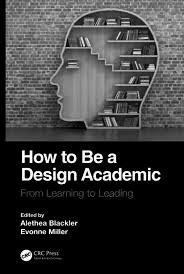
ISBN: 978-0-367-36290-4 (hbk), ISBN 978-0-429-35169-3 (ebk) CRC Press, 6000 Broken Sound Parkway NW, Boca Raton, FL, 33487-2742, USA and 2 Park Square, Milton Park, Abington, Oxon., OX14 4RN, UK. 328 pp., 2021
Reviewed
by Neil
Mudford
In many ways, this book is a curious production. As its title proclaims, on the face of it, it is a guide to those embarking on, or already pursuing, an academic career in the rather new discipline of Design. Its primary focus is career development and advancement. So, at first, it seems to be narrow in focus and likely to attract a small audience. As I progressed through it though, it became clear that much of the advice it offers applies to most academic careers irrespective of discipline. Hence the potential audience is quite a bit wider than the title would suggest even though, throughout the book, the authors frequently remind the reader that the advice is for Design academics.
Note that I use title case here for ‘Design’ when referring to the discipline or the School, in conformity with the practice of the book’s authors.
In addition to proffering career advice, the book provides an insight into the thoughts and dynamics of a group developing their interrelations in a newly emerging discipline. I suspect that much of what the many authors reveal here applies to other burgeoning and newly forming disciplines. Maybe their intention is to let the reader deduce the applicability to other disciplines and maybe they wish to avoid accusations of straying beyond their own territory?
The book is a compendium of chapters contributed by roughly half of the Design School’s academic staff at the Queensland University of Technology (QUT) plus an academic from the University of Cincinnati, Ohio, USA. The chapters are arranged in six sections covering starting out, research and teaching plus three sections on leadership –leading yourself, leading others and leading a group or school. To my mind, the idea that academics in a School of Design should think to design their careers and advise others on the same is a natural step to take.
The book also provides a snapshot of the attitudes to and views of academe, career advancement and so on held by a considerable portion of a School of Design in 2021. I doubt that there are many other works where the voices of such a large proportion of a School gather to comment on their School and university environment and that of similar
establishments around the country. They provide more than comment/opinion. The works contain results of literature searches and research into the matters at hand and reports of their personal experiences in the profession.
I say that the discipline is newly-emerging but, of course, people have been designing objects and crafting hunting and farming strategies for millennia. That is our species’ particular gift (or curse). Additionally, in the context of academic disciplines as such, Design has long been an integral part of well-established disciplines such as Engineering and Architecture. Then there are industries actively focussed on serial rounds of design such as the clothing fashion industry or the visual attractiveness end of motor vehicle design.
So, what’s new? Well, the book’s authors and their colleagues are envisaging Design around the other way. Instead of beginning from a study of Engineering, say, and developing procedures and processes to design objects in accordance with engineering principles, the new Designers are intent on formulating design generalities and considering where and how these insights can be applied to the design elements of a range of disciplines and in the world at large.
The authors make a strong claim that design is of great benefit to humanity and should be more widely applied in a systematic fashion. They point out that all sorts of systems can benefit from better and more generally applicable design techniques. Some of the systems they point to are human governance systems such as taxation and social services. Looking back over the last few years, with schemes such as Robodebt and the cashless debit card forced upon those receiving social service benefits, you’d have to agree with them – well coordinated design must surely improve matters. In relation to this, the authors are at pains to point out that good design includes careful consideration of the problem or challenge and the needs and nature of the end-users as well as the form and workings of the design ‘product’.
As to the ubiquitous nature of design, when you come to think about it, any creative act is a design exercise. I am here trying to create this book review. Whether or not I am doing this systematically and in accordance with proper design
AUSTRALIAN UNIVERSITIES’ REVIEW vol. 64, no. 2, 2022 Intelligent design?? Reviewed by Neil Mudford 73
principles, I don’t know; probably not. I have an overall concept in mind, however, and am designing its detail at every turn.
I do wonder how the design-oriented sectors of established disciplines are responding or have responded to innovations, critiques and observations emanating from Design Schools, recognising that the latter are seeking to build an overarching Design philosophy. I suspect the initial attitude from established and well-recognised designer groups, such as engineers, might be that they have it all ‘sorted’ for their purposes – that their approach has developed from longstanding practice, conforms to the guiding principles of their area of endeavour, such as mathematics for engineering, and produces results fit for purpose. The complaint might be that the design principles being propounded are too strongly influenced by features emanating from other antecedents of the new Design discipline.
In one view, such defensive reactions could be characterised as reactionary and closed minded. On the other hand, what is critical academic consideration if it doesn’t include testing, probing and raising objections to new developments plus the important element that separates such testing from mere grumpy opposition, viz. accepting the new thoughts that survive this baptism of fire? If the newly emerging Design Schools can stir up discussion and argumentation along these lines, then I think exciting new developments will emerge.
In contrast to my expectations, Richard Evans, Nick Kelly and Jeremy Kerr in their Chapter 2: ‘Being a Design Academic’, remark several times that the design thinking emanating from Design Schools is now widely accepted and popular with problem solvers. They do not mention any time in which there was resistance to these ideas. If that is so, then the discipline has had a dream run for any new development in thinking, especially where the new development intrudes into areas already populated by other experts, as is the case here.
The book focusses squarely on career advancement and how to grow one’s Design career. I have no doubt that this is will be of great interest and benefit to their potential readership. It tells you how to carve out a niche research area in which you can shine, how to be a leader for those around you and how to ascend through the ranks. As I mentioned above, the book also speaks about the overall aims of the field to unify and systematise design and to thereby improve people’s lives.
What is somewhat puzzling, though, in a book entitled ‘How to Be a Design Academic’ is that it doesn’t say much about how to be a Design academic or what being a Design academic is like. Many authors say they love the field, but I can’t remember anyone saying what it is that they love about it or anything much about the nature of their efforts.
Thea Blackler, in her Chapter 15: ‘Research Leadership’, mentions that one of her research areas is intuitive interaction
research. She pioneered this area and is a world authority on it. As I understand it, this field seeks to identify and understand how to design systems, such as machinery or forms to be filled in by a visitor to a website for example, which people can quickly and easily learn to understand or operate. That is, systems that people find ‘intuitive’. I am pretty sure that the photo examination function on my digital camera could have benefitted greatly from her work but, sadly, it is pretty clear that it missed out on this. I would also like to know whether some things are universally ‘intuitive’ for humans or whether, as I suspect, one’s cultural background and past experience strongly influence this, as it does for IQ tests and what people (wrongly) call ‘general knowledge’. If I were starting out to choose an area of academic interest, I think such a titbit could get me interested. Of course, the omission of such descriptions may well be deliberate. The book does seem to be addressed to those already committed to Design.
All chapters present sound advice. They also provide glimpses into the challenges and peculiarities of helping to build a cohesive team in a school whose character and function are still somewhat embryonic compared with disciplines of long standing.
In many emerging disciplines, I expect the feedstock for staff consists mostly of people from established academic disciplines. By contrast, many of those who assembled to form this new Design academic staff body were appointed on the basis of their experience in industry, at least in the early years. This also used to happen in Engineering, for the same sort of reasons – that it is invaluable to have the first-hand knowledge and perspectives of practitioners whose industries are likely destinations for your graduates.
The wide range of staff backgrounds calls on everybody’s patience, empathy and acceptance of diversity to make this team creation work. Then there is the challenge of carving out research and teaching niches within that emerging and developing team and the wider discipline itself. Overall, it seems that everybody initially feels ‘new’ and a tad uncertain about the unfamiliar aspects of their new positions.
This requires many staff to undertake quite a bit of adjustment. Those with backgrounds in design practice and industry find they are called on to write and research in an academic way unfamiliar to them. Those with an academic background are familiar with academe, of course. The novel aspect for these staff is working with colleagues whose strengths and experience lie in designing in the worlds of commerce or public service. The authors here report that there is mutual respect and cooperation between the groups in this Design School’s cohort and that they are learning from each other and even that some staff are migrating across the initial divides within the School into their colleagues’ areas. Evans, Kelly and Kerr deliver an interesting analysis of these latter developments in their Chapter 2, cited above.
AUSTRALIAN UNIVERSITIES’ REVIEW vol. 64, no. 2, 2022 74 Intelligent design?? Reviewed by Neil Mudford
The practice of hiring industry practitioners onto the academic staff, though still making a lot of practical sense, has disappeared. The legacy of this practice for Design schools is that there are quite substantial percentages of the academic staff who do not have a PhD. This was the case in my former engineering school and it worked quite well, as I remember. University managements have decided, however, that one of their responses to government demands to demonstrate the staff research capacity is to insist that all academic staff, including existing academic staff, have PhDs. Under ordinary circumstances, the choice to do a PhD is voluntary whereas, now in the higher education system, it seems you do the PhD or risk career degradation.
changed over to this option from monograph, and were happy with their final choice.
‘Getting a PhD – “How Hard Can It Be?”’,
In Chapter 5:
Tim Williams and Shannon Satherley explore the labyrinthine effects of this edict across Australian Design schools. Obviously, having to acquire radically new academic skills can be a considerable burden and challenge for staff with practitioner origins, especially while fulfilling the requirements of your existing academic position.
There are even more twists and turns to the tale. For example, the role of supervisor will often fall to one or more of the other Design staff meaning that, simultaneously, the student’s status is equal to that of the supervisor, as a colleague, but is ‘subordinate’ to it as a student. This can be awkward. On top of this, in one instance cited, the supervisor fell somewhat short of providing adequate support to the student because, ironically, the supervisor considered the student to be highly competent and therefore not in need of a great deal of help.
Beyond this feature of university managements’ drive for a tangible qualification acceptable to their government overseers, is the question for the student of how to satisfy the thesis requirement for the award of a PhD. The three options available are by monograph, by publication or by practicebased creative work. As Williams and Satherley report, each has its benefits and drawbacks, mainly centring around the question of the ever-present need to keep publishing to avoid administrative sanctions.
Williams and Satherley discuss the options’ relative benefits/drawbacks in the following terms. The monograph is a coherent work from which publications can be drawn but these are produced after the monograph’s production, creating a publication drought in the meantime. The thesis by publication would therefore seem to be preferable. The drawback there is the problem of working the publications into a coherent whole for submission. Finally, the creative work option would seem, at first glance, to suit many Design staff, it being a creative industry. Interestingly, though, no-one these authors interviewed chose this route. This could be because it would suffer the most from the ‘publication drought’ –no publications on the way through and no publications afterwards. The majority took the ‘by publication’ option, or
Williams and Satherley report a wide variation in the subjects’ overall assessments of the experience, and the benefits or otherwise, of doing a PhD. Some resented having to do it; others enjoyed the experience. Some felt the experience gave them a new perspective and insight on matters and new skills helpful to satisfying their university’s new research demands; others were left unmoved. Some practitioners felt they had done the equivalent of a PhD already in their time in practice but that this experience was undervalued as against the degree. There is an irony for QUT in that last observation. The QUT advertising slogan is ‘The university for the real world’. One wonders who designed that (if it was). Apart from some of the subtle and not-so-subtle inferences beneath the surface of this slogan, particularly in the use of the definite article, one of its plainest meanings must be that its graduates easily and comfortably find their place in the world of work. This seems at odds with assigning a low value to practice in hiring academic staff.
The high workloads of academics at all stages in their careers is an important consideration for anyone embarking on an academic career. This topic is discussed widely and at length, particularly in Marianella Chamorro-Koc and Glenda Amayo Caldwell’s Chapter 11: ‘Running the Academic Marathon – Planning and Executing as Planned.’
Across the whole higher education industry, academics find that they have to devote immense amounts of time to their work. These authors point to the mental health implications of the long hours worked and the toll this takes on the nonwork aspects of academics’ lives. Evonne Miller in Chapter10: ‘How to “Dare Greatly” in Academia’ cites a study that concluded that 43 per cent of British academics surveyed exhibited symptoms of at least mild mental disorder. No-one presents any definitive solution to the workloads problem. Chamorro-Koc and Caldwell offer a range of strategies to help alleviate the problem such as keeping a calendar, getting better at multi-tasking and so on. These strategies are all worth pursuing because each is a worthwhile salve for the problem, but can they really compensate for the high pace and volume of the work? I am pretty sure the answer is ‘No’. There is surely a limit to what can be achieved and accomplished, no matter how slick one becomes at achieving and accomplishing. A significant danger in tackling the problem with clever ways of doing more and more and suggesting that others do the same, is that, when the demands remain overwhelming, the sufferer can mistakenly blame themselves for failing to do everything demanded of them.
Quite rightly, the authors addressing these problems emphasise that you have to make time for yourself; wearing the ‘Me’ hat as one strategy in Chapter 11 puts it. Of course, this hat is also the ‘Family and Friends’ hat. The people around
AUSTRALIAN UNIVERSITIES’ REVIEW vol. 64, no. 2, 2022 Intelligent design?? Reviewed by Neil Mudford 75
you suffer if you are going spare trying to keep up. As I see it, if you have to deliberately and officially carve out a recreational space in your busy schedule then you are still in deep trouble. There is also the question of time for quiet contemplation which, for me, is where ideas well up. This can’t be slotted into the half hour between your lecture and your meeting with your colleague the PhD student.
Overwork is not confined to universities, of course. Workers in many industries are similarly afflicted. School teachers, for example, are also suffering and, as a result, so many are leaving the profession that Australian schools are struggling to provide all classes with teachers at all times. Thus, academics’ overloaded working lives do not stand out as starkly against a background of human-friendly workloads as they would have done in the days of working 9 to 5. Though the 8 hour day came in for a bit of ribbing about the arbitrariness of knocking off at the appointed hour, it now seems a paradise compared with working during the day then at night and on the weekends as well. Longish hours for academics have probably always been the case but, in the past I believe it was done voluntarily, more often than now, out of interest in your research or teaching. Now the extra hours are needed just to scrape a satisfactory mark from the management masters.
Winning the 8 hour day was one of the great triumphs of the union movement. I note that there is not a whisper of the union in the book. Everyone wants the workloads to ease off to a dull roar, but no-one suggests that collective action and supporting the union is one way to help achieve this end. I count this as another instance of a general tendency in the book to accept the current state of the work environment as immutable and to conclude that we all just have to get on and cope somehow.
In the same vein, while casualisation is rife in the university system and constitutes quite a major barrier to a sustained career, there is no mention of the phenomenon in the book. A survey of the School’s list of academic staff on the QUT website shows only 2 out of 40 being identified as ‘casual’ which must rank with the best ratios of indefinite to casual appointments for any discipline across the country. It could be that the Design School is a burgeoning new area for the university and, as such, may be shielded somewhat from casualisation. On the other hand, maybe this is proof positive that the book’s advice on career progression, coupled with a Designer’s skills, is a powerful force for advancement!
In total, the book is a welcome and valuable addition to the literature providing help for academics in their career development as well as providing us with an insight into current university academic staff attitudes and challenges for a goodly proportion of a School’s academic staff.
Contact: neil.mudford@bigpond.com
Neil Mudford is an Adjunct Senior Fellow with the University of Queensland and a member of the AUR editorial board
AUSTRALIAN UNIVERSITIES’ REVIEW vol. 64, no. 2, 2022 76 Intelligent design?? Reviewed by Neil Mudford
Organising during COVID-19
Organising during the Coronavirus Crisis – The Contradictions of Our Digital Lives, by Mike Healy
ISBN: 978-981-19-1942-8, Palgrave Macmillan, London, xiii+251pp., 2022.
Reviewed by Thomas Klikauer
Divided into seven comprehensive chapters, Mike Healy’s book on Organising during the Coronavirus Crisis starts by examining digital technologies (DT); DT and labour (Chapter 2); as well as DT and mutual aid (Chapter 3). Chapter 4 illuminates DT and mental stress, while Chapter 5 discusses an area of work hit particularly hard by the COVID19 pandemic, namely: the creative arts. The relationship between DT and protest movements is explained in Chapter 6 before his conclusion (Chapter 7) examines alienation and delivers an overall assessment.
Mike Healy’s introduction starts on 31 December 2019 when a strange virus was detected by the Wuhan Municipal Health Commission. Shortly after that, on 11 January 2020, ‘China reported the first deaths’ (p. 1). Without getting into any debate as to why all this happened and without naming Dr Li Wenliang, whom the BBC called ‘the Chinese doctor who tried to warn others about coronavirus’ (BBC, 2020), Healy notes that ‘almost every country has reported cases, every region has deaths’ (p. 2). By mid-2022, this continued to be the case approaching 6.4 million officially recognised deaths.
While we know many of the facts surrounding the COVID-19 pandemic, what we do not know is what Mike Healy’s insightful book discusses, namely ‘the contradictory relationship between our response to COVID-19 and DT’ (p. 2). Beyond that, the COVID-19 pandemic had more ‘side effects’. For example, it has impacted global food production as ‘we are moving into a scenario where upwards of 1 billion people will be living in extreme poverty’ (p. 11). This will be turbo-charged by the usual pathologies of capitalism, e.g., the continued destruction of food to keep market prices up, the creation of 650 million obese people (www.who.int) and global capitalism’s rather structural and rising food insecurity. Finally, there are also the war in Ukraine (Mearsheimer, 2015) and global warming.
Of course, behind the contradiction between DT and the COVID-19 pandemic also lurk some of the many contradictions of capitalism (Harvey, 2014; Klikauer, 2014) such as the one between ‘market logic of protecting the economy and a public health logic of protecting lives’ (p. 27). The academic terminology of ‘protecting the economy’ actually means assuring the profits of what evil heretics call
‘Big Pharma’ (Hagopian, 2015; Keefe, 2021).
Underneath all this, the COVID-19 pandemic has also proven Hollywood-style disaster movies featuring the individual hero who saves the world as well as right-wing US doomsday preppers wrong again. The COVID-19 pandemic did not lead to a disintegration of society or civil war, nor did it lead to Armageddon. Instead, human nature (Hare & Woods, 2020) did the very opposite of Herbert Spencer’s deeply ideological ‘survival of the fittest’ (1880) liked to suggest. During the COVID-19 pandemic, we saw once again that ‘cooperation, not competition, was necessary. Solidarity by supporting strangers, not social atomisation, was required’ (p. 30) and delivered.
Simultaneously, ‘the conflict between labour and capital did not cease during the pandemic nor did trade union organising’ (p. 37). Yet, ‘COVID has impacted on 98 per cent of the globe’s working population leading to the loss of 225 million full-time equivalent jobs’ (p. 38). For both –changes in working conditions and union organising – ‘digital technologies were critical’ (p. 42). Most commonly, these were ‘Instagram and Facebook, with some work on Twitter [and] private email messages, [as well as] Facebook groups, Twitter, Reddit [and] Zoom and Telegram’ (p. 43).
In that, ‘union organisers used Facebook Live with weekly question and answer sessions as well as weekly podcasts’ (p. 44). One trade unionist noted, ‘Zoom, WhatsApp and Google Hangout enabled us to stay on top of what’s going on’ (p. 51). Meanwhile, another organiser warned, ‘there’s a sense of false security thinking Facebook or Instagram will respect privacy. But people feel confident with WhatsApp to organise actions’ (p. 53). On the other hand, living in an OECD country makes it easy to forget that ‘Internet service is not free and so workers on reduced income because of the pandemic have to pay for the service’ (p. 60). In other words, there still is a global digital divide (Wang et al., 2022).
Yet on the upswing, a local government worker in the UK noted, ‘members have adapted quickly to teleconferencing or Zoom, becoming familiar with speaking on camera’ (p. 61). Another unionist mentioned that they were ‘using email and Facebook which we called a tea-break meeting which ran from 10:40 am to 11am’ (p. 66) while also saying, ‘we used
AUSTRALIAN UNIVERSITIES’ REVIEW vol. 64, no. 2, 2022 Organising during COVID-19 Reviewed by Thomas Klikauer 77
WhatsApp groups to organise picketing’ (p. 68). A trade unionist at a university also cautioned, ‘we had used the University’s email system but stopped three years ago over concerns about the University accessing our communications’ (p. 70). On the whole however, Mike Healy closes this chapter by arguing that ‘the pandemic has shown the benefits of DTs for organising workers’ (p. 74).
Beyond union organising and set against the neoliberal dogmatism of competition is good, many people have set up ‘non-profit mutual aid groups (MAGs)’ (p. 77). Perhaps it is Kropotkin (1902), and not Hayek (1944; 1978), after all. Most, if not all, people working in and for MAGs, ‘rejected … ideologies that champion the individual over society’ (p. 78). In championing working with and for others (Axelrod & Hamilton, 1981) while rejecting the neoliberal individual, ‘Zoom has made it easier for people to work together’ (p. 91). Yet, another trade unionist argues that DTs can help but they are by no means everything when he said, ‘the trade union movement is built on camaraderie. Can you get that camaraderie on a Zoom call? I suspect you won’t. Online meetings have many, many, many benefits. But it will never get over that sort of thing’ (p. 107).
Virtually the same can be said about DTs and mental health, as the next chapter shows. And indeed, Healy concludes that ‘for those experiencing mental health challenges, digital meetings cannot replace those encounters [that take place] in a shared spatial and temporal environment’ (p. 140). Worse, DTs and online meetings can even lead to what Anderson and Looi (2020) call Chronic Zoom Syndrome.
Investigating DTs and the COVID-19 pandemic led Mike Healy to examine one of the more severely hit branches of the economy: the creative arts, in which ‘over 10 million jobs were lost’ (p. 145) during 2020 alone. Mike Healy argues that the COVID-19 pandemic had an even more ‘disastrous impact’ in Brazil, particularly under President Bolsonaro (p. 167). Interestingly, one artist commented, ‘Before my home and workspace were separated spaces. Now it’s in my living room’ (p. 170). This is unsurprising as many office workers moved from an office building onto the kitchen table.
Almost self-evidently, ‘the pandemic lockdowns enforced a moment of isolation’ (p. 177), which made it difficult to organise people, as Chapter 6 on DT and protest movements shows. Yet, linking isolated people via DTs also has some entirely different connotations, as Mike Healy writes in the conclusion. He emphasises, ‘video conferencing use, which has become so crucial during the pandemic, is controlled by three products, Zoom, Microsoft Teams, and Google Meet. It has been estimated there are over 300 million Zoom calls each day covering 50 per cent of the market in at least 44 countries’ (p. 221).
Mike Healy’s overall conclusion is that ‘this book argues that our individual experiences during the pandemic can be generalised thus revealing the systemic problems inherent
in existing social, economic, and political structures and identifying those responsible for failing to adequately deal with the crisis … the pandemic has also enabled us to see who our allies will be in a precarious future’ (p. 227). And these are not the established institutions of capitalism, nor will it be neoliberalism’s hyper-individualism or its relentless drive for competition. Instead, it will be – just as the COVID-19 pandemic has shown during the past years – mutual aid.
Thomas Klikauer has 800 publications (including 12 books) and writes regularly for BraveNewEurope, the Barricades, Buzzflash, Counterpunch, Countercurrents, Tikkun and ZNet. His next book will be on ‘The Language of Managerialism’ (Palgrave, 2023).
Contact: T.Klikauer@westernsydney.edu.au
References
Anderson, K. & Looi, J. C. (2020). Chronic Zoom Syndrome: emergence of an insidious and debilitating mental health disorder during COVID-19, Australasian Psychiatry, 28(6), 669-669.
Axelrod, R. & Hamilton, W. D. (1981). The evolution of cooperation, Science, 211: 1390–1396.
BBC, (2020). The Chinese doctor who tried to warn others about coronavirus (https://www.bbc.com/news/world-asia-china-51364382, accessed: 18th July 2022).
Hagopian, J. (2015). The Evils of Big Pharma Exposed. Retrieved from https://www.globalresearch.ca/the-evils-of-big-pharmaexposed/5425382.
Hare, B. & Woods, V. (2020). Survival of the friendliest: understanding our origins and rediscovering our common humanity, New York: Random House.
Harvey, D. (2014). Seventeen contradictions and the end of capitalism, New York: Oxford University Press.
Hayek, F. A. (1944). The Road to Serfdom, London: G. Routledge & Sons.
Hayek, F. A. (1978). In support of Pinochet, Letter published in Times of London: 11 July 1978.
Keefe, P. R. (2021). Empire of pain: the secret history of the Sackler dynasty, New York: Doubleday.
Klikauer, T. (2014). A capital idea? – Seventeen Contradictions and the End of Capitalism, Australian Universities’ Review, 56(2), 96-97.
Kropotkin, P. A. (1902). Mutual Aid, A Factor of Evolution (foreword by A. Montagu, The Struggle for Existence by T. H. Huxley, new introduction for Garland ed. by E. Kingston-Mann), New York: Garland Pub. (1955 & 1972).
Mearsheimer, J. (2015). Why is Ukraine the West’s Fault? Retrieved from https://www.youtube.com/watch?v=JrMiSQAGOS4 .
Spencer, H. (1880). The Principles of Biology, New York: Appleton & Co.
Wang, X., Shi, J. & Lee, K. M. (2022). The digital divide and seeking health information on smartphones in Asia: Survey study of ten countries. Journal of Medical Internet Research, 24(1), p.e24086 (https:// www.jmir.org/2022/1/e24086/.
AUSTRALIAN UNIVERSITIES’ REVIEW vol. 64, no. 2, 2022 78 Organising during COVID-19 Reviewed by Thomas Klikauer
A life in the academy
My Accidental Career, by Brenda Niall

ISBN 9781922458148,
Melbourne, Text Publishing 2022
Reviewed by Bob Birrell
Niall’s autobiography covers a long and distinguished academic career as a literary biographer. Born in 1930, her first academic appointment was as a tutor in the Department of English at Monash University in 1964. She remained with this Department, retiring in the 1990s, by which time she held an appointment as a Reader.
In this book she turns her biographical craft on to her own life and career. The result is a spellbinding book that has something for everyone. There is an evocative remembrance of what upper middle-class life was like in Kew in the 1930s and 1940s. There is an account of her early post university years as a research assistant for Bob Santamaria, the Roman Catholic anti-Communist political activist and journalist. Some of this time involved helping him prepare for his biography of Archbishop Daniel Mannix. This included a memorable account of (unsuccessfully) extracting information from the notoriously private Archbishop.
Threaded through the book is her experience as a young woman trying to find a job while at the same time up against the expectations within in her family’s circle that women’s work was secondary to marriage. There is a frank account of her relationship experiences. She bonded with a senior literary academic after he ‘fell in love with her ANU master’s thesis’, a love that she reciprocated. Nonetheless, they never managed to live together as a couple for reasons that are painfully revealed.
In this review I focus on her academic career and her account of the ethos prevailing in the early years within Monash’s English department. It was collegial and cooperative, nothing like what most younger Australian academics would have experienced.
Readers may wonder how she ever got started in academia given her association with Bob Santamaria and the fact that she did not have a PhD. And how did she survive for so long, given her decision in the mid-1970s (detailed below) to forsake literary analysis which, as she says, was ‘then caught in a thicket of theory’.
Let us start with how she succeeded. When she got her first appointment in 1964, Monash was just a few years old and qualified staff were in desperately short supply. She was appointed because she had well-placed sponsors who were enthusiastic backers. They were willing to do so because
Niall’s work shone, including her master’s thesis at ANU on the American writer Edith Wharton. This received first class honours, including a glowing review from a revered American literary academic.
Thereafter, her sponsors backed her for research awards. She received a Fullbright scholarship for further archival work on Wharton in 1967-68 at the University of Michigan and Yale and then another award in 1975 that took her back to Yale. The purpose was a closer look at Edith Wharton’s papers, more of which by that time were available. She was pursuing the approved academic pathway of contributing something to the literary criticism corpus of an international star.
By this time Niall’s heart was no longer in conventional academic literary criticism, which she admits in her diaries she was becoming bored with. Instead, she was finding the life of the author more interesting than the book(s) under study. She also reports a ‘so what feeling’ about the value of her proposed book on Wharton.
After returning from Yale, Niall made the momentous decision to end this phase of her academic life. It brought an end to her Wharton study and to the approved academic focus on literary criticism. She says it was an emotional decision. But it could have prejudiced her academic status because it meant an end to any possibility of writing about important international writers in elite English journals.
Niall was 45 at the time. She subsequently pursued an alternative career as a literary biographer focusing on Australian writers. This was possible in the mid-1970s because there was an emerging public interest or ‘receptive audience’, as she puts it, on such writers here in Australia.
Niall embarked on the first of a long series of books on Australian writers and their work. She soon found that publishers were coming to her. Peter Ryan, chief editor at Melbourne University Press approached her, having learned from one of her sponsors about Niall’s work in progress on Australian children’s literature. It led to MUP’s publication of Australia Through the Looking Glass: Children’s Fiction 18301980.
Subsequently, publication was never an issue for Niall. She had a supportive publisher and a responsive readership. It is still there, as the warm public reception to the volume under review indicates.
AUSTRALIAN UNIVERSITIES’ REVIEW vol. 64, no. 2, 2022 A life in the academy Reviewed by Bob Birrell 79
Niall’s description of academic life through the 1980s was idyllic. Her colleagues were collegial and supportive. They provided a warm social setting for a woman living alone. She reports no frostiness from senior colleagues over her renunciation of literary criticism and no issues at all about her earlier association with Santamaria. The Department of English collectively celebrated any colleague’s success, including Niall’s first-class honours award for her ANU MA thesis.
The explanation is clear. It was only in the 1990s that Monash (like most Australian elite universities) came under the thrall of competitive university ratings. This resulted in every academic being evaluated according to how many points they accumulated for publications in top tier international journals and/or how many ARC grants they received for projects which related to these ratings.
I can attest to a similar benign experience in Monash’s Anthropology and Sociology Department when I arrived in 1971. Colleagues who were not research oriented nevertheless had a valued role in teaching and administration. Students were encouraged to attend lectures and tutorials and to get to know staff.
All this came to an end in the 1990s when publishing in elite journals became a tyranny, and those not able or willing to do so were treated as pariahs and removed by one means or another, even though they had ‘tenure’. By the time I left (in 2017) teaching had become a secondary issue. Monash had become more like a distance education provider.
Sadly, I doubt that Monash could host another academic like Niall. She has produced an unrivalled corpus of works on Australia‘s cultural legacy. My favourite is Friends & Rivals, Four Great Australian Writers, published by Text in 2020. Her essay on Nettie Palmer: nationalist, social democrat and promoter of Australian literature explains why Palmer is so important to this legacy, while at the same time sensitively illuminating Palmer’s personal life.
Bob Birrell is the Head of the Australian Population Research Institute
Contact: bob.birrell@tapri.org.au
AUSTRALIAN UNIVERSITIES’ REVIEW vol. 64, no. 2, 2022 80 A life in the academy Reviewed by
Bob Birrell
Are universities a lost cause?
The Dark Side of Academia: How Truth Is Suppressed, by The Secret Professor

ISBN: 9781739111700 (pbk.), UK: Truth University Press, xii+231 pp., 2022
Reviewed by Brian Martin
In 2018, Professor E, a highly productive British management expert, was invited by a well-known media outlet to write an article about her research on leadership styles. The university manager above her requested that he approve such articles. She was told her article was not suitable as it might reflect on vice-chancellors.
That was bad enough but worse was to come. Professor E was manoeuvred out of her position on spurious grounds of financial exigency. Subsequently, two less-productive academics in her field, one of whom had been involved in easing her exit, were promoted to professor. This is the core story in The Dark Side of Academia. The author is anonymous, with the pseudonym The Secret Professor, who the reader is likely to assume is Professor E. Her story illustrates the sort of internal university machinations that are so common yet so seldom revealed.
The author, who I’ll call E, reports no complaints about academia prior to this experience, but she has plenty more to say in this book. The next major part is on peer review. E goes into considerable detail challenging mainstream scholarly views on four matters: the Dead Sea Scrolls, Jacques Benveniste’s research on the memory of water, climate change and the Great Barrier Reef, and the 1666 Great Fire of London. After this, the next target is universities as organisations influenced by vested interests where female professors are scarce on the ground. In conclusion, E argues that universities are so far gone that independent centres of learning need to be constructed in their place.
There is lots of good material in The Dark Side of Academia, but often the treatment is uneven or superficial. One major problem is that dissent is treated as truth, as the subtitle How Truth Is Suppressed indicates. On the peer review topics, such as the Great Fire of London, E assumes her view is the truth, and hence that defenders of the orthodox view are suppressing the truth. This is most startling in her discussion of climate change, with an appendix concluding with the claim that ‘The wholesale adoption of policies to fight so-called man-made climate change has little basis in science.’ This is a dissenting view, to be sure, but it hardly makes the case that truth is being suppressed. If the subtitle had been changed to How Dissent Is Suppressed and the argument made about the difficulties
faced by challengers to scholarly orthodoxies, E’s arguments would be much more credible.
E’s personal story is a running theme throughout the book, popping up in various places in later chapters as if to prove the viciousness and vacuity of higher education. A reader would be excused for imagining that E was traumatised by her treatment and extrapolated from being subjected to a serious abuse of power to indicting the entire academic establishment. But more is needed to back up such an indictment. E seems unfamiliar with the bulk of scholarship on paradigms, peer review, dissent, feminism, self-managing organisations and the politics of higher education, all of which could have been used to put her own experiences and analyses in context.
E points to examples of scholarship on esoteric topics to question why academics are not tackling more important questions, the same tactic used by politicians to discredit academic work, especially in the humanities. What we don’t find in the book is an analysis of the driving forces behind academic specialisations and the choices of research topics.
The Dark Side of Academia shows signs of being prepared in a great hurry, with far too many mistakes, textual repetitions and typos. What is the reader to think about this statement? ‘With first quarter GDP in Britain standing at 0.1 per cent in 2018 as compared with 2.6 per cent in the US, you would think that there would be much that universities could offer by way of advice’
The unfortunate thing is that sloppy writing and less-thanrigorous argumentation do an injustice to the important issues being covered. E targets several of the most serious problems with higher education and includes some telling examples, but the topics deserve a more penetrating treatment. The author might have been better advised to stick to her own story, which is definitely worth telling, accompanied by advice for others in similar situations.
There is a lesson for university administrators seeking to protect their organisation’s reputation. When academics are badly treated, it’s always possible they will be radicalised and outspoken. Some may even write exposés about the dark side.
Brian Martin is emeritus professor of social sciences at the University of Wollongong (www.bmartin.cc)
Contact:
bmartin@uow.edu.au
AUSTRALIAN UNIVERSITIES’ REVIEW vol. 64, no. 2, 2022 Are universities a lost cause? Reviewed by Brian Martin 81
Destructive Management Leadership: a review essay
Destructive Leadership and Management Hypocrisy: Advances in Theory and Practice, by Selin Metin Camgöz & Özge Tayfur Ekmekci
ISBN: 9781800431812 Bingley, Emerald Publishing Limited, 320 pp., €87.90 £ 70.- (hbk.), 2021
Reviewed by Thomas Klikauer
Some might argue that leadership is – by definition –destructive (Kropotkin, 1902; Piven & Clowad, 1971; Parker et al., 2020). And there is plenty of evidence for that in our world, from Russia’s Putin to America’s Donald Trump, from India’s Modi to Brazil’s Bolsonaro, from Hungary’s Orban to Italy’s Meloni – the list goes on. And this does not even include super-destructive leaders like Adolf Hitler, Mussolini, Franco, and Pinochet. Yet, in management studies things are different – here managerial leadership is great. The field of management studies – while pretending to be academic – is mostly about legitimising the domination of management over workers, local communities, and the environment (Klikauer & Simms, 2021a). And for that, management studies depends on ideology, as virtually all ideologies provide highly valuable functions for a ruling elite.
One can safely argue that management studies not only operates with ‘fraud and deception’ (Tourish, 2020) –perhaps ever since Taylor’s so-called ‘Scientific Management’ (Lepore 2009) – but it also depends on ideology to legitimise management as an institution and it does this for at least three reasons: 1) to camouflage contradiction such as that between workers and managers or those that might be called corporate apparatchiks (Klikauer & Simms, 2021b); 2) to justify domination; and 3) to eliminate – as much as possible – the emancipation of workers from the domineering structures of, for example, management. For that the subject of management studies has invented plenty of ideological justifications for one of management’s favourite institutions: managerial leadership. As a consequence, there is an ideology of managerial leadership, or what Bolchover (2005) calls the great corporate leader.
Yet, and this happens only on extremely rare occasions, some academics within the body of management studies are game enough to issue some mild critique of managerial leadership. In general, such a critique – when it comes at all – comes from those on the fringes of management studies and not from established business school professors.
It also does not come from those who publish in what the ideologues of management studies call reputable, top, and A-star journals (Parker, 2002). In other words, you either publish in career-advancing top management studies journals such as the Academy of Management Journal, the Academy of Management Review, Administrative Science Quarterly, Journal of Management, Organization Science, Strategic Management Journal, etc. (Nyberg & Wright, 2022:717), or you are confined to the periphery of management studies.
Cunningly, some of the ideological apostles of management studies have invented their very own version of critique. This critique of management studies is system stabilising and not system challenging. This stabilising critique is often framed using the terminology of the Frankfurt School of Critical Theory (Klikauer, 2011). Writers in management studies and the related field of organisation studies call their system-conforming invention ‘critical management studies’, or CMS (Klikauer, 2015a). CMS pretends to be critical while supporting management studies.
Perhaps a good way to understand the difference between both is to return to none other than the Manifesto of the Communist Party by Karl Marx and Frederick Engels (February 1848) in which both write, ‘Socialism was, on the continent at least, “respectable”; communism was the very opposite’ (Marx & Engels, 1848). This clarifies CMS. Today, the critique of CMS is respectable – it is welcomed in mainstream management studies journals, in management conferences, and even more so in organisation studies conferences. Real critique is the very opposite (Horkheimer, 1937). Real critique is not found in the mainstream journals of management studies or organisation studies.
This publication edited by Selin Metin Camgöz & Özge Tayfur Ekmekci falls into the category of a system-stabilising critique. The collection has three parts: (i) definitional issues and conceptual clarifications; (ii) how can anyone be like that? – systematising; and (iii) emerging issues in destructive leadership: a special concern about measures and remedies
AUSTRALIAN UNIVERSITIES’ REVIEW vol. 64, no. 2, 2022 82 Destructive Management Leadership: a review essay Reviewed
by Thomas Klikauer
of how to deal with it. The book is divided into seventeen individual chapters written by thirty authors. Their collection delivers, as the editors say in the introduction, a critique of the idea of leadership in management studies. They also note that their book is on the dark and harmful side of leadership, on destructive leadership, as well as on – what might be called another recent fashion in management studies –‘pseudotransformational leadership’ (preface: xxvii; Tourish, 2013).
Since management studies is deeply rooted in the ideology of business ethics, its concept of leadership immediately incurs the problem of ethical – or rather unethical –leadership, the infamous corporate psychopath (Klikauer, 2018), abusive supervisors and – almost self-evidently – ‘the impact of destructive leadership on followers, mental health including experiences of anxiety, depression, frustration, hostility, fatigue, loss of concentration, emotional exhaustion, affectivity, stress, and burnout’ (preface: xxviii).
Almost incontestably, managerial leadership includes narcissism and a personalised – or better, managerialised –need for power, the ruthless corporate mini-dictator, and the unscrupulous corporate apparatchik. Adopted from its original Stalinist definition and adjusted to management, corporate apparatchiks can be seen as managers who are dedicated to the managerial apparatus. Stabilising the apparatus and one’s position in the apparatus is paramount even when this means, for example, supporting the questionable, unethical, immoral, and even white-collar-crime-committing CEO (Gottschalk, 2017). All this rather often comes with or is even based on ‘toxic leader–follower relationships’ (p. 6). Such relationships aren’t just toxic, they are also outright anti-democratic as managerial leaders are never elected. Yet, the word ‘democracy’ remains – perhaps together with trade unions – a term that management writers avoid like the plague. In other words, the world of management is a democracy exclusion zone.
As one of the authors of the collection – Christian Thoroughgood – claims, ‘destructive leadership reflects a special case of more general leadership situations’ (p. 6). This might insinuate that destructive leadership is only a special kind of leadership while normal management leadership isn’t problematic, even though the normal managerial leadership is based on a top-down leader-vs.-follower structure that is not just anti-democratic but, in many cases, carries connotations of Hegel’s master-and-slave theorem (Klikauer, 2016). All of these versions of leadership are also found, as the author says, in, political dictatorships (e.g., Stalin’s Russia, Pol Pot’s Cambodia), religious cults (e.g., The People’s Temple, Branch Davidians), and for-profit corporations (e.g., Enron, WorldCom) (p. 10). There is a rather surprising absence of four of the world’s most evil political dictatorships ever to exist: Adolf Hitler’s Nazi Germany, Mussolini’s fascist Italy, Franco’s fascist Spain, and Pinochet’s equally fascist Chile.
Secondly, the reference to political leadership might incur the rhetorical manipulation of what one might call: see, managerial leadership is no different to what goes on in the real world.
Meanwhile, inside business organisations, leadership gives way to ‘abusive supervision and petty tyranny’ (p. 12), including toxic acts like ‘yelling related to missing deadlines’ (p. 13). Yet, simultaneously, the absence of an even slightly democratic leader has to be somehow justified if ideological management studies is worth its ideological currency. Consequently, the author also states that ‘unqualified acceptance of democratic [leaders] is largely a leap of faith’ (p. 13). In other words, a democratic leadership isn’t something to be aspired to, but it may simply be ‘accepted’. Worse, support for democratic leadership is ‘unqualified’. And to finish off any unwarranted ideas about democracy, it is ‘a leap of faith’. In other words, not for management. Case closed.
Yet, the ideological justification of leadership is getting even worse in books on management studies debating leadership when the author notes, ‘the unpleasant reality that autocratic leaders are sometimes necessary for corporate turnarounds requiring bold, time-sensitive decisions’ (p. 14). And to make it even worse, about the Italian fascist dictator and mass killer Mussolini, the author writes, ‘early in the regime, Italians benefitted from expanded public transportation, public works development, and job opportunities, providing national pride and respite from the economic and political crises of the time’ (p. 14). Isn’t fascism wonderful (sic)? (Petersen, 1982; Levi, 1959 & 1988). The above used sic! – as in sic erat scriptum –almost makes one sick.
While management studies like to present Italian fascism in a positive light, management studies’ own ‘research has overwhelmingly focused on the positive side of leadership’ (p. 21) – after all, the raison d’être of the ideology of management studies is twofold: to make management more efficient and to provide an ideology that legitimises management, managerial leadership, and even abusive managerial leadership. Yet, management studies also had to cope with the rather obvious issues of destructive leadership. This, too, had to be ideologically legitimised. For that, management studies has invented a rather useful double-theme, claiming there are ‘two prominent aspects of negative leadership, namely, abusive supervision and laissez-faire leadership’ (p. 22).
On the one hand, management studies acknowledges toxic leadership – now framed as just being ‘negative’ and reduced to ‘abusive supervision’ while, on the other hand, management studies also issues a quick warning shot against ‘laissez-faire leadership’, i.e. a social structure with minimal or no leadership. The key ideological goal in this is rather rhetorical. It is to close Hirschman’s ‘exit option’ (1970), i.e. no leadership. In that way readers are convinced to believe that one needs leadership – which is, at least in terms of human
AUSTRALIAN UNIVERSITIES’ REVIEW vol. 64, no. 2, 2022 Destructive Management Leadership: a review essay Reviewed by Thomas Klikauer 83
evolution – not quite true (Hare & Woods, 2020; Sahlins, 1974) and perhaps not even when it comes to management and organisations (Parker, 2014). Whether it is true or not is not even the point: the point is ideological support for management and managerial leadership.
When seeking to reduce the pathologies of managerial leadership to not much more than abusive supervision, the ideologues of management studies like to outline that ‘abusive supervision is defined as subordinates’ perceptions of the extent to which supervisors engage in the sustained display of hostile verbal and nonverbal behaviours, excluding physical contact’ (p. 22). Again, as presented by the ideologues seeking to legitimise managerial leadership, abusive supervision only seems to exist in the ‘perceptions’ of those the ideologues of management studies call ‘subordinates’ – a derogatory term. Linguistically, much of this cements one of management studies’ core beliefs that, in terms of history, has existed ever since Fayol (1916). It is the unwavering conviction that management is based on Fayol’s chain of command. This hierarchy-sustain idea is a deeply and more importantly unchangeable myth that hierarchical arrangement can never be overcome (Diefenbach, 2013). Interestingly, management studies also frames toxic leadership as hostile verbal and nonverbal behaviours. This comes with an even more interesting attachment: excluding physical contact. Perhaps the ideological purpose of this is to eliminate an unsavoury truth about managers, foremen, overseers, supervisors, etc., namely that throughout the history of management, managers have always used – and in many cases still use – what current management studies belittles as ‘physical contact’, i.e., sticks, batons, chains, whips, and so on (Thompson, 1963 & 1967).
In a further step to create even more ideological myths, management writers and self-appointed leadership experts also claim that ‘leadership behaviour can be either pro or against the organisation or pro or against the employee, leading to four types of leaders:
1. constructive (pro-pro),
2. derailed (against-against),
3. tyrannical (pro-organisation, against employees), or
4. supportive-disloyal (against organisation, proemployees)’ (p. 26).
In this sort of management leadership is framed as either being for workers and, almost by definition, against business or it is pro-business and against workers. This ideological dichotomy forces managers into a twofold choice in which they – almost automatically – select the pro-business option. Important is that management studies issues two more, i.e. additional, options for managers. Whether management studies offers two or four options is largely irrelevant for the overall ideological goals of the ideologues of management studies, which is to make the option ‘no leadership’ vanish into thin air.
The ideological legitimation of managerial leadership continues with ‘leadership is often defined as goal-oriented influence … which includes two basic aspects which naturally form the basis of almost all leadership concepts, that is, intention (goal) and influence behaviour (means)’ (p. 26). Apart from the fact that neither leadership nor managerial leadership is ‘natural’ but a human invention, managerial leadership is – as the vast majority of management studies articles and books testify – defined in highly positive terms. Beyond that the ideologues of management studies want us to believe that managerial leadership is either directed towards goals that are always defined by managers and are always managerial goals or they are directed toward ‘influencing’ behaviour. The euphemism ‘influencing behaviour’ uses the term ‘influencing’ to avoid the word ‘manipulation’ (Filmsforaction, 2010), while ‘behaviour’ means the behaviour of subordinates – to use one of management studies’ favourite terminologies.
To further divert attention away from the toxic pathology of managerial leadership, the political philosophy of Machiavelli is – almost regularly – wheeled out when noting ‘the Machiavellians were shown to resort to the soft tactics of charm, appearance, joking or kidding, exchange of a favour, promise of reward, ingratiation, alliances and offering compliments and the hard tactics of threat of appeal, threat of punishment and manipulation of the person or situation’ (p. 39). In other words, the pathology of managerial leadership is presented as a side issue as toxic managerial leadership is a case of a few Machiavellians and not inherent to the top-down structure of managerial leadership. The ideology behind this is to present managerial leadership as perfectly legitimate, cementing the domination of managers over workers. This may well be the overarching ideological goal of management studies, managerial leadership, and even books on the dark side of managerial leadership.
Further and since management is – almost by definition and, historically, at least in its two-hundred-plus-year-old history – an unethical institution, management studies has come up with at least two ideologies to camouflage its own pathology. These are the well-known ideas of business ethics and the recently added corporate social responsibility. Being aware that managerial leadership – perhaps even by definition – can easily lead to immoral management behaviour, management studies, when seeking to ideologically legitimise managerial leadership, likes to point out that, ‘unethical leadership seems to be characterized primarily by actively negative traits and behaviours such as egoism, dishonesty and corruption, inhumane and unfair treatment, manipulation and destructive behaviour, and a short-term perspective on success’ (p. 53). The ideology behind this is to personalise managerial leadership as well as business ethics and corporate social responsibility.
AUSTRALIAN UNIVERSITIES’ REVIEW vol. 64, no. 2, 2022 84 Destructive Management Leadership: a review essay Reviewed
by Thomas Klikauer
In this, real moral philosophy and ethics (Klikauer, 2012) aren’t applied to managerial leadership, which could have potentially rather devastating outcomes for management studies and managerial leadership. Instead, the entire 2,500 years of moral philosophy is reduced to a question of ‘negative traits and behaviours’. This fits rather neatly with yet another ideology of management studies: individualism. In the wake of this, rafts of corporate scandals and outright criminality by corporate apparatchiks and CEOs, acts that have accompanied management, companies, and corporations ever since their invention, are reduced to individual ‘egoism, dishonesty and corruption, inhumane and unfair treatment’. The structural pathologies of companies and corporations as well as capitalism as such – in terms of dehumanisation, corporate criminality, and global environmental vandalism –is simply a question of individual traits. With that, it basically disappears. Ideology wins, managerial leadership and, even more importantly, toxic managerial leadership disappear.
To further the individualisation of the structural pathologies of managerial leadership, management studies also like to focus on the corporate psychopath. It is an ideological tool that diverts attention towards the individual ‘bad apple’ – the psychopath. It avoids focusing on the barrel, i.e. the structural pathology of managerial leadership. This is simply individualised away as the focus moves from politicaleconomy and sociology and towards psychology – a subject that focuses on the individual rather than the overall structure of corporate capitalism. As a consequence, the corporate psychopath remains a favourite of management studies when the ideologues of management studies note, for example, that psychopaths ‘are people with no scruples, empathy or affective regard for others, and this enables them to take an entirely selfinterested approach to life ... corporate psychopaths are the approximately 1.2% of employees …[who] seem to be good at getting to the top of organisations, and so between 4% and 10% of top managers … are highly psychopathic ... [with their number at] Wall Street [being] close to 10 per cent’ (p. 69). In other words, when it comes to corporate psychopaths, do not look down to workers but up to managers versed in what the authors call ‘kiss-up and kick down’ (p. 70). Tellingly, the ideologues of management studies mention that they ‘seem to be good at getting to the top of organisations’. Several aspects are interesting in this line of argumentation: firstly, they ‘seem’ to be good. In other words, they only seem that way; secondly, the ideologues of management studies mention ‘to be good at getting’ which means virtually all of this depends on them – the corporate psychopath – and not on the pathological setup of management that almost automatically promotes the corporate psychopath; finally, all this applies to ‘organisations’, i.e. this is not just a feature of a corporate business organisation, it is a feature of all organisations and thereby it becomes common, normal, and almost natural.
The ideological premise is: see, managerial organisations and managers are just ordinary people – just like everyone else. The structural pathology of the managerial setup is ideologically legitimised.
Of course, corporate psychopaths also love the very German idea of ‘Schadenfreude [which] is the taking of pleasure from seeing others fail or fall or experience misfortune’ (p. 75). As true as this may be, it is yet another ideology – that of individual Schadenfreude, i.e., a feeling of an individual. This is useful when diverting attention away from the fact that virtually all of management, including managerial leadership, can – and in many cases actually does – generate toxic and pathological leadership. Ideologically, this unwarranted problem needs to be individualised to camouflage the pathological and very structural imperatives of managerial leadership.
A similar ideological issue that can be individualised is ‘leader hypocrisy [which] mainly refers to the misalignment between words and deeds of a leader’ (p. 129), often using double standards, dishonesty, and deception. This goes to one of the most important pieces of ideological assistance to managers: always remember the lies you told yesterday (Klikauer, 2014:2). Management studies sees hypocrisy as a ‘misalignment [which] occurs when a person says one thing but does another thing’ (p. 132) – another perfect ideology for individualisation of a structural pathology: managerial leadership.
Similarly, even the issue of ‘downward mobbing, which is the intentional and repeated inflictions of physical or psychological harm by superiors on subordinates within an organisation’ (p. 144) can become an ideological tool useful to management studies. While there hardly is upward mobbing – from worker to managers – neither the aforementioned pathologies, hypocrisy nor mobbing ever leads writers of management studies to question managerial leadership as such. Perhaps (i) the overall master ideology of individualism works its magic even with writers of management studies. Perhaps (ii), the writers of management books on managerial leadership are the true apostles of the ideology of Managerialism (Klikauer, 2015b). And to cement such ideologies even further, management studies likes to state the obvious, ‘downward mobbing is humiliating and emotionally abusive’ (p. 146).
One of the almost unavoidable case studies on the pathology of managerial leadership comes from the Amazon corporation (Klikauer & Campbell, 2020). The case of Amazon has become so widely known that not even the apostles of managerial leadership can avoid it. On this issue, the authors like to quote Amazon’s very own boss, Jeff Bezos, who once asked his workers, ‘Are you lazy or incompetent? … I’m sorry, did I take my stupid pills today? … If I hear that idea again, I’m gonna have to kill myself’ (p. 171). It follows the managerial brutality of managerial leadership when presenting workers as
AUSTRALIAN UNIVERSITIES’ REVIEW vol. 64, no. 2, 2022 Destructive Management Leadership: a review essay Reviewed by Thomas Klikauer 85
‘weaklings [that deserve to be] weeded out [while] the true “Amazonians” survive’ (p. 171) in a corporate management style that is called ‘purposeful Darwinism’ (p. 171) by the ideologues of management studies. In reality, this is nothing but social Darwinism, a semi-fascistic ideology (Hawkins & Hawkins, 1997).
In a second step, the writers of management studies immediately divert attention away from managerial leadership by arguing that ‘they strive and fiercely compete to be deemed an Amazonian’ (p. 171), as if ‘they’ (workers) want all of this rather than being pressed into this by managerial leadership. Yet this also operates as a rhetorical-ideological tool for what comes next, namely that all this is ‘a high-tech version of the dehumanised factory floor’ (p. 171). What one can see over and over again in such management books, and particularly in those deemed to be critical, is that the real issue at hand – managerial leadership – vanishes as managerial leadership becomes merely ‘a high-tech version’ of the ‘factory floor’. It is no longer even shop-floor management but a ‘high-tech version’, i.e. an issue of technology and not of the structural pathologies of managerial leadership. In other words, even the slightest hint to management is rhetorically avoided by the apostles of the ideology of managerial leadership and the justifiers of the structural pathology of managerial leadership.
Yet, the myth-making continues with ‘their 29 minutes and 59 seconds lunch break in overcrowded bathrooms’ (p. 171). Interestingly, it is ‘their’ lunch break, not the one ordered by Amazon’s Social Darwinistic managers. And, of course, it is the ‘overcrowded bathroom’ – as if it was the fault of the workers who overcrowded such bathrooms so kindly provided by Amazon. Meanwhile, the real inhumanity of such despotic managerial leadership vanishes: the widely published fact of being forced to urinate into a Coke bottle simply isn’t mentioned in a book that seeks to whitewash managerial leadership (Klikauer & Campbell, 2020). Yet, worse is to come.
Pretty much the only organisation that could eliminate inhumane work regimes like those found at Amazon is also eliminated by the writers of management studies books when saying, ‘the unions are obstacles that would impede its ability to improve customer service’ (p. 172). All this deeply ideological talk is finished by hinting Amazon is pushing local brick-and-mortar businesses out of the market. Well, deeply inhumane managerial leadership is justified by alluding to the fact that, after all, Amazon is extremely successful when pushing other businesses out of the market.
For corporate apparatchiks at companies and corporations and even more for the apostles of the ideology of managerial leadership working in consultancy firms, business schools, pro-business media, and business-financed think tanks, ideologies legitimising competition and the free market override even humane as well as inhumane consideration such as ‘irresponsibility, victimisation, and callous communication
… harassing and picking on [people as well as when workers say that a manager] put me down in front of other people … ridiculed me’ (p. 190). This also includes ‘the tendency to lord one’s power over others [and] my boss blames me to save himself/herself embarrassment’ (p. 191). All are near perfect examples of the ideology of individualism.
These are all managerial behaviours that also fit the aforementioned ‘Machiavellianism factors [of] interpersonal manipulation, cynical view, spitefulness, amorality and greed’ (p. 204). Simultaneously, these individualistic traces fit very neatly in the overall ideology of the book, namely that destructive managerial leadership isn’t systemic but an issue of a few individual managers. This ideological theme is continued with the claim that ‘destructive leadership consists of four distinct dimensions: (1) corruption, (2) excoriation of followers, (3) abuse of followers and (4) the loss of professional morality’ to which ‘petty tyranny’ might be added (p. 233).
On the extremely rare occasion when the collection mentions empirical data, the authors of a chapter on Turkey entitled, ‘Gender and Destructive Leadership: An Examination of Follower Perceptions’ (p. 239) found that ‘74.4% of all participants deemed male managers’ supervision to be abusive, compared to 66.2% who viewed female leaders in the same way’ (p. 244). This is a finding that is still useful for the overall ideology as it diverts attention away from the structural power asymmetries between managers and workers and moves them towards the male-female problem. We already know that men are abusive towards women. Yet, the structural power asymmetry of companies and corporations, as many feminists have correctly pointed out, makes it only worse when an abusive man is furnished with the organisational power of being a manager at the same time.
In the end and as an overall conclusion, the collection of chapters on the dark side of managerial leadership achieves four basic things. Firstly, it highlights the problems of managerial leadership that are presented from many different angles. Yet, several general themes of managerial leadership can be extracted. Secondly, the collection presents an up-todate overview of the current research, themes, and concepts of destructive managerial leadership. Thirdly and perhaps most importantly, it presents destructive managerial leadership not as a structural issue of management, corporations, and capitalism but, instead, as an individual issue of some misguided managers – a few bad apples in an otherwise good barrel. Finally, at no point is there any reflection of the overall issue of managerial leadership. The existence –and this is despite their investigation into the destructive managerial leadership and what the authors have uncovered – of managerial leadership is at no point presented as a deeply flawed structural issue of management nor is it ever questioned. One of the truly ideologically brilliant moves that stabilises management studies is that this collection can
AUSTRALIAN UNIVERSITIES’ REVIEW vol. 64, no. 2, 2022 86 Destructive Management Leadership: a review essay Reviewed
by Thomas Klikauer
claim to think outside the box, i.e., highlighting the negative of managerial leadership while simultaneously providing a system-stabilising corrective to managerial leadership.
In other words, this collection of the dark side of managerial leadership assists the apostles of the ideology of Managerialism (Klikauer, 2023) in fine-tuning managerial leadership. In the end, even semi-critical academics in the field of management studies appear to be trapped in their own ideology that stabilises domination. In the words of German philosophers Max Horkheimer and Theodor Adorno (1944), immovably, they insist on the very ideology that enslaves them.
Thomas Klikauer teaches MBAs at the Sydney Graduate School of Management, Western Sydney University. Contact: T.Klikauer@westernsydney.edu.au
References
Adorno, T. & Horkheimer, M. (1944). The Culture Industry: Enlightenment as Mass Deception (https://www.marxists.org/reference/ archive/adorno/1944/culture-industry.htm, accessed: 30th September 2022).
Bolchover, D. (2005). The Living Dead – Switched off Zoned Out, The Shocking Truth about Office Life, Chichester: Capstone Press.
Diefenbach, T. (2013). Hierarchy and Organization, London: Routledge.
Fayol, H. (1916). Managerialism Industrielle et Generale (Industrial and General Managerialism), London: Sir I. Pitman & Sons, ltd. (1930). Filmsforaction, (2010). Human Resources Social Engineering In The 20th Century. Retrieved from https://www.filmsforaction.org/watch/ human-resources-social-engineering-in-the-20th-century-2010/.
Gottschalk, P. (2017). CEOs and White-Collar Crime, London: Palgrave-Macmillan.
Hare, B. & Woods, V. (2020). Survival of the friendliest: understanding our origins and rediscovering our common humanity, New York: Random House.
Hawkins, M. & Hawkins, M. (1997). Social Darwinism in European and American thought, 1860-1945: Nature as model and nature as threat, Cambridge: Cambridge University Press.
Hirschman, A. (1970). Exit, Voice, and Loyalty: responses to decline in firms, organizations, and states, Cambridge: Harvard University Press.
Horkheimer, M. (1937). Traditional and Critical Theory, in: Horkheimer, M. Critical Theory – Selected Essays, translated by O’Connell, M. J. et al., 1972, New York: Herder.
Klikauer, T. (2011). Management and Emancipation – Two Opposing Ideas, International Journal of Social Economics, 38(6), 573-580.
Klikauer, T. (2012). Seven Management Moralities, Basingstoke: Palgrave.
Klikauer, T. (2014). Seven Moralities of HRM, Basingstoke: Palgrave.
Klikauer, T. (2015a). Critical Management Studies and Critical Theory, Capital & Class, 39(2), 197-220.
Klikauer, T. (2015b). What is managerialism? Critical Sociology, 41(78), 1103-1119.
Klikauer, T. (2016). Negative recognition – Master and slave in the workplace, Thesis Eleven, 132(1), 39-49.
Klikauer, T. (2018). Hannibal Lector goes to work: The Psychopath Factory – How Capitalism Organises Empathy, Organization, 25(3), 448-451.
Klikauer, T. (2023). The Language of Managerialism, London: PalgraveSpringer.
Klikauer, T. & Campbell, N. (2020). Inside Amazon, Counterpunch (4 September 2020). Retrieved from https://www.counterpunch. org/2020/09/04/inside-amazon/.
Klikauer, T. & Simms, N. (2021a). The Madness and Malady of Management Studies, Counterpunch (29 March 2021. Retrieved from https://www.counterpunch.org/2021/03/29/the-madness-andmalady-of-management-studies/.
Klikauer, T. & Simms, N. (2021b). Snake Oil Salesmen of Management Studies, ZComm (4 April 2021). Retrieved from https://zcomm.org/ znetarticle/snake-oil-salesmen-of-management-studies/.
Kropotkin, P. A. (1902). Mutual Aid, A Factor of Evolution (foreword by A. Montagu, The Struggle for Existence by T. H. Huxley, new introd. for Garland ed. by E. Kingston-Mann), New York: Garland Pub. (1955 & 1972).
Lepore, J. (2009). Not So Fast – Scientific management started as a way to work. How did it become a way of life? The New Yorker.
Levi, P. (1959). If this is a Man, New York: Orion Press.
Levi, P. (1988). The drowned and the saved (transl. from the Italian by R. Rosenthal), New York: Summit Books.
Marx, K. & Engels, F. (1848). The Communist Manifesto (Das Kommunistische Manifest. Retrieved from https://www.marxists.org/ archive/marx/works/1848/communist-manifesto/.
Nyberg, D. & Wright, C. 2022. Climate-proofing management research, Academy of Management Perspectives, 36(2), 713-728.
Parker, M. 2002. Against Management – Organisation in the Age of Managerialism, Cambridge: Polity Press.
Parker, M. , Cheney, G., Fournier, V., & Land, C (Eds.) (2014). The Routledge Companion to Alternative Organization, London: Routledge.
Parker, M., Stoborod, K & Swann, T. (eds.) (2020). Anarchism, organization and management: critical perspectives for students, London: Routledge, Taylor & Francis.
Petersen, J. (1982). Violence in Italian fascism, 1919–25, in: Mommsen, W. J. & Hirschfeld, G. (eds.), Social protest, violence and terror in nineteenth- and twentieth-century Europe (275-299), London: Palgrave Macmillan.
Piven, F. F. & Clowad, R. (1971). Regulating the Poor: The Function of Public Welfare, New York: Pantheon Books.
Sahlins, M. D. (1974). Stone Age Economics, London: Tavistock Publications.
Thompson, E. P. (1963). The Making of the English Working Class, London: Victor Gollancz.
Thompson, E. P. (1967). Time, work-discipline and industrial capitalism, Past & Present, 38(1): 56-97.
Tourish, D. (2013). The dark side of transformational leadership: a critical perspective, London: Routledge.
Tourish, D. (2020). Management Studies – Fraud, Deceptions & Meaning Research, Cambridge, Cambridge University Press.
AUSTRALIAN UNIVERSITIES’ REVIEW vol. 64, no. 2, 2022 Destructive Management Leadership: a review essay Reviewed by Thomas Klikauer 87
AI, AI, Oh??
Future superhuman: Our transhuman lives in a make-or-break century, by Elise Bohan

ISBN: 9781742236759 (paperback) NewSouth Publishing, Sydney. 343 pp. 2022
Reviewed by Neil Mudford
Elise Bohan is a historian with a difference. She has a PhD in evolutionary macrohistory and is now a Senior Research Scholar at the University of Oxford’s Future of Humanity Institute. Her institute’s name holds a clue to where Bohan departs from the standard pattern for a historian.
A little trip down Google Lane confirms that most historians concentrate on analysing and understanding humanity’s past by studying written records and physical artifacts. Then there is prehistory which is the study of developments and events in oral societies.
By contrast, to channel the second and third Christmas spirits of Dickens’ ‘A Christmas Carol’, Bohan is solidly focussed on what is Yet to Come with a dash of ‘Christmas Present’. She takes the results of prehistory and history and extrapolates a modest time into the future to predict what might be ahead of us all. This is in the hope that, like Ebenezer Scrooge, we humans drastically curtail the dark, uncaring and irresponsible sides of human nature and thereby avoid destroying human and other life on Earth with the various means available to us. Indeed, means we have created for ourselves.
Bohan has surveyed a wonderful panoply of highly innovative, futuristic, exciting research work being conducted around the world. There is quite a lot going on and her book provides a starting point for anyone interested in finding out more about these projects.
The main and serious purpose of her book, however, is to fervently urge us to accept her deeply held belief that we need to undergo and embrace three major transformations in order to save ourselves from self-inflicted destruction and, at the same time, to usher in a new era of health, long life and well-being and, believe it or not, sex-bots (in the best possible sense). At the same time, the author contends that these changes are already becoming realities.
The first transformation is to develop and embrace Artificial Intelligence (AI) to become an integral part of our lives, our governance advice and even our bodies and minds. The idea is to replace flawed human thinking with AI’s supposed precise and objective thinking formulated from AI analysis based on a wealth of data beyond amounts we humans, in our ‘natural’
state, could fully comprehend. The results would then guide our choices and behaviour. The realisation of this scheme, explored extensively but not intensively by the author, is that AI directed beings or AI-enhanced humans could or should replace humans rather than merely augment human cognitive abilities or proffer advice.
As Bohan puts it, ‘To get that right [put the future on a safe and stable footing], we’ll need the help from minds that are less tribal, myopic and self-interested than our own. Our most crucial task in the 21st Century is to invent them.’ (p. 145)
The second transformation is to significantly extend human lifespans by treating old age as a disease in itself and seeking a cure for it. The ultimate goal would be for a human to be able to enjoy an indefinitely long life. I am avoiding using the term ‘immortal’ as this would imply that they could not die. If human life continues to require a material body, then immortality is impossible because no material is infinitely strong. The feature of this transformation that feeds into the plan to avoid extinction is that, if people live to extreme ages, their decision making will assign more weight to long term instead of short term consequences on the ground that those concerned will realise that they could live to suffer the longer term consequences.
The third transformation is designed to alleviate loneliness, friendlessness, alienation and unwanted celibacy by developing AI operated interactive humanoid robots to a level of sophistication where they can become so indistinguishable from humans in their behaviour and interactions that meaningful friendship, and even sexual intimacy and genuine loving, can develop between human and machine. This transformation seems not to have a major role in Bohan’s scheme to save us from catastrophe. Rather, her advocacy for it seems to spring more from a desire to alleviate the stresses of modern urban living and to make long life bearable. At one point (p. 227), she says that we ‘need a gram of soma’, the drug that kept everyone happy (pacified) in spite of the awful environment in Aldous Huxley’s ‘Brave New World’ (Huxley, 1998). Bohan’s soma equivalent is the virtual world of these machine companions or machine-based entertainment. She thinks that this will help tide us over a transition to the ‘better
AUSTRALIAN UNIVERSITIES’ REVIEW vol. 64, no. 2, 2022 88 AI, AI, Oh?? Reviewed by Neil Mudford
world’ she is proposing but it seems to me that the better world endpoint itself is disturbing enough to warrant an indefinite extension of the relief, if such it is.
I will confine my remarks to the first and third transformations, leaving the prospect of living forever to one side. As tantalising as a long, healthy life sounds, I have plenty of objections to it but there is more than enough discussion to be had concerning the first and third transformations to fill this review to the brim.
In the first few pages of the book, proper, the author delivers a neat summary of what she believes is ahead of us and the definitions of three of the main concepts (transhuman, posthuman and superhuman) in her thesis, to wit:
Although we don’t often recognise it, the 21st century is a transhuman era [Bohan’s emphasis], where everything that currently makes us human, from our brains and bodies, to our values and ways of life, is poised to be transformed or superseded. In our lifetime, we could merge with forms of artificial intelligence that are radically smarter than us, rewrite our biology to conquer aging, disease and involuntary death, leave behind the crudest and cruellest vestiges of our evolutionary programming, and embrace a new mode of being that is so much more than human that we would have to define it as posthuman. In its best incarnation, we might call this kind of future superhuman. (p. 3).
And, on p. 251, Bohan says, ‘...we’re heading for a future that is post-biological [Bohan’s emphasis]; a world in which our minds and our bodies are digital, our experiences are virtual, and reality is much more of a choose your own adventure game.’
I think what the author means by ‘involuntary death’ in the first of these two quotes is death from old age in contrast to suicide. As I pointed out, above, there are plenty of opportunities for involuntary death other than from old age. Ahead of detailing her case for these changes, Bohan sets about framing the ‘rules of engagement’ for this discussion. Contrary to academic debate’s customary or ideal ethics of engagement, Bohan’s main assault focusses on the critics themselves rather than on their possible or actual criticisms. In her Preface she says,
The bravest among you will rise to that challenge [to face the ‘facts’ of the author’s claims] and question whether, beneath some of your discomfort, lies fear. From there, you may consider whether it’s fear, rather than righteousness, that is triggering the impulse to dismiss or deride. Others will declare without a moment’s pause that I am wrong about many ideas, simply because I’ve presented them in a way that challenges what they happen to presently believe. To those readers, I encourage you to consider whether there might be some truth or validity to both perspectives. (p. xiv)
In this passage and throughout the work, she characterises her detractors as suffering from cowardice springing from
fears concerning the realisation of her bold predictions and vision. Under this scheme, to challenge her arguments is to tacitly admit to narrow-mindedness, lack of due consideration and timidity; to accept her ideas is to boldly think where no-one has thought before, apart from the author of course and those working in her chosen field.
Bohan claims she is ‘all ears to solid counterarguments and counterevidence’ (p. xvi) but her consistent tone reveals otherwise. I expect all objections to be heading for the circular file quick smart.
Furthermore, Bohan continually refers to human bodies as ‘meatsacks’ and human brains as ‘ape-brains’. On one level, this is provocative and amusing. Maybe we are supposed to infer that she is a tantalisingly outrageous and fresh thinker? Bohan’s tone and context for these terms make it clear, however, that she means to belittle and offend.
This ongoing barrage of derogatory language provides the reader with continual reminders of her contention (see below) that we are outdated and hopeless as a species and therefore should be fitted with AI enhancements or replaced outright by another, AI-based species. Nevertheless, it is a strange behaviour for someone who claims to be doing her utmost to win readers over to her point of view; after all, 100 per cent of those readers are human.
The first transformation: AI leadership and governance
Bohan’s belief in the necessity for AI-human integration and AI-based decision making is driven by her concern that the combination of our immense power over life on Earth and our considerable human frailties and failings will lead us to destruction. For example, our greenhouse gas emissions are rapidly changing the climate for the worse and we have failed to act in time to avert this disaster in spite of having plenty of warning. Our huge arsenals of nuclear weapons and our habit of waging escalating wars mean that extinction by nuclear holocaust is also a strong contender as a pathway to our demise. The list goes on.
Throughout the book, Bohan declaims at length about our shortcomings. We all know we are imperfect but the severity and relentlessness with which she condemns us and concludes that we are ‘Unfit custodians of the future’ (Chapter 6, pp. 122-145) is nevertheless rather extreme and one-sided.
Bohan attributes our failings, in large part, to our brains having evolved to deal with problems we faced in the Palaeolithic which ended in Europe roughly 11,700 years ago – hence her ‘ape-brains’ slur. That this evolution was successful is undeniable, given our species survived the Palaeolithic. Her point is, though, that we have not developed any further. Bohan uses this conclusion, of arrested development, to underpin her argument that we need a further evolution and
AUSTRALIAN UNIVERSITIES’ REVIEW vol. 64, no. 2, 2022 AI, AI, Oh?? Reviewed by Neil Mudford 89
that this should be accomplished by AI-based enhancement.
Against this, it is important to recognise that we are not living now the way we did in the Palaeolithic, nor in the Mesolithic nor Neolithic for that matter. Clearly, in most respects, we have adapted to the new ways of living which, in any case, are our own invention.
The ‘meatsacks’ slur puzzled me for a while. I couldn’t see how our being composed of flesh, blood and bone was a shortcoming but then it hit me: one endpoint of Bohan’s scheme is the superhuman AI-based species and that will be made, presumably, of artificial materials. Hence, provided you are not thinking too clearly, being a ‘meatsack’ might seem to be a bit passé.
Hand in hand with her poor view of human worth and abilities, Bohan also disparages evolution itself. Her main complaint, it seems, is that evolution has not produced a perfect human product. Her solution is to suggest we humans instigate the artificial, AI-based further evolution she supports. This would be the first evolutionary divergence and succession actively promoted by the replaced species.
There are two immediately obvious contradictions here. First, once we take the action she suggests, are we not then the authors of our own salvation after all?
Second, if we did hand over governance and control to a new AI-based species, her ‘superhuman’ option, have we really saved humanity? In this new world, if the ‘AIs’ are really a superior species then they would be our overlords and we would be their servants or we could disappear altogether. We would become an evolutionary backwater subject to their whims and direction. A dystopia, not a utopia.
A central problem, perhaps the central problem, with the book is that the author has not given serious consideration to the possible flaws and contradictions in her schemes. In the p. xiv quote, above, she complains that some detractors ‘will declare without a moment’s pause that I am wrong about many ideas’. I agree, such instant dismissal would be unfair but it seems to me that a moment’s pause is all that is needed to begin to unravel the schemes, as exemplified above and in the following. My experience, in reviewing this book, is that, once the unravelling begins, it accelerates.
Although Bohan is proposing that AI should be infused into all aspects of our lives, even our bodies, she does not specify what strand of AI she is talking about. A quick look into Wikipedia (2022a) shows that there are all sorts of AI from specific, narrowly-based forms that perform a single task to broad-ranging forms that try to behave as close to human as possible.
This latter form of AI is known as Artificial General Intelligence (AGI) or strong AI, full AI or general intelligent action (Wikipedia, 2022a). This form of AI, were it to be realised, could gather and assess information from its surroundings, identify problems and solve them rather than
just rely on information presented to it in its operating code. Bohan is talking about AI-based beings with superhuman powers. Hence, she must be talking about AGI or better because the minimum performance required to be classified as AGI is to be capable of performing as if human.
There are several tests that are to be applied to AI systems put forward for AGI status. The most famous is the Turing test proposed in 1950 by the English mathematician, Alan Turing. In this test, a human being talks with the candidate device and another human being, without seeing either of course, and challenges them with a set of questions. If the interrogator cannot tell, from the replies, which is human and which is computer then the computer passes the test. As does the human, I assume. To date, no computer has passed this test or any of the several alternative tests. Expert opinion varies widely as to when, if ever, AGI will be achieved. Bohan must be ahead of the pack on this one as she is hoping her AI scheme can save us from climate change and nuclear war.
Though we might be slower in our analytic processes, we humans are highly intuitive and have a remarkable store of memories to draw on for inspiration. We can often leave out intermediate logical steps and leap ahead in our problem solving to reach a valid solution. This is what AI systems have the greatest difficulty mimicking. To put it flippantly, we have ‘been around the block a few times’ while AI has just managed to recognise there is a block and what shape it is.
A major omission in her arguments is that she maintains that going down the AI path is the only way for us to solve our major problems but provides only sketchy explanations as to how AI will help. All that AI seems to provide is well-designed advice or plans on how to solve these problems.
I contend that it is not the lack of ideas or good advice that holds us back from solving our major problems. For example, we know we should have decarbonised and restricted methane emissions decades ago if we were to avoid the worst of climate change. We have delayed until now doing anything effective for a wide range of reasons, one of which is that there is so much profit being made out of the current consumption of fossil fuels and mining for them and from agriculture. The knowledge of what was going wrong was there. The advice on what to do about it was there. The will to change was not.
Let’s suppose that creating an AI-based world can help. One flaw Bohan does identify in this plan is that we would have to build altruistic AI, dedicated to producing the best outcomes for humanity, to benefit from the exercise. Mitigating against this is the fact that it is open to anybody to build malevolent AI dedicated to working against our general interests. In fact, Bohan quotes AI safety researcher, Eliezer Yudikowsky, of the Machine Intelligence Research Institute in Berkeley, California, on this matter (p. 178). Yudikowsky points to this darker possibility and says, ‘the good guys have to get it right on the first try, and there are various other people tackling the
AUSTRALIAN UNIVERSITIES’ REVIEW vol. 64, no. 2, 2022 90 AI, AI, Oh?? Reviewed by Neil Mudford
intrinsically easier problem of building an AI regardless of whether it’s safe.’
Now, it would seem to me that there is no barrier to all sorts of people producing all sorts of AI all over the place, beneficial and detrimental. Indeed, this outcome would be more in keeping with general human behaviour, as we know it, than producing a single, beneficial AI coding and having it universally accepted. If we could manage this latter behaviour then we would almost certainly solve our existential problems without creating an AI-run world.
Then there is the question of the trajectory standalone AGI might take as it learns from experience. I suggest that it wouldn’t be long before it discovered the advantages of falsehoods and lying. For AGI, these should be just as powerful as strategies for advancing agendas as they are for real humans. According to Señor Google, humans learn how to lie at about 3 years old (The raising children network, 2022). An AGI machine should therefore be capable of lying quite early on in a free-wheeling learning trajectory. Thus, even AGI that commences with an altruistic bent is likely to turn towards these behaviours as time goes by. If it doesn’t then it has not advanced to a level that merits the AGI classification.
Lying is an even more certain development for a hybrid human/AI system – the ape brain can just have a quiet word to the AI implant and the cat’s out of the bag.
The broader question of acceptance is another issue that seems to me to be a ‘show stopper’ for Bohan’s AI schemes. Who is going to happily hand over control to either a class of AI-enhanced humans or a legion of AI-run machines if the production of these cohorts was even allowed to proceed? Not me, I can tell you. As fallible as we humans are, we can spot danger from another species or threatening group 1.6 kilometres away. If they are trained for anything, our Palaeolithic brains are trained for instantaneous friend or foe recognition leading, for the latter result, to the fight or flight reaction. Or, now that we have learned to live in megalopolises with complex governance systems, the choices could be fight, flight or a campaign of denigration in the conservative press followed by a social media onslaught that causes withdrawal of the program funding. Don’t tell me we haven’t learned anything since 10,000 BCE.
Another puzzling aspect of this part of Bohan’s AI plans is why the AI has to be fitted to individual humans or to be realised as a new species consisting of a collection of machine-based individuals. It is hard to see what tasks these AI augmented creatures would perform. For practical logistic reasons, their numbers would be a small fraction of the 7 billion humans on the planet. Hence the plan cannot be to have them constitute a majority in a worldwide plebiscite on Earth’s future and surely, if it is advice she wants, it would be easier to devote a brace of supercomputers to the task rather than a battalion of cyborgs or superhumans to do the job.
The third transformation: Making friends (literally)
I find the third transformation interesting – the idea that a machine could become as satisfying and complete a companion as a real person or so near as to not matter to the human.
Bohan first introduces this notion of machine companionship on p. 160ff in the form of Alexa as a Virtual Reality companion for a (real) only child, Mia. Alexa is an extrapolated version of Amazon’s existing voice activated virtual assistant. Bohan supposes that the virtual friend learns Mia’s interests through their interactions and behaves as a very attentive companion who shares Mia’s interests, listens to her and is a confidant always available for Mia. Clearly, part of the arrangement is that Alexa is a compliant other which, of course, very much appeals to Mia. They would never have any ‘tiffs’ as Alexa is programmed to go along with anything Mia fancies. Alexa is a friend without her own desires or independent thought or temperament it seems.
Now this sounds quite enticing as long as the Mias of the real world do not tire of the eternal uncomplaining responses from the Alexas of the virtual world. Although Bohan expects the AI underlying Alexa to improve with time, it seems to me that the artificial being in this relationship is, by definition, limited to be less than AGI if Alexa cannot contradict Mia or have her own desires and interests. A Turing Test round would soon unmask Alexa, as against Suzy from next door who is bound to have some independent thought.
Bohan takes the story further to suggest that Mia might well keep Alexa as her firm friend into adulthood even to the extent of subjecting Alexa to gender reassignment, if Mia so desires, and taking Alexa as a life partner. The benefit, as Bohan sees it, is that Alex(a) then knows Mia intimately and all is therefore smooth sailing between them.
Too smooth, I say. Let’s hope Mia also has real, human friends (enter, Suzy, stage left) from whom she can learn real, full emotional and behavioural spectrum interaction. While we might bemoan the difficulties we have with other people and wish that ‘everything could be lovely in the garden’, life is a bit shallow without real human complexity.
This dilemma brings to mind the film ‘Bicentennial Man’ (Wikipedia, 2022b) in which the late, great Robin Williams plays an AGI capable robot who, for some unknown reason, emerges from the AI factory with ‘feelings and emotions’ as well as the ability to carry out orders as a servant like the others of his model. Initially, the robot manufacturing company apologises and offers a replacement under warranty. His owners refuse this offer, valuing him for just these qualities. They encourage him to develop himself. This goes well and he stays with the family for several generations. The problem that develops for him though is coping with his grief at losing
AUSTRALIAN UNIVERSITIES’ REVIEW vol. 64, no. 2, 2022 AI, AI, Oh?? Reviewed by Neil Mudford 91
all his beloved family members over and over through the years. On top of this, he feels a need to really belong among them. His response is to work towards become fully human, including transitioning to a ‘meatsack’, as Bohan would see it, and calmly accepting death at 200 years old with his then partner.
Bohan expands further on the theme of artificial companionship in her Chapter ‘The Future of Sex’. She comes right out and says the adult versions of these devices are, at least initially, sex-bots. Maybe this is why the blurb on the back cover calls her musings, ‘starkly honest’? In this case, rather than pointing to development entirely in the far future, early incarnations (I use the word advisedly) of such devices are already on the market (or so they tell me!). Bohan cites a number of studies that laud the benefits for lonely people. She also cites quite a few testimonials as to how their owners value them highly and often this is beyond plain lust and sexual gratification.
This plan suffers from the same shortcomings that beset Mia’s platonic relations with her friend – to never be challenged or contradicted. In this adult case, how insufferably boring to have your partner be sexually available at all times and never contradict you! Clearly, many people would say, initially, that this is just what they want but I think that they would quickly tire of this unless, of course, they were as shallow as the sexbots they teamed up with.
Conclusion
In this book, Elise Bohan advances extremely novel ideas that she propounds with great enthusiasm and personal conviction. She is right that there is a dire need for the human race to face its existential problems and really do something revolutionary about solving them. A fundamental problem with this book, though, is that the ideas the author proposes do not survive any sort of critical analysis. The book’s other fundamental problems are that the author does not flesh out the ideas to any significant extent and does not subject them to any critical analysis herself.
References.
Huxley, A. (1998). Brave New World. HarperPerennial / Perennial Classics, London, England. (First published, 1932) The raising children network. (2022). Lies: why children lie and what to do. Retrieved from https://raisingchildren.net.au/preschoolers/ behaviour/common-concerns/lies
Wikipedia. (2022a). Artificial intelligence. Retrieved from https:// en.wikipedia.org/wiki/Artificial_intelligence, on 22 October 2022. Wikipedia. (2022b) Bicentennial man (film). Retrieved from https:// en.wikipedia.org/wiki/Bicentennial_Man_(film), on 24 October 2022.
AUSTRALIAN UNIVERSITIES’ REVIEW vol. 64, no. 2, 2022 92 AI, AI, Oh?? Reviewed by Neil Mudford
Universities and the common good
Transforming Universities in The Midst of Global Crisis: A University for the Common Good, by Richard Hil, Kristen Lyons & Fern Thompsett

ISBN: 9780367897819 London, Routledge 2022
Reviewed by Natalie Osborne, Griffith University
I love reading Acknowledgements sections. I know I’m not alone in this, but they are one of the first things I read when I pick up a new book. I love reading how authors place themselves in relation, how they describe the communities that support them and their work, learning a bit about the ecosystem that grew the text. I love how the connections trace a counter-genealogy, more intimate and, often, honest, than what we glean from a reference list. Perhaps this is projection, but I love imagining the authors finally getting to write the acknowledgements for a work they long struggled over, bubbles forming in their throat that might be tears or triumph or both.
The Acknowledgments section of Transforming Universities brims with affection and warmth – for each of the author’s communities and places they think with, that inspire, inform, and enable their work, but also, crucially, for each other. And this relationality, affection, regard, is a principle for transforming universities enacted – centring the many-voiced, collaborative nature of all thinking, how relations sustain us challenging, risky, compromised, uncertain work, and in struggle.
To briefly place myself in context – I’m a white settler living on stolen Jagera and Turrbal Land, working at a university in so-called Brisbane. I’m one of the privileged few lucky enough to hold an ongoing, ‘balanced’ lecturing role. I’m active in the union, but most of my political organising is located beyond the university. I struggle with my active complicity with the university as it stands; its colonial, extractive form, how it privileges ways of knowing, and people, that best serve capitalism. I’m ambivalent about the role of universities in revolutionary struggles for just worlds worth having, and as privileged as I am to have my job, it compromises me in ways I cannot always account for.
Given this ambivalence, I was delighted to be invited by the authors to review this book. Kristen Lyons is a friend, colleague, and comrade within and beyond the university. And, although I’ve only met Fern Thompsett briefly when I visited the US a few years ago, I think and organise in spaces she co-created – namely, Brisbane Free University, and community radio program Radio Reversal on 4ZZZ. I’m
nourished by the fruits of trees she imagined, planted, and tended. I admire all three of the authors and am in awe of what they’re able to do, the spaces they make, and the opportunities they nurture.
The heart of Transforming Universities is possibility. Hil, Lyons, and Thompsett (2022) contextualise and historicise the present crises we are experiencing in the university, where COVID 19 and neoliberalism are some of the most discussed antagonists, as having much deeper roots in the constitution of the university and the modernity it serves. They make it clear that a university for the common good requires a fundamental transformation, an uprooting, even the demise of much of what the university as we know it is. And yet they also claim, optimistically, defiantly, that the university reimagined could be a valuable site for working ‘to address the existential problems we now face’ (p.5).
The book is divided into two parts. The first offers an analysis on the state of higher education in so-called Australia, situating it clearly in the context of colonialism, capitalism, and the other causes of climate change and other crises of our time. Indeed, this lays the groundwork for one of the key claims of this book; universities are not, or are not only in crisis, they are of the crisis – universities are complicit with, and partly responsible for, the systems of exploitation and domination that also produce many of the conditions university workers are struggling with (both at work, and outside of work). As the authors, and others (see Meyerhoff, 2019; Tuck, 2018) have argued, there is no golden age of universities worthy of romantic nostalgia, or that can serve as a model for a university for the common good. But as offered in Part 2, there are already existing spaces of alternative modes of learning, some very ancient, some quite new, that can offer us the tools, practices, and materials we need to constitute more just education. These existing spaces and practices not only tell us more about the ways universities as we know them are bound up with and complicit in global crises, but also offer opportunities for reimagining how we collectively organise and manage the generation and sharing of knowledge.
In the work of transforming and reimagining the university, the authors distinguish between soft/minor reforms, major/
AUSTRALIAN UNIVERSITIES’ REVIEW vol. 64, no. 2, 2022 Universities and the common good Reviewed by Natalie Osborne, Griffith University 93
radical reforms, and spaces beyond reform, and argue that both minor and major reforms can serve as ‘life support for modernity’ (p. 64). Yet, many of the spaces and options beyond reform are intermingled with universities (and university workers) in messy ways, and these tensions are not, and perhaps cannot be, resolved in the text. Indeed, not all tensions need be reconciled; it can be more generative to present them together, and I expect many of us are familiar with having varying degrees of optimism and cynicism about what kinds of change are possible within, against, and beyond universities. A tension I want to chew on in the remainder of this review (because it is a very present tension for me) regards what remains possible to those of us who are of the universities that are of the crisis – those of us who, eyes open, see the injustices and exploitation the university perpetuates, and yet remain within its walls.
How does our presence, our complicity, implicate and corrupt us? Can it also offer us scope for action and opportunities that would not otherwise be available? In what ways does our complicity, and our proximity, enable us to throw a wrench in the gears of this university of crisis (see Mueller, 2021), to wage war against it (Watego, 2018), to steal and redistribute ill-gotten resources (Moten & Harney, 2013), to ‘bite the university that feeds us’ (Tuck, 2018, p.149), to provide the kind of care for and with each other (Mountz et al., 2015; Puāwai Collective, 2019) that enables genuine transformation? And, for those of us who are not only beneficiaries of the university but also beneficiaries of the crisis – via stolen land and resources, the proliferation of knowledge systems that legitimise our ways of knowing, our presence, our authority, and the perpetuation of our modes of governance, control, and accumulation – in what ways do we prop up these structures, despite or even because of our critique? How does our critical, caring presence work to repair the glitches (Berlant, 2016) that might otherwise destabilise the university? How does even the image of universities as liberal, even progressive places, and our presence in them as critical scholars, ultimately serve the beneficiaries and architects of imperialism, colonialism, and other structural violence? (See Chatterjee & Maira, 2014; Moten & Harney, 2013).
No book could answer these questions. There isn’t any one answer, and the answers that exist aren’t fixed. But Transforming Universities provides us with rich and thoughtful analysis, examples, stories, and practices, that we can use to think these questions through. And the authors offer us encouragement and direction while we work these
questions out – they invite us to attend to the spaces of opportunities (which we can notice a little or a lot better thanks to this book) and ‘to commit to daily practices that support their flourishing’ (p. 154). Joining in solidarity with the work ‘already under way’ is a much more viable way to orient ourselves towards justice than attempting to resolve and absolve any and all contradictions before joining action, and I’m grateful to the authors for helping us attend.
Natalie Osborne (she/her) is a lecturer in the School of Engineering and Built Environment at Griffith University, teaching and researching in the areas of urban and environmental planning and critical human geography. Contact: n.osborne@griffith.edu.au
References
Berlant, L. (2016). The Commons: Infrastructures for troubling times. Environment and Planning D: Society and Space. 34, 393-419.
Chatterjee, P. & Maira, S. (2014). The Imperial University: Race, war, and the nation-state, in P. Chatterjee & S. Maira (Eds). The Imperial University: Academic repression and scholarly dissent, Minneapolis: University of Minnesota.
Hil, R., Lyons, K., & Thompsett, F. (2022). Transforming Universities in the Midst of Global Crisis: A university for the common good, Oxon: Routledge.
Meyerhoff, E. (2019). Beyond Education: Radical studying for another world, Minneapolis: University of Minnesota.
Moten, F. & Harney, S. (2013). The Undercommons: Fugitive planning and Black study. Wivenhoe: Minor Compositions.
Mountz, A., Bonds, A., Mansfield, B., Loyd, J., Hyndman, J., WaltonRoberts, M., Basu, R., Whitson, R., Hawkins, R., Hamilton, T., & Curran, W. (2015). For Slow Scholarship: A Feminist Politics of Resistance through Collective Action in the Neoliberal University. ACME: An International Journal for Critical Geographies, 14, 1235–1259.
Mueller, G. (2021). Breaking things at work: the Luddites were right about why you hate your job. London: Verso Books.
Puāwai Collective. (2019). Assembling disruptive practice in the neoliberal university: an ethics of care. Geografiska Annaler: Series B, Human Geography, 101, 33-43.
Tuck, E. (2018). Biting the University That Feeds Us, in M. Spooner & J. McNinch (Eds). Dissident Knowledge in Higher Education, Regina: University of Regina Press.
Watego, C. (2018). The irony of the Aboriginal academic, IndigenousX. Retrieved from https://indigenousx.com.au/chelsea-bond-the-ironyof-the-Aboriginal-academic/
AUSTRALIAN UNIVERSITIES’ REVIEW vol. 64, no. 2, 2022 94 Universities and the common good Reviewed by Natalie Osborne, Griffith University
Crisis! What crisis?
Transforming Universities in the Midst of Global Crisis: A University for the Common Good, by Richard Hil, Kristen Lyons & Fern Thompsett
ISBN: 9780367897819 London, Routledge 2022
Reviewed by Eva Crowson and Sharon Stein, University of British Columbia
In recent years, scholars have become increasingly vocal about the need to interrogate the ideological and material underpinnings of western higher education, and how these underpinnings shape future projections and aspirations. Works like la paperson’s A Third University Is Possible (2017), De Sousa Santos’ Decolonising the University: The Challenge of Deep Cognitive Justice (2017), Meyerhoff’s Beyond Education: Radical Studying for Another World (2019), and Connell’s The Good University: What Universities Actually Do and Why it’s Time for Radical Change (2019), have all sought to identify how the university tessellates with colonial, patriarchal, and capitalist hegemony. Transforming Universities in the Midst of Global Crisis: A University for the Common Good takes up this line of inquiry by calling into question the colonial-neoliberal infrastructures of the modern university and casting doubt over its capacity to effectively and ethically respond to everintensifying contemporary social, economic, environmental, and political challenges.
In the book, the notion that universities are entangled ‘with the insatiable demands of rapacious late capitalism and colonial power relations’ (p. 40) informs the authors’ subsequent call to repurpose the university to ‘support the common good and develop a better world for all’ (p. 9). Writing with a sense of urgency, Hil, Lyons, and Thompsett argue that ‘the future university…must be grounded in a shared commitment to decolonise, decentralise, and democratise’ (p.29) if it is to survive, even thrive, in an uncertain future.
Transforming Universities in the Midst of Global Crisis makes a compelling case for ‘repurposing’ the university ‘from the “inside out” and “outside in”’ (p. 9), which unfolds in two parts. Part I is guided by the central premise that higher education institutions are not so much in crisis as of the crisis. This is likely not an unfamiliar idea to the book’s academic audience. In recent years, the notion that universities are ‘net contributors to the global problems that confront us’ (p. 39) has anchored many trenchant critiques of the contemporary higher education landscape. In the face of an increasingly turbulent political climate and repeated funding cuts many universities have been forced to adopt market mechanisms
to stay afloat. This neoliberal enclosure of the university has ostensibly blunted the radical edge of academic research: hyper-individualism has eroded collegiality and privatisation has compromised freedom of expression (Connell, 2019). Yet others question whether the university has ever been radical and note with concern the ways that ‘crisis’ is used to re-entrench naïve nostalgia about the past (Boggs & Mitchell, 2018). Importantly, as Hil, Lyons, and Thompsett attest, the neoliberal paradigm is an extension of the colonial paradigm, and it is this neoliberal-colonial hegemony that provides the social, political, and cultural scaffolding for contemporary higher education.
However, the authors seem less concerned with recapitulating these increasingly familiar critiques, and more with envisioning what possibilities exist beyond the corporate university’s centralised structures. In Part II of the book, Hil, Lyons, and Thompsett develop the argument that reimagining higher education institutions requires looking beyond the internal, ‘minor reform’ approaches that often perpetuate colonial logic; for instance, tokenistic diversity and inclusion initiatives (Ahmed, 2012), or greenwashed sustainability initiatives. The authors envisage a university for the common good; that is, a regenerative and relational university beyond the comprehension of institutional reforms that will emerge from the co-constitutive processes of resistance, refusal, and reimagining. Hil, Lyons, and Thompsett turn to a series of case studies, including the Sands School in Devon, Deep Springs College in California, and various ‘free universities’, to illustrate alternatives beyond mainstream higher education – at times risking a romanticisation of these alternatives (Amsler, 2019). Fundamentally, Part II of the book argues that the future university must be ‘guided by the values of love, kindness, respect, compassion, care, reciprocity and mutuality in all tertiary relations and practices’ (p. 152).
The achievements of the book are threefold. First, Hil, Lyons, and Thompsett provide an incisive analysis of the historical foundations of the modern university and convincingly illustrate the links between higher education, knowledge production, colonialism, and neoliberalism. This
AUSTRALIAN UNIVERSITIES’ REVIEW vol. 64, no. 2, 2022 Crisis! What crisis? Reviewed by Eva Crowson and Sharon Stein, University of British Columbia 95
alone offers a meaningful contribution to contemporary debates about the future of higher education. Second, the book is replete with timely and pertinent references and case studies. Third, and perhaps most importantly, the book successfully draws attention to the need to understand the ‘historical and ongoing imbrications between universities and settler colonialism’ (p. 87). Notwithstanding the aforementioned recent texts, the specific challenges that emerge at this intersection are under-researched and underrepresented in the broader higher education literature. Although it has a distinctly Australian focus, these insights are relevant to those concerned with higher education in other settler colonial contexts (including Canada, New Zealand, and the United States).
In Chapter 4, the authors argue that ‘one of the most important steps towards decolonising universities lies in interrogating how lands are ‘owned’ and occupied by these institutions’ (p. 89). In a thorough discussion of the relationship(s) between Indigenous intellectual sovereignty and Indigenous territorial sovereignty, Hil, Lyons, and Thompsett consider the implications of their own positionalities as settlers educated and employed by higher education institutions situated on colonised Indigenous lands. The book’s discussion of how universities ‘prop up the settler colonial drive for territoriality’ (p. 89) is significant, as is the acknowledgement that decolonisation must therefore ‘centre the repatriation of lands and material resources to Indigenous people’ (Ibid.). The authors rightly stress the ‘need to remain wary’ when deploying terms such as ‘commons’ and ‘common good’ because both ‘have been used at times to elide the primacy of Indigenous sovereignty by forwarding an anti-capitalist agenda that fails to centre decoloniality.’ (p. 92). They might have taken this critique even further to more thoroughly consider the complexities and contradictions that arise from their own proposal to ‘envision a university for the
common good’ (p. 150), given that Indigenous rights have often been violated in the name of a settler common good. If we want a university that is not premised on the reproduction of colonial and ecological harm, then we will need to engage with the limitations of the alternatives that have emerged from within our existing frames of reference, including those from radical traditions. And we will likely need to accept that we do not yet have an answer to the question: If not a corporate university, or a university of the colonial commons, then what? Fortunately, the authors offer a number of generative entry points from which to approach this question.
Eva Crowson is a PhD student in the Department of Educational Studies at the University of British Columbia, Canada. Dr Sharon Stein is an Assistant Professor in the same place.
Contact: eva.crowson4@gmail.com
References
Ahmed (2012). On being included. Duke University Press. Amsler, S. (2019). Gesturing towards radical futurity in education for alternative futures. Sustainability Science, 14(4), 925-930.
Boggs, A., & Mitchell, N. (2018). Critical university studies and the crisis consensus. Feminist Studies, 44(2), 432-463.
Connell, R. (2019). The good university: What universities actually do and why it’s time for radical change. Zed Books Ltd.
de Sousa Santos, B. (2017). Decolonising the University: The Challenge of Deep Cognitive Justice. Cambridge: Cambridge Scholars Publishing.
Meyerhoff, E. (2019). Beyond Education: Radical Studying for Another World. Minneapolis: University of Minnesota Press.
paperson, l. (2017). A Third University Is Possible. Minneapolis: University of Minnesota Press.
AUSTRALIAN UNIVERSITIES’ REVIEW vol. 64, no. 2, 2022 96 Crisis! What crisis? Reviewed
by Eva Crowson and Sharon Stein, University of British Columbia
Over 30,000 jobs have been lost in the higher education sector throughout the past few years For years previous to that, university staff have been increasingly exposed to uncertainty around our job security, workloads and whether our pay will keep up with the rising cost of living
During the week of 1


5 May 2023, NTEU members in universities across Australia will take action so that we can create better universities and better workplaces for uni staff



We can’t do this alone. Join us to build public awareness around the importance of safe workloads, secure jobs and a fair pay so that our universities can flourish.
We deserve a fair pay, safe workloads and secure jobs Better universities now.
I N S E C U R E W O R K I N A U S T R A L I A N H I G H E R E D U C A T I O N M U S T E N D N O W - S y d n e y M o r n i n g H e r a l d
... not profits
Let’s aim higher for people ...
–
nteu org au B E C O M E A M E M B E R H E R E A U T H O R I S E D B Y D C A H I L L , N A T I O N A L T E R T I A R Y E D U C A T I O N U N I O N
National Tertiary Education Union Let’s aim higher NE U T Australian Universities’ Review is published by the National Tertiary Education Union nteu.au
