CA M PA I G N U P DAT E
T
wenty-seven years. That’s how long DDT was sold in the United States before the EPA banned it in 1972, a decade after Rachel Carson’s landmark book Silent Spring brought widespread attention to the environmental devastation being wrought by the then-ubiquitous pesticide. It’s a timeline that is a source of both hope and frustration to Dan Raichel. The director of NRDC’s Pesticides & Pollinators program has spent 10 years at the forefront of the fight to stop the runaway use of the class of pesticides known as neonics. Even as scientific evidence has continued to mount that the neurotoxic chemicals are not only a primary culprit behind the precipitous declines of bees and other pollinators but are also tied to a cascade of environmental harms and human health threats, the very agency that was born in part out of the public outcry surrounding DDT more than 50 years ago has failed to stem the tide of toxic neonics. “The law is very clear,” says Raichel. “The EPA is charged with protecting our environment and health from dangerous chemicals like neonics, full stop. And Congress has underscored that the agency must pay particular attention to the impacts that pesticides have on the most vulnerable— children, of course, but also threatened and endangered wildlife. So, in light of the hard lessons we learned from DDT, am I frustrated that we have to sue the EPA to compel it to do its job? Yes. But am I hopeful that we can harness the power of law, science, and public advocacy to curb this toxic menace, similar to what happened with DDT? Absolutely.” It was in part a lawsuit brought by NRDC over the EPA’s failure to comply with the Endangered Species Act that led to the agency’s jaw-dropping
a study published earlier this year found that declines in bird populations were accelerating fastest in areas where industrial agriculture was most intense. Yet as Raichel points out, the vast majority of neonics used in U.S. agriculture are entirely wasteful. That’s because most neonics are used not to target a specific pest but as a preventative coating for crop seeds, such as corn and soybeans. Upwards of 95 percent of that neonic coating ends up leaching into the soil and otherwise contaminating the environment, even as studies show the vast majority of these seed coatings fail to provide real-world economic benefits to farmers.
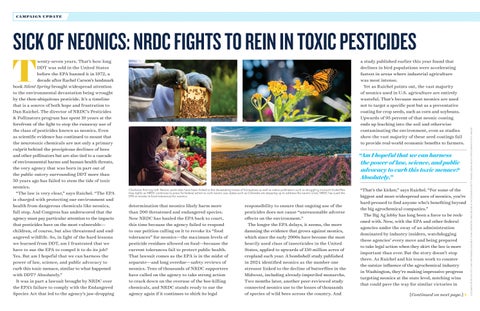
“Am I hopeful that we can harness the power of law, science, and public advocacy to curb this toxic menace? Absolutely.” Clockwise from top left: Neonic pesticides have been linked to the devastating losses of honeybees as well as native pollinators such as struggling monarch butterflies (top right); as NRDC continues to press for federal action to curb neonic use, states such as Colorado are stepping up to address the neonic crisis; NRDC has sued the EPA to revoke its food tolerances for neonics.
determination that neonics likely harm more than 200 threatened and endangered species. Now NRDC has hauled the EPA back to court, this time because the agency failed to respond to our petition calling on it to revoke its “food tolerances” for neonics—the maximum levels of pesticide residues allowed on food—because the current tolerances fail to protect public health. That lawsuit comes as the EPA is in the midst of separate—and long overdue—safety reviews of neonics. Tens of thousands of NRDC supporters have called on the agency to take strong action to crack down on the overuse of the bee-killing chemicals, and NRDC stands ready to sue the agency again if it continues to shirk its legal
responsibility to ensure that ongoing use of the pesticides does not cause “unreasonable adverse effects on the environment.” The longer the EPA delays, it seems, the more damning the evidence that grows against neonics, which since the early 2000s have become the most heavily used class of insecticides in the United States, applied to upwards of 150 million acres of cropland each year. A bombshell study published in 2024 identified neonics as the number one stressor linked to the decline of butterflies in the Midwest, including already-imperiled monarchs. Two months later, another peer-reviewed study connected neonics use to the losses of thousands of species of wild bees across the country. And
“That’s the kicker,” says Raichel. “For some of the biggest and most-widespread uses of neonics, you’re hard-pressed to find anyone who’s benefiting beyond the big agrochemical companies.” The Big Ag lobby has long been a force to be reckoned with. Now, with the EPA and other federal agencies under the sway of an administration dominated by industry insiders, watchdogging these agencies’ every move and being prepared to take legal action when they skirt the law is more important than ever. But the story doesn’t stop there. As Raichel and his team work to counter the outsize influence of the agrochemical industry in Washington, they’re making impressive progress targeting neonics at the state level, notching wins that could pave the way for similar victories in [Continued on next page.]
CLOCKWISE FROM TOP LEFT: CARLY WHITMORE/USDA NRCS; RYAN CARPENTER; BRAD MCGINLEY PHOTOGRAPHY/GETTY IMAGES; SARAH WOLFE PHOTOGRAPHY/GETTY IMAGES
SICK OF NEONICS: NRDC FIGHTS TO REIN IN TOXIC PESTICIDES