
Northern Express Weekly • february 13, 2023 • 1 norther nex press.com NORTHERN express NORTHERN MICHIGAN’S WEEKLY • February 13 - February 19, 2023 • Vol. 33 No. 06 The Winter Restaurant Guide + Where to eat across the North 7 soups to stave off winter’s chill + Local restaurant owners weigh in on industry challenges

2 • february 13, 2023 • Northern Express Weekly Traverse City OAK AGED WILD BEER | PIZZAS | SALADS SANDWICHES | TRUFFLE FRIES & MORE! 13512 PENINSULA DR - OLD MISSION JOLLYPUMPKIN.COM | @JOLLYPUMPKINTC 231.223.4333
The Case for Lot O
In Stephen Tuttle’s column “Local Odds and Ends for February” on Feb. 6, 2023, he expressed displeasure with the size of units (240 square feet) and that Lot O was being sold to Homestretch Nonprofit Housing at half of the appraised value. Mr. Tuttle feels it’s ironic that this project will allow low-income individuals to be subsidized to live in the most expensive part of town.
Lot O, like all affordable housing, is subsidized by government agencies at both the local and state level. This is accomplished through tax abatements, low interest loans, and other incentives that are available to all developers who reserve a portion of their units at lower rents. Additional capital will be sought through fundraising campaigns where private donations will help bridge the financial gap, enabling the project to be realized.
The Lot O project does have a majority of units sized to be able to maximize the density for this location per request by the city commissioners. The intention is for some residents to be able to live and walk to work without the economic burden of owning a car.
We are grateful that the City of Traverse City has put actions to words to make this development possible. This project will provide affordable workforce housing in the downtown area where currently none exists. After all, another for-profit development would just add to the million-dollar condo market or vacation rental stock that is pushing year-round residents out of the city and increasing business decline.
Perhaps downtown businesses can employ some of the Lot O residents, extending their hours of operation and maybe bringing more cars downtown to help fill those beautiful parking decks!
Jim Lemire | Traverse City
Women Need Men Like Fish Need a Bicycle

[In response to the cover of the Jan. 30 Northern Michigan Women issue, which featured two local female leaders—part of our “Wing Women” article that celebrated stories of female friendships—and the tagline “Beside every great woman…is another great woman.”]
You may think you are being cute with your caption being dismissive of men and continuing the media narrative “women need men like fish need a bicycle,” but the truth is what you are promoting is a culture that tells women an essential lie and denigrates and discourages men.
Yes, it’s all in good fun until it is understood that you’re perfectly serious. You are spreading the satanic deception that what God said was false and irrelevant to the lives of women, that they are best off without men because you know that some percentage of women will be influenced by your messaging. So your target audience will be enticed to believe you as you seek to influence their thinking and move them further away from their God-given role of being joined to a man for life. And you comfort others who have already done so.
This is just one step in the process of “cutting the ties that bind,” leading to more unhappiness, unrest, and dissatisfaction among both women and men. The ultimate goal being the rejection of a good God in favor of self-deceit. I expect you will be wholly dismissive of this message because after all, this is just in good fun.
Tom Banks | Petoskey
& stuff
Express Weekly is published by Eyes Only Media, LLC.
Luke Haase PO Box 4020
City, Michigan 49685
(231) 947-8787 Fax: 947-2425
Editor: Jillian Manning
Finance Manager: Libby Shutler
Distribution Manager: Roger Racine
Sales: Lisa Gillespie, Kaitlyn Nance, Michele Young, Todd Norris, Abby Walton Porter For ad sales in Petoskey, Harbor Springs, Boyne & Charlevoix, call (231) 838-6948
Creative Director: Kyra Cross Poehlman
Distribution: Joe Evancho, Sarah Rodery Roger Racine, Gary Twardowski Charlie Brookfield, Randy Sills Listings Editor: Jamie Kauffold
Contributors: Geri Dietze, Anna Faller, Laurel Manke, Craig Manning, Stephen Tuttle
Copyright 2022, all rights reserved. Distribution: 36,000 copies at 600+ locations weekly. Northern Express Weekly is free of charge, but no person may take more than one copy of each weekly issue without written permission of Northern Express Weekly. Reproduction of all content without permission of the publisher is prohibited.
Northern Express Weekly • february 13, 2023 • 3 231-947-4274 - Located on the TART Trail at 736 E. 8th St., Traverse City 10% OFF! TUBBS AND ATLAS SNOWSHOES & POLES! Mardi Gras FEBRUARY 17 - 21 NO COVER RESERVATIONS SUGGESTED Free EveryPaintingFace Day www.magnumhospitality.com 231.264.0530 elk rapids Half mile east of the light FRIDAY, FEB. 17 Kids Night Live Music from MIRIAM PICO 5:30-8:30 Kids Bags Balloon Art by JUNEBUG & WYATT SATURDAY, FEB. 18 Mardi Gras King's Feast SPECIAL MARDI GRAS FEAST MENU Balloon Art by JUNEBUG & WYATT SUNDAY, FEB. 19 Super Sunday Live Music from TORONZO CANNON 6-9 MONDAY, FEB. 20 Masquerade Monday Live Music from DREW HALE 6:30-9 TUESDAY, FEB. 21 Fat Tuesday Live Music from LIL ED & THE BLUES IMPERIALS 6-9
feature Soup: The Universal Comfort Food........ 10 Barrel Back Restaurant... 15 Where to Eat This Winter 16 Restaurant Round Table.................................20 Driving the Green Book................................ 22 columns
Top Ten..... 4 Spectator/Stephen Tuttle............ 6 High Notes 6 Guest Opinion.......................................... 9 Weird 18 Dates.. 26 Nitelife....................................... 32 Crossword.................................. 33 Astrology................................... 33 Classifieds 34 Northern
CONTENTS
Publisher:
Traverse
Phone:
email: info@northernexpress.com www.northernexpress.com
letters
top ten
Black History Month at the Ramsdell 4
The Ramsdell Regional Center for the Arts has teamed up with the Manistee Racial Justice and Diversity Initiative (MARJDI) to present “Journey of Discovery,” a month-long series of events that celebrates Black History Month and specifically the contributions of African Americans in rural Michigan. This week, you can catch two of the events. First up, on Thursday, Feb. 16, is a performance by singer-songwriter Crys Matthews, a classically-trained clarinetist who is now heralded as one of “…the brightest stars of the new generation of social justice music-makers.” Then, on Saturday, Feb. 18, the Ramsdell MARJDI will welcome Dr. Anna Lisa Cox, an Alumna Fellow at Harvard University’s Hutchins Center for African American Research, for a special lecture focused on “Black pioneers who upheld the values of the American Revolution in frontier Michigan and Manistee.” Both events are free to the public, but do require pre-registration. Get the details and make plans by visiting ramsdelltheatre.org.


Snowshoe Under the Stars
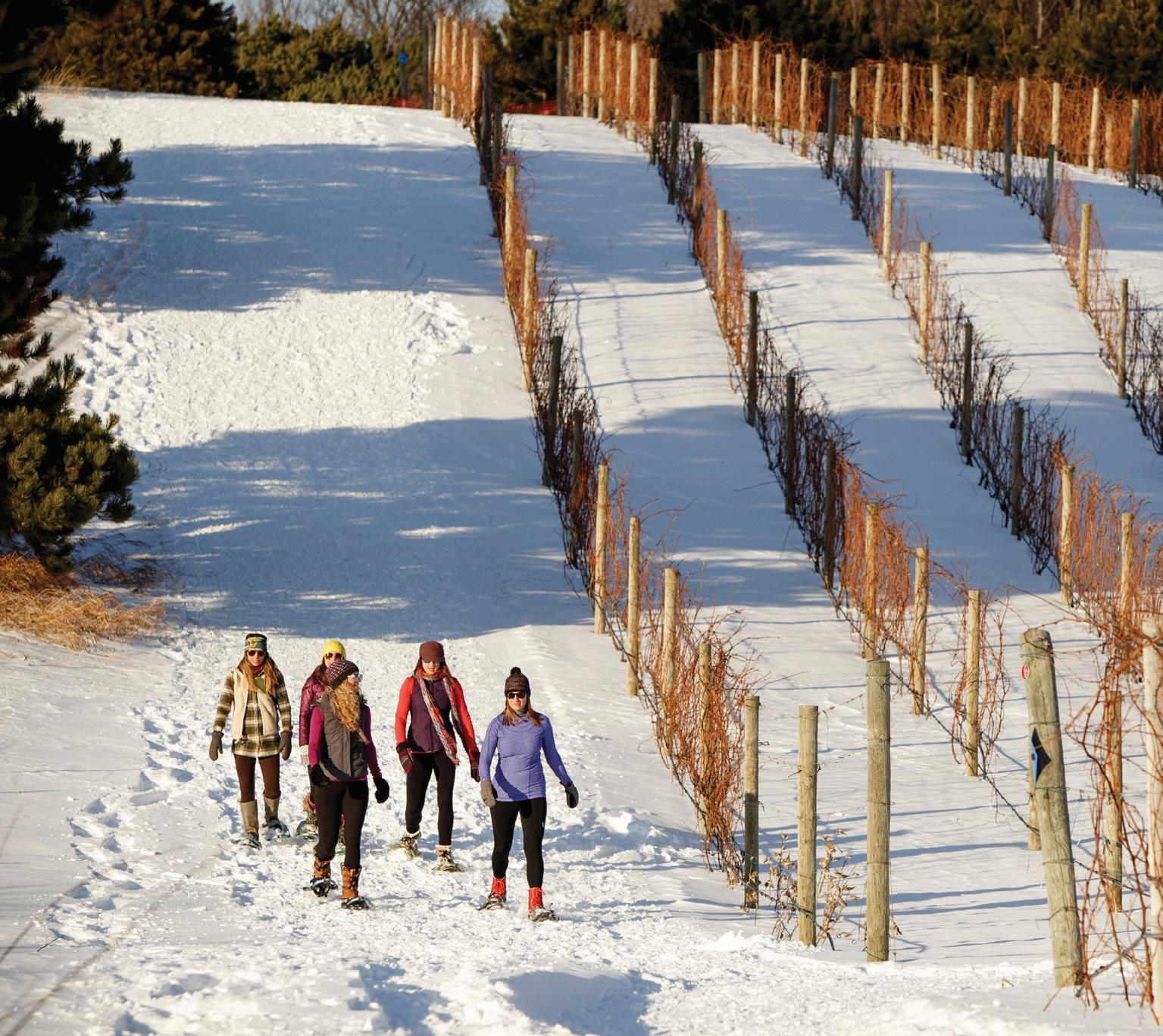
Enjoy a guided candlelight tour of The Botanic Garden at Historic Barns Park with experts from the Grand Traverse Conservation District on Wednesday, Feb. 15, from 5-7:30pm. While you wander, learn about the art and science of snowshoeing, as well as winter plant identification. Snowshoes will be provided or you can bring your own…or better yet, make your own! (see “Build Your Own Snowshoes” thebotanicgarden.org/ events/)! Tickets: $15-$19.


Hey, watch It! Shrinking

It’s time for a new take on mental health. Apple’s latest, Shrinking, stars Jason Segel as Jimmy Laird, a grieving therapist struggling with the death of his wife and his new role as a single parent to his teenage daughter. In short, he’s not handling it well. Not at all. But when he starts taking creative and maybe not-quite-ethical approaches to helping his clients, he starts to see positive change in himself, too. Jimmy’s rapport and refreshing honesty with his patients—especially Sean (Luke Tennie), who is working through PTSD—will have you wishing you had a shrink just like him. The cast is rounded out by Jessica Williams and a delightfully grumpy Harrison Ford playing fellow therapists Gabby and Paul, plus Christa Miller (of Scrubs and Cougar Town fame) as Jimmy’s next-door neighbor. While there’s plenty of gravity in Jimmy’s situation and those of his patients, humor and heartwarming moments abound. Now streaming on Apple TV+.
For those in need of a little mid-winter respite, Northport’s snowy paths and sledding hills (Nagonaba Trail System is a must) make for the perfect local excursion. While you’re out there, warm up at New Bohemian Café with a latte and a Kev McMurphin. Named for coowner Kevin Murphy (with a cheeky nod to McDonalds’ Egg McMuffin), New Bo’s signature breakfast sandwich is stacked with scrambled eggs, crispy hashbrowns, and sausage, all piled high on a toasted English muffin. Finished with homemade garlic-chili mayo and a layer of gooey American cheese, this après-hike snack is just as decadent on a plate as it is wrapped in foil to go. We’re thawing out just thinking about it—and at only $6.50 per sandwich, there’s nothing stopping you from stocking up! The Kev McMurphin is available at New Bohemian Café (110 S. Waukazoo St., Northport), and you can place an online order at newbohemiancafe.com. (231) 386-1034

4 • february 13, 2023 • Northern Express Weekly
this week’s
5
2 tastemaker New Bohemian
McMurphin Calling All Contractors & Insulation Companies Steady, Year-Round Work • Guaranteed, Quick Pay • Free Training Opportunities contact Tish Stave at tstave@nmcaa.net for more information must be licenced & insured
Café’s Kev
6 Cheers to the First TC Bourbon Fest
Stuff We Love: Honoring a Local Wonder Woman
We have cherry festivals and comedy festivals and film festivals…and now, we have a bourbon festival! The inaugural TC Bourbon Fest heads to town on Saturday, Feb. 18, at Visions Weddings & Banquets on West Bay Shore Drive. You’ll get to explore more than 200 bourbons and whiskeys alongside cocktails (think Manhattans, Old Fashioned, Mint Juleps, and Kentucky Kisses) and high-end bottle selections. Most of the makers on the list are the giants of the industry, but you’ll see local establishments like Traverse City Whiskey in the mix, too. The festival will also have beer, wine, and nonalcoholic beverage options, plus food trucks and live music to enjoy. Tickets start at $50 (purchased online ahead of time, $60 at the door) and include a souvenir glass and 10+ tasting tickets. Event proceeds benefit Friends of the River, a nonprofit that works to improve water quality, access, and awareness on the rivers in Michigan. Learn more at traversecitybourbonfest.com.


Walloon Writers Review Opens for Submissions
Ready to see your name in print? Walloon Writers Review, a local literary magazine, is now accepting submissions through March 15, 2023, for their summer 2023 compilation of creative Up North stories. The editors are looking for pieces that illustrate the many ways to explore northern Michigan and the U.P. from local writers who know our area’s beauty, secrets, and quirks the best. You can submit short stories (under 4,000 words), poems, other creative writing pieces (like letters or a short play), or a series of nature photographs (sans humans). Each person is limited to two submissions—which are sent electronically— and both previously published and new writers are encouraged to participate. Each submission comes with a $6.50 fee. This is the eighth edition of the review, and the finished, print editions are sold locally at shops and independent bookstores and online. Get all the details and submit your piece by heading to walloonwriters.com.

Mary Sutherland (Feb. 6, 1930 to Jan. 28, 2023) is a name many Leelanau and Grand Traverse locals know. Her list of accomplishments in the region is as long and impressive as her nearly 93 years on the planet and 53 years in Glen Arbor. Described by loved ones as “a feminist to the bone,” she was a founding member of the Women’s Resource Center and National Organization for Women in Traverse City. She taught a course in assertiveness at Northwestern Michigan College about “self love, the right to say no, and that women were equal (if not superior) to men in every way.” She was a prolific professional speaker and authored the book Claim Yourself about honesty, authenticity, and self-esteem. Later in life, she became a beloved and cheerful fixture at Cherry Republic in Glen Arbor, the original location of the store opened by her son, Bobby. Her activism, fearlessness, and joy made an indelible mark on northern Michigan!

bottoms up Five Shores Brewing’s Bear Dozer Stout
One of the joys of winter for us beer enthusiasts is kicking back with a big, flavorful imperial stout. These beers don’t typically match well with hot summer days, but they sure taste good on winter evenings. Sometimes, though, even we are overwhelmed by the heaviness and booziness of an imperial stout. Thank goodness, then, for Five Shores Brewing’s Bear Dozer Stout, an imperial with all the character and complexity of other big stouts, but with a slightly lower ABV and an uncharacteristic drinkability. This cream stout delivers a smorgasbord of different flavors—cocoa, caramel, milk sugar, an edge of hops—but evens them out with a remarkably smooth, creamy finish that makes the beer go down nice and easy. It is, simply put, one of the most well-balanced stouts you’ll find in northern Michigan. Get over to Five Shores (at 163 S Benzie Boulevard in Beulah) and see for yourself! fiveshoresbrewing.com, (231) 383-4400.

Northern Express Weekly • february 13, 2023 • 5
8
WINEGUYSGROUP com DOWNTOWN PETOSKEY LoveMonth WINE DINNERS | KARAOKE & TRIVIA NIGHTS POP-UP LOUISIANA KITCHEN COFFEE-CENTRIC GIFTS | VALENTINE’S DAY SCALLOP NIGHT | PRIME RIB FRIDAYS
OWNING OUR FOOD



spectator

 By Stephen Tuttle
Let’s just assume the Chinese have surveillance technology other than slowmoving and visible-to-the-naked-eye balloons. They certainly knew it would be seen and taken down. To be sure, they have multiple sophisticated satellites busily surveilling any and all of our important military sites exactly as we have over China.
The apoplectic reactions of some commentators was more than a little overblown. The talking heads on Fox & Friends were particularly alarmed and with an entirely new angle. Host Rachel CamposDuffy suggested the Chinese were checking
foreign investors and land owners are from the Netherlands and Canada, who together control about 58 percent of all foreignowned farms and timber. The Chinese are not significant players here, either.
(Those pesky Canadians are everywhere, though. They’re in Michigan, Montana, and nationwide. Fox & Friends should be very upset with them.)
In short, China is not a significant player in our domestic agricultural businesses and poses no threat to our domestic food supply, nor is there any evidence they are attempting

Neither Chinese balloons nor their paltry American farmland ownership are threats to our food supply. Other foreign interests involved in our agriculture industry aren’t much of a problem, either. Water is the issue...
out farmland and hinted they were in the market for existing farms so they could control our food supply. She even suggested anyone who sells farmland to the Chinese might be guilty of treason. The North Dakota legislature has even considered a law prohibiting Chinese citizens or interests from buying land in their state.
There might be an issue with our farmland, but it doesn’t involve Chinese ownership. In fact, we import $3.8 billion worth of agricultural products from China, our seventh largest foreign food supplier. They don’t really need to buy our farms to interrupt our food supply, but let’s take a look to make sure. We’ll get to the real issue a bit later.
First, let’s make sure the Chinese aren’t buying up our farms. There are 895.3 million acres of farmland and timberland in the United States. According to the U.S. Department of Agriculture, about 35 million acres of that is owned by foreign individuals, companies, or investors. Chinese interests own a paltry 192,000 acres and don’t even make the top 10 of foreign agricultural investors, a list headed by Canada.

Getting back to Montana about which the Fox folks were so concerned, Montana State University graduate students have done the investigating for us. Montana is a huge state, the fourth largest by area, and it has a whopping 59.7 million acres of farmland. Foreign interests only own a bit more than 700,000 acres or about 1.2 percent of that total. Belgium and Canada have the largest foreign holdings, but China is way down the list.
Just to be safe, we should check foreign ownership here in Michigan. According to the Michigan Farm Bureau, Michigan has about 10 million acres of farm and forest land on 47,600 farms and timber operations. We have an unusually large foreign presence, with more than 1.3 million acres controlled or owned by foreign interests, but the vast majority of that is timberland. Our biggest
to buy up farms for nefarious purposes. There is a different kind of land issue in western states, including Montana. It doesn’t involve Chinese land ownership but does pose a threat. Rural Arizona, which prides itself on its aversion to government regulations, is ground zero. Like in so much of the West and Southwest, the issue is water and who uses how much of it. Outside of the counties in which Phoenix and Tucson sit, Arizona water regulations are rare.
The combination of cheap land and a water use free-for-all has resulted in a potential water crisis for residents in rural communities like Kingman, who rely on wells with rapidly receding water levels. The suspected culprits are new agricultural operations.
The Saudis, not the Chinese, have purchased thousands of acres on which they grow extremely thirsty alfalfa, which they then ship back home for their horses. Not to be outdone, investment groups have planted thousands of acres of equally thirsty pistachio trees, which will require more and more water as they mature.
The water usage issues in Arizona are reflective of a much bigger threat to our food supply than foreign interests and their relatively tiny holdings. Not enough water in areas like California’s Central Valley—which is responsible for half the country’s fruits, vegetables, and nuts—combined with too much water in some areas of the Midwest, the breadbasket of the country, makes for a dangerous recipe.
Neither Chinese balloons nor their paltry American farmland ownership are threats to our food supply. Other foreign interests involved in our agriculture industry aren’t much of a problem, either. Water is the issue; who uses how much and for what in the West where we seem determined to suck the aquifers dry...and how to deal with increasing flood threats that turn our “amber waves of grain” in the Midwest into mud we can’t farm.
6 • february 13, 2023 • Northern Express Weekly
tickets ON SALE! 231.947.2210 OldTownPlayhouse.com MAINSTAGE SHOW February 19, 2023 Curtain Time: 3:00 PM 2022-2023 Season Where community comes together Remembering PatsyCline Starring Judy Harrison
FINDING WINTER FOOD & FUN UP NORTH






In the long winters, it seems easy to forget to enjoy all the “up north” things our unique region offers. In this colder season, cozy blankets and long movies tend to be at the forefront of most of our minds. However, for others, skiing, ice fishing, and snowshoeing are must-dos when experiencing proper winter in northern Michigan. One thing remains true for both of these types of adventurers, the need for a warm meal.
If in the Cadillac area, swing through Roasted Cafe before heading downstairs to Dunegrass for your pickup order. Roasted’s rotating menu for breakfast and lunch will make your mid-day pick up that much more enlightened. Offering a wide range of healthy options, vegans and meat eaters alike are welcome. Since their grand opening around the new year, they have added spirits and specialty cocktails to their already impressive drink menu. Nevertheless, the coffee options will have you warm and perked for whatever adventure awaits you.

When at any Dunerass shop, ask about our local hot spots for the inside scoop on where to catch a breath of fresh air and a bite between winter activities. Perhaps you’ve been craving to carve some fresh pow all summer, but want to try some new spots, our staff members would be happy to share some of their preferred trails. If cruisin’ isn’t your thing, we suggest a slower vantage point with some snowshoe trails that provide picturesque scenery most people only see on their desktop computer. To see most of what winter brings in our beautiful state, we recommend heading a little more north.

However you get there, be sure to check out our Marquette location before winter is over. If you’re looking to take your winter activities to a higher latitude, you found the place! The prime location for the truest form of winter entertainment is in the UP. You can do all the ordinary winter things, but you’ll also get a chance to observe dog sled racing, ice climbing festivals, and many forms of racing, like our most anticipated event, the 30th annual Trenary Outhouse Classic. Join us on February 25 as we race our hand-built outhouse 500 feet across the finish line!

Northern Express Weekly • february 13, 2023 • 7
HIGH NOTES SPONSORED CONTENT
www.dunegrass.co Scan for a higher latitude CANNABIS Culinary-Maritime Certificate NEW > In-demand jobs > Good pay and benefits > Affordable training > One year program > First of its kind certificate STARTS FALL 2023 717 RANDOLPH, TC, MI 49684 231-947-9213 SLEDERS COM S L E D E R ' S F A M I L Y T A V E R N , E S T 1 8 8 2 S L E D E R ' S F A M I L Y T A V E R N , E S T . 1 8 8 2 T h e B E S T L o c a l l y S o u r c e d H a n d - P a t t i e d T h e B E S T L o c a l l y S o u r c e d H a n d - P a t t i e d 1 0 0 % B e e f & B u f f a l o B u r g e r s i n T o w n ! 1 0 0 % B e e f & B u f f a l o B u r g e r s i n T o w n !









































8 • february 13, 2023 • Northern Express Weekly 26 JANUARY 2022 TRAVERSE SUBSCRIBE TODAY! OUR BEST RATE POSTAGESTDPRSRT PAID CITY,TRAVERSE PERMIT $3 JUNE2021 VOLUME26 • NUMBER GREENLIGHT FORSUMMER Localbusinessesprepareforwhatmightbethebesttourismseasonever. ssbankmi.com/yesican TCBNFrontCoverBanner Isyourbank Isonyourside? yourbank onyourside? orizontalones... PRSRT PAID TRAVERSE $3 MAY 2021 VOLUME 26 NUMBER RAKING IT IN Toprealtorsshineinourannualrankingof northernMichigan’stop-sellingrealestateagentsssbankmi.com/yesican Fedupwithyourbank? TCBNFrontCoverBanner DECEMBER VOLUME 26 $3 foodbegins vinegar. 3 STEPS TO SHOP & SAVE ON CORPORATE AND LARGE GROUP GIFTS Select 2 address Area nonprofit leaders reflect on an unprecedented giving season - page 20 Predicting a whole new tax year ahead - page 36 Even with offices closed,employees volunteering - page 8 New One-Year Subscription (12 issues) JUST $35 Renew my subscription for one year (12 issues) - $35 Payment Enclosed Bill Me Charge My Credit Card Visa MasterCard C.C No. Exp. Date Sec. Code Name Business Name Address City/State/Zip Email MAIL TO: TC Business News P.O. Box 1810 Traverse City, MI 49685-9965 theTCBN TuESdayS • SIN featuring • wedNESdayS • Karaoke! ThuRSdayS • featuring FRIdays & SatURDayS • featuring VJ Mike King WED-SAT 5pM - 3aM BURGERS • BRATS CHILI DOGS FRIES & MORE 520 Franklin St • TC • 231-935-1666 sidetraxxtc.com 5pm – 2am • 7 days a week Happy Hour 5 – 9pm NOW OPEN!
guest opinion
 by Greg Holmes
My favorite thing about James Taylor’s 1993 album Live is not a particular song, but rather the repartee that he has with an audience member. When a woman shouts out, “I love you, James!”, Taylor quickly replies “I love you too!” After a momentary pause he adds, “Isn’t it great we don’t know each other?”, prompting a burst of laughter from the audience.
What she really knows about Taylor doesn’t matter, at least not in that moment. What’s undeniable, however, is the fact she feels that she does love him.
How is it possible to love someone you don’t know? And what happens when you do?
Anyone who has fallen in love has experienced firsthand the powerful truth of the phrase “ignorance is bliss.” Falling in
You may begin to feel trapped if you have made a premature commitment, and this feeling of being trapped can lead to anxiety, depression, and even psychosomatic disorders if not honestly addressed. It’s not unusual to develop a wandering eye as you search for someone else who you believe would be your ideal match. Depending on circumstances, this search can lead to an affair.
So how does true love differ from infatuation?
The basic difference is that true love, unlike infatuation, is not an impetuous process. It takes considerable time and patience to develop true love, as it requires knowing both yourself and the other person as thoroughly as possible. True love is not “blind” like infatuation. In fact, it is just the opposite—a clear-sighted awareness that comes from difficult, continued effort on the part of both parties.
I’d argue that ignorance is a prerequisite for falling in love. You may be initially attracted to someone, but the instant infatuation that follows is fueled by a false set of your beliefs.
love is a passive experience, one that requires little or no effort and feels out of your control. We can become infatuated with someone at the beginning of a relationship while experiencing a sense of euphoria. It’s easy to become obsessed with someone that we believe we “love.” But is it true love?
When you are infatuated with someone, who is it that you really love? I’d argue that ignorance is a prerequisite for falling in love. You may be initially attracted to someone, but the instant infatuation that follows is fueled by a false set of your beliefs.
These beliefs consist of your psychological projections of an idealized image of the other person, as well as your fantasies about how a relationship would be. We have unconsciously fallen in love not with the other person as they are, but with parts of ourselves. Infatuation has very little, if anything, to do with who the person actually is.
There’s one thing missing from our infatuation—reality. Walt Whitman described this in his epic poem Leaves of Grass:
“Are you the new person drawn to me? To begin with, take warning. I am surely far different from what you suppose…”
If falling in love is often euphoric, then falling out of love is usually dysphoric. Gradually you come face to face with reality as you discover that the person you fell in love with is not who you imagined them to be. Imperfections and irreconcilable differences reveal themselves and are often amplified. The idealized person is nowhere to be found. Arguments about differences between the two of you are often magnified through the lens of your disappointment.
The person you are attracted to will not be a perfect match with your beliefs, values, and expectations. Expecting perfection in yourself or others never works, and in fact perfection is the enemy of the good.
You realize that there will always be differences, and you are aware and accept that what you see is what you get. You are who you are, and the person of your affection is who they are, and that’s all you both are—period. It is possible for someone to change, but betting the farm that you can change them into your dream person will lead to disappointment, frustration, and failure.
Seeing clearly and loving what is there are important aspects of true love. But just how do we show, or demonstrate this love? True love is more than an emotion. Feelings alone, no matter how strong and honest, are simply not enough. True love also involves willful action. In fact, to love someone is a verb. When someone truly loves another person, you can tell by how they treat them. True love can transform how you see the world.
It is interesting that feelings of hatred are based in ignorance as well. Just as it is impossible to truly love someone you don’t know, it’s impossible to truly hate someone you don’t know. The more you know about someone—their circumstances, their background, their difficulties—the more you will understand them, and the more compassion you will likely have for them.
Who knows? You could even begin to love them.
Greg Holmes lives and writes in Traverse City.

Northern Express Weekly • february 13, 2023 • 9
TRUE
LOVE
127 S UNION ST 231- 421-3669
Soup The Universal Comfort Food
7 bowls you need to try in NoMi
 By Geri Dietze
Call it soup, sop, le potage, zuppa, or juha, among others, but they all mean the same thing: a big bowl of goodness. Northern Express has found seven standout soups from some of the region’s most popular eateries to fill you up and chase the February chills away.


Just Like Nana’s
Lake Street Market and Deli, 306 S. Lake St. in Boyne City, lakestreetmarket.com, (231) 582-4450
Your grandmother’s classic recipe is channeled in this hearty, homemade Chicken Noodle soup. Start with house-made parsley noodles, thick-rolled and wide-cut. (The noodles in their Beef Noodle soup are elevated with freshly ground peppercorns.) Next add chunks of fresh, slow-roasted chicken, seasoned just right. Then bring in the color with an array of garden vegetables and simmer it all, slowly, in a soothing, substantial broth. Surely, this would make any Chicken Noodle top 10 list.
Score One for Spike’s
Spike’s Keg O Nails, 301 N. James St in Grayling, spikeskegonails.com, (989) 348-7113
The Chili Bowl at Spike’s is a generational favorite. Their special freshly-ground beef gets its kick from the house-made spice blend, while the sauteed celery, onions, and green peppers up the flavor ante. Mexican red beans—the pinto’s small, tender cousin—provide authenticity. Simmer for about six hours, and then get ready: This is chili for the true aficionado, and proof is in the sales. Spike’s sells at least a gallon of chili daily, usually more, and about 400 gallons over the course of the year.
Variety to Keep You Coming Back, Again and Again
Trish’s Dishes, 407 S. Main St. in Leland, trishesdishes.com, (231) 994-2288
The Signature Tomato Basil Bisque, with its fresh, light flavors and creamy texture, is a menu standout, but the number of soups in and out of rotation is dizzying. Here’s a fair selection from the roster: Mushroom Barley; Cream of Chicken and Mushroom; Beef Barley with Sauteed Vegetables; Chicken Curry; Chicken Sausage Jambalaya; Beef Vegetable; Kale and White Bean; and Sweet Potato, Parsnip, and Squash Bisque. This is an incomplete list, but you get the idea—Trish’s Dishes has the soup.
Viva la Soupe à l’oignon!
Great Lakes Grill, 817 East State St. in Cheboygan, greatlakesgrillcheboygan.com, (231) 627-8161
Owners Dave and Shari Salewske are willing to share some—but not all—of the recipe for their Baked French Onion soup, a menu staple for decades. First, everything is house made: The soup stock, with beef bones, carrots, celery, and onions, cooks for 24 hours on the flattop. “Slow and low,” says Shari. “That makes all the difference,” adds chef Dave. Every 20-quart batch—they make two batches weekly—contains about a dozen colossal Vidalia onions, slow cooked in butter for six hours for perfect caramelizing. (The five-ingredient seasoning blend is a closely-held secret.) White bread croutons are substantial enough to float under pillows of Swiss cheese but still soft and chewy so you can dive right in. (Croutons, too, have their own secret seasonings.) Patrons call this version of French Onion “one of the best they’ve ever had.”

10 • february 13, 2023 • Northern Express Weekly
From Medieval Europe, Direct to You

Trout Town Tavern & Eatery, 306 Elm St. in Kalkaska, trouttowntavern.com, (231) 258-2701
Beer soup, in this case Cheddar Ale, is thought to have been enjoyed by both peasants and higher-ups as a breakfast soup, sometimes poured over bread. At Trout Town Tavern, cheddar with just the right level of sharpness meets ale’s earthy flavor in this substantial fare. White Chicken Chili, New England Clam Chowder, and Smoked Beef Barley (made from in-house mesquite-smoked brisket, with a sweet and savory dry coffee rub) round out the menu. We say opt for the three-soup sampler, because choosing can be hard.

Close Your Eyes, and You’re in the Big Easy
Pearl’s New Orleans Kitchen, 617 Ames St. in Elk Rapids, pearlsneworleanskitchen.com, (231) 264-0530
In short: Go for the gumbo… you’ll be glad you did. Pearl’s YaYa Gumbo gets its mojo from Paul Prudhomme’s doublesmoked, spicy-sweet Andouille sausage and chunks of slowroasted chicken, brought together in a stock with sauteed red onion, red and green bell peppers, and a mix of dried herbs and spices. Of course, the key to any gumbo is the roux, a mix of oil and flour, slow cooked—with a great deal of patience—to a deep brown perfection. A serving of rice and traditional okra also help thicken this authentic Southern stew. (Not to worry, okra haters: the little veg is not slimy if it’s cooked properly.) But is it authentic? True to its Cajun origins? You bet! “We have our signature items, and we don’t touch those recipes,” states General Manager Christine Tate.
Northern Express Weekly • february 13, 2023 • 11
12 • february 13, 2023 • Northern Express Weekly YOUR LOCAL FAVORITE BARBECUE SPOT 423 S UNION ST, TRAVERSE CITY BLUETRACTOR.NET | @BLUETRACTORTC | 231.922.9515
From Medieval Europe, Direct to You

Trout Town Tavern & Eatery, 306 Elm St. in Kalkaska, trouttowntavern.com, (231) 258-2701


Beer soup, in this case Cheddar Ale, is thought to have been enjoyed by both peasants and higher-ups as a breakfast soup, sometimes poured over bread. At Trout Town Tavern, cheddar with just the right level of sharpness meets ale’s earthy flavor in this substantial fare. White Chicken Chili, New England Clam Chowder, and Smoked Beef Barley (made from in-house mesquite-smoked brisket, with a sweet and savory dry coffee rub) round out the menu. We say opt for the three-soup sampler, because choosing can be hard.
Swamp Soup (No Relation to Swamp Thing)

Centre Street Café, 1125 Centre St. #3404 in Traverse City, centrestreetcafe.com, (231) 946-5872
Don’t be put off by the name; this vegetable soup is freshly flavored and, with its nottoo-thick, not-too-thin consistency, the perfect winter meal. Expect spinach (loads of it!) sauteed with onions and garlic, combined with house-made vegetable stock. Red pear heirloom tomatoes—tender, sweet, and tiny (only about 2 inches), with a minimum of seeds—set this soup apart. Grated Swiss cheese on top imparts a sweet, nutty flavor and is the perfect pairing for this popular dish, a menu favorite for over 20 years.
Northern Express Weekly • february 13, 2023 • 13
OPEN DAILY arts glenarbor.com 231.334.3754 bogomondaysburger AuthenticallyArt’s since 1934! IF YOU KNOW YOU KNOW. Legendary Burgers. Soups & Salads. Sandwiches. Local Brews.






14 • february 13, 2023 • Northern Express Weekly 18 76 EST. bahles.net hours MON–SAT 10AM-530PM Downtown Suttons Bay LOCATED IN BEAUTIFUL SUNDAY- CLOSED 40OFF % IN-STORE & ONLINE * ALL PURCHASES ARE FINAL SALE * SALE! SHOP ALL OF YOUR DUBARRY BARBOUR LILLA P PATAGONIA PEREGRINE MARBLE FILSON PETER MILLAR ...AND MORE! CLASSIC FINE CLOTHING WOMENS MENS KIDS BABY
Cozy Eats on the Shores of Walloon Lake
Barrel Back Restaurant serves up lakeside views and smoked flavors all winter long
 By Laurel Manke
Tucked on the southeast shoreline of Walloon Lake, Barrel Back Restaurant is a lakeside diner’s dream. May through October, vacationers and boaters flock to Barrel Back’s open air dining room and dock bar in the Village of Walloon Lake’s marina. Even the name is a nod to summertime and the “barrel back” boats—like Chris Crafts— that cruised the inland lakes in the 1930s and 1940s.
But even when temperatures drop, Barrel Back remains a haven for snowmobilers cruising through town, skiers, locals, and traveling foodies.
Dinner with a View
Barrel Back is owned and managed by the same group that owns the charming Hotel Walloon, a boutique property built in 2015 with 32 guest rooms. Located next door to the hotel, Barrel Back serves breakfast, lunch, and dinner seven days a week for hotel guests and the public. The magnetism of Hotel Walloon carries over to Barrel Back, as they both offer picturesque views of Walloon Lake and a welcoming staff.
Guests come to Barrel Back for the view and the atmosphere—think panoramic, floor-to-ceiling windows and a fire crackling in the center of the dining room—but they stay for the extensive tap list, wine offerings, and heartwarming menu prepared in the restaurant’s wood-fired rotisserie smoker, oven, and grill.
“We’re known for our slow cooked meats, brisket, chicken, and ribs,” says Hotel Walloon Sales and Marketing Manager Emily Jensen.

The aroma of Barrel Back’s smoked meats and wood-fired pizzas hit you as soon as you enter their cozy dining room, and the menu embodies the essence of comfort food. The best-selling winter dishes are exactly what you crave after a frigid day on nearby slopes and trails: house-smoked brisket, chicken wings, and a beer-battered whitefish sandwich, to name a few.
Their wood-fired pizzas run the gamut, from the more traditional BBQ Chicken and
Mediterranean to the Beer Cheese (Stella Artois beer cheese, bacon, and jalapeños) and Ryker’s Island (pepperoni, pineapple, coconut cream sauce, pickled jalapeños, red onion, and “sweet and spicy” coconut glaze).

For those craving lighter fare, Barrel Back’s menu rounds out with gourmet salads topped with fresh cheeses, veggies, nuts, and proteins. We like the West Arm, which has bacon, bleu cheese, avocado, apples, and garden greens dressed in a sugarcane vinaigrette.
Something for Locals
This time of year, locals who want to avoid summer crowds at Barrel Back come in to enjoy quieter date nights with inviting live music (offered Monday-Wednesday), a happy hour special, and cozy brunches with bottomless mimosas.

The breakfast menu is available from 8:30-11am and features all the classics, from Eggs Benedict to French Toast to Buttermilk Pancakes. But you’ll also find some specialities—the Brisket Poutine stands out with its cracked pepper gravy, as does the Breakfast Quesadilla packed with scrambled eggs, veggies, Plath’s smoked bacon, and a cilantro-lime sour cream.
And then, of course, there’s the happy hour menu, which runs from October to April from 4-6pm daily. You’ll find several carryovers from the main menu, like the Smoked Wings and the Black Bean Nachos, but also happy hour exclusives, including a Loaded Mac & Cheese (layered with brisket and chipotle BBQ) and the Barrel Back Skewer Set, where you can choose from chicken, steak, and shrimp to sample the house meats and savory sauces.
“Our happy hour is very popular in the winter months. We offer food and drink specials, including $2 beer, wine, and liquor pours,” Jensen says.
A Winter Destination
Although the resort town setting cools off in the colder months, Barrel Back keeps the fires roaring and the customers coming all winter long.
The restaurant is located on the second
floor of Tommy’s Walloon, a boat shop that offers winter sport rentals. Guests can rent snowshoes or cross-country skis from Tommy’s and hit the snowy trails surrounding Walloon Lake before returning to Barrel Back for a warm meal by the fire. Just outside of Barrel Back lies the Village of Walloon Lake’s adorable lakeside ice rink, and skaters can also find rentals at Tommy’s.
Other winter sport enthusiasts find their way to the restaurant, too.
“We are popular with snowmobilers because they can fuel up their snowmobiles in the marina and stop in for our $15 burger and beer lunch special,” Jensen explains. “They also use our side patio and dine around our heaters, so they do not have to take off all their gear.”
The restaurant also attracts skiers and snowboarders from Boyne and other area resorts by offering 15 percent off to anyone with a lift ticket.

At the moment, Barrel Back is gearing up to participate in the sixth annual Walloon Lake Village Winterfest on Feb. 18. The festival is a free community event with live
ice carvings, free skating, and plenty of warm soup and hot chocolate to stave off the chill. During the festival, the Petoskey Snowmobile Club hosts an Antique Snowmobile Show where the “Best Vintage Sled” is crowned. Barrel Back will offer an all-day happy hour, and festival-goers can sample more than a dozen Michigan craft breweries, wineries, and distilleries inside. (Get more details about the festival at boynechamber.com/events.)
Later this spring, Barrel Back will host an Easter Sunday Easter Bunny Brunch complete with an egg hunt and egg toss, which Jensen says is a big hit with area families. And looking ahead to the remainder of 2023, she says the team is excited for another fabulous summer on one of northern Michigan’s most beautiful lakes.
“We always have an incredible summer. This year we are excited to make our offerings even more welcoming to boaters and people enjoying the lake with our dock bar and our food truck,” Jensen says.
Northern Express Weekly • february 13, 2023 • 15
Find Barrel Back Restaurant at 4069 M-75 in Walloon Lake. (231) 535-6000, barrel-back.com
Where to Eat This Winter
Burrows, Bistros, and Birch Trees…Oh My!
By Northern Express Staff & Contributors
We’ve spent the last few months crisscrossing northern Michigan to find cool new restaurants, beloved local watering holes, and can’t-miss dishes that make our mouths water. While the menus may have shifted to cold-weather fare and the patio tables have been tucked away until spring, there are still plenty of amazing dining opportunities to explore this winter.
THE BURROW Traverse City
Like its sunny Cali-inspired menu that greets guests, The Burrow has been welcomed with open arms in its community of Traverse City and Leelanau locals, sailors, tourists, families, and foodies since opening in late June 2022.
The space has a larger footprint than its sister restaurants Mama Lu’s and The Flying Noodle, and people can visit through three different modes of transportation: via car, via bicycle off the nearby TART, or even right off the dock of the marina across the street. (A tunnel runs beneath S. West Bay Shore Drive, allowing mariners easy access to the restaurant and vice versa—The Burrow established a special “boaters menu” for delivery during summer.)
On the Menu
At The Burrow, you’ll find “Californiainspired American” dishes like their popular French Dip sandwich, made with houseroasted beef and a local bun.
There are other lighter takes on classics like the pork tenderloin with a panzanella salad or salmon with bok choy, ginger relish, and crispy rice. Both of these represent efforts to get away from what owner Adrienne Brunette calls the “Midwest brown” type of cuisine and move towards “a fresher take on familiar classics that people enjoy.”
While the west coast may be the main inspiration for the overall menu, some of those other “classics” also pop up from the opposing coast: a turkey club from New York, mussels from Prince Edward Island, and crab cakes from New England. (“People are obsessed with those,” Brunette adds.)
Some of the most popular dishes are ones that simply don’t have a major parallel in Traverse City cuisine: “I didn’t expect the tuna crudo to be such a wildly popular dish, but people love it,” Brunette says of the dish that features raw tuna, sashimi rice, and a smoked chili aioli that has proven to be a quick frontrunner. The beef tartare is also an early standout, made with a slow-cooked egg yolk, capers, shallot, and toast.
Find The Burrow at 12930 S W Bay Shore Dr. in Traverse City. (231) 943-1048, burrowtc.com

DOS ARBOLES
Frankfort
Opened in May 2022, Dos Arboles (Spanish for two trees) features taqueriainspired cuisine, while still maintaining the farm-fresh approach that defines Nick and Natalie Crawford— owners of Frankfort’s Birch & Maple—as restaurateurs.

“We’d always wanted to do a Mexican concept,” says Nick, which is the pair’s goto travel food. But even more importantly, they wanted the space to offer the top-notch service that attracts them as diners and longtime foodies. He says, “When we helped concept restaurants out West, we were always asking [ourselves], ‘Is this a place that I would want to go?’”
In the case of their new venture, the answer is a resounding yes.
On the Menu
Short of pressing their own tortillas, Dos Arboles operates a from-scratch kitchen, a distinction which, as chef Natalie notes, sets it apart from similar spots. As such, its extensive taco selection, specifically the carnitas and tinga varieties, showcase time-intensive proteins that are prepared authentically on-site.
In addition to several modernized classics, including churros and plenty of salsa, Dos Arboles has also peppered its menu with a few unexpected preparations. Of these, the Mexican Double Fried Chicken Thighs are by far the most likely to blow your mind. A substantial entrée intended for two, this creative take on the classic fajita begins with 24-hour brined chicken fried twice in a Mexican-style tempura (a light-as-air recipe that includes both Mexican beer and tequila) that’s tossed in crunchy barbeque sauce and served with black beans, peppers, and pickled jalapenos. Nick maintains it’s an absolute must; in fact, it’s the best fried chicken he’s ever had.
Other menu standouts include the deliciously-shareable Mole Verde, a traditional Mexican sauce containing house-braised pork carnitas, poblano peppers, masa harina, and more than a dozen herbs and spices; the queso-covered Nacho Gigante; and the sweet-meets-savory perfection of the raspberry-chipotle glazed Pepe Cristo.
Find Dos Arboles at 735 Main St. in Frankfort, (231) 399-0770. dosarbolesfrankfort.com
AROUND THE CORNER Northport
Around the Corner
Food and Fun food truck set up shop on the property in 2020, offering outdoor eats and hands-on family entertainment for all ages. For the past two summers, locals and tourists alike have flocked to their lot for not only food, but also a unique breed of fun not offered by other restaurants. (Think scavenger hunts, onsite art and science days, and outdoor games like giant Jenga and dominos.)
This winter, Around the Corner Food and Fun is adding a whole new dynamic: indoor dining with a fully nonalcoholic bar.
The new building’s design and décor are rich with nods to local history, including salvaged barn wood siding, a butcher block bar from the State Hospital, eclectic art, and collectibles from nearby homesteads. There are also plans to convert the original building’s 10,000-pound furnace into a firepit on the property.
On the Menu
Dishes shift with the seasons (and their summer and fall movie night themes). There are, of course, a few beloved mainstays, like the deep-fried grilled cheese with house-made tomato soup; fried pasties with sweet Runza dough (their Burger Mac cheeseburger, Sloppy Joe, and Greek Veggie pasties are fan favorites); and fish and chips, a recipe from Cavendish’s husband, who is from England.
There are plenty of goodies for younger eaters too; kids love their Chicken and Chips appetizer and PB and Jelly pastie. The menu is loaded with many more heartwarming delights, including a selection of mouthwatering desserts like Southern puffy beignets. The bar has a full menu of non-alcoholic beer, wine, and spirits, along with specialty boba tea drinks and other non-alcoholic beverages.
Find Around the Corner at 115 S Waukazoo St. in Northport. (231) 386-2216, aroundthecornerfood.com

BIRCH TREE BAKERY & CAFE
Harbor Springs
Since her February 2022 launch, Nichole Hall, a Harbor Springs native, says her 12 months in business have been successful. “I’m thrilled with the community’s support and enthusiasm,” she says. That enthusiasm has gone beyond simply buying coffee and baked goods. In October, the Harbor Springs Area Chamber of Commerce awarded Hall—who has to be one of the youngest business owners on Harbor Springs’ Main Street—with its Young Entrepreneur of the Year Award. (Maybe that’s just desserts for a woman whose grandmother’s baking hobby triggered the realization of a lifelong dream.)
On the Menu
A visit to Birch Tree’s baked goods showcase revealed a unique variety of items baked with homemade care. The mini maple glazed donuts ($1.75) have a great cake consistency and a potent maple glaze encircling the top. The blueberry muffin ($2.75) didn’t have the typical lack of blueberries prevalent in so many brands. No, this one was pleasantly purple inside with the dark berries enmeshed in the muffin’s crumbly innards.
Large slices of apple cake were nestled near tantalizing chunks of maple walnut coffee cake. A small case of thick cookies (chocolate chip and peanut butter, $2.15) sits atop the counter, welcoming every visitor. Some gluten-free options are available and can be requested.
Aside from the excellent baked goods, Hall’s Birch Tree Bakery & Cafe offers two varieties of breakfast burrito, also handmade and packed with quality ingredients. We got the bacon-egg-cheese version ($9), which did not disappoint in terms of quality or quantity. Lightly grilled and stuffed with a tasty and expertly-prepared combination of scrambled eggs, tasty bits of bacon, grilled onions, and cheese, this breakfast item could easily cover you for lunch, if supplies last that long.
Find Birch Tree Bakery & Cafe at 181 E Main St. in Harbor Springs. (231) 242-4402, facebook.com/birchtree.bakery.hs

LIBBY’S DOWNTOWN Cheboygan

Libby Davis is a big part of the Cheboygan scene, and she’s come full circle from where she began; the original Libby’s Café, in operation until 2008, was right across the street from the new Libby’s Downtown. “I’m so excited to be back…for another go,” she says.
Davis’s menus are both inspired and practical. “Always think different,” she says. And, while Libby’s Downtown is not officially a Mexican restaurant, it offers a good selection of authentic Mexican dishes to satisfy the cravings for those times when nothing but really good Mexican flavors will do.
On the Menu
For breakfast, try the charcuterieinspired Southern Breakfast Board, currently featuring Belgium pearl waffles, country-style fried chicken, Plath’s bacon, deviled eggs, and sides of maple syrup and strawberry fig jam.
On the lunch side, bigger appetites should try the Kobe burgers or Bill’s Yacht Club, featuring three tiers of turkey, ham, roast beef, cheddar, and bacon. The South of the Border board holds three shrimp tacos with agavesriracha-lime glaze, chili mayo, and salsa fresca, plus chips with pico de gallo, and Fiesta Tots with jalapeño and bacon.
At dinner, Mexican-influenced starters like quesadillas and street tacos join entrees such as a Flatiron Steak with Michigan cherry port reductions and chimichurri butter. Or try Salmon Veracruz, with ancho spice, tomato caper ragu, seared chili-garlic shrimp, bacon cheddar tots, and Mexican crema.
A huge favorite is the bone-in, brownsugar-brined pork chop with jalapeño, bacon, and agave glaze. (The chop is not as big as, say, your arm, but still pretty
16 • february 13, 2023 • Northern Express Weekly
darn big.) Customers rave. “It’s the all-time favorite,” says Davis.
Find Libby’s Downtown at 411 N. Main St. in Cheboygan. (231) 445-9122, libbysdowntown.com

BEACON BISTRO
Petoskey
Searching for elevated comfort food?
A menu that changes often enough to keep you coming back again and again? Petoskey’s Beacon Bistro fits the bill, thanks to the vision of owners Mark and Tawna Naturkas.
The Naturkas—she, a Mackinaw Island native, and he, a Detroiter through and through with family summers spent in Harbor Springs—are the dynamic pair behind Paper Station Bistro in downtown Harbor Springs and State Road Provisions Roadhouse. Beacon Bistro, the Naturkas’ third location, with its own vibe and presence, occupies a coveted spot in a blufftop neighborhood in the Gaslight District, with stunning views of Little Traverse Bay.
On the Menu
The Beacon menu is deliciously flexible, changing four to six times a year to reflect the seasons and the market, and it’s smart to pay regular attention to the offerings. “We build on the favorites,” Mike Naturkas says, “and change out the others.”
Beacon lunch standards include a variety of Wagyu burgers—blue cheese or olive tapenade, for example—or naanbased flatbread options, from the BLT to Buffalo Chicken to Greek. Try the authentic French Onion soup or an eye-popping salad, including the Times House with kale, avocado, quinoa, grapes, pecans, and goat cheese with citrus dressing.
For dinner, enjoy the Beer Mussels with garlic, shallots, fresh herbs, red chili pepper flakes, and Hamm’s beer. Patrons also love the Osso Bucco, with braised veal shanks, wild mushroom risotto, and mushroom red-wine demi. Another big seller is the Bolognese, with rigatoni pasta and house-made white sauce (all the flavorful ingredients, minus the tomato base), finished with truffle and freshly-grated parmesan.
Add top-shelf spirits, “fantastic” mixologists, and a curated wine cellar for a stellar experience.
Find Beacon Bistro at 319 Bay St. in Petoskey. (231) 489-7999, beacon-petoskey.com
TJ’S PUB
Manistee
Occupying the corner of River and Maple streets, the four-story Ramsdell Inn, home to TJ’s Pub, dates back to 1891, when it was originally a bank (with the vault still intact). Today, it remains a prominent fixture in Manistee’s downtown with its granite and red-brick exterior, as well as a three-story turret.
Located on the lower level of the Ramsdell Inn and partially below ground, TJ’s Pub is a homey, Cheers-like bar and restaurant. With its brick floors and central fireplace, TJ’s offers a cozy atmosphere for lunch or dinner. The pub has a full bar featuring an extensive list of wines, specialty cocktails, and Michigan craft beers. During the warmer months, the pub also offers
outdoor seating that is ideal for taking in downtown Manistee.
On the Menu
One of the most popular dishes on the menu right now is the Pot Roast Bowl, featuring mashed red-skinned potatoes topped with tender pot roast and shaved carrots. Owner Lindsey Swidorski calls it “comfort food at its best,” and the bowl provides a filling meal for the long winters of northern Michigan.
Another of Swidorski’s favorite menu items, found under the substantial “Bakes and Bowls” section, is the Chipotle Chicken Bowl, made up of sliced chicken breast, roasted vegetables, and a house-made chipotle aioli served over warm quinoa.
“Keeping it fresh” is Swidorski’s goal when it comes to the menu at TJ’s Pub, which includes many traditional pub starters, flatbreads, and sandwiches, as well as a wide variety of salads.
“We try to source locally as much as we can,” she says. A small kitchen with no grill and no fryer keeps the team at TJ’s Pub motivated to offer a seasonal menu bolstered by Michigan-made products.
Find TJ’s Pub at 399 River St. in Manistee. (231) 398-9174, ramsdellinn.net.

PEPENERO
Traverse City
PepeNero’s inspiration comes from chef-owner Giorgio Lo Greco’s memories of his mother, grandmother, aunts, and uncle back in Sicily. As a boy, Lo Greco worked in his uncle’s eatery, Trattoria Don Ciccio, and later in Palermo, a city noted for its vibrant food culture.
Lo Greco has brought all those traditions and blended them with new knowledge and techniques in PepeNero, which turns 10 years old in July.
“I promise to serve good, simple, and thought out-dishes,” he says. “Freshness and quality of ingredients speak for themselves; the only thing I add is memory and my passion for food. I try to include memories from my home in Bagheria, Sicily, in every single dish.”
On the Menu
A perfect example of that sentiment is in PepeNero’s most popular dish, Spiedini Don Ciccio with house sausage. This flavorful meal pays tribute to Lo Greco’s 86-yearold Uncle Ciccio and features imperial Wagyu top sirloin roll, pine nuts, pancetta, mozzarella, raisins, and peewee potatoes.
One of the most satisfying and popular pasta dishes is the Pappardelle, a flat pasta cut into broad ribbons and topped with a slowly-braised baby back ribs ragu, cream, and pomodoro sauce. Another top entree choice is the Black Angus Filet served with a nebbiolo sauce, potatoes puree, and wild mushrooms.
For a vegetarian palate, try the Cannelloni with spinach, ricotta, and mozzarella filling bathed in a flavorful tomato sauce. And all of the pasta dishes, except for the stuffed Cannelloni, can be substituted with glutenfree gnocchi.
With more than 90 percent of the meals made with ingredients from the old country, PepeNero’s menu is real-deal Italian fare. “Eat here with us and it’s like eating in Palermo, but you save $1,500 by not flying there,” says Lo Greco with a laugh.

Find PepeNero at 700 Cottageview Drive in Traverse City. (231) 929-1960, pepenerotc.com

Northern Express Weekly • february 13, 2023 • 17
DINE IN - TAKE OUT - DELIVERY 231-941-5740 • 447 E Front St, Traverse City PIZZA 231-941-5740 SLINGING PIES SINCE 1981!
Awesome!
Jean Merritt of Philadelphia has a special knack for spreading goodwill. She writes letters. According to Philadelphia magazine, Merritt solicits mailing addresses and then responds with a handwritten ("in meticulous cursive") letter on captivating stationery. Her missive to reporter Victor Fiorillo mentioned that she has an overabundance of writing papers and postcards. "I've been writing letters since I was a little girl, and never stopped," Merritt said. Along with requested letters, she writes to people in nursing homes through Letters Against Isolation and to people in prisons. "My mother collected stationery, and I'm still using the stationery I found in her house when she died in 2011. ... I see stationery on clearance, and I can't resist it." Sadly, she said most people don't write her back. But, she noted, "Doing this is also just really good for my brain."
Inexplicable
During the height of the COVID-19 pandemic, when students in Harvey (Illinois) School District 152 were learning remotely, the district provided meals that families could pick up. According to WGNTV, food service worker Vera Liddell, 66, allegedly helped herself to some of that food -- to be specific, 11,000 cases of chicken wings. Liddell worked for the district for more than a decade. A business manager uncovered the plot during a routine audit, finding "individual invoices signed by Liddell for massive quantities of chicken wings, an item that was never served to students because they contain bones," prosecutors said. Liddell would place the orders, then pick up the food in a district van. They didn't reveal what Liddell did with the $1.5 million worth of wings. She was charged with theft.
An unnamed 27-year-old man was arrested on Jan. 27 in Seattle after a homeowner returned to her house to find him in her bathroom, filling the tub with water. KOMO-TV reported that when police arrived, they discovered a smashed window and the burglar inside, "clothed but very wet, and the bathtub was full of water," reports said. The intruder would not provide a motive for his strange break-in and was charged with residential burglary.
Suspicions Confirmed
Varsity basketball coach Jahmal Street and assistant coach Arlisha Boykins were fired from their positions at Churchland High School in Portsmouth, Virginia, after Boykins, 22, came off the bench as a sub in a Jan. 21 girls' JV game, The Washington Post reported. The girl who was unavailable for the game was 13 years old. As a result of the incident, the team's remaining games were canceled. Churchland investigated and held meetings with players and parents. "Coaches always preach to kids about integrity ... so I was just shocked," the father of the absent player said. He said his daughter will not attend Churchland next year.
Unclear on the Concept
Musa Hasahya Kasera, 68, has a



problem, but he admits it stems from his own irresponsibility, Yahoo! News reported. The eastern Ugandan man has 12 wives, 102 children and 578 grandchildren. "At first it was a joke," he said, "but now this has its problems. ... Two of my wives left because I could not afford the basics like food, education, clothing." Most of the family live in a house with a rusting corrugated iron roof on a mere 2 acres of land. "I can only remember the name of my first and the last born, but some of the children, I can't recall their names," Kasera lamented. Now his wives are using contraception; "I have learnt from my irresponsible act of producing so many children that I can't look after," he said. Horse, meet barn door.
Americans Abroad
American animal rights activist Alicia Day, 34, was arrested in Moscow, Russia, on Feb. 1, according to Reuters, after she paraded a calf through Red Square, shouting "Animals are not food!" In a Russian court, she was fined 20,000 rubles ($285) and sentenced to 13 days of "administrative arrest." Although Day is in Russia on a tourist visa, she explained in court that she had a driver bring the calf to Red Square so she could "show it a beautiful place in our beautiful country."
A 34-year-old California man was arrested in Florence, Italy, on Jan. 26 after he drove his rented Fiat onto the Ponte Vecchio, a stone bridge dating from 1345 that spans the Arno River and is now a pedestrian walkway and shopping destination. SF Gate reported that the unnamed driver told police he couldn't find parking and didn't realize he was on the historic bridge. He was fined about 500 euros.
Awwwwww
The Rhode Island Department of Health played along with the Cumberland, Rhode Island, police department after it received a request from a little girl for DNA testing on a partially eaten cookie and some gnawed-on carrot sticks, the Associated Press reported. She was hoping for a conclusive match for Santa Claus, but alas, the department said it was unable to "definitively confirm or refute the presence of Santa" in her home. However, it did find DNA closely matching Rangifer tarandus, or reindeer, on the carrots.
Police Report
Murphy the ape statue was an "icon" at Design Emporium Antiques in Kensington, Maryland -- until he was stolen in the wee hours of Jan. 4, the New York Post reported. Murphy, made of cast iron and weighing 200 pounds, was hurriedly loaded into the bed of an "older model Chevrolet Colorado Z71," authorities said, as seen on a surveillance video. The suspect "pulled right up and had the bolt cutters ready" to cut the cable securing the sculpture. Shop owner Kristina Jamgochian said people would take selfies with Murphy. "It's my business and I feel violated," she said. A $10,000 reward awaits anyone who helps recover the gorilla.
18 • february 13, 2023 • Northern Express Weekly
Carbon Fat Bikes from Trek & Rocky Mountain are In Stock and On Sale 231-947-4274 - Located on the TART Trail at 736 E. 8th St., Traverse City GT Circuit 225 W Fourteenth Traverse City Across from the State Police Post (231) 360-9857 $20 donation (LATE) JOIN US FOR FEATURING THE 3 PM, DOORS OPEN 2:30 Bill Sears Quartet Sunday, Feb. 19th MATTHEW FRIES JACK DRYDEN SCOTT VEENSTRA
Race
Château
Chantal wine Food from Edson Farms
Northern Express Weekly • february 13, 2023 • 19 HOUSE-BREWED BEERS & HEARTY PUB FARE LOCATED IN TRAVERSE CITY 400 W FRONT STREET • TRAVERSE CITY NORTHPEAK.NET • @NORTHPEAKBREWINGCO 231.941.7325 VISIT KILKENNY’S IRISH PUBLIC HOUSE FULLY STOCKED BAR | DARTS | POOL | LIVE MUSIC LOCATED BELOW NORTH PEAK BREWING CO!
Restaurant Round Table
Owners of local eateries chime in on staffing, food costs, and tip credit changes
By Craig Manning
An extinction-level event: That’s what some experts predicted the COVID-19 pandemic would prove to be for the restaurant industry. Take a look back to March 2020, as restaurants shut their doors and the world went into lockdown, and you’ll see more than a few nightmare headlines spurred by the predictions of celebrity chef Tom Colicchio, who forecasted that 75 percent of restaurants wouldn’t make it through the pandemic.
Fortunately, Colicchio proved to be wrong. A 2022 report on the matter from The Washington Post concluded that some 72,700 United States restaurants had closed their doors in 2020—still a high number, but only “around 11 percent of America’s roughly 660,000.”
The bad news is that, for many restaurants, the troubled times aren’t over. While the days of shutdowns, strict capacity limitations, and acute fear of indoor dining are in the past, the pandemic also precipitated a slew of other challenges that are pushing restaurants to the brink.
For one thing, restaurants and other hospitality businesses have struggled to win back the workers that left the industry during the pandemic. In addition, supply chain issues have sent the cost of many
ingredients into the stratosphere.
It’s not even just COVID-related hurdles that are hitting restaurants: In Michigan, consideration of a bill that would drastically raise the minimum wage—and eliminate the tip credit structure that has long been the norm in the food service industry—
staffing challenges, lingering supply chain woes, and what the future might hold.
Those restaurant groups are Stafford’s Hospitality, which includes Pier Restaurant in Harbor Springs, The Weathervane in Charlevoix, and Noggin Room Pub and Perry Hotel, both in Petoskey; and Wineguys
helping hands. (This, despite a low statewide unemployment rate that hovered between 4.1-4.9 percent for all of 2022.)
“In 2019, on season, we employed 420 people,” says Brian Ewbank, president of Stafford’s Hospitality. “In 2022, at the height of the season, we employed 282.”
Those numbers illustrate the sea change that northern Michigan restaurants have seen with staffing since the start of the pandemic. Stafford’s was still operating all the same restaurants in 2022 as in 2019, but had to make do with 67 percent of the staff.
Unsurprisingly, a few sacrifices had to be made as a result: to avoid excessive overtime—and to protect employees from burnout and other risks to health and wellbeing—Stafford’s cut its restaurant scheduling “to offering four lunches a week, as opposed to seven.”
has caused an uproar among restaurant proprietors who say the legislation would effectively kill their industry.
With 2023 now underway—and with another busy summer season creeping closer by the day—Northern Express wanted to get a sense of where the local restaurant industry stands right now.
To find out, we touched base with a pair of long-running local restaurant groups to hear their insights on business health,
Restaurant Group, which encapsulates City Park Grill, Roast & Toast, and Palette Bistro, all also in Petoskey.
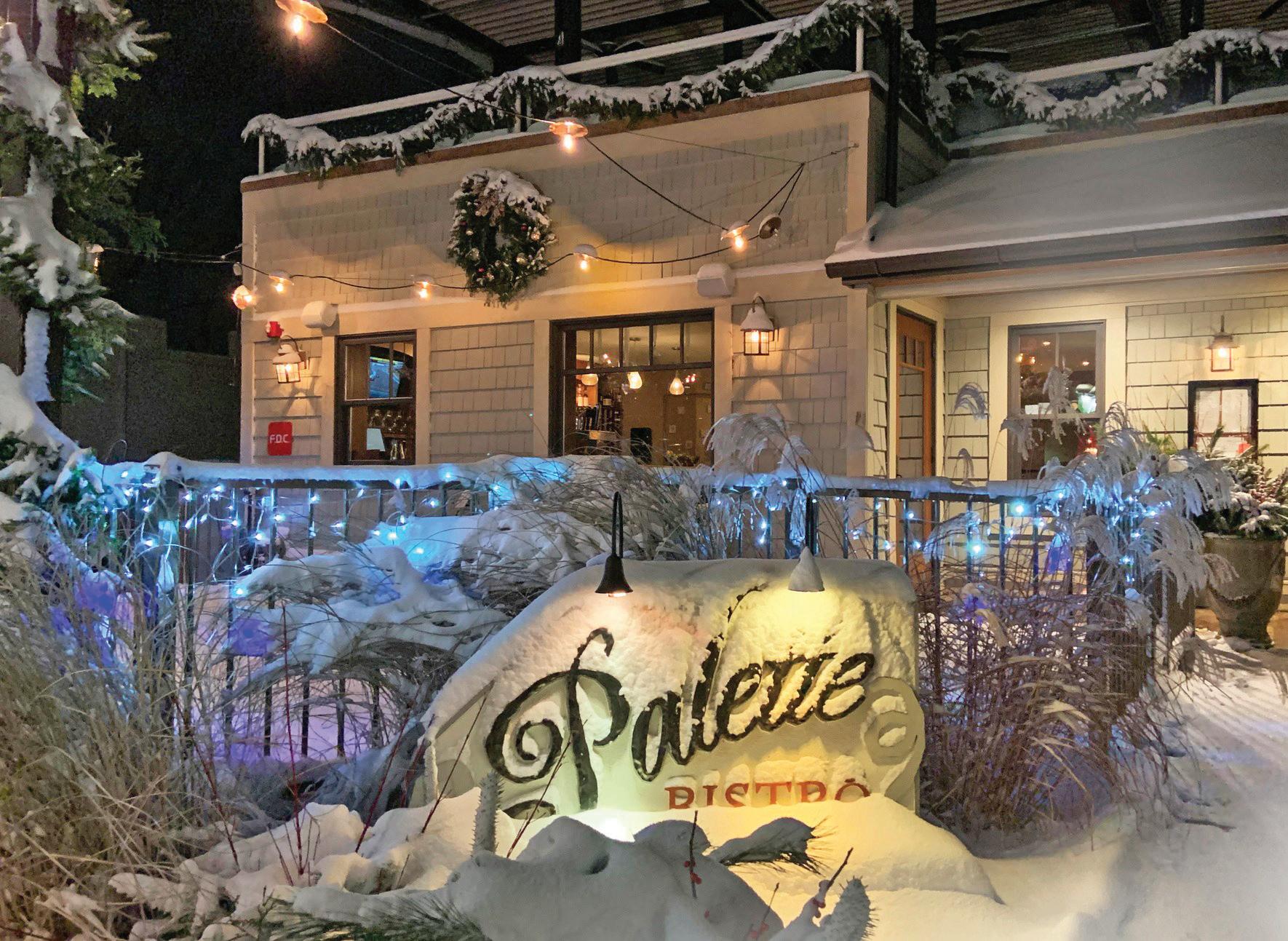
Staffing Challenges
“Help wanted” signs have become permanent decor in many local establishments. Even in the summer months, restaurants are frequently closed on Sundays, Mondays, and/or Tuesdays—often not for lack of customers, but for lack of
For his part, Joe Keedy, a partner in the Wineguys ownership group and the general manager of Palette Bistro, is trying to see the staffing issue as a “glass half full” situation, even while acknowledging that the challenges have had consequences for the Wineguys restaurant family.
“We are blessed with a strong core staff that handles business this time of year,” Keedy says, speaking of the off-season months. “The real challenge is ramping up for the summer season, and that has been an acute
20 • february 13, 2023 • Northern Express Weekly
Between inflation, supply chain kinks, agricultural crises, and other problems, restaurants are having to spend more money to build their menus and keep operations moving. And those price increases, especially in the food cost category, are causing significant strain.
issue since the pandemic. We have had to adjust hours and offerings to accommodate, but we are back to full operations.”
The Cost of Doing Business
Between inflation, supply chain kinks, agricultural crises, and other problems, restaurants are having to spend more money to build their menus and keep operations moving. And those price increases, especially in the food cost category, are causing significant strain.
Take eggs, for instance, which were 60 percent more expensive at the start of 2023 than they were a year ago—the result of inflation combined with the devastation caused by an outbreak of avian flu, among other factors. According to Keedy, some items have seen even more drastic leaps in cost.
“Some items were either 2-10 times the cost, or were out of stock for months,” Keedy explains. “Mostly proteins and international products, but we saw spikes across the board. As a result, we had to be more active with menu and price changes.”
Before the pandemic, it wasn’t necessarily uncommon to see local restaurants shift their menus on a regular basis. Some did it seasonally, while others employed monthly, weekly, or daily variations. Now, though, Keedy and Ewbank say that patrons should expect to see restaurants tweaking their
menus more frequently in response to supply costs, mostly in an attempt to save customers from exorbitantly high prices.
“Our chefs remain diligent in producing quality products while still offering a fair menu price,” Ewbank says. “Pricing of ingredients is really all over the board, and our chefs will re-create menus and items frequently to offer alternatives rather than just continue to raise menu pricing.”
Fortunately, relief may be on the way. Keedy says that drastic price spikes are becoming fewer and farther between, and that costs in general seem to be coming down. Those changes aren’t going to play out overnight, though: Looking at the egg market again, experts say it will be springtime at least before prices start to even out.
The Tip Credit
Despite a few major challenges recently, local restaurants do have at least one big thing to celebrate: a decision by the Michigan Court of Appeals to halt a shift in wage laws that Michigan restaurants have said would have threatened their very existence. Broadly, the law change would have raised the minimum wage in Michigan by nearly $3. Specific to the restaurant industry, though, the change would have eliminated the tip credit, a wage approach that has long been standard for waiters, bartenders, and
other food service workers in Michigan.
In Michigan, the tip credit allows tipped employees to be paid a minimum wage of $3.84, with the understanding that the rest of their wage will be made up in gratuity. Restaurants are required to make sure all employees are earning at least the state minimum wage of $10.10, but many restaurant owners say their employees make well beyond minimum wage because of tips.
The recent Court of Appeals ruling overturned a lower court ruling that would have both raised Michigan’s minimum wage from $10.10 to $13.03 in February and started a phase-out of the tip credit. Under that previous ruling, the tipped minimum wage would have increased from $3.84 an hour to $11.73 an hour this year before eventually being eliminated entirely in 2024. Instead, the tipped minimum wage will remain at $3.84.
“[Losing the tip credit] would be completely disruptive to the current business model,” Keedy says. “The increase in wages would wipe out the profit from most restaurants without a large adjustment in prices or revamp of the tipping structure. The people whose wage it would be changing aren’t happy with it. Luckily, it seems the change was overturned.”
Ewbank concurs, declaring that a discontinuation of the tip credit “would be detrimental to all restaurants in Michigan,
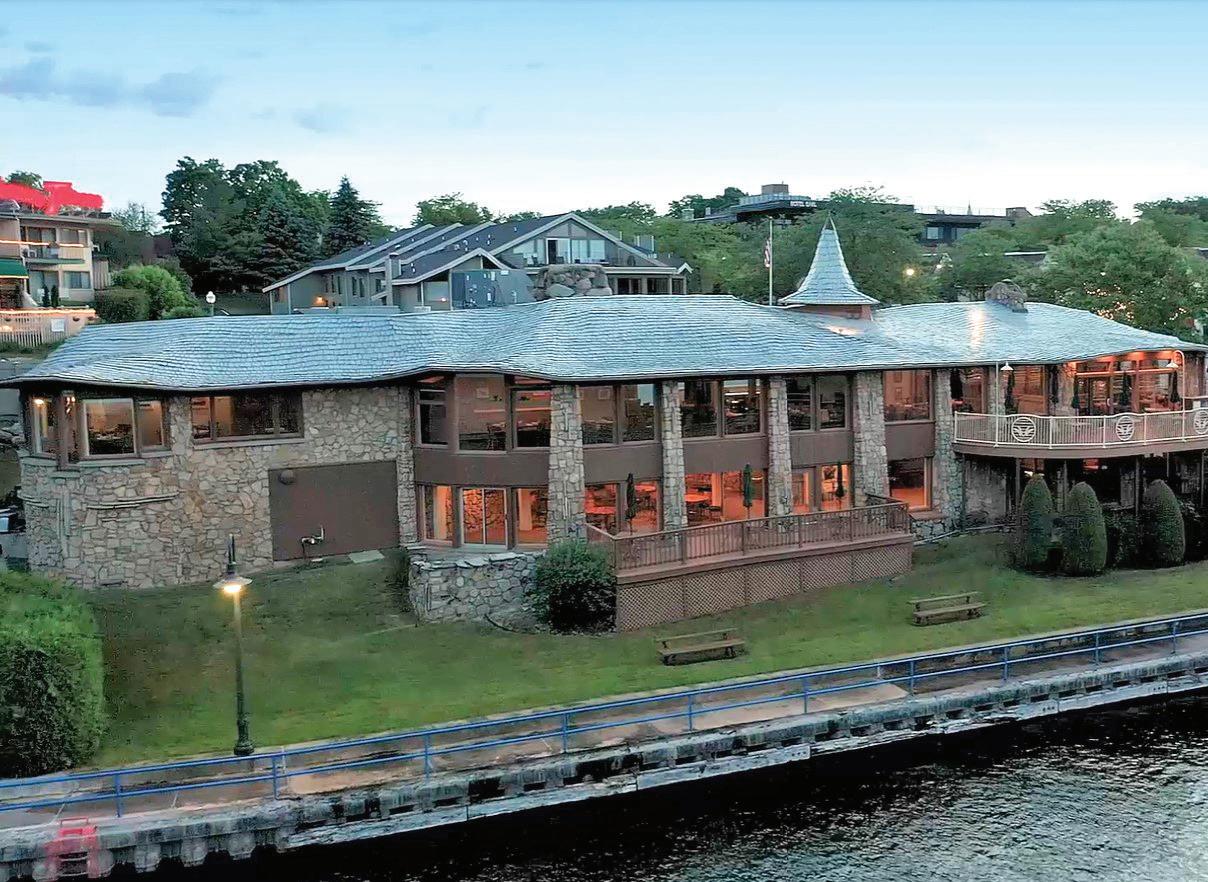
and would change the entire restaurant experience for our guests that they’ve enjoyed, in our business, for over 60 years.”
Further appeals could bring the wage reform conversations back to the forefront in Michigan. For now, though, the tip credit is safe.
The Big Picture Up North So how is business right now? With all those hurdles to overcome, is there hope on the horizon? Will things ever be “normal” again?
Every restaurant has a different story to tell, and while much has been said in the past three years about the inevitable doom of the restaurant industry, we were surprised to hear some optimism.
When asked to give a letter grade for the recent performance of his restaurant, Ewbank settles on a B+. “The company revenue has rebounded [from the pandemic],” Ewbank says, noting that Stafford’s as a whole in 2022 was only about 7 percent down from where things were in 2019.
Keedy echoes Ewbank’s positive assessment. “We’re still feeling grateful that we are doing this well coming out of a global pandemic,” he says. “Demand is as strong as ever in northern Michigan. The biggest challenges are probably no surprise: staffing, housing, and supply chain.”
Northern Express Weekly • february 13, 2023 • 21
Stafford's Weathervane in Charlevoix
By Anna Faller
An international financial authority and prolific storyteller, Alvin Hall’s renowned broadcast and media career includes five years as the host of the award-winning BBC series, Your Money or Your Life, as well as regular contribution to NPR’s Tell Me More with Michael Martin. Hall has also penned several bestselling books, including Your Money or Your Life, What Not to Spend, and You and Your Money: It’s More than Just the Numbers.
In his newest release, Driving the Green Book: A Road Trip Through the Living History of Black Resistance, Hall’s traded the open market for open road, as he and associate producer Janée Woods Weber embark on a 2,000-mile road trip to revisit the age of The Negro Motorist Green Book through the eyes and experiences of those who lived it.

“Through these stories, I hope [readers] have a deeper understanding not only of what African Americans went through but also resilience and optimism,” says Hall. “Better lives for themselves and for their children remains at the heart of how African Americans survive in America.”
The Past
For those who might be unfamiliar, The Negro Motorist Green Book (aka The Green Book) was an annual guide published from 1936 to 1967 for African Americans traveling by car. Published by Victor Hugo Green and his wife, the guide’s framework was tailored by state and offered a map to accommodations and businesses that Black travelers could safely visit.
The Green Book, though, was little known outside the African American community, and it fell out of production a few years after the Civil Rights Act of 1964 was passed. Fast forward to the 21st century, and the book has slowly gained mainstream attention, spurred, in part, by fresh research efforts as well as modern media portrayal (including the 2018 feature film, Green Book).
This is where Hall comes in. His journey with The Negro Motorist Green Book began in 2015 while on a flight from New York to London. “I read about [it] in a magazine, and I thought it was an interesting idea,” he explains. Hall’s curiosity led him to the Schomburg Center for Research in Black Culture—which holds the largest collection of Green Books of any public American institution—and a BBC Radio 4 producer named Jeremy Grange, who proposed the idea of an audio documentary (also titled The Green Book).
The show, which aired in November 2016, was well received with its British audience, but never made it to America. “So, over the years of trying to get radio networks interested, I finally came up with the idea of doing [my own] podcast series,” which Driving the Green Book complements.
The Present
The podcast was inspired, in part, by a 2015 exhibition at New York’s Museum of Modern Art, which featured Black artist Jacob Lawrence’s depictions of The Great Migration, the era from 1910 to 1970 wherein millions of Black people left the American South for opportunities in other regions. That exhibition, says Hall, was headlined by an infographic illustrating the north’s population growth during that time, “and the number in Detroit just amazed me,” he explains.
Beginning in 1910, the African American population of Detroit was just over 1 percent. By the Great Migration’s end, it had climbed to 43.7 percent. “It was a huge increase,” says Hall, the largest of the seven cities depicted.
Driving the Green Book
Author Alvin Hall shares his cross-country journey exploring the past, present, and future
“And I thought, where did all of those people come from?”
Hall also knew that—like his own family—many Black transplants to northern cities likely had loved ones in the South. “A lot of people had land and houses,” he says.
“So, I [also] wanted to look at all the places people who migrated to Detroit would [return home] to.”
Together with field producer Oluwakemi (Kemi) Aladesuyi, Hall handpicked a handful of cities that would become the “road map” to Driving the Green Book . All in all, the journey saw Hall and his team through 11 hubs of migration travel, from Detroit to New Orleans, all in the interest of creating a network of people to share their Green Book stories. “[These] are lived experiences,” Hall notes, not cutand-dry news clips or textbook excerpts.
“I hoped the voices of the people we interviewed would remain and resonate with people.”
The results, simply put, were humbling. Among his highest moments, Hall lists the wisdom of Frank Figgers (Mississippi), whose purposeful and practiced cadence mirrored that of his great uncles, as well as a joyous encounter with Senator Hank Sanders. The first African American legislator in Alabama since
Reconstruction, Sanders was inspired at a young age by Thurgood Marshall to become a lawyer and went on to graduate from Harvard Law School.
“Talking about the strengths his parents gave him and his siblings, and how he never lost the fight for Civil Rights, stays with me all the time,” Hall says.
Alternatively, the “trickiest” bits were the uninterrupted stretches of road, where imagining the difficulties Black people might have encountered on a similar drive during segregation felt especially sobering.
To put the concept in perspective, Hall points to a young Hezekiah Jackson—an Alabama pastor, now in his sixties—and the trauma his family experienced at the hands of white suburban police. (We won’t share spoilers from the book, but it’s a hairraising scene).
The Future
Those kinds of incidents, Hall reminds us, still exist for Black Americans. He recounts an overtly-racist experience that his producer, Aladesuyi, endured at a rest stop on their road trip. “She was in line to buy something, and the white person behind the counter looked at her and turned away,” he says. “I think those moments brought about silent reflection in all of us.”

As harrowing as some of the narratives he shares are, Hall hopes that Driving the Green Book leaves his readers with a sense of grace. To illustrate this, he and his producers offer a shared memory of a roadside chain called Stuckey’s. “All of us talked about the pecan rolls at Stuckey’s and how we always wanted to taste them, but our parents would say no.” It was only later on that each discovered segregation kept them from going in.
“Everybody laughed at that,” Hall says. “And in that laughter [was a sense] of humor and not being trapped by the past. That was the grace, and I think that’s the key to many of these stories.”
About the Event: This National Writers Series event takes place at 7pm on Thursday, February 23, at the City Opera House and virtually. In-person tickets range from $15.50-$25.50 (not including taxes and fees) and can be purchased through the City Opera House. Live-streamed tickets ($14), as well as sale-priced copies of Driving the Green Book ($24), are available through the NWS website. The guest host for the event will be award-winning broadcast journalist and WDET News Director Jerome Vaughn. To reserve tickets or for more information, visit nationalwritersseries.org.
22 • february 13, 2023 • Northern Express Weekly
231-334-2758
6675 W. Western Ave., Glen Arbor

LET’S TALK! GIVE SERBIN A CALL!


This week we are Dishing Out
Some Fantastic Pieces of Vacant Land
9870 E. Keswick Hills
Just South of Suttons Bay-2.56 Acres
Privacy, mature woods, in the heart of paradise
Natural gas, electricity, cable available
Paved, shared driveway - only 7 lots in neighborhood $64,900
MLS # 1904905

11757 S. Roen Drive, Empire

.37 Acres
Enjoy views over Lake Michigan!
Offers underground utilities, paved streets, trail system $25,500

MLS #1898551
S. Beaver Pond Road, Empire
It’s time to build your dream home!
Two nice lots, 4.88 acres in Glen Forest Neighborhood. Close to Empire, Lake Michigan, Sleeping Bear Dunes Paved, private common road $79,000
MLS #1902217
www.Serbinrealestate.com

MON-SAT 9-6 SUN 11-5 ANNUAL MEDICAL PROFESSIONAL SALE 144 E FRONT STREET TRAVERSE CITY, MI 49684 PLAMONDONS COM THE ENTIRE MONTH OF FEBRUARY SAVE 15% *PLEASE PROVIDE PROOF OF EMPLOYMENT IN MEDICAL INDUSTRY VALID ON REGULAR PRICED MERCHANDISE SOME EXCLUSIONS MAY APPLY Smile with Confidence Experience the Schulz Ortho Difference 231-929-3200 | SCHULZORTHO.COM Invisalign and custom esthetic braces treatment Call for free consultation
Gil/Betsy Webb - Rob Serbin - Ron Raymond - TJ Shimek - Nick Vanden Belt



24 • february 13, 2023 • Northern Express Weekly P E T O S K E Y D O W N T O W N . C O M L E T ' S C E L E B R A T E F E B R U A R Y 1 7 - 2 0 , 2 0 2 3
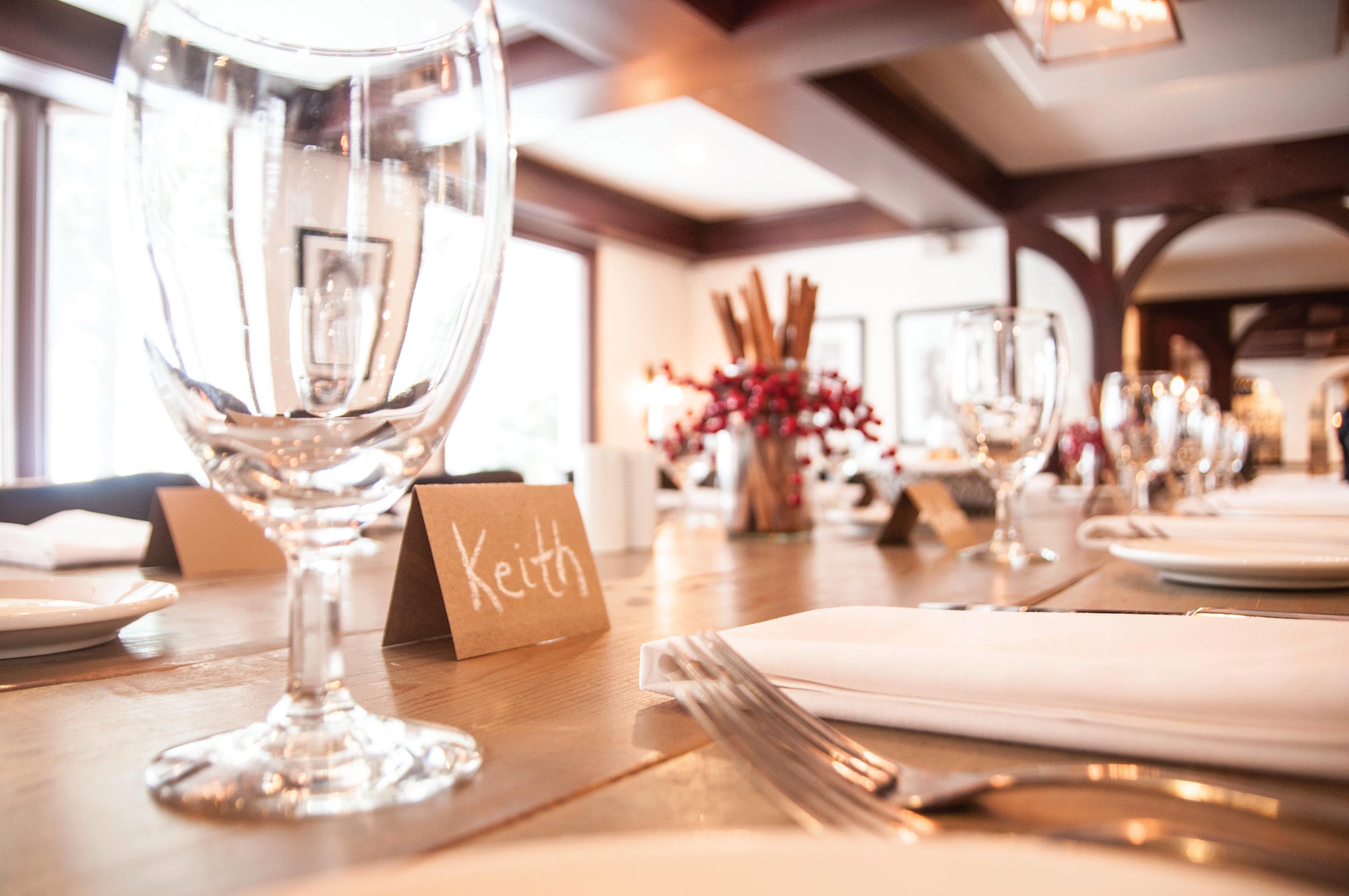

13512 peninsula drive • old mission peninsula 231.944.6984 • missiontable.net come celebrate with us! ,
saturday
47TH ANNUAL NORTH AMERICAN VASA: 8am, Timber Ridge Resort, TC. Today includes the 6K High School Freestyle Race (for ages 19 & under), Short’s Grand Fat 35K, Short’s-N-Fat 17K, Junior Vasa (various distances), & Adaptive Skier Race. vasa.org/race-info-new
----------------------
2023 GRASS RIVER SHIVER: 10am, Grass River Natural Area, Bellaire. A 5K/10K snowshoe race fundraiser. This is a time raced, but the course will be up for the weekend if runners need or want to run it at a later time. Register online & get a shirt for $40, or preregister for the race only & no shirt for $25, or register day of at race for $30. grassriver.org
BASIC MARLINSPIKE: TURKS HEAD
KNOTS, A MAKE & TAKE WORKSHOP: 10am-1pm, Maritime Heritage Alliance, TC. Free; suggested $10 donation for materials. maritimeheritagealliance.org/events-andprograms
BELLAIRE’S COCOA CRAWL KIDS
CRAFT: Bellaire Public Library. Kids are welcome to stop by from 10am-noon to create personal buttons using their imaginations & BPL’s button maker. Free. bellairelibrary.org
BEULAH WINTERFEST: Downtown Beulah. Includes a Cookie Sale at Beulah Trailhead, No Fee Snowmobile Poker Run, Frozen Turkey Bowling, Chili Cookoff at Beulah Village Park, horse drawn wagon rides, Snowball Target Competition, Frozen Fish Toss, Winterfest Parade, Outhouse Sprint, Fireworks on Crystal Lake, & more. clcba. org/wp-content/uploads/2016/01/CLCBA_ Winterfest_Rack-Card_2023-1.pdf
FREE FAMILY DROP-IN ART: 10am-noon, Crooked Tree Arts Center, Cornwell Gallery, TC. Stop by for a fun, free art activity for all ages. crookedtree.org/class/ctac-traversecity/free-drop-family-art-february
HARBOR SPRINGS ICE FEST: Downtown Harbor Springs, Feb. 10-11. This event kicks off with trivia night at Stafford’s Pier Restaurant, Fri. at 6pm. This year’s fest will feature over 30 ice sculptures throughout Downtown Harbor Springs, along with the Dueling Chainsaws. There will be an interactive ice park in Zorn Park, with large interactive sculptures, ice carving demonstrations, & ice games. Also enjoy horse-drawn hayrides & more. downtownharborsprings.com/ice-fest ----------------------
MORNING TEA AT THE MUSEUM: 10am, Harbor Springs History Museum. This event includes hot tea, decadent desserts, pastries & a short presentation with curator Beth Wemigwase on the origin of Valentine’s Day cards. Tickets are $15 per person & seats are limited. harborspringshistory.org/events/ ?action=evrplusegister&event_id=81
OPEN STUDIO: 10am-1pm, Crooked Tree Arts Center, Visual Arts Room, Petoskey. Drop-in free arts & crafts for the whole family. crookedtree.org/event/ctac-petoskey/openstudio-february-11
SUPER SATURDAY: 10am-2pm, Northwest Michigan Community Action Agency, TC. Free tax filing, free lunch, & win prizes. facebook.com/nmcaa
LITTLE WAVES: 10:30am at Petoskey District Library, & 1pm at Charlevoix Public Library. “Musical Adventures”: Aimed at children 4-10 years of age & their families, this program features a multimedia story-
book time with Great Lakes Chamber Orchestra (GLCO) percussionist & program director Tim Mocny, an opportunity to hear one or more GLCO musicians demonstrate & explain how their instruments work, & fun music-related activities for kids. Free. glcorchestra.org/education/little-waves
VALENTINE CELEBRATION WITH THE CHERRY QUEEN: 11am, Traverse Area District Library, TC. Enjoy a visit with the Traverse City National Cherry Festival Queen, Olivia Coolman, in celebration of Valentine’s Day. There will be Valentine-themed children’s stories, a meet ‘n greet with Queen Olivia, & crafts (including decorating your own heart-shaped cookie, while supplies last). Free. tadl.org/events
WALK + TALK THE EXHIBITIONS: 11am, Glen Arbor Arts Center. A guided walk-and-talk through Glen Arbor Arts Center’s “Telling Stories” & “A Feral Housewife” exhibitions. Sarah Bearup-Neal, GAAC gallery manager, leads a conversational tour of these exhibits about visual storytelling. Free. glenarborart.org
----------------------
WINTERLOCHEN: Interlochen Center for the Arts. Families can enjoy this annual winter festival, including a free, kid-friendly ballet matinee of “Cinderella.” There will be s’mores, sledding, acting workshops, art crafts & the popular Kids Conduct. The festivities end with a parade to Corson Auditorium for the performance. Activities run 11am1:30pm. Free. interlochen.org/winterlochen
----------------------
JUNIOR VASA SKI RACE: Noon, Timber Ridge Resort, TC. Nordic ski racers age 14 & under are invited to race the Junior VASA Ski Race. The race is free but you must register online. vasa.org
WINTERFEST: 12-3pm, Grass River Natural Area, Bellaire. A family event with outdoor & indoor activities: snowshoeing & x-country skiing demos at no cost (weather permitting), crafts, games, & s’mores & hot chocolate. Free; donations welcome. grassriver.org
HOW TO CATCH THE NORTHERN LIGHTS
IN NORTHERN MICHIGAN: 1pm, Leland Township Library, Leland. Join Melissa Kaelin, author of “Below the 45th Parallel: Chasing the Aurora in the Great Lakes Region,” for a program on how to catch the illusive Northern Lights in Michigan. Free. lelandlibrary.org/programs-events
----------------------
SNOWSHOEING & S’MORES: 2-4pm, Historic Mill Creek Discovery Park, Mackinaw City. Meet Park Naturalist Kyle Bagnall in the parking lot, where you’ll begin your hike. Along a two-mile track, search for signs of wildlife & more. After the walk, stop at the Forest Clearing to enjoy s’mores over a campfire. Donation. mackinacparks.com/ event/snowshoeing-smores-at-historic-millcreek-discovery-park-2/2023-02-11
FABULOUS HORNDOGS SWEETHEART
DANCE: SOLD OUT: 4-7pm, Old Art Building, Leland. Presented by Five Loaves & Two Fish. The Fabulous Horndogs will be playing the music & proceeds benefit efforts to feed the local homeless population. $20. mynorthtickets.com/events/fabulous-horndogs-sweetheart-dance-2-11-2023
----------------------
CHARLEVOIX CIRCLE OF ARTS EVENT AT BEARDS BREWERY: 6-8pm, Beards Brewery, Petoskey. Live artist demos with Charlevoix oil painter Jan Coltman & pastel artist Mike Coltman. Gift shop pop-up of local artist items, free “Take & Make” art kits, prize drawing giveaway & more. Free. charlevoixcircle.org/events
“THE GREEN BOOK: A GUIDE TO FREEDOM” DOCUMENTARY: 7-8:30pm, Rams-
february
Lyricist and composer Crys Matthews brings her thoughtful, realistic and emotional songs with her to northern Michigan. Finding inspiration in her surroundings, Matthews reminds us why music soothes the soul. Enjoy a blend of Americana, folk, jazz, blues, bluegrass and funk at the Ramsdell Theatre in Manistee on Thurs., Feb. 16 from 7-9pm during a free Journey of Discovery event to honor the contributions of African Americans in Rural Michigan; and on Fri., Feb. 17 at 7:30pm at the Crooked Tree Arts Center Theater, Petoskey, presented by Blissfest. $20 Blissfest members; $25 GA. showclix.com/ event/blissfest-presents-crys-matthews
dell Theatre, Manistee. This Journey of Discovery event is being held to honor the contributions of African Americans in Rural Michigan. Free; donations welcome. ramsdelltheatre.org
BAYSIDE TRAVELLERS CONTRA
DANCE: Kason Township Hall, Maple City. Family friendly contra dance. Basic skills workshop at 7pm with contra dance from 7:30-10:30pm. Live music by Jigs & Reels & dances called by Pat Reeser. No partner or experience necessary. Masks required. Dance is donation only. dancetc.com
GOPHERWOOD CONCERTS PRESENTS
ABIGAIL STAUFFER: 7-9pm, Cadillac Elks Lodge. This folk singer uses acoustic, pop, & neo-soul music to showcase her confidence & vulnerability, creating a balance of pain, hope, & joy. $7-$15. mynorthtickets.com/ events/abigail-stauffer-2-11-2023
“CINDERELLA”: 7:30pm, Interlochen Center for the Arts, Corson Auditorium. Witness the classic fairy tale come to life in a ballet adaptation. Presented by Interlochen Arts Academy Dance Division. $22 adults; $17 kids & students. interlochen.org/concerts-and-events/ signature-series?search=cinderella ----------------------
“THE LARAMIE PROJECT”: 7:30pm, Old Town Playhouse, TC. In 1998 Matthew Shepard, an openly gay college student, was brutally beaten & left to die on the plains outside Laramie, Wyoming. This play is based on 200+ interviews with the people of the town, & explores the depths to which humanity can sink & the heights of compassion we are capable of. $28 adults; $15 youth under 18, plus fees. oldtownplayhouse.com/calendar
THE TSO PRESENTS ANDREW SORDS: 7:30pm, Historic Barns Park, The Cathedral Barn, TC. Andrew makes his TSO debut on violin with this solo concert accompanied by Maestro Kevin Rhodes on piano. Students & 1st time attendees, call the Box Office for 50% off your tickets: 231-947-7120, x5. $45.50. traversesymphony.org/concert/andrew-sords
feb
sunday
47TH ANNUAL NORTH AMERICAN VASA: 10am, Timber Ridge Resort, TC. Today includes the 27K Cambium Analytica Classic Ski Race, 6K High School Classic Ski Race (for ages 19 & under), Michigan Cup Challenge Awards and crowning of KING and QUEEN VASA!, Vasa FUN 6K Tour (classic or freestyle) & Vasasaurus Stomp Snowshoe Race 6K. vasa.org/race-info-new
“CINDERELLA”: SOLD OUT: 2pm, Interlochen Center for the Arts, Corson Auditorium. Witness the classic fairy tale come to life in a ballet adaptation. Presented by Interlochen Arts Academy Dance Division. $22 adults; $17 kids & students. interlochen.org/events/ cinderella-2023-02-12
“THE LARAMIE PROJECT”: (See Sat., Feb. 11, except today’s time is 2pm.)
THE TSO PRESENTS ANDREW SORDS: (See Sat., Feb. 11, except today’s time is 3pm.)

feb
monday
2023 BENZIE CHAMBER SUMMIT: “THE STATE OF BENZIE”: 9am-1pm, The Mills Community House, Benzonia. Featuring Benzie County Administrator Katie Zeits, Benzie County EDC & BRA Art Jeannot, Benzonia Township Supervisor Jason Barnhard, & many others. $5 advance; $10 door. business.benzie.org/ events/details/benzie-chamber-summit-16452
PRESCHOOL ADVENTURES IN ART: 9:3010:15am, Crooked Tree Arts Center, Visual Arts Classroom, TC. Drop in for hands-on fun for preschoolers & their grown-ups. Early registration encouraged. $5. crookedtree. org/class/ctac-traverse-city/preschool-adventures-art-february-13-0
26 • february 13, 2023 • Northern Express Weekly
----------------------
send your dates to: events@traverseticker.com
11-19 feb 11
13
12
KID’S CRAFT LAB: LOVE BUG GARLAND: 1pm & 3:30pm, Great Lakes Children’s Museum, TC. String up a little love for Valentine’s Day. Sign up when you reserve your attendance at the Museum. greatlakeskids.org
BE HEALTHY, BE ACTIVE COOKING WORKSHOP: 3:30-5pm, Interlochen Public Library. Chef Susanne will show a few techniques, & then you can cook the whole recipe from start to finish. Limited to 10 people. Registration required: 231-276-6767.
BICYCLE REPAIR CLINICS: 5pm, McLain Cycle & Fitness, 750 E. Eighth St., TC. Topics change every week. Free. mclaincycle.com
G.T. HUMANISTS MEETING: DEPOLARIZING POLITICAL DISCUSSIONS: 6pm, Traverse Area District Library, TC. Join the Grand Traverse Humanists for a presentation by Mike Radke, PhD from the organization Braver Angels, for a program called “Depolarizing Political Discussions: How to Get Liberals and Conservatives in the Same Room for a Civil Conversation.” Free. gthumanists.org
tuesday
GET TO KNOW YOUR CHAMBER BREAKFAST:
8-9:30am, Stafford’s Perry Hotel, Reycraft Room, Petoskey. Designed for new, existing & potential members to learn about the chamber & its programming & how to utilize the chamber to help your business or organization. Reservation required. Free. petoskeychamber. com/events/details/get-to-know-your-chamber-breakfast-feb-14-2023-28764 ----------------------
PRESCHOOL STORY TIME: 10:30am, Suttons Bay Bingham District Library, lower level Community Meeting Room. Preschoolers of all ages are invited to join for stories, songs & active fun. Free. sbbdl.org
STORYTIME ADVENTURES: 10:30am, 1pm & 3:30pm, Great Lakes Children’s Museum, TC. Featuring “Who Will Be My Valentine This Year?” by Jerry Pallotta. Sign up when you reserve your attendance at the Museum. greatlakeskids.org
PARKINSON’S NETWORK NORTH SUPPORT GROUP: 1pm, The Presbyterian Church of TC, 701 Westminster Rd. Mary Ellen Brown presents “Safe, Smart Travel with Parkinson’s,” What’s New?, & Care Partner time. Info: 947-7389. Free. pnntc.org

TECHNOLOGY TUESDAY: 4pm, Glen Lake Library, Empire. Seniors needing assistance with personal technology are invited to drop by for this session, coordinated by Share Care of Leelanau. Volunteers will be on hand to help with a variety of common tech tasks: accessing the Web, downloading smartphone apps, working with Microsoft Word, accessing electronic books, & much more. Bring your device. Free. glenlakelibrary.net
----------------------
“LOVE LETTERS BY A.R. GURNEY”: 6-8pm, Creative Pursuit, Gaylord. A funny & emotional portrait about the powerful connection of love across a 50 year time frame. Charcuterie hors d’oeuvres & wine will be served. Members: $30 single; $50 couple. Non-members: $35 single; $55 couple. gaylordarts.org
wednesday
“DISRUPT & DISMANTLE: DISPLACEMENT IN THE MERMAID CITY”: 1pm & 2:30pm, Dennos Museum
Center, Dutmers Theater, NMC, TC. Soledad O’Brien investigates a city redevelopment plan in Norfolk, VA, that would tear down public housing & displace low-income residents in an effort to “revitalize” the area. Limit of 30 people per screening. Free; online registration required. simpletix.com/e/disrupt-dismantledisplacement-in-the-merm-tickets-119450
OPEN STUDIO CREATIVE HOUR & ANIMATION CLASS: 3:30pm, Arts for All of Northern Michigan, 1485 Barlow St., TC. Bring your sketchbook, painting supplies, or artworkin-progress for a chance to share, & enjoy a boost of inspiration from other creative individuals. OR make a short stop-motion animation video with Diane. Limited easels & other art tools will be available. For all ages & abilities. Free. artsforallnmi.org/event/open-studiocreative-hour-animation-with-diane-3
CHILLIN’ WITH THE CHAMBER: 4-6pm, Harbor Springs Area Chamber office, 118 E. Main St., Harbor Springs. Find out about the True North Golf Club & what’s happening in the area while having a beverage & some appetizers. Free.
SNOWSHOE UNDER THE STARS: 5-7:30pm, The Botanic Garden at Historic Barns Park, TC. Join experts from the Grand Traverse Conservation District to learn the art & science of snowshoeing while enjoying a guided candlelight tour of the trees, shrubs, & foliage that is in the Garden during the winter months. Snowshoes are provided or bring your own. For ages 6+. $15-$19. eventbrite.com/e/snowshoe-under-the-stars-tickets-524697232547
----------------------
PEBBLE PUPS: 5:30pm, Traverse City VFW Multipurpose Room, 3400 Veterans Dr., TC. The Grand Traverse Area Rock and Mineral Club of Traverse City sponsors the Pebble Pups & Earth Science Scholars for this 45 minute session. The Pebble Pups explore the wonders of rock, mineral, & fossil collecting in Michigan. The purpose is to train Pebble Pups (grade school) & Earth Science Scholars (teens) to become skilled rockhounds while learning about Earth science. They meet the third Weds. of each month during the academic school year (Sept. - May). Free. tcrockhounds.com
thursday
COFFEE @ 10, PETOS-
KEY: 10am, Crooked Tree Arts Center, Gilbert Gallery, Petoskey. Join local Michigan artist Robert Scudder. Robert is an oil artist whose minimalist works can be found in the Guild Member Salon Show. Free. crookedtree.org/event/ctacpetoskey/coffee-10-robert-scudder
LAKE LEADERS SUMMIT: 10am-noon, Antrim Conservation District, Bellaire. Meets quarterly to bring together community members who care about the health of the Elk River Chain of Lakes. antrimcd.com/events.html
----------------------
KID’S CRAFT LAB: CONSTELLATION PAINTING; URSA MAJOR: 10:30am, 1pm & 3:30pm, Great Lakes Children’s Museum, TC. In February, Black History Month, we remember how enslaved people escaping to the north used the Big Dipper & the North Star to find their way. Working with watercolor paint & salt, you will create a Big Dipper Bear. Sign up when you reserve your attendance at the Museum. greatlakeskids.org ----------------------
INTERNATIONAL AFFAIRS FORUM:
INDIA: ASIA’S NEW SUPERPOWER: 11:30am, Dennos Museum Center, Milliken Auditorium, NMC, TC. In-person event with
7pm, Harbor Springs History Museum. A presentation by Craig Wilson. The fur trade powered the economy of the Great Lakes for nearly two centuries, & voyageurs were the engine that drove the fur trade. 231-526-9771.
HISTORY HOUNDS ON THE BIG SCREEN: 6:30pm, Bellaire Public Library. Join for the presentation “From Aladdin to Sears: A His tory of America’s Kit Houses.” Free. bellaire
MacInnis used research-based strategies for all three as a utility company communications manager &, more recently, as a local elected official. Register. $15; includes a buffet lunch. ncmclifelonglearning.com/event-5084247
TAI CHI: Noon, Traverse Area District Library, McGuire Community Room, TC. Join
dren’s Museum, TC. Build & stack with various types of blocks. Come into the Great Lakes Room anytime during the session. greatlakeskids.org
COFFEE @ 10, TC: 10am, Crooked Tree Arts Center, Carnegie West Gallery, TC. Tra-
rental fee during the program or bring your own. $5/person. grassriver.org
“THE LARAMIE PROJECT”: (See Sat., Feb. 11)
BLISSFEST PRESENTS: CRYS MAT-
THEWS: 7:30pm, Crooked Tree Arts Center, Theater, Petoskey. Lyricist & composer Crys
Northern Express Weekly • february 13, 2023 • 27
feb 14 feb 15 feb 16
For Traverse City area news and events, visit TraverseTicker.com
KID’S CRAFT LAB: LOVE BUG GARLAND: 1pm & 3:30pm, Great Lakes Children’s Museum, TC. String up a little love for Valentine’s Day. Sign up when you reserve your attendance at the Museum. greatlakeskids.org
Center, Dutmers Theater, NMC, TC. Sole ad O’Brien investigates a city redevelopment
lic housing & displace low-income residents in an effort to “revitalize” the area. Limit of 30 people per screening. Free; online registration
----------------------
DRINK SPECIALS
AVAILABLEORDERS 231-252-4157
BE HEALTHY, BE ACTIVE COOKING WORKSHOP: 3:30-5pm, Interlochen Public Library. Chef Susanne will show a few techniques, & then you can cook the whole recipe from start to finish. Limited to 10 people. Registration required: 231-276-6767.
$2 well drinks, $2 domestic drafts, $2.50 domestic bottles, $5 Hornitos margarita
----------------------
SUNDAY - $6 Ketel One Bloody Mary & $4 Mimosas
BICYCLE REPAIR CLINICS: 5pm, McLain Cycle & Fitness, 750 E. Eighth St., TC. Topics change every week. Free. mclaincycle.com
DAILY FOOD SPECIALS (3-6pm): Mon- $1 chips and salsa
----------------------
Tues- $1 enchiladas Thurs - $5 fried veggies
G.T. HUMANISTS MEETING: DEPOLARIZING POLITICAL DISCUSSIONS: 6pm, Traverse Area District Library, TC. Join the Grand Traverse Humanists for a presentation by Mike Radke, PhD from the organization
als and Conservatives in the Same Room for
3:30pm, Arts for All of orthern Michigan, 1485 Barlow St., TC. Bring in-progress for a chance to share, & enjoy a

OFF-SEASON
Brahma Chellaney, Professor Emeritus of Strategic Studies, Centre for Policy Research (connecting from New Delhi), & Claudio Lilienfeld, former Acting Assistant U.S. Trade Representative for South & Central Asia (on stage). 11am reception with light appetizers provided by Taste of India. $15 in-person ticket; $10 livestream suggested donation; free to current students & educators. tciaf.com/event-feb-16-2023
verse Area Camera Club members & award winners Marilyn Hoogstraten, Dale Devries & Carol Grelick will discuss their work. Free. crookedtree.org/event/ctac-traverse-city/ coffee-10-traverse-area-camera-club
INDOOR SIDEWALK SALES: Downtown Charlevoix, Feb. 17-20. Enjoy bargains & more on a variety of merchandise at participating stores.
----------------------
----------------------
GET
TO KNOW YOUR
tel, Reycraft Room, Petoskey. Designed for new, existing & potential members to learn about the chamber & its programming & how to utilize the chamber to help your business or organization.
Call - 231-942-8127 HOSTED
tons Bay Bingham District Library, lower level Community Meeting Room. Preschoolers of all ages are invited to join for stories, songs & active fun. Free. sbbdl.org ----------------------
STORYTIME ADVENTURES: 10:30am, 1pm & 3:30pm, Great Lakes Children’s Museum, TC. Featuring “Who Will Be My Valentine This Year?” by Jerry Pallotta. Sign up when you reserve your attendance at the Museum. greatlakeskids.org ----------------------
PARKINSON’S NETWORK NORTH SUP-

PORT GROUP: 1pm, The Presbyterian Church of TC, 701 Westminster Rd. Mary Ellen Brown presents “Safe, Smart Travel with Parkinson’s,” What’s New?, & Care Partner time. Info: 947-7389. Free. pnntc.org
----------------------
TECHNOLOGY TUESDAY: 4pm, Glen Lake Library, Empire. Seniors needing assistance with personal technology are invited to drop by for this session, coordinated by Share Care of Leelanau. Volunteers will be on hand to help with a variety of common tech tasks: accessing the Web, downloading smartphone apps, working with Microsoft Word, accessing electronic books, & much more. Bring your device. Free. glenlakelibrary.net
“LOVE LETTERS BY A.R. GURNEY”: 6-8pm, Creative Pursuit, Gaylord. A funny & emotional portrait about the powerful connection of love across a 50 year time frame. Charcuterie hors d’oeuvres & wine will be served. Members: $30 single; $50 couple. Non-members: $35 single; $55 couple. gaylordarts.org
wednesday
“DISRUPT & DISMANTLE: DISPLACEMENT IN THE MERMAID CITY”: 1pm & 2:30pm, Dennos Museum
SPECIALS!
READER CHEF, JR COOKING CLASS: 4-5pm, Interlochen Public Library. For ages 10-14. Learn a new recipe & be able to cook the meal from start to finish. Limited to 10 kids per class. Must register: 231-276-6767.
----------------------
tion video with Diane. Limited easels & other
TUES: DATE NIGHT
Buy one entree, get one 1/2 off (Not available 2/14)
4-6pm, Harbor Springs Area Chamber office, 118 E. Main St., Harbor Springs. Find out about the True North Golf Club & what’s happening in the area while having a beverage & some
WED: (Feb into March) 'Fins or Feathers' Featuring fresh fish/duck dishes...carried through the rest of the week & 15% off bottles of wine
SNOWSHOE UNDER THE STARS:
FEBRUARY SWIRL: 5:30-7pm, Crooked Tree Arts Center, Galleries, Petoskey. Enjoy appetizers from Petoskey Cheese, a selection of wines from Great Lakes Wine & Spirits, & live music from Lara Fullford. Tour the current art exhibitions: “Guild Members Salon Show” & “Kaleidoscope: Recent Work by Lindsey Claire Newman.” $25 members; $30 not yet members. crookedtree.org/event/ ctac-petoskey/february-swirl
----------------------
PRESIDENTS’ DAY WEEKEND SALE
EVENT: Downtown TC, Feb. 17-19. Enjoy sales at participating businesses. downtowntc. com/presidents-day-weekend-sale-event
STORYTIME: 10:30am, Leland Township Library, Leland. Stories & more for kids aged 0-6 & their caregivers. Free. lelandlibrary. org/programs-events
----------------------
TO-GO in the Dine Alps Dine Alps Visiting SLOVENIA Jan. 13-19 AUSTRIA Jan. 20-26 SWITZERLAND Jan. 27-Feb. 2 GERMANY Feb. 3-9 ITALY Feb. 10-16 FRANCE Feb. 17-23
THURS: PASTA SPECIAL 2 pasta dinners & a bottle of wine $59
* Sorry specials not available for take-out * Some restrictions may apply
5-7:30pm, The Botanic Garden at Historic Barns Park, TC. Join experts from the Grand Traverse Conservation District to learn the ing a guided candlelight tour of the trees, ing the winter months. Snowshoes are provided or bring your own. For ages 6+.
Open Tues - Sat @ 5:30 4566 W. MacFarlane Rd 'Burdickville' trattoria-funistrada.com reservations 231-334-3900

5:30pm, Traverse City VFW Multipurpose Room, 3400 Veterans Dr., TC. The Grand Traverse Area Rock and Mineral Club of Traverse City sponsors the Pebble Pups & Earth Science Scholars for this 45 minute session. The Pebble Pups explore the wonders of rock, mineral, & fossil collecting in Michigan. The purpose is to train Pebble Pups (grade school) & Earth Science Scholars (teens) to become skilled rockhounds while learning about Earth science. They meet the third Weds. of each month during the academic school year (Sept. - May). Free. tcrockhounds.com
thursday
COFFEE @ 10, PETOSKEY: 10am, Crooked Tree Arts Center, Gilbert Gallery, Petoskey. Join local Michigan artist Robert Scudder. Robert is an oil artist whose minimalist works can be found in the Guild Member Salon Show. Free. crookedtree.org/event/ctacpetoskey/coffee-10-robert-scudder
LAKE LEADERS SUMMIT: 10am-noon, Antrim Conservation District, Bellaire. Meets quarterly to bring together community members who care about the health of the Elk River Chain of Lakes. antrimcd.com/events.html
KID’S CRAFT LAB: CONSTELLATION PAINTING; URSA MAJOR: 10:30am, 1pm & 3:30pm, Great Lakes Children’s Museum, TC. In February, Black History Month, we remember how enslaved people escaping to the north used the Big Dipper & the North Star to find their way. Working with watercolor paint & salt, you will create a Big Dipper Bear. Sign up when you reserve your attendance at the Museum. greatlakeskids.org
INTERNATIONAL AFFAIRS FORUM:
INDIA: ASIA’S NEW SUPERPOWER: 11:30am, Dennos Museum Center, Milliken Auditorium, NMC, TC. In-person event with
VOYAGEURS OF THE FUR TRADE: 5:307pm, Harbor Springs History Museum. A presentation by Craig Wilson. The fur trade powered the economy of the Great Lakes for nearly two centuries, & voyageurs were the engine that drove the fur trade. 231-526-9771. ----------------------
HISTORY HOUNDS ON THE BIG SCREEN: 6:30pm, Bellaire Public Library. Join for the presentation “From Aladdin to Sears: A History of America’s Kit Houses.” Free. bellairelibrary.org
CRYS MATTHEWS: LIVE IN CONCERT: 7-9pm, Ramsdell Theatre, Manistee. This Journey of Discovery event is being held to honor the contributions of African Americans in Rural Michigan. Free; donations welcome. ramsdelltheatre.org
“CINDERELLA”: 7:30pm, Great Lakes Center for the Arts, Bay Harbor. The classic fairy tale comes to life through an enchanting ballet adaptation performed by Interlochen Arts Academy dance students. $25 adult; $10 youth. greatlakescfa.org/events/detail/ interlochen-ballet-cinderella
friday FREE VALENTINE’S
EVENT: For ages 60+. Enjoy dinner & a performance by Elvis Tribute artist Jake Slater. Held at Friendship Center of Harbor Springs. Music begins at 4pm; dinner at 5pm. Seating is limited & reservations required: 231-526-6061.
WINTER WONDERLAND WEEKEND: Downtown Petoskey, Feb. 17-20. Featuring ice carving demonstrations in the Park, Downtown shopping & restaurant specials, creative activities for children, a scavenger hunt through the Downtown shops, a Downtown Dollars shopping contest, & Winter Carnival events held at the Winter Sports Park - Bump Jumping & the Cardboard Sled Race. petoskeydowntown.com/events/winter-wonderland
----------------------
MORE TO EXPLORE: LOTS-A-BLOCKS: 9:30am, noon & 2:30pm, Great Lakes Children’s Museum, TC. Build & stack with various types of blocks. Come into the Great Lakes Room anytime during the session. greatlakeskids.org
----------------------
COFFEE @ 10, TC: 10am, Crooked Tree Arts Center, Carnegie West Gallery, TC. Tra-
LUNCHEON LECTURE: “WHAT DID YOU SAY?”: 11:30am, NCMC, Library Conference Center, Petoskey. The Three Mile Island nuclear plant accident in 1979, the Y2K controversy in 1999 &, more recently, the coronavirus pandemic presented major challenges for leaders trying to talk to the public about something strange & complex. Charlie MacInnis used research-based strategies for all three as a utility company communications manager &, more recently, as a local elected official. Register. $15; includes a buffet lunch. ncmclifelonglearning.com/event-5084247 ----------------------
TAI CHI: Noon, Traverse Area District Library, McGuire Community Room, TC. Join for an introduction to Tai Chi, a systematic & gentle form of exercise & stretching that is good for all ages. Free. tadl.org/events
WINTER TRAILS DAY: 2-6pm, Palmer Woods Forest Reserve, Maple City. Join the staff of the Leelanau Conservancy along with Docents, Board & LC Collective members for a day of winter fun. Skis, snowshoes, & warm winter gear are recommended. 2pm: Ski the Price Valley Trail. 2:30pm: Docent Guided Snowshoe. 4pm: Fireside Chat. 4:30pm: Staffled Snowshoe. Dusk: Lantern-lit Snowshoeing. leelanauconservancy.org/winter-trails-day
42ND ANNUAL SNO-BLAST WINTER FESTIVAL: East Jordan, Feb. 17-19. Tonight includes the ORV Safari Ride. Leaves the East Jordan Trailblazers Clubhouse at 6pm. ejchamber.org/wp-content/ uploads/2023/02/2023-Schedule-of-EventsBrochure.pdf
CHEBOYGAN NORTHLAND PLAYERS
DINNER THEATER: Eagles Hall, Cheboygan. Featuring the comedy “The Second Time Around” by Henry Denker, presented under license with Concord Theatrical. Dinner at 6:30pm; show at 7pm. Reservations are required. Call 231-627-4051. $27. nlplayers.org/winter-dinner-theater
LANTERN-LIT SKI & SNOWSHOE: 6:30pm, Grass River Natural Area, Bellaire. Enjoy a self-guided evening ski on groomed ski trails, or snowshoe the boardwalk to the river. There will be a campfire at the Center’s pavilion & the heated building will be open. Participate any time during the 2-hour, selfguided, “open-house” style ski or snowshoe. Bring a flashlight or headlamp. Skis & snowshoes for all ages are available for rent at the Grass River Center for an additional $5 rental fee during the program or bring your own. $5/person. grassriver.org
“THE LARAMIE PROJECT”: (See Sat., Feb. 11)
BLISSFEST PRESENTS: CRYS MATTHEWS: 7:30pm, Crooked Tree Arts Center, Theater, Petoskey. Lyricist & composer Crys
28 • february 13, 2023 • Northern Express Weekly
----------------------
----------------------
feb
feb 15 feb 16
17
221 E State St. - downtown TC Sun-Tues: noon-9pm (closed Wed) Thurs: 4-9pm Fri-Sat: noon-10pm Kitchen open until 8:30 Sun-Thurs and 9pm on Fri & Sat
(3-6 Monday-Friday):
TUES TRIVIA 7-9PM WE HAVE THE BIG10 NETWORK!
BY KRULL’S COMPOSTING www.cafesante-bc.com | One Water Street, Boyne City | 231-582-8800 6 Countries in 6 Weeks
Fri - $5 hot pretzels w/ beer cheese 13 - FEBRUARY 23 Appetizer > Entrée > Dessert
JANUARY
Matthews finds inspiration in her surroundings. Her songs are thoughtful, realistic & emotional. $20 Blissfest members; $25 GA. showclix. com/event/blissfest-presents-crys-matthews ----------------------
COMEDY W/ JERRY DONOVAN: 7:459:15pm, Traverse City Comedy Club, TC. Jerry is known for his quick wit & uncanny observations. He has worked with such notables as Kurt Russell, Jason Segal, & many others. $25-$30. mynorthtickets.com/events/ comedy-wjerry-donovan-2-17-2023
----------------------
JOHN PRINE TRIBUTE: 8pm, City Opera House, TC. Tickets start at $20. cityoperahouse.org/node/484
saturday
INTER-LOCH-NESS
3-COUNTY ICE FISHING
DERBY: 6am, Long Lake Grocery, TC. Pre-register at Long Lake Grocery, TC & then fish in any body of water in Grand Traverse, Leelanau or Benzie counties. All legal types of fishing are allowed including fishing from a boat in Lake Michigan. There will be five divisions - lake trout, pike, perch, walleye and bluegill. You may enter as many divisions as you like. Fish can be weighed in at the Long Lake Grocery during store hours throughout the tournament. For more info on the official rules, call 946-4249. Awards ceremony on Sun., Feb. 19 at 3pm at Long Lake Grocery. $20 registration fee per division.
SLEDDING & S’MORES: Noon-3pm, Kiwanis Park, Harbor Springs. Free sledding, food, hot cocoa, & s’mores. Rides uphill from fire department. 231-526-2104.
42ND ANNUAL SNO-BLAST WINTER
FESTIVAL: East Jordan, Feb. 17-19. Today includes the Classic & Antique Snowmobile Show, Blessing of the Sleds & ORV’s, Chili Cook-Off, ORV & Snowmobile Obstacle Course, Radar Runs, Scavenger Hunt, Comedy/Variety Theater Show, Party at the Foundry Bar & Grill, & more. ejchamber.org/ wp-content/uploads/2023/02/2023-Schedule-of-Events-Brochure.pdf
FROSTY 5K: 9am, under the pavilion, 170 South Court Ave., Downtown Gaylord. $35 before Feb. 12; then price increases. runsignup.com/Race/MI/Gaylord/ AlpenFrostFrosty5K?aflt_token=vkmwDmw eQ4iCYn8otSOOnKQ3vCO8buOw
PETOSKEY CHILI TRAIL: 2-4pm, downtown Petoskey. Visit each participating store for chili samples & fun. petoskeyarea.com
WINTER WONDERLAND WEEKEND: (See Fri., Feb. 17)
INDOOR SIDEWALK SALES: (See Fri., Feb. 17)
KIDS CODING CLUB: 10am, Bellaire Public Library. Kids ages 5-18 are welcome to join for coding games, building robots, & creating 3D objects using a 3D printer. Free, but registration required: 231-533-8814. bellairelibrary.org
OPEN STUDIO: 10am-1pm, Crooked Tree Arts Center, Visual Arts Room, Petoskey. Drop-in free arts & crafts for the whole family. crookedtree.org/event/ctac-petoskey/openstudio-february-18 ----------------------
PRESIDENTS’ DAY WEEKEND SALE

EVENT: (See Fri., Feb. 17)
“THE BEST YETI FEST THIS SIDE OF THE HIMALAYAS”: 10:30am-5:30pm, Suttons Bay. Featuring a Chili Cook-off, Interactive Scavenger Hunt, free screening of “Happy Feet” at the Bay Theatre at 2:30pm, Yeti Exploration & activities for children at the Suttons Bay Library, Yeti Cup Hockey Tournament at Ice Rink Park, face painting & hot chocolate at LIFT Teen Center, live music, & an Award Ceremony at Yeti Central at 5pm. suttonsbayarea.com/yetifest ----------------------
TEDDY KNAPE FEST: Crystal Mountain, Thompsonville. Hit the slopes for raffles & giveaways. Held slopeside from 11am-4:30pm near the Crystal Clipper, with raffles at 3pm. Raffle items include a paddle board, new skis, goggles, helmets, ski luggage plus endless amounts of ski gear & swag. The Teddy Knape Fest benefits adaptive winter sports which allows special needs participants the ability to ski. crystalmountain.com/event/teddy-knape ----------------------
6TH ANNUAL WALLOON LAKE WINTERFEST: 12-4pm, Walloon Lake. Takes place indoors at The Talcott, Barrel Back Restaurant & Tommy’s Walloon. There will be complimentary snowshoe & cross-country ski rentals available at Tommy’s to explore local hiking trails. Enjoy the free Hot Chocolate Bar provided by Walloon Lake Inn. There will be giveaway prizes & drawings at businesses, & live ice carving in the Village Green Park from the Ice Brigades. The Petoskey Snowmobile Club will be holding their 5th Annual Vintage Snowmobile Ride beginning at the Petoskey Snowmobile Clubhouse. Free. eventbrite.com/e/6th-annual-walloon-lake-winterfest-tickets-510948830707?aff=erelexpmlt
WINTERFEST: 12-3pm, Boonedocks, Glen Arbor. Featuring a Perch Fishing Contest, followed by a Chili Cook-Off. $10. visitglenarbor.com/events/category/community-events
FEBRUARY FROLIC: 1-3pm, Whiting Park, Boyne City. This is part of Whiting Park’s Centennial Celebration. There will be snowshoeing (8+); snowshoes provided by Little Traverse Conservancy, story walk & animal homes discussion (ages 2-7+), a fire pit & hot chocolate. Free.
----------------------
WINTER HIKE: 1-3pm, Green Point Dunes, Frankfort. Join volunteer Sally Manke for this winter hike. The ridge trail offers great views of Lake Michigan & Lower Herring Lake. Bring winter gear, water, a snack & snowshoes. This a moderately strenuous event. Register. Free. gtrlc.org/recreation-events/events
DR. ANNA-LISA COX LECTURE: 2pm, Ramsdell Theatre, Manistee. “With Liberty and Justice for All: The Black Pioneers Who Upheld the Values of the American Revolution in Frontier Michigan and Manistee.” This Journey of Discovery event is being held to honor the contributions of African Americans in rural Michigan. Free; donations welcome. ramsdelltheatre.org
----------------------
INAUGURAL TRAVERSE CITY BOURBON FEST: Visions Weddings & Banquets, 12935 S West Bay Shore Dr., TC. Featuring 100+ whiskeys – most of them Bourbon. Two 3-hour sessions will be held at 4pm & 8pm where participants can sample whiskeys as well as beer & wine. There will also be food trucks, live music, vendors & more. Proceeds benefit Friends of the River. $10$100. traversecitybourbonfest.com
CHEBOYGAN NORTHLAND PLAYERS
DINNER THEATER: (See Fri., Feb. 17)
----------------------
MIRIAM PICO & DAVID CHOWN: 7pm, The Music House Museum, Williamsburg. Miriam
Northern Express Weekly • february 13, 2023 • 29
feb 18 Bringing Families Together Make memories on the water with your dream boat from Action Water Sports in Traverse City. 611 Olesons Commerce Dr., Traverse City, MI 49685 • (231) 943-3434 • actionwater.com Northern-Express-Quarter .indd 1 8/11/2021 9:57:02 AM february is Oryana owners can take 10% off any one shopping trip in February OWNER APPRECIATION MONTH
is a local legend who has been honored with many awards. She is also the founder & owner of Little Bird School of Song. David is known locally & nationally for his piano playing. He is a performer & educator with degrees in Piano Technology & Jazz Studies. $25. musichouse.org/upcoming-events

----------------------
“THE LARAMIE PROJECT”: (See Sat., Feb. 11)
COMEDY W/ JERRY DONOVAN: 7:309pm, Traverse City Comedy Club, TC. Jerry is known for his quick wit & uncanny observations. He has worked with such notables as Kurt Russell, Jason Segal, & many others. $25-$30. mynorthtickets.com/events/ comedy-wjerry-donovan-2-17-2023
----------------------
SNOW BALL GALA FUNDRAISER: 8-11pm, The Dockside Inn, Cadillac. This is a formal dance (however all attire is welcome) with music, heavy appetizers, & a cash bar. You can spin the wheel & there will be raffle ticket prizes. All proceeds benefit Healing Private Wounds (who provides free counseling, group therapy, & programs). Please contact Healing Private Wounds to purchase tickets; or if you’re interested in becoming a sponsor, email Jessica: hpwjessica@gmail. com. $25 per ticket.
TOM WILSON: 8pm, Freshwater Art Gallery & Concert Venue, Boyne City. Tom has played Freshwater twice before; once as the front man for Blackie and the Rodeo Kings, & once as Lee Harvey Osmond. He is also a writer & wrote his best-selling memoir “Beautiful Scars,” a painter & more. 231-582-2588. $40. facebook.com/FRESHWATERARTGALLERY
sunday
INTER-LOCH-NESS
3-COUNTY ICE FISHING
DERBY: (See Sat., Feb. 18)
-------------
42ND ANNUAL SNOBLAST WINTER FESTI-
VAL: East Jordan, Feb. 17-19. Today includes the East Jordan Trailblazers Sno-Lovers Breakfast, Scavenger Hunt & more. ejchamber.org/wp-content/uploads/2023/02/2023Schedule-of-Events-Brochure.pdf
----------------------
WINTER WONDERLAND WEEKEND: (See Fri., Feb. 17)
----------------------
INDOOR SIDEWALK SALES: (See Fri., Feb. 17)
----------------------
PRESIDENTS’ DAY WEEKEND SALE

EVENT: (See Fri., Feb. 17)
SLOW, EASY HIKE: 1pm, Swanson Preserve, Cedar. Look closely at vegetation along the route, thinking about winter aesthetics, & talking about the importance of protecting watershed. Waterproof boots are a must. Snowshoes or yak tracks might be necessary if conditions warrant. Led by Docents Karin Jacobson, Sharon Oriel & Karl Hausler. leelanauconservancy.org/events/ slow-easy-hike-at-swanson-preserve
----------------------

THE HISTORY OF HELENA TOWNSHIP
CEMETERY: 2pm, Helena Township Community Center, Alden. Paul DeLange, president of Helena Township Historical Society, will discuss the origins of the cemetery, burial grounds, gravesites, graveyards & other facts. 231-331-4318.
“REMEMBERING PATSY CLINE”: 3pm, Old Town Playhouse, TC. A tribute to the legendary Patsy Cline, featuring Judy Harrison & the band ReBooted. $15-$28 plus fees. tickets.oldtownplayhouse.com/TheatreManager/1/tmEvent/tmEvent436.html
GREAT LAKES CHAMBER ORCHESTRA
SUNDAY SERIES: 4pm, First Presbyterian Church of Petoskey. Featuring the Achille Trio with Lynne Aspnes, harp; Libor Ondras, viola; & Abigail Walsh, flute. Includes Debussy’s Sonata for Flute, Viola, and Harp. Free. glcorchestra.org/sunday-series ----------------------
“THE AUDACITY TO LOVE”: A SOUL STIRRING SOUND EXPERIENCE: 6pm, City Opera House, TC. Featuring Seth Bernard, acoustic guitar & vocals; Crystal WoodwardTurner, vocals; David Chown, piano; & Karine Pierson, strings. $25, $30. cityoperahouse.org/ node/494
ongoing
GREAT DECISIONS DISCUSSION
GROUP: Tuesdays through March, 1:30pm, Leelanau Township Library, Northport. 2023 Great Decisions with the Foreign Policy Association. Pick up a briefing book at the library & join for a deep dive into foreign affairs. leelanautownshiplibrary.org/newsevents/lib-cal/great-decisions-in-library-2
SNOWSHOES, VINES & WINES: 12-4pm, Black Star Farms, Suttons Bay. On Saturdays through the winter, explore easy to moderate trails & then warm up on the heated Terrace Patio & Hearth & Vine Café with wine & snacks. Onsite snowshoe rentals are available from noon - 4pm. Additional date includes Feb. 19, 2023. blackstarfarms.com/
snowshoes-vines-wines
RANGER-LED SNOWSHOE HIKES: Saturdays through March at 1pm, Sleeping Bear Dunes, Philip A. Hart Visitor Center, Empire. Rangers will first provide an introduction & basic snowshoeing instructions, & then everyone will travel by car to the trailhead or area of the National Lakeshore pre-selected for that day. Once there, the ranger will help participants learn about the park’s features & winter’s effect on them by exploring & discovering clues on site. Plan to be outside for about two hours. nps.gov/planyourvisit/ event-details.htm?id=3E7D5940-991FBB2C-DDC71C23B7DB9C99
VINE TO WINE SNOWSHOE TOUR: Saturdays, noon-4pm. Enjoy a snowshoe adventure through the vineyards & orchards to three wineries. The private vineyard trail connects Suttons Bay Ciders, Ciccone Vineyards, & Big Little Wines. This guided tour starts at Big Little Wines, Suttons Bay. The tour includes your snowshoe & pole rental, a catered warm lunch of chili & soups overlooking the bay, & a wine purchase pick up service. grandtraversebiketours.com/vineto-wine-snowshoe-tour.html
BABYTIME WITH MISS MICHELE: Tuesdays, 9:30am through Feb. Traverse Area District Library, TC. An interactive story time introducing early literacy to the youngest patrons. Geared toward families with children ages 0-12 months. tadl.org/events ----------------------
STEM MONDAY AT THE LIBRARY: Mondays, 4-5pm through Feb., Traverse Area District Library, Youth Services Story Room, TC. Learn about STEM (Science Technology Engineering Math) concepts with hands-on STEM experiments to create a layered ex-
WE DO ONE THING & WE DO IT REALLY WELL WE SELL LAKE HOMES
GO TO WORK FOR YOU
“From the opening interview with Cindy to the final closing on our property, she demonstrated many positive traits. Her knowledge of the availability and value of lake property is extensive. She has an excellent grasp of pricing that includes not only the value of the property itself, but the value considering the timing of the sale. This knowledge contributed greatly to our receiving maximum value for our property and saved us tens of thousands of dollars. ” -Ted and Rosalyn Culver
“Susan was a delight to work with. After finding the home we always wanted, she worked diligently to make sure the path to closing was no stress on our part. She was understanding when we had questions concerning closing on time and provided the help and comfort a home buyer would expect. Thank you Susan for making Northern Michigan our home.”
 - Mary Bresser
30 • february 13, 2023 • Northern Express Weekly
----------------------
feb 19
LET 30 YEARS KNOWLEDGE & EXPERIENCE
CINDY ANDERSON (231) 218-5324 CANDERSON@LAKEHOMES.COM SUE FINLEY (231) 881-0091 SFINLEY@LAKEHOMES.COM
perience for all learners. This program is primarily designed for ages 6 - 12, though younger learners may attend with a caregiver. tadl.org/events
STORYBAG STORIES WITH MISS LINDA: Fridays, 11am through Feb., Traverse Area District Library, TC. Join Miss Linda for this preschool story time complete with stories (including a felt story), songs, rhymes & movement. There will be a make & take craft for each child who attends. tadl.org/events
STORYTIME FOR BIGS: Thursdays, 11am, through Feb., Traverse Area District Library, TC. Families with preschool children are invited to join Mr. Andy for engaging stories & movement. tadl.org/events
STORYTIME WITH MISS COURTNEI: Wednesdays, 11am, through Feb., Traverse Area District Library, TC. Featuring music, stories, early literacy tips & more. Programs last about 30 minutes & are geared toward preschool aged children. tadl.org/events
- KALEIDOSCOPE: RECENT WORK BY LINDSEY CLAIRE NEWMAN: Held in Atrium Gallery. Lindsey’s deceptively simple mixedmedia collages reflect complex themes of time, creation, deconstruction, & motherhood. Runs through Feb. 25. crookedtree.org/event/ctacpetoskey/kaleidoscope-recent-work-lindseyclaire-newman-opens-january-14
CROOKED TREE ARTS CENTER, TC:
- “ENTANGLED: PAPER SCULPTURES FROM ETCHING PRINTS BY DOROTHY ANDERSON GROW”: Held in the Carnegie Galleries. Dorothy Anderson Grow’s multi-layer etching prints are on display in this solo exhibition that runs through Feb. 18. crookedtree.org/event/ctac-traverse-city/ entangled-paper-sculptures-etching-printsdorothy-anderson-grow-opens
- OCCUPIED SPACES: WORK BY JUSTIN SHULL: Held in Cornwell Gallery through Feb. 18. In his solo exhibition “Occupied Spaces,” Michigan artist Justin Shull presents a series of personal meditations on the environments that we shape & inhabit, & he invites us to consider how these environments shape us in return. crookedtree.org/ event/ctac-traverse-city/occupied-spaceswork-justin-shull-opens-january-6
art“SPOTLIGHT ON INNOVATION”: Charlevoix Circle of Arts. See unique works from 11th & 12th grade budding artists from Charlevoix County & the surrounding area. Featuring scholarship awards from Kendall College, & CCA prize awards. Runs through Feb. 25. Charlevoix Circle of Arts is open Mon. through Fri., 11am-4pm; Sat., 11am-3pm; or by appointment. charlevoixcircle.org/exhibits-2023
“FURNITURE, FIBER, PHOTOGRAPHY & SCULPTURE”: Oliver Art Center, Frankfort. Featuring works of all types & known for including inventive & whimsical pieces by local & regional artists. Runs through Feb. 17. Open Mon. through Sat., 10am-4pm. oliverartcenterfrankfort.org
A TOAST TO ARTIST JERRY GATES: Mari Vineyards, TC. Twisted Fish Gallery & Mari Vineyards present the abstracted landscapes of artist Jerry Gates. The Jerry Gates exhibit will be on display for two months. twistedfishgallery.com/event/a-toast-to-jerry-gates-atmari-vineyards-old-mission-peninsula ----------------------
PHANTASMAGORIA ART EXHIBITION FOR THE WEIRD AND WONDERFUL: Right Brain Brewery, TC. Featuring a huge display of the work of local artists. Special reception dates of Feb. 11 & March 4 will include live performances, music, dancing & more. Exhibit runs through March 4. rightbrainbrewery.com/23/upcoming-events
CROOKED TREE ARTS CENTER, PETOS-
KEY:
- SPECIAL NEEDS ARTISTIC MOVEMENT: Held in the Dance Studio, this class provides the special needs community a chance to expand their artistry & movement creativity while giving the example that the arts are for everyone. This dance & movement class is designed for teens & adults. It includes basic to intermediate dance education, & is held on Mondays & Fridays from 1-2:30pm through May 12. Register. crookedtree.org/event/ctac-petoskey/ special-needs-artistic-movement
- GUILD MEMBER SALON SHOW: Hundreds of original works of art by Crooked Tree Arts Center’s artists fill the galleries, including painting, photography, ceramics, jewelry, sculpture, new media & more. Runs through March 4. An opening reception will be held on Feb. 14 from 5-6:30pm. crookedtree.org/ event/ctac-petoskey/guild-member-salonshow-2023-opens-january-14
- TRAVERSE AREA CAMERA CLUB: 2022 AWARD WINNERS: Runs through Feb. 18 in the Carnegie Galleries. Exhibition featuring stand-out work by the Traverse Area Camera Club. crookedtree.org/event/ctactraverse-city/traverse-area-camera-club2022-award-winners
DENNOS MUSEUM CENTER, NMC, TC:
- “A RICH HISTORY: AFRICAN AMERICAN ARTISTS FROM THE MUSKEGON MUSEUM OF ART”: This exhibit highlights the growing legacy of important African American artists from the Muskegon Museum of Art’s permanent art collection & features over 75 years of artistic excellence. Runs through April 2. Open Tues. through Sun., 11am-4pm.
- “US”: Teresa Dunn’s solo exhibition is a collection of her recent narrative painting series that brings voice to stories that people of color, individuals with complex cultural identities, & immigrants shared with her about their daily experience in America. Runs through May 28. Open Tues. through Sun., 11am-4pm.
- “VITALITY AND CONTINUITY: ART IN THE EXPERIENCES OF ANISHINAABE, INUIT, AND PUEBLO WOMEN”: This exhibit celebrates some of the critical roles Anishinaabe, Inuit, & Pueblo women fulfill in their families, their communities, the art world, & beyond. Runs through May 19. Open Tues. through Sun., 11am-4pm. dennosmuseum.org
GLEN ARBOR ARTS CENTER:
- A FERAL HOUSEWIFE: Held in the Lobby Gallery. An exhibition of collages by Leelanau County artist Mary Beth Acosta. Runs through April 21. Acosta uses simple, familiar tools & a range of recycled, vintage papers to create collages about mid-century housewives, bigfinned cars, & labor-saving appliances that were promoted as drudgery-busting machines that would revolutionize the modern home. A video interview with Acosta about her materials & methods can be seen as part of the online version of this exhibition: glenarborart.org/ events/exhibit-a-feral-housewife
- TELLING STORIES EXHIBIT: Held in the Main Gallery. This juried exhibition about the power of visual storytelling runs through March 23. The GAAC’s exhibitors tell their own stories in the media of photography, fiber, clay, paint, wood, collage & more. The themes behind the Telling Stories exhibit are explored in two video interviews with three northern Michigan residents. Winter hours are Mon. through Fri., 9am-3pm, & Sat., noon-4pm. glenarborart.org/events/exhibittelling-stories-fact-fiction-otherwise
Sponsored by the Suttons Bay Chamber of Commerce
THE BEST
YETI FEST

THIS SIDE OF THE HIMALAYAS
February 18, 2023
10:30 AM - 5:30 PM Downtown Suttons Bay
Chili Cook-off
Face Painting
FREE Movie at the Bay Theatre
Adult & Kids Scavenger Hunts
Yeti Cup Hockey Tournament
SB Library Yeti Exploration
Live Music
And More
Scan for the event schedule, chili cook-off tickets, and to purchase merchandise
Northern Express Weekly • february 13, 2023 • 31
----------------------
----------------------
edited by jamie kauffold
live stand-up
Grand Traverse & Kalkaska
BRENGMAN BROTHERS AT CRAIN
HILL VINEYARD, TC
2/17 -- Windy Ridge Quartet, 3-6
ENCORE 201, TC
2/11 -- John Archambault Band,
7:30-10; DJ Ricky T, 10
2/17 -- The Pistil Whips, 8; DJ Ricky T, 10
2/18 -- DJ Ricky T, 9
Jerry Donovan
February 17-18
Jerry’s ONE-OF-A-KIND STYLE and RAPIDFIRE DELIVERY ALWAYS LEAVES AUDIENCES IN STITCHES. CLEAN WITH AN EDGE, he’s WORKED WITH SUCH NOTABLES AS KURT RUSSELL, JASON SEGAL, LARRY "THE SOUP NAZI" THOMAS, and MANY MORE.
KILKENNY'S IRISH PUBLIC HOUSE, TC
2/10-11 – The Offbeat, 9:30
2/15 – The Pocket, 8
2/17 – Life Theory, 9:30
2/18 – Timebombs, 9:30
LEFT FOOT CHARLEY, TC
BARREL ROOM:
2/13 -- Barrels & Beats w/ Rob
Coonrod, 6-9
TASTING ROOM, 5-7:
2/11 -- Chris Smith
2/18 -- Weston Buchan
LIL BO, TC
Tues. – Trivia, 8-10
Weds. – Aldrich, 9
Sun. – Karaoke, 8
JoshAdams
March 3-4
detroit comedian Josh adams has been a BET Apollo Live winner, a staple on Fox Laughs, one of the Thrillist Top 50 undiscovered comedians, showcased on HBO NFL HardKnocks, and much more.


BOYNE CITY TAP ROOM
Thu -- Sean Bielby & Adam Engelman, 6-9

BOYNE MOUNTAIN RESORT, BOYNE FALLS
FORTY ACRES:
2/12 -- Zeke Clemons, 7-10
2/16 -- Charlie Reager, 8-11
2/19 -- Jakey Thomas, 7-10
MOUNTAIN EXPRESS:
2/11-12 & 2/17-19 -- DJ Bill Da Cat, 1-4
SNOWFLAKE LOUNGE:
Rob Jenkins
march 31-april 1
detroit native Rob Jenkins combines quick wit and sharp words with a disarming delivery. Jenkins performed at the Oddball Comedy & Curiosity Festival, Bridgetown Comedy Festival, Laughfest, and more!
MARI VINEYARDS, TC
2/16 -- Sam & Bill, 3-5
2/17 -- Ryan Harcourt, 4-6
NORTH BAR TC
2/11 – Levi Britton, 8-11
PARK PLACE HOTEL & CONFERENCE CENTER, TC
Fri.-Sat. -- Jim Hawley & Jeff Currie on keyboard, 7-10
ROVE ESTATE VINEYARD & WINERY, TC
2/17 -- Levi Britton, 5-8
THE LITTLE FLEET, TC
2/11 -- DJ Waverunner, 8-11
2/15 -- Endless Summer w/ DJ Dusty Staircase, 3-10
2/18 -- DJ Eurail Pass & DJ Eknuff, 8-11
THE PARLOR, TC
2/11 -- Dave Crater, 7-10
2/16 -- Rhett & John, 8-11
Antrim & Charlevoix
2/11 -- Brian McCosky, 4-7; DJ Parker Marshall, 9:30
2/16 -- Buddha Sweet, 7-10
2/17 -- DJ T-Bone, 9:30
2/18 -- Adam Engleman & Chris Celliga, 4-7
2/18 -- DJ Bill Da Cat, 9:30
2/19 -- DJ Parker Marshall, 9:30
STEIN ERIKSEN'S:
2/11 & 2/18 -- Steve August, 5-8
2/17 -- Sean Bielby, 5-8
ETHANOLOGY, ELK RAPIDS
2/11 -- Winter Music Series, 7-10



Otsego, Crawford & Central
THE WORKSHOP BREWING CO., TC
2/11 -- StoneFolk, 7
2/14 -- Open Mic & Musical Talent Showcase, 7
2/15 -- Jazz Show & Jam, 6
2/17 -- Skye Lea, 7
2/18 -- The Smokin' Dobroleles, 7
THIRSTY FISH SPORTS GRILLE, TC
Tues. – Trivia, 7-9
TRAVERSE CITY COMEDY CLUB, TC
2/17 -- Comedy w/ Jerry Donovan, 7:45-9:15
2/18 – Comedy w/ Jerry Donovan, 7:30-9
UNION STREET STATION, TC
2/11 -- The Time Bombs, 10
2/12 & 2/19 -- Open Mic, 6-9
2/14 -- Open Mic Comedy, 8-9:30; then Karaoke




2/16 -- DJ PRIM, 10

2/17 -- Happy Hour w/ The True Tones; then Sprout
2/18 -- Sprout, 10
ALPINE TAVERN & EATERY, GAYLORD
6:
2/11 -- Zeke
2/17 -- Mike Ridley
2/18 -- Lou Thumser
BENNETHUM'S NORTHERN INN, GAYLORD
2/14 -- Pete Kehoe, 5-8
Emmet & Cheboygan
BOYNE VALLEY VINEYARDS, PETOSKEY
2-6:
2/11 -- Chris Calleja
2/18 -- Chase & Allie
CITY PARK GRILL, PETOSKEY
2/17 -- Annex Karaoke, 9:30
MAMMOTH DISTILLING, BAY HARBOR
2/17 -- The Real Ingredients, 7-10
ODAWA CASINO RESORT, PETOSKEY VICTORIES, 9:
Sat -- Live DJ

2/17 -- Driving Dawn
2/17 -- Stand Up Comedy w/ Keith Lenart, 7
2/18 -- Blair Miller, 8
HELLO VINO, BELLAIRE
6:30-9:30:
2/17 – Randy Reszka
2/18 -- The Pistil Whips
SHORT'S BREW PUB, BELLAIRE
8-10:30:
2/11 -- Slow Tako
2/17 -- Delilah DeWylde
Leelanau & Benzie
BEL LAGO VINEYARD & WINERY, CEDAR
2/11 -- Matt & Brian, 4-6
2/17 -- Bel Lago Unplugged - Luke
Woltanski, 3:30-5:30
BOATHOUSE VINEYARDS, LAKE LEELANAU
TASTING ROOM:
2/11 -- Loose Change
2/19 -- Rhett & John
CRYSTAL MOUNTAIN, THOMPSONVILLE SLOPESIDE TENT, NEAR CRYSTAL CLIPPER CHAIRLIFT:
3-5:
2/11 -- Jesse Jefferson

THE BEAU, CHEBOYGAN
2/11 -- Paul BeDour, 8
2/16 -- Open Mic, 6-8
2/17 -- Brett Hartford, 8
2/18 -- Brandon Long, 8
THE NOGGIN ROOM PUB, PETOSKEY
2/11 -- Kyle Brown, 7-10
2/16 -- Le'Jet, 6:30-8:30
2/17 -- Dogwood Rhythm, 7-10
2/18 -- Holly Keller, 7-10
DICK'S POUR HOUSE, LAKE LEELANAU Sat. -- Karaoke, 10-1
FIVE SHORES BREWING, BEULAH
Fri -- Open Mic Night Hosted by Andy Littlefield, 6-8
6:30-9:30:
2/11 -- The Lab Ratz - Niemisto/Kumjian/ Blumenfeld
2/17 -- John Paul
2/18 -- Jack Pine Band
2/19 -- New Third Coast

SHADY LANE CELLARS, SUTTONS BAY
2/17 -- Friday Night Live w/ Nick Veine, 5:30-8:30
or call 231.421.1880
tickets! traversecitycomedyclub.com ask about hosting your next event here!
2/17 -- Dominic Fortuna, 5:30-8
BROOMSTACK KITCHEN & TAPHOUSE, MAPLE CITY
2/14 -- Patrick Niemisto & Chris Skellenger, 5:30-8
CICCONE VINEYARD & WINERY, SUTTONS BAY
2:30-4:30:
2/18-19 -- Carl Pawluk
VISTA LOUNGE:
2/11 -- Christopher Winkelmann, 2-5; Soul Patch, 8-11
2/17 -- 2 Feet, 8-11
2/18 -- Luke Woltanski, 2-5; Broom Closet Boys, 8-11


2/19 -- Nick Vasquez, 2-5; Jim Hawley, 8-11
FRENCH VALLEY VINEYARD, CEDAR
2/16 -- Dennis Palmer, 4-6:30
IRON FISH DISTILLERY, THOMPSONVILLE
5-7:
2/11 -- Blake Elliott
2/17 – Chris Smith
2/18 -- Wink
LAKE ANN BREWING CO.
ST. AMBROSE CELLARS, BEULAH
2/11 -- Jonathon North, 5-8
2/16 -- Open Mic Night w/ Jeff Louwsma, 5:30-8:30
2/17 -- Blake Elliott, 5-8
2/18 -- Barefoot, 5-8
UPRIVER PIZZA, BENZONIA
2/15 -- Kubota Dragon, 6-8
32 • february 13, 2023 • Northern Express Weekly
feb 11-feb 19
nitelife
Nitelife to: events@traverseticker.com
Send
MISSAUKEE
738 S. Garfield Avenue, Traverse City get
lOGY
BY ROB BREZSNY
AQUARIUS (Jan. 20-Feb. 18): Some people I respect regard the Bible as a great work of literature. I don't share that view. Like psychologist Valerie Tarico, I believe the so-called good book is filled with "repetition, awkward constructions, inconsistent voice, weak character development, boring tangents, and passages where nobody can tell what the writer meant to convey." I bring this to your attention, Aquarius, because I believe now is a good time to rebel against conventional wisdom, escape from experts' opinions, and formulate your own unique perspectives about pretty much everything. Be like Valerie Tarico and me.
VIRGO (Aug. 23-Sept. 22): ): Is there a bug in the sanctuary of love? A parasite or saboteur? If so, banish it. Is there a cranky monster grumbling in the basement or attic or closet? Feed that creature chunks of raw cookie dough imbued with a crushedup valium pill. Do you have a stuffed animal or holy statue to whom you can spill your deep, dark, delicious secrets? If not, get one. Have you been spending quality time rumbling around in your fantasy world in quest of spectacular healings? If not, get busy. Those healings are ready for you to pluck them.

LIBRA (Sept. 23-Oct. 22): There's a weird magic operating in your vicinity these days—a curious, uncanny kind of luck. So while my counsel here might sound counter-intuitive, I think it’s true. Here are four affirmations to chant regularly: 1. "I will attract and acquire what I want by acting as if I don’t care if I get what I want."
2. "I will become grounded and relaxed with the help of beautiful messes and rowdy fun."
3. "My worries and fears will subside as I make fun of them and joke about them." 4. "I will activate my deeper ambition by giving myself permission to be lazy."
SCORPIO (Oct. 23-Nov. 21): How many people would fight for their country? Below I list the countries where my horoscopes are published and the percentage of their populations ready and willing to take up arms against their nations' enemies: 11 percent in Japan; Netherlands, 15 percent; Italy, 20 percent; France, 29 percent; Canada, 30 percent; US, 44 percent. So I surmise that Japanese readers are most likely to welcome my advice here, which is threefold:
1. The coming months will be a good time to cultivate your love for your country's land, people, and culture, but not for your country's government and armed forces. 2. Minimize your aggressiveness unless you invoke it to improve your personal life—in which case, pump it up and harness them. 3. Don't get riled up about vague abstractions and fear-based fantasies. But do wield your constructive militancy in behalf of intimate, practical improvements.
SAGITTARIUS (Nov. 22-Dec. 21): By the time she was 33, Sagittarian actor Jane Fonda was famous and popular. She had already won many awards, including an Oscar. Then she became an outspoken opponent of America's war in Vietnam. Some of her less-liberal fans were outraged. For a few years, her success in films waned. Offers didn’t come easily to her. She later explained that while the industry had not completely "blacklisted" her, she had been "greylisted." Despite the setback, she kept working—and never diluted her political activism. By the time she was in her forties, her career and reputation had fully recovered. Today, at age 84, she is busy with creative projects. In accordance with astrological rhythms, I propose we make her your role model in the coming months. May she inspire you to be true to your principles even if some people disapprove. Be loyal to what you know is right.
CAPRICORN (Dec. 22-Jan. 19): Charles V (1500–1558) had more than 20 titles, including Holy Roman Emperor, King of Spain, Archduke of Austria, and Lord of the Netherlands. He was also a patron of the arts and architecture. Once, while visiting the renowned Italian painter Titian to have his portrait done, he did something no monarch had ever done. When Titian dropped his paintbrush on the floor, Charles humbly picked it up and gave it to him. foresee a different but equally interesting switcheroo in your vicinity during the coming weeks. Maybe you will be aided by a big shot or get a blessing from someone you consider out of your league. Perhaps you will earn a status boost or will benefit from a shift in a hierarchy.
PISCES (Feb 19-March 20): I suspect that arrivederci and au revoir and sayõnara will overlap with birth cries and welcomes and initiations in the coming days. Are you beginning or ending?

Leaving or arriving? Letting go or hanging on?
Here's what think: You will be beginning and ending; leaving and arriving; letting go and hanging on. That could be confusing, but it could also be fun. The mix of emotions will be rich and soulful.
ARIES (March 21-April 19): Aries director Francis Ford Coppola was asked to name the year's worst movie. The question didn't interest him, he said. He listed his favorite films, then declared, "Movies are hard to make, so I'd say, all the other ones were fine!" Coppola's comments remind me of author Dave Eggers': "Do not dismiss a book until you have written one, and do not dismiss a movie until you have made one, and do not dismiss a person until you have met them." In accordance with astrological omens, Aries, your assignment is to explore and embody these perspectives. Refrain from judging efforts about which you have no personal knowledge. Be as open-minded and generous as you can. Doing so will give you fuller access to half-dormant aspects of your own potentials.
TAURUS (April 20-May 20): Artist Andy Warhol said, only half in jest, "Being good in business is the most fascinating kind of art. Making money is art, and working is art, and good business is the best art." More than any other sign, Tauruses embody this attitude with flare. When you are at your best, you're not a greedy materialist who places a higher value on money than everything else. Instead, you approach the gathering of necessary resources, including money, as a fun art project that you perform with love and creativity. I invite you to ascend to an even higher octave of this talent.
GEMINI (May 21-June 20): You are gliding into the Season of Maximum Volition, Autonomy, and Liberty. Now is a favorable time to explore and expand the pleasures of personal sovereignty. You will be at the peak of your power to declare your independence from influences that hinder and limit you. To prepare, try two experiments. 1. Act as if free will is an illusion. It doesn’t exist. There's no such thing. Then visualize what your destiny would be like. 2. Act as if free will is real. Imagine that in the coming months you can have more of it at your disposal than ever before. What will your destiny be like?



CANCER (June 21-July 22): The ethereal, dreamy side of your nature must continually find ways to express itself beautifully and playfully. And do mean "continually." If you're not always allowing your imagination to roam and romp around in Wonderland, your imagination may lapse into spinning out crabby delusions. Luckily, I don't think you will have any problems attending to this necessary luxury in the coming weeks. From what I can tell, you will be highly motivated to generate fluidic fun by rambling through fantasy realms. Bonus! suspect this will generate practical benefits.
LEO (July 23-Aug. 22): Don't treat your allies or yourself with neglect and insensitivity. For the sake of you mental and physical health, you need to do the exact opposite. I’m not exaggerating! To enhance your well-being, be almost ridiculously positive. Be vigorously nice and rigorously kind. Bestow blessings and dole out compliments, both to others and yourself. See the best and expect the best in both others and yourself.




Crosswords

ACROSS
1. Aromatic ointment
5. Fitzgerald forte
9. Like some doors
13. "Superfood" berry
14. Approximately

15. Put on the hard drive
16. Flagship brew of what's now Spoetzl Brewery, named for the town in Texas
18. ACL's joint
19. Tea holder
20. Sweater style
22. Tongue-in-cheek entertainment
24. "The game is ___"
25. Side-to-side skid
29. Surpass in smarts
32. Shaw on the jazz clarinet
33. Peculiarity
35. Suffix with ethyl and propyl
36. Pager sound
37. Like some 1940s pinups
38. Clamors
39. Web connection co.
40. Invoice words before a date
41. Assume as a fact
42. Not these or those
44. Circle segments, in some circles
46. Peeved
48. Do some karaoke
49. Term for a long streak of championships (last achieved in major pro sports by the 1980s New York Islanders)
52. Deeply dismayed
56. ___ Kadabra (enemy of the Flash)

57. 1977 four-wheel drive coupÈ that sorta resembled a pickup
59. Type of skateboarding that includes inclines
60. Birthplace of the violin
61. Egg, in Paris
62. "Game of Thrones" heroine Stark
63. Foam football brand
64. Knit material
DOWN
1. Enjoy the limelight (or sunlight)
2. Bruise symptom
3. Cafe au ___
4. Ice cream flavor that's usually green or white
5. Blood relation, slangily
6. "Peter Pan" critter
7. African capital on the Gulf of Guinea
8. Become... something
9. Beginning of a JFK quote
10. Former Sleater-Kinney drummer who also worked with Stephen Malkmus and the Shins
11. "Voulez-vous coucher ___ moi?"
12. Smell real bad
14. Espresso foam
17. Bring delight to
21. "The Caine Mutiny" author Herman
23. Arouse, as one's interest
25. Italian model who graced many a romance novel cover
26. "___ my case!"
27. Superstar who holds records for most threepointers in a career, season, and NBA finals
28. Pyramid-shaped Vegas hotel
30. Belly button type
31. Students' challenges
34. New York college and Scottish isle, for two
37. Brings en masse to an event, maybe
38. Pillsbury mascot (whose name is Poppin' Fresh)
40. Roller coaster feature
41. Stop-motion kids' show set in Antarctica
43. Literary misprints
45. Daily record
47. Pan-fry
49. Broad bean

50. "Remote Control" host Ken
51. Ski resort transport
53. Rectangle calculation
54. Dino's end?
55. Initialism from "Winnie the Pooh" specials that predated text messages
58. TV alien who lived with the Tanners
Northern Express Weekly • february 13, 2023 • 33
13- FEB 19
FEB
"In
the Wurst Way" FIND THE MISSING LINKS. by Matt Jones
“Jonesin”
NORTHERN EXPRESS
CLASSIFIEDS

FOOD ROUTE PERSON: Established food route in Northern MI (30yrs) looking to pass on to responsible person. 4 days a week excellent income. Contact Mike 231-750-0019 text bernethy722@ gmail.com
STUDIO PRO BOUTIQUE MASSAGE SCHOOL: Join our Spring 2023 Massage Class! Now accepting applications for students! Studioproeducation@gmail.com
2013 SUBARU IMPREZA SPORTS PREMIUM 195k MI $12,000: looks good, runs great! 27/34 mpg SEE DETAILS @ nmicraigslist.org 231 709-5221
HIRING PRESCHOOL TEACHERS: Join the crew that plays all day! Summer and beyond, competitive wages. See more at https://www.leelanauchildrenscenter. org/jobs Interested? Email info@ leelanauchildrenscenter.org
SEWING, ALTERATIONS, Mending & Repairs. Maple City, Maralene Roush 231-228-6248
COTTAGE FOR RENT: Traverse City, 1BR Cottage, W/D, A/C, Fully Furnished, All Utilities Included, Cable TV, Very Nice, Quiet & Clean, Month-to-Month to One Year, No Pets, $1,600 month; 231631-7512.
TORCH CONSERVATION CENTERHIRING EXEC. DIRECTOR: TORCH CONSERVATION CENTER HIRING Part-Time EXECUTIVE DIRECTORHelp us promote water-friendly living and private land stewardship in the Torch Lake Watershed by fundraising, coordinating programs, developing partnerships & supporting the Center's Mission and Board. Gross Salary $30,500. Please send cover letter and resume to: admin@conservetorch.org.
PAID PART-TIME JOB TRAINING FOR SENIORS 55+: PAID PARTTIME POSITIONS WAITING TO BE FILLED IN TRAVERSE CITY for Seniors 55 and over. Clerical Support, File Clerk, Employment Specialist Trainee, Retail and Customer Service. Applicants must be Age 55 and Over, Unemployed, Seeking Work and Meet Program Eligibility. Find out if you qualify, contact the AARP Foundation SCSEP office, 231-252-4544.
NEED HELP WITH YOUR TECHNOLOGY? ASK BUCHAN TECH...: 20+ years experience, call (231) 598-8324 or visit my website www. BuchanTECH.com
GREAT LAKES HOME CARE
UNLIMITED: Want to make a difference in someone's life and be part of a amazing team of rock star in home caregivers? Call today 1-888-242-4759 or Go online and apply www.glhcu.com
DOWNTOWN ROOMS FOR RENT: THE WHITING. Downtown rooms for rent on a month to month basis. Rents
starting at $400/mo, includes all utilities. Single occupancy, no pets. 231-9476360. www.thewhitinghotel.com
34 • february 13, 2023 • Northern Express Weekly
easy. accessible.
all online. www.northernexpress.com/classifieds
Mike Annelin Enthusiastic
& Experienced
Call Mike 231-499-4249 or 231-929-7900
MORE THAN JUST NUMBERS 2022 CLIENT TESTIMONIALS
“Mike is honest, KNOWLEDGEABLE and has an incredible work ethic. We are so grateful to have worked with him! His attention to detail every step of the way is unmatched. He sold our home and also helped us find our new home, both transactions were so smooth and professional every step of the way. It’s no mystery how he has earned REALTOR OF THE YEAR.”
“We have used Mike for nearly ten years and for multiple homes. He is TRUSTWORTHY, hardworking, accountable, and effective. If we are ever in the market in the future, he will be the first we think of. We had a tricky situation with the sale of our home and Mike handled the situation with empathy and professionalism. Our home was back on the market and resold within two weeks. We are thankful for all his help in the process.”
“Mike Annelin was a PLEASURE TO WORK WITH throughout the entire process. He was pleasant, patient, and very knowledgeable about the area. We appreciated his advice when it came time to make an offer and he was always quick to follow up with us.”
“Mike Annelin is far and away the BEST REAL ESTATE AGENT that my wife and I have ever had the pleasure of dealing with. He is knowledgeable, approachable, great communicator, and ALWAYS responded promptly to any questions that we had.”
RECENT ACCOMPLISHMENTS:
2022 Aspire North Realtor of the Year
2021 Aspire North President’s Award
2022 CENTURION®

2021 DOUBLE CENTURION®
2020 CENTURION®
2020 Quality Service Producer
Northern Express Weekly • february 13, 2023 • 35

36 • february 13, 2023 • Northern Express Weekly
