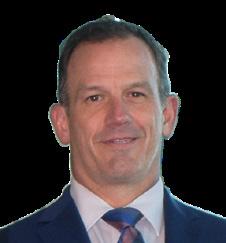

Over 13,000 journeys and 11 years of providing solutions to peripheral neuropathy sufferers
FREE Spring 2024 Also in this Issue... Pittsburgh Weddings | Step Back Into 1944 | The Joy of Recreation
Transforming Lives and Giving Hope



























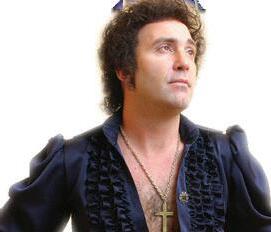
Saturday, March 23 2 and 7:30 p.m. The New Pure Gold



2 P.M.
The Son (PG-13. 123 MIN.)
MARCH 11, 2024
One True Loves (PG-13, 100 MIN.)
MARCH 18, 2024
The Haunted Mansion (PG-13, 123 MIN.)
APRIL 15, 2024
Barbie (PG-13, 114 MIN.)
APRIL 22, 2024
Saturday, April 20 2 and 7:30 p.m. Michael Bublé Tribute
My Big Fat Greek Wedding (PG, 95 MIN.)
MARCH 25, 2024
My Big Fat Greek Wedding 3 (PG-13, 91 MIN.)
APRIL 1, 2024
White Bird (PG-13, 120 MIN.)
APRIL 29, 2024
Nyad (PG-13, 121 MIN.)
MAY 6, 2024
Saturday, May 18 2 and 7:30 p.m.
Somewhere in Queens (R, 106 MIN.)
APRIL 8, 2024
The Family Plan (PG-13, 118 MIN.)
MAY 13, 2024
Saturday, June 22 2 and 7:30 p.m.
Pennsylvania Trollies and Covered Bridges
Tuesday, March 12, 2024 11 a.m.
Speaker: Gail Griffith, instructor with the Life Enrichment Program for seniors through CCAC Climate Change and Plant Specific Impacts in Western Pennsylvania
Tuesday, March 26, 2024 11 a.m.
Speaker: Chris Kubiak, Director of Education at the Audubon Society of Western Pennsylvania
History of Allegheny County Parks
Tuesday, April 9, 2024 11 a.m.
Speaker: Allegheny County Park Ranger
All About Bees
Tuesday, April 23, 2024 11 a.m.
Speaker: Julie Travaglini, Senior Director of Education and Curriculum, Allegheny Land Trust


Thank you to our sponsors! TO BUY TICKETS TheLegacyLineup.com. For information on free movies and to RSVP for free seminars, call 412-635-8080. Located on the UPMC Passavant campus at Cumberland Woods Village. Find us on Facebook: The Legacy Lineup or TheLegacyLineup.com
MOVIES MONDAY,
FREE MATINEE
Frankie Valli & The Four Seasons
Tribute Show
This is Tom Jones Featuring Dave LaFame
FREE EDUCATIONAL SEMINARS
What’s your Life Lived Forward?

Willow Valley Communities resident, Jim Comey, says his philosophy on life comes from writer, Jonathan Swift: May you live every day of your life.
And that’s exactly what he does. A produced playwright and published author, Jim is the chair of the Willow Valley Communities Writers Group. He teaches Tai Chi and Qigong and performs in plays. And when he’s not doing all that, Jim’s found riding his motorcycle on the gorgeous country roads in Lancaster County. “This is a whole new world for me,” he says. “I have the freedom to enjoy life’s next adventures knowing that my wife and I — and our adult children — have the peace of mind of Willow Valley Communities’ Type A Lifecare for the future.”
Find your Life Lived Forward. Explore Willow Valley Communities today.
800.770.5445
|
| Lancaster,
WillowValleyCommunities.org
PA
4
6
8
10
Laura
Marion

Paula
15
16
Pittsburgh
Mary
2 Spring 2024 | www.PittsburghFiftyFivePlus.com
& Publisher
President
Lyn Arnold
Emeritus & Contributor
Publisher
Swanson Piotrowski
Editor
Lane Palko
Editor/Public Relations Coordinator
Executive
Janice
Managing
M. Green
& Account Executive
Marketing
L. Simpson
& Production Kostilnik & Assoc. Graphics, Inc.
Master Swanson Publishing, LLC
Design
Web
Fifty Five Plus Magazine is published four times a year by Swanson Publishing, LLC (P.O. Box 425, Mars, PA 16046, 724-940-2444) and is distributed free of charge throughout the Greater Pittsburgh
Subscription can be purchased from the publisher
one
mission of the Swanson Publishing, LLC is to connect the people of Pittsburgh by publishing the area’s finest senior publication, Pittsburgh Fifty Five Plus Magazine. The publication is dedicated to the people, communities, educational, religious, travel, health, and recreational needs of seniors in our area.
contents of Pittsburgh Fifty Five Plus Magazine may not be reproduced or copied in whole or in part without written permission from the publisher. Pittsburgh Fifty Five Plus reserves the right to refuse editorial or advertisements that do not meet the standards of this publication.
Box 425 Mars, PA 16046
724 -940 -2444
info@PittsburghFiftyFivePlus.com www.PittsburghFiftyFivePlus.com TABLE OF CONTENTS 4 Editorial
region.
at $25 for
year. The
The
PO
Phone:
Email:
Cover Story: Tri-State Neuropathy Centers Providing the Proof Janice Lane Palko
Unleashing the Joy of Recreation: 5 Engaging Recreational Activities for Seniors Kathy Thompson
Advances in Brain Surgery Treatments for Parkinson’s Disease Opens New Approaches to Addiction and Alzheimer’s Disease Dr. Joseph Maroon
Check In with Yourself Before Your Next Medical Check-up
What Is My Role as a Health Coach? Thriving Through Optimal Recovery Marla Turnbull
Grand Adventures with Your Grandchildren in Pittsburgh this Spring
12
14
Advertorial: How Your SRES® Can Support You Deb Walton, SRES®
Does Medicare Have Penalties? Crystal A. Manning and Dvonya Sedlacko-Stephens
Enjoy an Energizing Evening with Joey Jones April 25 19 BC3 Names Center for Economic Education After Longtime Director 20 The American Cancer Society Hosting Several Events Janice Lane Palko 21 Enjoy the Best in Senior Care Facilities Waldman Holdings 22 Senior Profile: Caregiver Champion Jeff Weinberg Janice Lane Palko In Every Issue... 24 Remember When: Spring Weather Janice Lane Palko 26 The Good Old Days: Step Back Into 1944 Paula Green 28 Pondering Pittsburgh: Pittsburgh Weddings of Yesterday Paula Green
18



www.PittsburghFiftyFivePlus.com | Spring 2024 3 To register, visit AlleghenyVotes.com $150 - $175 $150 - $175 $150 - $175 Earn + Paid Training online or in-person in the next election! Become a Poll Worker Poll Worker Poll Worker

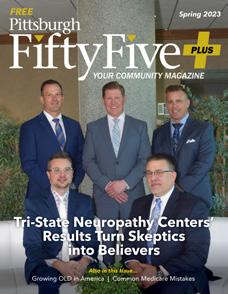
Tri-State Neuropathy Centers Providing the Proof
The very best proof that something can be done is that someone has already done it
– Bertrand Russell
By Janice Lane Palko
When you need a recommendation on something, whether it be a new restaurant to try, a contractor for updating your home, or advice on a medical procedure, what do you do? You consult someone who has already been there or done that.
However, most people suffering with peripheral neuropathy don’t know where to turn for advice. “Most of the patients who come to us have no hope,” said Dr. Shawn Richey, founder of Tri-State Neuropathy Centers. “They’ve been to doctor after doctor and have been told that there is nothing that can be done for them and that most likely they will end up in a wheelchair.”
Peripheral neuropathy is a debilitating disease that causes the death and destruction of the small sensory nerve fibers located in the top layer of our skin. There are many causes of peripheral neuropathy, but some of the common reasons are diabetes, statin medications, chemotherapy and radiation, low back issues and past surgeries.
Approximately 30 million Americans suffer from peripheral neuropathy and its symptoms of numbness, tingling, burning, stabbing, and painful cramping in the feet, legs or hands, difficulty walking, and disruption of sleep.
“Most patients describe peripheral neuropathy as that feeling you have when your foot falls asleep and then as it progresses add burning, stabbing pain, electric shocks and cramping to their symptoms. Imagine having that every day of your life and given no hope of relief. It is truly rewarding to let them know that is not the case anymore,” said Dr. Richey, who has been treating patients since 2013.
While the pain can be unbearable, it can also rob sufferers of their quality of life. It causes balance issues, mobility restrictions, and disturbs sleep. Even seemingly little things like feeling the gas pedal under your foot becomes challenging. “Peripheral neuropathy is a progressive disease, and unfortunately, if nothing is done to treat it, it will get worse over time,” said Dr. Richey.
Those with peripheral neuropathy are most likely prescribed medications. These often provide no relief, are accompanied by unpleasant side effects, and do not address the underlying cause, which is a diminished blood supply to the never fibers.
The small nerve fibers are nourished with their own tiny blood supply called a capillary. For a variety of reasons, these capillaries lose their ability to open fully and deliver the necessary oxygen and nutrition to keep these nerves healthy.
In 1998, Dr. Louis Ignarro was awarded the Nobel Prize in medicine for his cardiovascular research in which he discovered how essential nitric oxide is to the human body. Dr. Ignarro’s research revealed that nitric oxide is produced in our blood vessels and signals those vessels to expand and contract, controlling blood flow. As we age, our bodies produce less nitric oxide.
4 Spring 2024 | www.PittsburghFiftyFivePlus.com COVER STORY
But what if we could increase the nitric oxide in our blood vessels?
“Today, we can, and it is changing people’s lives,” said Dr. Richey. “Combining Dr. Ignarro’s findings with FDA-approved, non-invasive, pain-free technology has enabled us to revolutionize the treatment for peripheral neuropathy. One of our treatments we use allows photoreceptor cells in the skin to absorb specific frequencies of light, which stimulates the production of nitric oxide. This helps to dilate blood vessels and allow oxygen and nutrients to reach damaged nerves, providing pain relief and repair to tissue and nerves.”
The technology Tri-State Neuropathy Centers uses is the most powerful and effective available today. “Most systems out there lack the frequencies and power to provide actual results, leaving patients with no discernable improvement of their disease. We are proud to note that in the past eleven years, we have successfully treated over 13,000 patients, and over 90% of our patients see a 50-100% improvement of their peripheral neuropathy that we are able to maintain for the rest of their lives,” said Dr. Richey.


When something is effective or thriving, it shows, and Tri-State Neuropathy is certainly that. “Our eleven years of experience and research has allowed us to become one of the largest and fastest growing centers in the country. We are 100% dedicated to treating peripheral neuropathy and continually work with our patients to help maximize their results,” said Dr. Richey.
What started with one location eleven years ago, has now grown to eight centers in three states, with the two newest locations being Castle Shannon and Altoona.
If you are suffering with peripheral neuropathy, you may want to consult Tri-State Neuropathy Centers for a free evaluation to see if their treatment would benefit you. Each patient is provided personalized care and support throughout their treatment.
“We offer the first initial consultation, examination and first treatment for free. We qualify patients to make sure they are candidates for our treatments, and of those that we have qualified, we have had an outstanding success rate,” said Dr. Shawn. “And we are excited about our results and about bringing pain relief to more sufferers throughout the tri-state region.” Each qualified patient will have a customized, multipronged treatment program to effectively address the cause of neuropathy rather than the symptom.
With so many patients being treated successfully at Tri-State Neuropathy Centers, the family of those who have reclaimed their lives is growing. And like someone who’s discovered a great new restaurant, or a contractor who is a true craftsman, they are happy to share their lifechanging experiences and the proof that the treatments work. n
Patients may call 724-940-9000 to schedule their initial no-cost consultation or visit the website at www.marydancedin.com
“I loved gardening and home remodeling and was unable to do it because of my neuropathy. In only a short time I am almost 100% and back doing all the things I love to do.”
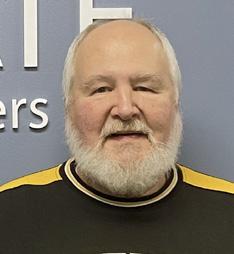
Henry P. “I’ve suffered for six years with numbness, tingling and restless leg. I had to force myself to do things. I was worried I would lose the ability to walk. I have finished my program and I can do anything I want. I finally am living life again.”
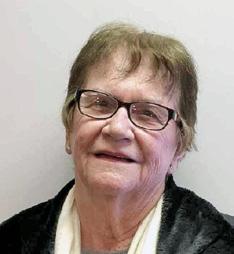
Jane E. “My neuropathy progressed to a point that I could not feel my feet and had burning and stabbing pain with difficulty walking. The neurologist told me he could only prescribe meds to deal with the symptoms. I was placed with a simple and easy program at TSN. I am 90% better and the shooting pains are gone. I can feel my feet again and my balance has returned.”
Joe L.
www.PittsburghFiftyFivePlus.com | Spring 2024 5

Unleashing the Joy of Recreation: 5 Engaging Recreational Activities for Seniors
By Kathy Thompson
As the golden years approach, it becomes increasingly important for seniors to maintain an active and fulfilling lifestyle. Engaging in recreational activities not only promotes physical health but also enhances mental well-being and fosters social connections. With a plethora of options available, seniors can find activities tailored to their interests, abilities, and preferences. In this blog, we will explore a variety of recreational activities that can bring joy, purpose, and a sense of adventure to the lives of seniors, to help ensure that their later years are filled with fun and delightful experiences.
Stay Fit and Active
Staying physically active is vital to maintain strength, flexibility, and overall well-being. There are numerous recreational activities perfectly suited for seniors that offer low-impact exercises, such as walking or hiking in nature parks or local trails. Tai Chi and yoga classes can provide gentle yet effective workouts while improving balance and coordination as well as
helping to mitigate stress. Swimming is another excellent option, as it is easy on the joints and promotes cardiovascular health.
Creative Pursuits
Engaging in creative activities can bring immense joy and provide a sense of purpose for seniors. Painting, drawing, or sculpting allows self-expression and promotes
6 Spring 2024 | www.PittsburghFiftyFivePlus.com 55+ FEATURE
cognitive skills. Joining a local art group or attending workshops can provide opportunities for seniors to share their creations and connect with like-minded individuals. For those who enjoy writing, journaling or participating in creative writing classes can be a great way to explore and record their thoughts and memories.
Engage the Mind
Intellectual stimulation is essential for seniors to keep their minds sharp and active. Engaging in puzzles, crosswords, and brain-training games can help improve memory, concentration, and problem-solving skills. Joining a book club or discussion group can provide opportunities for seniors to delve into literature, exchange ideas, and connect with others who share their interests. Learning a new language, taking up music lessons, or enrolling in online courses can also provide mental stimulation while expanding knowledge.
Embrace Nature
Spending time in nature has a rejuvenating effect at any age, and seniors are no exception. Gardening offers a rewarding experience, allowing them to connect with nature, nurture plants or even grow their own food! Birdwatching, either in their backyard or by joining local birding groups, can bring serenity and a renewed sense of wonder. Organized nature walks or guided tours provide opportunities for seniors to explore and appreciate the beauty of their surroundings while being physically active.
Social Connections
Maintaining social connections is crucial for mental and emotional well-being. Participating in community events, clubs, or volunteer activities not only provides opportunities for social interactions but also instills a sense of purpose and fulfillment. Joining senior centers or recreational centers tailored to their interests can lead to new friendships and create a supportive community. Engaging in team sports or group fitness classes fosters camaraderie and accountability while having fun.
Recreational activities play a vital role in promoting the overall well-being of seniors. By embracing a variety of activities, seniors can enjoy their leisure time, stay physically and mentally fit, and nurture their social connections. These activities contribute to a fulfilling and joyful lifestyle, ensuring that seniors make the most of their golden years with zest and vitality. n

www.PittsburghFiftyFivePlus.com | Spring 2024 7 State Farm Bloomington, IL Being a good neighbor means being there for my community. As your local State Farm® agent, I'm ready to help whenever you need me. Give me a call. Proud to support the neighborhood Pete Piotrowski, Agent 11565 Perry HWY, Suite 4 Wexford, PA 15090 Bus: 724-935-6330 pete@petesinsurance.com www.petesinsurance.com Piotrowski Insurance Agcy Inc
Advances in Brain Surgery Treatments for Parkinson’s Disease Opens New Approaches to Addiction and Alzheimer’s Disease
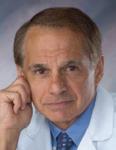
Joseph C. Maroon MD, FACS
Very often in the field of medicine when a new medication or surgical treatment is discovered, physicians and researchers begin to wonder if the advancement might help other conditions or illness besides the original intended condition. Perhaps one of the most profound adaptations of a great idea was to modify the cardiac pacemaker, which was approved for human use in 1959, to target very specific areas in the brain. In the 1990s, that is exactly what the Medtronic Co. did. Working with neurosurgeons, a thin electrical lead with image guidance is inserted into a location deep within the brain and connected to a battery under the skin of the chest wall. By programming an adjustable microcurrent of electricity to the lead implanted during brain surgery while the patient was awake, the current would often completely stop disabling tremors of Parkinson’s Disease and other movement disorder conditions.
Fast forward to the 2000s, physicians who were treating tremors with Medtronic’s modified pacemaker, called a Deep Brain Stimulator or DBS, began to notice a variety of behavioral changes in patients beyond tremor reduction. Reductions of depression symptoms and decreased appetite with weight loss were being reported. As additional patients with essential tremor


and other causes of tremor were being treated by DBS, a large patient data base demonstrated other brain targets for stimulation could result in a wide variety of mental health benefits besides tremor reduction.
More recently, researchers right here in Western Pennsylvania and northern West Virginia, at UPMC, AHN and WVU Medical Center in Morgantown, have made discoveries demonstrating profound mental health benefits targeting new brain locations using DBS. FDA-approved research, led by neurosurgeons and neurologists, has shown significant improvements in patients with depression, obsessive compulsive disorder and even reduced addiction cravings for opioids.
The latest advancement is targeting the brain of Alzheimer’s patients, and it’s being done without requiring any surgery at all. Described as “non-invasive surgery,” modified low intensity ultrasound technology is being used to externally highly focus beams of ultrasound into various areas of the brain with a focal point of less than one millimeter in size. Once focused, these beams can generate heat. For Alzheimer’s patients the focused beam of ultrasound is directed into Alzheimer’s related brain plaques. Changes caused by the heat allow the latest Alzheimer’s drugs to cross the
blood-brain barrier more easily and allow for a more potent and focused drug delivery. Follow-up MRIs on treated patients have shown significant size and density reductions of the treated Alzheimer’s plaques when co-treated with the focused ultrasound beam and the Alzheimer’s drug compared to areas that were not treated with the ultrasound.
What the future holds for a modified brain “pacemaker,” beyond its use for tremors and behavior disorders, or the use of a modified ultrasound device for co-treating Alzheimer’s disease, is still unclear. But it’s clear that researchers, including those right here in our communities, as well as Elon Musk, are pushing technologies and research into areas that would have seemed impossible only several years ago. The brain has always been considered the last frontier in medicine. But despite the many setbacks in treating brain disease and decline, there is hope. I personally believe major breakthroughs will continue and change the lives of many with mood and substance abuse disorders. n
Joseph C. Maroon, MD is a Board-Certified Neurosurgeon, Nutritional and Sports Medicine Expert. Dr. Maroon has written and lectured extensively on brain health and healthy life choices. As a competitive Ironman triathlete, Dr. Maroon practices what he preaches and is committed to the promoting healthy choices to his patients and readers.


8 Spring 2024 | www.PittsburghFiftyFivePlus.com
YOUR HEALTH
The Village: Perfect for our Parents!
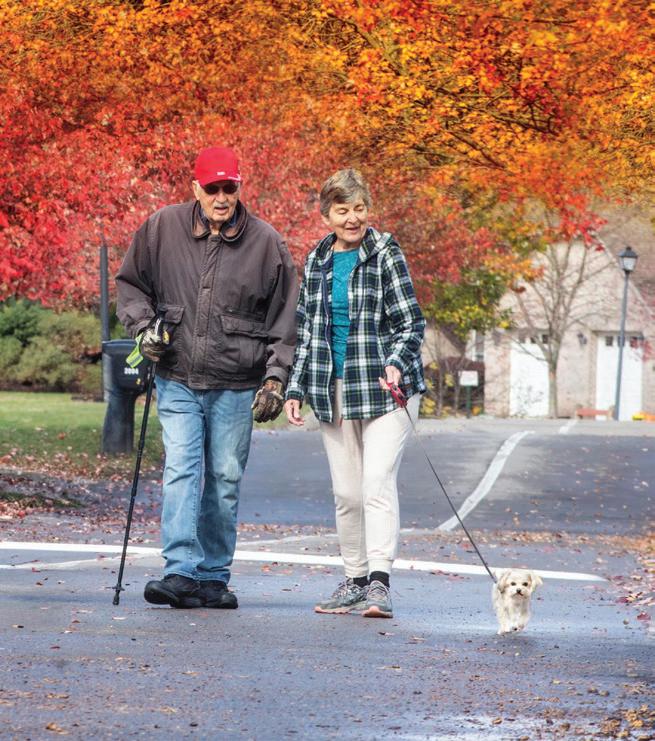



Our neighbors recommended The Village at St. Barnabas in Gibsonia. They said it was the perfect place for our parents, with tons of activities and amenities. They were right!
No large upfront costs
Safe and secure surroundings
Spacious 1, 2 & 3 bedroom residences
A full calendar of social events
Indoor mall with a hair salon, shops, a bank and restaurants Now, they couldn’t be happier living at The Village at St. Barnabas, and little Sadie loves it too! StBarnabasCommunities.com Schedule a tour with Cindy or Nina today at CBoyd@StBarnabasHealthSystem.com or call 724-444-5568. Be sure to ask about our move-in special.
•
•
•
•
•
Pittsburgh’s northern suburbs, Gibsonia, PA. 55P-PFOP3.24
Nestled
in the lush landscape of

Check in with yourself before your next medical check-up
Do you feel nervous before a medical appointment? Do your thoughts dwell on it in the days or weeks leading up, even for a routine appointment? That is not out of the ordinary for most of us. You may want to consider how you can prepare for your next appointment to help alleviate some of those worries.
One of the best tasks someone can do is write down their questions ahead of time. This includes any concerns you have about your health, such as:
• Have you had trouble sleeping?
• Are you wondering if there is a generic option of a current medication available?
• Have you heard about a new supplement and wondered if it is right for you?
Continually write down those questions and concerns ahead of time so you are ready to share during your appointment. If you have a notes app or can text on your phone, you could keep an ongoing list, as it is likely that will be one device that will be with you during your appointment! If you feel embarrassed about the potential question(s), remember that hearing and knowing your questions is an important aspect to your doctor being able to do their job as a member of your health care team.
Since your last appointment, have there been any medication changes that another doctor has made or prescribed? Make sure to either write down all the medications that you are taking or bring your medications with you so you can review them with your doctor. It is especially important to include any supplements and over-thecounter medications in this review in case there are any potential risky or unsafe interactions. There are even some phone apps that are designed to keep track of medications and supplements.
There may be some subjects that you still feel uncomfortable discussing. Consider if there is someone in your life who could go to your appointment with you and help you ask those questions. Give this person a heads up about
your concerns and questions so that they can help be a part of this discussion.
If getting to the appointment is what feels overwhelming, you may want to contact the office ahead of time to see if they could write down your questions and share those with the doctor ahead of your appointment. Are you concerned about keeping track of the key discussion points that occur during the appointment? Ask if your doctor can write those down for you so you can look them over after the appointment.
Sometimes, there is a limited amount of time during which to meet with your doctor. This makes it important to prepare for your appointment ahead of time and see what options are available to share your questions and concerns. More than ever before, there are opportunities to connect before and after the appointment, such as over the phone and web. We hope these tips will help you make the most of the time you spend with your doctor and allow you to be your own best advocate.
The University of Pittsburgh’s Pittsburgh Regional Dementia Caregiver Training and Employment Program was awarded a grant through the Henry L. Hillman Foundation as a part of its Healthy Aging Challenge. The University of Pittsburgh offers free trainings for family caregivers, professionals, and intergenerational champions. Training sessions provide new ways of interacting and supporting individuals living with dementia. Activities include role-playing and videotaped interactions. UPMC Senior Services is a partner for this project. If you would like to learn more about this upcoming opportunity, please reach out to our office.
10 Spring 2024 | www.PittsburghFiftyFivePlus.com YOUR HEALTH
If you have questions about this training program, please reach out to Education and Consultative Services of UPMC Senior Services.
• Phone: 866-430-8742
• E-mail: UPMCSeniorServices@UPMC.edu
• Website: SeniorServices.UPMC.com
Join us on Facebook at facebook.com/groups/ UPMCSeniorServices. n
Dementia Caregiver Training
The University of Pittsburgh’s Pittsburgh Regional Dementia Caregiver Training and Employment Program was awarded a grant through the Henry L. Hillman Foundation as a part of its Healthy Aging Challenge. In partnership UPMC Senior Services, free training sessions for family caregivers, professionals, and intergenerational champions provide new ways of interacting and supporting individuals living with dementia. If you would like to learn more about this opportunity, please reach out to Education and Consultative Services of UPMC Senior Services at 866-430-8742 or UPMCSeniorServices@UPMC.edu.

www.PittsburghFiftyFivePlus.com | Spring 2024 11
What Is My Role as a Health Coach? Thriving Through Optimal Recovery
By Marla Turnbull, MS, CDP, NBC-HWC

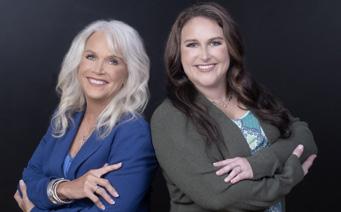
I am passionate about helping patients thrive by providing optimal care and support throughout their recovery journey. I believe in building strong relationships with my patients, as I have seen firsthand how vital this connection is to their healing process.
Ilove what I do because it allows me to make a difference in the lives of others, offering hope and encouragement during challenging times. By prioritizing self-care and fostering a supportive environment, I strive to empower my patients to not just survive, but truly thrive.
Through my dedication to their well-being and utilizing the latest advancements in health care, I aim to guide each patient towards a path of recovery that leads them towards a brighter future. Together, we can work towards optimal health and wellness, ensuring that every individual can thrive.
How do I treat the whole person?
• Lowering systemic inflammation
• Eliminating brain fog
• Increasing energy & mental health
• Increasing nutritional enhancement
• Increasing restorative sleep
• Reducing stress
• Normalizing bloodwork
• Improving memory & neuro functions
• Energy work and releasing unprocessed emotions
• Greatly improving digestion
• Improving metabolic & immune health
“Marla is extremely patient and understanding. She listens with such empathy and compassion. Together, she has helped me redefine my wellness with nutrition, exercise & improved lifestyle changes. I no longer take a 2-hour nap in the afternoon. I exercise for an hour each day! I have lost 25 pounds in 3 months.” - Shelly
I take a functional medicine approach by deep diving into the root cause of your symptoms. Not only am I a National Board-Certified Health & Wellness and Resiliency Coach, but I recently became a Certified Dementia Practitioner. I recently began working on my fourth cohort through a Community Grant with the National Parkinson’s Foundation. 40 – 80% of patients with Parkinson’s develop Dementia & Alzheimer’s. My desire is to be equipped, as best I can, to help these patients.
“Someone in the world develops dementia every 3 seconds. There are over 55 million people worldwide living with dementia. This number is expected to double every 20 years, reaching 78 million in 2030 and 139 million in 2050. “ – Alzheimer’s Disease International –Dementia Statistics
12 Spring 2024 | www.PittsburghFiftyFivePlus.com YOUR HEALTH
“My wife and I participated in the Parkinson’s Grant program at To Life! Therapy and were blown away with the knowledge & expertise of the exercise & nutrition program. I am now able to get myself out of my chair & dance with my wife - a goal I set during the program.”– Bob
I have begun a deep dive into understanding the neural pathways of the brain and getting to the root causes of disease. I am learning alongside my colleague, Doreen Putnam, owner & CEO of DCPutnam Consulting, in helping Dementia & Alzheimer’s patients and their caregivers navigate through the disease.
“The FTD (Frontal Temporal Disease) Support Group has really helped me navigate through living with and caring for my spouse. I don’t know what I would do without this support from Doreen & Marla.” – Cathy
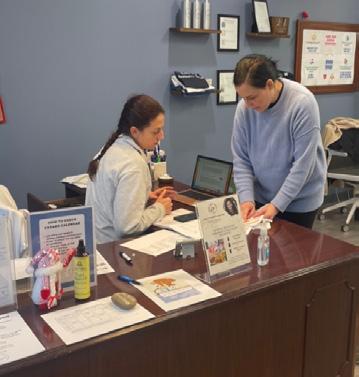
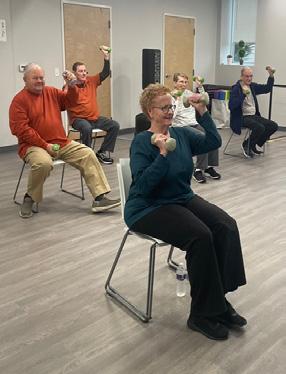
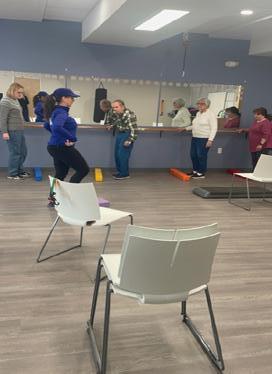
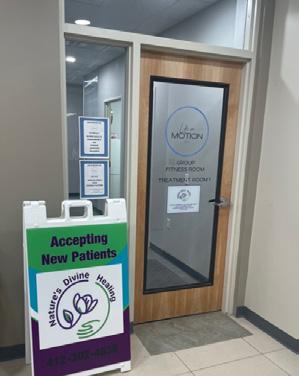
In February, I increased my office space. I am now working out of Life in Motion Gym at 3735 Saxonburg Blvd, 15238. This opportunity has allowed me to see more patients and operate more fully as a practitioner. Life in Motion Gym offers Parkinson’s therapy, nutrition, through me, exercise classes, strength training, balance & mobility, as well as educational seminars and Lunch & Learns for the community.
“I absolutely LOVE your new office and location! The energy here is amazing! Very inviting!” – Victoria
On April 17 at 11:15 am, I will be presenting on Nutrition & the Brain at Life in Motion Gym. This is a free event for the community. All are welcome to come. Please RSVP to Shannon or Jackie at Life in Motion Gym 412-213-8524. n
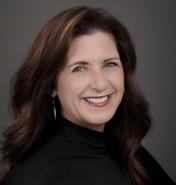 Marla Turnbull, MS, CDP, NBC-HWC Owner - Nature’s Divine Healing –Optimal Recovery, LLC Marla@naturesdivinehealing.com 412-302-4638


www.PittsburghFiftyFivePlus.com | Spring 2024 13

Grand Adventures with Your Grandchildren in Pittsburgh this Spring
As the winter frost gives way to the warm embrace of spring, Pittsburgh blossoms into a vibrant playground for families eager to create lasting memories. If you’re a grandparent seeking delightful activities to share with your grandchildren, look no further than the Steel City. From enchanting gardens to thrilling attractions, Pittsburgh offers a myriad of options for intergenerational bonding this spring.
Allegheny County has an array of parks throughout the county that offer playgrounds, events, pools, and much more. Check out their website for updated events and locations: www.alleghenycounty.us/Parks-and-Events
Your adventure can continue with a visit to Phipps Conservatory and Botanical Gardens, a lush oasis nestled in the heart of the city. Stroll through the vibrant floral displays and themed gardens, marveling at the seasonal blooms that signal the arrival of spring. The immersive Butterfly Forest is sure to captivate the imaginations of your grandchildren, creating a magical experience they’ll cherish.
For a dose of history and hands-on learning, there are multiple museums your grandkids can enjoy. Some of the kid-friendly museums Pittsburgh offers are the Children’s Museum of Pittsburgh, Carnegie Museum of Natural History, Carnegie Science Center, Fort Pitt Museum, Carnegie Science Center, and Old Economy Village
As the temperatures rise, take to the great outdoors with a trip to Point State Park. Pack a picnic and enjoy a leisurely lunch by the iconic fountain, surrounded by breathtaking views of Pittsburgh’s skyline and the confluence of the three rivers. Engage in some friendly competition with a game of
frisbee or simply relax on the grassy expanses, creating cherished moments that will linger in your family’s memories.
For a touch of whimsy, venture to Randyland, a kaleidoscope of color and creativity located in the Mexican War Streets neighborhood. This eclectic outdoor art installation, crafted by local artist Randy Gilson, is a visual feast that sparks joy and wonder. Encourage your grandchildren to let their imaginations run wild as they explore this vibrant masterpiece.
Cap off your grand adventure with a trip to Kennywood Park, an iconic amusement park that has delighted families for generations. Experience the thrill of roller coasters, enjoy classic carnival games, and indulge in timeless treats like cotton candy and funnel cakes. With a mix of nostalgia and modern excitement, Kennywood is the perfect finale for your springtime escapade in Pittsburgh.
In the heart of Pittsburgh, this spring promises not only blooming flowers but also blossoming connections between grandparents and grandchildren. Embrace the season’s renewal by exploring the city’s diverse offerings, creating memories that will endure far beyond the fleeting beauty of spring. n
14 Spring 2024 | www.PittsburghFiftyFivePlus.com 55+ FEATURE

How Your SRES® Can Support You
When you are looking to buy or sell real estate, reaching out to your trusted agent or brokerage is the first step. They are field experts and know how to walk you through the transaction from start to finish. Senior Real Estate Specialists®, also called SRES® designees, are professionals specifically trained to work with clients aged 55 and over. These experts know about real estate and the concerns mature clients face. Because of their extended skill, they can be excellent resources for you in various ways. Here are a few questions or concerns you could discuss with your Senior Real Estate Specialist®.
1. What areas of the city or town are senior-friendly?
Because SRES® designees are senior market specialists, they will be far more knowledgeable than an average agent about what parts of town attract adults over fifty. They will have connections with senior communities and know the questions you should ask as you vet different neighborhoods. If you prioritize finding a location close to shopping, medical care, outdoor recreation, or with a large senior population, make sure you mention that to your Senior Real Estate Specialist®. They will know which areas match your preferences.
2. What should I look for in a home if I plan to age in place?
Several important features exist when evaluating a property’s senior-friendliness, including single-floor living and wide hallways. As an aging adult, finding a home that will meet your needs for years to come can be challenging. Fortunately, SRES® designees have access to a wealth of resources that discuss what makes a property livable for seniors and are equipped to provide practical and creative solutions to help you find the perfect home.
3. I’m worried how a real estate transaction will impact my retirement.
Regarding retirement portfolios, real estate holdings are just one piece of the puzzle. It’s important to consider how changes in your housing situation can impact other areas of your financial resources. While consulting with your financial advisor is
always recommended, working with a real estate professional specializing in helping mature adults offers a unique advantage. If you are transparent about your concerns, an SRES® designee can help you find a property that makes good financial sense and connect you with other experts in the senior market, including financial planners, loan officers, and reverse-mortgage specialists.
4. I’m starting over in a new area, and I don’t know where to go to meet new people.
Moving across states, cities, or even neighborhoods can present unique challenges, the largest of which includes losing friends and social communities. Senior Real Estate Specialists® know that this is a concern for many of their clients, and are aware of a variety of events and communities that will help you adjust to your new area. Ask them for assistance locating local senior centers, religious communities, social groups.
5. Do you know of any local professionals who work with the senior community?
SRES® designees work with a wide range of experts who cater to senior markets. If you are looking for professionals to assist you in managing your retirement, renovating your home, drafting legal paperwork or treating chronic back pain, do not hesitate to ask your Senior Real Estate Specialist®. They are likely to have a broad network of contacts that work with people in the 55+ community, and they are ready and willing to support you.
Source: nar.realtor/education/designations-and-certifications/seniors-real-estate-specialist-sres


 Deb Walton, SRES®




The PROFESSIONAL | MAY / JUNE 2023
Does Medicare Have Penalties?
By Crystal Manning and Dvonya Sedlacko-Stephens
Medicare isn’t the easiest program to understand, and enrollment penalties can cause fear among elderly Americans, who are generally concerned about money in retirement. As a result, many people are unsure of how and when to enroll. Not enrolling in time could result in financial penalties, so it’s important to know your Initial Enrollment Period and work with a licensed Medicare advisor to ensure you get the right coverage at the right time.
You might be wondering why enrollment penalties exist in the first place. Medicare late
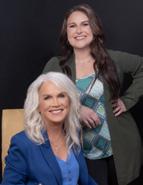
enrollment penalties exist to ensure there is a large pool of individuals paying premiums. Insurance companies rely on a large number of members, especially healthier members, to be able to cover the needs of the entire group. Basically, if everyone signed up only when they needed insurance, then there wouldn’t be enough money for them to cover the medical costs for everyone needing care.
Medicare Late Enrollment Penalties and How to Avoid Them
The majority of Americans receive premium-free Medicare Part A, for which there is no late enrollment penalty, regardless of when you enroll. You must have worked 40 quarters or 10 years, or be a dependent of someone that did, to qualify for premium free part A.
If you don’t sign up for Medicare Part B during your Initial Enrollment Period, and you don’t qualify for a Part B Special Enrollment Period, you’ll have a monthly penalty for every month
you did not enroll in Medicare Part B. These penalties do not go away. A penalty can be a huge burden, especially for seniors, who are often on fixed incomes. To avoid the Part B penalty, be aware of both your Initial Enrollment Period and your eligibility for Special Enrollment Periods. Your IEP is when you can first sign up for Part A (Hospital Insurance) and Part B (Medical Insurance), and it starts 3 months before you turn 65 and ends 3 months after the month you turn 65.
What are the Penalties?
Medicare Part A Penalty
The penalty for Part A is 10% of the current Part A premium. Most people are entitled to Part A for free for paying the Medicare tax while still working. If no employment history or not enough working history (based on credits), out-ofpocket premiums will be applied.
Medicare Part B Penalty
The penalty for Part B is a 10% increase on the Part B premium for each full 12-month period not
16 Spring 2024 | www.PittsburghFiftyFivePlus.com
ADVERTORIAL CONFUSED ABOUT MEDICARE? Medicare is confusing – call for a one-to-one, no charge consultation with a Medicare expert! Remove the FEAR, UNCERTAINTY, AND COSTLY MISTAKES from the Medicare enrollment process. Call Crystal: 412-716-4942 or Dvonya: 412-657-3889 email : crystalmanning33@gmail.com Crystal A. Manning Dvonya Sedlacko-Stephens Medicare Advisors
enrolled but eligible. This penalty does not go away. If eligible for a Special Enrollment Period –enrolled in employer coverage, this penalty can be avoided. Special forms will need to be submitted as proof to Medicare that you did have creditable coverage.
Medicare Part D Penalty
The late penalty for Part D is 1% of the average monthly prescription drug premium (1% of $33.06 in 2021) times the number of months late, rounded to the nearest 10 cents. The penalty is generally enacted if not enrolled within 3 months of Medicare Part A or Part B. This penalty is permanent – must be paid while enrolled in Prescription Drug Coverage.
You may not have to pay the penalty if you had health insurance through your job or your spouse’s job when you were first eligible to sign up for Medicare Part B.
Navigating the Medicare maze can be tricky, and that’s why we’re here to help! Schedule an appointment or call now to speak with a licensed Medicare Advisor who can help you:
• Understand your options and enrollment periods.
• Sign up for the best coverage for your individual needs.
• Feel at ease, knowing you’re supported every step of the way.
Contact Crystal A Manning 412-716-4942 or crystalmanning33@gmail.com or Dvonya Sedlacko (412) 657-3889 or djsedlacko@gmail.com n

Community LIFE is here to help keep seniors independent and in their homes with an all-inclusive program and insurance plan.
We offer a wide range of comprehensive services through our Health and Wellness Centers, including medical care, in-home care, meals, recreation, transportation, and more.
It’s time for you to focus on LIFE. We’ll take care of the rest.
Learn more at commlife.org.

www.PittsburghFiftyFivePlus.com | Spring 2024 17
A LIFE OF YOUR OWN 6561_cl_2024_campaign_pittsburgh_55_plus_4.75x7.25.indd 1 3/7/24 3:12 PM
Enjoy An Energizing Evening with Joey Jones April 25
Tickets are on sale now and they make a great gift!

Enjoy an energizing and inspiring evening as St. Barnabas Charities honors Johnny “Joey” Jones at the annual St. Barnabas Founder’s Day Celebration to be held Thursday, April 25, at the Pittsburgh Marriott North in Cranberry Twp. Founder’s Day tickets are on sale now and event proceeds support residents and patients who rely upon the Free Care Fund at St. Barnabas.
Jones will receive the 2024 St. Barnabas Hance Award. The Hance Award was named in honor of St. Barnabas founder Gouverneur Hance, who was inspired to provide medical care for poverty stricken and chronically ill and injured men and boys in 1900. The Hance Award is presented to a person of national acclaim who exemplifies Hance’s ideals of benevolence, patriotism and service to others. Previous Hance awardees include Elsie Hillman, Fred Rogers, President Gerald Ford, Dr. Patch Adams, Rocky Bleier, Debbie Reynolds and many others.
Jones is a retired United States Marine and Fox News Contributor. He grew up in the industrial textile town of Dalton in Northwest Georgia where he was a standout high football player and honors student.
Enduring two combat deployments (Iraq and Afghanistan) and eight years of active service in the Marine Corps; Staff Sergeant Jones suffered a life-changing injury while deployed to Afghanistan as an Explosive Ordnance Disposal (EOD/Bomb) Technician. The 2010 IED-related incident resulted in the loss of both of his legs above the knee and severe damage to his right forearm and both wrists. Since his recovery, Jones has dedicated his work towards improving the lives of all veterans and their families.
The St. Barnabas Founder’s Day Celebration will bring together corporate sponsors, prominent business people and community leaders to honor Joey Jones for his contributions. The event begins at 5:30 p.m. with a cocktail reception, auction and raffles – followed by a dinner celebration. A VIP photo pass and book signing is also available to guests. Following the Hance Award presentation, Joey Jones will deliver a motivational speech.
Tickets range from $300-$500. For event tickets, call 724-625-3770 or visit stbarnabashealthsystem.com/founders-day/ Proceeds benefit the St. Barnabas Free Care Fund, which supports elderly patients and residents who cannot afford their care.
About St. Barnabas Health System
Founded in 1900, St. Barnabas Health System is one of Pennsylvania’s largest healthcare systems, offering comprehensive, compassionate care for people of all ages. St. Barnabas has one simple mission: to help retirees live comfortably at a price they can afford. Having a 123-year history of serving residents in Western Pennsylvania, St. Barnabas’ spectrum of care includes retirement communities, living assistance facilities, a skilled nursing home, a community outpatient medical center, and rehabilitation therapy. Visit StBarnabasHealthSystem.com or call 724-443-0700 for more information. n
18 Spring 2024 | www.PittsburghFiftyFivePlus.com 55+ FEATURE

BC3 Names Center for Economic Education After Longtime Director
Butler County Community College has recognized with a named space the leader of programs that teach economic concepts to students as young as fourth-graders and who is the longest-serving employee in BC3 history. David C. Huseman, 78, of Butler, has been director of the BC3 Center for Economic Education since its founding in 1983, and an employee of the college for 56 of its 58 years. The Professor David C. Huseman Center for Economic Education named space has debuted in the north wing of the college’s arts and hospitality building, where Huseman’s office has been located since 1970. The center administers to students in Grades 4 through 12 a 30-week Stock Market Game that begins in September, and 10-week competitions in the fall and spring. On December 22, Pennsylvania state and U.S. flags flown atop the Capitol in Harrisburg recognized David C. Huseman’s 40-year dedication to financial literacy and extended an honor the longtime professor received from Butler County Community College in 2023. n

www.PittsburghFiftyFivePlus.com | Spring 2024 19
David Huseman, center, a professor in Butler County Community College’s liberal arts division, receives U.S. and Pennsylvania state flags from state Sen. Scott Hutchinson, R-21, left, and state Rep. Marci Mustello, R-11, on Thursday, Feb. 15, 2024, on BC3’s main campus in Butler Township. The flags were flown over the state Capitol to recognize Huseman’s 40-year dedication to financial literacy at BC3 and the college’s recent creation of the Professor David C. Huseman Center for Economic Education named space.
The American Cancer Society Hosting Several Events:
The Rick Dayton Pro Am Golf Classic, Relay for Life Butler County, and Men Wear Pink Benefit Cancer Patients and Their Families
By Janice Lane Palko
The American Cancer Society’s mission is to improve the lives of people with cancer and their families through advocacy, research, and patient support, to ensure everyone has an opportunity to prevent, detect, treat, and survive cancer. Each year the American Cancer Society touches 55 million lives, and it works in over 20,000 communities across the nation.
Locally, Richele Ward is one of the Senior Development Managers for the Northeast Region, which encompasses Pennsylvania and New York, and she oversees the Rick Dayton Pro Am Golf Classic, Coaches vs. Cancer, Men Wear Pink, Downtown Daffodil Days and Tribute of Light events.
These fundraising events help the ACS to provide a variety of services, among them the Road to Recovery, which provides drivers to take people to appointments and treatments.
“Last year, we provided 350 people living with cancer 3,689 rides,” said Ms. Ward, who noted that they are always looking for more people to volunteer as drivers.
“We also have our 24/7 cancer helpline 1-800227-2345 as well as our ACS Cares app as well as funding researchers at the University of Pittsburgh,” said Ms. Ward.
In addition to relying on volunteers, the ACS depends on the public’s financial support “We can always use financial contributions to continue with our mission to improve the lives of people with can-
cer and their families. In addition, we have many events where we can use volunteers to serve on committees or help on the day of the event,” said Ms. Ward.
Coming up on Friday, May 10 is the Rick Dayton Pro Am Golf Classic at -Longue Vue Country Club. Information on the golf classic can be found at: https://RickDaytonGolf.givesmart. com
In June, the Relay for Life Butler County will be held on June 22 at North Boundary Park in Cranberry Twp. For more information on this event, visit: https://relayforlife.org/pabutlercounty
Currently, Men Wear Pink, a program that empowers men in the fight against breast cancer, is accepting nominations for the 2024 campaign at: https://menwearpink.org/pittsburghpa
If you would like more information on any of these events, you may contact Richele Ward at richele.ward@cancer.org
If you would like more information on the American Cancer Society, visit: www.cancer.org. n
20 Spring 2024 | www.PittsburghFiftyFivePlus.com
55+ FEATURE

Enjoy the Best in Senior Care Facilities
We are a second-generation family-owned business with over 40 years of experience in senior living communities in Western Pennsylvania and are the third-largest private owner of senior care facilities in the area. Our primary focus is on providing top-quality clinical care for our residents. Our owners are also always on-site and assisting with our residents!
Magnolia Place of Saxonburg recently celebrated our four-year anniversary! Magnolia Place of Saxonburg has been an integral part of the Saxonburg community by providing both personal and memory care support for residents. We’ve had an exciting year and opened The Gardens at Magnolia Place of Saxonburg. The Gardens is a new luxury addition that features spacious private rooms complete with a variety of features ranging from kitchenettes to one-bedroom apartments. This wing also features two lounges with fireplaces, a private courtyard with a water feature, and a private dining room.
Magnolia Place of Saxonburg has also undergone recent renovations to our living rooms and visitation spaces, as well as new art installations throughout the building. We have also added new private apartment-style rooms to our memory care community!
Norbert Personal Care, situated in Pittsburgh’s Overbrook community, has been offering senior care services since 1983. The community sits on five acres of a safe park-like environment. We opened our new Memory Care community in the fall of 2023 to better serve our residents and facilitate aging in place. The Memory Care community features all newly renovated private rooms, as well as a new kitchenette and private dining room, and a secured courtyard. We also included new improvements like LED lighting to help reduce falls. We are currently expanding the memory care community to feature an additional 12 private rooms!
Please call our Regional Marketing Director Kasandra at 412-889-1903 to schedule a tour! n

www.PittsburghFiftyFivePlus.com | Spring 2024 21
SENIOR LIVING
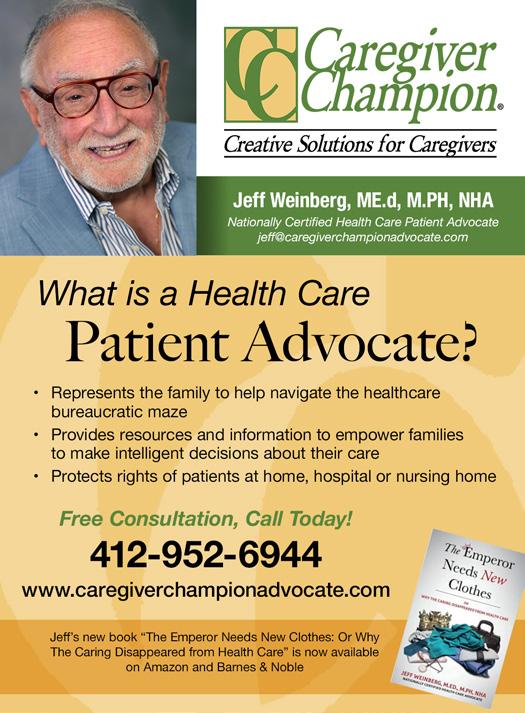
Caregiver Champion Jeff Weinberg
By Janice Lane Palko
“When I was 17, my mother suffered a heart attack,” said Jeff Weinberg, “and she spent three months in the hospital recovering. Today, she would have been discharged from the hospital in four days.”
Weinberg, who has master’s degrees in counseling and health administration and is a Licensed Nursing Home Administrator in Pennsylvania and Florida, has seen how health care has changed over the years. “I am also a Nationally Certified Health Care Patient Advocate, and six years ago, I developed Caregiver Champion, an advocacy team for those dealing with the complexities of caregiving, chronic disability, and aging – and working with caregivers, the chronically disabled, seniors, and their families,” said Weinberg.
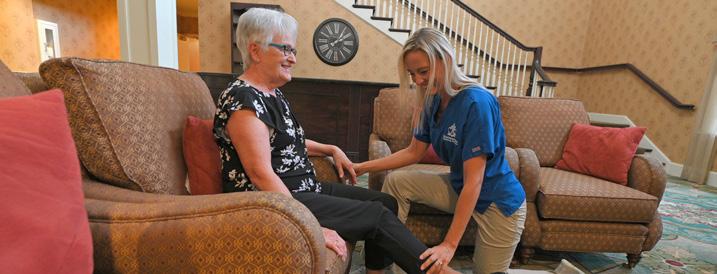
The team includes a retired Registered Nurse, Physical Therapist, Nutritionist, Neurological Illnesses Specialist, and Concierge Physician to help patients and caregivers receive the best and appropriate care they need. They can help navigate the complex problems associated with disability and/or aging, and they have the ability to work together and with outside teams such as physicians, hospital staff, nursing home staff, personal care home, surgeons and specialists.
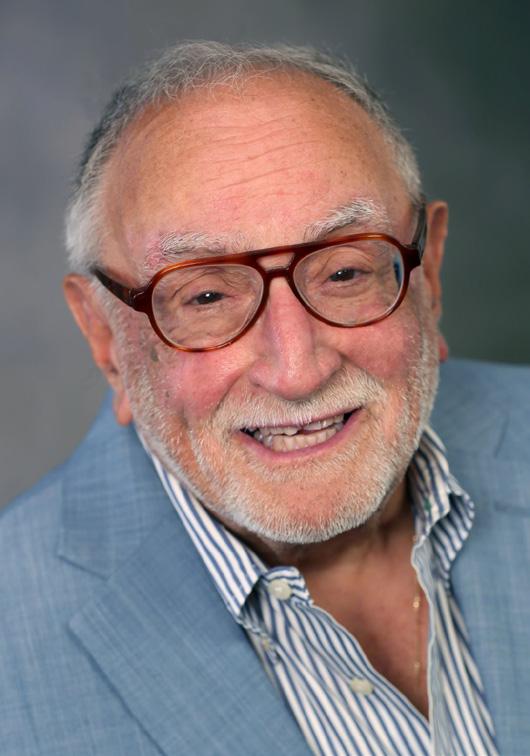
Weinberg and his team advocate for patients in Western Pennsylvania, Ohio and West Virginia. “I also provide consultation services for people outside of the area. During COVID, about half of the people I helped lived out of town. I am boots on the ground, serving as their eyes and ears when they can’t be here to help with a loved one’s care.”
“Years ago, Medicare reimbursed hospitals based on how long a patient remained in the hospital. Today, Medicare incentivizes discharging patients quickly, sometimes before they are ready,” said Weinberg who acts as an advocate for the patient. “I’m the person who says no. They are not ready to be discharged, and this is an unsafe discharge.” He can also evaluate nursing facilities or recommend acute rehabilitation services if he thinks that’s a better option.
Weinberg’s first consultation is free. “I ask questions to see if further services are needed,” said Weinberg, who notes that “a lot of people don’t even know what questions
SENIOR PROFILE 22 Spring 2024 | www.PittsburghFiftyFivePlus.com

to ask, what boundaries can be pushed. I enable caregivers to make more intelligent decisions.”
“Unlike years ago when Dr. Marcus Welby was the model of care, today, most doctors don’t even know their patient’s names. Studies have shown that most doctors spend less than seven minutes with their patients during a visit,” said Weinberg, who has more than 25 years of experience in health care and long-term care and says that he is the person people call they don’t where to turn.
In addition, to serving as an adjunct instructor for CCAC and Penn State University, as well as being a founding board member of Steel Valley Services for Aging (New Heritage, Inc.), Weinberg also speaks about health care and has written a book, The Emperor Needs New Clothes: Or Why The Caring Disappeared from Health Care, which was published in October 2022.
The book also provides real-life solutions, resources and a call to action. It is the author’s desire to put the care back into health care.
“I think almost everyone needs help navigating the bureaucratic health care maze,” said Weinberg.
For more information on Caregiver Champions visit the website at: www.caregiverchampionadvocate.com, or call: (412) 952-6944.
You can find Weinberg’s book at Amazon and Barnes and Noble. n


www.PittsburghFiftyFivePlus.com | Spring 2024 23
Contact me to get started. BUYING OR SELLING? Mary Simpson, REALTOR® (O) 724-776-9705 (C) 412-613-0249 MarySimpson.TPRAgent.com A member of franchise systems of BHHS Affiliates, LLC Caring. Comfort. Healing. As one of the largest nonprofit senior care providers in the country, we provide all this and more, backed by 140+ years of experience. At Concordia, we know that care you can trust makes all the difference. Learn more about our mission, services and opportunities at www.ConcordiaLM.org or connect with us on social media. @ConcordiaLM @concordia_lm Concordia Lutheran Ministries 12 locations throughout southwestern PA • 1-888-352-1571 www.ConcordiaLM.org
Spring Weather
By Janice Lane Palko

It was June 1972. Sixth grade had recently ended, and we were to attend my annual school picnic at West View Park, but a wild woman named Agnes had other ideas.
Spring weather in Pittsburgh can be crazy. It can run the gamut from snow, to floods, to hurricanes and tornadoes. That year, Hurricane Agnes made her way up the East Coast. When she arrived in Pennsylvania, she didn’t pack powerful winds, but torrential rains. In some areas, it rained for 50 consecutive hours. Needless to say, my school picnic was washed out. To placate her four disappointed kids, my mom took us to Bellevue to the movies to see Bedknobs and Broomsticks. Unfortunately, Agnes’ watery ways even reached into the theater. Due to widespread flooding in the area, the electricity went out. Talk about a bummer summer! But we were fortunate compared to others. Pennsylvania had the most fatalities from that storm with 50 people perishing and countless others affected by the catastrophic flooding. I remember my dad driving us into town to gaze at the rivers that had dramatically overflowed their banks and The Point underwater.
Skip ahead a few decades to 1985. I was working for Westinghouse then, and we had a department retreat for two days at Stonewall Resort in West Virginia. It was an unusually sultry day that Friday, May 31, as we drove back to Pittsburgh. I remember thinking that with this weather we’re ripe for a thunderstorm. We got more than a thunderstorm that evening.
Twenty-three tornadoes ripped through Pennsylvania, most striking the area north of Pittsburgh in our end of the state, devastating parts of Butler, Mercer, Crawford, and Venango Counties. It was the largest outbreak of tornadoes ever in our area, and eight of them were F4 or F5 twisters. Seventy-five people in Pennsylvania lost their lives, and for years as you drove up I-79, toward Zelienople, you could see the line of broken trees, snapped like matchsticks, along the hillside where the tornado’s path had wreaked havoc.
Growing up, the conventional wisdom had always been that tornadoes don’t hold together for very long when they slam into our hilly terrain in Western Pennsylvania. Conventional wisdom can be wrong. On June 2, 1998, 14 tornadoes barreled through the area, paying no heed to our topography. Indeed, one even hit Mt. Washington. My husband worked in the South Hills then, and as he approached the Liberty Tubes on his commute home, he watched the twister touch down briefly on Mt. Washington. The unusual urban tornado damaged approximately 850 buildings citywide.
The latest we have ever had a significant snowfall occurred in 1966 on May 9 with 3.1 inches. I don’t remember that, but I can remember many late summer frosts. While we all welcome spring, sometimes it arrives in a wild way. n
REMEMBER WHEN 24 Spring 2024 | www.PittsburghFiftyFivePlus.com







The July issue of Northern Connection magazine will feature the 2024 Pittsburgh Doctors & Health Care Professionals Guide. Call today to reserve space to feature your practice. CALLING ALL DOCTORS & HEALTH CARE PROFESSIONALS INFO@NORTHERNCONNECTIONMAG.COM • (724)940-2444 www.PittsburghFiftyFivePlus.com | Spring 2024 25 Four Churches. One Parish. One Singular Message. CHRIST IS RISEN! Join Our Lady of Mount Carmel Parish this season for a full schedule of Lenten and Easter Masses, Stations of the Cross, inspiring programs, and more. Get the full schedule at www.mountcarmelpgh.org Our Lady of Mount Carmel Parish Reverend John R. Rushofsky, Pastor
Step Back Into...1944
D-Day Invasion • A Band Leader Vanishes
By Paula Green
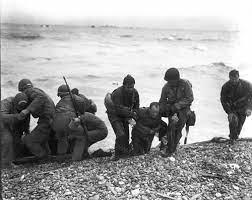
On June 6, the D-DAY invasion (Operation Overlord) started with Allied forces crossing the English Channel to land in Normandy, which signaled the end of the war in Europe. Supreme command over its execution was entrusted to Gen. Dwight D. Eisenhower. The Battle of the Bulge, a popular name in World War II for the German counterattack in the Ardennes, began in December 1944 and lasted until January 1945.
Average
The average income was $2,400. The cost of a new home is $3,450. Gasoline was 15 cents a gallon. A loaf of bread was 10 cents. Apples sold for 23 cents for two pounds. Eggs were 45 cents a dozen. Two pounds of coffee was 41 cents. A first-class stamp was 3 cents. In 1944, no new automobiles were produced because of the war.
Firsts

The kidney dialysis machine was invented by Willem Kolff.
Howard Aiken and Grace Hopper, two physics students at Harvard University, invented the first automatic digital calculator.
During WWII, airman (and future pharmacist) Benjamin Green concocted his own protective sun serum. Green’s formula became the first consumer sunscreen product bought and marketed by Coppertone.
U.S. Events
On July 4, United States Marines raised the U.S. flag atop Mount Suribachi during the Battle of Iwo Jima.

Smokey the Bear debuts on August 9 as spokesman for fire prevention for the U.S. Forest Service.
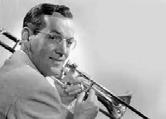
On December 15, band leader Glenn Miller is reported missing following a plane crash. The flight plunged into the English Channel, and neither the aircraft nor its occupants were ever located.
World News
People throughout the U.S. and U.K. are encouraged to grow vegetables in gardens to help ease the food shortages.
On May 5, Mahatma Gandhi is released from jail.

Until the family’s arrest by the Gestapo in Amsterdam, Netherlands, on August 4, Anne Frank kept a diary she had received as a birthday present and wrote in it regularly. Following their arrest, the Franks were sent to concentration camps.
Entertainment
Television
The War As It Happens, an early news show debuts; At Home, a variety series; Missus Goes a Shopping, a game series; The World in Your Home, an educational series; Opinions on Trial, a discussion series; and Will You Remember?, a music series.
Songs
Popular Songs
– Swinging On a Star, Trolley Song, Besame Mucho, You Always Hurt the One

You Love, Mairzy Doates, I’ll Be Seeing You, Twilight Time, It’s Love, Love, Love, My Hearts Tells Me, I Love You, I’ll Walk Alone, I’m Making Believe, Straighten Up and Fly Right, Til Then, and I’ll Get By.
Publishing
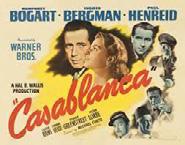
The 16th Annual Academy Awards were held on March 2; Casablanca won Best Picture. Famous films: Arsenic and Old Lace, A Canterbury Tale, Double Indemnity, Gaslight, Going My Way, Hail the Conquering Hero, Laura, Lifeboat, Meet Me in St. Louis, The Miracle of Morgan’s Creek, Mr. Skeffington, None But the Lonely Heart, Since You Went Away, To Have and Have Not, and The Uninvited
On February 20, the Batman & Robin comic strip premieres in newspapers. Popular books – How to Stop Worrying and Start Living, Ficciones, The Razor’s Edge, No Exit, The Hundred Dresses, The Road to Serfdom, Nada, Forever Amber, Antigone, and City.

26 Spring 2024 | www.PittsburghFiftyFivePlus.com THE GOOD OLD DAYS
Sports
NHL Champs
– The Montreal Canadiens beat the Chicago Blackhawks for a 4-0 series sweep.
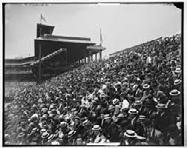
On July 11, the All-Star Baseball Game is held at Forbes Field, Pittsburgh, and the NL wins. MLB – In an All-St. Louis MLB championship, the St. Louis Cardinals defeat the St. Louis Browns. On December 17, the NFL Championship is played, the Green Bay Packers beat the New York Giants.
Politics
Franklin D. Roosevelt; Vice President: Henry A. Wallace.
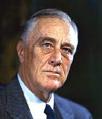
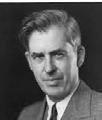
On November 7, Roosevelt was reelected and became the only U.S. president to be elected to a fourth term.
Quotes
“They fight not for the lust of conquest. They fight to end conquest. They fight to liberate.”
~President Franklin D. Roosevelt’s official address announcing the D-Day invasion
“I still believe in spite of everything, that people are truly good at heart.”
~Anne Frank (July 15, 1944)
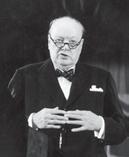
“We shape our buildings; thereafter they shape us.”
~ Winston S. Churchill
Sources: www.thepeoplehistory.com/1944.html, www.infoplease.com/year/1944, www.parispi. net/, www.mclib.info/Research/Local-HistoryGenealogy/Historic-Prices/Historic-Prices-1944, www.thoughtco.com/20th-century-timeline, itstillworks.com/12493233/famous-inventionsin-1944, www.onthisday.com/events/date/1944, www.filmsite.org/1944.html, www.oscars.org/ oscars/ceremonies/1944, www.facebook.com/ annefrankhouse/photos/, www.goodreads.com/ quotes/tag/1944, popularsong.org/wp/year-byyear-pop-hits/popular-songs-of-1944/




CALL NOW to reserve your advertising space for the Summer issue! 724-940-2444
www.PittsburghFiftyFivePlus.com | Spring 2024 27 Certified Financial Planner Board of Standards Inc (CFP Board) owns the CFP® certification mark the CERTIFIED FINANCIAL PLANNER™ certification mark and the CFP® certification mark (w th plaque design) logo n the United States which it authorizes use of by individua s who successfu ly complete CFP Board s nit a and ongoing certification requirements Ameriprise Financial Services, LLC Member FINRA and SIPC © 2023 Ameriprise F nanc a , Inc All rights reserved lisa a brooks@ampf com L I S A B R O O K S , C F P ® , C R P C ® Financial Advisor antonio c aiello@ampf com A N T O N I O A I E L L O , C F P ® , C R P C ® Private Wealth Advisor CA Insurance #0G33858 A P R I V A T E W E A L T H A D V I S O R Y P R A C T I C E O F A M E R I P R I S E F I N A N C I A L S E R V I C E S L L C 412 249 6904 1570 Omega Drive Pittsburgh, PA 15205 premierwealthpartners com Feel confident & secure about your financial future. P R E M I E R W E A L T H P A R T N E R S


Pittsburgh Weddings of Yesteryear
By Paula Green
Do you remember all the magical details from your wedding? So much planning is involved; it can be fun and even grueling, but it is all worth it in the end! Speaking of ends, it is sad to see bridal shops, tuxedo stores, and wedding venues permanently close. Let’s look back and highlight a few of those nuptial spots that used to flourish in the ‘Burgh.
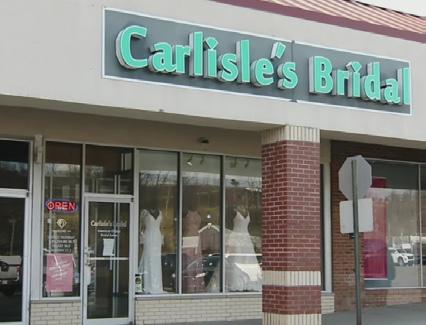
The most iconic facility that was a staple in the region for 133 years was Carlisle’s Bridal. This retailer was honored with the label “America’s Oldest Bridal Salon.” Sophia Carlisle opened her shop in 1888 on East Ohio Street in Pittsburgh. To put this into perspective, Grover Cleveland was the sitting President, and George Eastman had just founded the Eastman Kodak Company.
Carlisle’s relocated a few times over the year. One of their homes
was Penn Avenue in the Strip District, but they eventually relocated to McKnight Road in the North Hills. Unfortunately, between government regulations and COVID19 safety concerns, and no approval of grant funding or PPP loans, Carlisle’s Bridal closed permanently in February 2021. After being open for well over a century, thousands of brides found their perfect, fairy-tale dress thanks to Carlisle’s.
In July 2017, hundreds of brides were sent into a frenzy when Alfred Angelo Bridal abruptly

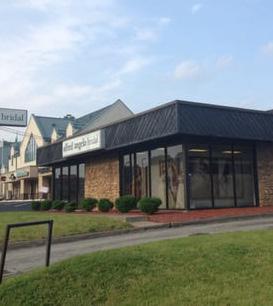
closed all 61 stores with little or no warning. The store was founded by Alfred Angelo and his wife Edythe Piccione in the mid-1930s in Philadelphia. Edythe designed bridal dresses, and Alfred focused on the business aspect. The Alfred Angelo store on McKnight Road fell victim to the sudden closures.
Another local wedding dress store was Harold Bridal, which opened in 1989. The shop was located at 3830 William Penn Highway in Monroeville. This boutique is no longer open, so prospective brides now have to shop elsewhere.
For the men, one tuxedo rental shop that used to be dominant in Pittsburgh was Tuxedo Junction The retailer has been around since 1978. Located in Wilkes Barre, Tuxedo Junction of Hanover township has been dedicated to helping men in Northeastern Pennsylvania look their best for their most important occasions. Although this retailer is still in business, several shops have closed for good. Tuxedo Junctions that have shuttered in the region include Monroeville, Ross Park Mall, South Hills Village and
28 Spring 2024 | www.PittsburghFiftyFivePlus.com PONDERING PITTSBURGH


Upper St. Clair locations. The Mall at Robinson store is still open for business.
Some wedding reception facilities are no longer open. The Blarney Stone in Etna flourished for thirty years. This classy Irish Pub and venue closed its doors in 2004 after its second major flood. The bar flooded in 1986 and was rebuilt but couldn’t survive the second blow. Hurricane Ivan caused too much destruction in 2004.
Noah’s Event Venue closed both locations – in Canonsburg and Cranberry Township in February 2020. Several couples who were slated to have their receptions at Noah’s were left scrambling for alternatives. Then COVID hit, and they were dealt a second blow! In
Armstrong County, The Inn at Lenape Heights Event Center and Golf Resort recently closed on February 1, leaving other area couples in a lurch.
Despite these closures, plenty of bridal shops, tuxedo rental stores, and wedding venues make your day extra special! Enjoy your wedding event planning. n
Sources: www.newspapers.com/article/thepittsburgwww.worldclassweddingvenues.com/ vendor-display/pid/2564, thebotendaddy. wordpress.com/2014/01/02/ghosts-of-closedpittsburgh-restaurants/, en.wikipedia.org/ wiki/1888_in_the_United_States#, www.npr.org/ sections/thetwo-way/2017/07/15/537443368/ brides-scramble-for-dresses-and-informationafter-alfred-angelo-stores-close, /tuxedojunctiononline.com




www.PittsburghFiftyFivePlus.com | Spring 2024 29
( 7 2 4 ) 9 4 0 2 4 4 4 i n f o @ n o r t h e r n c o n n e c t i o n m a g c o m w w w n o r t h e r n c o n n e c t i o n m a g c o m C a l l t o d a y t o f e a t u r e y o u r c a m p o r s u m m e r p r o g r a m i n t h i s i n f o r m a t i v e g u i d e