REDEFINING HEALTH SCIENCES EDUCATION
New graduate programs are designed to be different
Page 12
Spring/Summer 2024
IN EVERY ISSUE
02 College News
06 Semester Snapshots
18 Reflection
19 Soaring Cardinals
20 Athletics
23 Class Notes
ON THE COVER
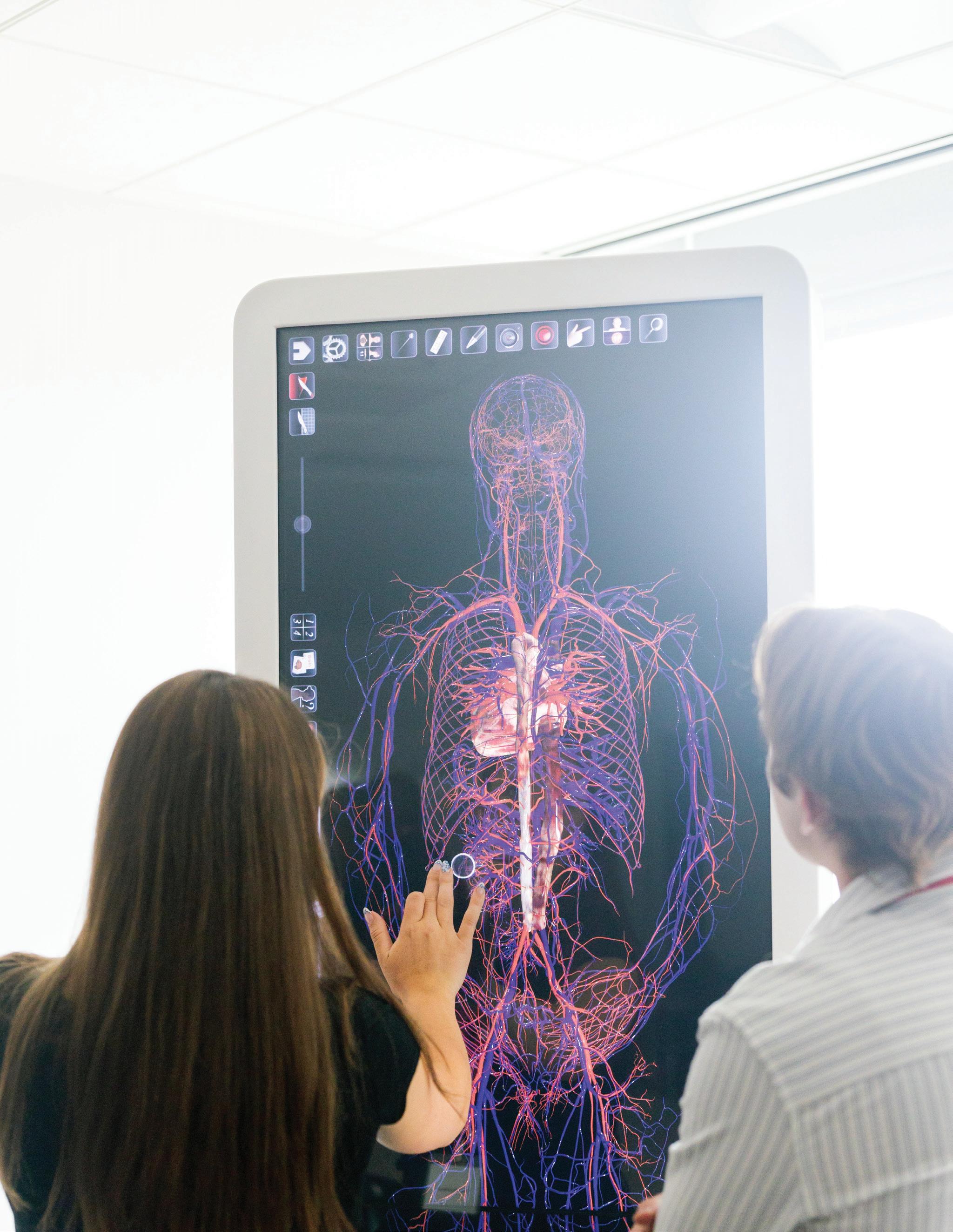
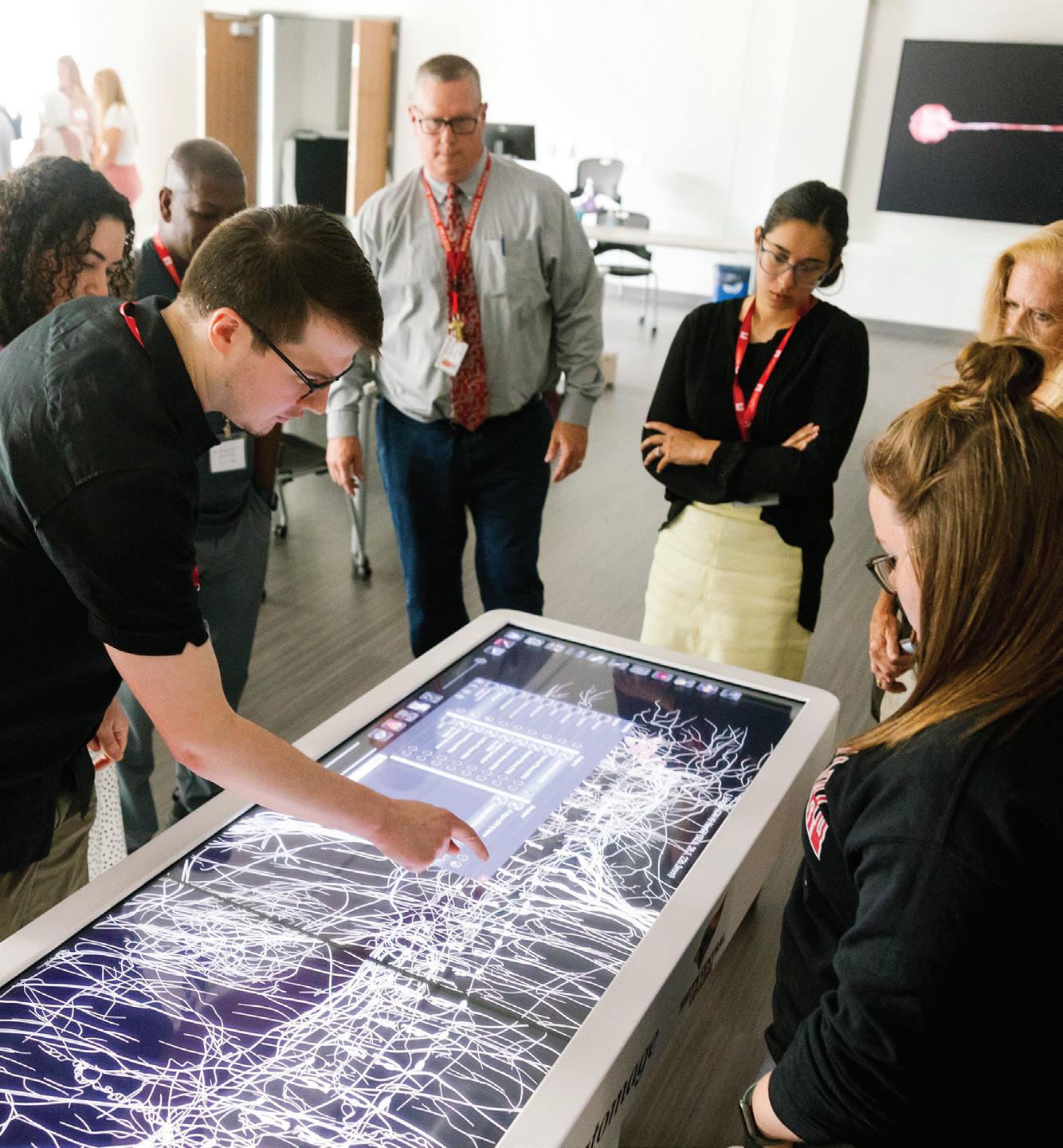
Students use a 3D anatomy visualization and virtual dissection tool in class.
Technology plays an important role in North Central’s expanding suite of advanced clinical practice programs.
FEATURE STORIES
08 Finding the Story within the Stream
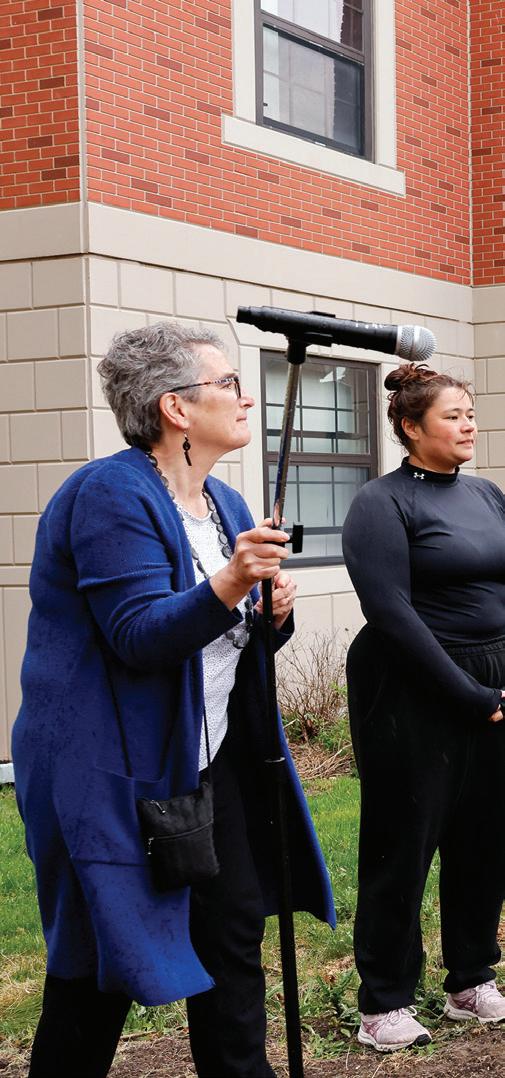
A faculty-led, grant-funded project enabled students to dive into documentary filmmaking and raise awareness about regional waterways conservation.
12 Redefining Health Sciences Education
North Central’s distinctive graduate-level health sciences programs develop skilled and compassionate clinicians who are driven by a desire to serve.
16 Classroom Conversations
The ability to engage in thoughtful discussion and navigate disparate viewpoints is a vital life skill. Learn how North Central faculty facilitate productive, respectful classroom conversations.
p. 11
p. 4
Today as we celebrate the academic achievements of our students, we do so recognizing the work that is done to get to this place is the starting point of a lifetime of discovering meaning and purpose.”
REV. ERIC DOOLITTLE
College Chaplain
Giving the Invocation at the 48th Annual Honors Convocation
April 18, 2024
READ THIS ISSUE ONLINE
Do you prefer to read on your tablet or other device? Go to northcentralcollege.edu/magazine, where you can also search back issues. Want to opt out of receiving the print edition? If so, let us know at oic@noctrl.edu
northcentralcollege.edu/ magazine
Visit us online at northcentralcollege.edu // northcentralcardinals.com
Editorial Director
Kim MacGregor
Graphic Design
Mary Bass M ’21
Contributing Writers/ Production
Jeremy Borling ’02
Hannah Brauer
Jacob Imm
Nancy Jensen
Kara Kots ’18 / M ’23
Nicholas Osterloo ’19 / M ’21
Mary Reynolds
Olivia Rosenberg ’25
Clark Teuscher
Vice President for Communication and External Affairs
Jim Godo ’93
Vice President for Institutional Advancement
Adrian Aldrich ’02
Please direct all correspondence to:
Editorial Director
North Central College 30 N. Brainard Street Naperville, IL 60540 email: oic@noctrl.edu
p. 3
p. 8
COLLEGE NEWS
MILESTONES
Celebrating the Class of 2024
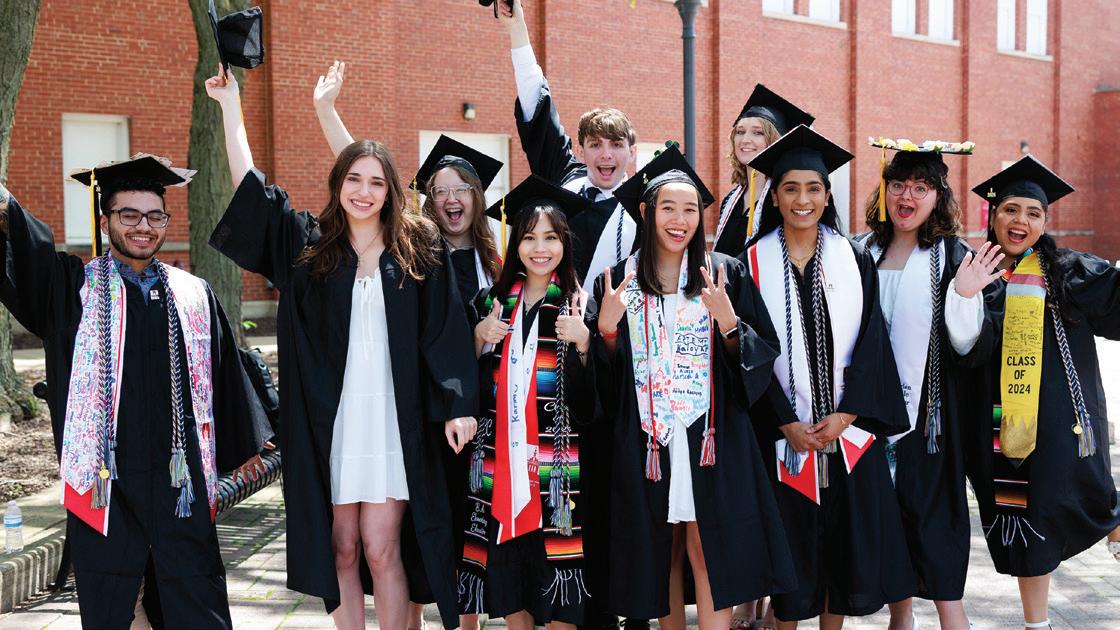
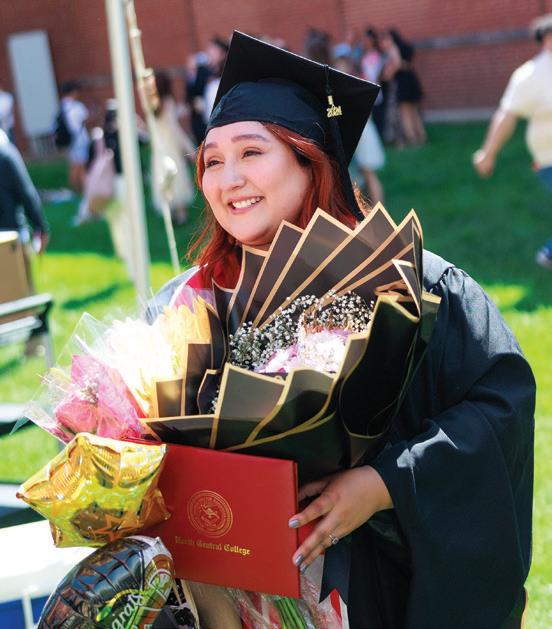
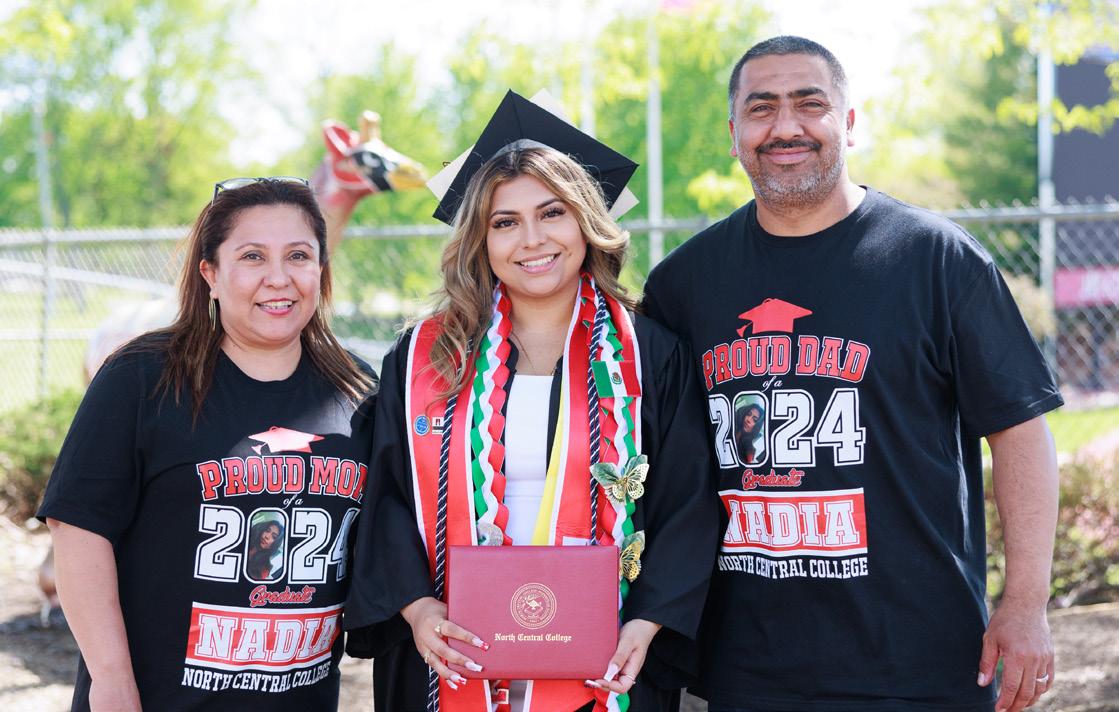
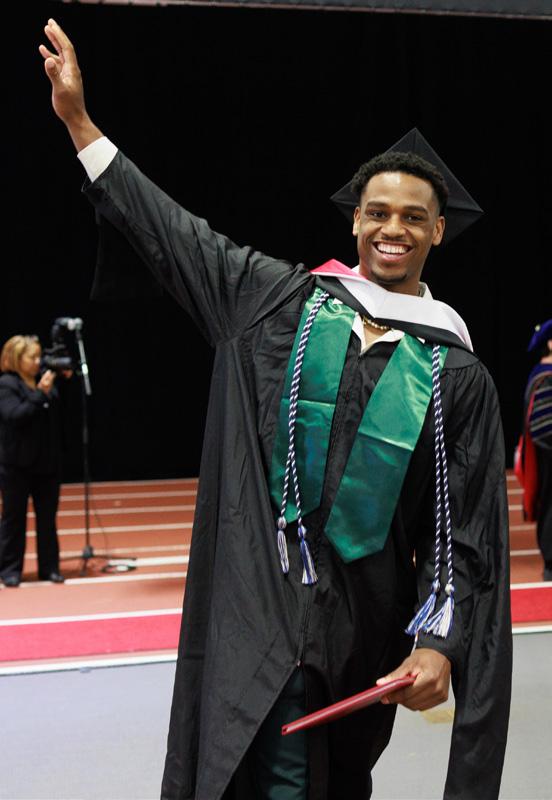
On May 5, North Central College’s 159th Commencement brought together students, guests, faculty, staff, and trustees to celebrate in the Residence Hall/Recreation Center.
The Class of 2024 comprised 698 graduates — 535 undergraduates and 163 graduate students — representing 27 different states and 17 different countries. The baccalaureate degree candidates included 166 who were among the first generation in their family to graduate from college.
The College conferred an Honorary Doctor of Humane Letters degree on Dr. Eboo Patel, founder and president of Interfaith America, a Chicagobased, national non-profit.
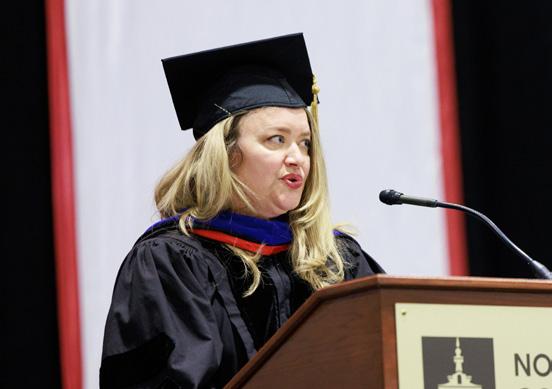
After the presentation of diplomas, the new graduates were welcomed to the North Central College alumni family by Erin Bishop ’93, on behalf of the College’s Board of Trustees. Bishop, who is assistant general counsel at Caterpillar, told the class: “No one achieves this milestone alone ... each of you stood on the shoulders of the Cardinals that came before you, and of the generous alumni who continue to support their alma mater.”
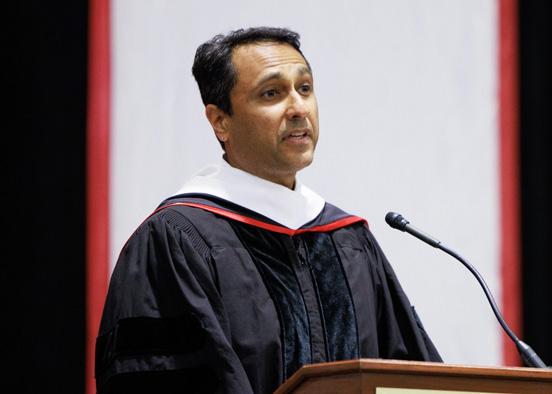
 Dr. Eboo Patel
NORTH CENTRAL COLLEGE northcentralcollege.edu 2
Erin Bishop ’93
CAMPUS
New Historical Marker Unveiled
Replacement acknowledges land that was home to the Potawatomi people
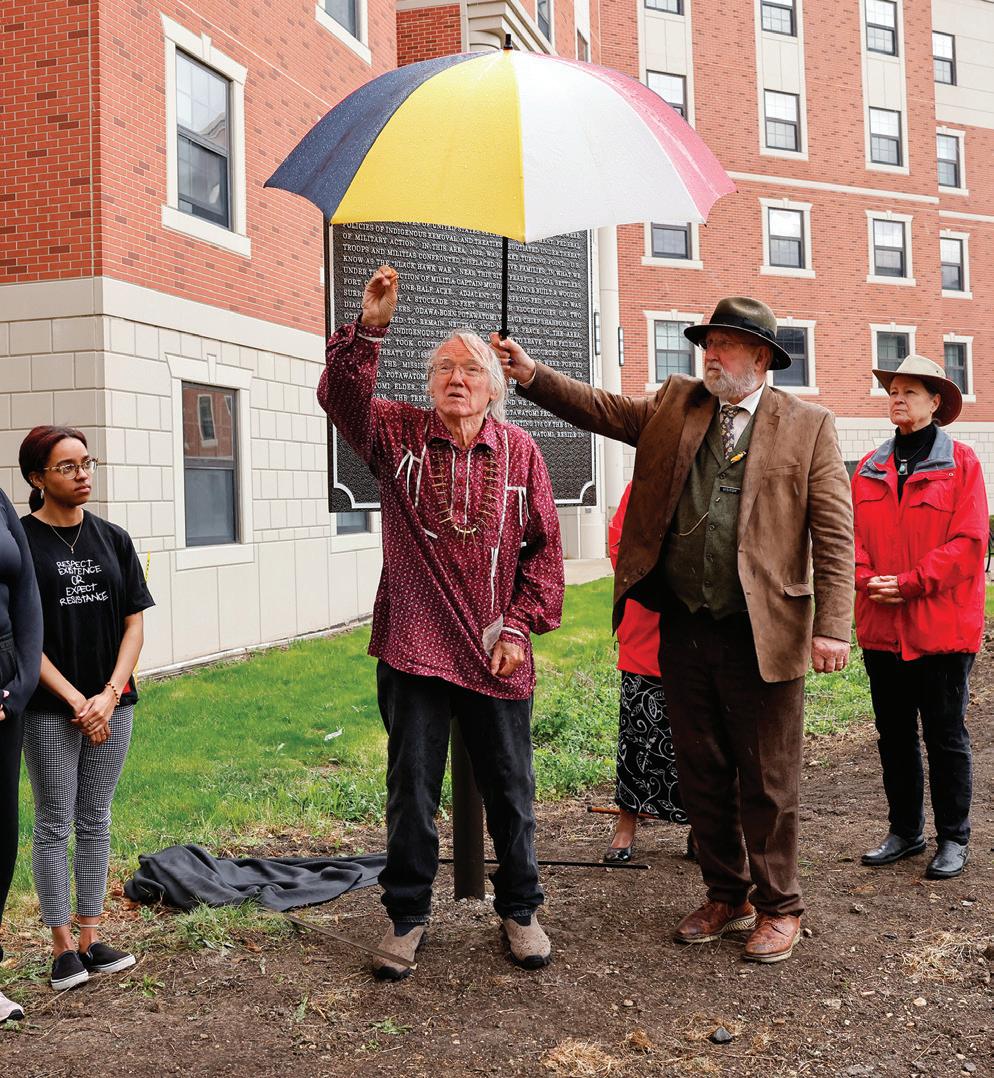
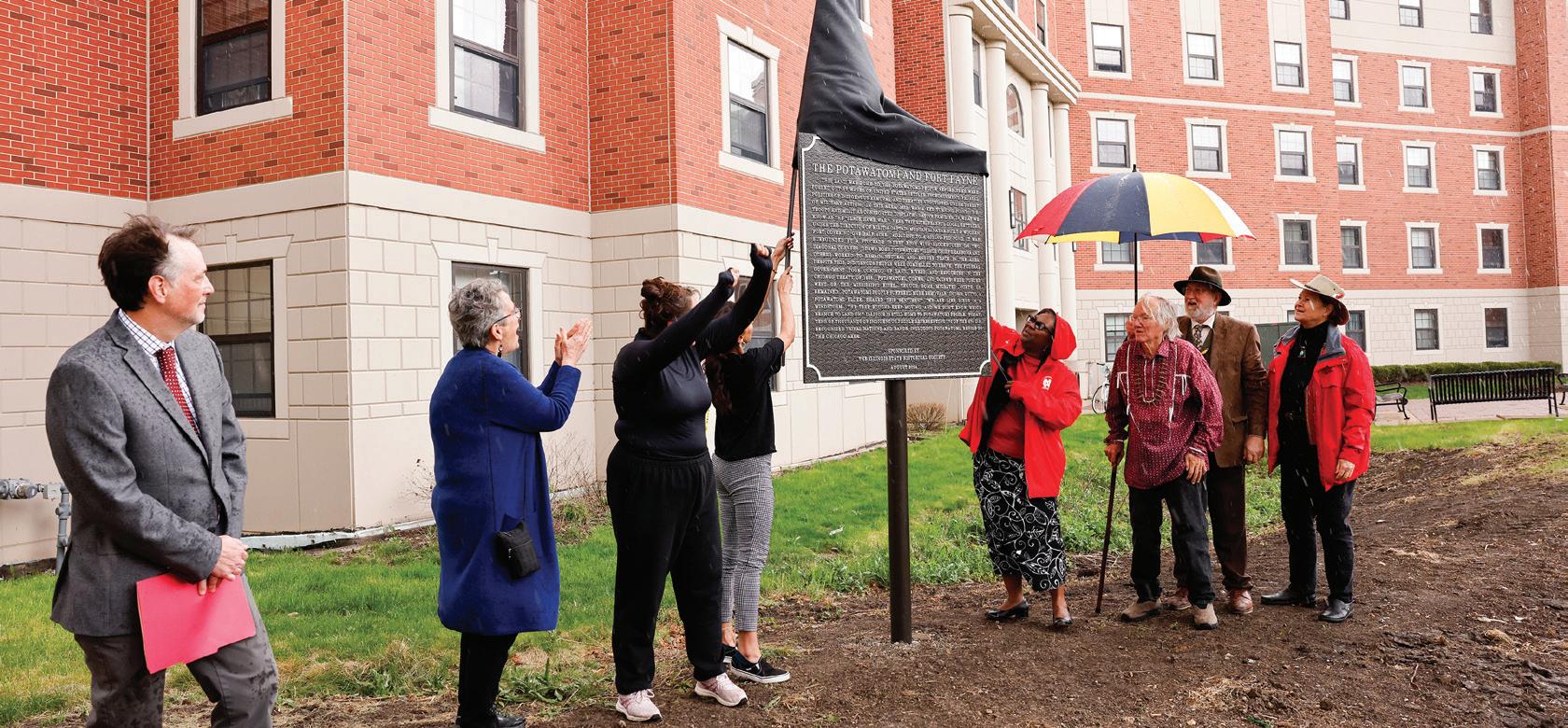
North Central College held a dedication ceremony on April 23, 2024, for a new historical marker on campus. Located between New Hall and the recently constructed parking pavilion, the new marker replaces a previous one commemorating Fort Payne. The fort was constructed in 1832 during the Black Hawk War, on land that is now part of the College campus.
Originally erected in 1964, the previous sign included a historically inaccurate description of the events of the Black Hawk War and was insensitive to Native American culture. A team of North Central students, led by history and secondary education major Raygn Jordan ’24, with support from faculty including Dr.Ann Keating, Dr. C. Frederick Toenniges Professor of History, and Dr. Luke Franks, associate professor of history and chair of the history department, worked together to create language for a new marker and to rededicate the land.
The team consulted with several local historical organizations, including Naper Settlement, the DuPage County Historical Society, and the Illinois State Historical
Society (ISHS), as well as with members of the Potawatomi Nation. The replacement of the marker was funded by the ISHS.
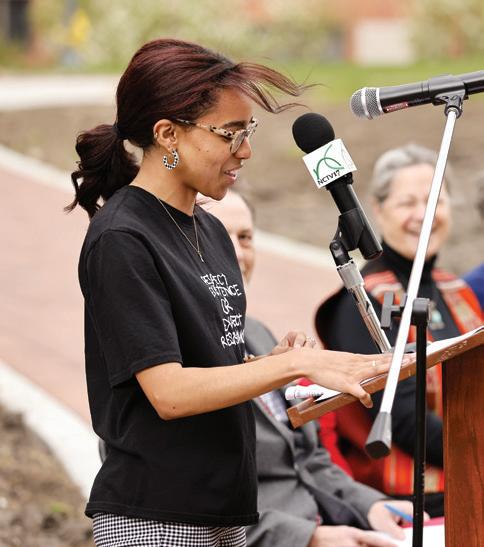
“Today, 60 years later, our understanding has broadened and deepened,” said Jordan. “We recognize that this marker stands not only as a way to honor Captain Payne, but also to acknowledge the Potawatomi people, whose roots and connection to this land extend far beyond any physical structure or historical event reported by those who came after them.”
The new marker acknowledges that the land was home to the Potawatomi people before they were pushed out by waves of U.S. settlers and federal policies forcing their removal. The federal government ultimately took control of the land, along with nearby rivers and other resources, through the Chicago Treaty of 1833.
After the unveiling, George Godfrey, a member of the Citizen Potawatomi Nation, offered a silent prayer and blessing for the new marker.
“We recognize that this marker stands not only as a way to honor Captain Payne, but also to acknowledge the Potawatomi people, whose roots and connection to this land extend far beyond any physical structure or historical event reported by those who came after them.”
RAYGN
JORDAN ’24
COLLEGE NEWS
3 Spring/Summer 2024 northcentralcollege.edu/magazine
The campus community gathered to unveil the new marker.
LEADERSHIP
New Dean of the School of Business and Entrepreneurship
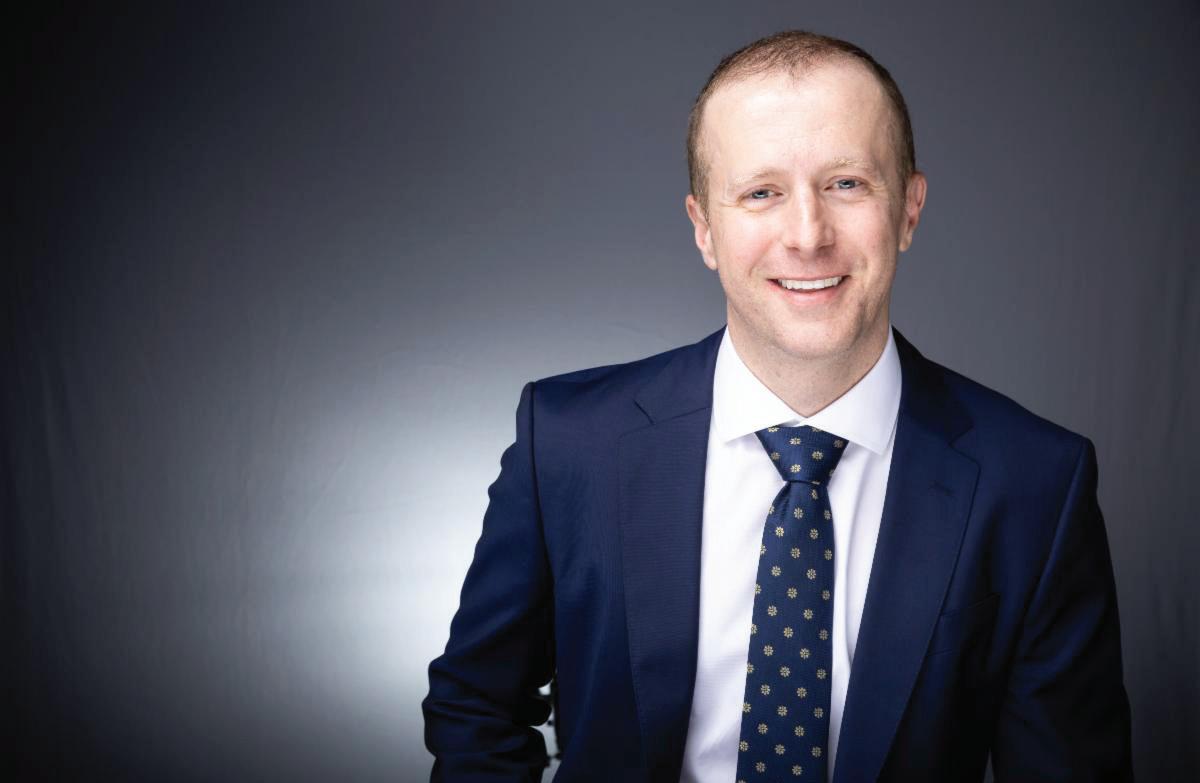
Dr. David Green was appointed as the new dean of the School of Business and Entrepreneurship (SBE), effective July1,2024. He has been the division chair of accounting, finance, management information systems, and economics, and professor of management information systems, at Governors State University in University Park, Ill.
“Dr. Green is a highly respected researcher, educator and administrator who will have an immediate impact on our students, faculty and staff in the College’s School of Business and Entrepreneurship,” said Abiódún GòkèPariolá, provost and vice president for academic affairs. “He is a collaborative and innovative leader who understands and appreciates the importance of interdisciplinary studies, which is at the heart of a North Central College education.”
In his 16 years at Governors State, Green was heavily involved in the College of Business’ ongoing AACSB accreditation, strategic planning initiatives, and assurance of learning efforts. He also
helped lead development of a master’s degree program in the emerging field of business analytics.
“North Central has a long history of excellence through its impressive faculty, innovative teaching, engaged students, diverse academic curricular and cocurricular experiences, and collaborative interdisciplinary programs,” said Green.
He added, “I am proud to join the Cardinal family and contribute to SBE’s mission to develop principled leaders through a dynamic business education grounded in the liberal arts.”
Green is an active scholar with more than 20 publications in peer-reviewed journals. His areas of expertise include insider threats to information security, human computer interaction, and business and information systems education.
He holds a Ph.D. in business administration from Southern Illinois University Carbondale. Green earned a MBA in management information systems and a BBA in computer information systems; business and marketing education from Morehead State University.
ACCREDITATION
Music and Art Programs Earn Accreditation
In November 2023, all of the College’s music programs and all of its art and design programs received accreditation — external markers of excellence — from organizations that establish national standards for undergraduate and graduate degrees.
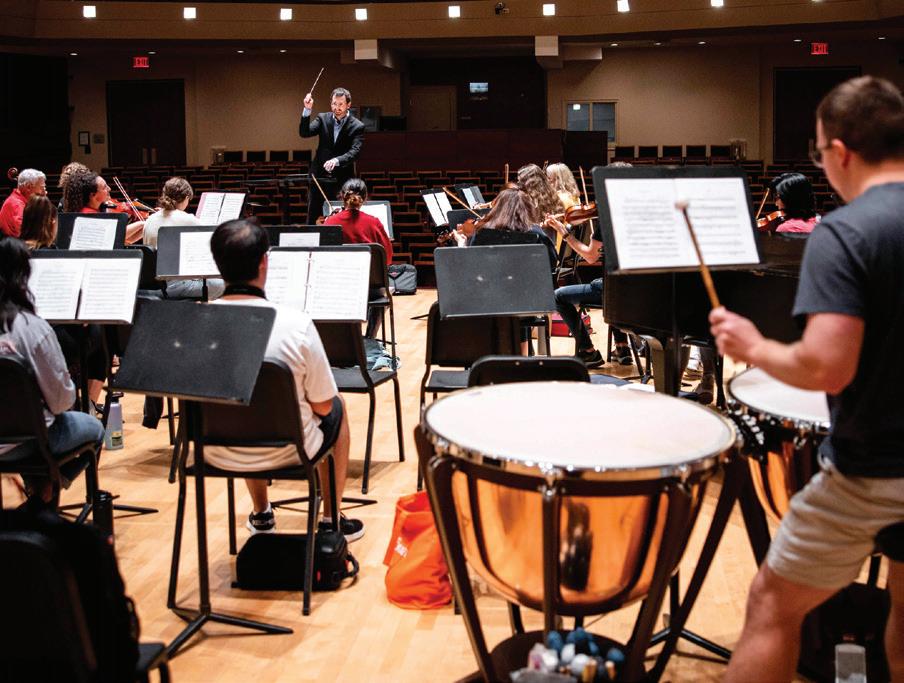
North Central’s department of music offers degree programs in music (liberal arts track), music performance, music composition, music education (choral or instrumental tracks), and jazz studies. All of the programs were accredited by the National Association of Schools of Music (NASM) after a three-year process led by Dr. Jonathon Kirk, professor of music, and Dr. Susan Chou, assistant professor of music and chair of the department of music.
The art and design programs — which include graphic design, studio art, art education, and art history — received accreditation from the National Association of Schools of Art and Design (NASAD). The effort was led by Hale Ekinci, professor of art and design and department chair, and Christine Rabenold, assistant professor of art.
“This is such an important step — not just for these programs and the College of Arts and Sciences, but for the institution,” said Dr. Stephen Maynard Caliendo, dean of the College of Arts and Sciences. “We didn’t need an outside agency to help us understand how good we are, but it is reassuring to earn the recognition nonetheless.”
As part of NASM, North Central is among approximately 628 accredited institutional members, including schools, conservatories, colleges, and universities. NASAD has more than 320 accredited institutional members.
NEWS NORTH CENTRAL COLLEGE northcentralcollege.edu 4
COLLEGE
LEADERSHIP
Dr. Mary Groll, MD, Named Dean of the School of Education and Health Sciences
In May, the College announced Dr. Mary Groll, MD, as the new dean of the School of Education and Health Sciences (SEHS), effective immediately. She has served as interim dean of the SEHS since July 2023.
A board-certified pediatrician, passionate educator, and program developer, Groll arrived at North Central in 2019 as founding director of the College’s master of physician assistant studies program. She later became chair of the department of medical sciences. Prior to joining North Central, Groll was a faculty member and founding medical director of the physician assistant program at Dominican University.
“Dr. Groll has been instrumental in the successful growth of our graduate health sciences programs, and she is a talented leader and educator with a strong vision for the future of SEHS as a whole,” said Abiódún Gòkè-Pariolá, provost and vice president for academic affairs.
Groll completed her pediatric residency at the University of Chicago and served
as an attending physician in the neonatal and pediatric intensive care units at University of Chicago’s Comer Children’s Hospital.
She earned her medical degree from Northwestern University’s Feinberg School of Medicine, her master’s degree from Northern Illinois University, and her bachelor’s degree from Knox College. She has received numerous accolades for her service as an educator and pediatric care provider, including the Ann & Robert H. Lurie Children’s Child Advocacy Award; the Feinberg School of Medicine Teaching Award; and the Feinberg School of Medicine Frederick and Harriett Stenn Fund Award for Humanism in Medicine.
“It is an honor to continue to serve North Central College and its amazing faculty, staff and students in this role,” Groll said. “Together, we will double our efforts to educate the next generation of competent and compassionate educators and healthcare providers, as agents of change.”
Innovative Program Receives State Funding
More than 95 percent of new North Central students receive some form of financial assistance from the College. Most merit-based and need-based scholarships only cover tuition, fees and sometimes housing and meal plans. As a result, some students can struggle to afford basic needs, such as food, clothing, transportation and healthcare.
Last December, North Central College was awarded the Illinois Board of Higher Education’s End Student Housing Insecurity grant to expand its innovative
efforts to provide direct support to students who are experiencing housing and basic needs insecurity.
Those efforts include Cardinal Operation Hope and Help, which provides emergency financial support for basic needs.
Additionally, Cardinal Textbooks — a program run by the College’s Oesterle Library — provides students with free access to textbooks. The grant has also made it possible for the College to launch a new technology loan program, among other services.
COLLEGE NEWS


“North Central College is committed to providing a holistic set of resources to help all students succeed,” said Dr. Jessica Brown, vice president for student affairs and athletics, the grant project team lead. “This grant funding will help students overcome some of the day-to-day obstacles that can otherwise derail their progress toward a college degree.”
NEW GRANT
5 Spring/Summer 2024 northcentralcollege.edu/magazine
The collective support of North Central alumni and friends makes transformative moments possible each day for our current students. We invite you to follow the College on social media to see those moments as they unfold all year long.
Enjoy these highlights from the spring semester.
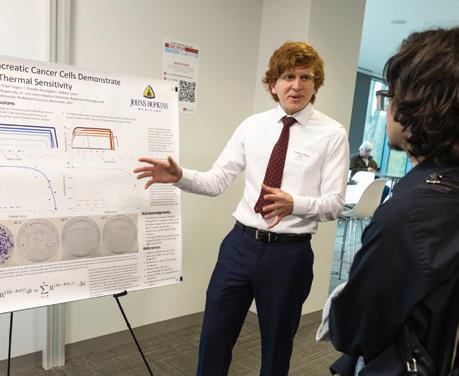
Recognized as the 2024 Outstanding Major in Biochemistry, Thomas-Shadi Voges ’24 presented his research at the 26th Annual Rall Symposium for Student Research.
northcentralcollege
dazzling display to remember:
Honors Convocation
northcentralcollege
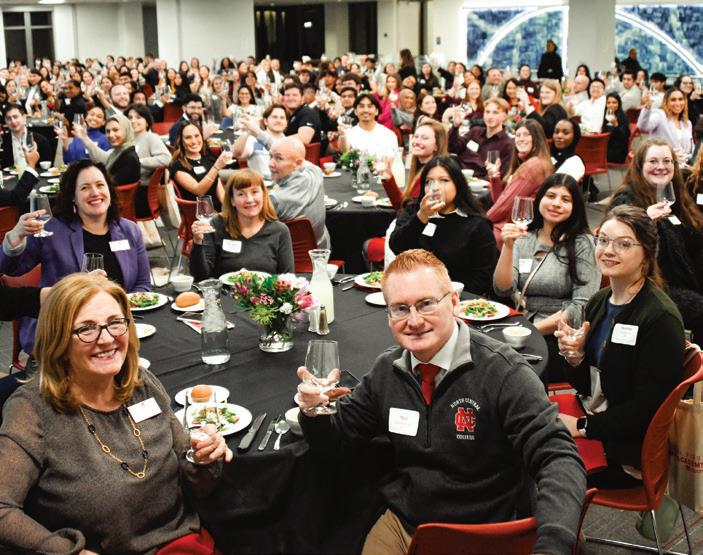
In March, the 2024 Cardinal First Alumni Academy welcomed 147 first-gen students to network with and learn from 75 first-gen alumni.
northcentralcollege
northcentralcollege
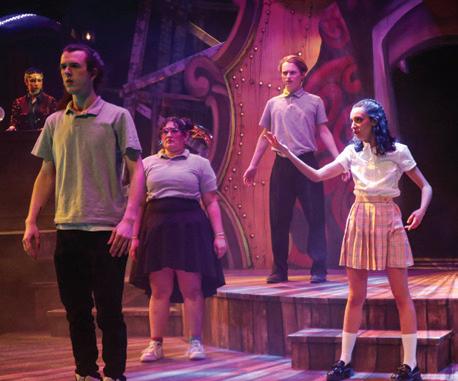
Students performed “Ride the Cyclone,” a hilarious and outlandish musical comedy about six teenagers from a Canadian chamber choir and what makes life worth living.
northcentralcollege
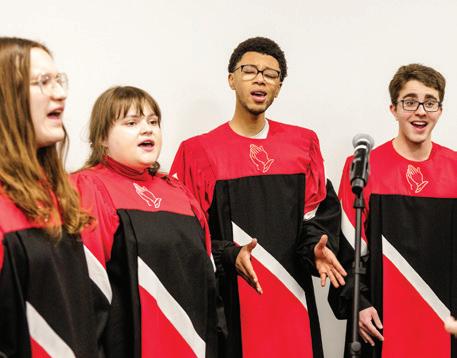
Student-led gospel choir Voices of Praise provided a passionate performance on MLK Vision Day to pay tribute to the impactful teachings of Rev. Dr. Martin Luther King Jr.
northcentralcollege
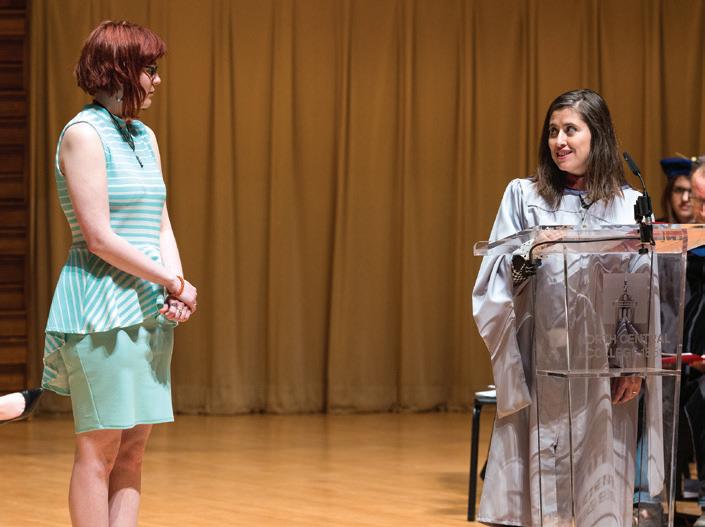
At
in April, Shelby Brown ’24 received the 2024 Diane Duvigneaud Senior Art Award, which was presented by Hale Ekinci, professor of art and design and department chair.
A
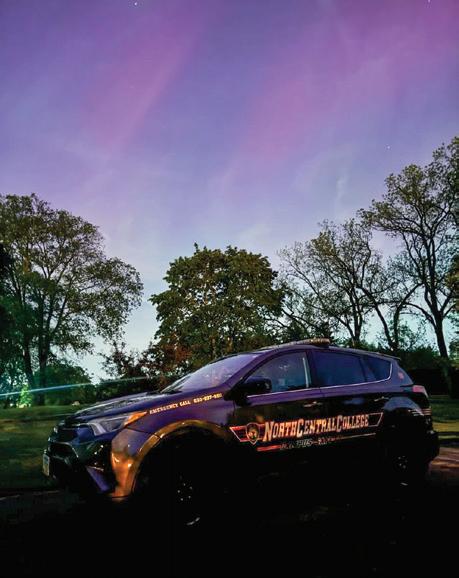
Campus Safety Officer Cody Leos captured the vibrant northern lights above campus on May 11.
NORTH CENTRAL COLLEGE northcentralcollege.edu 6
SEMESTER SNAPSHOTS
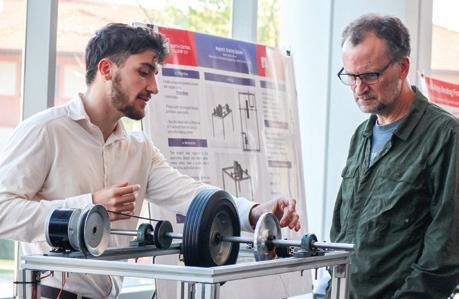
At the end of the academic year, students presented their final projects at the Engineering Capstone Symposium.
northcentralcollege
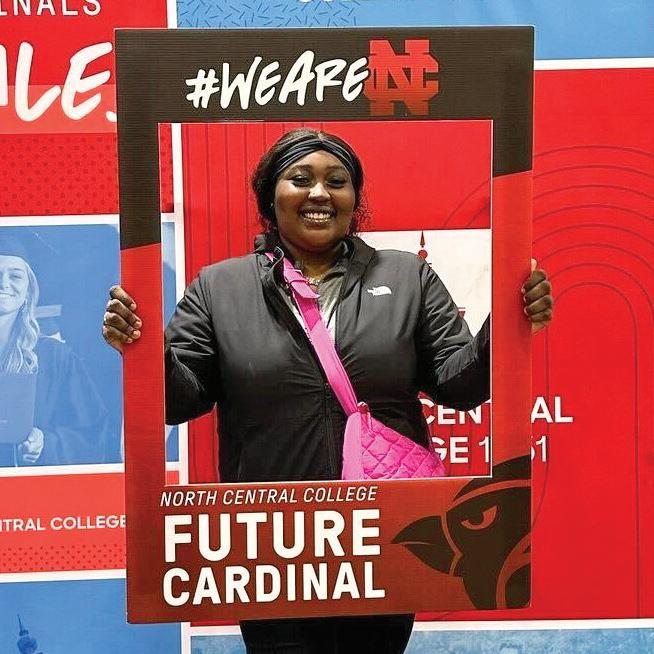
A future North Central Cardinal proudly displayed her new status at Admitted Student Day.
northcentralcollege

We love nothing more than when our students take advantage of one (or more) of the College’s 35+ education abroad programs in 21 different countries including Italy and on six continents!
northcentralcollege
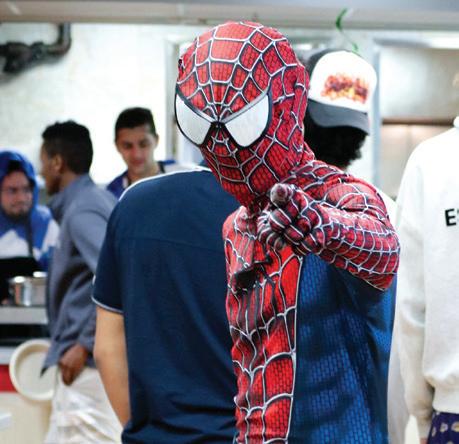
Students swung into the Late Night Pancake Breakfast as they geared up for finals week.
northcentralcollege
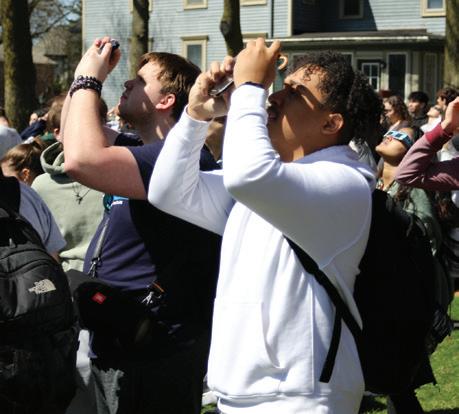
A crowd of students, faculty and staff gathered on campus and aimed their glasses at the sky to catch a glimpse of the highly anticipated solar eclipse.
northcentralcollege
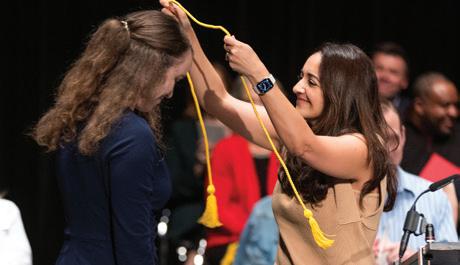
At the College Scholars Honors Program Cording Ceremony, students received their honors cords, which they proudly wore as they crossed the Commencement stage on May 5.
northcentralcollege
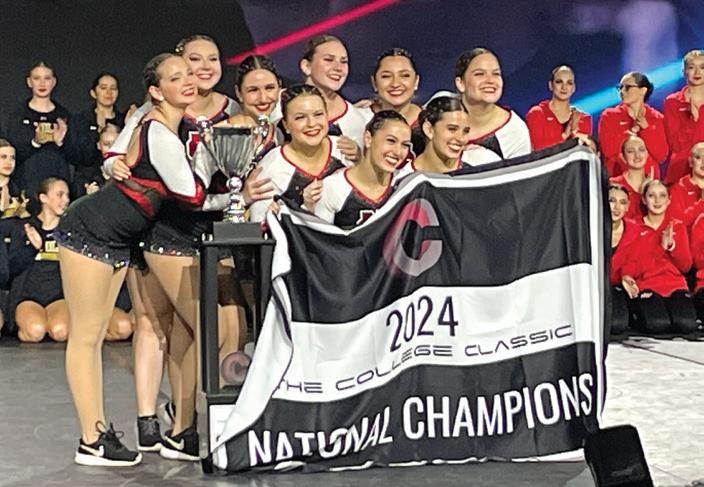
We’re so proud of the Cardinal Dance Team! In April, they competed in the College Classic in Orlando, Fla., and brought home the national championship title for Team Performance. They also were champions for Jazz and took second place in Poms.
northcentralcollege
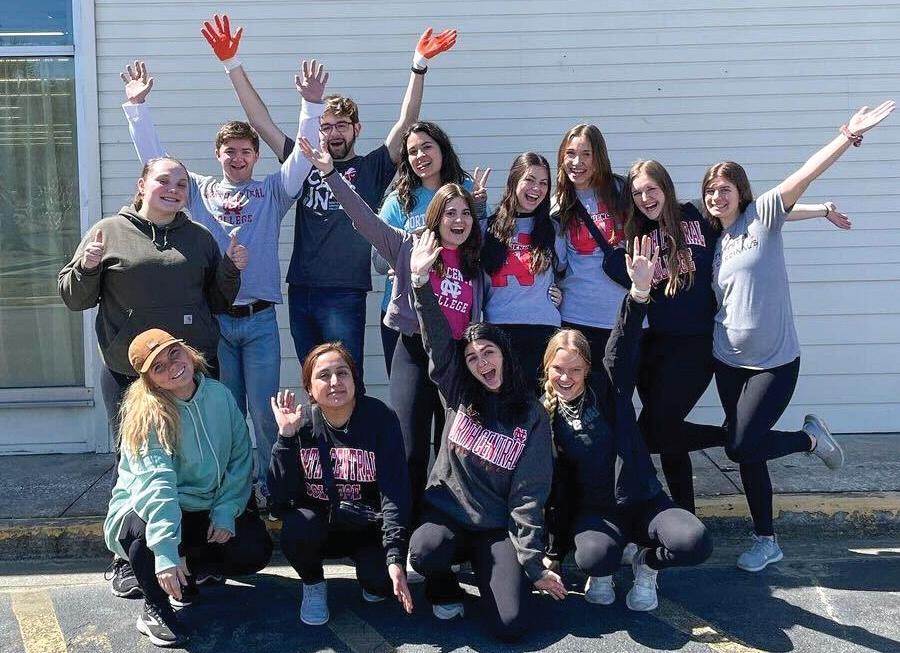
Raise your hand if you love service trips! Students on the BREAKAWAY spring break trip pose for a photo outside of Habitat for Humanity while giving back in Georgetown, S.C.
northcentralcollege
Follow us:
7 Spring/Summer 2024 northcentralcollege.edu/magazine

Finding the story within the stream
Documentary film project combines the best of teaching and practice
NORTH CENTRAL COLLEGE northcentralcollege.edu 8
The camera zooms in as ecologists in waders, knee-deep in water, reach into the DuPage River and pull out freshwater mussels, collecting them in large nets to examine their viability. These images are juxtaposed with footage of laboratory spaces, aquatic wildlife in and around the water, and the tools of urban life like cars, highways and construction equipment sitting right on top of waterways in the Chicago suburbs.
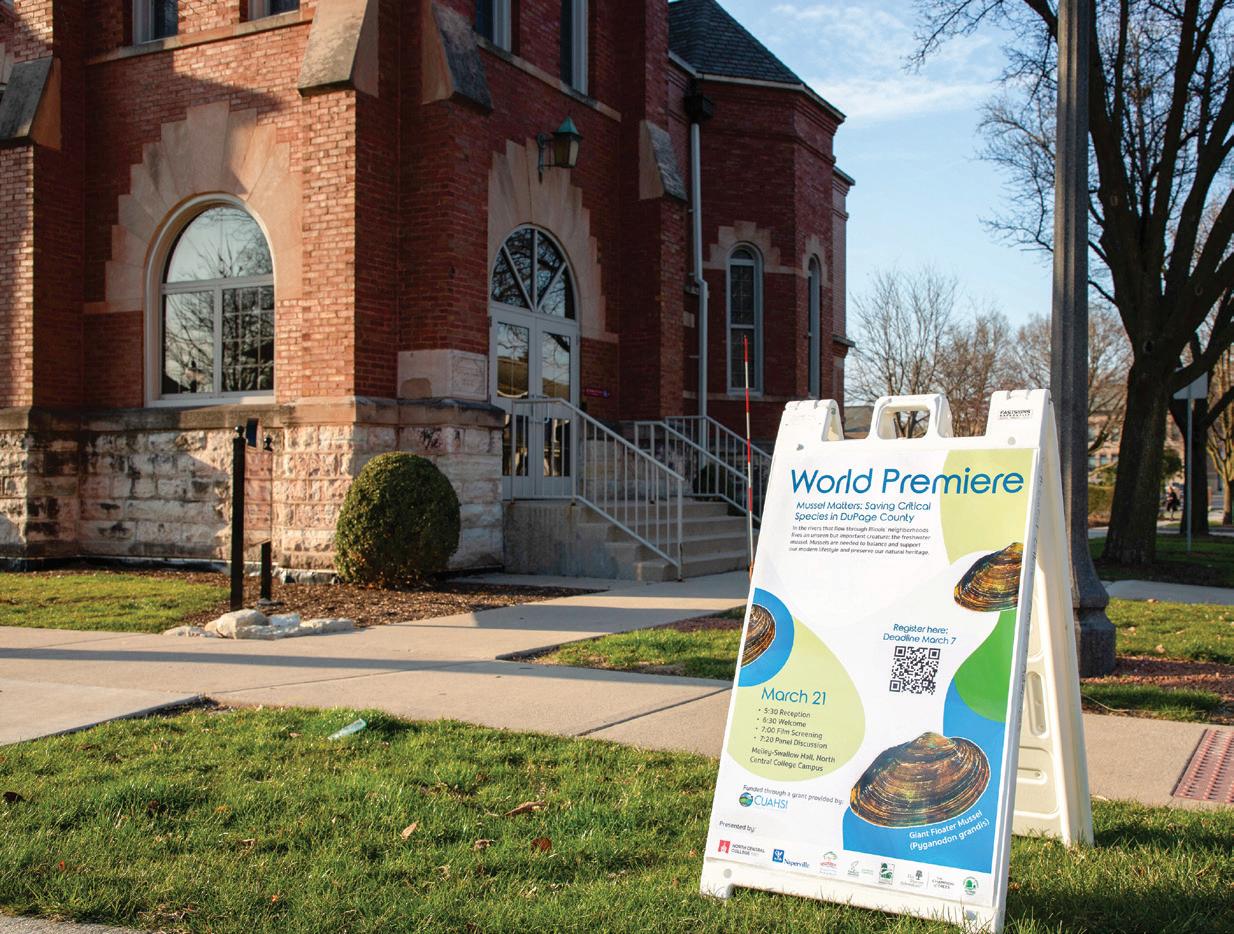
Together, these images represent the key elements that make up the short film “Mussel Matters: Saving Critical Species in DuPage County,” a new documentary that focuses on the Upper DuPage River and Salt Creek watersheds and efforts to protect them for the betterment of a region that is home to nearly one million people in 77 municipalities.
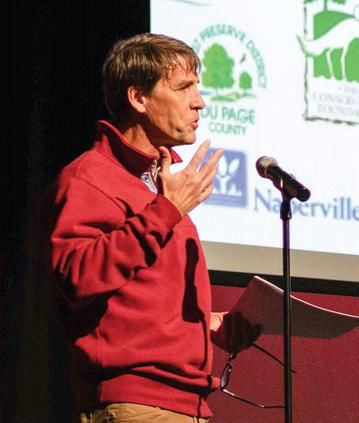
“Mussel Matters” is the product of a collaboration among North Central College, The Conservation Foundation, the Forest Preserve District of DuPage County, and community partners Morton Arboretum, the City of Naperville, the Naperville Park District, and the Oak Brook Chapter of Trout Unlimited. It’s a story about modern science working to intervene against the hidden impact of modern life, giving nature a boost that will benefit humans as much as other species living in the region the College calls home.
This has been a tremendous learning opportunity for our students, and a great way for us to engage community members to think about how we — as individuals and communities — see, manage, enjoy and impact our rivers and streams.”
DR. REED PERKINS
Professor of Environmental Studies Director of Environmental Studies
That idea of mutual benefit also played out in the production of the short film, which provided valuable interdisciplinary experience for several North Central College students involved with making a final product that contributes to raise awareness of important issues in environmental studies.
Reyna Oliva ’25, an interactive media studies major, played an integral role in getting the film to the finish line as a production assistant. It was a rare chance for an undergraduate student to work on a professional film. As part of a small film crew, she gained experience that many film students don’t get until they’re out of school.
Oliva worked directly with project leads to put the film together, shooting B-roll footage to help illustrate the themes of the documentary. She was also entrusted with editing together the film trailer, as well as producing a featurette on the For Love of Water (FLOW) Film Festival, which featured the public premiere of “Mussel Matters.” (See sidebar on next page)
“This has been a great opportunity to learn about video shooting, production, and editing, all while learning about the environment and the environment around me throughout the process,” Oliva said.
Having done photography for The Chronicle, the College’s student newspaper, Oliva developed further

interest in videography after taking Video Storytelling in 2022. She has made two documentaries during her coursework at North Central. Her experience made her stand out when she applied for the production assistant role.
“Mussel Matters” was Oliva’s first project working alongside industry professionals, and she found their expertise beneficial as she plans for a career in filmmaking. “I asked them questions about portfolios and experience I’ll need for future jobs,” she said.
Jessica Ramirez ’27, Tina Kesar ’25 and Emma Akers ’26 also contributed to the film project, and four students created the graphic art work used to promote the event: Erin O’Connor ’26, Jane Ferguson’27, Alissa Madalinksi ’27, and Kathryn Wagner ’25.
The film came about thanks to Dr. Reed Perkins, professor of environmental studies and director of the environmental studies program at North Central. After reaching out to potential partners, establishing new connections, writing a proposal for the project and generating the budget, Perkins applied for grant funding from the Consortium of Universities for the Advancement of Hydrological Science, Inc. (CUAHSI).
Specifically, CUAHSI’s Let’s Talk About Water (LTAW) grant is intended to help serve local communities and the study of the environment while also providing experience and expertise in filmmaking. Continued on next page.
9 Spring/Summer 2024 northcentralcollege.edu/magazine

Viewers of the documentary may be surprised to learn how important native mussels are to keeping local waterways clean.
“Freshwater mussels ... live in rivers and streams, taking in water and then filtering out pollutants and other particles before passing it back into the waterway,” said Joe Limpers from the Urban Stream Research Center (USRC), one of the organizations featured in the film. “One adult (freshwater mussel) can filter between six and 20 gallons of water in just one day. But the chance of
a juvenile freshwater mussel surviving to adulthood in the wild is slim — less than one percent.”
If humans living near local waterways engage in unsound practices, the mussels will continue dying out. That’s why ecologists have been propagating mussels at the USRC since 2012 — to reintroduce them into streams.
“Since opening, the research center has propagated over 24,000 mussels, but raising these seemingly simple creatures is not an easy task,” Limpers said. “The vigorous, intense process is quite involved and can take almost two years depending on the type of mussel.”
Perkins said the purpose of the documentary is both to help people understand this process, but also to raise awareness that what we do with our lawns, cars and trash affects the ecology around us. The more we pollute, the harder it is for other species like mussels
to survive and help keep our waterways clean and fresh.
“This has been a tremendous learning opportunity for our students, and a great way for us to engage community members to think about how we — as individuals and communities — see, manage, enjoy and impact our rivers and streams,” he said.
“Mussel Matters” premiered at an invitation-only event on March 21 to more than 100 people close to the project, including elected officials and members of the three producer organizations and community partners. It was then shown to the public for the first time at the FLOW Film Festival the following night.
Oliva summed up the experience when talking about her reaction to seeing the finished film.
“There are things ... that will make people more aware,” she said. “And it was so cool to see my name in the credits of the film!”
FLOW Film Festival: Raising awareness about local waterways conservation
The For the Love of Waterways (FLOW) Film Festival was held on March 22 at Pfeiffer Hall. More than 200 attendees watched a collection of eight short films featuring local waterways from Chicagoland to South Africa as well as the people who work to protect them.
In addition to “Mussel Matters: Saving Critical Species in DuPage County,” the festival included:
• “I Am Red - The Colorado River”
• “The Worth of Water”
• “Restoring Our Rivers”
• “How ‘Forever Chemicals’ Polluted America’s Water”
• “Road Salt: Street to Stream”
• “The Studio”
• “Alice's Garden: Solutions for Clean Water in Milwaukee and Beyond”
“The overarching goal of FLOW is to use short films to increase the knowledge, concern, and action about our local water and sustainability issues,” said Dr.Reed Perkins. “FLOW and the original film
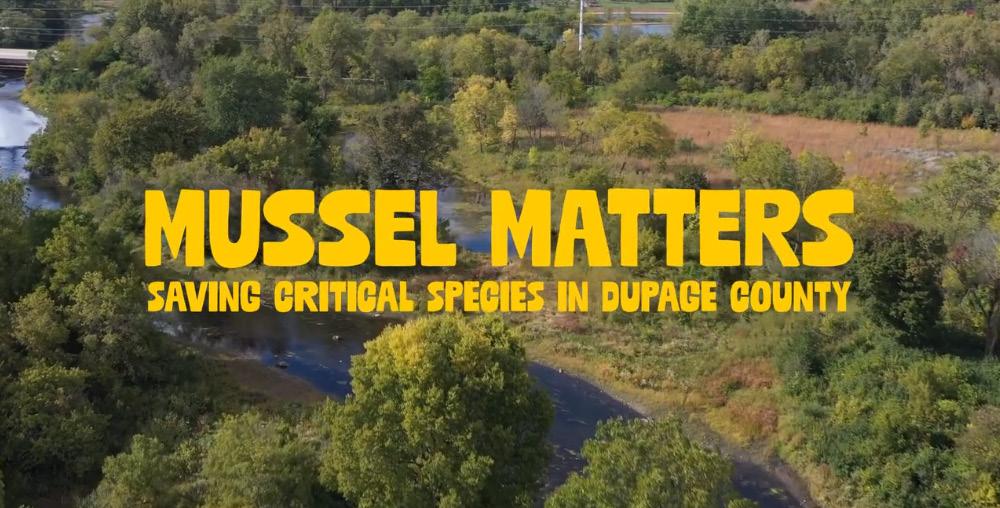
‘Mussel Matters: Saving Critical Species in DuPage County’ have helped shape the conversation about how Chicagoland values and invests in its ecological health.”
To plan the festival, Perkins worked with Dr. Jennifer Smith, professor of English and chair of the department of English, Dr. Amy Buxbaum, associate professor of communication, Dr. Steve Macek,
professor of communication and chair of the department of communication and media studies, and Hale Ekinci, professor of art and design and chair of the department of art and design. They discussed which films they felt would fit with the message of “Mussel Matters” and reached out to the filmmakers to get them involved. They called their discussionbased collaboration “a blessing.”
Photo credit: Forest Preserve District of DuPage County NORTH CENTRAL COLLEGE northcentralcollege.edu 10
ProjectPurple
By providing students with fun hands-on exercises, we hope to replace feelings of apprehension about STEM fields with a sense of curiosity and wonder.”
DR. NICHOLAS BOAZ Associate Professor of Chemistry
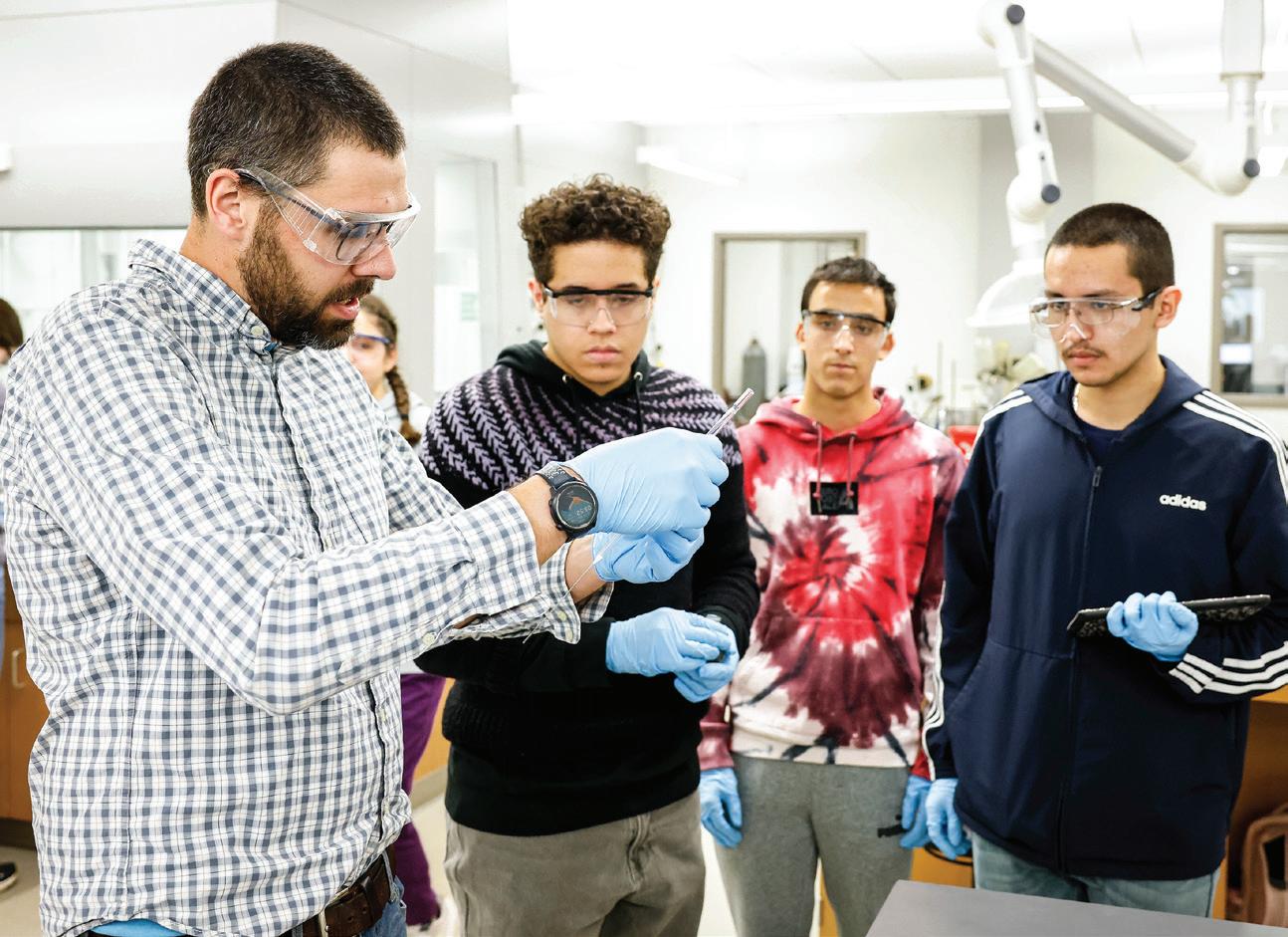
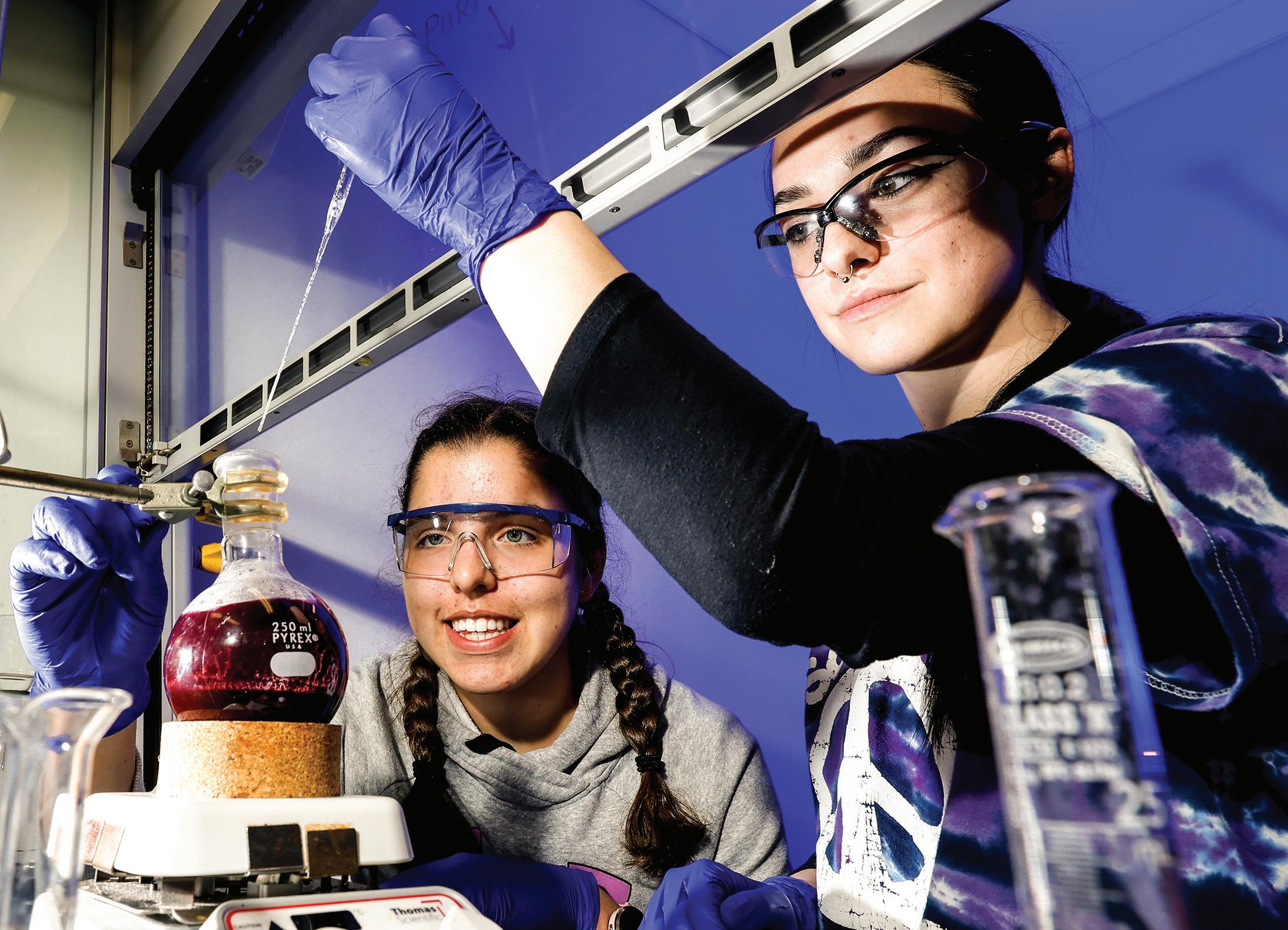
During the spring semester, there was a hopeful, anticipatory feeling buzzing through a laboratory on the third floor of the Dr. Myron Wentz Science Center. Hovering over lab stations, small teams of Organic Chemistry II students waited excitedly for the results of their experiments to solve a real-world chemistry challenge: create a new synthesis for developing a rare purple dye that goes back to antiquity.
Coined “Project Purple,” the course’s lab component was designed by Dr. Nicholas Boaz, associate professor of chemistry, along with colleagues Dr. Jeffrey Bjorklund, professor of chemistry, and Dr. Orion Pearce, lecturer in chemistry. Julie Concepcion ’24, a chemistry major, also collaborated with faculty in designing the course. The goal was to help students connect something abstract — a chemical compound — to something concrete: a color.
Going back to the Bronze Age in the Mediterranean Basin, dye made with the compound known as Tyrian purple was associated with royalty and social status because it was rare. The dye was difficult to make, so it was produced only in small amounts.
In the Project Purple lab, students were “hired” to be process chemists — professionals whose job it is to perfect a chemical production process. They were tasked with a new compound for Tyrian purple that could be scaled for commercial production. They also were challenged to optimize their process to be environmentally conscious.
True to the College’s emphasis on interdisciplinary learning, at the end of the course, students created an oil painting using the purple dye they developed. The painting is now displayed in the Wentz Science Center.
Best of all, Project Purple offered a way to enjoy engaging with chemistry. Boaz said, “By providing students with fun handson exercises, we hope to replace feelings of apprehension about STEM fields with a sense of curiosity and wonder.”
COURSE SPOTLIGHT 11 Spring/Summer 2024 northcentralcollege.edu/magazine
Redefining Health Sciences Education
North Central’s advanced clinical practice programs are designed to be different
On a Friday evening last December, the first cohort of students in North Central’s master of science in physician assistant studies (MSPAS) program walked across the stage at Wentz Concert Hall in a ceremony that marked completion of two years of continuous coursework and clinical training.
It was a milestone for the 31 soon-tobe healthcare practitioners — and for North Central, as well. With the College emerging as a leader in building distinctive graduate-level health sciences programs, the MSPAS program is the latest to graduate an inaugural class. In the next two years, first cohorts of North Centraleducated nurses and doctorate-level physical and occupational therapists will also enter the healthcare workforce.
The portfolio of programs includes numerous points of entry toward completion. Students are from across the country and even the world, and they are often balancing full-time jobs and families. Some enroll as a result of being on a direct-entry pathway — an option for first- and second-year North Central undergraduates who know they will want to continue at the College for graduate school. Others are building on pre-professional undergraduate degrees in the health or life sciences from other institutions, while some are looking to make a mid-career change.
No matter their journey to North Central, students can expect to be in high demand once they earn an advanced clinical practice degree from the College.
The COVID-19 pandemic accelerated healthcare practitioner attrition due to burnout and retirement, and the nation’s changing age demographics will further transform the healthcare landscape as the largest generation in U.S. history the “Baby Boomers” — continues to age, creating greater demand for care and practitioners.
The U.S. Bureau of Labor Statistics projects that employment across the allied health professions will grow from 2022 to 2032: physician assistants by 27 percent, physical therapists by 15 percent, and occupational therapists by 12 percent. Projected labor shortages in nursing are especially dire. In Illinois, more than half of current registered nurses are over the age of 55, and the Illinois Nursing Workforce Center reports the state will experience an estimated shortfall of nearly 15,000 nurses by 2025.
At North Central, expanding into the health sciences was a natural outgrowth given the College’s long and distinguished legacy of undergraduate science education. “Our students would major in a science discipline and then go on to a professional program at another institution,” said Abiódún Gòkè-Pariolá, provost and vice president for academic affairs. “We began looking at what it would take to keep them here.”
The College’s successful undergraduate program in athletic training, which launched in the mid-1980s, provided a roadmap. Rooted in the liberal arts tradition, it adheres strongly to evidence-
Continued on page 14.
NORTH CENTRAL COLLEGE northcentralcollege.edu 12
A GROWING SUITE
Since 2018, North Central’s School of Education and Health Sciences has launched new graduate programs to prepare the next generation of healthcare practitioners.
2018 Master of Occupational Therapy
2019 Master of Athletic Training
2021 Master of Science in Physician Assistant Studies
2022 Doctor of Physical Therapy
2022 Post-Professional Occupational Therapy Doctorate
2023 Master of Arts in TraumaInformed Practices
2023 Occupational Therapy Doctorate
2023 Master of Science in Nursing:
• Family Nurse Practitioner track
• Psychiatric-Mental Health Nurse Practitioner track
• Nurse Executive Leader track
• Nurse Educator track
13 Spring/Summer 2024 northcentralcollege.edu/magazine
North Central faculty were not only experts in their specialty; they were dedicated mentors who provided personalized guidance.”
- ANGELINA JONES M ’22
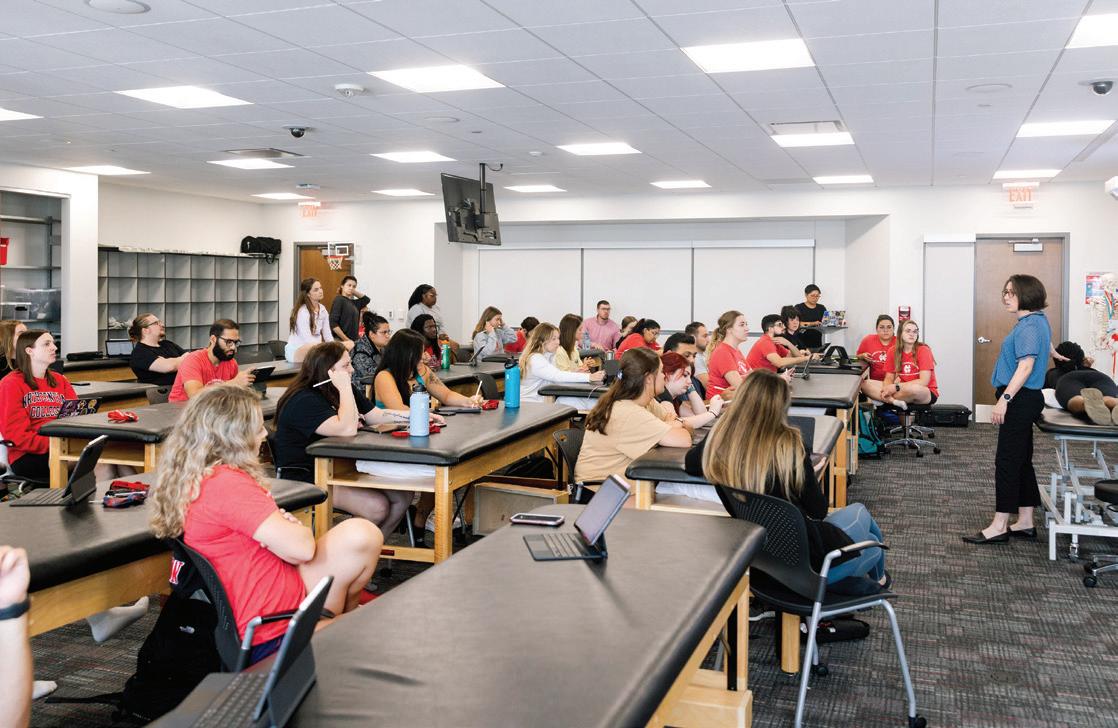
based medical practice while emphasizing a humanistic, relationship-centered approach. Today, all of North Central’s health sciences programs share a focus on developing excellent clinicians, educators, scholars and leaders who are driven not just by optimistic career outcomes, but also by a desire to serve.
“These programs build on the College’s strong undergraduate foundation and are designed to be consistent with our core values — to connect with one’s humanity and behave ethically, with a focus on social responsibility,” said Gòkè-Pariolá. “Valuing our fellow human beings is the core of the liberal arts — changing outcomes in the world by walking in other people’s shoes and knowing we are all connected.”
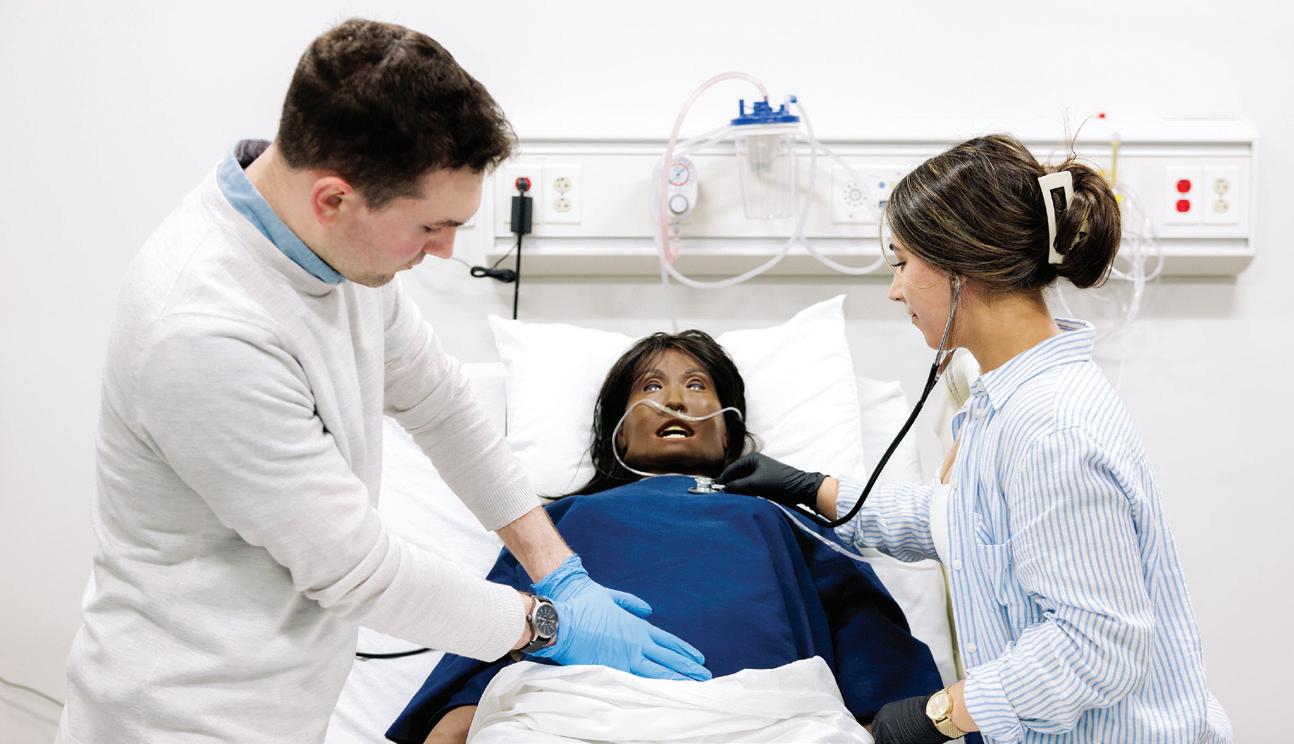
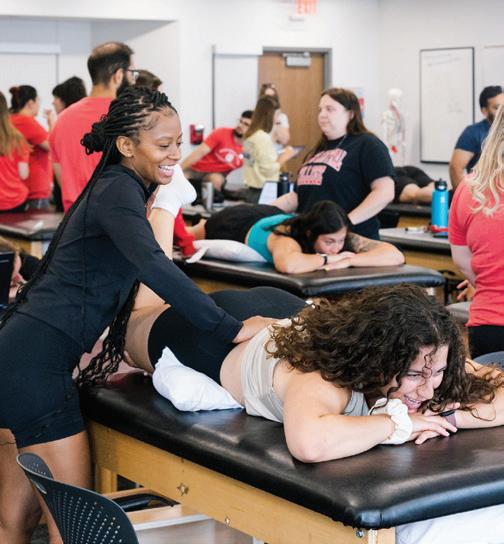
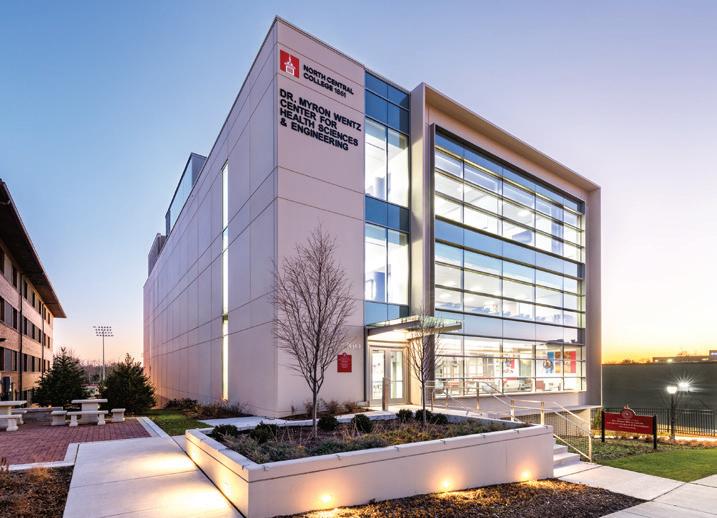
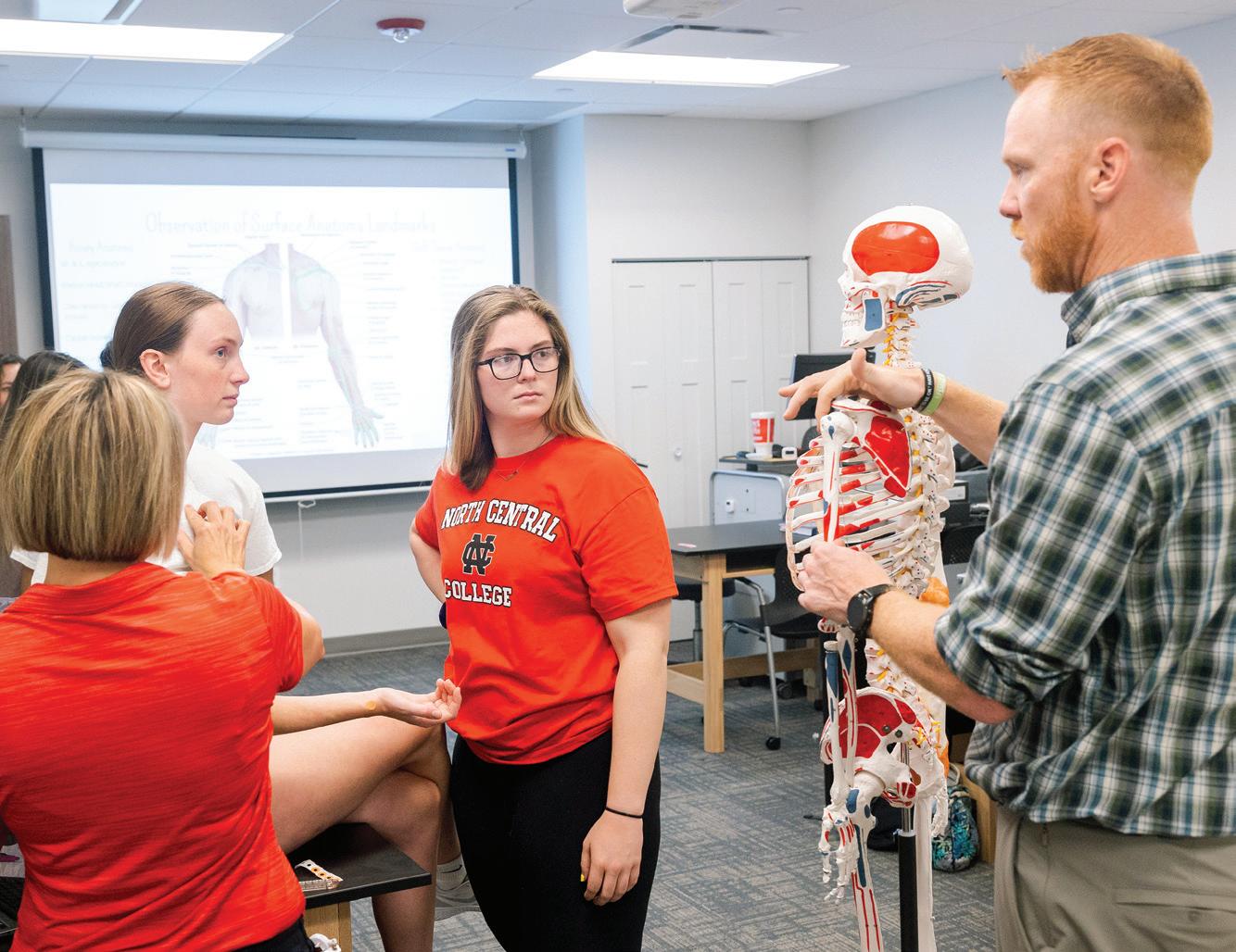
Dr. Mary Groll, MD, dean of the School of Education and Health Sciences and chair of the department of medical sciences, sees that ethos in action each day within the Dr. Myron Wentz Center for Health Sciences and Engineering, which opened in 2021. Designed in collaboration with faculty, the classrooms and labs are both state-of-the-art and inviting. The building bustles with faculty and students from early morning through the evening.
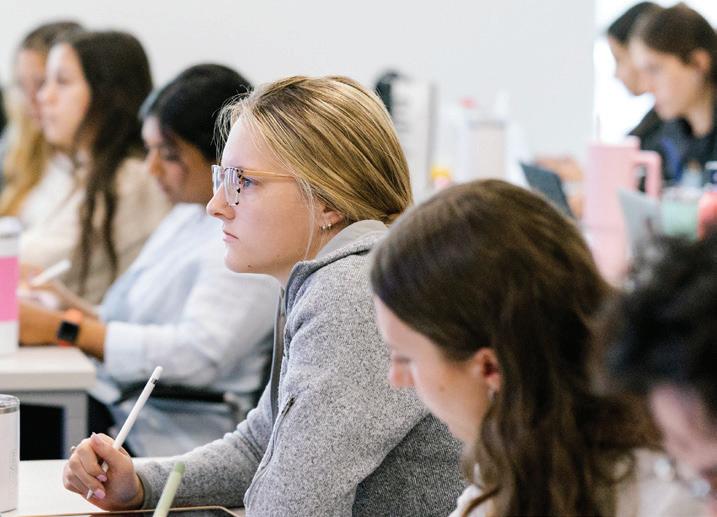
“The liberal arts foundation informs who we are as people and professionals, providing us insight into self-reflection, critical thinking, communication, problem solving, and appreciation of the lived experiences of others,” Groll said.
Diversity is also central to the College’s approach to health sciences education, both among students and faculty. Care disparities and other societal problems often result from a lack of diversity in the
professional workforce, including among educators.
“You need people who understand health inequities,” Gòkè-Pariolá said. “By creating opportunities to attract more people into the healthcare profession, we can cultivate a high-quality, more diverse and inclusive healthcare workforce.”
Many healthcare associations and accrediting bodies set standards for diversity, and so far, North Central’s programs exceed national averages. For example, the first two cohorts of students in the doctor of physical therapy (DPT) program enrolled a combined 96 students, and 43 percent identify as racially and/or ethnically diverse. The national average for DPT programs is 31 percent.
Dr. Sara Scholtes, professor and chair of the department of physical therapy, said: “We have been intentional in creating recruitment and admissions practices that are more inviting and holistic for all applicants, in hopes of increasing the diversity of practitioners in the healthcare environment, including physical therapy.”
Likewise, Dr. Tiffany Delane, MSPAS program director, said: “North Central is one of the only physician assistant programs with goals to increase the number of underrepresented minorities in medicine and train our students in lifestyle medicine.”
Practitioner burnout is another factor affecting labor shortages. It can stem from systemic and organizational factors and begin when students are learning to be clinicians in highly competitive
NORTH CENTRAL COLLEGE northcentralcollege.edu 14
BUILDING A PROGRAM: STEPS TO SUCCESS
Long before faculty are hired and students enroll, careful planning and strategy went into the launch of each new advanced health sciences program at the College.
1
MISSION ALIGNMENT
Does the program fit with the College’s history and values?
Is there a need in the community? STEP 2
MARKET ANALYSIS
settings. At North Central, faculty are key to helping students thrive in a positive, supportive environment. Each student is assigned a professional mentor, communication is frequent, and a closeknit sense of community is cultivated.
“I’ve never met more dedicated faculty,” said Groll. “Our programs are relationshipbased. That’s the ethos of North Central. We’re intentional about our methods, which are based on the National Academy of Medicine’s research on provider burnout. We didn’t want to replicate what’s done elsewhere. We’re going to walk with you and stick with you. That commitment is a big part of the draw. If students feel psychologically safe, then the learning happens.”
While designing some of its most recent programs, the College has partnered with Endeavor Health, which includes Edward Hospital and Linden Oaks Behavioral Health in Naperville. Students get matched with clinical training opportunities, and Endeavor professionals share their expertise.
“Our Endeavor partners have been the most impactful mentors,” said Groll. “They have helped guide us into what the future of health sciences looks like at North Central. There’s such a demand for compassionate and competent providers in our community. It is a privilege to collaborate with Endeavor Health to educate future professionals who will
3
FINANCIAL ANALYSIS
Would the program be financially viable and sustainable?
4
ACCREDITATION REVIEW
When is there an opportunity to apply to start a program?
provide safe and equitable care in the community where they are trained.”
Yvette Saba is president of Edward Hospital and system executive for the Cardiovascular Institute. Saba has been an instrumental advocate for health sciences programming at North Central.
“It is an honor for Edward Hospital to partner with North Central College, a prestigious, nationally ranked liberal arts college,” she said. “We believe that we have an obligation to develop our future leaders and clinicians in healthcare. Our expert clinicians provide mentorship and clinical training with the hope of helping these young professionals become passionate and competent healthcare providers.”
The inaugural class in North Central’s master of science in nursing (MSN) program began in fall 2023. Lawrence Hudson ’25 enrolled after working in quality assurance/control and food science for many years, then returning to school to earn a bachelor's degree in nursing. As an MSN Family Nurse Practitioner student, he hopes to further his nursing career and one day open a clinic in an underserved community.
“The students that are on this journey with me have been amazing,” he said. “We are there to uplift each other on a daily basis and to keep each other encouraged and motivated.”
5
BUILD THE ROADMAP
When would faculty need to be hired and a first cohort begin?
FACILITIES ASSESSMENT
Will existing facilities serve the program? If not, can space be renovated or is a new facility needed? STEP 6
Angelina Jones earned a master’s degree in occupational therapy from North Central in 2022. She works with Northwestern Medicine in the musculoskeletal unit at Marianjoy Rehabilitation Hospital in Wheaton, Ill., helping patients recover from surgery and traumatic accidents.
While she was a student, Jones gained fieldwork experience in a variety of settings, including a therapeutic day school, homeless shelter, and inpatient rehabilitation. “These experiences help you develop clinical skills, build professional relationships, and gain confidence,” she said.
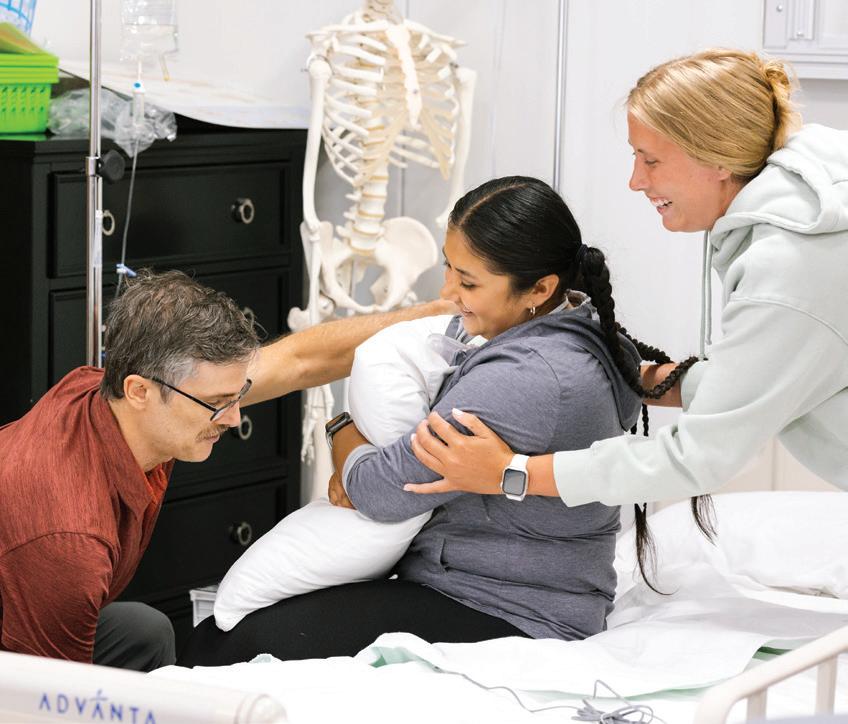
She added, “North Central faculty were not only experts in their specialty; they were dedicated mentors who provided personalized guidance ... and the amazing facility and equipment that students have access to simulates real-life scenarios, which truly helps learning.”
As graduates from all of the programs go on to work in the community and beyond, they take with them a way of caring that echoes what has always been important at North Central: an emphasis on humanity and lifelong learning.
Groll said, “We want them to come to North Central because they are going to have a different experience here. We’re creating a better healthcare professional.”
STEP
STEP
STEP
STEP
15 Spring/Summer 2024 northcentralcollege.edu/magazine
CLASSROOM CONVERSATIONS
How faculty facilitate informed, respectful dialogue around issues of the day
The ability to have informed, respectful and potentially difficult conversations is key to being a curious, engaged, ethical, and purposeful citizen and leader.
The skill is especially important in an era of deep political divides and global conflict. However, in the classroom, North Central faculty observe that the current national climate can hinder dialogue, causing students to pull back from discussing certain issues or offering personal viewpoints.
How do faculty help get productive dialogue flowing? And what is perhaps different about how today’s students approach classroom conversations?
“One of the challenges is getting students to be willing to talk, because if they don’t know how their views will be received by others, they don’t want to say anything,” said Dr. Suzanne Chod, professor of political science.
Chod’s colleague, Dr. Bill Muck, agrees. Muck is professor of political science and chair of the department of political science.
“Today’s students tend to have stronger views but may not be as willing to share those views in the classroom,” he said. “Ten years ago, students were more comfortable jumping into a topic. They were more comfortable with being wrong; it didn’t seem like there was so much at stake.”
At the same time, once the classroom conversation gets started, Muck said the current generation demonstrates a willingness to listen and learn.
“I find that today’s students are better equipped to have hard conversations than my or my parents’ generations,” said Muck. “Older generations are more challenged to talk across partisanship. This generation is thoughtful and respectful of others with differing viewpoints and backgrounds. They are eager to learn.”
According to both Chod and Muck, the key to productive classroom conversations — even regarding hot-button issues and current events — is creating a safe space and providing the necessary background and context before diving in.
“There are places in the classroom to have these conversations every day,” said Chod. “The question is, how do we equip students to feel like there’s a space to have it, and how do we equip faculty members to facilitate these conversations?”
NORTH CENTRAL COLLEGE northcentralcollege.edu 16
We
do not speculate; we do not use hyperbole. If we want to elevate our discourse, we have to model in the classroom
what everyone should be doing outside of the classroom.”
DR. SUZANNE CHOD Professor of Political Science
Difficult conversations are not just confined to politics. “Every academic discipline presents opportunities to help students explore and understand differing perspectives,” said Dr. Laura Lohman, assistant provost for faculty development and innovation and director of North Central’s Center for the Advancement of Faculty Excellence (CAFÉ). “That’s really important, because we want our students to serve as leaders in their communities and workplaces and help others navigate challenging situations with compassion and integrity.”
Through CAFÉ, the College provides online resources and a fall colloquium to help faculty develop the skills to facilitate challenging conversations. In the past, faculty have learned from peers about how to develop and use community agreements — informal contracts that outline the basic expectations class members agree to abide by — within their classrooms, as well as how to navigate “hot moments” in class.
An issue Muck sees in today’s political environment is the tendency to offer simple solutions to complex problems. He takes the opposite approach by helping students explore the complexity of the issues at hand.
“Before we get into what’s happening and why, or what’s right or what’s wrong, we need to unpack the event,” said Muck. “What’s the history? What are the differing perspectives? Why did those actors make those choices? Once we’ve walked through that complex history and background, it’s much easier and more productive to have those harder conversations.”
With hyper-partisan media outlets and social media often serving as primary sources of news, Chod pointed out that
it’s essential for classroom discussions to be based on the same set of facts.
“I ask students what they’re hearing in the media, what they’re seeing in social media, and then we fact check it,” she said. “I provide students with the resources that I trust and that political scientists use.”
Chod added, “We do not speculate; we do not use hyperbole. If we want to elevate our discourse, we have to model in the classroom what everyone should be doing outside of the classroom.”
The classroom provides space and structure to have productive conversations, and faculty can set ground rules and help guide discussions. It is beyond the classroom, however, where students find that the ability to engage in thoughtful discussion and navigate disparate viewpoints is a vital life skill.
“By engaging in these conversations, you develop skillsets that allow you to see the complexity in the world around you, and to adapt to changes throughout your life and in your career,” said Muck. “It helps you see and think and express yourself in more sophisticated ways.”
For Chod, the ability to engage in civil discourse is the answer to a fundamental question.
“It’s about: How do we exist in this society?” she said. “It’s an interpersonal skill that helps students in all aspects of their lives, including their work life. Without being disrespected or dehumanized, how can we learn from and work with one another? If we model in our classrooms what everybody should be doing out there, then our students can take that out in the world with them and model it for others.”
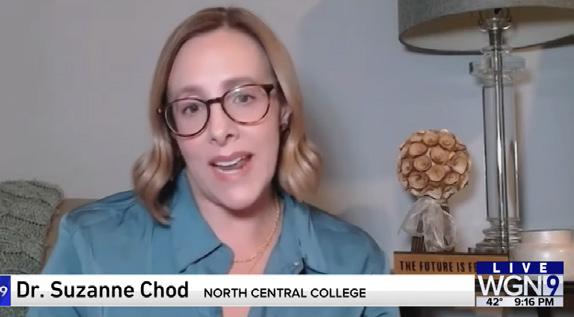
If you live in the Chicago area and have tuned into the local news in recent years, there’s a good chance you’ve heard from the College’s political scientists on a myriad of issues, including local and national elections, U.S. Supreme Court decisions, and the war in Ukraine. Chod, Muck, and Dr. Stephen Maynard Caliendo, dean of the College of Arts and Sciences, have emerged as go-to political experts and analysts, appearing regularly across every major Chicago TV network: CBS 2, NBC 5, ABC 7, FOX 32, and WGN-TV.
They don’t offer hot takes or partisan talking points. Instead, their media appearances are extensions of their teaching.
“As civic educators, the world is our classroom,” Chod said. “We are trained in a way that enables us to explain things that are complicated, frustrating and important.”
Similarly, Muck differentiates between his role as a political scientist and that of a political pundit.
“My goal is to elevate the discourse, which is very different from the pundit,” he explained. “I try to bring some perspective and complexity to the issue, to give the public more tools to have thoughtful conversation and to think beyond the talking points. It’s very similar to what I try to do in the classroom.”
NEWS MEDIA TURN TO NC FACULTY
17 Spring/Summer 2024 northcentralcollege.edu/magazine
ABOUT THE AUTHOR
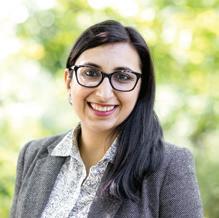
Dr. Jennifer K. Shah teaches the introductory course as well as the equity and access course for the undergraduate teacher preparation program at North Central. Her research focuses on critical literacy and social justice initiatives in education. She has partnered on projects as an educational equity consultant with Naper Settlement and Naperville Public Libraries in addition to Indian Prairie School District 204, which awarded her the Saily Joshi PDAC Award for Equity in 2023.
JOURNEYS
Expanding Your Personal Universe
Learning about diversity, equity and inclusion is not a spectator sport
By Dr. Jennifer K. Shah, Assistant Professor of Education
Issues of equity are central when it comes to education. You cannot teach who you do not know. I believe that all educators should center equity and inclusion when it comes to their formal and informal curriculums, including the hidden curriculum. The formal curriculum must include the voices and stories of all while the hidden curriculum needs to reflect that we respect all. To work towards that, educators must start by looking inward. To build self-awareness in my EDUC 411 class, “Equity and Access in Systems of Education,” I use many exercises; here are two that I find most impactful.
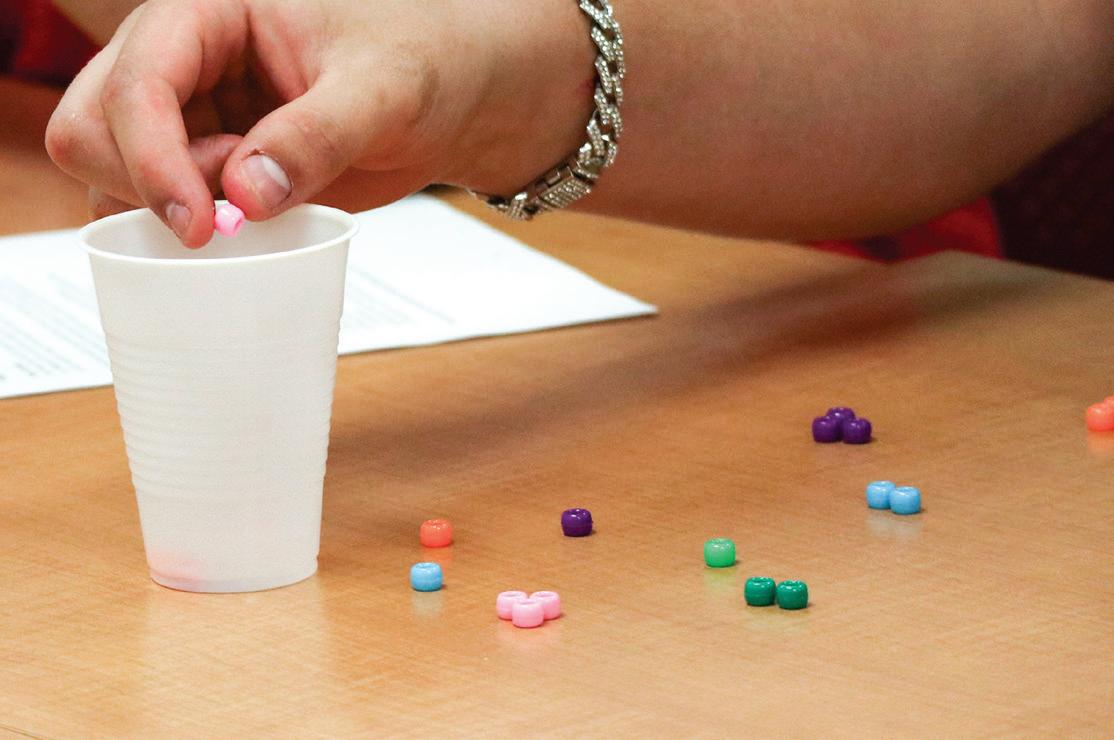
The first is called, “How diverse is your universe?” In this exercise, colored beads — green, purple, orange and blue — represent people of various races or ethnicities, and students fill a plastic cup with beads that identify people in their life, such as family members, friends or colleagues. Students then discuss if they expected more colors in their cup and what they can do to interact with people directly or indirectly from other groups, or
what author Justin Jones-Fosu would call “your everyone else” not found in your current cup.
The second activity was adapted from Fosu’s book “The Inclusive Mindset,” where he challenges the reader to take six months to learn about a particular topic related to diversity and equity that they want to know more about. I ask students to do the same and encourage them to cultivate a habit of starting a new sixmonth challenge each time they finish one. You might try this, too.
My favorite memories of EDUC 411 are when students have either lost themselves or found themselves — or sometimes both — during the semester as they experience “ah-ha” moments regarding their own personal stories or social identities that result from digging into these types of activities. Sometimes, they connect more with their racial identities and understand further what it means to be a person of color. Sometimes they connect to past microaggressions and identify them as such.
We all have implicit bias. I believe that it is important for each of us to be selfreflective when our stereotypes or biases begin to play a role in our thoughts, actions, and most importantly our decisions. We will never be totally free of bias, but being more aware of it helps us to catch ourselves in those moments and possibly correct course.
What I often see in EDUC 411 is critical transformative learning, which is ultimately my goal when I teach these topics. Reactions to the course vary and include an array of emotions as students question what they thought they knew or were socially taught to believe, consciously or subconsciously.
Oftentimes, the unlearning is much harder than the learning. I believe that EDUC 411 gives students a deeper sense of their own social identities and the space to wrestle with their past in an effort to create a more equitable future.
NORTH CENTRAL COLLEGE northcentralcollege.edu 18
REFLECTION
SOARING CARDINALS
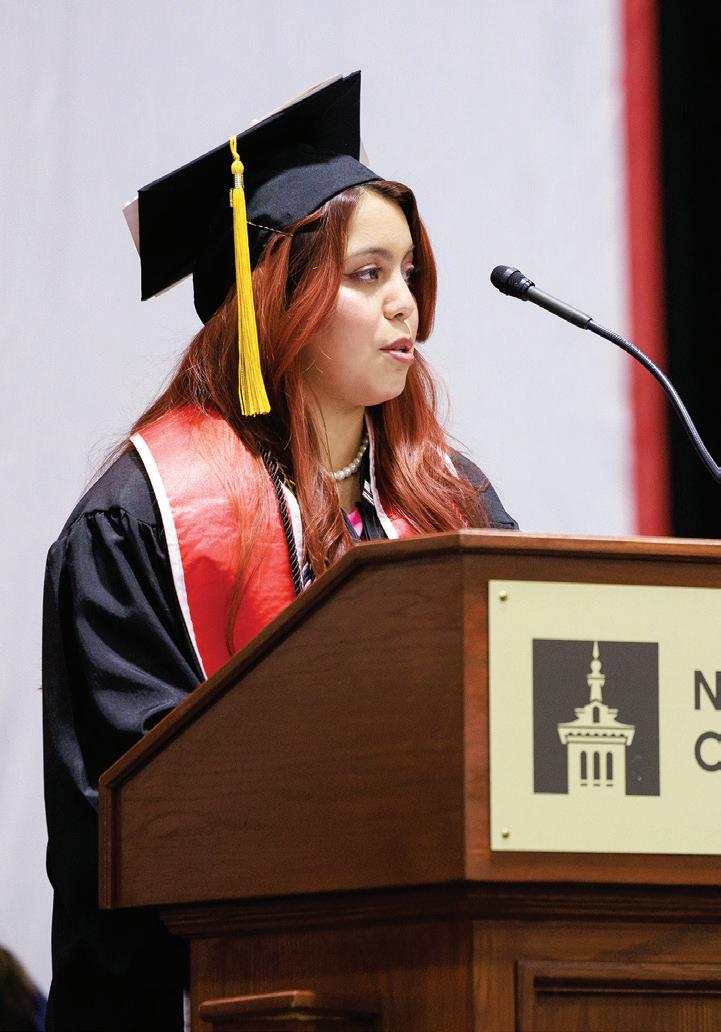
Twice within one week this past spring, Tahbata Montserrat Zuniga Diaz ’24 learned she had been selected for an extraordinary distinction.
At Honors Convocation on April 18, she was announced as a 2024 North Central College Outstanding Senior, an award given to two students this year. Days before, she had been chosen to represent the Class of 2024 as its Commencement speaker on May 5.
The recognition was for more than Zuniga’s academic achievement. Beyond being in the College Scholars Honors Program and a double major in political science and English, she was honored for her leadership in numerous extracurricular activities and positive causes — and especially for her commitment to bringing people together and growing the communities around her. Her professors call her a connector, a leader, a scientist and an artist who brings enthusiasm to all she does.
EXCELLENCE
Extending the Ladder
2024 Commencement speaker is a model representative of the Cardinal spirit
Dr. Suzanne Chod, professor of political science, was among the faculty who nominated Zuniga for the Outstanding Senior award. “Tahbata is someone who uses the ladder she has built for herself to bring others up with her,” Chod said. “She is the best of us, and we are all better just for knowing her.”
For Zuniga, who is from Bolingbrook, Ill., including others comes naturally. After receiving the award, she said: “I never stopped to think that what I was trying to accomplish through every conversation, every new greeting, and every new piece of knowledge ... was a way of community building. Still, it was because the more I learned and wanted to be an activist, the more I understood the importance of unity. There is a history of exclusion and othering (in this country), and I wanted to be part of the solution that brings people together.”
Because of her keen sense of social consciousness, Zuniga was devoted to reaching out to students with whom she shares common challenges and experiences. A first-generation college student, she served as the political science liaison for Cardinal First, the College’s dedicated first-gen success program. She was also a team leader with the Premier Scholars program through the Office of Multicultural Affairs, which helps first-gen students, those
from underrepresented racial or ethnic backgrounds, and those facing economic hardships to navigate life in college and develop their social networks.
In addition, Zuniga lent her time and positive energy to the Center for Career and Professional Development’s Drop-In Center. She served as a senior career peer advisor and initiated a new inventory management process for the Cardinal Career Closet event, which provides professional clothing for students to wear to job interviews.
A member of the Sigma Tau Delta English honor society, Zuniga honed her writing skills as editor-in-chief of North Central’s student newspaper, The Chronicle, and by working on the student-run literary publication, 30 North. She also shared her skills by tutoring fellow students at the Writing Center.
In her Commencement speech, Zuniga challenged the Class of 2024 to be change-makers.
“If I can empower any of you today to advocate for something you believe should be changed in the world, I hope that we can collectively bring about a change, no matter how small or large,” she said. “I hope we can apply what we have learned from our professors, our parents, and each other as colleagues to all the different spaces we are about to enter.”
19 Spring/Summer 2024 northcentralcollege.edu/magazine
A Quick Pin
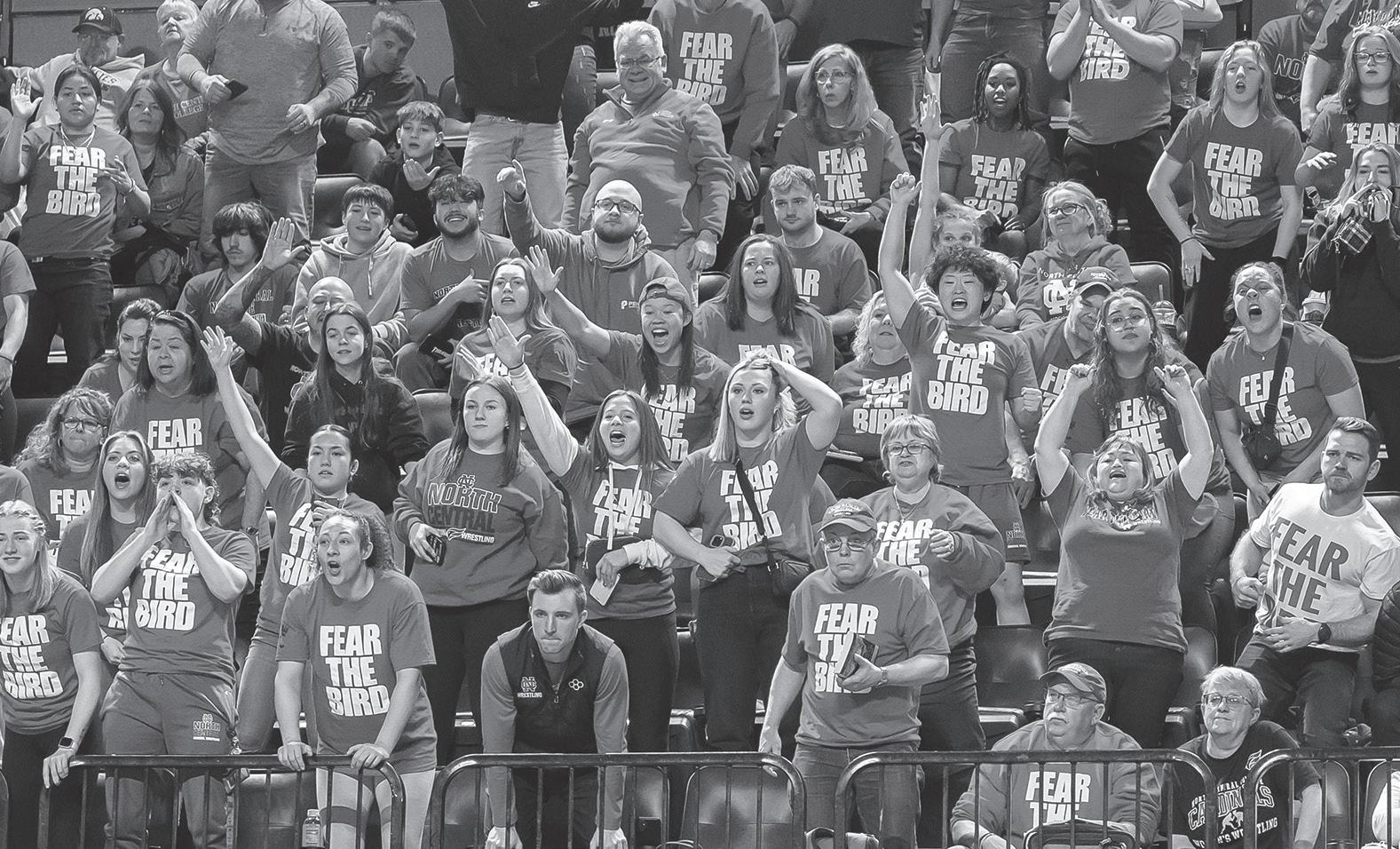
UPSTART WOMEN’S WRESTLING PROGRAM SETS THE STANDARD ON AND OFF THE MAT
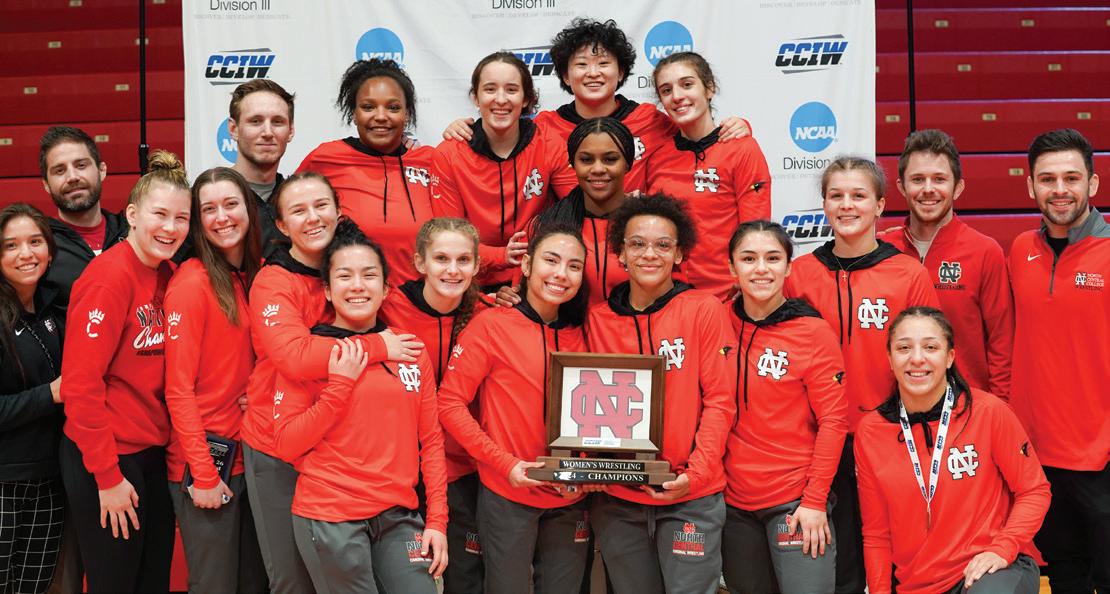
In 2019, Joe Norton ’10/M’12 — then head coach of the Cardinal men’s wrestling team — sold athletic director Jim Miller ’86 on the idea of establishing a women’s wrestling program. It turned out to be a good move.
At the time, women’s wrestling was barely on the map. Today, it is one of the fastest growing sports at both the collegiate and high school levels. Beginning in the 202021 academic year, the NCAA designated women’s wrestling as part of its Emerging Sports for Women program. As such, teams from all three NCAA divisions — I, II and III — compete against one another. With more schools launching teams each year, the sport is on track to gain NCAA championship recognition.
Currently, North Central boasts one of the largest and most successful collegiate women’s wrestling programs in the country, regardless of school size. In just five years, the program has grown from nine wrestlers to 55, captured three regional titles, and become a force on the national stage. The Cardinals won the team title at the 2023 National Collegiate Women’s Wrestling Championships (NCWWC) after placing fourth in 2022. Since the program’s inception, four Cardinals have combined to capture six individual national titles.
The program’s culture and winning ways have made North Central a national destination for women’s wrestling, with
some student-athletes turning down scholarship offers from other institutions for the opportunity to be a Cardinal. The 2023-24 roster included studentathletes from Alaska, Florida, New Mexico, California and Texas – 23 different states in all.
The Cardinals entered the 2023-24 season as the top-ranked team in the country, poised to defend their national title. They won the Region IV Tournament for the second consecutive year, with nine team members winning their respective weight classes, and all competing studentathletes — 15 total — qualifying for the national tournament. In addition, Norton was named the Region IV Coach of the Year for the third straight season.
After day one of the 2024 NCWWC tournament, North Central held a slight edge over the University of Iowa. A national powerhouse in men’s wrestling, Iowa was competing in the women’s tournament for the first time. On the final day, the Hawkeyes edged the Cardinals for the team title by just six points, 204 to 198. Third place King University was further back with 163 points.
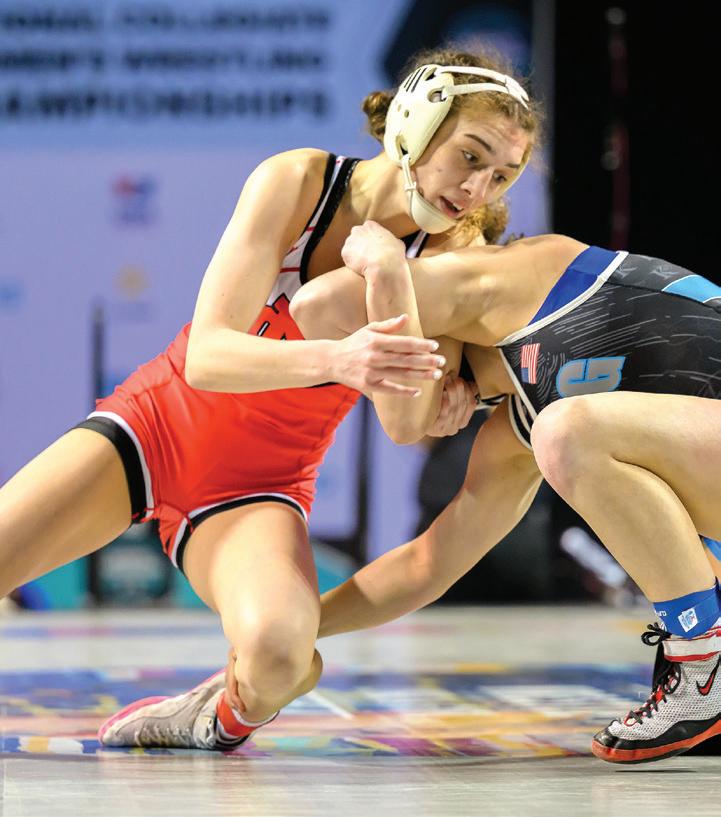
Fourteen of the Cardinals’ 15 finalists earned All-American honors, including Amani Jones ’25, who was crowned national champion in the 123-pound weight class.
“It was heartbreaking for our team to fall short in the finals, but we were so impressed with their efforts in embracing the challenge and competing to win,” said Norton. “Any Division III school going toeto-toe with a Power 5 institution like (the) University of Iowa in a sport like wrestling is an accomplishment in itself.”
In the 170-pound weight class, Yelena Makoyed ’24, a three-time national champion, faced Iowa’s Kylie Welker in the most anticipated match of the year. Welker’s victory prevented Makoyed from becoming a four-time individual national champion, but Makoyed’s place in program history is secure.
“We were incredibly lucky to have someone like Yelena join the team in its first year,” said Norton. “She has been the perfect person for us to build around. She does everything right. She has incredible character and work ethic, and she is a tremendous student and teammate even on top of all the wrestling success.”
NORTH CENTRAL COLLEGE northcentralcollege.edu 20
Amani Jones ’25

NEW HEAD COACH
Cardinals Women’s Volleyball
In April, after a nationwide search, North Central announced the hiring of Ray Gooden as head women’s volleyball coach.
Gooden has coaching experience at the collegiate, national and international levels, most recently serving as the head women's volleyball coach at Northern Illinois University (NIU).
“Ray brings a lot of high quality, yet relatable experience to North Central — having coached for over 30 years at all levels,” said Jim Miller ’86, North Central College senior director of athletics. “He is well known in the volleyball community, and it became clear during the interview process that Ray was the best choice to be [our] next head women’s volleyball coach.”
Gooden coached the Huskies for more than 20 years, winning five Mid-American Conference (MAC) West division titles, three regular season MAC Championships, and the MAC Tournament Championship in 2016. The five-time MAC Coach of the Year won 357 matches, the most in program history.
Prior to coaching at NIU, Gooden served as the associate head women’s and men’s volleyball coach at Loyola University Chicago; the assistant men’s volleyball coach at Lewis University; the assistant volleyball coach at Northwestern University; and was the first head men’s volleyball coach at Thomas More University in Kentucky, while also serving as the assistant women's volleyball coach.
In addition to his collegiate coaching experience, Gooden has worked as an open program tryout evaluator and head coach for USA Volleyball’s High Performance training program. He also has been an assistant coach for the boys junior national team and a visiting coach apprentice for the U.S. National Team.
Outside the U.S., Gooden has coaching experience in Europe and Brazil and was a team advisor for a men’s professional team in Japan. He has also worked as a volleyball analyst for the Big Ten Network, ESPN, NBC Sports Network, and other media outlets.
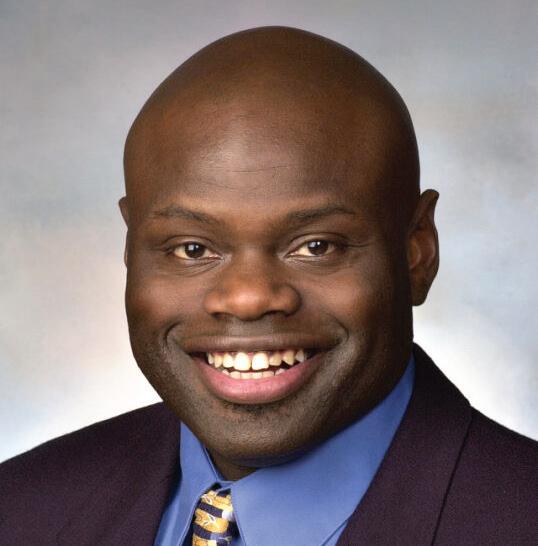
ABOUT RAY GOODEN
Gooden officially began his duties at North Central on May 20.
“I have always seen North Central from a distance and knew about the successes and level of excellence this College has,” he said. “I am most looking forward to being in an environment that has so much success. From Jim Miller to the rest of the department, that level of excitement, energy and commitment is exciting.”
North Central’s 2024 women’s volleyball season will begin the first week of September, which is not soon enough for Gooden: “I can’t wait to be a part of a team that I feel has potential and can do some positive things moving forward.”
Women’s Wrestling continued...
In April, 17 Cardinals went on to compete at the USA Wrestling U20 and U23 Women's National Championships in Spokane, Wash., including Jones, who took first place in the 55 kg weight class. Later that month, six wrestlers competed at the U.S. Olympic Team Trials at Penn State. The team excelled in the classroom as well, setting a new program record with 19 student-athletes named to the National Wrestling Coaches Association (NWCA)
Scholar All-American team. For the second year in a row, the program ranked first in the Team Scholar All-America rankings with a 3.827 grade point average (GPA). Norton added, “We are so proud of our success on the mat, but when you then tell people that we have a 3.827 team GPA, they truly understand how outstanding our women are and that they are all-around champions who succeed in everything they do.”
• 30 years of collegiate coaching experience, including 20 plus years as head women’s volleyball coach at Northern Illinois University
• USA Volleyball, U.S. National Team and international coaching experience
• Experience as an analyst for the Big Ten Network, ESPN, NBC Sports Network, and other media outlets
• B.A. in economics from Ohio State, where he played varsity and club volleyball
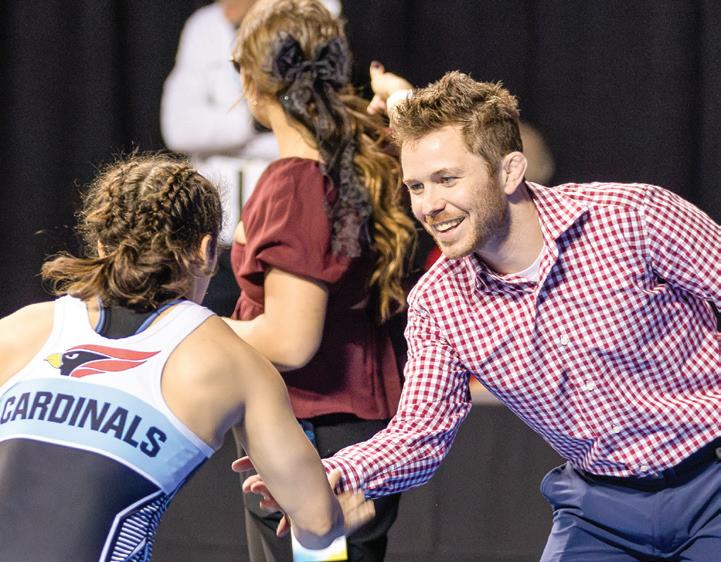
KEEP UP WITH YOUR CARDINALS! Visit northcentralcardinals.com for the most up-to-date stories.
21 Spring/Summer 2024 northcentralcollege.edu/magazine
Head Coach Joe Norton ’10 / M ’12
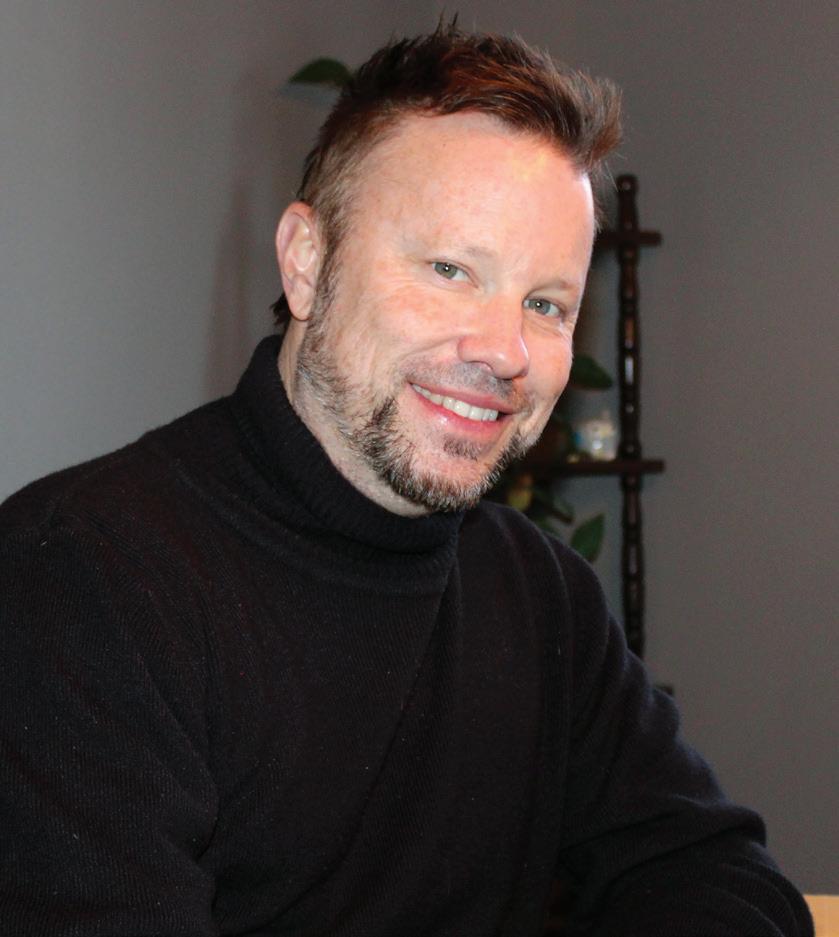
Horner teaches fourth and fifth grade students in Naperville Community Unit School District 203’s Project Idea Plus gifted program at Meadow Glens Elementary School. He coordinates the Kid Innovation College program, as well as works in partnership with the Institute for the Habits of Mind. He came to North Central early in his career to pursue a master’s degree and developed skills that have broadened and enriched his teaching ever since.
What did you learn at North Central that influences your teaching?
I found that many of the courses I took at North Central offered valuable, practical and applicable connections with what I was doing as an educator. I think I was in my second year of teaching when taking part in the program, so I was full of new information and hungry to put any new ideas into practice.
Chosen as a finalist for the 2023 Golden Apple Awards for Excellence in Teaching, Brian Horner M’ 01 creates classroom communities of lifelong learners through passion and inspiration.
How do you create an environment for students to be successful?
I like viewing the classroom as a “home away from home” for students. They need to feel safe in this environment and protected. That is the first step. Without the fear of being slandered or ridiculed, students can be free to take responsible risks through questioning, sharing, creating, and all sorts of innovation. Once this is established, student empowerment is needed. A healthy classroom will have plenty of opportunities for students to have a say in their own class culture. We have created a very multifaceted system built on trust ... responsibilities and ideas for constant improvement and evolution. It’s not just me on a stage — how bland and pale would that be? Rather, it is all of US TOGETHER as we transform basic knowledge into wisdom.
What is the most important thing you hope students gain from being in your class?
I always hope that students take strong thinking skills with them. I hope that what they learn transcends the walls of the classroom and gets propelled with them into their respective futures. And I hope they laugh a lot along the way.
What do you find most rewarding about being a teacher?
The best part about the job is that every single day is different. I am never bored. Everything always seems so new to me. My students will never cease to amaze me. I am always learning from them. And I am always learning about life through them. And the moment I ever feel a malaise coming on, I just create something brand new. The classroom seems like a cognitive playground to me, and we explore all its intriguing nuances on a daily basis.
What advice would you offer to future educators?
It is an honor and a privilege to teach the youth. What a responsibility we have to provide example, guidance, care and direction within the classroom. Never forget that. Passion is key. Never lose it. Keep creating. Keep learning. Keep moving.
There is always something else to see over the edge of the horizon. Your students will meet you there, and if you need me … so will I.
Questions and responses were edited for clarity and space.
NORTH CENTRAL COLLEGE northcentralcollege.edu 22
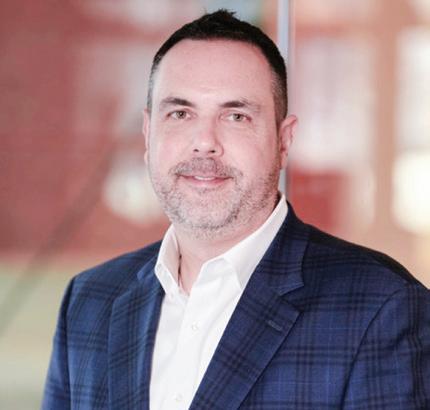
CLASS NOTES
1967
DORCAS FRESHLEY WINDSOR has retired from her position as organist and collaborative pianist at Westworth United Church of Canada in Winnipeg, Manitoba, a position she held for 48 years. She will continue to serve as a substitute and freelance musician on the piano and organ.
1969
REV. EILDERT ZWART presented a lecture titled "Our Great Unknown Patriot" about the life of Patrick Henry, the Founding Father who famously declared: "Give me liberty, or give me death!" Given at the Gary Byker Public Library in Hudsonville, Mich., the presentation included a first-person portrayal of Henry and an overview of his life.
1981
NICK ZEC JR. was recently recognized for his 40 years of membership and service to the National Association of Insurance and Financial
ALUMNI SNAPSHOTS
1. Sam Mudro ’98
2. Jill Kastner ’02
3. David Shafron ’03
4. Nirav Shah M ’10
5. Nick Baumgartner ’14
6. Michelle Navarrete ’19
7. Ben Wong ’21
8. Hannah Kato ’22
(Note: “S” before class year indicates Shimer alumni. “M” before class year indicates a master’s degree.)
Advisors. He is currently the vice president of financial services and retirement with Boyd Insurance and Investments in Bradenton, Fla.
1983
PETER BRUNOEHLER , international corporate executive turned published author, recently launched the second book in his series, "Career Fulfilment and Achievement in Southeast Asia, Maximising Success at 4 Key Milestones," available from Amazon and other booksellers. His first book, “Expat Leadership and Lifestyle in Southeast Asia, Overcoming 5 Key Challenges,” was published in 2019. He has lived and worked in Asia for 28 years and now writes from his home in Malaysia.
1984
DAVID MEUNIER has been promoted to senior research and development fellow in the core research and development department at Dow, in recognition of his world-class expertise in the analytical chemistry of macromolecules; the development of new measurement science capabilities; and development of
the next generation of scientists. His work has contributed to the commercialization of more than 10 new products. He holds four U.S. patents and several trade secrets. He has authored more than 325 internal technical reports, more than 30 peer-reviewed publications and has delivered 21 invited lectures around the world. Meunier and his wife, Mari-Terese, reside in Midland, Mich.
1990
ESTHER T. BENJAMIN was named a 2024 Innovator of Color Award Honoree, which recognizes trailblazing individuals who have left indelible marks in education and innovation to ensure all people have equal access to the future.
THOMAS LAMB was promoted to commander of the special functions unit in the Chicago Police Department. As a 32-year member of the department, he most recently served as the executive officer of the special functions division.
1
6 8
23 Spring/Summer 2024 northcentralcollege.edu/magazine
2
3 5 4 7
BEN RABE ’17 HIRED TO POSITION WITH NFL’S LOS ANGELES CHARGERS
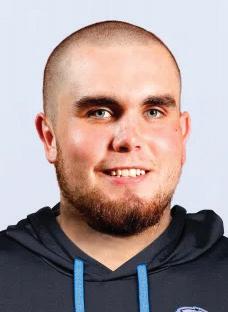
Ben Rabe played defensive tackle for the North Central Cardinal football team. He missed his junior season due to injury, but the exercise science major and Academic All-CCIW performer found other ways to contribute and gain valuable experience. Helping out in the weight room and coaching the defensive line showed Rabe that his future was likely off the field.
Rabe interned at Northwestern University after he graduated from North Central in 2017, and then worked as a graduate assistant with East Tennessee State University for two years. He joined the University of Michigan's football strength and conditioning staff as an intern prior to being hired as a full-time strength and conditioning coach under head coach Jim Harbaugh in January 2020. After the Wolverines won the 2023 NCAA Division I National Championship, Harbaugh became head coach of the NFL’s Los Angeles Chargers. Rabe and other staff from Michigan then followed.
As the Chargers’ director of performance analytics, Rabe helps players maintain their physical and mental health. He also analyzes the team’s evaluation system to improve performance in the weight room and during games. Of his time at North Central, he said, “It was the foundation of my career. You have access to so many great people and resources at North Central, and there are several NCC alumni who have helped guide me along my journey. Overall, I couldn’t be more thankful for what North Central College has done to help me.”
1991
STACEY LUTZ HIETIKKO earned a master of education in learning design and leadership from the University of Illinois UrbanaChampaign. She is a senior instructional designer/training program manager with Yahoo.
JOHN JACKSON is a production manager, technology transfer leader with Mirus Bio. He is responsible for leading the Research Use Only production team of scientists and chemists and building the technology transfer capabilities of Mirus Bio Operations.
1992
CRAIG ALTMAN earned an MBA in December 2023 from the GIES College of Business at the University of Illinois Urbana-Champaign. His degree included specializations in digital marketing, entrepreneurship and strategic innovation. Since 2005, Altman has been the president of Tradition Software, a national provider of construction lien software and services to the U.S. construction industry.
1995
ARNISE IRBY ROBERSON has a new role as the director of college success at Cristo Rey Jesuit High School-Twin Cities in Minneapolis, Minn. She is also serving as an adjunct professor at the University of Wisconsin-River Falls. This summer, she will teach a group counseling class in Edinburgh, Scotland.
1997
MARK “FLO” FLORENCE was inducted into the Illinois Athletic Trainers Association Hall of Fame in June 2023. Heidi Matthews, North Central College professor of kinesiology emerita and retired dean of the School of Education and Health Sciences, attended the ceremony. (This note corrects an error that appeared in the fall 2023 issue).
BOBBY TUCKER was appointed as the deputy director of statewide personnel at the State of Illinois Department of Central Management Services (CMS). Prior to joining CMS, he was the human resources director at the Illinois Department of Revenue.
1998
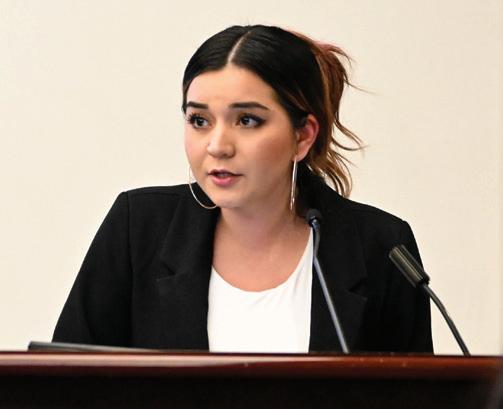
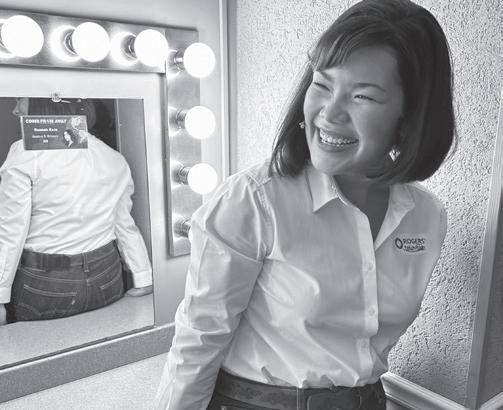
SAM MUDRO, who earned a B.S. in accounting and finance from North Central, is now the president and chief financial officer of HKS, a global architecture and design firm based in Dallas, Texas. He oversees overall business strategy implementation and is responsible for operational and financial performance.
2002
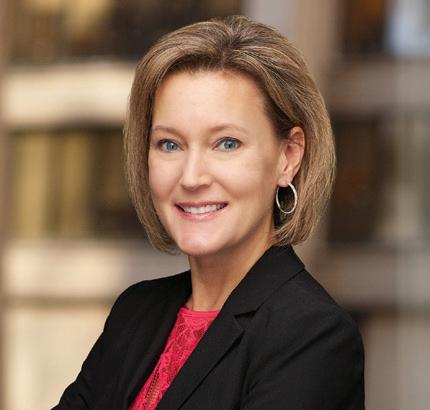
JILL KASTNER has joined the law firm Nyhan, Bambrick, Kinzie & Lowry, P.C. as partner. Kastner focuses her practice on workers' compensation, leveraging almost two decades of hands-on experience in various corporate law firms across the Chicagoland area. She has successfully represented nationally recognized companies against workers' compensation claims and is skilled in managing all levels of claims, including litigation and appeals. She has also served as an employer representative on the Workers' Compensation Advisory Board for the State of Illinois' Workers' Compensation Commission since 2019.
2003
MICHAEL DUBENSKY S ’03 released his debut song — a cover of Shel Silverstein's “The Giving Tree” — on Spotify, YouTube, Amazon Music, and Apple Music under his artistic name, Service Provider #1203.
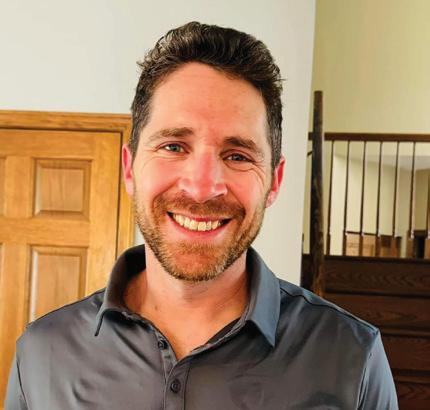
DAVID SHAFRON has been named the new athletic director at Grayslake Central High School in Grayslake, Ill., starting July 1.
2004
CHRISTOPHER J. CARPENTER co-authored the textbook “The Science of Gaining Compliance,” which is about the science of getting people to agree to requests like favors or sales pitches.
2005
COLIN DALY was re-elected to serve as the Whitefish Bay (Wisconsin) Civic Foundation president.
2006
KATE GANNON-CULLINAN earned a Ph.D. in educational leadership and research - higher education administration from Louisiana State University, where she is senior associate director of operations for the LSU Student Health Center. She began a new career in student health center operations after nearly two decades working in housing and residential life, including as a resident assistant at North Central. Her dissertation won the Southeastern Association of Housing Officers Outstanding Contribution to Research Award.
2007
ROGELIO AGUILAR , a teacher at the Marquette School of Excellence in Chicago, was selected as a finalist for the 2024 Golden Apple Award for Excellence in Teaching.
2009
ADAM PUCYLOWSKI was named head football coach at Waubonsie Valley High School in Aurora, Ill.
BEN YOUEL ran the 2024 Boston Marathon in memory of his sister, Maggie, who passed away in 2015 from complications after experiencing a stroke in 2012 during her sophomore year at North Central. Ben ran to raise funds to support greater awareness of the signs and symptoms of stroke. At North Central, the Youel family annually awards a scholarship to support students with financial need who have been accepted to a North Central College study abroad program.
NORTH CENTRAL COLLEGE northcentralcollege.edu 24
2010
COLLEEN WHITE ZEREBNY received the RE/MAX Executive Club Award for the third year in a row. She has been a residential realtor since 2018 in Bloomington-Normal, Ill., and has helped 80 clients happily buy and sell their homes.
KRISTEN DUNLAP-BERG started a new position as program coordinator assistant for the University of Illinois Chicago, Division of Specialized Care for Children. She assists with care coordination for children with complex healthcare needs.
KEITH MATUNE (M) earned a doctorate in education degree from the University of St. Francis in Joliet, Ill., and was named principal at St. Damian School in Oak Forest, Ill. (This note corrects an error that appeared in the fall 2023 issue).
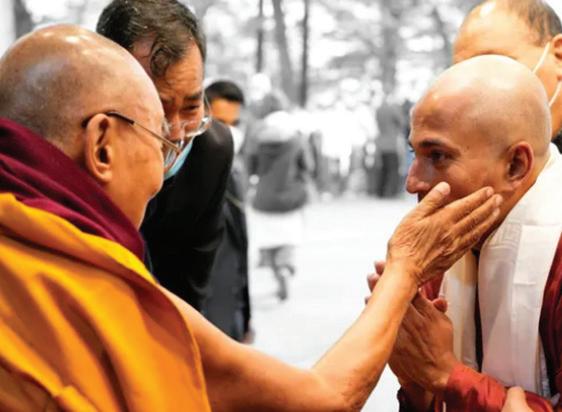
NIRAV SHAH (M) was invited to briefly meet the 14th Dalai Lama at the Tibetan spiritual leader’s residence in the Himalayan foothills along the India/China border. For Shah, the meeting capped several weeks of service in Dharamshala, India, where he volunteered as an English tutor to monks at the Dalai Lama’s monastery. He said he will cherish the experience for the rest of his life: “I couldn’t believe the holiness in front of me. Being blessed and then coming back home made me want to renew my commitment to love, compassion, nonviolence, peace and giving back.” In his work, Shah is a public affairs specialist in the office of communications at the USDA Agricultural Research Service.
2012
PETER BULANDR JR. was elected president of K.I.D.S.S. for Kids, Inc., an affiliated organization of Ann & Robert H. Lurie Children's Hospital of Chicago. This will be his 10th year as a part of the organization and his family's 10th year participating in the Aon Step Up for Kids, the organization’s signature fundraising event. Bulandr is vice president, investment banking at Barclays Investment Bank.
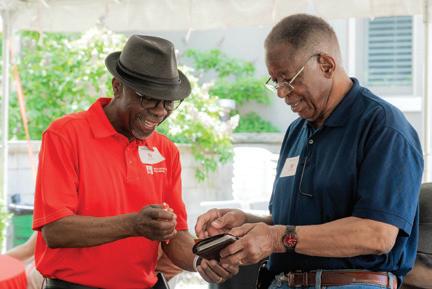
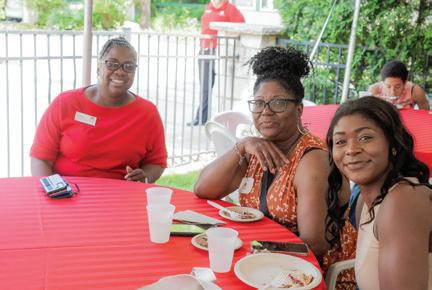
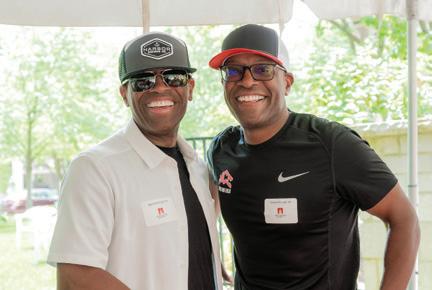
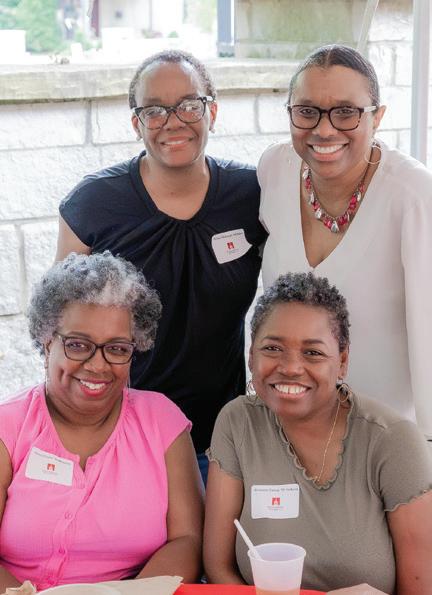
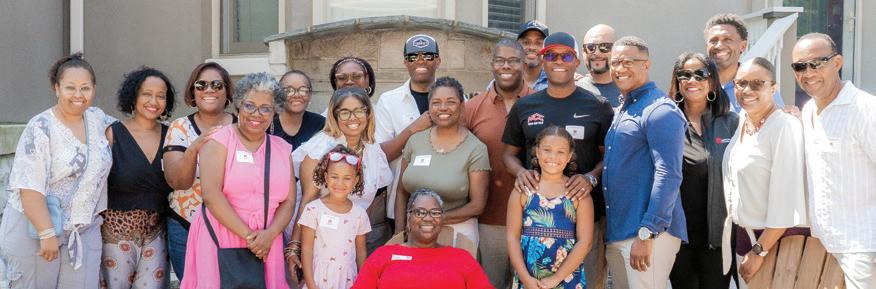
On May 18, the College’s office of alumni and parent engagement and the African American Alumni Association hosted a barbeque on the lawn of the president’s residence. Smiles and memories were shared, as well as stories of resilience, empowerment and transformation. Special thanks to Shekia Baker’16, whose business, B.Kaker Productions LLC, focuses on capturing special events.
2014
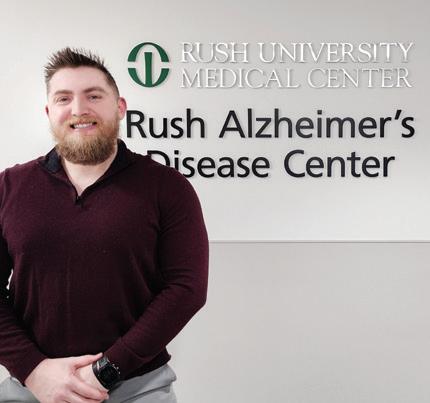
NICK BAUMGARTNER earned his Ph.D. in kinesiology with a neuroscience focus from Purdue University in 2023. His research focused on the relationships among muscle strength, acute resistance exercise, and the mechanisms behind improved cognitive function and memory. He recently accepted a position at the RUSH Alzheimer's Disease Center at RUSH University in Chicago, where he is studying ways to slow or reverse the progression of Alzheimer's disease.
2015
ELIZABETH WEINER THOMPSON opened Edge Music Academy’s second location in Naperville with her husband, Jason Thompson.
2016
HANNAH JURIK launched The Vegan High Street, an online vegan candy and snack marketplace featuring a curated selection of unique products sourced from across the world.
ABIGAIL FRANCIS was nominated for the 2024 Teacher of the Year Award for her work as a band teacher at Mountain View High School in Tucson, Ariz. Each year, University of Arizona recognizes a local teacher from southern Arizona. Francis was nominated by the principal of Mountain View High for her work in and out of the classroom.
BASIA REED graduated in May from the University of Illinois College of Veterinary Medicine with a doctor of veterinary medicine degree. She was awarded the Dr. Beryl D. and Renee Mell Senior Student Award and the Dr. Edward C. Khuen Memorial Scholarship — awards for graduating students who exemplify understanding of the human-animal bond and proficiency in small animal dentistry, respectively. She has accepted a position as an associate veterinarian at Carol Stream Animal Hospital in Carol Stream, Ill.
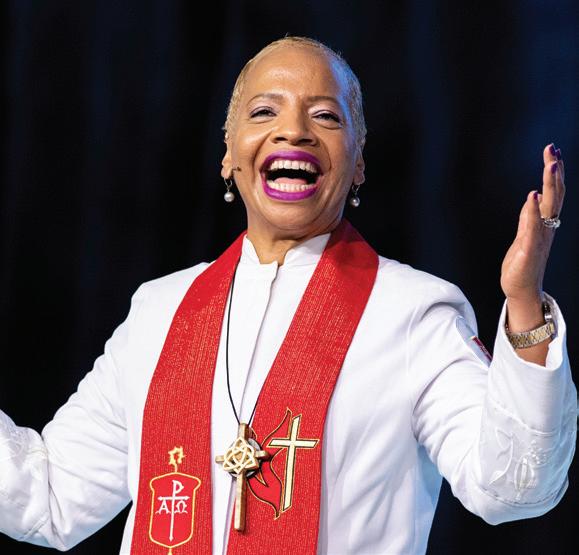
HISTORIC APPOINTMENT FOR BISHOP TRACY SMITH ’90 MALONE
In April, Tracy Smith Malone began her term as president of the Council of Bishops of The United Methodist Church. She is the first Black woman to lead the more than 110 active and retired United Methodist bishops in Africa, Asia, Europe and the United States. The United Methodist Church has nearly 10 million members worldwide, more than half of whom are in the U.S.
Bishop Malone’s historic election took place during the fall 2023 meeting of the United Methodist Council of Bishops and coincided with the celebration of the 30th anniversary of her ordination. Malone is bishop of the East Ohio Conference. She earned a bachelor of arts in religious studies and sociology, with a minor in computer science, from North Central College. She has a master of divinity degree from Garrett-Evangelical Theological Seminary in Evanston, Ill., and a doctor of ministry degree from United Theological Seminary in Dayton, Ohio.
She has said her experiences at North Central impacted her life and played a “foundational role in affirming and helping to shape my call to the ordained ministry.”
Malone has said: “I was very blessed to benefit from the leadership and the mentorship of the Rev. Dr. Barbara Isaacs, who was the chaplain during my four years (at North Central).” Malone also has credited the many leadership, global studies, internship and other opportunities she had while she was a student — which helped develop her skills and capacity as a leader. “I am eternally grateful for the support … all that was provided to me.”
25 Spring/Summer 2024 northcentralcollege.edu/magazine
2017
JESSICA BOVENKERK was promoted to onsite manager of the Edina, Minn., branch of Minnesota Bank and Trust. She oversees branch staff, performs monthly, quarterly, and annual audits, assists with client needs, and provides support for additional branch locations.
JOHN BIHUN received a master’s degree in biology from Miami University in Ohio in 2021 and is now an animal care specialist at Brookfield Zoo, where he works with the primates and specializes in the western lowland gorillas.
2019
MICHELLE E. NAVARRETE is a Ph.D. candidate of the Hebrew Bible at Emory University. She is researching lament, penitential prayer, U.S. Latine theologies, biblical translation/ interpretation in postcolonial Mexico, and related prophetic and poetic texts. Navarrete’s undergraduate degree from North Central was in religious studies. A Hispanic Theological Initiative Scholar, she has been published and invited to present her biblical scholarship at several conferences. Most recently, in April, she was the featured presenter at the 2024 Mujerista Symposium, co-hosted by Princeton Theological Seminary and En Conjunto: Latinx Student Collaborative.
SHELBY SLAGER and NATHAN LEATHERMAN
SLAGER wrote and produced “Chasing June,” a short film that premiered at the Chinese Theatre in Hollywood as part of the Beverly Hills Film Festival in May. Shelby won the festival’s award for Best Actress for her portrayal of June. Shot at locations in Elgin and Burlington, Ill., the film is about three high school friends who are inseparable until an accident on the night of graduation sets them on separate paths. The couple live in Los Angeles.
2020
ARMANDO VARELA works as part of the quality control personnel for operations with the Yale University football team.
2021
FRANCIS ESPEDIDO started a new job at Advocate Health Care as an acute care occupational therapist. The role provides patient-centered care to promote rehabilitation in performing meaningful activities of daily living during and after an acute change in medical status.
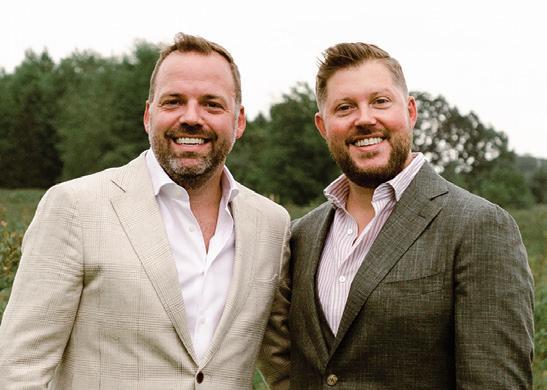
MATT OSMULSKI teaches math at Catawba Ridge High School in Fort Mill, S.C., where he also is head coach of the boys cross country team. Last November, the Copperheads won the 4A state championship, led by three top 15 finishers and a total team score of 113 points. 1 5 2 4 3

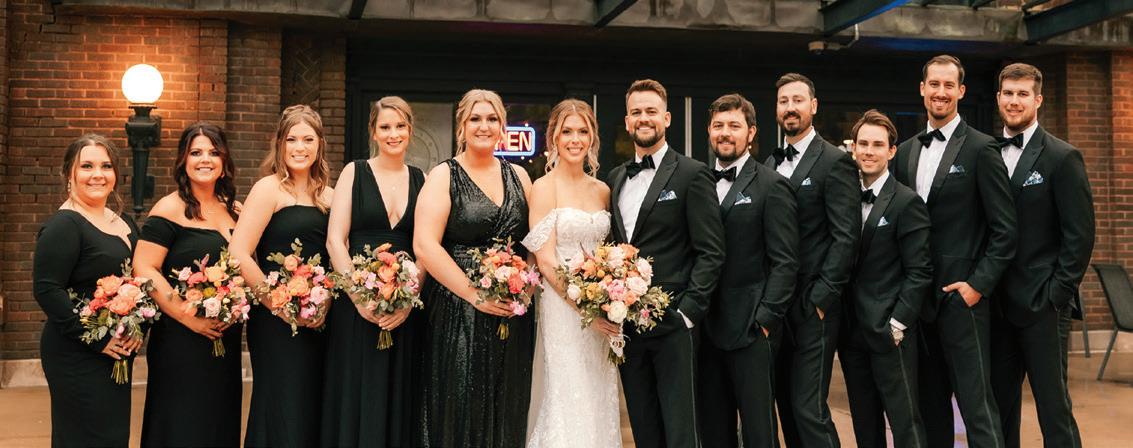
BEN WONG has received a NCAA Postgraduate Scholarship to apply toward his education at Vanderbilt University School of Medicine, where he will begin his third year of study. Nationwide, only 126 recipients are awarded the highly prestigious scholarship annually — current or former student-athletes who excel academically and athletically while also serving as leaders in the community.
2022
HANNAH KATO toured with the North American company for the Tony-nominated musical, “Come From Away,” playing the role of Janice.
2024
D e ANGELO HARDY was one of five NCAA Division III football players to sign with an NFL team after the 2024 NFL Draft, signing as an undrafted free agent with the Baltimore Ravens. As a Cardinal, Hardy compiled a program record 58 receiving touchdowns — seventh in Division III history. He ranks second in total receiving yards (4,253) and points scored (398). He became the first Cardinal to sign with an NFL team since Broc Rutter ’19 signed as an undrafted free agent with the San Francisco 49ers in 2020. The last alum to play in the NFL was Ron Selesky ’87, who appeared in two games for the Minnesota Vikings.
WEDDINGS
TIM BRODEUR ’08 and Jarod Sabatino on Sept. 16, 2023, in South Haven, Mich. 1
SAMANTHA CASEY ’16 BINION and LAYTEN BINION ’17 on July 8, 2023, at St. Mary’s Catholic Church in Mokena, Ill. Alumni and current North Central students in the wedding party included: BRITTANY KUDRA ’16
HERNANDEZ , HOWARD BEATTY ’18, and WILL GREANEY ’27 2
HAILEY BRZOSKA ’17 CIRIC and MICHAEL CIRIC ’17 on Dec. 21, 2023, at Naper Settlement in Naperville.
SUZANNE FRESHLEY ’69 and JERRY JUZWIAK ’69 on Oct. 14, 2023, at Koten Chapel on the North Central campus. The marriage was officiated by REV. TOM BABLER ’69 KAREN FEILER ’69 SCHMIEL was the matron of honor and KAYE FRESHLEY ’69 SCHULTZ was the soloist.
SARAH KRANPITZ ’97 MAAS and Erik Maas in a surprise ceremony on Dec. 17, 2023. Other alumni in attendance included Sarah’s sister, KRISTIN KRANPITZ ’95 CLARK and her mother, NANCY ZEUMER ’67 KRANPITZ
ALLIE YOUNGREN ’15 WALLACE and Zachary Wallace on Oct. 14, 2023, in Peru, Ill. Alumni in the wedding party included KAITLYN GORMAN ’16 WEIDNER , KATY MITTEL ’15, and JESSICA CONNOR ’14 YOUNGREN 3
NORTH CENTRAL COLLEGE northcentralcollege.edu 26

7 BIRTHS
LAURA LAUDERDALE ’14 BANKEMPER and Daniel Bankemper, a daughter, Daphne Wren, on Sept. 28, 2023, weighing 6 lbs., 11 oz., and measuring 19.5 inches. Daphne was welcomed by her sibling, Iris Mae, 3.
NICOLE AMUNDSEN ’16 BORCHARDT and MATTHEW BORCHARDT ’11 , a daughter, Kara Sandy, on Aug. 28, 2023, weighing 9 lbs., 1 oz., and measuring 20.5 inches. Kara was welcomed by her sibling, Lyla, 3. 4
ALLI NAZOREK ’16 DEVNEY and Aaron Devney, a daughter, Maya Genevieve, on Nov. 8, 2023, weighing 7 lbs., 12 oz., and measuring 19.75 inches. 5
VINCE KMIEC ’14 / M ’17 and GINA KMIEC ’16 / M’18 welcomed their first child, a son, Kobe, on April 8, 2024. 6
CASSANDRA SHAKER ’13 and Brad Hult, a daughter, Cameron Otto, on Dec. 28, 2023. 7
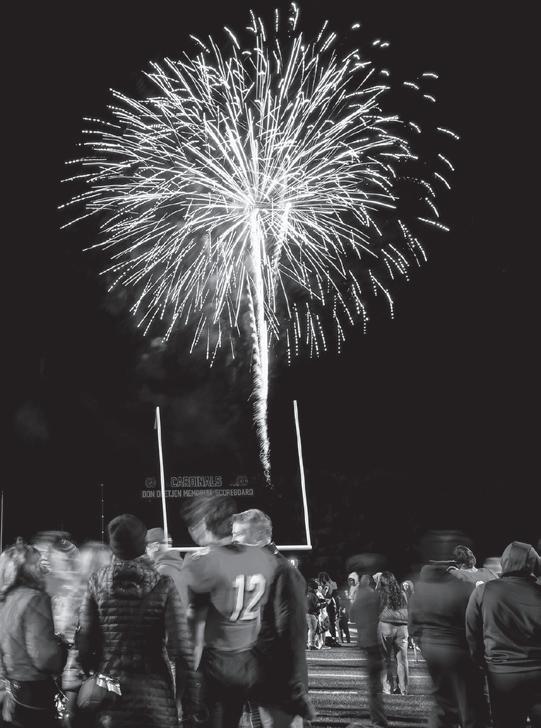
to share your update!
IN MEMORIAM
Our condolences to the families and friends of those we have lost. To notify us of a passing, please email classnotes@noctrl.edu.
HELEN MACGREGOR ’48 BAKER of Montgomery, Ill., on Feb. 6, 2024.
HUBERT HAWBECKER ’50 of Naperville, on Nov. 24, 2023.
ROBERT WOLF ’50 of Washington, D.C., on Feb. 4, 2024. Surviving alumni relatives include his brother, Rev. James Wolf ’50 and his sister-inlaw, Mary Lee Siemsen ’50 Wolf.
JACK HOFFMAN ’51 of Rockford, Ill., on Dec. 17, 2023.
BARBARA IRWIN ’51 THOMPSON of Naperville, on Nov. 28, 2023. She was preceded by her husband Floyd Thompson ’50.
DALE BELING ’53 of Fargo, N.D., on Feb. 17, 2024.
JANE HOOTON ’53 HOFFMAN of Oak Harbor, Wash., on Dec. 24, 2023.
WALTER LARSON ’54 of Rochester, Minn., on Jan. 6, 2024. Alumni survivors include his wife, Donna Siemsen ’53 Larson.
HOWARD EBY ’55 of Fishers, Ind., on March 23, 2024.
BARBARA SHERMAN ’56 ROBY of Winter Haven, Fla., on April 26, 2023.
WILLIAM STRUTZ ’56 of Bismarck, N.D., on Jan. 25, 2024.
JOAN KNEPP ’57 of Nappanee, Ind., on May 8, 2023.
JOAN KANIKULA ’57 RITZERT of Darien, Ill., on Feb. 13, 2024.
JOAN SOMMERS ’57 WOOD of Waco, Texas, on Feb. 22, 2024.
ANDREW KELLY ’58 of Rexville, N.Y., on Jan. 30, 2024.
WILLIAM ROBY ’58 of Winter Haven, Fla., on April 26, 2023.
GAYLE VAN RAMSHORST ’58 STEES of Wolcottville, Ind., on March 26, 2024.
JANET WEYRICK ’59 TEMPLETON of Arlington Heights, Ill., on Dec. 20, 2023.
KEN CLOUD ’61 of Chesterfield, Mo., on Feb. 20, 2024.
RALPH SEEGER ’61 of West Bend, Wis., on Dec. 23, 2023.
CAROL RICKETTS ’61 SNYDER of Crawfordsville, Ind., on Jan. 23, 2024.
GERALD BOON ’62 of Mishawaka, Ind., on March 30, 2024.
LINDA BAHREY ’63 of Everett, Wash., on Feb. 2, 2024.
EDNA FULKERSON ’63 FARRIS of Bloomfield Hills, Mich., on Jan. 5, 2024.
JUDITH STEGMEIER ’63 WESTIN of Irvine, Calif., on Dec. 7, 2024.
MARJORIE PARKS ’64 WILLIAMS of Canton, Ga., on Feb. 5, 2024. Alumni survivors include Christopher Williams ’92 and Benn Williams ’96. Other alumni include her late husband, Thomas Williams ’65, and her late mother, Marian Bulow ’35 Parks.
CAROL KREITZER ’70 ARNOULD of Marblehead, Mass., on Oct. 25, 2023.
JOHN BEEHLER ’71 of Naperville, on Dec. 6, 2023.
CURTIS MORRELL ’71 of Sun City West, Ariz., on Jan. 30, 2024.
MARTHA LINDSEY ’71 REGIER of Portage, Ind., on Aug. 31, 2023.
JUDITH STRMEC ’74 STOCKSTILL of Germantown, Tenn., on March 17, 2024.
JAMES LIESZ ’76 of Wheaton, Ill., on Nov. 20, 2023.
MARTHA OBERMEYER ’77 JANEY of New Orleans, on March 1, 2024.
VITO VITULLI ’80 of Roselle, Ill., on Jan. 26, 2024.
RUSSELL MARK SATTELBERG ’81 , known as Mark, of Broomfield, Colo., on Jan. 21, 2024. He is survived by his wife, Jane Snook ’83 Sattelberg.
JOHN FINNEGAN ’82 of Naperville, on March 21, 2024.
JEAN DEVRIES ’83 BENNER of Naperville, on March 19, 2024.
ROBERT KOVACS ’85 of Austin, Texas, on Jan. 11, 2024.
SCOTT SOWA ’05 of Aurora, Ill., on Jan. 23, 2024.
CAREER NEWS? GOT MARRIED? HAD A BABY? Email classnotes@noctrl.edu
6 27 Spring/Summer 2024 northcentralcollege.edu/magazine
Cubs vs. Cardinals
June 15
Pregame - 11:30 a.m., Cubby Bear Chicago, 1059 W. Addison St., Chicago
Game - 1:20 p.m., Wrigley Field, 1060 W. Addison St., Chicago
Wrestling Golf Outing
June 22
Check-in - 7:30 a.m.
Shotgun start - 8:30 a.m.
Tamarack Golf Club, 24032 Royal Worlington Dr., Naperville
Naperville Summer Alefest
July 13
Early entry from 1 - 6 p.m. and general admission from 2 - 6 p.m.
Naper Settlement, 523 S. Webster St., Naperville
Men’s and Women’s
Basketball Golf Outing
July 22
Check-in - 12 p.m.
Shotgun start - 1 p.m.
Ruffled Feathers Golf Club, 1 Pete Dye Dr., Lemont, Ill.
Football Golf Outing
July 29
Check-in - 11 a.m.
Shotgun start - 12 p.m. Dinner - 5 p.m.
White Eagle Golf Club, 3400 Club Dr., Naperville
Cross Country and Track & Field Picnic
August 3, 11 a.m. - 2 p.m.
Res/Rec, 440 S. Brainard St., Naperville
Cross Country and Track & Field Topgolf Event
August 4, 11 a.m. - 2 p.m.
Topgolf, 3211 Odyssey Ct., Naperville
Alumni Board Meeting
September 28
Baseball Golf Outing
October 4
St. Andrews Golf and Country Club, 2241 IL Rt. 59, West Chicago, Ill.
Homecoming Weekend
October 18 - 20
HOME FOOTBALL GAMES
Benedetti-Wehrli Stadium
September 28, 12 p.m. vs. Washington University in St. Louis
October 19, 6 p.m. vs. North Park Homecoming Weekend
November 2, 12 p.m. vs. Carroll
November 9, 12 p.m. vs. Elmhurst
Senior Day / Veteran and Military Appreciation Day
Office of Alumni & Parent Engagement
Visit the Alumni webpage for event information and registration, opportunities to get involved and ways to support the College we love!
Either scan the QR code with your mobile device or direct your browser to our webpage.
What’s Coming Up! 2024! OCTOBER 18-20
Alumni Calendar JUNE - OCTOBER 2024
@NCAlumni northcentralcollege.edu/alumni 630-637-5200 alumni@noctrl.edu COLLEGE-LEVEL INSTRUCTION ATHLETIC AND ACADEMIC CAMPS & WORKSHOPS NORTH CENTRAL COLLEGE SUMMER CAMPS REGISTER AT northcentralcollege.edu/camps Join fellow alums for a weekend packed with Cardinal fun! With events like the Outstanding Alumni Awards, 50-Year Club activities, Hall of Fame, Homecoming Fest and more, there will be something for everyone. Check out our website for the most up-to-date information. We can’t wait to see you back on campus! northcentralcollege.edu/homecoming Classes celebrating reunions: 1959, 1964, 1969, 1974, 1979, 1984, 1989, 1994, 1999, 2004, 2009, 2014, 2019. NORTH CENTRAL COLLEGE northcentralcollege.edu 28
ALUMNI IN ACTION
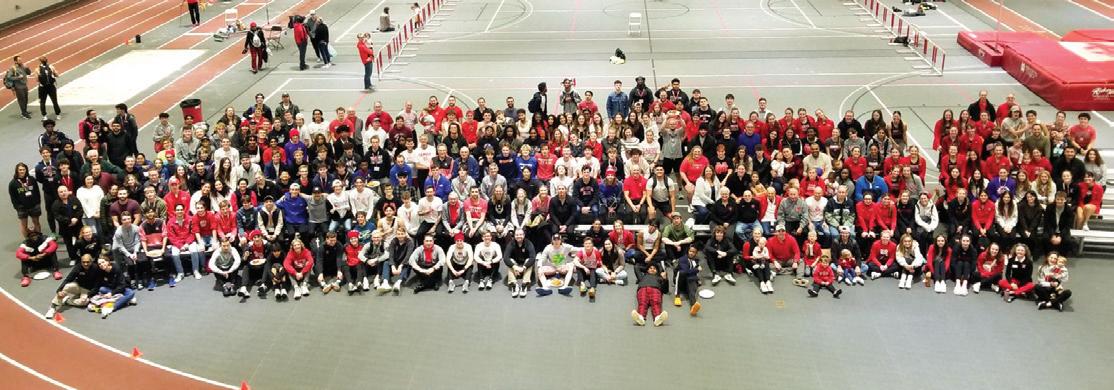
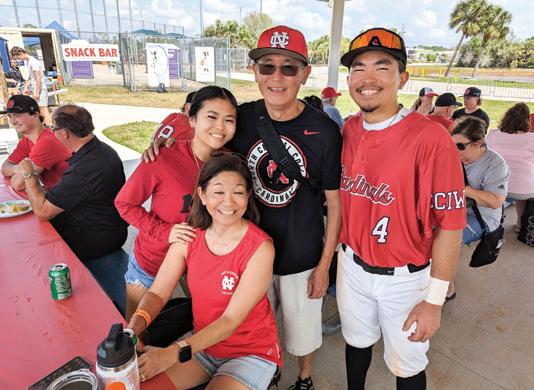
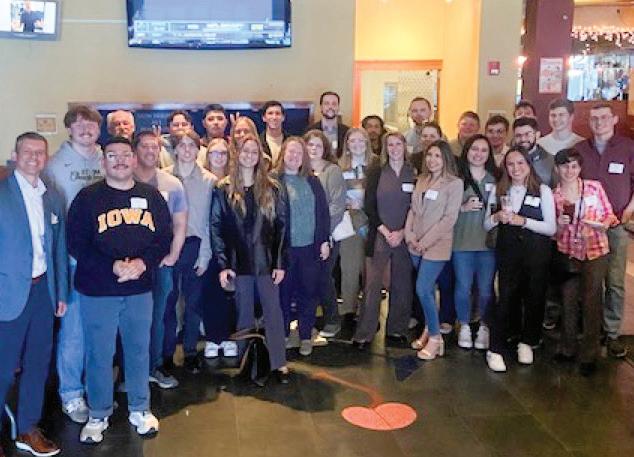

MESSAGE FROM THE Alumni Board President
If you’ve been looking to get more involved with the College, consider joining the Alumni Board of Directors!
We are a group of North Central College and Shimer alums who serve as a bridge among alumni, staff, faculty and students, with the goal of fostering meaningful relationships and creating opportunities for social and professional development. We meet three times per year to discuss College updates, report on areas of campus via our “liaison program,” as well as plan and support College and alumni events in and around the Chicagoland area.
In addition, each year board members work to support students by fundraising and issuing the Rev. Dr. Howard Mueller ’58 Alumni Board Student Involvement Scholarship. This $3,000 award is granted to a student who exhibits leadership qualities and appreciation of the College’s alumni network.
Joining the Alumni Board is a simple and fun way to reconnect or further engage with the College and fellow alumni, while making contributions that will impact students for years to come.
You can learn more about the Alumni Board and apply for membership at northcentralcollege.edu/alumni-board.
CONNOR Mc GURY ’18 / M ’20
Alumni Board President
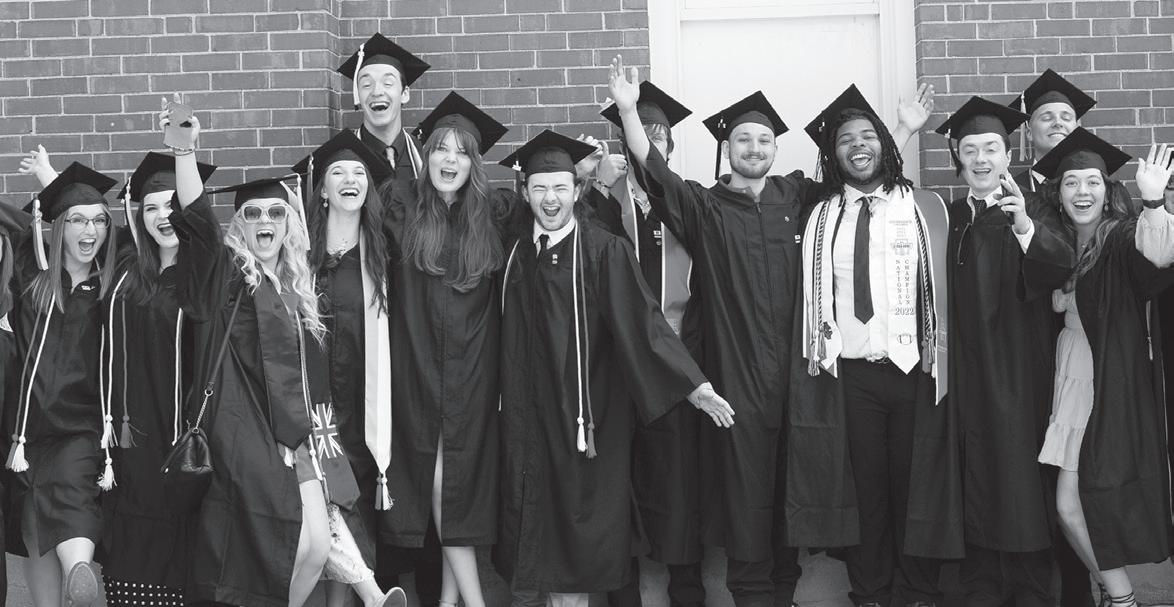
Make a gift to the North Central College Fund. Together, we will make extraordinary futures possible.
There are 2,856* reasons to support the one fund that offers endless possibilities. northcentralcollege.edu/makeagift 630-637-5217
*Total student population
2023 Alumni Track & Field Meet
Holiday Trolley Tour with Santa
Florida Baseball
Florida Softball
Accounting Alumni
College Scholars Alumni
FUND
NORTH CENTRAL COLLEGE
30 N. Brainard Street Naperville, IL 60540
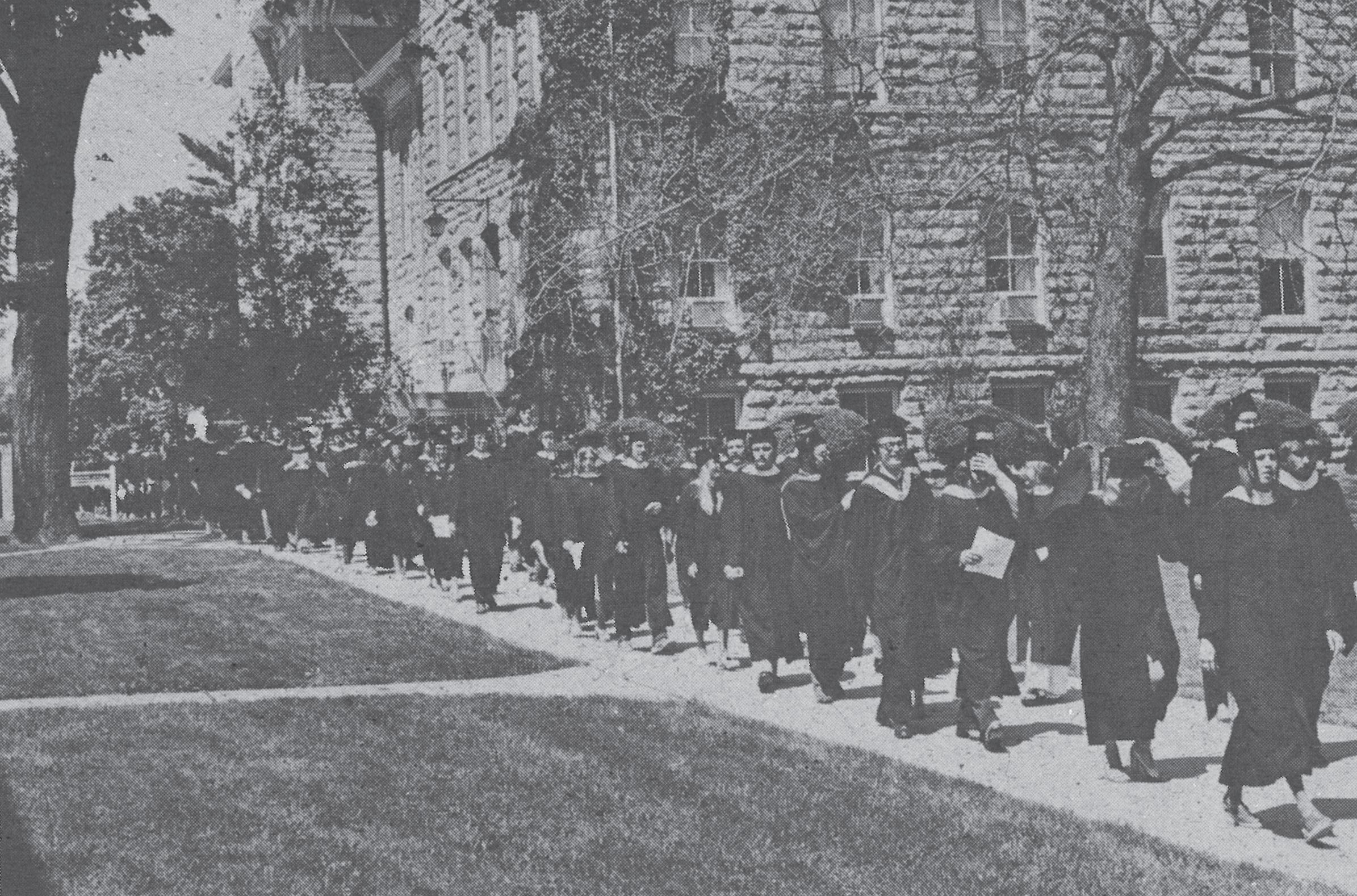
REMEMBER WHEN...
On Saturday, June 1, 1974, North Central College’s 109th Commencement began with a traditional procession from Old Main to Pfeiffer Hall, where the College conferred baccalaureate degrees upon 188 graduates. The Class of 1974 will be inducted into the 50-Year Club during Homecoming weekend, Oct. 18-20, 2024. We look forward to welcoming them back!
Nonprofit Organization U.S. Postage PAID North Central College
