NEWS
Nutrition in the news Karen Voas-Wootton’s digest of nutrition news with clinical relevance
Karen Voas-Wootton RD
Bite-sized Salty Brazilian habit Older women in Brazil are less likely to add salt to food at the table than men – and findings show this can be closely linked to lifestyle and diet. A recent study looked at the salt intake of more than 8300 adults aged 60 and over.2 Men who lived alone were 62% more likely to add salt than those living with other people. Call for greener NHS menus The BDA has published a position paper on reducing the carbon footprint of NHS inpatient menus.3 This includes lower-carbon menus, maintaining nutritional adequacy in meals and patient choice, and reducing singleuse plastic. Nutritional help for patients on obesity medications The BDA Obesity Specialist Group has developed dietary information to support patients who are taking medications for obesity.4 The guide for patients, carers and healthcare professionals is available to download free of charge via the BDA website: www.bda.uk.com. Wegovy moves needle on obesity pill The UK drug regulator’s approval of a daily pill version of the semaglutide injectable drug, Wegovy, for obesity treatment is a game-changer for patients who have needle anxiety.5 The Novo Nordisk tablet is the first glucagon-like peptide-1 (GLP-1) receptor agonist pill to be approved by the UK’s Medicines and Healthcare products Regulatory Agency for weight loss and weight management.
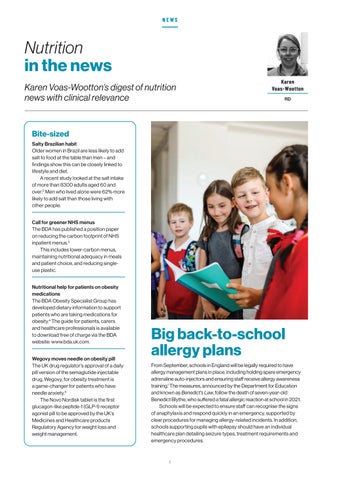
Big back-to-school allergy plans From September, schools in England will be legally required to have allergy management plans in place, including holding spare emergency adrenaline auto-injectors and ensuring staff receive allergy awareness training.1 The measures, announced by the Department for Education and known as Benedict's Law, follow the death of seven-year-old Benedict Blythe, who suffered a fatal allergic reaction at school in 2021. Schools will be expected to ensure staff can recognise the signs of anaphylaxis and respond quickly in an emergency, supported by clear procedures for managing allergy-related incidents. In addition, schools supporting pupils with epilepsy should have an individual healthcare plan detailing seizure types, treatment requirements and emergency procedures.
6