August 2026
Network Health Dietitians The magazine for dietitians, nutritionists and healthcare professionals
Intuitive eating Combatting barriers and limitations
Mushroom madness Food or supplement? Pregnancy support The critical nutritional window
nhdmag.co.uk
Faltering growth Beyond the chart
Network Health Dietitians
CONTRIBUTORS
Emma Coates RD & NHD Editor 5 Up Front
Karen Voas-Wootton RD 6 Nutrition in the News
Leanne Thompson RD 8 Diet & Lifestyle
Sarah Dukes RD 10 Conditions & Disorders
Hazel Duncan RD 13 Paediatric
India Noakes ANutr, NMC 17 Maternal Health
Emma has been a Registered Dietitian for 18 years, with experience in adult and paediatric dietetics.
Karen is a Community Prescribing Support Dietitian and Team Lead at Betsi Cadwaladr. She has a keen interest in appropriate prescribing and nutritional support.
Leanne is a Specialist Dietitian at Norfolk and Norwich University Hospitals NHS Foundation Trust, working predominantly with gastroenterology patients and people with eating disorders requiring acute care.
Sarah is a Specialist Eating Disorder Dietitian and Clinical Co-ordinator in a children's and young people’s eating disorder service for Cheshire and Wirral Partnership NHS Trust.
Hazel is a Paediatric Dietitian and has her own private practice, Kids Nutrition, which provides evidencebased nutrition advice for infants and children.
India is a Research Midwife at Imperial College London and Freelance Nutritionist with interests in fertility, pregnancy and postpartum nutrition. She consults on women's health, product development and workplace wellness.
coatesyRD
leanne-thompson-
sarah-dukes-
rd-a08387181
572212135
kidsnutritionrd
india-noakes-
www.kids-nutrition.com
293bb160
Priya Tew RD 22 Food for Thought
Hannah Pritchard RD 24 Diet & Lifestyle
Madi Myers RNutr 28 Myth Busting
Holly Monday-Jones RD 31 Transitional Care
Giuliana Rocca ANutr 35 Opinion
Fareeha Jay RD 38 The Last Word
Priya is a Specialist Eating Disorders and IBS Dietitian. She runs Dietitian UK, works with the media and is the author of The DASH Diet and The Complete Low FODMAP Diet Plan.
Hannah is a Senior Gut Health Dietitian with extensive NHS experience. She currently works in the research team at the University of Chester and delivers freelance dietetic projects.
Madi is a Freelance Nutritionist working with individuals, hosting workshops and writing. She works across the food industry and the private sector, promoting the non-diet approach to nutrition.
Holly is a Clinical Acute Dietitian and Student Lead for Betsi Cadwaladr University Health Board Central area and founder of HMJ Nutrition Services and HMJ Wellbeing Solutions.
Giuliana is a Programme Manager at University College Dublin. She delivers nutrition workshops and mentors for cooking programmes, providing advice on sustainable diets and healthy food choices to individuals, families and communities.
Fareeha is a Freelance Dietitian providing specialist advice to South Asians across the globe and has developed the South Asian Eatwell Guide.
priya_tew priyatew priyatew www.dietitianuk.co.uk
non_diet_nutrition
hannah-pritchard73a01abb
nondietnutrition
HMJ Nutrition Services
nondietnutrition.co.uk
HMJWellbeing
3
dietitian_fareehajay fareehaJay
giulianarocca
www.fareehajay.com
CONTENTS AUGUST 2026 08
13
17
22
UP FRONT 5 Eating behaviours and IE in practice IN THE NEWS 6 Latest industry and research updates DIET & LIFESTYLE 8 Intuitive eating in context
FOOD FOR THOUGHT 22 The algorithm won’t ask how your week was!
DIET & LIFESTYLE 24 Cholesterol management: fibre and gut health
CONDITIONS & DISORDERS 10 Managing emergencies in eating disorders PAEDIATRIC 13 Recognising and managing faltering growth MATERNAL HEALTH 17 Supporting women through pregnancy
MYTH BUSTING 28 Mushroom madness TRANSITIONAL CARE 31 From critical care to home OPINION 35 Food as medicine: Can we treat disease through diet?
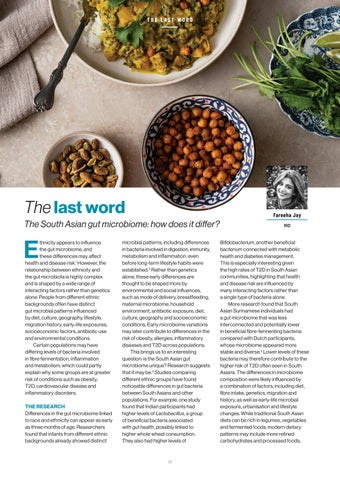
THE LAST WORD 38 The South Asian gut microbiome: how does it differ?
REFERENCES All references can be accessed here: www.NHDmag.co.uk/article-references.html
Copyright 2026. All rights reserved. NH Publishing Ltd. Errors and omissions are not the responsibility of the publishers or the editorial staff. Opinions expressed are not necessarily those of the publisher or the editorial staff. Unless specifically stated, goods and/or services are not formally endorsed by NH Publishing Ltd which does not guarantee or endorse or accept any liability for any goods, services and/or job roles featured in this publication. Contributions and letters are welcome. Please email only to publisher@networkhealthgroup.co.uk and include daytime contact phone number for verification purposes. Unless previously agreed all unsolicited contributions will not receive payment if published. All paid and unpaid submissions may be edited for space, taste and style reasons.
Editor Emma Coates RD Publishing Director Julieanne Murray Production Editor Jill Wedge Subeditor Lisa Pritchard Copy Assistant Sue Vane Website Content Coordinator Erin Dearlove Marketing Coordinator Ava Blackwood Design Douglas Advertising Manager Richard Mair Tel 01342 824073 richard@networkhealthgroup.co.uk
@networkhealthdietitians Phone 01342 824073 Email publisher@networkhealthgroup.co.uk www.NHDmag.co.uk Address Suite 1, Forest Row Village Hall, The Square, Lewes Road, Forest Row, East Sussex RH18 5ES
4
@nhd _health_dietitians @NHDmagazine linkedin.com/company/nh-publishing ISSN 2398-8754
UP FRONT
Up front Eating behaviours
Emma Coates
and intuitive eating in practice
RD & NHD Editor
H
ello and welcome to the August issue of NHD Magazine. Eating behaviours are very individual. If we reflect on our own behaviours, many of us can probably pick out areas for improvement, the aspects we've refined over time and understand the habits that have shaped the way we eat. However, it’s a complex ecosystem that develops over many years, influenced by biological, psychological and social factors. Our hunger, energy needs, environment, culture and emotions all play a part, with some of these influences shouting louder than others. How we respond to these cues can determine whether our eating behaviours are balanced, healthy, and aligned with our body’s natural signals. Or they can tip into unhealthier patterns, such as overeating or restricting, which can negatively affect health and well-being. THEMES This month, we share two articles that look at eating behaviours, and while they may seem to be poles apart, they can actually cross paths. Rather than following a restrictive or orchestrated diet, intuitive eating (IE) focuses on tuning in to your body’s natural hunger and satiety signals. IE has emerged as a non-diet, weightneutral approach to health, which has been advocated and implemented by healthcare professionals since the mid-1990s. The principles of IE empower people to adopt a flexible approach to eating, building trust and respect with the body and mind. It challenges relationships with eating behaviours, food and diet culture. In this issue, Leanne Thompson RD discusses how IE can be applied across a range of contexts and considers the barriers and limitations of this approach. She also looks at how IE can support eating disorder (ED) recovery through
challenging and reshaping relationships with food, rules and restrictions. It can also help to rebuild trust in hunger/fullness signals, potentially supporting sustainable eating patterns. However, it takes time for those affected by an ED to be ready for this type of approach. Acute management of EDs is a challenging journey, which requires significant input from highly specialist MDTs, including dietetic expertise. Sarah Dukes RD joins us this month with insights into managing emergencies in EDs. Sarah walks us through her MDT and community team processes to pathway to hospital admission. Elsewhere in the issue, Hazel Duncan RD brings us up to date on recognising
5
and managing faltering growth in infants and children. Another area where eating behaviours greatly impact health and well-being is faltering growth, where the causes are multifactorial and complex. Hazel presents two case studies that highlight best-practice approaches and solutions to faltering growth management, depending on the context. Don’t forget to check out our regular columnists, including Madi Myers ANutr, who looks at the nutritional myths and facts around mushrooms, and Fareeha Jay RD, who discusses the South Asian gut microbiome in The Last Word. There’s always plenty to feast on here at NHD! Enjoy the read. Emma
NEWS
Nutrition in the news Karen Voas-Wootton’s digest of nutrition news with clinical relevance
Karen Voas-Wootton RD
Bite-sized Salty Brazilian habit Older women in Brazil are less likely to add salt to food at the table than men – and findings show this can be closely linked to lifestyle and diet. A recent study looked at the salt intake of more than 8300 adults aged 60 and over.2 Men who lived alone were 62% more likely to add salt than those living with other people. Call for greener NHS menus The BDA has published a position paper on reducing the carbon footprint of NHS inpatient menus.3 This includes lower-carbon menus, maintaining nutritional adequacy in meals and patient choice, and reducing singleuse plastic. Nutritional help for patients on obesity medications The BDA Obesity Specialist Group has developed dietary information to support patients who are taking medications for obesity.4 The guide for patients, carers and healthcare professionals is available to download free of charge via the BDA website: www.bda.uk.com. Wegovy moves needle on obesity pill The UK drug regulator’s approval of a daily pill version of the semaglutide injectable drug, Wegovy, for obesity treatment is a game-changer for patients who have needle anxiety.5 The Novo Nordisk tablet is the first glucagon-like peptide-1 (GLP-1) receptor agonist pill to be approved by the UK’s Medicines and Healthcare products Regulatory Agency for weight loss and weight management.
Big back-to-school allergy plans From September, schools in England will be legally required to have allergy management plans in place, including holding spare emergency adrenaline auto-injectors and ensuring staff receive allergy awareness training.1 The measures, announced by the Department for Education and known as Benedict's Law, follow the death of seven-year-old Benedict Blythe, who suffered a fatal allergic reaction at school in 2021. Schools will be expected to ensure staff can recognise the signs of anaphylaxis and respond quickly in an emergency, supported by clear procedures for managing allergy-related incidents. In addition, schools supporting pupils with epilepsy should have an individual healthcare plan detailing seizure types, treatment requirements and emergency procedures.
6
INFORMATION FOR HEALTHCARE PROFESSIONAL USE ONLY
Are your patients getting enough fibre?
One ingredient – 100% soluble Partially Hydrolysed Guar Gum (PHGG). PHGG has been shown to increase bifidobacteria and butyrate-producing bacteria in human studies1,2* and helps to normalise stool consistency.3,4
Find out more
Order a sample†
OptiFibre® is a Food for Special Medical Purposes and must be used under medical supervision. REFERENCES: 1. Takahashi et al. J. Nutr. Sci. Vitaminol. 1994; 40 (3):251-9. 2. Ohashi et al. Consumption of partially hydrolysed guar gum stimulates Bifidobacteria and butyrate producing bacteria in the human large intestine. Beneficial Microbes 2015; 6:451-455. 3. Rao, et al. Role of guar fiber in improving digestive health and function. Nutrition 2019, 158 – 169 4. Slavin J, Greenberg N. Partially Hydrolyzed Guar Gum: Clinical Nutrition Uses. 7 Nutrition 2003, 19: 549-552. *Statistically significant increases observed (p<0.05) †For professional evaluation only. ®
Reg. Trademark of Société des Produits Nestlé S.A. NHSc 142 June 2026
DIET & LIFESTYLE
Intuitive eating in context: barriers and limitations
Leanne Thompson RD
I
ntuitive eating (IE) has become increasingly popular, with many healthcare professionals embracing it as a non-diet framework and individuals affected by the psychological effects of chronic dieting adopting it as an alternative approach. There is strong evidence to support the use of IE as an alternative to restrictive eating, with reported benefits such as improved psychological well-being and reduced disordered eating behaviour. As a registered dietitian with a history of disordered eating myself, I strongly support IE and advocate for its use where appropriate. However, it is not a universal solution and may not be appropriate in every context. IE is an evidence-based framework developed in 1995 by dietitians Evelyn Tribole and Elyse Resch.1 As a non-diet approach to eating behaviour, it aims to strengthen interoceptive awareness, which is the ability to detect and process internal bodily sensations. This helps individuals respond to hunger and satiety cues, rather than regulating food intake around weight-loss goals. The IE framework is built around 10 principles that support individuals to move away from rigid dieting behaviours and rebuild trust between the mind and body. 1. Reject the diet mentality 2. Honour your hunger 3. Make peace with food 4. Challenge the food police 5. Discover satisfaction 6. Feel your fullness 7. Coping with emotions 8. Respect your body 9. Enjoy movement 10. Gentle nutrition Over the past decade, IE has gained attention as an alternative to weight-focused dieting, particularly as awareness has grown around the potential harms associated with chronic dietary restriction. Dieting has been
linked to a higher risk of eating disorders and poorer well-being outcomes, including low self-esteem and dietingrelated stress. In contrast, IE has been associated with lower levels of psychological stress and body image disturbance, while avoiding weightcentric goals.2 IE offers many benefits; however, it may have unintended consequences if introduced without careful assessment. EATING DISORDER RECOVERY Recovery from an eating disorder varies from person to person, but the principal goal is to promote metabolic stabilisation and, if appropriate, weight restoration. This is achieved by reducing restrictive eating behaviours to ensure adequate nutritional intake. IE may appear to be a suitable framework to follow. However, IE relies on an individual’s ability to build upon and implement interoceptive awareness, helping them to rely on their internal cues to drive eating behaviours. In people with eating disorders, this awareness is often significantly impaired, which can make hunger and satiety more difficult to recognise accurately, resulting
8
in inadequate intake. A structured approach, described as ‘mechanical eating’, can ensure regular eating, which improves outcomes for those in the initial stages of eating disorder recovery. This involves relying on external cues, such as setting alarms or organising eating episodes to prompt eating. The REAL Food Guide (Recovery from Eating disorders for Life) is a framework created specifically for those in eating disorder recovery. It considers the challenges this patient group faces while providing adequate nutrition to meet recovery goals.3 However, impaired interoception is not the only barrier to applying IE. External factors, such as food insecurity, can also make its principles difficult to apply. FOOD INSECURITY (FI) FI refers to the lack of consistent access to adequate nutritious food due to financial factors. Interestingly, evidence suggests FI is associated with specific disordered eating behaviours; for example, those living with food insecurity are more likely to experience binge eating behaviours.4
DIET & LIFESTYLE
This stems from the ‘feast-or-famine’ cycle: individuals must carefully ration limited resources, resulting in missed meals followed by overeating when food becomes available. Restrictive eating behaviours are thought to contribute to disordered eating. Research has found that people experiencing FI had lower intuitive eating behaviours than those who were food secure.5 While the IE framework may be useful for this context, the same research also noted how IE may not be accessible for those on a low income with limited food resources, as eating patterns are often shaped by availability rather than internal hunger and fullness cues. This can make principles such as honouring hunger, feeling full and practising gentle nutrition harder to apply. Food deserts in lower socioeconomic areas can further limit access to a varied diet, while stress and anxiety related to FI may also affect interoceptive awareness. Together, these barriers can make IE appear inaccessible or privileged. However, the underlying issue is FI itself and requires further addressing by governing bodies. Although IE may not be accessible in these circumstances, that does not mean the framework itself is problematic. While FI shows how social and environmental constraints can shape eating behaviours, the use of glucagonlike peptide-1 (GLP-1) receptor agonists (RAs) highlights how medical treatment may also disrupt the internal cues on which IE depends. GLP-1 MEDICATIONS GLP-1 RAs have long been used to manage T2D, and in recent years have gained widespread attention as weight-loss medications. They work by suppressing appetite, delaying gastric
IE aims to reduce food noise and emotional eating, while GLP-1 usage has been associated with reductions in both emptying and enhancing satiety, which can reduce oral intake and contribute to weight loss. This can create conflict if attempting to implement IE alongside their use. Because GLP-1 RAs are typically used with intentional weight loss as a goal, rejecting diet mentality may be difficult, or arguably, impossible. In addition, reduced hunger cues and early satiety may make it harder for people using these medications to rely on internal signals of hunger and fullness and so trust their bodily sensations. Despite these conflicts, the two approaches may share some positive outcomes. IE aims to reduce food noise and emotional eating, while GLP-1 usage has been associated with reductions in both. However, these effects may be short-lived when achieved with medication. One study found that emotional eating returned to baseline 12 months after stopping GLP-1 treatment.6 Another study reported rapid weight regain after treatment cessation,7 highlighting the risk of weight cycling. Although GLP-1 use may offer shortterm benefits, these findings raise an important question about whether IE could be adapted for use alongside GLP-1s to support long-term outcomes.
9
CONCLUSION IE offers a valuable alternative approach to those looking to distance themselves from diet culture and restrictive eating patterns. It can improve psychological well-being and promote a healthier relationship with food. However, it is not universally appropriate or accessible, so its use should be guided by clinical judgement, individual circumstances and an understanding of the wider social factors that may affect a person’s ability to engage with its principles.
CONDITIONS & DISORDERS
Sarah Dukes
Managing emergencies
RD
in eating disorders
E
ating disorders (EDs) have the highest mortality rate of any mental health condition in the UK.1 It’s no surprise, therefore, that part of my role working as a specialist ED dietitian within a community MDT involves supporting and managing physical health emergencies. Despite the high risk, statistics also show that 46% of those with anorexia nervosa fully recover.1 So, while challenging, working in EDs can also be extremely rewarding. Anecdotally, my team and I have seen an increase in the number of young people presenting for initial assessment acutely unwell, requiring hospitalisation to stabilise physical health before continuing with long-term community dietetic and psychological support. Statistics show an 84% increase in hospitalisations for EDs in the last five years.2 EDs are a specialist area; while some medical professionals in acute district general hospital settings may still prefer doctor-to-doctor discussions, specialist dietitians are integral to the safe nutritional management of patients in crisis. Dietitians working in this area have the necessary skills, expertise and physical health risk-awareness to devise appropriate refeeding plans to stabilise starved patients safely. WHAT IS AN EMERGENCY IN EATING DISORDERS? As in all areas of medicine, EDs have clinical guidance to inform best practice. When discussing emergencies
in EDs, it is important to start by considering the Medical Emergencies in Eating Disorders (MEED) guidance.3 Developed by the Royal College of Psychiatrists, the MEED guidance is extensive and includes practical advice to support the safe management of medical emergencies, along with an assessment tool that can be used to gauge potential impending risk to life.4 The tool is particularly useful, as patients with an ED may present as appearing superficially well, when in reality, their body is under extreme stress due to the side effects of starvation and/or
compensatory behaviours. Dietitians are key members of the MDT and can apply their knowledge and expertise to assess cases using the tool as guidance. Signs of physical instability in ED patients include: - Bradycardia - Hypotension - Significant postural drop - Postural tachycardia - Hypothermia - Syncope - Arrhythmia - Oedema - Electrolyte imbalances
Red
Amber
Green
Postural drop 21
Rate of weight loss: Week 1 – 800g Week 2 – 600g Week 3 – 700g
Weight for height 82%
Increase in heart rate on standing: Week 1 – 5 bpm Week 2 – 15 bpm Week 3 – 25 bpm
Heart rate: Week 1 – 60 bpm Week 2 – 58 bpm Week 3 – 53 bpm
Acute food refusal – consuming less than 500kcal/day
Increasing levels of anxiety and resistance to weight gain reported
Poor insight and lack of evidence of the plan being successfully implemented in the community over the last three weeks
Moderate levels of uncontrolled exercise – difficult to fully assess as the young person is secretive about this
Table 1: Example of a mixed-risk presentation
10
Signs of poor concentration – patient is academic, but some concern raised from teaching staff at school
CONDITIONS & DISORDERS
- Deranged nutritional bloods - Hypoglycaemia and ketones in urine - Rapid weight loss - Acute, significant calorie restriction - Fluid restriction EDs are mental health conditions; individuals may be predisposed toward highly perfectionistic and self-critical tendencies, and may demonstrate high levels of secretive behaviour, shame, anxiety, low mood and low selfesteem. Paradoxically, ‘gold standard’ treatment for an ED – early intervention and swift refeeding – can initially heighten mental health risk in starved patients due to the distress associated with increased dietary intake and perceived loss of control over their bodies and, by extension, their lives. Research shows that 20% of all deaths among adults with anorexia nervosa are attributed to suicide. Both bulimia nervosa and binge eating disorder are associated with a high prevalence of self-harm and suicidal ideation in paediatric and adult patient populations.5 OUR MDT AND COMMUNITY TEAM PROCESS The physical condition of people with EDs is changeable and can deteriorate quickly. Up-to-date physical health checks are, therefore, often helpful. Community teams do not always have direct access to all the same-day physical health checks and in practice, patients we support rarely fit neatly into boxes – not always clearly red, amber or green. Using the example of a 14-yearold girl (based on common themes) having been referred to our service, we assess her as having a mixed-risk presentation. She has been attending weekly appointments in the community with her parents. Table 1 gives an example of a mixed-risk presentation. Our next step is an MDT discussion with the girl and her parents. The team includes a dietitian, eating disorder therapist, physical health nurse and psychiatrist. Therapists within the team have varying clinical backgrounds and experience to draw upon, including cognitive behavioural therapy, mental health nursing and occupational therapy. A dietitian’s role
in the team is predominantly to assess food intake, review progress of any implemented meal plans and interpret anthropometric information. Clinical experience may enable a dietitian to interpret and assess other physical health parameters within this specialist area. Dietitians are well placed to use clinical reasoning skills to form views on levels of risk, likelihood of success of community treatments and make treatment suggestions. The outcome of our team discussion in this case study is to consult with paediatricians at the local district general hospital for a potential refeeding admission. This decision is made because, although the young person has some physical health observations that fall into the green and amber categories, some also fall into the red. This, coupled with a threeweek trend showing deterioration in physical stability, a decline in mental health and ongoing struggles to implement plans in the community, means an admission is deemed likely to be necessary to support meaningful progress towards recovery. Research strongly indicates that front-loading treatment early on predicts better outcomes.6 This includes faster medical stabilisation, reduced cognitive rigidity due to starvation, fewer hospital admissions and higher treatment acceptability.7 It also provides families with a ‘crash course’ to support them in managing the ED post-discharge, as well as breaking the cycle for the young person, who at times can feel trapped by the ED. So, while admissions can be extremely difficult for the young person and their family, particularly as an acute response to crisis, it can be argued that the positives sometimes outweigh the negatives. This needs to be carefully considered on a case-bycase basis. THE ADMISSION PROCESS Admissions to district general hospitals are dependent on bed availability and an assessment of the level of physical health risk. Our initial step would be to liaise with our link consultant paediatrician (where available) or consultant on call.
11
Dietitians are skilled in communicating information concisely and are well placed to have discussions regarding refeeding treatment, highlighting risks and sharing the wider team’s assessment and treatment recommendations. I have focused over time (and see great benefit in) building close relationships with the acute hospital team. This has included identifying a link paediatric consultant with a specialist interest in nutrition and eating disorders, attending regular MDT meetings to discuss shared cases, providing training to ward staff and closely supporting in person throughout all admissions. Dietitians are integral to communicating the risks associated with refeeding syndrome. They advise what portion sizes the young person’s refeeding plan should start with and liaise about food allergies.8 We can also discuss food choices such as vegetarianism and a small, permissible number of food dislikes. CONCLUSION At a time when the role of allied health professionals is under increasing discussion, including in Parliament, dietitians have an important contribution to make in the recognition and management of medical emergencies in people with EDs. This specialised area sits at the intersection of physical and mental health, where rates of hospital admission and mortality remain concerning. As members of the MDT, dietitians bring expertise in assessing and interpreting nutritional status, helping to identify risks and support timely intervention. Equally important are strong communication skills – working effectively with young people, their families and other healthcare professionals – to ensure that emergencies are recognised early and managed safely. By combining clinical expertise with collaborative care, dietitians play a vital role in improving outcomes for this vulnerable patient group.
This information is intended for Healthcare Professional use only.
Fortini starter packs Support children with faltering growth Now available to order online, free and direct to your patient*
NEW
Fortini Compact Multi Fibre starter pack
Fortini Smoothie Multi Fibre starter pack
What’s included? Delicious flavours Fortini Smoothie Multi Fibre – Summer Fruit & Berry Fruit Fortini Compact Multi Fibre – Strawberry, Chocolate-Caramel and Neutral Recipe book and Ice lolly mould
Low volume, high energy, great taste.1† 300 kcal
7.2g^ protein
3g
fibre
2 bottle sleeves 1 pack of fruit stickers and crayons (Smoothie starter pack only) Access to the Fortini All Stars Club Free sign-up for parents and carers
Contains 15% real fruit 300 kcal
6.8g
protein
2.8g fibre
IMPORTANT NOTICE: The Fortini range are Foods for Special Medical Purposes for the dietary management of disease-related malnutrition and growth failure in children from one year onwards, and must be used under medical supervision. Refer to label for details. ONS: Oral Nutritional Supplement 12 contains 7.1g protein per bottle. *Product can be provided to patients upon the request of a Healthcare †Compared to standard paediatric ONS 200ml, 1.5kcal/ml. ^Fortini Compact Multi Fibre Chocolate-Caramel flavour Professional. They are intended for the purpose of professional evaluation only. References: 1. Cawood, et al. J Child Health Care. 2023;0(0):1-23. Accurate at time of publication: May 2026.
PA E D I AT R I C
Beyond the growth chart Recognising and managing faltering growth in infants and children
Hazel Duncan RD
F
altering growth, also known as failure to thrive, remains a significant concern in paediatric healthcare. It reflects an underlying disruption in a child’s nutritional status and overall well-being. Characterised by a child’s weight or height falling below expected growth trajectories for age and sex,1 faltering growth often indicates inadequate nutrient intake, absorption issues or chronic medical conditions. Early recognition and intervention are critical, as persistent growth faltering can lead to lasting consequences, including developmental delays, weakened immunity and impaired cognitive function.1,2 In the UK, paediatric growth is monitored on growth charts that combine the World Health Organisation growth standards, along with the UK birth and preterm growth data. To ensure accurate interpretation of growth, measurements must be taken accurately by someone trained in infant and child growth measurements. Infants under two years of age should be naked when measured, with their weight taken on infant scales measuring to two decimal places, and their length measured on a length board or mat. Pressure is applied to their knees to ensure leg positioning is correct, and the foot should be in a flexed position. Children over two years of age should be weighed in light clothing and their height measured using a stadiometer. Measurements should be plotted on the appropriate growth chart to ensure data can be interpreted.3 The management of faltering growth can be complex, with paediatric dietitians taking on an important role within the MDT. The management plan is adapted depending on the presentation and reasons for growth faltering, and a patient-centred approach is required to ensure the child’s needs are met.
CAUSES OF FALTERING GROWTH Faltering growth can be defined as organic or non-organic, with nonorganic causes being much more common (approximately 95% of cases). As it is multifactorial, faltering growth can be linked to nutritional, medical, developmental or psychosocial causes. In most cases, inadequate nutritional intake is the primary contributing factor, although underlying organic disease must always be considered. For dietitians, understanding the broad range of potential causes is essential for accurate assessment and effective intervention. Inadequate energy intake commonly results from feeding difficulties during infancy and early childhood. Various factors can compromise nutritional adequacy, including: • Breastfeeding challenges such as latch, let-down, poor positioning and tongue ties • Incorrect formula preparation
13
• Vomiting or loose stools resulting in increased losses • Delayed progression to complementary feeding • Selective eating • Excessive consumption of lownutrient fluids Toddlers who consume large volumes of milk may experience appetite suppression, which in turn will lead to reduced solid food intake and a potential for growth faltering, alongside other micronutrient deficiencies. Feeding behaviours such as grazing, prolonged mealtimes and pressured feeding can further contribute to poor intake. FALTERING GROWTH AND CHRONIC ILLNESS Some children experience faltering growth due to increased metabolic requirements associated with chronic disease. Conditions include congenital heart disease, chronic lung disease, cystic fibrosis and cerebral
PA E D I AT R I C
palsy. Recurrent infection can also increase energy expenditure while simultaneously decreasing appetite, which in turn may cause growth faltering. If growth faltering is linked to an acute illness, it usually improves over time and once the child is well, with minimal dietetic input. Children with chronic conditions may appear to eat an adequate intake; however, their energy requirements can be significantly higher than those of their peers due to metabolic demands on the body. Gastrointestinal disorders are also an important consideration. Coeliac disease, inflammatory bowel disease, food protein allergies and pancreatic insufficiency may impair nutrient absorption and contribute to poor weight gain. Symptoms such as chronic diarrhoea, vomiting, abdominal distension or persistent feeding intolerance should prompt further investigation. Psychosocial factors frequently coexist with nutritional and medical issues. Poverty, food insecurity, parental mental health difficulties, neurodevelopmental disorders and safeguarding concerns can all influence feeding practices and access to adequate nutrition. Parent-child feeding interactions may become increasingly stressful when growth concerns emerge, potentially worsening feeding refusal and mealtime conflict.
RECOGNISING FALTERING GROWTH IN CLINICAL PRACTICE As mentioned previously, accurate growth measurements are key to assessing child growth. Growth should be assessed, if possible, using several measurements and should be taken consistently, ensuring that Royal College of Paediatrics and Child Health guidelines are followed around clothing, nappies and shoes.4 Paediatric dietitians should ensure measurements are plotted on the correct chart and are accurate. The introduction of electronic growth charts should reduce plotting errors, but we should still ensure that data input is correct and adjustment for prematurity has been made if appropriate. When a patient is referred to paediatric dietetics due to concerns about faltering growth, diet history and clinical assessment are cornerstones for identifying any other investigations or tests that may need to be carried out. These will also highlight any lack of intake that could be causing growth to falter. The diet history should detail
14
typical meals and snacking, including portion sizes where possible. A food frequency questionnaire can be a useful tool for assessing other foods that are regularly consumed. Symptoms should be assessed, including red flag symptoms such as vomiting, stooling, energy levels, GI symptoms and the time meals are eaten if the patient is impacted by neurodisability. An observation of a family meal or discussions around mealtime structures can be helpful for better understanding family dynamics if practice allows. THE PAEDIATRIC DIETITIAN’S ROLE IN MANAGEMENT Management strategies are highly individualised and often focus initially on optimising oral intake through practical dietary modification. This may include food fortification, structured meal and snack patterns, management of excessive milk intake and improving energy and protein density within the child’s diet. For infants, support with breastfeeding or formula feeding may be required, while older children may benefit from behavioural feeding strategies that reduce mealtime stress and encourage responsive feeding practices. Dietitians also play an important role in determining when oral nutritional supplements or enteral feeding are indicated. Equally important is the provision of family-centred support, as parents of children with faltering growth frequently experience anxiety, guilt and frustration around feeding.
PA E D I AT R I C
Effective management relies on MDT collaboration between paediatricians, health visitors, speech and language therapists, occupational therapists and psychologists. Paediatric dietitians are key in supporting catch-up growth, while promoting positive long-term feeding relationships and optimising health. CASE STUDY 1 Restricted solids intake, high milk intake - Patient A is 20 months old, referred by paediatrics for assessment of feeding and support around growth. - Patient A was tracking around the 50th centile for length, weight and occipitofrontal circumference (OFC) for around the first eight months of life. Since then, weight has drifted to the 2nd centile. - Length is now 25–50th centile and OFC is maintained along the 50th centile. - Paediatrics has asked about dietary assessment; investigations for faltering growth are ongoing.
- The parents report Patient A as a fussy eater, consuming 4 x 150ml cow’s milk daily, and is often given a bottle after refusing to eat a meal. - There is little structure around mealtimes and no family meals due to different work patterns. The parents are aware that the large milk intake is not helping and are anxious to decrease the intake due to growth concerns. When discussing weaning, it becomes clear that Patient A never weaned well onto a variety of textures and flavours and has always preferred milk. - Patient A is pale and there are concerns around iron deficiency anaemia. - Over several appointments, we discuss mealtime strategies with the parents and work towards decreasing the volume of milk being consumed. The parents work hard with the health visiting support worker, who joins the family for mealtimes. - The parents attend a cooking course as they have limited cooking skills. Messy play and exposure to solids are encouraged at mealtimes and over time, we are able to decrease the reliance on cow’s milk and improve the variety at mealtimes. - After around one year working with dietetics, Patient A has a cup of cow’s milk before bed and eats three meals per day and snacks. Growth has stabilised and micronutrient deficiencies corrected. Parents report that having the support of the paediatric dietitian has allowed them to feel confident in decreasing the milk intake as solid intake improves. They feel less pressure around weight fluctuations, which helps with their overall anxiety. CASE STUDY 2 Toddler with coeliac disease - Patient B is referred to dietetics via the GP due to concerns raised by the health visitor around growth. - On assessment, the parents report what appears to be an adequate intake meeting the child’s estimated average requirement. However, despite this, weight has fallen 2.5 centiles. - On further discussion and assessment of symptoms, the
15
parents report that Patient B is often unable to settle and complains of a sore tummy. Patient B has abdominal distension and opens bowels 5–6 times a day with soft/watery stools. The parents report they have been unable to progress with potty training due to the stools being so loose. - Patient B has poor energy levels, which the parents feel is linked to sleep issues. - Following the consultation, paediatrics discuss patient B and an arrangement is made to test for coeliac disease using British Society of Paediatric Gastroenterology, Hepatology and Nutrition/Coeliac UK guidelines.5 The tests confirm coeliac disease and Patient B’s growth improves once established on a gluten-free diet.
CONCLUSION Faltering growth in children is a multifaceted clinical concern that serves as a visible marker of underlying nutritional, medical, developmental or psychosocial issues. Timely identification and intervention are essential to prevent longterm consequences such as impaired cognitive development, weakened immunity and poor academic and social outcomes. Paediatric dietitians are key in assessing these patients and can provide vital information on dietary intake and requirements, which can be useful in determining the degree of further investigation. Dietitians can provide mealtime strategies and support around food fortification, oral nutritional supplements and alternative feeding strategies, which can be tailored to the individual patient. Effective management of this patient group relies on input from the MDT, depending on the child’s needs. Early engagement with families, clear communication and culturally sensitive nutritional planning are key components of successful interventions.
FEED THE THE GOOD GOOD DAYS FEED DAYS
1-4,8-9 1-4,8-9
FEEDTHE THE STOMPY, STOMPY, SPLASHY, FEED SPLASHY, MUDDY BOOT BOOT DAYS MUDDY DAYS WITHNUTRINI’S NUTRINI’S PROVEN PROVEN TOLERANCE. WITH TOLERANCE.
1-4 1-4
LEARN MORE
LEARN MORE
THE #1 RANGE10, DESIGNED FOR 10 SUPERIOR TOLERANCE AND EASY THE #1 RANGE , DESIGNED FOR 3-9 FEEDING, EVERY TIME. AND EASY SUPERIOR TOLERANCE FEEDING, EVERY TIME.3-9
IMPORTANT NOTICE: Nutrini is a Food for Special Medical Purposes for the dietary management of disease related malnutrition in children aged 1-6 years or 8-20kg in body weight, and must be used under medical supervision. 1. Vernon-Roberts A et al.Dev Med Child Neurol 2010; 52: 1099–1105. 2. Dipasquale, V. et al. Nutrients. IMPORTANT NOTICE: Nutrini is a Food for Special Medical Purposes for the dietary management of 2018; 10(6), 684. 3. Grogan J et al. J Human Nutr Dietetics 2006;19:462 4. Trier E et al. J Pediatr disease related malnutrition in children aged 1-6 years or 8-20kg in body weight, and must be used Gastroenterol Nutr 1999;27:595. 5. Sorensen K, et al. Poster: ESPGHAN, 2017. 6. Brun A.C et al. Clin under medical supervision. Nutr 2011: 1-5 7. Fried, M.D., et al.J Pediatr, 1992. 120(4 Pt 1):p. 569-72 8. Billeaud C et al. 1990 1. Vernon-Roberts A et al.Dev Med Child Neurol 2010; 52: 1099–1105. 2. Dipasquale, V. et al. Nutrients. Aug;44(8):577-83 2. 9. Tolia V et al. J Pediatr Gastroenterol Nutr 1992;15:297-301. 10. PPA Market 2018; 10(6), Grogan et al. J Human Nutr Accurate Dietetics at 2006;19:462 4. Trier E et al. J Pediatr Share Data684. on 3. File, 2026. JAccessed: June 2026. the time 16 of publication: June 2026. Gastroenterol Nutr is1999;27:595. SorensenProfessionals. K, et al. Poster: ESPGHAN, 2017. 6. Brun A.C et al. Clin This information intended for 5. Healthcare Nutr 2011: 1-5 7. Fried, M.D., et al.J Pediatr, 1992. 120(4 Pt 1):p. 569-72 8. Billeaud C et al. 1990 Aug;44(8):577-83 2. 9. Tolia V et al. J Pediatr Gastroenterol Nutr 1992;15:297-301. 10. PPA Market
M AT E R N A L H E A LT H
Supporting women through pregnancy Pregnancy is a critical window of nutritional opportunity and vulnerability. A woman's health and nutritional intake can influence foetal development, pregnancy outcomes and both maternal and child long-term health.1 Dietitians, nutritionists, midwives, GPs and other healthcare professionals are well placed to provide nutritional guidance throughout this important life stage. Recent updates to NICE guidance on Maternal and Child Nutrition (NG247), together with NICE Antenatal guidelines (NG201), RCOG and BNF clinical frameworks, and recommendations from the WHO, provide a valuable framework for supporting nutritional care before and during pregnancy.2–5 PRECONCEPTION NUTRITION Optimal preconception health, including good nutritional status, is associated with improved pregnancy outcomes for mother and baby, including a lower risk of poor long-term health outcomes.1 There is currently no clear or mandatory preconception health pathway for women of childbearing age in the UK who do not already have a significant health concern; however, NICE guidance supports that nutritional advice should be discussed before conceiving,
particularly folic acid supplementation and healthy eating and lifestyle.2 The NHS Eatwell Guide underpins dietary advice for women of childbearing age.1,2,6 A diet rich in a variety of fruits and vegetables, wholegrains, lean proteins and dairy or dairy alternatives, with limited saturated fat, salt and sugar, provides the nutritional foundation for a healthy pregnancy. Discuss reducing alcohol intake and refer to the GP for smoking cessation discussions as necessary.2,3 See Table 1 HEALTHY EATING IN PREGNANCY UK dietary advice during pregnancy aligns with general population guidance, with the Eatwell Guide as the foundation.1,8 Emphasis should be placed on a balanced, nutrient-rich diet, with energy requirements remaining largely unchanged until the third trimester, when an additional 200kcal/day is recommended.2–4 Key dietary messages include:2–4 • Fruit and vegetables: Five portions a day. Encourage more where possible. Discuss fibre intake to avoid pregnancy complications such as constipation. • Starchy carbohydrates: Wholegrains and starchy
17
India Noakes ANutr, NMC
carbohydrates should form the main energy source of the diet. • Oily fish: At least one portion per week of omega-3 fatty acids to support foetal brain and eye development, but no more than two portions per week due to pollutant levels. • Calcium: From dairy or fortified nondairy products to support foetal bone development. • Hydration: Encourage regular intake of water and other unsweetened drinks. Advice should be non-judgemental, personalised and culturally appropriate.2,3 Many local services adapt the Eatwell Guide for diverse populations. MICRONUTRIENTS AND SUPPLEMENTS Folic acid Folic acid is ideally taken in the preconception phase, or as soon as a woman finds out she is pregnant.2,3 Low folate levels are associated with neural tube defects (NTDs) such as spina bifida, anencephaly and other congenital malformations.9 Supplementation of 400mcg/day is recommended for anyone planning a pregnancy and up to 12 weeks’ gestation to help reduce the risk of NTDs.2,3 Updated guidance no longer advises women with a BMI >25kg/ m2 or at risk of pre-eclampsia to take a higher dose of folic acid unless specific risk factors are present, which include:2,3 • A previous pregnancy or family history of NTDs or relevant congenital malformations • T1D or T2D • Haematological conditions • Use of antiepileptic medication or HIV medication Despite mandatory fortification of flour and bread with folic acid in the UK, supplementation remains essential as fortification does not provide sufficient
M AT E R N A L H E A LT H
intake of folic acid.10 Most pregnancy vitamins contain 400mcg of folic acid, and women can be signposted to free folic acid via the NHS Healthy Start programme if they are eligible and over 10 weeks pregnant.11 Identifying barriers to supplementation and incorporating supplements into daily routines can improve adherence. Vitamin D Vitamin D deficiency is common.12 Deficiency in pregnancy is associated with poor foetal bone development and higher risk of maternal pregnancy conditions such as pre-eclampsia, gestational diabetes (GDM) and preterm birth.13,14 NICE recommends 10mcg (400 IU)/day vitamin D for pregnant and breastfeeding women between October and March, and year-round for those at higher risk of deficiency, including women of African, African-Caribbean and South Asian ethnicity, and those with limited sun exposure.2,3 Most pregnancy
supplements contain recommended amounts of vitamin D and folic acid; eligible women can access Healthy Start vitamins.11 Iron Maternal iron deficiency remains common; WHO includes anaemia as a global nutrition target for 2030.5 In the UK, anaemia in pregnancy affects around 24% of women, rising to up to 46% by 28 weeks’ gestation. Screening is routine in pregnancy.3,15 Supplementation is not recommended unless anaemia is identified, but dietary iron consumption should be promoted. Food sources include:16,17 • Haem iron – Red meat, chicken and fish • Non-haem iron – Lentils, beans, fortified cereal, dark green leafy vegetables, nuts and seeds Pair non-haem iron foods with vitamin C-rich whole foods such as oranges or tomatoes to aid absorption.
Consuming tea, coffee or high-calcium foods alongside iron-rich foods and/or supplements can inhibit absorption. Iodine Dietary surveys show that many women do not meet the Reference Nutrient Intake (RNI) for iodine (140mcg/day). UK guidance does not recommend increased iodine requirements during pregnancy, but the WHO and the BDA suggest an intake of 200–250mcg/day during pregnancy and breastfeeding.18,19 Iodine is essential for foetal neurological development and thyroid hormone production.20 Women following vegan or restricted diets may require supplementation. Many pregnancy multivitamins contain iodine; women should check that supplements provide no more than 140mcg/day.19 Dietary sources include white fish, dairy products, eggs, seafood, seaweed and fortified plant-based milks. Vitamin B12 Vitamin B12 deficiency can be a concern in restricted diets. NICE advises regular consumption of fortified B12 foods or supplementation.2 If a deficiency is suspected, advise your client to request an active B12 blood test from their GP.21 Omega-3 Omega-3 fatty acids play an important role in foetal brain and retinal development, particularly DHA (docosahexaenoic acid).22 Currently, omega-3-based supplements are not advised in UK guidelines, but oily fish consumption is advised as part of a healthy diet in pregnancy (or an algae-based omega-3 supplement for vegetarians/vegans).23 WEIGHT MANAGEMENT Increased BMI pregnancies have a higher risk of conditions such as GDM, pre-eclampsia and preterm birth. The updated NICE recommendations take a different approach to gestational weight gain than previous guidelines, focusing on promoting healthy eating and physical activity rather than specific weight-gain targets.2 At the booking appointment, women with a BMI of >30kg/m2 should be offered testing for GDM at 24–28 weeks’ gestation, and for women with a BMI of >40kg/m2, referral to specialist
18
M AT E R N A L H E A LT H
obesity services should be considered.24 Weight discussions should be nonstigmatising, with women reassured that intentional weight loss is not recommended in pregnancy due to potential risks to the foetus. Women should be given the option of how they want their BMI to be shared with them (verbal or written). Routine weighing in pregnancy is not recommended unless medically indicated.2,3 GDM GDM accounts for 87% of diabetes in pregnancy and affects an estimated 5–10% of UK pregnancies. It is associated with an increased risk of foetal macrosomia, instrumental or caesarean birth, neonatal hypoglycaemia and later development of T2D in both mother and child.25 NICE states that there is insufficient evidence to recommend a specific dietary approach for GDM. However, all women should receive a dietary assessment, with advice tailored to individual needs and healthy eating principles. Ideally, women should be referred to a dietitian following diagnosis. Particular attention should be given to carbohydrate quality and consistent distribution across meals and snacks.2,3,26 Physical activity plays an important role in glycaemic control. Women should aim for 150 minutes of moderate-intensity activity per week
and be reassured that exercise during pregnancy is safe. As well as supporting glycaemic regulation, it is associated with a reduced risk of GDM, hypertension, depression and anxiety.27,28 NAUSEA AND VOMITING IN PREGNANCY (NVP) Up to 90% of pregnancies are affected by NVP in the first trimester, with most women experiencing resolution by 20 weeks’ gestation. Severe and persistent vomiting or hyperemesis gravidarum (HG), affects 1–3% of pregnancies and may require medication or hospitalisation for rehydration and management.29 Both NVP and HG can significantly impact nutritional intake, and the RCOG provides comprehensive guidance on their management. To support nutritional intake during NVP/HG, patients should:28–30 • eat small, frequent meals of easily tolerated bland foods; • prioritise foods rich in carbohydrate and protein; • continue folic acid and vitamin D supplementation where possible; if not, resume as soon as tolerated; • maintain fluid intake through sips of cold, clear fluids; ice chips or ice lollies may be better tolerated. The Pregnancy-Unique Quantification of Emesis and Nausea (PUQE) score assesses NVP severity.
Avoid/limit
Reasons
Alcohol
No safe level in pregnancy – associated with foetal alcohol spectrum disorder, miscarriage and stillbirth
Unpasteurised cheeses and raw fish
Risk of Listeria infection – associated with miscarriage and stillbirth
Raw/undercooked meat, poultry and eggs
Risk of Salmonella and toxoplasmosis – associated with miscarriage
Liver and liver products
Excess vitamin A (retinol) – harmful to foetal development (advise clients to check supplement labels for retinol content and educate on how to read labels)
Shark, swordfish and marlin
High mercury levels – harmful to foetal brain development
Limit tuna intake
Maximum two portions per week due to mercury content
Limit caffeine
Keep to <200mg/day – high intake is linked to low birth weight and increased risk of miscarriage
Table 1: Food and drinks to avoid or limit in preconception and pregnancy4,7
19
Women with HG are at particular risk of vitamin B1 deficiency and in severe cases, this can lead to Wernicke's encephalopathy.28 ADDRESSING HEALTH INEQUALITIES Women from lower socioeconomic backgrounds, minority ethnic groups, adolescents, those with complex social histories or limited English are at significantly higher risk of poorer pregnancy outcomes, including nutritional disparity. Guidance emphasises the importance of equity and knowledge of local and public health strategies to safety-net women who may be at risk of undernutrition.2 The NHS Healthy Start programme is an important support mechanism for women at higher risk of nutritional deprivation. Women over 10 weeks’ gestation receiving qualifying benefits or who have children under the age of four can access weekly vouchers to spend on fruit, vegetables, pulses and milk, as well as Healthy Start vitamins.2,10 Local community initiatives and children's centres may run cooking classes, provide food banks and guidance on healthy eating and lifestyle. Tips when addressing health inequalities:2,10 1. Provide advice that is culturally sensitive, non-judgemental and accessible in the person's preferred format and language. 2. Consider extended consultations or enhanced support for women from disadvantaged backgrounds. 3. Discuss the NHS Healthy Start programme. 4. Take affordability and food access into account when discussing dietary changes.
CONCLUSION Updated NICE guidance provides a clear framework for nutritional care in pregnancy, emphasising early intervention, supplementation, personalised advice and health equity.2 Consistent, accessible and culturally sensitive nutritional support can improve maternal and neonatal outcomes.
SAMPLE SERVICE
THE NUTRICIA SAMPLE SERVICE The right nutritional support, exactly when your patients need it. Access a broad portfolio of trusted Nutricia products, delivered next day to support clinical decision-making
Next day delivery*
Talking...
Ordering... 20
Delivering...
THIS INFORMATION IS INTENDED FOR HEALTHCARE PROFESSIONALS ONLY.
Order up to 3 different products**
Dashboard to view all your past orders
Patient Feedback direct to Healthcare Professional
Prescription request template available to download
*Ordered before 2pm. (Geographical areas excluded are – Guernsey, Jersey, Highlands and Islands, Isle of Man, Argyll, Orkney, Shetland and Isle of Wight) **Product can be provided to patients upon the request of a Healthcare Professional. They are intended for the purpose of professional evaluation only.
Try today
Trialling...
Feedback... 21
Caring...
FOOD FOR THOUGHT
The algorithm won’t ask how your week was!
L
et’s be honest, AI is being used all over the place, and it’s something we really need to take seriously. Rather than dismissing AI outright, we need to work through how we can use it to support our patients while being aware that some people may already be using it in ways that aren’t particularly helpful. There’s also a real opportunity to think about how AI can save us time in our own practice – something most of us are pretty desperate for. Instead of drowning in paperwork, are there ways AI can benefit us? WHERE AI CAN ACTUALLY HELP AI can generate meal plans, snack ideas and food lists in seconds. It can suggest recipes, provide beautifully formatted versions of resources and offer accessible nutrition information at the drop of a hat. I’ve asked it to help with presentations, social media posts and to summarise articles. For those of us bogged down with admin, it can be genuinely useful. AI is great at summarising clinical notes, turning them into well-written client emails and
reducing the paperwork load. If it can take some of that off our plates, brilliant! It frees us up for the work that actually needs a human being. For clients, particularly those who struggle to access dietetic services due to cost, waiting times or geography, AI is increasingly consulted. I think most people have probably asked AI about a medical symptom, so why not ask it a nutritional question? Personally, I don’t think an AI tool that encourages meal variety or general healthy eating is inherently harmful. Asking AI to help plan a meal or give ideas is something I recommend. We shouldn’t be so protective about our professional space; we need to acknowledge when something makes basic information more accessible. ACCURACY MATTERS It is well known that AI isn’t always that accurate, which is very easy to forget when you are using it. Let’s face it, that chatty, confident tone can make us feel that AI is the expert. Like many, I have called AI out in a few situations; it agrees
Priya Tew RD
it was wrong and apologises. But even when it is wrong, AI sounds confident. It doesn’t flag uncertainty and say “Actually, I’m not sure about this one”. It just answers in the same polished, assured tone regardless of whether it’s right or wildly off the mark. Research comparing AI advice to patients with complex nutrition cases has found that not a single chatbot hit 50% accuracy. The advice given was reviewed by dietitians and found to be lacking in accuracy, reproducibility and consistency.1 The cases that come to us as dietitians are rarely simple. People arrive with comorbidities, multiple medications, challenging family dynamics, cultural food practices, financial pressures, working patterns and a whole backstory that AI algorithms will never ask about. Consider what AI simply cannot see: • The client who eats erratically because of night shifts, not a lack of motivation. • The family where food is deeply cultural and social and where a generic meal plan/diet would cause real harm to relationships and identity. • The person with limited access to food and kitchen equipment who struggles to afford to eat healthily. • Someone whose relationship with food is complicated enough that a calorie-focused meal plan would do more harm than good. AI-generated advice is populationlevel thinking, based on generic advice found on the internet but dressed up in a lovely package to look like personalisation. It can take a few inputs such as age, weight and activity level, but it has no real sense of the individual behind those numbers. IT NEEDS THE RIGHT PROMPTS The quality of the response from AI
22
FOOD FOR THOUGHT
depends on what we put in. A client typing “Give me a healthy meal plan” will receive a very generic reply. A dietitian asking for a lowFODMAP plan for an active women in perimenopause incorporating lactose and wheat but avoiding other FODMAPs, which provides a diverse range of prebiotic foods where possible, keeps eating occasions no more than three hours apart, includes pre-packed afternoon snacks suitable for eating on the go, avoids all nuts and based on the Monash University FODMAP lists… well, that’s going to get a much more useful result. Whilst the response still needs to be clinically checked, it is a good starting point. The problem is that most of our clients don’t have the nutritional knowledge to ask the right questions. And that’s where things can go wrong. The client receives a confidentsounding answer to a poorly framed question and they act on it. Being able to use AI well is a skill, and one that nutrition professionals are well placed to develop and teach. So maybe instead of avoiding AI we need to learn how to use it and show clients in clinic how it can help them. THE EATING DISORDER SITUATION As an eating disorder dietitian, I have used AI to help me formulate meal ideas, smoothie recipes, mindfulness prompts and more. I know from the people I support that some use AI as a form of checking in; because they are disordered, they may use questions such as “Have I overeaten?”, “How much should I eat?” and “How can I reduce the calories of this meal?” So, I have done some testing of my own. I asked AI the kinds of questions clients with disordered eating might ask, and what I found was interesting. AI tools do seem to have some awareness of eating disorder-related content. Ask for an extreme restriction plan or push for the lowest possible calorie intake and there’s a reasonable chance it will pause, flag concern or decline to answer. On the surface, that sounds reassuring. I have been directed to Beat Eating Disorder resources or told that AI is not a clinician and to seek further help. This is great on the one hand, but on the other, the screening
isn’t consistent. With a small change to how the questions are framed, the refusal disappears. Anyone motivated to get around it probably can. So, while it’s good to see some safeguarding in place, we shouldn’t be reassured that AI is keeping our most vulnerable clients safe – it isn’t. Not reliably. Chatbots used in eating disorder treatment have been found to respond inappropriately to questions and to give damaging replies. They can be very black and white. Compare that with a skilled dietitian in the same situation who will use motivational interviewing, notice the ambivalence, hold space, neither reinforce disordered thinking nor shut the conversation down. That’s not something AI is likely to replicate. WHERE AI HAS NO BUSINESS GOING AI is not appropriate for clinical and medical nutrition therapy. Renal nutrition, oncology nutrition support, eating disorder management, metabolic conditions, enteral and parenteral nutrition, for example, all require a registered, accountable clinician. Full stop. This isn’t about protecting our professional patch or trying to save our jobs. It’s about patient safety. When AI gets it wrong in these contexts (and the evidence suggests it frequently does in complex cases), there is no professional accountability, no duty of care and no way for the patient to seek redress. That matters enormously. SO WHERE DOES THIS LEAVE US? AI isn’t going away and, honestly, nor should it in every context. But the dietetic profession needs to lead this conversation, not play catch-up. So often in the past, that has been our story. Instead, we must become familiar with these tools ourselves, test them, understand their limitations and be able to have informed conversations with our clients about what they are using and why. It means being really clear with clients that AI can be a helpful starting point for general ideas, but it doesn’t
23
know them. It doesn’t know their health history, medications, relationship with food, lifestyle and so on. And when situations are complex – medically, psychologically or both – AI is not the right tool. AI can write your client a meal plan. It cannot ask how their week was, notice that something seems off and gently explore what is really going on. That part, the human part, is still entirely our job – and I’m glad of that.
DIET & LIFESTYLE
Hannah Pritchard RD
Cholesterol management A focus on fibre and gut health
H
igh cholesterol is frequently encountered in clinical practice and is influenced by a range of genetic, lifestyle and metabolic factors that may develop over time. Dietary and non-dietary strategies can support cholesterol reduction, with increased fibre intake recognised as an important dietary approach. Dietitians play a key role in cholesterol management through the assessment of dietary patterns, eating behaviours, lifestyle habits and overall metabolic health. Nutritional interventions should be individualised to meet the patient’s specific needs and tailored alongside the management of any coexisting conditions or comorbidities. Cholesterol is a fatty substance produced mostly in the liver and found in our blood.1 It has positive and negative effects on our physiology and can be affected by dietary and non-dietary factors. For example, cholesterol helps
absorb and digest dietary fat, forms part of every cell membrane and acts as a precursor for steroid hormones, bile acids and vitamin D.2 Although high cholesterol may not cause rapid symptoms alone, it can contribute to chronic health problems over a long period of time, such as cardiovascular disease (CVD) and obesity.3 Cholesterol becomes clinically relevant when circulating levels, particularly low-density lipoprotein (LDL) cholesterol, contribute to atherogenesis. Excess LDL particles can infiltrate the arteries, become oxidised and form a fatty plaque deposit within the arterial walls, narrowing blood vessels and reducing blood circulation, thereby triggering inflammation. Over time, this increases the risk of coronary heart disease, stroke and peripheral vascular disease. LDL cholesterol (commonly
24
referred to as bad cholesterol) is the main component of non-HDL (highdensity lipoprotein) cholesterol.2 HDL cholesterol, in contrast, supports reverse cholesterol transport, returning cholesterol to the liver for excretion, conversion to bile acids or for reuse.4 This is often called good cholesterol because it removes cholesterol from the blood, which may help prevent chronic diseases. Examples of chronic health conditions associated with elevated LDL cholesterol and low HDL cholesterol include:5 • Atherosclerotic cardiovascular disease (ASCVD) • T2D – via insulin resistance and altered lipid metabolism • Metabolic syndrome • Non‑alcoholic fatty liver disease (NAFLD) • Chronic kidney disease (CKD) –
DIET & LIFESTYLE
altered lipoprotein handling • Familial hypercholesterolaemia – genetic LDL‑receptor defects BIOCHEMICAL MARKERS Common biochemical markers are used in clinical practice to identify and monitor cholesterol in the blood, which can help provide appropriate medical, dietary and lifestyle support, depending on the individual and their clinical needs.1,3,5 As healthcare professionals, identifying a patient’s biochemistry from a recent blood test can inform us of the appropriate dietary diagnosis and treatment plan included in their care. Below is a list of biochemical markers used in cholesterol management: • Total cholesterol – provides a broad overview but limited standalone value. • LDL cholesterol – targets atherosclerosis CVD risk. • HDL cholesterol – reverses cholesterol transport. • Non-HDL cholesterol – total atherogenic particles, usually in diabetes/metabolic syndrome. • Triglycerides – mark metabolic health, insulin resistance and alcohol intake.
• Total cholesterol: HDL ratio – higher ratios predict CVD risk. • ApoB – number of atherogenic particles, used as a risk indicator. RISK FACTORS FOR INCREASED CHOLESTEROL LEVELS There are many (and often multiple) factors that can increase an individual's cholesterol levels, as shown in Table 1 overleaf. Dietary and non-dietary factors often co-occur with the development of high cholesterol. This development usually takes place over a long period of time. Table 2 lists dietary and non-dietary factors that can help reduce cholesterol levels over time and, again, a combination of multiple factors usually contributes to this effect. THE GUT MICROBIOME AND CHOLESTEROL Recent evidence suggests a strong link between cholesterol and the gut microbiome. A 2024 study found that certain gut bacteria, such as Oscillibacter, may take up and metabolise cholesterol in the gut, reducing the amount that is absorbed into the bloodstream.9 These
bacteria were more abundant in people with lower LDL cholesterol, lowering the CVD risk. A recent 2026 review linked gut microbiota to CVD, finding that gut bacteria modify bile acids, which are made from cholesterol. This can then regulate cholesterol synthesis and absorption.10 Targeting the gut microbiome may be a therapeutic strategy to help lower cholesterol levels. The use of probiotics or microbial metabolites, for example, may become part of the cholesterollowering toolkit. Bacterial strains such as Lactobacillus and Bifidobacterium may help lower cholesterol by supporting gut microbiome diversity and cholesterollowering mechanisms within it.11 Although probiotics may be effective, they often do not colonise the gut long-term, which limits a sustained benefit.11 Further research within this field is needed to support this. Restoring a healthy microbiome may simultaneously reduce cholesterol through multiple pathways. For example, microbiome‑based therapies could complement statins and dietary interventions.
Plant stanols in Benecol® foods continue to be recommended in European dyslipdaemia guidance**
Scan to access clinical evidence and patient materials
Supporting every cholesterol lowering plan. Plant stanol ester has been shown to lower cholesterol. High cholesterol is a risk factor in the development of coronary heart disease. A daily intake of 1.5–2.4 g of plant stanols has been shown to lower cholesterol by 7–10% in 2–3 weeks. **2025 Focused Update of the 2019 ESC/EAS Guidelines for the Management of Dyslipidaemias. Eur Heart J. 2025;46(42):4359–4378. doi:10.1093/ eurheartj/ehaf190 and 2019 ESC/EAS Guidelines for the management of dyslipidaemias: lipid modification to reduce cardiovascular risk: The Task Force for the management of dyslipidaemias of the European Society of Cardiology (ESC) and European Atherosclerosis Society (EAS) European Heart Journal, Volume 41, Issue 1, 1 January 2020, Pages 111–188
25
DIET & LIFESTYLE
Table 1: Dietary and non-dietary factors that may influence cholesterol1–3,8 Dietary factors
Non‑dietary factors
High saturated fat intake (eg fatty meats, butter, ghee, coconut oil, palm oil)
Sedentary lifestyle
Trans fats (some baked goods, fried foods)
Smoking
Excess refined carbohydrates and sugars
Chronic stress (cortisol‑mediated effects)
Excessive alcohol intake
Poor sleep quality or short sleep duration
Low-fibre intake (especially low-soluble fibre)
Genetic conditions (eg familial hypercholesterolaemia)
High‑energy diets leading to weight gain
Ageing (reduced LDL‑receptor activity)
Diets low in unsaturated fats
Certain medications (eg corticosteroids, some antipsychotics, retinoids)
Low intake of plant sterols/stanols
Thyroid dysfunction (especially hypothyroidism)
Low intake of omega‑3 fats
A FOCUS ON FIBRE IN CHOLESTEROL MANAGEMENT Dietary fibre refers to the parts of plant foods that cannot be fully digested in the small intestine and instead pass into the large bowel, supporting gut health, bowel regularity and metabolic wellbeing.12 Fibre plays a key role in supporting digestion, maintaining normal bowel function, regulating blood glucose and contributing to heart health. Although every individual is different and other clinical factors may alter the amount of fibre needed per day, in the UK, adults are advised to consume 30g of fibre per day as part of a healthy, balanced diet. This recommendation originates from Public Health England’s Scientific Advisory Committee on Nutrition (SACN).12 There are two types of dietary fibre: soluble and insoluble. Soluble fibre – dissolves in water to form a gel‑like substance. It slows digestion, helps regulate blood glucose and can support cholesterol reduction by binding bile acids in the gut.12 Examples include: • Oats/oat bran • Barley • Beans, lentils and chickpeas • Fruits such as apples, citrus fruits and berries • Vegetables such as carrots and sweet potatoes • Psyllium husk Insoluble fibre – does not dissolve in water. It adds bulk to stools, speeds up intestinal transit and supports regular bowel movements. It can be described as the ‘roughage’ from certain foods.12 Examples include:
Fibre plays a key role in supporting digestion, maintaining normal bowel function, regulating blood glucose...
26
DIET & LIFESTYLE
• Wholemeal bread and wholegrains such as wheat bran and brown rice • Nuts and seeds • Skins of fruits and vegetables • Green beans, cauliflower and courgettes • Potatoes with the skin General recommendations state that soluble fibre helps lower LDL cholesterol levels.1,12 Soluble fibre forms a gel in the gut that binds bile acids. Our body then uses more cholesterol to make new bile acids, which reduces circulating LDL cholesterol. Fibre also slows down digestion and improves glycaemic control.13 A slower release of glucose reduces insulin spikes, which in turn supports healthier lipid metabolism. Stable blood glucose and insulin levels are associated with lower triglyceride levels and improved overall cardiometabolic health. Fibre also supports a healthier gut microbiome. It feeds beneficial gut bacteria that produce short-chain fatty acids, such as propionate and butyrate.14 Short-chain fatty acids can improve lipid metabolism and support anti-inflammatory pathways, which contribute to CVD risk. Additionally, fibre‑rich foods displace higher‑fat, lower‑nutrient foods. Wholegrains, fruits, vegetables, pulses, nuts and seeds naturally replace foods higher in saturated fat and refined carbohydrates, contributing to better lipid profiles. Soluble fibre has been found to significantly lower LDL cholesterol, whereas insoluble fibre has minimal lipid‑lowering effects.15 Dietary fibre plays a meaningful role in cholesterol management, with soluble fibre showing the strongest evidence for lowering LDL cholesterol through its effects on bile acid binding, glucose regulation and support of beneficial gut bacteria. CONCLUSION For healthcare professionals, a practical focus for cholesterol management is to encourage adults to meet the 30g/day fibre recommendation, prioritising soluble fibre sources such as oats, barley, legumes, fruits, vegetables and psyllium. Advice should be tailored to individual tolerance and clinical needs, ensuring dietitians look beyond fibre to assess critical metabolic cofactors.
Table 2: Dietary and non-dietary factors that can help lower cholesterol2,3,6–8 Dietary factors
Non‑dietary factors
Increasing soluble fibre – see section on soluble fibre opposite
Regular aerobic exercise improves LDL cholesterol and triglycerides
Choosing unsaturated fats over saturated fats (olive oil, rapeseed oil, nuts, seeds, avocados)
Resistance training supports HDL cholesterol and metabolic health
Including plant sterols/stanols (fortified spreads, yoghurts)
Weight reduction (if appropriate) improves LDL cholesterol and triglycerides
Eating plant-based protein (tofu, tempeh, soy milk) and reducing saturated fat from meats
Smoking cessation improves HDL cholesterol and endothelial function
Increasing omega‑3 fats (oily fish, flaxseed, chia seeds, walnuts)
Improving sleep quality and duration
Following Mediterranean or DASH
Stress‑reduction strategies reduce cortisol‑related dyslipidaemia
dietary patterns Reducing saturated fat (fatty meats, butter, coconut oil, pastries)
Managing underlying conditions, eg hypothyroidism, CKD
Reducing refined carbohydrates and sugars
Reviewing medications that may affect lipids (with medical team)
Limiting alcohol (especially for high triglycerides)
Increasing daily movement and reducing sedentary time
27
MYTH BUSTING
Myth busting with Madi Madi Myers explores some of the claims, myths and current evidence around fads and fashionable crazes
Madi Myers
Mushroom madness
F
ew foods have made the leap from kitchen staple to wellness panacea quite as quickly as mushrooms have in the UK. Once largely confined to fry-ups and risottos, mushrooms are now sold as coffees, gummies, powders, shots and capsules, and are often accompanied by claims relating to immunity, cognition, stress resilience and longevity. For nutrition professionals, this rapid expansion raises familiar questions: how do we square traditional, historical use with the current body of evidence, and how well do these products align with what we know about nutrition, physiology and dietary patterns? Mushrooms are biologically fascinating, nutritionally useful and culturally significant. They also sit at the centre of a fast-growing supplement market that often extrapolates far beyond the available clinical evidence. WHAT ARE MUSHROOMS? Mushrooms are the fleshy, fruiting bodies of fungi – a biological kingdom distinct from plants and animals. Fungi evolved hundreds of millions of years before humans and are ubiquitous across ecosystems, playing essential roles in nutrient recycling and soil health. While thousands of fungal species exist, only around 2000 are estimated to be edible globally, with just a tiny fraction of these cultivated at scale.1 In the UK, attitudes to mushrooms have fluctuated historically, from suspicion in medieval times to widespread culinary adoption by the Victorian era. Today, mushrooms are firmly embedded in the British diet, increasingly valued not only for flavour and texture but also for their role as lowenergy, umami-rich meat alternatives in plant-forward eating patterns. Alongside culinary use, mushrooms
RNutr
have long histories in traditional medical systems, most notably Traditional Chinese Medicine, where they are often described as ‘adaptogenic’– a term poorly defined in biomedical science. MUSHROOMS IN THE UK Edible mushrooms in the UK broadly fall into two categories: 1. Culinary mushrooms – including white button, chestnut, portobello, oyster and shiitake, which are consumed cooked, dried or raw. 2. Medicinal mushrooms – including reishi, chaga and cordyceps. Their native forms are tough, bitter or impractical to eat, so are typically consumed as powders or extracts. Some mushrooms fall under both categories, for example lion’s mane, which is widely consumed in its native form but is also found in a wide range of supplements. In recent years, mushroom-based products have proliferated. Coffees, teas, capsules, gummies, blended powders and functional shots often contain dried mushroom powders or concentrated extracts, sometimes standardised for specific compounds. Regulatory scrutiny has increased alongside popularity. The FSA recently reclassified certain mushrooms, including turkey
tail and Cordyceps militaris, as novel foods, restricting their sale pending authorisation. While this is controversial among proponents, it highlights the distinction between traditional use elsewhere and established safety within the UK food system. THE NUTRITION OF MUSHROOMS From a nutritional perspective, mushrooms are low-energy foods, typically providing around 30–35kcal per 100g, minimal fat and small amounts of carbohydrate and protein (see Table 1). They are not a meaningful protein source when compared with legumes, soya or animal products. Fibre content varies by species. Commonly consumed white and chestnut mushrooms contribute relatively small amounts, while oyster and shiitake mushrooms provide more fibre, including nondigestible polysaccharides such as beta-glucans and other prebiotic substrates. These compounds may influence gut microbiota composition and short-chain fatty acid production, although effects depend on dose, food matrix and overall diet. Mushrooms contribute B vitamins (notably riboflavin and niacin) and are one of the few non-animal sources of vitamin D, though only when exposed to
Mushroom product (per 100g)
Calories
Fat
Carbohydrate
Fibre
Protein
White closed cup
35kcal
<0.5g
<0.5g
0.7g
1g
Oyster
35kcal
<0.5g
4.1g
2.8g
2.9g
Portobello
35kcal
<0.5g
<0.5g
0.7g
1g
Shiitake
36kcal
<0.5g
4g
4.2g
2.4g
Lion’s mane
35kcal
0.2g
0.3g
0.7g
1g
Table 1: Nutritional comparison of widely available culinary mushrooms per 100g
28
MYTH BUSTING
UV light. ‘Vitamin D mushrooms’ are not inherently different foods, but rather UVtreated products. This is often noted as a marketing ploy, as the vitamin D content of mushrooms can be increased at home by exposing them to sunlight. Their ability to accumulate minerals from soil means mushrooms can contribute trace elements such as potassium and selenium, although levels vary by species and growing conditions. Mushrooms contain a range of bioactive compounds, including polyphenols and ergothioneine – a sulphur-containing amino acid with potential antioxidant properties. Ergothioneine has attracted interest due to in vitro evidence linking it with reduced oxidative stress. However, effects in humans remain unproven.2 WHICH MUSHROOMS ARE HAVING A MOMENT? Several mushroom species now dominate the functional food narrative: • Lion’s mane (Hericium erinaceus): studied for potential cognitive effects due to compounds such as hericenones and erinacines, which can cross the blood-brain barrier in experimental models. • Reishi (Ganoderma lucidum): traditionally associated with longevity and relaxation but linked to adverse effects including allergic reactions and hepatotoxicity. • Shiitake (Lentinula edodes): a widely consumed culinary mushroom promoted for benefits related to lipid metabolism and immune markers. • Chaga (Inonotus obliquus): a black fungus found in the trunk of birch trees, often marketed for energy and immune support. • Cordyceps species: some species infect insects and alter their behaviour before ultimately killing them, giving rise to the term ‘zombie insects’; they are promoted for endurance, immunity and vitality, often based on isolated compounds such as cordycepin.
observational and subject to residual confounding – mushroom intake may simply act as a marker of healthier dietary patterns. Intervention studies are emerging but remain limited by small sample sizes, short durations and heterogeneous preparations. A pilot randomised controlled trial (RCT) in older adults suggested some modest cognitive benefits from lion’s mane supplementation, while a small RCT reported changes in immune markers following a cordyceps-derived beverage, with effects differing by sex.5,6 Other trials have explored acute inflammatory responses to oyster mushroom intake and blends of multiple ‘medicinal’ mushrooms, suggesting improvements in self-reported stress, fatigue or inflammatory markers.7,8 While intriguing, these outcomes are often secondary, subjective or exploratory and frequently use doses or extracts not achievable through normal dietary intake. Crucially, there is a significant gap between consuming mushrooms as foods and consuming concentrated extracts. Evidence supporting the latter is sparse and although moderate intake for the general population is likely to be safe, data are incomplete, particularly for long-term use and for individuals taking medications such as anticoagulants.
WHAT DOES THE RESEARCH SAY? Research interest in mushrooms has increased. One meta-analysis reported associations between higher mushroom consumption and a lower risk of total cancer and all-cause mortality.3,4 However, these findings are
29
CONCLUSION Mushrooms are nutritious, versatile foods that fit well within balanced dietary patterns and plant-based eating. They contribute flavour, texture and modest amounts of fibre, micronutrients and bioactive compounds, and their culinary value alone justifies their place on the plate. However, current evidence does not support the routine use of mushroom supplements for immunity, cognition, stress resilience or other specific health benefits. Supplement quality, standardisation and contamination remain ongoing issues, and adverse effects have been reported for certain species. It should be noted, however, that some expert mycologists advocate the future medicinal potential of some isolated mushroom compounds. For nutrition professionals, the most defensible position is to encourage mushrooms as foods, interpret emerging research cautiously and apply the same critical standards to mushroom supplements as we would to any other functional product.
Wiltshire Farm Foods is part of the apetito family, providers of award winning meals to hospitals. apetito.co.uk
WFF’s rigorous adherence to the IDDSI framework and their passion for nutritious, quality ingredients, ensures I can recommend their meals to clients with absolute confidence.” Tracy Broadley Jackson Consultant Speech and Language Therapist
Scan to request a free workplace tasting & brochures
Proud supporter of
30
P L AT I N U M S P O N S O R
TRANSITIONAL CARE
critical care
From
to home
C
ritical illness is one of the most physiologically demanding states that a person can endure and typically requires admission to an intensive care unit (ICU) when being actively treated. Critical illness in the ICU has been widely researched at a nutritional level. However, transition to general wards and the home environment remains under-recognised, despite its clinical significance. Recognising the nutritional challenges at these transition points and the role of critical care dietitians in addressing them is essential to supporting recovery and improving patient outcomes through targeted nutritional strategies.
and uncontrolled catabolism contribute to nutritional reserve depletion, which is significantly different to non-critical illness, where the body attempts to conserve energy.1 Fever, inflammation and the demands of organ support can lead to rising resting energy expenditure. Increased skeletal muscle loss occurs due to increased protein breakdown to ensure amino acid availability for vital processes such as gluconeogenesis, immune function and acute phase protein synthesis.1 Increased cortisol, cytokines and stress hormones, such as catecholamines, may also impact blood sugar levels, which can impair wound healing and infection recovery.2
METABOLIC IMPACT OF CRITICAL ILLNESS During critical illness, the body triggers a combination of processes to attempt survival. Hypermetabolism
NUTRITION SUPPORT IN THE ICU Evidence related to nutrition support in the critical care environment focuses on preserving lean body mass, supporting immune and organ function
31
Holly Monday-Jones RD
and minimising metabolic losses. Early nutritional provision within 24–48 hours, utilising the gut (when safe and possible) and mitigating muscle loss by balancing energy intake alongside adequate protein provision are typically encouraged.3 Artificial nutrition is frequently utilised in ICUs because intubation and ventilation are widely used. Enteral nutrition (EN) is preferred over parenteral nutrition (PN) where gut functionality is evident, as it supports the gut’s integrity and microbiome.4 The use of sedatives, vasopressors and factors such as haemodynamic instability and reduced gastrointestinal mobility all impact delivery of EN, meaning gut tolerance often requires close monitoring. Dietitians help determine appropriate energy and protein provision for ICU patients to minimise risks of over- and underfeeding. They have a key role
TRANSITIONAL CARE
in preventing refeeding syndrome, assessing nutritional risk, managing nutrition-related complexities such as gut intolerance and individualising nutrition support to ensure responsiveness and effectiveness. Critical care dietitians are highly specialised and are often experienced acute dietitians working alone or as part of small dietetic teams to manage large and complex caseloads. Evidence shows there are not enough critical care dietitians nationally.5,6 In ICUs, patient clinical status changes rapidly and the ability to monitor frequently is essential to support recovery. Guidelines for the provision of intensive care services
highlight the increasing need for not just more ICU dietitians but adequately funded ICU dietetic time to ensure the essential frequent review required can be facilitated safely.6 Currently, due to inadequate critical care-specific funding and the specialist skill set and experience of ICU dietitians, they often work in other acute areas such as nutrition support teams. This leads to capacity dilution. Capacity dilution results in other ICU multidisciplinary team members having to make nutritional decisions without dietetic involvement, which may negatively affect the delivery of optimal nutritional care.
32
TRANSITION FROM THE ICU Unfortunately, it is not only ICU dietitians who are diluted and few. Acute dietetic teams are typically small relative to the hospital population size they serve, meaning many patients experience inadequate nutritional care while in hospital. Many newly qualified dietitians begin their careers in general acute settings and may lack the specialist experience required to manage postcritical care complexity well. This creates a nutritional and skill set gap, especially during periods of transition. Nutrition plan handover between ICU and the general ward is often suboptimal. Patients who are stepped down from ICU without ICU dietitian knowledge often experience delayed, reduced or discontinued structured nutritional support. Decisions to remove artificial nutrition methods may also occur without dietetic input. Expecting post-ICU patients to meet their nutritional needs orally and independently may be unrealistic due to ongoing barriers, such as higher nutritional requirements, fatigue, weakness, swallowing difficulties and poor appetite. This can lead to increasing nutritional deficits at ward level.
TRANSITIONAL CARE
Reduced monitoring of patients at ward level compared with the ICU may also result in delays in identifying nutritional issues. Nutritional intake and tolerance may not be monitored closely enough, increasing the risk of rehabilitation compromise, length of hospital admission, hospital readmission and poorer long-term health outcomes.7 When patients are discharged from hospital, clinical oversight may reduce even further. Metabolic demands can remain elevated for some time due to inflammation, increased physical activity and tissue repair.1 Barriers to adequate nutritional intake often persist, with fatigue and weakness remaining relevant for many patients following critical care admission. Many ICU patients go on to develop post-intensive care syndrome (PICS), which encompasses physical, cognitive and psychological impairments and can affect people for a considerable time – months to years in some cases.8 An integrated approach is therefore essential in PICS management to improve functional recovery, long-term health issues and quality of life following critical illness. Nutrition support, often in the form of oral nutritional supplements, is often required alongside physical therapy and psychological support. A question often asked is whether general acute and community dietitians have the skill set required to manage transitioned critical care patients well enough to sustain and optimise nutritional recovery. Given the breadth of experience among many general dietitians, it would be inappropriate to answer this with a definitive no. However, critical care dietitians are the only group of dietitians who extensively understand the metabolic demands and processes of intra- and post-critical care illness, which argues that they are best placed to manage nutritional care throughout the entire patient journey. Unfortunately, there are not enough critical care dietitians to facilitate this, forcing general acute and community dietetic groups to manage these patients’ post-ICU transition. The dietetic workforce is significantly underfunded, with many clinical dietitians managing large and clinically complex caseloads. Underfunding results not only in a lack of dietitians but also risks the loss of specialist skill sets in the longer term.
Specialisation allows dietitians to focus on specific areas of practice, supporting the development of advanced skills and expertise. Although specialist roles are becoming more common across acute and community dietetics, provision remains inconsistent and often insufficient. Split roles, which are still common, can dilute specialist practice, while variation across healthcare systems means not all dietetic departments have the same range of specialities or number of specialist dietitians available. This inconsistency can place significant pressure on wider healthcare services. FUTURE DIRECTION AND INNOVATION Moving towards optimal nutritional care for all critical care and transitioned patients should be normalised and facilitated. Increased funding for dietetics generally, particularly specialised roles such as critical care, is essential to moving services forward. Patient-centred models, such as critical care follow-up clinics, have been shown to provide successful structured support for patients following ICU admission.9 All members of the MDT can and should contribute to these clinics. However, because of workforce limitations, dietitians are often unable to participate consistently. Greater investment in specialist dietetic provision would improve inclusion and likely benefit patient care. Without significant funding, a shift in approach and thought process may still improve care. For example: • Shifts in caseload management, where possible, could allow nutritional care to remain with critical care dietitians at all stages, from ICU to the general ward and potentially the home environment. This would ensure patients are reviewed by the most appropriate dietitian throughout recovery, benefiting rehabilitation, patient satisfaction and nutritional risk management. • Healthcare and team restructuring could facilitate more advanced practitioner (AP) roles. There are already dietitians who are trained as APs who don’t currently work in AP roles. Using this skill set in dietetic teams would further strengthen specialist service provision. APs may also improve workforce capacity by
33
reducing workload pressure from others. • Critical care training for non-ICU dietitians may help to improve knowledge transfer and service resilience and is free to implement, using current ICU dietitians as the educators. This may also create dietetic contingency during periods of uncertainty (eg pandemics). In teams where junior dietitians already undertake rotations, considering critical care involvement may also provide these benefits. • Greater nutrition education for other members of the MDT is also useful to emphasise the importance of a consistent approach to nutrition. The implementation of nutrition champions within critical care could help facilitate this. • The introduction of dietetic pathways and structured processes within critical care may reduce dietetic burden. Extubation, poor appetite and ward transition pathways, for example, may improve nutritional standards and reduce nutritional risk by formalising nutritional management across the recovery pathway. CONCLUSION Critical illness often involves a lengthy and complex rehabilitation process. Nutrition plays an essential role in recovery, not just in the ICU but at various transition points, including the general ward and home environment. Dietetic input clearly optimises rehabilitation potential but is not always available in the way needed to optimise nutritional management for all critical care patients. To achieve meaningful and sustained recovery in this patient group, patients need to be adequately supported. Addressing current challenges requires greater thought, especially as funding may remain limited whilst healthcare challenges continue nationally. Thinking differently is essential to minimise dietitian burden and burnout while continuing to improve nutritional care for critically ill patients throughout recovery.
What do you know about PKU? A fresh approach to IEM learning on Vitaflo’s HCP education portal, VIA, as we launch our new interactive IEM online learning courses, starting with a comprehensive 5-module course on PKU - see it, hear it, engage!
What you can expect: 1
On demand learning - fit it around your schedule
2
Designed for HCPs and students
3
Engaging and interactive
4
Accessible for beginners, also valuable as a refresher
Register or log in to VIA to start your learning today! 34
OPINION
Food
as medicine
I
n our high-tech society, where industry drives profit and most of the day is spent at work, eating has become something to do quickly and often while staring at a screen. This has normalised feeding with unnatural food, getting sick because we eat unhealthily and too much, and the tendency to silence the body’s protests with medications. In doing so, we have effectively industrialised and neglected our nourishment, allowing preservatives and artificial sweeteners to be part of our routine diet.1 Most of us are aware that the main and simplest recommendation for a healthy diet is to choose simple, natural ingredients, always paying attention to the variety and biodiversity of foods. However, it can prove difficult to put the advice into practice. In the face of the global epidemic of diet-related chronic diseases, there is a need to identify innovative strategies for individuals, families and communities to learn how to access and prepare affordable and nutritious foods, with
evidence-based guidance on diet and lifestyle. These approaches also need to address issues of equity and sustainability.2 With healthcare expenditures at record levels across the globe, it is critical to implement a treatment plan that offers greater health improvements than medicines and at less cost. Food as medicine (FAM) is the answer to not only improving human health but also addressing planetary health.3 DEFINING FAM The concept of FAM – a philosophy that dates to Hippocrates’ famous statement to "let food be thy medicine" – is emerging as a radical solution.4 Due to the global burden of nutrition insecurity and related conditions, there’s increased experimentation around medical nutrition therapies with the use of food-based interventions to prevent, manage and treat illness.5,6 But how can we reclaim health through nutrition? An obvious barrier is
35
Giuliana Rocca ANutr
the daily cultural paradox, where at the end of a long day at work we are glued to the TV screen to relax, possibly in front of cooking programmes. Paradoxically, we claim there is rarely time to actually cook. This creates a shift from active participation in food preparation to passive consumption of ready-made meals.7 This is why nutrition education and cooking training are a vital part of the FAM approach. The four pillars of FAM, as outlined by the Academy of Nutrition and Dietetics, are:8 1. Preventative medicine: encouraging health to stop disease before it starts. 2. Nutrition security: ensuring equitable access to foods that promote optimal health, rather than just ‘not starving’. 3. Disease management: using food as a targeted therapy for a diagnosed condition. 4. Food safety: protecting the food supply from pathogens and harmful chemicals.
OPINION
ILLNESS AS A SIGNAL FOR REVOLUTION FAM is not merely about suppressing symptoms; it is rather about a lifestyle revolution. During illness, the body sends a signal that a fundamental change is required, not just in what to eat but in how to conduct our lives. Clinical research consistently points to a simple yet neglected preventive roadmap: more wholegrains, legumes, seasonal vegetables and fresh fruit, as well as significantly less added sugar, refined grains, processed meats and high-fat dairy.9 By maximising the healthy elements of food, we can enhance our health status and prevent future illnesses. This approach has the potential to deliver health improvements of a larger magnitude than nearly any known medicine, all while remaining extremely inexpensive and beneficial for planetary health.10 Changing diet outperforms the medications we spend billions developing. And the benefits are not just limited to the human body. By shifting our food system away from highly industrialised, resource-intensive, animal-heavy agriculture and moving towards more diverse plant-forward whole foods, the environmental impact improves too.11 THE MISSING LINK: FROM ADVICE TO ACTION While the healthcare system is beginning to experiment with interventions such as medically tailored meals, tailored
By maximising the healthy elements of food, we can enhance our health status and prevent future illnesses.
groceries and produce prescriptions, a significant gap remains. Most medical advice focuses on what to eat, but the real barrier at the individual and community level is the how: how to shop, how to cook and how to make healthy food appealing and practical. The Culinary Medicine (CM) movement aims to bridge this gap through Teaching Kitchens: life-skills laboratories where communities learn how to prepare affordable, nutritious ingredients, such as transforming a bag of dried beans into a palatable quick meal. This shift empowers patients to take ownership of their health rather than passively receiving mandates.12 When I mentor groups taking part in the Bags of Taste (BoT) interventions, an evidence-based programme founded in 2014 by Alicia Weston to tackle dietary health inequalities, I support individuals in cooking and eating with family, prompting them to share photos of their dishes. By getting directly involved, participants gain confidence in their cooking skills, find a community reference group and indirectly start to shift from passive consumption of takeaways towards cooking healthy, low-cost meals at home long after the programme ends. BoT’s approach is practical, empathetic and aimed at long-lasting change. Each intervention focuses on addressing the social determinants of health through an understanding of the many barriers individuals face to eating a healthy diet. It’s a real and practical example of CM, reaching the most underserved populations and building long-term food resilience. To bridge the gap between advice and action, a new workforce trained in CM and behaviour change is essential. It is no longer enough to provide nutrition education; nutritionists must provide skill-building opportunities that allow individuals and communities to take ownership of their health.13 The CM approach is at the core of FAM with the aim of integrating healthpromoting behaviours into everyday routines. In contrast with the traditional acute care models, FAM: • focuses on prevention rather than responding to crisis; • encourages sustained behaviour change and lifelong healthy habits;
36
• addresses root-cause issues such as food access, skills, culture and environment; • accompanies individuals in using food, skills training and ongoing support as primary tools for health improvement. Moreover, FAM is based on maintaining ongoing relationships and community engagement to create lasting impact, rather than leaving patients to the same challenges that lead them to develop illness in the first place.14 EQUITY AND INTEGRATION As FAM interventions increase, they face significant challenges, including the potential over-medicalisation of food and logistical barriers in reaching underserved populations. Given the various determinants of health behaviours, the successful incorporation of FAM into healthcare requires multilevel partnerships, from an individual’s ability to access and engage, to the policies that are rapidly accelerating these interventions within healthcare.14,15 In this context, the expertise of registered nutritionists can ensure that these food interventions are culturally appropriate and accessible to all, regardless of economic resources.16 By working at all levels of the socialecological model in public health, trained nutrition educators can support FAM programmes by: • increasing participants’ knowledge and supporting behavioural change at individual level;17 • promoting culturally appropriate types of foods at the interpersonal level;18 • raising awareness at organisational level by promoting healthful choices with food retailers; • offering nutrition and culinary education in community settings;19 • supporting policy meetings with legislators and joining industry organisations to expand FAM services under medical care and private insurance at national level.20 This would ensure nutrition is a central pillar of the treatment plan, not just an afterthought. To fully establish the potential of FAM and to fund it, supportive policies and standards are an absolute necessity.
OPINION
Furthermore, as FAM is a growing area, integrating nutrition interventions into the heart of healthcare means rigorous research to determine the ideal dose and duration for different patients.21 However, integration requires significant research investment to test different approaches and address knowledge gaps. More training is needed on the appropriateness and use of these interventions. Multiparty partnerships are necessary to optimise and scale these treatments to ultimately advance health and ensure equitable access for patients.22 ARE INTERVENTIONS EFFECTIVE? FAM rotates around three primary categories of intervention that include the following: 1. Medically tailored meals: fully prepared home-delivered meals customised by dietitians for highrisk patients, aimed at reducing hospitalisations and healthcare costs. 2. Medically tailored groceries: preselected raw ingredients to help patients manage specific conditions. 3. Produce prescriptions: fresh fruits and vegetables prescribed by doctors that patients can fill at local grocery stores or farmers' markets using electronic vouchers.23 In this context, any effective FAM intervention should include access to: • healthy food and information on making healthy food choices; • appropriate types of food to help the treatment of diet-related health states; • food which aligns with individual dietary needs, cultural preferences, age, stage abilities and economic resources; • nutrition education and skill-building opportunities to support and sustain eating behaviour change.24 Most examples of FAM interventions can be found in the US, with a few in Australia, Canada and the UK.25 The New York City Health and Hospitals system leads FAM initiatives by integrating nutrition directly into patient care. It provides free produce boxes, default inpatient plant-based meals and medically tailored meals. As a result, 60% of patients stick with the default plant-based option, with a consequent 36% reduction in food-
related carbon emissions, showing that these interventions are also beneficial to our planet.26 NEXT STEPS The FAM movement represents a paradigm shift from the pharmacy to the fresh-foods aisle, and its interventions can restore individuals’ biological integrity while offering a sustainable future for global healthcare. For nutrition professionals, the shift represents an important step towards the centrality of nutrition in the healthcare system. FAM requires nutritionists to present evidence to policymakers, negotiate with retailers, collaborate with physicians to determine how a patient's biological markers would improve with enhanced nutrition, and mentor individuals and communities in their kitchens
37
to preserve cultural identity while reversing chronic disease. This means an increase in nutrition professionals working across all these levels and appropriate funds to make it happen.
CONCLUSION A shift in focus is required to move from passive consumption back to the intentional act of nourishing ourselves. In doing so, much more than treating disease can be achieved, as the fundamental mechanisms of health are restored. Ultimately, it is the rising prevalence of chronic illness that makes the FAM strategy not just a promising pathway, but an urgent necessity for the future of global healthcare.
THE LAST WORD
The last word
Fareeha Jay
The South Asian gut microbiome: how does it differ?
E
thnicity appears to influence the gut microbiome, and these differences may affect health and disease risk.1 However, the relationship between ethnicity and the gut microbiota is highly complex and is shaped by a wide range of interacting factors rather than genetics alone. People from different ethnic backgrounds often have distinct gut microbial patterns influenced by diet, culture, geography, lifestyle, migration history, early-life exposures, socioeconomic factors, antibiotic use and environmental conditions. Certain populations may have differing levels of bacteria involved in fibre fermentation, inflammation and metabolism, which could partly explain why some groups are at greater risk of conditions such as obesity, T2D, cardiovascular disease and inflammatory disorders. THE RESEARCH Differences in the gut microbiome linked to race and ethnicity can appear as early as three months of age. Researchers found that infants from different ethnic backgrounds already showed distinct
microbial patterns, including differences in bacteria involved in digestion, immunity, metabolism and inflammation, even before long-term lifestyle habits were established.2 Rather than genetics alone, these early differences are thought to be shaped more by environmental and social influences, such as mode of delivery, breastfeeding, maternal microbiome, household environment, antibiotic exposure, diet, culture, geography and socioeconomic conditions. Early microbiome variations may later contribute to differences in the risk of obesity, allergies, inflammatory diseases and T2D across populations. This brings us to an interesting question: is the South Asian gut microbiome unique? Research suggests that it may be.3 Studies comparing different ethnic groups have found noticeable differences in gut bacteria between South Asians and other populations. For example, one study found that Indian participants had higher levels of Lactobacillus, a group of beneficial bacteria associated with gut health, possibly linked to higher whole wheat consumption. They also had higher levels of
38
RD
Bifidobacterium, another beneficial bacterium connected with metabolic health and diabetes management. This is especially interesting given the high rates of T2D in South Asian communities, highlighting that health and disease risk are influenced by many interacting factors rather than a single type of bacteria alone. More research found that South Asian Surinamese individuals had a gut microbiome that was less interconnected and potentially lower in beneficial fibre-fermenting bacteria compared with Dutch participants, whose microbiome appeared more stable and diverse.4 Lower levels of these bacteria may therefore contribute to the higher risk of T2D often seen in South Asians. The differences in microbiome composition were likely influenced by a combination of factors, including diet, fibre intake, genetics, migration and history, as well as early-life microbial exposure, urbanisation and lifestyle changes. While traditional South Asian diets can be rich in legumes, vegetables and fermented foods, modern dietary patterns may include more refined carbohydrates and processed foods,
THE LAST WORD
which can negatively affect gut bacteria. In contrast, Dutch diets may provide more wholegrains, fermented dairy and consistent fibre intake, all of which help support a healthier and more diverse gut microbiome. An important finding from microbiome research is that migration and Westernisation can rapidly alter the gut microbiome, often reduce microbial diversity and decrease beneficial fibre-loving bacteria, while increasing microbes associated with highly processed Western diets.5 These changes may contribute to the rising rates of metabolic diseases seen in migrant populations. However, it is equally important to recognise that traditional South Asian diets contain many foods that naturally support gut health and microbial diversity. DIETARY STRENGTHS OF SOUTH ASIAN CUISINE Many South Asian foods are naturally rich in fibre and plant compounds that nourish beneficial gut bacteria. Staples such as lentils, beans, legumes,
vegetables and wholegrains provide resistant starches and fibres that help feed the microbiome. Traditional South Asian diets also tend to rely more on plant-based proteins rather than large amounts of red and processed meats, which may benefit gut health. Fermented foods are another important feature of many South Asian diets and may help increase microbiome diversity, something generally associated with better health. Traditional fermented foods include yoghurt, pickles, idlis (steamed rice cakes) and dosas (savoury pancakes). In many South Asian households, homemade yoghurt has long been part of everyday meals, long before probiotics became popular commercial products. South Asian cooking is also rich in herbs and spices, such as turmeric, ginger, garlic, cumin, coriander and fenugreek. These ingredients are increasingly being studied for their potential prebiotic and antimicrobial effects. Some spices may help beneficial bacteria
Support their growth.
grow while limiting the growth of less helpful microbes.6 Turmeric, for example, contains curcumin, a compound widely researched for its anti-inflammatory properties.7 In contrast, diets high in ultraprocessed foods, saturated fats and excessive red meat intake are associated with lower gut microbiome diversity and increased levels of potentially harmful bacteria.8 This highlights how dietary patterns, rather than ethnicity alone, play a major role in shaping the gut microbiome and influencing long-term health. CONCLUSION The gut microbiome should be studied within a broader social, cultural, dietary and environmental context. Understanding ethnic differences in the microbiome could support more personalised nutrition and healthcare approaches in the future, while helping to explain health disparities observed across populations.
NHD Paediatric Hub Evidence-led articles, CPD and practical resources for healthcare professionals working in paediatric nutrition.
39
INFORMATION FOR HEALTHCARE PROFESSIONAL USE ONLY
Are your patients getting enough fibre?
One ingredient – 100% soluble Partially Hydrolysed Guar Gum (PHGG). PHGG has been shown to increase bifidobacteria and butyrate-producing bacteria in human studies1,2* and helps to normalise stool consistency.3,4
Find out more
Order a sample†
OptiFibre® is a Food for Special Medical Purposes and must be used under medical supervision. REFERENCES: 1. Takahashi et al. J. Nutr. Sci. Vitaminol. 1994; 40 (3):251-9. 2. Ohashi et al. Consumption of partially hydrolysed guar gum stimulates Bifidobacteria and butyrate producing bacteria in the human large intestine. Beneficial Microbes 2015; 6:451-455. 3. Rao, et al. Role of guar fiber in improving digestive health and function. Nutrition 2019, 158 – 169 4. Slavin J, Greenberg N. Partially Hydrolyzed Guar Gum: Clinical Nutrition Uses. Nutrition 2003, 19: 549-552. *Statistically significant increases observed (p<0.05) †For professional evaluation only. ®
Reg. Trademark of Société des Produits Nestlé S.A. NHSc 142 June 2026